/











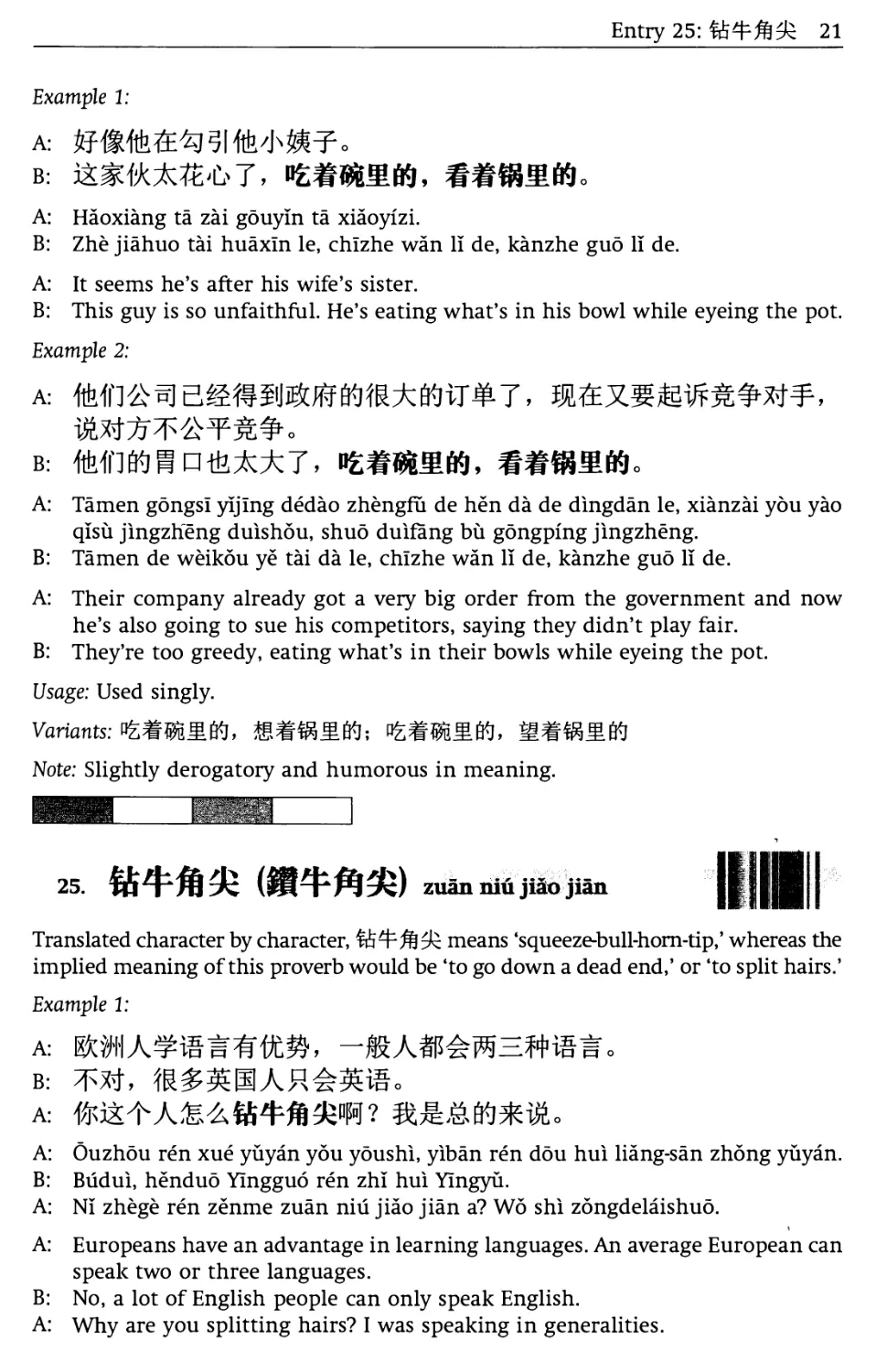
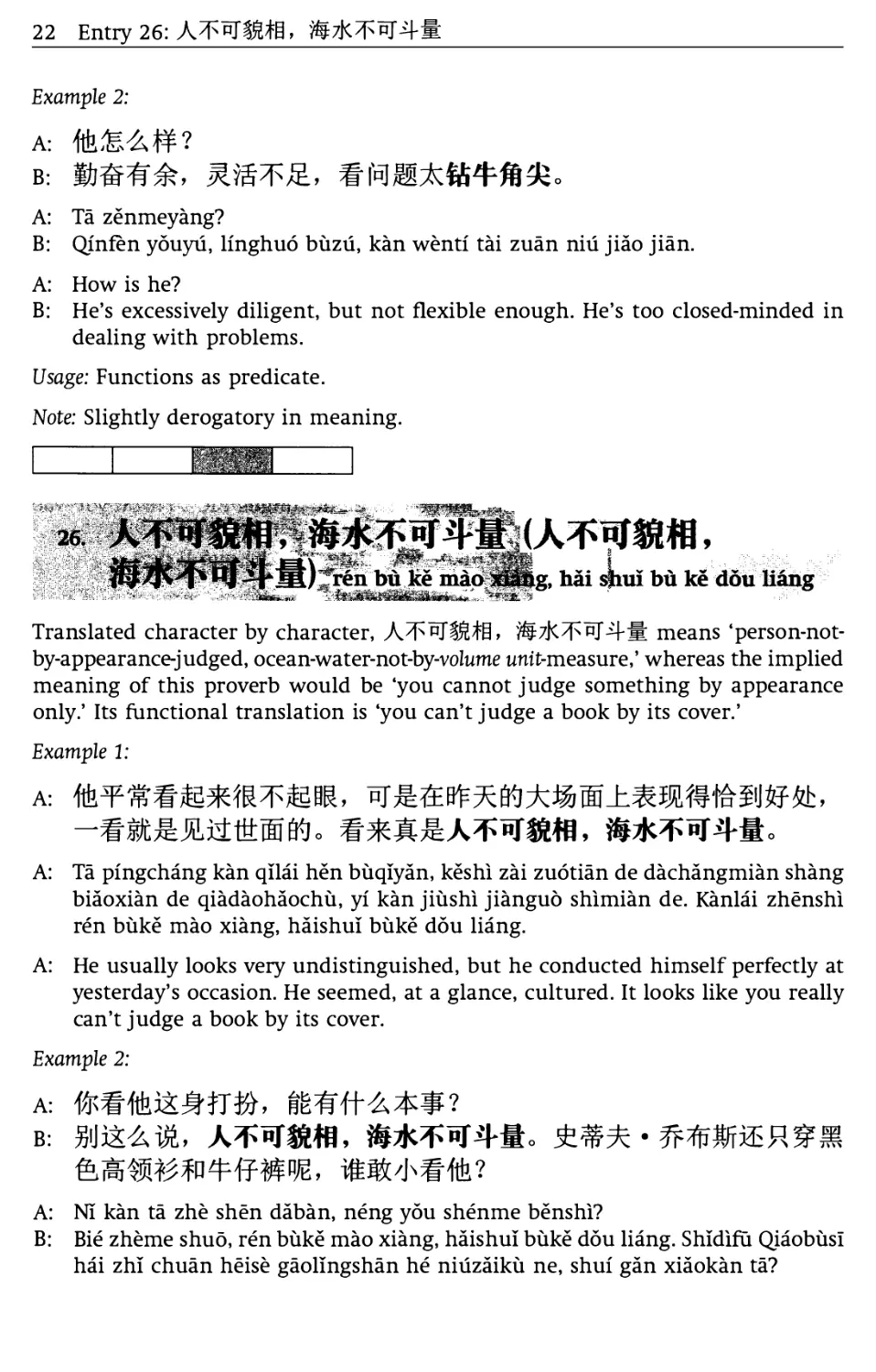
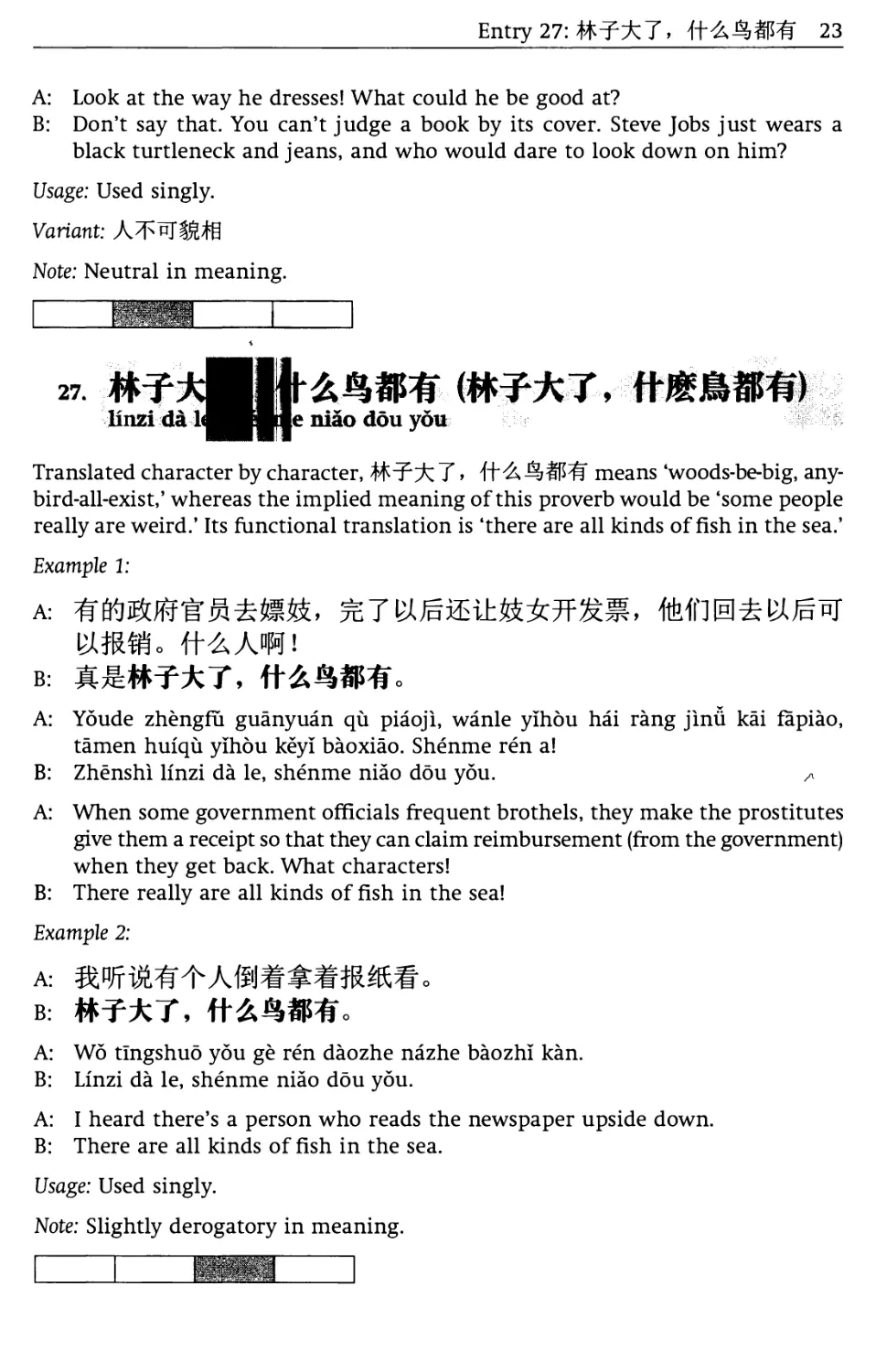

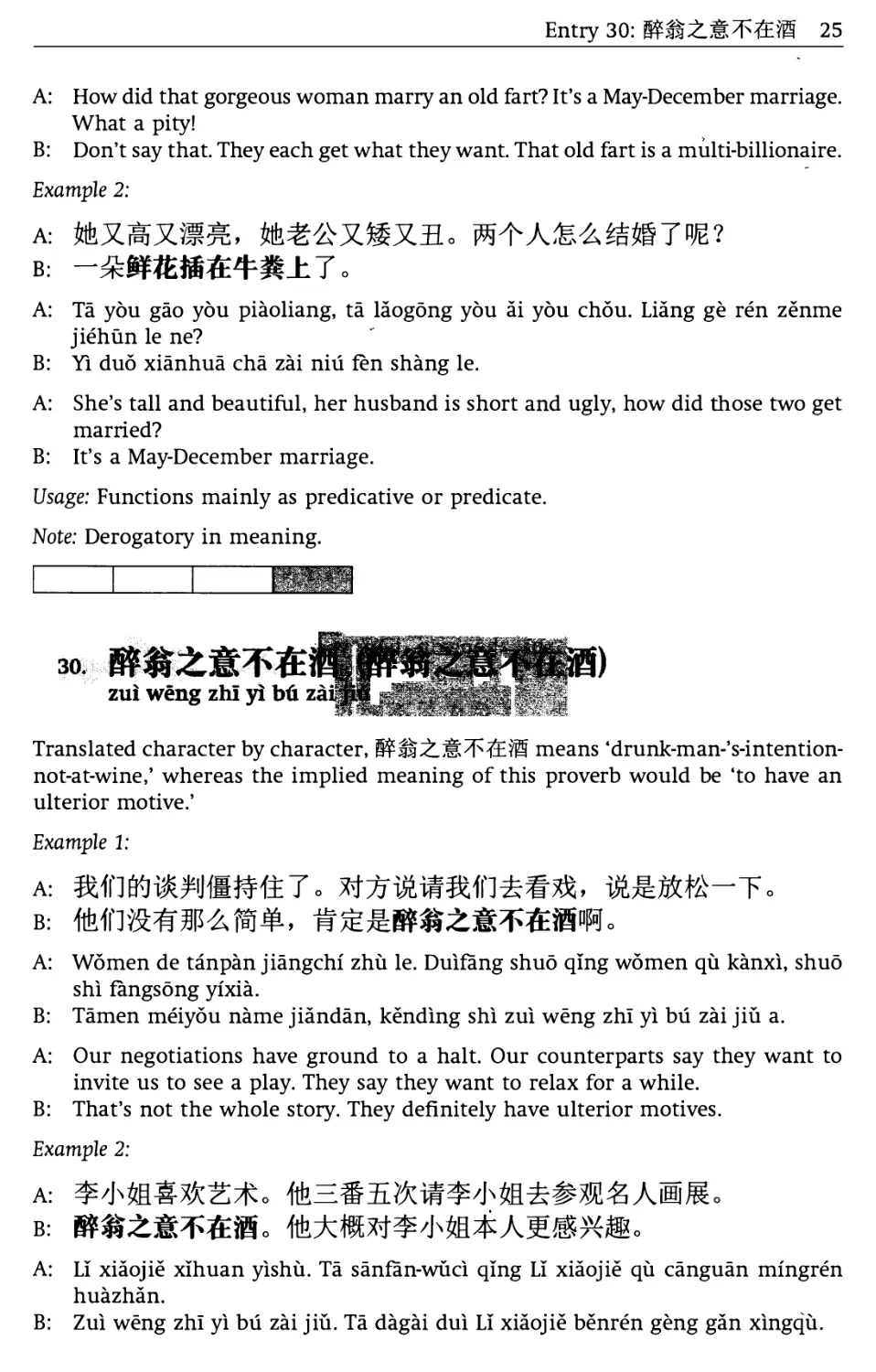

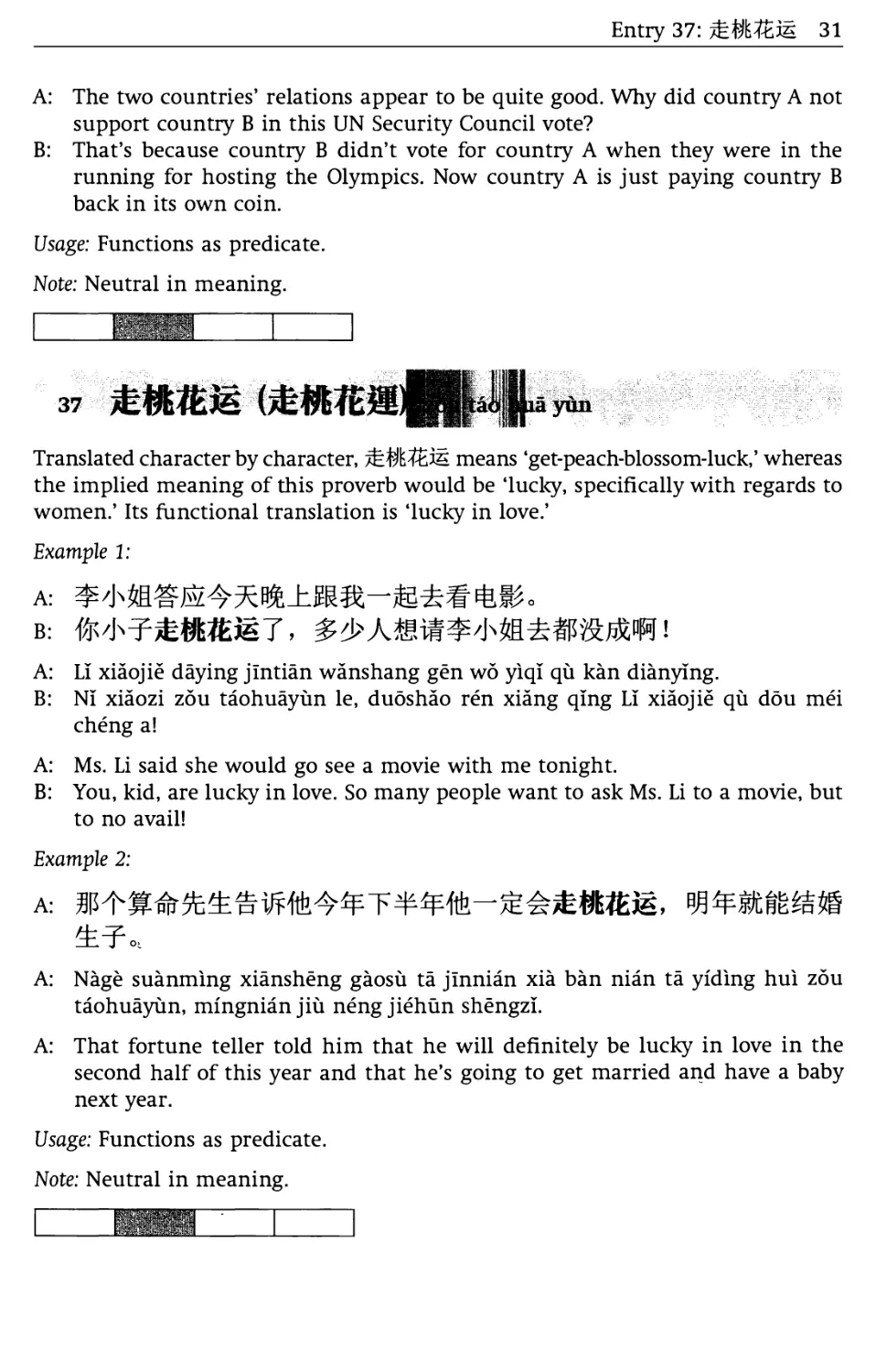

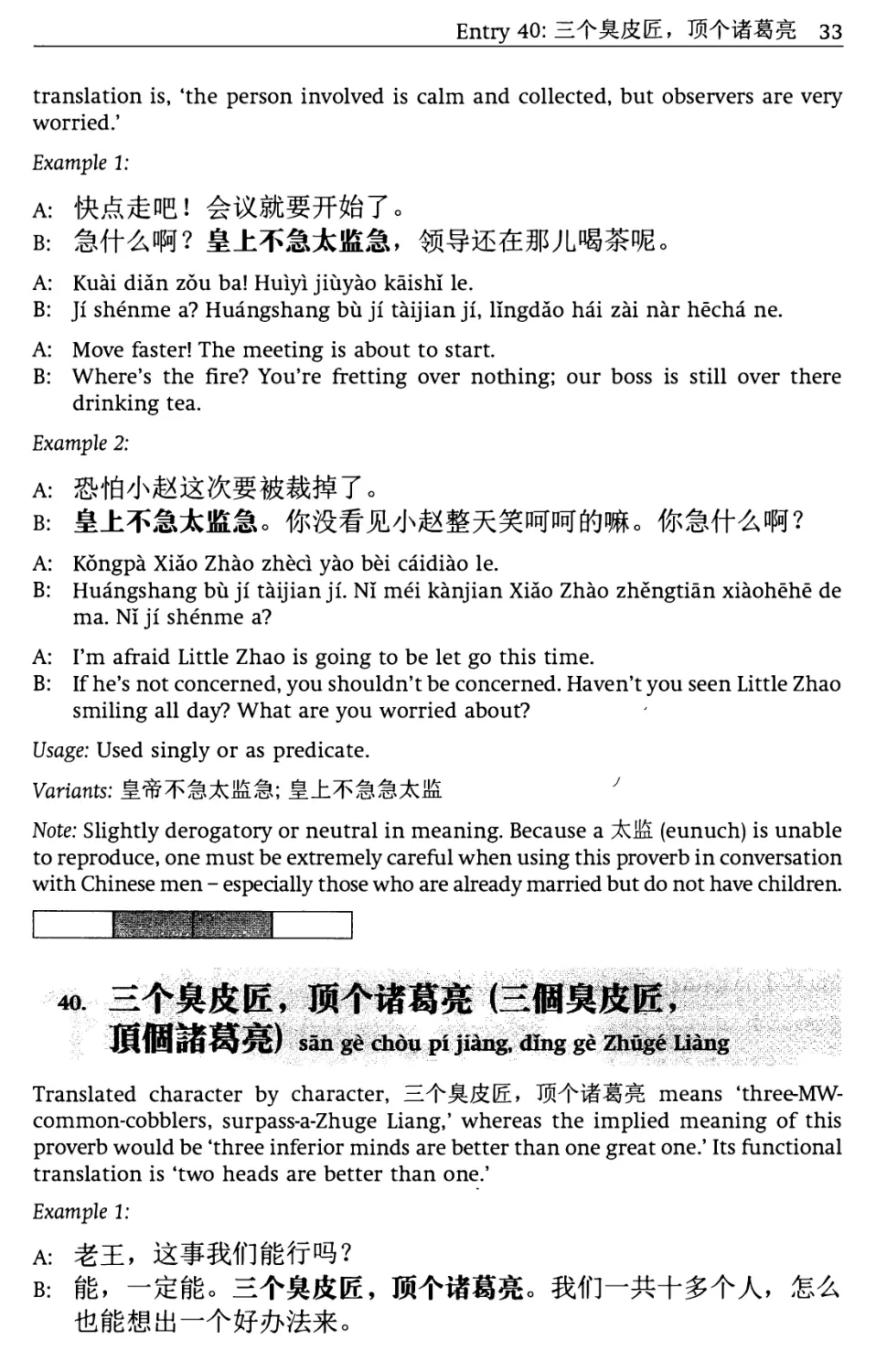

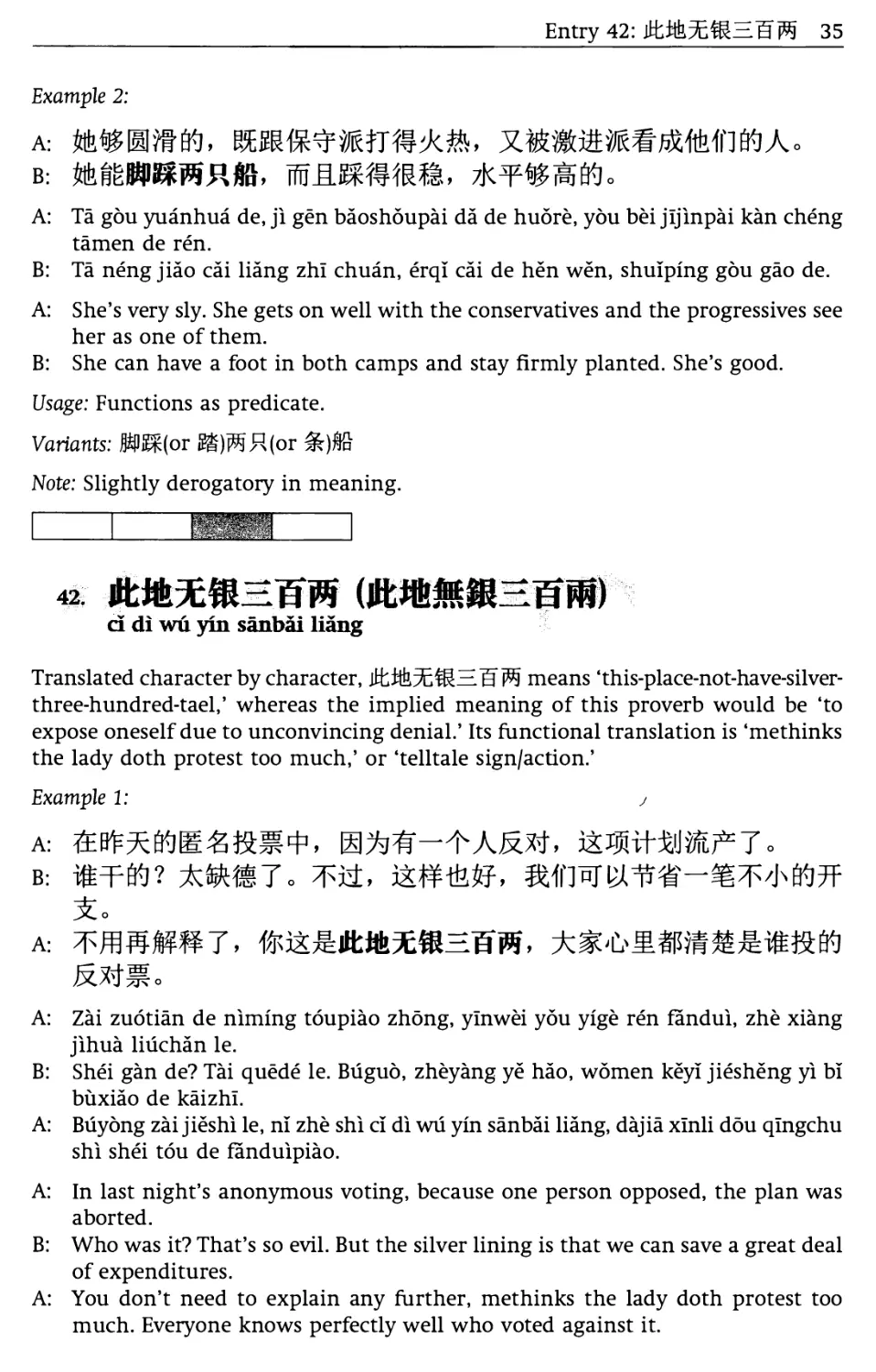
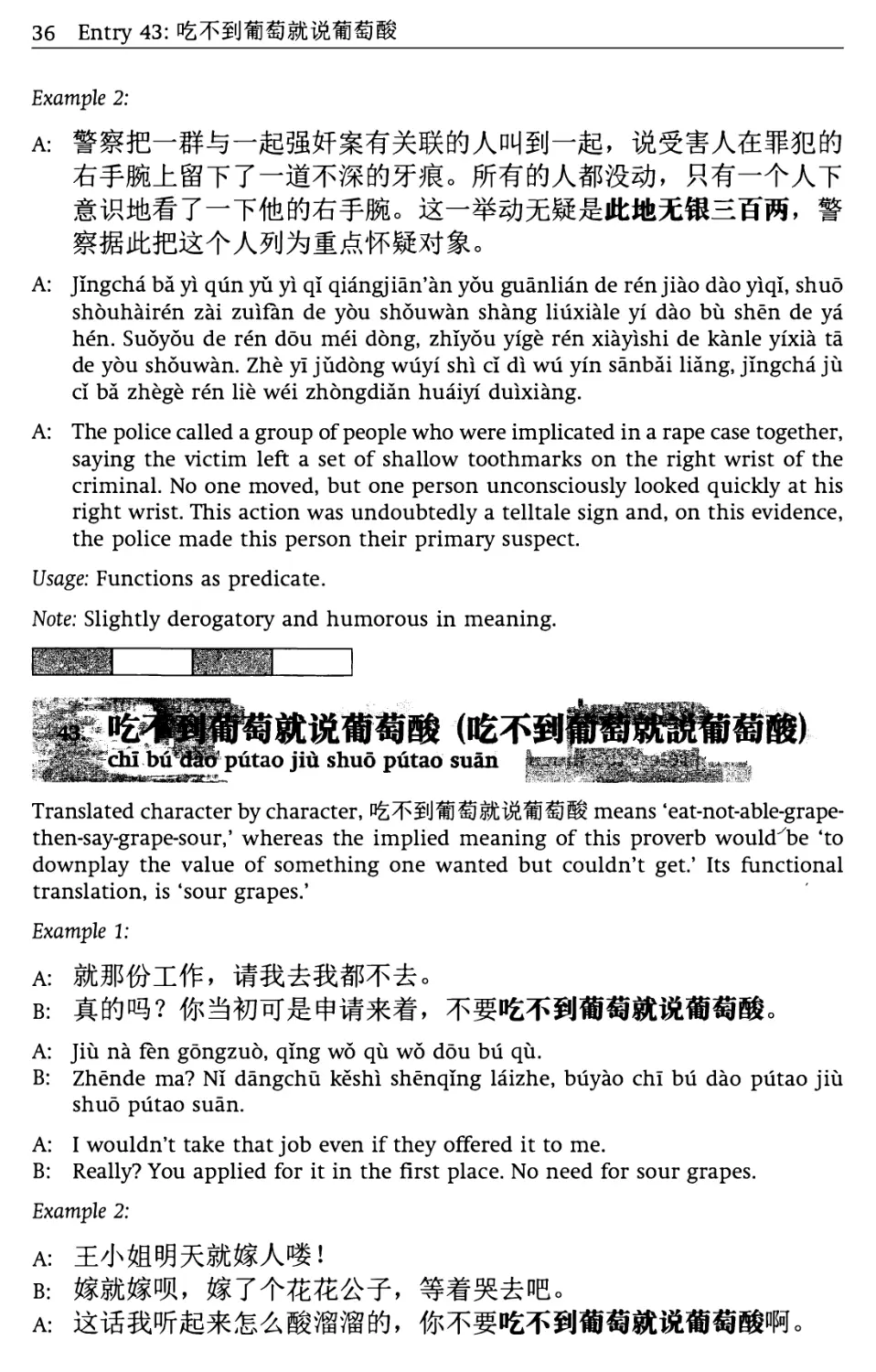
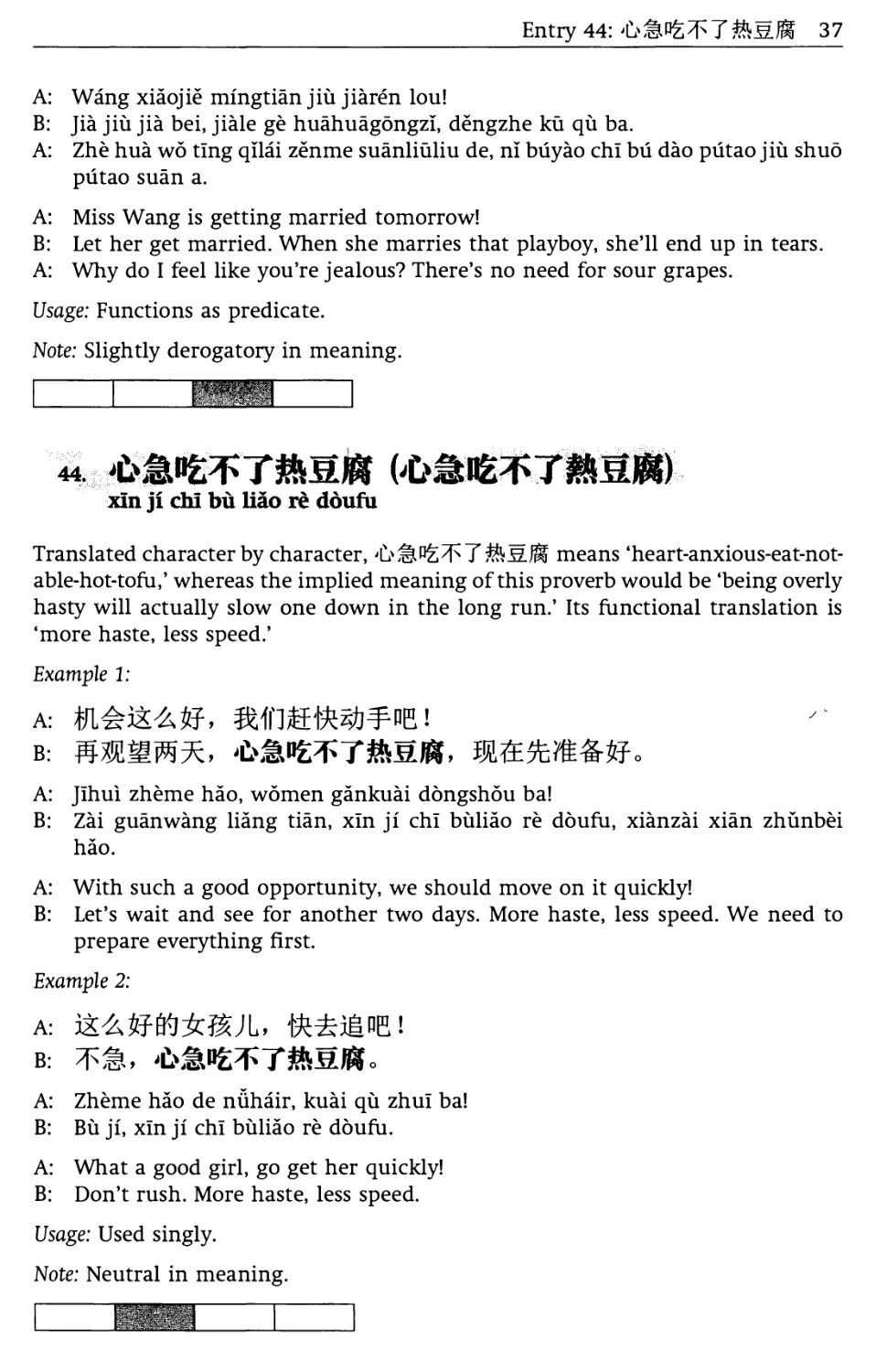
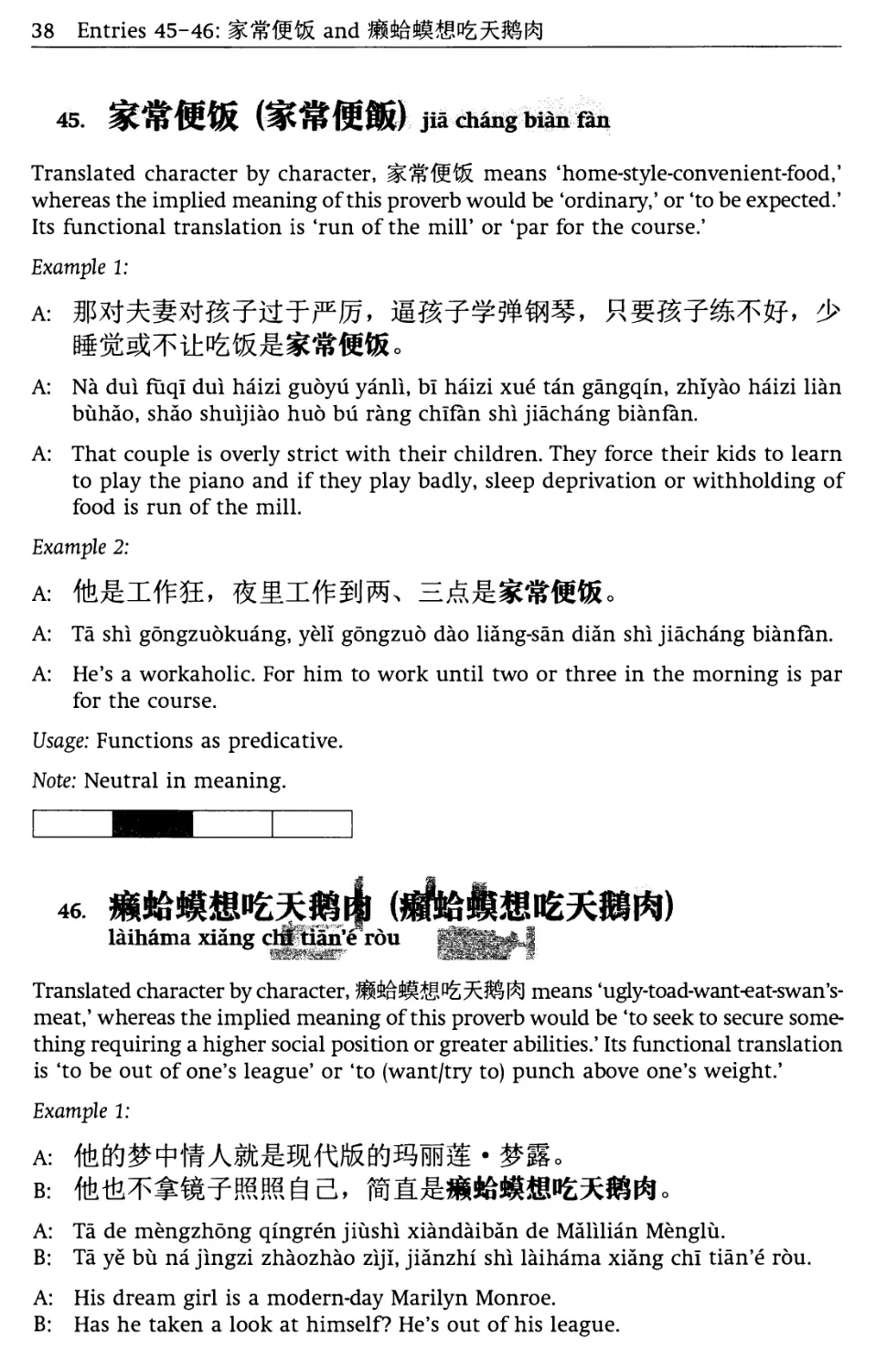
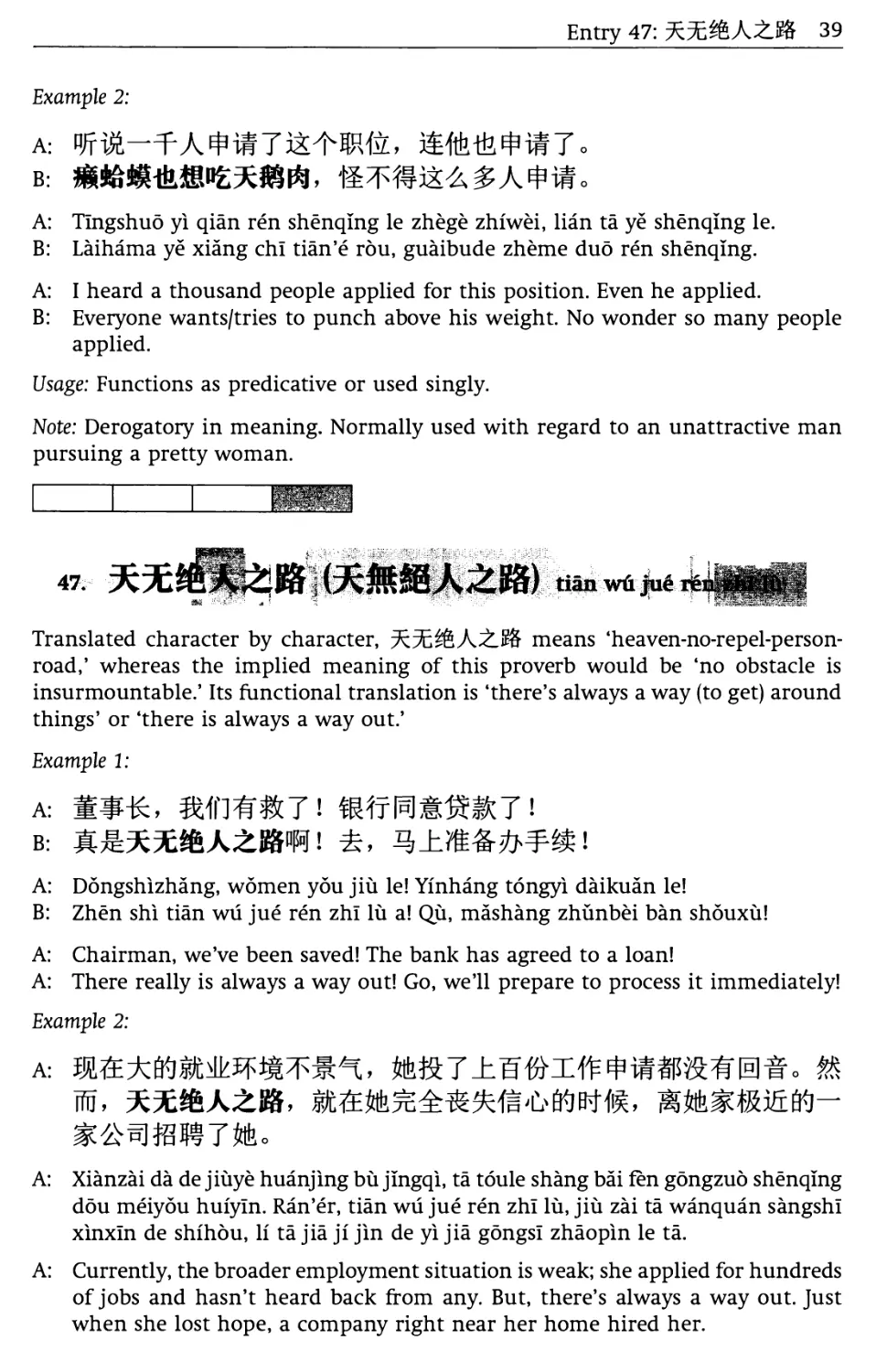
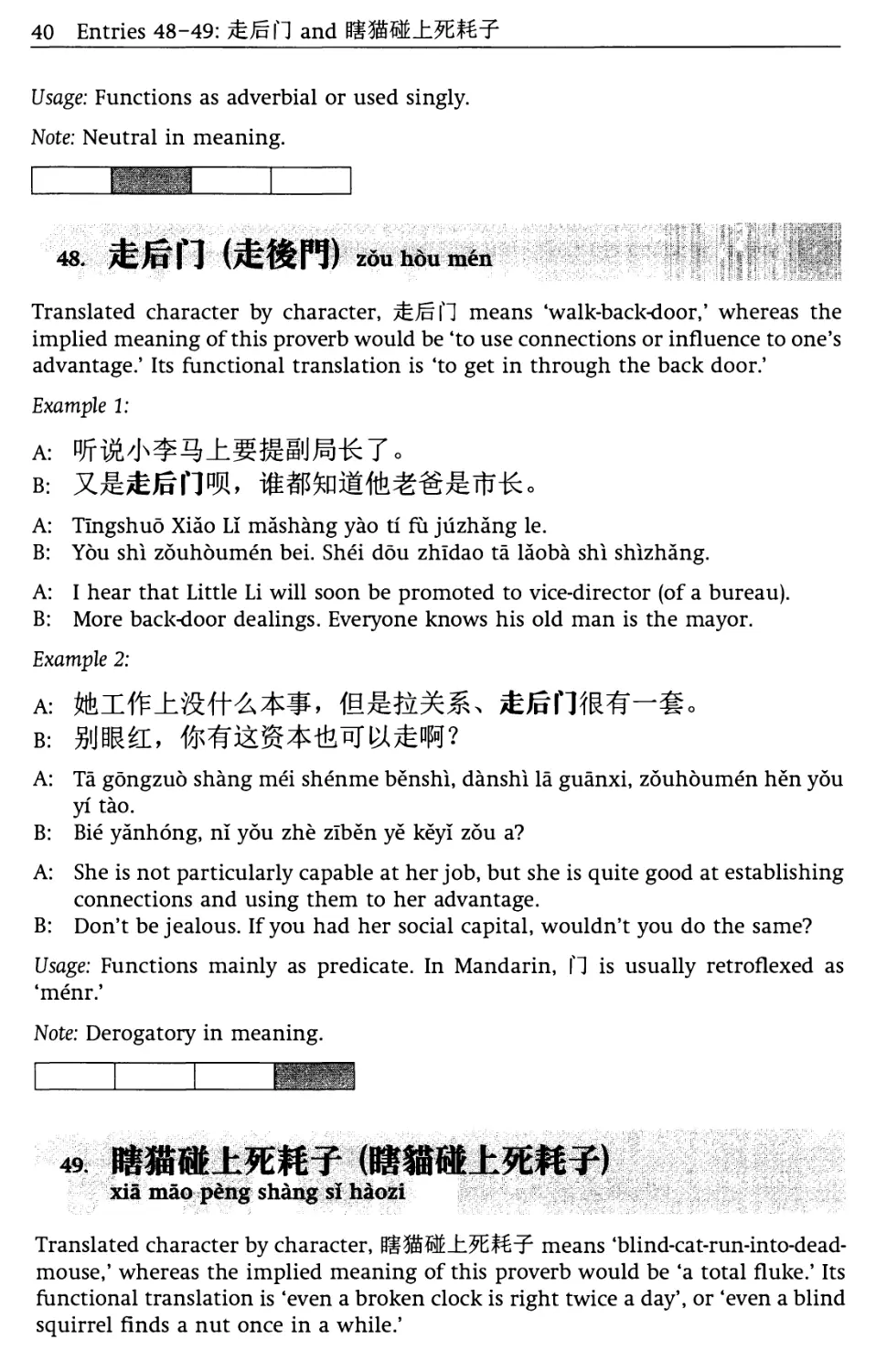























































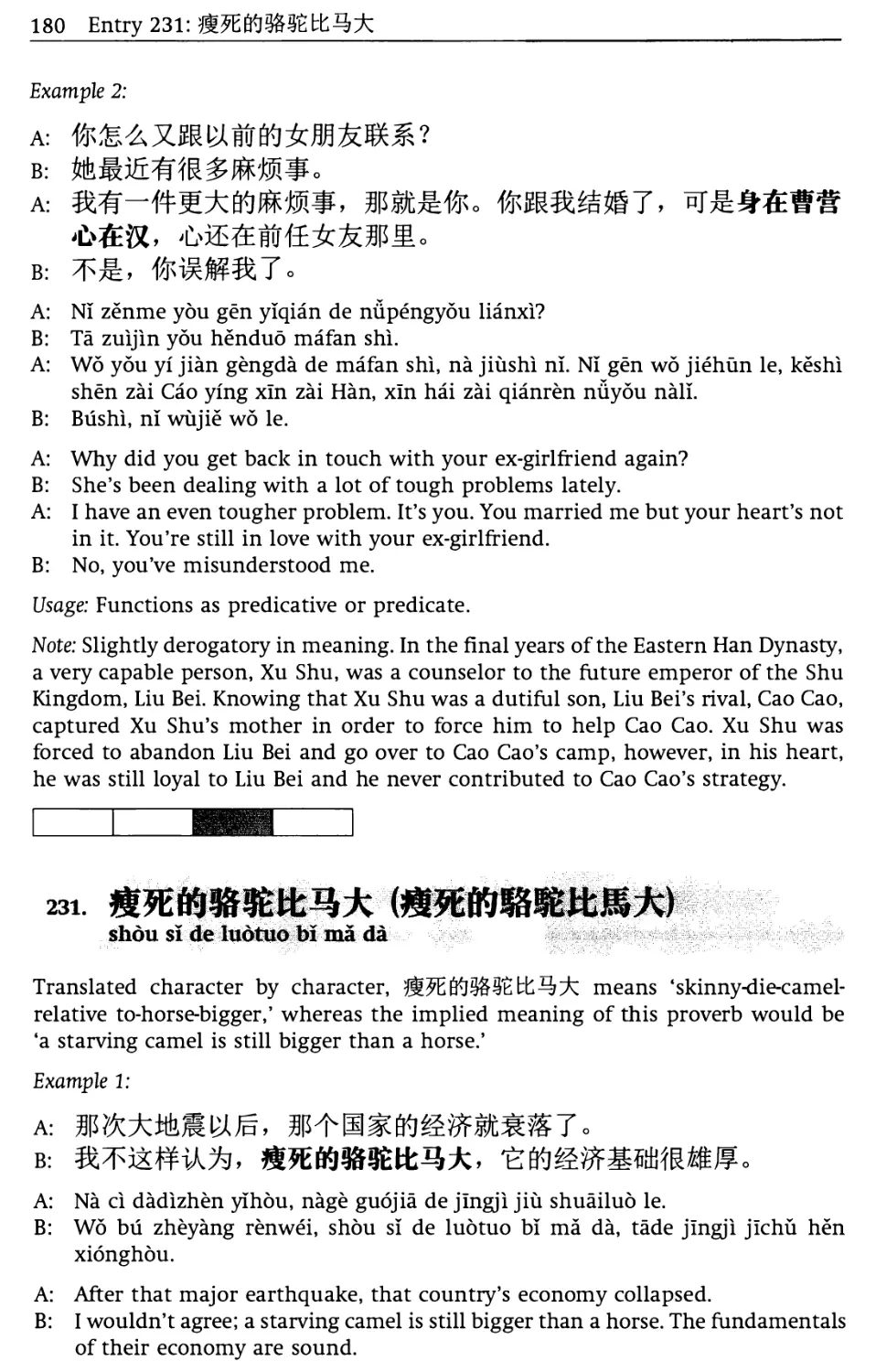
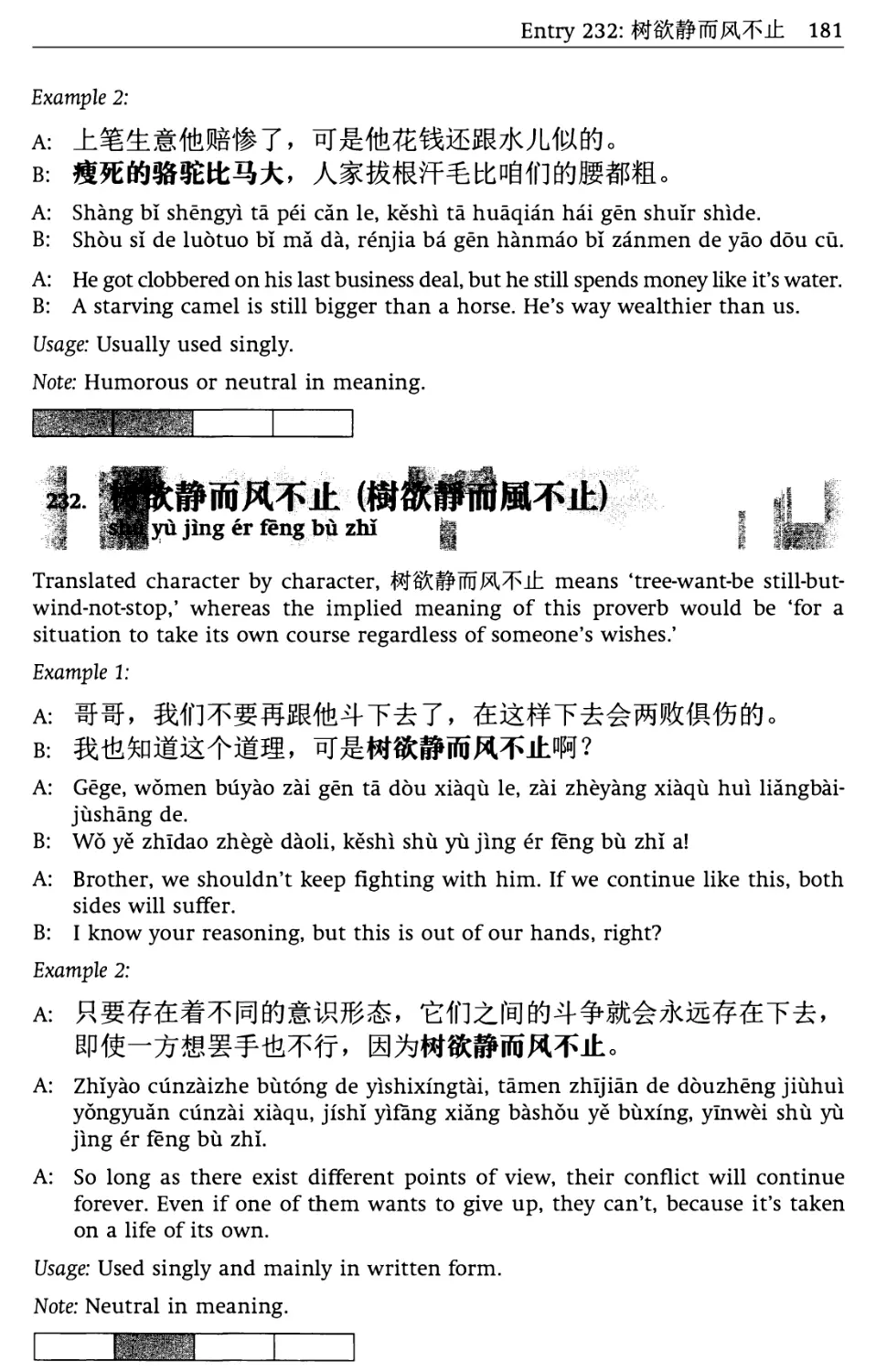


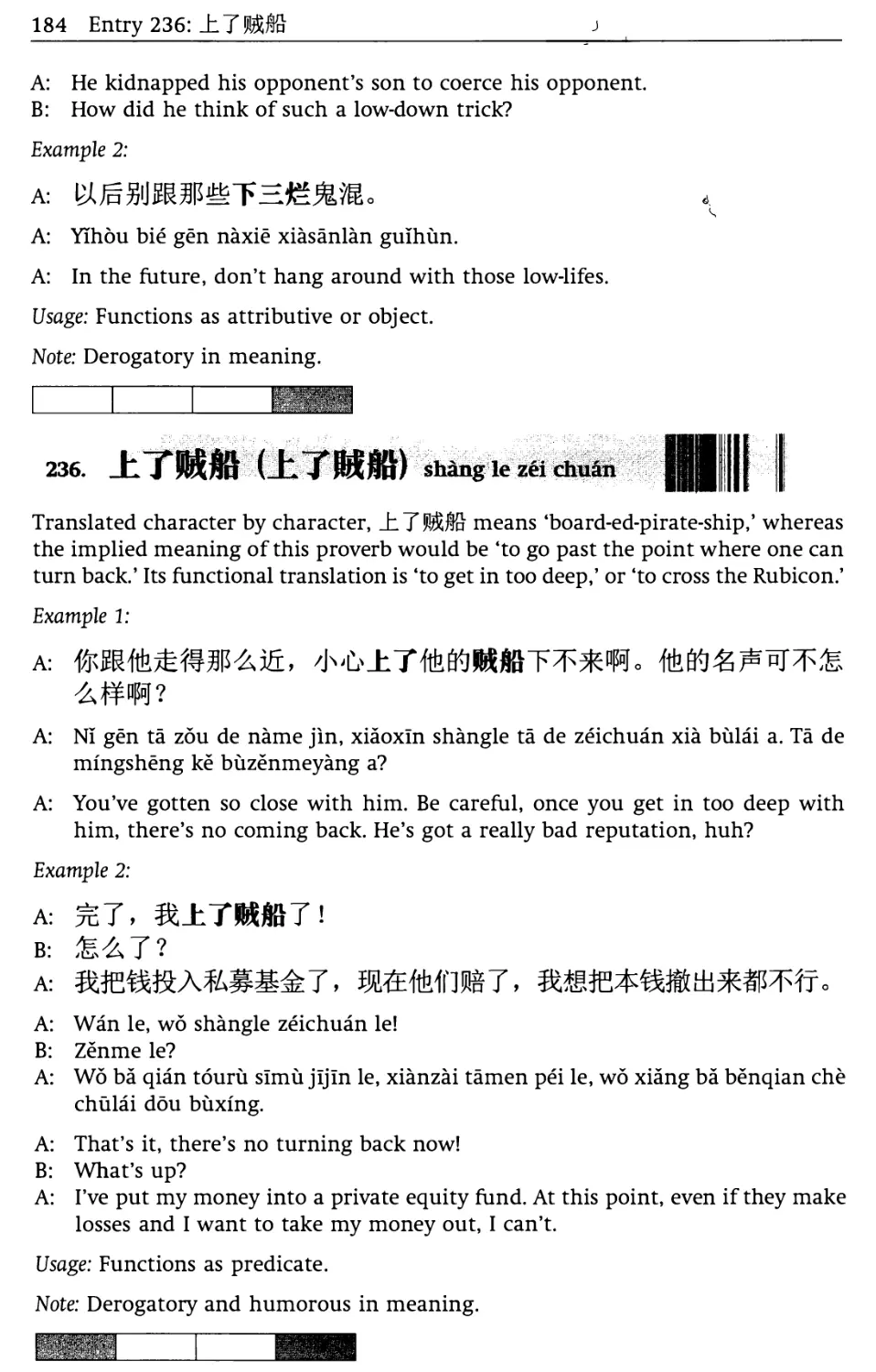
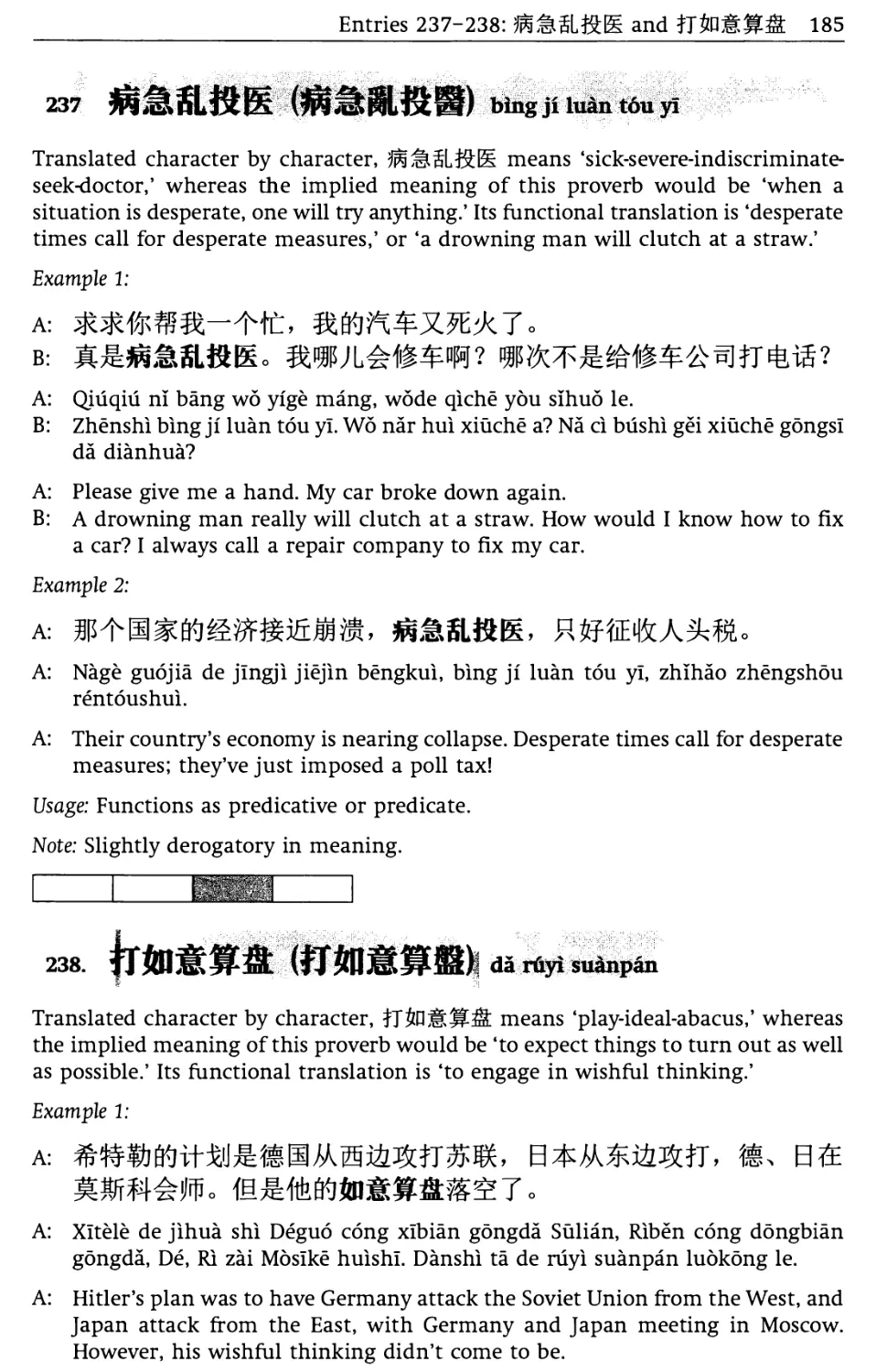




















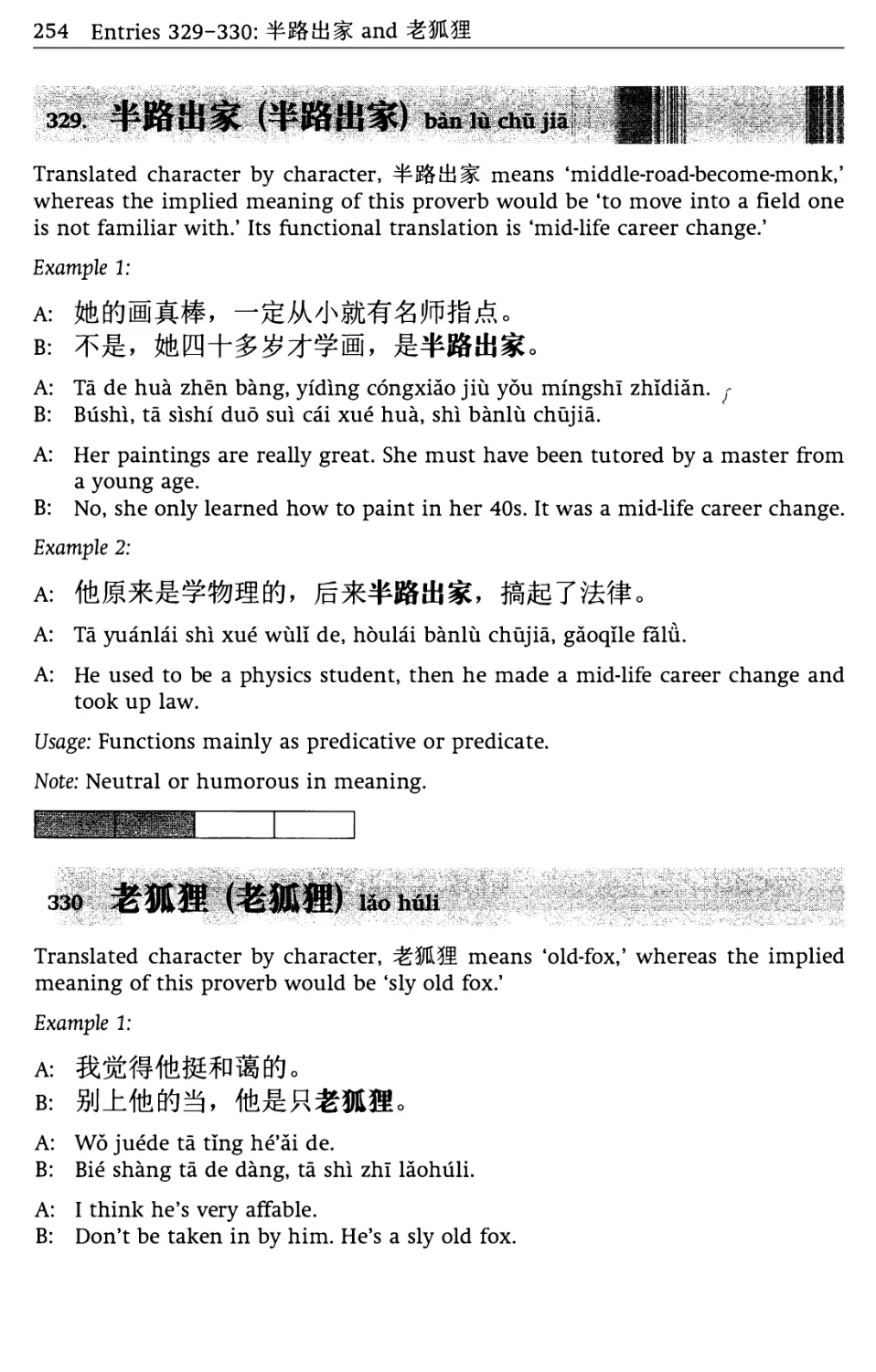

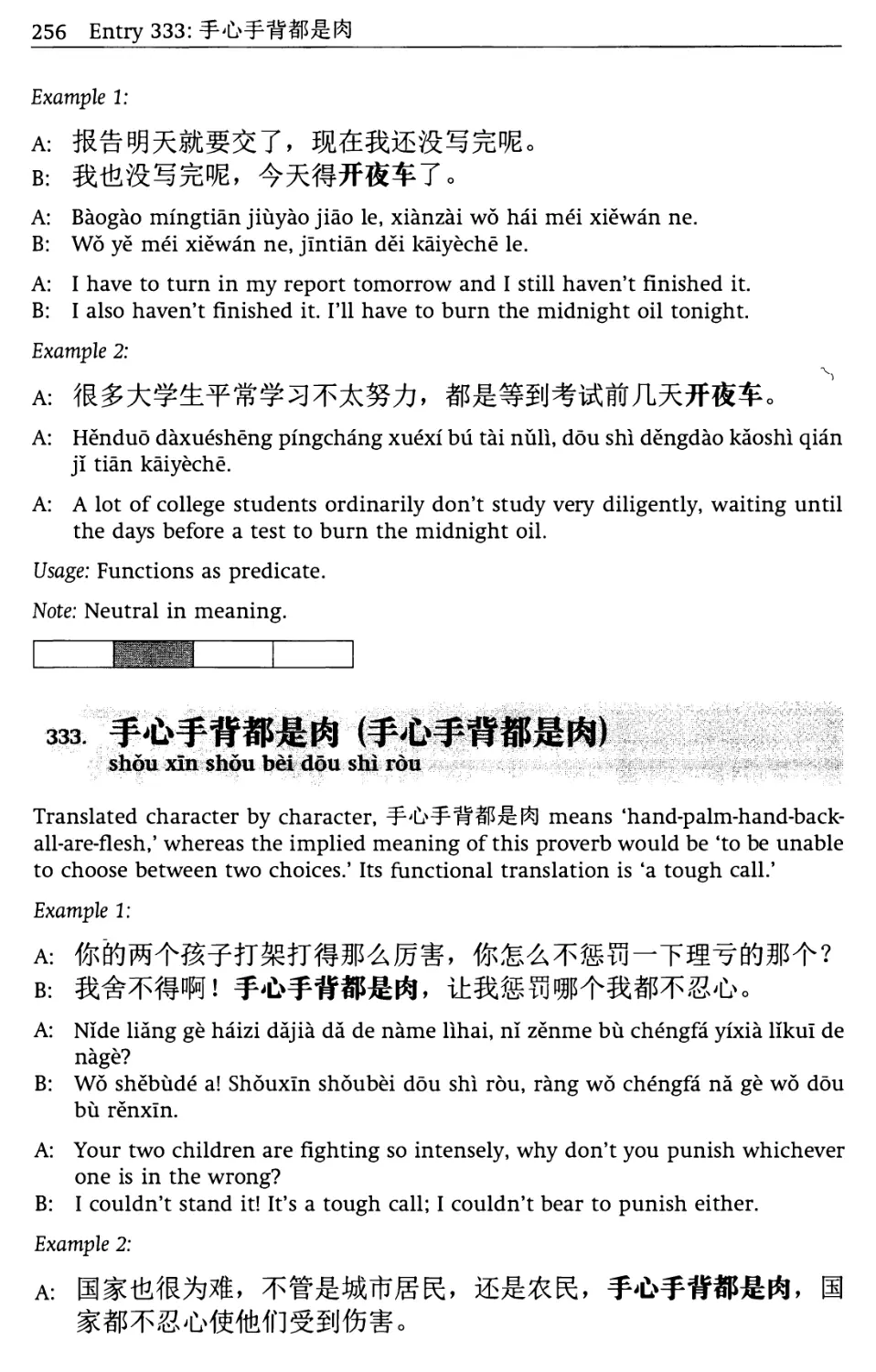
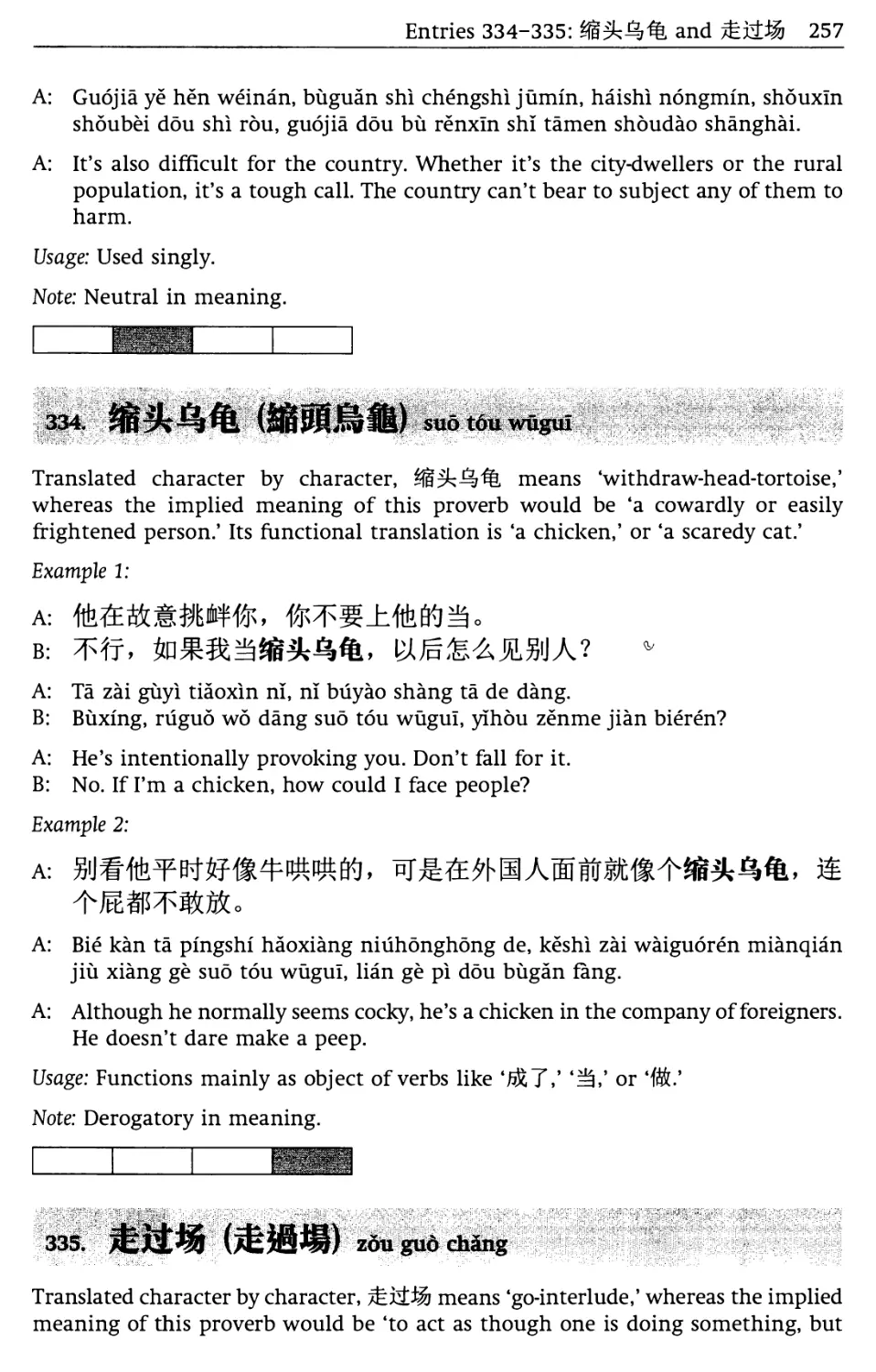


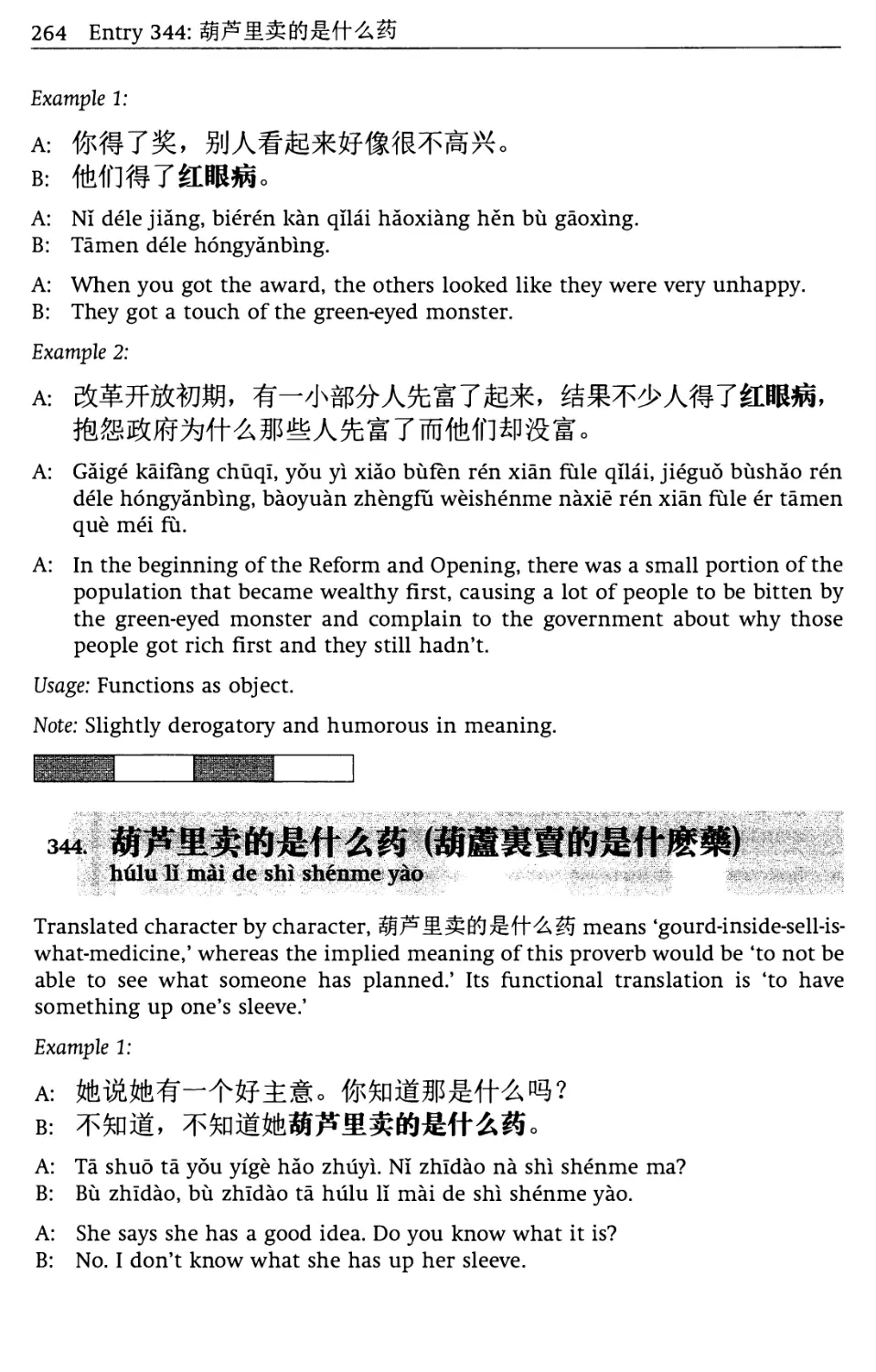


























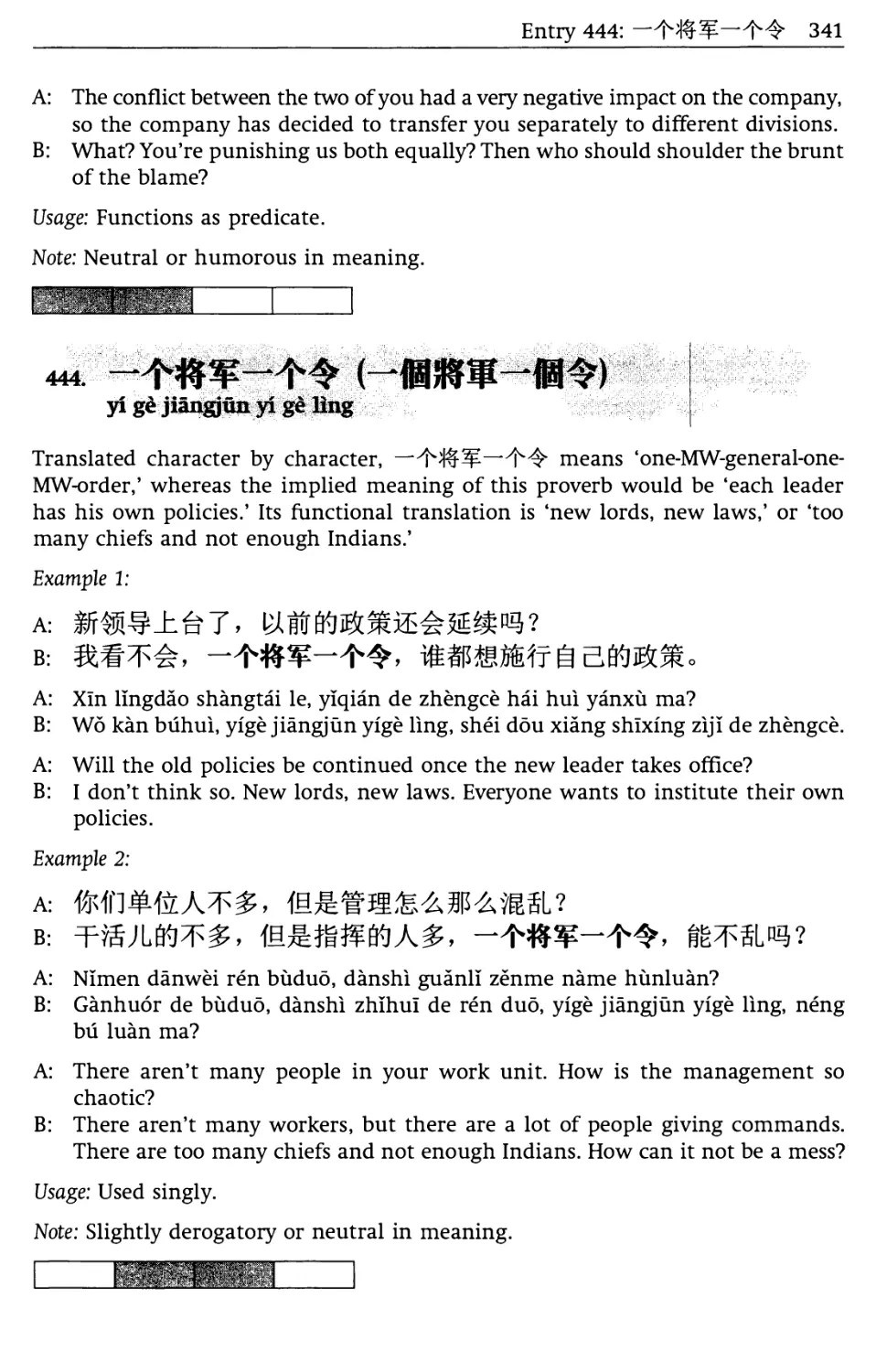

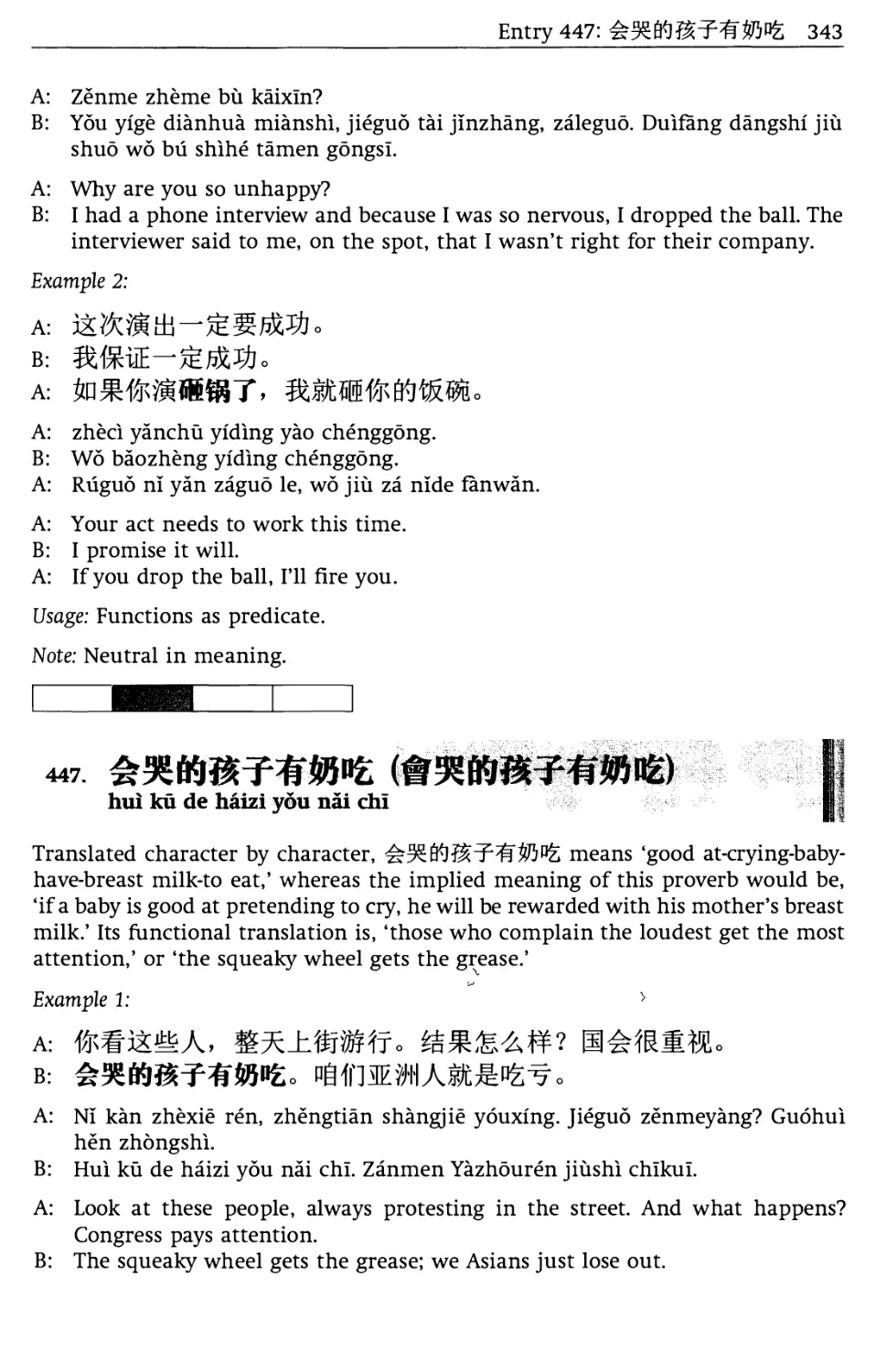
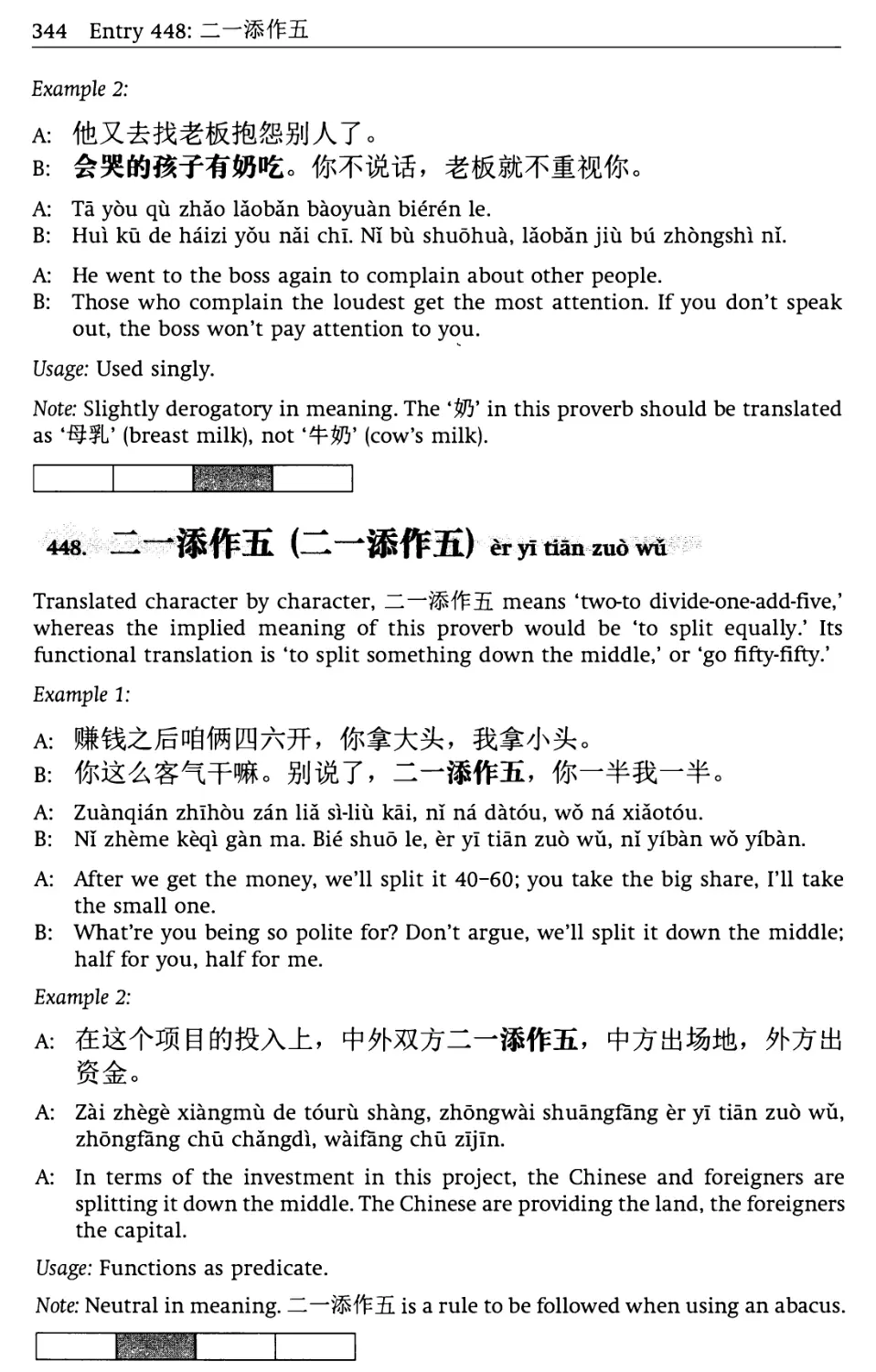


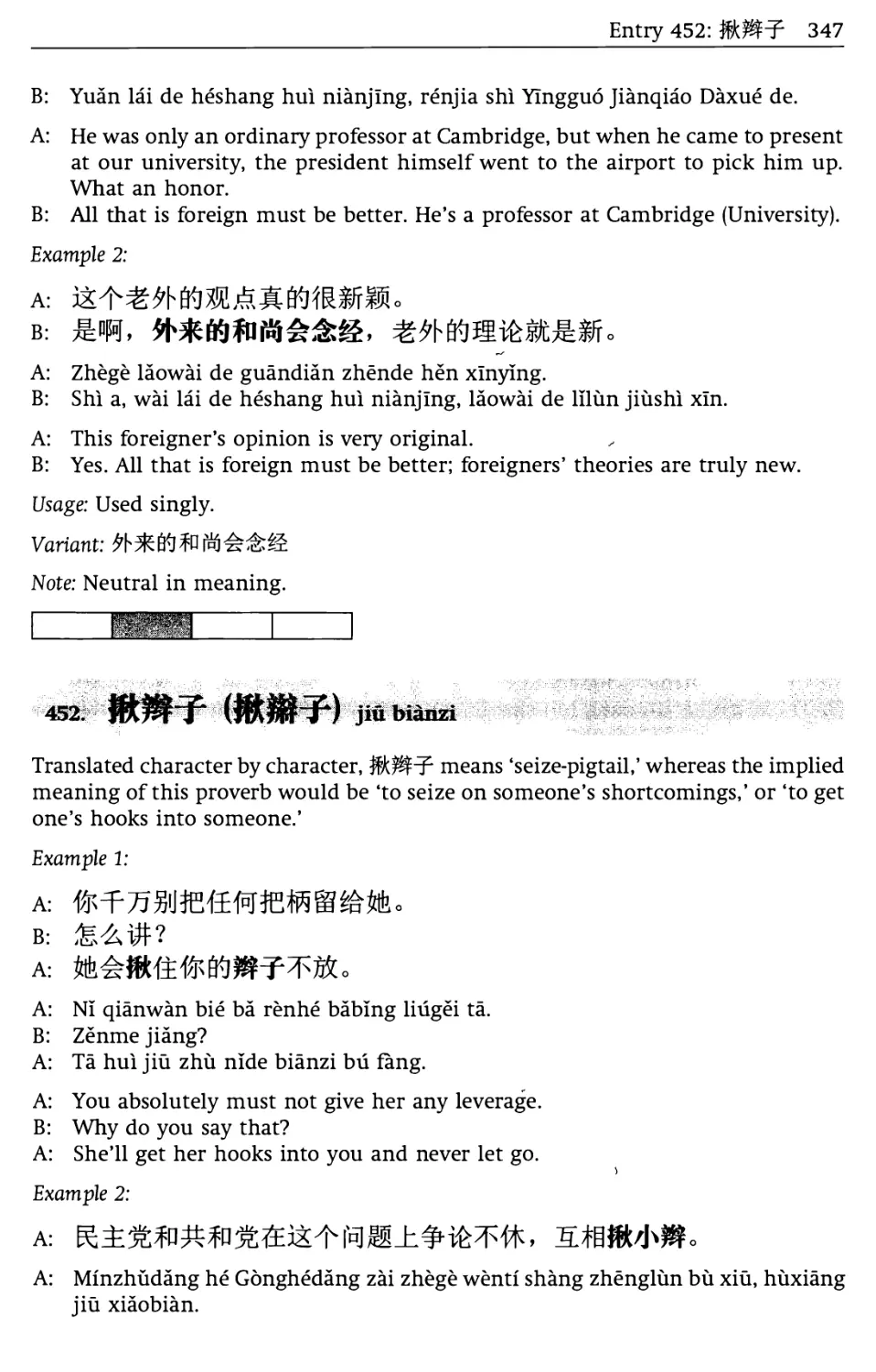


























Author: Jiao Liwei Stone Benjamin M.
Tags: dictionary chinese language proverbs popular expressions
ISBN: 978-0-415-50148-4
Year: 2014


Text
                    Common Chinese Proverbs
and Colloquial Expressions
An Annotated Frequency Dictionary
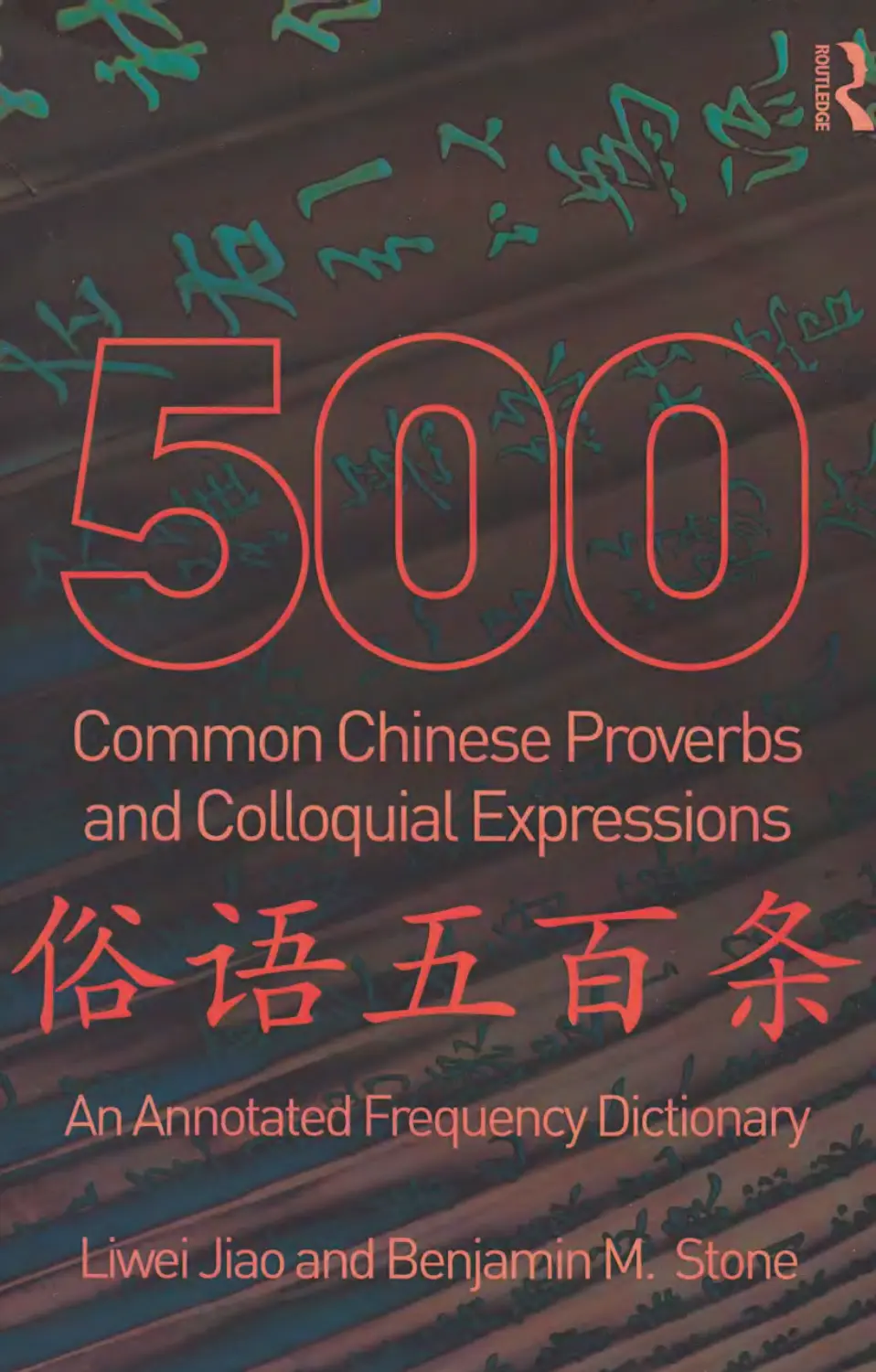
Liwei Jiao and Benjamin M. Stone
500 Common Chinese
Proverbs and Colloquial
Expressions
500 Common Chinese Proverbs and Colloquial Expressions is a dictionary of key Chinese
proverbs or suyu. Suyu are vivid and colorful expressions widely used in the Chinese
language. The smooth use of chengyu in Chinese writing and of suyu in spoken
Chinese not only makes communication more effective, it is also an indicator of
mastery of the language.
This dictionary will provide an ideal resource for all intermediate to advanced
learners of Chinese. Concise and practical, it draws upon a large corpus of authentic
language data to present 500 of the most commonly used Chinese suyu. The suyu
are listed and organized according to their frequency, enabling easy and convenient
access for the reader.
Each proverb listing:
•	is given in both simplified and traditional characters
•	offers an English translation, followed by English equivalents
•	is followed by two examples, written in Chinese, Pinyin and English, plus
explanations and usage notes.
Examples are given in the form of dialogues reflecting typical situations, and helpful
cultural annotations are provided throughout. A Pinyin index, a stroke index and
a Chinese word index are presented at the back of the book and accompanying
audio is also available for free download at www.routledge.com/9780415501491.
Recorded by native speakers and covering the whole range of proverbs, expressions
and example sentences featured in the book, this invaluable resource will help
students to build up strong comprehension and communication skills.
This dictionary is suitable both for classroom use and independent study and will
be of keen interest to students and teachers of Chinese alike.
Liwei Jiao is Lecturer in Chinese at the University of Pennsylvania, USA. His
publications include 500 Common Chinese Idioms: An Annotated Frequency Dictionary
(co-authored with Cornelius C. Kubler and Weiguo Zhang, Routledge 2011) and The
Routledge Advanced Chinese Multimedia Course: Crossing Cultural Boundaries (co-authored
with Kunshan Carolyn Lee, Hsin-hsin Liang and Julian K. Wheatley, Routledge 2009).
Benjamin M. Stone is a graduate student at the University of Pennsylvania, USA.
He possesses extensive experience in translating and interpreting Mandarin Chinese
in a wide variety of professional contexts.
“The 500 proverbs and colloquial expressions collected in this book provide a
precious window on Chinese culture, as well as an invaluable aid to learning the
language. The book is an immensely useful reference toward understanding
the Chinese mind, for both the learner and the teacher.”
W.S.-Y. Wang, Professor Emeritus, University of California at Berkeley;
Academician of Academia Sinica; Editor of the Journal of Chinese Linguistics
“This is an extraordinary dictionary with a creative and effective glossary that
includes stylistic-register usages and historical resources. It is composed, for the
first time, by first rate experts in the field. This dictionary will serve not only for
Chinese learners and teachers, but also professionals who are interested in Chinese
proverbs.”
Professor Shengli Feng, The Chinese University of Hong Kong
“This book is a valuable resource I would recommend to any serious learners of
Mandarin Chinese at intermediate level or above. It is essentially two books in one:
with a Pinyin index, a stroke index, and a word index, this is an easy-to-use reference
dictionary, while with two typical authentic examples for each of the 500 suyu
items in the dictionary arranged according to their frequency of use, including
their Pinyin glosses, literal translations, functional translations as well as usage
guides and cultural notes, the book provides an excellent reader suitable for
independent study.”
Dr Richard Xiao, Director of Lancaster University Confucius Institute
“With copious examples and annotations, this collection of colourful expressions
is bound to be an enriching addition to any learner’s library.”
Professor Zheng-sheng Zhang, Editor of the Journal of the Chinese Language
Teachers Association (JCLTA)
500 Common Chinese
Proverbs and Colloquial
Expressions
An annotated frequency
dictionary
Liwei Jiao and Benjamin M. Stone
Routledge
Taylor & Francis Croup
LONDON AND NEW YORK
First published 2014
by Routledge
2 Park Square, Milton Park, Abingdon, Oxon 0X14 4RN
and by Routledge
711 Third Avenue, New York, NY 10017
Routledge is an imprint of the Taylor & Francis Group, an informa business
© 2014 Liwei Jiao and Benjamin M. Stone
The right of Liwei Jiao and Benjamin M. Stone to be identified as authors
of this work has been asserted by them in accordance with sections 77 and
78 of the Copyright, Designs and Patents Act 1988.
All rights reserved. No part of this book may be reprinted or reproduced or
utilised in any form or by any electronic, mechanical, or other means, now
known or hereafter invented, including photocopying and recording, or in
any information storage or retrieval system, without permission in writing
from the publishers.
Trademark notice: Product or corporate names may be trademarks or registered
trademarks, and are used only for identification and explanation without
intent to infringe.
British Library Cataloguing in Publication Data
A catalogue record for this book is available from the British Library
Library of Congress Cataloging in Publication Data
Jiao, Liwei.
500 common Chinese proverbs and colloquial expressions : an annotated
frequency dictionary / Liwei Jiao, Benjamin M. Stone.
pages cm
Includes index.
1. Proverbs, Chinese. 2. Chinese language-Terms and phrases. 3. Chinese
language-Dictionaries-English. I. Stone, Benjamin M., author. II. Title.
III. Title: Five hundred common Chinese proverbs and colloquial expressions.
PN6519.C5J54 2014
398.9'951-dc23
2013015161
ISBN: 978-0-415-50148-4 (hbk)
ISBN: 978-0-415-50149-1 (pbk)
ISBN: 978-1-315-88458-5 (ebk)
Typeset in GraphSwift Light
by Graphicraft Limited, Hong Kong
45
FSC
wwwhcxxg
MIX
Paper from
nuponalbto sources
FSC* C013056
Printed and bound in Great Britain by
IJ International Ltd, Padstow, Cornwall
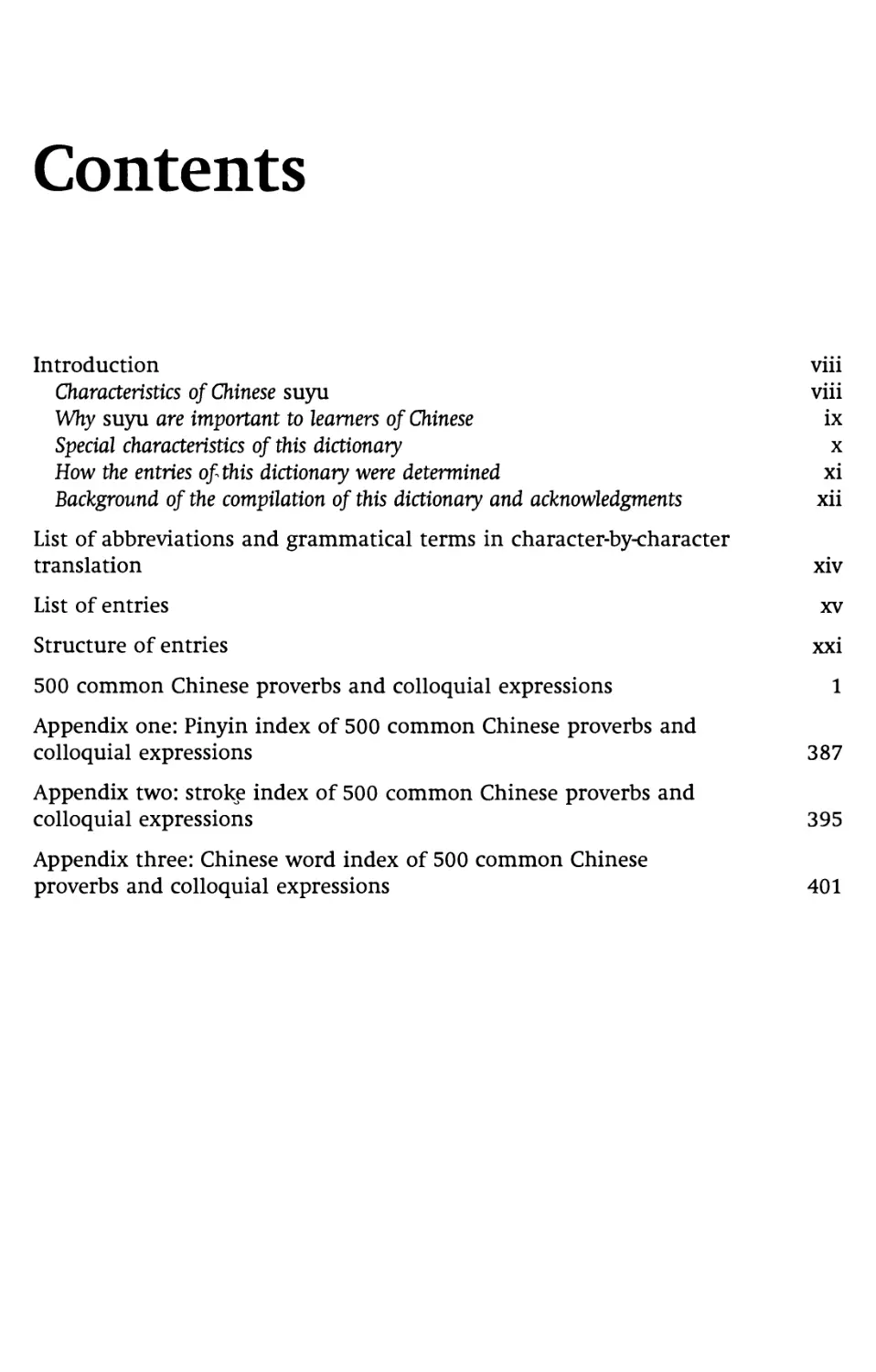
Contents
Introduction	viii
Characteristics of Chinese suyu	viii
Why suyu are important to learners of Chinese	ix
Special characteristics of this dictionary	x
How the entries of this dictionary were determined	xi
Background of the compilation of this dictionary and acknowledgments	xii
List of abbreviations and grammatical terms in character-by-character
translation	xiv
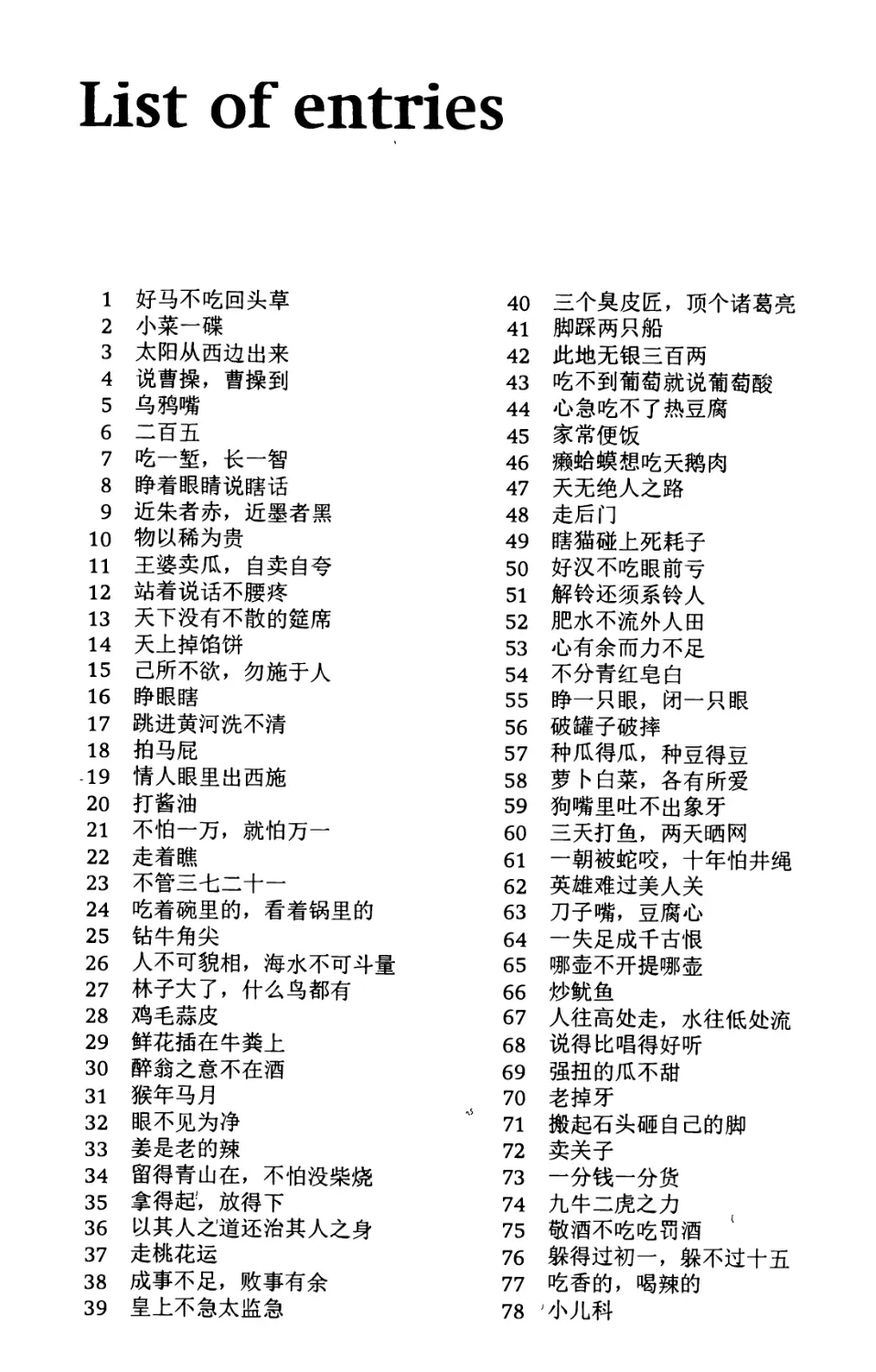
List of entries	xv
Structure of entries	xxi
500 common Chinese proverbs and colloquial expressions	1
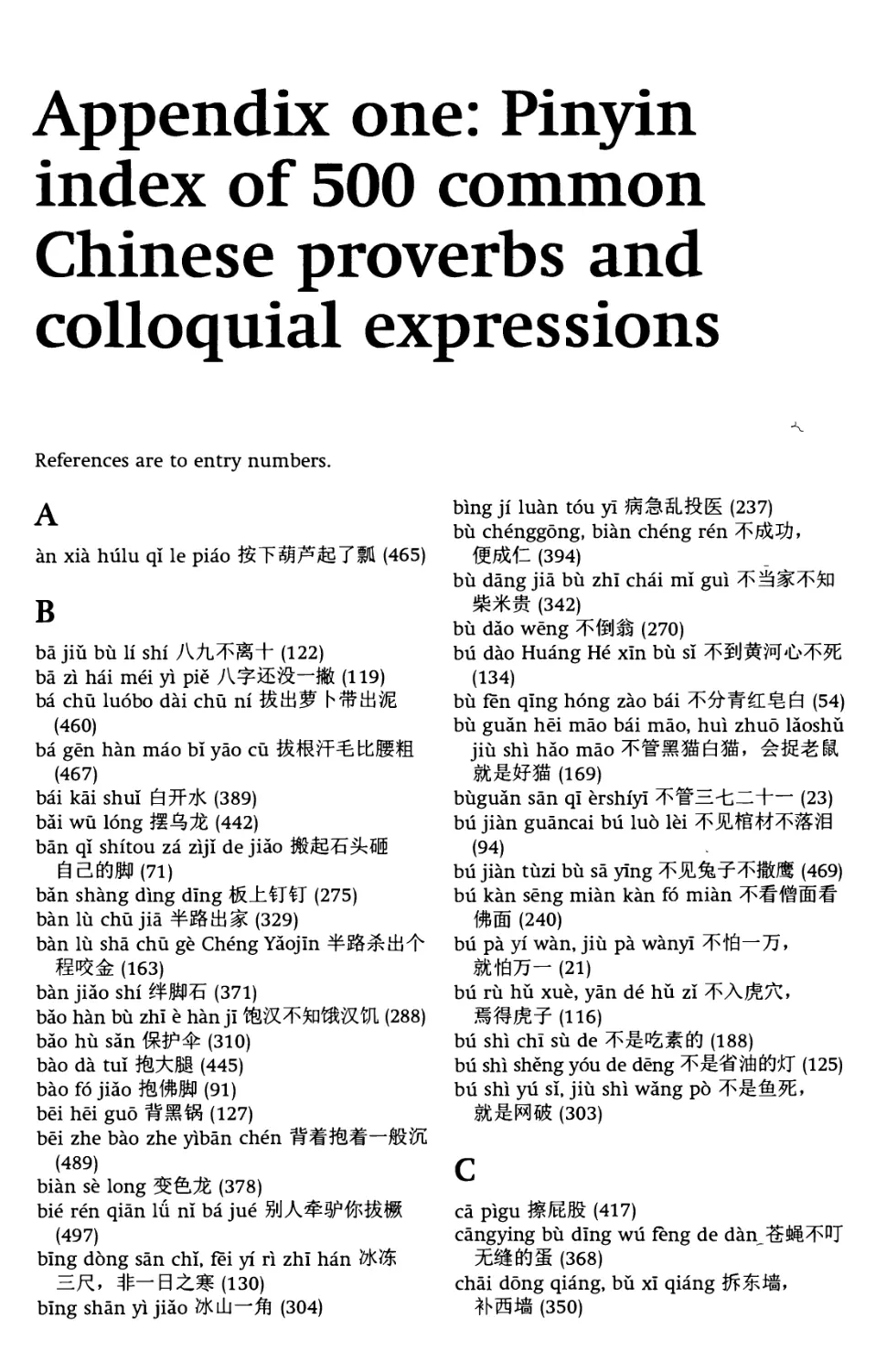
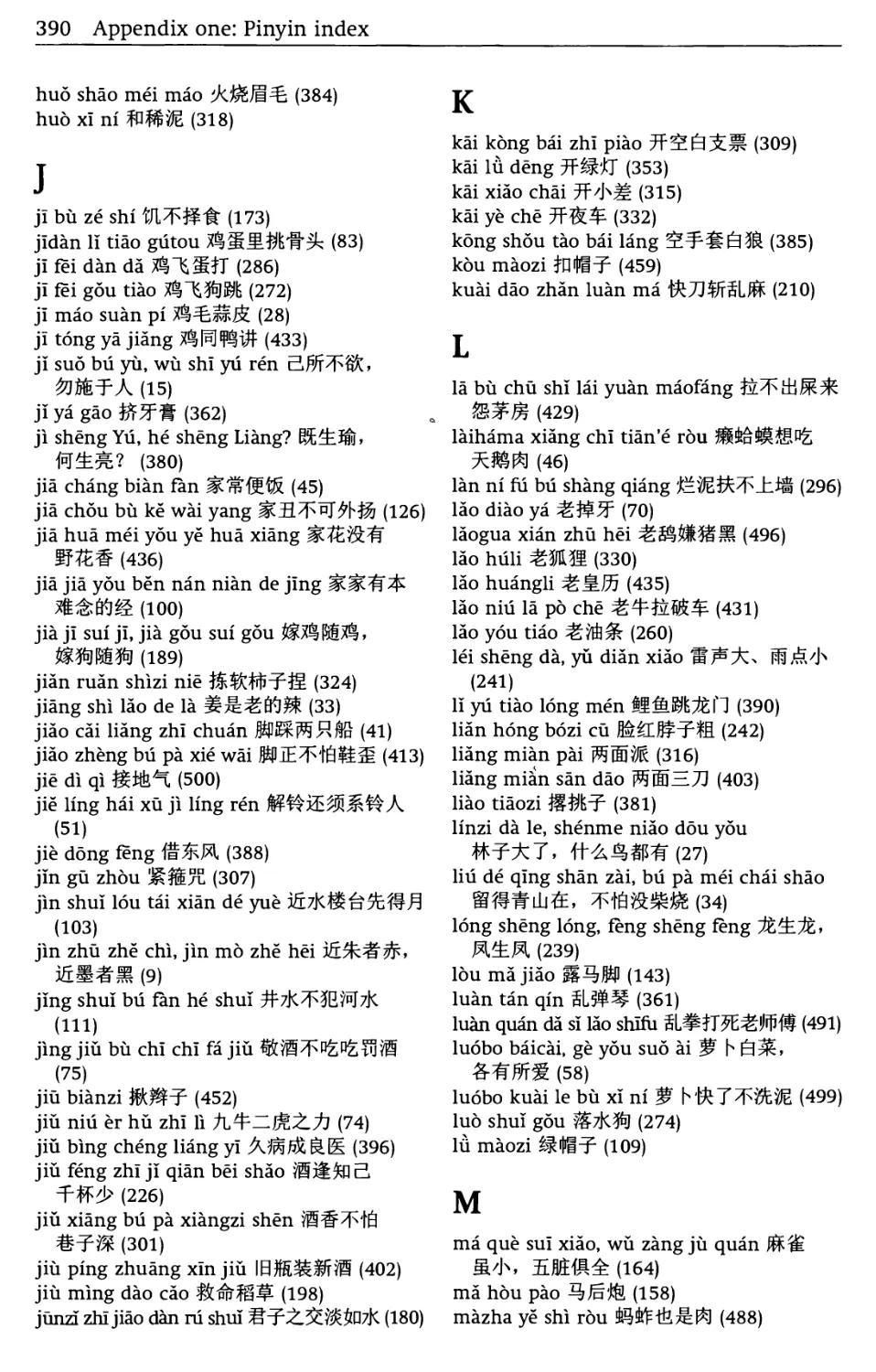
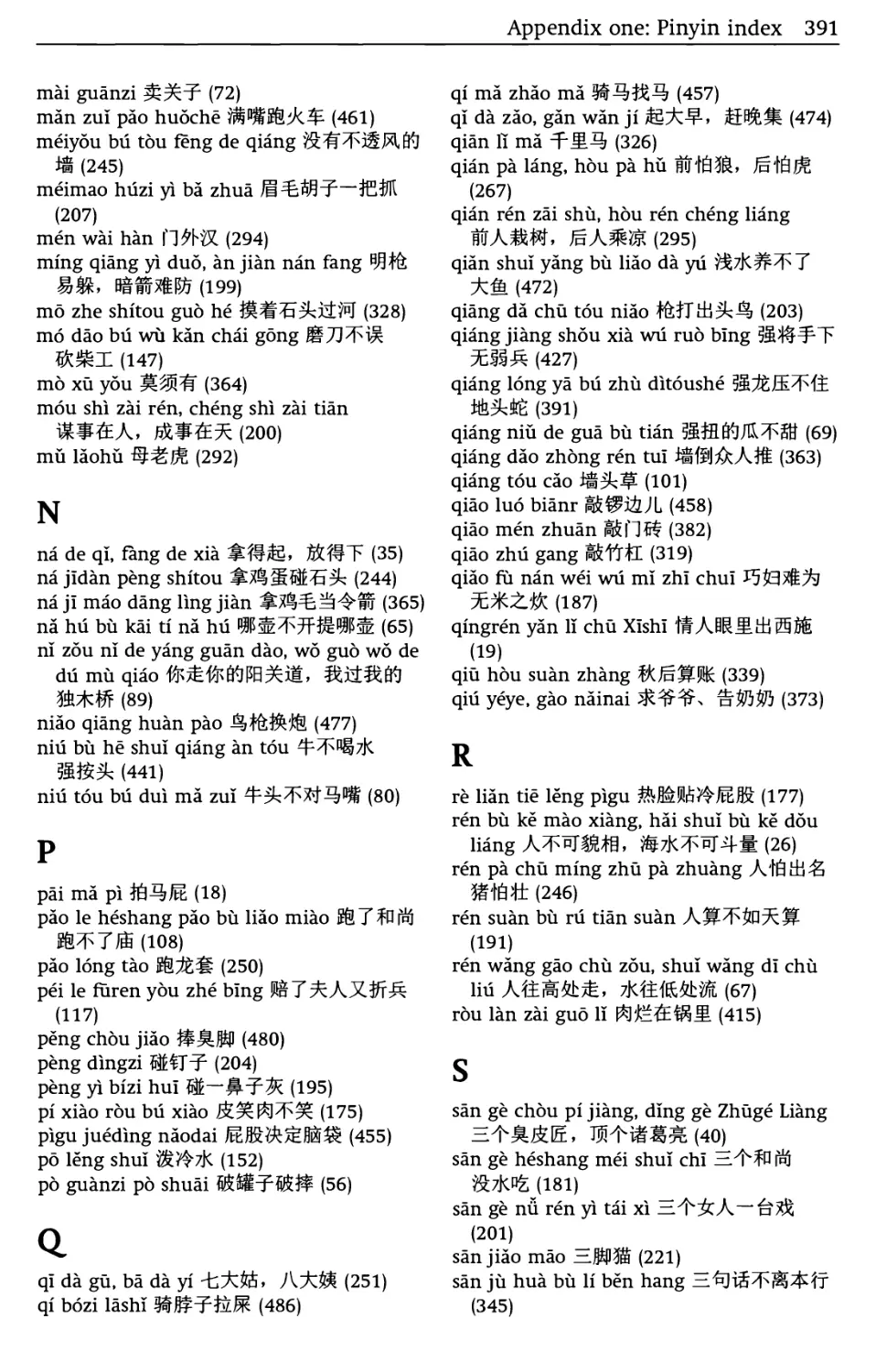
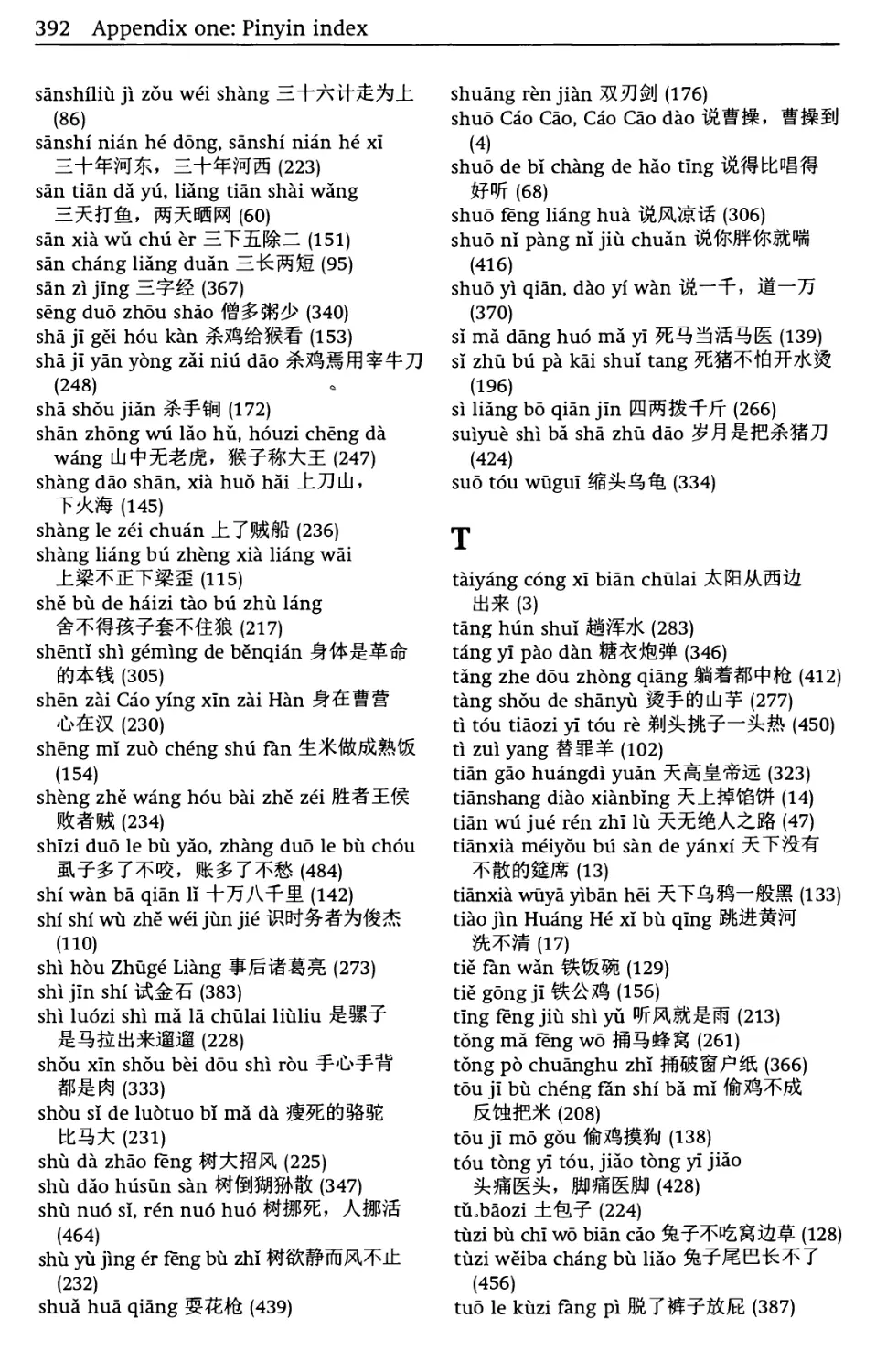
Appendix one	: Pinyin index of 500 common Chinese proverbs and
colloquial expressions	387
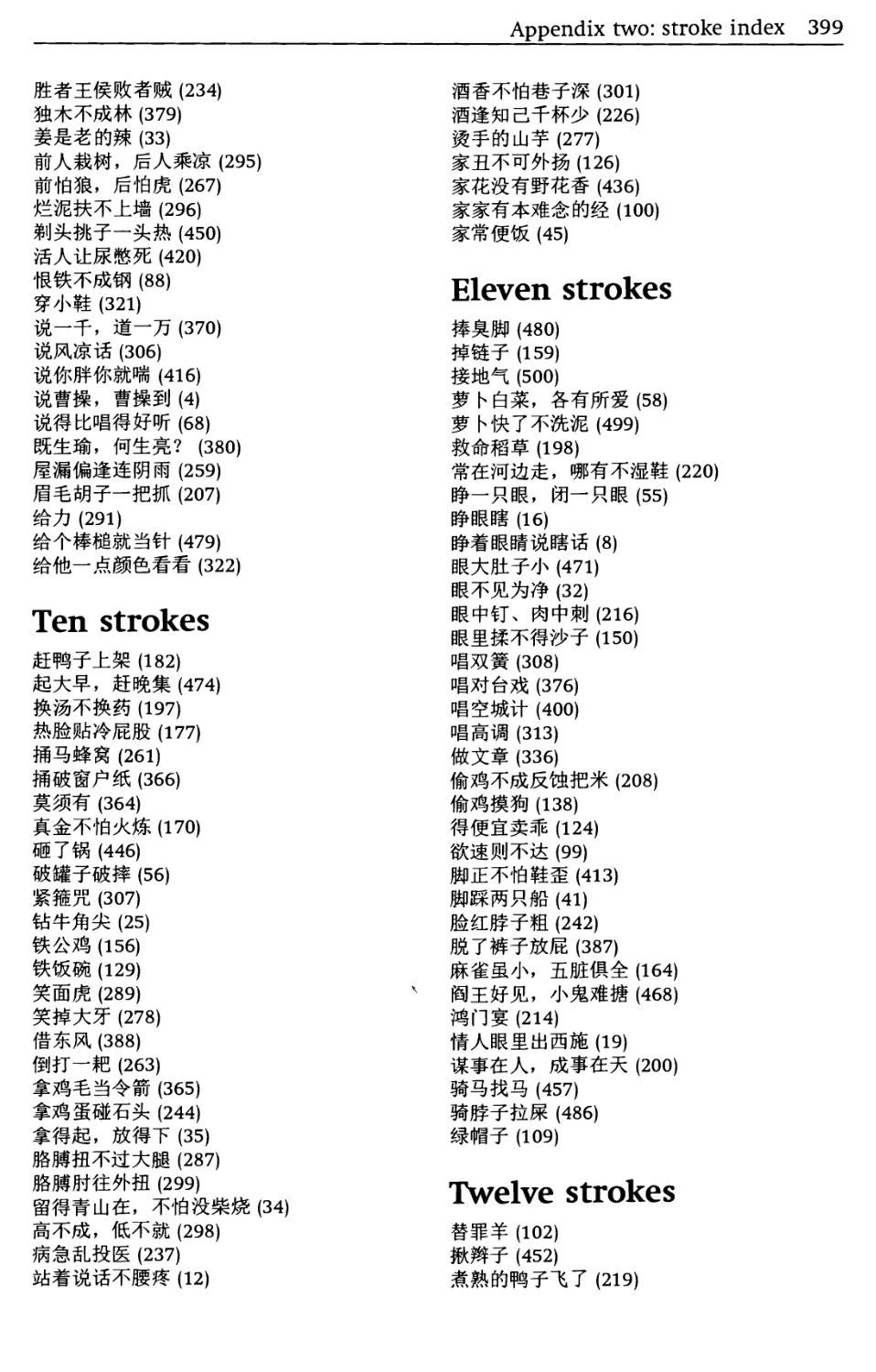
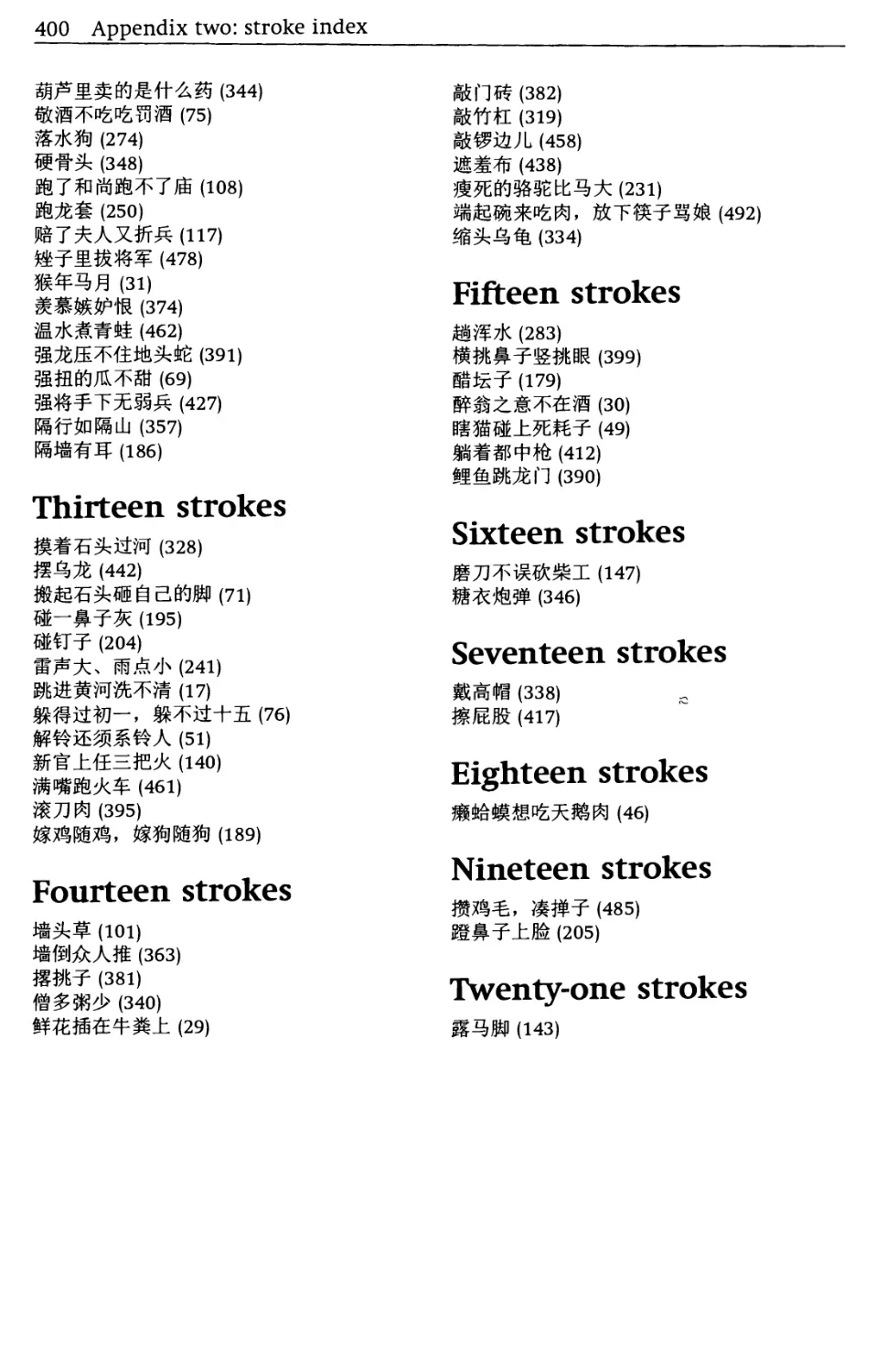
Appendix two	: stroke index of 500 common Chinese proverbs and
colloquial expressions	395
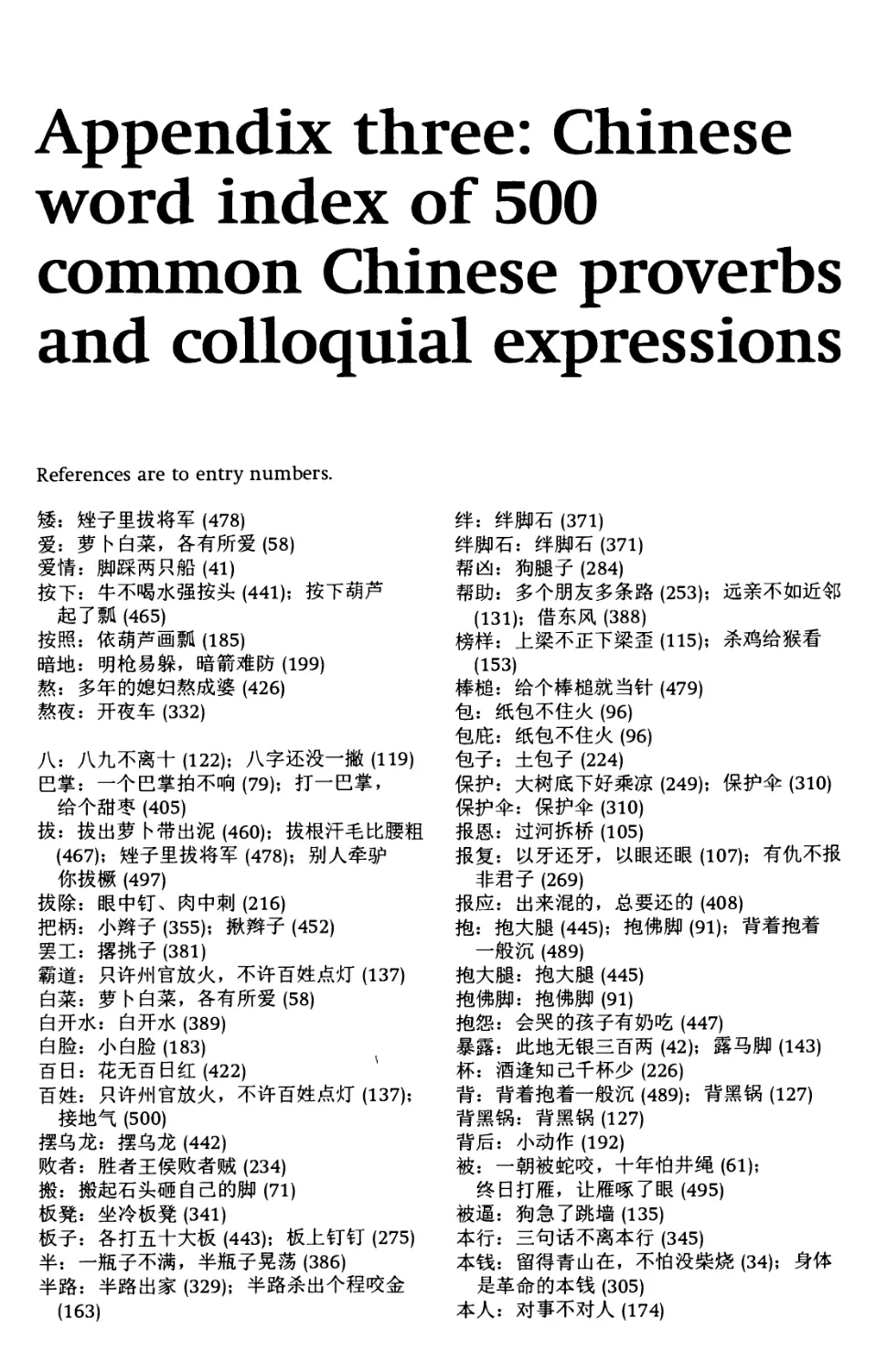
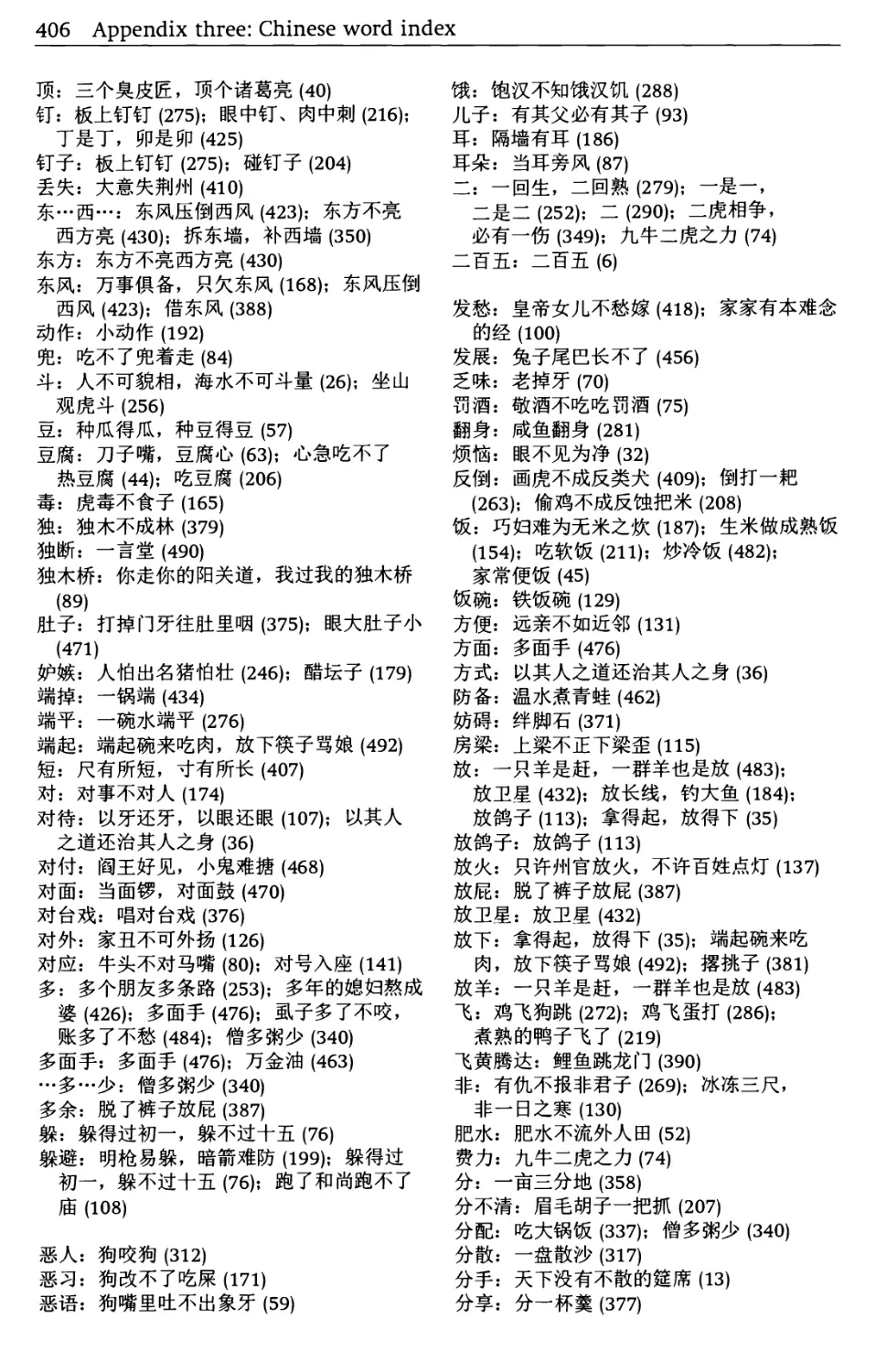
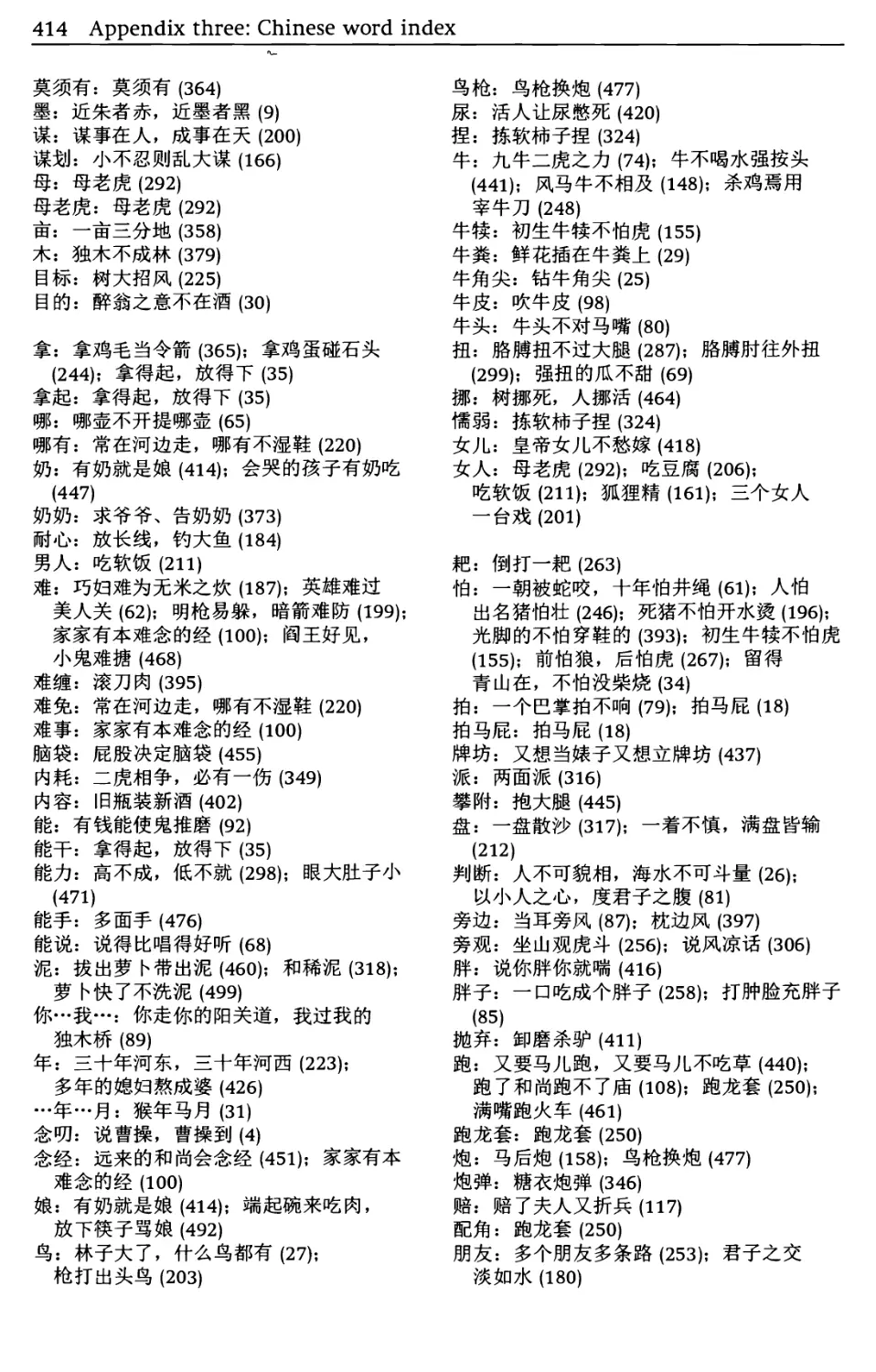
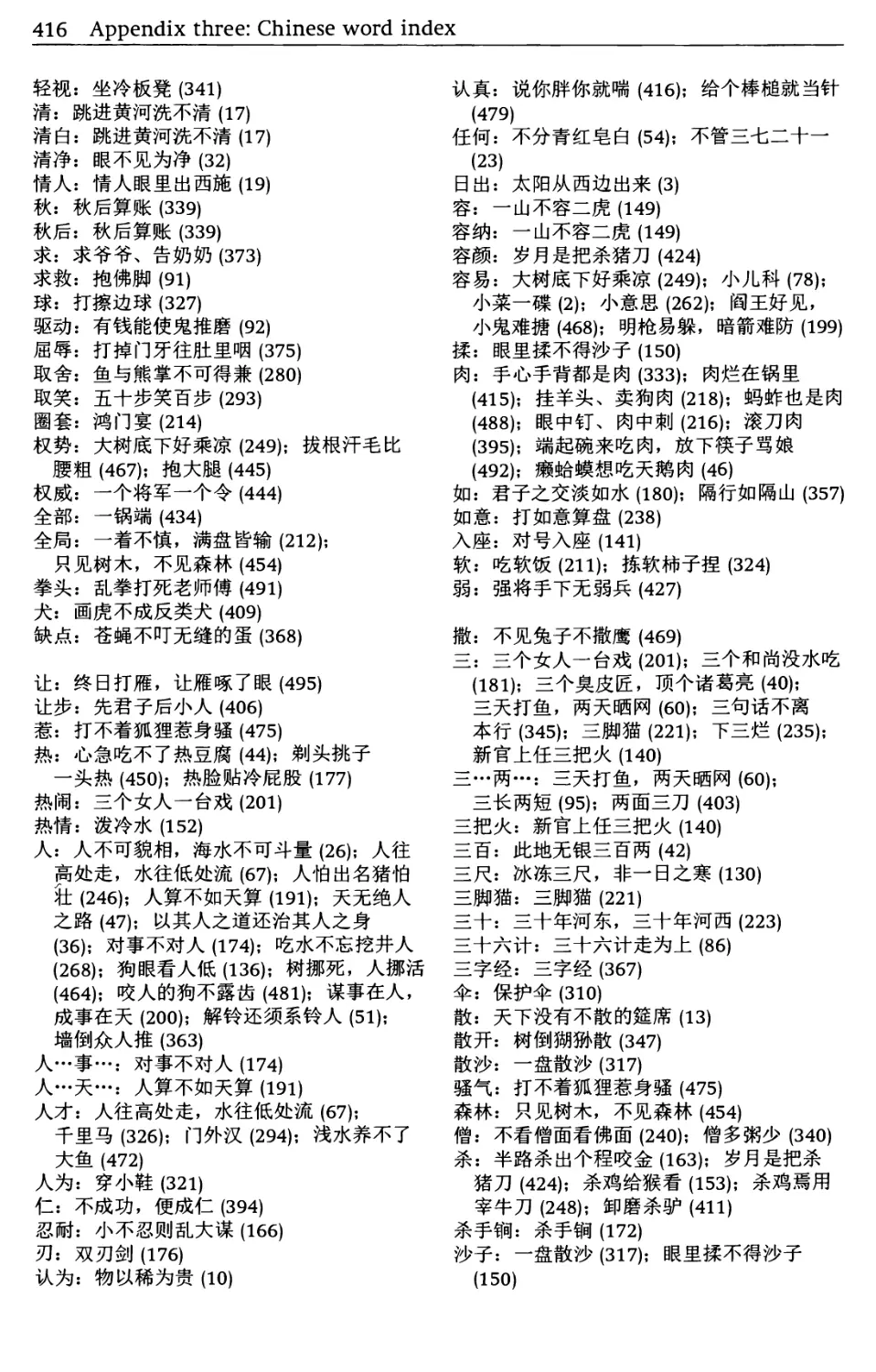
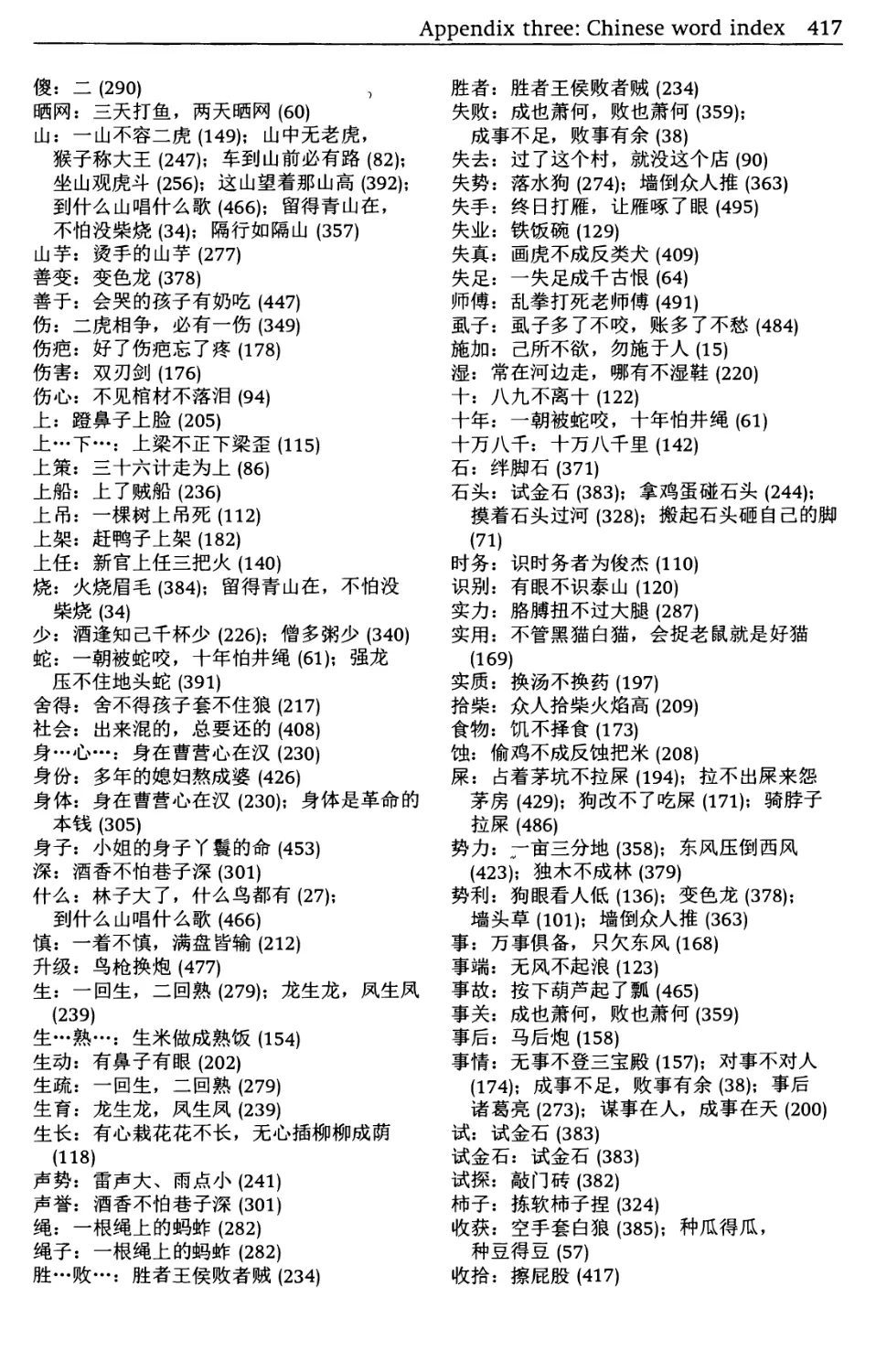
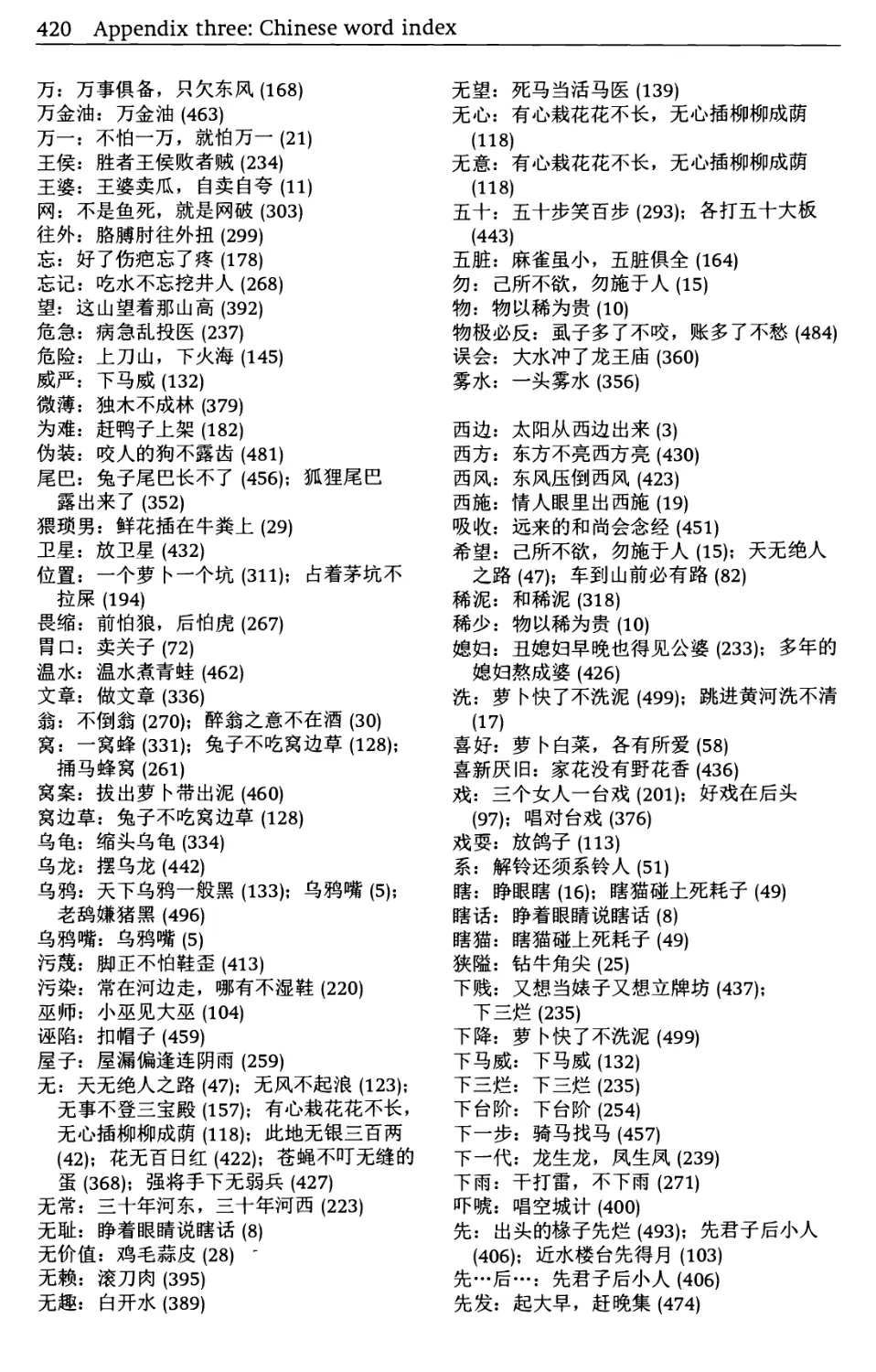
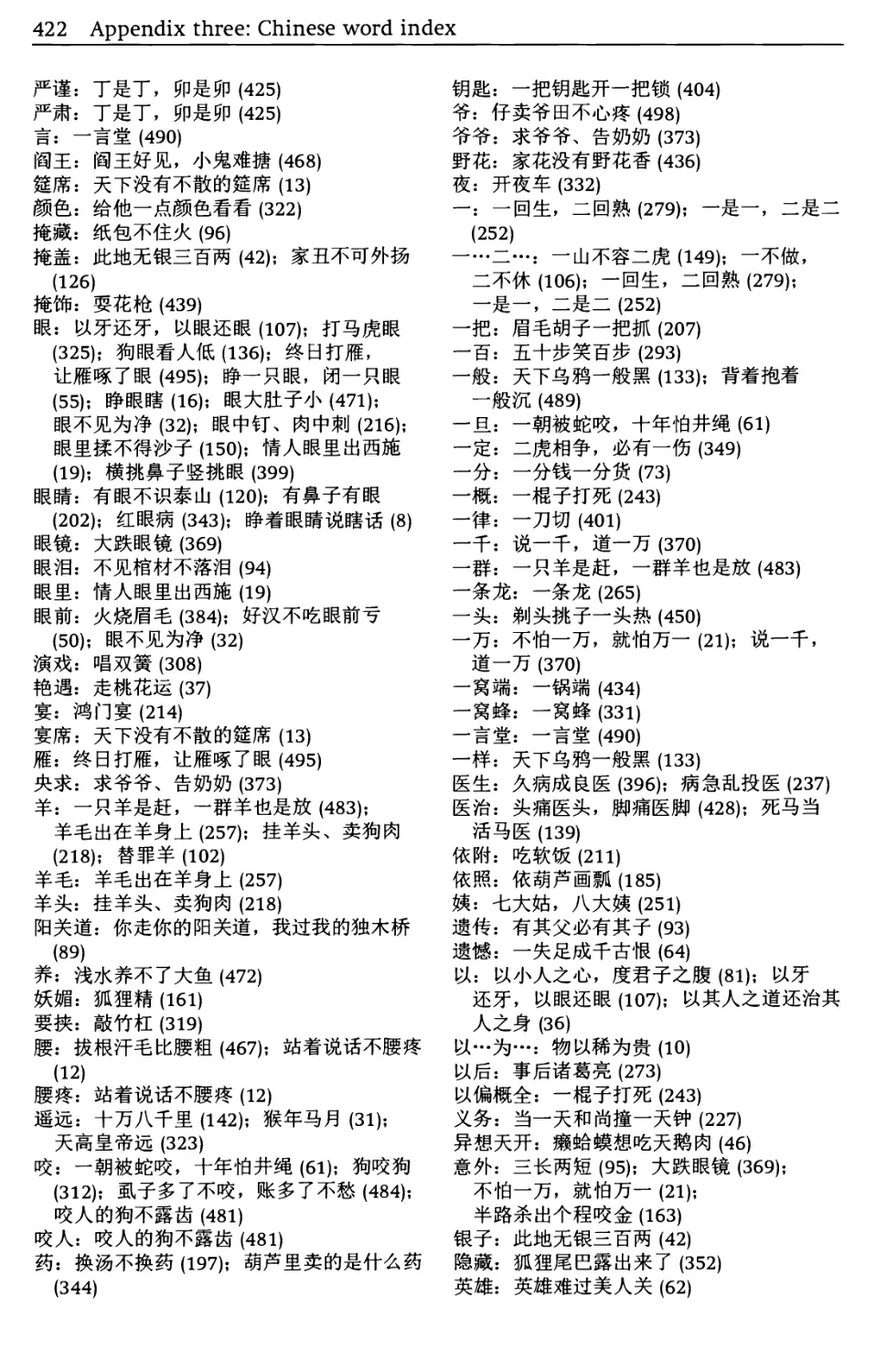
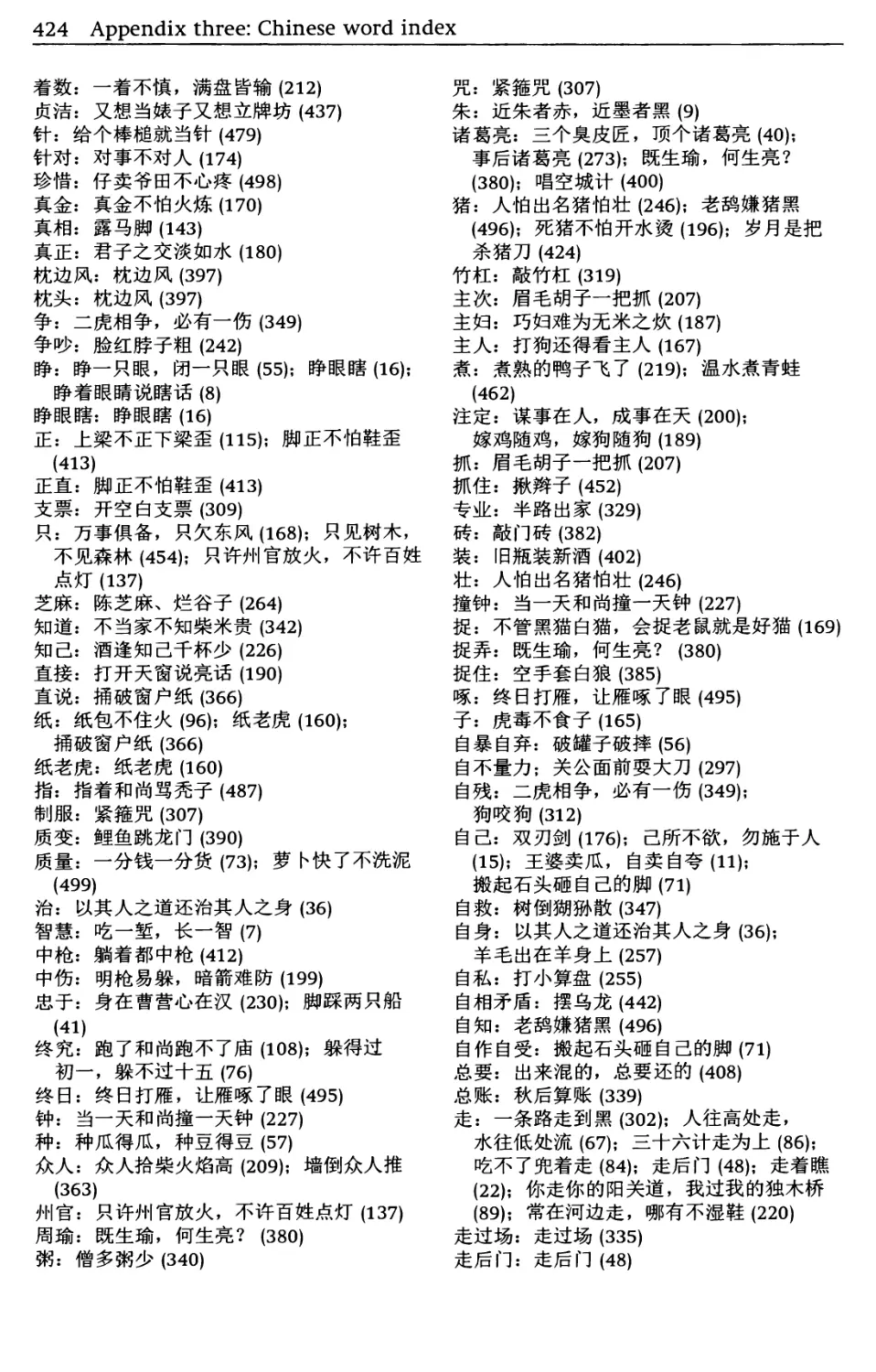
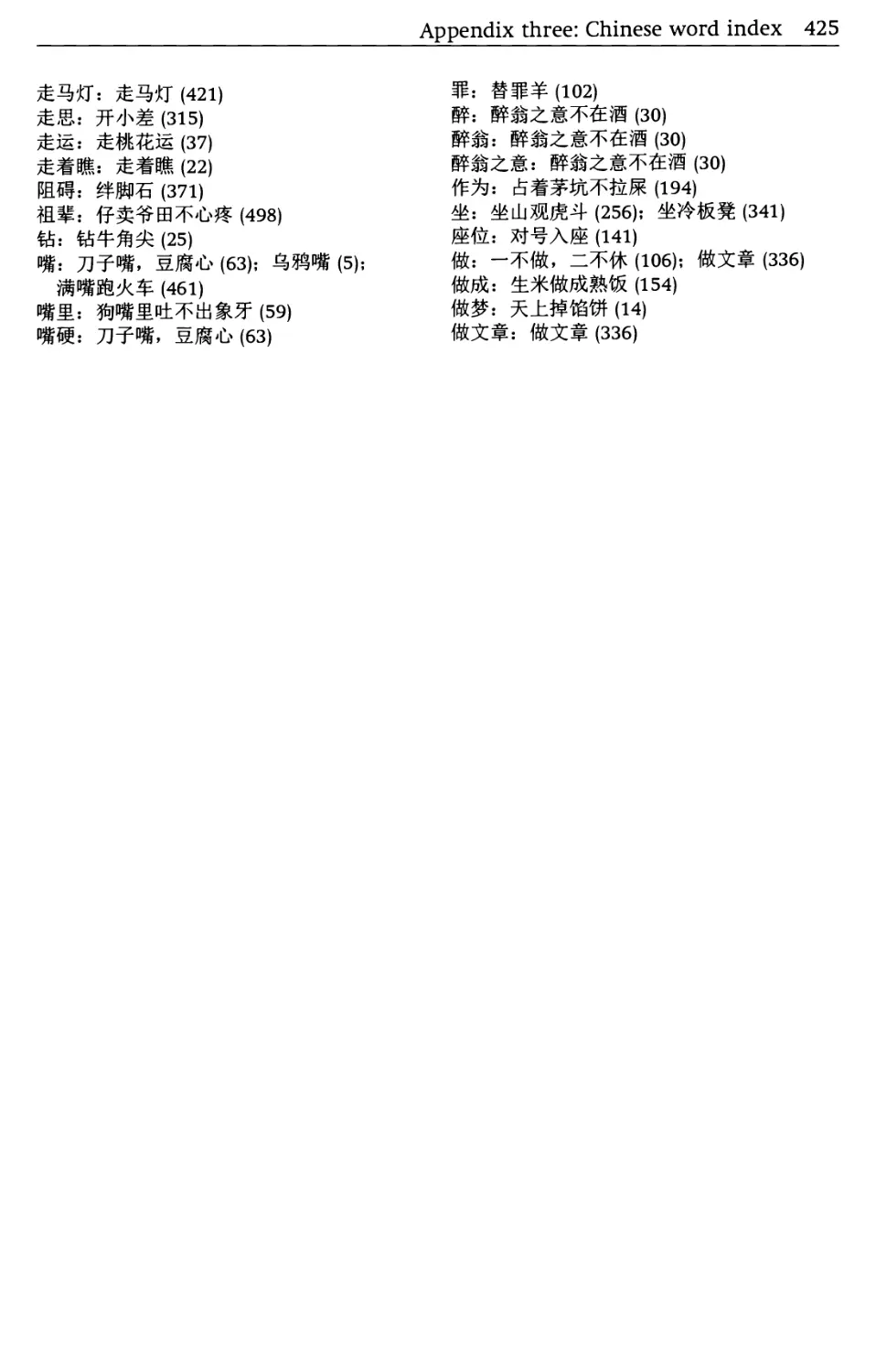
Appendix thr	ee: Chinese word index of 500 common Chinese
proverbs and colloquial expressions	401
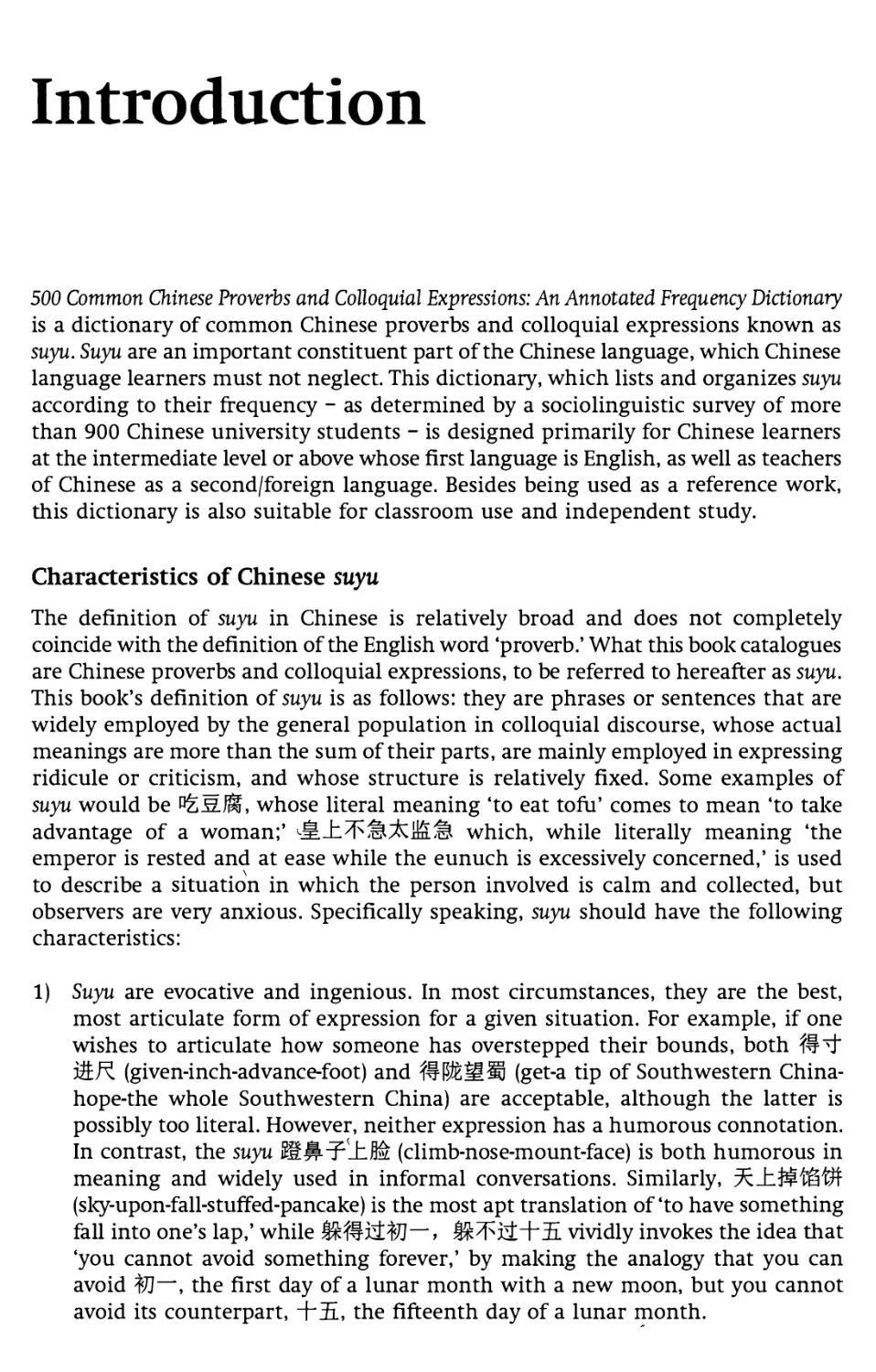
Introduction
500 Common Chinese Proverbs and Colloquial Expressions: An Annotated Frequency Dictionary
is a dictionary of common Chinese proverbs and colloquial expressions known as
suyu. Suyu are an important constituent part of the Chinese language, which Chinese
language learners must not neglect. This dictionary, which lists and organizes suyu
according to their frequency - as determined by a sociolinguistic survey of more
than 900 Chinese university students - is designed primarily for Chinese learners
at the intermediate level or above whose first language is English, as well as teachers
of Chinese as a second/foreign language. Besides being used as a reference work,
this dictionary is also suitable for classroom use and independent study.
Characteristics of Chinese suyu
The definition of suyu in Chinese is relatively broad and does not completely
coincide with the definition of the English word ‘proverb.’ What this book catalogues
are Chinese proverbs and colloquial expressions, to be referred to hereafter as suyu.
This book’s definition of suyu is as follows: they are phrases or sentences that are
widely employed by the general population in colloquial discourse, whose actual
meanings are more than the sum of their parts, are mainly employed in expressing
ridicule or criticism, and whose structure is relatively fixed. Some examples of
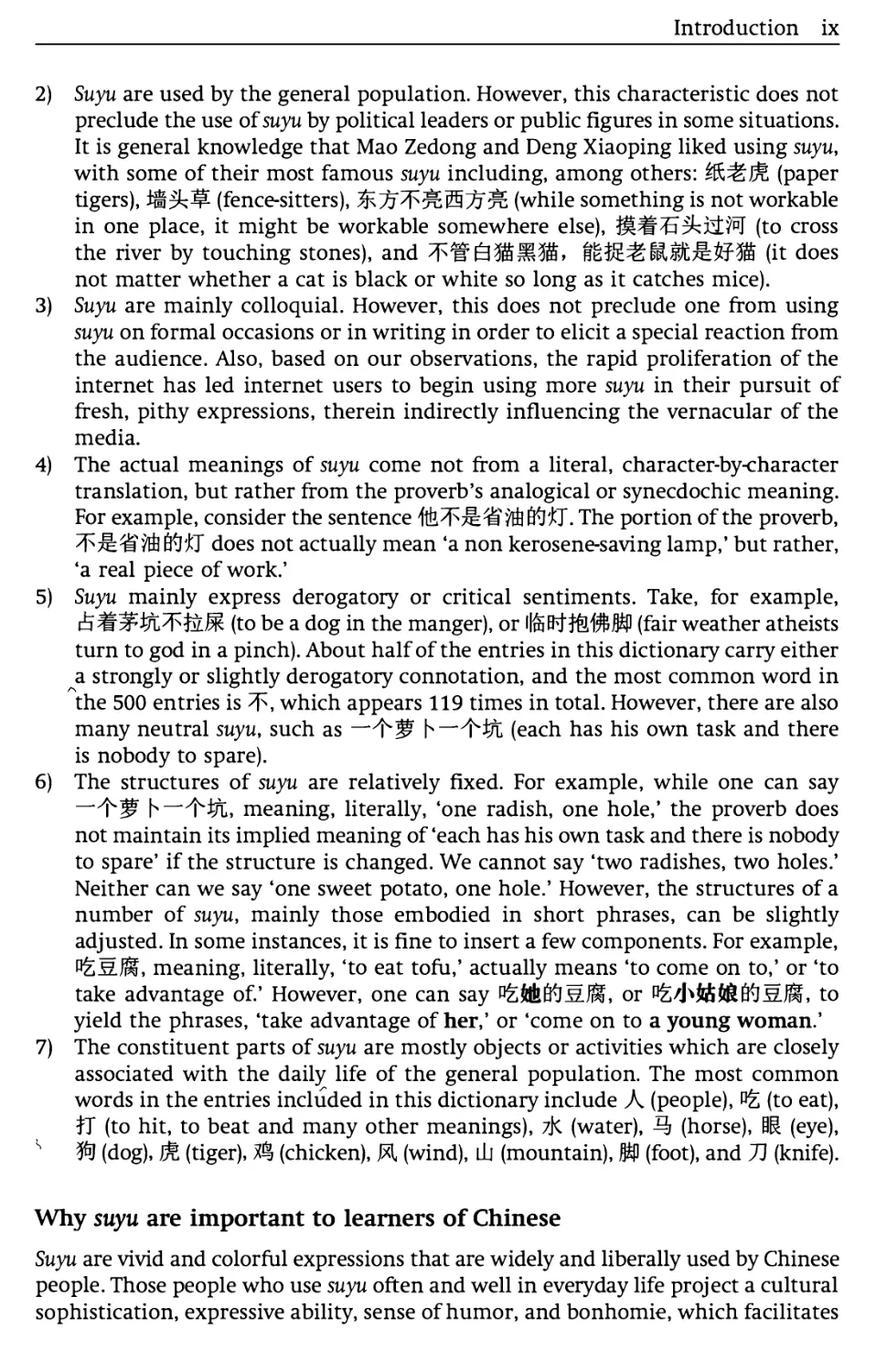
suyu would be whose literal meaning ‘to eat tofu’ comes to mean ‘to take
advantage of a woman;’	which, while literally meaning ‘the
emperor is rested and at ease while the eunuch is excessively concerned,’ is used
to describe a situation in which the person involved is calm and collected, but
observers are very anxious. Specifically speaking, suyu should have the following
characteristics:
1)	Suyu are evocative and ingenious. In most circumstances, they are the best,
most articulate form of expression for a given situation. For example, if one
wishes to articulate how someone has overstepped their bounds, both
iSR (given-inch-advance-foot) and	(get-а tip of Southwestern China-
hope-the whole Southwestern China) are acceptable, although the latter is
possibly too literal. However, neither expression has a humorous connotation.
In contrast, the suyu	(climb-nose-mount-face) is both humorous in
meaning and widely used in informal conversations. Similarly,
(sky-upon-fall-stuffed-pancake) is the most apt translation of‘to have something
fall into one’s lap,’ while	vividly invokes the idea that
‘you cannot avoid something forever,’ by making the analogy that you can
avoid %]—, the first day of a lunar month with a new moon, but you cannot
avoid its counterpart, “HE, the fifteenth day of a lunar month.
Introduction ix
2)	Suyu are used by the general population. However, this characteristic does not
preclude the use of suyu by political leaders or public figures in some situations.
It is general knowledge that Mao Zedong and Deng Xiaoping liked using suyu,
with some of their most famous suyu including, among others:	(paper
tigers), (fence-sitters), Ж(while something is not workable
in one place, it might be workable somewhere else),	(to cross
the river by touching stones), and	(it does
not matter whether a cat is black or white so long as it catches mice).
3)	Suyu are mainly colloquial. However, this does not preclude one from using
suyu on formal occasions or in writing in order to elicit a special reaction from
the audience. Also, based on our observations, the rapid proliferation of the
internet has led internet users to begin using more suyu in their pursuit of
fresh, pithy expressions, therein indirectly influencing the vernacular of the
media.
4)	The actual meanings of suyu come not from a literal, character-by-character
translation, but rather from the proverb’s analogical or synecdochic meaning.
For example, consider the sentence	ЙЯ*. The portion of the proverb,
does not actually mean ‘a non kerosene-saving lamp,’ but rather,
‘a real piece of work.’
5)	Suyu mainly express derogatory or critical sentiments. Take, for example,
й	(to be a dog in the manger), or 1|д W (fair weather atheists
turn to god in a pinch). About half of the entries in this dictionary carry either
a strongly or slightly derogatory connotation, and the most common word in
the 500 entries is which appears 119 times in total. However, there are also
many neutral suyu, such as h-(each has his own task and there
is nobody to spare).
6)	The structures of suyu are relatively fixed. For example, while one can say
—h-meaning, literally, ‘one radish, one hole,’ the proverb does
not maintain its implied meaning of ‘each has his own task and there is nobody
to spare’ if the structure is changed. We cannot say ‘two radishes, two holes.’
Neither can we say ‘one sweet potato, one hole.’ However, the structures of a
number of suyu, mainly those embodied in short phrases, can be slightly
adjusted. In some instances, it is fine to insert a few components. For example,
meaning, literally, ‘to eat tofu,’ actually means ‘to come on to,’ or ‘to
take advantage of.’ However, one can say	or	ЙИЖь to
yield the phrases, ‘take advantage of her,’ or ‘come on to a young woman.’
7)	The constituent parts of suyu are mostly objects or activities which are closely
associated with the daily life of the general population. The most common
words in the entries included in this dictionary include A (people), (to eat),
JT (to hit, to beat and many other meanings), zK (water), (horse), 0Й (eye),
s (dog), Й (tiger), (chicken), R (wind), ill (mountain), W (foot), and 7U (knife).
Why suyu are important to learners of Chinese
Suyu are vivid and colorful expressions that are widely and liberally used by Chinese
people. Those people who use suyu often and well in everyday life project a cultural
sophistication, expressive ability, sense of humor, and bonhomie, which facilitates
x Introduction
their acceptance by others and makes them the center of attention. Using suyu in
certain special situations can work wonders. For decades, countless politicians and
economists argued over a still-socialist China’s adoption of a capitalist path and
were unable to resolve certain resulting theoretical questions. However, with one
suyu,	ЙЖ,	(it does not matter whether a cat is black
or white so long as it catches mice), Deng Xiaoping promptly settled the dispute.
Examples like this cause people to admire the importance of suyu. They are a
shortcut to establishing a rapport with Chinese people.
It is generally difficult for non-immersion learners of Chinese to come into
contact with genuine suyu. Even if these learners should happen to encounter a
Chinese person, the language environment outside of China, and considerations
of practicality, discourage the Chinese from using suyu in communicating with
Chinese language learners. Moreover, due to the duality of suyu, it is not easy for
learners of Chinese to quickly guess their implied meaning. They sometimes even
develop mistaken - and potentially embarrassing - understandings of suyu. Recall,
for example, the suyu The component words, (eat) and (tofu) are
both quite simple, however, when put together, their meaning changes significantly,
as shown earlier.
Special characteristics of this dictionaiy
We hope this dictionary will come to be an indispensable aid to many Chinese
language learners and teachers. As such, we have included a number of distinguishing
features, which are as follows:
1)	This dictionary has identified, and lists the 500 most common Chinese suyu
according to their frequency of use. In this manner, learners of Chinese can
be sure about which suyu are important and should be learned first. Knowledge
of these 500 suyu will be sufficient for use in daily life or work situations, when
conducting business, or even when writing.
2)	This dictionary contains accurate English translations and annotations. For
example, the suyu	when translated literally, means ‘if a baby
is good at pretending to cry, it will be rewarded with its mother’s milk.’
However, given the context of its usage and the functional meaning of the
phrase (the squeaky wheel gets the grease), this dictionary has more logically
and correctly translated #5 (milk) as (breast milk). Additionally, English
translations of Chinese example dialogues were structured, where possible, to
adhere closely to the syntactical organization of the Chinese, in order to make
it easy for students to learn the characters for words and phrases they are
unfamiliar with.	z
3)	This dictionary is concise, practical, and convenient for educational purposes.
The entry for each suyu includes: the suyu itself (in simplified and traditional
Chinese characters), Pinyin romanization, a character-by-character translation
in English, implied meaning in English, functional translation in English (for
most entries), two suitable examples (in Chinese, Pinyin, and English!, usage,
variants (if any), and notes. Most examples take the form of dialogues reflecting
commonly encountered situations.
Introduction xi
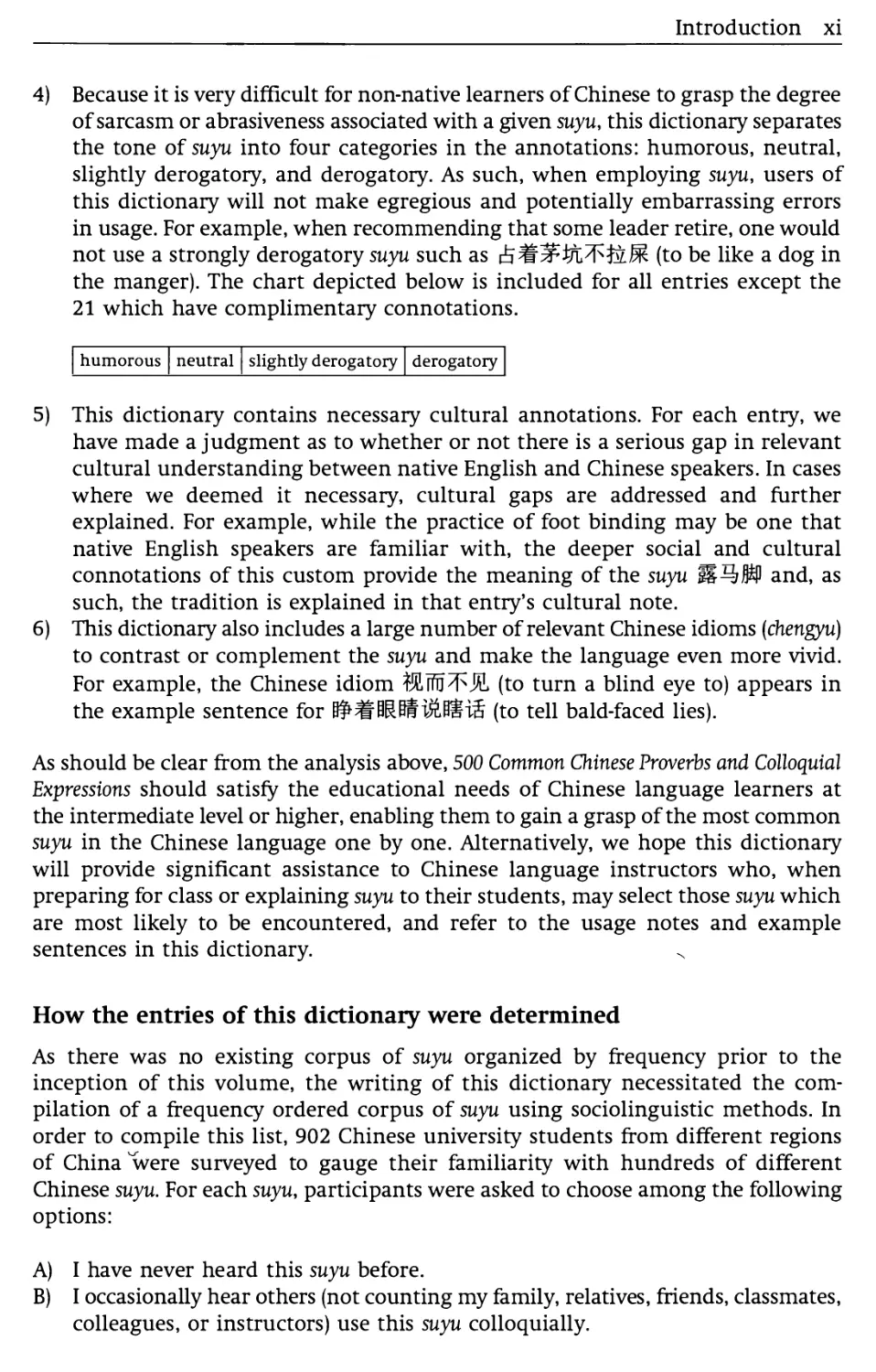
4)	Because it is very difficult for non-native learners of Chinese to grasp the degree
of sarcasm or abrasiveness associated with a given suyu, this dictionary separates
the tone of suyu into four categories in the annotations: humorous, neutral,
slightly derogatory, and derogatory. As such, when employing suyu, users of
this dictionary will not make egregious and potentially embarrassing errors
in usage. For example, when recommending that some leader retire, one would
not use a strongly derogatory suyu such as	(to be like a dog in
the manger). The chart depicted below is included for all entries except the
21 which have complimentary connotations.
humorous neutral slightly derogatory derogatory
5)	This dictionary contains necessary cultural annotations. For each entry, we
have made a judgment as to whether or not there is a serious gap in relevant
cultural understanding between native English and Chinese speakers. In cases
where we deemed it necessary, cultural gaps are addressed and further
explained. For example, while the practice of foot binding may be one that
native English speakers are familiar with, the deeper social and cultural
connotations of this custom provide the meaning of the suyu ЖЯ/W and, as
such, the tradition is explained in that entry’s cultural note.
6)	This dictionary also includes a large number of relevant Chinese idioms (chengyu)
to contrast or complement the suyu and make the language even more vivid.
For example, the Chinese idiom	(to turn a blind eye to) appears in
the example sentence for	(to tell bald-faced lies).
As should be clear from the analysis above, 500 Common Chinese Proverbs and Colloquial
Expressions should satisfy the educational needs of Chinese language learners at
the intermediate level or higher, enabling them to gain a grasp of the most common
suyu in the Chinese language one by one. Alternatively, we hope this dictionary
will provide significant assistance to Chinese language instructors who, when
preparing for class or explaining suyu to their students, may select those suyu which
are most likely to be encountered, and refer to the usage notes and example
sentences in this dictionary.
How the entries of this dictionaiy were determined
As there was no existing corpus of suyu organized by frequency prior to the
inception of this volume, the writing of this dictionary necessitated the com-
pilation of a frequency ordered corpus of suyu using sociolinguistic methods. In
order to compile this list, 902 Chinese university students from different regions
of China were surveyed to gauge their familiarity with hundreds of different
Chinese suyu. For each suyu, participants were asked to choose among the following
options:
A)	I have never heard this suyu before.
В)	I occasionally hear others (not counting my family, relatives, friends, classmates,
colleagues, or instructors) use this suyu colloquially.
xii Introduction
С)	I have heard this suyu used colloquially by someone close to me (including my
family, relatives, friends, classmates, colleagues or instructors).
D)	I believe I can use this suyu appropriately.
E)	I have used this suyu either in written or spoken form.
At the end of the survey, each participant was asked to list the ten suyu that he or
she used most often, even if they were not featured on the survey list.
While, on the face of it, it may seem that we have surveyed only a small number
of individual university students, our survey methodology is workable because
what we were really surveying were the groups to which these students belong.
As each survey participant is a member of a larger social or cultural group - be it
a family, an affinity group, or a cultural movement - each participant’s responses
indirectly reflect the influence and general linguistic tendencies of the groups to
which they belong as well as the groups to which their acquaintances belong. This
trickle-down diversity makes up for what would otherwise be an excessively
homogeneous survey group.
This survey was conducted primarily in June of 2012, whereas compilation and
selection of possible entries started as early as 2007. One of the authors, Liwei Jiao,
was present when most of the surveys were being conducted. The authors wish to
sincerely thank all of the following Chinese faculty and their students for their
participation in this survey:
Professor Bo Zhang and his students at Nankai University,
Professor Lei Liang, Professor Qibin Ran, Professor Jia Guo and Ms. Minyuan Wang
and their students and classmates at Nankai University,
Professor Xiujuan Shi and her students at Tianjin Normal University,
Dr. Shitie Yang, Dr. Yujian Xiang, and Ms. Yanli Liu and their students at Huaibei
Normal University,
Professor Lijian Liu and his students at Zhejiang Normal University,
Ms. Yuhui Shi and her students at Xuzhou Normal University,
Dr. Qiaoling Cao and her students at China Criminal Police University,
Mr. Xiaoning Han and his students at Qingdao University,
Professor Yingzhi Na and his students at Qingdao Technical College,
Professor Lintao Zhao and his students at Hebei University,
Dr. Xiaohua Xu and her students at Capital University of Economics and Business.
Background of the compilation of this dictionaiy and
acknowledgments
This dictionary is the sister volume to 500 Common Chinese Idioms, and both books
were jointly conceived in 2007. The research for this volume proceeded gradually
from 2007 until the completion of 500 Common Chinese Idioms in 2010. In the fall
of 2010, Benjamin Stone joined this project, and we have worked together towards
the completion of this book since then.
The authors wish to express here their appreciation to the following people for
their assistance in the compilation of this dictionary: Professor Shuiguang Deng
of Zhejiang University, Professor Zepeng Wang of Nankai University, Professor
Introduction xiii
Hsin-hsin Liang of University of Virginia, Ms. Xuefei Hao of Washington University
in St. Louis, Mr. William Xuefeng Wang, Mr. Jinsong Fan, and Mr. Lizhong Jiao.
Special thanks go to Professor William Labov of University of Pennsylvania for his
advice on how to conduct the survey of entries. The authors also would like to
thank their editors at Routledge, Ms. Andrea Hartill, Ms. Samantha Vale Noya,
Ms. Isabelle Cheng, Ms. Sarah May and Ms. Jill Campbell for their support of this
project. Finally, the authors would be remiss not to also thank our families for
their crucial support, without which this dictionary would surely never have seen
the light of day.
Liwei Jiao
Benjamin Stone
List of abbreviations and
grammatical terms in
character-by-character
translation
’s:	possessive
ed:	past tense
ing: present progressive tense
MW: measure word
List of entries
1	^4^04^	40	Н4ЯЙЕ,
2		41	ЖЭДЯШ
3	арвмййшж	42	йиашннт
4	ШМЙё, W^SIJ	43
5	4m	44	Ж'^п£4Т^аЖ
6		45
7	nfc-ss,	46	«ШИМ
8		47	А5Б*ЙЛ£8#
9		48
10		49
11		50
12		51
13		52	IBzk^WhAffl
14	a±#w	53	'L'W^rfn A4aeL
15	a^w,	54	wwa^s
16	вш®	55	®-Я0й, Й1-Я0Й
17		56
18	ЙЗГь	57	ЭДЯШЖ., ^S-Ws.
19	tfABSStBffiJS	58
20	йо	59
21	/Рй-7ъ ШЙЛ-	60	НА4ТЙ, ИАИМ
22	£*ИШ	61
23	^=41-+-	62
24		63	аЖЖ'
25		64
26	Л^пГШВ, Ш?К^пГ4>	65	иЭДзеТ'ТНЗДж
27	Й^АТ,	66	m
28		67	Л&а£Ь£, А*Ш&Ж
29	ЖЕЙёФШ:	68
30		69	®Й6Ш7Ж
31		70
32	0й4ДШ>	•б 71	шдалй ВЙИ
33		72
34	©Will#,	73
35	£*Ш ЙШТ	74	Л.4—
36	(дмл^шйБйклгл-	75
37		76	Ш№л-, &4j±+s
38	!&WW>	77	|£§1й, в^1й
39	Ж±4>А1Й>	78	'4ЛЛ4
xvi List of entries
79
80
81
82
83
84
85
86
87
88
89
90
91
92
93
94
95
96
97
98
99
100
101
102
103
104
105
106
107
108
109
110
111
112
113
114
115
116
117
118
119
120
121
122
123
124
125
	126	ЖВ^пГ^Й
	127
	128
	129
	130	ftK&HR, ^-0Z«
	131
	132	ТЗД<
—	133
	134
	135
	136	адвй#лм
	137	HWIW^A,
	138
	139
	140
	141
НДИЙ.	142	+75ДАЖ
	143	ЯЯ»ЙР
	144	^i^wa
	145	±7Jdj, ТАЖ
	146
ЖЖ^ЖЖ^й^	147
	148
	149	-dj^-Й
	150
'ЬЗЕЯЕДФ	151	HTSf^-
й?М1^	152
-w, ~W	153
ЖЯ, Ж®	154
SSTflJiWFTffi	155
	156
	157
^zk^JBMzK	158
	159
	160
-£-Ш	161
A^^FiET^^	162	Я.’йпЯ&МА
Л'АЙД,	163
!®ТААХ#тД	164	ЙИ?£'Ь, няш±
^С>Й#РШЙ1	165
Д?й?&-Ж	166	/J^S^iJSLAiM
W'FiR^ib	167	|]«W±A
	168	75ЖШ&, ЯХЖД
ДЛ2ГЖ+	169
AJxl'F^vfe	170	Ж£>РЙА&
	171
	172	&ЗИЙ
List of entries xvii
173		220	Ж£Ий£, WWAffig
174	яподл	221	НИЙ
175		222	пёЙПП
176		223	Н+АЖА, Н+4МЕ
177		224	±Й7
178	»7<Шё7&	225	МАЙЯ
179		226	StfoBW
180		227
181	HAftiWzKng;	228
182	ЙФ47±^	229
183		230	>i£WW'№&
184	Ш, ft АЙ	231	^JEft^ESrA
185		232
186		233
187		234
188		235	Т=£
189		236	±75ЖШ
190		237
191	АМАНАМ	238	П$айВЙ
192		239	Я±Я
193	Й7К1?А7й$®	240
194		241	ЖЯА' Ж£Ф
195		242
196		243	-Ш7Я5Е
197		244	ЖХ^ЖЙЙНА
198		245
199	внт1й	246
200	шжал,	247	^А^АН
201	НААА-£А	248
202		249	Ам^т»т&
203		250	s&A;S
204	ШГ7	251	'ААЙ. АА8!
205		252			 _^	 ——
206	пёаЖ	253
207.		254	ТШ
208		255	Я>Ь£Й
209	ААЙ^А^а	256
210	ЙЖМ	257
211		258
212		259	ЖгйШ^ЙЕР^Ж
213	'ФгД^ЁлШ	260
214		< 261
215	п£|®Е4	262	<ьш®
216	0МФ1К ЙФЙ	263	ш-»в
217		264
218		265
219	,<^ЙФ4А^7	266	ИЖ^АА
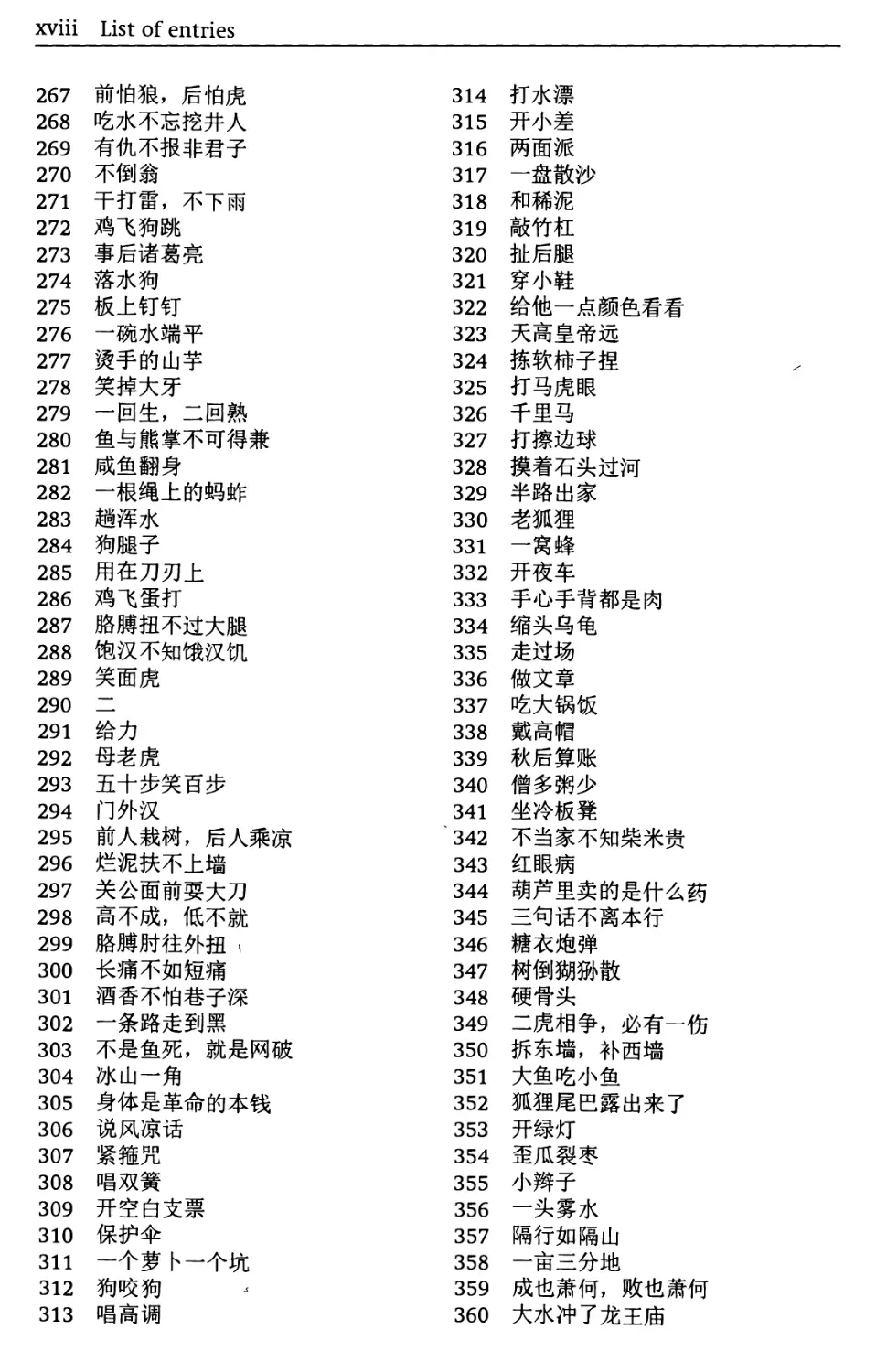
xviii List of entries
267		314	JTzWl
268		315	?м^
269		316
270		317	-atm
271	тгг®, жт ж	318	AlWiE
272		319
273		320	StJnffig
274		321
275		322
276		323	A iWi Ж Ж is
277		324	&ШФЕШ
278		325
279	-0&, “0$	326	ТЖЯ»
280		327
281		328	Ж<^й?М
282		329	ФЕ&ШЖ
283		330	%№
284		331	-ЖЙ
285	ж&ллт	332
286		333
287		334	*Й^Й
288		335
289		336
290				337
291	О	338
292		339	wsim
293		340
294	ГШ	341
295	ЙАШ*Г, йШ	342
296		343
297		344
298		345
299	ЯШW^hffl >	346
300		347	wow
301		348
302	-«os	349
303	А^Й^Е,	350
304	ЙКШ—Й	351	АЙп^ФЙ
305		352	Ж®^Е®ЖЖТ
306	тЙЮЖй	353
307	Ш	354	жлшж
308	ПВЗДМ	355
309	Е5ЙЖЖ	356	-ЖЯ7К
310		357	РйМпКйЖ
311	—ТЖ h—'Мл;	358	— щ'Н5Нй
312		359	!>№йШ
313		360	AzKWTteJS
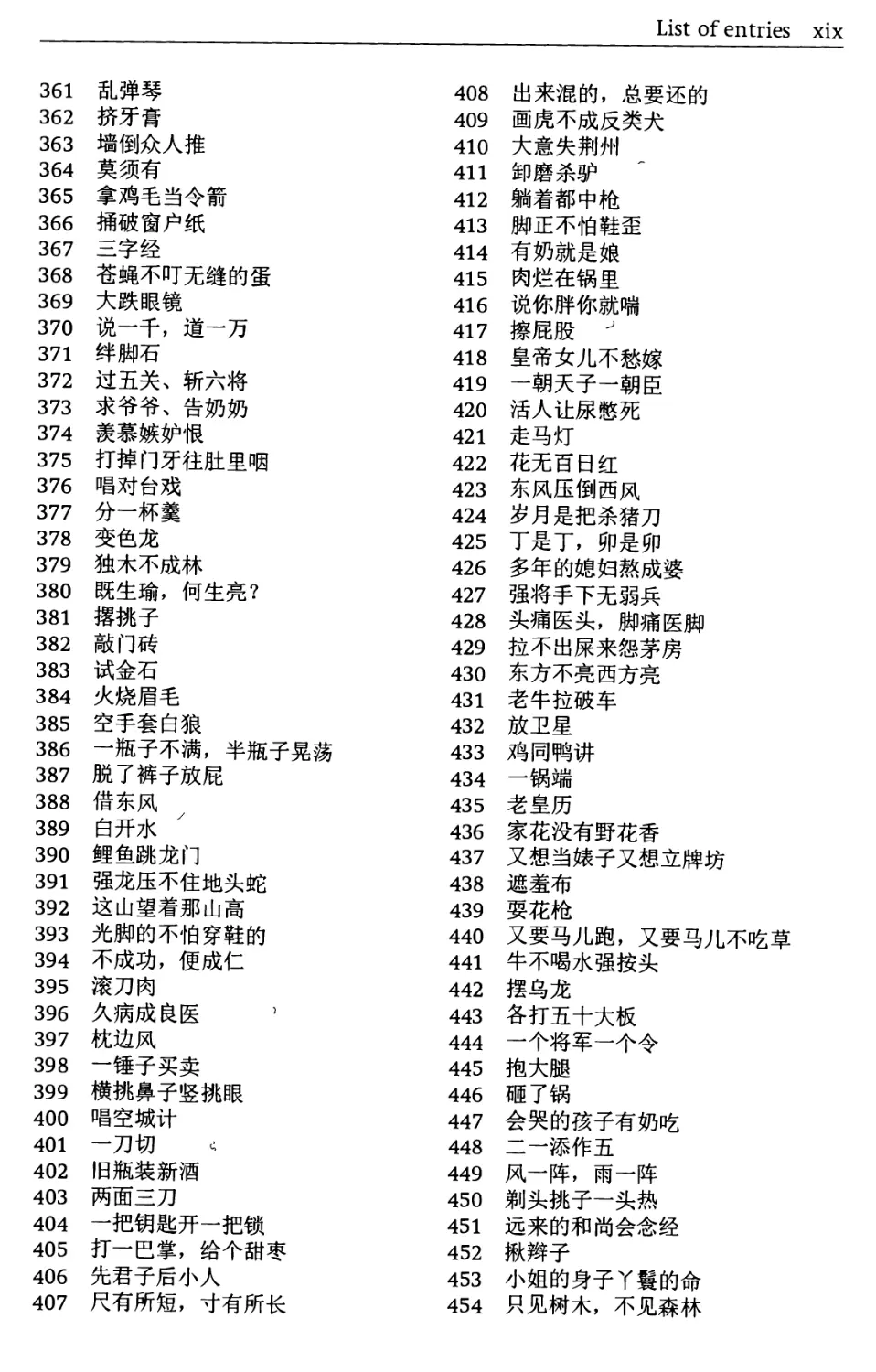
List of entries xix
361		408
362		409
363		410	АйАЖМ
364		411	BPW&SP
365		412	ит₽Ф^
366		413
367		414
368		415
369		416	iBfflWill
370	it-75	417	» J
371	m	418	Ж##71ЖШ£
372		419
373		420
374		421	tWT
375		422
376		423	ММ1Ж
377		424
378		425	ТДТ, 5РД5Р
379		426
380		427
381		428	АЙЕА, ДОЛЮ
382	ЙПЙ	429
383	i^^-EF	430
384		431
385		432	$дш
386	-ЯйТ>М§, «ffJliW	433
387		434	-шж
388		435
389	й?ЬК '	436
390	ЙМ^П	437
391		438
392		439
393		440	х^дл, х^йдяад
394	т «с	441
395	^75Й	442
396		443	#ПЕ+АШ
397	ЙЙ1Д,	444
398	—	445	ЙАЯЕ
399		446
400		447
401	-75Й	<	448
402	IHtelWS	449	д-р?, д-р?
403		450
404	-т&я-ок	451
405	jt-еж,	452	№^-
406	ftg^AA	453
407		454	ЯЛМА,
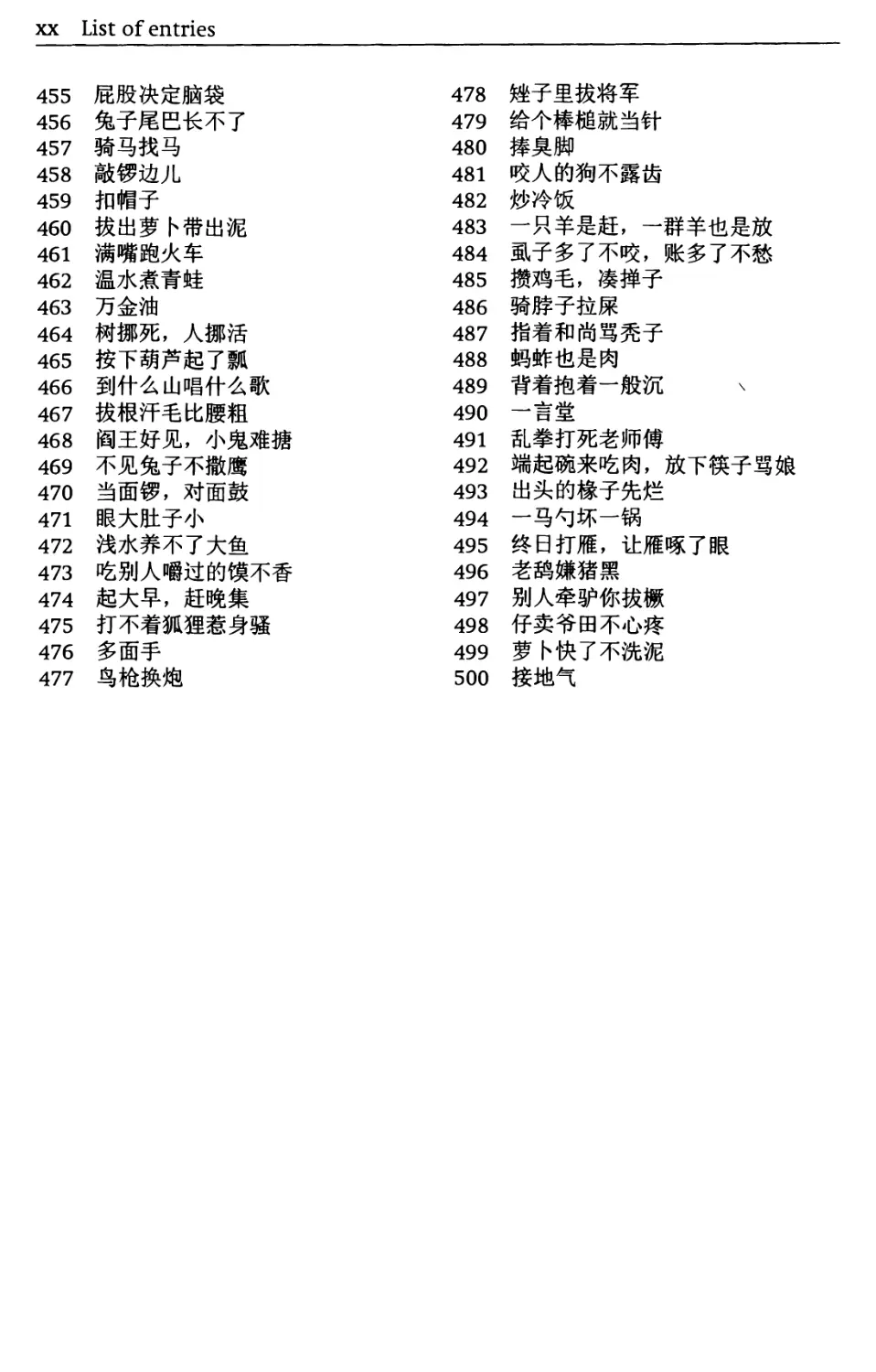
xx List of entries
455		478
456		479
457		480	ШДЙ
458		481	^ЛЙЗД^ЙЙ
459		482
460		483	-ЯЖДЙ,
461		484
462		485
463		486
464	WWE, ЛЖ	487
465		488
466		489
467		490
468	0EO,	491
469		492
470	хда$	493
471		494
472	$7К#^ТАЙ	495	^В1Ш, itWT®
473		496
474	атж	497
475		498
476		499	b&T^Wg
477		500
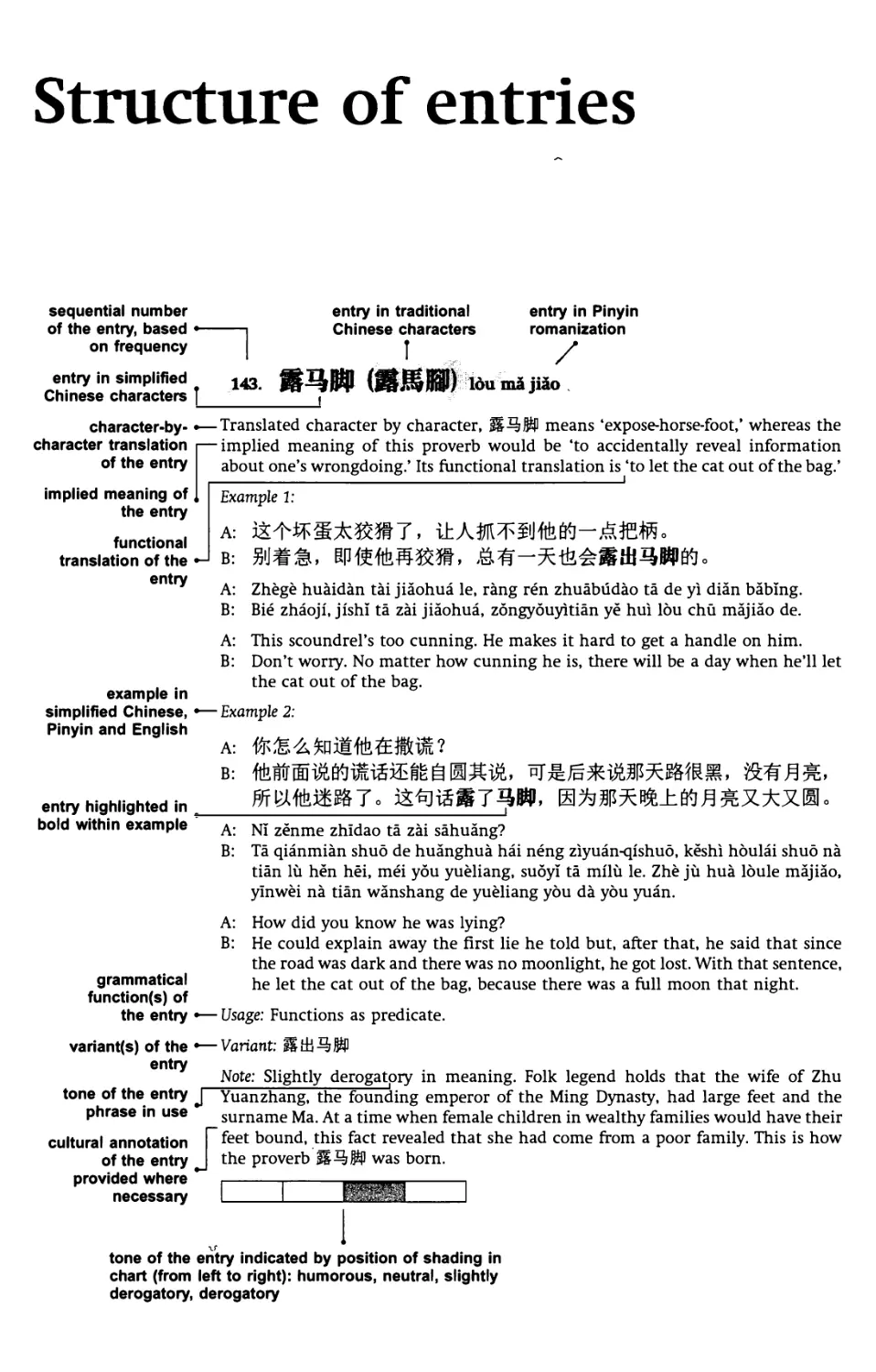
Structure of entries
sequential number
of the entry, based
on frequency
entry in simplified *43
Chinese characters J
entry in traditional	entry in Pinyin
Chinese characters	romanization
I	/
МЗД (SJO) 16u majiao
______!
•—Translated character by character, ЦДМ1 means ‘expose-horse-foot,’ whereas the
— implied meaning of this proverb would be ‘to accidentally reveal information
about one’s wrongdoing.’ Its functional translation is ‘to let the cat out of the bag.’
Example 1:
character-by-
character translation
of the entry
implied meaning of
the entry
functional
translation of the
А: ттажт.
entry
example in
simplified Chinese,
Pinyin and English
entry highlighted in
bold within example
A: Zhege huaidan tai jiaohua le, rang ren zhuabudao ta de yi dian babing.
B: Bie zhaoji, jishi ta zai jiaohua, zongyduyitian ye hui lou chii majiao de.
A: This scoundrel’s too cunning. He makes it hard to get a handle on him.
B: Don’t worry. No matter how cunning he is, there will be a day when he’ll let
the cat out of the bag.
•— Example 2:
А:
в: ЖЙШОЙВ&Й,	ЙЙЯЙ.
A:	Ni zenme zhidao ta zai sahuang?
В: Ta qianmian shud de huanghua hai neng ziyuan-qishud, keshi houlai shud na
tian lu hen hei, mei you yueliang, sudyi ta milu le. Zhe jii hua loule majiao,
yinwei na tian wanshang de yueliang you da you yuan.
A: How did you know he was lying?
B:	He could explain away the first lie he told but, after that, he said that since
the road was dark and there was no moonlight, he got lost. With that sentence,
grammatical he the cat out of the bag, because there was a full moon that night.
function(s) of
the entry •— Usage: Functions as predicate.
variant(s) of the •—Variant: В Ж
Note: Slightly derogatory in meaning. Folk legend holds that the wife of Zhu
tone of the entry J Yuanzhang, the founding emperor of the Ming Dynasty, had large feet and the
phrase in use surname Ma. At a time when female children in wealthy families would have their
cultural annotation Г ^eet bound, this fact revealed that she had come from a poor family. This is how
of the entry I the proverb ЦД W was born.
provided where	।--------.-----------------------1
necessary	I________I_______________________I
1
tone of the entry indicated by position of shading in
chart (from left to right): humorous, neutral, slightly
derogatory, derogatory
500 common Chinese
proverbs and colloquial
expressions
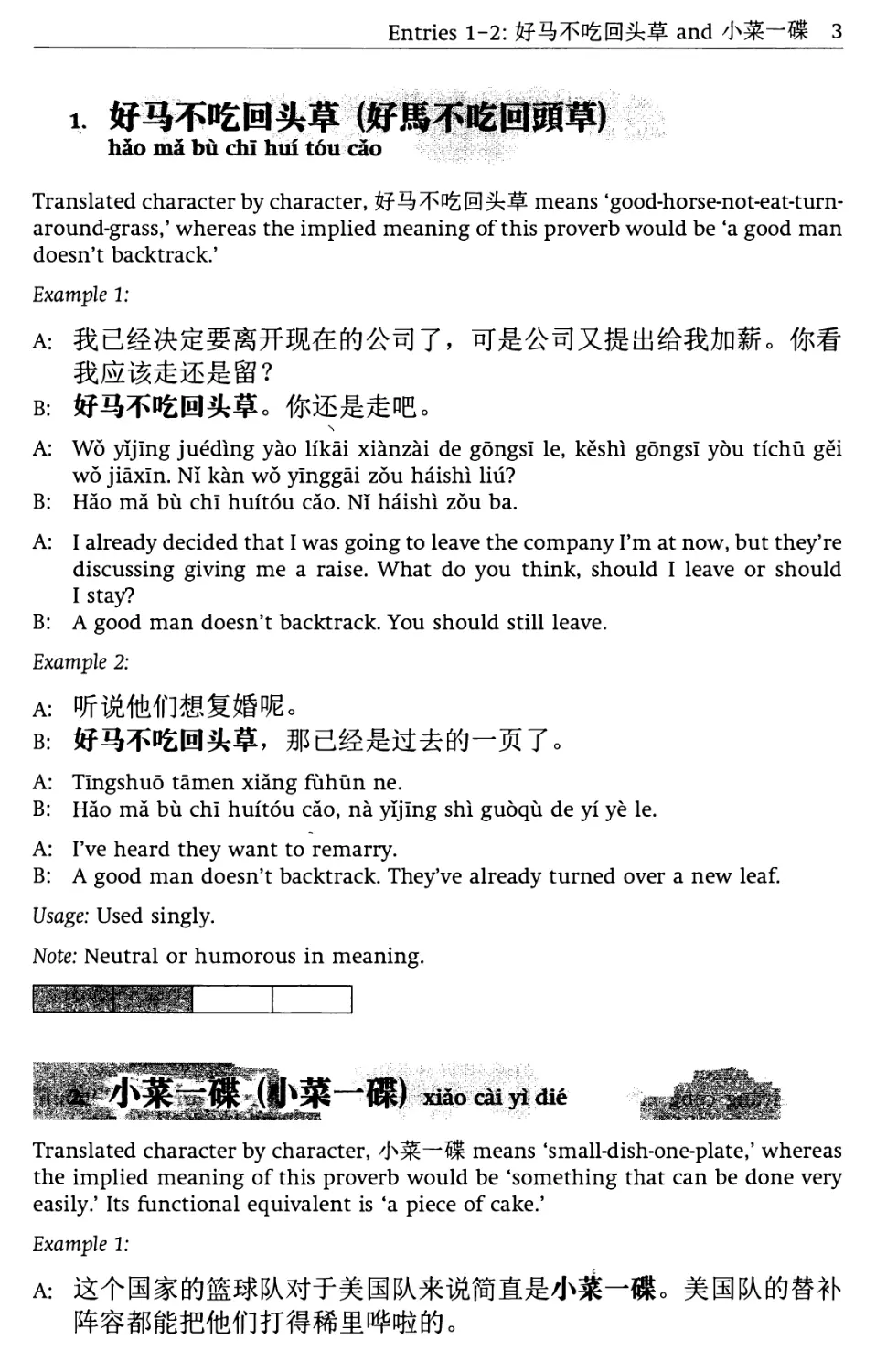
Entries 1-2:	and	3
i.	(»®¥ПШЯЖ)
Ьйо mi bu chi hui t6u cao
Translated character by character,	means ‘good-horse-not-eat-turn-
around-grass,’ whereas the implied meaning of this proverb would be ‘a good man
doesn’t backtrack.’
Example 1:
В:	W^nEo
X
A:	Wo yijing jueding yao likai xianzai de gongsi le, keshi gongsi you tichii gei
wo jiaxin. Ni kan wo yinggai zou haishi liu?
B:	Hao ma bu chi huitou cao. Ni haishi zou ba.
A: I already decided that I was going to leave the company I’m at now, but they’re
discussing giving me a raise. What do you think, should I leave or should
I stay?
B:	A good man doesn’t backtrack. You should still leave.
Example 2:
А:
В:
A:	Tingshud tamen xiang fuhiin ne.
B:	Hao ma bu chi huitou cao, na yijing shi gudqu de yi ye le.
A:	I’ve heard they want to remarry.
B:	A good man doesn’t backtrack. They’ve already turned over a new leaf.
Usage: Used singly.
Note; Neutral or humorous in meaning.
Translated character by character,	means ‘small-dish-one-plate,’ whereas
the implied meaning of this proverb would be ‘something that can be done very
easily.’ Its functional equivalent is ‘a piece of cake.’
Example 1:
а:	mm
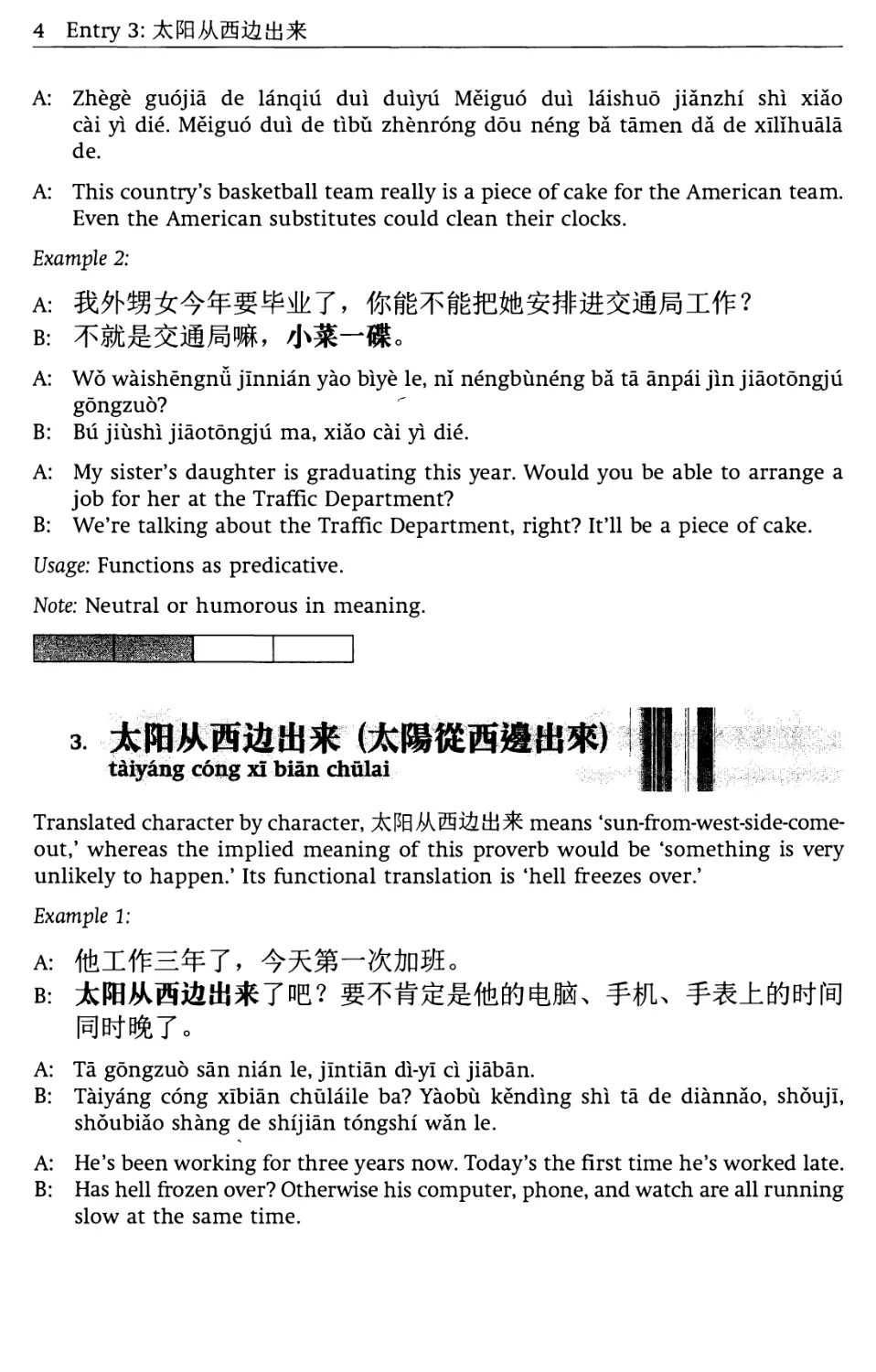
4 Entry 3: ЖШЛЙЙЖЖ
A: Zhege guojia de lanqiu dui duiyu Meiguo dui laishud jianzhi shi xiao
cai yi die. Meiguo dui de tibu zhenrong dou neng ba tamen da de xilihuala
de.
A: This country’s basketball team really is a piece of cake for the American team.
Even the American substitutes could clean their clocks.
Example 2:
А:
в:	м-st
A: Wo waishengnu jinnian yao biye le, ni nengbuneng ba ta anpai jin jiaotongju
gdngzud?
B: Bu jiushi jiaotongju ma, xiao cai yi die.
A:	My sister’s daughter is graduating this year. Would you be able to arrange a
job for her at the Traffic Department?
B:	We’re talking about the Traffic Department, right? It’ll be a piece of cake.
Usage; Functions as predicative.
Note; Neutral or humorous in meaning.
1 I
3.	ешйи&евзю || I
taiyang cong xi bian chulai	IN ' I
Translated character by character, ЖРН АЙЙЖЖ means ‘sun-from-west-side-come-
out,’ whereas the implied meaning of this proverb would be ‘something is very
unlikely to happen.’ Its functional translation is ‘hell freezes over.’
Example 1:
A:
В:	^е±ЙШч0]
IWB&T»
A:	Ta gdngzud san nian le, jintian di-yi ci jiaban.
B:	Taiyang cong xibian chulaile ba? Yaobu kending shi ta de diannao, shouji,
shoubiao shang de shijian tongshi wan le.
A: He’s been working for three years now. Today’s the first time he’s worked late.
B: Has hell frozen over? Otherwise his computer, phone, and watch are all running
slow at the same time.
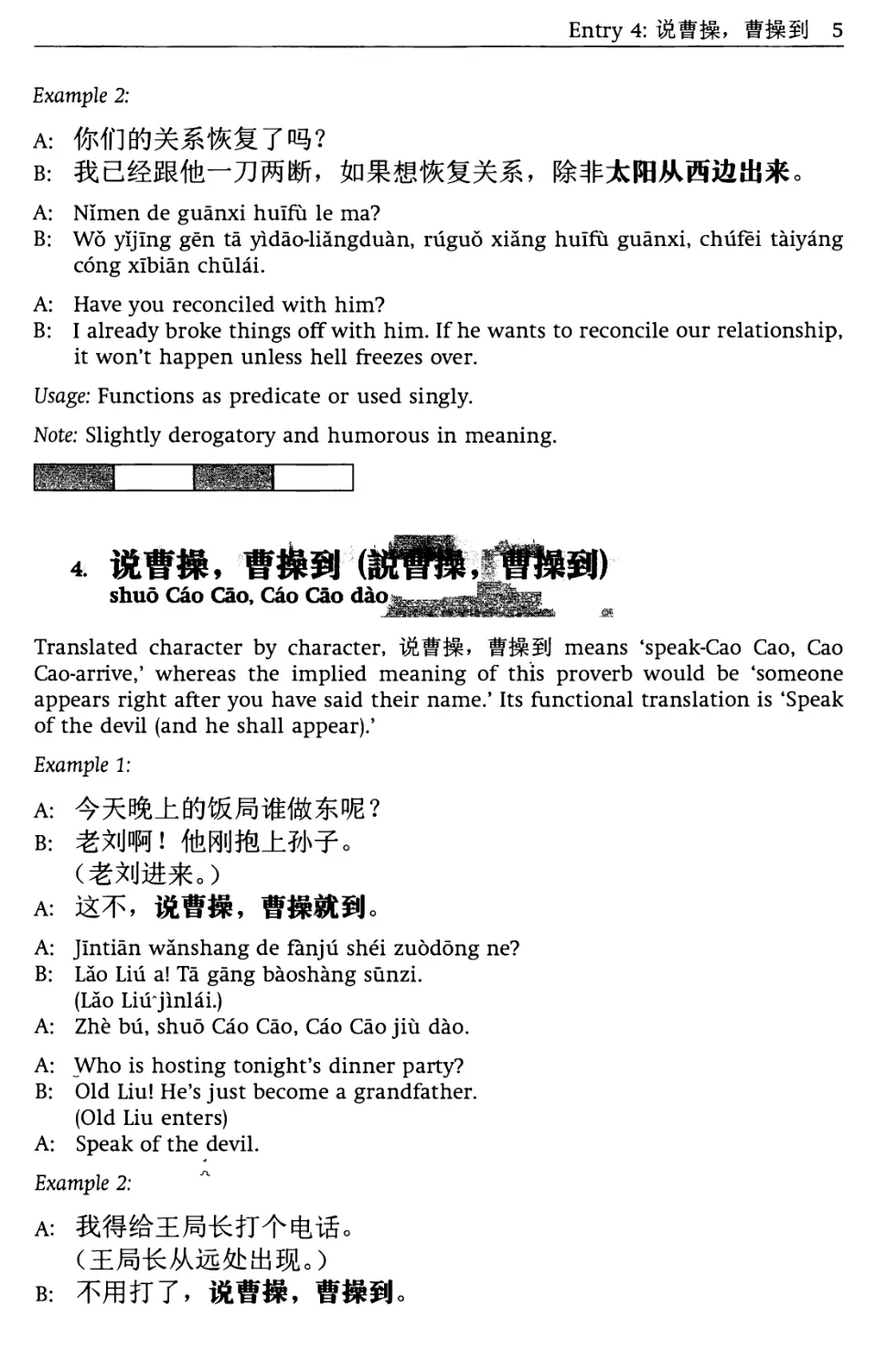
Entry 4:	ВШЯ 5
Example 2:
А:
В: авЖМЖ, ЙОтМ, 1&«ШМ5й1Ш^о
A:	Nimen de guanxi huifii le ma?
B:	Wo yijmg gen ta yidao-liangduan, ruguo xiang huifu guanxi, chufei taiyang
cong xibian chiilai.
A:	Have you reconciled with him?
В:	I already broke things off with him. If he wants to reconcile our relationship,
it won’t happen unless hell freezes over.
Usage: Functions as predicate or used singly.
Note: Slightly derogatory and humorous in meaning.
Translated character by character, ШШШ, 1=?Й80 means ‘speak-Cao Cao, Cao
Cao-arrive,’ whereas the implied meaning of this proverb would be ‘someone
appears right after you have said their name.’ Its functional translation is ‘Speak
of the devil (and he shall appear).’
Example 1:
А:
в:
A:	«, fim
A:	Jintian wanshang de fanjii shei zuodong ne?
B:	Lao Liu a! Ta gang baoshang sunzi.
(Lao Liujinlai.)
A: Zhe bu, shud Cao Cao, Cao Cao jiu dao.
A: Who is hosting tonight’s dinner party?
B:	Old Liu! He’s just become a grandfather.
(Old Liu enters)
A: Speak of the devil.
Example 2:
А:
В: >IWTT, iftWW, W&3lo
6 Entry 5:4^
A:	Wo dei gei Wang juzhang da ge dianhua.
(Wang juzhang cong yuanchu chuxian.)
B:	Buyong da le, shud Cao Cao, Cao Cao dao.
A:	I should give Director Wang a call.
(Director Wang appears from a distance)
B:	There’s no need. Speak of the devil and he shall appear.
Usage: Used singly.
Variant:
Note: Neutral or humorous in meaning.
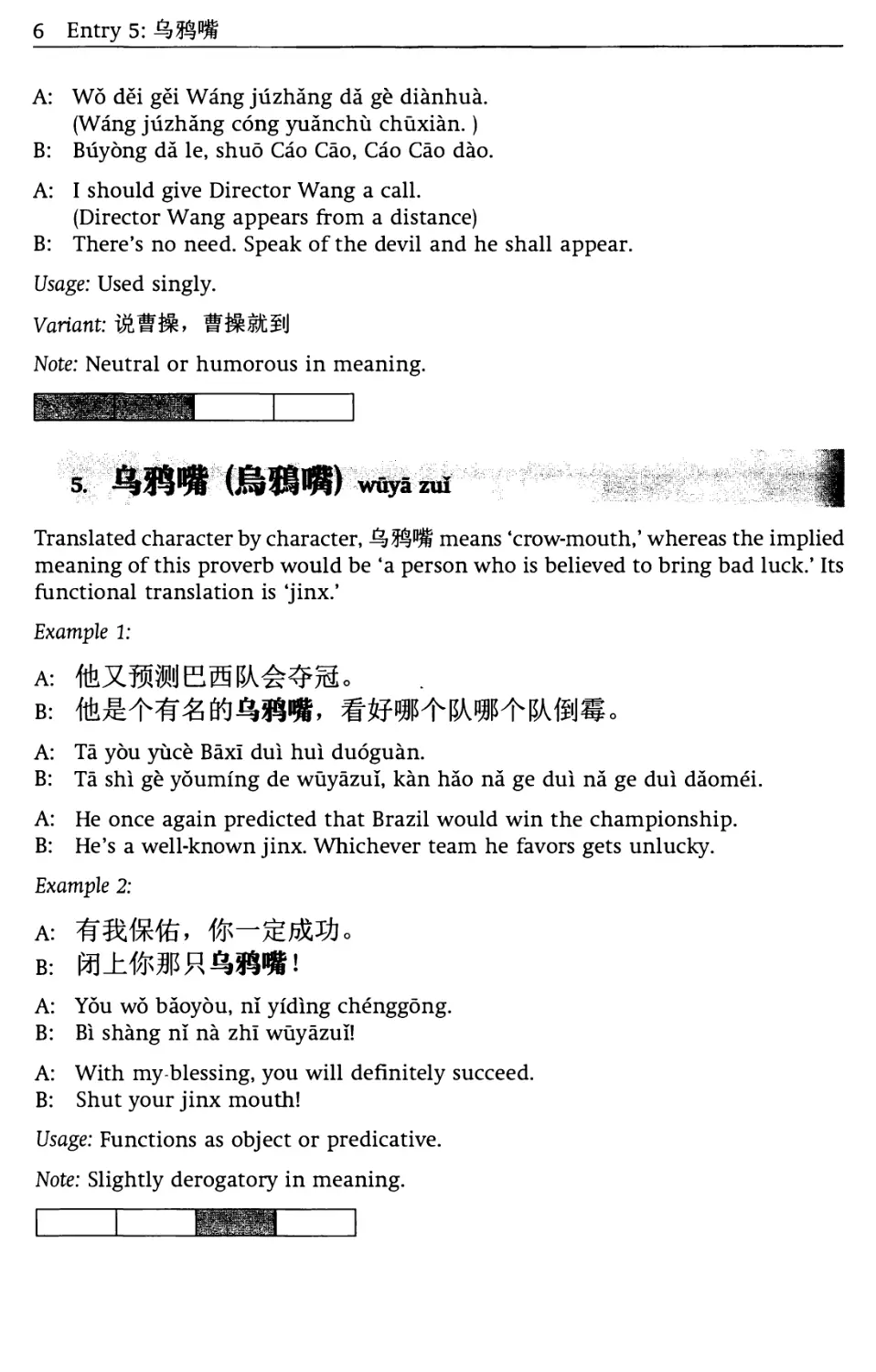
S. 4ИЧ»	wuya zui
Translated character by character, 4?^W means ‘crow-mouth,’ whereas the implied
meaning of this proverb would be ‘a person who is believed to bring bad luck.’ Its
functional translation is ‘jinx.’
Example 1:
А:
В:
A:	Ta you yuce Baxi dui hui duoguan.
В: Ta shi ge youming de wiiyazui, kan hao na ge dui na ge dui daomei.
A: He once again predicted that Brazil would win the championship.
B:	He’s a well-known jinx. Whichever team he favors gets unlucky.
Example 2:
A:	/ёйЙЙо
В:
A:	You wo baoyou, ni yiding chenggong.
B:	Bi shang ni na zhi wiiyazui!
A:	With my blessing, you will definitely succeed.
B:	Shut your jinx mouth!
Usage: Functions as object or predicative.
Note; Slightly derogatory in meaning.
Entries 6-7:	and	7
6. XWS (^WS) drbSi wfi
Translated character by character, means ‘two-hundred-fifty,’ whereas the
implied meaning of this proverb would be ‘an idiot.’ Its functional translation is
‘halfwit,’ or ‘pea-brain.’
Example 1:
В:	WmtW
A:	Ni neng gaosu wo zenme yong dianzibiaoge qiuhe ma?
B:	Erbaiwu, lian dianzibiaoge dou buhui, yihou zenme zud mishii?
A: Can you show me how to do a summation on Excel?
B:	You pea-brain! If you can’t even use Excel, how can you become a secretary?
Example 2:
A:	A
В:	Фт^Ж^^Ат§ЖЖ1§о
A:	Bieren gen ta shudle yao yanjiu yanjiu, keshi ta feidei bizhe renjia dangmian
zud jueding, renjia zhineng jujue le.
В:	Ta zhen shi ge erbaiwu, ting bu chiilai bieren hualiyouhua.
A:	They told him they needed to think more about it, but he forced them to make
a decision on the spot. They had no choice but to reject him.
B:	He really is a halfwit. He can’t read between the lines.
Usage: Functions as noun.
Note; Derogatory in meaning.
7.	(И^~chiyi qian, zhingyi zhi
if b'i: b'	-
Translated character by character, *1, K:-means ‘fall-once-pit-increase-bit-
wisdom,’ whereas the implied meaning of this proverb would be ‘to derive wisdom
from one’s mistakes.’ Its functional translation is ‘a fall in the pit, a gain in your wit.’
Example 1:
А: ШЖПЕ?
В:
A:
B:
8 Entry 8:
A:	Ni meishi ba?
B:	Wo meishi, jiushi qiche fei le. Xiaci wo zai ye bu hejiu le.
A:	Chi yi qian, zhang yi zhi.
B:	Shi, jiu suan huaqian mai ge jiaoxun ba.
A:	Are you OK?
B:	I’m alright, just my car’s wrecked. Next time I’m not drinking.
A:	A fall in the pit, a gain in your wit.
B:	Yeah, it’s like paying to learn a lesson.
Example 2:
А:	BOWWOW
Wo та,
A: Zhongguo de qiye zai yu waiguo de qiye da guansi shi, yinwei dui guoji guanli
bu shuxi er baisu. Bugud, chi yi qian, zhang yi zhi, yihou zai da leishi de
guansi shi jiu you jingyan le.
A: When Chinese corporations participate in lawsuits with foreign corporations,
they lose because they aren’t familiar with international practices. However,
a fall in the pit is a gain in your wit. When faced with similar lawsuits in the
future, they will have experience.
Usage: Functions as predicate or used singly.
Note; Neutral in meaning.
Translated character by character,	means ‘open-ed-eyes-tell-lies,’
whereas the implied meaning of this proverb would be ‘to say what one knows to
be untrue.’ Its functional translation is ‘to flout reality,’ ‘to tell bald-faced lies,’ or
‘to lie through one’s teeth.’
Example 1:
A: Ta tai bu chengshi le, changchang zhengzhe yanjing shud xia hua, lian ta
fumu dou pian.
A: He’s so dishonest. He often tells bald-faced lies, even to his parents.
Example 2:
теав
Entry 9:	9
A: Na jia dianshitai zhengzhe yanjing shud xia hua, chiluoluo de gongji biede
guojia, er dui ziji guojia de went! que shi’erbujian. >
A: That TV station is flouting reality. It plainly slanders other countries, but turns
a blind eye towards its own country’s problems.
Usage: Functions as predicate.
Note; Slightly derogatory in meaning.
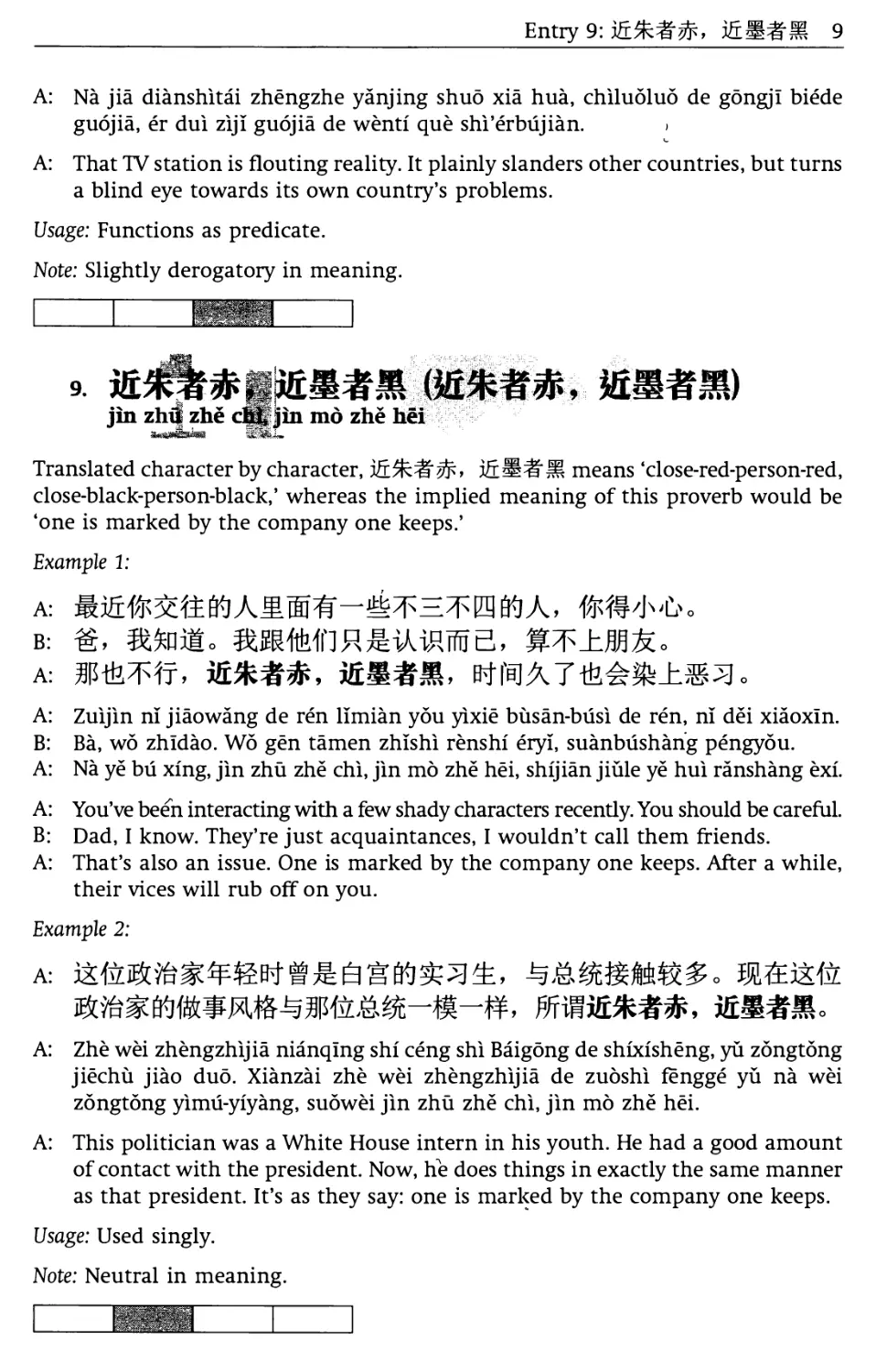
aSifJS)
Translated character by character,	means ‘close-red-person-red,
close-black-person-black,’ whereas the implied meaning of this proverb would be
‘one is marked by the company one keeps.’
Example 1:
В:	ЗРШЯЖо
А:
A:	Zuijin ni jiaowang de ren limian you yixie busan-busi de ren, ni dei xiaoxin.
B:	Ba, wo zhidao. Wo gen tamen zhishi renshi eryi, suanbushahg pengyou.
A: Na ye bu xing, jin zhu zhe chi, jin mo zhe hei, shijian jiule ye hui ranshang exi.
A:	You’ve been interacting with a few shady characters recently. You should be careful.
B:	Dad, I know. They’re just acquaintances, I wouldn’t call them friends.
A: That’s also an issue. One is marked by the company one keeps. After a while,
their vices will rub off on you.
Example 2:
A: Zhe wei zhengzhijia nianqing shi ceng shi Baigong de shixisheng, yu zongtong
jiechu jiao dud. Xianzai zhe wei zhengzhijia de zudshi fengge yu na wei
zongtong yimu-yiyang, suowei jin zhu zhe chi, jin mo zhe hei.
A: This politician was a White House intern in his youth. He had a good amount
of contact with the president. Now, he does things in exactly the same manner
as that president. It’s as they say: one is marked by the company one keeps.
Usage: Used singly.
Note; Neutral in meaning.
10 Entries 10-11:	and
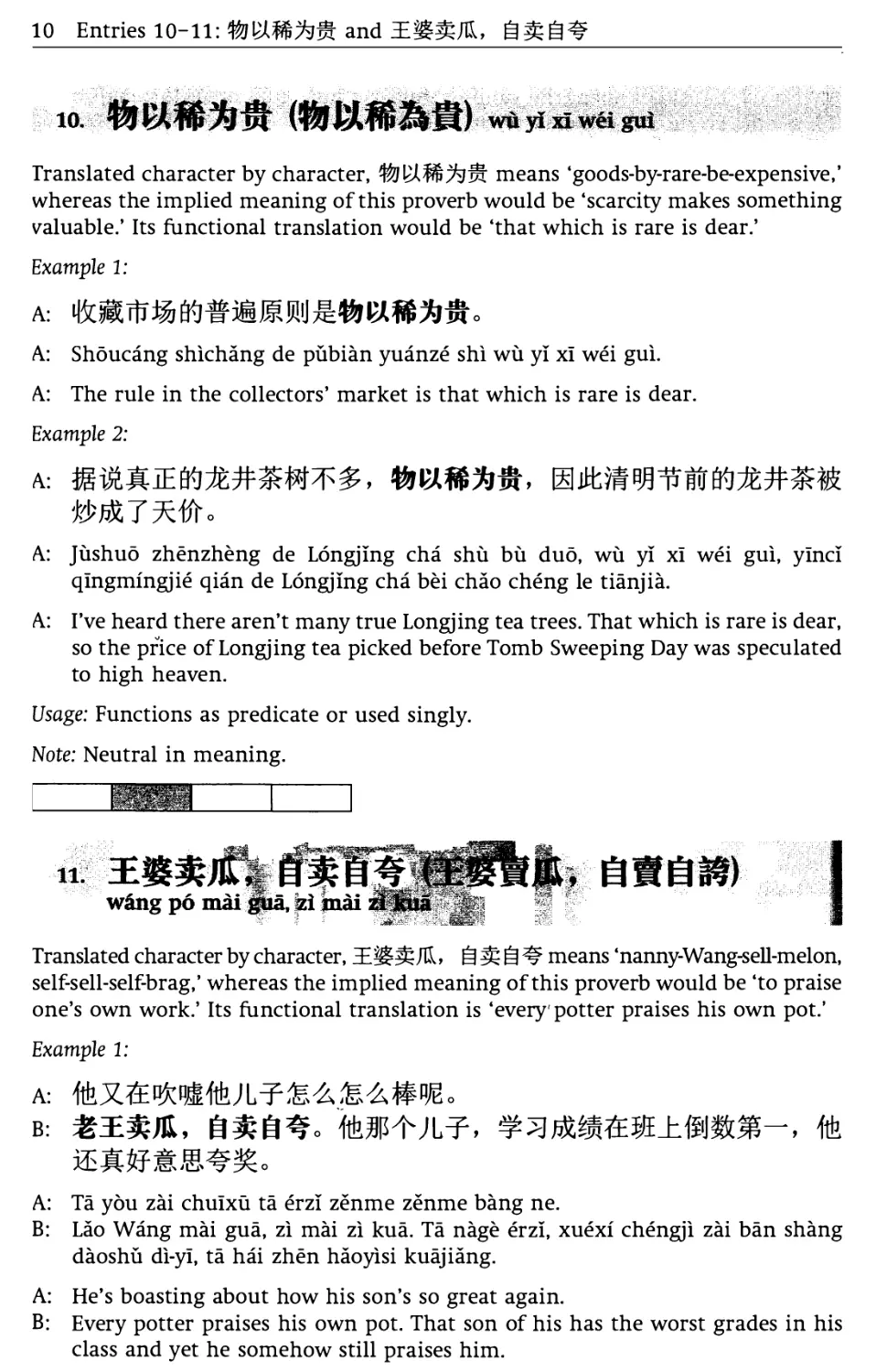
10. ЙКЙМ	wu yixiweigui
Translated character by character,	means ‘goods-by-rare-be-expensive,’
whereas the implied meaning of this proverb would be ‘scarcity makes something
valuable.’ Its functional translation would be ‘that which is rare is dear.’
Example 1:
л:
A: Shoucang shichang de pubian yuanze shi wu yi xi wei gui.
A: The rule in the collectors’ market is that which is rare is dear.
Example 2:
A: Jushud zhenzheng de Longjing cha shu bu dud, wu yi xi wei gui, yinci
qingmingjie qian de Longjing cha bei chao cheng le tianjia.
A: I’ve heard there aren’t many true Longjing tea trees. That which is rare is dear,
so the price of Longjing tea picked before Tomb Sweeping Day was speculated
to high heaven.
Usage: Functions as predicate or used singly.
Note: Neutral in meaning.
Translated character by character,	, Й means ‘nanny-Wang-sell-melon,
self-sell-self-brag,’ whereas the implied meaning of this proverb would be ‘to praise
one’s own work.’ Its functional translation is ‘every'potter praises his own pot.’
Example 1:
A:
В:	WNLf,	№
A:	Ta you zai chuixii ta erzi zenme zenme bang ne.
B:	Lao Wang mai gua, zi mai zi kua. Ta nage erzi, xuexi chengji zai ban shang
daoshu di-yi, ta hai zhen haoyisi kuajiang.
A:	He’s boasting about how his son’s so great again.
B:	Every potter praises his own pot. That son of his has the worst grades in his
class and yet he somehow still praises him.
Entry 12:	11
Example 2:
А:	*ШйЖ
№j%anW^o
A: Ta de pinglun you “Wang po mai gua” de xianyi, dui ziji de chanpin biaoyang
dud, dui qita jia de chanpin piping duo.
A: His comment smacked of a potter praising his own pot. He praised his own
products a lot and criticized other people’s products a lot.
Usage: Used singly.
Variant:
Note; Slightly derogatory in meaning.
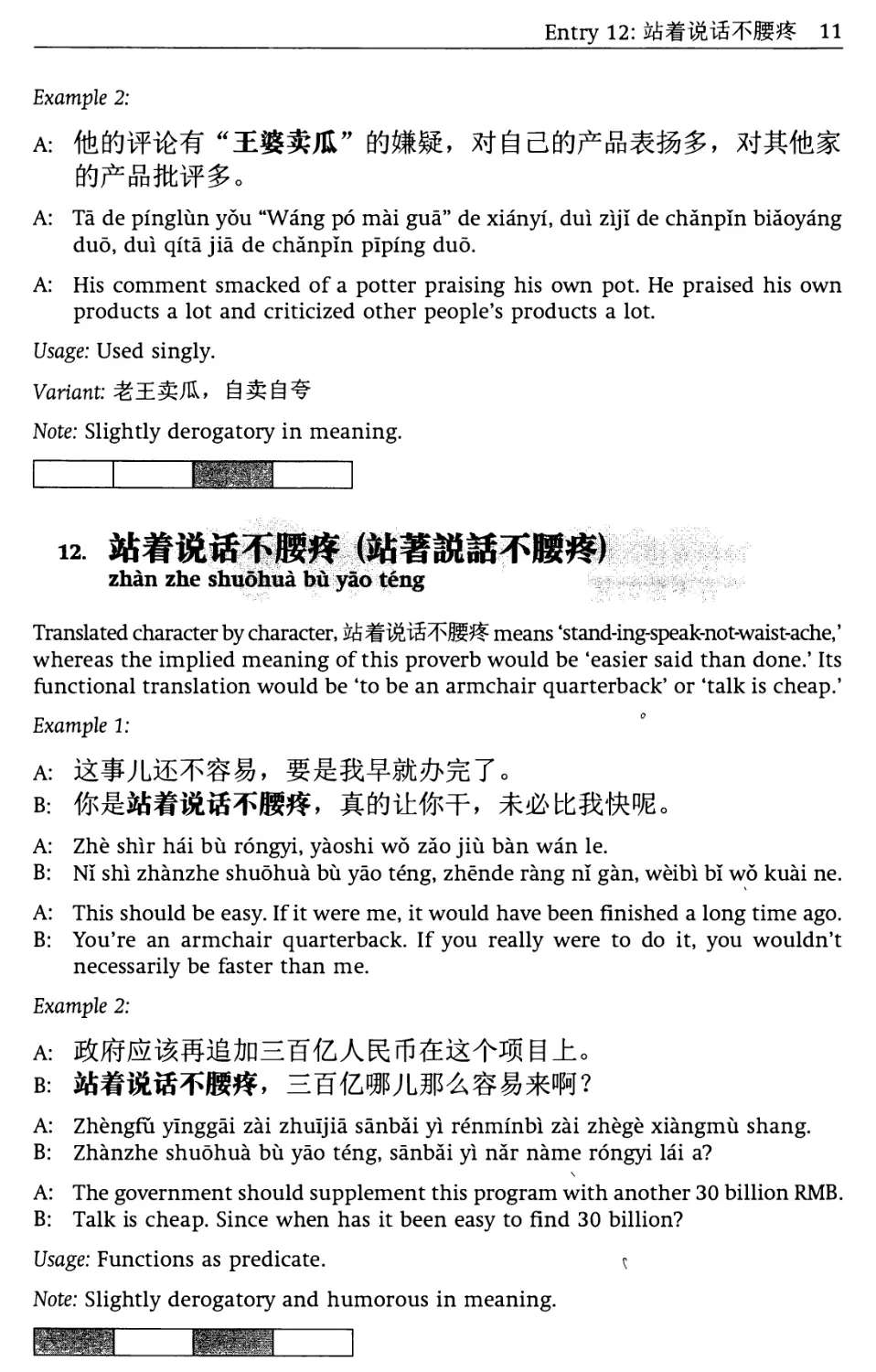
zhan zhe shuohua bu yao teng
Translated character by character,	means ‘stand-ing-speak-not-waist-ache,’
whereas the implied meaning of this proverb would be ‘easier said than done.’ Its
functional translation would be ‘to be an armchair quarterback’ or ‘talk is cheap.’
Example 1:
в:	jmm, **tt»*«.
A:	Zhe shir hai bu rongyi, yaoshi wo zao jiu ban wan le.
B:	Ni shi zhanzhe shuohua bu yao teng, zhende rang ni gan, weibi bi wo kuai ne.
A: This should be easy. If it were me, it would have been finished a long time ago.
B: You’re an armchair quarterback. If you really were to do it, you wouldn’t
necessarily be faster than me.
Example 2:
В:
A:	Zhengfu yinggai zai zhuijia sanbai yi renminbi zai zhege xiangmu shang.
B:	Zhanzhe shuohua bu yao teng, sanbai yi nar name rongyi lai a?
A:	The government should supplement this program with another 30 billion RMB.
B:	Talk is cheap. Since when has it been easy to find 30 billion?
Usage: Functions as predicate.	v
Note; Slightly derogatory and humorous in meaning.
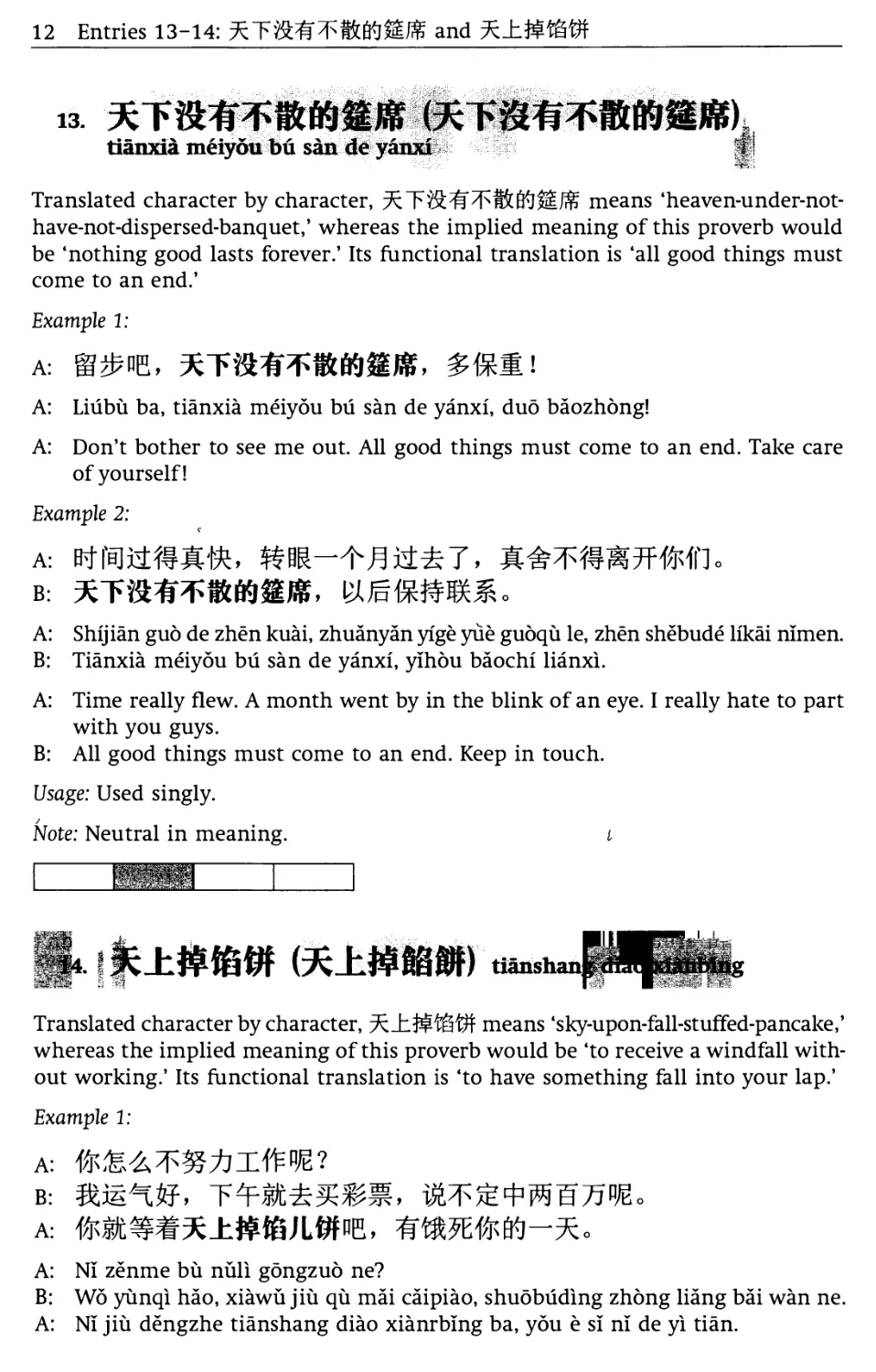
12 Entries 13-14:	and
13.	wwiwm,
tianxia meiyou bu san de yanxi
Translated character by character, ХТЙ'ЖХн^ЙШ/Ж means ‘heaven-under-not-
have-not-dispersed-banquet,’ whereas the implied meaning of this proverb would
be ‘nothing good lasts forever.’ Its functional translation is ‘all good things must
come to an end.’
Example 1:
А:
A: Liubu ba, tianxia meiyou bu san de yanxi, dud baozhong!
A: Don’t bother to see me out. All good things must come to an end. Take care
of yourself!
Example 2:
а:
В: XTiMTWj»,
A:	Shijian gud de zhen kuai, zhuanyan yige yue gudqu le, zhen shebude hkai nimen.
B:	Tianxia meiyou bu san de yanxi, yihou baochi lianxi.
A:	Time really flew. A month went by in the blink of an eye. I really hate to part
with you guys.
B:	All good things must come to an end. Keep in touch.
Usage: Used singly.
Note; Neutral in meaning.	t
I IM 1 I
tianshan^^R|^^^^g
Translated character by character,	means ‘sky-upon-fall-stuffed-pancake,’
whereas the implied meaning of this proverb would be ‘to receive a windfall with-
out working.’ Its functional translation is ‘to have something fall into your lap.’
Example 1:
А: WaWXW
В: Шт	гйХХФМЖТЖо
A:
A:	Ni zenme bu null gdngzuo ne?
B:	Wo yunqi hao, xiawii jiu qu mai caipiao, shudbuding zhong hang bai wan ne.
A: Ni jiu dengzhe tianshang diao xianrbing ba, you e si ni de yi tian.
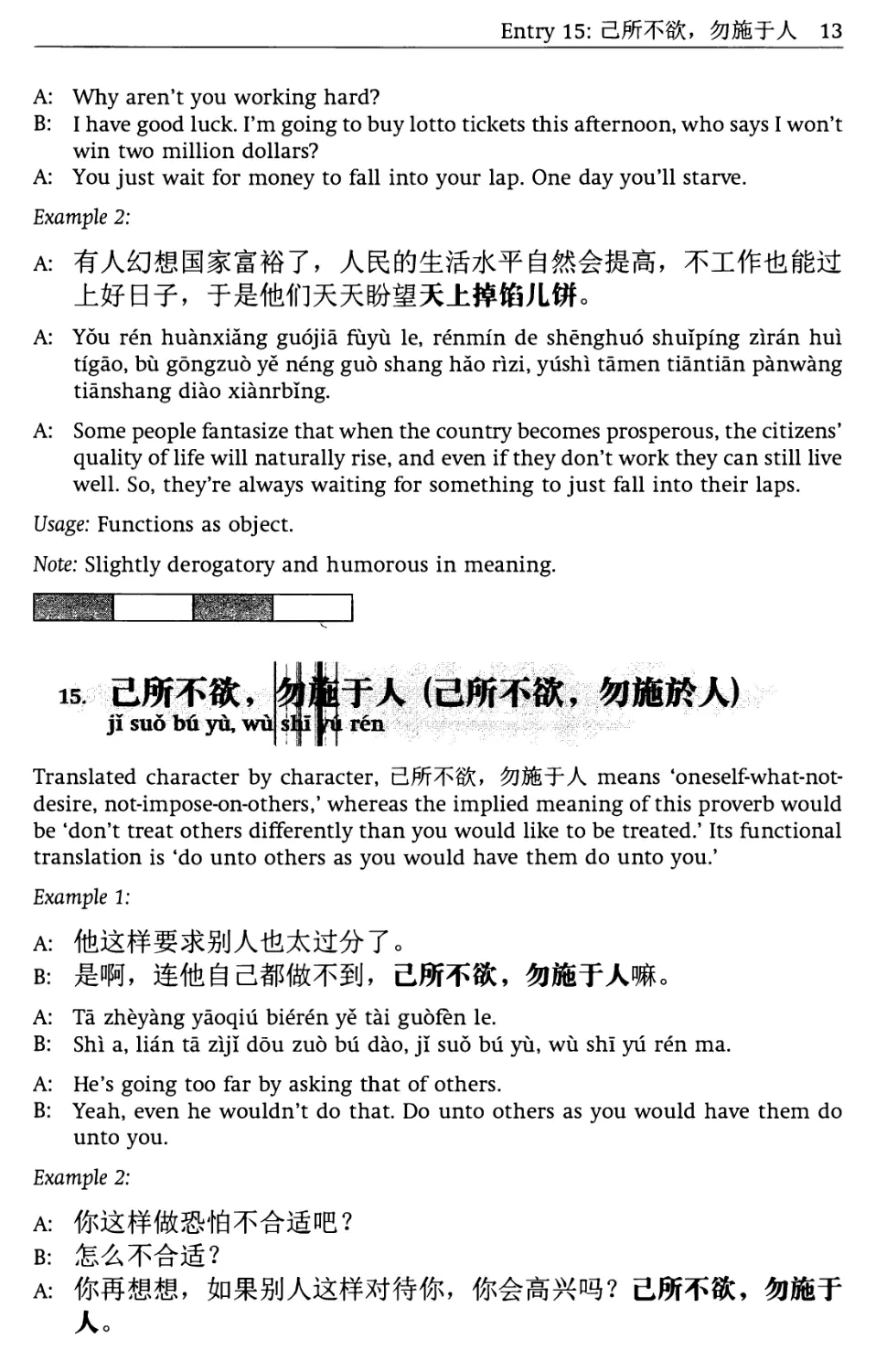
Entry 15:	13
A: Why aren’t you working hard?
В: I have good luck. I’m going to buy lotto tickets this afternoon, who says I won’t
win two million dollars?
A: You just wait for money to fall into your lap. One day you’ll starve.
Example 2:
A: You ren huanxiang guojia fuyu le, renmin de shenghuo shuiping ziran hui
tigao, bu gdngzud ye neng gud shang hao rizi, yushi tamen tiantian panwang
tianshang diao xianrbing.
A: Some people fantasize that when the country becomes prosperous, the citizens’
quality of life will naturally rise, and even if they don’t work they can still live
well. So, they’re always waiting for something to just fall into their laps.
Usage: Functions as object.
Note; Slightly derogatory and humorous in meaning.
15-
ШЯХ)
ji suo bu yu, wu $11 m i ren
Translated character by character,	means ‘oneself-what-not-
desire, not-impose-on-others,’ whereas the implied meaning of this proverb would
be ‘don’t treat others differently than you would like to be treated.’ Its functional
translation is ‘do unto others as you would have them do unto you.’
Example 1:
А:
в: w,	ъ&тк, зттлчйо
A:	Ta zheyang yaoqiii bieren ye tai guofen le.
B:	Shi a, lian ta ziji dou zud bu dao, ji suo bu yu, wu shi yu ren ma.
A: He’s going too far by asking that of others.
B:	Yeah, even he wouldn’t do that. Do unto others as you would have them do
unto you.
Example 2:
А:
В:
а:	елта, шт
О
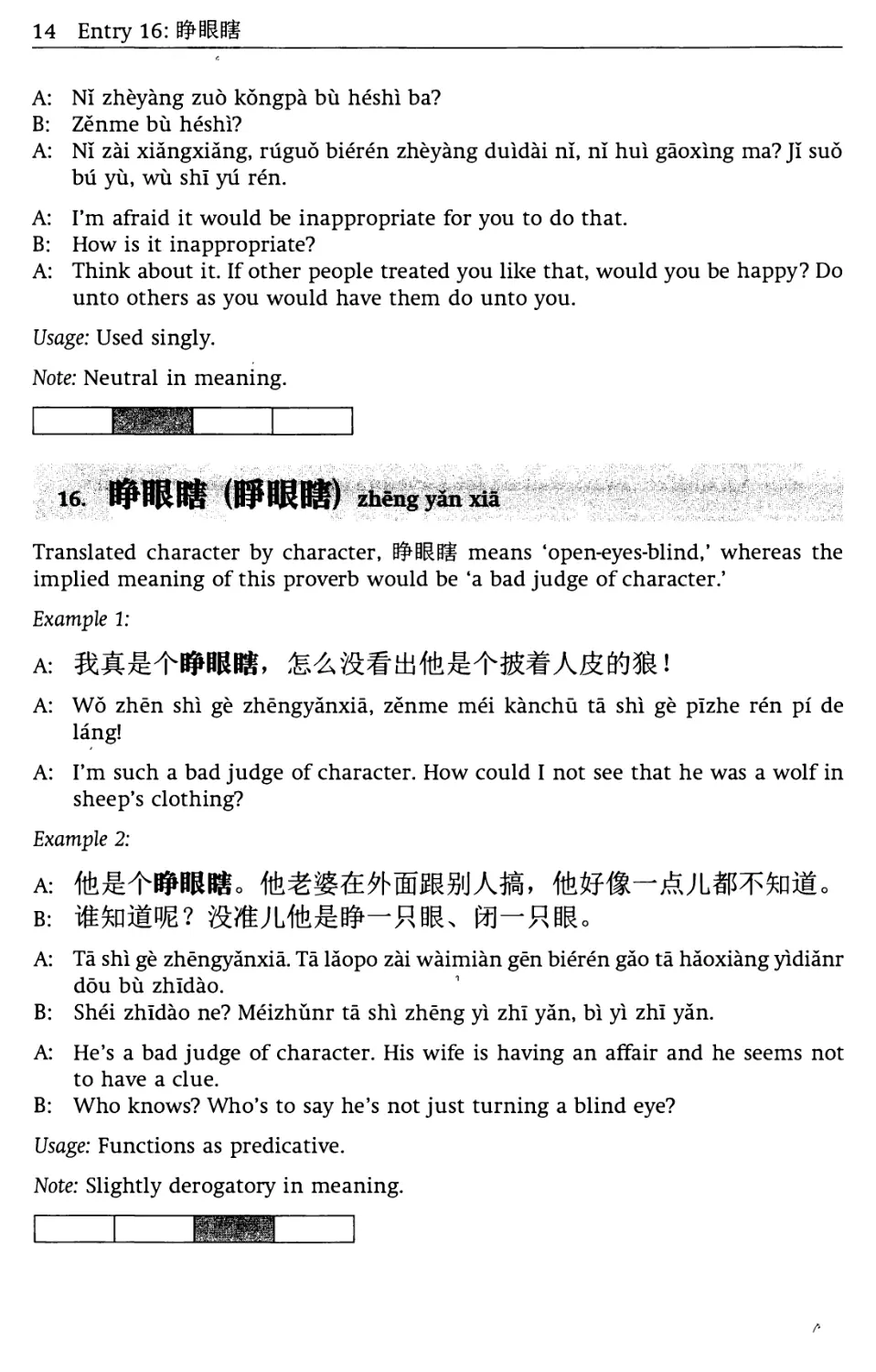
14 Entry 16: BHSiW
A:	Ni zheyang zud kongpa bu heshi ba?
B:	Zenme bu heshi?
A: Ni zai xiangxiang, riiguo bieren zheyang duidai ni, ni hui gaoxing ma? Ji suo
bu yu, wu shi yu ren.
A:	I’m afraid it would be inappropriate for you to do that.
B:	How is it inappropriate?
A: Think about it. If other people treated you like that, would you be happy? Do
unto others as you would have them do unto you.
Usage: Used singly.
Note; Neutral in meaning.
16.	(ВГОИ) zheng yin xia
Translated character by character, means ‘open-eyes-blind,’ whereas the
implied meaning of this proverb would be ‘a bad judge of character.’
Example 1;
A: Wo zhen shi ge zhengyanxia, zenme mei kanchii ta shi ge pizhe ren pi de
lang!
A: I’m such a bad judge of character. How could I not see that he was a wolf in
sheep’s clothing?
Example 2:

A:	Ta shi ge zhengyanxia. Ta laopo zai waimian gen bieren gao ta haoxiang yidianr
dou bu zhidao.
B:	Shei zhidao ne? Meizhunr ta shi zheng yi zhi yan, bi yi zhi yan.
A:	He’s a bad judge of character. His wife is having an affair and he seems not
to have a clue.
B:	Who knows? Who’s to say he’s not just turning a blind eye?
Usage: Functions as predicative.
Note; Slightly derogatory in meaning.
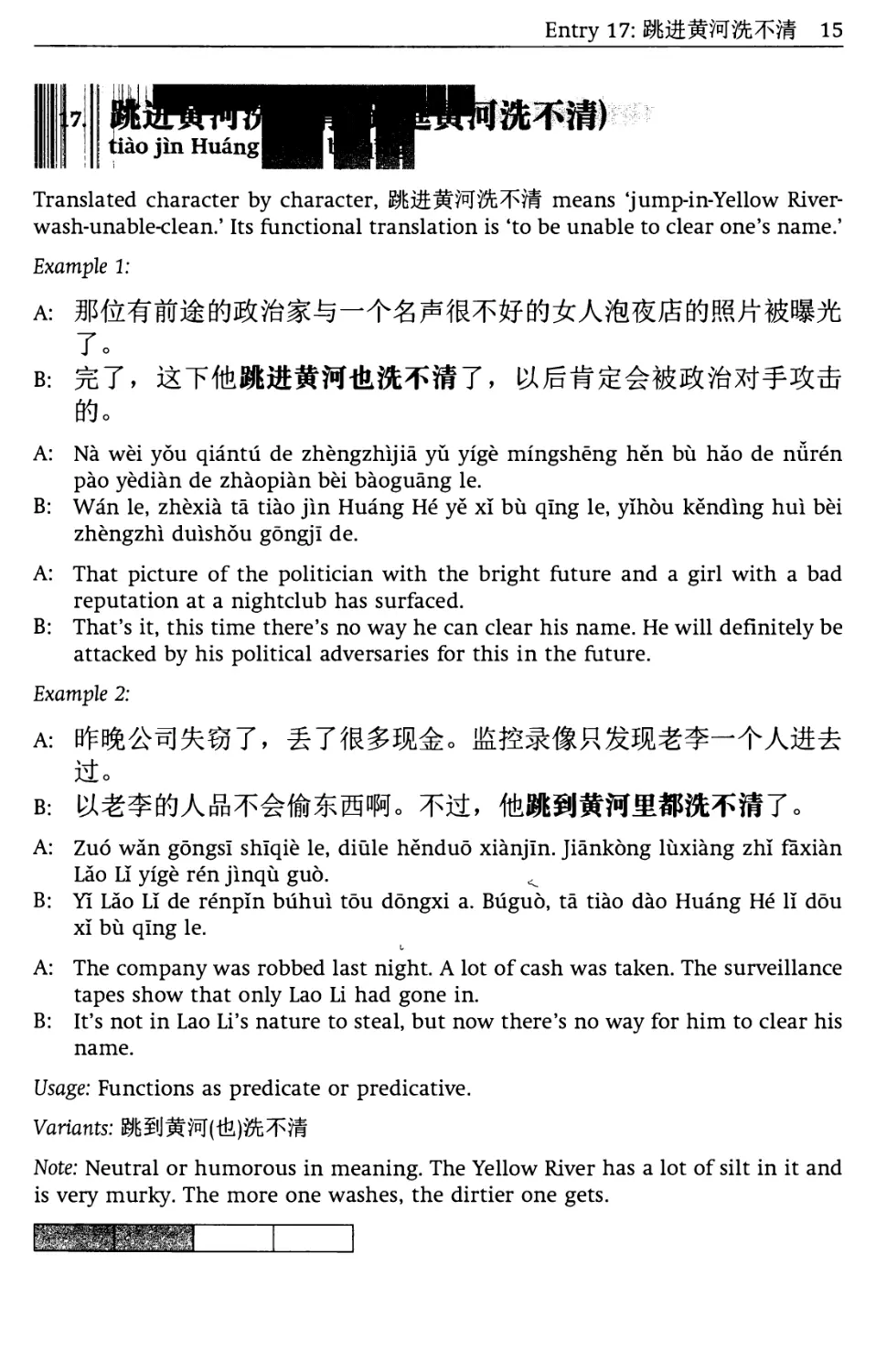
Entry 17:	15
Translated character by character,	means jump-in-Yellow River-
wash-unable-clean.’ Its functional translation is ‘to be unable to clear one’s name.’
Example 1:
A:	WcWiimiMWA-
To
в: ^т, йт1шшшш*яда!т,
A:	Na wei you qiantu de zhengzhijia yu yige mingsheng hen bu hao de nuren
pao yedian de zhaopian bei baoguang le.
B:	Wan le, zhexia ta tiao jin Huang He ye xi bu qing le, yihou kending hui bei
zhengzhi duishou gongji de.
A: That picture of the politician with the bright future and a girl with a bad
reputation at a nightclub has surfaced.
B:	That’s it, this time there’s no way he can clear his name. He will definitely be
attacked by his political adversaries for this in the future.
Example 2:
A:
Йо
в: ^^^А^тайживд» та, 1Ш2Жмв1жтато
A:	Zuo wan gongsi shiqie le, diiile hendud xianjin. Jiankong luxiang zhi faxian
Lao Li yige ren jinqu gud.
B:	Yi Lao Li de renpin buhui tou dongxi a. Bugud, ta tiao dao Huang He li dou
xi bu qing le.
L
A:	The company was robbed last night. A lot of cash was taken. The surveillance
tapes show that only Lao Li had gone in.
B:	It’s not in Lao Li’s nature to steal, but now there’s no way for him to clear his
name.
Usage: Functions as predicate or predicative.
Variants:
Note: Neutral or humorous in meaning. The Yellow River has a lot of silt in it and
is very murky. The more one washes, the dirtier one gets.
16 Entries 18-19:	and iW AKJElHHSS
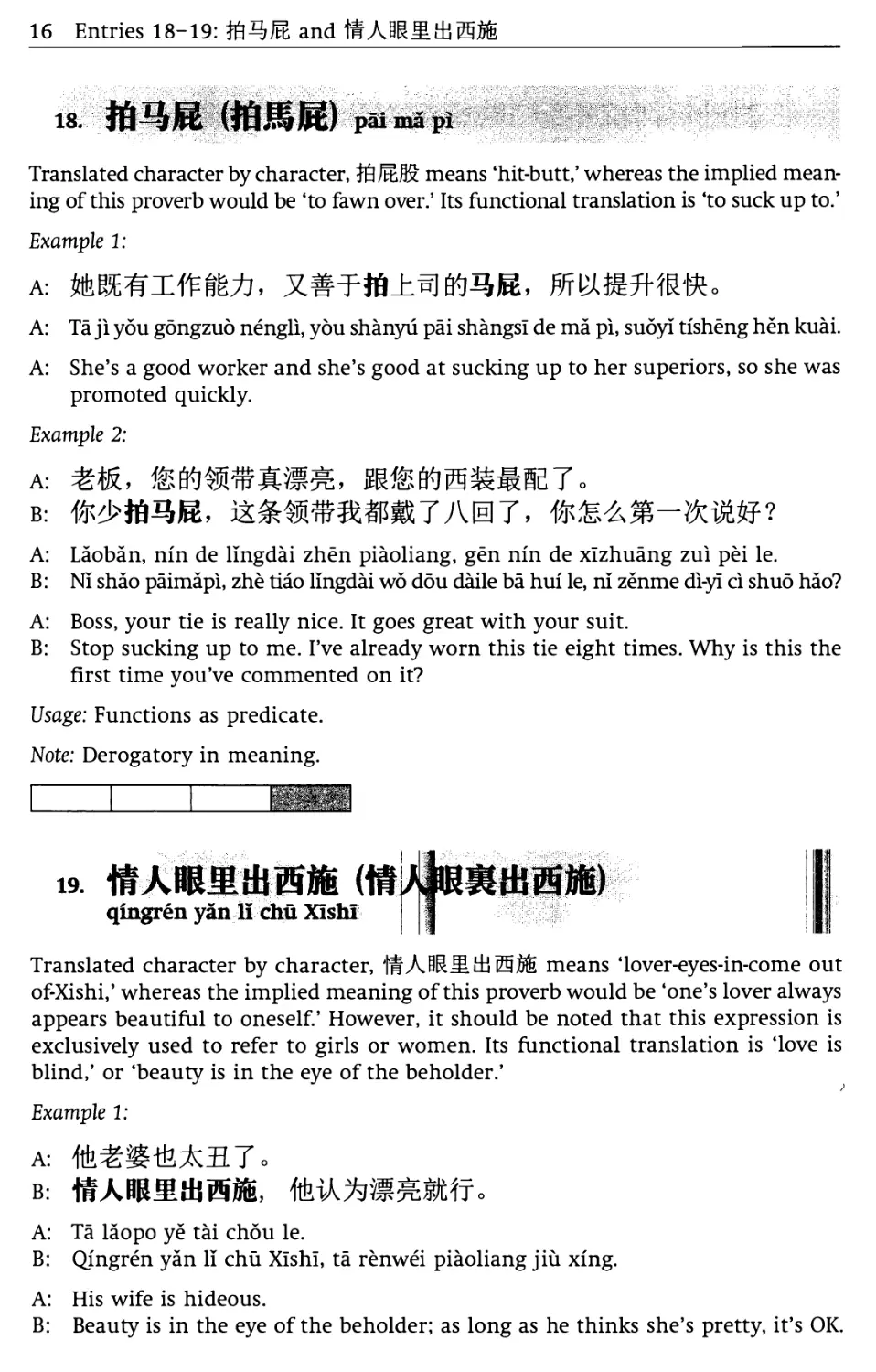
18.	(1ЙЖ1К) paimapi
Translated character by character, Й/ЙЖ means ‘hit-butt,’ whereas the implied mean-
ing of this proverb would be ‘to fawn over.’ Its functional translation is ‘to suck up to.’
Example 1:
A:	таяш
A: Ta ji you gdngzud nengli, you shanyii pai shangsi de ma pi, suoyi tisheng hen kuai.
A: She’s a good worker and she’s good at sucking up to her superiors, so she was
promoted quickly.
Example 2:
А: ОЬ
В:
A:	Laoban, nin de lingdai zhen piaoliang, gen nin de xizhuang zui pei le.
B:	Ni shao paimapi, zhe tiao lingdai wo dou daile ba hui le, ni zenme di-yi ci shud hao?
A: Boss, your tie is really nice. It goes great with your suit.
B:	Stop sucking up to me. I’ve already worn this tie eight times. Why is this the
first time you’ve commented on it?
Usage: Functions as predicate.
Note; Derogatory in meaning.
I I I ТЯЯ
19.	(M.
qingren yan li dm Xishi
Translated character by character, IWASSJH & ffii® means ‘lover-eyes-in-come out
of-Xishi,’ whereas the implied meaning of this proverb would be ‘one’s lover always
appears beautiful to oneself.’ However, it should be noted that this expression is
exclusively used to refer to girls or women. Its functional translation is ‘love is
blind,’ or ‘beauty is in the eye of the beholder.’
Example 1:
А:
B:
A:	Ta laopo ye tai chou le.
B:	Qingren yan li chii Xishi, ta renwei piaoliang jiu xing.
A: His wife is hideous.
B:	Beauty is in the eye of the beholder; as long as he thinks she’s pretty, it’s OK.

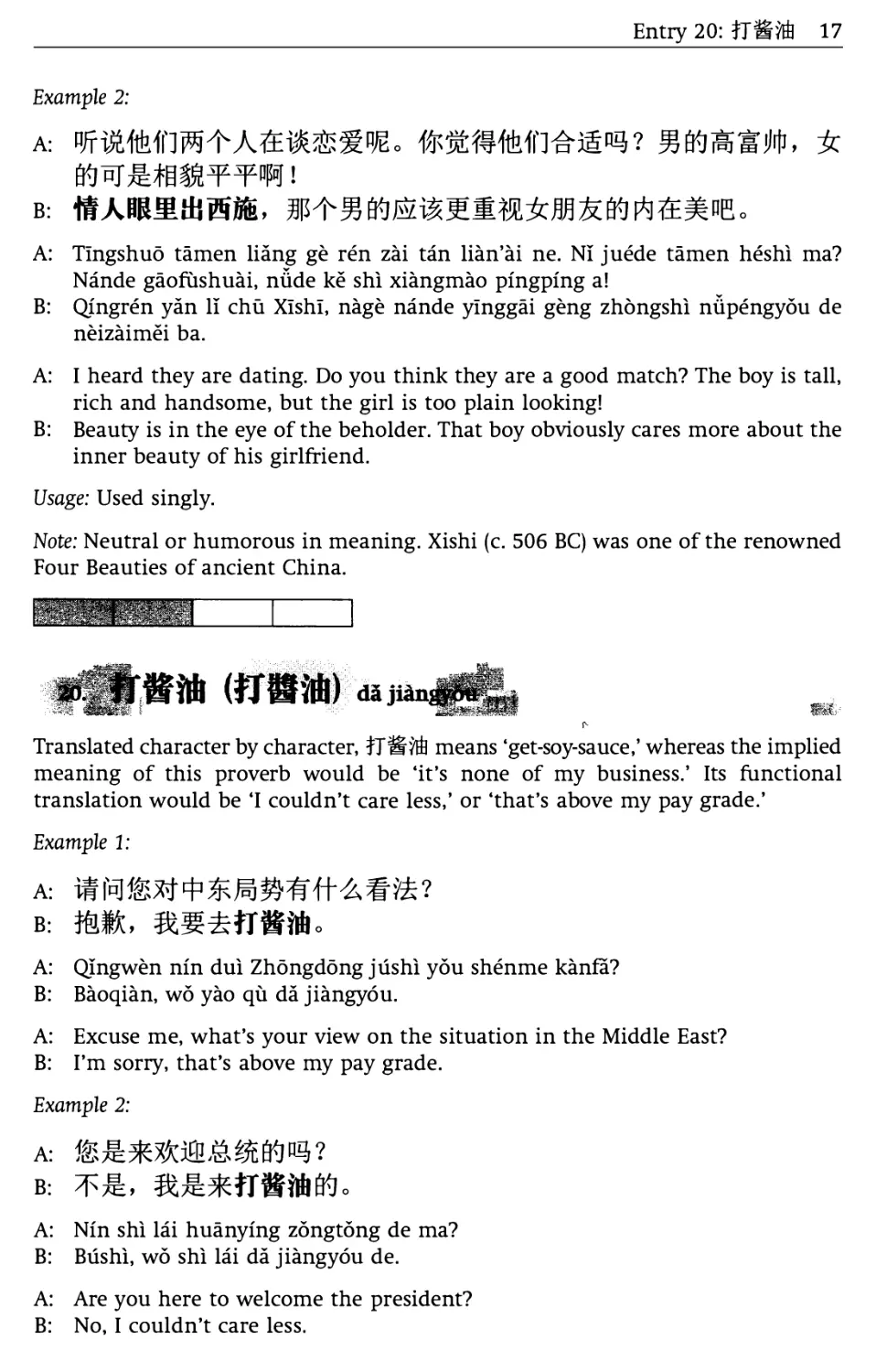
Entry 20:	17
Example 2:
А:	$Й|ПЖ iz
A:	Tingshud tamen liang ge ren zai tan lian’ai ne. Ni juede tamen heshi ma?
Nande gaofiishuai, nude ke shi xiangmao pingping a!
B:	Qingren yan li chii Xishi, nage nande yinggai geng zhongshi nupengyou de
neizaimei ba.
A:	I heard they are dating. Do you think they are a good match? The boy is tall,
rich and handsome, but the girl is too plain looking!
B:	Beauty is in the eye of the beholder. That boy obviously cares more about the
inner beauty of his girlfriend.
Usage; Used singly.
Note; Neutral or humorous in meaning. Xishi (c. 506 BC) was one of the renowned
Four Beauties of ancient China.
«Ж (Пвй) «Ml
Translated character by character, ЯИЙ means ‘get-soy-sauce,’ whereas the implied
meaning of this proverb would be ‘it’s none of my business.’ Its functional
translation would be ‘I couldn’t care less,’ or ‘that’s above my pay grade.’
Example 1;
А:
В:
A:	Qjngwen nin dui Zhongdong j xishi you shenme kanfa?
B:	Baoqian, wo yao qu da jiangyou.
A: Excuse me, what’s your view on the situation in the Middle East?
B: I’m sorry, that’s above my pay grade.
Example 2:
а:
в:
A:	Nin shi lai huanying zongtong de ma?
B:	Bushi, wo shi lai da jiangyou de.
A: Are you here to welcome the president?
B: No, I couldn’t care less.
18 Entry 21:	75, ШЙ75~
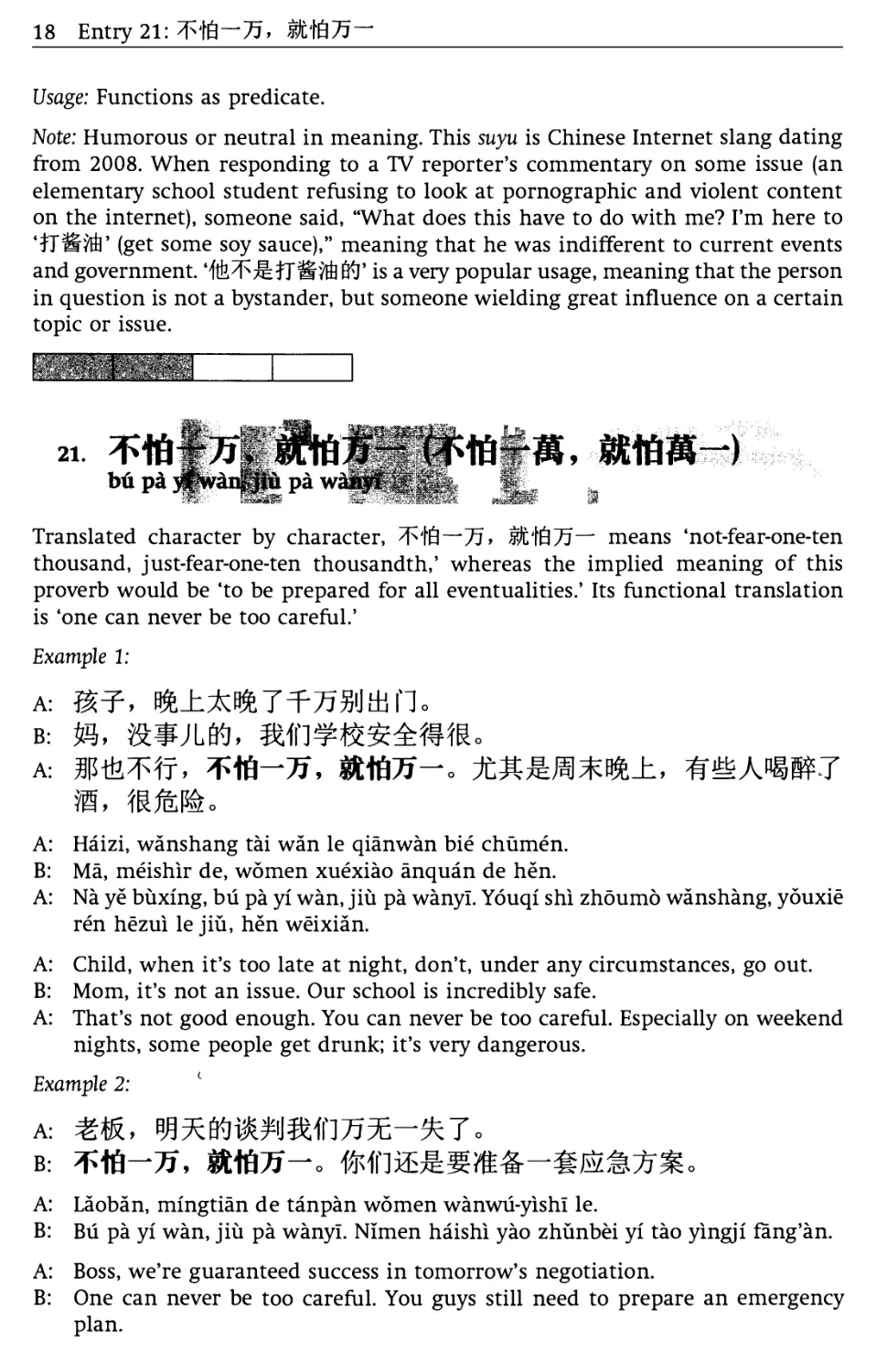
Usage: Functions as predicate.
Note; Humorous or neutral in meaning. This suyu is Chinese Internet slang dating
from 2008. When responding to a TV reporter’s commentary on some issue (an
elementary school student refusing to look at pornographic and violent content
on the internet), someone said, “What does this have to do with me? I’m here to
‘ЛИЙ’ (get some soy sauce),” meaning that he was indifferent to current events
and government.	is a very popular usage, meaning that the person
in question is not a bystander, but someone wielding great influence on a certain
topic or issue.
21.	ШЙМ-)
Ъй рй	pa	Ш .
Translated character by character,	Й'ЙЙ-* means ‘not-fear-one-ten
thousand, just-fear-one-ten thousandth,’ whereas the implied meaning of this
proverb would be ‘to be prepared for all eventualities.’ Its functional translation
is ‘one can never be too careful.’
Example 1:
а: ЖТ,
В:
A:	ШйЛ-о
A: Haizi, wanshang tai wan le qianwan bie chiimen.
B:	Ma, meishir de, women xuexiao anquan de hen.
A: Na ye buxing, bu pa yi wan, jiu pa wanyi. Youqi shi zhdumo wanshang, youxie
ren hezui le jiu, hen weixian.
A: Child, when it’s too late at night, don’t, under any circumstances, go out.
B:	Mom, it’s not an issue. Our school is incredibly safe.
A: That’s not good enough. You can never be too careful. Especially on weekend
nights, some people get drunk; it’s very dangerous.
Example 2:
В: Т1Й-73, ШЙЛ-о
A:	Laoban, mingtian de tanpan women wanwu-yishi le.
B:	Bu pa yi wan, jiu pa wanyi. Nimen haishi yao zhunbei yi tao yingji fang’an.
A:	Boss, we’re guaranteed success in tomorrow’s negotiation.
B:	One can never be too careful. You guys still need to prepare an emergency
plan.
Entry 22:	19
Usage: Used singly.
Variant:	75, Я 'Й 75 —*
Note; Neutral in meaning.
22. RH (^^O) zouzheqiao	j|j
Translated character by character, means ‘walk-ing-look.’ Its functional
translation is ‘wait and see.’ '
Example 1:
А:	о
В:
A:	Zheci ni shii ding le.
В: Buyao gaoxing tai zao, zouzheqiao ba.
A: This time you’re definitely going to lose.
B:	f Don’t celebrate too soon. Just wait and see.
Example 2:
А:
лат,
A:	Ni zai peichang wo mingyu sunshifei 20 wan.
B:	Wo yijing gei ni jingshen sunshifei 20 wan le, xianzai you yao mingyu sunshifei.
Ni buyao ba wo bi ji le, bi ji le wo shenmeyang de shi dou rieng gan chiilai,
bu xin zanmen zouzheqiao.
A:	Pay me another 200,000 RMB for libel damages.
В:	I already gave you 200,000 RMB for emotional distress; now you also want libel
damages? Don’t push me too hard. When I’m pushed, I’m capable of anything.
If you don’t believe me, just wait and see.
Usage: Functions as predicate.
Note; Slightly derogatory or neutral in meaning.
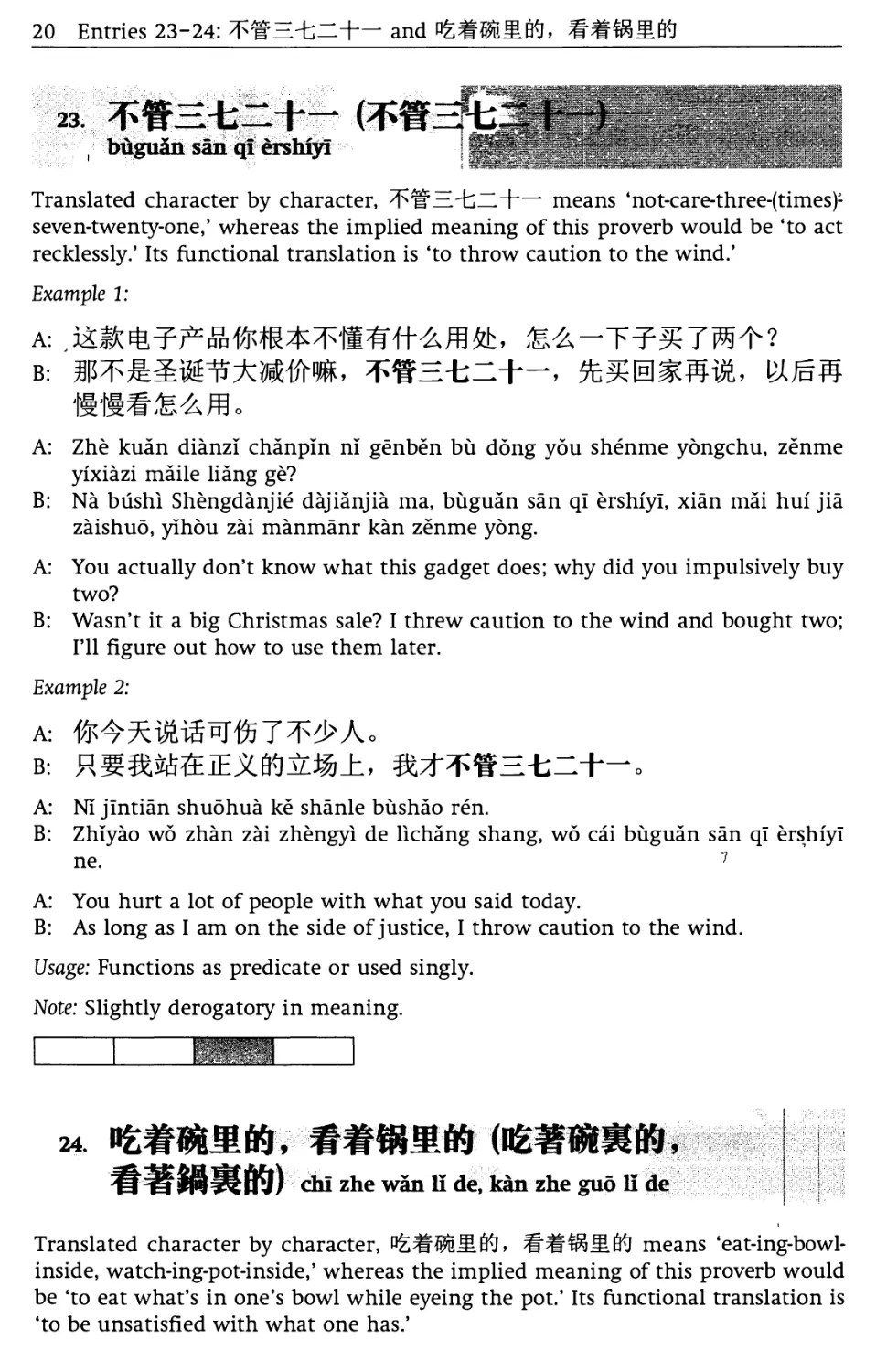
20 Entries 23-24:	—аЫШйЖ
( bugUcLn san qi ershiyi
Translated character by character,	— means ‘not-care-three-(times):
seven-twenty-one,’ whereas the implied meaning of this proverb would be ‘to act
recklessly.’ Its functional translation is ‘to throw caution to the wind.’
Example 1:

A:	Zhe kuan dianzi chanpin ni genben bu dong you shenme yongchu, zenme
ylxiazi maile hang ge?
B:	Na bush! Shengdanjie dajianjia ma, buguan san qi ershiyi, xian mai hui jia
zaishud, yihou zai manmanr kan zenme yong.
A: You actually don’t know what this gadget does; why did you impulsively buy
two?
B:	Wasn’t it a big Christmas sale? I threw caution to the wind and bought two;
I’ll figure out how to use them later.
Example 2:
А:
В:
A:	Ni jintian shudhua ke shanle bushao ren.
B:	Zhiyao wo zhan zai zhengyi de lichang shang, wo cai buguan san qi ershiyi
A:	You hurt a lot of people with what you said today.
B:	As long as I am on the side of justice, I throw caution to the wind.
Usage: Functions as predicate or used singly.
Note; Slightly derogatory in meaning.
24.
оеидайгй,
Translated character by character,	means ‘eat-ing-bowl-
inside, watch-ing-pot-inside,’ whereas the implied meaning of this proverb would
be ‘to eat what’s in one’s bowl while eyeing the pot.’ Its functional translation is
‘to be unsatisfied with what one has.’
Entry 25:	21
Example 1:
A:
В: OfckW, "ШЖ ШШ
A:	Haoxiang ta zai gouyin ta xiaoyizi.
B:	Zhe jiahuo tai huaxin le, chizhe wan li de, kanzhe gud li de.
A: It seems he’s after his wife’s sister.
B:	This guy is so unfaithful. He’s eating what’s in his bowl while eyeing the pot.
Example 2:
а: муж^в^ш^^жж^я^т,
В: ШПЙ1ПШТ,	МШЖйо
A:	Tamen gongs! yijing dedao zhengfu de hen da de dingdan le, xianzai you yao
qisu jingzheng duishou, shud duifang bu gongping jingzheng.
B:	Tamen de weikou ye tai da le, chizhe wan li de, kanzhe gud li de.
A:	Their company already got a very big order from the government and now
he’s also going to sue his competitors, saying they didn’t play fair.
B:	They’re too greedy, eating what’s in their bowls while eyeing the pot.
Usage: Used singly.
Variants: ^ШЙЖЙ, ®<^ЖЙ; ^ШЙЖЙ, Ш<^ЖЙ
Note; Slightly derogatory and humorous in meaning.
Translated character by character,	means ‘squeeze-bull-hom-tip,’ whereas the
implied meaning of this proverb would be ‘to go down a dead end,’ or ‘to split hairs.’
Example 1;
А:	-Й£ЖЗР£МНЖИо
В: УХУ Ж^^НЖЯ^^Хдо
А:
A:	Ouzhou ren xue уйуап you youshi, yiban ren dou hui liang-san zhong yuyan.
B:	Budui, henduo Yingguo ren zhi hui Yingyu.
A:	Ni zhege ren zenme zuan niu jiao jian a? Wo shi zongdelaishuo.
A: Europeans have an advantage in learning languages. An average European can
speak two or three languages.
B:	No, a lot of English people can only speak English.
A: Why are you splitting hairs? I was speaking in generalities.
22 Entry 26:
Example 2:
A:
A:	Ta zenmeyang?
B:	Qinfen youyu, linghuo buzu, kan went! tai zuan niu jiao jian.
A:	How is he?
B:	He’s excessively diligent, but not flexible enough. He’s too closed-minded in
dealing with problems.
Usage: Functions as predicate.
Note; Slightly derogatory in meaning.
:e	hai spui bu ke dou liang
Translated character by character,	means ‘person-not-
by-appearance-judged, ocean-water-not-by-volume unit-measure,’ whereas the implied
meaning of this proverb would be ‘you cannot judge something by appearance
only.’ Its functional translation is ‘you can’t judge a book by its cover.’
Example 1:

A: Ta pingchang kan qilai hen buqiyan, keshi zai zuotian de dachangmian shang
biaoxian de qiadaohaochu, yi kan jiushi jiangud shimian de. Kanlai zhenshi
ren buke mao xiang, haishui buke dou liang.
A: He usually looks very undistinguished, but he conducted himself perfectly at
yesterday’s occasion. He seemed, at a glance, cultured. It looks like you really
can’t judge a book by its cover.
Example 2:
A:
В:	А^йГШН,
A:	Ni кап ta zhe shen daban, neng you shenme benshi?
B:	Bie zheme shud, ren buke mao xiang, haishui buke dou liang. Shidifu Qiaobusi
hai zhi chuan heise gaolingshan he niuzaiku ne, shui gan xiaokan ta?
Entry 27:	23
A:	Look at the way he dresses! What could he be good at?
B:	Don’t say that. You can’t judge a book by its cover. Steve Jobs just wears a
black turtleneck and jeans, and who would dare to look down on him?
Usage: Used singly.
Variant:
Note; Neutral in meaning.
niao dou you
Translated character by character, A 7,	means ‘woods-be-big, any-
bird-all-exist,’ whereas the implied meaning of this proverb would be ‘some people
really are weird.’ Its functional translation is ‘there are all kinds of fish in the sea.’
Example 1:
в:	mat.
A:	Youde zhengfu guanyuan qu piaoji, wanle yihou hai rang jinu kai fapiao,
tamen huiqu yihou key! baoxiao. Shenme ren a!
B:	Zhenshi linzi da le, shenme niao dou you.	л
A: When some government officials frequent brothels, they make the prostitutes
give them a receipt so that they can claim reimbursement (from the government)
when they get back. What characters!
B:	There really are all kinds of fish in the sea!
Example 2:

B: ttTAT.
A: Wo tingshud you ge ren daozhe nazhe baozhi kan.
B: Linzi da le, shenme niao dou you.
A: I heard there’s a person who reads the newspaper upside down.
B: There are all kinds of fish in the sea.
Usage: Used singly.
Note; Slightly derogatory in meaning.
24 Entries 28-29:	and
28.	(|К«Й) j.nutosuAnp! III || IIIUI
Translated character by character,	means ‘chicken-feathers-garlic-skins.’
Its functional translation is ‘trivial,’ or ‘trivialities.’
Example 1:
A:	ОТ.
В:	Ж1ШМИ? i,
A:	Wang ge, ni nengbuneng bang wo kan yixia wode diannao, siji le.
B:	Zhe dianr ji mao suan pi de xiaoshi ye zhao wo, wode shijian name bu zhiqian
a? Qu, mai ge xin de qu.
A: Brother Wang, could you take a quick look at my computer? It crashed.
B:	Is my time really worth that little, bothering me with such trivial matters? Go
buy a new one.
Example 2:
л-, пашдджжжт,	адтат.
A: Zanmen tour da shi gan buliao, zhengtian jiang yixie ji mao suan pi de shiqing,
dou fan si wo le.
A: Our leader can’t handle big issues, and talks about trivial matters all the time.
I’m sick of it.
Usage: Functions as attributive.
Note; Slightly derogatory in meaning.
г i m i
xian hua cha zii niu fen shang	|	j Я
Translated character by character,	means ‘fresh-flower-stick-in-cow-
dung,’ whereas the implied meaning of this proverb would be ‘a beautiful woman
is married to an old or ugly man.’
Example 1:
A: Nage da meinu zenme jiagei le yige laotouzi? Xianhua cha zai niu fen shang,
tai kexi le!
B:	Bie zheme shud. Shi ge qu suo xii, laotouzi shi yiwanfiiweng.
Entry 30:	25
A: How did that gorgeous woman marry an old fart? It’s a May-December marriage.
What a pity!
B: Don’t say that. They each get what they want. That old fart is a multi-billionaire.
Example 2:
Л:	tt^&XSXB.
В:
A:	Ta you gao you piaoliang, ta laogong you ai you chou. Liang ge ren zenme
jiehun le ne?
B:	Yi duo xianhua cha zai niu fen shang le.
A: She’s tall and beautiful, her husband is short and ugly, how did those two get
married?
B:	It’s a May-December marriage.
Usage: Functions mainly as predicative or predicate.
Note; Derogatory in meaning.
Translated character by character,	means ‘drunk-man-’s-intention-
not-at-wine,’ whereas the implied meaning of this proverb would be ‘to have an
ulterior motive.’
Example 1:
А: ШПШЖШ.
В: ШЖОШ,
A:	Women de tanpan jiangchi zhu le. Duifang shud qing women qu kanxi, shud
shi fangsong yixia.
B:	Tamen meiyou name jiandan, kending shi zui weng zhi yi bu zai jiu a.
A: Our negotiations have ground to a halt. Our counterparts say they want to
invite us to see a play. They say they want to relax for a while.
B:	That’s not the whole story. They definitely have ulterior motives.
Example 2:
A:	Li xiaojie xihuan yishu. Ta sanfan-wuci qing Li xiaojie qu canguan mingren
huazhan.
B:	Zui weng zhi yi bu zai jiu. Ta dagai dui Li xiaojie benren geng gan xingqu.
26 Entry 31: ^Я/Л
A:	Ms. Li likes art. He’s invited Ms. Li to visit celebrity art exhibitions over and
over.
B:	He has ulterior motives. He’s probably more interested in Ms. Li.
Usage: Functions as predicate or used singly.
Note; Humorous or neutral in meaning.
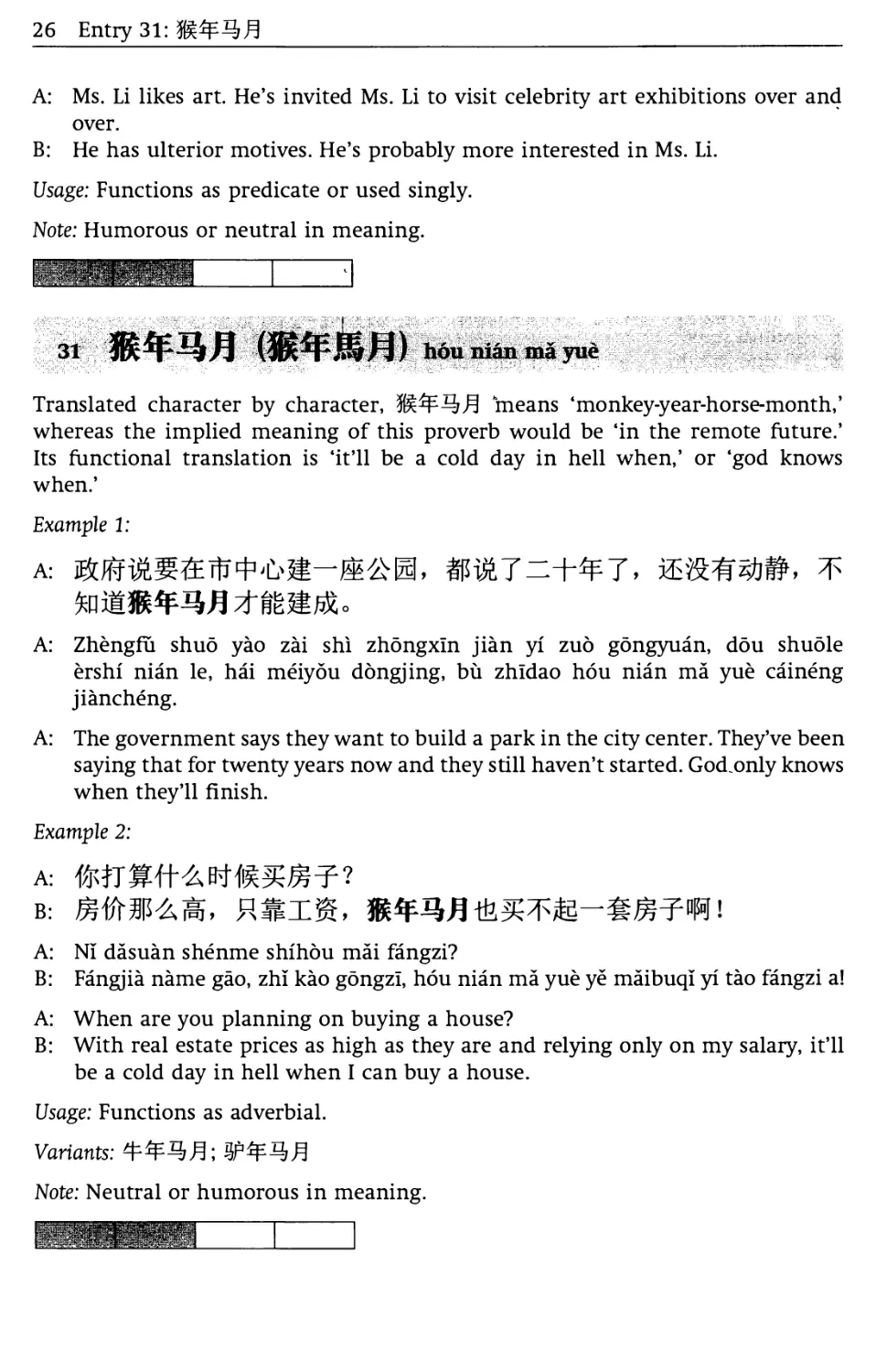
31 В^ДЛ W₽JS«) h&u man mS yue
Translated character by character, Ж^^/Л means ‘monkey-year-horse-month,’
whereas the implied meaning of this proverb would be ‘in the remote future.’
Its functional translation is ‘it’ll be a cold day in hell when,’ or ‘god knows
when.’
Example 1:

A: Zhengfu shud yao zai shi zhongxin jian yi zud gongyuan, dou shudle
ershi nian le, hai meiyou dongjing, bu zhidao hou nian ma yue caineng
jiancheng.
A: The government says they want to build a park in the city center. They’ve been
saying that for twenty years now and they still haven’t started. God.only knows
when they’ll finish.
Example 2:
A:
A:	Ni dasuan shenme shihou mai fangzi?
B:	Fangjia name gao, zhi kao gongzi, hou nian ma yue ye maibuqi yi tao fangzi a!
A:	When are you planning on buying a house?
B:	With real estate prices as high as they are and relying only on my salary, it’ll
be a cold day in hell when I can buy a house.
Usage: Functions as adverbial.
Variants: ^^Я/Л; §Р^Я/Л
Note; Neutral or humorous in meaning.
Entries 32-33:	and	27
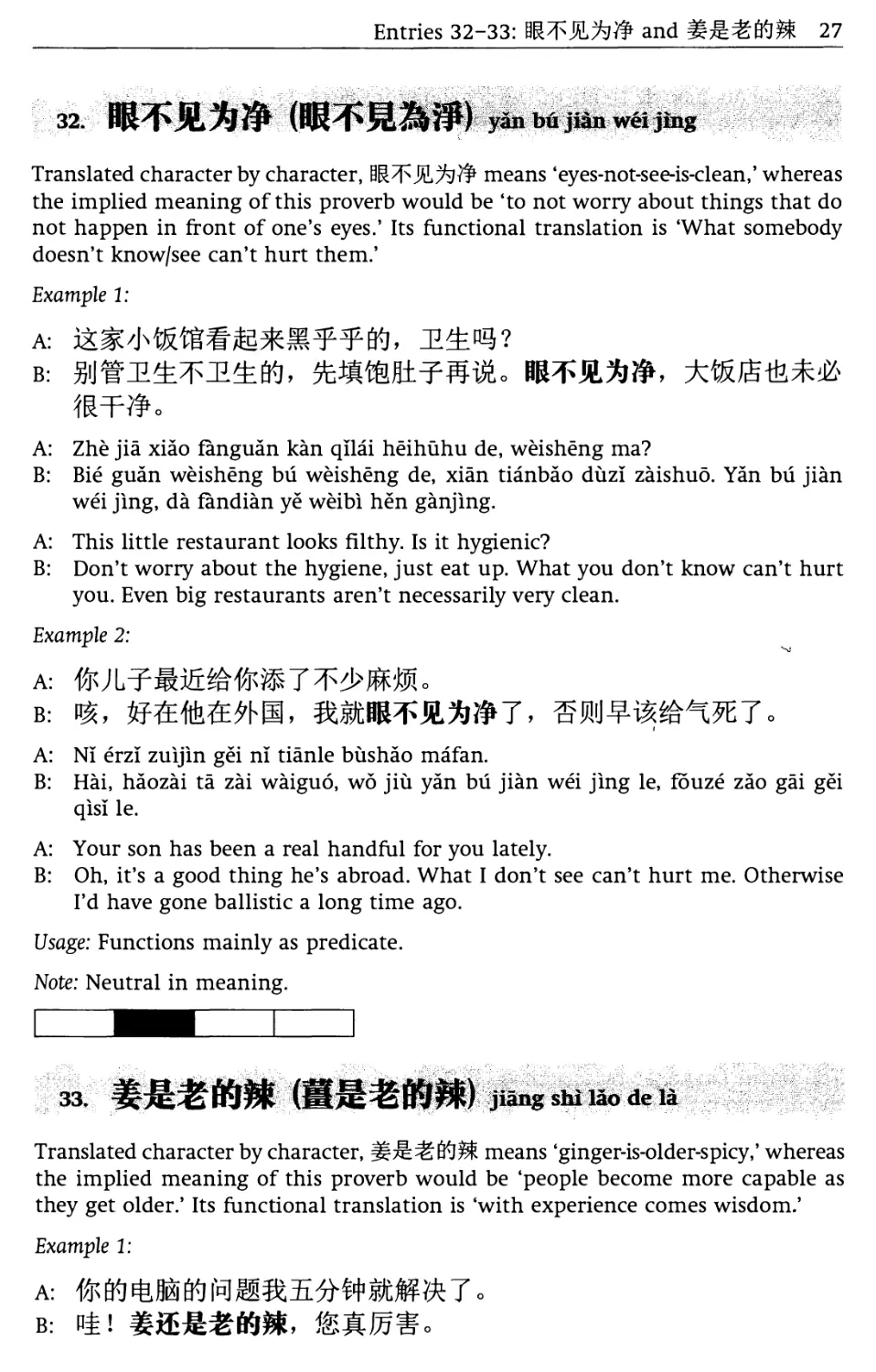
32. вгеялй» (ввтй&т) yan Ъй jnm weijmg
Translated character by character,	means ‘eyes-not-see-is-clean,’ whereas
the implied meaning of this proverb would be ‘to not worry about things that do
not happen in front of one’s eyes.’ Its functional translation is ‘What somebody
doesn’t know/see can’t hurt them.’
Example 1:
A:	МФ
A: Zhe jia xiao fanguan кап qilai heihuhu de, weisheng ma?
B:	Bie guan weisheng bu weisheng de, xian tianbao duzi zaishud. Yan bu jian
wei jing, da fandian ye weibi hen ganjing.
A: This little restaurant looks filthy. Is it hygienic?
B:	Don’t worry about the hygiene, just eat up. What you don’t know can’t hurt
you. Even big restaurants aren’t necessarily very clean.
Example 2:
A:
B:	OIPMWL
A:	Ni erzi zuijin gei ni tianle bushao mafan.
B:	Hai, haozai ta zai waiguo, wo jiu yan bu jian wei jing le, fouze zao gai gei
qisi le.
A:	Your son has been a real handful for you lately.
B:	Oh, it’s a good thing he’s abroad. What I don’t see can’t hurt me. Otherwise
I’d have gone ballistic a long time ago.
Usage: Functions mainly as predicate.
Note; Neutral in meaning.
33.	jiang shi lao de la
Translated character by character,	means ‘ginger-is-older-spicy,’ whereas
the implied meaning of this proverb would be ‘people become more capable as
they get older.’ Its functional translation is ‘with experience comes wisdom.’
Example 1:
А:
В: П1!
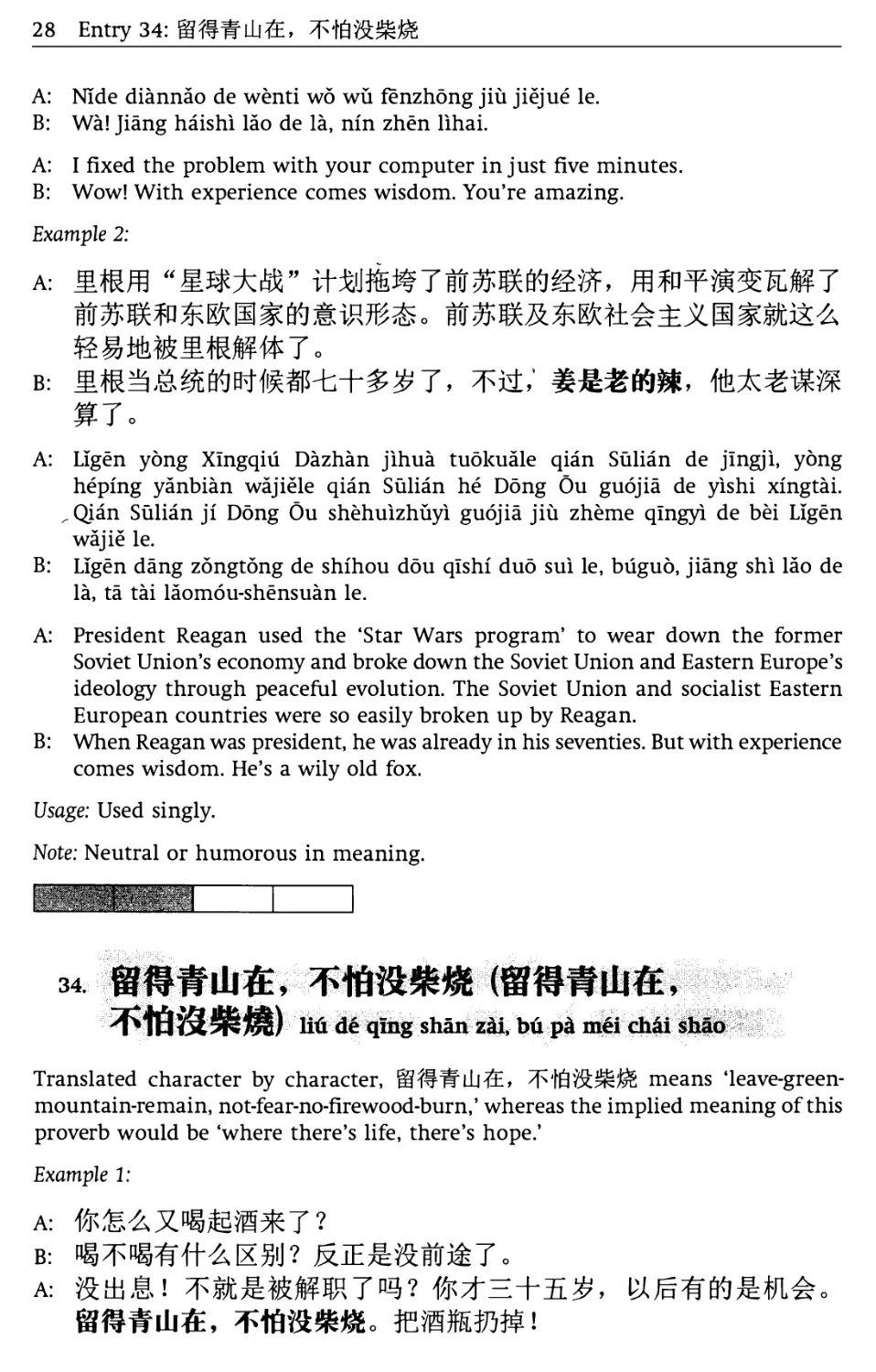
28 Entry 34:
A:	Nide diannao de wenti wo wu fenzhong jiu jiejue le.
B:	Wa! Jiang haishi lao de la, nin zhen lihai.
A:	I fixed the problem with your computer in just five minutes.
B:	Wow! With experience comes wisdom. You’re amazing.
Example 2:
а: мд
в:	та/
ЖТо
A:	Ligen yong Xingqiu Dazhan jihua tuokuale qian Siilian de jingji, yong
heping yanbian wajiele qian Siilian he Dong Ou guojia de yishi xingtai.
..Qian Siilian ji Dong Ou shehuizhuyi guojia jiu zheme qingyi de bei Ligen
wajie le.
B:	Ligen dang zongtong de shihou dou qishi dud sui le, buguo, jiang shi lao de
la, ta tai laomou-shensuan le.
A: President Reagan used the ‘Star Wars program’ to wear down the former
Soviet Union’s economy and broke down the Soviet Union and Eastern Europe’s
ideology through peaceful evolution. The Soviet Union and socialist Eastern
European countries were so easily broken up by Reagan.
B:	When Reagan was president, he was already in his seventies. But with experience
comes wisdom. He’s a wily old fox.
Usage: Used singly.
Note; Neutral or humorous in meaning.
34. ШШЙ,
liti de qing shan zii, bu рй mei ch£i shao
Translated character by character,	means ‘leave-green-
mountain-remain, not-fear-no-firewood-burn,’ whereas the implied meaning of this
proverb would be ‘where there’s life, there’s hope.’
Example 1;
А:
В:	OiOtTo
»»
Entry 35:	29
A:	Ni zenme you he qi jiu lai le?
B:	He bu he you shenme qiibie? Fanzheng shi mei qiantu le.
A:	Mei chiixi! Bu jiushi bei jiezhi le ma? Ni cai sanshiwu sui, yihou youdeshi
jihui. Liu de qingshan zai, bu pa mei chai shao. Ba jiuping rengdiao!
A: Why have you started drinking alcohol again?
B:	What difference does it make if I drink or not? I have no future anyway.
A: You have no drive! Weren’t you only laid off? You’re just 35, there will be
plenty of opportunity in the future/Where there’s life, there’s hope. Throw
that bottle away!
Example 2:
A:	(WA)	°
A: (bing ren) Wo chi bu xia le.
B:	Zai chi liang kou ba, shenti yaojin, biede shi dou key! wanghou fangfang. Liu
de qingshan zai, bu pa mei chai shao.
A:	(sick person) I can’t eat anymore.
B:	Eat two more bites. Your body is the most important thing; everything else
can be dealt with after. Where there’s life, there’s hope.
Usage: Used singly.
Note; Neutral in meaning.
35. ♦fse, йелт	жят) na de qi, fang de xia
Translated character by character,	means ‘able-to-pick up, able-to-
put down,’ whereas the implied meaning of this proverb would be ‘to be able to
accept whatever happens to oneself.’ Its functional translation is ‘to be able to go
with the flow.’
Example 1:
А:
В:
A:	Wo bu yinggai dangzhong gen ta chaojia.
B:	Chao jiu chao le, zhe zhong shi dei na de qi, fang de xia, mei shenme dabuliao
de.
A: I shouldn’t argue with him in public.
B:	It was just an argument. With these sorts of things, you have to be able to go
with the flow. It’s nothing major.
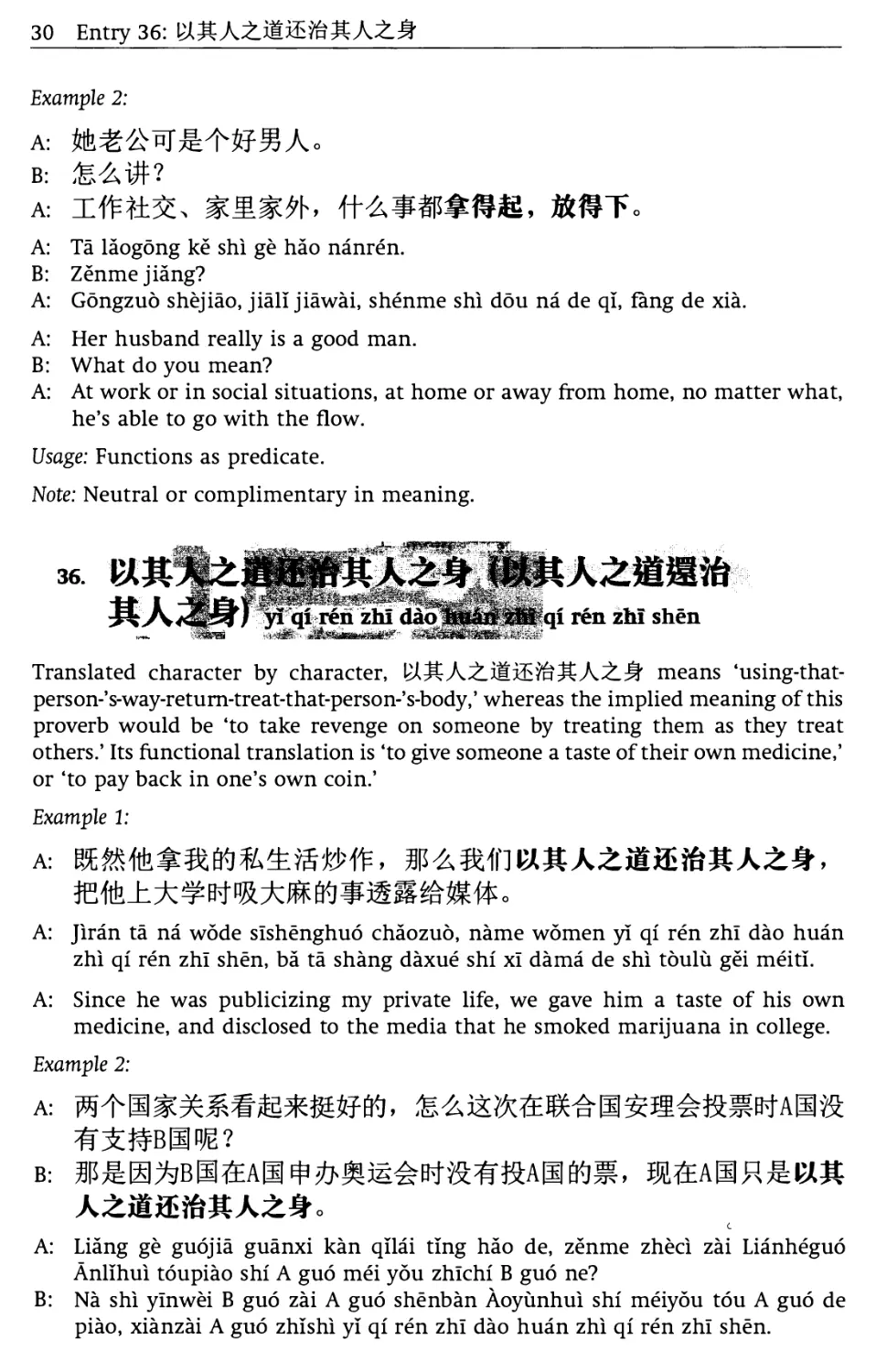
30 Entry 36:
Example 2:
A:
В:
a:	жжж^ь ff-AwamE, №»
A:	Ta laogong ke shi ge hao nanren.
B:	Zenme jiang?
A: Gdngzud shejiao, jiali jiawai, shenme shi dou na de qi, fang de xia.
A:	Her husband really is a good man.
B:	What do you mean?
A: At work or in social situations, at home or away from home, no matter what,
he’s able to go with the flow.
Usage: Functions as predicate.
Note; Neutral or complimentary in meaning.
36.
^i qi reh zhi dao®|^MM6?qi ren zhi shen
Translated character by character, tUXAZilKETpMAZIf means ‘using-that-
person-’s-way-retum-treat-that-person-’s-body,’ whereas the implied meaning of this
proverb would be ‘to take revenge on someone by treating them as they treat
others.’ Its functional translation is ‘to give someone a taste of their own medicine,’
or ‘to pay back in one’s own coin.’
Example 1;
A: Jiran ta na wode sishenghuo chaozud, name women yi qi ren zhi dao huan
zhi qi ren zhi shen, ba ta shang daxue shi xi dama de shi toulu gei meiti.
A: Since he was publicizing my private life, we gave him a taste of his own
medicine, and disclosed to the media that he smoked marijuana in college.
Example 2:
A±ifi£ftMA±#o
с
A: Liang ge guojia guanxi кап qilai ting hao de, zenme zheci zai Lianheguo
Anlihui toupiao shi A guo mei you zhichi В guo ne?
B: Na shi yinwei В guo zai A guo shenban Aoyimhui shi meiyou tou A guo de
piao, xianzai A guo zhishi yi qi ren zhi dao huan zhi qi ren zhi shen.
Entry 37:	31
A:	The two countries’ relations appear to be quite good. Why did country A not
support country В in this UN Security Council vote?
B:	That’s because country В didn’t vote for country A when they were in the
running for hosting the Olympics. Now country A is just paying country В
back in its own coin.
Usage: Functions as predicate.
Note; Neutral in meaning.
37
Translated character by character,	means ‘get-peach-blossom-luck,’ whereas
the implied meaning of this proverb would be ‘lucky, specifically with regards to
women.’ Its functional translation is ‘lucky in love.’
Example 1;
А:
В:
A:	Li xiaojie daying jintian wanshang gen wo yiqi qu kan dianying.
B:	Ni xiaozi zou taohuayun le, dudshao ren xiang qing Li xiaojie qu dou mei
cheng a!
A:	Ms. Li said she would go see a movie with me tonight.
B:	You, kid, are lucky in love. So many people want to ask Ms. Li to a movie, but
to no avail!
Example 2:
А:
A:	Nage suanming xiansheng gaosu ta jinnian xia ban nian ta yiding hui zou
taohuayun, mingnian jiu neng jiehiin shengzi.
A: That fortune teller told him that he will definitely be lucky in love in the
second half of this year and that he’s going to get married and have a baby
next year.
Usage: Functions as predicate.
Note; Neutral in meaning.
32 Entries 38-39: ййЖХХ,	and
33.	Ю1Г& OO^JE, 8»Ш)
cheng shi bu zh, bai shi you уй
Translated character by character,	means ‘accomplish-thing-
not-enough, failed-thing-have-excess,’ whereas the implied meaning of this proverb
would be ‘to be unable to successfully complete anything, but have a tendency to
ruin everything.’ Its functional translation is ‘everything one touches turns to
dust.’
Example 1;
a:	wmwtWo
в:
A: Ta pingchang chui de lihai, keshi shenme shi dou zud bu hao. Zhe jian shi
you gao za le.
B:	Cheng shi bu zu, bai shi you yu. Ta de gdngzud hetong mingnian jiu buyao
xuqian le.
A:	He usually blows a lot of smoke, but he can’t do anything well. He screwed
this up too.
B:	Everything he touches turns to dust. You shouldn’t renew his employment
contract next year.
Example 2:
А: %Ц,
В:
A:	Lao Ma, Xiao Zhu zhege ren zenmeyang a?
B:	Lao Hu, Xiao Zhu shi ge cheng shi bu zu, bai shi you yu de jiahuo. Yong ta de
shihou dei xiaoxin.
A:	Old Ma, what’s Little Zhu like?
B:	Old Hu, Little Zhu is the sort of guy where everything he touches turns to
dust. You have to be careful when you use him.
Usage: Functions as predicate or attributive.
Note; Slightly derogatory or neutral in meaning.
39.	(яи-лажа)
huangshang bu ji taijian ji
Translated character by character,	means ‘His Majesty-not-worry-
eunuch-worry,’ whereas the implied meaning of this proverb would be, ‘the emperor
is rested and at ease while the eunuch is excessively concerned.’ Its functional
Entry 40:	ТИНОЙ 33
translation is, ‘the person involved is calm and collected, but observers are very
worried.’
Example 1;
А:
в:
A:	Kuai dian zou ba! Huiyi jiuyao kaishi le.
B:	Ji shenme a? Huangshang bu ji taijian ji, lingdao hai zai nar hecha ne.
A:	Move faster! The meeting is about to start.
B:	Where’s the fire? You’re fretting over nothing; our boss is still over there
drinking tea.
Example 2:
А:
в:	imw
A:	Kongpa Xiao Zhao zheci yao bei caidiao le.
B:	Huangshang bu ji taijian ji. Ni mei kanjian Xiao Zhao zhengtian xiaohehe de
ma. Ni ji shenme a?
A:	I’m afraid Little Zhao is going to be let go this time.
B:	If he’s not concerned, you shouldn’t be concerned. Haven’t you seen Little Zhao
smiling all day? What are you worried about?
Usage: Used singly or as predicate.
Variants: IWW;	J
Note: Slightly derogatory or neutral in meaning. Because а Ллк (eunuch) is unable
to reproduce, one must be extremely careful when using this proverb in conversation
with Chinese men - especially those who are already married but do not have children.
афМ£Е,
40.
ИВМ san ge chdu pi jiang, ding ge Zhuge Liang
Translated character by character,	means ‘three-MW-
common-cobblers, surpass-a-Zhuge Liang,’ whereas the implied meaning of this
proverb would be ‘three inferior minds are better than one great one.’ Its functional
translation is ‘two heads are better than one.’
Example 1:
A:
В: ft, ИФМЙЕ,
34 Entry 41: ЙЖЙЯЙп
A:	Lao Wang, zhe shi women neng xing ma?
B:	Neng, yiding neng. San ge chou pijiang, ding ge Zhiige Liang. Women yigong
shi dud ge ren, zenme ye neng xiangchu yige hao banfa lai.
A: Lao Wang, can we get this thing done?
B:	Yes, absolutely. Two heads are better than one. Together, we’re more than ten
people; we will come up with a good solution one way or another.
Example 2:
а:
A:	Women de duishou shi Hafo de gaocaisheng a?
B:	Women haodai ye shi Changchiinteng lianmeng de, zaishud women ren
dud, san ge chou pijiang, ding ge Zhiige Liang, kending neng jingzheng
guo ta.
A:	Our opponent is a distinguished Harvard student?
B:	At any rate, we’re also Ivy Leaguers, and there are a lot of us. Two heads are
better than one. We can definitely beat him.
Usage: Used singly.
Variant:
Note; Humorous in meaning. Zhuge Liang (йэИй 181-234) was a chancellor of
Kingdom Shu during the Three Kingdoms period. He is popularly recognized as
the smartest person in the history of China.
ИВГ I П I
41. ЙЙЙЯЙЙ (TOM®ЯЙ) jiao aSHiangzhl JIln
Translated character by character, ЙШМЯЙд means ‘foot-step-two-MW-boat.’ Its
implied meaning is ‘to have a foot in both camps.’
Example 1;
А: ШШМЯЙй,
в:
А: Та jiao cai hang zhi chuan, tongshi gen liang ge nuhaizi tan lian’ai.
B: Zhe jiu bu daode le, dui aiqing bugdu zunzhong.
A: He’s got a foot in both camps, carrying on relationships with two women at
the same time.
B: That’s just not right. He doesn’t have the proper respect for love.
Entry 42:	35
Example 2:
a: мшт,	хш»<011Г1Жо
В: ^ШЮЙМЯЯй,	zKWiWl&o
A:	Ta gou yuanhua de, ji gen baoshoupai da de huore, you bei jijinpai kan cheng
tamen de ren.
В:	Ta neng jiao cai liang zhi chuan, erqi cai de hen wen, shuiping gou gao de.
A:	She’s very sly. She gets on well with the conservatives and the progressives see
her as one of them.
B:	She can have a foot in both camps and stay firmly planted. She’s good.
Usage: Functions as predicate.
Variants: $Ж(ог Й)ЖЯ(ог ^)Й&
Note; Slightly derogatory in meaning.
Г I 8ЯИ I
42 йИгЖШНЖИ	МЖ)
d di wu yin sanbai liang
Translated character by character, ЙЙЬЖШНЖЙ means ‘this-place-not-have-silver-
three-hundred-tael,’ whereas the implied meaning of this proverb would be ‘to
expose oneself due to unconvincing denial.’ Its functional translation is ‘methinks
the lady doth protest too much,’ or ‘telltale sign/action.’
Example 1;	j
а:	йжжт»
в: штаи та, шш,
A:	Zai zuotian de niming toupiao zhong, yinwei you yige ren fandui, zhe xiang
jihua liuchan le.
B:	Shei gan de? Tai quede le. Bugud, zheyang ye hao, women key! jiesheng yi bi
buxiao de kaizhi.
A:	Buyong zai jieshi le, ni zhe shi ci di wii yin sanbai liang, dajia xinli dou qingchu
shi shei tou de fanduipiao.
A: In last night’s anonymous voting, because one person opposed, the plan was
aborted.
B:	Who was it? That’s so evil. But the silver lining is that we can save a great deal
of expenditures.
A: You don’t need to explain any further, methinks the lady doth protest too
much. Everyone knows perfectly well who voted against it.
36 Entry 43:
Example 2:
м^л«. hw-^лт
о^т-тжж ж-^^длйшв=иж >
A: Jingcha ba yi qun yu yi qi qiangjian’an you guardian de ren jiao dao yiqi, shud
shouhairen zai zuifan de you shouwan shang liuxiale yi dao bu shen de ya
hen. Suoyou de ren dou mei dong, zhiyou yige ren xiayishi de kanle yixia ta
de you shouwan. Zhe yi judong wuyi shi ci di wu yin sanbai hang, jingcha ju
ci ba zhege ren lie wei zhongdian huaiyi duixiang.
A: The police called a group of people who were implicated in a rape case together,
saying the victim left a set of shallow toothmarks on the right wrist of the
criminal. No one moved, but one person unconsciously looked quickly at his
right wrist. This action was undoubtedly a telltale sign and, on this evidence,
the police made this person their primary suspect.
Usage: Functions as predicate.
Note; Slightly derogatory and humorous in meaning.
ЙЙ» ЙГЖ1 I
даsi,u6 рйао susn
Translated character by character,	means ‘eat-not-able-grape-
then-say-grape-sour,’ whereas the implied meaning of this proverb would-be ‘to
downplay the value of something one wanted but couldn’t get.’ Its functional
translation, is ‘sour grapes.’
Example 1;
a:
В: ЯЙЧ?	^Й"£^Яв®ШЯв®®.
A:	Jiu na fen gdngzud, qing wo qu wo dou bu qu.
B:	Zhende ma? Ni dangchu keshi shenqing laizhe, buyao chi bu dao putao jiu
shud putao suan.
A:	I wouldn’t take that job even if they offered it to me.
B:	Really? You applied for it in the first place. No need for sour grapes.
Example 2:
A:
В: «Ж
А:
Entry 44:	37
A:	Wang xiaojie mmgtian jiu jiaren lou!
B:	Jia jiu jia bei, jiale ge huahuagongzi, dengzhe кй qu ba.
A:	Zhe hua wo ting qilai zenme suanliuliu de, ni buyao chi bu dao putao jiu shud
piitao suan a.
A; Miss Wang is getting married tomorrow!
B:	Let her get married. When she marries that playboy, she’ll end up in tears.
A: Why do I feel like you’re jealous? There’s no need for sour grapes.
Usage: Functions as predicate.
Note; Slightly derogatory in meaning.
44. ‘С>ЖТ'ТЙкЭ.1Й
xin ji du bu liao re doufu
Translated character by character,	means ‘heart-anxious-eat-not-
able-hot-tofu,’ whereas the implied meaning of this proverb would be ‘being overly
hasty will actually slow one down in the long run.’ Its functional translation is
‘more haste, less speed.’
Example 1;
А:
в:	mw.
A:	Jihui zheme hao, women gankuai dongshou ba!
B:	Zai guanwang liang tian, xin ji chi buliao re doufu, xianzai xian zhunbei
hao.
A:	With such a good opportunity, we should move on it quickly!
B:	Let’s wait and see for another two days. More haste, less speed. We need to
prepare everything first.
Example 2:
A:	'ftiiaHE!
в:
A: Zheme hao de nuhair, kuai qu zhui ba!
B:	Bu ji, xin ji chi buliao re doufu.
A:	What a good girl, go get her quickly!
B:	Don’t rush. More haste, less speed.
Usage: Used singly.
Note; Neutral in meaning.
38 Entries 45-46:	and
45.	(Ж&ЙЖ) jia chang bianfan
Translated character by character,	means ‘home-style-convenient-food,’
whereas the implied meaning of this proverb would be ‘ordinary,’ or ‘to be expected.’
Its functional translation is ‘run of the mill’ or ‘par for the course.’
Example 1;
A: Na dui fuqi dui haizi guoyu yanli, bi haizi xue tan gangqin, zhiyao haizi lian
buhao, shao shuijiao hud bu rang chifan shi jiachang bianfan.
A: That couple is overly strict with their children. They force their kids to learn
to play the piano and if they play badly, sleep deprivation or withholding of
food is run of the mill.
Example 2:
a:
A: Ta shi gongzuokuang, yeli gdngzud dao liang-san dian shi jiachang bianfan.
A: He’s a workaholic. For him to work until two or three in the morning is par
for the course.
Usage: Functions as predicative.
Note; Neutral in meaning.
I	I
46.	А
laihama xiang	rou
Translated character by character,	means ‘ugly-toad-want-eat-swan’s-
meat,’ whereas the implied meaning of this proverb would be ‘to seek to secure some-
thing requiring a higher social position or greater abilities.’ Its functional translation
is ‘to be out of one’s league’ or ‘to (want/try to) punch above one’s weight.’
Example 1;
А:
B:
A:	Ta de mengzhong qingren jiushi xiandaiban de Malilian Menglu.
В:	Ta ye bu na jingzi zhaozhao ziji, jianzhi shi laihama xiang chi tian’e rou.
A:	His dream girl is a modern-day Marilyn Monroe.
B:	Has he taken a look at himself? He’s out of his league.
Entry 47:	39
Example 2:

A:	Tingshud yi qian ren shenqing le zhege zhiwei, lian ta ye shenqing le.
B:	Laihama ye xiang chi tian’e rou, guaibude zheme dud ren shenqing.
A:	I heard a thousand people applied for this position. Even he applied.
B:	Everyone wants/tries to punch above his weight. No wonder so many people
applied.
Usage: Functions as predicative or used singly.
Note; Derogatory in meaning. Normally used with regard to an unattractive man
pursuing a pretty woman.
Translated character by character,	means ‘heaven-no-repel-person-
road,’ whereas the implied meaning of this proverb would be ‘no obstacle is
insurmountable.’ Its functional translation is ‘there’s always a way (to get) around
things’ or ‘there is always a way out.’
Example 1;
A:	ЖПОТ! ШАЯШТ!
В:	А,
A:	Dongshizhang, women you jiu le! Yinhang tongyi daikuan le!
B:	Zhen shi tian wu jue ren zhi lu a! Qu, mashang zhunbei ban shouxu!
A: Chairman, we’ve been saved! The bank has agreed to a loan!
A: There really is always a way out! Go, we’ll prepare to process it immediately!
Example 2:
A: WSmWm	M
A: Xianzai da de jiuye huanjing bu jingqi, ta toule shang bai fen gdngzuo shenqing
dou meiyou huiyin. Ran’er, tian wu jue ren zhi lu, jiu zai ta wanquan sangshi
xinxin de shihou, li ta jia ji jin de yi jia gongsi zhaopin le ta.
A: Currently, the broader employment situation is weak; she applied for hundreds
of jobs and hasn’t heard back from any. But, there’s always a way out. Just
when she lost hope, a company right near her home hired her.
40 Entries 48-49: тё/оП and
Usage: Functions as adverbial or used singly.
Note: Neutral in meaning.
L^-.J_____1
43. ЙШП (/Ё»Н) zou hbu men
Translated character by character, means ‘walk-back-door,’ whereas the
implied meaning of this proverb would be ‘to use connections or influence to one’s
advantage.’ Its functional translation is ‘to get in through the back door.’
Example 1:
А:
в: шйгж шжжь
A:	Tingshud Xiao Li mashang yao ti fix juzhang le.
B:	You shi zouhoumen bei. Shei dou zhidao ta laoba shi shizhang.
A: I hear that Little Li will soon be promoted to vice-director (of a bureau).
B:	More back-door dealings. Everyone knows his old man is the mayor.
Example 2:
В:
A:	Ta gdngzud shang mei shenme benshi, danshi la guanxi, zouhoumen hen you
yi tao.
B:	Bie yanhong, ni you zhe ziben ye key! zou a?
A:	She is not particularly capable at her job, but she is quite good at establishing
connections and using them to her advantage.
B:	Don’t be jealous. If you had her social capital, wouldn’t you do the same?
Usage: Functions mainly as predicate. In Mandarin, Г1 is usually retroflexed as
‘menr.’
Note: Derogatory in meaning.
49.
xia mao peng shang si haozi
Translated character by character,	means ‘blind-cat-run-into-dead-
mouse,’ whereas the implied meaning of this proverb would be ‘a total fluke.’ Its
functional translation is ‘even a broken clock is right twice a day’, or ‘even a blind
squirrel finds a nut once in a while.’
Entry 49:	41
Example 1:
a:	ОТ“ЯМ Ф^Я^ЯРЯ^ЖЙТ#,
WT-^Wo
в: Ш^±^МТпДо
А: Та dui mai gupiao yiqiao-butdng, jiu maile yi zhi gupiao, ban ge yue hou na
zhi gupiao fanle fan, ta zhuanle yf da bi qian.
B:	Xia mao peng shang le si haozi bei. Women zenme meiyou zheme hao de
yimqi?
A: He bought stock without knowing a thing about them. After a half a month,
that stock had doubled in price, and he made a pretty penny.
B:	Even a blind squirrel finds a nut once in a while. Why don’t we have such
good luck?
Example 2:
А:
B:	МЙЖ
мт; та,
та®
гзта-^што зт'номшшдэ. ждйж
A: Xianzai gdngzud zheme nan zhao, zhe jiahuo zenme yixiazi jiu zhao dao le?
B: Xia mao peng shang le si haozi. Wo tingshud ta gei na jia gongsi da dianhua,
wuda-wuzhuang da jinle dongshizhang bangongshi, pianqiao na tian
dongshizhang bu zhidao zenme xinxue-laichao, mei rang mishu jie, ershi ziji
jiele dianhua. Dongshizhang yi ting, shud da cud le; bugud, ta na tian xinqing
tebie hao, jingran rang mishu ba ta de dianhua zhuan gei renshibu. Renshibu
ji youguan bumen yiwei dongshizhang qinzi tuijian lai de, ta gen dongshizhang
kending you hen ying de guanxi, yushi mianshi shouxu yflu ludeng. Zhege
shaxiaozi xilihutu de jiu zhao daole gdngzud. Zhenshi xia mao peng shang le
si haozi le! Yaoburan na jia gongsi hui kan shang zhege shaxiaozi.
A:	With employment so hard to find, how did this guy instantly find a job?
B:	Even a blind squirrel finds a nut once in a while. I heard that when he called
that company, he accidentally called the chairman’s office and, as luck would
have it, that day, the chairman, by some impulse, wouldn’t let his secretary
answer, but rather answered the phone himself. As soon as the chairman
picked up, he said he’d misdialed, however, the chairman was in a good mood
that day and, surprisingly, had his secretary put this guy through to HR. HR
and the other relevant departments thought that the chairman had personally
recommended this guy, and that he definitely was close with the chairman,
42 Entry 50:
so they ‘green lighted’ the interview process. This silly man muddled through
and found a job. It really is sheer dumb luck! Otherwise, what company would
look kindly on this idiot’s application?
Usage: Used singly.
Note; Slightly derogatory and humorous in meaning. Usually the speaker’s words
have a sense of envy when he comments on others.
so.	дааипгю®
hio han Ъй chi yin qian kui
Translated character by character,	means ‘good-man-not-eaUeyes-
front-loss,’ whereas the implied meaning of this proverb would be ‘a wise man
knows when to retreat.’ Its functional translation is ‘you have to know when to
hold ’em and when to fold ’em,’ or ‘discretion is the better part of valor.’
Example 1;
А:
В: ЖТ,
A:	Wo jiushi bu fu tamen.
В:	Suanle, haohan bu chi yanqian kui. Xiang zhao tamen suanzhang yihou
youdeshi jihui.
A:	I refuse to obey them.
B:	Forget about it, you have to know when to hold ’em and when to fold ’em. If
you want to settle the score with them, there will be plenty of opportunities
in the future.
Example 2:
а:	«ww,
A:	Duifang ren yuelaiyue dud, ta kan qingkuang bumiao, haohan bu chi yanqian
kui, shudhua de yuqi mashang ruanle xialai.
A:	As the opposing side grew in number, he realized the situation was dire. As
discretion is the better part of valor, his manner of speaking immediately
softened.
Usage: Used singly.
Note; Humorous in meaning.
Entries 51-52:	and	43
si ШШк М&ШШХ)
jie ling hai xu ji ling ren
Translated character by character,	means ‘untie-bell-still-need-tie-
bell-person,’ whereas the implied meaning of this proverb would be ‘the person
who created a problem can solve it.’ Its functional translation is ‘he that hides can
find.’
Example 1:
а:
В:
A:	ШШК, ЯЯУШ&
WW.
A: Ta name bu kaixin, ni qu quanquan ta ba?
B:	Weishenme rang wo qu?
A: Ni bie zhuangsha, ta bu kaixin hai bush! yinwei ni? Jie ling hai xii ji ling ren,
zhiyou ni caineng rang ta gaoxing qilai.
A:	She’s so unhappy. Can you go talk to her?
B:	Why me?
A: Don’t play dumb. Isn’t she unhappy because of you? He that hides can find.
You’re the only one that can cheer her up.
Example 2:
А:	ЯШШК, Hmilt
A: Zhong-mei zhijian de maodim shi Meiguo tiaoqi de, jie ling hai xii ji ling ren,
zhiyao Mei fang daoqian, Zhong fang shi buhui jijiao de.
A: The conflict between China and the US was stirred up by the US. He that hides
can find. If the US apologizes, China won’t dwell on it.
Usage: Used singly.
Variant:
Note: Neutral in meaning.
s2.	(№zM«54AB)
fei shui bii lih wai ren tian
Translated character by character,	means ‘rich-water-not-flow-
others’-field,’ whereas the implied meaning of this proverb would be ‘one does not
allow benefits created by one’s own work to accrue to others.’
44 Entry 53:
Example 1;
В: ДАТЖЖЖ^Я'ЛЩ, PAAIA
A:	Weishenme youde gongsi hetong shang guiding likai nage gongsi hou liang
nian nei buneng jinru tongyi hangye de qita gongsi gdngzud?
B:	Shi weile feishui bu liu wairen tian, tonghang shi yuanjia.
A:	Why do some companies’ employment contracts stipulate that an employee
cannot join another company in the same field within two years of having left?
B:	It’s in order not to allow others to benefit from their investment in the
employee. Companies in the same field are competitors.
Ex	ample 2:
И,
A: Bocaiye shi difang zhengfu shuishou de zhongyao laiyuan. Youde zhou dubo
bu hefa, yushi renmen dao fujin de zhou qu du. YInci bushao zhou weile
zengjia shuishou, fangzhi feishui liuru wairen tian, zhengzai null shi dubo
hefahua.
A: The gaming industry is an important source of tax revenue for local governments.
Gambling is illegal in some states and, as a result, people travel to nearby
states to gamble. Because of this, in order to increase tax revenues and not
allow others to benefit from their own residents, many states are currently
working hard to legalize gambling.
Usage: Used singly.
Note; Humorous or neutral in meaning.
Translated character by character,	means ‘heart-have-excess-but-
strength-not-enough,’ whereas the implied meaning of this proverb would be ‘to
want to do something but lack the strength.’ Its functional translation is ‘to run
out of steam.’
Example 1;
Ж» —
Entry 54:	45
A: Zongtong gang shangtai de shihou gaodiao xuancheng yao jinxing yiliao zhidu
gaige, danshi zhe juefei yishi. YI nian zhihou zongtong jiu xiande xin youyu
er li buzu le.
A: When the president first took office, he grandly proclaimed that he would
carry out a reform of the healthcare system, but this was no easy task. One
year later, the president appears to be running out of steam.
Example 2:
A:	tSOWo
A: Ta nianqing de shihou meitian zhi shui wu ge xiaoshi, qita shijian dou gdngzud.
Danshi sishi sui yihou ta gandao xin youyu er li buzu le.
A: When he was young, he would sleep only five hours a night, working the rest of
the time. But, after he turned forty years old, he feels he’s running out of stream.
Usage: Functions as predicative or predicate. It is usually used after or
Note; Neutral in meaning.
I____Л
Ъй fen qing h6ng zao И||1
Translated character by character,	means ‘not-distinguish-cyan-red-
black-white,’ whereas the implied meaning of this proverb would be ‘indiscriminate.’
Example 1;
а:
A: Zhiyao ta kan dao bu many! de difang, bu fen qing hong zao bai, jiu ba
xiangguan ren piping yi dim.
A: If he sees something that doesn’t please him, he indiscriminately chastises the
relevant people.
Example 2:
a: ш-шл, яшм jalAzW,
A: Chuang jinlai yi qun mengmian ren, bu wen qing hong zao bai, jian ren jiu
da, jian dongxi jiu za.
A: A group of masked men rushed in, indiscriminately hitting anyone they saw
and breaking anything they saw.
Usage: Functions as adverbial or predicate.
Variant: 1ч] Й
Note; Derogatory in meaning.
46 Entries 55-56: 0>—Я К, Й1~Я® and
55. ie-яий, й-мго os-#®, в-sm)
zheng yi zhi yan, bi yi ЙЙ yah
Translated character by character,	ЙЗ-*Я0& means ‘open-one-MW-eye,
shut-one-MW-eye,’ whereas the implied meaning of this proverb would be ‘with
one eye closed.’ Its functional translation is ‘to turn a blind eye.’
Example 1:
A:	МДтЖШ-Ж
A: Yinwei lushang de che bu dud, suoyi jingcha duiyu chaosu xianxiang zheng
yi zhi yan, bi yi zhi yan.
A: Because there weren’t many cars on the road, the police turned a blind eye to
speeding.
Example 2:
А:
в: m	w-ял
A:	Ta zuishang zongshi shud yao yanli fan fubai.
B:	Shi a, keshi dui ta ziji de jiashu he xiashu de weifa xingwei que zheng yi zhi
yan, bi yi zhi yan.
A:	He’s always saying we need to stringently fight corruption.
B:	Yes, but he actually turns a blind eye to the illegal actions of his own family
and inferiors.
Usage: Functions as predicate.
Note; Slightly derogatory in meaning.
I I BMW I
S6. «ЙТЙ» (ЖИВДЙ1Ю pd guanzi pd shuai
Translated character by character, iKiilTiKW means ‘broken-jar-neglected-smash,’
whereas the implied meaning of this proverb would be ‘to write oneself off as
hopeless and act recklessly.’ Its functional translation is ‘go into a tailspin.’ It can
also mean ‘a vicious cycle.’
Example 1;
а:
В: шт.	ЙШШо
А:	Та chiiyu yihou haohaor ganle jige yue, xianzai you youshou-haoxian le.
B:	Dei zhuyi le, fangzhi ta pd guanzi pd shuai, yinggai jinli bangzhu ta.
Entry 57: frWQ, ffi-B-M-B. 47
A:	For a few months after he got out of jail, he kept busy. Now he’s just lolling
around.
B:	You need to be careful. You should do your best to help him in order to prevent
his going into a tailspin.
Example 2:
В: МДйШТйШ,
A:	Liang ge yue nei bei liang ge nanpengyou paoqi le, xianzai ta haoxiang
wusuowei le.
В:	Ta na shi pd guanzi pd shuai, hai, doushi na liang ge nanren hai de.
A:	Two boyfriends have left her within the last two months. She seems desensitized
now.
B:	It’s a vicious cycle. It’s all those two men’s fault.
Usage; Functions as predicate.
Note; Slightly derogatory in meaning.
мж ваш
a, zhdng dou de ddu
Translated character by character, ЭДЖМЛЬ #5^5 means ‘plant-melon-get-
melon, sow-bean-get-bean,’ whereas the implied meaning of this proverb would be
‘one’s fortunes are determined by one’s actions.’ Its functional translation is ‘you
reap what you sow.’
Example 1;
а:
В:	±R, W'lfo
'Ж да,
fit»
А: Та zenme dong zheme duo xiqi-guguai de dongxi?
B: Renjia gongzuo zhiyu, zongshi jianchi dushii, kan bao, shangwang, suoyi dong.
Ni zhengtian chduyan, hejiu, da majiang, zenme neng dong zhexie gaoshen
de zhishi? Zhdng gua de gua, zhdng ddu de ddu ma.
A:	How does he understand so many whimsical things?
B:	Because he’s always reading books, reading newspapers, and surfing the Internet
in his spare time. You spend all of your time smoking, drinking, and playing
Mahjong. How would you understand these profound things? You reap what
you sow.
48 Entry 58: 3? ЬЙ^,
Example 2:
ягшжтж, ?т&®о
A:	Jiaoshi de zeren zhongda, yinwei tamen de yiju-yidong dou dui xuesheng
chansheng juda de yingxiang, suowei zhong gua de gua, zhong dou de dou.
A: A teacher’s responsibility is enormous, because their every move has a huge
influence on their students. As they say, you reap what you sow.
Usage: Used singly.
Note; Neutral in meaning.
58. ьйж, (sees,
luobo b&icai, ge you sud ai	|| L M
Translated character by character,	means ‘turnip-cabbage,
each-have-what-loves,’ whereas the implied meaning of this proverb would be
‘different people like different things.’ Its functional translation is ‘there’s no
accounting for taste,’ or ‘different strokes for different folks.’
Example 1;
А: ЙШЙ. ЖИЯИЙЙ.
в:	mses».
A: Ta zhe shen daban, gen banma shide.
B:	Luobo baicai, ge you sud ai. Zhiyao ta ziji xihuan jiu hao.
A:	Made up like that, she looks like a zebra.
B:	Different strokes for different folks. As long as she likes it, it’s fine.
Example 2:
а:	9 ЬЙЖ.
A: Xifangren xihuan chi bansheng-bushu de niurou, Beijingren xihuan chi
choudoufu, luobo baicai, ge you sud ai.
A:	Westerners like to eat half-raw, rare beef. Beijingers like to eat smelly tofu.
There’s no accounting for taste.
Usage: Used singly.
Variant:
Note; Neutral or humorous in meaning.
Entries 59-60: ЖЖЙand ^.^ЗТЙ, М^ИЙ 49
S3 ЭЗДМуГШЮ (««жившая1)
gou zui И tii bu chu xiang ya
Translated character by character, ^И^ЖЙ^ЖЖЯ1 means ‘dog-mouth-inside-spit-
not-out-elephant-tusk,’ whereas the implied meaning of this proverb would be ‘you
won’t get anything clean out of a filthy mouth.’ Its functional translation is ‘what
can you expect from a hog but a grunt?’
Example 1;
A:
в: йшшя. oowom шшй.
A: Ta shud ni yinwei hejiu bei jingcha zhua zou le.
B:	Gou zui li tu bu chii xiangya. Wo na shi bangzhu jingcha shudming qingkuang,
wo genben mei hejiu.
A:	He said that you were picked up by the police because you were drinking.
B:	What can you expect from a hog but a grunt? What I was doing was helping
explain the situation to the police. I actually wasn’t drinking.
Example 2:
a:
B:	ШШЖ.	WJUiiWL
A:	Ta zai beihou changchang shud bieren de huaihua.
В: Ta jiushi na zhong ren, gou zui li tu bu chii xiangya, bu shud bieren huaihua
jiu huo buliao.
A: He often speaks ill of others behind their backs.
B:	That’s the kind of person he is; what can you expect from a hog but a grunt?
He would die if he couldn’t speak ill of others.
Usage: Used singly.
Variant:
Note: Derogatory and humorous in meaning.
б»,	Юсии
san tian da yu, liang tian shai wang
Translated character by character, Н^ЗТЙ,	means ‘three-days-catch-
fish, two-days-dry-net,’ whereas the implied meaning of this proverb would be ‘to
lack perseverance and continuity.’ Its functional translation is ‘to blow hot and
cold.’
50 Entry 61:
Example 1;
а:	напй,
A: Ta zud shiqing meiyou yili, san tian da yu, liang tian shai wang.
A: He doesn’t have any perseverance. He blows hot and cold.
Example 2:
a:	%ш, тевета,
A:	Lian gangqin xiiyao naixin, yao tiantian lian, buneng san tian da yu, liang
tian shai wang.
A: Learning to play the piano requires endurance. You must practice every day;
you can’t blow hot and cold.
Usage: Functions as predicate.
Note; Slightly derogatory in meaning.
6i. -ям,
+¥tfl#SB) kzi
Bi nian pa jing sh6ng
Translated character by character, —means ‘once-by-snake-
bitten, ten-years-fear-well-rope,’ whereas the implied meaning of this proverb would
be ‘to avoid or be scared of something after a bad experience or setback.’ Its
functional translation is ‘once bitten, twice shy.’
Example 1;
+ШЯ.
A: Ji nian qian ta jihii ba suoyou de qian ddu toujin gupiao shichang, jieguo jihii
pei guang le. Xianzai ta zai ye bugan jinru gush! le, yi zhao bei she yao, shi
nian pa jingsheng.
A: A few years ago, he almost put all of his money into the stock market and he
almost lost his shirt. Now he doesn’t dare invest in stocks; once bitten, twice shy.
Example 2:
А:
A: Ni zenme kanjian da gou jiu duozhe zou a?
B:	Wo xiaoshihou aigud gou yao, xianzai kanjian gou jiu dudsuo, yi zhao bei she
yao, shi nian pa jingsheng.
Entry 62:	51
A:	Why did you avoid the big dog when you saw it?
B:	When I was little, I was bitten by a dog. Now when I see a dog I tremble; once
bitten, twice shy.
Usage: Used singly.
Note; Neutral in meaning.
Translated character by character,	means ‘hero-difficult-go through-
beautiful-person-pass.’ Its functional translation is ‘no man can resist the charms
of a beautiful woman.’
Example 1:
в:
A:	Qian zongtong zai jingji shang de gongxian feichang weida, keshi hunwailian
huile ta de mingsheng.
B:	Yingxiong nan gud meiren guan, zongtong ye bu liwai.
A: The former president had great success with the economy, but his extramarital
affairs sullied his reputation.
B:	No man can resist the charms of a beautiful woman, not even the president.
Example 2:
a-.	Wit.
В: «ПЕ,
A:	Laoban, women de tanpan duishou feichang qiangying a! Cun bu bu rang.
B:	Na hao ba, mingtian huan yi pi ren qu tan, pai nianqing piaoliang de qu,
yingxiong nan gud meiren guan, huoxu duifang hui rang yixie bu.
A:	Boss, our negotiation counterpart is extraordinarily tough! He won’t give an
inch!
B:	Alright. Tomorrow we’ll sub a new group of people in to negotiate. We will
send a pretty, young woman. No man can resist the charms of a beautiful
woman; maybe our counterpart will give a little.
Usage: Used singly.
Note; Neutral or slightly derogatory in meaning.
52 Entries 63-64:	and
63. ЛТ«®, S®4> (ЛW, НЙ4» daozi zin, doufu xin
Translated character by character,	S/Ж'C? means ‘knife-mouth, tofu-heart,’
whereas the implied meaning of this proverb would be ‘to seem hard and
intimidating, but be kind at heart.’ Its functional translation is ‘to be a softie at
heart,’ or ‘someone’s bark is worse than their bite.’
Example 1:
А: Та shudhua ye tai yanli le, zhen rang ren nanyi jieshdu.
B: Buyao tai zaiyi, ta yixiang daozi zui, doufu xin. Ren ting hao de, jiushi shudhua
bu tai jiangjiu fangshi.
A: She speaks too severely; it makes people reluctant to comply.
B: Don’t let it bother you, her bark is always worse than her bite. She’s a good
person, she just isn’t too discerning in her manner of speech.
Example 2:
A: Ta baba shi dianxing de daozi zui, doufu xin, buhui zhenzheng shang
ren.
A: His father is a typical softie. He couldn’t really hurt a person.
Usage: Functions as predicate or predicative.
Note: Humorous in meaning.
IgWi I I П
64. -
yi shi zft cheng qian gp hen 1
Translated character by character,	means ‘one-lost-step-become-all-
time-regret,’ whereas the implied meaning of this proverb would be ‘the results
of some mistakes cannot be undone.’ Its functional translation is ‘one false step
brings everlasting grief.’
Example 1:
А:
В: ЛТ, MfT»»
ВЭД!
Entry 65:	53
A:	Wode tongxue zhong you ren chou dama.
B:	erzi, ni ke qianwan bie xue tamen. Zhe dongxi zhan shang jiu shangyin, yi
shizu cheng qiangu hen a!
A: Some of my classmates smoke marijuana.
B:	Son, whatever you do, don’t follow their example. If you try it you’ll get
addicted. One false step brings everlasting grief.
Example 2:
A:
To
A:	Wo jiuyao zheyang zud xiaqu!
B:	Wo jinggao ni, ni xianzai shi zhan zai xuanya bian shang, zai bu huitou jiu
yi shizu cheng qiangu hen le.
A:	I’m just going to do it this way.
B:	I’m warning you, you’re standing on the brink now and if you don’t step back,
you’ll make a fatal mistake.
Usage: Used singly.
Note; Neutral in meaning.
I I
65.	МКДОШЯШ)
na Ьй bu kai ti na Ьй
Translated character by character,	means ‘which-pot-not-boiling-
pick up-which-pot,’ whereas the implied meaning of this proverb would be ‘to
intentionally draw attention to someone’s faults.’ Its functional translation is ‘rub
someone’s nose in it.’
Example 1:
A:
A:	Ni lukao gudle meiyou?
B:	Ni zenme na hu bu kai ti na hu? Mei kanjian wo shi zudzhe gonggdngqiche
huilai de ma?
A: Have you taken your driving test?
B:	Why do you have to rub my nose in it? Didn’t you see I took the bus back?
54 Entry 66:
Example 2:
А:
В: тт?
А:	t*P-WW
A:	Ni weishenme na hii bu kai ti na hii?
B:	Wo zenme le?
A: Gangcai ni gen na liang ge ren liaotian, tamen mingming shi da pangzi, ni
que yigejinr de shud feipang de huaichu. Ni zhe bush! cunxin rang tamen
nankan ma?
A:	Why did you rub their noses in it?
B:	What did I do?
A: Just now, when you were talking to those two people; they were clearly obese,
and you were constantly talking about the disadvantages of being fat. Were
you deliberately trying to embarrass them?
Usage: Functions as predicate.
Note; Slightly derogatory and humorous in meaning.
MH «ИЯ
Translated character by character, means ‘fry-squid’ whereas the implied
meaning of this proverb would be ‘to fire someone.’ Its functional translation is
‘to give someone a pink slip,’ or ‘to can someone.’
Example 1:
A:
B:
A: Zenme zheme bu kaixin?
B:	Bei chao youyu le, zhe shi bannian yilai de di-er ci.
A: Why are you so unhappy?
В: I got canned. This is the second time in the last half year.
Example 2:
а:
A: Qiiidui chengji buhao, laoban de di-yi ge fanying jiushi chao zhujiaolian de
youyu.
A: The boss’s first reaction to the team’s poor record was to give the head coach
a pink slip.
Entry 67:	АШКАЬЖ 55
Usage: Functions as predicate.
Note; Neutral or humorous in meaning.
Мий» ren wang (йш Ди, shui wing di chu
Translated character by character, Л£ЁЖ£Ьтё, zMifftAt'M means ‘people-towards-
high-place-move, water-towards-low-place-flow,’ whereas the implied meaning of
this proverb would be ‘it is in man’s nature to strive for better.’
Example 1;
^|W|,
в:	та, леж&ж, «ж waw
A:	Gui gongsi kaichii de tiaojian dique feichang youren, zhishi wo yu xianzai
de gongsi hai you liang nian de hetong, erqie xianzai de gongsi dui wo ye hen
bucud.
B:	Zhege wo zhidao, bugud, ren wang gaochu zou, shui wang dichu liu. Wo
xiangxin, ni xianzai de gongsi dui nide xingwei yiding hui lijie de.
A:	Your company’s terms of employment are really extremely attractive. It’s only
that I still have two years on my contract with the company I’m with now.
Also, this company I am with now is pretty good to me too.
В:	I know that, but it’s in man’s nature to strive for better. I believe the company
you are with would definitely understand your actions.
Example 2:
A: A1Wib£,	4ЬЛ1$^1к£тажТИ,
A: Ren wang gaochu zou, shui wang dichu liu. Qinghua, Beida de biyesheng bush!
chiile guo, jiushi liu zai Beijing hud dao Shanghai zheyang de da chengshi
gdngzud, jihii meiyou ren qu xiao chengshi, gengbuyongshuo nongcun le.
A: It is in man’s nature to strive for better. If graduates of Tsinghua and Beida
don’t leave the country, they stay in large cities like Beijing and Shanghai.
Almost none of them go to small cities, to say nothing of the countryside.
Usage: Used singly.
Note; Complimentary in meaning.
56 Entries 68-69:	and ОЙМ
shud de bi ch^ng de hao ting
Translated character by character,	means ‘speak-relative to-sing-
sound-pleasant,’ whereas the implied meaning of this proverb would be ‘to speak
eloquently but untruthfully.’
Example 1:
А:	—
в:	шчит
A:	Ni ting wo shud, shi zheme yihuishi.
B:	Wo zai ye bu xin nide hua le. Ni zhege da pianzi, shud de bi chang de dou haoting.
A:	Listen to me. This is how it is.
B:	I’m not believing you anymore. You’re such a liar. It sounds good, but it’s all
empty words.
Example 2:
А:
A: Ta shi ge kuakua-qitan de jiahuo, shud de bi chang de haoting, jiushi bu gan shishi.
A: He’s the kind of guy who talks big. He speaks eloquently, but it’s all empty
words, and he doesn’t do anything.
Usage: Functions as predicate.
Variant:	qJf
Note; Slightly derogatory in meaning.
Translated character by character,	means ‘forcibly-pick-ed-melon-not-
sweet,’ whereas the implied meaning of this proverb would be ‘forcing an issue
when the time is not right will yield undesirable results.’ Its functional translation
is ‘you can lead a horse to water but you can’t make him drink.’
Example 1;
А:
в: жтпе, тделргаь aTinwisjs;,
A:	Wo yiding yao ba tamen lia de hiinshi gei cuohe cheng.
B:	Suanle ba, qiang niu de gua bu tian. Haizimen dou bu tongyi, ni jiu shengsheng
xin ba.
Entry 70: ^ЙЯ2 57
A:	I definitely want to set those two up to marry each other.
B:	Forget about it. You can lead a horse to water, but you can’t make him drink.
They aren’t willing to get married. Just save your breath.
Example 2:
A:
В:	ЖЖЙЖТШ.	шт.
A:	Kan zai nin de mianzi shang, zhe bi shengyi wo zud le.
B:	Bie zheyang, qiang niu de gua bu tian, niguo ni xinli bu tongkuai, na jiu suan le.
A:	For the sake of your reputation, I’ll do this business deal.
B:	Don’t do that. You can lead a horse to water, but you can’t make him drink.
If you’re not happy about it, just forget it.
Usage: Used singly.
Variant:	(less common)
Note; Neutral or humorous in meaning.
BSWS I I
70.	s
Translated character by character, ^^Я1 means ‘old-fall-out-teeth’ whereas the
implied meaning of this proverb would be ‘out-of-date.’ Its functional translation
is ‘tired old.’
Example 1;
а:	шт-®
....
в: от. тштшот.
A:	Wo gei nimen jiang yige gushi. Congqian you yige meili danshi edu de wanghou,
ta you yi mian jingzi.
B:	Bie jiang le, zhege laodiaoya de gushi wo ddu neng daozhe jiang le, bu jiu shi
“Baixue gongzhii” de gushi ma?
A: I’ll tell you a story. There once was a beautiful but evil queen. She had a mirror...
B: Stop. I know that tired old story forwards and backwards. It’s Snow White, right?
Example 2:
а:
A: Ta zhijin hai kaizhe yi liang ershi shiji jiushi niandai de laodiaoya de Fiite che.
A: To this day, he still drives a tired old Ford from the 90s.
58 Entry 71: #№^£1 ЗМЕЕЙ ВЙМ
Usage: Functions as attributive.
Note; Slightly derogatory and humorous in meaning.
71.	msSidOSAW (№£№№£
ban qi shitou za ziji de jiao
Translated character by character, ЖЙ'Е^Й’Е Й BlftW means Tift-up-stone-smash-
own-foot,’ whereas the implied meaning of this proverb would be ‘to fall into a
pit of one’s own digging.’ Its functional translation is ‘to shoot oneself in the foot.’
Example 1;
а:	mss
т а вйМ1о
A:	Hendud nian qian ta huotong hendud ren zhidingle yi xiang guiding, 57 sui
key! liuren gaoguan, er 58 sui bixu liren. Dangshi ta jiushi weile ba yi ming
58 sui de gaoguan gan xia tai.
B:	Xianzai hao le, ta ziji ye 58 sui le, bieren you ba zhe tiao guiding na chiilai
duifu ta le, ta mei xiangdao ban qi de shitou zale ziji de jiao.
A:	Many years ago, she colluded with many others in drawing up a rule that a
57-year-old could retain their spot in the top brass, but at 58, one had to leave
one’s post. At the time, she did this to force a 58-year-old supervisor to step
down.
B:	It’s funny to see that, now that she’s 58 years old herself, others have used this
rule to deal with her. She didn’t realize that she was shooting herself in the foot.
Example 2:
a:	ажагеглваеии, яй«п
Ж, йЙШКгЫЛТ.
A:	Meiguo yiwei de cushi Meiyuan bianzhi, jieguo ban qi shitou za ziji de jiao,
guonei wiijia feizhang, tonghuopengzhang chuxian le.
A: America blindly pushed for the devaluation of the dollar. In the end, they shot
themselves in the foot, as prices in domestic markets soared and inflation
occurred.
Usage: Functions as predicate.
Note; Slightly derogatory and humorous in meaning.
Entries 72-73:	and	59
Translated character by character, means ‘sell-cliff-hanger,’ whereas the
implied meaning of this proverb would be ‘to stop telling a story at its climax.’
Its functional translation is ‘to leave someone hanging.’
Example 1;
A:
В: WL
A: O,	T !
A: Nage ren shi shei? Ni kuaidianr gaosu wo!
В: Ta a, ni kending renshi. Ni zai caicai?
A: Aiya, ni jiu bie maiguanzi le! Kuaidianr shud ba.
A: Who is that? Tell me now!
B:	Her? You definitely know her. Take another guess.
A: Ugh, don’t leave me hanging! Tell me quickly.
Example 2:
A: Dajia dou ting de jinjin-youwei de shihou, ta maile yige guanzi, hiiran tingle
xialai.
A: When everyone was listening intently, he stopped abruptly, leaving them hanging.
Usage: Functions as predicate.
Note; Neutral in meaning.
Translated character by character, —means ‘one-cent-money-one-cent-
goods,’ whereas the implied meaning of this proverb would be ‘one penny buys a
penny’s worth of something.’ Its functional translation is ‘you get what you pay for.’
Example 1;
а: ташлшшг
в: /т
A:	Ni zhe jia dian de dongxi bi biede jia de gui hen duo a?
B:	Xiaojie, nin shi shi hud de ren, yi fen qian yi fen hud. Wo zhe jia dian de
baozheng shi zhengpin, bieren jia de wo jiu buhaoyisi shud le.
60 Entry 74: ЛЛ—
A: Your store’s wares are much more expensive than those of other stores, aren’t
they?
B: Miss, you’re a discerning woman. You get what you pay for. At this store, you’re
guaranteed authentic goods; I can’t say that about other people’s stores.
Example 2:
A:
ц-й
ПТ о
A:	Zhege pd bao, mei yong ji ci, jiandai jiu duan le.
B:	Zai nar mai de? Zai xiaotanr shang mai de ba? Yi fen qian yi fen hud, yihou
hai dei mai mingpai.
A: I haven’t used this bag more than a few times and the shoulder strap just
broke.
B:	Where’d you buy it? You bought it at the little cart, right? You get what you
pay for. In the future, you need to buy name brands.
Usage: Used singly.
Note; Neutral in meaning.
I IM 1 I
74.	jiu niu er hu zhi li
Translated character by character,	means ‘nine-cows-two-tigers-’s-
strength,’ whereas the implied meaning of this proverb would be ‘an enormous
effort.’ Its functional translation is ‘a Herculean effort.’
Example 1;
а:
A: Ta fei jin jiu niu er hu zhi li cai qing dao zheme duo mingren lai pengchang.
A: Through Herculean effort, she got this many famous people to come for support.
Example 2:
a:
A:	Ta feile jiu niu er hu zhi li, zhongyu ba qiche xiii hao le.
A: He put in a Herculean effort and finally fixed his car.
Usage: Functions as object and usually used after ‘^7.’
Note; Neutral in meaning.
Entries 75-76:	and ШШ-,	61
jing jiu Ьй chi chi fa jiu
Translated character by character,	means ‘toast-wine-not-drink-
drink-forfeit-wine,’ whereas the implied meaning of this proverb would be ‘to
acquiesce to something after having refused someone’s first overture.’
Example 1;
А:
В:	!
A:
A: Ni tongyi bu tongyi.
B:	Bu tongyi, jiushi bu tongyi!
A:	Ni buyao jing jiu bu chi chi fa jiu!
A: Do you agree?
B:	No means no!
A: Don’t make me make you.
Example 2:
А:	ШЖД^Ж»
В:
A: Laoban, ta haishi bu lai.
В: Women zheme gei ta mianzi ta dou bu lai, kanlai ta shi jing jiu bu chi chi fa
jiu.
A: Boss, he’s still not coming.
B: We give him face and he doesn’t come? It seems he wants to do this the hard
way.
Usage: Functions as predicate.
Note; Derogatory in meaning. Carries a threatening connotation in dialogue with
others. Be discerning with its use.
76.
dud de gud chu-yi, duo bu gud shr
Translated character by character,	*,	means ‘avoid-able-first
of the month-avoid-not-able-the fifteenth,’ whereas the implied meaning of this
proverb would be ‘one may get off today, but not necessarily tomorrow.’ Its
functional translation is ‘you can’t avoid something forever,’ or ‘you can’t keep
something up forever.’
62 Entry 77:
Example 1:
A:
в:	^ои.
A:	Zheci huiyi shang, wo bu xiang ti na jian shi le.
B:	Lao Zhao, duo de guo chii-yi, duo bu guo shiwu, zaowan dei shud a.
A: I don’t want to bring that issue up in this meeting.
B:	Old Zhao, you can’t avoid it forever. Sooner or later you’ll have to bring it up.
Example 2:
А:
в: ятшя-,
A:	Zhengfu yong zengjia zhichii de fangshi duogudle zheci jingji weiji.
B:	Duo de guo chii-yi, duo bu guo shiwu, shengchan shang bu qu, yihou de wenti
zhineng shi yuelaiyue mafan.
A:	The government weathered this economic crisis by increasing expenditures.
B:	They can’t keep this up forever. If production doesn’t increase, the problem
will only get worse.
Usage: Used singly.
Note; Neutral in meaning. $]—* is the first day of the Chinese lunar month, which
also means a new moon, whereas +5 is the fifteenth day and a full moon. $]—*
and “HE here stand for the two extremes of one thing, implying that it encompasses
all possibilities.
I — П I
77. ш dee», mav)
chi xiang de, he la de
Translated character by character,	means ‘eat-delicious-(food)-drink-
spicy-(drinks),’ whereas the implied meaning of this proverb would be ‘to eat and
drink well.’ Its functional translation is ‘to live in the lap of luxury.’
Example 1:
А:
В:
A: ШШШШ,	Ш
A:	Ni kan ta duo you fuqi?
B:	Zenme you fuqi?
Entry 78: 4ЛЛ4 63
A: Jia ge you you qian you titie de hao laogong, buyong gdngzud, chi xiang de,
he la de, yao shenme you shenme. Dud hao!
A: Look how fortunate she is.
B: How is she fortunate?
A: She married a rich and considerate husband. She doesn’t need to work, she
lives in the lap of luxury, and she has everything she wants. How wonderful!
Example 2:	<
A:
A: Haohao genzhe wo gan, baoguan ni chi xiang de he la de.
A: Stick with me and I’ll keep you in the lap of luxury.
Usage: Functions as predicate.
Note; Neutral in meaning.
I	1 I
78.	xiaoerke	i'H III
Translated character by character, ФЛЛ4 means ‘small-child-department (of a
hospital),’ whereas the implied meaning of this proverb would be ‘pediatrics
department.’ Its functional translation is ‘child’s play’ or ‘easy.’
Example 1;	\
a:
В:
A:	Jintian wo xue hui le zenme qunfa dianzi youjian.
B:	Jiu zhege a? Tai xiao’erke le.
A:	I learned how to send group emails today.
B:	That’s it? That’s child’s play.
Example 2:
а:
T?
A:	Jingli zhunbei rang Xiao Bai qu qiantai gdngzud.
B:	Tian a? Rang yige tangtang de Beida biyesheng qu gan zhezhong xiao’erke de
gdngzud? Jingli zenme le?
A:	The manager is preparing to send Xiao Bai to work at the front desk.
B:	My god! Sending a dignified Peking University graduate student to do such a
simple job? What is the matter with the manager?
64 Entries 79-80: ~W and
Usage: Functions mainly as predicate or attributive.
Note: Humorous and slightly derogatory in meaning.
и

79.
yi ge bazhang pai bu xiang
Translated character by character, ~means ‘one-MW-hand-clap-no-
sound,’ whereas the implied meaning of this proverb would be ‘one hand alone
cannot clap.’ Its functional translation is ‘it takes two to tango.’
Example 1:
A:

A:	Nimen zenme hai bu jiehiin a?
B:	yige bazhang pai bu xiang, wo zhaoji ta bu zhaoji a!
A: How are you guys still not married?
B:	It takes two to tango. I’m anxious to get married but she’s not!
Example 2:
A:
ГЬ
A:	Zanmen zenme cai neng xiyin waizi ne?
B:	Shi a, yige bazhang pai bu xiang, women de tiaojian gou hao de le, keshi
laowai bu liaojie women, tamen zenme lai a?
A:	What do we need to do to attract foreign investment?
B:	Yes, it takes two to tango. Our terms are sufficiently attractive but, since the
foreigners don’t understand us, why would they come to us?
Usage: Used singly.
Note: Neutral in meaning.
so.	niu tou bu dui ma zui
Translated character by character,	means ‘cow-head-not-match-
horse-mouth,’ whereas the implied meaning of this proverb would-be ‘incongruous
or inconsistent.’ Its functional translation is ‘incongruous,’ or ‘neither here nor
there.’
Entry 81:	65
Example 1:
А:
W^W^Fi^T °
A: Ta hou banye cai huijia, ta laopo wen ta gan shenme qu le. Ta yihuir shud pei
kehu chifan qu le, yihuir you shud zai bangongshi jiaban, niutou bu dui mazui.
Ta laopo zhidao ta kending you waiyu le.
A: He got home after midnight and his wife asked him what he had been out
doing. He said for a while that he had been eating with clients, he also said
for a while that he had been working overtime at the office. He answered
incongruously; his wife knew that he definitely was having an affair.
Example 2:
A:
B:
A:
A:	Shenme shi Rujia sixiang?
B:	En, jiushi bu hejiu, bu chirdu, bu jiehiin.
A:	Ni shud de zhe shi shenme a! Niutou bu dui mazui.
A: What is Confucianism?
B:	Um ... It’s not drinking alcohol, not eating meat, and not getting married.
A: What are you saying? That’s neither here nor there.
Usage: Functions as complement of verbs like ‘0^’ or ‘i£’, or used singly.
Variant:	(S? lu, donkey. Ж chun, lip)
Note; Slightly derogatory and humorous in meaning.
si. ИФАЗЛч
yi тааотёп. zhi xin, duo junzi zhi fu
Translated character by character,	means ‘using-mean-
person-’s-mind, judge-gentleman-’s-belly,’ whereas the implied meaning of this
proverb would be ‘to seek to size up a virtuous, person using an immoral person’s
heuristics.’ Its functional translation is ‘to project one’s shortcomings on someone.’
г"
Example 1;
A:
66 Entry 82: $SlJdj
A:	Fu juzhang xie nimmgxin jianju juzhang tanwii.
B:	Diqiii shang de ren dou zhidao fu ju hang tanwii er juzhang qinglian, fu
juzhang chuncui shi yi xiaoren zhi xin duo jiinzi zhi fu.
A:	The deputy director wrote an anonymous letter accusing the director of
embezzlement.
B:	Everyone in the world knows that the deputy director is dirty and the director
is clean. The deputy director is purely projecting his shortcomings on the
director.
Example 2:
А:	?
В:
А: жада
A:	Ni gen nide nu mishii shibushi guanxi tai qinmi le?
B:	Women zhi shi gdngzud shang de guanxi.
A:	Zhen de ma? Meiyou biede ma?
B:	Ni buyao yi xiaoren zhi xin duo jiinzi zhi fu, shui dou gen ni yiyang shi ge da
selang ma?
A:	Isn’t your relationship with your secretary too intimate?
B:	We just have a working relationship.
A:	Really? Nothing else?
B:	Don’t project your shortcomings on others. Not everyone is a lecher like you.
Usage: Functions as predicative or predicate.
Note; Slightly derogatory or neutral in meaning.
82
che ddo shan qiin bi y^u
Translated character by character, ill	means ‘cart-arrive-mountain-
front-must-have-road,’ whereas the implied meaning of this proverb would be ‘what
problems exist will be dealt with.’ Its functional translation is ‘we’ll cross that
bridge when we come to it.’
Example 1;
а:	штж
В:	JiJOblftWMfeTo
A:	Women dei xiang ge hao banfa, zheyang xiaqu bumiao.
B:	Ni zhao shenme ji ma! Che dao shan qian bi you lu, dao shihou jiu you
banfa le.
Entry 83:	67
A: We have to think of a good solution. Continuing like this doesn’t look promising.
B: What’re you nervous about? We’ll cross that bridge when we come to it. When
the time comes, there will be a way.
Example 2:
А:
В:	та,
A:	Xiayibu zenme zud?
В:	Xiayibu a? Wo hai mei xianghao, buguo, che dao shan qian bi you lu, gud
liangtian zaishud.
A:	What do we do next?
B:	The next step? I haven’t really thought about it, but we’ll cross that bridge
when we come to it. Let’s come back to it in two days.
Usage: Used singly.
Note; Neutral in meaning.
— I
83.	(ft	jidan И tiao gutou' ? 1
Translated character by character,	means ‘chicken-egg-inside-pick
out-bone,’ whereas the implied meaning of this proverb would be ‘to find fault.’
Its functional translation is ‘to nitpick’ or ‘to find quarrel in a straw.’
Example 1;
A:
в: шс,	та», тата^жжй#^?
A:	Ni kan, zuoce chemen shang you yi dao huahen.
B:	Pengyou, wo mai de shi ershouche, bush! xinche, ni zhe bush! jidan li tiao
gutou ma?
A: Look, there’s a scratch on the car’s left-hand door.
B:	Buddy, what I’m selling are second-hand cars, not new cars. Aren’t you just
finding quarrel in a straw?
Example 2:
л жжшата-пж,	та±ад
В:
A:	Women de baogao yigong yibai ye, limian zhiyou liang ge biaodian fuhao
cudwu, keshi shangsi que shud women gdngzud taidu bu renzhen.
B:	Fenming jidan li tiao gutou, cunxin zhao women de mafan.
68 Entry 84:
A:	Our report was one hundred pages in total, containing only two punctuation
errors, but our superiors said our work ethic was poor.
B:	They’re clearly nitpicking, deliberately trying to cause us trouble.
Usage: Functions as predicate.
Note; Slightly derogatory in meaning.
1 I m I
84.
c
Translated character by character,	means ‘eat-not-able-wrap-ed-leave,’
whereas the implied meaning of this proverb would be ‘to be unable to bear the
consequences of failure.’
Example 1;
A:	MW»
chi bu liao dou zhe zou
A: Jiu ping nimen ji ge ye xiang lai naoshi! Gaosu nimen, gankuai gun, bu gun
dehua rang nimen chi buliao douzhe zou.
A: You can’t make trouble here! I’m warning you, you better scram now. If you
don’t, I’ll make you bear the consequences.
Example 2:
В: TO,
А:
A:	Women zheci zhishi xiang shitan yixia duishou, meixiangdao tamen gen
zanmen wanr zhende, yao da jiagezhan. Women haishi shoushou ba.
B:	Buxing, zai jianchi san tian.
A: Na women de fengxian tai da le, nongbuhao chi buliao ke dei douzhe
zou a!
A:	This time, we just wanted to test our opponent. We didn’t expect they would
really engage with us, wanting to start a price war. We should pull back.
B:	No. Let’s keep it up for three days.
A: Then our exposure to risk will be too great. If we mess this up, we won’t be
able to bear the consequences.
Usage: Functions as predicate.
Note; Derogatory in meaning.
Entries 85-86:	and	69
as. ГГИШЙИН- (ЯМИЙЙ»?)
da zhong lian chong pangzi
Translated character by character,	means ‘slam-swollen-face-pretend-
fat-man,’ whereas the implied meaning of this proverb would be ‘to keep up
appearances (often by spending beyond one’s means).’ Its functional translation is
‘to puff oneself up at one’s own cost.’
Example 1:
А:
В: ШЮТТ,	ЖЗДЖо
A:	Ta maile yige liangqian dud Meiyuan de bao.
B:	Bie da zhong lian chong pangzi, tade shouru jiu name dianr, shei bu zhidao.
A:	She bought a bag that cost more than $2,000.
B:	She shouldn’t puff herself up. She has very little income, everybody knows that.
Example 2:
А:
в: ягшт жааншюш»
A:	Zhengfu you juanle yiqian wan Meiyuan gei nage guojia.
B:	You da zhong lian chong pangzi ne. You qian gei ziji guojia shiye de ren hua
buhao ma?
A:	The government donated another ten million dollars to that country.
B:	They’re spending money they don’t have again. Is it not worth it to give your
money to your own country’s jobless?
Usage: Functions as predicate.
Note; Slightly derogatory in meaning.
86.
sanshiliu ji zou wei shang
Translated character by character,	means ‘the-thirty-sixth-stratagem-
flee-is-best,’ whereas the implied meaning of this proverb would be ‘running away
is the best option.’ Its functional translation is ‘to get out while the going’s good’
or ‘to get while the getting’s good.’
Example 1;
в:
70 Entry 87:
A:	Zhe li shi shifeizhidi, feichang weixian, wo gai zenme ban?
B:	Ni hai shi sanshiliu ji zou wei shang ba.
A:	This is a sketchy area, it’s very dangerous. What should I do?
B:	You should get while the getting’s good.
Example 2:
A: Yankan qiye yi nian burn yi nian, yijing meiyou fuxing de xiwang le, ta jiu
sanshiliu ji zou wei shang, zhudong cizhi le.
A: He saw that the company was getting worse and worse with each passing year
and it was already beyond saving. So, he got while the getting was good and
resigned voluntarily.
Usage: Functions as predicate or used singly.
Note; Neutral in meaning.
87	dang er pang feng	|j|-
Translated character by character,	means ‘take as-ear-side-wind,’ whereas
the implied meaning of this proverb would be ‘to be completely disregarded.’ Its
functional translation is ‘to roll off like water off a duck’s back.’
Example 1;
A:
A: Ta zongshi ba wode jinggao dang erpangfeng.
A: She always lets my warnings roll off like water off a duck’s back.
Example 2:
a: mm
A: Wo shi renzhen de, ni bie ba wode hua dang erpangfeng.
A: I’m serious, don’t let what I say roll off like water off a duck’s back.
Usage: Functions as predicate.
Variant:
Note; Slightly derogatory in meaning.
Entries 88-89:	and	71
88.	hen tie bu cheng gang
Translated character by character,	means ‘regret-iron-not-become-steel,’
whereas the implied meaning of this proverb would be ‘to hold someone to a
higher standard with the hope that they will improve.’ Its functional translation
is ‘to expect better from someone.’
Example 1;
а:
A: Wo lijie ni, hen tie bu cheng gang, danshi ni da ni erzi ye budui a?
A: I get it, you expect better from him, but isn’t it also wrong to hit your son?
Example 2:
О
A:	Ta yong yizhong hen tie bu cheng gang de yanshen wangzhe zhege ta quanli
peiyangle ershi nian de jiebanren.
A: He watched the protege he had poured himself into training for twenty years
with an expression in his eyes of expecting better from him.
Usage: Functions as predicate or attributive.
Note; Neutral in meaning.
—	1 I
89.
ni zou ni de yang guan dao, wo gud wo de du mu qido
ж
Translated character by character,	means ‘you-
walk-your-broad-way, I-cross-my-single-plank-foot-bridge,’ whereas the implied
meaning of this proverb would be ‘we should part ways.’ Its functional translation
is ‘let’s go our separate ways.’
Example 1;
A:
в: W7.	яййш*
'Т'УЛЯо
A: Women nengbuneng zai tantan?
B:	Bubi le. Yihou ni zou nide yangguandao, wo gud wode dumuqiao, jiu dang
hang ge ren conglai bu renshi.
72 Entry 90: Л 7
A:	Can we talk again?
B:	There’s no need. We should go our separate ways. It’ll be as though we never met.
Example 2:
A:
B:	М1Ж	%
A:	Hua buyao shud de name jueqmg!
B:	Jiushi zheme jueqmg! Congjin yihou, ni zou nide yangguandao, wo gud wode
dumuqiao, ge bu xianggan.
A:	Don’t be so heartless when you speak!
B:	I’m just that heartless! From now on, we’ll go our own separate ways. Our
paths won’t cross.
Usage; Used singly.
Note; Slightly derogatory and humorous in meaning.
so	яшйфй? (йтйим,
sKSiaiafe) gud le zhe ge cun, jiu mei zhe ge dian
Translated character by character,	means ‘pass-ed-this-
MW-village, then-no-this-MW-inn,’ whereas the implied meaning of this proverb
would be, ‘there is no other inn once you pass this village.’ Its functional translation
is, ‘opportunity seldom knocks twice,’ or ‘it’s now or never.’
Example 1;
а: ШПМЗМ
B: flb ЖШЬ ОМ1ЖЖ»	iiTim
A:	Women zai dengdeng ba, meizhunr xia zhou hai jiangjia ne.
B:	Bie, wo kan buhui jiang le, meizhunr hai sheng ne. Kuaidian mai ba, gudle
zhege cun, jiu mei zhege dian le.
A:	Let’s wait a little longer. The price might drop again next week.
B:	No, I don’t think the price will go lower, it might rise. Buy it quickly, opportunity
seldom knocks twice.
Example 2:
А:
Entry 91: ЙВЙ 73
A:	Women de guanxi jinzhan bu kuai.
B:	Gankuai qu zhui ba, gudle zhege cun, ke jiu mei zhege dian le. Deng ta chiile
guo, ni shang nar qu zhui a?
A:	Our relationship isn’t progressing very fast.
B:	Hurry up and get her; it’s now or never. Once she leaves the country, how will
you win her over?
Usage: Used singly. You can insert a ‘ nJ’ in front of the ‘jjft’ in order to express
emphasis.
Note; Neutral or humorous in meaning.

Translated character by character, means ‘embrace-Buddha-foot,’ whereas
the implied meaning of this proverb would be ‘to cram,’ or ‘to normally not see
someone, but grovel at their feet when their help is needed.’ Its functional
translation is ‘to cram,’ or ‘fair weather atheists turn to god in a pinch.’
Example 1;
а:
В: i£,	^JA
A:	Women haishi qing daxue tongxue Xiao Liu bangmang ba?
B:	Hai, daxue biye ershi nian dou meiyou lianxi guo, xianzai women linshi bao
fo jiao, qiu dao renjia tou shang, renjia hui zenme xiang?
A:	Should we ask our college classmate Little Liu to help us out?
B:	Huh? We graduated 20 years ago and haven’t been in contact with him. If we
ask a favor of him now like fair weather atheists turning to god in a pinch,
what would he think?
Example 2:
A:	Ta shi yuyanxuejia, keshi bei yaoqing qu zud yige guanyii Zhongguo nongcun
minzhu zhengzhi de baogao, tuituo bu diao, suoyi ta zhihao linshi bao fo jiao,
zhaole yi ben quanwei rumen slid, congcong kanlekan, jiu qu zud baogao le.
A: He’s a linguist, but he was invited to do a report about democratic governance
in rural China, and he couldn’t get out of it, so he’s just cramming. He found
an authoritative introductory book, skimmed it, and went to do his report.
74 Entry 92:
Usage: Functions as predicate.
Variant:
Note; Slightly derogatory in meaning.
Translated character by character,	means ‘have-money-can-make-
ghost-push-millstone,’ whereas the implied meaning of this proverb would be
‘money makes many things possible.’ Its functional translation is ‘money talks.’
Example 1;
В:
A:
в:	змттж
A: Nide xin gongsi yao kaiye le, zhunbei qing shei lai jiancai?
B:	^Gongfu juxing Zhang San.
A:	Qing de lai ma?
B:	Yijing ding le. You qian neng shi gui tul mo. Dangran women xiale benqian.
A:	Your new company is about to open for business. Who are you going to invite
to cut the ribbon?
B:	Kung Fu superstar, Mr. X.
A:	Can you get him?
B:	It’s already set. Money talks. Of course, we paid for it.
Ex	ample 2:
A: Ta de rensheng zhexue jiushi you qian neng shi gui tul mo, suoyi ta zud renhe
shi dou yong qian lai kailu.
A: His life philosophy is that money talks. So, whatever he’s doing, he always
uses money to clear the way.
Usage: Used singly.
Note; Neutral or humorous in meaning.
Entries 93-94:	and	75
93 WM^^WKT (WK^WK^F) you qi fin bi you qi zi
Translated character by character,	means ‘have-that-father-must-
have-that-son,’ whereas the implied meaning of this proverb would be ‘the son is
like the father.’ Its functional translation is Tike father, like son,’ or ‘the apple
doesn’t fall far from the tree.’
Example 1:
А:
B: WSJWo
A:	Ta feiwen buduan.
B:	Bu nan lijie. Ta baba jiushi ge youming de huahuagongzi, you qi fu bi you
qf zi.
A: He’s always involved in sex scandals.
B:	It’s not hard to understand why. His father is a well-known playboy. The apple
doesn’t fall far from the tree.
Example 2:
л-. аджяшшж
В: И,
A:	Wo erzi jianglai haiyao kao ni tixie ne.
B:	Nali, ni gui wei shengzhang, you qi fu bi you qi zi, jianglai linglang hai neng
geng shang yi ceng lou ne.
A:	My son will still need to rely on your guidance in the future.
В:	I don’t think so. You’re the provincial governor and the apple doesn’t fall far
from the tree. Your son will rise to the next level.
Usage: Used singly.
Note: Neutral in meaning.
94.	(T'SW
bu jian guancai bu lud lei
Translated character by character,	means ‘not-see-coffin-not-shed-
tear,’ whereas the implied meaning of this proverb would be ‘to hold out hope
until faced with the grim reality.’
Example 1:
A: ft, ПЙСШМ!»,
в:	sfc*?
76 Entry 95:
A:	Hao, zanmen bi zud fuwocheng, kan shei zud de dud.
B:	Wo kan ni shi bu jian guancai bu ludlei, shei xian lai?
A: OK, let’s have a push-up contest and see who can do the most.
В: I think you’re holding out hope until faced with the grim reality. Who’s going
first?
Example 2:
А:
A:	Wo meiyou jieguo nide dongxi.
B:	Ni zhenshi bu jian guancai bu ludlei, denghuir wo ba ni qinbi xie de jietiao
nalai gei ni kan.
A:	I didn’t borrow your stuff.
B:	You really are holding out hope until faced with the grim reality. In a moment,
I’ll bring you the loan slip that was written by your own hand.
Usage: Functions mainly as predicative or predicate.
Note; Derogatory and humorous in meaning.
и.	esffl®) san chang liang duan
Translated character by character,	means ‘three-long-two-short,’ whereas the
implied meaning of this proverb would be ‘unexpected misfortune befalls someone.’
Its functional translation is ‘god forbid anything should happen to someone.’
Example 1:
a:	жшвдо.
А: Та ddu jiushi dud sui le, hai xiang zud feiji lai zanmen zheli.
B: Wo kan jiu suan le. Zheme da nianji le, hai yao zud shi ge zhongtou de feiji,
wanyi you ge sanchang-liangduan, women fu bu qi zeren a.
A:	He’s more than 90 years old, and he still wants to fly here.
В:	I think we should forget about it. At this age, making him take a ten-hour
flight; god forbid something should happen to him; we couldn’t bear the guilt.
Example 2:
а:	75—.....
в: те-ь.
A:
Entry 96:	77
A:	Haizi gen wo chaojia hou jiu zou le, liang tian mei huijia le, wanyi.
B:	Bie tai danxin. Ta da le, you shi dongshi de haizi, hen kuai jiu hui huilai de.
A: Rugud ta you ge sanchang-liangduan, wo ye bu hud le.
A:	My child left after we fought and hasn’t come home in two days. What if... ?
B: Don’t worry too much. She’s a grown and worldly child, she’ll come back soon.
A: God forbid something should happen to her; I would die.
Usage: Functions as object.
Note; Neutral in meaning.
I MM 1 I
zhi bao bu zhu huf^
Translated character by character, Ж'ЙТЧтЛ means ‘paper-contain-not-able-fire,’
whereas the implied meaning of this proverb would be ‘the truth cannot be
supressed.’ Its functional translation is fthe truth always comes out,’ ‘truth will
out,’ or ‘there is no concealing the truth.’
Example 1;
А: РЙШШШ-	ЖЙЗДЖо
в: aw,	мши,
A: Zan lia ba zhe bi qian sifen le, zhiyao zan lia bu shud, shei ye bu zhidao.
B:	Dage, zhi bao bu zhu huo a! Rugud bei faxian le, zan lia ke dou yao jin jianyu
de.
A:	Let’s split the cash between the two of us. So long as neither of us snitches,
no one will know.
B:	Brother, there’s no concealing the truth. If we are found out, both of us will
definitely end up in jail.
Example 2:
А:	^Т-НЬЛо
A: Meikuang jing xia chiile shigu, sile shi ge ren. Kuangzhu xiang yinman, danshi
zhi bao bu zhu hud, san tian yihou you ren ba zhe jian shi gaosu le jizhe.
A: An accident happened in a coal mine and ten people died. The mine manager
wanted to cover it up, but the truth always comes out. Three days later, someone
tipped a reporter off to the incident.
Usage: Used singly.
Note; Neutral in meaning.
78 Entries 97-98:	and
97.	hao xi zai houtou
Translated character by character,	means ‘good-drama-is-behind,’
whereas the implied meaning of this proverb would be ‘the best or most surprising
events have not yet come to pass.’ Its functional translation is ‘the best is yet to
come,’ or ‘you ain’t seen nothing yet.’
Example 1:
А:
в: жт?
A:	Zhe hang wei mingren zai meiti shang de zhengchao zhongyu wan le.
B:	Wan le? Hai zao zhe’ne. Wo baozheng hao xi hai zai houtou ne.
A: These two celebrities’ media fight has finally ended.
B:	Ended? It’s still early. I guarantee the best is yet to come.
Example 2:
л-.
В: WBUE,
A: Na jia gongs! zuijin chiile yidianr mafan, gaoceng buhe de xiaoxi yijing
gongkaihua le.
B:	Dengzheqiao ba, hao xi zai houtou. Tingshud tamen de jingzheng duishou
zhunbei gen tamen da jiagezhan le.
A: That company recently ran into a little trouble. It has already become common
knowledge that there is dissension in the ranks of the management.
B:	Just wait and see, you ain’t seen nothing yet. I hear their competitor is preparing
to engage in a price war with them.
Usage: Used singly.
Variant:
Note: Neutral or humorous in meaning.
~ 98.
Translated character by character, Rft^fi: means ‘blow-ox-skin,’ whereas the implied
meaning of this proverb would be ‘to talk oneself up.’ Its functional translation
is ‘to blow smoke.’
Example 1:
А:	МЖ
В: пКФйдаЕ?
Entiy 99:	79
A:	Wo neng he shiwu ping pijiu, erqie bu zui.
B:	Chuiniupi ne ba? Shiwu tian he shiwu ping hai chabuduo.
A:	I can drink fifteen bottles of beer and not get drunk.
B:	You’re blowing smoke, right? Fifteen bottles in fifteen days is more like it.
Example 2:
А:	МйАЛФЖД,
A:	Bush! wo gen nimen chuiniupi, jiu zhe dianr xiaoshir, riiguo shi wo, zao jiu
banwan le.
A: I’m not blowing smoke, but if I was dealing with this minor issue, I’d have
been done a long time ago.
Usage: Functions as predicate.
Note; Slightly derogatory in meaning.
Г I ВУИ I
Translated character by character,	means ‘want-fast-instead-not-arrive’
whereas the implied meaning of this proverb would be ‘rushing to complete
something will often result in errors causing the project to be finished late.’ Its
functional translation is ‘more haste,dess speed.’
Example 1;
А: ш,
ihWTo	m
A: Jiaolian, wo ddu lianle liang ge xiaoshi de faqiu le, zenme hai lian a?
B:	Faqiu shi da wangqiu de jibengong. Riiguo lian faqiu ddu fa bu hao, jiu geng
tanbushang jieqiii he huiqiu le. Jintian yi tian ddu lian faqiu, bie zhaoji, yu
su ze bu da.
A: Coach, I’ve practiced serving for two hours already; how are we still practicing?
B:	Serving is a basic skill of tennis. If you can’t serve well, don’t even think about
returning. We’re practicing serving all day today. Don’t worry about it. More
haste, less speed.	-
Example 2:
а:
A:	Ni zhui shang nage nuhair meiyou?
B:	Hai meiyou ne. Biiguo zhe zhdng shi bimeng tai zhaoji, zhaoji de jieguo shi
yu su ze bu da.
80 Entry 100: ЖЖ^Ф^&Й^
A:	Did you get that girl?
B:	Not yet. But you can’t rush this sort of thing. More haste, less speed.
Usage: Functions as predicate.
Note; Neutral in meaning.
jia jia ydu be|n
Translated character by character, ЖЖ'ЁГФЖ^Йёг means ‘family-family-have-a-
hard-chant-scripture,’ whereas the implied meaning of this proverb would be
‘every family has its hardships.’ Its functional translation is ‘we all have our burdens
to bear.’
Example 1;
А:	WXWHil, ЖЖЖЙЗРОШ
A±To
Т.....
A:	Wo nage erzi a, you duodongzheng. Wo laogong you changchang chuchai,
jiating zhongdan dou lud dao wo toushang le. Wo kuai jianchi bu zhu le.
B:	Zhen gou xinku ni de le. Jia jia you ben nan nian de jing, wode gonggong,
popo dou buyong ti le.
A:	My son has ADHD and my husband often goes abroad for work. All of our
family’s burdens fall on my shoulders. I can’t take it much longer.
B:	You deal with so much! But we all have our own burdens to bear. Let’s not
even talk about my father-in-law and mother-in-law...
Example 2:
a:
A:	Zongtong de gdngzud duo qingsong, shenme shi dou ydu ren gei gan le.
B:	Weibi, mei ge ren dou ydu yi ben nan nian de jing. Wo tingshud ydu yi ci
zongtong he wan jiu yihou zai yu li dakii, shud shang jie zhengfu gei ta liuxia
de caizheng chizi tai dud.
A:	The president’s job is so relaxed, everything is done for him by someone.
B:	Not necessarily. Everyone has their own burdens to bear. I hear that, one time,
after the president had been drinking, he was sobbing in the rain, saying that
the budget deficit left to him by the previous administration was too big.
Entries 101-102:	and	81
Usage: Used singly.
Variants: ЖЖЗИГ (-)	AAtPWM^W^
Note: Neutral in meaning.
I 1Ж81	1 I-
101.	qiangtou cao
Translated character by character, means ‘wall-top-grass.’ Its functional
translation, as popularized with Mao’s usage, is ‘fence sitter.’
Example 1:
А: ШЖШЮо
В: W,	МШ
A:	Women dei zhengqu tade zhichi.
B:	Bubi, ta shi кё qiangtou cao, dianxing de toujifenzi, hen bu kekao.
A:	We have to earn his support.	z
B:	There’s no need, he’s a fence sitter. He’s a typical speculator - very unreliable.
Example 2:
В:	ШЖЖЙШЖЪ
A:	Zhengzhi pinglunyuan you kaishi shud lingyige zongtong houxuanren de
haohua le.
B:	Zhe bu qiguai, yinwei nage houxuanren zai mindiao zhdng you lingxian le.
Zhengzhi pinglunyuan ddu shi qiangtou cao, nabianr feng ying nabianr dao.
A: The political pundits have begun talking up yet another presidential candidate.
B: That’s not surprising, because that candidate is the front-runner in polls. Political
pundits are all fence sitters; they lean whichever way the wind blows.
Usage: Functions as object.
Note: Slightly derogatory in meaning.
I I	I
102. (81РЗД ti zui yang Hill
Translated character by character, means ‘substitute-crime-goat,’ whereas
the implied meaning of this proverb would be ‘one who is made to take the blame
for something.’ Its functional translation is ‘a scapegoat,’ or ‘a sacrificial lamb.’
82 Entry 103:
Example 1;
А:	Я-ШТ^о
A: Na jian shi shi hang ge ren yiqi zud de, jieguo yige ren meishi, lingyige ren
chengle tizuiyang.
A: Two people did that together. In the end, one of them got off and the other
became the sacrificial lamb.
Example 2:
A;
A:Q Tingshud Wang shizhang de mishu bei zhuale qilai.
B: Dang tizuiyang le. Shei dou zhidao, rugud shizhang bu tongyi, mishu gan
nayang zud ma?
A: I hear Mayor Wang’s secretary has been arrested.
B: He’s a scapegoat. Everyone knows that if the mayor didn’t approve it, the
secretary wouldn’t have dared do that.
Usage: Functions as object.
Note; Neutral in meaning.
103
jin shui lou tai xian de yue
Translated character by character, п means ‘near-water-pavilion-first-
get-moonlight,’ whereas the implied meaning of this proverb would be ‘to enjoy
the benefits of a favorable position.’
Example 1:
Ж
A: Feicheng you shijie dingjian de Wodun Shangxueyuan, anshuo jin shui lou
tai xian de yue, zhouwei diqti yinggai hen fuyu. Keshi weishenme buyuanchu
jiu popolanlan ne?
В: Ni hui kaiche ma? Qiche de guanhoujing dou you mangdian. Wodun Shangxueyuan
zhouwei de diqti jiushi mangdian.
A: Wharton, the world’s best business school, is in Philadelphia. The city should
benefit from Wharton’s proximity, and the surrounding area should be very
affluent. So, why are there dilapidated areas not far from Wharton?
Entry 104:	83
В: Can you drive? A car’s rear view mirrors have blind spots. The area surrounding
Wharton is a blind spot.
Example 2:
£ЩйЖТо
A: Guangdong Shunde deng chengshi, yinwei linjin Xianggang de guanxi, jin
shui lou tai xian de yue, hen kuai jiu fazhan qilai le.
A: Because of their proximity to Hong Kong, cities like Shunde in Guangdong
Province benefit from their favorable location, becoming developed very
quickly. r	z'
Usage: Used singly.
Note; Neutral in meaning.
xiao
Translated character by character, <hЖmeans ‘small-witch-meet-sorceress,’
whereas the implied meaning of this proverb would be ‘to be nothing in comparison
to.’ Its functional translation is ‘to pale in comparison with,’ or ‘doesn’t hold a
candle to.’
Example 1:
а:
A:	Wo jiaxiang de qiao feichang chang.
B:	Wo jiangud, bugud gen wo jiaxiang de Jinmen Daqiao bi qilai zhen shi xiao
wu jian da wu.
A:	The bridge in my hometown is extremely long.
B:	I’ve seen it, but it really doesn’t hold a candle to my hometown’s Golden Gate
Bridge.
Example 2:
а:
бО^фо
A:	Ta de wei da ji le, key! chi shi ge regou.
B:	Shi ge regou? Na gen shijie daweiwang bi jianzhi jiushi xiao wu jian da wu.
Daweiwang key! chi liushi duo ge.
84 Entries 105-106: iiMJW and
A:	He’s got a huge appetite. He can eat ten hot dogs.
B:	Ten hot dogs? That really pales in comparison to the world eating champion.
The eating champion can eat more than 60.
Usage: Functions as predicative.
Note; Humorous in meaning.
ж	ватт) gud he chai qhio
Translated character by character,	means ‘cross-river-dismantle-bridge,’
whereas the implied meaning of this proverb would be ‘to get rid of someone as
soon as they’ve done their job.’ Its functional translation is ‘to kick someone to
the curb when they’ve outlived their usefulness.’
Example 1;
A: w&ar,
B:
A: Bie zai zhao wo le, ni fan bu fan?
B: Ni ye tai mei renxing le, gudle he jiu chai qiao, xiangdangchu ni shi zenme
qiu wo bangzhu ni laizhe?
A: Stop bothering me! Aren’t you an annoying one?
B: You’re heartless, kicking me to the curb once I’ve outlived my usefulness. Have
you forgotten how you begged for my help before?
Example 2:
а:	№*'мая#й*1вл.
A: Ni dei xiaoxin, ta shi ge gud he chai qiao de ren.
A: You need to be careful. He’s the sort of person who’ll kick you to the curb
once you outlive your usefulness to him.
Usage: Functions as predicate or attributive.
Note; Derogatory in meaning.
Translated character by character, —means ‘first-not-do, second-not-
stop,’ whereas the implied meaning of this proverb would be ‘as one has already
started something, one might as well play the situation out.’ Its functional
translation is ‘go (the) whole hog,’ or ‘in for a penny, in for a pound.’
Entry 107:	85
Example 1:
А:	i£&®£
A: Jiran women yao gao zhege zhuzhi yisheng, suoxing yi bu zud, er bu xiii, lian
zhe jia yiyuan ji weishengbu yiqi gao.
A: Since we’re going to sue the physician-in-charge, we might as well go the whole
hog, and even sue the hospital and Ministry of Health at the same time.
Example 2:
А:
A:	Ni fumu sihuo bu tongyi women de hiinshi, zenme ban?
B:	Ni yijing gen wo fiimu nao fan le, ni jiu yi bu zud, er bu xiii, gancui dai wo zou ba.
A:	Your parents will never approve of our marriage. What can we do?
B:	You’ve already fallen out with my parents. In for a penny, in for a pound. Just
take me away.
Usage: Functions as predicate.
Note: Neutral in meaning.
ИВВЙЕГО	Д
yan huan yan
Translated character by character,	ЙВ&ЖВй means ‘use-tooth-repay-
tooth, use-eye-repay-eye’ whereas the implied meaning of this proverb would be
‘to repay an insult with retribution of a similar magnitude.’ Its functional translation
is ‘an eye for an eye and a tooth for a tooth.’
Example 1:
а:	фиияжя, m
A: Meiguo dui Zhongguo chukou de fangzhipin zhengshou fujia guanshui,
Zhongguo yi ya huan ya, yi yan huan yan, tingzhi jinkou Meiguo de nongchanpin.
A: China responded with an eye for an eye to America’s levying additional tariffs
on China’s exported textile products, stopping the import of American
agricultural products.
Example 2:
а:	ад»,
86 Entry 108: 867^0 ^867*7 Й
А: Та ba wo zheng de zheme can, wo yao yi ya huan ya, yi yan huan yan, ye rang
ta meiyou hao rizi guo.
A: She hurt me so badly. I want an eye for an eye. I want to make her miserable.
Usage: Functions as predicate.
Variant: tJlSFiSSF
Note; Neutral in meaning.
BM
los.	(ЙТЯЙ1Й^Т®)
pao le heshang pao bu liao miao
Translated character by character, S67ff jnJS677 Й means ‘run-ed-monk-run-not-
able-temple,’ whereas the implied meaning of this proverb would be ‘a monk may
run away but the temple cannot.’ Its functional translation is ‘you can run, but
you can’t hide.’
Example 1:
A: «WOL
A:	Zhaoshi slji taoyi le.
B:	Paole heshang pao buliao miao, you mujizhe jixiale chepaihao.
A:	The driver who caused the accident left the scene.
B:	He can run, but he can’t hide. A witness took down his license plate number.
Example 2:
A:
в: wi,
A:	Waizi laoban juanqian pao le.
B:	Bu pa, paole heshang pao buliao miao, yifangmian dongjie ta gongs! de suoyou
zhanghao, lingyifangmian zai tade guojia qisu ta.
A:	The boss took the foreign investment and disappeared.
B:	Don’t worry. He can run, but he can’t hide. We’ve frozen his company’s account
and we’re suing him in his country.
Usage: Used singly.
Variant: Sfif# 7 fD Й7 Й
Note; Neutral in meaning.
Entries 109-110:	and	87
109.	Ш maozi
Translated character by character, Ж’ЖТ means ‘green-hat.’ Its functional
translation is ‘cuckold.’
Example 1:
A:
В:
ъ
A:	Ta laopo gen ta laoban you bu zhengdang nannu guanxi.
B:	Gei ta dai le ding da lu maozi.
A:	His wife had an affair with his boss.
B:	She made him a cuckold.
Example 2:	j
А:
A: Tamen gang jiehun, qizi jiu gei zhangfu songle yi ding lu maozi.
A: They had just gotten married and his wife made him a cuckold.
Usage: Functions as object. There is usually a verb ‘®’ and a measure word ‘ТЙ’ in
front of this suyu.
Note: Derogatory in meaning.
Translated character by character,	means ‘understand-current-
situation-person-is-smart-person.’ Its functional translation is ‘he who understands
the times is a wise man.’
Example 1:
а: штшш,	тян#
A: Ni kan xianzai de xingshi, riiguo ni bu zhudong cizhi, ye hui bei dongshihui
mianzhi. Shi shiwu zhe wei jimjie, ni haishi zhudong cile ba.
A: Take a look at the situation. If you don’t voluntarily resign, you will be relieved
by the board of directors. He who understands the times is a wise man. You
should resign voluntarily.
88 Entry 111:
Example 2:
А:	m+¥-+¥W#^To
ЗШНкТ,	тДЮ^Ш
itMo
A: Women de zhuanye jiuye qianjing hen zaogao, erqie shi nian ershi nian ye
gaishan buliao. Hendud ren dou huan zhuanye le, baokud wo. Ni ye huan yige
jiuye qianjing hao de ba, shi shiwu zhe wei jimjie ma.
A: The prospects for employment in our profession are awful, and they won’t
improve in the next ten or twenty years. A lot of people have changed
professions, including myself. You should also change to a profession with
good prospects. He who understands the times is a wise man.
Usage: Used singly.
Note; Neutral in meaning.
in.	jmgshuibu fan he shjui
Translated character by character,	means ‘well-water-not-encroach-
river-water,’ whereas the implied meaning of this proverb would be ‘to mind one’s
own business.’ Its functional translation is ‘to stay in one’s own lane.’
Example 1;
A:
У
A:	Xiao Liu, ni zheyang zud tai guofen le.
B:	Lao Ma, zhe jian shi gen ni meiyou yidian guanxi, zanmen jingshui bu fan
heshui. Nide shi wo bu chanhuo, wode shi ye yongbuzhao ni guan.
A:	Little Liu, that’s going too far.
B:	Old Ma, this has nothing to do with you. Let’s stay in our own lanes. I don’t
meddle in your business, so my affairs don’t need your oversight.
Example 2:
а:	-Ж±^ФШЖ
A: Liang jia fuzhuangdian jin aizhe, yi jia zhuying gaodang fuzhuang, yi jia
zhuying zhong-didang fuzhuang. Guoqu jishi nian lai hang jia dian jingshui
bu fan heshui, ge zhuan ge de qian, guanxi dao ting yukuai de.
Entry 112:	89
A: There were two adjacent clothing stores, one mainly dealt in high-grade
clothing, one mainly dealt in low- to middle-grade clothing. Over the past
decades, these two stores have kept to themselves, each making its own money
and staying in its own lane.
Usage: Functions as predicate.
Variant:	(less common)
Note; Slightly derogatory or neutral in meaning.
i~ iwawww i
112.	yi ke shu shang di£o si
Translated character by character, —means ‘a-MW-tree-on-hang-dead,’
whereas the implied meaning of this proverb would be ‘to be inflexible and
stubborn.’
Example 1:
а:
В:
A:	Wo laogong you dubo, zai waimian haiyou nuren. Wo xia ban beizi gai zenme
guo a?
B:	Ni feidei zai yi кё shu shang diao si a? Bimeng lihiin ma?
A: My husband gambles and he has a mistress. Is this how I’ll spend the rest of
my life?
B:	Why do you insist on being so stubborn? Can’t you divorce him?
Example 2:
А:
A: Qjye fazhan dei dudyuanhua, shenme zuanqian zud shenme, bimeng zai yi кё
shu shang diao si.
A: A company needs to develop in a diversified manner, doing whatever makes
money. It can’t put all of its eggs in one basket.
Usage: Functions as predicate.
Variant:
Note; Slightly derogatory and humorous in meaning.
90 Entries 113-114: MF and — W
113.	ifcWF (ЙЙ?) e„g gezi
»a
Translated character by character,	means ‘release-pigeon,’ whereas the
implied meaning of this proverb would be ‘to let someone wait in vain.’ Its
functional translation is ‘to stand someone up,’ or ‘to leave someone in the lurch.’
Example 1;
А:
В: ittWL
A:	Zenme zheme zao jiu huilai le?
B:	Bei ta fanggezi le. Dengle yige zhongtou ye mei lai.
A:	Why are you back so early?
B:	She stood me up. I waited for an hour and she didn’t come.
Example 2:
А:
в:	ййо.
A:	Zhe jian shi zanmen dei chongxin kaolu.
B:	Shenme? Ni bush! daying haole ma? Xianzai fanhui, zhe bush! fang wo gezi ma?
A:	We need to reconsider this issue.
B:	What? Didn’t you already agree? If you go back on your word now, wouldn’t
you be leaving me in the lurch?
Usage: Functions as predicate or predicative.
Note: Neutral in meaning.
I MBI 1 I
114.	yi bu yi ge jiaoyin
Translated character by character, ~‘ФЙЁР means ‘one-step-one-MW-foot-print,’
whereas the implied meaning of this proverb would be ‘to do something at an
even pace.’ Its functional translation is ‘to take something one step at a time.’
Example 1:
Oto
A: Ta suiran qibu wan, danshi yi bu yige jiaoyin, zuizhong qude le bi tonglingren
da de dud de chengjiu.
A: While he got started late, he took it one step at a time and, in the end, he
achieved much greater success than others his age.
Entry 115:	91
Example 2:
А:
в: Ш;*ВТо
A:
A:	Ni zenme zheme mahu? Chiile zheme dud cud!
B:	Wo tai zhaoji le.
A: Zhaoji meiyou yong, zudshi dei yi bu yige jiaoyin.
A:	How were you so careless? You made so many errors!
B:	I’m too impatient.
A: There’s no use being impatient. You need to take things one step at a time.
Usage: Functions as adverbial or attributive.
Note; Complimentary in meaning.
Joshing liidg’fe zheng xia li&ng war	ДвИЙ
Translated character by character,	means ‘upper-beam-not-
straight-lower-beam-deviate,’ whereas the implied meaning of this proverb
would be ‘when those in authority stray from righteousness, those below them
will follow suit.’ Its functional translation is ‘a crooked stick will have a crooked
shadow.’
Example 1;
А:
в:	нхШо ±тчЕтж
A:	Zhege danwei de ren zenme dou bu renzhen gdngzud?
B:	Kankan tamen de lingdao jiu xing le, yi nian ye shang buliao hang, san tian
ban. Shang hang bu zheng xia hang wai, dixia de ren kending hao buliao.
A:	Why are all of the people in this work unit not working hard?
B:	If you take a look at their leader, you’ll understand. He hardly works two or
three days a year. A crooked stick will have a crooked shadow, so his underlings
definitely can’t be good.
Example 2:
A: Mou shi gong’anjuzhang yinwei bihu heishehui zuizhong ruyu, yinwei shang
hang bu zheng xia hang wai, ta shouxia de jingcha ye daduo yinwei gen
heishehui you goujie er ruyu hud cizhi.
92 Entry 116:
A: Some city’s chief of police was finally thrown in jail for protecting the mafia.
Because a crooked stick will cast a crooked shadow, the majority of the
policemen under his command were also jailed or resigned for colluding with
the mob.
Usage: Used singly.
Note; Slightly derogatory or neutral in meaning.
tic.	gW (TAJtft, jgws?)
bu rii hiixue, yan de hxi zi
Translated character by character,	ЖМ1ЛТ means ‘not-enter-tiger-den,
how-get-tiger-cub,’ whereas the implied meaning of this proverb would be ‘one
must take risks in order to get something good.’ Its functional translation is
‘nothing good comes without risk.’
Example 1;
А:	°
в:	МШ, ^AJ^A,
A:	Ni yige ren qu tai weixian le. Wo pai liang ge ren baohu ni ba.
B:	Buxing, ren dud mubiao da. Zaishud, bu ru hu xue, yan de hu zi?
A:	Going by yourself is too dangerous. I’ll assign two people to protect you.
B:	No, more people make a bigger target. Moreover, nothing good comes without
risk!
Example 2:
А:	s
B: TAJ^A,
A: Ni buyong renhe fanghu sheshi jiu qu hai li paishe dabaisha xiji biede shayu
de changjing, zhe ye tai weixian le!
B:	Bu ru hu xue, yan de hu zi! Fangxin ba, wo mingda, buhui chiishi de.
A: You just jump in the ocean to film great white sharks attacking other sharks
without any protective apparatus? That’s too dangerous!
B: Nothing good comes without risk! Relax, I’m invincible; nothing’s going to
happen to me.
Usage: Used singly.
Note; Complimentary in meaning.
Entry 117:1® ТАЛХ^гД 93
pei le furen you zhe b

Translated character by character,	means Tose-ed-wife-also-lose-
soldier,’ whereas the implied meaning of this proverb would be ‘to suffer serious
losses concurrently.’ Its functional translation is ‘to suffer a double loss.’
Example 1:
А:	о
В:	Т ?
В:
А: Та zhexia сап 1е.
В: Zenme le?
A:	Weile xuan zongtong, ba canyiyuan de gdngzud ci le. Jieguo budan meiyou
xuan shang zongtong, hai yinwei shexian feifa shiyong juankuan er bei sifa
jiguan diaocha le, zuihou laopo ye gen ta lihiin le.
B:	Zhen shi peile furen you zhe bing.
A:	He’s in bad shape.
B:	What’s wrong?
A: In order to run for president, he gave up his seat in the Senate. In the end, he
not only wasn’t elected president but, as he was suspected of illegal use of
campaign funds, was investigated by the authorities. In the end, his wife
divorced him too.
Ex	ample 2:
й£Т£л:ОгДо
A: Jia gongsi shougoule yi gongsi, ben xiang qiangqiang lianshou, jieguo shiyuyuanwei,
budan qian yi gongsi jingying yuelaiyue cha, jia gongsi ye shoudaole hen da
de fumian yingxiang. Dui jia gongsi laishud, peile furen you zhe bing.
A: Company A acquired company B. They originally wanted to merge two leaders
in the field but, in the end, they got the opposite. Not only did the former
company B’s business get worse and worse, company A was also subject to
serious negative influences. To company A, it was a double loss.
Usage: Functions as predicate.
Note: Slightly derogatory and humorous in meaning.
94 Entries 118-119: »*«ЙЙТ-К. Ж*»*Р*»«И and Л»гЕ»-Ж
zai hua hua bit tMng, wu xfii cha Нй liu c

Translated character by character,	means ‘have-
intention-plant-flower-flower-not-grow, no-intention-plant-willow-willow-become-
shade,’ whereas the implied meaning of this proverb would be ‘to fail to accomplish
what one diligently tries to do, but succeed in that which one ignores.’ Its functional
translation is ‘to unknowingly benefit from an unexpected course of events.’
Example 1:
а:	«йшй, ««язе*»», 'чг »
A: Ta benlai shi daxue jiaoshou, gao falu de, mei xiang dao wu xin cha liu,
xiele yi ben guanyii haizi jiaoyu de shii, yixiazi cheng le meiti shang de
hongren.
A: She used to be a university law professor. She never imagined that, after writing
a book about child education, she would unknowingly become a media darling
overnight.
Example 2:
A: Nage mianbaoshi bu xiaoxin zai gei guke de mianbao shang mo shang le yi
ceng jiemo, jieguo chuxian le wu xin cha liu de xiaoguo. Zhe zhong mianbao
da mai, zuihou chengle zhe jia mianbaofang de zhaopai.
A: That pastry chef accidentally applied a coat of mustard on the bread that he
gave to his clients, resulting in an unexpected effect. That kind of bread sold
well and, in the end, became the pastry shop’s calling card.
Usage: Functions as predicate.
Variant: Ж^Й#Р(#РбШ)
Note: Neutral in meaning.
Translated character by character,	‘ft means ‘“eight”-still-not-have-a-pie
(the first stroke in the character “eight”),’ whereas the implied meaning of this
proverb would be ‘it hasn’t even begun.’
Entry 120:	95
Example 1:
A:
в: шат,	ж
A:	Ni nage huazhan zhunbei de zenmeyang le?
B:	Bie ti le, ba zi hai mei yi pie ne, changdi, shijian dou hai mei ding hao ne.
A: How is preparation for your art exhibit going?
B:	Don’t even talk about it. It hasn’t even begun. I still haven’t confirmed the
time or location yet.
Example 2:
А:
в:
A:	Ni gen nupengyou shenme shihou jiehiin?
B:	Zao zhe ne, ba zi hai mei yi pie.
A:	When are you and your girlfriend going to get married?
B:	It’s still early. It’s still far from done.
Usage: Used singly.
Variant:	Ш f
Note: Neutral or humorous in meaning.

Translated character by character,	means ‘have-eyes-not-recognize-
Tai-Mountain,’ whereas the implied meaning of this proverb would be ‘to fail
to recognize a famous person.’ Its functional translation is ‘to entertain angels
unawares,’ or ‘wouldn’t recognize someone if they came up and introduced themselves.’
Example 1:
a:	хмшмшо
A: Zhege menwei lian shizhang de shenfenzheng dou cha, zhenshi you yan bu
shi Tai Shan.
A: This security guard even checks the mayor’s ID. He wouldn’t recognize President
Obama if he came up and introduced himself.
Example 2:
A:	XYZo
в:	X^-Ьс,
96 Entries 121-122:	and ДЛ^Ж+
A:	Ni mei tingshud gud wode mingzi ma? XYZ.
B:	Duibuqi, X buzhang, wo you yan bu shi Tai Shan, qing nin yuanliang.
A:	Haven’t you heard of me? I’m XYZ.
B:	I’m sorry, Minister X. I am entertaining angels unawares. Please forgive
me.
Usage: Functions as predicate or predicative.
Note: Slightly derogatory in meaning.
121.	chuqitong IIIHI
Translated character by character, Ж'ЧЖ means ‘release-anger-pump,’ whereas
the implied meaning of this proverb would be ‘someone whom another person
takes their anger out on.’ Its functional translation is ‘punching bag.’
Example 1:
А: ШИШ».
В:	,st£№lB—ЬЧГЧМ.
A:	Ta jiu hou changchang da laopo.
В:	Ta laopo zhen kelian, jiu shi ta de yige chuqitong.
A: He often beats his wife when he’s drunk.
B:	His wife’s really pitiful. She’s just a punching bag to him.
Example 2:
A: Ta zai waimian shou ru, huilai na wo dang chuqitong, jian dao wo jiu
dahan-dajiao.
A: When he gets humiliated when he’s away, he comes back and makes me his
punching bag. When he sees me, he starts screaming.
Usage: Functions as predicative or object.
Note: Neutral in meaning.

ba jiu Ъй li shi
Translated character by character, 7kmeans ‘eight-nine-not-far from-ten,’
whereas the implied meaning of this proverb would be ‘not far off.’ Its functional
translation is ‘close to the mark.’
Entry 123:	97
Example 1:
А:
в: ДЛ^Й-h »СЛ«
A:	Zhe jian shi ban de zenmeyang le?
B:	Ba jiu bu li shi, nin jiu fangxin ba.
A: How well was the issue taken care of?
B:	It was close to the mark. Don’t worry about it.
Example 2:
А:
В:
А:	Ш^ДЛ
A:	W6 кап zhege xiaoguniang jianglai yiding budeliao.
В: Ni zenme zhidao?
A: Wo dou bash! dud sui le, jingli guo dudshao shi a! Suiran bugan shud bai fen
zhi bai, danshi ba jiu bu li shi.
A: I can tell this lady is going to be unbearable.
B:	How can you tell?
A:	I’m 80 years old, I’ve experienced so much! While I don’t dare say for sure, I
can’t be far off.
Usage: Used singly or functions as predicate.
Note: Neutral in meaning.
I МИЯ 1 I
Translated character by character,	means ‘no-wind-not-raise-wave,’
whereas the implied meaning of this proverb would be ‘there is often fact underlying
pervasive rumors.’ Its functional translation is ‘there’s no smoke without fire.’
Example 1;
A: Xiaobao shang dou zai chaozud zhouzhang de hunwaiqing ne. Wo kan bu
xiang zhende. Zhouzhang kan qilai ren bucud.
B:	Na dao buyiding. Wu feng bu qi lang, kending youdianr wenti; fouze pingkong
niezao de xinwen dajia shei kan a?
98 Entry 124:
A: The tabloids are all hyping the governor’s extramarital affairs. I don’t think
it’s true. The governor seems like a decent person.
B: That might not be the case. There’s no smoke without fire. There’s definitely
some issue, otherwise who would read baseless, fabricated news?
Example 2:
a:	^de?
A:	Youpiao gang zhang wan jia, youren shud zai gud ji ge yue hai yao zhang ne.
Buhui ba?
B:	Wu feng bu qi lang. Youzhengju yizhi kuisun, guojia dou bu yuanyi butie le,
na zhihao zhang youfei le.
A:	The price of stamps just went up; people are saying that in a few months it’ll
rise again. That can’t be, right?
B:	There’s no smoke without fire. The postal service is constantly losing money,
and the government isn’t willing to subsidize them anymore, so they have no
choice but to raise postage.
Usage: Functions mainly as predicate.
Note: Neutral in meaning.
124.	de pianyi mai guai
Translated character by character,	means ‘receive-benefit-brag,’ whereas
the implied meaning of this proverb would be ‘to not admit that one has received
a benefit.’
Example 1:

A: Ta hai zhao lingdao suku ne, jiu ta dedao de haochu zuidud, dele pianyi hai
mai guai, haoxiang ta shoudao le bu gongzheng de daiyu shide.
A: He even goes to the boss to complain and he gets the most out of it. He refuses
to admit that he has been benefiting, but it seems like he has gotten unfair
treatment.
Example 2:
A: Ni bie dele pianyi mai guai, wo bu gen ni jijiao jiu shi le, ni hai ydu wan mei wan?
Entry 125:	99
A: Don’t deny that you benefited. I’m not going to argue about this with you.
Are you done talking?
Usage: Functions as predicate.
Variants:
Note: Slightly derogatory in meaning.
125.	bu shi sheng you de deng
Translated character by character,	means ‘not-is-save-oil-lamp,’
whereas the implied meaning of this proverb would be ‘is not a kerosene-saving
lamp.’ Its functional translation is ‘a real son of a bitch’ or ‘a real piece of work.’
Example 1:
A:
A:	Shang ci gen tongshi chaojia zhihou, xianzai ta anjing dud le.
В:	Ta ke bush! sheng you de deng. Ni kanzhe ba, houmian kending you hao xi
kan.
A:	After fighting with his colleague last time, he is now much calmer
B:	He really is a piece of work. Watch, there’ll be some interesting drama later.
Example 2:
А:
в:
A:	Qianwan bie re ta de mafan.
B:	Zenme le? Ta you mei zhang santou-liubi.
A:	Ta ya, mafan zhe ne, juedui bush! sheng you de deng, ni jinliang duo yuan
dianr.
A: Whatever you do, don’t provoke her.
B:	What’s wrong? She’s not superwoman.
A: Her? She’s a real handful, a real son of a bitch. Do your best to stay away from
her.
Usage: Functions as predicative.
Note: Slightly derogatory in meaning.	is measure word for £f) can be
added in front of Wirt, but generally is not necessary.
100 Entries 126-127:	and
126.	jia diou bu кё wai yang
Translated character by character,	means ‘family-shame-not-suitable
for-outside-publicize,’ whereas the implied meaning of this proverb would be ‘don’t
discuss embarrassing family issues in public.’ Its functional translation is ‘don’t
wash your dirty laundry/linen in public.’
Example 1:
а: wornm	шжчШо
A: Zhe jian shi jiu zanmen ji ge zhidao, jia chou buke wai yang, shei ye buxu
shud chiiqu.
A: Only the few of us know about this issue. One doesn’t wash dirty linen in
public; no one is allowed to discuss this with outsiders.
Example 2:
a:	omsTo
A:	Ma, nin kan nin de baobei nu’er ba wo gei nao de, gebo quan pd le.
B:	Zhe jian shi yihou zai shud. Danshi, jia chou buke wai yang. Mingtian shangban
bieren yaoshi wen le, jiu shud shi zoulu bu xiaoxin ziji shuai de.
A:	Mom, look how your baby daughter scratched me. My whole arm is scratched
up.
B:	We’ll talk about this later, but don’t wash your dirty linen in public. If people
at the office ask you tomorrow, just say you accidentally fell while walking.
Usage: Used singly.
Note: Neutral in meaning.

127.	(ШЙЙ») belnei guo
Translated character by character, means ‘carry on back-black-pot,’ whereas
the implied meaning of this proverb would be ‘to take the blame for someone
else.’ Its functional translation is ‘to take the rap,’ or ‘be left holding the bag.’
Example 1:
в: шс, хшш
Entry 128:	101
A:	Xiao Li, mmgtian ni gen meiti jieshi yfxia weishenme women fandui xianzai
jiu gaige yiliao baoxian zhidu.
B:	Juzhang, you rang wo bei hei gud, meiti hai budei ba wo ma si a.
A:	Little Li, explain to the media tomorrow why we oppose reforming the healthcare
system at this point.
B:	Director, you’re making me take the rap again. The media will definitely ream
me out.
Example 2:
A:
В:
A:	Waijiao buzhang zhudong cizhi le.
B:	Zhe shi zai wei zongtong bei hei gud, shei dou zhidao shi zongtong zud de
cudwu jueding.
A:	The foreign minister resigned.
B:	He is taking the rap for the president. Everyone knows it was the president’s
misguided policy.
Usage: Functions as predicate, + sb’ is often said before
Note: Neutral in meaning.
И!
-tn'*'
t chi wo Diab сйо
Translated character by character,	means ‘hare-no t-eat-hole-around-
grass,’ whereas the implied meaning of this proverb would be ‘even a villain doesn’t
harm the next door neighbors.’
Example 1:
^ofe^JLvi’Eo
A:	Zanmen shangdian zhouwei de jumin ba gouwuche tul dao tamen fangzi fujin,
hai bu song huilai. Women dei jinggao tamen yixia.
B:	Suan le, tuzi bu chi wo bian cao, women hai dei gen zhexie linju gao hao
guanxi, chi dianr kui jiu chi dianr kui ba.
A:	The people living around our store push shopping carts to their homes and
don’t bring them back. We should warn them.
B:	Forget about it. Even a villain doesn’t harm the next door neighbors. We need to
have good relations with our neighbors. If it means eating a loss, we’ll eat a loss.
102 Entry 129:
Example 2:
А:
В:
A:	Жй№»	МШ, Ф^рГМ^Й±^йИо
A: Ni haoxiang xihuan shang le nimen bangongshi de Xiao Li.
B:	Shi zheyang.
A: Wo quan ni gankuai dazhu. Tuzi bu chi wo bian cao, zaishuo, Xiao Li ke shi
youfuzhifu a. Zhe shir chuan chiiqu hao shud bu hao ting a.
A:	You seem to have taken a liking to Little Li from your office.
В:	I have.
A: I’d recommend you snap out of it quickly; even a villain doesn’t harm the next
door neighbors. Besides, Little Li is a married man. If this got out, it would
make juicy gossip.
Usage: Used singly.
Note: Humorous or neutral in meaning.
129.	ЖЯШ) йё fin win
Translated character by character,	means ‘iron-rice-bowl,’ whereas the
implied meaning of this proverb would be ‘a very secure job.’ Its functional
translation is ‘a cradle-to-grave job,’ ‘cradle-to-grave job security.’
Example 1:
А:
В: ЖДШ.
A:	Dang ge zhongxue laoshi you shenme yisi?
B:	Na shi tiefanwan, hendud ren qiangzhe dang ne.
A: What’s interesting about being a high school teacher?
B:	It’s a cradle-to-grave job. A lot of people are competing to be one.
Example 2:
А:
В:
A:	Tingshuo gongjiao xitong yao siyouhua le.
B:	Zao gai da pd tamen de tiefanwan le.
A:	I’ve heard they’re going to privatize the public transit system.
B:	They should’ve done away with their cradle-to-grave job security long ago.
Entry 130: &ШНК,	103
Usage: Functions mainly as object, often after verbs like *ЛЖ’, ЧЙ1Ш’,
W, etc.
Note: Neutral in meaning.
130. «HR,
bing dong san chi, fei yi ri zhi han
Translated character by character,	means ‘ice-frozen-three-
feet, not-one-day-’s-cold,’ whereas the implied meaning of this proverb would be
‘great happenings do not occur spontaneously, but, rather, are the result of an
underlying condition that has accumulated over time.’ Its functional translation
is ‘Rome wasn’t built in a day.’
Example 1:
А:
В:	HiWfWTTTo
A:	Zhe jia gongsi zenme you zheme dud maodun?
B:	Bing dong san chi, fei yi ri zhi han, maodun yue ji yue shen, jihti jiejue
buliao le.
A: How does this company have this many problems?
B:	Rome wasn’t built in a day. As the problems accumulated, they got worse. The
situation is almost unsalvageable now.
Example 2:
А:
В:	—MJ
A:	Zhongdong wenti zenme zheme fuza?
B:	Bing dong san chi, fei yi ri zhi han. Cong ershi shiji sishi niandai qi jiu you
chongtu, yizhi dao xianzai.
A:	How is the Middle East issue so complicated?
B:	Rome wasn’t built in a day. There have been conflicts ever since the 1940s.
Usage: Used singly.
Note: Neutral in meaning.
104 Entries 131-132:	and
131.	Й1Й®) уийп qiti Ьй ru jin lin
Translated character by character,	means ‘distant-relative-not-better-
near-neighbor’ whereas the implied meaning of this proverb would be ‘neighbors
may be more helpful than distant friends.’ Its functional translation is ‘better a
close neighbor than a distant brother.’
Example 1:
А:
В:
A:	Ni gen nide linjii de guanxi zenme name hao?
B:	Linli guanxi feichang zhongyao, yuan qin buru jin lin. Riiguo youshi de hua,
linjii wangwang neng bang bu xiao de mang.
A: How do you have such a good relationship with your neighbor?
B:	Neighborly relations are very important. Better a close neighbor than a distant
brother. If you have a problem, your neighbor can usually help a great deal.
Example 2:

A: Zhongguo yu Hasakesitan suiran zai lishi shang wanglai bu dud, dan liang
guo xianglin, yuan qin bu ru jin lin, yinci jiaqiang Zhdng-На guanxi gewai
zhongyao.
A: While China and Kazakhstan haven’t had much contact in history, the two
countries border each other. Better a close neighbor than a distant brother;
so strengthening Sino-Kazakh relations is especially important.
Usage: Used singly.
Note: Neutral in meaning.
132.	ТДЖ (ТЖЙЙ
Translated character by character, means ‘dismount-horse-imposing manner,’
whereas the implied meaning of this proverb would be ‘an action taken to establish
an imposing air or advantageous position for oneself.’ Its functional translation is
‘opening gambit.’
Example 1:

Entry 133:	105
йтЧк¥*Л4>о
А: Та name da nianji le hai neng zheng pian beisong Lmken de “Gedisibao
Yanshuo”, zhen liaobuqi.
B: Shi liaobuqi, tongshi ye shi gei women nianqingren yige xiamawei, laotongzhi
dui xifang de liaojie bing bu bi nianqingren shao.
A: That he can still recite Lincoln’s whole Gettysburg Address at such an old age
is really amazing.
B: It is amazing. At the same time, it’s his opening gambit for us young folk. This
old guy’s understanding of the West is no less than that of young people.
Example 2:
А:	!
В:	IWTto
A:	Ta gang shangren zenme zheme xiong!
B:	Yao gei dajia yige xiamawei, xianzai ta shudle suan.
A:	He’s only just started; how is he so intimidating?
B:	It’s his opening gambit for everyone. Now, what he says goes.
Usage: Functions as object.
Note; Neutral in meaning.
133.	КТЙЙ -JKH)
tianxia wuya yiban hei
Translated character by character,	means ‘heaven-under-crow-same-
black,’ whereas the implied meaning of this proverb would be ‘there is no difference
between bad people the world over.’ Its functional translation is ‘they’re all the
same.’
Example 1;
А:	ЖХШП&ЖТГПЕ?
A: Zhe jia gongchang dui women boxue de tai lihai le, yaobu women huan jia
gongchang ba?
B: Wo kan suanle ba. Tianxia wiiya yiban hei, shudbuding xia jia bi zhe jia hai
hei ne.
A: This factory seriously exploits us, why don’t we switch factories?
B: Forget about it; they’re all the same. Who’s to say that the next factory won’t
be worse than this one?
106 Entry 134:
Example 2:
A:
В:	«£?. ^A'WOS.
A:	Nide xin nanpengyou zenmeyang?
B:	Tianxia wiiya yiban hei, gen shang yige yiyang, ye hen huaxin. Nanren mei
yige haodongxi.
A:	How is your new boyfriend?
B:	They’re all the same; this one’s the same as the last, unfaithful. Men have no
redeeming qualities.
Usage: Used singly.
Note; Slightly derogatory in meaning.
Translated character by character,	means ‘not-arrive-Yellow-River-
heart-not-die,’ whereas the implied meaning of this proverb would be ‘to not give up
until one is unable to continue.’ Its functional translation is ‘it’s not over ’til it’s over.’
Example 1:
A:
В:
a: w,
A:	Wo xiang ni baozheng nage chengshi yidianr ye bu haowanr.
B:	Wo ting bieren shudgud hai bucud, suoyi wo xiang qu kankan.
A: Ni ya, bu dao Huang He xin bu si. Houhui yihou bie gen wo shud.
A: I guarantee you that city isn’t any fun at all.
B:	I’ve heard from other people that it’s pretty nice, so I want to go see it.
A: With you, it’s never over ’til it’s over. Don’t come whining to me when you
regret it.
Example 2:
яшм.
A: Ta suiran ben dianr, danshi you gu bu dao Huang He xin bu si de jinr, yihou
yinggai hui youxie chiixi de.
A: He might be a little dumb, but he has that ‘it’s not over ’til it’s over’ spirit.
He should have some success.
Entries 135-136:	and	107
Usage: Functions mainly as attributive or predicate.
Variant:
Note; Neutral in meaning.
135.	(Латвию gou ji le tilo qiSng
Translated character by character,	means ‘dog-desperate-ed-jump-wall,’
whereas the implied meaning of this proverb would be ‘a desperate person is
capable of anything.’ Its functional translation is ‘despair gives courage even to a
coward.’
Example 1;
А:
в:
A:	Women buneng bi de tai ji le.
B:	Xiaoxin ta gou jile tiao qiang.
A: We can’t push too hard.
A: Be careful; despair gives courage even to a coward.
Example 2:
а:
в:
А:	Та yijing Qianlu-jiqiong le, women key! haohao shoushi shoushi ta le.
B:	Dei fangzhi ta gou ji tiao qiang, zhege jiahuo shenme shi ddu zud de chiilai.
A:	They’re already on their last legs; now we can take care of them.
B:	You need to keep him from deriving courage from despair. This guy is capable
of anything.
Usage: Functions as predicate.
Variant:
Note; Slightly derogatory and humorous in meaning.
136.	AIS) gdu yin kan ren
Translated character by character,	means ‘dog-eye-look-people-down,’
whereas the implied meaning of this proverb would be ‘to be snobbish.’ Its
functional translation is ‘to have one’s nose in the air,’ or ‘to be stuck-up.’
108 Entry 137: HO'IWfifrA,
Example 1;
A:	Ta dui bangongshi de mishu, qingjiegong, menwei deng conglai dou shi gaogao-
zaishang de yangzi.
B:	Gou yan kan ren di, xiwang ta bie wangle ta ziji yiqian biiguo shi ge hudche siji.
A:	He seems to always act aloof towards the secretary, janitor, security guard, etc.
in the office.
B:	He’s stuck-up. I hope he doesn’t forget that he was once merely a truck driver.
Example 2:
A: wiiw,
A:	Ni gang tuixiii, ta gen ni shuohua zenme jiu zhege weir le?
B:	Zhe jiahuo gou yan kan ren di. Wo mei tuixiii yiqian ta zai wo mianqian gen
gou shide.
A:	You just retired. How could he talk to you like that?
B:	That guy’s got his nose in the air. But, before I retired, he was sycophantic
towards me.
Usage: Used singly.
Note: Derogatory in meaning.
I I I ТЯВ
137 яиэд'&мл. wwatjRW
zhi xu zhou guan fang hud, bu xu Mixing diandeng
Translated character by character,	means ‘only-allow-
prefecture-official-set-fire, not-allow-common-people-light-lamp,’ whereas the implied
meaning of this proverb would be ‘those in power may do as they desire while
common people are restricted.’ Its functional translation is ‘one man may steal a
horse while another may not look over a hedge.’
Example 1:
A:
Entry 138:	109
A: Wo tingshud ni tingche you ai fa le.
B: Wo jiu zai shangdian menkou tingle liang fenzhong, jinqu maile yi ping
kuangquanshui, jingcha jiu geile erbai kuai qian de fadan. Tamen de jingche
bu zhixing gongwu de shihou ye shi suibian tingche, zenme bu gei tamen ziji
fadan. Zhe shi shenme shidao? Zhi xu zhduguan fang hud, buxu baixing dian
deng, rang xiaolaobaixing zenme huo a?
A: I heard you got another parking fine.
В: I parked in front of the store for two minutes and went in to buy a bottle of
water, and the policeman gave me a $200 ticket. When they aren’t on duty
they park their cop cars wherever they please; why don’t they give themselves
tickets? What a society we live in! One man may steal a horse while another
may not look over a hedge. How can common people get by?
Example 2:
A: Meiguo zongshi zhize biede guojia qinfan renquan, er dui ziji guonei de went!
shi’erbujian, ye bu yunxu qita de guojia piping ta, zhi xu ta ziji fang huo, bu
xu biede guojia dian deng.
A: America always points out when other countries violate human rights, but
turns a blind eye to domestic issues and doesn’t allow other countries to
criticize it. One man may steal a horse while another may not look over a
hedge.
Usage: Used singly.
Note: Slightly derogatory and humorous in meaning.
ns. тая «йжж») ton ji mo gou
Translated character by character,	means ‘steal-chicken-pilfer-dog,’ whereas
the implied meaning of this proverb would be ‘to philander,’ or ‘to pilfer.’
Example 1:
A:	Ш1№. A.UZTO,
A: Ta chuzhong mei biye jiu bu shangxue le, ye meiyou gdngzud, renpin you
buhao, chang gan xie touji-mogou de shi.
A: When he didn’t graduate from junior high, he stopped going to school, and he
doesn’t have a job either. He’s not a good person. He often philanders around.
110 Entry 139:
Example 2:
a:
A: Ta ddu yi da ba suishu le, hai gan touji-mogou de goudang, zhuanmen pian
meiyou shehui jingyan de xiao guniang.
A: He’s good and old already, but he’s still involved in con jobs. He specifically
cons young women with no street smarts.
Usage: Functions as attributive or predicate.
Note: Derogatory in meaning.
139. jeijsssw (ошт®simaWwiMyf
Translated character by character, ЯЕЦIS means ‘dead-horse-as-alive-horsecure,’
whereas the implied meaning of this proverb would be ‘to make a last attempt to
save a hopeless situation.’ Its functional translation is ‘to make a Hail Mary effort.’
Example 1:
А:
A: Xianzai zanmen danwei wenti zheme da, ta lai dang yibashou neng xing ma?
B: Wo kan ye gouqiang, bugud si ma dang huo ma yi, shud shihua shenxian ye
jiu buliao women.
A: Our work unit’s problems are so huge. Is he capable of being the boss?
В: I looked long and hard, but it’s a Hail Mary pass. To be honest, not even an
immortal could save us.
Example 2:
A: Gushi zheme dimi, zhe xiang hongguan jingji zhengce neng qi zuoyong ma?
B: Si ma dang huo ma yi ba, you hao banfa de hua jue buhui yong xianzai de banfa.
A: With the stock market so depressed, can this macroeconomic policy be effective?
B: It’s a Hail Mary effort. If there were a good solution, we absolutely wouldn’t
be pursuing this policy.
Usage: Used singly or functions as predicate.
Note: Neutral in meaning.
Entries 140-141: #rHJEA and	111
140.	(ЖШШёОК|В- <
xin guin shang ren san ba hud.	-
Translated character by character,	means ‘new-official-take-office-
three-MW-fire,’ whereas the implied meaning of this proverb would be ‘to make
drastic changes to an organization upon taking charge.’
Example 1:
—+o
A: Wang shizhang xin guan shangren san ba huo, di-yi ba huo jiu ba shizhengfu
gdngzud renyuan caiyuan bai fen zhi ershi.
A: Mayor Wang made drastic changes when he took office. The first thing he did
was lay off 20 percent of municipal government employees.
Example 2:
1 о
A: Baozhi zhubian xin guan shangren san ba huo, zengjia le difang bankuai de
neirong, zengjia le shelim, ye zengjia le guanggao. Jieguo zai hen duan shfjian
nei ba yi fen siqichenchen de baozhi ban de yousheng-youse.
A: The new editor in chief made drastic changes when he took charge. He added
to the local news section, increased editorials, and increased ads. As a result,
in a very short time, he revived a lifeless paper.
Usage: Functions as predicate or used singly.
Note: Neutral or humorous in meaning.
— I" I I I
141.	МЛЙ) dui Mort zud	!
 V ;		W
Translated character by character,	means ‘according-number-enter-seat,’
whereas the implied meaning of this proverb would be ‘to make a connection.’
Example 1;
A:
в: p£,
A:	Ni shenme yisi?
B:	6i, wo shi jiang xiaohua, ni bie duihao ruzud a?
112 Entry 142:
A:	> What do you mean?
B:	Huh? I’m joking. Don’t read into it.
Example 2:
A:
nJW^AffiT.
A:	Ni zenme kan chiilai zhe bu huaju fengci de shi naxie ren?
B:	Ni ting huaju li de zhurengong de xingming shi bush! youxie qiguai? Ni zhiyao
genju xieyin, jiu keyi duihao ruzud le.
A:	How can you tell that this play is satirizing them?
B:	Doesn’t the protagonist’s name sound a little odd? If you change the
pronunciation, everything will fall into place.
Usage: Functions as predicate.
Note: Neutral in meaning. In order to prevent lawsuits, the opening credits of movies
and TV shows often say: This story is purely fictional, please don’t
I M I I
142. +ЛЛТЖ (+ЖЛТ® shi wan ba qian II
Translated character by character,	means ‘ten-ten thousand-eight-
thousand-miles,’ whereas the implied meaning of this proverb would be ‘to have
a long way to go.’ Its functional translation is ‘worlds apart.’
Example 1:
A:	Ж^ЙША!
в:
A: Ta jiu shi dangdai de Kong shengren!
B:	Ni bie hiiydu le, ta gen Kongfuzi xiangcha hezhi shi wan ba qian li!
A: He is a modern Confucius!
B:	Don’t jerk me around. He and Confucius are worlds apart!
Example 2:
A: Ta lixiang de shijie yu xianshi jianzhi xiangcha shi wan ba qian li. Zhe rang
ta nanyi jieshdu.
A: Her ideal world is truly worlds apart from the reality. It’s hard for her to accept.
Usage: Functions as object.
Note: Neutral in meaning.
Entry 143: ЖДЙ 113
Translated character by character, ЖЯгЙ means ‘expose-horse-foot,’ whereas the
implied meaning of this proverb would be ‘to accidentally reveal information
about one’s wrongdoing.’ Its functional translation is ‘to let the cat out of the bag.’
Example 1:
A:	Zhege huaidan tai jiaohua le, rang ren zhuabudao ta de yi dian babing.
B: Bie zhaoji, jishi ta zai jiaohua, zongyouyitian ye hui lou chii majiao de.
A:	This scoundrel’s too cunning. He makes it hard to get a handle on him.
B:	Don’t worry. No matter how cunning he is, there will be a day when he’ll let
the cat out of the bag.
Example 2:
А:
A:	Ni zenme zhidao ta zai sahuang?
В:	Ta qianmian shud de huanghua hai neng ziyuan-qishud, keshi houlai shuo na
tian lu hen hei, mei you yueliang, suoyi ta milu le. Zhe ju hua loule majiao,
yinwei na tian wanshang de yueliang you da you yuan.
A:	How did you know he was lying?
B:	He could explain away the first lie he told but, after that, he said that since
the road was dark and there was no moonlight, he got lost. With that sentence,
he let the cat out of the bag, because there was a full moon that night.
Usage: Functions as predicate.	z
Variant: ЖВ1ЯИ
Note: Slightly derogatory in meaning. Folk legend holds that the wife of Zhu
Yuanzhang, the founding emperor of the Ming Dynasty, had large feet and the
surname Ma. At a time when female children in wealthy families would have their
feet bound, this fact revealed that she had come from a poor family. This is how
the proverb ЖЯгЙ was born.
114 Entries 144-145:	and h7Jdj, T>kf$
Translated character by character,	means ‘grandpa-say-
grandpa-reasonable, grandma-say-grandma-reasonable, ’ whereas the implied
meaning of this proverb would be ‘each side believes it is correct,’ or ‘both sides
have their merits.’
Example 1:
А:	Я
яшфгпж жд&ш&жж, от
A: Youren shud jiashui neng cujin jingji fazhan, er ye youren shud jianshui neng
cujin jingjXfazhan, shuangfang dou you lizheng, dui zhege wenti, zhen shi
gong shud gong youli, po shud po youli.
A: Some people say increasing taxes can promote economic development, but
other people say cutting taxes can promote economic development. Both sides
have evidence, but, on this issue, both sides have their merits.
Example 2:
а: ЙПЖ-
A: Liangkouzi chaojia, gong shud gong youli, po shud po youli, wairen genben
panduan bu chii daodi shei youli.
A: When the couple was fighting, each believed they were right. The onlookers
really couldn’t decide who was, in fact, correct.
Usage: Functions mainly as predicate.
Note; Neutral in meaning.
ms. ±ЛШ, (h/JlIl. b'Aihi)
shing dao shan, xia hud hii
Translated character by character,	means ‘climb-knife-mountain,
go into-fire-sea,’ whereas the implied meaning of this proverb would be ‘no matter
the inconvenience or danger.’ Its functional translation is ‘come hell or high water.’
Example 1:
А:
В:	МД±ЛЦ|,
A:	ft, OHWL
Entry 146:	115
A: Zhe jian shi jiu baitud ni le.
B:	Nar de hua! Bie shud zhe dianr shi, jiushi shang dao shan, xia huo hai wo ye
qu ban.
A: Hao, zhen shi hao gemenr.
A: I beg you this one thing.
B: Don’t say that! Even for something bigger, I’d take care of it for you, come hell
or high water.
A: Good. You’re really a good guy.
Example 2:
A: Ta you yizhong bu pa si de jintour, suoyi shang dao shan, xia huo hai, shenme
shi dou gan gan.
A: He’s fearless so, come hell or high water, he’ll do anything.
Usage: Functions as predicate.
Note: Neutral in meaning.
I	~1 I
ГИЛЯ
Translated character by character,	means ‘beat-retreat-hall-drum,’ whereas
the implied meaning of this proverb would be ‘to withdraw from an endeavor.’
Its functional translation is ‘to beat a retreat.’
Example 1:
А:	ЙЖРИЖШ-ЙСПЕ?
В:
A: Wo kan, zhe shi zanmen wanghou fang yi fang ba?
B: Zenme, ni xiang da tuitanggu le?
A:	I think we should push this issue back.
B:	What? You want to beat a retreat?
Example 2:
А:	та,
о
A: Zai ta zui jiannan de shike cengjmg xianggud da tuitanggu; bugud, houlai
yaoya jianchi le xialai.
A: In her darkest moment, she once considered beating a retreat, but then, she
gritted her teeth and trudged on.
116 Entry 147:
Usage: Functions as predicate.
Note: Neutral in meaning.
147.
mo dao Ъй wO kan ch4i gong
Translated character by character,	means ‘sharpen-knife-not-delay-
cut-firewood-work,’ whereas the implied meaning of this proverb would be
‘preparing fully and properly will speed the task at hand.’ Its functional translation
is ‘a beard well lathered is half shaved.’
Example 1:
А:
В:
Io	ШЖШДЖТо
A:	Wode yumaoqiu shuiping zenme tigao de zheme man?
B:	Wo guancha nide bufa you wenti. Ni haishi xian ba bufa lianxi hao ba. Mo
dao bu wu kan chai gong. Riiguo bufa you wenti, hen nan tigao shuiping.
A: How is my badminton game improving so slowly?
В:	I see your footwork is bad. You should practice your footwork first. A beard
well lathered is half shaved. If your footwork is bad, it’s difficult to improve
your game.
Example 2:
A: Gongsi dui xin yuangong de peixim shi juedui biyao de, yinwei mo dao bii wu
kan chai gong. Peixim neng shi yuangong zai yihou jianshao cudwu.
A: The company’s training of new employees is absolutely necessary, because a
beard well lathered is half shaved. Training can reduce the number of mistakes
employees make in the future.
Usage: Used mainly singly.
Note: Complimentary in meaning.
Entries 148-149: МЛФ'ГЙЙ and —	117

feng ma niti bu xiang ji
Translated character by character, МД	means ‘wind-horse-ox-not-mutual-
relate,’ whereas the implied meaning of this proverb would be ‘to be utterly
unrelated.’ Its functional translation is ‘to be as different as chalk and cheese’ or
‘as different as night and day.’
Example 1:
A: Jintian jiangzud de timu shi “Kong zi tanqin yu Fangao hua hua”, ni yao qu
ting ma?	5
B:	Wo bu qu, zhe hang jian shi zhijian you shenme lianxi? Jian zhi feng ma niu
bu xiang ji.
A: The topic of today’s lecture is “Confucius playing the zither and Van Gogh
painting.” Do you want to go?
B:	No. What do those things have in common? They’re really as different as chalk
and cheese.
Example 2:
А:
В:
A:	^'JT-nfrWo
A:	Ta xiangxiangli hen fengfu.
B:	Zenme fengfu?
A: Ba feng ma niu bu xiang ji de boyilim yinru le jingjixue, kaichuang le yi men
xin xueke.
A:	His imagination is very active.
B:	How so?
A: He incorporated the completely unrelated discipline of game theory into
economics, creating a new field.
Usage: Functions as predicate or attributive.
Note: Slightly derogatory and humorous in meaning.
Translated character by character,	means ‘one-mountain-not-
accommodate-two-tigers,’ whereas the implied meaning of this proverb would be
‘two tigers cannot share one mountain.’
118 Entry 150:
Example 1:
A:	ЯЖТЯЕА^ЖЖ?
в: жаазрм^а^ж,	жаазш
Е^-А-й^А,
A:	Kebi he Aoni’er zenme zhi ymgle san ge zongguanjiin?
B:	Liang ge ren dou shi dingjian qiuxing, danshi yi shan bu rong er hu, zai Huren
dui, hang ge ren dou xiang dang duyi-wu’er de laoda, suoyi zuihou ji nian
liang ge ren buhe.
A: How have Kobe and Shaq only won three championships?
B:	Both are top-notch players, but two tigers cannot share one mountain. On
the Lakers, they both want to be top dog, so in the last few years, they haven’t
gelled.
Example 2:
A: SAAWjHJOlATo
В: MAi#?
tU. A? а /jEAtBSLA о
A:	Zhege gongsi yihou mafan da le.
B:	Zenme jiang?
A: Shouxi zhixingguan yu dongshizhang dui qiye de fazhan zhanlue guandian
butong, yi shan bu rong er hu, yihou kending hui chii luanzi.
A:	This company is going to have a lot of trouble later on.
B:	What do you mean?
A: The CEO and the chairman of the board have different views regarding the
company’s development strategy. Two tigers cannot share one mountain; in
the future, it’ll definitely come to a head.
Usage: Used singly.
Variant:
Note; Neutral in meaning.
iso.	(вн
yan И roll bu de shazi
Translated character by character,	means ‘eye-in-rob-not-bearable-
sand,’ whereas the implied meaning of this proverb would be ‘one doesn’t want
to allow small mistakes or slights to pass.’ Its functional translation is ‘to not let
things slide.’
Entry 151: аТЗШп 119
Example 1:
А:
A:	Xin laoban lai le, zenme dajia ddu zheme null?
B:	Ni mei kan chiilai ma? Xin laoban shi ge yan li rou bu de shazi de ren, laoshi
dianr ba.
A: Why is everyone so diligent since the new boss got here?
B:	Can’t you see? The new boss isn’t one to let things slide. You should be a little
better behaved.
Example 2:
А:	1ММ-Ш, та^-ДЛ-v, w
IOJAiWo
A: Ta xihuan zhengqiang-haosheng, yan li rou bu jin yi li shazi, bu xiang chi
yidianr kui, yinci chang gen bieren chaojia.
A: She likes to excel over others, she can’t let things slide, and doesn’t like to
lose, so she often fights with others.
Usage: Functions as predicate or attributive.
Variant:
Note: Neutral in meaning.
151.	3 san xiawu сЬй er
Translated character by character, НТ51Ж— means ‘(add) three-get-five-(but) take
off-two,’ whereas the implied meaning of this proverb would be ‘in no time (flat),’
or ‘deftly.’
Example 1:
а: М=ТЭ£1$-ШЕ-ФЛ®ЖЙ$Т32&о
A: Ta san xia wu chu er jiu ba yige da xigua qie cheng le 32 kuai.
A: He cut a watermelon into 32 pieces in no time flat.
Example 2:
А:
A: Wode qiche buneng qidong le, wo yiwei chule da wenti, mei xiang dao wode pengyou
san xia wu chu er jiu ba qiche xiiihao le, qianhou bu chaogud shiwu fenzhong.
120 Entry 152:
A: My car wouldn’t start, so I thought there was a big problem. I wouldn’t have
thought that my friend could repair it in no time, taking less than fifteen
minutes.
Usage: Functions as adverbial.
Note: Neutral in meaning.
151.	(W^zk) pd l£ng shifi
Translated character by character, means ‘pour-cold-water,’ whereas the
implied meaning of this proverb would be ‘to be discouraging or negative about
someone’s ideas or hopes.’ Its functional translation is ‘to pour cold water on.’
Example 1:
А:	°
A:	Zhege nianqingren tai bu shiji le.
B:	Buguo women ye yao cong lingyige jiaodu kan, na jiu shi you reqing, suoyi
women buneng zong polengshui, hai yao shidang gull.
A:	This young person is so unrealistic.
B:	But we also have to look at it from another vantage point. That’s just enthusiasm,
so we can’t always pour cold water on his ideas; we have to encourage him
appropriately.
Example 2:
А:	ЙВД*₽*И*
A: Zai nianzhong dahui shang, gongsi lingdao ceng gei yuangong pole yi pen
lengshui, shud mmgnian biizai zhang gongzi, bingqie caiyuan bai fen zhi
sanshi.
A: At the annual meeting, the company’s management poured cold water on the
employees’ hopes, saying salaries wouldn’t be increased next year and 30
percent of the employees would be laid off.
Usage: Functions as predicate.
Note: Derogatory in meaning.
Entries 153-154:	and	121
153.	sha ji $ё! hou kan
' a	Г
Translated character by character,	means ‘kill-chicken-for-monkey-see,’
whereas the implied meaning of this proverb would be ‘to punish someone in
order to ensure the obedience of others.’ Its functional translation is ‘to throw the
book at someone to set an example.’
Example 1:
А:
в:	, шшг
A:	Xuexiao weishenme zheme yanli de chufale nage zuobi de xuesheng?
B:	Xuexiao sha ji gei hou kan, xianzai xuesheng de xuexi fengqi tai cha le, youqi
shi kaoshi fengqi.
A:	Why did the school punish the student who cheated so severely?
B:	The school was throwing the book at him to set an example. Students’ study
habits are so bad, particularly with regards to test-taking.
Example 2:
А: ОтИШ,
в:	woomto.
A:	Xin shizhang shangren yihou bujiu, jiu zhao ge jiekou ba gong’an juzhang
chezhi le. Gong’an juzhang de zili ke lao le.
B:	Zhe shi sha ji gei hou kan, shi zai shuli weixin, bieren bu tinghua jiu dei lud
xiangtong de xiachang.
A:	Soon after the new mayor took office, he sought out an excuse to dismiss the
police chief. The chief’s record of service was quite long.
B:	That’s throwing the book at him to make an example. He’s establishing a
reputation for himself that those who don’t obey him will suffer a similar fate.
Usage: Functions as predicate. ‘^’ is usually rendered ‘WL’ in colloquial expression.
Note; Humorous or neutral in meaning.
I shift mi zud cheng shu fan
Translated character by character,	means ‘raw-rice-made-into-cooked-
rice,’ whereas the implied meaning of this proverb would be ‘something has already
been done and cannot be undone.’ Its functional translation is ‘the die is cast,’ or
‘what’s done is done.’
122 Entry 155:
Example 1;
а:	вгжд^леа^,
4ШТЙ8. XWWj№. Я&®Е1ММПа®.
A: Zhe dui nianqingren de fumu benlai fandui tamen de hiinshi, keshi liang ge
ren yijing huaiyun, sheng mi zud cheng le shu fan, fumu meiyou banfa, zhihao
daying rang tamen jiehiin.
A: This young couple’s parents initially opposed their marriage, but they’ve already
conceived a child. The die is cast. Their parents don’t have any choice. They
should say that they’ll allow them to get married.
Example 2:
A:	'tb?
в: йи»етт. ад»,	ж^иж
A: Yaoshi shangtou fandui zenme ban?
B:	Women ba shiqing xian zud le, sheng mi zud cheng shu fan, shangtou suiran
bu gaoxing, zuidud buguo piping ji ju ba le.
A:	And what if the higher-ups are opposed?
B:	Let’s get it done first. The die is cast. While the boss will be angry, at the most
he’ll criticize us a little and that’s it.
Usage: Functions as predicate.
Variant:	(7)
Note; Neutral or humorous in meaning. Often said in reference to two people
consummating a relationship.
fflia sttehg шй dfibu рй Ьй
Translated character by character,	means ‘newly-born-calf-not-fear-
tiger,’ whereas the implied meaning of this proverb would be ‘the young are not
fearful.’ Its functional translation is ‘youth knows no fear.’
Example 1;
А:
в: tww mw-	wa
Entry 156:	123
A:	Wo danxin zud bu hao.
B:	Danxin shenme! Ni zheme nianqing, dei you yizhong chii sheng niudu bu pa
hu de jingshen. Nianqingren fan cudwu shi keyi yuanliang de, danshi bimeng
yuanliang de shi danxiao pashi, sudshou-sudjiao.
A: I’m afraid I won’t be able to do well.
B: What’re you afraid of! At this young age, you should have a ‘youth knows no
fear’ mindset. If young people make mistakes, they can be forgiven; but what
can’t be forgiven is being timid and afraid to take on responsibilities, and
shrinking from challenges.
Example 2:
a:	да
A: Zhege nianqing xuanshou chii sheng niudu bu pa hu, miandui shijie paiming
di-yi de xuanshou, da de hen yonggan, hen you zixin.
A: This young competitor knows no fear. When he faced the first-ranked competitor,
he played with great courage and self-confidence.
Usage: Functions as predicate, or attributive of‘W, ‘ЙЛД or It can
also be used singly.
Note: Humorous and complimentary in meaning.
IK. ЗДМЬОДВ) tie gong ji
Translated character by character,	means ‘iron-rooster,’ whereas the implied
meaning of this proverb would be ‘one who is stingy with money.’ Its functional
translation is ‘miser,’ or ‘tightwad.’
Example 1:
А:
В:
a: i-mzjuwa, ж-ж ж^я^^о
A:	Zheci ta juanle dudshao qian?
B:	Yi wan kuai.
A: Ta shi yiwanfuweng, cai juanle yi wan kuai, zhen shi zhi tiegongji.
A: How much did he donate this time?
B: 10,000 RMB.
A: He’s a multi-millionaire and he only donated 10,000 RMB? He really is a
miser.
124 Entry 157:
Example 2:
А: ШМ,
A: Ta shi tiegongji, ziji yongguo de jiu dongxi baozhuang yixia jiu dang liwu
songgei bieren le.
A: He’s a tightwad. He wraps up things he’s already used to serve as presents for others.
Usage: Functions as predicative.
Note: Slightly derogatory in meaning.
shi bu deng san bao dian
Translated character by character,	means ‘no-issue-not-mount-three-
treasure-temple,’ whereas the implied meaning of this proverb would be ‘one never
visits unless they need something.’
Example 1:
A: (EfeiS)
в:	ж, wfo
A:	(dian hua) Lao Li, wanshang you shi ma? Mei shi wo gudqu gen ni liaoliao tianr.
B: Ni shi wii shi bu deng sanbaodian, kending you shi zhao wo. Gudlai ba, wo
mei shi.
A: (On the phone) Old Li, are you up to anything tonight? If not, I’d like to come
over and chat with you.
В:	I only ever hear from you when you need help, so you definitely want something
from me. Come on over. I’m free.
Example 2:
А:
В: MM,
A:	Dajia guanglin, huanying huanying.
B:	Nall nail, women shi wu shi bu deng sanbaodian, qing nin bangmang lai le.
A:	We are honored by your presence. Welcome.
B:	There’s no need to stand on ceremony. We never visit unless we need something.
We’ve come to ask you for help.
Usage: Functions as predicate or predicative.
Note; Neutral or humorous in meaning.
Entries 158-159:	and	125
158.

ma hou pao
Translated character by character, means ‘(of Chinese chess) horse-behind-
cannon,’ whereas the implied meaning of this proverb would be ‘a belated action.’
Its functional translation is ‘to be wise after the fact.’
Example 1;
А:	ЖШо
A:	Wo zao jiu zhidao tamen hui fenshou, tamen xingge buhe.
B:	Ni zhe bush! mahdupao ma. Yiqian ni hai shudguo tamen lia ting banpei de ne.
A:	I knew long ago that they were going to break up. Their personalities didn’t gel.
B:	Aren’t you being wise after the fact? You said before that they were a good
match.
Example 2:
А:	tlST»
A:	Ni yaoshi tingle wode, maile zhe zhi gupiao, ni jiu fa le.
B:	Ni bie gei wo mahdupao le. Wo yiqian lao ting nide, chi de kui hai shao a!
A:	If you had listened to me and bought this stock, you would have been rich.
B:	Don’t be wise after the fact. I used to always listen to you and I lost a good
deal of money.
Usage: Functions mainly as an object or predicate.
Note: Humorous and slightly derogatory in meaning.	is a very formidable
tactic in Chinese chess.
159. t&rile lUnzl
Translated character by character, means ‘slip off-(bike) chain,’ whereas the
implied meaning of this proverb would be ‘to make a mistake at a crucial moment,
resulting in the failure of a plan.’ Its functional translation is ‘to fumble the ball.’
Example 1:
В: ®«И. ¥вШтй£й<1й,
A:	Ta shi zenme gao de? Zenme zai faguan mianqian jiejiebaba?
B:	Shi a, pingshi nengshud-huidao de, guanjian shihou diaolianzi.
126 Entry 160:
A: What’s up with him? How could he stammer in front of the judge?
B: Yeah, normally he’s eloquent, but at the critical moment he fumbled the ball.
Example 2:
А:
В:
А:

A:	Di-yi ci yuehui jinzhang bu jinzhang?
B:	Shud shihua, ting jinzhang de.
A: Jinzhang yidianr meiguanxi, zhiyao bu diaolianzi jiu xing.
A:	Are you nervous on your first date?
B:	Honestly, I’m pretty nervous.
A: It doesn’t matter if you’re a little nervous, so long as you don’t fumble the
ball it’s all good.
Usage: Functions as predicate.
Note: Neutral or humorous in meaning.
160.	®&Й) zhi laohu
Translated character by character,	means ‘paper-tiger.’ Its functional
translation, popularized through Mao Zedong’s usage of the phrase, is ‘paper tiger.’
Example 1:
а:
A: Mao Zedong shudguo Meiguo shi zhilaohu.
A: Mao Zedong said the US is a paper tiger.
Example 2:
A:
В: ЯШЙ.
A:	Ta kan qilai name lihai!
B:	Bie haipa, ta jiu shi zhi zhilaohu, meiyou zhen benshi.
A: He looks so imposing!
B: Don’t be afraid, he’s just a paper tiger. He doesn’t have any real ability.
Usage: Functions as object or predicative.
Note: Slightly derogatory in meaning.
Entries 161-162: Mffi and	127
IB) Mlijing
Translated character by character, means ‘fox-demon,’ whereas the implied
meaning of this proverb would be ‘a shrewd and enticing woman.’ Its functional
translation is ‘a vixen,’ or ‘a siren.’
Example 1:
а:
в:
A:	Ni zhege hulijing, gduyin bieren laogong, yao lian bu yao lian?
B:	Maren you shenme yong? You benshi guan zhu ni ziji de laogong a!
A: You vixen, seducing other people’s husbands. Have you no honor?
B:	What use is berating people? You should have the ability to control your own
husband!
Example 2:
а:	raosw
A: Nage nuren shi ge hulijing, ni buyao bei ta mi shang a!
A: That woman is a siren. Don’t let her seduce you!
Usage: Functions as predicative.
Note: Derogatory in meaning.
162.
chou hua shud zai qiantou
Translated character by character,	means ‘ugly-words-speak-at-outset,’
whereas the implied meaning of this proverb would be ‘let’s get the unpleasant
part/unpleasantness out of the way,’ or ‘let’s be candid here.’
Example 1:
А:
В: nlWOHWafeko	ЖПтШЛ
A:	Wo shudhua suanshu.
B:	Zanmen ba chou hua shud zai qiantou. Ruguo ni shudhua bu suanshu, women
zhihao fating shang jian.
A: I stand by my word.
B:	Let’s get the unpleasantness out of the way. If your word doesn’t hold, I’ll see
you in court.
128 Entry 163:
Example 2:
А:	$««Л. та, шш,
#ПЖЖ1ЬЗ£^Й&,
A: Zhe jian shi yiyi zhiguan zhongda, baitud nimen jia ba jinr. Biiguo, chou
hua shud zai qiantou, rugud shei rang wo diulian, wo jiu rang shei diu
fanwan.
A: The implications of this affair are huge. I’m asking you to work a little harder.
But, let’s be candid here, if anyone makes me lose face, I’ll make them
unemployed.
Usage: Functions as predicate.
Variant:
Note: Neutral in meaning.
I Bia ~ I "I
163.	(¥йЙЖ®в1ЙФ) ЯЯ
ban 1й sha chu ge Cheng Yaojin
Translated character by character,	means ‘half-way-jump-out-a-
Cheng Yaojin,’ whereas the implied meaning of this proverb would be ‘an unexpected
opponent appears halfway.’ Its functional translation is ‘someone threw a wrench
in the works.’
Example 1:
А:
A:	Huiyi kai de zenmeyang?
B:	Benlai dou shangliang hao le, dou juede mei went! le. Meixiangdao banlu sha
chu ge Gheng Yaojin, Wang fushizhang jili fandui, zuihou mei chenggong.
A: How was the meeting?
B:	Everything had been hammered out, everyone thought there definitely wouldn’t
be any more issues. We wouldn’t have guessed that Mayor Wangfu would
throw a wrench in the works by unexpectedly doing his utmost to oppose the
proposal. In the end, the proposal didn’t succeed.
Example 2:
TИH
Entry 164: ЙКтКйФ,	129
A: Zheci Faguo Wangqiu Gongkaisai, dajia ddu yiwei sidatianwang zhdng de yi
ren hui de guanjun, jieguo banlu sha chu ge Cheng Yaojin, yige paiming hen
di de xuanshou ji bai le sidatianwang zhdng de san ge bing zuizhong duoguan.
A: In this year’s French Open, everyone thought that one of the ‘Four Emperors’
would take the championship. However, in the end, a low-ranked contestant
threw a wrench in the works and beat three of the ‘Four Emperors’ to win the
championship.
Usage: Functions as predicate.
Note: Humorous or neutral in meaning. Cheng Yaojin (589-665) was a general in
the period between the Sui and Tang Dynasties. He often ambushed his enemies
on roads and, as such, this proverb was born.
164.	МЯ4 0И1Ф,
ma que sui xiao, wu zang juquan
Translated character by character, ЙкШМФ, 31ШД£ means ‘sparrow-although-
small, five-organs-all-complete,’ whereas the implied meaning of this proverb would
be ‘even if something is small, it can still contain the essentials.’
Example 1:
А:
дож
A: Youlun suiran bu tai da, danshi shangmian shenme ddu you, kefang, shangdian,
fanguan, diichang, youju, dianzi youxiting, zidong qiikuanji deng, maque sui
xiao, wuzang juquan.
A: Although the cruise ship wasn’t so big, it had everything on board, including
guest rooms, stores, restaurants, a casino, a post office, an arcade, an ATM,
etc. Even though it isn’t big, it has everything one needs.
Example 2:
а: А—Е1МИШ
A: Cong yige xiao chengshi de zhili ye neng kanchii zhege guojia de zhili fangshi,
yinwei maque sui xiao, wuzang juquan.
A: From a small city’s governance, you can see the way this country is governed,
because even small things have all of the essential parts.
Usage: Used singly.
Note; Neutral in meaning.
130 Entries 165-166:	and
Translated character by character,	means ‘tiger-vicious-not-eat-cub,’
whereas the implied meaning of this proverb would be ‘even a monster would not
hurt its own children.’
Example 1:
A:	&3OIJ'&WAtt !
в:	шштш!
A: Mei xiang dao ta zheme meiyou renxing!
B:	Hu du bu shi zi, ta jingran ba qinsheng haizi gei haisi le!
A: I wouldn’t have thought he was this inhuman.
B:	Even a monster would not hurt its own children. He even killed his own child.
Example 2:
A: OW.
A: Hu du bu shi zi, ta zenme neng dui haizi xia dushou!
A: Even a monster would not hurt its own children. How could she beat the life
out of her child?
Usage: Used singly.
Variant:
Note; Neutral in meaning.
xiaobu renze luin dSrnou
Translated character by character,	means ‘tri vial-no t-restrain-
therefore-spoil-great-plan,’ whereas the implied meaning of this proverb would be
‘not being able to accept imperfection in a small issue will ruin larger plans.’ Its
functional translation is ‘a little impatience will spoil great plans.’
Example 1:
А: WL ШПЖШТо
В:	/РГОШАШо
A:	Qi si wo le, tamen zheyang zud tai gudfen le.
B:	Bie jidong, xiao bu ren ze luan da mou. Zhege zhang women hui suan de.
A: I’m so angry. They’ve gone too far doing this.
B:	Don’t jump the gun. A little impatience will spoil great plans. We will settle
this score.
Entry 167:	131
Example 2:
А:
В;	«ШЖ
A:	Women xingdong ba?
В: Zai dengdeng, xiao bu ren ze luan da mou.
A: Should we do it?
B:	Wait a little longer. A little impatience will spoil great plans.
Usage: Used singly.
Note: Neutral in meaning.
I ЙЙЖ П I
«7. ПЯ»Я»±А (flTWS»#^A)
di gdu hii dei kin zhii ren
Translated character by character,	means ‘beat-dog-still-must-see-
master,’ whereas the implied meaning of this proverb would be ‘when one beats
a dog, one must answer to its master.’ Its functional translation can also be ‘every
action has consequences.’
Example 1:
A: Xing Wang de, ni erzi ba wo erzi da cheng zheyang, da gou hai dei kan zhuren,
ni yiwei wo shi hao qifu de. Wo gen ni mei wan.
A: Wang, your son beat my son up like this. Every action has consequences. You
thought I could be bullied, but I’m not done with you.
Example 2:
А: WWTiOOOWL
В:
НЕ о
A: Zhe xiaozi he zui le jiu ba women de fanguan ddu za le, women hai bu
dongshou?
B: Suan le, da gou hai dei kan zhuren, ta ba shi gong’an juzhang. Women jiu
suan chi ge yaba kui ba.
A: This kid got drunk and destroyed our restaurant and we’re not going to take
action?
B: Forget about it. When one beats a dog, one must answer to its master. His
father is the police chief. Let’s just bite our tongues.
132 Entry 168: 71ЖШ&, ЯХЖЯ.
Usage: Used singly.
Variants:	1ТЗШ±А
Note: Neutral or humorous in meaning.
I I
ЛЖЖ&, ят ШСЖЮ
w£n «hi 1Г1 b£i 7.hi ZiiAn dnncr f&np-
168.
wdn shi jti b£i, zhi qi^n dong feng	M
Translated character by character,	ЯХЖХ means ‘ten thousand-things-
all-complete, only-lack-east-wind,’ whereas the implied meaning of this proverb
would be ‘to be prepared but lack the crucial element.’
Example 1:
a: штшт?
В:	ЯХЖА,	Я!»
A:	Nimen zhunbei de zenmeyang le?
B:	Wanshi jubei, zhi qian dongfeng, jiu cha nin yi ju hua le. Zhiyao nin fahua,
women mashang dongshou.
A: How are your preparations?
B:	We’re just waiting for the go-ahead from you. Just say the word and we’ll get
started immediately.
Example 2:
А:
В:	ЯХЖМТо
То
A:	Gongsi shenme shihou neng shangshi?
В: Xianzai wanshi jubei, zhi qian dongfeng le. Zhiyao xiangguan de zhengfu jigdu
pizhun jiu key! shangshi le.
A: When can the company IPO?
B:	We’re just waiting for the all-clear now. Once the relevant government bodies
approve it, we can IPO.
Usage: Functions as predicate.
Note: Neutral in meaning.
Entry 169:	133
ЙЙ, t»«O»
iao|bai mao, hui zhuo laoshu jiu shi
i
Translated character by character,	means ‘no-
matter-black-cat-white-cat, can-catch-mouse-then-is-good-cat,’ whereas the implied
meaning of this proverb would be ‘so long as something functions properly, its
form is irrelevant.’ Its functional translation, popularized through Deng Xiaoping’s
use of this proverb, is ‘it does not matter whether a cat is black or white so long
as it catches mice.’
Example 1;
А:
В: ГёЖ	мш, ЖЗХО2
Йо
A:	Zhege banfa shibushi youxie bu tai timian?
B:	Guan ta ne, buguan hei mao bai mao, hui zhuo laoshu jiushi hao mao. Zaishud,
women you mei fanfa.
A:	Is this solution a little too undignified?
B:	Don’t worry about it! It doesn’t matter whether a cat is black or white so long
as it catches mice. Moreover, we’re not breaking the law.
Example 2:
А:
А: Та shi baoshoudang de hou xuanren, ni haiyao xuan ta ma?
B:	Buguan hei mao bai mao, hui zhuo laoshu jiushi hao mao. Zhiyao ta neng
jiejue Yingguo de jingji wenti, wo jiu xuan ta.
A:	He’s the Conservative Party candidate. Do you still want to vote for him?
B:	It doesn’t matter whether a cat is black or white so long as it catches mice. So
long as he can solve Britain’s economic problems, I’ll vote for him.
Usage: Used singly.
Note; Humorous in meaning. This proverb is drawn from the Sichuan dialect.
It won widespread popularity due to the Sichuan-born Chinese leader Deng
Xiaoping’s (1904-1997) high-profile invocation of the proverb in defense of economic
liberalization.
134 Entries 170-171:	and
Translated character by character,	means ‘genuine-gold-not-fear-fire-
temper,’ whereas the implied meaning of this proverb would be ‘a genuine talent
fears not challenges or slander.’ Its functional translation is ‘true blue will never
stain.’
Example 1:
а:
B: W,
A:	Yuanlai you ren huaiyi ta de nengli, houlai ba ta diao dao lingwai yige gdngzud
gangwei shang, ta zhaoyang gan de hen chiise. Xianzai mei ren huaiyi ta le
ba?
B:	Dui ya, zhen jin bu pa huo lian. Ta dique shi ge nande de rencai.
A: Before, there were people who doubted his ability. Afterwards, when he was
transferred to another position, he did his job with the same distinction. Surely
no one doubts him now, right?
B:	That’s right. True blue will never stain. He really is a rare talent.
Example 2:
A: Ta de wulixue lilim fabiao hou, buduan shoudao tiaozhan. Danshi, zhen jin bu
pa huo lian, meiyou ren neng tuifan ta de lilim, ta ye yinci hudde Nuobei’er jiang.
A: After she announced her theory in physics, she was constantly challenged. But,
true blue will never stain. As no one was able to overturn her theory, she won
the Nobel Prize.
Usage: Used singly.
Note; Complimentary in meaning.
171	(ЙЙТТП2Й) ghu g51 bh Hho chi shi
Translated character by character,	means ‘dog-change-not-able-eat-
poop,’ whereas the implied meaning of this proverb would be ‘one can’t kick a
bad habit.’ Its functional translation is ‘the fox may grow grey, but never good.’
Example 1:
Entry 172:	135
A:	Ta gang cong jiedusuo li chiilai, mei liang ge yue you yinwei xidu bei guan
jinqu le.
B:	Gou gai buliao chi shi, ta zai zheyang xiaqu jiu mei yao ke jiu le.
A: She just got out of rehab, and less than two months later she was readmitted
for doing drugs.
B:	The fox may grow grey, but never good. There’s no medicine that can save
her.
Example 2:
А:	ЖЙЖ
В:
A:	Ta yinwei dubo ba fangzi he haoche dou shu jinqu le, keshi hai qu duchang.
B:	Gou gai buliao chi shi, rang ta bu duqian, chufei taiyang cong xibian
chiilai.
A:	He gambled away his house and car, but he still goes to the casino.
B:	The fox may grow grey, but never good. Him not gambling is like the sun
rising from the west.
Usage: Used singly.
Note; Derogatory in meaning.
I I I w»
172.	shashdujiin
Translated character by character, means ‘kill-hand-mace,’ whereas the
implied meaning of this proverb would be ‘the best move that someone plays at
a crucial moment.’ Its functional translation is ‘trump card,’ or ‘ace in the hole.’
Example 1;
А:	йЖМОЖ
В:
А:
А: Та weizhang tingche, jingcha geile ta fadan. Ta baiban jieshi dou meiyong,
zuihou shi chu shashoujian.
B: Shenme juezhao?
A: Ku.
A:	She parked illegally and the cops gave her a ticket. No matter which way she
tried to explain it, it didn’t help her. Finally, she played her trump card.
B:	What was her trick?
A: She cried.
136 Entry 173:
Example 2:
А:	да<1И£ЖТМЗЧ|й|-----IWo
A: Zai liang da chaoshi de jingzheng zhdng, shuangfang ddu shi chu le shashoujian
-jiang jia.
A: In the competition between two large supermarkets, both played their ace in
the hole - cutting prices.
Usage: Functions as object.
Variant:
Note; Neutral in meaning.
173.	(MlШ) ji W shi
Translated character by character, fyl'FSlk means ‘hungry-not-choose-food,’
whereas the implied meaning of this proverb would be ‘one is not picky when in
need.’ Its functional translation is ‘beggars can’t be choosers.’
Example 1;

A: Jingji xiaotiao de shihou renhe yige gdngzud jihui ddu you shu bai ren shenqing,
renmen yijing ji bu ze shi, genben buguan gdngzud xingzhi, zhiyao you huor
gan jiu keyi.
A: In an economic depression, any job opportunity has hundreds of applicants.
People are already beggars and not choosers, thoroughly indifferent about the
nature of the job. So long as there’s work to do, it’s good enough.
Example 2:
A:	Tamen cong renshi dao jiehiin zhi yongle yige xingqi.
B:	Ddu shi dating qingnian, zishen tiaojian you bugou youxiu, ddu ji bu ze shi le.
A:	It was only a week from the time they met until their marriage.
B:	They’re unmarried thirty-somethings and they’re not sufficiently well-off.
Beggars can’t be choosers.
Usage: Functions as predicate or adverbial.
Note; Slightly derogatory in meaning.
Entries 174-175:	and	137
174.	(З^ЖТ'И^А) dui shi bti dui ren
Translated character by character,	means ‘toward-issue-not-toward-
person,’ whereas the implied meaning of this proverb would be ‘it has no reflection
on a particular person.’ Its functional translation is ‘it’s nothing personal.’
Example 1:
A: Ni buyao xiang de tai dud, Wode hua shi dui shi bu dui ren.
A: Don’t dwell on it too much. What I said was nothing personal.
Example 2:
B: W,	MM.
A:	Xiansheng, keneng wo mei shud qingchu, ye keneng women zhijian de goutong
youyixie wujie. Nengbuneng wo xian huiqu, qing wode shangsi lai gen nin
jieshi yixia?
B:	Bubi le, women banshi dui shi bu dui ren, shui lai dou yiyang.
A:	Sir, maybe I wasn’t clear, or maybe we’ve had a little miscommunication. Can
I go and ask my superior to come explain this to you?
B:	That’s not necessary. Our issue resolution is nothing personal. It doesn’t matter
who is involved.
Usage: Functions as predicate, predicative or attributive.
Note: Neutral in meaning.
175.	pi Шо rou bu xiao
i li
Translated character by character,	means ‘skin-smile-flesh-not-smile.’
Its functional translation is ‘fake smile.’
Example 1:

A:	Ta kan qilai ting he’ai de, zhengtian xiao.
B:	Wo kan ta ting xiiwei de. Bie kan ta zai xiao, danshi pi xiao rou bu xiao, rang
ren hen bu shiifu.
A: He looks pretty affable, smiling all the time.
B:	He seems hypocritical to me. Don’t be fooled by his smile, it’s fake. It makes
people very uncomfortable.
138 Entry 176: ДЯ&У
Example 2:
а: «стадий:	wo.”
A: Ta pi xiao rou bu xiao de shud: “you kongr lai zudzud, huanying nin zai lai.”
A: With a fake smile, he said, “Come back when you’re free. You’re welcome back
again.”
Usage: Functions as adverbial or predicate.
Note: Slightly derogatory in meaning.
Translated character by character, XX Л means ‘double-edge-sword.’ Its functional
translation is ‘double-edged sword.’
Example 1:
В:	WiOJo	ШМШПА^Д
^Ай^ЖЖАА^Ш
A:	Zanmen daliang shiyong jiqiren lai tigao shengchan xiaolu zenmeyang?
B:	Zhe shi yi ba shuangrenjian. Jiqiren dique keyi tigao shengchan xiaolu, danshi
women renlei shibushi congci hui jianjian shiqu zhihui?
A: vWhat about using a lot of robots to increase production efficiency?
B:	That’s a double-edged sword. Robots actually can increase production efficiency,
but won’t we humans start to slowly lose our intelligence?
Example 2:
A:	Jiangdi yinhang lilu shi ba shuangrenjian. Yifangmian key! ciji dangqian xiaofei,
keshi lingyifangmian, youyu xiaofei chaoqian, hui la di weilai nianfen de
xiaofei shuiping.
A: Reducing bank interest rates is a double-edged sword. On the one hand, it can
stimulate the economy, but, on the other hand, it might cause inflation to
rear its head.
Usage: Functions as predicative.
Note: Neutral in meaning.
Entries 177-178: ЙЖИШ/ЙЖ and £FT'КЙЙТ139
177.	re lian tie leng pigu
4
Translated character by character,	means ‘hot-face-snuggle-cold-butt,’
whereas the implied meaning of this proverb would be ‘to be completely ignored
by someone.’ Its functional translation is ‘to not get the time of day from someone,’
or ‘to have someone not give you the time of day.’
Example 1;
и=
A: Zuijin Xiao Ma laoshi wang Niu juzhang bangongshi pao, keshi meici dai
buliao ji fenzhong jiu chiilai.
B:	Xiao Ma zongshi xiang da xiaobaogao, keshi Niu juzhang bu chi zhe yi tao.
Xiao Ma re lian tiele ge leng pigu.
A: Recently, Little Ma has constantly been’ running to Chief Niu’s office, but he
always comes out after spending no more than a few minutes.
B:	Little Ma always wants to tattle, but Chief Niu isn’t having it. He doesn’t give
Little Ma the time of day.
Example 2:
а: шжжойп
В: WL	ИОЖ; Ш.	&
A: Ni zenme bu xiang yiqian nayang bang ta le?
В: Ta a, yiqian wo bang ta, ta hai shud ganxie lei de hua; xianzai ne, budan bu
ganxie, fandao juede wo zai dajiao ta, wo re lian tie leng pigu, heku ne?
A:	Why aren’t you helping her like before?
B:	Her? When I helped her before, she would thank me. Now, she not only doesn’t
thank me, she rather thinks I’m disturbing her. She doesn’t give me the time
of day. Why bother?
Usage: Functions as predicate.
Note: Slightly derogatory in meaning.
I I Ж I
Translated character by character,	means ‘heal-ed-scar-forget-ed-
pain,’ whereas the implied meaning of this proverb would be ‘to forget the pain
140 Entry 179:
once the wound is healed? Its functional translation is ‘once on shore, one prays
no more.’
Example 1;
To
B:	#Ж±^^Жо
A:	Ta shangci yinwei hejiu jiu fan xinzangbing zhuyuan le. Zhe cai chuyuan
dudjiu a jiu you kaishi heshang le.
B:	Haole shangba wangle teng, kanlai shangci shang de bu zhong.
A:	Last time he was hospitalized with a heart attack because of his drinking. He’s
only been out of the hospital for a little while and he’s started drinking again.
B:	Once on shore, one prays no more. I can see he wasn’t hurt badly enough last
time.
Example 2:
А:	ШТ+ШМйЖЮ
^rUTo
В:	Л1ПОДтВ1Ш^о
A:	Laobaixing de qian you kaishi yongjin gush! le, tamen wangle shi nian qian
de bengpan yiji suihou de xiongshi le.
B:	Haole shangba wangle teng, renmen de jixing hen cha.
A:	Ordinary people’s money has started to flood into the stock market again.
They’ve forgotten about the bubble bursting ten years ago and the resulting
bear market.
B:	Once on shore, one prays no more. People have very short memories.
Usage: Used singly or functions as predicate.
Note; Humorous or neutral in meaning.
Translated character by character, HtiST means ‘vinegar-jar.’ Its functional
translation is ‘jealous lover.’
Example 1;
А: Та shi ge cutanzi, zhiyao zhangfu gen biede nuren shudhua, ta jiu hui cou
shangqu, qianfang-baiji da duan duihua.
Entry 180:
A: She’s a jealous lover. If she so much as sees her husband talking to other
women, she goes up and does everything in her power to break up the
conversation.
Example 2:
По
A: Ta laopo shi ge youming de cutanzi, suoyi ta de nu tongshi meiyou yige ren
yuanyi qu ta jia zudke.
A: His wife is known to be a jealous lover, so none of his female coworkers is
willing to be a dinner guest at his home.
Usage: Functions mainly as predicative.
Variant:	(Й1^ guanzi: canister)
Note: Slightly derogatory and humorous in meaning.
iso ©f
Translated character by character,	means ‘noble-man-’s-ffiendship-
pure-like-water,’ whereas the implied meaning of this proverb would be ‘the
friendship between gentlemen appears indifferent but is pure like water.’
Example 1:
a: шдатъ
A:	Ni gen wo jiu buyao keqi le, zanmen xiangshi ji shi nian le.
B:	Sul shud jiinzi zhi jiao dan ru shui, dan zheci wulimruhe wo yao qing ni
haohad chi yi dim.
A:	You don’t need to be polite around me; we’ve known each other for
decades.
B:	Although they say the friendship between gentlemen appears indifferent,
but is pure like water, today I would like to invite you to a big meal
anyways.
Example 2:
А:
В: ^Ijo
А:
142 Entry 181:
A:	Ni zuihao de pengyou shi shei?
B:	Lao Liu.
A:	Shi ta a? Keshi pingchang jian nimen laiwang bu dud.
B:	Women shi junzi zhi jiao dan ni shui, danshi women shi zhenzheng lijie duifang de.
A: Who’s your best friend?
B: Old Liu.
A:	Him? But it seems you two don’t usually interact.
B:	For us, the friendship appears indifferent, but is pure like water. We really
understand each other.
Usage: Functions as predicative or used singly.
Note: Neutral in meaning.
I МЯ 1 I
san ge heshang mei shui chi
Translated character by character,	means ‘three-MW-monks-no-
water-drink,’ whereas the implied meaning of this proverb would be ‘when many
people are working together, they assume others will take responsibility for various
tasks and, as a result, aren’t efficient.’ Its functional translation is ‘everybody’s
business is nobody’s business.’
Example 1:
А: WWAW-
В: WL
A:	Tamen nage xiaozu renyuan zui duo, keshi gongxian que bu da.
B:	Shi a, ren duo le jiu hui chuxian san ge heshang mei shui chi de wenti.
A: That group has the most employees, but they don’t contribute much.
B:	Yeah, when you’ve got a lot of people, the issue is that everybody’s business
is nobody’s business.
Example 2:
A:	НШОШ»
A: Youyu zeren bu mingque, daozhi le renmen zhijian xianghu tuiwei, san ge
heshang fandao mei shui chi.
A: Because the responsibilities were not clear, everyone was passing the buck.
Everybody’s business is nobody’s business.
Usage: Functions as attributive or used singly.
Note: Slightly derogatory and humorous in meaning.
Entries 182-183:	and	143
132.	gin yazi shang jia
Translated character by character, ЙЧ^Т-t^ means ‘drive-duck-mount-trellis,’
whereas the implied meaning of this proverb would be ‘to force someone to do
what they cannot.’ Its functional translation is ‘to force someone to put a square
peg into a round hole.’
Example 1:
А:
в:	ййшм
A:	Qing ni jin wan zai yanhui shang gei dajia chang yige.
B:	Wo genben buhui changge, xianzai ni bizhe wo chang, zhe bush! gan yazi
shang jia ma?
A: Please sing everyone a song at tonight’s banquet.
В: I really can’t sing, and now you’re forcing me to. Isn’t that like forcing me to
put a square peg into a round hole?
Example 2:
Wri?,
A: Ta shi chiise de gongchengshi, dui xingzheng yiqiao-butdng a! Rang ta dang
shizhang guanli zheme da yige chengshi, jianzhi shi gan yazi shang jia.
A: She is an accomplished engineer, but she doesn’t know the first thing about
administration! Making her govern such a large city as mayor really is like
forcing her to put a square peg into a round hole.
Usage: Functions as predicative or predicate.
Variant:	(in some Chinese dialects)
Note; Slightly derogatory and humorous in meaning.
133.	фйй (ФЙЮ) xiao bai liin
Translated character by character, means Tittle-white-face,’ whereas the
implied meaning of this proverb would be ‘a pale-skinned young man with delicate
features.’ Its functional translation is ‘pretty boy.’
Example 1;
А:
A: Ta yangle yige xiaobailian.
A: She caught herself a pretty boy.
144 Entry 184:	^Й
Example 2:
А:
В:
A:	Nage fupo you jiehtin le.
В:	Zheci zhaole ge xiaobailian.
A:	That wealthy woman got married again.
B:	This time she found a pretty boy.
Usage: Nominal element, functions mainly as object.
Note: Slightly derogatory in meaning.
fang cMng xian, diao da yu
Translated character by character,	means ‘cast-long-line, catch-big-
fish,’ whereas the implied meaning of this proverb would be ‘to approach something
with an eye towards the long-term or a larger goal.’ Its functional translation is
‘to play the long game.’
Example 1:
A:
в: /ьз, шптшли,
Wo
A:	Juzhang, women zenme hai bu ba nage diifan zhua qilai?
B:	Xiao Ma, women shi fang chang xian, diao dayu, mudi shi zhaodao zuida de
laoban, ranhou yiwang-dajin.
A: Chief, why haven’t we arrested that drug dealer yet?
B:	Little Ma, we’re playing the long game. Our goal is to find the kingpin and
then roll them all up.
Example 2:
A: Youxie gongsi kaishi ba diduan shangpin hud yingjian lianjia mai gei ni, dengzhe
ni tuoli buliao ta de shihou, ta jiu hui ba gaoduan shangpin hud ruanjian
tfjia, zhuanqu lirim. Zhe shi yizhong fang chang xian, diao dayu de celue.
A: There are some companies that sell you low-end products or hardware
cheap up front, and once you can’t live without it, they raise the price of
Entries 185-186:	and 1ЙЙЗД 145
high-end products or software to make a profit. That’s a long-game type of
strategy.
Usage: Functions mainly as predicate.
Note: Neutral in meaning.
185.	(ЙЙЙШЖ yi hulu hui piao
Translated character by character,	means ‘according to-gourd-draw-
gourd dipper,’ whereas the implied meaning of this proverb would be ‘to copy
mechanically.’ Its functional translation is ‘to follow suit.’
Example 1:
A:
в:
A:	Zhe jian shi wo zud buliao.
B:	Mei name nan, ni jiu yi hulu hua piao, wo zenme zud ni jiu zenme zud.
A: I can’t do this.
B:	It’s not that hard. Just follow suit; do as I do.
Example 2:
A: You ren xiele yi ben Choulou de Meiguoren, hen changxiao, yushi you ren
yi hulu hua piao, xiele Choulou de Ribenren he Choulou de Zhongguoren
deng.
A: Someone wrote a book called Ugly Americans, which sold very well, so someone
else followed suit and wrote books called Ugly Japanese, Ugly Chinese, etc.
Usage: Functions as predicate.
Variant: ШШЯЖЖ
Note: Slightly derogatory or neutral in meaning.
186.	Ж-) ge qiang удиёг ||||||	1
Translated character by character, IWh means ‘partition-wall-has-ears,’ whereas
the implied meaning of this proverb would be ‘someone might be listening.’ Its
functional translation is ‘walls have ears.’
146 Entry 187:
Example 1;
А: ШМЖ. ..................
В: /Ь^ЛЯ, 'Ь'МШРРо
A: Women nengbuneng zheyang ban,.
В: Xiao dian’r sheng, xiaoxin ge qiang you er.
A:	Could we do this ...
B:	Quiet down; walls have ears.
Example 2:	<
A: тМШШ ЙТОМ,
Ло
A: Tamen de duihua feichang zhongyao, pa ge qiang you er, yushi ba luguan
dianshi de shengyin tiao de hen da.
A: Because their discussion was extremely important and they feared that the
walls had ears, they turned the hotel television’s volume up very loud.
Usage: Functions as object and usally used after ‘1Й’ or
Note: Neutral in meaning.
I , ВШ8 1 I
nan wei wu mi zhi chui
Translated character by character,	means ‘skillfull-housewife-
hard-make-no-rice-food,’ whereas the implied meaning of this proverb would be
‘one cannot accomplish something without the necessary materials and conditions.’
Its functional translation is ‘you can’t make bricks without straw.’
Example 1:
а:
A:	Zongtong zhengtian zai dianshi shang jiang yao jiangdi shiyelu, keshi shiyelu
jiushi xia bu qu.
B:	Zhe ye nanwei zongtong le. Qiao fu nan wei wu mi zhi chui, jingji zheme
piruan, jiuyelu zenme shang de qu?
A: The president is always on TV talking about how we need to lower the
unemployment rate, but it’s not going down.
B:	It’s hard for the president. You can’t make bricks without straw. With such a
weak economy, how could employment rise?
Entry 188:	147
Example 2:
а:
в:	^жжг&ж йх<-»ячм
Фй о тК^ШЯ^Ж^ЧЧ.
A:	Xin shizhang zenme zhengtian choumei-kulian de, ta bush! hen you nengli ma?
B:	You nengli shi you nengli, keshi zhege chengshi meiyou shfli a, hai qianzhe
yi pigu waizhai ne. Shizhang shi qiao fu nan wei wu mi zhi chui a.
A: What’s with the new mayor’s long face? Isn’t he very capable?
B:	Capable is one thing, but this city doesn’t have any power, and it still has a
mountain of debt. He can’t make bricks without straw.
Usage: Used singly.
Note: Neutral in meaning.
I ИМ 1 I
iss	(^ВП2ЖЙ9) Ьй shi chi su de
Translated character by character,	means ‘not-a-vegetarian,’ whereas
the implied meaning of this proverb would be ‘someone who is not a pushover.’
Its functional translation is ‘to be someone not to be trifled with.’
Example 1:
А:	WO
A: Ni zheyang zud ta hui tongyi ma? Ta ke bush! chisude, ba ta re ji le, ta ke
shenme shi dou gan de chiilai.
A: Will he agree with your doing this? He’s not someone to be trifled with. If you
provoke him, there’s no saying what he’ll do.
Example 2:
A:
в: ttmuE,
A:	Kanyangzi, ta yao gen wo men dou ge meiwanmeiliao.
B:	Rang ta lai ba, zanmen ye bush! chisude, pa ta shenme.
A:	It looks like he wants to wage a perpetual war against us.
B:	Let him. We’re not to be trifled with. Why are you afraid of him?
Usage: Functions as predicative.
Note: Neutral in meaning.
148 Entries 189-190: ЮШЙ,	and
is», «тип®, «ж» й»и,
jia ji sui ji, jii gdu sui gou
Translated character by character,	means ‘married to-chicken-
follow-chicken, married to-dog-follow-dog,’ whereas the implied meaning of this
proverb would be ‘a woman follows her husband no matter how good or bad his
lot.’ Its functional translation is ‘a woman should stand by her man.’
Example 1:
д, зяия.
A: Zai Zhongguo gudai, nuren de hunyin you fumu zudzhu, ziji meiyou renhe
xuanze, jia ji sui ji, jia gou sui gou.
A: In ancient China, a woman’s marriage was determined by her parents and she
had no choice in the matter. A woman needed to stand by her man.
Example 2:
A:	MW
В: i£,
A: Ni xiang name congmang jiu jia gei yige laowai, ni liaojie ta ma? Bu heshi
zenmeban?
B:	Hai, zhe jiushi ming, jia ji sui ji, jia gou sui gou bei.
A:	Do you want to get married to a foreigner in such a hurry? Do you understand
him? What will you do if he’s not right for you?
B:	Oh, that’s fate. A woman should stand by her man.
Usage: Functions as predicate or used singly.
Note; Slightly derogatory in meaning.
I I MW I
di kai tian chuang shuo liing hui
Translated character by character,	means ‘open-skylight-speak-
bright-words,’ whereas the implied meaning of this proverb would be ‘to
speak openly and directly.’ Its functional translation is ‘to lay one’s cards on
the table.’
Example 1;
A:	iim, iit^o
Entry 191: ЛЖ^^Р^Ж 149
A:	Dage, qingzuo, qingzuo. Kan nin de lianse, shei ba nin gei re le?
B:	Zanmen da kai tianchuang shud liang hua, ni mai gei wo de jiahud daodi
nengbuneng tui?
A:	Brother, sit down, sit down. What an expression you have on your face; who
got you worked up?
B:	Let’s lay our cards on the table. Can the counterfeit goods you sold me really
be returned?
Example 2:
A:
В:
A:	Shudhua bie zhuanwan-mojiao de, you hua zhishuo.
B:	Hao, na wo jiu da kai tianchuang shud liang hua, wo shi wei Xiao Wang de
shi lai de.
A: Don’t beat about the bush. If you have something to say, spit it out.
B: Good, then I’ll lay my cards on the table. I’ve come on Xiao Wang’s behalf.
Usage: Functions as predicate.
Note: Neutral or humorous in meaning.
191.
гёп suin	suin
Translated character by character, ЛЖ^Й^Ж means ‘ people-plan-no t-better-
heaven-plan,’ whereas the implied meaning of this proverb would be ‘no matter
how much one plans something, one can’t control everything.’ Its functional
translation is, ‘the best laid plans of mice and men often go awry,’ or ‘man proposes,
god disposes.’
Example 1:
В: пШШШ- OtWlt
A: Yankan ta jiu chenggong le, keshi zhichi ta de yige zhongyao renwu chii
chehud si le, zuihou ta jinjin yi ji piao luoxuan.
B: Kexi ren suan buru tian suan, kanlai ta mei zhege ming.
A: It looked like she was going to succeed, but an important figure who was
supporting her died in a car crash and, in the end, she lost out by only a few
votes.
B: It’s a shame. The best laid plans of mice and men often go awry. It looks like
this isn’t her destiny.
150 Entry 192:
Example 2:
В: Ш°и?
а:	• дзш®! ашмйтжя.
В: КШ&,
A:	Wo yao zud de feiji wan qifei liang ge xiaoshi, wo zheng shengqi ne, jiu zai
zhe shihou, ni cai, wo pengdao shei le?
B:	Shei a?
A:	Wode ouxiang Dawei Beikehanmu! Wo gankuai qu gen ta paile zhang zhaopian.
B:	Ren suan burn tian suan, yaoburan, ni henian-heyue caineng gen Beikehanmu
pai yi zhang zhaopian a?
A:	The flight I was going to take was delayed by two hours. I was angry, but guess
who I ran into then?
B:	Who?
A:	My idol, David Beckham! I ran over to take a picture with him.
B:	Man proposes, god disposes. Otherwise, when would you ever have been able
to get a picture with David Beckham?
Usage: Used singly.
Note; Neutral in meaning.
I	1 I
192.	UhSI&flO xiaoddngzud
Translated character by character, means ‘small-action,’ whereas the implied
meaning of this proverb would be ‘a cheap shot,’ or ‘a cheap trick.’
Example 1;
A: Zhe shi gongping de jingzheng, keshi ta bush! de zai beihou gao xiaoddngzud,
sanbu duishou de liuyan.
A: This is a fair competition, but he often pulls cheap tricks behind people’s
backs, spreading rumors about his opponents.
Example 2:
a:
A: Wo jinggao ni, rugud ni gan zai beihou gao xiaoddngzud, wo jiu haohao de
shoushi ni.
A: I swear to god, if you dare pull a cheap trick behind my back, I’ll end you.
Entiy 193:	151
Usage: Functions as object.
Variant:
Note: Slightly derogatory in meaning.
193.
yuin shui рё bu liao jin ke
Translated character by character,	means ‘distant-water-resolve-
not-able-urgent-thirst,’ whereas the implied meaning of this proverb would be ‘aid
that arrives too slowly is of no help at all.’ Its functional translation is ‘while the
grass grows, the horse starves.’
Example 1:
А: ШПИШШ
A:	Women nengbuneng qing ta bangmang?
В:	Ta daoshi you nengli bang women, keshi wenti shi, xianzai ta ren zai waiguo,
yuan shui jie buliao jin ke a?
A: Can we ask him to give us a hand?
B:	He is capable of helping us, but the problem is that he’s abroad at the moment.
While the grass grows, the horse starves.
Example 2:
A: (AE)
В:
А:
A:	(Zaiqti) Xianzai zui xiiyao de shi zhangpeng, maotan, shiwu he yinyongshui.
B: Quanguo gedi de jiuyuan wuzi zhengzai wang zheli song.
A: Yuan shui nanjie jin ke. Wo tfyi xiang zhongyang qingqiu shiyong zhanlue chubei.
A: (In a disaster zone) What we need most now are tents, blankets, food, and
drinking water.
B:	Relief supplies are currently being shipped here from all parts of the country.
A: While the grass grows, the horse starves. I propose we petition the central
government to use strategic reserves.
Usage: Functions mainly as predicate.
Variants:
Note: Neutral in meaning.
152 Entries 194-195:	and ЙЙ—IHS:
*•$
*
zhan zhe maokeng bu lashi
’~<r
Translated character by character,	means ‘hog-ing-latrine pit-not-
defecate,’ whereas the implied meaning of this proverb would be, ‘a man monopolizes
a latrine but does not defecate.’ Its functional translation is ‘to be a dog in the
manger.’
Example 1:
В:
A:	Zongjmgli zenme hai bu tuixiii a? Dou liushi le, shenme chiicai de shi dou
mei gan chiilai guo.
В:	Ta jiushi na zhong zhanzhe maokeng bu lashi de ren, xiang rang ta tuixiii,
nanzhene.
A:	How is it that the vice-general manager hasn’t retired yet? He’s already 60 and
he’s never done anything amazing.
B:	He’s just like a dog in the manger. Good luck getting him to retire.
Example 2:
в:
A:	Youxie Guohui li de daibiao genben mei tichii guo dui laobaixing youli de
yi’an.
B:	Dui, zhexie ren jiushi zhanzhe maokeng bu lashi.
A:	Some congressional representatives simply haven’t proposed legislation beneficial
to the common people.
B:	Yeah, these people are like dogs in the manger.
Usage: Functions as predicate or attributive.
Note: Derogatory in meaning. Latrines were used instead of toilets in ancient
rural China. Although latrines are seldom seen today, one cannot replace
(latrine) with Юг (toilet) in this proverb.
i i i iffgsa
peng yi bizi hui
Translated character by character, ЙЙ~^ДТ^с means ‘hit-one-nose-plaster
dust,’ whereas the implied meaning of this proverb would be ‘to be stood up or
ignored.’ Its functional translation is ‘to get the cold shoulder,’ or ‘to be left out
in the cold.’
Entry 196:	153
Example 1;
A:
В: В^0ЖТо	^ЖЙГГ-|И^ i£WM
Mik
A:	Ta bush! jintian wanshang qing ta de daxue tongxue Wang shizhang chifan
ma? Zenme hai mei zou?
B:	Yijlng huilai le. Ta gaogaoxingxing de qu le, jieguo pengle yi bizi hui, lian
shizhang mian dou mei jiandao.
A:	Didn’t he invite his college classmate, Mayor Wang, to dinner tonight? Why
hasn’t he left yet?
B:	He’s back already. He left very happy, but he got the cold shoulder. He didn’t
even see the mayor.
Ex	ample 2:
“йвйшввЖ” о
A: Nage xiao guo de zongtong pao dao mou da guo qiuzhu, jieguo pengle yi bizi
hui. Gai da guo de huida shi “ziji de shiqing ziji jiejue”.
A: The president of that small country went to a large country to ask for assistance,
with the result being that he was left out in the cold. That large country’s
response was, “solve your own issues.”
Usage: Functions as predicate.
Note: Neutral in meaning.
I; |i zhu Ьй pa kai shui tang £ Й
Translated character by character,	means ‘dead-pig-not-afraid-
boiling-water-scald,’ whereas the implied meaning of this proverb would be ‘the
situation is already so bad that to make it worse makes no real difference.’
Example 1:
а:
в:	л^тт^Ао
A:	Ni zenme name danda, sha hua dou gan shud?
B:	Zai zhege danwei wo shi mei qiantu le, si zhu bu pa kaishui tang, dabuliao zouren.
A: How are you so bold? Is there anything you don’t dare say?
В: I simply don’t have a future in this work unit anymore, so it doesn’t affect
me. At the worst, I’ll just leave.
154 Entry 197:
Example 2:
A:	ЖХ—?
Ж
А: Та zenme qiangle yi jia you yi jia yinhang?
В:	Ta shi si zhu bu pa kaishui tang, qiang yi jia jiu gou zai jianyu dai yibeizi de.
Zhe jiahuo gou fengkuang de.
A:	How does he rob bank after bank?
B:	It makes no difference to him. Robbing one bank is enough to earn a life
sentence. This guy is crazy.
Usage: Usually used singly.
Note; Slightly derogatory and humorous in meaning.
197.	huan tang bu huan yao
Translated character by character,	means ‘change-water-not-change-
medicine,’ whereas the implied meaning of this proverb would be ‘a change in
form but not in content.’ Its functional translation is ‘putting old wine in new
bottles.’
Example 1;
A:
в: от шшт
A:	Zhengfu you zai jingjian jigdu ne.
B:	Huan tang bu huan yao, ddu jingjian hao ji ci le, keshi yue jian yue duo.
A:	The government is downsizing again.
B:	They’re just putting old wine in new bottles. The government has been pared
back time and again, but it gets bigger with every downsizing.
Example 2:
A:
A:	Ma jiaoshou zuijin tichii le yizhong xinde lilim.
B:	You shi huan tang bu huan yao, gen sanshi nian qian de lillim mei yidianr
qiibie.
A:	Professor Ma put forward a new theory recently.
B:	He’s putting old wine in new bottles again; it’s no different from the theory
of 30 years ago.
Entries 198-199:	and	ВнfuЖ1Й 155
Usage: Functions as predicate.
Note: Slightly derogatory in meaning. Chinese people used traditional Chinese
medicine to diagnose and treat diseases in ancient times. Chinese medicine was
the most popular means of medical intervention, and the medicine was generally
made by steeping herbs in water. Comparatively speaking, the herbs were much
more important than the water.
I IWS I
198.	(«ФЙЖ) jiu ming dao сйо
Translated character by character,	means ‘save-life-straw,’ whereas the
implied meaning of this proverb would be ‘a potential remedy to a dire situation.’
Its functional translation is ‘a straw to clutch at.’
Example 1:
А: ЯШИШ,
A: Gush! dimi, quxiao yinhuashui chengle zuihou de jiuming daocao.
A: With the stock market depressed, repealing the stamp tax became a straw to
clutch at.
Example 2:
о
А: Та shiye yi nian ban le, zhaole wushu ci gdngzud dou bu chenggong. Zuotian
you ge gongsi geile ta yi fen xinshui hen di de gdngzud, ta jiu xiang zhuazhule
yi gen jiuming daocao, mashang dayingle xialai.
A:	She’s been unemployed for a year and a half now, and hasn’t been successful
in her countless job searches. Yesterday, a company offered her a low-salary
job and she, as though clutching at a straw, immediately committed.
Usage: Functions as object, usually after the verb ‘WS.’
Note: Neutral in meaning.
I w 1 I
199	©»«)
ming qiang yi dud, an jian nan fang
Translated character by character,	ВнвиЖЙ/ means ‘open-spear-easy-dodge,
hidden-arrow-hard-guard,’ whereas the implied meaning of this proverb would be
156 Entry 200: ШЖ-ЙЕЛ, /ЙЖ#^
‘open attacks are easy to plan against, but unexpected attacks are hard to prevent.’
Its functional translation is ‘better an open enemy than a false friend,’ or ‘an open
foe may prove a curse; but a pretend friend is even worse.’
Example 1;
a:
В:	та,	ОШ
A:	Zuijin ta haoxiang buzai chuchu yu ni wei di le.
B:	Xiwang ruci. Bugud, ming qiang yi duo, an jian nan fang, wo hai dei jia dianr
xiaoxin.
A:	Recently, he doesn’t seem to be opposing you at every turn anymore.
В:	I hope so. However, better an open enemy than a false friend. I should still be
a little more careful.
Example 2:
А: ШЖЖ	MMfW
A: Ta jili tichang gaige, yinci chufan le baoshoupai de liyi. Suiran ta ye hen shanyu
baohu ziji, danshi bijing ming qiang yi duo, an jian nan fang, baoshoupai andili
souji dao le yixie dui ta bull de cailiao, zuihou yong zhexie cailiao bi ta cizhi.
A: He fervently advocates reform, so he went against the Conservative Party’s
interests. While he is very good at protecting himself, an open foe may prove
a curse; but a pretend friend is even worse. The Conservative Party secretly
found some materials that were damaging to him and, in the end, used them
to force him to resign.
Usage: Used singly.
Note: Neutral in meaning.
2oo. W4A,	(ШШЙА, ЙсЖЙА)
mou shi zii ren» cheng shi zai tian
Translated character by character, ШЖЙЛ,	means ‘plan-event-on-person,
accomplish-event-on-heaven,’ whereas the implied meaning of this proverb would
be ‘the planning lies with man, the outcome with heaven.’ Its functional translation
is ‘man proposes, god disposes,’ or ‘it’s all in god’s hands now.’
Example 1:
А:
в:	oOo
Entry 201:	' 157
A:	Women you dud da de shengsuan?
B:	Bie qu xiang le, mou shi zai ren, cheng shi zai tian.
A:	What are our odds?
B:	Don’t worry about it. It’s all in god’s hands now.
Example 2:
A:	R£, &ШЮЛ, «Ж
в: ЛЖ, О4Л, OO-
A: Hai, zheme youxiu de ren, jiiran mei chenggong.
B:	Shi a, mou shi zai ren, cheng shi zai tian, youshihou ni dei xinming.
A:	Oh, that impressive person surprisingly didn’t succeed.
B:	Yeah, man proposes, god disposes. Sometimes you need to accept fate.
Usage: Used singly.
Note; Neutral in meaning.
Translated character by character,	means ‘three-women-a-MW-show,’
whereas the implied meaning of this proverb would be ‘there will be drama when
many women are put together.’ Its functional translation is ‘three women make
a market, four a fair.’
Example 1;
А:
A:	Ba xin lai de Xiao Wang anpai dao nage bangongshi ba.
B:	Zhe kongpa bu tai heshi ba? San ge nuren yi tai xi, xianzai si wei xiaojie, hai
yong gan huor ma? Bu dei ba bangongshi nao fan le tian a!
A:	Put the newly arrived Little Wang in that office.
B:	I’m afraid that isn’t so appropriate. Three women make a market, four a fair. With
four ladies now, how can they do their work? They’ll turn the office upside down!
Example 2:
А:
В: —ЛЕ$Ь H^&A^OXJb	о
A:	Tamen san ge you maodun.
B:	Yfding de, san ge nhren yi tai xi, yihou you hao xi kan le.
158 Entry 202:
A: There’s an issue between the three of them.
B: That’s for sure. Three women make a market, four a fair. This will be fun to
watch.
Usage: Used singly.
Note: Derogatory in meaning.
202.	ydu bizi ydu yan
Translated character by character, W® means ‘have-nose-have-eyes,’ whereas
the implied meaning of this proverb would be ‘to vividly describe something.’ Its
functional translation is ‘(to paint) a word picture.’
Example 1:

A: Ta mei qugud Faguo, danshi kangud hendud guanyii Faguo de shu, suoyi
shuoqi faguo de shi ye shud de you bizi you yan.
A: He’s never been to France, but he’s read a lot of books about France, so when
he speaks about French things, he’s still able to paint a word picture.
Example 2:
А:
В: 1ЙФ
A: m WAiAT,
гладят о
В:	ШМ, ttt,	НАШГ
А: Та bei jingcha daizou le!
В: Zhende ma?
A: Shi zhende, wo ting ren shud le, ta jiushi zhongwu chifan de shihou bei daizou
de, fanguan li hendud ren dou kanjian le.
B: Kan tamen shud de you bizi you yan de, haoxiang zhende, bugud, dou shi
yaoyan, yinwei gangcai wo kanjian ta hai zai bangongshi.
A:	He was taken away by the cops!
B:	Really?
A:	Really! I heard people talking. He was taken away when he was eating this
afternoon. A lot of people in the restaurant saw.
B:	Look, they painted a word picture and it seems true, but it’s all hearsay, because
I just now saw him still in his office.
Entry 203: faff 159
Usage: Functions as complement. It is usually used after
Note; Slightly derogatory in meaning.
I ' I I— I
203.	da chu tou mao
Translated character by character,	means ‘gun-shoot-stick-out-bird,’
whereas the implied meaning of this proverb would be ‘the hunter will shoot the
bird that sticks its head out.’
Example 1;
А:	о
В:
а:	ojio-ффо»
A:	Zuijin ni didiao yidianr, bie tai zhangyang le.
B:	Zenme le? Baba?
A: Xianzai meiti shang fan fubai de shengshi hen da, qiang da chu tou niao, ni
bie cheng di yi ge zhongqiang de.
A: You should be a little more low key these days. Don’t be too overt.
B: What’s wrong, dad?
A: The emphasis on anti-corruption in the media is very heavy now. The
hunter will shoot the bird that sticks its head out. Don’t be the first one to
get caught.
Example 2:
А:
°
А: Та de qiantii zenmeyang?
В: Zhege nianqingren you nengli, jiushi tai xihuan chu fengtou. Qiang da chu
tou niao, shudbuding na tian jiu daomei le.
A: How does his future look?
B: That young person is capable, but he’s too fond of the limelight. The nail
that sticks up gets hammered down. One can’t say when his luck will run
out.
Usage: Used singly.
Note; Slightly derogatory in meaning.
160 Entries 204-205: в£И and
Translated character by character, SHTT means ‘meet-nail,’ whereas the implied
meaning of this proverb would be ‘to be met with rejection.’ Its functional
translation is ‘to be rebuffed.’
Example 1:
А:
В:
A:
B:
A:
B:
Hezud de shi tan de zenmeyang?
Bie ti le, renjia genben mei shenme xingqu. Wo pengle ge dingzi.
How’re the cooperation negotiations going?
Don’t bring that up. They really aren’t interested at all. I’ve been rebuffed.
Example 2:
А:
в:	jmwwTWf*.
A:
В:
Zhe jian shi zenme zheme shunli?
Qishi ye bushi, kaishi de shihou ye peng le bushao dingzi.
How is this going so smoothly?
It actually isn’t. At the outset we were rebuffed quite a few times.
Usage: Functions as predicate.
Note: Neutral in meaning.
A:
B:
205.	deng bizi shang lian
Translated character by character,	means ‘climb-nose-mount-face.’ Its
implied meaning is ‘to go too far.’
Example 1:
A:
в: ишЕжгш,	psumo
A:	Jiefu gan da zan jiejie.
B:	Shang ci jiu ba jiejie qi кй le, xianzai jianzhi deng bizi shang lian le. Zanmen
ger lia haohao shoushi shoushi ta, gei ta dianr yanse kankan.
A: How dare our brother-in-law beat our sister!
B:	Last time he made our sister so angry she cried. Now he’s truly gone too far.
The two of us should go teach him a lesson and set him straight.
Entry 206:	161
Example 2:
А:
в:	таот, ййшт азмь
й1п£'Ж
A:	Xiao Wang you tichii shengzhi qingqiu le.
B:	Qian duan shijian ta nao zhang gongzi, na ci manzu ta le, zhe hui deng bizi
shang lian le, kanlai ta de weikou bu xiao a.
A:	Little Wang requested a promotion again.
B:	He’d been agitating for a raise before and we obliged him. Now, he’s gone too
far. It seems he’s just greedy.
Usage: Functions as predicate.
Note; Slightly derogatory and humorous in meaning.
206.	djldd®||||
	SIwSfl
Translated character by character, means ‘eat-tofu,’ whereas the implied
meaning of this proverb would be ‘to eat tofu.’ Its functional translation is ‘to
come on to’ or ‘to take advantage of a woman.’
Example 1;
А:
В: ЙЙШ.
A:	Ta zhege ren jiandao piaoliang nuren jiu ba bu kai bu.
B:	Zong xiang chi doufu.
A:	When this guy spots a beautiful woman he can’t just move on.
B:	He always wants to make a move.
Example 2:
А:
В:	«ДКо
A:	Dajie, jintian mei ren qing chifan a?
B:	Na ye lun bu dao ni, xiang chi laoniang de doufu, ni hai neng dianr.
A:	Miss, has no one asked you out yet today?
B:	It’s not your turn yet. You’re too young to be taking advantage of this old lady.
Usage: Functions as predicate. Some words, such as ‘hers’ (ЙкЙ), ‘mine’ (Sift), ‘a
beautiful woman’s’	ift), ‘an old lady’s’ (^#&lft), etc. can be inserted into
this phrase without changing its idiomatic meaning.
162 Entry 207:
Note: Humorous and slightly derogatory in meaning. comes from Southern
dialects. As such, it is used more often in the South (including Taiwan).
Translated character by character, Ji Т5ЙЯJEJJR means ‘eyebrow-beard-one-hand-
grab,’ whereas the implied meaning of this proverb would be ‘to do everything at
once.’ Its functional translation is ‘to tackle everything all at once,’ or ‘to deal with
everything in one fell swoop.’
Example 1:
A:
В:
МЯч#Ж£,
A:	Wo zenme lao you gan bu wan de shi a?
B:	Meige ren ddu you hendud shi, dan shiqing de zhongyaoxing butong, ni
buneng meimao huzi yi ba zhua, yao fenqing zhongdian, zudshi jiang
xianhou.
A: Why do I always have things that I can’t finish?
B:	Everyone has a lot of issues, but those issues are of differing degrees of
importance. You can’t try to tackle everything all at once. You have to clearly
identify your focus and prioritize things.
Example 2:
A: Ta de baogao neirong fengfu, you hendud xijie, dan quedian shi meimao huzi
yi ba zhua, fen bu qing zhuci.
A: His report had a lot of content and detail, but its weakness was that it tackled
everything at once and wasn’t organized.
Usage: Functions as predicate.
Note: Slightly derogatory and humorous in meaning.
Entry 208:	163
208. ВЯГРЛЯИЙВЖ (МТ'ЙСЙМЖЖ)
tou ji Ьй cheng fan shi ba mi
Translated character by character,	means ‘steal-chicken-not-
successful-instead-lose-handful-rice,’ whereas the implied meaning of this proverb
would be ‘to seek to better oneself but end up losing what one already had.’ Its
functional translation is ‘to go out for wool and come back shorn.’
Example 1:
А: 1997-98 nian de Dongnanya jinrong weiji zhong, duichong jijin zai Taiguo,
Yinni deng di da zhuan le yi bi zhihou you xiang zuokong Xianggang gushi.
Meixiangdao Zhongguo zhengfu dongyong waihui chubei, qiangli jiushi, jieguo
duichong jijin tou ji bu cheng fan shi ba mi, zai Xianggang chi le bu xiao de
kui.
A: In the midst of the 1997-98 Southeast Asian financial crisis, after they made
a killing in Thailand and Indonesia, hedge funds wanted to speculate in the
Hong Kong stock market. They didn’t expect China would employ its foreign
currency reserves to wrestle the market back from the brink. In the end, the
hedge funds went out for wool and came back shorn, having lost a great deal
of money in Hong Kong.
Example 2:
в: и,
A:	Tamen guyi shu qiu, jiushi weile zai taotaisai zhong bimian yudao Huangjia
Madeli Dui.
B:	Hei hei, tamen zudmeng ye mei xiangdao zhege xiaozu zhong de na zhi zui
rud de dui jiiran zhanshengle lingwai yi zhi qiang dui. Tamen tou ji bu cheng
fan shi ba mi, lian xiaozusai dou meiyou chuxian.
A:	They threw the match so that they could face Real Madrid in the elimination
rounds.
B:	Haha, not even in their dreams would they imagine that the weakest team in
the group stage would defeat another strong team. They went out for wool
and came back shorn; they didn’t even make it out of the group stage.
Usage: Functions as predicate.
Note; Slightly derogatory and humorous in meaning.
164 Entries 209-210:	and
209.
zhong ren shi chai hud yin gao
Translated character by character,	means ‘many-people-collect-
twig-fire-flame-high,’ whereas the implied meaning of this proverb would be ‘many
people working together allows greater achievement.’ Its functional translation is
‘many hands make light work,’ or Tittle things add up.’
Example 1:
A:	о
Шо
A: Wo mei hao banfa le.
В:	Meiguanxi, women key! gao wenjuan diaocha, zhengqiu dajia de yijian,
zhongren shichai huoyan gao ma.
A:	I don’t have a good solution.
B:	It’s OK. We can conduct a questionnaire survey and solicit everyone’s opinions.
Many hands make light work.
Example 2:
А:	тЛШЖ-
A: Riiguo mei ren doujuanzhu yi kuai qian, danshi renren doujuanzhu de hua,
name, zhongren shichai huoyan gao, zongliang ye shi hen da de.
A: If each person contributes a dollar, but everyone contributes, then little things
will add up and the total will be very large.
Usage: Used singly.
Note: Complimentary in meaning.
210.	kuai dao zhan ludn ma
Translated character by character, j&Z)SLflS means ‘sharp-knife-chop-messy-knot,’
whereas the implied meaning of this proverb would be ‘to quickly solve a
complicated problem by being decisive and taking resolute action.’ Its functional
translation is ‘to cut the Gordian knot.’
Example 1:
а:
В: ЖЖГ	А
Entry 211:	165
A:	Zhe shir wo zai xiangxiang.
B:	Hai xiang shenme a? Zhima dianr shir, benlai hen jiandan, rang ni yue xiang yue
fuza. Qishi genben mei name fuza, ni kuai dao zhan luan ma, zud wanle jiu wan le.
A: I’ll think some more about this issue.
B:	What is there to think about? It’s a trivial issue. It was very simple, but the
more you thought the more complicated it got. But it’s really not that
complicated, you should cut the Gordian knot. When it’s done, it’s done.
Example 2:
а: мсяттжаж
A: Xin zhengfu kuai dao zhan luan ma, zhi yongle yi nian shijian jiu jiejue le
shang jie zhengfu yiliu xialai de zhongduo nanti. Banshi xiaolu zhen gao.
A: The new government cut the Gordian knot, solving the stubborn problems
they inherited from the previous administration in only a year. Their problem
solving efficacy is impressive.
Usage: Functions as predicate.
Note: Complimentary in meaning.
Translated character by character,	means ‘eat-soft-rice.’ Its functional
translation is ‘freeloader,’ or ‘to freeload.’
Example 1:
а:	ЖЯкХЖОь
В: WFJ,
А: Та you shuai you you meili, shiye you hen chenggong.
В: Ta a, shi ge chiruanfan de, quan kao ta laopo. Meiyou ta laopo, ta dingdud ye
jiushi ge san xian yanyuan.
A: He’s handsome, he’s charming, and he’s successful.
B: Him? He’s a freeloader. He relies on his wife for everything. If he didn’t have
his wife, he would be, at best, a C-list performer.
Example 2:
A:

A: Laopo, zai gei wo yi ci jihui ba.
B: Ni zhege feiwu, jiu kao chiruanfan huozhe, na tian xiang ge nanren laizhe.
166 Entries 212-213: —and
A:	Baby, give me another chance!
B:	You’re a good-for-nothing, freeloading to get by. When have you ever been a man?
Usage: Functions as predicate, or attributive.
Note: Used to be strongly derogatory, but has become slightly derogatory with time.
Translated character by character,	means ‘one-move-not-cautious,
whole-board-all-lose.’ Its functional translation is ‘one false move may lose the
game.’
Example 1:
А: ЙМ^Ж^ЖИЯ^ЖОДАЖ,
A: Zhe shi guanxi dao hang guo waijiao guanxi de dashi, wubi gewai jinshen, yi
zhao bu shen, man pan jie shu.
A: This is a big issue that will affect the diplomatic relationship between the
two countries. We must be particularly careful. One false move may lose the
game.
Example 2:
A: Liang ge ren zhengzai jingxuan shizhang, dui gezhong liyi jituan de yaoqiu
jinliang manzu, hudzhe bu mingque biaotai, sheng pa yi zhao bu shen, man
pan jie shu.
A: The two people currently running for mayor are trying their utmost to satisfy
the demands of various interest groups, or to not express a clear stance, lest
one false move lose the game.
Usage: Used singly.
Note: Neutral in meaning.
ting feng jiu shi уй
Translated character by character, ФгДйЙтВЖ means ‘hear-wind-then-be-rain,’
whereas the implied meaning of this proverb would be ‘to jump to conclusions
from insignificant evidence.’
Entry 214: МП167
Example 1:
a: wt,
в: ш»? ойшй.
A:	Bu hao le, Zhongdong yao da qilai le.
B:	Shei shud de? Ni bie ting feng jiushi yu. Gudqu yi sou hangkongmujian jiu
yiding hui dazhang ma?
A: It’s a mess. The Middle East is going to blow up.
B:	Says who? Don’t jump to conclusions from insignificant evidence. Do you think
that war is coming whenever an aircraft carrier is sent over there?
Example 2:
A:
A: Wo men yao you zixinxin, buneng ting feng jiushi yu.
A: We need to have self-confidence. We can’t jump to conclusions from insignificant
evidence.
Usage: Functions as predicate.
Note: Slightly derogatory in meaning.
Translated character by character, means ‘Hongmen-banquet,’ whereas the
implied meaning of this proverb would be ‘an event set up to provide the opportunity
to attack an invitee.’
Example 1:
А: ОШГ'Ш
В:
A:	Tingshud ta yao qing ni chifan.
B:	Kending shi Hongmenyan, wo bu xiang qu.
A: I heard he is going to ask you to dinner.
B:	It’s definitely an ambush. I don’t want to go.
Example 2:
А: ШГЖТМГЖ
A: Women bai xia Hongmenyan, kan tamen you mei you danliang lai.
A: Let’s lay down an ambush and see if he has the guts to show up.
Usage: Functions as object.
Note: Neutral in meaning.
168 Entries 215-216:	and	ЙФ$]
215.	(пглйЕЗИ ||hi уйЪа kui
Translated character by character,	means ‘eat-mute-loss,’ whereas the
implied meaning of this proverb would be ‘to silently accept a bad outcome.’ Its
functional translation is ‘to bite one’s tongue,’ or ‘to hold one’s tongue.’
Example 1:
а:
A: Chii dao Meiguo de Zhongguo ren, youyu yuyan bu tong de guanxi, bushao
shiqing mingzhi bu heli, danshi bimeng juli-lizheng, zhihao chi yaba kui.
A: Due to a language divide, Chinese people who have just arrived in America
know perfectly well that many things are unjust, but can’t elucidate their
arguments, so they bite their tongues.
Example 2:
А:	-
A: Youxie nu guyuan shoudao nan shangsi de xingsaorao, bugan baojing. Yi shi
pa zhengju buzu, er shi pa mingsheng shoudao yingxiang, suoyi chile bushao
yaba kui.
A: Some female employees suffer sexual harassment by male superiors and don’t
dare report it. First, they are afraid that there is insufficient evidence; second,
they fear it will affect their reputation. So, they bite their tongues.
Usage: Functions as predicate.
Note: Slightly derogatory or neutral in meaning.
I	i I
216.	ЙФИ	ЯФЭД)
yan zhong ding, rou zhong ci
Translated character by character,	means ‘eye-inside-nail, flesh-
inside-thorn,’ whereas the implied meaning of this proverb would be ‘an irritating
impediment.’ Its functional translation is ‘a thorn in the side.’
Example 1:
фя, иштОо
A: Youyu ta lulu zai zhongren mianqian rang lingdao nankan, lingdao juexin
badiao zhe кё yanzhongding, rouzhongci, yejiushi ba ta jiegu.
Entry 217:	169
A: Because he embarrassed the leader in front of the public time and again, the
leader was determined to remove this thorn from his side. That is to say: to
fire him.
Example 2:
a:
A: Chaoxian yizhi bei yixie guojia shiwei yanzhongding, rouzhongci, tamen
zongshi xiang jieji dianfu Chaoxian zhengquan.
A: North Korea has constantly been seen as a thorn in their side by a few countries,
which are always looking for an opportunity to overthrow its regime.
Usage: Functions as objective.
Variant:
Note: Neutral in meaning.
Translated character by character,	means ‘give up-not-able-
child-catch-not-able-wolf,’ whereas the implied meaning of this proverb would be
‘one must take risks to reap rewards.’ Its functional translation is ‘you have to
spend money to make money.’
Example 1:
в:	жйипптлТо
A:	Nage difang zhengfu zhen shi hud chiiqu le, weile yinjin waizi, daying waishang
wuchang shiyong shiwu nian tudi.
B:	She bu de haizi tao bu zhu lang, xianzai de lang weikou ke da le.
A:	That municipal government really went all out. In order to attract foreign
capital, they agreed to allow foreign businesses to use the land for free for
fifteen years.
B:	You have to spend money to make money. The appetites of foreign businessmen
aren’t easily satisfied nowadays.
Example 2:
а: те,
"Ж.
170 Entry 218:
A:	Buxing, women zheyang kui da le.
B:	Shei shud bush! ne? Danshi women dei ba yanguang fang changyuan yidianr,
she bu de haizi tao bu zhu lang. Zheci pei, xiaci zuan.
A: That won’t work. If we do that we’ll lose a fortune.
B:	Who said we wouldn’t? But we need to set our sights a little further. You have
to spend money to make money. This time we’ll lose, next time we’ll make a
profit.
Usage: Used singly.
Variant:
Note: Humorous in meaning.
Translated character by character,	means ‘hang-goat-head, sell-dog-
meat,’ whereas the implied meaning of this proverb would be ‘to sell dog meat
while hanging a goat’s head outside the shop/restaurant as advertisement.’ Its
functional translation is ‘to cry wine and sell vinegar,’ or ‘to bait and switch.’
Example 1:
А:
в:	шотвж
A:	Zanmen gongsi duimian kaile hang jia xiyu zhongxin.
B:	Guayangtou, maigourdu. Gui dou zhidao na shi seqing fuwu changsuo.
A: Two bathhouses opened across the way from our company.
B:	That’s crying wine and selling vinegar. Everyone knows those are ‘massage
parlours.’
Example 2:
ffi, ОМЖШ
A:	Tingshud Qinghua lai de da jiaoshou yao zai women xuexiao kai yi men ke,
wo xiang qu zhuce.
B:	Suan le ba. Qian liang nian hai you yige Meiguo de jiaoshou kai ke ne, yige
xueqi jiu jiangud yi ci mian, shengxia de dou shi zhushou jiao de. Guayangtou,
maigourdu.
Entry 219:	171
A:	I hear that a famous professor from Tsinghua University is going to teach a
class at our school. I want to go register.
B:	Forget about it. Two years ago, there was an American professor teaching a
course; I saw him only once that entire semester, the rest was taught by the
TA. It’s just a bait and switch.
Usage: Functions as predicate.
Note; Slightly derogatory in meaning.
I I Ж I
ад. ЖЙЙЙТЛТ (зВЙВЙИН^Т)
йш shu de yazi fei le	|
Translated character by character,	means ‘boil-cooked-duck-fly-ed,’
whereas the implied meaning of this proverb would be ‘to lose something that is
certain.’ Its functional translation is ‘to slip through one’s fingers.’
Example 1;
в: %т, зтаттлт,
A:	Mingtian jiu juesai le, keshi zanmen de xuanshou jintian xunlian de shihou
shoushang le.
B:	Wan le, zhu shu de yazi fei le, daoshou de jinpai shaole yi kuai.
A:	Tomorrow are the finals, but our contestant was injured during practice today.
B:	That’s it. It’s slipped through our fingers. We’ll get one fewer gold medal.
Example 2:
В: Ж'ПЕ,
A:	Duifang yijing tongyi le hetong shang de quanbu tiaokuan, mingtian jiu
zhengshi qianyue, buhui zai chuxian yiwai qingkuang le ba?
B:	Fangxin ba, zhu shu de yazi fei buliao.
A:	They have already agreed to all of the conditions in the contract and are
officially signing the document tomorrow. There won’t be any more unexpected
developments, right?
B:	Relax! This won’t slip through our fingers.
Usage: Used singly.
Note; Humorous in meaning.
172 Entries 220-221:	and
220. #«МЙЖ, ШГЯЙЙ
enw^s® chang zai he bian zou, na you bh shi лё
Translated character by character, ЖйМЙйх,	means ‘often-on-river-
side-walk, how-not-dampen-shoes,’ whereas the implied meaning of this proverb
would be ‘you are marked by your surroundings.’ Its functional translation is
‘touch pitch, and you will be defiled.’
Example 1:
В:	M
A:	Tlngshud zanmen gongsi de xianjin chiina tanwii le yiwan meiyuan.
B:	Chang zai he bian zou, na you bu shi xie de. Da ba da ba de chaopiao meitian
cong shouli gud, hen nan yidianr ye bu dongxin.
A:	I heard our company’s comptroller embezzled $10,000.
B:	Touch pitch, and you will be defiled. Handling handfuls of bills every day, it’s
hard not to be tempted at least a little.
Example 2:
в: w<a£,
А: Та zuichii zai jiuba zhishi changge, houlai ye pei keren hejiu le, youshihou
ye pei keren chiiqu gudye.
B:	Chang zai he bian zou, na neng bu shi xie? Nazhong denghong-jiulu de changhe
tai fashf ren le.
A:	At first, she only sang at the bar. Afterwards, she also started to drink with
the clientele. Sometimes she also sleeps with them.
B:	Touch pitch, and you shall be defiled. Those nightlife spots are too corrupting.
Usage: Used singly.
Variant: ЖЙМйтЁ,
Note: Humorous or neutral in meaning.
Translated character by character, НЙЖ means ‘three-feet-cat,’ whereas the implied
meaning of this proverb would be ‘to not have real skill.’ Its functional translation
is ‘dilettantish,’ or ‘middling.’
Entry 222:	173
Example 1:
A:	WT-aWo'
в: шдлнни», n#»*, HAW.
A: Ta kaile yi jia yinglou.
B:	Yi ta na dianr sanjiaomao de zhaoxiang jishu, meinu jinqu, choubaguai chiilai.
A:	He opened a photography studio.
B:	With her dilettantish photography skills, beautiful women go in, and ugly
monsters come out.
Example 2:
B:	ОЗ»®,
A:	Ta xiang zai ni mianqian xianshi xianshi ta de nengli.
B:	Jiu ta na dianr sanjiaomao de benshi, hai xiang zai wo mianqian shua, zhen
shi zibuliangli.
A:	He wants to showcase his skills in front of you.
B:	He wants to showcase his middling skills to me? He really overestimates himself.
Usage: Functions as predicative or attributive.
Note: Slightly derogatory in meaning.

Translated character by character,	means ‘eat-shut-door-soup,’ whereas
the implied meaning of this proverb would be ‘to be turned away at the door.’
Its functional translation is ‘to be left out in the cold,’ or ‘to get the cold
shoulder.’
Example 1:
а: ШГН^А-АТЙкЖ, ^I^TWnito АЖ^ЖЖо
A: Women yi qun ren qule ta jia, jieguo chile bimengeng. Renjia bu zai jia.
A: The group of us went to her house and ended up being left out in the cold
because she wasn’t home.
Example 2:
A: Ta shi tuixiaoyuan, zai chile wushu ci bimengeng yihou, lian cheng le yi kai
kou jiu neng xiyin zhu bieren de benling.
174 Entry 223—
A: He’s a salesman. After being cold-shouldered innumerable times, he developed
the ability to captivate people quickly.
Usage: Functions as predicate.
Note: Neutral or humorous in meaning.
и I
223.	S+WB	I	1
sanshi nian he dong, sanshi nian he xi	I	Я
Translated character by character,	means ‘thirty-years-
river-(flow) east, thirty-years-river-(flow) west,’ whereas the implied meaning of this
proverb would be ‘things in life change often.’ Its functional translation is ‘change
is the only constant,’ or ‘the wheel of fortune turns.’
Example 1:
A: »
в:	а-нжввд!
A: Xianzai “Mao Zedong Yanjiii” you rele qilai.
B: Zhen shi sanshi nian he dong, sanshi nian he xi a!
A: The study of Mao Zedong has become hot again.
B: Change is the only constant, huh!
Example 2:
A:
в: н-МЕиж, н-МЕМй,
A: Shidifu Qiaobusi chuangjian le Pingguo gongsi, houlai ta bei dongshihui jiegu,
zai houlai Pingguo xianru kimjing, gongsi you ba Qiaobusi qingle huilai.
B: Sanshi nian he dong, sanshi nian he xi, Qiaobusi qingheyikan a?
A:	Steve Jobs founded Apple but later he was dismissed by the board. After that,
when Apple fell on hard times, the company invited Jobs back again.
B:	The wheel of fortune turns. For Jobs, love is too heavy, huh?
Usage: Functions as predicative or used singly.
Variant:
Note: Humorous in meaning.
Entries 224-225:	and ЭДЛЙК 175
Translated character by character, means *rural-bun,’ whereas the implied
meaning of this proverb would be ‘an extremely uncultured person from the
countryside.’ Its functional translation is ‘a bumpkin,’ or, when spoken of oneself,
‘a boor.’
Example 1:
А: ЙЖОИ?
B: ±&T! TTWWo
A: Zhe shi shenme dongxi a? Kan qilai weidao bucud.
B: Tu baozi! Shenme ddu mei jiangud. Zhe shi gouliang.
A: What’s this? It looks pretty tasty.
B: You bumpkin! You haven’t seen anything. This is dog food.
Example 2:
To
A: Suiran ta zai Zhongguo de dachengshi zhu, danshi daole Shanghai yihou jiu
faxian ziji shi ge tubaozi.
A: While he lives in a big city in China, after he got to Shanghai, he realized he
was a boor.
Usage: Nominal element, functions mainly as predicative or object.
Note: Derogatory in meaning.
I Г I " ~и
225.	Shil!d| zhao feng	I
Translated character by character,	means ‘tree-big-catch-wind,’ whereas
the implied meaning of this proverb would be ‘prominent people are at risk of
being attacked.’ Its functional translation is ‘the winds howl around the highest
peaks.’
Example 1:
а: ат,
в: мтт,	швиш
тт?
а: ат, юсйх, wwiwwtjlttj,
176 Entry 226:
A:	Haizi, ni zenme name gaodiao? Buneng didiao yidianr ma?
B:	Zenme le, baba? Wode qian you bush! tou lai de, qiang lai de, wo hua ziji de
qian zenme buxing?
A: Haizi, shu da zhao feng, ni nianqingqing de jiu youle ji qian wan, bieren hui
yanhong de.
A: Son, why are you so flashy? Can’t you be a little more low key?
B:	What’s wrong, Dad? My money isn’t stolen. What’s wrong about spending my
own money?
A: Son, the winds howl around the highest peaks. You’re already a multimillionaire
at such a young age, people are apt to be jealous.
Example 2:
А: ЙФХЛЛ&Ш, Х^АЖ^ВЖ»	XM£&
в: найм,
A:	Zhege yiren tai zhangyang le, youshi da bai shengriyan, qing 666 ge mingren
canjia; youshi mai siren chengbao; hai zai quanguo zhao tudi.
B:	Shu da zhao feng, gtiji shuiwuju de ren gai ding shang ta le.
A:	That artist is too conspicuous. He threw a huge birthday party again, and
invited 666 famous people to attend. He also bought his own castle. He’s also
scouring the world for an apprentice.
B:	The winds howl around the highest peaks. The tax bureau might have paid
attention to him.
Usage: Used singly.
Note: Neutral in meaning.
Translated character by character,	means ‘drinking-met-bosom-
friend-thousand-toast-not enough.’ Its functional translation is ‘for a good friend,
a thousand toasts are too few.’
Example 1:
А:
B:	To
A:	+WM4+X!	МТШ
A: Zanmen zai gan yi bei!
B:	Buxing, wo yijing hele shi ji bei le.
A:	Shi ji bei suan shenme? Jiu feng zhiji qian bei shao. Wo xian gan wei jing.
Entry 227:	177
A: Let’s have another!
B:	No, I’ve already had ten glasses.
A: What’s ten glasses? For a good friend, a thousand toasts are too few. I’ll show
my respect by drinking first.
Example 2:
A: Jintian nande dajia zheme gaoxing, jiu feng zhiji qian bei shao, dajia yiding
yao jinxing!
A: It’s rare to see everyone as happy as today. For a good friend, a thousand toasts
are too few. Everyone needs to let loose.
Usage: Used singly.
Note: Neutral in meaning.
I WWH 1 I
gFqSK yi tian heshang zhuan^jyi tidghdng	Й IlfaT
Translated character by character,	means ‘be-one-day-monk-ring-
one-day-bell,’ whereas the implied meaning of this proverb would be ‘to take a passive
attitude towards one’s work.’ Its functional translation is ‘to go through the motions.’
Example 1:
A: ИЙМШШЖТ-
В:
-^o
A: Fanzheng wo ye bu xiang zai zhe jia gongsi gan le, him dao niandi na dao
jiangjin jiu zouren.
B: Ni ye tai quefa zhiye jingshen le, dang yi tian heshang zhuang yi tian zhong,
ni dei jinzhi-jinze dao zuihou yi tian.
A: I don’t want to work at this company anymore. I’ll coast until I get my bonus
at the end of the year and then I’ll leave.
B: You’re so unprofessional, going through the motions. You need to stay diligent
until your last day.
Example 2:
а: шшшт	тйк?
B: w,
A: Ta zenme mei tian dou hunhunchenchen de, zongshi caizhe dianr lai, xiaban
jiii zou.
В: Ta ya, sha shihou null guo? Zongshi dang yi tian heshang zhuang yi tian zhong.
178 Entry 228:
A: How is he always so lethargic, arriving just in the nick of time and leaving as
soon as work is over?
B: Him? When has he ever worked hard? He’s always just going through the
motions.
Usage: Functions as predicative, or used singly.
Variant:
Note: Slightly derogatory and humorous in meaning.
228 WJtW»
shi ludzi shi m5 la chulai liuliu
Translated character by character,	means ‘is-mule-is-horse-
pull-out-to walk,’ whereas the implied meaning of this proverb would be ‘let’s see
what you can do.’ Its functional translation is ‘actions speak louder than words,’
or ‘it’s time to see what someone is worth.’
Example 1:
A:
в: «вд?
A:	Ni you shenme liaobuqi?
B:	Bu fu a? Shi luozi shi ma la chiilai liuliu. Gan da yi jia ma?
A: What’s so special about you?
B:	You’re not convinced? Actions speak louder than words. Do you dare go a
round with me?
Example 2:
A:
в:
A:	Shijiebei Zuqiusai jiuyao jfixing le.
B:	Zhe pi qiuyuan pingchang yangziin-chuydu de, xianzai shi luozi shi ma dei la
chiilai liuliu le.
A:	The FIFA World Cup is about to be held.
B:	This group of soccer players normally lives in the lap of luxury, now it’s time
to see what they’re worth.
Usage: Used singly.
Note: Slightly derogatory and humorous in meaning.
Entries 229-230: —ФД-ТЬЖ'Ч and	179
229.	(-ffiWLHlW yi g£ bi kong chu qi
Translated character by character, —means ‘one-nostril-out-breath,’
whereas the implied meaning of this proverb would be ‘to work together, often
to dishonest ends.’ Its functional translation is ‘to be hand in glove.’
Example 1:
А: ЙДЙ&Ж
В:	feW- МНЬШПо
A:	Ta shi zheme shud de.
B:	Buyao ting ta de. Tamen liang ge yige bikong chuqi.
A:	That’s what she said.
B:	Don’t listen to her. The two of them are hand in glove.
Example 2:
A: Youyu lishi de guanxi, zai guoji wutai shang, Yiselie he Meiguo zongshi yige
bikong chuqi.
A: Due to their history, on the international stage, Israel and the US are hand in glove.
Usage: Functions as predicate.
Note: Slightly derogatory in meaning.
. Ifshen zai Cao ying xin zii H4n P : •
Translated character by character,	means ‘body-in-Cao-camp-mind-
in-Han,’ whereas the implied meaning of this proverb would be ‘to be physically
present but have one’s mind and allegiance elsewhere.’ Its functional translation
is ‘to not have one’s heart in something.’
Example 1:
A: Youde ren gdngzud zhiwai hai zai wangshang kai ge xiao gongsi, yinci shangban
de shihou ye shi shen zai Cao ying xin zai Han, zhuanxin gdngzud buliao.
A: Some people run a small business online outside of work. Because of this, their heart’s
not in it when they are in the office and they can’t be focused on their work.
180 Entry 231:
Example 2:
А: ШХЖЖЖО?
В:
А:	й«Ш,
йЖ 'Ьй^шИ! Х^ЯРВо
В:	t«T.
A:	Ni zenme you gen yiqian de nupengyou lianxi?
В:	Ta zuijin you hendud mafan shi.
A:	Wo you yi jian gengda de mafan shi, na jiushi ni. Ni gen wo jiehiin le, keshi
shen zai Cao ying xin zai Han, xin hai zai qianren nuyou nali.
B:	Bushi, ni wujie wo le.
A:	Why did you get back in touch with your ex-girlfriend again?
B:	She’s been dealing with a lot of tough problems lately.
A: I have an even tougher problem. It’s you. You married me but your heart’s not
in it. You’re still in love with your ex-girlfriend.
B: No, you’ve misunderstood me.
Usage: Functions as predicative or predicate.
Note; Slightly derogatory in meaning. In the final years of the Eastern Han Dynasty,
a very capable person, Xu Shu, was a counselor to the future emperor of the Shu
Kingdom, Liu Bei. Knowing that Xu Shu was a dutiful son, Liu Bei’s rival, Cao Cao,
captured Xu Shu’s mother in order to force him to help Cao Cao. Xu Shu was
forced to abandon Liu Bei and go over to Cao Cao’s camp, however, in his heart,
he was still loyal to Liu Bei and he never contributed to Cao Cao’s strategy.
гэг йяюжшкдл (аяйшшьяш
shdu si de ludtuo bi ma da
Translated character by character,	means ‘skinny-die-camel-
relative to-horse-bigger,’ whereas the implied meaning of this proverb would be
‘a starving camel is still bigger than a horse.’
Example 1:
А:
В: ЗМШь
A:	Na ci dadizhen yihou, nage guojia de jingji jiu shuailud le.
B:	Wo bu zheyang renwei, shdu si de ludtuo bi ma da, tade jingji jichu hen
xionghou.
A: After that major earthquake, that country’s economy collapsed.
В:	I wouldn’t agree; a starving camel is still bigger than a horse. The fundamentals
of their economy are sound.
Entry 232:	ffiJ181
Example 2:
А:
В: ШЕЙШ&Н^А,
A:	Shang bi shengyi ta pei can le, keshi ta huaqian hai gen shuir shide.
B:	Shou si de ludtuo bi ma da, renjia ba gen hanmao bi zanmen de yao ddu ей.
A:	He got clobbered on his last business deal, but he still spends money like it’s water.
B:	A starving camel is still bigger than a horse. He’s way wealthier than us.
Usage: Usually used singly.
Note: Humorous or neutral in meaning.
Ж№1	1 I
J ДДуй jing er feng Ьй zhi g	|
Translated character by character, МШО1 R'Flt means ‘tree-want-be still-but-
wind-not-stop,’ whereas the implied meaning of this proverb would be ‘for a
situation to take its own course regardless of someone’s wishes.’
Example 1:
A:
в:
A:	Gege, women buyao zai gen ta ddu xiaqu le, zai zheyang xiaqu hui liangbai-
jushang de.
B:	Wo ye zhidao zhege daoli, keshi shu yu jing er feng bu zhi a!
A: Brother, we shouldn’t keep fighting with him. If we continue like this, both
sides will suffer.
В: I know your reasoning, but this is out of our hands, right?
Example 2:
A: Zhiyao cunzaizhe butong de yishixingtai, tamen zhijian de douzheng jiuhui
yongyuan cunzai xiaqu, jishi yifang xiang bashou ye buxing, yinwei shu yu
jing er feng bu zhi.
A: So long as there exist different points of view, their conflict will continue
forever. Even if one of them wants to give up, they can’t, because it’s taken
on a life of its own.
Usage: Used singly and mainly in written form.
Note: Neutral in meaning.
182 Entries 233-234:	and
2зз.
Chou xffu zao win уё d£i jiiri|$ftg рб
^'««мкнй	-	- I
Translated character by character,	means ‘ugly-daughter-in-
law-sooner or later-also-must-meet-parents-in-law,’ whereas the implied meaning
of this proverb would be ‘one is unable to avoid an unpleasant experience forever.’
Example 1:
В: WAX,	тШМОЯЖ ЯШ
A:	Shuji, wo di-yi ci gen zheme dud da meiti de jizhe jianmian, xinli youdianr xu.
B: Shizhang daren, zhe shi ni fennei de shi, zaishud chou xifu zaowan ye dei jian
gongpo. Bie jinzhang, biyao de shihou wo hui bang ni yixia.
A:	Secretary, this will be the first time I’ve met with this many reporters from
big media outlets; I’m a little bit nervous.
B:	Mr. Mayor, these things are in your job description. Moreover, you can’t avoid
unpleasant experiences forever. Don’t be nervous. When it’s necessary, I’ll help
you.
Example 2:
a: mm,
GU'S, AMi&Tj&fco
A: Zai gangqin dasai shang, ta mingzhi ziji tan de hai bugou wanmei, danshi ganyu
paokai “chou xifu pa jian gongpo” de xinli, dadan de tanle qilai.
A: At the big piano competition, he knew perfectly well that that he couldn’t
play well enough, but he dared to cast aside his mindset of wanting to avoid
an unpleasant experience, and played bravely.
Usage: Used mainly singly.
Variant:
Note: Neutral or humorous in meaning.

Translated character by character, Йmeans ‘winner-knight-loser-
traitor,’ whereas the implied meaning of this proverb would be ‘victory absolves
all sins and the defeated party is vilified.’ Its functional translation, is ‘history is
written by the victors,’ or ‘winning isn’t everything, it’s the only thing.’
Entry 235: ТН'^ 183
Example 1:
тэт.
В: ЙШ.
^ТГЛяШ^Жи
A:	Meiti de jiaodian quanbu zai shengxuan de zongtong houxuanren shenshang,
er baixuan de zongtong houxuanren yijing mei ren li le. Keshi ji tian qian
wanquan bush! zhege yangzi.
B:	Zhe mei shenme. Sheng zhe wanghou bai zhe zei. Baixuan de zongtong
houxuanren yijing chengwei lishi le, meiyou ren dui lishi gan xingqu.
A: All of the media’s attention is focused on the winning presidential candidate
and everyone has lost interest in the losing candidate already. But just a few
days ago it was entirely different.
B:	That’s normal. History is written by the victors. The losing candidate is history
already and no one’s interested in history.
Example 2:
A:	Я^Ж/йЖТ
zW?o ждан
A: Zhe niantou, dajia dou zhi ren jieguo, meiyou ren zaiyi gudcheng he shouduan,
zhiyao zuihou yingle jiu hao. Sheng zhe wanghou bai zhe zei.
A: In years like this, everyone is only concerned with the result. Nobody cares
about the process or methods, so long as they win in the end. Winning isn’t
everything, it’s the only thing.
Usage: Used singly.
Note: Slightly derogatory or neutral in meaning.
Translated character by character, means Tow-third-chaff,’ whereas the implied
meaning of this proverb would be ‘having less worth than the chaff left after three
siftings of processed grain.’ Its functional translation is ‘low-life,’ or ‘low-down.’
Example 1:
A:
в:
A:	Ta bangjia le jingzheng duishou de erzi lai yaoxie duifang.
B:	Zheme xiasanlan de shouduan ta ye xiang de chulai!
184 Entry 236: ±7
j
A: He kidnapped his opponent’s son to coerce his opponent.
B: How did he think of such a low-down trick?
Example 2:
А:
A: Yihou bie gen naxie xiasanlan guihim.
A: In the future, don’t hang around with those low-lifes.
Usage: Functions as attributive or object.
Note: Derogatory in meaning.
I I
236.	(±ТЙШ) shang le zei chuan IMIIII |
Translated character by character,	means ‘board-ed-pirate-ship,’ whereas
the implied meaning of this proverb would be ‘to go past the point where one can
turn back.’ Its functional translation is ‘to get in too deep,’ or ‘to cross the Rubicon.’
Example 1:
A: Ni gen ta zou de name jin, xiaoxin shangle ta de zeichuan xia bulai a. Ta de
mingsheng ke buzenmeyang a?
A: You’ve gotten so close with him. Be careful, once you get in too deep with
him, there’s no coming back. He’s got a really bad reputation, huh?
Example 2:
A-. ^±ТШйТ!
В:
А:	ж&шгжт, тшш».
A:	Wan le, wo shangle zeichuan le!
B:	Zenme le?
A: Wo ba qian touru simu jijin le, xianzai tamen pei le, wo xiang ba benqian che
chiilai ddu buxing.
A: That’s it, there’s no turning back now!
B: What’s up?
A: I’ve put my money into a private equity fund. At this point, even if they make
losses and I want to take my money out, I can’t.
Usage: Functions as predicate.
Note: Derogatory and humorous in meaning.
Entries 237-238:	and	185
237	bing ji Inin t6u yi
Translated character by character,	means ‘sick-severe-indiscriminate-
seek-doctor,’ whereas the implied meaning of this proverb would be ‘when a
situation is desperate, one will try anything.’ Its functional translation is ‘desperate
times call for desperate measures,’ or ‘a drowning man will clutch at a straw.’
Example 1;
a:
A:	Qiuqiu ni bang wo yige mang, wode qiche you sihuo le.
B:	Zhenshi bing ji luan tou yi. Wo nar hui xiiiche a? Na ci bush! gei xiiiche gongsi
da dianhua?
A:	Please give me a hand. My car broke down again.
B:	A drowning man really will clutch at a straw. How would I know how to fix
a car? I always call a repair company to fix my car.
Ex	ample 2:
A: Nage guojia de jingji jiejin bengkui, bing ji luan tou yi, zhihao zhengshou
rentoushui.
A: Their country’s economy is nearing collapse. Desperate times call for desperate
measures; they’ve just imposed a poll tax!
Usage: Functions as predicative or predicate.
Note; Slightly derogatory in meaning.
238.	da rtiyi sudnpan
Translated character by character, ЛЙЖЖЙ means ‘play-ideal-abacus,’ whereas
the implied meaning of this proverb would be ‘to expect things to turn out as well
as possible.’ Its functional translation is ‘to engage in wishful thinking.’
Example 1;
A: Xitele de jihua shi Deguo cong xibian gongda Siilian, Riben cong dongbian
gongda, De, Ri zai Mosike huishi. Danshi ta de ruyi suanpan luokong le.
A: Hitler’s plan was to have Germany attack the Soviet Union from the West, and
Japan attack from the East, with Germany and Japan meeting in Moscow.
However, his wishful thinking didn’t come to be.
186 Entry 239:	Д4Д
Example 2:
А:
В:	ййШГШШТо Ш»- £^ДШЕ11
А:	Та jia gei nage laotou jiushi weile fen tade jiachan.
B:	Wo key! kending de shud, ta de ruyi suanpan da cud le. Ju wo suo zhi, laotou
zao jiu ba yizhu xiehao le, caichan juedadudshu fen gei le zind.
A:	She married that geezer in order to share in his estate.
В:	I can say with certainty, her wishful thinking is misinformed. As far as I know,
the old man wrote his will long ago, and he bequeathed the lion’s share of
his assets to his children.
Usage: Functions mainly as predicate.
Note: Neutral in meaning.
239. Д4Я. MM, MSI»
long sheng long, feng sheng feng
Translated character by character,	means ‘dragon-give birth to-
dragon, phoenix-give birth to-phoenix,’ whereas the implied meaning of this proverb
would be ‘a child takes after its parents.’ Its functional translation, is Tike father
like son,’ or Tike mother like daughter.’
Example 1:
а: ч, «лж^лт,
В: nJ»,
A:	Hei, ni кап renjia de erzi, Beida biye hou zhfjie jinle waijiaobu gdngzud.
B:	Key! lijie, ta laoba shi Beijing shizhang, zhe jiao long sheng long, feng sheng
feng.
A:	Hey, look at his son. He went straight into a job at the Ministry of Foreign
Affairs after graduating from Peking University.
B:	That’s understandable. His old man is the mayor of Beijing. That’s what they
call Tike father like son.’
Example 2:
А-.
В: Я^ЛЖЖНЙЬ Я&Я,
A:	Nage yiwan fuweng de erzi ershi dud sui jiu zud ji qian wan meiyuan de shengyi.
B:	Na shi renjia jiyin hao, long sheng long, feng sheng feng.
Entry 240:	187
A:	That billionaire’s son got a multimillion dollar contract in his twenties.
B:	That’s because he has good genes. Like father like son.
Usage: Used singly.
Note; Complimentary in meaning.
240.
Ьй kan seng mian kan f6 mian	I
Translated character by character,	means ‘not-consider-monk-face-
consider-Buddha-face,’ whereas the implied meaning of this proverb would be ‘to
do something out of respect for a higher authority.’ Its functional translation is
‘for someone’s sake.’
Example 1;
А:
В: %T,
A:	Wo yiding yao chufen ta.
B:	Lao Ding, haishi suanle ba. Women de lao lingdao ddu chiimian shuoqing le,
bu kan seng mian kan fo mian, zheci jiu fanggud ta ba.
A:	I definitely want to punish him.
B:	Old Ding, you should forget about it. Our ex-leader has already personally
explained the situation. For our ex-leader’s sake, let it go this time.
Example 2:
В:
им, шт.
A:	Qian shizhang, ni jia de gongzi zai waimian dazhe nide qihao ke mei shao
gan haoshi a!
B:	Niu shuji, wo jiajiao bu yan, yinggai haohao fans!. Danshi yiqian de shi, qing
ni bu kan seng mian kan fo mian, gei wo dianr mianzi.
A:	Mayor Qian, your son has been using your good name to do many bad
things.
B:	Secretary Niu, I should reflect carefully on my lax parenting, but for what
happened before, please forgive him for my sake and give me a little face.
Usage: Functions as predicate.
Note; Neutral in meaning.
188 Entries 241-242:	Ж/М'Ь and
241.
‘sf*. iwt* wsm
lei sheng da, уй diin xiio *	„
Illi Hill
Translated character by character,	ЖДФ means ‘thunder-sound-loud,
rain-drop-small,’ whereas the implied meaning of this proverb would be ‘someone
doesn’t make good on their promises or threats.’ Its functional translation is ‘all
talk, no action.’
Example 1;
A:
в: >дмжя*> «там»-
A:	Ta you xinshi-dandan de shud mingnian you shenme hongwei de jihua le.
В:	Ta zongshi leisheng da, yudian xiao. Ta zuijin shi nian de jihua mei zudcheng
yi liang jian.
A:	He once again solemnly said that he had magnificent plans for next year.
B:	He’s always all talk and no action. He’s barely accomplished one or two of his
plans from the last ten years.
Example 2:
а:	тж^жя
ОФ,
A: Guojia sanllng-wushen yao yanli daji lingdao ganbu renren-weiqin de xianxiang,
dan jieguo shi leisheng da, yudian xiao, fubai xianxiang yuelaiyue yanzhong le.
A: The nation has repeatedly warned that we must take strong measures against
the phenomenon of our leaders and cadres engaging in nepotism, but it’s all
talk, no action. The corruption is getting worse and worse.
Usage: Functions as predicate.
Note; Slightly derogatory in meaning.
I I RU I
242.	(ИЙ£Ш^Й) lian hong bozicu
Translated character by character,	means ‘face-red-neck-flared,’ whereas
the implied meaning of this proverb would be ‘to be extremely angry or agitated.’
Its functional translation is ‘to be red in the face,’ or ‘flushed with excitement or
agitation.’
Example 1:
А:
A: Yinwei yidian xiaoshi, liang ge ren zheng de lian hong bozi cii.
A: Because of a little trifle, two people fought until they were red in the face.
Entry 243: —189
Example 2:
а: мж вешимо.
A: Ta hen ganga, yu shi lian hong bozi ей de rang dao, “guan ni shenme shi!”
A: He was really embarrassed so, flushed with anger, he yelled, “It’s none of your
business!”
Usage: Functions as complement, adverbial or predicate.
Note: Neutral in meaning.
24.3.	yi gdnzi da si	I III
Translated character by character,	means ‘one-stick-beat-dead,’ whereas
the implied meaning of this proverb would be ‘to completely discount something
with some redeeming value due to a small flaw.’ Its functional translation is ‘to
throw the baby out with the bathwater.’
Example 1:
A:
B:
A:
в:	tn
А: Та zhege ren wanquan buneng yong.
В: Weishenme?
A: Ta xihuan hejiu, rongyi wushi.
В: Ta xihuan hejiu shi xihuan hejiu, danshi women ye buneng yi gunzi ba ta da
si. Ta de yewu nengli hen qiang, zhe ye shi zhongsuo-zhouzhi de.
A:	You absolutely can’t use that person.
B:	Why?
A:	He likes to drink; he’s apt to hold things up.
B:	So, he likes to drink, but we can’t throw the baby out with the bathwater. His
vocational competency is very strong; everyone knows that.
Example 2:
ft,
A: Zhe pian baogao li dique you yi-liang chu shuju bu zhunque, danshi
women buneng yi gunzi da si, baogao haishi you bushao you jiazhi de
fenxi de.
190 Entry 244:
A: This report definitely has one or two inaccurate statistics in it, but we can’t
throw the baby out with the bathwater. The report still has a good deal of
valuable analysis.
Usage: Functions as predicate.
Note; Derogatory in meaning.
244.	(ЖВЖЙ1ЙЖ) Ц peng shitou
Translated character by character,	means ‘use-chicken-egg-hit-stone,’
whereas the implied meaning of this proverb would be ‘to court destruction.’ Its
functional translation is ‘to pick a losing battle.’
Example 1:
А:
А:	Та yao tiaozhan Shijie Quanji Xiehui zhongliangji guanjun.
B:	Suiran ta zhe liang nian jinbu hen da, danshi yao tiaozhan quanwang haishi
na jidan peng shitou.
A: He wants to challenge the World Boxing Association heavyweight champion.
B: Although he has made great strides in the last two years, if he challenges the
champion, he’ll be picking a losing battle.
Example 2:
A:
£7o
A:	Wo yao gen ta da guansi.
B:	Renle ba, zenme da ye da bu ying a! Ta youquan-youshi, ni na zhe jidan peng
shitou, shu ding le.
A:	I want to sue him.
B:	Forget it, you’ll never win. He’s got power and influence. You’re picking a
losing battle. You’ll lose for sure.
Usage: Functions as predicate.
Note; Neutral or slightly derogatory in meaning.
Entries 245-246:	and Л+ЙЖ^ШЙЙ 191
245.	(««ичаию*)
meiydu Ъй tdu feng de qidng
Translated character by character,	means ‘not-exist-impermeable-
wall,’ whereas the implied meaning of this proverb would be ‘secrets will always
come out.’ Its functional translation is ‘two may keep counsel, putting one away.’
Example 1:
А:
В: дарГШЧйШ-
А: Та zenme zhidao zhe jian shi le?
B:	Meiyou bu tou feng de qiang, ni xiang name dud ren dou zhidao le, ta zenme
hui bu zhidao?
A: How does she know about that?
B:	Two may keep counsel, putting one away. Just think, if that many people know
already, how could she not know?
Example 2:
А:	о
В: SWTiiMAW,
A:	Liang jia gongsi de beihou jiaoyi bei meiti baoguang le.
B:	Meiyou bu tou feng de qiang, dangshi you si-wii ge ren zhidao neimu.
A: The media exposed the under-the-table dealings between the two companies.
B:	Two may keep counsel, putting one away. At the time there were maybe five
or six people who knew the inner workings.
Usage: Used singly.
Note; Neutral in meaning.
246.
@Гёп pa chu ming zhu pd zhuang
Translated character by character,	means ‘person-fear-become-
famous-pig-fear-fat,’ whereas the implied meaning of this proverb would be ‘famous
people are liable to greater scrutiny and attack.’ Its functional translation is ‘fame
can be a double-edged sword.’
Example 1:
А: ШШШШ?
192 Entry 247: ШФ^^,
A:	Ni zenme ji shao jieshou jizhe caifang a?
B:	Ni yiwei na quan shi haoshi a? Ren pa churning zhu pa zhuang, chiile ming
yihou, duji, yaoyan shenme de dou lai le.
A: Why do you so seldom accept interviews with reporters?
B:	You think it’s all good? Fame can be a double-edged sword. Once you’re fampus,
the jealousy, rumors, and everything else start.
Example 2:
а:	мжатшаджж
A:	Ta qimian gaodiao jia nu’er, liang gongli chang de chedui dou shi Bench! jibie
yishang de.
B:	Jieguo zenmeyang? Xianzai yinwei toushui loushui jinle jianyu le ba? Ren pa
churning zhu pa zhuang, weiren haishi dei didiao dianr.
A:	He very publicly married off his daughter last year. The two-kilometer-long
line of cars were all at least Mercedes-Benzes.
B:	What happened? Has he now been jailed for evading taxes? Fame is a double-
edged sword. People should be a little lower key.
Usage: Used singly.
Note: Slightly derogatory and humorous in meaning.
ФЖ&Й, «iW
shan zhd^^rti lao Ьй, h6uzi cheng da w;
Translated character by character,	means ‘mountain-on-
no-tiger, monkey-claim-king,’ whereas the implied meaning of this proverb would
be ‘when the top tier is not present, the second tier rules according to their whim.’
Its functional translation is ‘when the cat’s away, the mice will play.’
Example 1:
A:	ЙH	о
A: Ta jiiran yingle Faguo Wangqiu Gongkaisai guanjun.
B:	Zheci ta tai xingyun le. Shijie qian si ming xuanshou dou yin shang tuichii,
shan zhong wu laohu, houzi cheng da wang, ta jiu dele guanjun.
A: He surprisingly won the French Open.
B:	He was very lucky this time. The top four players in the world withdrew due to
injuries. When the cat’s away, the mice will play. That’s how he won the championship.
Entry 248:	193
Example 2:
а:	'aW^^a»
А: ВД.! ШФ^£,	^й'ШЖЙЖТпТЖ^/Ь!
A:	Wo chuchai cai yige xingqi, gongsi zenme kanqilai luanqi-bazao de?
B:	Women ddu shi anzhao Li fu zhuren de mingling lai zud de.
A: A.....! Shan zhdng wu laohu, houzi cheng da wang, Li fu zhuren de danzi ke
zhen bu xiao!
A:	I’ve only been abroad on business for a week; how does the company seem to
be such a mess?
B:	We all did everything according to vice-director Li’s orders.
A: Oh! When the cat’s away the mice will play. Vice-director Li’s really got guts!
Usage: Used singly.
Note: Slightly derogatory in meaning.
Щр. ji yan ydng z£i niu dao
Translated character by character,	means ‘kill-chicken-not-need-
slaughter-cow-knife,’ whereas the implied meaning of this proverb would be ‘there’s
no need to go to town over a small issue.’ Its functional translation is ‘you don’t
need a sledgehammer to crack a nut.’
Example 1:
А:
В:	Шь
A:	Zhe jian shi shibushi xiiyao wo qinzi qu chuli a?
B:	Laoban, sha ji yan ydng zai niu dao. Nin fangxin, yige xingqi zhinei yiding gei
nin baiping.
A: Is this an issue that I need to deal with personally?
B:	Boss, you don’t need a sledgehammer to crack a nut. Relax, I’ll have it taken
care of for you within a week.
Example 2:
ой»
A: Duishou name lan, zenme zhujiaolian paishangle quanbu zhuli zhenrong?
Zhe bush! sha ji ydng niu dao ma.
194 Entry 249: X
A: Our opponent is so bad, why did the head coach send his starting line? Isn’t
that using a sledgehammer to crack a nut?
Usage: Used singly.
Variants:
Note: Humorous or neutral in meaning.
249.	(лж®тй=т®)
da shii dixia hio chengliang
Translated character by character,	means ‘big-tree-under-easy-get-
shade,’ whereas the implied meaning of this proverb would be ‘benefits accrue to
those close to influential people.’ Its functional translation is ‘follow closely behind
heavy-laden wagons.’
Example 1:
А: ЙФИ,
В:
A: Zai Zhongguo weishenme name dud daxuesheng biye yihou xiang dao zhengfu
И qu gdngzud?
B: Da shu dixia hao chengliang, gongzi gao, full hao, you shihui, hai buyong
danxin shiye.
A: In China, why do so many college students want to work in government after
they graduate?
B: Follow closely behind heavy-laden wagons. The salary is high, the benefits are good,
there’s material benefit, and you don’t have to worry about losing your job.
Example 2:
а:	s swint
A: Hendud ren xiang shenqing gongdu na wei Nudbei’er Huaxuejiang dezhu de
boshi xuewei, mudi wiifei shi da shu dixia hao chengliang, jianglai fa limwen,
ping zhicheng, shenqing xiangmu rongyi yixie.
A: A lot of people want to apply to study for a doctorate with that Nobel Laureate in
Chemistry. Their goal is simply to follow closely behind heavy-laden wagons. After-
wards, it will be easier to publish papers, get academic titles, and apply for grants.
Usage: Used singly.
Variant:
Note: Humorous or neutral in meaning.
Entries 250-251: SSiftS and	195
250.	(ЙИШ) piolongtao
Translated character by character, means ‘play-insignificant-role,’ whereas
the implied meaning of this proverb would be ‘one who does various insignificant
tasks for someone.’ Its functional translation is ‘to be a small player,’ or ‘act as a
utility man.’
Example 1:
А:
В: ШЬВД!
A:	Ni zai zhe jian shi shang qile henda de zuoyong.
B:	Nar a! Wo jiu shi ge paolongtao de.
A: You had a big effect on this issue.
B: No, I didn’t. I’m just a small player.
Example 2:
А:
A:	Ta neng bang dudda de mang?
B:	Wo juede bang buliao dudda de mang. Ta ye jiushi ge paolongtao de, shuohua
bu suanshu.
A:	How much of a help can he be?
B:	Not too much, I think. He’s only a utility man; his word doesn’t carry any weight.
Usage: Functions as predicate or used in the structure ‘te(—
Note; Neutral or humorous in meaning.
25i. ЕЛЙ,	(-ВЛЙ, ЛЛ») qi da gu, ba di yi
Translated character by character,	means ‘seven-paternal aunts,
eight-maternal aunts,’ whereas the implied meaning of this proverb would be
‘extremely distant relatives.’
Example 1:
A: Ta dangshang shizhang yihou, ba qi da gu, ba da yi ddu anpai jinle shizhengfu
gdngzud.
A: After he became mayor, he arranged for all of his distant relatives to work in
the municipal government.
196 Entry 252:
Example 2:
A:	-ЬЛЙ, ллт±п^т, ШЙЪ
5feTo ет, хжш^-Ф-M, одая.
A: Cong wo zuanqian yihou, qi da gti, ba da yi dou zhaoshang men lai le, shud
bai le, doushi jieqian lai le. Zhe bu, you mao chiilai yige er jiu, wo genben
mei jiangud.
A: After I made my money, all of my distant relatives came to my house. To be
honest, they all came to borrow money. You see, even my mother’s second
oldest brother came out of the woodwork. I’d really never even met him.
Usage: Functions as object or subject.
Note; Slightly derogatory in meaning.
I I — I
252. ЛЬ 9 —. ( ‘ЛЬ 9 —^ЛЬ—3 yi shiyi, er jshi er
Translated character by character,	^te^ means ‘one-is-one, two-is-two,’
whereas the implied meaning of this proverb would be ‘to call things as they are,’
or ‘to do something how it should be done.’ Its functional translation is ‘to call a
spade a spade.’
Example 1:
ФЯ ?
В: Йф.......
А:	"
A:	(fuqin dui haizi) Ni zai na jia gongs! И mingming zhi shixi le liang ge xingql,
dan nide jianli shang weishenme xie yige yue?
B:	Zhe ge...
A: Buneng zheyang, zudren dei chengshi, yi shi yi, er shi er.
A: (Father to his child) You’ve only interned at that company for two weeks, so
why did you write you worked there for a month on your resume?
B: Well...
A: You can’t do that. Let’s call a spade a spade. You have to be an honest person.
Example 2:
1^0
в: ашйт?
Entry 253:	197
A:	Shizhang guanglm women xiao dian women gandao feichang rongxing,
yinci women hen gaoxing de ba nin xuangou de dongxi mianfei songgei
nin.
B:	Zheyang zenme neng xing? Gdngzud de shihou wo shi shizhang, danshi xiaban
yihou zai chaoshi gouwu, wo jiushi putong xiaofeizhe, zanmen yi shi yi, er
shi er. Nide haoyi wo xinling le.
A:	We feel extremely honored to have the mayor visit our humble store, so we’ll
happily give you whatever you choose at no charge.
B:	Don’t do that. When I’m working I’m the mayor but, let’s call a spade a spade.
When I’m off work, buying things at the supermarket, I’m just a normal
consumer. Your kindness is appreciated.
Usage: Functions as predicate.
Note; Neutral in meaning.
4 Я|Шс££й	.i-
HW» duo Шо МвВ	ПК
Translated character by character,	means ‘add-one-ffiend-create-
one-path.’ Its functional translation is ‘the more friends you have, the more options
you have in life.’
Example 1;
В: >THE,
A:	w,	о-тш*
A:	Lao Tian, wo you yige zai dianshitai gdngzud de pengyou jintian wanshang
guolai, dao shihou ni ye lai, zanmen san ge liaoliao.
B:	Suanle ba, wo gen ta ydu bu renshi.
A:	Yi hui sheng, er hui shu ma. Zaishuo, dud ge pengyou dud tiao lu, renshi yixia
ydu shenme buhao?
A: Old Tian, I have a friend who works at the TV station who’s coming over
tonight. You should come too. The three of us can talk.
B:	Nah, I don’t know him.
A: A stranger is just a friend you haven’t met yet. That’s to say, the more friends
you have, the more options life offers. What do you stand to lose from meeting
him quickly?
198 Entries 254-255:	and Я'ЬЖЙ
Example 2:
А:
A: Zud shengyi de ren feichang zhongshi jiaojimian, yinwei dud ge pengyou duo
tiao lu.
A: People in business put extreme emphasis on networking, because the more
friends you have, the more options life offers.
Usage: Used singly. _
Note: Neutral in meaning.
234. ТЙ» (ТЖЙ) xia tai jie
Translated character by character, Tn Pfr means ‘go down-step,’ whereas the implied
meaning of this proverb would be ‘to get out of an embarrassing predicament.’
Its functional translation is ‘to give someone an out.’
Example 1:
A:
В:	WL BPOJA^T, m&^itaiJATSIfto
A:	Ta hen hui zudren.
B:	Shi a, jishi bieren cud le, ta ye zongshi neng rang bieren xiataijie.
A:	She’s really good with people.
B:	Yeah, even if other people are wrong, she’s always able to give them an out.
Example 2:
A: WiSAfiT,	mWTflTm
A: Ni shudhua tai zhi le, jishi ni quan dui, ni ye dei rang duifang xiadeliao taijie a.
A: You speak too directly. Even if you’re completely right, you have to allow the
other person an out.
Usage: Functions as predicate.
Note: Neutral in meaning.
Translated character by character, JTmeans ‘use-small-abacus,’ whereas the
implied meaning of this proverb would be ‘to act in one’s own self-interest.’
Entry 256:	199
Example 1:
a:	пШЖсШ
в: WL	Wifi.
A:	Zuotian shud de haohao de, jintian dajia dou fandui zhuren de tiyi. Keshi gai
ta fayan de shihou ta que zhizhiwuwii.
В:	Ta a, zai da ziji de xiaosuanpan, pa rele zhuren.
A:	It was talked out yesterday; everyone was going to oppose the chairman’s
proposal today. But when it was his turn to speak, he pussyfooted around it.
B:	Him? He’s acting out of self-interest. He’s afraid to piss off the director.
Ex	ample 2:
A:
A: Nage da chengshi de nuren jing de hen, hen hui da xiaosuanpan, conglai
buken chi yidianr kui.
A: The women from that big city are extremely shrewd. They’re very calculating,
never willing to take a loss.
Usage: Functions as predicate.
Note: Slightly derogatory in meaning.
I I	I
256.	zud shan guan hu dou
Translated character by character,	means ‘sit-mountain-watch-tiger-fight,’
whereas the implied meaning of this proverb would be ‘to refrain from entering a
dispute and instead wait until both sides are exhausted to take what one wants.’
Its functional translation is ‘to sit this one out and reap the spoils later.’
Example 1:
A:
В: ШИЖИЕ,
A:	Women de liang ge jingzheng duishou xianzai zheng da guansi ne.
B:	Rang tamen da ba, women zud shan guan hu dou.
A: Our two competitors are currently in litigation.
B:	Let them fight. We’ll sit this one out and reap the spoils later.
Example 2:
a-,
в:	шшт» шжжь
о
200 Entry 257:
A:	Ni shud women gai bang na yi fang ne?
B:	Na yi fang ye bu bang, women zud shan guan hu dou. Deng shuangfang
liangbai-jushang le, women jiu zudshou-yuli.
A:	Which side should we help?
B:	Neither. We’ll sit this one out. Once both sides have been hobbled, we’ll reap
the spoils.
Usage: Functions as predicate.
Note; Neutral in meaning.
257
yang mao chu zai yimg shenshang
Translated character by character,	means ‘wool-come-ffom-sheep-
body,’ whereas the implied meaning of this proverb would be ‘even if you receive
something for free, you are paying for it in some way.’ Its functional translation
is ‘there’s no such thing as a free lunch.’
Example 1;
A: 4,
В: ШШч	ОО1ПЖШНМ
A: Wo, women tuixiii hou de full zengjiale bai fen zhi san.
B: You shenme gaoxing de? Yangmao chu zai yang shenshang, mei kanjian women
de tuixiii mauling zengzhangle liang sui ma?
A:	Wow, our retirement benefits increased by 3 percent.
B:	What’s there to be happy about? There’s no such thing as a free lunch. Didn’t
you see that our retirement age increased by two years?
Example 2:
А:
В:	=
A:	Zhege xiaoqii de fangzi zhen hao, mai yi tao fang mianfei song yige cheku!
B:	Yangmao chii zai yang shenshang, kaifashang bu sha, kending hui zai qita
fangmian zhao huilai.
A:	This community’s houses are great. If you buy a house you get a garage for
free!
B:	There’s no such thing as a free lunch. The developers aren’t stupid. You can
be sure they’ll find another way to make that money back.
Usage: Used singly.
Entries 258-259: — Д T and	201
Note: Slightly derogatory and humorous in meaning.
258.	(-□nz^ffl№?)
yi kdu chi cheng gd pangzi
Translated character by character, —	means ‘one-mouth-eat-into-a-
fat-person,’ whereas the implied meaning of this proverb would be ‘to get what
one wants instantly.’ Its functional translation is ‘to wave a magic wand and get
what one wants.’
Example 1:
A:
В:
A:	Wode jinbu zenme name xiao ne?
B:	Bie xiang yi kdu chi cheng ge pangzi, sha shi manmanr lai.
A: How have I improved so little?
B:	Don’t think you can wave a magic wand and be perfect. Some things take time.
Example 2:
A:	Women yao yi nian yi xiao bu, san nian yi da bu, shi nian yi feiyue, chaogud
suoyou de jingzheng duishou.
B:	[dui C xiaosheng shud] You hushud ne, yi kdu chi bu cheng ge pangzi.
A:	We need to take, in one year, a small step; in three years, one big step; in ten
years, one flying leap; to surpass all of our competitors.
B:	[whispering to C] He’s spewing crap again. You can’t just wave a magic wand.
Usage: Functions as predicate or used singly.
Note: Neutral in meaning. The negative form ‘—ИООТ is often seen too.
г MB -| I
259. ЙШНЙЙЙИИ
wu lou pian feng lian yin yu
Translated character by character,	means ‘room-leak-just-run-in-
consecutive-rainy-days,’ whereas the implied meaning of this proverb would be
‘when bad things happen, many bad things happen concurrently.’ Its functional
translation is ‘when it rains, it pours.’
202 Entry 260:
Example 1:
a: mctmWo	mm
WtiSIM, ШтТ.
A: Ta zuijin ke zhen kelian. Shang ge yue diiile gdngzud, zhege yue laopo gen ta
lihiin le, wu lou pian feng lian yin yu, zuotian ta ba you si le.
A: He’s been really pitiful lately. He lost his job last month and his wife divorced
him this month. When it rains, it pours. His father died yesterday as well.
Example 2:
А: тООЗад,
ж, мшжетвж
A: Na jia gongsi zuijin dingdan da jian, zijin zhduzhuan chuxian wenti, keshi
wu lou pian feng lian yin yu, zhengfu gang chiitai de zhengce yange xianzhi
daikuan.
A: That company’s backlog has recently shrunk drastically and it has run into
issues with capital turnover, but when it rains, it pours; the policy that the
government just unveiled seriously restricts loans.
Usage: Used singly.
Variant:
Note: Neutral in meaning.
260.	(£») Bgjfeito
Translated character by character, 45 means ‘old-deep fried-dough stick,’
whereas the implied meaning of this proverb would be ‘one who has learned to
be sly.’ Its functional translation is ‘a slippery one,’ or ‘wily old fox.’
Example 1:
А:
В: ЖЖ
А:	Та shuo yao wei zheci shigu fu quanbu zeren.
B:	Bie ting ta de, ta shi guanchang shang de laoyoutiao. Bu xin ni jiu kan zhe,
gudbuliao ji tian ta jiu hui tui chii yige tizuiyang.
A:	He says he will take full responsibility for this accident.
B:	Don’t listen to him. He’s the wily old fox of officialdom. If you don’t believe
me, just watch. In a few days, he’s going to push out a scapegoat.
Entry 261:	203
Example 2:
a:	Ш#»
A: Gen ta dajiaodao yao gewai xiaoxin, ta shi ge laoyoutiao, hen nan duifu.
A: You should take care when interacting with him. He’s a slippery one, hard to
deal with.
Usage: Functions mainly as predicative.
Note: Slightly derogatory in meaning.
I — I
251. ИРШ» (ЙЖЙ® tong mafeng wo
Translated character by character,	means ‘poke-hornet-nest,’ whereas the
implied meaning of this proverb would be ‘to create a lot of trouble.’ Its functional
translation is ‘to stir up a hornet’s nest.’
Example 1:
A: Ta zai yanjiang de shihou shud you yixie mixing gdngzud shi bu tai zhuanxin,
zong xiangzhe haizi de shi. Zhe ju hua tongle mafengwo. Ta de yanjiang dangshi
jiu bei kangyi sheng he zhize sheng daduan.
A: While giving a speech, he said that there were a few women who weren’t very
focused on their work, always thinking about their children. These words
stirred up a hornet’s nest. At that time, his speech was broken up by the sound
of protests and criticism.
Example 2:
B:	РШПЙЙ1Ж7,
A:	Zanmen gongsi yuangong de xiaolu di. Wo xiang yinjin jingzheng jizhi, kaohe
diandi de ren bei taotai.
B:	Ni bie qu tong zhege mafeng wo. Zanmen de yuangong bei guanhuai le, riiguo
ni xiang taotai tamen, wo kan a, tamen mei bei taotai qian, ni xian gei taotai le.
A:	Our company’s employees are inefficient. I want to recommend a system of
competition, where the person with the worst evaluation is eliminated.
B:	Don’t stir up this hornet’s nest. Our employees have been spoiled. If you want to
eliminate them, my opinion is that you will be eliminated before they are gone.
204 Entries 262-263: ФЙ® and №Т—ffi
Usage: Functions as predicate.
Note; Neutral in meaning.
I рем П I
262.	(ФЙ®) xiao yisi
Translated character by character, ФЙ® means Tittle-significance,’ whereas the
implied meaning of this proverb would be ‘a small gift,’ or ‘something easy or
unimportant.’ Its functional translation is ‘a token,’ or ‘not a big deal.’
Example 1;
a:
В:
A:	Ni neng jie gei wo yi wan kuai qian ma? Wo xianzai jixii qian.
B:	Yi wan kuai? Xiaoyisi. Xianzai jiu gei ni.
A:	Can you lend me 10,000 RMB? I urgently need money right now.
B:	10,000 RMB? No big deal. I’ll give it to you right now.
Example 2:
А: (МВОЖ)
В:
А: ЙД-Ш&
A:	(songgei В hen gui de jiu.)
B:	Ni zhe shi zud shenme?
A: Zhe shi yidian xiaoyisi, qing nin shouxia.
A:	(giving В expensive wine)
B:	What are you doing?
A: This is just a small gift. Please accept it.
Usage: Functions as predicative or object.
Note; Neutral in meaning.
i	i i
263.	(WT^S!) dao da yi pa
Translated character by character, WT—means ‘reverse-hit-one-rake,’ whereas
the implied meaning of this proverb would be ‘to make unsupported accusations
of someone.’ Its functional translation is ‘to play the blame game.’
Entry 264: Ю.	205
Example 1:
A:	njriWtAT?
B:	IWJLW?	ШРШН1!. МЖ
A:	Tingshuo ni zhuang ren le?
B:	Nar a? Fenmmg shi ta zhuangle wode che, ta que dao da yi pa, shud wo
zhuangle ta.
A:	I heard you hit someone?
B:	What? Clearly it was him that hit my car. He’s playing the blame game, saying
I hit him.
Example 2:
A: sAW'J^TA^a^iJ, s&WW, OWT-IL &W
A: S gongsi piaoqie le A gongsi de zhuanli, S gongsi budan bu chengren, fan’er
dao da yi pa, qisu A gongsi piaoqie.
A: Company S infringed on company A’s patent, but not only is company S
not admitting to it, they’re playing the blame game, suing company A for
infringement.
Usage: Functions as predicate.
Note: Slightly derogatory in meaning.
I I	И—I	I
264.	chen zhima, Un guzi
Translated character by character,	means ‘stale-sesame-seed, rotten-
barley,’ whereas the implied meaning of this proverb would be ‘mundane,
overhashed topics.’ Its functional translation is ‘idle chatter.’
Example 1:
А:	....
В:	ЯМВЖ Е1НВШ0П
A:	Zanmen shang daxue di-yi nian, ni gen wo jie.
B:	You wan mei wan? Na dianr chen zhima lan guzi de shi shud duoshao hui le?
A:	In our freshman year of college, you borrowed my ...
B:	Shut up! How many times have you repeated that piece of idle chatter?
Example 2:
В: ^1,
206 Entry 265: —
A:	Na wei da mingxmg xiaoshihou xing Huang, bush! xianzai de xing. Haiyou,
ta xiaoshihou shi danyanpi.
B:	Gou le, bie gen wo ti zhe zhdng chen zhima lan guzi, wo mei xingqu.
A:	When that movie star was younger, her surname was Huang, which isn’t her
current surname. Also, when she was younger, she had single-fold eyelids.
B:	Enough! Don’t bring up this sort of idle chatter with me. I’m not interested.
Usage: Functions as object.
Note: Slightly derogatory and humorous in meaning.
265.	(-Й8И) yi tiao 16ng
Translated character by character, means ‘one-MW-dragon,’ whereas the
implied meaning of this proverb would be ‘an integrated process.’ Its functional
translation is ‘from soup to nuts.’
Example 1:
А:	$
A: Zhejia liuxue fuwu gongsi wei kehu tigong xinxi zixun, shenqing xuexiao,
banli qianzheng, anpai guowai zhusu deng yitiaolong fuwu.
A: This study abroad service company offers soup to nuts service for its clients,
helping with consulting, applying to schools, obtaining a visa, arranging
housing abroad, etc.
Example 2:
a:	аять*- mi,
A: Wd’erma bujin shi daxing liansuo lingshoudian, benshen ye shengchan, shixian
le shengchan, jiagong, xiaoshou, cunchu, yunshii yitiaolong de geju.
A: Walmart is not just a large-scale retail chain, it also produces products,
achieving a soup to nuts production, processing, sales, warehousing and
shipping structure.
Usage: Functions as attributive.
Note: Neutral in meaning.
Entries 266-267:	and mitt®, Jottl^ 207
ив. BRlTf-Jr (ИЯШТ/г) si Hing bo qian jin
Translated character by character,	means ‘four-taels-deflect-thousand-
catty,’ whereas the implied meaning of this proverb would be ‘to solve a big issue
with little effort.’
Example 1:
A: Ta qu tiaojie liang ge ren de maodun, hua sui bu dud, danshi juju qiezhong
yaohai, qi dao si liang bo qian jin de xiaoguo. Yushi na liang ge ren de maodun
henkuai huajie le.
A: He went to mediate two people’s conflict. Not much was said, but every sentence
hit the mark, creating an outsized effect. So, the conflict between those two
people dissipated very quickly.
Example 2:
A:
A:
Liang ge ren de bianlun zhong, yi fang dui ling yi fang zhankai le menglie de
gongji, er ling yi fang buhuang-bumang, yongle yige xiaohua si liang bo qian
jin, yixiazi jiu bian beidong wei zhudong.
In an argument between two people, one side launched a fierce attack against
the other, but the other person, unflustered, used a joke to turn the tables. In
a moment, he went from being on defense to being on offense.
Usage: Functions as attributive, predicate or predicative.
Note: Neutral in meaning.
267. И®, £№£ (ЙМ, Й1Й1Й) qian pa lang, hdu рй hi
Translated character by character, mitt®, jottl^ means ‘ahead-fear-wolf-behind-
fear-tiger,’ whereas the implied meaning of this proverb would be ‘to be overcome
by fear and indecision.’ Its functional translation is ‘to be afraid to commit oneself.’
Example 1:
A:	0ЙЙ&Й1Й»£1ЙЛ.
A: Ta zud bu cheng dashi, yinwei zongshi qian pa lang hdu pa hu.
A: He can’t accomplish big things because he’s always afraid to commit himself.
208 Entry 268:
Example 2:
а: гшшш	Я5№^о»
A: Gaige jiu dei fuchii daijia, riiguo qian pa lang hou pa hu, na jiu yongyuan
biihui fazhan.
A: In order to reform, you must pay the price. If you’re afraid to commit yourself,
then you will never develop.
Usage: Functions as predicate.
Note; Slightly derogatory in meaning.
268. »£*T£K#A (nZ^SSttA)
chi shui Ъй wang wa jing ren
Translated character by character,	means ‘drink-water-don’t-forget-
dig-well-person.’ Its functional translation is ‘when drinking water, don’t forget
those who dug the well.’
Example 1;
А: fO,
В:
A:	Haizi, ni ye shi ji sui le, yinggai hui baba de nongciin laojia kan yi kan.
B:	Nongciin shenme youyisi de ddu meiyou, you shenme kantou?
A: Ni Zenme neng zheme shud! Nide fumu he zufumu ddu cong nali chiisheng,
ddu zai nali zhangda. Shi nage difang yangyu le women, meiyou nage difang
jiu meiyou women, ye bu hui you xianzai de ni. Suiran xianzai women
shenghuo hao le, danshi chi shui bu wang wa jing ren, ni yinggai zhidao ni
xianzai de shenghuo shi zenme lai de.
A: Kiddo, now that you’re a teenager, you should go see your father’s rural,
ancestral home.
B: There’s nothing interesting in the country. What’s there worth seeing?
A: How could you say that? Your father and grandparents were all born and raised
there. It’s that place that brought us up; without it we wouldn’t be here and
you wouldn’t exist. Although we have a good life now, when drinking water,
don’t forget those who dug the well. You should know how your current
lifestyle came to be.
Entry 269:	209
Example 2:
А:	и£*Т£гё#Л, МЖ
A: Riben minjian qiyejia cushi Zhong-Ri guanxi zhengchanghua, chi shui bu wang
wa jing ren, women yinggai ganxie zhexie qiyejiamen.
A: Japanese civilian entrepreneurs pressed for the normalization of Sino-Japanese
relations. When drinking water, don’t forget those who dug the well; we should
be grateful to those entrepreneurs.
Usage: Used singly.
Note: Neutral in meaning.
269.
you chou bu bao fei junzi
Translated character by character,	means ‘have-feud-not-get revenge-
not-gentleman,’ whereas the implied meaning of this proverb would be ‘a good
man must avenge slights done unto him.’ Its functional translation is ‘a real man
must settle his scores.’
Example 1:
А:
в:	Oiwims
A:	Jintian ta zai dahui shang de fayan mingxian shi zhendui ni de.
B:	Shide, wo hui jizhu zhe bi zhang de, you chou bu bao fei junzi, yihou ta de
babing buyao lud dao wo shouli.
A: His address at the general assembly today was clearly directed at you.
B:	Yeah, I’ll remember this slight. A real man must settle his scores. He shouldn’t
let me get my hooks into him in the future.
Example 2:
A:	WWT?
В:
A: Ta ba ni da le?
B:	Zhege wangbadan xiashou zhen hen, you chou bu bao fei junzi, yihou wo ye
zhao jihui da ta yf dun.
A:	Did he hit you?
B:	That bastard has no mercy. But, a real man must settle his scores. I’ll look for
an opportunity to beat him up in the future.
210 Entries 270-271:	and TtTM,
Usage: Used singly.
Note: Neutral in meaning.
270. Ol$	bu dao weng
Translated character by character, means ‘not-fall-man’ whereas the implied
meaning of this proverb would be ‘someone who always lands on their feet no
matter what the political environment.’ Its functional translation is ‘a tumbler.’
Example 1:
A: Ta shanyu guancha zhengzhi shang de bianhua, meici dou zhan zai youshengzhe
de yi fang, shi zhengtan shang de budaoweng.
A: He’s good at observing political change and always stands with the winning
side. He’s a political tumbler.
Example 2:
A: Ta shi ge youming de budaoweng, zudle shijiu nian de Meilianchu zhuxi,
buguan na ge dangpai shangtai, dui ta dou meiyou yingxiang.
A: He’s a renowned tumbler. He’s been chairman of the Federal Reserve for 19
years and no matter which party is in office, it doesn’t affect him.
Usage: Functions as object.
Note: Slightly derogatory in meaning.
271. тиж,	ЮТ, ТГЖ) gan da lei, Ьй xii yu
Translated character by character, ЯРЛЖ, means ‘only-thunder-no-rain,’
whereas the implied meaning of this proverb would be ‘talking big, but not backing
it up with action.’ Its functional translation is ‘to talk the talk but not walk the
walk’ or ‘all bark and no bite.’
Example 1:
а:
В: МВД» ТПЖ, ТТЖо
Entry 272:	211
A:	Gaoceng zongshi shud yao gaishan women de gdngzud tiaojian, danshi yi nian
le shenme dou mei zud a!
B:	Dui a, gan dalei, bu xiayu.
A:	Management is always saying they’re going to improve our working conditions,
but it’s been a year already and they haven’t done a thing!
B:	Yep, they’re talking big but not backing it up with action.
Example 2:
а:
В. ТПЖ,
A:	Zong shud yao fan fubai, jieguo yige tanwufan ye mei zhua qilai.
B:	Gan dalei, bu xiayu.
A: They’re always saying they want to crack down on corruption, but they haven’t
even caught one corrupt person.
B:	They are all bark and no bite.
Usage: Functions as predicate.
Note; Neutral or humorous in meaning.
272.
Translated character by character,	means ‘chicken-fly-dog-jump,’ whereas
the implied meaning of this proverb would be ‘in an animated and disordered
state.’ Its functional translation is ‘in a tizzy.’
Example 1:

A: Sheng li de ganbu yao dao yige xiao ciinzi gao diaocha, cunzhang juede shi
yige zai da ganbu mianqian biaoxian de jihui, ganjin rang laobaixing lian ye
dasao jiedao, zai hua zai shu, nao de quan cun ji fei gou tiao.
A: When province level cadres were going to survey a small town, the mayor
thought it was an opportunity to shine in front of important cadres, so he
quickly got the townsfolk to clean the streets and plant flowers and trees
through the night, throwing the whole town into a tizzy.
Example 2:
А:
в:	кетжж?,
212 Entry 273: Ж/нЙЖт?;
A:	Zhengfu you zai zhua kongbufenzi.
B:	Shenme kongbufenzi? Zhengfujun dao xiang kongbufenzi, ba zheng ge guojia
gao de ji fei gou tiao de.
A:	The government is catching terrorists again.
B:	What terrorists? The army is really like the terrorists, throwing the whole
country into a tizzy.
Usage: Functions as complement.
Variant:
Note: Derogatory in meaning.
I I I BW
11^73.	(ЧтВШй) shi hou Zhuge Liing
Translated character by character, ЖДвЖЖй means ‘event-after-Zhuge Liang,’
whereas the implied meaning of this proverb would be ‘to claim prescience after
a result is known.’ Its functional translation is ‘hindsight is 20-20.’
Example 1:
А: аеттиа?
В: ЙШЙШЬ
A:	Wo shud dui le ba? Bieren ddu shud ta zai zhe dang xuanxiu jiemu zhdng gud
buliao di-yi lun, wo shud ta neng de guanjun.
B:	Ni bie shi hou Zhuge Liang le. Wo ke conglai mei ting ni shuoguo ta neng de
guanjun.
A: Am I right? Everyone else said she wouldn’t get past the first round of this
talent search; I said she could be the winner.
B:	Hindsight is 20-20. I never heard you say that she could win.
Example 2:
A: Bisai jieshu hou, pinglunyuan da tan yinggai ydng na ge qiuyuan, yinggai
shiyong shenme zhanshu. Zhe buguo shi shi hou Zhuge Liang.
A: After the match ends, commentators talk big about which players should have
been used, and which tactics should have been used. But hindsight is 20-20.
Usage: Functions as predicative or predicate.
Note: Slightly derogatory in meaning.
Entries 274-275: ОЙ and	213
Translated character by character, means ‘fall in-water-dog,’ whereas the
implied meaning of this proverb would be ‘a bad person who has fallen out of
favor.’ Its functional translation is ‘one who is down on their luck.’
Example 1:
А:
A:	Zenme zheme dud ren piping ta?
B:	Ni bu zhldao, ta yiqian you quan de shihou, duidai bieren feichang cubao;
xianzai ta chengle luoshuigou, dajia dou xiang ba yiqian de yuanqi chii chiilai.
A: Why are so many people criticizing him?
B:	Don’t you know? When he had power before, he treated others very rudely.
Now that he’s down on his luck, everyone wants to take out their anger on him.
Example 2:
A:
B:
A:	Ta kanzhe ting kelian de.
B:	Buneng kelian ta. Women yao tong da luoshuigou.
A:	He looks pretty pitiful.
B:	You can’t pity him. We should hit a bad person even if he’s down.
Usage: Nominal element, functions mainly as object.
Note: Slightly derogatory or neutral in meaning.
275. «±ШГ (»±Я«Г) ban shang ding ding
Translated character by character,	means ‘board-on-to nail-nail,’ whereas
the implied meaning of this proverb would be ‘finalized,’ or ‘a guaranteed result.’
Its functional translation is ‘sure as shooting,’ ‘a shoo-in,’ or ‘a sure bet.’
Example 1:
A:	MWSW
в:
A: Shui neng dangxuan xia jie shizhang?
B:	Kending shi Zhang fushizhang, zhe shi ban shang ding ding de shi.
214 Entry 276: “
A: Who could be elected to be the next mayor?
B: It will definitely be Vice-Mayor Zhang. That one’s sure as shooting.
Example 2:
а:
A: Shud dao Aoyunhui nanlan guanjun, Meiguo dui shi ban shang ding ding de.
A: As far as the Olympics men’s basketball champion goes, Team USA is a shoo-in.
Usage: Functions as attributive or predicative.
Note: Neutral in meaning.
276.	(-«»*«¥) yi win shui duan ping
Translated character by character, —‘ЖхКШ5? means ‘one-bowl-water-hold-even,’
whereas the implied meaning of this proverb would be ‘to treat equally without
discrimination.’ Its functional translation is ‘to be impartial’ or ‘to take an impartial
approach.’
Example 1:
А:
в: ЖЗДЖ, МШЖ
A:	Women qing ta pingping li qu.
B:	Shei bu zhidao, nimen lia shi qinqi, ta neng yi wan shui duan ping ma?
A: We asked him to referee for us.
B:	Everyone knows you two are related. Can he be impartial?
Example 2:

A:	Zhengfu zai shouru fenpei zhengce shang yinggai yi wan shui duan ping,
buneng jiao rudshi qunti chikui.
A: The government should take an impartial approach to income distribution
policy. It can’t let the disadvantaged suffer.
Usage: Functions as predicate.
Note: Neutral in meaning.

Entries 277-278:	and	215
IH	^jM^shou de shanyft
Translated character by character,	means ‘scalding-hand-sweet potato,’
whereas the implied meaning of this proverb would be ‘something very annoying
which no one wants to be saddled with.’ Its functional translation is ‘a hot potato.’
Example 1;
A:
A: Gongxi ni! Xianzai ni shi guojiadui de zhujiaolian le.
B:	Beng ti le, ni zhidao, zhe shi ge tangshou de shanyu, mei ren xiang gan. Wo
ye bu xiang gan, keshi shangbian fei rang wo gan buke.
A: Congratulations! You’re now the national team’s head coach.
A: Don’t mention it. You know, this job is like a hot potato; no one wants to have
it. I also didn’t want to do it, but the higher-ups wouldn’t let me refuse.
Example 2:
А:	Ш,
ft,
A:	Laochengqu gaizao shi yf kuai tangshou de shanyu, gai hao le, yuanyou de
jumin ganxie ni; gai bu hao, giiji dei rang laobaixing ma si.
A: Old city planning is a hot potato job. If you do a good job, the existing residents
will thank you, but if you do a bad job, the public will probably scold you to
death.
Usage: Functions mainly as predicative.
Note; Neutral or humorous in meaning.
278.	xido dido da ya
Translated character by character,	means ‘laugh-off-big-tooth,’ whereas
the implied meaning of this proverb would be ‘to laugh one’s head off.’
Example 1;
А:
В:
A:	ШШ,

216 Entry 279:
A: Ni gankuai huiqu huan yi shen yifu ba?
B:	Zenme le? Bu heshi ma?	'
A: Qizhi shi bu heshi, jianzhi shi tai bu heshi le! Ni chuan zhe shen yifu, hui
rang ren xiao diao da ya de.
A:	Go back and change your outfit now!
B:	What’s wrong? Is it not appropriate?
A: It’s not just inappropriate, it’s honestly incredibly inappropriate. If you wear
this outfit, people will laugh their heads off.
Example 2:
А:
A:	Zhuangzi shi shei?
В: Ni zhen bu zhldao? Ni hai shi xuexi Zhongguo zhexue de, zenme lian Zhuangzi
dou bu zhldao? Qianwan bie gen bieren shud ni bu zhldao Zhuangzi, na hui
jiao ren xiao diao da ya de.
A: Who is Zhuangzi?
B:	Do you really not know? You studied Chinese philosophy; how do you not even
know Zhuangzi? Don’t, under any circumstances, tell people you don’t know
who Zhuangzi is. People would laugh their heads off.
Usage: Used in the structure ‘т±/РЧ/^/^Л'-(1Й).’
Note; Slightly derogatory or neutral in meaning.
I	I
279.
yi hui sheng, er hui shu
Translated character by character, -@4,	means ‘first-time-strangers,
second-time-intimates,’ whereas the implied meaning of this proverb would be
‘people become closer when they spend time together.’ Its functional meaning is
‘a stranger is just a friend you haven’t met yet.’
Example 1;
А:	0&±ЙЖ5&1^ТИЕо
в:	жмипй аят.
А:	^0£, ^0^0
A:	Wo laile yige gaozhong tongxue, wanshang gudlai renao yfxia ba.
B:	Wo gen ta bu renshf, haishi nimen ziji renao ba.
A: Meishir, yi hui sheng, er hui shu. Zaishud wo zhege tongxue tebie sufhe, hen
hao xiangchii.
Entry 280:	217
A:	One of my high school classmates is coming to see me. Let’s hang out tonight.
В:	I don’t know him. You two should just hang out yourselves.
A: Don’t worry about it, a stranger is just a friend you haven’t met yet. Moreover,
this classmate of mine is extremely easy-going.
Example 2:
В: И! ЦЙЖДОАтЯ,	-0£, ^0^,
A:	Duibuqi, gangcai wo hen shili, qing nin buyao jieyi.
B:	Na li! Yiqian women bu renshi, cai you zhege wuhui; yi hui sheng, er hui shu,
xiaci jiu bu hui le.
A:	I’m sorry. I’ve been very rude. Please don’t take offense.
B:	Don’t worry about it! We had this misunderstanding because we didn’t know
each other. A stranger is just a friend you haven’t met yet. Next time we won’t
have this issue.
Usage: Used singly.
Note: Neutral in meaning.
280.
уй уй xiong zhdng Ьц ke d€ jian g |
Translated character by character,	means ‘fish-and-bear-palm-
not-able-get-both,’ whereas the implied meaning of this proverb would be ‘one
cannot always have everything.’ Its functional translation is ‘one can’t have
everything in life.’
Example 1:
l|-|
A:	Cong gdngzud de jiaodu, zhe shi yige jue hao de jihui; danshi cong jiating de
jiaodu, wo yao fuchii tai duo.
B:	Haohao quanheng yixia ba, yu yu xiongzhang buke de jian, bixu you qiishe.
A: From a work perspective, this is an outstanding opportunity but, from a family
perspective, I’d have to give up too much.
B:	Weigh up the pros and cons. You can’t have everything in life. You have to
give something up.
218 Entry 281:
Example 2:
A:	Women dei zud chu yige xuanze, shi yao lirun haishi yao chanpin de zhimmgdu?
Yu he xiongzhang buke jian de.
A: We have to make a choice. At this point, do we want profit, or product
recognition? We can’t have both.
Usage: Used singly.
Variant: Й-Н/Ль
Note; Neutral or humorous in meaning.
281. (МЙЙ)
Translated character by character, ДЙЙЙзЙ' means ‘salted-fish-turn over-body,’
whereas the implied meaning of this proverb would be ‘to revive something that
is old or having difficulties.’ Its functional translation is ‘to give a new lease on
life.’
Example 1;
А:
A: Zhege dianying jinnian piaofang shouru di-yi.
B:	Shi a, nan zhujue yan dianying sanshi nian dou mei hong gud, zheci ping zhe
bu dianying xianyufanshen le.
A:	This movie topped the box office this year.
B:	Yeah, the movie’s male lead hasn’t been in a hot movie in 30 years, and was
relying on this movie to give his career a new lease on life.
Example 2:
а: жжж
A: Ta zud shiye yue zud yue pei, houlai chaogu xianyufanshen le.
A: He was losing more and more in industry but, later, stock speculation gave
him a new lease on life.
Usage: Functions as predicate.
Note; Slightly derogatory or neutral in meaning.
В— I 1 I 1
Entries 282-283: —	and й'ЖлК 219

&
Й
Translated character by character,	means ‘one-MW-string-on-locusts,’
whereas the implied meaning of this proverb would be ‘to have intertwined fates.’
Its functional translation is ‘to be in something together.’
Example 1:
А:
№о
A:	Zhang juzhang zenme name jianjue de zhichi Zhao shizhang? "
B:	Ni bu zhldao, Zhang juzhang shi Zhao shizhang yishou tiba qilai de, tamen
shi yi gen sheng shang de mazha. Rugud Zhao shizhang xiatai, Zhang juzhang
ye gan buliao le.
A:	Why is Minister Zhang supporting Mayor Zhao so steadfastly?
B:	You don’t know? Minister Zhang singlehandedly promoted Mayor Zhao. They
are in this together. If Mayor Zhao is unseated, Minister Zhang will not be able
to continue.
Example 2:
A: Da shipin gongsi renwei, zhiyao shipin yaopin guanliju de guanyuan shoushoule
tamen de ju’e huilu, congci tamen jiu shi yi gen sheng shang de mazha.
A: The big food company believes that if the FDA accepts their huge bribe, they
will be in it together going forward.
Usage: Functions as object.
Variant: —
Note; Neutral or slightly derogatory in meaning.
283.
Translated character by character, means ‘wade-murky-water,’ whereas the
implied meaning of this proverb is ‘to intentionally get involved in a messy
situation.’
220 Entry 284:
Example 1:
A:
В:	ЙЖЖЙ^ЖЖЖ^, Ж»о
I® Л О
A:	Wo xiang qu jingpin zhege zhuren de weizhi.
B:	Bie qu tang zhege hunshui, zhe limian de guanxi tai fuza, tai angzang. Ni gen
tamen bush! yi lu ren.
A: I want to be a candidate for this post as director.
B:	Don’t get yourself into that mess. The situation is too complicated and too
dirty. You’re not that breed of person.
Example 2:
А:	|пШ?
в:	tww, оож
A:	Ni xiang bu xiang jiejue na jia gongsi de wiiran wenti?
B:	Wo bu xiang tanghunshui. Guansi ddu da shi nian le, hai momojlji de, wo ke
bu xiang guan.
A:	Do you want to deal with that company’s pollution problem?
В:	I don’t want to get into that mess. The case has gone on for ten years already
and it’s still messy. I don’t want any part of it.
Usage: Functions as predicate.
Note: Slightly derogatory in meaning.

284 ЙИТ	goutuizi
Translated character by character, means ‘dog-leg,’ whereas the implied
meaning of this proverb would be ‘a servile follower.’ Its functional translation is
‘henchman,’ ‘lackey,’ or ‘lapdog.’
Example 1:
A:
A:	Ta gen lingdao zou de hen jin.
В: Ta jiu shi lingdao de goutuizi, dui lingdao liuxii-paima, lingdao rang ta zud
shenme ta jiu zud shenme.
A: He’s gotten very close to the boss.
B:	He’s the boss’s lapdog. He fawns on the boss and does anything that the boss
says.
Entry 285:	221
Example 2:
A:
A: Ta shouxia you ji ge goutuizi, youqi shi nage shouzi.
A: He has a few lackeys at his command, especially the skinny one.
Usage: Functions as predicative or object.
Note: Derogatory in meaning.
I I I M
285.	Ollff./HJ I.) yong zai dao ren shang
Translated character by character, ДЙТЗЯ-Ь means ‘use-on-knife-edge,’ whereas
the implied meaning of this proverb would be ‘to employ limited resources where
they are most needed.’
Example 1:
A: Jin nian wode gongsi zuanle yi qian wan, wo zhunbei hua yi bai wan mai liang
paoche.
B: Ni jiu zhidao luan huaqian, qian dei yong zai daoren shang, ni nengbimeng
ba na yi bai wan yong zai gaishan shengchan shebei shang?
A:	My company made 10 million RMB this year. I’m planning to spend a million
to buy a sports car.
B:	All you know how to do is waste money. You should use the money where it’s
needed. Can you use that million RMB on improving your production equipment?
Example 2:
A: fenJWT,
А: Та ke congming le, youxi wan de hao zhe ne.
B:	Langfei le, hao gang dei yong zai daoren shang, xuexi name cha, youxi wanr
de hao you shenme yong?
A: He’s very smart. He’s really good at video games.
B:	That’s a waste. He should use his talents where they’re most needed. What use
is his being good at video games if his studies are in such a poor state?
Usage: Functions as predicate.
Variant:
Note: Neutral in meaning.
222 Entries 286-287: XllSSJT and
286.	ji fei dan da
Translated character by character,	means ‘chicken-fled-egg-broken,’
whereas the implied meaning of this proverb would be ‘all is lost.’ Its functional
translation is ‘to come up empty-handed.’
Example 1:
А:
В: WL
ПЖШ(ЙТ»
А:	Та de nu’er gen nanpengyou pao le.
B:	Shi a, ta ben xiang gen nanfang dud yao xie caili, shuizhidao yao de tai duo le,
jieguo budan mei dedao yi fen qian, nu’er fandao gen renjia pao le, ji fei dan da.
A:	His daughter ran away with her boyfriend.
B:	Yeah, he originally wanted to get a larger dowry from the man, but he was
asking too much. In the end, he not only got no money, his daughter ran away
with someone. He came up empty-handed.
c
Example 2:
а: ^теж^» ^тештт»
A: Ni buyao tai tanlan, chabudud jiu xing le, bie zuihou nong de ji fei dan da.
A: Don’t be too greedy. Just leave well enough alone. Don’t make it so that you
come up empty-handed in the end.
Usage: Functions as predicate or complement.
Note: Neutral in meaning.
gebo niu bu guo datui
Translated character by character,	means ‘arm-twist-not-able-thigh,’
whereas the implied meaning of this proverb would be ‘no amount of effort can
make up for inherent weakness.’ Its functional translation is ‘the weak cannot
contend with the strong.’
Example 1:
А:	те»
в:	в&^атежя®»
A:	Zhe xiang guiding tai bu heli le. Buxing, wo yao qu shangfang.
B:	Shangsu ye meiyouydng, gebo niu bu guo datui, ni gao de shi yi ji zhengfu a!
Entry 288:	223
A: This regulation is so unreasonable. This won’t work; I’m going to appeal to a
higher authority.
B:	There’s no use in going to court either. The weak cannot contend with the
strong. You’re going up against the government!
Example 2:
в: TO,	mWW.
/М^£Т-¥То
A:	Laotongxue, bush! wo yao shud rang ni bu gaoxing de hua. Ni na jia xiao
shudian haishi guanle ba, ping nide naogua, gan shenme bu zhuanqian a?
B:	Buxing, riiguo wode xiaodianr guan le, zhouwei de haizi, linju kanshii jiu bu
fangbian le.
A:	Ni shud de hen dui, keshi gebo ning bii gud datui. Wangshang gouwu xingqi
yihou, quanguo de xiao shudian ddu guanle yiban le.
A: My friend, it’s not that I want to say something that will make you unhappy,
but you should close your little bookstore. Use your head; you can make money
doing anything.
B:	That won’t work. If I close my small bookstore, it won’t be convenient for the
local children and residents to read books.
A: You’re right, but the weak cannot contend with the strong. Since the rise of
online shopping, half of the small bookstores in the country have closed.
Usage: Used singly.
Variant:	(Jr ning, to twist)
Note: Neutral or humorous in meaning.
I I
(288.	ttesmntssM)
В bao han bu zhi e han ji
Translated character by character,	means ‘full-man-not-know-
hungry-man-starving,’ whereas the implied meaning of this proverb would be ‘one
cannot understand someone’s suffering without having experienced it.’ Its functional
translation is ‘he jests at scars that never felt a wound,’ or ‘the wearer knows best
where the shoe pinches.’
Example 1:
А:
в: шштожж
224 Entry 289:
A:	Gud ji tian wo zai ba qian da dao nide zhanghu shang.
B:	Ni zhen shi bao hanzi bu zhi e hanzi ji, wo deng nide qian dou kuai deng feng
le.
A: In a few days, I’ll wire more money into your account.
B:	He jests at scars that never felt a wound. I’m about to go crazy waiting for the
money.
Example 2:
А:
B:	Ж	МШПЙЙЛо
A:	Qiu ta yidianr shi, ta que yitud-zaitud.
В:	Ta a, bao han bu zhi e han ji, bu lijie women de kimnan.
A:	I asked something of him and he just keeps pushing it back.
B:	Him? The wearer knows best where the shoe pinches. He doesn’t understand
our troubles.
Usage: Functions as predicative.
Variant:
Note: Derogatory and humorous in meaning.
Translated character by character, means ‘smile-face-tiger,’ whereas the
implied meaning of this proverb would be ‘one who hides their ferocity or malicious
intent behind a facade of kindliness.’ Its functional translation is ‘a wolf in sheep’s
clothing.’
Example 1:
A:
A: Ta zhengtian xiaoxixi de, bugud ni yao xiaoxin dianr, ta shi ge xiaomianhu.
A: He’s always smiling, but you need to watch yourself. He’s a wolf in sheep’s clothing.
Example 2:
A: Lushi gege dou xiang xiaomianhu, biaomian shang kekeqiqi, shoufei de shihou
keshi yidianr ye bu shouruan.
A: Lawyers are all wolves in sheep’s clothing. On the outside they’re nice and
polite, but when it comes time to collect the bills, they’re coldhearted.
Entries 290-291: — and 225
Usage: Functions as predicative or object.
Note: Slightly derogatory in meaning.
Translated character by character, _ means ‘two,’ whereas the implied meaning
of this proverb would be ‘clueless.’
Example 1;
А:
A: Ta tai er le, lian zhe hua dou bu dong.
A: He’s so clueless. He doesn’t even understand what this means.
Example 2:
а:
A: Zhege laowai zhen er, ba Zhongguo dangcheng Meiguo le.
A: This foreigner is really clueless. He thinks China is just like the US.
Usage: Functions as predicate.
Note: Slightly derogatory in meaning.
Translated character by character, in Л means ‘giving-power,’ whereas the implied
meaning of this proverb would be ‘awesome,’ or ‘exciting.’
Example 1:
А:
A: Zhe bu dianying zhen jingcai, shizai tai geili le.
A: This movie is truly excellent. It’s really so awesome.
Example 2:
А:	.....................TO,
те?
A: Wo gei ni pai zhaopian ne. Xiao yi xiao, .zai xiao yi xiao, .buxing, gei
dianr li haobuhao?
226 Entries 292-293:	and
A: I’ll take your picture. Smile ...; smile again ...; that’s no good. Look alive, OK?
Usage: Functions as predicate.
Note: Complimentary in meaning. Started to gain popularity in 2010. Sometimes
referred to in English as ‘gelivable.’
292.
*1.
Translated character by character, means ‘female-tiger,’ whereas the implied
meaning of this proverb would be ‘a controlling or overbearing woman.’ Its
functional translation is ‘shrew,’ or ‘battle-axe.’
Example 1:
А:
В:
A:	Ting shud ta laopo ke lihai le.
B:	Shi ge mulaohu, ba ta guan de gen ge xiaomao shi de.
A:	I hear his wife is really fierce.
B:	She’s a shrew. She’s got him whipped.
Example 2:
А:	«Й»
A: Wode laoban shi zhi mulaohu, feichang xiong.
A: My boss is a battle-axe; very fierce.
Usage: Nominal element, functions as predicative or object.
Note: Slightly derogatory and humorous in meaning.
I Й IlM1* bu xiao bai bu
Translated character by character,	means ‘fifty-steps-laugh-one
hundred-steps,’ whereas the implied meaning of this proverb would be ‘disparaging
someone else for essentially the same thing you yourself have done.’ Its functional
translation is ‘the pot calling the kettle black.’
Example 1:
A: Zhege youxi you shi guan, ni cai gud di-er guan, zenme zheme man?
B: Ni bie wiishi bu xiao bai bu, ni bushi hai cha wu guan ne ma?
Entry 294: ГШХ 227
A:	This game has ten levels and you’ve only just beaten the second? How are you
so slow?
B:	The pot shouldn’t call the kettle black. Don’t you still have five levels left?
Example 2:
A:	^btft •
В:
A: Ni lian Bi’er Kelindun dou mei tingshud gud ma? Ni hai suan shi Meiguoren
ma?
B:	Ni lian lao Bushi he xiao Bushi dou bu fen ne, wushi bu xiao bai bu.
A:	You haven’t even heard of Bill Clinton? Are you really American?
B:	You don’t even know the difference between George H. W. Bush and George
W. Bush. That’s the pot calling the kettle black.
Usage: Functions as predicative or predicate.
Note: Slightly derogatory and humorous in meaning.	is an allusion
from the Book of Mencius. A soldier who retreated fifty paces mocked one who
retreated one hundred paces.
Translated character by character, means ‘door-outside-man,’ whereas the
implied meaning of this proverb would be ‘an inexperienced person.’ Its functional
translation is ‘a layman.’
Example 1:
a:	аипо,
A: Duiyu yishu, wo shi ge menwaihan, suoyi zuihao buyao luan fabiao kanfa.
A: With regards to art, I’m a layman, so I’d better not make comments lightly.
Example 2:
а:
A: Jingguo buxie de null, ta cong yige menwaihan biancheng le neihang.
A: Through persistent effort, he went from being a layman to being an insider.
Usage: Nominal element, functions mainly as predicative or object.
Note: Neutral in meaning.
228 Entries 295-296: ШГЛЙШ,	and
295. ЙЛЙШ, ЙЛЯИЙ (WAOf. «АЖ®
qian ren zai shu, hdu ren cheng liang
Translated character by character, toA^W, Jo АЙ?Ж means ‘forefather-plant-tree,
descendent-enjoy shade,’ whereas the implied meaning of this proverb would be
‘descendants benefit from the efforts of their forebears.’ Its functional translation
is ‘walnuts and pears you plant for your heirs,’ or ‘for posterity’s sake.’
Example 1:
А:	buA»L JBAUtUG
A: Women yinggai you yizhong fengxian jingshen, qian ren zai shu, hdu ren
cheng liang, women de zisiin houdai hui ganxie women de fuchii de.
A: We should have a spirit of sacrifice. Walnuts and pears you plant for your
heirs. Our descendants will be grateful for our efforts.
Example 2:	4
а:
В: ЙМШЖ	АТ/ШйЛ,
A: Zhe pian huangmd henian-heyue caineng gaizao cheng caoyuan a? Zhide ma?
B: Gaizao huangmd shi qian ren zai shu, hdu ren cheng liang. Weile houshi ren,
hen zhide.
A: Who knows when this piece of desert will finally be transformed into grassland?
Is it worth it?
B: Transforming this desert is planting walnuts and pears for your heirs. For
posterity, it’s very much worth it.
Usage: Functions as predicative or used singly.
Note: Complimentary in meaning.
296.	lan ni ffc bu sh^ng qiang
Translated character by character,	means ‘thin-mud-stick-not-upon-
wall,’ whereas the implied meaning of this proverb would be ‘to help someone
but have them fail to fulfill your expectations.’ Its functional translation is ‘to
wash a pig is to waste both water and soap.’
Example 1:
А:
В: -ЖХ-Ж,	ЮДЖ
ИЙВЙЛ.
Entry 297:	229
A:	Women hai yinggai zai bang ta yi ci.
B:	Yi ci you yi ci, bu zhidao yijing dudshao ci le, meici dou shi shibai. Ta shi lan
ni fu bu shang qiang de na zhong ren.
A:	We should help him again.
B:	It happens again and again. I don’t know how many times we’ve helped
him already, but he fails every time. To wash a pig is to waste both water and
soap.
Ex	ample 2:
А:	ЖД£№Ш
A: Zheme dud ren bang ta, ta hai shi bimeng chenggong, zhen shi lan ni fu bu
shang qiang.
A: So many people are helping him and he still can’t succeed. To wash a pig is
to waste both water and soap.
Usage: Functions as predicate or attributive.
Note: Derogatory and humorous in meaning.
297
Guangong mian
Translated character by character,	means ‘in the face of-Lord Guan-
play-broadsword,’ whereas the implied meaning of this proverb would be ‘to show
off one’s knowledge of some subject matter in front of a master.’ Its functional
translation is ‘to teach one’s grandmother how to suck eggs.’
Example 1:
в: nt,
A:	Ta xiele yi ben yinggai zenme da wangqiu de shu, songle yi ben gei
Feidele.
B:	Wa, ta zhen haoyisi! Zhe bushi Guangong mianqian shua da dao me?
A:	He wrote a book about how to play tennis and sent a copy to Roger Federer.
B:	Wow, that’s embarassing! Isn’t that like teaching your grandmother how to
suck eggs?
Example 2:
A:

A:
230 Entry 298:
A:	Ni you shenme kanfa, shud chiilai tingting?
B:	Wang jiaoshou, wo ke bugan. Riiguo shud le, na biishi Guangohg mianqian
shua da dao ma.
A: Xueshu shang de shi, biiyao name qianxii, shud lai tingtmg.
A:	What do you think? Let’s hear what you have to say.
B:	Professor Wang, I don’t dare. If I spoke, wouldn’t that be like teaching your
grandmother how to suck eggs?
A: Don’t be so modest with regard to academic issues. Let’s hear what you have
to say.
Usage: Functions as predicative.
Note; Slightly derogatory in meaning.
Ч» йтй	11!
gao bu cheng, di bu jiu i |	I |
Translated character by character,	means ‘high-not able-achieve,
low-not willing-accept,’ whereas the implied meaning of this proverb would be ‘to
not be good enough to get what one wants, but unwilling to pursue something
befitting one’s talents.’
Example 1:
A:	WOWWfoo
В:	Ш1Ж
A:	Ta haoxiang zhengtian huaicai-buyu shide.
B:	Nar a, ta shi gaobucheng, dibujiu.
A:	He seems to never be able to use his talents.
B:	Not really. He’s not good enough to do what he wants to do, but unwilling to
do anything befitting his own talents.
Example 2:
А:
A:	Zhege ren you yiding de caineng, wo xiang zhaopin ta.
B:	Zai xiangxiang ba, ta zhege ren gaobucheng, dibujiu, gan bu cheng dashi,
baoyuan dao bushao.
A:	This person has some talent. I want to recruit him.
B:	Think again. This guy is not good enough to do what he wants to do, but he’s
unwilling to do anything befitting his own talents. He can’t get big things
done and he complains a lot.
Entries 299-300:	and	231
Usage: Functions as predicate.
Note: Slightly derogatory in meaning.
299.	gebozhou wing wii шй
Translated character by character,	means ‘arm-elbow-toward-outside-
turn,’ whereas the implied meaning of this proverb would be ‘to side with outsiders
instead of one’s own people.’
Example 1:
А: ttWAO.
В:	ВШЙШЯЧЯВД?
A:	Ni ye dei wei bieren xiangxiang.
В: Ni zhe hua shi zenme shud de? Ni zenme bu wei wo shudhua, gebozhou wang
wai niu a?
A: You should also think about others.
B:	How can you say that? Why didn’t you take my side? You sided with outsiders
instead of me.
Example 2:
А:
В:
A:	X guo qishi dui Zhongguo henhao de.
B:	Wo kan ni xiang ge hanjian, yao bu weishenme gebozhou wang wai niu?
A:	Country X is actually very good to China.
В: I think you sound like a traitor, otherwise why would you be supporting that
country?
Usage: Functions as predicate.	°
Note: Neutral or humorous in meaning.
300.
chang tdng bu rd duan tong Й
Translated character by character,	means ‘long-agony-not-as good
as-short-agony,’ whereas the implied meaning of this proverb would be ‘it is better
to deal with painful things quickly.’ Its functional translation is ‘it’s better to just
rip the Band-Aid off now.’
232 Entry 301:
Example 1;
А:	#WW> ШПШЙ*
'пй£? 7
В:	Жйгштзч ^ЖЖ^^^о ШД, К
лтйп^л, жй-жйэтж, «£-лш
A: Ni кап wo gen wo nanpengyou de guanxi, fenfenhehe, haohaohuaihuai, women
daodi heshi bu heshi?
B:	Wo kan nimen lia bu heshi. Xianzai rang nimen fenshou, xinli kending hui
tongkii. Danshi, chang tong buru duan tong, yuqi yizhi tongkii xiaqu, buru
xianzai yidao-liangduan.
A: Take a look at my relationship with my boyfriend. It’s on and off, good and
bad; are we right for each other or not?
В: I think you’re not right for each other. If you break up now, it will definitely
hurt, but it’s better to just rip the Band-Aid off. It’s better to make a clean
break now than to continue being miserable.
Example 2:
a-.	ok^he,
A:	Wo zai zhe jia gongsi gan de bu ruyi, gongxian dud danshi bu shou zhongshi.
Xiang huan jia gongsi ba, danshi xianzai zongti jiuye xingshi buhao.
B:	Chang tong buru duan tong. Suiran xianzai jiuye xingshi buhao, danshi zhiyao
you jihui jiu bi ni yuanlai de gongsi qiang.
A: Working at this company hasn’t turned out as I’d hoped. I’ve distinguished
myself a lot, but I’m not valued. I want to move to another company, but the
overall employment situation isn’t good now.
B:	It’s better to just rip the Band-Aid off now. Although the employment situation
isn’t good now, if you get an opportunity, it’ll be better than your old one.
Usage: Used singly.
Note; Neutral in meaning.
301
jifi xiang bti pa xi^ngzi shen
Translated character by character,	means ‘wine-fragrant-not-fear-
alley-deep,’ whereas the implied meaning of this proverb would be ‘a good product
needs no advertisement.’ Its functional translation is ‘good wine needs no bush.’
Entry 302: —	233
Example 1:
А: &Ж, WAWUJTHb
В:	ШПЯДЙЖ^*, ЖЖЖТ»	Ж
жддж^#жш
ЙТВо
A:	Zhang dong, nimen gongsi bu zenme da guanggao, chanpin que mai de hen
huo, you shenme mijue?
B:	Shenme ye meiyou. Women zhishi zhuzhong zhiliang, zhiliang gao le, jiu
xiang bu pa xiangzi shen, xiaofeizhe ziran ye jiu xihuan le. Qishi women bush!
bu da guanggao, ershi ydng xiaofeizhe zhijie da guanggao.
A: Mr. Zhang, your company doesn’t really advertise, but your products are flying
off the shelves. What’s your secret?
B:	There is no secret. We just pay attention to quality. Good wine needs no bush.
When the quality is good, consumers naturally like it. Really, it’s not that we
don’t advertise; it’s that we use consumers to advertise directly.
Example 2:
A: nTDnJz^
A: Kekou kele, Maidanglao ddu zud hen dud guanggao, kanlai jiu xiang ye pa
xiangzi shen.
A: Coca-Cola and McDonald’s both advertise a lot. I see even good products need
advertisement.
Usage: Used singly. □
Variants:
Note: Neutral in meaning.
302.	(~ЧЙНЙЬИЙНЖ) yi tiao Id zdu dao hei
Translated character by character, —means ‘one-MW-road-walk-until-
dark,’ whereas the implied meaning of this proverb would be ‘to persist in a
quixotic endeavor until failure.’ Its functional translation is ‘to be as stubborn as
a mule.’
Example 1:
A:
B: шт
A: Ni qu quanquan ta, bie zai gan xiaqu le. Zheyang kending buxing.
B: Wo ye quan gud, danshi bu guanyong a? Ta shi yi tiao lu zou dao hei de ren.
234 Entry 303:
A: Go have a talk with him; he can’t keep doing that. It’s just not OK.
B: I’ve spoken with him, but to what avail? He’s stubborn as a mule.
Example 2:
в:
A: Ta zenme hai zud fangbianmian shengyi a? Renmen jiangjiu yinshi zhihou,
zhege hangye yi tian bi yi tian weisud.
В: Ta zongshi yi tiao lu zou dao hei, buhui biantong.
A: How is he still in the instant noodle business? Since people became more
discerning in their tastes, that industry has been shrinking constantly.
B: He’s always been stubborn as a mule. He can’t adapt.
Usage: Functions as predicate or attributive.
Variants:	Ж;
Note; Slightly derogatory in meaning.
Translated character by character, ^теЙ^Е, Я^теИ® means ‘if-not-fish-die, then-
is-net-break,’ whereas the implied meaning of this proverb would be ‘to be engaged
in a fight to the end.’ Its functional translation is ‘it’s either him or me.’
Example 1;
A:
В:
A:	Ni hai xiang gen ta zheng xiaqu ma?
B:	Wo yao gen ta dou daodi/bushi yu si, jiushi wang pd.
A:	You still want to keep fighting with him?
В:	I want to fight him to the end. It’s either him or me.
Example 2:
A:
To
A: Shiqing yijing fa zhan dao zhe yi bu le, bush! yu si, jiushi wang pd, tuoxie shi
bu keneng de le.
A: Things have already come this far. It’s either him or me. Compromise isn’t a
possibility anymore.
Entries 304-305: ftKllj—Л and	235
Usage: Functions as predicate.
Note: Neutral in meaning.
304. #111—ft (#ll|^ft) ||||||||n. yi jiao
fir?	„.-as
Translated character by character,	means ‘iceberg-one-corner,’ whereas
the implied meaning of this proverb would be ‘the tip of the iceberg.’
Example 1:
А:
В: ЙЯШН&-
A:	Zhe qi anjian qianshe dao hendud zhongliangji de renwu.
B:	Zhe zhishi bingshan yi jiao, zhenzheng de darenwu hai mei chuchang ne.
A: This case has implicated a lot of heavyweights.
B:	This is just the tip of the iceberg. The real big-hitters haven’t come out
yet.
Example 2:
А:
A:	Du naifen shi jian zhen kepa!
B:	Zhe jinjin shi shipin hangye bingshan de yi jiao, shiyongyou, rengong sesu
deng wenti hai hendud, bingqie geng yanzhong.
A:	The tainted milk powder scandal was really frightening!
B:	This is just the tip of the iceberg with the food industry. There are still a lot
of issues, like those with cooking oil and artificial coloring, which are even
more serious.
Usage: Functions mainly as predicative.
Note: Neutral in meaning.
305.	shenti shi
geming de benqlan ,
Translated character by character,	means ‘body-is-revolution-’s-
capital,’ whereas the implied meaning of this proverb would be ‘good health is a
prerequisite for work.’
236 Entry 306:
Example 1:
а: <ЬЖ,
в:	ЙШЖ
ML
A:	Xiao Gao, ni dei zhuyi shenti a, gdngzud bie tai xinku le.
B:	j Xiexie nin de guanxin, wode shenti hen bang.
A: Shenti shi geming de benqian. Gdngzud key! manman gan, dan leihuaile shenti
ke jiu bu rongyi huifu le.
A: Little Gao, you have to be careful of your health. Don’t work too hard.
B:	Thank you for your concern. I’m very healthy.
A: Good health is a prerequisite for work. Work can be done slowly, but if you
tire yourself out, it’s not easy to recover.
Example 2:
A:
A: Ni shao he dianr jiu ba, shenti shi geming de benqian.
A: Drink a little less. Good health is a prerequisite for work.
Usage: Used singly.
Note; Neutral or humorous in meaning.
306. ТОЙ
Translated character by character,	means ‘speak-sarcastic-remark,’ whereas
the implied meaning of this proverb would be ‘to make sarcastic comments.’ Its
functional translation is ‘to crack wise.’
Example 1;
a:	LT-LSMUL,
В: ЖО,	ОЙМШО»
A: Jiu na dian huor, ganle yige xingqi le, hai mei gan wan ne.
B:	Ni yaoshi xiang bang, jiu guolai bang ge mang; yaoshi bu xiang bang, ye bie
zai zher shud fenglianghua.
A: You’ve been working on that little task for a week and you still haven’t finished?
B: If you want to help then come over and help. If you don’t want to help, don’t
just stand here cracking wise.
Entry 307: 11л 237
Example 2:	г.
А:
В: ЯЬ ЯР^ЛШШй,
А:	Та zudshi hen you zhujian.
В:	Dui, name dud ren shud fenglianghua, keshi ta yidian ye bu zaihu.
A:	She has her own way of doing things.
B:	Yeah, so many people crack, wise but she doesn’t care at all.
Usage: Functions as predicate.
Note: Slightly derogatory in meaning.
I I — I
307	jin gu zhou
Translated character by character, means ‘tighten-headband-incantation,’
whereas the implied meaning of this proverb would be ‘a method by which one
controls another person.’ Its functional translation is ‘to tug on the yoke,’ or ‘a
yoke on the shoulders.’
Example 1:
а:
В:
A:	Ta laoshi ti wo shang daxue de shihou xi dama bei jingcha zhuazhu na jian
shi.
B:	You nian jinguzhou le ba, kending shi ni zuijin rang ta bu many! le.
A:	He always reminds me of how I was arrested by the police for smoking marijuana
when we were in college.
B:	He’s tugging on the yoke again. You obviously have upset him recently.
Example 2:
a:
A: Bai fen zhi ba de jingji zengzhanglu jiu xiang dai zai ge ji zhengfu lingdao
tou shang de yi dao jinguzhou.
A: An 8 percent economic growth rate is like a yoke on the shoulders of government
leaders at all levels.
Usage: Functions mainly as object.
Note: Neutral or humorous in meaning.
238 Entry 308:
зов.
Translated character by character, РвЗХЖ means ‘play-double-reed,’ whereas the
implied meaning of this proverb would be ‘to scheme with someone.’ Its functional
translation is ‘a carefully choreographed dance.’
Example 1:
A:
B:
A:

A:	Zhe liang ge ren zhen hui yanxi.
B:	Zenme jiang?
A: Nage nude zai dianshi shang kiisu yudao jiating baoli, lingyige nande jieshou
caifang 'Jshi shud nannu pingdeng, jianjue fandui jiating baoli. Qishi shei
dou zhldao tamen zai changshuanghuang, nude shi youfuzhifu, nande shi
youfuzhifu, danshi liang ge ren zao jiu you bu zhengdang nannu guanxi le.
A:	Those two really can act.
B:	What do you mean?
A: On TV, that woman said through her tears that she suffered domestic abuse,
and when another man was being interviewed, he said men and women are
equal and that he is firmly opposed to domestic violence. But everyone knew
they were taking part in a carefully choreographed dance. The woman was
married and the man was married, but the two of them had been having
inappropriate relations for a long time.
Example 2:
A: Mei, Ri yuanshou de xinwen fabuhui j iu xiang changshuanghuang, biaomianshang
haoxiang you xie fenqi yijian, benzhishang shi yige lichang.
A: The press conference held by the US and Japanese heads of state was like a
carefully choreographed dance. On the face of it, it seemed as though there
were some divergent opinions, but, in essence, they have the same position.
Usage: Functions as predicate.
Note: Slightly derogatory in meaning.
Entries 309-310: Я^Й^Ж and ШРФ 239
kai kdng bai zhi piao
Translated character by character, ^РЙЙ^Ж means ‘write-blank-check,’ whereas
the implied meaning of this proverb would be ‘to make a promise one cannot
keep.’ Its functional translation is ‘to write a check one can’t cash.’
Example 1;
о
A: Ta dui yuangong xunud shud riiguo gongsi jinnian yingli, niandi hui duo fa
yige yue de gongzi zudwei jiangjin. Shufzhldao ta kai chii de shi yi zhang
kongbai zhipiao, yingli shi yingli le, keshi jiangjin genben meiyou.
A: He promised his employees that if the company made a profit this year, he
would give an extra month’s pay to each employee as a bonus. Who knew he
was writing a check he couldn’t cash? While the company made a profit, there
was no bonus.
Example 2:
A:	Wo baozheng san ge yue zhinei ba benqian ji lixi quanbu hai gei ni.
B:	Ni ye biiyong gei wo kai kongbai zhipiao le, zanmen baizhi-heizi xie xialai hao
bu hao?
A:	I promise I will repay all of the capital with interest to you within three months.
B:	Don’t write me a check you can’t cash. Let’s put it in writing, OK?
Usage: Functions as predicate.
Variant:
Note; Neutral in meaning.
310.
Translated character by character, means ‘protective-umbrella,’ whereas
the implied meaning of this proverb would be ‘something providing legal or
political cover for someone.’
Example 1;
A:
240 Entry 311:	b~
A: Xianzai youde jingcha chongdang heishehui de baohusan.
A: Now, some cops run interference for the underworld.
Example 2:

A: Youde gongsi mingmu-zhangdan de zhijia shoujia, jiushi yinwei you zhengfu
guanyuan wei tamen dang baohusan.
A: Some companies openly produce and sell counterfeit goods because they have
government officials running interference for them.
Usage: Functions mainly as object.
Note: Neutral in meaning.
311.
yi gd luobo'yi ge keng
Translated character by character, —*ФЗ?	means ‘one-MW-turnip-one-MW-
hole,’ whereas the implied meaning of this proverb would be ‘each has his own
task and there’s nobody to spare.’
Example 1:
В:	я»
ЗШВЙМТ.
A:	Jingli, wo xiang qing liang tian jia qu canjia wo biaodi de hunli.
B:	Xiao Li, ni zhidao, zanmen gongsi que renshou, yige luobo yige keng, ni xiiijia,
zhihao wo qu zud nide gdngzud le.
A: Manager, I’d like to take two days’ leave to attend my cousin’s wedding.
B:	Little Li, you know, our company is short-handed; each person has their own task
and there’s nobody to spare. If you take time off, I’ll have to do your work myself.
Example 2:
а: ж&ад,
В:
A: Zheci kaohe, ta zenme name jinzhang?
B:	Ni xiang, tade gdngzud name hao, bingqie zhiyou ji ge weizhi, yige luobo yige
keng, ni zou le, youdeshi ren xiang zhan nage weizhi.
Entry 312:	241
A:	Why is he so nervous about this evaluation?
B:	Think about it. He’s got such a good job and there are only a few positions.
Every position is filled. If you leave, there will be plenty of people who want
to take that position.
Usage: Mostly used singly.
Note: Neutral in meaning. Since the 1990s, Beijing’s charter middle schools have
been harder than ever to get into. As these schools choose from academically
qualified students with an electronic lottery, students must not only be very
intelligent, but also very lucky to get in. Parents who were concerned with their
children’s education soon realized that they could improve their children’s chances
of being accepted if they enrolled them in afterschool tutoring classes offered by
these charter schools. Therefore, parents scrambled to enroll their children in
these classes. Parents call these kinds of classes ‘ЙЯ’ or ‘ййЯ.’
312. Ш	gou yio gou
Translated character by character means ‘dog-bite-dog,’ whereas the implied
meaning of this proverb is ‘a fight between two bad people.’ Its functional translation
is ‘dogfight.’
Example 1:
А: ЮЖФЛВФ&ЖТ о
В:
A:	Tamen liang ge ren chao qilai le.
B:	Tamen shi gouyaogou, mei yige haodongxi.
A:	The two of them started fighting.
B:	It’s a dogfight. Neither of them is a good person.
Example 2:
a-,
В:
A:	Tamen liang pai huxiang gongji de lihai.
B:	Rang tamen gouyaogou qu ba, zuihao ddu yao si.
A:	Their two camps are attacking each other fiercely.
B:	Let them have a dogfight. Let’s hope they kill each other.
Usage: Functions as predicate.
Note: Derogatory and humorous in meaning.
242 Entries 313-314: Pgand JTzKM
313. (ИЦ chang gao <Нао|Щ| - |Ц||||||| ||Ц Ц
Translated character by character, means ‘sing-high-pitch,’ whereas the
implied meaning of this proverb would be ‘to say something that sounds good but
not act in such a way as to back it up.’ Its functional translation is ‘to posture.’
Example 1:
А:	T о
в: mW.
A:	Ta shud ta guanli de na jia feiymgli zuzhi de lirun dou juan gei pinkun renkou
le.
B:	Jing changgaodiao. Wo kan qian dou rang ta huihuo le, shengxia de ji mao
qian keneng juan chiiqu le.
A: She said the non-profit organization she runs donates all of its profits to the
underprivileged.
B:	She’s just posturing. I think she blows all of the money and maybe donates
the few cents that are left over.
Example 2:
A:
В:
A:	Ta shud yao ba gongsi yuangong de liyi fang zai di-yi wei.
B:	Changgaodiao ne. Ta de zuofa que shi ba ta ziji de fenhong fang zai di-yi wei.
A:	He said he was going to put the interests of the company’s employees first.
B:	He’s posturing. What he really does is put his own dividends first.
Usage: Functions as predicate.
Note; Slightly derogatory in meaning.
314.	(ffzkiS) da shui piao
Translated character by character, JTzK'/Ж means ‘play-water-skipping stones,’ whereas
the implied meaning of this proverb would be ‘to make ducks and drakes of.’
Example 1;
А:
В: ЖШТ1
A:	Ni na bi touzi zuanle duoshao qian?
B:	Beng ti le, dou dashuipiao le.
Entry 315:	243
A: How much did he make from that investment?
B: Don’t mention it. He made ducks and drakes of it.
Example 2:

A:	Xianzai gush! dimi, zheng shi mai gupiao de da hao shiji. Ni cong yinhang
jieqian ye dei mai.
B:	Wo cong yinhang jie de qian rugud da le shuipiao, na wo zenme huan a?
A:	The stock market is depressed. Now is a very good opportunity to buy stocks.
Even if you have to borrow from the bank, you need to buy.
B:	If I make ducks and drakes of the money I borrow from the bank, how will I
pay it back?
Usage: Functions as predicate.
Note: Neutral or humorous in meaning.
Translated character by character, TM'Ie means ‘grant-secret-leave,’ whereas the
implied meaning of this proverb would be ‘to be distracted or unfocused.’ Its
functional translation is ‘to let one’s mind wander,’ or ‘to zone out.’
Example 1:
А:
в:
а»
A:	Siji kaiche de shihou naozi buneng kaixiaochai, fouze tai weixian.
B:	Waike yisheng zud shoushu de shihou geng buneng, rugud kaixiaochai, na
shoushang de ke bushi ziji, ershi bingren.
A: When driving, a driver can’t zone out, otherwise it’s too dangerous.
B:	Even more so when a surgeon is performing surgery. If they zone out, it won’t
be them that gets hurt, but their patient.
Example 2:
A:
244 Entry 316: МВШ
A:	Nimen danwei lingdao jianghua you yisi ma?
B:	Yidianr yisi ddu meiyou. Ta jianghua de shihou xiabian de ren ddu kaixiaochai,
wanr shouji youxi de, di xiao zhitiao de, bimu-yangshen de, gan shenme de
ddu you, jiushi meiyou ting jianghua de.
A:	Is your work unit’s boss an interesting speaker?
B:	Not at all. When he speaks, the audience zones out, playing cell phone games,
passing notes, and resting their eyes. People do all kinds of things, except listen.
Usage: Functions as predicate.
Note: Slightly derogatory in meaning.
I w I
316. ЙЙЖ	lian^^iin fai
Translated character by character, Ж®'Ж means ‘double-face-person/style,’ whereas
the implied meaning of this proverb would be ‘double-dealer,’ or ‘double dealing.’
Example 1:
A:	ДД»
В:
А:
A: Dui ta yao xiaoxin yidianr.
B:	Weishenme?
A: Ta shi ge dianxing de liangmianpai, shuohua bu kekao.
A: You need to be a little careful with him.
B: Why?
A: He’s a typical double-dealer. You can’t trust what he says.
Example 2:
A: Zai zhege wenti shang, waijiaobu shua liangmianpai shoufa, yifangmian dui
guonei de minzhdng shud zhichi mou guo de xuesheng yimdong; lingyifangmian
you toutou de yu gai guo de jiinzhengfii baochi miqie lianxi.
A: In this case, the Foreign Ministry employed double dealing methods. On the
one hand, they said to their citizens that they supported some country’s student
movement; on the other hand, they secretly maintained their close ties with
that country’s military junta.
Usage: Functions as attributive, predicative or object.
Note: Derogatory in meaning.
I I I я
Entries 317-318: —and	245
317.	(“yi pan san sha
Translated character by character,	means ‘a-plate-loose-sands,’ whereas
the implied meaning of this proverb would be ‘to be in a state of disunity.’
Example 1:
А:
в: ть, am^>
A:	Tamen ren hendud.
В: Buyong danxin, ren sulran duo, danshi shi yi pan sansha.
A: There are a lot of them.
B:	Don’t worry. While there are a lot of them, they’re in a state of disunity.
Example 2:

A: Youren renwei yige Zhongguoren hen keneng shi yi tiao long, keshi yi qun
Zhongguoren que shi yi pan sansha.
A: Some people think one Chinese person can be a dragon, but a group of Chinese
actually has no cohesion.
Usage: Functions mainly as predicative.
Note: Slightly derogatory in meaning.
J
318.	hud xi ni
Translated character by character, ^П^Ж means ‘mix-thin-mud,’ whereas the
implied meaning of this proverb would be ‘to mediate a dispute without determining
fault.’ Its functional translation is ‘to paper over something.’
Example 1:

A: Liang ge ren chaole qilai, you ren gankuai shanglai huoxlni, shud: “yd, xiaban
shijian dou guo le, nimen liang ge ren shi weile gongshi chao. Wo kan nimen
xian gezi huijia, mingtian shangban yihou zai chao haobuhao?”
A: When two people started fighting, someone quickly stepped forward to paper
over the issue, saying, “Hey, the work day’s over, you two are fighting over
work issues. I think you two should both go home, and when work starts
tomorrow, you can continue fighting, OK?”
246 Entry 319: MSfrtt
Example 2:
Tjo
A: Shuangfang zhengzhi buxia, ta jiu zai zhongjian huoxini, fanzheng bu mingque
biaotai daodi zhan zai na yi fang.
A: Two sides were in the middle of an argument, so he papered over the issue
between them. However, he didn’t clearly express which side he stood with.
Usage: Functions as predicate.
Note: Slightly derogatory in meaning.
319 ЙМШ (feWi) qizhulng
Translated character by character, means ‘knock-bamboo-pole,’ whereas the
implied meaning of this proverb would be ‘to extract money from someone,’ or
‘to charge an exorbitantly high price.’ Its functional translation is ‘to fleece,’ or
‘highway robbery.’
Example 1:
в:	та.
A:	Gangcai shizhengfu laile liang ge ren, shud shi qing zanmen gongsi wei shenme
shenme huodong zanzhu yixia.
B:	You shi lai qiaozhugang de. Bugud, zenme ye dei biaoshi yixia, yaoburan hui
mafan buduan.
A: Two people from the municipal government just came by. They said they were
asking our company to sponsor some event.
B:	They came to fleece us again. Anyways, we have to make a show of it, otherwise
we’ll have endless trouble.
Example 2:
а:
В:
A:	Zuotian wo bei dangdi laobaixing qiaole yi ci zhugang.
B:	Zenme hui shi?
A: Tamen nali xiiilu, dalu bu tong. Tamen gen wo yaole erbai kuai qian, cai ba
wo cong xiaolu dai gudqu.
Entry 320:	247
A:	I got fleeced by the locals there yesterday.
B:	What happened?
A: They’re fixing the road there, and the main road is closed. They asked me for
200 RMB to take me through the back roads.
Usage: Functions as predicate.
Note: Derogatory in meaning. There are many stories regarding the etymology of
One such etymology is as follows: In the mountainous region of Sichuan,
when wealthy people went into the mountains to burn incense, they sat on a
palanquin made of bamboo which was carried by palanquin bearers. When they
got halfway up the mountain, the palanquin bearers would fleece their passengers
for more money, refusing to carry on without a raise. The passengers had no option
but to pay up.
320. tltJnffil (ЙЬ^Ж) chehdutui
Translated character by character, ilt Joffil means ‘pull-back-leg,’ whereas the implied
meaning of this proverb would be ‘to hold someone back.’
Example 1:
A:
B:
A:	Ta banshi zenme zheme bu shuangkuai?
B:	Bush! ta bu shuangkuai, ershi ta laopo zong chehdutui.
A: Why is he so indecisive?
B: It’s not that he’s indecisive, but rather that his wife is always holding him
back.
Example 2:
А: ОШЛШйШ.
В: WM,
A:	Kanlai ta yao dadao-kuofu de gaige le.
B:	Mei name rongyi, ta xiang gaige, keshi chehdutui de duo zhe ne.
A:	I think he wants to boldly and resolutely institute reforms.
B:	It’s not that easy. He wants to reform, but there are many people holding him
back.
Usage: Functions as predicate.
Note: Slightly derogatory in meaning.
248 Entries 321-322:	and
321.	chuanxiaoxie
Translated character by character, means *wear-small-shoes,’ whereas the
implied meaning of this proverb would be ‘to create trouble for someone.’ Its
functional translation is ‘to stack the deck against someone.’
Example 1;
A:	a^TTo
B’
A:
A: Wo shdu buliao le.
B:	Zenme le?
A:	Ta laoshi gei wo chuanxiaoxie, cunxin gei wo zhizao mafan.
A: I can’t take it anymore!
B:	What’s wrong?
A: He’s always stacking the deck against me, deliberately making trouble for me.
Example 2:
А:
В:
A:	Ta weiren zenmeyang?
B:	Bu tai gongzheng, shei rele ta ta jiu gei shei chuanxiaoxie.
A:	What kind of person is he?
B:	Not very fair. If anyone annoys him, he’ll stack the deck against them.
Usage: Functions as predicate.
Note; Slightly derogatory in meaning.
I I FSgq |
322.	(ф-ме®в)
gei ta yi dian yansd kan kan ||
Translated character by character,	means ‘give-him-a-bit-color-
see-see,’ whereas the implied meaning of this proverb would be ‘to punish someone
for what they’ve done.’ Its functional translation is ‘to take someone down a peg,’
or ‘to fix someone’s wagon.’
Example 1:
А:	!
Entry 323:	249
A:	Ta ye tai kuang le!
В: Women gei ta yidian yanse kankan, rang ta yihou laoshi dianr.
A: He’s just too arrogant!
B:	Let’s take him down a peg and make him a little more obedient in the future.
Example 2:
А:
В:
A:	Women zud shenme, ta zongshi fandui.
В:	Ta cunxin gen women guoyibuqu, na women jiu gei ta yidian yanse kankan.
A:	Whatever we do, he always opposes us.
B:	He’s deliberately causing trouble for us, so" let’s fix his wagon.
Usage: Functions as predicate.
Note: Neutral or humorous in meaning.
Translated character by character,	means ‘heaven-high-emperor-far
away,’ whereas the implied meaning of this proverb would be ‘when one is far
away from authority, the powers that be will not intervene.’
Example 1:
А:
В: ФНЖЛТ,
A:	Youxie difang lingdao zenme name dadan, lian weifa de shi ddu gan zud?
B:	Zhongguo tai da le, tian gao huangdi yuan, zhongyang zhengfu dui pianyuan
diqti de difang zhengfu kongzhi bugou.
A: How are some regional leaders so bold? They even dare to do illegal things.
B:	China’s too big; when one is far away from authority, the powers that be will
not intervene. The central government doesn’t exercise enough control over
the governments of far-flung areas.
Example 2:
А;
В:
A:	Nimen bumen de ren gdngzud xiaolu bu gao a!
B:	Women zhe kuair shan gao huangdi yuan, gongsi bu zhongshi, gan hao gan
huai yige yang.
250 Entry 324:
A:	The efficiency of your division’s workers is low!
B:	Because they are far away, the management doesn’t bother us; the company
doesn’t pay attention. Whether we do a good job or a bad job, it’s,all the same.
Usage: Functions as predicate.
Variant:
Note; Neutral in meaning.
324.	|i5n	i me
Translated character by character,	means ‘pick-soft-persimmon-to pinch,’
whereas the implied meaning of this proverb would be ‘to run after a train with
a full mouth.’ Its functional translation is ‘to pick on an easy target.’
Example 1;
А:
В: OW	НОШШШ
A:	Zheci caiyuan, jiu women xiaozu bei cai de ren dud.
B:	Daomei a! Zanmen xiaozu de tour feiwu, shangtou ye shi zhuan jian ruanshizi
nie a!
A:	There were more layoffs in our group in this round of cuts.
B:	What a mess! Our group leader is useless. The guys upstairs are just picking
on an easy target.
Example 2:
a-.
В:
A: Dajia dou chidao le, lingdao weishenme zhi piping wo?
B:	Shei jiao ni name laoshi laizhe, lingdao zongshi jian ruanshizi nie.
A: Everyone was late, why did the leader only chastise me?
B:	Who made you so naive? The boss always picks on easy targets.
Usage: Functions as predicate.
Variant:	tiao, to pick)
Note; Neutral in meaning. alone is a colloquial expression, meaning ‘coward,
pushover (person).’
Entries 325-326:	and	251
325.	(ГГМ^ИН) dajouihu yan I
Translated character by character, ЛЯгЙВй means ‘act-careless-eye,’ whereas the
implied meaning of this proverb would be ‘to pretend not to know what someone
is talking about,’ or ‘to seek to deceive someone.’ Its functional translation is ‘to
play dumb,’ or ‘to demur.’
Example 1:
А:
В:
А: «ШМ!.
tr ШтТо
A:	Zhe xiang renwu nengbuneng anshi wancheng?
B:	Dajia zheng zai null zud.
A: Ni bie gei wo da mahuyan. Wo wen ni nengbuneng wancheng, zhiyao huida
“neng” hudzhe “buneng” jiu xing le.
A: Can this task be completed on time?
B:	Everyone is working hard on it now.
A: Don’t play dumb. I asked you if it could be completed; you only need to answer
with a “yes” or a “no.”
Example 2:
а: змшш MW»-	мп
A:	Bieren gen ta liao gdngzud, ta liao de hen xi. Danshi dang bieren wen ta shouru
de shihou, ta dale ge mahuyan, shud “hai keyi”.
A: When other people talk shop with her, she gets into the details, but when
she’s asked what her income is, she demurs, saying, “It’s OK.”
Usage: Functions as predicate.
Note: Slightly derogatory in meaning.
326. ТЖЧ (TSS)
Translated character by character, means ‘thousand-mile-horse,’ whereas
the implied meaning of this proverb would be ‘a person (particularly a young
person) of great talent.’ Its functional translation is ‘wunderkind,’ or ‘prodigy.’
252 Entry 327:
Example 1;
A:
В: ШЛА^Е^Ж^, ОЖ
A: Zhege nianqingren zenmeyang?
B:	Wo renwei shi pi qianlima, qiantu wuxian.
A:	What’s that young person like?
В:	I think he’s a prodigy. His potential is limitless.
Example 2:
A: Lingdao de yibufen zhize jiushi zai xiashu zhdng faxian qianlima, ranhou
haohao peiyang.
A: Part of a leader’s responsibility is to uncover prodigies among his subordinates
and train them well.
Usage: Nominal element, functions as predicative or object.
Note: Complimentary in meaning.
зп	IflOWdi ЙЫап qiu	|
Translated character by character,	means ‘hit-brush-edge-ball,’ whereas
the implied meaning of this proverb would be ‘to push the limits of rules or laws.’
Its functional translation is ‘to push the envelope.’
Example 1:
A: Youde gongsi liyong guojia youguan falu, fagui bu yanjin de kongzi, zhuanmen
da falu de cabianqiu.
A: Some companies use the loopholes in the relevant laws and regulations of a
country, intentionally pushing the legal envelope.
Example 2:
А:
в:	жйш
A:	Ta dui bieren shud shangji lingdao yinggai chongfen fajue xiaji de qianli, fouze
jiu cheng bushang shi yige ling ren xinfu de shangji.
В:	Ta shi zai da cabianqiu, shi piping wo zhuanquan.
Entry 328:	253
A:	He tells other people that high-level leaders should fully develop the potential
of their inferiors, otherwise they cannot be called an inspiring leader.
B:	He’s pushing the envelope, criticizing my monopoly on power.
Usage: Functions as predicate.
Note: Slightly derogatory in meaning.
I I Wfl I
328.	mo zhe shitou gud he
Translated character by character,	means ‘touch-ing-stones-cross-river,’
whereas the implied meaning of this proverb would be ‘to learn something by
trial and error.’ As this proverb was made famous by Deng Xiaoping, it is generally
delivered according to its character by character translation, ‘to cross the river by
touching stones.’
Example 1:
А:	1ОЖШ»
5^0
A: Deng Xiaoping shud Zhongguo de Gaige Kaifang dei mozhe shitou gud he,
yinwei yiqian meiyou xiancheng de jingyan.
A: Deng Xiaoping said China’s Reform and Opening needed to cross the river by
touching stones, because the country had no relevant experience.
Example 2:
A:
B:	МШИМ	^ПЕо
A:	Ni dui zhege jihua you xinxin ma?
B:	Shud shihua, wo xinli ye meidi, zanmen jiu mozhe shitou gud he, zou yi bu
kan yi bu ba.
A:	Are you confident in this plan?
B:	To be honest, I’m not sure. Let’s just cross the river by touching stones and
play it by ear.
Usage: Functions as predicate.
Variant:
Note: Neutral in meaning.
254 Entries 329-330:	and =ёЖ®
329.	0Р$1|1ЙЖ) banlu chii jia j| v Ч-* - ||||
Translated character by character, ^Е^ЖЖ means ‘middle-road-become-monk,’
whereas the implied meaning of this proverb would be ‘to move into a field one
is not familiar with.’ Its functional translation is ‘mid-life career change.’
Example 1:
А: ЙЬОДИЖШ,
в:
A:	Ta de hua zhen bang, yiding congxiao jiu you mingshi zhidian.
B:	Bushi, ta sishi dud sui cai xue hua, shi banlu chiijia.
A:	Her paintings are really great. She must have been tutored by a master from
a young age.
B:	No, she only learned how to paint in her 40s. It was a mid-life career change.
Example 2:
A:
A: Ta yuanlai shi xue wuli de, houlai banlu chiijia, gaoqile falu.
A: He used to be a physics student, then he made a mid-life career change and
took up law.
Usage: Functions mainly as predicative or predicate.
Note: Neutral or humorous in meaning.
1 I
Translated character by character, 45ЖЖ means ‘old-fox,’ whereas the implied
meaning of this proverb would be ‘sly old fox.’
Example 1:
А:
В: SJhm.
A:	Wo juede ta ting he’ai de.
B:	Bie shang ta de dang, ta shi zhi laohuli.
A:	I think he’s very affable.
B:	Don’t be taken in by him. He’s a sly old fox.
Entries 331-332: — and	255
Example 2:
A:
A: Ta shi shengyichang shang de laohuli, pianren wushu.
A: He’s the sly old fox of the business world, having cheated countless people.
Usage: Nominal element, functions as predicative.
Note: Slightly derogatory in meaning.
I
331. -JWt (-«»)
Translated character by character,	means ‘a-hive of-bees,’ whereas the
implied meaning of this proverb would be ‘swarm.’
Example 1:
А: WMWMT!
В:
A:	Zuijin renmen haoxiang dou feng le!
B:	Yiwofeng shide qu zhengrong, haoxiang shei de bizi ai yidianr jiu shi choubaguai
le.
A:	It seems like everyone’s gone crazy recently!
B:	They’re going to get their makeup done in swarms. It seems like people believe
that anyone whose nose looks small is a monster.
Example 2:
A: Kan dao zhezhong shangpin da mai, bushao shangjia yiwofeng de shengchan
qile zhezhong shangpin.
A: When they saw that this sort of merchandise was selling well, many store
owners swarmed to produce it.
Usage: Functions as adverbial.
Note: Slightly derogatory in meaning.
I.. I i» I
332.	(ЩЖЖ) kaiydche
Translated character by character, means ‘drive-night-car,’ whereas the implied
meaning of this proverb would be ‘to work or study late into the night, sometimes
for days in a row.’ Its functional translation is ‘to burn the midnight oil.’
256 Entry 333:
Example 1:
А:
B:
A:	Baogao mmgtian jiuyao jiao le, xianzai wo hai mei xiewan ne.
B:	Wo ye mei xiewan ne, jintian dei kaiyeche le.
A: I have to turn in my report tomorrow and I still haven’t finished it.
В: I also haven’t finished it. I’ll have to burn the midnight oil tonight.
Example 2:
A:
A: Hendud daxuesheng pingchang xuexi bu tai null, ddu shi dengdao kaoshi qian
ji tian kaiyeche.
A: A lot of college students ordinarily don’t study very diligently, waiting until
the days before a test to burn the midnight oil.
Usage: Functions as predicate.
Note: Neutral in meaning.
I ИМ 1 I
333.
shou xin shou bei ddu shi rou
Translated character by character,	means ‘hand-palm-hand-back-
all-are-flesh,’ whereas the implied meaning of this proverb would be ‘to be unable
to choose between two choices.’ Its functional translation is ‘a tough call.’
Example 1:
A:
B:
A: Nide liang ge haizi dajia da de name lihai, ni zenme bu chengfa yixia likui de
nage?
B: Wo shebude a! Shouxin shoubei ddu shi rou, rang wo chengfa na ge wo ddu
bu renxin.
A: Your two children are fighting so intensely, why don’t you punish whichever
one is in the wrong?
В: I couldn’t stand it! It’s a tough call; I couldn’t bear to punish either.
Example 2:
А:	IS
Entries 334-335:	and	257
A: Guojia ye hen weinan, buguan shi chengshi jumin, haishi nongmin, shouxin
shoubei dou shi rou, guojia dou bu renxin shi tamen shoudao shanghai.
A: It’s also difficult for the country. Whether it’s the city-dwellers or the rural
population, it’s a tough call. The country can’t bear to subject any of them to
harm.
Usage: Used singly.
Note: Neutral in meaning.
Translated character by character,	means ‘withdraw-head-tortoise,’
whereas the implied meaning of this proverb would be ‘a cowardly or easily
frightened person.’ Its functional translation is ‘a chicken,’ or ‘a scaredy cat.’
Example 1:
А:
B: TO,
A:	Ta zai guyi tiaoxin ni, ni buyao shang ta de dang.
B:	Buxing, rugud wo dang suo tou wugui, yihou zenme jian bieren?
A: He’s intentionally provoking you. Don’t fall for it.
B:	No. If I’m a chicken, how could I face people?
Example 2:
a:	татшошш, ж
A: Bie kan ta pingshi haoxiang niuhonghong de, keshi zai waiguoren mianqian
jiu xiang ge suo tou wugui, lian ge pi dou bugan fang.
A: Although he normally seems cocky, he’s a chicken in the company of foreigners.
He doesn’t dare make a peep.
Usage: Functions mainly as object of verbs like ‘ДЙТ/ ‘S,’ or ‘lift.’
Note: Derogatory in meaning.
I I I Tl
Translated character by character, means ‘go-interlude,’ whereas the implied
meaning of this proverb would be ‘to act as though one is doing something, but
258 Entry 336: {Й£Ж
not work hard.’ Its functional translation is ‘to go through the motions,’ or ‘to do
something as a formality.’
Example 1:
а:	awwm&m&o
В: та»,
A:
В:
A:
В:
Xia ge xingqi shangji lai jiancha, women dei haohao zhunbei zhunbei.
Buyong jinzhang, zhe doushi zouzou gudchang, guanjian shi yao zhaodai
hao.
Next week the higher-ups are coming to do an inspection. We need to prepare
well.
Don’t worry, this is just a formality. What’s crucial is that we receive them
well.
Example 2:
A:
Дт±Л»°
В: W, Ш,	жата
пжтиптйШо
A:	Guohui li Ziyoudang he Baoshoudang dui zhengfu yusuan chizi yijing bianlun
hao ji tian le, rugud mingtian hai da bu cheng xieyi, zhengfu jiu yao guanmen
le, zhen rang ren jinzhang.
B:	Fangsong, fangsong, kending hui dacheng xieyi de. Qishi xieyi zaojiu dacheng
le, xianzai buguo shi zou gudchang, hao rang xuanmin juede tamen zai daibiao
xuanmin shuohua.
A:	The liberal and conservative parties have already been debating the government
budget deficit in Congress for a number of days. If they still haven’t reached
an agreement by tomorrow, the government will close. It’s nerve-racking.
B:	Relax, relax. They’ll definitely come to an agreement. In fact, they came to an
agreement long ago; now they’re just going through the motions to make
voters believe they are representing constituent interests.
Usage: Functions mainly as predicate.
Note; Neutral in meaning.
336. «US	zud wenzhang
Translated character by character, {Й 3£Ж means ‘write-composition,’ whereas the
implied meaning of this proverb would be ‘to make a big deal of something.’ Its
functional translation is ‘to seize on,’ or ‘to make an issue of something.’
Entiy 337:	259
Example 1:
А:
fa, worn.
A:	Qing nin dui women mianbaodian de fazhan tichii baogui de yijian.
B:	Nimen de changchu shi shengyu hao, suoyi key! zai xmgxiang shang da zud
wenzhang; zhiyii mianbao de pinzhong, key! zhujian dudyanghua.
A: Please give us your valuable insights on our bakery’s development.
B:	Your strong point is that you have a good reputation, so you can really seize
on that image. As for your assortment of breads, you can slowly diversify.
Example 2:
в: и®,
А: Та zai souji ni shang daxue shi de yanlim, haoxiang xiang zai zhe fangmian
gongji ni.
B:	En, xiang zai zhe fangmian zudwenzhang, yongxin zhen shi xian’e a.
A:	He’s gathering your speeches from when you were in college. It seems like he
wants to attack you on that.
B:	Yeah. If he’s looking to make an issue of this, his intentions really are sinister.
Usage: Functions as predicate.
Variant:
Note: Slightly derogatory or neutral in meaning.
337	chldagudfan
Translated character by character,	means ‘eat-big-pot-meal,’ whereas the
implied meaning of this proverb would be ‘to be compensated without regard to
performance.’
Example 1:
A:
B:
A:	Nimen gongsi zenmeyang?
B:	Bu zenmeyang. Gan hao gan huai ddu yiyang, chi daguofan.
A: What’s your company like?
B:	Not so good. Whether you do a good job or a bad job, it’s all the same. The
compensation is not performance-based.
260 Entry 338: ЖйФв
Example 2:
А:
В:	fMo
A:	Nimen fanguan dedao de xiaofei zenme fen?
B:	Chi dagudfan, pingjun fenpei.
A:	How do you divide up the tips the restaurant gets?
B:	It’s not performance-based; we divide them up equally.
Usage: Functions as predicate.
Note; Slightly derogatory in meaning.
I I ЙШЯ I
338.	' dM gao mao	" Л |	< |Ц Ц| |
Translated character by character, means ‘put on-high-hat,’ whereas the
implied meaning of this proverb would be ‘to overstate someone’s skills or standing.’
Its functional translation is ‘to oversell someone.’
Example 1:
A:	WWIH
В:
A: Laopo, nide chuyi tianxia di-yi.
B:	Ni you gei wo daigaomao ne, zai zanmen jia di-yi wo jiu manzu le.
A: Honey, you’re the best chef on earth.
B:	You’re overselling me again. I’m happy just to be the best in our home.
Example 2:
А:	«ШТЯОЛ, tMTg
Во
A: Xianzai de lingdao jianle mian, dou shi huxiang daigaomao, chuixii le bieren,
ye chuixii le ziji.
A: When today’s leaders meet, it’s all patting each other on the back. They boast
about themselves while boasting about others.
Usage: Functions as predicate.
Note; Slightly derogatory in meaning.
Entries 339-340:	and	261
339.	qiuhdusu^n zMng
Translated character by character,	means ‘fall-after-calculate-bill,’ whereas
the implied meaning of this proverb would be ‘to settle one’s accounts at an
opportune moment.’ Its functional translation is ‘revenge is a dish best served
cold.’
Example 1;
А:
В:
A:	Wo gen laoban de maodun jiejue le, ta meiyou shengqi.
B:	Xianzai mei shengqi, danshi dei xiaoxin ta qiii hou suanzhang.
A:	I’ve resolved my conflict with my boss and he didn’t get angry.
B:	He hasn’t yet, but be careful. Revenge is a dish best served cold.
Example 2:
а: BffltWWMOcfflo СНОДЖВ&Д, ©SW.O
А: В guo changchang yong suowei de renquan went! zhize C guo. C guo de celtie
shi, zai В guo shenqing chengwei Lianheguo Changren Lishiguo wenti shang
jianjue fandui, qiii hou suanzhang.
A: Country В often uses so-called human rights issues to criticize country C. Country
C’s strategy is to firmly oppose country В when they apply to become a standing
member of the UN Security Council. Revenge is a dish best served cold.
Usage: Functions as predicate.
Note; Slightly derogatory or neutral in meaning.
I	I
340.	seng duo zhou shao
Translated character by character,	means ‘monk-many-porridge-little,’
whereas the implied meaning of this proverb would be ‘a situation in which there
is not enough of a desired commodity to go around.’ Its functional translation is
‘too many boats chasing too few fish.’
Example 1;
A: Wenmi shichang seng dud zhou shao, ymci hendud zhongwenxi wenmi
zhuanye biye de xuesheng biye jiu dengyii shiye.
262 Entiy 341:
A: In the secretary market, there are too many boats chasing too few fish. So, a
lot of Chinese Department graduates with secretary majors are unemployed
after graduation.
Example 2:
a: £*ij,
A:	Lao Liu, xiangxiang banfa, ba wode waishengnu anpai jin nimen danwei.
B:	Lao Wang, bush! wo bu xiang bang a, ershi women danwei seng dud zhou
shao. Shihua gaosu ni, xia zhou jiu yao cai sanshi ren a.
A:	Old Liu, think of a way to use my niece in your work unit.
B:	Old Wang, it’s not that I don’t want to help you, but in our work unit, there
are too many boats chasing too few fish. To tell you the truth, we’re going to
have to lay off 30 people next week.
Usage: Functions as predicate or attributive.
Note: Neutral or humorous in meaning.
ал	zud l&igbarideng
Translated character by character,	means ‘sit-cold-bench,’ whereas the
implied meaning of this proverb would be ‘to be ignored in an unimportant
position.’ Its functional translation is ‘to be sidelined.’
Example 1:
А:
A: Gao jichu yanjiii de ren bixu nenggou zud de liao lengbandeng.
A: Those who do basic research need to be able to deal with sitting on the sidelines.
Example 2:
а:
A: Ta zudle shi nian lengbandeng, zhongyu xiechule yi ben zhenjing shijie de shu.
A: He was sidelined for ten years, but he finally wrote a book that shocked the
world.
Usage: Functions as predicate.
Note: Neutral in meaning.


Entries 342-343:	and	263
Ъй dang jia Ьй zhi chii ml gui
Translated character by character,	means ‘not-run-household-
not-know-firewood-rice-expensive,’ whereas the implied meaning of this proverb
would be ‘if one is not in someone else’s situation, one cannot understand that
person’s trouble.’
Example 1:
A:
В:
A:	Ta erzi you gen ta yao qian mai liang xin che.
B:	Zhege erzi tai bu zhengqi le. Bu dangjia bu zhi chai mi gui, ta laoba zhengqian
rongyi ma?
A: His son’s asking him for money again to buy a new car.
B:	That kid is such a disappointment. He doesn’t understand his father’s trouble.
Money doesn’t grow on trees.
Example 2:
A: %®.,
в: шп?
A:	Laoban, women de full buneng zai zengjia yidianr ma?
B:	Zengjia? Wo hai xiang jianshao ne! Ni zhen shi bu dangjia bu zhi chai mi gui,
xianzai gongsi yongqian de difang tai dud le.
A: Boss, can’t you increase our benefits a little bit?
B:	Increase them? I actually want to decrease them! You don’t understand my
trouble. There are many things the company is going to spend a lot of money
on now.
Usage: Functions as predicate or predicative.
Note: Slightly derogatory and humorous in meaning.
343 ШК-Й	hdngyinbing
Translated character by character, Й10ЙЖ means ‘red-eye-illness,’ whereas the
implied meaning of this proverb would be ‘jealousy.’ Its functional translation is
‘the green-eyed monster.’
264 Entry 344:
Example 1:
а:
В:
A:	Ni dele jiang, bieren kan qilai haoxiang hen bu gaoxing.
B:	Tamen dele hongyanbing.
A: When you got the award, the others looked like they were very unhappy.
B:	They got a touch of the green-eyed monster.
Example 2:

A:	Gaige kaifang chiiqi, you yi xiao bufen ren xian fule qilai, jieguo bushao ren
dele hongyanbing, baoyuan zhengfu weishenme naxie ren xian fule er tamen
que mei fu.
A: In the beginning of the Reform and Opening, there was a small portion of the
population that became wealthy first, causing a lot of people to be bitten by
the green-eyed monster and complain to the government about why those
people got rich first and they still hadn’t.
Usage: Functions as object.
Note; Slightly derogatory and humorous in meaning.
«кг
htilu И mai de shi shenme yao
Translated character by character,	means ‘gourd-inside-sell-is-
what-medicine,’ whereas the implied meaning of this proverb would be ‘to not be
able to see what someone has planned.’ Its functional translation is ‘to have
something up one’s sleeve.’
Example 1;
В:	«МЖйШЖ
A: Ta shud ta you yige hao zhuyi. Ni zhidao na shi shenme ma?
B:	Bu zhidao, bu zhidao ta hulu li mai de shi shenme yao.
A:	She says she has a good idea. Do you know what it is?
B:	No. I don’t know what she has up her sleeve.
Entry 345:	265
Example 2:
а:
В: Й. ®*5СТЯЖ№Й^Ж*Ю*Я-&Й.
А: Та mmgtian yao gen ni dandii tan?
B: Dui, danshi wo bu zhi dao ta hulu li mai de shi shenme yao.
A:	He wants to talk with you alone tomorrow?
B:	Yeah, but I don’t know what he’s got up his sleeve.
Usage: Functions mainly as object of
Note: Neutral or humorous in meaning.
ИМИМИЯ 1 I
445.	(HWFITMt) I
san jA hua bA U ben h&ng	I
Translated character by character,	means ‘three-MW-sentences-not-
away-own-profession,’ whereas the implied meaning of this proverb would be ‘to
hardly be able to talk about anything other than one’s work.’
Example 1:
А:	WlfMlh .............Ш Ж
...
в: wl
A: Jintian zanmen zhi liao zhongxue shihou de shir, buxu liao gdngzud shang
de shi....ting shud, na jia gongsi de gupiao.
B: Ni a, san ju hua bu li benhang, bu shud gupiao ni jiu shou buliao.
A: Today, we’re only going to talk about stuff from middle school; we’re not
allowed to talk about work things ... I heard that company’s stock...
B:	You’re a shop talk junkie. You can’t stand not talking about stocks.
Example 2:
А:
л «тамт? ”
A: Ta shi dianshitai jizhe, gen ren shuohua de shihou, san ju hua bu li benhang,
zongshi wen bieren “zuijin you shenme xinxian shi ma?”
A: She’s a TV reporter. When she’s talking with people, she can hardly talk about
anything other than her work. She’s always asking others, “Has anything
interesting happened recently?”
Usage: Functions as predicate or used singlyf
Note: Slightly derogatory or neutral in meaning.
266 Entries 346-347:	and
Translated character by character,	means ‘sugar-coated-cannon-shell,’
whereas the implied meaning of this proverb would be ‘an advance that one has
convinced another person to gladly accept through clever camouflage.’ Its functional
translation is ‘a Trojan Horse.’
Example 1;
А:
В:
A:	Wang juzhang zuijin haoxiang dui shechipin he meinu hen gan xingqu.
B:	Zhe shi tangyi paodan a! Zudwei zhengfu guanyuan, bixu jingti zhexie dongxi.
A:	Director Wang seems to have become interested in luxury goods and beautiful
women recently.
B:	It’s a Trojan Horse! As a government official, you need to be on the alert about
these things.
Example 2:
A: Bushao daxuesheng bei xifang guojia de mi'nzhu yu ziyou zhe liang кё tangyi
paodan jizhong.
A: Many college students have taken in the Trojan Horses of western countries,
democracy and freedom.
Usage: Nominal element, functions as predicative or object.
Note: Slightly derogatory and humorous in meaning.
347	shuddo Mstasan
Translated character by character, MfSImeans ‘tree-fallen-monkey-scatter,’
whereas the implied meaning of this proverb would be ‘when an influential person
falls from power, those beneath him tend to flee.’ Its functional translation is ‘rats
leaving a sinking ship.’
Example 1:
А:
В:
A:	Nage wangpai jiemu zhuchi'ren de lanmu mei bei dianshitai xuyue, jieguo
nage zhuchi'ren shouxia de ren fenfen zimou-chiilu.
B:	Shu dao husiin san, yiian de dashu kao buzhu le.
Entry 348:	267
A: That ace TV host’s program wasn’t picked up for another season by the station,
so his subordinates found a way out.
B: Rats leaving a sinking ship. What was once a great ship is now unstable.
Example 2:
в: от лвд,
A:	Shouxiang bei bi xiatai, yuanlai de neige dachenmen fenfen yu ta hua qing
jiexian.
B:	Hai, shu dao husiin san, ren a, youshihou ting wuqing de.
A:	The prime minister was forced to step down. His former cabinet ministers
severed ties with him.
B:	Oh, rats leaving a sinking ship. People are quite ruthless sometimes.
Usage: Used singly.
Note: Slightly derogatory in meaning.
Translated character by character, means ‘hard-bone,’ whereas the implied
meaning of this proverb would be ‘a difficult issue,’ or ‘a person who doesn’t fold
under pressure.’ Its functional translation is ‘a tough nut to crack,’ or ‘one tough
cookie.’
Example 1:
А:
A:	Zhe xiang yanfa renwu zuizhong, pai shei qu fuze ne?
B:	Zhe shi yi kuai yinggutou, feidei nengli chuzhong, zerenxin you qiang de ren
qu cai rang ren fangxin.
A: The responsibilities associated with this R&D program are the greatest. Who
do you want to make responsible for it?
B:	This is a tough nut to crack. This position needs to be filled by a very capable
and very responsible person.
Example 2:
А:	ИХ,
В:
A:	Fanzui jituan ydng jinqian, meinu, shenzhi konghe ddu mei neng youhud hud
xiahu zhu ta.
В:	Ta zhen shi yinggutou.
268 Entry 349:	$5
A:	The crime syndicate hasn’t been able to entice or frighten him with money,
beautiful women, or even threats.
B:	He really is one tough cookie.
Usage: Functions as object or attributive.
Note: Complimentary in meaning when used to describe a person.
irhu xiang Жёй®bi you yi shang
Translated character by character,	means ‘two-tiger-each other-
fight, must-get-one-hurt,’ whereas the implied meaning of this proverb would be
‘when two powerful people clash, at least one is bound to get hurt.’ Its functional
translation is ‘when two tigers clash, one is sure to get hurt.’
Example 1:
А:
A:	Tamen liang ge zheng de hen lihai.
B:	Zuihao bie rang tamen zheng xiaqu le, er hu xiang zheng, bi you yi shang a!
A:	They’re both fighting really fiercely.
B:	You shouldn’t let them continue fighting. When two tigers fight, one is sure
to get hurt.
Example 2:
А:
в:	№4%,
A:	Meiguo fuzongtong he guowuqing dou yao jingxuan xiajie zongtong.
B:	Er hu xiang zheng, bi you yi shang, jishi yingle de yifang ye hui bianti-linshang.
A:	Both the vice-president and the secretary of state for the US want to run for
president next cycle.
B:	When two tigers fight, one is sure to get hurt. Even the winner will get beaten
black and blue.
Usage: Used singly.
Note: Neutral in meaning.
Entries 350-351: ЙЖЖ, and ^Й^ФЙ 269
Translated character by character, ЙЖЖ, #ЙЖ means ‘tear down-east-wall,
mend-west wall,’ whereas the implied meaning of this proverb would be ‘to take
things from one place in order to resupply another.’ Its functional translation is
‘to rob Peter to pay Paul.’
Example 1:
A:
в:	агЕтёашж®,
A:	Ta gen wo jie yi wan kuai qian.
В:	Ta zao jiu gen wo jiegud ba qian kuai qian, xianzai ta jiushi zai chaidongqiang,
buxiqiang.
A:	He borrowed 10,000 RMB from me.
B:	He borrowed 8,000 RMB from me a long time ago. Now, he’s just robbing Peter
to pay Paul.
Example 2:
а:	жййит. m
A: Zhengfu caizheng chizi tai da le, ye meiyou liyou jiashui le, yushi chaidongqiang,
buxiqiang, ba shehui yanglaojin tiqian yong le.
A: The government’s budget deficit is too large, and they have no reason to increase
taxes, so they’re robbing Peter to pay Paul, using social security’s trust fund.
Usage: Functions as predicate.
Note: Slightly derogatory and humorous in meaning.
351.

di yu chi xiao yfi
Translated character by character, ^Й0£ФЙ means ‘big-fish-eat-little-fish,’ whereas
the implied meaning of this proverb would be ‘the strong outcompete the weak.’
Its functional translation is ‘the law of the jungle.’
Example 1:
в: двд,
A:	Shengyi zhen nan zud a! Nong buhao jiu hui bei duishou chidiao.
B:	Shi a, shangye lingyu jiushi da yu chi xiao yu, meiyou shenme tongqingxin ke yan.
270 Entry 352:
A:	Business is really tough! If you mess up, you’ll be swallowed up by your
competitors.
B:	Yeah, in the field of business, the law of the jungle applies. There’s no
compassion to speak of.
Example 2:
А: Ж£7МтЯШ<$+Ж£<,
а,	£ЖТо
A: Xifashui hangye yuan you shu shi jia qiye, houlai jingzheng jiqi jilie, jieguo
shi da yu chi xiao yu, zuihou zhi shengxia si-wu jia le.
A: The shampoo industry used to have tens of companies, but as a result of
extremely intense competition, the law of the jungle applied. In the end, only
four or five companies were left.
Usage: Functions as predicative or attributive, or used singly.
Note; Neutral or humorous in meaning.
Translated character by character, ЖШЙВЖЖЖТ means ‘fox-tail-show-out,’
whereas the implied meaning of this proverb would be ‘a bad person has accidentally
made their true nature known.’ Its functional translation is ‘to show one’s true
colors,’ or ‘the jig is up.’
Example 1;
В:
A:	Ta shi yige waiguo zhiyuanzhe, zenme ye pao dao shizhongxm guangchang
shang yu dangdi shimin yiqi kangyi qu le?
B:	Mei name jiandan, ta kending shi ge jiandie, xianzai huli weiba lou chiilai le.
A:	He is a foreign volunteer, why did he go into the square in the city center to
protest with local city residents?
B:	It’s not that simple; he’s definitely a spy. Now the jig is up.
Example 2:
A:
Entry 353: ЗГШТ 271
A:	Ta pingchang haoxiang dui nin hen ziinjing, keshi zai zheme zhongyao de
wenti shang zenme gan qianglie de fandui nin?
В:	Ta shi zhi xiao huli, pingchang yangai de hen shen, xianzai lou chiile huli weiba.
A:	She usually seems to respect you a lot; how could she dare to strongly oppose
you on such an important issue?
B:	She’s a slippery one. She usually buries her inclinations deep, but now she’s
shown her true colors.
Usage: Functions as predicate.
Note: Slightly derogatory and humorous in meaning.
353.
Translated character by character, means ‘turn on-green-light,’ whereas the
implied meaning of this proverb would be ‘to signal one’s approval of something,’
or ‘to expedite.’ Its functional translation is ‘to give the green light,’ or ‘to give
the go-ahead.’
Example 1:
а:
A:	Zhexie yao shi zenme liuru shichang de?
B:	Anshud zhexie liezhi yaopin genben bu keneng tongguo jianyan de, danshi
zhiyao gongsi huafei juzi xinghui, suoyi shenpi bumen, jianyan bumen chuchu
kailudeng, zuihou yaopin jiu jinru shichang le.
A: How did these drugs get onto the market?
B:	They say these substandard drugs really couldn’t have passed inspection, but
the drug company spent an enormous amount of money on bribes, so the
examination and approval agency and the inspection agency both gave the
go-ahead and, in the end, the drug got onto the market.
Example 2:
A: Dangdi zhengfu weile xiyin waizi gaokeji qiye, zai qiye touchan qian de xudud
huanjie dou da kai ludeng, yibian qiye jinkuai ruzhu.
A: In order to attract foreign high-tech companies, the local government expedited
many of the pre-production steps in order to facilitate the companies’ earliest
tenancy.
272 Entries 354-355:	and
Usage: Functions as predicate.
Note: Neutral in meaning.
I l-l 1 I
Translated character by character, 31/0^ means ‘asymmetrical-melon-split-date,’
whereas the implied meaning of this proverb would be ‘an ugly person.’ Its
functional translation is ‘a troll.’
Example 1:
A:
В:
A:	ТОМ»
A: Ni yao ba ta jieshao gei Wang xiaojie?
B:	Shia?
A: Ta zhang de wai gua lie zao de, zenme pei de shang Wang xiaojie?
A:	You want to introduce him to Miss Wang?
B:	Yeah, why?
A: He looks like a troll. How will he match up to Miss Wang?
Example 2:
А: МШ^^^^А^ЯРАВ?
В:
A:	Nimen bangongshi de nanren zenme name chou?
B:	Nimen bangongshi de shuai ma? Gege dou shi wai gua lie zao.
A:	How are all the men in your office so ugly?
B:	Are the ones in your office handsome? All of yours are trolls.
Usage: Functions mainly as object.
Note; Derogatory in meaning.
355.' ZhWY	xiao bianzi
Translated character by character, means ‘short-pigtail,’ whereas the implied
meaning of this proverb would be ‘one’s weak point.’ Its functional translation is
‘short hairs,’ or ‘chink in one’s armor.’
Entry 356: —273
Example 1:
А:
В:
A:	Ta dui ni zenme name keqi?
В:	Ta you xiaobianzi zai wo shouli.
A: Why is he so polite to you?
B:	I’ve got him by the short hairs.
Example 2:
А:
A: Ta bei duishou zhuazhu le xiaobianzi, zuihou budebu renshii.
A: His opponent got him by the short hairs. In the end, he had no choice but to
admit defeat.
Usage: Functions as object.
Note: Neutral or humorous in meaning.
356.	Я
Translated character by character,	means ‘full-head-mist,’ whereas the
implied meaning of this proverb would be ‘in a befuddled or confused state.’ Its
functional translation is ‘at a loss.’
Example 1:
A:
В: wt.
А: Та de baogao de zhuyao guandian shi shenme?
B:	Bu zhidao. Ta de slwei tai tiaoyue, ting de wo yi tou wushui.
A: What was the main conclusion of her report?
В:	I don’t know. Her thought process was too jumpy; I was at a loss to under-
stand it.
Example 2:
A:
A:	Dianying zenmeyang?
B:	Renwu guanxi tai fuza, wo kan de yi tou wushui, dao zuihou ye mei kan
mingbai shei shi nan zhiijue.
274 Entry 357: ЙИтШйШ
A:	How was the movie?
B:	The interpersonal relationships were too complicated. At the end I was still at
a loss as to who the main male character was.
Usage: Functions as complement and usually used in the structure	M
+ (Subject) +
Note; Neutral or humorous in meaning.
357 RffiWSiU	ge hang ra ge shan
Translated character by character, Рй^ТЙРйШ means ‘different-profession-like-
dividing-mountain,’ whereas the implied meaning of this proverb would be ‘one
is uninformed about trades other than one’s own.’ Its functional translation is
‘different professions are different worlds.’
Example 1;
A:
в:
A: Ni shi yixia, hen jiandan.
В: Mei name rongyi ba? Ge hang ru ge shan, wo yiqian genben mei jiechu gud.
A:	Give it a try. It’s simple.
B:	Can it be that easy? Different professions are different worlds. I haven’t had
any experience with it.
Example 2:
A: Zai jintian de baogao zhong, na wei da jiaoshou shudle bu heshi de hua, yinwei
suiran ta zai ziji de lingyu shi daniu, danshi ge hang ru ge shan, zai zhege
lingyu ta jihti yiwusuozhi.
A: In today’s speech, that prominent professor made some misinformed comments
because, even though he’s a big shot in his field, different professions are
different worlds. He knows almost nothing about this field.
Usage: Used singly.
Note; Neutral in meaning.
Entries 358-359: — д’—and	275
358.	Й=^№ HeEftW yi пш san fin di
Translated character by character, —ШН5УЖ means ‘one-point-three-mu (666.66 m2)-
land,’ whereas the implied meaning of this proverb would be ‘an area in which
one’s word goes.’ Its functional translation is ‘personal fief.’
Example 1:
A:
В:
A:	Qing nin dud guanzhao.
B:	Xiaoyisi, zhe kuai difang shi wode yi mu san fen di, shenme shi wo dou neng baiping.
A: Please take care of me.
B:	It’s nothing. This area is my personal fief; I can smooth anything over here.
Example 2:
A:
в:	яйож
A: Xiaozhang, huibuhui you ren fandui?
B:	Youyong ma? Zhe shi wode yi mu san fen di, zhiyou wo shudle suan.
A: Principal, will people resist?
B:	What’s the use? This is my personal fief; only what I say goes.
Usage: Functions as object.
Note: Neutral in meaning.
IM
359. «шЖййшЖ, вящжм)
cheng уё XiaoHe, Ш ye Xiao
Translated character by character,	means ‘succeed-also-(because)
Xiao He, defeat-also-(because) Xiao He,’ whereas the implied meaning of this proverb
would be ‘one’s successes and failures are both due to the same person.’
Example 1:
А:
В:
A:	Zhe jia gongsi de xingqi shi yinwei ta, shuaibai yeshi yinwei ta.
B:	Zhen shi cheng ye Xiao He, bai ye Xiao He. Zhe jiushi ming a!
A: This company’s rise was due to him, and its fall was also due to him.
B:	Both their successes and failures really were due to him. This is fate!
276 Entry 360: тМОФТЙЗЕЙ
Example 2:
А:	эЖЖэ$1Ш, ш
О)ШЖ, ткЙНчГо
A: Zhege dapai qiuxing suiran lanqiu jishu hen gao, danshi tai duduan. Qiudui
ying qiu kao ta, shu qiu ye wangwang shi yinwei ta, kewei cheng ye Xiao He,
bai ye Xiao He.
A: While that superstar is very talented at basketball, he’s not a team player. The
team relies on him to win, but when they lose, it’s often because of him. You
could say their successes and failures are all due to him.
Usage: Functions as predicative.
Note: Neutral in meaning.
I ИИМ 1 I
360. **М*Т«1Й
da shut chong le long wang miao :
Translated character by character,	means ‘flood-overflow-ed-Dragon-
King’s-temple,’ whereas the implied meaning of this proverb would be ‘to accidentally
wrong an ally,’ or ‘conflicts arise between people on one’s own side.’ Its functional
translation is ‘friendly fire.’
Example i:
A:
В:	етДЛтКДОТМЙШо
A:	Gaosu ni yi jian xinxian shir. Wo you ge linjii, shi faguan, jintian yinwei ta
jia de chongwu yu lingyige linjii fasheng le chongtu, jieguo zhege faguan bei
gao shangle fating.
B:	Yd, zhe bush! da shui chongle longwang miao ma.
A: Let me tell you something interesting. I have a neighbor who is a judge. Today,
he got into an altercation with another neighbor because of his pet, resulting
in his being sued.
B:	Oh, aren’t things like that not supposed to happen?
Example 2:
A:	(^BW........) ШЖЙо
В: «Ь
А: (уй В zhengchao.) Qishi, wo shi fandui dudtai de.
B:	Shi ma, jiran zheyang, women hai chao shenme a, da shui chongle longwang
miao le.
Entries 361-362:	and WW 277
A: (arguing with B) In reality, I’m opposed to abortion.
B: Really? If that’s the case, what’re we fighting about? This is friendly fire.
Usage: Functions as predicative or used singly.
Note: Neutral or humorous in meaning.
361. aa* (aw*) tan qin
Translated character by character,	means ‘blindly-play-zither,’ whereas
the implied meaning of this proverb would be ‘to speak or act without sound
reasons.’
Example 1:
A:
В:
A:	Nin bu zai zhe ji tian, ta ba nin de guiding gaile hendud.
B:	Jianzhi shi luantanqin! Mashang ba ta jiao lai.
A: In the days that you weren’t here, he changed your rules a lot.
B:	He really acts without thinking. Tell him to see me immediately!
Example 2:
A:
В:
A:	Ta shud shehui de fazhan yiding shi qianjin liang bu, houtui yi bu.
B:	Luantanqin! Kanlai ta lian zui jiben de lishi dou bu liaojie.
A:	He says social development is definitely two steps forward, one step back.
B:	He doesn’t think before speaking! I can see he doesn’t even understand the
most basic things about history.
Usage: Functions as predicate or used singly.
Note: Slightly derogatory and humorous in meaning.
362.	ji ya gao
Translated character by character, ^Я2# means ‘squeeze-toothpaste,’ whereas the
implied meaning of this proverb would be ‘to speak slowly and haltingly,’ or ‘to
advance with difficulty.’ Its functional translation is ‘to draw something out,’ or
‘to be like pulling teeth.’
278 Entry 363:	Ш
Example 1:
А:	Й......Й.....,	.....
В:	ШШЙ.
A:	Shi zheme hui shi. Wo.wo..., zheme shud ba,...
B:	Ni bie jiyagao le, you hua jiu kuai shud.
A: It’s like this. I... I... Let’s say ...
B:	Spit it out! If you have something to say, say it fast.
Example 2:
А:
В:
A:	Zhe bu dianshi lianxuju de jinzhan ye taiman le, gen jiyagao shide.
B:	Guaibude yi pai jiushi bashi ji ne.
A:	This TV series develops too slowly. It’s like pulling teeth.
B:	No wonder they shoot 80 episodes at a time.
Usage: Functions as predicate.
Note: Slightly derogatory and humorous in meaning.
qiang dao zhong тёп tui
Translated character by character,	means ‘wall-fallen-crowd-push,’
whereas the implied meaning of this proverb would be ‘when a wall is about to
collapse, everyone gives it a push.’ Its functional translation is ‘everyone kicks a
man who is down.’
Example 1:
A:
В:	WflSW-
Же-ЖШШТо
A:	Kan jintian de baozhi, zenme quan shi piping ta de?
B:	Hen jiandan, tade xingchouwen bei baoguang, zhengzhi shengming jieshu,
qiang dao zhongren tui, meiti ye kaishi yizhi piping ta	le.
A:	Look at today’s paper. How is it all criticizing him?
B:	It’s simple. His sex scandal has been brought to light;	his	political	career	is
over. Everyone hits a man who is down and now the	media	has	started	to
criticize him as one.
Entry 364:	279
Example 2:
A:
A:	Xiongdi, hai neng cheng de zhu ba?
B:	Dage, ni zhen goupengyou. Zai wo ludnan de shihou bieren dou qiang dao
zhongren tui, jiu ni yige ren gen pingchang yiyang zhaogu xiaodi.
A:	Brother, can you still stand it?
B:	Big brother, you’re so good to me. When I fell on hard times, everyone else
kicked me while I was down; only you cared for your little brother as usual.
Usage: Used singly or functions as predicate.
Note; Slightly derogatory in meaning.
Translated character by character, means ‘maybe-exist,’ whereas the implied
meaning of this proverb would be ‘groundless,’ or ‘trumped-up.’
Example 1:
A:
A:	Youde gongsi yi moxiiydu de liyou jiepin yuangong.
B:	Zhe hai suan hao de, geng zaogao de shi, Meiguo dashiguan hui yi moxiiydu
de liyou jujue qianzheng shenqing.
A: Some companies dismiss employees on trumped-up grounds.
B:	That’s not so bad. What’s worse is that the American embassy will reject visa
applications without grounds.
Example 2:
A: Ta zai jianyu zhong guanle wu nian, chiiyu hdu de di-yi jian shi jiushi dui
meiti shud dui ta de zhikong dou shi mdxuyou.
A: He was held in prison for five years. After he got out, the first thing he did
was say the charges against him were groundless.
Usage: Functions as attributive or predicative.
280 Entry 365:
Note: Derogatory in meaning. This phrase alludes to an answer that the infamous
Chancellor Qin Hui of the Song Dynasty gave on the question of whether General
Yue Fei had betrayed his country. There are several different interpretations of the
meaning of but the translation here is the most popular one.
36S	na ji mao dang ling jian
Translated character by character,	means ‘use-chicken-feather-as-
(authoritative) arrow,’ whereas the implied meaning of this proverb would be ‘to
use a made-up directive to order people around.’
Example 1:
a:	тда/до/го
A: Zhe shi zhuren de hua, nimen ai ting bu ting.
B: Ni bie na jimao dang lingjian. Zhuren you hua keyi ziji shud ma, gan ma yao
rang ni zhuanda?
A: This is what the director says, but decide for yourself whether or not you want
to listen.
B: Don’t make things up in order to order people around. If the director has
something to say, he can say it himself. What’s he doing making you relay?
Example 2:
А: ЙкЖЙАФ?
в:	шши,
A: Ta shudhua zheme niu?
B: Mei banfa, ta shi lingdao de hongren, zhengtian nazhe jimao dang lingjian,
bieren ddu dui ta keqi san fen.
A:	Why does she speak so arrogantly?
B:	There’s nothing we can do about it. She is the boss’s favorite, always making
things up to boss people around. Everyone is quite polite to her.
Usage: Functions as predicate.
Note: Slightly derogatory in meaning.
Entries 366-367: ЖЮ and	281
see. иа?ж (й®врйй tongpd chuanghu zhi
Translated character by character,	means ‘poke-broken-window-paper,’
whereas the implied meaning of this proverb would be ‘to reveal the truth and
speak openly about a secret.’ Its functional translation is ‘to affirm an open secret,’
or ‘to address the elephant in the room.’
Example 1:

A: Da jia dou juede ta shi tongxinglian, keshi meiyou ren gongkai shud gud.
Jintian ta ziji tong po le zhe ceng chuanghu zhi, zhudong gaosu bieren ta
jiushi tongxinglian.
A: Everyone thought he was gay, but no one had stated it openly. Today, he
addressed the elephant in the room and took it upon himself to tell everyone
he was gay.
Example 2:
A: W,
в:	ййжш/’Опйтшт
Тс
A:	Ni shud, zhezhong shi zenme haoyisi rang nuren xian kaikou?
B:	Dou zhe niandai le, hai kaolu shenme shei xian shei hou de? Ba zhe ceng
chuanghu zhi tong po le jiu xing le.
A:	Hey, how could you allow a woman to bring an issue like this up first?
B:	In this day and age, you still worry about something like who brings something
up? You just need to deal with the elephant in the room.
Usage: Functions as predicate.
Note: Neutral in meaning.

367.	san zi jing
Translated character by character, means ‘three-character-scripture.’ Its
implied meaning is ‘curse.’
Example 1:
А: Й^Шххх^Й?
В:
282 Entry 368:
A:	Zhe shi shei xxx gan de?
B:	Buxu dai sanzijing.
A:	Who the #&%@ did this?
B:	You can’t say curse words!
Example 2:
а:
A: Ta shifen shengqi, shudzhe shudzhe sanzijing jiu chiilai le.
A: He’s extremely angry. As he was speaking, curses came out.
Usage: Nominal element, functions as object or subject.
Note; Neutral or humorous in meaning.
cangying bu ding wu fiengle
Translated character by character,	means ‘fly-not-suck-without-
cracked-egg,’ whereas the implied meaning of this proverb would be ‘if you don’t
have any faults, bad people won’t gravitate to you.’ Its functional translation is ‘to
bring bad things upon oneself as a result of one’s bad character.’
Example 1;
А:
в:
A:	Name dud huahuagongzi laoshi chanzhe ta.
B:	Cangying bu ding wu feng de dan, riiguo ta yanci jujue, biihui you name dud
ren de.
A:	So many playboys are pursuing her.
B:	She’s bringing it upon herself. If she rejected them forcefully there wouldn’t
be so many.
Example 2:
В: ЖТОЙ!-
РШМо
A:	Zai dianshi shang ta kiikutiti de shud ta gang dang ganbu de shihou shi duome
qinglian, houlai biiduan you ren gei ta songli, ta jujue buliao cai shouhui de.
B:	Cangying bu ding wii feng de dan, riiguo ta neixin zhende hen qinglian,
shenme shihou ddu biihui shouhui.
Entry 369:	283
A:	On television, he said, sobbing, how honest he was when he first became a
cadre and that later, people were constantly giving him gifts. Only when he
couldn’t refuse them did he start taking bribes.
B:	He brought it upon himself. If he was truly honest at heart, he would never
have taken bribes.
Usage: Used singly.
Note; Derogatory in meaning.
I I I w
369.	di di| yin jing
Translated character by character,	means ‘truly-drop-glasses,’ whereas
the implied meaning of this proverb would be ‘to be surprising.’ Its functional
translation is ‘to have one’s jaw drop,’ or ‘to be slack-jawed.’
Example 1:
А: ОЖМФ,	M
Я-ТИГо
A: Zai zhe qi huilu’an zhong, rang ren da die yanjing de shi, ta biidan meiyou
shoudao chengfa, fan’er shengle guan.
A: What was really jaw-dropping about this bribery case was that he not only
wasn’t punished, but instead was promoted in the government.
Example 2:
А:	mt A
A: Zai qi-ba ge zongtong houxuanren zhong, kaishi renqi zui di de ren zuizhong
dangxuan zongtong, zhe rang zhongduo meiti he shishi pinglimyuan da die
yanjing.
A: Out of seven or eight presidential candidates, the one who was least popular
at the beginning won in the end. This left a lot of commentators and members
of the media slack-jawed.
Usage: Functions as predicate, usually after ‘it/^A.’
Variant:
Note: Neutral in meaning.
284 Entries 370-371:	and
shud yi qian, dao yi wan
Translated character by character,	Ж-'75 means ‘say-one thousand, say-
ten thousand,’ whereas the implied meaning of this proverb would be ‘no matter
what you say.’ Its functional translation is ‘there are no two ways about it.’
Example 1;
А:
A: Zhe jian shi zhende hen nan ban, bushi wo bu shijin.
B: Suanle, shud yi qian dao yi wan, ni haishi mei ban liao, ni yiqian shi zenme
baozheng laizhe?
A: This issue is really hard to handle. It’s not that I’m not putting in the effort.
B: Forget it, there are no two ways about it; you still haven’t dealt with it. How
did you promise me before?
Example 2:
A: Fazhan jingji, baohu huanjing, shud yi qian dao yi wan, dou yao yi ren wei
ben. Rugud renmin mei neng many!, zhexie dou shi konghua.
A: There are no two ways about it, developing the economy and protecting the
environment both have to be based on people. If people aren’t able to be
satisfied, this is all empty talk.
Usage: Functions as parenthetical between subject and object, or used at the
beginning of a sentence.
Note; Neutral in meaning.
371. ИЭД5 №ВБ) Ъап|йо shij
Translated character by character, means ‘stumbling-foot-stone,’ whereas
the implied meaning of this proverb would be ‘stumbling block.’
Example 1;
a:	mfr
B:
A:	Women de jihua feichang hao, jiushi ta shi yi kuai banjiaoshi, zenme ban?
B:	Neng rao gudqu jiu rao gudqu, shizai rao bu gudqu jiu ganzou ta.
Entry 372:	285
A:	Our plan is really good. He’s the only stumbling block. What should we do?
B:	If we can go around him, we’ll go around him. If we really can’t go around,
we’ll drive him away.
Example 2:
A: Lao tongzhi cong lingdao gangwei shang tui xialai yihou jiu buyao zai ganshe
nianqingren de gdngzud le, buneng chengwei tamen qianjin lushang de
banjiaoshi.
A: After old comrades retire from their positions as leaders, they shouldn’t
continue to interfere in the work of younger people. They can’t become a
stumbling block on the younger people’s work paths.
Usage: Functions as object or predicative.
Note: Neutral in meaning.
L. _ I-..-.:...i
Translated character by character,	£/r/\W means ‘to pass-five-pass,
decapitate-six-general,’ whereas the implied meaning of this proverb is ‘to overcome
great challenges and have the glory to show for it.’
Example 1:
A:	Wo shang gaozhong de shihou shi xuexiao de zuqiu duizhang, shi quanxiao
nansheng chongbai de duixiang, yeshi zhongduo nusheng zhuiqiu de mubiao.
B:	Xing le ba, shei nianqing de shihou mei you guo wu guan zhan liu jiang de
jingli.
A: When I was in high school, I was the captain of the soccer team, I was
worshipped by every guy at the school, and I was pursued by many girls.
B:	That’s enough. Who doesn’t have achievements to be proud of from their
youth?
Example 2:
286 Entry 373:	пЭДЭД
А: Та yi jianshi de yewu nengli, lianghao de goutong jiqiao he chiise de hongguan
shiye, gud wu guan, zhan liu jiang, zhengfu le suoyou de zhaopinzhe, dedao
le yige feichang zhongyao de zhiwei.
A: Relying on his solid vocational skills, his very good communication skills
and his outstanding holistic understanding of situations, he overcame great
challenges, won over all of the interviewers, and got an extremely important
post.
Usage: Functions as predicate.
Note: Complimentary in meaning.
373.	qiu yeye, g^o nainai
Translated character by character,	rf means ‘beg-grandpa-call-grandma.’
Its implied meaning is ‘to go around begging for help.’
Example 1:
А:
В:	ж
R]	°
A:	Nide yinhang daikuan de danbaoren shi shei?
B:	Bie ti zhe shir le! Shei ye bu yuanyi dang. Wo qiu yeye gao nainai, daochu
zhao ren, zuihou haishi yi wei daxue tongxue dang de baoren.
A: Who is the guarantor for your bank loan?
В:	I don’t want to talk about it! No one was willing to be my guarantor. I went
around begging for help, looking everywhere, and in the end it was a college
classmate who became my guarantor.
Example 2:
A:	&
A: Hai, zhege zhuanye de biyesheng zhen kelian, nale boshi xuewei yihou hai dei
qiu yeye gao nainai de daochu zhao yongren danwei, zuihou hendud ren ddu
qu dang zhongxue laoshi le.
A: Oh, grad students in this field are really pitiful. After they get their PhDs, they
still have to go around begging for help, looking for work units that are hiring.
In the end, many go become middle school teachers.
Usage: Functions as predicate.
Note: Neutral in meaning.
Entries 374-375: itWHM and	287
374.	(^wmap®) xianmu jidu hen
Translated character by character,	means jealous-envious-hate,’ whereas
the implied meaning of this proverb would be ‘to be very jealous.’ Its functional
translation is ‘to be green with envy.’
Example 1:
a:
в:
A:	Wode zhou de geren suddeshuilu hai bu dao bai fen zhi shi.
B:	Shenme? Bu dao bai fen zhi shi? Ni zhen rang wo xianmu jidu hen.
A:	My state income tax rate is even less than 10 percent.
B:	What? Less than 10 percent? You’re really making me green with envy.
Example 2:
A:
В:
A:	Wo yi zhou gdngzud ershi ge xiaoshi jiu key! le.
B:	Nide gdngzud shi shenme? Zhe zhenshi rang ren xianmu jidu hen de gdngzud.
A:	I only need to work twenty hours a week.
B:	What do you do? That really is a job that could make someone green with envy.
Usage: Functions as predicate or attributive.
Note: Humorous in meaning.
37S. ПйпЛиЩ
di dido	dd‘li yin «JOlW’ *£
Translated character by character,	means ‘knock-out-front-teeth-
into-stomach-swallow,’ whereas the implied meaning of this proverb would be ‘to
refrain from addressing or speaking the truth about an insult one has endured.’
Its functional translation is ‘to bite one’s tongue.’
Example 1:
а: шмлшжв,	rajwj
А: Та benxiang jiezhu bieren de liliang fazhan ziji, meixiangdao budan mei neng
fazhan ziji, fandao bei bieren qinzhan le ta ziji bushao liyi. Ta dezui buqi
renjia, zhihao da diao menya wang du li yan.
288 Entry 376:
A: He originally wanted to use other people’s strength to advance himself. He
never thought that he would not be able to advance himself, but rather that
other people would expropriate his benefits. He didn’t have the power to resist
the others, so he bit his tongue.
Example 2:
A: Ta ciqu le guonei daiyu youhou de gdngzud, bugu yiqie de daole guowai, yiwei
guowai jiushi tiantang. Danshi ta zai guowai hun de bing bu ruyi, yuanyuan
buru guonei chenggong, youshihou shenzhi dei qu fanguan shua panzi. Guonei
de ren wen qi ta guowai zenmeyang shi, ta da diao menya wang du li yan,
shud “ting hao de.”
A: He gave up a cushy domestic job, recklessly going abroad, believing that other
countries were heaven. But things didn’t pan out for him as he had expected
abroad, with much less success than he had at home. Sometimes, he even had
to wash dishes at restaurants. When people from home asked him how abroad
was, he bit his tongue, saying, “Quite good.”
Usage: Functions as predicate.
Variants: ЗТ^ПЯ^ог	(fD hud, with)
Note: Neutral in meaning.
Translated character by character,	means ‘sing-opposing-stage-drama,’
whereas the implied meaning of this proverb would be ‘to do what an opponent
is doing with the intention of foiling their plans or distracting attention.’ Its
functional translation is ‘to steal someone’s thunder,’ or ‘to take the wind out of
someone’s sails.’
Example 1:
a:	адмжш
Ш Ж* п°п о
В:
A:	Laoban, women juban chanpin fabuhui de xiaoxi gang fabu, women de duishou
ye fabu xiaoxi shud zai tong yi tian zhaokai chanpin fabuhui.
B:	Tamen zongshi gen women chang duitaixi.
Entry 377:	ft 289
A: Boss, the news that we’re hosting a product launch was just released. Our competitor
also announced that they will be holding a product launch on the same day.
B: They’re always trying to steal our thunder.
Example 2:
а:
A: Nage guojia zhuanmen gen Meiguo chang duitaixi, Meiguo zhichi shenme,
nage guojia jiu fandui shenme.
A: That country is specifically trying to take the wind out of the sails of the US.
Anything that the US supports, that country opposes.
Usage: Functions as predicate. It is usually used after ‘JS/fO somebody.’
Note; Slightly derogatory or neutral in meaning.
Translated character by character, ft means ‘share-a-cup-bouillon,’ whereas
the implied meaning of this proverb would be ‘to receive one’s portion of a windfall.’
Its functional translation is ‘to take one’s share of the loot.’
Example 1:
A:
в:	твя—ffito
A:	Ta zenme tiiran bian de zheme jlji?
B:	Bush! kuai jian chengguo le ma? Ta ye xiang fen yi bei geng.
A: Why has he suddenly become so proactive?
B:	Isn’t the result about to be known? He wants to take his share of the loot.
Example 2:
A: Zhongguo zhengfu fang kai mou lei shangpin shichang, yushi waiguo gongsi
fengydng’erru, ddu xlwang fen de yi bei geng.
A: China’s government opened some commodity markets. As a result, foreign
companies flooded in, all of them wanting to take their share of the loot, n
Usage: Functions as predicate or object of SR etc.
Note; Slightly derogatory or neutral in meaning.
290 Entries 378-379:	and
378.	(®€1W bian se long
Translated character by character, means ‘change-color-lizard,’ whereas the
implied meaning of this proverb would be ‘chameleon.’
Example 1;
a:
В:	№St$.
A:	Lingdao haoxiang ddu ting xihuan ta de.
В:	Ta shi bianselong, zhiyao lingdao bian, ta jiu bian.
A:	The boss seems to like him a lot.
B:	He’s a chameleon. When the boss changes his mind, so does he.
Example 2:
А:
A:	Zai zhengzhi shang ta shi bianselong, minzhdng xuyao shenme ta jiu xunud shenme.
A: He’s a political chameleon. Whatever the people need, he promises it to them.
Usage: Nominal element, functions as predicative.
Note; Slightly derogatory in meaning.
Translated character by character,	means ‘single-tree-not-become-forest,’
whereas the implied meaning of this proverb would be ‘one person alone cannot
accomplish much.’ Its functional translation is ‘a single tree does not a forest
make.’
Example 1;
А:
в:	та,	шлш
тат&яш-То
A: Ni nengbimeng ziji gan?
В:	Wo daoshi xianggud, bugud, du mu bu cheng lin. Zai xianzai de danwei, bijing
you ji ge guanxi bucuo de neng zhaoying yixia.
A:	Can you do it yourself?
B:	Although I did think about it, a single tree does not a forest make. After all,
I’m pretty friendly with a number of people in my current work unit who can
lend me a hand.
Entry 380:	291
Example 2:
A:
B:	PTM^6<JA^\ йАТйШ,
A:	Ta de xiangfa zenmeyang?
B:	Hao shi hao, keshi zhichi de ren shao, du mu bu cheng Im, hen nan chenggong.
A: How is his idea?
B:	It’s good, but there aren’t many people supporting it. A single tree does not a
forest make. It’ll be hard to succeed.
Usage: Used singly.
Note: Neutral in meaning.
380. ЙФ», ffl
ji sheng Yd, he si
Translated character by character,	means ‘since-born-Zhou
Yu, why-born-Zhuge Liang,’ whereas the implied meaning of this proverb would
be ‘if god made someone so excellent, why did he make someone even better?’
Example 1:
A:
B:	ЯШИ
A:	Zhen kexi, Xilali Kelindun rugud bush! yu Aobama jingzheng, yiding hui
chengwei yi wei chiise de zongtong.
B:	Ji sheng Yu, he sheng Liang a!
A: It’s a shame. If Hillary Clinton hadn’t been competing with Obama, she
definitely would have become a distinguished president.
B:	If god made someone so excellent, why did he make someone even better?
Example 2:
А:
В: К4»,
A: Nimen liang ge shi tiansheng de yuanjia, jingzheng le ji shi nian, er ta de
yimqi changchang bi ni hao yidianr.
B:	Ji sheng Yu, he sheng Liang? Laotian dui wo ruci bugong.
A:	You two are born enemies. You’ve been competing for decades and his luck
has often been a little better than yours.
B:	If god made me so excellent, why did he make him even better? God is so
unfair to me.
292 Entries 381-382:	and ШЖ
Usage: Used singly.
Note: Neutral in meaning.
I M 1 I
381.	II ! III
Translated character by character, ЖШТ means ‘drop-shoulder pole,’ whereas the
implied meaning of this proverb would be ‘to quit one’s job,’ or ‘to shirk one’s
responsibilities.’
Example 1:
A:
В:
A:	Wo ningke shlye, ye bu gan zhe fen ku chaishi le.
B:	Ni xiang liaotiaozi la? Bie name zhaoji zud jueding.
A: I’d rather be unemployed than do this drudgery.
B:	You want to quit your job? Don’t be in such a hurry to make a decision.
Example 2:
а:
A: Zhege laotaitai tiruo-duobing, duokui xiao baomu jingxm zhaogu, yaoburan
zao jiu buxing le. Laotaitai zhidao zhe fen gdngzud feichang xlnku, yiban ren
meiyou naixln zud, suoyi ta dui xiao baomu gewai hao, sheng pa xiao baomu
liaotiaozi bu gan le.
A: This old lady is frail and sick. Without the painstaking care of her caretaker,
she would have died long ago. The old lady knows this job is extremely taxing
and the average person doesn’t have the patience for it, so she is especially
nice to her caretaker, lest she quit her job.
Usage: Functions as predicate.
Note: Slightly derogatory and humorous in meaning.
382.	wm (mrw qiaomen zhuan
Translated character by character, fifc 1'15^ means ‘knock-door-brick,’ whereas the
implied meaning of this proverb would be ‘something that one needs or uses as
a tool to gain fortune and fame.’ Its functional translation is ‘a step on the path
to,’ or ‘prerequisite for.’
Entry 383:	293
Example 1;
А:
В:
A:
A:	Ni erzi wulunruhe ye dei shang yi suo Tengxiao.
B:	Weishenme yiding yao shang Tengxiao?
A: Tengxiao shi ta biye yihou zhao gdngzud de qiaomenzhuan.
A:	In any case, your son needs to attend an Ivy League school.
B:	Why does he need to go to an Ivy?
A: An Ivy is a step on the path to his finding a job after he graduates.
Example 2:
А:
A:	Nage julebu de chengyuan haoxiang ddu hen you qian.
B:	Yi yi meiyuan caichan he hui shud Fayu shi na jia julebu de qiaomenzhuan.
A:	It seems all of the members in that club are rich.
B:	Having $100 million and speaking French are the prerequisites for entry into
that club.
Usage: Functions as predicative or predicate.
Note: Neutral or humorous in meaning.
Translated character by character, means ‘test-gold-stone,’ whereas the
implied meaning of this proverb would be ‘a standard or criterion by which
something is judged.’ Its functional translation is ‘touchstone.’
Example 1:
А:
В:
A:	Tamen liang ge ren jiehiin san ge yue jiu lihiin le.
B:	Shijian shi hunyin de shijmshi, kanlai tamen zhende bu heshi.
A:	The two of them were only married for three months when they divorced.
B:	Time is the touchstone by which marriage is tested. I guess they really aren’t
suitable for each other.
294 Entry 384:
Example 2:
А:
A: Shichang shi qiye chanpin de shijinshi.
/
A: The market is the touchstone by which products are assessed.
Usage: Functions as predicative.
Note: Neutral in meaning.
384.
Translated character by character,	means ‘fire-burn-eyebrow,’ whereas
the implied meaning of this proverb would be ‘to be in an urgent situation.’ Its
functional translation is ‘the chips are down,’ or ‘pressing.’
Example 1:
A:	WDE»
В:
A:	Hao, zheyang ba, wo xian kaolu kaolu, mingtian huifu ni.
B:	Hai kaolu shenme a! Dou huo shao meimao le, gankuai xingdong ba!
A: OK. Why don’t we do this? I’ll think about it and get back to you tomorrow.
B:	What’s left to consider? The chips are down, you need to act soon!
Example 2:
A:
ЛИ?
В: W£nil, ХЗЖЕМ&ЙЬ
A: Wang zong, nin zhen chendezhu qi, huo shao meimao de shi yi da dui, nin
hai neng auxin de diaoyu a?
B:	Ni bu zhi dao, qi shi wo zheng zai xiang banfa.
A:	Mr. Wang, you really can handle pressure. There are loads of pressing issues
and you can still fish calmly?
B:	You don’t know it, but I’m thinking of solutions right now.
Usage: Functions as predicate or attributive.
Variant:	M
Note: Neutral or humorous in meaning.
Entries 385-386:	and —ЙЙлр'Р/Й,	295
385. ^«ЙЗЙ (Ф^Шй©) kong shou tao bai lang
Translated character by character, $^^ft® means ‘empty-hands-catch-white-
wolf,’ whereas the implied meaning of this proverb would be ‘to gain something
without risking anything of one’s own.’
Example 1:
А: йк-
в:	awlwwo?
A:	Ta yidianr ddu bu xiang fuchii a?
B:	Guang xiangzhe kongshou tao bailang le. Tianxia nar you name duo haoshi?
A: She doesn’t want to put up anything?
B:	She only wants to gain something without risking anything of her own. Where
on earth are there so many good opportunities?
Example 2:
A: WAiAA^i^WWA£»/S
A: Youren renwei zixun gongsi meiyou shenme shiwu zichan, zud shengyi jiushi
kongshou tao bailang.
A: Some people think consulting companies don’t have any real assets and their
business is gaining something without risking anything of their own.
Usage: Functions mainly as predicate.
Note: Slightly derogatory or neutral in meaning.
I
386.
yi pingzi bu m;||. bait pingzi huangdang
®	’	"A4
Translated character by character, —means ‘one-bottle-not-
full, half-bottle-slosh,’ whereas the implied meaning of this proverb would be ‘those
who know don’t speak, those who speak don’t know.’ Its functional translation is
‘empty barrels make the most noise.’
Example 1:
a:	ЭсвЛЖИМйЖ.
В: -HffrF*», TffiTWS.
A: Ta gang xuele ji ju Fayu, jiu zai dajia mianqian xuanyao.
B: Yi pingzi bu man, ban pingzi huangdang, qishi zhi dong san-wu ju.
296 Entry 387:T ^ТЙШ
A: He’s only learned a little French and he’s showing off in front of everyone.
B: Empty barrels make the most noise. He really only knows a few phrases.
Example 2:
А:	ttMAWiH.
В:	Tffirws. SfffftAttiSWffi.
A: Ta zongshi juede ziji gaoren-yitou, bi bieren you jianshi.
B: Yi pingzi bu man, ban pingzi huangdang, zheyang de ren fuqian de hen.
A: She always thinks she’s head and shoulders above the rest, that she’s more
experienced than others.
B: Empty barrels make the most noise. Those kinds of people are very shallow.
Usage: Used singly.
Variants:	~
Note: Slightly derogatory and humorous in meaning.
Translated character by character,	means ‘take off-ed-pants-fart,’
whereas the implied meaning of this proverb would be ‘to be excessive and
unnecessary.’ Its functional translation is ‘as useless as tits on a bull.’
Example 1:
Ж нттл?
В: ^BW^TfW
а:	в«^й^>даж, мтмш
То
A: Wo yao mai liang zhongdang de Riben che, danshi hai cha sanqian meiyuan
ne. Ni nengbimeng jiegei wo liang, san qian kuai?
B:	Mai Riben che gan shenme? Deguo che dud hao.
A: Ni zhe bushi tudle kuzi fangpi ma? Riben che wo hai mai bu qi ne, geng
buyong shud Deguo che le.
A: I want to buy a mid-range Japanese car, but I’m still three thousand dollars
short. Can you lend me two or three thousand bucks?
B:	What’re you doing buying a Japanese car? German cars are great.
A: That comment is as useless as tits on a bull. I can’t even afford a Japanese car,
to say nothing of a German car.
Entry 388: ЖЖД 297
Example 2:
а:	m±xiAT,
99
В: ^Ж^ЙЙТИТШ!
A:	Kuai chunjie le, baozhi shang you shud le, “lingdao ganbu zai jieri qljian
buneng shoushou hongbao hud liwu”.
B:	Jianzhi shi tudle kuzi fangpi! Fenming shi zai tixing laobaixing ylnggai gei
lingdao songli.
A:	It’s almost Lunar New Year. In the newspaper it said, “Leaders and cadres
cannot accept holiday money or gifts during the holidays.”
B:	That’s as useless as tits on a bull! Clearly they’re just reminding people that
they should give gifts to officials.
Usage: Functions as predicative.
Note: Derogatory in meaning.
388.
iiie dong feng
Translated character by character, means ‘borrow-east-wind,’ whereas the
implied meaning of this proverb would be ‘to turn a trend or situation to one’s
advantage,’ or ‘to learn from someone else’s experience.’ Its functional translation
is ‘to ride the wave.’
Example 1:
A: Zhe shi qianzai-nanfeng de hao jlhui, women yao jie zhengce de dongfeng, ba
women de shiye tui shang yige taijie.
A: This is a once in a lifetime opportunity. We need to ride the wave of this policy
and take our careers to the next level.
Example 2:
А:	Ж1ЖИШ. {BMW
в:	тштт
A: Jlnnian quanguo de shiyelu pingjiin bai fen zhi ba, women sheng de shi
baifenzhl shi, danshi lin sheng de zhiyou baifenzhl wu.
B:	Women dei dao lin sheng jiedongfeng, haohao kankan renjia shi zenme gao
de.
298 Entries 389-390: ЙЯЬК and £1Й0ЙП
A:	The national unemployment rate is 8 percent and our state’s unemployment
rate is 10 percent, but the neighboring state’s is only 4 percent.
B:	We need to go there to learn from their experience and see how they do it.
Usage: Functions as predicate.
Note; Neutral in meaning.
I l«M 1 I
389.	b4i kai shui
Translated character by character, SffzK means ‘plain-boiled-water,’ whereas the
implied meaning of this proverb would be ‘very boring.’ Its functional translation
is ‘vanilla.’
Example 1;
А:
В:
A:	Nide laoban zenmeyang?
B:	Zhi zhidao gdngzud, biede ddu bu gan xingqu, gen yi bei baikaishui shide.
A:	What is your boss like?
B:	All he knows is work; he’s not interested in anything else. He’s very vanilla.
Example 2:
А:
в: wl шайяяко те, атете шараде w»
A:	Shenghuo tai wuliao le.
В:	Shi a, jiu xiang baikaishui. Buxing, wo cai sanshi sui, dei zhao xie djl de shi zud.
A:	Life is so boring.
B:	Yeah, it’s very vanilla. I need to do something about that. I’m only 30, I need
to find some exciting things to do.
Usage: Functions as predicative.
Note; Slightly derogatory in meaning.
I I Ю— I
390.	li yu tiao long men
Translated character by character,	means ‘carp-jump-dragon-gate,’
whereas the implied meaning of this proverb would be ‘to advance to a point at
which one’s success is guaranteed.’ Its functional translation is ‘to get one’s big
break.’
Entry 391:	299
Example 1:
A:	ftlfflT —+^C?lflL,
В:	ЙШПТ.
A:	Ta yongle ershi nian xinxue, zhongyu jinrule zhege weiyuanhui.
B:	Liyii tiao Longmen le, yihou key! dayouzudwei le.
A:	With twenty years of blood and toil, he finally got onto this committee.
B:	He’s gotten his big break. Now he can do great things.
Example 2:
A: Rugud yi wei bu zhiming de zudjia de xiaoshud neng bei “Niuyue Shibao”
tuijian, na jiu xiang liyu yue gud le Longmen, zudjia de mingqi yixiazi jiu
da le.
A: If an unknown author’s novel is recommended by the New York Times, it’s a big
break. The author will immediately become famous.
Usage: Functions as predicate.
Variant: ЩйЕЯЖП
Note; Neutral or humorous in meaning. Legend has it that if a carp can jump over
a gate called ‘Dragon Gate’ in a stretch of the Yellow River located in Shanxi
Province, it will become a dragon.
ИМЖ 1 I
391. отмя
qiang long ya Ъй zhu ditoushe laJahfe
Translated character by character,	means ‘powerful-dragon-
suppress-not-able-local-snake,’ whereas the implied meaning of this proverb would
be ‘even a powerful outsider cannot crush a local bully.’ Its functional translation
is ‘you can’t beat someone on their home turf.’
Example 1:
А:	^Ж'ЖЖТо
A:	Name dapai de gexing dao yige xiao xiancheng qu kai yanchanghui, jieguo
yan za le. Tingshud shi rang ji ge xiaohimhun gao de.
B:	Qiang long ya bu zhu ditoushe, dui zhexie ditoushe, shei ye mei banfa.
300 Entry 392:
A:	That huge pop star went to a small county seat to give a concert and it was a
failure. I heard it was the doing of a few punks.
B:	You can’t beat someone on their home turf. No one can handle them.
Example 2:
А:
В: W,
A:	Zongtong houxuanren jingxuan de shihou daole mou di ddu yao shixian dating
dangdi de toumian renwu shi shei.
B:	Shi a, qiang long ya bu zhu ditoushe, zai dangdi banshi hai xiiyao tamen.
A:	When running for president, upon arriving in a particular location, the
candidate must first inquire as to who the most important people are.
B:	Yeah, you can’t beat someone on their home turf. In order to do things in
their area, you need them.
Usage: Used singly.
Variants:
Note: Neutral in meaning.
392.
zhd shan wang zhe>^^^'gaq^ ц
Translated character by character,	means ‘this-mountain-look-ing-
that-mountain-tall,’ whereas the implied meaning of this proverb would be ‘the
other mountain always looks higher.’ Its functional translation is ‘the grass is
always greener on the other side.’
Example 1;
A:
A:	Youde ren zong xiang huan gdngzud.
B:	Zhe shan wangzhe na shan gao, zong hui you geng hao de gdngzud, yongyuan
huan bu wan.
A:	Some people are always itching to change jobs.
B:	The grass is always greener on the other side. There will always be a better
job. They will never stop moving.
Example 2:
а: шафийтки, ййтш
в: w, йшжшл, та,
Entry 393:	301
A:	Ta cong Zhongguo daole Meiguo, xianzai you xiangqu Ouzhdu.
B:	Shi a, zhe shan wangzhe na shan gao, bugud, Ouzhdu dique bi Meiguo hao.
A:	He came to the US from China; now he wants to go to Europe.
B:	Yes, the grass is always greener on the other side, but Europe actually is better
than the US.
Usage: Used singly.
Note: Slightly derogatory in meaning.
i	i
393.
guang jiao de Ьй pa dtuan|de de Цр < j
Translated character by character,	means ‘bare-foot-de (people)-
not-fear-wear-shoes-de (people),’ whereas the implied meaning of this proverb would
be ‘those with nothing do not fear those with power.’ Its functional translation is
‘he who is down need fear no fall.’
Example 1:
В:
A:	Ni yige putong laobaixing, gan kangju zhengfu chaiqian de mingling, bu pa
youren shoushi ni ma?
B:	Guangjiao de bu pa chuanxie de, tamen hai neng ba wo zenmeyang? Dabuliao
zud ji nian jianyii.
A: You’re an average person, how do you dare resist the government’s demolition
order? Aren’t you worried someone is going to rough you up?
B:	He who is down need fear no fall. What else can they do to me? Nothing worse
than a few years in jail.
Example 2:
A: Zhe chang qiusai you sha kantou? Zhongguo nanzu de shill yu Baxidui shi
tianshang-dixia a!
B:	Bie zheme shud, guangjiao de bu pa chuanxie de, Zhongguo nanzu rugud
xiang yemenr yiyang qu ti, buyiding shu de tai nankan.
A: What’s worth watching about this match? China’s men’s soccer team is nowhere
near as strong as Brazil’s.
B:	Don’t say that. He who is down need fear no fall. If our team plays like men,
we won’t necessarily lose that badly.
302 Entry 394:
Usage: Used singly.
Note: Humorous in meaning.
394.
bft chenggong, bianrh6ng^

Translated character by character,	1МДЙС means ‘not-became-successful,
then-die for-justice,’ whereas the implied meaning of this proverb would be Til
stake something on it,’ or ‘to win or die trying.’
Example 1:
А:
A:
A:	Laoban, ba zhejian shi jiaogei wo ban ba?
B:	Zhejian shi nandu buxiao, erqie yidan shibai, yingxiang hen da.
A: Nin fangxin, wo bu chenggong, bian cheng ren. Rugud shibai, wo zhudong
cizhi.
A: Boss, you’re giving me that issue to deal with, right?
B:	This is a difficult issue. If you happen to fail, the repercussions will be very
large.
A: Relax, I’ll stake my career on it. If I fail, I’ll proffer my resignation.
Example 2:
A:
в: wl даойшет-
A:	Wo kan ta giizhu-yizhi le, ba xiwang dou jitud zai nuxing xuanmin shenshang
le.
B:	Shi a, zheci bu chenggong jiu dei cheng ren le, yinwei ta ba dabufen nanxing
xuanmin dou re le.
A:	I think he’s putting all of his eggs in one basket, putting all of his hopes on
female voters.
B:	Yeah. This time, he’ll win or die trying, because he offended a lot of male
voters.
Usage: Functions as predicate.
Variant:	ЙШС
Note: Neutral in meaning.
Entries 395-396:	and	303
395. {ОЙ ®7J«) gim dao rdu
Translated character by character, means ‘rolling-knife-meat,’ whereas the
implied meaning of this proverb would be ‘a person who is annoying and difficult
to deal with.’ Its functional translation is ‘a real piece of work.’
Example 1:
А:
В:
А: ЙЬДФЮЙ»
A:	Wulun ta shud shenme ni ddu bie gen ta chao.
B:	Weishenme?
A: Ta shi ge gundaordu.
A: No matter what she says, don’t argue with her.
B: Why?
A: She’s a real piece of work.
Example 2:
А:
A: Ta congxiao jiu shi ge gundaordu, meiyou ren gan re ta.
A: Ever since he was young, he’s been a real piece of work. No one dares rile him
up.
Usage: Nominal element, functions as predicative.
Note; Slightly derogatory and humorous in meaning.
396. ||Ljiii bing ch£ng liang yi
Translated character by character,	El. IS means ‘prolonged-illness-make-good-
doctor,’ whereas the implied meaning of this proverb would be ‘prolonged illness
makes the patient a good doctor.’
Example 1;
А:
A:	Ni zhen lihai, lian qiche ddu hui xiii!
B:	Nar a! Wo na liang laoyeche zhengtian huai, qu xiuchepu ddu xiii buqi, zhihao
ziji gudao, xianzai jiu bing cheng liangyi le.
304 Entry 397: ttiiR
A:	You’re awesome. You can even fix cars!
B:	It’s nothing! That old car of mine is always broken, and I can’t afford to have
it fixed at the shop, so I tinker with it myself. Now, prolonged illness has made
the patient a good doctor.
Example 2:
А: ЙЯ’/КШ®,
B:
А:
A:	Zhezhong shuiguo shang wei, buneng gen tang yiqi chi.
B:	Ni zenme zhldao zheme dud yangsheng zhishi?
A: Wo congxiao tirud-duobing, jiu bing cheng liangyi, suanshi bange yisheng
ba.
A:	This kind of fruit can harm your stomach. You can’t eat it with sugar.
B:	How do you know so much about staying healthy?
A: I’ve had a fragile constitution since I was little. Prolonged illness makes a good
doctor. I guess I’m practically a doctor now.
Usage: Functions as predicate or used singly.
Note: Neutral or humorous in meaning.
«ИИ П I
^97.	zhenbianfeng HIIIIIII1
Translated character by character, ttiiR means ‘pillow-side-wind,’ whereas the
implied meaning of this proverb would be ‘the conversation that a couple has in
bed before going to sleep.’ Its functional translation would be ‘pillow talk.’
Example 1:
A:	Щ/дШ?
B:
A:	Ta zuotian hai shud yao nayang zud laizhe, jintian zenme jiu bian le?
B:	Kending shi ta laopo chui zhenbianfeng le.
A: He said yesterday that he wanted to do it that way. How has he changed his
mind today?
B:	It’s definitely his wife’s pillow talk.
Example 2:
А:
Entry 398: —	5^ 305
A:	Women zenme caineng gaibian ta de jueding ne?
B:	Ni zheyang ba, xian shizhe zhao ta laopo tantan. Rugud ta laopo yuanyi
bangmang, chuichui zhenbianfeng, ta keneng jiu hui gaibian jueding le.
A:	How can we change his decision?
B:	This is what you need to do: first, try to find his wife and talk to her. If his
wife is willing to help and work it into her pillow talk, he might just change
his decision.
Usage: Functions mainly as object of
Note: Slightly derogatory and humorous in meaning.
39».*—
Translated character by character,	means ‘a-hammer-business,’ whereas
the implied meaning of this proverb would be ‘a one-time deal.’ Its functional
translation is ‘to skin the sheep.’
Example 1:
а:
в: tmfto
A:	Tamen gongsi chanpin de fuwu kao de zhu ma?
B:	Genben kao bu zhu. Tamen gongsi gan de dou shi yi chuizi maimai, zuan qian
yihou jiu pao le.
A: Is their company’s customer service reliable?
B:	It really isn’t. Their company is of the ‘skin the sheep’ mindset. Once they’ve
gotten their money, they disappear.
Example 2:
А:
В: ж,
A:	Women gei hezudfang de lirim tai gao le.
B:	Shi hen gao, danshi women de mudi shi changqi hezuo, suoyi bu gao yi chuizi
maimai.
A:	We give too much profit to our collaborators.
B:	It is a lot, but our goal is long-term cooperation, so we don’t skin the sheep.
Usage: Functions as object of verbs like ‘Ж/ or ‘fit’
Note: Neutral or humorous in meaning.
306 Entries 399-400:	and
399. «аят®#® «он»
heng tiao bizi shu tiaoy&n
Translated character by character,	means ‘this way-criticize-nose-
that way-criticize-eyes,’ whereas the implied meaning of this proverb would be ‘to
pick out small flaws.’ Its functional translation is ‘to do one’s utmost to find
problems where there are none.’
Example 1:
а:
A: Ta gen wo guobuqu, zongshi heng tiao bizi shu tiao yan.
A: He’s out to get me. He’s always finding problems where there are none.
Example 2:
А:
В: ШЙЛЕ, Itliwa,
ШШо
A:	Nimen lia guanxi haoxiang youdianr jinzhang.
B:	Shudbaile ba, ta jidu wo, suoyi jiu jiezhe shouli de quanli dui wode gdngzud
heng tiao bizi shu tiao yan.
A:	It seems that the relationship between you two is a little tense.
B:	To speak candidly, he’s jealous of me, so he uses the power he has in his hands
to find problems in my work where there are none.
Usage: Functions as predicate.
Note: Slightly derogatory in meaning.
400. ЩЙШк ("В	ii
Translated character by character,	means ‘play-empty-city-stratagem,’
whereas the implied meaning of this proverb would be ‘to act confident and bold
in order to conceal weakness,’ or ‘to not be at home.’ Its functional translation is
‘to bluff,’ or ‘to not be at home.’
Example 1:
A:	JWJWW?
в:	tWHo
A: Zhao dao ta mei you?
B: Zhe xiaozi gen wo chang kongchengji, lian jia ddu bu hui.
Entry 401: —ТЛЯ 307
A: Did you find him?
B:	That kid’s avoiding me. He doesn’t even go home.
Example 2:
А:
В: "ВШИ?
А: Та shud ta yao mai Ruishi Yinhang de gupiao.
B:	Chang kongchengji ne ba? Shibushi xiang mai a?
A:	He said he wants to buy UBS stock.
B:	He’s bluffing, right? Doesn’t he want to sell?
Usage: Functions as predicate.
Note: Neutral or humorous in meaning.
Translated character by character, —*7ЛЯ means ‘one-knife-cut,’ whereas the implied
meaning of this proverb would be ‘to make hard and fast rules.’ Its functional
translation is ‘cookie-cutter,’ or ‘use cookie-cutter methods.’
Example 1:
а:
A: Zai chuli went! de shihou buneng gao yidaoqie, yao juti shiqing juti fenxi.
A: When fixing problems, you can’t use cookie-cutter methods. You need to tailor
your response.
Example 2:
A: Zai xiaoxue keben de bianxie shang, yao chongfen kaolu dao gedi de wenhua
chayi, fangzhi yidaoqie, quanguo zhiyou yi tao keben.
A: In writing an elementary school textbook, one needs to fully consider the
cultural differences of different regions in order to prevent the whole country
from having just one, cookie-cutter textbook.
Usage: Functions mainly as predicate, usually after ‘Ж’ or ‘Kit.’
Note: Neutral in meaning.
308 Entries 402-403: 1НЖ^Ж'Я and
Translated character by character,	means ‘old-bottle-hold-new-wine,’
whereas the implied meaning of this proverb would be ‘new content in an old
form.’
Example 1:
Uris,
A: Shehui shang de hendud liuxingyu shijishang taoyong de shi yiqian de gudingyu
de geshi, jiu ping zhuang xin jiu, zhishi neirong xin eryi.
A: A lot of society’s popular sayings actually borrow the constructions of existing
expressions. It’s new content in an old form. The only thing that’s new is the
content.
Example 2:
A: Zhe shi yige dangdai Liangzhu de gushi, daoyan jHi xiang jiu ping zhuang xin
jiu, gei zhege gushi xin de neihan.
A: This is a modern day Romeo and Juliet story. The director badly wants to put
new content into an old form and give the story a new connotation.
Usage: Functions as predicate or used singly.
Note; Neutral in meaning.
403. ивал (рЯйнл) liang mian san dao
Translated character by character,	means ‘two-faces-three-blades,’ whereas
the implied meaning of this proverb would be ‘deceitful and insincere.’ Its functional
translation is ‘two-faced,’ or ‘double-dealing.’
Example 1;
А:
О
А: Та shi wode pengyou, hui bang wode.
В: Ta ye shi nide duishou de pengyou, ye hui bang ta de. Zhege ren liangmian-
sandao de, bu kekao.
Entry 404: —	jEffi 309
A: He’s my friend. He’ll help me.
B: He’s also your competitor’s friend and will help him. He’s a double-dealer. He
can’t be relied upon.
Example 2:
А:
A: Ta shi yige liangmian-sandao de nuren, dui ta yao liu yige xinyanr.
A: She’s a two-faced woman. You have to keep an eye on her.
Usage: Functions as attributive or predicate.
Note: Derogatory in meaning.
ba jraoshi kai yi ba suo
Translated character by character,	*JE$£ means ‘one-MW-key-open-one-
MW-lock,’ whereas the implied meaning of this proverb would be ‘there is a discrete
answer to every problem.’ Its functional translation is ‘there is a key for every lock.’
Example 1:
А:
В:	-ft!fU&?F-ft!8b
А: Та zenme name bu kaixin? ni qu quanquan ta. '
B: Ni ba ta re de name bu gaoxing, yi ba yaoshi kai yi ba suo, haishi ni ziji qu quan ba?
A: How is she so unhappy? You should go comfort her.
B: You’re the one who made her so unhappy. There is a key for every lock; maybe
you should go comfort her yourself.
Example 2:
а:	-ft!
A: Mei ge guojia dou you ziji de nanchu, meiyou yizhong jiejue banfa nenggou
baoda-tianxia. Yi ba yaoshi kai yi ba suo, shihe zhege guojia de banfa zai biede
guojia jiu hen keneng xing bu tong.
A: Every country has its own difficulties and there is no all-encompassing solution.
There is a key for every lock and a fitting solution for this country might very
well not work in another country
Usage: Used singly.
Note: Neutral in meaning.
310 Entry 405: JT-ЕЖ,
405.
dl yi bazhang, gei gd tian zao
Translated character by character,	means ‘give-one-slap, give-
a-sweet-date,’ whereas the implied meaning of this proverb would be ‘to severely
punish someone and give them something good afterwards to keep their spirits
up.’ Its functional translation is ‘to throw someone a bone,’ or ‘to use the carrot
and stick approach.’
Example 1:
а:	штеФ-
В: tiW,	®
A:	Zai zheci huanjie zhdng, ta mei neng ruyuan cong fu xizhuren sheng wei
xizhuren, zhen gou weiqii de.
B:	Ye bu jinran, shangtou da yi bazhang, gei ge tian zao, suishud mei rang ta
shengwei xizhuren, danshi zhicheng cong fujiaoshou shengwei zhengjiaoshou
le.
A:	In this transition, he wasn’t promoted from associate department chair to
department chair as he’d hoped. It’s so wrong.
B:	Not necessarily. His superior threw him a bone. While they didn’t allow him
to become a department chair, his title was elevated from associate professor
to full professor.
Example 2:
А:	Я
A: Yige nansheng shoupeng yi shu xianhua qu qing yige nusheng chifan, keshi
nusheng duanran jujue. Weile shi nansheng mianyu gudfen ganga, nusheng
da yi bazhang hou gei ge tian zao, shud yihou you hao dianying keyi kaolu
yiqi qu kan.
A: A man asked a woman out with a bunch of flowers in his hand, but the woman
flatly refused him. In order to avoid making the man feel too awkward, the
woman threw him a bone, saying that if there were a good movie later, she
would consider seeing it with him.
Usage: Functions as predicate.
Note: Slightly derogatory and humorous in meaning.
Entries 406-407:	Js<hA and RW^ffe,	311
WA^Jg/hA Gfcg^MgA) xian junzi hdu
Translated character by character,	ФЛ means ‘first-gentleman-after-mean-
person,’ whereas the implied meaning of this proverb would be ‘to prefer peaceful
negotiation but resort to force if reason cannot be found.’ Its functional translation
is ‘let’s not let this get ugly.’
Example 1:
a:	m®, шшш,
В:	!
A: Jiu zheyang ding le, zanmen xian junzi hou xiaoren, rugud weiyue, suiran
zanmen shi hao pengyou, ye dei fating shang jian le.
B: Ni fangxin ba. wo duibuqi shui ye buneng duibuqi ni a!
A: Let’s settle it this way. Let’s not let this get ugly. If you break the contract,
even though we are good friends, I’ll have to see you in court.
B: Relax, I could wrong others but I would never wrong you!
Example 2:
а:	ж
А: Та weiren yuanhua, zai ziji de liyi shang cim bu bu rang, fanshi dou xian junzi
hou xiaoren, di shui bu lou.
A: He’s shrewd. He refuses to budge an inch when it comes to his interests and
he always makes the terms watertight before he strikes a deal.
Usage: Functions as predicate.
Note: Neutral in meaning.
I ЯВ 1 I
407 Rffifi, 4" WK (RW®, 4WH) I
chi you sud duin, cun you sud chang	|
Translated character by character, RWЯЛШ>	means ‘foot-have-its-shortness,
inch-have-its-length,’ whereas the implied meaning of this proverb would be ‘no
one is perfect, but no one is worthless either.’
Example 1:
|Ж£Ьо
312 Entry 408:
A:	Mei xiang dao, zheci shi yiqian wanquan buqiyan de ta jiejue le zhege da
nanti.
B:	Shi a, chi you suo duan, cun you suo chang, yihou women hai zhen dei haohao
wajue yixia mei ge ren de changchu.
A: I wouldn’t have thought that that previously utterly undistinguished guy would
solve this big problem.
B:	Yeah, no one is perfect, but no one is worthless either. We should really
thoroughly uncover every person’s merits.
Example 2:
A:
A:	Ta shi yige xiangbalao, neng you shenme benshi?
B:	Hua buneng zheme shud, chi you suo duan, cun you suo chang, dan shud ta
de qinfen jingshen, jiushi women zaizud de dou bi buliao de.
A:	He’s a bumpkin. What could he be good at?
B:	You can’t say that. No one is perfect, but no one is worthless either. Just in
terms of his work ethic, no one here can compete with him.
Usage: Used singly.
Variant:
Note: Neutral or slightly complimentary in meaning.
403 шш, (гняшю,
chulai him de, zong yao huan de
Translated character by character,	means Teave-home-make a
living, some day-will-pay for-it,’ whereas the implied meaning of this proverb would
be ‘every bad deed will eventually have its consequences.’ Its functional translation
is ‘chickens come home to roost.’
Example 1:
в: жжши,
A:	Ta dou yao tuixiii le, haishi yinwei shouhui bei panxing le.
B:	Chulai him de, zong yao huan de.
A: He was going to retire, but he was still convicted for accepting bribes.
B:	Chickens will always come home to roost.
Entiy 409:	313
Example 2:
Wo
В: ЖЖ1Й,
А: Та nianqlng de shihou dui bieren tai кёкё, xianzai nianji da le, jieguo lian
yige pengyou ddu meiyou.
B: Chiilai him, chizao yao huan de.
A:	When he was young, he was too hard on others. Now that he’s old, he doesn’t
have even one friend.
B:	Chickens come home to roost.
Usage: Used singly.
Variant:
Note: Humorous in meaning. This proverb comes from a line in a 2003 movie:
“ЖЖ'Ж	It has become popular in the last few years.
«о.
hua hii bu cheng fan lei quan
Translated character by character,	means ‘draw-tiger-not-successful-
instead-resemble-dog,’ whereas the implied meaning of this proverb would be ‘to
try to imitate something and fail miserably.’ Its functional translation is ‘(to try
to emulate something beyond one’s ability and) fall flat on one’s face.’
Example 1:
A: Ta juede shenme ddu shi xifang de hao, yushi pinming mofang, danshi quefa
zhenzheng lijie, jieguo hua hu bu cheng fan lei quan.
A: He thinks all Western things are better, so he kills himself emulating them
even though he lacks real understanding. The result is that his imitation is
poor and he falls flat on his face.
Example 2:
А:
Mo
314 Entry 410:
A:	Wo renwei huihua yishu zhong de Yeshdupai secai qianglie, biaoxianli qiang.
Wo zhunbei xuexi zhe zhong fengge.
B:	Haohao xiangxiang, zhe zhong fengge bing bu shihe Zhongguo de huanjing,
bie zuihou chuxian hua hu bu cheng fan lei quan de qingkuang.
A:	I think the colors in the Fauvist style of painting are bold. It’s very impressive.
I plan on studying this style.
B:	Make sure to look before you leap. This style doesn’t fit with the appetites of
Chinese people. Don’t try to imitate it and end up falling flat on your face.
Usage: Functions as predicate or attributive.
Variant:
Note; Slightly derogatory or neutral in meaning.
«0.	(ЛЙ^ЙИН) da yi shi Jingzhou
Translated character by character,	means ‘careless-lose-Jingzhou,’
whereas the implied meaning of this proverb would be ‘to suffer a serious setback
as the result of a careless mistake.’
Example 1:
A: Aoyunhui shang, Meiguo nanzi lanqiudui qingshi duishou, jieguo dayi shi
Jingzhou, shu gei le Ouzhdu de yi zhi qiiidui.
A: In the Olympics, the US men’s basketball team underestimated their opponents
and, as a result, suffered a loss, losing to a European team.
Example 2:
A: Xian ren zongtong zai mouqiu lianren shi yu yi wei ming bu jian jingzhuan
de duishou zhankai jingxuan, ta yiwei ziji hui qingsong lianren, yinci jingxuan
huodong bingbu jiji. Mei xiang dao dayi shi Jingzhou, zuihou mei neng lianren.
A: While seeking a second term, the incumbent president wasn’t proactive about
holding campaign events, because he mistakenly believed that he would win
reelection easily against an unknown candidate. He hadn’t imagined that he
would suffer a loss and, in the end, be unable to serve another term.
Usage: Functions as predicate.
Entry 411:	315
Note: Neutral in meaning. Jingzhou (located in modern Hubei province) was a city
of strategic importance during the Three Kingdoms Period. The emperor of the
Shu Kingdom, Liu Bei sent his most reliable and capable general, Guan Yu to
protect the city. But, in the end, Guan Yu lost Jingzhou due to a careless mistake,
causing the Shu Kingdom to go on the defensive for the rest of the Three Kingdoms
period.
411. ЗШМЗР	xie mo «hart
Translated character by character,	means ‘unload-mill-kill-donkey,’
whereas the implied meaning of this proverb would be ‘to get rid of someone as
soon as they’ve done their job.’ Its functional translation is ‘to kick someone to
the curb when they’ve outlived their usefulness.’
Example 1:
A:
В:
A:	Lao Zhu, bie sheng name da qi le, xiaoxin shenti.
B:	Wo neng bu shengqi ma? Wo wei gongsi gdngzud le sishi nian, zuihou bei
dafa dao nage pianyuan de xiao difang, tamen shi xie mo sha lu.
A: Old Zhu, don’t get so angry. You need to consider your health.
B:	How could I not be angry? I worked for that company for forty years and, in
the end, they sent me to that small, remote area. They kicked me to the curb
when I’d outlived my usefulness.
Example 2:
А: Та wei ziji de dangpai yu fanduipai pinming zhengdou, keshi yingle zhihou,
gai dang que xie mo sha lu, ba suoyou de gudcuo ddu rang ta yige ren chengdan
le.
A: He fought tooth and nail for his party against the opposition party but, after
they won, his party kicked him to the curb, loading him down with all of their
mistakes.
Usage: Functions as predicate.
Note: Derogatory in meaning.
316 Entry 412:!
412.	tang zhe dou zhong qiang
Translated character by character,	means Tie-ing-however-got-shot,’
whereas the implied meaning of this proverb would be ‘to be dragged into
something one tried, unsuccessfully, to avoid.’ Its functional translation is ‘to get
caught in the crossfire.’
Example 1:
A:
A:	Zhe jian shi zenme ba ni ye gei juan jinqu le?
B:	Ren yaoshi daomei le, tangzhe dou zhong qiang. Jiushi yinwei tamen lia dou
xing Wang, er wo ye xing Wang, suoyi jiu gei juan jinqu le.
A: How did you get sucked into this mess?
B:	If you’re unlucky, you get caught in the crossfire. I got dragged into it because
they both have the last name Wang and so do I.
Example 2:
B:	OtfC)
С: ЙНШФЙо
A: Xianzai de dusheng zinu a, meiyou renhe dull shenghuo nengli, quan kao
fumu, youqi shi da chengshi de.
B: (dui C) ni shi dusheng zinu ma?
C: Wo tangzhe ye zhong qiang. Wo biidan shi dusheng zinu, erqie shi Shanghai
de dusheng zind.
A: Only children today... they’re completely incapable of fending for themselves;
they rely completely on their parents, especially those children that live in big
cities.
В: (To C) Are you an only child?
С: I guess I’ve gotten caught in the crossfire here. I’m not only an only child, I’m
an only child from Shanghai.
Usage: Functions as predicate.
Variant:
Note: Neutral or humorous in meaning.
Entry 413:	317
ji^o zhSiig Ml
Translated character by character, Щ1ЕТЧЙ14!н means ‘foot-straight-not-feat-shoe-
crooked,’ whereas the implied meaning of this proverb would be ‘a righteous
person is not influenced by rumors.’ Its functional translation is ‘an honest man
fears no gossip.’
Example 1:
в:	тмш
& А Шив о
A:	Zuijin hendud ren zai beihou shud ni liyong zhiquan zhaopin le nide xiaoyizi
jinle zanmen gongsi.
B:	Lao Wang, sui tamen shud qu ba. Tamen zhi kandao ta shi wode xiaoyizi,
zenme bu xiangxiang wode xiaoyizi shi Beida shi jia daxuesheng ne? Wo jiao
zheng bu pa xie wai, bieren ai zenme shud jiu zenme shud ba.
A: Recently, a lot of people have been saying, behind your back, that you used
your authority to hire your sister-in-law into our office.
B:	Old Wang, let them say what they want. They only see that she is my sister-
in-law; why don’t they consider that she was top ten in her class at Peking
University? An honest man fears no gossip. Let them say what they want.
Example 2:
A: Women lingdao tongzhi yao shishi keke ba renmin de liyi gua zai xintou,
zhiyu shehui shang de liuyan-feiyu, genben buyong zaihii. Jiao zheng bu pa
xie wai, renmin de yanjing shi xueliang de, shi hui dui women you yige
gongzheng de pingjia de.
A: As leaders, we should have the best interests of the people at heart at all times.
As for society’s rumors, they can simply be ignored. An honest man fears no
gossip. The people are perceptive; they will have a fair opinion of us.
Usage: Used singly.
Note: Complimentary in meaning.
318 Entries 414-415:	and
«4.	j^iinai jiii shiiriang
Translated character by character,	means ‘have-milk-just-is-mother,’
whereas the implied meaning of this proverb would be ‘whoever suckles me is my
mother.’ Its functional translation is ‘to sell one’s allegience to the highest bidder.’
Example 1:
A:
в:	я
тйоож
A:	Xin lingdao gang shangtai, ta jiu buting de paimapi.
B:	Zhege ren you nai jiu shi niang. Ni kankan ta zenme duidai gang xiatai de
lingdao jiu xing le, jianle mian lian zhaohu ddu bu da.
A: The new leader has just taken office and he’s already incessantly kissing up
to him.
B:	This guy sells his allegiance to the highest bidder. Just look at how he treats
our former leader. He doesn’t even acknowledge him when he sees him.
Example 2:
A:
A:	Zuotian shud de haohao de, jintian qian hetong. Zenme tiiran jiu biangua le?
B: Ling yi jia gongsi de baojia bi women gao chu yiwan kuaiqian, tamen jiu bu
jiang xinyu le. Tamen a, you nai jiu shi niang.
A: Yesterday we talked it out and today we signed a contract. How did it suddenly
fall through?
B:	Another company’s offer was 10,000 RMB more than ours. They don’t take
reputation into account; they sell their allegiance to the highest bidder.
Usage: Functions as predicate.
Variant:
Note: Derogatory in meaning.
41S. ЙёЙИ
Translated character by character,	means ‘meat-melt-inside-pot,’ whereas
the implied meaning of this proverb would be ‘one’s interests have been affected,
but the benefits have not accrued to someone else.’ Its functional translation is
‘it’s all in the family.’
Entry 416:	319
Example 1:
A:
В: ЗДЖ, ОйгЖ iyUL^W^o
A:	!
В:	Й1ЙОТ1о
A: Jlntian da majiang yingle dudshao?
В: Bu zhidao, wanr yiqian mei shu, wanr yihou ye mei shu.
A: Ni zhenshi, dubo bu zaihu shuying!
B:	Na ye bushi, ylnwei dou shi qlnqi, shuying mei guanxi, fanzheng rou lan zai
gudli.
A: How much did you win playing Mah-jong today?
В: I don’t know. I didn’t count before or after.
A: Look at you, not caring whether you win or lose when you gamble.
B:	It’s not like that. Because we’re relatives, winning or losing doesn’t matter.
After all, it’s all in the family.
Example 2:
A:
в: jtisuiMWMo	та,
Я, ОЙЖ»
A:	Tanwu fubai zu’ai jlngji fazhan.
В:	Zhe hua ye dui ye bu dui. Tanwu fubai dangran budui; bugud, zhiyao bu ba
qian zhuanyi dao gudwai, zuizhong rou hai shi lan zai gudli, qian haishi guojia
de.
A:	Graft impedes economic development.
B:	That’s partially correct. Graft definitely isn’t right, but so long as the money
isn’t transferred abroad, in the end, it’s all in the family. The money is still in
the country.
Usage: Usually used after ‘S1E.’
Note: Neutral or humorous in meaning.
«б.
shud ni pang ni jiu chuan
Translated character by character,	means ‘say-you-fat-you-just-pant,’
whereas the implied meaning of this proverb would be ‘to believe a flattering
comment said in jest reflects one’s true nature.’ Its functional translation is ‘flattery,
like perfume, should be smelled, not swallowed.’
320 Entry 417:
Example 1:
в: ^ма, шж
А:	^-TWPA, ЛЖО'ЖТ^ШЖ^жТо
A:	Ni zhege yule jizhe yfding caifanggud hendud da mingxing ba?
B:	Dangran la, xiang Chenglong a, Zhou Runfa a jingchang qing wo hecha.
A: Shud ni pang ni jiu chuan shang le, ni yige gouzaidui, renjia jian dao ni bu
ma ni jiu suan ni xingyun le.
A: As an entertainment reporter, you must have interviewed a lot of movie stars,
right?
B:	Of course! Like, Jackie Chan and Chow Yun-fat often invite me for tea.
A: Flattery, like perfume, should be smelled, not swallowed. You paparazzi, you
should consider yourself lucky if they see you and don’t berate you.
Example 2:
А:
В: Ж	mt-
A:	Nimen de chanpin zuijin haoxiang hen changxiao.
B:	Shi a. Women yijing zhanlingle ben sheng shichang, xiayibu shi quanguo
shichang, zai xiayibu shi quanqiu shichang. Women zhunbei san nian nei
chaogud Yingguo duishou, wu nian nei chaogud Meiguo duishou.
A: Hao jiahuo, shud ni pang ni jiu chuan. Shenme shihou chaogud Huoxing
shang de duishou a?
A:	It seems like your products have been selling well recently.
B:	Yeah. We’ve already captured the market in this province; next we’ll capture
the national market, then the world market. We are prepared to overtake our
English rivals in three years, and our American rivals within five years.
A: Wow. Flattery, like perfume, should be smelled, not swallowed, buddy. When
are you going to overtake your competitors on Mars?
Usage: Used singly.
Note: Slightly derogatory and humorous in meaning.
417.
Translated character by character, means ‘wipe-butt’ whereas the implied
meaning of this proverb would be ‘to resolve the problems someone has caused.’
Its functional translation is ‘to clean up someone’s mess.’
Entry 418:	321
Example 1:
a:	aXW^JLJOWo
В: fivbT,
A:	Shiishu, wo you you dianr mafan shi.
B:	Ni xiaozi, zongshi zai waimian reshi-shengfei, mei ci ddu rang wo ti ni ca pigu.
A:	Uncle, I’ve gotten in trouble again.
B:	You, boy, are always out stirring up trouble, and I always have to clean up
your mess for you.
Example 2:
A: Youzhengju full gao, keshi yuangong xiaolu di, lian nian kuisun, danshi
zhengfu zongshi gei tamen ca pigu, buduan de butie tamen.
A: The benefits in the postal service are good, but the efficiency of their employees
is low and they’ve lost money many years in a row. But the government always
cleans up their mess, continually subsidizing them.
Usage: Functions as predicate.
Note: Derogatory and humorous in meaning.
ИЯ I им
413
huang di nU er Ъй chou jia
Translated character by character,	means ‘emperor-daughter-not-
worry-marriage,’ whereas the implied meaning of this proverb would be ‘to be in
an advantageous situation and rely on that for success.’ Its functional translation
is ‘sitting pretty.’
Example 1:
A: Mr,
I^JT °
A: Yiqian, Qinghua, Beida de biyesheng key! shud shi huang di nu er bu chou
jia, danshi xianzai butong le.
A: Before, you could say that Tsinghua and Peking University students were sitting
pretty, but things are different now.
322 Entry 419: ~
Example 2:
B:	да
ЙЭДШ#Ш*О
A:	Zhe zhong chanpin zenme ershi nian lai jishu shang dou meiyou tigao, haishi
name bu haoyong?
B:	Tamen shoudao zhengfu de baohu, chuyu longduan diwei, chanpin ne, ziran
shi huang di nu er bu chou jia, haohuai dou mai de chiiqu.
A:	How is this product still so inconvenient? How has it not improved technologically
in the last twenty years?
B:	They’re protected by the government and have monopolistic standing.
As for the product, naturally it’s sitting pretty; it’ll sell whether it’s good or
bad.
Usage: Functions as predicative or attributive.
Note: Neutral or humorous in meaning.
4i9. ШсУ -едК
yi chao tianzi yi chao chen
Translated character by character, —means ‘one-reign-emperor-one-
reign-feudal officials,’ whereas the implied meaning of this proverb would be ‘new
leaders appoint new counsellors.’
Example 1:
А:
В: В ft* 4. ?
A:	You shenme shi xiiyao Wang shizhang ban jiu gankuai qu zhao ta.
B:	Ji shenme?
A: Tingshud Wang shizhang mingnian yao diao dao qita chengshi qu le, yi chao
tianzi yi chao chen, Wang shizhang xianzai shouxia de dabufen ren dou dei
huan, zheyang Wang shizhang yihou zai shuohua ye jiu bu haoshi le.
A: If you have anything you need Mayor Wang to do, you should see him soon.
B: What’s the hurry?
A: I hear that Mayor Wang is going to be transferred to another city next year.
New leaders appoint new counsellors. Most of the people currently under
Mayor Wang must be replaced, so Mayor Wang won’t have much influence
afterwards.
Entry 420:	323
Example 2:
А:	tW^Tl=h
п о
A: Yingguo bu gao lingdao zhongshenzhi, yi chao tianzi yi chao chen, zhizhengdang
rud xiatai, jibenshang suoyou de gaoji guanyuan dou yao xiatai.
A: As Britain doesn’t have lifelong tenure, and a new leader appoints new
counsellors, if the ruling party is unseated, basically all of the high-level officials
must step down.
Usage: Used singly.
Note: Neutral or slightly derogatory in meaning.
hu6 гёп rang nibble si
Translated character by character,	means Tive-person-let-urine-
hold in-die,’ whereas the implied meaning of this proverb would be ‘to not be
adaptable.’
Example 1:
А:
В:
А:
йети?
A:	Ni zenme zou huilai le? Weishenme bu dache?
B:	Wode qian bugdu.
A: Ni zhen ben, ni buhui xian dache huilai, ranhou cong jiali qu qian gei siji,
huoren hai rang niao bie si a?
A: Why did you walk back? Why didn’t you take a cab?
В: I didn’t have enough money.
A: You’re an idiot. Couldn’t you take a cab home and get cash from your house
to pay the driver? Why don’t you use your head?
Example 2:
w?
В: ЖЖ
A: Zanmen zhege chengshi shiyelu shangsheng, fanzuilu shangsheng, shenghuo
zhiliang yuelaiyue cha, zenmeban?
B:	Na jiu banzou bei, huoren zongbimeng rang niao gei bie si.
324 Entries 421-422:	and 7£;£U0S1
A:	The unemployment rate in our city is rising, the crime rate is rising, and the
quality of life is getting worse and worse. What should we do?
B:	Just leave. You can’t be as stubborn as a mule.
Usage: Used singly.
Variants:
Note: Slightly derogatory and humorous in meaning.
Translated character by character, means ‘rotate-horse-lantern,’ whereas
the implied meaning of this proverb would be ‘an incessant turnover of personnel.’
Its functional translation is ‘a revolving door,’ or ‘musical chairs.’
Example 1:
A: Riben he Yidali you yi duan shijian zhengju bu wending, shouxiang hud zongli
zoumadeng shide huan.
A: Japan and Italy had periods of political instability, changing prime ministers
or premiers like musical chairs.
Example 2:
a:
A: Zhege laoban piqi guguai, hen nan xiangchu, mishii zoumadeng shide huan.
A: That boss has a bizarre temperament and is tough to get along with. Secretaries
have come and gone like musical chairs.
Usage: Functions as adverbial.
Note: Neutral in meaning.
Г	1 I
Translated character by character, 0 means ‘flower-no-hundred-day-red,’
whereas the implied meaning of this proverb would be ‘an ideal state cannot last
long.’ Its functional translation is ‘nothing good lasts forever.’
Example 1:
А:
В: WL
Entry 423:	325
A:	Women cengjing de xinggan nushen ye lao le.
B:	Shi a, hua wu bai ri hong.
A: Our old sex symbol has also aged.
B: Yeah, nothing good lasts forever.
Example 2:
а:
в:	im. шшшь
A:	Ni weishenme xiang likai zanmen danwei?
B:	Zanmen danwei dique bucud, gdngzud wending, ge fangmian de daiyu ye
henhao; danshi jiushi gei ren yizhong quefa jiqing de ganjue. Chen xianzai
hai nianqing, wo xiang dao waibian qu chuangyichuang. Hua wu bai ri hong,
yexu zai gud shi nian, wo jiu buhui xiang huan gdngzud le.
A:	Why do you want to leave our work unit?
B:	Our work unit is really pretty good; the work is stable, and in many regards
we’re treated very well, but it makes me feel deprived of excitement here. I
want to see the world outside while I’m still young. Nothing good lasts forever;
maybe in another ten years I won’t want to change jobs anymore.
Usage: Used singly.
Note: Neutral in meaning.
I MM 1 I
ИРЯЕЕЙЙД (ШЙвЙЯ) dong fing ya dStfllSlig I
Translated character by character, Ж RffiSJ ffiR means ‘east-wind-prevail-over-west-
wind,’ whereas the implied meaning of this proverb would be ‘the forces of good
far outpower the forces of evil.’ Its functional translation is ‘the good guys win.’
Example 1:
А:
A:	Riben Zimindang xuanju na pai ying le?
B:	Wo mei guanzhu, yinwei jieguo bushi dongfeng yadao xifeng, jiushi xifeng
yadao dongfeng, danshi, na pai shangtai dou chabudud.
A: Which faction won in Japan’s Liberal Democratic Party’s election?
В: I haven’t been following it, because if one group doesn’t win, the other will.
But it makes no difference which is in power.
326 Entry 424:
Example 2:
А:	ЖДШЙТЙК, »1ИЖЖ?#ТЖ^£^о
A: Zhe jie Ddng’aohui shang, dongfeng yadao le xifeng, Yazhou guojia yingde le
geng dud jinpai.
A: At this Winter Olympics, our side won. Asian countries won more gold medals.
Usage: Functions as predicate or predicative.
Note; Neutral in meaning.
ge
йааО~Й®? Ml	‘
Translated character by character, Л	means ‘age-is-MW-slaughter-pig-
knife,’ whereas the implied meaning of this proverb would be ‘time isn’t kind to
anyone.’
Example 1:
A: nt,	!
В:
A:	Wa, ji nian bu jian, ta jingran zheme lao le!
B:	Suiyue shi ba sha zhu dao a!
A: Wow, I hadn’t seen him for a few years, I’m surprised he looks so old!
B:	Time isn’t kind to anyone.
Example 2:
а: (ш,
В:
A: Hai, qian ji nian haishi yunu ne, zenme ji nian yihou jiu chengle dama le ne?
B:	Suiyue shi ba sha zhu dao.
A: Oh, she was still young and beautiful a few years ago. How has she now turned
into an old lady?
B:	Time isn’t kind to anyone.
Usage: Used singly.
Note; Neutral or humorous in meaning.
Entries 425-426: ТжТ, 5РД5Р and	327
425. ? Т®О|||Ж^
g|dmg shi ding, mio shi тйо ||!|	91 f
Translated character by character, TteT> J>PtOP means ‘nail-is-nail, rivet-is-rivet,’
whereas the implied meaning of this proverb would be ‘to be meticulous.’
Example 1:
A:	кЛШч
A: Ta zud qi gdngzud lai ding shi ding, mao shi mao, rang ren hen fangxin.
A: He’s a very meticulous worker. It makes people feel confident.
Example 2:
А:
A: Yan shizhang shi ge ding shi ding, mao shi mao de ren, gongsi fenming.
A: Mayor Yan is very meticulous. He keeps his work separate from his personal
life.
Usage: Functions as predicate or attributive.
Note: Complimentary in meaning.
426.
dud nian de xifu ao ch£ng p6
Translated character by character,	means ‘many-year-’s-daughter-
in-law-(finally)-turned-into-mother-in-law,’ whereas the implied meaning of this
proverb would be ‘to reap rewards one has patiently endured hardship to merit.’
Its functional translation is ‘to have paid one’s dues and get what one deserves.’
Example 1:
a:	южьтш.
В:
А: Та zai fu shizhang de weizhi shang ganle shi nian, xianzai zhongyu ti shang
le zheng shizhang.
B: Bu rongyi a! Duo nian de xifu ao cheng le po.
A: He’s been vice-mayor for ten years and has finally been promoted to mayor.
B: That doesn’t come easily! He’s paid his dues, now he’s getting what he deserves.
Example 2:
A:
в:	тшшшт.
328 Entry 427:
A:	Ta zai zhe jia gongsi shuohua zhongyu suanshu le.
B:	Shi a, dud nian de xifu ao cheng po le.
A:	His word finally carries weight at this company.
B:	Yeah. He’s paid his dues, now he’s getting what he deserves.
Usage: Used singly.
Note: Neutral or humorous in meaning.
Translated character by character,	means ‘able-general-under-no-
weak-soldier,’ whereas the implied meaning of this proverb would be ‘a good leader
has no weak subordinates.’ Its functional translation, is ‘there are no poor soldiers
under an able general.’
Example 1:
A:
в:	Й^Т^Д»
A:	Zhege tuandui zenme zheme nenggan?
B:	Zhuyao shi yinwei you yige tebie nenggan de tour, qiang jiang shouxia wu
rud bing.
A: How is this team so capable?
B:	It’s mainly because of the extremely capable leader. There are no poor soldiers
under an able general.
Example 2:
В:	Й^Т^ДШ
A:	Na wei Nudbei’er huaxuejiang dezhu de xueshengmen gege dou hen chiise.
B:	Na dangran, qiang jiang shouxia wu rud bing ma.
A:	That Nobel laureate’s students are all very distinguished.
B:	Of course. There are no poor soldiers under an able general.
Usage: Used singly.
Note: Complimentary in meaning.
Entries 428-429:	and	329
SSA, Ю»;
Translated character by character,	MWISW means ‘head-ache-treat-head,
foot-ache-treat-foot,’ whereas the implied meaning of this proverb would be ‘to
treat symptoms as they occur without addressing the underlying issue.’ Its functional
translation is ‘to slap a Band-Aid on something.’
Example 1:
A:	Name dud nongmin zai jietou dang xiaofan, luanzaozao de, tai pohuai women
chengshi de xingxiang le. Yinggai ba tamen dou gan hui nongciin qu.
B:	Zhezhong banfa bush! tou tong yi tou, jiao tong yi jiao ma? Guigen-jiedi shi
nongciin de shenghuo cha, suoyi nongmin cai paodao chengshi li lai.
A: There are so many farmers turned peddlers on the streets. It’s a mess, and it’s
so damaging to the image of our city. They should shoo them all back to the
countiyside.
B:	Isn’t that just slapping a Band-Aid on the problem? The root of it is that country
life is bad, so the farmers come flooding into the cities.
Example 2:
A:	Fenxi shiqing de shihou yao neng lianxi de kan, zhuazhu shiqing de benzhi,
ranhou duizheng-xiayao, buneng tou tong yi tou, jiao tong yi jiao.
A: When you analyze a situation, you need to be able to see things holistically;
grasp the essence of the situation. You can’t just slap a Band-Aid on it.
Usage: Functions as predicative, attributive or predicate.
Note: Slightly derogatory in meaning.
Translated character by character,	means ‘pull-not-out-poop-
blame-outhouse,’ whereas the implied meaning of this proverb would be ‘to blame
someone or something else for one’s own inability to perform.’ Its functional
330 Entry 430:
translation is ‘to pass the buck,’ or, in the negative form, ‘a good carpenter doesn’t
blame his tools.’
Example 1;
А:
В:	£
A: Ddu guai ni buhao.
B:	Ni zhege ren zenmehuishi? La bu chu shi lai yuan maofang a? Mingming shi
ni ziji de cud, zenme guai dao wo toushang lai le?
A: It’s all your fault.
B:	What’s wrong with you, passing the buck on to me? This is clearly your problem.
How are you blaming me?
Example 2:
в: mt,	wmmww
OJAo
A: Zongtong ba jingxuan lianren shibai de zeren gui dao Meilianchu zhuxi
toushang lai le.
B: Xiache, na chuncui shi la bu chu shi lai yuan maofang. Ta ziji de jingji zhengce
bu chenggong yuan bu de bieren.
A:	The president placed the blame for his reelection loss on the shoulders of the
Federal Reserve chairman.
B:	That’s nonsense! That’s only him passing the buck. His economic policies were
not successful. He shouldn’t blame others.
Usage: Usually used singly.
Note: Derogatory in meaning.
430.
dong fang Ъй Wig
Translated character by character,	means ‘eastern-world-not-lit-
westem-world-lit,’ whereas the implied meaning of this proverb is ‘while something
isn’t workable in one place, it might be workable somewhere else.’
Example 1:
В:
Entry 431:	331
A: Xinnengyuan zhege hangye you qiantu ma?
B: Bie danxin, buxing zanmen jiu zhuanhang. Dongfang bu liang xifang liang,
nage hangye neng zuanqian, women jiu gan nage hangye.
A: Is there a future in the renewable energy industry?
B: Don’t worry, if not we’ll change professions. We might find success elsewhere.
We’ll work in whatever profession we can make money in.
Example 2:
А: тИЖШ»,	Hitt
A: Da qiye de chanpin he fuwu wangwang dudyuanhua, qiye xiwang dongfang
bu liang xifang liang, yinci zai jingzheng zhong li yu bu bai zhi di.
A: The products and services of large corporations are often diversified in the
hope that if something doesn’t succeed, something else will. So, in competition,
they can’t lose.
Usage: Used singly.
Variant:
Note: Neutral in meaning.
431.	lao nifi la po che
Translated character by character,	means ‘old-cow-pull-broken-cart,’
whereas the implied meaning of this proverb would be ‘to move slowly and
haltingly.’ Its functional translation is ‘to trundle along.’
Example 1:
А:
В:	MWT.
«7.
A:	Ni zenme cai dao? Zenme kai de che?
B:	Zenme cai dao? Jiu na liang po che, wushi mai dou paobuliao, lao niu la po
che, neng dao jiu xietian-xiedi le.
A: How did you only just get here? How were you driving?
B:	How did I only just get here? I was trundling along in that old car, which can’t
even make 50 miles an hour. I thank god I even got here.
Example 2:
А: ЖЖ£ЯкМХА£,
332 Entries 432-433: ЙИ and
A: Na jia qiye yuangong zhongduo, danshi shengchan xiaolu di, guanli himluan,
gei ren yizhong lao niu la pd che de ganjue, daobi zhishi shijian zaowan de
wenti le.
A: That company has a huge number of employees, its production efficiency is
low and its management is chaotic. It feels like it’s just trundling along. It’s
just a matter of time until it goes bankrupt.
Usage: Functions mainly as attributive or adverbial.
Note: Slightly derogatory in meaning.
Translated character by character, ЙОЖ means ‘launch-satellite,’ whereas the
implied meaning of this proverb would be ‘to talk the talk,’ or ‘to talk big.’
Example 1:
A:
A:	Changzhang shud yao zai san nian nei ba chanliang fan yi fan.
В:	Ta zai fang weixing. You dianr changshi de ren ddu zhidao zhe bu keneng.
A:	The plant manager said he wanted to double production within three years.
B:	He’s talking big. Anyone with common sense knows that’s not possible.
Example 2:
A:	] ВьЗ:	3 °
B:	'ЙМГЖ’ЙЙM,
A:	Women neng 3:0 yfng nimen.
B:	Nimen jiu hui fang weixing, shei ying shei shu hai buyiding ne.
A:	We’ll beat you 3-0.
B:	So, you can talk the talk, but the jury’s still out on who’s going to win.
Usage: Functions as predicate.
Note: Slightly derogatory in meaning.
Translated character by character,	means ‘chicken-to-duck-speak,’ whereas
the implied meaning of this proverb would be ‘to be speaking to the wrong
audience.’ Its functional translation is ‘whistling in the wind.’
Entry 434: — £8 эд 333
Example 1:
А: Шй—
В:
А: Та gen yige wenmang jieshao Bijiasuo de youhua.
B: Na bush! ji tong ya jiang ma, duifang zenme neng ting de dong?
A:	He was explaining Picasso’s paintings to an uncultured person.
B:	He’s whistling in the wind. How could the other guy understand?
Example 2:
ж, oww.
в: шт-ж, та,
A:	Youxie laonianren hen renzhen de dui tamen de siinzi, siinnu jiang tamen de
renshengguan he jiazhiguan, xiwang siinbei men jieshdu.
B:, Kelian tamen de yi pian kuxin, bugud, zhe wanquan shi ji tong ya jiang.
A: Some old people solemnly impart their values and outlook on life to their
grandchildren in the hopes that they will take them to heart.
В:	I empathize with their effort, but they’re absolutely whistling in the wind.
Usage: Functions mainly as predicative.
Note: Derogatory and humorous in meaning.
a. НИИ»
Translated character by character, —means ‘whole-pot-removed,’ whereas the
implied meaning of this proverb would be ‘to be wiped out all at once.’
Example 1:
А:
в:
A:	Zanmen zheli de shehui zhi’an yihou ji nian hui hao hendud.
B:	Shi a, zui da de heishehui zuzhi bei yigudduan le.
A:	Public order will be much better here in the next few years.
B:	Yeah, the biggest crime syndicate was wiped out.
Example 2:
A:
в:
334 Entries 435-436:	and
A: Dudshao ren bei mianzhi le?
B: Shang zi shizhang, xiazhi bangongshi mishu, yigudduan le.
A:	How many people were let go?
B:	From the mayor to the office secretaries, they were all wiped out.
Usage: Functions as predicate.
Variants: —(Й! wo: nest, den)
Note: Neutral in meaning.
Translated character by character,	means ‘old-emperor-calendar.’ Its
functional translation is ‘anachronistic,’ or ‘an anachronistic practice.’
Example 1:
А:
в:
A:	Zinu jiehiin dei zhengde fumu de tongyi.
B:	Zhe dou shi laohuangli le, xianzai shixing fumu zaihiin dei zhengde zinu
tongyi.
A: Children need to ask their parents’ approval to get married.
B:	That’s an anachronistic practice. Now, the trend is for parents to have to ask
their children’s approval to get remarried.
Example 2:
A:	^60^>
A: Nan 60 sui, nu 55 sui tuixiii chengle laohuangli, xianzai dou shi 65 sui.
A: Men retiring at 60 and women at 55 is an anachronistic practice. Now, it’s 65
for both.
Usage: Functions as object or predicative.
Note: Slightly derogatory and humorous in meaning.
Translated character by character,	TSUF means ‘home-flower-not-as-wild-
flower-fragrant,’ whereas the implied meaning of this proverb would be ‘other
Entry 437:	335
women seem better than your significant other.’ Its functional translation is ‘the
grass is always greener (on the other side of the fence).’
Example 1:
а:
в:	^Л<т$гЖ10о
А: Та laopo zhang de ting piaoliang de, ta zenme hai zai waimian luan gao?
B:	Jia hua mei you ye hua xiang, nanren ddu xixin-yanjiu.
A:	His wife is quite pretty, why is he out philandering?
B:	The grass is always greener. Men have a short attention span.
Example 2:
А:
В:
A:	Wangzi ye gao hunwailian a?
B:	Jia hua mei you ye hua xiang.
A:	Does the prince also have extramarital affairs?
B:	The grass is always greener.
Usage: Used singly.
Note: Neutral in meaning.
437.
you xiang dang biaozi you xiang li paifang
ТЯ
Translated character by character,	means ‘not only-want-
be-whore-also-want-erect-arch,’ whereas the implied meaning of this proverb would
be ‘to want to be able to do immoral things while maintaining a good name.’
Example 1:

A:	Nage guojia qinzhanle zhouwei de xiao guo, hai dayan-bucan de shud weile
bei qinzhan guojia renmin de liyi zhuoxiang.
B:	Nage guojia you xiang dang biaozi you xiang li paifang, chuncui shi liumang zhengfu.
A: That country invaded the small neighboring country, shamelessly boasting
that they were doing it for the good of the people of the invaded country.
B:	That country wants to do bad things while maintaining a good name. It’s
simply a rogue state.
336 Entry 438: ЙЙФ
Example 2:
a:	глж^яшж, wisswiiwmw
В:
А: Та she xia quantao xianhai jingzheng duishou, ba renjia song jin jianyu, hai
jiaxingxing de shud hen tongqmg laopengyou, dui jieguo hen yihan.
B: Zhege wangbadan you xiang dang biaozi you xiang li paifang, jianglai bu de
hao si.
A:	He framed his competitor and had him sent to jail, hypocritically saying he
sympathized with his old friend and that he was very sorry about the result.
B:	That bastard wants to do bad things and keep a good name. I hope he dies a
violent death.
Usage: Functions as predicate.
Variant:	(JaLjJ zhenjie, chastity)
Note: Derogatory in meaning.
I I I wi
438.	zhexiubu
Translated character by character, ЖИЯ'р means ‘cover up-shame (private parts)-
cloth,’ whereas the implied meaning of this proverb would be ‘something with
which one covers up an embarrassing fact or problem.’ Its functional translation
is ‘a fig leaf.’
Example 1:
а:	М1Я£^Ш1ША,
B: ШАГ
A:	Ta chiluoluo de paiji, daji yu ta yijian butong de ren, tiba zhi hui chuipeng
ta de ren, hai meiqimingyue “xuanba rencai”.
B:	“Xuanba rencai” zhi shi yi kuai zhexiubu.
A:	He unabashedly attacked and pushed out those people whose opinions were
different than his and promoted those who would only flatter him. He even
put lipstick on it and called it “personnel selection.”
B:	“Personnel selection” is just a fig leaf.
Example 2:
а: йзжйжмвт-
в: йоштшм
Entries 439-440:	and XSc^JLSB,	337
A:	Riiguo ba wo bi ji le, wo jiu ba neimu dou dou chulai.
B:	Zuihao bie si xia zhe kuai zhexiubu, na dui shei dou buhao.
A:	If you push me, I’ll reveal all of your secrets.
B:	You’d better not remove that fig leaf. That would be bad for everyone involved.
Usage: Functions as object.
Note: Neutral in meaning.
439.	(ШЕШ) shua hua qiang
Translated character by character,	means ‘flourish-spear,’ whereas the
implied meaning of this proverb would be ‘to be dishonest,’ or ‘to cheat.’ Its
functional translation is ‘to toy with someone.’
Example 1:
A:
A:	Wo bush! guyi de, shi yishi hutu.
B:	Ni shao gei wo shuahuaqiang, zheme da de shi neng hutu ma?
A: I didn’t do it on purpose. I was confused at the time.
B:	Don’t toy with me. How could you be confused about such an important issue?
Example 2:
A: Ni buyao yiwei ta shi renzhen de, qishi ta zai gen ni shuahuaqiang ne.
A: Don’t make the mistake of thinking he’s serious when he’s really toying with
you.
Usage: Functions as predicate.
Note: Slightly derogatory in meaning.
440.	assmsB,
ydu y&o ma er pao, ydu yao ma er bu chi cao
Translated character by character, X5c^JL#f> XSc^JL'F^^ means ‘on one
hand-require-horse-run, on other hand-require-horse-not-eat-grass,’ whereas the
implied meaning of this proverb would be ‘to want to have something both ways.’
Its functional translation is ‘to have one’s cake and eat it too.’
338 Entry 441:
Example 1:
А: ФФ,
в:
ИЕ?
A:	Xiao Niu, zhoumo jiaban ba zhege huor gan wan.
B:	Laoban, ni zenme ye dei biaoshi yixia, zong buneng you yao ma er pao, you
yao ma er bu chi cao ba?
A: Little Niu, work overtime this weekend and get this project finished.
B:	Boss, you need to give an incentive. You can’t have your cake and eat it too.
Example 2:
а:	датай, хж
длтеЖо
A: Jiangcheng dei fenming, dui null gdngzud de ren jiu yinggai jiangli, buneng
you yao ma er pao, you yao ma er bu chi cao.
A: You have to be clear about rewards and punishments. You should encourage
and reward those who work diligently. You can’t have your cake and eat it too.
Usage: Functions as predicate.
Note: Slightly derogatory and humorous in meaning.
44i	(Ф*1®ЖЙ®зЮ
niu bu he shui qiang an tou
Translated character by character,	means ‘cow-not-drink-water-
force-push down-head,’ whereas the implied meaning of this proverb would be ‘to
force someone to do something.’ Its functional translation is ‘to impose one’s will
on someone.’
Example 1:
а:
B:
A:
A:	Zhe jian shi jiu you ta ba, ni jiu bie zai qiangpd ta le.
B:	Buxing, ta xiaoxiao nianji dong shenme? Jiu dei ting wo de.
A: Niu bu heshui qiang an tou, ni qiangpd ta jieshou, dan ta hui xinfu-koufu ma?
A: This is his issue to deal with. Stop trying to force him.
B:	No, what does he understand at this young age? He must obey me.
A: You can impose your will on him and he will accept it, but will he take it to heart?
Entry 442:	339
Example 2:
А:
В:	ЯРШПЯ^Ф^"В*Й^Т»
А: Та bu jieshou women de yijian zenme ban?
B:	Bu jieshou? Na women zhihao niu bu heshui qiang an tou le.
A:	What will we do if he doesn’t accept our advice?
B:	If he doesn’t accept? Then we’ll just have to impose our will on him.
Usage: Mainly used singly.
Note: Neutral in meaning.
I W П I
Translated character by character, means ‘waggle-black-dragon,’ whereas
the implied meaning of this proverb would be ‘to say something that later turns
out to be false.’ Its functional translation is ‘to put one’s foot in it.’
Example 1:
A:
В:
A:	Zhe hui CNN baiwulong le.
B:	Zenme hui shi?
A: Weile xiyin duzhe he guanzhong, zai zuigao fayuan dui zhe qi anjian xuanpan
zhiqian ban ge xiaoshi, CNN jiu qiangxian bobao le. Keshi panjue de jieguo
zhenghao yu CNN bobao de xiangfan.
A: CNN put their foot in it this time.
B:	What happened?
A: In order to attract readers and viewers, CNN was the first to report the Supreme
Court’s ruling in this case, a half an hour before it was announced. But, in the
end, the ruling was the opposite of what CNN had reported.
Example 2:
А:	“W”
B:
а: штш,	ргж
340 Entry 443:
A: Zhe wei “da jia” yingxiong chu da chou le.
B: Da cud le ma?
A: Mei da cud, ershi ziji bei da le. Ta yiqian zongshi jielu bieren de lunwen
zaojia, keshi zheci da bai wiilong, ta du boshi qijian fabiao de yi pian lunwen
bei ren jielu zaojia, lian ta de boshi daoshi dou chengren na pian wenzhang
ydu wenti.
A:	This anti-fakery crusader really screwed up.
B:	Did he wrongly accuse someone?
A: No, he was caught himself. Before, he would always reveal other people’s
plagiarism, but, this time, he really put his foot in it. One of the papers he
published when he was a doctoral student was revealed to be plagiarized. Even
his PhD advisor admitted that that paper was plagiarized.
Usage: Functions as predicate.
Variant:
Note: Neutral or humorous in meaning.
443.	(ftH/i 1'Л® ge da wushi da ban
Translated character by character,	means ‘each-strike-fifty-hard-
switch,’ whereas the implied meaning of this proverb would be ‘to punish both
parties equally without considering guilt.’
Example 1:
iWOW»
A: Zai zuqiu bisai zhong, liang ge qiuyuan ciiye de dong qi shou lai le, zhucai he
biancai dou meiyou kan qingchu shijian de qiyin, suoyi ge da wushi daban,
liang ge qiuyuan dou bei faxia.
A: In a soccer match, two players got into a vicious fistfight. Neither the main
referee or the linesman saw clearly what caused the incident, so they penalized
both players without regard for guilt.
Example 2:
A: Nimen lia de maodim zai gongsi zhong zaochengle ji buhao de yingxiang,
yinci gongsi jueding ba nimen liang ge fenbie diao dao butong de bumen.
B: Zenme? Ge da wushi daban a? Name shei gai fix zhuyao de zeren ne?
Entry 444: —341
A:	The conflict between the two of you had a very negative impact on the company,
so the company has decided to transfer you separately to different divisions.
B:	What? You’re punishing us both equally? Then who should shoulder the brunt
of the blame?
Usage: Functions as predicate.
Note: Neutral or humorous in meaning.
444.	НЮЖ-ЯФ)
yi gd jiangjim yi ge ling
Translated character by character, —*means ‘one-MW-general-one-
MW-order,’ whereas the implied meaning of this proverb would be ‘each leader
has his own policies.’ Its functional translation is ‘new lords, new laws,’ or ‘too
many chiefs and not enough Indians.’
Example 1:

В:	ОТОЙВЙОо
A:	Xin lingdao shangtai le, yiqian de zhengce hai hui yanxu ma?
B:	Wo kan biihui, yige jiangjiin yige ling, shei ddu xiang shixing ziji de zhengce.
A: Will the old policies be continued once the new leader takes office?
В: I don’t think so. New lords, new laws. Everyone wants to institute their own
policies.
Example 2:
в:	шяш, -mw-w, и&тада
A:	Nimen danwei ren budud, danshi guanli zenme name himluan?
B:	Ganhuor de budud, danshi zhihui de ren dud, yige jiangjiin yige ling, neng
bii luan ma?
A:	There aren’t many people in your work unit. How is the management so
chaotic?
B:	There aren’t many workers, but there are a lot of people giving commands.
There are too many chiefs and not enough Indians. How can it not be a mess?
Usage: Used singly.
Note: Slightly derogatory or neutral in meaning.
342 Entries 445-446:	and 50 £8
445.	bao da tui
Translated character by character, means ‘embrace-big-thigh,’ whereas the
implied meaning of this proverb would be ‘to cozy up to someone powerful.’
Example 1:
a:	wmiWW
В: шдайо
A:	Ta bush! you ge shuaige nanpengyou ma? Zenme you gen zhege fushang tan
lian’ai le?
B:	Baodatui bei. Ni xiang, rugud neng gen zhege fushang jiehiin, na jiu yibeizi
chihebuchou le.
A: Doesn’t she have a handsome boyfriend? Why has she taken up with that rich
businessman?
B:	She’s cozying up to someone powerful. Think about it, if she can marry this
rich businessman, she’ll never have to worry about money again.
Example 2:
A:
В:
A:	Xin lingdao gang shangtai, ta jiu bu ting de paimapi.
В:	Ta zhege ren jiushi shanyu baociitui.
A:	The new leader has just taken office and he is constantly sucking up.
B:	That guy is just good at cozying up to powerful people.
Usage: Functions as predicate.
Variant:
Note: Slightly derogatory in meaning.
Translated character by character, 5® means ‘break-ed-pot,’ whereas the implied
meaning of this proverb would be ‘to screw something up.’ Its functional translation
is ‘to drop the ball.’
Example 1:
A:
Entry 447:	343
A: Zenme zheme bu kaixin?
B: You yige dianhua mianshi, jieguo tai jinzhang, zaleguo. Duifang dangshi jiu
shud wo bu shihe tamen gongsi.
A:	Why are you so unhappy?
В:	I had a phone interview and because I was so nervous, I dropped the ball. The
interviewer said to me, on the spot, that I wasn’t right for their company.
Example 2:
А:
В:
А:
A:	zheci yanchii yiding yao chenggong.
B:	Wo baozheng yiding chenggong.
A:	Rugud ni yan zaguo le, wo jiu za nide fan wan.
A: Your act needs to work this time.
В:	I promise it will.
A: If you drop the ball, I’ll fire you.
Usage: Functions as predicate.
Note: Neutral in meaning.
447.	|
hui ku de haizi you nai chi	| |
Translated character by character,	means ‘good at-crying-baby-
have-breast milk-to eat,’ whereas the implied meaning of this proverb would be,
‘if a baby is good at pretending to cry, he will be rewarded with his mother’s breast
milk.’ Its functional translation is, ‘those who complain the loudest get the most
attention,’ or ‘the squeaky wheel gets the grease.’
Example 1:	>
a:
В:
A: Ni kan zhexie ren, zhengtian shangjie youxing. Jieguo zenmeyang? Guohui
hen zhongshi.
B: Hui ku de haizi you nai chi. Zanmen Yazhouren jiushi chlkui.
A: Look at these people, always protesting in the street. And what happens?
Congress pays attention.
B: The squeaky wheel gets the grease; we Asians just lose out.
344 Entry 448:
Example 2:
А:
В:
А: Та you qu zhao laoban baoyuan bieren le.
B: Hui кй de haizi you nai chi. Ni bu shuohua, laoban jiu bu zhongshi ni.
A:	He went to the boss again to complain about other people.
B:	Those who complain the loudest get the most attention. If you don’t speak
out, the boss won’t pay attention to you.
Usage: Used singly.
Note: Slightly derogatory in meaning. The in this proverb should be translated
as ‘£J?L’ (breast milk), not (cow’s milk).
I I	I
448. —.	er yi tian zud wu
Translated character by character,	means ‘two-to divide-one-add-five,’
whereas the implied meaning of this proverb would be ‘to split equally.’ Its
functional translation is ‘to split something down the middle,’ or ‘go fifty-fifty.’
Example 1:
A:	St/Ho
в:	¥o
A:	Zuanqian zhihou zan lia si-liu kai, ni na datou, wo na xiaotou.
B:	Ni zheme keqi gan ma. Bie shud le, er yi tian zud wu, ni yiban wo yiban.
A:	After we get the money, we’ll split it 40-60; you take the big share, I’ll take
the small one.
B:	What’re you being so polite for? Don’t argue, we’ll split it down the middle;
half for you, half for me.
Example 2:
А:
A: Zai zhege xiangmu de touru shang, zhongwai shuangfang er yi tian zud wu,
zhongfang chu changdi, waifang chu zijin.
A: In terms of the investment in this project, the Chinese and foreigners are
splitting it down the middle. The Chinese are providing the land, the foreigners
the capital.
Usage: Functions as predicate.
Note: Neutral in meaning.	is a rule to be followed when using an abacus.
Entries 449-450:	and	345
Translated character by character, R—*P$ means ‘wind-a-while, rain-a-while,’
whereas the implied meaning of this proverb would be ‘to change back and forth quickly
and unpredictably.’ Its functional translation is ‘to flit from one thing to another.’
Example 1:
А:
в:
А: Та zenme jintian xiang gan zhe, mingtian xiang gan na?
В: Ta zongshi feng yi zhen yu yi zhen de, zudshi hen bu chengshu.
A:	How does she want to do this today and something else tomorrow?
B:	She’s always flitting from one thing to another. She conducts herself in a very
immature way.
Example 2:
А:
в:
A:	Xia ge yue wo yao qu canjia xuanxiu jiemu.
B:	Ni bie zheng tian feng yi zhen yu yi zhen de, ananxinxin ba gdngzud ganhao
shi dashi.
A:	I want to go participate in a talent search contest next month.
B:	Don’t flit from one thing to another all the time. Keeping your mind on getting
your work done is the main issue.
Usage: Functions as predicate.
Note: Slightly derogatory in meaning.

450.	ti ton tiaozi yi tou re
Translated character by character, ЖЙТmeans ‘shave-head-carrying pole-
one-end-hot,’ whereas the implied meaning of this proverb would be ‘one person
wants something but the other has no interest.’ Its functional translation is ‘A is
not buying what В is selling,’ or ‘not having any of it.’
Example 1:
А:
Tia^To
346 Entry 451:
A: Ta gen women daxue de xiaohua tanlian’ai le?
B:	Xiaohua? Xiaohua ba? Kending shi titou tiaozi yi tou re. Xiaohua zao jiu you
yiwan fuweng de erzi zhuiqiu le.
A: Is he seeing the most beautiful girl at our university?
B: The most beautiful girl in the school? You’re kidding, right? She’s definitely
not buying what he’s selling. She’s been getting courted by billionaires’ sons
for a long time now.
Example 2:
А:
ТОТ о
A:	Tingshud na liang jia gongsi zhengzai yanjiii hebing de kenengxing.
B:	You yi jia dou kuai pochan le hai xiang hebing? Titou tiaozi yi tou re, ling yi
fang yuanyi shougou jiu bucud le.
A: I heard those two companies are currently researching the possibility of a
merger.
B:	One of them is nearly bankrupt and they still want to merge? The other
company’s not buying what they’re selling. If the other company is even willing
to acquire them it should be considered a good result.
Usage: Functions as predicative or used singly.
Note: Slightly derogatory and humorous in meaning. In ancient China, street barbers
carried a pole over their shoulder. On one end of the pole was a coal brazier, which
was hot; on the other end of the pole was a stool and their tools, which were
cold.
Translated character by character,	means ‘distant-come-monk-
good at-chant-scripture,’ whereas the implied meaning of this proverb would be
‘all that is foreign must be better.’
Example 1:
A: Ta zai Jianqiao Daxue ye jiushi ge putong de jiaoshou, zheci lai zanmen daxue
baogao, xiaozhang quiz! dao feijichang qu jie, mianzi gou da de.
Entry 452: Of 347
В: Yuan lai de heshang hui nianjing, renjia shi Yingguo Jianqiao Daxue de.
A:	He was only an ordinary professor at Cambridge, but when he came to present
at our university, the president himself went to the airport to pick him up.
What an honor.
B:	All that is foreign must be better. He’s a professor at Cambridge (University).
Example 2:
А:
в: w, ойм&м
A:	Zhege laowai de guandian zhende hen xinying.
B:	Shi a, wai lai de heshang hui nianjing, laowai de lilun jiushi xin.
A:	This foreigner’s opinion is very original.
B:	Yes. All that is foreign must be better; foreigners’ theories are truly new.
Usage: Used singly.
Variant:
Note: Neutral in meaning.
I !! ~l I
452;	(Ж1И~?*) jiflbianzi
Translated character by character, means ‘seize-pigtail,’ whereas the implied
meaning of this proverb would be ‘to seize on someone’s shortcomings,’ or ‘to get
one’s hooks into someone.’
Example 1:
А:
В: iMW
A:
A:	Ni qianwan bie ba renhe babing liugei ta.
B:	Zenme jiang?
A: Ta hui jiu zhu nide bianzi bu fang.
A: You absolutely must not give her any leverage.
B:	Why do you say that?
A: She’ll get her hooks into you and never let go.
Example 2:
А:
A: Minzhudang he Gonghedang zai zhege wenti shang zhenglim bu xiii, huxiang
jiu xiaobian.
348 Entry 453:	Y
A: The Democrats and Republicans quarreled endlessly about this issue, seizing
on each other’s shortcomings.
Usage: Functions as predicate.
Variant:
Note: Slightly derogatory in meaning.
Г M I
4S3.
xiio jie de sh^^^ihuanpe|^|i^^ g ly
Translated character by character, ФЖЙзЙ'Т Y ЖЙ'шТ means ‘princess-’s-body-
maiden-’s-fate,’ whereas the implied meaning of this proverb would be ‘a good
lady with bad fortune.’
Example 1:
А:
В: МЖВЗВШо
A:	Ni zenme name qiaobuqi ta?
В: Ta ye tai ba ziji dang hui shir le. Bu jiushi yige fuwuyuan ma? You shenme
liaobuqi de? Xiaojie de shenzi yahuan de ming.
A: Why do you look down on her so much?
B:	She thinks too highly of herself. Isn’t she just a waitress? What’s so special
about her? No matter what she thinks of herself, she is still poor.
Example 2:
а: ^йшшяр^то?
В: W,
А: Та de ming zenme name bu hao? Popo he zhangfu dou nuedai ta?
B:	Kexi le, zheme hao de yige guniang, xiaojie de shenzi yahuan de ming.
A: How does she have such bad luck, with her mother-in-law and husband both
abusing her?
B:	It’s a shame that such a good girl has such bad fortune.
Usage: Functions as predicate or used singly.
Variant: ФЖЙзЙ'Т Y^Ftft'nfr
Note: Slightly derogatory and humorous in meaning.
Entry 454: ЯЛ^ЛШ^ 349
Translated character by character, ЯЛШ^К, ^ЛШ^ means ‘only-seen-trees-not-
seen-forest,’ whereas the implied meaning of this proverb would be ‘to only see
parts of the whole and be unable to comprehend the larger issue.’ Its functional
translation is ‘to not see the forest for the trees.’
Example 1:
А:	ЯРФНЖ^Ш^1чШ,
в:
A: Nage guojia you hendud wenti, bifangshuo minzhu de wenti, pingdeng de
wenti he chuangxin de wenti, suoyi nage guojia shi meiyou qiantu de.
B:	Hua buneng zheyang shud. Women dei quanmian de, lishi de kan wenti, fouze
jiu hui zhi jian shumu, bu jian senlin. Nage guojia zuijin ershi nian lai zai ni
tidao de naxie fangmian dou qude le mingxian de jinbu.
A:	That country has no future because it has many issues, with democracy,
equality, and innovation to name a few.
B:	You can’t say that. We have to look at the issues comprehensively, and with
an eye to the past, otherwise we won’t see the forest for the trees. In the last
twenty years, that country has achieved clear progress in the few areas you
mentioned.
Example 2:
А:
A: Xia jielun buneng tai wuduan, yao quanmian fenxi wenti, buneng zhi jian
shumu, bu jian senlin.
A: You can’t make conclusions subjectively. You need to analyze the issue
comprehensively. Don’t fail to see the forest for the trees.
Usage: Functions as predicate or attributive.
Variant: ЛМ^РЛ^
Note: Slightly derogatory or neutral in meaning.
350 Entries 455-456:	and
455.
Translated character by character,	means ‘butt-determine-head,’
whereas the implied meaning of this proverb would be ‘one’s position determines
one’s views and behavior.’
Example 1:
в: wsjw, №«= мож
A:	Ta zai xuesheng shidai sixiang hen jijin de, xianzai shudhua zenme ddu shi
guanqiang?
B:	Bu nan lijie, pigu jueding naodai. Xianzai ta shi fix shizhang.
A: When he was a student, his thinking was very radical. How does he now speak
like an official?
B:	It’s not hard to understand. His thought process is determined by his position.
He’s a vice-mayor now.
Example 2:
B: SIWtT,
A:	Zanmen congxiao yiqi zhangda, keshi xianzai ta de xiangfa gen women hen butong.
B:	Na jiu dui le, ta shi dangguan de, women shi laobaixing, pigu jueding naodai.
A:	We all grew up together, but now his views are very different from ours.
B:	That’s right. He’s an official, we’re common people; one’s position determines
one’s views.
Usage: Used singly.
Note: Slightly derogatory and humorous in meaning.
Translated character by character,	means ‘rabbit-tail-unable-longer,’
whereas the implied meaning of this proverb would be ‘something (often bad
people or institutions) cannot last.’ Its functional translation is ‘something’s days
are numbered.’
Example 1;
a:
В: «НЕ,
Entry 457:	351
A:	Zhe jie zhengfu shifen fubai, zhi hui jiashui, qita shenme dou buhui gan.
B:	Kanzhe ba, tuzi weiba chang buliao, gud buliao liang nian jiu hui xiatai.
A:	This administration is extremely corrupt. All they do is raise taxes; they can’t
do anything else.
B:	Look, their days are numbered. They’ll be out of office in less than two years.
Example 2:
А:
В:
A:	Zuijin gushi haoxiang hen niu.
B:	Dou shi jiaxiang, tuzi weiba chang buliao, xiongshi mashang jiu dao le.
A:	The stock market seems to be really bullish lately.
B:	It’s all an illusion. The bull market’s days are numbered; the bear market is
right around the corner.
Usage: Used singly.
Note: Slightly derogatory in meaning.
457.	(WJSiSW qi ma Zhao ma	IIBi
Translated character by character,	means ‘ride-horse-find-horse,’ whereas
the implied meaning of this proverb would be ‘to look for another job while
keeping one’s current position.’
Example 1:
а: ж^х^хжжш,
A:	Zhege gdngzud bu tai lixiang, wo bu tai xiang qu.
B:	Ni xianzai yi fen gdngzud dou meiyou, jiu buyao tiaosan-jiansi le. Xian ydu yi
fen gdngzud, ranhou qi ma zhao ma, zai zhao xia yi fen hao gdngzud.
A:	This job isn’t ideal. I don’t really want to go.
B:	You don’t even have a job right now. Don’t be picky. First get a job, and then
you can look for another job while keeping that position.
Example 2:
А:
В:
А:
352 Entry 458:
A:	Wo xiang cizhi.
B:	Zhaodao xiajia meiyou?
A:	Hai meiyou.
B:	Na wo jianyi ni haishi zanshi buyao cizhi, qi ma zhao ma, xianzai zhao yi fen
gdngzud duo bu rongyi!
A:	I want to resign.
B:	Have you found your next employer yet?
A:	Not yet.
B:	Then I would suggest you temporarily remain at your job and look for
another job while keeping that position. It’s very difficult to find a job
now.
Usage: Functions as predicate.
Variant:
Note: Neutral or humorous in meaning.
458.	qiao luo bianr
Translated character by character,	means ‘beat-gong-edge,’ whereas
the implied meaning of this proverb would be ‘to meddle with the intent of
causing or intensifying an altercation.’ Its functional translation is ‘to stir the
pot.’
Example 1:
A:	Qishi women liang ge ren zhijian de maodun meiyou name da.
B:	Wo ye zheyang juede. Zheci women nao de zheme bu yiikuai dou shi yinwei
ta qiaoluobianr.
A: Really, the issue between the two of us isn’t that serious.
В:	I don’t think so either. The reason we fought so bitterly this time was because
he was stirring the pot.
Example 2:
А:
В:
а: тезш&йнод,
A:	Dui ta de hua ni yao duo ge xinyanr.
B:	Zenme le?
A: Ta tebie xihuan qiaoluobianr, jiu xiwang bieren da qilai, ta hao congzhong
dedao haochu.
Entry 459:	353
A:	You need to be wary of what she says.
B:	What’s wrong?
A: She really likes to stir the pot. She hopes that when others start fighting, she
can benefit from it.
Usage: Functions as predicate.
Note: Slightly derogatory in meaning.
459.	kdu maozi
Translated character by character, means ‘place-hat (on someone),’ whereas
the implied meaning of this proverb would be ‘to give someone an unfitting and
unflattering label.’ Its functional translation is ‘to paint someone as something,’
or ‘to call someone names.’
Example 1:
А: ЙЖ^АДДо
В:
A:	Zhe jiahuo zhen huai.
B:	Zenme le?
A: Ta zai suoyou de tongshi mianqian gei wo koule yige “pohuai tuanjie” de da
maozi.
A:	That guy is really bad.
B:	What’s wrong?
A: He painted me as someone who is a “destroyer of unity” in front of all of our
colleagues.
Example 2:
a:
A: Jintian de bianlun jibenshang suan shi shishi-qiushi, meiyou ren gei duifang
koumaozi.
A: Today’s debate was mainly based on fact. There was no undeserved name-calling.
Usage: Functions as predicate.
Note: Slightly derogatory in meaning.
354 Entries 460-461: ЙЖЖ ЬтрЖ'Ж and ЖТОЛЖ
460. КШЖ жшжш&яж II
ba chu luobo dai chu ni	 HR
Translated character by character, Йс&З?	means ‘pull-out-turnip-bring-
up-mud,’ whereas the implied meaning of this proverb would be ‘one thing brings
about another.’
Example 1:
А: ШЙШШЖТо
В: «de,	ШШШМО.
A:	Shengzhang de mishu chiishi le.
B:	Kanzhe ba, ba chu luobo dai chu ni, gud buliao dudjiu zhege shengzhang ye
dei chiishi.
A: The governor’s secretary is in trouble.
B:	You just watch, one thing will bring about another. It won’t be too long until
that governor is also in trouble.
Example 2:
A: Jingji fubai an yiban dou hui sheji dao yi qun ren, zhuazhu yige, ba chu luobo
dai chu ni, henkuai jiu neng faxian qita ren.
A: Economic corruption cases generally implicate a group of people. When one
person is caught, one thing leads to another and others are quickly found out.
Usage: Used singly.
Note: Slightly derogatory in meaning.
461.

Translated character by character,	means ‘full-mouth-run-train,’ whereas
the implied meaning of this proverb would be ‘to run after a train with a full
mouth.’ Its functional translation is ‘to blow smoke,’ or ‘to be full of it.’
Example 1:
A:	WWWSBo
B:	ЖЖ
A:	Ta haoxiang hen you lixiang.
B:	Bie ting tade, zhe jiahuo zhengtian man zui pao huoche, mei yi ju hua shi zhende.
Entry 462:	355
A:	He seems to be very idealistic.
B:	Don’t listen to him. This guy is always blowing smoke; not a word of what he
says is true.
Example 2:
A:
A:	Ni you he dud le, man zui pao huoche.
B:	Shei he duo le! Ni cai he duo le ne. Wo ya, zai he san ping ergudtou ye zui
buliao.
A: You’re drunk again. You’re full of it.
B:	I’m drunk? You’re the one that’s drunk. As for me, I could drink another three
bottles of Erguotou (a liquor popular in Beijing) and not get drunk.
Usage: Functions as predicate.
Note: Humorous and slightly derogatory in meaning.
462.	wen shul zhuqmgwa
Translated character by character,	means ‘tepid-water-boil-frog,’ whereas
the implied meaning of this proverb would be ‘to attempt to defeat someone
without their knowing of a plot against them.’ Its functional translation is ‘to boil
the frog slowly.’
Example 1:
А:
В:
A:	Xingdong buneng tai kuai, fouze duishou hui faxian women de yitu.
B:	Dui, women lai ge wenshui zhu qingwa, deng duishou faxian weixie de shihou
yijing wan le.
A: You can’t move too fast, or else our opponent will realize our intentions.
B:	Right, we’ll boil the frog slowly. By the time they uncover the threat, it’ll
already be over.
Example 2:
A:	WWlOW.
в: if, ашт
A: Yao manman mai ru mubiao gongsi de gupiao, buyao rang tamen chajue dao
weixian.
B:	Hao, women wenshui zhu qingwa, xian rang tamen zanshi shufu ji ge yue.
356 Entry 463:
A:	We need to slowly increase our holdings in the target company. We can’t let
them see the danger.
B:	OK. We’ll boil the frog slowly; allow them their false sense of security for a
few months.
Usage: Functions as predicate.
Note: Neutral in meaning.
Translated character by character, means ‘ten thousand-gold-oil,’ whereas
the implied meaning of this proverb would be ‘someone who can do many things,’
or ‘a remedy for many ills.’ Its functional translation is jack of all trades,’ or
‘panacea.’
Example 1:
А:
A:	Women yao zhao yige gongguanbu jingli.
В:	Ta shi wanjinyou, rang ta gan zheng heshi.
A:	We need to hire a manager for our PR department.
B:	She’s a jack-of-all-trades. She’d be just right for it.
Example 2:

A: Hendud ren piping zhengfu dui jingji de tiaokong tai duo, you hendud fumian
zuoyong, shud yao rang shichang fahui zhenzheng de zhudao zuoyong. Danshi
shichang bush! wanjinyou, bing buneng jiejue suoyou wenti.
A: A lot of people criticize the government for interfering excessively in the
economy, as there are a lot of negative externalities and they want to allow
the market to exert its guiding influence. But the market isn’t a panacea; it
can’t solve all problems.
Usage: Functions as predicative.
Note: Neutral in meaning.

Entries 464-465:	Ai®8 and «ТЯ)=вТИ 357
«амэе. aw® (шяня, лапа)
даnu6 *гёп nu6 hu6 «J®
Translated character by character,	AW'/S means ‘tree-transplant-die,
person-move-live,’ whereas the implied meaning of this proverb would be ‘sometimes
change is good for people.’ Its functional translation is ‘people, unlike trees, thrive
on change.’
Example 1:
А:
В: ЮК, ЛМйо
A:	Zanmen zher fazhan yuelaiyue cha, zenmeban ne?
B:	Shu nuo si, ren nuo huo. Dao nanfang qu pengpeng yunqi ba.
A: Things are getting worse and worse for us here. What should we do?
B:	People, unlike trees, thrive on change. You should go to the South and try
your hand there.
Example 2:
B:
А: ЮК, AMSo
A:	Ni zai zhe jia gongsi gongzuole shi nian le, yidianr mei fazhan, yaobu ni huan
jia gongsi ba?
B:	Wo ddu gdngzud shi nian le, ye you yiding de jlchu le, likai le guai kexl de.
A:	Shu nuo si, ren nuo huo. Ping nide benshi, zai biede difang kending chenggong.
A: You’ve worked at this company for ten years now, and you haven’t advanced
at all. Why don’t you move to another company?
B:	I’ve worked here for ten years now and I have a certain foundation. It would
be a real shame if I left.
A: People, unlike trees, thrive on change. With your skills, you will definitely
succeed somewhere else.
Usage: Used singly.
Note: Neutral in meaning.
«5	SnxUMluqtlepiSo
Translated character by character,	means ‘press-down-gourd-rise-
ed-gourd dipper,’ whereas the implied meaning of this proverb would be ‘if it’s
not one thing it’s another.’ Its functional translation is ‘to be like Whac-A-Mole.’
358 Entry 466:
Example 1:
a: moiwk
-£JL, WXSMAtTW.
В: МВД, ЙсТМ^ЙТЖ,
A:	Zuijin ta daomei shi buduan, gongsi caiwu zhuangkuang bujia, zhe liang tian
gongsi de qingkuang gang shao hao yidianr, ta erzi you yinwei shang ren jinle
jianyu.
B:	Shi a, an xia hulu qile piao, zui mafan de shi ta laopo yao gen ta lihiin.
A: Recently, he’s been deluged by unlucky events. The company’s financial
situation wasn’t good and when, in the last two days, the situation improved
a little bit, his son was sent to jail for injuring someone.
A: Yeah. It’s like Whac-A-Mole. The worst part is that his wife wants to divorce him.
Example 2:
А:
В:
A:	Meiguo zuijin ting luan de.
B:	Gonghedang he Minzhudang chaole kuai yi nian cai zai yusuan’an shang
dacheng tuoxie, an xia hulu qile piao, zuijin gushi you daqi-dalud.
A:	Recently, America has been a mess.
B:	After almost a year of fighting, the Republicans and Democrats have finally
come to a compromise on the budget. But, it’s like Whac-A-Mole. Recently, the
stock market has been fluctuating wildly.
Usage: Used singly.
Variants:	йЮЯ^&Ж
Note: Neutral or humorous in meaning.
Translated character by character, dj	means ‘arrive-what-mountain-
sing-what-song,’ whereas the implied meaning of this proverb would be ‘to change
one’s tune when talking to different people.’
Example 1:
A:
в: жм шшшж
Entry 467: ЙЖОЮ 359
A: Ta zenme dao nali dou chixiang?
В: Ta zui hen tian, dao shenme shan chang shenme ge.
A: How is she popular everywhere?
B: She’s a sweet talker. She changes her tune when talking to different people.
Example 2:
A:	IWWWW»
В:	ЙИ+£11Ж+£^о c
A: Nage tuixiaoyuan de yeji hen hao.
В: Ta jian shenme ren shud shenme hua, dao shenme shan chang shenme ge.
A:	That salesman is very accomplished.
B:	He changes his tune when talking to different people.
Usage: Functions as predicate.
Note; Neutral in meaning.
467.	(ЖШЗТШИМ)
ba gen han mao bi yao cu
Translated character by character,	means ‘pull-MW-body-hair-
relative to-waist-thick,’ whereas the implied meaning of this proverb would be ‘to
be significantly richer or more powerful than others.’
Example 1;
а:
в: ьм-ши!
A:	Wo jiushi yao gen ta bi.
B:	Bi shenme a! Renjia ba gen hanmao bi zan de yao dou cu.
A:	I want to compete with him.
B:	What’re you thinking? We’re nothing compared to him.
Example 2:
A: zjv£,
A:	Xiao Li, qunian ni jie wo de liangqian kuai qian hai mei huan wo ne.
B:	Yd, ni hai jizhe na. Ni ba gen hanmao bi wode yao hai cu, zhe dianr xiaoqian
hai yao a?
A: Little Li, you still haven’t repaid the two thousand dollars you borrowed from
me last year.
B:	Oh, you still remember. You’re much richer than me; you still want such a
small sum of money?
360 Entry 468:
Usage: Functions as predicate.
Note: Derogatory and humorous in meaning.
468. SlffJSL,	ФЛШЮ
Yanwang hao jian, xiao giii tang||
Translated character by character, lWZE#f JJL,	means ‘devil-easy-meet,
lesser-demon-hard-evade,’ whereas the implied meaning of this proverb would be
‘important people are very welcoming, but their handlers are less so.’ Its functional
translation is ‘getting past the gatekeeper is the hard part.’
Example 1:
A:	Wo yao xie jianjuxin gei sheng lingdao fanying zanmen xian de fubai an.
B:	Rugud shengzhang kanle dagai hui qi zuoyong, danshi Yanwang hao jian,
xiaogui nan tang, giiji zhe feng xin genben daobuliao shengzhang shouli, zai
mishii nali jiu bei kouxia le.
A:	I want to write a letter of accusation reflecting the corruption case in our
county to the provincial governor.
B:	If the provincial governor receives it, it will probably have an effect, but getting
past the gatekeeper is the hard part. That letter might not even reach the
governor; it’ll be culled by the secretary.
Example 2:
А: ЗОЖШ,
в: MS,	/ЬЖШГ
«i&JOJWTo
A: Wo xiang jian women juzhang, keshi mei ci mishii dou shud juzhang kaihui qu le.
B: Hen mingxian, ni meiyou dadian hao mishii, Yanwang hao jian, xiaogui nan
tang, xia ci xian ba mishii dadian hao le, ye jiu neng jiandao lingdao le.
A: I want to see our director, but his secretary always tells me he’s in a meeting.
B: It’s obvious that you haven’t buttered up the secretary well enough. Getting
past the gatekeeper is the hardest part. Next time, once you’ve first made nice
with the secretary, you’ll be able to see the boss.
Usage: Used singly.
Variants:	Л,	chan, tangle)
Note: Slightly derogatory and humorous in meaning.
ISSiSI
Entries 469-470:	and SiW,	361

датш ршед^яги)
>u jian tuzi Ъй sa ying
Translated character by character,	means ‘not-see-hare-not-release-
eagle,’ whereas the implied meaning of this proverb would be ‘to refrain from
acting until something is certain.’ Its functional translation is ‘to not commit
oneself until success is certain.’
Example 1:
в: «ЛЗВД, ЯАгЙИЙйИВ: SzrA»BS,
A:	Weishenme pianzi zai Zhongguo beifang lulu deshou, er zai nanfang que hen
nan deshou ne?
B:	Beifang ren shizai, bieren shud de hua dou xin; nanfang ren jmgming, bu jian
tuzi bu sa ying.
A: Why do cheats succeed time and again in northern China but find it hard to
succeed in the south?
B:	Northerners are naive; they believe everything other people tell them.
Southerners are shrewd; they won’t commit themselves until success is certain.
Example 2:
А:
B:	ЙЙ^АТЯ^Т®». ffi®.
A:	Zhao ta jieqian ba.
B:	Giiji hen nan, ta zhege ren bu jian tuzi bu sa ying, shou jin de hen.
A:	Go borrow money from him.
B:	It’ll probably be very difficult. That guy is very careful with his money. He
won’t commit himself unless he is certain of success.
Usage: Functions as predicate.
Note; Neutral in meaning.
470. SiW, ЙЙЙ (HNM,
dang mian lu6, dui mianjgu
Translated character by character,	means ‘facing-gong-opposing-
drum,’ whereas the implied meaning of this proverb would be ‘to argue about or
discuss something face-to-face.’ Its functional translation is ‘to hash things out in
the open.’
362 Entry 471:
Example 1:
ifc—Ж!
A: Zai beihou sanbu yaoyan suan shenme benshi? You benshi jiu zhan chiilai
dang mian luo dui mian gu de bianlim yi ci!
A: What kind of integrity is spreading rumors behind people’s backs? Someone
with character would stand up and hash things out in the open!
Example 2:
а: Ж	ГШ&ЯЙо
A: Zheyang ba, wo ba nimen liang ge ddu yue chiilai. Dajia dang mian luo dui
mian gu, ba hua shud mingbai.
A: Here’s what we’ll do, I’ll put you two together. Everyone will hash things out
in the open and make themselves understood.
Usage: Functions as adverbial or predicate.
Note: Neutral in meaning.
I I -1	1 I
471.	yan da duzixiao
Translated character by character,	means ‘eyes-big-stomach-small,’
whereas the implied meaning of this proverb would be ‘to want to tackle more
than one is able.’ Its functional translation is ‘to have eyes bigger than one’s
stomach.’
Example 1:
A:
в:	«шт	swr
То
A:	Zai duo chi dianr!
В: Zhe zhuozi cai zheme haochi, wo xiang chi guang tamen, keshi yan da duzi
xiao, zai ye chi bu xia le.
A: Eat some more!
B:	The food on this table is so good, I want to eat it all, but my eyes are bigger
than my stomach. I can’t get anything else down.
Example 2:
a:	torn.
Entry 472:	363
A: Ta shi ge shumi, kan jian shu jiu xiang mai, kexi yan da duzi xiao, maile hen
dud, kan de bu duo.
A: He’s a bookworm. If he sees a book, he wants to buy it. It’s a shame his eyes
are bigger than his stomach. He’s bought a lot of books but read few.
Usage: Functions as predicate.
Note: Slightly derogatory and humorous in meaning.
472.
qi5n shui yang bu liao dA yu
Translated character by character,	ЛЙ means ‘shallow-water-raise-not-
able-big-fish,’ whereas the implied meaning of this proverb would be ‘ambitious
or talented people need room to grow.’ Its functional translation is ‘a big fish
needs a big pond.’
Example 1:
а:
A:	Tingshud ta ye jiaole cizhi baogao zou le.
B:	Shi a, zanmen shi xiao gongsi, ta shi da nengren, qianshui yang buliao dayii,
likai shi zaowan de shi.
A: I heard he also proffered his resignation and left.
B:	Yeah. We’re a small company and he’s a wunderkind. A big fish needs a big
pond; he was going to leave sooner or later.
Example 2:
а: ет,
В: ЙЖЛЖЮТ?
А:
A:	Jingli, ta de qiiizhi jianli kan qilai tai hao le.
B:	Zhe bush! ting hao ma?
A: Wo danxin qianshui yang buliao dayii, ta zhishi na zanmen gongsi zud ge
tiaoban.
A:	Manager, his CV looks too good.
B:	Isn’t that a good thing?
A: I’m worried that a big fish needs a big pond and he’s just using our company
as a springboard.
Usage: Functions as predicate or object.
364 Entries 473-474: utS'Jand ЙЙЖ
Variant:
Note: Neutral or humorous in meaning.
ИИИИЕ 1 I
chi bie ren jiao guo de mo bu xiang
Translated character by character,	means ‘eat-other-person-
chew-ed-naan-not-tasty,’ whereas the implied meaning of this proverb would be
‘getting to something second is not enjoyable.’ Its functional translation is ‘if you’re
not first, you’re last.’
Example 1:
A: Yishujiamen zui bu yuanyi chi bieren jiaogud de mo, tamen zongshi zhuiqiu
dushu-yizhi.
A: Artists are completely unwilling to do what others have done before. They’re
always seeking to blaze a new trail.
Example 2:
A:		о
в:	oja
A: Wo you yige xin xiangfa,..
B:	Ni yijing shudle yijing you bieren zheyang zud le, na ni haishi xiang dianr
biede ba. Chi bieren jiaogud de mo bu xiang.
A:	I’ve got a new idea,...
B:	You already said that someone else did that already, so you should think of
something else. If you’re not first, you’re last.
Usage: Functions as predicate or used singly.
Note: Slightly derogatory and humorous in meaning.
Bl	I
474.	|S) qi di zao, gin wan ji
Translated character by character,	means ‘get up-(in) early morning-
arrive at-market-late,’ whereas the implied meaning of this proverb would be ‘to
be first to start but the last to finish.’ Its functional translation, is ‘first off the
blocks, but last over the line.’
Entry 475:	365
Example 1:
а:
В:
А:	йТ^ЙЖо	#Д
пГОШВШИЙ^^МТо
A:	Riben na jia dianzi gongsi zai xianshi jishu shang gou daomei de.
B:	Zenme jiang?
A: Qjle ge da zao, ganle ge wan ji. Tamen shi zuixian tichii gaishan xianshi jishu
de, bingqie touru le hendud yanjiii jingfei, keshi zuihou bei Meiguo he Hanguo
de gongsi lingxian le.
A: That Japanese electronics company was very unlucky with display technologies.
B: Why do you say that?
A: They were first off the blocks but last over the line. They were the first to
suggest improving display technology, and they invested a lot in R&D, but, in
the end, they were surpassed by American and Korean companies.
Example 2:
A: Youren renwei Zhongguo zai tongxinglian wenti shang shi qi da zao gan wan
ji, yinwei zai gudai renmen dui tongxinglian de taidu bijiao kuanrong, er
daole xiandai ze yuelaiyue bu baorong.
A: Some people believe that, in terms of gay rights, China was first off the blocks
but last over the line, because their attitude towards homosexuals during
ancient times was relatively tolerant, but in modern times has become more
and more intolerant.
Usage: Functions as predicate.
Note: Neutral or humorous in meaning.
475.
di bu zhao huli re shen sao
Translated character by character,	means ‘get-not-able-fox-catch-
body-odor,’ whereas the implied meaning of this proverb would be ‘to not only
not succeed in achieving one’s objective, but also cause oneself trouble.’ Its
functional translation is ‘to wake a sleeping giant.’
366 Entry 476:
Example 1;
A: (gong’an juzhang) Zhege ren choummg-zhaozhu bingqie hen nan duifu, ruguo
meiyou juedui bawd buneng caoshuai xfngdong, miande da bu zhao huli re
shen sao.
A: (Police chief) This person is notorious and hard to handle so, in order to avoid
waking a sleeping giant, if we do not have absolute certainty, we cannot act
rashly.
Example 2:
А:
A:	Wo xiang lianhe yixie ren ba ta gan xia tai.
B:	Xiaoxin a! Ta ke shi zhi laohuli, nong bu hao nimen da bu zhao huli hai re yi
shen sao.
A:	I want to get a few people together to unseat him.
B:	Be careful! He’s a wily old fox. If you screw up, you’ll be waking a sleeping
giant.
Usage: Functions as predicate.
Note: Slightly derogatory or neutral in meaning.
I	I
476. 2^Й^ (>ЙО dud тйп sbou
Translated character by character, means ‘multi-facet-hand(person),’ whereas
the implied meaning of this proverb would be ‘someone with a diverse set of skills
and knowledge.’ Its functional translation is ‘a renaissance man/woman,’ or ‘a
polymath.’
Example 1:
А:
в: яи&хю,
А: Та shi ge nande de rencai.
В: Dui, yewu ydu jingtong, ydu hui gao renji guanxi, shi ge duomianshdu.
A:	He’s a rare talent.
B:	Yeah. He’s proficient at his work and he has good interpersonal skills. He’s a
renaissance man.
Entries 477-478:	and	367
Example 2:
A:	W,	Ш^й»
A: Ta ji neng chang, you neng tiao, hai hui tan yueqi, ye hui zudqu, shi yi wei
dudmianshou.
A: She can dance, she can sing, she can play instruments, and she can compose.
She’s a renaissance woman.
Usage: Functions as object.
Note; Complimentary in meaning.
477	niao qiang huan pao
Translated character by character,	means ‘bird-gun-change-cannon,’
whereas the implied meaning of this proverb would be ‘to see one’s situation
improve dramatically.’ Its functional translation is ‘to be moving on up.’
Example 1;
A: I®,
A: Yd, yi nian bu jian, kai shang da Ben le, niao qiang huan pao le a!
A: Oh, I haven’t seen you in a year and you’re driving a Mercedes-Benz now. You’re
moving on up!
Example 2:
А:	ЖМгёШЙТ,
A: Yi qian gai gongsi de shebei yizhi bijiao luohou, xianzai niao qiang huan pao
le, caiyong de dou shi shijie shang zui xianjin de shebei.
A: Before, this company’s equipment was always pretty outdated, but now they’re
moving on up. Everything they’re using is the world’s most advanced equipment.
Usage: Functions as predicate.
Note; Humorous in meaning.
Translated character by character,	means ‘dwarf-amongst-choose-
general,’ whereas the implied meaning of this proverb would be ‘to pick the best
out of a bad group.’ Its functional translation is ‘the best house in a bad neighborhood,’
or ‘in the land of the blind, the one-eyed man is king.’
368 Entry479:
Example 1:
^fPWTteo
A:	Ta jiushi nimen nali zui youxiu de le?
B:	Ye bushi. Women nali zui youxiu de ji ge ddu bing le, xianzai zhineng cuozi
li ba jiangjiin, suoyi xuanshangle ta.
A: He’s the best you’ve got?
B:	Not really, our best few are all sick. For now, he’s the best house in a bad
neighborhood, so we chose him.
Example 2:
А:
ИЙ±Т.
A: Ta shenme nengli ddu meiyou, zenme bei xuanshang zhouzhang le?
B:	Hai, zhe jie zhouzhang houxuanren bushi you zheyang de wenti jiushi you
nayang de wenti. Ta suiran meiyou nengli, danshi wenti shao, suoyi cuozi li
ba jiangjiin, jiu ba ta xuanshang le.
A: He’s completely incapable; how was he elected governor?
B:	Oh, in this governor’s race, if a candidate didn’t have one issue, he had another.
While this guy is incapable, he had few issues, so we picked the best house in
a bad neighborhood.
Usage: Functions mainly as predicate
Variant:	(used more frequently in written form)
Note: Slightly derogatory and humorous in meaning.
gei bangchui jiu dang zhen
Translated character by character,	means ‘given-a-club-just-use as-
needle,’ whereas the implied meaning of this proverb would be ‘to take something
too literally or seriously.’
Example 1:
a: wowki.	atmsnr.
A: Ta ke zhen gou youzhi de, mei ting chiilai bieren shi gen ta ketao, gei ge
bangchui jiu dangzhen le.
Entry480: ШДМ 369
A: He really is incredibly naive. He can’t tell that other people are just standing
on ceremony. He’s so naive.
Example 2:

A: Ni zenme name sha, bieren gei ni ge bangchui ni jiu dangzhen le. Tamen shi
dou ni wanr ne.
A: How can you be so stupid? You take what they say to you seriously; they’re
having a laugh at your expense.
Usage: Functions as predicate.
Note: Slightly derogatory and humorous in meaning. Ж is homophone of
means ‘to take at face value; to take seriously.’
480.	pengchdujiao
Translated character by character, means ‘uphold-stinky-foot,’ whereas the
implied meaning of this proverb would be ‘to shamelessly flatter.’ Its functional
translation is ‘to lick someone’s boots.’
Example 1:
А:
В:	WitW,
A:	Lingdao shudle yinggai zheme ban, women jiu dei zheme ban.
B:	Ni jiu hui pengchdujiao. Lingdao rang ni si, ni qu si ma?
A: The boss said we should do it this way, so we have to do it this way.
B:	You just lick his boots. If he told you to kill yourself, would you?
Example 2:
A:
A: Ta jiushi yige pengchdujiao de, jiu hui paimapi.
A: He’s a bootlicker. He’s only good at sucking up to people.
Usage: Functions as predicate.
Note: Derogatory in meaning.
370 Entries 481-482:	and
431. |$АЮЯТЖй (ЙЛЙЙТЖЙ)
уаотёп de gdUbu 1ой сЫ
Translated character by character,	means ‘bite-person-dog-not-show-
teeth,’ whereas the implied meaning of this proverb would be ‘things that seem
harmless are always the most dangerous.’ Its functional translation is ‘beware of
a silent dog and still water.’
Example 1:
А:
В:
А: Та кап qilai ting mianshan de, zud qi shi lai bu zhiyu zheme hen ba?
B:	Ni tai youzhi le. Yao ren de gou bu lou chi, rang ni fangbushengfang a?
A: He looks pretty kind-faced. He can’t be that vicious, right?
B:	You’re so naive, that’s to catch you off balance. Beware of a silent dog and still
water.
Example 2:
А: IHPbta
В:
А: ^АЙ^ТИЙ,
A:	Ni yao xiaoxin. Ta zai beihou mei shao shud ni huaihua.
B:	Bu zhiyu ba? Ta ren ting hao de.
A:	Yao ren de gou bu lou chi, kanzhe laoshi, yao qi ren lai cai xiong ne.
A: You need to watch out. He’s been saying a lot of bad things about you behind
your back.
B:	Can that be? He’s a good person.
A: Beware of a silent dog and still water. He looks honest, but when he attacks
people, he’s fierce.
Usage: Used singly.
Note: Derogatory in meaning.
I I I "EIS
482.	chao leng fan
Translated character by character, 'ЖФ'Ш means ‘stir-cold-rice,’ whereas the implied
meaning of this proverb would be ‘to hype something old without adding anything
new.’ Its functional translation is ‘to rehash.’
Entry 483: ~Я¥^£Е. ~371
Example 1:
А: ФАШ^ЛХг#>М/МЯо
в:	BOT-S^L
A:	Jintian de baogaoren you jiang Luxun de xiaoshuo.
B:	You zai chaolengfan, yijing jiangle yi bai dud nian le.
A: Today’s presenter talked about Lu Xun’s novels again.
B:	Still rehashing it. It’s already been talked about for over a hundred years.
Example 2:
А:
в:
A:	Meiti you zai pingxuan zui weida de zuqiu yundongyuan.
B:	Zhe shi chaolengfan, jihu mei ge shi nian ba nian jiu chao yi ci.
A:	The media is polling to select the greatest soccer player again.
B:	That’s rehashing. They remake the story practically every eight or ten years.
Usage: Functions as predicate or predicative.
Note; Slightly derogatory and humorous in meaning.
Translated character by character,	means ‘one-MW-
sheep-is-drive, one-flock-sheep-alsd-is-herd,’ whereas the implied meaning of this
proverb would be ‘one more is not a burden.’ Its functional translation is ‘what’s
one more?’
Example 1;
в:
A: Tamen jia yijing you san ge haizi le, xianzai laopo you daduzi le, haiyao
sheng a?
B: Na you shenme, yi zhi yang shi gan, yi qun yang ye shi fang.
A: They already have three kids, but the wife is pregnant again. Are they having
another?
B: That’s not a big deal. What’s one more?
372 Entry 484: MIT
Example 2:
А:
В: $ШМЯ ЙЮШТ. М^ЖШЗ^п!!,
Й,	Я^ШИШтТ»
A:	Lao Niu, shangtou jueding zhe xiang gdngzud ye you ni fuze.
B:	Lingdao zheme xinren wo, ba gdngzud dou gei wo gan le. Dui wo laishuo
wusuowei, yi zhi yang shi gan, yi qun yang ye shi fang, zhiyao lingdao bu
tiaoti zhiliang jiu xing le.
A:	Old Niu, the boss has decided that you’ll be responsible for this task.
B:	The boss really trusts me, giving me all of the work. I don’t care, what’s one
more? As long as he’s not picky about quality, it’s fine.
Usage: Used singly.
Note; Neutral in meaning.

shizi dud le bu yao, zhang dud le buchou
Translated character by character, 7 7^,	7 7^ means Tice-many-not-
bite, debts-many-not-worry,’ whereas the implied meaning of this proverb would
be ‘when one is up to one’s ears in debt, one stops worrying.’ Its functional
translation is ‘worry is interest paid on trouble before it is due.’
Example 1;
А:
в:	от ммош ж-зш
штат»
A:	Ni qian name dud zhai, bu danxin zhaizhii qu gao ni a?
B:	Wo a? Shizi duole bu yao, zhang dud le bu chou. Tamen ba wo songjin jianyu,
geng yi fen qian dou de budao le, suoyi xianzai tamen dui wo keqi zhe ne.
A: You’re so deep in debt, aren’t you worried the creditor will sue you?
B:	Me? If I owe you a pound, I have a problem; if I owe you a million, the problem
is yours. If they send me to jail, they won’t get even a penny, so now they’re
being polite to me.
Example 2:
А: ЙХНХШТ, ШЖШ
в:
$?То
Entry 485:	ЖШТ 373
A:	Hai you san tian jiu dakao le, ni zenme hai name qingsong?
B:	Wo yiqian qian de tai dud le, xianzai shizi dudle bu yao, zhang dudle bu chou,
fanzheng ye kao bu hao le.
A:	The big test is in just three days; how are you still so calm?
B:	I’ve already fallen too far behind. At this point, worry is just interest paid on
trouble before it’s due. In any case, I won’t do well.
Usage: Functions as predicate or used singly.
Note: Slightly derogatory and humorous in meaning.
485.	SWT ШИ, SWT) zanjiyjlaudanzi
Translated character by character,	ЖШТ means ‘accumulate-chicken-
feather-make up-duster,’ whereas the implied meaning of this proverb would be
‘quantity does not make up for inferior quality.’
Example 1:
a:
ЛНФТо
A: Zanmen de jingzheng duishou lianhe le ershi jia xiao gongsi, yao gen zanmen
duikang.
B:	Bie shud ershi jia, jiushi er bai jia ye bushi zanmen de duishou a. Tamen jiushi
zan jimao, cou danzi.
A: Our competitor combined twenty small companies and wants to compete with
us.
B:	It doesn’t matter if it’s 20 or 200 companies, they’re not our competitor. They’re
just trying to use quantity to make up for quality.
Example 2:
А:
В: WrL
А:
в:
A:	Fangzi shoufu cou qi le ma?
B:	Zhongyu qi le.
A: Zhaole hao dud ren ba?
B:	Kebushi, dong jie xi jie, zan jimao, cou danzi, zhongyu cou qi le.
A:	Have you pieced together the down payment yet?
B:	Yes, finally.
374 Entiy 486:
A:	Did you ask a lot of people?
B:	Yeah, I borrowed from everyone. Piece by piece, I finally got the down payment
together.
Usage: Functions as predicate.
Note; Slightly derogatory in meaning.
I I WW I
4S6. jtmrwsffl qibozilashi
Translated character by character,	means ‘sit-neck-poop,’ whereas the
implied meaning of this proverb would be ‘to treat someone like garbage.’
Example 1;
о
в:
A: Zhexie fangdichanshang, qiangxing zhengle renjia de zhuzhai, hai zhao ren
ba renjia da de tuxie, tai canren le.
B: Zhe bushi qi bozi lashi ma? Rang renjia zenme huo a?
A: That real estate developer forcefully took someone’s home and asked some
people to severely beat him. It’s so cruel.
B: Isn’t he treating others like garbage? How can he live like that?
Example 2:
A:
B:
A:	Ta zai wo yanqian tiaoxi wo laopo.
B:	Jianzhi qizhe ni bozi lashi, ni zenme ban le?
A:	He flirted with my wife right in front of me.
B:	He really treated you like garbage. What did you do about it?
Usage: Functions as predicate or predicative.
Variant:
Note; Derogatory in meaning.
Entries 487-488:	and	375
487. «окатит («шпйвя?)
zhi zhe hesftiang ma tuzi
Translated character by character,	means ‘point-ing-monk-curse-
bald-person,’ whereas the implied meaning of this proverb would be ‘to say
something to someone that doesn’t appear to be about them, but is, in fact, a
thinly veiled criticism.’
Example 1:
в: qi, amtwwA
A: Nage nuren you gud hendud nanpengyou, keshi ta zai ta mianqian zongshi
tidao “jinu”.
B:	Wo, zhe bushi zhizhe heshang ma tuzi ma.
A: That woman has had a lot of boyfriends, but he was always mentioning
“prostitutes” in front of her.
B:	Oh, isn’t he just criticizing her to her face?
Example 2:
A:
В:
А:
A:	Ni shenme yisi?
B:	Ni ziji xinli qingchu.
A: You zhong jiu shud chiilai, bie zhi zhe heshang ma tuzi.
A:	What do you mean?
B:	You know what I mean.
A: If you have the guts, just spit it out. Don’t beat around the bush.
Usage: Functions as predicate or predicative.
Note: Derogatory and humorous in meaning.
488.	mazha ye shi rdu
$
Translated character by character,	means ‘locust-also-is-meat,’ whereas
the implied meaning of this proverb would be ‘a buck is a buck.’
Example 1:
a:
376 Entry 489:
A:	Lirim zheme di de shengyi ni ye zud?
B:	Mazha ye shi rou! Zhe nian tou shengyi bu hao zud a.
A: You even engage in such low-profit business?
B:	A buck is a buck! In this sort of an environment, business is hard.
Example 2:
A:
В:
A:	Yinhang zai nage fuwu xiangmu shang zengshou le yi mao qian.
B:	Yi mao qian suiran shao, danshi mazha tui ye shi rou, dudle jiu xian chulai le.
A:	The bank raised fees by ten cents on that service.
B:	While ten cents is not much, a buck is a buck. It adds up.
Usage: Used singly.
Variants:
Note; Neutral or humorous in meaning.
48S ff
bei zhe bao zhe yiban chen
Translated character by character,	means ‘carry on back-ing-carry
in arms-ing-equal-heavy,’ whereas the implied meaning of this proverb would be
‘it’s more or less the same.’ Its functional translation is ‘six of one, half a dozen
of the other.’
Example 1;
а:
В:
A: Wo shi mai jingzhuangfang, haishi mai maopifang ranhou ziji zai zhuangxiu?
B: Beizhe baozhe yiban chen, kan ni ji bu ji zhu le.
A: Should I buy a finished house, or should I buy a semi-finished house and then
renovate it myself?
B: It’s six of one, half a dozen of the other. It depends on whether you’re anxious
to move in or not.
Example 2:
a:
в:
Entry 490:	377
A: Wode gerensuodeshui, shi xian shao jiao xie ranhou zai bu, haishi xian dud
jiao xie ranhou zai tuishui ne?
B: Beizhe baozhe yiban chen, xian duo jiao shengxin.
A: For my income taxes, should I underpay first and then supplement, or should
I overpay and then get a refund?
B: It’s six of one, half a dozen of the other. Overpaying first saves you the worry.
Usage: Used singly.
Note: Neutral in meaning.

Translated character by character, —‘st means ‘one-speaking-hall,’ whereas the
implied meaning of this proverb would be ‘an area where one person’s word goes.’
Example 1:
А:	SiJA^A^i^iS?
n/rW£3iJAltt^o
A:	Ta jiao bieren fayan de shihou, bieren zenme bu shudhua?
B:	Kaishi de shihou you ren shud, houlai faxian shud bu shud ddu shi yigeyang.
Biaomian shang ta hen rninzhu, dan shijishang gao yiyantang, ting bu jinqu
bieren de jianyi.
A: When he calls on people to speak, why don’t people talk?
B:	People spoke at first, but they later realized that it makes no difference whether
they speak or not. On the surface, he seems very democratic, but in reality, he
rules the roost. He doesn’t take people’s suggestions into account.
Example 2:
A: Zai nage gongsi de huiyi shang jibenshang mei ren jianghua, zhengge huiyi
chabuduo chengle shouxizhixingguan de yiyantang.
A: At that company’s meeting, practically no one spoke. The whole meeting pretty
much turned into the CEO show.
Usage: Functions as object, often after verb ‘Ж.’
X
Note: Slightly derogatory in meaning.
378 Entry 491:
Translated character by character,	means *chaos-fist-beat-to death-
old-master,’ whereas the implied meaning of this proverb would be ‘an inexperienced
person defeats a master by throwing out the rules or traditions.’
Example 1:
А: ^^МРЛЖТ
в: жт wjwww.
A:	Yinggelan dui yingle Yidali dui?
В:	Zhende? Zenme keneng? Yidali dui ti de name hao.
A: An li shud ying buliao, danshi jintian de bisai Yinggelan dui de zhanshu hen
qiguai, genben bu jiangjiu zhangfa, yi zhen luan gong, luan quan da si lao
shifu.
A: England’s team beat Italy’s?
B:	Really? How’s that possible? Italy’s team is so good.
A: Logically speaking, it isn’t possible, but England’s tactics today were very odd.
They really weren’t concerned with organization and attacked haphazardly.
They beat the Italians by throwing out the rules.
Example 2:
Ж	о
A: Zhege nianqingren yu yige zishen zhengke jingxuan, dajia ddu yiwei liang ge
ren bushi yige jibie de, mei xiang dao nianqingren de jingxuan xingdong
wanquan bu jiang guize, zuihou luan quan da si lao shifu, jingran ying le.
A: When this young person was running against a powerful politician, everyone
thought they weren’t on the same level. No one thought that the young person’s
campaign events would completely flout tradition and that, in the end, he
would surprisingly win by throwing out the rules.
Usage: Functions as predicate.
Note: Neutral or humorous in meaning.
Entry 492: IBSWEIfeW. йтатте 379
492.
duan qi win chi rdu, fing xia kuaizi^Sniing
Translated character by character,	means ‘hold-up-
bowl-eat-meat, put-down-chopsticks-scold-mother,’ whereas the implied meaning
of this proverb would be ‘to be ungrateful for that which is provided to them and
want more.’ Its functional translation is ‘to drink the ocean and then call it salty.’
Example 1:
A:	ГЕШЗо
в: шт йтизш. паж жехх
А: Та you zai fa laosao, shud gdngzud tai xinku.
B:	Rang ta bizui. Duan qi wan chi rou, fangxia kuaizi ma niang. Gongzi name
gao, hai xiang bu ganhuo, jianzhi zudmeng.
A: He’s grumbling again, saying his job is too arduous.
B:	Make him shut up. He drinks the ocean and then calls it salty. His salary is
huge and he still doesn’t want to work; he’s really dreaming.
Example 2:
В: WL	ЙИт
A:	Zhengzhijiamen ye bu rongyi, qianfang-baiji de xiang wei laobaixing dud zud
xie haoshi, keshi laobaixing xianzai hen nan manzu, zongshi piping zhengfu.
B:	Shi a. Duan qi wan chi rdu, fangxia kuaizi ma niang. Shibushi laobaixing de
yaoqiu tai gao le?
A:	Politicians also have it bad. They do everything in their power to try to do
more good for the people, but the people are very hard to satisfy, always
criticizing the government.
B:	Yes, they drink the ocean and then call it salty. Aren’t the people’s demands
too extravagant?
Usage: Used singly.
Variants: «ЁМЙ, ЙТРШХ^Ф;	ЙСТ^Х^Ш
Note: Derogatory and humorous in meaning.
380 Entries 493-494:	and —
493. щлйтё (шишгш ж
aiigilBrt|fc-4e лвя||И11в|;	Iaiiiiir^ iilB^
Translated character by character,	means ‘stick-out-rafter-first-rot,’
whereas the implied meaning of this proverb would be ‘those who stand out are
subject to attack.’ Its functional translation is ‘the nail that sticks out gets hammered
down.’
Example 1;
А:
A:	Yiyuan de xin guiding dajia dou juede bu heli, zenme mei ren ti yijian?
B:	Mei kan chulai ma? Zheci yiyuan buxl daijia tulxing xin guiding, riiguo you
ren fandui, kending meiyou hao xiachang. Chiitou de chuanzi xian lan, ni
haishi bie dai zhege tour ba.
A: Everyone thinks that the hospital’s new rule is unreasonable; so why hasn’t
anyone spoken up?
B: Haven’t you noticed? This time around, the hospital has spared no expense in
implementing the new rule. If anyone objects, it won’t end well. The nail that
sticks up gets hammered down. You best not lead on this one.
Example 2:
A: Bufen lingdao ganbu zai gaige de buzi shang tai xiao, zongshi gen zai bieren
de houmian, danxin chiitou de chuanzi xian lan.
A: Some party cadres are moving too slowly toward reform, always following
behind the others. They’re afraid that they will be punished for taking the
lead.
Usage: Usually used singly.
Note; Neutral or humorous in meaning.
MMBM 1 I
494.	(-SW-8I) yi mfishao huai yi guo
Translated character by character, —means ‘one-ladle-spoil-one-pot,’
whereas the implied meaning of this proverb would be ‘one bad thing can spoil
the lot.’ Its functional translation is ‘one bad apple spoils the barrel.’
Entry 495: Й- В	Т Ж 381
Example 1:
А:	ШКЛ
В: -Д>ОД-Тйо
A:	Qishi juedaduoshu shenfu ddu shi hao de, jiu you name yi-liang ge luantong
de, jieguo shenzhi renyuan de xingxiang da shou yingxiang.
B:	Yi mashao huai yi gud.
A:	In reality, the vast majority of priests are good. Only a couple are pedophiles,
but this seriously affected the image of the clergy.
B:	One bad apple spoils the barrel.
Example 2:
A:
В: ДОИ,
A:	Zhe pi chanpin zhdng bei choucha chiilai you yi jian bu hege, yingxiangle
zheng pi chanpin de jiage.
B:	Shi a, yi mashao huai yi gud.
A:	An inspection revealed that there was one substandard item in this batch of
product, and it affected the price of the whole batch.
B:	Yes, one bad apple spoils the barrel.
Usage: Used singly.
Note: Slightly	derogatory	in meaning.
I'	М8МЙ	I
49s.	ШВ«ТИК	(&НШ8.	MffifltTUK)
zhdng	ri da yan,	rang yan zhuo le yan
Translated character by character, H ШйЖТ 0H means ‘all-day-hunt-eagle,
by-eagle-pecked-eye,’ whereas the implied meaning of this proverb would be ‘to be
unexpectedly bested by one’s quarry.’ Its functional translation is ‘the hunter has
become the hunted.’
Example 1:
А:
В:
TUB о
382 Entry 496:
A:	Jintian wo xianyan le.
B:	Zenme hui shir?
A: Wo gan daili zenme shud ye you ershi nian le, shenmeyang de kehu mei
jiangud? Shei neng piandeliao wo? Keshi jintian wo que bei yige daxuesheng
muyang de ren pian le, zhong ri da yan, rang yan zhuole yan.
A:	I made a fool of myself today.
B:	What happened?
A: I’ve been an agent for at least twenty years now, and I’ve seen every kind of
client. Who could cheat me? But, today I was duped by someone who looked
like a college student. The hunter has become the hunted.
Example 2:

A: Nage zhuchiren zong xihuan kai bieren de wanxiao, keshi jintian bei bieren
kaile wanxiao, zhong ri da yan, que bei yan zhuole yan.
A: That show host always enjoys making fun of other people, but today he got
made fun of by someone. The hunter became the hunted.
Usage: Functions as predicate or used singly.
Variants:	ВJTЯ6>	^В£ГЖ, $£Jf5®T0&
Note: Slightly derogatory or neutral in meaning.
496.	laogua xian Zhu hei
Translated character by character,	means ‘crow-mock-pig-darker,’
whereas the implied meaning of this proverb would be ‘to criticize someone about
something that would also apply to oneself.’ Its functional translation is ‘it’s the
pot calling the kettle black.’
Example 1:
а:	йжоледаь
В:
А: Та ziji de yingyu name cha, hai shud bieren de buhao.
B:	Shi a, laogua xian zhu hei.
A: Her English is so poor, yet she says that other person’s English is no good.
B: Yeah, it’s the pot calling the kettle black.
Example 2:
а:
в: «го»? Ыйшаталъ tM«s.
Entry 497: »JAWfM£W 383
A:	Ta zongshi chaoxiao naxie bu tai cdngmmg de ren.
В: Ta you shenme zige? Ta ziji de zhishang chao bu guo bashi, laogua xian zhu
hei.
A: He’s always laughing at those people who aren’t so bright.
B:	What right does he have? His IQ can’t be any higher than 80. It’s the pot calling
the kettle black.
Usage: Used singly.
Note: Derogatory and humorous in meaning.
Translated character by character, SO A^SP^MM means ‘other-person-lead-donkey-
you-pull-stake,’ whereas the implied meaning of this proverb would be ‘to shoulder
the blame and not get what one wants.’ Its functional translation is ‘to get caught
holding the bag.’
Example 1:
A:	«ШЛЕШЙЖ
в: дад,	дата?.
А:
A: Tingshud nage sheng de ren zhengzai qianggou yan ne.
B:	Shi a, jiage yijing chao shangqu shi bei le, zhengfu yijing hen guanzhu le.
A:	Na women ye gankuai fan yi pi yan gudqu ba?
B:	Ei, bieren qian lu ni ba jue. Ni mei tingjian gangcai wo shud zhengfu yijing
ding shang le ma? Ni yi qu bushi zhenghao bei zhengfu zhua dao ma?
A:	I hear people in that province are making a run on salt.
B:	Yeah. The price has already been jacked up ten times; the government is already
monitoring it closely.
A:	Then let’s quickly move a shipment of salt there to sell.
B:	Huh? And get caught holding the bag? Didn’t you just hear me say that the
government is already onto it? Wouldn’t you get caught by the government
once you got there?
Example 2:
В: (E£X)	ЭДАЗНё
тзр, пйттшшй^То
384 Entry498£jf^^ffl^^^
A:	(yisheng jia) Ni kan, baozhi shang you zai ma zanmen ne, shud zanmen shoufei
gud gao le.
B:	(yisheng yi) Zanmen zhe yi hang zhen daomei, qian ddu rang bieren zuan
zoule datour, bieren qian zou le lu, zanmen chengle ba jue de le.
A:	(Doctor A) Look, they’re slandering us in the newspaper again, saying our fees
are too high.
B:	(Doctor B) Our industry is such a mess. The vast majority of the money has all
been taken by other people and we’ve been left holding the bag.
Usage: Used singly.
Variants: $JA(or ЛЖ)^§Я(ог ^)^^Ж(ог ffi)
Note: Derogatory and humorous in meaning.
498.
zai mai ye tian bu xin teng
Translated character by character,	means ‘child-sell-grandfather-
field-no t-heart-painful,’ whereas the implied meaning of this proverb would be ‘to
sell one’s inheritance with no regret.’ Its functional translation is ‘to sell one’s
birthright for a mess of pottage.’
Example 1:
A:
В:
A:	Yinwei bu xihuan zud canyin, ta ba ta baba chuan gei ta de, jingyingle jishi
nian de yi jia zai dangdi hen shou huanying de bisabing dian zhuanshou mai
gei bieren le.
B:	Hai, zai mai ye tian bu xin teng, ta ba yaoshi huozhe budei qi si a!
A: Because he doesn’t like to run a restaurant, he sold the pizza parlor that his
father ran for decades and passed down to him, to another person.
B:	He sold his birthright for a mess of pottage. If his father were still alive, he
would be furious.
Example 2:
в:	ШШФ
A:	Zheme da de guoyou qiye, yi budao shichang jiage de san fen zhi yi mai gei
siren qiye le.
B:	Zhe bang lingdao a, zai mai ye tian bu xin teng, fanzheng kui de bushi tamen
ziji. Tamen congzhong fandao laole yi ba.
Entry 499: Ж	385
A:	That large state owned enterprise was sold to a private company for less than
one third of its market value.
B:	These leaders will sell their birthrights for a mess of pottage. After all, they
got something out of it.
Usage: Used singly or functions as predicate.
Variants: ff(or M)^^B3^C?^(or Ж)
Note: Slightly derogatory and humorous in meaning.
49S 3? MfcTTgtig
luobo kuii le bu xi ni
Translated character by character, 3?	means ‘radish-(sell) fast-not-
wash-mud,’ whereas the implied meaning of this proverb would be ‘haste creates
an inferior product.’ Its functional translation, is ‘the hasty bitch brings forth blind
puppies.’
Example 1:

A:	Zhe jia gongsi de chanpin de zhiliang zenme yuelaiyue cha le, fandao buru
qian ji nian de hao?
B:	Zicong tamen de chanpin yipaozouhong zhihou, xiaoliang youle baozheng.
Luobo kuaile bu xi ni, zhiliang chale dianr, danshi xiaoliang hai bucud.
A:	How does the quality of this company’s product keep getting worse and worse?
On the contrary, it’s not even as good as last year.
B:	Ever since their product became a hit overnight, their sales volume was
guaranteed. The hasty bitch brings forth blind puppies. While the quality has
suffered a little, their sales numbers are still good.
Ex	ample 2:
WMfcTTBtie,
A: Zhe wei xiaoshudjia zicong hudde Nuobei’er wenxuejiang yihou, meinian dou
chiiban hao ji ben xiaoshud. Dangran, luobo kuaile bu xi ni, zhiliang ye
yuelaiyue cha.
A: Ever since that novelist won the Nobel Prize, she’s been publishing many books
each year. Of course, the hasty bitch brings forth blind puppies. The quality
of her novels is deteriorating.
386 Entry 500:
Usage: Used singly.
Note: Neutral in meaning.
500	(ШМ0 jiediqi
Translated character by character, means ‘connect with-earth-vapor,’ whereas
the implied meaning of this proverb would be ‘connected with ordinary people
or circumstances.’ Its functional translation is ‘grounded,’ or ‘down to earth.’
Example 1:
A:	M'Nt?
в:
A:
В:	5М11ВД !	жШЛbody language T о
a:
A:	Ni haoxiang hen bu shiifu, shibushi?
B:	Meiyou wa. Wo zenme le?
A: Na ni shudhua de shihou zenme zongshi songjian, wo hai yiwei ni bingle ne?
B: Nar a! Wo jiushi liuxue ji nian, xiguan le xifang de body language le.
A: Duile, ni you songjian, shudhua you jia yangwen, zai Zhongguo zher bu
jiediqi a.
A:	You seem very uncomfortable. Are you?
B:	No. What’s wrong?
A:	Then why do you keep shrugging when you speak? I thought you were sick.
B:	Not at all! It’s just because I’ve gotten used to Western body language after
studying abroad for several years.
B:	Right. You not only shrug, you also use words from other languages when you
speak Chinese. In China, that’s not down-to-earth.
Example 2:
A: Feng daoyan de dianying zhisuoyi hen shdu guanzhong huanying jiushi yinwei
ta de dianying jiediqi.
A: The reason that Director Feng’s films are very popular is that they are grounded.
Usage: Functions as predicate.
Note: Complimentary in meaning.
Appendix one: Pinyin
index of 500 common
Chinese proverbs and
colloquial expressions
References are to entry numbers.
A
an xia hulu qi le piao	(465)
В
ba jiu bu И shi ДД^Й+ (122)
ba zi hai mei yi р!ё	(119)
ba chu luobo dai chu ni ЬФЖ'Ж
(46°)
ba gen han mao bi yao ей	ff 35 tblSffl
(467)
bai kai shui ЙД7.К (389)
bai wu long (442)
ban qi shitou za ziji de jiao
ЙВЙЗД (71)
ban shang ding ding Ш±£Г£Г (275)
ban lu chu jia ФЙЖЖ (329)
ban lu sha chu ge Cheng Yaojin
(163)
ban jiao shi ЙИ5 (371)
bao han bu zhi e han ji	(288)
bao hu san Ш/’Ф (310)
bao da tui (445)
bao fo jiao J&ftW (91)
bei hei guo (127)
bei zhe bao zhe yiban chen
(489)
bian se long (378)
bie ren qian Id ni ba jue 5ЭД
(497)
bing dong san chi, fei yi ri zhi han
HR, BZ* (130)
bing shan yi jiao	(304)
bing ji luan tou yi	(237)
bu chenggong, bian cheng ren
(394)
bu dang jia bu zhi chai mi gui
(342)
bu dao weng ЗЧЯЙ (270)
bu dao Huang He xin bu si
(134)
bu fen qing hong zao bai	(54)
bu guan hei mao bai mao, hui zhuo laoshu
jiu shi hao mao
(169)
buguan san qi ershiyi	— (23)
bu jian guancai bu luo lei
(94)
bu jian tuzi bu sa ying	(469)
bu kan seng mian kan fo mian
ft® (240)
bu pa yi wan, jiu pa wanyi	,
(21)
bu ru hu xue, yan de hii zi
SW (116)
bu shi chi su de	(188)
bu shi shdng you de deng Stiff (125)
bu shi yu si, jiu shi wang pd
(303)
c
ca pigu (417)
cangying bu ding wu feng de dan_^®^ff
(368)
chai dong qiang, bu xi qiang йЖйь
(350)
388 Appendix one: Pinyin index
chang tong bu ni duan tong
(300)
chang zai he bian zou, na you bu shi xie
(220)
chang dui tai xi	(376)
chang gao diao PsrftiJ? (313)
chang kong cheng ji	(400)
chang shuang huang (308)
chao leng fan (482)
chao you yu (66)
che dao shan qian bi you lu
(82)
che hou tui tltJSffl! (320)
chen zhima, lan guzi	(264)
cheng shi bu zu, bai shi you yu /ЙЖАДЬ
(38)
cheng ye Xiao He, bai ye Xiao He
ЙШЖН(359)
chi bi men geng	(222)
chi bie ren jiao gud de mo bu xiang
^А®Й1ЙША« (473)
chi bu dao putao jiu shud putao suan
(43)
chi bu liao dou zhe zou	(84)
chi da gud fan ^А48Ш (337)
chi doufu (206)
chi ruan fan (211)
chi shui bu wang wa jing ren otzK
A A (268)
chi xiang de, he la de ОЙ» (77)
chi yaba kui ^®E5 (215)
chi yi qian, zhang yi zhi	4k (7)
chi zhe wan li de, kan zhe gud li de
«еяжй (24)
chi you sud duan, cun you sud chang
rww®, ^wm^(407) > _
chou hua shud zai qiantou	(162)
chou xifu zao wan ye dei jian gong po
(233)
chulai hun de, zong yao huan de
ЖЖ'ЖЙ,	(408)
chu qi tong Ж'ЧЯ’ (121)
chu tou de chuanzi xian lan Ж АЙШ A
(493)
chu sheng niu du bu pa hu
АЙЙ (155)
chuan xiao xie (321)
chui niu pi (98)
ci di wu yin sanbai liang ЙЙЬАШНиИ (42)
cu tanzi Seize tF (179)
cuozi II ba jiangjun	(478)
D
da bu zhao huli re shen sao
>51 (475)
da ca bian qiii	(327)
da diao men ya wang du li yan
ЙЖВД (375)
da gou hai dei kan zhu ren
<£A (167)
da jiangyou (20)
da kai tian chuang shud liang hua
JTJf АЙ1ЙЖЙ (190)
da mahu yan	(325)
da ruyi suanpan	(238)
da shui piao JTzMjR (314)
da tui tang gu	(146)
da xiao suanpan	(255)
da yi bazhang, gei ge tian zao JT~‘Ef,
(405)
da zhong lian chong pangzi
(85)
da die yan jing АШВШ (369)
da shu dixia hao chengliang AWJKT#?
(249)
da shui chong le long wang miao AzK/Ф T
А5Е/Й (360)
da yi shi Jingzhou АЖ A WH (410)
da yu chi xiao yu AfeGtzbfe (351)
dai gao mao (338)
dang er pang feng 3 Д (87)
dang mian lud, dui mian gu
(470)
dang yi tian heshang zhuang yi tian zhong
(227)
daozi zui, doufu xin	(63)
dao da yi pa ffi (263)
dao shenme shan chang shenme ge
Я4+А ЖрЦ+А©: (466)
de pianyi mai guai	(124)
deng bizi shang lian	(205)
diao lianzi (159)
ding shi ding, mao shi mao ТЛТ,
5P^5P (425)
dong fang bu liang xi fang liang ЖААЖ
0 АЖ (430)
dong feng ya dao xi feng Ж Д
(423)
du mu bu cheng lin ЙА АДЙ# (379)
duan qi wan chi rdu, fang xia kuaizi ma
niang	(492) ~
dui hao ru zud	(141)
Appendix one: Pinyin index 389
dui shi bu dui ren	(174)
dud ge pengyou dud tiao lu
(253)
dud mian shdu (476)
dud nian de xifu ao cheng pd
(426)
dud de guo chu-yi, dud bu guo shiwu
&та+5(7б)
E
er “ (290)
er bai wu “"Й31 (6)
er hu xiang zheng, bi ydu yi shang
“ЙЙФ-, £<-^ (349)
er yi tian zud wu	(448)
F
fang gezi (113)
fang wei xing fifcZEJi. (432)
fang chang xian, diao da yu
(184)
fei shui bu liu wai ren tian ЙЕ/К^'Ш^ЛЕЗ
(52)
fen yi bei geng	(377)
feng ma niu bu xiang ji	(148)
feng yi zhen, уй yi zhen ₽$, Й
(449)
G
gan yazi shang jia	(182)
gan da lei, bu xia yu TJTtL ^TiW (271)
gao bu cheng, di bu jiu
(298)
gebo niu bu guo datui	АЖ
(287)
gebozhou wang wai niu	(299)
ge hang ru ge shan ISffЙРВШ (357)
ge qiang ydu er	(186)
ge da wushi da ban	(443)
gei ge bangchui jiu dang zhen ^^#1®
(479)
gei li ЙпЛ (291)
gei ta yi dian yanse kan kan
(322)
gong shud gong ydu li, pd shud pd ydu li
ШШ^Э(144)
gou gai bu liao chi shi	(171)
gou ji le tiao qiang	(135)
gou tui zi (284)
gou yan kan ren di	(136)
gou yao gou (312)
gou zui li tu bu chu xiang ya
ЖЗР (59)
gua yang tou, mai gou rou
(218)
Guangong mian qian shua da dao
(297)
guang jiao de bu pa chuan xie de TtWW
(393)
gun dao гои ЖЯЙ (395)
guo he chai qiao	(105)
guo le zhe ge cun, jiu mei zhe ge dian
ЙТЙФЙ, /ЙЙЙФЙ (90)
guo wu guan, zhan liu jiang
(372)
н
hao han bu chi yan qian kui
(50)
hao le shangba wang le teng ffT
(178)
hao ma bu chi hui tou cao
(1)
hao xi zai houtou	(97)
hen tie bu cheng gang	(88)
heng tiao bizi shu tiao yan
(399)
hong yan bing ЙЖЙ (343)
Hongmen yan (214)
hdu nian ma yue ЗЙ^ДЯ (31)
huli jing (161)
huli weiba lou chulai le
(352)
hulu li mai de shi shenme yao
(344)
hu du bu shi zi	(165)
hua wu bai ri hong H £E (422)
hua hu bu cheng fan lei quan ИЙ'Г'/Ж
(409)
huan tang bu huan yao	(197)
huang di nu er bu chou jia
(418)
huangshang bu ji taijian ji Jb-t'F GAUSS’.
(39)
hui ku de haizi ydu nai chi
(447)
hud ren rang niao bie si
(420)
390 Appendix one: Pinyin index
huo shao mei mao	(384)
hud xi ni (318)
J
ji bu ze shi	(173)
jidan li tiao gutou	(83)
ji fei dan da	(286)
ji fei gou tiao	(272)
ji mao suan pi	(28)
ji tong ya jiang ЙIW (433)
ji sud bu yu, wu shi yu ren
(15)
ji ya gao #F3FW (362)
ji sheng Yu, he sheng Liang?
(380)
jia chang bian fan	(45)
jia chou bu ke wai yang	(126)
jia hua mei you ye hua xiang
(436)
jia jia you ben nan nian de jing ЖЖ'Й’А
(100)
jia ji sui ji, jia gou sui gou
ШВЙЙ (189)
jian ruan shizi nie	S (324)
jiang shi lao de la 31(33)
jiao cai liang zhi chuan ЖЗДЯЙВ (41)
jiao zheng bu pa xie wai	(413)
jie di qi йй'Ч (500)
jie ling hai xu ji ling ren	A
(51)
jie dong feng is ЖД (388)
jin gu zhou (307)
jin shui lou tai xian de yue ЙтКй □ 5k WЯ
(103)
jin zhu zhe chi, jin mo zhe hei
(9)
jing shui bu fan he shui ЗЬтК'МЕПтК
(111)
jing jiu bu chi chi fa jiu
(75)
jiu bianzi (452)
jiu niu er hu zhi li /ъФ—ЙЛЛ (74)
jiu bing cheng liang yi АЙ/Ж feE (396)
jiu feng zhi ji qian bei shao ЙЙЙ1В
(226)
jiu xiang bu pa xiangzi shen
(301)
jiu ping zhuang xin jiu 1Н#Ш$ГЙ (402)
jiu ming dao cao Й'ппйЖ (198)
junzi zhi jiao dan ni shui	(180)
К
kai kong bai zhi piao	(309)
kai lu deng (353)
kai xiao chai JM'Ie (315)
kai ye che	(332)
kong shou tao bai lang 3^4 ЙЗЙ (385)
kdu maozi	(459)
kuai dao zhan luan ma tfcZl^fSLЙ (210)
L
la bu chu shi lai yuan maofang
(429)
laihama xiang chi tian’e rou
(46)
lan ni fu bu shang qiang	(296)
lao diao ya (70)
laogua xian zhu hei	(496)
lao huli (330)
lao huangli	(435)
lao niu la pd che	(431)
lao you tiao	(260)
lei sheng da, yu dian xiao Ж^А>
(241)
li yu tiao long men 41Й0№|'1 (390)
lian hong bozi cu	(242)
liang mian pai ИЕ'Ж (316)
liang mian san dao jWfflHZI (403)
liao tiaozi ЖЙТ (381)
linzi da le, shenme niao ddu you
#^AT, ®^«₽W(27)
liu de qing shan zai, bu pa mei chai shao
SWlIjS, ^tt«&(34)
long sheng long, feng sheng feng
(239)
lou majiao (143)
luan tan qin (361)
luan quan da si lao shifu	(491)
luobo baicai, ge you sud ai 3? b ЙЖ,
(58)
luobo kuai le bu xi ni 3? bttT'PJJtiE (499)
luo shui gou (274)
lu maozi (109)
M
ma que sui xiao, wu zang ju quan
S/Js 5й41Я^ (164)
ma hou pao (158)
mazha ye shi rou йЦЙШйЙ (488)
Appendix one: Pinyin index 391
mai guanzi (72)
man zui pao hudche	(461)
meiyou bu tou feng de qiang 'SWXiSAW
Ж (245)
meimao huzi yi ba zhua —ffiJK
(207)
men wai han (294)
ming qiang yi dud, an jian nan fang
(199)
mb zhe shitou gud he Ail'M (328)
mo dao bu wu kan chai gong ЙЛХт^
^^X (147)
mb xu ydu (364)
mou shi zai ren, cheng shi zai tian
гЖЖЙА, $ЖЙА(200)
шй laohu (292)
N
na de qi, fang de xia	(35)
na jidan peng shitou	(244)
na ji mao dang ling jian	(365)
na hu bu kai ti na hu ^ЗЕХЖтеВЭДЗЕ (65)
ni zou ni de yang guan dao, wo gud wo de
du mu qiao	AilL
(89)
niao qiang huan pao	(477)
niu bu he shui qiang an tou ^X^zK
(441)
niu tou bu dui ma zui ФАХ^Я^ (80)
p
pai ma pi ЙД/ЁЁ (18)
pao le heshang pao bu liao miao ffi 7 пй
ЙХ7Й (108)
pao long tao (250)
pei le furen you zhe bing !®7 ААХ#ТЙ
(И7)
peng chou jiao ШЛЙР (480)
peng dingzi ШГ7 (204)
peng yi bizi hui	(195)
pi xiao rou bu xiao Й^ЙХ^ (175)
pigu jueding naodai /ОНЛЙЙЙ! (455)
po leng shui (152)
pb guanzi pb shuai	(56)
qi da gu, ba da yi 4sАЙ,	(251)
qi bdzi lashi	(486)
qi ma zhao ma	(457)
qi da zao, gan wan ji ййА-Ж, (474)
qian li ma ХЖЯг (326)
qian pa lang, hbu pa hu йНЙЗЙ, ЙЙЙ
(267)
qian ren zai shu, hbu ren cheng liang
BUАЙШ, ЙА^ЙС (295)
qian shui yang bu liao da yu '$7X^X7
Afe (472)
qiang da chu tou niao	(203)
qiang jiang shdu xia wu rub bing
(427)
qiang long ya bu zhu ditoushe
ЖАК (391)
qiang niu de gua bu tian ЙШЙШХШ (69)
qiang dao zhong ren tui Ж1Й А АЙ (363)
qiang tou cao Ж АЖ (101)
qiao lud bianr	(458)
qiao men zhuan ®|'1Й (382)
qiao zhu gang (319)
qiao fu nan wei wu mi zhi chui Г5ЙЙА
(187)
qingren yan li chu Xishi fflf АЖЖЖЭЙЁ
(19)
qiu hbu suan zhang	(339)
qiii yeye, gao nainai	n№ (373)
R
re lian tie leng pigu	(177)
ren bu ke mao xiang, hai shui bu ke dou
liang АХАНИЙ, ЖтКХДГАй (26)
ren pa chu ming zhu pa zhuang АЙЖ^
ШЙЙ (246)
ren suan bu ru tian suan ABXinAB
(191)
ren wang gao chu zou, shui wang di chu
liu Attit&t^, zM±M#tS (67)
rbu lan zai guo li	(415)
s
san ge chou pi jiang, ding ge Zhuge Liang
ВХМЙЕ, WiWE(402
san ge heshang mei shui chi — AW inj
VSzJcnfe (181)
san ge nu ren yi tai xi XXAA^o4 A
(201)
san jiao mao	(221)
san ju hua bu li ben hang HXjiSXWXfi1
(345)
392 Appendix one: Pinyin index
sanshiliu ji zou wei shang ^.+7\if+++
(86)
sanshi nian he dong, sanshi nian he xi
Е++Ж Н+едй (223)
san tian da yu, liang tian shai wang
Д+ИИ (60)
san xia wu chii ёг	(151)
san chang liang duan	(95)
san zi jing (367)
seng duo zhou shao ft (340)
sha ji gei hdu кап	(153)
sha ji yan yong zai niu dao
(248)
sha shdu jian (172)
shan zhong wu lao hu, houzi cheng da
wang	W+i (247)
shang dao shan, xia hud hai +71Ж,
++Ж (145)
shang le zei chuan + TR£$& (236)
shang liang bu zheng xia liang wai
+^+lEW^ (115)
she bu de haizi tao bu zhu lang
(217)
shenti shi geming de benqian
(305)
shen zai Cao ying xin zai Han Й'йВЙ
(230)
sheng mi zud cheng shu fan
(154)
sheng zhe wang hdu bai zhe zei tt^zEf^
(234)
shizi dud le bu yao, zhang dud le bu chou
S+ИМ	(484)
shi wan ba qian li +75 ДЖЖ (142)
shi shi wu zhe wei jun jie
(HO)
shi hdu Zhuge Liang	(273)
shi jin shi (383)
shi luozi shi ma la chulai liuliu
й^йЖ+iiiI (228)
shdu xin shdu bei dou shi rou
ЗРЙЙ (333)
shdu si de ludtuo bi ma da
(231)
shu da zhao feng М+ЙД (225)
shu dao husun san	(347)
shu nuo si, ren nuo hud МЯТЕ, ЛЖ5
(464)
shu yu jing er feng bu zhi ЙЙ&ИЖ Д+1Ь
(232)
shua hua qiang (439)
shuang ren jian ЗХ71£’1 (176)
shud Cao Cao, Cao Cao dao тЙИШ, IfiOJ
(4)
shuo de bi chang de hao ting
(68)
shud feng liang hua тЙМ/ЖЙ (306)
shud ni pang ni jiu chuan
(416)
shuo yi qian, dao yi wan гй~^+, it^75
(370)
si ma dang hud ma yi ТЕЯгЗЙЯгЕ? (139)
si zhu bu pa kai shui tang ТЕЙэ+'ЙТТтКЙ
(196)
si liang bo qian jin ИМ+т (266)
suiyue shi ba sha zhu dao йЙЖЙэТ!
(424)
suo tou wugui	(334)
T
taiyang cong xi bian chulai ЖИ ДЭЙ
ЖЖ (3)
tang hun shui SSzK. (283)
tang yi pao dan	(346)
tang zhe dou zhong qiang	(412)
tang shdu de shanyu	(277)
ti tou tiaozi yi tou гё	(450)
ti zui yang + (102)
tian gao huangdi yuan +ЖЖФЙ (323)
tianshang diao xianbing ++^tSW (14)
tian wu jue ren zhi lu	(47)
tianxia meiyou bu san de yanxi +T'S:W
(13)
tianxia wuya yiban hei	(133)
tiao jin Huang He xi bu qing
(17)
tie fan wan (129)
tie gong ji (156)
ting feng jiu shi yu ФгШЙДЖ (213)
tong ma feng wo	(261)
tong pd chuanghu zhi	(366)
tou ji bu cheng fan shi ba mi Wo 7%+Дй
(208)
tou ji mo gou	(138)
tou tong yi tou, jiao tong yi jiao
МЙОР(428)
tu.baozi	(224)
tuzi bu chi wo bian cao ^++я£Й5й^ (128)
tuzi weiba chang bu liao
(456)
tuo le kuzi fang pi ЙЙТЙ+ЙЛЁ (387)
Appendix one: Pinyin index 393
w
wai gua lie zao	(354)
wan jin you (463)
wan shi ju bei, zhi qian dong feng
ЯХЖЯ(168)
wang pd mai gua, zi mai zi kua
(11)
wen shui zhu qingwa	(462)
wuya zui (5)
wu lou pian feng lian yin yu В'Шйй
ЖИЖ (259)
wu feng bu qi lang	(123)
wii shi bu deng san bao dian
(157)
wushi bu xiao bai bu	(293)
wu yi xi wei gui	(10)
X
xia mao peng shang si haozi BWffiQLt
(49)
xia ma wei (132)
xia san lan ТНЙ (235)
xia tai jie T n (254)
xian junzi hou xiaoren тЙЕЙ'ЬЛ
(406)
xian hua cha zai niu fen shang WTtSft
ФЙ± (29)
xian yu fan shen ЙЙЮ (281)
xianmu jidu hen	(374)
xiao bai lian ФЙЙ& (183)
xiao bianzi (355)
xiao bu ren ze luan da mou
AW (166)
xiao cai yi die	(2)
xiao ddngzud ФзН'Ё (192)
xiao ёг кё ФЛЛ4 (78)
xiao jie de shenzi yahuan de ming
(453)
xiao wu jian da wu 4'3* JALAE (104)
xiao yisi ФЖ® (262)
xiao diao da ya A3F (278)
xiao mian hu (289)
xie mo sha lu	(411)
xin ji chi bu liao re doufu
(44)
xin you yu er li bu zu
(53)
xin guan shang ren san ba hud WrW_t£E
EA (140)
Yanwang hao jian, xiao gui nan tang
<ЬЯЖЙ(468)
yan bu jian wei jing	(32)
yan da duzi xiao 0UAfttT<b (471)
yan li rou bu de shazi
(150)
yan zhong ding, rou zhong ci
ЙФФ1 (216)
yang mao chu zai yang shenshang
(257)
yao ren de gou bu lou chi ^АЙЙ^ЙЙ
(481)
yi ba yaoshi kai yi ba sud
(404)
yi bu zud, er bu xiu —(106)
yi bu yi ge jiaoyin 44ЙЕР (114)
yi zhao bei she yao, shi nian pa jing sheng
+¥Й#^(61)
yi chao tianzi yi chao chen —
(419)
yi chuizi maimai	(398)
yi dao qie -*ЛИ (401)
yi fen qian yi fen hud	(73)
yi ge bazhang pai bu xiang ~^ЕЖЙ^Й
(79)
yi ge bi kong chu qi	(229)
yi ge jiangjiin yi ge ling —
(444)
yi ge luobo yi ge keng -
(311)
yi gen sheng shang de mazha —
(282)
yi giinzi da si —(243)
yi gud duan (434)
yi hui sheng, er hui shu —
(279)
yi ke shu shang diao si
(И2)
yi kdu chi cheng ge pangzi ~
(258)
yi mashao huai yi gud	(494)
yi mu san fen di	(358)
yi pan san sha — fiftiJ? (317)
yi pingzi bu man, ban pingzi huangdang
¥ЖЕ1Ш(386)
yi shan bu rong er hu ^lJLiЙ (149)
yi shi zu cheng qian gu hen — АуВ.ДЙ
ЕЖЖ (64)
yi shi yi, er shi er	(252)
394 Appendix one: Pinyin index
yi tiao long —(265)
yi tiao lu zou dao hei	(302)
yi tou wii shui	(356)
yi wan shui duan ping	(276)
yi wo feng ~(331) s
yi yan tang ~‘st (490)
yi zhao bu shen, man pan jie shu
-«АШ, «Й^Й0(212)
yi zhi yang shi gan, yi qun yang ye shi
fang-Я^ДЙ, -^ШЙЙ(483)
yi hulu hua piao	(185)
yi qi ren zhi dao huan zhi qi ren zhi shen
ЙХА±ШЖ?ЙХА±* (36)
yi xiaoren zhi xin, duo junzi zhi fu
WAAZ'C?, SS?±ffi(81)
yi ya huan ya, yi yan huan yan W^FiJi^F,
ЙЕМ (107)
yingxiong nan gud meiren guan
ПАА (62)
ying gutou (348)
yong zai dao ren shang ffiOXl (285)
you bizi you yan	(202)
you chou bu bao fei junzi WftLAt&AlfFF
(269)
you nai jiu shi niang	(414)
you qi fu bi you qi zi
(93)
you qian neng shi gui tui mo
(92)
you xin zai hua hua bu zhang, wu xin cha
liu liu cheng yin	Ж'С?
ЙЙРЙР^ЙЯ (118)
you yan bu shi Tai Shan W IHAiRA di
(120)
you xiang dang biaozi you xiang li paifang
(437)
you yao ma er pao, you yao ma er bu chi
cao	(440)
yu yu xiong zhang bu ke de jian
(280)
yu su ze bu da SfaOOAii (99)
yuan lai de heshang hui nian jing SAW
?ПЙ£^(451)
yuan qin bu ru jin lin А&ПЙ4Р
(131)
yuan shui jie bu liao jin ke fezKWAT ЙЙВ
(193)
z
za le gud (446)
zai mai ye tian bu xin teng ff ffl
(498)
zan ji mao, cou danzi	ЖЖТ (485)
zhan zhe maokeng bu lashi
(194)
zhan zhe shuohua bu yao teng
(12)
zhe xiu bu (438)
zhe shan wang zhe na shan gao
ЖШД (392)
zhen jin bu pa hud lian Ж^А'Й A^h (170)
zhen bian feng ЙЙД (397)
zheng yan xia ВНВЙ (16)
zheng yi zhi yan, bi yi zhi yan Й^ЯВЙ,
ЙНЯ® (55)
zheng zhe yanjing shud xia hua
1ЙЙЙ (8)
zhi jian shumu, bu jian senlin Я JALWA,
A JALS# (454)
zhi xu zhou guan fang hud, bu xu baixing
dian deng Я^’Н'&ЙА, Аг^ПЙДЙ*
(137)
zhi bao bu zhu hud SE'&'MiA (96)
zhi laohu (160)
zhi zhe heshang ma tuzi
(487)
zhong ri da yan, rang yan zhud le yan
itwt0^(495)
zhong gua de gua, zhong dou de dou
W/WJIL	(57)
zhong ren shi chai hud yan gao AAfn^
АЙЖ (209)
zhu shu de yazi fei le	(219)
zou gud chang (335)
zou hou men	(48)
zou ma deng	(421)
zou tao hua yun	(37)
zou zhe qiao	(22)
zuan niu jiao jian A (25)
zui weng zhi yi bu zai jiu КЙЛЙАЙЙ
(30)
zud leng bandeng	(341)
zud shan guan hu dou	(256)
zud wenzhang {ЙХЖ (336)
Appendix two: stroke
index of 500 common
Chinese proverbs and
colloquial expressions
References are to entry numbers.
One stroke
-ЛЙ (401)
(258)
Я (149)
(79)
—(444)
—b—(311)
-ФЯЯШ'Ч (229)
- Я, W-(494)
-W (106)
(73)
(483)
—	(64)
(356)
— X|н]^ (279)
(404)
-Й-ФЦЕП (И4)
(265)
(302)
-	ВЙ (490)
—	(358)
—	(252)
(282)	'
-«тай, ФЖТЛ^(386)
—fiW (317)
(212)
Е (419)
+*на#^(б1)
—(112)
—	ЬЖ (243)
—	(434)
(331)
(276)
—	(398)
Two strokes
~ (290)
(448)
—	H'S (6)
-ЙЙФ-. £'*—05 (349)
T£T, 5Рж5Р (425)
+*A4S (142)
ДЛ$ (251)
Ш7К^*4* (26)
хкШКЖ (67)
(246)
(i9i)
ДЛ4Ж+ (122)
(119)
ЛЛ—Я±Л (74)
ай£'(б3)
Xg^JLffl,	(440)
xas&^xaiitw# (437)
Three strokes
Н+Аг+тёЛА (86)
Н+4МЖ, Н+^'М® (223)
НТИ£- (151)
(201)
= 'НРЙ'&7Й£ (181)
Н4МЙЕ- WitS3t(40)
(60)
= K®fe (95)
(345)
=	(367)
(221)
TJTS, 4ТЖ (271)
(224)
396 Appendix two: stroke index
TH'Jo (235) (132) T&ffr (254) АЖСФТАН/Ш (360) АЙ<£<1'Й (351) ЛЖЮЙ! (249) ЖШИШ (369) (410) ЯХЖМ(168) 75^?й (463) ±Т1ЙВ (236) ±Л11|, ТАЛ (145) (115) (78) (166) (183) (192) (104) (453) <!'£-$ (2) <ЬЙ® (262) <Ь^“? (355) ШФЖ^Й, Ш^ЖЖ(247) ЖЖЯ» (326) АДЙЙ.Е (396) ПАНЯ. (294) вйж ^йта (is) ДД'Ж (158)	(134) ЯЧЙ—7з, ШЙ75—(21) (188) ЖДЙ?Е> /5Й;ДЙй£ (зоз) ЖДДЙЙЖГ (125) (240) (270) Ж®=-Ь-Н— (23) ЖвМЙЖ,	(169) АРВДййЖЖ (3) $.£!1ШШЯзЙ (82) (ззз) (441) (80) -КЛЖ&ШЖ (зоо) Я— fflt (377) 4НЙ&О,	(144) М-Р$, ж—№(449) (148) (5) А^Д^ (384) 'С?<ЗЙ(ГоАЖ£ (53) 4»Я£ЖТ£Ш> (44) R#$T®, Я-#0Г& (407) Л-йШ4тГЖ (162) (233) IU/J'AZ-L', ЙДТ^Й(81) (иЖЖЯ1, ЙВВЖВК (107) W«AZiiaj&KAZ> (36)
Four strokes й^ё^(и) #zK^JBSfzK (in) ЯМ'^ (315) Я1®^ (332) Я^^ЙЗ^Ж (309) Я^-Ш (353) (133) АТ&И'П&ЙШЖ (13) А±^1ЙШ (14) A^AZSfc (47) АйЖФй (323) (123) (157) (293) ЖАЙХ, ЯВ^Й^ (116) ЖЯ&7Ж1Й® (469) (94) ЖЯ-1ШЖЙ (54) ЖЙЙ,	(394) (342)	ЖЛ&1 (176) Five strokes JT-БЖ, ^4'89^(405) JTAMfi (255) ЯЯ>Й0Й (325) (190) ПЖЖЖЯЙА-Я (475) tTzK« (314) (238) (85) fT^^»<±A (167) JTiS^gfc (146) Я-^ПЯЧШВВД (375) fTWfa (20) (327) (187) (239) ЖДШЙЭМ (423) ЖАЖЯЙАЙ (430) (194)
Appendix two: stroke index 397
IBffiOrffi (402) ЯЯШЖ,	(454) Я#ЖЙА.	(137) (266) (154) SJfzK (389) (498) Я№ЛЛ±(285) (477) (173) ¥ЙЖЖ (329) (163) «ЖИР (428) (121) (493) ЖЯШЮ,	(408) (175) ЯФ^АЙ (141) ЯФЖ^ЯФА (174) (292)	lfrFT&<7t(84) (43) ^тК^ЙЙФФА (268) И£й1 ПИ (222) ИЙЯ.Ж (206) ngSJA«ii^^> (473) (211) ntttEv (215) ntSW,	(77) «£<ЙЖ1Й, <«<ЯЖ1Й(24) ^ЯДЙ^Л (424) Й£ЗЕ$ЙЖ (415) JfcST^/J'A (406) ёЖЯТЪЮЬ (447) тМШ'в) (172) (153) (248) AAJ&^A^S (209) ^S-JTS+АШ (443) (253) (426)
Six strokes fttIT (459) (431) (330) (260) (435) (70) (496) ДТй'НА WS'bAS (90)	(476) ЙКЖ-Яз (304) ЙКЙНК, ф- Н±Й (130) (257) ^£®В(Г5АЛ (297) (178) (1) Ш^И£ЖВ1ГЯ- (50) (97) ££ВЙЙ (343)
ФЯА^ (372) Й'МЙ^Г (105) WtWtWST (269) Ж-ЬЯЭДШЙВ (118) (414) (93) (92) WBg^W^Llj (120) W4TW® (202) (139) (196) ЙШЖЯ, РЙ&ИМ (359) Ю*>(38) (42) 7t«awe??g«j (393) (227) (87) eSW, ЯФ®й(470) *-®(7) (337)	Seven strokes Й7КЛ£^ТЙ$§ (193) (451) З^^ЙЙ4Р (131) ilh/5ffiS (320) (421) ЖЙЙ (335) ЗЁЙП (48) (37) ^<И (22) (422) (368) '&ЙЙ(373) ®®НЛ (403) Ж®Ж (316) (213) 0№& (98) SJAW^S» (497)
398 Appendix two: stroke index
SLWT?E£ffftl (491) (361) (89) >406® (230) (305) йхШ^А^Я (103) filW) (256) (341) siJbaoopiijiBi (392) (245) Й7Ж5ЦЙ (210) (155) (110) (180) (ЙЙ57Л^®^ (455) №87 (264) №	(272) j&TSgfT (286) (28) ЙЙШ (433) (83) (96) (160)	(280) (128) ЙАЖЕ^^Т (456) мжежжат (352) «ан (i6i) (171) (312) аатэдй (135) W0S<A(S (136) (284) (59) №Й« (288) (378) Й2ЕЖ (432) Й&ЙЬ ^Afi. (184) (ИЗ) (482) Й-'МЙ (66) ЯЬК#АТАЙ (472) (152) (385) (383) (484) ^ВЛЖ, itWT0g (495) (371)
Eight strokes ЙЖ^ ЬФЖЖ (460) ЙЖ>Т^ЖК® (467) яжйте (324) (18) ЙЖЖ, #Й^(350) ЙАЯ® (445) JSBW (91) (429) 3?«i±MAA (62) #ААТ, ftA^^₽W(27) (275) ШТЖЗкЖ (203) ttiiM (397) (409) (273) (72) SiJff-AdjpgftAe: (466) (165) BgffiXO5 (199) ШВМ (10) (318) (185) (217) BBzK^iOhAffl (52) a	Nine strokes (218) (487) ^Я=Ж (362) (465) ШАЙД (225) WflSJE, ABffi (464) WfSI»tfc (347) WSfctHfO JxWXlt (232) (281) (354) (439) (489) If	(127) ' (228) ЙМИЁДЙ (488) &AtoffepFSta (481) вЭДЗе'Т'^РЯЭДж (65) ЙШЗНЛ (411) f+лшж, M’sWs (57) R/нЛЖ (339) Щрф (310) Ж±^>А1Й> (39) (418)
Appendix two: stroke index 399
(234) (379) (33) иАЙЙ, €АЯЙ£(295) BlTttJg, ЙЙЙ(267) (296) (450) ЙА1Ш®;5Е (420) (88) £/J'g (321) 1Й-А, Л-Л(370) iAMiSiS (306) (416) ifcWft, WSSIJ (4) (68) (380) Ж’Й®ЙЙ1ЯЯ (259) (207) (291) (479) (322)	JSS'RS^® (301) ЯЙЙВАЙЯ» (226) (277) (126) (436) (100) (45) Eleven strokes ШЛЛ (480) (159) ШЙ^ (500) >ЬЙЖ, &WrS (58) (499) Й1МВЖ (198) (220) В^-Я0й, й-яв&(55) Й>0ЙВв (16) ^<КВ»1йЙт5 (8) ВВАЙЯ'Ь (471) ВВЗхИЛФ (32)
Ten strokes (182) ЙАД, Й&Ж (474) (197) (177) (261) ЯЙ1^Ж(366) (364) Ж±/|ЧйА& (170) й Т ® (446) (56) (307) (25) (156) (129) (289) (278) (388) (263) (365) (244) awe, йшт(з5) В1|да1Лй (287) (299) gWWlij®, Wi&*fe&(34) «ЯЛЙ,	(298) ЙАа&Е (237) (12)	0&ФЯ\ ЙФЭД (216) (150) В§ЯШ (308) (376) П1^ш+ (400) B^ft« (313) <й ХЖ (336) (208) (138) (124) 8fci£И^Й (99) WiE^WS (413) ЙРЙЖЯЖ (41) (242) (387) Яй£(Д£(164) ' ЙШ?Я,	(468) МП5 (214) (19) iXWA> tWi£A (200) (457) WfSR (486) (109) Twelve strokes (102) (452) (219)
400 Appendix two: stroke index
(344)
(75)
igzKft) (274)
WA (348)
ЙТЭДЙЙЛ'-ТЙ (108)
(250)
МТАЛХЯгД (117)
(478)
«ЙДЯ (31)
(374)
ЖгК^й (462)
(391)
?5Й1ЙЖ^8В (69)
(427)
РЙМпРЙШ (357)
(186)
Thirteen strokes
(328)
(442)
Ще^йёайУФ (71)
(195)
(204)
ИГЯА^ ИД<Ь (241)
(17)
(76)
(51)
»гШ±<£НЙ“А (140)
(461)
ЖЛЙ (395)
ЙЙЙЙ (189)
Fourteen strokes
(101)
(363)
}ША (381)
(340)
(29)
®ПЙ (382)
Й1№ (319)
Й^ЙД (458)
(438)
(231)
Ше(Й*и£Й, йт&тзт (492)
(334)
Fifteen strokes
ЙШ/К (283)
штм (399)
ggi£A (179)
(30)
(49)
(412)
(390)
Sixteen strokes
ЙЛ^тД^Л! (147)
(346)
Seventeen strokes
ЙЙ« (338)
(417)
Eighteen strokes
(46)
Nineteen strokes
(485)
(205)
Twenty-one strokes
(143)
Appendix three: Chinese
word index of 500
common Chinese proverbs
and colloquial expressions
References are to entry numbers.
Й:	(478)
g: ЗГЬ ЙЖ, &<mg(58)
g'W: »Ш5ЯЙ&(41)
ST:	(441);
(465)
&Й?,:	(185)
в§Й:	(199)
(426)
(332)
/к: УкЛФЖФ (122);	(119)
ЕЖ: -ФЕЖЙ'ПЙ (79); JJ-ЕЖ,
^Ф8ЙФ (405)
й; шжя ь®жй(46о); йтнж
(467);	(478); »)АФГ
МЖ (497)
М; ЯФЙ1 (216)
(355);	(452)
Of (381)
ffiil: RWIHftA,	(137)
а»; згьаж, &wms(58)
йя^К; a?Fzk(389)
ая&: /ьа& (183)
ИН: ^ХИНа (422)
Ий: HWIHftA- ^ПЙ^Й" (137);
ШЛЧ. (500)
ЙД>Ж(442)
(234)
Ж: ШеНАйНВйЗД (71)
(341)
teT: 3-}ТН+АШ (443); Ш±ШТ (275)
¥:	(386)
#Й:	(329);
(163)
&. ЮРИ (371)
ЮФН: ЮРИ (371)
^1*1: ЗадИ (284)
W: £Ф(ИЙ£&8& (253);
(131); ®ЖМ(388)
ЙЙ:	(И5);
(153)
Шй: ^АШШИ#(479)
(96)
WtE: ift-anttA (96)
'ЙИ: ±<Т (224)
ШЛ АЯ/ЙТЙЯ?» (249); ШМ* (310)
«ГФ: «ГФ (310)
JRS:	(105)
«Я: (ияЧЕЯР, иШЙЖ(107); IWRR
(269)
Ж&: ЖЖЖК1, ЙЭЖЙ (408)
Й: ЙАВ6 (445); Й«1И(91);
-ЙШ (489)
ЙА№: ЙА№ (445)
ЙВ»: ЙВЮ (91)
Й&: ^KiaT<^(447)
<Й: ЙЙЖБЙ (42); ВЗД (143)
ff: 8ЙЯ1 EHff А (226)
W:	(489); 1ГШЙ(127)
(127)
Ц/Н:	(192)
ft: — $ft*£l&, +*РЙ#^(61);
^НИЖ, ЮЖТВЙ (495)
ftil: Й&ТЭДЖ (135)
Aff: Н'бдЙИЖФИ (345)
gWWlhtt, ЯЧЙ«Й(34);
(305)
ФА: Х}ЖФ#А (174)
402 Appendix three: Chinese word index
ТЖ:	(228)
АЙ: Ж®ЯЕЯЖЖТ (352);
-Жйъ(489);
(228); ВШЙ (16)
^Ж: —НЕ (6)
#?L: —'NHLtiK (229)
*Т: -ФЯ?1ЖП (229); W*TWBg
(202); Й-*ЕЛ(195); ЮЖТО1Ж
(399); Й#Т±)& (205)
tt; «WFTtElgffl (467);
(68); ’ЙЖЙ^ЗЁЙЖА (231)
i£J: “Й«>, ft (349)
ЙЙ: ^SUlLi HUilZ'WSS (82);
XT (93)
й»: Ж^ЖЙЖЛ (244)
Я: Й-Я0Й, Й-ЯВЙ(55)
ЯП:	ЯП 31(222)
l№:	(310)
Й: Й^ЙЛ(458)
ЗЫЬ — □HfefiKTWT (258)
ЛЗтпТЖ (191);
Н+*₽МЙ (223)
(424)
(378)
ЗЕЙ:	(112); ЖЖАЖИЖЖ
(430); SAtt^iSJE (420)
®: ТЙЙ,	(394)
W: ЖЖЯ®(45)
»T: T^T(355); Ш (452)
ЙЙ: #fTW (362)
Sffi: SKdj—Й (304)
ЖЖ: Ж^Й (160)
&T: ХЙЭЛТХЙМЙ (437)
&JE: ЙА1Ш®;JE (420)
®JA; Б0гТ&, ^ЙТА(15); ntiSUA
"ЙЙЙШТ> (473); SlJAWft^» (497)
feK: MHR, HZ* (130)
ЙК»: ЙКЙНК, HZ* (130)
&К1±1: feKlh—Й (304)
Д: ®TAAX#fX(117);
(427)
АЙЙЙИ (396); ££Bg^ (343); ЙЖ
SLKE (237)
» 0ffi$TJT(266)
»T: ШШТв(242); WffTfeR (486)
tt:	#ИШ(350)
JT-БЖ, ^Т8ЙФ(4О5)
А: -ТБЖЙТЧ") (79); ДАТЖ+
(122); XSSJLffl,
(440);	(345); ТЛЖ,
ТТЖ (271); ТАЙЛ, ЖЙЙТ (116);
TДйТТЗЙЛ (469); ТЯЛШТЖй
(94); А5)^£Е^Й (54); ТЙЙ, ffi$t
(394); ТЙЖТ&^Жй (342); TSJft'M
-L'TJE (134); TtS—Л, ШЙЛ— (21);
Т»И®<В® (240); ФТ"§7К®Й^
(441);	(80); ЯЯгТТЙА
(148); -С.'^ПёТТ^аЖ (44); JTT<
(475);	(194);
ЯША> (454); ЯО^ЙА,
(137);
(498); WTff-fc (173); ЯШТЯ}А (174);
(269);
(118); WB^TiP^dj
(120); ЯЙТЙЕхКЙ (196); >tW®TtS
(393); BfeTSmWISW
(43); ntzKTfift^A (268); ntSJA’fiiS
WtMW (473); »S;TU£|H]A^ (1);
WTntB^BtTV (50);	(131);
^ЙТта&ЮЖ (368);
(245); ЭД^Т^А'ЙЙ (155);
(96); ЙЖТ<Т(165);
(217); ЯЕгКТЖ^АИ (52); feT
(128);	(288);
аТ£ТА1Й, 5K£TA$(484);
®MT± (232); I^AW^TS® (481);
Ж±Т>ЛИ£^ (39); MiWLTW
(418); ®ЖТЙ#(379);	ЙА±±0
(296); Ш&ТЙ41Я (88);
(197); Ж£Т'ЙА& (170); ОШАЙ
А№(287); SWlhft, Т'Й'&£ёЙ (34);
ЖАЙ, fRAst (298); Й<ТЙТ§Т®?^
(12); ЖА‘Й#ТЙ (301); ЖНТй!^
Й(126); МЯТТ’Ж’Ж (499); ЖЖ
•МЙЗЁ, ЭДЖАйШ (220); ВПАЯЛА
(32); ВЕШ&ТШ'Т (150);
ШЕЖ(208); ^ЙДОТЙ (99); ЙИЕТ'Й
(413); ©8Т^Пё?чЯ (75); ЙТ
*ПЖЙТТЙ(108); МЕАЖЙАК
(391); ?5йЙДТ80 (69); S^ZAT
ЖЖ (30);	(147)
ТЙ: ШЙТЙЯ^Л (409);
(208)
(270)
АЙ: Д—№, Ж—Р$ (449)
Т®Г: »ТЖ^Т^(465)
TiK'M:	Й“Н£ТЖ$(492)
Т£1Е: &}ТЕ+АШ (443)
ЛвЖ (20)
(54); TWHA-T^
(23); Т^ШЙЙЖ,
(169)
Appendix three: Chinese word index 403
ЖД: ВйЖЯЛ^ (32)
РЭДжЖЯЧДРЭДж (65)
^pj: AWO, Ж7к^Ч4* (26);
(280);
(126)
ЖРНДВЙЖЖ (3)
4Т:	(84);
(456); ЙЙЖТ^ (171); $zK#4T
Afi (472); 8ЁТ?ПЙ8Ё4ТЙ (108);
!Й4Й+31 (76)
ЖЯ'Й: &4ЙЖ(25)
Ж'Й: ^ЧЙ-Л, ШЙЛ-(21);
Ж‘ЙЙ(155); Я^Ж'ЙЖ^ (170); SW
Wlhi£, Ж'Й'Й^(34); ЖЖ'Й
еТЙ (301); WiE7FW5 (413)
4$D: ЙЖЖ$ПЙ^ (131);
(436)
ЖД:	(188); 4ДЖ.Я,
НЙ (303); ЖДЯЙЬЙЙЛ (125)
4ШЯ:	(488)
ж«Т: ^^ййижж.
(89)
ЖЙЖ: JTWfEb (20)
4S: -W, -ЖЖ (106);
A (15)
4S: ЙТЙ44Ж	(90)
(30)
TFitefe:	(87)
Ж1ЕЭ: ЙШП (48)
Ж»: ШЙЖЭДШШ (288)
4Й*Л:	(244)
ЖЙЙ:	(429)
ЖЙЙЪ	(46)
ЖЛЬ -С.'ЯЖйЛ4£ (53); ЙЖ4£,
ЙЖЯЖ (38)
ф: ЖЗЁФ (438)
Ж = -£-4»Е|1 (114); 5+^П^
(293)
&Й1& (417)
ШЙ: ЛШЙ^(327)
(417)
3TRS:	(344)
ИЛ: Ш№&(Жй(467)
R: WISffiP>ffi(41)
0Ш: ЙШЖЯТ (165)
•»Ж: ЙТЛЛХ#тЖ117)
«Я: «Й4ИТЖЙЙЙЖ (368)
Ш<Ь:	(39)
ЖШ: >«ЖЖ-СЛЖ (230); $ЖШ,
ЖШЙ (4)
Ж:	(1);
(128);	(101)
»: Л4Й1Ш0, Ж7К4Ч4Й (26)
Я!1^: та$&5 (383)
Й:	(29)
Й»:
(118)
ДЯ4Й+(122)
Л№&НЙ (И9); 4ZEJaLAZE
(Ю4)
Й:	4ЙЙ(350)
ЙЙ?! 4ЭЙ(350)
Of: il'MOf (105)
%: SmrihS, Ж'й'й^(34);
ЙЛЖ^^Т (147)
ДД^ЛЙЙ(209)
^Ж:	(342)
W: ®?7К(283)
Ш-. ШЛИ (480)
-К: ROT®, 4<Яг-£ (407);
(456)
-К:—®—: -£Й4Й]®Ж (300);
(95)
Й^, 1ЙЖЙ (184)
ЖЖ: ЖЯ'МЙЙЬ ВДЯЖЙШ (220)
Ж*₽: ^НЙЖ ШМТВ^ (495)
Ф^Й: Ж1'1*Т'1ЧШ(499)
Р|:	(68); РВХШ (308);
(376); 1ЧЙШ+ (400);
(313)
l^iWlT^: PgiWi^l (313)
PB4fc; SlJft-AlhPgft-ДЖ (466)
РВХШ: Р1ДЖ (308)
РВЙ: РвНаХЙ (376)
$: -$А4-(419)
ШЪ -$А4-$Ё(419)
«!£:	(278)
й>: ^W(482); -Wfi(66)
W: -W® (482)
-W®: Wffi(482)
Wfe: й-'Mfi (66)
Ж: 4®Jlh ВК^'ЯЙ (82); =Й4ЁЙЖ (431)
Jit: ilh/HBil (320)
JltiHffiS:	(320)
E: -$AT-$E(419)
Й: WШ&К-Ш (489)
KIB:	(70);	(264);
Й-'^Ш (482)
Й-Pft-: fiWIfa, Pft-ЙЖЯ (359);
ЙЖ4Ж, ЙЖЯЖ(38);
5Й (234)
404 Appendix three: Chinese word index
(394);
ЛЙЖМ (359);	РЙЖЛ&(38);
йЖ 'fft'Fst (298); $>4Л.
ЖЖ (200)
$t:	(394)
Ш; ЖЛ/йТ£?ЖДО (249); ИГАШЖ
ЙАЖ& (295)
ЖЙЖЖЖ&Й& (163)
®ТЗ: 11-ЕЖ.	(405); &ЛЛ+
АШ (443)
П£: — □ЧЙЖфдаТ (258); АЙ^ЖЙ
(351);	(44); Я£—Sb
£-® (7); ^AtS® (337); ЪГ'ТЯЛ
(84);	(43);
П&ХКЖ£Й#А (268);	ЯП St (222);
(206); nggljА"ЙЙЙЙ^Ж§ (473);
nt^tg (211); «Ж? (215); Я£#ЙЙ>
"g»W(77); И£<(ЙЖЙЖ
(24);	(447);
(1); Ж®М5 (50); ЙШЖ
<Ж (165); ЙЖЖ^ЙЙЖ (128);
(171):	(75);
5ЙЙе»£Я, ЙТШЛ*Ш(492);
(46)
[£...И§...;	(77)
И^Ж;	Х®ДЖЖ^(440)
1££.Й:	(206)
ПёШ: ngAiStS (337);	(211)
П£Й:	(208); ^*EV
(215); W^ntBSilU V (50)
И£Я: ^ЙЖИ£Я, ЙТ^Т^М(492)
ИЙ^®(211)
П£^:	(171)
BfczK: =уНПЙ&2Ю£ (181); ПЙ/КЖЙ
ЙДОА (268)
ПЙЖ: Жё^ЖЙЙ (188)
R—ДО —: RWflf®, ЖЛЛгЖ (407)
Й: 1ЖАЙЙЙЖЙЙ (481)
%-.	Йв£И(9)
ДО: АтКДОТЖЖЙ (360)
Й: ЛЙЖ»^Ж(269)
&: ВЖ^ТЖЖ, JK£T^ (484)
Л: ВЙ1Ййн(ГА (162); Л$ЙДДЙШЙ Ж
(233)
ЛИ: if ЛШФ (354)
ЛЖ: ЖЛЖЙЛ4Й (126)
М: ШДЙ (480)
ЖЛ: ЙЙЖ(442)
ЖЖ: ЖЙЖЖ (329)
ЖЖ: ЖЖЖбЙ- Й®£ЙЙ (408)
Ж£: АЙЖ£ШЙЙ (246)
ЖП: — Ф*?1ЖЧ (229); Ж*Ш (121)
ЖП®: ЖПЙЦ121)
ЖЖ: ВИЛ, МЖЯ? (380)
ЖЖ: ЖЖЙЙШТЖЙ (493); ШТЖЖ^
(203)
ЖЙ: ЙЖЖйЙЛЛ (257)
ЙЖ: 1ЛЖЖ4зПЧЙЙ (155)
W6: Л^Й(132)
1л—-+л-: «тили- ^и+л
(76)
-SSiffl (434)
&S: %ЖЙЙЖ¥ (277); Ж® (417)
§М^(321)
£<Ьв: ^/hS(321)
Ж»ЙЖНЙ??&ЙЙ (393)
ИВ: ±ТШЙ (236); ИЙЖЯНЙ (41)
ШЖ: ЖЖЙЙШТЖ^ (493)
«: гЗШЗЖШй(416)
ЙДО: ЯЙЙДОЖ(Збб)
®Р1К: ЯМЙДОЖ(Збб)
1Ш: ЖЖ'ЖЙЖ Й®ЙЙЙ(408)
1ЖЖ: ЙЛЖ (432); И£ЖЙ (98)
П^ЖЖ: Ч^ЖЖ (98)
Ч^Ш: Ййй (338)
ЧШ: Ч^ЖЖ (98)
®Ж: — &ЖЖЗ?(398)
Й: ВйЖеТ> ЯЖЭД (216)
». 1W&, ЖШЖ (485)
fi: аШЖЖЖОЙ (467);
(242)
@§±ЁЖ(179)
SS±eA: SSfeA (179)
WA: ЙТЙЖМ,	(90)
1ЖС>': ВДЛЖЛЙВДж (65)
ГСЖ: (иЖААЖъ Й^ЖАИ(81)
®Ж:	(478)
1±: ^ЗЙИНЖЙ (99)
JT: -^ЖЛ^Е (243); JJ-ЕЖ, &Ж8ВФ
(405); ЛЖЖЙ (255); Л^ЙВЙ (325);
ЛЖ*ШИ>Й (475); ЛЖЖ (314);
ЛЙ1Ж®Й (238); ЛЙ^ЗДЖА (167);
ЛЖЖЙ (146); ЛеДО(20); ЛШЙ«
(327); 3-ЛЛ+АШ (443); |&ЛЖЖ^
(203); ^-НЛЖ. itWTK(495);
WT-ffi (263)
Л&: Л»ПЖеЯ±Ж"В (375)
ЛФ: ЖЖЙЙШЖЖ^ (493); ЖДО?К (152);
ШТЖЖЙ (203)
Л^ДО: ЛШДО (20)
Лй: -(398); ЙЙЛ (319)
Appendix three: Chinese word index 405
JT7F: JTJFASfi&rciS (190)
JIM: TJTffi, TTffi (271)
JTSL: ЖЖйЖкАШ (166)
ПЙ:	(286)
JTift:	=	(157)
JTzkil: JTzkiS (314)
JTJE:	(243);
(491)
JTft: —AJTft> ЙАИИ (60)
JTJ№:	(85)
A: #TAT,	(27); ШАЙД
(225); ЁЛЖ. Й^Ж (474); BSAftAd'
(471); ЖЖА> ЮЛ' (241);
ЕЕДА (231)
Л-Ф-: BgAfliTA (471)
АЖ»: 8ЙТ»ШЙТТЙ (108)
±е= -$и^-Ш(419)
ЛАЙ: Л$ЖШ(369)
АЛ: ААЙМ^АЛ (297)
АтК: АхЮФТЯзей (зео)
АЛ: ЙКЙ5, ^ЛЙ(184)
АЯ®: ШЛЯ® (445); ЯШЙТЙАЯ® (287)
АТ: ОзФЖ^Й. ЖТ»ЛТ(247)
Л5Р: АО^ЛЯР (278)
ЛЙ: A®AWH (410)
АЙ: ЙКЙЬ $9ЛЙ (184); ЙЬК^ТТ
АЙ (472)
W:	(217)
iW: §ОЖ(102)
Ф: ЙЖЖ ЬЖЖЙё(460)
(493)
Й:	(338)
ЙЖИ: ЙЙ1В(338)
ЖЛ: “ЛЕЖИТЕ (79); ЭДАЙТ
—А& (450)
ШВ®: ЙАШТ-А& (450)
ЖЙ:	(177)
tti£: ЙЛТтЯЙ^Т (147)
ЯВф: *®А4Й(334)
ШТ:	&ШТ(485)
$:	(180)
ШЖ: 5кШЖ(361)
g;	(368); j^SJT
(286)
S:	(227);
ЗД^Д(87);	(365)
ЙЖ: АЁзЖТ^П^Жя (342)
Э®:	ХШЙ (470)
ЭЖ#: (В^Ж^Ж^Л (51)
ЗЖ:	(479)
(139)
Л; -ЛЙ(401); £Я£Ш£^Л(424);
(248); Л£®Ви5АЛ
(297); ЖЖНЛ (403); 'ЙЛЙЙкЛ (210);
ЙЛЖтЙЙ^Т (147)
ЛЛ: ЯЖЛЛ±(285)
ЛШ: ±ЛШ, ТАЖ (145)
ЛТ: -ЛЙ (401); ЛЖ^ fi-Й'С.' (63)
i^SL: Wlife (318)
Ж):	(347); @JJT-|E (263);
Affi (363)
1W; ЙЯШЖЙ1ЯИ (259); 1ЙЖЙРФШ
(412)
Ш: «АЖ (101)
SO:	WftllJ (4)
SO^:	(219)
11: WMA±5M®'?&XAZ> (36)
itS: АШАЖЙ, ШЙ®ЖЙ(144)
5I8&: АЖ*ЙА±8&(47)
ЙЖ: Й^®Ж(198)
ЛЙЖЙ<ЖА (167);
(124)
^ЯТ±й(205)
«SO: Й7К$6&«Я (103); ЙЙ^Ж^ДГ
«> (280); ЭДЛШЛЬ fasflrS (57)
ff: Я#М'1ШЙА,	(137);
(421)
jg:	(205)
i&: ftlBglrAfft (136);
(298)
(йй: Atta£№, /МШ&ЬЖ (67)
ЙЙ:	Xtffi®	(470)
/ЙТ: AW/£T£fW£ (249)
Ш: —	(358);	(500)
№Л: ЙШАШНВ'® (42)
®ЯЙЖ£М1А*Ё (391)
ЙЙ: -ЩНАЙ(358)
ЙП: 8ЙП (500)
ЙА*Ё: ?5ЯйЖ£ЙА*Ё (391)
ЙЙ:	(426); ^Я5АЙ
ОЙ® (455)
Й«: Й7К$££«Я (103)
Я#М'1ЖЙЛ,	(137)
йШ: йтйиа*. жййжй (90)
(112)
ЙЙ: ЙКЙЬ ЯЛЙ(184)
8: A_tm6W(14); Й^Т(159)
W^(159)
aef; (70)
Л£ЖШ(369)
Т: ТёТ, (425)
ПТ: «ЙТтеЙЙЖ (368)
406 Appendix three: Chinese word index
НДЯЙЕ, ®ЖЙЖЙ(40)
£T:	(275);	ЙФЭД (216);
ТЖТ, 5РЙ5Р (425)
(275); Wf (204)
ЖЖ: ЙЖЖЯ^+1 (410)
Ж —S —: ЖДМ1ИД(423); ЖЖЖЙ
(430); ^ЖШ, #Bi§(350)
ЖЖ: ЖЖЖЙВЖЙ (430)
ЖД: 75ЖШ&, ЯХЖД(168); ЖДМ1
ВД (423); ©ЖД (388)
ft:	(192)
ft: ^Tft<^(84)
4: А4ЧШ§, Ж7К4Ч4> (26); *kih
ЖЙ4 (256)
S.: ?ФЛШЖ, ftsWs (57)
S.1%: 7JT°№, йЖ'С? (63); -L>Bnt4T
(44);	(206)
S: йШЖ'й'Ж (165)
ft:	(379)
?i®T: -Sit (490)
a*»;
(89)
Я±4: Л^ПЖЙЙЖПВ (375); ®ЙЯ±Т<1'
(471)
А'ЙЖ£Ш№ (246);	(179)
(434)
— (Й7Ш¥ (276)
Щй: ЩйЙЖПёЙ,	(492)
®:	AOfrfc (407)
М: МЖ'РМА (174)
ЯШ: ДЖЖЖ, дата (107); УЖА
251Ж?&ХА±> (36)
Mtt: 0JM. 4Я«Й(468)
Mffi:	Mffig (470)
МАЙ: 1ЖМАЙ (376)
МА:	(126)
MS: 444МЖ (80); МААЙ(141)
Ж:	(253);
(426); ЖВЖ (476);
(484); №£$'!> (340)
Ж®Ж: ЖВЖ (476); 75АЙ (463)
-£~4>:	(340)
ЖЖ: ЯЙТИтШ(387)
!Й:	^4й+Е (76)
|&Й: 1ЯЮ&, ⧮я№ (199);
й-, »^Й+Е(76); 8Й74РШЙ4Т
Й (108)
SA:	(312)
&33: ЙЙ4Т^(171)
Si§:	(59)
W:	(288)
ДЖ: »ЙХ^<ЖТ(93)
4:	(186)
4*: Й4^Д (87)
“: —St, “0$ (279); —,
-йг (252); “(290);
(349); Л4“Й±Л (74)
“BS: -Й£(6)
(418); ЖЖ<4Я|^:
(100)
SU:	(456)
21»:	(70)
^Й:	(75)
Ю: /ЙШО (281)
'Ж1Й: 0^4ЛЛ^(32)
Ol:	(409); WT-ffi
(263); ||щЯ^4$,ЙШЕЖ (208)
®: 15ЙЯеЛ2Ж±-^ (187);
(154); Пё&Ш (211);	(482);
(45)
Ш: ^06(129)
Sffi:	(131)
Sffi:	(476)
АЙ: yXAZiia^SAZ# (36)
iS7K^Wft(462)
Й51:	(371)
±Ж^1ЕТ^ (115)
й: ~Я¥£Й,	(483);
ЙЛЖ (432);	ЙЙЙ (184);
(113);	(35)
ЙШЖ: ЙтТ(ИЗ)
ЙА: RWIWfifcA,	(137)
ЙЛ: ЯЙТЙТЙШ(387)
SLBfi: ЙЛЖ (432)
ЙТ:	ttWT (35);
Й,	(492); ШЙЖ (381)
-Я^ДЙ,	(483)
Л: Я^ЛЙ®Ь (272); Я^ЛЖЙ (286);
(219)
1ЖЮЙ: ®&0ИП (390)
(269); »«HR,
(130)
ЙЕхК: ЙЕтК^ЙШАВВ (52)
ЙЛ: ЛЖ“ЙАЛ(74)
А: — ДЖАЖ(358)
ЯЖЖ: )В2$Ж-ЭеЖ (207)
ASE: Я£А^®(337);	(340)
-ЙЖ'(317)
АЖ:	(13)
АЖ: A-ff # (377)
Appendix three: Chinese word index 407
»?ЕЙ£ФЙ±(29)
Д: ДДФФМ&. (148); ЖДШЭ1®Д
(423);	(87); ФгШЖЖ (213);
ЙЙД (397); ЙАЙД (225); ШШИо
ДФ± (232); (§АД(388)
Д —ffi —: Д—0$, S—(449);
в/гДзйДЖ (213)
Д?Й: ЖДТЙ7Й (123)
MisviS: гйДЙСй (306); ЙКШЙФКЙ:
(12)
Д^к: JT tH (203)
(331)
Oh —ЙЙ(331)
if: ЙЯШЙЛИЖ (259); ЯЙ^ПВАО
(226)
*Ш-.	(368)
Д:	ДАД (239)
ft: Ф<^®<»® (240); ЙЛ» (91)
АА: !®ТААХ#гД (117)
!№: S~ЖЯ®®—A# (227)
ft:	(296)
ft&: OBft^-tft (296)
ЖАЙШААЙ (493);
(264)
W: ШЙ'Ж®(346)
Х-ф-: ШШ?|93)
ХЖ: OX&WMA (93)
#Ж: Х®ДЛЙ,	(440);
(385); й»гййФ®?й: (12)
МЙ: /ЖЙЮ (281)
ЯА: ^ЙЙ#(281)
S>: -11'0®Л(53)
И: ДЖАХ-11', ЙЙФХИ(81)
Й: ЙЙ^Т1£Й< (171) -
Й$: —	(302); WWE, АЯЙ
(464)
©Й: ЯжФВЙЯж (65)
Й: -Я¥£Й, -(483);
Й№Ф±& (182)
ЙЖ: ЙА^, Й&Ж (474)
В^КФЙЙАА (268)
S&: ЙЖ^А. Й13Ш(9)
Ti^:	®Й®ЙШЖЙ
(89)
Я: Ш&ЖШЯ (88)
tt: й£1№ (319)
Ж: АА^АЙЖ (209); ЙЖШ<1РЖ й
(392); ЙД1Н (338)
«••<"•: йЖЖ, fe^St (298)
ЖЙ0: Й^ЙЙЖ (97)
ж&; АЙй^Ж, хКЙ^Йг'Ж (67)
йт)»|: Bsr4tJ»I (313)
ЙЯ: fiffiTIS (446)
£ЭДЭД(373)
ЯШ: МШтаЖй (287);
(299)
ОШ: ЙШЙШЯ'Й (299)
(113)
«ts ЯЙАШРВЙА^ (466)
Ж®:	(305)
₽Й: ШтЙИЯЖ (357); ИЖ? (186)
ffiff: №Т®₽ЙШ (357)
ФА: ЖФЯГА (174)
#: «-JTA+Aft (443)
#Й:	®Ш^О(144)
%: JT-ВЖ, ^Ф89Ф(405);
StS# (479)
i&A: i&A (291)
®tg: #-?-АЙ (141)
Й=ЙД(5ОО)
К:	(377); BfcffiПК (222)
Mt:	(419);	(421)
ТА:	(147)
ф-^-:	ШЙ®#Й(144)
&А-Я1 (156)
S®$, #®S (470)
(233)
AIE: ~ЙХМЙФ (276)
ЙФ: WT-ffi(263)
AlS:	(138)
ЙЙ: Х^®Ш#(433)
Й: JT^aWMA (167); МШ (272);
ЙЙФТВ&Й (171); ЯМ» (312);
ЙВТЭЬШ (135); Й0Й<А(Й (136);
ОВФ(284); Й1»±ФЖЖА(59);
(218); ^А®ЙФЙЙ
(481);	(138);	(274);
ШШХ!|, Щ6)Ш6| (189)
Й: В1ЙФ/Ж£^Л (409)
ЙЙ:	(218)
ЙВ1Ф: О1Ф(284)
W#3(312)
й: -ТАЙ, АА£А (251)
ЙД: Ж^^ЙЖ® (139)
(264)
#А: X<g£#lfl-A (83);	(348)
Й:	(146); Й®^, Х1®й (470)
ЙЙ:	(376)
ЙХ: Ф1-(Й®1-Л® (240)
(196); Awawe
(393)
408 Appendix three: Chinese word index
Ж:	Й^Й^(11); &№
(354); ЭДЖЖЖ,	(57); 35Й69
ЖТЭД (69)	_
Ж—s—: ЭДЖЖЖ, Ws.f#s.(57)
Ж—: ^Ж^Ф (354)
Й;	£Й)Й (218)
А£®Ви5ЛЛ (297)
АШ:	ЙЙЖМ (359)
АШЮ): WT (159)
АК:	ЬФЖ'^(460)
АЖ: ЙВП (48)
-«т«, w&mft (212)
АЙ:	(447)
АТ: £АТ (72)
Ж;	(256)
<; WffTiESffiA (140)
Жй: RWIWfifcA, ТЛИЙ£Л (137)
mt; ТДЖЖТЖ'Й (94)
®Т: (ЙШТЙЙЧ56)
Л: ТЛ®, ТТЖ (271)
ЛИ: ЛИЙЙТЖ^^ЙЙ (393)
лш^яй:	(68)
Я; ЛШИЙЯЖЙ (92); @1О-
(468)
Й: ТЛЖТЙ)^ЖЙ (342)
ЙЖ: 4ШЯ^Й(Ю)
ЖЛЙ: ЖЛЙ (395)
ЖТ: — ЖТЛЛ (243)
4Й; — 4Я (494); —	(434);
(337); ПЙЙЙЖЙ, <Й1ЙЖЙ
(24); Й^ЁЙ^Ж (415); 4‘fgiS (127);
«TiS (446)
iS-Й-: "Ш1И, <<^ЖЙЙ(24)
Ж®Г: ЮЖ51)Й (210)
Й: ЙТЙТЖ. ЯЙ'&ЙТЙ (90);
ш^киаш,	(89)
ЙЙ: ЙЙ^ (335)
ЙА: ЙЛАч $Я/Ш (372); З^ЛЙ
МДА (62)
ЙМ: ЙМЙ#Г(Ю5); Ж<5ДЙ'Ж (328)
ЙВ1:	(435);	(264)
Й4: BT^TT^t,	(484)
Й^ЙПёА^Й (46)
В:	warns (107); ЖЖЙЙТ
(408)
ST:	(447);
»Т(±Ж (217)
Лй; ДТЙШВ» ЖАТйТЖрб)
Ш-: O=R. #— В±Л(130)
(230)
ШЯ^ПШШ(288)
ЙШ'Я€ЖШ1 (467)
Л: PSfr^ffilh (357)
ЯРЛЖ, (271); ®ЙА'
ЖЙ<Ь (241)
Я: ^етй»,	(169);
»Т«ЙЙТЙ:(178);	(97)
Й-£4*ЯЖ (415);
(257);	(280)
ff'iX:	(50)
ЯЙ:	В Я. (422)
$fB>: #WtlH)4£(l)
»fe:	(436)
W:	(68)
?-R: Xtf-^-ДЙ (141)
ЙТ: ИЖЙАЛЙТ (49)
»£Ш "S&W (77)
“5Й:	(75)
P^zK: Ф^РШхКййА (441)
Я&: KE£«b Я£Я? (380)
ЭД|н):	ЙЙтКПё (181); Л—А^П|н]Ж
-А£Ф (227);	(451);
(487); ЙТ^ПЙЙ^ТЙ
(108);	(340)
(318)
И: ЙМЙЙ (105); ®й'МЙ1Й, WW'f'
(220); (МЙЛАЙМ (328);
ghawiswm (17)
ИЙ: Жй'МЙ£, PJfW^S^ (220)
ИхК: йхк^жм/к (in)
-&ЙЙ5Ш (302); ЛТД,®—ЙШ
(133); зЙЙЙШИ (496); Й^#ф,
(9)
Ж1Й: Wins (127)
ЖА:	(396)
Ж: -А£$ТЙЖ(64); Ж&ТЖ*Й(88);
ЙВ«^Ж (374)
|н-Д; -АЛЙ, ЙАИМ (60)
Ш-S-:	(399)
(О:	(383)
Л:	(343);	0 Й (422);
Mffffi (242)
ЙВЙЙ (343)
'МП:	(214)
'МП J: МП5 (214)
Pftte: — Й4»(331)
Ж:	(153);	(31)
(347); ШФЛ£Й, 5ЙТ
^АТ (247)
Й: Л^ТЙФЛ (406); йНЙЖ, Й'ЙЙ
(267)
Appendix three: Chinese word index 409
(457)
ЙЙ:	(498)
ЛТ*Ж®Й>Й (475); WT
(84)
JhW: »ДТЯ£04Ж(1)
ЙП: ЙЁЙП (48)
ЙА: ИГАЙЙ, ЙА^/Ж (295)
Й4: $?ХЙЖЙА (97)
ЙЯ®: ЙЙЯ® (320)
ЙзЙЙ:	+Ж'Й#^(61)
/?Ш: Ж&ТЙ<Й (88)
МЙ:	(341)
Ж®: ПТ»Ж®Й>Й (475);
£Ж® (330); ЖИЯБЙЖЖТ (352);
Ж®« (161)
Ж®«: Ж®« (161)
ЙЯЙк: /В^ЙТ-ЙЖ (207)
№ йк»^ (361); ЙШЙАЖ(461)
ЙЯТ: Й^ЙЯТ-ЙШ (207)
ЭЕ: ЙРжТЖдЯРж (65)
$/»:	(185); 8Т^ЙТЖ
(465);	(344)
30: «НОШ (347)
Й: — AW—Й (149); ЛЛ—ЙАЛ
(74); ТАЙА, ЯИ#ЙТ(116); ЖШЯЯ
Й4 (256); ЭДЖТ^ТЙЙ (155); И1Й
ТЙЙ^А (409); ЙШТЖТ (165);
ВО'ЙЗМ, Й1ЙЙ (267); 4®Й (289)
ЙА: 4 АЙА, Ш<ЙТ(И6)
ft:
(118);	(422);
(436); ЖЕЙ№4ЙА(29)
(439)	_
1И1: ИЙ'РЙЙ^А (409);
(185)
iS: ^TliSTSiTtr (345); ВЙЙЙВиА
(162); ЛЖАЙШЯЙ (190)
Ж:	(494)
ЖА:	(133)
Ж»: ЙЖА£,	(38)
Ш1: £4ЙЙЖ (431); #F5f# (362)
&:	(477); ШЙТ&15 (197)
Ш?ХТЭДШШ(288)
ЖФ: -$А4-$Е (419); ЖЖЖФЙ
(323); ЖФАЛТ^^ (418)
ЖЙ: £Ж/Й (435)
ЖА: ЖА4МА1ЙМ (39)
МП: АЯ^МАТЖ (134); ЭДЙМШ’ЙТ
7н (17); ААТ'МЖ, 2Г.+ЖЯВ (223)
й: “1?^- ЖЖТЯ’^ (386)
(386)
IRT: ЙЖ4, ЖЙЙ (218)
Л: Й-(195)
0: —04, 210^(279)
04: $f44nt04^ (1)
04§: —	(398)
£.	(447);
(451)
®7К: SSZK (283)
’Ж: ЖЖЖЙ4 Й5ЖЙЙ (408)
Шк: ^4.» (272)
Й: Й4ЙЙЗЁ (139); МШЕ, ЛЯЙ
(464)
йтй: шз;&4<®йайЗД|(71)
ЙЙ: ^ЕЗ^ЙЗИ (139)
ЙЛ: ЙАт±®!Й?Е (420)
А:	(384);	ЯЙАНШЙА,	4#
ПЙ,^Т (137); АА^^ЙЙД (209);
(96); Ж£4‘1ЙА« (170);
даЖАенЖА (140)
АЖ: Й§“5¥8ЁАЖ (461)
А^; АЛА, ТАШ (145)
АЙ: АА^АЙЖ(2О9)
Й: -^-^Й(73)
ТЛЙА, Я^ЙТ(Иб)
f/k-ts-:	(288)
ШЖ»Ж-(173);
(288)
iSTSTW,	(90)
tW£®<(153); тШЖДЖТЛ
(248); gJT (286);	(28);
(433);	(83);
&ATI (156);	(365);
ЖЯ1ЖЙЖ4 (244);
(208); ШХШ® (138);
(189);	(485)
Х%-®-:	(272); (ЙЙЖ® (138);
(189)
^-ФЯ-: X^0^i#(433)
X^g: ЕЙТПТЖ&ЮЖ (368); ЙЖЖЙ
#4 (83); ЖХ^ЙЖА (244)
Х^: Х^АЙЙ (28); ЖХ<4Й^ (365);
«JX%€, ?#»Т(485)
ФЯЖ:	(33)
ФЯЛ: ®ЙТТ^Й(171)
вЙ:	(305); ЙЛТтД
(147)
>:	ТЕШ (135); ЖАТМА1ЕМ
(39); /ЙйЙкКЕ (237)
$4: %ТЙЙШе<277)
Ж&: АА^^АЙЖ (209)
410 Appendix three: Chinese word index
Й»«ЙШ(374)
(43);
(343);	М±Я? (380)
#f;	(362)
#f3F«: WW(362)
i+й; АЖЖЙЖЖ (191); ФЖййУаЛШ
(166)
Й15; ИЖЙВ/т(266)
g& ЛЙ®«±А (167)
ВШ; Я£Я? (380)
Ж: ЖЛЖЙ^ (126); ЖЯ&Ж»Ж
(436); ЖЖ<Ф®£Й9Й (100)
ЖА:	(498)
ЖЖ: ЖЖ®Ш (45)
ЖВ: Ж-Н'1'й1^1'}Й (126)
ЖЖ; РЙТЖАХЙД (117)
№	(365)
(ВЖ:	(289)
(Е£: Ф-Я0Й, ffl-Я0Й (55);
(308); да®ЙЖФ (124)
Ш: WfOft (10)
$£:	(189)
^А: M1WUF&& (418)
Ж»; ^(ЯЙ (270);	(330)
!£&:	(23)
!g®: ®#Ж (348)
5®Я|;	(348)
Ш#: Й^^Ж^дада* (280)
Ш: &&Я>МШ(324)
Д: ЛЙЙЙД^Йда(233);
tefrjAL, ФЖ5®Й(468)
ЯЖдаА:	(138)
&J: ЖЛ&1 (176)
$Й; MRb) (172)
Ж:	йИШЙ(199)
%: ®^ТЖ11Д(427)
УШ: ЯМЙУШ (478); ЖМЙ, (&М5Й
(298)
да?: -фда?-ф4> (444);
#ГАда (372); ^Жйда¥ (478)
№. Мй^»(зз)
W: Х^РЧЮ (433)
Wii: rrW'M (20)“
Xtt:	(180);
Г@й (279)
"Й: ОЛвЙЮ&Й (473)
Й: ftKlh-Й (304)
ЖМ Ж®НЛ (403)
W: -Ф1ИЕР (114); НЙР® (221);
Зк-ЖЕ^, 1№ЙОР(428); ffiftJW (91);
ЯФРВ (371); ШМИ (480); ЙИЕЖ'Й
(413); ИКЖЯЙа (41);
ЙЙЙЙЗД (71)
W6P: -МИЕР (114)
ШП: «ШВ (318)
(494)
tWH: —(61);
nfc-g, i£-®(7);
(178);	(322)
W1: -<МЖ,	(212)
(500)
15<:	(125)
(154); W^*5?E
ЯЛЪ,	(118)
А?: М&ЙЙЙЖ^А (51)
МЖ: 'М'МЙ(бб)
Й?КА?ЖТЙ'Ж (193);
—(404)
ЙЙЖ (339)
ЖВ; tram (327)
ft:	(388)
ВЖЛ; (езЖИ (388)
(ЙХЖ(ЗЗб)
JT'-’E"': ИЕЙсВЕг (266)
£:	(383); Ж^Ж1ЙА^ (170)
ЖШЕ; «Ж7Е (307)
Ж>:	(384); ЖВЙк&Е (237)
Ш; -«Ж», MW^(212)
-&8&т£ЙИ (302)
ЙЖ:	(97)
Й: ЯЕ7КМЖТ®?§ (193);
(131); ЙхКйсат^даЯ (103); ЙЖ<^,
ЙКИ (9)
(451)
МЙ^Й^(ЗЗ)
WH: ЖЙЖЖ1М’| (410)
ffi: ««(161)
ffiW: Bd'M (315)
(61)
#ZK: #ХКЖ?ВЯ7К (111)
(153);
(322)
1=^:	(322)
ЖЖ: ЖЙПЙфЙ (351); “ЙЙЙ,
(349)
(75)
Uh 1Ш)£ЖМЖ± (232)
ЯЖ: 1Й—В,	Л (370)
Ж:	(452)
ЖтЧ452)
А: УкЛЖЙ+ (122); АЖ—ЙЖЛ
(74)
Appendix three: Chinese word index 411
(3oi);
(75);	(30);
Tff A (226)
ЙЖ: 1НЖОт»(402)
1НШ-}: 'W® (482)
ftlfr:	(198)
Ms ТЙЙ, ®fi£t (394)
'FftiSJE, 5ЙДМ® (303); ЖЭД
(414); »Л(213)
П£Й1П# (222); Wf (204)
ЛЖЛ&. ЯХЖМ(168)
Ж«£<Ь, ИШ£(164)
+Л/кТЖ(142)
«ЙЬ «тРФ+fc (412)
ftfe;	(455); «ШЕЛ,
ЙЖЙЙ (200)
&-1>:	(300)
£ЙЙ:	(172)
ш-. йат®^(135)
*6И: АЖ^ААЙ(47);	(135)
ЖТ; SlJA^W» (497)
ЖйМЙЙ'ЙЖ (230)
ST: (UTAA-lA SSTZa(81); ЖЙ
TtWST (269); ЙЖТ/эАА (406);
ЖТАЙ^Йтк (180)
(no)
T:	(404); ТЙЙЙЖ
(309); W (353)
ТА:	(332)
W; TW (353)
T?K: ЙТ/К (389);	(196)
ТФЙ; ТФЙ (315)
ТЙТ: ТЙТ (332)
ЙЛТ1ЙЖЕ (147)
if: J]®WfTA(167); nt<^SW,
f «ЬКВЕЙ (24); ^Ж^Ж<(153);
W<A1K (136)
TJSLfeTTffi!® (469);
Т-ЙН0 (94); HJSLWA,	(454)
(110); И>ЖЙ(16)
^Й: Ш1Ж (237)
Ж&ТЙА& (170)
ftdj: WfOM (347)
m= ¥йшж(329)
44Ж: 4JL44 (78)
ЖГв£:	(364)
(278)
$§: ЯЕ/КМТТЙ® (193)
ЖЖ: Х4ЖТЯ4А(174)
(275)
Й.:	Ь—ФУС (311)
ЙЙ: ЖЙЙЗ£Ж(309)
ЙШ+: П|ЙШ+(400)
ЙТ: ЙТЖЙЗЙ(385)
Й^:	(313)
Й$0: АйМ'ФЙ (323)
□ : -ant^TWT (258)
П^: Й7КЙ?ТТЙ$§ (193)
Й: ЙНТ (459)
Й1НТ: ЙЙТ (459)
4?;	(447)
WT: ЯЙТ»ТЙШ(387)
^№= йЗейЖЧи)
ft: ftzmsufc (210); ^bftTTftifc
(499)
$Т:	ЙТ&ТЗШ(492)
V:	(208)
V:	SfSTntBlilUV (50)
ЯШ:	(282)
ШТ#<(173)
ffl)®:	(342)
Й:	(431)
ЙЖЖ: Й^ТДЯгЙШАЖЛ (228)
ЙЖ: ЙЖТ^ТЙЖ (194); ЙТЖЮ&Й
(429); WffTftS (486)
И££ЙШ(33)
ЖТй: йс/КМТТЙ?® (193)
ЙЛТ«^1(147)
Ж&4О.^ЙЯ1Й (46)
Й: Й££Ю (415)
(296)
(217); ЙТ«Й?М
(385); lutaa, /НЙЙ (267)
Я/ЮЖ (314);	(248)
^ТЙ®Т (431);	(330);
(260);	(435);	(70);
(491);	(33)
^/Й:	(231)
(70)
£ЙШ#И(496)
ОШ: О® (330)
^Й: 1ЬФЖ£Й. «МАЙ (247);
Фёй (292); Ж^Й (160); ~ЙТЖ
—Й (149)
(435)
=ёТЙ®Т (431)
Т<Ш&ЙЖ,
(169)
(469)
(260)
412 Appendix three: Chinese word index
S:	(241)
®J*:	Ж£Ф(241)
ШЙТЙЙ^А (409)
M=R, #-0Z«(13O);
£#T (485)
Ж^: tdJH®l(320)
)4:	(341)
54-^-:	(177)
W:	W® (482)
}^7K: '®^zK (152)
(177);
(195)
Ж: УкЛТЖТ (122)
ЖТ: НТ1т5ТЖЖ1т (345)
Ж: +75ДТЖ (142)
Яй; ЙЙЙЙЯП (390)
Л: ЛТ“Й^Л (74); ИЛТ£
(53)
Л^.: ЛТ—Й£Л (74)
ШШ: Ф£Й(292)
ДЙЖ (316)
ЗТЙ:	(411)
Ш; ЙТИЛЙкЙ (210)
fj&: ПФМЙ (255);	(414);
(92); UEzKTiftftAffl
(52)
^ТТпёЯЙ^ (128)
W8: Ж<Ш$Р (105);	(388)
ЖЖ:	(475)
ЖШ: —	(265)
ЖЙЖ: Й'И^ЖЖРЯЖ (259)
ЖРЯ Ж: ЖИЮЖРЯЖ (259)
(141)
Я&; ФЙЯ& (183); £ГЙШЙ№Т (85);
ЖШ'О (177); MWffi (242);
^#Т±)^ (205)
й£Ж: MIIHffl (242)
Ж^Т‘|ЙА^(170)
ЙТ: ЯЙТ(159)
Ж: ±^Т1ЕТ^ (115)
И: “ЙЙЖ, &W-ft(349); НАЯЙ,
ЖАИМ (60); ЖЙ’Ж (316); ЯШДЯЯ&
(41)
(286)
ДИ: ЖИЖ (316)
ЖЙ'Ж: ДЙЖ (316)
ЖЖ: йТЙ, (ftTst (298)
Л: ЖАТЙЙАЖ (430)
Я: Ж«Т(381)
SttT: SttT (381)
gft: ^Д^Ф(354)
4РЙ:^ТТП&ЙЙЖ (128)
ЭДёЛйЖТййЭД (131)
ft: a^^ft (379)
llfeBt: JfiBW (91)
ЯЙ:	(112); WT^BlTV
(50)
ДХ5:	(187)
W^SO (4)
m3: я^ж^«^Л(51)
(427)
Wt: ЩТЙШШ (357)
4-: —l4^ (444)
4ви:	(365)
;W -М№(214)
STFffi: 'ЙЬК^ТАЙ (472)
ST: swlij®, Tta-s^(34)
Ж: ЛЙЙАЬЖ. 7КШКЖ (67)
fash-, ладйж. zkftteOt (67)
ЙЛ: ЯЕхКТШ^АШ (52)
ША: (ШЁ<£1ЯЖ (415)
ЙР:	Ж-С?»Р«РЙЙ (118)
ii:	(228)
*: -^(265);	М£Я.	(239);
(378); ®ЖКТЙ±Ё5кй (391)
Ж—R—:	Я.£Я. (239)
ЯП: ЯЙЭДЯП (390)
Я«: 8№S (250)
ЯТ: А/ЮФТЯТД (360)
^Т: ЙЧ^(261)
SzM££5tf#^ (103)
ИЖ: ВЖйЖЖРЯЖ (259)
8&:	(302);
(82);	(253)
Ж:	(143)
R®: [ЙАЙЗДТЙ® (481)
яжж: анадЕйж^т (352)
R^W: ЙЗД(143)
Bt6: ВЯ>» (143)
SL: SOJBfrgfffW (491); О? (361);
•^тжгий (210);	(237)
а#а^ (361)
а*: а#з£ (361)
^Ь:	Ь-ТЙ(ЗИ);
®Ж'Ж(460); ^ЬЙЖ, -S-img (58):
£> М^ТТ&’Ж (499)
ЭЙ^, ЖЙ® (470); ЙЕ^ЙД(458)
^Й: Й^ЙД (458)
ИТ:	(228)
&ЗЁ:	(231)
Ж: Ж7КЙ (274)
ЖФ: ЧЙИПЖ (222)
Appendix three: Chinese word index 413
№	(94)
^тК:	(274)
ЖтКЛ|: Ж7КЙ(274)
8J A WffcOS (497); »ЯтНЯ(411);
(31)
itWT (109)
ШГ: JKBT (353)
Sgf: tSWT (109)
Ж: 'КЛЙЙЬЙ (210)
ЖЯЬ	(125);	(321);
(261);	ЙФЭД (216)
НТ5>-(151)
ЙЙ: «ЙЖФ, ШЛИФ (164)
Зр. Х54Л8Й,	(440);
ТДйК (132); ТЖД (326); Я>ЙЖ
(158);	(148);
(139); ЙДгЛ (18);
ifiil (228);	(457);
(31); i® JEWSHttE^A (231)
(261)
(261)
ДЙ'Ж: Я»/5'Ж(158)
Я;Й: ЛЯ>Й0^(325)
Я>ЙР: ВЗЮ (143)
ЦЛх.-. ЙЯ>/»(18)
4Т): _(494)
444*fW(80)
igifcs —	(282);
(488)
Щ:	(367);	(487);
(492)
ЗШ: Щей&пёЙ, ЙТЖФ^^(492)
(429)
ЛЗ?: ~(398)
Ж:	(11);
'0^ (498); ЖАТ (72);	ЖЙЙ
(218);	(344)
ЖФ:	(124)
ЖАТ: ЖАТ (72)
(344)
Ж:	(386);
Т^ЙЖЖ (461)
й: =»Ж (221); Т^ИЙЙЙ,
5Й^»® (169); ВвЙЙАЯЙФ (49)
ЖЖ: Нф#А-£$ (201)
=	(429)
(194)
5Р: Т£Т, 5РД9Р (425)
W: Т^Т, 5Рте5Р (425)
 й:	(85)
WJB: ЖтЮФТЙТЙ (360)
 1^: ^ЛЙА, ^#ЙА(И6);
(217)
й: ЙДЙ (338)
ЙТ: ЙЙА(459); it'll А (109)
<Й:	Ш7К^Ч4>(26)
'&. ЙТЙФЙ, WSAJS (90)
ЙШВ: ТН'ЛЁ (235)
ЙЙ:	(22)
&W: AT&WWflWS (13);
ЛМЙШ (245); SWWlhtt,
(34);	(436)
JB4;: А#£Ж4 (384); JB4;ЙЯ4—ЙЖ
(207)
ЛА: ЖШ#4Ш:(29)
ЛА: Л»«аМАЛ(б2)
W: JMSWMfil (299)
П: HAhiX. (294); ЙПЙ (382)
ПAhiXs (294)
Hif: JT&n34£fl±S"B (375)
Ж'Ж:	(150)
-Л^7К (356)
Ж: 15Й>®АЖЖ±& (187);
(154);	(208)
Ш:	(245)
ЙЙ: -^Й(331)
ssaewFai (69)
ffis Л (403); ®®'Ж (316); Л®Й
(289)
®Н5: Л£®№ЛЛ (297)
®Ж:	(240); Та Pit (254);
ЛЙЖда<±А (167)
Й: Ж7КЯ>ТЙ1Й (360); ЙТЙШЙ
4ТЙ (108)
«Я:	(17)
«Л: айшжшйй (246)
В^-В§-:	(199)
IO: -й- “й- (252)
4ffl®>TY«W^(453)
ЙН>:	(444);
(365)
tfriS! eE4iw, М4Й? (380);
(189)
Ж:	(138); Ж«^ЖЙМ(328)
ЖЖ: Ж<5ЛЙМ(328)
Ж: ОШЙЙЙаЖТ® (473)
Ж(Й:	(185)
Я: ЙРЯФГ (411); ЙЛФЖ^Т(147)
ЯЛ: ЯЛФШК^Т (147)
PS4: -04, -0» (279)
£: -W, -4ЯЧ106)
414 Appendix three: Chinese word index
(364)
g; Й&^, ЙЙ#& (9)
i«: ШЛ. Й»#А(200)
ЖЙ1: <Ь*&Я181А« (166)
(292)
(292)
И: — BHW(358)
А: &ААЙ# (379)
Ste: ЯАЙМ (225)
SW: ВШАЖАЙЖ (30)
Ж: ЖЯИ;Э4< (365); ЖЯ^ЖЖСА
(244); Ж^Й> ЙШТ (35)
Ж&: Ж«Й, Ш#Т(35)
10В; ^ВжААРй^Вж (65)
10В<: ЖЙ'МЙЙ, I0BW4SS (220)
ЭД:	(414); ёЯШТЯУЖ
(447)
ЭДЭД:	сзЭДЭД (373)
ffif-L': ЙШ ftAfi(184)
ВЛ:	(211)
ЯВ; 15Й>®ЛЖЖ:2?& (187); ^ШяВй
МАА (62); ИЛЮ». Bg^XB|3£ (199);
ЖЖ<*ЯВЖЮ^ (100); l'D££fя,
4ЙЯВЙ (468)
ЯШ: ОЙ (395)
ЯВ&: ЖЙ'МЙЙ, 10В<АЖ£ (220)
ЯВЖ: ЖЖ<ЖяВЖ№й (юо)
ЯЙ«:	(455)
(Ш: -ЙЙ>, £'W-W(349)
Й§: 1ВЖ^®ГЙ (402)
№;	(92)
I&T: жше, ЙЯЪ(35)
f&Ast (298); В£АЯ±44
(471)
Йь4:	(476)
ЮЬ	(68)
Й: ЙЖ^ ЬФЖ'Ж (460); flWifb (318);
Ж btftTTROE (499)
ЙЖЙ (89)
4: = +Ш. Н-Н₽МЙ (223);
(426)
-4-Я: 5£4Я>Я (31)
iftW», W4OJ (4)
&&.	(451); жж<*
яВЖКй (100)
ЭД: МЭДж^СтВЭД (414);
ЙАКМ^ЭД (492)
#^АТ,	(27);
+&JTtB5k^ (203)
Я>КЬ 4РШЙ (477)
ЙЛтШ!Й?Е (420)
Ш: ^й«>те(з24)
41: ЛЛ—Й£Л (74);
(441),	(148);
(248)
(155)
#О№4^± (29)
&ФЛ^(25)
ЧКФЙ (98)
(80)
ffl: вшатайй® (287);
(299);	(69)
ав; w®?e, лав® (464)
ШИ:	(324)
#Д:	(418)
^Л:	(292);	(206);
П£Й®(211); ЭДЖЖ (161); Н'НГД
—&ЯЙ (201)
ffi; ШТ-Ж(263)
Й: -W*^, +ЯЧЙ#^(61); А'Й
(246);	(19б);
(393); |д£^»гай
(155); И'ЙЗЙ, 15<ЙЙ (267);
Wihit,	(34)
ft: — ФБЖЙ'ГИЙ (79); ftSf/te (18)
ЙЯ>К: ftW (18)
ЙШ:	(437)
Ж: ЖШ'Ж (316)
W: ЙАН® (445)
fi: —(317); —
(212)
Я®Г:	»7k7RI4* (26);
w/Jyaz-ia	(8i)
^Й:	(87); ЙЙД (397)
^XJS; *И1ШЙ4 (256); ХЙМЙСЙ (306)
ff:	(416)
(258);
(85)
W®^(411)
8Й: ХЭЗЛЖ	(440);
ЙТЯШЙ4ТЙ (108); S№f (250);
(461)
ЙЯ& (250)
й:	(158); W& (477)
-W; ^№^(346)
1Й: !®ТААХЙЙ(117)
Ей:	(250)
Й0Х:	(253);
Й^ЭДтК (180)
Appendix three: Chinese word index 415
Ш: ШЯ» (480)
ШЛ»:	(480)
Й: ЖХ^ЖЙЛА (244);	(195);
(204)
ЙНТЖ (204)
Й±: ЙЙЙ±Ш(49)
Й-Й-: Й^Й^(175)
ЙЕ: НфДЙЕ, ®ФЙЖЙ(40)
й: ЯЙТ$$ЖЙШ(387)
/Ш£: /ЁЬЙШЙЙ® (455);
(177); ШЙЖ (417)
ШЙ; ЖЖЙЛЙИЯ (259)
(124)
ЯЖ: ЯЛЙЖ,	(454);
АЙНА. ЙРЙН1» (428)
В: ЯсЙЯВЖ (185);
(465)
Ж:	(119)
1Ш. %№? (485)
¥3?: ЖЖ®® (45)
ЙВхК(389)
¥Л: НФДЙЕ, WiW£(40)
--Й5№Е(448)
1&Л4Й® (337)
Ж: 1ВЖО1» (402)
ЖТ = -Ж^Ж, ФЖЖЙ^(386)
Ж: ЙсФхК (152)
Ж^ХК: ЙсФЖ (152)
ЖЙ: ^ЛЙ(395)
(426)
Й: ВДЙЙ, 5ЙДМЙ(303); ^ЖЙЙЖ
(431); ЙШ^ЙЙ (56)
ЙЖ: £ЙЙЙ^(431)
ЙЯ: -^^^-^(494)
0£W®^,W®«K (43)
еГЙ:	(45)
-t-JV": -ЪЛЙ, ЛАЙ (251)
ЯШ: ДВЖ, 4Й^Ж (298)
(188); &ШФТШ (324);
(486)
ЯЛ:	(486)
ЖЙ: #ЖЖТ, (НаШ(27)
5t: ИЯгйЯ; (457);	(486)
5<Д:	(457)
fe:	(465)
ЙЙ: Ш^Й^Ж^А (51)
ЙД: ЙЖД, ЙЮЦ474)
Ж'ЧЛ (121)
t&S: Я£ЛЛ± (285)
1£йч —№	(эн)
iSitfcna^F-ff'b (226)
^-Л-:	Ш-Л (370)
^ЛШ+:	(399)
№ -^^ЙЖ(64)
ИЖЙГГЛ-(266)
^ЖЯ; (326)
$: ЙУАЖ^(497)
ШЙ: -ЖТ^«, ¥ЖТЯ^(386)
BU— /5-": тГАЙЙ»	(295);
тИЙЗЙ, ЙШ(267)
в(ГЛ: йШШ, ЙЛЯёЖ(295)
Вий: ЙПЙ(382)
в(Г5к: Вт2Нй£ви5к (162)
В*&: %ТЯЕК^Т (456)
-В^-ВЙ(73); WWfctt&ft®(92)
й: -Й7К#ВТ±Й (472)
А: ЛЖЖ&, ЯАЖЯ, (168)
H£-g, В-% (7)
(й:	(203);	В§15ЖК
(199); ЙЙ*®Ф^(412)
^-№-: -^^'№(477)
?S;	(391); ?5ШЙШ^8Н
(69);	(427)
®-Ж-:	(427)
?5й;	(391)
Sit; ЙФ^-ЫЙ (182);
(441)
®Si; (ЙИаВЙАШ (287)
?5®: ®ЙВП£й£?иа (75)
Ш: -&WBiSWa (245);
(350); ЙВТте (135);
(296);	(186);	(101);
(363)
1<а:А:	(101)
ЖА^ (101)
Й: ЙПЙ(382); Й№ (319); Й^ЙД
(458)
Й^Й: Й^ЙД(458)
ЙПЙ: ЙПЙ(382)
Й№: ЙПЙ: (319)
ffi: ЙЯ^(105); -Й’^ЙЙИАЛ,
5шзт»*#г (89)
Ю: ^<Й(22)
I5B-:	(49)
й: —ЛЙ (401)
ШВ: ЙхтВ'МхК (111)
Жй;	(131); -ЬЖЙ> ЛЖ^Я
(251)
Will: gWWdj#,	(34)
WS: iSzkitW (462)
(213)
416 Appendix three: Chinese word index
&ЙЙ:	(341)
Ж:	(17)
ЖЙ:	(17)
'А&: ВЙАЛАФ (32)
fit А: 1#А0!ШЖ®№(19)
ft: &/нЗЖ (339)
(339)
Ж:	%М(373)
ЖЙ: ЙВИ (91)
(327)
» <^Ш1ЙЯ»Й(92)
Л^ПЯЧЖ®П0 (375)
Ж£:	(280)
(293)
ИЖ:	(214)
(249); Шй^ЬИ
Jgffl (467); ЙА№(445)
$Ш: -W¥-^(444)
£Й5: — Wffi(434)
-»7|ЧЖ,	(212);
HWA, Адиш (454)
*AlSL*(491)
А: ШЙАЙЙ^А (409)
^ЙАПТЖЙЙЖ (368)
it; Й-Н1ТЯ, ihWTB^ (495)
it<0: АйЖЙАА (406)
й;	(475)
&; -Сх&1£АТ&аЖ (44);
— Aift (450); ЗШ1ЙФ/ЕЙЙ (177)
ЙЯЩ; =ААА—ой(201)
ЙИШ: ЙЕФтК (152)
А: ААЧШ§, ЯтКАИАЙ (26); Att
zKtti&ibi® (67); А'ЙЖ£ШЙ
& (246); AMWAW (191); AA^A
ZSS (47); (UMAZiia^AZ^
(36); АЖАМ A (174); ^КЖ^ЙАА
(268); ЗШ<А(Й (136); ЙШЕ, АШЙ
(464); ^АЙа^ЖЙ® (481); ШЖЙА,
/ЖЖЖА (200);	(51);
igfsij А А » (363)
А-Ж-: АЖ4АА (174)
А-А-; АЖ4ЙАЖ (191)
АЖ: АЙЖ&Ь^, тКШЙ&ЙЕ (67);
4®^ (326); П^Ш (294); ЙбхК^ЖТ
АЙ (472)
АА:	(321)
t: 4/ЖЙ- 1ЖйЙС(394)
SRt; AA-SffilSLAiM (166)
Л: ДЛаО (176)
iAA: fWf$Aft (10)
1ЛЖ:	(416);
(479)
ffH: ЖАЖЙЕЖЙ (54);	=	—
(23)
НЖ; А1ШВЙ1ЖЖ (3)
Ж: —ШЖ^~Й (149)
§>Й: — ШЖЖ“Й (149)
».	(424)
АЙ/ЙАШЙЙЙ (249); 41144(78);
4Ж-$(2); АЙ® (262); |'6|А»Л.
(468); вт&ЗМ;, Й§^ЯШ (199)
Ж; ВЙЖЙАШ'Ж (150)
Й; Ж-С?Ж1Н№Й (333); ЙЙЖ&Й
(415);	(218);
(488); КФСч ЙФЖ1 (216); ЙАЙ
(395);	ЙТ'ЖЖЗШ
(492);	(46)
$П:	(180); ШтЖпРЙШ (357)
ЙЙ; 4Т$ПЙМЙ (238)
АЙ: М#АЙ (141)
(211);	(324)
15:	(427)
ЯЬ ЖДЙЖЖЖ® (469)
А: НААА— &$ (201);
(181); ААЯЙЕ, ЖАКЖЙ (40);
НА4ТЙ, ДАВ(ВД (60); H/pliSArS
(345); НИ® (221); ТАЙ (235);
SrfAttHJEA (140)
Н-Ж—: —А4ТЙ, ДАИМ (60);
ПАЙ® (95); WffiHA (403)
HffiA: frfAffiHffiA (140)
НИ: ЙЙкАШ—ПЙ (42)
НА: »ЙНА, #-Н£Ж(130)
НИЖ: НИЖ (221)
НА: Н+ЖМЖ, Н+ЖЯ® (223)
H+Ai+: H+Ai+^A_h (86)
НЖ£: НЖ15 (367)
Ж:	(310)
tfc: АТ&ЖЖйЙЖЖ (13)
«ЖН»» (347)
-fiW (317)
(475)
Ж#: Я ЛИА, АйЖ#(454)
Ц;	(240); ЙЖЗЙА (340)
М:	(163);
?SA (424);	(153);
ЖАЛ (248); аЯЙ&Ж1 (411)
(172)
-fiW (317);
(150)
Appendix three: Chinese word index 417
- (290)
ИМ: НА1ТЙ, МАИМ (60)
ill: -ШТЖ-Й (149);
(247); ^Sljlhlir^WK (82);
*klh$!rt4 (256);	(392);
(466); SWlhiS,
(34); fgfrJOPBLb (357)
lh¥:	(277)
#$:	(378)
#4;	(447)
ft: -Й104-. ^'W-ft (349)
ft?E: ffTft^ST^ (178)
ftW: ЖЛ^1(176)
ft'Ci': ^Wg*t^«(94)
±: K#T±& (205)
±-T-: ±^ЙЧЕТ^(115)
±Ж: =-T/si+^A± (86)
±Hfi: ±TWffi(236)
_hft; -W-tfB5E(112)
±5?: fim<h&(182)
_ttt:	(140)
&:	(384); ЙШЙ, W
(34)
'J>: SiBOBW (226);	(340)
*Ё:	+ШЯ (61);
HTttifeAiS (391)
&9;	(217)
tt£: ЖЖЖЙЙ, Й5ВЙЙ (408)
(230)
Aft:	(426)
Ж(Ф:	(230);
Ф& (305)
WT: 'J'fcWWTYltKllfr (453)
’Ж:	(301)
ftA: ШАТ, ftA^W (27);
Ш	(466)
«:	«^^(212)
ЖШ$Й(477)
±; -@£, -0ЙМ279);
(239)
&”•&•••: ОМ&Й (154)
£$!j: W#TWK (202)
-0±, -@K(279)
TW;	Д£Д(239)
££:
(118)
ЖЙ: ®ЖА> И£4'(241)
Ж^: ЖЖ'Й^Т® (301)
(282)
*<Т: -Ж^±ЙЗДЦ№ (282)
Й-Й-:	(234)
ttW:	(234)
Ш; ЙЙШЖМ, КШЙЖ (359);
fOPF£, tt»W£(38)
ftTit'HJ, «ШЙФЙ (90)
Ж?КЙ (274); ig® АЛЖ (363)
i±WT0£ (495)
felk: ШИМ129)
£Ж:	(409)
(64)
ЛФМ: ЙЫНТЖ^ИШ (491)
ИТ: НТ^ТТПЙ,	(484)
шп: ая/rW, ^йтл(15)
?$:	I^WTi®^ (220)
+ : /кЛТЙТ (122)
+*₽: —+^1Й#^(61)
+Ж/кТ: +Л/кТЖ(142)
Ж:	(371)
W4:	(383);	(244);
(328); ЩйТ^ЙЙВтР
(71)
(110)
iRSiJ: WBgTiRWdi (120)
£Л: КИЙТЙЛШ (287)
Т^ЖЖЙЖ,
(169)
(197)
(209)
(173)
й:	(208)
Ж:	(194); ЙТЖЖЖЖ
(429); Й&ТТОЙЖ (171); 5<ЙТ
ЙЖ (486)
ЙЛ: —ШНЯЙ (358); ЖМШЙЭЛ
(423);	(379)
ЙЭД:	(136);	(378);
(101); iS@JAA»(363)
Ж: ЛЖЛ<, ЯХЖД (168)
Ж$Й:	(123)
ЖЙ: ЙТ^ЙТИ(465)
Ж^; ЙШЖЯ, ЙШЖМ(359)
ЖЙ: ЖЙЙ (158)
Ж«: 5ЕЖТ^ = ТК (157); Я1ЖЖЯ1Л
(174); ЙЖТ^, »ЖЖ&(38); Ж)5
Т#»Ж(273); ШЖЖА, ЙЖЖА(200)
Т&	(383)
iSitW (383)
т£Ж: ЙП5$ (382)
«Ж: Й$тте (324)
№-_£Ж£Ёт (385); шт,
ftais (57)
W; »/ЕЙЙ(417)
418 Appendix three: Chinese word index
34	(333);
(277)
^W:	(333)
^T;	(427)
^-l>; З^ЗМНВЙЙ (333)
SSu: £3B¥(102)
Sil; WBiS (127)
Sft: -ЙЙФ-, ®W-ft(349)
Й: Й5ЕЙ9ШЕЕЯ;А (231)
'ЙЙьйь«И (212)
(212)
—0£, “0$ (279); ^Й^ТЛТ
(219)
-0&, —0^(279)
W: —JE (112); АШйТЙЖЙ
(249); ИАЕЖ (225); WWE, A fl®
(464); ЮИЖМЙ (347); WSfclRoЖ,А±
(232); ШГАЛШ, ^A^i® (295)
W; JAFAT, EEA4W (27);
(379)
WA: ЯЖ-WA, AJOM* (454)
WiW; Ж-ЬШЕЯАК, Ж-11'Й«Й^Й
(118)
5: АА®Ш(5АЛ (297); 5?Ete(439)
(439)
W: ШвТ®»(56)
XX: XXB&J (176); Ч1ХХЙ (308)
XXA: ~АБЖЙАРЙ (79)
ХХЙ: Р1ХХЙ (308)
ХХЛ&1; ХХЛЙ1 (176)
&£); ЙХ^В(ИЗ)
zK; — 0вЖ*Й¥ (276); Attest A, zM±
O<(67); ААТФТЯВЙ (360); #7K
AJB'MzK (111); ЙЯАК (389);
AFzKift (196); SzMSATOB (193);
йткйпй^Я (103); STA^irazK
(180); 'ЙтК^АТАЖ (472); 'S^zK
(152); -Ж7КЙ (274);	(462);
®¥zK (283)
zKil: JTzKiS (314)
i£: BiSiAiStiTA (162); JTAFАЙШйтй
(190); П£АЯ1В®ШЙ1В^Й (43);
(416); Ш»Й?, WtOl
(4);	(68); B^«BgBf
iSiBSiS (8)
i£---Л-; $—A> il“7i (370)
%iS; Д>й“5®(5); ШДЙКТЙ (306);
(12)
ТЙТЙЬ B£«BgBf %Йт£ (8)
felt: ШИТ (109)
FtJ&ifegJSS? (455)
JE: —(112); —Ш^ШЕ (243);
АдЬЙ^Е,	(303); 5Е^^'ЙЯ»Е
(139); ?E5tAft?FzK^ (196); WWE,
АЯЙ (464); а^ЕЙ^ЕЕЯгА (231);
В8ЖЙ±?ЕЙ^ (49)
$ЕЦ: 5ЕЯ^ЙД»^ (139)
^Е-О: АЯЙЯ-lAFJE (134)
ИЖ: НЖ®А)Т(266)
А» (469)
Й^ЙД (458)
^®Е5 (215)
Й: УЖИНАЙ (99)
Й:	(43)
да: ЯЙ^даЙ (28)
даЙ: Х^АдаЙ (28)
Ж: АМА&ЙЖ(191)
МЙ: П/ЬЖЙ(255); 1ГЖ1ЖЖА(238)
ЖЖ: йЦнЖЖ(339)
Э:	НШЯ±(164)
И;	(189)
ЙЛ: ЙЯДЙОГЛ (424)
ЖАЯ>Ж(334)
*ЙА:	(334)
Ш»?: ^даЙ(28)
$(:	(404)
AJWep (114)
n'Pfi’: T'ciKl" (254)
АЖ: Ж±АВАИ£А(39)
APB: АВД/ЛИйЖA (3)
ЖШ: <ВИА1ЯЖ11| (120)
(24);
£§*А±Й (205)
^-С.': ЙШЙ<Я5ШЙ (392)
ЙА: Й±5Т(179)
ШЖ: SKAAilM (328)
(197)
Ж: — а Ж (490)
ЙЖ: П^ЙВЙ (325)
Й: ЙАЙФ (346)
ЙА'ЖФ: ЙАЖ»(346)
1Й: £Й<а*Ф1й (412)
ШЬ:	(412)
Й:	(196);
(277)
%?: %A-Wlh¥ (277)
Й*: SSzK (283)
®i¥zk: ^'/¥zk (283)
ЖЙ:	(233)
5В8Ё: AAAi+AA-Ь (86)
ft#:	(37)
Appendix three: Chinese word index 419
iW: И®Ж(316)
£А»ЙА«АШЙ (217);
(385)
ff^fflA-ЙЙ (498); ЙА^ЙЙТЙ
(178); Й»%ТЙАЙЙ (12)
Ж: WszAAUWsE (65)
(Ф®: ШХАЙШШ (288)
Ш: ^A^A~А& (450)
t: §Р^(102)
Ж^Д| (121)
WA =	(127)
ОФ: WWA (102)
A; AJPWnAM (191); HAtTfe,
ЖАИМ (60); AA^feAZSS (47);
АЯЖ^Й (323);	АЭД|я)Ш—А£Ф
(227); тЖЖЙА, /ЖЖЙА (200)
АЙ; JTAАЙгйЖй (190)
AM: ШЙОИ6АМЙ (46)
АМЙ: Ж&^Й^АМЙ (46)
АЯ: ЖААЯйАЯ(430)
А±: A±^fgt»(14)
AT: AA^M-«lt (133); AT&WA1K
ЙШ (13)
АА: -^АТ-$Е(419)
Ш: А^ШАА'Й (498); ЙЕ/КА'ЖЯАШ
(52)
8Й: IT-ЕЖ, ^А8&Ф (405); ?®ШЙШ
А8Й (69)
ШН ЙЖ1Й, #Й1Й(35О)
ft: X^gftft#A (83); ^ft^ASftBS
(399)
ft#J:	(83)
Ш: BSSftAWA (150); «ft#A
gftBg (399)
ftS<:	(376)
ftA: #JAftA~A& (450); SftA (381)
I5mAA*Z^ (187)
W:	(318)
ft: X^^^ft (272); ftiS^MiStA» (17);
1ЮП (390)
ft»: ЯЙМЯ&АЙ (17)
ftifi: ^BTftS (135)
й: ЙЙША/ВЖ (177)
&: ИАЙИЯ (88); ^АХ^ (156);
&ЙЙ (129)
^АХ%: ^АХ§ (156)
ПЛ: ФтШЙЯЖ (213)
ФтАЙ^:	ШФШФ (189)
f?lt: Ж^(?иДА.1Ь (232); “А®,
“АФК (106)
SAtt: WA(159)
йй1: ®lfflA (109)
ft: ftS>^(261); Ж®ЙЙЖ(366)
ft®: Ж®ЙЙЖ(366)
Й: КЙАЙ1&Й (300); АЙНА,
ИЙИН (428)_
й#: ЯЙАЗиШЙ (300)
Ш: ШЙА^ЙЙЗеЖ (208); «оЯШЙ (138)
КЙШ:	(138)
W:	(186)
А: — A^zk (356); AA"SzK?5®A (441);
ЙАА> адфй (218); *ЙАД>%(334)
A"'W‘": АЙНА, ИЙНЙР (428)
АЙ: АЙНА, ИЙ НИ (428)
&М: Wi&BAff А (226)
КА: ?ФЛШЖ, ^sWs(57)
КН: Й^81КН (237)
iSM: KWAiSRWi® (245)
ЯА: ^«ФП^ЧЯА(487)
±: ±-&А (224)
±<А: ±&А(224)
А"Ч: ±^А (224)
п±: 36МЖИ±АЖЖА (59)
feA: АД&ААЖЛ (469); feAAnfe
(128); РАДЕКАТ (456)
И£Й: — fitfcA(317)
ft: ISISlJAAft (363)
ft»: <1Ш&£Ю(92)
ft^: HAK^KzKng (181)
flg: ilt/HffiS(320); »A (284); fl&Wffl
AilAffil (287)
ЖШ:	(146)
(146)
В: ЯЙТ»АЙШ(387)
«Я: 1£7КАЙЙ#А (268)
±ЖА1ЕТЖ^ (115); ^Д^ф(354);
НАА'ЙЙ^ (413)
Я: ПОЦ294)
ААйШВ, Ж7КАЧ4Х26)
Я^-: WiO^fToRAik (232)
ЯЖ:	(451)
ЙЕ/КАШЯАИ (52)
ЯА: ЙЕ/КАШЯАШ (52)
ЯЙ: ЖЛАЙЯЙЗ (126)
Я'Н: ЭДЗШЙДАЙ (232)
»«®А, АЯШ£ (164)
Я/Ж: УкАЖ'К-Ж (119)
flfc; feAft, ЙЙЖ(474)
Й: — (ЙтКЗЙА (276); 0£<ЙЖЙА «
^SW(24); Steffi (129); ЩеЩУбЙ,
ЙТ«АЧ« (492)
420 Appendix three: Chinese word index
75: 75ЖЖ&, ЯХЖМ. (168)
75£Й: 75£Й (463)
Л-: Т'Й-75, М-ГЙ75— (21)
(234)
Sg:	йЖё^(и)
M:	,$сЖМ®(303)
OF: flWWOFffl (299)
Й:	(178)
ЖЙ: ИЙхКТЖЙЙА (268)
S:	(392)
Ж>:	(237)
Ш: ТТЭШ, ТА&(145)
Й^: ТАЙ (132)
ШЯ: ЙЖТЙЙ (379)
ЙЙТ±Ж(182)
ftg: ЙАЙЙТЯ® (481)
ЯЕ: ЖТЯЕКТТ (456); Ж®ЯЕ
ЯЖЖТ (352)
(29)
ЕЖ: ЙТЖ (432)
ftg: -4^b-W(311); Й<^ЙТ
ЙЖ (194)
В(ГЙЖ, /5ЙЙ (267)
НО:	(72)
iS/K: Ж/К^ЖЙ (462)
£Ж, (&£$ (336)
Й: ТФШ (270); Йй±ЙТй« (30)
Ж: -ЙЙ(331);	(128);
ЙА*>Й (261)
ЙЖ: аЖ^ЬФЖЙ(460)
ЙЙ$; ^ТТ^ЙЙ^ (128)
АЖ: Я1ААЖ. (334)
А*: й А Ж (442)
АЙ: АТАЙ^® (133); АЙ%(5);
£ЙШЙИ (496)
АЙ1«: АЙ%(5)
ЬЖ: WlETW^ (413)
%&$>№&, WWTSM (220)
Tffi; флЕЯАЖ (104)
®й: ЙЙТ (459)
ВТ: В'ЖШЖЙВДЖ (259)
%: АЕ*6А±Й(47); АДТЙЖ (123);
ЖЖТЙ = $ЙЙ (157);
Е-ЬЙЙРЙРЙЖ (118); ЙЖЕШНИИ
(42); ЙЖВ0£Е(422); ЕЙТПТАЙМ
Ж (368); ®^ТТА15Д (427)
АЖ: Н+^ЯЖ, TTWJS (223)
АЩ: В£<ВЙЯтЙт5 (8)
А#М4:	(28) -
ЖЛЙ (395)
ЖЙ: ЙЖ/К (389)
ЖШ: ЙА^ЙАН (139)
(118)
(118)
Н+: Н+^В^(293); &JTE+Afe
(443)
ЕМ:	ЕМ1Д£(164)
ty: E£JrR&, 2Ui4rFA (15)
^): ^Wffi^(lO)
ЗО.'Р^ТЖ'ИЙ,	(484)
AzKJ+T;ЙЕЕЙ (360)
^хК: —5к^7К(356)
Ий: АИДИйЖЖ(З)
И^Г: ЖААЙЭЖте (430)
ИД: ЖДШЙИД (423)
ИЙ: ЖАКЖЖНЙ (19)
Rift:	(451)
£)ЙТА (15); АЕ^А
±.Й(47); $S!]dJBtr^W8S (82)
W6: ЙШВ (318)
?$А':	(10)
(ЙЙ:	(233);
(426)
й:	(499);
(17)
Ж»: ^ЬЙЖ, &ОГЙ(58)
®ЖК10:	(436)
Йс: НЖЖА— аЖ (201); £F$i£(H5t
(97);	(376)
Й5?: ЙЙТ (ИЗ)
АИНЕййЖ&А (51)
»: РНК» (16);	(49)
ИЙ: РМРДВнШИтё (8)
ЙЖ: Й®Й±5ЕЙТ (49)
«И:	(25)
Tft:	(437);
ТН£ (235)
ТЙ: Ж bftT^i5t« (499)
ТАЙ: ТАЙ (132)
ТН^: ТН£(235)
ToPft: ToPfr (254)
Т-^: Й АЙС А (457)
Т-ft:	М±М(239)
ТЖ: Т?ТЖ, TTffi (271)
ИШ: ЧвЖЖ+ (400)
£:	(493); £©ТЙТА
(406); ЙхК^ё^йЯ (ЮЗ)
Jfc-S-: JfcgTJsTA (406)
$fc£:	ЙЙЖ(474)
Appendix three: Chinese word index 421
(382)
Ж/Э1ОЙ(273)
(29)
ЙЙ:	(281)
«: £8Ш$Ш(496)
ШАЙД (225)
₽g$lj: ЗЙШП#: (187)
Sb	ftAft (184)
Ш: А±#1ЙШ(14)
(374); AtBtB^^tBtt
(246)
«АЖЖШЙЙ (19)
ЙЙ: +Л/кФЖ(142)
ffi&s — ШФЙ“Й (149)
ЙЙТ: НфЯЙЕ,	(40)
Я.Я>ФФ<&(148)
№. Л*"» ЖхКФЧ4* (26)
ЙЙ: ФФФИЗРДЙ (333); =»»&<
—ЙЖ (489)
>: ^Я1А"ЙЙЙШФ> (473); П«Й*Ь
069 (77); ЖФ+Й^Ф» (301);
(436)
0|"к ~ФЕЖЙФ»1ч1 (79)
Й: ШЙО0&А&Й (46)
Й4#4:	ЙШТ (35)
<ЗФ 'МПЖ(214)
«Ф: »ф-й*фйцзо1)
ЖЯР: ЗЗДЖЕФЖЖЗ? (59)
ЖЯ: ЙЙЖЯ, 5ЙЙЖН (359)
ф: ФЙЙ(183); Ф*Й№ (192);
(355); ®АЯ±ФФ (471);
(ЙШЖФ. ИШ (164);
Я,£,Ф (241)
Ф-А-: ФФОШЛ£ (166); ФФЯ
АФ (104)
ФЙ)^: ФЙ)^(183)
ФЖ: ФЖ~«(2)
<М)№; ФЙ№ (192)
ФЛ: Ф 444(78)
Ф444: ФЛ44(78)
ФЯ: I'SliW, Ф^5®й(468)
ФЖ: ФЙЙ9>ТТ»т(453)
ФП: €Ш<(156)
ф!5; (ЙШЖФ, НШД£ (164)
ФА: ЙФААФ, Ж^Ф£Й(81);
&©Ф)вФА (406)
ФЙ: 3?Ф$£ (321)
ФВЖ: ФЖ-$ (2); ФЖ® (262)
Ж^ЙФ^ (175); 2ШЙ (289);
(278)
^±^(278)
^ЖЙ: ^®Й (289)
£: AWlttAttWW (393); ^Ф^ (321);
Ж#МЙ1£,	(220)
ЙМ: Й^ФЙДЙ9^ (245)
ЙР: 4РЙ^ (411)
Ж: ЖЕФШ2 (413)
Ф‘: ЛФ%, Я.ЙФ' (63); ФЯК'МФФЯ;
(134); ФОЖЛФ/Ё (53); ФЙ^ФТ
&ЙЖ (44); (ЛФААФ, Ж©ФАЙ
(81); 1?^^ШФФ^ (498)
Фй: ВВ'НФ ЙФЗИ (216)
ФЙ: Ф®>£ФТ&Ж1Й (44);
-□»ЙЙФ#Ф(258); Ш£Д!|ФЙ (99)
Ф'&: ЛФ>%, йЙФ'(бЗ)
Ф®: Л’йЖЖФйй (230)
®f: Wr'e’A'flHjEA (140)
Ж-1В-: I0BW?@ (402)
SiW: fr'&A'fiHffiA (140)
Ж®!: ^ЙУА®ЙЙ9ШФ§ (473)
»Й: fr'B’A'ffHffiA (140)
ЖЙ): 1ВЖО1Я(402);	(335)
Ж$:	(110)
ЙЙ: >ЙАЙ9ЙФЙ® (481)
№.Ж: Ж^ЖФ^О (280)
—Ф>, — Ф^ (106)
(51)
Й1К: Ж^ЙФ^ (175)
(487)
ШШЙдеФ (85); ^ЙЙ (289)
#т£: ФФЙАЖ(ЗОЭ)
ЙЙ: ЖВ.Фй!Ф1'^ (126)
^Ж^Й9ЙЖ-А15 (344)
ЙФЖЙ^Ж(478)
ШФЙ<(173)
№.	(297)
Y5F; ФЙЙ9ЛФТЖЙ9^(453)
Y«: ФЙЙФЙ^ГЖЙ9^(453)
OJ: ЖДО)ЭД(423)
H$|J: Й^НФЙЖАЙ (391)
Ф4:	(433)
Ф4Ф:	(182); Й^Й9Ф§ФЛТ
(219)
3F:	(гШЙЖ(107);
Я±Ж»В (375);	(70);
(278)
3F«: КЯ1» (362)
1ФЕ: ПЙЧЕЕЛ (215)
»S: ?ШПЯЧШЖИЙ (375)
Я: ФАЙА, Ж^ЙФ(Пб);
ЖФЛ (248)
422 Appendix three: Chinese word index
ТДТ, 5РД5Р (425)
ТДТ, ЙД5Р (425)
в: -(490)
|'ЙТ: liSUffJSL, ФЯЛЙ (468)
АУ&ЛТ&ЙШЙ; (13)
(322)
ЖЖ: Ж^ТЛАЙб)
ЖЛ: ЛЙХШНПЖ (42); ЖЛТя!^®
(126)
(439)
Bg:	ИКЖВВ (107);
(325); Й)ВЙ<А<Й (136); ЙНЛЖ.
itWTBg(495); #ь-ЯВЙ, ffl-ЯВЙ
(55); ВМйВв (16); BSAftTT (471);
В^ЛЛЛ^ (32); В1Ф<Д ЖФЭД (216);
вкжйт»й>т (iso); йаввжжэй
(19);	(399)
B^Bf: WB^iR^lh (120); W#T<Bg
(202); ЙЖЙ (343); ^<ВЙВвШ»Т§ (8)
Bg^: АШЙШ(369)
ВЙЙ:	(94)
ВЙЖ: 1#АВВЖЖИв£ (19)
ВЙВ5: АЙЙ^(384); ЖХЛОЙВЙВ^
(50); ВЙТЯА^ (32)
(308)
ffeiB; ДШШ(37)
5: 'МПЖ (214)
AT&WWaWJS (13)
Ж: ЙВЯН, itWTBg (495)
%ШЬ (373)
¥: -Я¥ДЙ, -(483);
(257);	ЖЙЙ
(218); WH^(102)
3^:	(257)
ТА: ЙТА> ЗбЙЙ (218)
ИАЛ: ^ЛЙШНАЛ, ЗН13Ш»*#Г
(89)
ЙЬК^ЛТАЖ (472)
ШВ: Ж®«(161)
йггй: (319)
К: WTTttM (467);
(12)
(12)
ЙЙ: + ЛДТЖ (142);	(31);
АгаЖТ® (323)
1$:	+Т‘Й#^ (61);
(312); Ж1Т£ТТ^.	(484);
^АЙЙТЙЙ (481)
1ЙА: ^АМЙТВ® (481)
£5:	(197); Й^Ж^ДЛАЙ
(344)
ffi®: -Й^аЛ-ЙЖ (404)
(498)
АТТч (373)
»Я: Ж(436)
Й:	(332)
-: -@±. -0^(279); -Й-,
(252)
----•••: — Й (149); — W,
(106); — 0±, -0^(279);
-Д-, -Д“ (252)
-JE: /В^йЭДЛ-» (207)
-0:	(293)
-®;	(133); W«J6<
(489)
—В;	(61)
-Й: -ЙЖФ-, !Й<—Й (349)
-Л: -5>^-^Й(73)
—Ж: -ЖЛЛЯ (243)
-Ш:	(401)
—Л: Ш—Л, Л—Л (370)
-!¥: -Я¥*Й,	(483)
—(265)
(450)
-Л: ^Й-Л, ШЙЛ- (21); Ш-Л,
л—Л (370)
~	— WS (434)
—— ^Й(331)
-ВЙ; “ей (490)
-й:	(133)
АЙЙЙЙ.Ё (396);	(237)
Ей: АЖЕА. W«EW (428);
-ЙДЕ (139)
ISFft: ^W(211)
№ «Й^ИЯ(185)
ЛАЙ, УкА^ (251)
ЙЙ: ЛЛХА'ЛЛА (93)
ЙЙ:	(64)
W: ^ААААъ	(81);
ЙЛ, !>ШЙВЙ (107); ^ЛААЛЖЙЖ
ААЛ (36)
W—А—:	(Ю)
У,й: Жйй«й(273)
1У.«Ж£; -ЖТ1Т?Е(243)
ХЛ-:	(227)
(46)
HiO5fe(95); АШВ& (369);
'Ftfi—Л> ШЙЛ~ (21);
(163)
ШТ: 1ШТШНЛЙ (42)
&Ж: ЖЖЯБЯЖЖТ (352)
^ЙЛЙЖАА(62)
Appendix three: Chinese word index 423
АЙ:	$ЛЛ^(372)
l'glZ$fJE, ФЯФЙМ468)
й:	(348)
®#£:	(348)
W= ±zhlb Т ЖЖ (145)
Ж: Ж£ЛЯ± (285)
(407)
(ЮЗ)
А А: А^РЙЙ.И(396)
(Ш: Ж W (77)
Jiff;	(125)
ЙШ:	(260); 5?Eto(439)
(260)
Mfi: Wfe (66)
W:	(269); ШЙ»
(414); <ЙАЙ»ЖТ(93);
ЯЖЙ (92); WBWW^lh (120); <*T
(202); #TAT, m^«PW(27)
WS; atfc&wa, йю<э(144)
(92)
WrU^; ^iWLWt(418)
жф^л^^(418)
W-6:	А£'Й«Р«[Й
(118)
И(Ш(38)
X-X-: Х®Я>Л8Й, Х®ДЛ^$
(440); ХЙЙЙТХЙСт» (437)
»ffi (161)
fi:	(351);
(303);	(280);
(184); Й5?К#ТТЖ& (472);
ЙЖП (390)
Й-7К-:	(472)
ЖЭД:	(256)
,®Ж: “ (290); — Hi (6); ЙАН^Й^Е
(420)
8^: WB^iR^ih (120)
Ж: ФтЯМЙЖ (213); ЙЯ®ЗШ1ЯЯ
(259); ЖЯА> ИД<Ь(241)
ЖД: ff^A> Ж£Ф (241)
Д,Й«Й (5); Ж)ВЖ«Й(273)
'&-. Wf^WJxl^lh (232);	(99)
Ш1: 0йАЯ±Т4 (471)
iisij: ЙЙЙЙЙРЯЖ (259)
Ш£: SJAWШ (497)
ЖЖ: SlJftAlhPHft-A^ (466)
S:	(451)
Й?"Й"-:	(193);
2Ё^ТЙ1Й4|3 (131)
-ЬА(Й> УкАЙ (251)
?&.	(429)
Яй: ЙТкйи’т^-^Я (ЮЗ)
AW: ЯйАНШЙЛ,	(137)
й: «7^(446); Ш^НАЙЙ BWJW (71)
5|®$Я: ffiiTiS (446)
Шй: nfe—as.	(7)
М	A-L'SWW/O
(118)
ЛШ: КГАЙМ. ЙЛШ£(295)
ff: ff3?^ffl^-C1'^(498)
(248)
Sfe: gmtlhit,	(34)
ST: ШЖЙА, $Ж£Х(200)
Ж;	?М»Т(485)
^-Ift-: feA¥. ЙР£Ж(474)
ДН&:	(233)
fT-ЕЖ, i&TStW (405);
(354)
ifiiS: ЙАЖ ЙЛЯ5Й((295)
Щ!|:	(99)
Ж&: WT-Ж (263)
Й<£:	(181);
(342)
И: ±ТШ&(236); №<Т^»^5Й (234)
«А: ТЛЙА, ЖтТ(11б)
«£: И£-£, -£-® (7)
JL^: -Ж-TWEP (114); =W (221)
ЙЖШ, 4Й*Й(350)
$1Т;	^JfAW (372);
(210)
ЙЯЖ:	(206);
(208); ^<®Й^Ф(124)
ЙЙ:	(194)
Йй	®?Й- (12)
(203)
(491)
Ж: SlT^TT^i»	(484);
ШЖ (339)
ЙД: ЙЖЙД(225)
Й&: P5ITW, Т^®Й(468)
ВД: -ЗШЁ1Й, +^'Ю4^(61)
«: 5t3«3(457)
ЙЙ: ^gS$We(83)
(ЙХЖ(ЗЗб)
Ий: ЯАВТ(353)
Ж: ЖЙФ (438)
ЖЙФ (438)
ЙШФ: ЙЙФ (438)
$ТД: ЙТЖЛХЙД (117)
S: ЙТЙФМ, Ш&ЙТЙ (90)
Й-ЯР-: ЖШЙ<ЯР1Ьй (392)
424 Appendix three: Chinese word index
«Й: “«ЖЖ,	(212)
jfiiS: ХЙ^&ЖХ^АЙЖЙ (437)
#:	(479)
#ЖЖ*ГА(174)
(498)
Ж£: Ж^Ж'ЙА^ (170)
Ж*В: S^W(143)
ЖЖ: ^ЖАЙ'^ЗшК (180)
ttiiM: ЙЙД (397)
ttA: ttiiJA (397)
Ж:	i£J<-ft (349)
W: ЛёШ^Ж® (242)
Й; Й~ЯЖ, Й—ЯВЙ (55); ЙЖЙ (16);
МЖЙ&Йтё (8)
ЙВЙЙ: втй(16)
ХЕ: ЖЖЖЖТЖ^ (115); ЙРЖЖ'НШ^
(413)
ЖЖ: »ЖЖ'Й^(413)
ХЖ: Ж$ЙХЖ(309)
Я: 75ЖЛ<, ЯАЖМ(168); ЯЯ.»Ж,
ЖЯ«Й(454); Я^'Н'ЖЙА, Ж#ЖЙ
£JT (137)
£«Ж (264)
ЙШ: ЖЙЖЖЙНЙЖЖ (342)
Й1В: Sit&JBAff4> (226)
Ж»: ПЖАЙЙЙЙ (190)
Ж1Й: ЯЖЙРЖ(Збб)
Ж: Ж'ЙЖ'ИА (96); Ж^Й (160);
(366)
Ж^Й: Ж^Й (160)
Й: ««ЯП^АЖ (487)
«УЖ: ЖШ£(307)
Й1&0Ш1 (390)
«5:	(73); Ж №ТЖ*Ш
(499)
in: (UXAZiia-^XAZ* (36)
-£-^S (7)
ж^:	(412)
+ ft: WfcS&, ЙвиХЖ (199)
аж: жажжжжж (230); штея®
(41)
ЙЯ= 8ЙТ«ПЙЕЙЖТД (108); Wil
ft-, ^ЖЙЖЖ(76)
ЙН: ЙН1ЛВ, ЖЖТЖ (495)
W: Э-А*П(Ш-А1+ (227)
#: #ЛШМ, Waffs. (57)
АА: ААФ&ЖАЙЙ (209); IfiffilAAft
(363)
ЯЖ: Я^ЯЖЙА, Ж^ЖМЖЖГ (137)
JBiw:	(380)
S3: ИЖЖЖ(340)
?£: !ЙШ£ (307)
Й«#Ж(9)
НЖЖЙЕ, ЖЖЙГЖЛ (40);
ЖЙКвЛ (273); gE£3ft, тй?
(380); П15Ш+ (400)
%:	(246);
(496); ЖХЖЙЖЖЙ (196);
(424)
1№: ЙЕ1№(319)
±&; (В^ЭДЖ—ffiM (207)
±fcs 15ЙЖЛЖЖ:2?& (187)
ЖА: ФТЙй^ЖЖА (167)
<: ^ЙЧ^Ж^Т (219); Ж/К.^ЖЙ
(462)
ШЖЖА, ЙЖЖЖ (200);
&ЙВЙЙ,	(189)
Ш: ЖЖййЖ—ЙМ (207)
Ш±: Ш^Ж (452)
ФЙЖЖ(329)
5$: ®П5$(382)
ft:	(402)
tt: AtttH£3ttttt(246)
Ш+: S-AWiW-AW (227)
й: Ж^ЖЖЙЖ,	(169)
ЙЖ: ВЕЖ^, МЖЙ? (380)
Й<±: Ж ЖЖ Й Ж (385)
1^: ЙНЛД, 1±ЖТЖ (495)
Ж: Й«ЖЖЖ(165)
Й&Ж&ЙЧ56)
ёЖ*Л:	(297)
ёй: “ЙЙЖ, ft (349);
36)$?6) (312)
ЙВ: ЖЯ&1 (176); ВЯЛЖ&, ^№ЖА
(15); Ж^Ж, ё^ё^(И);
ШЖБА«ёВЙЗД(71)
ёй: W@JW»(347)
ё>: ЙЖААЛЖ-^ЖААЛ (36);
(257)
ёй: ФТЖМЙ (255)
ёЙЖЖ: ЖЖ# (442)
ёЙП: £ШШЖ(496)
ё^ёй: ШЖБАйёВ1йИ)(71)
Й-g:	(408)
,&Ж: We» (339)
Й: —(302); Atta£№,
ХКШКЙЖ (67); НЖЖг+ЖА± (86);
П£ЖТЙ«7Ё(84); Й^П(48); £«ЙШ
(22);
(89);	1Я|!ЖЖЙЙ (220)
(335)
тё/нП:	(48)
Appendix three: Chinese word index 425
тёД'ХГ:	(421)
7F<bM(315)
^iS:	(37)
£««(22)
OP5(371)
IW:	(498)
&:	(25)
%:	S«-L'(63);	(5);
(461)
WS:	(59)
ZJT«, S^-L'(63)
W: W3I¥(1O2)
Bf; ВШ£Ш43Е'Й (30)
B?^;	(30)
ВМ1±Л:	(30)
(194)
4*1ШЙ4 (256);	(341)
АЙ (141)
(Й:	W (106); (Й5:# (336)
ШБ; 4*ШЙ«(154)
» А±ЖЙ1#(14)
ЙЙЗ: ЙЬЖ(ЗЗб)