/








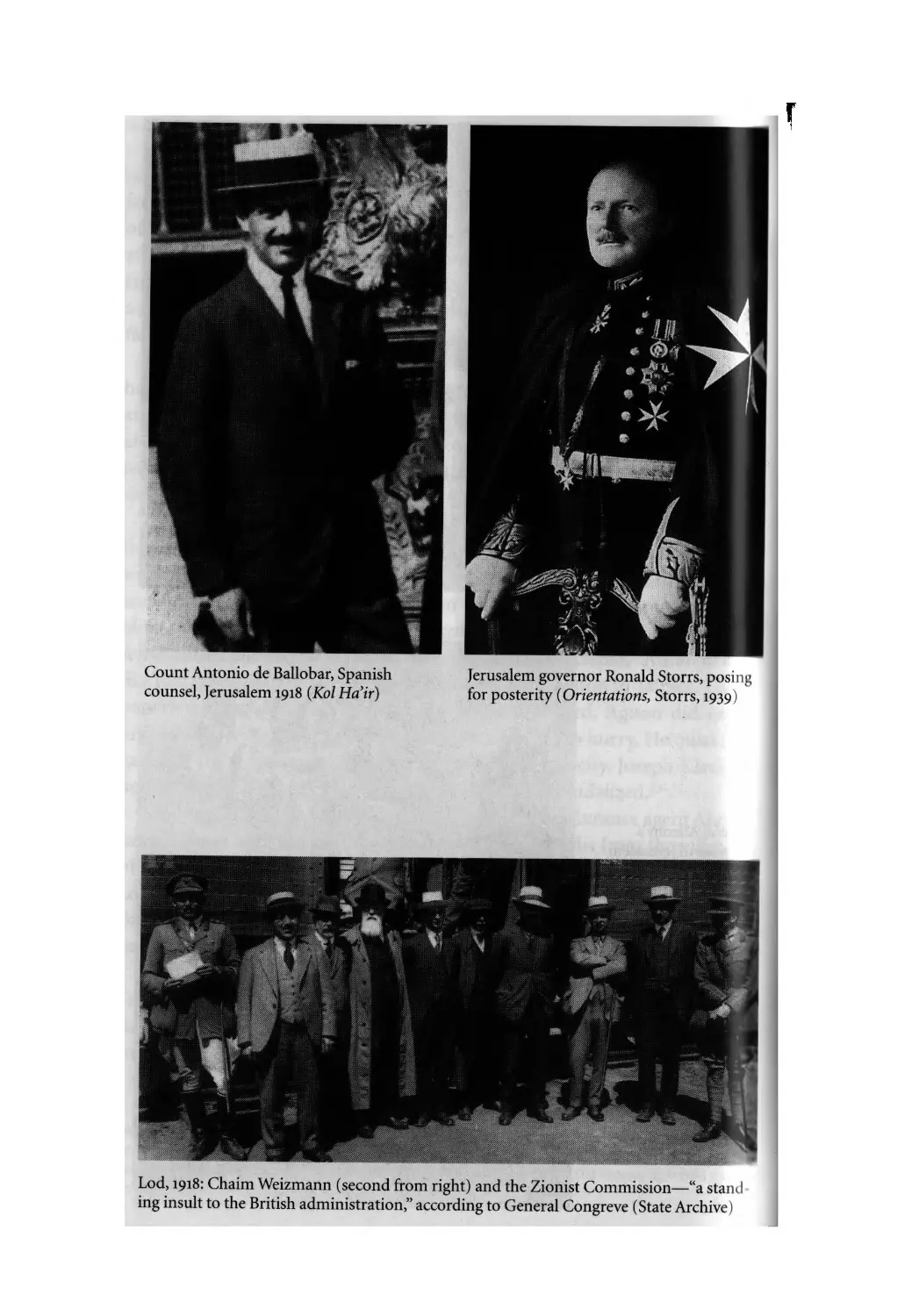
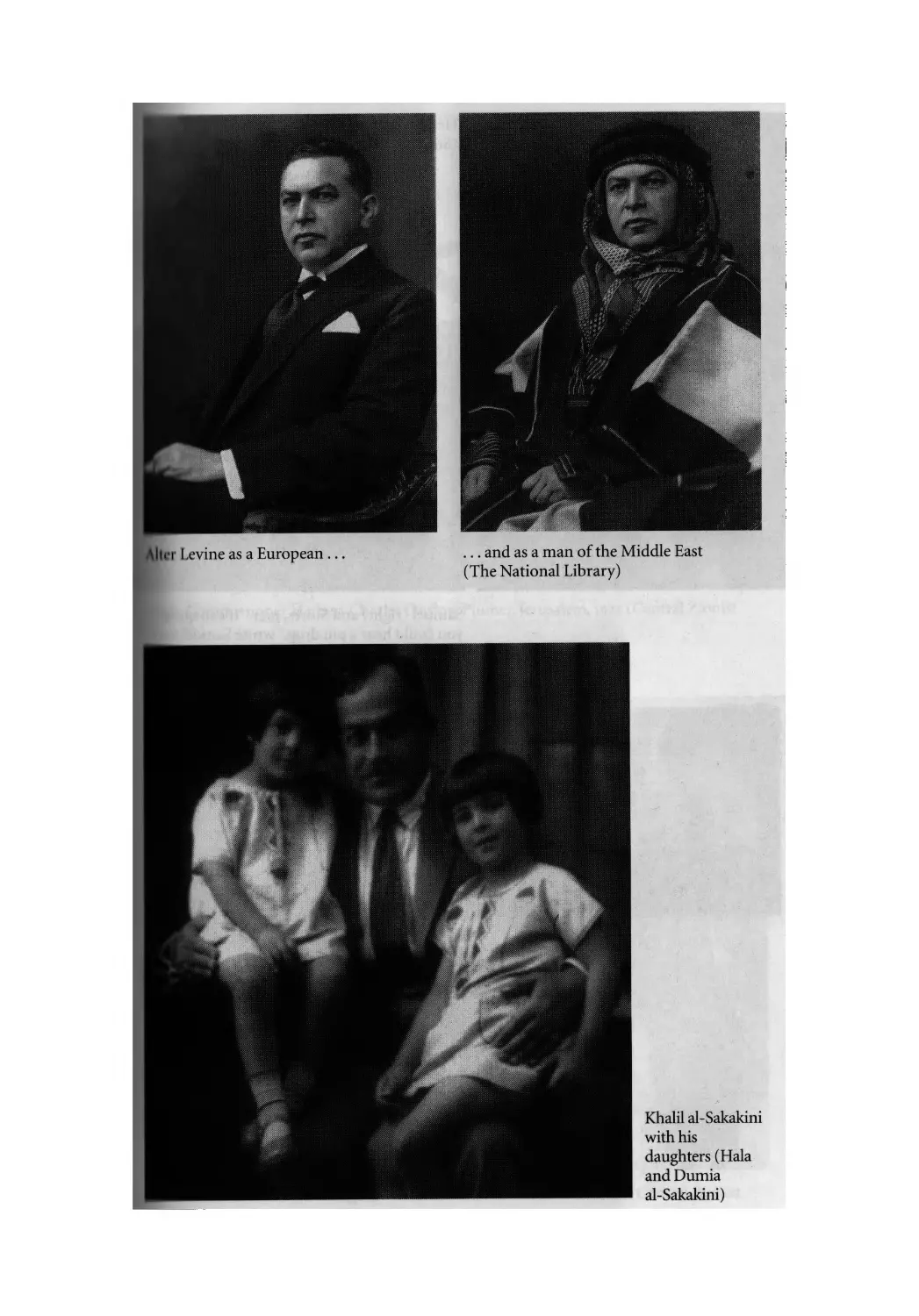
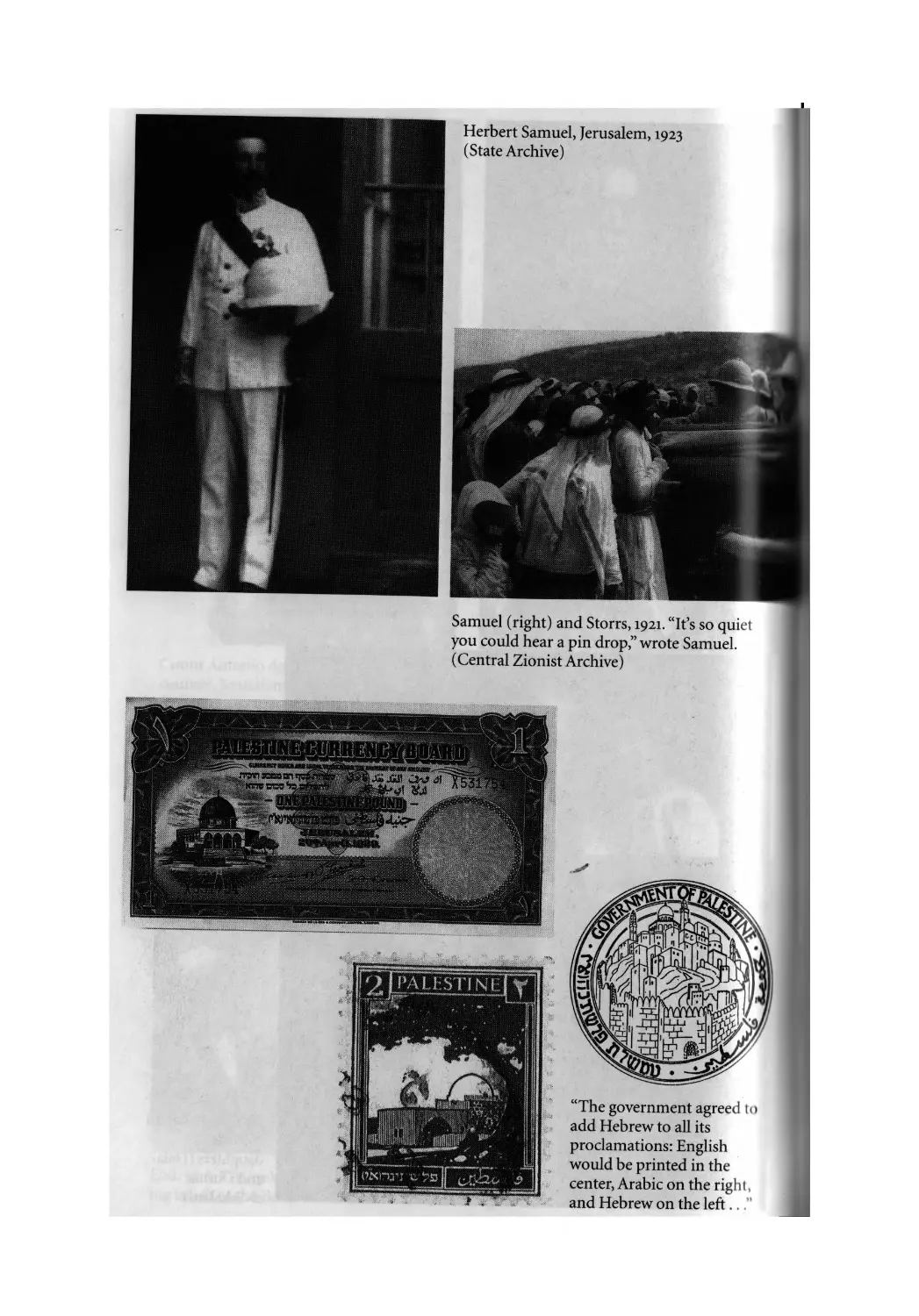
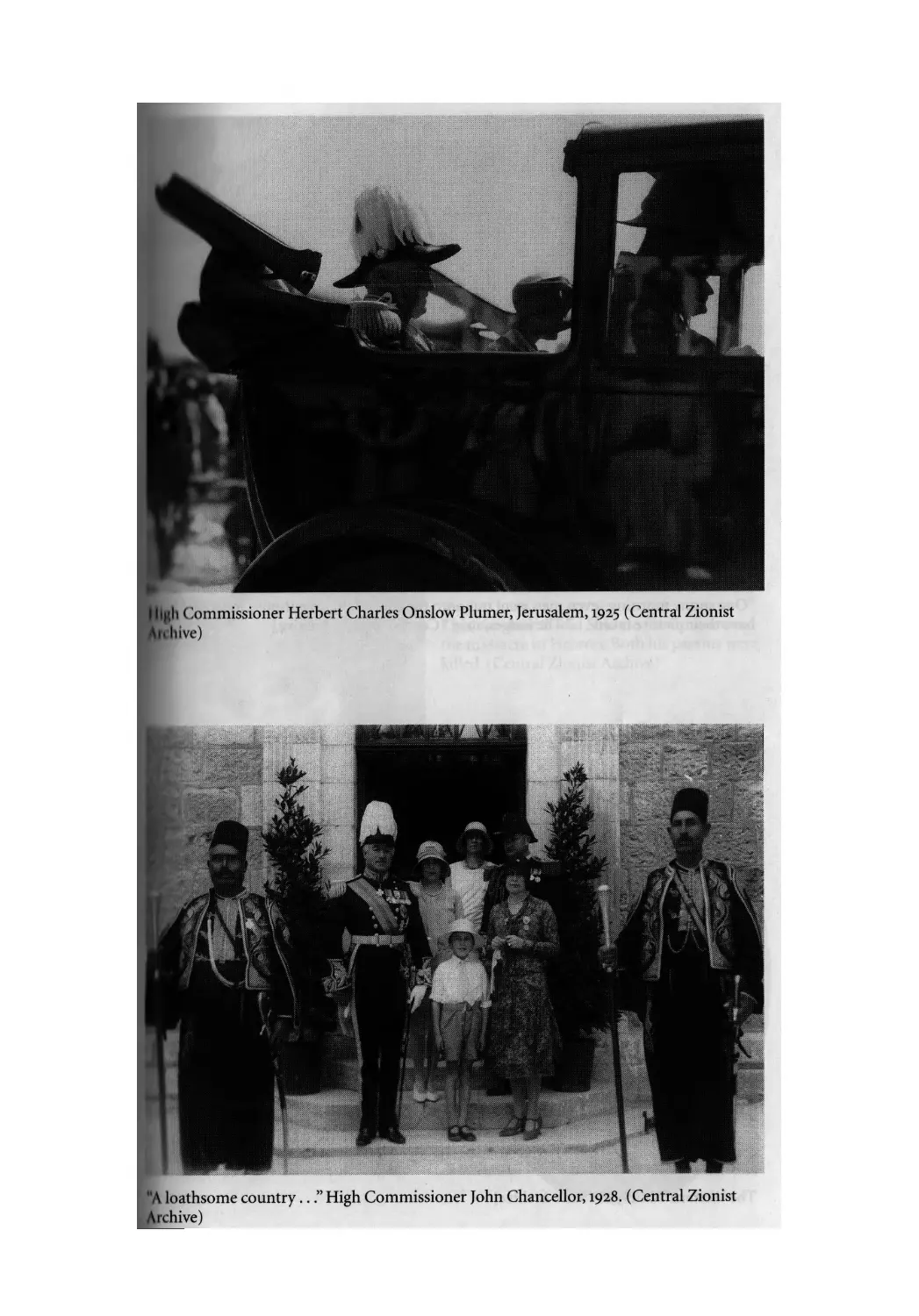







Text
                    ONE
PALESTINE,
COMPLETE
BRITISH MANDATE
‘By some way the best history of the Mandate I have ever read,
with the greatest scope, the widest research
and the clearest moral sense’ John Simpson, Daily Telegraph
TOM SEGEV
Tom Segev, Israeli journalist and historian, was born in March 1945 in
Jerusalem. Both parents came to what was then Palestine in 1935 as
refugees from Nazi Germany. His father was killed during the first Arab
Israeli war, in 1948. Segev grew up in Jerusalem. He took military service
at the National Defence College, and studied History and Political Science
at the Hebrew University and a History PhD at Boston University.
One of Israel’s best known journalists, Segev’s weekly column is
published in Haaretz, Israel’s most prestigious daily newspaper. His first
book, 1949 The First Israelis, became an immediate bestseller in Israel,
and is considered the cornerstone of Israel’s so called ‘new histriography’.
The Seventh Million - The Israelis and the Holocaust was equally widely
acclaimed, and was made into a two-part television documentary. Segev
is also the author of Soldiers of Evil - a collective profile of the comman-
ders of Nazi concentration camps.
ALSO BY TOM SEGEV
The Seventh Million: The Israelis and the Holocaust
1949: The First Israelis
Soldiers of Evil
ONE
PALESTINE,
COMPLETE

ONE
A L E S T I N E ,
О M P L E T E
Jews and Arabs Under
the British Mandate
TOM SEGEV
NSLATED BY HAIM WATZMAN
ABACUS
An Abacus Book
First published in Great Britain in 2000
by Little, Brown and Company
First published in the US by Metropolitan Books
Henry Holt and Company, LLC
This edition published by Abacus in 2001
Copyright © 1999 by Tom Segev
Translation © 2000 by Metropolitan Books
All rights reserved. No part of this publication may be reproduced,
stored in a retrieval system, or transmitted, in any form Or by any means,
without the prior permission in writing of the publisher, nor be
otherwise circulated in any form of binding or cover other than that
in which it is published and without a similar condition including
this condition being imposed on the subsequent purchaser.
Originally published in Israel as Yamei Kalaniot
by Keter Publishers, Jerusalem, in 1999.
A CIP catalogue record for this book
is available from the British Library.
ISBN 0 34911286 X
Maps by Jeffrey L. Ward
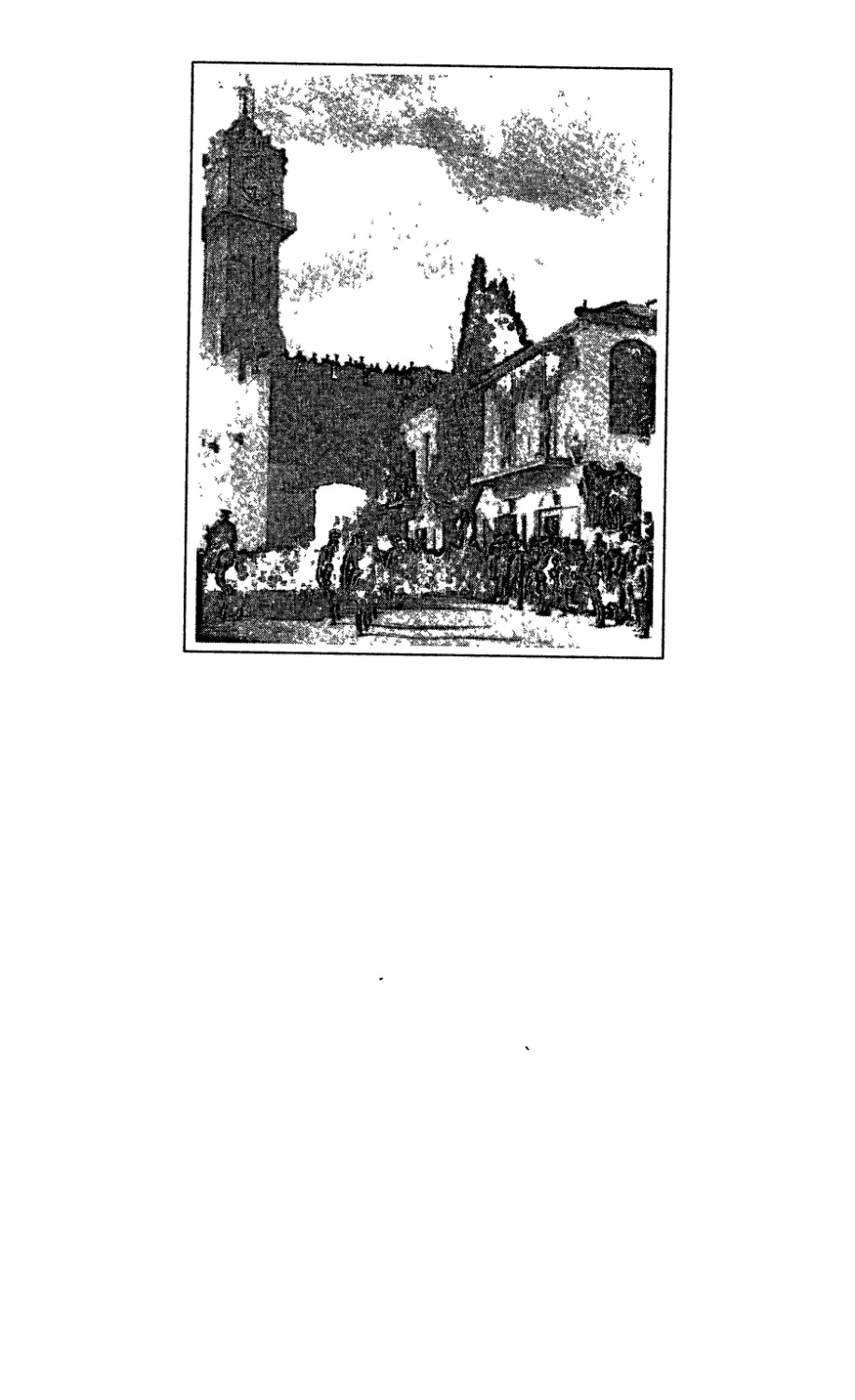
Frontispiece photograph by Underwood & Underwood,
Frank and Frances Carpenter Collection,
Courtesy of the Library of Congress
Abacus
A Division of
Little, Brown and Company (UK)
Brettenham House
Lancaster Place
London WC2E7EN
CONTENTS
iuhmluction: Until We Meet Again................................... i
MART I: ILLUSION (1917-27)
i. Khalil al-Sakakini Receives a Visitor.......................... 13
\ “A Contract with Jewry”...................................... 33
1. Self-Service................................................ 57
4. Ego Versus Ego.............................................. 85
4. Between Mohammed and Mr. Cohen............................. 102
6.	Nebi Musa, 1920........................................... 127
7.	A Steady Gaze and a Firm Jaw.............................. 145
8.	Jaffa, 1921............................................... 173
9.	Culture Wars...............................................202
10.	Yefim Gordin Comes to Palestine............................224
11.	A New Man...................................................249
12.	Negotiations with Friends...................................270
PART 11: TERROR (1928—38)
13.	The Nerves of Jerusalem.....................................295
14.	Hebron, 1929...............................................314
15.	Breakfast at Chequers.......................................328
16.	Hamlet in Bir Zeit.........................................342
17.	Khalil al-Sakakini Builds a Home............................360
18.	Made in Palestine..........................................375
19.	The Story of a Donkey......................................397
20.	Ireland in Palestine.....................................  415
CONTENTS
PART 111: RESOLUTION (1939—48)
21.	Hunting Season........................
22.	“Give Me a Country Without Wars”......
23.	The Last Salute.......................
Notes.......................................
Acknowledgments.............................
Index.......................................

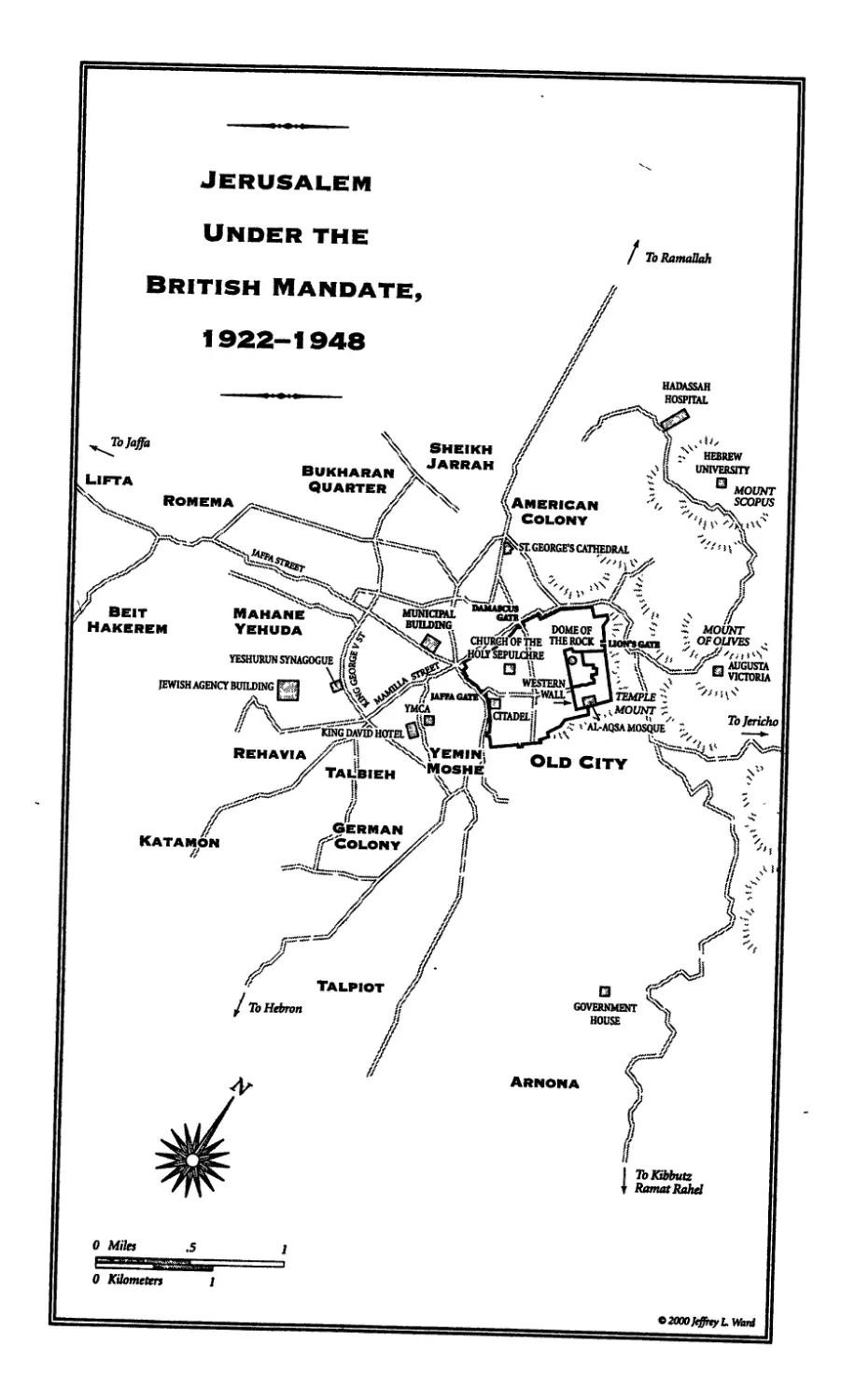
JERUSALEM
Under the	/
I To Ramallah
0 Mila .5	1
•1 -------1
0 Kilometers 1
C2000Jeffrey L Ward
Introduction:
Until We Meet Again
On the southern slopes of Mount Zion, alongside the ruins of biblical
Jerusalem, lies a small Protestant cemetery. The path to it wends through
pines and cypresses, olive and lemon trees, oleander bushes in pink and
white, leading to a black iron gate around which curls an elegant
grapevine. Perhaps a thousand graves are scattered over the terraced hill;
ancient stones peer out from among red anemones. Not far away, on the
top of the mountain, is a site Jews revere as the grave of King David as well
as a room in which Catholics say the Last Supper was held; in a nearby
basement chamber, they believe, eternal sleep fell over Mary, mother of
Jesus. The Muslims have also sanctified several tombs on the mountain.
Bishop Samuel Gobat consecrated the cemetery in the 1840s to serve a
small community of men and women who loved Jerusalem. Few had
been bom in the city; the great majority came as foreigners, from almost
everywhere between America and New Zealand. Engraved on their head-
stones are epitaphs in English and German, Hebrew, Arabic, and ancient
Greek; one headstone is in Polish.1
When the first of the dead were interred here, Palestine was a rather
remote region of the Ottoman Empire with no central government of its
own and few accepted norms. Life proceeded slowly, at a pace set by the
stride of the camel and the reins of tradition. Outsiders began to flock to
the country toward the end of the century, and it then seemed to awake
from its Levantine stupor. Muslims, Jews, or Christians, a powerful reli-
gious and emotional force drew them to the land of Israel. Some stayed
only a short time, while others settled permanently. Together they created
a magical brew of prophecy and illusion, entrepreneurship, pioneerism,
and adventurism—a multicultural revolution that lasted almost a hun-
dred years. The line separating fantasy and deed was often blurred—there
were charlatans and eccentrics of all nationalities—but for the most part
this period was marked by drive and daring, the audacity to do things for
the first time. For a while the new arrivals were intoxicated by a collective
delusion that everything was possible.
An American brought the first automobile—that was in 1908. He trav-
eled the length and breadth of the country and created a sensation. A
Dutch journalist arrived in the Galilee, dreaming of teaching its inhab-
itants Esperanto. A Jewish educator from Romania opened a nursery
school in Rishon LeTzion, a tiny experimental Zionist settlement, and
was among the editors of the first Hebrew children’s newspaper. Someone
began making ice cream—that was Simcha Whitman, who also built the
first kiosk in Tel Aviv. A man named Abba Cohen established a fire
department, and a Berlin-born entrepreneur built the first beehives. A
Ukrainian conductor founded a local opera company, and an Antwerp
businessman set up a diamond-polishing shop. A Russian agronomist
who had studied in Zurich planted eucalyptus trees, and an industrialist
from Vilna launched Barzelit, the first nail factory. A Russian physician,
Dr. Aryeh Leo Boehm, set up the Pasteur Institute, and a man named
Smiatitzki, who came from Poland, translated Alice in Wonderland into
Hebrew.2 George Antonius, a prominent Palestinian Arab, dreamed of an
Arab university and in the meantime sought funds to support the publi-
cation of an Arab dictionary of technological terms.3 Antonius had come
to Jerusalem from Alexandria, Egypt. Others of the country’s Arabs had
come from Turkey and Morocco, from Persia and Afghanistan, and from
half a dozen other countries; there were also former black slaves who had
escaped from their masters, or who had been freed.4
Tens of thousands of people, most of them Jews, came from Eastern
and Central Europe. Among them were courageous rebels searching for a
new identity, under the influence of Zionist ideology. Others had fled per-
secution or poverty; most came unwillingly, as refugees. A. D. Gordon, a
white-bearded farmer-preacher, a kind of local Tolstoy, proclaimed a
gospel of manual labor and return to nature in the (ini ilec. I le had come
from the Ukraine and was one of the fathri« ol lalun Zionism, the politi
I N T R О D U С
3
cal movement that led the Jews to independence. A young woman, fanatic
and mad, galloped over the Galilee mountains dressed in Arab garb; her
name was Manya Wilbushewitz. She came from Russia, where, in great
spiritual turmoil, she had pledged her soul to the Communist revolution.
In Palestine she was among the founders of a communal farm, an early
incarnation of the kibbutz, and one of the first members of HaShomer,
a forerunner of the Israel Defense Forces.5 Some Jewish immigrants
embarked on new lives in the first Zionist agricultural villages; others
decided to build themselves a new city on the Mediterranean shore. It was
called Tel Aviv.
The Christians, for their part, brought with them the imperial aspira-
tions of their native lands; they were drawn largely to Jerusalem. “And so
Palestine, and particularly Jerusalem, became a veritable Tower of Babel,”
remarked Chaim Weizmann, who led the Zionist movement.6 Indeed, the
Christians all tried to mold the city in their spirit and in their image, as if
it were an international sandbox. The Russians covered their church with
onion domes, like the Kremlin in Moscow; the Italians built a hospital
and next to it erected the tower of the Palazzo Vecchio in Florence. On
Mount Zion, the Germans built a church inspired by the cathedral in
Aachen, Charles the Great’s capital. The German Colony in the southern
part of the city looked like a Black Forest town—a few dozen small stone
houses with red-shingled roofs, inhabited by a community that was
largely made up of members of the Templar sect. “Odd people are safe in
Palestine,” wrote Estelle Blyth, the daughter of the man who built the
Anglican cathedral in Jerusalem, a structure inspired by Oxford’s New
i College.7 A lawyer from Chicago settled not far from there. He and the
members of his sect established the American Colony, and dreamed of
spreading love, compassion, and peace throughout the world.8
The founding fathers of the American Colony are also buried in Bishop
< «obat’s little cemetery. Not far from them lies the son of a German
banker who financed the first rail link between Jaffa and Jerusalem. The
l «.I ave of a Polish doctor is nearby. He opened the first children’s hospital,
• hi the Street of the Prophets. On that same street, Conrad Schick, buried
iH’Xt to the doctor, constructed houses that made his reputation as the
1’K‘atest builder of modern Jerusalem. In his native Switzerland Schick
had built cuckoo clocks. On a higher terrace lies an Englishman, William
Matthew Flinders Petrie, considered by some the father of modern
au hacology. He did much work in Egypt and excavated in Palestine as
wi ll. In his old age he settled in Jerusalem, dying at nearly ninety. Before
4
О N er PALESTINE, COMPLETE
his burial, his widow had his head severed from his body. The head was
placed in a jar and covered with formaldehyde, and after being packed in
a wooden crate was sent to London for a pathological examination meant
to discover the secret of the late man’s genius.*
In the Protestant cemetery lie the many foreigners who fell for Pales-
tine, among them soldiers who fought in the strife-torn decades of the
Mandate period. Enemies and comrades-in-arms are buried side by side.
Adolf Flohl, a German pilot during World War I, had come to join in the
defense of his country’s ally, die Ottoman Turks. He was shot down and
killed in mid-November 1917, less than four weeks before the British vic-
tors marched into Jerusalem and took control of Palestine. Not far from
Flohl lies Sergeant N. E. T. Knight, an English policeman. He was killed in
April 1948, less than four weeks before the British left Palestine. Together
they frame an era of promise and terror.
The Great War that shoved Europe into the twentieth century changed
the status of Palestine as well. For more than seven hundred years the land
had been under Muslim rule. In 1917, as part of the British push into the
Middle East, it passed into Christian hands; indeed, many of the conquer-
ing British soldiers compared themselves to the Crusaders. However, even
as the British took control of Palestine the tide was going out on their
empire; when they left the country thirty years later Britain had just lost
India, the jewel in the crown. Palestine was little more than an epilogue to
a story that was coming to an end. In the history of empire, then, Palestine
was an episode devoid of glory.10
It was an odd story from the start. Altogether, the British seemed to
have lost their bearings in this adventure. They derived no economic ben-
efit from their rule over Palestine. On the contrary, its financial cost led
them from time to time to consider leaving the country. Occupying Pales-
tine brought them no strategic benefit either, despite their assumptions
that it did. Many top army officers maintained that Palestine contributed
nothing to the imperial interest, and there were those who warned that
rule over the country was liable to weaken the British. There were early
Israeli writer Meron Benvenisti relates that when the crate reached London there was no
one to identify it and that it was lost in the huge basement of the British Museum. “Flinders
Petrie’s head,” Benvenisti wrote, “thus lies in the most fitting location—among the treasures
of the past that he excavated and studied.” This legend is so captivating, so quintessentially
Jerusalem in its bizarre eccentricity, that one hesitates to touch it, lest it be revealed as mere
fantasy. Forty years later the genius’s head was rediscovered.9
signs that they were getting themselves into a political problem that had
no solution. These were reason enough not to take over the country. But
the Holy Land elicited a special response; its status was not determined by
geopolitical advantage alone. “Palestine for most of us was an emotion
rather than a reality,” one official in the British administration com-
mented.11
At first, the British were received as an army of liberation. Both Arabs
and Jews wished for independence and assumed they would win it under
British sponsorship. Confusion, ambiguity, and disappointment were pres-
ent at the very beginning. Before setting out to war in Palestine, the British
had gotten themselves tangled up in an evasive and amateurish correspon-
dence with the Arabs, who believed that in exchange for supporting the
British against the Turks, they would receive Palestine. Just before the con-
quest of the country, however, His Majesty’s Government announced, in
i he famous words of the Balfour Declaration, that it “views with favour”
I he aspiration of the Zionist Jews to establish a “national home” for the
lewish people in Palestine. For all practical purposes, the British had
promised the Zionists that they would establish a Jewish state in Palestine.
The Promised Land had, by the stroke of a pen, become twice-promised.
A (though the British took possession of “one Palestine, complete,” as noted
in the receipt signed by the high commissioner, Palestine was riven, even
I icfore His Majesty’s Government settled in.
The British kept their promise to the Zionists. They opened up the
• ountry to mass Jewish immigration; by 1948, the Jewish population had
increased by more than tenfold. The Jews were permitted to purchase
hud, develop agriculture, and establish industries and banks. The British
allowed them to set up hundreds of new settlements, including several
1 owns. They created a school system and an army; they had a political
В Eldership and elected institutions; and with the help of all these they in
1 he end defeated the Arabs, all under British sponsorship, all in the wake
ol that promise of 1917. Contrary to the widely held belief of Britain’s pro-
Arabism, British actions considerably favored the Zionist enterprise.
In standing by the Zionist movement, the British believed they were
winning the support of a strong and influential ally. This was an echo of
I he notion that the Jews turned the wheels of history, a uniquely modern
blend of classical antisemitic preconceptions and romantic veneration of
I he Holy Land and its people. In fact, the Jewish people were helpless;
I hey had nothing to offer, no influence other than this myth of clandes-
tine power.
0	ONE PALESTINE, COMPLETE
The British pretended, and perhaps some of them even believed, that
the establishment of a national home for the Jews could be carried out
without hurting the Arabs. But, of course, that was impossible. The truth
is that two competing national movements consolidated their identity in
Palestine and advanced steadily toward confrontation. “To be a Palestine
nationalist hardly left any room for compromise with Jewish nationalism
and its backer, the Western powers,” wrote historian Isa Khalaf.12 From
the start there were, then, only two possibilities: that the Arabs defeat the
Zionists or that the Zionists defeat the Arabs. War between the two was
inevitable.
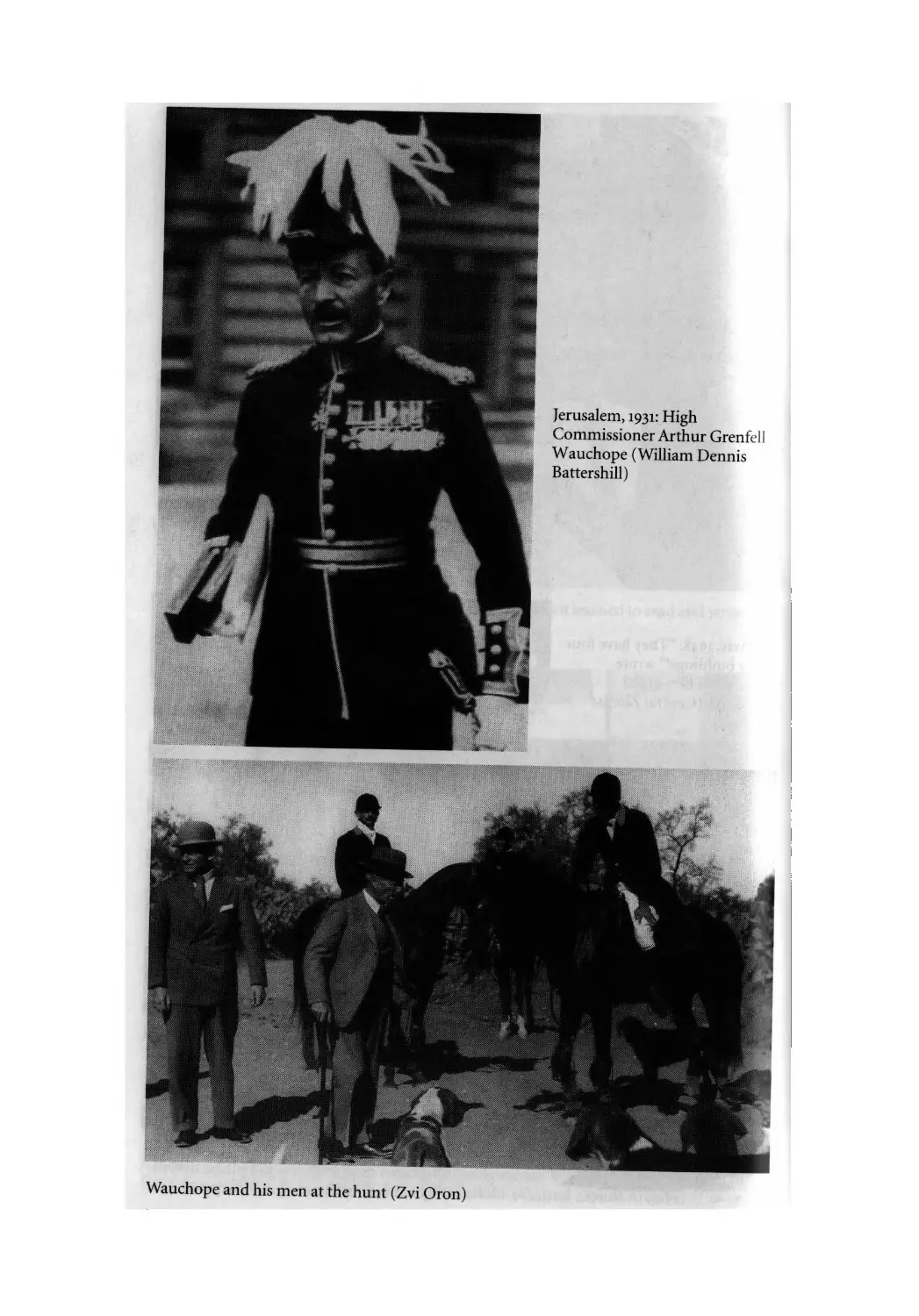
And Britain was caught in the middle. High Commissioner Arthur
Wauchope compared himself to a circus performer trying to ride two
horses at the same time. Of these two horses, he said, one cannot go fast
and the other would not go slow.13 For a time the British clutched at the
hope of creating a single local identity in Palestine, common to both Jews
and Arabs, and in this context they even spoke of the “people of Pales-
tine.” These were empty words. The British were fooling the Arabs, fool-
ing the Jews, and fooling themselves, Chaim Weizmann once commented.
He was right.14 It is a fascinating story, but not always a laudable one. As
with national revolutions elsewhere, both peoples in Palestine tended to
put nationalism above democracy and human rights. The leader of the
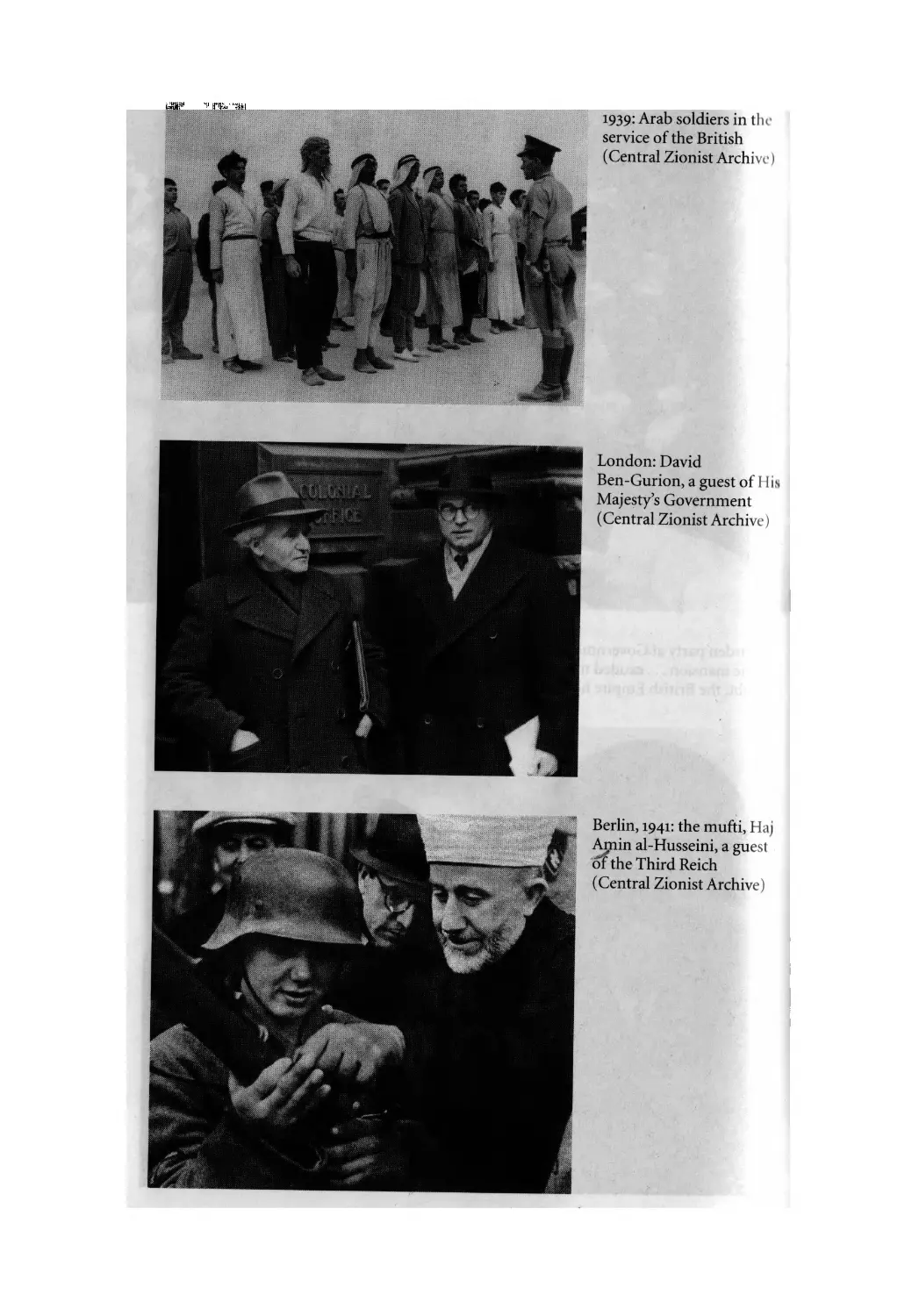
Arab national movement even made common cause with Adolf Hitler.
Twenty years after the British conquest, the Arabs rose up to throw
them out. By 1939, the Arab rebellion had brought the British to the verge
of a decision to go home. It would have been better for them had they left
then, but it took them nearly ten more years to act. In the meantime,
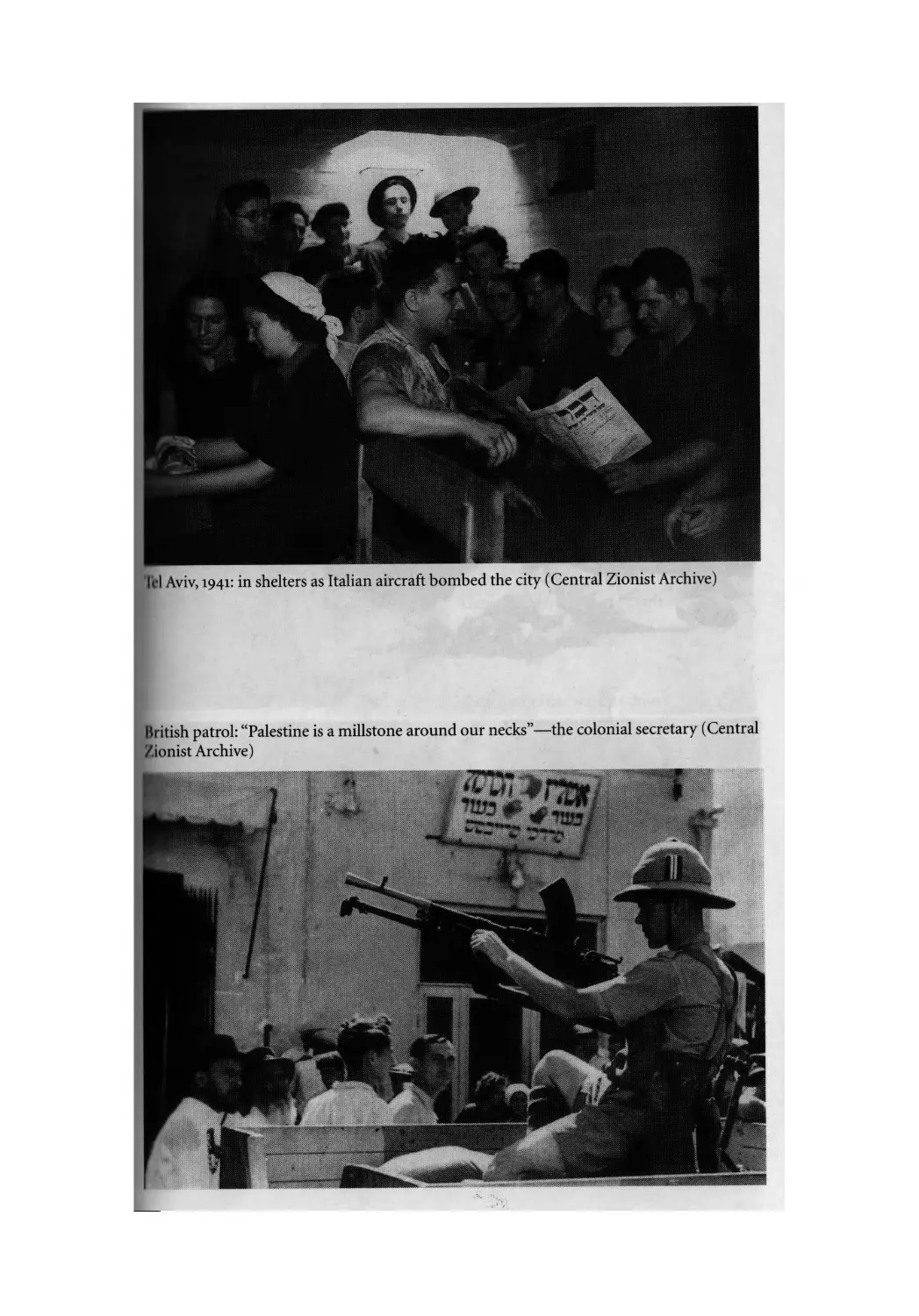
World War II broke out, and after the war British forces were hit by Jewish
terrorism as well. Thousands of them paid for the adventure with their
lives.
Indeed, most of those interred in the back plots of Bishop Gobat’s
cemetery were killed in the outbreaks of violence that were regular fea-
tures of the thirty years of British rule. Lewis Andrews is buried there; he
was murdered by Arab terrorists. Not far from him lies Thomas Wilkin;
he was killed by Jewish terrorists. Andrews, a forty-one-year-old Aus-
tralian, was assistant to the district commissioner of the Galilee. In Sep-
tember 1937 he came to Sunday evensong at the Anglican church in
Nazareth. Four pistol-wielding Arabs ambushed him near the church.
They fired nin£ shots and killed him on the spot; the policeman who
accompanied him was also hit and later died of the wounds he received.
INTRODUCTION
Andrews was a friend of the Zionists. Judge Anwar Nusseibeh described
him as an Arab hater. The circumstances of Andrews’s death, on the way
to church, elicited from Nusseibeh this comment: “He met his creator at a
time when he was in the process of seeking him.”15 Thomas James Wilkin
was a member of the Criminal Investigation Department (CID) of the
Palestine police; he was killed in 1944 for his part in the arrest and death
of “Yair,” the leader of an underground Jewish terrorist organization.
Wilkin did not hate all the Jews, however. Among those in his funeral pro-
cession was Shoshana Borochov, the daughter of one of the founders of
Jewish socialism in Russia. She and Wilkin were lovers.16
Looking out from Bishop Gobat’s cemetery on Mount Zion over the
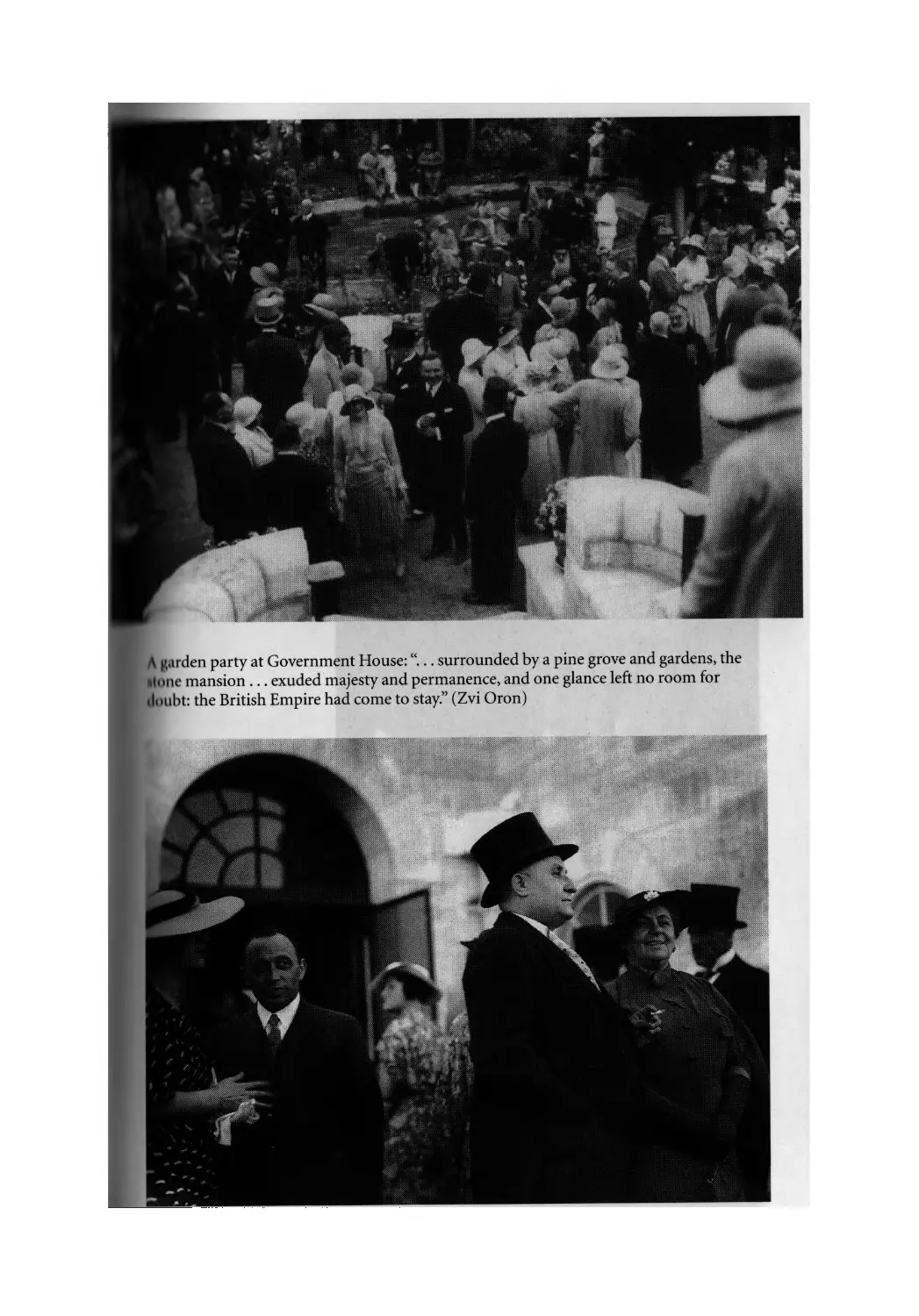
Hill of Evil Counsel, one sees Government House, the British administra-
tive headquarters. To the west, one can see in the mountainous vista other
stone structures the British left as memorials to their generation in Pales-
tine. They radiate authority and majesty. The first of these that catches the
eye is the Scottish church, with its rectangular bell tower; at the beginning
of the summer it used to be surrounded by a sea of wildflowers. Farther
west lies Talbieh, a neighborhood of luxurious mansions inhabited
largely by affluent Arabs, many of them Christian—they did well during
the British period. One resident, an attorney named Abcarius Bey, built a
large house for a Jewish woman he loved, Leah Tennenbaum. She was
thirty years younger than he was, and when she left him he rented the Villa
Leah to Haile Selassie, the exiled emperor of Ethiopia.17
Then one’s gaze catches a broad avenue the British built to give the city
a look befitting one of the empire’s capitals. They named it after their
king, George V. At the end of the avenue stands a luxury hotel bearing the
name of King David. It opened in 1930 and was considered one of the
wonders of the East, an object of pilgrimage for aficionados of the good
life from all over the world. “It is magnificent!” exulted Edwin Samuel in a
letter to his mother, wife of the first high commissioner. One tourist from
America thought it was the renovated Temple of Solomon. Jerusalem
mayor Ragheb al-Nashashibi had his hair cut there.18
The hotel was famous for its kitchen and service staff. The waiters were
lowering black Sudanese athletes in tight-fitting red jackets who circu-
lated among the guests, offering them whiskey and coffee from golden
trays. The King David turned into a center and symbol of British power,
and one of its wings held British administration offices. On July 22,1946,
Jewish terrorists managed to sneak several milk cans filled with explosives
into the hotel’s basement. Ninety-one people were killed; most of them
8	ONE PALESTINE, COMPLETE
were buried on Mount Zion. Some of the tombstones proclaim that the
dead gave their lives for Palestine. Others say simply, “Until we meet
again.”
Across from the King David, a huge stone phallus rises among the
neighboring roofs. This is the YMCA tower, a fertility symbol. It, too, was
erected in the 1930s and was considered one of the architectural marvels
of its time, designed by the same firm that drew up the plans for the
Empire State Building in New York.19 Mandatory administration officials
and high society sipped lemonade on its terrace. The men sported pith
helmets and the women shaded their faces with white silk parasols. They
carefully observed the rules of good English society. In the afternoon they
had tea, and they dressed for dinner. From time to time they could be seen
at evening lectures or concerts; sometimes they attended the dances held
in their honor by Miss Annie Landau, an ultra-Orthodox Jewish school
principal, or they might pay a visit to the house of Katy Antonius, wife of
George Antonius and a legendary Arab hostess.
The British preserved a rigid class consciousness: soldiers and NCOs
spent their time in pubs and brothels; the officers went on fox and jackal
hunts. The British hunting club in Ramie offered its members the oppor-
tunity to purchase red coats and buttons emblazoned with the club name,
Ramie Vale Jackal Hounds. (None of the club’s members forgot to men-
tion the jacket in their memoirs.)20 The road paved by the authorities
between Latrun and Ramallah was meant mostly to serve British officials
off on weekend picnics.21 And they played tennis. People played soccer in
Palestine even before the Mandate, but the British brought tennis; it was
part of their colonial culture and mentality.22 Ronald Storrs, governor of
Jerusalem, documented the following scene in his diary: Colonial Secre-
tary Lord Milner came to visit Palestine. He drank tea with the governor
of Hebron and his guests and afterward they went to play tennis. Two
Arab criminals were brought specially from the prison to run around the
court and collect the balls; their legs were in irons throughout the game.
Milner seemed to endure it with fortitude, Storrs wrote.23
The colonial method of government, wrote District Commissioner of
the Galilee Edward Keith-Roach, was “totalitarianism tempered with
benevolence.”24 Many of the British brought with them imperialistic
arrogance and a powerful sense of cultural superiority. There were those
who saw their dominion as a destiny and a mission. Herbert Samuel, the
first high commissioner, proposed that his government conquer Palestine
in order to “civilize” it.25 When he eulogized one of his men who had
1 О N
9
died, Samuel honored him with the warmest praise he knew: “as head of
the civil service staff he bore the brunt of the work of building up almost
li om the foundations the structure of a modern state.”26
There were those in the British administration who identified with the
lews and those who identified with the Arabs. There were those who
found both repugnant. “I dislike them all equally,” wrote General Sir Wal-
ler Norris “Squib” Congreve. “Arabs and Jews and Christians, in Syria and
Palestine, they are all alike, a beastly people. The whole lot of them is not
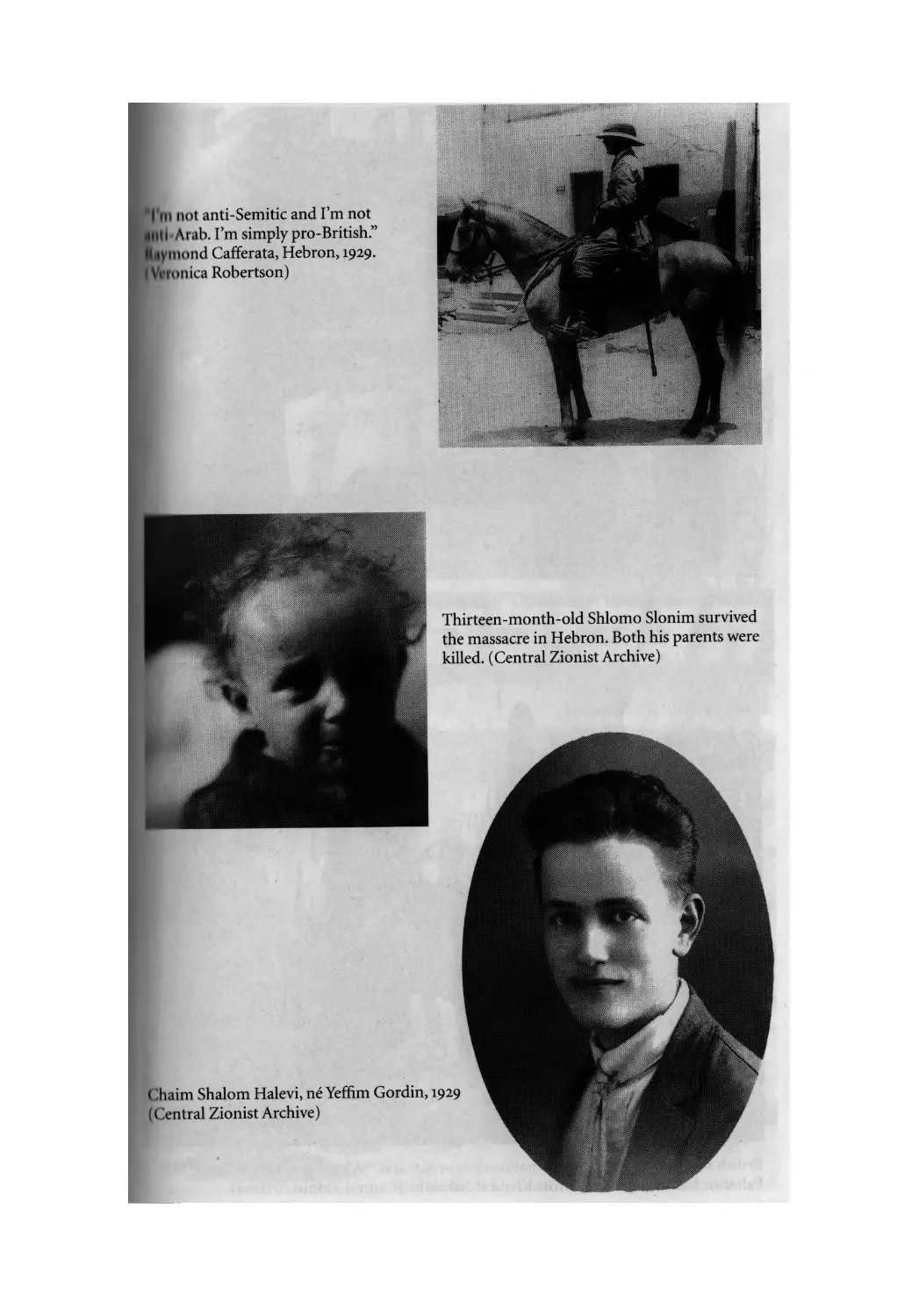
worth a single Englishman!” This was a common sentiment. Police officer
Raymond Cafferata put it more politely: “I am not anti-Semitic nor anti-
Arab, Fm merely pro-British.” So felt many, perhaps most, of those who
served in Palestine.27
Their regime was a kaleidoscope of perceptions and positions and con-
flicting interests constantly tumbling over one another and rearranging
themselves. Officials, diplomats, and politicians, military men and jour-
nalists contended and competed in a never-ending torrent of words,
intrigues, alliances, and betrayals. The Prime Minister’s Office, the For-
eign Office, the Colonial Office, the Treasury, the India Office, the War
Office, and the different branches of the military were only some of
the agencies that sought a role in governing Palestine. The local admin-
istration also had a bureaucracy that was full of opposing forces and
contradictions, a checkerboard of branches and departments and sub-
departments and bureaus full of people. They wrote memoranda and
reports and letters, a total of hundreds and thousands of sheets of paper.
Almost every paper they wrote begat at least one more piece of paper—
and generally more than one—that said the reverse.
The British had found an underdeveloped country when they arrived,
and they left behind much progress, especially among the Jews. But they
also left behind much backwardness, especially among the Arabs. Shortly
before leaving the country one senior official estimated that the British
had never in fact had a policy for Palestine, “nothing but fluctuations of
policy, hesitations ... no policy at all.” 28 He was right. Commissions of
inquiry came one after the other, studied the Arab-Jewish situation, and
left. The British government generally adopted their recommendations,
then changed its mind and sent more commissions. “If all the books of
statistics prepared for the nineteen commissions that have had a shot at
the problem were placed on top of one another they would reach as high
as the King David Hotel,” wrote Henry Gurney, the last of the Mandatory
government’s chief secretaries.29 Like most of his colleagues, he departed
ONE PALESTINE, COMPLETE
Palestine disappointed, cynical, disgruntled, and sad. The last high com-
missioner claimed that the British left “with dignity,” but that was incor-
rect. Gurney wrote that they departed with a clear conscience, and that, at
least, was true of many of them.30 “England is an odd country,” David
Ben-Gurion concluded.31 Still, as the British were about to leave, he went
to London to convince them to stay, just for a little while longer.
PART I
ILLUSION
(1917-27)
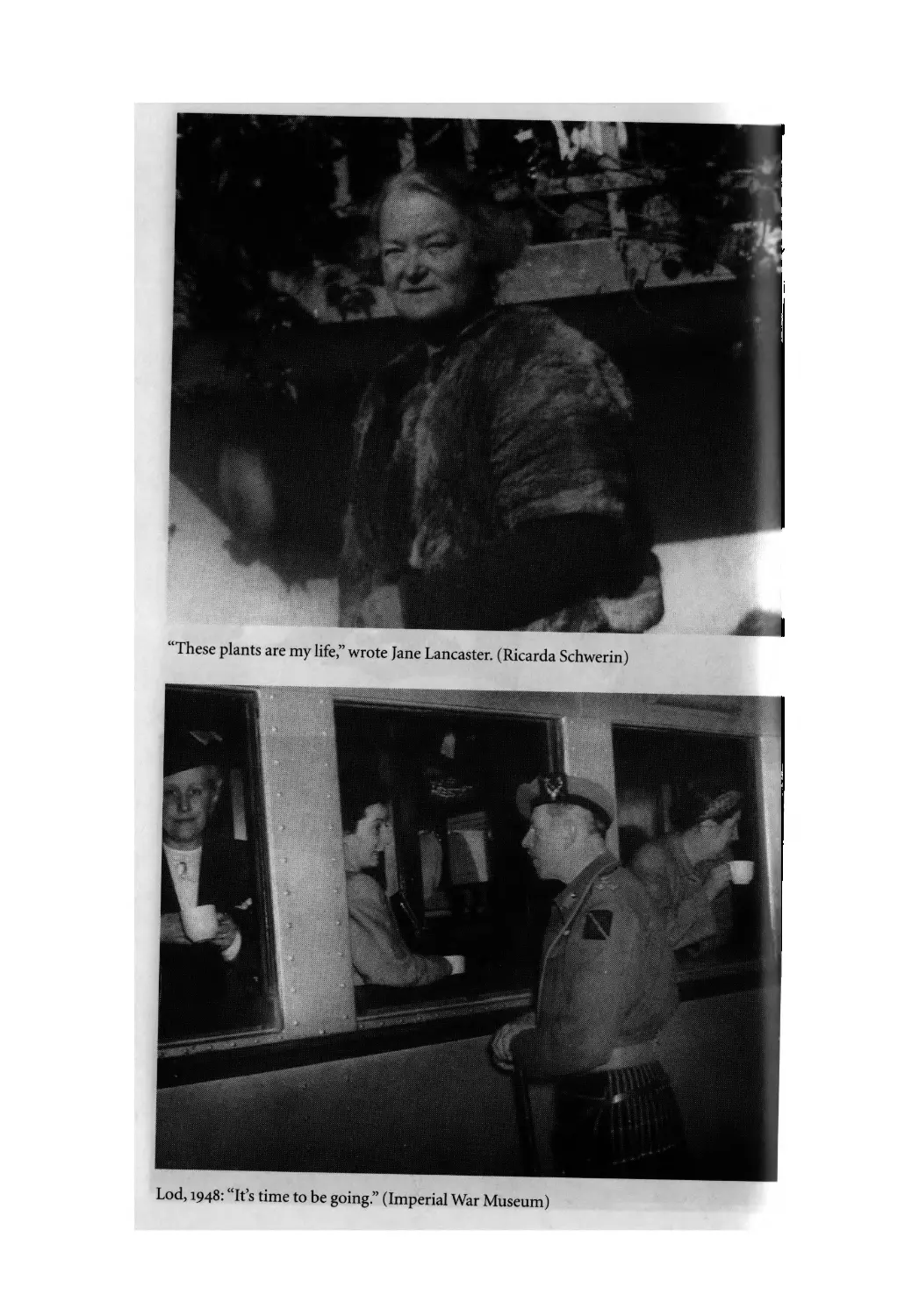
Jane Lancaster was an odd person, an Englishwoman,
Christian, not married. She lived in a Jewish neighborhood
in southern Jerusalem. No one knew why she had come to
Palestine, but there was one thing that they did know—
Miss Lancaster loved the land of the Bible. Once a year she
would set out for the Judean hills to plant narcissus
bulbs and cyclamen and anemones.
1
Khalil al-Sakakini
Receives a Visitor
1.
In the early-morning hours of Wednesday, November 28,1917, someone
knocked on Khalil al-Sakakini’s front door and brought him great mis-
fortune, indeed almost got him hanged. Sakakini, a Christian Arab, was
an educator and writer, well known in Jerusalem. He lived to the west of
(he Old City, just outside the walls.
He’d had trouble felling asleep that night. He’d tossed from side to side,
then got up, lit a lamp, set up his nargileh, and sat down to write a letter.
“Even the worst—it’s not so bad,” he wrote. By the time he’d finished,
three o’clock was approaching. Sakakini went back to bed, but a few min-
utes later he heard the boom of mortars very close by—it seemed as if
they were firing on his street. He got up again, as did his wife, Sultana;
they climbed to the upper floor and listened. The noise came from the
west, from the area of Mea She’arim, the Jewish neighborhood, but
Sakakini and his wife saw nothing. It was now around 4:30 a.m. They had
just gone back to bed, thinking they might still manage an hour or two of
sleep, when the artillery barrage began. The shells were falling closer than
before and crashing like thunder. “We were afraid the whole house was
going to collapse on top of us,” Sakakini wrote in his diary.1 The British
army was advancing swiftly; Prime Minister David Lloyd George wanted
Jerusalem before Christmas.2
At dawn Sakakini went to draw himself a bath; at that moment he
heard a knock at the door. He went down to open it and found himself
facing Alter Levine, a Jewish insurance agent and an acquaintance. Levine
asked Sakakini’s permission to hide in his home. The Turkish police were
after him, he explained. In recent nights he had been running from house
to house and now he had nowhere else to turn.
Levine’s troubles had begun in April, when America entered the war on
the side of the Allies. Levine, a U.S. citizen, thus became, along with his
country, an enemy of Turkey. The departure of the American consul from
Jerusalem signaled the end of Levine’s protection; he was slated for
deportation. The count of Ballobar, the consul of Spain, which had
remained neutral in the war, had advised Levine to leave the city. Levine
moved to Petach Tikva, a Jewish town near Tel Aviv, while his family went
to Rehovot, a Jewish settlement south of Petach Tivka. In September,
Levine learned from Count Ballobar that the Turkish authorities sus-
pected him of being a spy.3*
Levine was indeed a man of mystery. He traveled frequently and main-
tained contacts with diplomats at a large number of embassies. The Amer-
ican consul, Otis Glazebrook, had been one of his friends, and Levine had
very probably briefed him from time to time on the situation in Jerusalem.
However, Levine’s personal papers contain no hint of espionage.
Levine returned to Jerusalem as soon as he could. At one point he was
arrested. The reason is unclear—at the time many people were arrested
for no specific reason. Perhaps it was simply his U.S. citizenship; other
American citizens were being deported from Jerusalem.5 Perhaps a book
of poems he had published had led to suspicions that he was fomenting
pro-Zionist, anti-Turkish sentiments.6 Whatever the reason, Levine had
apparently managed to bribe someone and was released. But he contin-
ued to be a wanted man. “From that time on my father became elusive
and hid with various acquaintances,” his daughter Shulamit later wrote,
“because he was afraid of spending too much time in any one place lest
they discover his hideout.”7 Levine’s wife and three daughters also went
*Years later, Aziz Bek, a Turkish intelligence officer, wrote in his memoirs that contrary to
the accepted view—that the British capture of Palestine had been best aided by the famous
Jewish spies of the Nili network in Zichron Ya’akov—one particular Jew living in Jerusalem
had been even more helpful. Aziz Bek identified this master spy by name: Alter Levi.
According to Aziz, Levi (that is, Levine) traveled freely among the cities of the Levant and
set up a chain of brothels in which intelligence information was obtained from clients
through extortion.4
KHALIL AL-SAKAKINI
1 5
into hiding. “In the afternoon we left where we had been in the morning,
mid come the morning we left where we had been at night,” Shulamit
Levine wrote.
The Turkish police found the family anyway. The girl watched the
police rough up her mother. In prison they whipped Gittel Levine in
order to extract her husband’s whereabouts. Consul Ballobar confirmed
iifterward that the woman had been tortured severely and that it had
affected her nerves. In fact, she lost her mind.8 Levine, in the meantime,
had knocked at the door of Khalil al-Sakakini, “a teacher, Christian and
friend,” as Levine would later describe him.9
Sakakini was alarmed: “God save me from bringing a spy into the
house,” he thought, but his conscience would not permit him to send
Levine away. He did not know what to do. He had never faced such a
momentous decision.10
2.
Three years earlier, in 1914, a few days after Turkey had linked its fate with
I hat of Imperial Germany and entered the World War, a small crowd
hl aged a demonstration under the window of the Spanish consul’s home
m Jerusalem. The count of Ballobar, Antonio de la Cierva Lewita, came
nut to his balcony to greet the crowd, and afterward made a note that the
»ify’s residents were demonstrating their loyalty to the sultan. At a prayer
iissembly conducted at the Al-Aqsa Mosque it was announced that
liirkey’s cause was a jihad—a holy war. The Jewish community was also
quick to declare its allegiance. Many of its members donned tarbushes,
albeit unwillingly, and ostensibly became patriots, related Meir Dizen-
I’.off, the mayor of Tel Aviv. When they heard that British Secretary of
Slate for War Lord Kitchener had drowned at sea in June 1916, the Jews of
I cl Aviv decked out the streets and organized parades to celebrate. The
< Christian residents of Jerusalem, the Spanish consul wrote in his diary,
were profoundly frightened.11
At the outbreak of war, Khalil al-Sakakini was planning a big celebra-
lion in honor of his son Sari’s first birthday, but the party was canceled.
’Because of the current situation we have decided to make do with kiss-
ing him a thousand times,” Sakakini wrote. Like many people, he believed
I he war would be short. God willing, he thought, it would be possible to
have a big party for Sari on his next birthday.12 In the meantime, Sakakini
1 lid all he could to avoid joining the Turkish army. Most Jews were afraid
of enlisting, too.
16	ONE PALESTINE, COMPLETE
Many of the immigrants to Palestine had not renounced their previous
citizenships; among them were thousands of Jews, most of them Russian
subjects. With Russia allied to France and Great Britain, the Jews of Pales-
tine were faced with a cruel choice. They could leave the country or wait
until they were expelled; alternatively, they could accept Ottoman citizen-
ship and enlist. The threat of deportation prompted a Zionist initiative in
favor of accepting Ottoman citizenship despite conscription; its purpose
was to prevent a decline in the number of Jews in the country. Proponents
of the initiative included two seminal figures in the cause of political
Zionism: Jerusalem linguist Eliezer Ben-Yehuda, later to become known
as the father of the Hebrew revival, and David Ben-Gurion, a low-ranking
politician then in his twenties.
As he went around trying to persuade Jews to take on Ottoman citizen-
ship, Ben-Gurion sported a tarbush and dressed like a Turkish govern-
ment official; when he spoke about the Ottoman Empire he called it “our
country.” He believed the Turks would win the war and hoped that after
the hostilities they would help establish Jewish autonomy in Palestine in
exchange for their subjects’ loyalty. For this reason he proposed setting up
a Jewish battalion within the Turkish army, in opposition to a vocal group
of Zionists who, convinced that Britain would win the war, preferred to
throw their lot in with the Allies. This group advocated establishing a Jew-
ish force as part of the British effort. “Maybe we were wrong, maybe we
weren’t,” Ben-Gurion would later write.13*
Although the Ottoman authorities had restricted Jewish immigration
to Palestine and the purchase of land on which to settle immigrants, by
1914 the Zionist movement had a number of achievements to its credit. In
the decade that preceded the war, tens of thousands of Jews had settled in
Palestine; the Turks had allowed them to establish agricultural villages, as
well as an independent Hebrew school system.14 But largely pro-Western,
of Allied citizenship, and a threat to Islamic hegemony, the Zionists found
themselves increasingly persecuted during the course of the war.
Many of the Jews living in Palestine did not support Zionism; indeed,
much of the pre-Zionist Jewish population—that is, those who lived in
Palestine before the 1880s—were ultra-Orthodox. They were deeply hos-
tile to the notion of secular Jewish autonomy in the Holy Land, which,
according to religious doctrine, would be redeemed only through divine
*Despite his loyalty to the regime, Ben-Gurion would soon be expelled from Palestine
because of his political activity. He would go to the United States.
KHALIL AL-SAKAKINI RECEIVES A VISITOR	17
intervention in the messianic age. To the traditional Jewish population of
I'.ilestine, the Zionist ideal of secular redemption was sacrilegious. “A
•Icep abyss separates the two parts of the Yishuv,”* Ben-Gurion wrote,
♦ ailing for war against “the rabbis who are betraying their people.” In
addition to their abhorrence of Zionism’s secular ideals, they feared that
Zionist activity would cause the authorities to act against all the Jews, and
w the increasing power of the Zionists as competition for the leadership
nl the community.16 Knowing of this split, Jamal Pasha, the sultan’s gov-
ernor in Palestine, was always careful to claim that he was opposed only to
Z ionism, not to all the Jews. Consul Ballobar recorded in his diary a piece
♦ if gossip that had reached his ears—that Jamal Pasha had in fact married
4 Jewish woman. He received later confirmation of the rumor from Jamal
himself. People in the streets of Jerusalem’s Old City said his wife was a
whore.17
Jamal also carefully monitored Arab aspirations for independence. In
his journal, Ballobar described with trepidation the first executions of
members of the Arab national movement. The Turkish practice was to
exhibit the bodies of hanging victims at the city gates, and Ballobar could
mv them from his consulate window. At least once he identified among
the hanged men a personal acquaintance—the mufti of Gaza. Jamal once
j< iked that he would hang Ballobar as well. The consul was not amused.18
By the time the war reached its end Ballobar, a pivotal figure in Otto-
man Jerusalem, simultaneously represented a dozen countries, many of
which had fought each other, including the Russian, Austro-Hungarian,
and German empires, France, the British Empire, and the United States. It
14 doubtful whether the annals of diplomacy could produce another man
who became the envoy of so many countries.19 When the war began, the
< ount was still in his twenties. His mother was Jewish; his father had met
her while serving as military attache at his country’s embassy in Vienna. A
short, thin man with a pointed nose and large mustache, the consul
11 tossed carefully, always wearing pressed suits and a fancy Panama hat. He
was remembered as an “attractive and amiable young man.”20 A pilgrim
4 The term has its roots in ancient sources of the Hebrew language, and one of its meanings,
«и cording to Eliezer Ben-Yehuda’s dictionary, is “a small number of Jews living in non-Jewish
villages.” Yishuv, which literally means “settlement,” is also the opposite of “wasteland” and
i»f “destruction ” The word was used, consciously or not, to indicate that the Jews were living
in a wilderness devoid of human beings, that is, Arabs. One Zionist leader objected to the
use of the Hebrew word moshava to designate Jewish agricultural towns. Moshava literally
meant “colony,” and thus bore imperialistic connotations. The issue was hotly debated.15
1 8
ONE
LESTINE, COMPLETE
from his country whom he met in Jerusalem became the love of Jus life.
Ballobar was famous for the sumptuous meals he served at his home in
west Jerusalem, opposite the Ethiopian church and next dpdr to Eliezer
Ben-Yehuda. Jamal Pasha was a frequent visitor. The two men would sip
champagne, then smoke fine cigars and sit on the verandah for a game of
poker that would last until after midnight. Indeed, they saw much of each
other, often going horseback riding together in the Judean wilderness.
Ballobar s interest in Palestine was primarily guarding the monasteries
and the churches, but he was sympathetic to Jewish concerns as well.21
His diary paints local politics as a colorful kaleidoscope of intrigue,
deception, and duplicitous schemes, of pashas and patriarchs, captains
and charg£s d’affaires, merchants and mercenaries. Their voracious
appetite for fine food and flattery at an endless round of dinners and
receptions was matched only by the verve with which they cheated,
exploited, bribed, and spied on one another, trading gossip and innuendo
while wallowing in the decay and corruption of a crumbling empire.
The young count bore his yoke of responsibility with a good deal of
winning self-irony. He was a sensible man and a good observer and writer
who learned much from what he saw. He described the wretched-looking
Turkish soldiers setting out to capture the Suez Canal, their uniforms
ragged, their discipline loose. He observed the frequent victory parades
they mounted before their departure; at one of these, Ballobar noticed a
soldier pushing his drinking water in a baby carriage most likely stolen
from a Jewish courtyard. He recorded a scene he witnessed at the south-
ern exit from the city, on the road to Bethlehem: a group of women and
children were at forced labor, digging trenches. The Turkish soldier over-
seeing them was knitting. With such an army, the count thought, the
Turks could not win. “We’ll meet on the other side of the canal—or we’ll
meet in heaven,” Jamal Pasha had once said to Ballobar. The diplomat
considered the second possibility more likely, but was careful not to make
the Turk party to his assessment.
In January 1917 Ballobar noticed five military trucks loaded with Turk-
ish soldiers parked by his house. They remained there all day, plagued by
an irritating drizzle. The consul noted that the soldiers did not eat the
entire time. A bit before five in the evening they were each given a tiny roll
and a can of thin lentil soup. Ballobar watched the hungry young men
with pity. Off to the desert to save the empire, they didn’t stand a
chance.22 If the enemy didn’t get them, then surely hunger would. Some
soldiers robbed the city’s flour mills and some slaughtered their own
KHALIL AL-SAKAKINI RECEIVES
VISITOR
1 9
* amels forme meat. One Jerusalem boy recalled a Turkish soldier rushing
л! him on his way to school, grabbing his half pita.23
Many Turkish soldiers fled the army. Bertha Spafford Vester, whose
р.п cuts founded the American Colony, saw a group of conscripts arriving
ш the city. Their commanders had put them in chains.24
—'	3.
Sometime after the unsuccessful Turkish attack on the Suez Canal in the
♦pring of 1917, the British army launched its campaign to conquer the city
< >f Gaza. They tried twice and were repelled both times. The battle for the
< ity cost thousands of soldiers’ lives on both sides, and Gaza’s inhabitants
suffered greatly.25 Many were forced to leave by the Turks, who feared the
population would get in the way of the troops. “A terrible panic has fallen
not only over the residents of Gaza but over the entire country,” wrote
Moshe Smilansky, a farmer and leading Zionist thinker and writer. “What
is the purpose of this expulsion? Will the whole country be expelled
before the British come?” The roads were filled with refugees, Smilansky
wrote, all of them ravaged by hunger, fear, and disaster.
One Gazan woman provided an account of the Turkish evacuation.
Soldiers went from house to house, whips in hand, lashing out left and
tight and forcing residents onto the street without any of their belong-
ings. According to Smilansky, 40,000 people were expelled from Gaza,
including a few Jewish families. Arab historian Aref al-Aref, later gover-
nor of the city, estimated the number at 28,000; about 10,000 had left the
< ity ahead of the fighting.
The well-off Gazans settled in Hebron, Ramie, and Lydda; the poor
ones scattered among Palestinian villages or lived in orchards and fields.
According to Smilansky, the Ottoman authorities had plans to settle some
of the Arab refugees in Jewish villages. “We were very anxious about hav-
ing these particular guests,” Smilansky wrote, “because of the crowding,
I he filth, the general disturbance. But we took some comfort—better the
Arabs should be sent to us than we should have to go to the Arabs.”26 The
plan was never implemented, but a few weeks later—as the fighting came
closer—many residents of Jaffa and Tel Aviv were also forced to leave
t heir homes; some of the Jewish exiles did take refuge among the Arabs.
At that time there were 50,000 people living in Jaffa, among them some
10,000 Jews; about 2,000 Jews also lived in nearby Tel Aviv.27 The authori-
ties claimed that the evacuation of Jaffa was necessary to protect the civil-
ian population. The soldiers wouldn’t be able to fight for the city while
gO	ONE PALESTINE, COMPLETE
hearing the screams of women and children, Jamal Pasha explained to
Consul Ballobar.28 A few young Jews were allowed to remain in the city
and guard the houses; the rest were forced to go.29
The evacuation took two weeks. Orderly at first, it quickly turned to
chaos. A local reporter described a confused crowd of people, horses, and
mules, and piles and piles of belongings. Men, women, and children lay
sprawled on their bundles for days, waiting under the open sky for their
turn to leave. Wagon after wagon set out, tens and hundreds—wagons
loaded with pianos, rugs, heavy furniture, Torah scrolls, wheat, and other
foodstuffs. They left a trail of dung behind them. Smilansky observed a
baby carriage hitched to a donkey, with two children driving it.30 “Tel Aviv
is a wasteland,” he wrote. “A deathly silence pervades the streets. It is as if
the place has been blighted by a plague.” A local journalist made out some
graffiti scrawled on a wall in a child’s hand: “Goodbye Tel Aviv.”31
The expulsion from Jaffa and Tel Aviv brought an end to the Jewish
community’s willingness to support the Turkish interest. “We will never
forgive Jamal Pasha this crime!” wrote Mordechai Ben-Hillel Hacohen, a
businessman and public figure who was one of the founders of Tel Aviv.
He had a personal reason to be angry; his son David was serving in the
Turkish army. Hacohen had taken pride in his son’s officer rank, but on
being driven from his home he felt that his son had risked his life in the
service of a rotten empire; all were now praying for its collapse.
Ben-Hillel (Marcus Hillelovitch) Hacohen had come to Jaffa from
Mogilev in White Russia. At the first Zionist Congress in 1897 he had been
the first delegate to give a speech in Hebrew. A founding father of the
Zionist establishment in Palestine, he saw one of his daughters married to
the son of influential writer and philosopher Ahad Ha’am and another to
Dr. Arthur Ruppin, a major figure in the Zionist settlement enterprise.
When he first learned of the order to evacuate Jaffa, Hacohen toyed with
the idea of resisting. If Jamal came to realize that the Jews were not pre-
pared to go like “lambs to the slaughter,” he wrote, the pasha might be
deterred from carrying out the expulsion. But that was only a passing
thought, an expression of helpless anger, “because in the end,” he con-
cluded, “what can a herd do, and how can sheep range themselves against
the wolves of the desert?” The choice before Hacohen was one that Zion-
ist society in Palestine would confront repeatedly: between compliance
and resistance, restraint and combat; between Jewish patriotism, which
could endanger the population, and communal responsibility, which
often called for compromise, even to the point of impotence.
Arab population of primitivism and disloyalty. Many of the
thers were able to return to their homes soon afterward. “We
Bui Hacchen’s own weakness infuriated him, and he vented his rage by
нм using th i
Antbs had succeeded in remaining in Jaffa despite the evacuation order,
iMid many c
иг I uropeans, loyal, accustomed to obey orders and to follow them pre-
<. im ly on time,” Hacohen wrote partly with arrogance, partly in self-pity.
A\ he faced1 the inevitable and left his home at 11 Herzl Street in Tel Aviv,
-
I Lu ohen gave a last look at his two oleander bushes, one by the fountain,
th* second by the verandah. In a few days their beautiful flowers would
< * lease theit scent, he realized, but who would be there to smell them? He
* linked on his tears and swore he would return. “Our entire existence has
< ollapsed,” he wrote.32
Most of the Jewish exiles settled at first in Petach Tikva, to the east. As
ihr lighting threatened to spread, they were forced to move again, north-
ern! to thd Galilee. Writer and teacher Yosef Chaim Brenner was on this
мни ney; he recorded the sight of a woman sitting on the ground next to a
d< ad baby. Many of the exiles were housed in harsh conditions; within a
I* n- weeks typhus was raging among them. “One disaster after another,”
M«>-,hc Smilansky wrote.33
< о nd it ions were similar throughout Palestine. In some Jewish villages
и к h its ate only once every two days. A few soup kitchens were set up here
utd there,
Billobar doggedly documented the spread of the disease—he himself
topped brushing his teeth out of fear that his water was contaminated.
’ lo .hc Smilansky recorded his impressions of a visit to the ultra-Ortho-
neighborhood of Mea She’arim, where he had been deeply shaken.
My < iod!
> and
•nd women bloated with hunger. Children with an expression of horror,
। b< de vastation of hunger written on their faces. And they cry as well, a
bum-table,
these barely sufficed. Many people died of cholera. Consul
° he wrote. “I never imagined that such wretched poverty really
hat there really are such dark and filthy comers.... [O] Id men
ceaseless whimper in their throats—the whimper of hunger,
и»! all of them are almost naked, covered with tattered rags and crawling
n ah JI sdrts of vermin.... On their faces and hands and all over their
1чн|ц% slitne, filth, disease, and sores.... That people can live like this
ан haul losing their minds!” One source noted that many people killed
ih» mselvcs by jumping off roofs or throwing themselves into wells, just so
th* v didir
smi Ian sky found equally horrific conditions among the Arabs. In some
have to watch their children die.
many as a third of the residents had died of hunger and disease.
22
ONE PALESTINE, COMPLETE
“On all the roads,” Smilansky wrote, “under every fence and in every
stream and well there are dead bodies. If a man gets sick, he might be left in
his field or on the road for days until he dies, and no one comes to his aid.”
Bertha Spafford Vester reported that Arab women had appeared in the yard
of the American Colony offering to sell their babies for food. Boris Schatz,
a local artist and founder of the Bezalel School of Art, recorded the story of
a Jewish woman who, having heard the dog in her Arab neighbor’s yard
barking incessantly for several days, went to see what was going on. “When
she opened the door to the house,” Schatz wrote, “she saw three children
lying dead on the ground and the mother embracing her eldest daughter as
they sat on a pile of rags in a comer of the house. She approached them and
was aghast to see that they, too, were dead. Rushing out of the house, she
left the door open as she went to call some other neighbors. Returning to
the house, they found that the dog had already eaten one of the children.”
Izzat Darwazza, a leader of the Arab national movement in Palestine, wrote
that there were women who ate the flesh of their babies.34 Estimates are
that by 1917, the prewar population of 700,000 Arabs and 85,000 Jews had
shrunk by 100,000, including 30,000 Jews. Some were killed or died of
hunger; others fled, were exiled, or were deported from the country.* Of
those who remained, many longed for the British to arrive.
4*
The British troops set out from Egypt in the spring of 1917, advancing
from south to north, via the Sinai desert Their progress depended on the
construction of railroad tracks, an enterprise that employed 56,000 labor-
ers and 35,000 camels. Pipes also had to be laid to supply water* The force
was commanded by General Sir Edmund Allenby, a tall man with an
impressive aquiline nose who exuded strength, authority, and charisma.
He set his command tent at the front, earning the admiration of his sol-
diers. The scion of a family that claimed Oliver Cromwell among its
ancestors, he was a professional soldier, fifty-six years old, a great believer
in feint, surprise, and the power of the horse. Before being dispatched to
Palestine he had fought in South Africa and France.
Allenby was an avid reader of the Bible and took an interest in the his-
tory, geography, and flora and fauna of the country he was about to con-
*Most of the Arab population was Muslim and lived predominantly in villages or nomadi-
cally in the desert. Most of the Christian Arabs lived in the cities, as did most of the Jews;
more than half the Jews lived in Jerusalem.35
KHALIL AL-SAKAKINI RECEIVES A VISITOR	23
wife he told her about the birds and the trees and,
: on a field trip, he reported on the people, who all
quer. In letters to his
like an anthropologis
I* »< >ked like biblical ch iracters, he wrote. His biographer wrote that “birds,
Beasts, and flowers interested him more than his soldiers” At the end of
< tober 1917, Allenby’s forces took Be’ersheba and, on the third try,
I he battle gave bir t h to one of the classic tales in the history of counter-
iuiclligence. At its center was a British colonel, Richard Meinertzhagen,
whose mission was to convince the Turks that the British intended to
.•its к Gaza a third tihie, when in fact they planned to attack Be’ersheba
hi a. Meinertzhagen recorded the plan in his diary:
I have been busy lately compiling a dummy Staff Officer’s notebook
containing all sorts of nonsense about our plans and difficulties,
lot lay I took it out to the country north-west of Be’ersheba with a
icw to passing it on to the enemy without exciting suspicion.... I
lonnd a Turkish pdtrol who at once gave chase. I galloped away for a
nnle or so and then they pulled up, so I stopped, dismounted, and
had a shot at them.... They at once resumed the chase, blazing
л way harmlessly all the time. Now was my chance, and in my effort
to mount 1 loosened my haversack, field-glasses, water-bottle,
di opped my rifle, previously stained with some fresh blood from my
h< и sc, and in fact did everything to make them believe I was hit and
that my flight was disorderly. They had now approached close
। iimigh and 1 made off, dropping the haversack which contained the
notebook and various maps, my lunch, etc. I saw one of them pick
up t he haversack and the rifle, so now I went like the wind for home
.md soon gave them the slip.... If only they act on the contents of
the notebook, wc shall do great things.
A * 01 ding to Meinertzhagen, the ruse worked—the attack on Be’er-
iu Im surprised the Turks. The story spread: one of the top officers in the
♦ 1 m.m army thought it necessary to defend the reputation of Germany’s
Uli* s and deny it.
Meinertzhagen invented another method of hitting at the enemy. At
..-t British planes would circle over concentrations of Turkish forces
;*ud diop opium cigarettes on them. Allenby forbade this, but according
m Meinertzhagen, the scheme continued without Allenby's knowledge.
I icsult: “On 6 November a high percentage of the Turkish army at
24
ONE PALESTINE, COMPLETE
Sheria and Gaza were drowsy and fuddled. Some of the prisoners taken
were scarcely coherent and quite incapable of resistance.”37
The British soldiers were tormented mostly by the heat of the desert.
“We have now completed the second stage of our long journey,” one sol-
dier wrote from the desert. “I must say that I’m not feeling particularly
cheerful just now. Am writing in a beastly tent the temperature being 106
in the shade so if you notice a few grease spots on the paper you will know
what it is. Before sitting down to write I had to chase a small snake out of
the tent, a dear little thing about 18 inches long, some other beastly animal
has just taken a flying leap over my legs. I think it was a lizard. It was
about 10 inches long, but proved so quickly I hadn’t time to get a good
look at it. This is a glorious place you get all sorts of animals crawling all
over you and the flies are lovely. I’m one mass of bites and blisters
already.”38
Allenby’s force was composed of 75,000 infantrymen, 17,000 cavalry-
men, and 475 artillery pieces. More than half of this force participated in
the battle of Be’ersheba; six tanks took part in the attack on Gaza, and the
city was almost leveled.39 The force continued northward; two weeks
later, in mid-November, it reached Jaffa and Tel Aviv.
The first British soldiers who entered Tel Aviv were most impressed by
the opportunity to obtain fresh bread and a bath. “Europe! Europe!” they
cried happily. Mordechai Ben-Hillel Hacohen, who quickly returned
home, took this as a compliment. The British had not expected to find,
in the wilds of Asia, a well-ordered city with pretty houses and clean,
straight streets, he wrote proudly in his diary.
Some of the soldiers looted. They broke into Tel Aviv homes whose
tenants had not yet returned, destroying furniture, mutilating books,
pulling down doors and window frames to burn for heat. One of the city’s
veteran residents recalled that her mother had managed at the last minute
to save a piano soldiers had stolen. She also heard about “all kinds of
undesirable incidents that happened to little girls.” Hacohen and commu-
nity leaders from Jaffa went to complain to the commanders of the force.
The commanders “suggested” they forget about the complaints; other-
wise the looting soldiers would be court-martialed and sentenced to
death. Hacohen and his associates thought it best to back down—there
was no choice but to accept the soldiers’ rowdiness with love, Hacohen
wrote. He comforted himself with the idea that maybe they thought Tel
Aviv was a German neighborhood and were engaged in short-term
vengeance. The British, he believed, would eventually bring law and
nider, justice and discipline. “We have been saved, we have been
j и leemed!” he wrote.
Many of the soldiers fighting in Palestine were Australian. “They are all
*harming, and their faces are handsome,” Hacohen noted. “They have
yood faces like big children,” he added. “The Australians were generous
and freehanded,” one of the city’s girls later wrote. “Once, when I was
jumping rope in front of the house, an Australian soldier joined in and
mmped with me. Both of us laughed. He took the rope and wrapped it
aims nd his hand and I tried to jump high with him. At the end he gave
a big bar of chocolate.” The soldiers brought an orchestra with them,
and Tel Aviv sent them Moshe Hopenko, one of the city’s first violin
hers.40
Moshe Smilansky met his first Australian while wandering through an
m.mge grove. The soldier was a shepherd by profession. “He had left his
In id of sheep to volunteer for the army that went to conquer Palestine,”
mnlansky wrote. “As a schoolboy he studied the Bible and knew that the
I ни I of the Bible had been taken from the people of the Bible and that it
* a-, under the yoke of Turkish rule.... And when the world war broke
and (the Australian people were called to volunteer and the ladies of
j ralii collected money for the war in Palestine, he too put his hand to
ih. sword and his mother and his sister gave him their blessing and said:
< .h mstdre the homeland to the one nation left without a homeland.”
mid.msky recorded the young man’s name and so ensured his place in
imim y:|Sid Sheerson.41 The war was not yet over, however. German
i l uu s bombed Jaffa, Petach Tikva changed hands several times, and in
l	November Allenby turned to his next objective: Jerusalem.
1 hr British marched to the city along two major routes: one from the
‘•mh, parallel to the Hebron road, and the second from the west, along
f.iifк road. The Turks fought back On several occasions they suc-
и < < lr< I in halting the British advance and even in repelling it. The Turks
* mн।oiled fortified mountain redoubts, like Kastel and Nebi Samuel; the
ib iii *h attacked from below. Here and there the forces engaged in hand-
u t hand combat, with bayonets and swords. “Galloping horses are hard to
b mdle one-handed while you have a sword in the other,” wrote a British
ujhyl commander. “Hindered by the clutter of rifle butt and other
* 4‘iipnient, troopers found it nearly impossible to get at a low dodging
Im I One missed and missed again until the odd Turk wasn’t quite quick
• и* ho’Ji.... I have been asked how one felt on that day. In all honesty, I
ihml d was the only occasion I was not frightened—probably one was
20
ONE PALESTINE, COMPLETE
too occupied and the final excitement was pretty intense. Altogether like
champagne on an empty stomach.”42
The British were well organized. Unlike the Turks, they were not hun-
gry. They received all their provisions, including bread, from Egypt. The
supplies came part of the way by train; on the last section of the tracks,
which stopped at Be’ersheba, the British used mules to pull the cars. Then
from Be’ersheba supplies were sent northward by mule, after which they
were loaded on trucks, and then finally onto camels. Many of the camels
could not manage the muddy, soggy journey through the mountainous
approach to Jerusalem, and several died. The soldiers shot other camels to
end their suffering and rolled the carcasses down into the wadis. “They
were quickly seized upon by watchful natives... and no doubt afforded
excellent dinners to numerous Palestinian families,” one of the officers
later reported. Battle memoirs of the time also describe the suffering of the
horses scrabbling to climb the Judean mountains; many were hit by Turk-
ish shells. Finally, Allenby ordered a thousand donkeys to be brought from
Egypt. The heavy cannons transported from Egypt had to be left behind.
But the common enemy of the Turks and the British was now the win-
ter. At the end of long weeks of combat that had begun in the heat of the
desert, many British soldiers were still wearing summer uniforms, includ-
ing shorts. The British force included Egyptians, Indians, New Zealand-
ers, and Australians—all of whom were plagued by the cold. One general
compared the Judean hills to the Himalayas.43
Life in Jerusalem went on almost as usual, even as the city was about to
fall. Next to the famine-ridden lanes of Mea She’arim, Smilansky wrote,
“sit people with full bellies in clean homes ... and they are not driven
mad by what they see.”44 Count Ballobar attended a masked ball held at
the home of the Mani family, one of Jerusalem’s elite Sephardic dynasties.
He dressed as a Turkish woman and everyone thought he was the gover-
nor’s daughter. It was great fun.45 An advertisement published a few days
later in HaHerut, the last newspaper still being published in Jerusalem,
promised the Jewish residents “a sidesplittingly funny Purim play” and an
appearance by a comedian. At the end of March, as Gaza suffered its first
assaults, the Fig cinema screened a Sherlock Holmes film. His tricks and
maneuvers would provide “uplifting enjoyment,” the ad claimed. Only a
few days later the newspaper was shut down; the lead type was confiscated
by the authorities and melted down to make ammunition.46
In April, following the evacuation of Jaffa and Tel Aviv, Jamal Pasha
summoned the consuls remaining in Jerusalem to an urgent meeting at
KHALIL AL-SAKAKINI RECEIVES A VISITOR 27
h i s headquarters on the Mount of Olives. The meeting took place in a cas-
tle inspired by a Hohenzollem palace in Germany and was named after
11 ii press Augusta Victoria. Jamal intended to notify the foreign consuls
that in preparation for battle he had decided to evacuate Jerusalem as he
had dotie in Gaza and Jaffa. But Count Ballobar made a prediction in his
diary: Turkey’s German allies would force the Ottomans to preserve the
integrity of Jerusalem and abandon it without a fight.47 He was right:
111 n understood that the city was of no military value and it was better to
i.ivx it цр than have the Germans bear responsibility for destroying holy
pl.u es. By November, after the fall of Be’ersheba, Gaza, and Jaffa, Jerusalem’s
н sidents could hear the thunder of the approaching cannons and knew
Ни у w<hre on the verge of a new era. “Jerusalem is about to fall, tomorrow
•»i the tiext day,” wrote Khalil al-Sakakini on November 17. He was off by
> dyjhree weeks; in the meantime, Alter Levine appeared at his door.48
5.
' dkakini was afraid to take the Jewish fugitive into his home. He knew that
• I he was caught, the Turks would charge him with treason. But if he sent
• ‘ Vine away, Sakakini told himself, he would be a traitor to his cultural
I нTitage. He believed Levine was not seeking his personal protection, but
• 11 her the refuge offered by traditional Arab hospitality. “He asked for
uictuary in the culture of my people, which preceded Islam and will
н main after it,” Sakakini wrote. “I have to say that he has granted me a
huge honor with his request of sanctuary in my house, because it allows
•»«’ to represent the spirit of our history and the spirit of our culture.... I
hope my people will rejoice in a foreigner having requested sanctuary
‘mung them and through me, and I have received him in their name,
hт his own people denied him and his family shut their doors to him.”49
1 * vine promised that no one knew of his arrival. Sakakini let him in.
In the days that followed the two had many long conversations and got
к now each other well. Both were extremely complex men, full of con-
»‘ 'dictions and with many doubts and questions about their cultures and
•Ih ir identities. Levine, who had been born in Russia, was then about
«hill у-five years old, the father of three daughters. Sakakini, a native of Je-
- н a I cm, was thirty-nine and had one son. Levine’s father, Morris, who
ь i«l managed estates in the Minsk area, had come to Palestine with his
ми lily at the beginning of the 1890s, but shortly thereafter had left for the
’ 'inted States to raise money for a yeshiva and a hospital in Jerusalem,
tost of Jerusalem’s Jews then lived off donations collected overseas by
28
emissaries like Morris Levine. A few years later he obtained American cit-
izenship. His son Alter had studied in yeshiva but later left the Orthodox
world in which he had grown up. As an adult, he considered himself a tra-
ditional Jew, but since he was a Zionist, ultra-Orthodox Jews saw him as a
traitor.50
Khalil al-Sakakini’s father had been a carpenter and, like Morris
Levine, had taken an active part in his community. Sakakini himself had
studied at the Greek Orthodox church school and then at the Anglican
school founded by Bishop Blyth.51 Later, he quarreled with the Greek
Orthodox patriarch and his followers over corruption in the church and
its Arab national character, which Sakakini supported. “I cannot be under
the leadership of this corrupt, base priest, nor be numbered among this
hateful denomination,” he explained, and he left the church. “I am not
Orthodox! I am not Orthodox!” he wrote emphatically. Like Alter Levine,
his inclination was to define his identity according to a liberal national-
ism while adhering to his religious roots; in his will he instructed his son
to live in the spirit of the Sermon on the Mount.52
Levine was a modern businessman, conscious of the spirit of the new
century in which he had come of age. He began work as an agent of the
Singer sewing-machine company, whose product was a revolutionary
innovation in Palestine, and went on to import typewriters. Next he rep-
resented several foreign insurance companies, specializing in life insur-
ance, itself a novelty. He did well in business and was soon known as
Palestine’s “King of Insurance,” with agents and subagents in many Mid-
dle Eastern cities. When he came to hide in Sakakini’s house, Levine was a
rich man who owned land and houses around the country, and he was a
moneylender as well. Before deciding to hide, he was careful to transfer
power of attorney for all his interests to his father-in-law.53
Sakakini was a pioneer in his field as well, in the spirit of the new cen-
tury. In the school he founded, he instituted a revolutionary method of
education. The language of instruction was Arabic, not the usual Turkish,
and the pupils did not learn by rote; instead they were expected to under-
stand the material. There was no homework, no tests, no report cards.
Sakakini preached the “liberation of the pupil”—he said he hated noth-
ing more than a school run on violence. The teachers were not supposed
to punish children or humiliate them, as was common practice, but
rather to help develop their personalities. Relations between teachers and
pupils were supposed to be open. He encouraged the pupils’ social activi-
I ies, including the publication of a school newspaper, as well as sports, all
KHALIL AL-SAKAKINI RECEIVES
VISITOR
29
quite exceptional at the time. Both Sakakini and Levine had an almost
mystic faith in the power of physical activity to purify the soul. The school
also had a dormitory and a kindergarten, further innovations.54
Sakakini had joined one of the Masonic lodges in Jerusalem, and Levine
was also one of the “brothers.” The two had much in common. They
would talk each evening, late into the night, men of books and action
given to soul-searching. As church bells rang in the background, the
muezzins’ cadences floated in the air, and distant cannons thundered, they
exchanged ideas and visions of Palestine. Levine hoped to see a million
lews living between the Mediterranean and the Euphrates, the biblically
promised borders. At the same time, he conceded that the dream of reviv-
ing the Jewish nation in Palestine was dead: the country could not absorb
.ill the Jews of the world—at most, it could take two or three hundred
thousand. He advocated Jewish-Arab coexistence. “The Land is our sis-
ь г,” he wrote in a poem, “a single crescent has made the two of us into
immads iij the night.”55 For his part, Sakakini said he hated Zionism
because it tried to build itself on the ruins of others; in conquering Pales-
unc, Sakakini felt as if Zionism were trampling the heart of the Arab
nation.36 He too, however, could soften his approach, and assert that the
world was heading toward unity. The day would come, he’d say, when
«here would be only one nation on earth.57 In less sober moments,
though, the two were extremely conscious of cultural and political con-
dition, almost national enmity.
Sakakini tried to distinguish between Jews and Zionists; to Levine this
meant little. While he had cast aside most religious observance, Levine
pi । served various Jewish practices, as did most secular Zionists. He would
•mi only kosher food, which meant he could not partake of the Sakakinis’
> > »i Ж i ng. Fiis host noted that Levine ate only bread with olives and drank
indy tea, and this offended him: “May God forgive you, man,” he wrote.
Why shouldn’t you eat our food? If you consider our food impure, then
ivr too are impure because we eat impurity. Why, then, did you ask for
ли i nary among us?” He recorded the incident as if Levine stood for all
F and Sakakini represented all Christians: “How many crimes have you
< *uumitted against us and how numerous are your victims!”he wrote.58
Bi11 Sakakini’s annoyance was more than just cultural conflict; he had
ja и и h cason to be exasperated with his guest. Levine had no intention of
в warning hungry—a day or two after arriving at the Sakakini residence,
In had shotted a Jewish passerby from the window and asked him to
mah coijtact with his mother-in-law. The man did so, and Levine’s
30
ONE PALESTINE, COMPLETE
mother-in-law began to bring him kosher meals. Two or three days later
she also brought the Turkish police.
At three in the morning on December 3, a large police force sur-
rounded the house; Sakakini heard the policemen coming up the steps,
and he heard them cocking their guns. He had no doubt they had come to
arrest Levine. “I jumped out of bed and went to our friend’s bed,”
Sakakini wrote. “I knocked on the door, perhaps I would manage to get
him out. But he did not wake up. In the meantime the soldiers were
standing at the inner door of the house and there was nothing for me to
do but surrender.” He opened the door and they broke in; Levine’s
mother-in-law was with them. They arrested Levine and took Sakakini
with them as well.59
6.
Five more days remained of Turkish rule. “Fear overcame us all,” wrote
Aliza Gidoni, a Jerusalem resident who had been a girl at the time. She
remembered oxcarts carrying the dead and wounded, both Turks and the
German soldiers who had fought on their behalf. “The screams and grpans
of the soldiers were appalling, their blood dripped on the road/’ The
wounded were taken to improvised hospitals in Jerusalem and elsewhere,
and Gidoni asked herself whether any would survive.* Antonio de Ballo-
bar was moved by the dreadful sadness on the faces of the wounded. There
was an exceptional amount of commotion in the city, Judge Gad Frumkin
later recalled. “The road from the train station and Bethlehem was full of
vehicles and mules and infantrymen, disorganized and undisciplined,
heading eastward by way of the post office to Jericho. It was obvious that
this was not an orderly retreat but a hasty flight.” In one neighborhood,
Frumkin saw a Turkish soldier sprawled helplessly on the ground, begging
for bread and water. He clearly had not eaten for several days. In other
parts of the city, Ottoman soldiers were reportedly willing to hand over
their weapons in exchange for food. Many abandoned their arms so as not
to be weighted down as they ran; some fled barefoot.61
Khalil al-Sakakini described the view from the window of his prison cell.
“The war was at its height,” he later noted, “shells falling all around, total
pandemonium, soldiers running about, and fear ruling alL” The last of the
foreign diplomats finished burning their documents and left the city.62
*Fighting for his life in one of those hospitals lay a German soldier named Rudolf Hoess,
later commandant of Auschwitz.60
At Augusta Victoria castle, Sister Theodora asked commander in chief
General Erich von Falkenhayn what she and the few remaining nuns
should do if a mob broke into the building after the soldiers left. In previ-
ous months von Falkenhayn had opposed those of his countrymen who
wanted to evacuate Jerusalem without a battle, but his opinion was over-
ruled. Now he did not really know what to tell the good sister, he probably
suggested that she pray. He ordered a large oil portrait of the kaiser to be
removed from the church vestibule; the portrait, at least, would be pro-
tected from the mob.63
Throughout the chaos, Count Ballobar had continued to dine with
commanders of the German army, enjoying until the end his daily cus-
tom of sharing a glass of cognac with one of them. Ballobar also contin-
ued to record faithfully all he heard and saw, but during the last week of
'ftirkish rule, even he conceded in his diary, “I don’t understand any-
thing!” His connections were still of some use, though. As a macabre
farewell gift, the Turks planned to blow up Jerusalem’s flour mills. When
he learned of this, Count Ballobar borrowed a carriage and rushed to
army headquarters on the Mount of Olives, where he succeeded in per-
suading the soldiers to spare the mills.
Then the chaos in the city finally reached the Spanish consulate and
produced the following operatic scene. Ballobar had agreed to grant asy-
lum to two leaders of the Jewish community: Jacob Thon, a Zionist repre-
sentative in Palestine, and Siegfried Hoofien, the movement’s banker.
Both were designated for deportation, together with a number of other
lewish public figures. Once he learned of the two men’s whereabouts,
I he Turkish police chief appeared at the Spanish consulate and demanded
that the count hand them over. The consul, however, had sent them
lo hide behind a curtain. As the police chief entered, Ballobar promised
Io hand the two men over the next day. The two Zionist leaders, quaking
behind the curtain, were convinced that the consul intended to give them
up.64 But Ballobar was fairly certain that twenty-four hours later the
Turks would have left the city, and he proved correct: Izzat Bey, the city
governor, hammered the last telegraph machine to smithereens. He left a
writ of surrender, meant for the British, in the hands of Jerusalem’s
mayor, then stole a carriage from the American Colony in order to depart
from the city, as befitted him, in honor.
On December 8 a violent rainstorm raged over the Judean mountains;
a heavy fog reduced visibility to zero. The British forces had to halt. That
same day they had already marched through Bethlehem, where they were
32
ONE PALESTINE, COMPLETE
received as liberating heroes; some of the forces had already reached Ein
Kerem, John the Baptist’s village, just southwest of Jerusalem. Toward
evening the storm began to subside.
Count Ballobar went out to the roof of his house to take in the view.
The sky was sprinkled with stars. A sudden stillness had fallen over the
city. Just a single cannon firing at regular intervals disturbed the night,
and a few dogs barked. Ballobar heard a car in the distance and tried to
guess who its passengers were. He meditated a moment on the vicissi-
tudes of time and went to sleep. There was shooting that night, but he
slept soundly.65
2
"A Contract with Jewry”
entered Palestine to defeat the Turks; they stayed there to keep
I he* British
и hum the French; then they gave it to the Zionists because they loved “the
h ws” even as they loathed them, at once admired and despised them, and
ibove ail feared them. They were not guided by strategic considerations,
ли 11 here Was no orderly decision-making process. The same factors were
work whten they issued the Balfour Declaration, their proclamation of
Hipport for Zionist aspirations in Palestine. The declaration was the prod-
, ih ( of neither military nor diplomatic interests but of prejudice, faith, and
dripht of hand. The men who sired it were Christian and Zionist and, in
ny cases, antisemitic. They believed the Jews controlled the world.
I he first British proposal to conquer Palestine and eventually establish
h wish state there appeared before the cabinet in the form of a memo-
f tihlum in January 1915, less than three months after Turkey entered the
wai Its author was the postmaster general, Herbert Samuel, a Jew. In his
c futiacteristically cautious way, Samuel was a Zionist; he seems to have
4* rn Zionism as a bridge between his Judaism and his liberal values. He
w.r. t hirty-four years old when the World War broke out.1
Samuel was aware of the difficulties. “The attempt to realise the aspira-
Иип of a Jewish State one century too soon might throw back its actual
♦♦ 4hsat ion for many centuries more,” he wrote in his memorandum. The
him' is noi yet ripe, he explained. Jewish minority rule should not be
34
▼ INS.
imposed on an Arab majority—a Jewish majority should be created first.
Palestine was, in any case, too small to absorb all the world’s Jews, and so
could not provide a solution to the Jewish problem in Europe; but there
was room there for three or four million Jews, he concluded.
The proposal to seize Palestine accorded with the way people in Lon-
don were thinking at the time. When they spoke about the dissolution of
the Ottoman Empire, there was a tendency to think of it as a large cake:
this country would get one slice, that country another; the territory the
Ottomans were about to lose was considered booty to be shared out
among the victors.2 “We have arrived at a supreme moment in the world’s
history. The map of the world is to be remade,” wrote one of the Zionist
periodicals in England.3 There were also thoughts about an exchange of
territory; if France conceded on Palestine, as one proposal suggested, it
would receive some colony in Africa in exchange.4
But Samuel’s memorandum was a document unlike most foreign-policy
papers placed on the cabinet table—it was all myth and prophecy, an
“almost lyrical outburst,” said Foreign Secretary Edward Grey.5 “Let us
not presume to say that there is no genius among the countrymen of Isa-
iah, or no heroism among the descendants of the Maccabees,” Samuel
wrote, quoting historian Thomas Macaulay. He promised that if only it
were given a body in which to reside, the Jewish soul would return and
enrich the world. In a private conversation, Samuel also spoke of the need
to rebuild the Jewish Temple.
The annexation of Palestine and settling it with Jews, Samuel wrote to
his colleagues, would allow Britain once again to fulfill its historic calling
of bringing civilization to primitive lands. He outlined the situation in
Ottoman Palestine: the despotism, the corruption, the backwardness, the
filth. For hundreds of years the country had given the world no benefit.
The Jews would bring progress and enlightenment; under British rule, the
land would be “redeemed.” Palestine would raise the prestige of the great
empire, and its conquest “would add lustre even to the British crown.”
The British public needed Palestine, and would be disappointed were the
war to end without any real gain. The German colonies in Africa were not
sufficient, nor was it wise to take them. “Widespread and deep-rooted in
the Protestant world is a sympathy with the idea of restoring the Hebrew
people to the land which was to be their inheritance, an intense interest in
the fulfillment of the prophecies which have foretold it,” he wrote. “The
redemption also of the Christian Holy Places... would add to the
appeal” of the policy, he maintained, and make access to them easier.
‘ A CONTRACT WITH JEWRY”
Samuel went on to say that the link between the Jews and the land of
Im ael was as ancient as the world. The Jews had been longing to return for
eighteen hundred years. If Britain were to annex Palestine with the inten-
sion of one day establishing a Jewish state, millions of Jews scattered
around the world.
<h< »w lasting gratitude for all generations. The goodwill of “a whole race,”
Samuel wrote, “may not be without its value.” He noted that while living
including the two million in the United States, would
m Palestine, the Jews had produced many great men—statesmen,
pi ophets, judges, and soldiers. The Jewish brain is a “physiological prod-
i not to be despised.”
()nly briefly, and apparently without any real concern, did Samuel men-
hon the possibility that one ofthe European powers might take control of
Palestine and endanger Britain’s hold on the Suez Canal. He was thinking
I rance, which had its own territorial ambitions in the Middle East.
1 orcign Secretary Grey ridiculed the memorandum. Apparently, he
u-iotc, there really is something to the maxim that Disraeli so liked: “race
о everything/’* The prospect that all the world’s Jews might gather in a
inj’lt country gave him the shivers: “What an attractive community!” he
h< < i cd. Bu I when he actually spoke with Samuel, Grey claimed “a strong
м utimental attraction” to the idea of giving the Jews Palestine. Still, he
de >ught Britain should not assume any more colonial responsibilities; he
fr.ucd Britain wo old get badly entangled in Palestine.4 * 6
After speaking with the foreign secretary and other officials, Samuel
ided to redraft his memorandum. He struck out the first version’s
Hvrrly sentimental statements and added that even those Jews who did
ш it support Zionism were favorable toward his proposal. He also reduced
du suggested number of Jews who should settle in Palestine, from “three
«и four million” to “three million.” In the amended version he no longer
чр< >kc of the “annexation” of Palestine to the British Empire, but rather of
4 British “protectorate.”These were cosmetic changes, however; the gist of
Ни- proposal remained the same.
A few months'later, an interministerial committee was established in
I nndon to discuss the future of the Ottoman territories. The committee
members weighed largely strategic issues. Palestine’s importance was
41 hr British generally used the word race to mean “nation.” This is important with regard to
who spoke of J£ws disparagingly: it is not always correct to consider their comments
iv* ou ist. There were1 those who spoke of “race” even when they did not mean to express
aiihsernitism. 1
Зв	ONE PALESTINE, COMPLETE
weighed in the context of securing Britain’s access to India, but Britain did
not need to control the country for this purpose; indeed, the committee did
not recommend its conquest. In any case, there would have been no strate-
gic reason to give Palestine to the Jews. It could also be given to the Arabs.
At the beginning of the war, Britain had acted on the assumption that
the best way to strike at Germany was by direct confrontation, in Western
Europe. The possibility of outflanking it from the east, via the Ottoman
Empire, was not yet part of the battle plan. The action Samuel proposed
therefore ran against his colleagues’ strategic thinking. It did, however,
appeal to their sense of historical justice, to their inclination to perform
an act of biblical compassion for the Jews, to their vague but deep-seated
belief in the great power of world Jewry, and apparently also to their hope
that they might be rid of them.7
It was those feelings that had prompted Britain’s earlier engagement
with “the Jewish Question,” chiefly its offer in 1903 of a tract of land for an
autonomous Jewish settlement under Zionist auspices in British East
Africa. At the time, the Zionist movement in London had obtained the
services of an attorney to facilitate its contacts with the Foreign Office; his
name was David Lloyd George. The Jewish Chronicle attributed to Lloyd
George an ardent belief in the Zionist cause, and Samuel consulted him
when he wrote his memorandum.8 Indeed, Lloyd George did believe in
the return to Zion.
2.
Lloyd George was one of those Englishmen who had grown up on the
Bible. “I was taught in school far more about the history of the Jews than
about the history of my own land,” he once recalled. “I could tell you all the
Kings of Israel. But I doubt whether I could have named half a dozen of
the Kings of England and no more of the Kings of Wales.” He told David
Ben-Gurion that he had known the names of the rivers, valleys, and
mountains of Palestine before he knew even a single geographical name in
his own country. In his memoirs, he referred to Palestine by its ancient
name, “Canaan.”9 The return to Zion was thus anchored deeply in his
Christian faith. Indeed, there was a long English tradition of Christian
Zionism, and Herbert Samuel made a calculated appeal to that tradition in
his memorandum. Edward Grey called it an updated version of Tancred*
*As early as the beginning of the seventeenth century, books and public discussion in En-
gland had taken up the idea of returning the Jews to the land of their fathers, in the spirit of
die biblical prophets.
** A CONTRACT WITH JEWRY**	37
The comparison was germane. Tancred, the hero of Benjamin Dis-
raeli’s eponymous 1847 novel, is a young British noble who goes to the
I loly Land and inspires the East to fight a war of liberation. “Palmerston
will never rest until he gets Jerusalem,” one character says during a con-
versation on the state of the world. Thirty years prior to the novel’s publi-
cation, Foreign Secretary Palmerston had instructed the ambassador in
Turkey to pressure the government there to allow Jews to return to Pales-
1 ine. The London Times devoted a sympathetic editorial to the idea.10
Lloyd George would later write that Palestine had not even been under
discussion at the beginning of the war and that it was put on the agenda
only at the end. In feet, as early as 1915 he himself had proposed conquer-
ing Palestine. At the time, be supported his proposal with one of the less
pertinent arguments in Samuel’s memorandum, that Palestine would add
luster to the British Crown.11 Lord Horatio Herbert Kitchener, the secre-
tary of state for war, was infuriated by the proposal and by Lloyd George’s
i ationale, saying, “Palestine would be of no value to us whatever.” His loss
«temper might have had more to do with his famed intolerance of any-
one challenging anything he said.12 Either way, the following year Kitch-
ener drowned at sea and his strategic approach—limiting the war to the
western front in Europe—drowned with him. Six months later, in
I lecember 1916, Lloyd George was elected prime minister and British pol-
icy changed: the Germans would now also face Allied attacks on their
outhern and eastern fronts via the Ottoman Empire.
In line with the new battle plan, the British troops in Egypt were poised
10 enter Ottoman territory, but the army’s first two attempts to conquer
< iaza failed. Lloyd George decided to send the troops a more effective
• ommander. He first thought of General Jan Smuts from South Africa,
I mt Smuts preferred to serve in the imperial war cabinet. Allenby was his
econd choice.13
According to Edward Grey, Lloyd George had no interest in the Jews,
neither in their past nor their future. What he really wanted was to keep
1 he holy places in Palestine from getting into French hands. That wasn’t
11 te whole story, though. Lloyd George did indeed despise the French and
had no intention of allowing them to control Palestine. But in his own
way he despised the Jews as well—or, to put it another way, he feared
«hem.14
By the time Lloyd George wrote his memoirs, toward the end of the
1930s, the common wisdom in Britain was that the country had erred in
.upporting the Zionists; Lloyd George wanted to convince the public that
38	ONE PALESTINE, COMPLETE
he had been right to do so. Writing six years after the Nazis came to
power, he could simply have pointed to the persecution of the Jews in
Europe as reason to have supported the Zionists and argue that British
actions in Palestine had been a way of providing some sort of justice for
the Jewish people. Instead, he explained his support for the Zionist move-
ment as an alliance with a hugely influential political power whose good-
will was worth paying for. The war had made such an alliance inevitable;
the Zionists, he claimed, had in effect forced his government to support
them. It was a distinctly antisemitic daim.
“The Jewish race,” Lloyd George explained in his memoirs, had world-
wide influence and capability, and the Jews had every intention of deter-
mining the outcome of the World War—acting, he said, in accordance
with their financial instincts. They could influence the United States to
intensify its involvement in the war, and as the real movers behind the
Russian Revolution, they also controlled Russia’s attitude toward Ger-
many. The British feared that Russia would sign a separate peace with
Germany, which would have enabled the Germans to direct all their
forces to the western front. The Jews offered themselves, of course, to the
highest bidder, and had the British not been expeditious in gaining their
favor, the Germans would have bought them. Lloyd George believed that
the friendship of the Jewish people would benefit Britain while Jewish
hostility would harm it. The British had thus had no real choice—they
had had to “make a contract with Jewry.”15
Lloyd George’s view was widespread. “I do not think that it is easy to
exaggerate the international power of the Jews,” Lord Robert Cecil, who
was undersecretary at the Foreign Office during the final years of World
War I, once said. Similar assessments came from no small number of
British diplomats around the world. The ambassador in Turkey reported
that an international conspiracy of Jews, Freemasons, and Zionists was
the real power behind Attatiirk’s Young Turk revolution. “The influence
of the Jews is very great,” noted the British ambassador in Washington.
“They are well-organised and especially in the press, in finance, and in
politics their influence is considerable.” According to the ambassador,
“most people” said that American Jewish sympathies were generally with
the Germans.16
“Away behind all the governments and the armies there was a big sub-
terranean movement going on, engineered by very dangerous people,”
John Buchan wrote in his classic spy novel Thirty-nine Steps. The director
of information for the British government during Lloyd George’s admin-
WITH JEWRY”
39
istration, Buchan was talking about the Jews. They pulled the strings of
war in accordance with their interests, he had one of his characters say:
'Things that happened in the Balkan War, how one state suddenly came
out on top, why alliances were made and broken, why certain men disap-
peared. ... The aim of the whole conspiracy was to get Russia and Ger-
many at loggerheads.... The Jew was behind it and the Jew hated Russia
worse than hell.... The Jew is everywhere... with an eye like a rat-
llesnake. He is the man who is ruling the world just now and he has his
knife in the empire of the Tsar.”17 Chaim Weizmann did his best to
encourage that impression.
3.
Weizmann settled in England in 1904, at the age of thirty, soon after
I lerzl’s death. Born in Russia, he had spent several years in Switzerland. A
1 hemist, he was already a prominent figure in the Zionist movement, hav-
i ng acquired a reputation as a powerful public speaker.
While a key activist, Weizmann held no office in the Zionist move-
ment, but nonetheless he immediately took charge of the situation in En-
I’land. Within a few weeks he managed to secure a meeting with Lord
I 'ustace Percy, then undersecretary of state for foreign affairs. A few days
I ter the meeting, Weizmann sent Percy a draft summary of their discus-
sion. The Foreign Office raised an eyebrow; Percy had not been aware that
Weizmann had been conducting an official “interview,” but he took Weiz-
mann seriously and requested a few corrections to the wording of the
»locument, as if it were indeed the summary of a meeting between the
M'presentatives of two nations.18
Chaim Weizmann’s remarkable ability to gain access to British policy
makers and leave a strong impression on them was the Zionist move-
ment’s chief asset in that period: he saw them all, more or less when-
» ver he wanted. When he arrived in England, his English was less than
Hi lent; his conversation with Percy had been in French, and he still
1 bought in Yiddish. In a somewhat pathetic attempt to assimilate into
British society, he took an English name, Charles. A lecturer in chemistry
ul the University of Manchester, he lived under constant financial pres-
' lire. In many ways, Weizmann was a typical Jewish immigrant from an
I astern European shtetl who had come to seek his fortune in the great
world beyond.
I f he trembled like a leaf in the corridors of imperial power, Weizmann
made sure the great and the mighty did not notice. He was blessed with
40	ONE PALESTINE, COMPLETE
audacity and discernment, xourage, craftiness, and great personal
charisma. He had, wrote Jerusalem governor Ronald Storrs, “almost fem-
inine charm.” In time, he learned how to dress, how to express himself,
and even how to think like the British, becoming a sworn Anglophile.
More than anything else, people believed him because he believed in him-
self. Storrs said, “Did he not explain Einstein’s Relativity to my sister and
myself at luncheon until for a moment I dreamed that even I under-
stood?”19 Sometimes he appeared as a beggar pleading for charity: he
made an art of emotional blackmail, and almost everywhere he found
good Christians who wanted to help. At other times he behaved like a
statesman among statesmen, looking them directly in the eye, speaking in
the name of the Jewish people. On occasion, he could summon a threat-
ening tone. But it was all bluff: the Jewish people had not sent him, and he
had no power.
By the beginning of the war, Weizmann had gotten to know quite a few
people in the political system, including Winston Churchill. For much of
his access, he had С. P. Scott, editor of the Manchester Guardian, to thank.
It was Scott who had managed his most important introduction—to
Arthur James Balfour, a former Liberal prime minister and foreign secre-
tary in David Lloyd George’s cabinet.
Balfour was no stranger to “the Jewish Question.” He had been prime
minister in 1903 at the time of the East Africa, or “Uganda,” proposal,
often called the “first Balfour Declaration.”20 The Zionist Congress
rejected the offer, having firmly fixed its sights on Palestine, but when
Weizmann and Balfour first met in 1906, they spoke of it again, in an
exchange that yielded one of Zionism’s most famous anecdotes. Had
Moses been offered Uganda in exchange for Palestine, Weizmann said, he
surely would have broken the tablets. After all, would Balfour agree to
exchange London for Paris? “But Dr. Weizmann,” Balfour responded, “we
have London.” True, Weizmann replied, “but we had Jerusalem when
London was a marsh.” Surprised, Balfour asked Weizmann whether there
were many Jews who thought like him and was told that there were mil
lions. “It is curious,” Balfour said. “The Jews I meet are different.” Weiz
manns response: “Mr. Balfour, you meet the wrong kind of Jews.”21
The two continued to see each other from time to time. Once Balfoui
told Weizmann about a conversation he had had with Cosima Wagnci,
the composer’s widow, and remarked that he shared some of her anti
Semitic ideas. This was no secret. In 1905, Balfour had been among the
sponsors of the law to restrict immigration to Britain, a largely anti-Jewish
WITH JEWRY**
4 1
measure, which had led to his vilification as an antisemite.22 But Weiz-
inann, a master of self-restraint, knew how to respond temperately in
such fraught conversational moments. The Zionists also subscribed to
“cultural antisemitism,” Weizmann reassured him; and they also believed
that those German Jews who identified themselves as “Germans of the
Mosaic faith” were “an undesirable, demoralizing phenomenon.” Still, he
said, Wagner’s antisemitic worldview failed to take into account that the
k‘ws had contributed significantly to Germany’s greatness, as they had to
i he greatness of France and England. He told Balfour about what was
happening in Palestine—about the struggle to make Hebrew the official
language of its Jewish community, about his dream of founding a univer-
sity, about Boris Schatz’s art school, Bezalel. Balfour, Weizmann wrote,
was moved to tears.
()ne night |n 1916 Weizmann dined as a guest of Balfour’s, who was
now foreign secretary. It was already after midnight when Weizmann left.
Halfour walked with him for a few minutes, as far as the Duke of York’s
> olumn. Once they reached the column, Balfour persuaded Weizmann to
walk back wit|h him, and at the house the two retraced their steps to the
* oh min. They
doing most о
that Zionist and British interests were identical. The Zionist movement
walked back and forth this way for two hours, Weizmann
’ the talking. He laid out his much-repeated argument—
*poke, Weizmann said, with the vocabulary of modern statesmanship,
hui was fueled by a deep religious consciousness. Balfour, himself a mod-
и 11 statesman, also considered Zionism as an inherent part of his Chris-
Um f aith. It was a beautiful night; the moon was out.23 Soon after, Balfour
dri lared in a cabinet meeting, “I am a Zionist.”24
Weizmann was aware of his image as “king of the Jews”; every so often
hr would send out letters that looked as if they had come from a center of
woi Id power: “American friends must strain every nerve to influence our
Russian friends favour of vigorous support British and Entente policy
4ml counteract all adverse forces there,” he once cabled a Zionist activist
in Washington. “We are doing from here the same. Wire steps you are tak-
ing In a telegram to American Supreme Court Justice Louis Brandeis,
Wnzmann wtote, “We must do our utmost to prevent Germans obtain-
ing footing Sbuth Russia.” He said he had received information that the
< a f mans intended to purchase merchandise and fuel in southern Russia
?md warned [that this was liable to damage the effectiveness of “our
embargo” and endanger the “Allied and Palestinian cause.” He added,“We
ihmk that Jews of South Russia who control trade could effectively
couteract German and Bolshevik manoeuvres in alliance with Ukraine,”
noting that “We have telegraphed our friends Petrograd Rostov Kiev
Odessa and beg you to do the same appealing to them on behalf of Allied
and Palestinian cause.... Every influence must be used now.... Jews
have now splendid opportunity show their gratitude England and Amer-
ica.” This was no doubt meant for the eyes of the British censor. Like one
conspirator to another, or perhaps with a wink to the censor, Weizmann
warned the American jurist to keep the matter strictly confidentiaL At the
same time he wrote to his acquaintances in Russia and urged them to act
swiftly, making a point to wire Petrograd in English. British intelligence
showed an interest in Weizmann’s activities, and he was glad to report to
one of the senior officials in the Foreign Office.26*
In 1917, Weizmann had reason to conjure up the myth of Jewish power
and influence, and he rose to the occasion admirably. In May of the previ-
ous year, Great Britain and France had agreed on a secret convention with
the assent of Russia on the dismemberment of the Ottoman Empire.
Named for its two chief authors, Sir Mark Sykes and Georges Picot of
France, the Sykes-Picot Agreement would give Syria and Lebanon to
France and divide Palestine into zones of British and Anglo-French con-
trol. Weizmann learned of it from С. P. Scott and was deeply disturbed, as
the division of Palestine would threaten the chances of establishing a Jew-
ish state there. As one of the Zionist leaders warned, the French were
liable to impose their language in Palestine at the expense of Hebrew.
Weizmann went to the Foreign Office to protest; according to one
description he arrived “in a fine rage.” By 1917, the Foreign Office was
already having second thoughts about the agreement—the Arabs had
been scandalized by it, Russia had defected from the war, and Italy wantci I
to share in the spoils; the Zionist protest further strengthened their incl i
nation to break it Weizmann’s influence could only reinforce Sykes's
predilection for seeing the Jews everywhere and behind every decisive
event. Lloyd George himself thought that it would be best to take Wei/
mann’s opposition into consideration.28
Weizmann’s principal achievement was to create among British leadci n
an identity between the Zionist movement and “world Jewry”—Lloyd
George referred to “the Jewish race,”“world Jewry,” and “the Zionists” as II
*Like many of his colleagues, Balfour took note of the involvement of Jews in Russia’s Gnu
munist revolution. In conversation with Justice Louis Brandeis, Balfour mentioned a pin •
of news he had heard a few days earlier, from a “well-informed person,” that Lenin’s mol I it»
was Jewish.27
43
“A CONTRACT WITH JEWRY**
these were synonyms. He also succeeded in persuading them that British
nnd Zionist interests were the same. Yet none of it was true. No real
national interest dictated support for Zionism. Moreover, the movement
l hat was supposed to be a center of world influence in fact occupied four
.mail, dark rooms in Picadilly Circus in London; its entire archives were
kept in a single box in a small hotel room, under the bed of Nachum
Sokolow, a leader of the World Zionist Organization.29 Most Jews did not
aipport Zionism; the movement was highly fragmented, with activists
working independently in different European capitals. Weizmann had
absolutely no way of affecting the outcome of the war. But Britain’s belief
111 the mystical power of “the Jews” overrode reality, and it was on the basis
<•!' such spurious considerations that Britain took two momentous deci-
ions: the establishment of a Jewish legion and the Balfour Declaration.
The participation of Jews in the war in Palestine in separate battalions
v.iS) from their point of view, meant to promote recognition of their
“ itional identity and guarantee them a share in the spoils of the war. The
« sumption among Jews was that the soldiers would be participating in
•hr battle for their own country. However, the War and Foreign Offices in
Hi i tain considered the legion a needless bother and resented its imposi-
»мп by the Prime Minister’s Office. The establishment of the legion
Hivolved considerable operational and legal difficulties, and the secretary
•i state for war couldn’t see the need for it. But as one of Lloyd George’s
explained, the prime minister was concerned that the influential
 ws of the world were agitating for the war to end; “they” needed peace in
> • ler to resume “their” commerce, the aide noted. It was hoped that the
»iblishment of a Jewish unit to take part in the conquest of Palestine
- и ild encourage the Jews to support the continuation of the war.
l iom a military point of view the Jewish Legion was of no signifi-
«ке—Jerusalem was conquered before its soldiers even reached Pales-
•»•<•. The legion did, however, give the Zionist movement a certain
Hount of military experience and a myth of defense and heroism. And
• не than anything else, its creation illustrated the threatening image of
 lews and the significance of biblical romanticism for Lloyd George
J Balfour.30
4*
Huy years afterward, Lloyd George described the Balfour Declaration as
ize awarded by a generous and benevolent ruler to his court Jew.
•i/inann had developed a method of producing acetone from maize,
and acetone was needed for the production of artillery shells. According
to Lloyd George, he wished to reward Weizmann for his diligence, but
Weizmann responded that he wanted only support for his people. The
result was a letter from Foreign Secretary Balfour expressing the British
government’s backing for the Zionist cause. Weizmann hated the story. “I
almost wish it had been as simple as that,” he wrote, “and that I had never
known the heartbreaks, the drudgery and the uncertainties which pre-
ceded the declaration.” But the story is not entirely specious.
Beginning in 1915, Weizmann worked on his project in one of the
admiralty’s laboratories near London and then later in the service of the
Ministry of Munitions. This was a distressing experience: Weizmann was
dissatisfied with his job title and his salary, and once he succeeded in per-
fecting the process there was the question of the patent’s ownership.
There were all kinds of bureaucratic delays in establishing Weizmann’s
claim; officials created problems, which Weizmann tackled the way he knew
best—by calling on his connections. Again and again, he enlisted С. P. Scott,
who helped wherever he could. Scott spoke on Weizmann’s behalf to party
colleagues, the first lord of the admiralty, and the minister of munitions.
Early in the war, the first lord of the admiralty happened to be Arthur James
Balfour; the minister of munitions was David Lloyd George.
Weizmann comes out of this chapter of his life looking like an unre-
lenting gadfly. While he was sending С. P. Scott to intervene on his behalf
with the empire’s ministers, these men, responsible for more than four
hundred million subjects, had in excess of eight million soldiers at the
front.31 It is doubtful whether Weizmann would have gotten to Lloyd
George and Balfour without Scott’s help, and to Scott’s good fortune, his
protёgё did not let him down; Weizmann’s research was of some impor-
tance to the war effort, and so Scott could continue to represent Weiz-
mann to Lloyd George and to Balfour after 1916, when the two men
became, respectively, prime minister and foreign secretary.32
During the course of the war Weizmann spoke with Lloyd George at
least seven times; once, they dined together at the home of Lady Astor.
Now that he had made a significant contribution to the empire, Weiz-
mann felt justified in asking for the government’s formal support of
Zionism. He had spent years priming Britain’s leaders on the Zionist
cause, so when he asked for a letter of support, he did not have to begin at
the beginning. “It would appear that in view of the sympathy towards the
Zionist movement which has already been expressed by the Prime Minis-
ter, Mr. Balfour... and other statesmen, we are committed to support it,”
“A CONTRACT WITH JEWRY*	4 5
stated one off the Foreign Office officials with whom Weizmann was in
contact.33
Balfour, hpwever, was careful not to get carried away. When he said, “I
am a Zionist,” he did not envisage Britain remaining in Palestine long
enough to advance the cause of Jewish independence, and in any case he
did not think that Britain should bear the burden alone. He on no
account wanted to annex Palestine to the empire. But he devoted consid-
erable time to the subject and was apparently delighted to do so. Palestine
gave him a spiritual break from the horrors of the war. He described it as a
great ideal: returning the Jews to their homeland was a historic project,
and he wanted his name linked to it. He was also enthralled by the exper-
iment and challenge: “Are we never to have adventures?” he asked his
colleagues imperiously in the House of Lords. A world without grand
exploits was, for him, a world without imagination. George Antonius, a
prominent Jerusalem Christian Arab, thought Balfour saw Palestine as a
kind of “historico-intellectual exercise and diversion,” which, in a rather
snobbish way, he did.34 Always in the background was his evaluation of
h wish power. “Zionism, be it right or wrong, good or bad,” Balfour wrote,
is “of far profounder import than the desires and prejudices of the
ootooo Arabs who now inhabit that ancient land.”35
I he British government had still not defined its objectives in the Mid-
dle East; its intention was to “muddle through” and satisfy everyone.36 So
и groped its way, intuitively, not only between the conflicting interests of
the Zionists and the Arabs but also between piles of position papers and
i he egos of its officials. In the War Office and the Foreign Office, in the
ivsidence of the British high commissioner in Cairo, and in the India
< Mlice people were drafting their own foreign policies. Some objected to
Weizmann’s request for a declaration of support.
The most comprehensive memorandum against the declaration bore
I he same title as Herbert Samuel’s memo of nearly three years earlier:
"fhe Future of Palestine.” Its author was Lord George Nathaniel Curzon,
i member of the war cabinet. It has been said that he opposed the decla-
i.ition out of envy of Lord Balfour. Whatever the reason, his memoran-
dum was well argued. Curzon conceded that some sort of European
administration would probably be established in Palestine to defend the
I inly sites and to ensure equal rights to all the country’s citizens, including
i he Jews, but not to them alone. He did not reject out of hand the possi-
bility that this administration would open the country to Jewish immi-
gration and allow Jews to purchase land. “If this is Zionism, there is no
46	ONE PALESTINE, COMPLETE
reason why we should not all be Zionists,” Curzon wrote. But the draft
declaration promised more, and for that reason he opposed it. Curzon
was warning his colleagues that they were about to get into trouble, and
he was right. The difficulties he laid out weighed on the British adminis-
tration in Palestine to its last day.
The declaration did not refer to a Jewish “state” but a “national home.”
The phrase was a Zionist invention, promulgated in the first Zionist Con-
gress and intended to camouflage Zionism’s true intention so as to miti-
gate opposition. Curzon argued that a “national home” was a vague
entity. Some understood it to mean a state independent in all respects;
others were talking of a “spiritual center” for the Jews. Curzon felt the
British government was assuming an obligation whose substance was not
clear, and that was asking for trouble.
Second, the country was small, poor, and frayed by the war. There was
no possibility that a large portion of the world’s twelve million Jews could
be settled there. The entire settlement operation would require a huge
financial investment. Moreover, the country was not empty; it was inhab-
ited by Arabs. They would not agree to be dispossessed of their land or to
be the Jews’ hewers of wood and bearers of water. Jerusalem could not in
any case serve as the capital of this national home—too many religions
had a deep emotional attachment to it.
In addition, British representatives in Cairo had invested great efforts
in organizing an Arab rebellion against the Ottoman Empire, with
Thomas Edward Lawrence, better known as Lawrence of Arabia, spear-
heading the push. In return for support against the Turks, the British had
promised the Arabs independence. Sir Henry MacMahon, the high com-
missioner in Egypt, had said as much in a letter to the sharif of Mecca, in
October 1915. Later, the question would arise about whether Palestine was
included in that promise. Apparently it was, but the letter’s wording was
vague, perhaps deliberately so, either to mislead the Arabs or out of care-
lessness. The matter of Britain’s promises to the Arabs continued to vex
the government—during the 1920s it came up for discussion in Parlia-
ment at least twenty times. The Arabs claimed that the British had broken
their word. MacMahon claimed that he had not intended to give the
Arabs Palestine.37
About six weeks before the Balfour Declaration was issued, Brigadier
General Gilbert Clayton, Allenby’s chief political officer, warned that a
pro-Zionist proclamation would anger the Arabs and recommended that
the statement not be issued.38 The government did not take the advice of
its man in the field; indeed, over the next thirty years it would frequently
ignore the professional evaluations from military men in Palestine.*
Minister of Munitions Edwin Montagu, Herbert Samuel’s cousin and
later secretary of state for India, considered Zionism a threat and raised
yet another objection. His view is important since it reflects an eternal
source of conflict in Jewish public discourse. Montagu rejected the idea
1 hat the Jews are a nation and argued that the demand to recognize them
as a separate nation put at risk their struggle to become citizens with
equal rights in the countries in which they lived. Every country that rec-
• ignized Palestine as a Jewish “national home” would want to get rid of its
|ews.f
Montagu thought that Christian Zionism in Britain did in fact reflect
an aspiration to expel English Jews to Palestine, where they would live in
one large Jewish ghetto. In a letter to Prime Minister Lloyd George, he
wrote that if Palestine were declared the national home of the Jewish
people, every antisemitic organization and newspaper would ask by what
। ight a Jewish minister served in the British government. “The country
lor which I have worked ever since I left the University—England—the
• ountry for which my family have fought,” Montagu wrote, “tells me that
»uy national home, if I desire to go there... is Palestine.”41 Montagu was
»ight: Great Britain was about to declare that the Zionist movement rep-
। < 'rented the entire Jewish people.
While the cabinet deliberated, some of Weizmann’s colleagues in the
movement accused him of working like a dictator—he wasn’t consulting
ihcm and wasn’t keeping them informed; some also hated his wife, Vera.
И is biographer Jehuda Reinharz described many of the moves made by the
< Chief as he was called, as the improvisations of a man following his intu-
11 ion. Weizmann was hurt by the criticism—or perhaps only made out that
I н ’ was, as he did on occasion. Either way, in September 1917 he complained
1h.1t the atmosphere around him was laden with lack of confidence, jeal-
Ai least some British supporters of Zionism, including those who despised Jews, backed
< I Zionists because they hated the Arabs even more. The Arabs of Palestine had, after all,
ь «light for Turkish rule, Lloyd George wrote in his war memoirs. In fact he knew no more
«I и nit Arabs than he knew about Jews. His Arab policy, to the extent that it was a policy, suf-
i> 1 rd from misunderstanding, internal contradiction, and ignorance; part of the latter was
1 ii’i dismissal of emergent Arab nationalism.39
1111 eodor Herzl had also thought of this eventuality but, unlike Montagu, considered it
1 i iidve. “The antisemites will become our most loyal friends, the antisemitic nations will
• ♦ nine our allies,” he noted in his diary.40
48
ONE PALESTINE, COMPLETE
ousy, and a kind of stridency preventing him from doing any productive
work Lamenting the vicious air of intrigue, he wrote to his friend С. P.
Scott that his colleagues had begun importing “Soviet tactics” into the
Zionist movement42 He urgently needed a concrete achievement to win
out over his opponents. As part of this struggle within the movement, he
redoubled his efforts to enhance the impression of Jewish influence.
Meanwhile, Nachum Sokolow had spent some months traveling from
one world capital to another, collecting declarations of support for Zion-
ism, kinds of preliminary Balfour Declarations. Everywhere, he was
received as the emissary of a great power. He went to Paris and Rome and
enjoyed an audience with the pope. Chaim Weizmann used Sokolow’s
journey as reason to inform the British Foreign Office that the German
government was also considering a declaration of support for the Zion-
ists’ aspirations, which was true.43
At this point in October Edwin Montagu succeeded in convincing his
colleagues that the declaration should not be promulgated without first
consulting the president of the United States, Woodrow Wilson. As he
suspected, the White House recommended against putting out the decla-
ration, almost knocking the entire matter off the agenda. But Weizmann
lobbied his friend Brandeis, who in turn spoke with someone on Wilson’s
staff, and the White House reversed its position. The marginal signifi-
cance President Wilson assigned to the matter is evidenced by a note sent
to one of his aides, to the effect that he had just found in his pocket the
declaration the Zionist movement was requesting from Britain; he had no
objections. The change in the president’s position was little more than the
product of good public relations work by the Zionists in Washington, but
in London it raised eyebrows. Lloyd George could hardly construe it as
anything other than confirmation of his conviction that the Jews con-
trolled the White House.
Simultaneously, Herbert Samuel was promising that the conquest of
Palestine would also bring Britain the gratitude of the world’s Jews.44 His
opinion was echoed retrospectively in a report issued by the Royal Insti-
tute of International Affairs at Chatham House some years later. The
report confirmed that the Balfour Declaration had been anchored in deep
sentiment toward the Holy Land, but the war cabinet could hardly have
made such a decision for the sole reason of doing right by the Jews. Based
on a speech given in Parliament by David Lloyd George after the war, the
institute determined that London had been inundated with reports from
all over the world, asserting that the sympathy of the Jews was vital to
winning the war. The Balfour Declaration) the institute resolved, had
indeed been a means to victory. The fact was that other countries had also
competed for Jewish support, the report noted.45
The final draft of the declaration did not give the Zionists everything
they wanted; the British government stopped short of designating Pales-
tine a Jewish state. The wording incorporated the various objections
raised during the debate and reflected all-around caution. Thus it did not
say that Palestine would become the national home of the Jews, but that
the national home would be established in Palestine—in other words,
only in part of it. The Arabs were not mentioned explicitly—there was no
sense of Palestine as an Arab land—they were described as “non-Jewish
communities,” and the establishment of the Jewish national home was
conditional on nothing being done to prejudice Arabs’ civil and religious
rights. In order to ease Montagu’s mind and those of other anti-Zionist
Jews, the national home was also predicated on the rights and status of
Jews in other countries not being compromised. The Zionists managed to
get in one amendment, almost at the last minute: the British had referred
to “the Jewish race” but made no fuss about changing that to “the Jewish
people.”46 *
In the early afternoon of October 31,1917, Weizmann sat waiting out-
side the room where the war cabinet met until Mark Sykes emerged, call-
ing, “Dr. Weizmann, it’s a boy!” Weizmann would later write that this was
not the boy he had prayed for; time after time the Zionist movement
would make do with less than it hoped to achieve. But that evening the
Weizmanns had good reason to celebrate. They had friends over for din-
ner, and all of them performed a Hasidic dance 48
The publication of Lord Balfour’s letter was delayed so as not to endan-
ger Allenby’s campaign; he was then on his way to Be’ersheba, and Lon-
don intended to issue the declaration only after he entered the city. But by
the time word of Be’ersheba’s fall arrived there was no room in that week’s
edition of the Jewish Chronicle, which came out on Fridays. For the
Chronicle's sake, everyone agreed to put off publication for a week, and
the declaration, dated November 2, was finally made public on Novem-
*A writer “must formulate and observe certain literary principles if he wishes to be com-
pletely understood,” wrote Robert Graves in a handbook for writers. He noted, however:
“Granted, he may not always wish to be so understood: a good deal of play is made in En-
glish with deliberate looseness of phrase.” He cited the Balfour Declaration as a classic
example.47
ber 9. The timing couldn’t have been worse—the news was completely
overshadowed by Lenin’s victory.49
Here was one nation promising another nation the land of a third
nation, wrote Arthur Koestler, who, dismissing the declaration as an
impossible notion, an unnatural graft, called it a “white Negro.”50 But the
Zionist movement knew how to give the event biblical majesty: “Since
Cyrus the Great there was never, in all the records of the past, a manifesta-
tion inspired by a higher sense of political wisdom, far-sighted states-
manship, and national justice towards the Jewish people than this
memorable declaration,” Weizmann wrote to Balfour.51 Throughout the
world there were assemblies of thanksgiving. In Palestine, people heard
the news by word of mouth. Nachum Gutman, an artist and writer,
related this story: an Australian officer, a music lover, entered Tel Aviv
with his soldiers and heard the sound of a violin floating from the win-
dow of one of the houses. He halted, listened to the melody, and then
went up to the house to thank the musician. In passing, he also men-
tioned the Balfour Declaration, and word spread quickly from house to
house. There were those who doubted the Australian’s news, but the vio-
linist claimed that people who love music do not lie.52
5.
On Sunday, December 9,1917, the sun came out in Jerusalem. Antonio de
Ballobar noted in his diary that it was a day of “astounding beauty”—the
first Sunday of a new life, the consul wrote.53 In the dawn light, Mayor
Hussein Salim al-Husseini went to search out the city’s new rulers. A
scion of one of the most powerful Arab families in Jerusalem, he had
inherited his office from his father. He spoke English well. On his horse,
he set out to submit to the British the writ of surrender deposited with
him by the Turkish governor; he took along several people, including the
police chief.
The first stop they made was at the American Colony to share the news.
The neighborhood’s residents sang “Hallelujah,” and the mayor, who had
graduated from the colony’s school, joined in. Then, Bertha Spafford
Vester related, “Mother warned him not to go into town without a white
flag.” So they took a sheet, tied it to a broom handle, and bid the mayor
godspeed. One of the colony’s residents, the Swedish photographer Hol
Lars Larsson, joined the entourage. As for the rest of the mayor’s journey,
there are countless versions.54 Over the years, the story took on legendary
dimensions, but thanks to Larsson’s picture? it is clear that at least some
of the events really happened. Actually, the nebulousness of the account
has only added to its charm. What it comes down to is this: Jerusalem sur-
rendered no fewer than seven times.
As the mayor was knocking on the gate of the American Colony, an
officer of the British army, which was already bivouacked at the northern
limits of the city, hankered after eggs for breakfast. He sent his unit’s cook
and another private to search for a chicken coop in one of the nearby vil-
lages. The cook and his comrade set out and quickly got lost. They walked
and walked and suddenly found themselves facing a party of civilians
bearing a white flag. They were the first British soldiers to encounter the
mayor. He presented himself and announced ceremoniously that the city
of Jerusalem welcomed His Majesty’s army and wished to surrender. The
two soldiers had a hard time understanding what it was that the man
wanted. They were on another mission—their major was still waiting for
his English breakfast. So the two groups parted ways, and Husseini pro-
ceeded westward, in the direction of Antonio de Ballobar’s house.
Ballobar woke up that morning to the sound of a crowd at his door.
When he peeked from his window he made out a few dozen hysterical
women. Over the last few days, their husbands had been arrested by the
Turks and taken in an unknown direction. The women pleaded with the
consul to intervene. One of them was Sultana al-Sakakini and another
was Gittel Levine. In the days since their husbands had been arrested, the
two had gone to the gates of the military prison to bring diem clothes,
food, and money. But the soldiers had taken their money and sent them
away.55 That morning, however, the consul was no longer in a position to
involve himself in everything, as he had been during the Turkish regime,
and he knew it. Unfortunately, at this juncture his influence was too small
to be of use, he told the weeping women.
Only a few hours previously, Khalil al-Sakakini and Alter Levine had
been taken from their cells. Turkish soldiers led them through the Old
City to the Lion’s Gate and from there by foot to Jericho. It was an agoniz-
ing journey, which ended in a Damascus jail. They were bound with a sin-
gle rope. “I was tied by both hands to my fellow sufferer Alter Levine,”
Sakakini later wrote, “and the knots were so tight I was afraid the blood
would burst out of my hands. When I asked them to loosen the knots a
bit, they said: ‘We don’t care if you die.’ ” All around, masses of retreating
soldiers were fleeing; a British airplane circled in the sky.56
Ballobar knew nothing of the two men’s fate. After their wives left, a
black servant from the Fast, a German luxury hotel, came to report that
В2
INC, COMPLETE
the mayor was on his way to the British. The consul set out for the hotel,
where he found the residents of the German Colony, mostly members of
the Templar sect. As enemy nationals, they were afraid of the British.
From the hotel, Ballobar went out for a stroll through the city. He walked
down Jaffa Street and witnessed the looting: everywhere people were
taking whatever they could lay their hands on, from furniture to tele-
graph wires, from houseplants to the wheel hoops of broken wagons.
Pediatrician Helena Kagan saw people robbing not only houses and
offices and abandoned property but also the Italian hospital for conta-
gious diseases, taking the blankets and sheets. At about a quarter to nine,
the first of the British soldiers reached the Zion Gate, on the south side
of the Old City.57
The news swept through Jerusalem. Attorney Gad Frumkin went anx-
iously into the street; an Arab neighbor, Mahmud al-Husseini, told him
there was nothing to be afraid of—the English had arrived and his cousin,
the mayor, was on his way to them.58 Menashe Elyashar, from one of the
most respected Jewish families in the city, set out to return home; the
Turks had put a machine gun in his yard and the Elyashar family had
moved in with relatives. Now he was going back to investigate the situa-
tion, On his way he ran into the mayor, a frequent guest in his house.
Husseini invited Elyashar to join his entourage. “Witness a historical
event you’ll never forget,” he said. They proceeded in the direction of
Upper Lifta, where the Jerusalem neighborhood of Romema would later
be built.
Suddenly they heard a cry. “Halt!” Two British sergeants leaped out
from behind a half-ruined stone wall with their weapons at the ready. The
mayor put up his hands, once again waving the white sheet He turned to
the two sergeants and notified them ceremoniously that the city of Jeru-
salem welcomed His Majesty’s army and that he wished hereby to submit
to them the Turkish governor’s writ of surrender* Sergeants Sedgewick
and Hurcombe, both in short pants, were scouts from a unit that had not
yet entered the city. Neither agreed to accept the surrender, but they did
consent to having their pictures taken with the mayor and his party and
asked for cigarettes. They promised to report to their superiors. The
mayor waited at Lifta.
The next Englishmen he saw were two artillery officers, Beck and
Barry. The mayor tried to surrender for a third time, but the two officers
also declined the historic role, promising to report back to their unit, and
the mayor continued to wait. A while later Lieutenant Colonel Bailey /
appeared, and again the mayor announced that the city of Jerusalem wel-
comed His Majesty’s army. The lieutenant colonel radioed to one Major
General Shea; in the meantime, Brigadier С. E Watson showed up. The
mayor tried to surrender for the fifth time. Watson consented to accept
the writ of surrender and asked where he could get a cup of tea. The entire
company headed back to Jaffa Street, to Dr. Moshe Wallach’s Sha’arei
Zedek Hospital.
Wallach had emigrated from Germany. He was one of those people
who did things in Palestine that no one else had done before. Together
with Schwester Selma, chief nurse Selma Meir, he based his hospital prac-
tice on a unique blend of the latest medical innovations and Jewish reli-
gious law. At Sha’arei Zedek, Wallach received the mayor and the English
general in keeping with Jewish tradition—he came out to greet them
bearing bread and salt. Consul Ballobar dropped in soon thereafter.
Everybody drank tea and ate biscuits while the British officers asked all
about their enemies—when General von Falkenhayn had left the city,
how many German soldiers were fighting with the Turks, what was the
state of the Turkish army. Ballobar, eminently cautious in keeping with
his neutral status, and a bit haughtily, as also befit him, said he had no
military intelligence; his concern was entirely for Jerusalem’s civilians. He
emphasized to Watson the need to expedite provisions to the hungry
population and asked that a police force be organized immediately. He
also demanded that the residents of the German Colony be protected.
Watson hurried on his way, and the consul continued his tour.
Crowds began to flood the streets. Ballobar had never in his life seen
such spontaneous popular enthusiasm. Both Jews and Arabs joined in.
Every British soldier who came down the street was greeted as a hero.
Admiring civilians surrounded him, touched his uniform, patted him on
the head, blessed him in every language of the Orient. The crowd’s won-
der knew no bounds, Ballobar wrote. After hiding for months out of fear
of conscription or expulsion, people poured into the streets. They had
long been waiting for this army of liberation. Ballobar identified with
them but reminded himself not to show his feelings-—he was supposed to
be neutral. Even when summing up the day’s events in his diary, he
warned himself not to be foolish, but it was so hard to hold back: “Good-
bye, hateful Turks!” he wrote.59
Mayor al-Husseini had still to surrender one more time that day. His
sixth attempt, in the afternoon, was delivered to Major General Shea on
the steps of David’s Tower in the Old City. Shea appeared in the name of
General Allenby, who was sitting in his command tent near Jaffa. Allenby
received the news of Jerusalem’s conquest together with Major T. E.
Lawrence of Arabia and invited him to join the official entry into the city,
two days hence.
Allenby’s entrance occasioned Mayor al-Husseini’s seventh and final
surrender. This one, a full ceremony, was planned out in careful detail.
Allenby reined in his horse at the Jaffa Gate and entered the Holy City on
foot. The elders of all the city’s communities and faiths awaited him,
dressed in picturesque robes and intricately decorated hats. Allenby
brought with him representatives of France, Italy, and the United States.
He read a declaration drafted with great care in London; it was then
translated into Arabic, Hebrew, French, Italian, Greek, and Russian. Its
central point was a promise to preserve the city’s holy sites. Among the
guests presented to him was Consul Ballobar, who was thanked for his
efforts during the war. “Allenby was extremely gracious,” the consul
observed, noticing also that there was a moving-picture camera. If only
Jamal Pasha could see it, he thought to himself.60
Shooting was still going on here and there in the city. A few Turkish
soldiers had holed up on the Mount of Olives; hand-to-hand, bayonet-to-
bayonet combat was necessary to defeat them. The British later estab-
lished a military cemetery on the mountain’s slopes. In the battle for
Jerusalem, the British had deployed 26,000 troops, including 8,000 cav-
alry. Of these, 1,667 men were killed; 5,000 horses also died. Since setting
out from Be’ersheba, the British had suffered about 18,000 casualties,
the Turks 25,000. Many thousands of Turkish soldiers had been taken
prisoner.61
A day or two later another little war took place in Jerusalem, this time
between Major General Shea and Brigadier Watson. When Shea learned
of Hol Larsson’s photographs memorializing al-Husseini’s surrender to
Watson, he immediately ordered that the negatives be destroyed. The sur-
render of Jerusalem was to be remembered as his story. Larsson tried to
get around the order; Shea made threats, and the photographer was
forced to obey, saving only the pictures of the two sergeants. The British
also took care to preserve the surrender flag—the historic sheet was sent
to the Imperial War Museum in London.62
Jerusalem being Jerusalem, the conquest was decked in the trappings of
myth. The Jews saw it as a Hanukkah miracle; on the evening of the con-
quest they lit the holiday’s first candle. Avraham Yitzhak Hacohen Kook,
the Yishuv’s leading rabbi, who was then in London, later composed a \
jecial prayer of thanks. Across the city people quoted a prophecy the
rabs used to tell to glorify the Ottoman Empire: the Turks would leave
alestine only when a prophet of God brought the water of the Nile to
alestine. The British had laid pipes that supplied their army with water
i the desert, and so Allenby was called Allah an-nabi, a prophet of God.
The British army newspaper published the following tale in its
[ebrew edition: an old man, Rabbi Shmuel Schmilkis, had left his house
very Sabbath eve waving a red handkerchief to greet the Messiah. As the
ears went by it became harder for him to walk, but he performed the
isk week after week. Three days before Allenby arrived, Rabbi Schmilkis
^turned to his maker. “He lived in his faith in the coming of the Mes-
iah,,? the newspaper wrote, “and he died in his faith in the coming of the
lessiah, and who knows ... perhaps in his last moments, he was privi-
!ged to hear the sounds of the redeemer.... [W] ho knows?”63 Only two
earers of the cross had succeeded in liberating the Holy City, Major
rivian Gilbert wrote: the crusader Godfrey of Bouillon* and Edmund
Jlenby.64
James Pollock, a British soldier, would have given anything to take part
i the battle for Jerusalem. When he arrived in the city a few months later,
e had a religious experience that changed his life. He sat alone on the
lount of Olives, gazing on the city before him, and his heart went out to
»sus of Nazareth, who had suffered so for him and for all mankind. He so
ruch wanted to do something for him, Pollock wrote to his parents, and
1'en it was as if a voice from heaven called out: the greatest and most dif-
cult of wars still rages—go to battle. During the coming months the
British army had still to complete the conquest of the northern part of the
ountry. “I felt then that he really understood that the fighting we were
oing through was worthwhile. I almost felt him standing beside me and
great peace entered my soul and I thanked God,” Pollock wrote. It was,
e said, a widespread feeling—one minister had told him that the
emand for copies of the New Testament among the soldiers was greater
han the supply. “Jerusalem has made us all feel that Christ can be our
’al.”65
In London, the bells of Westminster Cathedral pealed for the first time
a three years. News of the conquest was delivered to Parliament, and
ang George V sent Allenby a personal telegraph of congratulations.
Allenby himself was not one to express his feelings; the letter he sent his
rife after his arrival in Jerusalem was devoid of all emotion. Even when
ie and Lady Allenby had lost their beloved only son, Michael, who was
killed on the French front six months previously, Allenby’s response was
remarkably restrained. Had he been doomed not to know Michael at all,
his sorrow would have been deeper than the sorrow of mourning over the
temporary separation that had been imposed upon them, Allenby wrote
to his wife, thanking her for twenty-one years of perfect happiness. On
Christmas, he placed in his letter a scarlet anemone.66
3
Self-Service
1.
A few days after the conquest of Jaffa, one of the city’s wealthiest Jews
reported to the British military governor. He was Yosef Eliahu Shlush, a
contractor and dealer in building materials, a founder of Tel Aviv. During
the Turkish expulsion from the city, the Shlush family had taken refuge in
a small Arab village, Kafr Jamal, in Samaria, where they had been warmly
received. At some point after their arrival, Shlush’s mother died and he
asked to purchase a burial plot for her. The village elders told him he was
free to bury his mother there, but they would not sell him the plot. In his
memoirs, Shlush recounted an exchange reminiscent of the bargaining
between Abraham and Efron the Hittite over the purchase of the Cave of
Makhpela, Abraham’s burial site in Hebron. Abraham was able to per-
suade the Hittite to sell him the cave for four hundred shekels of silver;
Shlush bought his mother’s grave for forty Turkish mejidi.
Now Shlush wanted a permit to transfer his mother’s body to the Jew-
ish cemetery in Jaffa. The war was still in progress; Allenby and his sol-
diers were preparing to conquer the northern part of the country on their
way to Damascus. Restoring normal civilian life was not easy, and
Shlush’s request came as a test of the military government’s ability to keep
municipal services operating.
The army passed with flying colors. Shlush was sent to the Ministry of
88	ONE PALESTINE, COMPLETE
Health to receive instructions from the government doctor, and the next
day he was permitted to travel to Kafr Jamal with two physicians, one
civilian and one military. He took two caskets, one of wood and the other
of zinc. Also accompanying the group were a metalworker and ten labor-
ers. AU of them lodged in the village. When they opened the grave, they
found that the body was weU preserved despite having been interred for
ten months. The laborers transferred the body to the zinc casket, which
was then placed in the wooden casket. The metalworker sealed the coffin,
the doctors fiUed out the necessary forms, and the body was reburied in
Jaffa, aU in accordance with Ottoman law. The legal and administrative
systems remained unchanged, as prescribed by the laws of war.1
Antonio de BaUobar’s impression was that the British were ruling
the entire country from a simple camp—aU told, just a few big tents
equipped with electricity and a telephone. AUenby invited him for
lunch and explained the structure of his administration. It foUowed the
weU-established British colonial model: alongside the supreme comman-
der, AUenby, there was a chief political officer and a financial adviser.
Reporting to AUenby was also a chief of staff and under him a chief
administrative officer. The latter ran the various departments: general
administration, finance, trade, health, legal, police, and pubhc works;
the British also appointed district governors and assistant district gov-
ernors. At first the army preserved the existing Ottoman district bound-
aries and also left the municipal governments in place. The central
British administrative headquarters remained in Egypt; later, the first
general headquarters in Palestine was set up in Bir Salim, near Ramie,
southeast of Jaffa.2 AUenby and two of his top officers rode around the
country in Rolls-Royces; brigadiers had VauxhaUs, colonels Sunbeams,
and the rest of the administration officers shared a fleet of fourteen Ford
Boxcars.
AUenby offered his guest large quantities of sausages; for dessert there
were various undefined puddings. There were no waiters—the men got
up and took their food themselves from a large table at one end of the
tent. Amazed, and with some disapproval, Count BaUobar noted that the
British caUed this practice “self-service.”3
In the meantime, the Zionist movement’s men in London were spin-
ning fantasies of a provisional administration headed by a Jewish presi-
dent, whose authority would resemble that of a high commissioner in a
British colony. They prepared a working paper on the proposal, and
F-S К R V 1 С К
59
though the paper was written in English, its authors gave their Jewish
president the title nasi, a Hebrew word with biblical and Talmudic reso-
nance. They envisioned an executive council under the nasi to run the
treasury; the departments of communications, public works, immigra-
tion and land settlement, trade and industry, and justice; and an office of
home affairs, which would oversee the police force—a Jewish police force.
The paper went into a fair amount of detail, and it completely ignored
the qualifications so carefully inserted into the Balfour Declaration with
regard to Palestine’s non-Jewish communities. The Jewish president
would govern all of Palestine; the British army was expected to tell the
local residents that the country would henceforth be the national home of
the Jews. In order to implement the plan, the Zionists proposed that a
special delegation, headed by Chaim Weizmann, set out for Palestine to
work together with the army.4
2.
With Christmas approaching, Consul Ballobar briefed the new military
governor, Ronald Storrs, on the situation in Jerusalem. On the eve of the
war the city had had between 80,000 and 85,000 inhabitants; at the end of
1917, there were only 50,000 to 55,000. About 27,000 were Jews, half the
prewar population. The looting had stopped, the bakeries had opened,
but people were still dying of hunger. In the past, food had been brought
in from the region east of the Jordan River, but the Turks were in control
there and had cut off the supply route. Masses of refugees had begun
flowing into the city, and this had made the situation worse. There were
epidemics of malaria, trachoma, and other diseases; the hospitals were
packed; there was a severe shortage of medicines and medical equipment.
“Everywhere was more or less chaos,” Edwin Samuel wrote to his father,
“in the Pentateuchal sense of the word—the sea hadn’t separated from
the sky and the land was not.”5
Three thousand homeless Jewish children roamed the streets; there
were thousands of Arab orphans as well. Local boys sold British soldiers
forbidden alcoholic drinks; local girls worked as prostitutes. Venereal dis-
ease soon spread through the city. “The heart aches when bne looks at it
all,” Chaim Weizmann wrote to his wife. The winter was extremely cold,
and everywhere there was a shortage of fuel and wood for heating. Only
collectors showed any interest in Turkish paper money, and the Egyptian
banknotes that the British had declared legal tender had not yet won the
60
ONE PALESTINE, COMPLETE
public’s confidence.* Schools and banks were closed, and there was no
mail. The British quickly declared a state of emergency.
Upon arriving in the city, Ronald Storrs ran into an acquaintance in the
lobby of the Fast Hotel, from whom he heard that “the only tolerable places
in Jerusalem were bath and bed.” The truth was, of course, that across the
entire breadth of the empire there was no more enticing position than gov-
ernor of Jerusalem; Storrs had accepted the appointment with a “wild
exhilaration” and brought to the city a “deep enthusiasm.” Jerusalem is “a
great adventure,” he wrote to Herbert Samuel; he liked to pen letters in red
or green.7 Within a short time he managed to overcome some of the city’s
most immediate problems.8
Consul Ballobar made Storrs party to titillating scraps of gossip on the
top men in the old Turkish administration and allowed Storrs to read his
diary. The two discovered a common nostalgia for the oysters at Shep-
heard’s Hotel in Cairo. Both were by nature susceptible to the charms of
Jerusalem politics, so small and petty, contained within two or three city
streets, yet so international, lusty, unbridled, and stimulating. Storrs was a
very political man, keenly interested in the city’s people, their beliefs, their
mores. He discovered dozens of sects in Jerusalem—Jewish, Muslim, and
Christian—all attired in elaborate robes and ornate miters, all chanting
an endless, mysterious litany of covenants and betrayals, piety and cor-
ruption. Insatiably curious and sociable, Storrs lived and breathed local
politics and played it as if it were a private game of chess. Indeed, he
founded a Jerusalem chess club; he was wise enough to allow Mordechai
Ben-Hillel Hacohen to beat him in their first game.9
A graduate of Pembroke College, Cambridge, Storrs was a bright and
witty man, haughty, crafty, and cynical, and a snob. He was a master of
flattery and intrigue, with an eye for the ironic and the grotesque. He was
an avid reader, always ready with an apt reference from classical literature,
and fluent in several languages, including Arabic. He knew some Hebrew,
too. He listened to classical music and was interested in architecture. Dis-
tant, even patronizing, Storrs tended to examine people as if they were
rare insects, all the while considering whether they warranted the atten-
tion of being speared with a pin and added to his collection. Egocentric to
the point of absurdity, he identified himself with Jerusalem as if he were
*The Egyptian lira, or pound, containing 100 piastres, or grush, was dose in value to the
British pound sterling. In 1921 the British pound became legal tender in Palestine as well.
The local pound was instituted only in 1927, and it too was close in value to the British
pound.6
the city’s emperor and it was the center of the world. As governor he
arranged an interview with the American president Warren Harding, vis-
ited the king of Italy, and was received twice by the pope. In one story, the
holy father, wearing golden shoes that immediately caught Storrs’s scorn-
ful eye, asked with concern about the prostitutes in Jerusalem. Storrs
explained the problem at length and probably with considerable relish.
His Majesty’s Government was doing its best to purify the Holy City, he
said.* But what was to be done? he asked the pontiff. Even a holy city had
its needs and couldn’t be cleaned up entirely.
At the beginning of his tenure, Storrs had almost unlimited authority
and ruled as an enlightened despot without any public scrutiny—there
were no courts and no newspapers. He would later describe his first
months as “a state of innocence.”11 Like Herod, who had ruled nineteen
hundred years before him, Storrs imposed his aesthetic tastes on Jeru-
salem. He tended to think of the city in spiritual, romantic, and extremely
conservative terms; the Old City was to be protected, surrounded by a
belt of green, as if it were a rare museum piece.12 To preserve the look of
the city, he forbade the use of a whole range of construction materials,
limiting people to building with local limestone.
Storrs never forgave the Turks for allowing Jerusalem’s merchants to
set up stalls along the Old City wall. It was hard getting rid of these, but he
made sure to demolish the fancy Ottoman clock tower built on the wall.
The Pro-Jerusalem Society, which he founded, funded the renovation of
the walls and of the Dome of the Rock and installed street lighting. The
society was his pride and joy; from time to time Storrs would travel over-
seas to raise money for it. Among other things, the society brought in and
trained craftsmen—rug weavers, glassblowers, ceramicists—to give the
Old City a kind of colorful folkloristic charm. The society further ordered
street signs from Armenian ceramicists.13
Storrs took an active role in naming the streets, using his imagination and
great historical presumption. There was Salah А-Din Street and Tancred
Way, Suleiman the Great Street, St Francis Street, and Allenby Square. Street
*In a memorandum composed after this conversation, Storrs wrote that the pope had
agreed, “with something approaching a smile.” Storrs omitted these words from the book he
later wrote. At the end of die war, there were by one estimate five hundred prostitutes work-
ing in the city, many of them Jewish. Storrs restricted prostitution to specific areas, such as
the Nahalat Shiva and Mea She’arim neighborhoods, as was done in other cities. Outside
those areas where prostitution was explicitiy permitted, Ottoman law, still in force, forbade
women even to wink at a strange man in public. Some time later prostitution was prohib-
ited entirely, throughout the country.10
62	ONE PALESTINE, COMPLETE
naming was a sensitive subject, with international implications, and Storrs
felt that the world was watching him. When the time came to name the
music school Storrs established, the political ramifications were apparent.
The honorary treasurer was Consul Ballobar, and Storrs himself was presi-
dent He kept careful records of the diplomatic aspects of the project. The
Jews, it seems, wanted to call it the Anglo-Jewish School and objected to
Storrs’s proposal that a Muslim representative sit on the board. President
Storrs decreed that the school would simply be called the Jerusalem School
and that there would indeed be a Muslim on the board. Similarly, he took a
close interest in other cultural developments, establishing a Russian nuns’
choir, which he conducted himself, performing selections from Wagner’s
Die Meistersinger. He also organized a local boys’ soccer team. Harry Luke,
deputy governor, described him as a “cultural Robin Hood.”14
Most of the officials in the military administration serving with Storrs
had fought in the war and either did not want to return home or had noth-
ing to go back to. The war had molded them and become their home; they
had no other. The routine of ordinary civilian life repelled them. Douglas
Duff, a member of the military police and afterward chief of the Jerusalem
police force, wrote that many were simply unable to sit on their hands after
their experiences on the front. He described these soldiers as a “Legion of
the Lost,” and he was one of them. During the war he had served as a sailor,
after which he had considered joining a monastery, but he could not handle
monastic life and instead enlisted in the Royal Irish Constabulary. In Ireland
he had learned about civil war: “There is nothing more beastly,” he wrote.15
But this was the only professional experience he had, and he did not intend
to waste it “Generations of Duffs have served in practically every army and
navy around the world,” he noted. His father, an admiral, had encouraged
him to follow in their footsteps, so he came to Palestine.
When Ronald Storrs surveyed the backgrounds of the members of his
staff, he found a wealth of military experience, but a strange assortment of
administrative knowledge. There was “a cashier from a bank in Rangoon,
an actor-manager, two assistants from Thos. Cook, a picture-dealer, an
army coach, a clown, a land valuer, a bo’sun from the Niger, a Glasgow dis-
tiller, an organist, an Alexandria cotton-broker, an architect, a junior ser-
vice London postal official, a taxi driver from Egypt, two schoolmasters,
and a missionary.”* None of them had been trained to rim a country.
*This is a much-quoted passage. Storrs was certainly the type who could have made the
whole thing up, but a document preserved among his papers shows that he actually took
some pains to ascertain the professions of the men who worked with him.16
SELF-SERVICE
The commanders of the military government in Palestine, however,
included several men who had years of experience gained in the colonial
service, mostly in Egypt. The chief administrative officer, Arthur Wigram
Money, came to Palestine after having served in the empire’s colonies
for thirty years, more than twenty of them in the Middle East. Storrs him-
self, thirty-nine years old, had worked in Cairo; his deputy, Harry Luke,
thirty-six, had served in Sierra Leone, Barbados, and Cyprus.
Edward Keith-Roach, who would Eventually succeed Storrs, also
brought colonial experience with him. At seventeen he had begun work-
ing as a bank clerk in London. The bank posted him to one of its branches
in Bombay. Three years later he returned to England, married, had a son,
and worked as an accountant in Manchester. When the war broke out, he
volunteered for the army, participated in its aborted attack at Gallipoli,
and was afterward made governor of a remote area of the Sudan, where
nothing much happened and Keith-Roach got bored. Once, he sentenced
a murderer to death but had to wait for several months for permission to
carry out the sentence. In the meantime he became friendly with the pris-
oner; nevertheless, when the necessary permission arrived, Keith-Roach
personally hanged him. He read the Bible, felt lonely, and missed his wife
and children, whom he did not see for four years. When he heard that
Palestine had been conquered, he asked for a transfer. He was thirty-five
years old at the time, looking for a career and advancement.17
At the start of World War I, twenty-one-year-old James (Shamus) H.
H. Pollock was a student at the University of Leeds. He enlisted in the
London regiment of the Royal Irish Rifles, was wounded, and was trans-
ferred to Egypt; at the time he had the rank of captain. His first job in
Palestine was a temporary stint with the military administration, issuing
exit visas. Pollock hadn’t decided whether to remain in Palestine or to
return to the family business in Ireland. In the end, he “received a district”
and chose to stay: he foresaw a good career in the colonial service, rapid
promotion, and a fine salary. In letters to his father Pollock wrote about a
soldier’s difficulty adjusting to a world at peace. He wondered what the
politicians at home had in store for Palestine. He found their policies
“absolutely incomprehensible” and could not figure out where they were
leading the world.18
The men of the military government were at times tom between con-
flicting interests and contradictory orders, including sudden instructions
from the people ip London—civilians—who did not understand condi-
tions in the field. The army detested civilians: “The soldier makes a country
ONE PALESTINE, COMPLETE
64
in six months» the civilian ruins it in two years,” they would say, quoting
one of their generals.19 Most stayed in their jobs for only a short time, and
the large turnover made it difficult to set up a well-run, efficient adminis-
tration. The soldiers frequently found it hard to get along with one another
and never managed to agree on a clear division of authority.
3.
The Zionists’ proposal to send a Jewish delegation to Palestine was
accepted by the British government; the appointment of a Jewish nasi was
not. The British agreed to the delegation only as an advisory body to liaise
between the Jewish community and British representatives. The Zionists
were disappointed. This dynamic characterized Zionist-British rela-
tions—the Zionists never got all they wanted and always felt they weren’t
getting what they’d been promised. At times the Zionists only made a
show of feeling this way, since in general they received a great many of
their demands: army units, support for a national homeland, and now
this delegation. The Zionist Commission, as it was called, was headed by
Chaim Weizmann and remained in Palestine for three and a half years. It
was supposed to be a kind of embassy, Weizmann said, but it soon began
functioning essentially as the first Zionist government. The commission
often worked in cooperation with the British military administration, but
by the nature of things the two bodies were frequently locked in a power
struggle.
The establishment of the Zionist Commission came in stages similar to
the formation of the Jewish Legion and the drafting of the Balfour Decla-
ration. Once again, the willingness of the government in London to work
with the Zionists ran into opposition from the army and from those who
warned that the commission was liable to foment unrest among the
Arabs. The government’s vacillation almost left Chaim Weizmann with a
new top hat and nowhere to wear it.
He related the story with some charm. In anticipation of the commis-
sion’s journey, Weizmann had been granted an audience with King
George V—another gesture of British commitment, goodwill, and respect
for the Zionist leader. Weizmann purchased a top hat specially for the
interview. By previous arrangement, he reported first to the Foreign
Office, where he found a flustered Sir Mark Sykes replete with apologies.
Sykes had just received cables from Cairo, in which British officials
reported that the Arabs were beginning to ask unpleasant questions.
Sykes thought it best to cancel the audience.
Weizmann insisted on seeing the king, as promised. He later described
the argument as “heated and sometimes painful,” but he considered stick-
ing to the meeting a matter of principle and protocol. As on so many
occasions, Weizmann threatened scandal—the only weapon in his arse-
nal. Without an interview, the commission would not depart for Pales-
tine. Sir Mark did his best. The argument went on for a long time, the two
men standing in a corridor at the Foreign Office. At some point they
noticed Lord Balfour on the stairs and agreed to refer the matter to him.
Sykes suggested that Weizmann present the dispute to the foreign secre-
tary; Weizmann, shrewd as ever, suggested that Sykes present the argu-
ment, and so he did. Half an hour went by. Weizmann waited for the
verdict, top hat in his hand, in the company of Major William Ormsby-
Gore. A Conservative member of Parliament and later colonial secretary,
Ormsby-Gore had helped draft the Balfour Declaration and was now
assigned to accompany the commission and serve as liaison officer to the
military authorities in Palestine.
Balfour decided that the interview should take place, but in the mean-
time the appointed hour had passed. Balfour called Buckingham Palace
and apologized for having made His Majesty wait. The tardiness, he
said, was his fault for having gotten to the office late. The king was not
angry; another audience was granted. Balfour was always late, he told
Weizmann.
The establishment of the commission, long before the British gov-
ernment had decided to remain in Palestine, long before it received
the League of Nations’ Mandate to rule the country, and despite the
objections of army men in the field, was once again a reflection of
the presumed power of Zionism and Chaim Weizmann’s influence in
London.
Weizmann took a pretty odd crew with him. The commission’s initial
six members represented British Jewry, Zionists and non-Zionists, as well
as the Jews of France and Italy. In time, representatives from the United
States, Russia, and Holland were added. In Palestine they were joined by
Ze’ev Jabotinsky, who served as something vaguely between official
spokesman and liaison officer.20 Jabotinsky, one of the men behind the
establishment of the Jewish Legion, was a well-known Zionist journalist
from Russia, a writer, translator, and orator. While still in Russia he had
organized a kind of militia to defend the Jews of Odessa. In 1903 Jabotin-
sky went to Kishinev to cover the aftermath of the infamous pogrom, and
among the people he met there was the Hebrew poet Chaim Nachman
I N Е , COMPLETE
Bialik. He would later translate into Russian Bialik’s great Hebrew poem
on the pogrom, “City of Slaughter.”*
As head of the commission Weizmann ensured that his men, the
British Zionists, would maintain control. One of these, Montague David
Eder, would eventually run the delegation single-handedly. Eder, a boyish
adventurer, had successively fallen under the spell of three of the twenti-
eth century’s most prominentideological movements: socialism, psycho-
analysis, and Zionism. In his colorful history, he had once been captured
by a tribe of cannibals; Sigmund Freud referred to him as a man who had
“a great capacity for love.” Not many remember his name, but he ought to
go down in history as the Zionists’ first prime minister.
4«
David Eder had a scar on his forehead. He had acquired it during the
famous Trafalgar Square riots of November 1887—popularly known as
Bloody Sunday—in which unemployed laborers clashed with the Metro-
politan police. Eder was then a medical student at the University of Lon-
don. The son of a successful Jewish diamond merchant, he belonged to
several of the first socialist organizations founded in England, including
the Fabian Society. Eder, a rather opinionated man, once received an
angry letter from prominent Fabian George Bernard Shaw: “I cannot
explain my political position to you,” Shaw wrote. “There is something
inherent in your germ-plasm which makes you congenitally incapable of
understanding anything that I say. I have explained in writing over and
over and over and over and over and over and over and over and over and
over and over and over and over and over and over and over and over
and over and over with the most laborious lucidity.”
While at the university, Eder lived in bachelor’s quarters together with
his cousin, the well-known writer Israel Zangwill. A Zionist, Zangwill had
hosted Theodor Herzl in London; like Herzl, he too assigned little exclu-
sive importance to Palestine—any available, secure, and fertile territory
would serve for the settlement of the Jews, he believed. To that end, he
founded the Jewish Territorial Organization, or JTO. Sometime later; his
* Jabotinsky did not meet Chaim Weizmann in Kishinev. This is worthy of note because
Weizmann liked to claim that when he heard of the pogrom he rushed to Kishinev and
organized a group of Jews, armed with pistols, “to defend the women and girls.” Jehuda
Reinharz, his biographer, discovered that the story was baseless. Weizmann lied to history,
or perhaps fantasized this act of heroism.21
cousin Montague completed his studies. Zangwill sent him to Brazil to
assess the potential for Jewish settlement.
Eder was no stranger to South America. He had already been to Colom-
bia to visit an unde who owned rubber and coffee plantations, and to
Bolivia, as the head of a medical delegation. His travels took him to remote
parts of the Andes, where he found himself in the midst of a civil war and
was accused of espionage; at one point he fell ill and could not travel far-
ther and almost died. The natives took good care of him, nourishing him
with what they said was a baby’s head but which turned out to be the head
of a young monkey. Eder discovered that his hosts really did eat human
flesh, although they did not kill people for this purpose. During his illness
Eder fantasized about what a good meal he would make if he died.
A passion for psychoanalysis took Eder to Vienna and Sigmund Freud.
After their meeting Freud wrote that he identified in Eder something he
could see in himself. “We were both Jews and knew of each other that we
carried in us that miraculous thing in common which—inaccessible to
any analysis so far—makes the Jew.” When Eder tried to disseminate psy-
choanalysis in Britain, he ran into great hostility, but he managed to prac-
tice the discipline through working with children in poor London
neighborhoods and setting up the first clinic to treat battle fatigue. Most
of his patients came from the Dardanelles front, the site of great defeats,
where the members of the Jewish Legion also fought.
Eder supported the legion, along with his boyhood friend and brother-
in-law, Joseph Cowen. It was Cowen, a Zionist, who brought Eder and
Chaim Weizmann together, although Eder did not yet subscribe to Zion-
ism; he defined himself as a Jew and atheist and instructed that his body be
burned when he died, something forbidden in religious law. Moreover,
Zionism clashed with his socialist ideals of a world in which people would
overcome differences of religion, nationality, and race. As a cynic and
humanist, he summed up his life experience as follows: “We are bom mad,
acquire morality, and become stupid and unhappy.” Weizmann would
eventually win him over to Zionism and describe him as his best friend.
Eder joined the Zionist Commission as a medical officer and represen-
tative of the JTO, but it was another friend, D. H. Lawrence, who identi-
fied the adventuristic element in his personality that drew him to
Palestine: “One must go somewhere, I suppose, it is abominable to keep
still in nothingness,” Lawrence wrote. But he refused to understand Zion-
ism: “Why do you go with the Jews? They will only be a mill-stone round
your neck Best cease to be a Jew and let Jewry disappear—much best”
ONE PALESTINE, COMPLETE
Still, to be with Eder, Lawrence later wrote, he was prepared to follow him
even to Palestine.22
5-
Twenty minutes after the Zionist Commission left the train station in
Paris on their way from London to Rome, the Germans bombed Paris
from the air. “This is my military service,” Weizmann wrote to his wife,
Vera, who was staying with her sister in France, “service for the good of
[our] native land.” Invoking Joshua’s words to the children of Israel as
they entered Canaan, he urged her, “Be strong and of good courage.”23
Weizmann convened the commission’s first meetings while its mem-
bers were still in transit, at the Excelsior Hotel in Rome and on the deck of
the SS Canberra, which was taking them to Egypt.24 Official minutes were
recorded from the beginning: indeed, during the course of its work, the
commission produced an enormous quantity of paper, including tens of
thousands of letters received and sent, each one numbered and filed, as if
its members had been born administrators. In fact, they were groping in
the dark at first: none of them had been trained for the challenges before
them. The abundance of documents left behind reflects the wide variety
of concerns the commission dealt with, a unique blend of charity, welfare,
personal problems, and statesmanship.
As soon as the commission opened its office on Jerusalem’s Jaffa Street,
a great deal of the members’ initial energies went into handling the
countless requests with which the Jews, especially those in the city, del-
uged them. Many of these were submitted in writing—thousands of little
notes, in many languages, some in high literary, quasi-biblical style and
ancient Hebrew calligraphy. The supplicants asked for money to buy
bread, medicine, and clothes for the winter, to pay rent and finance
lessons for their children. “A woman in desperate straits am I, a widow,
and my son is still dependent on his mother,” Rachel Bitshekov wrote. “I
apply to you in the name of all that is merciful and compassionate... for
I have nowhere to turn in my troubles ... and if God forbid you turn
away from me I and my orphan son will face starvation.”
A penniless woman named Kimche managed to persuade Consul Bal-
lobar to intervene on her behalf—her husband had abandoned her. The
commission was swamped with requests to locate relatives who had left
the city during the war; it searched for them everywhere between Sydney
and Mexico City. “If you could see the kind of petitions and requests that
are coming to us, you Would be amazed,” Chaim Weizmann wrote to his
F-SERVICE
69
wife. “From long-term loans to granting a divorce, and from building a
synagogue to getting a thief released from prison.” He was impatient.
“Tiresome people!” he concluded. Palestine was a community with a
thousand tragedies, and its only hope was organized begging. “There is
no other city in the world, where almost eighty percent of the inhabitants
receive support of various kinds and in this support they see no dishonor,
baseness and diminishment of the soul,” wrote Mordechai Ben-Hillel
Hacohen.25
Most of the Jews in Jerusalem had always lived off the donations they
received from Jewish communities in Europe; this was the chalukkah (dis-
tribution) system. The Jews were meant to represent their European com-
munities in Jerusalem and engage in Torah study and prayer in their
names. Most of them had no independent income and since the war had
lived without any income at all. The Zionist Commission functioned as a
direct successor of the chalukkah system, providing a daily bread ration to
more than 1,000 elderly Jews, 7,000 students, 800 invalids, and 1,500
orphans. It granted a monthly stipend to 448 families and 1,684 widows,
and supported religious elementary schools and yeshivas. About 65 per-
cent of the commission’s funds, approximately 10,000 Egyptian pounds,
or $40,000 a month, was expended in Jerusalem; most of this money was
given in direct support to the needy.26
Before the commission had set out, Chaim Weizmann had asked the
Zionist movement’s representatives in the United States to raise a million
dollars for its activities. During the three and a half years in which it func-
tioned, the commission had at its disposal more than a million pounds
sterling, equivalent at that time to roughly $4 million, a little less than 40
percent of all the Jewish public funds that reached Palestine during that
period.27 Hadassah, the women’s Zionist organization, helped by sending
a medical delegation to Palestine; the Joint Distribution Committee
opened soup kitchens and aided orphanages arid old-age homes.
The commission quickly understood that the state of dependency of
the Yishuv, the Jewish settlement in Palestine, was not healthy. Its mem-
bers had not pictured their work as charity. They had known that dealing
with the Jews who lived off chalukkah would not be easy, but they had
expected that the major portion of foreign support would help the indi-
gent help themselves. Members of the Zionist movement living in Pales-
tine submitted plans to create jobs in the cities and aid farmers,28 and the
commission initiated all sorts of quasi-productive projects: print shops,
textile shops, vegetable gardens organized by Jerusalem’s women. It tried
70
ONE PALESTINE, COMPLETE
to encourage industry and investment, gave credit to agricultural settle-
ments, and funded die establishment of several kibbutzim. It also helped
raise the salaries of teachers. The commission considered programs for
populating the country, assisted the first Jews who began to arrive from
overseas, and arranged for the purchase of land and the founding of set-
tlements. The charitable institutions that received commission money
were enjoined to make proper use of it and show evidence of efficiency.
The commission also tried to define support to individuals as loans.
But despite all this the commission was largely considered a wasteful
and debilitating philanthropic body. The daily newspaper Ha'aretz accused
the commission of having “committed a grievous sin” by fostering humil-
iating lisdessness and rot and encouraging people to beg instead of work.
Edwin Samuel, who was attached to the commission as a liaison officer to
the army, reported to his father in Parliament that the support system was
having a bad influence in Jerusalem. Weizmann knew that the system was
breeding “complete moral corruption” and that 90 percent of its recipi-
ents would remain idle. He was “ashamed and frightened,” he wrote.
Mordechai Ben-Hillel Hacohen thought the residents of Jerusalem were
taking advantage of the commission’s lack of experience.29
Before long a board of inquiry from the U.S. Zionists demanded that
the commission be managed on a more rational and solid economic
foundation. David Eder was hurt by the criticism; the situation was horri-
ble and people needed help, he claimed. Weizmann tried to mollify him.
“To bring order into that hell—it’s a job that is going to take a long time
and require the strength of a giant and the patience of an angel!” he wrote
to his wife.
Weizmann, however, had political motives in continuing to foster Jeru-
salem’s dependency. The willingness of its ultra-Orthodox residents to
accept money from the Zionist Commission was tantamount to recogniz-
ing its authority. The ultra-Orthodox community had long scorned the
Zionist movement; the personal dependency of many in the community
worked to strengthen the Zionist position. Weizmann even tried to impose
a condition on the ultra-Orthodox yeshivas—financial support in return
for conducting studies in Hebrew rather than in Yiddish—though with lit-
tle success. He also tried to intervene in local politics, but he failed in this
effort—nothing had prepared him for that kind of tangle.30
Weizmann detested Jerusalem. For him the city symbolized the very
opposite of the Zionist dream: the old Jew. “I have been here in Jerusalem
nearly a week trying to make some order out of this mess,” he wrote to his
ELF-SERVICE
wife. “There’s nothing more humiliant than ‘our’ Jerusalem. Anything
that could be done to desecrate and defile the sacred has been done. It’s
impossible to imagine so much falsehood, blasphemy, greed, so many
lies.” He hated the city in a very concrete way, too: “It’s such an accursed
city, there’s nothing there, no creature comforts,” he wrote. He com-
plained that Jerusalem had all the disadvantages of a big city without any
of the advantages. It “hasn’t a single clean and comfortable apartment,”
only filth, ugliness, and beggars. When Weizmann tried to convince a top
official in the military administration that the “quality” of the Jews in the
country was higher than the “quality of the natives,” he was hard put to
argue that this included the ultra-Orthodox Jews in Jerusalem.31
The conflict between the ultra-Orthodox and the Zionists had already
emerged as a central political issue. According to rabbinic stricture, God
had enjoined the Jews not to “break the wall,” meaning not to take the
land of Israel by force of arms, and not to “rebel against the nations” who
ruled over the Jews. The Jews were to wait for rather than “push toward
the end”—the messianic age in which the land would be restored to the
Jews. Mordechai Ben-Hillel Hacohen believed that the ultra-Orthodox
needed “reeducation” that would take many years.32*
To strengthen Zionism’s position with the ultra-Orthodox, Weizmann
determined to purchase the Western Wall from the Waqf, the Muslim reli-
gious trust. “The minarets and the bell-towers and domes rising to the sky
are crying out that Jerusalem is not a Jewish city,” Weizmann wrote to his
wife. He found them “oppressive, threatening!”34 Ownership of this most
holy Jewish site would also improve the Zionists’ standing vis-^-vis the
Moslems and Christians in Jerusalem, Weizmann believed. Thus the West-
ern Wall was transmuted from a place of prayer into a national symbol.
Several attempts had been made to purchase the wall and the houses
facing it in the previous century. Mordechai Ben-Hillel Hacohen had kept
track of these efforts and felt that the Jews had missed their chance
because they had not handled the negotiations wisely. Instead of settling
the transaction with the Ottoman government, they had let too many
*Some members of the ultra-Orthodox community complained to the British authorities
that the Zionists were discriminating against them. “Just imagine ” Weizmann told his wife,
“some of the representatives of Orthodoxy denounced us to the government as a dangerous
lot, we intended to overthrow the King, etc. The informants were pronounced to be crazy,
but even so this is characteristic of the Jerusalem bunch.” David Eder did inform on the
ultra-Orthodox. They could not be trusted to be loyal, he told the military governor of Jaffa:
“Yiddish means the tendency of those who speak it to draw their cultural inspiration from
Germany.”33
72	ONE PALESTINE, COMPLETE
middlemen have a hand in the project, as if it were an ordinary real estate
deal, until the opportunity slipped through their fingers. The commission
had discussed the idea of purchasing the wall while still on the SS Can-
berra, and they continued to discuss it in Palestine. Money should be no
object, they felt. Whatever sum was required had to be found.
Weizmann worked as he knew best, through lobbying and diplomacy.
He spoke with Allenby; he wrote to his liaison officer, William Ormsby-
Gore; he wrote to Balfour. Describing the Western Wall as “part of one of
the original walls of the Temple,” he claimed that the buildings around it
were neglected and decrepit and that the entire place was “from the
hygienic point of view a source of constant humiliation to the Jews of the
world.” The houses, he wrote, belong “to some doubtful... religious
community,” and the open space in front of the wall was “the haunt of
Arab loafers and vagrants, whose presence and conduct do not tend to the
peace of mind of the Jewish devotees.” In fact, the impression that the
Western Wall made on Jews from overseas “is painful beyond descrip-
tion.” The place must be purified, he insisted.
The military authorities had agreed to the transfer of the wall to Jewish
hands, Weizmann wrote, but were afraid of the Muslim reaction. Ronald
Storrs confirmed this and even tried to help the Zionists. Weizmann
linked the transfer of the wall to the Jews with the anticipated renewal of
the national life of “Jewry.” He promised to compensate the Muslims
generously, and to Balfour he promised political benefit: “I only wish
to state that the satisfactory settling of this point would mean an enor-
mous access of prestige to us. It would make the Jewish World fully realise
what the British regime in Palestine means; it would help to rally all the
Jews, especially the great masses of orthodox Jewry in Russia, Galicia,
and Romania as well as England, Germany, and America round the plat-
form which we have created, namely a Jewish Palestine under British
auspices.” Balfour, infinitely cautious, responded that the matter should
be approached “gradually” and that in any case it should be done through
direct contact with the Muslim leadership. “Government intervention in
the matter would tend to intensify rather than to diminish the difficulties
in your way,” he said.
The Western Wall remained under Muslim ownership; it is doubtful
whether there was ever a real chance of it being sold to the Zionists. The
episode followed the well-established dynamic between the Jews and Arabs:
the Jews believed that they could buy the Arabs’ consent to Zionist rule with
money but managed to bribe only a few collaborators here and there.35 To
73
Mordechai Ben-Hillel Hacohen, this most recent effort to buy the wall was
simply one more missed opportunity. But he and Weizmann respected each
other; on occasion the two would meet in Hacohens home in Jaffa, Weiz-
mann reclining on the couch, and talk in Yiddish about the Zionists’
dreams and concerns and diplomatic contacts.36 Hacohen threw himself
into another passion of Weizmann’s—building a Hebrew university.
According to Weizmann, a Jewish state without a university would be
like Monaco without a casino. He also compared the university to the Third
Temple, and the speakers at the comerstone-laying ceremony used similar
analogies/Like the Temple, the university was meant to be a spiritual-
national center, but unlike the Temple, it was supposed to foster secu-
lar nationalism. For this reason, some rabbis threatened to boycott the
ceremony.37
6.
At least three people, two of them rabbis from Jerusalem, had dreamed of
establishing a university in Jerusalem even before the idea was proposed
at the first Zionist Congress in 1897. After the congress, however, the idea
became an inseparable part of the Zionist dream. The university’s main
role would be to promote Jewish nationalism in Palestine. Weizmann,
being a practical man, knew that the university, like the state itself, would
have to develop gradually. A plot had already been acquired on Mount
Scopus. Weizmann intended to build the university institute by institute,
as contributions came in. In the meantime, he concentrated on laying the
cornerstones as a way of “raising the flag.” The ceremony in which they
were laid demonstrated what the Zionist movement was best at: public
relations. Symbolically, the cornerstones of the Hebrew University stood
for the cornerstones of the Jewish state.
The British army commanders in Palestine opposed the ceremony at
first. Allenby claimed that Weizmann had chosen the worst possible
moment, since the war was not yet over: the Turks were liable to renew their
attack on Jerusalem at any moment, and parts of the country still remained
under their control In Europe, too, the war was far from decided: the Ger-
mans were dose to the gates of Paris. Weizmann responded by reassuring
Allenby that “we” would win the war. He overcame the army’s objections in
his usual way—by going over its head to Balfour.
Organizing the ceremony had not been easy. Ben-Hillel Hacohen, who
had undertaken the project, thought of having twelve stones laid, repre-
senting the twelve tribes of Israel. He hoped that the number would be
enough to fittingly honor all the organizations and professions and
important people who had demanded the right to lay a stone of their
own. But then Weizmann wanted to lay a stone “in the name of Zionism»”
and so a thirteenth was added to the original twelve. Hacohen also had to
deal with the question of payment for the stones; naively, he had assumed
the stonemasons would consider it a patriotic duty to donate their work
and materials. Instead, they presented him with a bill that dumbfounded
him. “When I told them what I thought of their attitude,” he wrote in his
diary, “they looked at me as if I were strange and were even insulted.”
Close to six thousand guests gathered on Mount Scopus in the late
afternoon of July 24,1918. A large tent was erected and decked with flow-
ers. General Allenby brought Weizmann in his Rolls-Royce, and Balfour
cabled greetings. The mufti and the Anglican bishop, together with the
city’s rabbis, laid a foundation stone “in the name of Jerusalem.” Consul
Ballobar, who considered the bishop antisemitic, teased him for having
attended and wrote in his diary that the mufti hadn’t managed to hide his
true feelings about the whole thing—his face was as yellow as a rotten
melon. In Ballobar’s opinion, the ceremony was an unnecessary and
harmful political spectacle—he was not fond of Weizmann.
Allenby had refused to allow the soldiers of the Jewish Legion to partic-
ipate, but Weizmann laid a stone “in the name of the Hebrew army.” The
rest of the stones represented Baron Rothschild, Y. L. Goldberg—a Jewish
millionaire from Russia who had contributed money to buy the plot—the
city of Jaffa, the agricultural settlements, the university’s educational
committee, future teachers, academics, writers, artists, workers, and the
next generation. Several dozen children were roped into the ceremony.
They were given candy and told that the university building was a “holy
house.”
Weizmann’s evening was not yet over. He was very tired, but masses
of people, many more than the number of invited guests, went from the
ceremony to another celebration at the Amdursky Hotel to wait for him.
Weizmann arrived only toward midnight—he had been having dinner
with Mordechai Ben-Hillel Hacohen. By the time he reached the hotel,
the people had lost their patience and some were drunk. The crush was
intolerable, the crowd demanded a speech, and Weizmann got angry.
Hacohen managed to appease him the next day by presenting him with
the trowel that had been used to lay the cornerstones.
Weizmann would later describe the ceremony with poetic nostalgia:
“The declining sun flooded the hills of Judea and Moab with golden light,
78
to me, too, that the transfigured heights were watching, won-
aware perhaps that this was the beginning of the return of
ami it seemed
il< fmg, dimly
iht*ir own pec pie after many days. Below us lay Jerusalem, gleaming like a
invcl?’ The assembly stood for a long moment around the stones, but even
alter Hatikva” and “God Save the King” had been sung they still would not
$ ‘ We stood silent, with bowed heads, round the little row of stones, while
tin twilight deepened into night,” Weizmann wrote. From far off there were
< a ph >sions, echoes of the war for Palestine that was not yet over.38
*------7.
Allenby needed some time to redeploy for the continuation of his cam-
paign; meanwhile, he had to transfer part of his forces to Europe. The
Turks and Germans made one last effort to retake Jerusalem in early 1918
and were repelled. Allenby’s soldiers crossed the Jordan but were pushed
back from Amman. Several months went by before the British were able
io launch their attack on the north; the major battle took place at
Megiddo, the biblical Armageddon—Allenby would later add the name
lo his title. Megiddo was the last cavalry victory in history, and both
1 iative-Ьогп Jews and Arabs served in the campaign.
Leaders of the Jewish community were torn over whether to enlist in
1 he British forces. Mordechai Ben-Hillel Hacohen and the Jews in Jaffa
received an offer from the army proposing that enlisted men enter the
Jewish Legion, whose members had come from Britain and the United
States. The army also promised that when the conquest of Palestine was
completed, the enlisted men could transfer into the police force, since the
country was to be handed over to the Jews.
Hacohen and his colleagues were leery of the idea. The war itself scared
them. They were anxious about the fate of Jewish residents in the north—
the Galilee was still in Turkish hands. Hacohen was also worried about
prisoners who had been taken to Damascus, among them Meir Dizengoff,
the Tel Aviv council chairman. And who knew whether the soldiers would
be allowed to remain in Palestine? If the war required it, they could be
transferred to another front. “We should not spur our young men to enter
any army and we must not have any force of ours go beyond the borders
of Palestine,” Hacohen wrote. Young people were urgently needed for the
Zionist “rebirth.” He was also afraid of conflict between the Jewish sol-
diers serving in the British and Turkish armies, which would mean a war
pf brother against brother. A few hundred weak, hungry, nervous young
men had nothing to contribute to the British war effort, he felt, and he
7в	ONE PALESTINE, COMPLETE
saw no national value in the service of a small number of Palestinian Jewn
in such a large army.
But soon the small community found itself caught up in a turbulent
debate, one of those fundamental controversies that would ignite Hebrew
public discourse many times in the future. Ze’ev Jabotinsky, who had helped
found the Jewish Legion in England and was now in Palestine, began
encouraging people to enlist in Allenby’s army. Mordechai Ben-Hillel Haco-
hen had him over to his house, where Jabotinsky demanded that he support
enlistment. They had a cup of tea and a friendly conversation; Hacohen and
his colleagues in the community did not want to make Jabotinsky angry.
At one point the conversation took a fairly abstract turn, touching on
Judaism and militarism. Jabotinsky argued that all human beings are mil-
itarists; Hacohen said that Jabotinsky was asking young people to make
an unjustified sacrifice, a concept foreign to the spirit of Judaism. In his
diary, an astonished Hacohen wrote: “How much heart, how much
energy and talent, has this alien militarism taken from Jabotinsky. How
much courage and strength—what courage! what strength!—has he
devoted to this strange cult.”39 Previously, Jabotinsky had told Hacohen
he was close to despair and considering suicide. Hacohen was taken aback
until Jabotinsky explained that he didn’t really mean to kill himself; per-
haps it would be best for him just to stop dealing with the Jewish Legion’s
affairs and devote himself to writing and making money. Hacohen didn’t
dare say so, but he thought that an excellent idea.40
Those community leaders who supported service in the legion believed
it would bring young people together around the national idea and pre-
pare them to become a nucleus of the future national army, “We want to
spill our blood in this country,” said writer Moshe Smilansky, “because
without blood the stones of our future building may dissolve into sand.”
A report composed by the Zionist Commission stated, “Practically the
whole of Jewish young manhood of military age came forward to join the
Jewish Legion.” This was not accurate: only a few hundred men enlisted,
and they engaged in actual combat for two or three hours at most. Their
enemies were mainly malaria and the Spanish flu, which was already rag-
ing in Europe. Hundreds fell ill, and dozens died.41*
*By the time he had completed his conquest of Palestine, AUenby had deployed more than
350,000 troops, among them more than 100,000 Egyptians and tens of thousands of Indi-
ans—one soldier for every two of the country’s inhabitants. They took with them some
160,000 horses and camels and captured about 90,000 Turkish and German prisoners. They
left more than 12,000 British graves behind them.42
SELF-SERVICE
Allenby’s soldiers entered Nazareth, Antonio de Ballo-
A few days after
bar set out for a tour of the north. The land of Jesus of Nazareth has been
*leared of the heathen conquerors, the consul wrote in his diary. The
i H tober skies were cloudless and Ballobar was in high spirits, but the trip
took him through a battered and troubled landscape and along the way
hr encountered macabre sights that he would never forget. He described
i ust ing iron wreclis, tin cans, empty bottles, ammunition crates, pieces of
wagon, fragments of a plane, rifles that soldiers had thrown away mid-
night, abandoned1 artillery, and the unbearable stink of dead horses and
< amels. fhe consul and his companions stopped their car to collect war
souvenirs and photograph the sites. North of Nablus they saw a convoy of
burned automobiles; then suddenly they made out the remains of sol-
diers,in various stages of decomposition. They saw piles and piles ofbod-
ics, some chai red and some skeletons—wild animal? had fed on the meat.
Planes still circled in the air. It was like a film, Ballobar wrote.
He spent the night in liberated Haifa and fell in love with the view from
Mount Carmel and the pine trees. At the Carmel Hotel the consul ran
into Ronald Storrs and heard that the British had reached Damascus.43
Among the other guests at the hotel was Meir Dizengoff, who had just
been freed from prison. Ballobar began working to bring back the other
captives, most of them residents of Jerusalem, including Khalil al-
Sakakini and Alter Levine.
8.
Nine months had gone by since Sakakini’s arrest on the last day of Turk-
ish rule in Jerusalem, when he had been dragged out of the city bound to
Alter Levine with a single rope. At first they were led for four days on foot,
via Jericho to Amman. From there they were taken by train to the Damas-
cus prison, where they slept on the same mattress. In their interrogation,
the two gave a coordinated story, according to which neither of them
knew the other and Levine had not been hiding in Sakakini’s house—
only by coincidence were they arrested in the same place. They were not
brought to trial, although the Turkish authorities continued to detain
them.
Both men wrote diaries in jail; both were racked with longing for their
families. “Return my family to me and then sentence me to permanent
exile,” Sakakini wrote.44 “My heart resounds like the ocean on a stormy
night,” wrote Levine, “like the beating of an eagle’s wings I hear the echo
78
ONE
I N E , COMPLETE
of the voice of my beloved daughters, dearer to me than life.” They were
very lonely together. Sakakini wrote on New Year’s Eve: “I could not help
it, I wept bitter tears... the last night of 1917 in Damascus prison, far
from my loved ones... fate! Fate!” On the eve of Passover, Levine noted,
“A holy night of the Seder, in impure imprisonment, like a juniper tree in
the desert, among two hundred impure souls.”
Levine described Sakakini as a friend, but Sakakini wrote, “I do not
understand him and he does not understand me.” He felt Levine believed
that the Jews were a chosen people, better than all others, but wondered
whether Levine didn’t attribute a similar arrogance to him.45 But in fact
Levine was enamored of Sakakini’s world: he identified a continuous
thread from the biblical Hebrew past to the Arab culture of Palestine. He
venerated the sun and the desert, adorning his poems with camels and
crescent moons; he asked that a palm tree be planted on his grave. In
many of his poems he fantasized about Arab love legends in terms that are
sensual and violent He also wove many Arabic terms into his writing,
learned from his Arabic teacher, Khalil al-Sakakini. In one letter he wrote:
*1 am a foreigner in the world of Aryan culture; my place is in the East and
my paths lead to the sun.” He was attracted to a stereotype—the “Arab,” in
his imagination, was a noble savage, romantic, erotic, and cruel.*
Once Levine had himself photographed dressed as an Arab sheikh, in
robe and headdress. The photograph is preserved among his papers,
pasted next to another picture in which he is in the same pose but dressed
in a tailored suit and expensive tie. One is labeled “East” and the other
“West.” His attempts to bridge the two cultures produced, among other
things, a long ballad telling the story of Snow White as a desert legend: “In
the name of Allah and Mohammed! I From the heavens is known to me
Snow White, who is called Taljia,” Levine wrote, his narrator being an
Arab prince, a sheikh of the mountains.46 Levine also marveled at the
*Levine’s papers contain hundreds of unpublished poems. Many of them glorify the
majesty of Jerusalem—the stones and the light, the charm and the Shekhina, God’s divine
presence. He developed an almost erotic love for the city, and his poems, following a
medieval and even biblical tradition, read like poems of longing for a beloved woman: “You
are all radiance softness and silk... a neck, a curl, the feet of a doe, your breast, your hand,
all your body / your voice, your look they have banished and my passion they have van-
quished? He assumed a pen name: Asaf Halevy the Jerusalemite. However, Levine is not
considered a great poet. Critics who sought to praise him seem to have had trouble finding
the right words. The poet Rachel wrote that the simplicity of Levine’s juvenile expression
touched the heart, but she seems to have felt more comfortable praising the design of his
poetry collection, which, she noted, was printed on fine paper.
Arabs’ religious piety. He described the devotions of the Muslim prison-
ers, the clanking of their leg irons blending with the ululation of their
prayers: "Anyone who has not seen this drama has never seen anything
reverent,” he wrote in his diary. Sakakini, for his part, decided that all pris-
ons should be abolished. Countries should deal with the sources of crim-
inality rather than focusing on the criminals themselves.
Handwritten notations preserved among Levine’s papers reflect a great
admiration for American culture, something else he shared with Sakakini;
both of them envisioned the United States as a symbol of national indepen-
dence and personal freedom. Levine also identified the American dream
with the Zionist vision. He wished to see the Jews of New York invest their
capital and energies in Palestine so that the Jewish state would be born as
part of a worldwide process of Americanization. New York was, in
Levine’s eyes, second only to Jerusalem. "It is an awesome and sublime
sight,” he wrote once of the Manhattan skyline, "the glorious endeavor of
mortal man, the work of a human artist, perfection... exaltation, the
eternal aspiration of man for the heavens, a song of ascent... freedom
casting its glow on stranger and inhabitant and calling the peoples and
races to be blessed in the new emerging nation, the American nation.”
Wall Street appears in his notes as “Western Wall Street.”47
Like Levine, Sakakini had spent some time in the United States. While he
had still been a young man, a few years before the war, Sakakini had gone
there to seek his fortune, and he might well have stayed had things gone
well. He meditated on this, writing, "Anywhere I am I will see myself as a
patriot and will act to advance the society I live in, be it American or English
society, Ottoman or African, Christian or Muslim or pagan; I will act only
in the service of science, and science has no homeland. If patriotism means
to be a man with a healthy body, strong, energetic, enlightened, of good
character, gracious and well-mannered—I am a patriot. But if it means pre-
ferring one religion to another, or aggression by a man against his brother
because he is not of his country or religion—I am not a patriot”
In the United States Sakakini attended lectures at Columbia and took
part in editing an Arabic periodical. To make a living, he gave private
lessons in Arabic, hawked goods in an open-air market, and worked in a
factory. He found it hard to be away from Jerusalem. “I would like to fly to
Jerusalem like a bird,” he wrote then in his diary, "and to throw my worry
and sorrow at the feet of Sultana. I wrote to her and said: ‘Give me one
more year, and if I do not succeed—judge me as you wish.’ ”48 He did not
manage to hold out; in less than a year he came home.
во
COMPLETE
In prison, he returned to thoughts about America. “If I live,” he wrote,
“I will impose on myself exile from Jerusalem to America and there I will
put my son into the best of its schools. There he will learn their mores and
be educated in their culture.... Nothing could make me happier than to
see my son in gym clothes, his arms and shins bare, his head uncovered,
the wind ruffling the gold of his hair, skipping down the stairs of Colum-
bia University in New York on his way to the athletic field, where he will
be one of the participants in those games that train the body and which
require quickness, elegance, energy, daring, discipline, and alertness.”
The two men thought a great deal about their children. Sakakini
wanted his Sari to be a teacher, and if not that, a doctor: “I don’t want him
to marry, but if he marries, let him marry someone who will elevate him
and not humiliate him.” Levine wanted his daughters, Rivka, Shlomit, and
Rachel, to flower “modest and hidden from the eye of man.” Both insisted
that their children play the piano.
Sakakini tried to help Levine. “From the time we left Jerusalem I have
not ceased to have compassion for him, as one brother has compassion
for another, and I calm his spirits and attribute the misfortunes that have
fallen on both of us to fate and bad luck.”49 But Levine blamed himself for
Sakakini’s situation. “He is the miserable victim of circumstances that I
am guilty of creating,” he wrote to his beloved wife, Gittel, and instructed
her to maintain contact with Sultana al-Sakakini.
While Sakakini held on to what he described as his “philosophy of hap-
piness”—“Laughter proves a generous soul, sorrow and pain are a griev-
ous sin”—Levine had it out with his Maker: “My God, my God, is this
how you mistreat the Hebrew sons of the land? Is this how you have
thrown them into the abyss, into depths, without light and without lib-
erty?” Levine admired Heine; Sakakini, Nietzsche for his “philosophy of
power.” They identified with Cervantes and with Oscar Wilde, writers
who had spent time in jail.
Both men wanted to go home and used their connections to do so.
Levine wrote to various leaders of the Zionist movement with whom he
was acquainted. He sent letters to Istanbul and Basel, Amsterdam and
Washington. A relative in New York, a journalist named Samuel Harkabi,
published an emotional article, in Yiddish, in which he demanded that
Levine be released; the Jewish Distribution Committee asked the new
American consul in Jerusalem to intervene.50 Somehow, Levine managed
to obtain a bit of money.
Sakakini’s connections were not the wOrld-girdling ones of insurance
agent Levine, but he found support among young intellectuals from Pales-
tine and was in fact released before Levine, in January 1918. While he was
waiting for a way to return to Jerusalem, he rented a room in Damascus
and made a living teaching English. He gathered around him a small
group of educators and journalists, who would sit at a cafe each morning
and dream about the future of the Arab national movement. “I am not a
politician,” Sakakini now wrote, “but I am first of all an Arab.” One day the
group was joined by a young man from Jerusalem named Musa Alami, a
former pupil of Sakakini’s. The two lived together for a few months.
Alami, who was then twenty-one, would later become a prominent leader
of the Arab national movement in Palestine. Sakakini wrote an anthem for
the movement, “Saving the Homeland,” which was, he said, the Arab
“Marseillaise.”
Sakakini visited Alter Levine regularly in jail and from time to time
borrowed money from him. Levine was finally released at the end of April
1918, largely, it seems, due to the efforts of Consul Ballobar.51 He was
allowed to remain in Syria and spent his initial weeks in Damascus in the
company of Sakakini and his friends. Sakakini wondered why Levine con-
tinued to be friendly with him and found no answer; apparently the two
found it difficult to part In August, Sakakini left Damascus to join the
forces of the Arab revolt, led by Prince Faisal. “We were some three hun-
dred or more on camelback, and I was in the vanguard, riding a noble
horse, like a celebrated commander,” Sakakini wrote. The troops sang the
anthem he wrote for his people and the desert echoed it back to them.52
Within two or three months he was at home, in Jerusalem. Levine stayed a
while longer in Syria, working for a German insurance company. In let-
ters he managed to smuggle to Jerusalem in all sorts of indirect ways he
wrote over and over again that he did not lack money. But he did not stay
for long, either; within a few months the word was out in Jerusalem: the
king of insurance was back53
9.
Before taking up his new post as assistant district governor of Ramallah,
Captain James (Shamus) Huey Hamill Pollock completed his temporary
work at the offices of the military administration, where he issued exit
permits. There was great demand for travel to Egypt for the purpose of
importing food and other merchandise needed in Jerusalem, but the
trains were always full of soldiers. Ramallah was not far from Jerusalem,
so Pollock rented an enchanting stone house in the city, surrounded by
82
ONE
pine trees and complete with towers and pediments and roofs with shin-
gles laid at capricious angles. It stood next to Count Ballobar ’s house, on
the street that had always been called Consuls’ Street until it was renamed
the Street of the Prophets by Ronald Storrs. Architect Conrad Schick had
named the house Tabor, after the mountain in the Galilee. James Pollock
and his wife, Margaret, had the name printed on their stationery, as if the
house were their family estate. They described it frequently in their letters
and furnished the rooms lovingly.
“Shamus gave me for my birthday a most wonderful hand worked cur-
tain, a really marvelous piece of work,” Margaret Pollock reported to her
mother. “Our walls are white so it looks splendid on them. The colours in
it are red black white green and blue, not over bright, just blended to a
nicety. I have covered the sofa in a dull blue and made brilliant coloured
silk cushions. This looks very well. The floor is black and white marble,
the walls are white and wood work white, so the dull blue and the bright
cushions give a beautiful tone to the room. Our nigs are really old ones
and beautiful in color. Then we have lovely brass work and a splendid old
brass candelabra.” She sent her mother a drawing of the candelabra. That
same evening she had her first dinner party, and recounted for her
mother the entire seven-course menu.
The British officials loved to have each other for dinner parties. Often,
they had invitations printed up for a “do,” as they liked to call these
events, and had them hand-delivered by servants. Preserved among James
Pollock’s papers is a stiff cardboard card announcing:
THE MILITARY GOVERNOR
AT HOME
MONDAY FEBRUARY 23
4-6.30
The British community was a small, tight group of strangers who fostered
a strong social tradition. Everybody knew everybody else, and they all
gossiped about one another; everybody suffered from mosquitoes and
boredom. They liked to pretend they were scattered among distant estates
separated by a ride of many hours or in an imaginary international
metropolis, not stuck in a backward little city. The colonial service did
well by them: they often lived far better in Jerusalem than they ever could
have lived at home.
Helen Bentwich, the wife of a British official, recalled how they had
83
“found” a nine-room house in the German Colony and had gone to the
custodian of enemy property to choose some furniture, also left behind
by the Germans.* The movers who brought the furniture to the Bentwich
house were prisoners. Officers, she related, were permitted to put prison-
ers to work in their homes or gardens without pay. An Arab policeman
would bring them from the jail; those sentenced to death came dressed in
red. But then an order was issued requiring the prisoners to wear irons on
their waists and legs. Bentwich could not endure the sight and stopped
using prisoners.
One day the Bentwiches invited the chief administrator and his wife
for a meal. Unfortunately, their cook had just been arrested. Bentwich was
“panic-stricken,” but the police generously released the prisoner, on con-
dition that, after the meal, he be immediately brought back to the
prison.55
Margaret Pollock also had a cook who was central to her life. “I feel
lonely and quite unable to compete with the cook,” she wrote. She wrote a
great deal about the cook to her mother, much of it complaints. The cook
did not know her work, but at one point she learned to make “nice griddle
scones” like in England and was the only cook in Jerusalem who knew
how. This brought Mrs. Pollock great success with the guests she invited
for afternoon tea. Sometime later she boasted that her cook was consid-
ered the best in town.
But the servants continued to irk her. In addition to the cook there
were a valet, a housemaid, and a nurse for the Pollocks’ baby son, Patrick
They don’t know how to work, she complained. They claim they work too
hard. They are very expensive. Mrs. Pollock also fussed about rising
prices. Living at home would not cost less, she moaned. A fundamental
assumption of hers had been that life in a distant country would be not
only more comfortable but also more economical. Her husband now
needed a costly evening suit “I don’t know how the poor people live
here,” she remarked. She couldn’t have known, for she had no contact
with poor people.56
Once a week, Margaret Pollock went to visit the wife of Colonel E. L.
Popham, the assistant administrator to the military governor; the two did
i
*The British deported most of the German residents—Ballobar accompanied them to the
train station—and years passed before they were allowed to return. The first British officers
and officials to arrive in Palestine expropriated German homes and property. Edward
Keith-Roach, who was responsible for abandoned property, demanded detailed lists of what
had been taken, but many of his countrymen were iriclined to disregard his request54
voice exercises together. Once Mrs. Popham invited her to pay a courtesy
visit to a cardinal who had come to visit the city. Margaret Pollock set her
eyes on his “lovely red silk cape.” She asked to have it as an opera cloak,
she wrote.57
When the Pollocks had settled into their new house, Captain James
wrote with satisfaction to his mother that it was in truth “very similar to
any English home.” In the afternoons they would go out riding. From
time to time they ran into a pleasant fellow, their neighbor the Spanish
consul, and once James Pollock wrote to his father that he might soon
meet the famous Lawrence of Arabia.58
Lawrence sometimes materialized in Jerusalem. The small community
would sit up and take notice, and then he would disappear as suddenly as
he had appeared. Storrs described the following scene: He was sitting in
his house early in January 1919. A snowstorm was raging outside, and sud-
denly his butler entered and announced that a barefoot Bedouin was at
the door and wanted to come in. It was Lawrence. He remained until
evening, and when he left he took with him a volume of Virgil.59
Pollock began to study Arabic; he had his picture taken, like Lawrence,
wearing an Arab headdress. James and Margaret Pollock now sent letters
home almost every day. “Life is beginning to whirl,” Margaret wrote to her
mother.60
4
Ego Versus Ego
1.
When Weizmann first arrived in Palestine as the head of the Zionist Com-
mission, he lodged in Allenby’s camp near Ramie. One morning, as
Allenby was driving by, he saw Weizmann standing near his tent. He told
his driver to stop and invited Weizmann to accompany him to Jerusalem.
Weizmann badly wanted to accept, but “something within” deterred him.
Perhaps, he suggested, Allenby would not feel right being seen with the
Zionist leader as he entered Jerusalem. Allenby got out of his car, stood
next to Weizmann, considered the matter for a moment, and then smiled.
He held out his hand and said, “You are quite right—and I think we are
going to be great friends.”1
“I can’t say that he has a deep appreciation or understanding of the
moral and political significance of the movement,” Weizmann wrote to his
wife, Vera, “but he definitely showed a willingness to understand and help.”
In the weeks that followed the meeting near Allenby’s camp, Weizmann
wrote to his wife that Allenby expressed “warm sympathy and keen appre-
ciation.” Even if the general was dubious about the possibility of establish-
ing a Zionist state in the country, Weizmann’s assessment was that “Allenby
is with us and for us.” At nights, Allenby told Weizmann, he read the Bible.2*
*Allenby seems to have been taken by Weizmann’s personal charm. Weizmann had earlier
made a fine impression on Lady Allenby and believed that the general treated him well in
part under the influence of a “very nice” letter he had received from Lady Allenby.3
86	ONE PALESTINE, COMPLETE
Soon after his conquest, AUenby made official visits to Jerusalem and
Tel Aviv, and everywhere was received with massive enthusiasm. The
people of Tel Aviv named a street after him, a main thoroughfare leading
from the Zionist Commission headquarters to the sea; it had previously
been New Society Road.4 The Zionist Commission viewed AUenby’s visits
as gestures of recognition of Zionism.
The general frequently stressed that his job was to hold Palestine tem-
porarily until the establishment of a civilian administration; in the mean-
time he promised to govern with “benevolent neutrality.” As a soldier,
AUenby’s inclination was to see Zionism principaUy as a nuisance, a com-
mon view in the military administration. A few of its officers had sympa-
thy for Zionism; others supported the Arabs. OveraU, the army did not
reject Zionism as an idea, or on moral or pohtical grounds, but felt that
Britain’s support for the movement was Uable to complicate matters in
Palestine, and warned the government in London.5 As a rule, however, the
army considered the government’s poHcy on a Jewish national home an
order to be carried out.
The miUtary regime lasted for two and a half years, during which time
the country came back to life. The health department successfully fought
cholera and typhus epidemics; starvation ended as supply lines were rein-
stituted, with most of the food coming from Egypt. The administration
provided seed, seedlings, and instruction for both Arab and Jewish farm-
ers. The water supply, especiaUy to Jerusalem, was significantly improved.
The city, previously dependent on rainwater coUected and stored in cis-
terns, was given running water, pumped from Solomon’s Pools, south of
Bethlehem. The Zionist Commission considered this the miUtary admin-
istration’s most important achievement. CleanUness in the streets was
also improved, and the city government was reorganized. Jerusalem’s
mayor, Feisal al-Husseini, died a few months after the British conquest;
Ronald Storrs appointed the departed mayor’s brother, Musa Kazim al-
Husseini, as his successor.
Schools and banks were opened, and the court system was rehabili-
tated. The judges, both Arabs and Jews, received higher salaries, and this
reduced corruption. Tax collection was refined. The Egyptian pound
gained the population’s confidence. Roads destroyed during the war were
repaired, and new roads were paved, providing employment for thou-
sands who had been out of work. Here and there private cars traveled the
roads. New railway lines were laid, and soon passenger service began run-
ning between the country’s cities. Consul Ballobar traveled from Lydda to
Kantara on the night train; his car contained a bed and a place to eat, and
I he consul was very impressed. New telegraph lines were erected, and a
lew private telephones were installed. The mail service was made more
efficient; for the first time, one could send a letter and trust that it would
reach its destination.6
All these changes were fairly straightforward, requiring nothing more
(han authority, organization, and money. But when Mordechai Ben-
I lillel Hacohen went to W. F. Stirling, the governor of Jaffa, and demanded
1 hat all administration announcements be published in Hebrew as well as
in English and in Arabic, the governor found himself in a difficult spot,
lie did not know Hebrew, but he knew this was a manifestly political
demand.
From the start, the Zionists viewed the British administration’s attitude
toward the Hebrew language as indicative of its attitude toward Zionism;
the resurrection of a national language was at the heart of the Zionist
dream. Countless applications to the authorities on this matter tried to
make the point that the national-home policy was meaningless if the
Hebrew language was not given parity with Arabic. Stirling and Ronald
Storrs found the request amusing. Most Jewish settlers did not know
Hebrew, Stirling noted. “They had to sit down and learn their supposedly
native tongue,” he related. To Storrs, the Jews were fighting a pointless
symbolic battle, characteristic of “samovar Zionism,” as he called the ide-
ology of Weizmann and others who came from Russia.7
Zionist leaders protested that Hebrew letters were not used on license
plates. Stirling recalled that at one settlement the Jews removed the signs
from the local post office because they had Arabic lettering in addition to
English and Hebrew. He considered the act “foolish” and it angered him.
‘T gave [them] three days to replace the notices and told them that if they
failed to put them back in that time they would have to go all the way to
the head office in Jerusalem to collect their mail. The notices were put up
at once.” The episode contributed to his impression that individually Jews
were intelligent and industrious, but collectively they were abysmally
foolish.
There was probably nothing the military administration disliked more
than local politics. Unlike Ronald Storrs, most of the British were not
interested, did not understand, and did their best to avoid the whole tan-
gle. They had come to fight, conquer, and rule, not to engage in politics,
Stirling told a representative of the Zionist movement.8 But the military
administration quickly discovered that in Palestine politics were the main
88
ONE PALESTINE, COMPLETE
thing. The Zionist Commission turned almost every event and decision
into a political issue. When the military-authorities planned a new
sewage system in several Jewish neighborhoods in Jerusalem, David Eder
agreed to help fund it, but on one Condition—that the work be given to
a Jewish contractor. A member of the Zionist Commission asserted that
the Jews should purchase Jerusalem’s water sources, even at a loss.9 The
commission took a manifestly tribal attitude, in which the commercial
interests of individual Jews were considered part of the national interest.
So the Zionist Commission had no qualms about intervening in the
future of Jerusalem’s Fast Hotel, as if it were a project of national im-
portance.
Two bulging files of documents tell the story. In 1918, some Jewish
investors had expressed an interest in leasing the hotel building from
its owners, the Armenian Patriarchate. The Zionist Commission tried
to help; a luxury hotel would, they thought, bring prestige to the
Zionist movement. The major investor, a Jewish businessman from
Cairo named Barsky, demanded that the hotel be handed over with its
furnishings and equipment, but these were under the control of the
custodian of enemy properties, as the hotel proprietors, the Fast brothers,
were German members of the Templar sect. In a deal negotiated through
the good offices of Consul Ballobar, the brothers had already agreed to
sell Barsky what he wanted, but the custodian held up the transaction.
Without the furnishings and equipment, Barsky would not proceed with
the deal.
The Zionist Commission devoted considerable energy to resolving the
dispute. The documents speak of “victory” and “defeat.” Then, when all
obstacles had been overcome, Barsky added a new condition: he would
complete the deal only if the commission arranged a loan on extremely
good terms. The commission put pressure on the Anglo-Palestine Bank,
a Zionist establishment, which suggested that the commission bear a
part of the costs of the loan. Now the commission made its own condi-
tions: first, the hotel’s kitchen would have to be kosher. Barsky refused.
The bank proposed a compromise: there would be two kitchens, kosher
and nonkosher, and two dining rooms with equal levels of service and
prices. Second, the commission demanded that the menu be printed
in Hebrew; it finally agreed to Hebrew and English. The lengthy corre-
spondence between the Zionist Commission and the bank continued,
however, since Barsky insisted that the interest rate on his loan be no
higher than 6 percent. Throughout all this, everybody agreed that a
EGO VERSUS EGO
89
luxury hotel in Jerusalem was an extremely important political asset for
the Jews.*
With equal nationalist fervor, the commission pursued a variety of
projects, including the transfer of the Tiberias hot springs into Jewish
hands, efforts to obtain a franchise to operate telephones and manufac-
ture electricity, and a program to exploit the resources of the Dead Sea. In
fact, the Zionist Commission functioned as a government in almost every
respect, with a staff of one hundred employees. In keeping with the policy
dictated by London, the army reluctantly recognized the commission as
representative of the entire Jewish community, as if the Zionist move-
ment were the exclusive agent of Jewish nationalism. Thus, the commis-
sion was empowered to collect taxes from the Jewish agricultural
settlements—an important political achievement.11
The commission was also allowed to take control of the Jewish secular
schools, which had until then used German as their language of instruc-
tion; now the students would be taught in Hebrew. When Jerusalem oph-
thalmologist Arieh Feigenbaum refused to pay his taxes because there was
no Hebrew on the receipts, Ronald Storrs announced that this would be
rectified. The train company eventually acceded to demands to print
Hebrew on its tickets and schedules, and the military government finally
agreed to add Hebrew to all its government proclamations; English would
be printed in the center, Arabic on the right, and Hebrew on the left. Stir-
ling, the governor of Jaffa, was willing to employ a Hebrew secretary sent
to him by David Eder. This was Ehud Ben-Yehuda, son of the great lexi-
cographer. He brought along a Hebrew typewriter.12
2.
Wyndham Deedes, Allenby’s intelligence officer—who became the number-
two man in the administration—was a devout Christian and Zionist. The
more he could assist in the return of the Jews to the Holy Land, the
quicker he would hasten the second coming of the Lord, Jhe once said to
one of his colleagues. He believed there was an unwritten compact between
*Storrs’s contribution to the story was a proposal to change the hotel’s name to The
Allenby; he wrote to the general to ask his permission. Of course, he noted, the hotel could
be called The Continental, or The Bristol, or The Savoy, but these names were “of
unsavoury, unsuitable association.” Unfortunately, the name “The Jerusalem Hotel” was
already taken, by an “obscure inn” belonging to a Jew named Kaminetz. To call it the Zion
Hotel would, of course, be to take sides politically. So Allenby agreed and the hotel earned
his name. In the same letter, Storrs reported “a marked and pleasant improvement in our
relations with the Zionists.”10
90
COMPLETE
the British Empire and world Jewry, and he saw the establishment of the
national home as part of a common effort to bring about world peace. His
colleague Norman Bentwich called him “a modem saint”13 Bentwich him-
self was a British jurist, a Zionist and a Jew, who became attorney general,
filling one of the most powerful posts in the administration.
The Zionists had another ally in Edwin Samuel, liaison officer to the
Zionist Commission and also the Jewish affairs expert on Allenby’s staff. He
was particularly enthusiastic about serving in Jerusalem—even were he
offered ten thousand pounds or more he would not agree to another post-
ing, he wrote to his father.14 The letters he sent home show that he in fact
served as a kind of double agent. Alongside his work for Allenby he sent
detailed reports to his father in London, which, in turn, affected policy. “I
know you are very interested in the PI [Political Intelligence] side of here—
that is why I came,” he wrote. Herbert Samuel made good use of the infor-
mation lie received from his son; during that period he was of considerable
assistance to Weizmann in planning the Zionist movement’s tactics.
Allenby’s chief political officer and chief administration officer,
Brigadier General Sir Gilbert Falkingham Clayton, had opposed the
Balfour Declaration and was against handing Palestine over to the Zion-
ists immediately. That would be unjust, he argued: 90 percent of the
country’s inhabitants were not Jews, and the Zionists still had no admin-
istrative experience. Clayton did not, however, oppose the gradual instal-
lation of the Zionists as the country’s rulers, and he did support giving
Hebrew official status. Formal but not hostile, he once paid a visit to
Tel Aviv. The gymnasts of the Maccabee sports organization put on a dis-
play, and the music school presented a short concert He ate at Dizen-
goff’s house. Mordechai Ben-Hillel Hacohen noted, that the visit was
quite obviously political—Clayton’s department in the military adminis-
tration would not have organized such a visit without a reason. Weiz-
mann developed a correct working relationship with him, and others,
among them Jabotinsky, also stated that Clayton took a sympathetic posi-
tion. Ronald Storrs claimed that he and Clayton shared a common view;
Storrs was a Zionist.15
Storrs himself was often at odds with the Zionist Commission, but he
considered the return of die Jews to their land an act of salvation and his-
toric justice. He even described Zionism as a divine enterprise; in his
memoirs he used the Hebrew word Shekhina. For generations the Jews
had contributed their genius to the world, and every country had done
them immeasurable injustice, he believed. Now human civilization had
9 1
recognized its moral and political debt to the Jews, and he, Storrs, had
been chosen to discharge the debt. This version of events appealed to
Storrs’s megalomania.16
Storrs displayed a profound and sincere interest in Hebrew culture,
conversing with Ahad Ha’am and Chaim Nachman Bialik, the leading
Hebrew poet At the same time, he saw Palestine as a kind of loyal Jewish
Ulster, perhaps as part of a regional federation, and thus strove for coop-
eration between the Zionists and Arabs. The symbol of his Pro-Jerusalem
Society, founded to spur building in the city, combined the Arab crescent
and the Star of David with the Christian cross. His presumption that he
could find common ground between Zionist and Arab demands reflected
his tendency to see himself as having taken possession of a large stage
whose actors he could direct as he saw fit.
Toward the first anniversary of the Balfour Declaration, the Zionist
Commission organized a parade. Governor Storrs approved, on the con-
dition that no flags be displayed and that the parade disperse some dis-
tance from the Old City’s Jaffa Gate. He honored the parade with his
presence and made a speech. But a group of high school students violated
the governor’s prohibition and marched toward Jaffa Gate carrying a
banner. Two young vagrants dressed in rags, one Muslim and the other
Christian, snatched the banner, broke the stick to which it was attached,
and beat a teacher who was part of the group. The two were arrested on
the spot and taken to the police station. Later in the day, David Eder
lodged a complaint with the governor. Storrs called Major Bentwich at
the court, and as a result the two “ragamuffins” were sentenced to four
months in prison. The sentence was harsh, and they appealed. <
In Storrs’s evaluation the incident had not been premeditated, but it
was undeniable that there was very strong anti-Zionist sentiment in the
city. The next day the governor heard a fuss outside his office and found
himself facing Mayor Musa Kazim al-Husseini at the head of a procession.
The delegation had come to protest Britain’s intention to give Palestine to
the Jews. Storrs accepted their petition and then, in consultation with
Bentwich, suggested to David Yellin, a Jewish community leader, that he
arrange a reconciliation ceremony between Jews and Arabs. Yellin de-
manded that the head of the al-Husseini dan come to him, and Husseini
refused. They compromised on meeting in Storrs’s office, shook hands,
and Yellin agreed to withdraw the Zionists’ complaint against the two
youths. The court then reduced their sentence to six days, the amount of
time that had passed since their arrest, and the two were released.
92
ONE PALESTINE, COMPLETE
In accordance with the arrangement reached by Storrs and Yellin, the
two Arab youths apologized to the teacher and promised to pay for the
broken stick. However, they had no money. “Both the boys being
absolutely penniless there appears to be every chance of the bill for the
banner having to be settled by myself,” Storrs wrote. There was a mocking
tone in his words, a haughtiness that would cost him in the future. But the
historical significance of this minor incident was not lost on him. It con-
tained many of the elements of Palestine’s nascent conflict: the national,
social, and symbolic tensions, the force of honor, the insignificance of the
courts system, the illusion that the authoritative bearing of a British offi-
cial was enough to reconcile the natives. Last but not least, it demon-
strated that the British paid the bills.17
“I am not for either, but for both,” Storrs wrote. “Two hours of Arab
grievances drive me into the Synagogue, while after an intense course of
Zionist propaganda I am prepared to embrace Islam.”18*
Some British officers explicitly and adamantly opposed their govern-
ment’s Zionist policy. Lieutenant General Sir Walter Congreve, who com-
manded troops in Egypt and Palestine, believed in the idea of the Jewish
national home, with all its limitations, and had even expressed “cordial
sympathy” for Zionism.20 Chaim Weizmann described him as a friendly
gentleman who knew little about Zionism; he felt sure he could train the
general. However, Congreve feared that support for Zionism would lead
to a conflagration throughout the Arab world, and he tended to blame the
Jews for this development. Had the Jews acted wisely, quietly, and slowly,
he later wrote, everything might have worked out; but the Jew is “aggres-
sive, contentious, and unbridled.” He expressed the hope that the Balfour
Declaration would be revoked. “We might as well declare that England
belongs to Italy because it was once occupied by Romans,” he wrote,
claiming that many of the military administration’s officers shared his
opinion.21 They were convinced that the Zionists wanted to flood the
country with Jews, especially with lower-class Jews from Russia, Poland,
and Romania, so as to create a Jewish majority in Palestine. When they
got strong enough, Congreve argued, the Jews would crush the Arabs,
expel them from their land, and get rid of the British as well.22
British officials frequently said “Jews” when they were in fact referring
*Weizmann once complained that Storrs was present at an occasion in which an anti-Zionist
speech was made, and that he did not protest. The “speech” turned out to have been made in
a school during a student production called Sheikh Hamlik. It was, Storrs said, an “infinitely
tedious” version of Hamlet.19
EGO VERSUS
93
(o the Zionists, but some of the men in the military government were
unequivocally antisemitic. Intelligence officer Wyndham Deedes showed
Chaim Weizmann reading material he had found among army men in
l igypt, The Protocols of the Elders of Zion, and faith in the world Jewish
conspiracy permeated the evaluations the officers wrote.23 According to
Congreve, “Weizmann and the other Zionists accuse us all out here of being
unti-Zionists, and I do not doubt that in our hearts we are.” He explained
that those who lived with the Jews in Palestine had a hard time distin-
guishing Zionist theory from the people who were putting it into prac-
tice, and that the people were not nice. One should keep in mind the link
between the Jews and the Bolsheviks, he continued, and centuries of
British hostility to the Jews—it was only natural that they not be pro-Jewish*
The third chief administrative officer in Palestine, General Arthur
Wigram Money, made quite a few antisemitic remarks in his diary.24 They
made their way into his telegrams as well.25*
Still, most British officials did not use antisemitic expressions. Either
way, Congreve asserted, their personal views had no effect on policy.
Each official, he maintained, acted in accordance with the government’s
Zionist agenda; they were not anti-Zionist, but were strictly fair in their
treatment of all beliefs and all interests. It was precisely for this reason that
the Zionists did not like them, he felt. They wanted preferred treatment.27
For the time being, the Zionists held back with certain controversial
demands. The Ottoman prohibition on the sale of land was still in force,
and the commission did not ask for it to be rescinded immediately. At this
point the Zionist movement did not have the money to buy a lot of land,
and the prohibition prevented speculators from driving up prices.28 The
Zionist movement also did not demand at this point that the country be
opened to any Jew who wanted to come, although thousands deported by
the Turks were allowed to return. So long as фе Zionists were not pre-
pared for mass absorption, restricting entry to the country served their
interests. That made relations with the British easier.
Once again, the Zionists did not get everything they wanted. They were
not allowed to print banknotes, and the commission was denied exclusive
*Horace Samuel, a Jewish jurist, warned that the derogatory expressions used by British
officers and officials when speaking of Jews were meaningless: “Damned Jews and bloody
Jews—in my view all this is much ado about nothing, the words in question being practi-
cally hyphenated in the ordinary vocabulary of a certain type of military officer.” They used
rude terms to refer to the Arabs as well. “We scarcely regarded these people as human,”
police officer Douglas Duff wrote.26
94
ONE PALESTINE, COMPLETE
rights over the entry of money into the country, an arrangement that
would have allowed them to block the flow of chalukkah money to the
ultra-Orthodox. Weizmann wanted to purchase the Augusta Victoria cas-
tle from the army to serve as the Hebrew University library but was
rebuffed. His request for a rail line from Jaffa to Jerusalem was turned
down, as were a long series of other requests he submitted to the authori-
ties.29 More than once, Weizmann protested the military administration’s
decisions, but when all was said and done, the commission granted that
its relations with the military administration had been “of the friendliest
description.” The administration officials had displayed a “spirit of fair-
ness” and “sympathetic understanding” and had done all they could to be
of assistance, the commission wrote.30 In turn, the commission had pro-
vided the army with intelligence reports and situation evaluations, and
had even absorbed the expenses involved.31 This cooperation dwarfs
almost to insignificance any claim that the military administration acted
in opposition to Zionist concerns; the mutual intelligence work was
directed against Arab national interests.
Ibe major source of conflict between the commission and the military
administration stemmed from neither political differences nor some offi-
cers’ antisemitism and opposition to Zionism. Rather, it was a matter of ego
versus ego. “The existence of the Zionist Commission in its present form is
a standing insult to the British administration,” General Congreve wrote,
noting that the commission had a bureaucracy whose structure precisely
paralleled die structure of the military administration.32 “They went about
< dressed in khaki and wearing Sam Browne belts... [and] raised many
questions,” Edward Keith-Roach observed. In his words, “they were often
more enthusiastic than tactful or prudent.” The commission’s policy was,
he complained, “aggressive.” Maybe all the Zionists did was talk to the offi-
cers as equals, as Weizmann spoke with the politicians in London. But the
British officers were not used to natives who looked them in the eye. Keith-
Roach found among his soldiers a tendency to prefer the Arabs to the
“hordes of Jews from Eastern Europe.” James Pollock wrote to his father:
“The Jews are the most intolerant and arrogant people in the world.”33*
*David Eder, however, was universally, admired. “One of the strange things about him,” said
Wyndham Deedes,“was that he was so English and at the same time so Jewish. And in his rela-
tions with the administration it was the Englishman arguing on behalf of the Jews who con-
fronted them; with this difference, that his Jewishness gave an inflexibility and a force to his
arguments which no Englishman alone could bring.” In this, Eder was like Chaim Weizmann,
although Weizmann insisted that none of the other members of the commission knew how to
understand both the English and the Jews. This characteristic, he believed, only he possessed,34
EGO VERSUS EGO
98
The Zionist Commission paid great attention to the statements of the
administration officers. James Pollock wrote to his father: “Another
amusing and at the same time fairly serious incident occurred. The
Zionists have decided that I am anti-Jewish and are I believe trying
to have me quickly removed.”35 Pollock explained that they wanted to
get rid of him merely because he treated Jews and Arabs equally. “All
I ask is—why not?”36 The answer was that the Zionist Commission was
not interested in fairness, as Congreve had noted—whoever was not
for Zionism was against it. Pollock was not mistaken: from time to time
the Zionist movement did have hostile officers transferred out of the
country.
“Colonel Gabriel should not be allowed to return to Palestine,” Weiz-
mann ruled at a Zionist Commission meeting. Edmund Vivian Gabriel
was responsible for the military administration’s budget, and the Zionists
considered him an enemy. He supported the interests of the Catholic
Church and the Arabs, Weizmann charged. Weizmann sent Herbert
Samuel to speak with Winston Churchill about the matter and spoke to
Balfour himself.37 Gabriel did not return. Foreign Secretary Lord Curzon
was angry. “This is allowing the Jews to have things too much their own
way.... It is intolerable that Dr. Weizmann should be allowed to criticize
the ‘type of men’ employed by H.M. Govt.,” he wrote.38
Weizmann indeed acted imperiously, as if it were the Zionist Commis-
sion, rather than the British Empire, that employed Gabriel. He not
only succeeded in ousting the men he didn’t like but also in arranging
appointments for those he did, among them Richard Meinertzhagen, at
once a great antisemite and a great Zionist. “I am imbued with anti-
semitic feelings,” Meinertzhagen wrote in his diary. “It was indeed an
accursed day that allowed Jews and not Christians to introduce to the
world the principles of Zionism and that allowed Jewish brains and Jew-
ish money to carry them out, almost unhelped by Christians save a hand-
ful of enthusiasts in England.” Meinertzhagen liked Weizmann to such a
degree that he had a hard time reconciling his admiration with his dis-
dain for Jews. When Gilbert Clayton left his position as chief political
officer, Weizmann was instrumental in having Meinertzhagen appointed
to replace him.39
Louis John Bols, Palestine’s fifth chief administrative officer, described
the Zionist Commission as an administration within the administration—
the Jews obey their own people, not mine, he wrote.40 Bols was disap-
pointed. In December 1919, a month after arriving in the country, he
96	ONE PALESTINE, COMPLETE
sounded like a child who had received a new toy, all enthusiasm and great
aspirations to succeed. He believed that Zionism had a chance, he wrote to
Allenby. Weizmann’s activity was helping reduce tensions. During Bols’s
first weeks in Palestine he was certain that there was nothing to prevent the
settlement of large numbers of Jews in the country, despite Arab prop-
aganda, provided it was done quietly without ostentation. He wanted Her-
bert Samuel to come to assist him. He needed the help of a “big financial
fellow.”
If Bols could get a loan of £10 or £20 million for the development of the
country, it would be possible to increase the number of inhabitants from
900,000 to 2.5 million. There was enough room in the country, he wrote;
a million people could be settled in the Jordan Valley itself. “I feel I can
develop the country—and make it pay,” he wrote. He could promise
Allenby that within ten years Palestine would be a land flowing with milk
and honey free of anti-Zionist agitations.41
Five months later Bols demanded that the Zionist Commission be dis-
mantled. He had not become an enemy of Zionism; he was simply an En-
glish general, no smarter than any other man, who was sick and tired of
receiving orders from those subservient to him. He was motivated not by
politics but by indignity. In his written demand, he quoted several letters
he had received from the commission. They were hardly submissive. In
fact, they were insolent.
In one, the Zionist Commission protested that the police force had
enlisted Jewish men without the commission vetting the candidates.
“Only by this method can the Zionist Commission exercise an indirect
control and be in some way responsible for the efficiency of the Jewish
Gendarmes,” wrote the commission’s secretary, as if it were understood
that the commission was responsible for every Jew in Palestine, including
those serving in the police force. The British authorities agreed not to
accept Jewish candidates without the recommendation of the commis-
sion, but Bols sensed that the Zionists were trying to impose their own
people on the police force.42
The police were an important Zionist objective. Few policemen in the
country were Jewish, most were Arabs, and the force was routinely brutal
and corrupt. The Jerusalem police in particular were considered “the
rottenest in Palestine,” General Money observed. But it was not easy to find
Jews willing to serve as policemen. As an incentive, the commission sup-
plemented their salaries. Bols objected to this as a kind of bribery. “You
must agree that in principle it is wrong that King George’s servants should
EGO VERSUS EGO
97
be paid by an outside body,” he told Eder. “Yes,” Eder responded, “on con-
dition that King George’s servants are properly paid by King George.” The
force remained, until the very end, the British administration’s weakest
link, partly because of the low salaries paid to the policemen.43
Bols also complained of threats against Jewish parents who dared send
their children to British-run schools. He quoted articles to that effect
from the Hebrew press. The newspaper Do’ar На-Yom called for a boycott
of all Jews who sent their children to foreign schools and described such
people as traitors to their nation; it threatened to print their names. The
newspaper’s editor, Itamar Ben-Avi, son of linguist Eliezer Ben-Yehuda,
attacked a whole range of public figures for not Hebraicizing their names.
Among these were poets Chaim Nachman Bialik and Shaul Tcher-
nikovsky, and Zionist leaders Menachem Ussishkin and Meir Dizengoff.
Bols attributed these articles to the Zionist Commission, which he
referred to as a tyrannical and Bolshevik organization.44
3.
In the meantime, a national awakening was taking place in Palestine, an
inevitable consequence of relief from oppression. No sooner had the
Turks left than the small Jewish community began sprouting scores of
organizations and councils and associations and societies, cultural and
sports and consumer clubs, trade unions, ethnic committees, and politi-
cal parties. All of them held conventions, all organized elections; all com-
peted to demonstrate greater Zionist patriotism. One measure of national
loyalty was the degree of suspicion and hostility displayed toward the
British administration. To be resentful and protest against injustice was to
be patriotic.45
Toward the end of the summer of 1919, a group of Jerusalem high school
students set out for a trip to Mount Hermon. The teacher was a well-
known educator, Chaim Arieh Zuta. When'the students reached the
mountain, they wrote their names on a sheet of paper and put it in a bot-
tle, which they buried. Then they planted the national flag on the spot and
returned to Metulla, a farming village in the valley below the mountain.
Arabs who saw the flag called the police, who took down the flag and
removed the bottle. Newspapers in Damascus interpreted the incident as
evidence that the Jews intended to occupy the entire country. Zuta
explained afterward that the flag had been planted merely as a sign that
Jews had been there, but he later changed his story, probably in accordance
with instructions he received from the Zionist Commission. The flag, he
98
ONE
I N E ,
claimed, had been meant only to mark the students’ location and had no
political significance. Just a rag, a secretary of Metulla said, a sign that the
hikers had arrived safely.
A few days after the event the authorities prohibited the display of
national flags; this followed a previous decree against playing national
anthems other than “God Save the King.” The decree had produced an
extended correspondence between David Eder and Colonel Popham,
Storrs’s assistant, which included a debate over the meaning of the Zionist
anthem “Hatikva,” translated into English for the purpose of proving that
the words were not anti-Arab.46
The Yishuv demanded that the Zionist Commission defend national
honor in the matter of the flag. The commission was not enthusiastic: “To
me and a majority of the Zionist Commission, such things seem entirely
gratuitous,” Mordechai Ben-Hillel Hacohen commented. Some commis-
sioners viewed the fight for the national symbol as a manifestation of
extreme chauvinism, but the commission was afraid of losing its influ-
ence over the public, so it took up the issue of the flag, with no success.47
The commission received countless complaints from irate Jewish set-
tlers, but two subjects predominated: the Hebrew language and the Jew-
ish Legion. “The rights of the Hebrew language are a symbol of the
rights of the Hebrew nation in our land,” some prominent Jerusalem
Zionists wrote to the commission. The major agitator in this regard was
Ze’ev Jabotinsky.48 Within days of the British conquest the Provisional
Assembly—a group of activists who assumed leadership of the Jewish
public and represented it to the British regime—decided that the right
to vote and be elected was conditional on knowledge of the Hebrew
language.49
One of the first demands received by the Zionist Commission was a list
of books that Zionists in Jaffa wanted translated into Hebrew, including
Turgenev’s Fathers and Sons, Swift’s Gulliver's Travels, and Edmondo De
Amicis’s The Heart.5®* At one public meeting Chaim Weizmann wanted
to speak in German or Yiddish in order to express himself with greater
precision. He switched to one of these languages whenever he wanted to
create an atmosphere of comradeship, Moshe Shertok later recalled. Local
* Jabotinsky composed a hundred-word Hebrew-English lexicon for the use of British sol-
diers. “Whatever you think of Zionismhe wrote in the preface, “there is one thing which
every civilized man, Gentile or Jew, should support: it is the revival of Hebrew as a spoken
language.” The first word that Jabotinsky wished to teach the British soldiers was shalom.51
EGO VERSUS EGO
99
participants discussed his request, rejected it, and forced him to speak in
Hebrew. David Ben-Gurion regularly attacked the commission members
for their foreignness. People walk around the country and don’t even
know its language, he griped. Most of the commission did not know
Hebrew; the members typically conducted their meetings in English. But
there were exceptions. Menachem Ussishkin, a leading fighter for the sta-
tus of Hebrew, came from Russia and did not know English, and not all of
the commissioners knew Yiddish. When Ussishkin joined the meetings,
everyone used the only language they all shared—German.52*
The Jewish Legion gave rise to similarly heated passion. Commanding
Officer John Henry Patterson, an engineer from Ireland, was world fa-
mous as a lion hunter. In his best-selling book on his exploits along the
Tsavo River in East Africa, he described a problem that arose in his camp.
Each night, he related, a lion would enter the camp and eat one of the
Swahili laborers employed in the construction of a bridge. Patterson killed
one lion after another, for a total of eight. He too had grown up on the
Bible. “When, as a boy,” he later wrote, “I eagerly devoured the records of
the glorious deeds of Jewish military captains such as Joshua, Joab, Gideon
and Judas Maccabaeus I little dreamt that one day I myself would in a
small way be a captain of a host of the Children of Israel.” He thought that
Judah Maccabee would feel at home in his camp. “He would have heard
the Hebrew tongue spoken on all sides and seen a little host of the Sons of
Judah drilling to the same words of command that he himself used to
those gallant soldiers who so nobly fought... under his banner.”54
Patterson had hoped to receive a larger force. He complained that he
was denied adequate supplies, that his men were excluded from the con-
quest of the Galilee, and that they did not receive proper treatment in the
hospitals. Jabotinsky detailed Patterson’s grievances in a series of letters to
Weizmann, Eder, and Allenby. He cultivated the thesis that Allenby
wanted to conceal the role of the Jews in the Conquest of Palestine. That
was not true. Allenby praised the Jewish Legion, and his words were
quoted throughout the country.55
After the conquest of Palestine, many of the legion’s soldiers wanted to
/
*Theodor Herzl did not know Hebrew and did not believe that it could serve as a language
of daily intercourse. “Who of us knows Hebrew well enough to ask for a train ticket in that
language?” he wrote in The Jewish State. He believed that the Jewish state would have a Swiss
type of linguistic federalism—“Everyone will hold to his language, which will be the dear
homeland of his thoughts.”53 German was generally the language spoken at the Zionist
Congresses.
1 оо
ONE PALESTINE, COMPLETE
go home; some wanted to stay in the country. Weizmann hoped to expand
the battalions and integrate them into the remaining British forces. A
number of legion soldiers were stationed in Haifa but were removed when
Arab leaders in the city complained after a series of incidents between
Jewish conscripts and young Arabs.56 The legion was transferred to the
Rafiah area near Gaza and assigned to guard a prison camp. Jabotinsky
considered this exile. Soon thereafter the British decided to transfer some
of die legion’s men to Egypt, and a mutiny broke out.
When David Eder learned of the legion’s rebellion, he rushed south to
mediate between the soldiers and their commanders. He tried to per-
suade the rebels and spoke to army commanders in Cairo as well. “I was
inwardly quaking if outwardly calm,” he later wrote. He succeeded in
resolving the problem: the soldiers agreed to go to Egypt, and the British
agreed to bring them back a few days later. Eder returned to Tel Aviv.
Those forty-eight hours of diplomacy were the hardest in all his years of
work in the country, he noted.57
Jabotinsky proposed protesting about the legion’s treatment to King
George and demanded that Eder join him.58 Eder refused. The rebels had
not been motivated by patriotic loyalty to Palestine, he said. The soldiers
had mutinied because one battalion had not received salt and another
was angry that a soldier had been punished severely for neglecting his
mule. David Ben-Gurion claimed that Eder had said “horrible and hair-
raising things” and threatened to sue. Eder rebuffed him coldly.*
Eder also refused to promise that discharged legion soldiers would
receive employment in Palestine. Without such a commitment, the military
authorities refused to allow them to remain. Ben-Gurion demanded that
Eder issue false commitments. Eder, who had been raised to respect the law,
could not believe his ears. Ben-Gurion had grown up on the assumption
that the government—any government—was hostile to the Jews and there
was thus no reason not to mislead it. This was a confrontation between cul-
tures, but also between Israel and “the Exile,” as it was called—leaders in
Palestine had their own ideas how to run matters and saw the commission
as a foreign body. This conflict would deepen over time.
*Shabtai Teveth, Ben-Gurion’s biographer; wrote: “If this incident strengthened Eder’s
opinion that Ben-Gurion was nothing but a small-time factional hack who liked to flex his
muscles, an impetuous young man who liked to show off and get publicity through sensa-
tional lawsuits, an ambitious person who got pushed into actions that bordered on the irre-
sponsible—it would be hard to blame him. Such an impression had begun to find a way
into the hearts of others.”59
1 О1
Some years later, David Ben-Gurion asked Chaim Weizmann why he
had accepted the promise of a national home in Palestine rather than
holding out for a state. Weizmann responded that he did not demand a
state because he would not have gotten one. "That is a tactical question,”
he said.60 Whereas Ben-Gurion was a young politician with no responsi-
bilities, Weizmann saw himself as a statesman shaping the future of his
people. He believed in cautious, gradual action, in a doctrine of stages.
An old fox in Jewish politics, Weizmann tended to view public life in
Palestine as a provincial dance of midgets. He rejected the local leader-
ship’s demand to participate in the Zionist Commission’s decisions. His
approach was arrogant, almost colonial: Weizmann came from London
and claimed to represent the entire Jewish people. The process of nation-
building was meant to happen according to set priorities and the pace set
by the "nation,” the “nation” being the provider of funds for the rehabili-
tation of Palestine. Or rather, the Zionist movement, that is, Chaim Weiz-
mann himself. "We demand discipline of you!” Weizmann once said to
local Zionists.
Reporting to his people in London on relations with the authorities,
Weizmann accused the Jews in Palestine of tactlessness. He considered
some of the demands it made of the administration parochial and unnec-
essarily provocative. He believed that the Palestinian Jewish community
"takes itself much too seriously.”
Between Mohammed and
Mr. Cohen
1.
On January 23,1919, Khalil al-Sakakini celebrated his birthday. “On this
day, forty-one years ago,” he wrote, “I was born and named Khalil, after
my older brother, who died in childhood. My earliest boyhood memory is
that we lived in our house in the Old City. My hair was red, the color of
Sari and Sultana’s hair today, and it was flowing, so that they sometimes
braided it as they braid girls’ hair. I was fat, so much so that because of my
low stature I looked like a rolling ball.”1
Like Alter Levine, Sakakini agonized over his identity. “I am not a
Christian nor a Buddhist,” he wrote, “neither a Muslim nor a Jew. Just as I
am not Arab or English, nor French nor German nor Turkish. I am just
one member of the human race.” He had calling cards printed that read
“Khalil al-Sakakini—human being, God willing.”
Sometimes, however, Sakakini was inclined to define himself first and
foremost as an Arab, and believed it was his duty to work for the rebirth
of this “miserable nation.” Their interest, he wrote, “is to be a single
people, to be educated in a single culture and to a single way and to hope
a single hope”; he added that this was not an impossible mission for a true
patriot. “We have a place, we have a language, we have a culture,” he
explained. “Independence! Independence!” he wrote in his diary. He was
among the founding fathers of Arab national consciousness in Palestine,
BETWEEN MOHAMMED AND
COHEN
1 03
one of the first activists in the joint Muslim-Christian literary clubs that
served as the nucleus of the Arab national movement.
After his return from Damascus, Sakakini made a living teaching Ara-
bic. One evening, on his way back from giving a lesson, he ran into a
young man he knew, Amin al-Husseini. They spoke of the general situa-
tion in Palestine. “I hate politics,” Husseini said, “but I have no choice to
be involved in it now.” Sakakini replied, “If politics means working for the
country’s freedom, we must all be politicians.”
At the time of this meeting, Amin al-Husseini was in his twenties.
Before the war he had been a student in Cairo, in training to inherit his
father’s position as mufti of Jerusalem. A pilgrimage to Mecca with his
mother gave him the right to add the title “Haj” to his name. When war
broke out he enlisted in the Turkish army, returning to Jerusalem in 1917;
he had been discharged for medical reasons. Apparently he made a quick
recovery, for as soon as the British reached the city he helped to enlist two
thousand or more volunteers into their service. Here was a pious Muslim
in the service of a Christian army—against a Muslim enemy. Khalil al-
Sakakini, a Christian, sneered at such people and condemned their
hypocrisy: “Yesterday they fawned over the Ottoman government, sere-
naded it with hymns of praise and gratitude—and today they fawn over
the English government,” he wrote in his diary.2
Just like the Jewish Legion, the Arab Legion was intended to foster
nationalism. The Arabs also wanted to serve only in Palestine and
demanded a national flag of their own. They fought in the Arabian
deserts, shoulder to shoulder with the soldiers of the Jewish Legion; a sin-
gle army, a single front, a single enemy, and a similar aspiration—-inde-
pendence in Palestine.3
When the British arrived, the Arabs too experienced a release of sup-
pressed political activity. Arab politics was largely urban in nature and
had the character of a family rivalry. “Every Muslim family in Jerusalem
has a tradition distilled into its blood, handed down from father to son,”
Sakakini wrote. “The family interest comes before any other interest and
the family’s influence comes before any other influence. If you assign
someone to vote for a representative in a house of delegates, or a city
council, or a board of education, or a national association, he will vote for
the elder of his family, whether or not that person is fit for the job. Ask
him who the most loyal patriot is, the one with the most superior quali-
ties, with the broadest knowledge or with the best opinions and he will
cite his father, or brother, or cousin.”4
104	ONE PALESTINE, COMPLETE
In 1920, some forty Arab national associations with approximately
three thousand Muslim and Christian members were active in Palestine.5
From time to time people would meet at Sakakini’s house; Haj Amin al-
Husseini also came. In his diary, Sakakini recorded his own pronounce-
ments made at these meetings: “These are the most important times in
the chronicle of this country.... It is incumbent upon us to cultivate the
nationalist sentiment, perhaps it will live again, after its days nearly
reached their end.... We must invigorate the nation’s youth, breathe
hope into it.... We must make ourselves heard everywhere—in the
homes and on the streets, in all the clubs and congresses. The national
question must become part of every conversation.... We must capture
the world’s attention. In short, we must show signs of life.” Actually, he
had been determined to keep away from public affairs, he wrote, but cir-
cumstances prevented him from isolating himself. “I have almost become
the leader of the national movement,” he noted.6
Signs of an incipient Arab national consciousness in Palestine had been
apparent in the previous century, in the early confrontations between
Zionist settlers and Arab farmers. The Jews had purchased land to estab-
lish agricultural settlements, and in many cases Arab tenant farmers
resided on the property. The new settlers evicted the tenants, sometimes
forcibly, with the aid of the Ottoman authorities. There were incidents of
violence, some of them deadly.7 As early as the 1880s, the conflict was a
struggle between two peoples, an inevitable part of daily life in Palestine.
Ahad Ha’am addressed the issue in his pamphlet “Truth from Pales-
tine,” published in 1891. The Jewish settlers, he wrote, “treat the Arabs with
hostility and cruelty, trespass unjustly, beat them shamelessly for no suffi-
cient reason, and even take pride in doing so.” He offered a psychological
explanation for the phenomenon: “The Jews were slaves in the land of
their Exile, and suddenly they found themselves with unlimited freedom,
wild freedom that only exists in a land like Turkey. This sudden change
has produced in their hearts an inclination toward repressive tyranny, as
always happens when a slave rules.” Ahad Ha’am warned: “We are used to
thinking of the Arabs as primitive men of the desert, as a donkey-like
nation that neither sees nor understands what is going on around it. But
this is a great error. The Arab, like all sons of Shem, has a sharp and crafty
mind.... Should the time come when the life of our people in Palestine
imposes to a smaller or greater extent on the natives, they will not easily
step aside.”8
Once, an Arab notable in Jerusalem had implored Theodor Herzl, “The
WEEN MOHAMMED AND MR. COHEN
1 05
world is big enough, there are other, uninhabited lands in which millions
of poor Jews could be settled.... In the name of God, leave Palestine
alone!” That was in 1899. Two years later several leaders of the Arab com-
munity sent a petition to their Turkish rulers demanding that the entry of
Jews into Palestine be restricted and that they be prohibited from pur-
chasing land.9 These two issues became the core of the Arab struggle
against Zionism. In 1905, Najib Azuri, a harbinger of Arab nationalism,
published a book in Paris announcing the Arab national awakening,
which was coming just at the time that the Jews were attempting to
reestablish the ancient Israelite kingdom. The two movements were des-
tined to wage war until one defeated the other, Azuri prophesied, and the
fate of the entire world depended on the outcome of this struggle.10
Arab national activists closely followed developments in the Zionist
movement. One of them, Mohammed Izzat Darwazza, later recalled
reading a translation of Herzl’s The Jewish State in an Arabic newspaper.
Some Arabs expressed the opinion that their nation should learn how to
run their affairs from the Zionists, including how to promote education
and raise money. Sakakini once saw a welcoming ceremony in Jerusalem
honoring Baron Rothschild. "The Arab nation needs a man like Roths-
child, who will put up money for its revival,” he wrote in his diary.11
But when he styled himself as a leader of the Arab national movement,
Sakakini was exaggerating. The Arabs in Palestine had no organized
national movement comparable to the Zionists’, nor did they have a rec-
ognized leader. At the time, the most prominent spokesman for Arab
nationalism was Musa Kazim al-Husseini, the mayor of Jerusalem. Still,
the nationalist sentiment was widespread and agitation was on the rise.
Cafes in Jerusalem were full of people talking national politics; in every
village locals were gathering around the teacher to hear him read the
newspapers.12
In May 1919, at the Zohar cinema in Jaffa, the local chapter of the Muslim-
Christian Association held a public assembly. Printed invitations had been
sent out, stating that important national issues would be discussed. The
meeting began at ten in the morning on a Sunday and lasted for over two
hours. More than five hundred residents of Jaffa and nearby villages
attended. The keynote speaker, who also served as chairman, was a Chris-
tian, while the three other speakers were Muslims, among them a blind
sheikh from Ramie. All spoke in the same vein: the residents of Palestine
had experienced cruel repression during the Turkish period and now their
hour of freedom had arrived. The speakers praised the British government,
1 06
noting as well that the Arab nation had a great future, just as it had a great
past—Arabs had, after all, brought enlightenment to Europe. Therefore,
they too deserved national independence. Muslims and Christians were
united in one religion, the religion of the homeland, which granted equal
rights to all.
The assembly promised equality for the country’s Jewish inhabitants,
but would not agree to additional Jewish immigration. “We do not at all
oppose the Jews ” one speaker said. “We only oppose Zionism. That is not
the same thing. Zionism has no roots at all in Moses’ law. It is an inven-
tion of Herzl’s.” He noted happily that many Jews also opposed Zionism,
and these, he said, would not be denied entry. Another speaker remarked
that the Arabs should show their hospitality to Ле Jews, so long as Ле
Jews did not espouse separatist aspirations.
The backdrop on Ле stage was composed of four с1оЛ screens—red,
green, black, and white. Each screen bore a caption explaining Ле color’s
significance. Red symbolized blood: “In Ле name of Arabia we will live
and in Ле name of Arabia we will Ле,” Ле caption read. Green symbol-
ized liberty: “Arabia will not be Лvided,” it said. The white screen was an
homage to Prince Faisal, Ле leader of Ле Arab revolt, and Ле black one
represented Ле Zionist migration.
At Ле meeting’s conclusion, a resolution was agreed: Palestine is part
of Syria; it will be given autonomy in Ле framework of Greater Syria
under Ле rule of Prince Faisal; Леге will be no national home for Ле
Jews. Someone proposed Aat everyone sign a declaration to Aat effect,
and Леге was an uproar. People were unwilling to sign Лей- names; Леу
had not been told in advance. There was shouting and shoving, and here
and Леге people traded blows. One angry young man jumped on Ле
stage and yelled at Ле crowd, “You have no national consciousness! You
are a herd! You don’t understand what this day is for our nation! At this
moment its fate is being sealed for generations to come! We will not allow
ourselves to be led like lambs to Ле slaughter!” Tempers finally ebbed,
but Леп Ле military governor appeared and ordered Ле meeting
dispersed.13
Also from Jaffa came a report on a play performed at Ле Arab Club—
five acts on Ле tyranny of fallen Ottoman governor Jamal Pasha. In Ле
last scene he finds himself face-to-face with Ле dead Arab underground
fighters he ordered hanged. They are wrapped in sheets, and each one is
inscribed “Ле Arab awakening.” At Ле end Ле entire cast sang Ле
апЛет adopted by Prince Faisal’s men, perhaps Ле one Sakakini wrote
WEEN MOHAMMED AND MR. COHEN
1 07
The audience joined in, and the actors waved the Arab
14
nade three basic demands: independence, no Jewish immi-
d from time to time at national congresses but remained
i principle. Countless petitions inspired by these conditions
ш Damascus,
national flag J
I'he Arabs
riatiom and a prohibition against Jewish land purchases. The demands
were rewordei
unchanged iit
were sent to the British administration; many protested the authorities’
support for Zionism and discrimination against the Arabs.15 They repeat-
ally cited the right to national self-determination and the democratic
principles the world had adopted after the war. Like the Jews, who based
iheir demand for a national home in Palestine on historical justice, the
Arabs also appealed to history. Arab rule in Spain had lasted for more
than seven hundred years, one petition noted. The Arabs had considered
Spain their home and had left their imprint on its culture. Would anyone
dare suggest they should now be allowed to return there?16
No less than the Zionist movement, the Arab nationalist movement
was divided by different factions and approaches. Their attitude to the
British administration was determined largely by their own internal poli-
tics. "Why do people hate General Storrs?” Sakakini wrote. “I believe the
reason is that the Husseini family are the only people he knows. He listens
only to their opinion.” Among themselves, the Arabs debated a long list of
tactical questions; they argued over attitudes toward the Jews, the use of
violence, and even the aspiration for independence. Once, at Saka-
kini’s house, his guests discussed whether the Arabs were ready for
independence. “Is there among our people anyone who is fit to be a
director-general, chief of the treasury, an educational superintendent, a
postmaster, a police chief?” Sakakini had his doubts.17
Sakakini recalled a discussion he had held with Benyamin Ivri
(Berstein), a Zionist activist from Russia, who had been involved in buy-
ing land for the Hebrew University on Mount* Scopus. Ivri had brought
Sakakini to the Fast Hotel for Arabic lessons, and the two men also talked
about Zionism. Sakakini said that the country belonged to the Arabs; Ivri
argued that the Arabs had neglected it. On the contrary, Sakakini said,
they had spread their culture and language throughout Palestine. He
could not deny that once, in the distant past, the Jews had had a right to
the country, but it had expired, he said. The Arabs’ right, he insisted, “is a
living one.” Ivri responded that the Jews’ eternal yearning for the land
entitled them to return to it Sakakini had no objections to Jewish inde-
pendence, but he would not consent to the Jews “killing an entire nation
1 08
Е Т Е
in order to live.” The Jews did not want to expel the Arabs, Ivri countered;
they wanted to live together with them. “The land is spacious and its soil
is fertile,” he claimed.
Sakakini was not persuaded. “You are a star that has gone out,” he told
Ivri. “Don’t expect the entire universe, every sun and every moon, to
revolve*around you.” He was convinced that Jewish settlement in Pales-
tine endangered the entire Arab world. “If you want to kill a nation—con-
quer its land and tear out its tongue. That is exactly what the Zionists
want to do to the Arab nation,” he said.18 “The Jews need you,” Ivri told
Sakakini, wanting to win his sympathy.
The Zionist movement tried to prove that Jews and Arabs could live
together. “They want to mix with you. They need your blood,” Ivri said to
Sakakini. “Undoubtedly in the future they will accept your customs and
speak your language. And if many Jews come to Palestine, it will be a coun-
try with more than one language. Like Switzerland.”* Ivri shared with the
influential writer Ahad Ha’am the minority view that Palestine would
serve mainly as a spiritual center for the Jews and that a Jewish state would
not be established there. For this reason he could tell Sakakini that the
Arabs had nothing to fear: Palestine could not take in all the Jews; in any
event, no more than 200,000 to 300,000 would come? But in general, the
Zionist movement felt otherwise: it was striving to create a Jewish majority
in Palestine and establish a state based on European culture.
To allay tensions in the present the Zionists tended to idealize the two
peoples’ common past. “The relations that have so far prevailed between
the Jews and the Arabs in Palestine have been good and satisfactory,” stated
a document presented to the Zionist Commission. “We were like a single
family,” wrote Ya’akov Yehoshua, a longtime Sephardic resident of Jeru-
salem, on the relations between his community and the Arabs.
However, Sephardic public figures accused Zionist activists, almost all
of whom were Europeans, of not making them party to policy decisions.
Governor Ronald Storrs thought that the Sephardic Jews would be better
*An article published by teacher Yitzhak Epstein in 1907 provoked a debate over the right of
the Jews to establish their home in Palestine and over the proper attitude to the Arabs. Both
subjects have been a source of conflict within the Zionist movement from its beginnings to
the present.19
t Theodor Herzl had tried to convey a similar message to Yussuf Dia al-Khaladi, a mayor of
Jerusalem and member of the Ottoman parliament. Herzl claimed that the Jews would help
increase property values in Palestine. Nachum Sokolow spoke to the same effect in an inter-
view with an Egyptian newspaper. The benefits of Jewish immigration to the Arabs was a
central Zionist argument.20
BETWEEN MOHAMMED AND MR. COHEN
1 09
at dealing with the Arabs because of their cultural affinities. Arab leaders
were also inclined to claim that until the Zionists came they had enjoyed
excellent relations with the Jews. Musa Alami liked to say that he had a
Jewish “brother”—a boy who had been born close to his parents’ home,
whom his mother had wet-nursed. Yehoshua told of Arab women who
wet-nursed Jewish children and of Jewish mohelim—ritual circumcisers—
who circumcised Arab children.21 Both sides had their own reasons for
embellishing this supposed former golden age of Jewish-Arab relations.*
The Zionist movement closely followed the development of Arab
nationalism, and the Zionist archives in Jerusalem preserve reports from
dozens, perhaps hundreds, of Arab informers located in every city and in
many villages. The Hebrew press frequently printed translations of Arab
articles condemning Zionism. David Ben-Gurion knew of Najib Azuri’s
book and said it contained “seeds of hatred?’
2.
While on his way to Palestine with the Zionist Commission soon after the
British conquest, Weizmann had stopped off in Cairo to meet with a
number of Arab leaders. He tried to convince them they had nothing to
fear from Zionism, and as a gesture of good faith he sent the University of
Cairo a donation of one hundred pounds. Weizmann claimed that there
was no national conflict between Arabs and Jews; at the most there were
economic disparities that would not be hard to bridge. At the same time,
he denied the existence of an Arab nation in Palestine. “The poor igno-
rant fellah does not worry about politics,” he wrote to his colleagues in
London, “but when he is told repeatedly by people in whom he has confi-
dence that his livelihood is in danger of being taken away from him by us,
he becomes our mortal enemy.” He tended to dismiss the Arab position,
seeing it as propaganda that the Jews had to live with, just as they had to
live with the mosquitoes. “The Arab is primitive and believes what he is
told,” Weizmann stated.23 As for Zionist ambitions for an independent
state, Weizmann instructed members of the Zionist Commission to evade
*The assumption that relations between Sephardic Jews and Arabs had been better than
those between Ashkenazim and Arabs developed over the years into a full-fledged political
and cultural position.22 It had been true, however, only so long as Zionist activity in Pales-
tine was not on the upswing. In fact, some of the first people to devote themselves to
improving Jewish-Arab relations were bom in Eastern and Central Europe. Ashkenazim
were also prominent among academic Orientalists, and one of them, Yosef Yoel Rivlin,
translated the Koran into Hebrew during World War I. He also translated The Thousand and
One Nights.
1 I о
ONE PALESTINE, COMPLE
the question. The Zionists did aspire to an independent Jewish Palestine,
but the less they spoke of it the better, he told them.24
Speaking with senior Arabs and British officials, Weizmann scrupu-
lously followed his own instructions. “We don’t desire to turn out
Mohammed in order to put in Mr. Cohen as a large landowner,” he wrote
to General Money. The statement is worth a second reading for the
patronizing attitude beneath the conciliatory tone, and for the percep-
tions it reveals. The Arab was merely “Mohammed,” but the Jew was “Mr.
Cohen.” Weizmann left no room for doubt as to his feelings: “There is a
fundamental difference in quality between Jew and native,” he stated.25
He believed that it was neither possible nor worthwhile to negotiate with
the Arabs of Palestine. He himself was not prepared to do so, he explained
to the military administration, because the Palestinian Arabs were “a
demoralised race.” In a letter to Balfour he suggested keeping a careful eye
on the treacherous Arabs, lest they stab the army in the back.26 To his wife
he wrote, “I feel that I do not have to concern myself with the Arabs any-
more.” He said he had done all that was necessary to explain his position
to them, and they could take it or leave it.27 They appreciated only force,
but could probably be won over with bribes, Weizmann believed, intend-
ing to buy the goodwill of Prince Faisal, as well.
The British had urged a meeting between the two heads of Jewish and
Arab nationalism: Weizmann and Prince Faisal, son of Hussein, ruler of
Mecca, and leader of the Arab revolt against the Turks. In June 1918, Weiz-
mann prepared to travel to Aqaba, across the Red Sea, near where Faisal
was camped in the desert. “I propose to tell him,” Weizmann wrote, “that
if he wants to build up a strong and prosperous Arab kingdom, it is we
Jews who will be able to help him, and we only. We can give him the nec-
essary assistance in money and organising power. We shall be his neigh-
bours and we do not represent any danger to him, as we are not and never
will be a great power.” He described the Jews as natural intermediaries
between Great Britain and Arabia.28
The British had encouraged the Arab rebellion against the Turks, pro-
vided military and financial assistance, and had promised independence.
Prince Faisal was extremely popular throughout the Arab world, includ-
ing Palestine. The Arabs “put his name into every song,” Sakakini noted.29
He represented their national aspiration to unity, and he considered
Palestine, or “southern Syria,” as part of his kingdom.
Sir Mark Sykes made certain to prepare Faisal for his meeting with
Weizmann. “I know that the Arabs despise, condemn, and hate the Jews,”
WEEN MOHAMMED AND MR. COHEN
111
he wrote to the prince, but warned that it would be best to learn from
those who had persecuted the Jews—the Spanish and tzarist Russian
empires were no more, he noted. “Believe me,” Sykes wrote, “I speak the
truth when I say that this race, despised and weak, is universal, is all-
powerful and cannot be put down.” Jews could be found, he said, “in the
councils of every state, in every bank, in every business, in every enter-
prise.” He promised that the Jews were not plotting to expel the Arabs
from Palestine and suggested the prince see them as Prime Minister Lloyd
George did, as a powerful ally.30
Weizmann’s journey to Aqaba took several days. “In the heat of June it
was no pleasure jaunt,” he later wrote. First he went by train to Suez.
There he boarded a ship that took him across the Red Sea. “It was a small,
grimy, and neglected vessel,” he recounted. The crew was Greek. The heat
was intolerable, the food bad, the bathrooms unusable. “We devised what
substitutes we could,” Weizmann wrote. Major William Ormsby-Gore,
liaison officer to the Zionist Commission, was also in the party, but came
down with dysentery and could not go on.
At Aqaba, Weizmann set off for Faisal’s camp with a car, an escort, and
an Arab guide. The car broke down after three hours. The group contin-
ued on camel and walked part of the way. “There was no trace of any
vegetation, no shade, no water, no village wherein to rest,” Weizmann
recalled. “Only the Mountains of Sinai on the horizon, bounding a
wilderness of burning rock and sand.” They finally reached a British air
force camp, where they received a new car and driver. This car could not
withstand the rigors of the journey either, so again they continued on
foot. Before long they were met by camel riders sent by the prince, carry-
ing water and fruit. By the time the travelers reached the camp in Wadi
Wahadia, evening had fallen.
Weizmann later wrote of the beauty of the ipoonlit night. As he often
had before, he conjured up a biblical fantasy: “I may have been a little
light-headed from the sudden change in climate,” he wrote, “but as I
stood there I suddenly had the feeling that three thousand years had van-
ished, had become as nothing. Here I was, on the identical ground, on the
identical errand, of my ancestors in the dawn of my people’s history,
when they came to negotiate with the ruler of the country for a right of
way that they might return to their home.... Dream or vision or hallu-
cination, I was suddenly recalled from it to present day realities by the
gruff voice of a British sentry: ‘Sorry, sir, I’m afraid you’re out of
bounds.’”
112
I N Е , COMPLETE
The next day, Weizmann was received» as was customary, with great
ceremony. The prince’s men whirled around him in a fantasia, an Arab
dance. Lawrence of Arabia was there, Weizmann noted. He seemed to be
preparing a sortie, apparently to sabotage part of the vast Hejaz railway
line. Weizmann saw Lawrence hand out gold sovereigns to his men; he
assumed these had been in the heavy chests he had seen on his boat.31 He
also witnessed the arrival of a German airplane trailing a white flag. The
passenger, a Turkish emissary, had come to persuade Faisal, to join the
Turkish side in exchange for piles of gold.
The conversation between Faisal and Weizmann lasted about an hour.
A British colonel called Joyce served as interpreter—Weizmann knew no
Arabic, while Faisal was not fluent in English; here and there they spoke
French. The two men exchanged many pleasantries and greetings. Weiz-
mann said that the Jews wished to develop Palestine for the benefit of all
its residents, under British protection. He offered financial and political
support. He would soon be traveling to America, he said, where the Zion-
ists had a great deal of influence. Faisal asked many questions, and Weiz-
mann received the impression that the prince knew something about the
Zionist movement. He expressed a desire to cooperate with the Jews but
was careful to make no commitment. Faisal could not say anything about
the future of Palestine, he said, being cautious and prudent. Toward the
end of the conversation Faisal suggested that he and his guest have their
photograph taken together as a souvenir.
“He is a leader!” Weizmann wrote to his wife, adding that the prince
was “handsome as a picture.” This was the first real Arab ruler he had met.
Palestine did not interest the prince, Weizmann told his wife; he wanted
to control Damascus and northern Syria. “He is contemptuous of the
Palestinian Arabs, whom he doesn’t even regard as Arabs,” he continued,
praising the prince as “quite intelligent” and a “very honest man.”
The British were also satisfied. They were convinced the meeting had
created “excellent personal relations” between the two men. To Weizmann
the conversation had “laid the foundations of a life-long friendship.”32
But no historic agreement had been reached. At most, the trip was a pub-
lic relations success.
Nonetheless, the journey seemed to inspire Weizmann to send Balfour
one of his audacious letters, the kind that helped create his reputation as a
statesman with worldwide influence and place Palestine in a global con-
text, between Washington and Delhi. Weizmann explained that Zionism
was closely linked to Britain’s power in the East. There should be no weak
BETWEEN MOHAMMED AND MR. COHEN	113
link along the ijondon-Cairo-Jerusalem-India axis. He proclaimed his
support of Faisal^ So long as the Arab national movement developed and
succeeded under his leadership, Weizmann stated, there would be mini-
mal tension between the Arabs and Zionism. “The Arab question in Pales-
tine” would remain a purely local issue, he asserted, adding that none of
the experts thought it should be taken too seriously. Then he gave Balfour
a lew pieces of advice on how to streamline the decision-making process
in His Majesty's Government. With effusive, almost obsequious polite-
ness, he tipped Balfour off to some discord between the army’s headquar-
ters in Cairo and in Palestine—they were acting at cross-purposes and
i ieneral (Jayton could not work properly under the circumstances. While
he was at it, Weizmann also requested that Major Ormsby-Gore, a great
I riend of Zionism, be appointed the new political officer.33
Almost offhandedly, Weizmann threw in mention of “our friends in
America,” reminding Balfour of the Jews’ international reach. The refer-
ence was to Supreme Court Justice Louis Brandeis and to Professor Felix
Frankfurter, who would later succeed Brandeis on the high court. Weiz-
mann was planning to send an emissary to Washington to update Presi-
dent Wilson and “the friends,” but only with Balfour’s approval, of course,
he added courteously.
In the fall of 1918, Weizmann was again in London. Prime Minis-
ter David Lloyd George invited him to lunch. On the designated day,
November 11, an armistice was declared and World War I came, for all
intents and purposes, to an end. Despite the momentous news, the Prime
Minister’s Office notified Weizmann that the invitation remained in
force. At close to 1:30 p.m. Weizmann arrived in Green Park; cheering
crowds had gathered around the iron gate leading to Downing Street. A
policeman prevented him from proceeding. Weizmann spoke of his invi-
tation to dine with the prime minister. The policeman remarked dryly
that he had heard the same thing from any nuniber of people who wanted
to pass. When Weizmann was finally allowed to enter, he found the prime
minister “moved to the depths of his soul, near to tears, reading the
Psalms.”34
3.
While Weizmann was downplaying Arab-Jewish tensions to his diplo-
matic contacts around the world, the Jewish community in Palestine was
less sanguine about future relations with the Arabs. A discussion held by
members of the Provisional Assembly, a body that represented the Jewish
И4	ONE PALESTINE, COMPLETE
community in Palestine, revealed their concerns. Indeed, the minutes of
the discussion are worth reading, because they show that everything that
would ever be said about the subject had already been said back then,
Chaim Margalit Kalvarisky, a Polish-bom agronomist who had been liv-
ing in the Galilee since the 1890s, opened the discussion. As part of his
management of the Jewish Colonization Association, which purchased
land and encouraged Jewish settlement in Palestine, he had frequent con-
tacts with Arab leaders, including Prince Faisal. It was his belief that the
Arabs could simply be paid off. At the same time, he maintained that
the Zionist movement could conduct a “dialogue” with the Arabs, and
throughout his life he argued that Zionism had missed a chance for peace.
Kalvarisky began his statement with a story, about the first time he had
dispossessed Arabs of the land on which they were living. Topical of many
such Zionist accounts, Kalvarisk/s story was full of self-pity.
The question of the Arabs first appeared to me in all its serious-
ness immediately after the first purchase of land I made here. I had
to dispossess the Arab residents of their land for the purpose of set-
tling our brothers. The doleful dirge of the Bedouin men and
women who gathered outside the sheikh’s tent that evening, before
they left the village of Shamsin, next to Yama, which is Yavniel, did
not stop ringing in my ears fora long time thereafter. I sat in the tent
and concluded my negotiation with Sheikh Fadul Madalika. The
Bedouin men and women gathered around the fire, prepared coffee
for me and for the rest of the guests. And at the same time they sang
songs of mourning for their bad fortune, which forced them to leave
the cradle of their birth. Those songs cut through my heart and I
realized how tied the Bedouin is to his land.
He had been dispossessing Arabs for twenty-five years, Kalvarisky said.
It was not easy work, especially for a man like him, who did not see the
Arabs as a flock of sheep but rather as human beings with hearts and
souls. He had to turn them off the land because the Jewish public
demanded it of him, Kalvarisky said, but he always tried to ensure that the
people did not'leave empty-handed and that the land-speculating
effendis with whom he did business did not rob the simple folk of their
money.
This prologue led to his central argument: the Zionists should strive to
reach an agreement with the Arabs, something the movement had
WEEN MOHAMMED AND MR. GOHEN
tIB
neglected to do. The Zionist movement could not continue to deny the
existence of a problem and maintain that the Arabs were “just a bunch of
ignoramuses and bootlickers willing to sell everything for a mess of pot-
tage.” Ultimately, Kalvarisky seems to have envisaged a form of Jewish
autonomy in the framework of an Arab kingdom, probably under Faisal.
I ie proposed a political agreement, having already conducted talks with
Arab leaders, among them Prince Faisal. “We don’t have to concede any-
thing of our fundamental program,” he promised. “Palestine should be a
national home for us, the Hebrew language should be recognized as the
national language, together with the Arab language. Total freedom will be
given to Jewish immigration and Jewish settlement and the management
t immigration and settlement will be given over to the Jews themselves.”
Kalvarisky complained of the plethora of Zionist declarations, which
served to alarm the Arabs. The Arabs believed that the Jews wished to
expel them from the country, he warned, and he told of his efforts to per-
suade them that this was not the case. Arabs everywhere received him
warmly, he claimed, adding, “I must confess to you that I found many
intelligent young people among them. The Jerusalem Arabs have nothing
to be ashamed of when they compare their young people to the Jews.” All
that was required of the Jews, he argued, was “to behave like a progressive
cultured nation, and not to make any distinction between one religion
and another.” He suggested that they learn Arabic, noting that he had
established, in Tiberias, a school in which Jewish and Arab children stud-
ied together in Hebrew, Arabic, and English.35 As long as the Jews don’t do
to the Arabs what they don’t want done to themselves by the gentiles in
the Diaspora, and so long as they did not build their homes “on the ruin
of others,” there was a chance for detente, Kalvarisky concluded.
A discussion ensued. Efraim Gissin, a farmer from Petach Tikva and a
volunteer in the Jewish Legion, said, “Let’S not fool ourselves. We know
the Arabs.... ‘Friendship’ with the Arab ‘people’ is impossible!” Yosef
Sprinzak of the nonsocialist Labor party HaPoel HaTzair scoffed, “Maybe
we should wear a tarbush or an Arab headdress? No, that we will not do!
It’s ridiculous to demand that our Jews learn Arabic when most of us still
don’t know Hebrew.” David Remez, also a member of the labor move-
ment, said it was necessary to create the best possible relations with the
Arabs but also “to keep contact as near as possible to the minimum,”
articulating what would come to be called the policy of separation.
“Remez is right,” said a man named Blumenfeld. “We have to minimize
our contacts. We need to bring about a situation in which only Jews
Ife	ONE PALESTINE, COMPLETE
remain in Palestine and we manage all aspects of life.” A speaker named
Shochat thought the whole discussion was superfluous: “Have we solved
all our other problems yet?”
On a different occasion, David Ben-Gurion said, “Everybody sees the
problem in relations between the Jews and the Arabs. But not everybody
sees that there’s no solution to it. There is no solution!... The conflict
between the interests of the Jews and the interests of the Arabs in Pales-
tine cannot be resolved by sophisms. I don’t know of any Arabs who
would agree to Palestine being ours—even if we learn Arabic... and I
have no need to learn the Arabic language. Woe to us if we have to con-
duct our lives in Arabic. On the other hand, I don’t see why ‘Mustafa’
should learn Hebrew.... There’s a national question here. We want the
country to be ours. The Arabs want the country to be theirs.” Both
peoples, Ben-Gurion concluded, should wait for decisions made by the
great powers at the Versailles peace conference.36
4-
The peace conference that convened at Versailles in January 1919 was the
pinnacle of Weizmann’s diplomatic achievements. He managed to ensure
that the British would remain in Palestine. The conference met to deter-
mine, among other things, the fate of the former Ottoman Empire. Weiz-
mann, at the head of the Zionist delegation, pleaded for the international
ratification of the Balfour Declaration. As a result, the League of Nations
agreed to grant a mandate to the British, empowering them to govern
Palestine, that included an explicit responsibility to help the Jews estab-
lish a national home in the country. The mandate was Weizmann’s own
personal achievement.
Prime Minister Lloyd George and Foreign Secretary Balfour continued
to view Weizmann as a leader possessed of some mysterious, world-
encompassing power to pull the strings of history. Britain, together with
the rest of Europe, had endured one of the most dramatic periods in its
history. Close to a million British soldiers had been killed in the war and
two million wounded; the Spanish influenza epidemic had cut a swath
through Europe; millions were out of work. Britain was in a state of shell
shock, forced to confront a new world, new values, and new ways of life
that were causing much agony. With all this, doors stayed open to Weiz-
mann: the prime minister and all the other officials made time to see and
hear him whenever he asked for their attention.
J. ;	BETWEEN MOHAMMED AND MR. COHEN	117
To prepare the case he would put before the peace conference, Weiz-
mann had convened an advisory panel, headed by Herbert Samuel, which
he ld discussions about opening the country to Jewish immigration and
i he purchase of land for settlements. Weizmann was very clear about the
Zionist movement’s aim: Palestine would be a Jewish state. Perhaps it
w<)u 1 d take ten years or twenty, twenty-five or thirty, but it would happen.
I le compared the struggle for Palestine to a fencing match. Several army
officers and government officials were present at the meetings, and one
< < miplained that it was hardly proper to provide advice to a man who was
essentially a foreign agent. Samuel promised that no one would know of
i he discussions’ content.37 His assumption was that British and Zionist
interests were one and the same. These meetings and others like them
enabled Weizmann to evaluate, with a large measure of precision, what he
t ould expect to achieve at the peace conference.	z
fhe document the Zionist delegation finally submitted to the confer-
ence in Versailles was a compromise, particularly with regard to the
movement’s ultimate goal. The Jewish community in Palestine had grap-
pled with the wording. The original formulation of the “Claim of the Jew-
ish People” asserted, “Palestine should become [the Jewish people’s]
national home.” Ze’ev Jabotinsky had altered the text by hand to read,
“Palestine should once again become a Jewish commonwealth.” The final
claim submitted to the peace conference attempted to satisfy all camps by
postponing the demand for a “commonwealth” but not omitting it.
“Palestine shall be placed under such political, administrative, and eco-
nomic conditions as will secure the establishment there of the Jewish
National Home and ultimately render possible the creation of an
autonomous Commonwealth.”38 In Versailles, when Weizmann was asked
to say what he meant by the term “national home,” he replied that the
country should be Jewish in the same way that France is French and En-
gland English. That, he said, was “the most triumphant moment of my
life.”39
By the time the final wording of the Mandate was agreed on, in July
1922, the Zionists had experienced a series of disappointments. The major
setback was that they had to concede a large portion of the land of Israel
as they defined it. The Zionist dream map submitted to the conference
had included southern Lebanon, the Golan Heights, and a large area east
of the Jordan River. In the end, the area designated by the British for the
Jewish national home was half the size of the land on the map.40
1 1 8
ONE PALESTINE, COMPLETE
The discrepancy between the Zionists’ demands and what they actually
received continued as a source of resentment. But, as in the past, the Zion-
ists could comfort themselves with having achieved the most important
thing. The fight had not been easy. Weizmann, a self-taught diplomat, had
to overcome countless obstacles, including the impatience of the Jewish
community in Palestine and attempts made by non-Zionist Jews to keep
the peace conference from adopting the Zionist program.41 Hardest of all
had been the fight against Zionism’s opponents in London. For a while
there was a possibility that the United States, rather than Britain, would
assume control of Palestine. The episode was ultimately of negligible his-
torical importance, but it does fire the imagination.
The mandatory system was designed to give colonialism a cleaner, more
modem look. The Allied powers refrained from dividing up the con-
queror’s spoils as in the past; rather they invited themselves to serve as
“trustees” for backward peoples, with the ostensible purpose of preparing
them for independence. This new form of colonialism was said to incorpo-
rate international law, as well as the principles of democracy and justice,
and respect the wishes of the inhabitants of each country. Awarded by the
League of Nations, mandates could, theoretically, be revoked by it.42 In
reality though, the postwar system was merely a reworking of colonial rule.
The conventional wisdom in London was that the empire should not
be expanded* Round Table, a journal published by a circle with major
influence over British foreign policy, urged the United States to assume
part of the responsibility for the new world order, and in this context sug-
gested that it accept the Mandate for Palestine. The author believed that
the United States’ “vast Jewish population preeminently fits her to protect
Palestine.” Lord Balfour and other ministers had once voiced a similar
notion, and the idea was current among several members of the military
administration as well. Ronald Storrs told Consul Ballobar that he
thought the plan a good one, but Ballobar believed that the English would
not leave Palestine even if they were shot in the feet.43* Lloyd George dis-
cussed the proposal with President Wilson’s chief aide, Colonel Edward
M. House, who was not enthusiastic; The United States did not know how
to run colonies, he said. Colonialism required a special skill that the
*Ballobar himself was about to return home. As one of his last activities, he ate supper with
General Allenby; the general bored him, he wrote. Before he left, the Jews of Jerusalem held
several farewell parties in his honor, and they presented him with an honorary scroll that
described him as a savior.44
BETWEEN MOHAMMED AND MR. COHEN	119
United States lacked. The Philippines, he noted, had not been a success
story.45
Some Americans conceded one argument in favor of governing Pales-
tine. If the Jews were to receive their own state, maybe they would in
exchange halt the Bolshevik revolution, which was threatening to spread
to other countries. In his diary, Colonel House summed up a conversa-
tion with Balfour on the subject. “[Balfour] is inclined to believe that
nearly all Bolshevism and disorder of that sort is directly traceable to
Jews. I suggested putting them, or the best of them, in Palestine, and hold-
ing them responsible for the orderly behaviour of Jews throughout the
world. Balfour thought the plan had possibilities,” House wrote. House
later discussed the idea with Wilson himself.46
The Zionists opposed U.S. control of the country on the grounds that
American democracy ran counter to the plan for a national home.
“Democracy in America,” explained a publication issued by the Zionist
Organization in London,
too commonly means majority rule without regard to diversities of
types or stages of civilisation or differences of quality. Democracy in
that sense has been called the melting pot in which that quantita-
tively lesser is assimilated into the quantitatively greater. This doubt-
less is natural in America, and works on the whole very well. But if
the American idea were applied as an American administration
might apply it to Palestine, what would happen? The numerical
majority in Palestine today is Arab, not Jewish. Qualitatively, it is a
simple fact that the Jews are now predominant in Palestine, and
given proper conditions they will be predominant quantitatively
also in a generation or two. But if the crude arithmetical conception
of democracy were to be applied now or at some early stage in the
future to Palestinian conditions, the majority that would rule would
be the Arab majority, and the task of establishing and developing a
great Jewish Palestine would be infinitely more difficult.47
The problem at the heart of the Zionist claim was rarely articulated so
clearly: the Zionist dream ran counter to the principles of democracy.
The Zionists sometimes argued that they were speaking in the name of
fifteen million Jews against half a million Arabs. The fact that these Jews
had not yet “returned home” did not diminish their right to determine
the fate of their country 48
1 20
ON e PA
COMPLETE
Balfour saw another way around the issue. After all, the problem was
only temporary. The Jews would soon be a majority in the country. Fur-
thermore, Balfour judged, the Arabs would not in any case establish a
democratic government. According to Weizmann, “Only those who had
some notion of the structure of Arab life understood how farcical was the
proposal to vest political power in the hands of the small Arab upper class
in the name of democracy.” But when it was suggested that the country’s
Arab inhabitants be asked what they thought, Balfour objected. He knew
what they would say, and the right to express their opinion would create
difficulties for the establishment of die Jewish national home.49
The suggestion to consult the Palestinian Arabs had come from
Howard Bliss, son of the founders of the American University in Beirut
and an old acquaintance of President Wilson’s. Bliss hoped that the coun-
try would be handed over to the United States, and he traveled to the Paris
Peace Conference ill with tuberculosis and close to death to meet with
Wilson. His last request, he told the president, was that the Arabs in Pales-
tine be asked what they wanted. Prince Faisal, also in Paris, was concerned
about the extent of French influence in the region. Determined to keep
France out of Palestine, he too suggested sending a commission to find
out how the country’s Arabs felt.
Thus was born the King-Crane Commission. Henry Churchill King,
the president of Oberlin College in Ohio, was a church and missionary
activist and a leader of the Young Men’s Christian Association. Charles
Crane was an industrialist and businessman from Chicago, one of Presi-
dent Wilson’s supporters. The commission traveled throughout Palestine
and heard from Arabs everywhere that they wanted American rule. Even
the Bedouin in the desert, Crane later wrote, said they wanted the Ameri-
cans to come and do for them what they had done for the Filipinos. The
Zionists treated the King-Crane Commission with all due seriousness,
submitting to it large amounts of material meant to prove that only the
British could rule Palestine. They even purchased the signatures of several
dozen Arabs in support of the Zionist position.50
Speaking to Ronald Storrs, Khalil al-Sakakini said, “I will not conceal
from you that nearly the entire public wishes the Mandate to be given to
the U.S., because they have seen that England promised to give the Jews
Palestine as a national home. They have also seen how the English act
in the country—they encourage the Zionist movement.” He further
explained that the Palestinian Arabs did not want England because that
BETWEEN MOHAMMED AND MR. COHEN
121
would mean France would get Syria, and they did not want the region
divided between the two. “We want the country to be under the sponsor-
ship of a single power, and so we will preserve our unity.... The country
that saves us from Zionism and from partition—that country we will pre-
fer above all others.”
But Sakakini was quite sure that the Arabs would not in any case be
allowed to choose the regime they wished. There was no chance that
Palestine would receive independence, because the powers had decided it
was unable to govern itself. He did not believe that American rule was a
real possibility: America was too far away and had no interests in the
country. When it came down to it, there were only the British.51
The King-Crane Commission concluded that a majority of the coun-
try’s inhabitants wanted American rule and made its recommendations
accordingly. Its report was completed in time to bring joy to Howard Bliss
a few days before he died, but Wilson never saw it. He had already fallen ill
and would soon cease functioning as president. The report was filed away
and first published several years later, as a great scoop, by an American
newspaper.52
5-
Shortly after his meeting with Weizmann near Aqaba, Prince Faisal went
to Paris to represent Arab interests. Felix Frankfurter, among the leaders
of the American Jewish community, arranged an interview for him with
President Wilson. Sometime later, Faisal met again with Weizmann, and
together they signed a document that contained Faisal’s consent to the
creation of a Jewish majority in Palestine, provided he received a large
and independent Arab kingdom.
Major J. N. Camp, deputy to Palestine’s chief political officer, con-
tended that the agreement was not worth the paper it was written on nor
the effort expended on getting the two men to sign. If, however, the docu-
ment were to become public, it would turn into a noose around Faisal’s
neck The Arabs would consider him a traitor. “No greater mistake could
be made than to regard Faisal as a representative of Palestinian Arabs,”
Camp wrote. “He is in favour of them so long as he embodies Arab
nationalism and represents their views, but would no longer have any
power over them if they thought he had made any sort of agreement with
Zionists and means to abide by it.” Camp’s evaluation depended in part
on conversations with Sakakini in which Sakakini had voiced three
1 22
ONE PALESTINE, COMPLETE
nationalist “no”s: no to Zionism, no to the division of Faisal’s Arabian
empire, no to Jewish immigration.53
Upon returning home, Faisal entered Damascus and in March 1920
crowned himself king of Greater Syria, which, in theory, included Pales-
tine. Weizmann considered the gesture a plot hatched by British military
officers in Palestine who opposed the Jewish national home.54 Once the
French took control of Syria, they ejected Faisal; the English allowed him
to stay in Palestine for a short while, along with his dozen assistants,
twenty-five wives and concubines, 175 bodyguards, two automobiles,
twenty-five horses, and four tons of baggage. The exiled king lived in
Haifa in the home of Frances Newton, an Englishwoman, receiving dele-
gations of admirers and granting interviews to the press.55 After a while,
he moved on to Europe and eventually became king of Iraq.
The agreement between Weizmann and Faisal has been cited many
times as proof that it was possible for Zionism and moderate Arabs to
accommodate each other.56 Mordechai Ben-Hillel Hacohen, however,
never trusted Jewish-Arab agreements. “The Arab—his promise is no
promise, his agreement is no agreement,” he wrote in his diary when
Weizmann told him about his planned trip to Aqaba. He sincerely hoped
that the Zionist enterprise would not be dependent on the consent of the
Arabs.57 In the three years that followed Weizmann’s meeting with Faisal,
the confrontation in Palestine turned bloody in the Galilee, in Jerusalem,
and in Jaffa, and the Jews suffered heavy losses. Those experiences—trau-
matic and formative—would shape relations between Jews and Arabs in
the decades that followed, sending a clear signal: the conflict with the
Arabs would be decided not by words but by force.
6.
On Monday morning, March 1, 1920, several hundred Arabs gathered
at the gate of Tel Hai, an isolated Jewish farm in the upper Galilee. The
area was then in limbo—the Turks had been defeated, and Britain and
France had agreed that the upper Galilee would be included in the French
sphere of influence. The arrangement was temporary, since no one really
knew who would control the area in the end. Bands of armed men
roamed around—soldiers, freedom fighters, adventurers, thugs, highway
robbers. It was hard to know who was who. The Arabs who collected out-
side the Tel Hai courtyard had been in pursuit of some French soldiers
and believed them to be hiding with the Jews. The Arabs demanded to
search the yard.
BETWEEN MOHAMMED
MR. COHEN
1 23
Slightly more than one hundred Jews lived in the upper Galilee then,
most of them young men, a minority women, all laborers, herders, and
farmers. They had first settled in Metulla, near Mount Hermon, then
spread among three nearby sites, one of them Tel Hai. The settlers saw
themselves as pioneers and emissaries of the Jewish people; in their view,
their presence on the land was a national mission, a step toward realizing
a dream. They stayed put as long as they could, despite tensions with their
Arab neighbors. Some had been born in Palestine, some came from
Eastern Europe, and some had arrived from America with the Jewish
Legion. They were armed.
Their inclination was to steer clear of local trouble, but that was impos-
sible. From time to time they had given shelter to Arabs, or allowed
French soldiers to stay on their land. When tension in the area had
increased, Jewish leaders were divided on whether to send defense forces
to the Galilee or to instruct the settlers to leave. This was one of those fun-
damental doubts that periodically tormented the Jewish community.
Ze’ev Jabotinsky, one of the more militant voices, judged that there was
no way to defend the settlers of the upper Galilee. He demanded that they
be told so and moved south. Since the World War, martyrdom had been
severely devalued, he wrote.
David Ben-Gurion opposed Jabotinsky: if the Jews fled the upper
Galilee they would soon be forced to leave all of Palestine. The dispute
quickly developed into an argument over politics and fundamental, exis-
tential values—who was a patriot and “for” the Galilee, who was a defeatist
and “against” it.58 In the end, a Zionist delegation, which included David
Eder, went up to the Galilee. By the time the delegation arrived, it was
too late.
Exactly what happened at Tel Hai on the morning of March i, 1920, has
never quite been understood. There were no French soldiers hiding in the
farm that day, and the Jews at Tel Hai put up no resistance to being
searched by the Arabs. One of the settlers fired a shot into the air, a signal
to call in reinforcements from Kfar Giladi, two kilometers away. Hearing
the shots, some ten men set out to assist the settlers at Tel Hai. They were
led by Yosef Trumpeldor.
Famous throughout Palestine and admired as a hero, Trumpeldor was
a dentist by training. He had served as an officer in the Russian army and
had lost his left arm in the Russo-Japanese War.59 His handicap made a
new profession necessary, and he began to study law at the University of
St. Petersburg. At the same time, he gathered around him a group of
f 24	ONE PALESTINE, COMPLETE
young Zionists, and in 1912 they came to Palestine. At first Trumpeldor
joined a farm on the shores of the Sea of Galilee; later he worked as a
laborer at Kibbutz Deganya. During the World War he left Palestine to
fight with the Allies and was instrumental in setting up the Jewish Legion.
Upon being discharged, Trumpeldor returned home to St. Petersburg,
or Petrograd as it had become known in his absence. He organized Jews to
defend themselves and began to engage in Jewish politics in the frame-
work of Hehalutz—the Pioneer—a socialist-Zionist party he founded.
Several dozen of the party’s members planned to settle in Palestine, and
Trumpeldor went in advance to prepare for their arrival. He was visiting
Metulla at the time of the attack on Tel Hai, and was due to return to Rus-
sia soon.
When he reached Tel Hai, Trumpeldor took command. He may have
opened fire, and he may have done so too soon. Perhaps it had not been
necessary to fire any shots at all. One of the first reports from Tel Hai
speaks of “misunderstanding on both sides.”60 Whatever the case, at some
point everyone was shooting at everyone else. Trumpeldor was wounded,
first in his hand and then in his stomach. Only toward evening did a doc-
tor arrive, and then an attempt was made to evacuate Trumpeldor to Kfar
Giladi. He died on the way. Five other Jews were also killed. All were
buried in Kfar Giladi in two common graves: four men in one, two
women in the other. Five Arabs were also killed in the fighting. The set-
tlers at Tel Hai and Kfar Giladi left.
During the days that followed, Trumpeldor’s last words were quoted—
in several different versions: “No matter, it is worth dying for the coun-
try”; “It is worth dying for the land of Israel”; “It is good to die for our
country.” A year later one of the newspapers wrotex“A year has passed,
and the marvel of a national myth is blooming on the graves of Kfar
Giladi.” On the wall in the nursery school at Kibbutz Hulda a sign was
hung, woven of green branches, that read, “It is good to die for our coun-
try.” Beneath the words was Trumpeldor’s picture. The message of Tel
Hai, the newspaper wrote, was the importance of holding on to the soil of
the homeland, through the power of thousands of young men and
women.61 Thus Tel Hai became a legend; like many national legends, its
potency far outstripped the strength of its heroes.*
'Ah llir hi M iinnivcrNnry of the Tel Hai incident approached, the weekly HaPoel HaTzair
pnhlhlird 11 different interpretation of TYumpeldor’s last words: “It is better to die for the
In 11 1 к in id t Inn 1 to die (dr u foreign land, but it is better to live for the homeland.”62
BETWEEN МОН
MR. COHEN
12B
The Zionist movement needed its heroes and martyrs, and it needed
them at that moment, just as the dream of Jewish independence was on its
way to being realized. Had the events at Tel Hai not happened, the Zionists
would have needed to invent them. Settlement, especially in agricultural
areas, was a fundamental element of the national identity, like the Hebrew
language. An attack on a settlement was thus an attack on the very foun-
dation of the Zionist collective. As a slogan, “It is good to die for our coun-
try” elevated the nation and the land over the lives of individuals.
Tel Hai also came to symbolize the principle that no settlement should
be abandoned. The fact that two settlements were evacuated after the
attack was generally not mentioned. The defeat was turned into a vic-
tory.63 Trumpeldor, a hero in life, a modern Judah Maccabee, was a fitting
mythic figure. No less important, he had belonged to the labor movement,
which would soon take control of Jewish public life and monopolize the
formulation of its value and symbols. The writer Yosef Chaim Brenner
eulogized the Yishuv’s first mythological hero in biblical terms: “Yosef
Trumpeldor—the beloved and the handsome, the bold and the chosen,
the symbol of pure heroism, slain upon thy high places. His blood was
spilt by the sons of evil.... Is it good to die for our country? It is good!
Happy be he who dies knowing this—and at Tel Hai he lays his head to
rest.”64 Sometime later, a huge stone statue was placed at the site, a lion.
Labor leader Berl Katznelson wrote a eulogy for the dead fighters that
came to embody the Yishuv’s national consciousness: “May the nation of
Israel remember the pure souls of its faithful and brave sons and daugh-
ters, people of labor and peace, who followed the plow and gave their lives
for the honor of Israel and the love of Israel. May the people of Israel
remember and be blessed in its seed and mourn the radiance of the lost
ones and the delight of heroism and the sanctification of desire and the
devotion that fell in the heavy battle. May the mourning be not stilled or
comforted or pass until the day Israel returns' to redeem its despoiled
land.”*
The myth of Tel Hai not only provided the Jewish community in Pales-
tine with a tale of heroism, it also served to divert attention from the failure
of the leadership to help the settlers in the upper Galilee. In a letter to
* Modeled on the ritual memorial prayer, Katznelson’s eulogy was manifestly secular: it
contains no mention of God. It was later revised as a national-religious prayer. The refer-
ences to the labor movement were removed and “May the people of Israel remember” was
replaced by “May God remember.”65
126	ONE PALESTINE, COMPLETE
Weizmann, Eder warned that the incident should not be presented as
proof of enmity between Jews and Arabs. The Zionists should be very care-
ful not to harm the Arabs, who were also seeking martyrs, he warned.66 A
Ha'aretz correspondent in Damascus described a mass memorial service
in honor of seven Arab nationalists who had been executed by the Turkish
regime. All the speakers claimed the dead commanded the living to fight
the Zionist movement to the death. “There is no death more beautiful than
death for the sake of the homeland,” one of them declared.67
6
Nebi Musa, 1920
1.
In the early morning hours of Sunday, April 4,1920, Khalil al-Sakakini
walked over to Jerusalem’s municipal building, outside the Old City’s
Jaffa Gate. It was his custom to do this each year, to watch the Nebi Musa
procession. Passover, the Greek Orthodox Easter, and the traditional
Muslim procession to a shrine associated with Moses—or Nebi Musa
to Arabs—all happened to fall that year during the same week of the
“crudest month.” The outbreak of violence that marred the celebra-
tions, driven by the mixture of “memory and desire” evoked by T. S. Eliot,
was in essence the opening shot in the war over the land of Israel.1
“The Nebi Musa festival in Jerusalem is political, not religious,”
Sakakini wrote. At this time of year, Christians frorp all the countries of
the world would flock to Jerusalem, he explained, and so Muslims had to
mass in Jerusalem as well, to prevent the Christians from overwhelming
the city. They came from all over the country as well as from neighboring
countries, tribe after tribe, caravan after caravan, with their flags and
weapons, as if they were going to war, Sakakini wrote. The Turkish
authorities used to position a cannon next to the Lion’s Gate in the Old
City and escort the procession with large contingents of soldiers and
police. The religious aspect of the holiday was designed only to draw the
masses, otherwise they would not come. Food was handed out for the
same reason, he wrote.
1 28
ONE
I N E * COMPLETE
Sakakini liked to watch the celebrants, and he liked the poems they
chanted. He believed that poetry was good for fostering national identity
and proposed that every village establish a “Council of Poets,” which
would compose new works and teach the village’s young people the tradi-
tional dances. “We will teach them to use weapons and to dance with the
sword and other things to ensure their hearts will reawaken; the era of
chivalry will renew itself and the nation will be fired in a new forge,” he
wrote.*
When he arrived at the city square, sixty or seventy thousand people
had already congregated there. Some were from Hebron and some from
Nablus. They carried banners and waved flags. The VIPs stood on the bal-
cony of Jerusalem’s Arab Club, but not all of them were able to deliver
their speeches because of the commotion and noise. One man angrily
tore up the text of his speech.
The time was now about 10:30. In the Old City, Arab toughs had been
brawling in the streets for more than an hour. Gangs surged through the
walkways of the Jewish Quarter, attacking whomever they passed; one
small boy was injured on the head. They broke into Jewish stores and
looted. The Jews hid.2
Meanwhile, the speeches from the balcony of the Arab Club continued.
Someone waved a picture of Faisal, who had just crowned himself king of
Greater Syria. The crowd shouted “Independence! Independence!” and
the speakers condemned Zionism; one was a young boy of thirteen. The
mayor, Musa Kazim al-Husseini, spoke from the balcony of the municipal
building; Aref al-Aref, the editor of the newspaper Suriya al-Janubia
(“Southern Syria”), delivered his speech on horseback. The crowd roared,
“Palestine is our land, the Jews are our dogs!” In Arabic, that rhymes.
No one knew what exactly set off the riots. In testimony given to a
British court of inquiry, people said that a Jew had pushed an Arab carry-
ing a flag, or that he’d spat on the flag, or that he’d tried to grab it. In
another version, the violence began when an Arab pointed at a Jew who
was passing by and said, “Here’s a Zionist, son of a dog.” Many testified
that Arabs had attacked an elderly Jewish man at the entrance to the
Amdursky Hotel, beating him on the head with sticks. The man had col-
*The Nebi Musa celebrations led Sakakini to meditate on the difference between Arab and
Jewish holidays. The Jews cry a lot because most of their holidays are in memory of catas-
trophes that have befallen them, he posited, whereas the Muslims celebrate with great
enthusiasm, with poetry, flags, and colorful parades. Sakakini drew a lesson from this: “A
nation whose holidays are only occasions for crying has no future?
NEB1 MUSA, 1920
lapsed, his head covered with blood. Someone had tried to rescue him but
was stabbed. People said they had heard gunfire. “The furor almost
turned into madness,” Sakakini wrote. Everyone was shouting, “The reli-
gion of Mohammed was founded by the sword,” and waving sticks and
daggers. Sakakini managed to get out of the crowd unhurt. “I went to the
municipal garden, my soul disgusted and depressed by the madness of
mankind,” he wrote.3
2.
During the preceding year, relations between Arabs and Jews in the city
had worsened considerably. A confrontation had taken place between
Mayor Husseini and Menachem Ussishkin, who had been appointed head
of the Zionist Commission when Chaim Weizmann returned to London.
David Eder, who had always managed the commission’s affairs in Weiz-
mann’s absence, did not like his new boss. The two had little in common:
Eder was very British, Ussishkin very Russian. Eder was often quiet,
Ussishkin loquacious. Eder was temperate, almost inconspicuous, while
Ussishkin was bombastic, insistent on getting the respect he thought was
his due. Eder believed that the success of Zionism depended on working
with restraint and avoiding flagrant spectacles so as not to aggravate the
Arab population. Ussishkin believed in large demonstrations of national
pride. Inevitably, his introductory meeting with the mayor was hostile
from the start, and it quickly deteriorated into explicit talk of war.
The two men needed an interpreter—Ussishkin spoke Hebrew, Hus-
seini Arabic. Ussishkin needled him: How is it, he asked, that the streets of
Jerusalem are full of potholes and thick with such awful dust? The mayor
explained that the city engineers were unable to pave the streets with
asphalt because the streets were not flat. Furthermore, asphalt is danger-
ous, he said, and people and animals could slip on it Ussishkin would not
let up. Certainly it must be possible to level tfie roadbed, he said. The
mayor explained that there was no money.
Then Husseini asked how things were going at the Paris Peace Confer-
ence. Ussishkin said there was still no treaty but everything was pretty
much settled: Syria would be put under French protection, and Palestine
would remain with the British. “The Arabs will not consent to that,” Hus-
seini responded. Ussishkin interrupted him. “Look, I said everything is
settled,” he repeated, and mentioned that Prince Faisal had agreed to the
Jewish national home in Palestine. As far as Husseini was concerned, the
Arabs in Palestine had not authorized Faisal to make concessions in their
130
ONE PALESTINE» COMPLETE
name. He had nothing against the Jews, he said. Those who already lived
in the country were welcome, but the Arabs opposed the immigration of
more Jews. He tried to explain to Ussishkin that style was important The
Zionists did not understand Arab culture, he said, and they spoke to the
Arabs in a contemptuous and patronizing way.	,
For example, the mayor went on, there was supposed to be a ceremony
to commemorate the first anniversary of the British conquest and sud-
denly the Jews demanded that the invitations be printed in Hebrew.
Ussishkin argued that Hebrew was the language of the majority of Jeru-
salem’s residents, but Husseini was unimpressed. First, most of the Jews
understood Arabic, he noted. Second, most of them did not understand
Hebrew. Third, the demand to print the invitations in Hebrew was meant
solely to force the municipality to give in to Zionist demands. The munic-
ipality would not give in.
Ussishkin did not deny that Jews had injured Arabs. These things could
be resolved, he said, but on no account would the Jews concede their
national demands. There was no room for compromise. We do not want
war, he went on. In fact, we are doing everything to prevent war. Yet the
Jews are not afraid of war, he said, if it is necessary. As his excellency knew,
Ussishkin told the mayor, the Jews were currently equipped with every-
thing needed for war. A war would hurt both sides, but the Arabs would
suffer more, he concluded.
There was little left to say. Ussishkin reminded the mayor that the Jews
had wandered the wilderness for forty years before reaching the Promised
Land. Musa Kazim al-Husseini smiled. It had taken forty years because
the Jews had not listened to Musa, he said, and suggested that they listen
to Musa now, lest it take them another forty years to get where they
wanted to go. Reporting back to the commission, Ussishkin summed up
the meeting: Husseini was an enemy of the Jewish people.4
Throughout 1919, the leaders of the Jewish community warned the
authorities of Arab plots against Jews. In Jaffa the Jews reported the activ-
ities of an Arab terrorist group called the Black Hand. Its members
planned attacks on Jews in order to deter other Jews from settling in
Palestine, the Zionist Commission claimed. And before the Nebi Musa
festival that year the commission had warned the British authorities that
the procession was liable to deteriorate into violence. In the end it passed
without incident5 Then in the winter of 1920 the Arab leadership orga-
nized demonstrations calling for independence, condemning Zionism,
and opposing the British. The authorities permitted the demonstrations,
N Е В I MUSA, 1920
13 1
and thousands attended. The demonstrations were generally peaceful,
although here and there some demonstrators and Jewish pedestrians
exchanged blows.
As the day of the 1920 Nebi Musa celebration approached, the Zionist
Commission again warned the authorities to expect disturbances. Gen-
eral Louis Bols, the chief administrative officer, promised that his forces
were prepared for all eventualities. The Jewish residents of Jerusalem sent
a representative to Governor Storrs to talk about the procession; he
assured the man that everything would be done to prevent the celebration
from degenerating into riots.6
Still the Jews were wary. “The pogrom is now Hable to break out any
day,” Ze’ev Jabotinsky had written to Chaim Weizmann. Weizmann was
on his way to Palestine from Egypt. When he arrived in Jerusalem he went
to see General Allenby at the Augusta Victoria castle, where he found
another guest, Herbert Samuel, who had come to assess the situation in
Palestine on behalf of the British government. General Bols was there as
well. Weizmann warned of the tension in the city. A pogrom is in the air,
he said. Bols and Allenby reassured him that the army was in control of
the situation, and wished him a good Passover. Weizmann went to Haifa
to celebrate the Seder with his mother, who had recently settled in Pales-
tine. His son Benjy, soon to be bar mitzvahed, was with him. After the
Seder, they returned to Jerusalem.
An incident at the Church of the Holy Sepulchre gave a hint of what
was to come. Richard Adamson, a soldier, found himself in a bizarre situ-
ation. He had been sent to keep order in the church, which is built over
the supposed site of Jesus’ grave. A large crowd of Christians had gathered
for the traditional ceremony of the holy fire. Each year, fire would appear
in a small cell dose to the sepulchre; the fire supposedly came from
heaven, an annual miracle. It is “a brffliant mystery,” Ronald Storrs wrote,
“half pohtical, half pagan, marred sometimes try drunkenness, savagery,
and murder.” While Richard Adamson was keeping watch, the church
door burst open and a throng of Arabs poured in. Adamson saw one man
about to deal a death blow to the patriarch, but before he could do any-
thing, the holy fire suddenly appeared. The thug retreated in panic and
the patriarch’s life was saved.7
The next day, a Sunday, Storrs went to St George’s Cathedral for Sun-
day worship, accompanied by his father and mother. At the end of the ser-
vice, someone informed him of disturbances near the Jaffa Gate. “It was
as though he had thrust a sword into my heart,” Storrs later wrote. He
1 32
I N Е , COMPLETE
rushed to the British headquarters, located in the Austrian hospice, near
the Nablus Gate. General Bols had already summoned his staff for an
emergency meeting. Without warning, Chaim Weizmann stormed into
the room. He had just heard news of unrest in the city and demanded
concerted action to restore order.8 Weizmann was extremely upset and
angry; he had, after all, given the British advance warning of the riots.
Storrs reminded him that the Zionist Commission had warned him of
riots the year before as well, yet everything had gone peacefully.
In truth, Storrs had blundered. A few days earlier, he had issued warn-
ings to Arab community leaders, but had done nothing else. He would
later argue that his critics did not understand the difficult circumstances:
the Old City streets are steep, narrow, and winding, with many stair-
ways—impassable to cars and horses, he explained. A whole family could
be murdered out of sight or sound of police stationed not a hundred
yards away. And then there was the city’s psychology, Storrs claimed. In
Jerusalem, the sudden clatter on the stones of an empty petrol tin could
cause a panic. Finally, the police available to him were inexperienced and
not properly trained. They weren’t English, and many were Indian. Storrs
had a total of 188 men, including just eight officers.9
Storrs could have learned from the experience of the Turks, who usu-
ally deployed thousands of soldiers to keep order during the Nebi Musa
procession. The peaceful celebrations of the previous year should not
have misled him. As a political man, he should have realized that the
events of the previous weeks, including the incident at Tel Hai, the crown-
ing of Faisal, and especially the heightened passions of nationalism, were
liable to cause trouble, just as the Jewish representatives had warned and
the assessments available to him had confirmed.10 He failed not only in
preventing the riots, but also in suppressing them: three days went by
before they were stopped.
Several hundred Jews had spent the previous month organizing them-
selves for self-defense. Many of them belonged to the Maccabee sports
club, and some had served in the Jewish Legion. Their training consisted
largely of calisthenics and hand-to-hand combat with sticks. Khalil al-
Sakakini saw them some hours after the Nebi Musa riots broke out,
marching in formation, four abreast, carrying truncheons and singing.
Sakakini mocked them, saying they reminded him of the words of a poet:
“When the field has emptied, the coward sets out alone to war.”11
In command was Ze’ev Jabotinsky, who had been discharged from the
British army sometime earlier as an “indiscreet political speaker” and a
NEBI MUSA, 1920
133
“firebrand.” Jabotinsky had given too many speeches and had inundated
top officers with imperious letters, accusing them of hostility to the Zion-
ist movement.12 After his discharge, he and his wife, Johanna, and son,
Eri, settled in Jerusalem, where Jabotinsky translated poetry and pub-
lished articles in the daily newspaper Ha'aretz.
Jabotinsky had frequent guests. He lived in the center of town, not far
from Feingold House, which served as Chaim Weizmann’s residence in
Jerusalem, and dose to the offices of the Zionist Commission and the
central post office. His house was a popular meeting place for comman-
ders of the Jewish Legion, staff and members of the Zionist Commission,
and the people of the Hadassah medical mission. Some of the guests took
up residence on the ground floor, which housed a kind of studio apart-
ment. Jabotinsky hosted writers and journalists, among them Ahad
Ha’am and Itamar Ben-Avi, the son of the lexicographer Eliezer Ben-
Yehuda. Ben-Avi, an advocate of the new secular Hebrew identity,
thought the language should be written in the Latin alphabet; Jabotinsky
agreed. Another guest was Pinhas Rutenberg, who had helped set up the
Jewish Legion and been a minister in the Russian revolutionary govern-
ment. Ronald Storrs compared Rutenberg to the Egyptian sphinx—his
head was hard as granite, he wrote—and believed that in a time of crisis
both Jews and Arabs would be willing to obey him. Rutenberg was
involved in the initiative to organize Jewish self-defense in Jerusalem.
Jabotinsky made a point of training his volunteers in the open. He con-
sidered acting freely and visibly a matter of principle, defending his views
against members of the labor movement, who wanted to set up an under-
ground defense organization. Training and inspections were held in a
schoolyard; on at least one occasion Jabotinsky took his people out for a
parade through the city. Headquarters were in two rooms in the offices of
the Zionist Commission, which donated the space. The commission kept
the authorities informed about the enterprise and asked that the defend-
ers be equipped with weapons. The British rejected the request.13
When the riots broke out, Jabotinsky and Rutenberg went to look for
Storrs but couldn’t find him; apparently the governor was still in church.
Toward noon they met in the street. Storrs was a frequent guest of
Jabotinsky’s and also a friend of the family, especially fond of Eri. “No
more gallant officer, no more charming and cultivated companion could
have been imagined than Vladimir Jabotinsky,” Storrs wrote in his mem-
oirs, using Jabotinsky’s Russian name. He also quoted an English transla-
tion of a poem by Chaim Nachman Bialik, “Take Me Under Your Wing,”
1 3 4.
PALESTINE, COMPLETE
that Jabotinsky had prepared for him. But Storrs also believed that
Jabotinsky was liable to bring Palestine to war.14*
Jabotinsky suggested deploying his self-defense group; Storrs demanded
to know where he kept the group’s weapons and ordered Jabotinsky and
Rutenberg to hand over the pistols they were carrying. Actually, Storrs
said, he should jail them for bearing arms. Then he asked the two men to
come to his office later that afternoon to discuss the possibility of estab-
lishing an unarmed Jewish guard unit. One of Storrs’s aides favored the
idea; Storrs himself opposed it.
Then he changed his mind and instructed Jabotinsky to report to
police headquarters in the Russian Compound together with two hun-
dred of his men in order to be sworn in as deputies. The volunteers made
their way to the compound, and Colonel Popham, Storrs’s aide, began to
administer the oath. Suddenly an order was received to desist. There was
no need for the defense group, Popham was told, and the men were all
sent home. The authorities had also invited Arab volunteers to join the
security forces; these too were sent home.16
Rachel Yanait, a labor leader and educator, heard about the riots from
her neighbors. That day David Ben-Gurion had come to visit her and her
husband, Yitzhak Ben-Zvi. The three had talked politics until noon.
Those weeks were the climax of a fairly stormy political campaign: the
Jews in Palestine were electing representatives for the first national assem-
bly. When they learned of the disturbances, Ben-Gurion and Ben-Zvi
quickly headed toward the center of Jerusalem. The Arab landlord locked
all the doors and closed the shutters. Yanait then decided to see what was
happening in the Old City. She reasoned that if she dressed elegantly, she
would not be arrested; From an old suitcase she tooka dress she had worn
only overseas and a small hat that had been her mother’s back in the
Ukraine. Then she set out, but not before shoving a pistol into her pocket.
She was allowed to enter the Old City and for some hours wandered
around without any clear destination. The alleys of the marketplace were
empty; from time to time she heard the sound of a mob. She got lost; a
Russian nun passed by and Yanait asked her the way to the Jaffa Gate. The
frightened mm did not answer and hurried on her way. Near the Holy
Sepulchre she caught a brief glimpse of two soldiers carrying a wounded
man on a stretcher. She thought she identified the two soldiers as Ben-
*In the manuscript of his book Storrs described Jabotinsky as a “brilliant and fascinating”
man; in the printed version he changed the adjectives to “versatile and violent.”15
N Е В I MUSA, 1920
1 35
Gurion and Ben-Zvi, but it must have been an illusion. Ben-Gurion in
f act spent most of the day at the Zionist Commission’s office outside the
Old City. Yanait went on, saw Storrs from a distance, and then ran into
Nachman Syrkin, a socialist Zionist thinker and Russian-born American
in Palestine on a visit. They walked together to the Jewish Quarter and
suddenly found themselves in a cloud of feathers. Arabs were ripping
open the quilts and pillows of their victims; to Yanait and Syrkin this was
a well-known sign of a pogrom.17
At the end of the first day the British imposed a night curfew; given the
weakness of the police and the army, the curfew should probably have
been enforced day and night. As Monday dawned, the disturbances began
again and grew worse. Several dozen rioters had been arrested the night
before but were allowed to attend morning prayer and then released. Arab
toughs continued to attack passing Jews and break into Jewish homes,
especially those in buildings where most of the residents were Arabs.
Rabbi Zorach Epstein related that vandals broke into his house and
made off with everything. They took the mattresses, the blankets, the pil-
lows, the quilts, the silver candlesticks, and his wife’s jewelry. Then they
raided the Toras Chaim Yeshiva, tearing up Torah scrolls, throwing them
on the floor, and setting fire to the building. Two pedestrians were
stabbed to death. The Old City was sealed off; even Jews who sought to
flee were not allowed to leave. That afternoon martial law was declared.
Private Richard Adamson later remembered that he and his comrades
had frisked Arab women in particular. It turned out that most of the illicit
weapons had been concealed on their bodies.18
The looting and burglary continued. A few homes were set on fire, and
some tombstones were shattered. In the evening, the soldiers were evacu-
ated from the Old City. A court of inquiry later termed this “an error of
judgment.” The Jews living in the Old City had not been trained to pro-
tect themselves and had no weapons; Jabotinsk/’s volunteers had concen-
trated their efforts outside the Old City.19 That decision also turned out
to be a mistake.
On Tuesday morning vandals burst into the courtyard of Hannah
Yafeh, not far from the Gate of Forgiveness, leading to the Temple Mount
in the Muslim Quarter. Three Jewish homes adjoined the courtyard; since
the beginning of the riots their occupants had been virtually under siege.
When the attackers broke down the doors, the residents fled to the upper
story. The rioters smashed furniture and took valuables before ascending
to the upper floor, where they began beating the Jews. Moshe Lifschitz
1 Зв
ONE
was hit over the head with an iron rod and was critically injured. His chil-
dren were beaten as well. Then the attackers took turns raping Lifschitz’s
two sisters, one twenty-five years old and married, the other fifteen.
In the meantime, two of Jabotinsky’s men, both carrying hidden pis-
tols, had put on white coats and entered the Old City in a Hadassah ambu-
lance. One, Nehemia Rubitzov, had served in the Jewish Legion, having
enlisted in the United States. Originally from the Ukraine, he had immi-
grated to America, sold newspapers, worked as a tailor, been active in the
Jewish tailor’s union, and studied at the University of Chicago. Years later,
Ben-Gurion claimed that he had personally enlisted Rubitzov in the
legion. When Rubitzov first applied to the legion he was turned down
because of a minor leg problem. He tried his luck at another enlistment
office, changing his name to Rabin for the purpose, and was accepted.
Upon entering the Old City, he and his comrade, Zvi Nadav, tried to
organize the residents to protect themselves, and instructed them to pre-
pare rocks and place boiling water on their roofs to throw at the rioters.
Then they helped get some of the Jews out of the Old City. One of them,
Rosa Cohen, was Mordechai Ben-Hillel Hacohen’s niece. She had arrived
from Russia only three months previously. Red Rosa, as she was known,
was a Bolshevik who had managed a military explosives factory in Russia.
No Zionist, her intention had been to settle in the United States, but she
had attached herself to a group of young immigrants who had come to
Palestine on the Ruslan* She and Nehemia Rabin would fall in love,
marry, and within two years have a son, Yitzhak.21
Outside the Old City, several members of Jabotinsky’s self-defense
force got caught up in a gunfight with some gypsies who were camped
between the Jewish neighborhood of Mea She’arim and the Arab quarter
of Sheikh Jarrah. Khalil al-Sakakini was a witness: “I hate the Jew when he
assaults an Arab and I hate the Arab when he assaults a Jew and I hate all
humanity when it is a humanity of hatred and hostility,” he wrote. At
some point, the Muslim-Christian Association demanded that Storrs
resign and the Jews be disarmed.22
The British army sent several men to search Jews for weapons. One of
the places they looked was in Chaim Weizmann’s apartment, where they
*The Ruslan renewed the link between Palestine and Russia, which had been severed during
the war, and symbolized hope for the reinforcement of the Jewish community. It was a kind
of Jewish Mayflower—several of the ship's passengers went on to become famous, among
them the poet Rachel and the historian Joseph Klausner.20
NEBI MUSA, 1920
1 37
found nothing. At Jabotinsky’s house, however, they found three rifles,
two pistols, and 250 rounds of ammunition. Altogether, nineteen men
were arrested and imprisoned, but not Jabotinsky. Indignant, he went to
Kishla, the prison at the Jaffa Gate, accompanied by attorney Mordechai
Eliash, and demanded that he be arrested. The police obliged, but a mili-
tary judge released him because he had not been at home when the rifles
were found. A few hours later, he was arrested again.
Storrs came to the jail to see for himself that Jabotinsky was being prop-
erly treated. He personally led his friend to a more comfortable cell; he
tried to be polite, Jabotinsky later wrote, “like the owner of a palace usher-
ing a guest into his anteroom.” Storrs ordered that his prisoner receive a
bed with a mattress and a washbasin. Jabotinsky’s food was brought to
him from the adjacent Amdursky Hotel; he was served wine as well.
Afterward, Storrs went to Jabotinsky’s apartment and, with the help of
Johanna, his wife, packed two suitcases with clothing and other items,
including paper and a fountain pen. When he brought all this to the jail,
the governor opened the suitcases for a security check before they
were given to Jabotinsky, all according to the rules. Jabotinsky later wrote,
“You have to live with the English for seven straight years, as I did, in
order to become familiar with this muddle and this chaos from which,
like a swamp plant, little by little, without rules and without any predeter-
mined pace, their order develops, sometimes belatedly.” In this incident,
though, the muddle of Jabotinsky’s arrest, release, rearrest, and preferen-
tial treatment exemplifies the conflicts, the contradictions, the hesita-
tions, and the helplessness that characterized British rule from the very
beginning.
Jabotinsky was brought to trial a few days later, accused of possessing
weapons and disturbing the peace. The chief witness for the prosecution
was Ronald Storrs. The hearing was confused and rather comical: Storrs
claimed he “did not remember” Jabotinsky tdlling him about the self-
defense organization.23
After the riot, Storrs went to pay an official condolence call to the
chairman of the Zionist Commission, Menachem Ussishkin. “I have
come to express to his honor my regrets for the tragedy that has befallen
us,” he began. “What tragedy?” Ussishkin asked. “I mean the unfortunate
events that have occurred here in recent days,” Storrs said. “His excellency
means the pogrom,” Ussishkin suggested. Storrs replied emotionally that
there had been no pogrom. He knew very well what a pogrom was—an
attack on Jews under the sponsorship of the authorities.
138	ONE PALESTINE, COMPLETE
Characteristically, Ussishkin did not let up. “You, Colonel, are an expert
on matters of management and I am an expert on the rules of pogroms.”
There was no difference, he asserted, between the riot in Jerusalem and
the Kishinev pogrom. He was not saying this, Ussishkin said, to Governor
Storrs but to Storrs the English gentleman. What depressed him was not
the death of a few Jews—in Russia more had died. He was despondent
because of the betrayal. History would remember that the pogrom had
occurred during the tenure of Ronald Storrs. How would the colonel feel
if his sister had been raped, or his daughter-in-law? His regrets were use-
less and his explanations were of no help. He, Ussishkin, could not accept
them, just as the world did not accept the Jewish explanations about the
crucifixion of Jesus.
Storrs asked whether he should resign. Ussishkin said it was too late.
Had he been a decent man, he would have resigned when the riots broke
out. Storrs made no response. He hoped that the next time they would
meet under happier circumstances, he said, and went on his way.24*
Jabotinsky had meanwhile been convicted, among other things, of pos-
sessing the pistol he had handed over to Storrs on the first day of the riots.
Sentenced to fifteen years’ imprisonment, he was sent by train to a jail in
Egypt; his guards put him in a first-class carriage. The day after arriving
they returned him to Palestine, to the prison in the fortress of Acre. No
one knows why he was sent to Egypt or why he was brought back; on his
return trip he again traveled first-class. His trial and sentence created an
uproar. The London papers, including the Times, protested, and there
were questions in Parliament. General “Squib” Congreve, commander of
the British forces in Palestine and Egypt, did not wait for the Times edito-
rial. Even before it appeared he wrote to Field Marshal Henry Wilson,
complaining about the sentences given to the Jews convicted of possess-
ing weapons. “They [are] much too severe compared with those
passed... for worse offenses and I shall have to greatly reduce them.
Jabotinsky to one year instead of fifteen and the other nineteen to six
months instead of three years.”16
The final tally was 5 Jews dead, 216 wounded, 18 critically; 4 Arabs had
been killed and 23 wounded, 1 critically, 7 soldiers had been wounded, all
apparently beaten by the Arab mob. One of the Arab dead was a small
*By the time he wrote his memoirs, Storrs had managed to recover his sardonic tone. His audi-
ences with “Czar Menachem” were among the most difficult parts of his job. “When he was
announced for an interview I braced myself to take my punishment like a man,” he wrote.25
NEBI M U В
1920
13»
girl. She had been shot before the eyes of Edward Keith-Roach. He had
left the Church of the Holy Sepulchre after services and walked into sud-
den shooting. The girl fell from the window of her house—a stray bullet
had hit her in the temple.27
3.
More than two hundred people were put on trial in the aftermath of Nebi
Musa, among them thirty-nine Jews. One of the rapists who had
assaulted the Lifschitz sisters was sentenced to fifteen years in prison. Haj
Amin al-Husseini and Aref al-Aref were each given ten years for incite-
ment to riot, but they were no longer in the city—the two of them had
fled.28* Mayor Husseini was removed from his post and replaced by
Ragheb al-Nashashibi, a member of a powerful Jerusalem family involved
in a long and bitter feud with the Husseinis.
“There had been no clashes like these for a hundred years,” Moshe Smi-
lansky wrote in Ha'aretz, asserting that the conflict was one between two
nations. The same newspaper ran an article by the historian Joseph
Klausner containing the warning “If the Arabs imagine that they can pro-
voke us to war and that because we are few they will easily win, they are
making a huge error. Our campaign will include all 13 million Jews in all
the countries of the world. And everyone knows how many statesmen,
how many opinion makers, how many people of great wisdom and great
wealth and great influence we have in Europe and America.”
Not only did Klausner’s statement exploit yet again the image of the
world-dominating Jews, but it was also among the first expressions of the
reversal that would eventually take place in Zionism’s purpose. Instead of
seeing the Jewish state as a means of saving the world’s Jews, the Zionists
were now demanding that the world’s Jews defend the Jews of Palestine.31
The Zionists blamed the riots on the British: “This regime has declared
open war on the Jews of Palestinewrote one labor movement leader.32!
*Aref al-Aref, before his departure, seems to have come to the conclusion that attacks on
Jews harmed the Arab cause. “Let us work in the way our opponents are working: in order,
discipline and courage,” he said, according to an intelligence report by the Zionist Commis-
sion.29 Al-Aref and Husseini both now tended to speak of the Arabs of Palestine as a sepa-
rate entity, no longer as the inhabitants of “southern Syria.” They would soon mean
Jerusalem, not Damascus, when they spoke of “the capital.” The Nebi Musa riots were thus
not merely an expression of Palestinian Arab nationalism but also one of its catalysts.30
fThe charge was published in one of the labor movement’s periodicals. Berl Katznelson, the
editor, was told to apologize. Katznelson refused. This led to a debate over freedom of
expression and criticism in the Hebrew press.
1 40
ONE
LEST1NE,
General Allenby had to defend his men against an even more serious accu-
sation: his political officer, Richard Meinertzhagen, claimed that several of
the military administration’s officers had initiated the riots to prove there
was no chance of carrying out the Jewish national home policy. Allenby’s
chief of staff, Colonel Bertie Harry Waters-Taylor, had given Haj Amin al-
Husseini explicit instructions on how to “show the world” that Palestine’s
Arabs would not stand for Jewish rule, Meinertzhagen maintained. The
officers involved were antisemites and anti-Zionists, under the sway of Ara-
bic romanticism, he charged. Meinertzhagen also called the riot a pogrom.
Ten years previously he had visited Odessa, where he had stumbled into an
anti-Jewish pogrom, and he had never gotten over the shock of it. He regis-
tered his accusations directly with Foreign Secretary Curzon. Allenby
threatened to resign; Meinertzhagen was ordered out of Palestine.33
Meinertzhagen had his own reason for blaming the riots on his coh
leagues. Only four days before Nebi Musa, he had written to the Foreign
Office that all was quiet. “I do not anticipate any immediate trouble in
Palestine,” he predicted.34 Thus he attributed the events to a plot hatched
by British officers. In his diary, Meinertzhagen sounds like something of a
lunatic and is therefore a doubtful source for such a serious charge. But
his accusations did represent a general feeling.*
The Zionist Commission tried to support the conspiracy theory with a
line of circumstantial evidence. They noted that the Arab milkmen who
had come to Mea She’arim that Sunday morning had demanded to be
paid on the spot, which was unusual. They would no longer be coming to
the neighborhood, they explained. Christian storekeepers had marked
their establishments in advance with the sign of the cross, so they would
not be looted by mistake.36 An earlier commission jreport had accused
Ronald Storrs of deliberately fanning the flames of Jewish-Arab tension,
according to the time-honored British method of divide and rule. Storrs
supported the Arabs because he was afraid that the Jews would take over
the country and get rid of him, the report claimed, adding that one of
Storrs’s Arab aides had sabotaged Weizmann’s attempt to purchase the
Western Wall.37
The court of inquiry appointed to investigate the riots reached a more
logical conclusion. Governor Storrs, it found, had failed because of over-
*Insurance agent Alter Levine gathered signatures of his acquaintances, all American citi-
zens like himself, on a letter to the American Consul Otis Glazebrook to protest that the
British had prevented the Jews from defending themselves.35
NEBI MUSA, 1920
1 4 1
confidence; he had believed that the police force could preserve order
during the Nebi Musa procession just as it had done in previous demon-
strations. “Overconfidence” was an understatement; “arrogance” might
have been a more accurate choice. More than anything else, Storrs was
guilty of criminal negligence.38 The Nebi Musa riots revealed an adminis-
tration lacking central coordination and a uniform policy: different men
acted according to contradictory orders, divergent worldviews, and unre-
liable intuitions. “The trouble about Storrs is that he had neither the con-
fidence of the Arabs, the Jews, or the British officials here,” David Eder
wrote.39
The conclusions reached by the court of inquiry came as no surprise to
anyone who had been in Jerusalem at the time of the riots: the security
forces had not been prepared and the main victims were the Jews. Beyond
this assessment, the court, made up of two generals, a colonel, and a legal
counsel, put together a historical survey of Palestine, beginning with Jew-
ish sovereignty in ancient Israel, which had lasted for a mere three hun-
dred years, they noted. The Balfour Declaration “is undoubtedly the
starting point of the whole trouble”; there could be no doubt that the
Zionists’ intention was to establish a Jewish state. In their assessment,
Chaim Weizmann, a moderate, had lost control of the Zionist movement,
which was now in the sway of extreme elements. They portrayed the
movement as nationalist and dictatorial, with a clear plan to expel the
Arabs from Palestine. Thus they reached the conclusion that Arab fears
were not unfounded.
Bolshevism flowed in Zionism’s inner heart, the court stated. Many
of the Jews coming to settle in Palestine brought Bolshevik views with
them. The court mentioned one such person by name: Lieutenant
Jabotinsky, identifying him with the Poalei Zion Party, which the
court called “a definite Bolshevist institution.” The association of the
fiercely antisocialist Jabotinsky with a Marxist party was not the only
nonsense in the report. The court proudly asserted that 152 witnesses had
been heard speaking eight languages: “English, French, Arabic, Hebrew,
Yiddish, Jargon, Russian, and Hindustani.” The court did not know that
“Jargon” was a dismissive Hebrew term for Yiddish. The historical survey
took up more than half the report. It is not an intelligent document, and
it was never published. By July 1920, when it was signed, the military
administration had been dismantled and replaced by a civil administra-
tion. This was another one of Chaim Weizmann’s notable achieve-
ments.40
1 42
ONE PALESTINE, COMP
4-
Immediately after Passover, Weizmann set out for San Remo in Italy,
where the British and the French were holding final discussions over the
Mandate in Palestine. He made a stop to see Allenby in Cairo; while
speaking of the events in Jerusalem, he burst into tears. “I’m tired, worn
out, crushed, and sick of the whole world,” he wrote to his wife, telling her
how much care he had taken during the riots to ensure the safety of little
Benjy. “It was just as though we were in a mouse-trap, cut off from the
whole world, not knowing whether we would wake up alive after night-
marish nights.” He needed her, he wrote to his wife, he wanted to pour
out his heart to her. “The whole of the outside world is so awful,” he
wrote. No, perhaps it was not true to say that the English had organized
the pogrom, but they had undoubtedly played a passive role in it. With
the exception of Wyndham Deedes and Richard Meinertzhagen, they
were all wolves and jackals, he wrote.
Yes, he had checked the prices of the carpets she had asked him to buy
in the Jerusalem bazaar, but that was before the days of terror. He had
managed to buy only a rug for the stairway. He had not bought the large
carpet she had asked for. “One doesn’t care and one doesn’t think,” he
wrote to her.41
But in San Remo he did what he knew how to do. The French represen-
tatives had expressed many reservations about the inclusion of the lan-
guage of the Balfour Declaration in the Mandate Declaration. Only after
the exertion of Zionist pressure on the British, who in turn persuaded the
French, did the conference conclusively decide to incorporate the com-
mitment to establish a Jewish national home in the terms of Britain’s
mandate to govern. Furthermore, the nature of the government in Pales-
tine had yet to be determined. The shock of the Nebi Musa riots, and
Weizmann’s presence as a firsthand witness, led to the conclusion that a
civil administration would be more effective and less inflammatory than
the military forces. The British acted on the basis of the same considera-
tions that led them to issue the Balfour Declaration: they wanted to pre-
vent the country being given to the French and they submitted to Zionist
pressure.42
David Eder was in San Remo as well. He had been in London for the
Passover holiday and on his way back to Jerusalem made an overnight
stop at the Hotel Royale. In the afternoon he had tea with Weizmann,
Nachum Sokolow, and Herbert Samuel in the hotel lobby. Prime Minister
Lloyd George suddenly appeared. Samuel rose to greet him, and Lloyd
N E
19 2 0
1 43
George asked Samuel to come with him. Twenty minutes later Samuel
returned and informed the Zionists that the prime minister had autho-
rized him to tell them, confidentially, that he, Samuel, had been offered
the post of high commissioner in Palestine’s civil administration. “Well,
my darling,” Weizmann wrote to his wife, “our trials have come to an
end.”43
5-
Upon returning to London, Weizmann worked to obtain Jabotinsky’s
release from prison. One of the people he petitioned was Colonial Secre-
tary Winston Churchill. Weizmann assumed that when Samuel arrived in
Palestine a few weeks hence, Jabotinsky would be freed. But a storm was
raging among the Zionists in Palestine. Jabotinsky had become a symbol
of injustice, and his ongoing imprisonment fed anti-British sentiment. In
a protest in Tel Aviv, people took down the street sign bearing Allenby’s
name and replaced it with Jabotinsky’s name instead. In a bold, rare ges-
ture, Rabbi Avraham Yitzhak Hacohen Kook, soon to be appointed chief
rabbi of Palestine, violated the sanctity of the seventh day of Passover and
while still in synagogue signed the petition protesting the arrest of
Jabotinsky and his associates. Hundreds of other worshipers did the
same.44*
Jabotinsky spent his time in jail translating poems by Omar Khayyam
and a few of Arthur Conan-Doyle’s Sherlock Holmes tales. But he was far
from calm. He felt abandoned. “He is in a pathological condition and I
really have some fears for the state of his mind. He is tremendously
excited and working himself up to ever greater excitement,” David Eder
wrote to Weizmann, in his capacity as psychiatrist. He also reported a plot
that had reached his ears—an attack on the Acre prison to free Jabotinsky
by force. Weizmann was furious. A jailbreak might well mark the begin-
ning of a Jabotinsky dictatorship, he wrote, “p/om the heights of Sinai he
will summon the Jews to the struggle against Perfidious Albion, against
Samuel, against the Zionist Organization, which sold out the Jews, etc.,
etc.... All this loud, adventurous, pseudo-heroic cheap demagogy is
repulsive and unworthy. Behind it no doubt there hides petty, raw ambi-
tion.”46
*In his memoirs, Storrs accused Rabbi Kook of hypocrisy, saying that he wore his “cruci-
form Order of the British Empire” hidden in the folds of his robes.45
1 44
ONE PALESTINE, COMPLETE
He had never been so angry with the Zionist leadership. When he
wrote to Ben-Gurion and Berl Katznelson he did so in Russian, because
only in that language could he berate them in a way that expressed his
rage. “The hysterical state” into which part of the Jewish population had
apparently worked itself, he wrote, “the spirit of bitterness and vindictive-
ness,” the “pressures,” the “enormous exaggerations,” the “constant shout-
ing of ‘wolf,’” the “cheap heroism” and “false martyrdom”—all these
brought him to sympathize with the British administration more than
ever before. Above all he was enraged because the politicians in Palestine
were trying to interfere with the work of the Zionist leadership in Lon-
don.47
The internecine wrangling could not dim Weizmann’s achievement. A
chapter had come to an end. Now the building of the land would begin,
Weizmann wrote to his wife. In San Remo, Lloyd George had parted from
him with the words You have got your start. It all depends on you. “Hotels
are always optimistic,” Weizmann wrote at the time, thanking Vera for her
support. He had in the meantime sent their Benjy to Paris, and given the
carpet to a colonel who promised to get it over the border without paying
customs. He would bring her the amber necklace and the halvah him-
self.48 Ronald Storrs, who would now be leaving Jerusalem, quickly sent a
letter of congratulations to Herbert Samuel. A “great adventure” awaits
you, Storrs wrote in red ,ink. In truth Storrs thought the appointment of a
pro-Zionist, Jewish high commissioner “mad.”49
7
A Steady Gaze and a Firm Jaw
L
With the army about to transfer power to the civilian administration,
Generals Waters-Taylor and Bols held a farewell reception for Arab com-
munity leaders; Khalil al-Sakakini served as their spokesman. He told the
two generals that they were admirable as individuals, but they were leav-
ing the Arabs with open wounds. One of the things he was referring to
was the appointment of Herbert Samuel as high commissioner. He
requested a favor of the two British officers: “Please convey to Europe that
we do not trust Europe, we do not respect Europe, and we do not love
Europe”1
Since returning from Damascus, Sakakini had established excellent ties
with the top figures in the military administration. Some of them studied
Arabic with him. The director of the education department consulted
him on the Arab educational system and appointed him and his wife, Sul-
tana, to the board of education. Within a short time he became head of a
teachers college. Sakakini put the same energy into his new work that he
devoted to politics, and believed that the two fields complemented each
other. “We need schools that will instill in students the spirit of freedom,
pride, independence, courage, sincerity, and other such principles that
can serve to raise nations from the depths of degeneration and enable
them to shake off the semblance of servitude they have worn for genera-
tions,” he told the director of the education department. He founded a
I N Е , COMPLETE
library for his students and required them to take daily cold showers, as
he himself did.2
At some point in 1919 he moved to the western side of the city, not far
from the Ratisbonne Monastery. Some of the city’s better-off Jews had
begun to build their homes in the area, and the place would soon turn
into a fashionable neighborhood called Rehavia. There was an old wind-
mill, and the Sakakini family rented it to live in. From time to time
Sakakini would run into Alter Levine, who tried to be friendly. Levine
arranged and cosigned a loan for Sakakini at the Anglo-Palestine Bank
and bought young Sari al-Sakakini candy and pajamas. Sakakini recorded
all this in his diary.3 He and Levine responded to the news of Samuel’s
appointment quite differently: Levine published a poem in Ha'aretz,
signed with his pen name, Asaf Halevy the Jerusalemite. It was a hymn to
a new age. “The dawn enraptures and casts its light / We said it would
come ... We rebelled against the mist / Because our hearts yearned / For
the sun.”4 Sakakini, on the other hand, prepared to resign from the teach-
ers college.
The resignation was an act of protest and was not well received. Ronald
Storrs summoned Sakakini and issued a warning. He had heard that
Sakakini was among those Arab public figures who were encouraging
Arab officials in the British administration to quit their jobs—an error, in
Storrs’s view. The administration would simply hire Englishmen or Jews
in their place and would not take them back. Storrs tried to dissuade
Sakakini from leaving his job. In England, he claimed, no one asked what
anyone else’s faith was. He, Storrs, had never known whether his school
chums were Catholics or Protestants or heathens. The British govern-
ment considered Samuel an Englishman and had appointed him on the
basis of his qualifications.
Storrs was aware that the Arabs viewed Samuel first and foremost as a
Jew, he told Sakakini. Had a Christian been appointed the Jews would
claim that the high commissioner was acting against them because he was
an antisemite. The government had preferred to appoint a Jew precisely
to avert such a possibility; Samuel would be able to carry out British pol-
icy without anyone claiming that he hated Jews. In fact, many Jews were
aware of the government’s intention and opposed the appointment.
Some Jews had told Samuel, Storrs averred, that during the first few weeks
of his tenure he would need British policemen to protect him from the
Arabs, but afterward he would need Arab policemen to protect him from
STEADY GAZE
JAW
1 47
the Jews. Sakakini was not persuaded. He made sure everyone knew why
he had resigned—he would not work under a Jewish high commissioner.
From exile, Aref al-Aref warned that the appointment would lead to
bloodshed.5
In response to Samuel’s impending appointment, Captain James Pol-
lock considered going home. “No really self-respecting Britisher can stay
here,” he wrote to his father. “Britain may be about to commit the greatest
injustice that has ever been done by any nation in modern times.” He felt
as if he were standing on the edge of a volcano, he wrote. Later he calmed
down somewhat, but he still expected disaster. “All faith in British honesty
and justice has gone from the Arab of the Near East,” he wrote. The coun-
try would be handed over to the Jews, despite the wishes of the Arabs. The
Jews would come from southeastern Europe—rich, educated Jews would
not leave England and New York Britain needed God’s mercy, Pollock
wrote. Allenby also opposed Samuel’s appointment. The choice was
extremely dangerous, he warned Foreign Secretary Curzon.6
Field Marshal Sir Henry Wilson, the highest-ranking British soldier in
the Middle East, reiterated that the British had no business being in Pales-
tine and the sooner they left, the better. For years Wilson had been warn-
ing the government that the empire could not afford the luxury of
spreading itself too thin. Great Britain should withdraw from all lands
that were not its own, he maintained, and concentrate its strength in En-
gland, Ireland, Egypt, and India. “The problem of Palestine is exactly the
same ... as the problem of Ireland,” Wilson wrote, “namely, two peoples
living in a small country hating each other like hell.” Only a powerful
authority could enforce its will on both parties: “ [E] ither we govern other
people or they will govern us,” he maintained. Britain had to control Ire-
land because it could not afford to lose it; Britain could not control Pales-
tine because it did not have the force tb do so.
Over and over again Wilson castigated the ^civilians—he called them
the “frocks”—for not understanding that spreading Britain’s forces over
such a large empire would bring about its decline. Again and again he
demanded that Palestine, or “ Jewland,” as he called it, be abandoned: “The
best thing we can do is to clear out of Jewland as soon as we can and let
the Jews run that country as quickly as they can.” Wilson, whose military
career had taken him from one end of the empire to the other, saw no
strategic value in Palestine.7 General Congreve felt the same way. “It is a
beastly country and most unpopular with the soldiers,” Congreve wrote
f48	ONEPALESTINE, COMPLETE
to Wilson. This was hardly surprising to him, since the government
expected die army to impose peace between the Jews and the Arabs, as a
result of which it had to fight both of them.8 It was in this climate that
Samuel packed his bags.
2.
He landed at Jaffa in July 1920, wearing a white uniform and a steel-spiked
pith helmet, also white. A purple sash crossed his chest, displaying the
medal his king had bestowed on him when he set out. His stiff collar was
embroidered with gold, as were his large cuffs; he wore a slender ceremo-
nial sword against his left thigh. Samuel looked like an operatic charac-
ter—elegant, handsome, younger than his fifty years, very colonial. A
special boat had been sent to bring him from Italy; now a fighter plane
circled above it, and a cannon fired a seventeen-gun salute to honor his
arrival. An incident occurred immediately: Meir Dizengoff, chairman of
the Tel Aviv municipal council, made a welcoming speech in Hebrew,
even though it had been agreed in advance that he would speak in En-
glish, as the Arab mayor of Jaffa did. “It was wrong of him to have done
so,” Samuel commented. He was surrounded by exceptional security pre-
cautions; the Zionist Commission had warned that the Arabs were plot-
ting to blow up his train on its way to Jerusalem.9
Once Lloyd George’s government had thrown its weight behind Jewish
aspirations in Palestine, it could not have appointed a more suitable man
to the post of high commissioner. Herbert Samuel had not been chosen
for the job because of—or despite—his Jewishness, nor for his abilities
and experience. Samuel was sent to Palestine because he was a Zionist.
The scion of a wealthy Liverpool banking family^ Samuel had been
raised in a home where Jewish dietary laws and the Sabbath were
observed. The family was active in the Jewish community and in politics;
another son was a member of Parliament Samuel studied at Oxford and
went into politics himself, joining Lloyd George’s Liberal Party. He served
as postmaster general, and as home secretary he instituted daylight saving
time in Britain, proposed the law allowing women to stand for Parlia-
ment, and was involved in suppressing the riots in Ireland. Bernard Shaw
thought he would become prime minister.10
From the time of his 1915 proposal calling for the establishment of a -
Jewish state in Palestine, Samuel had been involved in every stage of the
Zionists’ success: the Jewish Legion» the Balfour Declaration, the Ver-
sailles peace conference, the Mandate. He had intervened countless times
A STEADY GAZE AND A FIRM JAW	149
on problems Weizmann had laid before him, and Balfour frequently
asked him to persuade the Zionists to moderate their demands. Samuel’s
letters to his son reflect both a commitment to political Zionism and a
profound spiritual and cultural attachment to the movement. He com-
pared events in Palestine to a mummy rising up from its sarcophagus,
shedding its shroud, and returning to life. He and his wife took Hebrew
lessons.11
But Samuel was plagued by doubts before he accepted the post.
Perhaps it was not wise to have a Jewish commissioner govern Palestine—
his appointment was liable to make things more difficult for both the
Zionists and the British.12 He raised the issue with the prime minister as
well; Lloyd George thought the difficulties were not insurmountable.
Encouraged, Samuel’s optimistic, liberal, and rationalist nature quickly
reasserted itself. He was imbued with a deep historical consciousness
and thought a great deal about the future. He believed that with pru-
dence and restraint it would be possible to establish a Jewish state in
Palestine without war. For the time being, there would be no Jewish state,
he wrote to his niece, only limited immigration and settlement, accom-
plished cautiously. Five years down the road the British could perhaps
increase the rate of immigration and add to it gradually. Fifty years from
now there might be a Jewish majority and Jewish rule for all practical
purposes, and possibly a generation later a Jewish state might be plausi-
ble. The opportunity to realize all this, he continued, infused him with “a
fine enthusiasm.” In a letter to his wife he wrote of “the joy of creation.”
His elderly mother also advised him to accept the appointment He had
lost his seat in Parliament a year and a half previously and was without
gainful employment.13
Chaim Weizmann treated the new high commissioner as if he were on
his staff. Before Samuel arrived in Palestine, Weizmann ruled that he was
“weak, frightened and trembling,” altogether to^ cautious. “He will need a
big shaking up before he understands the real situation,” Weizmann
wrote. But the Jewish public received Samuel as if he were the Messiah,
the redeemer of Israel. They sent him parchment scrolls inscribed with
praise and poetry written in ancient Hebrew calligraphy; they wove his
picture into tapestries, just as they did with the image of Theodor Herzl.14
He was a Jew, a Zionist, and an Englishman—thrice worthy of adulation.
The Zionists identified themselves and their political vision with Euro-
pean culture. They had always sought to tie their fate to one of the great
colonial powers in Europe.
1 so
ONE PALESTINE, COMPLE
3.
The Zionist movement arose in Europe, drew its inspiration from Europe,
and was part of Europe’s history. Its nationalism, romanticism, liberalism,
and socialism were all products of Europe. The movement’s founding
fathers had from the outset charged it with a cultural mission. The Jewish
state in Palestine, Theodor Herzl wrote, would be Europe’s bulwark
against Asia: “We can be the vanguard of culture against barbarianism.”15
Writer Max Nordau believed the Jews would not lose their European cul-
ture in Palestine and adopt Asia’s inferior culture, just as the British had
not become Indians in America, Hottentots in Africa, or Papuans in Aus-
tralia. “We will endeavor to do in the Near East what the English did in
India,” he said at an early Zionist Congress. “It is our intention to come to
Palestine as the representatives of culture and to take the moral borders of
Europe to the Euphrates River.”16 The Jews in Palestine defined their
European self-image in contrast to the Arabs and to the Jews from Arab
countries, such as the Yemenite Jews, who had settled in Jerusalem.
“We are here in Palestine the more cultured part, and there is not in
Palestine any other part that can compete with us culturally,” Mordechai
Ben-Hillel Hacohen wrote. “The great majority of the country’s residents
are fellahs and Bedouin, all of them wild, whom world culture has still
not reached.” Hacohen foresaw little change. “It will be a long while before
they learn to live lives in which there is no robbery, thievery, and larceny;
lives in which they feel shame and embarrassment at walking around
half-naked and barefoot; lives of possessions and property and estab-
lished boundaries; lives in which there is a need for level sidewalks and
paved roads, organized schools and charitable institutions, courts with-
out bribery, and so on.” Many writers, journalists, and politician's shared
Hacohen’s view, often describing the Arabs as “savages” or “semi-savages,”
the opposite of the “cultivated” Jews. Hacohen also had a penchant for
comparisons between the Arabs and the Sephardim—both were Levan-
tine, not to be imitated and to be kept at arm’s length.17
Aharon Avraham Kabak, a teacher and author, wrote about the differ-
ences between children whose parents had come from Russia and Galicia,
who were “a storehouse of mental energy and intellectual talents,” and
children whose parents had come from Yemen. Of the latter he said, “The
Yemenite child, after so many generations of idleness, penury, abjectness,
and servility under the fierce Yemenite sun, brings with him, together
with Oriental sharp-wittedness and wiliness, a tendency for delusion,
negligence, slowness of movement, with bodily lethargy and weakness of
JAW
18!
the nerves.” Educator Shmuel Yavnieli said of the Yemenite Jews, “They
are people who need education. They cannot, in a cultural sense, take any
action. This action, so necessary for our rebirth, can only be taken by
young Ashkenazi people.”18
According to Ze’ev Jabotinsky, “We Jews have nothing in common with
what is called the ‘Orient,’ thank God. To the extent that our uneducated
masses have ancient spiritual traditions and laws that recall the Orient,
they must be weaned away from them, and this is in fact what we are
doing in every decent school, and what life itself is doing with great
success. We are going to Palestine, first for our national convenience,” he
wrote, and second, “to sweep out thoroughly all traces of the ‘Oriental
soul.’ As for the Arabs in Palestine, what they do is their business; but if
we can do them a favor, it is to help them liberate themselves from the
‘Orient.’”19
Here-and there Jews made attempts to acculturate into the Orient. Peo-
ple’put on Arab headdresses, made Turkish coffee in Arab coffeepots, and
learned Arabic. Some Hebrew writers and artists tried to create a blend of
ancient Hebrew culture and contemporary Arab culture. The upright,
independent Hebrew farmer who appeared in the new Hebrew literature,
art, and folklore, was inspired by an Arab ideal: the son of the sheikh.20
But such borrowings were in no way an abandonment of Western values
and convention. Alter Levine, one of the first of this school, held his own
cultural world in great esteem. A series of letters sent to his wife and
daughters, who were in Vienna for rest and relaxation, reads like a book of
etiquette for nineteenth-century European society women. Levine wrote
to his wife, Gittel, in Yiddish. She did not have a good command of
Hebrew; to his chagrin, she could not read his poetry. In one letter he
enjoined her to have herself photographed in a fur coat. The coat should
be worn open and have a drooping collar and a flower on the lapel. She
should put on pearls and a hat—a pretty hat,' he demanded. He wanted
his Gittel to wear a silk glove on one hand and leave the other hand bare.
Likewise, he insisted that she wear silk stockings and small, dainty shoes.
The picture was supposed to be a winter portrait, and Levine intended to
have it copied in oils.
He wrote to his daughters in Hebrew but inserted key words in German.
He wanted them to learn languages (French, German, and English), take
dancing and piano lessons, and listen to a great deal of music, especially
Beethoven and Meyerbeer. They should read, he instructed, and send him
book reports. He also urged embroidery and tennis. From Jerusalem, he
1 52
ONE PALESTINE, COMPLETE
told them what to eat—lots of goose fat—and advised them on personal
hygiene: “A woman’s beauty and delicacy are reflected in her attention to
her delicate hands and the way she cleans her nails.” He ordered them to
use Odol, a popular mouthwash in Vienna at the time, and to have mas-
sages.
He wrote to them about undergarments and bid them not to wear gir-
dles. They were girls from Jerusalem, he reminded them, and they should
beware of a permissive “counterfeit culture.” The real Europe, prewar
Europe, Levine explained to his daughters, was rational, all harmony and
cleanliness, diligence and beauty, order and tolerance. This was the cul-
ture he wished to instill in them. Like Mordechai Ben-Hillel Hacohen, he
identified Europe with Zionism. Arab culture was the opposite, “primi-
tive,” and lacking “harmony.”21*
Khalil al-Sakakini was also steeped in European culture. Like Levine,
Sakakini read widely, from William Shakespeare to Friedrich Nietzsche.
He too tried to mold his children, down to the very last bourgeois detail.
“How happy I will be when I get up from supper and enter the living
room and Sari sits at the piano to play and sing, or plays the flute or vio-
lin,” he wrote. He hired a Jewish piano teacher; Sultana al-Sakakini also
liked Beethoven.23 While Levine shared his cultural affinities with the
Jewish community in Palestine, Sakakini’s admiration of European cul-
ture was exceptional among the Arabs. In fact, Sakakini felt uncomfort-
able about this inclination of his: “I do not want to shed my Orientalism,”
he wrote. “I cannot be other than a son of the East.”24!
In the Zionists’ adoration of Europe, England held a special place. The
HaPoel HaTzair publishing house produced a 1921 booklet containing an
admiring collective portrait of the English. The author was identified
only as “P.” Because of “their courage and immense will, the English will
triumph and succeed wherever they turn,” he wrote. “In their competence
*As Levine was writing his letters, Ha'aretz published an advertisement for a Jerusalem
department store, depicting ideal customers: a man and a woman, she in high heels and a
hat and he in a tailored suit and homburg. A little black boy carries their packages.22
t Sakakini’s case was particularly complex: his maternal grandmother was a Greek native of
Istanbul. At one stage Sakakini gave himself over to his Greek heritage, learning how to
curse in modem Greek and falling in love with Greek music. His admiration of ancient
Greek philosophy was boundless, leading him to call himself “Socrates.” Mordechai Ben-
Hillel Hacohen wrote about people like Sakakini, Christian Arabs who had “gotten a whiff
of the culture of Europe.” They adopted the “well-pressed appearance” of European culture,
but “their souls are still full of the filth of savagery,” Hacohen wrote. “Their souls are
impure,” he added.25
AND
FIRM JAW
1 53
.ii establishing colonies, they are superior to almost all the nations of
I hi ope?’ P wmt on to say: “It is puzzling that most English boys like to
putt h cmsel ves at risk You will always find dozens of volunteers willing to
pai ticipate iq a dangerous hunt, to climb up a tall tree, to swim across a
Hiring river, and so on.” This is how they built an empire: “With these
* h.iracteristics the English succeeded in enforcing their rule over far
I unLs, subjecting many peoples, and all treat them with deep respect, even
in places where they are not loved because of their iron hand.”26 The
l b brew reader could rest assured: the Zionist movement had chosen the
l н st govern mental subcontractor in the world.
Mordechai Ben-Hillel Hacohen considered the English cultural allies.
“England will come to establish a government in Palestine and will link us
with Europe,” he wrote in his diary. To Chaim Weizmann the Turkish
regime was “of inferior culture,” while the British applied “honest Euro-
pean methods.”27 Some years later, David Ben-Gurion amplified this
view: “We have come here as Europeans. Although our origin is in the
East and we are returning to the East, we bring with us European civiliza-
lion and we would not want to sever our connections and those of the
country with the civilization of Europe. We see in Great Britain the chief
standard-bearer of this civilization in the world and Palestine should
serve as the bridge between East and West. We do not see a better repre-
sentative of western civilization than England.”28
Cultural identification affected political outlook, and vice versa. “We
stand with Europe,” Ha'aretz asserted six months before Samuel’s arrival.
"Here in the East one thing is needed more than any other: European order
and European government. This condition is more important than all the
other conditions—even national rights.” The newspaper praised the British
and the French for having educated the nations living in their colonies to
live lives of “law and order.” Ze’ev Jabotinsky wrote similar things.29
As Europeans, the Jews in Palestine felt stinging indignity when the
British described them as “natives.” They resented the authorities’ ten-
dency to consider the two populations in Palestine as equal—Jewish
natives and Arab natives. Senior Zionist official Frederick Kisch felt that
the treatment of both peoples recalled the attitude of the British to the
colored populations-in their colonies, and he quoted officials who had
compared events in Palestine with the situations in Sierra Leone or Fiji.
Relating to Jews and Arabs in the same way brought the Jew down to the
level of the Arab, Kisch insisted. He demanded that the British be enlight-
ened as to the difference between the European Jew and the Arab, who
1 94
I N Е , COMPLETE
treated his wife as if she were a beast of burden—he rides a donkey, and
she walks on foot, heavily loaded with baggage.30*
There were some in the British administration who viewed Zionism as
a cultural movement with a European mission. “They are eager to visit in
our homes,” Hacohen wrote, “we being the only Europeans in the coun-
try”32 Others, however, felt no such affinity. “On the whole the British
administrator—especially in the lower ranks—prefers the native to the
Jew, not out of any reason of unfairness or anti-Semitism, but simply
because the native is a much simpler proposition than the Jew in Pales-
tine,” Chaim Weizmann wrote. Humphrey Bowman, director of the edu-
cation department, felt that English officials found it easier to relate to
Arabs than to Jews; the connection was based on a common inclination to
freedom, daring, and adventurousness. Not that the average English offi-
cial was antisemitic, Bowman wrote. On the contrary, nearly all of them
counted Jews among their friends. According to Bowman, they were
impressed by “spiritual Zionism,” the revival of the language, the estab-
lishment of the university. They did not like political Zionism, though,
because it threatened the status of the Arabs. William Ormsby-Gore
wrote, “One can’t help noticing the ineradicable tendency of the En-
glishman who has lived in India or the Sudan to favour quite uncon-
sciously the Moslem against the Christian and Jew.” One Zionist activist
remarked in his memoirs that the English were in the habit of saying “our
little friends” when speaking of the Arabs.33
The place of Zionists in the social firmament was an emotional and
cultural issue, and since it touched on the new identity the Jews wished to
create in Palestine, it had political ramifications as well. Given the Zion-
ists’ claim that their return to the land of their fathers was a natural right,
not something granted to them as a gift, they should have been pleased to
be called “natives”; their foreignness weakened their claim. “I am no
stranger in this country, even if I was bom and bred in the far north,”
Weizmann said at a meeting with Arabs in Jerusalem. During the final
stage of drafting of the Mandate document, Weizmann wrote to Samuel
and demanded that it not refer to the Jews as a “native population.” The
natives were the Arabs.34
*Sometime later Kisch wrote to Lord Rothschild about the two groups of “natives”: “The
Jewish population contains many persons at least as intelligent as the average British offi-
cial, while masses of the Arabs are entirely illiterate and little removed in intelligence from
the donkeys these gentle people habitually accelerate with the aid of rusty nails.”31
EADY G A X E AND A FIRM JAW
1 55
4-	.
Before Samuel took over from the military government, the chief admin-
istrative officer asked that he sign one of the most quoted documents
in Zionist history: “Received from Major General Sir Louis J. Bols,
K.C.B.—One Palestine, complete.” Samuel signed.35*
He remained in Palestine for five years, a glorious era, according to
Judge Gad Frumkin: “A period of spiritual elation, of national matura-
tion, of enhanced Jewish self-respect, of the sanctification of the name of
Israel in the eyes of the gentiles and especially in the eyes of the Arabs.”
Frumkin was hyperbolizing, but in essence he was right. Samuel led the
country in its first steps into the twentieth century. When he went home
he left behind a fairly efficient administration, a generally stable econ-
omy, a measure of law and order,(and relative tranquillity. The principal
effect of his achievements, however, was to advance the Zionist interest.
The Arabs considered him an enemy and claimed he left the country
worse off than when he arrived.37
Samuel’s black mustache, always well trimmed, exuded a kind of mili-
tary vigor and frigid aloofness. “He had a rather wooden face with a
searching, almost furtive expression,” wrote District Commissioner
Edward Keith-Roach. It was easier to squeeze a tear out of Cromwell’s
statue than to sway Samuel from his position, they said of him in Parlia-
ment. Frederick Kisch, who married Samuel’s niece, described his routine
audience with the high commissioner as a cold shower. Margery Bent-
wich, the sister of Attorney General Norman Bentwich, had Samuel for
tea and considered him pompous. “H. S. is stiffish and must always be
feeling very uncomfortable as he never seems able to forget and shed his
office—at any rate in company. He seems more the official than the
man.”38 Even his letters to his son exude a kind of stem, almost formal,
correctness.
He lodged in Ae north wing of Ae Augusta Victoria castle on Ae Mount
of Olives. “Government House,” as it was now known, had a hundred
rooms, was pleasant in Ae summer, and proved hard to heat in Ae winter.
At first Samuel devoted a fair amount of time to organizing Ae household.
* Many years later this odd “receipt” was offered for sale at an auction in New York Newspa-
per reporters contacted Samuel, then in his nineties. The elderly lord was angry. The receipt
wasn’t a historical document, he wrote in his memoirs, it was a joke. Its value as a curiosity
might be a couple of shillings or perhaps a dollar in the United States, no more. The piece of
paper in fact sold for $5,000. Samuel remarked dryly, “The price realized was astonishing
but there is often a difference between price and value.”36
1 56
ONE
1 N E ,
His wife had remained in England to pack and arrange for the rental of
their house. She and their two small children joined him six months after
his own arrival, by which time he had already seen to furniture and books,
a soup tureen, silverware, and curtains. The reception hall would be fur-
nished at government expense, but they could not be extravagant, he cau-
tioned his wife—the lifestyle in Palestine was simpler than in England.39
The house had come equipped with a French chef, who soon departed
for home because his wife was ill. General Allenby loaned the Samuels his
own chef from Cairo as a temporary expedient. The gardener at Govern-
ment House prepared a list of seeds he wished brought from England.
Local women, Russians, took care of the bedding, but it would be well to
bring a pair of personal servants from England, Samuel advised his wife.
A house had been prepared for them on the grounds. Samuel’s wife had
shipped one crate after another; the first contained a Torah scroll. She had
not sent his top hats, however. “I am anxious to discourage the use of high
hats in this country,” Samuel had written. Beatrice Samuel pondered what
duties she should fulfill, as the country had never had a first lady. She
decided that her job was to be nice.40
The high commissioner also tried to be pleasant to everyone. He
toured the Zionist agricultural settlements and thought that the residents
were happy people. On the Sabbath following the Ninth of Av fast he
descended the Mount of Olives on foot to pray at the Hurva Synagogue in
the Old City, bringing his top officials with him. Crowds gathered to see
and cheer him. At the synagogue he had the honor of chanting the week’s
reading: Isaiah, chapter 40, which promises the redemption of Zion.
Samuel remarked with satisfaction that his atrocious pronunciation
made it impossible to determine whether he spoke Hebrew with an
Ashkenazic or a Sephardic accent, so no one would be insulted. It was the
most moving ceremony of his life, he wrote.*
He ordered the immediate release of Ze’ev labotinsky and also pardoned
two senior Arab figures who had been arrested in the Nebi Musa riots.
During a visit to the new principality of Transjordan—also under British
control—he was asked by local Arabs to rescind the convictions of Aref al-
Aref and Haj Amin al-Husseini and allow them to return to lerusalem; he
*Samuel was not observant, however. He sometimes worked on the Sabbath, and while he
fasted on Yom Kippur, he explained to his wife that he did so only because the country’s
inhabitants believed that he fasted and he did not want to deceive them. In principle, he
rejected the fast, he said.41
EADY
FIRM JAW
1 57
acceded immediately. He made frequent visits to Arab villages and regu-
larly conferred with the leaders of the Christian communities. He was
pleased and astounded by the country’s tranquillity; his term as Britain’s
postmaster general had been turmoil in comparison, he wrote.42
Soon after his arrival he found himself facing two surprises. Despite
the impatience displayed by the Zionists, the movement, hobbled by an
acute financial crisis, was not yet ready to carry out its program.43 One
manifestation of this was the low immigration rate. Samuel offered the
movement 16,500 immigration permits, but the Zionists were willing to
make do with 1,000. In a letter to branches of the Zionist Organization
around the world, the leadership instructed its officials to warn people
not to liquidate their businesses in the hope of soon setting out for Pales-
tine. The time had not yet arrived for that, the Zionist Organization in
London announced; for the moment, patience and discipline were called
for. Samuel was disappointed, <and Weizmann thought it necessary to
apologize to him. He explained that American Jewry was at fault, for not
taking care of the movement’s financial needs, but the money would
come, he promised. In the end, 8,000 Jews immigrated that year while just
over 1,000 Jews left the country 44
Samuel’s second surprise was the discovery that not everyone consid-
ered Palestine a strategic asset worth funding. The British treasury
informed him soon after his arrival that it would not finance this adven-
ture: local taxes, tariffs, and other income would have to cover all the
administration’s outlays and development expenses. The treasury even
sent him a bill for the railroad tracks the army had laid during the con-
quest of the country; the railroad was now being used by civilians and the
treasury saw no reason why Palestine should receive it as a gift. Samuel
might have been better off suggesting that the army dismantle the tracks
and take them back to London, but instead he trjed to argue with the trea-
sury and failed. The track running from Rafiah to Haifa cost the Palestine
administration a million pounds sterling. In a letter to his son, Samuel
wrote that the only troubles he had in Palestine were in London. “There is
a very strong current running in favour of economy and the prevailing
question is ‘Why should we be spending all this money in Palestine?’ ”45
In this atmosphere Samuel found it difficult to obtain a development
loan for the country or to persuade his government to fund the construc-
I ion of a port in Haifa Bay: the price was too high. “It has been repeatedly
pointed out,” the War Office maintained, “that Palestine is of no military
value from an imperial point of view. It should be regarded as an entirely
1 88
PALESTINE, COMPLETE
separate administration and the troops in the country should be... at the
disposal of the civil power.” Colonial Secretary Churchill himself warned
the government that in the 1922-23 fiscal year the garrison in Palestine,
8,000 men, would cost British taxpayers more than £3.3 million.46
Churchill inherited responsibility for Palestine once the Mandate was
implemented. During and after the war he had expressed doubts about
Britain taking upon itself the realization of the Zionist program; he sup-
ported having the United States do it. At one point he had proposed that
Britain simply give up Palestine. Churchill was concerned with not only
the financial cost but also the political cost: the confrontation between
the Jews and the Arabs would only cause problems for Britain.
He had been one of the first public figures to meet with Chaim Weiz-
mann, soon after the latter’s arrival in Britain. Even though Churchill was
not caught up in the same fervor that produced the Zionism of David
Lloyd George and Balfour, he shared their sense that the Jews were highly
influential and therefore their goodwill was worth acquiring. He believed
that the “international Jew” had brought down Imperial Russia; the revo-
lution was a “sinister conspiracy” the Jews had hatched against Western
culture. He called the Bolsheviks “a bacillus,” an expression frequently
applied to Jews in antisemitic publications. The Zionists, he theorized,
would “provide the antidote to this sinister conspiracy and bestow stabil-
ity instead of chaos on the Western world.”*
In the spring of 1921 Churchill took Lawrence of Arabia with him to
Jerusalem. During his stay in the city he painted its vistas in oil; Samuel
politely called the paintings “effective.” And then, “One Sunday after-
noon,” as Churchill remarked contemptuously, he crowned Prince Abdul-
lah king of Transjordan. This allowed the British to say that they had
fulfilled all their obligations to the various parties.! Musa Kazim al-
Husseini, the former mayor of Jerusalem, demanded that Churchjll
revoke the Balfour Declaration, close the country to Jewish immigration,
*As the Colonial Office accepted responsibility for Palestine, British newspapers were writ-
ing a great deal about The Protocols of the Elders of Zion. The Times of London wondered
whether it might not be a forgery, but left the question unanswered.47
fThe Versailles peace conference had decided to carve a state, Transjordan, out of Ottoman
territory—and include a large area of eastern Palestine—to give to the sharif of Mecca’s
family in an effort to satisfy its territorial claims. Prince Abdullah, brother of Faisal and son
of the sharif, had agreed to the arrangement in exchange for £5,000. Thus the Arabs received
independence, the French received Syria, and the Jews received Palestine.48 But no one in
Palestine was happy: the Arabs felt the country had been tom away from Syria; the Zionists
were bitter because Transjordan had been tom away from Palestine, and the northern bor-
A STEADY GAZE AND A FIRM JAW	1S9
and undo the partition between Palestine and Syria. Churchill responded
with a firmness that bordered on disrespect. Even if he could revoke the
Balfour Declaration he would not do so, because the national home pol-
icy is “manifestly right” and would benefit all the inhabitants of Palestine,
he asserted. He promised the Arabs that the policy would not be fully
implemented immediately: their generation and also their children and
their children’s children will have passed from the earth before the Jewish
national home is realized, he reassured them; and in the meantime British
rule would continue. Of course, Churchill’s comments also implied that
the Arabs would not see independence in Palestine in their lifetimes.
As for the Zionists, Churchill gave them to understand that the pace of
developing their community depended only on their ability to raise the
necessary funds; the Zionist movement/ leadership in Palestine was
pleased. When Churchill went to visit the Jewish settlements, he was
received, justifiably, as a great friend. On the night before his visit to Tel
Aviv employees of the municipal council cut down several trees and stuck
them in the sand next to Meir Dizengoff’s house to make an impression
on the guest. The crowd that gathered at the house to greet Churchill was
so tightly packed that one of the trees was knocked down and the decep-
tion was revealed. “Mr. Dizengoff, without roots it won’t work,” Churchill
commented. Ha'aretz editor Moshe Glickson, who had arrived only a year
and a half previously on the Ruslan, declared that Churchill had displayed
“moral fortitude.”51
A few days before Churchill went home, the mufti of Jerusalem died.
The Muslim establishment needed a new religious leader, and Samuel
agreed to the appointment of Haj Amin al-Husseini. Twenty-six years old
and an up-and-coming figure, Husseini was ambitious and forceful.
Bernard Wasserstein, Samuel’s biographer, always sympathetic and often
admiring, described the appointment of Husseini, however, as “a pro-
found error of personal and political judgment”; many share this opin-
ion, citing Husseini’s militant strain of Arab nationalism. But, in fact, the
appointment was entirely reasonable.
Husseini came from the right family: his grandfather, father, and elder
brother had all served as mufti. He was not able to get himself elected in
der differed significantly from the Zionists' map.49 Arabs and Jews would thus claim for
many years afterward that a national injustice had been perpetrated on them. But had
France lost Syria it probably would have withdrawn its consent to leaving Palestine with the
British, and then the national home might never have been established.50
160	ONE PALESTINE, COMPLETE
the first round of voting, but displayed an ability to organize broad public
support for himself. Husseini’s late brother had done much to help the
authorities, in return for which the British decided to grant his widow
and five children a “political pension,” almost ten times higher than the
pension they were entitled to by law. It would be difficult to exaggerate
the value of the services the previous mufti had rendered to the govern-
ment, an internal memo noted. The Husseini family had already lost
the post of mayor; the new mayor was a member of the rival Nashashibi
family, and that was another good reason to leave the post of mufti with
the Husseini clan. In this matter, Samuel acted in accordance with the
advice of Ronald Storrs, who was more experienced than he, intimately
acquainted with Jerusalem politics, and knew Husseini well.
In early April 1921 Storrs took Husseini to meet the high commissioner
and Samuel was favorably impressed. Husseini said he believed in
Britain’s good intentions toward the Arabs and undertook to use his fam-
ily’s influence to maintain the peace in Jerusalem.52 He kept his word. The
Nebi Musa celebration went by that year without incident. Jerusalem
remained peaceful several months later as well, when other parts of the
country were in turmoil. In fact, Jerusalem remained tranquil for years.
Husseini would later lead the Arab struggle to evict the British from
Palestine, something Samuel could not have predicted, just as he could
not have conceived that the Jews would also one day act to expel the
British.53
Some months after his arrival, the high commissioner established an
advisory council of twenty members. Half were British officials, and the
rest consisted of public figures—four Muslims, three Christians, and
three Jews. The forum met once a month at Government House and dis-
cussed education and transportation, the water supply, health, and other
issues that, while important, were not explicitly political. Samuel tried to
evince open-mindedness and a cooperative sympathetic spirit. In a letter
to Lord Curzon, the foreign secretary, he wrote that he had no wish to
impose British will autocratically, to govern a country “flowing with
licensed milk and registered honey.” The advisory council members had
no real power; they listened and expressed opinions. The atmosphere was
friendly, and votes were unnecessary, since they always reached a consen-
sus, Samuel wrote many years later, as if he still believed in the optimism
he had conveyed upon his arrival.
The advisory council had no impact on legislation, though, and over the
years fairly extensive laws were enacted. In 1922 a kind of constitution was
EADY GAZE AND A FIRM JAW
161
instituted, a document issued by the king in the Privy Council. The public
was granted the right to express its opinions of proposed legislation
drafted by the high commissioner’s legal counsel, but the actual legislative
process was not democratic and not liberal. The document prescribed the
death penalty as well as collective punishment.54
5-
The high commissioner represented the king of Great Britain. When
Samuel wore his official uniform and summoned to the Mount of Olives
carefully selected notables in order to make government proclamations,
he seemed to speak with the collected might of the British Empire itself.
The high commissioner had the authority to pass laws; there was no
elected parliament to check his power. The judicial system was formally
independent, however, and from time to time the judges made rulings
that contradicted the government’s position; but fundamentally the
courts considered themselves part of the regime, not an independent
estate whose job it was to restrain it. The “fourth estate” was free to criti-
cize the regime only to the extent that the high commissioner allowed. He
was, on the face of it, an omnipotent ruler.
In reality, this was an illusion. The high commissioner had trouble doing
anything at all without approval from the Colonial Office in London.
Ostensibly, there was also international oversight: Britain ruled Palestine by
virtue of a League of Nations Mandate, and a league commission was
charged with ensuring that the administration acted according to the Man-
date document. In this sense, Palestine was not a regular crown colony and
did not belong to the empire; its inhabitants were citizens of Palestine.*
The League of Nations Mandates Commission had no teeth, however.
Real influence was concentrated in London. The colonial secretary had
the authority to confirm or void laws initiated by the high commissioner,
the expenditures he proposed, and the appointments he wished to make.
Besides the Colonial Office, other government ministries had interests
and opinions that also constrained the high commissioner. But colonial
*The country did not have its own flag only because Samuel’s efforts to come up with a
design that would represent all the country’s inhabitants were for nought He realized that
the flag’s symbol could not be a Star of David, a cross, or a crescent, and a combination of all
three was not acceptable either. Perhaps, he thought, it would be best to choose one of the
country’s native animals; then he thought of a torch within a circle—the torch would sym-
bolize enlightenment, the circle eternity. In the end, the administration simply used the
British Union Jack55
1 152
ONE PALESTINE, COMPLETE
secretaries did not hold the post for long. By the end of Britain’s thirty
years in Palestine, the colonial secretary had been replaced no less than
seventeen times. During the same period there were seven high commis-
sioners. This left most power in the hands of the Colonial Office’s senior
officials; possibly one in a thousand documents actually reached the colo-
nial secretary’s own desk, Edward Keith-Roach wrote.56
The correspondence between the high commissioners in Jerusalem
and the Colonial Office in London, a huge quantity of paper, reflected
an ongoing battle of wills between the man in the field and one “Sir
Humphrey” or another, the archetypical omnipotent bureaucrat who
acted on the assumption that he knew what should be done better than
the high commissioner did. As often as not helpless, the high commis-
sioner could only grit his teeth and make excuses for his superiors, trying
at least to conceal how short his reach was. Indeed the high commissioner
often acted as if his job were to lobby London, rather than to represent a
regime with great power.*
Samuel took advantage of Churchill’s 1921 visit to Palestine to get him to
make several decisions on matters that Samuel had not been able to resolve
in his contacts with the Colonial Office. He had been trying for some time
to persuade the office to commence the construction of the Haifa port.
Everything favored the project, but the bureaucrats were blocking it. He
was also trying to expand the train network, a good source of government
revenue. All he had requested was a meager allocation of 200 Egyptian
pounds to conduct a preliminary survey. The high commissioner sent a
memorandum, number 675, but the officials turned him down. He had to
send many more dispatches before they approved the expense.
For months, Samuel added, he had been trying to obtain authorization
for the repair of the western leg of the Jerusalem-Jaffa road, between Jaffa
and Ramie. Experts had proposed filling in the potholes with stones; in
Jerusalem there was a quarry that could supply the material. The office
had turned this down as well. Samuel shared his frustration with
Churchill. There was heavy traffic on the road. The potholes were causing
damage to automobiles, whose owners had paid high license duties. The
scandal had already been reported in the local press. Even worse, tourists
^“Official correspondence became a fetish before which every head must bow,” complained
Humphrey Bowman, director of the education department. The files multiplied and
swelled, the exchange of cables, memoranda, and reports became the major preoccupation
of the administration, and the connection with the situation in the field grew more and
more tenuous.57
AND A FIRM JAW
1 63
from all over the world had no choice but to use this road.58 Samuel’s dis-
tressed memorandum on the Jerusalem-Jaffa road—the Jaffa-Ramle
leg—was addressed to the colonial secretary, a man concerned with a
worldwide empire that held sway over hundreds of millions of people.
The high commissioner’s position in this system sounds, from his letters,
like that of a most Junior village chief.
Yet he headed a government of departments, quasi ministries, each one
responsible for a defined area: finance, justice, education, immigration,
health, agriculture and fishing, antiquities, commerce and industry, pub-
lic works, trains, mail and telegraph, customs, surveys, statistics. To coor-
dinate the system the high commissioner was aided by a secretariat; the
chief secretary, the number-two man in the British administration, more
than once served as Samuel’s temporary replacement. Their fundamental
assumption was that the administration existed to develop the country
and provide services. Much of the responsibility for daily life devolved to
local officials, or district commissioners. While their titles, Job descrip-
tions, and range of powers changed from time to time and place to place,
one thing remained constant: these men were the most senior representa-
tives with whom most of the population came in contact; they were the
face of the civil administration. Among their duties were tax collection,
security, and the trial and sentencing of criminals.
The position was an excellent one for a man in the first stages of a colo-
nial career. “For a Junior colonial administrator there is nothing to com-
pare with one’s first independent territorial command. I was lucky to get
Ramallah,” Edwin Samuel later wrote.59 Of course, his name did not hurt
him, although his father was no longer high commissioner at the time.
Ramallah was then no more than a large village of about three thousand
inhabitants; Samuel’s jurisdiction included the surrounding villages.
Typically, the local chief, the mukhtar, served as liaison between commis-
sioner and village. Some mukhtars were chosen for the Job with the con-
sent of the villagers; others were imposed by the government. Some, as
members of the village’s principal family, inherited their position; others
had to compete with rivals to get the Job. In the larger villages there might
be, several mukhtars. They recorded births and deaths, and sometimes
also functioned as judges. They were in charge of internal security and tax
collection, keeping a few percent for themselves.60
Before taking up his position in Ramallah, Edwin Samuel went to con-
sult an old acquaintance, Mayor Ragheb al-Nashashibi of Jerusalem. “What
should I do if a Mukhtar refuses to come and see me when summoned?”
164	ONE PALESTINE, COMPLETE
Samuel asked. “The Turks would have flogged him,” Nashashibi noted.
“You won’t, but he isn’t sure enough of that to run the risk.... So he’ll
come as soon as you call.”
They came, and Edwin Samuel frequently went to them as well. He
spent most of his time as district commissioner visiting the villages under
his jurisdiction, two or three a day. He drove in his own car, flying the
government flag, or rode on horseback He generally gave advance notice
of his arrival; the mukhtars received him ceremoniously, slaughtering a
sheep. On occasion he lodged in the villages. The mukhtars presented
their requests—this one wanted a classroom, that one a new road, here
they needed seeds, there a doctor. Sometimes they complained of robbers
and asked Samuel to intervene in local conflicts or conduct reconciliation
ceremonies. They would eat, drink, talk about this and that, and then get
around to the main purpose of the visit: tax collection.
Edwin Samuel did not like being in the position of taking the villagers’
money. He saw wretched farmers, at times burdened with heavy debts.
Like James Pollock, who had also served in Ramallah, he occasionally
listed a village’s arrears as “lost debts” that could not be recouped. The
tax, a kind of tithe that had been imposed by the Turks as well, was sup-
posed to reflect the harvest, but in fact the amount was set in a process of
bargaining between the commissioner and the mukhtar.
More than once Samuel resorted to threats, delivered in broken Arabic.
In English, he would speak to the villagers in quasi-biblical language: “If
you pay now what I ask, oh my children, I shall be as dew upon your fields,
as honey on your lips. But if you do not, then I shall come as a wolf in your
sheep-fold by night and you shall be consumed as by fire on your threshing
floor.” Then, when he saw their eyes fairly popping out of their heads, he
said, he would tell them to scurry home and bring something on account.
A tax collector, sitting at his side, would keep the record. Samuel was
assisted by a force of fourteen policemen; their principal task was to defend
the tax collectors when they traveled on the roads with money in hand.
He tried to impose various modern farming methods such as iron
plows, but came to the conclusion that it was better to leave the village in
its backwardness; it had a certain romantic charm and confirmed his self-
image as a man of progress. “I was someone from the twentieth century
back in the eleventh century with all the powers of feudal baron,” he
wrote. “The peasants might be miserably poor and illiterate, but they
were mine. I protected them against tyranny from my own liege lord and
expected them to pay me homage accordingly.”61
In the cities, district commissioners supervised the work of the munic-
ipalities. Since all municipal matters required approval from the civil
administration, supervision included everything from writing the budget
to preventing people from pasting notices on walls, from the control of
epidemics to zoning plans. The municipalities were glad of the adminis-
tration’s intervention in such matters because the government also took
responsibility for urgent needs, funding the water system in Jerusalem, a
hospital in Tel Aviv, and so on. Like a village mukhtar, a city mayor served
as a kind of Raison between the populace and the authorities; real power
rested with the district commissioners.62* Indeed, the authorities tended
to treat the mayors as high-level mukhtars. During the first years of the
Mandate, mayors were appointed, not elected. “The result is that the
people have far less share in the government than in Turkish times,” Her-
bert Samuel maintained.6^
The administration grew from year to year. Herbert Samuel worked
with twenty departments, the last high commissioner with more than
forty. Parallel to the dramatic increase in the population, the number of
civil servants rose also. Samuel began his term with fewer' than 2,500
employees; toward the end of the Mandate there were more than
30,ooo.65 The administration was the largest employer in the country, and
salaries consumed 75 percent of its budget.66 “The Holy Land with its
large administration and its small area is like a baby wearing his father’s
clothes,” critics wrote. Arab locals complained about contradictions,
duplication, and lack of clarity: “We see a Tower of Babylon in Palestine,”
they stated. Every commissioner in Palestine “rules as he likes.” Further-
more, they added, the government is amateurish, and in fact the director
of customs and duties “is an actor by profession.”67
As the years went by, one was less and less likely to find an actor collect-
ing duties, or the organist or the Glasgow distiUer that Ronald Storrs had
identified among the first members of his staff. As in other parts of the
empire, British bureaucrats in Palestine increasingly belonged to the
colonial administration ranks trained in London according to fairly strin-
gent political and professional standards.
*
*In Jaffa, W. E Stirling complained that his job required running up large official
expenses—time and again he had to host all kinds of important people, some of them local
and some guests of the government. But no one compensated him, he said.63
fElections to local councils were delayed, mainly to make legal arrangements allowing the
country’s Jews to participate. Most of the Jews held foreign citizenship, and Turkish law, still
in force, permitted only local citizens to vote. The first municipal elections were held in 1926.
166
ONE PALESTINE,
6.
The administration officials were supposed to be “English gentlemen”—
demobilized officers or university graduates. If a man had gone to private
school, was an active sportsman, and looked good, he could probably get
a job in the colonial service. Instructions regarding the candidates’ physi-
cal appearance almost created a kind of pedigree breed. The criteria
referred not only to a man’s style of dress and his manner of speech but
also to his physique, the color of his hair and eyes, the shape of his mouth,
and the state of his fingernails. “Weakness of various kinds may lurk in a
flabby lip or in averted eyes,” one of the service’s veteran members
enjoined his colleagues, “just as single-mindedness and purpose are com-
monly reflected in a steady gaze and a firm set of mouth and jaw.”
Young men frequently followed their fathers into the colonial service
and in going overseas continued a family tradition. Their enlistment,
however, was often the result of their inability to find suitable employ-
ment at home and of the expansion of the colonial administration. There
was considerable demand for colonial jobs, and at a certain point demand
surpassed the supply. Service was always temporary, a few years in Malta,
a few in Tanganyika, a few more in Sierra Leone, then a few in Jerusalem.
Manly, chivalrous, imbued with a sense of moral mission, colonial
officials were supposed to carry the principles of British administra-
tion overseas—proper, fair, apolitical management.68 But their image of
themselves reflected a fiction: they were hardly neutral, and they did not
come from the elite of British officialdom. The salaries of government
officials in the colonies were lower than those of parallel rank in England,
and consequently the colonies did not attract the most talented young
people.
The British themselves filled no more than io percent of the jobs; a
majority of employees were locals. In the early 1920s there was a notably
high proportion of Jews and Christian Arabs, far beyond their presence in
the population. The Muslim Arabs were severely underrepresented. Over
the years their share grew, while the percentage of Jews in government
service declined until it was below their presence in the population,
although they filled a disproportionate number of senior positions. The
segment of Christian Arabs remained relatively high. The fact that
the British took pains to record the national and religious identities of the
officials and to produce statistics belies their claim to have set up a profes-
sional, apolitical administration. British Jews in the bureaucracy were
counted as Jews.69
A S
ANO
1 67
The Palestinian Jews in senior positions were prominent principally
during Samuel’s tenure. Together with the British Zionists, they held the
key positions in his administration, complained Lieutenant Colonel
Percy Bramley, the director of public security in Palestine. In fact, Bram-
ley wrote, Samuel’s was a “Zionist-controlled government.” The high
commissioner, the chief secretary, and the attorney general were good
people, wrote Colonel Stirling, who governed in Jaffa, but the fact that the
British had chosen these particular people for these positions “blackened
the good name of England in the Middle East and led to the downfall of
our reputation for fair play.”70
The British believed their main job was to ensure that everyone live
together peacefully. More often they found themselves caught in the
breach between Jews and Arabs. Harry Luke, Storrs’s assistant, blamed the
Balfour Declaration for having created an impossible situation. The dec-
laration led, inevitably, to partition—not a new thing, Luke commented,
in the land of King Solomon.71 The British were supposed to bring cul-
ture to Palestine, but in contrast to France’s cultural imperialism, they did
not seek to impose their values or their identity on the colonies. They
tended to keep their distance from the population, at most displaying
folkloristic wonderment at the native heritage and some interest in pre-
serving it.72
This reluctance was not just a political consideration; it also reflected a
romantic tendency to relate to Palestine as the land of the Bible and treat it
as a huge wax museum. Architect Charles Robert Ashbee, an adviser to
Storrs, made tremendous efforts to save Hebron’s glassblowing craft from
extinction. His ideal Palestine was backward, to be sure, but so harmo-
nious and heartwarming. To him, the Arab villagers personified beauty
and dignity. The Jews who had come to the country had brought with
them the squalid ugliness and disharmony of the cities of southeastern
Europe and America. Ashbee couldn’t imagine £ worse combination.73*
In keeping with their stance, the authorities refused to prohibit child
marriage, an accepted practice among Arabs and Jews from Arab coun-
tries. A Jewish women’s organization launched a campaign to halt it, but
the administration tried to evade the issue. Member of Parliament
*Thomas Hodgkin, Samuel’s personal secretary, later attributed “something splendidly
eternal” to the Arab villagers, and predicted that this quality would be preserved even when
all the empires, officials, soldiers, and policemen went home: “Shepherds will go on playing
pipes when all the brass bands are scrapped and wearing Palestinian clothes when all the
tail-coats have been destroyed by moths.”74
1 ев
ONE PALESTINE, COMPLETE
Eleanor Rathbone intervened to little effect. In the early 1930s Rathbone
was still protesting the Palestine administration’s tolerance of the mar-
riage of thirteen-year-old girls; the age of consent was raised to fifteen
only in the mid-i93os.75 Some of the leading figures in British govern-
ment, among them David Lloyd George, lent their names to an organiza-
tion that defended Arab child marriages, warning Rathbone that protests
against the practice were part of the Zionist movement’s plot to take over
the country. After robbing the Arabs of freedom and opportunities for
economic development, the Zionists now wished to impose their moral
norms on Palestine. The British administration also resisted granting
women the right to vote. “Seeing that strong objections are entertained
not only by Moslems but also by certain Jews to the participation of
women in public affairs, you will, I am sure, agree that it would be
impracticable to lay down a general rule in Palestine,’’ an official of the
Colonial Office wrote to Rathbone.76
The British were swept away by the charms of the colorful human
mosaic they found in Palestine. Luke enumerated the servants in his
home: they had brought the nanny from England; Vladimir, the butler,
was a “white” Russian refugee from the Soviet Union who had been a
counterrevolutionary officer. There were also red Russians in Jerusalem,
loyal to the revolutionary regime. Luke had brought his valet, a Turk
called Halil Ali, from his previous posting in Cyprus. Ahmed, the cook,
was a black Berber from Egypt, the kitchen boy was an Armenian who
had one day turned out to be a girl in disguise, and the housemaid came
from the Russian convent on the Mount of Olives. When Edwin Samuel
described his household, he mentioned, along with the nanny and the
houseboy, “our two Yemenites.”77
At times the British wrote of the Palestinian population with arrogant,
derisive irony. Edward Keith-Roach described the Arabs as “a naturally
indolent people.” He wrote, “Arabs are a pleasant people to live among,
and their long loose garments cover a multitude of sins.” Keith-Roach
related how the mayor of Jerusalem had demanded that he dedicate the
new public toilet the municipality had built not far from Zion Square.
According to Keith-Roach, he had to “induce” the municipality to build
the structure, which would continue to function for many years to come.
He claimed also to have “induced” the mayor to do without the opening
ceremony: “For once, a public building was opened without speeches,”
Keith-Roach wrote with an air of victory, his wit a sign of progress and
wisdom, so different from the backward population whose leaders were
у i и н а nt, corrupt, power-hungry, honor-seeking and, especially, less intel-
lyenl H
ian he.78
I n hii memoirs Humphrey Bowman ridiculed the errors he saw on the
signs Arabs put up in buses and other public places. In fact, as
It iglish
director of the department of education he bore responsibility for these
mist akes, but to his way of thinking his job did not include ensuring that
the Arat?s were fluent in English.79 A similar sense of superiority guided
( he hrsti British judges to arrive in Palestine.
7-
t >ne sunny morning seven men went out onto the roof of the courthouse
m Jerusalem to have their picture taken. Six of them were judges of the
appeals court; one was apparently the bailiff. The courthouse was located
in the Russian Compound, in a nineteenth-century structure built as a
izarist hospice for pilgrims. The photograph shows a domed roof tiled
with stone; in the background is another picturesque dome and, at a
distance, some cypress trees. The six judges sit on a stone railing, the
bailiff behind them wearing boots, jodhpurs, and a military jacket with
large pockets and metal buttons; a leather belt cuts diagonally across his
chest. In his hand is a ceremonial staff, under his nose a large mustache,
and on his head a tarbush. Ramrod straight, punctilious, not young, he
looks as if the Turks had forgotten to take him with them when they fled
(he city.
The judges at his feet radiate an avuncular, almost genial air. All are in
black robes with white starched collars. Two are Muslims, one a Christian
Arab, and one, Gad Frumkin, is Jewish. The three Arab judges in the pic-
(ure also wear tarbushes, while Frumkin’s head is bare. In the center sits
(Jhief Justice Sir Thomas Haycraft, together with the other British judge.
Both are wearing white wigs, a professional tradition and status symbol
they brought from home. They do not appeal to feel ridiculous; rather,
they convey superiority. The wigs on their heads separate them from the
local judges—only British justices were entitled to wear a pile of horse-
hair
The British judicial system was considered far superior to the Ottoman
system it had replaced. Nevertheless, the authorities saw no reason to grant
the local population all the advantages of British justice. For years they
ruled that “the customs and habits, mode of life, mode of thought and
character of the English people are very different from those of the inhabi-
tants of Palestine.” Hence it would be a “grave injustice’’ to impose British
1 70
ONE PALESTINE, COMPLETE
common law, with which the people are not acquainted, on Palestine.*
Thus, unlike courts in Britain, there were no juries in Palestine; the
assumption was that juries would be too political and corrupt. During the
Turkish era, one lawyer wrote, the position of judge was analogous to that
of “a waiter in a hotel, where it was officially forbidden by the management
for waiters to accept tips.”80 Bribes were common currency, people’s way of
influencing decisions that determined their fate. Years went by before the
population began to trust that the British administration was indeed hon-
est and fair. The reduction of corruption in the judicial system was one of
the main British achievements. The judges also believed that the natives
had to be educated to respect the independence of the courts.81
In principle, the court system did enjoy a great deal of independence
from the government. But when the judges had to address political matters
they often tended to adjust their rulings to the needs of the administration,
and their individual political positions also influenced their decisions.' Still,
the courts maintained a fiction that the great national conflict, so dominant
outside the courtroom walls, was dwarfed among the robes, as if it were just
one matter of contention among countless others that could be resolved
disinterestedly. The system thrived because everyone involved preferred to
subscribe to the fiction of the courts’ impartiality and accept the courts’
conventions. The population of the court was spectacularly contentious
and diverse; at the same time there was a familial air, as if everyone knew
everyone else—judges, attorneys, plaintiffs and defendants, rapists, thieves
and murderers, con men and terrorists, prostitutes, clerks and bailiffs,
reporters, onlookers, Jews from all comers of the world, Arab citizens,
Christians of all sects, and British bureaucrats. In their various languages
and particular brands of humor, the people of the court enacted their con-
flicts and compromises, loyalties and betrayals, all laced with politics.
The judges lived their own fiction. The chief justice of the Supreme
Court in Jerusalem carried himself as if he were the lord chief justice of En-
gland. Edward Keith-Roach wrote that those who entered the judicial
departments in the colonies were the ones who had failed at the English or
Irish bar. Still, the courts in Palestine were considered one of the more effec-
tive judicial systems in the empire, alongside those of Ceylon and Cyprus.82
*Within less than ten years other British judges ruled that the six hundred thousand Jews
and a million and a half Arabs living in Palestine were sufficiently imbued with Western cul-
ture and ideas to enjoy the benefits of the common law. In the meantime, the judges had
been replaced; they were now less conservative and less arrogant. In time they also permit-
ted the local judges to wear wigs.
EADY GAZE AND
1 7 1
8.
Herbert Samuel was proud of the achievements of his five-year adminis-
tration: the construction of nearly a thousand kilometers of roads,
progress in the fight against malaria, two hundred new classrooms, punc-
tual and effective rail and postal, systems. Measures had been taken to pro-
tect antiquities. Samuel cited other achievements, but what seemed to
please him most was the budget surplus he left behind of about a quarter
of a million pounds. Except for the cost of maintaining the army, the
British taxpayer had not been required to finance Palestine, and even the
army had reduced its expenses by 8o percent, Samuel declared.83
From time to time the Mandatory administration took loans to cover a
deficit, but so long as there was relative tranquillity, the government man-
aged its finances prudently and conservatively. In the period preceding
World War II it spent only io to 12 percent of its budget for health and
education; the same was true in other colonies as well. In Britain itself,
nearly 50 percent of the budget went for welfare services.*
Both the Arabs and the Jews frequently claimed that the budget was not
distributed equitably. The Zionist movement argued that the Jewish pop-
ulation provided a greater proportion of the Mandate’s revenues than the
services it received, meaning that the Jews were financing Arab welfare.
Chaim Weizmann complained to Samuel that the Jews were funding part
of the Arab educational system.85 The Arabs, for their part, remonstrated
that the government’s tariff policy favored Jewish industry and harmed
Arab interests, and that high taxes were required to fund a bloated admin-
istration that principally provided for the needs of the expanding Jewish
population. Most of the new roads were paved to serve the Jews, they
argued.86
The British not only allowed the Zionist movement to bring capital
and to purchase land, they also granted the Jews important economic
concessions, including the franchise to produde electricity and the fran-
chise to exploit the resources of the Dead Sea. Tariffs were intended to
bring money into the public purse, but they essentially aided Jewish
industry while putting pressure on the Arab population, especially the
*Other government expenses were administration (29%), internal security, including
courts (29%), and services such as road construction and communications (30%). Govern-
ment revenues came almost entirely from local taxation, largely of agricultural produce,
and tariffs; an income tax was instituted only in 1941. Grants received by the Palestinian
administration from London did not amount to more than 10 percent of its budget and
were needed mostly for security requirements.84
1 72
ONE PALESTINE, COMP
villages. Moreover, Jewish workers in government service demanded and
received higher salaries than Arab workers. But the large gap between the
strength of the two economies, Jewish and Arab, was not for the most part
a reflection of British economic policy, but rather of the momentum of
Zionist entrepreneurship.87 The government encouraged economic sep-
aration between Jews and Arabs.88 To the Zionists* an independent econ-
omy was part of the aspiration for political independence.
Herbert Samuel believed the tensions between Jews and Arabs could be
neutralized through the benefits of effective health and education sys-
tems. He tended to view the conflict in social and economic terms, which
was an illusion. The conflict between the Jews and Arabs in Palestine was
not principally economic but national. The prisoner of his conception,
Samuel repeated it again and again, as if that would make it real. His
reports to his king reflected his indefatigable optimism.*
Soon after his arrival Samuel had set out on horseback to visit Malha,
an Arab village on the outskirts of Jerusalem. He was hosted in the home
of the most important family in the village. Among those who greeted
him there was one of the leading provocateurs during the Nebi Musa
riots, who had been released from prison on Samuel’s order. Samuel was
glad to see the man. He wrote to his wife that “all that agitation is as dead
as if it had taken place a hundred years ago.” With amazement, he told her
that the bloodshed had been “forgotten.”91 Everything is quiet, Samuel
wrote to Chaim Weizmann as well, in one of his optimistic reports: “you
could hear a pin drop.” Less than a year later the country was burning.
*Direct contact with Buckingham Palace was a flattering innovation in Samuel’s life. He
requested and received instruction in how to address the king. “In old days when letters
were written by hand, it would have been sufficient for the commencement to be merely‘Sir
Herbert Samuel presents his humble duty to Your Majesty* and then no ending to the letter.
But with a type written communication, an autograph signature is necessary to establish its
genuineness. So to be correct your letter, which finished ‘I am Sir Your Majesty’s loyal sub-
ject and Obedient Servant* should have begun with‘Sir*: Otherwise it would have been suf-
ficient to have signed Herbert Samuel at the end, having begun Sir Herbert Samuel presents
his humble duty to Your Majesty.**89 From time to time Samuel sent the king stamps from
Palestine. He also tried to use his connections to arrange a knighthood for Weizmann, but
foiled.90
8
Jaffa, 1921
1.
Beyond the orange groves, southeast of Jaffa, in an Arab neighborhood
called Abu Kabir, stood the Red House, named for the color of its upper
floor. A high wall surrounded the courtyard; within was a well and a bam.
In the spring of 1921 the Yatzker family was renting the place; no other
Jews lived nearby. Yehuda Yatzker was fifty-five and had come, some six
months earlier, from Russia, where he had been in the livestock feed busi-
ness. In Palestine he became a dairy farmer and kept several cows. The
house itself was fairly spacious: in typical Arab style, the front steps led
into a large central space from which other rooms branched off. The
Yatzkers rented some of these rooms to boarders, all of them Jews. “The
house attracted people who were searching for seclusion, quiet, and a
cheap place to live,” Yatzker’s daughter, Rivka Y^tzker-Schatz, later wrote.
One of the tenants was a chemist-inventor who wanted to produce
cheap blocks for building, and there was a poet or two waiting for inspira-
tion and a publisher. Also living in the house was Josef Chaim Brenner, an
author, editor, translator, and journalist, a man of some fame and many
admirers. His room contained a simple table and a crate to sit on; he slept
on a folding cot.1 At the time, he was editing the letters of Yosef Trumpel-
dor, recently killed at Tel Hai.
This was not a good time in his life. Almost forty, he had just separated
from his wife; she had taken their son, Uri, and gone to Berlin. Brenner
174	ONE PALESTINE, COMPLETE
had been born in the Ukraine. He studied in a yeshiva, then abandoned
religious orthodoxy, and began writing articles and stories in Hebrew,
He served for a while in the Russian army until the Russo-Japanese
War broke out, in 1904. Unlike Trumpeldor, Brenner deserted rather than
fight in the war and escaped to London, where he put out an influen-
tial Hebrew literary journal, HaMeorer. In 1909 he settled in Jerusalem.
For a short time he worked as a laborer and then joined the staff of the
socialist-Zionist weekly HaPoel HaTzair. During World War I he taught at
the Hebrew Gymnasium high school in Jaffa. When the Turks expelled
the city’s residents he went to the north with his students, and after vari-
ous wanderings settled in Tel Aviv and again earned his living as a teacher
and editor. He published his first stories in the periodicals he edited.
Brenner radiated an air of boyishness; he was dreamy, romantic,
melancholy, and very Russian; when he came to Palestine he grew a thick
beard, which added to his charisma. “We all clung to him with love,”
wrote one of his followers. Hailed as a prophet of Hebrew secularism, he
was a gaunt man with jutting cheekbones, which gave his face a distinctly
Slavic look, but his admirers saw in him a Hebrew masculinity, charged
with an almost erotic passion for the land. One night after a lecture, some
of Brenner’s disciples accompanied him on his way back home. “Sud-
denly Brenner fell down onto the plowed field,” wrote a follower, “took a
handful of earth, kissed it and, weeping, cried out: Land of Israel, will you
be ours?”2
Brenner’s writing was vehement and combative, sometimes rancorous
and hostile. Philosophically, he sought to detach himself from Jewish
life in the “Exile,” as the Diaspora was then called. In his stories Diaspora
Jews were contemptible, degenerate, shifty, and filthy^ His depiction was
almost antisemitic, and he frequently found himself at the center of fierce
controversies. His critics accused him of self-hatred. In truth, though, the
new Hebrew culture never replaced his Jewish identity. Moreover, Bren-
ner belonged to a Jewish literary environment that mostly flourished, in
Hebrew and in Yiddish, more powerfully outside Palestine than in it. The
great Hebrew literary figures such as Bialik, Ahad Ha’am, and Tcher-
nikovsky had not yet settled in Palestine, and S. Y. Agnon had just left for a
long stay in Europe. In fact, once he had moved to Palestine, Brenner
found he actually preferred living among the Jews of the Exile to having
Arabs for neighbors.3
In an article he wrote for Kuntress, one of the publications of the labor
movement, Brenner described an incident with his Arab neighbors. He
JAFFA, 1921
1 75
huh< ни* honie; the neighbors were sitting on their doorstep, and Bren-
em. They did not respond, and he felt hurt. “The lack of
deliberate, malevolent,” he wrote. He thought he saw an
ed whether the Arabs in Palestine really were the descen-
was
। н мо и of riumph on the face of the Arabs, as if to say, “We managed
Ji .tin ourselves from returning the Jew’s greeting.” Brenner, in his
U47 I, wonder
i ud , of the ancient Hebrews, as some people said—they hardly deserved
h ,i lineage, he thought/ Either way, he had to walk past them,
*. h<41 на t hey wanted him to or not, Brenner wrote, but he would prefer to
H with a neighbor in Kovno, Lithuania.
he continued on his way home, a “colossal Arab” leaped out at him.
ь »I us su i prise the giant turned out to be a boy of about thirteen. Brenner
S tried to strike tip a conversation but understood only a few words, and he
и/Hw/ed at not having learned Arabic. He imagined the boy was telling
Ihhi ahout his tribulations and felt a paternal responsibility for the boy’s
Inline:1 Indeed, it is for me to bring light to your eyes, to bring you into
ihr human fellowship,” he wrote. Previously Brenner had written of the
Xiabs,c"We are arch-enemies.” He understood that the Arab-Jewish con-
llh ! was one of two national movements. “Living in tiny Palestine,” he
wioie, are "no fewer than six or seven hundred thousand Arabs who are,
despite al] their degeneracy and savagery, masters of the land, in practice
and in fecii ng, and we have come to insert ourselves and live among them,
I x ca use necessity forces us to do so. There is already hatred between us—
i here must be and will be.” Everything belongs to them, Brenner noted as
w he gazed at thfe citrus groves around him.5 A Muslim graveyard lay across
the street from the Red House. He related to the Arabs with alienation
and arrogance, anxiety and hostility.
The week of Passover went by quietly. But on Saturday, April 30,1921,
the residents of the Red House were concerned that there would be
clashes between Jews and Arabs in the city the next day, May Day, when
the socialist Jews held a parade. Brenner suggested that they guard the
house at night—Zvi Schatz, Rivka Yatzker’s husband, had a rifle. As it
turned out, the night passed without incident. The following morning
Rivka and her husband set out for Tel Aviv on a donkey, taking their little
*While in exile in the United States, David-Ben Gurion and Yitzhak Ben-Zvi wrote a book
on Palestine in Yiddish that promulgated the idea that the Arab fellahs were nothing less
than the descendants of the ancient Jews. This was meant to prove that the Jews had contin-
ued to engage in agriculture in the land of Israel even after they lost their independence.4
1 76
ONE
1NE, COMPLETE
girl Devorah and Rivka’s mother with them. Yehuda Yatzker and his son
Avramchik escorted them and then returned. The three boarders, Bren-
ner among them, remained at home.
Rivka and Zvi Schatz wanted to see the May Day parade in Tel Aviv.
They found a large crowd at the workers’ club waving red flags and a pic-
ture of Karl Marx. Suddenly they heard gunshots. Rivka Schatz sent Zvi to
find out what was happening, but he returned with only vague informa-
tion.6 Maybe a police officer had fired for some reason, perhaps it was
Toufiq Bey al-Said, one of Jaffa’s most senior police commanders. Schatz
made no further inquiries, as he was frantically trying to obtain a vehicle
to evacuate the people from the Red House: Jaffa was raging with a kind
of violence unknown in the country since the World War.
2.
The first shots had apparently been fired to disperse a procession march-
ing from Jaffa to Tel Aviv without a permit. The parade had been orga-
nized by the Jewish Communist Party, officially called the Socialist
Workers Party, though its opponents used an acronym of the party’s
Hebrew name to nickname it “Mops,” which means “pug dog” in Ger-
man. The previous night the party had sent boys out to distribute leaflets
in Arabic and Yiddish emblazoned with slogans calling on the workers to
topple the British regime and establish the Soviet Union of Palestine.
That morning, police officer Said had appeared at the party’s headquar-
ters in Jaffa, warning the sixty people present not to participate in the
demonstration. But they managed to slip away and headed for Tel Aviv
via Menashia, a border neighborhood populated by both Jews and Arabs.
Meanwhile in Tel Aviv, a large May Day parade had been organized by
Achdut HaAvoda, the major Jewish labor party at the time, and sanc-
tioned by the authorities. Tensions ran high between the rival parties. At
some point the communists and Achdut HaAvoda people ran into one
another, and a fistfight ensued. The police chased the “Mopsies” members
back in the direction of Jaffa, where the Communist parade clashed with
Arabs, who were equally unsympathetic to a Soviet Union of Palestine.
A commission of inquiry later appointed to investigate the riots found
that the fight between the communists and Achdut HaAvoda was the
spark that lit the fire. The American consulate in Jerusalem concluded, in
contrast, that violence between Jews and Arabs was bound to erupt in any
case.7 Whatever the reason, dozens of witnesses—Jewish, Arab, and
19 2 1
1 77
British—all told the same story: Arab men broke into Jewish buildings
and murdered the occupants; women came afterward and looted. Bearing
clubs, knives, swords, and in some cases pistols, Arabs attacked Jewish
pedestrians and destroyed Jewish homes and stores. They beat and killed
Jews, children included, in their homes; in some cases they split the vic-
tims’ skulls open.
In testimony reminiscent of the Nebi Musa riots of the previous year,
many witnesses recounted how the mob had tom apart quilts and pillows
and scattered the down in the alleys, just as Russian thugs did during
pogroms. The commission of inquiry later described the riots as “an orgy
of pillage.” Many witnesses identified their neighbors among the attackers
and murderers; in some places Arabs had come to the defense of Jews and
gave them refuge in their houses. A number of witnesses said that there
had been Arab policemen among the rioters.8 About 45,000 people lived
in Jaffa at the time, roughly half of them Muslims, a third Jews, and the
rest Christians.
3.
At about noon two British officers were walking through the alleys of the
marketplace in Jaffa’s Muslim Ajami neighborhood. They were on vaca-
tion and had come to visit the city along with their wives. After making
their purchases they suddenly found themselves surrounded by an angry
crowd; people ran around them hysterically, brandishing wooden boards
and iron rods. Reginald Samuel Foster was not sure what he was seeing—
there was a man taking knives from people and sharpening them on a
stone; the knives were very long, he later testified. He had a feeling that
something horrible was about to happen. Foster and his companions
slipped into the nearby French hospital to protect the women, he
explained. He went up to the building’s roof, where he heard gunshots.
His friend, Sergeant Major Euclid Brooks Wa^er, had remained on the
ground floor; his wife had fainted from the excitement. Wager then went
up to the roof himself but did not see much and soon came back down to
check on his wife. Foster in the meantime saw a crowd trying to break
down the gate of a nearby building.
The crowd’s target was an immigrants’ hostel, run by the Zionist Com-
mission; about a hundred people were staying there that day. Most had
arrived just weeks or days before. Sometimes the young men and women
living at the hostel would walk down to the beach with their arms around
178	ONE PALESTINE, COMPLETE
each other, and the locals said they were polluting Arab morality. How
could it be that Britain, a country committed to Christian morals, was
allowing such people to take over the country? This argument would be
repeated in the years that followed.9* The hostel, both a Zionist strong-
hold and a den of iniquity, was thus an obvious symbolic target. On the
other hand, perhaps the house had no.symbolic value but was simply an
unprotected site full of defenseless people in the heart of a neighborhood
of Arabs run amok
When the attack came most of the hostel residents were in the dining
room, where they had just finished lunch. At close to 1:00 p.m. they heard
shouting from the street, according to twenty-five-year-old Rachel
Rudenberg, a new immigrant from the Ukraine, in her testimony six
weeks later. Some of the immigrants went out to the yard, locked the gate,
and leaned against it with their backs to keep the mob from storming the
hostel. Rocks began landing in the yard; suddenly there was an explosion.
Then they heard the sound of gunfire. A few minutes later another bomb
went off. Most of the residents fled to the second floor of the building;
Rudenberg and a few others hid in the reading room. The gate in the yard
was rammed open, and the mob poured in. Through the window of the
reading room Rudenberg saw a policeman. She told the others that every-
thing would be all right, the police had arrived. But the shooting did not
stop. At first she thought the police were firing in the air to disperse the
crowd, but she soon realized that the policemen were aiming at the build-
ing. Rudenberg and her companions retreated into a back room and
blocked the door with chairs and tables. Someone banged on the door
and tried to break in, and the hinges began to give.
Out in the yard the mob was running wild. One immigrant was
killed by a policeman’s bullet, fired at short range. Others were beaten with
sticks and stabbed. Inside the building the rioters continued to batter the
door, trying to break it down. Nineteen-year-old Shoshana Sandak, who
had arrived from Lithuania five months previously, recounted the scene:
the door began to splinter; the bookcase pushed up against it inched for-
ward. Five women fled through another door into the courtyard, with a
policeman on their heels, firing his pistol11 Three managed to escape.
Devorah Meier, the house mother, was trapped in a comer with one of
the girls, who hid behind her. A policeman wanted to get at the girl. Meier
*The governor of Jaffa later recalled complaints he had received from Arab community
leaders to the effect that young Jews were engaging in “mixed bathing in the nude.”10
JAFFA* 1921
1 79
shielded her, and the policeman struck Meier on the head. She tried to
placate him with her gold necklace, but the policeman was not satisfied.
Meier motioned that she had nothing more to give him. He gestured that
she did have something he wanted and began to unbutton his trousers. As
she tried to escape, he shot at the floor to frighten her and began to lift up
her skirt. Meier tried to flee again and he shot at the floor a second time.
Finally, she managed to shake free and run; the policeman fired his pistol
in her direction but missed.12
Some of the immigrants escaped into the street. Reginald Samuel
Foster, still on the roof of the French hospital, heard a woman scream
and made out several men chasing a girl of about fourteen. The girl fell.
Foster saw a man beat her head with an iron rod. Sergeant Major Wager,
still going up and down from the roof to care for his wife, saw a man
running; others ran after him and grabbed his clothes, bringing him to
the ground. As he lay on the road the crowd beat him with an iron
rod, jumped on his body, and then jabbed at him with the rod. A few
minutes later Wager saw another man fall; he was beaten to death with
wooden boards.
Wager later reported all this to the commission of inquiry. He was
asked whether he had considered going out to the street to see whether
he could do something. His answer summed up the British dilemma
in Palestine: “When we found it was a question between the Jews and
the Arabs we did not think it was for us to interfere.... Which were we to
stop?”1*
4»
Herbert Samuel tried his best to bring a halt to the riots. He was stunned,
as was his wife. One administration official recalled the high commis-
sioner consulting with his staff, while Lady Samuel paced back and forth
in the long corridor at Augusta Victoria, muttering over and over, “They
are killing our people, they are killing our people.” Samuel sent his two
most senior officials, Wyndham Deedes and Norman Bentwich, both
ardent Zionists, to Jaffa. At the same time, he called for reinforcements
from Egypt; Allenby sent two destroyers to Jaffa and another to Haifa.
The administration declared a state of emergency. The press was sub-
jected to censorship, and in the days that followed, newspapers appeared
with blank spots.14
Samuel met with Arab representatives and tried to calm them. Former
Jerusalem mayor Musa Kazim al-Husseini demanded that he suspend
1 80
ONE PALESTINE, COMPLETE
Jewish immigration. As two or three small boats holding some three hun-
dred immigrants were even then approaching Palestinian shores, Samuel
asked Allenby for permission to redirect them to Port Said or Alexandria.
Allenby refused. Samuel permitted the commissioner of Ramie to
announce the suspension of immigration, and the boats, which were not
allowed to land, were forced to return to Istanbul.15 At the same time,
Samuel notified Haj Amin al-Husseini that he had made his final decision
to appoint him mufti of Jerusalem.
Weizmann, Ussishkin, Jabotinsky, and Ben-Gurion all happened to
be out of the country. Thus David Eder, Yitzhak Ben-Zvi, and Arthur
Ruppin took the helm of the Jewish community, and Nachum Sokolow,
who was visiting Palestine, joined them. The minutes of their meetings
reveal a sense of terror, indignation, and helplessness. They pondered the
future of the Jews in Palestine but were most concerned with immediate
questions, such as how to explain the riots to the high commissioner. The
Zionist movement had always taken the position that Arabs and Jews
could live together peaceably in Palestine. But now, Ben-Zvi argued,
“if the entire Arab world is against us, we must say so.” One of his col-
leagues disagreed. Any statement confirming that the Jewish presence in
Palestine inevitably led to violence would only serve Arab propaganda,
he said. The Zionists should continue to argue that the clashes were the
result of deliberate agitation and did not express the Arabs’ true national
sentiments.16*
Sokolow demanded that Samuel revoke the suspension of immigra-
tion. He was simply rewarding terror, Sokolow said. He suggested halting
immigration quietly, without an announcement; the Zionist movement
would cooperate, he promised. Such surreptitious action would not have
helped, of course. To assuage the Arabs, a public announcement was pre-
cisely what was needed. Samuel showed Sokolow the draft of his state-
ment and, Jew to Jew, Zionist to Zionist, the two began to bargain over the
wording and then continued to argue about the riots. Samuel warned that
Palestine was liable to become another Ireland. Sokolow said there was no
reason to worry—a small gang of Arab nationalists had stirred things up,
but there was no basis for saying that the entire Arab world opposed
Zionism. “You are wrong,” Samuel corrected him. “This is a war of the
Arab nation against the Hebrew nation.” Members of the Zionist Com-
*A few days later Eder presented this position before the British commission of inquiry: “I
do not think there is a genuine Arab national movement,” he said.17
JAFFA, 1921
18 1
mission described the events as a pogrom. “I was in Kishinev during the
pogroms,” Rabbi Y. L. Fishman told his colleagues.18 Kishinev was cited
the way Samuel cited Ireland, as one trauma to trump another, claim ver-
sus claim.*
5-
All this time Zvi Schatz had been running around pleading with differ-
ent members of the recently established Tel Aviv defense committee,
trying to persuade them to send a vehicle to evacuate the residents of
the Red House. His daughter Devorah Yatzker-Schatz later related that
until he mentioned Brenner, no one paid any attention. By the time a
car was found, it was close to five in the afternoon. Leaving his wife
and daughter in Tel Aviv, Schatz drove to Jaffa, accompanied by an
Arab policeman. Meanwhile, three Jewish beekeepers had appeared at
the Red House, the Lerer brothers from the agricultural settlement
Nes Tziona, who had come to inspect the hives they had left in a nearby
citrus grove. So there were now nine people to be evacuated, but only
three places in the car. The three Lerers went: Zvi Schatz remained
behind in the Red House. The Lerers later said that Brenner had insisted
they go.20
By late afternoon the news from Jaffa had reached the Sarafand mili-
tary camp, about twelve miles away. The Jewish Legion, which no longer
existed but had not yet been officially disbanded, was billeted at the camp,
and several soldiers set out in the direction of the riots. Wyndham
Deedes, who was kept apprised of the situation, agreed that the men be
given rifles. In addition Pinhas Rutenberg, Jabotinsky’s partner in the Je-
rusalem self-defense efforts, had arrived in Tel Aviv and was helping the
Jews organize.21 The next morning armed Jews went into the streets of
Jaffa to take revenge. Arab accounts of the Jewish violence are very similar
to the Jewish testimonies about the Arab riots. The Jews looted homes
and stores. They broke into Arab houses, beating and killing the occu-
pants; in one house, a woman and child were murdered. A hunchbacked
Arab and his children were killed in an orange grove; their bodies were
disfigured. A Jewish policeman took part.22
*The comparison between the events in Jaffe and the Kishinev pogrom later appeared in the
Haganah History Book, an official history of the Jewish community’s self-defense campaign.
But Zionist leader Chaim Arlosoroff wrote to his mother, “It is definitely not, in my opin*
ion, a pogrom.” One participant in the discussion used another word to describe what had
happened in Jaffe: Holocaust.19
1 82
ONE PALESTINE, COMPLE
Still no one returned to evacuate the people left in the Red House.
At around eleven on Monday morning, the six remaining occupants
apparently decided to make their own way to Tel Aviv. They locked the
door and set out but managed to get only a short distance. By the Mus-
lim graveyard near the house, they ran into the funeral of an Arab
boy killed the day before, the son of policeman Mahmoud Zeit. Had
they stayed at home, they might have lived. Confronted by the crowd
of mourners, the six men had no chance. Brenner and Schatz were
shot; the others were murdered with sticks and hatchets. The bodies
were discovered in the evening by a search party that included labor
leader Bert Katznelson. By the time the police consented to move the
bodies, one of them had disappeared; it was never found. The mur-
derers had mutilated the victims: Brenner was found lying on his stom-
ach, naked from the waist down. An eyewitness said that in his hand
he held a bloodstained piece of paper with a few lines of writing on
it.23
The bodies were finally taken for identification to the foyer of the
Hebrew Gymnasium high school and were then buried in a com-
mon grave. The road leading to the cemetery was named after Yosef
Trumpeldor. “What a harmonious end!” wrote Rabbi Benjamin, one of
Brenner’s friends. “What a beautiful death!” Brenner had been in no
hurry to flee, he said, and had not been afraid of dying. S. Y. Agnon wrote
that Brenner “sanctified his life in his death and sanctified his death in
his life.”
Brenner himself might have said the same about Trumpeldor. In fact,
the two men became part of a single myth. They were particularly well
suited to being mythologized. Like Trumpeldor, Brenner had been
an object of worship while still alive, almost a patriotic symbol, and
like Trumpeldor he was shot by Arabs. Thus the shots that killed him,
people said, had been meant to kill Zionism. The headstone over the
communal burial site reads: “A fraternal grave for holy and pure souls...
in their blood the people of Israel will live and in their sanctity be sancti-
fied.”* In addition, the national myth created around Brenner’s death
*The spirit behind Trumpeldor’s purported final words—“It is good to die for one’s coun-
try”—had taken root in the developing national culture of mourning. Moshe Gissin of
Petach Tikva, whose son was among the casualties of the riots, eulogized his child with the
words, “I am gratified that I was a living witness to such a historical event in the life of
Petach Tikvah.”24
19 2 1
1 83
served to expiate a sense of guilt: Brenner, like Trumpeldor, could have
been saved.25*
The tension in Jaffa continued for a few more days, spreading to the
nearby settlements of Petach Tikva, Hadera, Rehovot, and Kfar Saba.
Samuel ordered that the Arab rioters be bombed from the air. A total of
47 Jews and 48 Arabs were killed in the disturbances, and the wounded
numbered 146 Jews and 73 Arabs.27 Palestine was at war, as Samuel told
Sokolow, and war required a new kind of thinking.
6.
A few days after the events in Jaffa, the Tel Aviv municipal council dis-
cussed the future employment of a worker whom the minutes identify
only as Mohammed. Someone had vandalized the council’s generators,
and there was a suspicion that the culprit was Mohammed. One of the
council members proposed firing Mohammed, but the others preferred
to defer the decision for a week or two. In the meantime, they decided,
Mohammed would continue to receive his salary, although he was sus-
pended from work. Ten days later the council discussed the issue again.
They would have been happy for Mohammed to go back to his home in
Jaffa and remain there but were concerned that this would make a “bad
impression on the public.” They decided to give him a different job, away
from the generators.28
Between the council’s first and second discussions, Tel Aviv had ceased
to be part of Jaffa; the high commissioner had granted the town indepen-
dent status. Tel Aviv had begun lobbying for municipal independence
prior to the May riots; the events in Jaffa only served to spur the British to
grant the town autonomous status, just as the Nebi Musa riots in Jeru-
salem a year earlier had influenced the decision to include the Balfour
Declaration in the language of the Mandate.29 Ip fact, Tel Aviv’s autonomy
was the most important Zionist achievement since Britain was given the
Mandate. It was a cornerstone of Jewish autonomy in Palestine. Splitting
Tel Aviv from Jaffa also formalized the principle that had moved the Jews
to leave Jaffa in the first place: separation between Jews and Arabs.
*Nahum Kramer (later Shadmi) had experienced a pogrom in his native Russia. Newly
arrived in Haifa, he was shocked by the news of Brenner’s murder. Would pogroms con-
tinue to pursue him here? He went to the immigrants’ hostel in Haifa, where self-defense
was being organized. A woman who answered only to the name of Rosa handed him a pis-
tol; she was “Red Rosa” Rabin. Suddenly a British police officer entered and Kramer was
alarmed. But to his astonishment the policeman turned out to be “one of us”—a Jew. He
had come to advise the defenders.26
1 84
ONE PALESTINE, COMPLETE
Tel Aviv had been founded by Jews who were tired of living among
Arabs. The formation of the town had not been a political act; nor was it
necessary for security reasons. The founders of Tel Aviv simply wanted a
European quality of life. “After my wedding in 1888,” wrote Rachel Danin,
a Jewish resident, “my father rented us an apartment in Jaffa, close to the
road leading to the port, next to the Arab marketplace. The place was
squalid; our apartment was full of smoke from the Arab houses, especially
their bathhouses. The Arab houses were extremely dose to ours and the
close quarters were excruciating, especially when our son, Moshe, was
born. The filth, the cursing, the nasty habits of the Arab children created a
bad atmosphere in which to bring up a child....
“We adults also felt isolated in this foreign environment; there was no
cultural life and the Jews were scattered in different places in the town.
The harshness of our life gave my husband Ezra the idea of creating a
neighborhood some distance away from the Arabs—different, modem,
where the houses wouldn’t be on top of one another or attached like bar-
racks. ... He imagined a neighborhood where every resident would have
a garden with flowers and chickens—a garden city.”
Ezra Danin’s new home in Tel Aviv had five bright and airy rooms.
“The large, spacious bathrooms were not at all common,” he wrote. “You
can’t imagine how happy the children were to see a faucet when they were
used to waiting for Abu Halil or Abu Hassan to bring water in skins that
stank; sometimes we would wait the whole day for Abu Halil to do us the
favor of bringing our precious water. But in Tel Aviv the children could
rim to the faucet whenever they wanted, turn it on and, wonder of won-
ders, water came out... without Abu Halil.”30
After the May Day disturbances, thousands of Jewish residents fled
Jaffa for Tel Aviv, where they were housed in tent camps on the beach.
Caution was necessary. Tel Aviv was still dependent on Jaffa; most of its
residents worked there, and food and other services were supplied by the
Arab city. One Arab fruit and vegetable vendor was given a note confirm-
ing that he had helped save Jews during the riots and the residents of Tel
Aviv were thus obliged “to treat him with friendliness.” Whoever harmed
him would be severely punished. The home of another Arab had been
damaged by his neighbors because he had given shelter to Jews; the
people of Tel Aviv were called on to contribute to a special fund estab-
lished for him, “so he does not think there is no support for a person who
does good to a Jew in this or any other way.” Dizengoff tried to maintain
working relations with the Arab leadership in Jaffa. At a festive gathering
19 2 1
1 8S
held at Tel Aviv’s Segal restaurant a year after the May riots, Dizengoff
welcomed his colleague the mayor of Jaffa in a thoroughly Zionist way.
“Both Jaffa and Tel Aviv will soon be beautiful European cities,” he
promised.31
These were faint gestures of goodwill, however. Kuntress, which Bren-
ner had helped edit, reacted to the events in Jaffa with an article entitled
“Entrenchment.” Its message was clear: We wanted peace, and you, nefar-
ious brother, have rejected our outstretched hand. We have no choice but
to be here. We have burned all our bridges—Palestine is our last stand. So
we will not be forced out. Quite the contrary: we will work even harder to
build our homeland. And we will not forget what you have done to us.
The article’s language seems to have been influenced by the Haggadah,
which the Jews would have read on the first night of Passover, just a few
days before the riots: “And the more they afflicted them,” the article read,
“the more the children of Israel multiplied and grew.” Kuntress referred to
the Palestinian Jewish community as “the children of Israel” and as
“us”—first person plural—as opposed to “the Arab”—third person sin-
gular. On May i the age of innocence had ended, Kuntress declared.
Henceforth, the Jews could trust only in themselves, in the spirit of Bren-
ner: “To the extent that we still have the breath of life in us, we will rejoice
at the opportunity to spill our blood and the blood of others for a Jewish
homeland.”32
Only a few months earlier, news of the dreadful pogroms in the
Ukraine had reached Palestine. According to various estimates, between
75,000 and 200,000 Jews had been murdered. The Zionist newspapers
expressed deep emotional identification with the tragedy, describing the
victims as “sheep led to the slaughter.” The rabbinate called for a day of
mourning and the suspension of all work; a collection was taken up. Then
Yisrael Belkind, an educator who had led one of the first groups of immi-
grants in the early 1880s, initiated an operation' to bring some 150 orphans
from the Ukraine to Palestine. In 1903 he had established an agricultural
school for children whose parents had been killed in the Kishinev
pogrom. As in the case of the Kishinev children, Belkind’s current plan
gave rise to many arguments. Local leaders wanted to know who would
pay for the children’s care and what kind of education they would receive.
Compared to the dimensions of the catastrophe, reaching out to the
orphans was essentially a symbolic gesture. But as Ahad Ha’am had writ-
ten about the rescue of the Kishinev children, “It is such a beautiful idea!”
Moreover, it was the original Zionist idea: the Jewish state in Palestine was
1 86
ONE PALESTINE, COMPLETE
to be a refuge for persecuted Jews from other lands. Max Nordau, a
founding Zionist, proposed bringing to Palestine, within a few months,
600,000 immigrants, regardless of the country’s economic absorption
capacity.33
However, the clashes in Jerusalem and Jaffa made the local Jewish pop-
ulation acutely aware of its dependence on the Jewish communities of the
world. Ha'aretz made an emotional appeal: “Do not leave us alone at
the front. Do not slight the blood of the pioneers you sent ahead of the
nation! Come to us in your masses, come to us in your multitudes to
strengthen the Hebrew position, to bring us more working hands, more
hands for defense!” This was the voice of a Jewish Community in distress.
Zionist representatives called on the Jews of the world to donate money to
Palestine. Zionist thinking had entered a new stage. No longer a means of
saving the Jewish people, Palestine turned into a national objective in its
own right: “All our hope is in immigration, all our strength is nothing
without the uninterrupted flow of people and resources to the country,”
Ha'aretz wrote. Jewish politicians in Palestine, among them David Ben-
Gurion and Berl Katznelson, continued at the same time to fulminate
against the Diaspora and to accuse Chaim Weizmann of all sorts of blun-
ders.34
There is no evidence that the Jaffa riots were premeditated. Arab lead-
ers and spokesmen, first and foremost Musa Kazim al-Husseini, con-
demned them. Haj Amin al-Husseini shifted his position as a result of the
violence; he had been a vocal advocate of terror against Zionism, and
though the appointment he received from the British did not soften his
view, he turned to mostly legitimate political means to further the Arab
cause and worked to prevent repetition of the rioting.35 The Arabs put
together a petition that they submitted to the League of Nations, in which
they expressed their grievances; the essence of their demands—indepen-
dence and democracy—remained unchanged through the end of the
Mandate. The petition noted that the Arabs of Palestine included hun-
dreds of young people, graduates of universities, among them architects
and engineers, doctors and lawyers and teachers, and that many Arabs
held senior positions in the governmental services of other countries.
There was then sufficient Arab talent and experience to establish a stable,
representative parliamentary government in Palestine, in accordance
with the universal principles of self-determination accepted by the inter-
national community after the World War, they wrote.36
A , 19 2 1
1 87
Khalil al-Sakakini was in Cairo as the riots were taking place, serving as
the principal of a school. During the day he spent much time sitting in
coffeehouses, smoking and meditating on the transformation the Arab
world was undergoing, from a traditional society to a modern one, and
thinking about the meaning of Levantinism. “The European city has
made contact with the Oriental man before it has reached the Oriental
woman. So the man is left between two elements—the European city out-
side and the Oriental woman inside. It would seem that the influence of
the woman is stronger than the influence of the city,” he wrote.37
7-
Herbert Samuel moved quickly to appoint a commission to investigate
the events in Jaffa. A more astute body than the Nebi Musa court of
inquiry, the commission was headed by Sir Thomas Haycraft, the chief
justice of the Supreme Court in Palestine, and included among its mem-
bers Harry Luke, aide to Ronald Storrs. The investigation focused on sim-
ilar questions: Were the riots premeditated? Would it be fair to consider
the riots an antisemitic pogrom? Had the authorities done everything in
their power to halt the disturbances? The commission ruled that the riot-
ing had broken out spontaneously, and that its perpetrators were not Jew
haters but opponents of Zionism. In addition, the commission deemed
that actions taken by the authorities had been satisfactory, although it
confirmed, in understated language, that policemen had participated in
the riots and the pillage. The corruption and weakness of the police, it
argued, reflected the policemen’s low pay. Most of them were Arabs; few
Jews were willing to serve under the conditions the force offered.
Unlike the Nebi Musa court of inquiry, the Haycraft Commission did
not go back to the dawn of history. It placed the blame squarely on the
Arabs but evinced a great deal of understanding for their motives. Zion-
ism scares them, it said, and the Zionists were not doing enough to miti-
gate the Arabs’ apprehensions. In the process, the commission made an
anthropological observation: Arabs are more obedient, but have a
predilection for violent outbursts; Jews are less obedient, but also less
prone to violence.
The commission’s report angered the Jews in England. The Jewish
Chronicle published a fitting Zionist response: “Imagine the wild animals
in a zoological garden springing out of their cages and killing a number of
spectators, and a commission appointed to enquire into the causes of the
1 88
ONE PALESTINE, COMPLE
disaster reporting first and foremost that the animals were discontented
with and hostile to the visitors who had come to see them! As if it were
not the first business of the keepers to keep; to know the habits and dispo-
sition of the animals, and to be sure that the cages were secure!”
Spokesmen for the Jewish community in Palestine were also enraged. A
few days before the report was published, on November 2, 1921, the
anniversary of the Balfour Declaration, Arab thugs again went on a ram-
page through the Jewish Quarter in Jerusalem’s Old City; five Jews and
three Arabs died.38 The Arabs were killed by explosives thrown by the
Jews.
Jewish leaders demanded that Jerusalem commissioner Ronald Storrs
be dismissed. “Leave!” Ha'aretz trumpeted, repeating this demand daily
over a period of weeks. Storrs’s way of governing, the newspaper insisted,
was amateurish and romantic. “Can one look on spilling of Jewish blood
as entertainment, as the Romans did?” the newspaper asked.39 The anger
was justified, though not because Storrs had incited the Arabs against the
Jews, but rather because he had arrogantly believed his personal prestige
was sufficient to hold them back. He had given the Arab leaders several
warnings to control their community, and when disturbances broke out
nevertheless, he behaved as if the violence were a personal slight. He
found the angry criticism of his management by the Jewish leadership
even more insulting. David Ben-Gurion described Storrs as “one of the
top bloodstained officials of iniquity,” and maintained that his presence
in the country was a danger to the Jewish community. The Arabs were
murdering the Jews because that was their nature, Ben-Gurion explained,
but pogroms—that is, the murder of Jews under state sponsorship—were
not a necessary part of reality. The fact was that the Turks had known how
to keep the Arabs down.40
Storrs took cover behind a wall of patronizing sarcasm, “I am still
unable to understand how I did not emerge from [the Zionist criticism]
an anti-Semite for life,” he wrote. And, he added in a sentence he later
chose not to include in his memoirs, “Never was a Goy more mercilessly
pogrommed.”41 He continued to treat Palestine as a colonial pet—fun to
bring up, but not worth getting in trouble over with the neighbors.
Some villages whose residents had participated in the riots were heavily
fined. A few of the rioters were brought to trial; one man was sentenced to
fifteen years in prison, and a boy was given a public lashing. When three
Jews, including a policeman, were convicted of participating in the mur-
der of Arabs, the Jewish community raised a hue and cry: “There are
JAFFA, 1921
1 89
judges in England,” wrote historian Joseph Klausner, “who are concerned
with nothing but justice and truth; but in Palestine, the land of the
prophets, the prophets of truth and justice, where is truth, where is jus-
tice?” The consequences of the court’s decisions, Klausner wrote, would
be serious: “The foundations of the world crumble the moment justice is
brought to its knees.” The Supreme Court later acquitted the Jewish
defendants on the grounds that they had acted in self-defense, but the cri-
sis of confidence between the Jews and the authorities continued. Some
months after the riot, three Arab men were tried for the murder of Bren-
ner, but they were acquitted because of reasonable doubt.42
Police officer Toufiq Bey al-Said resigned from the Jaffa police force.
One day, he was walking down the street when a man addressed him from
behind. When Said turned around, the man shot him. The bullet pierced
his skull and Said died on the spot. An Arab newspaper claimed he had
been murdered as revenge for his part in the attack on the Jaffa immi-
grant hostel. A Hebrew newspaper responded that the accusation was
vicious slander—Jews do not engage in acts of revenge. That was not pre-
cisely true, since HaShomer, the Jewish self-defense organization that
operated in the Galilee before World War I, did avenge attacks on its
members.
A man named David Bar was charged with Said’s murder but acquit-
ted.43 The real perpetrator was never apprehended. He was Yerahmiel
“Luka” Lukacher, a legendary figure from the Galilee. Apparently, he had
been sent by HaShomer veterans to avenge Brenner’s death. Lukacher
came from Russia; his acquaintances remembered him as a handsome
man, full of personal charm, a pioneer and adventurer, a romantic bandit
and Communist spy. David Ben-Gurion once hinted that Lukacher was
planning to murder him over ideological differences. Some time after
Said’s death, Lukacher returned to the Soviet Upion and disappeared.44
8.
In early June 1921 Samuel gave a speech at Government House on the occa-
sion of the king’s birthday and stressed Britain’s commitment to the sec-
ond part of the Balfour Declaration—the provision stating that the
establishment of a Jewish national home would not hurt the Arabs.
Immigration would be allowed only to the extent that it did not burden
the country’s economy, he said. Samuel’s speech conformed strictly to the
declared policy of his government, but those who heard him received
the impression that he was trying to appease the Arabs at the expense of
1 90
ONE PALESTINE, COMPLETE
the Jews. David Eder was outraged. “The word ‘traitor’ crossed my lips,”
he wrote to his colleagues.45
Eder had always been among the moderates who believed it was
important to make approaches to the Arabs: he had rejected the tendency
toward separation, including the severing of Tel Aviv from Jaffa, and had
not ruled out the possibility that the Jewish state might be part of a
regional federation with Arab countries. But after the events in Jaffa Eder
was moderate no longer. Terrorism exacted a heavy price; not least it
impaired people’s ability and willingness to consider problems rationally.
Eder responded to the Jaffa riots with a proposal to cancel the Mandate.
Better to let the Jews handle the Arabs on their own, he said, estimating
that in Palestine there were 10,000 Jews able to bear arms, at least 3,000 of
whom had already served in the army. In his testimony to the commission
of inquiry, Eder said that the Arabs in Palestine had been taught by their
leaders to respect nothing but force. So long as they believed the Jews
were armed with justice but not with guns, he maintained, they would
continue to regard the Jews as legitimate targets for murder and pillage.46
As he returned from Samuel’s speech, still furious, Eder determined to
cable Weizmann and demand that he immediately begin working to oust
Samuel. Once he had calmed down, Eder called Samuel, and a conversa-
tion between the two persuaded Eder that ousting the high commissioner
would cause more problems than it would solve. Eder opted for a boycott
of official ceremonies in which the high commissioner participated.47
The lines were drawn between these two English Jews, both of them Zion-
ists. Samuel had been concerned that the Arabs would consider him a
Zionist agent. Now he found that the Jews thought he was an Arab agent.
“Until yesterday he was like God; now he is castigated^® a traitor,” Arthur
Ruppin wrote in his diary.
Ruppin, a dry, Prussian-born jurist and economist, and a founder of
Tel Aviv, identified with Samuel. The best thing would probably have been
to put down the Arabs by force, he wrote, but being a liberal, “European,
and a rather pure man,” Samuel was not capable of doing this. “In that
sense I feel a spiritual identification with him,” Ruppin stated, deciding
that if the Zionist program required the use of force, he would resign his
position in the movement. He estimated that Samuel would probably
leave. “The job is too burdensome for a Jewish man,” he wrote. Samuel’s
presence in Palestine also made matters difficult for the Jewish commu-
nity. “He is a Zionist,” Ruppin noted, “and so we cannot complain about
him.” But when Samuel threatened to resign over the Jews’ stinging criti-
19 2 1
1 91
* isms, the Zionists retreated somewhat; they did not want him to leave,
< ven thougn they resented him bitterly.48
Yitzhak Ben-Zvi and other National Council members sent Samuel
extremely qmotional letters, expressing a sense of tribal indignity. As a
lew, Samuel was expected to be “one of us” above all else. But in fact he
j i presented the British Empire and was responsible for the Arab popula-
11оn as well] and did not intend to deny that responsibility. So the Zionists
I ch betrayed, or at least acted as if they did.49 It was hard to know when
i hey truly felt victimized and when they were feigning bitterness as a tac-
l ical move.,
(>haim Weizmann, cautious, astute, and now a man of abundant expe-
। ience, perfected this tactic as a diplomatic art. His expressions of pes-
simism were deliberate, carefully governed and measured.50 To his
colleagues, Weizmann denounced Samuel as a coward: “There he is, trem-
bling and imploring everybody to ‘make peace’ with the Arabs, as if we
were quarreling with them,” Weizmann said. He was particularly angered
by a decision Samuel had recently made to hand over hundreds of thou-
sands of dunams—a measurement equal to four acres—of government
land in the Beit She’an Valley to a Bedouin tribe.51 One of Weizmann’s
aides had returned from Palestine with “a great deal to say about our non-
entity of a hero,” he wrote to Ahad Ha’am.52 The aide, Frederick Kisch,
claimed that Samuel was being too fair; “he established a sort of ‘fifty-
fifty’ attitude as between Jews and Arabs,” instead of favoring his own
people. His inclination, Kisch maintained, was to mold Palestine into a
colonial territory with a single population of natives, Jews and Arabs.53
But Weizmann’s letters to Samuel following the riots expressed not anger
but great appreciation, almost commiseration, and a near-abject willing-
ness to help. “It is essential that we appreciate his very difficult position,
supporting him with all our power,” he wrote to David Eder. “To embar-
rass him would play into our enemies’ hands at home and abroad. We are
on trial. We must show patience and forbearance.”54
Weizmann’s “enemies at home” were not the Arabs but David Ben-
Gurion and Ze’ev Jabotinsky, whom he considered too hotheaded and
reckless. Ben-Gurion railed against the “Jewish Commissioner,” criticiz-
ing his cowardice and his frailty.55 Jabotinsky continued to send the Colo-
nial Office anti-British rants, which led one of Winston Churchill’s aides
to inform his minister that Mr. Jabotinsky was “a little crazy.”56 Denunci-
ations of British “betrayal” were seen as proof of patriotic loyalty. Weiz-
mann, always navigating between the extremes, demanded that the
192	ONE PALESTINE, COMPLETE
Zionists display more understanding for Samuel.57 He had obviously
considered the possibility of forcing Samuel’s dismissal, but had decided
it would be best to leave him in office. “Respect him but suspect him,”
Weizmann stated, quoting a Hebrew proverb.58
In fact, Herbert Samuel had not betrayed Zionism; his emotional and
political commitment to the national-home policy was undiminished.
His royal birthday speech has often been described as an expression of a
“major public shift” in his political vision. According to one theory, the
events in Jaffa had pushed him to change his position. His British-Jewish
background was also cited: he could handle Arab nationalism, but his
definition of himself as a British Jew did not allow for Jewish national-
ism.59 None of this was true. Samuel was and remained a Zionist.
To the end of his fife, Samuel believed that Zionism would achieve its
goal gradually. His son Edwin, who had arrived in Palestine before him,
expressed this view succinctly. Zionism should work slowly, he wrote his
father as early as 1917: “Nothing can be lost by waiting and colonising
slowly and introducing development carefully while a lot can be
destroyed by rushing.” This was the position Samuel articulated to Lloyd
George on the eve of his departure for Palestine, and it echoed Chaim
Weizmann’s own belief.
No less committed to Zionism than Weizmann, Samuel was, however,
aware of the ever-deepening fear that governed relations between the
Jews and the Arabs; he knew that on both sides there were those who were
deliberately fanning that fear. As a consequence, he felt the Zionists
should exercise restraint and abstain from symbolic gestures liable to
anger the Arabs. He came to regard the Arabs as a minority in need of
protection. As a Jew and a liberal Englishman he would be ashamed, he
wrote, if it turned out that the establishment of a Jewish state involved
injustice toward the Arabs. “Nothing could be worse than if it were to
appear that the one thing the Jewish people had learnt from the centuries
of their own oppression was to oppress others,” he wrote. But when he
defended the rights of the country’s Arabs, he was referring only to their
economic, religious, and cultural welfare; he did not view them as a sepa-
rate nation. He believed wholeheartedly that a Zionist Palestine coincided
with the interests of England.60 And since that was his government’s posi-
tion as well, there was, for him, no issue of conflicting loyalties.
The Jaffa riots brought home to Samuel that his job was going to be
harder than he thought; he had been misled by the calm that greeted his
arrival. The riots made him aware that he was dealing with a war between
JAFF
19 2 1
1 93
hvo nations. But Samuel was by no means too “pure,” as Ruppin hadwrit-
! <  n. 11; s ob j ection to suppressing the Arabs harshly grew out of a cold cal-
< ulahon: such suppression would only increase the violence, which first
and foremost would harm the Zionist interest, he explained to Nachum
‘H>kolo\v.rl r
Samuel warned that the British public would not consent to advancing
«Гн Zionist program on the bayonets of the British army. The tension
between Jew£ and Arabs in Palestine was likely to raise hostile questions
hi Parliament, and the foundations of Britain’s Zionist policy were not
nablc enough to withstand such assaults, he asserted. Some of the British
newspapers were evincing growing sympathy for the Arabs; there were
tumblings that the British presence in Palestine threatened to cost too
uiuchnnoncy.62 Field Marshal Wilson continued to oppose Britain’s role.
Winston, he said of Churchill, appears to think he can govern Palestine
with hot air, airplanes, and Jews. Wilson himself doubted that anyone
would agree to be governed with hot air and airplanes; he also detested
the tendency of the politicians to avoid taking responsibility by granting
self-government to small nations not trained to rule themselves.
Inevitably those nations would fall into the hands of extremists. Alto-
gether, he simply could not understand what the British were doing in
Palestine, he wrote.63
At one point, Weizmann succeeded in getting his hands on a document
from General Congreve’s London headquarters stating that, as in Ireland,
the army could not avoid taking a position in favor of one side or another,
and it was clear enough that in Palestine its sympathy was with the Arabs.
The British government would never countenance a policy that made
Palestine for the Jews what England was for Englishmen, the document
said. Weizmann sent copies to Balfour and Prime Minister Lloyd George.
“The Colonial Office is rather upset about the circular having got into my
hands,” he wrote. “I have told them that I am going to press this point
until the Government makes up its mind whether it is going to remove
such officials (or tear up the Mandate).”64	(
Churchill and Samuel both acknowledged to Weizmann that most
British officials could not be counted sympathetic to Zionism. “The pol-
icy of the Balfour Declaration is an unjust policy,” one of them, Charles
Robert Ashbee, stated, quoting George Adam Smith’s Historical Geogra-
phy of the Holy Land: “Palestine is emphatically a land of tribes. The idea
that it can ever belong to one nation, even though this were the Jews, is
contrary to both nature and the Scripture.”65 Cooperation between the
1 94
ONE PALESTINE, COMPLE
Zionists and the British seemed about to collapse. But in fact the relation-
ship was growing ever stronger. On Tuesday, July 22, 1921, Weizmann
arrived at Balfour’s home to discuss the situation. At Weizmann’s request,
Balfour had invited Prime Minister Lloyd George and Colonial Secretary
Churchill.66 Also present were the cabinet secretary and another official
from the Colonial Office. It is doubtful whether anywhere in the empire
there were many other national leaders able to arrange such a high-level
meeting. Weizmann led the discussion; Lloyd George and Balfour went
out of their way to please him. Churchill put forward some arguments
but ultimately behaved cooperatively, almost obediently. The encounter
was extraordinary from every point of view.
Weizmann first reported on a dispute with leaders of the American
Jewish community that he had won. Lloyd George complimented him.
Balfour then suggested that he give the prime minister an overview of the
state of the Zionist movement. Weizmann complained about the situa-
tion in Palestine, saying the tension made it difficult for him to run the
movement. He complained about Samuel’s royal birthday speech, argu-
ing that it contradicted the Balfour Declaration; without immigration the
Jews would never be able to establish a majority in Palestine. Churchill
disagreed with Weizmann’s interpretation; Lloyd George and Balfour
conceded that the speech had been unfortunate. The Balfour Declaration
had always meant the eventual creation of a Jewish state, they said.
This statement promised more than the British government had ever
said before; Churchill was surprised. He maintained that nine out of
every ten British officials in Palestine were opposed to the Balfour Decla-
ration, and that many Jews rejected it as well. He contended that a repre-
sentative government should be established in Palestine; Weizmann was
opposed, since the Jews were a minority. Lloyd George also disagreed with
Churchill: “You mustn’t give representative government to Palestine.”
Churchill proposed that the matter be brought before the cabinet.
Weizmann further argued that suspending immigration encouraged
Arab violence. The threat to the Jews was so severe, he said, that rifles
were now being smuggled into Palestine—without his authorization, of
course, he added cautiously. Churchill responded: “We won’t mind, but
don’t speak of it.” As if he could not believe his ears, Weizmann asked
whether he had understood the secretary correctly. Did the prime minis-
ter of Great Britain sanction Zionists smuggling rifles into Palestine?
Apparently, he did. Weizmann would soon thereafter budget money for
the purchase of weapons.67 Everyone present agreed that the suspension
JAFFA, 1921
1 93
of immigration was a temporary measure; when Churchill asked how
many immigrants the Zionists wished to bring to Palestine, Weizmann
had no answer. Churchill commented that the country should not be
Hooded with immigrants without means. They all agreed on this as well.
Within a few months immigration resumed.
The men continued to talk, Weizmann rejecting as utter nonsense
Samuel’s report that Palestine was an imposition on British taxpayers.
Lloyd George and Balfour concurred; Churchill did not. Weizmann then
dismissed as “absurd” the charge that the Jews were stealing the Arabs’
livelihood. Lloyd George broke out laughing. He asked how much money
the Zionists had invested in Palestine and was “much struck” by the
answer he received, Weizmann later recorded. Churchill brought up Musa
Kazim al-Husseini: he was coming to London at the head of an Arab dele-
gation and Churchill heartily wished the Zionists would reach some sort
of accommodation with the Arabs. Weizmann said he could not come to
terms with the Arabs unless he was sure of the government’s position.
“Frankly speaking,” Lloyd George said, “you want to know whether we are
going to keep our pledges.” “Yes,” Weizmann said* Balfour nodded posi-
tively. “You will have to do a lot of propaganda,” Lloyd George advised,
adding that Samuel was “very weak and has funked the position.”
The prime minister got up to leave; at some opportunity, Balfour
should probably repeat one of his pro-Zionist speeches, he suggested.
When he reached the door he suddenly said, “Bribe the Arabs.” Weizmann
cautiously said that would be immoral but added, with the British dry-
ness he had, with much effort, acquired over the years, that bribery was
no longer so effective because British policy had driven up the Arabs’
price. Two years ago he could have easily bought his way into becoming
an Arab national leader.
Balfour walked the prime minister to his car. On his return Balfour told
Weizmann that he had Lloyd George’s support and high regard. Was there
anything else he could do? Balfour asked. Weizmann demanded that
responsibility for the defense of Palestine be taken from Congreve, whom
he described as an enemy. Churchill consented.68 Weizmann proposed for
the government’s consideration a series of actions to reinforce the Jewish
community in Palestine: removing administration officials opposed to a
Jewish police force, punishing Arab villages when their residents caused
damage to Jewish settlements, strengthening the settlements, granting the
Jews economic franchises, and increasing Jewish involvement in the selec-
tion of immigrants.
1 96
PALESTINE, COMPLETE
Field Marshal Wilson wrote, with much justification, that only one
thing could explain this wholesale kowtowing to Weizmann: “The
‘Frocks* seem to think, and I wholly disagree with them, that by handing
over Jewland to the Jews they will make friends of those other Jews who
govern finance in Chicago, Washington, London, Paris, Berlin, Moscow,
etc.”69
9-
The Zionist movement in Palestine had prior to the riots set up new
administrative institutions. The Zionist Commission, always a temporary
body, was transformed into the permanent Zionist Executive, a kind of
cabinet, which would head the new Jewish Agency, officially responsible
for cooperation with the administration but acting as an unofficial Jewish
government. David Eder left the commission’s helm to return home; in
his place came Frederick Kisch, a British Jew and a great patriot.
Had Kisch been sent to Palestine as part of the colonial apparatus, he
might have served his country better. A former British officer, a colonel,
he had been born in India; his father, from a family whose origins were in
Prague, had been the director of the Bengal mail. Kisch had served in the
Royal Corps of Engineers, was wounded in Flanders, and had been trans-
ferred to one of the intelligence headquarters in London, where he dealt
with various diplomatic matters. One day in June 1917, his commander
summoned him to meet Chaim Weizmann. Kisch had been put in charge
of organizing a diplomatic mission for Weizmann.
In his search for a replacement for Eder, Weizmann naturally turned to
the British establishment. He consulted Lieutenant General Sir George
Macdonogh of intelligence, and Macdonogh, “a loyal friend of the Zionist
movement,” according to Weizmann, sent him to Kisch. The young
colonel had wanted to remain in the army, but he had not been promoted
and was filled with a sense of frustration and failure. From Weizmann’s
point of view Kisch was an ideal choice; his father was a Zionist and he
himself was a demobilized officer with diplomatic and political experi-
ence, including an assignment to the British delegation at the Versailles
peace talks. He was meticulous, precise, and coolheaded, the very traits
that Weizmann admired in the English. Moreover, he saw himself as a
British officer, which would make his contacts with the administration
much easier. Kisch dressed like an Englishman, spoke like one, and
thought like one; he invited other Englishmen to tea and played cricket
with them. When he arrived in Jerusalem, he knew no Hebrew.
JAFFA, 1921
1 97
Weizmann warned him that the Jews might not accept him because he
was too mudi of an Englishman, while the British might come to regard
him as an Englishman “gone native.” Weizmann was right. Kisch generally
in cived the authorities’ understanding, but not always their agreement.
I h usually obtained the Jewish leaders’ agreement, but not always their
understanding.70 He was up against the same tangle of conflicting expec-
ts ions and loyalties that made things so difficult for the Jewish officials
••ei ving in Samuel’s administration and for Samuel himself. “It is not that
these people are bad Jews,” Kisch said, “it is that each is too much of a
h w.1 He wrote that Samuel had forbidden dogs to be brought into his
house, out of respect for his Muslim guests, and had also prohibited his
w.iitens from wearing tarbushes, so as not to anger his Jewish guests. One
oi the administration’s men protested this caution in his own way: he
Inight a dog and called him Tarboosh.71
Like Chaim Weizmann, Kisch believed the British could and should do
more than i hey had done to move the Zionist cause forward; he too was
never satisfied and always felt unjustly treated. But despite his frustra-
tions. he shared Weizmann’s belief that, ultimately, British colonialism
needed Zionism as much as Zionism needed the British administration.
t he Zionists would have needed the British even if Palestine had been
empty of Arabs, Kisch wrote, because the Zionists did not understand the
fundamentals of governing a country. It might well take them another
fifty years to gain enough experience to run an independent state. “We
have to learn from [the British] not only the technical methods of public
admimsl ra tipn but standards of public administration, as to which so few
of our people have any experience or understanding,” he explained. He
had no doubt about the importance of the British presence. As he put it,
I he Mandate, all the Mandate, and nothing but the Mandate.”72 How-
ever, in London, two officials in the Colonial Office, one senior and one
junior were taking stock: what, really, had Britain gotten out of the Bal-
four Declaration?
io.
The fifth anniversary of the declaration had just passed when Sir John E.
Shuckburgh, assistant undersecretary for the colonies and head of the
Middle East Division, was concluding a routine morning meeting in his
office. Shuckburgh asked one of the participants, Sydney Moody, to stay
behind for a private chat. A graduate of Eton and Kings College, Cam-
bridge, Shuckburgh had served in India; Moody, twelve years his junior,
198	one PALESTINE* COMPLETE
had studied at Oxford and spent several years as district commissioner of
Safed. He had been sent back to London to study and would later return
to Palestine to work for the British administration in Jerusalem. Dis-
cussing Palestine, the two men were close to despair, Moody remem-
bered. They talked about the illusions, the constraints, the doubts, the
disappointments, and the trap. The notes Moody made of their conversa-
tion reflect a sense of helplessness, confusion, shame, and anxiety. In the
twenty-five years that followed, no one better expressed the frustrations
of Palestine.
He saw no purpose to the Mandate and no way out, Shuckburgh said.
His office had tried to bring about a settlement between the Arabs and the
Jews, but seemed to have failed. The Arabs were embittered, the Jews were
dissatisfied, constantly accusing British administration officials of taking
an anti-Jewish line. “We are unfortunate in our clients,” Shuckburgh said
with a touch of self-righteousness, almost self-pity.
He felt that Britain was operating in the dark, with no idea what it was
doing or where it was going. There were only two options: to implement
the Zionist policy by force or to abandon it. Protracted equivocation was
not possible, Shuckburgh said. Britain could not hop from one compro-
mise to another, the first embarrassing and the next degrading. This two-
faced policy was not appropriate for the British government, and it
disgraced him personally. The matter was particularly complicated now
because Palestine was no longer considered a strategic asset. The House of
Lords had concluded that the region was not a source of power but of
weakness.73 Shuckburgh had heard these things in army circles as well.
Soon afterward, Shuckburgh sat on a panel of military experts con-
vened to examine the strategic value of Palestine. There was no clear
agreement. Some participants thought in terms of the previous war: if the
Turks were to return to Palestine they would endanger Britain’s position
in Egypt; Palestine was needed to defend the Suez Canal. Shuckburgh
contributed the “imperial interest,” as he liked to say: “To lose Palestine is
to lose Arabia.” The air force maintained that holding Palestine facilitated
contact between Egypt, Iraq, and India—and kept the enemy away from
Egypt. The first lord of the admiralty complained about Palestine’s ports;
Cyprus was a better base for protecting the Suez Canal, in his view. To the
general staff, Palestine was not necessary to defend the canal; the forces
stationed in Egypt were sufficient. In fact, the need to defend Palestine
was liable to place a burden on the army in Egypt. The chief of the general
staff ridiculed the thesis that Palestine was important as a link between
JAFFA, 1921
1 99
i pypt and India: “If we are to hold and garrison increasingly broad areas
<»i the earth's surface in order to confine foreign aerodromes to a safe dis-
laiH ( from о nr own territories, we shall presently, as the range of action
> «I aircraft increases, have to hold most of the world.” The occupation of
rah .stine had greater moral than strategic value, he said. The secretary of
\t.ite for war summed up the discussion: while, in present circumstances,
Palestine was not of real strategic value, it was desirable to keep it. Who
knows, тауф one day oil would be discovered there. lt was unfortunate,
Mmckburgh said, that one could not depend on military experts—they
w< re always-in dispute and kept changing their positions every six
months.71
I hiring that same period calls were made in the press and in Parlia-
ment for the unilateral evacuation of Palestine: there was no way out of
the Arab-feverish predicament, and the whole thing was too expensive.
Against this background a book was published in 1923, written by Times
. orrespt mdent Philip Graves, presenting a well-argued political and mili-
tary case for continued rule of Palestine. Graves’s fundamental assump-
tion was that if Britain left Palestine, the country would descend into
anarchy and. war and before long another power would invade. Turkey,
f rance, or Italy—any one of these would endanger Britain’s hold on
I'.gypt. Graves mentioned the Suez Canal and the air route between Egypt
and India, I fe furthermore argued that rule of the Holy Land, guarding
the Western world’s holiest sites, enhanced Britain’s honor and prestige,
and was therefore worth the price. But even a person willing to forgo
Palestine's sentimental value, he added, should remember that tearing up
the Balfour Declaration would mean losing the support of America’s
Jews. This prospect should not be taken lightly, especially given the great
influence the Irish already enjoyed in the United States, Graves main-
tained. Breaking a promise made to the Jews would push many of them
into the arms of communism.75	(
Shuckburgh had once spoken with David Eder about Arab-Jewish rela-
tions. “Why don’t you bang our heads together and make us agree?” sug-
gested Eder.76 Shuckburgh had liked the idea. Recalling his private chat
with Shuckburgh, Moody remembered his boss making a similar sugges-
tion. They should summon the Arabs and Jews, he said, and tell them
something like, “Look here, we have made certain promises to both of
you. We promised the Jews a National Home in Palestine. We promised
the Arabs national independence. Now you must agree together. We will
give you independence provided you agree on a basis of settlement about
200
ONE PALESTINE, COMP
the National Home. Now you must get round a table and come to some
mutual arrangement. We give you six months to make up your minds. If
you have not reached a settlement in that time we will simply resume our
liberty of action and regard our promises to Arabs and Jews in Palestine
as non-existent and simply govern the country as we think best quite
unembarrassed by preconceived policy” No independence and no
national home. Of course, Shuckburgh added cautiously, it should be
made clear that even if they reached an agreement the British would not
get up the next day and leave. First they would ensure that the agreement
worked.
Shuckburgh seems to have been thinking of Jewish autonomy in the
framework of an Arab state. If the Arabs would only consider the matter,
he tried to convince himself, they would reach the conclusion that his
proposal would bring them closer to achieving independence; the Jews,
for their part, would agree out of fear of losing Britain’s support and hav-
ing to face the Arabs alone. He became quite enamored of the idea: he
would no longer have to live with the feeling that his country was break-
ing its promises; British rule would enable a compromise between the two
sides; Palestine would be a placid crown colony. He asked Moody what he
thought. Yes, Moody agreed, the compromise Shuckburgh was proposing
would finally release them from the anguish of contradictory promises.
Moody had a great many thoughts and doubts that he did not share
with the assistant undersecretary; in his records of their conversation he
placed those thoughts in brackets. Palestine was an underdeveloped,
underpopulated country, and only the Jews could develop it for the good
of all its citizens, because only they had the necessary money, enthusiasm,
and manpower. No, they apparently did not intend todevelop the coun-
try for the good of the Arabs as well, but Moody thought of the Jewish
colleague in his office who was always telling him why the British should
help the Jews—a Jewish Palestine would be stuck like a bone in the wind-
pipe of an Arab empire. Moody thought that good. He opposed Arab
unity.
Palestine required patience, Moody told his superior. A solution would
turn up: one just had to hold on. Whoever digs in the longest wins. The
British taxpayer would in the meantime continue to finance the army’s
expenses, but these were progressively declining. He supported Shuck-
burgh’s proposal of Jewish autonomy in an Arab state, but with great
hesitation. His conscience plagued him: yes, the Jews would receive a
19 2 1
20 1
measure of self-rule, but he knew they were clinging to the Balfour Decla-
ration and would see Shuckburgh’s initiative as a betrayal.
Moody recalled the scene. He had sat in a leather armchair; Shuck-
burgh faced him, his back to the fireplace. Moody noted that his trousers
were baggy at the knees. He asked his boss whether he thought Britain
had gotten its money’s worth when it gave the Zionists the Balfour Decla-
ration. Sir John responded like a gentleman in distress. He was inclined to
think that the Balfour Declaration had not been worth it. Nevertheless a
bargain had been struck, and even if Britain was disappointed, that did
not affect the binding nature of the bargain.
9
Culture Wars
1.
Jerusalem was aflutter at the beginning of 1923—Albert Einstein was in
town, the most famous man in the entire world, Ha'aretz wrote.1 The visit
was part of a public relations campaign to help promote the establish-
ment of the Hebrew University; Einstein had already accompanied Weiz-
mann to the United States on a fund-raising tour. Getting the celebrated
physicist and Nobel laureate to lend his name and his time to the project
was a considerable achievement for Weizmann personally and a political
coup as well, since the Hebrew University was a Zionist initiative. Kisch
wrote that Einstein’s cooperation was a blow to the enemies of Zionism.2
From the moment he arrived in Jerusalem, Einstein was dragged from
one reception to another, from fete to fete, from ceremony to ceremony.
He lodged at Government House as a guest of the high commissioner, but
he was a hostage of the Zionist movement. At every stop he was forced to
listen to long speeches in Hebrew, which he did not understand. The
Zionists wanted to show him everything, and would have done anything
to gain his favor. They also tried to persuade him to settle in Jerusalem
and took him to admire Hehalutz Street in Beit Hakerem, a new garden
neighborhood.* “The heart says yes,” Einstein wrote in his travel diary,
“but reason says no.”
*Richard Kaufmann, who planned Beit Hakerem, also planned the Rehavia and Talpiot
neighborhoods; they were inspired by the garden suburbs of Europe. Talpiot was meant to
CULTURE WARS
203
Einstein gave a lecture on the theory of relativity in one of the rooms of
the only building then available to the university, on Mount Scopus. The
organizers had distributed too many tickets, and the room was unbear-
ably crowded. Herbert Samuel and Ronald Storrs were there, as were the
foreign consuls with their wives. Helen Bentwich, the wife of the attorney
general, wrote that none of those present had come with any hope of
understanding Einstein’s theory, but everyone wanted to be able to say
they had seen the great man. Sixty-seven-year-old Ahad Ha’am had to
stand.
Einstein knew no English, so he spoke in French. This was in everyone’s
best interest, he suggested to his audience, since they could all say they
would have been able to understand relativity had the lecturer’s French
not been so poor. Given his own mental deficiencies, Einstein said, there
was no hope he would ever learn Hebrew. “The poor professor was miser-
able during his Hebrew introduction which he read most laboriously
from a text in Latin characters,” Colonel Kisch wrote, adding, “This per-
formance made him look very ridiculous but possibly may have some
good propaganda value, although I doubt it.” Ha’aretz reported that
despite the lecturer’s efforts to explain himself with the help of diagrams
and despite the attentiveness of his audience, there must have been very
few who were able to grasp the “wondrous theory.” The concept that
nature has not only three dimensions but also a fourth one, time, “is hard
to take in,” Ha’aretz lamented, as if this were the only difficulty. The news-
paper also noted that no Arabs had been present. “Those people are
apparently still far from the world of science,” Ha’aretz remarked.4
Einstein enjoyed himself immensely. He was touched by all the recep-
tions given in his honor. The only thing that put him off was the sight of
Jews praying at the Western Wall; to him, they were people stuck in the
past, oblivious to the present. In a synagogue in Jerusalem’s Bukharan
neighborhood, he saw “filthy Jews,” he wroteX He marveled at Kibbutz
be “the Grunewald of Jerusalem,” Grunewald being a well-known suburb of Berlin. When
Kaufmann submitted his Talpiot plans to the authorities for approval, Charles Robert Ash-
bee, adviser to Storrs and secretary of the Pro-Jerusalem Society, saw that they included a
large building that had not been identified. He asked about the building's purpose and was
told, “That is the home of our parliament” Ashbee mocked Kaufmann’s fantasy as an
expression of nationalist megalomania. But there was something naive and captivating in
Kaufmann’s hope that the Jewish parliament would be established in, of all places, his gar-
den neighborhood on the edge of Jerusalem, and also something bold, a daring to do what
had never been done before. Either way, Ashbee demanded that the dream be expunged.
The plan was amended and the future home of the Jewish parliament was marked as an art
gallery.3
204
PALESTINE, COMPLETE
Degania—a “communist colony,” he observed. Their communism will
not last long, he predicted, but in the meantime they were raising a new
generation. One evening he went to the home of Norman Bentwich to
play the violin in a Mozart quintet. The attorney general’s sister Margery
also played violin; another sister, Thelma Yellin, was a well-known cellist.6
The gathering was the kind of event that gave Storrs the feeling Jerusalem
was worthy of his talents; he played the piano.
The original purpose of a Jewish university had been to set up an insti-
tution to take in students excluded from other universities, especially in
Eastern Europe, because of anti-Jewish discrimination. Just as Weizmann
had, early on, been willing to consider establishing a Jewish state outside
Palestine, he had not ruled out the possibility of establishing the univer-
sity, at least in its first stage, in England or Switzerland. Nor had he
insisted that the language of instruction be Hebrew.7 Within the Zionist
movement, there were those who opposed the project, among them Max
Nordau and Arthur Ruppin. They argued that the plan was too ambitious
and too expensive. Others were afraid that the existence of such an insti-
tution might lead to the expulsion of Jewish students from universities in
Europe. A similar concern had motivated Jewish opponents to the Bal-
four Declaration; the conflict was one between Jews and Zionists.8
The idea also had its critics among the Jews in Palestine. Along with the
ultra-Orthodox, who opposed the university as being too secular, a num-
ber of labor movement figures spoke out against it. Yosef Chaim Brenner
had dismissed the idea derisively: “Do those laboring on the rectification
of our people really have no concerns other than the university?”9 In the
yearly meetings of the Zionist Congress, members of the socialist Poalei
Zion Party consistently argued that “concrete needs”Jn Palestine should
take precedence; establishing a university was like “building roofs before
putting up houses.” Bert Katznelson, an inspirational labor leader,
attacked scholars who, he said, were only interested in publishing
“papers” to win international fame instead of providing for the country’s
needs. Still, he was willing to give the university a chance, but only if it
could prove its usefulness for building the country. Science, he wrote,
“was created for the nation.” Fields of knowledge that do not directly
serve society and the nation might be important in their own right, but
not to us, Katznelson stated.
Other leaders of the labor movement expressed a similar strain of anti-
intellectualism: “What will the hundreds of doctors do who graduate
each year from the university?” wondered one opponent of the university.
CULTURE WARS
205
A. D. Gordon, an influential thinker who preached the importance of
Jews returning to work on the land, feared that the country would be
flooded with physicians, engineers, agronomists, and teachers, who
would simply educate another generation of academics. “And who will be
our farmers and our workers?” he asked. “Once again people of another
nation?” At one Zionist Congress a Poalei Zion member complained that
the party had come “with the weighty question of how to create the Jew-
ish worker of the land, the Jewish farmer, and the Congress’s answer was:
‘Hail the Hebrew University!’” He noted, “The enthusiasm for the
diploma was stronger at the Congress than was the fragrance of the
earth.” These Zionist leaders were also making a cultural and emotional
protest against everything they associated with Jerusalem and its resi-
dents—chalukkah money, dependency, and the weakness they so detested
and scorned. Even after the university was established, this political and
ideological debate persisted: one labor movement member later warned
the university’s students that they had better not think their status was
higher than the workers’.10
Since the university’s thirteen cornerstones had been laid in 1918, not
much had happened. Weizmann tried to raise money but made only slow
progress.11 In Jerusalem, there was a feeling that the project had reached a
dead end. Eliezer Ben-Yehuda, Ahad Ha’am, Joseph Klausner, Menachem
Ussishkin, David Yellin, and others did not blame Weizmann for the fail-
ure; they understood the difficulty of raising sufficient funding. By 1922,
however, they too had come to see establishing the university as an impor-
tant plank in building the national home and felt that any further delay was
liable to harm their ultimate goal. A long memo on the subject leaves no
room for doubt: the Hebrew University had become above all a national
enterprise, all the more urgent in the wake of the Nebi Musa and Jaffa riots.
“The events of the last two years have caused ^)ur political and spiritual
standing to be profoundly shaken and our honor has paled in all eyes,” they
wrote. “The respect that other nations evinced toward us is turning into an
attitude of disparagement, among both our enemies and friends. Everyone
is laughing at our expense, everyone is contemptuous of us for being
unable to accomplish even a part of what we say we’ve done.” Contempt
constitutes a real danger to the Jews, the memorandum stated; government
officials who had supported Zionism as long as it was winning had with-
drawn their support, and this would only lead to more Arab violence.
In the meantime, “foreign elements” had initiated the establishment of
an English university—in fact, this was Ronald Storrs’s idea—and were
206
ONE
ESTINE, COMPLETE
already making preparations for its opening. And Arab leaders had begun
to speak of the possibility of an Arab university.12 Young Jews were leaving
the country to study overseas and becoming “Christianized in spirit” as a
result, according to the memorandum. Most professors overseas were
either total antisemites or partial antisemites. “And since they are truly
great, each in his field, our young people cannot but respect them and so
they drink the evil waters and swallow, together with true wisdom, mis-
taken and flawed ideas about their people and their heritage, and it is diffi-
cult for them to free themselves of this afterward, because of their respect
for the foreign scholars.” Even worse, members of the Yishuv who could not
afford studies overseas might enroll in Arab universities, and clearly what
they would learn there would not be desirable for Jewish life in Palestine.
The Hebrew language was endangered as well. An entire generation had
fought for the status of Hebrew. Their victory was “one of the strongest
foundations of the demand for our rights to a national home in the land of
our fathers.” This victory would be for nothing if schoolchildren did not
know that a Hebrew university awaited them, the memo argued.
Ussishkin, Ben-Yehuda, and their colleagues understood that it was not
easy to establish a Hebrew college, so they proposed making do in the
meantime with an institute for the humanities—by which they appar-
ently meant a Jewish studies department. Everyone agreed that only in
the land of the Bible was it possible to achieve a full understanding of the
Torah and the prophets. A humanities institute, with superior scholars
and a good library, would attract students from overseas and would thus
also be an important source of income for the city of Jerusalem. Other
cities in the country would develop commerce and industry, but Jeru-
salem’s only hope of becoming a “great and wealthy city” lay in “the
enrichment of the spirit, the industry of wisdom and the sciences.”13
The dream of the university thus switched directions. No longer
intended as an educational haven for Jews in distress, its major role would
be to promote Hebrew nationalism in Palestine. Weizmann, arguing for
the inclusion of the sciences, promised that scientific research would
develop new methods of agriculture and in this way the university would
promote the national home.14 Although this added dimension would
please the labor movement, humanities scholars raised objections. “Use-
ful sciences are not national,” wrote Simon Bernfeld, a well-known rabbi
who had translated the Bible into German. It makes no difference
whether a chemist or biologist works in Jerusalem, Berlin, or Paris, he
argued. Nor would applied sciences cause the Jews of the world to view
CULTURE WARS
207
Jerusalem as their spiritual center. They would pay attention to Jerusalem
only as a “Historical Hebrew Center,” he wrote. Jewish studies would
“maintain what earlier generations have preserved and prepare the
enrichment of Judaism in the generations to come.” The Jewish heritage
“is the established base of our people and the backbone of our historical
existence,” Bernfeld concluded.
The Institute of Jewish Studies opened in December 1924 and, like the
British conquest of Palestine, it was seen as a “Hanukkah miracle.” The
institute developed as a secular research school. Its faculty, all European-
born, represented a variety of scholarly and political approaches, but they
were united in their goal of strengthening the foundations of Zionist ide-
ology. The university was also meant to do its part to reinforce the Euro-
pean character of the national home. Its founders’ intention was to attract
“our brothers in the lands of the West, in Europe and in America.”15
The first professor hired was Andor Fodor of Hungary; he taught in the
Institute of Chemistry. The university’s development remained a subject
of contention. Now the question was whether research or teaching would
best serve the institution and the Jews of Palestine. Weizmann believed
the wiser course was to concentrate on research. It would be easier—and
cheaper—to bring to Jerusalem top-flight scholars who would enhance
the university’s prestige rather than to operate a teaching program on a
high level. Locating good scholars who knew Hebrew and would agree to
leave their countries would pose enough of a challenge. Thus the first stu-
dents, unable to graduate with a degree, had the status of auditors; they
were not required to pay tuition.16
Most of the funding for the university was raised in America. David
Yellin, a Jerusalem scholar and educator, had tried to tap into the generos-
ity of a Chicago businessman, Julius Rosenwald, who supported the pro-
motion of education for black Americans. Yellin brought with him a verse
from the Book of Amos, “Are ye not as childrei/of the Ethiopians to me, О
children of Israel?” On the wall in Rosenwald’s office he found a large map
marked with schools throughout the United States that had received sup-
port from him. Rosenwald had spent more than $2 million on the educa-
tion of “niggers,” Yellin wrote to his wife. How wonderful it would be if he
would donate just a fraction of that to Jewish education in Palestine. “It is
hard for us to accept the idea that one of ours gives his money to back-
wards people,” Yellin wrote, but he was quick to correct himself: “Do we
have the right to be resentful when we see a Jew acting righteously towards
the least educated of human beings?” It was all a matter of business, he
208
ONE PALESTINE, COMPLETE
concluded. Rosenwald’s emporium. Sears, Roebuck & Co., made huge
amounts of money each year from its business with blacks, and he was
thus obligated to give them something back.17
Sufficient money was raised to plan for a permanent campus. Patrick
Geddes, a biologist and sociologist and one of the pioneers of urban plan-
ning, was invited to design the new campus. The central structure in his
design was to bear the largest dome in the world. He related to the build-
ing, which was to overlook a breathtaking desert vista from the top of
Mount Scopus, as if it were a house of God. His plan was never realized,
rejected as too grandiose by some and too expensive by others, and there
were those who said it was inappropriate to give such a project to a non-
Jewish architect.18
2.
In the early 1920s the Jews lived with the sense that they were making his-
tory, that they were creating a new nation, a new society. Local Jewish
leaders had always assumed that the Jewish community would be orga-
nized in the same kind of para-parliamentary system that had governed
the Zionist movement in Europe, which included general elections. Now,
the Yishuv inaugurated an elected body, the Elected Assembly, which
appointed the National Council, the community’s official governing
body. Recognized by the British administration, the National Council was
empowered to oversee local civil matters.
The community split into dozens of parties. The largest political block
was composed of the parties of the labor movement, but these never
achieved an absolute majority in the Elected Assembly.19 Some of the
movements active in Jewish communities overseas- Ulso organized as
political parties in Palestine. Indeed, the strength of the various parties
derived to a large extent from their links to their mother parties abroad.
All were engaged in a power struggle over the division of Zionist
resources.
The labor movement drew its organizational strength mainly from the
Jewish Labor Federation of Palestine, better known as the Histadrut,
established in 1920. The federation’s rhetoric spoke of “workers” and “the
proletariat,” but the Histadrut strove to enroll all wage earners, including
middle-class employees like teachers and office clerks. The Histadrut’s
power derived from its success in improving working conditions, and
even more from its ability to supply its members with work and services,
CULTURE
209
including health care. To that end, the Histadrut had set up a large con-
struction company, Solei Boneh, as well as various other industrial en-
terprises and a bank. It established settlements, mostly kibbutzim; the
Haganah, a military organization; and youth movements engaged in edu-
cational, cultural, and sporting activities.
The parties of the left viewed themselves ideologically as part of the
socialist world, but very few of them advocated class warfare aimed at
transferring power to the proletariat. Most took positions in line with
Western European social democracy. The Histadrut considered its objec-
tives synonymous with those of the Zionist movement and evolved over
the years from a labor union into a far-reaching national organization—
largely under the leadership of David Ben-Gurion—with the primary goal
of advancing Jewish autonomy toward independence. When the labor
movement ran into contradictions between its socialist and national ideiv
tities, it always, in every case, came down on the side of Zionism.20
A sense of common purpose prevented real conflict between the parties
of the left and the civil block—the umbrella name given to the various
parties in the center and the right—which tended to believe in letting free-
market forces operate unhindered and wished to minimize the use of pub-
lic capital. But civil-block members, too, were first and foremost Zionists.
On occasion, the level of rancor between left and right suggested immi-
nent civil war, but in retrospect, such a rift was clearly never a possibility so
long as the factions within the Jewish community were united against the
Arab threat and joined in the fight to create a Jewish state.21
For the same reason, the common national goal guaranteed the demo-
cratic character of public life, in a tradition already set by the Zionist
Congresses and under the influence of the British system of government.
The Elected Assembly might have been a rowdy forum, with shouting and
whistling, but in general conduct it never exceeded the norms of parlia-
mentary discussion; the rules of the game wei4 consensual, more or less.
Despite the impression created by the different parties, and perhaps
despite their members’ inner convictions, the left and right were not
enacting a confrontation between Bolsheviks and Fascists. Their combat
took place in a Zionist center with fairly broad margins.22
The essential stability of that center was made apparent in 1923, when
Ze’ev Jabotinsky withdrew from the Zionist establishment to organize his
opposition Revisionist movement. Jabotinsky, an Anglophile and a lib-
eral, broke with Chaim Weizmann, also an Anglophile and a liberal, over
210
his cautious and moderate approach to the British. But their dispute was
about tactics, not principles. Jabotinsky wanted to see faster, more radical
progress. Among other things, he demanded that immigration be
increased and a Jewish army established.* Jabotinsky’s creation of an
aggressive opposition forced the labor movement to take more “activist”
patriotic positions against the English and the Arabs—and against the
ultra-Orthodox as well. Jacob Israel de Haan, a Zionist who went over to
the Orthodox camp, paid with his life.
De Haan was one of those eccentrics, adventurers, and fanatics drawn
to Palestine as if to an open frontier, where all norms of behavior were
suspended, where everything seemed possible* Jerusalem, especially,
stirred up primal passions. An attorney and journalist, de Haan came
from Holland; in Jerusalem he consorted with Arab boys and wrote
homoerotic poems.
At first he was a respected Zionist intellectual: Chaim Weizmann wrote
him a letter of recommendation, and Ze’ev Jabotinsky introduced a lec-
ture by de Haan on the care of abandoned children. He wrote for a large
Dutch newspaper and taught law; he knew everyone and everyone knew
him. When he was drawn to the charismatic ultra-Orthodox anti-Zionist
leader Rabbi Yosef Chaim Sonnenfeld and began to espouse the religious
cause, the Zionists denounced him. David Ben-Gurion accused him of
treason, and Ha'aretz called him antisemitic scum. De Haan denied state-
ments attributed to him: it was not true, he said, that he had told Lord
Northcliffe, the British media magnate, that the Balfour Declaration
should be rescinded; he had said only that it should be amended to recog-
nize the rights of the ultra-Orthodox community.24
No one believed him. Students boycotted his classes at the new school
of law. Ha'aretz implied that he was crazy. “What we have before us is a
psychological riddle,” wrote Rabbi Benjamin, a writer and no small
eccentric himself. “Is this man really of sound mental health? Are we not
dealing with a pathological delusion? Has something not gone wrong in
his brain?” Colonel Kisch, who described de Haan as a “Jewish Jesuit,”
wrote that the man suffered from a “persecution mania.”25
।
*“Jabotinsky, the passionate Zionist,” Weizmann wrote, “was rather ugly, but immensely
attractive, well-spoken, warm-hearted, generous, always ready to help a comrade in distress.
All of these qualities were, however, overlaid by a certain touch of the rather theatrically
chivalresque... a certain irrelevant knightliness, which was not at all Jewish.”23 Few knew
Jabotinsky better: in London Jabotinsky had lived in an apartment together with Vera and
Chaim Weizmann.
CULTURE WARS
2 1 1
Mania or not, de Haan did have enemies. He received death threats and
had premonitions of his own murder: “As a tender bird flies / Fly my
song / Until the pistol shoots my heart,” he wrote. A roundish man, with a
golden pince-nez on his nose and a bowler hat on his head, he was killed
one evening as he left the Sha’arei Zedek Synagogue on Jerusalem’s Jaffa
Street. Three bullets hit him; one pierced his heart. The date was June 30,
1924; he was forty-three. The murderer was a twenty-one-year-old immi-
grant from Odessa, Avraham Silberg, later Tehomi. He was active in the
Haganah, together with Yitzhak Ben-Zvi, who had been involved in the
decision to do away with de Haan.26
The authorities kept a careful watch on Ben-Zvi, who was considered a
possible Bolshevist. While the British did not seem to think he would lend
his hand to political murder, Ben-Zvi was warned to restrain himself.
Ben-Zvi and his comrades hated de Haan to the same extent that they
loved Yosef Trumpeldor; the two figures were symbol and countersym-
bol. One was an officer, a Russian war hero, a Zionist patriot, a socialist, a
virile man and loving friend; the other, a flabby, balding Diaspora Jew, an
eccentric with a taste for boys. Ultra-Orthodox mythology adopted de
Haan as a martyr. “He died desperately alone and perplexed in the
extreme,” wrote Ronald Storrs.27
De Haan was a victim of the extreme clash between secular Zionism
and ultra-Orthodoxy, the enemy of Zionism. A similar such battle had
raged over the issue of women’s suffrage.
3.
In the home of Baron Edmond de Rothschild in Rishon LeTzion a special
meeting convened in the spring of 1921 in honor of Dame Millicent Faw-
cett from London. The meeting involved “an entirely unexpected experi-
ence,” Fawcett later wrote, referring to an effort by the settlement’s
women to explain to her the importance of granting the vote to all
women; Fawcett, then seventy-four, had for fifty years fought for the right
of women to participate in parliamentary elections. Now, in the postwar
years, she was seeing the first fruits of her struggle.
In advance of her visit, Chaim Weizmann had sent a letter to David
Eder. The kind of impression foreign guests received in Palestine
depended on whom they met, Weizmann cautioned. “It is therefore very
important that Fawcett should not be captured by our enemies, Jewish or
non-Jewish.”28 Apparently Weizmann had mistaken Fawcett’s identity; he
thought she was the sister of Lady Astor, the first woman to be elected to
2 12
ONE PALESTINE, COMPLETE
Parliament, also a well-known suffragette. But Fawcett had many admir-
ers in her own right and was therefore still deemed worthy of lavish atten-
tion: the Zionist movement made great efforts to foster its liberal image.
An offshoot of European liberalism, its disposition from the start was to
recognize the equality of women, and beginning with the third Zionist
Congress in 1899, women had the right to vote.29 In this, the Zionist
movement was ahead of several European countries, Britain included.*
When Dame Millicent went home she wrote a book about her journey
to Palestine. She did not endorse Zionism’s political goal of Jewish inde-
pendence but was impressed by the movement’s achievements and mar-
veled that, of the seven members of Rishon LeTzion’s local council, four
were women.f In contrast, she was shocked by the condition of Arab
women: in one village she was the guest of a sixteen-year-old girl who had
given birth four times, each baby dying soon after it was born.31
The political vitality that animated the Jewish community in the wakeof
the expulsion of the Turks had also led to a proliferation of women’s orga-
nizations. At first, these groups concentrated on efforts to rehabilitate the
destroyed society. They established orphanages, soup kitchens, and sewing
workshops for girls and ran evening classes, all in coordination with the
Zionist Commission and the military authorities. “Our leader Herzl, who
led us toward political independence,” said Sarah Azariahu, one of the first
activists of the women’s movement, “taught us to be faithful to the spirit of
democracy.” The organized struggle for the status of women in Palestine
was from the start considered part of the national struggle. “The women’s
right is the right of Zionism,” stated historian Joseph Klausner.32
The debate over women’s suffrage sometimes used terms taken from
ethics and philosophy; at other times it sounded like# rehash of the argu-
ment between Adam and Eve. In one settlement, the women protested the
first section of the local elections charter, which granted the vote to “every
*The first battle over the right of Jewish women in Palestine to participate in elections took
place in the settlement of Zichron Ya’akov in 1903. The women fought to take part in elec-
tions for a committee to represent the small Jewish community to the Turkish authorities,
but they failed. Sarah Thon, the wife of Zionist leader Ya’akov Thon, wrote a watershed arti-
cle in 1910 in which she demanded that women be given the vote. The principle was eventu-
ally accepted by all the Zionist parties. A notice published in 1919 by the Zionist
Commission’s press office based the movement’s egalitarianism on the writings of John
Stuart Mill.30 .
fHowever, not every Jewish settlement was as egalitarian as Rishon LeTzion. Elsewhere, the
struggle for women’s votes continued for some time, particularly with regard to elections to
national Zionist institutions.
CULTURE WARS	213
person (male).” This implied that women were not part of the human
race, the settlement’s women maintained. A women’s assembly in Haifa
was cut short when a few men took over the stage and began to berate the
audience about the harmful role of women in life and in history; as proof
they cited the evil deeds of Cleopatra. The women in the hall drowned
out the men with catcalls and whistles, and the gathering dispersed. Ita-
mar Ben-Avi published a kind of historical apology. Men had oppressed
women for five thousand years, he noted. “We have not done to a dog
what we have done to her, and when we praised her as a daughter of the
gods it was a lie. We lied, we lied, we lied,” he wrote. “At most,” he added,
“we praised her as a mother and housekeeper.”33
Writing in a women’s magazine, Hannah Thon, Ya’akov Thon’s second
wife and an activist in her own right, decried a woman’s lot as “slave to
her husband” and called for her sex’s liberation, which included
freedom from housework. But on the whole, the women’s organizations
took care to limit their struggle to the political arena. The same monthly
warned against a tendency by liberated women to “cast off the yoke” and
sever their marriage ties. This danger should be resisted; a woman
should restrain her “individual selfishness” for the good of the family.
Some women did fight for the right to enter professions from which they
were barred—Rosa Ginossar, daughter of Mordechai Ben-Hillel Hacohen
and daughter-in-law of Ahad Ha’am, overcame many obstacles to become
Palestine’s first female attorney—but women’s organizations were not for
the most part concerned with achieving equal personal and sexual free-
dom for women. They accepted their roles as mothers, wives, and house-
keepers who saw to their husbands’ needs, and to the cleaning, cooking,
mending, and child rearing. The limited nature of women’s demands
explains why the male establishment supported their right to vote: it did
not threaten the traditional division of labor within the family. To avoid
any misunderstanding, the Women’s Association declared that its object
was not to imitate some new world fashion and that it was not acting out
of boredom but out of a desire “to participate in the building of the land,”
in other words, as part of Zionist patriotism.34 This made it possible for all
the Zionist parties to support the women’s struggle.*
*Berl Katznelson suggested that women train themselves in preparation for their immigra-
tion to Palestine. Upon arrival, they should already know something of work in the kitchen
and in the home. This is difficult work, demanding “talent and taste and great understanding,
and it does not always bring intellectual rewards,” Katznelson wrote, adding that women
should also familiarize themselves with “family life and the prospects of newborn children.”35
214
ONE PALESTINE, COMPLETE
Most Zionist politicians, almost all of whom were men, were far more
concerned with imposing Zionism on the ultra-Orthodox than with free-
dom for women. David Ben-Gurion took the position that women were
not allowed to participate in general elections in many countries, and
he saw no reason why Palestine had to be the first. On the other hand,
the ultra-Orthodox were opposed to giving women the right to vote,
and Zionists should never surrender to them. Otherwise, he said, “there
will be nothing in our lives that they won’t want to bury beneath eso-
teric laws of one sort or another.”36 The Zionists assumed that ultra-
Orthodox women would not participate in the national vote; giving
suffrage to their own women would thus nearly double the movement’s
relative strength.
At the same time, however, the Zionists wanted to ensure the broadest
possible turnout for the elections—including the ultra-Orthodox—as a
demonstration of national strength and unity to the Arabs and English.
Mizrahi, the major religious Zionist party, suggested a number of com-
promises. One repeated suggestion was to differentiate between women’s
right to vote and their right to serve in office. The halacha, Jewish reli-
gious law, did not forbid women to vote, Mizrahi argued, but for men to
serve together with women would be a violation of the rules of modesty.
At one point Mizrahi suggested that the issue be put to public referen-
dum, but then there was an argument over whether women would be able
to vote in the referendum.37
For political reasons, then, women were asked to give up their right to
vote, or at least to suspend it for a while. The national interest came first,
and holding the elections to the assembly, which had been put off time
after time, was paramount. “There is no choice, w must give in this
time,” Joseph Klausner wrote, “lest they say that the Yishuv’s institutions
do not represent it in its entirety.” Was national unity worth breaching
over a question that Europe itself had not yet resolved, asked Do’ar Ha-
Yom, calling emotionally on women: “Act heroically—concede this
time.”38
The parties scrambled for a compromise. The labor movement, cham-
pion of the principle of equality, agreed at one point to an arrangement
whereby women would participate in the elections, but ultra-Orthodox
men in Jerusalem would vote at separate polling stations, and the vote of
each ultra-Orthodox man would be counted twice, as if his wife had also
voted. The assumption was, naturally, that she would vote as her husband
did.3*
CULTURE WARS	215
None of these compromises took effect, however, and in 1920
women did gain the right to vote for the Elected Assembly—and the
right to hold office. They established their own party, and five repre-
sentatives of the women’s slate were elected to the first assembly, four-
teen women altogether (4.5 percent of the total number of delegates).
On the other hand, they were unsuccessful on other issues, such as
establishing civil courts for marriage and family affairs—under Ottoman
and Mandatory law, marriage and divorce remained under the sole
jurisdiction of the religious courts. In January 1926 the Elected Assem-
bly passed a formal resolution recognizing the equal rights of women
“in all branches of civil, political, and economic life.” Only one settle-
ment, Petach Tikva, stood fast against allowing women to participate
in its local elections; as late as 1930 women organized a protest rally
under the slogan “It’s a disaster to be a woman in Palestine.”40 Ten
more years passed before the women of Petach Tikva were allowed to
vote.
Sometime after Jewish women had gained the vote for internal Zionist
institutions, the British authorities initiated legislation to deprive all
Palestine’s women of this right in local elections. In England, MP Eleanor
Rathbone protested. The government responded that women had in fact
never received the right to vote in Palestine except in community institu-
tions. In certain cases, the Colonial Office conceded, such as Tel Aviv, the
high commissioner had issued special instructions granting women this
right. The new legislation would state that only men were allowed to par-
ticipate in elections, but Rathbone could rest assured that the high com-
missioner would be empowered to permit women’s participation where
he saw fit, and would most likely do so. “Seeing that strong objections are
entertained not only by Moslems but also by certain Jews to the participa-
tion of women in public affairs,” a colonial official explained, “you will, I
am sure, agree that it would be impracticable to/jay down a general rule in
Palestine.”41
At a suffrage meeting in Jerusalem, Millicent Fawcett called on Jewish
women to fight for the rights of their Arab counterparts. Aware of the
sensitivity of the issue, she later wrote, she took care to read these parts of
her speech from written copy. “The Holy Land will not truly have fulfilled
its destiny until Jew, Mohammedan and Christian are strong enough to
set aside their strife and antagonism and unite to make Palestine a strong
nation,” she wrote. “Palestinian nationality” was still the government’s
hope, and Lady Samuel, who attended the lecture, liked what she
2 16
ONE
I N E , COMPLETE
heard.42* Fawcett’s call had little resonance, of course. Jewish women
could not and did not want to “unite” with Arabs; they had enough to
fight for without trying to change Arab society.!
During her visit, Fawcett was impressed by two women in particu-
lar: Annie Landau and Frances Newton. Landau was an ultra-Orthodox
woman of about fifty-five, headmistress of the Evelina de Rothschild
School for Girls. She was born in England and had studied in Germany;
her school was funded by a Jewish charitable organization in England.
Her students received, in addition to religious studies, a general educa-
tion and vocational training in secretarial and other skills.
The school occupied a building that had once served as the residence
of an Ethiopian princess; the street that led to it was full of potholes.
On her visit to the building, Fawcett asked why the street was not repaired,
and Landau said that the municipality had no money. The British made it
very difficult to get things done, she said, because they insisted on func-
tioning according to the rigid rules of orderly administration. Under the
Turks, things had been different. Someone had once left a dead camel in
front of the school’s door. Day by day, the stench had grown stronger, and
despite Landau’s protests, the municipality would not haul away the car-
cass. So she had written a letter to the governor telling him that if the
camel was not taken away within twenty-four hours she would, at her own
expense, have it dumped at his own front door. The camel had been
removed immediately. Those were the days, Landau said, but methods like
that didn’t work with the British. Fawcett loved the story.
Landau was no Zionist. “She was more British than the English,”
Ronald Storrs wrote, “flying the Union Jack continually,” and “more
Jewish than the Zionists—no answer from her telephone on the Sabbath,
even by the servants.” She instituted two languages of instruction in her
school: Hebrew and English. The school’s culture was religious, in an
*Gerda Arlosoroff, the wife of labor leader Chaim Arlosoroff, attached great hopes to the
encounter between Arab housemaids and Jewish women. Working in Jewish homes would
“broaden the horizons” of the Arab maids. They would develop an appreciation of Euro-
pean women’s fashions and would demand that their husbands buy them similar clothes.
The transition to European ways of life would pave the way for more understanding
between “one woman and another,” Arlosoroff wrote.43
fAt the beginning of 1919 two Arab women’s associations organized in Jerusalem, one
Christian, one Muslim. Their declared goal was to improve women’s education. They began
their activity with a telegram to the Duchess of York, the wife of King George V. In Lebanon
in 1920, women demanded the right to vote. The Arab national movement frequently sup-
ported the women’s organizations in their petitions to the authorities.44
CULTURE WARS
2 1 7
uhra-Orlhod эх spirit, but it also meant to instill in the girls civic loyalty
io (ireat Britain. The students elected a parliament and established a gov-
<ч mnent. On the occasion of Fawcett’s visit they reenacted a coalition cri-
sis and conducted a debate on appropriate modes of punishment;45*
wton hosted Fawcett in her home on Mount Carmel. The
daughter < f an English missionary, Newton had lived in Palestine for
twenty-five y£ars, together with a woman Fawcett referred to as her host-
ess's secretary. People described Newton as a “masculine” woman who
a noked a pipe.47 When she first came to Palestine she established a hospi-
i ,d in Ja I tn using contributions raised in English church circles. She later
became a kind of poor man’s lawyer, Fawcett wrote. The lower floor of
fivr home was, at all hours of the day, full of people needing “physical,
и iot aL or political” assistance. All of them were Arabs; Newton was fluent
hi their language. She helped people who had run into problems with the
authorities, and she organized reconciliations between feuding tribes, the
11 aditiona; Arab sulha. She devoted herself to the Arab national struggle
and operated a kind of communications center out of her home?
Weizmann once considered setting up a meeting in London with New-
ton and an Arab delegation from Palestine. Colonel Kisch had hosted her
for dinner in an attempt to explain the justice of the Zionist cause. Hen-
rietta Szold, the leader of the Hadassah women’s Zionist organization in
the United States, was also present. The dinner was a total failure—“Miss
Szold overdid it,” Kisch maintained after he had accompanied Newton
home, “and her long speeches were somewhat tedious.” Apparently Szold
and Newton did try to work together, in a Jewish-Arab women’s move-
ment, but not much came of it. Kisch received reports that guests to New-
ton’s home were shown The Protocols of the Elders of Zion.49
Kisch himself was increasingly busy with preparations for the opening
of the Hebrew University. The ceremony was to be the greatest symbolic
production ever mounted by the forces of Zionist public relations. Thou-
sands of guests from many countries had been invited.50 The guest of
honor was a fragile old man of seventy-seven named Arthur James Balfour.
4 Once every two weeks Landau would organize a dance party, inviting members of the
administration, young British officers, and teachers from other schools. The event was a
focus of Jerusalem social life. “Most wonderful parties,” Deputy Governor of Jerusalem
Edward Keith-Roach glowingly observed.46
fin her efforts to explain Arab opposition, Newton often mentioned that the Zionists were
instituting equal rights for women in Palestine, which gave rise to great anxiety among Arab
men, who saw it as a threat to their status.48
2 1 8
ONE PALESTINE,
4*
By the time the Hebrew University opened formally, on April i, 1925, two
institutes had been established, one for chemistry and the other for Jew-
ish studies. There was also a department of microbiology, a library, and a
faculty consisting of seven professors and another thirty or so instructors.
Judah Leib Magnes, the university’s chancellor, was a Reform rabbi born
in Oakland, California; his German-speaking parents had gone to the
United States from Poland. Magnes had studied in Berlin and Heidelberg
before he settled in New York.
A prominent opponent of America’s entry into World War I, Magnes
was a leader of the New York Jewish community noted for his attempts to
build bridges between the city’s rich Jews, who were of German origin,
and the poor immigrants from Eastern Europe. He also served as liaison
between the police and the leaders of the Jewish mafia. His ability and
inclination to move among cultures and find common ground led him to
try to bring Jews and Arabs together in Palestine. He came to Jerusalem
with his family in 1922, intending to return home after a short visit, but
leaders of the American Jewish community persuaded him to accept the
new university’s chancellorship. He proved able to stand his ground with
Zionist movement leaders and even faced down Albert Einstein in a dis-
agreement over the running of the university. As a result, Einstein
stopped working on the institution’s behalf.51
As the grand ceremony approached, Magnes felt uneasy. When refer-
ring to the “opening,” he put it in quotation marks, as if the event were a
lie, ein Jiidischer Bluff, as he said to Felix Warburg, another leader of the
New York Jewish community. In correspondence, Colonel Kisch also
referred to the “opening” with quotation marks.52 Ijvfact, there was very
little to open. Magnes was unhappy that the university was serving the
Zionist movement’s political propaganda. The Palestinian Arabs declared
a general strike on the day of the ceremony, flying black flags over their
homes. “Could not the University have been inaugurated without stirring
up the Moslem world against us?” Magnes wrote to Ahad Ha’am. He also
objected to Balfour’s participation, which required surrounding the cam-
pus with “100 extra British gendarmerie,” he complained; the university
would look like a stronghold of British imperialism.
But to Weizmann this was precisely the point. No man symbolized bet-
ter than Balfour the obligation of the British empire to aid the establish-
ment of a Jewish state. Weizmann had worked on the visit for more than a
year. Balfour’s trip was termed a “private visit,” but in Jerusalem he stayed
CULTURE WARS
2 1 9
in the high commissioner’s residence. General Allenby also came to Jeru-
salem to participate in the ceremony. The fight over tickets to the
amphitheater, specially constructed for the purpose, led. to insults that
were never forgotten.53
As at the cornerstone-laying ceremony, the speakers at the inaugura-
tion compared the Hebrew University to the Holy Temple. Chaim Nach-
man Bialik called the opening of the university a “holiday to our Lord and
our people,” saying “the holy fire” would burn within its buildings. The
university, he later said, is “our sanctuary,” the sanctuary of the Zionist
religion.* As for Balfour, “with his hands raised to the skies and his white
hair floating in the wind, he looked like a prophet,” Colonel Kisch wrote.
Samuel gave “the most Jewish speech” Kisch had ever heard him make. At
the end, he recited the shehechiyanu, the thanksgiving blessing in Hebrew.
Ronald Storrs, ever a snob, said a few words in Latin and asked the for-
giveness of the ultra-Orthodox in the audience. Magnes answered for
them: no matter, he said, we long ago forgave Titus. Kisch estimated that
twelve thousand people attended.55
Balfour was taken to visit farms and kibbutzim and was enthusiasti-
cally received everywhere. He was obliged to hear and make speeches
wherever he went. In Tel Aviv he dedicated a street named after him;
Kisch managed at the last minute to prevent Balfour from being forced to
climb up the local water tower to take in the view of the city. As a depart-
ing present he was given a scroll of the books of Ezra and Nehemiah; his
hosts sensed that he was moved to the depths of his soul. A few hours
before the night of the Passover Seder he set out by train to visit Damas-
cus, where he was almost killed.
Out of concern for his security, Balfour disembarked a station early,
and was transferred to an automobile. The train continued on its course.
An angry crowd awaited him at the Damascus station, but Balfour had in
the meantime arrived by car at the Victoria H^tel. When the protestors
realized they had been tricked, they streamed toward the city. There were
perhaps six thousand of them. Mounted police tried to disperse the mob.
A correspondent for the London Times was positioned on one of the
roofs facing the hotel. The mob, he wrote, surged forward again and
again, “with ever growing fury.” There was a pile of cobblestones for
*Chaim Weizmann’s brother Hilik once attended a dinner where Frances Newton was also a
guest. When she asked him whether the Jews intended to rebuild the Temple, he reportedly
told her that there was no need—they had the university.54
220
ONE PALESTINE, COMPLETE
repairing the road, and people began throwing them at the hotel. The
police opened fire, and hand-to-hand combat ensued between policemen
and rioters. Some of the crowd tried to topple the policemen from their
horses and steal their weapons. The correspondent described the con-
frontation as a “monster outbreak.” One demonstrator was killed. Some
hours after Balfour’s arrival, at around 2:00 p.m., the army moved in and
chased the mob into the alleyways. At 3:00 the French high commissioner
arrived, entering the hotel and leaving at once. Two airplanes had
appeared above the hotel, dropping smoke bombs. A few minutes later
Balfour was taken from the hotel and driven by car in the direction of
Beirut, which he reached at about eight in the evening, immediately
boarding the Sphinx and sailing for Alexandria. For a while his life had
been in serious danger, the Times reported.
Questions were asked in Parliament. Yes, the possibility that Balfour’s
visit might cause trouble had been taken into account, the colonial secre-
tary said. A few days before Balfour’s departure for Damascus word had
been received that there might be an attempt on his life. The information
was duly transmitted to the French authorities, who had promised to take
all necessary steps. Balfour himself expressed his regrets over the incident;
all he had wanted was a “pleasure trip” to Damascus. Had he known what
would happen he would not have gone.56
Balfour’s visit to Palestine had also been a mark of recognition of Her-
bert Samuel’s work on behalf of the national home; he was soon to end
his term. He wanted very much to settle in Haifa, but his replacement,
Lord Herbert Charles Onslow Plumer, objected. Samuel acceded unwill-
ingly. Before leaving, he made one last effort to correct an embarrassing
error that had crept into the history books. He had not permitted prosti-
tution in Jerusalem, he wrote firmly—precisely the opposite. His admin-
istration had made a great effort to eradicate it.57
5.
Alter Levine, a.ka. Asaf Halevy the Jerusalemite, continued in the mean-
time to strive to bring ever greater glory to his city of enchantment. He
had his book of poems reprinted and sent it to many people. Acceptance
as a poet was dearer to him than money. Writers sent him flattering let-
ters, among them the prominent poet and editor Avraham Shlonsky. It
seems Levine’s fellow writers were not too enthusiastic about publishing
his poems; but surely Levine, “friend and writer,” would agree to place an
advertisement—“a large advertisement,” Shlonsky emphasized—in their
CULTURE WARS
221
various literary digests to help cover the costs of publication. The idea
was that the king of insurance would place a few advertisements and the
editors would print a few of his poems.58
British rule was good for Levine; his business flourished. To him, Zion-
ism was synonymous with economic entrepreneurship, and he appar-
ently believed with all sincerity that the Zionist capital flowing into the
country had improved the quality of life for the entire population, just as
the movement’s spokesmen always claimed. Like many other industrial-
ists and businessmen, he tended to identify his own private business
interests with the national ideal, as if he were selling insurance policies
not to make a profit but for the future of his people. In an interview with
a British newspaper he exuded optimism; his life and work in Palestine
were a great adventure. His interviewers were impressed with his “engag-
ing” personality—so the prophet Ezekiel would have looked, they wrote,
if he had tried to sell you an insurance policy.59 Before long he had pur-
chased a Cadillac and hired a chauffeur to drive him around Jerusalem.
On the wall in Levine’s office, in a silver frame, was a telegram from the
queen of England thanking him for his kind wishes: he had sent the king a
message wishing him a speedy recovery in the name of the city’s Jews.60
The list of people who took interest-bearing loans from him is a veritable
Who’s Who of Jerusalem, and it includes many Arab names.
From time to time Levine participated in the meetings of a small Jewish-
Arab group that tried to preserve some level of cooperation between the
two communities. Judge Gad Frumkin was a member; Khalil al-Sakakini
was present on the Arab side. “It was a group of friends that engaged
in mutual assistance and in disseminating knowledge of the country,”
Frumkin wrote. They spoke of establishing a formal club and organized
language classes—Arabic for the Jews, Hebrew for the Arabs, and English
for both. According to Frumkin, “all these were artificial and brought no
real results.”61 The meetings might have been an/ong the activities funded
by the Zionist Organization in an attempt to neutralize extreme Arab
nationalism.62 Al-Sakakini could not have known this; perhaps Levine
did not know it either.
Both men were square-jawed, not tall, but with full, solid physiques. In
one photograph Levine looks like a scheming Mephisto; in others his eyes
are full of soft, boyish romanticism. “He had velvet eyes caught in a flame,”
wrote Uri Keisari, a journalist for the Do’ar HaYom daily. “He would walk
casually, flexibly, ready at any moment to pounce.... His small, square,
black beard gave him the appearance of an Assyrian figure who had been
222
С О M P L. Е
reincarnated in modem times.... There was a whiff of the Orient about
him, with his dreaminess and craftiness, his fiery imagination and his petty
account keeping.” When he spoke, Levine would lean a bit forward and bow
his head slightly; he was a man of “proud subservience, of restrained arro-
gance,” Keisari wrote. Another writer, Dov Kimche, described him as
a “dandy” and marveled especially at the monocle that hung from the front
of his white suits. Sakakini was much the same. “I love to dress well and cul-
tivate my youth and beauty,” he wrote.63
Keisari first met Levine in the corridors of the Anglo-Palestinian Bank.
“I am Alter Levine, King of Life and Death,” he introduced himself. Keis-
ari laughed, captivated by Levine’s flamboyance and pathos. The insur-
ance agent drew a sheaf of notebooks and forms out of his briefcase and
explained that there was nothing worse than death and that one should
protect oneself from it. “I laughed in his face,” Keisari recalled, “and asked
him what cologne he had sprinkled on his hair. Levine was taken aback
for a minute, but immediately smiled and said: ‘The perfume is among
the treasures of the Orient. I love perfume, poetry, and colors.’” They
spoke no more of life insurance on that occasion.
A while later the two men ran into each other again in a dentist’s waiting
room. “I wanted to speak to him about poetry and feeling,” Keisari wrote,
“but Levine was quick to ask: ‘So, when are you going to get some life insur-
ance?’ I told him ‘Be quiet, Alter Levine, and let Asaf Halevy speak.’ Levine
just smiled. When he left, someone in the. waiting room said, ‘That’s Alter
Levine... he’ll skin you alive. He’d sell his soul for a halfpenny.’ ”
On the strength of his prosperity, Levine had built himself a house in
Romema, a new neighborhood to the north of Jaffa Street. He was one of
the neighborhood’s founders, all of whom were .wealthy businessmen.
The houses were built with Levantine grandeur, like the homes of the rich
Arabs in Talbieh, Katamon, and Baka. They were impressive in their
architectural diversity, at once European and Mediterranean, stone and
iron, with colored glass windows and many columns, especially at the
entrances; some had vases of geraniums placed on their capitals. There
were lots of outer staircases and small columns shaped like pawns from a
chessboard.64 David Ben-Gurion was furious—the construction com-
pany that built Romema proclaimed its adherence to Zionism but did not
employ Jewish workers, he complained.65 The Levine house stood just a
few minutes’ walk from the site where Mayor al-Husseini had handed his
writ of surrender to General Allenby on the day Levine and Sakakini were
CULTURE WARS	223
taken to Damascus. A memorial had been built on the spot. Levine had
planted a date palm in his garden.
Levine and Uri Keisari met for a third time in Paris. Levine was
indulging his passion for grand hotels; his papers include stationery from
the Excelsiors, the Savoys, and the Regencys in every city between Beirut
and London. Keisari was impressed by the uniform worn by the doorman
at Levine’s hotel and by Levine’s bulging suitcases. He wondered what was
in them and Levine showed him. “I saw elegantly tailored suits and
expensive silk pajamas, but also hundreds of books. New books that had
just appeared yesterday and old obscure books the insurance agent from
Jerusalem had sniffed out at the bookstalls on the banks of die Seine.”
Then Levine dug out of a special crate paintings he had just purchased
from famous artists. Keisari wondered at the extravagance, and suddenly
Levine seemed to take off a mask, as he said: “Colors... colors... I
would give everything I have for colors.” He was in fact one of the best-
known art collectors in Palestine and sponsored local artists. “I am a
bridge between West and East,” he explained to Keisari.
Levine initiated the next meeting between the two men. He called Kei-
sari and asked whether he would like to come to Damascus. They agreed
to meet at Levine’s office in Jerusalem, where Keisari found himself in a
dark room with black furniture and green walls and curtains. “Levine sat
at his desk like the prince in a fairy-tale,” Keisari wrote, but when he
spoke, he demanded that his guest purchase an insurance policy. “Be
quiet, Alter Levine,” Keisari again told him, as before, “and let Asaf Halevy
speak.” Levine responded, his lips compressed: “If Levine did not speak,
Asaf Halevy could not sing.”66
Among Levine’s papers is a letter he received from the great Hebrew
writer Shmuel Yosef Agnon. Levine had asked Agnon to put in a good
word for him with the editors of a literary anthology and had taken the
opportunity to offer Agnon an insurance polic^. In response, Agnon had
supplied the address of an editor in Tel Aviv and expressed no desire for
insurance. “I have just returned from a journey and I am traveling once
again,” he wrote in tiny, flyspeck letters, responding, perhaps, to the two
souls of his correspondent—Alter Levine, insurance salesman, and Asaf
Halevy, poet of Jerusalem.67
IQ
Yefim Gordin Comes
to Palestine
1.
In June 1926 Yefim Gordin, a young man of eighteen, landed at the port of
Haifa. A recent graduate of the Hebrew Gymnasium in Vilna, he had been
encouraged by his teachers to continue his studies in Switzerland or Italy,
but Gordin wanted to live in Palestine. He was a Zionist. “This postcard is
the last one I write as a European; today, in a few hours, I will become an
Asian,” he wrote to his parents from the port of Constantsa in Romania. “I
have absolutely no regrets for that nice, cultured label European. May
God grant that all be for the best and that we soon-meet face to face on
Mt. Zion and in Jerusalem.W1
In the years that followed, Gordin wrote home almost every day; his let-
ters were at least four pages long, written in a tiny, crowded hand to save on
paper and postage. Mail left Palestine for Vilna twice a week Gordin wrote
in Hebrew; his letters and handwriting demonstrate considerable fluency.
He told his parents everything, shared with them his nationalist dreams
and personal troubles, from the conflict with the Arabs to the first holes in
his socks. In his first three years in Palestine nothing preoccupied him
more than the effort to obtain immigration permits for his parents and his
sister, Hannah. To do so, he had to prove that he could support them. Offi-
cially, all he needed was a certificate from the British authorities, but he
soon discovered that much depended on connections and patronage.
YEFIM GORDIN COMES
PALESTINE
225
Most of Europe’s 10 million Jews remained in Europe; a majority of
Jews in Arab lands also stayed where they were. Close to 2.5 million Jews
left Europe prior to World War I; most went to the United States. In the
1920s three-quarters of a million Jews emigrated; more than half went to
the United States. Even at the height of Jewish immigration, only 4 out of
every 1,000 of the world’s Jews came to Palestine.2 These were the limits of
the Zionist adventure. AU told, during the 1920s about 100,000 Jews,
mostly from Eastern Europe, immigrated to Palestine, doubling the size
of the Jewish community.3 They came in two waves—the third and
fourth aliyas*
Zionist mythology depicts the people of the third aliya as agricultural
laborers and those of the fourth aliya as bourgeois city dweUers.5 In fact,
only a smaU minority of those who came at the beginning of the 1920s
actuaUy engaged in agriculture, and some farm workers came during the
second half of the decade, as part of the fourth aliya. The qualitative dis-
tinction between the two waves of immigration is thus artificial. Most of
those who settled in the country during the 1920s came in search of a bet-
ter life and chose Palestine only after the United States shut its doors to
mass immigration in 1924. One out of every four newcomers did not
remain in the country. Eight out of every ten settled in the cities; the cen-
tral story of those years is the story of Tel Aviv. The Jewish city on the
Mediterranean was poised between Moscow and Warsaw on one side and
Paris and New York on the other, between a memory of the past and a
dream of the future. Tel Aviv’s residents were immigrants with sky-high
expectations and were, for this reason, vulnerable to abysmal despair.6
2.
Populating the country with Jews was one of the Balfour Declaration’s
implicit obligations. The incorporation of the declaration into the Man-
date the British had received from the Leagued of Nations turned Jewish
immigration from a unilateral and nonbinding promise to a legal, inter-
national obligation. Although the Zionists spoke about “millions” of
immigrants, their immediate goal was to create a Jewish majority, both to
strengthen the Jewish community and to create the impression that the
* Aliya, literally “going up,” is the Hebrew term for immigration to Palestine and,later, Israel,
and is also used to identify a particular wave of immigration. The first aliya began in the
1880s; the second aliya preceded World War I. The immigrants in both waves came mostly
from Yemen and Russia.4
226
ONE PALESTINE, COMPLETE
national home was grounded in democratic values and justice. The Arab
majority argued that the national-home policy contradicted the principle
of democracy and Arabs’ own right to self-determination. There was no
chance the Arabs would change their minds about the national-home
policy, so the Zionists set about changing the country’s demographic mix
instead.
The Zionist movement had begun by demanding free immigration,
but Herbert Samuel warned that the principle was dangerous, as it would
most probably mean opening up immigration for Arabs as well. As an
alternative, Samuel implemented a quota system, with the number of
immigration permits to be set in bilateral negotiations between the Zion-
ist movement and the British government, in the framework of the latter’s
commitment to the establishment of a national home. In this manner,
Jewish immigration could be given preference.7 And that is what hap-
pened. Year after year, Arab protests were heard and duly noted, but
British policy insisted that the Arabs had no standing in the negotiations
on immigration. Once again, the Zionists did not receive everything they
wanted, but they received a great deal.
Each permit was ostensibly issued by the British administration; in
practice, though, the British ceded authority to the Zionist movement to
decide where the immigrants would come from, and in each country its
representatives chose the candidates.8 Thus most Jews who wanted to set-
tle in Palestine turned not to the nearest British consulate but to the office
of the local Zionist Organization. This process ensured that newcomers
would indeed be Jewish and allowed for a selection process that became
one of the movement’s principal sources of power. It was also up to the
movement to decide which relatives the immigrantwould be allowed to
bring and which route they would take to reach Palestine. Then there was
the question of whether the immigrants should pay customs on their
belongings. The Zionists demanded an exemption for personal items,
including books and scientific instruments, as well as on raw materials
and machinery.9
Although the Zionists had argued for free immigration, there was
nothing that scared them more than uncontrolled and unplanned popu-
lation growth. “If we were to grant entry permits to workers in excess of
demand, we would not be enriching Ae country but leading it into an
economic crisis,” explained the movement’s leaders in an internal memo-
randum. “That way we might well put the new immigrants in danger of
starvation and place an intolerable burden on the Zionist Organization,”
V E F i Й GORDIN COMES
227
they added. They warned their representatives to dissuade even people
w i i h capital f rom coming to Palestine in large numbers: “Our agents must
make absolutely cUar what kind of conditions currently prevail in Pales-
ime” they wrote, explaining that disappointment would probably lead
people who lost their money to leave the country.10
< :haim Weizmann wrote to Samuel that Jewish victory in Palestine did
not depend on а пцШоп Jews coming there. He believed that the critical
number was 100,000. “If we succeed in bringing in 100,000 productive
working Jews, the way to the Jewish commonwealth will be paved and we
may see it in our lifetime,” he wrote.11 His position was shrewd, produc-
ing an implicit agreement between the Zionist movement and the British
government to link immigration to the country’s capacity to absorb new
arrivals, that is, the ability to provide them with work
Once every six months the Zionist Executive and the British set the
quota of immigrants and determined their desired professional train-
ing—so many agricultural workers, so many construction workers. Job
< reation for immigrants was largely dependent on the Zionists’ ability to
raise money, especially in the United States. The movement promised to
guarantee every immigrant upkeep during his or her first year in the
country I his policy was also in the movement’s interest, Herbert Samuel
explained: by assuming such responsibility, the movement would more
easily be able lo reject those candidates unable to support themselves.*
Immigrants with money—“capitalists”—were not included in the
quotas and were allowed to come without restrictions. Early British regu-
lations required them to prove they could bring at least £500. The sum
fluctuated, and from time to time the Zionist leadership demanded that
the amount be reduced. The authorities were not inclined to agree.
"Everything appears to depend on the continuous influx of new immi-
grants bringing capital with them,” asserted Sir John Shuckburgh of the
Colonia] Office.13.	(
Throughout the 1920s and ’30s there were debates oven whether the
rate of immigration should match the “absorptive capacity” of the Jewish
economy alone or whether the condition of the Arab population should
also be taken into account. Occasionally, the Zionists demanded an
*On one occasion, when Samuel reduced the number of immigrants because of a rise in
unemployment, he told Weizmann that had he not done so the Zionist Executive would
have had to do it, becoming the target of criticism currently aimed at the administration. "I
hope you will appreciate my friendly service,” Samuel wrote.12
228
ONE PALESTINE, COMPLETE
increase in the quota, even if there was no guarantee of employment,
arguing that immigration spurred the economy and therefore created
work. At other times, the Zionist Executive complained that the British
were reacting to Arab opposition rather than setting the quotas on purely
economic grounds. The Yishuv’s representatives would draft public pro-
tests, and the Hebrew newspapers would attack British immigration
policy. On occasion Chaim Weizmann had to use all his connections
in London to resolve the differences.14 But on the whole, the Zionists
worked in tandem with the government and with its consent, both on the
basic principle of immigration policy and the details of its execution. The
British tended to trust the Zionist Executive.
Samuel put several Jewish officials in charge of the administration’s
immigration department, one of them being Albert M. Hyamson. Like
the high commissioner, Hyamson was a Zionist and sometimes the object
of considerable hostility. However, he too did not consider his Jewish
origins a reason to give preference to Zionist interests over those of his
government. Hyamson habitually worked until late at night, personally
examining immigrant applications and often making the final decision.
At one stage Edwin Samuel served as Hyamson’s deputy; the senior
Samuel was no longer in Palestine at the time.15
3.
Requests for immigration permits poured in from Iran to Argentina and
every country in between. “Masses and masses are coming to our offices
to demand visas,” wrote Zionist representatives in Lithuania. Awarding
the visa was largely a political affair: the movement had agreed fliat the
permits would be allocated to each region and^ach political party
according to its relative strength in the Zionist Congress. The various par-
ties were constantly jockeying for power, and their members in Palestine
were actively involved. Everyone concerned well understood that immi-
gration would determine political power in Palestine. “The Exile is build-
ing us,” David Ben-Gurion said.16 The British did not intervene, except to
rule out Communists.*
*Herbert Samuel feared a “deluge” of immigrants, including those of an “unsuitable type,”
thinking particularly of Communists. To weed them out, Samuel suggested that the Zionist
offices in different countries serve as “sieves.” He was in favor of preparing “blacklists” of
people not allowed to come and did not rule out the deportation of undesirables. Weiz-
mann promised that Zionist Organization representatives were carefully checking the polit-
ical backgrounds of applicants to prevent the entry of Bolsheviks.17
GORDIN COMES
E S T I N E
229
The Zionist Executive demanded that visas be given only to those “ele-
ments who will not be a burden to us, those elements who will build the
country,” assuming that Jewish immigration should serve Palestine’s
needs, not the other way around. The principal and decisive goal was
Palestine and its future. “We are obligated to be cruel,” wrote one labor
movement ideologue, referring to pogroms in the Ukraine and the many
Jews in need of asylum. “We must restrain ourselves and declare that
though the killings continue, we must save the Yishuv and its future,,
because the fate of all our people depends on it.” This was also Ze’ev
Jabotinsky’s position.18*
The most desirable candidates for immigration were young unmarried
men, “brave and idealistic,” who would commit to work for two years in
the agricultural settlements. “There is a great need for you here,” wrote
immigrant Chaim Bratschneider to his friends, stressing that “only the
continuous mass immigration of young people who know how to wield a
hoe and hold a rifle can save the Yishuv from obliteration.” The Zionists
assumed that the individual should “contribute” to the advancement of
society. As one woman wrote to her friends, “Don’t send people who have
no profession. In Jaffa there are many pioneers without work And every
week new ships bring more of them.”20 Women were also considered an
“element” whose arrival should be restricted.21 An effort was made to pre-
vent the arrival of people with infectious disease, the mentally ill, crimi-
nals, prostitutes, and drunks. The Zionist Commission complained about
penniless, unhealthy types turning up on Palestine’s shores. “Sometimes
utter invalids manage to get permits as people fit for all work,” the immi-
gration department griped. There were hundreds of such cases, the
department said. Its top officials sent the movement’s overseas represen-
tatives a list of names of sick people. Under no circumstances should
these people have been granted visas, the department ruled, demanding
that the doctors responsible be fired.22t
*The socialist periodical Kuntress went so far as to describe the persecution of Ukrainian
Jewry as a danger to Jewish existence in Palestine. The fear was that not enough potential
immigrants would remain.19
fThe Zionist Organization even paid for sick immigrants to return to their country of ori-
gin. Mr. Neifeld of Warsaw, one of the files said, had tuberculosis. “We will have to put out
larger sums for him than we would for his trip back.” Nevertheless, that was an exceptional
case. “We are not permitted to expend even small sums to get people out of the country. The
money at our disposal is designated solely for people remaining in Palestine who need our
help,” one of the Zionist Commission leaders wrote.23
230
ONE PALESTINE, COMPLETE
Aware of the responsibility given them by the British, the Zionist
immigration officials instructed their representatives to observe the rules
and file truthful reports. Time and again newcomers were discovered
with other people’s permits, pretending they were relatives and lying
about their professions. A man might receive a visa as an agricultural
laborer and turn out to be a tailor. Such people would be sent back, the
department warned. There were quite a few cases of this sort, and the
Zionist Executive worried that the British might revoke the privilege of
choosing the immigrants.
Most immigrants came at their own expense and at their own risk The
Zionist movement’s commitment to ensure the newcomer’s livelihood
for a year was meant to satisfy the authorities, not the immigrant.
“Receipt of a recommendation,” the movement informed its representa-
tives, does not give anyone the right “to make demands of the Zionist
Organization.” Subsidizing immigrants would attract undesirable
“human material,” it explained.24*
To a British officer in the border guard, the new arrivals looked like a
ragtag but happy group. Douglas V. Duff described them with amaze-
ment. They stepped ashore after long weeks of horrible crowding on the
decks of barely serviceable vessels; the conditions were worse than on old-
time slave ships, Duff wrote, without bathrooms or showers. The immi-
grants had brought all their food along in bags, generally dry bread and
smoked fish. To reach the shore they had to transfer into lighters; Arab
sailors would toss them off the ship’s deck as if they were packages. The
stench of the travelers was evident at long range. “I often vomited as we
put the medical officer aboard,” Duff wrote. Piles of garbage and excre-
ment were scattered all over the ship.
Amazingly, he saw no misery among the passengers, only exultation. A
strange light shone in their eyes. When the immigrants made out the cliffs
of Mount Carmel and the blue mountains of the Galilee, they would
break out in song. Duff, a little carried away, wrote that they sang “ancient
Hebrew melodies.”
There was always a great commotion in the port, necessitating harsh,
even heartless treatment, Duff wrote. Hundreds of people would come to
*The distinction between different types of “human material” has accompanied the Zionist
movement from its origin. Theodor Herzl himself used the term in his book 77ie Jewish
State. It was a common phrase, showing up in, among other places, an early article written
by Berl Katznelson.25
YEFIM GORDIN COMES TO PALESTINE	231
receive the immigrants, hysterically breaking through the barbed-wire
fence, wanting to hear news of relatives left behind in Europe. According
to Duff, the Arab policemen would get nervous and use their sticks and
camel-hide whips to hold back the crowd. When they failed to maintain
order, they would drag the culprits to the bathhouse together with the
immigrants. On the way, they had to pass through the shipyards, where
Arab workers would jeer at the strange procession of people in then-
ragged European clothes, smelly, exhausted, staggering under their bun-
dles, and all the time singing those ancient Hebrew melodies. “Few of us
fully appreciated what was happening in front of our eyes, nor grasped
the historical significance of what we saw,” Duff wrote.
After walking a few hundred meters, the arrivals would reach the bath-
house, where they had to drop their belongings to be searched. Then they
had to strip naked, men in one room, women in another, to be checked
for contraband firearms and explosives. Next they were taken to the disin-
fection facilities, not far away. Many also slept at the port, for a night or
two, in tents, without sheets or mosquito netting; anopheles mosquitoes
swarmed everywhere. The conditions were frightful. Duff did not want to
describe them; “they may be easily imagined,” he wrote.26 The drama of
the newcomers was one of fantastic journeys across continents, reversals
of fortune, and newly minted identities. Such was the story of Yefim
Gordin.
4-
Upon arriving in Haifa, after having been disinfected and receiving shots
against smallpox and typhus, Gordin went first to the post office to send a
telegram to his parents. Then he went to the Reali School, the focus of
Jewish communal life in the city, to find the address of his Uncle David.
His bundles remained in quarantine in the meantime; he was allowed to
take with him only two small packages.
Haifa was then on the verge of the most dramatic transformation in its
history. The small fishing town was turning quickly into a city, a center of
government, and a magnet for Arab migrants from the surrounding vil-
lages and for Jews from Europe.*
*In the 1920s the number of Arab inhabitants of Haifa grew from about 18,000 to 24,000.
The number of Jews nearly tripled, from 6,000 to 16,000 (this figure included a few thou-
sand non-Arab foreigners). The proportionate size of the Jewish population also rose: at the
beginning of the 1920s one out of every four people in the city was Jewish, whereas one-
third of the population was Jewish in the early 1930s.27
232	ONE PALESTINE, COMPLETE
In the 1920s the city’s Jews began to settle in separate neighborhoods.
The Hadar HaCarmel neighborhood was built around the Technion, the
technical college, which had developed parallel to the Hebrew University
in Jerusalem and was also considered a foundation stone of Zionist cul-
ture. Hadar HaCarmel had also been planned by Richard Kaufmann and
was meant to be a quiet residential area of one- and two-story homes sur-
rounded by gardens. Like Tel Aviv and the garden neighborhoods of Jeru-
salem, Hadar HaCarmel enabled Jews to live apart from the clamor of the
Arab city.
Some time after Tel Aviv gained its municipal independence from Jaffa,
Hadar HaCarmel also received autonomy to manage its residents’ affairs.
The neighborhood committee collected taxes, supplied water, and paved
sidewalks. There was a kindergarten and a school.28 Preferring to keep
commerce at a distance, the residents opposed opening stores in the
neighborhood. When Yefim Gordin came to join his aunt and uncle, there
were three thousand people living in Hadar HaCarmel.
Uncle David and Aunt Rachel welcomed him warmly. David Ettinger
was a fairly well off businessman; he had settled in Palestine in 1918,
starting a company that unloaded oil from ships. They had five or six
rooms, Gordin reported to his parents, and a view of Haifa Bay. There were
beautiful furniture, carpets, and a maid—she came in the morning and
left in the evening. Gordin slept on the couch in the living room. Like
many immigrants, he quickly came down with a fever and spent three
days in bed.
Gordin’s first impressions: Aunt Rachel hates every minute in Pales-
tine. She calls it a cursed land, in Yiddish. She can’t forgive herself for
leaving Germany and compares everything to Bertin. Even though she
lives very well in Palestine, Gordin told his parents, she is perpetually
angry and upset and always threatens to go back to Germany. Uncle
David, on the other hand, tends to go too far the other way and tries to
prove that everything is fine. They have lots of fights, including argu-
ments about Uncle David being late for lunch.
Gordin’s assessment was that the general situation in Palestine wasn’t
awful, but then neither was it all that great. “There are good things and
bad things,” he wrote. He was concerned by the high prices. When he
recovered from his fever, he went to collect the bundles he had left at the
quarantine station. The wagon driver took ten piastres, Gordin reported
with some alarm. In the days that followed he searched out acquaintances
to give them letters he had brought from Vilna. He noticed a lot of con-
YEFIM GORDIN
233
nd soft-drink stands everywhere. Soda is called gazoz, he
little sister.29
sgan to think about looking for work In the city, of course:
J ruction, a
wrote to his
(J ordin b
Working in the villages is stupid, because they only have farm work and
its very hard labor,” he explained to his parents.30 How nice it would be to
ил ( a job at he customs house, he thought, but although he knew a little
I nglish, tlia^ plan didn’t work out. Instead he decided to visit his Uncle
Ya’akov and Aunt Anita in Jerusalem.
He went by bus, via the Jezreel Valley. A “pioneer” who had come six
vcars earl ier traveled with him, as did an old man who looked like an Arab
because he wore Oriental clothes and a tarbush. It turned out that he was
a < aucasian Jew who had lived in Palestine for thirty-five years and traded
m cotton wool. He had just returned from a business trip to Beirut. Ten
minutes out of Haifa Gordin saw the Nesher cement factory, the biggest
plant in the country, like an entire city. The bus passed Nahalal, a cooper-
ative farming village, also planned by Richard Kaufmann, and nearby Ein
I larod, a kibbutz that had just celebrated its fifth birthday. The small
buildings were pretty, and the fields nicely plowed, Gordin wrote. He saw
Beit Alfa, a four-year-old kibbutz, from a distance. A few months previ-
ously the settlers there had uncovered an ancient synagogue with a stun-
ning mosaic floor. “The valley has been conquered. To be more precise, it
is still being conquered,because there is more to redeem and that is a duty
and the older of the day and we must not miss this opportunity,” he
noted.
“Here and there you run into Arab villages—they live like real pigs,” he
wrote. Their fields were full of rocks. In one field he noticed stones that
had been arranged in some specific order. It was a Muslim cemetery. His
fellow travelers explained that the Arabs were not very concerned with
their dead and did even less for the living: “If you saw how and what they
eat and where they sleep, you’d feel real revulsion at touching them,”
Gordin explained. Yes, Jewish laborers demand higher pay than Arab
ones, he meditated, but there was good reason to be proud of that, since a
Jewish worker couldn’t make do with half a loaf of bread but needed a
newspaper as well and soap and toothpaste. It was not enough just to
rinse yourself in water. “It looks to me as if the Arabs don’t even know
that,” he added.
The bus stopped in Jenin, an exclusively Arab city. The only Jew there
was a doctor; Jewish doctors also lived in other Arab cities. “Our neigh-
bors are still underdeveloped,” wrote Gordin.31 On the way to Jerusalem
234
ESTINE, COMPLETE
Gordin also noticed a few monasteries. They “really pollute the coun-
try.... There is a monastery at every place that has some Biblical tradi-
tion attached to it Be grateful that Tel Aviv wasn’t mentioned in the Holy
Scriptures—thanks to that we have one city in Palestine without a
monastery.” The old man traveling in the bus pointed out where Joseph’s
brothers had thrown him into the pit “He insisted on showing me as if
he’d been a witness to the act.”
Uncle Ya’akov and Aunt Anita Ettinger received him pleasantly. They
lived in a one-bedroom apartment on Bezalel Street Uncle Ya’akov had a
shop for making blueprints. They put Gordin on the couch in their front
room and tried to convince him to remain in Jerusalem. They knew a
professor, Klein, and Klein had promised to speak with Professor Magnes
from the university. Maybe the university would give him a five-pound
monthly living stipend. The idea appealed to Gordin. He liked Jeru-
salem—spiritual life there is more interesting, he wrote. There were lec-
tures and a library; Haifa did not have a decent library.
He had a distant relative who was an influential lawyer, Mordechai
Eliash. Gordin went to introduce himself, hoping that Eliash would give
him a letter of recommendation for an office job at the Hadassah medical
center. Eliash did not want to lift a finger to help, Gordin wrote, but some-
time later the attorney promised to speak to Magnes on the matter of the
stipend.
In the meantime, Gordin managed to find office work with a Mr. Hal-
liday, the director of Ronald Storrs’s Pro-Jerusalem Society. Gordin’s
hours were seven in the morning to two in the afternoon; he was
promised five pounds for the first month. He really wanted to work in the
Hebrew National Library, but its director, Hugo^Bergmann, was in
Europe and no new employees were being accepted in his absence. At the
Pro-Jerusalem Society Gordin spent most of his time typing. The first
question asked of every immigrant was, Do you know how to type, and
with how many fingers? he related. He would advise anyone planning to
settle in Palestine to learn how to type.
In the afternoons he went to the Jewish Studies Institute and sat in on
lectures. Uncle Ya’akov and Aunt Anita were about to move into a new
apartment with another room, a European toilet, and running water.
Gordin would be able to have his own comer, almost a whole room, he
wrote. But then Uncle David wanted him to come back to Haifa, offering
him an office job. In any case, Gordin had not managed to get command
of the formal language Mr. Halliday expected him to use. He did not
GORDIN COMES TO PALESTINE
235
know what to do or whose advice to ask; he keenly felt the lack of his par-
ents. His new socks already had holes in the toes, he wrote; he was now
wearing the new pants he had brought from Vilna.32
Two months after arriving in Palestine, Gordin was back in Haifa,
working for his Uncle David from morning until afternoon. The work
was very easy, also mostly typing. Uncle David promised him between five
and six pounds each month, but Gordin would have liked more. During
the morning he would go to a restaurant and drink a glass of milk for one
piastre. At noontime he would go home with his uncle for lunch. They ate
vegetarian meals on weekdays; meat was only for the Sabbath. Uncle
David was as strict with his nephew as he was with all his employees, call-
ing him Gordin in the office. Aunt Rachel continued to complain about
the living conditions. He had brought her, from Jerusalem, two boxes of
pudding powder, very good, made in Palestine, but his aunt used only
what she received from Germany.33
All sorts of plans popped into his head. There was a nice, well-ordered
hotel run by the daughter of Rabbi Hildesheimer, but she didn’t really
know the business and it had gone bankrupt. Uncle David knew the cred-
itors; were he to buy the hotel, for six or seven hundred pounds, Yefim’s
father and mother could come from Vilna and manage it. But Uncle
David opposed having the Gordins immigrate unless they could bring
enough money to live on for at least six months.
For the time being, Gordin moved to the Vilna Hotel. His room had a
bed, a fairly large table, two chairs, and a bay window that could be used
as a closet. After much haggling, the rent was set at 160 piastres a month,
including tea in the morning and evening. Gordin was troubled by flies
and mosquitoes in his room, but as a temporary arrangement it wasn’t
bad. The rooms for rent on Mount Carmel were unfurnished and went
for two and a half pounds. He would have liked a roommate to share the
rent and the boredom. Sometimes he went for a walk on Mount Carmel.
He began to study the Talmud with five other young men, decided to look
for a bicycle, and began to put out a kind of typewritten newsletter, called
BeArtzeinu, “In Our Land.”
On the newsletter’s masthead he put a three-part slogan: “It is good to
live in our land, it is good to suffer in our land, it is good to work in our
land.”34 In the first issue he described the view from Mount Carmel. “Far
far off where the sea ends lies Europe; Poland is there—so many memo-
ries are tied to it,” he wrote. It was not easy for him to become an “Asian.”
His loneliness troubled him, and he missed home. “The tears roll down
236	ONE PALESTINE, COMPLETE
my cheeks one after another,” he wrote to his parents. He wanted to know
about everything over there, from the state of Aunt Rivka’s health to the
latest gossip from the gymnasium. His parents sent him a pillow with
someone who came from Vilna; Gordin went to Tel Aviv to fetch it; his
Uncle Chaim lived there on HaYarkon Street, not far from Menachem
Ussishkin’s house, near the Casino.
5-
The Casino was not a gambling establishment but a coffeehouse. Its flam-
boyant name was appropriate in Tel Aviv, itself a fantasy built on sand
that fueled the imaginations of visionaries and charlatans from all over
the world. The money to build the Casino had come from investors in
America; the architect, Yehuda Maggidowitz, had come from the Ukraine
on the Ruslan. Those who saw the Casino were reminded of the dachas
rich families in Odessa built on the beach, although it looked more like a
huge circus tent. The official name, Galei Aviv, was inscribed on two
wheel-shaped signs, and these gave the building’s facade the look of a
huge fan or a fantastic windmill. There were awnings and bunting, deco-
rative balconies, and elegant Chinese lanterns. “Around the terrace we
have installed fountains and lighting effects,” stated one advertisement,
“which by day spurt jets of water to raise the spirits and at night dazzle
with electric fire.”
Mayor Meir Dizengoff and municipal officials treated the Casino like a
public structure of national importance. They diverted Allenby Street
from its planned route so that it would end precisely at the building’s
entrance. A dance band played the fox-trot and the Charleston. “The
British commanders ate lunch there,” one of the barmen later recalled.
“They met the Jewish girls at the Casino, treated them to drinks, and
sometimes it ended in marriage. The place was cheery with a good atmos-
phere.”35
Tel Aviv was built according to every whim of the imagination, in a
great celebration of kitsch, wastefulness, crazy stylistic juxtaposition, and
the spirit of the roaring twenties. From the sands of Tel Aviv emerged one
residence that looked like a Chinese pagoda but that was inspired by a
coffee shop in America; another house resembled a castle from Grimms"
Fairy Tales, with sharp metal spires like Pierrot hats. Round balconies
rested on pseudoclassical columns decorated with metallic reliefs of the
menorah from the Holy Temple; window frames suggested the harems of
Arab khalifs; entranceways were surrounded by plaster lions and eagles.
YEFIM GORDIN COMES TO PALESTINE	237
1 ack s of buildings sported colorful ceramic tiles produced by the Beza-
k i School of Art in Jerusalem using a technique and style imported from
depicting prophets and biblical tribes, camel caravans, and
palms, lots of palms. In Bialik’s house ceramic palms adorned an impres-
a\ e fireplace he had constructed in the living room, apparently in expec-
। at ion of Russian winters. One home owner had himself memorialized in
< lay on the facade of his house; the sculpture bore a caption: Samuel Wil-
on, American contractor. Alter Levine was excited by this brash blend of
1 ast and West: “It was not avenues you planted and gardens, not houses
fhat you built on a hill,” he wrote in a poem to the people of Tel Aviv. “You
< >pened sanctuaries to the sun. Sanctuaries with golden gates, a joyous city
lacing the waves! You raised a lookout and a tower, at the portals of east-
ri n Eden, for every home in Israel.”36
This wis the decade of the building contractors. In 1920 Tel Aviv had
s< нпе 2,odo residents; by 1924 there were 20,000; that number doubled to
40,000 the following year. In 1925 investment in construction reached 1.5
million Palestinian pounds, more than 70 percent of the total investments
m Palestine. A record was broken that year—some 35,000 immigrants
arrived. Never had so many Jews come in a single year. For the first time,
immigrants to Palestine outnumbered Jewish immigrants to any other
country, including the United States. Almost half of them came from
Poland, largely because of a new economic policy enacted by Polish
finance minister Ladislav Grabski that hit hardest at the middle class,
including many Jews.* Many of the “Grabski immigrants,” as they were
called, came as “capitalists” and settled in Tel Aviv.38 Few other cities in
1 he world grew so rapidly.
11 kU sdme year Tel Aviv’s municipal government asked Patrick Geddes,
t he urban planner who had drawn the design for the Hebrew University, to
devise a tnaster plan for the city. The construction craze had made its
mark, and the built-up areas would remain as they were, but Geddes laid
out a grid for the land still empty—broad north-south avenues running
parallel tci the sea and perpendicular east-west streets to ensure the flow of
sea air. Tel Aviv would be a green city, with many public squares and parks.
Geddes liked the life in Tel Aviv: it was, he said, a real live Jewish city “free
from the constraints which are so tragic everywhere in Jerusalem.”39
*At least eight out of every ten immigrants were Ashkenazim, more or less reflecting the
demography of the Jewish people at the time. The Polish immigrants, however, represented
twice Polish Jewry’s proportional share in the world Jewish population.37
238
PALESTINE, COMPLETE
Tel Aviv was “small, quiet, and bright,” one of its elder citizens wrote.
The city had three colors, he said: the blue of the skies, the yellow sand, and
the white houses, scattered like building blocks. “Oh, how good those times
were!” recalled Mordechai Ben-Hillel Hacohen. The Herzliya Gymnasium
high school was a building any European city would be proud of, as were
Tel Aviv’s broad, straight roads, so different from the dark, twisting alleys
of Jaffa. There was no Arab influence, no shadow of the Jewish ghetto—the
city was entirely Hebrew and European. The traditional Purim parade,
with Mayor Dizengoff at its head mounted on a white horse, evinced a
naive, winning, almost juvenile intimacy.40 “Herzl, were he to go down Tel
Aviv’s Allenby Street,” declared Dov Kimche, “would bear himself even
more erect, and perhaps a tear might fall from his eyelashes.”
Herzl, a man of the world, might well have thought of Tel Aviv what
Weizmann did: too provincial for his tastes. “People are on top of each
other,” Weizmann complained. “They’re always together and a word spo-
ken in one house immediately gets round to all the others; everyone talks
too much and they’re all too self-conscious. Every Jew there is his own
‘trend’ an ‘organization’ and this is at once sad and very funny.”41 A trav-
eler from France called it “a city with no history, devoid of legend, whose
face is to the future.... When I looked for a past more than twenty years
old, I found nothing but sand.” Nahum Gutman, an artist who extolled
the city in his work, also noted its transient nature: “Tel Aviv, I can write
your name from right to left and from left to right, just as we used to write
the names of those we liked when we were children—with one finger on
the wet sand of the beach. The sea’s waves erased them, washed them
out.”42
In 1923, Ha'aretz moved its offices from Jerusalem^ Tel Aviv, both a
recognition of the city’s commercial and political status and a cultural
statement: Tel Aviv was the capital of the new secular Hebrew culture.
When Chaim Nachman Bialik settled in Tel Aviv in 1924, he was received
as a national hero; the city chained off an area around the house it gave to
Ahad Ha’am, to prevent the wagon and automobile traffic from disturb-
ing the great man’s siesta.43 There was Hebrew theater, and important
works of world literature were translated into Hebrew, but for a long time
the people of Tel Aviv tended to think, speak, love, and hate in Russian,
Polish, German, and Yiddish. Aunt Rachel, Yefim Gordin wrote to his par-
ents, spoke to her husband in German, Russian, and Yiddish, and to her
children in German. Her husband talked to them in Hebrew, which is
what the children spoke among themselves.44
YEFIM
239
GORDIN COMES TO PALESTINE
Many of the new immigrants, perhaps most, lived in their new country
as they had in the Exile. The bulk of the community had been in the coun-
try for less than five years. In the early 1920s the median age of the coun-
try’s Jewish population was close to twenty-two. Six out of ten people
were not married; there were three single men to each single woman.
Four out of ten couples did not have children.45 A factory that produced
cotton socks built in that period proudly bore the name Lodzia. The Pol-
ishness that is considered part of the Israeli cultural kaleidoscope derives
largely from the immigrants of the twenties. The mythological figure of
the “Jewish mother”—overprotective, overdemanding, and overdressed,
always suffering from a vague sense of reproach, always a sanctimonious
victim, making those around her feel guilty—was deemed a Polish
import. Yefim Gordin told his parents about life with Aunt Anita: all day
she bemoaned her bad luck. She had no maid, and when she cooked
lunch she would never fail to remark that she had cooked just for him;
had he not come, she would have been spared the work, she said over and
over again. She did not wash the dishes properly, and when he offered to
wipe them she was insulted.46
Gordin, a serious young man, was not impressed with Tel Aviv. “A per-
son who comes from Warsaw, from Europe,” he wrote home, “cannot be
dazzled by a four-story building, a decent floor tile, a sidewalk, an electric
street light.”47 He couldn’t live in the city. “You can’t at all imagine the
frivolousness and the impulsivity, the hedonism and empty-headedness
that pervade Tel Aviv,” he wrote to his parents. “Jerusalem seems to me in
comparison so serious, dignified, and deliberate, and I like that.”48
The two cities represented vastly different cultural and political worlds.
Jerusalem was very religious, political, intolerant, even fanatical, five
thousand years old, and built on rock. Tel Aviv had no history, was built
on sand, and exuded up-to-the-minute, secular frivolity—neither past
nor future but rather life itself was the agenda(“We will not ask where to
and where from—the world is wine,” the poet Avraham Shlonsky wrote.49
Yefim Gordin decided to live in Jerusalem.
6.
Gordin settled in the city toward the beginning of the university’s 1927-28
academic year. His excellent high school grades from Vilna got him
accepted easily, and there was still no charge for tuition. Uncle Ya’akov
gave him a room in his apartment for three pounds a month, all inclusive,
but Gordin did not feel comfortable in his house. With his cousin, he
240
ONE
E T E
rented a single room in Achva, a neighborhood in the city’s northwest.
The roads were planted with acacia trees, and the air was clean and
good. There was also a kind of municipal park, but because of the water
shortage it wasn’t much of a park Whoever wants greenery should go to
Hadar HaCarmel or Safed, our Switzerland, Gordin wrote.50 But the
street was paved with asphalt, unlike most of Jerusalem’s streets, which
were not properly paved. On rainy days they turned into pools of mud
and mire.
His room had all the conveniences. The water came out of a tap-r-
Gordin called it a “spring”—and not from a well. The apartment had a
“good European toilet” and a washroom with a bathtub and shower. He
and his cousin paid a pound and a half a month each, a very reasonable
price. Finding the room hadn’t been easy; they had searched for an entire
month. They bought themselves a small table and two simple chairs, all
for forty piastres. Unfortunately, they had only one bed and a hammock,
so they traded: one month Gordin slept in the bed and his cousin in the
hammock, and the next month they switched. But he was very pleased
with the arrangement. Mr. Ben-Zakkai, the landlord, was a Jewish Agency
official and a translator. He and Gordin had a mutual acquaintance in
Vilna. Mr. and Mrs. Ben-Zakkai were nice, intelligent people, Gordin
reported. They had no small children; only a twenty-year-old relative
lived in the apartment. It was always quiet.51
Gordin ate breakfast and supper at home, tea or coffee with canned
milk, bread, butter, olives, oranges, dates, jellies, halvah, and cheese—“not
all at once, of course,” he reassured his mother. Apparently she demanded
that he tell her everything, and he, a young man who had just left home,
obeyed her like a good boy, always precise with the details, always devoid
of humor. He ate two eggs in the morning and two in the evening; a dozen
cost fifteen piastres, or three shillings. He ate lunch at a vegetarian restau-
rant, which was very nice and clean. The menu changed every day; a meal
cost three piastres, he wrote.52 On Friday nights he ate a Sabbath meal at
the workers’ kitchen run by HaPoel HaMizrahi, the religious Zionist labor
movement: gefilte fish, bouillon with rice, meat with a puree of beans,
and compote. He ate Saturday lunch there, too: gefilte fish, cholent and
bean puree, and meat with little noodles and raisins, finishing off with
compote. They served good wine for making kiddush. The two meals cost
ten piastres.53
I Ils mother sent him packages, and Gordin would confirm that every-
YEFIM GORDIN COMES TO* PALESTINE
24 1
thing had arrived: the poems of Yehuda HaLevy, a jar of goose fat, a
sausage, a box of butter cookies, plum jam, candy. Aunt Bracha sent some
canned pears, in a small round box, Gordin was careful to note.54 His
mother also sent a kerosene stove, as well as a kettle and a jar of cherries
and a prayer book. Sometimes his parents sent him a little money, and
sometimes he sent them a little. Both sides protested. His was the life of
an immigrant: mostly eating what he had eaten in Poland, washing him-
self with soap sent from home, and reading books he received from Vilna.
Sometimes he would ask for specific books and instruct his parents where
to find them, and when he began studying at the university he sent sum-
maries of the lectures—seeking to foster cultural harmony between Jeru-
salem and the Jerusalem of Lithuania, as the Jews called their Vilna. He
also sent his parents a lulav and etrog—fruit and foliage used in Sukkot
holiday ritual.55
Against this background, the declaration Gordin made to his parents a
year after his arrival seems somewhat pathetic: “I can be proud that dur-
ing the year I have been in Palestine I have thrown off the defilement of
the Diaspora, have purified myself as much as possible.... I defy the
Diaspora and the Exile.... I wanted a homeland, to be a man like all
men, to be an equal among equals, to be bold among the bold, proud of
being a Hebrew, of being an Israeli. That was my desire and that’s what
I’ve achieved. The minute my feet walked on this land of our fathers I sev-
ered all my ties with Europe and America.”56 He renounced his Polish cit-
izenship and obtained a Palestinian citizenship. “While it cost me half a
pound,” he wrote, “the money is worth it to stop being registered as the
citizen of a country that is not mine and not my children’s.”57 He had
changed, he told his parents: he felt younger and had thrown off the psy-
chology of exile.58 He changed his name, too, calling himself Chaim
Shalom. “I am a Hebrew and my name is Hebrew,” he declared; “because
from the land of the Hebrews I hail.”59
But Gordin remained deeply attached to his family in the Exile. He
wore the clothes of the Exile as well: a Panama hat and gray and white
three-piece suits. He once reported to his mother that he had taken his
garments in for mending and cleaning, and he also told her exactly how
much that had cost: nightshirt, 1.5 piastres; underpants, 1 piastre; towel,
1 piastre; pants, 5 piastres; three handkerchiefs, 1 piastre; two pairs of
socks, 1 piastre. He asked his father to instruct him about how to use that
stuff, half-powder, half-lotion, that removed facial hair—the kind used
242	ONE PALESTINE, COMPLETE
by religious Jews who, in keeping with a Halachic injunction, would not
take a razor to their skin. When he finally began shaving with a razor, he
reported this also.60
Gordin’s daily routine, indeed, his entire world, revolved around the
mail. If there was no letter from home, he was devastated. He tried to find
a job, preferably in an office. If he earned sixteen pounds a month, he
would be able to bring over his parents and his sister. In the meantime, he
took temporary work in the offices of AMZIC.
7-
AMZIC, the American Zionist Commonwealth, was a company head-
quartered in New York that purchased land in Palestine and established
Jewish settlements. The company was a commercial, profit-seeking ven-
ture, but AMZIC’s goals included mobilizing American Zionists to take
part in the development of Palestine. Gordin’s tenure in Jerusalem coin-
cided with AMZIC’s largest-ever project: establishing the city of Afula,
slated to be the municipal center of the Jezreel Valley.
Al-Fula was a small Arab village that made its first appearance on the
map Napoleon used in his Palestinian campaign. Later, the village found
itself at the junction of the Damascus-Haifa-Nablus railway lines. At the
beginning of the century, the Jewish National Fund—the major Zionist
development organization—purchased land surrounding al-Fula from
Elias Sursuq, an Arab businessman who lived in Lebanon. The sale
required the eviction of several Arab tenant farmers, and from that time
on al-Fula became an Arab national symbol, evidence of the Zionists’
intention to dispossess the Arabs.
Hebrew Afula was intended to fulfill the urban -dream of the Polish
Jews. AMZIC sold lots using intensive and innovative advertising that
depicted a modern city, planned more carefully than Tel Aviv. Once again
Richard Kaufmann was hired. He conceived Afula as the ultimate garden
city. The project was so popular that the land sold for twice as much as in
Tel Aviv. More Arab farmers were evicted; some agreed to take compensa-
tion and move elsewhere.
A report composed by Lieutenant Colonel Percy Bramley, a former
director of public security in Palestine, states that only a quarter of the
one hundred Arab families who had lived in the area left of their own
free will. They received between five and twenty pounds each, accord-
ing to the size of their families. Bramley explained that the compensation
did not ensure the family’s economic future; in many cases the farmer
YEFIM GORDIN COMES TO PALESTINE	243
was destitute because he used the money to buy a new horse or a new
wife.
The British administration offered the al-Fula farmers other plots but,
according to Bramley, some of this land also belonged to the Sursuq fam-
ily and was also up for sale. A number of the farmers were assigned to vil-
lages that did not want them, so they refused to leave their land. The
Supreme Muslim Council in Jerusalem had proposed an alternative pol-
icy: helping Ле farmers purchase Sursuq properties at the same price the
Zionists were paying for them. The Supreme Muslim Council retained
the services of a lawyer, but by the time he prepared his proposal, the
Afiila sale had gone through. An American reporter who followed the
story described the joy of the nearby Jewish settlers—all night they sang
and danced and drank
The next day some of the Jews set out for their newly acquired land;
The British police were present to defend them, as required by law. Some
of the al-Fula farmers threw stones. One of the Jews opened fire, and an
Arab was killed. Ha'aretz regretted the incident. Colonel Kisch of the
Zionist Executive was concerned that the event would increase the diffi-
culty of purchasing land in the future. “No one should have been carrying
firearms,” he wrote. Two Jews were arrested, charged with murder, con-
victed, and sentenced to jail terms. They were, however, acquitted on
appeal; their trial provoked great public interest.61
Afiila staked out a prominent place in the pantheon of Zionist illu-
sions. Polish and American Jews bought lots in the “city center” and even
“close to the opera house,” investing some half a million dollars, but
twenty years later Afiila was still a backwater with no more than two
thousand residents, many of them working in agriculture. The plan had
been too grandiose, a symbol of great ambitions, like the Casino in Tel
Aviv. Richard Kaufmann could say in his own defense that he had never
intended an opera house for Afiila—his plan s(>oke only of “theaters.”62
Gordin soon lost his job at AMZIC. In the meantime, he continued to
chase down all-important connections and recommendations; every-
thing depended on them. Perhaps some acquaintances of his parents liv-
ing in Palestine could help; in Vilna he’d heard that one of them,
Goldberg, ran “a big firm.” Gordin looked for him all over the city and,
in the end, found the man in the Bukharan quarter. It turned out that
Goldberg ran a corner grocery store. Still, Gordin suggested, maybe Gold-
berg could give him a recommendation to someone? Goldberg just
laughed.63
2 44	ONE PALESTINE, COMPLETE
8.
On Rosh Hashanah Uncle Ya’akov took Gordin to services at the Yeshu-
run Synagogue. The place was aristocratic, Gordin told his parents—
many of the worshipers spoke to each other in English. He saw some of
the city’s biggest names: Judges Gad Frumkin and Mordechai Levanon,
Attorney General Norman Bentwich, Professor Magnes from the univer-
sity, and Dr. Mordechai Eliash, the attorney. There were so many people
who could fix all of Gordin’s problems if only they would write just a little
recommendation, but how could he approach them? Eliash greeted him
with a nod. When Gordin heard that Keren Hayesod, a Zionist fund-raising
organization, was looking for office workers, he asked Eliash to intervene
on his behalf. Eliash refused, but allowed Gordin to give his name as a ref-
erence. This proved insufficient. Gordin tried to reach Leib Jaffe, a top
official at Keren Hayesod, but Jaffe was out of the country. Gordin’s par-
ents, however, knew his wife, so he went to visit her.64
Mrs. Jaffe received him graciously. What was new in Vilna? she wanted
to know, and she asked after various people. Of course he could mention
her name, she said. She offered Gordin coffee, but he was in a hurry to get
to the Keren Hayesod office. He was almost too late: actually the list of
candidates was closed; but when he mentioned Mrs. Jaffe, his application
was accepted. A week later he wrote to his parents: “The joy of my life!”
He had received a letter from Keren Hayesod. Mr. Jaffe would see Gordin
on his return.
He went back to Mrs. Jaffe and asked again that she speak to her hus-
band on his behalf. “A nice woman,” he told his parents. She invited him
for lunch and gave him a note to her husband stating that Gordin was a
cousin of Rachel Broide’s. Aunt Anita said Mrs. Jaffe-must have fallen in
love with him. When Leib Jaffe returned from his travels he received
Gordin graciously. After all, he was a cousin. Unfortunately, however, he
had no position to offer him. Gordin was in shock “What can I do? Even a
recommendation is no help!” He had hung all his hopes on this job.65
Unde Ya’akov offered him work in his blueprint shop at a salary of
twelve pounds a month, which was enough to bring at least Gordin’s
mother over. The trouble was that Uncle Ya’akov refused to let him con-
tinue his university studies.66 Gordin tried, unsuccessfully, to find work in
the Jerusalem municipality; he took on some schoolchildren who needed
private lessons in Hebrew and English. Finally, he managed to speak to
one of the members of the Yeshurun congregation, Reuven Katznelson,
who worked in the statistics department at the Hadassah Medical Center.
L EST I N Е
245
kaiznelson arranged a half-time job. “He said nothing about the salary
and I didn’t ask You don’t ask about something like that,” Gordin wrote.67
i l ie j ob was a beginning, a basis for hope. Gordin thought of first bring-
mg his mother and sister, supposing they might be granted visas on the
•л rength of his Hadassah salary and the income from his private students.
Mordechai Eliash opposed the idea and refused to write in support of the
application. Gordin submitted his request anyway; a professor at the uni-
versity had agreed to sign the required form.
(iorejin described the procedure: the Mandatory government’s immi-
gration department was open to the public in the afternoon. Applicants
were given numbers to mark their place in line; Gordin had number 25.
By a quarter to four the staff had only gotten to number 13. “VIPs” kept
pushing ahead of the line, as did good-looking girls. Finally, he managed
10 get in before his turn. The interview was protracted and laborious, the
application forms thick, lengthy, and very detailed. Then came a nerve-
racking waiting period. Jerusalem was a small town where everybody
knew everybody else, and Gordin happened to be familiar with the offi-
cial who processed the requests. Every so often he was informed of his
application’s status. Gordin reported every rumor and every development
to his parents.
While all this was going on, he negotiated changing the family name
with his parents. He wanted them to be party to the decision. His father
proposed “Gordin Ish Levi,” meaning “Gordin the Levite,” but Yefim
objected. “That’s just the same thing all over again,” he complained, “nei-
ther here nor there.” He wanted to sever himself from the Exile. No, not to
sever himself from his past, he reassured his parents, just from the past of
the Exile. He tried to meet his father halfway: Ish Levi, or Ish Halevi, or
1 evi5 or Halevi, which was best because there were too many Levis and,
a ny way, it sounded better. The family finally settled on Halevi.68
The pewly named Halevi lost one of his students and this reduced his
income. He worried that this development might hurt his immigration
application.69 And then his request was rejected. He was in shock and
appealed. The appeal was rejected as well. “There is a horrible feeling in
1 he heart and the throat,” he wrote.70 Several months later he submitted a
new request. Eliash had now agreed to support the application. In April
1929 Halevi received a raise at Hadassah, but he was still earning only
twelve pounds. Everything now depended on Albert Hyamson, the
British head of immigration. He was known in Vilna as a Jewish anti-
semite.and as first-class scum, Halevi commented.71
246
ONE
I N E ,
E T E
9-
At the university, Halevi delved into Jewish studies and humanities. His
teacher, Joseph Klausner, professor of Hebrew literature, instructed him
to compile a bibliography on Ya’akov Shmuel Bik, a playwright and trans-
lator from the early 1800s who had lived in Galicia. Halevi asked his sister
to inquire whether the principal of the Vilna Gymnasium might be able
to help.72
Klausner, an animated and hot-tempered encyclopedist from Russia,
was a controversial man. An expert on the Second Temple period, he had
wanted to teach history. But the university would not allow that. Klausner
was too famous, too popular, too involved in the politics of the new
Hebrew culture. His colleagues, especially those who came from Ger-
many, considered him a charlatan. A book Klausner wrote in 1922 about
Jesus of Nazareth created a sensation. It described Jesus as a radical
nationalist Jew and maintained that even though the Jews could not rec-
ognize him as the son of God, he was nonetheless a “man of great morals
and a master allegorist.” The time would come when Jesus’ “ethical book,”
the New Testament, would be accepted as “one of the most beautiful
pearls of Jewish literature of all time,” Klausner wrote. His newspaper
articles exuded extremist, belligerent patriotism, which also made him
insufferable to the professors from Germany who were committed to a
restrained conservative liberalism.73
But Klausner represented an unusual blend of openness to world cul-
ture and Hebrew nationalism. Chaim Shalom Halevi looked up to his
professor and shared a great secret with his parents: he was lending his
support to Klausner’s effort to turn the Institute of Jewish Studies, as it
was called, into a general institute of the humanities/This was, he said, a
fight against “the dark forces of orthodoxy.”74 In his letters the plan
sounds like a conspiracy to overthrow the government; in fact, the strug-
gle was between religious and secular Hebrew Zionist culture. Occasion-
ally, Klausner would invite his students to his house in Talpiot: at the end
of the academic year he bid them farewell in tears.75
Halevi’s day began early. At five-thirty he recited the morning prayers.
He now ate breakfast in a restaurant, generally a glass of milk with cake. At
seven he was already in his office at Hadassah. At eleven he took a break,
during which he drank a glass of yogurt and ate another piece of cake. At
two o’clock he ate lunch at the vegetarian restaurant, and then he went to
the university on Mount Scopus. He returned home at seven-thirty, ate
supper, usually read a little, and went to sleep.76 Sometimes he went to the
EFIM GORDIN
247
Blausner said that a cultured and educated person should also go
era. Halevi saw The Dybbuk, The Golem, Jacob's Dream, and The
l heater,
to the op
denial h>w, which shocked and impressed him: “Actress Hannah Rubina
i ies and wails,” he wrote to his parents. “I cried with her.”77
He would also take walks with his fellow students. He went to Tel Aviv
to see thф Purim parade but did not really enjoy it, and he attended Ahad
I kfam’s funeral. Once or twice he went to a party. The students would sit
around long tables, tell satirical jokes, and poke fun at their teachers and
i hemsei ves, and they would dance, too. At the end of the evening the men
would walk the women home.78 Most of the time, Halevi was still very
much alone.79
One light, upon returning from Mount Scopus, he wrote, “A moon
t wice as large as the one in Poland lights up the night like day and you can
mad small print without straining. I walk and have visions and dream
dreams and think deeply and you are always the subject of my thoughts,
my ideas, my notions.”80 He complained of attacks of depression. “Like a
swarm of locusts it comes suddenly, settles on my soul and eats away at all
that is good there.” In his loneliness, he would sometimes wander the
dark alleys of Jerusalem, gazing at the stars and agonizing over the
insignificance of man in the vastness of space. What is the value of my
thoughts and aspirations, he wondered. He began to keep a journal, and
when he leafed back through it he found to his horror that almost no page
was without some reference to death.81 He tormented himself with
doubts, sensing that his parents blamed him for not doing enough to
< obtain i heir immigration permits; his father perhaps was angry at him for
having considered getting a permit only for his mother. “I fought a diffi-
uh and horrible inner battle deciding to postpone the request until I
con ki ask for you both together,” he wrote them.
Almopt three years after Halevi’s arrival the permits for his parents and
sister were finally granted. “Now I can tell yJu,” he wrote, “that Uncle
Ya’akov once threw out a comment saying I didn’t really want you to
voine'; M that moment he had felt “both a burning fire and a chill” and
had choked back his tears. After a night of dejection and sleeplessness he
had gotten up, “turned into stone,” and redoubled his efforts to bring his
family over. But perhaps they didn’t really want to come, Halevi now
wondered. Perhaps they were coming only because of him. Had he gone
to Australia or Cuba, would they have followed him there as well, he asked
himself?82 Their permits had arrived, so why didn’t they sell their house
once a nd for all? Why were they postponing their departure?
248	ONE PALESTINE, COMPLETE
The family had, in fact, begun to pack. Halevi instructed them on what
to bring and what to leave behind: no pots and pans, but bring pillows
and bed linens. Bring clothes, although only short underwear. He had
very firm ideas: “I am definitely in favor of bringing the rocking chair.
Shipping it will not cost much and there is a good chance it will arrive in
one piece. Here the chair will be useful and pleasant and buying a new
one would cost a lot. But I’m against dragging the bookcase.” He urged his
parents to pack the velvet things separately, because they could get dam-
aged by the fumigation. “Everyone who comes to Palestine seems to be
born again,” he wrote. “It’s all in your hands now.”83
11
A New Man
1.
Some of the immigrants who arrived in Palestine in the 1920s became
farmers, but they barely amounted to 20 percent of the 100,000 or so
newcomers—in other words, no more than 20,000 people.1 Most chose
to live in established farming towns. Only a few hundred organized the
communes and settled in kibbutzim, where everything, including prop-
erty and the education of children, was cooperative.
The kibbutz was an original social creation, yet always a marginal
phenomenon. By the end of the 1920s no more than 4,000 people, chil-
dren included, lived on some thirty kibbutzim, and they amounted to a
mere 2.5 percent of Palestine’s Jewish population.2 The most important
service the kibbutzim provided to the Jewish national struggle was mili-
tary, not economic or social. They were guardians of Zionist land, and
their patterns of settlement would to a great extent determine the coun-
try’s borders. The kibbutzim also had a powerful effect on the Zionist
self-image.
The cooperative way of life was a blend of necessity and idealism. Con-
ditions were harsh. Kibbutz members lived in tents or huts; a long time
went by before they built stone houses. Generally, they knew Hebrew. They
planted trees, cleared fields of stones, and paved roads. Equality between
the sexes was one of the fundamental values of kibbutz society, but when it
came to the practical routine of daily life, the matter provoked constant
250
ONE PALESTINE, COMPLETE
controversy; the women usually found themselves cooking, cleaning, and
sewing.3
Partly soldier-pioneers in the service of an idea, partly mystical cull
devotees, and forever prisoners of the European culture they had left
behind, kibbutz members read voraciously and spent a great deal of time
pondering what one of them described as “cosmic and moral questions?’4
Representing different branches of the labor movement, they were emo
tional and ideological enthusiasts of factionalism, and often sounded as if
they were engaged in a war between light and darkness. Indeed, their
diaries and memoirs, the letters they sent back to parents in Europe reveal
the early years of the kibbutz as a hyperintense adolescent fantasy come
true. One such diary was kept by a member of Commune B, which later
founded Kibbutz Mishmar HaEmek.
The commune was a beautiful camp of sparkling white tents, with
three or four beds to a tent. Men and women generally slept separately. A
few boards around the central tent pole functioned as a table, with the
beds used as chairs. In early 1922, the commune, which was affiliated with
the Hashomer HaTzair youth movement, was working on paving a road
to connect Neve Sha’anan, a new Jewish neighborhood on Mount
Carmel, to the lower part of the Haifa. The diary’s author is identified by
his nickname, “Takhi,” as if he had no past or personality beyond his role
as one of the commune’s many components. The name was short for
Takhamoni, he wrote. Commune members admonished one another to
take their work seriously, by which they meant not reading Nietzsche and
Freud on the job. But some were indifferent to their comrades’ criticism;
the main thing, they believed^ was to live their communal life “in the most
profound way possible.”
Making communal life richer and more profound was, apparently, one
of the goals of the shared clothing pool. “For the present,” Takhi explained,
“the commune has not made this mandatory. Whoever wants to can put
his clothes into the common pool. Most comrades were enthusiastic and
right away a procession of suitcase-bearers formed in the yard, marching
toward the storage area next to the kitchen. Other members oppose the
clothing pool. In the debate they argued that it’s too early for that, we
haven’t yet created the necessary conditions—meaning, intensive, com-
munal life that is broad and deep. When that develops, the clothing pool
will just come into being naturally.”
A few days after this entry, Takhi wrote: “Congratulations! We put up a
hut without a floor and installed a shower. This is how it looks: there’s a
MAN
251
kin-1 on (he ground and another one dose to the ceiling; the two are
(ed with a pipe. A hand pump is fixed in the lower one and if you
и mt to take a shower,you have to pump for at least half an hour to force
Он water up to the second barrel. H. organized a kind of central heating
d» vh c, which U a little unreliable. It bums almond or nut shells, but gen-
-i ill v t here isn’t enough fuel... and not enough water.”
laklu described numerous commune discussions. “The talk yesterday
। \ 11 ice. deep. We spoke—actually only one of us spoke and the rest kept
»ihi< t -on Eros in society, on the individual and freedom of the individ-
ual The meeting took place at midnight. “The mess tent was half in
<lai к।less, somewhere in the corner a little lamp flickered. On the floor,
q’.niisi the walls, people sat huddled together, and from one of the сог-
ни s, as if from the depths, arose the voice of Y.B. like a spirit, full of mys-
u । v Disembodied words broke through the dim space, the speaker kept
Ins head bowed. T called for a talk (long silence)... because I... that is,
Ш every individual (long silence)... the society, one family (long
ik nce).. .* All the comrades sat with their heads bowed, their faces con-
* гл led. I rested my chin on my knees and listened.” Takhi soon fell asleep,
hni (he next day he heard there had never beenatalk as beautiful and pro-
found as this one.
I he comrades liked to talk about how they visualized the commune.
In his last talk, H. described the commune like this,” Takhi wrote. “A
moving train. A camel strides slowly on the roof of the train, and on the
camel is a donkey and on the donkey a white rooster, with his wings
extended.” Takhi could not quite figure out the meaning of this allegory,
hot he wrote. ‘It is really important that every person have his own vision
of the commune.”
rhe members were so far from home, so uncertain, so full of expecta-
tions for the commune and for their own personal lives, yet so lonely
within the group. “Sometimes you are lying on/your bed, thinking about
the commune, about its life and the people, and suddenly you hear the
sound of weeping,” Takhi wrote. “You get up and step outside to help your
comrade in h is distress. But next to the tent where you hear the crying sev-
eral girls have gathered and they gesture to you, ‘don’t come near!’ They’re
watch i ng and helping. There are already quite a few experts in hysteria.”
But he also described ecstasy and elation. The commune’s first orga-
nized dance party developed into something almost cultic: “We all
wrapped ourselves in white sheets, lit by the moonlight, and danced a
magical dance. Actually, it wasn’t a dance, but mystical and fantastical
252	t ONE PALESTINE, COMPLETE
motion. H., who had started the party, was wonderful. Wrapped in a white
sheet, his hands stretched high, he swayed to the rhythm of the harmonica.
He looked like some mythical figure from the six days of creation. We
experienced huge cultural enjoyment.” In the days that followed, the mem-
bers spent much time analyzing what had happened, telling one another
that on the night of the dance, “the commune’s soul melded into a single
unity.” It had been a kind of initiation, a coming-of-age ritual. In the
meantime, the girls from Warsaw were growing close to the boys from
Galicia. “Not for nothing does Eros have such an important place in our
talks,” Takhi wrote in his diary. “The individual bares his soul before the
fellowship,” he added, “and the entire commune sits together in the dim-
ness of the dining room and listens with an open heart to the person’s
uncertainties.” Other communes and kibbutzim recorded similar experi-
ences. “Soul touched soul,” wrote one member of Kibbutz Ginnosar,
explaining that much of the emotional agony was a reaction to the gulf
between people’s expectations and the difficulties they encountered.5
After six months, the Neve Sha’anan road was finished and the com-
mune moved to Nahalal, a collective farm, to work at swamp drainage.
The hammer and chisel were replaced by the pick and shovel—“entirely
unromantic tools,” wrote Takhi, but he was aware of the importance of
the work, as swamps spread malaria. The comrades spoke a great deal
about their jobs now; Takhi was bored. “Isn’t it enough that we work all
day, why do we have to talk about it all night?” he wondered. Unfortu-
nately, he wrote, some people were more concerned with the business of
work and livelihood than with the commune’s social-spiritual life. Before
long, all the members came down with malaria. They swallowed quinine
pills and ate cocoa and powdered sugar to get ride gf the taste. At night
they played practical jokes on one another—painting the faces of sleeping
comrades, frightening the donkey—and munched on herring and halvah
and raisins in the kitchen.
Takhi recorded several crises that shook the group in the summer of
1922, expressions of internal tensions, both personal and ideological.
Some members had gone to the children’s hut, where the commune’s first
four babies, Ariela, Uriel, Eitan, and Amira, slept, and rearranged its spar-
tan look to resemble a European Jewish family home. Takhi described the
scene: “Two beds, made, with slippers placed beneath them; on the hus-
band’s bed was a pipe and various accessories typical of a petit-bourgeois
family.” The tableau was a protest against the way the couples with chil-
dren were beginning to isolate themselves, not “sharing the life of the
MAN
253
greater family—the commune.” The incident caused much agitation. One
girl cried.
In the discussions that ensued, one member suggested that the whole
commune live in a single hut, so that the connection between people
would become a “great, uniting spiritual unification.” Others spoke of a
split among the comrades; some had stopped believing in the commune
and were in despair, Takhi wrote. “The/re always angry and in conversa-
tions among themselves, they try to prove that our group is just a collec-
tion of lazy intellectuals, trapped in illusions, that there’s no tolerance for
simple, healthy people, laborers with a straightforward attitude toward
work They say that the intellectuals are driving the simple people crazy.”
At the end of September it happened: “Leaving! Today ten comrades
left the commune all at once. Ten of the angry ones, the simple ones, the
unintelligent, as they proudly call themselves. They left the commune and
went to Haifa. How is this going to affect our lives? Some say that the ones
who left didn’t really belong in the commune. They were just an obstacle,
not fit for intense, broad, deep communal life.” Two weeks later Takhi
noted that the commune was getting on with its life and overcoming the
hurdles. “The weak will go and the strong will remain,” he asserted.
December brought winter. Work slowed down, and the members read
a lot of books. Jean Cristophe by Romain Rolland was the most popular,
but Otto Weininger’s Sex and Character also drew much attention. They
now had a small library in one of the huts. Draining the swamps came to
an end; instead the comrades collected stones for building or road paving—
they didn’t exactly know the purpose. The food was bad and usually
burned. The stove was kept outside, next to the mess hut, and fueled with
twigs and branches. The mess hut was covered with a tarpaulin, but rain
leaked through and turned the ground into a puddle of mud. The tents
tore, and the rain came in.
Takhi, always optimistic, tried to turn the winter into a romantic expe-
rience. “At night, when the wind wails and brings down the tents and
you’re left with your bed outdoors, exposed to the rain and wind, there’s
nothing better than to go to the bakery, where they’re making bread from
the flour that gets delivered from Haifa during the night. Homeless and
tentless, felled by the wind, everyone comes to the warm bakery to enjoy a
pita and a glass of black coffee without sugar. We stay all night. In the
morning we put the tents back up ”
But people continued to leave. “They’re going one by one. Some of us
t hink it’s a kind of natural selection, but in the meantime there’s a vacuum.
2S4
ONE PALESTINE, COMPLETE
Sometimes people talk about it among themselves. And inside, in the
heart, doubt gnaws. Can we persevere? Can we go on?” March 1924:
“There’s no work, but there is hunger and malaria.” And there was music.
One comrade could play the violin and another played the flute. “Music
has begun to take a prominent place in our lives,” Takhi noted and, a year
and a half later, in May 1925, he wrote in his diary, “Believe it or not, we
have received a piano as a gift from Prague. It stands in its place of honor
in the library. We’ll have to remove the tenant.” The group also received
two mules, Tzipora and Devorah: the commune purchased them with a
loan. After swamp clearing and stone gathering, the commune was sent to
work on another road on Mount Carmel. Then, in May 1924, it partici-
pated in a new fantasy sweeping Palestine: tobacco.
The story began when the British imposed a tariff on imported ciga-
rettes. Almost at once people began to invest in tobacco cultivation; some
initial success attracted more investors. The new enterprise provided
work for Commune B, but ultimately tobacco growing was a failure. Peo-
ple who knew nothing about growing, drying, processing, and marketing
tobacco entered the field with great enthusiasm and the obsessiveness of
habitual gamblers. They took a bad fall: the first year’s harvest produced
twice the demand, and the quality was mediocre at best, certainly not
good enough for export. A millionaire from Berlin, Lubliner, had
promised to buy a large part of the harvest, but when the time came, he
was nowhere to be found. Thousands of people were left without work6
With the approach of the commune’s second anniversary, its members
had no clear sense of their future. The five young children in the group
presented all kinds of new problems. At nursing time someone had to
beat on gasoline cans to scare away the mice, because-they frightened the
mothers; on feminist grounds the women refused to wash the babies’ dia-
pers. There was an ongoing debate over whether the children should be
cared for by their parents or in a communal children’s house.
At Kibbutz Degania the arrival of children led to a thorough reexami-
nation of the kibbutz ideal and much reflection on human nature. “When
we saw our first children in the playpen, hitting one another, or grabbing
toys just for themselves, we were overcome with anxiety,” wrote one
member. “What did it mean that even an education in communal life
couldn’t uproot those egotistical tendencies? The utopia of our initial
social conception was slowly, slowly destroyed.”7
On the occasion of a conference at Kibbutz Beit Alfa, Takhi wrote in his
diary, “The mothers left their young ones and went. The only one who
NEW MAN
255
remained was H., since Amnon’s birth was only weeks ago. The mothers
ruled that since H. recently gave birth, she’ll have enough milk for all the
children.” Perhaps their decision was a bit harsh, Takhi noted, but more
than likely they knew best since they were mothers. The comrades contin-
ued to be tormented by doubts about their future, but they put down
roots nonetheless, establishing a tiny kitchen garden. Homegrown
radishes began to appear on their tables.8 They also had a dovecote.
2.
They were halutzim, or pioneers. The Hebrew word appears in the Bible,
where it is used in a military sense, meaning “vanguard,” the troops who
move in advance of the camp and at its head. Ben-Gurion described the
halutzim as “the army of Zionist fulfillment.”9*
The pioneer was part of a movement, expected to “enlist” in the collec-
tive effort. The movement itself served a noble moral goal. Just as the
conquering soldiers of Joshua had crossed the Jordan “armed (halutzim)
before God,” so the halutzim of the Zionist movement came to fight for a
national and social ideal. One of the labor movement’s posters stated,
“Whoever is among you of all his people, the Lord his God be with him,
and let him go up!” This verse of the Bible is King Cyrus of Persia’s call
for the construction of the Temple in Jerusalem. The poem Chaim Nach-
man Bialik described pioneering as both a religious and erotic experi-
ence. The pioneers, he wrote, were willing “to empty all the strength of
their youth into the bowels of this blasted ground to bring it to life.” They
knew how to raise simple labor to the level of “supreme holiness, to the
level of religion,” he said. Berl Katznelson wrote, “Everywhere the Jewish
laborer goes, the divine presence goes with him.”11 Theirs was a religion
of labor.
The pioneer concept had consolidated gradually, principally after
World War I; over the years its significance was greatly pondered and
debated. Were the halutzim the harbingers of the pioneering idea or its ful-
fillment? Were they working to create a system only for themselves or
struggling to create an entire “pioneering” society?12 They made little dis-
tinction between pioneerism as an ideological value in itself and member-
*Zionism made frequent use of military terminology. There was the “labor army,” the “labor
battalion,” the “the battalion in defense of the language,” the “conquest of the language,” the
“conquest of the land,” the “conquest of the sea,” the “conquest of labor,” and so on. David
Ben-Gurion spoke of “conquering pioneers.”10
256	ONE PALESTINE, COMPLETE
ship in HeHalutz, the Zionist political movement that settled young Jews
on farming communities in Palestine.
In the Zionist vision agriculture was seen as a cure for the Jewish
people, who had “degenerated” and become “sick” in the Exile. Reclaim-
ing the land would fortify them militarily and was also considered a
moral obligation.13 In its fierce rejection of the traditional Diaspora way
of life, Jewish pioneerism was revolutionary. Indeed, many of the pio-
neers adopted the slogans of Bolshevik socialism, speaking of a “new
world” and a “new man.” But the yearning to “return to nature” was also
rooted in romantic European nationalism, and in this sense the pioneer-
ing phenomenon was antimodemist, even manifestly reactionary, a com-
plement to the Zionist longing for the glory days of the biblical era.
As part of the exultation of the land, city life in general was vilified. The
writer and farmer Moshe Smilansky described Tel Aviv as a giant hotel
and warned that its “shopkeeper’s commercialism” would lead the city’s
inhabitants to “gypsiness, assimilation, and loss of identity, not to
national revival.” Tel Aviv was nothing but a Jewish town from the Pale of
Settlement, griped another commentator. “Store on top of store... hotel
on top of hotel, beauty parlors, soda fountains, kiosks”* There is almost
no building that does not have a stand selling soft drinks, complained Y. Ch.
Rabnitzky in Ha'aretz, taking note also of the “horrible scourge” of
moneylenders charging interest and “all sorts of other bloodsucking
leeches.” When labor movement spokesmen wanted to invoke the most
dire, horrible future imaginable, they predicted that some day Tel Aviv
would have a stock exchange. Their goal was to “obliterate the memory of
the city.”15
Here and there were a few champions of the city, speaking in the spirit
of Herzl, who had dreamed of a modern urban Jewish society. Mordechai
Ben-Hillel Hacohen, one of Tel Aviv’s founders, had written back in 1919
that one could assume that the world’s Jews, once in Palestine, would pre-
fer to live in cities, and so urban centers should be developed. Another
writer in Ha'aretz claimed that cities were more important than rural set-
tlements because they gave the country its cultural character. Meir Dizen-
goff, the mayor of Tel Aviv, stood out in his fight for the city’s rightful
place in the national experience and in the Zionist budget. Chaim Weiz-
mann stated that the communal method of agricultural work was not
beneficial.16 These were, however, isolated voices.
*Soft-drink vendors were a popular symbol used to deride the easy city life.14
NEW MAN
257
The agricultural ethos prevailed as a patriotic symbol; the labor move-
ment succeeded in identifying its rural, pioneering worldview with the
entire Zionist movement. Most of the urban population who belonged to
the “civil camp” lacked ideological fervor. Nor were they good at organiz-
ing their interests into political power; they seemed drab, pale, and indi-
vidualistic compared to the esprit de corps and romance of the
communes and kibbutzim.17 They could not offer a powerful alternative
to the pioneering methods of the labor movement. So the people of Tel
Aviv, imbibing the agricultural zeal of national regeneration, decorated
the walls of their homes with quasi-biblical scenes—wheat harvesters,
dancing girls, and shepherd boys playing their pipes—all painted on col-
orful tiles from Vienna.
Moshe Glickson, the editor of Ha’aretz and a resident of Tel Aviv, tried
to find a place in the national ethos for the growing number of Jews living
in the new garden suburbs of Jerusalem and Haifa. People were buying
their houses rather than renting them, welcome proof that they were
“tying their fate to the land,” a positive trait that was not to be found
among the Jews of the Exile. Glickson identified in the new suburban
dweller “something of the psychology of the farmer and the man of the
land,” he wrote in wonder, referring to that “feeling of solid traditional
cultural life that the Germans call Bodenstandigkeit (a foothold in the
land).” Glickson was not alone in his attempt to display loyalty to the pre-
vailing ideology. Meir Dizengoff, a rich man, wrote against “the pursuit of
wealth,” and Mordechai Ben-Hillel Hacohen, a successful businessman
himself, complained of “national laziness and indifference to work.”18*
3‘
The image of the ideal pioneer was largely congruent with the image of
the “new man” supposedly being created in Palestine. He appears on
period posters and in photographs as a muscular, light-haired, joyous
youth. The ideal was part of the Zionist movement from its beginnings.
Max Nordau was famous for his call for a revival of “muscular Judaism.”
Arthur Ruppin praised the pioneers as members of “a new Jewish race.”20
Ze’ev Jabotinsky said, “There is a need to create a new Jewish frame of
mind, I am almost prepared to say a new psychological race of Jews.” Ben-
*There were some attempts to copy the socialist communal ideal in the city. Workers’ neigh-
borhoods and “hostels” were constructed, inspired by the workers’ housing then being
erected in “Red Vienna.”19
258
PALESTINE, COMPLETE
Gurion dreamed of a “new type of Jew who will be an exemplar for
tourists.” The inspiration for this ideal came largely from the Soviet
Union, but also from Weimar Germany and Fascist Italy.21
Chaim Shalom Halevi, formerly Yefim Gordin, adopted the image as
part of his new identity. His father and mother should know, he wrote to
them, that when they came to Palestine they would find a new generation,
“a proud Hebrew generation, healthy in flesh and mind, aware of its own
value, a healthy soul in a healthy body.” Life in the Diaspora was, in con-
trast, “a dog’s life” and “beggary.”22
The forge in which the new man was created was the Hebrew Zionist
school. The education system was fairly heterogeneous from an ideologi-
cal and political point of view, but all schools worked to shape a kind
of new Jew free of the characteristics attributed to the Exile. A young per-
son in the land of Israel has important advantages over his peers in the
Diaspora, wrote a leading educational figure, listing them one after
another, clichd after clich£: “He is erect, brave, handsome, physically well-
developed, loves work, sports, and games; he is free in his movements,
devoted to his people and its patrimony.” An article published in Ha’aretz
hailed the graduates of the Ben-Shemen agricultural school: “They will
bring pure and dean blood to our national enterprise, working the land.”
Young people who chose to dedicate themselves “to simple, dirty work”
were praised as “wonderful human material.” In a letter to his wife,
Chaim Weizmann described these children in a letter to his wife: “A sheer
delight! You’d be indescribably thrilled, these youngsters are absolutely
blooming... beautiful, natural, cheerful, they love the land.” The chil-
dren in the farming villages represented “independent Jewish life,” no
longer a fairy tale, Weizmann wrote to his Vera, “but apotent and splen-
did truth!”2*
In schools close to the labor movement there was an anti-intellectual
tendency to dismiss the value of general humanistic education, and even
of education all together. “Minimize books, maximize hikes and talks,”
teachers were told, the reason being that “we are meant to raise simple
farmers here... not philosophers.” This instruction expressed, among
other things, the fear that a broad, general education would encourage
students to leave the country. “A direct, spiritual, deep connection to
every clod of earth, to every stone and every boulder, to every plant and to
every tree, to all living things” was meant to ensure loyalty and patrio-
tism. The “return to nature” was thus further identified with the “return
to the nation.”24
NEW MAN
259
In kibbutzim and other agricultural settlements, a manifestly conserv-
ative element was at work: children were meant to follow in their parents’
footsteps. But for most of the schoolchildren, sons and daughters of
immigrants who lived in the cities, the attempt to create a new man
involved rejecting their parents’ value system and mentality. Poet David
Shimoni wrote, “Do not listen, my son, to the instruction of your father,
and do not give heed to the teaching of your mother... a man should lis-
ten to the song of his son.”25 The Hebrew youth culture then developing
in Tel Aviv looked beyond the city to the labor battalion for its ideal
The battalion’s full name was the Yosef Trumpeldor Labor and Defense
Battalion. Most of its members, high school graduates in their late teens
and early twenties, had originally come from Russia; almost all were sin-
gle. Many had been followers of Trumpeldor; their leader, Menachem
Elkind, had been his friend. They worked very hard, generally on jobs
such as road building funded by the administration, and they earned very
little. At best, the battalion managed to obtain tents, but in many cases its
members slept in the open, at their work sites,26
“We ran into them each morning, on our way to the Gymnasium,”
wrote Tziona Rabau from Tel Aviv, whose parents had come from Russia
before the World War. “Boys with tangled hair, wearing Russian shirts,
and slender girls, dressed in flowered tunics tied tight around the waist,
their curls flowing down their necks. They worked on the streets using
hammers to shatter the stones to gravel, and paved the road. When I’d
pass them I’d hang my head and feel ashamed because I, the daughter of a
well-off family, was still studying, living in a stone house with a shower,
eating my fill, while these beautiful, upright young people were, with
their own hands, fulfilling the obligation to build the land.” When Rabau
was fourteen she founded a secret “commune” of her own together with
three boys and two other girls. They aspired to a shared life of agricul-
tural labor. “Each morning one of us would bring some anemones, which
we tucked into our collars as a sign of fraternity and equality,” Rabau
wrote.
Some young people left their parents’ homes in the cities to join agri-
cultural settlements, at least for a time, and those sojourns became a
Hebrew rite of passage. Those who went for “fulfillment,” as working the
soil of the homeland was called, did so in the framework of ideological
youth movements. Many more only fantasized about it: Triona Rabau
made do with the gymnasium’s flower garden; Bed Katznelson believed
that his vegetable garden in Jerusalem had Zionist value, too.27
260
ONE PALESTINE, COMPLETE
But the real world and the grandiose values dictated by the national
ethos were bound to collide. In Europe and the United States, the 1920s
were a time of intense urban growth, and most Jews lived in cities. Natu-
rally, they expected to live an urban life when they came to Palestine. Yet
kibbutz members, committed to the religion of labor, were the nobility
and priesthood of the national ideology. They called themselves the
“laboring Yishuv”as if they had a monopoly on labor, as if no one in the
cities worked. In fact, the communal agricultural settlements could not
have survived without financial support from the national Zionist insti-
tutions.28 In this sense they were closer to the “Old Yishuv” of Jerusalem
and its dependence on chalukkah money than to the new society they
were claiming to create.
Even as contradictions surfaced in the national ethos, its proponents
glorified it with lofty language and sought to impose it on the rest of the
Jewish community. Moshe Smilansky complained that many immigrants
were unwilling to work hard and were “poisoning the air.” People were
coming with dreams of a good life, wrote Ha'aretz; they were hoping to
“find a position” and wanted to live in comfortable houses, “like in Tel
Aviv.” This was wrong, the newspaper insisted. All were welcome, but they
should know that “there is space in Palestine for a thousand philosophers,
no more. No more! The rest—if th£y wanted to live and build—need not
a mind but a pair of hands.” Even Chaim Weizmann thought there were
too many intellectuals, including doctors and lawyers, among the immi-
grants.29 Pioneerism was being debased, complained David Ben-Gurion
from his residence in Tel Aviv; like most labor movement leaders, he pre-
ferred to live in the city. He wasn’t the only urban resident to complain
about dwindling pioneer zeal. Ben-Zion Dinaburg, a teacher living in Je-
rusalem, complained that too many farmers were seeking bourgeois plea-
sures rather than working the land. “One farmer bought a piano,” Dinaburg
declared with moral indignation.30
The wide gulf between ideal and reality led to many disappointments.
The labor battalion got tangled up in a web of heartbreaking intrigues
and disputes, split, then disbanded. Menachem Elkind and several dozen
of his followers returned to Stalin’s Russia, where they dispersed to
unknown destinations. Elkind apparently managed to work for a time on
the staff of Pravda; he later disappeared in one of Stalin’s purges. “They
were drawn to ‘the world of tomorrow’ as a moth is drawn to a flame, and
like the moth they went up in flames,” wrote historian Anita Shapira.31
NEW MAN
26 1
But of the immigrants who left the country, most went for a more prosaic
reason: they couldn’t make ends meet in Palestine.
4-
Chaim Shalom Halevi had discerned signs of an incipient economic crisis
within a few days of his arrival, which was why he had urged his parents
to hurry while they could still obtain immigration permits. From another
point of view, he saw the crisis as an advantage: the rent on rooms was
going down.32 Like the intoxicating illusion of plenty, the despairing
shock of the economic depression belongs largely to the history of Tel
Aviv: at its peak, one out of every two unemployed people in the country
lived in the city; the Jewish unemployment rate rose to over 17 percent.33
Halevi explained to his parents how this had happened: “The fourth aliya
put up buildings on the sand and it is known that sand is a shaky founda-
tion.”34 Not long after this letter, the Casino went bankrupt. It was demol-
ished and disappeared among the dunes.
In 1925,64 percent of all investment was in construction. Investors put
up rental housing on the assumption that immigrants would continue to
come.35 Apart from direct employment, the building industry also sup-
ported a large circle of factories and businesses. The construction boom
depended on an inflow of overseas capital; foreign investors transferred
their money to the local office of the Zionist Organization or to their local
bank, which was then transferred to banks in Palestine. Contractors often
worked on credit, using capital that was on the way as collateral.
In 1926 the Polish economy went into recession and Polish currency
was devalued. Many people in Palestine were saddled with debts they
could not pay and were forced to stop building. As construction compa-
nies and associated industries collapsed one after another, jobs disap-
peared. The British administration expanded public works unwillingly
and to a limited extent; its inclination was not to intervene. Neither the
Histadrut labor union nor the Zionist movement was prepared to handle
such a profound crisis.
A sense of despair spread throughout the country. Many left. In 1926, ,
the number of emigrants was close to half the total of immigrants; in 1927
emigration exceeded immigration, and in 1928 the two figures were equal.
Overall, during these three years, fifteen thousand Jews left Palestine.
But the crisis did not last long and left no permanent scars. The citrus
industry soon began to take off, largely because new export markets
262	ONE PALESTINE, COMPLETE
opened up. Small factories, more like workshops, were replaced by larger
plants using more sophisticated methods of production, management,
and marketing. The Zionist movement overseas soon got back on its feet
and poured in assistance. Within a year or two the crisis was forgotten;
immigration rose, emigration decreased.36
In the midst of the crisis, the politicians took advantage of the moment
to attack one another. It was the middle class’s fault, David Ben-Gurion
wrote. The bourgeoisie had come and failed, inevitably, because instead of
bowing to the new values, they had insisted on pursuing the same occupa-
tions in Palestine as they had in Exile. The failure of the “soft drink vendor
and the property speculator” had filled the bourgeoisie with despair, said
Ben-Gurion, and their despair had “poisoned the Zionist soul”37 Busi-
nessmen and entrepreneurs, for their part, accused the Zionist movement
of not having invested sufficiently in the development of industry.*
The Zionist approach to the economy remained unchanged: its pur-
pose, first and foremost, was to promote a Jewish state, regardless of eco-
nomic logic. From time to time calls went out to community leaders to
work more efficiently, more rationally. The demand came principally
from the American Jewish community. But, in general, nationalist inter-
ests took priority over financial ones. “If we are to be guided by economic
considerations only,” said Menachem Ussishkin, “then we ought to give
up Palestine altogether. Better opportunities exist elsewhere.”39
Halevi wrote to his parents that settling in Palestine involved sacrifice
and that the country needed more sacrifice. “At every step and inch we must
push ourselves past our limits, sacrifice ourselves, do without.” The country
is unique, he explained: “It loves only those who bind themselves to it with
all their heart and soul. Only someone who comes here without looking
back, who bums behind him all the bridges leading to Constantsa and Tri-
este and Marseilles”—the ports from which the European immigrants
departed—“only he puts down roots, and gains a foothold in the country.”
The country needs soldiers, Halevi wrote: “There is a war ahead of us, long
and hard—a war against the Arabs and the English, against the sea and the
rivers, the mountains and the valleys, the cold and the heat, the sand and
the desert, the rocks and the boulders, a war that may go on for perhaps
hundreds of years, may my grandchildren be privileged to see its end.”40
*In the first ten years of British rule, Jewish capital imports to Palestine totaled 44 million
Palestinian pounds, about twice the government’s outlays; 12 million (27 percent) was insti-
tutional investment, and the rest (73 percent) was private capital.38
NEW MAN
263
Halevi warned his parents, “Overseas, Palestine is romanticism ... but
people who like romance should stay there... the moment you arrive in
the country, all romanticism evaporates, the haze of dreams disperses and
what remains is a rough land, full of rocks and boulders, half-wild and
undeveloped.”41 From time to time, Halevi criticized his parents for not
being ready for the necessary sacrifice. His conclusion, inspired by the
Book of Deuteronomy, was “What man is there that is fearful and faint-
hearted? Let him go and return to his house.” Halevi proposed adding the
impatient man and also those who love money to the list: “What do we
have in common with the people of the Exile who go to the Palestinian
California to fill their pockets with yellow metal?” he wrote. “We have no
precious metals and no precious stones.”42
Halevi expressed the prevailing Zionist attitude. Emigration was con-
sidered flight, desertion, and treason. “The nation’s very existence is in
danger,” wrote author A. Z. Rabinowitz, “and all those whose hearts are
touched by the good of the nation will not desist from the campaign. We
will live here until we rot. We will not move from our country. This is the
duty of the Hebrew labor army.” In tandem, people began to develop a
siege mentality, evident in Takhi’s commune diary: those who stay are
strong and good; those who leave are weak. “Please leave quickly and do
not taint the air,” Ha'aretz wrote contemptuously. The same sentiment
was expressed in a statement issued by one of the political parties: “We
need pioneers, not deserters and refugees. Better they not come at all than
come and go back.”43
The ferocity of the rhetoric reflected a breach between the great collec-
tive dream and a sense of personal disappointment, a basic and wide-
spread feeling that life abroad was better and more fulfilling than life in
Palestine. Halevi first encountered that feeling at his aunt’s home in
Haifa. He responded by seeing himself as a soldier in the war for the ethos
of natural rebirth and Hebrew pride. In Jerusalem he enlisted in one of
the war’s great battles: the struggle between the two languages of the Jew-
ish people—Hebrew and Yiddish, or “Jargon,” as it was called. For Halevi,
the cause of Hebrew became his way of being a pioneer.
5-
In May 1927, Martin Buber came to Jerusalem as a guest of the Hebrew
University. Halevi, a student and member of an organization called the
Battalion for the Defense of the Language, tried, together with his friends,
to dissuade Buber from lecturing in German. “You will consider this hor-
264
ONE
e т e
rible insolence, unheard-of discourtesy,” he wrote to his parents, “but we,
who champion a great and sacred ideal, did this bold deed and today
everyone acknowledges that we were right.”
The group met Buber at his hotel. They spoke Hebrew, which he
understood; he responded in German. He explained that he was insuffi-
ciently fluent to lecture in Hebrew. They asked that he read his text from a
written Hebrew translation, Buber refused, saying that he would speak in
German or not at all. They did not dare respond to Buber’s face, but after-
ward they wrote to him that it would indeed be better if he canceled his
speech. Buber considered doing so, but the university’s rector, Judah
Magnes, was able to mollify him. Buber spoke in German; the Battalion
for the Defense of the Language made do with issuing a protest. After
thirty years of Zionist activity, anyone who cannot express himself in
Hebrew should remain silent in German, they proclaimed.44
The Battalion for the Defense of the Language was founded by pupils at
the Herzliya Hebrew Gymnasium in Tel Aviv, Tziona Rabau among them.
Its slogan was “Jew, speak Hebrew.” The group made an effort to organize
Hebrew lessons for new immigrants and campaigned against the use of
other languages. Once they handed a leaflet to a man sitting on a park
bench conversing in Yiddish. The man turned out to be Hebrew poet
Chaim Nachman Bialik.45 The Tel Aviv branch included several dozen
activists, most of them students. At the largest party the battalion ever
managed to organize, held at the Tahkamoni school to celebrate its third
anniversary, there were perhaps a hundred people, close to half of them
guests. Among the battalion’s prominent supporters were Mordechai Ben-
Hillel Hacohen and Tzvi Yehuda Kook, the son of the chief rabbi.46*
Similar “battalions” were established in other places Attorney Yisrael
Amikam headed the battalion in Haifa; the Jerusalem branch was led by
Judge Mordechai Levanon.48 Chaim Shalom Halevi joined the Jerusalem
branch a short time after arriving in the city. Its activities were an impor-
tant part of his life; each day he devoted two or three hours of his time to
the movement. In a letter to his parents he explained why. First of all, he
was an idealist, he wrote; this was why he had settled in Palestine, and
even when he lived in Vilna he had fought against using Jargon. But this
*Use of the Hebrew language was one of the trademarks of the “new man.” A. D. Gordon
once wrote that the Jews were parasites not only in the sense that they had no land of their
own but also in the spiritual sense, as they had no language of their own, no literature.47
Like the return to the land, the return to the language of the Bible was an expression of a
manifestly conservative element in Zionism.
NEW MAN
26S
ust to pass Ле time. He did riot make friends easily, as
was not all. While still in Haifa, soon after arriving in Palestine, he had
I'pnc crazy from boredom and not been able to find anyone of his own
jj’c to dial with.
lus parents certainly knew, and he did not find friends at the university,
riihcr. But he found them in the battalion. There were three or four young
men he became 4ose to. “The battalion gave me friends!” he wrote. He
< 1 uI not yet have a girlfriend.
I’he bai iaboi) gave him another advantage. Through it he found a job
miming a schoolboy, for which he earned one pound a month. He was
। н it bd ng p aid for teaching Hebrew. “The principle of the battalion is that
l к drew is laughs for free,” he wrote. If a pupil was willing to pay, the
money went into the battalion’s kitty, and Halevi voluntarily donated ten
m fifteen piast res ofhis tutoring fee. He enjoyed working for the battalion
.dtет long hours df studying and felt he was doing something important.
I к wrote letters and gave instructions. The battalion won him respect,
nd people looked up to him. Every once in a while he would give a short
talk, whir h brought him into contact with important people, even more
influential th an Ridge Levanon, he wrote. He mentioned Leo Motzkin, an
important Zionist official, Buber, and Bialik.
Siwh details were necessary to convince his parents that what they had
heard in Vilna about the Battalion for the Defense of the Language was
not true. I he Jewish press, most of it in Yiddish, generally portrayed the
battalion as a gang of fanatic, insolent hoodlums.49 In fact, the battalion
.к ted as patriotic watchdog, barking loudly and baring its teeth but sel-
dom actually biting. Even when there was violence, it was never more
than a nuisance. :
The battalion’s stationery listed its activities as “culture, dissemination,
teaching, art, propaganda, fund-raising.” The group tried to recruit
Hebrew teachers and collect contributions here and there, but worked
with less method and organization than the letterhead would have one
believe.50 The words “Defense Squadron—Sign Patrol,” which appeared
on battalion stationery, referred to the members’ practice of going from
store to store demanding that shopkeepers write their signs in Hebrew
and display them prominently. Annie Landau complained of the flood of
threatening letters she received from the battalion demanding that she
change the sign on her school, on which the Hebrew name followed the
English. The name should first appear in Hebrew, the battalion members
wrote, also pointing out a Hebrew spelling mistake. They threatened to
conduct a “public war” against her school.51
266
ONE PALESTINE, COMPLETE
They sent letters to individuals and institutions, threatened to boycott
businesses, and pestered passersby. Once or twice they heckled at public
lectures given in other languages and even threw a stink bomb at a lecture
by a well-known Yiddishist. Twice they disrupted Yiddish film screenings,
throwing bottles of ink and rotten eggs at the screen until the police were
called. When battalion activists tried to prevent students from entering
the French-language Alliance school in Tel Aviv, they were arrested, tried,
and fined. The high commissioner was shocked. If this is how Jews
behaved toward one another, we can imagine what they will eventually do
to the Arabs, he wrote.52
Some members of the Zionist movement were disturbed by these
expressions of chauvinism. The Zionist enterprise depended on restraint
and patience, one of them wrote to Colonel Kisch. Once, in a public
speech, Menachem Ussishkin had his audience raise their left arms and
take an “oath” of loyalty to the Hebrew language.53 Kisch thought this was
the kind of thing an Arab fanatic would do, not a Jewish leader, but he
tended to treat the battalion with indulgent paternalism; they were mak-
ing some childish mistakes, he reassured his colleagues, but in general
they were good boys and their work was beneficial. He even sent the bat-
talion small contributions.
Chaim Arlosoroff, the head of the Jewish Agency’s political depart-
ment, was outraged when Halevi protested because he was writing letters
in English. The battalion demanded that Arlosoroff desist and threatened
to make its protest public if he did not give in to its demands. Arlosoroff
described the battalion as “a secret linguistic police” and prepared a sharp
letter of response. Moshe Shertok, also of the Jewish Agency, toned the
letter down.54
The battalion itself considered Buber’s lecture delivered in German a
setback. For its next campaign, Halevi and his comrades stockpiled stones
in the university yard. If the university decided to establish a chair in Yid-
dish, they threatened, they would smash windows. This new cause had
begun with a festive dinner in honor of Magnes and the university held by
David Shapira, the publisher of Der Tog, a New York Yiddish newspaper.
During the course of the dinner Magnes announced that Shapira had
offered to raise $50,000 for an endowed chair in Yiddish. He had given
Magnes a down payment of $10,000. The chair was intended to provide
an impetus for the Yiddish language, but also to generate good publicity
for the donor’s newspaper and the new university. The story took off.
Davar reported that the gift would total $100,000. There was an outcry at
NEW MAN
267
the university. Joseph Klausner told his students, among them Chaim
Shalom Halevi, that he intended to resign in protest.
Magnes made a great effort to keep the dispute behind closed doors, to
no avail. Halevi went to speak with a reporter from Do9ar HaYom, offering
him the following quote: “Shylock sold a pound of his flesh for money
and we are selling our entire soul for money.” The battalion mounted a
demonstration in front of Magnes’s house and handed out leaflets with a
black frame around the words “The'chair in Jargon, the end of the univer-
sity” and “The chair in Jargon, an idol in the sanctuary.” This was consid-
ered extremely harsh language.55*
Fifteen years previously, the small Jewish community in Palestine had
been shaken by a battle over the use of German and Hebrew in schools.
Now, too, the campaign against the chair was conducted as if a total war
were being fought over the very existence of the nation. Given the attenu-
ated status of the Jewish religion, the Hebrew language remained the last
bastion of Jewish nationalism, and the proposed chair in Yiddish put the
unity of the nation at risk, one of its opponents wrote.57
Halevi wrote to his parents about the student assembly called to dis-
cuss the matter; it ended in a fistfight. “What a disgrace,” he wrote, refer-
ring to the many students who supported the chair.58 Reports had
claimed that all the students were in favor. No, Halevi told his parents, the
reports were wrong. One had to distinguish between quantity and qual-
ity—most of the students came to the university only out of boredom
and idleness, to pass the time, or to get a cheap meal at the student union
cafeteria; those were in favor of the chair. The others, who came to study
seriously, were against it. He was not deterred by being part of the minor-
ity; he would not betray what was dear and sacred. The whole world was
lies, politics, and diplomacy.59
Some labor leaders, Berl Katznelson among Лет, did not oppose Ле
chair. Here and Леге a few people dared suggest the use of оЛег languages
in schools, for example in science instruction, and even discussed granting
official status to English and Arabic. Hebrew ideologues were afraid, how-
ever, Aat ffiese languages would “compete” wiA Hebrew; Aey wanted to
consign foreign languages to oblivion, along wiA city life.60 Somewhere
*Something similar had happened once before. Sarah Thon reported on an incident in 1919
in Jerusalem’s Hurva Synagogue. Chief Rabbi Kook began to deliver a sermon in Yiddish.
Menachem Ussishkin, who happened to be there, left the hall in protest A few young people
heckled, and Rabbi Kook switched to Hebrew. Another part of the audience protested
against that, and Kook switched back to Yiddish.56
968
PALESTINE, COMPLETE
among all these proposals was a debate over whether to write Hebrew in
Latin letters; Halevi, of course, thought the idea was ^ridiculous?’61 The
fight rolled on and on in tense arguments all over the world; furious antag-
onists traded stinging insults, causing wounds that never healed.
None of those who supported the Yiddish chair defended their cause
with the same patriotic fervor that characterized its opponents. Notable
in this respect was the timid stand of Chaim Nachman Bialik Eliezer Ben-
Yehuda and Ahad Ha’am, the two towering figures of the Hebrew revival,
were no longer alive, and Bialik, the national poet, was one of the major
figures at the university. Naturally, great importance was attached to his
position on the issue: “Magnes believes in Bialik as he believes in God,”
wrote Joseph Klausner.62 Bialik favored endowing the chair in Yiddish but
was afraid to say so. He was bold enough to condemn the Battalion for the
Defense of the Language in public, calling its members “untutored and
headstrong boys” and referring to their campaign as “impudent sputum.”
But when people in his audience protested, he retracted his words.
Halevi was present at the occasion and recorded Bialik’s speech. Bialik
opened with the thesis that Hebrew owed its survival to Yiddish, which
had served as a sort of surrogate for Hebrew. Had the Jews spoken
Hebrew in the lands of the Diaspora, the language would have evolved in
a different way in each country and would have been lost forever. Thanks
to Yiddish, which temporarily replaced Hebrew, the national language
was preserved in its original form. Bialik explained that Yiddish had no
future, that it was doomed to die, that the future belonged to Hebrew, but
Halevi was not satisfied. Bialik was equivocating, he complained. When
Bialik proposed that the chair concentrate on the study of the language
rather than on its instruction, Halevi responded that this was a morphine
injection for Jargon. Bialik conceded. In internal university discussions,
he voted to table the issue.63 Magnes also judged that the controversy was
liable to hurt the university and thus preferred, unwillingly, to give in. The
chair in Yiddish was postponed for better days.
Battalion member Yisrael Amikam continued fitting for another
cause: the right to send telegrams in Hebrew. The British authorities per-
mitted sending telegrams in the Arabic alphabet, but Hebrew cables could
be sent only in Latin letters. Amikam corresponded with the postal
authorities in Palestine for fifteen years, as well as with the high commis-
sioner and with the Mandate Commission of the League of Nations.
While working in the telegraph office of the Jerusalem postal service he
had invented a Morse code for the Hebrew alphabet for use in cables, but
his superiors told him to stop dabbling in politics. Amikam resigned,
111 med to law, and settled in Haifa. Time and again he went to court in an
attempt to impose his demand on the government, lost his case, and
appealed.
Amikam did manage to gamer the support of several Zionist leaders.
I he National Council of the Elected Assembly joined his lawsuit, receiv-
iiw, a thoroughly technical answer from the administration’s chief secre-
tary, Wyndhijm Deedes: telegrams in the Hebrew alphabet could not be
cut to foreign countries, because international postal treaties did not
allow it, and telegrams in the Hebrew alphabet could not be sent within
Palestine because there was no great demand for this service, Hebrew
telegrams in Latin letters constituting only u percent of all telegrams sent.
I urihermore, most workers in the telegraph service knew Arabic, but
< • n I у a few knew Hebrew. Every telegram is handled by thirteen workers
and telegraphists, and the authorities should not be required,“at this time
oi crisis/' io hire the number of new workers necessary to allow sending
к legrams in the Hebrew alphabet.64
Amikam, a tireless pest, did not give up. His fight produced thousands
of pages, countless memorandums and petitions, signed declarations of
support from leaders of the Zionist movement, as well as a letter to the
I ondon Times. In the end he defeated the British Empire and was allowed
to send, from the Afiila post office, “the first Hebrew telegram since the
< real ion о f the world.”65*
The relentless struggles of people like Amikam led Zionism to victory;
( Haim Shalom Halevi was also among its soldiers. When he was twenty
I la lev i went out with a girl. Simcha was pretty and interesting, he wrote
home. When his mother demanded to know everything, he explained
that Palesti ne had changed him with regard to women as well. In Vilna, he
had blushed every time he spoke with a girl. He did not know if that was
normal in Vjlna, he wrote to his mother, but he/e in Palestine it was dif-
lerent. In Palestine he could speak with a girl without blushing.67
1 Amikam financed the fight out of his own pocket; naturally, he hoped the Zionist Executive
would reimburse him. Moshe Shertok wrote that the executive held him “in great esteem”
but it could nut support the right of every citizen to act at his own discretion and then
unload his expenses on the public purse. This was the beginning of a long correspondence.
Amikam said that his fight cost 268 pounds, Shertok offered 50, and in the end they agreed
that the Zionist Executive would contribute 100 pounds toward the costs of a book in which
Amika m doc u niented his campaign. Years later, when his son’s death in the 1948 War of Inde-
I umdence completed his heartbreak, Amikam killed himself and was forgotten.66
12
Negotiations with Friends
1.
A few minutes after three in the afternoon of Monday, July 11,1927, four-
year-old Dumia al-Sakakini was playing with her doll when Palestine
quaked. Thousands of homes collapsed, about 250 people were killed, and
close to 1,000 were injured. Dumia’s aunt managed to extricate her from
the windmill that then served as her family’s living quarters, at the edge of
the Rehavia neighborhood in Jerusalem; Dumia extricated her doll.
A year earlier, Khalil al-Sakakini had returned from a long spell in
Egypt. Herbert Samuel was still in office, and Sakakini had refused to
resume working for the administration’s department of education. He
had returned to Jerusalem only because the climate in Cairo was not good
for his son Sari’s health, and proceeded to make a living by publishing
articles and giving Arabic lessons.
By the time of Sakakini’s return, the first manifestations of the Zionist
revolution were visible; the country’s appearance was being transformed.
Yet little had changed for the Arabs. At least seven out of ten continued
to live in villages, of various sizes, of either Muslim or Christian persua-
sion. The British authorities had done some things: they had offered
the farmers new agricultural methods, improved health services, built
schools, and connected villages to new roads. The improvement in trans-
portation enabled contact between people who had not previously had
any and expanded their circle of identification beyond the bounds of the
NEGOTIATIONS WITH
27 1
village. To some extent, the village was now exposed to new ways of life
and new ideas that would in time fracture the traditional frameworks of
authority.1
But all told, the British did very little to bring the Arab villages into the
twentieth century. In general, their inclination was to preserve traditional
village life—the same colonial attitude that had guided the British
throughout the empire. Their stance had a certain political logic: it was
designed to promote stability and tranquillity, not social revolution. The
same logic led the administration to recognize the status of the mukhtars
and work with them. AU this was very different, though, from the support
the administration gave to the Zionist revolution.
The daily routine of the Arab viUage went on in its sleepy way, in keep-
ing with a tradition that was stronger than time. Children could expect to
lead lives very similar to those of their parents. They too would not go to
school or learn how to read and write. They too would experience a very
short childhood; boys quickly became men, and girls mothers. A man
would work in the field; a woman would cook, launder, and care for the
children and, when necessary, she would also work in the field. A wife
would obey her husband, and both would obey his father and the viUage
mukhtar. The cycles of nature and rehgious ritual would prescribe their
days of rest and celebration and mourning, their prayer days and fast
days, when to plow the fields and when to harvest the crops, how to com-
memorate births, weddings, and deaths. Locals would seldom venture to
the city; some never left their viUages. National politics reached them
slowly, if at aU.
Sakakini, a member of the Arab national movement, had already
gained fame as an educator and writer. He participated as a delegate in
the national Arab congresses convened from time to time, and though a
Christian, he was invited to ascend the pulpit in Jerusalem’s Al-Aqsa
Mosque to protest a visit by Lord Balfour. He would soon be involved in
an initiative to establish a “new national school” that would be run in the
spirit of his educational philosophy. In the meantime he had become a
vegetarian. He frequented a coffeehouse not far from the Jaffa Gate,
which had after World War I become a popular meeting place for Arab
journalists and writers. They called it the Poor People’s Coffee House.
Sakakini liked to refer to the clientele as the Poor People’s Party and even
wrote a kind of party platform.2 The place was a magnet for exiled intel-
lectuals, refugees who had fled Damascus after the fall of Prince Faisal’s
short-lived reign. The dream of Greater Syria had been shelved for the
272
ONE
INS,
time being, since Damascus was now under French control, and Palestin-
ian Arabs, threatened by the Zionist program, began to develop a distinct
and separate identity. They spoke of the need to organize themselves,
debated whether to direct their struggle against the British or against the
Jews and whether terrorism was productive or counterproductive. Argu-
ments that had begun years earlier continued with greater urgency. By
1926 about a dozen Arabic periodicals were being published, twice as
many as five years previously.3 But they had relatively few readers—even
in the cities, most Arabs could not read.
Beyond this swell of discussion, Arab politics lay dormant during the
1920s, essentially limited to relations between clans,.which competed over
economic interests, influence, and honor, rather than ideology. Some pol-
itics revolved around animosity between Muslims and Christians,
although Muslim-Christian associations, the first organizational expres-
sion of Palestinian Arab nationalism, did begin to assume the form of
political parties. While central to Zionist thinking, the aspiration for
national independence still took second place among Arabs. The British
authorities helped perpetuate the tribal-familial rivalries, navigating
between clans and bestowing money, jobs, and other perks on all parties.
They also nurtured Haj Amin al-Husseini, the mufti of Jerusalem. As
head of the Supreme Muslim Council, the mufti enjoyed a great deal of
control over Muslim property and considerable influence over the Arab
judicial and educational systems, including the power to make appoint-
ments and hand out jobs. Husseini also drew authority from the Execu-
tive Committee, an Arab secular body established in 1920 that claimed to
represent the Arab population to authorities.4
While the mufti was accruing power and emerging as the leader of
his community, David Ben-Gurion experienced a parallel rise. The
mufti used Islam to promote Arab nationalism, organizing an inter-
national fund-raising campaign to renovate the mosques on the Temple
Mount. Ben-Gurion, for his part, leader of the Histadrut labor federa-
tion, used socialism to push the Zionist agenda. Each man had to shore
up his position against a rival center of power: the mufti elevated Jeru-
salem’s status above that of Damascus, whereas Ben-Gurion worked to
strengthen his base in Tel Aviv against the Zionist movement’s center
in London. Each of them also grew stronger as the British authorities
came to recognize him as a legitimate leader. Both encouraged ag-
gressive nationalism but remained acceptable to the British because
they were able to keep at bay even more extreme political challenges.
NEGOTIATIONS WITH FRIENDS
273
Admired by their countrymen, and soon to become national symbols,
Husseini and Ben-Gurion would ultimately lead the country to war. They
never met.
2.
During the 1920s, Jews and Arabs came into contact predominantly
through the Jews’ efforts to buy the country from its owners. And the
Arabs were willing to sell. Generally, more land was available than the
Zionist movement could afford to buy. Some of the landowners lived out-
side Palestine: some of the sellers were land agents, and some were farm-
ers offering their property directly to prospective buyers. Among those
who sold were leaders of the Arab national movement—patriots on the
outside, traitors on the inside.
The Zionist movement had always planned to buy Palestine with
money. In the early days of the movement, Herzl had wanted to purchase
land from the Turkish sultan. At the turn of the century, the Zionists had
established the Jewish National Fund (JNF), whose main activity was
acquiring property. The JNF was engaged in a national enterprise; the
working assumption was that the land bought would not be handed over
to “gentiles,” that is, it would not be returned to the Arabs. Besides the
JNF, other Zionist organizations allocated money for acquiring land for
Jewish settlement and private buyers invested as well. The term used was
“redemption” of the land, another quasi-religious word laden with emo-
tion and ideology.5
The JNF sketched out a master plan; it drew up budgets, convened
regular meetings, and kept minutes. But, in fact, the land deals did
not proceed according to any organized strategy; rather, they hap-
pened through chance, luck, improvisation, fraud, bribery, risk, vio-
lence, and vision. No one displayed these traits and employed these
practices more than Joshua Hankin, a Russian-born Zionist, a leg-
endary figure who “redeemed” perhaps a third of all the land that
came into Jewish hands. Still, by the end of the Mandatory period,
the Zionists had purchased a total of only two million dunams. They
had hoped to buy much more. At the beginning of the British occupa-
tion the Zionists had expected to acquire five million dunams within
five years. They ended up owning a mere 10 percent of the country, and
of the land included in the Zionist wish map submitted to the Paris
Peace Conference their holdings constituted much less than 10 percent.
However, excluding the land considered unfit for habitation—that is,
274
PALESTINE, COMPL.E
the Negev Desert—the Zionists’ property came to about 25 percent ol
Palestine.6*
The questions of where to buy and how much to pay were a source of
endless debate among those in charge of Zionist policy; the dispute
reflected the struggle between advocates of urban and agricultural
life. According to one opinion, urban settlement was the more worthwhile
and prudent way to begin; the assumption was that this would neutralize
the opposition of the Arab population. Ideological considerations, how-
ever, won out. “Our principal goal is to return our nation to working the
land,” stated a 1923 report submitted by the JNF to the Zionist Congress,
Agricultural land was cheaper; in the end, though, cost was not always the
central factor.8 Most of the land purchased by the Jews was in the expen-
sive and fertile regions of the coastal plain, the eastern Galilee, and the val-
leys. The aim was to create a contiguous area of Jewish settlement.
Arabs had opposed Jewish land purchases in Palestine from the begin-
ning of the century. In the early 1920s, the Al-Manashia Theater in Nablus
presented a play written by Mohammed Izzat Darwazza called Land Agent
and Landowner. The agent of the title has a daughter who seduces a
landowner’s son in order to sell his land to Jews.9 The Arab press fre-
quently published articles decrying the sale of land, but market forces were
stronger—demand pushed prices up, and the Jews made good offers.
Some of the land purchased by the JNF was sold directly by the farmer-
owners, but much of it was occupied by tenant farmers. It is very difficult
to determine how many tenants were evicted, which of them were
removed by force, how many received compensation and how much, and
what happened to them after they left. The questions of eviction and
compensation came up repeatedly before various British commissions of
inquiry. When at the end of the 1930s the evictees were granted the right
to demand assistance from the administration, some 3,000 claims were
submitted, representing approximately 15,000 people, but this figure is
probably inaccurate: a number of the claims proved to be groundless,
while some farmers no doubt failed to come forward.10
There were Arabs who sold land because of financial difficulties; some
*The exact percentage of the country included in the Zionist holdings is complicated. Pales-
tine was divided into different types of land—habitable and nonhabitable—according to
legal definitions that changed every so often from region to region and from one period to
another. The surveying methods and units of measurement also shifted, as did the various
kinds of holding, ownership, and methods of registration. Nor were the registrations accu-
rate.7
I AT I О N S WITH
275
i c cnticec., like the farmer in Darwazza’s play; yet others sold land so they
♦ otikl invest the money in urban enterprises. One way or another, the plight
ul the far
Ini med: the
denied r
lews former
h arned to treat both citizen and stranger with justice and honesty because
they were strangers in the land of Egypt,’ so we will remember as we move
hom the lands of the Exile to the land of our liberty not to persecute or
ers provided grist for the mill of national politics. A dynamic
Arabs accused the Zionists of dispossessing them, and the Zion-
- Time and again, however, the Zionists promised that once the
I a majority, the Arabs would not suffer: “Just as our forefathers
oppress, bemuse we ourselves were persecuted and oppressed,” one JNF
oHicial wrote.11 Arab landowners were not forced to sell. They cooperated
with the Zionists against the national interest of their own people.
At torney Aouni Abd al-Hadi, a well-known Arab figure, helped Joshua
I lankin purchase land in Wadi Hawarat—Hefer Valley in Hebrew. The
11 ansactioD involved evicting tenant farmers. While the affair was still in
pi ogress, Abd al-Hadi went to the high commissioner and demanded that
hr prohibit all land sales to Jews.12 “What a great discrepancy there is
between what people say and what they do,” Khalil al-Sakakini wrote.
" I hey sei I land and speculate in it... and afterward shout and protest
and dema nd that the government pass a law that forbids them to sell land.
They are IiЦе someone addicted to opium who asks people to prevent him
I rom taking the drug, and then when they do so, complains, ‘Good God,
they are violating my liberty!’”13
Zionist officials took careful note of Arab nationalists who sold land,
and when the Jewish-Arab conflict intensified they prepared special lists
of the relevant names, perhaps for purposes of extortion, perhaps for psy-
chological warfare* or both. A1937 list included Musa Kazim al-Husseini,
the former mayor of Jerusalem, for years an acknowledged leader of the
Arab national movement. Several other members of the Husseini family
also appeared on the list, among them the father of mufti Haj Amin al-
I hisseini and attorney Jamal al-Husseini, also a prominent nationalist.
Hight other mayors are listed as well, including Jerusalem’s Ragheb al-
Nashashibl and mayors of Jaffa and Gaza.14 Additional lists reveal the
names of civic leaders, political activists, religious figures, businessmen,
and other notables, including Muslims and Christians and scions of
respected families such as the Dejanis of Jerusalem and the A-Shawa fam-
ily of Gaza. Musa Alami, one of the most influential Arabs in Palestine,
sold the laild on which the Zionists established Kibbutz Tirat Zvi, named
for an Orthodox Zionist rabbi.15
276
ONE PALESTINE, COMP
3.
The Arab leaders’ willingness to sell land to the Jews heightened the con-
tempt Zionist figures felt for the Arab national movement. After a meet-
ing with Arab dignitaries, Chaim Weizmann concluded, “They are ready
to sell their souls to the highest bidder.” The compact Weizmann reached
with Prince Faisal in 1918 had also been based on the assumption that the
prince would make money off his peace with the Zionists. One of Faisal’s
aides had received a down payment of £1,000 and then demanded
more.16 This experience contributed to the Jews’ conclusion that the
national consciousness of the Palestinian Arabs could be bought. Indeed,
politicians and petty thieves, dignitaries as well as hoodlums—all offered
the Zionists their services in espionage and sabotage, in rumormongering,
defamation, extortion, and all kinds of intimidation; the supply often
outstripped the demand.
The information passed on sometimes led to land purchases, but the
Zionists were also interested in Arab thinking and political currents, as
well as power struggles within the national movement. On occasion they
received extremely specific and up-to-date intelligence: this person had
visited so-and-so, this one had met with that one, this one said this, and
that one said that. A certain man had sold a rifle, another had bought a
horse. Occasionally Jewish Agency officials paid for Arab signatures on
petitions they sent to the authorities, including declarations of support
for Zionism. Here and there the agency funded provocative incidents
meant to embarrass the Husseinis.17
Some of these Jewish-Arab connections were established in the Turkish
period and continued to develop under the Mandate, thanks largely to a
Jewish agronomist, the legendary Chaim Margalit Kalvarisky, who had
purchased land in the upper Galilee on behalf of the movement.18 A
Zionist and a man of peace, an idealist and a cynic, Kalvarisky had an
almost mystical faith in the corruption of the Arabs; indeed, he saw it as
the key to coexistence. A man identified by Kalvarisky only by his initials,
who was almost certainly Musa Kazim al-Husseini, complained about not
having received his money. People told him that the Zionists don’t keep
their word, he’d said, but he’d heard that Kalvarisky was different, №ow it
turned out that Kalvarisky was just like the others. For his part, the man
claimed he’d done what he’d promised. He’d guaranteed peace and quiet,
and since the Jaffa May Day events things had, in general, been calm. He’d
promised to moderate the extremists in his camp, and he’d done so. What
else did they want from him?
Kalvarisky responded that the Zionist movement wanted to reach
an understanding with the Arab population on the basis of the Balfour
Declaration and continued British rule* “No,” Husseini had answered
forcefully. “No. I will not sell my homeland for money.” Kalvarisky
had argued that as a political person he should recognize reality and
historical facts. The Balfour Declaration was included in the Mandate,
which in turn was part of an international treaty, not likely to be revoked
through propaganda. Husseini had cut him off suddenly: “Before we start
talking politics, the Zionists must keep their promises,” he’d said.
Summing up, Kalvarisky wondered whether Husseini would have the
courage to go over to the Zionist side openly. He felt this was improb-
able—and unnecessary: “Better he should remain a leader of our oppo-
nents and try to undermine their activity behind the scenes, in this way
preparing the ground for mutual understanding.” Kalvarisky went on to
consider establishing a Muslim Arab organization “that would be putty in
our hands and take orders from us.” But such a venture would require
money, he wrote.19*
The Arabists, as the Zionist movement called its specialists in Arab rela-
tions, tried to set up a network of ostensibly nationalist Muslim clubs to
compete with the Muslim-Christian associations, which were gradually
consolidating into a national movement. The Zionists’ “Arab secretariat”
reported that it had “given advice” to the leaders of these dubs and had
“shown them the way to go.” At the same time, Colonel Kisch, the head of
the Zionist Executive, planned to found a “moderately pro-Zionist” Arab
party and also looked into the possibility of putting out an Arabic news-
paper. An ongoing rivalry between the country’s main Arab families—
particularly the more moderate Nashashibis and the vocally nationalist
Husseinis—should be exploited, he noted, estimating optimistically that
the Husseini family’s standing was already in decline.21
One day Kisch received a call from a man asking to meet with him. The
man refused to identify himself, and Kisch hung up. But the anonymous
caller phoned again and again, and in the end Kisch agreed to receive him
♦ A nonconformist and a dreamer, Kalvarisky bribed people indiscriminately, as he saw fit,
even paying out monthly salaries. This got him into trouble. From time to time he made
promises he could not keep, because the Zionist movement did not give him the necessary
funds. He would then finance his activities out of his own pocket, even going into debt
Kalvarisky, feeling that he bore a heavy responsibility, was certain his expenses would be
refunded. Some were, but in negotiations with Zionist leaders he was often treated with sus-
picion, as if he were asking them to overlook an act of fraud.20
278	ONE PALESTINE, COMPLETE
at home. The man turned out to be Taher al-Husseini, the mufti’s
nephew. He had come to Kisch in the hope that the Zionists and the
British might help him stage a coup; he wanted to depose his uncle and
take the mufti’s post himself. He brought new information, telling Kisch
that it was the mufti who had organized the demonstration against Bal-
four in Damascus, providing money for this purpose. The sum, between
four and five hundred pounds drawn from the Supreme Muslim Council
treasury, had been sent via Bedouin messengers.
The mufti, Taher al-Husseini claimed, had also plotted the distur-
bances in Jaffa and Jerusalem, which were meant to have sparked a revo-
lution. The mufti intended to set up an Arab nationalist government with
himself at its helm, his nephew related. To this end he had established a
military wing, whose men were training in the mountains, with weapons
smuggled over the border and assistance from Jerusalem’s Latin patri-
arch. The mufti was counting on aid from France, in exchange for which
he would support French rule in Syria. He was planning to send a delega-
tion to the United States soon, to be headed by Musa Kazim.
Kisch believed his informer. The man wanted no money; he said, cor-
rectly, that in coming to Kisch he had placed his life in Kisch’s hands. He
could overthrow his uncle within a month, he maintained—he intended
not to destroy him but to banish him. The move would not cause any dis-
turbances; while the Arab public would not tolerate the post of mufti
being taken from the Husseini family, no one would get upset if it passed
from one Husseini to another. Kisch concurred in the assessment and
agreed to speak with the high commissioner. Husseini wanted govern-
ment support but asked that Ronald Storrs not be informed. He did not,
however, object to Norman Bentwich’s involvement. He described him-
self as a friend of the Jews, in the spirit of his late father, who had also
served as mufti. Kisch confirmed that the previous mufti had indeed been
sympathetic to the Jews. Kisch went to Samuel; Bentwich was also pres-
ent. The high commissioner promised to check out the story, but that’s as
far as the whole affair went. The mufti remained in power and at one
point got himself into an embarrassing situation over dealings with Jews:
he signed an agreement with a Jewish contractor, Baruch Katinka, to
build a luxury hotel in Jerusalem.
The Palace was to be built across from the large Muslim cemetery in
Mamilla. Katinka had reasoned that a Jew would not get the job, so he
entered into a partnership with an Arab contractor. The two of them,
together with Tuvia Dunia, another Jewish builder and Chaim Weiz-
FRIENDS
279
mann’s brother-in-law, concluded their deal with the Supreme Muslim
Council, which was backing the project, and got to work. The mufti
demanded that preference be given to Arab workers and that any day of
rest during the course of the work would be on Friday. But when he was
forced to choose between religious piety and business interests, he chose
the latter and made Katinka, the Jewish contractor, his confidant.
A short time after excavation began on the hotel’s well, it turned out, as
it often does in Jerusalem, that there were graves under the hotel lot—the
excavations had turned up several skeletons. Katinka asked the mufti
what he wanted to do about the discovery of what seemed to be a Muslim
burial site, and Haj Amin ordered that the matter be kept secret. He feared
that the matter would become known to Mayor Nashashibi, who, seeking
to discredit a rival Husseini, would take the opportunity to halt construc-
tion. The skeletons were carted away secretly, and work continued.
Nashashibi nevertheless did manage to outmaneuver his great enemy by
refusing to link the building to the city sewage system. Katinka suggested
to the mufti that an alternative system of pumps and pipes could direct
the hotel’s sewage, after partial treatment, into the Mamilla cemetery. The
mufti agreed, again on condition that the pipes be laid in total secrecy, at
night. Under no circumstances should anyone find out.
The Supreme Muslim Council invested £70,000 in the building, which
had four stories and was decorated with carved stone arabesques. The
foyer had a colossal staircase and huge majestic marble columns. A mod-
ern bathroom adjoined each room, and the beds came with elaborate
canopies and bedside telephones. The mufti was a frequent guest.22* He
was a pretty easygoing man, Katinka wrote, bright, intense, and polite. He
tried to engage Weizmann’s brother-in-law in political conversations of
the kind he occasionally held with prominent Jewish figures. Any com-
promise acceptable to the Jews, the mufti once s^id, would be seen by the
Arabs as betrayal. Therefore, there was no possibility of an agreement.
The two Jewish contractors were careful not to get drawn into this sort of
discussion. Katinka told the mufti about a Jew who sold pretzels at the
entrance to a bank in New York. They had an agreement: the Jew didn’t
*Several Jews met with the mufti for political discussions. Judge Gad Frumkin knew him
well. David Hacohen, a labor activist in Haifa and the son of Mordechai Ben-Hillel Haco-
hen, once had a friendly chat with him, and the Jewish Agency’s intelligence operative Eli-
ahu Sasson also met with the mufti. Zionist Executive members, however, generally avoided
contact with him; Kisch never had any. Chaim Arlosoroff once found himself next to Hus-
seini at the tea table at the high commissioner’s residence.23
280
О N В
1 N В , COMPLETE
interfere with the bank’s business, and the bank didn’t sell pretzels. The
two contractors built a house for the mufti for a low price spread out in
yearly payments, the contractor later wrote; he didn’t mention whether
the mufti paid.*
Apart from fanning inter-Arab rivalries, Kisch devoted much of his
time to fostering relations with “moderate Arabs.” The “moderate Arab”
did not have to be a Zionist; he was required merely to get his compatriots
to recognize that Zionism would win. Kisch’s activities were eventually
institutionalized; some of his contacts with informers were put in writ-
ing. A collaborator from Ramie, Ibrahim Abadin, asked to receive the
political platform he was supposed to distribute in his community and
also inquired after some articles the Zionists had intended to send him
for publication in the Arab press under assumed names. He had already
found a home for the Muslim club; “Business here is going well,” he
reported. He asked that he be sent £10 at once. In the Zionist budget these
expenses were recorded under the heading “negotiations with friends”
and were partly covered by money donated by Baron Rothschild in Paris.
The sums were relatively small—about £20,000 a year, according to Weiz-
mann. The collaborators were required to sign receipts.25
Kisch felt uncomfortable with these dealings; he wrote about them in
his diary. He recorded “an unpleasant hour” spent in the Muslim National
Club in Tiberias, where club members demanded £560 for their loyalty.
After “a great fight” Kisch managed to lower the sum to £200. That same
day he also.left some money for the mayor of Tiberias, an “intensely stu-
pid” man, he wrote.26 He also succeeded in reducing the “wages” of the
mayor of Beisan from £30 pounds to £10. The mayor had been very reluc-
tant to accept the new terms.27 A big quarrel broke out in the Jerusalem
branch of the Muslim National Club, and Kisch had to mediate between
the two factions. The warring members came to his home and sat in sepa-
rate rooms as he went from one side to the other to broker an agreement.
In the end he got rid of the club’s president for £50 and appointed some-
one else to replace him. According to Kisch’s diary, he managed at the
same time to cut the club’s monthly budget from £250 to £ioo.28 His
“clients” frequently came to his house. “In the afternoon Khalid Bey from
*When the hotel was completed, it was handed over to the management company belong-
ing to George Barsky, who also ran the Fast Hotel in Jerusalem. The hotel did not last long.
It had no chance against the King David, which opened soon afterward. The mufti’s oppo-
nents accused him of waste and fraud.24
N E G О
WITH
28 1
U.il »ius came to collect the 100 pounds I promised,” he wrote. The man
«!<nianded £z.oo for general expenses, but Kisch would only pay for spe-
* ।he assignments.29 On occasion he refused to pay altogether: he dis-
missed one s reikh from Jenin as a rogue who obviously only wanted to
nil his pockets.30 An Arab from Lebanon turned up to demand £600 “for
Iм»I ii ical work” but went away with £ioo as an advance. Kisch ended their
meet ing after ten minutes. “Most unpleasant,” he noted.31
A man naihed Ibrahim Najar, a journalist, demanded that his monthly
n Miner be raised from £75 to £100. Kisch was angry. “Chutzpah!” he
Mote. “He was quite offensive and treated me as if I had robbed him. He
did not get aiy change out of me.” Sometime later the man returned and
i.avt Kisch sbme worthless information about the resumption of war
I >r 1 ween Britain and Turkey. Kisch gave him £50. “He is a tiger for money,”
he remarked in his diary. A few months later Najar threatened that unless
he received £275 he would find someone else to work for. “I refused to be
ihus blackmiailed,” Kisch wrote. Two months later he nevertheless
advanced the man a sum from the following month’s pay. Given the polit-
и al situation, he thought, it was not a good idea for Najar to leave empty-
handed.324
Kisch also helped arrange government appointments for Arabs, his
assumption being that a steady job would foster moderation. For this rea-
son the Jewish Agency encouraged the appointment of Aref al-Aref, con-
sidered an extremist, as governor of Jenin.34 The same premise lay behind
Kisch s payments to several Arab representatives who sat on Herbert
Samuel’s advisory council. By attending council meetings, the Arabs were
implicitly giving recognition to British rule and the national-home pol-
icy, and so the Zionists had an interest in supporting them. These repre-
sentatives’ political rivals applied heavy pressure on them to resign, Kisch
wrote to Weizmann, and they wanted money in ^exchange for remaining.
Kisch offered one representative, Arif Pasha Dajani, £100 a month, but he
(burned that he would not sit on Samuel’s council for even £200. Instead, he
demanded £500. Mayor Ragheb al-Nashashibi asked for a similar sum,
’ Najar was the «editor of the daily newspaper Lisan al-Arab, “The Arab Tongue.” When the
newspaper first came out, in 1921, it was the only daily in Arabic. A Zionist Commission
1 eport described it as an important and serious publication, European in form, with many
s eaders. According to the report, Lisan al-Arab represented a modem Arab Muslim line and
distanced itself from the war against Zionism. Najar came again and again, and once pro-
posed to make Ijiis newspaper into an organ of the Zionist Farmers Party, another creation
«И Kisch’s. Hebrew newspapers, among them Ha'aretz, also received assistance from the
Zionist Organization, through Kisch.33
262
ONE PALESTINE, COMPLETE
adding that in order to hold on to his influence he would sometimes have hi
take extremely anti-Zionist positions. It was difficult to work with peoph
who used such methods, Kisch complained in some distress, but he undci
stood their logic. He believed he could satisfy both men with £400. “I thinl*
we should give it to them,” he wrote.35
At the beginning of 1923, Kisch sent a letter to Chief Secretary Wynd
ham Deedes containing a serious accusation: the authorities were
encouraging Arab nationalist fanaticism, he claimed. Most of the Arab
understood, Kisch claimed, that Zionism was bringing economic bene
fits, and they wanted good relations with the Jews. Many were prepared to
cooperate with the Jewish Agency, but the mufti’s men were deterring
them through intimidation, and the authorities were providing no pro
tection. One village sheikh who had refused to cut his ties with Jews was
denounced to the police for having married two minors, and then thrown
in jail. Then there was a kadi, a religious judge, who had been deposed by
the authorities on the basis of a groundless accusation; other Muslim
clerics had defamed the kadi because of his friendship with Jews. And
there was the case of a man who had been accused of stealing a herd of
cattle, only because of his positive attitude to Zionism. A former mayor of
Haifa, Hasan Shukri, was another friend of the Jews and Zionists who had
been abandoned by the British and lost his job.
Deedes put the government to work. The police, the district governors,
and the attorney general all provided detailed reports about the men
Kisch had cited. Together, the reports form a kind of collective profile of
the Arab collaborator: “loves money,” “changeable, without principles,”
“bad character,” “deceives the Government and other people,” “known to
figure in every village intrigue,” “unreliable.” According to Deedes’s infor-
mation, one of the men named by Kisch was “a thorough rascal, thief, liar,
criminal, convicted for forgery, an out and out scoundrel trying to make
friends with the Jews whom he really hates in the hope of making money.”
Another man was “a leader of a gang of highway robbers,” had been
accused of attempted murder, had spent time in jail for assaulting a gov-
ernment official, and was an “insincere moral pervert and violently anti-
British.” Of Hassan Shukri, the reports said coldly that he served as
president of the Muslim National Association, “which is believed to be
subsidised by the Zionists.”
On the basis of this material, one of Deedes’s men suggested giving
Kisch instruction in proper administration, politics, and ethics, the most
important lesson being: Do not bribe. Kisch needed to be told that the
NEGOTIATIONS WITH
283

I h. /ют
||t|| the gov
1 < f dicing collaboration through money, presents, or hints about
н u imneiit favors would surely “alienate” the most positive elements
l Arabs and lead them to associate Zionism with corruption,
sts would then be left with only “the support of those whose
not worth having.” The document continues: “[T]o consider a
.4 niited by these means a ‘moderate’ party” is to fool oneself. Ask-
ernment to support such a party or to show any sympathy is to
1 du government “to associate itself with methods it cannot approve”
d in whose efficacy it does not believe.
I Lid Kisch received this document, he would no doubt have known to
•1 witii a grain of salt. He was familiar with the kinds of bribes the
pire gave to Arab rulers. While serving as a British intelligence
1 he had himself been responsible for the monthly retainer, in gold,
ruler of Mecca and the Hejaz. Storrs and his men also bribed
th iir>h In
p ud io the
ь >* л I K aders. But the effort the administration put into drafting Deedes’s
о । м mse to Kisch was for naught—the document was never sent to him.
1 do not think that any good will result from further correspondence
нчр<ч ting the characters of the individuals... it might be well to let the
< * и 1 t spondence drop,” one of Deedes’s staff decided, and there the matter
I Javid Ben-Gurion also believed there was no benefit to be gained from
negotiating with Arabs who could be bought. “Every Arab” would take
пюпеу, he, thought. For this reason, the only negotiations with any lasting
value were those with truly patriotic Arabs. Ze’ev Jabotinsky also warned
that the bribery policy would not pay in the end. “They take the money
and behind our backs they laugh at us,” stated one memorandum. Some-
< mv complained that bribes were buying only “platonic love.” The Ameri-
um consulate in Jerusalem, which followed the discussions in the
National Council, quoted the view that the payoffs were a waste of
money—the British were offering much more’than the Jews.37 Indeed,
the money was a political write-off: it neither quashed nor moderated
Arab nationalism.
I	4‘
One day a German newspaper reported that Sir Ellis Kadoorie, a Jewish
Iraqi millionaire who had just died in Hong Kong, had left £100,000 for
the development of education in Palestine. There was great rejoicing in
the Zionist Organization; naturally, everyone assumed the money was
intended for Jewish education. Herbert Samuel set up a committee to
ONE
COMP
plan how the money would be spent. Only some time later was Kadoor ic’h
will read carefully, and then it turned out that the beneficiary was nol
specifically the British administration in Palestine but the British govern
ment in London, and Kadoorie had granted it the choice of whether to
invest in Palestine or Iraq. There was no indication in the will that he
intended the money to be used for Hebrew education. In the ensuing
commotion, Weizmann trotted out the deceased man’s brother and man
aged at least to obtain a decision that the sum be invested in Palestine.
Humphrey Bowman, the director of the education department in Jeru-
salem, then suggested that the bequest be used to set up an elite school, a
sort of local English public school, for both Jewish and Arab boys.
The idea was that the lower grades would study in Hebrew and Arabic
and the intermediate and higher grades largely in English. Students
would board at the school, creating a small, binational community meant
to foster “true Palestinian spirit.” The Zionist movement immediately
launched an energetic campaign against the plan. Kisch conducted quasi*
diplomatic negotiations with Bowman, arguing that at this stage of its
development, the Jewish national home needed Jewish national educa-
tion. Bowman did not hide his disappointment. “Here was an opportu-
nity of bringing Jews and Arabs together on common ground,” he wrote
in his memoirs. He had hoped the school would be his legacy to Palestine;
he was soon to complete his service and return home.
The government gave in. An academic high school would be estab-
lished for the Jews, together with a separate agricultural school for the
Arabs, the assumption being that the Arabs did not need the sort of
instruction that would prepare them for college. The Zionist Organiza-
tion agreed to this at first, but then issued a demand^to set up a Jewish
agricultural school as well, lest anyone think their foothold in the land of
their fathers was weaker than that of the Arabs. Kisch thought that the
agricultural school could be a joint Jewish-Arab venture, like a govern-
ment-sponsored law school that had been established in Jerusalem, but
he kept his opinion to himself. In the end, after interminable difficulties,
two agricultural schools were established, not far from each other, one in
the Arab city of Tulkarem and the second in the Jewish village of Kfar
Tabor; both were called Kadoorie. Segregation carried the day. Jabotinsky
had already begun speaking of an “iron wall” that had to be raised between
the Jews and the Arabs.38
The principle of segregation was accepted by all parts of the Zionist
movement, with a very few exceptions. Occasionally there was still talk of
N E G О
FRIENDS
285
*b 111 к-1 »e ng part of a large Arab federation, but even Ahad Ha’am said
v, * и ild not remain in Palestine if that were to happen. “Better to die in
• i jh t luin to die here and be buried in the land of my fathers, if that
dered the ‘homeland’ of the Arabs and we are strangers in it,”
ь uioic. Vyeizmann sent Kisch to the high commissioner with a clear
.uniiH- th.j Jews in Palestine would violently resist any effort to imple-
the federation idea. The principle of segregation also guided the
.“HiMs' si rategy of purchasing land to create a single contiguous area of
h и r.h < >wn«irship, even at the price of giving up property in other parts of
’> i (HIS
। h. и nmtry. Segregation had led to the establishment of Tel Aviv, and at
-и point there was talk of dividing Jerusalem into submunicipalities,
-нс ol then? solely Jewish.39 Segregation was at the heart of a fight over
«I». < >r.ingc trees of Petach Tikva.
I	5-
h w.ls mid December 1927. Petach Tikva was a small Jewish town where
iii.my residents were citrus growers. As a rule they sold their fruit while it
W..S still on the tree. This meant that the buyer, usually an Arab merchant,
would also pay for the crop to be picked. Obviously, he would try to keep
Ins labor exists low, and therefore would employ Arab laborers. But this
vc.ir was a time of economic crisis, and hundreds of Jewish workers
demanded that they be employed instead, which would raise the cost of
the harvest. At the end of the 1920s the accepted pay for a day’s labor was
i ; > piast res, for a Jewish man and 1.50 for a woman; an Arab man received
one piastre, a woman even less. The Jewish laborers also clamored to be
out in the Helds as well as in the orchards. The farmers calculated that this
would reduce their income by between 30 and 40 percent.40
In reality; the struggle that ensued was between employer and employ-
ees, not between Jews and Arabs. Still, at the height of the season the Jew-
ish laborers set up pickets in the Petach Tikva citrus groves and prevented
the Arab workers from doing their job. The Jewish farmers called the
British police, and mounted officers, armed with clubs, dispersed the
picketers with considerable violence. People were wounded and arrested.
The campaign for Jews to employ “Hebrew labor” had begun in the
Turkish era. Thus farmers in the Jewish villages were placed in the posi-
tion of having to choose between economic interest and national loyalty.
Like Arabs who sold their land to Jews in contradiction to their patriotic
obligations, many Jewish farmers preferred to employ Arabs, who were
not only cheaper but also more experienced and obliging. The pioneers,
286	ONE PALESTINE, COMPLETE
mostly graduates of academic high schools in Russia, had not engaged in
hard physical labor before and tended to slack off. They also brought with
them youthful impudence and a socialist ideology that the farmers per-
ceived as a threat.
Labor leader Bert Katznelson noted the psychological difficulty of
being a boss to Jewish workers who were partners in the national struggle.
He quoted a proverb: “He who buys a Hebrew slave buys himself a mas-
ter.” Overall, it was easier to handle an Arab laborer than a Jewish one.
Jewish Agency executive Chaim Arlosoroff explained the situation to a
guest from England, comparing Arab workers to Indians: they obey
instructions and do not know enough to talk about reasonable hours,
protection for women and children, and such.41 Jewish laborers demanded
not only higher wages but also better treatment.
More than once the farmers felt the need to defend their actions. The
editor of Ha'aretz, Moshe Glickson, a confirmed capitalist, called on the
farmers to ignore “small change” in favor of “national change.” The farm-
ers rejected his plea: Glickson lived in the city, among the private “man-
sions” that had been built with private money. What right did he have to
preach to them about the national mission? GJickson responded that
Zionism was founded on two major aspirations: the return to Hebrew
culture and die return to the land. He could take justifiable credit for his
newspaper’s contribution to Hebrew culture. The farmers, for their part,
should give up some of their profits, because without Hebrew labor there
was no hope for the Zionist program.42 The Petach Tikva “Boazes,” as the
farmers were called, after the rustic Boaz of the Book of Ruth, were also
censured for having called in the British police, which was tantamount to
“informing” and comparable to treason.	s
Negotiations commenced. The farmers appreciated the patriotic prin-
ciple but refused to fund it. On the other side, the Jewish workers were
unwilling to take a cut in their pay and work for Arab wages. Beyond
patriotism and profit, there were other forces in play: the farmers were
afraid that an influx of Jewish workers would threaten their control in the
villages. The Histadrut, which represented the workers, was concerned
with politics; its interest lay in strengthening the labor movement.
The Histadrut was caught in an awkward situation. It was fighting to
protect the Jewish workers’ wages and safeguard their political interest,
but socialism did not condone discrimination against Arab workers. His-
tadrut leaders had already been forced to decide whether to accept Arab
workers into the labor federation. If the union was open to all, the Jews
NEGOTIATIONS WITH FRIENDS	287
would quickly lose control, they reasoned, and this would be counterpro-
ductive, since the struggle of the Jewish laborer was identified with the
struggle for national independence. The Histadrut, which was fast devel-
oping into one of the power centers of the Jewish community, was first
and foremost committed to the national goal. Thus segregation won out
over socialism. Ben-Gurion proposed that the Arabs set up their own
organization, though he did not reject the possibility of an “alliance”
between the two labor unions.43
Characteristically, the Zionists never stopped debating the contradic-
tion between nationalism and socialism and were constantly seeking for-
mulas to assuage their socialist consciences.: This balancing act demanded
no small amount of ideological contortions. At one point labor leaders
considered the following idea: If they helped Arab workers organize and
stand up for their rights, in keeping with socialist values, the Arabs would
eventually demand equal wages. When that happened, Jewish farmers
would no longer have reason to employ Arabs, and Hebrew labor would
prevail.44
Some people toyed with the idea of importing Jews who would be will-
ing to work for Arab wages, which led to interest in a few hundred
Bedouin living in Baghdad who claimed to be of Jewish extraction. One
prominent Zionist, Yitzhak Ben-Zvi, located a Bedouin tribe in the
Galilee that wanted to convert to Judaism, and he urged Colonel Kisch to
handle the matter. Kisch applied to the chief rabbinate. Previously, Jewish
laborers had been imported from Yemen. The Yemenites received higher
wages than the Arabs, but lower than European Jews. The justification
was that they had fewer needs.45
There were those who argued that employing Arab workers would
bring Palestinian Jews and Arabs closer together, while shutting off the
Jewish economy would intensify Arab opposition to Zionism. Norman
Bentwich would later go so far as to call the principle of Hebrew labor
“economic apartheid.”46 Ben-Gurion responded that most of the violent
conflicts had actually broken out in places where Arabs were employed.
He linked the phenomenon to Jewish history: “The bitter experience of
the Jews in all lands has proved that the employment of non-Jewish work-
ers by Jewish masters has not only failed to prevent antisemitism but has
actually done the opposite—it feeds and augments this hatred.” The need
for Hebrew labor was also linked to the need to train Jewish farmers; they
could hardly train with Arabs because, Ben-Gurion noted, the Arab econ-
omy was closed to Jews.
288	ONE PALESTINE, COMPLETE
One by one, he refuted the practical reasons for employing Arabs, but
Ben-Gurion’s main argument focused on Hebrew labor as the essential
foundation for “building the land”—promoting the Zionist program.
“Without Hebrew labor there is no way to absorb the Jewish masses.
Without Hebrew labor, there will be no Jewish economy; without Hebrew
labor, there will be no homeland. And anyone who does anything counter
to the principle of Hebrew labor harms the most precious asset we have
for fulfilling Zionism.”47*
In principle, the Jewish population agreed with Ben-Gurion, but from
time to time there were violent incidents.50 Zionist ideology did not stop
Jews from employing Arabs. The free market was a decisive factor, as was
the general level of tension in the country: when it rose, Arab workers
stopped showing up, and when it subsided, they returned.
6.
“We had quite an earthquake,” Chaim Shalom Halevi wrote to his par-
ents. He had been on the bus on his way to Mount Scopus when Palestine
trembled. He had felt nothing during the trip. “I’m really sorry I didn’t
feel it,” he said. “Everyone says it was a very interesting feeling and who
knows if it will happen twice in a lifetime?” One of the university’s build-
ings was destroyed, and others were seriously damaged. Halevi’s class met
that day under a wild pepper tree. Judah Leib Magnes showed up to pho-
tograph them; he said that the pictures might help raise a little money to
cover the damage, Halevi told his parents.51
The earthquake also hit Kibbutz Degania. The damage was estimated
at £5,000. Degania applied to a government fund established to assist vic-
tims of the earthquake and asked for aid. The government refused, saying
that Degania was supported by funds from the Zionist movement; it had no
need of a loan. The incident is indicative of the evolving relations between
the Zionist movement and the administration, kisch believed that the
government’s response was a characteristic attempt to humiliate the Zion-
ist movement; the man behind the refusal was Chief Secretary Stewart
Symes, a veteran of the military administration, later to be governor-
general of Sudan. “He does not like Jews,” Kisch wrote.52
*Industrial enterprises also employed Arab workers; a large part of Jewish production was
meant for Arab consumers, and that market was receptive only as long as manufacturers
employed Arab labor. Firing the Arabs would lead to closing the factories, which would
deprive Jews of work as well.48 The Zionists often called the employment of Arabs “avoda
тяга? literally “foreign labor” but also a rabbinic term referring to idolatry.49
NEGOTIATIONS WITH
R I E N О S
289
If the Zionist Organization itself were to request aid following the
earthquake, it would be admitting publicly that its financial situation was
desperate. The very British Kisch decided against bargaining with the
government. However, Berlin-born Arthur Hantke, the director of Keren
Hayesod, the Zionist Organization’s building fund, insisted that the Zion-
ists had a right to aid; it was a matter of principle. Kisch referred the
whole issue to the central Zionist office in London, who also felt that it
was undignified for the Zionist movement to beg the British Empire for a
loan that amounted to a mere £5,ooo.53
The high commissioner was now Lord Herbert Charles Onslow
Plumer, a celebrated field marshal. In the five years that preceded his
appointment, he had served as governor-general of Malta; a few months
before the earthquake he had turned seventy. A short, solid man, he typi-
cally wore a blue serge suit and a black bowler hat and carried a rolled
umbrella. Edward Keith-Roach thought he looked like a benevolent
grandfather. Helen Bentwich, the attorney general’s wife, took note of his
twinkling blue eyes. His white, drooping walrus mustache was legendary.
Police officer Douglas Duff wrote that Plumer looked the way American
caricaturists like to draw English generals.54 Plumer’s term was a quiet
one; he managed to stay out of politics.
The fact that the second high commissioner was not Jewish allayed
some of the resentment that had built up during Samuel’s administra-
tion. In parallel, Jewish immigration during this period sharply declined;
the economic crisis that had hit the Zionist movement made it seem less
threatening. Arab leaders, among them the mufti Haj al-Husseini, were
not at this stage considering countrywide violent resistance or capable of
organizing it. They feared that any rebellion was liable to harm them as
well. The grand mufti, as the British courteously referred to him, owed his
position to the authorities, and it was conditional on him keeping the
peace. The British had appointed him and comd remove him. Similarly,
they could dismantle the Supreme Muslim Council, which functioned
under their sponsorship.55 Thus the mufti opposed the Balfour Declara-
tion as if he were not dependent on the British, but restrained himself and
cooperated with the British as if there were no Balfour Declaration.
Some Arab leaders had over the years begun to realize the importance of
British public opinion. They traveled to London, where they were received
as the authorized representatives of their population. In contrast to the
Zionists, they were amateurs in the field of public relations, and they
lacked the international support, infrastructure, and financial backing
290
ONE
COMPLETE
available to the Zionist movement. But they tried to behave like the Zion-
ists. In London they stayed in an expensive suite at a prestigious hotel and
worked to make political connections and create positive public opinion.
Miss Frances Newton went with them. Wyndham Deedes described a pub-
lic assembly arranged by several supporters of the Arabs in Parliament. A
lord by the name of Lamington served as chairman, but the audience was
largely composed of old ladies and retired army officers. Not a single
statesman of influence attended.56 The Arabs did manage to find attentive
ears in a few newspapers, but good press also depended on political
restraint; public support was contingent on Palestine not burning.
High Commissioner Plumer tended to assume that the tranquillity he
enjoyed was permanent. A short time after arriving in Palestine he pro-
posed to London that he stop sending the monthly reports he received
from the district commissioners. He also planned to reorganize the mili-
tary forces in Palestine, dismantling some of the units. Admired by his
staff and accepted by both Jews and Arabs, the elderly field marshal could
report to London that all was calm and that existing policies were per-
fectly adequate. Officials in London were pleased; they were still hard-
pressed to explain to themselves how they had gotten into Palestine in the
first place. Plumer’s peaceful tenure led them to conclude that there was
no reason to leave.57
Ruling Palestine, like ruling Malta, was for Plumer an administrative
task. When he granted land to the Arab population, as he did in the area
of Beisan, he saw this as agricultural development only, and when he ini-
tiated public works, he did so to lower the unemployment rate, especially
among Jews. Similarly, apolitically, he recommended sending away new
immigrants who had not found a livelihood, and, free jaf political consid-
erations, he cooperated with the representative institutions of the Jewish
community. He instituted local municipal elections, which he saw largely
as a practical step, a stage in preparing the population for self-government,
as the Mandate required, not as an arena for political struggle. When the
Arabs indicated willingness to reconsider an idea they had rejected in the
past, a general Palestinian legislative assembly, Plumer simply avoided
addressing the issue, considering it a “political” matter and outside his
jurisdiction. Unlike other British officials, he was not excited by the
notion that such an assembly would imply Arab acceptance of the
Mandatory regime. An enlightened governor, he let the press criticize him
personally but forbade it to attack the prestige of his office. In another
practical, apolitical measure, he instituted Palestinian citizenship and a
NEGOTIATIONS WITH FRIENDS
291
local currency, replacing the Egyptian lira.58 Above all, Plumer shared
I .ondon’s primary concern: Palestine was not supposed to cost money.
The Plumers invited the Bentwiches to tea. “We found them both
charming,” related Helen Bentwich in a letter from Jerusalem. Lady
Plumer, taller than Mrs. Bentwich and thin, tended to dress “in the old
style, with long skirts reaching mostly to the ground.” When she went out
she wore a huge feathered hat. “They have already refurbished their
moms and laid out his trophies and her objets d’art and made Govern-
ment House look like an old-fashioned country house belonging to a
retired public servant,” Mrs. Bentwich wrote. Judge Gad Frumkin was
impressed by Lady Plumer’s collection of fans, some made of silk, others
of ivory, feathers, or shells; she also collected miniatures.
Helen Bentwich helped Lady Plumer wend her way through the city’s
web of diplomatic sensibilities: the French high commissioner in Syria
could not be hosted together with certain Arabs because the French had
bombed Damascus. The former prime minister of Belgium could not be
invited with the Italian consul because the Belgian was a socialist and the
Italian a fascist.
The high commissioner entertained a great deal. Dame Millicent Faw-
cett came for a second visit, along with her sister. While staying at the
Bentwiches’, she received a cable from London: the bill to give women the
vote had passed a second reading in the House of Commons. The two
women waltzed around the room in joy. Plumer was not much
impressed. An officer molded by the previous century, he refused to
accept the honorary presidency of the Palestinian scout movement
because girls were allowed to participate in its activities. Colonel Kisch,
also an officer and a gentleman, refused to accept the appointment for the
same reason.59 Plumer brought with him strict ideas on education: he
thought its purpose should be to firm up the pupil’s character. In general,
he believed the Jews invested too much money in education; better to put
more money into agriculture.
Plumer played cricket; his wife liked bridge. They enjoyed the musical
evenings the Bentwiches held at their house, and they once hosted the Tel
Aviv opera company. The mufti and the Latin patriarch were also invited
to the party. “We enjoyed watching these bitter anti-Zionists listen to
songs sung in Hebrew in the official home of the British High Commis-
sioner,” Helen Bentwich later wrote. When the earthquake damaged Gov-
ernment House on Mount Scopus, the Plumers moved to a house on
Bethlehem Road.
292
CO M P LE
The city of Safed also suffered serious damage in the earthquake, but
the worst destruction was in the Arab town of Nablus, where hundreds of
houses collapsed.60 Chaim Shalom Halevi read in the newspaper that
many of Nablus’s inhabitants were leaving. Who knows, he wrote to his
parents, maybe a Jewish city will rise over the ruins. He wondered why the
Jews in Tel Aviv, many of whom were unemployed, were so quick to send
three truckloads of bread to Nablus. The Arabs, Halevi noted, had applied
for help to the Jew hater Henry Ford, but a Jewish millionaire named
Nathan Straus had sent them $5,000 without even being asked. “This is
the way we are,” Halevi remarked, in either sarcastic bitterness or self-
congratulation.61 In the end, rather than seek a meager loan, the Zionist
movement contributed £100,000 to the government reconstruction
fund.62 The earthquake was an opportunity to prove that Zionism was
good for the whole country. Earlier, Kisch had encouraged Ronald Storrs
to fund a nutrition project for Arab children in Jerusalem; In his diary, the
colonel noted the public relations value of such gestures.63
There were no Jews among the 250 people killed by the earthquake. The
chief rabbinate announced a special prayer of thanksgiving for the fol-
lowing Sabbath 64 One of the mosques on the Temple Mount had been
damaged, but the Western Wall was not affected; Halevi attributed this to
“the hand of God.”65 In contrast, Judge Horace Samuel expressed his
regret that the earthquake had not obliterated all the holy shrines, which
had over the centuries been the source of so much hatred.66
PART 11
TERROR
(1 928-38)
“For more than six years I’ve been living in Jerusalem,
growing medicinal plants,” wrote Miss Jane Lancaster.
“This work of mine isn’t a hobby. It is my life-work, and I
am doing it as a service to the country, both for Jews and for
Arabs. I do not make a living out of it, but it is my life....”
13
The Nerves of Jerusalem
1.
On Sunday afternoon, September 23,1928, Constable Douglas Duff was
patrolling the Old City when he ran into Jerusalem’s current district com-
missioner, Edward Keith-Roach. The pasha of Jerusalem, as he was
known, was on his way to the mahkameh, the Muslim religious court, and
he invited Duff to join him. One of the court building’s windows looked
out over the Western Wall. Yom Kippur, the Jewish day of atonement, was
to begin that evening, and people were gathering for the Koi Nidre service
marking the start of the fast. Suddenly Keith-Roach saw that a screen had
been set up in front of the wall—an ordinary collapsible screen, of the
type that people sometimes use in their bedrooms, Duff later wrote, a few
wooden frames covered with cloth. The screen was being used to separate
male and female worshipers. Duff had noticed it earlier that day but had
given it no thought. Keith-Roach remarked that he had never seen it there
before. This comment was the opening shot for the tumultuous battles
that raged in the following months. Hundreds of people would be killed,
leaving absolutely no doubt: the conflict over Palestine was going to lead
to war.
Duff suggested after the event that had the district commissioner kept
quiet, the day might have passed peacefully. A commission of inquiry set
up later heard that the Muslims had known about the screen in advance;
they had learned of it by chance, the result of an argument between the
2 96	ONE PALESTINE, COMPLETE
wall’s Sephardic and Ashkenazic beadles. Whatever the case, Keith-Roach
pointed out the screen, and the sheikhs hosting him at the mahkameh
launched into an emotional protest and demanded that it be removed.
Any physical alteration to the site, even the temporary addition of furni-
ture, prompted the Muslims’ suspicion that the Jews were trying to find a
way to give the wall the status of a synagogue, as a first step in taking it
over. Unless the screen was taken down, the sheikhs said, they would not
be responsible for what happened. In fact, keeping the peace wasn’t their
responsibility, but the vague threat was the sheikhs’ tactic for getting their
way.1
Keith-Roach tried to make light of the issue and cheerily promised that
he would remove the screen himself. He went down to the wall, together
with Duff, where they found the Ashkenazic beadle, Noah Baruch Glasstein,
an old man with a noble appearance. Keith-Roach was blunt: the Screen
had to go because the Arabs demanded it. The beadle asked to leave the
screen standing until the end of the prayer service. Then he would find
some non-Jewish workers to take it down. Keith-Roach agreed and pro-
ceeded to pay what Duff described as a “courtesy visit” to the Hurva
Synagogue.
The two men found Attorney General Bentwich among the wor-
shipers, and told him about the screen. Bentwich asked that nothing be
done until after the fast was over, but the district commissioner stood his
ground and maintained that the Arabs should not be provoked.2 Duff
returned to the wall; the beadle, in tears, promised to take the screen
down during the night. The constable went to report to Keith-Roach at
his home in the Old City’s Christian Quarter. Keith-Roach had guests,
and Duff’s impression was that the wall was no longer on his mind. He
poured Duff a glass of whiskey and told him only to make sure the screen
was gone by morning.
From his memoirs, Duff emerges as a violent man, a racist, a misogy-
nist, and a fool, but he seemed to sense that the screen meant trouble. He
took out his pad, wrote down an order in the spirit of Keith-Roach’s
instruction, and had the commissioner sign it. Afterward Duff even went
to his office to have the order officially stamped. He then returned to the
wall, where the screen was still in place. He warned the beadle that if he
found it there at seven a.m. the next day he would destroy it. At six-thirty
on Monday morning, Duff went into action. First he called in reinforce-
ments. His men reported immediately, he later wrote, because they knew
from experience that when Duff called, there was action. About ten
armed policemen assembled; Duff told them to take steel helmets. “We
stormed down the narrow alley of David Street,” he wrote, as if going into
battle. Arab residents urged them on, calling “Death to the Jewish dogs!”
and “Strike, strike!” At the wall the police found a small group of old men
and women—and the screen. Duff grabbed the beadle by the shoulders
and shook him. The old man, alarmed in the extreme, could not get word
out; apparently he hated violence in all its forms, Duff noted dryly.
Duff ordered one of his sergeants to destroy the screen. In the meantime,
worshipers had gathered; Duff complained of “the smell of overheated and
underwashed femininity” that hung in the air. In his description, what
ensued seemed like a battle of the sexes: the women screamed hysterically,
banged the policemen’s heads with parasols, and tried to tear their clothing.
He described them as “angry ladies,” as if he were at a demonstration of suf-
fragettes. One worshiper, dressed in a black caftan and a broad-brimmed
hat trimmed with fur, gripped the screen and shouted in English that he
would never let it go, even if they killed him. Duff and his troops dragged
the man out of the Dung Gate and threw him into Kidron Valley still grip-
ping the remnants of the screen. The man was unhurt except for a few
scratches, Duff wrote.
His superiors were furious, with good reason. Duff had used excessive
force without good judgment. The storming of the Western Wall and the
violent clash with worshipers on the morning of Yom Kippur caused, not
surprisingly, a great deal of tension. Now Duff brought out his written
orders, congratulating himself on his foresight. He was not dismissed and
was allowed to remain in his position. The Arabs considered him a hero,
he wrote, while the Jews marked him as a target. He recorded three attempts
to murder him: once they’d tried to drop a boulder on him, once to run
him over, and on another occasion they’d shot at him. Luckily, he said,
he lived, otherwise he would have been buried in Bishop Gobat’s ceme-
tery on Mount Zion. It was a “most unsatisfactory resting place” in his
view—one day archaeologists would surely dig there to uncover the walls
of Jebusite Jerusalem.2 3
2.
Jews had prayed at the Western Wall since the Middle Ages. They consid-
ered the wall, one side of a narrow alley, to be the sole remnant of the Sec-
ond Temple. It was holy to the Muslims as well, considered part of the
Al-Aqsa Mosque, where, according to the Islamic faith, the prophet
Muhammad had tied his horse, Al-Buraq, before setting off on his night
298	ONE PALESTINE, COMPLETE
journey to heaven. For Jews, the wall is the most sacred place in the world
for prayer; for Muslims the two mosques on the adjoining Temple Mount
are of lesser importance than the holy cities of Mecca and Medina. As part
of the Temple Mount, the Western Wall was under control of the Waqf,
the Muslim religious trust.
Under the Turks, the Jews were allowed to pray by the wall more or less
undisturbed. They longed for the coming of the Messiah, when the Third
Temple would be built on the Temple Mount, in place of the two great
mosques, but the messianic age did not seem to be close. The Jews of the
chalukkah days, mostly helpless old people with no interest in claiming
ownership of the wall, never posed a real threat. Thus, over the years, a
fairly flexible modus vivendi had evolved. Officially, the Jews were subject
to a whole series of prohibitions; in practice, a wink and a bribe eased
relations with the Waqf, and on special days, especially the High Holidays,
the Jews were allowed to blow the ram’s horn, or shofar, at the wall and set
up an ark and benches. Annie Landau told Colonel Kisch that, to the best
of her memory, the Jews had from time to time put up a screen to separate
the men from the women.4
Keith-Roach knew all this, so he was a little perplexed by the sheikhs’
insistence that the screen be removed. The sheikhs, however, connected
the screen to the Zionist program and the Balfour Declaration and feared
that in the new climate, treating the wall as a synagogue was but a first
step in expropriating it from the Muslims. Similarly, the Waqf’s leaders
had once explained to Ronald Storrs why they refused to let the Jews
install chairs at the wall on a permanent basis: first they’ll put out chairs,
they’d said, then wooden benches, then stone benches. The next thing
would be walls and a ceiling to keep out the sun ancLthe cold, and sud-
denly the Muslims would have a building on their property. This was the
Palestine conflict in a nutshell. Ah, what does the world know about the
nerves of Jerusalem? Ronald Storrs sighed. The collision of passion and
politics lit a dreadfuLfire—few knew this as well as he did.5
The Palestine conflict was more than a struggle for land; it was also a
battle for myths, religious faith, national honor, and history. Jews and
Arabs fought it out with a primal fervor that led inevitably to violence; on
many occasions they failed to distinguish between reality and words and
symbols; more than once they preferred to believe in fictions and fantasies.
The battle was never-ending, conducted in every arena. One of its the-
aters was a committee appointed to reach a consensus on place-names in
Palestine—an impossible task, of course. Not only did the Jews and Arabs
THE NERVES OF JERUSALEM	299
have different names for the towns in which they coexisted—the Arabs
called Jerusalem Al-Quds and Hebron Al-Khalil—but the Jewish commit-
tee members also demanded that exclusively Arab areas be given Hebrew
names: they wanted Jenin and Tantura to be called Ir Ganim and Doar.
I’he minutes of committee meetings frame these disputes as scholarly,
devoid of politics. In truth, these arguments were over sovereignty The
committee was a subcommittee of a colonial body that established the En-
glish spelling of geographical names all over the world. One of its British
members wrote, “I have now been a member of the Permanent Committee
on Geographical Names for nearly fifteen years and I think it is fair to say
that Palestine has given the Committee more trouble not only than the rest
of the Colonial Empire but than the whole rest of the world together.”6
The Jews wanted the government to use the country’s Hebrew name,
Eretz Israel, or “the Land of Israel,” but they settled for the strange formu-
lation of Palestine E.I., which appeared on all official documents, includ-
ing coins and banknotes. One Arab leader, Jamal al-Husseini, petitioned
the Supreme Court to eliminate the letters E.I. from the country’s stamps,
but his suit was rejected. Colonel Kisch suggested getting people to call
the fifty-piastre coin by the biblical name of shekel If the expression took
hold the authorities would have no choice but to recognize it, he thought.
The idea didn’t work.7
Anthems and flags were also inflammatory issues. The Hebrew press
was full of reports of British soldiers, officers, and administrators who did
not stand up when the “Hatikva,” the Zionist anthem, was played at pub-
lic events.8 Miss Landau once sat down demonstratively when the song
was played, together with officers of the military administration. “We
have known traitors, but not many traitoresses,” Ha'aretz wrote, compar-
ing Landau to Jacob de Haan.9 On the other hand, when administration
officials did stand up for the Zionist anthem, they could expect a protest
from Frances Newton.
Indefatigable Newton, a one-woman lobby, once discovered that the
Encyclopaedia Britannica included the Zionist flag—two blue stripes on a .
white background with a blue Star of David—among the flags of the
world and defined it as the flag of Palestine. She dashed off a letter of
protest; the editor responded that the encyclopedia indeed seemed to
have been “somewhat premature”; in the next edition it corrected itself.*
*The design of the Zionist flag went through several stages and was not finalized until after
World War II; the “Hatikva” also went through a number of versions.10
300
PALESTINE, COMPLETE
The Zionist movement, for its part, protested to the publisher of an
American encyclopedia in which the Nebi Musa riots were attributed to a
chain of events that began when a Jew defaced a Muslim flag.11
Both Jews and Arabs made great efforts and invested no little money in
shaping history to their tastes. The Jewish Agency took it upon itself to
fund a book in English, its object being “to put an end to the false concept
that the Jewish exile from its land was absolute and that the Arabs found
here a land empty of Jews.” The author, Ben-Zion Dinaburg (later Dinur),
came from Russia; from 1921 on he was an instructor at the teachers
college run by David Yellin in Jerusalem. There is probably no one who
did more than he to adjust the history of the Jewish people to fit the Zion-
ist argument. He stressed Jewish historical continuity and its uniformity
throughout the world, as if there were a single Jewish narrative and a sin-
gle chronology. He dated the beginning of the exile from Palestine to the
seventh or eighth century c.e., far later than other historians and schol-
ars; only then, he argued, when the Arabs occupied Palestine, did the
country lose its “Jewish character.” Thus Dinur cut the Exile down to little
more than a thousand years.12 The Zionist Organization also initiated
research projects designed to prove that many of the Arabs had arrived in
Palestine only recently.13
The Arabs also went to great lengths to promote their national culture
and construct historical arguments aimed at denying the Zionists’ claim
to the land.14 They borrowed some of their symbolic initiatives from the
Zionist movement, including forestation activities. The Arabs realized the
importance of propaganda and urged every citizen to purchase a small
Arab national flag to finance the struggle and every Arab child to learn to
say, “Down with Herbert Samuel.” George Antonius ^established the Ara-
bic Language Academy.15
When the Arabs were permitted to bury Mohammed Ali, the brother of
the leader of India’s Muslims, in the Al-Aqsa Mosque, the Zionists brought
to Jerusalem the furnishings of Theodor Herzl’s study in Vienna. They
had failed to arrange for Herzl’s reburial in Jerusalem. On the other hand,
the movement succeeded in purchasing a rocky diff by the Dead Sea
where a small band of Jewish rebels had made a last stand against the
Romans—Masada. It cost £3,000.16
The Zionists also continued to pursue the possibility of acquiring the
Western Wall. In May 1926 Judge Gad Frumkin, who had contacts in the
Arab community, was put to work on the matter. He began negotiations
with owners of several nearby houses, with the aim of opening a new
The Nerves of Jerusalem
30 1
access road to the wall from David Street. The operation was delicate; as a
British-appointed judge, Frumkin was not supposed to be involved in
Much things. Kisch addressed his letters to the judge as “personal and con-
fidential” and paid him with a personal check for £25, which could be,
interpreted as expense money, an agent’s fee, or a bribe.
At the same time, Kisch managed to persuade the Jewish millionaire
Nathan Straus of New York to provide £5,000 to buy a single house in the
urea. The owner, from the Khalidi family, was prepared to sell. Kisch told
Straus that he was privileged to be involved in this national enterprise,
and proposed that the deed to the house be made out in Straus’s name to
provide some cover. Under no circumstances should Judge Frumkin’s
involvement be revealed, Kisch warned.
Frumkin wrote to Straus directly, relating how Jewish philanthropists,
among them Moses Montefiore and Baron Rothschild, had tried to pur-
chase the wall in the previous century but had failed. There was now a
historic opportunity, he explained, asking for $100,000 to “secure the
goodwill” of the owners of the houses adjacent to the wall. Straus feared
he was being misled; the Arabs were demanding “fantastically exagger-
ated prices,” he complained, and there his interest ended. The Western
Wall was too expensive for him.17 He preferred to invest his money in a
health center that bore his name. But Kisch would not give up. As a cen-
tral, national shrine the Western Wall would energize the Zionist move-
ment and strengthen its position vis-^-vis the ultra-Orthodox and world
Jewry, as well as the British and the Arabs.
The British were committed to preserving the status quo of the holy
places as they found it on their arrival, but they could not decide whether
to follow the status quo set by law or by practice. The question produced a
prodigious correspondence and a myriad of legal and historical opin-
ions.18 The Western Wall was only one of such holy places. The authori-
ties were also called in to settle disputes between different Christian sects
at the Church of the Holy Sepulchre and at other sites. There was the
monk who placed a ladder in someone else’s cell, the nun who lit a candle
at an hour assigned to another mm, a wall erected without permission, a
passage opened without consultation. Every case was extremely sensitive
and sometimes led to an altercation.19
More than once the authorities had to intervene in conflicts between
Jews and Christians, particularly in Jerusalem. Only there would the
deputy district commissioner be required to resolve a conflict caused by
young Russian immigrants and the bodies of two pious women of the
302
ONE
tzar’s household. One was the Grand Duchess Elizabeth, Queen Victoria’s
granddaughter and the tzarina’s sister. Her husband, Grand Duke Sergei,
had been murdered in 1905, after which his widow had joined a convent
and devoted her life to good works. She was murdered during the revolu-
tion, together with her servant, also a nun. Their bodies were spirited out
of Russia, first to China. After many adventures, they turned up in the
Holy City to be buried. Deputy District Commissioner Harry Luke had
seen many religious ceremonies in Jerusalem, he wrote, but had never
attended one as moving as this. Two simple wooden caskets arrived at Je-
rusalem’s tiny train station, two weeping Russian nuns broke out in a
sweet mournful song, and the small Russian fellowship set out slowly in
the direction of the Orthodox cemetery on the Mount of Olives.
Suddenly a messenger approached on horseback and reported to the
deputy commissioner that a group of Jewish pioneers from Russia with
revolutionary fervor still hot in their veins were planning to disrupt the
tzarist princess’s funeral procession on Jaffa Street. With diplomatic dex-
terity, Luke redirected the procession to a path running along the south-
ern slope of Mount Zion.20
In another incident, the editor of Do’ar HaYom, Itamar Ben-Avi, was
put on trial for slandering the Christian religion. The story began with an
embarrassing item: Hans Herzl, the son of the founder of the Zionist
movement, had converted to Christianity. Do’ar HaYom commented that,
unlike Jesus of Nazareth, Herzl’s son was at least not a bastard. The ensu-
ing trial threatened to turn into a Jewish-Christian scandal of interna-
tional dimensions, but it ended with the imposition of a small fine. When
Jewish archaeologist Eliezer Sukenik announced the discovery of an
ossuary inscribed with Jesus’ name—Yehoshua or Yeshua ben Yosef in
Hebrew—Colonel Kisch immediately demanded that he deny the story,
to avoid giving the impression that Zionists were challenging the status of
Jesus’ traditional burial site.21
At one point, the Latin patriarch lodged a protest with Ronald Storrs
against a production of The Jewess, an opera by Fromental Halevy. One of
the opera’s protagonists is a cardinal, and his portrayal upset the patri-
arch. Storrs himself was obliged to intrude between the two parties and
bring about peace, which he did with great delight. Experienced, intelli-
gent, carefully suppressing his disdain, Storrs suggested turning the cardi-
nal into a judge; the patriarch was pleased. But the compromise set off a
debate in the Hebrew press. Ha'aretz wrote that whether the cardinal
appeared on stage in a red gown with a cross hanging from his neck or in
THE NERVES OF JERUSALEM	303
a black robe without a cross was of no significance. The militant Do’ar
HaYom argued, however, that the governor’s intervention had brought a
“new inquisition” to Jerusalem.22*
On occasion the Jews complained about violations of the status quo at
the Western Wall. Hebrew linguist Eliezer Ben-Yehuda noticed, on one of
his walks around the Old City, that Arab workers were doing some sort of
repair work there. He rushed to inform the Zionist Commission, which
sent Ronald Storrs an emotional letter. Storrs called in his engineers, who
proposed that instead of the Waqf the government should make the nec-
essary repairs, as part of the work of the antiquities department. Thus
Storrs navigated between the official status quo and actual practice. Once
he proposed that the Waqf install benches for the Jewish worshipers, so
demonstrating its ownership of the wall.24f
3-
The incident on Yom Kippur 1928 eventually led to a wave of violence, not
only as a result of Keith-Roach’s gaffe or Duff’s disastrous handling of the
affair. The horrifying proportions were rooted in the building tensions in
internal Arab and Jewish politics. Political rivals within both camps were
competing to demonstrate their patriotism, each side accusing its oppo-
nents of being overly submissive on the national issue. Both Arab and
Jewish politics made demagogic use of religious symbols; both were easily
drawn into extreme positions and lost control of events. Among the
Arabs internal politics were driven largely by the ongoing rivalry between
the Nashashibis and the Husseinis; among the Jews, the competition was
between the followers of Ben-Gurion and of Jabotinsky.
The mufti was accused by his opponents of despotism and corruption.
Unlike the Zionist leaders, Husseini could not point to any real progress
toward Arab independence, and felt threatened» At one point the mufti’s
camp split, and some of his followers joined forces with his rivals.26 He
benefited from the screen incident and accused the Zionists of plotting
not only to take over the wall but also to destroy the mosques on the Tem-
ple Mount and rebuild the Temple. This, he said, was part of a larger plan
♦Jews made similar objections to a production of The Merchant of Venice in Gaza, in which
Shylock was portrayed as an offensive and sinister figure and the audience shouted, “Jew,
Jew.” Several British police officers were present.23
f Storrs missed the big conflict over the wall. He had been transferred to Cyprus two years
previously. In his diary he wrote, “There is no promotion after Jerusalem.” He was consid-
ered hostile to Zionism even after he published his memoirs.25
304
ONE
ESTINE, COMPLETE
to seize control of the country and expel the Arabs. Setting himself up as
the chief defender of the Islamic holy places, the mufti was able to rein-
force his image as a national leader.
The Zionists had no plans to destroy the mosques, and building the
Third Temple was not on their agenda, but they certainly exploited the
religious yearnings for a temple, especially in their fund-raising efforts.
Zionist publications around the world used images of a magnificent
but imaginary domed structure on the Temple Mount to symbolize the
national dream. The American consulate in Jerusalem sent Washington a
drawing distributed by Arabic propagandists, who had taken it from a
Zionist publication in the United States, Das Yiddishe Folk. The illustra-
tion shows Herzl gazing out over a vast stream of people, all on their way
to Jerusalem, which appears as an Arab city, although a Zionist flag waves
atop a building looking much like the Dome of the Rock. Zionist propa-
ganda also appropriated as a symbol a Muslim minaret the Turks built on
the Old City Wall, which Jews call David’s Tower.27
The term national home made allusions to the Temple, because the
Hebrew word for hom£, bayit, is also traditionally used to refer to “the
House of God.” A few months before the Yom Kippur incident, the Yeshu-
run Synagogue in Jerusalem held a post-Passover celebration. The main
speaker was Menachem Ussishkin, who banged his fist on the table and
declared, “The Jewish people wants a Jewish state without compromises
and without concessions, from Dan to Be’ersheva, from the great sea to the
desert, including Transjordan.” At that moment in his speech he looked
like a prophet, Chaim Halevi wrote to his parents. Ussishkin concluded by
saying, “Let us swear that the Jewish people will not rest and will not
remain silent until its national home is built on our Mt. Moriah,” referring
to the Temple Mount.28 Avraham Yitzhak Hacohen Kook, the Zionist chief
rabbi, had intervened in the screen uproar, strengthening the impression
that religious yearnings and the Zionist plan were one and the same.
All this provided a foundation for the popular Arab belief in the Jewish
threat. The fear was authentic, and the mufti exploited it. He played with
a smoldering fire that suddenly flared into a great conflagration.29 Zionist
politics had a very similar dynamic.
4-
As the head of the Zionist movement, Chaim Weizmann continued to
concentrate power and prestige in his own hands, but as the years went by
he had to cope with internal opposition on two fronts, one led by David
ME NERVES OF JERUSALEM
308
Ben-Gurion, the other by Ze’ev Jabotinsky. Over time, Jabotinsky’s Revi-
sionists had become Weizmann’s main opposition.30 Ben-Gurion worked
to consolidate his position as. the leader of the Jewish community in
Palestine; he thought in organizational terms. Jabotinsky divided his
efforts between the larger Zionist world and politics in Palestine; he was
more a man of words. Jabotinsky promoted heroism and symbols of
independence; as in the past, he frequently complained that the British
regime was evading its obligation to assist the Jews and was discriminat-
ing in favor of the Arabs. He drew his power from Zionist indignity.
A few days after the screen incident Jabotinsky arrived in Palestine to
begin a new career as an insurance agent. He settled in Jerusalem and
soon became the editor of Do’ar HaYom, replacing Itamar Ben-Avi. He
worked on organizing the Revisionist Party, which established a youth
movement called Betar, an acronym for the Yosef Trumpeldor Alliance
and also the name of the last outpost of the Jewish uprising against the
Romans. Betarists wore paramilitary uniforms, and, like the Revisionists
and their leader, they claimed to be more patriotic than all the other par-
ties and youth movements.
Summing up the public response to the situation at the wall, Jabotin-
sky wrote, “Other than ourselves, who have broken away from the major-
ity, everyone has forgotten to be insulted.” True, the leftists made very fine
speeches, Jabotinsky noted, but it was hard to fool an experienced fire-
brand like himself: “Behind the elegant words one feels no sense of
urgency.”31 Ben-Gurion had stated that the wall should be “redeemed,”
predicting that this could be done perhaps “in another half a year,” but he
rejected the emotional phraseology and hysteria he attributed to Ussishkin
and Jabotinsky. He recalled publicly that Jabotinsky had opposed sending
reinforcements to support the settlers at Tel Hai. He warned against con-
frontation with the Arabs, urging instead a confrontation with the gov-
ernment.32 Still, Jabotinsky won this particular round of the patriotism
contest; the wall affair was good for him, just as it was good for the mufti.
5-
The screen incident sparked a series of protests on the part of the Arabs,
including proclamations, telegrams to the League of Nations, and a one-
hour general strike.33 In the days that followed, Arabs assaulted the wall’s
beadle. The Zionist Executive in Jerusalem also petitioned the League of
Nations and complained to the district commissioner about construction
work the Muslims were carrying out nearby. A few days later the beadle
зов
ONE
I N E , COMPLETE
was attacked again because he tried to put out chairs. Two of the Arabs
involved were sentenced to six months in prison in a lightning trial. The
mufti sent a cable of protest to the king of England. Rabbi Kook followed
up with a similar telegram.
Throughout October Palestine was without a high commissioner;
Plumer had left in July 1928, and his replacement, Sir John Chancellor,
was not due to arrive until November. Chancellor was an impressive man;
Edward Keith-Roach compared him to “a good-looking Shakespearean
actor.”34 He was strikingly handsome in his uniform. Born in Edinburgh,
he was fifty-eight years old when he came to Palestine, with a career as an
army officer behind him and twenty-five years of colonial service in Mau-
ritius, Trinidad and Tobago, and Southern Rhodesia.
The Zionist Organization prepared a dossier on Chancellor; it attributed
to him the belief that the Zionists had unlimited cash. A gracious man,
ignorant of the complexities of Palestine, he expressed astonishment that
no philanthropist had yet been found to buy the Western Wall. The Zionist
delegation that met with him before his departure from London received
the impression that he might help purchase it. Chancellor told the Zionists
that he felt particularly privileged to assist their great ideal, although he
asked that this comment not be made public. He brought many hopes and
plans with him, but three years later he admitted sadly that the people of
Palestine were no happier than they had been when he came. He’d had no
luck—the tranquillity he found upon his arrival turned out to be an illu-
sion. As the mufti wrote, “Although the surface of the waters are now quiet
the deep waters are in a very troubled condition. I regret to see the wicked
fire of abhorrence is blazing under this layer of ashes.”35
Once in Jerusalem, the high commissioner frequently met with the
mufti; at times they spoke for hours. The two discussed the details of Jew-
ish worship at the wall, whether the Jews should be allowed to blow the
shofar, whether there should be lights and a rug, and, if so, a large rug or a
small mat. The mufti complained of the noise the Jews made; the high
commissioner replied that he could not dictate to anyone how to pray to
God or how loudly. Chancellor had the impression that the mufti was a
bit scared and was being pushed by young extremists.36 Husseini had said
so himself, the high commissioner noted. He had no control over some of
his men. The atmosphere was tense, with more provocative articles,
leaflets, and speeches.
In the months that followed the tension swelled. The mufti convened
an international conference for the protection of the wall, and four hun-
THE NERVES OF JERUSALEM	307
dred delegates attended. The British government issued a statement
defending Douglas Duff’s actions. In May 1929 Arab ruffians threw stones
at Jewish worshipers at the wall; one of them was hurt. The next day the
beadle was beaten yet again. In June Arabs disturbed a Friday night ser-
vice at the wall, banging on drums and playing flutes, in accordance with
an old religious custom, and they continued to do so the next week,
despite the district commissioner’s demand that they desist.
In July Rabbi Kook protested that the Arabs were demolishing a wall
near the Western Wall. More assemblies were held, more protests were
issued, more articles were published. At the beginning of August Jewish
worshipers were pelted with stones once again. The Zionist Congress,
which had convened in Zurich, protested that the authorities were allow-
ing the Muslims to build a new mosque at the site. It was “an absurd dis-
pute,” wrote Edwin Samuel.37
6.
More than just political manipulation, the fight over the Western Wall
created very real turmoil among the Jews. Chaim Shalom Halevi often
wrote about the tension in letters he sent to Vilna. Private letters written
by a son to his parents, they excel at documenting the force of the Jews’
pain and anger, indignity and hatred, more than any statement written
for publication. Halevi, now on summer recess from his university stud-
ies, was still waiting for his parents and sister to immigrate. He was still
working as a clerk at the Hadassah hospital and giving private lessons. He
found it very difficult to concentrate on his work. “My brain and my
heart,” he wrote to his parents, “my mind and my feelings” were preoccu-
pied with the “horrible acts” carried out by District Commissioner Keith-
Roach and police officer Douglas Duff. “My heart hurts too much and the
wound has not yet healed so it is still impossible for me to evaluate the
matter,” he wrote; but the incident’s significance went, he thought, far
beyond the wall itself.38
A few weeks before the tension turned into outright violence, Halevi
wrote his parents something the public would understand only later: the
conflict in Palestine was about the hatred between two nations. “They
hate us and they are right, because we hate them too, hate them with a
deadly hatred,” he said. This was the truth, he insisted, behind the Zionist
movement’s nice language and goodwill. Realizing the Zionist dream
would lead to pushing the Arabs out of the country, Halevi believed that
one day “Nothing will be left of them.”39
ONE PALESTINE, COMPLETE
Halevi thought he knew best how to deal with Jew haters, and he
resented the Zionist establishment’s conciliatory response. A few days
after the screen incident the Yeshurun Synagogue received police permis-
sion to conduct a large procession marking the Sukkot and Simchat
Torah holidays, but the Zionist Executive objected. “Kisch fears a demon-
stration,” Halevi wrote. “He believes in working peacefully, by persuasion,
by pleading and receives—nothing.” The procession was intended to be a
religious event, but Kisch was afraid that it would turn into a political
provocation. He instructed Yeshurun to cancel the gathering, and it agreed
to his request. Kisch, Halevi said to his parents, had also agreed to switch
the new ark at the wall with the previous one; the new ark was larger than
its predecessor and so violated the status quo. Halevi imagined him grov-
eling and begging to be allowed to keep even the old ark. “And yesterday,
the insult happened and the new ark was taken away.... Mr. Kisch is a
diplomat and has to live in peace with the government, concede to it, con-
cede and concede.” For this reason, Halevi believed that the Jews should
demonstrate not against Keith-Roach, but against Kisch.40*
Halevi imagined the Arabs and the English laughing at the Jews for
their weakness, and nothing infuriated him more. Ridicule was much
worse, much more painful and disgracefid than the Arabs’ hatred, he
wrote, quoting the Roman emperor Caligula: “Hate me but fear me.” In
general Caligula was insane, Halevi thought, but in this case he expressed
a profound truth that was vouchsafed only to lunatics. The Jews had lost
their dignity: “Up until now I could meet an Englishman or an Arab and
look him straight in the eye—we were worthy opponents. He hated me
and I him and we fought each other. Now that’s not the case. I would
blush on meeting a non-Jew. He has seen us at our worst, in our weakness,
and I no longer see hatred in his eyes. This little puppy, the Jewish Yishuv,
knows only how to squirm and bark loudly; he cannot arouse hatred. He
is not worth hating.” For Halevi, the events at the wall were “the most hor-
rible defeat of our Zionist government.”
Halevi comforted himself with dreams of revenge. “History knows no
mercy,” he wrote. “It does not understand politics and diplomacy. It will
avenge this nation whom they—the top men—humiliated and scorned.
It will avenge the people who became pawns in their hands.” His parents
*Ironically, Kisch himself expressed similar sentiments. When the Jewish high commis-
sioner, Herbert Samuel, would greet the mufti without the latter bothering to get off his
horse, Kisch wrote, “my blood used to boil.”41
THE NERVES OF JERUSALEM
309
M 'p.ircn tly had a difficult time identifying with the force of emotion that
I LJevi conveyed. “That is the distance from the Exile to the Land of Israel,”
hr w rote, but unfortunately even some of the country’s residents had lost
Hi.’ir free spirit” and “proud gaze” He was referring to, among others,
< Imim Kalvarisky, who was running around trying to mitigate the ten-
. i *»и % w i th the Arabs. “This worm,” Halevi wrote, “this detestable provoca-
mh wal ks through the streets of Jerusalem and no one goes up to him in
1л I Li Street to give him a slap on the face that will make his ears ring. No
* -i н ! So what can we say? Are we a nation, a living nation? No! We are not!
Wr are a dead carcass, decomposing, rotting, stinking, a carcass with
whit h everyone does as they wish.” These were harsh words, and Halevi
knew it.|“My hair stood on end and a shiver ran through me when I wrote
111is, but the things I see around me are so horrible, so terrible and fright-
< Hing, that I cannot hold back the anger, so close am I to despair.”42
I n thils mental state Halevi joined the Committee for the Western Wall
। aablished by his beloved teacher Joseph Klausner. He thus became a
к-bek as Klausner planned to use his disciples without regard for the
/ к mist Executive’s policy.43 Halevi’s decision to join was not easily made.
I lc told Ihis parents that he had given it much thought. “Yes!” he decided
in the end. “We should rebel against the Zionist Executive and the
Nai ional Council, we should come out against them and defy their order
Jo hold iback. We should shout and make the earth shake. Blessed be the
ones whose blood still throbs and boils, who raise their voices against
their leaders and say, Make way, because, in its thousands and tens of
t hous a nds, the nation is going to redeem the wall, which you sold in your
apathy dnd abandoned in your politics!”
I he events of the summer reached a climax on August 14,1929, on the
ex e of the Ninth of Av, the fast day marking the destruction of the Temple.
The (Committee for the Western Wall debated what to do. Halevi reported
"Icar, abjectness, and servility” among the committee’s members, but
liter much argument his position and that of his friends triumphed.
' There will be action,” he wrote. “I cannot do otherwise,” he explained,
1 nspi red by a verse from the Psalms: “It is time for thee, Lord, to work, for
they have made void thy law.”44
IM
I	7’
That night thousands congregated at the wall. Halevi was an usher. The
mood was very angry, he told his parents, but order was kept and the
police did not intervene. Joseph Klausner went home; Halevi remained at
310	ONE PALESTINE, COMPLETE
the wall until after midnight. The next day, the fast day itself, Halevi went
to Klausner’s house to report on the situation. Later several hundred
young people demonstrated at the wall.45 Most of the protesters belonged
in one way or another to the Battalion for the Defense of the Language;
some were probably also from Betar. A few had come from Tel Aviv. The
police allowed the demonstration to proceed, but the protesters then vio-
lated the conditions of their permit: they made political speeches, waved
the Zionist flag, and sang the “Hatikva.”46
The Muslims responded two days later with a counterdemonstration,
which they held on the prophet Muhammad’s birthday. At the end of the
Friday services in the mosques, a number of worshipers left the Temple
Mount and broke into the wall area, beating Jews and defacing Torah
scrolls. In the evening they held a torchlight procession. The next day they
attacked the wall once again and interfered with the worshipers. Chaim
Shalom Halevi organized several dozen young people to defend the
people praying. “The situation in the city has gotten out of hand,” he
wrote. “Every day there are attacks and stabbings.”47
In this atmosphere a small incident was enough to set off a conflagra-
tion. Avraham Mizrahi, seventeen years old, seems to have been murdered
because the soccer ball he was playing with, not far from the Arab village
of Lifta, rolled into an Arab family’s tomato patch. A girl grabbed the ball
and hid it among her clothing. When Mizrahi and his friends tried to get it
back, the girl started screaming. Within minutes a fight developed. Some-
one hit Mizrahi on the head with an iron rod and shattered his skull. That
same evening another fight broke out, and an Arab pedestrian was
injured. “It was most desirable for the maintenance of the status quo that
they should both die,” the high commissioner’s aide-de-camp wrote in his
diary.48 Mizrahi died of his wounds; the Arab recovered.
The police imposed a series of restrictions on Mizrahi’s funeral, but it
nevertheless turned into a demonstration. The police used force to quell
the protesters—Douglas Duff again. When he returned from the funeral,
Halevi wrote to his parents, “Even though our Jews are a bit to blame, the
police were immeasurably cruel and a shiver runs through me when I
recall the scene of savagery and beatings that I saw four hours ago.”49
High Commissioner Chancellor and some top figures in the British
administration, as well as a few Jewish leaders, were out of the country at
the time—to escape the summer heat, they had gone off on vacations or
to the Zionist Congress in balmy Zurich. Kisch quickly flew to London to
warn the Colonial Office. Sir John Shuckburgh, assistant undersecretary
THE NERVES OF JERUSALEM
3 11
* d л<hc, cut hi<; vacation short and returned to London to handle the cri-
uhe sent a firm telegram to Jerusalem. Filling in for the high commis-
iunci was Harry Luke. The problems he faced were not new, wrote
I dwin Samuel, his secretary. “If military reinforcements are called for in
пин; trouble often does not break out and the man who called for them
f * i s a reputation for being ‘windy.’ If, on the other hand, as in Luke’s case,
h* Joes not call for them until too late, he is blamed for the subsequent
disorders.1’50
8.
*.i! I larry Charles Luke was then forty-five years old. Bom in London, he
had studied at Eton and Oxford. His career in the Colonial Service had
taken him from Sierra Leone to Barbados and Cyprus. From Palestine he
would go to Malta, topping off his service as governor of Fiji. In 1921 he
had sat on the commission of inquiry looking into the events in Jaffa and
had participated in its dubious report. Thoroughly English and colonial,
he tried to conceal his origins, but everyone gossiped about them: his
lather was a Hungarian-born American Jew named Lukach, they said
erroneously. Ben-Gurion described Luke as a coward.51*
With hindsight, Luke tended to attribute the British failure in Palestine
to the Balfour, Declaration, as if it were an original sin, but he believed
1 hat like a Greek tragedy, the war for the country was predestined. There
was no point in the dialogue between Jews and Arabs that he initiated in
the summer of 1929, but at least Luke could tell himself, as everyone else
did, that he field done his best. He invited the mufti for lunch and urged
him to maintain the peace. Afterward he also spoke with Chief Rabbi
Kook.
He went to great lengths to organize a kind of cease-fire; according to
his diary the initiative came from the Jews. He managed to bring together
I he three men who represented the Zionist Organization in Kisch’s absence
and several sejnior Muslims. Yitzhak Ben-Zvi was the most prominent
Jewish political figure; the ranking Muslim representative was Jamal
M.uke left behind a fine diary; like many men in colonial service, who tended to be members
of the upper class and graduates of Oxford, he could appreciate a good conversation. In
March 1929 he hooted the author Rudyard Kipling in Jerusalem; Kipling was then primarily
interested in military cemeteries. In May that year Luke hosted Chaim Weizmann and
recorded an ' admission” from him: the driving force behind the Bolshevik revolution had
been and still was: Russian Jewry. Apparently Weizmann had not tired of disseminating the
legend of Jewish power in the world.52
3 12
ONE PALESTINE, COMPLE
al-Husseini, a close associate of the mufti. They went to Luke’s home on
Thursday afternoon, August 22,1929, the day after Avraham Mizrahi’s
turbulent funeral.
Luke served tea and suggested that he absent himself, but the men
insisted he remain. Somewhat ceremoniously, he expressed his pleasure
in convening the meeting, and said that he would like it to end with an
agreement on a soothing announcement to be issued in advance of the
Muslim prayer services on Friday, the next day. Then he left for his office
and told the group to telephone him when they had reached an agree-
ment.
On the face of it, the meeting was merely a conversation between com-
munity leaders, but it was conducted like any diplomatic conference of
representatives of two national movements, a summit conference in a
sandbox. First, the Arabs and the Jews blamed each other for the situa-
tion—an established rite in most talks between the two groups; they
always began with an exchange of historical accusations. Then they got
down to a practical discussion. In principle, everyone agreed to issue the
announcement Luke had requested. The draft submitted by the Arabs
said that the Jews recognized Islam’s right to Al-Buraq, as they called the
wall, and the Muslims recognized the right of the Jews to visit the site, in
keeping with the status quo that had preceded the recent tension.
But the Jews objected that the term Al-Buraq was not sufficiently clear.
Did it mean just the wall itself or also the area in front of it? And besides,
they said, they were not authorized by the Jewish people to sign a historical
agreement regarding the status of the wall. They had come only to arrange
a kind of cease-fire. They wanted a general declaration that would
attribute the events to an unfortunate misunderstanding and call for
peace. An argument ensued.
Toward evening the men called Luke and notified him that an agree-
ment had been reached. He came home and found there was no agree-
ment. They all continued to talk until 9:30 p.m. and achieved nothing.
Luke pressured them to at least announce that they had met; he thought
that such a statement would be sufficient to calm tempers on Friday.
According to Luke’s diary entry, the Jews agreed but the Arabs refused.
They set another meeting for the following Monday. Luke called Amman
and asked for reinforcements to be at the ready.53 Had the Arab and Jew-
ish leaders published a call for restraint that night they could, perhaps,
have prevented the bloodbath that began just a few hours later. Perhaps
THE NERVES OF JERUSALEM
313
n*»f Luke deserves to be remembered as the first peacekeeper in the
hi логу of the Israeli-Palestinian conflict.
I he previoujf day, Chaim Halevi had told his parents that they were not
«oiniug to а кпИ of peace. “We must conquer the land,” he wrote, “and
vt < i v conquest requires sacrifices, so anyone who comes to participate in
th*onquest needs to be prepared to make sacrifices.”54 In Hebron all was
4»»h i that night; three weeks earlier the local police force had received a
lltw chief. !
14
Hebron, 1929
1.
In the early-morning hours of Friday, August 23,1929, thousands of Arab
villagers began streaming into Jerusalem from the surrounding villages.
They had come to pray at the Temple Mount; many were armed with
sticks and knives, and the city was filled with a sense of tension and vio-
lence. Harry Luke, as acting high commissioner, requested reinforce-
ments from Amman. Toward 9:30 the Jewish merchants began closing
their stores. About an hour and a quarter later, the mufti promised the Je-
rusalem police commander that the worshipers were carrying sticks and
knives only out of fear that the Jews might try tqxreate some sort of
provocation. When one of the preachers made a nationalist speech calling
on the Islamic faithful to fight against the Jews to the last drop of their
blood, mufti al-Husseini urged his community to keep the peace.1
At roughly 11:00 a.m., twenty or thirty gunshots were heard on the
Temple Mount, apparently intended to work up the crowd, Several hun-
dred worshipers swarmed through the alleys of the marketplace and
began attacking Jewish pedestrians. Edwin Samuel, Luke’s secretary, was
' in his office, not far from the Nablus Gate. The sound of the mob was
indistinct and seemed to come from far away; Samuel at first thought he
was hearing the buzz of a swarm of bees.2 A crowd had gathered beneath
his window. Luke quickly got the mutfi on the phone and demanded that
he take control of his people. The mufti came to talk to the mob, but
HEBRON, 1929
3 1 S
ion was that the religious leader’s presence was not calm-
noonday sun.3
i г impress]
hq people do>vn—in fact, it seemed to be having precisely the opposite
> « p 1 .ater, the mufti explained that by the time he’d arrived, the crowd
h ul been joined by Arabs injured by Jews, which made keeping the peace
। y difficult. Edwin Samuel remembered the flash of the rioters’ daggers
i Imimg in the
Ai midday, Edward Keith-Roach was on a tour of the Old City. Near the
i.h f o (;atc\ he saw a Jew running for his life, followed by a crowd of Arab
’luir;. waving
lie may
sticks. Yitzhak Ben-Zvi also saw a man fleeing from a
have been the same one. Ben-Zvi had been sitting in the
»• >uisi Executive office on Jaffa Street. At first he was told that the wor-
Supers were dispersing quietly; then he heard there were problems. He
Hidu4.1 to the Jaffa Gate, where he met the man, bloody and injured.
lore being rushed to the hospital, the man managed to tell Ben-Zvi that
Ih had been sitting in the doorway of his son’s shop when the first of the
мч shipers came down from the Temple Mount and pounced on him.4
W hile this was taking place, the tensions had reached the Jewish Mea
he at im neighborhood, and two or three Arabs were murdered there. A
н port from the American donsulate, which documented the events in
m arly minutq-by-minute detail, determined that the killings occurred
h tween 12:00 and 12:30. Afterward there was much controversy over
wl н-I her the day’s first victims had been Jews or Arabs.5
I Violence spread quickly throughout most of the city and into its sub-
ui bs. "Shots could be heard from both sides of the house,” wrote Shmuel
Y< )scf Agnon, <1 resident of Talpiot. In all the noise he heard a voice calling,
luiwajah” "sir” in Arabic, and realized the Arabs were close. He later
retailed,'I he shooting grew louder. I rubbed my ears; I wondered whether
my sense of hearing had been impaired. Suddenly came the alarming
awareness that we were all alone in Talpiot, there was no one to defend
us ,. there was no answer to the Arabs’ gunfire from the English side.
I he English had deceived us.”6
The police were, for all intents and purposes, helpless. The force had
only 1,500 men in the entire country; the great majority were Arab, with a
small number of Jews and some 175 British officers.7 Since the general sit-
uat ion had shortly before been judged peaceful, a larger police force was
dceniecLumiecessary; in fact, as later noted by an aide-de-camp to High
Commissioner Chancellor, the country’s internal security was main-
tained largely through the force of Lord Plumer’s personality. The Arabs
in the force were reluctant to act for another reason: they were afraid of
3 1 в
ONE PALESTINE, COMPLETE
killing rioting Arabs and then becoming the target of vendettas by the vic-
tims’ families. While waiting for the reinforcements Luke had requested,
many administration officials were required to attach themselves to the
police force, even though they were not trained; the Jews among them
were called up but then sent back to their offices.8 At some point, several
English theology students from Oxford who happened to be in the city
were deputized. Until extra troops arrived, Luke had the city’s telephone
lines disconnected and declared a curfew.
While only Jews were being attacked, the British police held back from
the mob. The same aide-de-camp to Chancellor later judged this was a
wise decision. Had they shot into the Arab crowd, he reasoned, the Arabs
would have turned their anger on the police, and the British force would
have faced the mob defenseless. The police were very tired the first day of
the riots, having slept little the previous night.9
In the Yemin Moshe neighborhood some residents greeted the Arabs
with gunfire, although most of Jerusalem’s Jews did not defend them-
selves. The Haganah defense organization, set up in the aftermath of the
Jaffa riots, was still only a loose confederation of local cells, not all of
which obeyed the central command; it had no real ability to take action.
In Jerusalem’s Rehavia quarter, the Haganah met in Ben-Zvi’s backyard.
Margery Bentwich, the attorney general’s sister, lived not far away, she
described a parade conducted by a few youngsters in the neighborhood’s
streets. They carried sticks and looked to her like the rabble in some
Shakespearean play. At the outbreak of violence, Yitzhak Ben-Zvi
demanded that weapons be distributed to the Jews but was turned down.
In the days to follow he repeated the demand and was again refused.10
2.
When Superintendent Raymond Cafferata received an order to leave Jaffa
and assume command of the police force in Hebron and the surrounding
area, he considered the post a challenge. “Divisional work especially in an
area like this is awfully interesting and full of experience and incident,” he
wrote to his mother. He had about forty villages under his control, he
said, and “some of them are dashed bad ones and there is always tons of
crime.” Bandits would cross the border from Transjordan to attack camel
caravans; every mother man was armed to the teeth, Cafferata remarked.
The environment stimulated his love of adventure.11 There were about
20,000 people living in Hebron then, mostly Muslim Arabs, with a few
HEBRON, 1929
3 17
been lax in his studies. In an unpublished memoir, most
hundred Jews—Boo according to the Jewish Agency; Cafferata put the
number at 600.
< ,cifferata came from a good home—his father was a Liverpool solici-
hu but he had
which was bufned, Cafferata wrote that he was frequently beaten by his
n ,h hers; once cT twice he was expelled. Apparently, he excelled at soccer,
* talent noted many years later by his commanders in his personal file. At
the age of seventeen he began working as a railroad clerk and hated every
minute of it. Then, he wrote, fate smiled upon him and World War I
luokc out. Like many young men, he lied about his age, claiming to be
1 wenty-one, and enlisted in the army. He took part in the battle of Flan-
ders; his commander described him as an excellent officer—energetic,
< liicienL bold, and capable, winning the confidence of his fellow officers
usd men. The king of Belgium decorated him. After the war Cafferata
в uned the RoyaLIrish Constabulary and took part in suppressing the riots
m Ireland. I-Tomi 1921 on he served in the Palestinian police. When he was
tiansferred to Hebron in early August 1929, he was thirty-two years old
and a bachelor. His friends called him “Caff.”
The transfer had happened very quickly: Cafferata’s predecessor had to
return home suddenly, leaving barely enough time for Cafferata to pack
his personal belongings. There was another problem as well: he had just
met the love of his life. “It is a bit hard having to leave,” Cafferata told his
mother. Peggy Ford-Dunn was visiting Palestine, and the two had met at
the Jaffa hockey club. He felt lonely in Hebron—there were no British
people in the town except for two elderly missionaries. He spent his first
days getting organized, renting the house that had served his predecessor.
He had to pay the rent in advance, which also came as an unpleasant sur-
prise, but at least the house was furnished; except for linens, it had every-
thing. The house was large, and Cafferata felt.a little odd living there
alone after so many years of army camps. He also had to buy an automo-
bile. A five-horsepower Citroen cost him fifty-five Palestinian pounds; it
was more economical than American cars, he remarked. He hoped the
bad roads in the area would not wreck it.12
His many preoccupations may explain why Cafferata did not have
more time to devote to Hebron’s problems. He would later tell a commis-
sion of inquiry that he had managed to meet only a few local Arab lead-
ers, and had not yet become closely acquainted with the small Jewish
community. When news of the escalating tensions in Jerusalem reached
318
ONE
ET E
Hebron, Cafferata sent plainclothes men into the streets to find out what
was going on; the Hebron police had no intelligence network He himself
visited some nearby villages and met with the mukhtars to get a sense of
which way the wind was blowing. His impression was that the Arabs in
the region had no serious grievances. The harvest was good; with the
exception of some minor brawls here and there, everything was fine, they
told him. They did not mention the Jews.
Cafferata spoke to the city’s Jews as well. He learned that they had been
living in Hebron for generations, that they knew their Arab neighbors
well and regarded many of them as friends. In fact, the Sephardic com-
munity had been living in Hebron for eight hundred years, the Ashke-
nazim for perhaps one hundred. Some were connected to the Slobodka
Yeshiva; others engaged in trade, crafts, and the dairy business or made
their living as moneylenders. The Zionist Anglo-Palestine Bank had a
branch in the city. A few dozen Jews lived deep within Hebron, in a kind
of ghetto where there were also several synagogues. But the majority lived
on the outskirts, along the roads to Be’ersheba and Jerusalem, renting
homes owned by Arabs, a number of which had been built for the express
purpose of housing Jewish tenants. The rent they paid was a significant
component of the town’s economy, and relations between the landlords
and their tenants were generally good.
After the British conquest, as Jewish immigration increased and the
Zionist program progressed, and as the Arab national movement devel-
oped, tensions arose in Hebron as well. Arabs harassed Jews on a daily
basis, cursing them on the streets and even on occasion waylaying and
beating them. On the face of it, the incidents were mostly minor, boys
throwing stones at Jewish houses and breaking windows, or a few young
Arabs disturbing Jewish prayers at the Cave of Makhpela, Abraham’s bur-
ial site. But by 1923 the local Jewish committee believed the episodes were
political in nature and attributed them to the Muslim-Christian Associa-
tion, which, the Jews claimed, was spreading hatred. The association was
teaching the Arabs unpleasant songs about Jews and inciting them against
their neighbors. The Jews had made several complaints that the Hebron
police force was not doing enough to protect them.13
The force under Cafferata’s command was quite limited: there were
eighteen constables on horseback and fifteen on foot. Of these, eleven
were elderly and in bad physical condition; only one was Jewish. Cafferata
had consulted with Abdallah Kardous, who was acting district commis-
sioner, and with the deputy commander of the Gaza police, who visited
HEBRON, 1929
3 19
was no cause for concern; regardless of events elsewhere,
erusalem, he decided at 3:00 to station three of his men at the
Инн a few days before the violence broke out in Jerusalem. Both assured
him there
11< bron wculd remain quiet. Being new in the city, he had no reason to
»h>ubt thes£ assessments, and, indeed, all was peaceful in Hebron—until
the early afternoon of Friday, August 23.14
At 2:45 (fafferata reported nothing unusual, but having heard of the
iHHible in
<»titskirts of the town; their task was to search for weapons in the cars
coming back from prayers in Jerusalem. The passengers who stopped
poke of what was going on there, and the rumor that Jews were killing
Ai.ibs spread quickly. People soon began gathering at the municipal bus
ion, intending to travel to Jerusalem. One man, Sheikh Talib Markha,
made a speech. Cafferata went to the station to persuade the crowd that
the rumors were baseless; as he approached, Sheikh Markha fell silent.
1 verything was quiet in Jerusalem, Cafferata lied, estimating the crowd at
.Hound seven hundred. He sent some men to patrol the Jewish houses
and went allong as well, taking eight mounted policemen with him. Caf-
h raia noted that many Jews were standing on their roofs or balconies. He
i »i dcred t hem into their homes, but they ignored him.
Near th<j small hotel run by the Schneurson family Cafferata encoun-
n red Rabbi Ya’akov-Yosef Slonim and his daughter. By one account they
were on their way to Cafferata’s house. Cafferata’s own impression was
that they were running back and forth in the street shrieking for no
apparent reason. Slonim harangued Cafferata and demanded protection,
interrupt i ng himself to trade shouts with the crowd. This drew showers of
stones. A Jewish woman screamed at Cafferata from her balcony. In the
meantime he managed to persuade Slonim to go back into his house.
I he exchange between the two men was later the subject of much debate;
t he principal charge was that Cafferata had spoken rudely. No one disputed
that he had done everything to ensure that the Jews remained in their
homes.
After getting the rabbi and his daughter off his hands, Cafferata turned
his attentions back to the crowd. On horseback, he and his men, using
only their clubs, tried to disperse the people. At around 4:00 Arabs began
gathering at the Hebron yeshiva and hurling stones. The only people
inside the yeshiva were the sexton and a student, Shmuel Halevi Rosen-
holz, twenty-four years old, bom in Poland. Hit by a stone that came in
through one of the windows, he attempted to leave the building and
found himself facing a group of Arabs. He tried to retreat back into the
320
ONE PALESTINE, COMPLETE
yeshiva, but it was too late: the Arabs grabbed him and stabbed him to
death. The sexton managed to hide in a well and escaped. The Jews pre-
pared to bury Rosenholz immediately, before the onset of the Jewish Sab-
bath. Cafferata feared that the funeral would inflame the rioters, so he
ordered the attendance limited to six people.
Cafferata then proposed to Abdallah Kardous that he summon all the
mukhtars in the area and assign them responsibility for preserving the
peace. The Arab officer objected; he believed that passing the burden to
the Arab leaders would only ignite more violence. By 6:30 Hebron was
quiet again. Cafferata nevertheless asked for reinforcements from Jeru-
salem; he was told that none were available. He tried his colleagues in
Gaza and Jaffa, who promised to help.15 Some two and a half hours later
several mukhtars from the region visited Cafferata. They had heard that
Jews were slaughtering Arabs in Jerusalem; apparently the mufti was
demanding they take action and threatened to fine them if they refused.
Cafferata promised that everything was now peaceful and instructed
them to go home and stay there.
Indeed, Jerusalem had calmed down by that time. The day’s dead
amounted to eight Jews and five Arabs. Fifteen Jews and nine Arabs had
been injured. During the night the residents of Talpiot were evacuated,
after having spent four hours entirely unprotected. One of them was the
Hebrew University’s Joseph Klausner. His neighbor, Agnon, later remem-
bered that while they were crouching, bullets flying around them, Klaus-
ner said with great pathos that he would choose to remain in Talpiot
except that his wife was ill. But they were soon rescued and sent to join
refugees evacuated from other neighborhoods. Before leaving his house,
Agnon hastily packed several manuscripts into a leatiier briefcase, but in
the crush and panic he lost them. “It had already occurred to me that I
should leave my writings and trust them to God’s mercies, as all these dis-
traught people could not stand and wait for me,” he wrote. But then a
neighbor lit a candle, and they found the manuscripts.16
The Jews from Talpiot were brought to a community building on
HaHabashim Street. Rehavia’s residents spent the night in Ratisbonne
Monastery. According to Margery Bentwich, the wretched events of the
day were all because of the wall. “This business of the wall, how pitiful it is
indeed. Is it a symbol of former glory? Much more of present humilia-
tion. To see a man fling himself on the stones, kiss them, isn’t it revolting?
Like praying to an idol—as if a stone had ears. The best thing that could
HEBRON, 192В
32 1
h ipprn ... were to raze it to the ground.... Strange that such a great
number of people can die for an untrue idea and so few can live for a true
uh Raymond Cafferata slept in his office that night.17
3.
< »u Saturday, August 24,1929, at around 7:00 a.m., the Sabbath morning-
pi .ivrr service was about to begin at the home of Eliezer Dan in Hebron.
Pan was Rabpi Slonim’s son. The previous night, a few do^en Jews had
h udd L<i t here, too afraid to stay in their own homes. Among those present
at 1 he morning service was Y. L. Grodzinsky, a tourist from Poland who
had arrived in Hebron on the Thursday before. The prayers had just begun
tvhen (irodzinsky looked out the window and saw several cars packed with
\i -ibs bearing sticks, swords, knives, and daggers driving in the direction
*»i hTiisalem. As the vehicles passed the house, the Arabs spied the Jews
and drew their fingers across their throats to signify slaughter.
Л short time later Sheikh Markha walked past the Schneurson hotel,
н hneurson invited him inside and served him a glass of tea. According
i<> the hotel owner’s son, Markha said there was no reason for concern.
Mothing woul4 happen. They could leave the hotel door open. The sheikh
himself testified that Schneurson had even escorted him to the door, arm
m arm. Theyiwere friends, the sheikh said. The previous day he had
* based away several Arab boys who were trying to harm Jews.18
Masses of ДгаЬв from the surrounding villages had in the meantime
begun to stream into Jerusalem. At the Dan house, an argument ensued,
though he was a tourist, Grodzinsky was angry at the police order to
remain indoors. If the police could not protect the Jews outside, they
would not be able to protect them inside either, he said^ and proposed
that the group go to Cafferata immediately. Some of the men then went
out to look for the police commissioner, but on the way they encountered
.1 hail of sionck One pf the Jews claimed that wnen they reached Cafferata
he sent them away; they were forbidden to leave their homes, he repeated
over and over jagain. Cafferata himself denied that he had seen them that
morning, and Grodzinsky backed him up: after going halfway, the delega-
lion returned to Dan’s house.
Cafferata had, however, also observed the convoy of armed Arabs set-
ting out for Jerusalem. Being short of policemen, he did not try to stop
them—in fact, he was pleased they were leaving the city. At around 8:30,
Arabs began throwing rocks at Jewish homes. The police chief together
322
with all eighteen mounted policemen tried to chase away the rioters. At
this stage, they were still not armed with rifles. Then he noticed several
Arabs attempting to break into an isolated Jewish house, the Heichal
home. Two young Jews emerged from the house, and Cafferata and his
men tried to protect them with their horses, but one of the young men
was hit by a stone and the second was stabbed, right by Cafferata’s horse.
Both died. Next the rioters attacked Cafferata himself, he fell off his horse
but was not hurt. He went to fetch another horse and a rifle and took the
opportunity to call again for reinforcements from Jerusalem.
As prayers continued at the Dan house, Grodzinsky noticed a group of
attackers approaching. “Here come the Arabs,” he said, and the wor-
shipers halted the service. “We went to reinforce the door and ran around
the room like madmen,” Grodzinsky recalled. “The shrieks of the women
and the babies’ wailing filled the house. With ten other people I puthoxes
and tables in front of the door, but the intruders broke it with hatchets and
were about to force their way in. So we left the door and began running
from room to room, but wherever we went we were hit by a torrent
of stones. The situation was horrible. I can’t describe the wailing and
screaming.
“In one room my mother was standing by the window shouting for
help. I looked out and saw a wild Arab mob laughing and throwing stones.
I was afraid my mother would be hit, so I don’t know how, but I grabbed
her and shoved her behind a bookcase in the comer. I hid another young
woman there, as well as a twelve-year-old boy and a yeshiva student.
Finally I went behind the bookcase myself.
Suffocating, we sat on top of one another and heard the sound of the
Arabs singing as they broke into the room, and the shouting and groaning
of the people being beaten. After about ten minutes the house grew still
except for some stifled groans. Then there was loud gunfire, apparently
from the police.”
Outside, Cafferata found himself facing a huge throng attacking Jewish
homes. He ordered his men to shoot directly at the mob and began firing
himself. One man was hit, but Cafferata continued to shoot because he
saw no one fall; another two or three Arabs were hit, and the crowd began
to disperse. Cafferata galloped to Jews Street, where he had stationed
some of his men to keep the rioters at bay. In spite of the police presence,
the mob was running amok Cafferata shot again and knocked down two
Arabs, his report stated. People tried to escape through the marketplace,
and in their flight looted both Arab and Jewish stores.
HEBRON, 1929
323
A scream came from one of the houses. Cafferata entered the house
. i nd later described what he saw: “an Arab in the act of cutting off a child’s
head with a sword. He had already hit him and was having another cut
but on seeing me he tried to aim the stroke at me but missed; he was prac-
tically on the muzzle of my rifle. I shot him low in the groin. Behind him
was a Jewish woman smothered in blood with a man I recognized as a
police constable, named Issa Sherrif from Jaffa.... He was standing over
the woman with a dagger in his hand. He saw me and bolted into another
room, shouting in Arabic, ‘Your honor, I am a policeman.’ I got into the
room and shot him.”
Grodzinsky: “I barely managed to get out of my hiding place. It was dif-
ficult to move the bookcase because of the bodies that lay piled up against
it. My eyes were dark from the sight of the dead and the wounded. I was
overcome with terror and trembling. I could find no place to put my foot.
In the sea of blood I saw Eliezer Dan and his wife, my friend Dubnikov, a
teacher from Tel Aviv, and many more.... Almost all had knife and
hatchet wounds in their heads. Some had broken ribs. A few bodies had
been slashed and their entrails had come out. I cannot describe the look
in the eyes of the dying. I saw the same scene everywhere. In one room I
recognized my brother’s wife, who lay there half-naked, barely alive. The
entire house had been looted, it was full of feathers and there were blood-
stains on the walls....
“I approached the window and saw policemen. I asked them to send a
doctor. That same moment some Arabs passed by carrying a dead man on
a stretcher. When they saw me they set down the stretcher and threatened
me with their fists. I returned to my hiding place. A moment later I heard
voices. They were the voices of the wounded who had gotten up and also
of people who had been miraculously saved by hiding in the shower room
behind the toilet. Apparently the Arabs had gotten as far as the toilet and
killed one of the people there, s
“I recognized my brother among the injured. He had a hatchet wound
on his head and a large bruise on his forehead, probably from a rock. I
threw water on him and he stood up, but died of his wounds a few hours
later. Dubnikov had apparently died of suffocation. His murdered wife lay
next to him. I again approached the window and asked for doctors,
because many people could have been saved with prompt medical help.
One of the policemen outside answered me in Hebrew—soon, he said.
About a quarter of an hour later some cars came to take us to the police.
We began taking care of the wounded.”19
324
ETC
In a letter to the high commissioner, the Jews of Hebron described
other atrocities: sixty-eight-year-old Rabbi Meir Kastel and seventy-year-
old Rabbi Zvi Drabkin, along with five young men, had been castrated.
Baker Noah Imerman had been burned to death with a kerosene stove.
The mob had killed pharmacist Ben-Zion Gershon, a cripple who had
served Jews and Arabs for forty years; they had raped and killed his
daughter as well. Yitzhak Abujzhdid and Dovnikov had been strangled
with a rope. Yitzhak Abu Hannah, seventy years old, had been tied to a
door and tortured until he died. Two-year-old Menachem Segal had had
his head tom off. The letter detailed other acts of rape and torture. There
are photographs of hands and fingers that had been cut off, perhaps for
their rings and bracelets. Houses, stores, and synagogues had been looted
and burned. Some people had survived only because they had lain under
bodies and pretended to be dead. Toward 10:30 a.m. the riot ended and the
Arab villagers returned to their homes.
Sixty-seven Jews had been killed. Most were Ashkenazic men, but there
were also a dozen women and three children under the age of five among
the dead. Seven of the victims were yeshiva students from the United
States and Canada. Dozens of people had been wounded, about half of
them women, and quite a few children, including a one-year-old boy
whose parents had both been murdered. The American consulate
reported that nine Arabs had been killed.20 The Hebron Jews were buried
in mass graves; the survivors, including the wounded, were taken to Jeru-
salem.
While the atrocities were taking place in Hebron, several Arabs from
the viUage of Kolonia attacked the Maklef family in their home in Motza,
a Jewish viUage just outside Jerusalem. They murdered the father, mother,
and their son and two daughters, as weU as two guests staying in the
house. After the murders they looted the house and set it on fire. Only one
son, Mordechai, was saved; years later he became chief of staff of the
IsraeU army. “A dreadful week has passed,” Chaim Shalom Halevi wrote to
his parents. He found it hard to return to his daUy routine, and could not
understand how other people managed to do so. He felt that Ufe would
never be the same again.21
4.
David Ben-Gurion compared the massacre in Hebron to the Kishinev
pogrom, and he would later use the Nazi expression Judenrein to describe
Hebron after the Jews left. “The pogrom was committed by Hebron’s
HEBRON, 19 2 9
328
\i .ib masses?' wrote Reh< vam Ze’evi, who edited a book on the event. “All
ihc Arabs of Hebron diet this,” he noted, “[w]ith the exception of indi-
suhials who provided 5]
the I lebron massacre to
Pogroms, slaughters, a nd massacres have been part of our nation’s history
in i heir Diaspora and now this horrifying spectacle has been repeated in
the Land of Israel," lie wr
I Tie murder of Jews in
I nlike attacks on the Jews of Eastern Europe, the authorities did not initi-
ate the Hebron riots, and! the police did not simply stand aside. Raymond
< alferata did his best, but the Hebron police force was just too weak to be
helter for their Jewish neighbors.” He added
the historic roster of anti-Jewish persecutions.
□te.22 But he was wrong.
Hebron was not a pogrom in the historic sense.
Elective. Thirty wars later David Ben-Gurion wrote, “What can a lone
Ib nish officer do in a dity like Hebron?” He could have been writing
about British rule in Pa Ratine as a whole. The British could do very little.
I he riots struck at the professional honor of the men responsible for
law and order in the country and also violated their sense of fairness. Eric
Mills, assistant chief administrative secretary, said that one of the bitterest
moments of his life was when he, an Englishman, sawwhat had happened
under the British Hag. At the same time, the police forces’ actions to save
the Jews did not necessarily reflect sympathy for the Zionist enterprise.
< iafferata wrote to his mother that he would not be surprised if there was
another outbreak of violence and Palestine became a “repetition of the
Irish show,” unless the government accepted some of the Arab demands.
I le believed the Arabs would not be satisfied with anything less than a
revocation of the Baifoujr Declaration, and he criticized the government
for refusing to do this.-3
The attack on the Jews of Hebron was born of fear and hatred. The
Muslims believed the Jews intended to violate the sanctity of Islam, and
that the Zionists wanted to dispossess them of their country. According to
the American consulate, the Jews were also murdered for economic rea-
sons, as merchants and as moneylenders.24 The Arabs hated them as for-
eigners—most had come from Europe and America. And a few probably
attacked Jews out of some appetite for murder, without any clearly
defined reason. Many of the rioters were not from Hebron but from the
surrounding villages.
Most of Hebron’s Jews were saved because Arabs hid them in their
homes. The community confirmed this, writing, “Had it not been for a
few Arab families not a Jewish soul would have remained in Hebron.” The
Zionist Archives preserves lists of Hebron Jews who were saved by Arabs;
one list contains 435 names Over two-thirds of the community, then,
found refuge in twenty-eight Arab homes, some of which took m dozens
of Jews “Arabs were hurt defending their neighbors,” one Jew testified
afterward Dr Abdal Aal, an Egyptian doctor, received a letter of gratitude
from Colonel Kisch for the assistance he rendered the Jews of Hebron, in
addition to the care he gave the wounded, he himself protected an entire
family25*
Some of the saviors may have expected a reward m exchange for their
help Still, most saved the Jews out of human decency, putting themselves
at risk, acting in the tradition of hospitality that had induced Khalil
al-Sakakini to open his home to Alter Levine so many years earlier In any
case, Jewish history records very few cases of a mass rescue of this dimen-
sion
In Jerusalem, the violence continued Shmuel Yosef Agnon feared for
the historical archive he had left m his home He went from person to per-
son, trying to enlist help, people had other concerns, however “People
laughed with broken hearts at this man who came to tell them of crum-
bling manuscripts at a tune of such terrible trouble,” he wrote In the end
Avraham Krishevsky, a member of the Haganah, declared, “An archive
like that is worth even human hves,” and went with Agnon to Talpiot The
papers were scattered throughout the house and yard, Agnon did not
know what to save first, and Krishevsky pressed him to hurry He quickly
gathered up some manuscripts and went back to the city Joseph Klaus-
ner’s house had also been ransacked and his library vandalized27
Among those wounded m Jerusalem that day was insurance agent Alter
Levine Soon after the disturbances began, several Arabs from the village
of Lifta entered Romema, Levine’s neighborhood^ and opened fire
Levine, his wife, and his daughters lay on the ground for hours until
British policemen beat back the rioters The house was damaged Levine
sued for compensation 28
The violence spread across the country; Arabs even tried to penetrate
Tel Aviv The British called in reinforcements from Egypt and Transjor-
dan, but despite the additional forces the atrocities continued Events in
Safed were much like those m Hebron Colonel Kisch met five girls who
’Attorney S Horowitz, who collected the information, wrote to Kisch that one name should
be removed from the list of survivors a Jewish woman who had found refuge with a
mukhtar She was in fact a prostitute She remained in Hebron after the massacre, while the
rest of the Jews left.26
busalem, December 9,
K*| Mayor Salim
H>| Iwseini surrenders
III the British for the
lihond time. (Central
Vlonist Archive)
Count Antonio de Ballobar, Spanish
counsel, Jerusalem 1918 (KoiHair)
Jerusalem governor Ronald Storrs, posing
for posterity (Orientations, Storrs, 1939)
Lod, 1918: Chaim Weizmann (second from right) and the Zionist Commission—“a stand
ing insult to the British administration,” according to General Congreve (State Archive)
Alter Levine as a European ...
... and as a man of the Middle East
(The National Library)
Khalil al-Sakakini
with his
daughters (Hala
and Dumia
al-Sakakini)
Herbert Samuel, Jerusalem, 1923
(State Archive)
Samuel (right) and Storrs, 1921. “It’s so quiet
you could hear a pin drop,” wrote Samuel.
(Central Zionist Archive)
“The government agreed to
add Hebrew to all its
proclamations: English
would be printed in the
center, Arabic on the right,
and Hebrew on the left.
'..High Commissioner John Chancellor, 1928. (Central Zionist
“One sunny morning seven men went out onto the roof of the courthouse in Jerusalem to
have their picture taken ..The judges, 1925. (Central Zionist Archive)
The Western Wall, 1928 (State Archive)

A lost generation: only three out of every ten Arab children learned to read and write.
(State Archive)
British soldiers in search of Arab nationalists in Samaria. “Who would have believed that
Palestine has such heroes?” wrote Khalil al-Sakakini. (Central Zionist Archive)

Wauchope and his men at the hunt (Zvi Oron)

1939: Arab soldiers in the
service of the British
(Central Zionist Archive)
London: David
Ben-Gurion, a guest of His
Majesty’s Government
(Central Zionist Archive)
Berlin, 1941: the mufti, Haj
Amin al-Husseini, a guest
or the Third Reich
(Central Zionist Archive)
Tel Aviv, 1941: in shelters as Italian aircraft bombed the city (Central Zionist Archive)
.British patrol: “Palestine is a millstone around our necks”—the colonial secretary (Central
Zionist Archive)
Jerusalem, June 1947.
“The English have
betrayed us ..
—Nathan Alterman
(Central Zionist Archive)
1948: A Haganah fighter in Jerusalem, with a picture of Abed al-Khader al-Husseini. “The
Jews have won,” wrote James Pollock, “What else is there to say?” (Imperial War Museum)

Lod, 1948: “It’s time to be going.” (Imperial War Museum)
ii I vi 11heir parents murdered 29 Arab spokesmen reported acts of ter-
i.-i pci i ч’( I ated by Jews, including the lynching of Arab passersby and the
i.ni.lei nt women and children In a few cases, the Arabs claimed, Jews
ni.i. U <i people who had given them refuge The Jewish Agency investi-
. .iii .I M»ni^ of these charges and concluded that “in isolated cases” there
... !< jewx “who shamefully went beyond the limits of self-defense” One
n. -Hi.ii.indum reporting that Jews had broken into a mosque and set
.. i. d books on fire bears a scribbled note “This unfortunately is true”
' hen i lie violence finally subsided, 133 Jews and 116 Arabs were dead 339
I. -.in.! ?.}2 Arabs were injured30
‘Inn uel Yosef Agnon changed his attitude toward the Arabs m the wake
Hu I k-lnon events “Now my attitude is this,” he wrote “I do not hate
ili. in .ind I do not love them, I do not wish to see their faces Inmyhum-
i>i. opinion we should now build a large ghetto of half a million Jews in
i'.ilestine. because if we do not we will, God forbid, be lost”31
High Commissioner Chancellor returned to Palestine on August 31
(iolonel Kisch returned the same day, he had been in London for the
birth of his son Chancellor considered the possibility of bombing some
Arab villages from the air, but decided against it A few days later, his aide-
de-camp wrote m his log that all was quiet m Palestine32 Chancellor pub-
lished a statement condemning the violence against the Jews and found
himself, like Raymond Cafferata, caught in the middle, the Arabs decided
to be insulted Chancellor issued a second, more diplomatic statement,
and then the Jews decided to be insulted33 After a visit to Hebron, Chan-
cellor wrote to his son, Christopher, that he Could not express the sense of
revulsion that had gripped him “I do not think that history records many
worse horrors m the last few hundred years,” he said34 He wanted to go
home “I am so tired and disgusted with this country and everything con-
nected with it that I only want to leave it as soon as I can,” he wrote35
15
Breakfast at Chequers
John Chancellor’s term m Palestine frayed his nerves, almost every day
brought a new aggravation The prime minister didn’t like him, and the
Colonial Office meddled m his work instead of assisting him When the
high commissioner wanted to expand the police force, London spoke
about the cost, as if there had been no trouble m Palestine Perhaps he
could make do with policemen from the Sudan, Colonial Secretary Pass-
field suggested.1*
Chancellor also found himself in conflict with the army, and was even
required to intervene m internal disputes between officers and between
the army and the air force Every party mvolved was convinced that it
knew best how to maintain law and order Officers were constantly insult-
ing each other and feeling offended “His views as to the defense of Pales-
tine are idiotic and a danger to the Empire,” the high commissioner wrote
of a top RAF commander3
With considerable reluctance, Chancellor ordered trials for the Arabs
’Sidney Webb, Lord Passfield was a founder of the Labour Party and a well known econo
mist. Weizmann noted “the depth and persistence” of his hostility to the Zionist cause
When the 1929 disturbances broke out, Weizmann went to visit him Only his wife, Beatrice,
was at home; Beatrice Webb was a well known writer In his memoirs, Weizmann quotes her
as saying, “I can’t understand why the Jews make such a fuss over a few of their people killed
in Palestine As many are killed every week in London in traffic accidents and no one pays
any attention”2
• !>> h.ul m m dered Jews, as well as for the few Jews who had killed Arabs
' ><i Hu i.uc of things, the entire process was earned out in accordance
'-uh iIk law and proper criminal procedure, couched in strictly legal lan-
;-i nu. 1’in in fact the high commissioner was asking the judiciary to make
>n,ин к Mly political decisions by demanding that the courts maintain at
I- .1 i th<’ appearance of holding Jews and Arabs equally culpable Chief
iir-iur ol Palestine Sir Michael Francs Joseph McDonnell cooperated,
but m (change asked that Norman Bentwich be replaced, the attorney
.i Hiial had I iinctioned as chief prosecutor as well The Arabs also wanted
il„ /'"онisi Bentwich to be dismissed. Chancellor valued Bentwich’s pro-
।  •.lon.ii skills and beheved that getting rid of him was unfair Still, he
in nil ! sio< id that Bentwich would have to go The high commissioner
isi tilil lijvt- i leen happy had the attorney general resigned of his own voh-
iinii. but I’x-ntwich did not make the unpleasant task easy Chancellor
inured to arrange for a chief justiceship of Cyprus or Mauritius, Bent-
-ii i. h u ,1п1<ч1 to remain in Jerusalem
The problem was resolved according to local custom one day when
Bentwich left his office to have lunch, he was approached by an Arab
• ourt employee The young man drew a pistol and shot him in the knee
Bentwich went home to England, ostensibly for medical treatment, and
never resumed his post Chief Justice McDonnell felt “great rehef”, the
impression is that he detested Bentwich Weizmann arranged a lecture-
ship at the Hebrew University for him, although as a former colonial offi-
cial, he was not received with enthusiasm there either 4*
Some 700 Arabs were put on trial for violence and looting Of these,
124 were accused of murder, 55 were convicted, and 25 were sentenced to
death About 160 Jews were also put on trial, 70 were accused of murder,
and 2 were convicted and sentenced to death Their sentences were com-
muted to life imprisonment6
Chancellor then had to decide whether to execute the Arabs who had
received the death sentence This was one of the most painful decisions of
his life, he wrote to his son, it was also difficult from a political point of
view The courts had not given him enough help, he complained, for some
legal reason they had not decreed the death sentence for the two worst
’While still in his post, Norman Bentwich had on occasion been forced to defend hunself
against Jewish charges that he was treating Arab criminals too lightly “[The Jews] can’t for
give us for being English any more than the British can forgive us for being Jews,” his wife
wrote, adding, “It’s a hard world ” Bentwich took it upon himself to serve as defense attor-
ney for the young man who had shot him5
murderers, one Arab and one Jewish Chancellor asked himself whether,
m the light of this, it would be fair and just to hang the rest of the con-
demned men If he earned out the sentence, he feared losmg all connec-
tion with the Arab population On the other hand, commuting it might
make him seem weak Either decision would be bad for him, he knew, the
question was just how bad. He ordered three Arabs hanged and com-
muted the other sentences to life in pnson Colonel Kisch visited him on
the day of the hangings, the high commissioner was m great distress Arab
psychology required a strong hand, Kisch tned to reassure Chancellor 7*
Only the psychology of the conflict can explam the macabre story of
how the graves of the Hebron dead were opened. The Hebrew press
claimed that the Arab murderers had mutilated then- victims’ bodies, Arab
spokesmen demed the charge Kisch tried his best to stop this gratu-
itous dispute, without success Finally, the two sides decided to find out the
truth by exhuming the bodies Kisch thought this was a very bad idea but
felt he had no choice—there was too much pressure on him to agree. The
high commissioner also opposed the idea, but could do nothing to stop it9
So Jewish, Arab, and English doctors, as well as Jewish and Arab grave
diggers, gathered around the mass graves in Hebron and began to dig up
the bodies one by one They were m an advanced state of decay, and there
was no way to determine whether they had in fact been mutilated When
Kisch arrived at the cemetery he was told that the first twenty bodies had
produced no clear conclusion, he instructed the doctors to cease their
examinations He hoped that this would be the end of the matter, but the
Arabs claimed the exercise had proved them right, the bodies had not
been mutilated There was much bickering over the significance of a sin-
gle arm, found without a body, although there yas no way of knowing
whether the arm had been severed before or after the victim’s death Kisch
had been right to oppose the exhumation the Zionists came out of the
affair looking rather graceless “It seems curious that this should be a
matter of so much concern,” Norman Bentwich commented.10t
’Kisch would soon suggest that Chancellor bribe the mufti to sell the area in front of the
Western Wall, money was no object, he promised Chancellor wrote that Kisch was a “shifty
character”’
t Kisch attributed the mutilation debacle to the political leanings of several of the doctors
who had urged the exhumation. They were Revisionists and Anglophobes, he wrote11 He
was more successful m his efforts to prove that Arab propaganda was making use of The
Protocols of the Elders of Zion. He also made some small political capital from a report that
Christians had, m advance of the nots, marked their homes with crosses to distinguish
them from Jewish houses, this implied that the nots had not been spontaneous12
t, 11 he week! that followed, Kisch put a great deal of effort into rehabil-
.Mi.ue Zionist British relations, no easy task. “The hatred of the Jews for
'!> I ne.lbh is now greater than the hatred they had for Russia,” Shmuel
Av.non wrote to Zalman Schocken, his publisher m Germany. The
h. iiih- w.is m।itual, the British resented bemg blamed for the riots Helen
r- ni w к h noticed the hostility at her tennis dub. every tune she missed a
’-II. ilu wins of the British officials would break out in applause Shefre-
-.ik .heard the expression “bloody Jews’’The high commissioner for-
1-1.1. o.\ei i Hatches between British soldiers and Jewish teams, out of
> и ili.it :hcv would turn violent “What folly,” he wrote 13
In Ins ih tei tnination to shore up goodwill, Kisch traveled from city to
.с. in.ikmg a point of meeting with the district commissioner and semor
i	>>ifи cr* Io thank them personally for then efforts to save Jews; in
ni. . w, (luy had risked their own hves, he noted Police officer Douglas
* i(1ii .ilso goi his share of gratitude Kisch was quite concerned by the
и cusations Jews made against Arab policemen Most of the charges were
.i i rely groundless, he thought, had they been true the number of Jewish
victims would have been much higher14 Kisch protested, however, the
•ward of a medal to Raymond Cafferata, who had, since the riots, become
। famous hero All of Britain was proud of him, and the Liverpool newspa-
l hts trumpeted his glory, calling him “a man of lead” he had faced 20,000
people alone and had saved Jewish children, they wrote His picture and
lamily history appeared m the press, and he received many admiring let-
ters In awarding Cafferata the long’s Police Medal, the government, Kisch
thought, was attempting to paper over the security blunders that had led
to the murder of so many Jews15
At the same tune, Kisch, always navigating between necessity and senti-
ment, sent a secret memorandum to editors of the Hebrew newspapers
demanding that they moderate then critical tone, lest the Zionist move-
ment lose British support Without that support, he warned, Zionists had
no chance of realizing them plans Personal criticism of officials who
could not defend themselves should be avoided, Kisch instructed the
newspapers, the British considered it a violation of the rules of fan play16
The inclination to blame the British for what had happened led High
Commissioner Chancellor to conclude that the Jews were an “ungrateful
race” Others m the administration thought likewise, Kisch agreed “It is
politically important that we try to assimilate something of the English-
man’s attitude toward the Tommy as a cheerful simple fellow and toward
the policeman as a friend of the public,” he wrote m his diary.17
While Chancellor found himself caught between Jews and Arabs, Kisch
was caught not only between the Jews and the British but also between
the labor movement and the Revisionists In the wake of the events of
the summer of 1929, the competition and animosity between the two
Zionist branches grew far more intense 18 David Ben-Gunon gained
strength By the following winter, he had forged various left-wing and
union groups mto one party, the Party of the Workers of the Land of
Israel, or Mapai The party, along with the Histadrut and, eventually, the
Haganah, formed Ben-Gunon’s power base For the Revisionists, the
events of 1929 only seemed to deepen their nationalist sentiments Pre-
dictably, Jabotmsky took an “I told you so” attitude and fruitlessly
demanded that the Zionist leadership be replaced 19 For his part, Ben-
Gunon charged Jabotmsky and his militant followers with responsibility
for the massacres
Chaim Shalom Halevi felt deep pain about the political situation in the
country The Yishuv had learned nothing, he complained Instead of
melding mto a great force of Zionist unity, people were preoccupied with
petty partisan quarrels In his eyes, this was the worst thing of all “We
are always singing that it’s good to die for one’s country But it’s horrible
to realize that this death is superfluous” The politicians behave as if a
glass of water has been spilled, not blood, Halevi wrote, yet blood is “the
grease on the wheels of history” Jabotmsky himself could not have put it
better20
2
Once again, a commission of inquiry was appomted Headed by Sir Wal-
ter Shaw, a former chief justice of Singapore, it included three members
of Parhament, one from each of the three mam parties The commission
had a quasi-judicial purpose, but inevitably its proceedings turned mto a
battleground of politics and propaganda 21 * Everyone devoted a great
deal of time to the fundamental problems of the Mandatory regime and
the Zionist program, but ultimately, the commission’s report was not
meant to uncover some historical truth The main question was whether
it would be “pro-Zionist” or “pro-Arab” Other investigations were
»In anticipation of Raymond Cafferata’s appearance before the commission, his superiors
made changes to his original report “You will note that the report differs in many ways
from the original,” his commanding officer wrote, “but this was necessary in order that it
should conform to the general lines on which it was agreed that the enclosures to the
mam report should be framed.” Cafferata was shocked but kept his silence и
.. <1 .ilici the massacre, and this was the principal question hanging
i•• ।*। .i!I. The League of Nations sent a committee to examine the
. n .>1 tin Western Wall, the British sent Sir John Hope-Simpson, a
i! ‘ in. i.il, to investigate how many more Jews could be settled in
 111.1m inquiries produced piles of documents and data and argu-
iul icports, every word of which was carefully weighed, their
11 л s under pressure from the Zionists and the Arabs and British
	i he rail, the reports convey a widely shared sense that Britain’s
  I l:< policy in Palestine was misguided, unjust, and impossible
• out. John Chancellor played a large part m projecting this
i h • 14itiuiied to do his job, hosting garden parties and appearing at
i Ji-. < “Mummie and I went to a flower show this afternoon at
I • * ' iik-l of the Old City,” he wrote to his son “It was a rather grim
ЙЙЬш, but it is well to have these functions to make people believe that
are norjmal”25 Palestine did nothing but irk him, though Pinhas
i । a  и IH-1 g,. । j erusalem Revisionist, repeatedly demanded that Chancellor
i n i 11 ic mufti for instigating the wave of violence The mufti had dis-
iiiluiiiil wlisten instructions among village mukhtars, Rutenberg
.Ниши. I hi mufti insisted that these letters were forged, and Chancellor
'< ni.iiideil tfiat Rutenberg provide proof Rutenberg had none, yet he
i . i.i - d to 1хкк down As an old revolutionary, he said, he knew that in a
itu.iiu.n like this one you arrest everyone who is hable to make trouble
। in high commissioner responded that such methods might do very well
и Rn-si.1, bi it he was sworn to govern Palestine m accordance with the
I lope Simpson was one of those colonial administrator/who thought about the human
Ignificance of their work. Before coming to Palestine he had been involved in the tragic
population exchange between Greece and Turkey, Hope Simpson was concerned with pro
11 cting the Arab burners from a similar fate He was not surprised that many British officials
. une to Palestine with pro Jewish sympathies and left with pro Arab inclinations, he wrote
I luring their time in Palestine, he believed, they learned to identify with the plight of the
Arab former24
I David Ben Gunon believed that the mufti would never have signed such orders, for fear of
incriminating himself The mufti’s dependence on the British continued to dictate restramt
on his part and, in turn, the events of 1929 reinforced the administration’s need of him as a
i hannel to the Arab population27 The status of “grand mufti,” as the British called him,
i ntitled him to special deference, and so he was not required to appear before the comnus
ion of inquiry—the commission came to him28
Chancellor felt besieged on all sides He was annoyed with the Arabs
because he had to wring out of them condemnations of the summer’s
events almost by force, they also sent him letters he returned unanswered
because they were, to his mind, too “nnpertment” Then he learned from
the American consul m Jerusalem that the Jews had organized an intelli-
gence network—all the secret reports he sent to London were reaching
the Zionists first29
In the meantime, the Jews and the Arabs continued to squabble over
the status of the Western Wall area With the approach of the High Hob-
days, the question arose of whether the Jews would be able to blow the
shofar The Arabs objected, the Jews threatened the high commissioner
that they would not pray at the wall if they could not use the shofar
Chancellor responded that Jerusalem would be much better off if the
Jews kept away from the wall They finally agreed that at the end of the
prayer service they would enter a nearby synagogue to blow the shofar
The high commissioner saw the whole issue as a needless irritation “How
childish it all is,” he wrote to his son 30*
On occasion, though, Chancellor himself was roused to defend the
sanctity of national symbols During a visit to St George’s Cathedral in
Jerusalem, he became quite offended when “God Save the King” was
omitted at the end of the service Chancellor protested the anthem was
always played m all the imperial colonies. The vicar explained that he had
decided to play it only from time to tune, because he did not want to
upset the many Americans m his congregation The high commissioner
was furious, as people in Jerusalem often were in response to such issues
“What1 Are the British people not to be allowed to pray for their own
King in a British cathedral and a territory of whicfi-he is sovereign for fear
that a few foreigners might not like it?” He ordered the anthem to be
played every Sunday mornmg32
Chancellor soon reached the conclusion that the Balfour Declaration
had been a “colossal blunder,” unfair to the Arabs and detrimental to the
empire’s interests He was gradually overcome with despair The situation
is “pretty black,” he wrote to his son33 His letters to Christopher, a kind of
personal diary, may have helped him organize his thinking He proposed
four possibilities to expel the Jews, to expel the Arabs, to cancel the Bal-
four Declaration, or to maintain the regime by military force Chancellor
‘He frequently referred to the Arabs as “children” and “fools” They were unteachable,
Chancellor wrote with colonial sorrow
 1   . । ed that he would be required to carry on with the policy dictated
tour Declaration without having an army at his disposal In Jan-
•	=> i-j > he sent a long, detailed memorandum to London He wanted to
=•! << Britain from the Balfour Declaration and he hoped to deal a
•	i •>. Zionism.34
ly way to preserve Britain’s position m Palestine was to give its
 !	i.>।;ts a measure of self-government, he wrote, by “inhabitants,” he
(Ц Arab majority The Jews could view Palestine as their national
.... л lihout having a state He proposed restricting their right to pur-
'  । l.nid and taking greater care to match immigration with the coun-
чч .ormc capacity to absorb newcomers From the day he arnved in
•! .i> ! i:n Chancellor beheved his predecessors had erred m allowing so
Im i' ws to settle there in the 1920s—the country could not support
i'.L argued His proposal was given a respectful hearing in London;
i. s ini', asked for a copy35 Together with the reports produced by the
*1 : и1» investigations in Palestine, Chancellor’s memorandum led to an
uh nipt .it codifying a new policy
3
1 he mam innovation proposed by the White Paper issued by Colonial
11 rotary Passfield in October 1930 was expressed m the thesis that the
it ilfour Declaration imposed on Britain a binary and equal obhgation
inward both Jews and Arabs This meant a redefinition of the country’s
• ipacity to absorb immigrants Up until now the administration’s quotas
I i.id largely been fixed accordmg to the state of the Jewish economy From
this point on Jewish immigration would be allowed only at a rate that
would not put Arabs out of jobs In the spirit of Chancellor’s position,
r.issfield assumed that the Jews would remain a minority, and that at
most they would enjoy some measure of autonomy, largely in the cultural
phere The White Paper promised to develop Palestine so that it could
1 ike in another few tens of thousands of people, some of them Arabs To
1 his end, the government would mvest several million pounds m the
। ountry
British officials in Palestine were very pleased The White Paper, they
fold Chancellor, finally clarified the situation They felt that from now on
they would be able to perform their jobs with greater confidence Chan-
cellor was gratified by his men’s response, and the Arabs were pleased as
well36 The Jews, however, claimed that Britain had betrayed them “Poor
I'assfield found himself pilloried as the worst enemy of the Jewish people
since Haman,” the British historian A. J P Taylor wrote 37 The Passfiekl
White Paper never went mto effect, indeed, it is notable only because tht
Zionist movement was able to get it revoked.
The story is remarkable The new policy had been adopted after several
discussions in the cabinet, as well as the preparation of countless position
papers, memorandums, and drafts 38 From the British point of view, hnk
ing immigration to the Arab as well as the Jewish economy and making a
statement of equal support for Palestine’s Arabs was a logical move The
events of the summer of 1929 had made dear the costs of supporting
Zionism Yet within a few months the new policy had disappeared The
Zionists had won again
To a large extent, the victory was Weizmann’s—a tribute to his charm
and craftiness, his diplomatic astuteness, his conviction, audacity, and
luck Weizmann spoke to the British in the name of their interests, and he
spoke as a lover betrayed He was disappointed with the limits of British
patriotism, he said gravely, and resigned from the presidency of the Zion-
ist movement m protest Then Weizmann began marshaling his forces as
he knew best, networking, lobbying, applying pressure His telephone
book looked like a Who’s Who of London *
Three members of the Conservative opposition were persuaded to
write a letter to the Times protesting the government’s White Paper—for-
mer prime minister Stanley Baldwin, former foreign secretary Austen
Chamberlain, and former colonial secretary Leopold Amery Chancellor
ascribed great importance to this letter, everything would have worked
out had it not been prmted, he wrote David Lloyd George, Winston
Churchill, and Herbert Samuel were also enlisted to object to the new
policy. Ernest Bevm, another ally, was put to work. Bevm was concerned
with the outcome of a forthcoming election in Whitechapel, where there
was a large Jewish population 40
Weizmann’s campaign coincided with a moment when the govern-
ment was weak, primarily preoccupied with the economic crisis follow-
ing the 1929 stock market crash The crisis also served to strengthen
Chancellor of the Exchequer Philip Snowden’s opposition to one of the
key elements of the new policy the mvestment of millions in Palestine’s
development Snowden and especially his wife were sympathetic to the
Zionist movement and were on Weizmann’s list of friends Within a short
*The Weizmann Archive preserves a fairly short list of names under the heading “Anti
Zionist MPs”39
cials were demanding that the whole matter be recon-
 ! I’lune .V inister Ramsay MacDonald sent his son Malcolm to
>! di< issue in discussions with Weizmann, the younger MacDonald
•и >!.! frieiic
of labor Zionists 41 Foreign Secretary Henderson was
e negotiations
onths, Weizmann received a letter from the prune min-
.......um mg .1 new “interpretation” that for all practical purposes can-
 i 11i>.- White Paper The empire bowed its head, almost in apology It
  I: > n и I i.i t i ng defeat, running against the best political thinking and
> । -и»-nun Hiiciests
। h: i-. no rational explanation for this stunning turn of events The
.......... ni ' panicked retreat from Passfield’s White Paper reflected fear
 ‘ - i ’ in.iki had been intimidated by the Jews, Chancellor wrote to his
a ni. I In- a.is r ight The world economic crisis required special caution,
u.niiid л t his juncture to get in trouble with “world Jewry”? Chan-
. U.n !<>= ids part, was not surprised From the day of his arrival in Pales-
>>« <k had complained that it was difficult to govern a population whose
>. ।ч..-illative» enjoyed free access to the prune minister and his cabinet,
i h< /innisis had even enlisted a special man, Chancellor wrote, whose
:•!'-.г. i<- ensure that the prune minister continue to be mce to them 42
11< ।. s ct< rnng to Josiah Clement Wedgwood *
I he Zionists’ victory was particularly notable given that the movement
l> id no army and little money at this pomt, and it was nven by internal
 inflict Weizmann’s opponents in Tel Aviv and New York were endlessly
Ini assing hun and challenging his leadership, he resigned frequently The
l> wish Agency had expanded to include non-Ziomst Jewish orgamza-
i inns, although it was far from representing all the world’s Jews The Jew-
। li community in Palestine was entirely dependent on the willingness of
die British administration to protect it and aid its development The Jews’
I >< > wer to impose themselves on the British Empire, against its own inter-
 its, thus derived from a false image that was conditional on the willing
I iclief of the British
I abour MP Wedgwood would tell anyone who listened that Palestine should be made mto
11 ic seventh dominion, that is, it should be given preferred status within the empire, like Aus
11 alia, Canada, and South Africa. The goal was, he said, that the Jews in Palestine become En
1,1 ish “Comrade Wedgwood,” David Ben-Gurion wrote, was “the best of our friends,” but his
Zionist fervor threatened to endanger the movement’s cautious activity Once Wedgwood
 ,ked Ben Gunon to name a street after him m Palestine Ben Gunon replied that it was not
l he practice to name streets after living people This was not true Allenby, Balfour, and oth
. n had had streets named after them before they passed away «
Pinhas Rutenberg told High Commissioner Chancellor that the White
Paper pitted Britain against 15 million enemies around the world from
Moscow to Washington Chancellor believed him The Jews had already
activated the American State Department, he wrote to his son A few years
later, Chancellor cited pressure exerted by American Jews at the top of a
hst of factors involved in the White Paper cancellation A senior official in
the Foreign Office, Sir George Randall, also attributed great importance
to the influence of the Umted States on British policy in Palestine “The
Americans could not afford to antagonize the extremely important Jew-
ish vote in New York, Detroit, Chicago, and other cities, and therefore
pressed the purely Ziomst point of view on us in and out of season ” In
various places Jews demonstrated against the White Paper They received
a great deal of coverage, Chancellor believed they controlled the press as
well44
Weizmann summed up the affair like a general surveying a battle “The
attack was successfully repulsed,” he wrote He assumed that Prune Min-
ister MacDonald had incorrectly evaluated the forces involved, but even
many years later Weizmann was hard put to explain how he had suc-
ceeded in scaring the British, m the wake of the White Paper’s demise the
country eventually received from 40,000 to 60,000 Jewish immigrants a
year Even Jabotmsky the extremist had limited his demands to 30,000,
Weizmann noted with amazement, barely believing himself the success of
the Jewish bluff45
This was Chaim Weizmann’s final personal victory In the summer of
1931 he was in effect deposed from the presidency of the Zionist move-
ment His success in getting Passfield’s White Paper repealed had not
helped him His removal, on the grounds that Jje was taking an overly
moderate line toward the British and the Arabs, was initiated by the Revi-
sionists and led by Ze’ev Jabotinsky *
In this context, David Ben-Gunon recorded a story that was very
telling about the Zionist movement’s standing with the British govern-
ment A few days before Weizmann was ousted, he made a final attempt to
save his position He sent Ben-Gurion to London to persuade the prune
mmister to establish “parity” in Palestine Arabs and Jews would partici-
*The Ziomst Congress, which convened in Basel, rejected Jabotinsky’s proposal to declare
that the “final goal” of the Zionist movement was a Jewish state; officially, die Zionists still
spoke of a “national home ” Jabotmsky, furious, tore up his delegate’s card and walked out
with his faction Nachum Sokolow was elected in place of Weizmann, but until Weizmann
was reinstated a few years later, the movement was left without any real leadership 46

>u ;< .ч, rnment, their strength, however, would be determined not on
•i •i-'i 'i> nal basis but as if they were two populations of equal size Up
Щй1 then he British had rejected this idea, if they could now be per-
•  • J- • 11 < । .1 ccept it, Weizmann would be able to present the Ziomst Con-
Цйч» with a diplomatic coup
Wfizmaijn entrusted this mission to Ben-Gunon because of the feel-
i.i <>i .<h alist solidarity Ramsay MacDonald and his son bore toward
..i ii.nei ng with Ben-Gunon was a confidant of Weizmann’s, the his-
-•.nil eu is Namier Ben-Gurion’s plane was late, and he was unable to
’•ЖЙУ London of the delay The prune minister waited and waited No
’ 141.1 \.,is done, however The next day, Saturday, MacDonald invited
< ! i >nT mn and Namier to breakfast at his residence, Chequers, a two-
•>•! ,i bail hour drive from London The Jewish millionaire Israel Sieff
i >'i his! >.iimler at their disposal
i‘i< sent at breakfast were MacDonald, his two sons, his daughter, his
। •>>!<. hikiren, a friend, and “two old ladies” whom Ben-Gunon was
hi il de tn identify He sat to the prime minister's left, Namier to his nght
11» t> iixl was put on the second table and each of us had to go and choose
<• ч Iиtuself what he wanted,” Ben-Gurion related In fact, this was his sec-
-.ii.l \ isit with MacDonald at Chequers The house itself, which had been
I nin tn the eleventh century, made little impression on him The prune
i>nr।i-sicr showed him Cromwell’s sword and Napoleon’s pistol, the library,
ml .i painting attributed to Rembrandt Then the two went for a walk
Hound, the gardens Ben-Gunon marveled at the view and the ancient
tin s. The prime minister said that the Jews were making temble trouble
ini him, bul then added that he would never forget his visit to Palestine a
h-w uars earlier Ben-Gunon had felt back then that the Zionist move-
ment had gained a friend, and apparently he had not been mistaken 47
The guests spoke freely, as equals, as people who trusted each other
Namier complained that the high commissioner had changed the name
of Nathan Straus Street in Jerusalem to Chancellor Street The prune
minister responded that he was aware of the high commissioner’s hostil-
ity to the Jews and would have dismissed hun long ago, if he could Chan-
cellor would soon be leaving the post, MacDonald said, expressing his
concern that on his return to London the former high commissioner would
involve himself in pro-Arab activity He asked whether Ben-Gunon knew
the identities of the high commissioner’s contacts m London, and took
down a volume of Who’s Who to peruse the names of people likely to link
up with Chancellor
Namier said that Chancellor was not the only British official in Pales-
tine hostile to Zionism, and mentioned one by name The prime minister
had heard of the man and agreed that his contract should be canceled
but, sadly, he had no control over the Colonial Office No matter, there
would soon be a more sympathetic high commissioner The prune minis-
ter himself would speak with him, he promised Together they all dispar-
aged Colonial Secretary Passfield with considerable relish, and then went
on to the matter of parity The Jews should not be content just with parity,
MacDonald said—some method must be devised to give them prefer-
ence Ben-Gunon and the prune minister's son Malcolm put MacDon-
ald’s words in writing and die prune minister signed the memo Now all
that remained was for Ben-Gunon to return to the congress in Basel
Ben-Gunon had missed that day’s flight, the next day, Sunday, there
was no flight Malcolm MacDonald called his father’s office Downing
Street discovered a special flight that would cost sixty pounds, but Ben-
Gurion could not pay that much MacDonald called again The prune
minister’s office made further inquiries and called back saying that it had
found a flight costing only fifty pounds Ben-Gunon rephed that this was
still too expensive MacDonald called the Air Ministry, as the prune min-
ister wished to fly Ben-Gunon to Basel on a special RAF plane He even-
tually decided against this idea—someone m Parhament was hable to
submit a vexing question on the matter Downing Street made more
inquiries and finally located a train to Basel However, the train went
through France, and Ben-Gurion did not have a French visa So MacDon-
ald disturbed the weekend leisure of the French ambassador and a visa
was arranged MacDonald’s son accompanied Ben-Gurion to London,
Ben-Gunon called hun Malcolm 48*
The American consul m Jerusalem, Paul Knabenshue, was not sur-
prised that Colonial Secretary Passfield had failed to appreciate the power
of the Jews All the people m the Labour Party were naive types, he
thought They trusted the system and beheved m the position papers sub-
mitted to them In a report sent to the U S secretary of state, Knabenshue
described the 1930 White Paper as an amateunsh document, and wrote,
“Lord Passfield, a very precise and labonous investigator, is a great
believer in facts and figures Were he to be told that the Moon is made of
green cheese he would doubtless be skeptical; were he to be shown statis-
*Ben Gunon wrote sometime later, “We’ve got to get our own airplane ”49
•t неси (.hcex- exported from the Moon to Mars and Venus he would
; ••Honabh jiAi-ptthem”50
.и I i i.iklk note to Weizmann provoked outrage The Arabs called it
l-l.u к kucr." Job fci Chancellor felt himself to be m an impossible posi-
l hi’ ke'iii,! .1 inong the Arabs against [the government] and the
r. bciliiii;, ' In- wrote. He beheved that now they would hunch a
 . !•.	.ig.iiнм ihe British 51 He had done his best to be impartial, he
I,.».n il, .md пен he: side had been grateful But the Jews were the worst,
ЗЙ xaid, because they saw no point of view other than their own, nor did
lei-ii’.nizi- ui\I-,! dyelse’s rights or claims He sensed that the Jews did
.....hl- e iiiii. be n кие Despite his prime minister’s letter, Chancellor was
Evinced that the Jews m Palestine were a minority with no future They
•.iiii t.iincJ du h i csence through the protection of British bayonets—
 I'i- 'be Bi itidi v. .-ic saving them from Arab knives and bullets, and the
i. • w.iiiivd ib.’.i piotection to continue But the day would come when
i.’i. i ;i с i-.;i i.i j и. L : mould tire of this and the British soldiers would leave
I hi blood; uiiibii'ion that would accompany their exit would be worse
I» h.ngci tIk. 'vinamed. Again and again he thought of Ireland, and
t' k.i'.l ilk end his term wrote that m Palestine only God in heaven
A'.ukl nuki. a c.-oJ high commissioner52
I li-. miic dij n-h I ke life in Palestine either She suffered from the heat,
."•I du и rcsiik 'iu mas not comfortable The high cost of living did not
How them to save money. Quite the opposite the high commissioner
ilculated that he had piit out £1,200 of his own money for official and
ntertainment expenses Still, he would complete his service that sum-
mer, making him eligible for retirement on the maximum pension, and a
businessman had offered him a job developing connections in Rhodesia
I licse were all good reasons for Chancellor to end his long career in the
* 1 npire’s colonies, and he decided to do so Toward the end of his term
• hancellor oversaw the construction of a magnificent new residence for
1 he high commissioner, but he himself lived there for only a very short
time “Life is full of disappointments,” Chancellor wrote, and went
home53
James Pollock, a district commissioner, had taken it upon himself to
11 range the wedding of the year Raymond Cafferata, the “hero of
I lebron,” was marrying Peggy Ford-Dunn The ceremony was held m
I if fa, and Caff and his Peggy spent their honeymoon at home, if the
newspapers are to be beheved, all Liverpool celebrated with them 54
16
Hamlet in Bir Zeit
The new high commissioner’s residence, or Government House, stood on
the Hill of the Preacher in the south of Jerusalem, erroneously identified
by some as the New Testament’s Hill of Evil Counsel Offering a breath-
taking view, surrounded by a pme grove and gardens containing a hand-
some fountain, the stone mansion exhibited architectural elements
carefully selected from the West and the East It exuded majesty and per-
manence, and one glance left no room for doubt the British Empire had
come to stay Adjacent to the building was a dog cemetery Boots came
mto the world m June 1938 and met his maker in May 1941, Judy was also
born in June 1938 but went to her eternal rest m July 1944
On the ground floor, next to the dining and the billiard rooms, was a
ballroom whose parquet floor was famous throughout the Middle East,
part of it was covered with Persian rugs There was also a resplendent fire-
place, inlaid with blue and white Armenian tiles. The curtains, the furni-
ture, the fixtures—all were imported from overseas The walls were
covered with oil portraits of the kings of England, hung in heavy gold
frames A crystal chandelier illuminated the ballroom, and there was a
minstrel's gallery for the pohce band There were separate bathrooms for
the British and for natives 1
Arthur Wauchope, the high commissioner who replaced John Chan-
cellor m November 1931, was a fatherly general, a bachelor who loved to
! (ли i lie American consulate in Jerusalem once reported to Wash-
<,; ten ihai in ,i single month Wauchope hosted no less than six hundred
i-...pie. IК >\.is a iich man. “Money and champagne flowed like water,”
. I.>!-.me of l>|4 senior officials 2
I. > ifs.dem mis i heir Camelot, a myth of splendor—and self-delusion
•• l>. Bi Iti'h (jiLcd a bout “the government” as if it were the nerve center of
> i4i;e .iiipire. noi ,i clutch of officials manning a smallish bureaucracy in
. > H.oic pnniiM. A head of department was respected as if he were a
i-uH,ier, a um*ul an ambassador, every woman was a duchess, the high
mm i ssinnei w .ь addressed as “your excellency” This inflation of status
 । Bn kev :o B: itish social life, one of them later suggested. The sweaty
 -m л ii i< dnc',- . ! colonial existence, the way they hved on top of one
moilier. mviwi.1 <«» magnify each of them to an extravagant size The
... ill: r ih.- pond the bigger the fish, Horace Samuel commented 3 They
В. .-.i-d and -.puki and entertained each other properly, in accordance
• niiiiiKi mi, ii conventions
Beatrice Magnes, wife of the university chancellor, recalled an incident
< .I minor social rebellion that almost caused a scandal The ladies, almost
ill of them wives of semor administration officials, were expected to
4>pear at the high commissioner’s balls dressed in dёcolletage, then- shoul-
ders bare Despite the chill of Jerusalem evenings, they never dared to
wear anything else. Magnes violated this rule by appearing in pubhc with
। watermelon-colored shawl over her shoulders Once, it got caught on
the medals on a guest’s official uniform, by the tune the high commis-
ioner’s aide-de-camp had rushed over to separate them, the two had
Become acquainted He was Prince Ras Tafari of Ethiopia, soon to be the
। inperor Haile Selassie, and someone to talk about4 People were always
hungry for someone to talk about Everyone gossiped about everyone
< Ise, with great delight and sweet viciousness. “Major Bentley bought a
ilver bracelet for General Parker’s secretary iXdy Nolan changed cooks
Mrs Sherwood leaves in revulsion any room that Captain Boulder
enters”5
Arab leader George Antonius, by this time a senior official in the
British administration, wrote to his daughter in Paris about a “do” in the
garden of a local society woman The guests sat around little tables, like at
m Arab coffeehouse There was a dance band Antonius provided a pre-
cise rundown of who danced with whom; he danced with Mrs Knaben-
shue, the American consul’s wife Champagne was served, but Antonius
levealed that his hostess had given the waiters instructions to economize
with the expensive drink He invented a game he would soon give a party
of his own, he announced to the company He would invite ten couples,
but on one condition each man must come with a woman not his wife
and every woman with a man not her husband
A wave of whispers and giggles passed through the crowd, eyes winked
and hints were dropped Everyone began guessing who would want to go
with whom One woman said she did not care who accompanied her “so
long as it isn’t К R” Formerly a military censor, Antonius was careful to
use initials m his letter, as if he feared that even this piece of gossip would
be scrutinized by another pair of eyes before it reached his daughter Per-
haps К R. was Keith-Roach 6
The pasha of Jerusalem, Keith-Roach himself, recalled the many excel-
lent meals, the Sodom and Gomorrah Golf Club by the Dead Sea, the
brothel established by the military authorities in a Jerusalem hotel for the
use of their soldiers He claimed to object to the latter institution, even
though the women who worked there underwent periodic medical exami-
nations William Dennis Battershill, the high commissioner’s chief secre-
tary, waxed sentimental in his own memoir over the police ponies, which
he and his friends used for polo matches He recalled with nostalgia the
grouse hunts on the grounds of Government House, the high commis-
sioner himself sometimes went out to hunt game birds Later, when ten-
sions increased and British officials, fearful of attacks, stopped going out
for fun or outdoor sports, Battershill was miserable He seems to have had
no greater enemy than boredom, only the heat bothered him as much 7
Chaim Arlosoroff once summed up an evening at the Officers Club
“The conversation revolved largely around duck hunting,” he wrote m his
diary Lord Reading, who once sat next to him at dinper, at least talked
about tiger hunting in India When Arlosoroff needed to locate adminis-
tration officials urgently, on weekends, he had trouble finding them,
which he found annoying “If a revolution were to break out in Jerusalem
one fine Sunday morning,” he wrote in his diary, “it would be pretty far
along by the time the government returned to the capital ”8
Arlosoroff replaced Kisch as head of the Zionist Executive and chief of
the Jewish Agency’s political department m 1931 Kisch, a Weizmann pro-
tёgё, left in the wake of his mentor’s ouster Like Kisch, Arlosoroff spent
his days at receptions, dinners, afternoon teas, and concerts One day he
would meet the army commander, another the director of education or
the postmaster general or perhaps the chief justice, they all spent a lot of
tune m the lobby and bar of the King David Hotel Arlosoroff was as
adept as Kisch at settling matters over a glass of whiskey, but unlike his
predecessor he often found this part of his work very tiresome Kisch was
an English officer and gentleman, Arlosoroff had grown up m Germany
and was an ideologue and a socialist, with a Ph D m economics Chief
Secretary Battershill had never heard of Chaim Nachman Bialik, Arloso-
roff wrote, feeling most disturbed, he asked himself how it was possible to
expect sympathy and understanding from people who knew nothing
about the Zionist movement and its major figures 9*
The Jewish Agency formulated a detailed program for developing close
relations with government officials through encounters at sports clubs and
parties Part of the plan involved building tennis courts and encouraging
the British to hve in Jewish neighborhoods, and even subsidizing their
rent11 The strategy did not work, most of the British in Palestine preferred
to hve among themselves or in Arab neighborhoods “The Jew is addicted
to politics,” wrote a top police officer, “and m the Holy Land that is a sub-
ject it is well to keep clear of” So he always spoke about boxing, he wrote 12
Just as administration officials were living on the very margms of the
empire, many Jews felt as if they, too, had landed at the outer limits of the
cultural world Most still considered themselves European What they
found m Jerusalem, the opera included, was a poor substitute for real cul-
ture A product of the vision and energy of Mikhad Golinkin, a conductor
from the Ukraine, the opera was one of those things that no one else had
done before Gohnkin managed to produce Aida, The Barber of Seville,
and other great works, but the crises and disappointments he suffered are
themselves worthy of an opera The productions were staged at the Eden
Theater in Tel Aviv and the Zion Theater in Jerusalem mstead of an
orchestra there was a piano Ha'aretz wrote that pianist Professor Avi-Lea
played so wonderfully that the lack of an orchestra was not felt at all13
Ha’aretz reminded its readers that Theodor Herzl himself had fantasized
about a Jewish opera in his book Altneulandf the great utopian Zionist
novel t
*High Commissioner Wauchope did, however, show interest in Auto Emanapatton, the
major work of the pre Herzhan Zionist Leon Pinsker Arlosoroff sent him the book, and the
two exchanged a senes of letters about it10
tRonald Storrs, who liked to whistle arias while accompanying himself on the piano,
sneered at the audience of pioneers who attended the opera Young people m heavy shoes,
short pants, and “Bolshevik shirts” would wander the rows of seats cracking pistaduos, he
wrote The Bntish came in evening dress 14 When the Tel Aviv municipality sent out invita
tions to a production of Twelfth Night at the Habuna Theater, evening dress was specified.15
Nothing thrilled members of the new Jewish society, so sensitive to their
place on the margins of European culture, more than visits by famous
Europeans Beatrice Magnes listed them one by one, including Jascha
Heifetz (twice), Arturo Toscanini, and Thomas Mann, who came for a few
days. Their arrival seemed to bolster the Jewish elite’s self-image, cut off as
it was from its cultural center The Zionists often tried to impress their
guests, as Menachem Ussishkm did with Magnus Hirschfeld, a well-known
sexologist from Berlin and a Jewish evangelist of homosexuality
“Hirschfeld arrived m Palestine with a fey and foppish Chinese assistant,”
Chaim Arlosoroff observed Ussishkm told Hirschfeld the story of a Jewish
shepherd he had met, somewhere off m a field, reading a book Ussishkm
had asked the shepherd what he was reading Oh, the shepherd had replied,
it’s just Schopenhauer’s Die Welt als Wille und VorsteUung16 Hirschfeld had
believed him and, who knows, it might actually have been true
Palestine’s Jewish intellectuals had a far more complex attitude toward
Europe’s centers of Jewish culture The European legacy was embraced as
part of the new Hebrew milieu, Jewish culture was supposed to remain in
the Exile Yet many intellectuals in Palestine felt a strong emotional need
to preserve their ties to the places they had left—often by trying to per-
suade the place to move to Palestine Mordechai Ben-Hillel Hacohen
made desperate efforts to convince the great historian Simon Dubnow to
settle in, or at least visit, Palestine The two conducted an agonized corre-
spondence on the subject Dubnow did not oppose the “rebirth” of Pales-
tine, he wrote, but he also believed in the future of Jewish hfe in Europe
Hacohen needled him to come, just as Zionists had earlier tried to per-
suade Albert Einstein to stay Even as the Jews in Palestine rejected the
Exile morally and nationally, and held it in contempt and disdain, they
still badly wanted the Exile’s recognition Hacohen swore he would not
rest until he brought Dubnow over “We’ll still get him here,” he wrote in
his diary “He’ll come He’ll come ”17*
The new high commissioner, Lieutenant General Arthur Grenfell Wau-
chope, was fifty-seven years old when he arrived m Palestine A Scotsman
from Edinburgh, he, was a professional soldier He had fought in the Boer
War and in World War I, served in Australia and New Zealand, and gained
diplomatic experience as chief of the British section of the Military Inter-
Alhed Commission of Control in Berlin He also brought experience in
’Dubnow did not come Toward the end of his hfe he settled in Riga. Latvia, and was mur
dered when the Nazis invaded the city
H.in.r	i^n; before coming to Palestine he had been commander of the
'*iiti ji knees in Northern Ireland18
! h- пни dcsc.'|ibed him as an arbitrary despot Wauchope would blow
I .и diem tudely, insult them to the point oftears, and then do anything
ninllity them, including awarding a medal he had designed himself
। iliviui Кепп Roach described him as Jerusalem’s own Dr Jekyll and Mr
I ivili- I ie radiated power and totalitarian resoluteness,but in feet changed
tn • < h ч i-i< и I у, die minute, wrote Chief Secretary Battershill. A master of
Hiinii.iie. he is.ii generally persuaded by the opinion of the last adviser
uh.- .poke t<- him; everyone m his employ was suspicious of everyone
i < Wan. (юре demanded that his people agree with him, but behind his
in. I. t'.iev li ii-.-.i him. Battershill compared the high commissioner to
vl-ill Hiik r: h is green study was known as the “torture chamber”; Batter-
-.lulf ih-Highs in would be “a very Hitler if only he knew something of
1111 i n i' 11 .и ion Wauchope was also endlessly going out to the field, mak-
iiir. oeusioii'. lumself, sometimes contrary to the army’s position and
 - rn in ioidii.-n of the law His administration was run like a comic
the chief secretary complained 19
Unlike Chancellor, Wauchope liked the country, although there was
nothing he hated more, he said, than the lies, anger, and ill will that
l hreatened the happmess of its people, both Jews and Arabs From time to
time he would make contributions out of his own purse to chantable
projects Norman Bentwich described him as a man who loved culture
and was close to the Labour Party “He liked to have heretics and artists
around him,” Bentwich wrote Wauchope beheved in the goodness of
man In a fourteen-page letter he once sent to the colonial secretary he
quoted John Milton “Tune will run back and fetch the Age of Gold ”20
Together with his mercurial temperament and love of Palestine, the new
high commissioner projected a welcome illusion* everything would go
back to the way it was before the massacre, as if nothing had happened
Some of the Jewish property looted m the nots was restored to its owners,
and the refugees received government compensation 21 In the spring of
1931, some 160 of Hebron’s Jews, led by Rabbi Chaim Bagaio, returned to
their homes 22* The police force was fortified and reorganized. In the view
of one government minister, Palestine was now “a well-guarded zoo”24
* Ben-Gunon opposed the resettlement of Hebron “People and money should not be
wasted on the city,” he wrote, at best, Hebron could only ever become “a Jewish point of
exile,” where a Jewish minority lives among an Arab majonty a
348	ONE PALESTINE, COMPLETE
Touring the country with guests—^George Bernard Shaw and Gene Tun-
ney, the heavyweight boxing champion—Edwin Samuel observed that
“the country is outwardly normal,” happily reporting to his father that in
many places Arab and Jewish laborers were again working side by side.25
Jewish contractor Baruch Katinka resumed construction of the Palace, the
luxury hotel ordered by the mufti; he had been forced to stop building
during the riots, but only for ten days.26 In April 1933 General Allenby
returned to Jerusalem to dedicate the YMCA tower; after the ceremony,
the YMCA had a quote from Allenby’s speech engraved at the stone
entrance: “Here is a place whose atmosphere is peace, where political and
religious jealousies can be forgotten and international unity be fostered
and developed.”
The imperial optimism radiated by the new Government House, the
sleeping lion guarding the city, was, however, illusory.27 While British
society was dancing on that splendid parquet floor, another wave of vio-
lence was building, and the regime began counting its days. Senior offi-
cials started disparaging the administration, doing so in the way they
knew best—by making fun of it. One of them recalled the story of an offi-
cial in his department who wore a homburg when he went to a Jewish
neighborhood and a red tarbush in an Arab one. When the man once
found himself in the middle of a street fight between Jews and Arabs, he
ran to the nearest telephone booth and called his department to ask for
instructions: Which hat should he wear, the homburg or the tarbush?
Wear both, he was told.28
The American consul in Jerusalem sent a situatioh report to Washing-
ton. “The real question at issue is whether Palestine is to become an Arab
or a Jewish state,” he wrote. Jewish Agency leader Arthur^Ruppin took his
Browning automatic pistol, loaded it, and placed it on his desk; for ten
years the pistol lay there untouched. “But you never know...” Ruppin
wrote in his diary.29 This was the political lesson he had learned from the
events of 1929.
Meanwhile, Alter Levine was fantasizing about international com-
merce. At the end of October 1929 he proposed that the Anglo-Palestine
Bank invest £10,000 in two grand new insurance companies to be called
Jerusalem and Jordan. “They will be a great and valuable thing for Pales-
tine and in time also for the neighboring countries,” he wrote in the fer-
vor of his vision. Eliezer (Siegfried) Hoofien, the bank’s director-general,
took only three days to reply. Cautious and dry, he rejected the idea with a
single sentence.30
H A M L Б
I N
Z E 1 T
349
Levine was now composing heartfelt love letters, in French, to a myste-
rious woman who apparently lived in Beirut. He loved her madly, he said,
and wrote her poems. He told her about Rivka, his daughter, who had
died in a foreign land and been brought back to Jerusalem for burial in
the shade of an ancient olive tree. He wrote with chivalrous restraint, con-
trolling his passion with dignity; it seems his love was never consum-
mated. The letters were composed on a typewriter, presumably one he
had imported himself. There is no way of knowing whether the letters
found among his papers are copies or the originals, never sent. If Levine’s
beloved ever replied to him, he did not save her letters. Maybe she never
answered; maybe she never existed, except in his imagination.
Over the previous few years, Levine had endured great tragedy. His
wife and daughters had fallen sick, and as was the practice in Palestine, he
had sent them for treatment to the best doctors in Europe. Levine
demanded that his family be given the finest care but haggled over the
price. His eldest daughter, Rivka, had died in a private hospital in Berlin.31
A haze of mystery surrounds his relationship with her. There were
rumors in Jerusalem that Rivka had fallen in love with a man by the name
of Laniado. Levine had objected to the match because the man was
Sephardic, not “one of ours.” So he had sent his daughter to Europe, to
separate her from her beloved, and she had died there of sorrow. Perhaps
she had even died at her own hand. Also in Europe, Levine’s wife had suf-
fered 4 breakdown. Before he brought her back to Jerusalem, she had
been wandering the streets of Berlin, muttering the word of God. She may
never have recovered from her torture by the Turks ten years earlier.
In the final episode of this urban tale, Levine’s second daughter, Rachel,
fell in love with the same Laniado who had captured Rivka’s heart. The
two married and left Jerusalem. In the poems of this time that Levine
stashed away in his desk drawer, he wrote about nightfall and “the dying
day.”32 As the tenth anniversary of Rivka’s deatfi approached in 1933, Alter
Levine hanged himself on the date tree in his garden. He left behind no
letter, only a poem in which he asked that a date palm be planted on his
grave: “And may a palm spread its sanctuary of peace over me, and guard
me day and night I and its dates drip honey on my grave, under the skies
of my land I and I will taste eternity!”33
Khalil al-Sakakini read about Levine’s suicide in the newspaper and
was very sad. “Poor man,” he thought. “Had the English entered Jerusalem
just a little later both my fate and his would have been to hang. Here this
man, who was saved from the Turkish gallows, has hanged himself by his
350
ONE PALESTINE,
own hand. He fled death but fell dead. There is no power and no might
but God. May God have mercy on him.” From time to time Sakakinl
thought about Levine; despite all that had happened, he never regretted
taking him into his home.34*
2.
The violence that began in 1929 became persistent.35 Political terrorism
was now part of daily life; in the years leading up to the next outbreak of
riots, in 1933, both Jews and Arabs were killed.
Most Arab acts of political violence were directed at Jewish farmers,
but in July 1932, for the first time, a senior British official was the target of
an assassination attempt. He escaped death, but his wife did not. The
Arab national movement had gathered momentum; within a month of
the events of 1929 no less than five political conventions took place, repre-
senting different sectors of the Arab population. These included a students’
congress and a women’s congress. Chaim Arlosoroff estimated that
within fifteen to twenty-five years, the Arab national movement would be
the equal of the Zionists’.36
As part of this development a radical nationalist Arab party emerged.
The Istiqlal (Independence) Party failed to mobilize the masses and did
not last for long. But like the Revisionists within the Zionist movement,
the Istiqlal Party forced Arab community leaders to demonstrate their
loyalty to the national cause.37 The strength gained by the mufti in the
wake of 1929 depended on his ability to maneuver between the demands
of his people and the expectations of the authorities—a delicate enter-
prise, which became harder by the day.
In October 1933, the mufti brought out several thousand demonstra-
tors m cities across Palestine, mainly to protest the government’s immi-
gration policy: nearly 30,000 Jews had entered the country by the end of
the year. During the weeks that followed, Arab demonstrators clashed
with the police in Jerusalem, Jaffa, Nablus, and Haifa. At the end of the
violence, the official count was thirty dead, including one policeman and
a six-year-old boy, and more than two hundred wounded.38 “Today
Palestine became a battlefield,” wrote Khalil al-Sakakini to his son Sari.
*At the time of Levine’s death, two of the most outstanding attorneys in Jerusalem, Shalom
Horowitz and Daniel Auster, were still handling Levine’s suit for damages for the suffering
he had endured in the Damascus jail. By the time payment—about $2,000—arrived, Levine
was no longer alive.
HAMLET IN SIR ZEIT
3S 1
I* < пинга rations everywhere, attacks on police and railway stations,
Ь’инIn cis of dead and wounded. The hospitals are overflowing and tem-
r I- .nr hot withanger. What tomorrow may bring, God only knows.”39*
< hi. <• a year, on the anniversary of his arrest with Alter Levine, hours
r * loic the British occupied Jerusalem, Sakakini turned his thoughts to
•tn . hanges wrought by time. In December 1933, the sixteenth anniver-
o v al 1 he British conquest, he wrote that he owed them nothing, because
hi pc» iple had not been liberated. The country was no better off than it
и id I -ecn in the Turkish era, he maintained.41 To Sakakini the bloody dis-
hhI mi ices were part of a single chain of events. “Whoever investigates the
♦.hellions in Palestine during the English period will see them as an
‘mpling development... The first was local and limited to Jerusalem;
Hu second wijs a little broader, but limited to only a few cities; the third
lee. even broader and the entire country, people in the cities and villages,
1 nd the nomads, all participated.”
I he protests were directed at the Jews and at the government, because
a was aiding the Jews. “The entire world will see that the Arab nation is
not easy prey” Sakakini declared. He could not predict how the events
mnild affect the government, but he believed the Jews were panicking.
And this was just the beginning: “Either people will suppress their anger,
which will make them go mad, or they will rebel and placid, beautiful
Palestine will become a land of insurrections. In either case, life will be
too hard to bear,” Sakakini wrote.42
In the taut atmosphere, all crime took on a nationalist tinge. In one
story, twenty-three-year-old Yohanan Stahl, a new immigrant from Ger-
many and twenty-two-year-old Salia Zohar met up in Tel Aviv, went for a
walk, and disappeared. As it later turned out, they had been attacked by
several Bedouins, who stabbed Stahl to death and then raped and mur-
dered his companion. The police launched an investigation, publishing a
notice that included their pictures, but the bodies were not found. The
Revisionist newspaper Do"ar HaYom presented the lagging investigation
as yet another Jewish Agency blunder, saying that if the Jews stopped
groveling before the authorities, then the British might pay more atten-
tion to security, and two young Jewish people might be able to walk
unmolested in their own country. At the very least, the police would be
making a greater effort to find the murderers. The newspaper played on
’ A bon t hah’ t »l 1 dead were killed at Jaffa’s Clock Square; the police commander there was
Raymond ('.affcrata.40
3S2
questions of tribal unity, presenting the incident as a crime against the
entire Yishuv. The Jewish Agency also demanded that the authorities
expedite their investigation, as if the whole matter were a national issue.*1
Nationalist fervor played a considerable role in the widening gap between
the labor movement and the Revisionists, or between the “left” and the
“right,” as people began to say. The tension between the two forces
reached its peak when Chaim Arlosoroff, a key figure in David Ben-
Gurion’s Mapai Party, was murdered in Tel Aviv in June 1933, The murder
was never solved, but Mapai accused the Revisionists of the crime.44
At that point, some Revisionists were openly talking of the need to throw
the British out of the country, and they would soon sound out Fascist Italy
and Nazi Germany as partners for this purpose. Chief Secretary Battershill
warned his superiors not to dismiss the possibility that Jewish terrorists
might also try to murder British officials.45 Radicalization and violence,
then, were a direct outgrowth of the events of 1929, among Arabs and Jews
alike. Both sides began to train terrorists. Britain sent reinforcements.
3-
Alex Morrison, a seventeen-year-old “Tommy” from Liverpool, liked
serving in Palestine. “I think I spent here some of my happiest days of my
army life,” he later wrote. While still in England he had brought his unit
honor as a boxer, so his commanders were reluctant to let him go, but
Morrison had seen a notice on the army bulletin board calling for volun-
teers to serve in Palestine—and he could not resist the magical lure. “I had
heard many romantic stories of the mystic east,” he explained.
Morrison had just arrived in Palestine on the deck of the California,
together with two thousand other soldiers, when hg. was shot at by Arab
snipers. One of his comrades was killed, and his body disappeared into
the waves. Duty in Palestine promised a unique kind of excitement, and
Morrison looked forward to adventure and comradeship.46 He had three
pals, and they did everything together.
He was assigned to a supply unit as a lorry driver; his base was Gibral-
tar Camp in Haifa. The soldiers slept in wooden barracks. Reveille was at
6:00 a.m., followed by washing and shaving. At 6:30 there was inspection
and an hour of morning exercise. Then they all ran to the beach, swam,
returned to camp, and had a quick shower. Breakfast was at 8:00. The
*Eventually, Do’ar HaYom hired private detectives, who found the bodies of the couple.
Subsequently, the murderers were arrested.43
HAMLET IN В I R ZEIT	ЗЙЗ
Инн! was excellent, Morrison wrote; they ate lots of oranges, and if they
uanicd more, they could go to the camp greengrocer, Ali. This Arab
а? hinged all kinds of matters for them, both legal and dubious. The men
hd an Indian tailor who sewed their uniforms.
They got to work at 9:00. First there was maintenance: the vehicles had
in be kept in good working condition, sparkling and spotless. An officer
* ame to inspect them. He would crawl under the lorry, run his finger over
chassis, the transmission, and the engine; if he found any dirt, the
driver was in trouble. The soldiers spent three days a week on the road,
* di rying water, provisions, and supplies to units on the northern border.
Within a short time Morrison felt he knew the roads of Palestine better
than the streets of his own Liverpool. The soldiers worked hard but were
«intent. From 4:00 p.m. on, they were at liberty. They played football and
it amis, and had a swimming pool as well. Morrison and his three friends
Mudied Arabic; they dreamed of finding work with the Iraq Petroleum
< ompany.
I laifa was good to them. A white city perched on the slopes of Mount
< armel with golden beaches and green palm trees, Haifa looked so peace-
ful. It surely resembled the promised land of the Bible, Morrison imag-
ined.47 He loved the Hadar Hacarmel neighborhood, with its busy shops,
coffeehouses, and cinema. Many of the Jews who lived there were immi-
grants. The Arab part of the city was “out of bounds’—Morrison and his
< omrades were allowed there only while on duty. Sometimes they would
sneak into the forbidden area and wander the alleys of the marketplace,
between the little nargileh and coffee shops and the mosques. There was
also a large dub where girls danced the cancan every night, but the
ent rance fee was very expensive, and only rich Arabs were allowed in.
I laifa had Undergone a revolution. By the end of the 1920s the city had
become the most important industrial center in the country; one out of
ten factories in Palestine were located there, employing 16 percent of the
country s industrial workforce, Jewish and Arab, and producing about a
quarter of its industrial output. Haifa’s factories represented 35 percent of
1 he capital invested in industry.* When the elderly Mordechai Ben-Hillel
I lacohen canie to town to visit his son David, he could not contain his
* Between 1929 a ad 1939 the number of inhabitants in Palestine nearly doubled, approach-
ing j.5 million, 1 million of them Arabs. During this period, Haifa’s population more than
> h mblcd, from some 30,000 to 65,000. This means that one out of every two residents of the
». tty was new; twd out of every three were Arab.49
354
I N E , COMPLETE
enthusiasm. For the first time in his life he saw a five-story building:
“Please rise, Theodor Herzl, from your grave, to see your vision in Haifa,”
Hacohen wrote in his diary.48
Most of Haifa’s Jews came from Europe; many were from Germany.
They had been forced to flee their homes by the rise of Nazism, and on
the whole they were not Zionists. The story of the German immigrants is
a sad one; most would have preferred to remain at home. They arrived as
refugees and felt strange and out of place in Palestine.50 A great many of
Haifa’s Arabs were newcomers as well. Some 30,000 young men had
moved there from three hundred surrounding villages. Their story was a
sad one, too.
They left their villages because the family farms could no longer sup-
port them. A demographic drama was at work: ten years after the British
entered the country, the infant-mortality rate declined and life expectancy
increased. The growing population of the villages could have been sus-
tained by modem farming methods, but most farmers were reluctant to
depart from venerable traditions. Many villages suffered widespread
hardship.51 The tax burden was heavy; farmers often took loans. They
were strongly tempted to sell land to the Jews, directly or through Arab
middlemen, but when they did it further reduced their ability to provide
for their families. Altogether, there were compelling reasons for a young
man to leave home and go to the city. A report composed by the Zionist
Organization found that some Anilages in the Nablus area had been
almost emptied, their inhabitants having moved to the city.52 New roads
shortened the distances, so relocating did not mean complete separation
from the village. A young Arab could work for a time in Haifa, return to
his parents’ house, and then go back to his job. Marty began using bicy-
cles. Quite a few had never left home before. Like Alex Morrison and
many of the British soldiers, and like the new immigrants, these young
men often felt displaced and were forced to grow up very quickly. The
great majority did not know how to read or write.
4.
In early 1929 Rudyard Kipling came to Palestine. He visited the Arab
teachers college and told the students that if, as he hoped, they became
good teachers, they would realize how little they knew.53 Indeed that is
more or less what happened.
Upon arriving in Palestine the British found that the Turkish educa-
tional system had been destroyed during the war; even before that it had
НАМ
IN В I R Z E I T
35S
been woefully inadequate. Only four out of ten Arab children attended
hool, almost all of them boys. About half of these studied in foreign-
tun Chri
dhool where the curriculum consisted largely of the Koran and the
leaching
British hjid to begin almost from scratch. It was not easy.54
stian schools. The rest studied in a kutab, a Muslim elementary
method of rote learning. In this area, as in so many others, the
I he British quickly decided that the language of instruction would be
Arabic, not Turkish. This was a radical move, a gesture to Arab identity,
going against the long-standing British reluctance to change the status
quo. Herbert Samuel made a goal of establishing a school in every Arab
village, and in his time hundreds of schools were set up.55
I he senior men in the administration’s education department tried
to broaden the school system in accordance with their departmental inter-
est , often supporting their program with cultural and political arguments,
hтоте Farrell, one department director, tried to persuade his superiors
not to treat the Arabs in Palestine like the bushmen in Africa or the wild
i ribes of Papua. High Commissioner Wauchope demanded that the colo-
nial secretary increase the schools budget.56 Still, despite the profusion of
memorandums, position papers, minutes, and reports investigating the
structure, goals, and content of the schools system, little was done to
extend Samuel’s first efforts. The British neglected Arab education
because they did not want to finance it and feared its political effect.
The Mandatory government’s education budget amounted to between
4 and 7 percent of its total expenditures; more than two-thirds was spent
on Arab education—this proportion would grow over time—and the rest
on the Jewish system. The Jews funded most of their own educational
needs, while the Arab pupils studied largely at government expense.57
From time to time the British asked themselves whether they received a
good return on their investment. In 1931, a committee examining the ben-
efits to the British administration determined tfiat much of village educa-
tion was “money thrown away.” The committee was inclined to blame the
villagers: as in India, it concluded, people take their children out of school
and put them to work. Some of the children then forget how to read and
write.58 “Why teach the children of the peasantry at all?” a department
director wondered. “Schools are the bane of the East, little else than nurs-
eries for agitators,” he maintained.
Humphrey Bowman, another director of education, formulated a rule:
“Make your peasant happy and prosperous and agitation will cease.” The
practical translation of his idea was to give children some measure of
356
ONE PALESTINE,
E T E
schooling, especially vocational training, but not to go beyond literacy.
The administration did not want literate farmers leaving their villages
and streaming into the cities with hopes of getting government jobs, as
had happened in Egypt and India.59
An Arab child was to begin studying at the age of seven and remain
in school for five years. The major subjects taught in the villages were
religion, Arabic (reading and writing), arithmetic, personal hygiene,
history, geography, nature, physical education, drawing, handicrafts,
and practical agriculture—that is, raising vegetables and flowers in the
school garden.60 Schools inspector Khalil al-Sakakini was pleased. Return-
ing from a visit to three village schools near Ramallah, he wrote, “The
pupils can read and write and speak politely.” They knew no more
than that, apparently. Sakakini organized them into “health detach-
ments,” whose job was to convey to the villagers the principles of hygiene
they had learned in school, and “reading and writing detachments,” to
read newspapers and books to the villagers and write letters for them.61
Education in the city was designed to perpetuate the difference
between urban and village Arabs. City children studied basic geometry
and were taught some elementary science instead of agriculture. Begin-
ning in the fourth grade, they also studied English. Most of the pupils
were boys, and few would continue to secondary schools. Of those
who graduated from high school, even fewer would go on to college.
Girls learned sewing and home economics, which would save them,
as women, from the fate of their predecessors, the director of educa-
tion wrote: “A woman will be no longer a chattel and a drudge, but a
wife capable of bringing up her children in clean and healthy surround-
ings.”62
Different grades often studied together in the same room with the
same teacher, who taught all subjects. Many parts of the curriculum were
omitted, often because the teachers did not know how to teach them. A
school that used a blackboard and chalk was considered innovative; one
with a world map was an advanced institution 63 Pupils were frequently
absent for several hours a day, or they left school before completing their
years of education. Thus, the system served a kind of baby-sitting func-
tion: its main purpose was to preserve the population’s ignorance and
society’s traditional structure, in the hope of preventing trouble. Arab
spokesmen often accused the British of imposing illiteracy upon them.
But, unlike the Jews, they invested little in their own education. Schooling
was not compulsory.64
НАМ
ZEIT
357
Some schools were noted for their standards, such as the private high
school in the village of Bir Zeit, north of Ramallah. Most of the students
were Christian, and some of the teachers had studied at the American
I University of Beiruti All the pupils, girls included, were expected to grad-
uate. Hilda M. Wilson, an English teacher who taught there, remembered
(he students as very sharp. Once, when her class read John Milton’s famous
speech on freedom of the press, Khalid, a boy sitting in the front row,
asked why Britain had freedom of the press but not Palestine. Khalid was
a redhead.
The pupils studied Hamlet and identified with the prince. In fact, Wil-
son wrote, Hamlet was nearer to the Arab mentality than to that of the
twentieth-century Englishman. She was thinking of the dirty of revenge
and Ophelia’s utter obedience to the men in her family. In her view, the
Arab tendency to cloak everything in dramatic eloquence was present in
Hamlet, and the play also had the figure of a young fellow who had been
to university and returned to a distasteful place with backward social cus-
toms. Wilson assumed that her pupils identified Wittenberg with the uni-
versity in Beirut
Her pupils were very nationalistic. Once Miss Wilson read a poem in
class on the heroism of Great Britain’s soldiers in World War I: “They
went with songs to the battle, they were young... they fell with their
faces to the foe,” she quoted. The pupils cried out “Palestine!” and Fuad, a
good-looking boy whom Miss Wilson imagined as a reincarnation of
King David, wanted to know where she stood on the Palestine question.
They identified with the guerrillas who were fighting the British. And she?
Miss Wilson said that she mourned the British soldiers who fell in battle
and suggested that they all join each other in sorrow.65 Her impression
was that the class accepted that.
Wilson’s diary of Bir Zeit, a charming document, shows how much
a dedicated teacher could achieve, and the opportunities an entire gen-
eration of Arab children would miss. The waste seems all the worse in
light of the massive demand for Arab education—the number of regis-
trants each year for the schools available was almost twice the number
of places.66 Britain’s meager investment in education is especially notable
given the resources that were invested in supervising the curriculum:
according to one report, schools supervisors sent an average of 130 let-
ters a year to each school, one letter every other day, a total of many
thousands.67 The education department, and High Commissioner Wau-
chope himself, took a special interest in history. Director of Education
3S8
COMPLETE
Jerome Farrell considered the existing history textbooks too “chauvinist.”
The department had the authority to censor them, he wrote, but he
doubted that censorship would be worthwhile. Any vetting system would
probably be inefficient; furthermore, it would cost too much.68* Most
Arabs thus remained ignorant—but tens of thousands left their villages
anyway.
5-
A country boy arriving in the city would go first to family or friends from
his village who had come before him. In this way he would find a job and
a place to live. He would probably work in the quarries or in construction,
as a stevedore at the port or as a factory laborer. Or he might work in the
market, trying his hand as a peddler. Small groups of villagers slept in
metal shanties, in tiny rooms they rented from Haifa’s Arabs, on roofs, in
yards, or even in caves or on mats on the beach. Their lodgings often had
no showers or toilets. They ate in the market or cooked for themselves.
Quite a few got married in Haifa, generally to girls from their villages; the
city Arabs considered the villagers inferior and tended to look down on
them. A village laborer rarely married a Haifa girL70
Many migrants understood their situation as a direct result of the fact
that their family homesteads had been sold to Jews. Not infrequently they
found themselves working on the construction of new Jewish residential
neighborhoods. The homes built for Jews were not luxurious, but they
probably roused the envy of the laborer who, after a day’s work, went back
to a cave or a shack at the edge of the city. The Jews who worked with
them received higher wages; they had a labor organization that looked
after their interests and sometimes even brought therndn to replace Arab
workers.
When work began on construction of the Haifa port during John
Chancellor’s term, Jewish community representatives, David Ben-Gurion
among them, went to the high commissioner to demand a commitment
that a percentage of jobs be given to Jews. They also wanted the Jewish
laborers to receive higher pay than the Arabs, in the form of a special five-
piastre daily bonus, which meant a 30 percent supplement above an Arab
*Once, Farrell approved lashings for several children because they missed school on the
anniversary of the Balfour Declaration. In his memoirs he wrote that the pupils were not
punished for taking part in an anti-Zionist demonstration but because they had been
absent from school without the principal’s permission.69
HAMLET IN BIRZEIT	359
l.iborer s pay. They justified their request on the grounds that the Jews’
s i ndard of living was higher than the Arabs’*
I hc pung villagers, torn from their homes, found compensation in
i he pleasures the city had to offer: alcohol and die cinema, ice cream and
pi ostit lites and card clubs. At the coffeehouses they listened to the radio,
and here and there they talked politics.72 Loneliness and alienation led
a »mc of them into the Communist movement and into any of a number
<>l social-political clubs linked, though often only loosely, to the Arab
national movement. As in their villages, many were also attracted not to
pol i t ical protest but to the house of God. The Istiqlal Mosque in the lower
< itу had a preacher with a great talent for offering these young men hope
and faith. He provided a refuge from urban anonymity, from distress and
i escntihent. His name was Sheikh Iz-al-Din al-Qassam.
(
*Chancellor objected to the Jews’ demand; it reminded him of discrimination in South
Africa, he said. He assumed, perhaps only for the purposes of the discussion, that the Arabs
were better workers but the Jews more intelligent. So he suggested that the Jews not do the
dirty work, which also meant they would earn more. The Jewish representatives rejected his
proposal. Their people did not want to be an “aristocracy of labor”; they wanted to do then-
share of the dirty work, but their wages had to be higher. Chancellor knew that any conces-
sions he made would not remain secret, and he expected that the Arabs would protest. The
discrimination demanded by the Jews violated the law, he feared. He devoted a great deal of
time to the problem, and in the end raised the pay of all workers to a sum that fell between
the Arab wage and the one the Jews requested. His compromise increased the wage compo-
nent of the construction budget by about 20 percent.71
17
Khalil al-Sakakini Builds a Home
1.
Muhammed Iz-al-Din al-Qassam came to Haifa from Syria. He was born
in Jablah, a village near the Syrian town of Latakiah, sometime in the early
1880s. His father was a teacher and belonged to one of the mystical orders
of Sufi Islam. Like Haj Amin al-Husseini, the mufti of Jerusalem, al-
Qassam studied at Al-Azhar University in Cairo. Upon returning to his
village he became a teacher and also served as imam of the local mosque.
He called on the villagers to return to God.
In 1911, Italy invaded Libya and al-Qassam declared a jihad, a holy war,
against the infidel Catholics defiling a Muslim nation.dHe collected funds
for the Libyan resistance and wrote a victory anthem. He enlisted dozens
of volunteers, and they all set out for Libya, but the Ottoman authorities
detained them and ordered them home. When World War I broke out, al-
Qassam enlisted in the Turkish army. He received military training and
then was attached to an army camp near Damascus as chaplain. Toward
the end of the war he returned to his village and set up a local defense
force to fight the French, who were designated to take over the area. How-
ever, the locals began to fight among themselves, incited by the French; al-
Qassam left the village, headed for the mountains with several of his
followers, and prepared for guerrilla war.
The whole area was in the grip of lawlessness after the war, and
everyone was fighting everyone else—this was the time of the attack on
Prince Faisal declared his kingdom in Damascus, al-
passports, he and his men were able to reach Beirut, and
first taught school, but within a short time he was
1**1 1 lai. When
< Jassam went to join the prince’s cause, but fled as the French besieged the
* it y. Using false
hom there went to Haifa. Al-Qassam’s wife and daughters later joined
him. He was already in his forties.
In Haifa he!
.i ppoin ted ima ni of the Istiqlal Mosque. He radiated charisma, mysticism,
.md nationalist fervor. Taking an interest in the laborers from the villages,
he sought them out on street corners and in their shanty neighborhoods,
wen in the hashish dens and the brothels. At the same time, al-Qassam
* H ganized a local youth movement. His fame spread, and he was admired
by many. Close to the Istiqlal Party, al-Qassam was supported by several
well-off businessmen, who financed his activities.
At some point, al-Qassam was appointed regional registrar of mar-
riages for the Supreme Muslim Council, and was thus in the service of the
mufti of Jerusalem. In his new capacity he would go from village to vil-
lage, making connections and gaining influence. Everywhere he went he
gave religious and political sermons, and he gradually began encouraging
people to organize terrorist cells to strike at the British and the Jews. Al-
Qassam’s followers learned to equip themselves with firearms and bombs
and began to attack Zionist targets: on one occasion three members of
Kibbutz uigur were killed, and then a father and son were murdered at
Nahalal. Both Yagur and Nahalal were Zionist symbols, cornerstones of
i he national home. The cells also vandalized trees planted by the Jews and
the railroad I racks laid by the British,both symbolic targets.1 The popular
a nd nea r spontaneous outbreaks of violence, fostered by al-Qassam, were
expressions of social unrest, national rage, and the dark mood of a gener-
ation that had matured under British rule. He tried to persuade al-
Hussein i to join him and to issue a joint call for a jihad against the British,
perhaps a mass rebellion, but the mufti refused
In November 1935, al-Qassam left Haifa with several men and holed up
in the hills around Jenin. The pressure was building in Palestine, partly as
a result of mass Jewish immigration. “Every day the ships bombard us
with hundreds of Jewish immigrants,” Khalil al-Sakakini noted. “If this
immigration continues,” he wrote, “Palestine’s future is very black...
there is no choice but to rouse ourselves, there is no choice but to shake
ourselves, there is no choice but to act.”2 At the port of Jaffa officials dis-
covered a stash of weapons and ammunition the Jews had tried to smug-
gle through in barrels of cement. This news made the atmosphere even
362
ONE PALESTINE, COMPLETE
more tense. The political situation in the surrounding Middle Eastern
countries and in Europe also had an effect. Saudi Arabia, Iraq, Syria, and
Egypt were all on their way to gaining independence. In Germany the
Nazis had come to power, and there was already talk of war. Italy’s Fascist
regime was growing ever stronger; when Mussolini’s army invaded
Ethiopia, Britain did very little.3
Al-Qassam’s time in the mountains is shrouded in the mystery of leg-
end; it is said that he wandered with his men from cave to cave, studying
suras from the Koran. No one knows exactly how many people were with
him—perhaps only a dozen—or how much support he really had—per-
haps the backing of a mere few hundred. Nor is it certain that he left Haifa
with the intention of fighting or whether he simply went into hiding. He
was over fifty years old; most of his followers seem to have been about the
same age. Whatever the case, they spent about ten days in the mountains,
receiving food from nearby villages. The authorities knew more or less
where they were hiding, apparently through informers. Then two of al-
Qassam’s men clashed with a police patrol searching for fruit thieves. One
policeman, a Jew, died in the exchange of fire. The security forces
launched a manhunt; within days they found al-Qassam in a cave near
the village of Ya’bad. A gun battle ensued, and al-Qassam was killed.4
This event was the Arab Tel Hai, David Ben-Gurion said, and it por-
trayed al-Qassam as a fanatic warrior willing to face martyrdom.5 Indeed,
al-Qassam was the Arab Yosef Trumpeldor. Like Trumpeldor, al-Qassam
had come from another country and had brought military experience
with him. The Zionist nationalism of the dentist from Russia was mixed
with Marxism; the Arab nationalism of the teacher from Syria was inter-
laced with Islam. Each of them had built his support among working
people: Trumpeldor’s followers were urban Russian students who had left
their homes to work the land in Palestine; al-Qassam’s were farmers who
had left their villages to find work in the city. The veneration in which
both men were held in life intensified after their deaths in battle; they
each gave their national movements a heroic myth, a far more useful con-
tribution than anything they had done in life.
Like Trumpeldor, al-Qassam bequeathed a few exalted last words, a
prayer to God to strengthen him in his struggle. They were written on a
scrap of paper apparently found in the folds of his headdress. Thousands
attended his funeral, which turned into a massive demonstration of
national unity; the figure of Iz-al-Din al-Qassam became an inspiration
to fighters.6 In Berl Katznelson’s view, the killing of al-Qassam was a “bad
KHALIL AL-SAKAKINI. BUILDS A HOME	363
thing”; the authorities should have let him live. “What could he have
done? At most he would have killed ten Jews,” Katznelson said.7 The
author of Trumpeldor’s memorial prayer knew the value of a dead
national hero.*
2.
I he Arabs acted in small groups, or “gangs,” as the Jews called them. Khalil
al Sakakini noted that many of the guerrillas were young, about seventeen
wars old, and there were even boys of twelve. Did the English know that
t hese fighters were still in school, he wondered?9 Miss Hilda Wilson knew.
When she was on the road, the teacher from Bir Zeit would sometimes dis-
ern boys directing pieces of glass at the sun. Perhaps they were signaling
to fighters hiding in the mountains; Wilson wrote of them with affec-
tion.10
Some of the guerrillas were nationalist idealists, some were unem-
ployed young men with criminal backgrounds, and many were both. A
lew had enlisted full-time; others only joined in sporadic operations.
1'hey wandered the villages, sleeping in the mountains and in the woods,
every night somewhere else. They carried their gear on mules, receiving
food on demand from the villagers; lists have been found that note what
and how much they took: sugar, rice, flour, barley, cigarettes, dates, tea,
Jiecse, olives, soap. Their demands were often accompanied by threats:
what was not given would be taken by force. The fighters confiscated
weapons that had been in the villages from Turkish times and also col-
lected moiley—part rebellion tax, part protection insurance. Some city
mayors a 1 so gave them money to purchase arms. Fairly well-ordered
financial records remain, showing the names of contacts in the cities who
managed the cells’ bank accounts.
There was some regional coordination among the terrorist bands, but
they had no national headquarters. Weapons, money, and a number of
the fighters, notably Fawzi al-Qawuqji, had come from Iraq; a few were
equipped with French-made machine guns designed to hit aircraft; once
they shot down a British plane.11 Generally they staged ambushes, but
there were occasional open battles, face-to-face, with British troops.
* Years later, the al-Qassam myth continued to provide inspiration for Palestinian terrorism.
Airplane hijacker Leila Khaled wrote that she was taking up the struggle where al-Qassam
had left off “His generation started the revolution; my generation intends to finish it,” she
said.8
364
ONE PALESTINE, COMPLE
Lorry driver Alex Morrison from Liverpool was part of a supply con-
voy that set out from Haifa to Safed.The convoy included ten trucks, sev-
eral escort cars, an ambulance, and six donkeys, needed to transfer
supplies to isolated army outposts. “The Palestine situation is worse today
than ever,” one of the administration’s men wrote. The roads were pass-
able only in convoys.12
Morrison’s group took a difficult mountain road; down below was a
cleft they called Death Valley. Suddenly there was a terrific explosion.
When the cloud of dust settled, Morrison saw a deep hole in front of him
where a lorry had been. Pieces of the vehicle that had tripped the mine hit
Morrison’s lorry, but most flew over him and disappeared deep into the
valley. The only trace of the driver was a boot with a foot inside.
“Lawrence of Arabia certainly taught the Arabs how to make bombs,”
Morrison thought. He also thought about the driver, Snowy; they had
slept in the same barracks. As he drove on, all he could think was “Glad it
wasn’t me!”
They unloaded supplies and resumed their trip. On the ascent up to
Mount Canaan, near Safed, they suddenly encountered a roadblock of
stones. They halted the convoy, jumped out of their vehicles, took up
positions, and waited. For a few minutes nothing happened. All was quiet.
Then, as if someone had given a sign, a massive burst of gunfire erupted
from all directions. Morrison quickly took cover under his lorry.
“I was afraid of death,” he wrote in his diary, “and then I found the
excitement warming me up. I plucked up enough courage to peer out from
under the lorry to scan the hills on one side. I saw nothing to fire at, and
felt I wanted action. Then I saw a flash from behind a large rock. I kept my
eyes on this spot, sighted my rifle and waited, no longer afraid. After a
moment or two came another flash as I saw something white move. I fired.
To my amazement an Arab stood up in full view, before dropping face
down. My first kill and I felt nothing but excitement.... I was no longer
scared. I had shot my first Arab, and I was only seventeen years old!” He
continued to shoot at anything that moved. The exchange of fire went on
for about an hour, until British infantry arrived from the Canaan outpost.
“We were very lucky with only three men slightly wounded,” Morrison
summed up, “incredible after so much gunfire. However, we left many
dead Arabs behind us as we proceeded.”13
Hilda Wilson used to stop army vehicles and ask for rides to Jerusalem.
Two soldiers who once gave her a ride said they were sixteen and seven-
teen years old. Although she could not quite believe them, they looked no
KHALIL
- S А К А К 1 N 1
HOME
365
older. She had taught students their age, Arabs, she said. One of them
replied gaily,“I killed a couple of Arabs yesterday.”
Wilson was drawn to the Holy Land, captivated by its magic in a way
that certain Englishwomen were, and she identified with the Arabs. She
fell in loVe with the carpet of red, blue, pink, and cream-colored
anemones that stretched from Bir Zeit to Jalazun, on the outskirts of
Ramallah, almost apologizing to every flower she trampled as she walked
among them. Riding in the army truck with the two young soldiers, Wil-
son sank into a reverie as she was jolted from one pothole to the next. The
Arabs are accused of exploiting minors, who are not liable for the death
penalty; when they send boys out on murder operations, she thought.
What was the difference, she asked herself. The British also used teenaged
boys for deadly missions. There was no use trying to solve the country’s
problems by force, she told the soldiers. They grinned sheepishly but said
nothing?'4
Alex Mbrrison had his own opinion about the situation. Ostensibly,
t he British had been sent to Palestine to keep the peace and punish terror-
ists, Arabs and Jews. In practice, the authorities discriminated in favor of
the Jews, never punishing Jewish terrorists with the severity they used on
Arabs. I le thought that was not right. “The Arabs always seemed to get a
raw d ca I ” he wrote.15
3‘
Arab terrorists acted in the cities as well. On Saturday night, May 16,1936,
three Jews were killed as they left the Edison cinema in Jerusalem. Dr. Zvi
Shevhovsky, thirty years old, was a doctor from Poland who had been in
Palestine for half a year and worked as a volunteer at Hadassah. He left a
pregnant wife. Yitzhak Yalovsky, twenty-seven, was a baker. Born in
Poland, he had immigrated a year earlier and had married a month and a
half before his death. Alexander “Sasha” Polonsky was twenty-three years
old, a university student, also bom in Poland, one year in the country. He
worked as a plasterer and was waiting for his girlfriend to receive an
immigration permit. The film at the Edison that night was The Song of
Happiness, a Soviet movie. The murderer fled; High Commissioner Wau-
chope expressed his deep abhorrence of the crime. Khalil al-Sakakini
admired it: “There is no other heroism like this, except the heroism of
Sheikh al-Qassam,” he wrote to his son Sari.16
A few weeks later a young Arab opened fire on the car of a Jerusalem
police officer, wounding him. A British soldier returned fire; the Arab was
зев
ONE PALESTINE, COMPLETE
hit and later died. Sakakini knew him personally—his name was Sami al-
Ansari, a cousin of Musa Alami. The boy had been talented. Before reach-
ing nineteen he had been an English teacher. “A tall boy, wiry, slender,
sharp and adept, handsome, mad about sports, well-dressed. He had only
just started to live.” The British police officer al-Ansari had tried to kill had
harassed Arabs, Sakakini wrote. “The people” had frequently made com-
plaints to the high commissioner about this particular policeman, but to
no avail. So al-Ansari had volunteered “to free the people from his evil.”
Before al-Ansari died, Sakakini related, he managed to call his brother.
“Don’t be sorry, I have done my duty,” he said. The next day, Sakakini
continued, “the people” went to the house of the dead boy’s father, the
man “who brought this hero into the world.” They went to offer not con-
solation but congratulations. The father spoke proudly of his heroic son.
“He had good reason to be proud,” Sakakini wrote. The heroism of terror
expressed the spirit of the nation, he meditated, revealing to his son Sari
another detail he had learned: Sami al-Ansari had been the terrorist at the
Edison cinema.17*
In October 1935, Sakakini submitted a request to bear a weapon. Asked
on the form for his reasons, he wrote, “Whereas the Jews are armed and
since they wish ill of the Arabs, and every time an Arab falls into their
hands they attack him, and whereas the government protects them, dis-
criminates in their favor, and instructs them and this brings them to den-
igrate the law, for all these reasons I request a license to bear a weapon.”19
What the Jewish community called “the events” and the Arabs referred
to as their “rebellion” began on April 19,1936, in Jaffa, when nine Jews
were murdered and four wounded. Four days earlier, though, on April 15,
Yisrael Hazan, a Greek-born poultry merchant, seventy years old, had
been killed in an ambush while driving his car near Tulkarem. Soon after,
stores in Tel Aviv began selling a book emblazoned with the name of the
Jewish memorial prayer Yizkor, containing “pictures and facts about the
martyrs of the month of Nissan 5696”—the month and year in the Jewish
calendar approximating April 1936. Yisrael Hazan’s portrait appeared on
the book’s cover, above the caption “The first victim.” A different volume,
published by the Histadrut, began its list of victims with Moshe Rosen-
*The Edison was the most luxurious of the city’s cinemas. A few years after the murder that
so roused his father’s admiration, Sakakini’s son Sari purchased a subscription to the Pales-
tine Philharmonic concerts, held in the same hall. At the beginning of each concert the
orchestra played the Zionist anthem, the “Hatikva.” Sari Sakakini and his sisters remained
seated as the rest of the audience gave them dirty looks.18
tHAL.lL AL-SAKAKIWI BUILDS
HOME
367
к Id, the Jewish policeman killed in the encounter with al-Qassam’s
men.-0 So competition was under way for the title of “first victim” In
truth, the ojpening shot for the terror that killed all these victims had
< к curred in the summer of 1929. From then until the beginning of World
War 11, morjj than 10,000 incidents were recorded, in which at least 2,000
people were! killed, at least half of them Arabs. More than 400 Jews were
killed in the terrorist attacks, and some 150 Britons.*
Most of the attacks involved land mines, bombs, gunfire, and
ambushes on the roads or in isolated settlements. But even a person leav-
ing home in Tel Aviv was at risk of being injured by a bomb hurled
1 hrough the: window of the train to Jaffa. A person taking the children to
school had to weigh the possibility that the school building would be set
on fire. Sitting in a coffeehouse, a man could not be sure there was not a
bomb under his chair.
Jewish Agency leader Moshe Shertok announced to members of the
Zionist Executive that, according to information at his disposal, the Arabs
had decided to create a state of terror aimed at Jewish leaders and British
officials.22 Chief Secretary Battershill sent a similar evaluation to the
(Colonial Office in London.1 They were soop proved right.
Now the conflict between the two peoples became a threat to the secu-
rity of every individual, every day of the week and every hour of the day;
I ife was a routine of total horror. “We sleep to the sound of whistling bul-
lets and wake to the sound of whistling bullets,” Sakakini wrote to his son.
They throw bombs, shoot, burn fields, destroy Jewish citrus groves in
Jaffa, blow Up bridges, cut telephone cables, topple electric poles. Every
day they block roads and every day Arabs display a heroism that the gov-
ernment never conceived of.”24
He thought about the rebellion’s public relations: the problem was that
the Jews controlled the newspapers and the radio. But the sword was
*The official record includes all the British victims and most of the Jewish dead. The num-
ber of Arab casualties is much higher than those documented: thousands were killed in
clashes with the military forces, and hundreds, perhaps thousands, were killed in inter-Arab
skirmishes. Assessing the Jewish victims presents its own problems: one account includes a
number of cases of Jews who were killed in accidents, three who were murdered in Bagh-
dad, two who died on their way to Palestine, and one who committed suicide while still in
Poland, apparently in sorrow on hearing “the first terrible news from Palestine? These are
described as “the fallen of the Exile.”21
fChief Secretary Battershill made up a list of officials who, in his evaluation, were targets for
assassination, himself included. Lewis Andrews, the governor of the Galilee, who was later
murdered in Nazareth, did not appear on the list.23
368
ONE PALESTINE,
mightier than the book, he wrote, praising to Sari even the following act
of terror: “Two anonymous heroes,” he wrote, threw a grenade at a pas-
senger train full of Jewish civilians and the British soldiers who were
escorting them. “Who would believe there are such heroes in Palestine?
What a great honor it is, my Sari, to be an Arab in Palestine.” Sometime
later he depicted the clash as a personal conflict between Chaim Weiz-
mann and Haj Amin al-Husseini, contending that Weizmann would like
to be the mufti.25
As the wave of violence spread, the political leadership under Hus-
seini wished to take control of events and channel them to meet its
own needs. To this end, the Arab Higher Committee was established, a
kind of national-unity government of Palestinian Arabs. The mufti had
long tried to play a double game with the British authorities and the
national movement, but in the mid-i93os he had to come down firmly on
one side or the other; apparently without much enthusiasm, the mufti
decided for the rebellion. He placed himself at its head and organized
fund-raising and weapons shipments.26* In response to a demand by
Nablus members of Istiqlal, among others, the new committee declared a
general strike, giving the violence the appearance of organized nation-
wide protest.
4-
Forcing normal life to shut down was an accepted form of protest. The
Jews had also used it from time to time. In a general strike, people kept
away from work, stores remained shuttered, transportation stopped run-
ning, and the schools stayed closed. A strike usually lasted only a few
hours, occasionally an entire day. An Arab strike in 1933 had led Sakakini
to write in astonishment,, “Who would have ever thought that Palestine
would strike for eight days!”28 The Arab strike that began in April 1936
lasted for half a year.
A population of one million people cannot live in idleness for six
months, and in fact not everyone participated in the strike. Government
and municipal workers continued to report to their jobs, which seems to
have prevented the administration’s collapse.29 Khalil al-Sakakini contin-
*Sakakini supported the mufti but complained that the national struggle was being
swamped by politics: “Party X objects to Party Y, not to save the country from danger, but to
deny the other party honor and influence,” he wrote. These squabbles brought him to
despair: “We are a nation that does not want to live and that is that ”27
KHALIL AL-SAKAKINI BUILDS A HOME	369
tied his work as a school supervisor, but when asked to participate in
broadcasts of the government’s Arabic radio station he refused because
i he announcers identified the station as being in the land of Israel, rather
than Palestine.* To Sakakini, boycotting the station was a way of boy-
cotting the authorities. When he received an invitation to dinner with the
high commissioner, he declined, writing sarcastically, “Your humble ser-
vant is a poor man and asks nothing of life but to work and eat whatever
< omes to hand together with his family.”31
I he Haifa port also continued to function; the employees feared that
Jewish workers would be brought in to replace them. Most farmers did
not let their fields lie fallow, and the school strike happened to coincide in
part with summer vacation. Certain people received exemptions from
striking and contributed money instead, and some secretly violated the
strike.
Oversight committees were established in every city and in many vil-
lages, as were committees to aid the needy. In certain places, the rebellion
took the form of the poor rising up against the rich, and some leaders of
the rebel lion were portrayed as Robin Hoods. In the name of patriotism,
there were also threats, intimidations, blackmail, and other forms of
hooliganism, and at times the rebellion seemed more like a civil war than
a national uprising. Several Arab leaders were murdered, including some
mayors, having been accused of collaborating with the British and the
lews, but often the cause was just internal politics.32 A number of Arabs
took advantage of the rebellion to pursue feuds with other families, under
the cover of anti-British agitation. One young man was engaged to his
cousin; two other cousins objected to the match, so the groom turned
them in to the authorities; in revenge, their brother murdered him.33
Indeed, the rebellion quickly deteriorated into internecine fighting;
Judge Anwar Nusseibeh called it “a bitter and self-consuming abomina-
tion.” Ostensibly, the rebels were subordinate (o a higher authority, the
mufti, but he had gone to Damascus. The rebelleaders became the lords of
the land, with exclusive authority over people’s lives and property, espe-
cially in the villages. They suppressed their opponents blindly, cruelly, and
*The government radio station, which operated out of the Palace Hotel in Jerusalem begin-
ning in 1936, broadcast in English, Arabic, and Hebrew. Initially the station was called the
Voice of Palestine Eretz Israel, but the Arabs protested, and its name was eventually changed
to the Voice of Jerusalem. In fact, the announcers had not even used the full Hebrew name,
only the initials El, pronouncing them as one word. The Jewish community had considered
this a great affront.30
370
I N Е , COMPLETE
very often foolishly, Nusseibeh wrote. Many Arabs lost their lives at the
hands of other Arabs.34
Sakakini told his son that the strike leaders were forcing storekeepers to
close their shops, locking the stores and taking the keys. City dwellers who
wore red tarbushes were told by the rebels to wear the traditional Arab
hatta or kaffiyeh instead. Urban Arab women were told to cover their
faces with scarves, as was the custom in the villages.35
Patriotic symbols became part of the struggle, similar to periodic bat-
tles within the Zionist movement. The hatta, a white cloth with a black
headband, or akal, represented the Arab people and consequently their
national struggle; the tarbush had, from Turkish times, been a mark of
the comfortable urban class. The importance of the head covering indi-
cated that class conflict was in play as well. Eventually tarbushes took on a
political aspect as well; those who wore them were identified as support-
ers of the opposition led by the Nashashibi family.*
The general strike hurt the Jews, but it also weakened the Arabs and
failed to shut down the economy.37 It did, however, reflect an unprece-
dented nationwide organizational effort that conveyed a very clear mes-
sage: the Arab community in Palestine was demanding independence.
Identifying the British regime with the Zionist program, the Arabs asked
the British to leave. The strike finally came to an end when several Arab
kings intervened—at least according to the official, diplomatic version.
The real story was simpler. “I have children,” said a strike organizer. “If I
don’t support them they will die.”38 Israeli historian Yehoshua Porat has
tried to establish a connection between the strike’s trajectory and the cit-
rus crop; common wisdom had it that when laborers were needed, the
strike stopped. Moshe Shertok linked the waves of terror to the hour of
the moonrise. “Don’t laugh,” he wrote to Chaim Weizmann. “It’s a very
important factor. Even rebels can’t ignore it.”39
The rebellion cast the Arabs in a new light. Instead of a “wild and frac-
tured mob, aspiring to robbery and looting,” Ben-Gurion said, they
emerged as “an organized and disciplined community, demonstrating its
national will with political maturity and a capacity for self-evaluation.”
Were he an Arab, he wrote, he would also rebel, with even greater inten-
sity, and with greater bitterness and despair. Few Zionists understood the
Arab feeling, and Ben-Gurion found it necessary to warn them: the rebel-
*The hatta business boomed. Sellers of the headdress adopted a rhyming slogan: “Hatta,
hatta for ten grush, damn those who wear the tarbush.M36
lion was lot just terror, he said; terror was a means to an end. Nor was it
simply p<:
national
While their movement may have been primitive, Ben-Gurion said, it did
not lack devotion, idealism, and self-sacrifice. This, he said, was what he
had learned about the Arabs in the days of al-Qassam.40
olitics, Nashashibi against the mufti. The Arabs had launched a
war. They were battling the expropriation of their homeland.
: 5’
As he reported and interpreted the progress of the rebellion in letters to
his son Sari, Khalil al-Sakakini devoted most of his time to building his
new house in Jerusalem’s Katamon neighborhood. He documented the
pro ject as if he were establishing his national home—perhaps no coinci-
dence. The work on the house began in May 1934; Sakakini and a few
friends set out in a kind of procession, maps in hand. “We surveyed the
land on the heights, in the valleys, and on the plain,” he later wrote.
l ie had no money, but if he waited until he did, he would never buy
land. So he decided to take a loan of £100 or £150, to be paid off in install-
ments. rhe project fired his imagination. At first he thought about a
modest house, he wrote to his son, but then decided that the family
needed a grove for the animals and birds and a tennis court. Then the
thought occurred to him to plant coconut palms to raise monkeys of all
sizes and build a swimming pool where the water would be changed daily.
I he greater his fantasies, the greater his despair—after all, he had no
money, Maybe he should abandon the whole idea and continue to live as
he had always done, wandering from house to house. He encountered dif-
ficulties purchasing the land as well, but in the end he was able to buy a
plot in Katamon.41
He was about to celebrate his silver wedding anniversary. His Sultana,
called Utn Sari after the Arab custom of referring to parents by the name
oftheif eldest son, was his great love: “The joy of my life, the source of my
happiness, soul friend? He was now fifty-eight years old and wondered
how his life would have been without her; he probably would have aged
quickly and might already have been senile.
Two years went by; the builders began digging the well and the founda-
tions. Sakakini hoped to complete construction before Sari returned
from studying in America; he began planning a party for his son. He
wanted to celebrate not his new house but the higher education his son
had gained in America, as well as the brightness of his youth. He dis-
cerned in Sari his own optimism: “I hope, I hope, I hope that peace and
372	ONE PALESTINE, COMPLETE
brotherhood may prevail among human beings, that all mankind be
happy, and that our celebrations mark the beginning of an age of peace,
brotherhood, and happiness, may God will it.”
Then came the great strike, halting construction of the house for about
six months. This was followed by the holy Muslim month of Ramadan,
and then the rains began. But Sakakini continued to dream: “To build a
modest house—that is the essence of happiness,” he wrote.42 In the mean-
time he inspected many schools; he liked his work better than vacation.43
“Education must be first and foremost nationalist and only afterward
education for its own sake,” he declared, urging teachers to instill in their
pupils a national consciousness. They should know they belong to a
noble, honorable, and advanced nation, he explained; they should be
proud of being Arabs. He dictated a slogan to the schools, in the spirit of
the words of a Baghdad poet, Ibn al-Rumi: “A homeland have I that I have
sworn not to sell / And never to see it in another’s hands.” Rudyard
Kipling’s famous poem “If” inspired Sakakini to write another national
anthem.
Like the Hebrew nationalists, Sakakini knew the importance of cul-
tural patriotism in daily life and condemned the tendency of people in Je-
rusalem to adopt British manners. Once, when invited to tea, he made a
point of demanding coffee, Arab coffee. When offered a cigarette, he
asked for a nargileh. “A nation with a sense of inferiority, one that is
ashamed of itself, is a dying nation,” he wrote. His travels around the
country deepened his love for its landscape: “Were someone to buy it for
all the money in the world, he would profit; if someone were to sell it for
all the money in the world, he would lose,” he wrote. Palestine was for him
like the Garden of Eden.44
But on this subject, as on so many others, Sakakini was ambivalent; in
his own way he was a most skeptical nationalist. “I will not hide from you
that whenever I travel in the country I want to be blind and not see, to be
deaf and not hear, to stop up my nose and not smell,” he wrote to Sari.
More than anything else, he was pained by the thought that his children
would live in Palestine. He would like them to live in a country with a
nobler culture. People told him, Sakakini wrote, that he should not have
sent his son to America but to Al-Azhar University in Cairo. He wondered
what they would say if they knew he preferred Beethoven to the popular
Egyptian Abdel Wahab or Um Kultum. Or that he considered the literary
value of the Bible greater than that of the Koran. Or that he supported
allowing young men and women to mix freely.45
HALIL- AL-SAKAKINI BUILDS A HOME
373
Palest in ian culture, he asserted, was a culture “of honor and family
< oimections.
h ? us sacrifice and forgive and respect and have compassion.” If he only
<<»uld, he would emigrate. In one letter, he told Sari about a visit to
Nablus. “Evepry time I visit there I feel like I’ve gone back to the Middle
Ages? he wr^te. “It looks to me as if Nablus has never heard of electricity
hkI cinema and theater and concerts and tennis courts? Along with
of let us eat and drink and grow strong and attack... not of
nationalism, Sakakini tried to instill in the schools the principles of
advanced education he had embraced in the past—liberation of the stu-
dents, sex education, humanist and socialist ideas.46
Terrorism also bothered him. “Don’t ask, Sari, how much I suffer from
this situation,” Sakakini wrote. “I feel the pain of the troubles, whether
they fall on Arabs or on the English or on the Jews. For that reason you
will someti mes find me on the side of Ле Arabs, at other times on the side
of the English, and still other times on the side of the Jews. And if there
were animals who suffered from even a faint whiff of these troubles, I
would sometimes be on the side of the animals.”47
Another three years went by. Construction on the house was proceed-
ing satisfactorily, Sakakini wrote. He went every day to check its progress,
stone by stone.” He measured the height, the length, the width. “This will
be the bedroom, we’ll put the bed here, the wardrobe here, and the chair
here. T his is the kitchen, we’ll put the oven here, the sink here. This is the
si udy f or Dumia and Hala, we’ll cover the wall with shelves, and we’ll put
I )umia's desk here and Hala’s desk here.” One day, while he was at the site,
his wife brought him a letter from Sari. The salutation read “My Dear
Khalil!" Sakakini was ecstatic. “I don’t think anyone has ever done that
before? he wrote to his son, encouraging him to carry on calling his father
by his fiist name. “You will be Sari and I will be Khalil; let us set aside the
lilies of father and mother.”
Peo pie began to gossip. Where was he gettin/the money to build such a
house? Sakakini was building with no thought to the cost: the builder was
the best in town, as was the carpenter, the ironmonger, the tiler, and the
painter. Who knows, he wondered, perhaps the thirteenth-century poet
who wrote, “I will leave if they say not to invest and will accept only the
best" was referring to him.
Sakakini decided to call his house the Island, because it was sur-
rounded by streets except on one side, like the Arabian peninsula. Each
room had a name: San’a and Damascus, Cordoba, Baghdad, and Cairo.
Ihe house’s gates were called the Gates of Eternity. When Sari returned
from America, “victorious and conquering, enlightened and educated,”
they would circle the house as if it were the Holy Kaaba in Mecca, and
would go from room to room as if they were going from city to city. After-
ward they would crown him with a wreath of laurel or olive branches.
The family moved in May 1937. The house was a one-story building,
pleasant but not outstanding, with a red shingled roof and a small garden
surrounded by a low wall. “We all feel as if we were born yesterday,”
Sakakini wrote, and everyone who saw him wondered at the source of his
youthful exuberance. All his guests received a tour: this is the bedroom,
here is the study, the living room, and the rest of the house. Sakakini
decided to create a map for visitors. “The house, the house, all we talk
about is the house,” he told Sari. “Our house is a universe, and we are all in
it, eternity is our slave.” When his telephone was connected, he was beside
himself with wonder. “We have been linked to the world and to each
other,” he philosophized. “The telephone, the telephone. I do not under-
stand how people can live without a telephone!” Sari returned that sum-
mer. The rebellion was still in full swing. “If we live, let us live with honor,
and if we die, let us die with honor,” Sakakini had written sometime
before.48
18
Made in Palestine
1.
In August 1934, David Ben-Gurion made the trip to Shuafat, the home of
Musa Alami, a small Arab village south of Jerusalem. A Cambridge gradu-
ate and an advocate in the British attorney general’s office, Alami was a
close associate of the mufti’s. He hosted Ben-Gurion in his yard under an
oak tree, which he claimed was the oldest tree in Palestine. Ben-Gurion
had brought two ideas to put before Alami. The first involved Jewish-
Arab self-government on the basis of parity, giving equal status to both
communities regardless of their relative sizes. The second was the inclu-
sion of Palestine in a regional Arab federation; the Jews would become the
country’s majority and would rule it, but the federative link with neigh-
boring countries would make the Arabs of Palestine part of a regional
majority.
Echoing the usual Zionist claim, Ben-Gurion insisted that the develop-
ment of the country, as the Jews were implementing it, would benefit all
its residents, Arabs included. Alami answered that he would prefer that
the country stay poor and desolate for another hundred years, until the
Arabs could develop it themselves. He suggested an autonomous Jewish
canton around Tel Aviv as part of an independent Arab country under
British suzerainty. This canton would constitute the Jewish national
376
ONE PALESTINE,
home. Alami promised to arrange a meeting between Ben-Gurion and
the mufti. The meeting never took place.1*
Ben-Gurion held talks with other Arab leaders as well. He found
George Antonius, also a graduate of Cambridge, to be a pleasant and eru-
dite man. Ben-Gurion said that the Zionists aspired to a state within the
borders of biblical Israel with a population of four million Jews. He went
on to meet Aouni Abd al-Hadi, an attorney and a member of the Istiqlal
Party, who, with his “malicious snicker,” made an unpleasant impression
on Ben-Gurion. “If I were in your place,” al-Hadi is quoted as saying, “I
would be a Zionist, and if you were in my place you would be an Arab
nationalist like me.”
Wauchope received reports of these conversations and reached the
same conclusion that Ben-Gurion reached? the gulf between the Arab
national and Zionist movements was unbridgeable. Talks between other
Zionist and Arab leaders all led to the same impasse.3
When, in November 1936, Ben-Gurion considered the causes of the
Arab rebellion, he wrote, “The main factor is the numerical weakness of
the Jews.” Secondary, in his view, was “the violent doctrine of Islam.” Ben-
Gurion believed that a murderous mentality and intolerance of minori-
ties were inherent in the Arab nature. If there were no Jews in the country,
he thought, the Arabs would attackthe Christians.4 From the Arabs’ point
of view, the rebellion had come a little too late, Ben-Gurion wrote. From
the Jewish point of view, it had come a bit too early.5 He was right: by the
late 1930s the Arabs no longer had the strength, to threaten the national
home. The institutional foundations laid by the Zionists in the first
twenty years of British rule and under Britain’s sponsorship were firmly
established. But the Jews were still a minority in Palestine and not strong
enough to defend themselves. Advancing the national home still involved
dependence on the British. A senior official once asked Ben-Gurion
when, in his estimation^ he would feel able to say that the national home
was in place. Ben-Gurion evaded the question—there was no fixed point
in time, he said, it was a historical process. Arthur Wauchope played a role
in this process; he was a Zionist. Both Ben-Gurion and Jabotinsky still
believed in the British. Still, the situation demanded a response, and two
pivotal discussions would emerge over the next few years: one centered
*Many years later, Alami said that the mufti and Ben-Gurion were similar in that neither
hid their nationalist intentions. In a conversation with a Jewish acquaintance, he made the
generous comment that, unfortunately, the Arabs had never produced a Ben-Gurion of
their own.2
MADE IN
377
on how to react to Arab terror, the other on whether to divide Palestine
into two states. Some proposed setting up a binational state for both
peoples;
others advocated expelling the Arabs from the country.
2.
I hiring die second decade of British rule, more than a quarter of a mil-
lion Jews settled in Palestine, twice as many as in the previous ten years. In
1936 the number of immigrants exceeded sixty thousand; never had so
many arrived in a single year.6 The rise of the Nazis thus proved advanta-
geous for the Zionist movement; for the Arabs, the developments in Ger-
11 ia ny eroded their strength.
Che immigration process had not changed since the early days of the
Mandate. The authorities assigned the Jewish Agency a specific number of
immigration permits, which the agency then distributed more or less as it
saw fit. However, Jews with capital, their relatives, and certain other cate-
gories of Jews were for all practical purposes allowed to come without
restriction. As before, the Jewish Agency asked for more permits than the
j u thor i ties granted; the quotas were a subject of constant negotiation with
the high commissioner and an endless source of complaint for the Jewish
Agency which argued that the British were discriminating against the
Jews. At times the discussions became heated. If the government contin-
ued to deny the Jews permits and put obstacles in their way, Weizmann
t ()ld Wa iichope, then they would just swim over. Zionist leaders more than
once complained of the immigration officials’ contemptuous attitudes.
Some immigrants found ways to enter Palestine without permits. Most of
1 hem came to the country as tourists and simply stayed. The great majority
of illegals were allowed to remain; only a few dozen were deported.7*
Won^en could obtain permanent resident permits via fictitious mar-
riages. Mordechai Ben-Hillel Hacohen told of a love story that had begun
at the Haifa port. A man went up to a taxi driver and asked whether he
was available. The driver answered in the affirmative and started his
engine. “No,” the man said, “I mean, are you available? Are you single?”
*An old friend of George Antonius*s, a British banker living in Poland, told him that many
Jews without money were able to use “capitalist” immigration permits by means of a round-
robin scam. One person would show that he had sufficient resources to qualify as a capital-
ist, immigrate to Palestine, and then send the money back to Poland to be used by another
Jew. Antonius’s friend, the director of the Anglo-Polish Bank, was resentful: the immigrants
had once used his bank but were now using another bank with ties to the Zionist move-
ment. The Arabs frequently complained of the round-robin arrangement.8
378
ONE
L E в T 1 N E , COMPLETE
The driver gave a positive answer to this question as well and agreed to
board a boat that had just docked to marry a young woman trying to
enter the country. The young woman was allowed to disembark with the
driver. He knew only Russian and Hebrew, while his new wife spoke only
German. But the couple remained together. At first, Hacohen wrote, they
communicated with gestures, through “movements of the fingers and
kisses on the lips.” Little by little, she learned Hebrew, he began to under-
stand German, and they grew to live in peace, harmony, and love. The
administration knew about the fictitious marriages and eventually
amended the law to prevent a husband’s citizenship from automatically
extending to his wife.9*
But these negotiations with the authorities were part and parcel of
what David Ben-Gurion called the “constant wrangling.” More important
was the ongoing cooperation between the Jewish Agency arid the govern-
ment, based on the consensual principle of limiting immigration to
accord with the Jewish community’s ability to support the newcomers.11
Many of the immigrants, particularly the refugees from Germany,
brought money with them. Their arrival gave impetus to the Zionist pro-
gram and stimulated the Jewish economy, which, in turn, eased pressure
on the British treasury, a consideration of particular interest to the colo-
nial secretary. Wauchope himself identified with the plight of the refugees
from Nazi Germany. Opening the country to mass immigration was con-
sistent with his politics, his sympathy for Zionism, and his innate human-
itarianism. At the beginning of the 1930s the Jews were about 17 percent of
the total population; by the mid-i94os they were 30 percent—almost half
a million.12
3*
In the ten years between the 1929 disturbances and the outbreak of World
War II, the Zionists persisted in their efforts to purchase land in Palestine.
*In the summer of 1934, the Zionists began organized efforts to land immigrants without
permits on the shores of Palestine. Both the labor movement and the Revisionists bought
ships to bring the illegal immigrants. The Revisionists complained about discrimination in
the Jewish Agency; the labor movement gave expression to their patriotic impatience; and
both were spurred on by the competition between them. The illegal immigration, haapala
in Hebrew, embarrassed the Jewish Agency, as it ran counter to cooperation with the
British. In response the authorities deducted a certain number of legal permits to account
for the illegal immigrants. In other words, a Jew who entered the country without a permit
came at the expense of another Jew. By the end of Wauchope*s term, the number of Jews
who had arrived this way was less than two thousand.10
MADE IN
E S T i N E
379
I ven duiing the Arab rebellion they had no trouble finding sellers; as
before, thie supply of available land exceeded the Zionists’ budget. In fact,
11 jc lewis i National Fund refused to buy some of the land on offer. On the
other hand, the Arab rebellion made it harder to evict the Arab tenant
fanners, whose resistance had stiffened. On several occasions the farmers
o f used to budge.13 From time to time the courts ruled in favor of the
buyer and the authorities sent soldiers to carry out the evictions. The JNF
< >f fered the tenant farmers other land and financial compensation. But as
time went by the question of legal right was increasingly beside the point.
What people saw was Jews dispossessing Arabs.
Fhc Zionist movement went to great lengths to prove that the tenants
I iad not suffered for losing their land. A survey of several hundred vil-
lagers who had been moved from the Jezreel Valley found that most had
managed to resettle and were no worse off.14 For purposes of compensa-
tion, the British tried to establish the number of Arab farmers who were
lef t without land or work as a result of the sale of their property to Jews.
Louis French, a colonial official who had served in India, was appointed
to investigate compensation claims; he received over three thousand
inquiries but certified less than seven hundred. Partly, the small quantity
of accepted claims was due to the procedure by which the applications
were processed. First they had to be vetted by officials at the Jewish
Agency, as if the agency were a branch of the government bureaucracy,
rather than a party to the dispute.15
At the same time, the British initiated legislation to restrict Jewish pur-
chases of land, which caused the Zionists some concern. Nonetheless, the
authorities allowed the Jewish Agency’s settlement program to continue
apace. During the 1930s, some 130 new settlements were established; most
of them were agricultural outposts, including fifty-three new kibbutzim.16
Some of these settlements were constructed m the middle of the night,
which gave them a clandestine, heroic aura. The settlers, nearly all of
them young people with ties to the labor movement, would arrive at the
site, build a fence around the land, and erect a watchtower, which is why
these settlements were called horna u-migdal, or “stockade and tower.” At
first they were meant to prevent Arab farmers from continuing to work
land bought by the Zionist movement. But the homa u-migdal system
also allowed the settlers to feel patriotic and rebellious, as if they were
engaged in secret military operations.17 The overnight projects thus
became a way for the labor movement to channel and control the nation-
alist feryor of its members.
38O	ONE PALESTINE, COMPLETE
On occasion there were run-ins between the settlers and the district
commissioners, but on the whole the settlements were established with
the authorities’ consent. So, for instance, the Jews negotiated with the
government over the creation of Hanita, a kibbutz that became a Zionist
symbol. The British wished to postpone the project, but after a few days
of discussions Chief Secretary Battershill notified Moshe Shertok that the
government had agreed to settlement on the site. To Shertok, the explana-
tion for the British decision was obvious: the authorities were simply ful-
filling their obligation to establish a Jewish national home.18
“During my years in Palestine,” Wauchope wrote to Moshe Shertok a
short time before his retirement, “one of my chief sources of encourage-
ment has been the Jewish settlements and it is perhaps my chief hope now
that by the time I leave their security may be permanently assured.” In a
letter to Ben-Gurion, Wauchope wrote that he would remember the set-
tlement enterprise as “a most inspiring experience.”19
The kibbutzim continued to believe they were fulfilling a national mis-
sion, and were generally considered a political and ideological elite. But,
in fact, the center of Zionist life was Tel Aviv. In the 1930s, its population
rose almost fourfold, from 45,000 to 165,ooo.20 Toward the end of the
decade, one out of every three Jews in Palestine lived in Tel Aviv. They
were the real elite.
When Mordechai Ben-Hillel Hacohen descended from Jerusalem,
where he lived, to the city he had helped found, he felt like a stranger. The
place seemed to him like something out of a dream. There are buildings
of four stories, the elderly writer noted in his diary, crowds fill the streets,
automobile traffic threatens the pedestrians, and people spend entire
nights in dance halls. Several members of the administration also
described Tel Aviv with wonder; the police commander wrote that he had
spent the happiest years of his life there, in part because of the jazz bands
playing in the city’s hotels. Tel Aviv, the man wrote, expresses the inherent
possibilities of the Jews as a nation.21
From time to time Hacohen would visit his old home on Herzl Street,
which he still owned. He was dumbfounded when he was offered £20,000
for it. He did not want to sell, and his banker advised him that one did not
let go of a house on Herzl Street—its price would only rise.* Hacohen
*District Commissioner Stirling regretted that he had not purchased land in Tel Aviv. He
could have brought a plot for £90; by the time he published his memoirs he could have sold
it for £300,ooo.22
MADE IN PALESTINE
38 1
i<-< ortkxt the offer as a landmark in Tel Aviv’s history. Once Hacohen
n t to tl e city’s Allenby Cinema; he saw a film on the nineteenth Zionist
< ougress.23
When authorities consented to new settlements, they were taking on
i he rcspo isibility for protecting them. The deputy commissioner of the
-.oinhern district, James Pollock, received high praise from the Union of
I niers for the protection he offered. According to the annual report of
the unioifs central committee, Pollock responded to their calls day and
mght. I he union reserved special praise for Pollock’s wife, Margaret, who
.H led "untiringly” to locate her husband when he was traveling among
iht district’s Arab villages and Jewish settlements. “Thanks to the central
< ommittee’s regular contacts with the authorities and the police, it was in
л number of cases able to obtain the necessary help for one settlement or
.mother at moments of the greatest danger, or transfer army and police
detachments to endangered locations,” the report declared. Jews who
wished to serve in the police force were accepted only after the Jewish
Agency recommended them. Thus the agency had a role in the police as
well.24* t
I he authorities made no objections to the establishment of the Jewish
defense organization, the Haganah. They sought, however, “in total
secrecy, in the manner of a conversation between friends,” to reach a“gen-
t leman s agreement” on the matter.26 Thus close and fairly effective coop-
eration was achieved in the three most important areas of Zionist
activity: immigration, settlement, and security.
Wauchope was certain that Zionist and British interests were allied. “I
.ini a whole-hearted believer in the success of the National Home,” he
wrote. “ I have the deepest sympathy not only with the Jews who settle in
Palestine^ but also with the ideals that inspire them.” Colonel Kisch com-
pared Wauchope’s Zionism to Balfour’s. “He is the best high commis-
sioner we have had,” David Ben-Gurion wrote; fie told Wauchope directly
i hat the Jews had never felt more secure than in the days of his adminis-
iration.-" Wauchope was also the first high commissioner to recognize
Ben-Gurion’s leadership status. He once invited Ben-Gurion to Govern-
ment House, and the two talked long into the night, about the spiritual
mots of Zionism and about its aspirations and needs. The movement was
*The Jewish Agency also bribed police officers. The deputy inspector-general of the Pales-
tine Police, Alan Saunders, received a loan from the Anglo-Palestine Bank, and the Jewish
Agency promised to pay the bank back if Saunders was unable to.25
382
ESTINE, COMPLETE
grateful to Britain and identified with its culture, Ben-Gurion said. As и
boy, he told the high commissioner, he had read George Eliot’s Daniel
Deronda, which gave profound expression to the vision of Jewish
redemption. And ever since, Ben-Gurion knew that the Jews had friends
in England. Wauchope said he may well have read the book too.
Privately, Ben-Gurion called the high commissioner “the old man.” He
once asked Wauchope for advice: teach me how to fight against you, he
requested, and was promised a memorandum on the subject.28 Ben
Gurion and his associates frequently met with the high commissioner
and other administration officials and coordinated almost every matter
with them. On occasion Wauchope made Jewish Agency officials party to
secret information. He spoke with them freely; once he vilified Palestine’s
chief justice, calling him an antisemite. When the Arab rebellion broke
out, ties between the Jewish Agency and the administration became even
stronger, as the two joined forces to suppress the uprising.29
4-
At first Arab terrorism was directed principally at the British. When
attacks on Jews became more frequent, there were increasing cries for ret-
ribution and revenge—mainly a psychological reaction. The Jews killed
in terrorist attacks were described as “pure and innocent souls” who had
fallen as “martyrs”; the Jews in. Palestine were being destroyed in a “Holo-
caust,” it was said.30 In keeping with the inclination to describe the events
of the 1920s as pogroms, Zionist spokesmen tended to link the terrorism
of the 1930s to the persecution of European Jewry. This interpretation
confirmed the Zionist doctrine that the Jews had “no choice” but to
return to Palestine and stand their ground there. “Our blood is as water
on all the lands of the earth,” wrote poet David Shimonowitz, “But
here... not as lambs will we go to our deaths.... The destruction
wrought by evil men will not prevail or make us fear IA people for whom
only one way is left I Only one way—in its own land to be redeemed! I In
its only land, the Land of Israel!” Arab terrorism would unite and fortify
the people. “There are moments in which the nation is forged,” moments
in which “man is invigorated,” in which history is made, Berl Katznelson
wrote, warning, “Woe to the generation that falters at such moments ”31
The first acts of revenge were spontaneous: pedestrians in Tel Aviv beat
up two Arab shoeshine boys. Immediately Ben-Gurion grasped the
potential of the event to lead to an escalation of violence. He called the
attack a “defilement of something very holy” and urged restraint. A few
MADE IN PALESTINE	383
нннииини	*
hi я came the murder in the Edison cinema. Ben-Gurion was in
*•! ”»и“ that evening. The Haganah command demanded permission to
‘hi. but Ben-Gurion refused. The Haganah repeated its request.
te at night, he warned that he would resign if the Haganah did
him. “We must not act on momentary impulses,” he said, but
•1 > ‘ • • н • < I that he’d come close to departing from his own rule of nonretal-
: *  jt night. The psychological need for revenge was very strong.32
urion denied feeling the desire for vengeance. “I never felt hatred
- • t «t n \ । abs and none of their actions ever awakened vengeful emotions
h e wrote in his diary. But at the same time, he thought Jaffa should
* ’bhu rated: “The destruction of Jaffa, the city and the port, will hap-
t - 1.»ml it will be for the best,” he commented. “This city, which grew fat
u h л isli immigration and settlement, is asking for destruction when it
giwings a I hatchet over the heads of its builders and benefactors. When
) di-i Lilis into hell I will not be among the mourners.”33
I he main question was whether counterterrorism would help or dam-
•цч the Zionist cause, and whether it was ethical or unacceptable. The
< »plc clamoring for action argued that restraint would be interpreted as
Weakness; if the Arabs believed the Jews to be weak they would only
к к rease their violence. Weakness might also lead the British to abandon
tin- lews; The Haganah was not yet a real army; for the most part, its
members guarded settlements-and received arms from the authorities,
н мне Haganah units attacked Arab villages while on patrol, but they were
usually breaking with the Zionists’ strategy. The Haganah’s national lead-
ership was more like a board of representatives from the various political
I cuties than a hierarchy of professionals. Until the outbreak of World War
111 he Haganah had no chief of staff.34
1 here were two major reasons for maintaining restraint. First, coun-
terterrorism was liable to set off blood feuds and an endless cycle of
revenge and counterrevenge, in keeping with (Arab tradition. From the
beginning of Zionist immigration the specter of an Arab blood feud had
acted as a deterrent to the guards who had defended the first Jewish settle-
men ts. Second, a policy of retribution might well harm the Zionists’
cooperation with the British.
I herd were moral considerations as well. Committed to the values of
European humanism, those who opted for restraint argued that innocent
Arab citizens should not be hurt. The notion of “an eye for an eye” was
in conflict with “thou shalt not kill.” In 1939, a group of intellectuals
and pol|iticians issued a declaration against terror. “The imperative [not
384
ONE PALESTINE,
to kill], present at the infancy of an ancient people, applies today,”
they stated. Shmuel Yosef Agnon signed the declaration, as did Shaul
Tchernikovsky, Martin Buber, Berl Katznelson, and Golda Myerson, latei
Israeli prime minister Meir.35
Imbued with the national ethos, Zionist leaders saw themselves ah
moral people fighting the forces of evil. “We did not do as they did,” wrote
Bracha Habas in a children’s weekly founded by Berl Katznelson. “We did
not set fields afire, we did not cut down trees ... and we are proud of it.” Vt
Most of the newspapers opposed acts of vengeance, in keeping with the
law and with the leaders’ policy of restraint.*
Others favored counterterrorism. They argued that traditional Jewish
morality sanctified revenge, citing the biblical command to the Israelites
to obliterate their enemies, the Amalekites, even though there were cer-
tainly innocent people among them. The British had instituted a block-
ade against Germany during World War I, starving women and children.
“No one thought that was immoral,” these newspapers wrote. The con-
clusion: “Choose life! Choose the path of honor, the path of response, the
path of defense and active combat, because that way lies your only hope
of deliverance and a life of honor in the homeland.”38
Ben-Gurion and his followers, and even Jabotinsky, were faced with
the same difficulty that the outbreak of Arab violence had posed for
the mufti. They did not want to jeopardize the British-Zionist alliance, but
they were worried about their image as proud patriots; self-restraint
would be seen as weakness. This imperative to defend the Jews’ national
honor motivated many, including Revisionist Chaim Shalom Halevi. “Two
ways lie before us,” a Revisionist broadside declared, “the way of life and
the way of death, the way of honor and the way of shame, the way of sur-
render and slavery to Ishmael and the way of war and total victory.”39
For some time, the Revisionists had considered setting up their own
defense organization, which was eventually known as the National Mili-
tary Organization, or Etzel—its Hebrew acronym. The British called it
the Irgun, Hebrew for “organization.” Chaim Shalom Halevi was among
"The Histadrut newspaper, Davar, edited by Berl Katznelson, had begun to appear in 1925.
In the second half of die 1930s, Zalman Schocken, a Jewish millionaire from Germany,
became the owner of Ha’aretz and his son became editor. There were several other daily
newspapers and political weeklies in Hebrew. The first evening paper, Yediot Aharonot, was
launched in 1939.37 The English-language Zionist daily, the Palestine Post, began publication
in 1932. In general, the newspapers saw themselves as part of the Zionist struggle, partners in
the effort to consolidate the Jewish community's national, cultural, and political identity.
MADE IN
385
4 i-чин к rs. One of his classmates at the university; Avraham Stem, had
< = 1 » < omposed his song “Anonymous Soldiers,” later to become the
odh. tn of the Freedom Fighters of Israel, or Lechi, which the British
dk d the S em Gang.40 Earlier, poet Uri Zvi Greenberg had written a
1 tu < ailing for the Jews to act like the Sicarii, a Jewish terrorist faction
ih h h id foijght the Romans. He inspired the establishment of a short-
ь * d mganipation called Brit HaBirionim, or Covenant of the Strong-
»»* »n As the urge to revenge and the arguments of counterterrorism grew
iHHH’ei; they breathed life into Etzel and later into a terror unit estab-
ь h. «I within the Haganah.*
I I members ambushed and killed Arabs; they threw bombs into
coffeehouses and marketplaces, causing dozens of deaths. Like the
•Ai.il> terrorists and the Haganah, Etzel often acted without any nation-
v idr coordination. This seems to have been the case when its members
-h< >t at an Arab bus traveling from Safed to Rosh Pina in April 1938. The
». iion was taken to avenge the murder of four Jews in a car near the same
p< >1 a few days earlier; the victims included a child and two women. No
пт- on the bus was hurt, but the three perpetrators were caught and tried.
< Shlomo Ben-Yosef, was the first Jewish terrorist to be executed.42
Now Etzel had its own mythic hero. Ben-Gurion believed this had been
1 h<- organization’s goal; the Revisionists had wanted Ben-Yosef hanged, he
ni.iinlained.
I he Revisionists tried to drag the Jewish community into a display of
mourning ibr Ben-Yosef. Someone flew a black flag over the Histadrut
I u 1tiding, and Ben-Gurion ordered it removed. This is not a day of mourn-
mg, he said, but a day of mortification. “I am not shocked that a Jew was
hanged in Palestine. I am ashamed of the deed that led to the hanging,” he
added, l ie rejected the claim that no Jew should ever receive the death
penalty, whjch would mean that rapists and child killers would be consid-
er'd immune. He thought it a catastrophe that people were attempting to
turn Ben Yosef into a martyr. No, he said, this was not authentic “Jewish
sentiment” but an emotion “fabricated” by the Revisionists.
4 The man who founded Etzel was Avraham Silberg-Tehomi, Jacob de Haan’s assassin. A
member of the Haganah, he broke away with several of his comrades. While the Haganah
luni 'tinned as a kind of popular militia affiliated with the labor movement, Tehomi and his
men wanted a, more rigid military organization. In 1937, about half of his followers—some
1,500 men—returned to the Haganah. The rest continued to act under the sponsorship of
the Revisit mists.41 Jabotinsky was not at first enthusiastic about a separate Revisionist mili-
tary unit, but he bowed to pressure and gave it his backing.
386
ONE PALESTINE,
E T E
Just as young Arabs on strike forced store owners to close their shops,
Revisionists also tried to force tradespeople to close their businesses as a
gesture of mourning and protest.43 Violent encounters occurred between
Haganah and Etzel supporters; a meeting between Haganah leader Eliahu
Golomb and Ze’ev Jabotinsky was not successful. “He hopes to create a
cult of Ben-Yosef among the Jewish people,” Golomb concluded. Jabotin-
sky saw Ben-Yosef as a more important figure than Trumpeldor. “With
the help of this cult he hopes to create discord and factionalism among
our youth,” Golomb wrote. “To this end, he is prepared to continue acts of
retaliation without any regard for the consequences.”44 Ben-Gurion
referred to Jabotinsky as the “Fascist Satan” and described the Revision-
ists as “a party of Nazis.”45*
Local leaders repeatedly condemned counterterrorism, as did the
Zionist Congress.48 But Ben-Yosef’s execution gave Etzel momentum,
and, as it increased its activities, young people in the labor movement also
began to demand revenge. On more than one occasion they, too, were
drawn into acts of retribution. Ben-Gurion feared that the Revisionists
were co-opting patriotic sentiment and that he was losing control of his
men. “The pressure from the ranks forced the chief commanders to find
an outlet for the anger and vengeance that filled their men’s hearts,” says
the official Haganah History Book.49 In 1939, Ben-Gurion agreed to set up
a revenge organization, the Special Operations Units, subordinate to
him—at this point he was chairman of the Jewish Agency.
According to Nachum Shadmi, a unit commander, the Special Opera-
tions Units were established to strike at Arabs who had killed Jews, but
also at the British administration and at Jewish informers and traitors. He
described one operation in the Arab village of Lubia inf the Upper Galilee.
The unit’s men sneaked into the village at night, silently, in tennis shoes,
pouring gasoline behind them to keep dogs from tracking them. Once in
the village, they chose a house with its lights on. They peered in and saw
three men and two women seated around a dead body laid out on the
floor. The unit’s men fired their weapons into the room through the win-
dow. One member of this unit, Yigal Allon, would go on to become a
*In the wake of an explosion that killed dozens of Arabs in the Haifa marketplace, Ben-
Gurion told the high commissioner that in his opinion the act had been carried out by Nazi
agents. The British had failed to halt anti-Jewish terrorism, yet Ben-Gurion was almost for-
giving, telling the authorities that one’s life was in danger even in Chicago and New York46
Chief Secretary Battershill did not rule out the possibility that the Revisionists would also
act against British officials.47 But in its early years, Etzel targeted only Arabs.
MADE IN
387
famous Israeli soldier and politician. There had also been children in the
house, it turned out. Three people were killed, two men and a woman, and
i h ree were wounded, including a two-year-old boy and a ten-year-old girl.
A few days after the action Berl Katznelson published a sharp condem-
। s t t ion in Davar. Restraint, he said, meant “purity of arms”—that is, there
we re moral and immoral uses of force. Shadmi and his comrades, stung
by the cr iticism, considered going to Tel Aviv to explain their position to
Katznelson. Then they concluded that there was no point; there was a
division of labor—Katznelson wrote on morality for the newspaper, and
they did what was necessary in the field.50*
Shadmi once witnessed the violent interrogation of an Etzel man who
was an informer. The interrogator, David Shaltiel, later a general in the
Israeli arnly, “handled him in a horrible way,” Shadmi wrote. As was the
i use with Arab terror, the Jews’ revenge operations attracted criminal
i у pcs as well. Moshe Shertok recorded a “base act,” the murder of an Arab
by a Jew because of a private dispute. “In the past no one would have
I >clievcd that a disagreement of this type would lead to gunfire,” he wrote.
I le proposed a “bold act” to his colleagues: they should be willing to hand
‘'crazy young men” to the authorities. He also compared Jewish terror to
Arab terror: “The filth that rules the Arab population has gotten into cer-
tain groups in the Jewish population,” he wrote.52
5-
The violence, the Arab strike, and Arab attempts to boycott the Jewish
economy made daily contact between die two peoples difficult and
advanced the notion of separation. Ben-Gurion considered segregation
essential to Jewish economic independence, an important step on the
road to political independence. To that end, he supported building a port
in Tel Aviv, a symbolic gesture as much as an economic one.
The port was built in 1936, in response to the strike at the Jaffa port. The
trade dimension did not interest Ben-Gurion. He knew nothing of
imports and exports—shipping of so many crates of oranges was not the
issue. He identified the port with the Zionist vision itself: “We have finally
conquered the path to the sea and that is equal in my eyes to a new Balfour
*Martin Buber once demanded that Moshe Shertok write an article condemning one such
retaliation operation, in exchange for which Buber would not issue a condemnation of his
own. Shertok, who had replaced Chaim Arlosoroff as chief of the Jewish Agency’s political
department, arranged for a critical statement to be published.51
388
ONE PALESTINE, COMPLETE
Declaration,” he wrote. His use of military terminology in this context was
no accident: “Nations go to war for an outlet to the sea,” he noted. “I want
a Jewish sea,” he told his colleagues. “The sea is a continuation of Pales-
tine,” he said, and “we must enlarge the country.”53
High Commissioner Wauchope had called on the Jewish Agency to
keep the Jaffa port operating by using Jewish workers; in this way he
hoped to break the strike. The agency rejected his demand. Ben-Gurion
saw the Arab strike as a blessing; it encouraged the principle of “Hebrew
labor” and provided work for the Jews.54 “In this sense we are not inter-
ested in stopping the strike,” he said. Some Jews warned against building a
separate port in Tel Aviv, lest it launch an economic war that the Jews were
liable to lose. Ben-Gurion responded by saying that anyone who shirked
any effort to create the port “ought to be shot ”55
The new port, at the northern edge of Tel Aviv, was a simple wooden
wharf, but Ben-Gurion took great pride in it. “The wharf is a wharf,” he
wrote, “and our boys, with their bare tanned skin, work in the water, load-
ing and unloading and pulling the boats like born stevedores.” Ben-
Gurion could hardly remember when in his life he had felt such great joy.
Someone had once come up to him and asked in Yiddish whether there
would really be a port in Tel Aviv, he recalled. “Both a port and a kingdom,”
Ben-Gurion had replied. “We ought to reward the Arabs for giving us the
impetus for this great creation,” he wrote in his diary, and a while later he
said, “The mufti performed a great service for the Jewish people.”56
As terrorism increased, many Jews chose to leave Jaffa and other Arab
towns, and Tel Aviv filled up with thousands of refugees. “They cannot
leave Palestine but they cannot live in it,” Khalil al-Sakakini gloated.57
Many of Tel Aviv’s newcomers were housed in tents' on the beach. They
had come from Tiberias, Haifa, and Jerusalem’s Old City. Zionist leaders
spoke with the commissioner of Jerusalem about dividing the city into
boroughs. The Hebron Jews who had returned to their homes a short
time after the 1929 riots again fled the town.58
In this context, the Jews resumed their debate about using “Hebrew
labor” exclusively, and now security factors entered into the discussion.
One intelligence report painted a “frightening picture,” revealing that
some of the leading Arab terrorists had previously worked for Jewish
employers. “Arab workers in our fields will always serve as spies,” the
report stated. There was a continued effort to spread the Hebrew lan-
guage and strengthen Hebrew education, and the Zionists initiated a
campaign to buy only products “made in Palestine,” meaning goods pro-
1 N
389
«h u cd by farms and factories under Jewish ownership.59 In the mid-i93os
ih< Association for Palestinian Products was established in Tel Aviv—its
iMinc was misleading, as the association sought to promote not products
< И Palestine lut of the Jewish economy. Like the Battalion for the Defense
oi t he Language, the organization was an attempt to impose national loy-
shy on people as part of their daily routine. “Every man and woman in
thr Yishuv, without regard to faction or party, must lend a hand to this
important effort, directed at strengthening the economy and against the
< ncmies of our rebirth,” one declaration stated. The group would soon
< hange its name to the Product Loyalist Alliance; buying agricultural and
industrial products from Jewish farms and factories was described as a
'< omniandnlent.”
The organization’s volunteers patrolled the markets and on occasion
ihreatened merchants who sold Arab products. They “denounced trai-
tors” in published announcements or with graffiti painted on shop doors.
I hey also broke display windows. The Product Loyalists did rim into
чипе opposition—they were accused of using gangster tactics and turn-
ing Tel Aviv into a second Chicago—but like the defenders of the lan-
guage, the Jewish products faithful were mostly lauded as patriotic
pioneers/’0 The editor of the children’s newspaper Davar LeYeladim
encouraged his young readers not to eat foreign products, even if they
had to disobey their mothers. “Tell mother,” he instructed, “always to buy
product s of the Hebrew economy.”61*
The “Buy Hebrew” campaign was an extension of the struggle for the
status of the Hebrew language. “We should impress upon the public to
refrain from buying merchandise produced in Palestine if it has no labels,
wrappers, or tag in Hebrew,” wrote the Central Council for Instilling
Hebrew in the Yishuv, one of the many bodies concerned with language.
Thousands of people replaced their European-sounding family names
with Hebrew names.63
But the principal effort to consolidate a separate national identity was
reserved for education. A British commission of inquiry studying the
*From its beginnings, the Zionist enterprise had struggled for the supremacy of “Hebrew”
goods. Shortly after the British entered Palestine, the Zionist Commission asked for a per-
mit to import machinery for a soap factory. Jabotinsky quoted what one British official had
told him: “Don’t forget that there is a flourishing soap factory in Nablus. If the Jews also
open a soap factory, perhaps better and cheaper, what will happen to the Arab factory?”
Ha'aretz ran an advertisement promising locally produced soap made from pure olive oil,
“free of any Arab admixture, and of higher quality than the soap of Nablus.”62
390
ONE PALESTINE, COMPLETE
Hebrew school system found that Jewish parents in Palestine expected
more of their children’s education than parents in England—they saw
education as a national enterprise. Most schools, the commission wrote,
made great efforts to imbue the pupils with a deep attachment and sense
of belonging to the land of Israel. Hebrew schools fostered Hebrew cul-
ture, especially the Bible and literature. Lessons on the geography of
Palestine were described as “homeland” classes and included many field
trips, aimed at inculcating Zionist ideology. Commission members found
something “puzzling” in all this, which was a restrained way of saying
what British education officials in Jerusalem were saying in stronger lan-
guage: director Jerome Farrell compared Hebrew education to Nazi edu-
cation.64*
In early 1940, a storm over a children’s playground in Safed seemed to
represent the entire conflict over Palestine. The playground, in the yard of
a Jewish school, was paid for by the Guggenheimer Foundation, a branch
of Hadassah, the American Zionist women’s organization. There were a
few swings and a sandbox. Arab children soon started coming to the play-
ground, and the Jewish parents decided to prevent them from playing
there. The head of Safed’s Jewish community, Moshe Podhortzer, sup-
ported them.
There followed a flurry of correspondence about issues of principle.
Representatives of the Guggenheimer Foundation wrote that closing the
playground to Arab children violated the philanthropist’s will, and
besides, something larger was at stake, of importance to “the entire
Yishuv”: contact between Jewish and Arab children would bring the “two
communities” closer. The foundation’s letter referred to the happy fact
that the Arab children had come to the playground of their owmvolition.
“This, in our opinion, is the correct and natural way and it is not right to
close the doors in their faces.” After all, the Zionist movement’s declared
policy was one of peace. Therefore the playground should remain open at
least to small Arab children, up to the age of thirteen.
Podhortzer, later the town’s mayor, also addressed the question of prin-
ciple. “If you are concerned with keeping the will of the late Bertha
Guggenheimer, we are no less concerned with keeping a will more ancient
and more important: to educate our children in the spirit of the Torah
*Director of Education Bernard de Bunsen noted derisively that the Jews taught Shake-
speare in Hebrew. De Bunsen was also dissatisfied with the role played by the Hebrew Uni-
versity; there were no more than two or three Arab students there, he said.65
MADE
PALESTINE
39 1
.uid Jewish ethics, and to keep them away from bad companions so that
they not lea m their ways.” He refused to allow small Arab children to play
m the sandbox, citing “the corrupt character of these children from the
wry beginning of their childhood.... Even in the ages between zero and
ten not only are their mouths always full of filthy and rude language, but
they are also capable of perverted acts.”
Podhortzer saw no reason to celebrate the fact that the Arab children
had come tp the playground of their own volition: “We can assure you
that these children’ will always be willing to come on their own—not
only to the playground but also to any place that you give them an oppor-
t unity to come into contact with our children.” He knew the value of the
contact between the two communities, he wrote, but he would not allow
i he corruption of the morals of impressionable children. “That is too dear
a price for its,” he stated. There were enough realms for contact, in accor-
dance with the decisions of the Zionist Congresses, and he saw no reason
to include his sandbox among them. The Guggenheimer Foundation
turned to the Jewish Agency. Moshe Shertok hesitated and then decided
not to intervene.66
British education director Jerome Farrell disliked the practice of segre-
gation as much as he disapproved of the Jewish school curricula and their
focus on Zionist ideology. Moreover, he found the schools’ teaching
methods outdated and medieval and their management inefficient. Fur-
thermore, some Jewish children, especially those whose parents came
from Arab countries, did not attend school at all.67 The Hebrew school
system did face many difficulties, including budgetary constraints. From
time to time there were teachers’ strikes. The system was far too heteroge-
neous—schools differed in their level and their approach; most of them,
in fact, belonged to one or another political stream within Zionism and
developed their curricula accordingly. But unlike the Arab schools, the
Hebrew system reflected a national and community-wide effort that the
Arabs could not have made.68 A Commission that inspected the schools a
few years later noted with some amazement that the Jewish schools had
too many teachers—one for every twenty-two pupils. The proportion
was far higher than that in English schools.
A large share of the Hebrew schools’ budget came from overseas con-
tributions and an education levy that the Jewish community imposed on
itself. The government contributed a relatively small part of the budget;
from time to time the Jewish Agency argued that the authorities were giv-
ing Jewish education less than its due.69 Unlike Arab children, almost
392
ONE PALESTINE, COMPLETE
every Jewish child, boy or girl, went to school. This was the great differ-
ence between the two national movements; along with the revival of the
Hebrew language, education was Zionism’s greatest accomplishment.
6.
Parallel to segregating Jews and Arabs, David Ben-Gurion also worked to
separate the Jews in Palestine from the World Zionist Organization, striv-
ing to transfer the center of decision making from London to Jerusalem.
No principle was at stake in this dispute; both he and Weizmann were aim-
ing for independence, and both believed in cooperating with the British.
They did have tactical differences, though: Ben-Gurion wanted to take a
firmer line with the British and demand increased immigration, but he
was aware of the limits of the possible; he, too, was careful not to bring
relations with the British to a point of crisis. Nor did Ben-Gurion aspire to
replace Weizmann as the head of the Zionist movement. His goal was to
direct affairs from within Palestine and to concentrate power in his hands.
In 1935 Weizmann was reelected president of the Zionist movement,
with Ben-Gurion’s support. But Ben-Gurion insisted on having oversight
of Weizmann’s activities to prevent him from becoming “a kind of politi-
cal dictator.” Ben-Gurion suggested that Weizmann be “first among
equals.” He made a show of his independence and power. “In speaking of
official policy, one should distinguish between Chaim’s policies and mine
and Moshe [Shertok]’s,” he wrote.70 Ben-Gurion’s demands infuriated
Weizmann. “We are being reduced to an Embassy,” he complained. Jewish
Agency leaders in Jerusalem would soon ask to review Weizmann’s letters
to the British before he sent them. Weizmann is dangerous to Zionism,
Ben-Gurion declared.71
Like Ben-Gurion, Wauchope was also inclined to control all decision-
making power regarding Palestine. He succeeded in doing so not only
through the force of his dominant personality but also because, unlike his
predecessor, he was close to the British prime minister and because dur-
ing his tenure the post of colonial secretary changed hands four times.
“The center of gravity has passed from London to Jerusalem,” Ben-
Gurion told his associates, referring both to his own position and that of
the high commissioner. He was pleased: this made his relations with the
authorities much easier.72
As the Jews in Palestine became more of a power in their own right,
Ben-Gurion began to modify the Zionist agenda. In theory, his obligation
to the Jews of the Exile remained unchanged. In 1938 he wrote, “The pur-
MADE IN PALESTINE
393
pose of the Jewish state will be to absorb a maximum number of Jewish
immigrants and help solve the question of the Jewish people in the
world? An independent state would serve to “redeem” world Jewry and
enable Jews to return to their homeland.73 But in practice, Ben-Gurion’s
priorities [were different: first and foremost, a state would strengthen the
к wish community in Palestine against the Arabs. The new Zionist ratio-
nale coincided with the growing awareness that war with the Arabs was
inevitable.
Paradoxically, the deteriorating situation of the Jews in Europe has-
tened thq shift. Suddenly there were millions of people who needed
refuge, but Palestine could not take them all in. Ben-Gurion often fanta-
sized about numbers. In 1934 he said there was room in Palestine for four
million Jews; two years later he spoke of eight million, “at the least.”74
sometimes he mentioned an immigration rate of 50,000 a year; at other
times he cited a figure of 100,000. In any case, he believed that bringing
111 rope's Jews to Palestine was a process that would take between fifty and
one hundred years. Even then, no more than half the world’s Jews would
be living in Palestine.75 In other words, even at the most optimistic esti-
mate, only a small fraction of Europe’s increasingly beleaguered Jews
could have immigrated to Palestine during the 1930s. Tragically, Zionism
predicted, the catastrophe, but the solution it offered the Jews was inade-
quate just when it was most needed.*
As ikii-Gurion and the rest of the Jews in Palestine came to realize that
the country could not take in all persecuted Jews, they ceased to see the
state as a means of saving the Jewish people and focused on their own
needs instead. When in 1937 Ben-Gurion spoke of bringing a million and
a half Jews to Palestine over fifteen years, he was thinking predominantly
of the necessity to create a Jewish majority.77 Ben-Gurion also began to
view the rise of the Nazis in Germany as a means to advance Zionism.78
“We want Hitler to be destroyed,” Ben-GurioX said, “but as long as he
exists, we are interested in exploiting that for the good of Palestine.” Con-
sequently the Zionists took action to ensure that Europe’s Jewish refugees
would come to Palestine rather than go elsewhere. On one occasion Ben-
Gurion told die high commissioner that he would support the transfer of
*Even Ze’ev Jabotinsky, who campaigned loudly for a massive influx of Jews, spoke in terms
of numbers that were small in comparison with the dimensions of the approaching cata-
clysm. In 1936 he proposed a plan to “evacuate” a million and a half Jews from Europe and
settle them in Palestine. But even this figure would have to be spread over ten years.76
394
Poland’s Jews to America or Argentina, “despite our Zionist ideology,” if
such a step were possible.79 Nonetheless, he saw other endeavors to help
European Jews as harmful competition. Among the targets of his anger
was the Joint Distribution Committee, the worldwide Jewish-aid organi-
zation that functioned independently of the Zionist movement.80
Ben-Gurion’s sense of competition explains his reaction to the interna-
tional conference that convened in Evian, France, to discuss the problem
of the Jewish refugees. He warned that opening other countries to Jewish
immigrants was liable to weaken the Zionists’ demand that they be evacu-
ated to Palestine. The Yishuv depended on immigration, he wrote,
expressing his fear that the persecution in Europe would adversely affect
the Zionist movement’s ability to raise development funds. “While myri-
ads of Jewish refugees are languishing and suffering in concentration
camps, even Zionists will not respond to the needs of Palestine,” he
noted.81
A few years earlier, Ben-Gurion had made the following statement
about the rescue of German Jewish children: “If I knew that it was possi-
ble to save all the children in Germany by transporting them to England,
but only half of them by transporting them to Palestine, I would choose
the second—because we face not only the reckoning of those children,
but the historical reckoning of the Jewish people.”82 He was speaking in
December 1938, a short time after Kristallnacht. To make sure he was not
misunderstood, Ben-Gurion added, “Like every Jew, I am interested in
saving every Jew wherever possible, but nothing takes precedence over
saving the Hebrew nation in its land.”83*
The tendency to see the Jews of Europe as “human material” necessary
to establish the state, rather than seeing the state as*a means to save the
Jews, guided the Zionist leadership in setting its immigration policy. Given
the choice, Ben-Gurion said, he would opt for young immigrants, not old
ones and not children—children would be born in Palestine. He preferred
workers 84 Indeed, most immigration permits issued in the 1930s were
assigned to unmarried male “pioneers” in their twenties; only 20 percent
of the permits were assigned to young women. While a small number of
permits were allocated to children, the Jewish Agency stipulated that no
*The Zionist movement frequently grappled with the question of whether it should try to
improve living conditions of Jews in other countries or restrict itself to settling Jews in
Palestine. In fact, on many occasions the Zionists did work to improve the lot of Jews
around the world.
MADE IN PALESTINE	39Б
। ciai ded children should be permitted to come, because it would be diffi-
< । ilt to make appropriate arrangements for them in Palestine.85*
Th rec years after the Nazis came to power in Germany, with World War
11 on its way, a special fund was established in Palestine to finance the
return of incurably ill Jews to Europe. The justification was that these
numigrants "had become a burden on the community and its social insti-
nitionsT fhe Histadrut and the Tel Aviv municipality helped set up the
fund. By the end of December 1936 it had arranged the return of several
dozen immigrants.87
While local leaders tried to pick and choose potential immigrants, they
were upset that Europe’s Jews seemed to be in no hurry to come to Pales-
11 ne. Moshe Shertok complained that Polish Jews were not rushing to take
advantage of the immigration permits the Jewish Agency sent them. He
estimated that: thousands already had permits but kept putting off their
departure. “The Jews of Poland apparently do not know that a sword is
hanging over our necks,” he said, referring to the dangers faced in Pales-
tinc. He suggested creating a panic in Poland to encourage the Jews to
leave?8 Other leaders continued to demand that the Exile provide fund-
ing for the Zionist program. “They are contributing too little,” wrote
Arthur Ruppin during a tour of the Jewish communities of Poland; this '
was in March 1938, a year and a half before the Nazis invaded Poland and
began murdering the Jews.89
Lessfthan two weeks before the outbreak of war Ben-Gurion com-
plained, “It is the fate of Palestine that lies in the balance.” In a sharp
attack on the Jews of Europe, he added, “Call me an antisemite but I must
say this.... We are choking with shame about what is happening in Ger-
many, in Poland, and in America, that Jews are not daring to fight back”
Commenting on the psychology of life in the Exile, he declared: “We do
not belong to that Jewish people. We rebel against that kind of Jewish
people. We do not want to be such Jews.” A few months earlier, Ben-
Gurion had said, “Pleading is fit for rabbis, for women; our way is not to
plead but to spread political propaganda.”90
Ben-Gurion was impressed by the power of the British Empire. While
he frequently vilified British officials and statesmen, even lashing out at
the “bloody British,” he admired British democracy. After a visit to the
Houses of Parliament he joked that he might as well have been at the
*Men married to non-Jewish women encountered special problems in receiving immigra-
tion permits from the Jewish Agency.86
396
ONE PALESTINE, COMPLETE
Zionist Congress, the speakers had been so sympathetic to Zionism.91*
He continued to believe that the British supported Zionism because it
was in their interest, but also because they honored the commitment
made in the Balfour Declaration and sympathized with the plight of the
Jews. Ben-Gurion reprimanded Menachem Ussishkin in this regard. “We
have some naive belief that Great Britain is under our thumb and has to
obey our every whim/’ he wrote. The political situation made it necessary
to preserve Britain’s goodwill, Ben-Gurion warned, because “the*greatest
catastrophe the world has ever seen” was about to take place, and who
knew which army would end up in Palestine. The country could be occu-
pied by Hitler, Stalin, or Ibn Saud or remain Great Britain’s. Even then, so
late in the day, the Zionists in Palestine were preoccupied with how they
would fare when the war broke out.92
*Ben-Gurion reserved special fury for Jewish politicians in Britain who were unwilling to
adopt his positions down to the last detail. He called Herbert Samuel a “traitor and slave”
and James Rothschild “cowardly and foolish.”
19
The Story of a Donkey
1.
The connections Chaim Weizmann had made and cultivated over the
years continued to open almost every door in London to Zionist leaders.
One Foreign Office official claimed that the Jewish Agency virtually had
the status of a foreign embassy.1
In turn, top British officials continued to treat Weizmann with honor,
despite the erosion of his position in the Zionist movement. Sir Archibald
Sinclair, leader of the Liberal Party, hosted him at his home for dinner;
Winston Churchill was among the guests. Churchill got drunk, called
Prime Minister Stanley Baldwin an “idiot ” and promised Weizmann that
he would support the Zionists even if they did horribly stupid things.
Churchill turned to Clement Attlee, who would himself become prime
minister, and, pointing at Weizmann, declared,file is your teacher, he is my
teacher, he was Lloyd George’s teacher—we will do whatever he tells us.2
The Zionists often knew what was said behind closed doors as well.
Lord Balfour’s niece, a devout Christian and a Zionist like her uncle, vol-
unteered to be a spy. Blanche Dugdale had an intimate friendship with a
government minister, whom David Ben-Gurion and Moshe Shertok
identified in their diaries only as “a friend.” This was Walter Elliot; he
served in the government in various posts during most of the 1930s. The
information he leaked to his “Baffy” was of no small assistance to the
Zionist movement’s endeavors; she spoke to him at least once a day. Walter
398	ONE PALESTINE, COMPLETE
came at about 10:30, she once recorded in her diary, “and stayed till 1 a.m.
Part of the time we talked about the Palestine situation.” Ben-Gurion com-
pared her to the prophetess Deborah. Dugdale was an intelligent woman,
and Weizmann and Ben-Gurion did more than just exploit her personal
connections. They made her a true partner in their diplomatic labors.3*
Support for Zionism was still seen in many British circles as a matter of
fairness. The Times of London was the leader in this approach, which cut
across party lines and was shared by all kinds of members of the political
establishment. Some of them seemed almost addicted to Zionism; as in the
past, this strange and intimate attraction was a combination of awe and fear,
admiration and revulsion. One evening Moshe Shertok went to the theater
in London and, to his surprise, found Palestine there as well. The play being
performed told the story of a top Foreign Office official in charge of Pales-
tinian affairs who was forced to resign because he had cheated on his wife.
The man was extremely frustrated; had he not been fired, he believed, he
could have ended the riots in Palestine. One of the women on stage asked,
“What do they really want, those Arabs?” The official’s mistress responded,
“All I know about Arabs is that a piece of soap would do no harm to each
and every one of them.” Shertok reported that the audience laughed.5
Occasionally, Palestine came up for discussion in the cabinet, in Parlia-
ment, and in the press, but the ongoing economic crisis in Britain, Nazi
Germany’s threat to Europe, and especially the trauma suffered by the
political system when the king fell in love with an American divorcee
pushed Palestine out of the center of discourse. Ben-Gurion estimated that
in England there were perhaps a hundred people—members of Parliament
and newspaper editors—who took an interest in events in Palestine. Were
all of them to set sail in a single boat and sink, no one in Britain would
know what was happening in Palestine, Ben-Gurion thought. At most they
might find a letter from 1917 containing some sort of obligation.6
As the Arab protest continued, as terrorism increased, and as the winds
of war began to blow in Europe, the growing feeling in London and
among the British in Jerusalem was that Palestine had become a burden
there was no longer any reason to bear. This shift did not happen all at
once, nor was it the result of rational analysis. More than anything else, it
reflected discomfort and impatience; Britain was getting sick of Palestine.
*George Antonius and his wife, Katy, also maintained friendly relations with Blanche Dug-
dale and her Walter, the minister.4 But in general the Arabs did not enjoy the unmediated
access to British leaders that characterized the Zionist movement.
399
wrote: “it is hard to see” how a solution might be found.
least not as interpreted by the two parties to the dispute,
rcing Britain to send reinforcements to Palestine, and that
his power to do so was limited.7
l hr i oimtry was a long-standing and near-insoluble problem, a Foreign
« HIhc officia
I hr pledges iind promises received by the Jews and Arabs could never be
ю oncilcd, at
h и or was foi
«ost money. Wauchope threatened to raise local taxes to cover military
• spciises, but
In the summer of 1936 the authorities destroyed several hundred
h< mses in the Old City of Jaffa—Arab spokesmen said eight hundred, the
/ ifties said three hundred. Some of them were blown up. The few thou-
nid residents, all Arab, were given twenty-four hours’notice and ordered
in evacuate their homes; some of the evacuation orders were dropped
hum an airplane. The authorities promised compensation, but did not
pi ovide alternative housing. At first, people crowded into schools and
h и e cellars and flocked to the beach.8
I he demolished homes stood in a tangle of narrow alleys that had pro-
vided cover for stone throwers and snipers, making the area a danger zone
lor security forces. A correspondent for the Times praised the authorities.
I he neighborhood was a poor one, he said, with alleys full of filth, vio-
lence, and crime. Its destruction enabled the correspondent to walk freely
where previously even a policeman would not have dared walk alone.9
But Chief Justice Sir Michael McConnell directed scathing and embar-
rassing criticism at the government because it had lied to the residents.
Instead of telling them the truth—that the demolition of the houses was
lor security purposes—the authorities had pretended the work was part
of an urban renewal project, as if their intention was to spruce up the
neighborhood’s appearance and promote public health. The government
had thrown dust in people’s eyes, the judge wrote. During court proceed-
ings the different government authorities evaded responsibility for the
demolition, and the judge criticized this as weil. Wauchope was livid at
McDonnelFsi behavior; the chief justice had stabbed the administration in
the back, he claimed. The incident damaged the government’s standing,
Wauchope said, and further fueled the Arabs’ complaints. The judge was
soon removed from Palestine.10*
'During this period several other prominent judges were replaced. Some of the new
appointees pursued a more equitable, less arrogant approach on the basis of the common
law and “t he doctrines of equity in force in England.” Like the rest of the administration, the
judges acted according to their personal background and outlook, and their political posi-
tion on events in Palestine.11
400
ONE PALESTINE,
The demolition of the houses in Jaffa revealed the authorities’ willing-
ness to pursue an iron-handed policy against terror, but their foolish
attempt to conceal the true purpose of the operation was a reflection of the
many difficulties that policy entailed. Wauchope demanded that the super-
vision of counterterrorism remain in his hands, but at the same time he did
not want his administration identified with specific acts. Better to appear as
a “kindly father” rather than as the commander of “bloody soldiers,” he
wrote. After all, it was the civil administration, not the army, that would
have to live with the country’s inhabitants after public order was restored.
The Jaffa incident had inflamed the wrath of the Arab community. Con-
cerned abut an escalation of the violence, the high commissioner tried to
delay for as long as he could the decision to impose martial law.12
Eventually, Wauchope admitted that he had been mistaken in his
approach to governing Palestine. When he had arrived he had hoped to
meld Jews and Arabs into a single civil society. To that end, he had tried to
institute an idea that had been circulating in Palestine since Herbert
Samuel’s term—a Jewish-Arab legislative council. But this did not work
out. No one wanted a council: both Jews and Arabs were striving for vic-
tory, not compromise.13*
The Arab rebellion convinced Wauchope that there was no chance of
creating a single community of Jews and Arabs, because neither side
wanted it. So he reached the conclusion that Palestine’s future depended
on dividing the country. The deterioration in Arab-Jewish relations was
threatening the prestige of the entire empire. “The British Empire is not
going down!” the colonial secretary declared, somewhat pathetically. The
senior official in the Foreign Office, Sir Robert Vansittart, even raised the
possibility that the Mandate for Palestine be given ф a different power.14
As usual, the British appointed a commission of inquiry to study the situ-
ation. The decision was made in the summer of 1936; by the time the
commission reached Palestine, winter had arrived.
The commission was most respectable, “royal” by definition, headed by
a distinguished peer, Lord Peel, former secretary of state for India. Four of
the commission’s five members bore the title “Sir”; they included a for-
*The high commissioner established correct relations with mufti al-Husseini and with his
opponent, Raghib Nashashibi. He took an interest in agriculture and from time to time
went to visit Arab villages to demonstrate his interest. He was inclined to accept as authen-
tic the Arabs’ fears of the Jews, and believed that they should be taken into account. But his
real sympathy was for Zionism.
THE
DONKEY
401
mcr governor and a High Court judge, a former ambassador, and a
professor of history from Oxford. AU of them were highly experienced
people equipped with the necessary background for such a weighty
inquiry.15 They arrived in Palestine wearing top hats and tails.*
I he commission’s hearings were treated with the utmost seriousness.
Weizmann, Ben-Gurion, Jabotinsky, the mufti, Winston Churchill, and
I he elderly Lloyd George aU testified, as did many others; some testi-
fied in closed-door sessions. Ben-Gurion told the commission that the
Bible was the Jewish people’s “Mandate.” According to accepted Zionist
practice, Ben-Gurion was careful not to use the term state, explaining that
what the Jews desired was a national home. The mufti said there was
no chance for coexistence in one country between two such different
nations and that any attempt to force coexistence was liable to harm
both parties.17f
I he Peel Commission was the most thorough inquiry into the Pales-
tine conflict carried out thus far, but there was something misleading
about it. The royal commission had not, of course, come to “study” any-
thing; it had come to help the government divest itself of Palestine. Lord
Peel seems to have brought with him a foregone conclusion: “The social,
moral and political gaps between the Arab and Jewish communities are
already unbridgeable,” he wrote to the colonial secretary. The report
issued at the end of the investigation quoted an English proverb—half a
loaf is better than none—and tried very hard to persuade the Jews and
Arabs to agree to Palestine’s partition.19
I he proposal was not an original one. In the three preceding decades,
there had been some ten plans to divide the country between Jews and
Arabs, into regions, “cantons,” autonomous areas, or independent states;
at least two of the plans had been prepared by Arabs.20 But the Peel Com-
mission composed an impressive document, 404 pages in length, well-
written, containing a wealth of useful information and intelligent
analyses, ft remains one of the most important sources for the study of
* Eleanor Rathbone, MP, was furious that there was no woman on the commission. The
colonial secretary responded that he had been told that religious Jews and Muslims would
refuse to cooperate with the commission if there was a woman among its members.16
|‘David Ben-Gurion told his colleagues in the Jewish Agency about his exchange with Lord
Peel. Even if a million Jews live in Palestine, the lord asked, what will that give the seventeen-
million-strong Jewish nation? Ben-Gurion said that in the western part of Palestine alone
I here was room for four million Jews. Peel believed that most Jews would remain in the
Diaspora.18
402	ONE PALESTINE, COMPLETE
the period. The report also contains maps, one tracing possible borders
between the two states: the Jews would receive Tel Aviv, the coastal plain,
the northern valleys, and part of the Galilee, while the Arabs would
receive the west bank of the Jordan River, the mountainous region, and
the desert in the south. The British would retain Jerusalem and a narrow
corridor linking it to the sea.*
The British government accepted the commission’s recommend-
ations.22 After twenty years of rule in Palestine, the British seemed to have
given in to Arab pressure, proposing to retain only Jerusalem, a largely
sentimental gesture. By ceding the land link between Egypt and Iraq and
leaving Haifa in the hands of the Jews, Britain for all intents and purposes
had dismissed the strategic worth of Palestine.
This interpretation of the commission’s recommendations was widely
shared. Moshe Shertok heard it from, among others, Sir Basil Henry Liddell
Hart, a well-known and influential expert on the theory of war and military
strategy. “He adheres to the theory that minimizes the value of our comer
of the Imperial scale,” was Shertok’s impression. Baffy Dugdale reported
that she too had heard people discounting Palestine’s military value.23 Sir
Robert Vansittart also considered Palestine a military burden, consuming
valuable British forces that would be needed for the war in Europe, he told
Chaim Weizmann. Above all, the prevailing tendency, as in the past, was to
measure Palestine’s strategic value in money; the cost of keeping order
there was the major factor in the government’s considerations.24
Most Arabs did not want partition, nor did many Jews, so the idea was
not feasible. Edward Keith-Roach haughtily summed up the reaction:
“The Jews, Christians and Muslims are like three bewildered, disconsolate
children at a party. ‘We don’t want jam; we don’t want honey; we don’t
want cake. We want jelly.’ Alas, there is no jelly.”25 The Jewish and Arab
response was shaped by the internal political dynamic in their respective
camps. Among the Arabs, the leadership under the mufti opposed parti-
tion and silenced a small group of people who were inclined to support
it.26 Among the Jews, the leadership under Weizmann and Ben-Gurion
was inclined to support the idea, but under pressure from opponents,
some of them from the “right” and some from the “left,” they were forced
to express reservations. The Arab opposition was unbending; the Jews
were uncertain and argued a lot.
*Minister Walter Elliot showed his Baffy a secret early copy of die report when they met for
a midnight meal at the Savoy Grill.21
Н Е
403
Fhe Arabs could not agree that part of their country be handed over to
Jewish sovereignty; the Peel Commission had also recommended trans-
ferring several thousand Arabs from their homes in the territory within
the prop3sed Jewish state to the Arab area. In this context, the commis-
sion cited the population exchanges between Turkey and Greece that had
begun in
involved
pen to th
easily as
about the report: “Everyone is simply poleaxed by the recommendation
lor partitlion. A friend of mine said to me, ‘The report is just like toxic fly
killer anc
The Zionist movement did not reject partition on principle but dis-
agreed with the proposal’s details. The Jews expended great energy on a
very drar
realizing
territory
historic decision. The Zionists pondered whether they could take upon
themselves the decision to concede part of the country, including Jeru-
salem. At
luture rcl
future of
world s g:
Ben-Gi
saw the p
entire country, on both sides of the Jordan River. “A partial Jewish state is
not the e
ful impetus in our historic efforts to redeem the land in its entirety.” Ben-
< lurion s
found thit one point outweighed all the drawb;
11923; one commission member, Sir Horace Rumbold, had been
in that enterprise.27 Frances Newton wondered what would hap-
ie Arabs’ citrus and olive groves; trees could not be transferred as
their owners, she wrote. She summed up the Arabs’ feelings
we аге the flies on the floor.’ ”28
natic debate. Partition would bring about a Jewish state, thereby
the Zionist dream, but the proposal’s opponents argued that the
offered was too small. The discussion acquired the air of a truly
the same time, they wondered whether they could afford not to.
Nations between the Jews and Arabs concerned them, as did the
the Jewish people. The debates over partition sounded like the
reatest seminar on the fundamental problems of Jewish history.29
urion favored partition. He did not accept all the details, but he
proposal as the first step in a plan to gradually lay claim to the
id, but the beginning,” he explained to his son Amos, “a power-
et down the advantages and disadvantages of the proposal and
ilcks: “forced transfer.”30
2.
At first Ben-Gurion could not believe his eyes. Initially, he had overlooked
the recommendation to transfer Arabs out of the territory designated for
lews. Wh
barely co
even whe
first Ten
en, on his second reading, he grasped the implications, he could
atain his enthusiasm. “This will give us something we never had,
n we were under our own authority, neither in the period of the
iple nor in the period of the Second Temple,” he wrote in his
diary, underlining the two decisive words: “forced transfer.” The proposal
404
ONE PALESTINE, COMPLETE
was of “huge consequence,” he continued. For the first time in history a
“really Jewish” state was on the verge of becoming a reality. He underlined
the words “really Jewish” as well. The Jews would have an “undreamed of
possibility, one which we could not dare to imagine in our boldest fan-
tasies.” He described the commission’s report as “our declaration of inde-
pendence” and prophesied that the Balfour Declaration would dim by
comparison.31
The idea of transfer had accompanied the Zionist movement from its
very beginnings, first appearing in Theodor Herzl’s diary. “We shall try to
spirit the penniless populations across the border by procuring employ-
ment for them in the transit countries, while denying them employment
in our own country,” Herzl wrote in June 1895. For the next twenty-five
years the question had no practical relevance, but when the British occu-
pied Palestine, the idea was raised at regular intervals.32 Yosef Sprinzak, a
leader of HaPoel HaTzair, once said, “We must receive Palestine without
any reduction or restrictions. There is a known quantity of Arabs living in
Palestine and they will receive their due. Whoever wants to will cultivate
his plot. Whoever does not want to will receive compensation and seek
his fortune in another land.”*
At the beginning of the 1920s the idea found a well-known advocate:
Israel Zangwill, the writer. The Arabs should be persuaded to “trek,”
Zangwill wrote. He formulated an argument the Zionist movement
would repeat many times: the Arabs had the whole Arab world, while the
Jews had only Palestine. There were only two possible outcomes to the
conflict, he wrote: either the Jewish minority would dominate the Arab
majority, which would be undemocratic, or the other way around. Nei-
ther outcome was desirable. His conclusion: the Arabs must go.34
Zangwill was a queer fish—he thought that the Jewish state could be
established anywhere on the globe and need not be in Palestine. His pro-
posal to expel the Arabs is worthy of note only because Arab spokesmen
frequently cited it as proof that the Zionists meant to expropriate their
country, and because Zionist leaders learned an important lesson from
Zangwill’s frankness—under no circumstances should they talk as
though the Zionist program required the expulsion of the Arabs, because
this would cause the Jews to lose the world’s sympathy. In fact several
Zionists distanced themselves from Zangwill and denied that he had
*That the full implications of this statement were understood by all is indicated by the fact
it is crossed out in the meeting’s minutes.33
!	THE STORY OF A DONKEY	40 S
movement’s position. “In Palestine there is room for you
ey told the Arabs, and decided that the less talk about trans-
35
the Zionists began executing a mini-transfer from the time
irchasing land and evacuating the Arab tenants. “Up until
now we haxje accomplished our settlement in Palestine by population
11 ansfer,” Вей-Gurion said in one discussion of the issue.36 In the summer
< >f 1931, Colqnel Kisch had written to Weizmann that the Zionists should
formulate a ^lear policy on the matter, and he asked the opinion of several
people. Jacob Thon, who had been active in settlement affairs before
W< и Id War I, responded that “of course” transferring the Arabs to Trans-
iordan was desirable, for the Arabs as well as the Jews; with the money
they received for a hundred dunams in Palestine the Arabs could pur-
< hase at least: five hundred dunams in Transjordan. Thon warned, however,
that if the Zionists talked about transfer openly their chances of accom-
plishing it would diminish. Any steps would have to be taken “privately.”37
“ Disappearing” the Arabs lay at the heart of the Zionist dream, and was
also a necessary condition of its realization. According to Menachem
Ussishkin, starting the Jewish state with nearly half the population of
Arabs living on their own land, and with most of the Jews packed into Tel
Aviv and its environs, would mean the death of the Third Jewish Com-
monwealth even before it began. The Jewish Agency spoke about trans-
ferring at least 100,000 Arabs; Ussishkin thought in terms of 60,000
families. 1 do not believe in the transfer of an individual. I believe in the
1 ransfer of entire villages,” Arthur Ruppin said.38
With few exceptions, none of the Zionists disputed the desirability of
forced transfer—or its morality. “I am prepared to stand and defend the
moral aspect before God and the League of Nations,” Menachem
Ussishkin said. “I do not see anything immoral in it,” Ben-Gurion
asserted.39 Йе did bring himself to consider ^the horrible difficulty” of
forcibly uprooting 100,000 Arabs who had been living in their villages for
hundreds of years, but principally he was worried by the “slackness of
thought and will” of those Jews who believed that expulsion was an
unlikely scenario. Even Menachem Ussishkin thought transfer was
improbable. “Suddenly Mohammed will leave our country? Why should
he?” he asked, and he warned that “polygamy will multiply their numbers
swiftly” Ben-Gurion insisted that “transfer is definitely possible.” Above
alt, they questioned whether Britain would dare carry out the deporta-
tions.40
406	ONE PALESTINE, COMPLETE
Clearly, transfer was feasible only if the proposal came from the British,
and if their forces carried it out: “We cannot and must not propose such a
thing, because we never wanted to expropriate Arabs,” Ben-Gurion wrote
to his son Amos. But in the event of England giving an Arab state part of
Palestine promised to the Jews, “it would be only right for the Arabs in
our country to move to the Arab part.”41
Beginning in the 1930s the Zionist leaders made preparations for a
population transfer, setting up a special committee for the task. Occasion-
ally they recognized the suffering the Arabs would endure if they had to
leave their homes. They also addressed the question of whether the trans-
fer would be forced or voluntary. But even “voluntary” transfer referred
not to the will of the individual but to an agreement between states.42
In general the sessions of the Committee on Population Transfer were
businesslike and practical, dealing with who would be deported first, vil-
lagers or city people (preferably the farmers); the rate of the deportations
(probably over a period of ten years); where the deportees would go (as
far away as possible, Gaza or Baghdad); and the cost of the whole opera-
tion (close to £300 million).43 Ben-Gurion supposed that the Zionist
movement would pay for the transfer. There was also a proposal to allow
only Arabs bearing special work permits, which would be issued in lim-
ited numbers, to be employed in Palestine, in the spirit of Herzl’s idea.
One member of the Jewish Agency suggested raising taxes, “so that they
flee the taxes.”44
The committee examined the possibility of obtaining the Arabs’ agree-
ment through the Zionists’ old and trusted method: bribery. In his diary,
Ben-Gurion fantasized about paying Iraq £10 million sterling in exchange
for that country absorbing 100,000 Arab families from Palestine—some
500,000 people 45 Chaim Weizmann was charmed by a man named Harry
St. John Philby, a soldier, Orientalist, eccentric, and charlatan. While sit-
ting at the Athenaeum club in London, the two mused on the possibility
that Arabia’s king Ibn Saud might be given “between ten and twenty” mil-
lion pounds sterling in exchange for accepting all the Arabs of Palestine;
their idea seemed to be that the United States would help fund the pro-
gram.46
During the 1940s the idea of transfer continued to circulate in the
Zionist movement, bolstered by discussions at the outbreak of World War
II about mass population transfers in territories occupied by the German
arihy. “The world has become accustomed to the idea of mass migrations
and has almost become fond of them,” Ze’ev Jabotinsky wrote, adding
the
DONKEY
407
that "Hitler—as odious as he is to us—has given this idea a good name in
the world”47
1bward the end of World War II, Roberto Bachi, a statistician and
demographer, wrote a secret report in which he sounded an alarm on the
demographic danger presented by the birthrate of the Arabs in Palestine,
die highest in the world. For the Jews to reach a majority of 2 or 3 percent
within fiv|e years, they would need to bring in about a million immi-
ejants, 200,000 a year. But their majority would hold for only a short
hme; by 2001, Bachi forecast, only 21 to 33 percent of the population
would be Jewish, given the Arab birthrate. In order to achieve the Zionist
< objective, he proposed transferring “a large part” of the country’s Arabs to
A1 a b co u Atries, “peacefully.”48
Later, there were attempts to misrepresent Ben-Gurion’s position on
die transfer question. A letter preserved in his archive includes the sen-
tence “Wq must expel the Arabs,” but the sentence is a counterfeit. Ben-
< an ion s biographer Shabtai Teveth has gone to great lengths to distance
Ben-Gurion from the idea of population transfer, and several historical
documents have also obfuscated his interest in expelling the Arabs.49
Both interpretations are unprincipled: Ben-Gurion’s stand on deporta-
tions, likcf’that of other Zionist leaders, is unambiguous and well-
documented. The notion of population transfer is deeply rooted in
Zionist ideology, a logical outgrowth of the principle of segregation
between Ipws and Arabs and a reflection of the desire to ground the Jew-
ish state ip European, rather than Middle Eastern, culture. The Arabs’
refusal to
ma jority in any part of Palestine also fostered thoughts of transfer, as did
allow the Zionist movement to establish a state with a Jewish
the Arab terror campaign.*
All thejje ideas reflected not only Zionist ideology but also the fact that
there was no basis for compromise between the national movements, as
the Royal Commission learned. One of the mufti’s associates, Jamal al-
I lusseini, said, “The Arabs do not wish to get rid of the Jews, but if the
lews want to leave, so much the better.” There were already 400,000 Jews
in Palestine, Husseini said, so “it is time that another place was found for
' When the Jewish Agency planned to get rid of the Arabs, it also discussed those who would
1 r ma in. The Zionist movement, which did not believe that Jews could live as a minority in
I m ope, also had trouble digesting the existence of an Arab minority in a Jewish state. Ben-
< mi ion leaned toward giving the Arabs equal rights, but not everyone thought this way.50
Che Zionists once discussed the possibility that Arabs would be allowed to serve in the
army.51
408
I N Е , COMPLETE
the Jewish national home.” According to him, “The Jews [have] made о
hell of Palestine ”52 This position left no room for hope even among those
Jews who sought a “binational” solution.
3.
Writer and journalist Yehoshua Hatalmi (Radler-Feldman), who was
known by his pen name, Rabbi Benjamin, once proposed to do away with
the Jewish-Arab conflict through intermarriage between the two peoples.
“And type shall find its countertype and become one,” he wrote. Years ear-
lier Arthur Ruppin had initiated the establishment of an organization
called Brit Shalom, meaning “covenant of peace.” The new movement
called on both peoples to give up their national aspirations: “We do not
want a Jewish state but rather a binational commonwealth,” wrote one of
its sympathizers.53
Ruppin and his colleagues came largely from central Europe, and many
were university graduates. Liberal in their outlook, they often spoke to
each other and corresponded in German. Most of them lived in Jeru-
salem. They held public meetings, wrote articles, and issued statements.54
They also had sympathizers overseas: Martin Buber and Zalman
Schocken in Berlin, Herbert Samuel in London.*
In the summer of 1930 Brit Shalom formulated several dozen practical
proposals designed to bring Jews and Arabs together. These included the
joint marketing of oranges, cooperation among firefighters, joint cam-
paigning against malaria and against changes in the country’s rent-control
laws; common censorship of films; shared labor unions, education, and
political parties. These proposals reflected a mood more, than a feasible
plan.56
Brit Shalom came to be identified with Judah Leib Magnes, but in fact
he was neither a founder nor a member. Magnes believed that Ruppin
would support Arab deportation if only an opportunity were to present
itself, and he turned out to be right.57 Magnes was active in a similar soci-
ety established later, called Ihud, or “Unity.”
The members of Brit Shalom and other such organizations tried at the
same time to hang on to their Zionist ideology; they made a great effort to
*Edwin Samuel, a district commissioner, received special dispensation from the British
administration to join Brit Shalom. He sent at least some of its statements to his father in
advance of their pubheation. The former high commissioner, who had resumed his political
career in London and served for a time as home secretary, read the drafts and returned
them to Jerusalem with his comments and suggestions.55
ORY OF
409
they had parted ways with Zionism. According to their plan,
uin the blessing of the Zionist movement. Sometimes being cast out of
the Zionist camp seemed to trouble them more than the fear that Zion-
r.ni was leading to war.“We are all good Zionists,”Martin Buber asserted.58
Bin had the members been true to their beliefs, they would have had to
admit that
h wish immigration would continue, but at a rate that would ensure the
h ws would never become more than half the population.59
I he Zionist Organization rejected Brit Shalom and its ilk. “While it is
our that you pay lip-service to the establishment of a strong national
h wry in our land,” Colonel Kisch wrote, “your work and programme tend
। cgularly td deny such aims.”60 In the Jewish Agency the common wisdom
was that the peace initiatives of Magnes and his associates should be
11 rated gingerly, lest they reveal the fact that the Zionists were not united.
Any evidence of a schism could lead the Arabs to take an even tougher
hue. One document referring to the binationalists’ proposals for a settle-
i неп t with the Arabs is entitled “The Danger of the Jewish Moderates.”*
They never numbered more than a hundred people, but the Zionists
invested a great deal of energy in downplaying the impression that peace
with the Arabs was dearer to the binationalists than it was to the Zionist
establishment. Brit Shalom elicited a great deal of interest in Britain and
ihe United States, and found considerable sympathy among administra-
t ion figu res there. Hebrew University president Magnes enjoyed interna-
t ional prestige as a humanitarian. But what was at stake was not merely an
issue of public relations: Brit Shalom confronted Zionist ideology with its
conscience.
Unlike many other revolutionary movements, the Zionist movement
did not espouse a moral code of its own. Its values were those of Western
liberalism, and when Zionist leaders spoke of justice, they meant human
and civil rights according to the concept of democracy that had devel-
oped in Europe and the United States, especially after World War I,
including the right of all peoples to national self-determination. The con-
flict over Palestine sincerely troubled many Zionists—they wanted with
all their hearts to be not only strong and victorious but also good and
just. I he Binationalists brought to the fore the contradiction between the
national aspirations of the Zionists and the standards of universal moral-
ity they aspired to. This dilemma explains the willingness of the move-
4 Magn.es was involved in several other private attempts to reach a peace agreement with the
Arabs.'” ।
4 1 О
PALESTINE, COMPLETE
ment’s leaders, David Ben-Gurion included, to engage in numerous and
lengthy discussions with the members of Brit Shalom, Ihud, and the other
binationalist organizations. These talks were agonizing and painful. The
Zionist politicians spoke a lot about morals, and the binationalists spoke
a great deal about politics; the former wanted moral approval, the latter
wanted political recognition. Both sides seem to have had a psychological
need for these talks, but they could not find common ground.62
The binational idea also necessitated formulating an approach to Arab
culture, something that presented difficulty for most of the binationalists
because they had come from Europe, cherished its culture, and had no
desire to give it up. They shared this feeling with most of the Zionist
establishment. Even Rabbi Benjamin called on the Zionists to “educate
the Arabs” and “prepare them” for “a life of culture.” They also talked
about accepting Arab children into Jewish schools.63
Magnes knew many Arabs and sometimes believed he had found some
who shared his binational stance. In fact, most Arabs responded nega-
tively to the idea. Like the majority of Jews in the country, they were wed-
ded to their national identity and committed to victory. Once attorney
Aouni Abd al-Hadi hosted a tea party and, as was customary in Jerusalem,
invited several foreigners, including a well-known American journalist,
Lewis Fisher. The visitors talked about the future of Palestine. Fisher got
into a long argument with one of the other guests, Khalil al-Sakakini. The
conflict between the Arabs and the Jews would be solved in one of two
ways, Sakakini had written: “Either the country will remain ours or it will
be taken from us by force,” and he expressed this view at the tea party.
When Abd al-Hadi told Fisher that Sakakini was a Christian, another
guest, also an American, commented that the Christians, like minorities
in any country, tended to be extremists because they feared the majority.
The Christians, he said, did not represent the majority of Arabs. Sakakini
asked the man how he knew so much and learned that the guest had been
living in the country for twenty years. “How is it that we don’t know you?”
Sakakini wondered. “Who are you?” The rest of the company were aston-
ished by his question—this is Dr. Magnes, president of the Hebrew Uni-
versity, they told Sakakini, who said that he had heard of him. Until that
point, the two had not met face-to-face. Magnes said he was familiar with
Sakakini’s books; he had used them to study Arabic. He paid Sakakini a
number of generous compliments.
Sakakini refused to be impressed. “Come, let us speak frankly, Doctor,”
he said, and told him a story. A man was riding on his donkey and saw
Н Е
DONKEY
walking. Не invited the man to ride with him. Mounting the
d the man to get off. “Why?” the stranger asked. “I’m afraid,’
.toolher man
don key, the stranger said, “How fast your donkey is!” The two rode on for a
while. When the stranger then said, “How fast our donkey is!” the animal’s
owner о rd ere
nd the owner, “that you’ll soon be saying,‘How fast my donkey is!’”
A lengthy Rebate ensued. Unlike most Zionists, Sakakini wrote after the
»mounter, iV
.-ven thought that the country should remain in the hands of the Arabs
agnes did not think that Palestine belonged to the Jews: he
hut stay open to Jewish immigration. “That is precisely the danger we
Ic.ir’’ Sakakini told Magnes, and with that the conversation ended.64 The
inigedy of such Jewish men of peace was that there was no demand for
their goodwill. When the Nazis came to power in Germany, the gap
between Jew* and Arabs became even wider.
Before moving to their new home in Katamon, the Sakakinis lived in
the German Colony. Their two daughters attended a German school.
When the Nazis seized power, the school adopted the new regime’s educa-
i tonal principles. Only the German children actually joined the Jerusalem
branch of the Hitler Youth, Hala Sakakini recalled, but all the children
sang "Deutschland Uber Alles” and “Raise the Flag,” the Nazi Party
anthem?5 Sakakini, the humanist educator, came to believe that Nazi
<Germany might weaken Britain and thereby liberate Palestine from the
Jews. So he supported the Nazis.66 He expressed his sympathies in his
diary several times.
Hitler had opened the world’s eyes, Sakakini wrote. Before he came to
power, people feared the Jews; they were thought to have boundless influ-
ence. Hitler had showed the world that the Jewish rifle was not loaded.
I he Germans had been the first to stand up to the Jews and were not
afraid of them. In fact, Sakakini wrote, there were two nations that had
fooled the world: the Jews and the British. Hitler had come and put the
Jews in their place; Mussolini had occupied Ethiopia and put the British
m their place. When word reached Jerusalem that a majority of the Saar-
land’s inhabitants had voted to annex the region to Nazi Germany,
Sakakini celebrated the news together with the Husseinis’ victory in the
Jerusalem municipal elections. He saw the two victories as one.67
Frances Newton fed the Nazi press information on the repression of
the Arabs. This vexed the British intelligence service. The Jewish Agency
believed that the Arabs were being incited by foreign elements—the
t rench, the Italians, or the Germans.68 Khalil al-Sakakini would have
been happy had that been the case, but after fifty days of the Arab strike,
412
ONE
he wrote, “Up until now we have received no help from either Italy or
Germany. All we have heard from them is fine words.”69* There was also a
great deal of sympathy for Nazi Germany among Miss Wilson’s pupils in
Bir Zeit. When they were given Disraeli’s novel Coningsby to read, the
children were up in arms, as Wilson had expected in advance. “But he was
a Jew!” they protested about the author. Wilson tried to divert the discus-
sion to the question of what makes a great man—one who influences the
spirit of his generation, Wilson suggested. Most of the students, she
wrote, then put Adolf Hitler at the head of their list of great men.71
Here and there contact between Jews and Arabs continued: they
bought goods from each other, Arabs worked for Jews, and Jews rented
their apartments from Arabs. There were cases in which Jewish and Arab
workers even went on strike together. A Jew and an Arab were joint lead-
ers of a transport strike.72 The Histadrut also published a newspaper in
Arabic, which included, among other things, translations of Gerhart
Hauptmann’s The Weavers and stories by Maxim Gorky, Oscar Wilde, and
Avraham Reizin, a Yiddish writer.73
The Jewish Agency continued to hand out bribes, as well. “Mr. Shertok
happened to meet with Ragheb Nashashibi,” Ben-Gurion reported. “The
conversation took place at a diplomatic reception in Jerusalem. Mr. Sher-
tok learned that Ragheb had approached a certain Jew in Jerusalem and
asked for a loan because his financial situation is deteriorating. We may
have to help him get the loan, with some reliable security, of course. There
is no doubt that if the country is partitioned, Ragheb will be the top man
in the Arab government.”74 They also fostered the collaboration of Emir
Abdallah, ruler of Transjordan. “Abdallah asked for two thousand, Ruten-
berg gave him one,” Ben-Gurion recorded in his diary.75
In the main, however, Jewish-Arab encounters were hopeless.
Mordechai Ben-Hillel Hacohen recorded in his diary a story told to him
by David, his son. David had been driving to Haifa when he saw an Arab
family on the road, a husband and a wife, who was holding a baby in her
arms, and a small girl hanging on to her mother’s apron. They asked for a
ride and Hacohen inquired whether they had any money. The man gave
him ten piastres. The family got in the car and, Hacohen related, there was
a real stench.
Along the way, the two men got into conversation. The Arab came from
*Hitler issued a statement that the world would do better to condemn the repression of the
Arabs in Palestine than to condemning Germany.70
THE
41 3
<1 small village in the Tulkarem area. He had six children. His property
amounted to a few fig and olive trees so he worked near Petach Tikva as a
I<нетал of
nized a ten
baby had become ill, so he had paid fifty piastres for his treatment in
1 ‘ctach 1 'iкv|a, and now the family was returning to their village. Hacohen
I’.ivc the futility some food he had brought with him. “The ten piastres he
had received from the poor Arab felt like it was burning a hole in his
pocket ” Mordechai Hacohen wrote. Near Tulkarem, the Arab asked to get
a road team and earned twelve piastres a day. He had orga-
and mats at his work site so he could stay there. Then the
* but Hacohen volunteered to take him to his village.
I he Arab was “overwhelmed by the good treatment” and revealed a
secret: the baby was in fact dead and they were going to the village to bury
him. The rest of his children had stayed near Petach Tikvah; only their
<*klest had come with them; she was eight years old and was terribly upset
io part with her baby brother. Hacohen took them to the village, returned
the money he had taken at the beginning of the journey, added several
more shillings to it, and went on his way.76 The encounter reflected the
distance, compassion, arrogance, and guilt that characterized the attitude
(T many lews toward the Arabs, as well as the noble self-image cultivated
by many Jews. These sentiments received much expression in Hebrew
literature.77
Separatism remained the dominant thrust of Zionist thinking, and in
i he wake of the Peel Commission the Jewish Agency set up committees to
begin planning for the state. The partition plan had given the Zionist
dream a very practical dimension, in the short and foreseeable range.
Bcn-( mrion had questions: How do we do this? How do we set up a new
state?74 And so a team of Zionists got together to map out the embryonic
nation. But while the Zionists were busy planning, the British reneged on
the proposal. By 1938, the partition plan had sunk into oblivion, its only
trace being the paper mountain it left behind. The idea of a population-
transfer proposal had been shelved even earlier. A senior official in the
British f oreign Office said that deportations “might have been the posi-
1 ion adopted by the Germans or the Russians, but it was unthinkable that
the British should do so.”79
I he British dismantled the partition plan just as they had created it,
with the ritual procedure of a commission of inquiry. The Woodhead
(,om mission heard many witnesses and put together a fine book, 310
pages long, full of useful information and wise evaluations. The commis-
sion was charged to examine how its predecessor’s recommendations
4 14
ONE
1 N E ,
might be carried out. Inevitably, the commission reached the conclusion
that partition could not be implemented because the Jews and Arabs did
not want it.80
Twenty years later Ben-Gurion wrote, “Had partition been carried out,
the history of our people would have been different and six million Jews
in Europe would not have been killed—most of them would be in
Israel.”81 The statement was unfounded even on the basis of Ben-Gurion’s
own predictions: the Jewish community in Palestine was not able to
absorb millions of Jews. Nor was there any question of a missed opportu-
nity. By the time the principle of partition had been put on the table,
there was no chance of resolving the conflict peacefully.
The whole discussion was a waste of time, wrote Chief Secretary
William Dennis Battershill, feeling that the British in Palestine had taken
several steps backward. “Everyone here is living on their nerves,” he wrote.
From the outbreak of the Arab rebellion the British no longer occupied
Palestine because they thought it was the right thing to do; they stayed
even though they knew they should go home. They just did not know
how to pull out. No one knows what to do, Battershill wrote; he himself
never went anywhere without his pistol.82 The Arabs escalated their ter-
ror. After murdering Lewis Andrews, district commissioner of the Galilee,
in September 1937, Arab rebels took control of large swaths of the coun-
try—roads, villages, and cities; government forces had to evacuate Be’er-
sheba and Jericho, and the rebels besieged Jaffa. For a few days in October
1938 the rebels had de facto control of the Old City of Jerusalem.83
At the beginning of that same month Arabs raided the Jewish neigh-
borhood in Tiberias and murdered nineteen people, including eleven
children. Truck driver Alex Morrison arrived in the-city shortly after the
attackers had withdrawn. “They had left behind them one of the worst
sights I ever saw in my life,” he later wrote. The place was strewn with the
bodies of men, women, and children. “The naked bodies of the women
exposed the evidence that the knives had been used in the most ghastly
way,” Morrison wrote. In one building, apparently a nursery, the burnt
bodies of children were still smoldering; the attackers had poured gaso-
line over them and then set them alight.84
20
Ireland in Palestine
hornet iii^e after the beginning of the Arab rebellion, the British sent one
* t licit great experts on counterterrorism to Palestine. Sir Charles Tegart
had gained his experience as one of the top figures in the British police
hnce in India and came to Palestine to coordinate the various security
services. Jn addition, some 25,000 soldiers and policemen also arrived in
Palestine. Moshe Shertok told his colleagues that, according to reports
I кип England, no military force of this size had left that country’s shores
since World War I. In the autumn of 1937, a short time after the murder of
I ewis Andrews, the British began operating military courts in the Galilee,
In ah intensified effort to suppress Arab terror with a very strong hand.1
The British government would soon decide to replace Arthur Wau-
chope. At the end of a six-and-a-half-year teri£i, the high commissioner
was sixty-three years old, tired, and overworked, with mostly failures to
his credit. Like his predecessors, Wauchope had come to understand that
no high commissioner could succeed in Palestine, but he wanted to stay
nonetheless. “You can imagine how I hate retiring, especially at this junc-
ture, when Palestine is in so bad a way,” he wrote to William Battershill. “If
Weizmann had not so constantly used the word, I’d say I was heartbro-
ken.” There were still many things he wanted to do in Palestine; he asked
the Jewish Agency to write out for him, as a farewell present, the words to
the “Hatikva.”2
4 1 в
ONE
Е ST I N Е , COMPLETE
His successor, Harold MacMichael, was a chilly, cynical, introverted
bureaucrat who treated Palestine as merely another station in his colonial
career; he came from the Sudan and Tanganyika and went from Palestine
to Malaya. The former foreign secretary Lord Curzon was his uncle. Prior
to MacMichael’s arrival, Ben-Gurion recorded the opinion of an acquain-
tance: MacMichael is a snob, pro-Arab, inefficient, and corrupt; appar-
ently in the Sudan he had an Arab mistress, the daughter of a sheikh, and
for this reason had diverted a rail line unnecessarily to pass through the
sheikh’s territory. Not everyone agreed with this evaluation.
MacMichael was an Orientalist; Ben-Gurion’s impression was that he
held the Arabs in contempt. But at their first meeting, the new high com-
missioner also expressed doubt as to whether Palestine could solve the
problem of the Jews. Everyone was rushing into things too quickly, he
said. Ben-Gurion formed the opinion that the Zionists had run into
another wall. The Englishman, he said, does not understand what
time means to us. Still, after their meeting Ben-Gurion estimated that
MacMichael was neither particularly pro-Arab nor pro-Jewish; he was
British, and acted in accordance with the interests of his administration.2 3
Unlike his predecessors, MacMichael evinced no great interest in meet-
ings with people in Palestine. Whatever he needed to know he learned
from his officials or from the files. Had he not enjoyed reading the Pales-
tine Post, he once said, he would have ordered it shut down. The daily
English-language newspaper took a moderate Zionist line that upset
many of its readers, most of them officials in the British administration.
Why, the high commissioner complained, did the newspaper mention the
Jewish origins of Suzanne Lenglen, the legendary tennis star who had
passed away?4 He summed up his feelings about the job as follows: “I shall
be lucky if I leave with one hair that is not white on my head.”5
2.
Charles Tegart had a security fence erected along the northern border to
prevent the infiltration of terrorists; he built dozens of police fortresses
around the country and put up concrete guard posts, which the British
called pillboxes, along the roads. He imported Doberman dogs from
South Africa and established a special center in Jerusalem to train inter-
rogators in torture.6
Suspects underwent brutal questioning, involving humiliation, beat-
ing, and severe physical mistreatment, including the Turkish practice of
hitting prisoners on the soles of their feet and on the genitals. Jerusalem
IN PALESTINE
417
police chief Douglas Duff described the interrogation methods in his
memoir. Bea tings often left marks, Duff wrote; the “water can” method,
however, left no traces. The police would lay the suspect down on his
bm k, clamping his head between two cushions, and trickle water into his
hosi rils from a coffeepot. A member of Etzel, Mordechai Pechko, related
that he had been tortured in this way. Some subjects were forced to stand
under icy showers for extended periods.7
Military law made it possible to hand down swift prison sentences. In
19 v) the number of Arab detainees rose to over nine thousand, ten times
i he figure of two years previously.8* Thousands were held in administra-
tive detention, without trial, in extremely overcrowded camps with in-
adequate sanitation. At one point the overcrowding was so bad that it
became necessary to release veteran detainees whenever new ones were
.и rested.1(1
From the beginning of 1938 to the end of 1939 more than one hundred
Arabs were sentenced to death—an average of one a week—and more
than thirty were executed, or more than one a month.11 It occurred to
I dward Keith-Roach that he had seen scores of people die but he had
never witnessed a natural death.12 On occasion the British hung two or
three men on the same day. Northern District Commissioner Kirkbride
< lescribed such a day.
Alec Seath Kirkbride loved the Galilee in the springtime. The wildflow-
ers made traveling a pleasure, and in his memoirs he listed their names:
irises, asphodel, ranunculuses, narcissi, cyclamen, and anemones, in red,
white, and magenta. He had grown up and been educated in Egypt, where
his parents had settled when he was a boy; in World War I he had enlisted
in the Royal Engineers, and in 1918 he was sent with Lawrence of Arabia to
deploy Prince Faisal’s army against the Turks. After that he served in the
British administration in Transjordan. When Lewis Andrews was mur-
dered, Kirkbride replaced him as district commissioner of the Galilee and
Acre; there was an attempt on his life, too, but he escaped. The carpet of
flowers rolled out its spectrum along the roads, he later wrote, tempting
him to forget for a time how close he was to death, how close to bloodshed.
*Two Jewish Agency officials who dealt with Arab relations devised a proposal to bribe Arab
witnesses appearing before military courts. A payment of twenty-five pounds per witness
was conditional on the outcome of the trial; there would be no payment for a sentence of
less than fifteen years in prison. There was no danger that the plan would make the Arabs
hate the Jews, the officials believed. On the contrary, they wrote, the Arabs would consider
this a Jewish version of the vendetta, a natural thing to them.9
418
О N В PALESTINE, COUPLE
On the morning of the day that took him to Acre prison, Kirkbridc
woke to the green and gold of a wonderful spring. How could you hang
people on such a nice day, he thought, but set out on his way. An armored
police car drove ahead of him. He was scheduled to attend three execu*
tions; the first hanging had been set for 8:oo a.m.
Acre prison was located in an eighteenth-century stone fortress. Kirk-
bride arrived fifteen minutes early. He stood on the bridge that spanned
the fortress’s moat and chatted with the warden and the local medical
officer, who had come out to greet him. A Muslim clergyman passed by,
on his way to prepare the first of the condemned men. He greeted the dis-
trict commissioner, and Kirkbride thought he saw the blackest hatred in
his eyes. Kirkbride felt guilty and mean and was plagued by a sense of
remorse; he had to remind himself that he had not been the one who had
pronounced the death sentences.
The gallows room was a kind of alcove in the fortress’s inner wall; its
walls were whitewashed, the windows narrow, sinister slits. The setting
looked medieval to Kirkbride. On the floor was a wooden platform with a
trapdoor at its center; above was a beam from which three ropes dangled.
The district commissioner had no sooner entered the room and taken his
place in a far comer than two jailers entered with the first of the con-
demned men, an Arab in his twenties. He was accompanied by the police-
man who had been present at the young man’s trial, and who now had to
identify him, right under the gallows.
The prison warden began reading the sentence out loud, but the pris-
oner cut him short. “Get it over with, for God’s sake,” he shouted. His
hands were handcuffed behind his back. The jailers tied his elbows
together as well and covered his head with a black sack At least he would
not have to see the man’s face, Kirkbride thought. The man was placed on
the trapdoor; Kirkbride noticed that the precise spot was marked in
chalk. The jailers tied his ankles and took a few steps back The warden
slammed a lever, the trapdoor dropped, and the young man fell forward
and down through the opening, rebounding when the rope reached full
extension. The entire platform trembled from the force of his fall.
The young man lost consciousness but did not die immediately. His
body continued to jerk for several long minutes, and his feet spread
despite their having been tied. Blood dripped from beneath the black
hood. The jailers said he had hit his head when he fell, but the warden
corrected them with all the force of his superior knowledge: the blood
came from a burst vein in the nasal cavity. The medical officer tore open
E S
t hr ma ns silirt arid listened to his heart, which was still beating at a good
t aic. I le waited a little longer and then pronounced the man dead. Kirk-
I к wen t out to the sunny courtyard, and there, he noted with relief, the
mhns of n ildew and antiseptic were less penetrating than inside. Until
du next hanging, at nine, the district commissioner sat in the warden’s
• Иксе, where he ate breakfast
I he second hanging was like the first, with the exception that the con-
demned man made a mess of the procedure. When the jailers placed him
« hi I he trapdoor, he fainted and had to be held up to ensure a clean fall.
I Ins time the assembly waited twenty minutes before the medical officer
pionounced the man dead. The wait seemed interminable to the district
< <»ni miss i oner.
I n the time remaining before the next hanging, at ten, Kirkbride toured
the prison. He hated visits to prisons, he wrote, but anything was better
than sitting idly and waiting. As he walked past the cells the inmates fell
silent. All eyes followed him. Everyone knew why he had come. Through
the bars of one of the cells he noticed a prisoner running back and forth.
I le asked who the man was; he was the next victim. The feeling that had
uccompanied the district commissioner throughout the morning grew
st nmger. People were killed in wars, he knew, but what he had come to do
m Acre prison was an abominable deed. He was swamped with “an over-
whelming feeling of pity,” partly for the condemned men and partly for
him sei L F le hoped he would be able to face his own death bravely when it
i a me, as these men had, he wrote, somewhat pathetically.
I n one cell at the end of the corridor there were several Jewish prisoners
accused of belonging to terrorist organizations. Their eyes were also full
of hatred. “Not, of course, because I had come to hang a few Arabs,” Kirk-
bride wrote. “The fact that I was British was enough.” Only one man did
not look at him. The prisoner was leaning on an embrasure, staring out to
sea. Kirkbride felt an odd need to thank him fJr not staring.
After the third hanging the district commissioner still had one more
job to do: filling the role of coroner and holding an inquest. This was
largely a formality, but it involved viewing the three bodies lying on a
marble slab, their faces swollen and purple. Their deaths solved nothing,
Kirkbride thought, and told himself that it might be a good idea to
requi re j udges to be present when their sentences were carried out.13 Oth-
ers shared this sentiment: “I wish that some of those more directly con-
cerned with giving the sentences or approving them were in my shoes,”
wrote Edward Keith-Roach.14 Kirkbride signed several documents and
420
ONE
I N E ,
drove home. “You look green,” his wife said when she saw him. He fell
green.15
Young criminals were often sentenced to lashings. These were boys ol
seven to sixteen; they were beaten with a birch or pliable cane. Boys of up
to fourteen were given six lashes; over the age of fourteen they received up
to twenty-four lashes. If the sentence called for more than twelve, they
were divided into several sessions, each of six lashes, spaced at three-day
intervals. The punishment was not carried out in public but in the prison,
in the presence of the warden; if the sentence was more than twelve
lashes, a doctor’s presence was required.16
3-
The laws and regulations under which the authorities conducted their
counterterrorism operations placed responsibility for crimes on the
entire community—whole villages, neighborhoods, sometimes even
cities. The guiding principle was that everyone was guilty until proven
otherwise and everyone was to be punished. Judge Gad Frumkin believed
that he had initiated the practice of collective punishment in response to
the Nebi Musa and Jaffa riots in the 1920s.17
Hilda Wilson, the teacher in Bir Zeit, described several searches in the
village where she lived. First a plane would appear in the sky and someone
would throw down a curfew order. Then the soldiers would come, some-
times in the hundreds, with dozens of vehicles. Once Wilson counted two
hundred men. She never knew whether they had really come to conduct a
search or whether the operation was aimed just at punishing, intimidat-
ing, and humiliating the villagers.18 Wilson loved the people of Bir Zeit,
and when the army entered the village to conduct searches or mete out
punishment she felt ashamed and tried to restrain the soldiers. On occa-
sion the British closed the village off and then she walked to Jerusalem in
a roundabout way, through the mountains.
In his diary, truck driver Alex Morrison described an operation in
Tulkarem, a small village, “a picture out of the Bible,” he wrote. Morrison
“assumed” that the army had entered the village to capture a wanted
terrorist. But upon arriving, the soldiers found that all the men had
departed, leaving only women and children and a few old men, one of
them the mukhtar. The commander demanded, through an interpreter,
to know where all the men were, but the mukhtar refused to say. That was
typical of Arabs, Morrison commented, adding, “I always admired them
for their courage, for I have seen them die before they would betray any-
IRELAND IN PALESTINE
42 1
• •m in th is case the man was not required to die, but all the women were
hx. cd u» stand in a line and bare their breasts to the soldiers to ensure
ib.ii none of them were men dressed as women, Morrison explained.
i hev wer e indeed all women. Afterward, the soldiers searched the houses
I
и id I mi nd nothing.19
such, о aerations were routine; almost every village might be searched
at any timi. In such situations, the men were gathered in an improvised
ih !< -s! и r or “cage,” as the British called it. While the men were detained,
iin soldiers went from house to house, searching for weapons. They
would bre^ik down doors, smash furniture, and ransack pantries, ripping
ч тп ласк.ч of rice, flour, and sugar and strewing the contents all over the
ih»<n. i hey would also empty cans of oil. Their assumption was that
I -c< ipk- were hiding weapons in sacks of food or cans of oil. But the sol-
di ч s ak? acted maliciously: “They deliberately mixed the flour and oil
.Hid i ч ж red it all over the beds,” one villager remembered. The Arab
। d ч. is id v ised villagers to keep their olives on the trees for as long as pos-
лЫе.-^
A British doctor named Elliot Forster documented in his diary an
operation in the village of Halhoul, near Hebron, in May 1939. Several
women who escaped from the village reported that all the villagers had
been put into open-air pens, one for men and one for women, and were
deprived of food and drink. The women told the doctor that twenty
people had already died. “This is obviously a wild exaggeration,” he wrote,
“but where, oh where is the light conscience with which I declared (up to
a year ago) that the British Army didn’t do such things and that these ter-
rible yarns must be a complete fabrication.”
Five days later, the doctor received more information from an eyewit-
ness. The women had been allowed to leave the pens after two days, but
the men were still being held. Most of them were elderly; the bolder
young men had managed to slip away. Sonfeone reported that the
detainees were under medical supervision and that all was well, but dur-
ing the course of the day it turned out that six men had died. Afterward,
the doctor wrote, four more expired: they had been forced to sit in the
cage for seven days, under the fierce May sun, during a heat wave, without
*Correspondence among the army chiefs confirmed that soldiers stole money and valuables
during the searches and invented all kinds of abuses and humiliations. In a personal letter,
the Anglican bishop in Jerusalem wrote to the colonial secretary that he could confirm this,
on the basis of “personal knowledge.”21
422
ONE
I N E ,
water. The British could probably teach Hitler something he didn’t know
about running concentration camps, Dr. Forster wrote in his diary.
High Commissioner MacMichael confirmed that eight people had
died from heat exhaustion in Halhoul. The village was “notoriously
‘bad,’” he wrote; the search had uncovered twenty-six rifles and five
revolvers. He explained that the eight had died because of “a combination
of unfortunate circumstances”—the heat had been abnormally intense,
and the victims were elderly. In other words, the incident was a work acci-
dent. No one had killed the Halhoul villagers deliberately, and there had
been no deed that could be called an “atrocity,” the high commissioner
wrote. Nevertheless, because of the unfortunate circumstances, the fami-
lies of the deceased would receive a total of £2,065 in compensation.2'
Similar operations were carried out in other villages.23
The British frequently discussed the principles of collective punish-
ment; they seemed to have sincerely tried to prevent arbitrariness. They
told themselves that unlike Westerners the Arabs placed greater value on
the collective than on the individual; the obligation to avenge the blood of
a murder victim lay on the family, not on any one of its members. The
Turks had frequently disciplined clans and tribes, the British noted; they
had arrested entire tribes for unlimited periods and flogged sheikhs and
mukhtars. These methods were very efficient, one officer remarked,
regretting, apparently, that the British did not do the same. “The defeatist
spirit needs overcoming,” wrote General Robert Haining, commander of
the army in Palestine.24 The British also imposed collective fines, mostly
on Arab villages. The district commissioners were empowered to oversee
these fines, and in their writings they talk about the measure as a peculiar
blend of discipline and pedagogy; some officers sound like Scout leaders
improving their flock. They always sought to preserve an appearance of
“fairness.”
In one village near Jenin, one hundred olive trees were set on fire,
apparently by a local criminal. The district commissioner ruled that some
people in the village had not done all they could to prevent the crime. He
imposed a fine of £115: £100 would be divided among the tree owners as
compensation, and £15 would go to the government.
In another village the district commissioner ruled that a fine would be
used to prepare a plot of land where children would learn that it was not
“manly” to destroy fruit trees. He added some platitudes about the role of
fruit trees in the lives of those who claim to belong to the human race.
Elsewhere, the district officer ruled that the money from a collective fine
IRELAND IN PA
I N E
423
would be invested in improving the access road to the village; from a
uioral and psy
io treat primitive villagers. Sometimes the authorities accepted appeals,
agreeing that
chological point of view, he explained, this was the best way
the fines had not been just or were too high, or that they
du mid be imposed on the rich and not the poor.
Moshe Shertok suggested that when it was difficult to identify the vil-
lage terrorists had come from, all the villages in the area should be penal-
ized and held responsible.25 Hilda Wilson once overheard a briefing
before an army operation. The forces were to cordon off one village, the
a i geant said, and then drive the people out of their houses onto the hill-
adc. He said the word “drive” with a ferocity that she would never forget,
die wrote in her diary. Wilson frequently spoke with soldiers. Once she
i< >ok cover from the rain in a pillbox guard post. She noted that the thing
most worrying the soldiers was their breakfast; they kept a large cache of
eggs on the upper level of the post They were always tired and looked like
sleepwalkers, she wrote.
Her acquaintance with soldiers brought her to the conclusion that they
went on their rampages largely out of monotony. “The men are bored
si iff,” she observed. They were stuck in a lonely outpost where there was
no cinema and no recreation. Searching a village was the only excitement
they had. Soldiers are by nature careless of other people’s property; even
m England they had wrecked requisitioned houses during the war, Wil-
son wrote, so what could be expected of them in a distant country, among
v i 1 lagers whom they have been told are enemies?26
At times the army would enter a village and stay there for several
months. Some villages were entirely emptied of their inhabitants. As part
of the counterterrorism campaign, the authorities also destroyed houses.
James Pollock, district commissioner of Samaria, once received a letter
thanking him for the “punitive demolition” of fifty-three houses in the
village of Bilka al-Gharbieh.27 Between 1936 land 1940, the authorities
destroyed 2,000 houses, according to one estimate.28 Judge Anwar Nus-
seibeh maintained that lynching was less heinous than the British repres-
sion of the Arab rebellion; while all violence springs from the same
emotions of fear and hatred, at least lynching was not sanctioned by law 29
The vi llagers were caught in impossible dilemmas. If they gave cover to
terrorists, the army was liable to impose dreadful punishment; if they
turned in a terrorist, his comrades would take revenge. Both the rebels
and the arniy would enter and leave villages, sometimes within a few
hours of each other. Both made demands of the villagers, threatening to
424
ONE PALESTINE, COMPLETE
take retribution for any aid to the enemy. The rebels conducted quasi-
legal inquiries and disciplined those who did not fall in line.
At one point, the authorities required anyone leaving his village to
carry a transit pass; the rebels threatened to punish anyone who cooper-
ated with this demand. Thus the villagers could either remain home in a
self-imposed curfew or risk the rebels’ revenge. Bus drivers were hobbled
by these conflicting demands too. The pupils in Miss Wilson’s class did
not know how they would get to soccer matches outside their village,
and the women had a problem with the village cats. In Bir Zeit, Wilson
explained, there were huge numbers of cats. Every so often they would be
caught in sacks and set free close to Neve Ya’akov, a nearby Jewish neigh-
borhood. “We, the falaheen, are caught between the devil and the deep
blue sea,” stated a letter sent from a village near Ramallah to the high
commissioner. The letter contained a description of life trapped between
the rebels and the soldiers. Still, there were greater criminals among the
latter, the villagers wrote.30*
Similar actions took place in the cities as well. In Nablus in August 1938
close to five thousand men were held in a cage for two days and inter-
rogated one after another. When they were finally released, each man
was marked with a rubber stamp. While they had been held, the city
was searched. Some wanted men were discovered, as was a workshop
for producing bombs and two pairs of khaki pants that were considered
army property. At one point a night curfew was placed on most of the
cities.32f
The authorities were very sensitive to allegations of wrongdoing, in part
because they produced repercussions in the British and American press.
“Things are being published in Palestine and Britain^nd brought before
Parliament and newspaper editors and... they are influencing public
*Making life more complicated, the security forces also employed the mufti’s opponents.
These “Nashashibi units,” as they were called, imposed their own reign of terror on villages.
Furthermore, people were sometimes at the mercy of warring factions within the villages
and among the rebels.31
fPolice officer Geoffrey Morton tried to force the people of Jenin to wear tarbushes to prove
they were law-abiding citizens.33 One army chief even proposed putting anyone who wore a
hatta into the “cage” until they gave up their national symbol, but his superiors objected.
The Jewish Agency also thought of demanding that the government forbid wearing the tra-
ditional headdress outside the villages, but Moshe Shertok believed there was no chance of
enforcing such a law.34 Some Zionist leaders were “extremely disturbed” that the laws on
collective punishment, including fines, applied to Jewish settlements as well. “This is not
just a financial issue,” they wrote. “It is a political issue of the first order.” Soon the Jews
would also be complaining of the iron hand of the police and soldiers.35
IRELAND IN PALESTINE
42S
-рннопГ wiote Moshe Shertok on the suppression of the Arab revolt.
i In use of strong measures, such as imposing fines on entire communi-
н, .о? destroying houses, or shooting and killing people, even if only dur-
«мр ! h<- course of a confrontation, foments discontent among the British.
I h< measures cause suffering to good people along with bad, and are all
dn more troubling when British officials and soldiers are killed.” Nazi Ger-
ms Hiv exploited news of the repression in its propaganda.36
1 he authorities generally denied that they were violating civil rights, or
 h •.< til >ed such violations as “exceptional.” They claimed that cases of mis-
ti> .itment ‘could not” reflect a widespread policy, as abuse was not in
H ping with the character of the British soldier.37 But one top army com-
m.mdcr complained of “unnecessary violence,” vindictiveness, and cold-
i hioded murder. He insisted that soldiers be court-martialed if they
 >vri .topped the bounds of the permissible. Soldiers who were tried for
dm ,e and even murder of civilians were given extremely light sen-
< Jhicf Secretary Battershill wrote that suppressing the revolt required
measures that were “drastic in the extreme.” He recorded an ideological
m ideation in his diary: “I doubt whether any Arab really has any ethical
1 r I m g a ga i nst murder, and I am sure Arabs look upon murder as a justifi-
ibk and satisfactory weapon to use not only in private feuds but in polit-
ic ,d controversies. We shall never get them to change their fundamental
belief on this point and so our only hope is to make murder and distur-
bances as unpleasant and expensive for them as possible or, in a word,
make them see that it does not pay. Then they will stop.” No, this was not
pleasant work, Battershill wrote, but it was essential.39
(k nera I Haining expressed his regret that the army was not allowed to
нм- tear gas in order to deter terrorists from the northern border; Britain
uax signatory to the international convention forbidding the use of gas.
< Jas was permitted only in operations intended to save human lifej as in
t he case of terrorists who were holding out inside a house. “It is a pity that
teargas is called gas,” Haining remarked.“That is the whole trouble.”40
I he British encountered no international objections, however, when
1 hey burned the bodies of dead terrorists. They did this to prevent the ter-
lorists’ funerals from turning into mass demonstrations.41 Nor did they
have any problems forcing Arab civilians to drive at the head of their con-
voys to prevent terrorists from mining the roads or railway tracks; they
would even seat them in special cars attached to the train engines. One
such hostage related, “We would sing in loud voices to warn the rebels of
426
ONE
the approaching convoy and let them know that Arabs had been used as
bait.” This idea had come from another colony; it was regularly employed
in India.42*
4«
Arab terrorism helped the Jewish Agency make the point that the Zionist
movement and the British Empire were standing shoulder to shoulder
against a common enemy, in a war in which they had common goals. The
British administration was now inclined to recognize this.
The Arabs, for their part, were left without any real leadership. A
few weeks after the murder of Andrews the authorities deposed mufti
al-Husseini and he fled to Lebanon, disguised as a Bedouin; the Arab
Higher Committee was outlawed, and several Arab leaders were deported
to the Seychelles Islands.44 In fact, Husseini had burned his bridges to the
British long before they forced him to flee the country—the inevitable
outcome, according to Judge Anwar Nusseibeh, of an unnatural friend-
ship. The mufti was not anti-British—indeed, many considered him a
friend, even an agent, of the authorities. But at some point he was no
longer able to maneuver between his dual loyalties and preferred to
adhere to the Arab cause.45
As efforts to suppress the terror intensified, relations between the Jew-
ish AgenCy and the authorities tightened. During this period the Jewish
Agency almost seemed like a security branch of the administration, serv-
ing, as it did, as informer, subcontractor, and client. At several points the
British army might almost have been acting under orders from the Jewish
Agency, something like a mercenary force or security service. The agency
even helped fund some of the security costs.
Arab terror necessitated police reinforcements; a good portion of the
force was made up of Arabs whose loyalty was now in doubt Thousands of
Jewish policemen enlisted, some of whom were attached to special guard
*The British consul general in Egypt proposed what he described as a “checkmate” to ter-
rorism. For every person killed by Arab terror, the authorities would issue another 100
immigration permits to the Jews, and for every death attributed to Jewish terrorism, the
British would rescind 100 permits. At least part of this idea had occurred to Ben-Gurion
three years previously. In his version, though, the Jewish Agency would receive 1,000 addi-
tional immigration permits for every Jew killed. He thought this was a “fantastic idea” and
laid out its advantages: “There is no more convenient and effective means of tying the ter-
rorists* hands. It is easier than maintaining ten battalions and demolishing houses and pur-
suing the gangs in the mountains. This method will work automatically.” Shertok passed the
idea on to Wauchope; the high commissioner said politely that he would think about it.43
и
IRELAND IN PALESTINE	427
л nd various auxiliary units. A Jewish settlement police force was also estab-
hsl nd. AU these additional units functioned in theory as part of the admin-
гл! at ion; in practice they were under the command of the Jewish Agency
ни! intended to form the backbone of a Jewish military force set up under
hi *t ish sponsorship, in preparation for the inevitable dash with the Arabs.46
Wc have told the government clearlyГ Moshe Shertok said. “This entire
ddcnse enterprise will not work unless it is run by the Jewish Agency.” The
* < и scripts were to be loyal to the agency. “You must follow all orders you
h i rive from the government,” Shertok explained, “but you have another
moral obligation... to accept not only the government’s discipline, but
Дм» that of the Jewish leadership.... You have not hired yourselves out
merely as mercenaries... you belong to a Jewish organization that may
• < и nc to you with demands. It is your leader.” Shertok stated that the exis-
h nee of a future Jewish army depended on success. Thus they had a duty
do behave in a responsible Zionist way from a political point of view.” The
assistance the Yishuv was giving the administration, Shertok said, was a
kind of “promissory note” signed by the authorities. Once the revolt was
। (-pressed, he noted, the Yishuv’s role “will have to be taken into account ”47
Jewish and British officials coordinated manhunts and collective
utions against villages, and discussed the imposition of penalties and
sentences. Once, Moshe Shertok proposed sending out a bus filled with
soldiers instead of passengers as a decoy to Arab rebels. “Ah, a mobile
11 л рГ €3h ief Secretary Battershill glowed. Some of the contacts over secu-
nty affairs, including operational details and the exchange of intelligence,
were conducted by Shertok directly with the high commissioner himself.
The high commissioner told me in confidence and for my knowledge
only that we must be prepared to enlist 3,000 more men,” he wrote. He
passed on information about weapons smuggling by the Arabs.48
In a conversation with one top British official, Shertok promised the
к-wish Agency’s cooperation to prevent Etzel te/rorist attacks against Arab
11vilians. When Shertok learned that the authorities were about to arrest
1 he militant professor Joseph Klausner, he urged them to refrain because
< И possible negative repercussions. The British followed his advice.49
Shertok reported on a discussion that would have been unimaginable
only a few years previously. In June 1936, the government demanded that
t he Yishuv bear part of the costs of the police force. Fifteen years earlier, the
British had objected to the Jews’ efforts to “top up” the salaries of Jewish
policemen, having seen this as a kind of bribery. And now the authorities
were insisting that the Zionists share the burden of the policemen’s salaries
428
ONE PALESTINE, COMPLETE
and also pay for their uniforms; the British would supply only weapons,
Shertok demurred, and the British began to bargain—they would pay for
the uniforms. Shertok was still not satisfied; he proposed splitting salary
and upkeep costs equally. The high commissioner agreed. At one point the
Jewish Agency seemed to run into trouble trying to fund all the Jewish
police the government was willing to enlist.50*
The administration provided security services to commercial concerns
as well. “I have the honour to refer to your application for the appoint-
ment of 3 supernumerary police constables to guard the property of
Ruhama colony,” the police chief wrote to the Gan Shlomo company,
which had citrus groves in the Ruhama area. “I shall be grateful if you
would deposit a sum of £72 to cover the cost of the maintenance of these
supernumerary police for a period of 3 months.” The company was not
satisfied with the service it received and sent the police letters drafted in
the form of a consumer complaint.52
Charles Tegart believed in Zionism and encouraged close cooperation
with the Jewish Agency, even engaging the Histadrut’s construction com-
pany, Solei Boneh, to build the fence he designed along the northern bor-
der.53 Solei Boneh also built the new police fortresses, popularly known as
the Tegart Fortresses.
Solei Boneh official David Hacohen described Tegart as a tall Irishman,
old and gaunt with white locks crowning his head. His face was etched
with lines, and his long nose was crooked like the beak of a hawk. Haco-
hen first met Tegart in his room at the King David Hotel in Jerusalem.
There were no hangers in the closet, and Tegart told Hacohen just to
throw his coat on the bed. Without ceremony, they began discussing the
fence project. Hacohen enumerated various difficulties. He would have to
import the barbed wire from Mussolini’s Italy, and the British govern-
ment was liable to object. He would need a large number of Jewish guards
to defend the workers, which had to be considered part of the cost.
Tegart wanted quick action without open bidding or other bureau-
cratic delays. He did not bicker over the price. According to Edward
Keith-Roach, he spent £2 million on his fortresses and the fence.54 Haco-
hen estimated that building the fence brought Solei Boneh a profit of
more than £60,000. Some one thousand workers, almost all Jews, were
* According to information given to the British Parliament, the maintenance costs of the
additional forces in Palestine to suppress the Arab revolt reached some £175,000 a month.51
i «( . и to the distant northern border for a spine-tingling national con-
itm non project. Hacohen called the fence an epic undertaking, similar
ihe laying of the railroad tracks to America’s Wild West. Author Bracha
ti -tb.is. I I acohen’s wife, commemorated the heroic operation in a book
I I.h ohen had frequent contact with top British military officers; sev-
•«. d < > f i hem helped him, often in violation of both the civil administra-
hmh \ i ns auctions and the law.55 They considered him an ally and trusted
iuni legist once sent Hacohen a letter in which he compared the leaders
-i i he Revisionists to Hitler and Mussolini. As he was writing, he sensed
«кн he was getting caught up in local politics, which was forbidden. Irish-
»hvii often get carried away, he wrote, expressing his confidence that
i к < »hcn would know to keep his words in confidence. Someone, perhaps
н < >hen, wrote on the letter “top secret” in Hebrew.56
1"' I	5-
н h -gart'S cooperation with the Zionists was based largely on calculated
h'ognitidn of mutual interest, Orde Wingate was another matter.
U Higa to, an intelligence officer, was a radical believer in Zionism; he
adopted it as his religion. “He looked like a man devoured by a kind of
miicr lire,” Moshe Shertok wrote, “addicted to a single idea that had cap-
huedhis imagination.” Wingate’s biographer was hard put to explain the
d session of his subject, who seemed, by his background, far more likely
I»» he influenced by the pro-Arab atmosphere that characterized certain
p.u is of the army. He had been born in India, the son of a family of colo-
nial officers. His cousin, Sir Reginald, was a former high commissioner of
Гр,у pt who believed that the Jews had dragged the Ottoman Empire into a
war against the British Empire.57 Wingate attended a prestigious school,
specialized in Arab affairs, and served in the Sudan. He spoke some Ara-
I«k . All indications are that he discovered Zionism only after arriving in
Palestine in 1936 as an intelligence officer, a captain.
I le knew the country from his familiarity with the Bible; David Haco-
hen, one of the first local figures he met, took him for a tour. Near Ein
I la rod, the site of a biblical battle, Wingate criticized King Saul’s strategy.
I lv should have set up his base at the top of the hill instead of down by the
spring, and then everything would have turned out differently, Wingate
maintained. Hacohen heard emotion, wrath, and even pain in his voice,
as if Said had been defeated only the day before. Wingate then went on to
establish his base at the site that King Saul should have chosen.58
430
ONE PALESTINE,
E T E
Basil Liddell Hart described Wingate as a kind of Lawrence of the lews.
Shertok called him “an imperialist of the idealistic school,” a man with
moral ambition who was able to rise to self-sacrifice and bravery.59 A spe-
cial prayer in his memory composed after he was killed in an airplane
crash in Burma compared him to Gideon in the Book of Judges. Ben-
Gurion and others called him simply “the friend.” A lexicon issued by the
Israeli Ministry of Defense many years after his death states, “The teach-
ing of Orde Charles Wingate, his character and leadership were a corner-
stone for many of the Haganah’s commanders, and his influence can be
seen in the Israel Defense Force’s combat doctrine.” The men who served
under him portrayed him with a mixture of admiration and disgust;
behind his back they said he was mad.60
On his own initiative, Wingate set up virtually a private army that spe-
cialized in pursuing terrorists in the night. He began organizing the unit
independently; only after the fact did he receive permission from his
superiors. The Special Night Squads operated in the Galilee; they com-
prised four platoons, altogether about 200 troops, including some 150
Jews.61 They guarded the oil pipeline from Iraq as well as Tegart’s security
fence, and countered terrorism with terror of their own.
One of Wingate’s men, Tzion Cohen, wrote, “We would get close to
a village where the oil pipeline had been sabotaged. We’d wait there
until dawn and then enter the village, rounding up all the men and
forcing them to stand with their faces to the wall and their hands
behind their backs. Wingate and his Englishmen would inflict the pun-
ishment because he did not want to fan the Arabs’ hatred for us.”
Cohen was referring to whip lashings on the villagers’ bare backs, “a
horrifying sight,” according to one member of'the company. First,
Wingate would stand on a rock and give the villagers a scolding in
broken Arabic. As time went on, Tzion Cohen wrote, the punish-
ments became more severe. Sometimes Wingate would make the vil-
lagers smear mud and oil on their faces. On occasion he would shoot and
kill them. “Wingate taught us to be good soldiers with values,” Cohen
noted.62
Cohen described the retaliation against the massacre of fifteen Jews in
Tiberias. The action took place in a village called Hitin. Wingate and his
troops rounded up all the village’s men, chose ten, and ordered them to
step forward. Cohen served as his interpreter. You killed women and chil-
dren and old people in their sleep, Cohen said in Wingate’s name. You had
no mercy. You are cowards. I sentence you to death so that you may atone
IRELAND IN PALESTINE
43 1
win- transgressions. Then the soldiers shot the ten men. One partici-
jmhi in the operation was Yigal Allon.*
< hie of Wingate’s officers was Humphrey Edgar Nicholson Bredin.
v * ai ding to testimony in the Zionist Archive, Bredin passed a “death
• nh ncc” on two Arabs after they had been “tried” before him. Another
« poi t says that he rounded up all the men in a village and demanded that
th* v hand over ten rifles. When they did not respond, Bredin counted
Нн ni off, taking every fifteenth man out of the line—a total of three—
hi*I ordered them shot. At times British soldiers went out on operations
d । и и к; they tortured Arabs and looted the villages.66
< >nce, Wingate considered creating provocation in the Haifa market-
pl .и e. His men, Jews, were supposed to dress up as Arabs, enter the mar-
h t with pistols, and shoot to kill, all in order to sow confusion—the
мри ation was never carried out. Once he thought of scaring terrorists by
I >wing rams’ horns. The previous night he had been reading how Joshua
h id brought down the walls of Jericho.67
I he Jewish Agency participated in the Special Night Squads’ costs, as if
Ин v were in its service. The agency paid some of the soldiers’ salaries;
haided a training course; gave a supplement to the company comman-
d< i s; helped with provisions, vehicles, and horses; and covered the costs
constructing barracks and stables. An internal report states that the
,»yency alsp supported collaborators and informers; this was called “fos-
h । mg good relations.”68
I he actions of Wingate’s Special Night Squads ran counter to what
Micrtok described as the “innate inhibitions of the best of our people.”
Behavior of this type “does not befit us,” he beheved, fearing that any
* I i.i nee of living together with the Arabs would be ruined forever. Conse-
quently Shertok reported, some Zionists had even made common cause
with administration officials who opposed Wingate. But service in the
pedal unit enhanced the self-image cultivated by some of the young
men, especially those from the kibbutzim. “It has been proven to the
VigaI Allon wrote about the operation. With extreme caution, as if he were giving testi-
hiony or recording history, he wrote, “When the villagers sensed the army’s presence they
i •< g.i n ((> dee... .We opened fire and the estimate is that three were killed.” Allon was carefill
h»w ri te in t he plural, using passive construction. The only comment written in the first per-
•,on singular was “I ordered the shooter shot.” Wingate himself is not mentioned in the
i.jK»n. Live other people, Allon wrote, were also killed after opening fire on the army, or
while trying to flee.63 General Haining, commander of the British forces in Palestine, once
 ‘h ! lie phrase “‘shot while attempting to escape’ grates on British ears.”64 A report
ин another operation, in which Moshe Dayan participated, states that “our men” pillaged,
ни lured one prisoner to death, and tried to do the same to others.65
432
ONE PALESTINE, COMPLETE
British army that the young Jew can be a good soldier and good comrade4
and that the Hebrew Yishuv is not made up only of money-grubbing
storekeepers,” one report stated.69
6.
At the beginning of November 1938 William Battershill recorded in hin
diary, “A new star has burst into our firmament.” He expected trouble.
Major General Bernard Montgomery, who had come to put down the
revolt, would try to take control of the entire country, Battershill feared.70
In his diary, he made a long list of disagreements between the military
and government officials; there had been loud arguments, insults
exchanged, and one attempt to depose High Commissioner MacMichad
in a kind of palace coup. The source of the conflict was that the army not
only wanted a free hand to suppress the uprising; it also demanded that
the police force’s operations be stepped up. The civil administration was
not doing anything to help itself, army commander Haining complained.
Its officials, he said, expected God to do all the work for them.71
“Monty” brought an opinionated haughtiness to Palestine. In his
reports he leveled harsh criticism at the Palestinian government, espe-
cially at the police force. He thought that its top staff should be sent home
and their powers given to Tegart instead. He received command of a divi-
sion and set out to beat the enemy. As he saw it, the clash with the Arabs
was a war: the rebels wore uniforms, Montgomery emphasized over and
over again, and he rejected the civil administration’s judgment that the
revolt was the expression of an indigenous national movement. Most of
the Arab population was sick of the revolt, Monty maintained; his adver-
saries were “gangs of professional bandits.”72
The war was a rather curious one, he wrote. You don’t see the enemy,
but you are always exposed to the risk of being murdered or blown up. He
gave his men simple orders on how to handle the rebels: kill them. He
introduced the Bren gun, an improvement on the old Lewis machine
guns the British had used previously. Montgomery knew how to imbue
his men with combat spirit and believed that this war would create supe-
rior soldiers for the next war in Europe. He wrote as if Palestine were a
sandbox and his men tin soldiers. Montgomery believed that his troops
should receive a special decoration, and so they did.73
The reports Montgomery sent could have just as easily come from any
other country. He was a professional soldier, short-tempered, with no
inclination to study the particular details of the conflict in Palestine. He
AND IN
433
the army would be wrong to free prisoners in an attempt to
the atmosphere for the upcoming political negotiations. “We
« b.ph d such a policy during the Sinn Fein war in Ireland in 1920/21,”
4* ырншчу wrote. “It produced the most dreadful repercussions and
i. * J* ч H’cd the war for many months.”74
1 ht comparison to Ireland was a common one.75 Many of the military
1 м Икс men serving in Palestine had previously served there.76 When
.vimmisiration figures said “Ireland” they meant terrorism and failure.
14 s.i\hl Ben turion feared that such a comparison would harm Palestine’s
and hinder the Zionist movement’s efforts to attract investors. The
.4Hih у should therefore not be identified as a second Ireland, as a land of
h-h.h and anarchy, he warned.77 But this is exactly what happened. “I
о member you predicted all this some years ago... if the Colonial Office
hd «mi alter its policy, you said we shall have another Ireland on our
h md< an acquaintance of John Chancellor’s wrote to the former high
..mm nssioner as terrorism intensified. “We have one, and so bad has this
м md I reland now become that we must deal with it as we did with the
ЦЦеп ... Ajfter all that has happened we can never hope to govern...
Jews Or Arabs.”78
I he parallel between Palestine and Ireland is “singularly complete,”
л мне Colonial Secretary Ormsby-Gore, comparing the Jews in Palestine
in ihe Protestants in Ulster. The country should be partitioned between
h > inhabitants, he believed. Foreign Office officials debated whether the
mnhi was like Michael Collins and Gandhi: “It was the Arab movement
whk h made him rather than he who made the Arab movement,” wrote
.me official, adding, “He does not seem to be a leader with the dynamic
ч» м li lies of .Collins or Gandhi.”79* To Khalil al-Sakakini the future of the
Aiab national movement depended on one of two possibilities: either
there would be a holy war, a jihad on a national scale, or the Arabs would
light as isolated terrorist cells, as the rebels in Ir/land had done.81
Jewish nationalists also drew hope and inspiration from the story of
11eland. When Lechi operations chief Yitzhak Yezernitsky, later Israeli
prime minister Yitzhak Shamir, needed a nom de guerre, he chose
Michael. David Hacohen also admired Collins. He had been living in
I ngland when the disturbances broke out in Ireland, at the beginning of
4One of Chancellor’s acquaintances, Major General John Glubb, made another compari-
son. We have a real war on our hands, he said, and it needs four or five divisions, like the
BoerWar/0 ;
434
the 1920s, and he identified with the Irish. “I read about the English lords
taking the best land in Ireland, about the exploitation of their tenants, the
death of hundreds of thousands of Irish farming families in the famine,
the persecutions, trials, and hangings of Irish patriots, the flight and emi-
gration of a large part of the Irish.”82
With all his sympathy for the British and his gratitude for their sup-
port, Hacohen was nonetheless ambivalent toward their colonial pres-
ence in Palestine. While serving as a member of the Haifa city council,
Hacohen applied for a permit to build an additional road from the lower
city into the Merkaz Hacarmel neighborhood higher up. Edward Keith-
Roach, now district commissioner of Haifa, kept striking the plan from
the city’s budget, year after year. One day, at a cocktail party on the deck of
a British warship, Hacohen managed to persuade Keith-Roach to endorse
the project. The district commissioner, feeling good from the whiskey,
agreed to the road on condition that it be named after him.
When the road was completed, small enamel signs were installed along
its length, bearing the commissioner’s name in English, Arabic, and
Hebrew. Not long after, someone began vandalizing the signs. The city
engineer, a man called Weston, told Hacohen that Keith-Roach had
ordered an investigation to find the culprit. Hacohen admitted that he
himself was the vandal: he regretted having named the street after Keith-
Roach. “Sometimes, when I drove up to Mount Carmel at night,” he
wrote, “I would stop near the signs and dig a deep rut in them with a
heavy monkey wrench.” The city engineer was astounded by Hacohen’s
frankness but understood his feelings. Weston was a good man, fair and a
Zionist, Hacohen wrote.83
This story illustrates the Zionists’ growing sense-df power and impa-
tience. In 1938 members of the Mapai Party wanted to call for immediate
independence. Moshe Shertok thought the idea was mad. What did they
intend to do? he asked his colleagues. To begin killing ^Englishmen? Two
years previously Shertok had said, “We see the British government as a
permanent element in this country.” And Ben-Gurion had stated, unam-
biguously and without any reservations, “We must not give up the Man-
date.”84*
Charles Tegart liked to compare Palestine to India as well as Ireland.
*The continuation of the Mandate was so important to the Yishuv leaders that they partici-
pated in a meeting of the League of Nation’s Mandates Committee that took place on the
eve of Yom Kippur.85
IN PALESTINE
435
Wauchope had also been reminded from time to time of the situation in
India. The British army commander in Palestine, General Haining, once
wa med Tegart that David Ben-Gurion was liable to adopt Gandhi’s policy
a nd stop cooperating with the authorities.86 The Zionist movement made
уrent effi irts to establish a link with Gandhi to garner his support. Gandhi
expressed his sympathy for the persecuted Jews in Nazi Germany but
rejected the Zionist program, partly because it involved the use of British
lorce against the Arabs. He expressed a qualified understanding for Arab
tcrrorisnl and suggested that the Jews of Palestine not fight the Arabs even
they tried to throw them into the Dead Sea; the world’s sympathy
would save the Jews in the end, he believed. In turn, Ben-Gurion made
some noncommittal statement about the liberation of India. Just las
(.andhi could not support Zionism because he opposed British rule in his
«on nt r y, so Ben-Gurion could not support freedom for India because he
lavored the continuation of British rule in Palestine.87
7-
While the British were suppressing the Arab revolt, in cooperation with
the Jewish Agency and the Haganah, war in Europe had become more and
more likely. British officials in the Middle East began sending warnings to
London. In the framework of preparations for war, they cautioned, the
Arabs should be taken into account. “When we have trouble in Europe
they will seize the opportunity to embarrass us here, in every possible
way,” warned one official in Amman. To gain the Arabs’ friendship, he
proposed offering them independence. “That would keep them friendly:
if they do not actually help us, they will not go against us in the next war,”
he wrote. In the meantime, one view gaining currency was that Britain
had been wrong to allow so many Jewish refugees from Nazi Germany to
settle in Palestine. “Hence the tears and bloody wrote one official, sug-
gesting that the Jews not be allowed to force the pace of immigration.
Thus began a proposal to “suspend” immigration—to stop it entirely, at
least for the duration of the coming war.88
As the war grew closer, Jewish power obviously weakened, and with it
the influence of the Zionist movement; consequently, the importance
of the Arabs increased. Even those Britons who still believed the Jews
ruled the world took note that the Nazis had destroyed at least one of
“world Jewry’s” centers of power. The German Jewish community had been
decimated, and the Zionist movement had been powerless to prevent it.
436
ONE PALES
Chaim Weizmann, who had twenty years previously been credited with
demonic, world-encircling powers, was now a rather frazzled, marginal
figure. He had been undermined by Ben-Gurion’s battle for the supremacy
of the Yishuv in Palestine over the movement’s center in London, and by
Ben-Gurion’s fight to increase his personal standing over Weizmann’s.
Unlike Weizmann, the king of the Jews, the incarnation of Jewish his-
tory, Ben-Gurion was regarded by the British as a life-size local political
activist with growing strength, to be sure, but not the leader of the Jewish
people. Ben-Gurion’s close relationship with Malcolm MacDonald, now
the colonial secretary, was not of much help. On the contrary—MacDon-
ald, an old acquaintance, let Ben-Gurion call him by his first name, but
when the two were in conflict, MacDonald treated him as merely the
chairman of a distant Labor Party branch.
British policy makers repeatedly discussed the influence of American
Jews. All their evaluations affirmed that Jewish influence was still consid-
erable; at one point, Britain even initiated an extensive public relations
campaign in the United States to counter Zionist propaganda. But there
was general agreement that in this war Jewish influence was insufficient
to sway U.S. opinion. Indeed, attempts by American Jewish leaders to
prompt President Roosevelt to act were not successful.89
“The Jews?” wrote the British ambassador to Egypt. “Let us be practi-
cal. They are anybody’s game these days. But we need not desert them.
They have waited 2,000 years for their ‘home.’ They can well afford to
wait a bit until we are better able to help them get their last pound of
flesh... .We have not done badly by them so far and they should be made
to realise that crying for the moon won’t get them anywhere—especially
if we are the only friends they have left in the world.” To remove any
remaining doubts about British leanings, the ambassador to Egypt,
Charles Harold Bateman, emphasized that he was neither pro-Arab nor
anti-Jewish. “I think them each as loathsome as the other. There is only
one people on earth that I am thoroughly ‘pro’ and that’s British, and I
can’t see any justification for the loss of a single British soldier in the fac-
tion fight between those d---d Semites.” A Foreign Office official in
London suggested notifying the ambassador that the office supported
everything he said.90
“If we must offend one side,” Prime Minister Neville Chamberlain said,
“let us offend the Jews rather than the Arabs.”91 His choice was not an
easy one to make, but on the eve of the war it was not unreasonable. As
war approached, statesmen were inclined to think that holding on to
IRELAND IN PALESTINE
437
I л h si i ne and Egypt and preserving the link with Iraq were vital. The Jews
no alternative other than to support Britain; the Arabs, in contrast,
MHiki choose to support the Germans. Thus, to secure the Arabs’ alle-
i.11 ice N acDonald proposed halting all Jewish immigration for the entire
1 iod о Г the war, with a plan to review the future of Palestine once it was
Before announcing this new policy, the British called Arab and Zionist
ь adcrs tp a conference at St. James’s Palace, performing a superfluous but
Hh’vitiible diplomatic ritual similar to the many commissions of inquiry
nt to Palestine.93 The St. James’s conference was not needed to formu-
l.itr the new policy, nor was it convened with the hope of bringing the
h ns and the Arabs to an agreement. The intention was to demonstrate
that the British were still playing fair. This didn’t work
A grejat many people sat around an overlarge table in an oversized
/oom whose walls were covered with large, imposing oil paintings, por-
i s aits of kings and queens. Moshe Shertok observed that Henry VIII, a
! у ran t with terrifying eyes, glared at good Queen Victoria, herself all con-
uaitment and tranquillity.94 Prime Minister Chamberlain attended the
i alks, as did Foreign Secretary Lord Halifax, Colonial Secretary MacDon-
ald, ministers, parliamentary secretaries, undersecretaries, and lesser offi-
< i a Is. Everyone came in formal dress and top hats. Discussions with the
Arabs and the Jews were conducted separately; they entered and left the
palace from different gates. The Arab delegation represented both the Arab
slates and the inhabitants of Palestine; some of the rebel leaders were
brought over from exile in the Seychelles. The rebels had named Haj
Amin al-Husseini to head their delegation, but the British rejected their
proposal, so the deposed mufti did not come to London.*
Jamal al-Husseini, a veteran political activist, was the senior member of
i lie Arab delegation from Palestine; the most jmportant liaison between
the Arabs and the English was Musa Alami. Tne most interesting speaker
was George Antonius. He had brought his wife, Katy, who aided the dele-
g a lion by collecting information about Britain’s iron-hand policy toward
I he Arabs; to this end she included testimony by women from Jerusalem
and other Arab cities.96 The Arabs “see themselves as victors,” Ben-Gurion
*Ben-Gurion believed that the Zionist interest would be best served if the Palestinian Arabs
were represented solely by the mufti’s men. “It will be much easier for us to counter their
claims,” he explained. “We can say that they stand for terrorism and represent only a small
part of the Arab population. A broad delegation including "moderates’ will display the Arab
public’s general resistance to the Jews.”95
438
ONE
С О M P L E
said, “and they really have won—first they practice terror and then they
are invited to negotiate with the government.”
The Zionists made dozens of telephone inquiries prior to their confer-
ence to confirm the order of the proceedings. They were concerned that
their delegation look big and sit precisely opposite the British representa-
tives; Ben-Gurion even made a point of touring the palace before the talks
began. Chaim Weizmann headed the Zionist delegation, which included
some twenty members. Yitzhak Ben-Zvi spoke a few words in Hebrew.
“Not just the seven ministers of the crown, but also the many generations
of English sovereigns on the walls were amazed to hear the strange lan-
guage,” Moshe Shertok marveled. The British took care to memorialize
the opening sessions with official photographs; stenographers noted that
tea was served.97
The meetings’ minutes make fascinating reading, in their mix of politi-
cal science seminar, diplomatic training, and courtroom proceeding. The
records reveal considerable agonizing over historic justice and injustice—
and strenuous efforts by the Jews and the Arabs to prove that the country
belonged to them. The Arabs kept referring to written commitments
Britain had made during World War I contained in the “McMahon Let-
ters.” These documents were then still classified; the government foolishly
tried to resist the Arab demand that they be published, but finally gave in.
The affair proved embarrassing for the government, but at most the
Arabs won on a technicality; the letters did not decisively confirm that
Palestine would be included in the independent state the British had
promised the Arabs.
Despite MacDonald’s earlier proposal to halt Jewish immigration alto-
gether, he tried, at the conference, to persuade the Afabs to consent to its
continuation, at least during the war. MacDonald demanded, and even
pleaded, that the Arabs make concessions. In his eagerness to please them
he made a gaffe, explaining why the Jews were asking for more than they
deserved: “Such a claim is in the nature of the Jewish people,” he said.98
He tried to discuss setting the number of immigrants and their rate of
arrival, and he offered all kinds of assurances, but the Arabs demanded
full control of immigration policy after the war. They continued to
demand independence and majority rule, in line with the principles of
democracy, but they did not want the British to leave immediately.
The Arabs brought their internal strife to London and spoke in multi-
ple voices; MacDonald ran back and forth between the Carlton, where the
IRELAND IN
L E S T I N E
439
the Arabs. They had made a profound impression on him.
? Ush.ishibis were staying, and the Dorchester, where the Husseinis were
b’df.nig. Baffy Dugdale noted that Malcolm MacDonald had changed
;iih < meeting
t i* »uct licless, he tried to explain the Jews’ position. A minority wherever
у lived, they aspired to have one country in which they would govern
Hu n own affairs." He tried to play on a sense of pity for the plight of the
I* wish refugees; the Arabs responded that somewhere in the length and
adth of гЬё British Empire there must be other places to settle Jewish
a Ingres from Europe.*
Ai one point the delegates talked about absorbing several thousand
в Ingres in Arab countries; MacDonald liked the idea.101 Musa Alami had
fh'.t nssed the idea with Norman Bentwich, who, a little naively, ran to tell
Hon (Jurion, The Zionist movement, Ben-Gurion reminded him coldly,
w.ts not interested in Jews immigrating to Arab states. The Jews and Arabs
.»! -><» met face-to-face at St. James’s; nothing came of it.102
in view of the great turbulence in Europe, the British expended
u markable energy on the question of Palestine. During the seven
months preceding the promulgation of the new policy, the cabinet dis-
< nssed the issue at least twenty-eight times, and the relevant cabinet
* ommittee convened another eleven times.103 Prime Minister Chamber-
lain tried to be nice to the Zionists; when his father had served as colonial
Secretary, Chamberlain reminded them, he had received Theodor Herzl
and had suggested settling the Jews in the Sinai Desert or in East Africa.
Ben-Gurion believed that Chamberlain’s sympathy was sincere. The
pr ime minister, who spoke a great deal about the empire’s power, exuded
* onfidence, unlike MacDonald, who seemed irritable and pessimistic and
rave the impression of being an office clerk with no authority, Ben-
Gurion remarked. Nonetheless, Chamberlain would not defend the
Zionists in the cabinet, and they were not made party to any real negotia-
nons. Most of their time in London they waited to see what concessions
MacDonald would manage to extract from the Arabs. Baffy Dugdale
aUempted to exert moral and psychological pressure on MacDonald,
*By the time the war broke out, Great Britain itself had taken in 50,000 refugees from Ger-
many. Thousands were also accepted by other countries in the British Commonwealth—
Australia, Canada, and South Africa. And Britain continued to search for alternative places
of settlement for persecuted Jews, from Guyana to Africa. President Roosevelt asked Benito
Mussolini to allow Jews to move to Ethiopia, which was under Italian rule; 11 Duce won-
dered why the refugees could not be settled in the United States.100
440
ONE
L. E S T I N E ,
sometimes of a very personal kind. She even accused him of treason, but
to no avail.104*
In May 1939, after endless consultations and negotiations, Britain
announced that within ten years an independent, binational state would be
established in Palestine. This statement was issued in the form of a “white
paper,” or legislative proposal. The White Paper also placed restrictions on
the transfer of Arab property to Jewish ownership and limited Jewish
immigration to 75,000 over the next five years. This figure was calculated to
ensure that the Jews would constitute no more than a third of Palestine’s
population. Any increase was made conditional on Arab consent.106 The
principle that had guided immigration policy up until then—the country’s
economic ability to absorb newcomers—had finally been rescinded.
The St. James’s conference frayed Ben-Gurion’s nerves. “I don’t think 1
could have suffered another two weeks with that horrible tension,” he wrote
to his wife, “not even one week” He described the White Paper as a severe,
almost mortal blow. “A more evil, foolish, and shortsighted policy could not
be imagined,” he wrote; the government had essentially revoked the Balfour
Declaration. In private, he used even harsher language. “Satan himself
could not have created a more distressing and horrible nightmare,” he
wrote in his diary. MacDonald was deemed a charlatan, a liar, a deceiver, a
counterfeiter, a traitor. How could the rulers of Britain tolerate such an
“inadmissible scoundrel”? MacDonald was full of the hypocrisy and
intrigue of a cheap lawyer, fit only to represent gangsters and racketeers.107
As a politician, though, Ben-Gurion was impressed by MacDonald’s
tactics. “His pleading, his type of persuasion, his way of doling out
promises, the way he soothed us and then attempted to make us
afraid ...” There could be no doubt, he summed up,4hat MacDonald was
one of the greatest “crooks” in England.108t Ben-Gurion had known Mac-
Donald for ten years and considered him a. personal and political friend.
The two had often spoken about the future Jewish state.
The new policy embittered Jews everywhere. There were hostile news-
*As the new policy was being formulated, one Foreign Office official remarked to Moshe
Shertok that the Zionist position was well represented in the government by Walter Elliot,
who was “in contact” with Mrs. Dugdale. Baffy was extremely alarmed by this comment and
decided not to tell anyone about it, even Walter himself. A few days later Shertok wrote in
his diary that Baffy had suspended her Zionist activities for a time; her sister, a member of
the royal family, had killed herself.105
fWhen Ben-Gurion caught a cold during the talks, MacDonald sent flowers to his hotel.
Ben-Gurion reminded himself to beware of British courtesy: “Even when they put you on
the gallows they stand by politely.”109
IRELAND IN
E S T 1 N E
441
г 4 ' sticks, declarations, strikes, and demonstrations, and some were
।и* <;ed violently. The British army chief in Palestine reported that
bnih'i.s carried by the demonstrators compared the White Paper to the
• hi!ierg laws and MacDonald to Hitler. Shertok recorded that when
•in w hite Paper was issued, a Jewish girl from Poland, a student at
*«* i. н <h appeared in his office. She proposed to go to Parliament, murder
< h.jnibirlam, and kill herself as well. A young man came to Weizmann
• иь 1111 sai to kill himself in Parliament as a gesture of protest.110
i н i h e months between the publication of the White Paper and the out-
ьр .ik of war, Etzel carried out several attacks against British government
•и ull.uions, blowing up telephone booths and planting mines in the
> uii.il post office in Jerusalem. At the same time, Etzel continued to carry
di .itiacks against Arab civilians in marketplaces and coffeehouses. By its
* n account, Etzel murdered more than 130 people during those months.
<	ommander David Raziel and several dozen associates were arrested;
hioadsides described severe torture. One police agent accused of mis-
1 н и mgl a woman prisoner was murdered on the street, along with a col-
league. 411 The labor movement was pushed to respond.
Ben-Gurion’s answer to both the British restrictions on immigration
and ihe Revisionists’ terrorism was an “immigration rebellion.” He
x p lai ned, “We will bring thousands of young people from Germany, Aus-
h an4 other countries and confront the English with the necessity of
either shooting the refugees or sending them back” He thought that such
.in operation would have the world up in arms, led by public opinion in
the United States, and that it would “rouse the humane conscience” in
Bi itain itself. He copied into his diary a poem by W. H. Auden, given to
h 11 n by Edwin Samuel, the story of refugees without a passport or country:
The Consul banged the table and said / ‘If you’ve got no passport you’re
<	ihicially dead.’ / ‘But we are still alive, my dear, but we are still alive.’ ”112
8.
In June 1939, High Commissioner MacMichael noticed that people in
Jenin were once more wearing tarbushes.113 A few weeks later Bernard
Montgomery said, “The rebellion is definitely and finally smashed; we
have such a strong hold on the country that it is not possible for the rebel-
lion to raise its head again on the scale we previously experienced.”114
Alex Morrison, the lorry driver, was about to finish his tour of duty in
Palestine. On the eve of his departure he fulfilled a longtime dream: he
dressed up as an Arab and went, together with a pal and a local escort, to
442
L E STI N Е , COMPLETE
the Arab Can-Can Club in the heart of the Haifa marketplace. The club
was off-limits to British soldiers, and had he been caught he would have
been court-martialed. Even worse, had people in the club discovered that
he was British, they might have killed him. But nothing happened. He
drank arak, and at midnight an Armenian girl danced stark naked among
the tables. She was worth the danger, Morrison wrote.115 Not many
British officials would have said that at the time.
Despite Britain’s success in defeating the Arab rebellion and despite the
White Paper, the British had a growing feeling that there was nothing left
for them to do in Palestine. Montgomery observed that “the Jew murders
the Arab and the Arabs murder the Jew. This is what is going on in Pales-
tine now. And it will go on for the next 50 years in all probability.”116 The
British were stuck in a dead end, and they knew it. “The Arabs are treach-
erous and untrustworthy, the Jews greedy and, when free from persecu-
tion, aggressive.... I am convinced that the Arabs cannot be trusted to
govern the Jews any more than the Jews can be trusted to govern the
Arabs,” wrote Colonial Secretary Ormsby-Gore. High Commissioner
MacMichael thought that even a million soldiers could not prevent ter-
rorism in Palestine.117
The British complained that the Arabs hated them. One official wrote,
“Even had there been no Zionist policy we should eventually have got up
against the Arabs if we had attempted to govern them. The new genera-
tion would demand the right to rule themselves and we should have to
have given in.” And they complained that the Jews hated them as well:
“They hate all Gentiles,” wrote Sir John Shuckburgh of the Colonial
Office.118 “We became natives in his eyes, and he resented the difficulties
we created for him,” Chaim Weizmann wrote.119
Had William Dennis Battershill known what awaited him in Palestine,
he would not have come. He was sick of it all. His job was impossible:
“One works all day and half the night and gets nowhere in the long run.
Social life, family life, exercise, and mental relaxation—there is none.
Even in one’s house at night one is pursued by chits and telephone calls.
One is tempted to say, How long О Lord how long?” He thanked God for
leaving him at least a shred of his sense of humor, and then mused on a
theological explanation for the troubles. Palestine has known no peace
for the last two thousand years, he thought. Perhaps this was God’s way of
punishing the country for crucifying his son. Battershill dreamed about
Cyprus, and when he received an unexpected transfer, he could barely
contain his joy.120
I R E
I N E
443
I hr Arabs' great achievement then, greater even than the White Paper,
- *. if» have madd the British sick of Palestine. Only a catastrophe, High
‘ Muiinissioncr MacMichael wrote, might change anything in the coun-
ts ли earthquake or two, or a great war, or a plague. James Pollock, who
i* *d < ome to Palestine a few days after its conquest, wrote to his father,
i м v i In ng scei i is to be just as bad as it can be.”121 That same day, World
h 11 began.

PART 111
RESOLUTION
(1 939-48)
As the violence grew worse, the authorities ordered all
British citizens to leave the country, Jane Lancaster was
worried about the care of her garden, “I have to go away,
probably for some months” she wrote to Golda Meyerson,
“and there is a danger that things might be stolen, as there
are some costly plants in the garden” She asked Meyerson
to find someone to guard her flowers. This was very impor-
tant to her, she wrote. In one of the most dramatic periods
in the history of the Jewish people, the head of the Jewish
Agency's political department set aside all her other busi-
ness and assigned a member of her staff to see that no
harm came to Miss Lancasters garden.1 Thus the garden
remained as it was.

21
Hunting Season
1.
When World War II broke out, Yaakov Cohen had fallen in love for the
first time. He was a student at Balfour High School in Tel Aviv. Barbara
(“Bebs”) Fuld had beautiful eyes. Ya’akov first met her at a Scout troop,
where he was giving a talk on the situation in Palestine. She was in the
audience. His eye caught hers, and he could not stop looking. After the
lecture she pulled him into the dance circle and he joined her in the hora.
I le thought the attraction was mutual, but he was wrong. Bebs did not
return his love.
Four weeks after the war began Sultana al-Sakakini passed away. Her
husband was inconsolable. Each day he went up to the Greek Orthodox
cemetery on Mount Zion to lay flowers on her grave and weep. Character-
istically, he described his grief in language that could easily apply to his
nationalist feelings. Pondering the notion of accepting God’s will and
praising him, Sakakini asked the stonemason to engrave the words
“We will never accept the judgment” on his wife’s tombstone. He consid-
ered adding the phrase “We shall be the first to declare a rebellion against
earth and heaven.” His son Sari played the piano to comfort him, a selec-
(ion from Beethoven that Sultana had loved, but Sakakini broke down
crying.1
Sari Sakakini had returned from America with a master’s degree in
political science from the University of Michigan. He found work at the
American consulate in Jerusalem. His sister Hala, who had gone to study
at the American University in Beirut, recalled that her brother also
brought home a great fondness for cornflakes and for Life magazine,
448
ONE
ESTINE, COMPLETE
whiskey, and iced tea. In many ways, he had realized his father’s American
dream.2 He .soon found a friend in Jerusalem—Omran, a taxi driver.
Theirs was an impossible love.
Michael Bryant, the director of the British electric company in Jeru-
salem, loved Lotte Geiger, but their love was another short-lived illusion.
She was Jewish; he was English and married. General Evelyn Barker,
commander of the British forces in Palestine, also married, fell in love
with Katy Antonius. This too was an all-consuming passion, doomed
to fail.
2.
Ya’akov Cohen was a good boy, very attached to his parents; he sometimes
went to the movies with his mother. His was a “bourgeois” house—his
father worked in an office. The family had come from Lodz, in Poland,
where Ya’akov’s father had been in commerce. He had moved first to Ger-
many and France, and when he lost his money, he settled with his family
in Palestine. That was in 1934, when Ya’akov was ten. A year previously the
boy had begun writing a diary, and he kept it for the rest of his life.
The diary is an important document. It tells the story of a generation in
Palestine; the first pages are written in German, but then it switches to
Hebrew to describe an adolescence in Tel Aviv. “I like school life,” Ya’akov
wrote. He worked hard at his studies; his goal was to graduate from high
school. Being in the Scouts was also important to him. He read, swam,
and kept a stamp collection, participated in an Arabic-language club, and
visited relatives. When Aunt Yetta received an immigration permit there
was great happiness. Uncle Eliezer built a house, and they made a small
party when the roof was completed. Aunt Yetta arrived in Palestine, and
now they all waited for the rest of the family, still in Lodz. Tel Aviv cele-
brated its thirtieth anniversary in 1939; its population had reached
200,000. Ya’akov broke his hand leaping over a vaulting horse but his cast
came off after only three weeks.3
Bebs, who came from Berlin, was Ya’akov’s ideal. He thought of her day
and night. “It was a very childish love,” he wrote later. “I was nothing to
Bebs and she meant nearly everything to me. But sometimes a person
needs a one-sided love like that. Months passed before I could free myself
of that feeling.” He believed he had only stayed in the Scouts because of
her; he never forgot that he had once picked an anemone for her but she
refused to accept it.4 In September 1939,Ya’akov Cohen started his second
year of high school.
HUNTING SEASON
449
the war broke out Palestine was in the grip of a recession that
When
begun with the Arab revolt and the subsequent decline in immigra-
nt nThen the war slowed citrus exports and halted construction work In
August 1
?4O, unemployment reached a record high. However, the country
v j . soon transformed into a huge supply depot for the British army; the
MHiomy took off and dozens of new factories were built. Palestine sup-
i d the: British with ammunition and mines, gasoline, tires, and spare
। «л। is. h dressed and shod the soldiers and fed, lodged, and entertained
ihcm when they passed through on leave. Palestine flourished in the war;
ь ns of thousands of people owed their livelihoods to it. Only butter
U s .ime too expensive, Arthur Ruppin wrote, and margarine was used
instead.\
( ohen lived the war. He read the newspaper each day and copied head-
huvs in(6 his diary. He frequently listened to the news on the radio* Once
• »i twice his school staged air-raid drills, and occasionally the air-raid
•.ш-ns went off in Tel Aviv. A nightly blackout was instituted, and Ya’akov’s
i.uher enlisted in the civil guard. Others joined the army or special police
units. Everyone supports Britain,” Cohen wrote.6 In September 1940, the
Italian air force bombed Tel Aviv and more than one hundred people
were killed; many fled the city. Cohen was in Jerusalem that day; nothing
happened to his family. He soon wrote that life had returned to normal.
I le thouight that the bombing was an exceptional event and that people
should get on with their lives.
I	3.
Ihe White Paper was not meant to be long-lived, and Ben-Gurion knew
it. This is not the last word,” he wrote in his diary. His feeling was appar-
ently based on more than just intuition. He later told the high commis-
sioner that Prime Minister Neville Chamberlain had told him explicitly
that the, new policy would last at most for the duration of the war; the
government could hardly set itself a plan for ten years in advance. So he
was not afraid of the White Paper, Ben-Gurion said, because it would not
be implemented.7
I he idea of binational independence was indeed filed away immedi-
.t tely, along with a thousand other ideas; like them, there was little chance
of the proposal being realized. New regulations aimed at restricting the
11 ansferiof Arab land to the Jews also existed only on paper; both Jews and
Arabs found a thousand ways of circumventing them, as they had done
under the Turks. The White Paper could not be revoked for the time
450
being; BenrGurion thought the Zionists should oppose it as if there were
no war, but help the British army as if there were no White Paper, which is
what they did.8 As in World War I, the Zionists saw opportunities to
advance their cause. “They all seem to think that the defeat of Germany
will necessarily entail the establishment of a Jewish state in Palestine,”
stated a Foreign Office memorandum.
This was indeed the fundamental assumption that guided David Ben-
Gurion.9 He recorded in his diary what he had heard from Edwin Samuel,
who would soon be chief censor in the Post Office: There were “army cir-
cles” friendly to the Zionist cause who believed the White Paper was an
error. “We will not fight England,” Ben-Gurion determined, explaining
that “the best in the English nation” opposed the new policy and consid-
ered it a breach of trust. The most prominent of these friends was Win-
ston Churchill, soon to be prime minister.10
Still, British-Jewish relations were tense. The beginning of this new
campaign was not good. A few weeks after the war began, forty-three
members of the Haganah were arrested not far from the town of Beisan
(Beit She’an); they were returning from maneuvers and carried illegal
weapons. The group included Moshe Dayan. They were court-martialed;
one was sentenced to life imprisonment and the rest to ten years. But the
chief of the imperial general staff, Field Marshal Sir Edmund Ironside,
thought the sentence was “savage and stupid” and ordered that it be
revoked. Other prison terms imposed on Haganah members were also
reduced and revoked from time to time.11 This flexibility was notable,
given the court’s severe treatment of the Arabs, who were sometimes sen-
tenced to death. There was, of course, a difference: the Arabs were acting
against the British, while the Haganah was preparing^ for the time being,
to strike only at the Arabs.
Within four months of the outbreak of war, the Jewish Agency gave the
authorities a list of 134,000 Jews who wanted to serve in the British
army—one out of every two men of military age and 20,000 women. By
the end of the war some 30,000 soldiers had actually enlisted.12
The Zionist movement, however, tried to convince the British to estab-
lish specifically Jewish army units to defend Palestine. The initiative came
from Ze’ev Jabotinsky, who had worked to set up the Jewish Legion in
World War I. To this end, Chaim Weizmann also tried to exert pressure on
the authorities, but with no success. There was no reason to treat Jews dif-
ferently, any more than “special arrangements should be made for the
recruitment of Scotchmen or bus conductors or people with red hair,”
HUNTING SEASON
4S1
и h . >f i н jal declared. By the time a Jewish brigade was established, the war
h id * к d; the brigade’s 5,000 men heard only the final shots.13*
. * « v labotinsky announced from New York, where he was living, that
th- K< visionist movement would stand beside the British in its war
ц the Nazis. Etzel also ceased its terrorist activities. The organiza-
< o nmander, David Raziel, was released from prison and was sent
on л British commando operation in Iraq, where he was killed.15 How-
< миде Etzel members, led by Avraham Stem, refused to halt their
Hiip.iign of violence and set up a splinter organization in a dispute as
nun h overpower as principle.16 When Jabotinsky died, in 1940, the Revi-
lonists were left without a leader.
I	4.
< »n Thursday, January 23,1941, Ya’akov Cohen began a new notebook for
h> . Ide history, as he called his diary. This was his custom at the start of
< .1. h year. In the weeks that had passed since he had finished the previous
< н Kik, a number of events had taken place, in particular the bar mitz-
4 .»h of his younger brother Gabriel. On the night before the party, at one
hi ihe niorning, the air-raid sirens had suddenly gone off. Everyone was
«\ 11 en 1 ely alarmed; until then there had been no sirens at night. The fam-
ih went down into the bomb shelter.
But the bar mitzvah was a success; Gabriel read the haftarah very well.
\bout seventy guests came, and Gabriel’s friends dropped by in the after-
noon, bringing gifts of books and games. Ya’akov labored until midnight
washing dishes in the kitchen, and when he finally went to sleep there was
.1 not her siren. At school the teachers stopped using the top floor, and one
day a week, in addition to Saturday, there were no classes at all. Ya’akov’s
Lil cm pastime was rowing on the Yarkon River, sometimes long distances.
I lc continued to go to the movies; he liked Leslie Howard and Ingrid
Bagman. Once he went to the HaOhel Theatet to see HaSek’s The Good
Soldier Schweik. The play made Ha'aretz furious. God only knew how this
foolish, primitive pacifist had become so popular with the public when
’ 1 hiring the course of the war Weizmann made any number of fairly pathetic attempts to
i к v 1 ve the bluff of Jewish power that had brought the Zionists success during World War I.
< hue he even went to Switzerland to demonstrate an invention for desalinating seawater.
1 lr and (Jaffy Dugdale fantasized about who would receive the patent, the British or the
Americans. Nothing came of Weizmann’s efforts; Ben-Gurion continued tirelessly to sabo-
oge his position. Before the war was over, Weizmann drafted an extremely sharp letter,
which he never sent, in which he described Ben-Gurion as a “petty dictator” who shared
i haracteristics with Adolf Hitler.14
452
ONE PALESTINE,
E T E
everything depended on success in the war, it wrote. But Ya’akov Cohen
thought the play was great.17
In June 1941 Tel Aviv was again bombed from the air. One shell hit an
old-age home, and several residents were killed. Now a volunteer fireman,
Ya’akov was called to help; the bombing severely interfered with his stud-
ies for his final exams in English grammar and mathematics. As the sum-
mer vacation approached, high school students were called on to “enlist”
in the villages and kibbutzim to help with work. This campaign reflected
the assumption that there was something “parasitic” about life in the city
and that the kibbutzim were doing more to promote the Zionist cause.
Ya’akov Cohen opted to go to the Galilee. He enjoyed his time at the kib-
butz, getting up at four in the morning to drive the hay wagon; he was
able to swim in the Sea of Galilee and to go on hikes. “We marveled at the
beauty of our land the whole way,” he wrote.18
The British used Jews for intelligence and sabotage missions in
Lebanon and Syria, which were then under the control of the Vichy gov-
ernment, and in their war against the Germans in the western desert.
Moshe Dayan, who lost an eye in a British army operation, proposed
enlisting “Aryan types” to serve as spies in the German prison camps. He
also suggested that Jews disguised as Arabs and trained in the Arabic lan-
guage and Islamic ways of life carry out secret missions for the British.
The German unit and the Arab unit, along with a few others, served as the
founding nucleus of the Pahnach, the Haganah’s crack military force.
Thus the Zionists’ principal combat units were established in full cooper-
ation with the British authorities and functioned initially under their
sponsorship.19
Until the fall of 1942 there was still the possibility that the Nazis might
conquer Egypt and advance on Palestine. People were in a terrible panic;
some tried to arrange refuge in monasteries, while others equipped them-
selves with cyanide. The British army offered its Jewish soldiers the
option of leaving the country; Jewish Agency leaders considered going
into exile and tried to organize the evacuation of Jewish community fig-
ures in Egypt. The agency feared that the Nazis, once in Palestine, would
make common cause with the Arabs. One ultra-Orthodox spokesman
even prepared an emotional plea to the Arabs to have mercy on those Jews
who had not supported Zionism.
The specter of a Nazi invasion ignited a fierce debate about survival
and patriotism. Should the Jews surrender to the Nazis and live in dis-
grace or should they fight and die with honor?20 But the British halted the
HUNTING
453
< .ri man army’s advance at the battle of El Alamein; one of the casualties
hi Nortn Africa was Frederick Kisch. Bernard Montgomery, who led the
ih it ish to victory, won everlasting glory and the gratitude of the Jews in
1.1 le st i ne. Already indebted to Monty for suppressing the Arab revolt, the
Invs were now doubly indebted to him for saving them from the Nazis,
л r.ai nst this background of mutual interests, military cooperation between
iIk- Yishuv and the British authorities grew even closer.
I	5-
When Ya’akov Cohen was in his senior year of high school, he copied into
his diary slogans from posters calling on young people to enlist in the
.и my; he also copied quotes from Churchill and put the “V” for victory
•.vmbol, at the top of each page. He read the Hebrew edition of Der
l iH'hrcr\ a biography of Hitler by Konrad Heiden, and learned how to imi-
i.uc the fuehrer’s speeches, to the hilarity of his friends. His class was
engaged in argument; the question was whether to enlist in the British
a i my or1 the Haganah. Twenty-two students, Ya’akov Cohen among them,
vowed to “hand themselves over to the national institutions” when they
finished their studies; only one decided to enlist in the army. In June 1942,
a Her he! graduated from high school, Ya’akov joined the Palmach. A year
had gone by since the Palmach’s beginnings, and it now comprised some
<»ne thousand people, about half of them from kibbutzim.21 Mostly, the
i miseripts worked in the agricultural settlements; part of the time they
1 n c i ve<J military training.
Palmach commander Yitzhak Sadeh, formerly Landoberg, had emi-
grated from Russia. An adventurer, music lover, art trader, and artists’
model, Sadeh was also a wrestler and a womanizer, a bohemian romantic
who sought the friendship of literary and theater people. He had grown
up during the Communist revolution and had served in and deserted
hom the Russian army. He had known and admired Yosef Trumpeldor.
1 pon arriving in Palestine he had joined the labor battalion, working as a
Jone breaker and writing articles. Sadeh radiated militancy and revolu-
1 lonaryj ardor; a founder of the Haganah, he took his patrols beyond the
border^ of their settlements, considered a bold innovation at the time.
When Chaim Weizmann visited Palestine during the Arab revolt, Sadeh
ri ved as his bodyguard. One of Sadeh’s relatives, the philosopher Isaiah
Berlin, recalled that Weizmann had been fond of Sadeh and had called
liiin14Reb Yitzhak.”22 In the Palmach he was known as “the old man”—in
нцо he turned fifty—and was a much-admired, charismatic figure.
PALESTINE, COMPLETE
The Palmach never numbered more than six thousand soldiers,
including some one thousand women, but its troops were seen as the very
incarnation of the “new man? Fiercely patriotic, the Palmachniks also
identified with the Red Army and admired Joseph Stalin. They displayed
youthful arrogance and were tough, headstrong, elitist, and seemingly
free of all inhibition. But they imposed their style and way of life on one
another with ideological fanaticism, as if participating in a secret cult.
The men’s hairstyle, with its tousled forelock, their tembel, or fools’ hats,
their sandals, shorts, and slang, their emotional rigidity and sexual asceti-
cism, their nightly campfires and songs and particular sense of humor,
their political and ideological idioms—every aspect of the Palmachniks
was prescribed by strict, precise rules. No exceptions were allowed; the
group was everything.
Ya’akov Cohen’s two years of service in the Palmach took him to vari-
ous kibbutzim—Ein Ha-Horesh, Givat Brenner, Hulda, and Dafha. He
cultivated bananas, fertilized fields, grazed cows, and worked as a
plumber. He learned to shoot a Bren gun and engage in hand-to-hand
combat. “A lesson on grenades and a lecture on Arabs,” he wrote in his
diary one day. He also heard talks on the Arab disturbances and took part
in bayonet drill, reconnaisance training, infiltration, and “espionage exer-
cises.” He read the Bible with his comrades and joined in lots of folk danc-
ing. His impressions of Hitler continued to amuse his friends. Once he
participated in setting up a new settlement—during the war some sixty
new settlements were established.23 On Saturday nights the group lis-
tened to records.
From time to time, Cohen would go home on visits, where he would
shower, sleep, and drink soda at Witman’s. Tel Avitf was full of young
men evading military service, he noted. Occasionally he saw Bebs; they
went to a movie together. Gone With the Wind was playing in Tel Aviv.
“I failed again with Bebs,” he wrote in his dairy, “perhaps it was my
fault.”24 Quite a few nationalist clich£s appear in his diary, echoes of
what he had internalized at school. He visited Masada and left with a
sense of respect and admiration for the Jewish heroes who had died
rather than surrender to the Romans. He beheved that the Negev could be
settled. Hebrew labor and Hebrew energy would overcome all obstacles,
he wrote.
The Palmachniks claimed to symbolize not only their generation but
also an ideal that was cherished by the entire Yishuv.25 In this sense, they
HUNTING SEASON
435
\«iv conservative, very much part of the establishment. Etzel, on the
। ь < । Band, declared a “revolt.”
6.
H n । < • и It sprang from the land and from the blood,” wrote Menachem
;'in, 1 tzel leader.26 Despite its name, though, Etzel’s action was not a
but rather a decision to resume terrorist activities, largely against
и- г.иusIi. Etzel made this decision at a point when the Left seemed to be
f ИПШГ, a monopoly on heroism. The Warsaw Ghetto rebellion of April
*»r, as depicted in Palestine as the achievement of Zionist socialists; the
-u. Revisionist youth had played was suppressed. A series of events in
г ib л me expressed solidarity with the ghetto fighters, all under the spon-
m h i p of the labor movement.*
I hen, in September 1943, after a sensational trial, two Haganah men
• < н sentenced to ten and seven years in prison, convicted of having
hili-n hundreds of rifles and some 100,000 rounds of ammunition from
dh Bi it ish army. The men denied the charges and the Jewish Agency sent
1 о »l<la Mkyerson to testify in their favor. Nevertheless, the Haganah did
о m to have been behind the operation. Although the weapons accumu-
Lut <1 were intended for a war against the Arabs, not the British, the
I Lira nah was breaking away from the authorities’ tutelage: a large portion
»H1 s t ra i hing was now taking place without the authorities’ permission.
A tew weeks after the trial, when tensions were running high, a violent
> Lnh took place at Kibbutz Ramat HaKovesh. Close to eight hundred sol-
rs surrounded the kibbutz to conduct a weapons’ search. The police
и 1 ived in some forty vehicles; airplanes supervised the operation from the
Ш The police were under the command of Raymond Cafferata. They
mtmded up all the men into the kind of cage used in the Arab villages
.Hid begah searching the kibbutz houses, causing a large amount of damage
h> the buildings. The kibbutz members threw’stones, and the policemen
impended by beating people with rubber truncheons and rifle butts. Caffer-
Ha shot into the crowd but, according to an official statement, aimed at
people’s feet. One kibbutz member died from a skull fracture. In a report, the
< ominaiider of the operation stated, “I have had considerable experience of
Inf ktuber 1943, two Haganah soldiers, kibbutz members, were parachuted into Romania
li.nn an RAF plane. The object of their mission was to start a myth to the effect that the
labor movfement had gone to the rescue of Jews in the Holocaust. A few months later, para-
i j 4 >opers \yere sent behind enemy lines on a similar mission.27
456
ONE
ESTINE, COMPLETE
internal security work in Ireland and India but I have never before witnessed
a more violent or fanatical reaction to those engaged in the search.”28*
Menachem Begin had been a close associate of Ze’ev Jabotinsky in
Poland. When he arrived in Palestine in 1942 he was twenty-nine. He
brought with him the same brand of nationalism that had guided Jabotin -
sky, including a belief in the Jewish people’s right to the entire territory of
the biblical land of Israel, “from the Nile to the Euphrates.” Begin urged
the “redemption of the land,” convinced that it would be accomplished by
force. Etzel publications also spoke of building the Third Temple.30 He
also adopted Jabotinsky’s statesmanlike self-image and something of his
distinguished style—he too harnessed the power of words and drama.
In February 1942, Avraham Stern, the leader of the Etzel breakaway
group Lechi, had been shot and killed by a British police officer in contro-
versial circumstances.31 Some of his followers had defected to set up yet
another organization, which concocted an improbable plan to kidnap the
high commissioner. Some of the leaders of Lechi managed in the mean-
time to escape from a detention camp where they were being held; Only
Etzel appeared to be doing nothing. A bold gesture was needed. Thus, in
February 1944, Begin issued a “declaration of war” against the British,
“war to the end.” At the top of the declaration appeared the organization’s
symbol: a rifle within a map of Palestine reaching to the Iraqi border, and
the words only thus. Begin thought of opening his revolt by taking con-
trol of the Western Wall; the plan did not work out32
During the period of Etzel’s revolt, the organization had about six hun-
dred members, but only two hundred were capable of going out on opera-
tions. None of the members served in the organization full-time, and only
very few received any kind of pay. Almost all contintfed with their regular
civilian work, which provided ideal cover for their activities. Etzel’s funds
came from robbing banks or extorting money from local businessmen; the
organization received contributions as well, mostly from America. Etzel’s
revolt began with attacks on government office buildings in several cities,
and its success spurred Lechi to redouble its own operations.33
In August 1944, Lechi operatives tried to assassinate High Commis-
sioner Harold MacMichael. They threw a bomb at his car, near Givat
Shaul in Jerusalem; the high commissioner was slightly wounded, his wife
was not hurt. His driver was seriously injured. This was Lechi’s second
attempt to kill the high commissioner. A few months later, in November
*Cafferata also commanded a search operation at Kibbutz Givat Haim; seven residents were
killed. Other kibbutzim also had violent confrontations with the police.29
is a great blow to Zionism.... We cannot even conceive the
* и i J echi men murdered Lord Moyne, Britain’s senior representative in
i глрв an act that lost the Zionists the friendship of one of their most
HHpoi lant supporters, Winston Churchill.34
" this
t	of the damage this thing is going to cause us,” Ya’akov Cohen wrote
*«»Ins diary. “If the gangs don’t stop their escapades once and for all, our
h.mccs of a pro-Zionist decision on the question of Palestine will disap-
। - a i ° Moyne’s murder, Cohen wrote, had thrust the Yishuv into a decisive
I < 4h ical ptruggle.35 He was right.
I ike tie illegal immigration operations initiated by Ben-Gurion in
to the 1939 White Paper, anti-British terrorism was part of the
re point of civil war. Etzel’s underground radio broadcasts, its
usponse
a niggle for control of the Jewish community, and almost brought the
lews tO t
broadsides, and the Revisionist newspaper attacked Jewish leaders in gen-
< and figures in the labor movement in particular, vilifying them as
lu.sc, cowardly, imbecilic, and traitorous. Etzel called on Jews to join its
1 .mks, and this was the organization’s main message. Its operations were
aimed npt only at the British; they were designed to magnify Etzel’s
•landing in comparison with the labor movement. At the same time, Etzel
and Lechi also competed with each other. Menachem Begin was not
hi*hiksiastic about Moyne’s assassination.36 As for the Haganah, it inten-
sified efforts to help the authorities capture members of the Revisionist
ni ganizations. In English this period was called “the season”—the hunt
was on for Jewish terrorists. Moshe Shertok suggested that the high com-
missioner set up a special anti-Jewish terrorism unit,37 a classic example
<4 the mutual interests of the Zionist establishment and the authorities.*
Begins revolt placed Ben-Gurion in a difficult position. He tried to
explain t;o High Commissioner MacMichael that political concessions to
ihe Zionists, especially loosening the immigration restrictions, would
si l engthen the Jewish Agency and help it fight /errorism, but MacMichael
was inclined to blame the Jewish Agency for Etzel’s campaign of terror.
Ben-Gurion reported on one conversation in which MacMichael had
I >ecn u f urious”; at one point he had “boiled over” and gone red with rage,
his whole body shaking with fury. The Jews are a strange nation, he said.
They are bad psychologists as well, because they do not understand the
4 One of the top men in the British establishment later denied that the mainstream Zionists
provided this kind of assistance. “The truth is that no Jew will ever inform to a Gentile on
another Jew,” lied Chief Secretary Sir Henry Gurney.38
458
ONE
E S T 1 N E ,
British. Only one nation in the world was helping them, only one country
was doing anything to save them, and the Jews were incessantly sullying
and slandering and humiliating that very nation. Not a word of thanks.*
In October 1944 the Haganah’s chief of staff, Moshe Sneh, met with
Etzel commander Menachem Begin and warned him against trying to
capture the community’s “soul.” The labor movement led the Yishuv and
had no intention of abdicating its leadership. The labor movement, he
claimed, represented the Jewish people; any attempt by Etzel to usurp
power would “necessarily lead to confrontation.” The two men were
rivals, old acquaintances from their days as political activists in Poland.
Begin responded that he had lived through Siberia and the NKVD’s dun-
geons, and his comrades were battle hardened as well. Sneh could not
frighten them. Begin denied, however, that he wanted to take over the
leadership. Sneh did not believe him.40
Baffy Dugdale recorded a conversation with some labor movement
activists who were concerned that the Revisionists might step up their
actions against the British. She suggested some sort of grand national
counteraction—like bringing in a ship of illegal immigrants in broad
daylight.41
Z
Most of the illegal immigrant ships operated by the labor movement
sailed from the port of Constantsa in Romania; some sixty journeys were
made altogether. Each one was a great human and operational drama, a
saga of bravery and passion for life. Ships and crews had to be found and
readied for sailing, and equipped with food, water, and medical supplies;
passenger documents and a national flag had to be obtained. The passen-
gers had to be collected and transferred to the port of departure. They
were frequently smuggled across borders in truck convoys or through
mountain paths and thick forests, even as the war raged. The Nazis did
their best to intercept them.
The immigrant operations demanded faith, courage, organizational
talent, contacts, and money to bribe police and secret service chiefs, gov-
ernment ministers, and foreign consuls. The Mediterranean Sea was a
*British officials frequently leveled this charge. General Evelyn Barker wrote to Chaim
Weizmann that the military cemeteries were full of the graves of soldiers who had fallen lib-
erating Palestine during World War I, making it possible to lay the foundations of the
national home. North Africa was also strewn with dead soldiers who had repelled the Nazi
invasion of Palestine, which had saved the Jews there.39
HUNTING SEASON
459
d and dangerous for civilian ships, all the more so for the shoddy
kiitlclie
vessels the Zionists used. Conditions on board were abominable: the
hips were overcrowded, and there were insufficient provisions, water,
and sanitary facilities. Some of the boats were large, bearing hundreds of
uh i gees
i < hist at light, where the Palmach helped the refugees cross the last stretch
others were tiny, carrying but a few. Most reached Palestine’s
и I sea to dry land.
By the end of the war, close to 20,000 people had entered the country
this way. Another 40,000 immigrants had arrived with legal permits.42
11< >weveb the illegal operation did not in the end enable more Jews to flee
1 he I lolocaust, because the British deducted an estimated number of ille-
r als from the 75,000 permits promised in the White Paper. And even this
»1 not a was not fully utilized.* The British had a difficult time fighting ille-
r л I i m migration. Some of the boats were caught at sea, towed to the Pales-
imian shore, and their passengers arrested. The illegals were then often
deported to detention camps in Mauritius.t
()n mqre than one occasion the immigrants resisted arrest, either pas-
sivcly ot violently. The colonial secretary wrote to the prime minister
«omplaining that militants were deliberately provoking violent con-
hontatibns with the security forces and it could well be that the Nazis
were infiltrating secret agents among the immigrants. British police and
okliers dealt with the detainees harshly, women and children included,
flic Haganah sent several agents to sabotage a ship called the Patria,
which was about to deport several hundred illegal immigrants from the
о и in try; The operation was hasty and bungled and cost the lives of nearly
111 rec hundred immigrants.45
Some! of the boats sank at sea, and their passengers drowned. The
Struma sank with nearly eight hundred illegals on board. That was in
I ebruary 1942. The ship sailed from Constantsa and anchored for several
months at Istanbul. Historian Ronald Zweig has shown that the Turkish
.mthorities compelled the ship to return to the high seas at the initiative
v there are contradictory counts of the number of Jews who immigrated to Palestine during
Ihe war years, based on different methods of computation and conflicting data. According
lo one source, on March 31,1944, some 20,000 legal immigration permits had not been
used. Another source puts the number at 8,000 at the most Either way, the White Paper
quota was exhausted only in December 1945. In one calculation, a total of 75,031 immigrants
had arrived by December 31,1944,31 over the quota. Close to 50,000 had come legally.43
I Churchill opposed keeping the deportees behind barbed wire. His private secretary, John
Martin, warned against imprisoning them in a “British Dachau.”44
460
ONE
E S T I N E ,
of Foreign Secretary Anthony Eden, who deliberately misled Prime Min-
ister Churchill and the cabinet as to the ship’s seaworthiness. After this
catastrophe the British decided to divert as many ships as possible to
Cyprus. The government was obliged to return to the problem over and
over again; its decisions reflect increasing flexibility, including the inch-
nation to permit those people who succeeded in reaching Palestine to
remain there. The refugees emerge from the saga looking like soldiers
who succeeded in defeating an empire.46
The British continued to agonize and vacillate over the future of Pales-
tine. In November 1940 John Martin, Churchill’s principal private secre-
tary, wrote that instead of hunting down the refugees at sea it would be
better to give the Jews an independent state. Martin called Palestine by its
Hebrew name, Eretz Israel. He imagined a Jewish state joined in a federa-
tion with the Arab countries. Churchill himself supposed that after the
war it would be necessary to establish a Jewish state for the absorption of
millions of Jews.47
The discussion of a state came up as part of a reassessment of the White
Paper, which began almost immediately after the paper’s publication, just
as Ben-Gurion had predicted. “Palestine is a mill-stone around our
necks,” the colonial secretary wrote. In 1941 the British already had begun
to think about the postwar Jewish refugee problem and wonder how this
would affect the situation in Palestine. As always, one official wrote a
position paper, and another put forward an opposing argument. Then, in
the summer of 1943, the officials returned to the thought that it might be
best to partition Palestine into two states. No less than ten position papers
on the subject landed on the cabinet table.*
Essentially, the renewed debate over what to do with Palestine arose
largely from the fact that Churchill opposed the White Paper. He saw it as
a gross violation of an obligation Britain had taken upon itself. He did not
rescind the White Paper, but he allowed it to sink into oblivion. From
time to time he approved exceptions to policy.
*Determining policy remained principally in the hands of the Foreign and Colonial Offices.
The many officials’ position papers reflect different perceptions of the status of Palestine in
the Middle East and the status of the Middle East itself. They all share one quality, however:
their authors were battling not only for the interests of the British Empire, but also for their
personal, political, and departmental egos. Many of these statesmen, diplomats, and mili-
tary experts were graduates of prestigious universities, and seemed to be competing to
deposit the most articulate document in the historical archive. Their linguistic sparkle and
wit often seemed to shape rather than serve their views.
HUNTING SEASON
46 1
I he restriction on immigration levied a price in human life, but the
While Paper’s role in the Holocaust is, in the end, relatively small. In the
.unimer of 1941, Chaim Weizmann estimated that when the war ended it
would take twenty years to bring a million and a half Jews to Palestine;
B< n Gurkn argued that three million could be brought in ten years.48
1s л I <  s 1 i n e, then, was not the solution for the Jewish people; the only way to
them and millions of non-Jews was war. Most of the Jews who sur-
11 vcd in Europe were in feet saved thanks to the defeat of Nazi Germany.
Bi Hain lo< more than a quarter of a million soldiers in this struggle, as
well as tens of thousands of civilians.49 One of those soldiers was Chaim
Weizmann’s son Michael, a pilot.
Before and during the war, as well as toward the end, when the geno-
i ide of the Jews had become well known, opportunities apparently arose
io buy Jewish lives from the Nazis. In a few of these cases British officials
и to frustrate the negotiations; some expressed antisemitic senti-
ments in the process.50 Perhaps Jewish Agency leaders should have struck
л deal behind the backs of the British. They were reluctant to do so, how-
ever, because, among other reasons, they continued to regard themselves
as pa rt of the British administration. Large question marks hang over sev-
< r major rescue initiatives. In any case, while more Jews might have been
I esc nod, neither the British nor the Zionist movement could have saved
millions during the war.
Both parties were more interested in events in Palestine than in the fete
< »l t he Jews of Europe. “I was not well-versed on matters of saving the Jews
ol Nazi-occupied Europe, even though I was chairman of the Jewish
Agency” Ren-Gurion wrote a fewyears later. “The heart of my activity was
enlisting Jewry in the demand to establish a Jewish state.”51 The British,
lor their part, were mostly concerned with the reaction of the Arabs.
Khalil al-Sakakini could never forgive the British, even after they adopted
Ihe White Paper, nor did he forgive the Jews, even when he learned that
the Nazis were killing them. He continued to feel that they could come to
Palestine to die there, as they had done in Turkish times, but not to live
there under British protection.52
When he read of the sinking of the Struma, Sakakini wrote that the
incident saddened him. Still, the eight hundred passengers who were lost
were not refugees but invaders, Sakakini wrote. If the Arabs had self-
government, they would have fought the ship even before it set out and
462	ONE PALESTINE, COMPLETE
might even have laid mines along its route to prevent it from reaching
Palestinian shores. He described the passengers as adventurers, more
fanatical than brave; he compared them to people who threatened to
throw themselves into the sea unless he gave up his house.
Sakakini ridiculed the public day of mourning the Jews in Palestine
declared after the boat sank. Why not mourn every boat that sank? Why
cry only when Jews drowned? No, he wrote, don’t expect the world to love
you. The world was one thing, and the Jews were another. As part of his
campaign against Jewish immigration, Sakakini published an article in
the newspaper Falastin; printed on the front page, it included a sarcastic
attack on David Ben-Gurion. “Welcome, cousins,” Sakakini sneered. “We
are the guests and you are the masters of the house. We will do everything
to please you. You are, after all, God’s chosen people.” When he went into
town he received much praise. Wonderfill! people said. An acquaintance
in Jaffa sent him a telegram of congratulations: “May your teeth grow
strong,” he wished. Sakakini, sixty-six years old, felt he had grown old and
that the praise was coming too late. He had not expected such an enthusi-
astic response to the article, he wrote. At one bookstore he was told that
dozens of people had come to buy the newspaper.53* Sakakini liked to sit
at the Piccadilly Caf£ on Mamilla Street, where he would meet Arabic-
speaking Jewish intellectuals and discuss the events of the day with
them.55 His writings did not reflect personal animosity toward individual
Jews; they reflected the widening gap between the Zionists and the Arab
national movement.
The Arab position on the war was the subject of much speculation. The
Jewish Agency’s sources stressed the Arab inclination to support the Nazis
for mostly obvious political reasons but also, at times; out of ideological
identification. The Zionist intelligence services reported a few German
secret agents working among Palestine’s Arabs but assumed that no single
organization could really be considered a fifth column. By one estimate,
some 60 percent of the country’s Arabs supported the Nazis.56
Britain’s evaluation of the Arab position was more complex. According
to its sources, the Arab tendency was to support whoever was going to
win. At the beginning of the war, the high commissioner reported to Lon-
don that fortune-tellers in Jerusalem were predicting Hitler’s death. As
*A few years earlier, Sakakini had written that the Jews were paranoid. They were always
wailing about being persecuted by the Germans and Arabs, he scoffed, dismissing them as
incurable. Anyone who tried to heal the Jews, he maintained, was just as mad as they were.54
HUN
463
н* < .riiiiau army advanced, Hitler’s popularity increased, and at the
и ч-hi of hh success he was being described as an Arab hero.57 The Amer-
* hi subulate in Jerusalem also tracked Arab opinion, using in part
/Wjwis wri ten by Sari al-Sakakini. In one of his first memorandums,
u akmi tried to refute the general view that Nazi Germany had taken
-'I i hr Ar ib national movement through secret agents and bribes. He
и s p.j s cd t re Arabs to the American revolutionaries: the Germans were
ь. Ipini’ the Arabs but were not taking over their cause, just as the French
hI helped the American revolt against the British but did not run affairs
«»«ihr i mitdd States a result.
I hr American independence fighters had not made common cause
н h t he French because they liked them but because the French were the
jpemy of their enemy, Sakakini noted. So the Arabs had turned to Ger-
; they were prepared to receive support from any party. There was a
«mplr way to keep the Arabs from the Nazis: Britain could end its sup-
poi i for the Zionist cause and transfer its patronage to the Arabs. Pales-
mn s Arabs were willing to take Britain’s side; so was the mufti, Sakakini
Wrote.53 Hajj Amin al-Husseini in the meantime had paid a visit to Adolf
While living in Beirut, where he had gone after fleeing Jerusalem, the
deposed mijifti had disseminated Arab nationalist propaganda* organized
political activities, raised money, and purchased arms. The French Man-
< l.« t <• a u t horities stationed guards around his house; every day he went out
i.»i an afternoon walk. One day, in October 1939, he did not appear—the
pj 1 л r<is assuimed he had remained at home because of the Ramadan fast.
I к was not seen the next day either, and then the guards recalled having
noticed several women leaving the house in a car. At the time, they had
•amply thought that the women were the mufti’s wives, but now they real-
1 /.cd their error. The mufti himself had been in Ijhe car, wearing a dress, his
face covered by a veil. The intelligence services of half a dozen countries
began hunting for him; he was apparently hiding out in Baghdad or per-
haps in Tehran.59 In any case, on November 30,1941, he was sitting in the
fuehrer s office in Berlin.
Reaching Hitler had not been easy for the mufti, and he did not get
what he wanted. The minutes of their conversation are reminiscent of the
talks between the Zionist leadership and the British during World War I.
I lusseini asked for two things: a declaration of support for the Arabs in
Palestine and the establishment of an Arab legion under Wehrmacht
sponsorship. The mufti had previously met with Mussolini; he hoped that
464
ONE PALESTINE, COMPLE
Hitler would agree to issue a joint statement with II Duce. The Arabs were
“natural friends” of Germany, he argued; they were both facing the same
enemies—the English, the Jews, and the Communists. He expressed his
confidence that the Germans would win the war and offered the Arabs*
help in exchange for Germany’s promise to help them after the war.
Hitler agreed with Husseini’s fundamental assumptions. He was fight-
ing two countries controlled by the Jews, Britain and the Soviet Union; he
would of course not agree to the establishment of a Jewish state in Pales-
tine. Nevertheless, he would not issue a declaration of support; at this
point he did not want to anger the French government, which still con-
trolled Lebanon and Syria.60*
Berlin was the mufti’s base until after the war. He was invited to give
lectures and from time to time sent the authorities various operative sug-
gestions, including a plan for bombing Tel Aviv and dropping paratroop-
ers in Palestine. None of his proposals were included in the Germans’ war
plans, although the Nazis did show some interest in the idea of establish-
ing an Arab legion. In the end they used the mufti in an initiative to set up
a Muslim-Balkan unit in the framework of the Waffen-SS. As part of this
project, Husseini entered into close contact with Heinrich Himmler.
Sari abSakakini believed that even after the White Paper was issued, the
British failed to understand that the Arabs’ position in World War II was
very similar to that of the Jews in the previous war: they could choose to
side with the British or the Germans. Their decision was only a matter of
which alliance would be more worthwhile.62!
George Antonius’s papers preserve the draft of a letter an Arab doctor
in Jerusalem apparently intended for the president of the United States.
The letter contains the essence of the position Arab< spokesmen would
*The mufti spoke French; Johann Eppler, his interpreter, told the fuehrer that courtesy
required serving coffee. Hitler angrily responded that he did not like coffee. The mufti, not-
ing Hitler’s anger, asked what had happened—perhaps the fuehrer was not pleased to see
him. Eppler reassured the mufti and explained to Hitler that a conversation without coffee
would leave a bad impression on the guest Hitler jumped up from his seat, shouting that he
did not allow anyone to drink coffee in the high command and stalked out of the room,
slamming the door behind him. A few minutes later he returned with an SS man, who
brought two glasses of lemonade.61
tAt the same time that the mufti was asking for the Nazis’ help, Avraham Stern, the Lechi
commander, suggested establishing a Jewish alliance with Nazi Germany to end British rule
in Palestine. He was guided by the same principle: my enemy’s enemy is my friend.63 How-
ever, Stern operated on the margins of die opposition to the Zionist leadership, while the
mufti represented the entire Arab national movement in Palestine. Furthermore, Stern’s
plan existed on paper only.
HUNTING SEASON
46S
ь h »| »i .d i sr the Holocaust, that the Arabs should not have to pay the price
1 '•« I mope’s persecution of the Jews. “We all sympathize with the Jews
md .П c Shocked at the way Christian nations are persecuting them. But
•»,. mhi Jxpect Moslems of Palestine ... to be more Christian or more
ь"«njudarian than the followers of Christ: Germany, Italy, Poland,
i •Hi.iniJ, etc. etc.? Have we to suffer in order to make good what you
Hu c.i mi s commit?”64 Antonius wrote in a similar vein: “The treatment
n d wit to Jews in Germany and other European countries isadisgrace
* и . tui hors and to modern civilization but... the cure for the eviction
•i b n > Irom Germany is not to be sought in the eviction of the Arabs
।- ч и i h cir homeland.”65*
bward the end of the war High Commissioner MacMichael was
-hm n ip the same frustration his predecessors had evinced. He was so
•h pnsident about his role in Palestine that he became careless, failing to
и* h his tongue even with David Ben-Gurion. He had no idea what the
Жdish wanted from him, he said. No one had told him what measures
Ittey expected him to carry out. The government’s policy was constantly
h inging, there were countless interpretations, countless commissions of
inquiry, no end of white papers. For twenty-five years London had not
I isown what it wanted. He himself had no clue what he was doing in
r.ik siine. As far as he was concerned, everything was possible, if someone
m »uld only tell him what to do. If they wanted partition, there would be
I м 11 it ion. If they wanted a state, there would be a state. It was all the same
io him. MacMichael had no interest in politics; he did not understand it.
I hat was not his business, and it was not his job. His job was to keep
older.
At the end of this remarkable conversation, when Ben-Gurion was
.landing by the door ready to leave, the high commissioner said, “You
have much more power than we do.” He did not understand what Ben-
< union wanted from him, either, he added, but he supposed that Ben-
< union had something in mind. After all, there was always some kind of
intrigue in what the Jews said and did. The fact that the prime minister
opposed his own government’s official policy made MacMichael’s life
i wen more difficult. MacMichael himself proposed dismantling the Jew-
’ Л short time after the defeat of the Arabs in 1948 Anwar Nusseibeh wrote that the mufti
had not gone beyond the principles of Arab patriotism by collaborating with the Nazis. The
mufti, hc! thought, had erred only in thinking he could achieve more with Italy’s or Ger-
many’s h«Hp. “People in despair are apt to commit mistakes and the British had driven him
1 <) dcspa i r,” Nusseibeh wrote.66
4вв
ONE PALESTINE, COMPLETE
ish Agency—after the war there would be bloodshed in Palestine, he
warned. But his suggestion was filed away.67
Ben-Gurion estimated that the high commissioner would be pleased to
be released from his position and given some remote colony where he
could rest. “A small man,” Ben-Gurion commented; talking to him, he
told his colleagues, was “torture.” Golda Meyerson also reported difficul-
ties talking to leaders of the British establishment; their conversations all
came down to the same thing: the chief secretary and the high commis-
sioner demanded that the Jewish Agency take more determined action
against Jewish terrorism, while the Jewish Agency wanted concessions on
immigration that could be presented to the public as an achievement.68*
9-
Sometime after meeting Omran in Jerusalem, Sari al-Sakakini wrote to
his sisters, “He is my best friend. His manliness impresses me.” Omran
was absolutely devoted to him, he said.69 A few months later Sari pub-
lished an article in a mimeographed bulletin put out by the YMCA in Je-
rusalem under the heading “My Best Friend,” whom he identified only by
an initial. “We like to be together, to do things together,” he wrote. “Both
of us think of the other. Both of us would do anything to please the other.
We know each other’s virtues and shortcomings. We trust each other, we
take refuge in each other. The moment we part we start longing for each
other. Each considers all expressions of beauty and poetry as rising from
his heart for the other.... We understand each other to the point of read-
ing one another’s thoughts. Neither dares speak out to the other the love
that is in one’s heart.”70
This last sentence was not quite true. Omran sent Sakakini a series of
long, passionate, erotic love letters on the stationery of the cab company
that employed him, Orient Taxi on Princess Mary Avenue. He often wrote
in the morning, upon returning to work after a night spent with his
friend. Sakakini composed a love poem for him.71 In addition to adopting
his father’s nationalist worldview and cultural values, Sari al-Sakakini
seems also to have absorbed his father’s concepts of masculinity. “I would
like you to be so strong that if you fought a bull you would throw him
over,” Khalil al-Sakakini had written to his son. “I would like you to have
*MacMichael completed his term of duty in the winter of 1944. His replacement, Lord Gort,
died about a year after arriving in Palestine. Sir Alan Cunningham, the seventh and last high
commissioner, began his term of service in November 1945.
HUNTING SEASON
467
r.i-cat stature, taut muscles, a vast chest, sinewy arms.” He wished to give
Ins son an appreciation of strength. In one letter he wrote, "Strength,
л r cngth. If you must worship anything, then worship strength. Make of
y< »ur body a perfect statue for this god.” Once, when Sari al-Sakakini had
io fill out a form, in the space for status he wrote, "single, thank you”; next
h»i he question marked "dependents” he wrote, "in no way and never.”72
In March 1944, Ya’akov Cohen turned twenty. “Now I am certain I have
entered Lie age of maturity and know my duties to God, my people, and
my parents,” he wrote in his diary. He had finished his term in the Pal-
i uach. 11 wo years of service for the homeland,” he noted, asking himself if
111 e t i me spent had been worthwhile. "Yes, definitely yes!” he responded.73
Toward the end of the war, Cohen moved to Jerusalem and enrolled at
the Me brew University. He also worked as a counselor in an institution for
< hildren. On May 8,1945, the day of Germany’s surrender, he wrote, "The
whole city got up and went out to the streets, to take part in our shared
1 elebration.” David Ben-Gurion did not share the general happiness. The
war had killed six million Jews. “It is a sad day,” he wrote in his diary, "very
sad.” Khalil al-Sakakini was not pleased with Germany’s defeat: "If any
one of the combatants has reason to be proud, it is Germany, because it
fought the entire world for six years,” he wrote.74 Meanwhile, the Jewish
terrorist organizations escalated their activity against the British.
f
22
“Give Me a Country
Without Wars”
1.
One morning, sometime after General Sir Evelyn Barker had arrived in
Palestine to suppress the Jewish terrorist organizations, he heard Irving
Berlin’s “Dancing Cheek to Cheek” on the radio program Musical Clock,
That was in the summer or autumn of 1946, at 7:15 in the morning. The
general immediately sat down to write to Katy Antonius: “You are the first
woman I’ve ever done it with,” he wrote, referring apparently to dancing
cheek to cheek. “I enjoyed every njoment and wished it could have gone
on.” She had told him that he had, perhaps, fallen in love with her. Barker
appreciated her comment more than anything, he wrote, because in fact
he had been in love with her for months.1
Their love story is revealed in close to one hundrecHetters that the gen-
eral wrote on official army stationary and sent by special messenger, his
driver, to his beloved’s house in east Jerusalem, a few blocks from his own
home on the city’s west side. The letters tell a story of ecstasy and tragedy,
pathos, mystery, and deception, danger, hope, and disappointment,
romance, tears, and kisses—all against the background of nationalist ter-
ror, the crumbling of an empire, the birth of one nation and the devasta-
tion of another.
Barker was forty-two, married, and the father of a son. Before arriving
in Palestine in May 1946 he had enjoyed a celebrated military career that
began when he decided in his youth, a short time before World War I, to
enlist in the army and become a professional soldier like his father. In the
1930s, Barker was sent to Palestine for the first time to help the army sup-
** в
р. л ihe Arab
I h»i mandy.
*!• •« 11 Mill ()f
ihe VI
i v and a
•юн liberated
rebellion. In World War II, he participated in the invasion
He distinguished himself in the battle to liberate Le Havre,
which the king granted him a knighthood. Afterward he
[I Corps, which crossed the Rhine under General Mont-
dvanced through northern Germany. On April 15,1945, his
the Bergen-Beken death camp. An officer of the old school,
jnial arrogance—tall, thin, slightly bent, with a steely, pene-
| Otwitog gaze devoid of emotion. Yet in his letters to Katy Antonius he
MHUid> like a schoolboy in love.*
1 la widow of George Antonius, Katy was the daughter of Dr. Faris
I’asha of Alexandria, senator, expert on the Arab language, and
* x ж ! of the prestigious newspaper Al-Muqadam. From a young age she
ь id been taught that her culture was European. She kept company with
H f .tet 11 diplomats and spoke a number of their languages as if they were
hr» own. I ler sister married Sir Walter Alexander Smart, a high official in
ih< British embassy in Cairo, t “Katy Antonius was an intelligent, bright,
Hid witty woman, full of humor and charm,” Anwar Nusseibeh said of
ho. “always up-to-date on the intricacies of political events, pretty, good-
in a? led, and generous.” She lived in a house that was owned by the mufti
 «»d was a high-society hostess; her guests included everyone who was
invme in ihe British administration—Western politicians, journalists,
»» (rds, notables from around the world, as well as many leaders from the
At.ib countries.5
< )nc of her guests, British journalist and politician Richard Crossman,
drs< ribed her house as a political salon in the French style. He wrote of
ине magnificent party: “Evening dress, Syrian food and drink, and danc-
mg on the marble floor.” As far as he could make out, the guests were a
mix of Arabs and Britkhers. “It к easy to see why the British prefer the
Aiab upper class to the jews,” Crossman went on. “Thk Arab intelli-
гл nisia has a French culture, amusing, civilized, tragic and gay. Compared
'< .rorge Antonius had died in 1942, after having gained fame as the author of The Arab
\wnkefii ng, p ub lished in 1938, the most important book written to date on the history of the
Ai .ib nat ional movement in Palestine.2 Khalil al-Sajcakini was one of his pallbearers, as was
Mtis.i Alami. When Sakakini began to eulogize Antonius by his grave on Mount Zion, tears
ivrlkxl up in his eyes and he was almost unable to speak.3
I < .corge Anton jus’s love for Katy also produced a large collection of letters written in En-
gl i:.h, some of them on official Mandatory Education Department stationary. A supporter
<>i the mufti, he nonetheless preferred to tie the fate of the Arab national movement to the
lb it ssh Empire. His love letters indicate that the relationship was fairly tormented.4
470
PALESTINE,
with them the Jews seem tense, bourgeois, central European” In the cui
that took Crossman back to the King David Hotel, a British officinl
explained that there were two societies in Jerusalem, not three—one
Anglo-Arab, the other Jewish, and the two could not mix.6
Barker seems to have fallen in love with Katy Antonius at one of those
parties. When they saw each other at social events they would keep a dis
creet distance; the following day he would write how hard he had found
being in her company without touching her. He frequently visited her
home in the evenings, and the next morning would write to her how
much he enjoyed her company, how important she was to him, how
much he loved her. “I am not sentimental,” he wrote once during a flight
home, “but am sensitive to love and kindness. I could not keep the tears
away from my eyes as I drove off this morning—stupid as you may think
me.”7 By the time Barker’s plane had landed he had written Katy another
letter.8 He promised over and over again that he was on the Arab side and
made her party to several military secrets, including some dealing with
the fight against Jewish terrorism.
2.
With the war in Europe over, Ya’akov Cohen was now a pessimist, he told
his diary. “How will peace be established in the world?” he wondered. He
also worried that he was too preoccupied with politics and not enough
with life itself. On Saturdays he would go on hikes with the children from
the institution where he worked. “There is nothing finer than the season
of cyclamens and anemones,” he wrote, but he was lonely and bored and
longed for love.9 Once, by chance, he ran into Bebs on Ben-Yehuda Street
in Tel Aviv. As usual, nothing came of it. Bebs had abO enlisted in the Pah
mach; they called her Bracha now. A short time later she was killed,
Ya’akov Cohen read about it in the newspaper.
Tel Aviv had been waiting for a ship that had sailed from Italy, bringing
close to 250 illegal immigrants. In commemoration of the second anniver-
sary of Orde Wingate’s death, the boat was named the Wingate. The oper-
ation was especially large: hundreds of people—thousands, according to
one source—were deployed by a special staff under the command of
Yitzhak Sadeh himself, and his deputy Yigal Allon. People were stationed
at key posts along the shore; many roads were blocked by trucks and cars
to prevent army and police from approaching. Hundreds of families were
standing by, ready to house the passengers. But the British discovered the
boat at sea and intercepted it before the immigrants reached the shore.
GIVE ME
COUNTRY WITHOU
WARS
471
Пни w,ls <n exchange of fire between Palmach members and the British,
h. i. h i I uld was wounded and died in the hospital; six months later an
pi! immigration ship was named after her.10
I hr <Jay
after her death Ya’akov Cohen wrote, “My day will come as
II I will hot hesitate even for a moment. I will do my duty.” A few days
hi. । i he British captured another illegal immigration ship, called the Tel
i ь t f Ntpeople were not dying because it is good to do so for one’s coun-
н 5 c ohen wrote, invoking Yosef Trumpeldor’s legendary last words.
Hb-\ were dying to make life secure. Sacrifice was unavoidable; there were
' alternatives. One heretical thought did come into Cohen’s mind, how-
|wr: Was i|t all absolutely necessary? He quickly repressed the question,
ilmiru in alarm. “There must be no wavering,” he warned himself.11
lh die first anniversary of “Wingate night,” as the clash came to be
illrd, Bracha Fuld had become a national symbol. This bothered Cohen:
hi» utiiil then Bebs had been his alone, a secret love. How he had admired
in i. how Ьё had longed to serve her, how he had wanted to be like her, he
nuHc At times, he felt, she had seemed almost to be making fun of him,
г H saying, “He knows he will not succeed, because I am not just his, I
B* l< >ng to everyone.” Which is exactly what had happened. “Bebs gave me
» i mging blow,” Cohen wrote. In the months since her death the forbid-
Bought had recurred: “We should ask ourselves if this is worthwhile,”
h. recorded in his diary. “Should we risk the lives of young men and
v4< ннсп just for prestige? After all, the immigrants will come anyway.”12
Ben-Gurion was troubled by the possibility that Holocaust survivors
voukl not want to come to Palestine but would choose to settle else-
where. “I think we should not treat this danger lightly. It is the greatest
J anger not only to Zionism but to the Yishuv,” he wrote, even before the
wai was over.13 The competition between the labor movement and the
Revisionists continued to occupy his thoughts. Terror was deployed,
among other reasons, to forcibly take control of the Yishuv and the Zion-
ist moveirlent as a whole, he claimed.14 The conflict might even lead to
Hvil war, he believed. “We must take up our rifles against them,” he
< !<•< I a red. Whoever tries to have their way with guns—I will answer him
with guns?’ He was convinced however, that unlike the Germans, the Jew-
ish commimity in Palestine would not capitulate to the right wing.
This wis no chance comparison. He continued to call Etzel a “Nazi
yang” and “Jewish Nazis.” The Revisionists are liable to murder each and
every one I of us sitting here, Ben-Gurion told his colleagues in the His-
tadmt. He compared Begin to the fuehrer. “Hitler also had boys who
472	ONE PALESTINE, COMPLETE
joined his movement and were killed to sanctify their ideal. Certain Nazis
had pure, idealistic motives. But the movement as a whole was reprehen-
sible and destroyed the German people. “Etzel was similarly liable to
destroy the Yishuv, Ben-Gurion argued, describing the organization and
its supporters as a bubonic plague.15*
The labor movement was also divided internally. Some advocated
operations against the British, including terrorist attacks, particularly mem-
bers of the kibbutzim and the Palmach. Unwilling to limit themselves to
illegal immigration operations, they put pressure on the leadership,
which ultimately led, in October 1945, to the establishment of the Hebrew
Resistance Movement, a joint Haganah venture with Etzel and Lechi. The
labor movement’s cooperation with Etzel and Lechi lasted for only eight
months but represented a general acceptance by the Jewish leadership of
the principle that the British should be fought militarily; for the Revision-
ists this was an important achievement. The two organizations received
recognition and a role in the national decision-making process; the Jew-
ish Agency and the Haganah also stopped turning their members in to the
authorities. The Hebrew Resistance Movement provided an outlet for the
growing activist agitation in the Palmach, which now allowed its men to
carry out a few attacks on railroad tracks and bridges.
The period of cooperation between the Haganah and the competing
organizations endangered relations between the Jewish Agency and the
authorities but gave the Haganah a certain amount of control over the
two other groups, enabling it to restrain them.17 During this period an
attempt was made to murder Raymond Cafferata, and an attack on the
King David Hotel was planned.
3.
Cafferata was chief of police in Haifa at the time. His name continued to
appear in the British press. At the end of 1942, Lord Wedgwood claimed
that the British policemen in Palestine were dyed-in-the-wool anti-
semites; they had even cheered when Italian wafplanes bombed Tel Aviv.
Noting the “Fascist spirit” prevalent among the police, Wedgwood
referred sarcastically to “these gentlemen with the good old Anglo-Saxon
names,” citing Cafferata in particular.18 In response, Raymond Cafferata
sent a sharp letter of protest. Only the Nazi enemy could benefit from
*Ya’akov Cohen also called Etzel and Lechi Nazis: “They are leading us straight to a Holo-
caust,” he wrote.16
GIVE ME А С NTRY WITHOUT WARS**	473
Wedgwood’s charges, he wrote. The comment on his family name was
more appropriate to a Hyde Park tub-thumper, he said, though perhaps
he was beir g unjust to the tub-thumpers, since they at least had some
decency.19
I n fact, Cafferata was sympathetic to the tragedy of the Jewish refugees.
At one point, probably just after he completed his service in Palestine, he
u । ole down a sad memory of an encounter, during the war years, with a
h h у year-old man named Kupperman. Cafferata had met him at a cafe in
Ы Aviv, and Kupperman had told his story. He had come from Germany
Jone, leaving his family behind. He described the harsh conditions on
I м)ard the illegal immigration ship. When the ship came in to dock, it ran
up on a sandbar not far from the Tel Aviv shore. The passengers were told
tо jump into the water. Kupperman jumped. He didn’t mind leaving his
baggage behind—he was wearing a belt around his waist in which there
were several diamonds. He managed to reach the shore, and together with
л vcral other people he stood there, soaked and shivering in the cold and
ihe dark. Suddenly a boy of sixteen or seventeen appeared and led them
h> a wooden hut where there were several bunks, eating utensils, and a
d i г {у ken)sene stove. The boy told the refugees to stay there and gave them
h и ad. A (ter some time they dared venture out. Some of them had relatives
R destine.
upperman went into Tel Aviv. At a coffeehouse he struck up a conver-
sation with several people, who realized he was an illegal immigrant.
Kupperman was alarmed, but they reassured him. Kupperman said he
had to get his family out of Germany and bring them to Palestine, and the
people he had met promised to help but demanded money. Kupperman
gave them one of the diamonds from his belt. Later he gave them another
and then another. It turned out that his new acquaintances were confi-
dence men and extortionists. When he refused to give them more dia-
monds they threatened to notify the Gestapo chief in Frankfurt whom he
had fled. He would never see his wife and children again, they threatened.
I le gave away the last of his diamonds and was left with nothing. At this
point he encountered Cafferata, who was not surprised by the story. He
had been in the country for ten years—everything cost money.
He tried to give Kupperman some encouragement, buying him a sand-
wich and a cup of tea. The British did not send Jews back to Nazi Ger-
many after they had fled, Cafferata explained, and he promised to try to
arrange an immigration permit for Kupperman’s wife and children. The
I wo were supposed to meet at the same cafe the next evening. A few hours
before setting out, Cafferata was handed a summary of the day’s events.
Several burglaries, a knife fight or two, and the arrest of two small-time
hashish pushers. The body of a man, about fifty years old with gray hair,
had been found on the beach. Cafferata went to the morgue and identi-
fied Kupperman. He had drowned himself.20
Several Jewish community leaders in Haifa testified that they had a cor-
rect working relationship with the city’s police commander. But the mem-
bers of the Haganah remembered their clash with Cafferata at Ramat
HaKovesh and Givat Haim. Those from Etzel remembered the Hebron
massacre and accused the police chief of killing one of their men, Asher
Trattner, an eighteen-year-old student from Breslau. Some Haifa police-
men had run into Trattner while he was pasting up Etzel broadsides in the
street. He had tried to flee, and the policemen had shot and hit him in the
leg. He had been arrested for interrogation and taken to Acre prison,
where apparently he did not receive proper medical care. Three weeks
later he was brought to the hospital, where his leg was amputated. Two
days after that he died. Etzel claimed that Trattner had died of sadistic
torture and held Cafferata responsible. Trattner himself had managed,
before dying, to tell his brother that he suffered from pain in his leg, but
his interrogators had not tortured him.21
The initiative for Cafferata’s murder came from Lechi; the commanders
of the Hebrew Resistance Movement knew of the plan in advance—they
neither approved it nor forbade it In the spirit of unity that prevailed
among the terrorist organizations at that time, members of Lechi and Etzel
worked together. Cafferata lived with his wife, Peggy, and their two children
on Mount Carmel; his office was on Kingsway in the lower city, not far
from the entrance to the port His driver took him to trier office every morn-
ing in a blue Ford. The plan was to block the car not far from the Herzliya
Court Hotel, at the entrance to the Hadar HaCarmel neighborhood; there
was a. sharp turn in the road and trees to provide cover. The attackers
planned to shoot Cafferata or throw a bomb into his car. Nehemia Ben-Tor
of Lechi, who was assigned to carry out the assassination, wrote, “I was
happy to accept the job and proud to be among those who avenged the
blood of the victims of 1929.” Ben-Tor recalled his orders: if Peggy Cafferata
was in the car with her husband, the operation should be canceled.
The day of the attack was stormy; rain had emptied the streets, which
was good, but the plan failed anyway. The driver of the car supposed to
block Cafferata’s vehicle was not quick enough, and Cafferata’s driver
managed to maneuver his way out of the trap. Ben-Tor emptied his
М Е
COUNTRY WITHOUT WARS
475
later Ben-Tor wrote, "More than once I .have been overcome
м eolvt i into the car’s back window; one bullet backfired and hit Ben-Tor
m iIh- k g. Inevitably, the incident led to an exhaustive debate over the
Л Mik of the operation and the apportionment of blame for its failure.
Мшу years
odi uoiosity to know what happened to the man whose life I was
icd to take, what kind of man was he?” They had at least one thing in
- «нишnr. C afferata had also once been hit in the leg by a bullet that had
ь i* khred from his pistol.22
। dierata escaped unharmed. He proceeded to his office as if nothing
h id happened. His secretary noticed that he was a bit upset, but she knew
mahing about what had happened. In the days that followed the police
»hid was in a bad mood; he had long known that his life was in danger,
I н a had always felt that nothing would happen to him.23*
< .Шег ata’s secretary described him as a generous man, devoted to his
Mmily. He had few friends and seldom went to pubs. She never heard a
kid word about the Jews escape his lips; her impression was that he had
m»political views. As it turned out, she was a secret agent for the Zionists:
Ju i opied every letter he dictated to her and sent it to the Haganah.24
jg A few w0eks after the attack, Cafferata was shipped home. He claimed
ih.it he had submitted his resignation before the assassination attempt.
I he Jews had done everything to ruin him, Cafferata wrote, explaining
ih.it some Jewish friends had made him aware of the intensity of the
opposition he roused in Palestine. The hostility toward him made it
impossible for him to do his job, he maintained, citing Wedgwood’s
remarks in the House of Lords. So he decided to go. But had Cafferata not
gone of his own initiative, he would have been forced to leave. He was
,hocked, he wrote. He was not antisemitic—he had played soccer for
many Jewish football teams, which was more than most officials in Pales-
tine had done. Most of his contacts with Jews had been in connection
with saving their lives, he wrote. He did not want to leave Palestine—had
I ir stayed six years longer he would have received a full pension.25!
In June 1946 terrorist attacks intensified, and at the end of the month
< .cncral Barker ordered Operation Agatha: more than 100,000 soldiers
and policetnen surrounded dozens of Jewish settlements throughout the
'h1- an unpublished autobiography, Cafferata wrote that he and his comrades lived with the
< <mstant feeling that the terrorist organizations were liable to liquidate them; he described
Menachem Bbgin as a ruthless thug who made Al Capone look like a novice.
11 vch i operatives also tried to kill General Evelyn Barker near his house. “I was dressed as a
nanny and went for a walk with a baby carriage on the sidewalk facing Barker’s house,” a
476
PALESTINE,
country and imposed a curfew that included Tel Aviv and Jerusalem. To
the Jews, the event became known as “Black Sabbath.” Some 3,000 people
were arrested, among them members of the Jewish Agency Executive; a
large cache of weapons was found at Kibbutz Yagur.27 Four weeks after
Black Sabbath, Etzel operatives blew up the south wing of the King David
Hotel, which housed the government secretariat. As the country was in
flames, General Barker shared a fantasy with Katy Antonius that should
he ever find himself single again he would return to the Middle East to
help the Arabs fight for their rights. “We might even combine,” he sug-
gested to her.28 Soon, however, he got himself in trouble, and was forced
to leave his Katy.
4.
Black Sabbath was the most extensive and violent operation against the
Jews of Palestine; the attack on the King David had killed more than
ninety people and was the largest action against the British.29 Both events
were exceptional—the Jews and the British tended to restrain themselves
and not fight at full force.
One evening in the winter of 1946 Etzel men attacked a police station in
Jerusalem, having previously laid mines in several surrounding streets.
The action failed, and the mines were discovered and dismantled. In the
wake of the incident the high commissioner canceled a formal dinner,
since the mines in the city streets made it difficult for the guests to get to
his residence. Canceling the dinner was the most dramatic response the
authorities made that evening. A meeting to discuss the attack was called
only the following day. Viscount Montgomery, now chief of the Imperial
General Staff, was furious. Had the matter been handled properly, mobile
army forces would have been sent to the scene within ten minutes and the
terrorists would have been captured, he wrote. He also criticized the local
police: they did not function in a tolerant and good-natured way, as they
did in England; they did not enjoy the confidence of the community. In
Lechi woman recalled. “The baby in the carriage was a doll. The bomb’s fuse was concealed
in the handle of the carriage. Time after time I went to Barker’s house and each time a
motorcycle driver waited some distance away. The intention was to set off the booby-
trapped baby carriage as soon as Barker left his house and get away quickly, but the plan did
not work Barker never appeared on time. After a few days, the neighbors started taking
notice. ‘Isn’t it a bit cold, on a day like this, to be walking outside with a baby?’ they asked.
We had to give up the plan.”26
“GIVE ME A COUNTRY WITHOUT WARS**	477
r d* m me t ley were armed to the teeth and often drove in armored cars,
hr.tcad of being first-class policemen they were third-class soldiers. And
11 и । >o p u iation hated them because Jews in general hated policemen.30
I he legendary Monty had returned to Palestine to repress Jewish ter-
ии ran with an iron hand, just as he had done with the Arab rebellion.
¥<.11 I >efore, Orde Wingate had told Ben-Gurion that Montgomery hated
Hh Yishuv. The situation in Palestine infuriated him—the government
h н I lor all practical purposes lost control of the country; the real rulers,
н» his view, were the Jews, who were telling the authorities “Don’t you
.I.IH- touch us.”31 Things could not go on like this, Montgomery told
Pi пне Minister Clement Attlee; there were 100,000 soldiers stationed in
r di-st ine with their hands tied. Two of them were being killed each day.
1 h . Montgomery, would not allow this state of affairs to continue. “If we
m not prepared to maintain law and order in Palestine, then it would be
I • • 11 er to get out,” he said.
I he arniy and the civilian government were caught in yet another con-
hoiHation the army demanded freedom of action, while the high com-
шгоюпег s inclination was toward restraint. In the back of everyone’s
muni was concern with how history would portray them. The army was
о .hiving its argument that Palestine had been lost because Britain was
in и preparted to use the force at its disposal. Indeed, the official version in
the end was that the government and the high commissioner had been
i<»(» weak.32
I hcir hands were not stayed by weakness, however, but by a powerful
uiise of moral limitations on harsh behavior toward Jews. The British
I bid both operational and legal justifications for action and were well
nv,u c t hilt terrorism was dealing a blow to the empire’s prestige elsewhere
in the wotld. But even after the murder of Lord Moyne they held their
h »н c in check. When they went to search for weapons they acted not on
(ни e hunches but only on the basis of authoritative intelligence informa-
1 и» и, a n d they worked in parallel to disarm the Arabs.33
B The authorities did institute draconian emergency laws; the Jewish Bar
Association complained that the regulations were worse than those
ms posed in Nazi Germany.34 A general night curfew lasted for many
luoinhs. On four occasions the British declared a total curfew in Tel Aviv
v. 111 le j hey conducted house-to-house searches. They arrested and tortured
u peels, deported people to Africa, and hanged prisoners. But they never
и led agaihst the Jews with the determination and harshness that charac-
ь*i i/ed th£ suppression of the Arab rebellion.35 Judge Anwar Nusseibeh
476
ONE PALESTINE,
E T E
pointed out that the residents of Yemin Moshe, the Jewish neighborhood
adjacent to the King David Hotel, had not been punished for the explosion
in the hotel. Likewise, the population of Givat Shaul had not been held in
any way responsible for the nearby attack on the high commissioner. Yd
punishing entire Arab neighborhoods or villages for crimes that occurred
in their vicinity, he noted, was common British practice.
There were some differences in the two situations, though. Many Jewn
opposed anti-British terrorism, so collective punishment would have
proved counterproductive. During the Arab rebellion, the authorities
acted on the assumption that most Arabs supported the terror campaign.
Also, the Jewish terrorists acted largely in the cities rather than in the viL
lages, which made it difficult for the British to locate and act against them.
But mostly, the Jews were Europeans, not “natives,” allies in the war
against the Nazis and Holocaust survivors. The British were acutely aware
of the limitations these circumstances imposed: “Every honorable mem-
ber will agree that we are not prepared when we use the phrase ‘at all costs'
to resort to mass extermination of the population in the way that the
Nazis did,” said one parliamentarian; Winston Churchill echoed this sen-
timent.36 In addition, the Jewish Agency and the Haganah continued to
see themselves as part of the regime in Palestine, despite the terror, and the
British recognized their allegiance until the very last day of the Mandate/
The unified Hebrew Resistance Movement did not last beyond the
explosion at the King David Hotel. The Haganah condemned the bomb-
ing and claimed it had taken no part in the action. This was not quite
accurate: the joint Jewish command had approved the attack, but in the
wake of the huge number of deaths that resulted there was a heated
debate over the details' of how it had been carried ouf. f
After the united underground movement was dismantled, rivalry
between the different Zionist organizations resumed. When the British
sentenced an Etzel operative, Dov Gruner,, to death, Ben-Gurion
* Incredibly, but perhaps typical of the confusion that marked Britain’s Palestine policy, in
at least one case the Haganah received informal permission from the administration to
carry out an attack against it. Richard Crossman, Labor MP and a great friend of Zionism,
told the undersecretary of state for air, John Strachey, that the Haganah was considering
blowing up the bridges over the Jordan River. He requested “advice.” Strachey, a member of
the Cabinet Defense Committee, asked for time to look into the matter, and the next day
gave Crossman his consent37
fBen-Gurion was in Paris at the time. Among the people he met there was the leader of the
Vietnamese national movement, Ho Chi Minh. They stayed at the same hotel for some two
weeks and saw each other nearly every day.38
“GIVE
С О U N
479
the same way he had to the earlier sentences against Revision-
h ‘.ponded
гл I le didn’t want anyone hanged, he said, but he would do nothing to
рм vt nt the execution. Nor would he fly a black flag. Begin and his men
i v playipg fast and loose with the Yishuv and had to be stopped once
мн I lor alL Otherwise the labor movement might as well just hand him
keys. Begin was Ben-Gurion’s number one enemy, more important
Ниш any Englishman.
11 /el continued its operations, however. The most famous of these
ir an attack on the officers’ club in Goldschmied House in Jerusalem, a
l * f * л ко tit f rom Acre prison freeing some major Revisionist prisoners, and
ilu- hanging of two British sergeants in retribution for the deaths of Etzel
Ben-Gurion was particularly angry about the hanging because the
л. < <1 coincided with the arrival of the illegal immigration ship the Exo-
Ju ., and diverted attention from it. The Exodus was planned as dramatic
рм’рацапЦа, the boldest illegal immigration operation yet, “one of the
pn aicsi displays of the Jewish struggle, of Jewish pride, and of the con-
ht 11 ion w^th the Land of Israel,” according to Ben-Gurion. Now Etzel had
n n the show from the Jewish Agency. Who in the world would pay any
tuciHion to the Exodus after a deed like this, he wondered. He called the
hanging a “Nazi act.”41
I he Mandatory government was focusing most of its security efforts
ип j mo tec ting its personnel, not on maintaining the regime. Montgomery
in-л i acted Evelyn Barker to stress to the soldiers that they were facing a
. ин к fanatical, and cunning enemy, and there was no way of knowing
Mio was friend and who foe. There were female terrorists as well, so all
fi ah-rnizing with the local population would have to cease.42
In the wake of the King David bombing, Barker translated these
hj a Mictions into an order declaring all Jewish establishments, including
h Mauranfs and places of entertainment, off-limits to British soldiers. He
i । irw this would be difficult, Barker wrote to his (nen, but the Jews had to
hain just how much the British despised them, and the best way to pun-
ch them was by striking at their pockets, which the race particularly dis-
liked. nisi choice of words was unfortunate. They were interpreted as
.mhsemitic and caused an uproar. Katy Antonius preserved among her
p.ipi rs a caricature that appeared in England showing Barker brandishing
hr. statement while standing on a copy of Hitler’s Mein Kampf Barker
soon returned to England. Many years later he claimed, in a conversa-
tinn with Lord Nicholas Bethell, that it had been “a rotten letter written
480
ONE PALESTINE, COMPLE
But Barker’s disclaimer was false. Sometime after returning to England,
he wrote to Kate Antonius. “They do hate having their pockets touched,
as I said in my letter,” he noted, adding, “I hope the Arabs will no longer
think we are afraid to hang Jews.” Two terrorists had committed suicide in
prison before being executed, and Barker commented, “So that’s two
more less.” His hostility to the Jews was clearly an inseparable part of his
love for his Katy, and that love was part of his hostility. He would gaze at
her picture, his eyes growing damp: “Katy, I love you so much, Katy,” he
wrote her. “Just think of all this life and money being wasted for these b—у
Jews. Yes I loathe the lot—whether they be Zionists or not Why should
we be afraid of saying we hate them—it’s time this damned race knew
what we think of them—loathsome people.”44
A few months after returning from Palestine, Barker received a pack-
age. “The smell was strange,” he wrote Antonius that same day. He dis-
cerned greenish powder, silver paper, and two wires, and then was certain
what it was. He called a sapper, who dismantled the device, a letter bomb,
Two Etzel men had also planned to mine the road leading to his home in
England. One of them was Ezer Weizman, the Zionist leader’s nephew,
who would follow in his uncle’s footsteps to become president of Israel,
At the time Barker received the bomb, Weizman was checking out the
possibility of killing Raymond Cafferata.45
Barker was not the only one to make antisemitic comments. Another
officer, Lieutenant Colonel Richard Webb, summoned reporters and gave
his pejorative views of the Jewish race. One intelligence evaluation stated
that “making money is almost a second religion with the Jews.” The Jew-
ish Agency was constantly filing complaints about soldiers who had used
antisemitic expressions: they frequently said “bkfody Jew” or “pigs,”
sometimes shouted “Heil Hitler” and promised they would finish off
what Hitler had begun. Churchill wrote that most British military officers
in Palestine were strongly pro-Arab.46
This hostility was largely a problem of morale. Most of the soldiers, a
British intelligence officer reported, had come to Palestine with sympathy
for the Jews, partly because of the suffering they had endured in World
War II.47 As a British paratrooper named Wilson wrote, the men of the
Sixth Airborne Division had seen the persecution of the Jews with their
own eyes when they fought the Nazis in Europe. But when these same sol-
diers arrived in Palestine, they found themselves facing large, hostile
groups of Jewish demonstrators chanting “Free immigration,” and “a
hd н t*w state.” The men of the Sixth Airborne Division were “mystified”
i he lews’enmity, Wilson wrote. The terror campaign angered and often
iHimihat ed them; once, Etzel agents kidnapped two of the division’s men,
11 d h ч I down their pants, and gave them a whipping, retribution for a lash-
Иц* H tcived by one of their own members.48 Wilson complained about
Uut seemed to him a violation of fair play. The men were revolted and
n и л । aied by Lechi’s methods, he wrote, and he termed one operation, an
ei ,н к oi(i soldiers guarding a military parking lot in Tel Aviv, “mass mur-
Many of the soldiers would soon consider all Jews terrorists.
I he members of the Sixth Airborne arrived in Palestine in 1945 under
Uh i ompiand of Major General E. L. Bols, the son of Allenby’s chief of
'.hill, who had had Herbert Samuel sign the famous “receipt” for Pales-
They were first stationed in Gaza and then deployed to suppress the
^rroristl organizations.50 The paratroopers wore red berets, leading the
h w'. to call them “anemones.”
Nut him Alterman, a Hebrew poet who wrote about the struggle against
ihr British, penned a pretty love song called “Anemones.” Its most politi-
* il I HHjsare “Oaths of love may be forgotten/Anemones will always blos-
пн/Like smoke the oaths have come and gone/Anemones go on and
< • 11 / •1' Г |ie song was hardly political, but the “anemones” themselves con-
udiTcd it a stinging insult, one of the many they had to endure. Jews
tvuuld shout “Gestapo” at them, or call out “English bastards,” and chil-
Ih n would taunt them by singing the song’s chorus, “Anemones,
.ин-mones.” In writing his chronicle, Wilson quoted a line from the song
ihut, he claimed, compared anemones to the paratroopers—their heads
une red but their hearts were black These words hurt them more than
anything, he said, because British troops were renowned for their love of
* InMrcn.52 Their pride was wounded gratuitously; while the metaphor
11 upl11 have been popular, there is not a trace of it in Alterman’s lyrics.
(>nce|the soldiers were restricted to their camps, to strike the Jews “in
(heir pockets” and protect the lives of the men, they were sentenced to a
” I a 11 -I у monastic” life. They played bridge and poker and read books. They
\aw movies and played cricket and football, but had few other forms of
i«i real ion.53 So they liked going out on missions. Some were very young
uul considered the action in Palestine compensation for what they had
missed in World War II. There were also soldiers who wanted to use
a ronger measures than those permitted. From time to time, soldiers went
uni on their own to take revenge on civilians. Wilson made note of one of
482	ONE PALESTINE, COMPLETE
the soldiers’ major obstacles: the international press, in the form ol
reporters and photographers, was around all too often. The soldiers frc
quently felt they had gotten caught up in a propaganda war, especially
when they had to arrest illegal immigrants.
Wilson wrote of the refugees with compassion, without rancor, even
though some of them acted, he said, with fanatical violence. There wan
something tragic and touching in their yearning to remain in the Holy
Land, he thought. The Holocaust survivors were miserable and pathetic»
another officer noted, and the orders to arrest and deport them troubled
many of the soldiers.54 Nathan Alterman wrote of one such soldier, “It in
not easy to drag orphans and mothers/Or to tussle on one’s knees with
mourning fathers/And be loyal and worthy of the homeland/That sent
him off with its flags.” What it came down to, one paratrooper concluded,
was that the soldiers had an unpleasant job often requiring them to deal
with unpleasant people.55
A Jewish Agency emissary in London, Teddy Kollek, reported that he
had seen letters sent by soldiers serving in Palestine in which they clearly
recognized there was no purpose and no justice in the war they were
fighting. Parents and friends often sent these letters to the press, but the
newspapers did not print them. Abba Eban, another Zionist representa-
tive, also reported from London that the soldier’s low morale was of
much concern to the army’s officers; they had trouble explaining to the
soldiers why they were in Palestine. Many were again inclined to minimize
the country’s strategic importance. In Jerusalem antipathy to the British
was growing ever stronger. A Jewish Agency official expressed his fear that
the Yishuv’s leadership might lose control of the community.56
5-
Hostility to the British focused on the Labour government’s foreign sec-
retary, Ernest Bevin. The party’s platform had promised free Jewish
immigration to Palestine and even transfer of the Arabs.57 But the party
did not keep its promises; the number of immigrants was limited to fif-
teen hundred a month. This was reprehensible, a base betrayal, Ya’akov
Cohen wrote in his diary. “We came out of World War I with the Balfour
Declaration,” he said. “We came out of this war with nothing.”58
Cohen went on, “The Egyptians, Babylonians, Assyrians, Greeks,
Romans, Persians, and others have all been here, they’ve all been here and
now they are gone. You will also be thrown out. England, know what your
end will be if you persist in your mistreatment and your provocations.
“GIVE ME A COUNTRY WITHOUT WARS”	483
'.h*1 will take his revenge on you as he took revenge on the Germans.
i h» ic is justice in the world. Neither the airborne division nor the atom
ktnb will quell us. We know where we are going. Justice is with us. The
will co me, whether you want it or not, that you will leave this country,
н r. not your country.” To prove the justice of their presence in Palestine,
British were deliberately inciting the conflict between Jews and Arabs,
‘ »hrn wrote, expressing a common belief.59 He proposed disobedience
the authorities. Foreign Secretary Bevin was, in his eyes, an anti-
* mite/’0 This view was also widely shared. Bevin was considered one of
• h. great nemeses of the Jews, like Haman, Titus, Hitler, and Himmler,
lot. Ahm Bullock, his biographer. Golda Meir (Meyerson) wrote: “I
• Ion i know (nor really does it matter anymore) whether Bevin was a little
ni‘..inc, or just anti-Semitic, or both.” Hers was a relatively mild assess-
iihnt.1,1 The postwar hostility to “Nazi Britain,” as it was often called,
 louded the collective memory of the entire Mandatory period. The
л t ength of anti-British feeling nourished a patriotic surge, but it did not
lad -many people were not anti-British at all. The anti-British terror and
immigration operations were prompted more by the battle
Between different Zionist parties than by a genuine national struggle
.«gainst a foreign ruler.62 The Revisionists and the labor movement, and
\ ai ions factions within the labor movement, were competing for control
♦ »I I he state that would soon be established. The “resistance” against the
Bi it ish was thus to a large extent a political and psychological fiction. The
I h и ish were not the real enemy; the Arabs were.
In January 1947, a Jewish Agency official, Yehezkel Sahar, went to the
police inspector general and complained, as Jewish leaders had done
юн nt less ^mes in the previous thirty years, that the authorities were
« in ploy in^ too many Arab policemen. The inspector-general, Colonel
William N$col Grey, explained that Sahar wouljl have to understand that
1 he war between the British and the Arabs was over. Now the British were
at war wit|i the Jews. Sahar, who would soon replace Grey as head of the
I ц >1 ice forde for the State of Israel, promised there was no war between the
Yishuv and the British but rather between two Jewish terrorist organiza-
1 ions and die British. He proposed cooperating in the struggle against the
terrorists, “with the exception of steps liable to lead to civil war.” The high
< ommissioner was inundated with letters, some in German, from citizens
I ’imposing how to fight terrorism.63
A few months later, the Jewish Agency published a broadside in which
it called oh parents to turn in members of terrorists organizations, even
484
ONE
COMPLETE
their own children. The demand was based on Deuteronomy 21:18-21: “If
a man have a stubborn and rebellious son,” he should be handed over to
the city’s elders, to be taken to the city gate and stoned to death. The
British would not do that, the Jewish Agency promised; at most the
authorities would hold the prisoners for a year or two, and then release
them.64 As late as February 1947, Golda Meyerson reminded the high
commissioner of his promise to assist the Jewish Agency in its fight
against the Revisionists. She raised the issue in the context of a request to
allow several hundred illegal immigrants being detained in Cyprus to
enter the country legally, “as an advance on next month’s quota.” Such a
concession would help enormously in the fight against the terrorist orga-
nizations, she wrote. Meir’s request reveals the joint interests of two par-
ties sharing government responsibility, not resistance to a foreign ruler.65
Intercepting illegal ships and. diverting them to transit camps in Cyprus
was now carried out with the consent of—indeed in coordination with—
the Jewish Agency.
Most Jews continued to view the British administration as a legitimate
authority and did not join in a general boycott People obeyed the law and
heeded the government until its final day. Thus, the chairman of the
Hefer Valley regional council asked the authorities to release several pris-
oners on the grounds that they were innocent; his letters tacitly assume
the government’s legitimate right to arrest real criminals. Hannah Ben-
Eliezer and Yaffa Tamarkin, wives of imprisoned Etzel men, met with the
chief secretary and asked that the government provide financial aid to
their families; afterward, they protested that the British were sending
them on a wild goose chase from one office to another. Laja Faitlowicz
contacted the authorities through the agency of the Ethiopian consulate
in Jerusalem, requesting that the valuable library belonging to her
brother, a scholar of Ethiopian Jewry, not be harmed during the search
actions in Tel Aviv. A few days after the attack on the King David Hotel a
search operation was conducted in Tel Aviv called Operation Shark The
searches prompted a series of complaints, all of which reflect the same
assumption: the security forces had gone beyond the proper behavior
expected of them.66
The council of the Beit Yisrael neighborhood in Jerusalem petitioned
his excellency the high commissioner to prevent soldiers from molesting
people “in violation of British tradition.” Thus, with obedient courtesy,
Kibbutz Shefayim asked his excellency to conduct an investigation into
the beating of a kibbutz member by policemen. The unstated assumption
“GIVE ME A COUNTRY WITHOUT WARS**
48S
of the letter was that the act was exceptional and that the policemen
would be punished.67
Dr. Georg Beer of Haifa sent his excellency a long and touching letter
that might have made General Barker happy. Before escaping to Palestine,
apparently from Germany, Beer had been a judge. He had brought all his
savings and had invested them in a small pub at 67 Jaffa Street in Haifa,
called the Nelson. Most of the patrons were members of the British secu-
rity forces. Now the military authorities had declared his bar off-limits,
simply because it was owned by a Jew. So he was being punished for
crimes committed by other Jews. His family had lost its livelihood and
was on the verge of starvation, all because of the new policy. In his three-
page letter, Beer pleaded for justice: soldiers should be allowed to return
to the Nelson.*
The Friends of the Palestine Folk Opera asked the government for
financial assistance in January 1947. During the war, they claimed, more
than 600,000 people had attended opera performances. They had seen,
among other works, Puccini’s Madama Butterfly and Verdi’s Rigoletto, as
well as an opera called Dan the Guard by Mark Labri, a local composer.
The chief secretary responded that he greatly appreciated the importance
of music, but “in the present circumstances” government help was incon-
ceivable, since the authorities did not have enough money even to elimi-
nate illiteracy. In fact, a long list of Hebrew cultural institutions received
assistance from the government. The Hebrew University was awarded a
grant of £14,500 in the spring of 1948, an act described as one of the last
decisions of the British administration.69
For a long time the British tried to preserve an appearance of normalcy,
as if there were no threat of terror. The army tried to persuade the media in
Palestine and in England not to use the term terror, lest it give the impres-
sion that the authorities were frightened—the media were not con-
vinced.70! In June 1947 a big parade was held in honor of King George Vi’s
birthday. Special programs were printed in English, Arabic, and Hebrew,
including a large map for the convenience of guests, showing the parade
route around the Old City, along Julian’s Way, and past the King David
*Beer received a curt answer, to the effect that the high commissioner could not intervene
in the matter. Internal correspondence reveals that the bar was closed because it had fre-
quently been the site of altercations between soldiers and policemen, all British.68
tOut of similar considerations, Jewish opinion makers once debated whether Arab terror-
ism should be termed a “rebellion.” Ben-Gurion believed that the term used was immater-
ial?!
Hotel. The hotel was still in ruins, but the map made the city out to be a
colorful, gay place; it showed the locations of all the hotels and caf£s—the
Regent, the Savoy, the Trocadero, the Empire, the Queens Restaurant, as
well as a bar called Fink’s.72 The celebration was somewhat grotesque—
just a half year earlier the authorities had evacuated some two thousand
British subjects from Jerusalem for their own safety, most of them women
and children.
David Ben-Gurion was making great efforts to persuade the British to
stay in Palestine; but despite their best efforts to carry on as normal, the
British wanted to go home.
Jock Jardine, of the British Council, was sick of the country. He had no
idea where the government would send him next, and he did not care—
just as long as it was somewhere else. “Give me a country without wars
and fighting and threats and barbed wire,” he wrote. “I want a rest from
war and talk of war and above all from emotionalism and nationalism
and all the isms which go with immaturity and youth and muddled edu-
cation!” Yes, he admitted, he was dreaming of paradise, or perhaps simply
about England.73 “And so we left,” the last high commissioner wrote.74
One British company commander considered his service in Palestine
the high point of his military career. “Excellent climate, lovely flowers, a
spice of danger, but a lot of fun—riding, shooting and trips to Jerusalem
and the Holy Places,” he recalled. His memories were included in an offi-
cial British publication that sums up thirty years of British rule with the
words, “Little has been achieved.”75 That was true, of course, only for the
British. The Jews, for their part, had achieved independence.
23
The Last Salute
1.
At the beginning of 1946 the Jewish Agency received a report on the tragic
story of a young woman who had come to Palestine from Austria, met a
British soldier in Jerusalem, and married him. A while later he abandoned
her; she murdered their baby and tried, unsuccessfully, to kill herself.
“You should give this case maximum publicity,” the agency’s man in Lon-
don wrote back to Jerusalem. He didn’t want any mention made of the
fact that when the baby was bom the couple had still not married, so as to
avoid sullying the girl’s reputation. “But it is essential,” he wrote, “to play
up the negative aspects of the story as a warning,” since the case was
hardly an exception. Romantic attachments between Jewish girls and
British soldiers had long been the object of scorn even before the Jewish
Agency considered putting them to use in aid of the Zionist cause.
“On the face of it, you can see her point,” th^editor of Yediot Aharonot
wrote sarcastically of one exemplar. “She went out once with a Jewish boy,
but he left her. You all know our boys—they are very ill-mannered. And
then she met the English boy. He was so different. What a gentleman. You
couldn’t begin to compare him to our boys. A real lord!” She dreamed of
foreign climes, the editor went on; he promised her a life of pleasure, lux-
ury, and respectability. She followed him home, but in England everyone
humiliated her and made fun of her. Finally she understood that she
would never be a lady in England because her mother-in-law hated her
and in church they made fun of her foreign accent. The girl from Tel Aviv
would always be a provincial outsider. The article, headlined “Liberated
488	ONE PALESTINE, COMPLETE
Darling,” mentioned twenty women, the mothers of twenty children,
whose British husbands had left them. “I would like to have a photograph
of these forty lost souls and paste it up on all the notice boards in Palea
tine” That would “deter Jewish girls from relations with gentiles,” he
wrote.1*
When Lotte Geiger came to Palestine from Germany, in 1933, she wan
eighteen and expected to find a liberal country without class and social
divisions. She worked in a number of offices, including the Public Work*
Department and the British military censor. Many yekkes, as Jewish
immigrants from Germany were called, as well as lawyers and business
men from the old, pre-Zionist Sephardic community in Jerusalem, mixed
socially with the British, unlike most other Jews in Palestine.3 Lotte
Geiger’s friendship with Michael Bryant, the British director of the Jeru
salem Electric Corporation, blossomed against the backdrop of a city that
seemed to have become ever more cosmopolitan as the days of the British
in Palestine neared their end.
Geiger, Bryant, and their friends used to meet at the Salvia Hotel, near
Salameh Square in Talbieh. They were immigrants and escapists, do-
gooders, plotters, terrorists, poets, and British officials, foreign corre-
spondents from anywhere and everywhere, connoisseurs of whiskey and
war stories—all spinning romance among the pines and geraniums and
addicted to the intoxicating times. The final anarchic days of the British
regime were much like those of the winter of 1917 when the winds of war
were blowing through the city; Jerusalem is “at war with itself,” a British
official wrote.4 The city of eternity had sunk into twilight, much as it had
thirty years earlier. The British were leaving, and no one had taken their
place. For a brief while, there were no norms, no binding rules. Free from
the grip of history, people lived only for themselves. These were fine days
for a forbidden and impossible love between an Englishman and a Jewish
woman.
But it was not easy for Bryant and Lotte. He was kidnapped by Etzel,
which suspected him of aiding the Arabs. “I always knew,” he wrote to her,
that “an Englishman would never really be accepted here unless he identi-
fied completely with the Jews.” He did identify with the Jews, but his
*Once, some Jewish boys in Tel Aviv got into a fight with Jewish girls who had gone out
with foreign soldiers. The boys had handed out leaflets protesting these liaisons, signed “the
Sons of Pinchas.” The biblical Pinchas, the son of Aaron, had killed an Israelite man and a
foreign woman who were found consorting together. Five participants in the fight had to be
hospitalized.2
489
{ < i jh м s did not believe him. “Maybe I should just tell them that I
* 11 < * hisH was in love with a Jewess,” he wrote.5 Bryant’s colleagues
- pul mg up; the fate oftheir suitcases concerned them more than the
i .! fin- I h))yCity.
2’
 ।= и11 h evacuating some seventy-five thousand people and a quarter of
».•-.lUn.n toirs of possessions, the British also had to decide what to do with
n !)nho would get the horses, when to release criminals from the
t •» - -и ., and how much food to leave behind in the mental hospitals. “The
dminisiiation’s task was to cut off the branch on which it was sitting,”
I*» i '>«•( । clary Henry Gurney wrote.6 As their departure approached, the
‘ * a । .h were unsure what to do with the dogs the police had used in their
-Huh-i terrorism operations. “They ‘speak’ Afrikaans,” one government
b - iinicnt states—the dogs had been brought from South Africa. Several
i nai ives were considered, and finally the police decided to destroy the
i< r, f a 11 icr than subject them to possible starvation.
I hey also destroyed documents, stamps, and paper money. Still, the
i * hi planned jto take most of the equipment, from their locomotives to
। h. list of the paper clips. Some supplies and a few buildings were put up
ьи sale. One official proposed making a list and simply hanging it on the
. h н и I )do re they all left, but bureaucratic tradition required a certain pro-
i<h of: every rifle and typewriter had to be accounted for, with remarks on
11 о condition of each item and its monetary value. Special forms were
pt nited up for the purpose and had to be filled out in octuplicate. The
* «I Ki a tion was rather complex—the authorities discovered that it was eas-
n i to establish an administration than to dismantle one.7
i he British left the country because more and more of them had come
to realize that the Balfour Declaration had been a mistake—something
\ .irious officials had said twenty years earlier, ^ir John Hope Simpson of
i he f oreign Office shared the following thought with former high com-
missioner Chancellor: “What a lot of Jews are now in authority.... The
world is no pleasant thing to contemplate these days.”8
This was a widespread feeling. In both Jerusalem and London people
< >nce again thought that the Jews had influence on American policy, as in
World War I. Then the feeling had spurred the British to conquer Pales-
t inc; now th£y were inclined to leave it. “The American press and Ameri-
idn Zionists are responsible more than anyone else for the present
i roubles in Palestine,” Chief Secretary Gurney wrote in his diary, adding,
490
ONE PALESTINE, COMPLETE
“The sooner we go the better.” Soon after, Sir Henry was left with but a
single word to account for the British presence in Palestine: stupidity.9
The pro-Zionist lobby in the United States had in fact grown stronger
since the end of World War II, and wielded greater influence than ever
before. At one stage America seemed to be trying to force Britain to
remain in Palestine and reaffirm its support of the Zionist movement,
against its will. This additional pressure from abroad convinced the
British that in leaving the country they were saving themselves from sink-
ing even deeper into a quagmire.
For many years thereafter, Israelis conducted an agitated and sensitive
debate over the question of who had really gotten rid of the British. For-
mer members of Etzel, Lechi, the Haganah, and the Palmach vied with
each other to claim credit for “ejecting” the British; all invested consider-
able energy in the argument, enlisting historians, educators, journalists,
and other shapers of memory and myth. The political stakes were high,
the assumption being that whoever had expelled the British had thereby
won the moral and national right to lead Israel’s government All the war-
ring parties completely ignored the role played by the Arabs in sending
the British packing.
The Arab rebellion of the late 1930s had been cruelly suppressed, but it
had brought home to the British that compromise between the Arabs and
the Jews was impossible. Only war would decide the issue; whoever won
would control the country, or as much of it as they could conquer. The
British had drawn the right conclusion. Once the Zionist movement
came to Palestine with the intention of creating an independent state
with a Jewish majority, war was inevitable. All indications pointed toward
a long war that would end without a clear victory. This projection greatly
reduced the country’s strategic value and increased the risks to the British
themselves. With hindsight they could—justly—say to themselves that
they had erred in allowing the Zionist movement to drag them into this
adventure. Twenty years after the Balfour Declaration, they could even
claim that they had kept their commitment: at least the foundations of
the Jewish national home were in place.
The Arab rebellion had made the British sick of Palestine. World War II
had delayed their exit, but during the war they continued to discuss how
to rid themselves of the country when the war ended. Terrorism and ille-
gal immigration only served to intensify a feeling that had crystallized
among many of the British by the end of the 1930s. After three decades of
Zionism in Palestine, there was still no clear timetable for the Jewish state,
THE
49 1
but no doubt remained that Jewish independence was on the horizon.
The social, political, economic, and military foundations of the state-to-
be were firm; and a profound sense of national unity prevailed. The Zion-
ist dream was about to become reality.
There is therefore no basis for the frequent assertion that the state was
established as a result of the Holocaust. Clearly, the shock, horror, and
sense of guilt felt by many generated profound sympathy for the Jews in
general and the Zionist movement in particular. That sympathy helped
the Zionists advance their diplomatic campaign and their propaganda,
and shaped their strategy to focus efforts on the survivors, those Jews in
displaced-persons camps demanding that they be sent to Palestine. All the
survivors were Zionists, the Jewish Agency claimed, and they all wanted
to come to Palestine. The assertion was not true.
The displaced persons were given the choice of returning to their
homes in Eastern Europe or settling in Palestine. Few were able or willing
to return to countries then in the grip of various degrees of hunger, anti-
semitism, and communism, and they were never given the option of
choosing between Palestine and, say, the United States. In effect, their
options were narrowed to Palestine or the DP camps. Many, but not all,
wanted to settle in Palestine; others came because there was nowhere else
for them to go or in response to the exhortations of Zionist emissaries. A
secret report on the first immigrants to reach the country after the war
stated that a considerable number felt let down. “The disappointment
derives from the lack of a Zionist outlook and Zionist education, on the
one hand, and from the hasty, even dishonest promises, of our overseas
emissaries.... The [immigrants] believe in no vision.”10 Mutual disap-
pointment was one of the causes of a great schism between the Jews of
Palestine and the Holocaust survivors.*
<
*Sometime after the Holocaust, and as a result of the decimation of Europe’s Jews, the
Zionist movement discovered the Jews of the Arab world and brought them to Palestine.
The country needed people to work and fighting hands in the war against the Arabs, which
had begun in the final months of British rule. The war over Palestine would soon make it
impossible for Jews to continue to live in Arab countries—this was a casualty of the Zion-
ist vision. A secret report written by a top Jewish Agency official contains extremely harsh
descriptions of the absorption of the Jews from the Arab countries, especially those from
Yemen. Housed in tent camps, the immigrants lived in conditions that were mortally dan-
gerous. The report warned that “we are starting to build slums.” A tent cost £40, the report
noted. At the beginning of 1945 the Jewish Agency began building transit camps with
apartment buildings in which each unit cost £350. But those buildings were meant for
immigrants from Europe. This is one of the sources of the ethnic gap that would later
characterize Israeli society.11
492	ONE PALESTINE, COMPLETE
The problem of the displaced persons required a solution; one of the
loudest voices demanding they be allowed to settle in Palestine was that of
Herbert Samuel, the high commissioner Ben-Gurion had once described
as a “traitor.”12 President Truman also supported sending the refugees to
Palestine. Foreign Secretary Bevin was angry: Truman wanted to settle
them in Palestine to keep them out of America, he said, in one of the acer-
bic comments that earned him his reputation for antisemitism.
Bevin seems, in fact, to have sincerely believed that the Jews could be
repatriated, and he considered this to be part of Europe’s moral rehabilita-
tion. His view of the world contradicted the foundations of Zionist ideol-
ogy: he had been brought up as a pacifist and considered Judaism a religion,
not a nation. That did not make him an antisemite; on the contrary. The
speech in which he proposed that the refugees be reabsorbed in Europe
expressed a deep abhorrence of all kinds of racial discrimination and a gen-
uine concern for the future of the DPs. An Anglo-American commission of
inquiry would soon be established to study the problem and recommended,
among other things, that 100,000 refugees be settled in Palestine.13
Khalil al-Sakakini was angry at the suggestion that Palestine take in
Holocaust survivors. “If this is a human problem, then let humanity solve
it,” he wrote; the Jews were exploiting the Holocaust parasitically, by
demanding Palestine as a homeland. When they got it, Sakakini believed,
the Jews would say, “Throw the Arabs out so we can take their places!” He
was aware of the Jews’ influence in the United States. Were he able, he
wrote, he would divest the American Jews of their right to vote.14
For a brief moment, the possibility of making the United States a part-
ner in ruling Palestine made a renewed appearance in the diplomatic
world, as it had after World War I. The British were thinking principally
of the financial burden involved in continuing their control of the coun-
try.15 The idea of establishing an American administration in Palestine
was fascinating but improbable; unlike the British, the Americans gener-
ally knew to keep themselves out of such a predicament. Helplessly, seeing
no way out, the British again tried to bring the two peoples of Palestine to
some sort of accord, and as expected, failed.
3.
In early 1947, David Ben-Gurion held a series of talks with Ernest Bevin in
which he tried to persuade the foreign secretary to turn the wheel back to
the period preceding the White Paper of 1939. He entered discussions as if
the various Zionist parties in Palestine were not at the same time doing
THE
493
their patriotic best to throw the British out. The talks with Bevin and
other cabinet ministers were not merely a diplomatic trick as some of Ben-
Gurion’s admirers said later, trying to prove that he too had worked to get
rid of the British. The Zionist movement had nothing to gain from such a
deception, and Ben-Gurion could only have been hurt by it politically. Ben-
Gurion wanted British rule to continue because the Haganah was not ready
for a war with the Arabs. His goal was to gain time. In July 1947 he was still
talking about the possibility of “international supervision” instead of inde-
pendence, estimating that this supervision could last for “years.”16
Ben-Gurion must have known that the chances of persuading the
British to remain were poor, but the minutes of his conversations with
Bevin reflect how hard it was for him to grasp that the British were really
ready to leave. Ben-Gurion seems not to have understood the depths of
Britain’s postwar economic, social, and psychological crises. For many
years thereafter he tended to attribute the difficulty in his relations with
Britain to Bevin’s personal hostility to Zionism.17
Ben-Gurion already felt that the focus of world decision making had
passed from London to Washington, but he continued to cling to the
colonial myth. Zionism had hitched itself to the British Empire, advanc-
ing under its sponsorship to the verge of independence, and Ben-Gurion
wanted to revive the old alliance. In fact, he even tried to convince the
British to remain in Palestine on the basis of the original mandate. Bevin,
however, proposed dividing the country into quasi-autonomous cantons
and restricting immigration. The Zionists rejected the plan; the Arabs
rejected it also.18 The British were left with only one alternative: to go
home.
The talks were, however, interesting, delving as they did into the roots
of the Palestine conflict. Ben-Gurion maintained that a man could walk
for days through the country without meeting^ living soul, echoing the
platitude that Palestine was a land without people for a people without a
land.* He kept praising the historic friendship of the Jewish and British
peoples; he spoke of the two nations’ common values and even at that late
stage tried to tempt Bevin with Chaim Weizmann’s old promise of a
European foothold in the Middle East—the Jews were the sole represen-
*Bevin later compared the expulsion of the Arabs to the expulsion of the Indians in Amer-
ica. The claim was problematic, as the Zionists could retort that they were only doing in
Palestine what the British had done in America. But when Bevin talked about the conquest
of America, he obscured the British identity of the conquerors and spoke only of “the white
man.”19
494
ONE PALESTINE,
tative of Europe in a Muslim world, he argued, and always would be.
Bevin, pessimistic and occasionally downright hostile, compared Pales-
tine to twins sired by different fathers.
Bevin devoted many hours to his talks with Ben-Gurion. In one set of
minutes he is quoted as saying, “Palestine is not vital to England but En-
gland does not want to have to admit failure,” thus articulating the crux of
Britain’s position. He did not know how to explain to his people what
their sons were doing in distant Palestine, two years after the end of the
World War, he explained. Feeling was running high all over England.20
Everywhere people were demanding that he bring the boys home. Their
voices were being heard in the press, in Parliament, and in the cabinet.
“Rule or Quit,” one newspaper declared; a second asked, “Must Our
Boys Die?” And a third simply said, “It’s Time We Get Out.” The headlines
reflected, among other things, the psychological effect of terrorism. Inter-
nal government correspondence also mentions public opinion as a rea-
son for giving up Palestine.21 One MP recounted a memory from his
military service in Ireland. Putting a twist on the enlistment slogan “Join
the army and see the world,” the soldiers had joked, “Join the Royal Irish
Constabulary and see the next world.” The same slogan was now applica-
ble to Palestine, he suggested.22
The man who raised the loudest voice in favor of getting out of Pales-
tine was Winston Churchill. He had no lack of arguments for his position
but, as in the past, the thing that seemed to bother him most was the
price: the 100,000 soldiers deployed there were costing the British tax-
payer £30 million a year, Churchill said over and over again—£30 million
in order to keep 100,000 meh away from home. This huge force was nec-
essary not only to suppress Jewish terrorism but toiJheck the growing
tension between the Jews and the Arabs. The continued British presence
in Palestine would seem doubly grotesque once Britain left India. “To
abandon India... but to have a war with the Jews in order to give Pales-
tine to the Arabs,” Prime Minister Clement Attlee told the cabinet,
“appears to carry incongruity of thought and policy to levels which have
rarely been attained in human history.”23
Churchill at one point addressed the claim that Palestine was needed to
defend the Suez Canal. This was “a very wrong idea,” he said, declaring,
“Let us then stay in the Canal Zone and have no further interest in the
strategic aspects of Palestine.” For his part, he had never believed that
Britain had any strategic interest in Palestine. The army and War Office
LAST S
495
continued in the meantime to compose position papers on the country’s
strategic value, which the government then chose to ignore. Like Winston
Churchill, the government thought that controlling Palestine cost too
much: “British troops... have been the British taxpayers’ liability
throughout,” Sir Henry Gurney noted in his diary.24
Attlee, Bevin, and Colonial Secretary Arthur Creech Jones did not
always see eye to eye. Attlee was skeptical of Britain’s economic and mili-
tary ability to preserve its status as a great power in the Middle East. Bevin
feared Soviet penetration and still thought in terms of international
greatness and prestige; he still believed in the military value of the Middle
East and was also interested in Arab oil. In the final analysis, however, he
agreed with the prime minister that Palestine should be dropped. Creech
Jones was inclined to support the moderate branch of the Zionist move-
ment, but not so fervently that he would argue for the continuation of the
Mandate. This was a rare moment of consensus on Palestine.25
The most conclusive formulation of Britain’s position on Palestine was
written by one of the ministers in a letter to Attlee. “The present state of
affairs is not only costly to us in manpower and money,” he wrote, “but is,
as you and I agree, of no real value from the strategic point of view—you
cannot in any case have a secure base on top of a wasps’ nest—and it is
exposing our young men, for no good purpose, to abominable experi-
ences and is breeding anti-Semites at a most shocking speed.”26 Not coin-
cidentally, the letter’s author, Hugh Dalton, was serving as chancellor of
the exchequer. Economics had not motivated Britain to enter Palestine or
to remain there, but it was a major factor motivating them to leave.
Dalton’s letter bears the date August n, 1947. Four days later, India’s
independence was declared, a profound trauma for Britain; if India was
the jewel in the empire’s crown, Palestine was hardly more than an
anemone in the king’s buttonhole. The Holy^Land had brought joy to
British hearts, but not for long. “The people are fed up with the whole
business,” the high commissioner told Ben-Gurion.27
In February 1947, the British government had decided to turn the Man-
date over to the United Nations, the League of Nations’ successor. The
U.N. set up its own commission. Surveys and reports were prepared and
witnesses were summoned and their comments recorded, producing yet
more impressive documentation of positions and historic claims set
down in meticulous detail. Finally, the commission decided, by a major-
ity, to recommend to the General Assembly that Palestine be partitioned.
496
PALESTINE,
This decision prompted a worldwide diplomatic campaign involving
pressure, threats, promises, and bribes. The Jewish Agency budgeted a
million dollars for its own campaign of bribery; in official parlance the
money was allocated to “irregular political activity.”28*
Until the actual vote in the United Nations there was no way to be
certain how the General Assembly would decide. But on November 29,
1947, the U.N. voted to divide Palestine into two states, one for the Jews
and one for the Arabs; Jerusalem was to remain under international
control.
The Arabs were as unprepared for battle as the Jews, and thus also had
an interest in the continuation of British rule. But they may have believed
that ultimately they would win. In any case, still hostage to the rejectionist
position they had adopted in 1917, they opposed partition and continued
to demand independence in all of Palestine, promising to respect the
rights of the Jewish minority. The partition boundaries proposed by the
U.N. assigned the Jewish state almost twice as much territory as the British
partition plan of ten years previously, and the Arabs had turned down
that proposal as well. “They refused at any time to sign their own death
warrant,” Anwar Nusseibeh wrote.30 But in rejecting the partition plan,
the Arabs missed a chance to gain time to prepare for war. They had made
a tactical error.
There were Jews who opposed partition as well. Revisionist “hawks”
would not agree to give up the territories assigned to the Arabs; the bina-
tionalist “doves” decried the principal of separation, believing in one or
another form of coexistence. The Zionist movement accepted the parti-
tion plan, in a wise tactical step. Even then all the players understood that
geographically and demographically the U.N.’s partition plan could not
be implemented. The border between the two states was long and con-
torted, impossible to defend; the Jewish state would include more than
half a million Arabs, slightly more than the number of Jews then living
within the proposed boundaries. Some ten thousand Jews, including the
inhabitants of the city of Nahariya, would find themselves within the
Arab boundaries. Furthermore, there was no reason to trust that interna-
*The Zionist Organization and the British government continued to bribe influential
Arabs. President Roosevelt told Chaim Weizmann that, in his opinion, the Arabs could be
bought; Weizmann responded that he had heard something to that effect. In the minutes of
their conversation the Arabic word “baksheesh” appears. The Jewish Agency’s biggest client
seems to have been Prince Abdallah of Transjordan.29
tuHKil control of Jerusalem was viable.31 No one believed in the U.N.’s
и м p; everyone knew there would be war.*
proposal was passed by a majority of thirty-three—including the
States and the USSR—against thirteen, with ten abstentions,
that the Jews controlled the world. Sir Henry Gurney, the chief sec-
ida carefully; his analysis was hostile, but not unintelligent He
* mik’d
iik hiding Britain. The victory was largely due to the work of the Zionist
ь ‘I iby. David Lloyd George would not have been surprised—he had always
I 1IOWI1
н i.irv, followed and analyzed the components of the Zionist movement’s
piopag;
noicd that the Zionists had successfully equated anti-Zionism with anti-
•.«init ism. Gurney supposed that the Americans would have been unenthu-
। st ic about helping the Jews had they wanted to establish an independent
-t alc in New York The pressures “the Zionist” creates, he wrote, makes the
world hate him, but apparently he does not care. He has a suicidal urge.
I h a t was what made him so desperate and self-centered, Gurney wrote.33!
Ya’akov Cohen sat glued to the radio all night, listening to the progress
of the historic vote in New York When he heard the result, he could
hardly contain himself: “The ear cannot comprehend it, the heart does
not believe it—a Hebrew state! Unbelievable!” Once again, he wrote, “the
people of Jerusalem have taken to the streets, just like the time of the vic-
tory over Germany, old and young danced, sang, drank, and cheered en
masse all day.” The British policemen and soldiers even danced with
them, lie noted. No, this was not the state the Zionists had hoped for.
After all, the entire country was in our sights,” he remarked. Now the
lews haid a territory that did not include Jerusalem.!
But when the vote was counted, there was no room for doubt. “I was
I *appy to the depths of my soul,” Cohen wrote. He ran through the streets
all day,i as if there were no university, as if he did not teach school. “A
f
in ;'.ч j aration for the struggle over partition, Ben-Gurion strove to ensure that the Jews
l«Iesent d united front to the U.N. He initiated an agreement with the Orthodox commu-
«к! y. which became the basis of a status quo on religious legislation that would affect rela-
i inns wi t bin the State of Israel for many years thereafter.32
i I nw bevin also seemed to believe in the power of “international Judaism.” Like his pre-
«1«ч essors in the government thirty years earlier, he discerned a link between the Jews and
i In- Communists aimed at bringing Israel into the Soviet circle of influence. The Soviets,
м 11 prisii jgly and rather inexplicably, supported the Zionist movement at the time.34
I So met i pie later the mayor of Herzliya proposed that his city be made the capital of the
h-wish state. His justification was that it was the only city named after Herzl. Ben-Gurion
gave some thought to names: the Arab state would be called Abdalia, the Jewish state
ludca. ’’ !
498
L E ST I N E, COMPLETE
light has risen for the future, mass immigration, the liberation of the
oppressed, intensified building, independence and freedom,” he noted in
his diary. At the time he was in love with a girl named Dolly. They went to
concerts starring Shoshana Damari; they especially liked to hear her stir-
ring rendition of “Anemones.”36
4»
General Evelyn Barker felt obliged to apologize. His government had not
been fair. It should not have returned the mandate to the U.N. in New
York, since the atmosphere there was so pro-Jewish. On the other hand,
he wrote to Katy Antonius, he could not blame the British—even Haj
Amin al-Husseini, the former mufti, thought only of his own interests
and not of his people, and had done the Palestinian Arabs a great disser-
vice. The mufti sought only to augment his political power. The Arabs
had only dissension and petty jealousies. Their tragedy was that they had
no real leadership.*
The U.N. debate might have been avoided had the Arabs come forth with
constructive suggestions instead of turning down all the British ideas,
Barker wrote. The Arabs needed to use a Western approach in evaluating
their problems, he added, and he imagined himself serving as political
adviser to the Arab Higher Committee. Katy Antonius seems to have agreed
with at least some of his criticism. It was too bad the Arabs didn’t listen to
her, he said—maybe they dismissed her because she was a woman.38
Barker was serving as commander in chief, eastern command, in May
1947; Antonius had left her home in Jerusalem and moved to Egypt. “I shall
always love you for your own sweet self and for your grand fighting spirit
which I so much admire,” he wrote her.39 He was pained that the British
were imposing such a situation on their Arab friends, he wrote a short time
after the General Assembly had adopted the partition plan; he was angry at
President Truman for selling himself to the Jews. But as a military man he
had no doubt: the Jews would not be able to withstand the force of the
entire Arab world, and in the end they would all be eradicated. They could
blame their destruction only on the Zionist policy they had adopted, and
on Lord Balfour, of course. Even though Barker had not been appointed
*The former mufti had managed to extricate himself from the ruins of Berlin at the very
last moment. He reached France, where he was arrested as a Nazi collaborator, but he man-
aged to escape and make his way to Cairo. “There was great joy,” Khalil al-Sakakini wrote in
his diary when he heard of this.37
THE LAS
499
adviser to the Arabs, he offered them advice through his lover. They had to
unite, to be more cunning, to work according to a plan. He would willingly
fight at their side in order to exterminate Zionism, he reiterated.40
A year had gone by since Barker had last seen his Katy, yet his heart was
11111 о f her. A lot had happened in the meantime, but his deep affection for
his dear little love remained constant. He recalled one evening in particu-
lar, when they had consummated their love. Yes, he wrote, perhaps she
had been right in saying he loved her more than he should, but he was so
happy to have had those rapturous months in Jerusalem—her friendship
was a pearl of great price. He thought of her at night when he went to
sleep apd in the morning when he woke, when he was in the bathtub and
at work—always always he thought only of his Katy, with the white streak
< И hair, whom he loved and still loved.41
One day Barker was nearly caught. He left some letters on his desk, and
his wife noticed the Egyptian stamps. Luckily, another letter from Egypt
was in the pile and he was able to explain away the correspondence some-
how. But the moment was very alarming for him. Now he asked Katy to
send him, along with her real letters, something formal for him to show
his wife. Please, do this even if you think it is cheating, he wrote her.42
Sometimes he had friends over who also knew Antonius, and her name
would come up in conversation. One evening he had supper with Musa
Alami. Barker held him in high esteem, and would have liked to see him
leading the Arab movement in Palestine, despite some concern that Alami
would be too uncompromising.43* Alami was connected to the Husseini
family by marriage; for a time he had indeed been considered the chief
representative of Palestine’s Arabs.
Alami had been expelled from Palestine during the Arab rebellion but
had since been allowed to return to Jerusalem, where he worked as a
lawyer. For a time he coordinated Arab public relations in diplomatic cir-
cles, setting up liaison offices in London, New York, and Washington. This
venture was financed by the Arab League, which had been established in
*During their meal, Barker wrote, he and Alami discussed a recently published book by
Richard Crossman containing a description of a party at Katy’s house. Alami liked the book,
while Barker was angry about several inaccuracies and was wondering whether to write to
the author. Crossman is such a nasty little man that I hardly feel it’s worth the trouble, he
wrote to Katy.44 Not long after his meal with Alami, Barker heard on the BBC news that the
“bloody Jews” had blown up Antonius’s house in Jerusalem. He had always feared that
would happen, he wrote her, but he had hoped that she would at least be able to remove her
belongings in advance. He did not know that the Jews had taken a large quantity of docu-
ments from the house, including his love letters.
BOO
ONE PALESTINE, COMPLETE
1945 by several Arab states, with its headquarters in Cairo. Sari al-Sakakini,
who had left his job at the American consulate, was asked to direct the
Arab League’s office in Washington, which was in need of new and better
management. He was just right for the job. While working at the con-
sulate, he had learned how to explain Palestinian Arab politics to the
Americans and how to explain American politics to the Arabs. His father
was correct when he wrote in his diary that “a person like Sari has what it
takes to do this work and may it be for his good and for the good of the
Arab nation.”45 But the proud father seems not to have known about the
powerful love that kept his son tied to Palestine.
In an effort to remain in Jerusalem, Sakakini drew up a detailed pro-
posal for the American consulate to establish an Arab department, which
he wanted to head. His letters to the consul are intimate in tone, evincing a
measure of personal attachment. “I want to stay with you no matter what,”
Sakakini wrote, whether his preference served the Arab cause or not.46 A
similar mix of subservience and ambition marks Sari al-Sakakini’s letters
to Musa Alami. Again and again Alami tried to persuade him to take the
job in Washington, but Sakakini made grandiose demands. He wanted a
luxurious home, an unlimited entertainment budget, and freedom of
action to do as he saw fit. “I have to be my own master,” he wrote. Alami
ran into various difficulties that also served to delay Sakakini’s departure,
but the impression is that Sakakini was being evasive, both wanting and
not wanting to go. In one letter he said he was remaining in Jerusalem “for
personal reasons”; in another he claimed to have begun working as an En-
glish teacher and explained that his students needed him.47
In the end he remained with Omran and assisted Alami in the Arab
office in Jerusalem. When the U.N. General Assembly decided to partition
Palestine into two states, Alami believed that the plan should be accepted
as a starting point for negotiations with the Jews. Alami would soon fall
out with Haj Amin al-Husseini, resulting in Alami’s dismissal from all
official activity.48 One of the first Zionist diplomats, Eliahu Eilat, would
later describe him as a humanist, a man of justice and peace.49
5-
The first shots were fired at a bus on its way to Jerusalem. Six Jewish pas-
sengers were killed. The attack occurred a few weeks after the U.N.’s vote
on partition; the assailants were Arabs. Many of the city’s Jews were still
celebrating the U.N. decision. In the weeks that followed, more than
eighty Jews and ninety Arabs were killed.50
The Arab forces facing the Haganah, Palmach, Etzel, and Lechi were
made up of volunteers, some of whom had participated in the Arab rebel-
lion ten years previously. There were also youth organizations that
received military training and were linked, like the Jewish youth move-
ments, to competing political parties. Thousands of other volunteers had
received military training and combat experience in the British security
forces, including the police, which again employed many Arabs. There
was also the Arab Legion of Transjordan, a unit the British used against
Jewish terrorists similar to the Special Night Squads, which had enlisted
Jews to provide protection from Arab terrorism.
In the first stages of the conflict, the Arabs attacked Jewish stores and set
off bombs in city centers. The Haganah attacked Arab villages, sometimes
without orders from the top command, as in the case of Khasas, a village in
the Hula Valley, where two men and five children were killed in retribution
for the death of a Jewish settler. Although some observers dubbed the con-
flict a “civil war” the outbreak of hostilities was clearly, at that stage, a war
between two distinct peoples. Soon, forces serving in the regular armies of
the neighboring Arab countries joined the fighting; for some time the
Arab states had been in the process of taking control of the conflict, in
effect neutralizing Palestine’s Arab leaders, including the former mufti.51
The situation in Jerusalem was particularly difficult. At one point the
Jewish part of the city was under siege by the Arabs and cut off from the
rest of the city. During a stay there in April 1948, Ben-Gurion recorded in
his diary that morale in the city was very low. There was “great agitation,”
he wrote, noting that “everyone” was blaming the Haganah for the city’s
predicament. The extreme ultra-Orthodox Neturei Karta faction wanted
to surrender, while the yekkes in Rehavia were helpless. People were steal-
ing water from wells and stockpiling food; some had become war profi-
teers; and many were evading military service.5^2 Against this background
there is something grotesque in the patriotic platitudes Ya’akov Cohen
recorded in his diary. He had returned to the Palmach and was stationed
at Ma’aleh HaHamisha, a kibbutz near Jerusalem named after five young
men who had been killed there during the Arab rebellion. Cohen
belonged to the Harel Brigade, whose operations officer was Yitzhak
Rabin.* Once, returning from action in an Arab village, Cohen wrote,
4 Like Bols, commander of the anemones, and Sari al-Sakakini, Rabin belonged to the sec-
ond generation of the war over Palestine. His parents had met and fallen in love during the
Nebi Musa riots, twenty-seven years earlier.
SO2	ONE PALESTINE, COMPLETE
“The operation did not always go well, but we quickly found solace...
happy is the nation that has sons like these, exemplary sons, and I was
proud because I was and am one of them? He also wrote, “The road to
independence is strewn with alternating sorrow and joy, so we will pre-
pare for what is to come with confidence and faith in the justice of our
cause and our noble movement? There was also a girl with the soldiers,
Michal. “She has captured my heart because of her great similarity to the
late Bebs? Cohen wrote.53
From time to time, Cohen went back to Jerusalem for a quick visit to the
children’s institution where he had worked, in the Amona neighborhood,
located somewhere between the homes of Jane Lancaster and Shmuel
Yosef Agnon. The Arab siege of the city had brought the Jewish neighbor-
hoods close to starvation. There was no certainty the Jews would be able to
hold out. Access to distant neighborhoods like Talpiot and Amona was
becoming more and more difficult. Cohen often thought of the children
who remained there and tried to reach them for a game of football. Occa-
sionally he wondered what would become of his university studies, but
wrote that he had no reservations about “devoting himself to the home-
land?54 On January 11,1948, he wrote, “There is no way of knowing where
death lurks? Five days later he was killed, one of thirty-five men who set
out on a night march to the Etzion bloc, beyond Bethlehem.
6.
A few days after Cohen’s death Khalil al-Sakakini turned seventy. “This is
the age of senility,” he wrote, but he noted that his health was excellent. He
continued to take a cold shower every morning and feel as if he had been
reborn. The Arab Language Academy in Cairo had elected him to mem-
bership and he decided to change his famous calling card. Instead of the
motto “Human being, God willing” under his name, he would now write
“Member of the Language Academy, God willing.”
In the winter months of 1947-48 Sakakini’s diary sounded more and
more like his diary of the winter of 1917. Once again, the war was at his
doorstep; his neighborhood of Katamqn was a target of Yitzhak Rabin’s
forces. Once again, his sleep was disturbed by explosions, just like the days
of the British approach to the city. In early January Sakakini wrote, “The
Jews slipped into Katamon on a dark and rainy night, at two in the morn-
ing, when people have let down their guard, and blew up the Samiramis
Hotel, which collapsed on top of its guests and many were killed.” The
building served as headquarters for the Arabs; among the casualties was
the Spanish consul, Count Antonio de Ballobars successor.55*
Sakakini’s neighbors organized guard duty, gathering for lengthy discus-
sions at his home. They tallied the weapons at their disposal and collected
money to buy more and to hire guards. They positioned sand-filled barrels
at the neighborhood’s entrance. There were several doctors and nurses in
the vicinity, Sakakini noted proudly, and engineers checked the houses to
locate their weak points and determine from which direction they might
be attacked. The neighborhood became a fortress, Sakakini wrote with sad
irony; “the fortress of Gibraltar is nothing in comparison.”56
In a more serious mood, he despaired of withstanding the Jewish
attacks. The Jews were organized, united, and well equipped, while the
Katamon residents had no such advantages. “Has the time not come for
us to understand that unity wins over factionalism, organization over
anarchy, readiness over neglect?” Sakakini asked. To a large extent, he was
telling the story of the Arab defeat. When Lechi agents penetrated Kata-
mon and blew up several houses, Sakakini and his neighbors went to the
Arab Higher Committee and demanded arms. There aren’t any, they were
told. The Katamon residents demanded guards. There aren’t any of those
either, they learned. “Where are the trained volunteers?” Sakakini wanted
to know. “Where is the money collected from all the Arab and Islamic
countries?” It occurred to him that he was witnessing the fulfillment of
Proverbs 25:14: “One who boasts of gifts that he does not give is like
clouds and winds without rain.”
In the midst of the siege, Sakakini hosted Abu Musa, also known as Abd
al-Kader al-Husseini, one of the top Arab commanders. Sakakini set out
for him some moral rules of war: the wounded must be cared for, prison-
ers must be treated properly, soldiers’ bodies must be returned. He quoted
the words of the first Arab khalifi “Thou shalt not kill a child, an old man,
or a woman, thou shalt not burn a tree nor destroy a house, thou shalt not
pursue one who flees and thou shalt not mutilate bodies, thou shalt not
harm he who is occupied in the worship of God.” He made no record of
the commander’s response, but apparently Abu Musa did not encourage
his host to continue. Sakakini would have liked to tell him, “Return your
*Ballobar himself, an official in the Spanish foreign ministry, would soon be packing his
bags. Almost thirty years after leaving the city, he returned to serve as his country’s consul in
Jerusalem, soon to be divided between Israel and Jordan.
SO4
PALESTINE, COMPLETE
swords to their scabbards, there is enough room in the world for
everyone.” But Sakakini assumed that no one would listen to him, so he
comforted himself with the words of Jesus: my kingdom is not of this
world. Husseini was a revered hero, the son of Musa Kazim al-Husseini
and a leader of the Arab national movement and the Arab rebellion.
Abd al-Kader al-Husseini fired the imagination of many, including a
student at the Arab high school for boys in Haifa, Adnan al-Yehiya. Adnan
liked to correspond with boys and girls in the United States and Australia;
he received a 98 in English. He got good grades in his other subjects as
well—only a 77 in math ruined his average. Also, he liked to write to his
brothers and cousins studying in various places around the country. They
told each other about their teachers and classmates, about soccer and
cinema. Once Adnan told a cousin about a movie he had seen called
Love Letters and mentioned a song from the movie called “How Would
You Like to Kiss Me in the Moonlight?” Adnan wanted to find the
words to the song and hinted mysteriously that he would explain why he
needed them when he saw his cousin. They Wrote a lot about girls they
dreamed of meeting and loving, and shared the vicissitudes of adoles-
cence. But like Ya’akov Cohen in Tel Aviv, Adnan al-Yehiya lived the con-
flict over Palestine. Like Cohen, he internalized all the platitudes of his
people’s cause and regurgitated them in his letters as if they were his own
invention.
Sometimes Adnan wrote poems, love poems and patriotic poems. He
called on his people to unite and repel the Zionist enemy. In another
poem he praised his teacher for saying that the Arabs would not allow the
Jews to remain in Palestine and that Jerusalem would not fall. In a third
poem, the boy thundered against Arabs who sold their land to the Jews,
calling them mad dogs. His brother Mohammed, who studied in Safed,
castigated him for spending entire nights at the nationalistic Muslim
Brothers club instead of preparing for his exams. Mohammed also said
that snow had fallen in Safed.
A friend from Jerusalem wrote that the British had closed off entire
neighborhoods, out of fear of terrorism. The Jews called these areas “Bev-
ingrads.” A friend from Tulkarem reported that the Jews were shooting in
all directions, as if they were having target practice with human beings.
The friend was afraid, but when the time came, all his brethren would
report as one to defend their country; there was no greater honor than to
fall as a shaheed, or martyr, in a holy war for the homeland. In March 1948
UTE
SOB
a friend wrote, “I am happy, Adnan, that you know some Hebrew, so you
can understand the murderous Jews.”*
A pen pal from Lebanon sent good news: the Arab army is advancing,
he informed Adnan, and you will soon see it before you; he was a soldier
and at that moment was training in Damascus, serving in one of the bat-
talions established by the Arab states. He would soon arrive as well, he
wrote. His battalion was named after a battle Salah a-Din had waged
against the Crusaders on the Yarmouk River. From time to time, Adnan’s
letters mentioned the hero Abd al-Kader al-Husseini, who was fighting in
the Jerusalem area.57
Judge Anwar Nusseibeh also admired Abd al-Kader al-Husseini; the
two had gone to school together. “Even while still a student,” Nusseibeh
wrote, “Abd al-Kader stood out as a rebel, protesting the injustices of
Western imperialism as expressed in Zionism.” A natural leader, he had
given up all the benefits of his origins, education, and status and had lived
in the mountains among the farmers during the days of the rebellion. His
comrades love him and would gladly die at his bidding, Nusseibeh wrote.
In April, Abd al-Kader fought in the battle for the Kastel escarpment
and the village at its top, on the way to Jerusalem, one of the most impor-
tant theaters of the war. Nusseibeh’s reflections on the battle fit his thesis
about the entire war: the Arabs were too few, and their equipment was
minimal and outdated. Abd al-Kader fell in the battle, although the Arabs
gained a temporary victory, in which they managed to capture Jewish
positions. But the death of the soldiers’ admired commander stupefied
them; they streamed into Jerusalem for his funeral, leaving the Kastel
undefended. Nusseibeh described the hysteria and madness of the mourn-
ers—people fired shots in the air as a sign of bereavement. “It sounded as if
a major battle was on,” Nusseibeh wrote. Some mourners were even killed
at the funeral. In the meantime the few men who had remained to guard
the Kastel panicked when they saw Jews approaching and abandoned their
posts. “It appeared that the men could not resist the attraction of Abu
Musa’s funeral and had left the village to attend it,” Nusseibeh wrote.
Sakakini also took part in Abd al-Kader al-Husseini’s funeral. “The
entire country walked behind his casket,” he said.58 District Officer James
H. H. Pollock wrote to his wife that more people had been hurt during the
"•The Yehiya family seems to have had some social contacts with Jews; among the letters
went to Adnan by some pen pals in New Orleans, he saved an invitation to a Jewish wedding:
Tova Zoldan married Uriel Schitzer in the garden of the Noga Caf£ on Balfour Street.
506
PALESTINE, COMPLETE
funeral than in the battle in which Abd al-Kader had died.59 One of
Adnan al-Yehiya’s pen pals, Fawzi, wrote, “He was a hero. He filled the
Jews’ hearts with terror and fear. The Jews murdered him. The Arabs bow
their heads. He blazed a trail for us. Our duty is to go in his footsteps.”
Fawzi composed a poem in this spirit, which he recited in class; he
received a prize, a nice book of poetry. He was certain Adnan would also
write a poem in memory of their hero and asked him to send a copy.60
Abd al-Kader had died as a patriot and idealist and as such perhaps
his death had been inevitable, Anwar Nusseibeh wrote, but he also died
a victim of the politicians’ cynical careerism and intrigue. “The entire
operation was thus for nothing,” Nusseibeh reflected, referring either to
the battle for the Kastel or the entire war. “All and entirely for nothing—a
complete waste.” Nusseibeh left the funeral and sadly went home.61*
The battle over Katamon grew ever more fierce. “The whistle of the
bullets and the thunder of the shells do not stop day or night; we heard
nothing like this in the past world wars,” Sakakini wrote. Every time he
entered his home he expected it to explode, and on the streets he stayed
close to the walls, afraid that a stray bullet might find him. Sakakini’s tele-
phone did not stop ringing. Relatives and friends in other parts of the city
were worried because everyone knew that Katamon was like the crater of
a volcano. Lava was flowing, smoke was blowing, and the flames were ris-
ing. “In this situation it is no wonder the residents are thinking of moving
to another area or another city,” Sakakini wrote, listing the names of
neighbors who had already gone. On April / Sakakini found a bullet on
his balcony. It had hit the right doorjamb, leaving a faint mark, he noted,
adding that had anyone had been sitting on the balcony at the time, he
would have been killed. He tried to comfort himself, spying, “The believer
is not hit twice by the same stone.”
On April 13, Sakakini felt like he was on a battlefield. “Night comes and
we cannot close our eyes. We say that if we live to see the day, we will leave
this neighborhood, Katamon, for another, or leave this country com-
pletely.” A week later he and his two daughters left, taking only their
clothes. They thought they would be coming back
“Every time I recall that horrible hour when we left the house like
thieves in the night, with the shells falling around us and bullets flying
over our heads,” he wrote a few months later, “I hit myself and think: How
*One Israeli historian was highly critical of the Hebrew army’s handling of the battle,
describing a series of errors in a book chapter entitled “Accident at the Kastel.”62
THE LAST SALUTE	507
could we have forgotten to take all the bottles in the cupboard?” He imag-
ined the Jewish soldiers finding his liquor and saying that a good drink
made all the fighting worthwhile. He had forgotten his nargileh as well,
but above all he mourned the loss of his books. “Are you safe, my books?”
he wrote. “I don’t know what your fate was after we left. Were you ruined?
Were you burned? Were you respectfully transferred to a library, public or
private? Or did you end up at a corner grocery store, your pages wrapped
around onions?”63*
Hala Sakakini later wrote that her father’s decision to leave Katamon
was influenced not just by the shells that fell on his home but also by the
massacre in the Arab village of Deir Yassin, an hour’s walk from the
Sakakini home, in April 1948.65 In coordination with the Haganah, an
Etzel and Lechi force attacked the village, killing dozens of civilians,
including women and children. The Jewish Agency condemned the
action, and a senior British official described the atrocities at Deir Yassin
as a “beastly Holocaust.” Chief Secretary Gurney wrote that Belsen “pales”
beside the bestialities of Deir Yassin.66
In contrast with his previous exile to Damascus, Sakakini left for Egypt
in an automobile, with his two daughters; Sari had gone earlier. They drove
to Cairo. Being a refugee was painful for him, but he lodged comfortably in
the Victoria Hotel. “We are living in Egypt as we lived in Jerusalem,” he
wrote. He liked to sit at Groppi, a well-known cafe, and was visited in Cairo
by Haj Amin al-Husseini. Sometime later his son Sari wrote to a friend
from his college days in America, “Living in Cairo is rather pleasant and has
its advantages. There is quite a season of opera, ballet, theater and music
during the winter. But this is quite expensive entertainment and we are
compensated with the many movie theaters we can go to.”67f
A few days after the death of Abd al-Kader and the massacre at Deir
Yassin, Arab forces attacked a convoy of vehicles traveling from the Jewish
side of the city to Mount Scopus. Most of the passengers were Jewish
civilians, employees of the Hebrew University and Hadassah hospital,
including doctors and nurses. The ambush took place not far from the
* In the summer of 1967, Hala and Dumia al-Sakakini went to the National Library in Jeru-
salem and found their father’s books there. The Hebrew University sometimes attached
members of its staff to Haganah forces; they would collect books from abandoned Arab
houses.64 Prior to his departure, Sakakini had managed to deliver his diaries, which covered
some forty years, to his sister.
tSari al-Sakakini died in May 1953 of a heart attack He was thirty-nine. His father died
about three months later.
508	ONE PALESTINE, COMPLETE
Antonius house. Of the 112 passengers in the convoy, 78 were killed.68*
Anwar Nusseibeh claimed that the convoy had been taking arms and mil-
itary gear to the Haganah outpost on Mount Scopus.70
The Zionists’ plans for the new state were based on the assumption that
a large Arab minority would remain.71 But die tragedy of the Arab
refugees from Palestine was a product of the Zionist principle of separa-
tion and the dream of population transfer. The tragedy was inevitable,
just as the war itself was inevitable. The number of refugees reached
approximately 750,000. Some planned their departure, some fled, and
about half were expelled.72 “People left their country,” Sakakini wrote,
“dazed and directionless, without homes or money, falling ill and dying
while wandering from place to place, living in niches and caves, their
clothing falling apart, leaving them naked, their food running out, leaving
them hungry. The mountains grew colder and they had no one to defend
them.” As always, Sakakini did not shrink from self-criticism. “What
breaks our hearts is that the Arab countries see and hear and do nothing,”
he said.73 Luckily—and in some ways catastrophically—they had places
to flee to, which weakened their resolve. Possibly, the lives of many Arabs
were saved because they fled their homes, but the mass flight destroyed
their national fabric for many years to come.
Anwar Nusseibeh also wrote about the refugees. First the rich left, in
part because they feared being forced to finance the war, as they had in the
rebellion; Jews who could afford to also left when the war broke out, Nus-
seibeh remarked. As the war escalated, so did the stream of emigrants. In
many places, their departure was necessary. One family in Nusseibeh’s
own neighborhood, Sheikh Jarah, left only after their home was shelled
and collapsed. The Deir Yassin massacre prompted mcfre people to flee,
and Arab leaders could not halt the process. They had no right to do so,
Nusseibeh believed, since they lacked the ability to protect civilians,
including women and children. Nusseibeh found no fault with the Arabs
who left: no one thought the war would last so long or end as it did.
Everyone believed they would be able to go home after the victory of the
Arab armies, and take control of the country, he wrote.74
By the end of the Mandate, May 15,1948, the Haganah, Palmach, Etzel,
and Lechi forces had won a series of victories, including the conquest of
*One of the people then on duty at the hospital was Chaim Shalom Halevi; he had been
working there since his student days. He had gone to Mount Scopus two days before the
attack on the convoy.69 Halevi, one of the founders of medical economics in Israel, died in
1988. The square in front of Jerusalem’s Yeshurun Synagogue was later named after him.
Tiberias, Safed, and Haifa. By the time Ben-Gurion visited Haifa, the city
had emptied of most of its Arab population. It was “a frightening and fan-
tastic sight,” Ben-Gurion wrote of his tour of the abandoned Arab neigh-
borhoods. “A dead city, a carrion city... without a living soul, except for
stray cats.” He wondered what had happened that tens of thousands of
people had left their homes “without good reason.”75 Apparently, the
Yehiya family was among those who fled, because Haganah forces entered
their home and confiscated Adnan’s letters. A few days later Jaffa was con-
quered, and it, too, emptied of its Arab inhabitants.
The battle for Jaffa produced an absurd document, typical of the last
days of British rule. Chief Secretary Gurney wrote to Ben-Gurion that if
the fighting in Jaffa did not cease, the RAF would bomb Tel Aviv. Ben-
Gurion did not even bother to answer; the chief secretary received his
reply from a junior Jewish Agency official.76
7«
The war caught the Arabs unorganized and leaderless. They had not
recovered from their defeat during the rebellion, and they had fewer com-
batants than the Jews and those they had were inadequately equipped.77
Anwar Nusseibeh described a supply of weapons the Arab Higher Com-
mittee sent to Jerusalem from Cairo. The rifles were secondhand. Most
were junk, Nusseibeh wrote. Efforts were made to repair them in Jeru-
salem but the rifles came from a large variety of sources—England, Ger-
many, Italy, France, and other countries that could not be identified.
There was no ammunition in Jerusalem that fit all these types of rifles.
Often soldiers were left without ammunition, making their rifles use-
less.78 At one point, the Arabs in Jerusalem decided to purchase weapons
at their own expense and took up a collection for this purpose. Compared
to the success of the Jewish appeal in New York, the results of the Arab
collection were pathetic, according to Nusseibeh.79
Scion of one of the most respected families in Jerusalem, Nusseibeh had
read law at Cambridge and served as a magistrate upon his return. He had
gone on to work in the government lands department, but resigned in 1945
to join Musa Alami’s Arab office in London. In 1946 he returned and
worked as a lawyer, and in May of that year was brought into the Arab
Higher Committee. When the fighting broke out he was a prominent
leader in Jerusalem, whose activities included organizing local defense ini-
tiatives. He was then in his mid-thirties. At the beginning of the 1950s he
composed a book of memoirs, in English, but his political involvement—
5 1 О
ONE
he was soon to serve as a senior minister in the Jordanian government—
apparently induced him to file his manuscript away, and it was never pub-
lished. Nusseibeh wrote openly about the incompetence, corruption, and
treason of the Arab politicians. He also took the British to task: they had
weakened the Arabs and strengthened the Jews, who, Nusseibeh believed,
were plotting to take over the world.
The Arab Higher Committee, he argued, had been too centralized,
which hurt the local population largely because the committee was
located in Cairo. The Arabs of Palestine were for all intents and purposes
left to flounder alone. Attempts to organize local defense began too late.
The committee’s leaders, as well as the top Arab League officials, were at
odds with one another and preoccupied with internal rivalries. None of
them were aware of the real situation in Palestine. “Obviously, they
thought of the Palestine adventure in terms of an easy walkover for the
Arabs, and the only point that seemed to worry them was credit for
the expected victory. Neither group was anxious to share the credit with
the other and both were determined that the Palestine Arabs should at all
costs be excluded.” Indeed, historical research reveals that at the height of
the war Arab leaders were bickering about the size of their salaries, among
other things.80 They besmirched Haj Amin al-Husseini and left him with-
out influence. The mufti had succeeded as a symbol, Nusseibeh wrote, but
failed as a leader. There was also rivalry and personal, family, and political
competition between the two principal leaders of the war against the
Jews, Fawzi al-Qawuqji, who fought in the north, and Abd al-Kader al-
Husseini, who fought in the Jerusalem area. Almost every Arab plan was
leaked to the Jews by traitors, Nusseibeh noted. The Jews were also good
at psychological warfare. They deployed noisy machines to frighten the
Arabs.
Nusseibeh believed that some of the commanders of the local army
thought in terms of the revolt against the British in the 1930s. The rebels
had often retreated to the mountains, which made sense, as the British
had not sought to take control of the country. But the Jews were fighting
for complete domination, so the fighters had erred in withdrawing from
the villages instead of defending them, Nusseibeh wrote. He blamed him-
self as well. “I underestimated the strength of my enemy and overesti-
mated the strength of my own people,” he wrote. He had believed in the
glory of the past and had ignored the difficulties of the present. His cen-
tral thesis, however, was that the Palestinian Arabs could have won the
country had their leaders not sabotaged the war effort and known how to
HE LAST SALU
cooperate. He also believed that had supreme authority of the Arab army
been given to a local commander instead of officers from the Arab coun-
tries, the Palestinian tragedy might have been averted.81
Sometime after the war, during which he lost one of his legs, Nusseibeh
considered the larger historical context of the conflict between the Jews
and the Arabs. He had read The Protocols of the Elders of Zion and knew
the book had been discredited as a fabrication, but he, Nusseibeh, could
not determine that with certainty. In any case, it could not be disregarded,
he wrote.
Nusseibeh had read Chaim Weizmann’s autobiography. Was it only a
coincidence that Weizmann was of Russian origin and that communism
was first adopted in Russia? Nusseibeh wondered. So many Jews were
implicated in the Russian Revolution. Had Zionism and communism
sprung up independently or were they two branches of the same tree?
And was it just coincidence that the Protocols had been fabricated, so it
was said, in Russia?
Either way, Nusseibeh wrote, if the Protocols really were a plan for the
domination of the world, the methods it advocates could be successful.
True, Zionism was a national movement and communism international,
but perhaps the two were part of a single plan, that of the elders of Zion.
Thus there was no room for compromise between Arab nationalism and
Zionism. Like Nazism, Nusseibeh wrote, Zionism is an aggressive, dynamic
movement. However much the Arabs might try to appease it, they will
always fail.82 Like the pro-Nazi sentiments that Khalil al-Sakakini recorded
in his diary, and along with some other antisemitic remarks in Nus-
seibeh’s book, his theories document the vast gulf separating the two
national movements.*
(
* “Had the mufti attacked the Old City of Jerusalem he would have slaughtered all the Jews,”
David Ben-Gurion said in one of the first meetings of the Israeli cabinet, mentioning the
Holocaust. In a strange outburst, he suddenly began talking about the Arabs of Palestine in
the second person plural, as if they were present in the cabinet room: “You made war—you
lost” In another meeting Ben-Gurion stated, “We decided to clean out Ramie.” Sometime
later Ben-Gurion proposed the conquest of the Galilee as a means of expelling 100,000
Arabs. Here he used the verb “to dean” again. By the end of the war some 6,000 Jews had
fallen, about one out of every hundred Jews living there at the time.83
S 1 2
INS,
8.
The British were supposed to bear responsibility for preserving law and
order until midnight, May 14,1948; on several occasions they defended
Jewish settlements and neighborhoods, among them the Jewish Quarter
in the Old City of Jerusalem.84 They did not, however, attempt to prevent
the advance of the Haganah or the flight and expulsion of the Arabs; in
some cases they even helped the Arabs leave their homes. At the same
time, they coordinated the transfer of many aspects of government with
the Jewish Agency. This effort at a smooth handover was Britain’s final
contribution to the Jewish national home.
Evacuating the army and dismantling the administration were both as
carefully planned as a military operation, and were carried out in stages.85
Sometime before the U.N.’s partition vote Ben-Gurion asked Chief Sec-
retary Gurney to transfer a series of services, such as the telephone
exchanges and Jerusalem’s water supply, to the Jewish Agency. The agency
had equipped itself with a precise list of thirty-seven government depart-
ments, divided them into groups according to their importance—from
the auditor general and the radio station to the statistics, surveys, and
urban planning offices—and constructed a detailed system for taking
control. The agency believed the best policy would be to continue
employing the existing officials.86
Gurney replied to Ben-Gurion that Britain could not set up a state for
the Jews. He was very angry, according to Ben-Gurion, who declared, with
all the munificence of the victor, that the Jewish Agency was interested
not only in an “honorable” parting of the ways but also in a “cordial” one.
The Jews wanted to maintain friendly relations with the British, he
insisted; perhaps this is not important for you, he toldKSurney, but for us
it is.87
The Jewish Agency then considered two scenarios: either the British
would transfer control in an orderly way to ensure continuity, or they
would leave in sudden panic, creating chaos in their wake. In the latter
case there would be a Jewish-Arab race to grab control, with the prize
going to the swiftest. The Jews’ working assumption was that the British
would choose the second option. One of the agency’s intelligence opera-
tives stated that clearly the British would do everything to keep the Zion-
ists from taking over; he predicted a scorched earth policy.88
The British were thinking in other terms. Their concern was to notify
government employees of their dismissal and guarantee that they would
THE LAST SALUTE	513
receive an advance on their continued employment elsewhere, and to orga-
nize the shipment of furniture and other equipment to England. Making
arrangements for the widows’ and orphans’ pension fund was at the top of
their list of sixty-two tasks, set down in a fourteen-page document.89
They could, of course, have left without giving any thought to what
would happen after—but their bureaucracy was too dear to them.
Edward Keith-Roach wrote, “High commissioners come and high com-
missioners go. To them Palestine is an incident in their official careers; to
me and other officials here it is our lives.”90 Having been in the country
for twenty-five years, having invested considerable work in building the
administration, they could not watch its demolition without pain and
distress, James Pollock wrote. Pollock and others like him wanted the
state administration to continue to function properly, and so they did in
fact make a great effort to transfer it to the Jews. Some functions were
handed over to the municipalities, others to the Jewish Agency.91 In addi-
tion, the evacuation plan, from south to north, left responsibility for Jew-
ish population centers in British hands almost to the very last minute,
thus impeding Arab war plans.92
It was not sympathy that motivated the British to perform this service
for the Zionist movement—it was their mentality as rulers. The day after
they left someone would have to remain in charge of the courts and the
veterinary service and the antiquities department and the train sched-
ule.93 How the administration would have acted had the Arabs also had a
govemment-in-waiting remains an open question.
9--
Chief Secretary Gurney felt as if he were sitting on a razor’s edge. In the
twilight days of the Mandate, he was in a rather lunatic mood, making
nonsensical remarks on the situation in his diary. He cabled Isaiah 37:32
to the Colonial Office in London: “For out of Jerusalem shall a remnant
go out, and they that escape out of Mount Zion: the zeal of the Lord of
hosts shall do this.”94 In the midst of the general collapse of order and
murderous violence raging through the city, administration officials held
tightly to their work routines; the situations that resulted were often
absurd. Bernard De Bunsen, director of the education department, found
himself conducting a heroic operation to receive the government high
school examination papers. They were being held at the home of Juda
Leib Bloom, an official in the education department, who lived in the
Rehavia neighborhood. At that point, getting around the city was no
longer easy; barbed-wire fences sectioned off different areas, and permits
were required to move from one to the other. De Bunsen managed to get
from his office on Princess Mary Street as far as Gaza Street in Rehavia,
near where Bloom lived. The two men met at a sandbag-and-barbed-wire
barrier and soldiers helped Bloom pass the forms from one side to the
other.95
This reverence for exams was doubly absurd because, after thirty years
of ruling Palestine, the British had still not instituted compulsory school
attendance. Education standards differed for city and village children and
for boys and girls, and only three out of every ten Arabs went to school.
The other seven, mostly in the villages, grew up illiterate.96 They were a
lost generation. The result of this loss for the Arab community was cata-
strophic. A nationwide system of education would have forged national
cohesion. But the war of 1948 found the Arabs rent by regional, social, and
economic divisions, with profound differences between city dwellers and
villagers.97 The Hebrew education system, by contrast, formed the Jews
into a national community, prepared them for their war of independence,
and led them to victory. Had Britain limited its support for Zionism to
nothing other than perpetuating Arab illiteracy, His Majesty’s Govern-
ment could still claim to have kept the promise enshrined in the Balfour
Declaration.*
The British had come with good intentions and had set the country on
a course to the twentieth century, Chief Secretary Gurney claimed. Pales-
tine had become rich. It had first-class roads and water supplies, schools,
hospitals, and electric power. There were agricultural research stations,
ports, and railways. There was a judicial system unique-in the Middle East
for its freedom from corruption. “In spite of mistakes we have done an
extremely good job,” said one member of Parliament. High Commis-
sioner Cunningham had only to look out his window to see what had
been accomplished in Jerusalem in the last twenty-five years. He regret-
ted, however, that out of a yearly budget of £24 million he had had to
spend £8 million on security, and he never stopped thinking about what
might have been done with this money for the betterment of the country.
*Chief Secretary Gurney cited the Zionist schools’ requirement that students perform a
year’s voluntary national service as an example of the narrow, militaristic patriotism those
schools produced. Referring to the Haganah’s order forbidding Jerusalem’s Jews to leave the
besieged city, he wrote, “The Jews are becoming more and more Nazi and ruthless in their
treatment of their own people.”98
chief Secretiry Gurney believed that the problems in Palestine were more
hmdamenta . From the outset, the British edifice had been built on sand.
I thought today,” he wrote, “if Palestine has to be written on my heart,
о Hist it be written in Arabic and Hebrew?”99
James Pollock, now stationed in Haifa, weighed a crucial decision—
whether to send his china and silver in a separate shipment or have them
packed together with the furniture. During the thirty years since his
и rival in Jerusalem in the wake of Allenby's army, he had spent a short
i ime in Nigeria, but had been back in Palestine for some time. As always,
lu wrote home every day. His wife had left a few months previously, with
the rest of the civilians, and Pollock made her party to his dilemma. If he
sent the silver and china separately, he was liable to incur greater costs,
because the fest of their belongings, including the furniture, were going at
governmentexpense.
He wrote to his wife about a ceremony to mark the thirtieth anniver-
sary of the British conquest. Everyone was there, Pollock related, in their
colorful robes and elaborate headgear, just like the first ceremony. He
added details about the gang warfare going on in the city.
“I think when we go there will be an almighty cheer,” Pollock noted. He
believed the British would be leaving on May i, a day with a history of dis-
turbances. And this year May i happened to fall on a Saturday; it was also
the day of the holy fire ceremony at the Church of the Holy Sepulcher and
the Nebi Musa procession. “It does not matter as we will not be responsi-
ble,” he wrote with great relief. “Well,” he concluded after the U.N. voted
for partition, “the Jews have won.... What else is there to write
about?”100
From time to time, he provided news of the terrorist campaign as well,
telling his wife that this person had been killed and that one wounded, the
Rex cinema had been set ablaze, the city was under curfew. He told her
about a golf game in Jerusalem, British civilians versus the army, with
gunfire from Kibbutz Ramat Rachel in the background. One of the sol-
diers rode a horse over to see what was going on. He returned, on foot,
very frightened, muttering only, “Isobel has been shot.” With some effort,
the players were able to make out that he meant his horse.
On another occasion in Jerusalem a shock wave from a huge explosion
that shook Ben-Yehuda Street nearly threw Pollock out of bed. Ten people
were killed. “The Jews firmly believe it was done by British police,” Pol-
lock wrote to his wife. He did not rule out the possibility, merely noting
that the event had overshadowed the news that Palestine had been
5 16	ONE PALESTINE, COMPLETE
removed from the bloc of countries whose currencies were linked to ster-
ling. The Palestine Post editorial office had been attacked a few days previ-
ously, and the Jewish Agency building was a target some weeks later—all
three occurrences could have been British acts of retaliation, but they
could just as well have been carried out by Arabs or even by Jews seek-
ing to create provocation; Jewish agents sometimes operated in British
uniform.101*
Absurdities abounded. One policeman, D. Drakeford, asked the Jewish
Agency to write him a letter of recommendation, pointing out that dur-
ing the previous seven years he had worked “in close cooperation” with
the agency. He did not know what he would do next—perhaps move to
New Zealand or South Africa. The Jewish Agency gave him the letter of
recommendation and wished him all the best. A British soldier wrote to
Golda Meyerson that he had decided to remain in Palestine and become a
farmer. He was 100 percent pro-Jewish, he said; his duty as a believing
Christian demanded nothing less. One day Palestine would be all Jewish,
because that is what the Bible says and he believed in the Bible, he
wrote.103
Michael Bryant also wanted to tie his fate to Palestine. Like General
Barker, the director of the Jerusalem electric company seems to have
shaped his political views under the influence of his love. Bryant had set-
tled in Jerusalem in 1936, with his wife and son, when he was twenty-five.
During his twelve years at the electric company, he had become well-
assimilated in local society, and when he was accused of spying for the
Arabs, he wondered why. After all, he had sympathy for the Jews and was
known to both the Haganah and the Jewish Agency.
In a diary that came into the hands of Lotte Geiger, Bryant docu-
mented his efforts to ensure a steady supply of electricity to Jerusalem
under siege, no easy task. His fuel reserves began to diminish, and he had
no way of replacing them. The electricity company also began to run out
of money because Jerusalem’s residents had stopped paying their bills. In
addition, Bryant worried about the security of the company’s facilities
and the safety of its workers, most of whom were Arabs. On May 12, he
summed up a meeting with Dov Yosef, appointed by the Jewish Agency as
governor of the city’s western sector and an old friend of Bryant’s. To save
electricity, Bryant suggested immediately instituting “double summer
*Anwar Nusseibeh described these three attacks proudly;, he was hurt by the fact that the
Jews had doubts as to whether they were the work of Arabs.102
I’V |\V(
и п и ” but Yosef, a sour-faced attorney, dressed, as always, in a pin-striped
•uh. said that he could not move the hands of the clock because the Jew-
> 11 Agency would be accused of trying to advance the end of the Mandate
• hours.
May 13 Bryant searched for a country or organization that would
dh nv lim to fly its flag above the electric company’s facilities to symbol-
* '*• its neutral status in service of the public. The representative of the
inn-national Red Cross immediately acceded, and then tried to put
H н Red Cross in charge of the whole city. Both the Jewish Agency and the
d Higher Committee rejected the idea. So Bryant went to the U.N.,
u 11 к h gave him permission to fly the international organization’s flag but
114 ornmended against it. The U.N. flag was blue and white, and the Arabs
u liable to think that it was Israeli. Bryant did not want to fly the
I hiitni Jack because he knew that both Jews and Arabs detested it. In the
и и L several foreign consuls in Jerusalem gave permission for Bryant to fly
i h< ir dags together. Once again, thirty years after the British conquest, the
Mrgc of Jerusalem was also the hour of the consuls.104*
The Haganah held a farewell dinner for the last of the British officials;
the atmosphere was gloomy.106 The government’s offices were already
empty; the police had locked up the last of its gear, valued at £1 million, in
a warehouse and wanted to hand the keys over to the U.N. The U.N.
refused to accept them. So on his last evening Chief Secretary Gurney
went to U.N. headquarters and placed the keys on the steps. He didn’t
sleep that night; gunfire began at midnight and continued, as usual, until
4:00 a.m.; he thought the fighting foolish.
At 7:15 a.m., Gurney left the King David Hotel with seventeen members
of his staff. One of them lowered the Rag on the roof of the damaged hotel
and raised the Red Cross flag in its place. The BBC correspondent was
(here, as were many other journalists and pho|ographers. Then Gurney
and his staff left in a convoy of two civilian vehicles, a bus, and four
armored police cars. Tanks were stationed at Allenby Square and all along
the way to nearby Kalandia airport. A few people were out on the streets;
some of them waved good-bye.
4 Michael Bryant and several of his employees were defendants in Israel’s first criminal trial.
They were accused of espionage, under the emergency laws Israel carried over from the
British. Lotte Geiger made great efforts to free Bryant, running from ministry to ministry,
speaking with anyone who was willing to listen. Bryant was finally released for lack of evi-
dence and went home. The British consul in Jerusalem, who followed the affair closely, was
careful in his reports to place the words “State of Israel” in quotation marks.105
S 1 8
ONE
INE, COMPLETE
At Government House, the high commissioner surveyed his last honor
guard; with the raising of the Red Cross flag he left also, a few minutes
after 8:oo a.m. In Kalandia he bade farewell to the rest of his people and
left for Haifa, where he attended a few other parting ceremonies; he was
to be at sea by midnight.107 Bernard De Bunsen was in another convoy
that departed the country from the airport at Lydda. The passengers
boarded their plane and were about to take off when someone noticed the
Union Jack still flying over the airport building. One of them ran over to
fetch the flag. “We were quite worn out,” De Bunsen wrote, “and not even
the eggs and bacon at 4:00 a.m. in Malta could rouse us until we stumbled
half-awake into England.”108
That is the end of the story, although there is a postscript, one that is
somewhat absurd. On Friday, May 14,1948, James Pollock wrote in his
diary, “A very sad day, the Jews... have proclaimed their independent
state.”109 He was to remain in Palestine for a while longer, along with a
British general named MacMillan. For several weeks after David Ben-
Gurion read the Jews’ declaration of independence, the British continued
to control a small enclave around the Haifa port to ensure the evacuation
of their equipment and final personnel. In his papers, Pollock, who man-
aged the enclave, sounds as if he were setting up a little country of his
own. He divided his officials into departments: one for finance, one for
justice, one each for transport and ports, in the plural, as if he were plan-
ning a second. His staff included two special advisers, for Arab and Jewish
affairs. General MacMillan issued a historic statement declaring the
enclave’s jurisdiction, as if he were General Allenby himself.110*
Pollock’s own title was “chief civil adviser.” He and his men helped the
last of Haifa’s Arabs leave the city, but spent most of-their time directing
the dissolution of the administration and the sale and packing of equip-
ment. A report summing up his activity indicates that the operation was
carried out well and without mishaps. Pollock revealed the calamities he
suffered only to his diary: at the very last minute someone managed to
make off with three Cromwell tanks that were parked at the Ramat David
airfield. One was found abandoned, but two disappeared. “A real flap,”
Pollock noted. He also had to bear one final ignominy: in honor of the
departure of the army commander, a battleship fired a fifteen-gun salute,
*The Israeli government tended to treat these last few British officials leniently, almost
fondly. Once in London, Pollock received an invitation to a cocktail party at the legation
Israel had established there.111
followed by another ship firing an additional, superfluous round. “The
final salute was a mistake,” Pollock noted. He hated slips like that. With
great relief, he finally cabled his wife that he was looking at “a perfect sea,
with Palestine fading into a haze behind us.”112
The war for Palestine went on at full force. One day, in the midst of the
battle at Kibbutz Ramot Naftali, a small airplane appeared in the sky. A
woman sat beside the pilot: Lorna Wingate, the widow of Orde, “the
friend.” She circled for a time above the Hebrew boys fighting for their
lives and their homeland, and then, to raise their spirits, she tossed down
her husband’s Hebrew Bible. Arthur Koestler loved the story and included
it in his book about Israel’s independence, in a chapter called “David and
Goliath.” Perhaps the story is nothing but wishful thinking; there are
those who say Mrs. Wingate was persuaded at the last minute to forgo her
aerial adventure.113 But among the dreams and illusions, the fictions and
myths, this story, too, has its place.
(

NOTES
ABBREVIATIONS
ISA: State Archive
(’ZA: Central Zionist Archive
I'RUS: Papers relating to the Foreign Relations of the United States
I I.C. Debs: Parliamentary Debates, House of Commons
I I.L. Debs: Parliamentary Debates, House of Lords
11MSO: His Majesty’s Stationery Office
IWM: Imperial War Museum, Department of Documents
ITS: Jewish Theological Seminary
KCL: King’s College, London. Liddell Hart Center for Military Archives
MEC: Middle East Center, St. Antony’s College, Oxford
PCL: Pembroke College Library, Cambridge
PRO: Public Record Office
PRONI: Public Record Office of Northern Ireland
RCS: Royal Commonwealth Society, Cambridge University Library
RHL: Rhodes House Library, Oxford
ULL: University of Liverpool Library, Special Collections and Archives
USNAM: United States National Archive Microfilm
introduction: until we meet again
i.	Gabriel Barkai, “The Archaelogical Remains in the Area of the Gobat School” (in
Hebrew) in The Old City of Jerusalem, ed. Eli Schiller and Gideon Biger (Jerusalem:
Ariel, 1988), p. i52ff.	(
Gideon Hermel, “The Protestant Cemetery on Mt Zion,” in Schiller and Biger, Old City,
p.i74ff.
2.	Milton O. Gustafson, “Records in the National Archives Relating to America and the
Holy Land,” in With Eyes Toward Zion, ed. Moshe Davis (New York: Amo Press, 1977),
P-133-
Miriam Borla, “The Dutch Galilean,” Davar, 10 Dec. 1976, p. 10.
Ya’akov Shavit, Ya’akov Goldstein, and Haim Be’er, Lexicon of People of Palestine,
1799-1948 (in Hebrew) (Tel Aviv: Am Oved, 1983), pp. 124,186,251,262-63,29t 293,309,
362,435.
3.	Antonius collection, ISA P/329, no. 813; P/330/864.
4.	Michael Asaf, The Relations Between Jews and Arabs in Palestine, 1860-1948 (in Hebrew)
(Jerusalem: Tarbut Ve-Hinuch, 1970), p. 132.
5.	Ruth Baki, Russian Roulette (in Hebrew) (Tel Aviv: Ministry of Defense, 1992).
522
6.	Weizmann to Curzon, 2 Feb. 1920. The Letters and Papers of Chaim Weizmann, ed.
Jehuda Reinharz (New Brunswick, NJ, and Jerusalem: Transaction Books, Rutgers Uni-
versity, and Israel Universities Press, 1977), vol. IX, p. 306.
7.	Estelle Blyth, When We Lived in Jerusalem (London: John Murray, 1927), p. 230.
Yehoshua Ben Arieh, A City in the Mirror of an Era: New Jerusalem at Its Beginnings (in
Hebrew) (Jerusalem: Yad Ben-Zvi, 1979)» pp. 37iff-
8.	Bertha.Spafford Vester, Our Jerusalem: An American Family in the Holy City (Beirut:
n.p.,1950).
9.	Meron Benvenisti, pity of the Dead (in Hebrew) (Jerusalem: Keter, 1990)» P-112
Margaret S. Drawer, Flinders Petrie: A Life in Archaelogy (London: Victor Gollancz,
1985), p. 424.
10.	P. J. Marshall, ed., Cambridge Illustrated History of the British Empire (Cambridge: Cam-
bridge University Press, 1996), p. 82.
Correlli Barnett, The Lost Victory: British Dreams, British Realities, 1945-1950 (London:
Macmillan, 1995)*
и. C. R. Ashbee, Palestine Notebook, 1918-1923 (London: Heinemann, 1923), p. 276.
12.	Isa Khalaf, Politics in Palestine (Albany: State University of New York Press, 1991), p. 135.
13.	Lecture by Arthur Wauchope, 1 Nov. 1932, CZA S25/1006.
14.	Weizmann to the JAE, 7 Mar. 1939, CZA Z4/303/32.
15.	Wauchope to Battershill, 27 Sept 1937, RHL, “Battershill Papers,” Box 10:4: ff 11-13.
Moshe Sharett, Political Diary (in Hebrew) (Tel Aviv: Am Oved, 1971), voL П, pp. 146,
184,247ft
Anwar Nusseibeh, “Pattern of Disaster: Personal Note on the Fall of Palestine,” p. 29,
with the kind permission of his son.
16.	Natan Yellin-Mor, Freedom Fighters of Israel (in Hebrew) (Shakmona, 1975), P- *97&'
Yehuda Koren, “The British Officer’s Lover,” Davar Ha-Shavua, 28 Nov. 1986, p. 12ft
17.	David Kroyanker, Jerusalem Architecture: Building in the British Mandate Period (in
Hebrew) (Jerusalem: Keter, 1991), p. ЗЮ.
18.	Edwin Samuel to his mother, 29 Nov. 1930, ISA, P/653/85.
Edmund Peleg, My Land of Israel (Tel Aviv: Am Hasefer, 1957)» P- 69-
Nasser Eddin Nashashibi, Jerusalem’s Other Voice (London: Ithaca Press, 1990), p. 15.
19.	Kroyanker, Jerusalem Architecture, p. 231.
20.	Edward Keith-Roach, Pasha of Jerusalem (London: Radcliffe Press, 1994), p. 89.
E. C. Hodgkin, ed., Thomas Hodgkin: Letters from Palestine, 1932-36 (London: Quarter
Books, 1986), p. 91.
Walter Francis Stirling, Safety Last (London: Hollis and Carter, 1953), p. 232.
Ronald Storrs, Orientations (London: Ivor Nicholson and Watson, 1939), p. 446.
Stirling, Safety Last, p. 116.
21.	Moshe Sharett, Political Diary (in Hebrew) (Tel Aviv: Am Oved, 1971), voL II, p. 292.
22.	Memoirs of Aharon Danin, Urgent Dreamers (in Hebrew), ed. Shimon Halfi (To be
published). Quoted with the kind permission of Rachel Halfi.
23.	Ronald Storrs, Orientations, p. 446.
24.	Edward Keith-Roach, Pasha of Jerusalem, p. 90.
25.	Herbert Samuel, “The Future of Palestine” (Jan. 1915), ISA P/649/1.
26.	Herbert Samuel on Wyndham Deedes (undated), ISA P/650/1.
27.	Congreve to Wilson, undated [apparently April 1920], IWM HHW/2/52a/i6.
Bateman to Oliphant, 30 Aug. 1938, PRO FO 27121881.
Cafferata to Martin, 17 July 1946, Cafferata Papers. With the kind permission of his
daughter.
David Ben-Gurion, Memoirs (in Hebrew) (Tel Aviv: Am Oved, 1971), vol. I, p. 365.
28.	Gurney diary, 19 Mar. 1948, MEC, GUR1/1.
Henry Gurney, “Palestine Postscript,” p. 21, MEC, GUR 1/2.
29.	Gurney, “Palestine Postscript,” p. 21.
N О
52»
10. Gurney diary, 14 May 1948, МЕС, GUR1/1.
Sir Alan Cunningham, “Palestine: The Last Days of the Mandate,” International Affairs,
vol. XXIV (1948), p. 490.
ji. David Ben-Gurion, Memoirs (in Hebrew) (Tel Aviv. Am Oved, 1973), vol. Ш, pp. 416,
418.
1:	KHALIL AL-SAKAKINI RECEIVES A VISITOR
1.	Khalil al-Sakakini, Such Am I, О World (in Hebrew) (Jerusalem: Keter, 1990), p. 69.
2.	Mordechai Ben-Hillel Hacohen, The Wars of the Nations (in Hebrew) (Jerusalem: Yad
Ben-Zvi, 1985), vol. II, p. 767.
David Lloyd George, War Memoirs (London: Odhams Press, 1938), p. 1,0896*.
3.	Spanish Vice-Consul Jona Kuebler to Alter Levine, 7 Sept 1917, Levine Papers. With the
kind permission of the Munin family.
4.	Aziz Bek, Intelligence and Espionage in Syria, Lebanon, and Palestine in the World War
1913-1918 (Ramat Gan: Ваг-Пап University, Ma’arachot, 1991), p. 256.
5.	“Jerusalem Diary” (in Hebrew), HadashotMi-На-Aretz, 18 Dec. 1918, p.7.
“The Cruel Deportation of American Citizens from Jerusalem to Damascus,” undated
memorandum, signed by Alter Levine and 150 others, Levine Papers. With the kind per-
mission of the Munin family. See also: Hacohen, The Wars of the Nations, vol. II, p. 791.
6.	Asaf Halevy ish Yerushalayim, Ancient Scroll (Tel Aviv Dekel, 1915).
7.	Memorandum by Shulamit Levine, undated, Levine Papers. With the kind permission
of the Munin family.
8.	Memorandum by Shulamit Levine [apparently from 1920]; memorandum by Consul
Ballobar, 22 June 1920. Levine Papers. With the kind permission of the Munin family.
9.	Asaf Halevy ish Yerushalayim, “Geschichte fun a Martir,” Yidishes Tageblat (Jewish Daily
News), 11 May 1919, p. 4.
10.	Sakakini, Such Am I, О World, p. 73.
11.	Ballobar diary, 18 Nov. 1914. With the kind permission of his daughter.
Meir Dizengoff, With Tel Aviv in Exile (Tel Aviv: Omanut, 1931), p. 13; Mordechai Naor,
ed., Tel Aviv at Its Beginnings, 1903-1934 (Jerusalem: Yad Ben-Zvi, 1984), p. 71.
12.	Sakakini, Such Am I, О World, p. 56.
13.	Shabtai Teveth, The Burning Ground (in Hebrew) (Tel Aviv: Schocken, 1997), p. 36&.,
298. See also: Matiyahu Mintz, “The Historical Conception: A Clarification of Ben-
Gurion’s Political and Zionist Position at the Time of the First World War, Before the
Balfour Declaration,”Ha-Tsionut, vol. ХП1 (1988), p. 696.
14.	Mordechai Eliav, Palestine and Its Settlement in the Nineteenth Century (in Hebrew) (Je-
rusalem: Keter, 1987), p. 335; Yisrael Kolat, ed., The History of Jewish Settlement in Pales-
tine Since the First Aliya, the Ottoman Period (Jerusalem: National Academy of Sciences,
Bialik Institute, 1990).
15.	Kisch to Brodetsky, 24 May 1931, and correspondence, CEA. S 25/2726.
16.	David Ben-Gurion, “On the Question of the Old Yishuv,” Ha-Ahdut, Sept. 1910,
P.55.
Menachem Friedman, Society and Religion: Non-Zionist Orthodoxy in Palestine, 1918-
1936 (in Hebrew) (Jerusalem: Yad Ben-Zvi, 1977), p. 33.
17.	Hacohen, The Wars of the Nations, vol. I, p. 127.
Ballobar diary, 31 May 1915,7 Sept. 1915,21 June 1916. With the kind permission of his
daughter.
Diary of Mohammed Adel Al-Saleh, National Library, Jerusalem, Manuscript Division,
AR8o.46,p.93.
18.	Ballobar diary, 26 Aug. 1915,19 May 1916. With the kind permission of his daughter.
George Antonius, The Arab Awakening (London: Hamish Hamilton, 1938), p. 189.
19.	Eduardo Manzano Moreno, ed., Diario de Jerusalem, 1914-1919 (Madrid: Nerea, 1996),
p.i3ff.
524
N О
20.	Rachel Elyashar, Family Album (in Hebrew) (private publication), 1990, p. 30.
21.	Hacohen, The Wars of the Nations, vol. II, p. 745.
22.	Ballobar diary, 7 and 18 Jan. 1915,4 May 1915,21 Dec. 1916,11 Jan. 1917. With the kind per-
mission of his daughter.
23.	Ya’akov Gross, ed., Jerusalem, 1917-1918: Destruction, Miracle, Redemption (in Hebrew)
(Tel Aviv: Koresh, 1992), pp. 20,48.
Ballobar diary, 20 Mar. 1915. With the kind permission of his daughter.
24.	Bertha Spafford Vester, Our Jerusalem: An American Family in the Holy City (Beirut:
n.p., 1950), p. 246.
25.	Yehuda Walch, “The Military Engagement in Palestine During the First World War,” in
The History of the Jewish Yishuv in Palestine from the Time of the First Aliya (The British
Mandate) (in Hebrew), ed. Moshe Lissak (Jerusalem: Israel Academy of Sciences, Bialik
Institute, 1993), part I, p. 97ff.
26.	Moshe Smilansky, Memoirs (in Hebrew) (Tel Aviv: Hitahdut Ha-Ikarim, 1935), vol. X,
p.196.
Aref al-Aref, A History of Gaza (in Arabic) (Dar Al-Itam Al-Islamiyya, 1943), p. 251. See
also: Michael Asaf, The Relations Between Arabs and Jews in Palestine, 1860-1948 (Tel
Aviv: Tarbut Ve-Hinuch, 1970), p. 131. Gerald Butt, Life at the Crossroads: A History of
Gaza (Nicosia: Rimal, 1995), p. iO9ff.
27.	Hacohen, The Wars of the Nations, vol. II, p. 548.
Uziel Schmaltz, “The Reduction of the Population of Palestine in World War Г (in
Hebrew), in In Siege and in Suffering: Palestine During World War I, ed. Mordechai Eliav
(Jerusalem: Yad Ben-Zvi, 1991), p. lyff.
28.	Ballobar diary, 4 Mar. and 2 Apr. 1917. With the kind permission of his daughter.
29.	Ben-Zion Dinur, ed., The Haganah History Book (in Hebrew) (Tel Aviv: HaSifriya
HaTzionit, Ma’archot, 1954), vol. I, p. 392ff.
Yitzhak Olshan, Din U-Devarim (Dispute) (in Hebrew) (Jerusalem: Schocken, 1978),
P-45ff-
30.	Yitzhak Lufben in HaPoel HaTzair, qtd. in Ilan Shchori, Dream That Became a City (in
Hebrew) (Tel Aviv: Avivim, 1990), pp. 3-20.
Smilansky, Memoirs, vol. X, p. 211.
31.	Smilansky, Memoirs, vol. X, p. 215.
Ilan Shchory, A Dream that Became a City (in Hebrew) (Tel Aviv: Avivim, 1990), p. 105.
See also: Tsiona Rabau, In Tel Aviv on the Sands (in Hebrew) (Tel Aviv: Masada, 1973),
p. 6off.
32.	Hacohen, The Wars of the Nations, vol. II, pp. 540,573-74.
33.	Yosef Chaim Brenner, “The Way Out” (in Hebrew), in Writings: Stories, Novels, Plays
(Tel Aviv: Sifriyat Poalim, Hakibbutz Hame’uhad, 1978), vol. II, p. 1693. See also: Me-
nachem Brinker, To the Tiberian Alley (in Hebrew) (Tel Aviv: Am Oved, 1990), p. 43.
Hillel Yafeh, The Way of the Maapilim (in Hebrew) (Tel Aviv: HaSifriya HaTzionit, 1971),
P-385-
Moshe Smilansky, Memoirs, vol. X, p. 216.
34.	Moshe Smilansky, Memoirs, vol. II, p. 664; vol. X, p. noff.
Ballobar diary, 19 May 1916,31 May 1916. With the kind permission of his daughter.
Boris Schatz, They Built Jerusalem: Daydream (in Hebrew) (Jerusalem: n.p., 1924),
pp.91,174.
Helena Kagan, My Early Time in Jerusalem (in Hebrew) (Jerusalem: WIZO, 1983),
p. 64ff.
Bertha Spafford Vester, Our Jerusalem: An American Family in the Holy City (Beirut:
n.p., 1950), pp. 257,264.
Izzat Darwazza, “95 Years of Life—Memories and Musings” (in Arabic), in Arab
Thought Forum (Jerusalem: 1993), p. 294.
35.	Schmaltz, “The Reduction of the Population of Palestine in World War I,” p. 38.
36.	Captain С. H. Perkins, Nov. 1917, IWM, 87/18/1.
NOTES
S25
Brian Gardner, Allenby (London: Cassell, 1965).
A. Wavel, Allenby: Soldier and Statesman (London: George G. Harrap, 1945), p. i6off.
Cyril Falls, Military Operations Egypt and Palestine (London: HMSO, 1930), p. 395#.
Walch, “Military Deployment,” p. 97ff.
Gideon Biger, Crown Colony or National Home: The Influence of British Rule on Pales-
tine, 1917-1930, a Geographical-Historical Examination (in Hebrew) (Jerusalem: Yad
Ben-Zvi, 1983), p. 5.
17. Richard R. Meinertzhagen, Army Diary, 1899-1926 (Edinburgh: Olivier and Boyd,
i960), p. 222ff.
Friedrich Freiherr Kress von Kressenatein, Mit den Tuerken zum Suezkanal (Berlin:
Otto Schlegel, 1938), p. 249. See also: Yiagel Shefi, “The Conquest of Palestine in World
War I: The Element of Deception,” in In Siege and in Suffering: Palestine During World
War I, ed. Mordechai Eliav (Jerusalem: Yad Ben-Zvi, 1991), p. 2i9ff.
38.	Captain William Hine to Hilda Gosling, 5 Sept 1917, IWM, Con. Shelf, Gosling Papers.
39.	Walch, “The Military Deployment in Palestine During the First World War,” pp. 1-120.
40.	Hacohen, The Wars of the Nations, vol. II, pp. 774ff., 779ff., 796,1,000.
Rabau, In Tel Aviv on the Sands, pp. 75ff., 78.
41.	Smilansky, Memoirs, vol. Ill, p. 357.
Ilana Bet-El, “A Soldier’s Pilgrimage: Jerusalem 1918,” Mediterranean Historical Review,
vol. VIII, no. 2 (Dec. 1993), p. 2i8ff.
42.	Captain С. H. Perkins, Nov. 1917, IWM 87/18/1.
43.	С. H. Dudley Ward, History of the 53rd (Welsh) Division (Cardiff: Western Mail, 1927),
pp. 152, i63ff.
Vivian Gilbert, The Romance of the Last Crusade (New York: D. Appleton, 1926), p. 139.
See also: George de S. Barrow, The Fire of Life (London: Hutchinson, n.d.), p. xyoff.
W. T. Massey, How Jerusalem Was Won (London: Constable and Company, 1919).
Walch, “The Military Engagement in Palestine During the First World War,” p. 125.
44.	Smilansky, Memoirs, vol. X, p. 222.
45.	Ballobar diary, 16 Feb. 1917. With the kind permission of his daughter.
46.	HaHerut, 7 Mar. 1917, pp. 1,3; HaHerut, 23 Mar. 1917, p. 1.
G. Karsel, The History of the Hebrew Press in Israel (in Hebrew) (Tel Aviv: HaSifriya
HaTsionit, 1965), p. 135.
47.	Ballobar diary, 11 June 1917. With the kind permission of his daughter.
48.	Sakakini diary, 17 Nov. 1917. With the kind permission of his daughters.
Sakakini, Such Am I, О World, p. 68.
Ballobar diary, 26 June 1917. With the kind permission of his daughter.
49.	Sakakini, Such Am I, О World, p. 74.
50.	Fund-raising agreement, yeshiva letter, permit from the American consul in Jerusalem
(1881), naturalization papers, 6 May 1897, and other documents, Levine Papers. With
the kind permission of the Munin family.
David Tidhar, Encyclopedia of the Pioneers and Buildersfofthe Yishuv: The First Ones (in
Hebrew) (1947), vol. II, p. 920.
51.	Gideon Shiloh, “The Life and Diaries of a Palestinian Educator of Jerusalem,” in
Sakakini, Such Am I, О World, p. 9ff. See also: Sakakini Bibliography, p. 270.
Anton Shammas, “This Story Has No Headline” (in Hebrew), Koi Hair, 2 Sept. 1983,
p. 29ft
Anton Shammas, “Uncle Alter Takes Off” (in Hebrew), Koi Ha’ir, 30 Sept. 1983, p. i8ff.
Hala Sakakini, lerusalem and I (Amman: n.p., 1987).
Elie Kedouri, “Religion and Politics: The Diaries of Khalil Sakakini,” St. Antony's Papers,
No. 4 (Middle Eastern Affairs, No. 1) (London: Chatto and Windus, 1958), p. 77ff.
52.	Sakakini, Such Am I, О World, pp. 33,44ft, 82. See also Hala Sakakini, Jerusalem and I,
p.23.
53.	Documents in Levine Papers. With the kind permission of the Munin family.
54.	Sakakini, Such Ami, О World, pp. 156,160.
526
NOTES
Shiloh, “Life and Diaries,” p. n. See also: Yehoshua Ben-Hanania, “On the History of
Arab Education in Palestine” (in Hebrew), Hed Ha-Mizrah, no. 12 (26 Nov. 1943), p. 5
(part of a series).
55.	Levine to Zehavi, 1 Oct 1924, Levine Papers. With the kind permission of the Munin
family.
Asaf Halevy ish Yerushalayim, Ancient Scroll (Dekel, 1915), p. 243.
56.	Sakakini, Such Am I, О World, p. 47.
57.	Sakakini, Such Am I, О World, pp. 5O-5iff.
58.	Sakakini, Such Am I, О World, p. 73ff.
Asaf Halevy ish Yerushalayim, p. 5.
59.	Sakakini, Such Am I, О World, p. 74S.
60.	Tom Segev, Soldiers of Evil (New York: McGraw Hill, 1987), p. 196.
61.	Aliza Gidoni, “The End of the War” (in Hebrew), in Jerusalem 1917-1918: Destruction,
Miracle, Redemption, ed. Ya’akov Gross, p. 193.
Ballobar diary, 8 Dea 1917. With the kind permission of his daughter.
Gad Frumkin, The Way of a Judge in Jerusalem (in Hebrew) (Tel Aviv: Dvir, 1954), p. 194.
“The Last Days of Jerusalem Under the Turkish Government” (in Hebrew), Hadashot
Mi-Ha-AretzHa-Kedosha, voL 1, no. 1 (4 Apr. 1918), p. 3.
62.	Sakakini, Such Am I, О World, p. 768
Ballobar diary, 8 Nov. 1917. With the kind permission of his daughter.
63.	Walch, “The Military Engagement in Palestine During the First World War,” p. 127.
Franz von Papen, Memoirs (London: Andre Deutsch, 1952), p. 76.
Steuber, Jilderin: Deutsche Streiter aufheiligem Boden (Berlin: Gerhard Stalling, 1925),
p.120.
Mordechai Eliav, “The Involvement of German and Austrian Representatives in the
Events of 1917 in Palestine” (in Hebrew), Kathedra 48 (June 1988), p. 9off.
64.	Ballobar diary, 15,20 Nov. 1917; 8 Dec. 1917. With the kind permission of his daughter.
Zvi Shiloni, “Changes in the Jewish Leadership in Jerusalem During the Period of
World War I” (in Hebrew), Kathedra 35 (Apr. 1985), p. 87.
65.	“The Last Days of Jerusalem under the Turkish Government,” p. 3.
Ballobar diary, 5,8 Dec. 1917. With the kind permission of his daughter.
2: “a contract with Jewry”
1.	Herbert Samuel, Memoirs (London: Crescent Press, 1945), p. 38,
2.	Mayir Verete, “Kitchener, Grey and the Question of Palestine in 1915-1916: A Note,”
Middle Eastern Studies, voL IX, no. 2 (May 1973), p. 226.
3.	Jehuda Reinharz, Chaim Weizmann: The Making of a Statesman (New York: Oxford
University Press, 1993), p. 131.
4.	Samuel in a discussion on the Balfour Declaration, 7 Feb. 1917, ISA P1/650/99. See also:
Weizmann to his wife, 31 Jan. 1919. The Letters and Papers of Chaim Weizmann, ed.
Jehuda Reinharz (New Brunswick, NJ and Jerusalem: Transaction Books, Rutgers Uni-
versity, and Israel Universities Press, 1977), vol. IX, p. iO7ff.
Samuel to Weizmann, 29 Nov. 1920, CZA Z4/16/15445.
David Ben-Gurion to his wife, 25 Oct. 1938 (in Hebrew), in David Ben-Gurion, Memoirs
(Tel Aviv: Am Oved, 1982), vol. V, p. 360.
5.	Bernard Wasserstein, Herbert Samuel: A Political Life (Oxford: Clarendon Press, 1992),
p. 210.
6.	Herbert Samuel, The Future of Palestine (Jan. 1915), ISA 649/1.
Weizmann to Ahad Ha’am, 14-15 Dec. 1914, in The Letters and Papers of Chaim Weiz-
mann, ed. Leonard Stein (Jerusalem: Israel Universities Press, 1975), vol. VII, p. 82.
Wasserstein, Herbert Samuel, p. 2o6ff.
Devorah Barzilai, ed., The Letters of Chaim Weizmann (Jerusalem: Bialik Institute,
i977),voLVII,p.i6.
в s
7.	Samuel, The Future of Palestine, ISA P/649/1.
David Fromkin, The Last Peace: Creating the Modem Middle East, 1914-1922 (New York:
Henry Holt, 1989), p. 146.
Elisabeth Monroe, Britain's Moment in the Middle East, 1914—1971 (Baltimore: Johns
Hopkins University Press, 1981), p. 11.
8.	Regina Sharif, Non-Jewish Zionism (London: Zed Books, 1983), p. 79.
9.	David Lloyd George, Memoirs of the Peace Conference (New Haven: Yale University
Press, 1939), vol. II, p. 720.
David Ben-Gurion, Memoirs (in Hebrew) (Tel Aviv: Am Oved, 1973), vol. Ill, p. 261.
Sharif, Non-Jewish Zionism, p. 79.
10.	Barbara Tuchman, Bible and Sword (New York: Macmillan, 1956), p. 223.
Barouh Mevorah, The Love of Israel and the Return to Zion Among the British in Modem
Times (Jerusalem: Hebrew University, 1987).
Wasserstein, Herbert Samuel, p. 211.
11.	Lloyd George, Memoirs of the Peace Conference, vol. II, p. 720.
Verete, “Kitchener, Grey,” p. 223.
12.	Verete, “Kitchener, Grey,” p. 223.
13.	Wasserstein, Herbert Samuel, p. 136.
14.	Wasserstein, Herbert Samuel, pp. 8,211.
15.	Lloyd George, Memoirs of the Peace Conference, p. 72iff.
16.	Mayir Verete, “The Balfour Declaration and Its Makers,” Middle Eastern Studies, vol. VI,
no. 1 (Jan. 1970), p. 69. See also: Mayir Verete, “On the Balfour Declaration and Its Mak-
ers” (in Hebrew), Ha-Uma, vol. 6 (Nov. 1967), p. 306.
Fromkin, The Last Peace.
Reinharz, The Making of a Statesman, p. 92ff.
17.	Fromkin, The Last Peace, p. 247.
18.	Reinharz, The Making of a Statesman, p. 2i9ff.
19.	Ronald Storrs, Orientations (London: Ivor Nicholson and Watson, 1939), p. 432.
Fromkin, The Last Peace.
20.	Fromkin, The Last Peace, p. 274.
ль Chaim Weizmann, Trial and Error (London: Hamish Hamilton, 1949), p. 144.
22.	Sharif, Non-/ewis/z Zionism, p. 76.
Stenographisches Protokol der Verhandlungen des VII Zionisten-Kongress (Berlin: Juedi-
scher Verlag, 1905), p. 85.
23.	Weizmann, Trial and Error, p. 144.
L. S. Amery, My Political Life (London: Hutchinson, 1953), p. 114.
24.	Weizmann to Ahad Ha’am, 14-15 Dec. 1914.
Leonard Stein, ed., The Letters and Papers of Chaim Weizmann (Jerusalem: Israel Uni-
versities Press, 1975), vol. VII, p. 8iff.
Reinharz, The Making of a Statesman, vol. II, p. 145.
25.	Weizmann to Aaron Aaronsohn, 3 Dec. 1917, in The Letters and Papers of Chaim Weiz-
mann, Meyer W. Weisgal, general ed. (Jerusalem: Transaction Books, Israel Universities
Press, 1977), vol VIII, p. 16.
26.	Weizmann to Brandeis, 21 Dec. 1917; Weizmann to Rosov, 21 Dec. 1917; Weizmann to Sir
Ronald Graham, 23 Dec. 1917; The Letters and Papers of Chaim Weizmann, Meyer W.
Weisgal, general ed., vol. VIII, pp. 30-34.
27.	Balfour to Louis Brandeis, 24 June, no year, CZA Z4/16009.
28.	Howard Sacher, A Jewish Palestine (London: Zionist Organization, 1919), p. 16.
Reinharz, The Making of a Statesman, p. 137.
Fromkin, The Last Peace, pp. 41,79,247,3178.
29.	Reinharz, The Making of a Statesman, p. 137.
io. Kerr to Derby, 22 Aug. 1917, PRO 20/4452. With the kind permission of the Jabotinsky
Archive.
S28
E S
Shmuel Katz, Jabo (in Hebrew) (Tel Aviv: Dvir, 1993), p. 200.
Yigal Elam, The Jewish Legion in ihe First World War (in Hebrew) (Ma’arahot, 1984).
31.	Lawrence James, The Rise and Fall of the British Empire (New York: St. Martin’s Press,
i994)>P-353ff.
32.	David Lloyd George, War Memoirs (London: Odham Press, 1938), p. 586.
Chaim Weizmann, Trial and Error, pp. 191-92.
33.	Reinharz, The Making of a Statesman, p. 151.
34.	George Antonius to Jeffries, 17 Nov. 1936, ISA P/330, no. 866.
35.	Parliamentary Debates House of Lords, 21 June 1922 vol. 50 H.L. Deb. 55 col. 1118.
E. L. Woodward, ed., Documents on British Foreign Policy, 1919-1939 (London: HMSO,
1952), 1st series, vol. IV, p. 345.
36.	The Interests of the Commonwealth in the Middle East (Three papers by a study group of
the Cairo Group at Chatham House, 1945), CZA S25/7573.
37.	Antonius files, ISA P/382 file 2731. See also: Yeshayau Friedman, The Palestine Question
Between the Years 1914-1918 (in Hebrew) (Jerusalem: Magnes, 1987), p. 83ft
George Antonius, The Arab Awakening (London: Hamish Hamilton, 1938).
Fromkin, The Last Peace, p. 173.
38.	Reinharz, The Making of a Statesman, p. 219.
39.	The Interests of the Commonwealth in the Middle East, CZA S25I7573.
Lloyd George, Memoirs of the Peace Conference, vol. II, p. 724ft
Edward Keith-Roach, Pasha of Jerusalem (London: Radcliffe Press, 1994), p. 67.
40.	Theodor Herzl, Diary (in Hebrew) (Tel Aviv: Neumann, 1930), vol. I, p. 12.
41.	Ronald Sanders, The High Walls of Jerusalem (New York: Holt, Rinehart and Winston,
1983), p. 564ft
Reinharz, The Making of a Statesman, vol. П, p. 198.
42.	Reinharz, The Making of a Statesman, p. 172.
Weizmann to С. P. Scott, 13 Sept 1917, in Leonard Stein, ed., The Letters and Papers of
Chaim Weizmann (Jerusalem: Israel Universities Press, 1975), vol. VII, p. 510.
43.	Yeshayahu Friedman, “The Question of Palestine in the Period of the First World War”
(in Hebrew), in Moshe Lissak and Gabriel Cohen, eds., The History of the Jewish Yishuv
in Palestine from the Period of the First Aliya and the British Mandate (Jerusalem: Bialik
Institute, 1993)» part I, p. 16ft
44.	Herbert Samuel on Zionism, 15 Oct 1917, PRO CAB 21/58.
Reinharz, The Making of a Statesman, vol. II, p. 199.
45.	The Royal Institute of International Affairs, Great Britain and Palestine, 1915-1936 (Lon-
don: Royal Institute of International Affairs, 1946), p. 15.
46.	Samuel Archive, ISA P/i 649/4.
L. S. Amery, My Political Life (London: Hutchinson, 1953), vol. it,p. 117.
47.	Robert Graves and Alan Hodge, The Reader Over Your Shoulder (London: Jonathan
Cape, 1943)» P-2i.
48.	Reinharz, The Making of a Statesman, vol. II, p. 205.
49.	Sanders, The High Walls of Jerusalem, p. 615.
50.	Arthur Koestler, Promise and Fulfilment: Palestine 1917-49 (London: Macmillan, 1949),
P-7-
51.	Weizmann to Balfour, 19 Nov. 1917. Dvorah Barzilay and Barnet Litvinoft, eds., The Let-
ters and Papers of Chaim Weizmann (New Brunswick, NJ, and Jerusalem: Transaction
Books, Rutgers University, and Israel Universities Press, 1977), p. 9.
52.	Nachum Gutman, A Small City of Few People (in Hebrew) (Tel Aviv: Am Oved, Dvir,
1959)- See also: Tsiona Rabau, In Tel Aviv on the Sands (in Hebrew) (Tel Aviv: Masada,
1973), P-76ft
Eliahu Elishar, To Live with Jews (in Hebrew) (Tel Aviv: Marcus, 1980), p. 101ft
Moshe Smilansky, Memoirs (in Hebrew) (Tel Aviv: Hitahdut Ha-Ikarim, 1935), vol. X,
p.229.
NOTES
529
Mordechai Ben-Hillel Hacohen, The Wars of the Nations (in Hebrew) (Jerusalem: Yad
Ben Zvi
Ballobar diary, 9 Dec. 1917. With the kind permission of his daughter.
Bertha Spafford Vester, Our Jerusalem: An American Family in the Holy City (Beirut
np, 1950),p. 273.
Y. 1 akov Sross, ed., Jerusalem, 1917-1918: Destruction, Miracle, Redemption (in Hebrew)
f lei Aviv: Koresh, 1992),p. I48ff.
1985), vol. II, p. 796.
/ish, “On the History of the American Colony and Its Photographers” (in
', in The Ze’ev Vilnai Book, ed. Eli Schild (Jerusalem: Ariel, 1984), p. 127S.
I iebrew'
<; s sele Lt vine to Count de Ballobar, 14 Dec. 1917, Levine bequest With the kind permis-
a< >n of t ie Munin family.
К h.dil al -Sakakini, Such Am I, О World (in Hebrew) (Jerusalem: Keter, 1990), p. 76. See
jIm>: Feigenbaum to Ruppin, 11 Jan. 1918, CZA Z3/74.
Ballobar “	~
I fclena I^agan, My Start in Jerusalem (in Hebrew) (Jerusalem: WIZO, 1983), p. 74.
4 . II. I) udley Ward, History of the 53rd (Welsh) Division (Cardiff: Western Mail, 1927),
I’.
Gad Bru t
Ballobar
< iross, Jerusalem 1917-1918, p. 180.
Ballobar **	“	‘
Ron Fudis, “The History of the Planning of British Cemeteries in Palestine” (in
I Iebrew), “ *	’’	'	~
A. Wave!,
Brian Gi rdner, Allenby (London: Cassell 1965), p. 161.
< .avish,"
< ii oss, Jerusalem, 1917-1918, p. 235.
Wavel, Allenby, p. 170. The Palestine News, 6 Dec. 1918, p. 12.
Vivian (	~
diary, 9 Dec. 1917. With the kind permission of his daughter.
nkin, The Way of a Judge in Jerusalem (in Hebrew) (Tel Aviv: Dvir, 1954), p. 195.
diary, 9 Dec. 1917. With the kind permission of his daughter.
diary, n Dec. 1917. With the kind permission of his daughter.
, Kathedra 79 (Mar. 1996), p. U4ff.
, Allenby: Soldierand Statesman (London: George G. Harrap, 1945), p. 233.
On the History of the American Colony^ p. 139.
ilbert, The Romance of the Last Crusade (New York: D. Appelton, 1926), p. 171.
м e also Joyd George, Memoirs of the Peace Conference, vol. II, p. 720.
lames Pollock to his father, 16 Dec. 1917, PRONIВ 37908.
lames Pollock to his parents, 12 Apr. 1918, PRONI D1581/2/3. See also: Dana Bet-El, “A
Soldier’s Pilgrimage: Jerusalem 1918,” Mediterranean Historical Review, vol 8, no. 2
11 }ve. i933),p.2i8fif.
< .ardner, Allenby, pp. 145, i6iff.
I	3: SELF-SERVICE
Yosef Ellahu Shlush, The Story of My Life, 1870-1930 (in Hebrew) (published by the
author, 1931), P-365-
R.uhela Makover, Government and Administration in Palestine, 1917-1925 (in Hebrew)
< Jerusalem: Yad Ben-Zvi, 1988), p. 73&.
(Jdvon Biger, “The Administrative Organization of Palestine During the Period of the
M ili(ary Rule, 1917-1920” (in Hebrew) in Mordechai Eliav, ed., Siege and Distress: Pales-
tine I luring the First World War (in Hebrew) (Jerusalem: Yad Ben-Zvi, 1991), p. i7ff.
R< »i laid ^torrs, Orientations (London: Ivor Nicholson and Watson, 1939), p. 303.
Ballobarldiary, 8 Apr. and 8 July 1918. With the kind permission of his daughter.
Memorandum on the Provisional Administration of Palestine,” 22 Jan. 1917, CZA
A10/32. '
< .ideon Biger, Crown Colony or National Home (in Hebrew) (Jerusalem: Yad Ben-Zvi,
1'Ж i), p. 5.
Mons, Orientations, p. 297ft.
rdwin Samuel to his father, 5 May 1918, ISA P/653/76.
S3O
NOTES
6.	Makover, Government and Administration in Palestine, pp. 36ff., 142.
Storrs, Orientations, pp. 287,296,329.
7.	Storrs to Herbert Samuel, 6 July 1920, ISA P/649/7.
8.	Ya’akov Gross, ed., Jerusalem, 1917-1918: Destruction, Miracle, Redemption (in Hebrew)
(Jerusalem: Koresh, 1992), p. 289ff. See also: Anita Shapira, Berl Katznelson (in Hebrew I
(Tel Aviv: Am Oved, 1980), vol. I, p. luff.
9.	Mordechai Ben-Hillel Hacohen, The Wars of the Nations (in Hebrew) (Jerusalem: Y1I1I
Ben-Zvi, 1985), vol. II, p. 962.
10.	Undated memorandum, PCL, Storrs Papers, III/2,1918 folder.
Storrs, Orientations, p. 451.
Prostitution regulations, Ha'aretz, 1 Aug. 1918, p.2.
Herbert Samuel to Mugras, 1 May 1925, ISA P/649/12.
11.	Storrs, Orientations, p. 329.
12.	David Kroyanker, Architecture in Jerusalem: Construction in the Period of the Britbh
Mandate (in Hebrew) (Jerusalem: Keter, 1991), p. 28ff.
13.	Storrs, Orientations, p. 456.
C. R. Ashbee, A Palestine Notebook (New York: Doubleday, 1923), p. i56ff. See also: C. R
Ashbee, ed., Jerusalem, 1918-1920 (London: John Murray, 1921).
Harry Luke, Cities and Men (London: Geoffrey Bles, 1953), vol. II, p. 216.
14.	Storrs, Orientations, p. 336.
Luke, Cities and Men, vol. II, p. 216.
15.	Douglas V. Duff, Bailing with a Teaspoon (London: John Long, 1953), pp. i8ff., 35.
16.	Storrs, Orientations, p. 375.
See also: PCL, Storrs Papers, III/2,1918 folder.
17.	Edward Keith-Roach, Pasha of Jerusalem (London: Radcliffe Press, 1994), pp. iff., 47.
18.	Pollock to his mother, 23 Jan. 1919, PRONIВ 37908.
PRO CO 733/175/64711, part I.
Pollock to his father, 5 June 1920, PRONI D/1581/2/5.
19.	Horace Samuel, Unholy Memories of the Holy Land (London: Hogarth Press, 1930),
p.38.
20.	Eviatar Friezel, Zionist Policy After the Balfour Declaration, 1917-1922 (in Hebrew) (Tel
Aviv: Tel Aviv University, 1977), pp. 36ff„ 419.
Chaim Weizmann, Trial and Error (London: Hamish Hamilton, 1949), p. 269.
Chaim Weizmann, 8 July 1920, Weizmann Archive.
21.	Jehuda Reinharz, Chaim Weizmann: The Making of a Zionist Leader (London and New
York: Oxford University Press, 1985), p. 151.
Shmuel Katz, Jabo (in Hebrew) (Tel Aviv: Dvir, 1993), vol. I,j> 148.
22.	J. B. Hobman, ed., David Eder: Memories of a Modem Pioneer (London: Victor Go!
lancz, 1945), pp. 9, 21, 81, U9ff. See also: Friends tell about Eder, 19 Nov. 1936, CZA
Kn/354/1.
James T. Boulton and Andrew Robertson, eds., The Letters of D. H. Lawrence (Cam-
bridge: Cambridge University Press, 1984), vol. Ill, p. 353.
John Carswell, The Exile: A Life of Ivy Litvinov (London: Faber and Faber, 1983), p. 37ff.
23.	Weizmann to his wife, in The Letters and Papers of Chaim Weizmann, ed. Dvora Barzilay
and Barnett Litvinoff (New Brunswick, NJ, and Jerusalem: Transaction Books, Rutgers
University, and Israel Universities Press, 1977), vol. VIII, p. 99.
24.	Minutes of the first meeting of the Zionist Commission, 11 Mar. 1918; minutes of the
second meeting of the Zionist Commission, 14 Mar. 1918, CZA L3/285.
25.	CZA L3/629; L3/26II; III.
CZAL3/33-37.
Weizmann to his wife, 9 Aug. 1918, in Barzilay and Litvinoff, The Letters and Papers of
Chaim Weizmann, vol. VIII, p. 252.
Hacohen, The Wars of the Nations, vol. II, p. 903.
26.	Minutes of the Zionist Commission, 2 June 1918, CZA L3/285. See also: Hagit Lavsky,
If. lurrih if the Budget for the Zionist Enterprise: The Zionist Commission, 1918-1921 (in
11. ь««w! Jerusalem: Yad Ben-Zvi, 1981), p. 173.
i --г<>ч the Zionist Commission to Palestine (undated), CZA L3/657, p. 40.
v.< i/nianik to de Haas, 18 Apr. 1918, in Barzilay and Litvinoff, The Letters and Papers of
' ihi.im Weizmann,vol.VIII,p. 132.
s * h. / cements of the Budget, p. 54.
Hi* < enter of Zionist Organizations in Jerusalem to the Zionist Commission (undated),
•  A l.4/966.
* Im Zionist Palestine Office to the Zionist Commission, 24 Jan. 1919, CZA L3/411. See
«i-о X I mutes of the Zionist Commission, 11 Mar. 1918, CZA L3/385; 5 Nov. 1919, CZA
/ш/'.’ ennuis on the Jerusalem Situation, 1 Apr. 1919, CZA A18L/86/I. See also: CZA L3/655,
i .1 v.k\, I. foments of the Budget, p. i67ff.
1 1 I he Public and the Management” (in Hebrew), Ha-aretz, 25 June 1919, p. 1. See
«Ь» / iohist Commission or Executive Committee” (in Hebrew), Ha'aretz, 6 Aug. 1919,
f Lo “Support,” Ha'aretz, 28 Aug. 1919, p. 1.
1 .iwm Samuel to his father, 16 Feb. 1918, ISA P/653/76.
W.izmanh to his wife, 1 July 1918, in Barzilay and Litvinoff, The Letters and Papers of
• hums Weizmann, vol. VIII, p. 218.
Ha< 1 «hen,. The Wars of the Nations, voL II, p. 927.
Minutes of the Zionist Commission, 2 June 1918, CZA L3/285.
w«-j/manh to his wife, 18 Apr. 1918, in Barzilay and Litvinoff, The Letters and Papers of
« Ihimi Wkizmann, vol. VIII,p. 132.
w * • 1 / m a nn at the Zionist Commission, 23 Sept. 1918, CZA L4/434. See also: Weizmann at
tin- Zionist Commission, 16 May 1918,CZAL4/28.
Weizmann to Sokolow, 22 May 1918, in Barzilay and Litvinoff, The Letters and Papers of
< I и i uh Weizmann, vol. VIII, p. i93ff.
I lu Zionist Commission to the press, 13 May 1918, CZA L3/385. See also: Ussishkin to
Yitzhak /\shkenazi, Frankfurt, 19 May 1920, CZA L3/5.
3 l.u < «hen. The Wars of the Nations, vol. II, p. 938.
• Weizmann to Brandeis, 25 Apr. 1918; Weizmann to his wife, 30 May, 1 July, 1 and 9 Aug.
1 «л <ч, i n Barzilay and Litvinoff, The Letters and Papers of Chaim Weizmann, vol. VIII, pp.
1 vSII., 19“ff., 218fif., 245ff., 252ff.
Weizmann to Money, 26 Jan. 1919, in Jehuda Reinharz, Chaim Weizmann: The Making of
n Чн test nan (New York: Oxford University Press, 1993), p. 105.
Menachetii Friedman, Society and Religion (in Hebrew) (Yad Ben-Zvi, 1977), p. 33.
I Lu ohen, The Wars of the Nations, vol. II, p. 927.
j Weizmann to his wife, 9 Aug. 1918, in Barzilay and Litvinoff, The Letters and Papers of
1 haun Weizmann, vol. VIII,p. 252.	f
Ituih Walichtenstein to the military governor, 12 Feb. 1919, CZA L3/91. See also: Eder to
< .eneral Weston, 14 Aug. 1919, CZA L4/297.
'/ « mist (Commission with the chief administrator, 25 Aug. 1919, CZA L4/947.
I der to the governor of Jaffa, 31 Aug. 1918, CZA L4/25.
I Weizmann to his wife, 18 Apr. 1918, in Barzilay and Litvinoff, The Letters and Papers of
f haini Weizmann, vol. VIII, p. 132.
s 11 .и о he The Wars of the Nations, vol. II, pp. 916,941. See also: Shoshana Halevi, Affairs
m fhe I listory of the Yishuv (in Hebrew) (n.p., 1989), p. i93fif.
X1 mutes of the second meeting of the Zionist Commission, 14 Mar. 1918; minutes of the
1 ah meeting of the Zionist Commission, 29 Apr. 1918, CZA L3/285; minutes of the 19th
11 sect ing bf the Zionist Commission, 1 Sept. 1918, CZA L4/293.
Hr maid Storrs, Orientations, p. 360.
B, z. Kedar, “The Cornerstone-Laying Ceremony for the Hebrew University,” in The
532
History of the Hebrew University in Jerusalem (in Hebrew), ed. Shaul Katz and Michael
Hed (Jerusalem: Magnes, 1997), p. 93.
Bernard Wasserstein, The British in Palestine (Oxford: Basil Blackwell, 1991), p. 227.
Weizmann to Ormsby-Gore, 1 May 1918.
Weizmann to his wife, 9 Aug. 1918, in Barzilay and Litvinoff, The Letters and Papers of
Chaim Weizmann, voL VIII, p. 176ft
Weizmann to Balfour, 30 May 1918; Balfour to Weizmann, 26 July 1918, CZA L3/310. See
also: Report on the Zionist Commission to Palestine (undated), p. n.
Hacohen, The Wars of the Nations, vol. II, p. 941. See also: Edward Keith-Roach, Pasha of
Jerusalem, p.70.
36.	Hacohen, The Wars of the Nations, vol. II, p. 918.
37.	Reinharz, Chaim Weizmann: The Making of a Statesman, p. 22.
Weizmann to his wife, 13 Mar., 16 Mar., 23 Mar. 1913, in The Letters and Papers of Chaim
Weizmann, ed. Gedalia Yogev, Shifra Kolatt, Evyatar Friesel, and Barnett Litvinoff, vol.
VI, pp. 12ff, 15ft, 20ft
Our Festive Day: The Details of the Cornerstone Laying for the Hebrew University Build-
ing, Hebrew University, central archive. See also: Ya’akov Gross, ed., Jerusalem 1917-1918:
Destruction, Mirade, and Redemption (in Hebrew) (Koresh, 1993), p. 338ff.
Hacohen, The Wars of the Nations, vol. II, p. 951.
38.	Hacohen, The Wars of the Nations, voL II, pp. 940,952ft See also: The Day of Our Rejoic-
ing: The Details of the Celebration for the Laying of the Cornerstone of the Hebrew Univer-
sity Building. See also: Gross, Jerusalem, 1917-1918, p. 338ft
Ballobar diary, 29 July 1918, with the kind permission of his daughter.
Weizmann, Trial and Error, p. 295.
39.	Hacohen, The Wars of the Nations, vol. II, pp. 804,846,864.
40.	Weizmann to Bella Berlin, 20 June 1920, in The Letters and Papers of Chaim Weizmann,
ed. Jehuda Reinharz (New Brunswick, NJ, and Jerusalem: Transaction Books, Rutgers
University, and Israel Universities Press, 1977), vol. IX, p. 375.
Hacohen, The Wars of the Nations, vol. II, p. 863.
41.	Yigal Elam, The Jewish Legion in the First World War (in Hebrew) (Tel Aviv: Ma’archot,
1984)» PP-174,245ft
Report on the Zionist Commissioner to Palestine (undated), p. 38, CZA L3/657. See also: J.
H. Patterson, With the Judeans in the Palestine Campaign (London: Hutchinson, 1922).
42.	A Brief Record of the Advance of the Egyptian Expeditionary Force Under the Command of
General Sir Edmund H. H. Allenby (London: HMSO, 1919), p. 101.
Ron Fuchs, “The History of the Planning of British Cemeteries in Palestine” (in
‘ Hebrew), Kathedra 79 (Mar. 1996), p. 114ft
43.	Ballobar diary, 5 Oct. 1918. With the kind permission of his daughter.
44.	Khalil al-Sakakini, Such Am I, О World (in Hebrew) (Jerusalem: Keter, 1990), pp. 70,89.
45.	Levine to Kurt Silman, 28 Feb. 1918, and to an unidentified friend, undated, Levine
papers. With the kind permission of the Munin family.
Sakakini, Such Am I, О World, p. 87
Sakakini diary, 30 Dec. 1917, with the kind permission of his daughters.
46.	Hanoch Bartov, I Am Not the Mythological Sabra (in Hebrew) (Tel Aviv: Am Oved 1995),
p. 88ft See also Yehoshua Porat, A Dagger and Pen in His Hand: The Life of Yonatan
Ratush (in Hebrew) (Tel Aviv: Mahbarot Le-Sifrut, Zemora, 1989); Ya’akov Shavit, From
Hebrew to Canaanite (in Hebrew) (Jerusalem: Domino, 1984).
Untitled poem, Levine papers, with the kind permission of die Munin family. See also:
Asaf Halevy ish Yerushalmi, Scroll of the East (Megilat Kedem) (in Hebrew) (Dekel,
1915)» PP- 287ft, 183.
Rachel, “Megilat Kedem,” Hashelah, vol. 37, books 217-22 (Summer 1920), p. 595. For
other reviews, including those by R. Benyamin, Ezra Hamenahem, Moshe Smilansky, A.
A. Kabak, Dov Kimche, Y. Rabinowitz, D. Shimonowitz, see Levine papers, with the
NOTES
533
I нн i permission of the Munin family. See also: “A Soul for Asaf Halevy ish Yerushalmi
(Ahn I cvine)Ha'aretz,28 Sept 1934,p. 9.
Hrs from New York, Levine papers, with the kind permission of the Munin family.
•>.»к .s к i ni, Such Am I, О World, pp. 27,72,81,89,162. See also: Khalil al-Sakakini to his son,
s  I . i9|2,7 Jan. 1933,and 12 Jan. 1933,ISA378/2646/P.
s.ik.ikini, Such Ami, О World, pp.81,84.
1 « vine to Kurt Silman, 18 Feb. 1918, Levine papers. With die kind permission of the
Moniii family.
I <4 inc to his wife, 15 Aug. 1918; Levine to an unidentified friend, undated; Levine to
Kurt Silman, 28 Feb. 1918; Levine to Chaim Kalvarisky, undated. CZA J15/6484; Levine
n > Ruppu , 8 May 1918; Secretary of the Joint Distribution Committee to Samuel Har-
I abi, 18 lune 1918, Levine papers. With the kind permission of the Munin fiunily. See
,d>o. Memorandum on the situation of the refugees in Damascus, 17 Jan. 1919, CZA
t 1966. I
sakakini diary, 13 Feb., 17 Mar. 1918, quoted from the original with the kind permission
• >f his daughters.
Sakakini, SuchAmI, OWorld,pp. 101,107,129,220. See also: Geoffrey Furlonge, Palestine
и My Country: The Story of Musa Alami (New York: Praeger, 1969), p. 46.
Spanish consul in Jerusalem, CZA L/33-37. See also: Memorandum on the situation of
1 he refugees in Damascus, 17 Jan. 1919, CZA L4/966.
кhaiil al sakakini, Such Am I, О World, pp. 106,220.
/ la aretz, 18 Dec. 1919, p. 1 (advertisement).
Ballobar tliary, 6 Aug. 1918, with the kind permission of his daughter.
keith - Rodch, Pasha of Jerusalem, p. 59.
I lelen Bentwich, If I Forget Thee (London: Elek, 1973), pp. 159,164. See also: Beatrice L.
Magnes, episodes (Berkeley: Judah L. Magnes Memorial Museum, 1977), p. 94.
Margaret Pollock to her mother, 6 Oct 1919,19 Apr., 7 May, 4 Sept 1920, PRONI
I )/!s8*/2/£
Margaret Pollock to her mother, 24 Sept 1919, PRONI B/37908.
Pollock to his father, 17 Apr. 1921, PRONI D/1581/4/10.
Ronald Slprrs, Orientations, p. 460.
Pollock to his parents, 1 Mar. 1919, and Pollock to his mother, 8 June 1919, PRONI
B/37908. * 1 2 3 4 5
Margaret Pollock to her mother, 6 Oct. 1919, PRONI D/1581/2/4.
4: EGO VERSUS EGO
I. Chaim Weizmann, Trial and Error (London: Hamish Hamilton, 1949), p. 275.
2. Weizmann to his wife, 6 Apr., 19 May, and 20 May, 1918, in The Letters and Papers of
Chaim Weizmann, ed. Dvora Barzilay and Barnett Litvinoff (New Brunswick, NJ, and
Jerusalem: Transaction Books, Rutgers University, and Israel Universities Press, 1977),
voL VIII, pp. u8ff, iSyff.
Weizmann, Trial and Error, p. 289.
3. Weizmann, Trial and Error, p. 322.
Weizmann to his wife, 6 Apr. 1918, in Barzilay and Litvinoff, The Letters and Papers of
Chaim Weizmann, voL VIII, p. 118.
4. Weizmann to his wife, 26 May 1918, in Barzilay and Litvinoff, The Letters and Papers of
Chaim Weizmann, vol. VIII, p. 196.
Report on the Work of the Zionist Commission to Palestine (undated), CZA L3/657, p. 35.
Eder to Sokolow, 27 Nov. 1918, CZA Z4/538. See also: “Allenby in Rishon 1’ZionPales-
tine News, 11 April 1918, p. 7.
5. Allenby to Rosov, 16 June 1919, CZA L3/427.
Weizmann to Samuel, 22-23 Nov. 1919, in The Letters and Papers of Chaim Weizmann,
ed. Jehuda Reinharz (New Brunswick» NJ, and Jerusalem: Transaction Books, Rutgcm
University, and Israel Universities Press, 1977), vol. IX, p. 255.
Memorandum to Clayton, 31 Dec. 1918, PRO FO 3714170/105.
Officers to their superiors, 12,16 Aug. 1919, CZA Z4/16044.
6.	Ballobar diary, 18-29 July 1918. With the kind permission of his daughter.
Report on the Work of the Zionist Commission to Palestine (n.d.), p. 51, CZA L3/657.
Norman Bentwich, “The Legal System of Palestine Under the Mandate,” Middle East
Journal, Jan. 1948, p. 33ff.
Gad Frumkin, The Way of a Judge in Jerusalem (in Hebrew) (Tel Aviv: Dvir, 1954),
p. 2ioff.
7.	Mordechai Ben-Hillel Hacohen, The Wars of the Nations (in Hebrew) (Jerusalem: Yad
Ben-Zvi, 1985), vol. II, p. 763.
CZA L4/25; L3/5.
W. F. Stirling, Safety Last (London: Hollis and Carter, 1953), pp. 112,228.
Ronald Storrs, Orientations (London: Ivor Nicholson and Watson, 1939), PP- 354» 358»
382.
8.	The Jewish Legion to the Jewish Agency, 14 June 1931, CZA S 25/6733.
Stirling, Safety Last, p. ii5ff.
Lt. Col. A. C. Parker to Jacob Thon, 29 Dec. 1917, CZA L2/183II.
9.	Eder to Muni, 22 June 1918, CZA L3/9V-VA. See also: Report on the Work of the Zionist
Commission to Palestine (undated), CZA L3/657, p. 50. Ussishkin in the Zionist Com-
mission, 4 Dec. 1919, CZA L4/297.
10.	Fast Hotel, CZA L3/300; L3/286.
Storrs to Allenby, 25 Feb. 1920, ISA P/649/16.
11.	Weizmann to Sir Louis Mallet, 18 June 1919, ISA M/1/37.
Vriesland to Zionist Organization, 7 Mar. 1921, CZA Z4/13631.
Report on the Work of the Zionist Commission to Palestine (undated), CZA L3/657,
pp.36ffi,59-
12.	Report on the Work of the Zionist Commission to Palestine (undated), CZA L3/657. CZA
L3/9/VA. See also: CZA L4/966.
CZA L4/297.
Eder, Bianchini, and Jabotinsky with Deedes, 18 Nov. 1918, CZA L4/294.
Eder to Sokolow, 18 Feb. 1919, CZA L4/966.
13.	Stirling, Safety Last, p.118.
Kisch diary, 25 Mar. 1925, CZA S 25/564. See also: F. H. Kisch, Palestine Diary (London:
Victor Gollancz, 1938), p. 44.
Bernard Wasserstein, Wyndham Deedes in Palestine (London: Anglo-Israel Association,
1973). p. 5.
14.	Edwin Samuel to his father, 25 Dec. 1917, ISA P/653/75.
Edwin Samuel to his father, undated, ISA P/653/76.
15.	Clayton to Ormsby-Gore, 20 Apr. 1918, CZA L3/285.
Clayton to Rosov, 16 June 1919, CZA L4/947.
Hacohen, The Wars of the Nations, vol. II, p. 918.
Chaim Weizmann, Trial and Error, p. 276. See also: Bernard Wasserstein, The British in
Palestine (Oxford: Basil Blackwell, 1991), p. 49.
Weizmann to his wife, 24 Mar. 1918, in Barzilay and Litvinoff, The Letters and Papers of
Chaim Weizmann, vol. VIII, p. 148.
Minutes of the Zionist Commission, 30 Oct. 1918, CZA L4/294.
Weizmann to Clayton, 5,27 Nov. 1918, in Reinharz, ed., The Letters and Papers of Chaim
Weizmann, vol. IX, pp. 9ffi, 4off.
Weizmann to Clayton, 7 July 1919, CZA L3/310.
Jabotinsky to Weizmann, 12 Nov. 1920, CZA Z4/16135.
Kisch diary, 12 Sept. 1929, CZA S25/838.
N О
S3S
s, Orientations (London: Ivor Nicholson and Watson, 1939), p. 44iff.
:, 4 Nov. 1918, ISA M/4/1401.
tations,p.$52.
?ort (undated), IWM, HHW 2/52A/21.
the War Office, 21,28 Apr. 1920, ISA government secretariat M/1/38.
Wilson, 18 May 1920, IWM HHW 2/52B/17.
л 111 ui r Ruppin, Chapters of My Life in the Building of the Land and the Nation, 1920-
и/.’ hn I1 ebrew) (Tel Aviv: Am Oved, 1968), p. 176.
? IH.iuldSlori
* МоПМСрОГ
’Hotis,Orie?
w. i/mann to Ormsby-Gore, 16 Apr. 1918, in Barzilay and Litvinoff, The Letters and
1	< of Chaim Weizmann, vol. VIII, p. i28ff. See also: Storrs, Orientations, p. 374.
< oiigrevere
Wei/inann at the Zionist Commission, 21 Oct. 1919, CZA L4/297.
* ongrcve to
< ongreveto
on Palestine and Syria, IWM HHW 2/52A/21.
t Mmutcb of t he Zionist Commission, 13 Apr. 1918, CZA L3/285.
р,-port on the Present Political and Economic Attitude of the British Administration in
Palestine, 30 Apr. 1919.
Report on the. Work of the Zionist Commission to Palestine (undated), CZA L3/657.
Weizmann, trial and Error, p. 273.
Wasserstein,I The British in Palestine, p. 67.
1 Wasserstein,! The British in Palestine, p. 19ft See also: Money to Ormsby-Gore, 16 June
1918. CZA L3/285.
t Licohen, Tie Wars ofthe Nations,voL II,p. 912.
Weizmann to Money, 26 Jan. 1919, in Reinharz, ed., The Letters and Papers of Chaim
Weizmann, vol. IX, p. 104ff.	I * * 4 * * 7
•, Money men orandum (1919), ISA M/10/239.
a I iorace B, Samuel, Unholy Memories of the Holy Land (London: Hogarth Press, 1930),
I )ouglas V. buff, Bailing with a Teaspoon (London: John Long, 1953), pp. 36,46.
 (iongreve to
н Report on the Work of the Zionist Commission to Palestine (undated), CZA L3/657.
9 Report on //?£ Work of the Zionist Commission to Palestine (undated), CZA L3/657.
Meeting of t Jie commissioners, 5 Dec. 1918, CZA L3/285.
Wcizman n to Sir Louis Mallet, 18 June 1919; Mallet to Weizmann, 7 June 1919, ISA, Gov-
ern ment Secretariat, M1/37.
v » Report on the Work of the Zionist Commission to Palestine (undated), CZA L3/657.
11 Zionist (>mlmission to the Zionist Organization, 11 Aug. 1920, CZA L3/353.
1 - Notes on Palestine and Syria, IWM HHW 2/52A/21.
(hganizatioti of the Zionist Commission (undated), CZA L3/285.
(:hief Administrator to G.H.Q., 21 Apr. 1920, ISA Government Secretariat, 1/38/M.
11 Edward Ke it h-Roach, Pasha of Jerusalem (London: Radcliffe Press, 1994), pp. 70,81.
Pollock to his father, 15 May 1920, PRONI D/1581/5.
и. J- B. Hobman, ed., David Eder: Memories of a ModertifPioneer (London: Victor Gol-
lancz, 1945), p. 197.
(diairn Weizmann, 8 July 1920, Weizmann Archives.
w Pollock to his father, 21 Dec. 1919, PRONI D1581/5. See also: Report of the Present Politi-
cal and Economic Attitude of the British Administration in Palestine, 30 Apr. 1919, CZA
14/977.
ш Pollock to his father, 21 Dec. 1919, PRONI D/1581/5.
Richard K. Meinertzhagen, Army Diary, 1889-1926 (Edinburgh: Olivier and Boyd,i960),
P- 67-
Weizmann to Balfour, 23 July 1919, in Reinharz, ed., The Letters and Papers of Chaim
Weizmann, vol. IX, p. 188. See also: Weizmann to Sokolow, 11 July 1919, in Reinharz, ed.,
7 'he. I.el ters and Papers of Chaim Weizmann, vol. IX, p. 175.
Weizmann to the Zionist Commission, 21 Oct 1919, CZA L4/297.
Wilson, undated, IWM HHW 2/52A/16.
536
NOTES
Weizmann to the Zionist Bureau, 7 Nov. 1919, in Reinharz, ed., The Letters and Papers of
Chaim Weizmann, vol. IX, p. 235ff.
38.	Weizmann in the Zionist Commission, 4 Dec. 1919, CZA L4/297.
Weizmann in the Zionist Commission, 21 Oct. 1919, CZA L4/297. See also; Kenneth W.
Stein, The Land Question in Palestine, 1917-1939 (Chapel Hill: University of North Car-
olina Press, 1984), p. 42.
The Political Committee of the Zionist Commission, 6 Nov. 1919, CZA L3/310.
Weizmann to Julius Simon, 22 July 1919, in Reinharz, ed., The Letters and Papers of
Chaim Weizmann, vol. IX, p. 185.
39.	Curzon to Balfour, 2 Aug. 1919, PRO FO 371/4233.
40.	Congreve to the War Office, 21 and 28 Apr. 1920, ISA, Government Secretariat, M/1/38.
41.	Bols to Allenby, 21 Dec. 1919, ISA P/650/102.
42.	Bols report, 21 Apr. 1920, ISA, Government Secretariat, M/1/38.
43.	Money to Eder, 26 June 1919, CZA L4/947.
Report on the Work of the Zionist Commission to Palestine (undated), CZA L3/657, p. 38.
Eder to Bols, 28 Jan. 1920, CZA L3/292.
Tom Bowden, “Policing Palestine 1920-1936: Some Problems of Public Security Under
the Mandate,” in Police Forces in History, ed. George L. Mosse (London: Sage Publica-
tions, 1975)» p. H5ff.
44.	A. Almaliah, “Malignant Leprosy” (in Hebrew), Do’ar HaYom, 13 Nov. 1919, p. 1.
Itamar Ben-Avi, Dreams and Wars (in Hebrew) (Public Committee for the Publication
of the Writings of Itamar Ben-Avi, 1978), p. 36ff.
Wasserstein, The British in Palestine, p. 58f£
45.	Proceedings of the Palestinian Council, 18 to 22 Jan. 1919, CZA J1/87661.
Galilee settlers to the Zionist Commission, 5 June 1919, CZA L3/70.
46.	Intelligence report, 1 Sept. 1919, CZA L4/761. See also: Minutes of the Zionist Commis-
sion, 20 Sept. 1919, CZA L4/297; CZA L3/9I.
47.	Hacohen, The Wars of the Nations, vol. II, p. 979.
48.	Center of the Zionist Organizations in Jerusalem to the members of the Zionist Com-
mission from London (undated), CZA L4/966.
Jabotinsky to Weizmann, 12 Nov. 1918, CZA Z4/16135.
49.	Knesset Israel, National Council, Book of Documents (in Hebrew) (Jerusalem: n.p.,
1949), P-3-
50.	List of books for translation, etc., CZA L3/411.
51.	Jabotinsky dictionary, undated, CZA L4/697. See also: Palestine News (first year), no. 44
(2 Jan. 1919), p. 11.
52.	Weizmann in the temporary commission, 22 Oct. 1919, CZ^Ji/8782. See also: Moshe
Sharett, Political Diary (in Hebrew) (Tel Aviv: Am Oved, 1974), vol. IV, p. 157.
Ben-Gurion in the assembly of the temporary commission in Jaffa, Hadashot Ha-Aretz,
21 Sept 1919, p. 2. See also: David Ben-Gurion, Memoirs (Tel Aviv: Am Oved, 1971),
vol. I, p. 198.
Ussishkin versus the American members of the Zionist Commission, CZA L3/655.
53.	Theodor Herzl, The Jewish State (in Hebrew) (Tel Aviv: Yediot Aharonot, 1978), p. 62.
54.	J. H. Patterson, The Man-Eaters ofTsavo (London: Macmillan, 1914).
J. H. Patterson, With the Zionists in Gallipoli (London: Hutchinson, 1916), p. 35ff.
55.	Shmuel Katz, Jabo (in Hebrew) (Tel Aviv: Dvir, 1993), vol. I, p. 262ff. See also: Hadashot
Mi-Ha-Aretz, 6 Dec. 1918, p. 3.
56.	Report on the Zionist Commission to Palestine (undated), CZA L3/657, p. 60.
Jacob Thon to General Allenby (undated), Knesset Israel, National Council, Book of
Documents (publisher not noted), 1949, p. 9.
57.	Hobman, David Eder, p. 156.
Yigal Ilam, The Jewish Legion in the First World War (in Hebrew) (Ma’arahot, 1984),
p. 290ff.
58.	Shabtai Teveth, The Burning Ground (Tel Aviv: Schocken, 1997), vol. II, p. 22ff.
59-	Tevet, The Burning Ground, vol. II, p. 26.
60.	Minutes of the eighth assembly of the temporary commission, 22-23 Oct. 1919, CZA
J1/8782.
5: BETWEEN MOHAMMED AND MR. COHEN
1.	Khalil al-Sakakini, Such Am I, О World (in Hebrew) (Jerusalem: Keter, 1990), p. 111.
2.	Sakakini, Such Am I, О World, pp. 65,242,220, loyff, no, i28ff, 167,242,88.
3.	The Arab Legion, ISA, Antonius Archive, P/384, no. 3831.
George Antonius, The Arab Awakening: The Story of the Arab National Movement (Lon-
don: Hamish Hamilton, 1938), p. 230.
Philip Mattar, The Mufti of Jerusalem (New York: Columbia University Press, 1988),
p. 12.
4.	Sakakini, Such Am I, О World, p. 115.
5.	Police report, 19 Dec. 1920, ISA M/5/155.
Charter of the Christian-Muslim Association, CZA A/199/45.
Yehoshua Porat, The Growth of the Palestinian Arab National Movement, 1918-1929 (in
Hebrew) (Tel Aviv: Am Oved, 1976), vol. I.
Baruch Kimmerling and Joel S. Migdal, Palestinians: The Making of a People (New York:
Free Press, 1993).
6.	Sakakini, Such Am I, О World, p. 115.
7.	Arieh L. Avneri, Jewish Settlement and the Claim of Expropriation (1878-1948) (in
Hebrew) (Tel Aviv: Hakibbutz Hame’uhad, 1980), p. 64ff.
8.	Ahad Ha’am, “Truth from Palestine,” in The Complete Works of Ahad Ha'am (in
Hebrew) (Tel Aviv: Dvir, 1949), p. 24.
9.	Herzl-Al-Khalidi correspondence, Mar. 1899, CZA H III D. 13/H197.
Yosef Lamdan, “The Arabs and Zionism, 1882-1914” (in Hebrew), in The History of the
Jewish Yishuv in Palestine from the Time of the First Aliya, The British Mandate (in
Hebrew), ed. Moshe Lissak (Jerusalem: Bialik Institute), p. 219. On this matter, see also
reports from British representatives in Jerusalem, Cairo, and Istanbul Apr.-May 1911,
PRO FO 371/1245.
10.	Rashid Khalidi, Palestinian Identity (New York: Columbia University Press, 1997),
pp. 28ff.
11.	Mohammed Izzat Darwazza, Ninety-Five Years of Life: Memoirs and Meditations (in
Arabic) (Jerusalem: Arab Thought Forum, 1993), p. 199.
Sakakini, Such Am I, О World, p. 47.
Khalidi, Palestinian Identity, pp. 158,168.
12.	Pesi, “From Imagination to Reality,” Ha-Olam (second year), nos. 34,38 (28 Aug., 25
Sept. 1908).
David Ben-Gurion, Early Writings (in Hebrew) (Tel Aviv: Ha’ahdut, 1962), p. 25. See also:
the report of the Palestine Office on the Syrian Press, 2$ June 1912, CZA Z3/1448 4.
Report no. 17,9 Dec. 1912, CZA L2/24IV; Report no. 19,28 Jan. 1913, CZA L2/24 V.
1 v Minutes of the fifth assembly of the temporary commission, 9 June 1919, p. H2ffi, CZA
J1/8777. See also: CZA L4/769.
14. “A Show in Jaffa” (in Hebrew), Hadashot Ha-Aretz, 6 Mar. 1919, p. 12.
15. The Palestine Conference, 15 Feb. 1919, ISA M/5/155; CZA Z4/16078; CZA L4/767.
и». Arab protest, 1918, ISA M/4/1401-II.
Arab protest, Mar.-Apr. 1920, CZA M/1/301-II.
»/. Sakakini, Such Am I, О World, p. 121.
ill. Sakakini diary, 15 Apr. 1919. With the kind permission of his daughters.
Sakakini, Such Am I, О World, pp. 49-5iff.
io. Yaacov Ro’i, “The Zionist Attitude to the Arabs, 1908-1914,” Middle Eastern Studies, vol.
IV, no. 3 (Apr. 1968), p. i98ff.
538
NOTES
Sokolow interview translated into German and the response of the Egyptian press
Apr.-May 1914, CZA L2/24 VI.
20.	Yitzhak Epstein, “A Question Has Been Lost” (in Hebrew), Ha-Shiloah, 1907, p. i93ff.
21.	“Our Relations with the Arabs” (undated, apparently 1920), CZA L/353.
Ya’akov Yehoshua, Childhood in Old Jerusalem (Jerusalem: Re’uven Mass, 1966),
pp. 215ft 240.
Ronald Storrs, Orientations (London: Ivor Nicholson and Watson, 1939), p. 381.
Geoffrey Furlonge, Palestine Is My Country (New York: Praeger, 1969), p. 6.
22.	Chaim Kalvarisky, “The Relations Between Jews and Arabs before World War I” (in
Hebrew), She’ifateinu, voL II, no. 2 (1931), p. 51.
Yosef Eliyau Shlush, The Story of My Life, 1870-1930 (published by the author, 1931),
p. 424ft
Eliahu Elyashar, Living with Palestinians (in Hebrew) (Sepharadi Community Commit-
tee, 1975); Eliahu Elyashar, Living with Jews (in Hebrew) (Marcus, 1980).
23.	Preparation Fund Account, 30 June 1918, CZA L3/285. See also: Jehuda Reinharz, Chaim
Weizmann: The Making of a Statesman (New York: Oxford University Press, 1993),
pp. 245,287ft
Weizmann to Bella Berlin, 8 Nov. 1919, in The Letters and Papers of Chaim Weizmann,
ed. Jehuda Reinharz (New Brunswick, NJ, and Jerusalem: Transaction Books, Rutgers
University, and Israel Universities Press, 1977), vol. IX, p. 25iff.
24.	Weizmann to his wife, 24 Mar. 1918; Weizmann to Sokolow, 18 Apr. 1918; Weizmann to
Ormsby-Gore, 21 Apr. 1918, in The Letters and Papers of Chaim Weizmann, ed. Dvora
Barzilay and Barnett Litvinoff (New Brunswick, NJ, and Jerusalem: Transaction Books,
Rutgers University, and Israel Universities Press, 1977), vol. VIII, pp. 107, i38ff., 151ft
Minutes of the Zionist Commission, 25 Mar. 1918, CZA L3/285.
Report on the Zionist Commission to Palestine (undated), CZA L3/657, pp. 3,13.
Weizmann in the Zionist Commission, 14 Mar. 1918, CZA L4/293.
25.	Weizmann to Money, 26 Jan. 1919, in Reinharz, ed., The Letters and Papers of Chaim
Weizmann, vol. IX, p. isoff.
26.	Reinharz, Chaim Weizmann: The Making of a Statesman, p. 257.
Weizmann to Ahad Ha’am, 3 Aug. 1918; Weizmann to Balfour, 30 May 1918, in Barzilay
and Litvinoff, The Letters and Papers of Chaim Weizmann, vol. VIII, pp. 198ft 257ft
27.	Weizmann to his wife, 30 Apr. 1918, in Barzilay and Litvinoff, The Letters and Papers of
Chaim Weizmann, vol. VIII, p. 171.
28.	Barzilay and Litvinoff, The Letters and Papers of Chaim Weizmann, vol. VIII, p. 198ft
29.	Sakakini, Such Am I, О World, p. 126.
30.	Reinharz, Chaim Weizmann: The Making of a Statesman, p. 255.
31.	Chaim Weizmann, Trial and Error (London: Hamish Hamilton, 1949), p. 290ft
32.	Weizmann to his wife, 17 June 1918, in Barzilay and Litvinoff, The Letters and Papers of
Chaim Weizmann, vol. VIII, p. 210ft
Clayton memorandum, 12 June 1918, PRO FO 371/3398/105824/F 27647. See also: Aaron
Klieman, “The Weizman-Feisal Negotiations,” Chicago Jewish Forum, vol. 24, no. 4
(Summer 1966), p. 297ft
Weizmann, Trial and Error, p. 294.
33.	Weizmann to Balfour, 17 July 1918, CZA L3/310.
34.	Chaim Weizmann, Trial and Error, p. 298.
35.	Kalvarisky to the Advisory Council, 7 Dec. 1920, CZA L3/9II. See also: CZA L4/766 and
L4/881.
36.	Minutes of the fifth assembly of the temporary commission, 9-41 June 1919, CZA
J1/8777.
37.	Heads of Scheme for the Provisional Government in Palestine, Jan. 1919, CZA J1/87661.
Memorandum of the Zionist Organization on the matter of Palestine, 3 Feb. 1919, in
Reinharz, ed., The tetters and Papers of Chaim Weizmann, vol. IX, p. 391ft
38.	Foreign Relations of United States, The Paris Peace Conference 1919 (Washington:
United States Printing office, 1943), vol. IV, p. 169. See also: Reinharz, Chaim Weizmann:
The Making of a Statesman, p. 299.
Weizmann to his wife, 28 Feb. 1919, in Reinharz, ed., The Letters and Papers of Chaim
Weizmann, vol. IX, p. 118.
v). The Fifth Meeting of the Advisory Committee, 10 May 1919, CZA Z4/16009.
|t>. Martin Gilbert, Atlas of the Arab-Israeli Conflict (Tel Aviv: Ministry of Defense, 1980), p.
11. See also: Yigal Elam, “Political History, 1918-1922,” in The History of the Jewish Yishuv
in Palestine from the Time of the Aliya (The British Mandate) (in Hebrew), ed. Moshe
Lissak (Jerusalem: Israel Academy of Sciences, Bialik Institute, 1993), part I, p. i58ff.
I1. Chaim Weizmann, Trial and Error, p. 300.
12. Foreign Relations of the United States, The Paris Peace Conference, 1919 (Washington:
United States Printing office, 1943), vol III, pp. 795-96.
4 j, "America’s Place in World Government” (no author), Round Table, no. 33 (Dec. 1918), p.
34. See also: Yeshayahu Friedman, The Palestine Question in the Years 1914-1918 (Jeru-
salem, Tel Aviv: Magnes and the Ministry of Defense, 1987), p. 70. Frank E. Manuel, The
Realities of American-Palestine Relations (Westport: Greenwood Press, 1975), p. 273.
CAMP report, 15 Feb. 1919, ISA M/5/155.
Ballobar diary, 30 July 1918. With the kind permission of his daughter.
44.	Ballobar diary, 27 May 1919. With the kind permission of his daughter.
Ha’aretz, 25 July 1919, p. 3.
45.	Zaha Bustami, “American Foreign Policy and the Question of Palestine” (diss, submit-
ted to Georgetown University, Washington, DC, 1989), voL I, p. 237.
Weizmann, Trial and Error, p. 241.
46.	Bustami, “American Foreign Policy,” vol. I, p. 237.
Weizmann, Trial and Error, p. 241.
47.	H. Sacher, A Jewish Palestine: The Jewish Case for a British Trusteeship (London: Zionist
Organization, 1919), p. 17.
48.	“Our Relations with the Arabs” (unsigned; apparently 15 Jan. 1920), CZA L3/353.
Edwin Samuel at the Palin conference (Apr. 1920), PRO WO 329616, p. 5.
49.	Balfour memorandum, и Aug. 1919, in Documents on British Foreign Police, 1919-1939,
ed. E. L. Woodward and Rohan Butler (London: HMSO, 1952), 1st ser., vol. IV, 1919,
P.343.
Weizmann, Trial and Error, p. 300.
Bustami, “American Foreign Policy,” voL I, p. 99.
CZA A182/86/3.
CZAL3/340.
'io. Charles Crane to Donald M. Brodie, 30 Nov. 1934, ISA (Antonius collection), P/381/2727.
Harry N. Howard, The King Crane Commission (Beirut: Khayats, 1963), p. 99-
CZA A182/86/3.
CZA L3/340.
51.	Sakakini, Such Am I, О World, pp. 121,125.	f
52.	Editor and Publisher, vol. 55, no. 27 (Dec. 22,), p. iff., ISA (Antonius collection),
P/381/2727.
53.	ISA P/i 650/103.
J. N. Camp, 12 Aug. 1919, in Woodward and Butler, vol. IV, p. 364.
Herbert Samuel with Emir Faisal, 15 Oct 1919, CZA L3/27-29.
Jewish representatives with Faisal, 19 Oct 1919, CZA Z4/13921.
Elam, “Political History, 1918-1922,” p. 162.
Sakakini diary, 39 Mar. 1919,15 Apr. 1919. Quoted with the kind permission of his
daughters.
54.	Weizmann to the Zionist Executive, 25 Mar. 1920, in Reinharz, ed., The Letters and
Papers of Chaim Weizmann, vol. IX, p. 328ff.
Nakdimon Rogel, “Weizmann’s Man in Damascus” (in Hebrew), Ha-Tsionut, VIII
(1983), p. 292.
540
NOTES
55.	Samuel to his wife, 8 Aug. 1920, ISA, P/i 651/41.
Herbert Samuel, Memoirs (London: Cresset Press, 1945), p. 158.
Francis Emily Newton, Fifty Years in Palestine (Wrotham: Coldharbour Press, 1948).
p.i43.
Weizmann to Eder, 8 Dec. 1921, in The Letters and Papers of Chaim Weizmann, ed.
Bernard Wasserstein (New Brunswick, NJ, and Jerusalem: Transaction Books, Rutgers
University, and Israel Universities Press, 1977), vol. X, p. 317.
Newton to Ha'aretz, 1 July 1921, p. 3. See also: Interview with Faisal, Ha'aretz, 18 Aug.
1920, p. 2.
56.	Weizmann, Trial and Error, p. 294.
57.	Mordechai Ben-Hillel Hacohen, The Wars of the Nations (in Hebrew) (Jerusalem: Yad
Ben-Zvi, 1985), vol. II, p. 918.
58.	Nakdimon Rogel, A Front Without a Rear (in Hebrew) (Yariv, 1979), p. 154.
Nakdimon Rogel, The Tel-Hai Affair: Documents on the Defense of the Galilee, 1919-1920
(in Hebrew) (Tel Aviv: HaSifriya HaTzionit, 1994), p. 238.
59.	Shulamit Laskov, Trumpeldor (in Hebrew) (Jerusalem: Keter, 1995).
60.	Minutes of the Zionist Commission, 7 Mar. 1920, CZA L3/300.
61.	Rogel, A Front Without a Rear, p. 190.
Mr Glickson, “Memorial Day” (in Hebrew), HaPoel HaTzair, 22,28 Mar. 1921, p. 5.
Ha'aretz, 28 Mar. 1921, p. 3.
62.	Y.L-N, “Tel Hai Day,” HaPoel HaTzair, 22,28 Mar. 1921, p. 3.
63.	Yael Zerubavel, Recovered Roots: Collective Memory and the Making of Israeli National
Tradition (Chicago: University of Chicago Press, 1995).
Arieh Pialakov, ed., The Lesson of Tel Hai (in Hebrew) (Tel Aviv: Hakibbutz Hame’uhad,
1980).
64.	Yosef Chaim Brenner, “Tel Hai,” in The Collected Works ofY. Ch. Brenner (in Hebrew)
(Tel Aviv: Dvir, i960), vol. II, p. 176.
65.	Nahum Bamea, “The War over Yitzkor: From Berl Katznelson to Rabbi Goren,” in A
Speech for Every Occasion, ed. Tamar Brosh (Tel Aviv: Open University, 1993), p. 140.
66.	Eder to Weizmann, 14 Mar. 1920, CZA Z4/16033.
67.	Ha'aretz, 19 May 1920, p. 3.
6: nebi musa, 1920
1.	T. S. Eliot, “The Waste Land,” The Complete Poems and Plays of T. S. Eliot (London:
Faber and Faber, 1969), p. 61.
2.	Khalil al-Sakakini, Such Am I, О World (in Hebrew) (Jerusalem: Keter, 1990), p. 137.
Intelligence report, 2 Apr. 1920, CZA L4/738.
Kamel Afandi at the court of inquiry, Ha'aretz, 9 May 1920, p. 4.
Statement on the Disorders in Jerusalem, Apr. 1920, p. 14, CZA A145/102.
3.	Sakakini, Such Am I, О World, p. 137.
4.	Friends tell about Eder, 19 Nov. 1936, CZA K11/354/1.
Ussishkin with Husseini, 21 Oct. 1919, CZA IZ4/1392.
5.	Intelligence report, 20 Mar. 1919, CZA Z4/16604; see also undated intelligence report,
CZA L4/769.
Storrs to the court of inquiry, Ha'aretz, 1 June 1920, p. 4.
6.	Petitions from the Arab population, ISA М211/30.
Zionist Commission to Ussishkin, 27 Feb. 1920, CZA L3/20II.
Popham to the Zionist Commission, 8 Mar. 1920, ISA M/11/30Л.
Report on demonstrations in Jerusalem, 8 Mar. 1920; report on the events linked to the
demonstration in Haifa, 8 Mar. 1920, ISA M/11/30.
Intelligence report, 9 Mar. 1920, CZA L4/738.
Press survey, 12 Mar. 1920, CZA Z4/16078.
City committee of the Jews of Jerusalem to Storrs, 10 Mar. 1920, ISA M/4/1401.
Statement on the Disorders in Jerusalem, Apr. 1920, CZA A/145/102, p. zff.
Statement on the Disorders in Jerusalem, ISA M/21/30II.
/. Jabotinsky to Weizmann, 12 Mar. 1920, in The Haganah History Book (in Hebrew), ed.
Ben-Zion Dinar (Tel Aviv: HaSifriya HaTzionit, Ma’archot, 1954), vol. I, p. 913.
Ronald Storrs, Orientations (London: Ivor Nicholson and Watson, 1939), p. 316.
“The Holy Riots in Jerusalem,” MEC, Adamson Papers.
11.	Storrs, Orientations, p. 342.
Y. Schneurson, with Dr. Weizmann in Jerusalem in 1920, Weizmann Archive.
Chaim Weizmann, Trial and Error (London: Hamish Hamilton, 1949), p. 318.
9.	Storrs, Orientations, p. 342.
Report of the Court of Inquiry, Apr. 1920, p. 27, Pro WO 32/9616, p. 5.
•и. “Jerusalem Defense Scheme, 1919-1920,” ISA M/1/43.
i 1. Ben-Zion Dinar, ed., Haganah History Book (in Hebrew) (Tel Aviv: HaSifriya HaTzionit,
Ma’archot, 1954), vol. I, part 2, p. 6z6ff.
Sakakini, Such Am I, О World, p. 137.
i ». General Money wrote of him. Jabotinsky had inundated top officers with imperious
letters. He claimed that they were hostile to the Zionist movement Money, 23 Mar. 1919,
ISA, M/10/239.
Shmuel Katz, Jabo (in Hebrew) (Tel Aviv: Dvir, 1993), vol. I, p. 285ff.
• 1. Storrs, Orientations, p. 433.
Katz, Jabo, vol. I, p. 377.
4, Katz,Jabo,vol.I,p. 345.
Storrs, Orientations, pp. 441,433.
• •). Storrs, Orientations, p. 372.
Orientations drafts, PCL, Storrs papers, VI/II.
hi. Sakakini diary, 7 Apr. 1920. With the kind permission of his daughters.
1 /. Migdal farm to Zionist Commission, 2 Apr. 1920, CZA L3/237.
Jaffa Jewish Committee to chief administrative officer, 8 Apr. 1920, CZA L3/278.
Rachel Yanait, Yitzhak Avrahami, and Yerah Etzion, eds., The Haganah in Jerusalem (in
Hebrew) (Organization of Haganah Veterans, 1973), p. 10.
ill. The Holy Riots in Jerusalem, 1920. MEC, Adamson Papers.
19. Report of the Court of Inquiry, Apr. 1920, p. 40, PRO WO 32/9616, p. 5.
Yanait, Avrahami, and Etzion, The Haganah in Jerusalem, p. 4.
*n. List of immigrants on the Ruslan, 18 Dec. 1919, CZA 14/1000.
* 1. Yanait, Avrahami, and Etzion, The Haganah in Jerusalem, p. 10.
Yitzhak Rabin, The Rabin Memoirs (Boston: Little, Brown and Co., 1979), p. 4ft.
•». Statement on the Disorders in Jerusalem, Apr. 1920, p. 15, CZA A/145/102.
Sakakini diary, 6,7 Apr. 1920. Quoted from the original with the kind permission of his
daughters.
* 1. Yehuda Banari, “Field Marshall Allenby and the Riots in Jerusalem” (in Hebrew), Ha-
Uma, vol. 7, no. 1 (25) (July 1968), p. 430.	(
-1. De Sola-Pool report, 7 Apr. 1920, CZA Z4/16084.
Storrs to Ussishkin, 12 Apr. 1920, CZA L3/256.
• ь Storrs, Orientations, p. 433.
*(>. Katz, Jabo, vol. I, p. 392ft
Congreve to Wilson, 26 Apr. 1920, IWM, HHW/52a/i8. See also: Report of the Court of
Inquiry, Apr. 1920, p. 34, PRO WO 32/9616.
Times, 27 Apr. 1920, p. 17.
4 /. Report of the Court of inquiry, Apr. 1920, p. 5, PRO WO 32/9616.
Edward Keith-Roach, Pasha of Jerusalem (London: Radcliffe Press, 1994), p. 71.
*	ll. Testimony of an officer before the court of inquiry, Ha'aretz, 9 May 1920, p. 4.
Katz, Jabo, vol. I, p. 396.
Intelligence report, 20 Apr. 1920, CZA L4/738.
•	•). Report, 19 Apr. 1920, CZA L4/738.
842
30.	Rashid Khalidi, Palestinian Identity (New York: Columbia University Press, 1997),
p. 168ft
“The Riots in Jerusalem” (in Hebrew), Ha’hrete, 6 Apr. 1920.
31.	Joseph Klausner, “After the Riots” (in Hebrew), Ha’aretz, 8 Apr. 1920, p. 3.
32.	Y.B.M., “Time for Action” (in Hebrew), Igeret (Kuntress) 39,21 Feb. 1920, p. 19ft.
33.	Richard Meinertzhagen, Middle East Diary, 1917-1956 (New York: Thomas Yosellof,
i960), pp 3ft., 81.
Bernard Wasserstein, The British in Palestine (Oxford: Basil Blackwell, 1991), p. 71.
34.	Meinertzhagen to the Foreign Office, 31 Mar. 1920.
Wasserstein, The British in Palestine, p. 71.
35.	Citizens to Glazebrook, undated, Levin Papers, with the kind permission of the Munin
family.
36.	Statement on the disorders in Jerusalem, Apr. 1920, p. ioff., CZA A/145/102.
37.	Report on the Attitude of British officials, 30 Apr. 1919, CZA L4/977.
38.	Report of the Court of Inquiry, Apr. 1920, p. 46, PRO WO 32/9616.
39.	Eder to Weizmann, 21 June 1920, CZA Z4/16033.
40.	Weizmann to his wife, 21 and 29 Mar. 1920, in The Letters and Papers of Chaim Weiz-
mann, ed. Jehuda Reinharz (New Brunswick, NJ, and Jerusalem: Transaction Books,
Rutgers University, and Israel Universities Press, 1977), vol. IX, pp. 324,330.
41.	Wasserstein, The British in Palestine, p. 65.
Weizmann to his wife, 19 Apr. 1920, in Reinharz, The Letters and Papers of Chaim Weiz-
mann, vol. IX, p. 3.
42.	Jehuda Reinharz, Chaim Weizmann: The Making of a Statesman (New York: Oxford
University Press, 1993), p. 317.
43.	J. B. Hobman, ed., David Eder: Memories of a Modem Pioneer (London: Victor Gol-
lancz, 1945), p. 159.
Herbert Samuel, Memoirs (London: Cresset Press, 1945), p. 150.
Weizmann to his wife, 26 and 29 Apr. 1920, in Reinharz, The Letters and Papers of Chaim
Weizmann, vol. IX, pp. 340ft., 343.
44.	Weizmann to Eder, 8 June 1920, in Reinharz, The Letters and Papers of Chaim Weiz-
mann, vol. IX, p. 356.
Demand for the Release of Jabotinsky—Knesset Yisrael, National Council, Book of Doc-
uments (in Hebrew) (n.p., 1949), p. 12.
L. Yafe, “Through the Grating” (in Hebrew), Ha’aretz, 22 Apr. 1920, p. 1.
Katz, Jabo, vol. I, pp. 387,409.
45.	Storrs, Orientations, p. 431.
46.	Katz, Jabo, vol. I, p. 419.
Weizmann to Katznelson and Ben-Gurion, 8 June 1920; Weizmann to Eder, 8 June 1920,
in Reinharz, The Letters and Papers of Chaim Weizmann, vol. IX, p. 364ft
47.	Weizmann to Eder, 8 June 1920, in Reinharz, The Letters and Papers of Chaim Weiz-
mann, vol. IX, p. 354ft
48.	Weizmann to his wife, 26 and 29 Apr. 1920, in Reinharz, The Letters and Papers of Chaim
Weizmann, vol. IX, pp. 341ft, 343.
49.	Storrs to Samuel, 7 May 1920, ISA P/i 649/7.
Storrs, Orientations, p. 346.
7:	A STEADY GAZE AND A FIRM JAW
1.	Sakakini to Waters-Taylor and Bols, 21 June 1920, ISA P/354/1899.
2.	Khalil al-Sakakini, Such Am I, О World (in Hebrew) (Jerusalem: Keter, 1990), p. 108.
3.	Sakakini diary, 27 Apr., 26 May, 6 June 1919. Quoted from the original with the kind per-
mission of his daughters.
4.	Ha’aretz, 26 June 1920, p. 2.
1. Sakakini, Such Am I, О World, p. 138.
Bernard Wasserstein, The British in Palestine (Oxford: Basil Blackwell, 1991), p. 83.
Aref al-Aref, 25 June 1920, ISA M/1/32.
0. Pollock to his father, 6 May and 15 May 1920; Pollock to his mother, 30 May 1920,
PRONI D/1581/5.
/, Wilson to Congreve, 12 July 1921, IWM HHW 2/52B/20.
Wilson to Congreve, 11 Oct. 1921, IWM HHW 2/52B/34.
Wilson to Congreve, 1 Apr. 1921, IMW HHW 2/52B/12.
rt. Congreve to Wilson, 24 Apr. 1920, IWM HHW 2/523/18.
9.	Samuel to his wife, 3 July 1920, ISA P/i 651/41.
Elisabeth L. McQueen: “A Historic Event in Palestine,” Current History, vol. 14, no. 4
(1921), p. 583ft
Samuel to his wife, 3 July 1920, ISA P/i 651/41.
Intelligence report, 7 June 1920, CZA L4/739.
Eder to Weizmann, 21 June 1920, CZA Z4/16033.
10.	Wasserstein, The British in Palestine, p. 231.
1 i, Balfour to Samuel, 31 Mar. 1919. ISA P/i 649/5.
Samuel to his son, 27 Jan., 17 Mar., 9 June, 4 Aug., 18 Dec. 1919. Beatrice Samuel to her
son, 25 Dec. 1919, ISA P/i 651/41.
11.	Samuel to his son, 22 Feb. 1919. ISA P/i 651/41.
Samuel to Curzon, 14 May 1920, ISA P/i 649/6.
1	j. Wasserstein, The British in Palestine, p. 88.
Samuel to his wife, 4 Aug. 1920, ISA P/i 651/41.
Samuel to his son, 16 Apr. 1920, ISA P/i 651/41.
Bernard Wasserstein, Herbert Samuel: A Political Life (Oxford: Clarendon Press, 1992),
p. 236ft
14.	Weizmann to his wife, 21,29 Mar. 1920, in The Letters and Papers of Chaim Weizmann,
ed. Jehuda Reinharz (New Brunswick, NJ, and Jerusalem: Transaction Books, Rutgers
University, and Israel Universities Press, 1977), vol. IX, pp. 324,330.
Yitzhak Shirion, Memoirs (self-published, 1943), p. 203.
ISA P/i 654.
15.	Theodor Herzl, The Jewish State (in Hebrew) (Tel Aviv: Yediot Aharonot, 1978), p. 28.
16.	Max Nordau, Zionist Writings (in Hebrew) (Tel Aviv: HaSifriya HaTzionit, i960), book
HI, p. 44.
17.	Mordechai Ben-Hillel Hacohen, The Wars of the Nations (in Hebrew) (Jerusalem: Yad
Ben-Zvi, 1985), vol. II, p. 689.
Yosef Gomy, The Arab Question and the Jewish Problem (in Hebrew) (Tel Aviv: Am
Oved, 1985), p. 56ft
Hacohen diary, 9 Av 5695-8 Aug. 1935 (in Hebrew), National Library, manuscript divi-
sion, C 514.
18.	A. A. Kabak, “For the Repair of the Palestinian School,"(Ha'aretz, 2 Sept. 1920, p. 3.
Baruch Ben-Avram and Henry Nir, Studies in the Third Aliya: Image and Reality (in
Hebrew) (Jerusalem: Yad Ben-Zvi, 1995), p. 176.
19.	Rafaela Bilsky Ben-Hur, Every Individual a King: Ze'ev Jabotinsky's Social and Political
Thought (in Hebrew) (Tel Aviv: Dvir, 1988), p. 173.
ло. Nurit Reichel, “ ‘Roots’ or ‘Horizons’: A Portrait of the Desired Palestinian Pupil in the
Years 1889-1933” (in Hebrew), Katedra 83 (Apr. 1997), p. 55ft
21.	Letters to Gittel, Rivka, Shlomit, and Rachel, Levine Papers. With the kind permission
of the Munin family.
2.	2. Advertisement, Ha'aretz, 7 Nov. 1923, p. 1.
23.	Sakakini, Such Am I, О World, pp. 39,129,89,81,162,201.
Khalil al-Sakakini to Sari Sakakini, 12 Dec. 1932,7 Jan. 1933, and 21 Jan. 1933, P/378/2646.
Hala Sakakini, Jerusalem and IО World, (Amman: n.p., 1990), p. 73.
24.	Sakakini, Such Am I, О World, p. 130.
844
N О
25.	Sakakini, Such Am I, О World, p. 162.
Mordechai Ben-Hillel Hacohen, The Wars of the Nations (in Hebrew) (Jerusalem:
Ben-Zvi, 1985), vol. II, p. 689.
26.	England and the English (in Hebrew), trans. M. Ezrahi Krishevsky (Tel Aviv: Sihb
Amamit, HaPoel HaTzair, 1921), p. 3ff.
27.	Hacohen, The Wars of the Nations, vol. П, p. 616.
Weizmann to Balfour, 30 May 1918, in The Letters and Papers of Chaim Weizmann, 1J
Dvora Barzilay and Barnett Litvinoff (New Brunswick, NJ, and Jerusalem: Transact Inn
Books, Rutgers University, and Israel Universities Press, 1977), voL VIII, p. 210.
28.	Ben-Gurion to Wauchope, 29 to 30 July 1934, CZA S/25/16/1.
29.	A. T., “Metullah and Deschanel” (in Hebrew), Ha’aretz, 22 Jan. 1920, p. 1.
Z. Jabotinsky, “The Crisis in Palestine (Don’t Exaggerate)” (in Hebrew), Ha’aretz,
Mar. 1920, p. 2.
30.	Kisch to Brodetzsky, 3 Dec. 1928, CZA S25/1.
31.	Kisch to Rothschild, 28 Aug. 1929, CZA S25/1.
32.	L. S. Amery, My Political Life (London: Hutchinson, 1955), p. 116.
Hacohen, The Wars of the Nations, vol. II, p. 881.
33.	Humphrey Bowman, Middle-East Window (London: Longrams, Green and Co., 1942),
p. 328flf.
Shmuel Katz, Jabo (in Hebrew) (Tel Aviv: Dvir, 1993), vol. I, p. 275.
Weizmann to Money, 26 Jan. 1919, in The Letters and Papers of Chaim Weizmann, cd.
Jehuda Reinharz (New Brunswick, NJ, and Jerusalem: Transaction Books, Rutgers Uni
versity, and Israel Universities Press, 1977), vol. IX, p. 106.
Bernard Wasserstein, “British Officials and the Arab-Jewish Conflict in Palestine, 1917
1929” (thesis submitted to the Faculty of Modem History in the University of Oxford,
i974),p.3b
Chaim Arlosoroff, Jerusalem Diary (in Hebrew) (Tel Aviv: Mifleget Poalei Eretz Yisrad,
1949), P-59.
34.	HadashotMi-Ha-Aretz Ha-Kedoshah, 16 May 1918, p. 1.
Weizmann to Samuel, 29 July 1920, in The Letters and Papers of Chaim Weizmann, ed.
Bernard Wasserstein (New Brunswick, NJ, and Jerusalem: Transaction Books, Rutgers
University, and Israel Universities Press, 1977), vol. X, p. 3.
Wasserstein, “British Officials,” p. 3iff.
35.	Herbert Samuel, Memoirs (London: Cresset Press, 1945), p. 154.
36.	Samuel to Turner, 5 Dec. 1959 and 16 Mar. i960. ISA P/i 650/35.
37.	Gad Frumkin, The Way of a Judge in Jerusalem (in Hebrew) (Tel Aviv: Dvir, 1954), p. 265.
The Seventh Arab Congress to the Higher Commissioner (undated), CZA S/25 6651.
38.	F. H. Kisch, Palestine Diary (London: Victor Gollancz, 1938), p. 121. See also: Arthur
Ruppin, Chapters of My Life in the Building of the Land and the Nation, 1920-1942 (in
Hebrew) (Tel Aviv: Am Oved, 1968), p. 96.
Ezriel Karlebach, Book of Figures (in Hebrew) (Tel Aviv: Ma’ariv, 1959), p. 349.
Margery Bentwich to her sister, 7 June 1920. With the kind permission of Ari Shavit.
39.	Samuel, Memoirs, p. 165.
Samuel to his wife, June-Nov. 1920, ISA P/i 651/41.
40.	Beatrice Samuel to her son, 2 May 1920, ISA P/i 651/46.
41.	Samuel to his wife, 20 Aug. and 26 Sept 1920, ISA P/i 651/41.
42.	Samuel to his son, 14 July and 20 Aug. 1920, ISA P/i 651/41.
43.	Ruppin, Chapters of My Life in the Building of the Land and the Nation, p. 14.
44.	Zionist Organization to all Zionist federations, 18 Apr. 1919, CZA IL3/31.
Samuel to Weizmann, 29 Nov. 1920, CZA Z4/15445. See also: M. Mossek, Palestine Immi-
gration Policy Under Sir Herbert Samuel (London: Frank Cass, 1978).
Weizmann to Samuel, 27 June 1921, in The Letters and Papers of Chaim Weizmann, vol.
X, p. 2O9ff.
Moshe Lissak, “Immigration, Absorption, and the Building of Society in Palestine:
t * н I Hi the 192 is, 1918-1930” (in Hebrew), in The History of the Jewish Yishuv in Pales-
futtij die Time of the First Aliya (The British Mandate) (in Hebrew), ed. Moshe Lis-
il .md (!abrie| Cohen (Jerusalem: Israel Academy of Sciences, Bialik Institute, 1994),
p.ui II.p.215.
V > im ud to his s0n, 4 Aug. 1920, ISA P/l 651/41.
Mitiud to his son, 21 May 1922, ISA P1/651/47.
г ’• Himd to (ColonialSecretary,4Mar. 1925, ISA P/649/12.
« him hill meinbrandum, Aug. 1921, PRO CO73314.
h* 1 la I latti.s-Roleff, “Sir Herbert Samuel’s Economic Development Policy: Rule and
implementation in the First Year of His Term as High Commissioner 1920-1921” (in
l h biew), Katejra 12 (1970), p. 70ft.
 н ч man Rose, Churchill: An Unruly Life (New York: Simon and Schuster, 1995), p. 156.
» >;.h man Cohn, Warrant for Genocide: The Myth of the Jewish World-Conspiracy and the
1 ’i <	u/s of the Learned Elders of Zion (New York: Harper and Row, 1966), p. i49ff.
'.aiinid, Memoirs,p. 169.
I m i third Wasserstein, Herbert Samuel: A Political Life (Oxford: Clarendon Press, 1992),
*' к.и/, jabm vol. I,р. 442ft
‘ Mai tin (Gilbert, Winston S. Churchill (London: Heinemann, 1977), vol. IV, Companion
I mi t 2, pp. 860^ 912,1,010-12; part 3, pp. 1,110,1,028-9.
Norman Roscv^Churchill and Zionism,” in Churchill, ed. Robert Blake and Wm. Roger
i ouis (Oxford: Oxford University Press, 1993), p. 147ft. See also: Michael J. Cohen,
t h tirehill and the Jews (London: Frank Cass, 1985).
•. 1 Wasserstein, 7he British in Palestine, p. 97.
Presidium of the Va’ad Le’umi to Churchill, 21 Mar. 1921, Knesset Yisrael, Ha-Va’ad Ha-
t e’umi, Book of Documents (in Hebrew) (n.p., 1949), p. 28ff.
In Ussishkin (unsigned),5 Apr. 1921, CZAL3/413.
I< » Eder (unsigned), 21 Apr. 1921, CZA L3/413.
Ilan Shchori, A Dream That Became a City (in Hebrew) (Tel Aviv: Avivim, 1990), p. 380.
M. GI ickson, ‘«Churchill’s Speeches” (in Hebrew), Ha'aretz, 5 Apr. 1921, p. 2.
Wasserstein. The British in Palestine, p. 266.
Samuel memorandum, 11 Apr. 1921, ISA M/10/245.
, 1 Frumkin, The Way of a Judge in Jerusalem, p. 285.
. 1 Samuel, Memoirs, pp. 161,168.
See al so the discussions of the Advisory Council, CZA IIL 3/9.
I rumkin, The Way of a Judge in Jerusalem, p. 252.
,. Samuel to Curzon, 16 Dec. 1920, ISA P/i 649/7.
Ya’akov Reuveni, The Mandatory Administration in Palestine, 1920-1948: A Historical
Political Analysis (in Hebrew) (Ramat Gan: Bar-Ilan University, 1993), p. 26.
Edward Keith-Roach, Pasha of Jerusalem (London: Radcliffe Press, 1994), p. 91.
1 lumphrey Bowman, Middle-East Window (London: ^ongrams, Green and Co., 1942),
Л Samuel to Churchill,4Mar. 1925, ISA P/649/12.
Edwin Sam uel, A Lifetime in Jerusalem (Jerusalem: Israel Universities Press, 1970), p. 64.
no. Ba ruch К i m merling and Joel S. Migdal, Palestinians: The Making of a People (New York:
Free Press, 1993), p. 18. See also: Ylana Miller, Government and Society in Rural Palestine,
1920-1948 (Austin: University of Texas Press, 1985), p. 48#.
ni. Edwin Samuel, A Lifetime in Jerusalem (Jerusalem: Israel Universities Press, 1970),
pp. 64ff., 74 ff.
Harry I uke ;md Edward Keith-Roach, eds., The Handbook of Palestine and Trans-Jordan
(London: Macmillan, 1930), p. 226.
Gideon Bigur, Crown Colony or National Home: The Influence of British Rule on Pales-
tine, 1917-1930: A Geographical-Historical Examination (in Hebrew) (Jerusalem: Yad
Ben-Zvi, 1983), p. 160.
546
N О
63.	W. E Stirling, Safety Last (London: Hollis and Carter, 1953), p. 114.
64.	Samuel to Churchill, 4 Mar. 1925, ISA P/649/12.
65.	Reuveni, The Mandatory Administration in Palestine, p. niff.
66.	Reuveni, The Mandatory Administration in Palestine, p. 109.
67.	Seventh Arab Congress to the High Commissioner, undated, CZA S25/665.
68.	Robert Heussler, Yesterday's Rulers: The Making of the British Colonial Service (Syracum
Syracuse University Press, 1963), pp. 74,85,216.
69.	Reuveni, The Mandatory Administration in Palestine, p. i09ff.
70.	Bramley memorandum, 14 Jan. 1925, RCS, Bramley papers.
Stirling, Safety Last, p. 118.
71.	Harry Luke, Cities and Men (London: Geoffrey Bles, 1953), p. 213.
72.	Heussler, Yesterday's Rulers, pp. 4,205.
73.	C. R. Ashbee, A Palestine Notebook (New York: Doubleday, 1923), pp. 156,270.
74.	E. C. Hodgkin, Thomas Hodgkin: Letters from Palestine, 1932-1936 (London: Quartci
Books, 1986), p. 127.
75.	Sarah Ezriahu, Chapters of My Life (in Hebrew) (Neuman, 1957), p. 2o6ff. See also
Chaim Arlosoroff, Jerusalem Diary (in Hebrew) (Tel Aviv: Mifleget Poalei Eretz Yisrad.
i949),p.283ff.
76.	League of Nations Union to Rathbone, 6 July 1933.
ULL. RP XIV, Eleanor Rathbone Papers, 2.5.(зз).
Colonial Office to Rathbone, 21 Feb. 1933.
ULL. RP XIV, Eleanor Rathbone Papers, 2.5.(8).
77.	Luke, Cities and Men, p. 213.
Samuel, A Lifetime in Jerusalem, p. 85.
78.	Keith-Roach, Pasha of Jerusalem, pp. 45, noff, 148.
79.	Bowman, Middle-East Window, p. 296.
80.	Reuveni, The Mandatory Administration in Palestine, p. n8ff. See also: Norman Bent-
wich, “The Legal System of Palestine Under the Mandate,” Middle East Journal (Jan.
i943)>P-33ff.
Horace B. Samuel, Unholy Memoirs of the Holy Land (London: Hogarth Press, 1930),
p.177.
81.	Frumkin, The Way of a Judge, p. 238ff.
Mordecai Sherman and the Palestine Electric Corporation Ltd. V. Feivel Danovitz, Civil
Appeal No. 113 of 1940, The Law Reports of Palestine, vol. VII (1940), p. 3O3ff.
London Society for Promoting Christianity Among the Jews and Others v. Lionel
Alexander William Orr and Others, Civil Appeal No. 29 of 1947, The law Reports of
Palestine, vol. XIV (1947), p. 2i8ffi
Asaf Lahovsky, “Colonial Images and English Justice in the ^Palestine Supreme Court of
the Mandate” (in Hebrew), Zmanim 56 (Summer 1996), p. Syff.
“No Confidence” (in Hebrew), Davar, 7 Feb. 1930, p. 1.
The Attorney General v. Zalman Rubashoff (H.C. No. 11/33), Collection of Judgments of
the Courts of Palestine, 1919-1933 (Tel Aviv: L. M. Rotenberg, 1935), p. 369ft.
82.	Keith-Roach, Pasha of Jerusalem, p. 91.
Reuveni, The Mandatory Administration in Palestine, pp. 121,133.
83.	Samuel in his farewell message, 30 Apr. 1925, ISA P/649/12. See also: Speech by Samuel,
28 Nov. 1925, ISA P/649/12.
Palestine. Report of the High Commissioner on the Administration of Palestine, Colonial
No. 15 (London: HMSO, 1925).
84.	Nahum Gross, “The Economic Policy of the Mandatory British Administration in
Palestine” (in Hebrew), Katedra 24 (June 1982), p. i53ff, and Katedra 25 (Sept. 1982),
p.i35ffi
85.	Weizmann and others to Samuel, 3 July 1920, CZA Z4/3766. See also: Barbara J. Smith,
- The Roots of Separatism in Palestine: British Economic Policy, 1920-1929 (Syracuse: Syra-
cuse University Press, 1993), p. 57ff.
NOTES
847
| и sfjkxl memorandum (Feb. 1923), ISA M/5/158II. See also: The Seventh Arab Con-
i h .. 10 the High Commissioner (undated), CZA S/25 665.
" 1 i Abcarius, Palestine Through the Fog of Propaganda (London: Hutchinson and Co.,
«>!<• Lp. 105ft'.
j du w Metzer and Oded Kaplan, Jewish Economy and Arab Economy in Palestine: Prod-
is r / Htploymt nt, and Growth in the Mandatory Period (in Hebrew) (Falk Center, 1990).
« '.nHth, The Roots of Separatism in Palestine, p. i56ff.
> Нт к 1 ngham Palace to Samuel, 10 Aug. 1920, ISA P/649/71.
Hiuiei to his wife,31 July 1920,ISAP/i.
и -.инне! to his wife, 26 Aug. 1920; Samuel to his wife, 7 Sept. 1920, CZA P/i 651/41.
8: JAFFA, 1921
= ’»it /hak Kafkafi and Uri Brenner, eds., On Y. Ch. Brenner: More Memories (in Hebrew)
, id Aviv; Ha Kibbutz Ha-Me’uhad, 1991),pp. 209,213.
Mordecai Kushnir, ed., Yosef Chaim Brenner: Selected Memories (in Hebrew) (Tel Aviv:
I Li Kibbutz Ha-Me’uhad, 1944), pp. 151,192.
* Y< i.scf Chai m Brenner” (in Hebrew), Ha'aretz, 4 May 1921, p. 3.
< i Mvid Ben-Gurion and Yitzhak Ben-Zvi, Palestine in the Past and Present (in Hebrew)
* h rusalem: Yad Ben-Zvi, 1979), p. 198.
/ he < Elected Works of Brenner (in Hebrew) (Tel Aviv: Dvir, На-Kibbutz Ha-Me’uhad,
i960), vol. Il, p.323.
Y. ( Il Brenner,“From a Notebook” (in Hebrew), Kontrass 77,28 Apr. 1921, p. I2ff.
Кafkafi and Brenner, On Y. Ch. Brenner, p. 215.
h stimonies of Wainright and Mohammed Abu Riali to the Haycraft Commission,
t /Л 1.3/483. See also: Palestine. Disturbances in May 1921. Reports of the Commission of
inquiry with Correspondence Relating Thereto, Cmd. 1540. (London: HMSO, 1921), p. 23.
Records o f the-. United States Consulate in Jerusalem, Palestine, Confidential Correspon-
dence, 1920 -1935 [Record group 84, USNAM].
л T destine. Disturbances in May 1921. Reports of the Commission of Inquiry with Corre-
potidencc Relating Thereto, Cmd. 1540 (London: HMSO, 1921), pp. 43,44. Survivor tes-
11 пишу, Kon trass, и May 1921, p. 6 ff. See also: Tsiona Rabau, In Tel Aviv on the Sands (in
I Ivbrew) ( Tel Aviv: Masada, 1973), p. 95.
ч W. К Stirling, Safety Last (London: Hollis and Carter, 1953), p. 114.
I citer to Dour HaYom, 1 Sept. 1921, CZA J1/78.
о» St i rling, Sa fely Last, p. 114.
н l est i mony of Rudenberg and Sandak before the Haycraft Commission, CZA L3/483.
1	» testimony of Meier before the Haycraft Commission, CZA L3/483.
11	fest imony of Wager before the Haycraft Commission, CZA L3/483.
11 I dward Keith-Roach, Pasha of Jerusalem (London: Radcliffe Press, 1994), p. 87.
/ laaretz. 4 May 1921, p. 2.	I
с, M. Mossek, Palestine Immigration Policy Under Sir Herbert Samuel (London: Frank
< :ass, 1978), p. 20.
tn Yi t zhak Ben Zvi and David Yellin at the National Council, 5 May 1921, CZA J1/138.
1	I est imon)' оf Eder before the Haycraft Commission, CZA L3/483.
it< Sokolow in the National Council, 8 May 1921, CZA J1/139. See also: Eder’s notes, May
1921, CZA AK 41/2.
Y. I.. Fishman: in the National Council, 3 May 1921, CZA J1/7224.
и Ben-Zion Dipur, ed. in chief, Haganah History Book (in Hebrew) (Tel Aviv: HaSifriya
I laTzionit a nd Ma’archot, 1965), vol. II, part 1, p. 81.
Yehuda Erez, ed., Book of the Third Aliya (Tel Aviv: Am Oved, 1964), vol. I, p. 236.
Kalvarisky in the National Council, 3 May 1921, CZA J1/7224.
m Kafkah and Brenner, On Z Ch. Brenner,p. 218.
2	t Eder to the Zionist Organization in London, 15 May 1921, CZA L3/413.
548
N О
Margolin testimony before the Haycraft Commission, Ha’aretz, 7 and 8 June 1921, p. 3.
Palestine. Disturbances in May 1921. Reports of the Commission of Inquiry with Corre>
spondence Relating Thereto, Cmd. 1540. (London: HMSO, 1921), p. 30.
See also: Ben-Zion Dinur, ed., Haganah History Book (in Hebrew) (Tel Aviv: HaSifriya
HaTzionit, Ma’archot, 1954), vol. II, part 1, p. 98.
22.	Al-Asmar and Abu-Riali testimony to the Haycraft Commission, CZA L/483. Stirling,
Safety Last, p. 115.
Dinur, Haganah History Book, vol. II, part 1, p. 103. See also: Palestine: Disturbances in
May 1921. Reports of the Commission of Inquiry with Correspondence Relating Thereto,
Cmd. 1540 (London: HMSO, 1921), p. 30.
23.	Anita Shapira, Berl (in Hebrew) (Tel Aviv: Am Oved, 1980), part I, p. 169.
Mordecai Kushnir, “In the House of Brenner and the Yatzkers” (in Hebrew), Kontrass, 11
May 1921, p. 16.
Kafkafi and Brenner, On Y. Ch. Brenner, p. 221.
24.	Avraham Ya’ari, Memories of the Land of Israel (in Hebrew) (Tel Aviv: Masada, 1974),
pp. 1,170.
25.	Rabbi Benjamin, Families, Writers, Faces (in Hebrew) (The Public Committee for the
Publication of the Writings of Rabbi Benjamin, i960), p. 2ioff.
S.	Y. Agnon, From Myself to Myself (in Hebrew) (Tel Aviv: Schocken, 1976), p. 111.
Ze’ev Vilnai, Tel Aviv-Jaffa: The Largest of Israel's Cities (in Hebrew) (Ahiever, 1965),
p.276.
Shapira, Berl, part I, p. 169.
26.	Nahum Shadmi, A Straight Line in the Cycle of Life (in Hebrew) (Tel Aviv: Ministry of
Defense, 1995), p. 58.
27.	Palestine. Disturbances in May 1921. Reports of the Commission of Inquiry with Corre-
spondence Relating Thereto, Cmd. 1540 (London: HMSO, 1921), p. 60.
28.	Пап Shchori, A Dream That Became a City (in Hebrew) (Tel Aviv: Avivim, 1990), p. 324,
29. Shchori, Dream, p. 324.
30.	Ezra Danin, Zionist Under Any Condition (in Hebrew) (Kidum, 1987), p. 42.
31.	Shchori, Dream, pp. 388,145.
32.	Y.-Y., “Entrenchment” (in Hebrew), Kontrass, 20 May 1921, p. 7.
A.M.K., “In These Days,” Kontrass, 21 May 1921, p. 11.
M. Glickson, “The Method,” Kontrass, 20 May 1921, p. 3; M.S.-В., “On the Situation,”
Kontrass, 21 May 1921, p. 1.
The Collected Works of Brenner (in Hebrew) (Tel Aviv: Dvir, На-Kibbutz Ha-Me’uhad,
i960), vol. II, p. 323.
33.	Hadashot Mi-Ha-Aretz Ha-Kedosha, first year, no. 11 (21 Junej9i8), p. 2.
Baruch Ben-Anat, “The Great Moment Found a Small Generation: The Nordau Plan,
1919-1920,” Ha- Tzionut 19 (1995), p. 89ff.
S.	Schwartz, “The Carlsbad Conference” (in Hebrew), Ha'aretz, 7 Sept. 1920, p. 1.
S.	Schwartz, “Help for Ukrainian Jewry,” Ha'aretz, 7 May 1920, p. 1.
Hadashot Mi-Ha-Aretz Ha-Kedosha, 19 June 1919, pp. 3,4.
Ben-Zvi and others in the Zionist Executive, 22 Oct 1922, CZA.
Conversation with Yisrael Belkind, Do'ar HaYom, 21 Mar. 1923, p. 4; Yisrael Belkind on
the Ukrainian orphans, Do'ar HaYom, 28 Dec. 1923, p. 4.
“Arrangements for the Orphans” (in Hebrew), Ha'aretz, 22 Sept. 1922, p. y, “Letter frorn
Jaffa” (in Hebrew), Ha'aretz, 4 Oct. 1922, p. 2.
Ahad Ha’am, “Building,” The Complete Works of Ahad Ha'am (Tel Aviv. Dvir, 1947),
P-334-
34.	“To Inside and to Outside” (in Hebrew), Ha'aretz, 9 May 1921, p. 2.
“To all the House of Israel” (in Hebrew), May 1921, Knesset Yisrael, Ha-Va’ad Ha-
Le’umi, Book of Documents (Jerusalem: n.p., 1949), p. 45.
S.	Schwartz, “National Catastrophe and Insult” (in Hebrew), Ha'aretz, 13 May 1921, p. 2.
549
Shapira, Berl, part I, p. 172ft
Shabtai Teveth, The Burning Ground (Tel Aviv: Schocken, 1997), vol. II, p. 8iff.
h. Yehoshua Porat, The Growth of the Palestinian Arab National Movement, 1918-1929 (in
Hebrew) (Tel Aviv: Am Oved, 1976), vol. I, p. iO4ff.
10. Tewfiq Hammed and Shibly Jamel to the President of the League of Nations.
I/. Khalil al-Sakakini, Such Am I, О World (in Hebrew) (Jerusalem: Keter, 1990), p. 140.
|H. Palestine. Disturbances in May 1921. Reports of the Commission of Inquiry with Corre-
spondence Relating Thereto, Cmd. 1540 (London: HMSO, 1921), p. 24.
“In Blunderland,” Jewish Chronicle, 11 Nov. 1921, p. 7.
Bernard Wasserstein, The British in Palestine (Oxford: Basil Blackwell, 1991), p. 117. See
also: Yerah Etzion, ed., The Haganah in Jerusalem (Tel Aviv: Haganah Veterans Organi-
zation, 1973), p. 21ft
19. “Questions to the Government” (in Hebrew), Ha'aretz, 4 Nov. 1921, p. 1; Brutus, “Mr.
Storrs and His Work in Jerusalem,” Ha'aretz, 8 Nov. 1921.
jo. Shabtai Teveth, Ben-Gurion and the Arabs of Palestine (in Hebrew) (Tel Aviv: Schocken,
1985), p. 86.
11. Ronald Storrs, Orientations (London: Ivor Nicholson and Watson, 1939), p. 378.
Storrs papers, PCL, File VT/II.
I z. Joseph Klausner, “On the Judgment” (in Hebrew), Ha'aretz, 27 Nov. 1921, p. 1.
“Trial of the Defendants in the Murder of Y. Ch. Brenner and His Companions” (in
Hebrew), Ha'aretz, 25 Jan. 1922.
11. S. A. Pen, “And for the Informers” (in Hebrew), Ha'aretz, 22 Jan. 1923, p. 2. See also: S. A.
Pen, “And to All the Evildoers” (in Hebrew), Ha'aretz, 28 Jan. 1923, p. 3.
David Tidhar, In the Service of the Homeland, 1912-1960 (Hotza’ at Yedidim, i960), p. 99.
“On the Trial of David Bar” (in Hebrew), Ha'aretz, 20 Mar. 1923, p. 3.
11, Ben-Gurion diary, 7 July 1926, BGHA.
Avi Katzman, “The Life and Death of the First Hebrew Terrorist” (in Hebrew), Koteret
Rashit, no. 136 (10 July 1985), p. 24.
11. Log of the events, 15 May 1921, ISA M/4/144.
“Speech of the High Commissioner” (in Hebrew), Ha'aretz, 5 June 1921, p. 3; CZA
Z4/16055. See also: Wasserstein, The British in Palestine, p. 89ft
Eder to the Zionist Executive in London, 4 June 1921, CZA A226/31/1.
|h. Eder to the Haycraft Commission, CZA L3/488. See also: J. B. Hobman, ed., David Eder:
Memories of a Modern Pioneer (London: Victor Gollancz, 1945), p. 162.
Eder to Cohen, 9 May 1921, CZA Z4/16151.
I/. Eder to the Zionist Executive in London, 4 June 1921, CZA A226/31/1. See also: Sofia
Berger-Mohel memo, ISA P/649/25.
|H. Arthur Ruppin, Chapters of My Life in the Building of the Land and the Nation, 1920-
1942 (in Hebrew) (Tel Aviv: Am Oved, 1968), pp. 17,20ft.
Ruppin and Sokolow in the National Council, 8 May 1921, CZA J1/139. See also: Corre-
spondence between Grindle and Landman, 10--17 Mayfi92i, CZA IL3/31.
19. The National Council to the High Commissioner, 10 and 20 May 1921; Yitzhak Ben-Zvi
to the High Commissioner, 11 May 1921.
Open letter by the National Council, 7 June 1921, Knesset Yisrael, National Council,
Book of Documents (in Hebrew) (n.p., 1949), p. 39ft.
м». Weizmann to Deedes, 31 July 1921, in The Letters and Papers of Chaim Weizmann, ed.
Bernard Wasserstein (New Brunswick, NJ, and Jerusalem: Transaction Books, Rutgers
University, and Israel Universities Press, 1977), vol. X, p. 238.
Evyatar Friesel, “Herbert Samuel’s Reassessment of Zionism in 1921,” Studies in Zionism,
vol. 5, no. 2 (1984), p. 213ft.
• 1. Weizmann to his wife, 10 Aug. 1921, in Wasserstein, The Letters and Papers of Chaim
Weizmann, vol. X, p. 250.
Chaim Weizmann, Trial and Error (London: Hamish Hamilton, 1949), p. 343.
sso
NOT
52.	Weizmann to Ahad Ha’am, 30 July 1921, in Wasserstein, The Letters and Papers of Chi in«>
Weizmann, vol. X, p. 234.
53.	Kisch to Brodetsky, 3 Dec. 1928, CZA S25/1.
Norman Bentwich and Michael Kisch, Brigadier Kisch, Soldier and Zionist (in Hebrew 1
(Tel Aviv: Ma’archot, 1978), p. 18.
54.	Weizmann to Samuel, 12 and 27 June, in Wasserstein, The Letters and Papers of Chaim
Weizmann,vol.X,pp.2O2S., 209ft.
Weizmann to Eder, 13 June 1921, in Wasserstein, The Letters and Papers of Chaim Web
mwm,vol.X,p. 203.
55.	Shabtai Teveth, Ben-Gurion and the Arabs of Palestine (in Hebrew) (Tel Aviv: Schockcii.
1985), P-86.
56.	Minute by HWG, 7 May 1921, PRO CO 733/17324068.
57.	Bernard Wasserstein, ed., The Letters and Papers of Chaim Weizmann (New Brunswick.
NJ, and Jerusalem: Transaction Books, Rutgers University, and Israel Universities Preus.
1977)» vol X, p. 254, editor’s note.
58.	Weizmann to Shmarya Levin, 15 July 1921, in Wasserstein, The Letters and Papers of
Chaim Weizmann, vol. X, p. 217.
59.	Jehuda Reinharz, Chaim Weizmann: The Making of a Statesman (New York: Oxford
University Press, 1993), p. 355.
Evyatar Friesel, “Herbert Samuel’s Reassessment of Zionism in 1921,” Studies in Zionism,
vol V, no. 2 (1984), p. 235.
60.	Herbert Samuel, Memoirs (London: Cresset Press, 1945), pp. 225,168.
Samuel to his son, 25 Dec. 1919, ISA P1/651/45.
61.	Sokolow with Samuel, 8 May 1921, CZA J1/139.
62.	Friesel, “Herbert Samuel’s Reassessment of Zionism,” p. 224. See also: Elisabeth Mon-
roe, Britain’s Moment in the Middle East, 1914-1971 (Baltimore: Johns Hopkins Univer-
sity Press, 1981), p. 142.
63.	Wilson to Congreve, 1 Apr. 1921, IWM HHW 2/52B/12.
Wilson to Congreve, 11 Oct 1921, IWM HHW 2/52B/34.
64.	Attachment, Wilson to Congreve, 16 Dec. 1921, IWM HHW/2/52B/42.
Weizmann to Joseph Cowan, 13 Dec. 1921, in Wasserstein, The Letters and Papers of
Chaim Weizmann, vol. X, p. 325.
65.	Weizmann to Churchill, 22 July 1921, CZA Z4/16055.
Friesel, “Herbert Samuel’s Reassessment of Zionism,” p. 224.
C. R. Ashbee, A Palestine Notebook (New York: Doubleday, 1923), pp. 267,277.
66.	Weizmann to Balfour, 8 July 1921, in Wasserstein, The Letters and Papers of Chaim Weiz-
mann, veil. X,p. 213.
67.	Weizmann to Peter Schweizer and others, 8 Sept 1921, in Wasserstein, The Letters and
Papers of Chaim Weizmann, vol. X, p. 255.
68.	Weizmann with Lloyd George and others, 22 July 1921, CZA Z4/16055.
Weizmann to Ahad Ha’am, 30 July 1921; Weizmann to Deedes, 31 July 1921, in Wasser-
stein, The Letters and Papers of Chaim Weizmann, vol. X, pp. 233ff., 237.
Wasserstein, The British in Palestine, p. 107.
69.	Wilson to Congreve, 11 Oct 1921, IWM HHW 2/52B/34.
Wilson to Congreve, 1 Apr. 1921, IMW HHW 2/52B/12.
70.	Bentwich and Kisch, Brigadier Kisch, Soldier and Zionist, pp. 89,122.
Weizmann, Trial and Error, p. 367.
7t Kisch diary, 14 Sept 1925, CZA S25/3272.
F. H. Kisch, Palestine Diary (London: Victor Gollancz, 1938), p. 213.
72.	Kisch to Brodetsky, 3 Dec. 1928, CZA S25/1.	4
Yigal Пат, The Jewish Agency: First Years (Hebrew) (Tel Aviv: HaSifriya HaTzionit,
1990), p. 459-
73.	Moody Papers, RHL, Mss. Brit. Emp. S382 3:3.
Evyatar Friesel, “British Officials and the Situation in Palestine, 1923,” Middle Eastern
Studies, vol. 23, no. 2 (Apr. 1987), p. i94ff.
N О
55 1
i MuHitrs, Standing Defence Sub-Committee, 12 Julyi923,PRO CO 537/809.
 > t H111 1 g, Safety L ast, p. I22ff.
Phihp Graves, Palestine, the Land of Three Faiths (London: Jonathan Cape, 1923),
г /чИ.
i htiHphrev Bowman, Middle-East Window (London: Longrams Green and Co., 1942),
P
11 h im Is tell aboiit Eder, 19 Nov. 1936, CZA K11/354/1.
'	9: CULTURE WARS
i Aharon Tsarniv.sky, “Albert Einstein, the Generation’s Greatest” (in Hebrew), Ha’aretz,
ч I ch. 1921, p. 2, I
h huda Reinharz, Chaim Weizmann: The Making of a Statesman (New York: Oxford
l 'nivcrsity Pressi I993),p. 363.
I IL Kisch, Palestine Diary (London: Victor Gollancz, 1938), p. 166.
« 1 ».ivid KroyanUr, Jerusalem Architecture: Building in the British Mandate Period (in
1 Icbrcw) (Jerusalem: Keter, 1991), p. 251.
< IL Ash bee, A Palestine Notebook (New York: Doubleday, 1923), p. 150.
1 1 mstcin diary, 13 Feb. 1923. National Library, Jerusalem, Manuscript Division, Einstein
At chive, 29-129.
Norman and Helen Bentwich, Mandate Memoirs, 1918-1948 (London: Hogarth Press,
1465), p. 89.
‘ 1 instein s 1 .ecture on Mt. Scopus” (in Hebrew), Ha’aretz, 11 Feb. 1923, p. 3.
Kisch, Palestine Diary,p. 29ff.
Kisch diary, 7 Feb. 1923, CZAS25/564.
* Einstein diary, 3 Feb. 1923. National Library, Jerusalem, Manuscript Division, Einstein
Archive, 29-129.
Einstein diary, 5 Feb. 1923. National Library, Jerusalem, Manuscript Division, Einstein
Archive, 29-129. See also: N. and H. Bentwich, Mandate Memoirs, p. 89.
. Yossi Katz, Fhe Turning Point in the Attitude of Ussishkin and Hovevei Tzion to the
I )evelopnient of Jerusalem and to the Establishment of the Hebrew University Before
(he First World War” (in Hebrew), in Jerusalem in Zionist Consciousness and Practice (in
Hebrew), ed. Hagit Levsky (Jerusalem: Merkaz Zalman Shazar, Hebrew University,
1989), p.
.4. I Javid N. Myers, Re-inventing the Jewish Past (New York: Oxford University Press, 1995),
p.198.
Jehuda Reinharz, “The Founding of the Hebrew University of Jerusalem: Chaim Weiz-
mann’s Role (1913-1914)” (in Hebrew), Kathedra 46 (Dec. 1987), p. i23ff.
9.	Yosef Chaim Brenner, “From the Notebook” (in Hebrew), in The Writings ofY. Ch. Bren-
ner (Tel Aviv: На-Kibbutz Ha-Me’uhad, i960), vol. II, p. i43ff.
10.	Berl Katznelson on the Hebrew University (Jerusalem: if.p., 1944), p. 3iff.
Baruch Ben-Avram and Henry Nir, Studies in the Third Aliya: Image and Reality (in
Hebrew) (Jerusalem: Yad Ben-Zvi, 1995)» p. i28ff.
Ber Borochov, Writings (in Hebrew) (Tel Aviv: Sifriat Po’alim, 1966), vol. Ill, p. 776.
Ze’ev Sternhall, Building a Nation or Rectifying Society? (in Hebrew) (Tel Aviv: Am
Oved, 1986), p. 330.
11.	Weizmann to Ratnoff, in The Letters and Papers of Chaim Weizmann, ed. Bernard
Wasserstein (New Brunswick, NJ, and Jerusalem: Transaction Books, Rutgers Univer-
sity, and Israel Universities Press, 1977), vol. X, p. 3ioff.
12.	Kisch diary, 5 Mar. 1924, CZA S25/564. See also: Myers, Re-inventing the Jewish Past,
p.50.
ISA P/330 no. 864.
352
13.	Memorandum of the Temporary Committee for the Opening of a Humanities Depart
ment of the Hebrew College in Jerusalem (1922), JTS, Ginsberg Papers, box 5.
14-	Day of Our Rejoicing: Details of the Cornerstone Laying Celebration for the Construction
of the Hebrew University, Hebrew University, Central Archive. See also: Ya’akov Gross,
ed., Jerusalem, 1917-1918: Destruction, Miracle, Redemption (in Hebrew) (Koresh, 1992),
p.33»ff.
15.	Shimon Branfeld, “What Is Jewish Studies?” (in Hebrew), Ha-Olam, 5 June 1925, p. 419ft.
Myers, Re-inventing the Jewish Past.
16.	Bezalel Brashi, “Preparations for the Opening of the University in Jerusalem and
Its First Years” (in Hebrew), Katedra 25 (Sept. 1982), p. 6$fL; Bezalel Brashi, “The Hebrew
University in Jerusalem, 1925-1935” (in Hebrew), Kathedra 53 (Sept 1989), p. loyff.
17.	David Yellin, Writings (in Hebrew) (Reuven Mas, 1976), voL V (Letters II), p. 261. CZA
ХШ/А153/25.
18.	Kroyanker, Jerusalem Architecture, p. looff. See also: M. D. Eder, The Hebrew University
of Jerusalem (London: Zionist Organization, 1926), p. 3.
19.	Baruch Ben-Avram, Political Parties and Streams in the National Home Period, 1918-1948
(Merkaz Zalman Shazar, 1978).
20.	Ze’ev Stemhall, Building a Nation or Rectifying Society?
21.	Yosef Gomy, Policy and Imagination (in Hebrew) (Jerusalem: Yad Ben-Zvi, 1993)»
p.76fif.
22.	“The Second Session of the Elected Assembly” (in Hebrew), Ha’aretz, 8 Mar. 1922, p. 3.
Yigal Drori, Between Right and Left: The “Civil Circles”' in die Twenties (in Hebrew) (Tel
Aviv: Tel Aviv University, 1990). See also: Hannah Herzog, “Women’s Organizations in
Civil Circles: A Forgotten Chapter in the Historiography of the Yishuv” (in Hebrew),
Kathedra 70 (Jan. 1994), p. uff.
23.	Chaim Weizmann, Trial and Error (London: Hamish Hamilton, 1949), p. 86ff.
24.	Ha’aretz, 2 Jan. 1920, p. 3.
Ben-Gurion in the Elected Assembly, Ha’aretz, 8 Mar. 1922, p. 3.
Avigdor Hame’iri, “Religious to the Soul” (in Hebrew), Ha’aretz^ 13 May 1923, p. 2.
Do’ar HaYom, 16 Feb. 1922, p. 3; 22 Nov. 1922, p. 3.
25.	Rabbi Benjamin, “Ya’akov De Han” (in Hebrew), Ha’aretz, 28 Nov. 1923, p. 4. See also:
Ha’aretz, 14 May 1923, p. 4.
Kisch, Palestine Diary, p. 51.
Kisch diary, 2 July 1924, CZA S25/565.
26.	Shlomo Nakdimon and Shaul Meizlish, De Han: The First Political Murder in Palestine
(in Hebrew) (Tel Aviv: Modan, 1985), p. 11.
Ronald Storrs, Orientations (London: Ivor Nicholson and Watson, 1939), p. 437.
27.	The High Commissioner to the Colonial Secretary, 30 June 1922, ISA M/5/2/149/1. See
also: Bramley to Foreign Office, 22 Nov. 1924, RCS, Bramley Papers.
Zvi Meshi Zahav and Yehuda Meshi Zahav, The Martyr: The First Zionist Murder in
Palestine (in Hebrew) (Jerusalem: Machon Ha-Yahadut Ha-Ultra-Ortodoksit, 1986).
28.	Weizmann to Eder, 3 Mar. 1922, in The Letters and Papers of Chaim Weizmann, ed.
Bernard Wasserstein (New Brunswick, NJ, and Jerusalem: Transaction Books, Rutgers
University, and Israel Universities Press, 1977), vol. XI, p. 66ff.
29.	Rachel Elboi-Dror, “Women in the Zionist Utopia” (in Hebrew), Kathedra 66 (Dec.
1992), p. niff-
30.	Rafi Thon, The Struggle for Equal Rights for Women (in Hebrew) (published by the
author, 1996), p.31.
“Announcement of the Zionist Commission Press Office,” Hadashot min Ha-Aretz,
29 Sept 1919, p. 3. See also: Moshe Smilansky, “Man-Woman” (in Hebrew), Hadashot
min Ha-Aretz, 19 June 1919, p. 3.
31.	Francis Emily Newton, Fifty Years in Palestine (Wrotham: Coldharbour Press, 1948),
p. 21.
Millicent Fawcett, Easter in Palestine, 1921-1922 (London: T. Fisher Unwin Ltd., 1926),
p. 80.
5ВЗ
|Н.
jldberg, “Comments to the ‘Palestinian’ Women’s Movement” (in
(1929), p. 6ff.
10, CZA J35/4 (in Hebrew), Ha’aretz, 8 June 1920, p. 2.
Sarah Azariahu, Chapters of My Life (in Hebrew) (Neuman, 1957), p. 159.
К la usner at a womeij’s rally (in Hebrew), Ha’aretz, 8 Apr. 1924, p. 4.
1	>raft of a notice, 24 June 1929, CZA J75/17, Press Summaries, p. 14, CZA J35/4.
hamar Ben-Avi, “Evi’s Revenge” (in Hebrew), Do’ar HaYom, 11 Sept 1919, p. 2. See also:
Moshe Smilansky, “Man-Woman,” p. 3.
1	lannah Thon, “ thoughts on the Women’s Movement” (in Hebrew), Ha-Isha 3 (May
1926), p. 12.
11.	Gainer, “Ош Obligations Towards the Ascent of Woman,” Ha-Isha 2 (Apr. 1925),
P- Jit
statement, Hadashot min Ha-Aretz, 4 July 1919, p. 1.
fieri Katznelson, “To the He-Halutz Movement,” in The He-Halutz Book (in Hebrew),
ed. Moshe Basok (Jersualem: Jewish Agency, 1940), p. 9ft
Ben-Gurion in the executive committee of the Temporary Committee of the Jews of
Palestine, 23 June 19Й9, Hadashot min Ha-Aretz, 4 June 1919, p. 2.
Ben-Gurion at the sixth session of the Temporary Committee, 22-23 Oct 1920, CZA
J1/8782.
Ester Yavin to Sara Azariahu, 1 Nov. 1925, CZA J75/25, as well as Women’s Union notice,
1926, CZA J75/17.
Y. К“We Must Concede Ibis Time” (in Hebrew), Do’ar HaYom, 22 Oct. 1919, p. 1.
“ The Right of the Woman in Palestine” (in Hebrew), Do’ar HaYom, 26 Feb. 1922, p. 1.
w. Anita Shapira,“Th e Political History of the Yishuv, 1918-1939” (in Hebrew), in The His-
tory o f the Jewish Yishuv in Palestine from the Time of the First Aliya (The British Man-
date) (in Hebrew), ed. Moshe Lissak (Jerusalem: Israel Academy of Sciences, Bialik
Institute, 1993), part I,p. 11.
•v». Sarah Azariahu, The, Union of Hebrew Women for the Equalization of Rights in Palestine
(in Hebrew) (Ha Keren LeEzrat Halsha, 1977), pp. 19,51.
Sarah Azariahu, Chapters of My Life (in Hebrew) (Neuman, 1957), p. 229ff.
Notice, 15 Feb. 1930, CZA J75/17.
11. Colonial ()ffke, U1 L. RP XIV, Eleanor Rathbone Papers 2.5X8).
1 ?. Fawcett, Easter in Palestine, p, Syff.
1 c Gerda Arlosoroff-Gpldberg, “Comments to the ‘Palestinian’ Women’s Movement” (in
Hebrew), Ha-lsha 2
14-	Press summaries, p.
Memo from Arab women of Palestine (1929), RHL, Chancellor Papers, Mss. Brit Emp.
S284,15:3 ff.28-29.
45.	Storrs, Orientations, p. 435.
Fawcett, Easter in Palestine, p. 72ff.
46.	Dov Genihovsky, Jerusalem Stories (in Hebrew) (Jerusalem: Karta 1989), p. 79;
47.	Fawcett, Easter in Palestine, p. 54ff. See also: CZA S25/1120.
N. and H. Bentwich, Mandate Memoirs, p. 65.
48.	Unsigned memorandum, 20 July 1936, CZA S25/3234. $ee also: CZA S 25/1461.
49.	Weizmann to Eder, 8 Dec. 1921, in The Letters and Papers of Chaim Weizmann, ed.
Bernard Wasserstein (New Brunswick, NJ, and Jerusalem: Transaction Books, Rutgers
University, and Israel Universities Press, 1977), vol. X, p. 318.
Kisch diary, 7 Feb. 1923, CZA S25/564.
Newton to Szold, 5 Feb. 1937; Szold to Newton, 11 Sept. 1937, CZA S25/H20.
Kisch, Palestine Diary, p. 214.
50.	Dov Genihovsky, Jerusalem Stories, p. 79.
51.	Herbert Parzen, “The Magnes- Weizmann-Einstein Controversy,” Jewish Social Studies,
vol. ХХХП, no. 3 (July 1970), p. iSyff.
52.	Kisch, Palestine Diary, p. 170.
53.	Arthur A. Goren, ed., Dissenter in Zion (Cambridge: Harvard University Press, 1982),
p.233ff.
Weizmann to Kisch, 14-16 Nov. 1923, in The Letters and Papers of Chaim Weizmann, ed.
Joshua Freundlich (New Brunswick, NJ, and Jerusalem: Transaction Books, Rutgers
554
NOTES
University, and Israel Universities Press, 1977), vol. XII, p. 22ff.
Kisch, Palestine Diary, p. 169. See also: Genihovsky, Jerusalem Stories, p. 79.
54.	Newton, Fifty Years in Palestine, p. 193.
55.	Ch. N. Bialik on the Hebrew University, Organization of Friends of the Hebrew Univer-
sity in Palestine, 1935, p. 9.
Kisch diary, 2 Apr. 1925, CZA S 25/3272.
56.	“Lord Balfour’s Tour,” London Times, 6 Apr. 1925, p. 13.
Kisch, Palestine Diary, p. 166.
“Balfour in Palestine” (in Hebrew), Ha-Olam, 3 Apr. 1925, p. 278ff.
“Lord Balfour at Damascus,” London Times, 11 Apr. 1925, p. 10.
183 H.C. Debs 5.S. col. 564,4 May 1925.
57.	Herbert Samuel to Mugras, 1 May 1915; correspondence regarding Samuel’s request to
remain in Palestine, ISA P/649/12.
58.	Shlonsky to Levine, undated, Levine Papers, with the kind permission of the Munin
family.
59.	“Insurance in Palestine,” Monthly Pioneer, Sept. 1928, p. 14.
60.	The Palace to Levine, 19 Dec. 1928, Levine Papers. With the kind permission of the
Munin family.
61.	Gad Frumkin, The Way of a Judge in Jerusalem (in Hebrew) (Tel Aviv: Dvir, 1954), p. 221.
62.	Neil Caplan, Palestine Jewry and the Arab Question, 1917-1925 (London: Frank Cass,
1978), p. 141ft
63.	Uri Keisari, “The Fate of Alter Levine” (in Hebrew), Do'ar HaYom, 3 Nov. 1933, p. 2; Uri
Keisari, “Asaf Halevy and Alter Levine” (in Hebrew), Ha'aretz, 28 Sept. 1947, p. 3.
Dov Kimche, Book of Small Essays (in Hebrew) (Reuven Mas, 1938), p. 80ft
64.	Kroyanker, Jerusalem Architecture, p. 388ft
65.	David Ben-Gurion, Memoirs (in Hebrew) (Tel Aviv: Am Oved, 1971), vol. I, p. 207.
66.	Keisari, “The Fate of Alter Levine,” p. 2; Keisari, “Asaf Halevy and Alter Levine,” p. 3.
67.	Agnon to Levine, 26 Feb. 1928, Levine Papers. With the kind permission of the Munin
family.
10: YEFIM GORDIN COMES TO PALESTINE
1.	Gordin to his parents, 28 May 1928. Letters of Yefim Gordin, later Chaim Shalom
Halevi. Quoted with the kind permission of his son.
2.	Moshe Lissak, “Immigration, Absorption, and the Building of Society in Palestine:
Israel in the 1920s, 1918-1930,” in The History of the Jewish Yishuv in Palestine from the
Time of the First Aliya (The British Mandate) (in Hebrew), ed.^Ioshe Lissak and Gabriel
Cohen (Jerusalem: Israel Academy of Sciences, Bialik Institute, 1994), part II, pp. 199,
214.
U. Schmeltz, “Migration,” Encyclopedia Judaica, vol. XVI, p. i5i8ff.
3.	Gideon Biger, Crown Colony or National Home: The Influence of British Rule on Pales-
tine, 1917-1930: A Geographical-Historical Examination (in Hebrew) (Jerusalem: Yad
Ben-Zvi, 1983), p. 174.
4.	The Zionist Organization in London to all Zionist Federations, 18 Apr. 1919, CZA L3/311.
Minutes of the eighth session of the Temporary Council of the Jews of Palestine, 22-23
Oct. 1919, p. 11.
Ben Baruch, “Closing the Gates” (in Hebrew), Ha'aretz, 23 Dec. 1920, p. 2.
5.	David Ben-Gurion, Memoirs (in Hebrew) (Tel Aviv: Am Oved, 1971), vol. I, p. 198.
6.	Baruch Ben-Avram and Henry Nir, Studies in the Third Aliya: Image and Reality (in
Hebrew) (Jerusalem: Yad Ben-Zvi, 1995), p. 21.
Biger, Crown Colony or National Home, p. 174.
Immigration survey (1925), CZA S6/5208.
7.	Weizmann and others with Samuel, 3 July 1920, CZA Z4/3766.
И. Lissak, “Immigration, Absorption, and the Building of Society in Palestine,” part II,
p. 218.
9. Weizmann and others to Samuel, 3 July 1920, CZA Z4/3766.
hi. Directive on immigration no. 2,17 Dec. 1920, CZA Z4/1287.
h. Weizmann to Samuel, 22 Nov. 1919, The Letters and Papers of Chaim Weizmann, ed.
Jehuda Reinharz (New Brunswick, NJ, and Jerusalem: Transaction Books, Rutgers Uni-
versity, and Israel Universities Press, 1977), vol. IX, p. 270.
1	Samuel to Weizmann, 20 Jan. 1920, CZA Z4/16146.
11	. Eder, Ruppin, and others to Herbert Samuel, 2 July 1920, ISA M/1/33.
Lissak, “Immigration, Absorption, and the Building of Society in Palestine,” part II,
p. 2i6ff.
National Council Executive to the Colonial Secretary, 21 Apr. 1925, Knesset Yisrael,
National Council, Book of Documents (Jerusalem: 1949), p. 84. See also: CZA S25 /2591.
M. Mossek, Palestine Immigration Policy Under Sir Herbert Samuel (London: Frank
Cass, 1978), p. 127.	Э
Shuckburgh to the Colonial Office, 25 Mar. 1925, PRO CO 733/110.
14.	Edwin Samuel, A Lifetime in Jerusalem (Jerusalem: Israel Universities Press, 1970), p. 79.
15.	Mossek, Palestine Immigration Policy Under Sir Herbert Samuel, p. 43.
16.	Digest of letters, 14 Mar. 1923, CZA S6/267.
Lissak, “Immigration, Absorption, and the Building of Society in Palestine,” part II,
p. 219ff.
Ben-Gurion, Memoirs, vol. I, p. 279.
17.	Samuel to the Advisory Committee, 19 May 1919, CZA Z4/16009.
Ruppin to the High Commissioner, 1 Aug. 1920, ISA M/1/33.
Eder and others to the High Commission, 2 July 1920, CZA M/1/33.
Weizmann to Graham, 11 July 1919, in The Letters and Papers of Chaim Weizmann, vol.
IX, p. lyoff. See also: E. Samuel, A Lifetime in Jerusalem, p. 81.
Kisch diary, 10 June 1930, CZA S25/838.
18.	The Zionist Executive in Palestine to the Palestinian Office, 15 Nov. 1922 and 8 May 1922,
CZAS6/267.
Immigration directive no. 2,17 Dec. 1920, CZA Z4/1287.
Ben-Avram and Nir, Studies in the Third Aliya, p. 113.
19.	“Self-Defense,” Kontrass, vol. IV, no. 78 (11 May 1921), p. 31.
20.	Ettinger to the Zionist Commission, 10 June 1919, CZA L3/311.
Yehuda Erez, ed., Book of the Third Aliya (Tel Aviv: Am Oved, 1964), vol. I, pp. 219,411.
Ben-Avram and Nir, Studies in the Third Aliya, p. 144.
21.	Lissak, “Immigration, Absorption, and the Building of Society in Palestine,” part II,
p.237ff.
22.	The Palestinian Office Eliash, 6 Mar. 1919, CZA L4/568. See also: Zionist Commission,
22 May 1919, CZA L3/311.
Zionist Commission to the Zionist Organization, 13 A^g. 1920, CZA L3/289.
Immigration Department to the Palestinian Offices, 14 Mar. 1923, CZA S6/267.
23.	Assistance Center to de Sola Pool, 20 Aug. 1920, and de Sola Pool to Rabbi Kook, 11 Oct.
1920, CZA L3/202.
24.	Immigration directive no. 2,17 Dec. 1920, CZA Z4/1287. See also: Immigration Depart-
ment to Palestinian Office, 23 Jan. 1923, CZA S6/2671.
25.	Theodor Herzl, The Jewish State (in Hebrew) (Tel Aviv: Yediot Aharonot, 1978), p. 54.
Berl Katznelson, The Writings of Berl Katznelson (in Hebrew) (Tel Aviv: Mapai, n.d.),
vol. I, p. 113.
Ben-Avram and Nir, Studies in the Third Aliya, pp. 32,35.
26.	Douglas V. Duff, Bailing with a Teaspoon (London: John Long, 1953), pp. 75-77. See also:
Y. G. to the Zionist Commission, 9 Oct. 1921, CZA L3/474.
27.	Yosi Ben-Artzi, “The Judaization of Haifa and Its Development in the Mandatory
5se
NOTES
Period” (in Hebrew), in Haifa in Its Development, 1918-1948 (in Hebrew), ed. Mordecai
Naor and Yosi Ben-Artzi (Jerusalem: Yad Ben-Zvi, 1989), p. 31. See also: May
Seikaly, Haifa: Transformation of an Arab Society, 1918-1939 (London: Tauris, 1995),
P49.
28.	Shimon Stem, “Hadar Ha-Karmel: The Center of Jewish Life in Haifa” (in Hebrew), in
Naor Ben-Artzi, Haifa in Its Development, p. 38ff.
29.	Gordin to his parents, 8 and 16 June 1926.
30.	Gordin to his parents, 6 June 1926.
31.	L. and Hannah Majero, Lod: Memoirs (in Hebrew); mimeographed edition, self*
published, 1965.
32.	Gordin to his parents, 6 July 1926.
33.	Gordin to his parents, 28 Aug. 1926.
34.	Gordin to his parents, 10 Aug. 1926.
35.	Ilan Shchori, A Dream That Became a City (in Hebrew) (Tel Aviv: Avivim, 1990), p. 368.
36.	Natan Herpo, “From Dream Houses to Box Houses” (in Hebrew), in Tel Aviv at Its
Beginnings, 1909-1934 (in Hebrew), ed. Mordecai Naor (Jerusalem: Yad Ben-Zvi, 1984),
p.9iff.
Alter Levine, Scroll of the East (in Hebrew) (Dekel, 1915).
37.	Lissak, “Immigration, Absorption, and the Building of Society in Palestine,” part II,
p.235ff.
38.	Lissak, “Immigration, Absorption, and the Building of Society in Palestine,” part II,
pp. 287ff., 214.
39.	Gideon Biger, “Geddes’s Plan to Design the Physical Image of Tel Aviv in 1925,” in Pro-
ceedings of the Tenth World Congress offewish Studies (Jerusalem: World Union of Jew-
ish Studies, 1990), division B, vol. I, p. 384!?.
Geddes to Eder, 2 May 1925, CZA L12/39. See also: Hellen Meller, Patrick Geddes, Social
Evolutionist and City Planner (London: Routledge, 1990).
40.	Memoirs of Moshe Levy in Dreaming in the Sands (in Hebrew), ed. Shimon Haiti; to be
published. With the kind permission of Rachel Haiti.
Mordechai Ben-Hillel Hacohen, My World (in Hebrew) (Mitzpeh, 1928), book IV,
p.i47ff.
41.	Ben-Avram and Nir, Studies in ihe Third Aliya, p. 69.
Weizmann to his wife, 18 Apr. 1918, in The Letters and Papers of Chaim Weizmann, ed.
Dvora Barzilay and Barnett Litvinotf (New Brunswick, NJ, and Jerusalem: Transaction
Books, Rutgers University, and Israel Universities Press, 1977), vol. VIII, p. i3iff.
42.	Edmond Fleg, My Israel (in Hebrew) (Am HaSefer, 1957), p. 83ff.
Nahum Gutman, A Small City of Few People (in Hebrew) (Tel^viv: Am Oved and Dvir,
1959), p.261.
43.	Memoirs of Gabriel Tzifroni, in S. Haiti, Dreaming in the Sands. With the kind permis-
sion of Rachel Haiti.
44.	Gordin to his parents, 14 July 1926.
45.	Immigration Department of the Palestine Office in Warsaw, 23 Jan., 8 May, and 4 Sept.
1923, CZA S6/2671. See also: Lissak, The History of the fewish Yishuv, part II, pp. 227,192,
235ft
46.	Gordin to his parents, 14 Nov. 1926.
47.	Gordin to his parents, 12 Apr. 1927.
48.	Gordin to his parents, 2 May 1929.
49.	Ilan Shchori, Dream, p. 371.
50.	Gordin to his parents, 7 June 1927.
51.	Gordin to his parents, 28 Dec. 1926; 3 Jan., 1 Feb., and 12 Aug. 1927.
52.	Gordin to his parents, 1 Feb. and 17 May 1927.
53.	Gordin to his parents, 28 Dec. 1926.
54.	Gordin to his parents, 3 Jan. 1927.
55.	Gordin to his parents, 9 Jan., 22 Sept. 1927.
j», Gordin to his parents, 19 July 1927.
1/. Gordin to his parents, 6 June 1929.
♦H. Gordin to his parents, 27 Jan. 1928.
.•). Gordin to his parents, 19 July 1927.
< •• 1. Gordin to his parents, 12 Apr., 17 May, 17 July 1927.
ni. Rashid Khalidi, Palestinian Identity: The Construction of a Modem National Conscious-
ness (New York: Columbia University Press, 1977), p. 109.
Bramley report, 30 Nov. 1924, RCS—Bramley Papers.
Bernard A. Rosenblatt, “Afulah Day,” New Palestine, 19 Dec. 1924, p. 426.
Moshe Glickson, “The Afula Matter” (in Hebrew), Ha'aretz, 30 Nov. 1924, p. 2ff.
E H. Kisch, Palestine Diary (London: Victor Gollancz, 1938), p. 154.
Horace Samuel, Unholy Memories of the Holy Land (London: Hogarth Press, 1930),
p. 229ff.
62. Dan Giladi, “Afula:‘City of the Valley’ or City Against the Valley?” in fezreel Valley, 1900-
1967 (in Hebrew), ed. Mordecai Naor (Jerusalem: Yad Ben-Zvi, 1993), p. 95ff. See also:
Iris Glazer, “The Valley of Jezreel: Social Ideologies and Settlement Landscape, 1920-
1929,” Studies in Zionism, vol. XI, no. 1 (1990), pp. nff.
03. Gordin to his parents, 8 Sept. 1926.
64,	Gordin to his parents, 28 Sept. 1926.
65.	Gordin to his parents, 9 Aug.; 7,14,10 Nov.; 1 Dec. 1926.
66.	Gordin to his parents, 16 Jan. 1927.
<7. Gordin to his parents, 7 Feb. 1927.
08. Gordin to his parents, 19 Aug. 1927.
ny. Gordin to his parents, 28 June 1928.
/0. Gordin to his parents, 3 Apr. 1928.
/1. Gordin to his parents, 14 Sept 1927.
/2. Gordin to his parents, 24 Oct. 1926.
73.	Joseph Klausner, Jesus of Nazareth (in Hebrew) (Tel Aviv: Masada, 1945), p. 448.
David N. Myers, Re-inventing the Jewish Past (New York: Oxford University Press, 1995)»
Р-94Й-
74.	Gordin to his parents, 8 M&r. 1927.
75.	Gordin to his parents, 15 Mar. 1928.
76.	Gordin to his parents, 15 Apr. 1928.
77.	Gordin to his parents, 1 Feb. 1927.
78.	Gordin to his parents, 3 Jan., 5 Apr., 6 June 1927.
79.	Gordin to his parents, 11 Dec. 1927.
Ho. Gordin to his parents, 28 Dec. 1926.
81.	Gordin to his parents, 27 Jan., 11 Dec. 1928.
82.	Gordin to his parents, 6 June 1929.
83.	Gordin to his parents, 11 July, 9 Nov., and 28 Dec. 1926.
(
11: A NEW MAN
1.	Moshe Lissak, “Immigration, Absorption, and the Building of Society in Palestine:
Israel in the 1920s, 1918-1930” (in Hebrew), in The History of the Jewish Yishuv in Pales-
tine from the Time of the First Aliya (The British Mandate), ed. Moshe Lissak and
Gabriel Cohen (Jerusalem: Israel Academy of Sciences, Bialik Institute, 1994), part II,
p.191.
2.	Henry Near, The Kibbutz Movement (Oxford: Oxford University Press, 1992), p. 138.
David Canaani, ed., Encyclopedia of the Social Sciences (in Hebrew) (Tel Aviv: Sifriat
Poalim, 1920), vol. V, p. 343.
3.	Near, The Kibbutz Movement, p. 7ff.
Yona Oren (Shiftniller), “Kibbutz Upper Bitaniya” (in Hebrew), in Book of the Third
Aliya (in Hebrew), ed. Yehuda Erez (Tel Aviv: Am Oved, 1964), p. 417.
558
N О
Yehuda Erez, Book of the Third Aliya (in Hebrew) (Tel Aviv: Am Oved, 1964), vol. II,
p. 725ft
Sylvie Fogiel-Bijaoui, “From Revolution to Motherhood: The Case of Women in tlit*
Kibbutz, 1910-1948,” in Jewish Women in Pre-State Israel, ed. Deborah Bernstein (New
York: State University of New York, 1992), p. 211ft
4.	Shlomo Bar-Yosef (Schlomo Horowitz), “Shomriya” (in Hebrew), in Book of the Thbd
Aliya, vol. II, p. 419.
5.	Erez, Book of the Third Aliya, vol. I, p. 472.
6.	Dan Giladi, The Yishuv During the Period of the Fourth Aliya (1924-1929) (in Hebrew)
(Tel Aviv: Am Oved, 1973), p. 71ft
7.	Baruch Ben-Avram and Henry Nir, Studies in the Third Aliya: Image and Reality (in
Hebrew) (Jerusalem: Yad Ben-Zvi, 1995), p. 100.
8.	Takhi, “From the Diary of a Member of Kibbutz B” (in Hebrew), in Book of the Third
Aliya, vol. I, p. 429ft
9.	Numbers 32:20-21,31-32; Joshua 6:1-13.
David Ben-Gurion, Memoirs (in Hebrew), (Tel Aviv: Am Oved, 1971), vol. I, p. 336.
10.	Ben-Gurion, Memoirs, vol. I, p. 263; see also pp. 300,323,329,336,337.
11.	II Chronicles 36:23 Ch. N. Bialik on the Hebrew University (in Hebrew) (Jerusalem:
Friends of the Hebrew University in Palestine, 1925), p. 9.
12.	Henry Nir, “Who Is a Pioneer?” (in Hebrew), in Тога В (Tel Aviv: HaKibbutz
HaMe’uhad, 1992), p. 228ft See also: Erez, Book of the Third Aliya, vol. I, p. 7ft
13.	Hagit Levsky, The Jewish National Fund in Theory and Practice in the Period of the
British Mandate (in Hebrew) (Institute for the Study of the History of the Jewish
National Fund and the Settlement of the Country, 1993), p. 10.
Ben-Avram and Nir, Studies in the Third Aliya, pp. 47,114.
Shmuel Almog, “Redemption in Zionist Rhetoric” (in Hebrew), Redemption of the Land
in Palestine: Idea and Practice (in Hebrew), ed. Ruth Kark (Jerusalem: Yad Ben-Zvi,
1990), p. 13ft
14.	Gordin to his parents, 8 June 1926. See also: S. Z. Abramov, On a Party That Disappeared
and on Liberalism (in Hebrew) (Tel Aviv: Dvir, 1995), p. 97ft
15.	Ben-Avram and Nir, Studies in the Third Aliya, pp. 36,54,80.
16.	Mordechai Ben-Hillel Hacohen, “Settlement in the Cities” (in Hebrew), Hadashot min
На-Aretz Ha-Kedosha, 24 Sept. 1919, p. 4. See also: Mordechai Ben-Hillel Hacohen,
“Places to Sit” (in Hebrew), Ha'aretz, 22 Feb. 1920, p. iff.
Joseph Klausner, “In Praise of Tel Aviv” (in Hebrew), Ha'aretz, 15 Apr. 1921, p. 2.
M. Kleinman, “The Renewal of Zionist Life” (Hebrew), Ha'aretz, 3 Nov. 1921, p. 3.
Dizengoff in the Zionist Executive, May 1927, CZA Z4/273/1.
Undated memorandum praising urban settlement, CZA L3/70.
Yigal Drori, Between Right and Left: The “Civil Circles" in the Twenties (in Hebrew) (Tel
Aviv: Mifalim Universitaim, 1990), p. 107ft
Dan Giladi, “The Return to ‘The Land of Our Fathers’” (in Hebrew), in An Entrepre-
neurial Alternative to Zionist Policy (in Hebrew), ed. Z. D. Levontin (Israel Center for
Economic and Social Advancement, 1994).
Weizmann to Bella Berligne, 8 Nov. 1919, in The Letters and Papers of Chaim Weizmann,
ed. Jehuda Reinharz (New Brunswick, NJ, and Jerusalem: Transaction Books, Rutgers
University, and Israel Universities Press, 1977), vol. IX, p. 251ft See also: Yigal Drori,
“The Positions of Jabotinsky, Glickson, and Levontin on the Question of Land for Set-
tlement at the Beginning of the 1920s” (in Hebrew), in Redemption of the Land in Pales-
tine, p. 199ft
17.	Ben-Gurion, Memoirs, vol. I, p. 425.
Drori, Between Right and Left.
18.	Moshe Glickson, “On the Economic Situation” (in Hebrew), Ha'aretz, 15 Jan. 1925, p. 2.
Ben-Avram and Nir, Studies in the Third Aliya, p. 39.
559
Apr. 1997) (cover picture). See also: Batia Dunar, ed., Living with a Dream
(Tel Aviv. Dvir, 1989).
I Lin Troen, Tel Aviv in the 1920’s and 1930’s: Competing Ideologies in the Shaping of
Пн Zionist Metropolis,” Proceedings of the Tenth World Congress of Jewish Studies (Jeru-
•ulcm: Work Union of Jewish Studies, 1990), division B, vol. 1, p. 39iff.
kathedra 831	‘	“
i in Hebrew)
Anita Shapir a, New Jews, Old Jews (in Hebrew) (Tel Aviv: Am Oved, 1997), p. i55ff.
< V Al mog, 7 he Sabra: A Portrait (in Hebrew) (Tel Aviv: Am Oved, 1997).
Arthur Ruppin, Chapters of My Life in the Building of the Land and the Nation, 1920-
t<;42 (in Hebrew) (Tel Aviv: Am Oved, 1968), p. 28.
Rafacla Bilsky Ben-Hur, Every Individual a King: Ze’ev Jabotinsky’s Social and Political
Ihought (in Hebrew) (TelAviv: Dvir, 1988),p.i8zfF.
Ben Gurion, Memoirs (in Hebrew) (Tel Aviv: Am Oved, 1971), vol. I, p. 470.
Rachel Arbel, Blue and White in Color: Visual Representations of Zionism, 1897-1947 (Tel
Aviv: 1 )iaspora Museum and Am Oved), p. 124.
I lalevi to his parents, 20 Sept 1928. With the kind permission of his son.
Ben-Avram and Nir, Studies in the Third Aliya, pp. 31,80.
V. Luria, “School and Revival” (in Hebrew), Ha’aretz, 22 Aug. 1921, p. 3.
M. Zogorodsky, “Graduates” (in Hebrew), Ha’aretz, 7 Sept. 1921, p. 2.
Weizmann to his wife, 18 Apr. 1918, in The Letters and Papers of Chaim Weizmann, ed.
I )vora Barzilay and Barnett Litvinoff (New Brunswick, NJ, and Jerusalem: Transaction
Books, Rutgers University, and Israel Universities Press, 1977), vol. VIII, p. 132.
1 Nurit Rcichel," ‘Roots’ or‘Horizons’: A Portrait of the Desired Israeli Pupil in the Years
1889-1933’ (in Hebrew), Kathedra 83 (Apr. 1997), p. 55ff.
s. Ben-Avram and Nir, Studies in the Third Aliya, p. 96.
Yehuda Erez, ed., Book of the Third Aliya (in Hebrew) (Tel Aviv: Am Oved, 1964), vol. II.
See also: Ben-Avram and Nir, Studies in the Third Aliya, p. 84ff.
>/. Tsiona Rabau,In Tel Aviv on the Sands (in Hebrew) (Tel Aviv: Masada, 1973), p. iO3ff.
-• 8, G i lad i, 1 ‘he Yishuv During the Period of the Fourth Aliya, p. 169.
9. Ben - Avram and Nir, Studies in the Third Aliya, pp. 36ff., 39.
A/Г., “ People of the Land” (in Hebrew), Ha’aretz, 26 Jan. 1920, p. 1.
Weizmann to Samuel, 22 Nov. 1919, in Reinharz, The Letters and Papers of Chaim Weiz-
muHti, vol. IX, p. 270.
ю. Ben - Avra m and Nir, Studies in the Third Aliya, p. 27ff.
n. Anita Shapira, “The Dream and Its Shattering: The Political Development of the
Trumpeidot Labor Battalion, 1920-1927” (in Hebrew) (diss., Tel Aviv University, 1967),
p- 94-
u. Malev i to h ts parents, 2 June 1926. With the kind permission of his son.
В Giladi, The Yishuv During the Period of the Fourth Aliya, p. 180.
Nadav I lakyy, Tfte Economic Development of the Jewish Yishuv in Palestine, 1917-1947 (in
Hebrew) (Balk Institute, 1979), p. 27.
4. Hale v i t о his parents, 14 Nov. 1926. With the kind permission of his son.
is N. Halcvy, The Economic Development of the Jewish Yishuv in Palestine, p. 21.
Moshe 1 issak, “Immigration, Absorption, and the Building of Society in Palestine,” part
il,p. 215.
(hlad i, The, Yishuv During the Period of the Fourth Aliya, p. 229ff.
37. Bcn-( iui ion,Memoirs, vol. I, pp. 334,546.
18. Moshe Lissak, “Immigration, Absorption, and the Building of Society in Palestine,” part
IL p. 282. See also: Nachum Gross, “The Economic Policy of the British Mandatory
Ad m inist ration in Palestine” (in Hebrew), Kathedra 24 (July 1982), p. 169.
39.	Evyatar Friesel, Zionist Policy After the Balfour Declaration 1917-1922 (in Hebrew) (Tel
Aviv: Tel Aviv University, 1977), p. 176.
Reports of the Experts Submitted to the Joint Palestine Survey Commission (Boston, 1928).
Ussishkin'si response to the reorganization report, CZA L3/655.
560
40.	Halevi to his parents, 19 July 1927. With the kind permission of his son.
41.	Halevi to his parents, 28 May 1929. With the kind permission of his son.
42.	Halevi to his parents, 14 Nov. 1926. With the kind permission of his son.
43.	Ben-Avram and Nir, Studies in the Third Aliya, pp. 131,134.
44.	Halevi to his parents, 24 June 1927. With the kind permission of his son.
45.	Tsiona Rabau, In Tel Aviv on the Sands, p. io8ff. See also: Ilan Shchori, Dream, p. 364(1,
46.	Halevi to his parents, 19 July 1927. With the kind permission of his son.
47.	Halevi to his parents, 27 July 1927,11 Dec. 1928. With the kind permission of his son.
48.	Halevi to his parents, 23 Nov. 1927. With the kind permission of his son.
49.	A. D. Gordon, “A Bit of Observation” (in Hebrew), in The Writings of A, D. Gordon (In
Hebrew), ed. Sh. H. Bergman and A. L. Shochat (Tel Aviv: HaSifriya HaTzionit, 1952).
vol. I, p. 124.
50.	CZA S25/6733. See also CZA J1/68.
51.	Stein to Kisch, 4 Mar. 1927, CZA S25/6733.
52.	Tsiona Rabau, In Tel Aviv on the Sands, p. io8ff.; Natan Donewitz, Tel Aviv: Sands That
Became a City (in Hebrew) (Tel Aviv: Schocken, 1959), p. 71.
Chancellor to his son, 17 Oct. 1930, RHL, Chancellor Papers, 16:3, f. 113.
53.	Kisch diary, 5 Dec. 1923, CZA S25/564.
54.	Halevi-Arlosoroff correspondence, 1932, CZA S25/6733.
55.	Halevi to his parents, 23 Nov. 1927. With the kind permission of his son.
56.	Sarah Thon to Meir Wilkansky, 9 Oct. 1919. Rafi Thon, The Struggle for Equal Rights for
Women: The Story of Sarah Thon (in Hebrew) (published by the author, 1995), p. 216,
See also: Natan Efrati, “The Revival of the Hebrew Language and the Zionist Move-
ment” (in Hebrew), Leshonenu Le-Ат, vol. 48, no. 3 (Apr.-June 1997), p. 93ff.
57.	Arieh L. Pilovsky, “Language, Culture, and Nationalism in the New Yishuv: The Public
Debate over the Plan to Establish a Chair in Yiddish in Jerusalem at the End of 1927” (in
Hebrew), Katedra 21 (Oct. 1982), p. i03ff.
58.	Halevi to his parents, 2 Jan. 1928. With the kind permission of his son.
59.	Halevi to his parents, 20 Apr. 1928. With the kind permission of his son.
60.	Pilovsky, “Language, Culture, and Nationalism in the New Yishuv” p. 122.
Menachem Brinker, To the Tiberian Alley (in Hebrew) (Tel Aviv: Am Oved, 1990),
p. 209.
Mordecai Neuman to the Committee on English Affairs (undated), CZA S25/7470.
Reichel, “ ‘Roots’ or ‘Horizons,’ ” p. 55ff., CZA S25/6731.
Reichel, “ ‘Roots’ or ‘Horizons,’ ” Apr. 1997, p. 55ff., CZA S25/6731.
61.	Halevi to his parents, 9 May 1927. With the kind permission of his son.
62.	Pilovsky, “Language, Culture, and Nationalism in the New YisJjuv,” p. 107,
63.	Halevi to his parents, 25 Dec. 1927. With the kind permission of his son. See also: David
N. Myers, Re-inventing the Jewish Past (New York: Oxford University Press, 1995),
p.76ff.
64.	National Council to the high commissioner, 28 Jan. 1923; Deedes to the National Coun-
cil, 16 Feb. 1923, Knesset Yisrael, National Council, Book of Documents, 1949, p. 64ff.
65.	CZA S25/6743 and CZA S25/6742. See also: CZA J36.
66.	Yisrael Amikam, Twenty-two Letters Fighting for their Rights (in Hebrew) (n.p.,), 1947.
David Tidhar, Encyclopedia of the Pioneers and Builders of the Yishuv (in Hebrew)
(Sifriat Rishonim, 1961), vol. XI, p. 3,799.
67.	Halevi to his parents, 2 Jan. 1928. With the kind permission of his son.
12: NEGOTIATIONS WITH FRIENDS
1.	Ylana Miller, Government and Society in Rural Palestine, 1920-1948 (Austin: University
of Texas Press, 1985).
Baruch Kimmerling and Joel S. Migdal, Palestinians: The Making of a People (New York:
Free Press, 1993).
Mohammed Yazbek, “Arab Migration to Haifa, 1933-1948: Quantitative Analysis
According to Arab Sources” (in Hebrew), Katedra 45 (Sept. 1987), p. 131ft
Yosef Washitz, “Migration of Villagers to Haifa in the Mandatory Period: A Process of
Urbanization?” (in Hebrew), Katedra 45 (Sept. 1987), p. 113ft
Gad Gelbar, “Trends in the Demographic Development of the Arabs of Palestine, 1870-
1948” (in Hebrew), Katedra 45 (Sept. 1987), p. 42ft
Rachelle Taqqu, “Peasants into Workmen: Internal Labor Migration and the Arab Vil-
lage Community Under the Mandate,” in Palestinian Society and Politics, ed. Joel S.
Migdal (Princeton: Princeton University Press, 1980), p. 261ft
•. Gideon Shilo, “The Life and Diaries of a Palestinian Educator of Jerusalem” (in Hebrew)
in Khalil al-Sakakini, Such Am I, О World (in Hebrew) (Jerusalem: Keter, 1990), pp. 14,
146.
I. Intelligence Report no. 107,3 July, and Intelligence Report no. 146,13 Aug. 1920, CZA
L4/793.
Yehoshua Porat, The Growth of the Palestinian Arab National Movement, 1918-1929 (in
Hebrew) (Tel Aviv: Am Oved, 1976), vol. I, p. 30ft
Survey of the Arab press, CZA Z4/1250; S25/517. See also: Rashid Khalidi, Palestinian
Identity: The Construction of a Modern National Consciousness (New York: Columbia
University Press, 1977), p. 145ft
4.	Porat, The Growth of the Palestinian National Movement, vol. I, p. 102.
5,	Shmuel Almog, “Redemption in Zionist Rhetoric,” in Redemption of the Land in Pales-
tine: Idea and Practice, ed. Ruth Kark (in Hebrew) (Jerusalem: Yad Ben-Zvi, 1990),
p.i3ft
6.	Irit Amit and Ruth Kark, Joshua Chankin: Two Loves (in Hebrew) (Tel Aviv: Milo, 1996).
Kenneth W. Stein, The Land Question in Palestine, 1917-1939 (Chapel Hill: University of
North Carolina Press, 1984), pp. 227,39,4,210.
7.	Pazner to Ruppin, 1 June 1939, CZA S25/7448.
Yosef Weitz, The Question of the Dispossession of the Arabs, 20 Mar. 1946, CZA S25/10685.
Our Relations with the Arabs (no author or date, apparently 1920), CZA L/353.
8.	Hagi Levsky, The Jewish National Fund in Theory and Practice in the Period of the British
Mandate (in Hebrew) (Institute for the Study of the History of the Jewish National
Fund and the Settlement of the Country, 1993), p. 9ff-
Iris Gracier, “The Valley of Jezreel: Social Ideologies and Settlement Landscape, 1920-
1929,” Studies in Zionism, vol. XI, no. 1 (1990), p. iff. See also: F. H. Kisch, Palestine Diary
(London: Victor Gollancz, 1938), p. 118.
9.	Khalidi, Palestinian Identity, p. 81.
Mohammed Izzat Darwazza, Ninety-five Years of Life: Memories and Meditations (in
Arabic) (Jerusalem: Arab Thought Forum, 1993), P- 201.
Adnan abu-Gazaleh, “Arab Cultural Nationalism in Palestine During the British Man-
date,” Journal of Palestine Studies, vol. I, no. 3 (1972), p. 37ff-
10.	The Royal Institute of International Affairs, Great Britan and Palestine, 1915-1936 (Lon-
don: Royal Institute of International Affairs, 1937), p. 5off.
11.	Stein, The Land Question in Palestine.
Walter Lehn with Uri Davis, The Jewish National Fund (London: Kegan Paul Interna-
tional, 1988).
12.	Arieh L. Avineri, Jewish Settlement and the Charge of Dispossession, 1878-1948 (in
Hebrew) (Tel Aviv: На-Kibbutz Ha-Me’uhad, 1980), p. iizff. See also: Yitzhak Ulshan,
Din U-Devarim (Memoirs) (in Hebrew) (Tel Aviv: Schocken, 1978), p. 141.
13.	Sakakini, Such Am I, О World, pp. 158,163.
14.	Sellers of Land to the Jews, 5 Jan. 1937, CZA S25/9783. See also: Eliahu Eilat, “Conversa-
tions with Musa Alami” (in Hebrew), Yahadut Zemananu, vol. II (1985), p. 27.
15.	Stein, The Land Question in Palestine, p. 228ff. See also: Rashid Khalidi, “The Land
Question in Palestine, 1917-1939,” Journal of Palestine Studies, vol. XVII, no. 1 (Autumn
1987), p. i46ff.
S62
NOT
Letter by Kenneth Stein, Journal of Palestine Studies, vol. XVII, no. 4 (Summer 1988),
p. 252ff.
16.	Weizmann to Samuel, 22 Nov. 1919, in The Letters and Papers of Chaim Weizmann, ed.
Jehuda Reinharz (New Brunswick, NJ, and Jerusalem: Transaction Books, Rutgers Uni-
versity, and Israel Universities Press, 1977), voL IX, p. 257.
Weizmann to Sokolow, 21 Aug. 1920, in The Letters and Papers of Chaim Weizmann, ed.
Bernard Wasserstein (New Brunswick, NJ, and Jerusalem: Transaction Books, Rutgers
University, and Israel Universities Press, 1977), vol. X, p. 22.
Weizmann to Cowan, 24 Sept 1921, in Wasserstein, The Letters and Papers of Chaim
Weizmann, voL X, p. 256.
17.	Yoav Gelber, The Roots of the Lily (in Hebrew) (Tel Aviv: Ministry of Defense, 1992).
18.	Thon to the Zionist Executive, 29 Dec. 1925, CZA S25/517.
Kisch to Bodtzky, 6 Oct. 1932, CZA S25/3029.
19.	Kalvarisky to the Zionist Executive, 18 July 1923, CZA S25/4380.
Kalvarisky to the Zionist Executive in London, 2 July 1925, CZA S25/4793.
20.	Kisch to ihe political secretary, 28 Mar. 1923, CZA S25/10320.
Stein to Kisch, 10 Apr. 1923, CZA S25/10320.
21.	Activities of the Arab Secretariat of the National Council (1922), CZA S25/4384.
Kisch diary, 27 Oct and 26 Apr. 1923, CZA S25/564.
22.	Kisch memorandum, 19 May 1925, CZA S25/517.
Ze’ev Stemhall, Building a Nation or Rectifying Society? (in Hebrew) (Tel Aviv: Am
Oved, 1995).
Gad Frumkin, The Way of a Judge in Jerusalem (in Hebrew) (Tel Aviv: Dvir, 1954), p. 288.
23.	Baruch Katinka, From Then to Now (in Hebrew) (Kiryat Sefer, 1965), p. 257^.
Tayasir Jabara, Palestinian Leader: Hajj Amin Al-Hussayni, Mufti of Jerusalem (Prince-
ton: Kingston Press, 1985), p. 64ff.
Nasser Eddin Nashashibi, Jerusalem’s Other Voice (London: Ithaca Press, 1990), p. 79ff.
Yehoshua Porat, From Disturbances to Rebellion (in Hebrew) (Tel Aviv: Am Oved, 1978),
P-79-
David Kroyanker, The Palace Hotel (in Hebrew) (Jerusalem: Jerusalem Municipality,
1981).
24.	David Hacohen, Time to Tell (in Hebrew) (Tel Aviv: Am Oved, 1974), p. 45.
Frumkin, The Way of a Judge, p. 288ff.
Chaim Arlosoroff, Jerusalem Diary (in Hebrew) (Tel Aviv: Mifleget Poalei Eretz Yisrael,
1949)» PP-205, izoff.
25.	Abadin to the Jewish Agency, 22 Sept 1922, CZA J1/289.
Kisch diary, 1 Aug. 1924, CZA S25/565.
Weizmann to Wormser, Feb. 1923, in The Letters and Papers of Chaim Weizmann, ed.
Bernard Wasserstein (New Brunswick, NJ, and Jerusalem: Transaction Books, Rutgers
University, and Israel Universities Press, 1977), vol. XI, p. 232ff.
CZA S25/4384; J1/311II.
Club budget and collaborator receipts, CZA S25/10302 and CZA S25/10287.
26.	Kisch diary, 24 Jan. 1923, CZA S25/564.
Kisch memorandum, 13 Dec. 1922, CZA S25/5181.
Gilikin to the National Council, 4 Dec. 1922.
Principal of the Arabic-Hebrew School in Tiberias to the secretary of the National
Council, 4 Jan. 1923, CZA J1/289.
27.	Kisch diary, 13 June 1923, CZA S25/564.
28.	Kisch diary, 24 Jan. 1923 and Annex C, CZA S25/564.
29.	Kisch diary, 30 Jan. 1923, CZA S25/564.
30.	Kisch diary, 8 July 1924, CZA S25/565.
31.	Kisch diary, 9 July 1923, CZA S25/564.
32.	Kisch diary, 1 Feb., 5 Feb., 15 Apr., 15 June 1923, CZA S25/564.
NOTES
563
11. Survey of the Arab newspapers published in Palestine, 19 Aug. 1921, CZA Z4/1250.
Kisch diary, 1 Aug. 1924, CZA S25/565.
Editor of Arab newspaper to the Jewish Agency, 10 July 1927, CZA S25/517.
Movement coordinator to Kisch, 5 Apr. 1923, CZA S25/4384. See also: CZA S25/10287.
14.	Kisch diary, 2 Jan. 1924, CZA S25/565. See also: CZA S25/4380.
Vi. Kisch to the political secretary, 15 Nov. 1923, CZA S25/665.
Kisch to Weizmann, 20 June 1923, CZA S25/745.
in. Kisch diary, 17 Nov. 1924, CZA S25/565.
CZAL4/977.
Kisch to Deedes, 30 Jan. 1923 and attached documents. ISA secretariat, section 2,
M/5/151.
I/. David Ben-Gurion, Memoirs (in Hebrew) (Tel Aviv: Am Oved, 1971), vol. II, p. 145ft
Neil Caplan, Palestine Jewry and the Arab Question, 1917-1925 (London: Frank Cass,
1978), p. 101ft
Kastel proposal, 1923, CZA J1/289.
Ben-Zvi in the National Council, 9 May 1923, CZA J1/7226.
Sloan to the Secretary of State and Simon Report, 1 Mar. 1935, “Records of the U.S. Con-
sulate in Jerusalem, Palestine,” Confidential Correspondence 1920-1935 (Record group
84).
|8. Kisch diary, 2 Jan. 1924, CZA S25/565.
Humphrey Bowman, Middle-East Window (London: Longrams, Green and Co., 1942),
p.265.
Stein memorandum, 28 Feb. 1924, CZA S25/10595.
Eliezer Domke, “The Birth Pangs of the Kadoorie School” (in Hebrew) Katedra 35 (Apr.
1985)» P-9ift
Rafaela Bilsky Ben-Hur, Every Individual a King: Ze’ev Jabotinsky's Social and Political
Thought (in Hebrew) (Tel Aviv. Dvir, 1988), p. 287.
19. Ahad Ha’am to E. L. Simon, 24 May 1923, The Letters of Ahad Ha'am (Tel Aviv Dvir,
i960), vol. VI, p. 253.
Kisch diary, 20 Nov. 1923, CZA S25/564.
Ben-Gurion, Memoirs, vol. I, p. 340.
P. A. Elsberg, “The Fight for die Mayorship of Jerusalem in the Mandatory Period” (in
Hebrew), in Topics in the History of Jerusalem in Modem Times, ed. Eli Shaltiel (in
Hebrew) (Jerusalem: Yad Ben-Zvi, 1981), p. 310.
40.	Anita Shapira, The Disillusioning Struggle: Hebrew Labor, 1929-1939 (in Hebrew) (Tel
Aviv: На-Kibbutz Ha-Me’uhad, 1977), p. 106.
Yigal Drori, Between Right and Left: The “Civil Circles” in the Twenties (in Hebrew) (Tel
Aviv: Mifalim Universitaim, 1990), p. 165. See also: Zachary Lockman, Comrades and
Enemies (Berkeley: University of California Press, 1996).
41.	Berl Katznelson on the Hebrew University (in Hebrew) (Jerusalem: n.p., 1944), p. 36.
Arlosoroff, Jerusalem Diary, p. 43.	(
42.	Moshe Glickson and Moshe Smilansky (1922), in Drori, Between Right and Left, p. 38.
See also: Drori, Between Right and Left, p. 106.
43.	Ze’ev Stemhall, Building a Nation or Rectifying Society? (in Hebrew) (Tel Aviv: Am
Oved, 1986), p. 187ft
Shabtai Teveth, Ben-Gurion and the Arabs of Palestine (in Hebrew) (Tel Aviv Schocken,
1985), p-69.
44.	Anita Shapira, “A Political History of the Yishuv, 1918-1939” (in Hebrew), in The History
of ihe Jewish Yishuv in Palestine from the Time of the First Aliya, ed. Moshe Lissak and
Gabriel Cohen (in Hebrew) (Jerusalem: Israel Academy of Sciences, Bialik Institute,
1944), part II, pp. 79» 97-
45.	The secretary for Arab affairs to Sasson Efendi, 1 Dec. 1922, CZA J1/289.
Kisch, Palestine Diary, p. 139.
Yehuda Nini, Were You There or Did I Dream It. The Yemenites ofKinneret—the Story r|
Their Settlement and Displacement, 1912-1930 (in Hebrew) (Tel Aviv: Am Oved, 199ПI,
p. 102.
46.	Norman and Helen Bentwich, Mandate Memoirs, 1918-1948 (London: Hogarth Piw,
1965), P- 53-
47.	Ben-Gurion to Eichenberg, 10 Dec. 1935, CZA S25/7188.
48.	Rotenstreich to the Jewish Agency Executive, 30 Dec. 1936, CZA S25/9783.
49.	Cohen diary, 9 Dec. 1935, National Library, Manuscript Division, B/514.
Internal dangers, undated (1941), CZA S25/7188.
The War for Hebrew Labor in Kfar Saba, CZA S25/7188.
CZA S25/10108.
50.	List of citrus groves and workplaces in which pickets were set, 1926-1934 (in Hebrew),
CZA S25/7188.
51.	Halevi to his parents, 13 July 1927. With the kind permission of his son. See also: Arthui
Ruppin, Chapters of My Life in the Building of the Land and the Nation, 1920-1942 (In
Hebrew) (Tel Aviv: Am Oved, 1969), p. 133.
52.	Kisch diary, 12 May 1925, CZA S25/3272.
53.	CZAS25/765.
54.	Norman and Helen Bentwich, Mandate Memoirs, p. 106.
Edward Keith-Roach, Pasha of Jerusalem (London: Radcliffe Press, 1994), p. 99.
Douglas V. Duff, Bailing with a Teaspoon (London: John Long, 1953), p. 105.
55.	Zvi El-Peleg, The Grand Mufti (in Hebrew) (Tel Aviv: Ministry of Defense, 1989), p. 29.
56. Deedes to the director of public security, apparently 1922, ISA M/S/1581.
Francis Emily Newton, Fifty Years in Palestine (Wrotham: Coldharbour Press, 1948),
p.178.
57.	Plumer to Amery, 28 Aug. 1925, PRO Colonial Office 733/96/40791.
Pinhas Ofer, “The Crystallization of the Mandate Regime and the Laying of the Foun-
dations for the Jewish National Home, 1921-1931” (in Hebrew), in The History of the
Jewish Yishuv in Palestine from the Time of the First Aliya (The British Mandate) (in
Hebrew), ed. Moshe Lissak (Jerusalem: Israel Academy of Sciences, Bialik Institute,
1993)» part I, p. 258ff.
58.	Kisch diary, 21 Oct. 1925, CZA S25/3272.
59.	N. and H. Bentwich, Mandate Memoirs, p. io6ff.
Keith-Roach, Pasha of Jerusalem, pp. 99,115.
Frumkin, The Way of a Judge, p. 273.
Kisch diary, 1 Oct. 1925, CZA S25/3272.
60.	Eder to Plumer, 26 July 1927, CZA S25/6832.
Kisch, Palestine Diary, p. 212.	~
N. and H. Bentwich, Mandate Memoirs, p. ii3ff.
61.	Halevi to his parents, 19 July 1927. With the kind permission of his son.
62.	Yemima Rosenthal, ed., Chronology of the History of the Jewish Yishuv in Palestine, 1917-
1935 (in Hebrew) (Jerusalem: Yad Ben-Zvi, 1979), p. 144.
63.	Kisch diary, 12-13 Feb. 1923, CZA S25/564.
64.	Rosenthal, Chronology of the History of the Jewish Yishuv in Palestine, p. 144.
65.	Halevi to his parents, 19 July 1927. With the kind permission of his son.
66.	Horace Samuel, Unholy Memories of the Holy Land (London: Hogarth Press, 1930),
p.174.
13: THE NERVES OF JERUSALEM
1.	Palestine Commission on the Disturbances of August 1929, vol. I, Colonial No. 48 (Lon-
don: HMSO, 1930), p. 228ff.
F. H. Kisch, Palestine Diary (London: Victor Gollancz, 1938), p. 224ff.
Bernard Wasserstein, The British in Palestine (Oxford: Basil Blackwell, 1991), p. 154.
NOTES
S6S
nd Helen Bentwich, Mandate Memoirs, 1918-1948 (London: Hogarth Press,
p. 131.
;	Hjgias V. Duff, Bailing with a Teaspoon (London: John Long, 1953), p. i68ff.
I J ward Keith-Roach, Pasha of Jerusalem (London: Radcliffe Press, 1994), p. 119.
1 I .mdau to Kisch, 21 Dec. 1928, CZA S25/2987.
Ronald Storrs, Orientations (London: Ivor Nicholson and Watson, 1939)» PP* 342ff., 413.
цч abo: Zionist Commission to the Political Committee in London, 20 May 1920,
I 1/240.
о IKwman to Hall, 23 Sept 1935, ISA secretariat section 125/32, microfilm G91-134 (1621).
sec also: Ben-Zvi to the chief secretary, 31 Dec. 1931, CZA S25/6731.
К isch tol )avid Yellin, 10 Apr. 1927, CZA J1/78.
я f iacohen diary, 8 Tevet 5696,3 Jan. 1936, National Library, Manuscript Division, 514/C.
CZA 6910:825/6286.
< hann Arlosoroff, Jerusalem Diary (in Hebrew) (Tel Aviv: Mifleget Poalei Eretz Yisrael,
»949), P- Ц5-
> Norman and Helen Bentwich, Mandate Memoirs, p. 48.
K. Y. Sil man, “The Hannah Landau Affair” (in Hebrew), Ha'aretz, 11 June 1922, p. 3. See
also: CZA S25/69IO.
Storrs, < fomentations, p. 435.
u» < :/.A S25/2099, S25/1364. See also: A. Caspi to Kisch, 3 June 1925, CZA S25/4274.
/ hi-()lamy 12 June 1925, p. 453.
Kisch to the Zionist Organization, 6 Nov. 1928, CZA S25/420.
«1 Report он Newton’s activity, 19 June 1936, CZA S25/3234. See also: Cohen to Shertok,
4 July 1940» CZA S25/4803.
brands I mily Newton, Fifty Years in Palestine (Wrotham: Coldharbour Press, 1948),
p. 143. See also: The Encyclopaedia Britannica, 13th ed. (London: 1926), vol. II, p. 39.
Zionist ()rganization to Macmillan Publishers, 22 Oct 1935, CZA S25/10535.
1 \ Moshe Sharett, Political Diary (in Hebrew) (Tel Aviv: Am Oved, 1971), vol I, p. 236
(24 July 1936).
I Javid N. Myers, Re-Inventing the Jewish Past (New York: Oxford University Press, 1995),
p. 144ft'. see also: Uri Ram, “Zionist Historiography and the Invention of Modem Jew-
ish Nationhood: The Case of Ben-Zion Dinur,” History and Memory, vol. VII, no. 1
(Spring Summer 1995),p.9iff-
i 1 (,Z A S 2 10063; S25/42. See also: Ashbal to Shertok, 28 Feb. 1946; U. H. (Uriel Heit-Hed)
to Sherf, 4 Mar. 1946.
CZA 825/8085.
1 j. lari f Khalidi, “Palestinian Historiography, 1900-1948,” Journal of Palestine Studies, voL
X, no. 3 (Spring 1981), Issue 39, p. 59ff. See also: Adnan abu-Ghazaleh, “Arab Cultural
Nationalism in Palestine During the British Mandate,” Journal of Palestine Studies, voL
I,no. 3 (i9Z2),p.37ff.
r, IS A PC и No. 1235.	(
Intelligence Report 98, 24 June 1920, and Intelligence Report 107, 3 July 1920, CZA
L4/739. ISA P/329 No. 813.
16.	Kisch to the high commissioner, 9 Jan. 1931, CZA S25/14.
Knabenshue to the State Department, “Records of the United States Consulate in Jeru-
salem, Palestine,” Confidential Correspondence, 1920-1935 (Record group 84), CZA
10720, S25/1335.
JNF meeting, 17 Apr. 1934, CZA S25/1946.
17.	CZAA199/25.
18.	Bernard Wasserstein, The British in Palestine (Oxford: Basil Blackwell, 1991), p. 227.
19.	Harry Luke, Cities and Men (London: Geoffrey Bles, 1953), pp. 204,217.
20.	Luke, Cities and Men, p. 213.
21.	Horace Samuel, Unholy Memories of the Holy Land (London: Hogarth Press, 1930),
p. i45ff. See also: Kisch, Palestine Diary, pp. 144,146.
see
NOTES
National Council to the High Commissioner, 22 Sept. 1922, ISA M/4/145.
CZA S25/2990.
22.	Ronald Storrs, Orientations (London: Ivor Nicholson and Watson, 1939), p. 441.
Kisch, Palestine Diary, p. 131.
P. Dagan, “Jewish Scandal” (in Hebrew), Do'ar HaYom, 29 June 19^4, p. 2.
“Culture” (in Hebrew), Do'ar HaYom, 7 Aug. 1924, p. 4.
“Culture,” (in Hebrew), Ha'aretz, 15 July 1924, p. 4.
23.	Storrs, Orientations, pp. 342ft., 413ft
Zionist Commission to the Political Committee in London, 20 May 1920, CZA L3/240,
24.	“The British Administration and Its Attitude to the Building of the National Home,
1942-1947,” CZA S25/36.
25.	Storrs, Orientations, p. 458.
Mayir Verete, Sir Ronald Storrs, 20 Jan. 1946, CZA S25/8033.
26.	List of land sellers, 5 Jan. 1937, S25/9783.
Wasserstein, The British in Pedestine, p. 224.
27.	Knabenshue report, 2 Dec. 1929.
“Records of the United States Consulate in Jerusalem, Palestine,” Confidential Corrc*
spondence, 1920-1935 (Record group 84). See also: ISA M/5/146.
Rachel Arbel, Blue and White in Color: Visual Representations of Zionism, 1897-1947 (Tel
Aviv: Diaspora Museum and Am Oved, 1997).
28.	Halevi to his parents, 12 Apr. 1928. With the kind permission of his son.
29.	Avraham Sela, “The Western Wall Events (1929): A Turning Point Between Jews and
Arabs?” (in Hebrew), in Jerusalem in Zionist Consciousness and Action (in Hebrew), ed.
Hagit Levsky (Merkhaz Zalman Shazar, 1989), p. 261ft
Yehoshua Porat, The Growth of the Palestinian Arab National Movement, 1918-1929 (in
Hebrew) (Tel Aviv: Am Oved, 1976), vol. I, p. 2ioff.
30.	Anita Shapira, “A Political History of the Yishuv, 1918-1939” (in Hebrew), in The History
of the Jewish Yishuv in Palestine from the Time of the First Aliya (in Hebrew), ed. Moshe
Lissak (Jerusalem: Israel Academy of Sciences, Bialik Institute, 1994), part II, p. 60ft
31.	Shmuel Katz, Jabo (in Hebrew) (Tel Aviv: Dvir, 1993), vol. II, p. 705.
32.	Ben-Gurion to the National Council, 16 Oct. 1928, CZA J1/7232.
33.	National Council declaration, 26 Sept. 1928, Knesset Yisrael, National Council, “Book of
Documents,” 1949, p. U9ff.
34.	Keith-Roach, Pasha of Jerusalem, p. 121.
35.	Conversation with Chancellor, 15 Oct. 1928, CZA S25/29.
Chancellor’s farewell speech, 26 Aug. 1921, RHL, Chancellor papers, 15:5,ff. 17-18.
The mufti to Nathan Straus, 3 Jan. 1929, CZA S25/3477.
36.	Chancellor to his son, 8 Oct. 1929,5 Oct. 1930, RHL, Chancellor Papers, 16:3 f.18,100-02
Chancellor to the mufti, 8 Oct 1929, RHL, Chancellor Papers, 14:1 ff.106-16.
37.	Yemima Rosenthal, ed., Chronology of the History of the Jewish Yishuv in Palestine, 1917-
1935 (in Hebrew) (Jerusalem: Yad Ben-Zvi, 1979), p. 164ft
Edwin Samuel, A Lifetime in Jerusalem (Jerusalem: Israel Universities Press, 1970),
p. 104.
38.	Halevi to his parents, 27 Sept. 1928. With the kind permission of his son.
39.	Halevi to his parents, 18 Oct. 1928. With the kind permission of his son.
40.	Halevi to his parents, 1 Oct 1928. With the kind permission of his son.
41.	Kisch to Rothschild, 28 Aug. 1929, CZA S25/1.
42.	Halevi to his parents, 1 Oct., 18 Oct. 1928. With the kind permission of his son.
43.	Yitzhak Olshan, Memoirs (in Hebrew) (Tel Aviv: Schocken, 1978), p. 124.
44.	Halevi to his parents, 12 Aug. 1929. With the kind permission of his son.
45.	Halevi to his parents, 21 Aug. 1929. With the kind permission of his son.
46.	Wasserstein, The British in Palestine, p. 233.
47.	Halevi to his parents, 21 Aug. 1929. With the kind permission of his son.
48.	Archdale diary, p. 2, “Records of the United States Consulate in Jerusalem, Palestine,”
NOTES
567
Confidential Correspondence, 1920-1935 (Record group 84). See also: Announcement
of the Zionist Executive and National Council, 28 Aug. 1929, Knesset Yisrael, National
Council, Book of Documents, 1949, p. i34ff.
I»). Kingsley-Heath Report, ISA P/1052/1.
Halevi to his parents, 21 Aug. 1929. With the kind permission of his son. See also: Duff,
Bailing with a Teaspoon, p. i94fif.
10.	Kisch, Palestine Diary, p. 248ft
Samuel, A Lifetime in Jersualem, p. 109.
> 1. Keith-Roach, Pasha of Jerusalem, p. 117.
David Ben-Gurion, Memoirs (in Hebrew) (Tel Aviv: Am Oved, 1971), vol I, p. 366.
a. Harry Luke, Cities and Men, vol. Ш, p. 24fif.
•»). Harry Luke, Cities and Men, vol. Ill, p. i5fif. See also: [Yitzhak Ben Zvi] memorandum,
21 Aug. 1929, CZA A215/45.
Zemora to Ben-Zvi, 27 Sept. 1929, CZA S25/9110.
Palestine Commission on the Disturbances of August 1929, vol. I, Colonial No. 48 (HMSO:
London, 1930).
Evidence of Khadra, 27th sitting, 30 Nov. 1929, vol. I, p. 48ifif.
Evidence of Braude, 33rd sitting, 9 Dec. 1929, vol. II, p. 584!?.
14.	Halevi to his parents, 1 Aug. 1929. With the kind permission of his son.
14: HEBRON, 1929
1.	Harry Luke, Cities and Men (London: Geoffrey Bles, 1956), vol. Ill, p. 18.
Report on events, “Records of the United States Consulate in Jerusalem, Palestine,”
Confidential Correspondence, 1920-1935 (Record group 84).
Edward Keith-Roach, Pasha of Jerusalem (London: Radcliffe Press, 1994), p. 107.
Palestine Commission on the Disturbances of August 1929, Colonial No. 48 (London:
HMSO, 1930), Evidence of the Mufti, 28th-30th sittings, 2-4 Dec. 1929, vol. I, p. 492; vol.
П,р.543«
2.	Report on events, “Records of the United States Consulate in Jerusalem, Palestine,”
Confidential Correspondence, 1920-1935 (Record group 84).
Edwin Samuel, A Lifetime in Jerusalem (Jerusalem: Israel Universities Press, 1970),
p. io6fif.
3.	Luke, Cities and Men, vol. Ill, p. 18.
Palestine Commission on the Disturbances of August 1929, Colonial No. 48 (London:
HMSO, 1930), Evidence of the Mufti, 28th-30th sittings, 2-4 Dec. 1929, vol. I,
p. 492; vol. II, p. 543.
4.	Archdale diary, p. 3.
“Records of the United States Consulate in Jerusalem, Palestine,” Confidential Corre-
spondence, 1920-1935 (Record group 84).
Yitzhak Ben-Zvi (?), The Beginning of the Attack in Jerusalem (undated), CZA A215/45.
See also: Diary of O.C. British Section DDSP, J. Nunro.
5.	Report of Events, “Records of the United States Consulate in Jerusalem, Palestine,”
Confidential Correspondence, 1920-1935 (Record group 84). See also: Report of Mr.
Kingsley Heath.
Palestine Commission on the Disturbances of August 1929, Colonial No. 48 (London:
HMSO 1930), evidence of Shammas, 21st sitting, 23 Nov. 1929, vol. I, p. 386ff.
6.	S. Y. Agnon, From Myself to Myself (in Hebrew) (Tel Aviv: Schocken, 1976), p. 404.
7.	Keith-Roach, Pasha of Jerusalem, p. 123.
Martin Kolinsky, Law, Order and Riots in Mandatory Palestine, 1928-1935 (London: St.
Martin’s Press, 1993), p. 79.
8.	Samuel, A Lifetime in Jerusalem, p. 108.
9.	Archdale diary, p. iff.
see
“Records of the United States Consulate in Jerusalem, Palestine,” Confidential Corrc
spondence, 1920-1935 (Record group 84).
10.	Uri Brenner, На-KibbutzHa-Me’uhad in the Haganah, 1923-1939 (in Hebrew) (Tel Aviv:
На-Kibbutz Ha-Me’uhad, 1980), p. 8.
Margery Bentwich to her family, 26 July 1929. With the kind permission of Ari Shavit.
Yitzhak Ben-Zvi (?), The Beginning of the Attack in Jerusalem (undated), CZA A215/45.
See also: Archdale diary, pp. 7,10.
“Records of the United States Consulate in Jerusalem, Palestine,” Confidential Corre-
spondence, 1920-1935 (Record group 84).
11.	Cafferata, unpublished draft memoirs; Clayton to Cafferata, 18 July 1921; Cafferata to
his mother, 4 Aug. 1929. With the kind permission of his daughter.
12.	Cafferata, unpublished draft memoirs; Clayton to Cafferata, 18 July 1921; Cafferata to
his mother, 4 Aug. 1929. With the kind permission of his daughter.
13.	Eliash report, CZA S25/4601.
The City Committee of the Jews of Hebron, 20 May 1921, CZA J1/78.
14.	Palestine Commission on the Disturbances of August 1929, Colonial No. 48 (London:
HMSO 1930), Report by Mr. Cafferata, vol. II, p. 983ft.
ISA, government publications, 01/3/381.
15.	Palestine Commission on the Disturbances of August 1929, Colonial No. 48 (London:
HMSO 1930), Report by Mr. Cafferata, vol. II, p. 984.
Oded Avishar, “When Disturbances Occur” (“В$>го’я Pra'ot”) (in Hebrew), in The
Hebron Massacre of 1929 (in Hebrew), ed. Rehavam Ze’evi (Havatzelet, 1994), p. 31ft
16. Agnon, From Myself to Myself p. 402. See also: Dan Laor, S. Y. Agnon: A Biography (in
Hebrew) (Tel Aviv: Schocken, 1998), p. 207ft
17.	Margery Bentwich to her family, 26 July 1929. With the kind permission of Ari Shavit.
Cafferata testimony at the Markha trial, Report of the Commission of Inquiry (in
Hebrew), 2nd ed. (Tel Aviv: [1930?]), p. 46.
18.	Schneurson testimony and Markha testimony, Markha trial, Report of the Commission
of Inquiry, pp. 46,65.
19.	Report of Mr. Cafferata, Palestine Commission on the Disturbances of August 1929, Colo-
nial No. 48 (London: HMSO 1930), vol П, p. 984.
Y. L. Grodzinsky, “From the Scroll of Hebron” (in Hebrew), in Ze’evi, The Hebron Mas-
sacre of1929, p. 52.
20.	Testimony summaries, CZA S25/4601.
Rehavam Ze’evi, ed., The Hebron Massacre of 1929 (in Hebrew), pp. 26ft, 69ft
Report on events, “Records of the United States Consulate in Jerusalem, Palestine,”
Confidential Correspondence, 1920-1935 (Record group 84).
21.	Halevi to his parents, 16 Sept 1929. With the kind permissiorfof his son.
22.	David Ben-Gurion, Memoirs (in Hebrew) (Tel Aviv: Am Oved, 1971), vol. I, p. 349.
Ze’evi, The Hebron Massacre of 1929, p. 7.
23.	Norman and Helen Bentwich, Mandate Memoirs, 1918-1948 (London: Hogarth Press,
1965)^.135.
Cafferata to his mother, 29 Nov. 1929. With the kind permission of his daughter.
24.	Report on events, “Records of the United States Consulate in Jerusalem, Palestine,”
Confidential Correspondence, 1920-1935 (Record group 84).
25.	Ze’evi, The Hebron Massacre of 1929, p. 41.
Jews Saved by Arabs, CZA S25/4472 and CZA S25/3409. See also: Oded Avishar, ed., The
Hebron Book (in Hebrew) (Jerusalem: Keter, 1978), p. 8off.
26.	Horowitz to Kisch, 10 Nov. 1929, CZA S25/3409.
27.	Agnon, From Myself to Myself p. 404ft.
Halevi to his parents, 30 Oct. 1929. With the kind permission of his son.
28.	Levine to Abramson, 23 Oct 1929. With the kind permission of the Munin family.
29.	Kolinsky, Law, Order and Riots in Mandatory Palestine, p. 49.
N О
E H. Kisch, Palestine Diary (London: Victor Gollancz, 1938), p. 255. See also:
Mohammed al-Tawil, “How the Events in Safed Began,” CZA S25/9105.
to. Reply of the Palestinian Arab Executive to the High Commissioner's Proclamation,
CZA S25/4184.
Arthur Ruppin, Chapters of My Life in the Building of the Land and the Nation, 1920-
1942 (in Hebrew) (Tel Aviv: Am Oved, 1968), pi 177.
CZA S25/4519. See also: The National Council on the Announcement of the Arab Exec-
utive, 6 Sept. 1929, Knesset Yisrael, National Council, Book of Documents (Jerusalem:
n.p., 1949), p. i39ff.
Report of the Commission on Palestine Disturbances of August 1929, Cmd. 3530 (London:
HMSO, 1930), p. 65.
31. Agnon, From Myself to Myself, p. 406.
U. Archdale diary, p. isff.
33.	Chancellor to Passfield, 7 Sept. 1929, RHL, Chancellor papers, 12:5, f.i.
Kolinsky, Law, Order and Riots in Mandatory Palestine, p. 56.
Pinhas Ofer, “The Crystallization of the Mandatory Regime and the Laying of the
Foundations for the Jewish National Home, 1922-1931” (in Hebrew), in The History of
the Jewish Yishuv in Palestine from the Time of the First Aliya (The British Mandate) (in
Hebrew), ed. Moshe Lissak (Jerusalem: Israel Academy of Sciences, Bialik Institute,
1993), part I, p. 287.
34.	Chancellor to his son, 8 Oct. 1929, RHL, Chancellor papers, 16:3, f.18.
35.	Chancellor to his son, 23 Oct. 1929, RHL, Chancellor papers, 16:3, f.35. See also: Kisch
diary, 28 Jan. 1931, CZA L9/158.
15: BREAKFAST AT CHEQUERS
1.	Chancellor to Passfield, 10 Nov. 1929, RHL, Chancellor Papers, 12:5, f.95. See also: Martin
Kolinsky, Law, Order and Riots in Mandatory Palestine, 1928-1935 (London: St. Martin's
Press, 1993), p. 9iff.
2.	Chaim Weizmann, Trial and Error (London: Hamish Hamilton, 1949), P- 412-
3.	Chancellor to his son, 20 Oct. 1929, RHL, Chancellor Papers, 16:3, f. 26-31.
4.	McDonnel to Chancellor, 18 Oct. 1921, RHL, Chancellor Papers, 17:3, f. 125.
Chaim Arlosoroff, Jerusalem Diary (in Hebrew) (Tel Aviv: Mifleget Poalei Eretz Yisrael,
1949), P-205.
5.	Norman and Helen Bentwich, Mandate Memoirs, 1918-1948 (London: Hogarth Press,
1965), p. 139.
Chancellor to Passfield, 10 Sept. 1929, RHL, Chancellor Papers, 12:5 f. 29.
The Arabs of Nablus to the chief justice, 12 Sept. 1929, RHL, Chancellor Papers, 12:5, f.32.
Bentwich to Chancellor, 1 Oct. 1929, RHL, Chancellor Papers, 12:5, f. 45.
Memorandum of the Arab Executive, 2 Oct. 1929, RHL, Chancellor Papers, 14:1, f. 85.
N. and H. Bentwich, Mandate Memoirs, p. 137ft	{
6.	Kolinsky, Law, Order and Riots in Mandatory Palestine, p. 87ft
7.	Chancellor to his son, 13 Jan., 1 June 1930, RHL, Chancellor Papers, 16:3, ff. 80-84; f. 94.
E H. Kisch, Palestine Diary (London: Victor Gollancz, 1938), p. 310.
8.	Kisch diary, 17 June 1930, CZA S25/838.
Chancellor to his son, 14 Feb. 1931, RHL, Chancellor Papers, 16:3, ft 100-02.
9.	Kisch, Palestine Diary, p. 260. See also: Kisch with Chancellor, 10 Sept. 1929, RHL, Chan-
cellor Papers, 14:1, ft 36-37.
10.	Kisch, Palestine Diary, pp. 267,279ft. CZA S25/4472.
Rehavam Ze’evi, ed., The Hebron Massacre of 1929 (in Hebrew) (Havatzelet, 1994),
p. 86ff.
Bernard Wasserstein, The British in Palestine (Oxford: Basil Blackwell, 1991), p. 237.
N. and H. Bentwich, Mandate Memoirs, p. 134.
870
ii.	Kisch diary, 16 Sept 1929, CZA S25/838.
12.	Kisch diary, 11 Sept 1929, CZA S25/838. See also: CZA S25/10008.
13.	S. Y. Agnon, From Myself to Myself (in Hebrew) (Tel Aviv: Schocken, 1976), p. 406.
N. and H. Bentwich, Mandate Memoirs, p. 133.
Chancellor to his son, 5 Oct, 14 Nov. 1930, RHL, Chancellor Papers, 16:3, ff. 26-311
128-36.
14.	Kisch, Palestine Diary, pp. 287ft, 261.
15.	“Liverpool Man’s Heroism in Palestine,” Liverpool Echo, 31 Aug. 1929.
Official Gazette, 25 Sept. 1929, p. 998.
16.	Instructions to the press, 10 Sept. 1929, CZA S25/3336.
17.	Chancellor to his son, 11 Sept 1929, RHL, Chancellor Papers, 16:3, f. 15.
Kisch, Palestine Diary, p. 270.
Kisch diary, 11-12 Sept 1929, CZA S25/838.
18.	Speech at the Zionist Congress, 1931, in David Ben-Gurion, Memoirs (in Hebrew) (1VI
Aviv: Am Oved, 1971), vol. I, p. 466. See also: Shabtai Teveth, Ben-Gurion and the Arabi
of Palestine (in Hebrew) (Tel Aviv: Schocken, 1985), p. 136.
19.	Shmuel Katz, Jabo (in Hebrew) (Tel Aviv: Dvir, 1993), vol. I, p. 741ft
David Ben-Gurion, Memoirs (in Hebrew) (Tel Aviv: Am Oved, 1971), vol. I, p. 164.
Arthur Ruppin, Chapters of My Life in the Building of the Land and the Nation, 192&
1942 (in Hebrew) (Tel Aviv: Am Oved, 1968), p. 175.
20.	Halevi to his parents, 4 and 16 Aug. 1929. With the kind permission of his son.
21.	Kisch to Rothschild, 28 Aug. 1929, CZA S25/1. See also: CZA S25/3833.
22.	Alan Saunders to Cafferata, Oct. 1929; Cafferata to Christopher Sykes, 30 Apr. 1964.
With the kind permission of his daughter.
23.	Pinhas Ofer, “The Crystallization of the Mandatory Regime and the Laying of the
Foundations for the Jewish National Home, 1922-1931,” in The History of the Jewish
Yishuv in Palestine from the Time of the First Aliya (The British Mandate) (in Hebrew),
ed. Moshe Lissak (Jerusalem: Israel Academy of Sciences, Bialik Institute, 1993), part I,
pp. 286ft, 303ft
24.	Gabriel Sheffer, “Shapers of Mandatory Policy: Stereotypes or Flesh and Blood” (in
Hebrew), Keshet, no. 48 (1970), p. 174.
25.	Chancellor to his son, 3 Nov. 1929, RHL, Chancellor Papers, 16:3, ff. 26-31.
26.	The mufti to the Commission of Inquiry, Report of the Commission of Inquiry (in
Hebrew), 2nd ed. (Tel Aviv: [1930?]), part IV, p. 98.
Palestine Commission on the Disturbances of August 1929, Colonial No. 48 (London:
HMSO 1930), Evidence of the Mufti, 29th sitting, 3 Dec. 1929, vol. I, p. 509.
Chancellor to his son, 12 Oct. 1929, RHL, Chancellor Papers, 16:3, ff. 26-31.
27.	Ben-Gurion, Memoirs, vol. I, p. 344.
Yehoshua Porat, The Growth of the Palestinian Arab National Movement, 1918-1929 (in
Hebrew) (Tel Aviv: Am Oved, 1976), vol. I, p. 210ft
Zvi El-Peleg, The Grand Mufti (in Hebrew) (Tel Aviv: Ministry of Defense, 1989), p. 22ft
Philip Mattar, “The Role of the Mufti of Jerusalem in the Political Struggle over the
Western Wall, 1928-1929,” Middle Eastern Studies, vol. XIX, no. 1 (Jan. 1983), p. 104ft
28.	The mufti to the commission of inquiry, Report of the Commission of Inquiry (in
Hebrew), 2nd ed. (Tel Aviv: [1930?]), part IV, p. 92.
29.	Chancellor to his son, 11 Nov. 1929, RHL, Chancellor Papers, 16:3, f. 53.
Chancellor with Arab representatives, 9 Sept. 1929, RHL, Chancellor Papers, 14:1, f. 2.
Chancellor to his son, 12 Oct 1929, RHL, Chancellor Papers, 16:3, ff. 26-31.
30.	Chancellor to his son, 12 Oct 1929, RHL, Chancellor Papers, 16:3, ff. 26.
31.	Chancellor to his son, 13 Jan. 1930,18 Oct. 1930, RHL, Chancellor Papers, 11:1, ff. 27-28.
32.	Chancellor to his son, 12 Oct 1930; 12 Oct 1929, RHL, Chancellor Papers, 16:3, ft 26-31.
33.	Gabriel Sheffer, “Shapers of Mandatory Policy,” p. 174.
34.	Chancellor to his son, 6 Oct. 1929, RHL, Chancellor Papers, 16:3, f. 18.
Sheffer, “Intentions and Results of British Policy in Palestine: Passfield’s White
l‘.«per,” Middle Eastern Studies, vol. IX, no. i (Jan. 1973), p. 45.
4 hancellor to Plutner, 3 Oct 1928, RHL, Chancellor Papers, 11:1, ff. 27-28.
< hancellor to the colonial secretary, 17 Jan. 1930, PRO CO733/182 77050 pt. I. See also:
Pinhas Ofer, ‘The Crystallization of the Mandatory Regime,” part I, p. zpoff.
« hancellor to his son, 18 Oct 1930, RHL, Chancellor Papers, 16:3, ff. 114-18.
г л P. Taylor, English History, 1914-1945 (Oxford: Clarendon Press, 1965), p. 276.
in SI *d Ter, “Inten tioos and Results of British Policy in Palestine,” p. 45.
v> A mi Zionist M Ps,” July 1922, Weizmann Archive.
н N. and H, Bentwidi, Mandate Memoirs, p. 142.
« hancellor to his son, 16 Nov. 1930, RHL, Chancellor Papers, 16:3, f. 128.
Alan Bullock, ErnestBevin: Trade Union Leader (New York: W.W. Norton, i960), p. 457.
1 s ( haim Weizmanh, Trial and Error (London: Hamish Hamilton, 1949), p. 4ioff.
i labriel Sheffer, ‘‘The Image of the Palestinians and the Yishuv as a Factor in Shaping
Mandatory Policy in the 1930s” (in Hebrew), Ha-Tzionut III (1973), p. 287.
1	 < hancellor to his son, 26 Oct 1930, RHL, Chancellor Papers, 16:3, f. 123.
i1	. Wedgwood to Chancellor and others, 26 July 1928, RHL, Chancellor Papers, 11:1,17-18.
Ben-Gurion, Memoirs, vol. V, pp. 93,125.
Ben-Gurion, Memoirs, voL I, pp. 305, 307. See also: Josiah Wedgwood, The Seventh
I hnninion (London: Labour Publishing Co., 1928).
1 -I (Chancellor to his son, 18 Oct. 1930, RHL, Chancellor Papers, 16:3, #• 114-18.
t Chancellor to Davidson, 7 Mar. 1937, RHL, Chancellor Papers, 15:7, ff. 69-72.
< ieorge Rendel, The Sword and the Olive (London: John Murray, 1957), p. 120.
(Chancellor to his son, 12 Oct 1929, RHL, Chancellor Papers, 16:3, ff. 26-31.
r- Weizmann, Trial and Error, pp. 410,406,416.
()fer, “1 he (Crystallization of the Mandatory Regime,” part I, p. 29off.
The Royal Institute of International Affairs, Great Britain and Palestine, 1915-1956 (New
York: Oxford University Press, 1937), p. 54ft. See also: Reaction of the National Council,
Knesset Yisrael, National Council, Book of Documents (Jerusalem: n.p., 1949), p. i43ff*
К» Katz, Jabo, vol. Il,p. 816.
Norman Rose, (Jhaim Weizmann (NewYork- Viking, 1986), p. 290ft.
1, Ben-Gurion, Memoirs, vol. I,pp. 420,428.
Shabtai Teveth, The Burning Ground (Tel Aviv: Schocken, 1980), voL II, p. i8off.
|H. Ben -Gurion, Memoirs, vol. I, p. 483.
Ben-Gurion, Memoirs, vol. Ш, p. 140. See also: Ben-Gurion, Memoirs, vol. V, p. 367.
,0. Knabenshuc to the secretary of state, 20 Oct. 1931, “Records of the United States Con-
sulate in Jerusalem, Palestine,” Confidential Correspondence, 1920-1935 (Record group
84).
51. Chancellor to his son, 14 and 15 Nov. 1930,13 Mar. 1931, RHL, Chancellor Papers, 16:3, ff.
128-36; ff. 157-61.
•>2. Draft of article, RHL, Chancellor Papers, 11:7, ff. 67-78.f
Chancellor to his son, 12 Oct 1929,23 Oct. 1930, RHL, Chancellor Papers, 16:3, ff. 26-31;
119-22.
53.	Chancellor to his son, 13 Jan., 21 Feb. 1930; Chancellor to Birchenough (undated), RHL,
Chancellor Papers, 16:3, ff. 80-87; 12:7, f.8.
Chancellor’s farewell speech, 26 Aug. 1931, RHL, Chancellor Papers, 15:5, f. 17.
54.	Procedure for Civil Marriage of Mr. Cafferata and Miss Ford-Dunn, Apr. 5,1930. With
the kind permission of his daughter.
“Palestine Hero and His Bride,” Liverpool Echo, 22 Apr. 1930.
16: HAMLET IN BIR ZEIT
1.	David Kroyanker, Jerusalem Architecture: Building in the British Mandate Period (in
Hebrew) (Jerusalem: Keter, 1991), p. 8iff.
872
E S
2.	The American consulate to the State Department, 4 July 1935, “Records of the United
States Consulate in Jerusalem, Palestine,” Confidential Correspondence, 1920-1935
(Record group 84).
Battershill diary, 14 Aug. 1937,1 Jan. 1939, RHL, Battershill Papers, 12:6, ff. 5-11; 48-56.
3.	Horace Samuel, Unholy Memories of the Holy Land (London: Hogarth Press, 1930),
p.189.
4.	Beatrice Magnes, Episodes (Berkeley: Judah L. Magnes Memorial Museum, 1977), p. 79.
5.	Amos Oz, Panther in the Basement (in Hebrew) (Jerusalem: Keter, 1995), p. 37.
6.	Antonius to his daughter, 16 July 1930, ISA P/1051/5.
7.	Edward Keith-Roach, Pasha of Jerusalem (London: Radcliffe Press, 1994), p. 2i2ff.
Wauchope to Battershill, 20 Sept. 1937, RHL, Battershill Papers, 1:4, f. 7.
Battershill diary, 29 Nov. 1938, RHL, Battershill Papers, 12:6, ff. 24-27.
Battershill diary, 15 Dec. 1938, RHL, Battershill Papers, 12:6, ff. 24-27.
8.	Chaim Arlosoroff, Jerusalem Diary (in Hebrew) (Tel Aviv: Mifleget Poalei Eretz Yisrael,
1949), PP-195,164,181,237.
9.	Arlosoroff, Jerusalem Diary, p. 168.
10.	Correspondence between Arlosoroff and Wauchope, May 1932, CZA S25/30.
11.	Plan for Establishing Good Relations with British Officials, 1931, CZA S25/7753.
12.	Joseph E Broadhurst, From Vine Street to Jerusalem (London: Stanley Paul, 1936), p. 223.
13.	Mikhail Golinkin, From the Sanctuaries ofYrfet to the Tents ofShem (in Hebrew) (Com-
mittee for the Publication of the Golinkin Memoirs, 1950).
“Culture,” Ha’aretz, 9 Mar. 1923, p. 4.
14.	Ronald Storrs, Orientations (London: Ivor Nicholson and Watson, 1939), p. 440.
Tel Aviv Municipality to Moshe Shertok, 28 May 1934, CZA S25/9725.
15.	Magnes, Episodes, pp. 108,116,151.
16.	Arlosoroff, Jerusalem Diary, p. 224.
Magnus Hirschfeld, Men and Women: The World Journey of a Sexologist (New York: G. P.
Putnam’s Sons, 1935), p. 291.
17.	Hacohen diary, 14 Heshvan 5695 (2 Nov. 1934), 1 Menachem-Av (31 July 1934), National
Library, Manuscript Division, 514/B.
18.	Wauchope file, CZA S25/30.
19.	Keith-Roach, Pasha of Jerusalem, p. i32ff.
Battershill diary, 14 Aug. 1937,1 Jan. 1939, RHL, Battershill Papers, 12:6, ff. 1-4. See also:
American Consulate to the State Department, 4 July 1935, “Records of the United States
Consulate in Jerusalem, Palestine,” Confidential Correspondence, 1920-1935 (Record
group 84).
David Hacohen, Time to Tell (in Hebrew) (Tel Aviv: Am Oved,jp74), p. 63.
20.	CZAS25/31/2.
Norman and Helen Bentwich, Mandate Memoirs, 1918-1948 (London: Hogarth Press,
1965), P-153-
Wauchope to Ormsby-Gore, 24 June 1936, PRO CO 733/297 75156.
21.	Chief Secretary to the Jewish Agency, 17 July 1930, CZA S25/4472.
22.	Haim Hanegbi, “My Hebron: A Story of a Different Love” (in Hebrew), Koteret Rashit,
20 July 1983, p. 2off. See also: Arlosoroff, Jerusalem Diary, p. 250.
23.	David Ben-Gurion, Memoirs (in Hebrew) (Tel Aviv: Am Oved, 1971), vol I, p. 364.
24.	Martin Kolinsky, Law, Order and Riots in Mandatory Palestine, 1928-1935 (London: St.
Martin’s Press, 1993), p. 181.
25.	Edwin Samuel, A Lifetime in Jerusalem (Jerusalem: Israel Universities Press, 1970), p. 111.
Edwin Samuel to his father, 17 Sept. 1929, ISA P/653/85.
26.	Baruch Katinka, From Then to Now (in Hebrew) (Kiryat Sefer, 1965), p. 260.
27.	Edward Keith-Roach, Pasha of Jerusalem, p. 130.
28.	Humphrey Bowman, Middle-East Window (London: Longrams, Green and Co., 1942),
p.305.
29.	Knabenshue to the State Department, 2 Dec. 1929, “Records of the United States Con-
sulate in Jerusalem, Palestine,” Confidential Correspondence, 1920-1935 (Record group
84).
Arthur Ruppin, Chapters of My Life in the Building of the Land and the Nation, 1920-
1942 (in Hebrew) (Tel Aviv: Am Oved, 1968), p. 178.
to. Levine to Hoofien, 27 Oct. 1929; Hoofien to Levine, 31 Oct. 1929. With the kind permis-
sion of the Munin family.
11. Levine papers. With the kind permission of the Munin family.
U. Alter Levine, “Go and We Will Go” (Lecha Ve-Nelecha), National Library, Manuscript
Division.
13. Asaf Halevy Ish Yerushalayim, Scroll of the East (Megilat Kedem) (in Hebrew) (Dekel,
i9i5),PP-308fif.
14. Khalil al-Sakakini, Such Am I, О World (in Hebrew) (Jerusalem: Keter, 1990), p. 167.
Sakakini diary, 1940, n.d. With the kind permission of his daughters. Ф
35. Yemima Rosenthal ed., Chronology of the History of the Jewish Yishuv in Palestine, 1917-
1935 (in Hebrew) (Jerusalem: Yad Ben-Zvi, 1979), p. i96ff.
16. Arab congresses, 30 Nov. 1930, “Records of the United States Consulate in Jerusalem,
Palestine,” Confidential Correspondence, 1920-1935 (Record group 84).
Arlosoroff to Kisch [1929?],CZA S25/4164.
17. Yuval Amon-Ohana, “The Al-Istiqlal Party: The Beginning of Palestinian Radicalism,
1930-1937” (in Hebrew), Katedra 12 (July 1979), p. 91ft See also: Yehoshua Porat, From
Riots to Rebellion: The Arab National Movement, 1929-1939 (in Hebrew) (Tel Aviv: Am
Oved, 1978)» p. 147ft
38. ISA P/326 no. 621.
Kolinsky, Law, Order and Riots in Mandatory Palestine, p. 172ft
19. Sakakini, Such Am I, О World, p. 169.
40.	Report of the Commission of Inquiry, Palestine Gazette, no. 420 (7 Feb. 1934), p. 95ft,
ISA P/326/621.
41.	Sakakini, Such Am I, О World, p. 171.
42.	Sakakini, Such Am I, О World, p. 170.
43.	CZAS25/4949.
44.	Shabtai Teveth, The Arlosoroff Murder (in Hebrew) (Tel Aviv: Schocken, 1982); State of
Israel, Commission of Inquiry into the Murder of Dr. Chaim Arlosoroff, “Report,” 1985.
45.	Yosef Heller, Leh’i, 1940-1949 (in Hebrew) (Jerusalem: Merkaz Zalman Shazar and
Keter, 1989), vol. I, p. 19ft; vol. II, p. 531ft
Battershill diary, 21 Nov. 1937, RHL, Battershill Papers, 10:3, ft 5-24.
46.	Morrison diary, pp. 19,5,16, IWM, Morrison Papers.
47.	Morrison diary, pp. 11,8,20, IWM, Morrison Papers.
48.	Moshe Lissak, “Immigration, Absorption, and the Building of Society in Palestine—
Israel in the 1920s, 1918-1930” (in Hebrew), in The History of the Jewish Yishuv in Pales-
tine from the Time of the First Aliya (The British Mandate) (in Hebrew), ed. Moshe
Lissak and Gabriel Cohen (Jerusalem: Israel Academy of Sciences, Bialik Institute,
1994), part II, p. 287ft
Hacohen diary, 3 Heshvan 5695 (12 Oct. 1934), National Library, Manuscript Division,
B/514.
49.	May Seikaly, Haifa: Transformation of an Arab Society, 1918-1939 (London: I. BrTauris,
1995)» P-49-
50.	Tom Segev, The Seventh Million (New York: Hill and Wang, 1993), p. 15ft
51.	A Survey of Palestine Prepared for the Anglo-American Committee of Inquiry (Jerusalem:
Government Printer, 1946), vol. II, p. 703. See also: Alfred Boneh on the economic situa-
tion of the Arabs, 22 Sept. 1936, CZA S25/30002.
Smilansky report, 22 June 1932, S25/7599.
52.	Pevsner to Ruppin, 1 June 1930, CZA S25/7448.
53.	Bowman, Middle-East Window, p. 261.
54.	Antonius memorandum (1942), ISA P/1052/4. See also: M. E Abcarius, Palestine
574
NOTES
Through the Fog of Propaganda (London: Hutchinson and Co., 1946), p. 100.
Yehoshua Ben-Hanania, “The History of Arab Education in Palestine” (in Hebrew),
Har Ha-Mizrah, 26 Nov. 1943, p. 5ff.; 10 Dec. 1943, p. ioff.; 24 Dec. 1943, p. 5ff.; 14 Jan.
1944, p. 5ff.; 28 Jan. 1944, p. 6ff.; 11 Feb. 1944, p. 4ff.; 7 Apr. 1944, p. 4ff.
A Survey of Palestine Prepared for the Anglo-American Committee of Inquiry (Jerusalem:
Government Printer, 1946), vol. Ш, p. 1147.
55.	A. L. Tibawi, Arab Education in Mandatory Palestine (London: Luzac and Co., 1956), p.
78. See also: Roderic D. Matthews and Matta Arkawi, Education in Arab Countries of the
Near East (Washington: American Council on Education, 1949), p. 217ft
Ya’akov Reuveni, The Mandatory Administration in Palestine, 1920-1948: A Historical
Political Analysis (in Hebrew) (Ramat Gan: Ваг-Пап University, 1993), p. 164.
56.	The Distribution of Educational Benefits in Palestine, MEC, Farrell Papers. Wauchope
to the colonial secretary, 31 Dec. 1932, PRO CO 733/23017240.
57.	Reuveni, The Mandatory Administration in Palestine, pp. 164, i7off.
Tibawi, Arab Education in Mandatory Palestine, p. 273.
McNair Report, p. 43ff, ISA M/4388/01/3/267.
58.	Palestine and Transjordan: Report of the Financial Commission, Middle East No. 43
(London: HMSO, July 1931), p. 84ff., ISA M/01/3/313.
59.	Bowman, Middle-East Window, p. 279.
Tibawi, Arab Education in Mandatory Palestine, p. 79.
60.	Farrell to the chief secretary, 7 Oct. 1935, ISA M/125/E/61/35.
Tibawi, Arab Education in Mandatory Palestine, p. 8off.
61.	Sakakini, Such Am I, О World, p. 153.
62.	Tibawi> Arab Education in Mandatory Palestine, p. 8off.
Farrell to the chief secretary, 12 Apr. 1932, ISA M/124/5 (microfilm G 91-134-1064).
Bowman, Middle-East Window, p. 258. See also: Ylana Miller, Government and Society in
Rural Palestine, 1920-1948 (Austin: University of Texas Press, 1985), p. i02ff.
63.	Abdul Majid Hurshid file, ISA, education department, M/1019. -
64.	Musa Kazim al-Husseini to the high commissioner, 29 Sept. 1932, PRO CO 733/230
17240.
A-Difa, 30 Sept. 1946.
Tibawi, Arab Education in Mandatory Palestine, p. 165. See also: Palestine Royal Commis-
sion Report, Cmd. 5479 (London: HMSO, 1937)» p. 337-
65.	“School Year in Palestine,” pp. sff., 58. MEC, Wilson Papers.
66.	Bernard De Bunsen, “Memoirs,” manuscript with unnumbered pages. With the kind
permission of his widow.
Wauchope to the colonial secretary, 31 Dec. 1932, PRO CO 733/23017240.
Palestine Royal Commission Report, Cmd. 5479 (London: HMSO, 1937), p. 337.
Tibawi, Arab Education in Mandatory Palestine, p. 165.
67.	Palestine and Transjordan: Report of the Financial Commission, Middle East No. 43, p. 89.
68.	Wauchope to Lawrence, 25 May 1935, PRO CO 733/273 75077.
FarreU memorandum, 23 Oct. 1939, PRO CO 733/43176031.
69.	Farrell diary, p. 10, MEC, Farrell Papers.
70.	Mahmoud Yazbek, “Arab Migration to Haifa, 1933-1948: A Quantitative Analysis
according to Arab Sources” (in Hebrew), Katedra 45 (Sept. 1987), p. i3iff.
Yosef Vashitz, “Village Migration to Haifa in the Mandatory Period: Process or Urban-
ization?” (in Hebrew), Katedra 45 (Sept 1987), p. ii3ff.
Gad Gilbar, “Trends in the Demographic Development of Palestinian Arabs, 1870-
1948” (in Hebrew), Katedra 45 (Sept. 1987), p. 42ft
Rachelle Taqqu, “Peasants into Workmen: Internal Labor Migration and the Arab Vil-
lage Community Under the Mandate,” in Palestinian Society and Politics, ed. Joel S.
Migdal (Princeton: Princeton University Press, 1980), p. 26iff.
71.	Kisch and others to the high commissioner, 7 May 1929; Chancellor to Amery, 15 May
1929, PRO CO 733/165 67049.
ji, Miller, Government and Society in Rural Palestine 1920-1948.
Baruch Kimmerling and Joel S. Migdal, Palestinians: The Making of a People (New York-
Free Press, 1993).
17:	KHALIL AL-SAKAKINI BUILDS A HOME
1.	Organization and Activity of Arab Bands in Palestine (in Hebrew), 12 Oct. 1936, CZA
S25/3441.
2.	Khalil al-Sakakini, Such Am I, О World (in Hebrew) (Jerusalem: Keter, 1990), pp. 165,
174.
3.	Report of the American Consulate in Jerusalem, 23 Oct. 1935, Ely Palmer to the secretary
of state, “Records of the United States Consulate in Jerusalem, Palestine,” Confidential
Correspondence, 1920-1935 (Record group 84).
4.	CZAS25/4224.
Shai Lachman, “Arab Rebellion and Terrorism in Palestine, 1929-1939: The Case of
Sheikh Izz al-Din al-Qassam and His Movement,” in Zionism and Arabism in Palestine
and Israel, ed. Elie Kedourie and Sylvia G. Haim (London: Frank Cass, 1982), p. 5iff.
A. Shleifer, “The Life and Thought of Izz-al-Din al-Qassam,” Islamic Quarterly, vol.
XXIII, no. 2 (2nd quarter), 1979.
5.	Ben-Gurion at the Mapai Central Committee, 29 Sept. 1936, LPA, 23/36, section 2.
6.	Lachman, “Arab Rebellion and Terrorism in Palestine,” p. 71.
Yehoshua Porat, From Riots to Rebellion: The Arab National Movement, 1929-1939 (in
Hebrew) (Tel Aviv: Am Oved, 1978), p. 218.
7.	Berl Katznelson at the Political Committee, 4 May 1936, in David Ben-Gurion, Memoirs
(in Hebrew) (Tel Aviv: Am Oved, 1971), vol. Ill, p. 157.
8.	Leila Khaled, My People Shall Live (London: Hodder and Stoughton, 1973), p. 23.
9.	Sakakini diary, 28 June, 30 June 1936. With the kind permission of his daughters.
Ezra Danin, ed., Documents and Images from the Archives of the Arab Gangs in the Events
of1936-1939 (in Hebrew) (Jerusalem: Magnes, 1981).
10.	“School Year in Palestine,” p. 24, MEC, Wilson Papers.
11.	Baruch Kimmerling and Joel S. Migdal, Palestinians: The Making of a People (New York:
Free Press, 1993), p. 96ff.
Joseph Nevo, “Palestinian-Arab Violent Activity During the 1930s,” in Britain and the
Middle East in the 1930s, ed. Michael J. Cohen and Martin Kolinsky (London: Macmil-
lan, 1992)» P- i69ff,
Porat, From Riots to Rebellion, pp. i95ff., 228.
Ylana Miller, Government and Society in Rural Palestine, 1920-1948 (Austin: University
of Texas Press, 1985), p. i2iff.
12.	Pealy to Chancellor, 23 June 1936, RHL, Chancellor Papers, 22: MF40, pp. 2-4.
13.	Morrison diary, p. i3ff., IWM, Morrison Papers.
14.	“School Year in Palestine,” pp. 47,24, MEC, Wilson Papers.
15.	Habas, The Book of the Events, 5696, p. 644.
Wauchope to Ben-Gurion, 17 May 1936, CZA S25/31.
Sakakini to his son, 19 May 1936. With the kind permission of his daughters
t6. Sakakini, Such Am I, О World, p. 188.
Sakakini to his son, 13 June 1936. With the kind permission of his daughters.
17.	Hala Sakakini, Jerusalem and I (Amman: n.p. 1987), p. 78.
18.	Sakakini, Such Am I, О World, p. 180.
19.	Morrison diary, p. 30, IWM, Morrison Papers.
20.	Elihau Stem, ed., Chronology of the New Jewish Yishuv in Palestine, 1936-1947 (in
Hebrew) (Jerusalem: Yad Ben-Zvi, 1974), p. 14.
Beginning of Disturbances, Summary of Events and Facts, CZA S25/4180. See also: CZA
S25/4244.
Chaim Shalmoni, ed., Yizkor (Moses Press, undated).
576
Bracha Habas, ed., The Book of the Events of5696 (in Hebrew) (Tel Aviv: Davar, 1937), p.
635.
21.	Survey of Palestine Prepared for the Anglo-American Committee of Inquiry (Jerusalem:
Government Printer, 1946), vol. I, pp. 38,46,49. See also: Stem, Chronology of the New
Jewish Yishuv in Palestine, pp. 15,20,55,60,74,80,103,108.
Habas, The Book of the Events of5696, p. 691.
22.	Moshe Sharett, Political Diary (in Hebrew) (Tel Aviv: Am Oved, 1969), vol. I, p. 121.
23.	Battershill to Shuckburgh, 21 Nov. 1937, RHL, Battershill Papers, 10:3, ff. 5-24.
24.	Sakakini, Such Am I, О World, p. 187.
25.	Sakakini diary, 10 June, 13 June, 16 June 1936; 30 Apr., 5 May, 7 May, 23 May 1936. With
the kind permission of his daughters.
26.	Memorandum, 18 Mar. 1937 (apparently), CZA S25/9783.
Zvi El-Peleg, The Grand Mufti (in Hebrew) (Tel Aviv: Ministry of Defense, 1989), p. 44fT.
Tayasir Jbara, Palestinian Leader: Hajj Amin Al-Hussayni, Mufti of Jerusalem (Princeton:
Kingston Press, 1985), p. I4iff.
Philip Mattar, The Mufti of Jerusalem (New York: Columbia University Press, 1988),
p.65ff
27.	Sakakini, Such Am I, О World, p. i3ff.
28.	Sakakini diary, 4 Nov. 1933. With the kind permission of his daughters.
29.	Porat, From Riots to Rebellion, p. 204.
30.	Ya’akov Solomon to the Royal Commission, 4 Nov. 1936, CZA S25/4675. See also: ISA
M/222.
31.	Sakakini, Such Am I, О World, pp. 185,161.
32.	CZAS25/8233.
33.	Ted Swedenburg, Memoirs of Revolt (Minneapolis: University of Minnesota Press, 1995),
p. i67ff.
34.	Anwar Nusseibeh, “Pattern of Disaster: Personal Note on the Fall of Palestine,” pp. 48,
52. With the kind permission of his son.
35.	Sakakini diary, 30 Apr. 1936. With the kind permission of his daughters.
Porat, From Riots to Rebellion, p. 318.
“School Year in Palestine,” pp. 11,13, MEC, Wilson Papers.
36.	Swedenburg, Memoirs of Revolt, p. 36.
37.	Rotenstreich to the members of the Jewish Agency Executive, 30 Dec. 1936, CZA
S25/9783.
Porat, From Riots to Rebellion, p. 2o8ff.
38.	Netanel Katzburg, “The Second Decade of the Mandate Regime in Palestine, 1931-1939”
(in Hebrew), in The History of the Jewish Yishuv in Palestinefrom the Time of the First
Aliya (The British Mandate) (in Hebrew) (Jerusalem: Israel Academy of Sciences, Bialik
Institute, 1993), part I, p. 376ff.
Sonia Fathi El Nimr, “The Arab Revolt of 1936-1939 in Palestine” (Ph.D. thesis, Univer-
sity of Exeter, 1990), p. 226.
39.	Porat, From Riots to Rebellion, p. 253. See also: R. Zaslani to A. Kaplan, Jan. 1937, CZA
S25/3441.
Moshe Sharett, Political Diary (in Hebrew) (Tel Aviv: Am Oved, 1968), vol. I, p. 182.
40.	Ben-Gurion to the Mapai Central Committee, 29 Sept. 1936, LPA, 23/36 section 2; Ben-
Gurion to the members of the Zionist Executive in London, 2 Nov. 1933, CZA S25/4224.
Shabtai Teveth, Ben-Gurion and the Arabs of Palestine (in Hebrew) (Tel Aviv: Schocken,
1985),?. 271.
Ben-Gurion to the Mapai Committee, 6 July 1938, LPA 23/38 section 2.
41.	Sakakini, Such Am I, О World, p. i72ff.
42.	Sakakini, Such Am I, О World, p. i83ff.
43.	Sakakini, Such Am I, О World, p. i48ff.
44.	Sakakini, Such Am I, О World, pp. 173,177,167,148.
45.	Sakakini to his son, 12 Dec. 1932,7 Jan. 1933,12 Jan. 1933, ISA P/378/2646.
I<». Sakakini, Such Am I, О World, pp. 192,194, p. I56ff, 175.
I /. Sakakini, Such Am I, О World, p. 191.
ill.	Sakakini, Such Am I, О World, pp. 191,193.
18:	MADE IN PALESTINE
1.	Ben-Gurion’s notes of his talks with Arabs, 1934-36, CZA S25/10188.
л. Eliahu Eilat, “Conversations with Musa Alami” (in Hebrew), Yahadut Zemananu, vol.
II, 1958, p. 22.
I. Ben-Gurion’s notes of his talks with Arabs, 1934-36, CZA S25/10188.
Moshe Sharett, Political Diary (in Hebrew) (Tel Aviv: Am Oved, 1971), vol. I, pp. 136,
I42ff., i65ff.
Ben-Gurion with Wauchope, 29 to 30 July, 1934, CZA S25/171/1.
Attempts to talk with Arabs 1932-45, CZA S25/8085.
Frumkin and others to Shertok, 28 July 1936, CZA A199/26.
Gad Frumkin, The Way of a Judge in Jerusalem (in Hebrew) (Tel Aviv: Dvir, 1954),
p. 32iff.
David Ben-Gurion, Causes of the Riots (in Hebrew), 8 Nov. 1936, CZA S25/4180.
5. David Ben-Gurion, Memoirs (in Hebrew) (Tel Aviv: Am Oved, 1973), vol. Ill, p. 200.
n. Moshe Lissak, “Immigration, Absorption, and the Building of Society in Palestine:
Israel in the 1920s, 1918-1930” (in Hebrew), in The History of the Jewish Yishuv in Pales-
tine from the Time of the First Aliya (The British Mandate) (in Hebrew), ed. Moshe Lis-
sak and Gabriel Cohen (Jerusalem: Israel Academy of Sciences, Bialik Institute, 1994)»
part II, p. 215.
/. Knesset Yisrael to the high commissioner, 4 Sept. 1936, CZA S25/9783.
British administration in Palestine, 1938-40, CZA S25/7746.
Arlosoroff to Wauchope, 16 Apr. 1933, CZA S25/30.
Sharett, Political Diary, vol. I, p. 32.
Ben-Gurion, Memoirs, vol. I, p. 686ff.
Netanel Katzburg, “The Second Decade of the Mandate Regime in Palestine, 1931-1939”
(in Hebrew) in The History of the Jewish Yishuv in Palestine from the Time of the First
Aliya (The British Mandate) (in Hebrew), ed. Moshe Lissak (Jerusalem: Israel Academy
of Sciences, Bialik Institute, 1933), part I, p. 337ft.
H. The Anglo-Polish Bank to Antonius, 28 Nov. 1932, ISA 65 P/330/866.
Arab protest leaflets, ISA 65 P/325/570.
Arab mayors to the high commissioner, 13 Nov. 1932, ISA section 65 Antonius, P/316/132.
»>. Hacohen diary, 22 Elul 5694 (2 Sept. 1934), 1 Menachem-Av (31 July 1934), National
Library, Manuscript Division, 514/B.
Barias to Arlosoroff, 17 Feb. 1932, CZA S25/2589. See also: Sharett, Political Diary, vol. II,
Р-97-	y
•o. Kisch to the high commissioner, 25 Aug. 1933, CZA S25/16.
Ben-Gurion and Sharett to the high commissioner, 20 Oct. 1933, CZA S25/2596.
Sharett with the chief secretary, 9 Nov. 1934, CZA S25/2441. See also: CZA S25/2651.
Dalia Ofer, Way Through the Sea (Jerusalem: Yitzhak Ben-Zvi, 1988), p. 474.
11. Ben-Gurion, Memoirs, voL П, pp. 166,23.
11.	Gabriel Sheffer, “The Image of the Palestinians and the Yishuv as a Factor in Shaping
Mandatory Policy in the 1930s” (in Hebrew), Ha-Tzionut III (1973), p. 289.
Wauchope to Melchett, 31 Jan. 1933, CZA S25/31/2.
Wauchope to Arlosoroff, 6 Apr. 1933, CZA S25/30.
Wauchope with Henrietta Szold, 27 July 1933, CZA S25/15B2. See also: Ben-Gurion,
Memoirs, vol. Ill, pp. 107,109.
A Survey of Palestine Prepared for the Anglo-American Committee of Inquiry (Jerusalem:
Government Printer, 1946), vol. I, p. 141.
• 1. Kenneth W. Stein, The Land Question in Palestine, 1917-1939 (Chapel Hill: University of
578
N О
North Carolina Press, 1984), p. 226. See also: JNF Executive, 6 Dec. 1937, 6 July and И
Aug. 1938,20 Sept., 26 Nov. 1934, CZA JNF 5 Box 695.
Chaim Arlosoroff, Jerusalem Diary (in Hebrew) (Tel Aviv: Mifleget Poalei Eretz YisrarI,
1949), P-133.
14.	Arieh L. Avineri, Jewish Settlement and the Charge of Dispossession, 1878-1948 (In
Hebrew) (Tel Aviv: На-Kibbutz Ha-Me’uhad, 1980), p. uzff.
Pewsner to Ruppin, 1 June 1930, CZA S25/7448.
Golan to Shlossberg, 13 Sept. 1938, CZA S25/6553.
15.	A Survey of Palestine Prepared for the Anglo-American Committee of Inquiry, vol. I,
p.296.
Arlosoroff to the French Commission, 12 July 1932, CZA A 202/119.
CZAS25/7596.
16.	Alex Bein, Immigration and Settlement in the State of Israel (in Hebrew) (Tel Aviv: Am
Oved, 1982), p. 265ff.
17.	Ben-Zion Dinur, ed., The Haganah History Book (in Hebrew) (Tel Aviv: HaSifriyu
HaTzionit, Ma’archot, 1964), vol. II, part 2, p. 85iff. See also: Nachum Shadmi, A Straight
Line in the Circle of Life (in Hebrew) (Tel Aviv: Ministry of Defense, 1995), p. H4ff.
Mordecai Naor, ed., The Days of Huma U-Migdal, 1936-1939 (in Hebrew) (Jerusalem:
Yad Ben-Zvi, 1987).
18.	Sharett, Political Diary, vol. Ill, p. 8off. See also: Jewish Agency memorandum, Apr. 1939,
CZA S25/10.
19.	Wauchope to Shertok, 29 Dec. 1937; Wauchope to Ben-Gurion, 30 Dec. 1937, CZA
S25/31.1
20.	Ze’ev Vilnai, Tel Aviv-Jaffa: The Largest of Israel's Cities (in Hebrew) (Ahiever, 1965),
p.33.
21.	Hacohen diary, 15 Tammuz 5694 (28 June 1934); 13 Elul (24 Aug. 1934); 27 Tashrei 5695
(6 Oct. 1934), National Library, Manuscript Division, ARC 41068/514.
Joseph F. Broadhurst, From Vine Street to Jerusalem (London: Stanley Paul, 1936),
p. 225ff. See also: E. C. Hodgkin, ed., Thomas Hodgkin: Letters from Palestine, 1932-1936
(London: Quartet Books, 1986), p. 36ff.
22.	W. E Stirling, Safety Last (London: Hollis and Carter, 1953), p. 113.
23.	Hacohen diary, 21 Heshvan 5695 (30 Oct. 1934); 27 Tishrei 5795 (6 Oct. 1934), National
Library, Manuscript Division, ARC 41068/514.
24.	Central Committee of the Union of Farmers, “Report for the Years 1936-1937” (in
Hebrew), p. 9, CZA S25/4833.
25.	Jewish Agency treasurer to the Anglo-Palestine Bank, 2 Feb. 1932, CZA S25/6161.
26.	Sharett, Political Diary, vol. I, p. 336ft See also: Sharett, Political Diary, vol. II, p. 423ff.
27.	Wauchope to Ormsby-Gore, 24 June 1936, PRO CO 733/297 75156.
Kisch report, 14 Oct. 1931, CZA S25/30. See also: Ben-Gurion, Memoirs, vol. I, p. 521.
Ben-Gurion, Memoirs, vol. Ill, p. 64.
Ben-Gurion with the high commissioner, 19 to 30 July 1934, CZA S25/17/1.
28.	Ben-Gurion, Memoirs, vol. Ill, p. 3.
Ben-Gurion, Memoirs, vol. II, pp. 330,354.
29.	Index of conversations, 1933-35, CZA S25/17/1.
Ben-Gurion, Memoirs, vol. II, p. 151.
Sharett, Political Diary, vol. I, pp. 191,183,186.
30.	Statement by the National Council, 26 Apr. 1936, in The Book of the Events of 5696 (in
Hebrew), ed., Bracha Habas (Tel Aviv: Davar, 1937), p. 49.
31.	Bracha Habas, ed., The Book of the Events of5696, pp. 51,14.
32.	Ben-Gurion, Memoirs, vol. Ill, p. 122.
Shabtai Teveth, Ben-Gurion and the Arabs of Palestine (in Hebrew) (Tel Aviv: Schocken,
1985), PP-272,285.
David Ben-Gurion, The Causes of the Riots, 8 Nov. 1936, CZA S25/4180.
33.	Ben-Gurion diary, 11 July 1936, Ben-Gurion Heritage Archives.
NOTES
14. Yigal Ilam, The Haganah: The Zionist Way to Power (in Hebrew) (Tel Aviv: Zemora Bei-
tan Modan), p. 68ff.
Meir Pa’il, The Development of the Hebrew Defense Force, 1907-1948 (in Hebrew) (Tel
Aviv: Ministry of Defense, 1987), p. 48ff.
1$. Rabbi Benjamin and Ya’akov Patrazil, eds., Against the Terror (in Hebrew) (n.p„ Aug.
1939)-
Ift. Bracha Habas, “Forty Days” (in Hebrew), DavarLe-Yeladim, 28 May 1936, p. 3.
17. G. Karsal, The History of the Hebrew Press in Palestine (in Hebrew) (Tel Aviv: HaSifriya
HaTzionit, 1964), p. n8ff.
|8. Etzel leaflet, Aug. 1938, Jabotinksy Institute, The Etzel in Palestine (in Hebrew), ed. Eli Y.
Tabin (Tel Aviv: Jabotinsky Institute, 1990), vol. I, p. 27off.
19. Etzel broadside, Aug. 1938, Jabotinsky Institute, in Tabin, The Etzel in Palestine, vol. I,
p.272.
40.	Testimony of Chaim Shalom Halevi, Jabotinsky Institute, PA 62.
41.	David Niv, The Campaigns of the Etzel (in Hebrew) (Jerusalem: Khusner Institute,
1965). See also: Saul Zadka, Blood in Zion (London: Brassey’s, 1995).
42.	Ya’akov Amarmi and Menachem Meltzsky, The Chronicle of the War of Independence (in
Hebrew) (Tel Aviv: Ministry of Defense, 1981).
43.	Sharett, Political Diary, vol. Ill, p. 152.
44.	Ya’akov Shavit, ed., Restraint or Response (in Hebrew) (Ramat Gan: Bar Ilan University,
1983), p. 127.
45.	Ben-Gurion, Memoirs, vol. V, p. 22off.; vol. II, p. i9ff.
46.	Sharett, Political Diary, vol. Ill, p. 208; Ben-Gurion, Memoirs, vol. Ill, p. 129.
47.	Battershill to Shuckburgh, 21 Nov. 1937, RHL, Battershill papers, 10:3, ff. 5-24.
48.	Elihau Stem, ed., Chronology of the New Jewish Yishuv in Palestine, 1936-1947 (in
Hebrew) (Jerusalem: Yad Ben-Zvi, 1974), pp. 53,56,71. See also: Knesset Yisrael, National
Council, Book of Documents (Jerusalem: n.p., 1949), pp. 202,208,219,241.
49.	Dinur, The Haganah History Book, vol. II, p. 84off.
50.	Dinur, The Haganah History Book, vol. II, part II, p. 580.
Shadmi, A Straight Line in the Circle of Life, p. 122.
51.	Moshe Sharett, Political Diary, vol. II, pp. 139,142.
52.	Shadmi, A Straight Line in the Circle of Life, p. i23ff.
Sharett, Political Diary, vol. II, pp. 137,296,416.
53.	Ben-Gurion, Memoirs, vol. Ill, pp. 444ff., 343.
54.	Sharett, Political Diary, vol. I, pp. 189,191, i95ff., 20iff, 2O5ff., 2i8ff, 233,321.
Ben-Gurion, Memoirs, vol. Ill, p. 143.
55.	Smilansky to Shertok, 4 Sept. 1936; Rotenstreich to the members of the Jewish Agency
Executive, 30 Dec. 1930, CZA S25/9783.
Ben-Gurion, Memoirs, vol. Ill, p. 478.
56.	Ben-Gurion, Memoirs, vol. Ill, pp. 343,334,478.
Ben-Gurion diary, 11 July 1936, Ben-Gurion Heritage Archives.
57.	Sakakini diary, 30 Apr. 1936. With the kind permission of his daughters. Khalil al-
Sakakini, Such Am I, О World (in Hebrew) (Jerusalem: Keter, 1990), p. 188.
58.	CZAS25/4468.
Chaim Arlosoroff, Jerusalem Diary, p. 98. See also: Jerusalem Committee, 24 Dec. 1937,
CZA S25/42.
Sharett, Political Diary, vol. Ill, p. 108.
Haim Hanegbi, “My Hebron: A Story of a Different Love (in Hebrew), Koteret Rashit,
20 July 1983, p.2off.
59.	Internal Dangers [1941?], CZA S25/7188. See also: Moshe Shertok to the Nes Tziona
Committee, 10 Aug. 1939, CZA S25/7188, CZA S25/4180.
Haifa Workers’ Council to Kisch, 15 Apr. 1931; the Jewish Agency to the Histadrut,
26 June 1931, CZA S25/7156.
Negotiations with a private contractor (1932), CZA S25/7165; negotiations with the
580
NOTES
director of the train (1942), CZA S25/10078.
Kopplewitz to the Jewish Agency Executive, 14 Oct. 1935, CZA S25/7164.
Details of the visit of Dr. Werner Senator and Yosef Rabinowitz to Hadera, 4 Nov. 1931,
CZAS25/7188.
Minutes of a meeting with the Agriculture Committee, Petach Tikva, 14 Dec. 1935, CZA
S25/10146.
60.	Meir Livni, The Forgotten Struggle: The Association for Palestinian Products—the Agri-
cultural Department, 1936-1949 (in Hebrew) (published by the author, 1990), pp. 121,2,
160,8.
61.	“We Will Eat the Products of Our Economy” (in Hebrew) (unsigned), Davar LeYeladim,
4 June 1936, p. 16; Leah Goldberg, “Thirty Days for Palestinian Products” (in Hebrew),
Davar Le-Yeladim, 16 June 1936, p. 16.
Ian Black, Zionism and the Arabs, 1936-1939 (New York: Garland Publishing, 1986),
P39ff.
62.	Ben-Gurion, Memoirs, vol. I, p. 476.
Ha'aretz, 3 July 1919, p. 1.
63.	Instilling Hebrew, 26 May 1941, CZA S25/6734.
5704, The Year of Naturalization and the Hebrew Name, Jewish Agency, 1944.
64.	Yoram Bar-Gil, Homeland and Geography in One Hundred Years of Zionist Educationljn
Hebrew) (Tel Aviv: Am Oved, 1993)» P« 76. See also: Services in the field of instruction,
CZA S53/556.
The System of Education of the Jewish Community in Palestine, Colonial No. 201 (Lon-
don: HMSO, 1946), p. 5.
ISA M/4388/01/267.
The Distribution of Educational Benefits in Palestine (1945), p. ioff., MEC, Farrell
Papers.
65.	Bernard De Bunsen, “Memoirs,” manuscript with unnumbered pages. With the kind
permission of his widow.
66.	Guggenheimer Fund, 13 Mar. 1940, Podhurzer to Guggenheimer, 13 Mar. 1940, CZA
S25/3979.
Shertok to Ben-Zvi, 14 Apr. 1940, CZA S25/3055.
67.	The Distribution of Educational Benefits in Palestine (1945), p. ioff., MEC, Farrell
Papers.
68.	Plumer to Eder, 26 July 1927, CZA S25/6832.
69.	Palestine and Transjordan: Report of the Financial Commission, Middle East No. 43
(London: HMSO, 1931), p. 89.
Ben-Gurion, Memoirs, vol. II, p. 14.
70.	Ben-Gurion, Memoirs, vol. II, p. 419; vol. Ill, p. 327; vol. IV, p. 250.
Sharett, Political Diary, vol. I, p. 363.
71.	Sharett, Political Diary, vol. I, pp. 328,347; vol. Ill, p. 39.
Weizmann to Shertok, 2 Oct 1936, in The Letters and Papers of Chaim Weizmann, ed.
Yemima Rosenthal (New Brunswick, NJ: Transaction Books, 1979), Vol. XVII, p. 352.
72.	Ben-Gurion, Memoirs, vol. I, p. 521.
73.	Ben-Gurion, Memoirs, vol. V, p. 208. See also: Ben-Gurion, Memoirs, vol. I, pp. 412,473.
74.	Ben-Gurion, Memoirs, voL II, p. 145; vol. Ill, p. 203.
75.	Ben-Gurion, Memoirs, vol. I, p. 675.
Ben-Gurion, Memoirs, vol. II, p. 5.
76.	Ben-Gurion, Memoirs, vol. IV, p. 266.
77.	Shmuel Katz, Jabo (in Hebrew) (Tel Aviv: Dvir, 1993), vol. II, p. 971.
78.	Ben-Gurion, Memoirs, vol. Ill, pp. 24,28,41,64,85.
79.	Ben-Gurion, Memoirs, vol. Ill, pp. 143,105. See also: Moshe Sharett, Political Diary, vol.
II, p. 273.
80.	Ben-Gurion, Memoirs, vol. II, pp. 87,571.
81.	Ben-Gurion, Memoirs, vol. V, pp. 220,402.
82.	Ben-Gurion, Memoirs, vol. V, p. 398.
83.	Ben-Gurion, Memoirs, vol. V, p. 4O2ff.
Ben Gurion, Memoirs, vol. VI, pp. 209,233,228.
84.	Ben-Gurion, Memoirs, vol. I, pp. 672,132.
85.	Report of the Immigration Department of the Jewish Agency 1937-39» CZA S6/923.
Immigration of Unfit People, CZA S7/563.
Instructions on Choosing Children, 26 Oct. 1939, CZA S6/3340.
86.	CZA S25/5900; CZA S6/47009.
87.	“Repatriation of Chronic and Incurable Cases,” National Council of the Jewish Com-
munity of Palestine, Bulletin on Social Welfare in Palestine, vol. II, no. 3-4 (Dec-Jan.
1937)» P. 54.
88.	Sharett, Political Diary, vol. I, pp. 247,345,255.
89.	Ruppin, Chapters of My Life in the Building of the Land and the Nation, p. 292.
90.	Ben-Gurion, Memoirs, vol. VI, p. 5nff; vol. V, p. 220.
91.	Ben-Gurion, Memoirs, vol. П, p. 304; vol. I, pp. 180,366.
92.	Ben-Gurion, Memoirs, voL III, pp. 298,415; vol. V, p. 416.
Kisch to Brodetsky, 3 Dec. 1928, CZA S25/1.
Ben-Gurion to Ussishkin, 11 Nov. 1936, Ben-Gurion Heritage Archives.
Sharett, Political Diary, vol. Ill, pp. 103,279ft, 294.
19:	THE STORY OF A DONKEY
i* Foreign Office to Colonial Office, 6 Nov. 1939, PRO FO 371/23251.
2.	David Ben-Gurion, Memoirs (in Hebrew) (Tel Aviv: Am Oved, 1974)» vol. IV, pp. 220,
222.
Norman Rose, ed., Baffy: The Diaries of Blanche Dugdale, 1936-1947 (London: Vallen-
tine, Mitchell, 1973), p. 5off.
3.	Rose, Baffy, p. 68.
4.	Rose, Baffy, p. 47ff.
5.	Moshe Sharett, Political Diary (in Hebrew) (Tel Aviv: Am Oved, 1971), vol. II, p. 46.
6.	David Ben-Gurion, Memoirs (in Hebrew) (Tel Aviv: Am Oved, 1973), vol. Ill, p. 416.
7.	Minute by Sir George Rendell, 4 June 1936, PRO FO 371/20035.
Martin Kolinsky, “The Collapse and Restoration of Public Security,” in Britain and the
Middle East in the 1930s, ed. Michael J. Cohen and Martin Kolinsky (London: Macmil-
lan, 1992), p. 150.
Edward Keith-Roach, Pasha of Jerusalem (London: Radcliffe Press, 1994)» P-131-
8.	CZA S25/9793. See also: Francis Emily Newton, Fifty Years in Palestine (Wrotham: Cold-
harbour Press, 1948), p. 287.
“Demolitions at Jaffa,” Times, 4 July 1936, p. 14.
9.	“Demolitions at Jaffa,” Times, 4 July 1936, p. 14.	(
10.	ISA (Antonius archive), P/324/534; P 329/814.
Sharett, Political Diary, vol. I, pp. 183,186.
Keith-Roach, Pasha of Jerusalem, p. 185.
Gad Frumkin, The Way of a Judge in Jerusalem (in Hebrew) (Tel Aviv: Dvir, 1954), p. 345.
Yehoshua Porat, From Riots to Rebellion: The Arab National Movement, 1929-1939 (in
Hebrew) (Tel Aviv: Am Oved, 1978), p. 236.
11.	Asaf Lahovsky, “Colonial Images and English Law in the Supreme Court of Mandatory
Palestine” (in Hebrew), Zemanim 56 (Summer 1996), p. Syff.
Ronen Shamir, The Colonies of Law: Colonialism, Zionism and Law in Early Mandate
Palestine (Cambridge: Cambridge University Press, 2000), p. 12.
12.	Michael J. Cohen, “Sir Arthur Wauchope, the Army, and the Rebellion in Palestine,
1936,” Middle East Studies, vol. 9, no. 1 (Jan. 1973), p. 27.
S82
NOTES
Pealy to Chancellor, 23 June 1936, RHL, Chancellor Papers, 22: MF40, pp. 2-4.
PRO CO 733/314 75528/44, part III.
13.	Netanel Katzburg, “The Second Decade of the Mandate Regime in Palestine, 1931-1939”
(in Hebrew), in The History of the Jewish Yishuv in Palestine from the Time of the First
Aliya (The British Mandate) (in Hebrew), ed. Moshe Lissak (Jerusalem: Israel Academy
of Sciences, Bialik Institute, 1993), part I, pp. 332,343ff.
14.	Katzburg, “The Second Decade of the Mandate Regime in Palestine,” part I, p. 339ff.
15.	Wauchope to Ormsby-Gore, 24 June 1936, PRO CO 733/297 75156.
Ormsby-Gore in Parliament, 19 June 1936,313 H.C. Deb. 5s, cols. 1313-95.
Vansittart notes, 9 June 1936, PRO FO 371/20035.
16.	Katzburg, “The Second Decade of the Mandate Regime in Palestine,” p. 383.
17.	Secretary of State for the Colonies to Rathbone, 26 June 1936, and oral parliamentary
question, 30 June 1936, ULL, Eleanor Rathbone Papers, RP XTV 2.5 (51).
18.	Ben-Gurion, Memoirs, vol. IV, p. 3.
Husseini to the Peel Commission, 12 Jan. 1937, CZA S25/4590.
19.	Ben-Gurion, Memoirs, vol. IV (1937), p. 18.
20.	Peel to Ormsby-Gore, 20 Dec. 1936, PRO CAB 24/267.
Palestine Royal Commission Report, Cmd. 5479 (London: HMSO, 1937), p. 394.
21.	Palestine: Statement of Policy, Cmd. 5513 (London: HMSO, 1937).
22.	Rose, Bogy, pp. 25,47.
23.	Palestine: Statement of Policy, Cmd. 5513 (London: HMSO, 1937).
24.	В. H. Liddell Hart, Europe in Arms (London: Faber and Faber, 1937), pp. 57,59.
Sharett, Political Diary, vol. II, p. 90.
Herbert Sidebotham, “Some General Considerations on British Imperial Interests in
Palestine,” CZA S25/407.
Sharett, Political Diary, vol. Ill, p. 16.
25.	Sharett, Political Diary, vol. II, p. 24; vol. Ill, p. 28. See also: Committee of Imperial
Defence, Strategical aspects of the partition of Palestine, 16 Feb. 1938, PRO FO 371/21870
E876/G.
26.	Keith-Roach, Pasha of Jerusalem, p. 190.
27.	Porat, From Riots to Rebellion, p. 27iff.
28.	Palestine Royal Commission Report, Cmd. 5479 (London: HMSO, 1937), p. 39off.
Mendelsohn memorandum (undated), CZA S25/10060.
29.	Newton to Chancellor, 12 July 1937, RHL, Chancellor Papers, 15:7, ff. 58-60.
30.	Shmuel Dotan, The Polemic over Partition in Mandatory Period (in Hebrew) (Jerusalem:
Yad Ben-Zvi, 1979). See also: Meir Avizohar and Yeshayahu Friedman, Studies in the Par-
tition Plan, 1938-1947 (in Hebrew) (Be’ersheba: Ben-Gurion University, 1984).
31.	Ben-Gurion, Memoirs, vol. IV, pp. 267,29off.
Ben-Gurion to his son, 5 Oct 1937, Ben-Gurion Heritage Archives.
Ben-Gurion diary, 12 July 1937, Ben-Gurion Heritage Archives.
32.	Ben-Gurion diary, 12 July 1937, Ben-Gurion Heritage Archives.
Ben-Gurion, Memoirs, voL IV, p. 296.
33.	Raphael Patai, ed., The Complete Diaries of Theodor Herzl (New York: Herzl Press, i960),
vol. I, p. 88.
34.	Minutes of the fifth session of the Temporary Committee of the Jews of Palestine, 9-11
June 1919, CZA J1/8777.
35.	Israel Zangwill, The Voice of Jerusalem (London: William Heinemann, 1920), p. 93.
36.	Jehuda Reinharz, Chaim Weizmann: The Making of a Statesman (New York: Oxford
University Press, 1993), p. 280.
Max Nordau, Zionist Writings (in Hebrew) (Tel Aviv: HaSifriya HaTzionit, 1954), vol. IV,
p.107.
Knesset Yisrael, National Council, Book of Documents (Jerusalem: n.p., 1949), p. и.
37.	Granovsky in the JNF Executive, 6 July 1938, CZA.
Ben-Gurion, Memoirs, vol. IV, p. 366.
38.	Thon to Kisch, 2 June 1931, CZA S25/9836.
39.	Ruppin and Ussishkin in the Jewish Agency Executive, 12 June 1938, CZA.
40.	Ussishkin, Zochowitzky, and Ben-Gurion in the Jewish Agency Executive, 12 June 1938,
CZA.
41.	Ben-Gurion, Memoirs, vol. IV, pp. 440,298.
42.	Ben-Gurion to his son, 27 June 1937, Ben-Gurion Heritage Archives.
43.	Mendelsohn memorandum (undated), CZA S25/10060.
44.	Committee on Population Transfer (1937), CZA S25/3737 (see also CZA S25/10060).
Boneh Report, July 1937, CZA S25/8128. See also: Yossi Katz: “Discussions of the Jewish
Agency Committee on Population Transfer 1937-1938,” Tzion 12 (1988), p. 167K.
45.	Ben-Gurion, Memoirs, vol. Ш, p. 324; vol. V, p. 2o8ff.
Oppenheimer Memorandum, July 1937, CZA S25/8127.
A. Berlin at the Jewish Agency Executive, 12 June 1938, CZA.
46.	Ben-Gurion, Memoirs, vol. V, p. 404. See also: Survey of the situation in Iraq, Apr. 1938,
CZA S25/5167.
47.	Sharett, Political Diary, vol. IV, p. 376.
48.	Mendelsohn memorandum (undated), CZA S25/10060.
Yosef Gomy, Policy and Imagination (in Hebrew) (Jerusalem: Yad Ben-Zvi, 1993), p. 162.
49. Bachi report, Dec. 1944, CZA S25/8223.
50.	Shabtai Teveth, “The Incarnations of Transfer in Zionist Thinking” (Hebrew), Ha'aretz,
23 Sept. 1988, p. B5; Ha'aretz, 25 Sept. 1988, p. i4ff.
Benny Morris, “‘And Books and Parchments Are Accustomed to Age’: A New Look at
Central Zionist Documents” (in Hebrew), Alpayim 12 (1996), p. 73ft; Alpayim 13 (1996),
p. 2oiff.; Alpayim 15 (1997), p. i74ff.
Nur Masalha, Expulsion of the Palestinians: The Concept of “Transfer" in Zionist Political
Thought, 1882-1948 (Washington, DC: Institute for Palestine Studies, 1992).
Efraim Karsh, Fabricating Israeli History: The “New Historians" (in Hebrew) (Tel Aviv:
Hakibbutz Hamenchad, 1999).
51.	Ben-Gurion, Memoirs, vol. IV (1937), p. 424.
Minorities Committee, minutes, 23 June 1923, CZA S25/8929.
52.	Minutes, 7 Dec. 1937, CZA S25/42. See also: Katznelson and Ben-Gurion at the Jewish
Agency Executive, 12 June 1938, CZA.
53.	Husseini at the London talks, 16 Feb. 1939, ISA P/319 no. 65 (Antonius); Husseini at the
London talks, 6 Mar. 1939, ISA P/320 no. 388 (Antonius).
54.	Yosef Gomy, The Arab Question and the Jewish Problem (in Hebrew) (Tel Aviv: Am
Oved, 1985), p. 51.
Aharon Kedar, “On the History of Brit Shalom in the Years 1925-1928” (in Hebrew), in
Studies in the History of Zionism (in Hebrew), ed. Yehuda Bauer et al. (Jerusalem:
Hebrew University, I976), p. 224ff. See also: Susan Lee Hattis, The Bi-National Idea in
Palestine During the Mandatory Times (Haifa: Shikmona, 1970).
Robert Weltsch, “Zum XIV. Zionistenkongress,” Juedische Rundschau, 14 Aug. 1925, p. 1.
55.	Shalom Ratzbi, “Central Europeans in Brit Shalom and the Question of die Use of
Force” (in Hebrew), Zemanim 58 (Spring 1997), p. 78ff.
56.	Edwin Samuel to his father, 22 Sept. 1929, ISA P/653/85. See also: Edwin Samuel, A Life-
time in Jerusalem (Jerusalem: Israel Universities Press, 1970), p. 94ff.
57.	Political Proposals by the Brit Shalom Society for Cooperation Between Jews and Arabs
in Palestine, Aug. 1930, CZA Z4/3948.
Arthur Ruppin, Chapters of My Life in the Building of the Land and the Nation, 1920-
1942 (in Hebrew) (Tel Aviv: Am Oved, 1968), p. 196.
58.	Arthur A. Goren, ed., Dissenter in Zion (Cambridge: Harvard University Press, 1928),
p. 272ff.
59.	Brit Shalom to Weizmann, 7 Mar. 1930, CZA S24/3122.
Members of Ihud to the presidium of the Zionist Executive Committee, 2 Sept 1942,
CZA S25/2962.
6o.	Magnes memorandum to the Anglo-American Commission of Inquiry, 2 Sept. 1943,
CZA S25/2962.
61.	Kisch to Brit Shalom, 13 July 1931, CZA S25/3122.
62.	Chaim Margalit-Kalvarisky, Platform for a Jewish-Arab Agreement, 4 Aug. 1930, CZA
S25/8085.
Sasson to Shertok, 27 Aug. and 10 Oct. 1941, CZA S25/31401.
Ben-Gurion, Memoirs, vol. I, pp. 405,413.
Ben-Gurion, Memoirs, vol. V, pp. 29ft, yiff.
63.	Ben-Gurion, Memoirs, vol. I, pp. 298ff., 337&., 562.
Jewish Agency survey of public figures on the future of relations with the Arabs (Oct
1928), CZA S25/4164.
Ben-Gurion, Memoirs, vol. II, p. 53.
Ben-Gurion with the Kidma Mizraha Association, 1936, CZA S25/9785.
Jewish Agency Executive with the Ihud Association, 23 Sept. 1942. See also: Shabtal
Teveth, Ben-Gurion and the Arabs of Palestine (in Hebrew) (Tel Aviv: Schocken, 1985),
p. I58ff.
64.	Kastel to Weizmann, 23 Aug. 1921, CZA Z4/1250.
Avishar to the National Council, 30 May 1923, CZA J1/23.
Yitzhak Epstein to the National Council, 10 Sept. 1924, CZA J1/78.
Gomy, The Arab Question and the Jewish Problem, pp. 51,53.
Report of the Arab Secretariat of the National Council, 1922, CZA S25/4384.
Memorandum of the Arab Department of the National Council, 20 Dec. 1922, CZA
J1/289.
65.	Khalil al-Sakakini, Such Am I, О World (in Hebrew) (Jerusalem: Keter, 1990), p. 2i2ff.
66.	Hala Sakakini, Jerusalem and I (Amman: n.p., 1987), p. 54ff.
67.	Sakakini, Such Am I, О World, p. 187.
68.	Sakakini diary, 24 Oct., 15 Jan. 1935; 20 June 1936. With the kind permission of his
daughters.
69.	German Propaganda in Palestine 1939-1940, PRO WO 106/1594.
CZA S25/. See also: PRO FO 371/23233 E2568.
Memorandum, A. H. Cohen, “November Events in Northern Palestine” (in Hebrew), 20
Jan. 1936, CZA S25/4224.
Zaslani to Kaplan, Jan. 1937, CZA S25/3441.
70.	Sakakini diary, 7 June 1936. With the kind permission of his daughters. See also: Porat,
From Riots to Rebellion, pp. 62, looff., 148.
Moshe Shemesh, “The Position of the Jaffa Newspaper Falastin Towards the Axis and
Democratic Countries” (in Hebrew), Jyunim Bitkumat Israel: Studies in Zionism (in
Hebrew), vol. II (1992), p. 245ff.
Baruch Kimmerling and Joel S. Migdal, Palestinians: The Making of a People (New York:
Free Press, 1993)» p- i33ff.
71.	Max Domarus, ed., Hitler-Reden (Wiesbaden: R. Loweit, 1973), p. 956.
72.	“School Year in Palestine,” p. 65, MEC, Wilson Papers.
73.	“Memoirs of Shraga Goren and Yisrael Melishkevitz” (in Hebrew), Lavon Institute for
the Study of the Labor Movement.
Knabenshue to the secretary of state, 7 Nov. 1931, “Records of the United States Con-
sulate in Jerusalem, Palestine,” Confidential Correspondence, 1920-1935 (Record group 84).
Lev Louis Greenberg, “Strike of the Jewish-Arab Drivers Organization” (in Hebrew), in
Arabs and Jews in the Mandatory Period (in Hebrew), ed. Ilan Pappe (Institute for the
Study of Peace, 1995), p. 175&
74.	Tevet, Ben-Gurion and the Arabs of Palestine, p. 106.
75.	Ben-Gurion, Memoirs, vol. IV, p. 172. See also: A.A. to M.Sh., 26 June 1936, CZA
S25/9783.
Ben-Zvi to Shertok, 11 June 1939, CZA S25/3029. See also: CZA S25/7967; S 25/3032.
Sharett, Political Diary, vol. Ill, p. 219.
/ь. Sharett, Political Diary, vol. II, p. 387.
Ben-Gurion, Memoirs, vol. IV, p. 174.
//. Hacohen diary, 3 Av 5695 (2 Aug. 1935), National Library, Manuscript Division, 514/B.
/Н. Aharon Amir, ed., Land of Contention: The Contention for Palestine as Reflected in
Hebrew Literature (in Hebrew) (Tel Aviv: Ministry of Defense, 1992).
Ehud Ben-Ezer, ed., In the Homeland of Opposing Yearnings: The Arab in Hebrew Litera-
ture (in Hebrew) (Tel Aviv: Zemora Bitan, 1992).
/9. CZA S25/42, CZA S25/8929.
Ho. Minutes by L. Baggallay, 16 Apr. 1938, PRO FO 371/21870 E2547/G.
Hi. Palestine Partition Commission Report, Cmd. 5854 (London: HMSO, 1938).
Hi. Ben-Gurion to Ben-Tzion Katz, 1 Sept. 1957, Ben-Gurion Heritage Archives. See also:
Aaron Kleiman, Divide or Rule: British Policy and the Partition of Palestine—a Lost
Opportunity? 1936-1939 (Jerusalem: Yad Ben-Zvi, 1983).
H3. Battershill diary, 29 Apr. 1937, pp. 1-4, RHL, Battershill Papers, 12:6, ff. 1-4.
84.	Battershill diary, 10 Oct. 1938, pp. 24-32, RHL, Battershill Papers, i2:6ff. 24-32. See also:
R. Zaslani to E. Kaplan, Jan. 1937, CZA S25/3441.
H5. Morrison diary, p. 30, IWM, Morrison papers.
20:	IRELAND IN PALESTINE
1.	Great Britain and Palestine, 1915-1945 (London: Royal Institute of International Affairs,
1946), p. 116.
Moshe Sharett, Political Diary (in Hebrew) (Tel Aviv: Am Oved, 1968), vol. I, p. 323.
Randall to Shuckburgh, 2 Nov. 1937, PRO 371/20318.
2.	Michael J. Cohen, “Sir Arthur Wauchope, the Army, and the Rebellion in Palestine,
1936,” Middle East Studies, vol. 9, no. 1 (Jan. 1973), p. 31.
Wauchope to Battershill, 26 Oct. 1937, RHL, Battershill Papers, 10:4, ff. 32-35.
Sharett, Political Diary, vol. Ill, p. 47.
Sharett to Wauchope, 28 Apr. 1938, CZA S25/31.1
3.	David Ben-Gurion, Memoirs (in Hebrew) (Tel Aviv: Am Oved, 1982), vol. V, pp. 95,118,
114,176.
Collie Knox, It Might Have Been You (London: Chapman and Hall, 1933), p. i89ff.
4.	Sharett, Political Diary, vol. Ill, pp. 109,212.
5.	MacMichael to Tegart, 4 June 1939, MEC Charles Tegart Papers, 4:4.
6.	Edward Keith-Roach, Pasha oflerusalem (London: Radcliffe Press, 1994), p. 191.
7.	Douglas V. Duff, Bailing with a Teaspoon (London: John Long, 1953), p. 168. PRO CO
733/413 759OO/6.
Alleged Ill-Treatment of Prisoners in Palestine, MEC, JEM LXV/5.
8.	Bruce Hoffman, The Failure of British Strategy Within Palestine, 1939-1947 (Ramat Gan:
Bar Пап University Press, 1983), p. 80.
Martin Kolinsky, “The CoUapse and Restoration of Puttie Security,” in Britain and the
Middle East in the 1930s, ed. Michael J. Cohen and Martin Kolinsky (London: Macmil-
lan, 1992), p. 155.
9.	Eliahu Sasson and Ezra Danin, 17 Dec. 1939, CZA S25/3140.
10.	The Arab Internees in the Palestine Prisons, MEC, JEM LXV/4.
Nigel Hamilton, Monty: The Making of a General (London: Hamish Hamilton, 1981),
p. 288ff.
11.	Report of the Anglo-American Committee of Enquiry Regarding the Problems of European
lewry and Palestine, Cmd. 6808 (London: HMSO, 1946), p. 68.
Statistical Abstracts of Palestine 1939 (Jerusalem: Office of Statistics, 1939), Section XVI,
line 30.
Statistical Abstracts of Palestine 1940 (Jerusalem: Office of Statistics, 1940), Section XVII,
line 84.
12.	Keith-Roach, Pasha oflerusalem, p. 198.
see
NOTES
13.	Alec Seath Kirkbride, A Crackle of Thoms (London: John Murray, 1956), p. looff.
14.	Keith-Roach, Pasha of Jerusalem, p. 1980.
15.	Kirkbride, A Crackle of Thoms, p. 100.
16.	Young Offenders Ordinance (in Hebrew), Ha'aretz, 15 Aug. 1918, p. 1.
ISA section 2 Secretariat M/252/34 (microfilm 1662 692-116). See also: Tegart to O’Con-
nor, 18 Feb. 1939, KCL, O’Connor Papers, 3/4/26.
17.	Gad Frumkin, The Way of a Judge in Jerusalem (in Hebrew) (Tel Aviv: Dvir, 1954),
p. 252.
18.	“School Year in Palestine,’’ pp. 59,25,40, MEC, Wilson Papers.
19.	Morrison diary, p. 21, IWM, Morrison Papers.
20.	Frances E. Newton, Searchlight on Palestine: Punitive Measures in Palestine, MEC, JEM
LXV/4.
“School Year in Palestine,’* p. 17, MEC, Wilson Papers.
21.	Haining to O’Connor, 13 Dec. 1938, KCL, O’Connor Papers, 3/2/8. See also: “School Year
in Palestine,” p. 40, MEC, Wilson Papers.
Sonia Fathi El Nimr, “The Arab Revolt of 1936-1939 in Palestine” (Ph.D. thesis, Univer-
sity of Exeter, 1990), p. 110.
The Bishop in Jerusalem to Ormsby-Gore, 6 Apr. 1938, MEC, JEM LXV/5.
22.	E. D. Forster diary, 8-13 May 1939, MEC, Forster Papers.
MacMichael to MacDonald, 13 Nov. 1939, PRO 371/23241.
23.	Conduct of British Troops and Police, PRO CO 733/413 75900/3.
The Bishop in Jerusalem to the Archbishop of Canterbury, MEC, JEM LXV/3.
Newton to the Bishop in Jerusalem, 27 June 1938, MEC, JEM LXV/3.
24.	ISA M/552.
Haining to Tegart, 25 June 1938, MEC, Tegart Papers, 4:4.
MacMichael to MacDonald, 13 Nov. 1939, PRO 371/23241.
Martin Kolinsky, “The Collapse and Restoration of Public Security,” in Cohen and
Kolinsky, Britain and the Middle East in the 1930s.
25.	The village of Raji, 12 July 1943; the village of Siris, 5 Oct. 1944, ISA M/500-53.
Sharett, Political Diary, vol. I, p. 168.
26.	“School Year in Palestine,” pp. 26ff, 54,37, MEC, Wilson Papers.
27.	Kolinsky, “The Collapse and Restoration of Public Security,” in Cohen and Kolinsky,
Britain and the Middle East in the 1930s, p. 156.
Acting chief secretary to Pollock, 5 Aug. 1938, PRONI D/1581/4/6.
28.	Bruce Hoffinan, The Failure of British Strategy Within Palestine, p. 81. See also:
MacMichael to MacDonald, 13 Nov. 1939, PRO 371/23241.
India Office to Foreign Office, 11 Nov. 1939, PRO 371-23241 £7439.^
29.	Anwar Nusseibeh, “Pattern of Disaster: Personal Note on the Fall of Palestine,” p. 24.
With the kind permission of his son.
30.	“School Year in Palestine,” p. i3ff, MEC, Wilson Papers.
Khalil Zaki to the high commissioner, 5 July 1938, ISA M/551.
31.	“School Year in Palestinep. 69ff, MEC, Wilson Papers. See also: Story of a citrus grove
guard, CZA S25/4180.
32.	Assistant district commissioner Samaria to the district commissioner Haifa and
Samaria district, PRONI D/1581/4/6.
Kolinsky, “The Collapse and Restoration of Public Security,” in Cohen and Kolinsky,
Britain and the Middle East in the 1930s, p. 158.
33.	Geoffrey Morton, Just the Job (London: Hodder and Stoughton, 1957), p. 98.
34.	Battershill diary, 15 Jan. 1939, RHL, Battershill Papers, 12:6, ff. 49-50.
Moshe Sharett, Political Diary, voL Ш, p. 282.
35.	Knesset Yisrael to the National Council Executive, 28 June 1936, CZA S25/4394.
CZA S25/6286 (1940), S 25/6910 (1939), S 25/6286 (1938).
36.	Sharett, Political Diary, vol. II, p. 419.
O’Connor to Haining, 15 Dec. 1938, KCL, O’Connor Papers, 3/2/1.
yj. Stewart to the chief secretary, 3 June 1936; office of the chief secretary to Stuart, 3 June
1936, MEC, JEM LXV/5.
Battershill diary, 15 May 1939, RHL, Battershill Papers, 12:6, £ 49.
38.	Haining to O’Connor, 13 Dec. 1938, KCL, O’Connor Papers, 3/2/8.
MacMichael to MacDonald, 13 Nov. 1939, PRO 371/23241. See also: Atrocities in the Holy
Land, CZA S25/3156.
39.	Battershill to Shuckburgh, 21 Nov. 1937, RHL, Battershill Papers, 10:3, ff. 5-24.
40.	Haining to Tegart, 8 Aug. 1938, MEC, Charles Tegart Papers, 4:4.
41.	Sharett, Ро/tftca/ Diary, vol. Ill, p. 190.
42.	Fathi El Nimr, “The Arab Revolt of 1936-1939 in Palestine,” p. 207.
Perrott to O’Connor, 18 Oct. 1938, KCL, O’Connor Papers, 3/2/1. See also: A. J. Sherman,
Mandate Days (London: Thames and Hudson, 1997), p. 1096;
43.	The consul general in Alexandria to the ambassador in Cairo, 20 Mar. 1939, PRO FO
371/23233.
Ben-Gurion, Memoirs, vol. Ill, p. 373.
Sharett, Political Diary, vol. П, p. 445.
44.	Yehoshua Porat, From Riots to Rebellion: The Arab National Movement, 1929-1939 (in
Hebrew) (Tel Aviv: Am Oved, 1978), p. 28off.
45.	Nusseibeh, “Pattern of Disaster,” p. 14. With the kind permission of his son.
46.	Sharett, Political Diary, vol. II, p. 18.
The Arab Policeman in the Mandatory Period (Tel Aviv: Ministry of Defense, n.d.).
47.	Sharett, Political Diary, vol. Ill, p. 329ff.
48.	Sharett, Political Diary, vol. II, pp. 379,405ff, 382,374.
49.	Sharett diary, 7 July 1938, CZA A 245/6.
50.	Sharett, Political Diary, vol. I, pp. 174,268; vol. II, p. 452; vol. Ill, pp. 204,166,321.
51.	Great Britain and Palestine, 1915-1945, p. 116.
52.	Police inspector general to Gan Shlomo company, 28 May 1936, and additional corre-
spondence, CZA S25/4180.
53.	CZAS25/3156.
Keith-Roach, Pasha of Jerusalem, p. 142.
54.	Keith-Roach, Pasha of Jerusalem, p. 191.
55.	David Hacohen, Time to Tell (in Hebrew) (Tel Aviv: Am Oved, 1974)» PP- 69,96.
56.	Great Britain and Palestine, 1915-1945, p. 116.
57.	Trevor Royle, Orde Wingate: Irregular Soldier (London: Weidenfeld and Nicolson, 1995),
p.98.
John Bierman, Celin Smith, Fire in the Night: Wingate of Burma, Ethiopia, and Zion
(New York: Random House, 2000).
Sharett, Political Diary, voL II, p. 201.
David Frumkin, A Peace to End All Peace: Creating the Modem Middle East, 1914-1922
(New York: Henry Holt, 1989), p. 317.
58,	Hacohen, Time to Tell, p. 127&.	(
59.	Liddell Hart to Churchill, 11 Nov. 1938, Haganah Archive, 80/69/5.
Sharett, Political Diary, vol. II, p. 201.
60.	CZA S24/8768 and S25/10685.
Ben-Gurion, Memoirs, vol. V, p. 242.
Mordecai Naor, Lexicon of the Haganah Defense Force (in Hebrew) (Tel Aviv: Ministry
of Defense, 1992), p. 140.
CZA S25/10685.
61.	Sharett, Political Diary, vol. Ill, p. 20iff.
Yigal Dam, The Haganah: The Zionist Way to Power (in Hebrew) (Tel Aviv: Zemora Bei-
tan Modan), p. 98.
62.	Tzion Cohen, To Tehran and Back (in Hebrew) (Tel Aviv: Ministry of Defense, 1995),
p.52ff.
Testimony of Shlomo, CZA S24/8768 and S25/10685.
S88
6з.	Yigal Peicovitch to the temporary additional constables, 26 Oct. 1938, CZA S25/8768.
Cohen, To Tehran and Back, p. 52.
64.	Haining to O’Connor, 13 Dec. 1938, KCL, O’Connor Papers, 3/2/8.
65.	Lieberman to Tzimbal, 9 Sept. 1938, CZA S25/8768.
66.	Testimonies of Shlomo, Arieh, and Yonatan, CZA S24/8768.
Testimony of Chaim Levakow, CZA S24/8768.
Wingate report, 9 Sept. 1938, CZA S25/10685.
67.	Cohen, To Tehran and Back, p. 54ff.
Testimony of Efraim Krasner, CZA S24/10685.
68.	The Development of the Special Night Squads, 25 July 1939, CZA S25/254.
69.	Sharett, Political Diary, vol. Ill, p. 202.
The Development of the Special Night Squads, 25 July 1939, CZA S25/254.
70.	Battershill diary, 13 Nov. 1938, RHL, Battershill Papers, 12:6, ff. 24-47.
71.	Haining to Tegart, 25 June 1938, MEC, Tegart Papers, 4:4. See also: MacDonald to Hain-
ing, 15 Oct. 1938, MEC, Haining Papers.
Haining to War Office, 2 Dec. 1938, PRO WO 106/1594C.
72.	Montgomery to O’Connor, 26 Nov. 1938, KCL O’Connor Papers, 3/4/4.
73.	General Service Medal (Army and Royal Air Force), “Palestine” Bar.
Dorling and Granville, ed., Ribbons and Medals (London: Spink and Son, i960), p. 92.
74-	Hamilton, Monty, p.228ff.
75.	Sharett, Political Diary, vol. I (1936), p. 153.
76.	Tom Bowden, The Breakdown of Public Security: The Case of Ireland, 1916-1921, and
Palestine, 1936-1939 (London: Sage Publications, 1977), p. 1.
77.	Ben-Gurion, Memoirs, vol. II, p. 531.
78.	Peake to Chancellor, 26 Apr. 1938, RHL, Chancellor Papers, 22: MF40, ff. 6-10.
79-	Ormsby-Gore to Chamberlain, 9 Jan. 1938, PRO FO371/21863. See also: Norman Rose,
ed., Baffy: The Diaries of Blanche Dugdale, 1936-1947 (London: Vallentine, Mitchell,
i973),p.47ff.
Bateman to Oliphant, 30 Aug. 1938, and comments of the Egyptian Department, PRO
FO 371/21881E5726/G.
80.	Glubb to Chancellor, 30 Aug. 1938, RHL, Chancellor Papers, 22: MF40, ff. 6-10.
81.	Khalil al-Sakakini, Such Am I, О World (in Hebrew) (Jerusalem: Keter, 1990), p. 186.
82.	Hacohen, Time to Tell, p. 19.
83.	Hacohen, Time to Tell, p. 104.
84.	Sharett, Political Diary, vol. Ill, p. 296; vol. I, p. 283.
Ben-Gurion, Memoirs, vol. II, p. 165.
85.	Sharett, Political Diary, vol. II, p. 307.
86.	Tegart to MacMichael (undated), MEC, Tegart Papers, 4:4.
Sharett with the high commissioner, 8 Feb. 1934, CZA S25/17/1.
Haining to Tegart, 7 May 1939, MEC, Tegart Papers, 4:4.
87.	Sharett, Political Diary, vol. II, p. 58ff.
Gandhi’s statement in The Bond (Jerusalem: Rubin Mass, 1939), p. 39
Ben-Gurion, Memoirs, vol. I, p. 429ff.; vol. IV, p. 234.
88.	Peake to Chancellor, 20 Dec. 1937, RHL, Chancellor Papers, 22:MF40, ff. 6-10.
Minutes by R. J. Campbell, PRO FO 371/20035 E3483.
Policy in Palestine on the Outbreak of War, 26 Sept. 1938, PRO FO 371/21865 E5603/G.
89.	Ormsby-Gore to Chamberlain, 9 Jan. 1938, PRO FO 371/21862 E559/G.
Policy in Palestine on the Outbreak of War, 26 Sept. 1938, PRO FO 371/21865 E5603/G.
Rose, Baffy, p. 123.
123rd Cabinet Conclusions, 27 Jan. 1939, PRO FO 371/23242 E8134. See also: Meir Avizo-
har, “Militant Zionism” (in Hebrew), in Ben-Gurion, Memoirs, vol. VI, p. 55.
Ronald Zweig, Britain and Palestine During the Second World War (Woodbridge: Boy-
dell Press, 1986), p. i53ff.
Sharett, Political Diary, vol. IV, p. 278.
90.	Bateman to Oliphant, 30 Aug. 1938, PRO FO 371/21881 E5726/G. See also: Ormsby-
Gore to Chamberlain, 9 Jan. 1938, PRO FO371/21862 E559/G.
91.	Chamberlain to the Cabinet Committee on Palestine, 20 Apr. 1939, PRO CAB 24/285
C.P. 89(39].
92.	Policy in Palestine on the Outbreak of War, 26 Sept. 1938, PRO FO 371/21865 E5603/G.
Ronald W. Zweig, “The Palestine Problem in the Context of Colonial Policy on the Eve
of the Second World War,” in Cohen and Kolinsky, Britain and the Middle East in the
1930s, p. 2O6ff.
93.	Netanel Katzburg, “The Second Decade of the Mandate Regime in Palestine, 1931-
1939” (in Hebrew), in The History of the Jewish Yishuv in Palestine from the Time of the
First Aliya (The British Mandate) (in Hebrew), ed. Moshe Lissak (Jerusalem: Israel
Academy of Sciences, Bialik Institute, 1993), part I, p. 4178.
94.	Sharett, Political Diary, vol. IV, p. 24ff.
95.	Ben-Gurion to the Jewish Agency Executive, 11 Dec. 1938, CZA.
96.	Arab Women’s Committee to Mrs. Antonius, 30 Jan. 1939, ISA M/1053/11. See also:
Zulika Shihabi and others to the high commissioner, 2 Mar. 1939, ISA P/403/3554.
97.	Ben-Gurion, Memoirs, vol. VI, pp. 122,127.
Sharett, Political Diary, vol. IV, p. 26.
First session, 7 Feb. 1939, ISA P/319/299 file 65.
98.	Second session, 4 Mar. 1939, ISA P/319 file 65.
99.	Sharett, Political Diary, vol. IV, p. 36.
Rose, Bajjy, p. 123.
Second session, 4 Mar. 1939, ISA P/319 file 65.
100.	Bernard Wasserstein, Britain and the Jews of Europe, 1939-1945 (Oxford: Oxford Uni-
versity Press, 1988), p. 7.
British Guiana as a Second Jewish National Home, PRO FO 371/245681063.
Ben-Gurion, Memoirs, vol. VI, p. 525. CZA S25/9892; S25/9811; S25/9819; S25/9892;
S25/5180. See also: Meir Michaelis, Mussolini and the Jews (in Hebrew) (Jerusalem: Yad
Vashem, 1978), p. 243ff.
Zweig, Britain and Palestine During the Second World War, p. 45.
101.	MacDonald to Alami, 21 Nov. 1938, ISA P/325 File 65.
102.	Ben-Gurion, Memoirs, vol. VI, pp. 130,240,158.
Informal Discussions with Arab and Jewish Delegates, 24 Feb. 1939, ISA P/325/570.
Ben-Gurion, Memoirs, vol. VI, p. 158.
103.	Avizohar, “Militant Zionism,” in Ben-Gurion, Memoirs, vol. VI, p. 52.
104.	Ben-Gurion, Memoirs, vol. VI, p. 147.
Rose, Baffy, p. 139.
105.	Rose, BajJJsp. 137.
Sharett, Political Diary, vol. IV, p. 277.
106.	J. C. Hurewitz, Diplomacy in the Near and Middle East: A Documentary Record, 1914-
1956 (Princeton: D. Vansittart Norstant Company, ^56), p. 2i8ff. See also: Bernard
Joseph [Dov Yosef], The British Regime in Palestine (in Hebrew) (Jerusalem: Bialik
Institute, 1948), p. 289ff.
107.	Ben-Gurion, Memoirs, vol. VI, p. 200#.
108.	Ben-Gurion, Memoirs, vol. VI, p. 507.
109.	Ben-Gurion, Memoirs, vol. VI, p. 189.
110.	CZA S25/7747; S 25/6287; S 25/6286.
War Office to Colonial Office, 6 Mar. 1940, PRO FO 371/24563 E1023.
Sharett, Political Diary, vol. IV, p. 296.
111.	Ya’akov Amrami and Menachem Meltzsky, The Chronicle of the War of Independence
(in Hebrew) (Tel Aviv: Ministry of Defense, 1981), p. 24ff.
Benyamin Zaroni, Proud and Generous and Cruel (in Hebrew) (Tel Aviv: Milo, 1992).
The Etzel in the Land of Israel: Collected Sources and Documents (in Hebrew) (Tel Aviv:
Jabotinsky Institute, 1990), vol. I, p. 326ff.
590
NOTES
112.	Ben-Gurion, Memoirs, vol. VI, pp. 222,235,540.
W. H. Auden, Collected Shorter Poems, 1927-1957 (London: Faber and Faber, 1966),
p.157.
113.	MacMichael to Tegart, 4 June 1939, MEC, Tegart Papers, 4:4.
114.	Montgomery to Brooke, 21 July 1939, PRO WO 216/49.
115.	Morrison diary, p. 38, IWM, Morrison Papers.
116.	Montgomery to Brooke, 21 July 1939, PRO WO 216/49.
117.	Ormsby-Gore to Chamberlain, 9 Jan. 1938, PRO FO 371/21862 E 559/1/31.
Sharett, Political Diary, vol. Ill, p. 209.
118.	Peake to Chancellor, 26 Apr. 1938, RHL, Chancellor Papers, 22: MF 40, ff. 6-10.
Shuckburgh memorandum, 27 Mar. 1938, PRO CO 733/426 75872/16.
119.	Chaim Weizmann, Trial and Error (London: Hamish Hamilton, 1949), p. 468.
120.	Battershill diary, 14 Aug., 20 May 1937; 10 Oct. i935ff., RHL, Battershill Papers, 12:6, ff.
1-4.
121.	MacMichael to Tegart, 4 June 1939, MEC, Tegart Papers, 4:4. See also: Keith-Roach,
Pasha of Jerusalem, pp. 195,222.
Battershill diary, 6 Nov. 1938, RHL, Battershill Papets, 12:6, ff. 24-47.
Pollock to his father, 2 Sept. 1939, PRONI 581/2/8.
part in: RESOLUTION (1939“48)
1.	Jane Lancaster to Golda Meyerson, 3 Feb. 1947, and additional documents CZA
S25/5552.
21: HUNTING SEASON
1.	Khalil al-Sakakini, Such Am I, О World (in Hebrew) (Jerusalem: Keter, 1990), p. i99ff.
2.	Hala Sakakini, Jerusalem and I (Amman: n.p., 1987), pp. 76ft., i3off.
3.	Cohen diary, 24 July 1939 to 9 Feb. 1940, Haganah Archive, P. 80.276.
4.	Cohen diary, 26 Mar. 1946,25 Mar. 1947, Haganah Archive, P. 80.276.
5.	Arthur Ruppin, Chapters of My Life in the Building of the Land and the Nation, 1920-
1942 (in Hebrew) (Tel Aviv: Am Oved, 1968), p. 344.
6.	Cohen diary, 7 July 1940, Haganah Archive, P. 80.276.
7.	David Ben-Gurion, Memoirs (in Hebrew) (Tel Aviv: Am Oved, 1987), vol. VI, pp. 205,
220.
Ben-Gurion to MacMichael, 2 Apr. 1994, CZA S25/147.
8.	Ben-Gurion at the Mapai Central Committee, 12 Sept. 1939, LabojJParty Archive, 23/39.
9.	Memorandum by Eyres, 11 Oct. 1939, PRO FO 371/23240 E6852, f. 141.
Ben-Gurion at the Mapai Central Committee, 12 Sept 1939, Labor Party Archive, 23/39.
10.	Ben-Gurion, Memoirs, vol. VI, pp. 292,327.
Ronald Zweig, Britain and Palestine During the Second World War (Woodbridge: Boy-
dell Press, 1986), p. 5.
Martin Kolinsky, Britain's War in the Middle East: Strategy and Diplomacy, 1930-42
(London: Macmillan, 1999), p. 2O3ff.
11.	PRO FO 371/23251E7479; PRO FO 371/23251E7635, E 7675, E8148.
Weizmann to MacDonald, 2 Oct. 1939, PRO FO 371/23242 E8142.
Norman Rose, ed., BaJJy: The Diaries of Blanche Dugdale, 1936-1947 (London: Vallen-
tine, Mitchell, 1973), p. 153.
PRO FO 371/24563 E1926 f. 180.
12.	High commissioner’s report, 29 Dec. 1939, PRO FO 371/24563 E1066.
Mordecai Naor, lexicon of the Haganah Defense Force (in Hebrew) (Tel Aviv: Ministry
of Defense, 1992), p. 138.
13.	Minutes by Coverly-Price and additional responses, 5 June 1940, PRO FO 371/24566
E2044. See also: Policy in Palestine on the Outbreak of War, 26 Sept. 1938, PRO FO
371/21865 E5603/G.
Yoav Gelber, The Chronicle of Volunteerism (in Hebrew) (Jerusalem: Yad Yitzhak Ben-
Zvi, 1983), vol. Ш.
14.	Rose, Baffy, p. 165&.
Weizmann to the Jewish Agency Executive, 22 Oct. 1942, in The Letters and Papers of
Chaim Weizmann, ed. Michael J. Cohen (New Brunswick, NJ, and Jerusalem: Transac-
tion Books, Rutgers University, and Israel Universities Press, 1979), vol. XX, p. 361. See
also: Ben-Gurion, Memoirs, vol. VI, p. 163.
David Ben-Gurion, Chimes of Independence (in Hebrew) (Tel Aviv: Am Oved, 1993),
P-359-
15.	Shmuel Katz, Jabo (in Hebrew) (Tel Aviv: Dvir, 1993), vol. II, pp. 1,127.
16.	Yosef Heller, Leh’i, 1940-1949 (in Hebrew) (Jerusalem: Merkaz Zalman Shazar and
Ketev, 1989).
17.	Sh. Gorlik, “The Good Soldier Schweik and the Enlistment Notice” (in Hebrew),
Ha’aretz, 13 Sept. 1939, p. 2.
Cohen diary, 29 Nov. 1940, Haganah Archive, P. 30.276.
iH. Cohen diary, 15-23 June, 31 July 1941, Haganah Archive, P. 80.276.
19.	CZAS25/359.
Ya’akov Markovsky, The Special Ground Forces of the Palmach (in Hebrew) (Tel Aviv:
Ministry of Defense, 1989).
•0. Ezra Danin, Zionist Under All Conditions (in Hebrew) (Kidum, 1987), p. 157.
Becher to Shertok, 16 July 1942, CZA S6/3840.
Tom Segev, The Seventh Million (New York: Hill and Wang, 1993), p. 67ft See also: CZA
S25/4752.
11.	Cohen diary, 20 Jan. 1941, Haganah Archive, P. 80.276.
Naor, Lexicon of the Haganah Defense Force, p. 344ff.
•	2. Tzvika Dror, Warrior with No Rank (Biography of Yitzhak Sadeh) (in Hebrew) (Tel Aviv:
На-Kibbutz Ha-Me’uhad, 1996), p. 122.
ц. Alex Bein, Immigration and Settlement in the State of Israel (in Hebrew) (Tel Aviv: Am
Oved, 1982), p. 27iff.
»4. Cohen diary, 15 June 1942 to 8 Feb. 1943, Haganah Archive, P. 80.276.
•	5. Oz Almog, The Sabra: A Portrait (in Hebrew) (Tel Aviv: Am Oved, 1997).
•	6. Menachem Begin, The Revolt (in Hebrew) (Ahiasaf, 1981), p. 54.
7.	Yehudah Slotzky, Haganah History Book (in Hebrew) (Tel Aviv: Am Oved, 1973), vol. Ill,
part I, p. 628ff.
•8. Slotzky, Haganah History Book, vol. Ш, part I, p. i82ff. See also: Bruce Hoffman, The
Failure of British Strategy Within Palestine, 1939-1947 (Tel Aviv: Bar Ilan University
Press, 1983), pp. 13,48ff.
•9. The Siege of Givat Haim, 29 Nov. 1945, CZA S25/7034; 7528; 7699.
io. CZAS25/134.
U. Geoffrey Morton, Just the Job (London: Hodder and Stoughton, 1957), p. i4iff.
Moshe Savorai, The Libel Trial in the Circumstances of the Murder of Yair (in Hebrew)
(published by the author, 1997).
U. The Etzel in the Land of Israel: Collected Sources and Documents (in Hebrew) (Jabotinsky
Institute, 1990), vol. Ill, p. i72ff.
Saul Zadka, Blood in Zion (London: Brassey’s, 1995), p. 42.
13.	Zadka, Blood in Zion, p. 28.
14,	Report on the attempt to assassinate the high commissioner, Aug. 1944, PRO WO
201/89.
Heller, Leh’i, vol. I, pp. 185,208.
Norman Rose, “Churchill and Zionism,” in Churchill, ed. Robert Blake and Wm. Roger
Louis (Oxford: Oxford University Press, 1993), p. 164.
15.	Cohen diary, 16 Nov. 1944, Haganah Archive, P. 80.276.
16.	The Etzel in the Land of Israel, vol. I, p. 34off.; vol. Ill, p. 139.
592
NOTES
37.	Yehuda Lapidot, The Season (in Hebrew) (Tel Aviv: Jabotinsky Institute, 1994). Sec иb » *
Etzel organization, 12 Aug. 1941, CZA S25/4352.
CZA S25/5678 (Yerushalmi affair); CZA S25/10672 (Yedidiya Segal et al.)
Altman to the CID, 21 Aug. 1941, Haganah Archive 47/61.
Kollek to the police inspector general, 18 June 1945, CZA S25/6202.
Sharett to Gort, 23 Nov. 1944, CZA S25/6830.
38.	Henry Gurney, “Palestine Postscript,” p. 14, MEC, Gurney Papers, GUR1/2.
39.	Henry Gurney, “Palestine Postscript,” p. 3, MEC, Gurney Papers, GUR 1/2.
Barker to Weizmann, 18 June 1946, CZA S25/6908.
40.	Sneh with Begin, 9 Oct. 1944, CZA S25/206.
41.	Norman Rose, Baffy, p. 142.
42.	Report of the Immigration Department of the Jewish Agency, 1939-1946, p. 3, CZA
S6/924. See also: a Survey of Palestine Prepared for the Anglo-American Committer »*|
Inquiry (Jerusalem: Government Printer, 1946), vol. I, p. 183.
43.	Zweig, Britain and Palestine During the Second World War, p. 146.
A Survey of Palestine Prepared for the Anglo-American Committee of Inquiry, vol. I, p. iN 1
Report of the Immigration Department of the Jewish Agency, 1939-1946, p. 10, CZA
S6/924.
44.	Martin to Lloyd, 21 Nov. 1940, PRO PREM 4/51/1.
45.	Lloyd to Churchill, 21 Nov. 1940, PRO PREM 4/51/1.
Weizmann to the high commissioner, 24 Jan. 1941, and associated correspondence, CZA
S25/6287.
Dror, Warrior with No Rank, p. i8off.
46.	Zweig, Britain and Palestine During the Second World War, p. n8ff.
PRO CAB 65/26(29] (42) 5 Mar., 1942; CAB 65/26(64] (42) 18 May 1942.
CAB 65/28(168] (42) 14 Dec. 1942.
47.	Martin to Lloyd, 21 Nov. 1940, PRO PREM 4/51/1.
Zweig, Britain and Palestine During the Second World War, p. 112.
48.	Zweig, Britain and Palestine During the Second World War, pp. 27,86ff, 174,171, io8ff,
49.	Annual Abstract of Statistics No. 84 (London: HMSO, 1947), p. 33.
50.	Bernard Wasserstein, Britain and the lews of Europe, 1939-1945 (Oxford: Oxford Univci
sity Press, 1988).
51.	' Ben-Gurion to Kastner, 2 Feb. 1958, ISA, Prime Minister’s Office, 5432/16.
52.	Sakakini, Such Am I, О World, p. 205.
53.	Sakakini diary, 1 Mar. 1942. With the kind permission of his daughters.
Sakakini, Such Am I, О World, p. 215ft
54.	Khalil al-Sakakini, “The Jewish People Are Insane,” 9 Dec. 1936, ISA P/354/1899.
55.	Sakakini, Such Am I, О World, p. 217.
56.	G.E. To A.Sh., 19 Aug. 1940, CZA S25/3140.
Kalvarisky with students, 7 Dec. 1941, CZA Z4/15185.
57.	War Office to Colonial Office, 19 Sept. 1939, PRO FO 371/23245 E 6543 f.78.
Colonial Office to War Office, 26 Sept 1939, PRO FO 371/23245 E 6659 f.83. See also:
Moshe Shemesh, “The Position of the Jaffa Newspaper Ealastin Towards the Axis and
Democratic Countries” (in Hebrew), Studies in Zionism, vol. II (1992), p. 245ft
Report of the High Commissioner, 1 Dec. 1939-29 Feb. 1940, PRO FO 371/24563 E1066
f.i 16.
Report of the High Commissioner, 25 June 1940, PRO FO 371/24563 E2414 f.198.
Colonial Office to Foreign Office, 22 Nov. 1940, PRO FO 371/24565 E 2792 f.153.
Colonial Office to Foreign Office, 8 Mar. 1940, PRO FO 371/24563 E1066 f.68.
58.	German penetration (no date), ISA P/403 3537.
59.	The mufti’s activities in Beirut, CZA S25/3641.
Report from Beirut, 15 Oct 1939, PRO FO 371/23240 E70361 f.220. See also: Whereabouts
and activities of the Mufti, PRO FO 371/27124 E351-E2276; E5639; E6731; E6494; E6504.
60.	Husseini with Hitler, 30 Nov. 1941, Akten zur Deutschen Auswaertigen Politik, 1918-1945
(Goettingen: Vandehork & Ruprecht, 1970), Serie D: 1937-1941, vol. XIII. 2, Die Kriegs-
jahre, Sechster Band, Zweiter Halbband, p. 718.
< • 1, Leonard Mosley, The Cat and the Mice (London: Arthur Barker, 1958), p. 29.
f. ъ German penetration (no date), ISA P/403/3537.
1 < 1, Heller, Leh*i, voL II, p. 530.
< 11, Draft letter by Dr. T. Canaan [1938?], ISA P/1051/9.
<	George Antonius, The Arab Awakening: The Story of the Arab National Movement (Lon-
don: Hamish Hamilton, 1938), p. 411. See also: Azmi Bishara, “The Arabs and the Holo-
caust” (in Hebrew), Zemanim 53 (Summer 1995), p. 54ff.; Dan Machman, “Arabs,
Zionists, Bishara, and the Holocaust” (in Hebrew), Zemanim 54 (Fall 1995); Azmi
Bishara, “On Nationalism and Universalism” (in Hebrew), Zemanim 55 (Winter 1996),
p. 102ff.
no. Anwar Nusseibeh, “Pattern of Disaster: Personal Note on the Fall of Palestine,” p. 14.
With the kind permission of his son.
67. Ben-Gurion with MacMichael, 2 Apr. 1944, CZA S25/197.
Zweig, Britain and Palestine During the Second World War, pp. 149,163.
мВ, Ben-Gurion with MacMichael, 2 Apr. 1944, CZA S25/197.
Golda Meyerson with the chief secretary, 29 Jan. 1947, and with the high commissioner,
31 July 1947; Herzog with the high commissioner, 1 Feb. 1947, CZA S25/5601.
Meyerson with the high commissioner, 17 Dec. 1947, CZA S25/22.
69. Sari Sakakini to his sisters, 3 Jan. 1945, ISA P 375/2561.
/0. “My Best Friend” (June 1945), ISA P/393/3155.
/1. ISA P/403/3554.
/2, Sakakini to his son, 7 Jan. 1933, ISA P/378/2646.
Sari Sakakini, personal form (1946), ISA P/337/1060.
73. Cohen diary, 20 Mar. to 26 June 1944, Haganah Archive, P. 80.276.
74. Cohen diary, 8 May 1945, Haganah Archive, P. 80.276.
Ben-Gurion diary, 8 May 1945, Ben-Gurion Heritage Archives.
Sakakini, Such Am I, О World, p. 219.
22: “give me a country without wars”
1.	Barker to Antonius, undated, ISA P/867.
2.	George Antonius, The Arab Awakening: The Story of the Arab National Movement (Lon-
don: Hamish Hamilton, 1938). See also: Fouad Ajami, The Dream Palace of the Arabs
(New York: Pantheon Books, 1998), p. i6ff.
3.	Khalil al-Sakakini, Such Am I, О World (in Hebrew) (Jerusalem: Keter, 1990), p. 211.
4.	Antonius’s letters to his wife, ISA P/1051/2.
5.	Anwar Nusseibeh, “Pattern of Disaster: Personal Note on the Fall of Palestine,” pp. 170,
176. With the kind permission of his son.
Tom Segev, “Katy and the General”-(in Hebrew), Ha’aretz Supplement, 15 June 1979,
p. i6ff.
6.	Richard Crossman, Palestine Mission (London: Hamish Hamilton, n.d.), p. 132. See also:
Hadara Lazar, The Mandatories (in Hebrew) (Jerusalem: Keter, 1990), p. 114.
Edward Keith-Roach, Pasha of Jerusalem (London: Radcliffe Press, 1994), p. 149ft
7.	Barker to Antonius, 24 Oct. 1946, ISA P/867.
8.	Barker to Antonius, 26 Oct. 1946, ISA P/867.
9.	Cohen diary, 12-22 May 1945,2 and 19 Mar. 1946, Haganah Archive, P. 80.276.
10.	Yehudah Slotzky, Haganah History Book (in Hebrew) (Tel Aviv: Am Oved, 1973), vol. Ill,
part П, p. 874.
11.	Cohen diary, 26 Mar. 1946, Haganah Archive, P. 80.276.
12.	Cohen diary, 28 Mar. 1946, Haganah Archive, P. 80.276.
13.	CZAS25/6090.
14.	Ben-Gurion to the National Council, 1 Apr. 1947, CZA S25/5645.
15.	David Ben-Gurion, Chimes of Independence (in Hebrew) (Tel Aviv. Am Oved, 1993),
pp. 65,67,318,328.
16.	Cohen diary, 28 July and 4 Aug. 1947, Haganah Archive, P. 80.276.
17.	Shlomo Lev-Ami, In Struggle and in Rebellion (in Hebrew) (Tel Aviv: Ministry "I
Defense, n.d.), p. 259ff.
Saul Zadka, Blood in Zion (London: Brasse/s, 1995), p. 56.
18.	Wedgwood in the House of Lords, 15 Dec. 1942,125 H.L. Deb. 5.S., col. 543.
19.	Cafferata to Wedgewood, 26 Mar. 1943. With the kind permission of his daughter.
20.	Raymond Cafferata, “Tiger Hill.” With the kind permission of his daughter.
21.	Memoirs of Noam Zisman, Alfred Barad, and Ya’akov Salomon. Haganah Archive pr i 11
cipal symbol 195-65, secondary 195-25,195-57,195-64, Jabotinsky Institute.
22.	Board of Enquiry: Mr. Cafferata’s Wound, 16 July 1931. With the kind permission of hh
daughter.
23.	Cafferata papers. With the kind permission of his daughter.
24.	Nechemia Ben-Tor [Erziah], Today I Will Write with a Pen (in Hebrew) (Ya’ir, 1991),
p.254ff.
25.	Cafferata to Martin, 17 July 1946. With the kind permission of his daughter.
26.	Segev, “Katy and the General,” p. 19.
27.	Nicholas Bethell, The Palestine Triangle (London: Andr£ Deutsch, 1979), p. 267ff.
R. D. Wilson, Cordon and Search (Aidershot: Gale and Polden, 1949), p. 56ft
28.	Barker to Antonius, 10 Oct. 1946, ISA P/867.
29.	Thurston Clarke, By Blood and Fire (New York: G. P. Putnam’s Sons, 1981).
30.	Bernard Montgomery, Memoirs (London: Collins, 1958), p. 426ff. See also: Michael J.
Cohen, Palestine and the Great Powers, 1945-1948 (Princeton: Princeton University
Press, 1982), p. 23iff.
31.	David Ben-Gurion, Memoirs (in Hebrew) (Tel Aviv: Am Oved, 1987), voL VI, p. 223.
Bernard Montgomery, Memoirs (London: Collins, 1958), p. 387ft
32.	Oliver Lindsay, Once a Grenadier (London: Leo Cooper, 1996), p. 22.
33.	PRO WO 208/1706.
34.	Ha-Praklit, Feb. 1946, p. 58fif.
35.	Bruce Hoffman, The Failure of British Strategy Within Palestine, 1939-1947 (Tel Aviv: Bar
Ilan University Press, 1983), p. 76ff.
36.	Churchill in Parliament, 31 Jan. 1947,432 H.C. Deb. 5.S, col. 1343.
37.	Hugh Thomas, lohn Strachey (London: Eyre Methuen, 1973), p. 229.
38.	David Ben-Gurion, Towards the End of the Mandate (in Hebrew) (Tel Aviv Am Oved,
1993), P-192-
39.	Ge’ula Cohen, Historic Encounter (in Hebrew) (Ya’ir, 1986), pp. 4iff., 98ff., 144.
Ben-Gurion, Chimes of Independence, pp. 66,3i7ff.
40.	David Niv, The Campaigns of the Etzel (in Hebrew) (Jerusalem: Klausner Institute,
1976), vol. V, pp. i©3ff., i35ff., i6iff.
41.	Ben-Gurion, Chimes of Independence, p. 317.
42.	Montgomery, Memoirs, p. 387ft
43.	Cohen, Palestine and the Great Powers, p. 94.
Segev, “Katy and the General,” p. 19.
Nicholas Bethell, The Palestine Triangle (Jerusalem and Tel Aviv: Steimatzky’s Agency,
1979), p. 253.
44.	Barker to Antonius, 14,17,21, and 27 Apr. 1947, ISA P/867.
45.	Barker to Antonius, 8 June 1947, ISA P/867/9.
Weizman testimony, Jabotinsky Institute, 8/29/18.
46.	Prime Minister’s Personal Minute, 1 Mar. 1941. PRO FO 371/27126 E739/G, f. 147.
Hoffman, The Failure of British Strategy Within Palestine, p. 30.
CZA S25/6287; 6910; 7034; 7699. See also: RHL, Dudley-Nigg Papers.
47.	Lecture by Martin Charteris, Sept. 1946, CZA S25/7697.
48.	R. D. Wilson, Cordon and Search (Aidershot: Gale and Polden, 1949), pp. 15,87.
NOT
19.	Wilson, Cordon and Search, p. 45ff.
	>o. Cohen, Palestine and the Great Powers, p. 74.
,i. Telma Eligon and Rafi Pesachson, eds., 1,001 Songs (in Hebrew) (Tel Aviv: Kinneret,
1983), p. 265ft
•	ц. Wilson, Cordon and Search, p. 60.
•	>». Oliver Lindsay, Once a Grenadier (London: Leo Cooper, 1996), p. 21.
Wilson, Cordon and Search, pp. 203,45ft, 90, uff.
Lindsay, Once a Grenadier, p. 23.
'iS- Nathan Alterman, The Seventh Column (in Hebrew) (Tel Aviv: HaKibbutz Ha-Me’uhad,
1977), vol. I,p. 80.
Wilson, Cordon and Search, p. 205.
•	»6. Kollek to Sherf, 2 Sept. 1946, CZA S25/498.
Report by Eban, 10 and 17 Mar. 1947, CZA S25/8942.
Sherf to Kollek, 1 Oct 1946, CZA S25/498.
47. Labour Party Annual Conference Report (London: 1944), p. 9.
s8. Cohen diary, 14 Nov., 10 June 1945, Haganah Archive, Р. 80.276.
19. Cohen diary, 26 Nov., 25 June 1945, Haganah Archive, P. 80.276.
60.	Lecture by Aharon Cohen, 15 July 1947, CZA S25/5435.
Cohen diary, 20 June 1945, Haganah Archive, P. 80.276.
61.	Alan Bullock, ErnestBevin: Foreign Secretary, 1945-1951 (New York: W. W. Norton, 1983),
p.164.
Golda Meir, My Life (London: Future, 1975), p. 164.
CZA S25/7034; 7548; 7689; 7690; 7691; 7693.
62.	“Nazi Britain,” broadsides, CZA S25/2069.	<
63.	Y.S. [Sahar?] with Grey, 27 Jan. 1947, CZA S25/6202.
ISA M/119/31, microfilm chief secretariat, G 91-130 (1008; 1383).
64.	Call to the Yishuv to Turn in Terrorists to the Police (in Hebrew), Apr. 1947, CZA
S25/5645.
65.	Meyerson to Locker, 9 Feb. 1947, CZA S25/2647.
66.	A. Braverman to the district commissioner, 16 Dec. 1945, ISA M/365.
Ben-Eliezer to the deputy district commissioner of the Netanya district 6 Mar. 1945,
ISA M/111/14.
Microfilm, chief secretariat: G 91/125 (132).
The Ethiopian consul to the chief secretary, 1 Aug. 1946, ISA M/57/117.
Microfilm chief secretariat G 91-129 (1467).
ISA M/4341/27 Microfilm chief secretariat: G 91140 (279).
ISA M/120/28 Microfilm chief secretariat: G 91130 (2007).
67.	Beit Yisrael neighborhood council to the high commissioner, 1 Aug. 1946, ISA M/117/57.
Microfilm chief secretariat: G 91-129 (1470).
R. Schreibman to the high commissioner, 29 Nov. 1945, ISA M/365.
Kibbutz Shefayim to thehigh commissioner, 18 Nov. i946flSA M/119/14.
Microfilm chief secretariat, G 91-130 (1599).
68.	Beer to the high commissioner, 13 Feb. 1947, and additional correspondence. ISA
M/119/39.
Microfilm chief secretariat, G 91-130 (730).
69.	Friends of the Palestine Folk Opera to the chief secretary, 26 Dec. 1946, ISA M/129/51.
Microfilm chief secretariat, G 91-136 (311).
Edwin Samuel to the chief secretary, 17 Dec. 1946, ISA M/129/44.
Microfilm chief secretariat, G 91-136 (135).
Press release, 4 July 1948, De Bunsen Papers. With the kind permission of his widow.
70.	Wilson, Cordon and Search, p. 13.
71.	Ben-Gurion, Memoirs, vol. Ш, p. 364.
72.	A Parade in Honour of the Birthday of H. M. King George VI, 12 June 1947, PRONI
D/1581/4/3.
596
NOTES
73.	Jardine to De Bunsen, 20 Aug. 1948, De Bunsen Papers, quoted with the kind pci nil
sion of his widow.
74.	Alan Cunningham, “Palestine: The Last Days of the Mandate,” International Affair,
XXIV (1948), p. 490.
75.	Lindsay, Once a Grenadier, p. 27.
23: THE LAST SALUTE
1.	Kalinov to Kupferberg, 12 Feb. 1946, CZA S25/5900.
R. Ipka Mistabra, “Liberated Darling” (in Hebrew), Yediot Aharonot, 22 June 1945, p, >
2.	Elihau Stem, ed., Chronology of the New Jewish Yishuv in Palestine, 1936-1947 I Im
Hebrew) (Jerusalem: Yad Ben-Zvi, 1974), p. 172.
Yehuda Koren, “The English Officer’s Woman” (in Hebrew), Davar Ha-Shavu’a, 2H N« н
1986, p. 12.
3.	Yitzhak Abadai, Between Us and the English (in Hebrew) (Jerusalem: Kiriyat Sefer, 19//1
4. A. J. Sherman, Mandate Days (London: Thames and Hudson, 1997), p. 186.
5.	Hadara Lazar, The Mandatories (in Hebrew) (Jerusalem: Keter, 1990), p. iO9ffi
Bryant to Geiger, 31 July 1948. Quoted with her kind permission.
6.	Henry Gurney, Palestine Postscript, p. 11, MEC, Gurney Papers, GUR1/2.
7.	Minutes of a meeting held in the Department of Public Works, 8 Oct. 1947. In the pun
session of Lotte Geiger. Quoted with her kind permission.
Chief Secretary’s Office, Withdrawal, 2 Dec. 1947.
De Bunsen Papers. With the kind permission of his widow.
8.	Hope-Simpson to Chancellor, 30 Aug., 15 Oct. 1945, RHL, Chancellor Papers,
ff. 73-76.	r
9.	Gurney diary, pp. 53,28. MEC, Gurney Papers, GUR 1/1.
10.	The Arrangements for the New Immigrants in Palestine, 1944-1945 (in Hebrew), CZA
S25/556.
Tom Segev, 1949: The First Israelis (New York: Henry Holt and Co., 1998).
11.	The Arrangements for the New Immigrants in Palestine, 1944-1945 (in Hebrew), CZA
S25/556.
12.	Samuel in the House of Lords, 10 Nov. 1945,138 H.L. Deb. 5.S. col. 495.
13.	PRO PREM 8/256.
Alan Bullock, Ernest Bevin: Trade Union Leader (New York: W. W. Norton, i960), p. 167.
Dean Acheson, Present at the Creation (New York: New American Library, 1970), p. 234.
14. Khalil al-Sakakini, Such Am I, О World (in Hebrew) (Jerusaleim,Keter, 1990), p. 221.
15. Acheson, Present at the Creation, p. 246.
Wm. Roger Louis, “British Imperialism and the End of the Palestine Mandate,” in Thv
End of the Palestine Mandate, ed. Wm. Roger Louis and Robert W. Stookey (Austin: The
University of Texas Press, 1986), p. i5ff.
16.	Meir Avizohar, “The Hourglass” (in Hebrew), in David Ben-Gurion, Chimes oflndepcn
dence (Tel Aviv: Am Oved, 1993), p. 5-
David Ben-Gurion, Chimes of Independence, p. 253.
17.	David Ben-Gurion, Towards the End of the Mandate (in Hebrew) (Tel Aviv: Am Oved,
1993), P-379.
18.	Michael J. Coheh, Palestine and the Great Powers, 1945-1948 (Princeton: Princeton Uni
versity Press, 1982), p. 217ft
19.	Ben-Gurion with Bevin, 3 Feb. 1947, CZA S25/7568.
20.	Ben-Gurion, Towards the End of the Mandate, p. 355.
Ben-Gurion with Bevin, 29 Jan., 3,6 Feb. 1947, CZA S25/7568.
21.	“Sunday Express and Daily Mail” in Saul Zadka, Blood in Zion (London: Brassey’s, 1995),
p. i8iff.
Beely to the prime minister, 31 Dec. 1946, PRO FO 371/61761.
> - hi igadier lleto in Parliament, 25 Feb. 1947,433 H.C. Deb. 5.S., col. 1934.
» ‘ l« 1 ir<hill Jo Parliament, 31 Jan. 1947,432 H.C. Deb. 5.S., col. 1348. See also: Churchill to
ini lament, 3 Mar. 1947,434 H.C. Deb. 5.S., col. 35.
1 Imrchill to Parliament, 12 Nov. 1946,430 H.C. Deb. 5.S., col. 26.
И ime minister in Cabinet, 20 Sept 1947, PRO CAB 128/10.
* 1 t Imrchill ip Parliament, 31 Jan. 1947,432 H.C. Deb. 5.S., col. 1348.
ГIIC I ’alest ine Problem (1945), PRO WO 210/192.
Memorandum by Joint Planning Staff, 26 September 1947, PRO AIR 20/2461. J.P. (47)
но l;inal. ;
Ihe C '.h icf to the Air Staff in Cabinet, 14 Feb. 1947, PRO CAB 128/9.
I hl ton in Cabinet, 20 Sept. 1947, PRO CAB 128/10.
< .iirney diary, p. 38, MEC, Gurney Papers, GUR 1/1.
. ‘ «»i-rcll i Barnett, The Lost Victory: British Dreams, British Realities, 1945-1950 (London:
Macmillaii, 1995), p. 53ff.
I < mis, “British Imperialism and the End of the Palestine Mandate,” p. 53ff.
о Michael I.Cohen, Palestine and the Great Powers, 1945-1948 (Princeton: Princeton Uni-
versity Press, 1982), p. 268.
• I ten (kirion in the Jewish Agency Executive, 12 Oct. 1947, CZA S25/22.
« Kent jurion, Chimes of Independence, p. 55.
0 l insigned letter, 5 May 1941, CZA S25/7967.
Weizmann with Roosevelt, 11 June 1943, Weizmann Papers.
Yai on Han, The Roots of the Jordanian Option (in Hebrew) (Zitrin, 1991). See also: Mey-
vi son with Abdallah, 17 Nov. 1947, CZA S25/4004.
v* Anwar Nusseibeh, “Pattern of Disaster: Personal Note on the Fall of Palestine,” p. 12.
With the kind permission of his son.
4! i :ohen, Palestine and the Great Powers, p. 26off.
1 1 lenry Gurney, “Palestine Postscript,” p. 14, MEC, Gurney Papers, GUR 1/2.
(hirney diary, p. 22, MEC, Gurney Papers, GUR 1/1.
! 4 Ben-Gurion, Chimes of Independence, p. 2i7ff.
Menachem Friedman, “And These Are the Generations of the Status Quo: Religion and
state in Israel” (in Hebrew), in The Transition from Yishuv to State, 1947-1948 (in
I lebrew), ed. Varda Pilovsky (Haifa: Haifa University, 1990), p. 47ff.
н 1 I ouis, “ British Imperialism and the End of the Palestine Mandate,” p. 23ff.
v, M ichaeli to the Jewish Agency, 18 Dec. 1947, CZA S25/10039.
(:<>hen, Palestine and the Great Powers, p. 139.
u* ('ohen diary, 27-30 Nov. 1947, HaganahArchive, P. 80.276.
v Sa kaki n i diary, 20 June 1946. With the kind permission of his daughters.
in Barker i о Antonius, 14 and 27 May, 21 June, 6 July 1947, ISA P/867.
w Barker t<> Antonius, 27 May 1947, ISA P/867.
H. Barker id Antonius, 27 Oct., 6 and 16 Dec. 1947, ISA P/867.
11 Barker to Antonius, 1 Dec. 1947, ISA P/867.	(
1 • Barker to Antonius, 19 Sept, and 1 Oct. 1947, ISA P/867.
I % Barker to Antonius, 6 July 1947, ISA P/867.
и Barker to Antonius, 3 July 1947, ISA P/867.
is. Eliahu I alat, “Conversations with Musa Alami,” Yahadut Zemananu, vol. II (1985), p. 35.
io. Proposed Arab Department (n.d.), ISA P/375/2562.
Sakakini to Pinkerton, 18 May 1945,16 Mar. 1947, ISA P/337/1060.
1 Sakak i n i .to Alami, 13 Apr. and 4 May 1945, ISA P/375/2561.
Sakakiniito Alami, 21 Apr. 1946, ISA P/335/969.
Sakakini’to Alami, 5 Apr. 1947, ISA P/337/1060.
is. ba Khaljaf, Politics in Palestine (Albany: State University of New York Press, 1991),
p. .
pi. Eilat, l<( onversations with Musa Alami,” pp. 1,43.
.0. Stern, ( hronology of the New Jewish Yishuv in Palestine, p. 280.
S98
NOTES
51.	Haim Levenberg, Military Preparations of the Arab Community in Palestine, 1945-1948
(London: Frank Cass, 1993), p. 179ft
52.	Ben-Gurion diary, 20 Apr. 1948, Ben-Gurion Heritage Archives.
53.	Cohen diary, 7 Dec. 1947, Haganah Archive, P. 80.276/3.
54.	Cohen diary, 25 Dec. 1947, Haganah Archive, P. 80.276/3.
55.	Sakakini, Such Am I, О World, pp. 230,227,228.
56.	Sakakini, Such Am I, О World, p. 229.
57.	Letters to Adnan al-Yehiya, ISA 65 P/392 (03149).
58.	Sakakini, Such Am I, О World, p. 232.
Danny Rubinstein, “Why Did Abdel-Kader Speak English?” (in Hebrew), Ha’aretz, 6
Nov. 1998, p. B7.
59.	Pollock to his wife, 10 Apr. 1948, PRONI D/i 581/2/9.
60.	Fawzi to Adnan, 12 Apr. 1948, ISA 65 P/392 (03149).
61.	Nusseibeh, “Pattern of Disaster,” p. 152ft With the kind permission of his son.
62.	Uri Milstein, The History of the War of Independence (in Hebrew) (Tel Aviv: Zemora
Bitan, 1991), voL IV, p. 201ft
63.	Sakakini, Such Am I, О World, p. 232.
64.	Hala Sakakini, Jerusalem and I (Amman: n.p., 1987), p. 121ft
ISA, minutes of cabinet meeting, 9 June 1948 (classified portion); see: Tom Segev, “The
First Secrets” (in Hebrew), Ha’aretz, 3 Feb. 1995, p. 5.
65.	H. Sakakini, Jerusalem and I, p. 118.
66.	Yitzhak Levi, Nine Measures (in Hebrew) (Tel Aviv: Ma’archot, 1986), p. 342ft
Milstein, The History of the War of Independence, vol. IV, p. 251ft
De Bunsen diary, 11 Apr. 1948. With the kind permission of his widow.
Gurney diary, p. 59. MEC, Gurney Papers, GUR 1/1.
67.	Sakakini, Such Am I, О World, p. 243.
H. Sakakini, Jerusalem and I, p. 140.
68.	Netanel Lorch, The Events of the War of Independence (in Hebrew) (Masada, 1989),
p.195.
69.	C. S. Halevi and A. Bezhezhinsky, In a Double Siege (in Hebrew) (Hadar, 1982).
70.	Nusseibeh, “Pattern of Disaster,” p. 178ft With the kind permission of his son.
71.	CZA S25/9679; 10046.
72.	Benny Morris, The Birth of the Palestine Refugee Problem, 1947-1949 (Cambridge: Cam-
bridge University Press, 1988).
73.	Sakakini, Such Am I, О World, p. 243.
74.	Nusseibeh, “Pattern of Disaster,” p. 194. With the kind permission of his son.
75.	Ben-Gurion diary, 1 May 1948, Ben-Gurion Heritage Archives.
76.	“Political and Diplomatic Documents, Dec. 1947-May 1948,” ISA, 1980, p. 703ft
77.	Khalaf, Politics in Palestine, p. 132.
78.	Nusseibeh, “Pattern of Disaster,” pp. 32,80. With the kind permission of his son.
79.	Nusseibeh, “Pattern of Disaster,” p. 56ft With the kind permission of his son.
80.	Khalaf, Politics in Palestine, p. 155.
81.	Nusseibeh, “Pattern of Disaster,” pp. 13,15,39,43,56,60,80ft, 98ft, 102ft, 161,208. With
the kind permission of his son.
82.	Nusseibeh, “Pattern of Disaster,” pp. 78ft, 209ft With the kind permission of his son.
83.	Tom Segev, “The First Secrets” (in Hebrew), Ha’aretz, 3 Feb. 1995, p. 5.
84.	Levenberg, Military Preparations of the Arab Community in Palestine, p. 186.
85.	PRO AIR 23/8342-5; 23/8350.
Evacuation of Palestine, Progress Reports, Feb.-Apr. 1948, PRO WO 216/249.
86.	Framework plan for receiving control of the country, 17 Oct 1947, CZA S25/3735.
87.	Ben-Gurion with Gurney, 13 Oct. 1947, CZA S25/22.
88.	Reuven Zalani to Golda Meyerson, 16 Nov. 1947, CZA S25/4065.
89.	Henry Gurney, “Palestine Postscript,” p. 11, MEC, Gurney Papers, GUR 1/2.
90.	Gurney diary, p. 83, MEC, Gurney Papers, GUR 1/1.
Keith-Roach to Parkinson, 30 Sept. 1936, PRO CO 733/316 75528/71.
91.	Pollock memorandum, 20 Mar. 1948, PRONI D/1581/4/2.
“Political and Diplomatic Documents, Dec. 1947-May 1948,” ISA, 1980, p. 703ff.
92.	Khalaf, Politics in Palestine, p. 199ft
93.	Chief Secretary’s Office, Central Problems Common to All Departments, 2 Dec. 1947,
De Bunsen papers. With the kind permission of his widow.
G. H. A. MacMillan, The Planning of the Evacuation of Palestine, IWM, MacMillan
Papers.
94.	Gurney diary, pp. 5,104, MEC, Gurney Papers, GUR 1/1.
Henry Gurney, “Palestine Postscript,” p. 25, MEC, Gurney Papers, GUR 1/2.
95.	De Bunsen, 24 Mar. 1948. With the kind permission of his widow.
96.	Memorandum (village school in Tarshiha), 6 Nov. 1946, ISA M/125/19.
A Survey of Palestine Prepared for the Anglo-American Committee of Inquiry (Jeru-
salem: Government Printer, 1946), vol. II, p. 638.
97.	Khalaf, Politics in Palestine, pp. 162,203ft
98.	Gurney diary, pp. 5,37,53, MEC, Gurney Papers, GUR 1/1.
Henry Gurney, “Palestine Postscript,” p. 3ft, MEC, Gurney Papers, GUR 1/2.
99.	Colonel Gomme-Duncan in Parliament, 14 May 1948,450 H.C. Deb. 5.S., col. 2426.
Alan Cunningham, “Palestine: The Last Days of the Mandate,” International Affairs,
vol. XXIV (1948), p. 481.
Gurney diary, pp. 5,37,53, MEC, Gurney Papers, GUR 1/1.
Henry Gurney, “Palestine Postscript,” pp. 3ft, 15, MEC, Gurney Papers, Gur 1/2.
Naomi Shepherd, Ploughing Sand: British Rule in Palestine, 1917-1948 (London: John
Murray, 1999).
100.	Pollock to his wife, 9,12,13, and 30 Nov. 1947, PRONI D/1581/2/9.
101.	Pollock to his wife, 11 Jan., 22 Feb. 1948, PRONI D/1581/2/9. See also: CZA S25/10391;
4145.
Testimony of Ya’akov Solomon, Haganah Archive, 178.62 (47).
102.	Nusseibeh, “Pattern of Disaster,” p. 128. With the kind permission of his son.
103.	Drakeford to the Jewish Agency, 3 Jan. 1948; Sakharov to Drakeford, 20 Jan. 1948, CZA
S25/6195; letter to Meyerson, 15 Nov. 1947, CZA S25/8178.
104.	Bryant diary. With the kind permission of Lotte Geiger. See also: Tom Segev, “The
Absolution of Michael Bryant” (in Hebrew), Ha'aretz, 18 Sept. 1992.
Dov Yosef, Faithful City (in Hebrew) (Tel Aviv: Schocken, 1964).
105.	British consul in Haifa to Foreign Office, 13 Aug. 1948, PRO FO 371/68656.
106.	Evacuation of Security Areas, 17 May 1948, CZA S25/10526.
107.	Gurney diary, p. io6ff. MEC, Gurney Papers, GUR 1/1.
108.	De Bunsen diary. With the kind permission of his widow.
109.	Pollock diary, 14 May 1948, PRONI D/1581/3/20.	z
110.	Pollock report, 23 July 1948; speech by MacMillan. PR^NI D/i 581/4/2.
111.	PRONI D/1581/4/3.
112.	Pollock diary, 29-30 June 1948, PRONI D/1581/3/20.
113.	Arthur Koestler, Promise and Fulfillment (London: Macmillan, 1949), p. 226.
Uri Yafeh, “Orde Wingate’s Bible” (in Hebrew), in First to Battle (in Hebrew), ed. Galia
Yardeni (Tel Aviv: На-Kibbutz Ha-Me’uhad, 1967), p. 56ff.; Tom Segev, “Two Holding
the Bible” (in Hebrew), Ha'aretz, 27 Feb. 1998, p. B7.
ACKNOWLEDGMENTS
The period of the British Mandate has interested many writers; my first
thanks go to all my predecessors. I found most of the books and articles
they wrote in the National and University Library in Jerusalem. I would
like to express my gratitude to the staff of the lending department, the
reading rooms, and the periodical department.
This study is based on thousands of files containing uncounted docu-
ments. Most of these are preserved in historical archives in Israel, Great
Britain, and the United States. The Israeli archives are the Central Zionist
Archive, the Israel State Archives, the Weizmann Archives, the Ben-
Gurion Heritage Archives, the archive of the Institute-for the Study of the
Labor Movement, the Labor Party Archive, the Haganah Archive, the
Jabotinsky Institute Archive, and the Yair House.
The British archives are the Public Records Office, the Imperial War
Museum, the British Library, and the Liddell-Hart Centre, King’s College,
all in London; the Middle East Centre, St. Antony’s College, Oxford; the
Rhodes House Library, Oxford; the Bodleian Library, Oxford; the Cam-
bridge University Library; and the Sidney Jones Library, University of
Liverpool.
I owe special thanks also to the Public Records Office of Northern Ire-
land, which gracefully opened for my inspection the diaries and letters of
James H. H. Pollock, one of the first Britons to enter Palestine and one of
the last to leave.
Some of the material that served me is kept in the National Archives,
Washington; in the Jewish Theological Seminary, New York; and in the
Institute for Contemporary History, Munich, Germany.
There are not enough words to thank all these institutions and their
staff for their effective and generous help and wise advice. Special thanks
must go to Clare Brown of St. Antony’s College.
A great deal of the material that lies at the foundation of this book
belongs to private individuals and is made public here for the first time; I
owe great thanks to all of them. Donna Maria Isabel de la Cierva, condesa
de Montefiierte, Madrid, opened before me that personal diary of her
father, Antonio de la Cierva Lewita, Conde de Ballobar, who served dur-
ing World War I as the Spanish consul in Jerusalem. We located the con-
desa thanks to the wonders of the Internet; by the time her father’s
fascinating diary reached me I had also gained the generous assistance of
the Spanish historian Eduardo Manzano Moreno; of the Israeli historian
Shlomo Ben-Ami; and of Dr. Dan Simon, director of the Sourasky
Library at Tel Aviv University. Julio Adin helped me translate the diary.
The Munin family of Jerusalem provided me with a real treasure, the
personal and literary papers of their grandfather, Alter Levine, a.ka. Asaf
Halevy the Jerusalemite. In this context I also owe thanks to poet and
novelist Anton Shammas.
Hala and Dumia Sakakini of Ramallah permitted me to study the orig-
inal diary written by their father, the noted educator and writer Khalil al-
Sakakini. This document is of unparalleled importance and has thus far
been published only in part, in Arabic and in Hebrew. This is the place to
express my heartfelt gratitude also to Hussein Hamza, scholar of Arabic
literature, who aided me in translating the diary and who invested much
time and understanding in his work on the rest of the Arab material that
served as a foundation of this book
Veronica Robertson of Liverpool was kind enough to make available to
me chapters of an autobiography, letters, and other material from the
papers of her father, Raymond Cafferata, commander of the Hebron
police in 1929. Lady de Bunsen made available to me the diary and other
material from the papers of her husband, Sir Bernard de Bunsen, director
of the education department in Palestine. Major Peter Lewis made avail-
able to me the relevant volume of the Official History of the Grenadier
Guards prior to its publication.
Ari Shavit permitted me to quote from the writings of Margery Bent-
wich of Jerusalem. Rachel Halfi graciously showed me, before their pub-
lication, chapters from memoirs collected by her father, Avraham Halil,
from Tel Aviv’s founders and early residents.
Shlomo Halevy of Jerusalem made available to me several dozen letters
sent by his father from Palestine to his parents in Vilna. In this context I
owe special thanks to Yoram Mayorek, director of the Central Zionist
Archives, who drew the existence of these letters to my attention.
Lotte Geiger of Jerusalem showed me the diary entries of her friend
Michael Bryant and also permitted me to quote several personal letters.
I would like to thank Dr. Sari Nusseibeh, president of Al-Kuds Univer-
sity, for having allowed me to examine the personal memoirs written by
his father, one of the leaders of the Arab public in Jerusalem. In this con-
text I also owe thanks to Italian journalist Lorenzo Cremonesi.
Many other people also assisted me with advice and personal informa-
tion: Col. Avner Paz, director of the History and Information Branch of
the Israeli Air Force; Gidon Hermel; and Avraham Kushnir. I owe special
thanks also to Anthony French, senior counsel of the UNTSO command
in Jerusalem, for hosting me at Government House.
The research that preceded the writing of this book took three years,
and during that time I was assisted by two young, brilliant, and original
scholars, Ofer Nur and Jonathan Cummings. Each of them, in his own
way, not only helped me locate material but also benefited me with his
analysis and understanding. They invested great thought and diligence in
their work, and provided me with friendship as well. For that I am espe-
cially grateful.
Avi Katzman edited my Hebrew manuscript with great talent and wis-
dom. He always found the golden mean between an iron and a friendly
hand, and saved me from no few gaffes. Haim Watzrrf&n, who translated
the book into English, also helped improve the manuscript. It is a pleas-
ant duty to thank my agent and friend, Deborah Harris.
I am extremely grateful to my editors at Metropolitan Books, Sara
Bershtel and Riva Hocherman, whose efforts and skill further improved
the text and made it more comprehensible to the American and English
reader.
INDEX
Aal, Dr. Abdal, 326
Abadin, Ibrahim» 280
Abdallah, Emir of Transjordan, 158-59,412,496П
Abujzhdid, Yitzhak, 324
Achdut HaAvoda (Jewish labor party), 176
Adamson, Richard, 131,135
Agnon, Shmuel Yosef, 174,182,223,315,320,326,
327» 33i> 384
agriculture, 225,229,249-59,279-81,285-88
Alami, Musa, 81,109,275,366,375-76,437,439,
469П, 499-500,509
Al-Fula (village, later Afula), 242-43
aliyas, 225,261
Allenby, Gen. Sir Edmund, 22-23,25,26,46,49,
54-57,72-76,85-86,89,96,99, u8n, 131,140,
142,147,156,179,180,219,222,348
Allenby, Lady, 55-56,85П
Allenby, Michael, 55-56
Allon, Yigal, 386-87,431,470
Alterman, Nathan, 481,482
Altneuland (Herzl), 345
Amery, Leopold, 336
Amikam, Yisrael, 264,268-69
AMZIC (American Zionist Commonwealth),
242-43
Andrews, Lewis, 6,367П, 414,415,417,426
Ansari, Sami al-, 366
anthem issue, 98,299
anti-British terrorism, by Jews, 457-58,472-86
antisemitism, of British, 33,35П, 40-41,93,95,
479-80
Antonius, George, 2,8,45,300,343~44> 376, 377П,
398n, 437,464-65,469
Antonius, Katy, 8,398П, 437,448,468,469-70,
476,479,480,498-99
Arab Awakening, The (Antonius), 469П
Arab Club, 106-7,128
Arab federation idea, 375-76
Arab Higher Committee, 368,426,503,509-10,
517
Arabic Language Academy, 300
Arab-Jewish conference, St James’s, 437-40
Arab-Jewish conflicts, 109,122,221,276,348: and
binational proposal, 408-14; and Brenner,
174-76; British caught between, 167,197-201,
332,334; commissions on, 9-10: hatred as
source of, 307-9; and Paris Peace Conferences,
129-39; and rise of Nazi Germany, 411-13; and
-	Samuel, 172,189-94; and Western Wall contro-
versy, 72-73,295-98,303-17,334; and Zionists,
113-16
Arab-Jewish self-government, 375-76,400
Arab Language Academy in Cairo, 502
Arab League, 499-500,510
Arab Legion, 103,501
Arab national movement, 81,102-9,180-81,2i6n,
271-83,350,359-63,375-77,401-2,462-65; and
land salesfto Jews, 275,276. See also Istiqlal
Party ’
Arab rebellion: against Turks, 46,81,110; of 1936,
366-74,376-77,379,382-92,388,398-401,414,
432-33,441-43; of 1939,6,490. See also Arab
terrorism; and specific incidents
Arab riots of 1929,314-17,325,328-41. See also
Hebron massacre
Arab(s): and Balfour Declaration, 46,49; bribery
of, 195,276-83,412,417П, 496П; and British, 5,
6,46,47П, 55,91-95,145,154,167-69,289-90,
ЗЗЗП, 334-35,398n, 400П, 436-38,450,462-63;
and casualties of terrorism, 3671л; and
Churchill, 158-59; culture of, 151-54,300,410;
and discussions leading to mandate, 120-22;
dispossessed of land, 114,115,242-43,274-75,
354,358-59,379,405; and early Mandate, 270-71;
and education, 145-46,171,284,354-58,391,
514; expulsion of, 493П, 51m, 512; farmers, 104,
604
INDEX
354» 358-59; government appointments for,
281-82; guerrillas, 363-74; intelligentsia,
469-70; internal politics of, 303-4,426,438-39;
labor, vs. Jewish, 285-88,358-59; land sales to
Jews, 273-76,440; majority, and democracy,
119-20; martyrs, 126; and Nazi Germany,
411-12; and partition, 402-3,496; and place
names, 298-99,369m in police force, 96-97,
178-79,315-16,483; refugees, 508,509; and
Samuel, 155,192; symbolic dothing and head
covering, 370; tenant formers, 104,242-43,
274-75,379; transfer and partition of Palestine,
403-8,413-14; villages, 195,271; and war of
partition, 493,501-11,516; and Weizmann,
109-13,338-39; and Western Wall, 297-98,
305-7» 310; women, 212,215-16,435-38,450,
461-65; and Zionism, 107-9,114-16,376,401-2
Arab terrorism, 6-7,350,365-68,383-92,407» 44;
British attempts to suppress, 415-43; Weiz-
mann meeting with British on, 193-95. See also
Arab rebellion; and specific incidents
Aref, Aref al-, 19,128,139,147,156,281
Arlosoroff, Chaim, 181,2i6n, 266,279П, 286,
344-46,350,352,3870
Arlosoroff, Gerda, 216П
Ashbee, Charles Robert, 167,193,203П
Ashkenazim, 237л
Association for Palestinian Products, 389
Astor, Lady, 44,211-12
Attlee, Clement, 397,477,494,495
Auden, W.H., 441
Auster, Daniel, 350П
Auto-Emancipation (Pinsker),345n <
Avi-Lea, Professor, 345
Azariahu, Sarah, 212
Azuri, Najib, 105,109
Bachi, Roberto, 407
Bagaio, Rabbi Chaim, 347
Bailey, Lt CoL, 52-53
Baldwin, Stanley, 336,397
Balfour, Arthur James, 40-45,50,65,72-74,95,
112-13,116,118-20,158,193-95,217-20,381
Balfour Declaration, 5,33,40,43-50,59» 65,
90-92,116,141-42,148,158-59,167,189-90,194;
reassessment of, 197-201,325,334-35,489
Ballobar, Count Antonio de la Cierva Lewita, 14,
15,17-21,26,27,30-32,50-54,58-60,64,68,74,
77,81,82,83П, 86-88,118,503П
Bar, David, 189
Barker, Gen. Evelyn, 448,45811,468-70,475-76,
479-80,485,498-99» 516-17
Barsky, George, 280
Bateman, Charles Harold, 436
Battalion for the Defense of the Language,
263-69,310
Battershill, William Dennis, 344-45,347,352,367,
380,386П, 414,415,425,427,432,442-443
BeArtzeinu (newsletter), 235-36
Beer, Dr. Georg, 485
Beersheba attack (1917), 23-24,49
Begin, Menachem, 455-58,471-72,4750,479
Bek,Azia, 14П
Belkind, Yisrael, 185
Ben-Avi, Itamar, 97,133,213,302,305
Ben-Eliezer, Hannah, 484
Ben-Gurion, Amos, 406
Ben-Gurion, David, 10,16,17,36,99-101,109,116,
123,134-36,144,153,175П, 180,186,188,189,191,
209,210,214,222,228,255,258,260,262,272-73,
283,287-88,303,305,311,324-25,332, ЗЗЗП,
33711,338-40,347П, 352,358,362,370-72,
375-77,380-88,392-98,401-8,410,412-14,416,
426П, 430,433-40,449-50,45Ш, 457-58,
460-62,465-67,471-72,477-79,485,486,
492-95,4970» 501,509,51m, 512-13,518
Benjamin, Rabbi (Yehoshua Hatalmi), 182,210,
408,410
Ben-Tor, Nehemia, 474-75
Bentwich, Helen, 82-83,203,289,291,331
Bentwich, Margery, 155,204,316,320-21
Bentwich, Norman, 90,91,155,179,204,244,278,
287,291,296,329,330,347,439
Benvenisti, Meron, 4П
Ben-Yehuda, Ehud, 89
Ben-Yehuda, Eliezer, 16-18,133,205-6,268,303
Ben-Yosef, Shlomo, 385-86
Ben-Zvi, Yitzhak, 134,135,175П, 180,191,211,287,
311-22,315,316,438
Bergman, Hugo, 234
Berlin, Irving, 468
Berlin, Isaiah, 453
Bemfeld, Simon, 206-7
Betar youth movement, 305,310
Bethell, Lord Nicholas, 479
Bevin, Ernest, 336,482-83,492-95,497П
Bey,Abcarius,7
Bey,Izzat,3i
Bey, Khalid, 280-81
Bialik, Chaim Nachman, 65-66,91,97,133-34,
174,219,237,238,255,264,265,268,345
Bik, Ya’ akov Shmuel, 246
binational solution, 408-11
Bitshekov, Rachel, 68
Black Hand (terrorist group), 130
“Black Sabbath,” 476
Bliss, Howard, 120,121
Bloom, Juda Leib, 513-14
Blumenfeld, Mr., 115-16
Blyth, Estelle, 3,28
Boehm, Dr. Aryeh Leo, 2
Bols, Maj. Gen. E. L., 481
Bols, Gen. Louis John, 95-97,131,132,145,155,481
Bolsheviks, 93,119,141,158,256
Borochov, Shoshana, 7
Bowman, Humphrey, 154,16m, 169,284,355-56
Bramley, Lt. Col. Percy, 167,242-43
Brandeis, Louis, 41,42П, 48, из
Bratschneider, Chaim, 229
Bredin, Humphrey Edgar Nicholson, 431
Brenner, Josef Chaim, 173-75,181-83,185,189
Brenner, Uri, 173
Brenner, Yosef Chaim, 21,125,204
Brit HaBirionim (Covenant of the Strongman),
385
British: agreements on immigration, settlement,
and security, 381-82; anti-Jewish sentiment
among, 480-81; and Arab rebellions, 139-40,
352,363-66,367П, 376-77» 414; and Arabs
during WWII, 462-63; belief in power of Jews,
38-39» 42,43» 45» 48,65, ш-13,158,31m» 435-36,
497П; and Ben-Gurion, 392,395-96; and
bribery of Arabs, 283; campaign against Arab
terrorism, 415-43; campaign against Jewish
terrorism, 476-85; colonial service, 163,166-67,
392; community, in Jerusalem, 82-83; early
Jewish state proposal, 33-35; and earthquake
aid, 288-89; and end of WWII, 467; enter
Palestine, 4-10,13-14,22-32,50-56; govern-
ment and social culture of, 8-9,343-45» 372;
and illegal immigration during WWII,
459-60; and Jewish immigration, 226,227;
mandate, established by League of Nations,
116-19; leave Palestine, 10,489-92,495-500,
512-13,517-19; military administration, 60-64,
87-101,103,105-7, ш-13,141-48; and ouster of
Weizmann, 338-39; partition and transfer of
Arabs, 400-408,413-14; policy change and
WWII, 435-43,460-61; support for Zionism,
37-50,397-98; weary of Palestine, 398-99,
442-43. See also Mandate
British Colonial Office, 161-63,191-94» 215,328,
367
British Labour Party, 340,482-83
British Liberal Party, 397
British Parliament, 199,220
Brit Shalom (covenant of peace), 408-9
Broide, Rachel, 244
Bryant, Michael, 448,488-89,516,517П
Buber, Martin, 263-66,384,387П, 408,409
Buchan, John, 38-39
Bullock, Alan, 483
Cafferata, Peggy, 474
Cafferata, Raymond, 9,316-23,325,327,331,332П,
341,35in, 455» 472-75» 480
Camp, Maj. J. N., 121
Catholic Church, 1,95
Cecil, Lord Robert, 38
chalukkah system, 69,94
Chamberlain, Austen, 336
Chamberlain, Neville, 436,437,439,441,449
Chancellor, Christopher, 327,334
Chancellor, Sir John, 306,310,315,327-37,339-40,
341» 358,359n, 433» 489
Christian Arabs, 7,22П, 152П, 166,410
Christians, 3-4,71,127,301-2,355
Christian Zionism, 36,41,47,89-91,95
Churchill, Winston, 40,95,143,158-59,162-63,
193-95,336,397» 401,450,453,457,459П,
460-61,478,480,494-95
Church of the Holy Sepulchre, 131-32,134,301
citrus industry, 261-62,285-88,370,428
civil block parties, 209
Clayton, Brig. Gen. Gilbert Falkingham, 46,90,
95,U3
Cohen, Abba, 2
Cohen, Gabriel, 451
Cohen, Rosa (Red Rosa), 136
Cohen, Tzion, 430-31
Cohen, Ya’akov, 447,448-49,451-54,457,467,
470,471,472П, 482-83,497-98,501-2,504
Collins, Michael, 433-34
Committee for the Western Wall, 309
Committee on Population Transfer, 406
Communists, 199,228П, 359,497л
Congreve, Gen. Sir Walter Norris “Squibb,” 9,
92-95,138,147-48,193,195
Coningsby (Disraeli), 412
counterterrorism, 383-87,400,415-35
Cowen, Joseph, 67
Crane, Charles, 120
Creech Jones, Arthur, 495
Criminal Investigation Department (CID), 7
Crossman, Richard, 469-70,478П, 499П
Cunningham, Sir Alan, 466П, 514-15
Curzon, Lord George Nathaniel, 45-46,140,147,
160,416
Dajani, Arif Pasha, 281
Dalton, Hugh, 495
Daman, Shoshana, 498
Dan, Eliezer, 321,323
Daniel Deronda (Eliot), 382
Danin, Ezra, 184
Danin, Moshe, 184
Danin, Rachel, 184
Darwazza, Mohammed Izzat, 22,105,274,275
Davar, 266,384П, 387
Davar LeYeladirn, 389
Dayan, Moshe, 43m, 450,452
De Bunsen, Bernard, 390П, 513-14,518
Deedes, Wyndham, 89-90,93,94л, 142,179,181,
269,282-83,290
Deir Yassin massacre, 507,508
democracy, 119,226,409-10
Dinaburg, Ben-Zion (later Dinur), 260,300
Disraeli, Benjamin, 35,37,412
Dizengoff, Meir, 15,75,77,90,97» 148,159,184-85,
236,238,256,257
Do'ar HaYom (newspaper), 97,214,302,303,305,
35i,352n
Dovnikov, Mr., 324
Drabkin, Rabbi Zvi, 324
Drakeford, D., 516
Dubnikov, Mr., 323
Dubnow, Simon, 346
Duff, Douglas B., 62,93П, 230-31,289,295-97,
3O3»3O7,3io,33i,4i7
Dugdale, Blanche “Baffy,” 397-98,402,439-40,
45Ш, 458
Dunia, Tuvia, 278
Eban, Abba, 482
Eden, Anthony, 460
Eder, David, 66-68,70,7m, 88,89,91,94П,
97-100,123,129,141-43,180,190,191,196,199,
211
Edison cinema killings, 365,366,383
education, 283-85,291; Arab, 145-46,171,284,
354-58,391(410,514; of Arabs vs. Jews, 514;
Jewish, 258-59,355,389-92
Egypt, 86,198,199,362,452
Eilat, Eliahu, 500
Einstein, Albert, 202-4,218,346
Elected Assembly, 208,209,215
Eliash, Mordechai, 137,234,244,245
Eliot, George, 382
Eliot, T.S., 127
Elizabeth, Grand Duchess of Russia, 302
Elkind, Menachem, 259,260
Elliot, Walter, 397-98,402П, 440П
Elyashar, Menashe, 52
Eppler, Johann, 464П
Epstein, Rabbi Zorach, 135
Epstein, Yitzhak, io8n
Ethiopia, invasion of, 362,411,439П
Ettinger, Anita, 234,239
вое
I N
Ettinger, David, 231,232,234-35,238
Ettinger, Rachel, 232,235,238
Ettinger, Ya’akov, 234,239» 244,247
Etzel (also Irgun), 384-87, 417» 427» 441» 451,
455-58,471-72,474,476,478-81,484,490,501,
508
European culture, 150-54,345-46,409-10
Executive Committee, Arab, 272
Faisal, Prince, 81,106,110-15,120-22,128-30,132,
271,276,361,417
Faiflowicz, Laja, 484
Falkenhayn, Gen. Erich von, 31,53
Farrell, Jerome, 355,358,390,391
Fast Hotel project, 88-89
Fawcett, Dame Millicent, 211-12,215-17,291
Feigenbaum, Arieh, 89
Fisher, Lewis, 410
Fishman, Rabbi Y. L., 181
flag issue, 98,103,16m, 299,300
Flohl, Adolf, 4
Fodor,Andor,207
Ford, Henry, 292
Ford-Dunn, Peggy, 317,341
Forster, Dr. Elliot, 421-22
Foster, Reginald Samuel, 177,179
France, 35,37,42,121,122,129,142,158П, 159П, 199,
272,278,464
Frankfurter, Felix, из, 121
French, Louis, 379
Freud, Sigmund, 66,67
Frumkin, Gad, 30,52,155,169,221,244,279П, 291,
300-301,420
Fuehrer, Der (Heiden), 453
Fuld, Barbara “Bebs,” 447,448,454,470,471
Gabriel, Col. Edmund Vivian, 95
Gandhi, 435
Geddes, Patrick, 208,237
Geiger, Lotte, 448,488-89,516,517П
general strikes, Arab, 305; of 1936,368-72,387-88,
4U-12
George V, King of England, 7,55,64-65,100,2i6n
George VI, King of England, 485-86
German Colony (Christians), 3,52,53,83П, 411
German refugees, 377,378,393-95
Germany, 27,31,38,41» 48; Nazi, 352,354,362,377»
378,395» 398,406,411-12,425,435» 467
Gershon, Ben-Zion, 324
Gidoni, Aliza, 30
Gilbert, Maj. Vivian, 55
Ginossar, Rosa, 213
Gissin, Efraim, 115
Gissin, Moshe, 182П
Glasstein, Noah Baruch, 296
Glazebrook, Otis, 14,140П
Glickson, Moshe, 159,257,286
Glubb, Maj. Gen. John, 433П
Gobat, Bishop Samuel, 1,3,6
Godfrey of Bouillon, 55
Goldberg, Y. L., 74
Golinkin, Mikhail, 345
Golomb, Eliahu, 386
Good Soldier Schweik, The (HaSek play), 451-52
Gordin, Yefim (later Chaim Shalom Halevi),
224-25,231-36,239-48
Gordon, A. D., 2-3,205,264П
Gordon, Hannah, 224
Gort, Lord, 466П
Grabski, Ladislav, 237
Graces, Philip, 199
Graves, Robert, 49П
Greek Orthodox church, 28
Greenberg, Uri Zvi, 385
Grey, Col. William Nicol, 483
Grey, Edward, 34-36
Grodzinsky, Y. L., 321-23
Gruner, Dov, 478-79
Guggenheimer Foundation, 390-91
Gurney, Sir Henry, 9-10,457П, 489-90,495,497,
509» 513-15» 517
Gutman, Nachum, 50,238
Ha’am, Ahad, 20,91,104,108,133,174,185,191,203,
205,213,218,238,247,268,285
Haan, Jacob Israel de, 210-11,299,385П
Ha'aretz (newspaper), 70,126,133,139,146,153,
186,202,203,210,238,243,256,257,260,263,
286,299,302,345,384П, 451
Habas, Bracha, 384,429
Hacohen, David, 20,279П, 353,412-13,428-29,
433-34
Hacohen, Mordechai Ben-Hillel (Marcus
Hillovitch), 20-21,24-25,60,69,70-76,87,90,
122,150,152-54» 213,238,256,257,264,279П,
346,353-54» 377-78,380-81,412-13
Hadar HaCarmel, 232
Hadassah, 69,133,217,390
Hadi, Aouni Abd al-, 275,376,410
Haganah History Book, 18m, 386
Haganah (military organization), 209,211,316,
332,381,383» 385-86,430,435» 450,452,453» 455,
457-59» 472,474,475,478,490,493,501,507,
508,512,51411,516,517
Haifa, 231-32,257,353-54,358-59; port, 162,
358-59,369,518
Haining, Gen. Robert, 422,425,43m, 432,435
Halevi, Chaim Shalom (formerly Yefim Gordin),
245-48,258,261-69,288,292,304,307-10,313,
324,332,384-85,5080
Halevy, Asaf. See Levine, Alter
Haldvy, Fromental, 302
Halifax, Lord, 437
Hankin, Joshua, 273,275
Hannah, Yitzhak Abu, 324
Hantke, Arthur, 289
HaPoel HaMizrahi (religious Zionist labor
movement), 240
HaPoel HaTzair party, 115,152-53,404
HaPoel HaTzair (weekly), 124П, 174
Harding, Warren, 61
Harel Brigade, 501-2
Harkabi, Samuel, 80
Hart, Sir Basil Henry Liddell, 402,430
HaShomer (Jewish self-defense organization), 3,
189
Hashomer HaTzair youth movement, 250
Hatalmi, Yehoshua. See Benjamin, Rabbi
“Hatikva” (Zionist anthem), 98,299,310,415
Hauptmann, Gerhart, 412
Haycraft, Sir Thomas, 169,187
Hazan, Yisrael, 366
Hebrew language, 2,16,42,88-90,98-99,109П,
130,238,263-69,389
Hebrew National Library, 234
Hebrew Resistance Movement, 472,474,478
Hebrew secularism, 174,246
Hebrew University, 73-75,94,107,202-8,217-20,
239, 246-47,263-64,288,329,390П, 485; Insti-
tute of Jewish Studies, 207,218,234,246
Hebrew Zionist school, 258
Hebron massacre (1929), 316-27,330,347,388,474
Hehalutz (Pioneer) party, 124,256
Heiden, Konrad, 453
Heifetz, Jascha, 346
Herzl, Hans, 302
Herzl, Theodor, 39,47П, 66,99П, 104-6, io8n, 149,
150,230П, 238,256,273» ЗОО, 304,345,404,439
Hildesheimer, Rabbi, 235
Himmler, Heinrich, 464
Hirschfeld, Magnus, 346
Histadrut (Jewish Labor Federation of Pales-
tine), 208-9,261,272,286-87,332,366-67,
384П, 385,395,412,428
Historical Geography of the Holy Land (Smith),
193
Hitin village retaliation, 430-31
Hitler, Adolf, 6,393,407,412,453,463-64
Hitler Youth, 411
Ho Chi Minh, 478П
Hodgkin, Thomas, 167л
Hoess, Rudolf, 30П
Holocaust, 461,465,491
Holocaust survivors, 471,478,482,491-92
holy places, 300-301,303-5
homa u-migdal settlement system, 379-81
Hoofien, Eliezer (Siegfried), 31,348
Hopenko, Moshe, 25
Hope-Simpson, Sir John, 333
Horowitz, Shalom, 326П, 350П
House, Col. Edward M., 118,119
Hurcombe, Sergeant, 52
Husseini, Abd af-Kader al- (Abu Musa), 503-6,
510
Husseini, Feisal al-, 86
Husseini, Haj Amin al- (mufti), 103,104,139,140,
156,159-60,180,186,272-73,275,278-80,282,
289,303-4,306-7,311, ЗИ-15,333,350,361,368,
400П, 401,402,407,426,433,437,463-64,465П,
498,500,507,510
Husseini, Hussein Salim al-, 50-54
Husseini, Jamal al-, 275,299,312,407-8,437
Husseini, Mahmud al-, 52
Husseini, Musa Kazim al-, 86,91,105,128-30,139,
158-59,179-80,186,195,275-77
Husseini, Taher al-, 278
Hyamson, Albert M., 228,245
Ibn Saud, King of Arabia, 406
Ihud (Unity), 408
Imerman, Noah, 324
immigrants: leave Palestine, 260-61,395; with
money “capitalists,” 227,237,377П;
immigration, 5,16-17,104,117,120,157,225-48,
289,350-51,377-78,393,426П; Arabs oppose,
107,361-62; British limit, at approach of WWII,
435-41; and Jaffa riots, 180,186,194,195; rebel-
lion, 441,457-61; and rise of Nazism, 392-96;
and WWII, 378П, 458-62,470-71,473-74,479,
482-84
India, 36,113,150,198,199,434-35,495
International Red Cross, 517
Iraq, 198,362
Ireland, 199,433-34,494
Ironside, Sir Edmund, 450
Israel, independence proclaimed, 518-19
Israel Defense Force, 430
Istiqlal (Independence) Party, 350,361,368,376
Italy, 42,199,352,360,362
Ivri, Benyamin (Bernstein), 107-8
Jabotinsky, Eri, 133
Jabotinsky, Johanna, 133,137
Jabotinsky, Ze’ev (Vladimir), 65-66,76,90,
98-100,117,123,131-34» 136-38,141,143-44,151,
153,156,180,181,191,209-10,229,257-58,283,
284,303,305,332,338,384,38511,386,389П,
393П, 401,406-7,450-51,456
Jaffa, 366,383; battle for, 509; demolition in,
399-400; evacuation of, 19-21; port, 387-88
Jaffa riots (1921), 176-93,420
Jaffe, Leib, 244
Jardine, Jock, 486
Jerusalem, 1,3,25-27,46,51-56,40,59-60,70-71,
86,88,257,285; Arab terrorism in, 135-36,
365-66,414; Old City, 61-62,135-36; and riots,
122,127-29,131-39; under UN partition, 496,
497; and war of partition, 501,502,512. See also
Western Wall controversy
Jewess (opera) controversy, 302-3
Jewish Agency, 266,276,281,282,300,317,327,337,
344,345,351-52,367,377,37»n, 379,382,386,
388,394-95,397,405,407П, 409,4U-12,417П,
426-29,431,452,457,461,466,478,480,484,
487,491,496; British handover to, 512-13,516,
517; Executive, arrests of, 476; settlement
program, 379-81
Jewish Chronicle, 36,49,187-88
Jewish Colonization Association, 114
Jewish Distribution Committee, 80
Jewish Legion, 43,74,75-76,98,99-100,124,133,
136,148,181
JeXvish majority, effort to create, 92,108,120,121,
149,194,225-26,393-94,407
Jewish National Fund (JNF), 242,273,274-75,379
Jewish Parliament, 203П
Jewish police force, 59,195
Jewish settlements, 125,195,229,249-59,279-81,
379-81; police force, 427; surrounded by
British in Operation Agatha, 475-76
Jewish state, <md partition proposal, 404,460,491
Jewish State, The (Herzl), 99П, 105,230П
Jewish Territorial Organizaton (JTO), 66
Jewish terrorism, 6,7,365,385,466,467,468,
470-86
Jews (Jewish): and Arab countries, 49m; Arab
wish to expel, 407-8; as “nation,” 47; in British
Army, 75-76; British attitudes toward, 90-91;
in British East Africa, 36,40; and British
intelligence, 452; in British-run schools, 97;
and capital imports, 26211; and colonial
administration, 166; community in Palestine,
and Arabs, 113-14; community organizations,
97-101; and counterterrorism, 424л; cultural
life of, 345-46; delegation, approved by British,
64; emigration from Europe, 2-3,16-17,92,96,
225,354; entry prohibited, by Turks, 105; evict
British, 160; formers employ Arab labor,
285-88; Holocaust, and partition plan, 414;
holy sites, 1; intellectuals, 346; labor issue,
358-59; lives, purchase from Nazis, 461; mili-
tary force, 427; need for majority in Palestine,
376-77; Palestine, vs. Zionists, 43,204,392-96;
police force, 96; political conflict between Ben-
Gurion and Jabotinsky, 303; political conflict
over Western Wall, 307; refugees from Nazis,
393-96,435,439,439П, 441; response to rebel-
lion of 1936,382-92; response to Jafia and
Jerusalem riots, 188-89; restricted entry,
agreed to by Zionists, 93; secular school, 89;
self-defense training, 132-34,136-37; state, and
Holocaust, 491; and Temple, 34; terrorists, 365,
385; as victims of terrorist attacks, 367П. See
also Arab-Jewish conflicts; immigration;
Jewish majority; Jewish settlements; Zionists;
and specific events, organizations, and people
Joint Distribution Committee, 69,394
Kabak, Aharon Avraham, 150-51
Kadoorie, Sir Ellis, 283-84
Kagan, Helena, 52
Kalvarisky, Chaim Margalit, 114-15» 276-77,309
Kardous, Abdallah, 318-20
Kastel, battle for, 504-6
Kastel, Rabbi Meir, 324
Katinka, Baruch, 278-80,348
Katznelson, Berl, 125,139П, 144,182,186,204,213П,
230П, 255,259,267,286,362-63,382,384,387
Katznelson, Reuven, 244-45
Kaufmann, Richard, 202П-3П, 232,233,242
Keisari, Uri, 221-23
Keith-Roach, Edward, 8,63,83П, 94,139,155,162,
168-70,217л, 289,295-96,298,303,306-8,315,
344,347,402,417,419,428,434,5U
Keren Hayesod (Zionist organization), 244,289
Khaladi, Yussuf Dia al-, io8n
Khaladi family, 301
Khalaf, Isa, 6
Khaled, Leila, 363П
kibbutzim, 3,70,209,233,249-57,259-61,379,
472; Beit Alfa, 254-55; Degania, 254,288;
Ginnosar, 252; Givat Haim, 456П, 474; Hanita,
as Zionist symbol, 380; Mishmar HaEmek
(Commune B), 250-55; Ramat HaKovesh,
455-56,474; Ramot Naftali, battle at, 519;
Shefayim, 484-85; Tirat Zvi, 275; Yagur, 476;
Yagur killings, 361
Kimche, Dov, 238
King, Henry Churchill, 120
King-Crane Commission, 120-21
King David hotel, 7-8,28on; bombing, 476,478,
484
Kipling, Rudyard, 31m, 354-55,372
Kirkbride, Alex Seath, 417-20
Kisch, Col. Frederick, 153,154П, 155,191,196-97,
202,203,210,217-19,243,266,277-85,287-89,
291,292,298,299,301,302,308,310,326-27,
ЗЗО-32,344-45,381,405,409,453
Kitchener, Lord Horatio Herbert, 15,37
Klausner, Joseph, 136П, 139,189,205,212,214,246,
247,267,268,309-10,320,326,427
Knabenshue, Paul, 340
Knight, Sgt N.E.T., 4
Koestler Arthur, 50,519
Kollek, Teddy, 482
Kook, Rabbi Avraham Yitzhak Hacohen, 54-55,
143,267л, 304,306,307,311
Kook, Tzvi Yehuda, 264
Kramer, Nahum. See Shadmi, Nahum
Krishevsky, Avraham, 326
Kuntress» 174,185,229П
Kupperman, Mr. (illegal immigrant), 473-74
labor, Jewish vs. Arab, 285-88,358-59,388-87
labor battalions, 259
labor movement, Jewish, 115,125,133,204-5,
208-10,214-15,378П, 379,458; and Arabs, 412;
and “new man”, 256-59; vs. Revisionists, 332,
352,471-72,483
Lamington, Lord, 290
Lancaster, Jane, 11,293,445
Landau, Annie, 8,216-17,265,298,299
land purchases, Jewish, 93,105,107,117,171,
273-76,354,358,378-70,405,449-50
Larsson, Hol Lars, 50-51,54
Lawrence, D. H., 67-68
Lawrence, Thomas Edward (of Arabia), 46,54,
84,112,158,364,417
League of Nations, 186,305,333
League of Nations, Mandate, 65,116-19,161
League of Nations, Mandate Committee, 434л
Lebanon, 42,117,464
Lechi (military group), 385,433,456-57,464П,
472,474,475П, 490,501,503,508
Lenglen, Suzanne, 416
Lenin, 42П, 50
Lerer brothers, 181
Levanon, Mordechai, 244,264,265
Levine, Alter (Asaf Halevy, Alter Levi), 14-15,
27-30,51,77-81,102,140П, 146,151-52,220-23,
237,326,348-50
Levine, Gittel, 15,51,80,151
Levine, Morris, 27-28
Levine, Rachel, 80,349
Levine, Rivka, 80,349
Levine, Shlomit, 80
Levine, Shulamit, 14-15
Libya, 360
Lifschitz, Moshe, 135-36
Lloyd George, David, 13,30-40,42-45,47-49,111,
113,116,118,142-44,14&149,158,168,192-95,
336,397,401,497
Lukacher, Yerahmiel “Luka,” 189
Luke, Sir Harry Charles, 62,63,167,168,187,302,
311-12,314-16
Macaulay, Samuel, 34
MacDonald, Malcolm, 337,339,340,436-40
MacDonald, Ramsay, 337-41
McDonnell, Sir Michael Francis Joseph, 329,399
Macdonogh, Lt. Gen. Sir George, 196
MacMahon, Sir Henry, 46
McMahon Letters, 438
MacMichael, Harold, 416,422,432,441-43,
456^58,4657-66
MacMillan, General, 518
Madalika, Sheikh Fadul, 114
Maggidowitz, Yehuda, 236
Magnes, Beatrice, 343,346
Magnes, Judah Leib, 218,219,234,244,264,
266-68,288,408-11
Maklef, Mordechai, 324
INDEX
Maklef family, 324
Mandate: advisory council, 160-61; civil service,
165; and colonialism, 118-19; continuation of,
434,434П; Declaration, 142-43,154; discussion
leading to, 116-21; education budget, 355-56;
and finances, 157-58,171; and Samuel, 142-50,
161-70; and Jewish immigration, 225; judicial
system, 161,169-70,399,399П; Shuckburgh and
Moody on failure of, 198-201
Mann, Thomas, 346
Mapai (Party of the Workers of the Land of
Israel), 332,352,434
Markha, Sheikh Talib, 319,321
Martin, John, 459П, 460
Megiddo, battle of (1918), 75
Meinertzhagen, Richard, 23-24,95,140,142
Meir, Golda (Meyerson), 384,445,455,466,483,
484,516
Meir, Selma, 53
Meier, Devorah, 178-79
Merchant of Venice controversy, 303П
Mill, John Stuart, 212л
Mills, Eric, 325
Milner, Lord, 8
Milton, John, 347,357
Mizrahi, Avraham, 310,312
Mizrahi (religious Zionist party), 214
Money, Gen. Arthur Wigram, 63,93,96, no
Montagu, Edwin, 47,48,49,67
Montefiore, Moses, 301
Montgomery, Maj. Gen. Bernard, 432-ЗЗ» 441»
442,453,469,476-77,479
Moody, Sydney, 197-201
Morrison, Alex, 352-54,364-55,414,420-21,
441-42
Morton, Geoffrey, 424П
Motzkin, Leo, 265
Moyne, Lord, murder of, 457,477
mukhtars, 163-64
Musa, Abu. See Husseini, Abd al-Kader al-
Muslim-Christian Association, 103,105-6,136,
272,318
Muslim National Association, 282
Muslim National Club, 280
Mussolini, 362,411,428,439П, 463
Nadav, Zvi, 136
Nahalal killings, 361
Najar, Ibrahim, 281
Namier, Lewis, 339-40
Nashashibi, Ragheb al-, 7,139,160,163-64,275,
277,279,281-82,400П, 412,439
Nashashibi-Husseini conflict, 303-4,371,439
National Council of the Elected Assembly, 191,
208,269,283,309
national home issue, 46,47,49,106,117,120,
129-30,142,226,281,304,333,376,381-82,401
National Military Organization. See Etzel
national self-determination, cited by Arabs, 107,
186,226
Nazis, 354,377,378,386П, 393-95,411-12,435,
452-53,458,459» 461-64,465П
Nebi Musa riots (1920), 127-41,156,172,300,420
Neturei Karta faction, 501
“new man” image, 257-60,264П
Newton, Frances, 122,216,217,219П, 290,
299-300,403,411-12
Nietzsche, 80
Nili network, 14
Nordau, Max, 150,186,204,257
Northdifie, Lord, 210
Nusseibeh, Anwar, 7,369-70,423,426,465П, 469,
477-78,496,505,506,508-11,516П
opera, 345-46,485
Operation Agatha, 475-76
Operation Shark, 484
Ormsby-Gore, Maj. William, 65,72,111,113,154,
433,442
Orthodox community, 497л
Ottoman Empire, 1,4,16,18-20,34,36-38,42,46,
93,n6
Palace Hotel, 278-80,348
Palestine: Arab federation idea, opposed by
Zionists, 285; battle for myths, religion, honor,
and history of, 298-303; British attitude
toward, changes, 397-403; British debate
strategic value of, 198-201; British decide to
divide, 400-401; British enter, 4-5,50-56;
British military regime in, 86-88; British
policy toward, 478П; British romantic view of,
167-68; civil administration appointed, 142-45;
defense of, 195; early conflict between Arabs
and Jews in, 104-5; and funding of Mandate,
157-58; and name issue, 299,369П; and
national objective, after Jaffa riots, 186; and
Ottoman Empire, 1-4; partition of, 495-519;
and partition proposal, 401-8,413-14; plan to
establish Jewish majority in, 34; and railroad,
157; and spiritual center concept, 108; and
Turks during WWI, 21-22. see also specific
conflicts, events, individuals, and organiza-
tions
Palestine Post, 384П, 416,516
Palestinian Arabs, 120,139П, 168-69,272,276,463,
498,500,510-12; transfer proposed, 403-8
Palestinian citizenship, instituted, 290
Palestinian culture, 372-73
Palestinian Jews, 167
Palestinian legislative assembly idea, 290
Palmach (military force), 452,453-55,459,467,
470-72,490,501-2,508
Palmerston, Foreign Secretary, 37
Paris Peace Conference, 273-74
“parity,” 338-40
Pasha, Dr. Faris Nimr, 469
Pasha, Jamal, 17,18,20,26-27,54,106
Passfield, Sidney Webb, Lord, 328,335-37,34°
Patria (ship), 459
Patterson, John Henry, 99
Pechko, Mordechai, 417
Peel Commission, 400-404,407,413
Percy, Lord Eustace, 39
Permanent Committee on Geographical Names,
299
Petach Tikva labor dispute, 285-88
Petrie, William Matthew Flinders, 3-4
Philby, Harry St. John, 406
Picot, Georges, 42
Pinsker, Leon, 345П
pioneers or halutzim, ethic, 255-61
place-names conflict, 298-99,369П
Plumer, Lady, 291
Plumer, Lord Herbert Charles O., 289-91,306,315
в 1 о
I N
Poalei Zion Party, 141» 204,205
Podhortzer, Moshe, 390-91
pogroms, 137-38,140,177,181,185,229,325
Poland, Nazi invasion of, 395
police, 328,432; and counterterrorism campaign,
426-28; and Jewish Agency, 381; and Zionist
Commission, 96-97; and riots of 1929,315-19,
321-22,325,331
Polish immigrants, 92,237,239,242,261
Polish Jews, and rise of Nazism, 394,395
political parties, 208-10,228,332
Pollock, Capt James H. H. (Shamus), 55,63,
81-82,84,94,95,147,164,341,381,423,443,505,
513,515-16,518-19
Pollock, Margaret, 82-84,381
Pollock, Patrick, 83
Polonsky, Alexander “Sasha,” 365
Poor People’s Coffee House, 271-72
Popham, CoL E. L., 98,134
Popham, Mrs. E. L., 83-84
population, 16-17,353П, 354,378
Porat, Yehoshua, 370
Product Loyalist Alliance, 389
Pro-Jerusalem Society, 61,91,234
Protocols of the Elders of Zion, The, 93,158П, 217,
33on,5n
Provisional Assembly, 98,113-14
Qassam, Sheikh Iz-al-Din al-, 359-63,367,371
Qawuqji, Fawzi al-, 363,510
quota system, immigration, 226-28,377
Rabau, Tkiona, 259,264
Rabin, “Red Rosa,” 183П
Rabin, Yitzhak, 136; 501-2
Rabinowitz, A. Z., 263
Rabnitzky, Y. Ch., 256
Rachel (poet), 78П, 136П
Radical Nationalist Arab party, 350
Randall, Sir George, 338
Rathbone, Eleanor, 168,215,40m
Raziel, David, 441,451
Reading, Lord, 344
Reinharz, Jehuda, 47,66n
Remez, David, 115
Revisionist Party, 209-10,305,330П, 332,333,338,
351,352,378n, 384-86,429,441,451,455,457,
458,472,479,483,484,496
Rivlin, Yosef Yoel, 109П
Roosevelt, Franklin D., 436,439П, 496П
Rosenfeld, Moshe, 366-67
Rosenholz, Shmuel Halevi, 319-20
Rosenwald, Julius, 207-8
Rothschild, Baron, 74,280,301
Rothschild, Baron Edmond de, 211
Rothschild, James, 396П
Rothschild, Lord, 154П
Round Table, 118
Royal Institute of International Affairs report on
Balfour Declaration, 48-49
Rubina, Hannah, 247
Rubitzov (Rabin), Nehemia, 136
Rudenberg, Rachel, 178
Rumbold, Sir Horace, 403
Rumi, Ibn al- (poet), 372
Ruppin, Dr. Arthur, 20,180,190-91,193,204,257,
348,395,405,408,449
Ruslan (ship), 136П
Russia, 39,41-42
Russian Revolution, 38,42П, 511
Rutenberg, Pinhas, 133-34,181,333,338,412
Sadeh, Yitzhak (Landoberg), 453,47®
Safed playground dispute, 390-91
Sahar, Yehezkel, 483
Said, Toufiq Bey al-, 176,189
St. James’s conference, 437-41
Sakakini, Dumia al-, 270,507л
Sakakini, Hala al-, 411,447,507
Sakakini, Khalil al-, 13-16,27-31,51,77-81,102Г-5,
107-8, но, 120-22,127-29,132,136,145-47,152,
187,221,222,270,275,326,349-51,356,361,363,
366-74,388,410-12,433,447,461-62,466-67,
46911,492,498n, 502-8,511
Sakakini, Sari al-, 15,80,102,146,152,270,35O,
366,368,371-74,447-48,463,464,466-67,500,
501,507
Sakakini, Sultana al-, 13,51,80,102,145,152,371,
447
Samuel, Edwin, 7,70,90,163-65,168,192,228,
307,311,314-15,348,408П, 441,450
Samuel, Herbert, 8-9,33~37> 45,47,48,60,90,95,
96, U7,131,142-50,155-57,159-63,165,167,171,
172,179-B1,183,187,189-95,197,203,219,220,
226,227,228П, 266,278,281,283-84,308П, 336,
355,396n,4o8,48i,492
Samuel, Horace, 9311,292,343
Samuel, Lady Beatrice, 156,179,215-16
Sandak, Shoshana, 178
San Remo discussions, 142-44
Sasson, Eliahu, 279П
Saunders, Alan, 38m
Schatz, Boris, 22,41
Schatz, Devorah, 176
Schatz, Zvi, 175,176,181,182
Schick, Conrad, 3,82
SchmiUds, Rabbi Shmuel, 55
Schneurson, hotel owner, 321
Schocken, Zalman, 331,384П, 408
Schopenhauer, 346
Scott, С. P., 40,42,44,48
Segal, Menachem, 324***
segregation of Arab^and Jews, 284-88,387,
390-92,407
Selassie, Haile (Prince Ras Taferi), emperor of
Ethiopia, 7,343
Sephardic Jews, 108-9,150
Sergei, Grand Duke of Russia, 302
Shadmi, Nachum (Kramer), 183П, 386,387
Shaltiel, David, 387
Shamir, Yitzhak (Yezemitsky), 433
Shapira, Anita, 260
Shapira, David, 266
Shaw, George Bernard, 66,148,348
Shaw, Sir Walter, 332
Shea, Major General, 53-54
Sheerson, Sid, 25
Sherrif, Issa, 323
Shertok, Moshe, 98,266,2690,367,370,380,387,
391» 392,395» 397,398,402,412,415,423,424П,
425,426n, 427-32,434» 437» 438,44ОП, 441
Shevhovsky, Dr. Zvi, 365
Shimoni, David, 259
Shimonowitz, David, 382
Shlonsky, Avraham, 220-21,239
Shlush, Yosef Eliahu, 57-58
Shuckburgh, Sir John E., 197-201,227,310-11,
442
Shukri, Hasan, 282
Sieff, Israel, 339
Silberg (Tehomi), Avraham, 211,385П
Simpson, Sir John Hope, 489
Sinclair, Sir Archibald, 397
Sinn Fein, 433
Slonim, Rabbi Ya’akov-Yosef, 319,321
Smart, Sir Walter Alexander, 469
Smiatitzki, Mr., 2
Smilansky, Moshe, 19-22,25,26,76,139,256,260
Smith,George Adam, 193
Sneh, Moshe, 458
Snowden, Philip, 336
Socialist Workers Party (“Mops”), 176
socialist-Zionists, 124
Sokolow, Nachum, 43,48, io8n, 142,180,183,193,
338n
Solei Boneh (construction company), 209,
428-29
Sonnenfeld, Rabbi Yosef Chaim, 210
Soviet Union, 497П
Special Night Squads, 430-32,501
Special Operations Units, 386-87
Sprinzak, Yosef, 115,404
Stahl, Yohanan, 351
Stalin, Joseph, 454
Stem, Avraham, 385,451,456,464П
Stirling, Cl. W. E, 87,89,165П, 167,380П
Storrs, Ronald, 8,40,59-63,72> 77» 82,84,86,87,
89-92,107-9,118,120,131-38,140-41, ИЗО, 144,
146-47,160,167,188,203-5,211,216,219,234,
278,283,292,298,302,303,345П
Strachey, John, 478П
Straus, Nathan, 292,301
Struma (ship), 459-62
Suez Canal, 19,35,198,199,494
Sukenik, Eliezer, 302
Supreme Court, 299
Supreme Muslim Council, 243,272,279,289
Sursuq, Elias, 242,243
Sykes, Sir Mark, 42,49,64-65,110-11
Sykes-Picot Agreement (1916), 42
Symes, Stewart, 288
Syria, 42,81,106,112,121,122,129,158П, 159П, 278,
362,464; dream of Greater, 271-72
Syrkin, Nachman, 135
Szold, Henrietta, 217
Takhi (commune member), 250-55,263
Tamarkin, Yaffa, 484
Tancred (Disraeli), 36-37
tariffs, 171-72
tax collection, 164 v
Taylor, A. J.P., 336
Tchemikovsky, Shaul, 97,174,384
Tedmion (technical college), 232
Tegart, Sir Charles, 415,416,428-29,432,434-35
Tel Aviv, 19-21,24-25,86,90,176,181,183-85,225,
234,256,257,261,285,380-81,452; built, 3,
236-39; port, 387-88
Tel Hai incident (1920), 122-26,132,173,305,361
Tel Hai (ship), 471
Templar sect, 3,52,88
Temple Mount, 298,303-4,310,314
Tennenbaum, Leah, 7
terrorism. See Arab terrorism; counterterrorism;
Jewish terrorism
Teveth, Shabtai, юоп, 407
Thirty-nine Steps (Buchan), 38
Thon, Hannah, 213
Thon, Jacob, 31,405
Thon, Sarah, 212П, 267П
Thon, Ya’akov, 212П, 213
Tiberias raids, 414,430
Toscanini, Arturo, 346
Trafalgar Square riots (1887), 66
Transjordan, 156,158,158П-159П, 405,412,496П
Trattner, Asher, 474
Truman, Harry S., 492,498
Trumpeldor, Yosef, 123-25,173,182-83,211,259,
305,362,363,453
“Truth from Palestine” (Ha’am), 104
Tunney, Gene, 348
Turkey, 14,15» 30,31,75» 105» 112,199» 354-55» 403,
459; army, 18-19,23-26
ultra-Orthodox Jews, 16-17,28,70-71,94,204,
210,2И, 214,301,501
Union of Farmers, 381
United Nations, and partition issue, 495-500,517
United States, 14,79~8o, 118-21,338,439П, 492;
Jews, 69,70,113,194,199,218,225,227,262,436,
490
Ussishkin, Menachem, 97,99,129-30,137-38,180,
205,206,236,262,266,267П, 304,305,346,396,
405
Vansittart, Sir Robert,4oo, 402
Versailles peace conference (1919), 116-17,120,
129-30,148,158П-159П
Vester, Bertha Spafford, 19,22,50
Victoria, Queen of England, 302
Voice of Jerusalem (radio station), 369П
Wager, Sgt. Maj. Euclid Brooks, 177,179
wages, Arabs vs. Jews, 286-88,358-59,359П
Wagner, Cosima, 40,41
Wallach, Dr. Moshe, 53
Waqf (Muslim religious trust), 71,298,303
Warburg, Felix, 218
War of Independence (1948), 269П, 501-13» 516,
Warsaw Ghettf) rebellion (1943), 455
Wasserstein, Bernard, 159
Waters-Taylor, Col. Bertie Harry, 140,145
Watson, Brig. С. E, 53,54
Wauchope, Lt. Gen. Arthur Grenfell, 6,342-43,
345П, 346-47» 355» 357-58» 365» 376-78,380-82,
388,392,399» 400,415,426П, 435
Webb, Beatrice, 328П
Webb, Lt. Col. Richard, 480
Webb, Sidney. See Passfield, Lord
Wedgewood, Josiah Clement, 337,472-73» 475
Weizman, Ezer, 480
Weizmann, Benjy, 131,144
Weizmann, Charm, 3,6,47-49» 59,101,180,186,
368,370,453,458П, 493,496П, 511; and agricul-
ture, 256; and Arabs, 109-13,121-22,126,131,
132,276,278-81; and Balfour Declaration,
39-45; and Balfour visit, 218-19; and British,
61 2
INDEX
85,31m, 328ц, 397,398,401,442; and British
military regime, 90,92-96,141-43; deposed
from presidency of Zionists, 338-39,341; and
education, 284; and Einstein visit, 202; and
European culture, 153,154; and federation idea,
285; and Hebrew language, 87,98-99; and
Hebrew University, 73-75,204-7,329; and
immigration policy, 227,228П, 377; and inter-
nal conflict of Zionists, 304-5; and Jabotinsky,
143-44,209-10; and Jaffa riots, 193-96; and
Jewish legion, 99-100; and Nazi Germany,
435-36; and Nebi Musa riots, 136-37,140,141;
and “new man,” 258,260; and Peel Commis-
sion, 402,405,406; replaces Eder with Kisch,
196-97; and Samuel, 149,157,172,190-94; and
San Remo talks of 1920,142; and St. James’s
talks, 438; and Versailles agreement on man-
date, 116-18,121-22; and Western Wall, 71-73;
and White Paper of 1930,336-38; and women’s
movement, 211-12,217; and WWII, 450,45m,
461; and Zionist Commission, 64-71
Weizmann, Hillik, 219П
Weizmann, Michael, 461
Weizmann, Vera, 47,68,85,142,144,2ion
Western Wall, 140,334; attempt to purchase,
70-73,300-301,306,330П; screen controversy
and violence (1929), 295-98,303-17,320-27,333
White Paper of 1930,335-41
White Paper of 1939,440-43,449-50,458-61,464,
492
Whitman, Simcha, 2
Wilbushewitz, Manya, 3
Wilde, Oscar, 80
Wilkin, Thomas James, 6,7
Wilson, British paratrooper, 480-82
Wilson, Field Marshal Sir Henry, 138,147,148,193,
196
Wilson, Hilda M., 357,363-65,412,420,423,424
Wilson, Samuel, 237
Wilson, Woodrow, 48,113,118-21
Wingate, Loma, 519
Wingate, Orde, 429-32,470,477
“Wingate night”, 471
Wingate (ship), 470-71
women: Arab, 356,370; and immigration, 229,
377-78,394-95; in kibbutzim, 249-50; and
right to vote, 168,211-16,217П, 291
Women’s Association, 213
women’s organizations, 212-16
Woodhead Commission, 413-14
World War 1,14,113,360
World War II, 6,395,396,406-7,435-36,443>
449-50,461-65,490-91
World Zionist Organization, 43,392-96
Yafeh, Hannah, 135
“Yair” (leader of Jewish terrorists), 7
Yalovsky, Yitzhak, 365
Yanait, Rachel, 134-35
Yatzker, Avramchik, 176
Yatzker, Yehuda, 173,176
Yatzker-Schatz, Devorah, 181
Yatzker-Schatz, Rivka, 173,175-76
Yavnieli, Shmuel, 151
Yehiya, Adnan al-, 504-6,509
Yehoshua, Ya’akov, 108, no
Yellin, David, 91-92,205,207-8,300
Yellin, Thelma, 204
Yemenite Jews, 150-51,287,49m
Yezemitsky, Yitzhak. See Shamir, Yitzhak
Yiddish language, 70,7m, 98,263-69
Yishuv, 17П, 69,98
York, Duchesspf, 2i6n
Yosef, Dov, 51&-17
Yosef Trumpeldor Labor and Defense Battalion
(later Betar), 259,305
Young Turk revolution, 38
Zangwill, Israel, 66-67,404-5
Ze’evi, Rehavam, 325
Zeit, Mahmoud, 182
Zionist Archives, 325,431
Zionist Commission, 90,389m, and Arabs,
109-19,303; and Arab violence, during Paris
Peace talks, 129-31,133,135,137; and British
military regime, 86,88-91,93-97; and civil
administration, 148; established, 64-71; and
Fast Hotel project, 88-89; and flag controversy,
97-98; and Hebrew language, 98-99; and
Jewish Legion, 76,98-100; and Nebi Musa
riots, 140; transformed into Zionist Executive,
196; and Western Wall, 70-73
Zionist Congresses, 40,99П, 204,205,228,274,
307,338n, 339,386,391,396; first (1897), 20,46,
73; third (1899), 212
Zionist Executive, 196,227-30,243,269П, 279П,
305,308,309,344,367
Zionist Organization, 119,157,221,226,28m, 283,
288-89,306,311,354,409,496П
Zionists and Zionism: and agricultural villages, 3;
and antisemitism, 47; and Arab nationalism,
107-9,113-15,126,282,283,370-71,376-77,5u;
Arabs oppose, 106-8; and Arab terrorism,
383-85; Ben-Gurion shapes policy, 304-5,
392-96; and British, 5,34,36,64,193-95,33i;
and British army, 86,87,90-93,95-96; and
British counterterrorism campaign, 428-32;
and British departure from Palestine, 490-94;
and British St. James’s talks, 439-40; British
support for, 37-50,148-49,155,157,190-92,
381-82,397-403; and British takeover of
Palestine, 58-59; Chjjstian, 89-90; discussions
leading to Mandate, 117-21; divisions among,
332; early, 2-3; economic development, 172,
262; European culture, 150-54; Hebrew, 264л,
266; Hebrew University, 73-75; holy sites, 304;
idea, and Kishinev orphans, 185-86; Jaffa riots,
180-81,187-88; Jewish Arab cooperation,
408-10; labor, 2-3; labor movement, 209; Nazi
Germany, 435-36; “new man” concept, 257-58;
Passfield White Paper revoked, 336-41; Peel
Commission partition proposal, 403,404-8,
413-14; pioneer concept, 255-57; and public
administration, 197; and secular redemption,
17; and Transjordan, 158П-159П; ultra-Orthodoxy
clash with, 71,211; and UN partition plan,
496-97; and Western Wall, 303-5,307-8; and
women’s movement, 212; and WWI, 16. See
also Christian Zionists; Jews; and specific
events, individuals, and organizations
. Zohar, Salia, 351
Zuta, Chaim Arieh, 97-98
Zweig, Ronald, 459-60
ABOUT THE AUTHOR
Tom Segev is one of Israel’s leading journalists and historians.
A weekly columnist for the prestigious daily Ha'aretz» he has
published several widely acclaimed classic works on the history
of Israel, including 1949: The First Israelis and The Seventh
Million: The Israelis and the Holocaust, which was made into a
television documentary. He lives in Jerusalem.

Tom Segev’s widely acclaimed work has changed the way we view the history of
Israel. Now, in this new book, he discusses the three decades when Palestine was
ruled by the British Empire; and Britain’s promise to both Jews and Arabs that they
would inherit the land.
Segev reconstructs in vivid detail the tumultuous era when anything seemed
possible and everything went awry. Here are the legendary figures - General
Allenby, Lawrence of Arabia, King Faisal, Chaim Weizmann and David Ben-Gurion,
all participants in a multicultural spectacle of revolution and decadence, prophecy
and illusion.
One Palestine, Complete is a stunning history of a dramatic period that witnessed
the decline of an empire, the birth of one nation and the tragedy.of another.
‘A full and fascinating account of the murky roots of British rule in Palestine.
[Segev’s] treatment of the Balfour Declaration is a good example of the originality,
insight and rigorous objectivity that shine through the entire book... Segev makes
an immensely valuable contribution to the existing literature both with the new
information he has unearthed and by suggesting fresh interpretations . . . wide-
ranging and elegantly written’ Literary Review
‘Brilliantly written ... wonderfully readable and humane’ Independent
‘A magisterial account . . . reaffirms Segev’s reputation for courageous and
intelligent honesty’ Scotsman
(
‘Impressively even-handed ... Fair, well-argued and vivid’
Philip Ziegler, New Statesman
FRONT COVER PHOTO: IMPERIAL WAR MUSEUM, CAMERA PRESS LTD
BACK COVER PHOTO: THE ZIONIST ARCHIVE
HISTORY
U.K £12.99*
“Recommended only