/








Text
                    Unwitting Zionists

Raphael Patai Series in Jewish Folklore and Anthropology
General Editor
Dan Ben-Amos
University of Pennsylvania
Advisory Editors
Jane S. Gerber
City University of New York
Barbara Kirshenblatt-Gimblett
New York University
Aliza Shenhar
University of Haifa
Amnon Shiloah
Hebrew University
Harvey E. Goldberg
Hebrew University
Samuel G. Armistead
University of California, Davis

Unwitting Zionists
The Jewish Community of Zakho
in Iraqi Kurdistan

Haya Gavish

wayne state university press detroit

© 2010 by Wayne State University Press, Detroit, Michigan 48201. All rights reserved. No part
of this book may be reproduced without formal permission. Manufactured in the United States of
America.
14 13 12 11 10

54321

Library of Congress Cataloging-in-Publication Data
Gavish, Haya.
[Hayinu Tsiyonim. English]
Unwitting Zionists : the Jewish community of Zakho in Iraqi Kurdistan / Haya Gavish.
p. cm. — (Raphael Patai series in Jewish folklore and anthropology)
Includes bibliographical references and index.
ISBN 978-0-8143-3366-2 (cloth : alk. paper)
ISBN 978-0-8143-3689-2 (e-book)
1. Jews—Iraq—Zakhu—History—20th century. 2. Zionism—Iraq—Zakhu—History.
3. Zakhu (Iraq)—Ethnic relations. I. Title.
DS135.I712Z353513 2010
305.892’405672—dc22
2009028350

Hayyinu Zionim,
was published by the Ben-Zvi Institute of Yad
the Hebrew by Yohai Goell.
Grateful acknowledgment is made to the Werner Weinberg Fund of the Hebrew Union College
Press and the Ben-Eli Honig Fund at the Hebrew University of Jerusalem for support of this
book.
Typeset by Maya Rhodes
Composed in Adobe Garamond Pro and Walbaum

Contents

Preface vii
Abbreviations xi
1. Between Folklore and History 1
2. Zakho, an Island in the River 13
3. Religious Attachment to Eretz Israel 51
4. Rabbinical Emissaries: A Bridge to Eretz Israel 87
5. Aliyah in the Prestate Period: The Historical Context 149
6. The British Mandate Period: Aliyah at All Costs 194
7. Zionism in Zakho: Zionist Cell or Center for Illegal Immigration?
236
8. Social Upheaval and National Emancipation, 1950–51 316
Epilogue 337
Interviewees: Biographies of Members of the Zakho Community 341
Interviewees: Emissaries to the Zionist Underground in Iraq 355
Notes 357
Bibliography 417
Index 431

v

Preface
Toward the end of 1948, the family of Abraham Zaqen hired Jewish raftsmen from Zakho to transport sawed trees down to the river and float them to
Mosul, where they were to be sold. A heavy snowstorm delayed them up for
a few days in one of the villages, and only on the Sabbath did the sun finally
break through the clouds. They dearly wanted to warm themselves, but due
to the Sabbath refrained from lighting a fire. And so, they began dancing,
in traditional Kurdish fashion: the lead dancer sang “tee, tee, tee,” waving a
kerchief in his free hand, and all the others replied, “Israel,” referring to the
Jews, the People of Israel. That was the tradition among Zakho Jews. Some
Kurds also gathered round the enthusiastic dancers, but one of them—a policeman, a soldier, or a drunk—complained to the authorities, accusing the
Jews of “Zionism.” The dancers were arrested, brought to Zakho and from
there to Mosul, where four of the oldest among them were freed. The other
eleven were taken to Baghdad for trial in a military court and sentenced to
imprisonment. From that day on, the Jews of Zakho had their own “Prisoners of Zion” (Heb. assirei tziyyon, persons who were persecuted because of
their Zionist activity or aspirations).
I heard many versions of this story from former Zakho Jews, four of
whom were among those imprisoned. Although there was a consensus among
all my interviewees about the event itself, for many years they disagreed regarding details and interpretation. Did the raftsmen dance innocently to
warm themselves or were they expressing their joy at the establishment of the
State of Israel? Did the lead dancer wave a simple kerchief or was it intended
to represent the Israeli flag? Was “tee, tee, tee, Israel” merely a traditional
phrase, sung when dancing at weddings and other celebrations, referring
to the People of Israel throughout its lengthy history? This episode was a
traumatic event for the Jews of Zakho. When their community came to an
end in 1951, with the mass immigration to Israel, the prisoners remained
behind, in jail. They were released only later and came to Israel with the last
emigrants from Iraq.
This episode is indicative of the duality between Jewish tradition and
Zionism among the Jews of Zakho. Such duality in Jewish communities
vii

preface

the world over, including those in Islamic countries, has been the subject of
much research. It is not my intention to define Zionism, but rather to delineate the Zionist consciousness of Jews in this community, as understood
and put forward by those whom I interviewed. Though the community of
Zakho, a town in northern Iraqi Kurdistan, was geographically remote and
far removed from the influence of the Jewish religious leadership in Iraq,
it unswervingly preserved its traditional—that is, religious—character. It
generally wrestled with its problems by itself and, as the most important
community in the region, was sometimes known as the “Jerusalem of Kurdistan.”
Many articles and books have been devoted to the history of Zionism
in Iraq and the immigration of Iraqi Jews to Israel, with special emphasis
on Baghdad. I have therefore chosen to throw light on what happened in
one community in Iraqi Kurdistan on the assumption that the history of a
community reflects both its unique features as well as central developments
in the surrounding area. Since almost no academic study has been written
about local Jewish communities in Kurdistan, one purpose of this volume
is to fill that lacuna. Its objective is to examine the changes undergone by
the Jewish community of Zakho as a result of its religious affiliation with
the Land of Israel, its exposure to Zionist efforts, and its immigration to Israel—from the late Ottoman period until the end of the community when it
immigrated en masse to Israel in 1951. The volume is based on my doctoral
dissertation submitted to Haifa University in 1999.
No such study has been conducted with relation to Zakho. I chose to
examine these changes and developments in that community. I found that
its remoteness was a deficiency that had some advantages because it preserved, in the twentieth century, traditional social patterns that had not undergone modernization or politicizing. It was therefore not difficult to trace
the changes undergone by the community when it became exposed to Zionist activity from the moment it began to open up to external influences and
outside information after World War I.
I chose to conduct a folkloric-historical study. While my academic approach is historical, the very choice of the Zakho community mandated
the sources at my disposal. There is very little written documentation about
Zakho; not much is known about the town and little has been written about
its Jewish community. This is where the folkloric aspect came to my aid,
filling the gap as much as possible. The folktale, in its various genres, is
mistakenly considered to be no more than a means of entertainment and
diversion. In my study, the folktale serves as part of the oral documentation
that reconstructs the individual and collective memory of the community.
viii

preface

Whereas most of the sources I used are folkloric, my analysis of them is
historical. The written documentation was studied and examined with an eye
to what it could contribute to historical knowledge and insight, and served
as the basis upon which I relied for the construction of the chronological
continuity. Oral documentation supplied me with a rich mine of information, diverse and fascinating, that was grounded in the memory of former
Zakho Jews and their children, and on their storytelling ability. In the Hebrew version of this book, I reproduced the stories told by my interviewees
in their authentic vernacular language and have tried as much as possible to
preserve their spirit and style when translated into English. By means of the
oral documentation, I was able to uncover much of the recent history of the
community, reconstruct events, reveal certain episodes, trace changes, and
verify and countercheck the information provided by the written sources.
Without it, much of this would have been lost forever. By means of the two
types of sources of information, I believe that I have been able reconstruct a
communal reality and lifestyle of which very little had been known.
This study is based on primary sources—interviews and archival material—and on secondary published works. Such works related to all aspects of
Kurdish and Iraqi Jewry in general, including Zionist underground activities
in Iraq and immigration to Israel. I also found published material that added
somewhat to the information I gleaned from the stories related by my interviewees about the Zakho Jewish community and its lifestyle.
In 1988–89, I conducted an extensive field study during which I interviewed thirty men and women from Zakho of various ages. They included
rabbis, secular communal leaders, persons who engaged in various crafts and
having different economic status, and persons who emigrated from Zakho
at different times. Thus was I able to put together a wide panorama of information and impressions. I have also availed myself of the interviews conducted in 1967 by the Oral History Division of the Institute of Contemporary Jewry at the Hebrew University of Jerusalem. In 1993–94, I conducted
interviews with an additional twenty-nine persons who had emigrated from
Zakho to Israel, and with seven emissaries from Israel to the Zionist underground movement in Iraq that also organized clandestine immigration to
Israel. In addition, I was able to consult interviews conducted with former
Zakho Jews in 1994 as part of a research seminar on “Life Stories,” in which I
participated, conducted by the Department of Sociology and Anthropology
of the Hebrew University of Jerusalem.
I found historical documents in public archives and private collections.
I also found some documents outside of Israel, in the archives of the League
ix

preface

of Nations in Geneva and the National Archives in London.
This study would have been impossible without the wonderful cooperation
of former Zakho Jews. I am grateful to members of the community who
accompanied my research with painstaking interest. Above all, my thanks
go out to all the interviewees who consented to be interviewed and lent me
their cooperation for several years, and to the members of the Zionist underground movement who were active in Zakho and contributed an important
stratum to my study. I have provided some biographical details about the
interviewees in the text or at the end of the book. My thanks to Prof. Yona
Sabar and Prof. Shalom Sabar for their help in translating some Kurdish
words and phrases into English, and thanks to Mr. Ariel Sabar for finding
the draft map of unknown origin in the Library of Congress. I am grateful to
Dr. Don Rush for his valuable comments and to all those who gave me good
advice or tendered other help and whom I have not mentioned by name.
The Hebrew version of this book was published in 2004 by the Ben-Zvi
Institute for the Study of Jewish Communities in the East, Jerusalem. I thank
the institute for permission to publish a revised English edition. Finally, I am
especially grateful to the translator, Mr. Yohai Goell, who produced a text
that is faithful to the spirit of the Hebrew volume and has helped me create
an improved and updated version for readers in English.

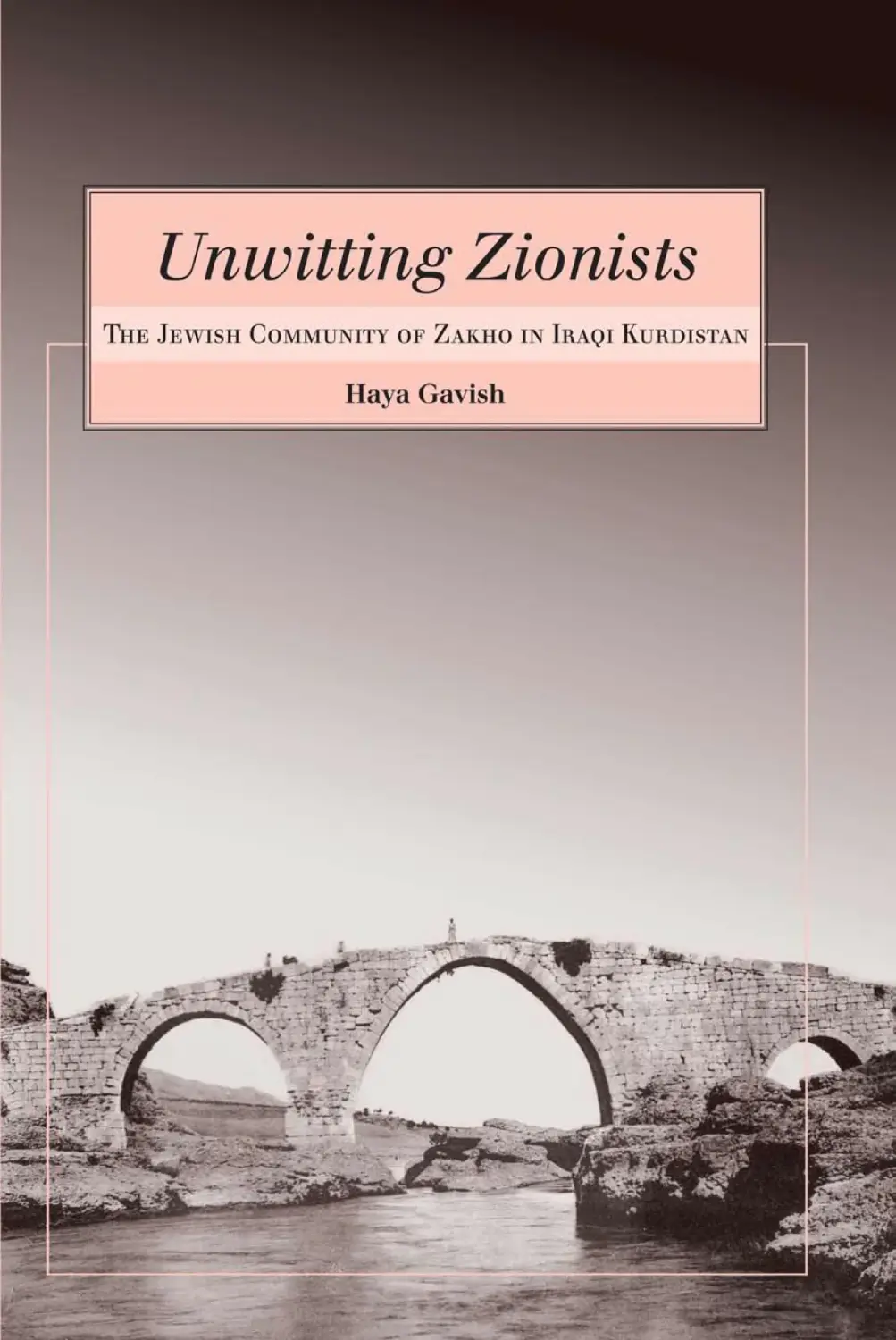
Zakho, 1938. In the forefront: Sa‘adon Bridge on the Khabur River. Courtesy of
University College, London, Sir Aurel Stein Collection, 13996.
x

Abbreviations

ACSC

Archives of the Committee of the Sephardic Community, Jerusalem

AHA

Archives for the History of the Haganah, Tel Aviv

A-T

Aarne-Thompson (see the Bibliography, under Aarne)

BT

Babylonian Talmud

CID

Criminal Investigative Department

CKCJ

Committee of the Kurdish Community in Jerusalem

CZA

Central Zionist Archives in Jerusalem

EJ

Encyclopaedia Judaica

GHQ

General Headquarters

G.S.G.S.

Geographic Section, General Staff

IFA

Israel Folklore Archives, Haifa

ISA

Israel State Archives, Jerusalem

JCA

Jewish Colonization Association

JMA

Jerusalem Municipal Archives

JNF

Jewish National Fund

JT

Jerusalem (Palestinian) Talmud

LA

Labor Archives, Lavon Institute, Tel Aviv

LON

League of Nations Archives, Geneva

OHD

Oral History Division, Institute of Contemporary Jewry, Hebrew University of Jerusalem

PRO

Public Records Office, London, now known as the National Archives,
Kew, Richmond, Surrey

SAS

Sociology-anthropology seminar conducted by Prof. Yoram Bilu, Hebrew University of Jerusalem, 1994

UK

United Kingdom

YBZA

Yad Ben-Zvi Archives, Jerusalem (now in ISA)
xi

Chapter 1

Between Folklore and History

The Jews of Kurdistan, who were believed to be descendants of the lost Ten
Tribes of Israel, were the object of much empathy. Itzhak Ben-Zvi, second
president of the State of Israel, and Prof. Simha Assaf, a prominent Jewish
historian, and others called them “those that were lost in the land of Assyria,” “ahim nidahim” (remote brothers), and “nidhei yisrael ” (the remote
of Israel).1 Kurdistan’s Jews were isolated from other Jewish communities
for many centuries, the earliest mention of them dating from the twelfth
century. Zakho’s Jews were probably even more cut off from any tangible
connections with the outside world, for they are barely mentioned in travel
itineraries, and even such mentions are primarily in the nineteenth century.
I began research on Kurdish Jews in 1978 as part of my studies at the Hebrew University of Jerusalem after being approached by Prof. Dov Noy, who
wanted to conduct field research among the Oriental Jewish communities.
Noy pointed to the paucity of folktales of these communities as compared
with the abundance of similar folkloric materials whose origin was European
Jewry. I was especially attracted to members of the Kurdish ethnic group because in Jerusalem, where I lived, I had Kurdish neighbors and friends. They
belonged to an ethnic group so different from my own. My first assignment
was with former members of the Jewish community of Arbil, in Iraqi Kurdistan. This undertaking prepared me above all to meet the first methodological
challenge in this type of research: how to find interviewees among an ethnic
group so different from that of the interviewer.
My curiosity whetted by the first study, I set out on another undertaking:
to interview a Kurdish storyteller from Barazan, who was about ninety years
old and had been the childhood friend of Kurdish revolutionary leader Mula
Mustafa Barazani, and to study the stories he told me. This I did at a gather1

C hapte r 1

ing of elderly members of the Kurdish community in Kiryat Malakhi, a town
in southern Israel, in preparation for the celebration of the traditional Sehrane festival in 1981.2 It was difficult to persuade him, but he finally acceded
to my request. Thus, step by step, I prepared the infrastructure that enabled
me to write a master’s thesis in Folklore Studies at the Hebrew University of
Jerusalem on “Immigration Stories of the Jews of Zakho,” which in turn led
to the present study that combines folklore and the documented history of
the community of Zakho.
Historians and folklorists adopt different approaches toward the documentary materials available for historical research into a community. The
historical approach, which stresses the external perspective, is to compare
written and oral source materials. The folkloric approach emphasizes the internal perspective of the community as reflected in oral testimonies. The historical-folkloric approach, which I represent, combines the two: the history
of a local community is studied and documented using both written and oral
sources. The meeting point between folklore and history is oral documentation. Interviewing witnesses to an event is a means that has always served
historians who wrote about their own times. The wide or narrow gap that
divides or connects (depending on one’s viewpoint) history based on written
sources and oral history has given birth to a unique terminology.3 Oral history is not an independent field but rather a supportive tool in the service of
disciplines in the humanities and social sciences, whose scholars apply oral
life stories, memoirs, anecdotes, and conversations in their specific studies.
Oral documentation, as a field of its own, appeared on the scene after
World War II because of the need felt to deal with contemporary history in
real time. Awareness of its importance increased with the invention of the
tape recorder, enabling the recording of interviews. The audio or audiovisual
results of such sessions provided the testimony with a measure of credibility
and authenticity.4 Extensive use of interviews by an historian began with
Prof. Allan Nevins, who in 1948 created an oral documentation program
at Columbia University in New York.5 His approach was elitist; that is, it
focused on interviews with leading personalities who presented a sort of biographical narrative dealing with several fields such as politics, economy, and
the arts. Nevins’s approach influenced most oral documentation projects for
about two decades, but since then there has been much oral documentation
relating to communities, government agencies, and organizations that has
become known in the United States as “public history.”6
The credibility of oral traditions and oral documentation is a weighty
issue. Some scholars claim that the credibility of written documentation is
greater than that of oral sources because the latter tend to change over time;
2

Between Folklore and History

however, both convey a message from the past to the present. Moreover, the
two are not interchangeable—oral traditions and documentation do not save
the day when written documentation has failed. Important as they are, they
are no substitution for historical reconstruction; they are sources that correct
other historical perspectives, just as other perspectives correct them.7
The question of credibility does not bother folklorists who are engaged
in collecting oral testimonies and life stories. They claim that oral history
always contains at one and the same time truth that is simultaneously practical, factual, and imaginary. Even if an interviewee lies to an interviewer, the
falsehood teaches us something about the interviewee’s culture, society, and
psychology.8
Folklorists are not tied down to written sources, and therefore factual
credibility (i.e., what is true and what is false) does not bother them; they
are therefore at some advantage when studying a group about which there
is no written documentation. Folklorists and their colleagues, the oral historians, may be contributing to scholarship by collecting information about
certain people or a group who would otherwise remain outside the bounds
of historical research; in fact, they believe that oral history is the only way to
study such populations. This approach is being used by both historians and
folklorists in researching local history, though each have their own emphases,
viewpoints, and work patterns.9
My research on the Zakho Jewish community is a study of its history.
Communal histories written by folklorists generally seek out the internal
perspective of the community’s members—how they view their community—and do not avail themselves of written documentation.10 They include
in their studies legends and extraordinary stories that are unbelievable, related in the first person, and that the folklorists believe express an internal
historical truth. To folklorists, this approach is legitimate. To historians and
those engaged in oral history it lacks credibility, because they aspire to write
an objective history on the basis of information from memory that is supported by written documentation.11 Members of both schools, folklorists
and historians, therefore recommend cooperation between historians and
folklorists in researching a communal history. Combination of the two approaches contributes positively to the study of the history of any community. I found it especially vital in research on the Zakho Jewish community
because its members were experienced in transmitting oral traditions but
had left behind them only very limited archival documentation. When the
two research approaches were combined, I found that cross-fertilization was
the rule of the day. I took the testimonies of the interviewees at face value,
not thinking of the truth but rather of the local history of the group that re3

C hapte r 1

ceived and passed on these traditions. In the many stories related by former
Zakho Jews there is a hard kernel that does not tell a lie. While I presented
the perspective of the interviewees, as an historian I paid attention to variations between versions of the same story and checked to determine whether
and how what they related was supported by existing documentation. The
historical picture that emerged, therefore, could be likened to a mosaic.
Very important data on the history of the Zakho community can be
found in archival sources on the Jews of Kurdistan and Iraq. Although my
focus was on Zakho, that community was not isolated from its surroundings and from historical events in Iraq, Baghdad, or even Palestine. What
emerged from my study, first of Baghdad and then of Zakho, was the great
contrast between these two communities, as though they belonged to different countries. I also touched upon the community in Arbil, another Kurdish
city that was an important provincial capital and geographically closer to
the center of government in Baghdad. Members of the Zakho community
and emissaries who visited it referred to the Arbil community, mentioning
in what aspects it was similar to and in what aspects it differed from Zakho.
At times I found it necessary to refer also to information concerning other
Jewish communities, particularly in North Africa.

Recording Personal Memories
The oral documentation upon which my study is based is a collection of
memory narratives or personal narratives. It also contains a few that are of
the life history genre. Some scholars tend to treat the three in a similar manner,12 but above all one should differentiate between memory narrative or
personal narrative and life history. The first type, memory narrative, is a short
story that focuses on a certain event that the narrator tends to relate time
and again on different occasions during his or her lifetime. The life history,
on the other hand, is the reconstruction of a longer period in the life of the
narrator, so that oral documentation in this case is more like an attempt to
create a biography.
Some researchers tend to adopt existing terminology, whereas others prefer to create a new term, based on existing ones, that better serves their purpose.13 In my study I chose to create the term personal memory narrative that
stems from both memory narrative and personal narrative. I did this because
I believe that history is connected to both personal and collective memory,
and my study focuses on the study of narratives in their historical context.
My efforts were intended to show what was characteristic of the patterns
of the Zakho Jews’ collective memory in connection with their emotional
4

Between Folklore and History

relationship to Eretz Israel (the Land of Israel) and to immigration to Israel
(hereafter aliyah),14 this on the basis of personal memory narratives, though
I did not overlook variations in the individual testimonies. Personal and onetime diversities in testimonies, too, are worthy of recording.
The stories I heard were related to me as personal narratives, personal
testimony, whether the narrator was an eyewitness to the event—one who
experienced certain events—or provided testimony that was only a reaction
to events and phenomena, even as hearsay evidence. Most of those I recorded were eyewitness accounts, whereas only a few of them were based on
hearsay. These were personal narratives delivered from the viewpoint of the
narrator, who accepted responsibility for what he or she told me. The narratives of Zakho’s Jews are also life stories because the events narrated played
an important role in the lives of the narrators, especially one historic event
with momentous implications for their lives—aliyah. That, and the religious
affiliation with Eretz Israel that preceded it, “programmed” the lives of the
individuals and the community such that the personal memory narratives
were divided into two groups: those relating to life in Zakho and those bearing upon their life in Israel.
The persons I interviewed were motivated by a strong desire to document. They sensed the break between past and present and were conscious of
what differentiated between them. I was happy to see that many were aware
of the moral value involved in preserving the past and wished to give permanent shape to their image of the past through memory narratives. They
wanted to preserve the past and the image of the social group to which they
belonged because from childhood they had lived in collective social groupings such as extended families, the heder (traditional religious school), and
the community, all of which shaped their collective memory. By means of
their personal memory narrative they reconstructed the past in the form they
wished, and some among them may have wanted to create a new identity
for themselves and their community.15 A value system was transferred in the
same manner.16 Thus was the personal memory narrative afforded a role for
both the individual and the community, and simple persons were able to
express themselves, for otherwise they would not have had a forum in which
to tell their tale.17
In research interviews such as those I conducted much importance is attached to the narrator-listener or interviewer-interviewee relationship. The
narrative is not an objective product; it changes in accordance with its listeners.18 Some experts maintain that narration of the story is more effective when
the interviewer and the interviewee have a common ethnic background or
something else in common, such as gender, age, profession, and status, or are
5

C hapte r 1

closely acquainted.19 Others believe that good, important narratives can be
gained if the interviewer adopts the tactic of open interview that enables the
interviewees to express themselves freely and without interference, since it is
only natural that they want to express themselves in a free-flowing story and
only later be asked specific questions.20 That is the method I adopted for all
the interviews I conducted; as a result I collected important and significant
stories from which I believe my research benefited. It could very well be that
in this manner we participated in the creation of an “historical product.”21
In the personal memory narrative, the narrator sets out from some point
in the present to describe a past event or experience and ends up returning
to the present. This, of course, influences the shaping of the narrative. The
listener gives the narrator an opportunity to return to the past and perhaps
even to rehabilitate it. Like historians, narrators are in need of some distance
in time to consider anew their past experiences in relation to the present.
The text of the personal memory narrative combines fact and fiction and
the ideal with reality. The drama of real life fuels the stories, which in their
turn influence life; in other words, there is a continuum between life and the
narrative. But the stories do not objectively reflect real life because the narrators shaped them in accordance with their own objectives and evaluations,
which their narrative interprets. Yet, the stories are more than mere artistic
fantasies; they are grounded in real life and influence the creation of new
experiences.22
In addition to the recommended criteria for evaluating the authenticity and value of the narratives, during the interviews I tried to check the
credibility of the narrator as he or she related the story to me as a listener.
Whenever there was a great discrepancy between the facts or interpretation
of the narrator and what I already knew about the events, I tried to verify this
through the narratives of others or written documentation. Quite often, the
narrators used me as a sounding board through which they imparted their
stories to members of the immediate family, especially children and grandchildren, thus creating an indirect link between themselves and the other
listeners.

The Interviewees
Though each person interviewed is a world unto his or her own, and despite
differences in age, profession, and status, some attributes are characteristic of
them all. The first is the quality of the interviewee chosen: I did not choose
them randomly but rather, on the basis of the knowledge I had accrued from
6

Between Folklore and History

the written sources, picked men and women who could contribute stories
or information to my research. It was on the basis of those sources that I
prepared a questionnaire that helped me choose narrators, but it was not
given to them. As the study progressed, changes were incorporated into the
questionnaire according to the narratives and information that had already
accumulated. The second attribute is that the interviewees were on a list of
names I received from a friend that included members of the Zakho communal elite whom it was believed could contribute to my research even if they
had not filled key roles in the community. These interviewees also opened
the way to interviews with others who were connected to the stories I heard,
and thus was created a diverse, yet inclusive, sample of former Zakho Jews.
The historical aspect of my study influenced the choice of interviewees.
Some had been mentioned in stories collected in the past and were now
interviewed a second time to verify facts or to compare and supplement the
information in hand. Others were chosen because of their connection to material I had located in archives. Finally, I interviewed emissaries of the Zionist
underground movement whose names had come up in some narratives or
whose involvement with the Zakho community emerged from the archival
material.
The interviews created an intimate and friendly atmosphere. There were
cases in which wives decided to tell their stories after they heard their husbands’ testimonies delivered in their homes. In contrast to some scholars
who believed that a research framework is not conducive to storytelling,23
I found that the amicable atmosphere was conducive to the telling of unexpected and moving stories. As one of the interviewees said, “We lived on
stories.”
Some maintain that the key problem in oral history lies in the gap between interviewer and interviewee—differences in background, communication patterns, and dress. At least two perspectives are involved in oral
history: that of the social climate of the interviewer and that of the social
climate of the interviewee.24 One of those whom I interviewed repeatedly
maintained that there were talented people back in Zakho who could have
been university professors in Israel had they received a proper education; a
second emphatically declared that his decision to quit studying in the heder,
the synagogue school, is to his detriment to this very day. And then there
was the case of the interviewee who delayed opening the session with me for
an hour so that I would have to wait for him, even though we had agreed
beforehand on the time of the interview. Such behavior, though vary rare,
was demonstrated by interviewees who today hold important positions in
various fields. This, however, was not detrimental to my research, for al7

C hapte r 1

ready in the first meeting the sense of social difference and alienation quickly
evaporated, and at times we even created a mutual long-term friendship.
It also seems that there was some significance to my being a woman,
though I cannot pinpoint any concrete evidence of this. Most of those I
interviewed were middle-aged or elderly men who were raised in a patriarchal society ruled by men, one in which there was absolute differentiation
between the genders in many areas of daily life. Even if most of them have
lived in Israel for many years, their former lifestyle still exerted a great influence. I sensed that, paradoxically, there was even some advantage in my
being a woman; in their view I was less of a competitor, less of a threat. For
a researcher, being an outsider who is not involved in the internal squabbles
of the community under study is an advantage; however, noninvolvement
may also prove to be a disadvantage since important details may be missed.
My study benefited from my being an outsider. There are very close relationships within the community of former Zakho Jews, perhaps because it is
relatively small, with many intracommunal marriage ties; however, there is
also no lack of conflict and tension. Thus, there were interviewees who told
me that they were prepared to talk to me and tell me their stories, but not
tell them to other members of the community. Some who had been interviewed previously by persons of Jewish Kurdish descent frankly informed me
that they told me more than they had been willing to reveal to the previous
interviewer. And then there were those who agreed to be interviewed by me
precisely because I was an outsider, because they wanted an “objective” academic person to preserve and record for posterity their personal biography
and communal history. This was never expressed outright but always incidentally, sometimes not even verbally.
It is only natural that this was simultaneously advantageous and disadvantageous because it influenced the interviewees’ choice of stories and their
content, how they related them, and what details they omitted so as to create
a favorable impression upon the interviewer and thus “become part of history” in the most positive manner. This is often the case with research based
on oral history. To overcome this drawback I did the utmost to match the
stories with written documentation and did not accept what interviewees
told me at face value. Moreover, as an outsider I was free of ethnic or “tribal”
obligations, unlike an interviewer from within who might be hampered by
such obligations.
Most of my interviewees were interviewed several times at various times;
sometimes I even interviewed additional members of their families. I made
an effort to note their manner of speech and body language in addition to
the conditions under which the narration was conducted, including such
8

Between Folklore and History

external aspects as where it took place, the outward appearance of the interviewee, and his or her willingness to be interviewed. It is my impression
that former Zakho Jews have undergone a process of “Israelization” that has
left its mark upon them in several spheres, and most probably that was the
major cause of their willingness to lend me their cooperation. This process
was also expressed in the language in which they told their narratives: all of
the former Zakho Jews I interviewed spoke in Hebrew, and most of them
intertwined idioms and phrases translated from their original language.25
Their acculturation in Israel also influenced the close relationships that developed between the interviewees and myself despite the differences between
us. After the ice was broken, the atmosphere was one of conciliation, identification, and involvement with my project. What happened between us
was a gradual removal of the barriers between interviewer and interviewee,
between someone who came from the academic world to sit at the feet of
persons of a different social and cultural status in order to learn from them.

Memory, Memory . . .
When I interviewed former Zakho Jews, I became aware of the issue of
memory—its forms and sources. Memory takes the form of a paradigm that
is influenced by the historical and cultural milieu in which a person develops. Moreover, memory is organized along the lines of models or literary
forms such as events, activities, and places that play an important role in the
autobiographical memory of a person.26 The recollections of my interviewees from Zakho focused on two different paradigms: one relating to life in
Kurdistan and the other to their new lives in Israel. One of the preconditions
for good memory is a link to traumatic or dramatic events. Such were the
events in Iraq and Kurdistan following World War I, and such was the condition of the Jews in Iraq after the establishment of Israel. Aliyah and all the
activity connected with migration from one place to another definitely filled
this criterion because they became social drama.27 My questions regarding
aliyah and the events that preceded and followed it aroused and stimulated
the memory of my interviewees. I also availed myself of artifacts because a
person is unable to preserve the past in the same way as he or she holds on
to objects.28 The idea of using objects generally came from the interviewees
themselves, who showed me household artifacts, amulets, and family photographs, generally taken on the eve of aliyah. There were those who showed
me an Iraqi identity card that expressly stated that the holder may leave Iraq,
but is forbidden to return.
Another characteristic of the memory paradigms of former Zakho Jews
9

C hapte r 1

A silver pendant woman’s amulet from Zakho, engraved with the eight-letter name of
God, comprised of the two forms of the Tetragrammaton. Courtesy of Batya Ben-Aharon.

is what scholars who have engaged in the study of communities call a layered
memory. This is a term that expresses the complexity of memory and its
subjective and selective basis, because not everything can be remembered.
Memory is a combination of the private and public aspects, brings together
the past and the present. It blends everyday local matters with universal elements in which the person who is called upon to remember finds a common
denominator and therefore bridges the gap between them and reconciles
them. All that is layered memory.29 This blend of different levels of memory
is also characteristic of the Jews of Zakho, in whose minds there is no conflict
among the various elements but rather conciliation among them, except in
a few exceptional cases. It may well be that one of the reasons for this is the
nature of the community—small and culturally isolated, whose members
did not have many opportunities to identify with other social groups. Each
individual has remained loyal to his or her spiritual and cultural sources,
while in their collective memory a nexus has been created between the life
of the individual and parallel public events. The memories of individuals,
therefore, include simultaneously both private and social elements relating
to the same event.
10

Between Folklore and History

From the perspective of folklore, memory is not obligated to reconstruct
an exact reality or to express factual accuracy; it is enough if it expresses
the view from inside the individual or the group. What is most important
from the folkloric viewpoint is the literary or narrative ability to impart the
memory, with all its complexity, to the listener, and this with consistency
and internal logic. Much importance is attached to the orderly development
of a sense of the past, present, and future in the life span of an individual in
order to create a personal identity.30 However, consistency and internal logic
do not have to be too watertight and absolute, because life and history are
not organized along absolute lines.31
Of the interviewees from Zakho it may be said that most were talented
storytellers, despite the natural personal differences among them. This can
be attributed to three major reasons: (a) The topics about which they were
interviewed focused on a central event in their lives—aliyah and all that
surrounded it—which encouraged and stimulated them to tell their stories.
(b) The choice of interviewees was not random but based on their perceived
ability to contribute to the research from historical or folkloric aspects. (c)
Warm, friendly relations between interviewer and interviewee, once the ice
was broken, encouraged the interviewees to tell their stories. I was impressed
by the various interviewees’ excellent recall of the facts, even though many
years had passed since the event. Instrumental in this was that the first round
of persons interviewed was comprised of key figures in the community—
rabbis and other leaders—who were centrally involved in communal life and
participated in decision making. There were certainly cases of omission of
facts and selective presentation of information—of which I became aware
when I cross-checked the narratives with written documentation. These,
though, did not stem from forgetfulness but from a tendency that is quite
common in oral history to relate positive matters and omit negative ones,
and to tend toward conformity. That is what led me to compare the reports
from one individual with those from others.32
The others interviewed, who in my study represented other strata of former Zakho Jews, also exhibited an excellent memory because they, too, were
not chosen at random; they were either connected to narratives related by
other interviewees or were chosen because I knew they could make an appreciable contribution to my research. This was very important particularly
because, for certain topics, they were my only source of information. Thus,
for example, in contrast to an abundance of historical source material on
aliyah from Iraq in the 1950s, there is very little comparable material on
aliyah from Kurdistan, in general, and Zakho, in particular. Therefore, what
my interviewees recalled filled a gap in the historical data.
11

C hapte r 1

Most of those whom I interviewed were middle-aged or elderly, although
a few were greatly advanced in years. Scholars who dealt with the recollections of such elderly persons have emphasized the tendency to recall information selectively that focuses on the distant past.33 In the interviews I
conducted, I found that memory that focused on the past was advantageous
and contributed positively to my study from both the historical and the folkloric aspects. On the level of folklore, the majority of the interviewees very
much wanted to relate their stories and displayed a good ability to organize
their recollections in an orderly narrative so as to present their lives as being
significant in relation to the history of the community. On the historical
level, concentration on the past led to very positive results in all that related
to factual accuracy, and this precisely among the very old interviewees. The
eldest of them, ninety-six years old at the time, quoted from memory sections of a document to whose drafting he had been partner about seventy
years earlier.

12

Chapter 2

Zakho, an Island in the River

Jews lived in Zakho for many generations. Knowledge of this community’s
way of life in its natural setting is a key to understanding the factors that
shaped the spiritual world of Zakho’s Jews. It is also a basic element in any
analysis of the changes undergone by the community that influenced its attachment to Eretz Israel.
A town in northern Kurdistan, near where the borders of Iraq, Turkey,
and Syria converge, Zakho was a rural center and a regional marketplace.
It also served as the religious and spiritual center for the Jews dispersed
throughout nearby villages. Due to geographic conditions, combined with
Ottoman rule, the area remained backward. This was also true of Kurdishpopulated areas in eastern Turkey and northern Syria that are close to Zakho.
Even after the collapse of the Ottoman Empire and the establishment of
the British Mandate over Iraq, a step that sparked modernization, economic
development, and advances in education and culture, the marks of progress
almost altogether skipped over Kurdistan, especially the area near the northern border. The fact that Zakho’s Jews, like the rest of Kurdish Jewry, lived
among Muslim Kurds as a minority within a minority added to the sense of
isolation of its Jewish community.
Observance of religious practices and tradition was characteristic of the
community’s lifestyle. Its members punctually observed religious commandments and customs and throughout the years were careful not to assimilate
with non-Jewish society. Religious life focused round the synagogue; festivals
and their attendant precepts were strictly observed; all the important rites of
passage in a person’s lifetime were performed—those connected with marriage, giving birth, Bar Mitzvah, burial, and mourning; and the rules govern-

13

C hapte r 2

ing kosher food were strictly followed. It was common practice to turn to
talismans, folk beliefs, and faith healing.
This description should not lead to the conclusion that life in Zakho was
ideal. Like any society, there were always problems, tensions, and internal
strife, but the local leadership was usually able to settle differences of opinion
or keep them under cover so as to preserve social order in the community.
There were few changes in the lifestyle of Zakho’s Jews, the social hierarchy and the professions followed by most of them generally remaining
unchanged. While all these elements did serve to maintain the communal
structure over the centuries, they also created a sense of treading water that
would change only as a result of strong external influences: the arrival of
rabbinical emissaries from Eretz Israel to collect funds, World War I, contact
with Zionist emissaries, and the establishment of and immigration to the
State of Israel.

The Zakho Community in the Written Sources
In his study of the poetry of the Kurdish Jews, Joseph Rivlin wrote, “No
other of the diasporas of Israel has left such a meager imprint on Jewish
history as the Kurdish diaspora.”1 This is too authoritative a conclusion, for
Rivlin’s study was preceded by other, albeit more general, ones not devoted
to a specific community but providing information on various communities
in Kurdistan, including that of Zakho.
Over the years since Rivlin published his book, it was followed by oth2
ers. The Zakho community has apparently been the subject of more research than any other Kurdish community, probably because of the concentration of former Zakho Jews in Jerusalem, which enabled them to preserve
their communal characteristics. The contribution made by Donna Shai’s
1975 doctoral dissertation was primarily to the field of the traditional folk
literature of the Jews of Zakho. Her work was based on materials collected
in Israel and analysis of the changes incurred under the influence of Israeli
culture. Her approach was a sociocultural one par excellence, without any
discussion of the historical dimension. Shai’s dissertation did not touch upon
the personal memory narrative genre, nor did it refer to the emotional and
religious affiliation with and aliyah to Eretz Israel.
In addition to this dissertation, other diverse primary and secondary
sources can be divided into five groups: (a) Letters dating from the sixteenth
to the early twentieth centuries. (b) Descriptions included in travel itineraries of Jews and Christians who visited Zakho from about the beginning of
14

Zahko, an Island in the River

the nineteenth century until the 1940s. (c) The research published by Erich
Brauer (1948, 1993) and Abraham Ben-Ya‘acov (1961, 1981). (d) Books by
members of the community during the second half of the twentieth century.
(e) Hithadshut, a periodical published irregularly, beginning in 1973, by the
Kurdish community in Israel.

Letters from Kurdistan
Jacob Mann and Simha Assaf have published letters that illuminate spiritual
and social aspects of life in Kurdish Jewish communities, especially from the
sixteenth until the eighteenth centuries. Walter J. Fischel did the same for
letters of a later period, the first decades of the twentieth century.3 These letters, as noted, contain important information on the spiritual and social life
of Kurdish Jews, their attachment to Eretz Israel and ties with Kurdish Jews
in the Holy Land. However, only a few of these letters deal specifically with
Zakho, and they contain but scant information.

Travel Literature
Depictions of Zakho in the travel literature written by Jews and Christians
are generally brief and fragmentary. However, they are an important source
because they do provide us with information about the city, particularly
during the nineteenth century.4 Of course, one must treat this information
carefully, for it is difficult for a passerby to gain a deep and credible understanding of the life patterns one sees fleetingly.5 Yet, when all the information
supplied by travelers is collected, it does enable a comparative discussion that
adds to our knowledge about Zakho.

Studies by Brauer and Ben-Ya‘acob
Although these studies are an important basis for research on Kurdish Jewry,
they include little discussion of Zakho. Erich Brauer conducted an ethnological study of Kurdistan, including a historical survey of its Jews.6 In several chapters he does record a few details about the traditions and customs
of the Zakho community. The major deficiency of Brauer’s book is that he
conducted and completed his study in the late 1930s on the basis of information he collected in Palestine, at a time when the majority of Kurdish Jews
were still in Kurdistan.
In The Jewish Communities of Kurdistan, Abraham Ben-Ya‘acob described
15

C hapte r 2

the Jewish communities in the Kurdish regions of Iraq, Iran, and Turkey.
This is an important work because it summarizes the written evidence.7
Among the sources he used were the travel descriptions left by Jewish travelers who visited Zakho in the nineteenth century. Ben-Ya‘acob’s short survey
of that city includes information on several aspects of Jewish life there, but
this information is short and encyclopedic in nature and does not enable a
proper analysis to be conducted.

Books Written by Former Zakho Jews
In the introductions to their books, the authors generally write that they
are relying on the works of Brauer and Ben-Ya‘acob but are adding details
and comments from what they remember personally. These memoirs provide
information of various aspects that are over and above descriptions of the
city. The anthology published by Yona Sabar documents traditional folklore among Zakho Jews;8 Meir Alfiya’s book on the Kabbalah opens with a
lengthy survey of the community of Zakho and its legends and a biography
of his father;9 the volume by Mordechai Yona includes a map of Jewish landmarks in Zakho prepared from memory by Meir Zaqen.10

Hithadshut
Hithadshut is an organ of the Kurdish Jewish community in Israel.11 The
authors have no pretensions to academic research, and the importance of the
articles lies in testimony provided by witnesses to the events or secondhand
evidence the authors heard from their parents or other former Zakho Jews.
On the basis of this survey of the written documentation about Zakho,
we can only conclude that it is very poor and has no bearing on the present
study, which focuses on folkloric and historical materials that provide the
background for the community’s emotional affiliation with Eretz Israel and
the aliyah of its members in the twentieth century. In contrast to the aforementioned research, our study is founded on archival documents that have
not been used in a suitable context and a large collection of oral testimonies
by members of the community or the Zionist underground emissaries whom
I interviewed.
This information is of special value, more than that gleaned from routine research, because it reconstructs a community that no longer exists and
whose members did not set down much in writing. In certain areas, the
interviewees were the sole source of information. These testimonies do not
16

Zahko, an Island in the River

supplement the written documentation; the opposite is true: the little written documentation supplements the oral testimonies.
In chapter 1, I dwelt extensively upon the issue of the reliability and the
nature of the interviewees’ memories. Here I should like to emphasize that,
in depicting Jewish life in Zakho, my interviewees made every effort to be as
realistic as possible, to concentrate on the facts and not be swept away into
nostalgic and idealistic memories. Mazliah Kol told me that the interview excited him almost to the point of pain. When I asked him, “Why? Because it
is impossible to return to Zakho?” he replied, “No. I have seen more beautiful places.” “Then why?” “Because we didn’t know how to leave it earlier.”12
Mazliah Kol was not alone in not yearning for the past. In an interview
conducted in 1987, Meir Zaqen, when referring to the “exodus from Zakho”
in 1950, said,
What property [i.e., Jewish property and homes] did they [i.e.,
the Kurds and Iraqis] get? “A plague” is what they got! They got
a desolate city whose commerce collapsed after we left. They got
our homes? A few years later all of Iraq was in trouble. This happened after we left. They killed the king and killed one another.
There was one revolution and then another revolution. There were
Barazani’s wars which shook Iraq. I read a newspaper report about
how the Kurds gave themselves up to the Iraqi authorities in Zakho.
Barazani came to Zakho and handed over his weapons and that of
his fighters. That is where he surrendered. About a year and two
months ago I was in Turkey. I went to those areas that are near
Zakho. The Kurds there, who fled from Zakho, completely forgot
their origin. A long time has passed. What am I trying to tell you?
That the situation has changed.13

Other interviewees, who managed to secretly visit Kurdistan and Zakho in
the past few years, sought their roots there, but not one of them clung nostalgically to their past, to the low level of education they had received, or
the economic difficulties and the insecurity that had been their lot. They remembered a small town and found that it had become a big city that had received Kurdish refugees persecuted by the regime of Saddam Hussein. They
remembered a Jewish quarter and found that it had been destroyed. This gap
between memories of the past and the reality of the present generally caused
them great disappointment and strengthened their belief in the good luck
that had extricated them at the right time from that city.14
17

C hapte r 2

Zakho: “An Island in the Sea” and a Community
of Jews among Lofty Mountains
“We were well aware of the existence of large communities of Jews in Kirkuk,
Arbil, and Mosul, but only by chance did I learn that Jews lived in the Kurdish villages in the lofty mountains.” So wrote historian Walter Fischel in his
impressions of a visit to Kurdistan in 1930.15
The city of Zakho is located in northern Iraq, at the far end of the main
road used to administrate the region that leads from Baghdad through the
district capital of Mosul to where the borders of Iraq, Turkey, and Syria meet.
Zakho is about ten kilometers from the Turkish border and some thirty kilometers from that of Syria. It is located in a valley, on an island in the middle
of the Khabur River, a tributary of the Tigris. Northwest of the city, in Turkish territory, the Judi mountains rise to a height of over 2,000 meters, and
further north are the mountains of Hakari and Armenia, over 3,000 meters
high. In the winter these mountain ranges are covered with snow, which
melts in the spring, providing water for the region’s springs and perennial
streams.16 The Khabur flows from the east through a twisting gorge and spills
into the Zakho Valley until it finally joins the Tigris. The Bēkhēr Ridge and
the White Mountain (Jebel Abiad), which rise to a height of 1,200 meters,
close off Zakho from the south. The road leading from the city of Mosul and
the village of Dohok to Zakho runs through these hills in a mountain pass
that is difficult to traverse and easy to block.17
Zakho’s unique geographic conditions in the northern mountainous region of Iraq—that is, its distance from the center of economic, administrative, and religious life in Baghdad and the difficulty of reaching it by land
and, in certain seasons, by the river—had a decisive effect on turning Zakho
into a small and remote town, even though it did serve as a central marketplace for villages in the north because of its strategic location near the convergence of the three international borders. The impression left by the wild
mountain country is reflected in the narratives of Zakho Jews. They often
described the “Mountains of Ararat,” this in connection with the tradition
concerning Noah’s Ark, which was widespread among Jews and non-Jews
alike. They believed that the name of the Judi range was derived from Yehudi
(Jew). Salim Gabbay, son of the onetime head of the Jewish community of
Zakho, provided the following testimony:
The Ararat Mountains were full of animals, full of naturally growing trees. There were dealers in animal skins there. This was also
so in my own times. The land was most fertile. . . . All the Jews
18

Zahko, an Island in the River

Zakho, near the convergence of the Iraqi, Syrian, and Turkish borders. Sofer-Mapping,
Jerusalem.

there searched for Noah’s Ark. It is near Zakho. You cross the Khabur River and then the Isel River to the other side, about three or
four hours on foot from the Ararat Mountains. . . . The gentile
tribes are tribes of good people, they are the Sons of Noah, people
who receive visitors, very nice. . . . They light bonfires and make
sacrifices and hold great celebrations on this mountain on which
Noah’s Ark [came to rest], so Jews came and participated [in them].
They, the Jews, would also hold celebrations with them and so this
mountain, part of this mountain, was called Mount Judi—Mount
Yehudi. Why? Because in these mountains was a place in which the
Jews also conducted celebrations. After World War I, when borders
were created there, the Jews ceased doing that, but from our city we
could see the flames of bonfires on the Ararat Mountains.18

The mountains of northern Iraq made access to Zakho difficult. Walter
Fischel, who visited Kurdistan and Zakho twice, in 1930 and 1936, wrote,
“Whoever once saw the lofty mountains and rock clefts in this country,
the swiftly flowing rivers and streams, will understand that nature has set a
boundary and that man cannot cross it to discover its mysteries.”19
In the late 1930s roads were laid out that improved communications and
the sense of security in the area. Zaki Levi described the changed situation:
19

C hapte r 2

The roads were not patrolled, the authorities were absent from the
area, gangs ruled it . . . but these cases [i.e., murders] gradually
decreased as the region developed. [This was] when transportation
was developed, for instance, when police stations were built at several locations [or] when a border police force was established. They
called it the “Patrol Police Force.” To the extent that the authorities
made their presence increasingly felt in these remote areas, so did
these deeds decrease. . . . There were [still] murders on the highways,
but all these absolutely ceased from the beginning of the 1940s,
because all remote areas were accessible. The first motor vehicle
was brought to Zakho in 1939; it belonged to Hazim Bak, who
bought a private Chrysler. Immediately after that, even during the
last stages of World War II, English vehicles arrived [on the scene].
In other words, the roads were opened and these [highway] robbers
disappeared.20

British traveler W. C. F. Wilson, who visited Zakho in 1937, also noted the
improvement in road transportation and its contribution to the improvement of the town’s economic situation.21
Emissaries of the Zionist underground were also especially impressed by
the mountainous region. It was difficult for them to reach Zakho in the
early 1940s because of the sensitivity of the authorities, the security situation in the area during the war, and the need to pass through control checks
established in the mountain passes. Shemariah Guttman, one of the first
underground emissaries to reach Iraq, who visited Zakho in 1942, related,
“[In order for] you to enter Zakho, you exit this maze of the mountains and
you enter a place that is more open, and the city of Zakho is in this place,
part of it climbing up into the mountains and part of it below, but it is like a
place that is entrapped in these mountains. And the mountains of northern
Iraq are high mountains.”22 Yitzhak Shweiki, who was the underground’s
emissary to Qamishliye in Syria and visited Zakho in 1944, described the
journey from Mosul to Zakho: “We were traveling in a small bus and to this
place [Zakho] leads a very high chain of mountains and narrow roads, and
then you descend into the valley and see something very beautiful.”23
The city’s unique location is also reflected in the memoirs of former Zakho
Jews: “Zakho is an island with a sea [i.e., water] all around it, and we were in
the middle with all the houses. Everywhere you went in Zakho you returned
to the water. It is an island in the sea.”24 With time, the city’s suburbs spread
to the river’s bank, and three bridges led to these new sections: the Sa‘adon
Bridge in the eastern part of the city; the Stone Bridge in the southern part;
20

Zahko, an Island in the River

and the newest of them all, the “Muhammad Agha Bridge” of Haji Agha,
in the west. About three kilometers southeast of the city is the Ruah Bridge,
constructed of immense stones. No one knows when it was built and by
whom. According to one legend it was built by giants; another legend connects its construction to the sacrifice of a young girl named Nemo Delale
who was buried alive in the bridge.25 The bridges and their importance for

Zakho, an island in the river. Carte de la frontiere turco-irakienne. Feuille No. 1: Zakho.
G.S.G.S., no. 3863, the War Office 1933. Original scale, 1:50,000. Courtesy of the
British Library, Map Library, shelfmark 46990.(9).

Location of the
Jewish quarter
on the island, on
a draft map of
Zakho, ca. 1950.
Original scale
1:2,500. Courtesy
of the Geography
and Map Division,
Library of Congress, Washington,
DC.
21

C hapte r 2

the routine of daily life in the city were also reflected in the testimonies of
Zakho’s Jews.26
Zakho’s unique geographic setting forged a town in which residents knew
everyone else and were suspicious of strangers.27 From the testimonies of
Zionist emissaries and former Zakho Jews, a Zionist underground cell was
not established in the city because of the challenging geographic conditions,
which made it difficult to reach it and to leave it clandestinely.28 However,
there was one element that made it amenable to outside influences: its location near where the borders of Iraq, Syria, and Turkey converged. This is also
what made Zakho an important center for illegal aliyah from Iraq to Palestine. Immigrants were smuggled across the border before World War I and
during the British Mandate period in Palestine (1918–48). Emissaries sent
from Palestine were assisted by Zakho Jews, and both sides related personal
memory narratives of what happened while crossing the border during these
obstacle-ridden efforts at aliyah.
The most important city in northern Iraq is Mosul, situated south of
Zakho by about two hours by car. Many aliyah narratives mentioned Mosul
as the first station of legal emigration for Zakho Jews who made the journey
to Palestine, prior to 1948, and to Israel, in the 1950s, after its establishment.29 From that city they moved on to Baghdad, which served as their
last station in Iraq before immigration to Palestine and Israel.30 Baghdad
was the center of government and economic activity and was increasingly
Westernized, especially since its capture by the British during World War I.
For Zakho’s Jews it was a center to which they turned for instruction in religious matters.31 Jews from Zakho lived in a separate neighborhood in Baghdad. They had come to the capital either for economic or personal reasons,
whether to attend a high school or as a place of refuge for a woman who had
fled her husband.
A similar and comparative development took place in other Islamic
countries after they were penetrated by European powers. Discriminatory
laws against religious minorities, theoretically annulled during the period of
the Ottoman Tanzimat, were now rescinded in practice.32 The Jews in these
countries developed a modern educational system and expanded the sphere
of their economic activity: they gradually abandoned small businesses, peddling, and workshops in favor of commerce and industry, and developed
international contacts. They entered the civil service, joined the white-collar
professions, and improved their economic status.33 By way of generalization,
one may say that these changes almost did not reach the distant peripheral areas. In remote towns and villages, rule by the central government was
22

Zahko, an Island in the River

Delale Bridge-Ruah Bridge. Courtesy of the University of Newcastle upon Tyne, M57.9.

barely felt, the economy was stagnant, tribal affiliation and tradition continued unchanged, and education remained at a low level.34

The Historical Background
Zakho’s Jews: Their Origins and Early Information about Them
Obscurity and vagueness are characteristics of the history of the Zakho Jewish community and of Kurdish Jewry in general, because of their isolation
from the outside world, Jewish and non-Jewish alike. According to traditions
that were widespread among the Jews of Kurdistan, their origin lay in the Ten
Tribes of Israel that were exiled from Eretz Israel before the destruction of
the First Temple: “In the ninth year of Hoshea, the king of Assyria captured
Samaria. He deported the Israelites to Assyria and settled them in Halah, at
the [River] Khabur, at the River Gozan, and in the towns of Media” (2 Kings
16:6). Assyria, apparently, was the district of Mosul, and Khabur is the river
that surrounds Zakho, which the Kurds call Khawora.35
We have no certain information on the beginnings of Jewish settlement
in Zakho. The Jews claim that the name Zakho is derived from the Hebrew

23

C hapte r 2

word zekhut (right, or privilege, but which can also be translated as “good
deeds”) because its residents were generous and did good deeds.36 Interviewees told me of traditions held by the community about its earliest beginnings.
Salim Gabbay claimed that the ancient name of Zakho was Hissenike, that
it was founded about a millennium ago, and that Jews reached it from the
Ararat Mountains and were settled there by the kings of Assyria. He believes
that the origin of some of Zakho’s Jews was the Assyrian exiles, while he and
his family are descendent from the Babylonian exile.37 Varda Shilo told me
that her family, the Dahlika family, was the first to settle in Zakho, and that
the meaning of the name is a field or woods, which testifies to the family’s
antiquity since it came to an open field. Other interviewees supported this
view.38
There is very little written documentation about the Jews of Zakho. The
earliest surviving letters, which date from the eighteenth century, describe a
condition of economic hardship in the town, which was at least the lot of
certain sectors of the population. One letter told of the sale of a six- or sevenyear-old girl by her mother for eight grush (the equivalent of a few pennies)
because of economic duress; another related that a resident of Zakho betrothed his wife with a few raisins; a third letter, evidence of the religious
hegemony in the town, told about an emissary from Eretz Israel who came
to Amadiya, another town about eighty kilometers east of Zakho, and demanded that one of Zakho’s Jews appear before him in the religious court
or be excommunicated.39 During the eighteenth century, Zakho was subordinated to Amadiya in religious matters, but in the nineteenth century the
tables were turned, and Zakho took precedence.40
Written documentation about Zakho’s Jews is more plentiful in the nineteenth century. The reports are by Jewish and Christian travelers who came
to Zakho in search of the lost Ten Tribes of Israel. The Christian travelers
wanted to learn more about the Nestorians whom they believed to be descendants of the Ten Tribes, together with the Jews; they also intended to
carry on missionary activity by establishing Christian schools in the area.
The first Jewish traveler to describe Zakho was Rabbi David D‘Beth Hillel,
who visited the town in 1827:
There are about 600 families of Israelites. The treasurer of the town
is an Israelite, and he is the chief of his nation, some are very rich
having much cattle. Most of them are weavers, goldsmiths, and
other artificers.
They have a very ancient and large synagogue, built of large hewn
stones situated on the banks of the river. There are many ancient
24

Zahko, an Island in the River

manuscripts, which I have examined and find they are not different
to ours, except in the form of some of the letters. Their original language is the same which I have mentioned above at Peshkhabur.41
They are ignorant both of the Hebrew language and customs, there
are very few Levites; in the whole town, not more than three or four.
Their marriage ceremonies and other customs are after the manner mentioned in the ancient histories; therefore, I conceive that
they must be some of the lost Ten Tribes. . . . There are Nazarenes
[i.e., Christians] who follow the same customs and have the same
language. There are about 8,000 Kurdish families, denominated
Mohametans, speaking their own language, which is Kurdish. The
produce of the town is grain, fruit, cotton, wool, cattle, gum, and
gall-nuts, all of which are cheap.42

In the next few years several developments made the area more accessible to
travelers.
The Mosul district, which included Zakho, was controlled by a local ruler
who maintained only very flimsy ties with the center of Ottoman government in Istanbul. After repeated raids by Kurdish tribes, the Ottomans once
again enforced their rule in the region under Sultan Mahmud II and tried
to convince the wandering tribes to settle down. Despite the unrest that accompanied these efforts, Kurdistan gradually came under Ottoman control.
This process was completed in 1834 when a Turkish army routed and took
prisoner the Kurdish leader of the city of Rawanduz. The Mosul district
was now annexed to Istanbul and ruled directly from the capital. Under the
new administration security was enhanced, making travel easier and the area
more accessible.
Thanks to this improved security, the Euphrates Expedition was sent
from England in 1835 to explore the area. William Ainsworth, a member of
the expedition, published his travel itinerary, which also included descriptions of the Nestorian Christians. As a result of Ainsworth’s publication, the
Royal Geographical Society and the Christian Knowledge Society sent him
once again to Kurdistan, and he published impressions from this second visit
in 1842.43 An American missionary, Dr. Asahel Grant, traveled to Kurdistan
in 1841 to find proof that the Nestorian Christians and the Kurdish Jews
were remnants of the lost Ten Tribes. Assuming that the Khabur mentioned
in the Bible, one of the places to which the Ten Tribes were exiled, was the
River Khabur on which Zakho was located, Grant concluded that Zakho’s
Jews were indeed remnants of the Ten Tribes.44 In that same year, following
Ainsworth’s second journey, the Christian Knowledge Society sent a clergy25

C hapte r 2

man, George Percy Badger, on a goodwill mission to Kurdistan to establish
Christian schools and discover manuscripts. Badger visited Zakho, reporting
that he found “a few Chaldeans, twenty Papal Syrian families . . . and seventy
houses of Jews: the rest of the inhabitants, amounting to about 2,000 souls,
are chiefly Coords.”45 Badger also noted a few more Jewish communities that
he encountered during his tour.
The Jewish traveler known as Benjamin II visited Zakho in 1848 and left
us his description: “Sachu on the Chabur. About 200 Jewish families reside
in this town; they support themselves partly by commerce with the neighboring Kurds, and as workmen, weavers of woolen stuffs and such fabrics.
They are mostly wealthy, but live in a state of great ignorance.”46 The reports
of various travelers in the nineteenth century and letters sent to Eretz Israel
are instructive about the changed economic situation of the Jews and the
tribulations they suffered in Kurdistan, leading to a decline in the number
of Zakho’s Jews. A serious famine hit the area in 1880, causing the death of
many inhabitants, including Jews. In 1891 Muslims attacked the Jews, pillaged their homes, and set fire to the synagogue, including the Scrolls of the
Law that were kept in it. The Jews complained to the governor of Mosul,
but to no avail: Muslim persecutions were even more severe in 1892. Seven
Jews were brutally murdered and heavy taxes levied on the community. On
10 April 1892 the Tigris overflowed its banks, swept through the city, and
destroyed many houses, including 150 belonging to Jews. These occurrences
are described in a letter sent by the Zakho community’s leaders for confirmation and signing by the hakham bashi (chief rabbi) of Baghdad, Rabbi Yitzhak Avraham Shlomo, and the hakham bashi of Aleppo, Rabbi Ezra David
Hacohen. Once signed, the letter was entrusted to the itinerant emissary
Isaiah Ben-Aharon, who was then traveling through eastern countries, particularly India, to raise money for Zakho’s Jews.47 This was quite irregular for
an emissary, who was generally sent to collect money for religious institutions in Eretz Israel. Rabbi Haviv ‘Alwan related that his grandfather, ‘Alwan
Ben-Yosef, was among those who signed the letter that was deposited with
the emissary.48
Sir Mark Sykes, the scholar and diplomat who served in 1904–6 as the
British military attaché in Istanbul, visited Kurdistan and other eastern districts of the Ottoman Empire. In his book, he wrote about the somewhat
ambiguous impression left by his encounter with Jewish mule drivers in
Zakho. He was impressed by their appearance and that they were merry and
obliging. But he also noticed that his Muslim servants were rather reserved
about the Jews, a sort of mixture of prejudice and racist reservations, apparently fearing that whoever was impressed by their good nature might fall
26

Zahko, an Island in the River

into their snare, “for the oriental Jew has a great ability in putting his victims
under an obligation and subsequently pouring regretful, tearful, side-winded
abuse on ingrates.”49

Jewish-Muslim Relations
Relations between Jews and Muslims in Kurdistan were shaped by the delicate balance of power between the formal sovereign in Mesopotamia and
local strongmen who ruled areas in Kurdistan. The central authorities exercised no real control over Kurdistan; in fact, it was the tribal leaders who
ruled there.
The tribal structure of the Kurds was the outcome of their nomadic lifestyle, one that did not change even when the Kurdish tribes settled down in
territories between the Ottoman and Persian empires. Kurdish society was
primarily a rural-tribal one, a distinctive feature it maintained even when
the processes of urbanization and development of central government began in the nineteenth century. Kurds who resided in the cities continued
to maintain a strong relationship with the tribe and its values. Even after
Kurdish territories in Iraq were occupied by the British during World War I,
the tribal chief—the agha—remained their chief leader and was more easily
approached than officials of the central government.
The status of the Jews under this system was somewhat like serfs, and
there were some who even saw it as a state of slavery;50 in return for their labor, the Jews were afforded patronage and protection. This situation became
less severe as Iraqi government presence in the north of the country became
increasingly evident during the 1930s, thanks to improved roads and the
establishment of police stations.51 Despite this change for the better, even
under these conditions the local tribal leaders exerted more influence on the
Jews in the area under their control than did the central authorities.52 The
status of Kurdish Jews who found themselves between the central government and local strongmen was in general quite similar to that of tribal societies in Yemen and North Africa.53 However, the unique relations in Kurdistan
were a result of the confrontation between the Iraqi government and the
Kurds. The latter’s nationalist aspirations arose as the Ottoman Empire disintegrated at the end of the nineteenth century, unlike the tribes of Yemen
and North Africa, who did not develop similar aspirations.
Kurdistan’s Jews were a minority living within Iraq’s Kurdish minority;
they sensed this even more in the period between World War I and their
aliyah to Israel in the 1950s. The Iraqi government, which considered the
Kurds a backward and rebellious element, did everything in its power to
27

C hapte r 2

Zakho notables, 1904. Left to right: Yusuf Agha of Zakho, the bishop of Zakho, and the
agha’s secretary. Mark Sykes, Dar-ul-Islam (London: Bickers & Son, 1904), 162.

suppress their struggle for independence. Though this intensified the isolation of Zakho’s Jews, it created a unique relationship between them and their
Kurdish neighbors.
The Jews of Zakho dressed and looked like Kurdish Muslims, and even
bore arms like them.54 However, each side knew its place in society, and
the differences in religious and national affiliations were clear. The Muslims
respected the religious freedom of Jews and allowed them to practice their
customs, so that generally there were good neighborly relations between
Muslims and Jews. All this notwithstanding, everyone knew who held the
upper hand in the city. Interviewees pointed, on the one hand, to the absolute dependence of Jews upon the goodwill of the Muslims, particularly
of the leading families in Zakho, while, on the other hand, they tried to
transmit and emphasize an outward state of equality and did all they could
to maintain their pride and honor as Jews.55
There is very little written testimony on relations between Jews and Muslims after World War I, during the period of the British Mandate over Iraq.
28

Zahko, an Island in the River

Mutual respect was the order of the day, and Muslim dignitaries used to visit
Jewish homes during the holiday season, though in accordance with the hierarchical status of the families in the community. Zaki Levi related that on the
eve of Passover these dignitaries came to his home only after they had been
in that of Moshe Gabbay, the head of the community.56 However, a turn for
the worse resulted from developments in Palestine. The Zionist movement
was gaining strength there, accompanied by growing tension between Arabs
and Jews, particularly after the Arab disturbances of 1929 that followed a
conflict between Arabs and Jews over the status quo at the Western Wall.
Several restrictions were imposed, such as prohibition of Zionist activity,
limitations on Jewish tourists, a ban on the teaching of Hebrew in Jewish
schools, and prohibition of the receipt of Jewish newspapers in various languages from abroad. Such measures became even more pronounced during
the short reign of Rashīd ‘Alī, reaching their height in the pogrom conducted
against Jews in Baghdad in 1941. In the years immediately preceding Israel’s
independence in 1948, restrictions became even harsher and acts of violence
and murder more numerous.57
In contrast to the situation in Iraq, especially Baghdad, relations with
the Kurds were very good.58 Only after World War II, when the Zionist underground organizations in Palestine actively opposed the British, did Arab
incitement and propaganda reach Zakho, causing some deterioration in
Kurdish-Jewish relations. It can be said, however, that on the whole relations
remained proper, with the exception of a few attacks by individuals who were
suppressed by the Shamdin Agha clan that controlled the city and its environs.59 The head of the clan, Hazim Bak, the mayor of Zakho, Haji Agha,
and Abdul Karim Agha stood out in the help they tendered the Jews.60
During Israel’s War of Independence, some deterioration in relations between Jews and Kurds could be sensed. Former Zakho Jews described the
tension and fear that was their lot in the wake of denunciations and searches
for letters from Israel.61 Outwardly, however, proper relations were maintained even during this tense period. Haya Gabbay related that the bodies of
some Iraqi soldiers, killed in Palestine during the War of Independence, were
brought to Zakho for burial. Her good friend, a Kurd, refused to speak with
her because that girl’s uncle was among those killed in battle: “There was tension during the War of Independence, but there was love from beforehand,
much [love]. For that reason the tension was not too severe, but it was there.
There was internal tension, but we felt nothing from the outside, because
they used to love us and we used to love them.”62 In Meir Zaqen’s testimony,
he told of the unique atmosphere and tension in Zakho between Kurds and
Jews in 1947–48. This reached such a stage at the time that members of
29

C hapte r 2

Abdul Karim Agha.
Courtesy of Mordechai Yona.

his family, upon his initiative, prepared small bombs to protect themselves
should Muslims attack Jews in the wake of the incitement against them in
the mosques during the Friday prayers. Like Haya Gabbay, Zaqen claimed
that, despite this, good relations were maintained—at least outwardly:
But what was unique was that [we continued] the normal situation,
that despite all that tension between us and those people, who were
supposed to be prepared to launch a pogrom against us, we would
walk together with them, throwing explosives into the river, catching fish, holding a picnic with them, and grilling the fish together. I
want you to understand what a unique atmosphere existed there between Jews and Muslims. An atmosphere that cannot be described
as a climate of organized antisemitism, definitely not! It contained
a murky wave of tension or hatred, but on the next day we would
be conducting commerce together with them, with the Muslims,
behind the bridges.
30

Zahko, an Island in the River

To illustrate relations between Jews and Kurds in Zakho in the period between the end of World War II and the mass immigration of Iraqi Jewry to
Israel in 1950, Meir Zaqen added,
During all that period, especially the years after World War II and
with the establishment of the State [of Israel], even when there was
fear of a pogrom or incidents we would sit in cafes together with
Muslims and play backgammon or cards with them, although we
were aware that something bad could happen in the city or that
there could be a pogrom. And thus we would sit with some of the
Muslims who were wont to hinder us, and drink with them, and
sometimes even joke with them, without sensing any fear. We would
sit opposite each other playing rummy, dominoes, and more.63

This relationship was absolutely unlike relations between Jews and Muslims
elsewhere in Iraq, particularly in Baghdad.64
The Muslims in Zakho were proud Kurds who generally supported rebel
leader Mula Mustafa Barazani and were opposed to the central government,65 a situation that reduced antagonism toward the Jews. The special
help tendered by the Shamdin Agha clan was also in their favor. A document
in the Central Zionist Archives in Jerusalem (CZA) was sent in 1947 by an
emissary who was active in Iraq. He wrote that Shamdin Agha requested
support from the Jews of Palestine against the Arabs, their common enemy,
and even proposed extending help to the Zionist emissaries if they should
be endangered.66 The best-known narrative in this context is connected with
Abdul Karim Agha, who commanded the local police in Zakho. During
Israel’s War of Independence, a Palestinian Arab came to Zakho and tried to
incite the residents against the Jews because of the incident at Deir Yassin,
an Arab village west of Jerusalem that was taken by Jewish forces during the
War of Independence in April 1948 with the loss of about two hundred Arab
lives, but Abdul Karim chased him out of Zakho.67
Many interviewees from Zakho told of improved relations between Jews
and Muslims after the Iraqi government declared on 9 March 1950 that
Iraqi Jews would be allowed to immigrate to Israel. The Zakho community
moved to Israel in 1950–51 in four groups of immigrants.68 The Kurds were
much saddened by the Jews’ departure, sensing that it would be a great loss
to Zakho and its economy. The interviewees described the Muslims’ expressions of sorrow, which were at times dramatic. The many aliyah narratives
include descriptions of the emotional leave-taking from Muslim friends. The
story most often repeated centered round Abdul Karim Agha, who, in his
31

C hapte r 2

capacity as chief of the local police, accompanied the groups of emigrants as
far as Mosul on their way to Baghdad. He managed to escort the first three
of the four groups; before the fourth set out, Abdul Karim Agha suddenly
passed away. There were several conjectures as to what caused his sudden
death, but many interpreted it as stemming from sadness at the departure of
the Jews.69

Social Aspects of the Community
The Jewish Quarter
“There, in the Jewish community of Zakho, we all lived together. The Jewish
quarter is like an island. Our entire city is an island. But we Jews especially
used to live one next to the other.” That is how Haviv Tamar, who was born
in Zakho, described the community. If Zakho was an island, its Jewish community was an island within an island.70
The city was divided in two: whereas the island was populated mostly
by Jews, in the suburbs outside it lived only Muslims and Christians. Jewish
quarters in the cities of Kurdistan developed, as elsewhere, due to the inclination of Jews to live together around their synagogues, making the observance
of religious customs and laws easier.71 There were nineteen neighborhoods in
the Jewish quarter of Zakho, each named after wealthy families, such as Bē
Zaqen Street and Bē Hocha Street. Though the various neighborhoods did
not differ one from the other in the level of housing, in each one there were
one or two buildings with two stories, which belonged to more well-to-do
families, such as Bē Miro or Bē Zaqen. Most Jews in Zakho owned houses
that were passed on from generation to generation, but a few poor people
lived in rented homes. Jewish homes, like those of the Muslims, were very
simple single-story structures built of clay. The alleys were extremely narrow
and unpaved, and water and sewage flowed in channels in the streets.72
Former Zakho Jews expressed longing for their hometown in diverse
manners. In the absence of photos of the city, two of them aspired to preserve
their memories of its layout by creating maps of the island from memory.
On his map, Moshe Gabbay marked major landmarks for orientation—Jewish and Muslim public institutions, including a rough depiction of their
architectural form—and provided a general delineation of the borders of
the Jewish and Muslim quarters on the island. Meir Zaqen provided a much
more detailed depiction of the buildings within the Jewish quarter, and one
might gain the impression that there was no Muslim quarter on the island.
Although neither map overlooks the newer neighborhoods on the mainland,
32

Zakho as drawn from memory by Moshe Gabbay. Courtesy of his greatgranddaughter, Anat Gabbay.

The Jewish quarter in Zakho as drawn by Meir Zaqen. Mordechai Yona: Those
Who Perish in the Land of Assyria: The Jews of Kurdistan and Zakho (Jerusalem:
the author, 1989), 110–11.

C hapte r 2

it is not easy to compare the two because each is oriented in a different direction. For such a comparison it is advisable to use as a point of reference the
Ruah Bridge, easily discernible on both, and the route of the Khabur River
for orientation. There are no official statistics regarding population, including Jews, in earlier periods, and one must rely on the unsubstantiated impressions of passing visitors. More exact figures are provided by population
censuses conducted since World War I. One such census in northern Iraq
was conducted in late 1924 by Count Pál Teleki, a geographer, cartographer,
and statesman who had served as prime minister of Hungary in 1920–21.73
Teleki’s mandate from the League of Nations was to study the ethnic composition of the variegated population in the petroleum-rich area along the
Turkish-Iraqi border for the Mosul Committee at a time when the Kurds
missed the historical opportunity to gain some territory of the Ottoman
Empire. The committee was appointed to consider the demographic implications of drawing an artificial borderline between Iraq (under the British
Mandate) and Turkey. This was done after the Turks, in 1923, managed to
annul an obligation that had been included in the draft of the peace treaty
signed with them at Sèvres, France, in 1920, to create an autonomous area
in eastern Anatolia and the Mosul District for the Kurds. For three months,
Teleki surveyed the villages in that region, including Zakho. He reported to
the League of Nations that the population of Zakho included 1,716 Jews,
3,786 Muslim Kurds, and 644 Christians.74
A population census conducted by the Iraqi government in 1930 found
that the Zakho subdistrict had a population of 26,834, including 1,417 Jews
who spoke neo-Aramaic, most of whom resided in Zakho.75 According to
another official census, conducted in 1947, 1,394 Jews lived in that city.
Meir Zaqen reported that during the early 1950s, prior to the mass aliyah
to Israel, there were 315 Jewish families in Zakho, totaling about 1,800 persons who lived in 240 houses in the Jewish quarter. He reconstructed from
memory a list of the families and a map of the quarter in which he located
the Jewish homes.76
Every house in the Jewish quarter had a large yard that accounted for
about half the size of the property, the other half containing living quarters
and a food larder.77 When sons married, they took up residence with their
brides in the family dwelling, where the wives carried out some of the household chores under the supervision of the mother. Marriages were arranged by
the parents of the bride and groom, girls generally marrying at an age of thirteen to sixteen78 and boys between fifteen and twenty-two. It was customary for the groom’s family to pay mohar (bride price), which included gold
jewelry. Marriage to a relative, such as a cousin, was preferred.79 Many times,
34

Zahko, an Island in the River

Boundaries of the liwas and qadhas of the Mosul vilayet, with estimated population
figures of each qadha, 1925 (part of a map). LON, S14, Zakho.

thirty people or more lived in one house, even if it was not large. Sometimes,
when the eldest son had a family of his own and the family house and yard
were too small to contain all members of the extended family, he would
move to another home. In the family house, income and expenditures were
shared and the household was run as a unit. Due to its patriarchal structure,
the head of the extended family had absolute authority to decide on all matters according to his own inclination,80 and he kept his wife at short rein. A
hierarchical ranking according to age was maintained between the brothers.
Mazliah Kol claimed that, even if one brother had been one day older than
another, the younger one would have to obey him.
In practice, there was almost absolute separation between men and
women in the home. The women performed all household chores and were
responsible for the education of the girls—and up to a certain age of the
boys, as well—while the men had to provide for the family. Men and women
did not dine together, the men eating first and then the women consuming
what was left over. Meir Zaqen related that in his home, while the men ate,
the women used to stand and fan them on hot days. According to Zaki Levi,
the wife’s status depended on her husband’s love for her. Despite their infe35

The family of Salih ben Matloub Sa‘ado, 1935. Courtesy of Oded Kirmah.

Zahko, an Island in the River

rior standing, there were exceptional cases of women who assumed leadership of the family and left their mark upon it.81
The fact that the extended family lived together and the preference for
marriage with next of kin created ties within the family that helped maintain
its unity and the traditional-cultural character of the family unit and of the
wider community, due to the creation of ties of kinship among families. In
due time, all Zakho Jews were related one to another in some way. In Israel,
too, former Zakho Jews tended to concentrate in specific neighborhoods in
Jerusalem and its vicinity. This, together with ties of kinship, is what enabled
them to preserve the customs and culture of their community despite all
the changes it underwent as a result of their aliyah to Israel.82 This feeling of
togetherness provided them with a sense of security and preserved certain of
the community’s characteristics, such as conservatism and difficulty in breaking free of its confining framework.

The Khabur River and Its Influence upon Life in Zakho
The river was another element that contributed toward the communal unity
of Zakho’s Jews. In addition to its importance for the economy—much
greater that what in most cases can be attributed to a riverbank in any city—
it was a focal point for the daily social and economic activities of the community that resided along its banks. It served as a sort of front plaza for their
homes, playground for the children, meeting place for men or one in which
young men and women could make each other’s acquaintance, and a spot
for recreation, bathing, and laundering.83 The riverbank there extended for
about one and one-half kilometers, from the police station to the Muhammad Agha Bridge. It was between 50 and 200 meters wide, depending on
the season. The riverbank itself was level and covered with pebbles and sand.
Further up the river, about 100 meters from the Sa‘adon Bridge—an area
known as “Shkafta” (the Cave)—was where the women of Zakho used to do
their laundry and wash fruit, vegetables, and meat.84
Coffeehouses played an important role in the social life of Zakho’s residents. Not only did spending time in them mean following many customs,
they were also the scene of no little tension between Jews and Muslims. Not
far from the Sa‘adon Bridge was a cafe, owned by a Muslim named Kaso,
that was frequented mostly by Jews. They would sit there and drink tea; during weekdays this was before they went to work, while on the Sabbath they
drank it on credit and repaid the owner during the week. In the summer a
water channel was dug from “The Cave” area to the courtyard in front of the
coffeehouse so that those sitting in it could cool their feet in the water. The
37

C hapte r 2

The bank of the Khabur River. Courtesy of Yona Salman.

importance of this riverbank coffeehouse extended beyond its social significance; it was here in 1950 that Jews first heard, over its radio, the news that
was to change their lives dramatically—that the government was allowing
Jews to leave Iraq.85
Another section of the river served for storage of and commerce in timber, from where it was floated downriver to Mosul and other cities. The
riverbank (khtaya), which was partly paved and partly covered with sand,
served as a playground and sports field, a dance floor for weddings, and a
promenade where one spent time on the Sabbath and holidays. This was also
where a few commercial enterprises were situated, such as a studio owned by
an Armenian Christian in which objects made of clay were produced, or an
instillation for milling and grinding of seeds.86
The Khawora Khtaya region of the river appeared prominently in the
narratives and memories of former Zakho Jews. It was also a source of danger during seasons when it overflowed, as was the case with the great flood
of 1892 that caused much damage to life and property.87 The river was also
mentioned in stories about illegal crossing of the border with Syria: goods
were smuggled from one bank to the other, and people crossed it on their
way to Palestine.88 In some of the narratives an opposite influence was noted.
So deep was the imprint of the Khabur River upon some who had immigrated to Palestine prior to the establishment of Israel and returned to Zakho
38

Zahko, an Island in the River

that they explained their return as being due to the lack of water in Jerusalem
when compared with its abundance and proximity in Zakho.89 When the
emigrants from Zakho settled down in the Nahlaot neighborhoods in Jerusalem, they named the streets after rivers: Euphrates, Jordan, Yarmūk, Arnon,
and Yarqon.

Economic Structure
Since the possibility of socioeconomic advancement was limited in Zakho,
younger members of the community moved to Baghdad. “For what could
there be there [in Zakho]?” is how Zaki Levi explained his move away at the
age of seventeen.90 Occupations and sources of livelihood did not change,
passing from generation to generation, and there was no possibility that the
economic gap between rich and poor would be bridged. The major occupation of about 100 of 300 Jewish families in Zakho was commerce and peddling. The others were craftsmen, tailors, cobblers, and carpenters. The Jews
were a majority in a few occupations, while others were common to them
and the Kurds. Some Jews earned their living by floating timber down the
river as rafts, whereas others engaged in transportation of goods overland on
beasts of burden. Mordechai Yona differentiated between three types of Jewish merchants in Zakho.91 The first group consisted of wholesale merchants
(tijāre), who accounted for a great volume of commerce and stored their
goods in their homes or in stores in the marketplace. They dealt in almost
every commodity—cloth, clothes, wood, sheep, wool, grain, dates, nuts, and
oak apples. The second group, shopkeepers (dekandāre) in the Jewish marketplace, bought merchandise from the wholesalers and then resold it to

Ephraim and Sabaria Adu Zaqen. Courtesy of Menashe Zaqen.
39

C hapte r 2

residents of Zakho and villagers, who in turn peddled these wares in villages
and caravansaries. Finally, there were the itinerant peddlers (gadāre or baqāle)
who bought various types of merchandise in the market, such as haberdashery, cloth, and household utensils and traveled on mules from village to village, selling or bartering their wares. These peddlers were often in danger of
being robbed or murdered in the valleys and canyons through which they
had to pass. Of them it has been said, “The peddlers of Zakho do not die in
their homes; they die a natural or a sudden death on the road.”92
These peddlers, despite carrying weapons, were murdered by robbers.
That is what led many Jews to aspire to immigrate to Palestine.93 Unlike the
lack of security from which peddlers suffered in Kurdistan, the situation of
peddlers in other countries, such as Libya, Morocco, and Algeria, was better
because Jews there were forbidden to bear arms, and it was customary not to
molest unarmed peddlers. Their status was a lowly one, comparable to that
of women, and it was considerations of honor and shame that prevented
Muslims from attacking them. A folk saying maintained that a secure area
was one through which a woman and a Jew could pass safely.94
The economic condition of Zakho’s Jews was generally favorable, even
though it was influenced by changing political and security circumstances.95
From the testimonies provided by Zakho Jews, we know that there were
a few wealthy families in the community—such as Gabbay, Levi, Zaqen,
and Hocha—while most others lived frugally. The Gabbay family was the
wealthiest, and Moshe Gabbay and his assets were even mentioned in the
report prepared by Pál Teleki. He owned caravansaries in the marketplace,
a gas station, and villages that he rented from the British authorities.96 The
community came to the help of the poor who could not support themselves.97 Meir Zaqen related that, as a member of a wealthy family, he would
distribute to the poor food prepared by his mother. Yet, he added, in general
the economic condition of Zakho’s Jews was better than that of their Kurdish
neighbors. Young Kurds, for example, would come to the homes of Jews to
borrow elegant clothes for the Muslim holidays.98
As noted, due to limited economic opportunities, there were Jews who
moved to Mosul and Baghdad. Prior to their immigration to Israel, there
were about one hundred families of Zakho Jews living in Baghdad who were
small shopkeepers, tailors, and shoemakers, or engaged in other occupations.
There were also young girls and older women who were sent from Zakho to
Baghdad to serve in the homes of wealthy Baghdad Jews. Varda Shilo was
sent at the age of seven to do housework in various homes, and her salary was
sent to her parents in Zakho.99 From documentary evidence, as well as the
direct testimonies recorded, economic conditions in the community during
40

Zahko, an Island in the River

Moshe Gabbay.
Courtesy of the
Organization of
Kurdish Jews, Israel.

the period prior to the establishment of Israel was one of the most important
factors leading to a decision to immigrate to Palestine.100

The Jewish Market
The Jews of Zakho had their own separate market, known as “Shuqed Hozaye” (the Jews’ Market), located near their quarter and comprising part of
the town’s general marketplace. The family of Moshe Gabbay owned two
caravansaries in the Jewish market. One of them included a row of cloth and
clothing shops built round an internal courtyard, whereas the other served
primarily as a stable for the mules and horses of dealers in animals. The sec41

C hapte r 2

ond floor of the stable offered sleeping arrangements for villagers who came
to Zakho for commercial purposes. Merchants and tradesmen operated side
by side in the Jewish market. The merchants would acquire most of their
merchandise from the villagers; this included wool, nuts, almonds, oak apples, peanuts, cheese, butter, and other fresh milk products. The tradesmen
were tailors, shoemakers, carpenters, small shopkeepers, butchers, and more.
There were two Jewish coffeehouses, one owned by Ya‘akov Adi, known as
Ako, and the other by Kerem Zaqen. Jews and Muslims used to sit there together, sipping coffee and playing dominoes, cards, or backgammon. All the
clientele of the coffeehouses were men; in fact, only men bought in the market. The Jewish market was of a unique character because all the Jewish shops
were situated one next to the other. On the eve of Jewish holidays, when the
tailors would stay up all night to complete the orders for new clothes, the
Jewish character of the market stood out even more.101

Trade in Trees and Transport aboard Rafts
Zakho served as a sort of departure port from which rafts carrying timber
were floated down the river to Mosul and central Iraq. During dry seasons,
when the water was too shallow, the trees were transported by mules. These
two manners of shipping trees—overland and on the river—were separate
branches of the economy. The Jews developed the trade in timber into an
important commercial occupation, most of which was in Jewish hands. In
fact, it was the major source of income for several Jewish families.102
Trade in trees included tall white poplars (spindāre) that were cut down
and sawed in two, the lower trunk serving as firewood and the central part for
production of furniture. The trees were transported on mules from the forests
to the riverbank and were stamped with the owner’s insignia. The mule drivers, who specialized in overland transport, were known as kartirji,103 whereas
those who floated the trees on the river were called “tarākha” (pl. tarākhe).
The latter used to transport the trees in the shape of raftlike vessels of different sizes. The small ones were created by strapping together twenty to forty
trees. They were floated down the river by one raftsman and did not carry
any cargo. Medium-sized rafts were made of 80 to 120 trees, had a few raftsmen aboard, and carried some light cargo. The largest rafts comprised several
dozen trees tied together by young flexible branches and underneath them
were several inflated sheepskin bags to stabilize them in the water. Such rafts
were used to transport heavy goods; when they reached their destination,
the merchandise was unloaded and the trees sold. The sheepskin bags were
returned to Zakho to be used again. The Duga and Sa‘do families, as well as
42

Zahko, an Island in the River

those of Hayyo Cohen and Haviv Tamar, engaged in transporting trees in
the form of rafts, whereas Rahamim Cohen produced sheepskin floats for
the larger rafts.104

Other Occupations
Jews and Kurds alike raised flocks of sheep and engaged in the wool trade.
Another branch of trade was in oak apples, which contain material used to
dress and soften animal hides, but was also used to produce colors and ink.
Zakho’s merchants sent the oak apples to Mosul, where they were sold to
the highest bidder. Meir Zaqen testified that his family engaged in this commerce and that it maintained extensive connections with foreign countries,
including the United States. Jews and non-Jews also traded in dried fruits
and cereals.
Weaving was one of the major occupations in which Jews, both women
and men, engaged for a living. For the men this was an additional source of
income in the winter, when it was impossible to make their rounds of the villages with merchandise because of the inclement weather. Even rabbis such
as Meir Alfiya and ‘Amram Levi engaged in weaving, as did Yitzhak Shaikh,
a storyteller in Zakho, and Koto of the Hevrah Kadishah (burial society).
Young Jews and Armenians were tailors. Zaki Levi maintained that this occupation developed particularly during the last years of Jewish presence in
Zakho, after the appearance on the scene of sewing machines. Their main
product in winter was heavy coats, which were vital in the cold climate of
northern Kurdistan.105

Customs and Smuggling
Goods brought to Zakho were subject to the payment of customs, the rates
depending on the quantity and type of merchandise. Proximity to the Turkish
and Syrian borders tempted persons to engage in smuggling. Various types of
goods found their way illegally into Zakho’s markets, but at times they were
intercepted by the customs officers and impounded. Though the smugglers
were generally Turks or Kurds, they at times used Jewish middlemen.106 The
fact that Zakho was near the border also encouraged the smuggling of Jews
into Syria, from where they continued their journey to Palestine.
In an interview with Yona Sabar, he said that his father and other Jews
were involved in the smuggling of goods from Turkey. Another interviewee,
Shabetai Piro, related that until about 1923 there was free transfer of goods
between Zakho and Turkey, but that after time this traffic was carried out
43

C hapte r 2

clandestinely.107 Kurds living in Turkey preferred selling their merchandise
in Iraq, more specifically in Zakho, where they could buy other goods at a
lower price than in their own country. Smuggling was carried out using an
agreed-upon sign—change of headgear. Turkish Kurds used to wear a sort of
baseball cap. They would go out to tend their flock of sheep near the border,
cross the river, remove the cap, and then wind a large bandanna round their
head, the headgear of Iraqi Kurds. Police on both sides of the border did not
present a serious obstacle: if one of the smugglers was caught, matters could
be put aright through bribery. Smuggling across the Syrian border was also
facilitated by bribery.

Zakho as a Religious Center
In many sources, Zakho is called “Jerusalem of Kurdistan,” and in one of
them even “Jerusalem of the Diaspora.”108 According to Rabbi Haviv ‘Alwan,
Zakho was called “Jerusalem of Kurdistan” because Jews living in villages
at a walking distance of three or four days from the city had to come there
to be ordained as a rabbi, a shohet (ritual slaughterer), or a mohel (a person
authorized to perform a circumcision). “That is why Zakho was called thus,
because people used to turn to it from all over the area,” he said.109 As one
example he mentioned Rabbi Shalom Shim‘oni of Dohok, who had studied
under his father, Rabbi Shabetai ‘Alwan, and been ordained by him as a
rabbi. Brauer noted that Zakho was a center for ritual slaughterers, while
Rabbi Shmuel Baruch mentioned that his father, the head of a religious
court in Zakho, “would ordain them, and then they received an affidavit as
a shohet.” He added that Zakho served as a religious center for the area that
included Jezira, Shiranis, Dohok, and Sondur.110
Jewish travelers who visited Zakho during the nineteenth century but did
not study the community’s practices too closely were not much impressed
by the local rabbis’ knowledge of halakhah (Jewish religious law). Israel Joseph Benjamin noted that “they are mostly wealthy, but live in a state of
great ignorance.”111 He told of one Rabbi Eliyahu, who asked for his opinion
about permitting the remarriage of a woman whose peddler husband had
disappeared in one of the villages, lest she would stray from the narrow path.
Benjamin thought that such permission would be contrary to the halakhah
and that the woman was considered married as long as there was no clearcut evidence of her husband’s death. Kestelmann, the emissary from Safed
who visited Zakho in 1859, wrote, “And in Zakho [they] for the most part
are ignoramuses who do not know any prayer at all and even how to read
the letters of the alphabet in a siddur [daily prayer book], and they know no
44

Zahko, an Island in the River

Haviv ‘Alwan.
Courtesy of the
Organization of
Kurdish Jews,
Israel.

blessing, and do not pray at all, except for what the precentor recites on their
behalf when he prays.”112
Only during the twentieth century did Zakho become the religious and
spiritual center for the Jews of Kurdistan, even if many of its Jews were illiterate and only repeated the prayers recited by the cantor in the synagogue.
Formerly, Arbil had served as such a center, but lost its standing due to
riots there. Zakho also achieved its central status due to an increase in its
non-Jewish population, particularly of Christian Armenians who fled Turkey after World War I.113 Other scholars consider Zakho to have succeeded
Amadiya as the religious and spiritual center, this from the mid-nineteenth
century onward. An episode illustrating the decline of Amadiya is that of
one Hakham Eliyahu, who had been ordained a shohet by the rabbis of
Amadiya, but sent his son to Zakho to receive ordination from them, as well,
because theirs was of greater importance.114 Religious learning in Zakho was
for practical purposes; rather than learners whose objective was pure erudi45

C hapte r 2

tion, those who studied did so to fill roles in the community as a shohet,
mohel, cantor, or teacher.115
Yona Sabar explained that Zakho was called “Jerusalem of Kurdistan”
because religion played a major role in communal life. There were two synagogues in which daily prayers and study of the Torah were conducted, and,
to make this easier for some persons, prayers were also held early in the
morning for the benefit of tradesmen such as butchers or shopkeepers, who
opened their shops early. There were no secular Jews in Zakho, unlike other
cities in Iraq such as Baghdad and Mosul. Zakho “exported” rabbis and ritual
slaughterers to smaller communities that could not develop religious institutions of their own. For that reasons, Sabar adds, Zakho’s Jews at times poked
fun at and looked down upon Jews from other cities. He related that his
father, when he encountered a Jew who “counted the omer” in the language
of the non-Jewish Kurds, expressed his surprise that Jews count the omer in
a language of the gentiles.116
It is somewhat paradoxical that Zakho became a spiritual and religious
center even though many of its Jews were illiterate.117 In the heder, boys
would study only until the age of thirteen, at times dropping out of school
even earlier for economic and social reasons.118 The social ideal among Kurdish Jews was not a scholar, learned in Jewish law, but rather someone who
could provide for his family. At times a boy would begin working with his
father even before reaching thirteen, the age of Bar Mitzvah, not because of
direct economic or social reasons but because working and earning were the
accepted object in life.119 Gurji Zaqen noted, from his own personal experience, as well, that a few pupils left the heder after being severely punished
by the teacher.120 One reason for leaving school was the enhanced status of a
boy after he did so; now he was one of the family’s providers. Girls, for their
part, generally did not receive any education. Only very few of them learned
how to read and write, and this only if they were the daughters of rabbis or
were sent to government schools.121 The level of education in the heder was
low. Rabbi Shmuel Baruch testified that, even among those who continued
their studies until they were Bar Mitzvah, there were those who later forgot
all they had learned, even the form of the Hebrew letters. However, there
were those who told of pupils for whom daytime studies in the heder were
not enough, so they also enrolled in a government evening school,122 whereas
there were others who quit the heder and went to a government school in the
mornings.123
Perhaps the paradox between Zakho being considered a spiritual center even though many of its Jews remained illiterate can be explained by
the fact that, in comparison with the Jews living in the villages, a relatively
46

Zahko, an Island in the River

Rabbi Shmuel Baruch.
Courtesy of his daughters
Ahuva Baruch and
Carmela Baruch-Krupnik.

larger number of Zakho’s boys continued their education, primarily a religious one, after becoming Bar Mitzvah. Some of them became cantors,
mohalim (circumcisors), or shohatim (ritual slaughterers), thus finding their
place within the religious leadership of Zakho and the vicinity.
Illiteracy did not detract from the deep religious faith of Zakho’s Jews,
for whom the synagogue served simultaneously as a religious and social center.124 They strictly observed the religious commandments, as exemplified by
the custom of women to immerse themselves in the river after their menstrual period, even in the coldest weather, because of the lack of a mikveh
(ritual bath). Rabbi Shmuel Baruch related that the women used to do so
even when the river was frozen over, for otherwise their husbands could not
47

C hapte r 2

cohabitate with them, and Haya Gabbay, in an interview, affirmed this from
her own experience.125 In the 1930s, when Muslims began annoying women
who bathed in the river, the community built a mikveh in the Great Synagogue. Zaki Levi claimed that this was one of the biggest and most complex
operations ever conducted by the local community.126 Other former Zakho
Jews testified that even during their service in the Iraqi Army, under very
difficult conditions, they did everything in their power to refrain from consuming unkosher food.127
There were two synagogues in the city. One of them could seat 3,000 persons and was called Knishta Rabta (the Great Synagogue) in neo-Aramaic,
the language spoken by Zakho’s Jews. The other, smaller, one was known
as Knishta Zurta (the Small Synagogue) and also as “Midrash.” Both were
situated near the river, one facing the other. Most of Zakho’s Jews prayed in
the Great Synagogue, while the smaller one was frequented primarily by the
large Zaqen family.128
Zakho’s Jews spoke neo-Aramaic, known as “Targum.” They were generally also fluent in Kurmanji, the Kurdish language spoken by non-Jewish
Kurds. Knowledge of Hebrew was limited to the rabbis and religious scholars, while only a few also knew Arabic.129 Yona Sabar maintains that the incorporation of Hebrew words into neo-Aramaic can be put down to Zakho’s
Jews being well versed in their prayers.130 Men who did not know how to
read included Hebrew words they heard in the synagogue in their spoken
language, while women incorporated orally transmitted biblical expressions
or motifs, even though they did not frequent the synagogue.131
The deep religiosity of Zakho’s Jews led them to develop a strong emotional attachment to Eretz Israel and particularly to Jerusalem. Religious belief, which for centuries reinforced the conservative nature of Zakho’s Jewish
community, was one of the most important motivations (when the proper
conditions were created) leading to a central transformation in the life of
the community prior to the establishment of Israel: aliyah to Palestine. This
unique combination of deep religious belief with Zionism that developed
within the Zakho community is reflected in what an anonymous traveler
from Palestine wrote after visiting Zakho during World War II, when aliyah
had come to an abrupt end. He described his conflicting impressions of the
local Jews:
Zakho is the Jerusalem of Kurdistan. The number of Jews in Zakho
does not exceed 2,500, and they are real Kurdish mountain Jews.
The town is about eight kilometers from the Turkish border, and
about twenty from the Syrian border. Very many, thousands, of
48

Zahko, an Island in the River

Shiviti (Ps. 17:8), in the
shape of the menorah,
carved in marble, a remnant of the synagogue
of Zakho, October
1992. Photo courtesy of
Yona Sabar.

persons from this community immigrated in various ways to the
Eretz Israel. Whole families made the journey on foot, concentrating mainly in Jerusalem. In the present generation, this is a community of hakhamim [learned men]. The language they speak today
is Kurdish. The language of instruction is Arabic. . . . The community’s Zionism perhaps did not especially focus on practical steps
but the memory of Zion and love of Jerusalem are alive here in
every heart.132

Meir Zaqen found it necessary to bemoan what the community left behind,
and the emptiness that resulted from their leaving points to the community’s
former vitality: “How much it hurt them [the Muslim Kurds] when we went
49

C hapte r 2

on aliyah. It truly hurt them. I repeat: truly. At first there were persons there
who behaved badly. But when they saw how the Jews were leaving, how they
were emptying the city, how this wonderful community was leaving [they
said to themselves], where are their holidays, their tailors, their shopping,
their shoemakers, where are their coffeehouses that we used to fill? Where is
all that now?”133

50

Chapter 3

Religious Attachment to Eretz Israel

Zakho: “Jerusalem of Kurdistan”
Many Zakho Jews, of almost every family, immigrated to Eretz Israel prior
to the establishment of the State of Israel. It was religious affinity to the Holy
Land that was overwhelmingly decisive in shaping their aliyah consciousness. In those days people clearly distinguished between attachment to Eretz
Israel as a religious value and as a Zionist ideal. When Yona Sabar, who was
born in Zakho, was asked when he first heard about Eretz Israel, he replied,
I cannot say exactly when I heard of it. Of course, all the time we
read about Eretz Israel in the prayers and the Bible. It’s a topic that is
difficult to separate [from anything else]. It’s just like hearing for the
first time about mother and father and perhaps about all kinds of
everyday things. Eretz Israel was not so distant that you had to hear
about it separately, except perhaps in a political Zionist context. But
Eretz Israel as a religious concept, that was always part of our lives.
Actually, every Jew—I think—in Kurdistan and perhaps everywhere
else, imbibed Eretz Israel together with his mother’s milk. It is not
a subject that he began hearing about [at a certain time]. It is difficult for me to truly say when I heard [of it], I mean as a religious
concept; as a political concept—that is something else.1

To the Jews of Kurdistan, the term Eretz Israel was an organic part of daily
life. One manner in which this was manifested was in the blending of geographic names and other linguistic elements found in Kurdistan and Eretz
Israel. Names of some villages in Kurdistan sounded very much like geo51

C hapte r 3

graphic names in Eretz Israel. Examples are Arbil or Aqra, whose names echo
Arbel and Ekron in Eretz Israel. The tomb of the prophet Nahum is located
in Alqōsh in Kurdistan, and not at the site of biblical Elkosh in Eretz Israel;
in Kurdistani Alqōsh, Jews also used to symbolically ascend “Mount Sinai.”2
The proper names Nahum and Yona (Jonah) were quite common among
Kurdish Jews because, according to their traditions, these two prophets are
buried in Kurdistan. It is common for one linguistic culture to migrate to
another geographic area, bearing with it names from the region of its origin.3
It was common in Zakho—and apparently nowhere else—to learn the letters of the Hebrew alphabet in the heder through place-names in Eretz Israel.
Certainly the most manifest expression of longing for Eretz Israel and of the
blending of names and regions was in the epithet “Jerusalem of Kurdistan”
that was applied to Zakho.4
Powerful longing for Eretz Israel focused especially on Jerusalem. Apparently, only during World War II did Jews in Zakho become aware of political
Zionism. Salih Hocha defined this in the following manner: “Before Zionism, we did not hear of Zionism. Whoever tells you anything else—that is
incorrect. But we kept Eretz Israel in mind, and the most important oath
pronounced by the women was ‘Jerusalem.’”5 When women used “Jerusalem” as an oath, it was an expression par excellence of passionate, extroverted
love. It may also have been a latent desire to better their condition or a strong
aspiration to at least be free to dream. From Na‘ima Shmuel, we heard, “All
the time we wanted to come to Eretz Israel and to the warmth of Eretz Israel.
We were infatuated with [Heb. serufim ‘al, lit. “inflamed about”] Eretz Israel
and would swear by Jerusalem. The sincerest oath was ‘In Jerusalem.’ So if
I did something and said ‘In Jerusalem,’ that was it! You had to believe me.
We were infatuated with Eretz Israel and would say, ‘If only we would go to
Eretz Israel, if only, if only.’” The motif of Eretz Israel as associated with fire
(serufim) and warmth was regularly used by the Jews of Zakho as an expression of their fiery love for Eretz Israel and Jerusalem. Other interviewees also
used the sensual word heshek (strong desire). Haviv ‘Alwan said, “Heshek
for Jerusalem, I tell you, was in the hearts of us all thanks to the Bible, the
midrashim (homiletic interpretations of the Bible), and prayers. Every prayer
was full of ‘if You bring us back to Jerusalem.’” 6
Passover, especially the seder night, was an annual occasion during which
Eretz Israel and Jerusalem were mentioned during the reading of the Haggadah.7 Prior to “Mah nishtanah,” (lit. “What has changed”)8 this scene was
enacted: A young boy was sent out of the house with a mazzah (unleavened
bread) wrapped in a special cloth tied to his back. When he returned, he
would knock his head against the door, and all those seated at the table
52

Religious Attachment to Eretz Israel

would turn toward him. “May you be blessed with many years,” said the
boy, and the man conducting the seder asked him, in Arabic, “From where
do you come?” “From Egypt,” replied the boy. “And where do you go?” “To
Jerusalem.” “And what are your provisions on your back?” The boy would
then recite “Mah nishtanah.”9
Zakho’s Jews even used to extrapolate from the Haggadah to their present
condition. Varda Shilo: “The custom [of reciting] ‘Next year in Jerusalem,’ in
Eretz Israel, was [applicable] throughout the year. We thought, quite simply,
that we would really be in Eretz Israel. We never thought that next year we
would celebrate the Passover, the seder night there [i.e., in Zakho]. Quite
simply, every year we were sure that next year we would be in Eretz Israel,
but this did not happen for thousands of years, until we came on aliyah.”10
Passover was also the festival of Spring, and on its eighth day they would go
out to celebrate the Sehrane in the blooming fields around Zakho.11 This
festival provided them with the opportunity to praise Jerusalem in songs. According to Nehemiah Hocha, “When I was a member of the Zionist movement I composed a few songs in Kurdish. We would sit, like in the Sehrane
today. We would form circles around the table and sit and drink arak, wine,
and appetizers, and all kinds of such things, and we would sing about Jerusalem: ‘Arise and let us go to Jerusalem.’” In his testimony Hocha combined
religious yearning for Jerusalem with modern Zionism, claiming that he was
among the few in Zakho who were closely allied with the Zionist movement
through its branch in Mosul.12
A few interviewees told me that they had no knowledge of the name
Eretz Israel, but only of Jerusalem.13 Shabetai Piro, who came on aliyah to
Eretz Israel in 1925, said, “We knew nothing about Eretz Israel, we knew
only Jerusalem. [But] what is Jerusalem? That we did not know.”14 Gurji
Zaqen, who immigrated to Israel in the 1950s, expressed himself in the same
vein of religious affinity to Jerusalem: “The first thing that existed and we
knew about [was] Jerusalem. This was something sacred to us. Every Passover
we read the Haggadah and said, ‘Next year in Jerusalem’—this year [we are]
here, next year in Jerusalem. Not in Eretz Israel, in Jerusalem! We did not
know what Eretz Israel was.”15
Yearning for Jerusalem sometimes took on an extreme, unique form. An
example is the story told by Salih Hocha about one Ralib, an emissary sent
from Jerusalem to collect funds for religious purposes:
One man, who today is in an old-age home in Jerusalem and whose
name is Ralib, came to us from Eretz Israel. Before that, he had
grown up in Zakho. We knew that in his youth he had been a thief,
53

Purim costumes; the word “Jerusalem” is on the boy’s cap. Courtesy of Oded Kirmah.

Religious Attachment to Eretz Israel

a criminal, and so forth. He was raised without a mother and without anyone. After a few years—this was in the thirties—he came
to us in Zakho bearing a few pamphlets and letters from Hasidic
rabbis; he had become an emissary from Eretz Israel. The women,
because they were naive and infatuated with Jerusalem, and also
the men, went to kiss his hand. All this despite the fact that their
mothers well knew what a criminal he was. [I told] this to you as
an example.16

There was also a contrary sense that maintained “Zakho is Jerusalem.” Because of difficult economic conditions in Palestine during the 1920s and
1930s, visitors from Eretz Israel who had formerly lived in Zakho said that
Zakho was Jerusalem. Such claims shocked those who heard them; fortunately these claims were not often repeated and had no influence on the
community as a whole.17 The majority of Zakho’s Jews took up residence
in Jerusalem before the establishment of Israel, and the immigrants of the
1950s also concentrated in Jerusalem or in a village on the Qastel hill, near
Jerusalem.18
The shadarim, the religious emissaries of yeshivot in the four holy cities
of Eretz Israel (Jerusalem, Hebron, Safed, and Tiberias), contributed much
to enhancement of the religious affinity of Zakho’s Jews with Eretz Israel
and Jerusalem. Emissaries had reached Kurdistan in earlier periods, and it
was thanks to them that ties between Eretz Israel and Jewish communities in
Iraq and Kurdistan had never been severed. The Jews of Zakho received the
emissaries with much honor: special collection boxes were placed in the synagogues and generous donations were made, while the emissaries, for their
part, strengthened the community’s love for Eretz Israel and Jerusalem. True,
the shadarim signified religious attachment to the Holy Land, but there were
some among them whose efforts unconsciously paved the way to Zionism,
encouraging a few families to go on aliyah.19 It was a shadar that taught the
local Jews “Hatikvah” (the anthem of the Zionist movement that since 1948
has served as Israel’s national anthem).20 Conversely, there was also the case
of Avraham Yair, a rabbinical emissary from Safed, who was strongly antiZionist. Travelers coming from Jerusalem, even if they were not rabbinical
emissaries, were received with great honor. One of them was Walter Fischel,
who came to Zakho from Jerusalem in 1930 and in 1936.21 There were also
people who passed themselves off as visitors from Jerusalem to gain the trust
of the locals. One of these was Israel Joseph Benjamin, who claimed he was
a Jerusalem rabbi.22
From the foregoing descriptions, it may be concluded that the narra55

C hapte r 3

tives related to the affinity of Zakho’s Jews for Eretz Israel and Jerusalem
were grounded in religious ideals, and what stands out in them is a central
motif—the combining of areas in Eretz Israel with those in Kurdistan. That
motif is also manifested in historical and real figures associated with those
places. The stories dealing with some of these figures are founded on religious attachment to the Holy Land, others include Zionist aspects, while
still others—consciously or not—combine the two. In this chapter we shall
deal with two historical figures, and in the next with the rabbinical emissaries who contributed so much to the religious attachment of Zakho’s Jews to
Eretz Israel.

The Prophet Nahum the Elkoshite
“We Have a Prophet, and His Name is Nahum the Elkoshite”
The forging of the religious attachment of Zakho’s Jews to the Holy Land
will be discussed by studying their attitudes toward the biblical prophet
Nahum the Elkoshite, this on the assumption that they conceived him as
representing their affinity with Eretz Israel. Nahum was one of a number of
outstanding figures in Kurdistan, the attitudes to whom influenced the shaping of the religious attachment of the community to the Holy Land. Nahum
was, in effect, a substitute for the inaccessible Eretz Israel, and when it was
finally attained the prophet was abandoned. Once a year, during the festival
of Shavuot, the Jews of Zakho would pilgrimage to the tomb of Nahum in
the Christian village of Alqōsh, near Mosul. His grave was also frequented
by some Iraqi Jews.
Pilgrimage to holy sites is a phenomenon common to many religions,
an expression par excellence of popular religion that fills the expectations
of simple believers who wish to draw near to God. Pilgrimage is grounded
in belief in the unique character of sites marked by sanctity, such as the
tombs of holy men or lofty places that are nearer to Heaven.23 Pilgrimage
was already widespread in pagan civilizations;24 with the rise of the great
religions—Judaism, Christianity, Islam, Buddhism, and Hinduism—the
practice attracted multitudes of believers. Jewish pilgrimage originating in
various communities throughout the Jewish world was similar to universal
pilgrimage in at least one of its characteristics: it was a journey to a sacred
site.25 However, in contrast to other religions in which the religious aspect
stood out above all others, Jewish pilgrimage clearly combined religious and
nationalistic qualities.26
The basis for Jewish pilgrimage is a mitzvat aseh (positive commandment)
56

Religious Attachment to Eretz Israel

that obligated every Jew to come to the Temple in Jerusalem three times a
year.27 Jews pilgrimaged even after the destruction of the Temple; for example, during the Geonic period, some nine hundred years after the destruction, and even later, to commemorate pilgrimage to the Temple when it was
still standing.28 Jewish pilgrimage in Eretz Israel and other countries to the
tombs of saints on special occasions such as Lag Ba-Omer29 or anniversaries
of the holy men’s death was throughout the ages a religious-nationalist ritual
that aroused dispute. One issue of contention was whether prostration before the tombs served as an intermediary. In other words, was it not a deviation from direct prayer to God? Moreover, was prostration a commandment
or no more than a custom? It was the kabbalistic sages in Eretz Israel, and in
a later period Hasidic Jews, who most enthusiastically supported this act.30
Despite that all pilgrimages had much in common, pilgrimage to the
tomb of the prophet Nahum in Kurdistan was unique unto itself. Though it
drew upon the traditional Jewish veneration of saints, it was also shaped by
the nature of pilgrimage to the Temple that bore a religious-national character par excellence and intensified the attachment of Diaspora Jewry to
Eretz Israel. The difference was that with the Jews of Kurdistan the religiousnational aspect did not turn toward Eretz Israel but rather inward, to Kurdistan; not to a sacred figure but to the grave of the prophet and to nearby
“Mount Sinai.” They came to the latter not expecting to have the Tablets of
the Law brought down to them but to climb the mountain, Torah scrolls
in hand, perhaps as a substitute for aliyah to Eretz Israel. The pilgrimage of
Zakho’s Jews, like that of all Kurdish Jews, was to the Christian village of
Alqōsh, where according to tradition the prophet Nahum was buried. His
tomb was also sacred to Christians and Muslims.31
The earliest descriptions of Alqōsh in Jewish sources date from the twelfth
century: Benjamin of Tudela in 1170 and Petahiah of Regensburg in 1185.
David D’Beth Hillel, who visited the site in 1827, found thirty Jewish families there. As for Israel Joseph Benjamin, in 1848 he noted that, though the
tomb was in Jewish hands, the village was populated only by Armenians
who courteously received the Jewish pilgrims. Moshe Zellem was the person
responsible for the tomb, but its keys were kept by a Muslim woman who
lived there, kept the “eternal flame” burning, and opened the gate for visitors.32 During the last decades prior to the mass immigration to Israel in the
1950s one Jewish home in Alqōsh belonged to the beadle of the tomb and
its courtyard, who was appointed by Ya‘akob Zemah of Mosul, the complex’s
gabbay (a lay officer who generally manages the affairs of a synagogue).33
The tomb is located within a large courtyard that also contained a large
synagogue. According to various testimonies, the synagogue could hold one
57

The Tomb of the prophet Nahum at Alqōsh. Courtesy Barbara A. Lakeberg, general
director of Concordia, a local Iraqi Kurdistan region nongovernmental organization.

Religious Attachment to Eretz Israel

thousand people, and its size brought to mind that of Rabbi Meir Ba‘al Hanes in Tiberias. The grave of Nahum was inside this large building in a cave
whose size was approximately equal to the one in which Rabbi Meir was
buried. A small room within the cave is the grave of “Sitt” (Madam) Sarah,
believed by some to have been Nahum’s sister and by others one of his relatives.34
The grave of Nahum the Elkoshite is one of seventeen tombs of holy
men located throughout Iraq, sixteen of them figures from the biblical, Talmudic, or Geonic periods, who, according to ancient popular traditions,
were buried in Iraq. According to Rabbi Haviv ‘Alwan, “Certainly he [Nahum] came from Eretz Israel. He came from there to prophesy in Nineveh.
Nineveh is Mosul, and he passed away. He was buried in Alqōsh. Ezra the
Scribe, too, was in Eretz Israel and died in Baghdad. . . . For instance, the
prophet Jonah ben Amittai, who is buried near Mosul, also came to prophesy.”35 Ben-Ya‘acob writes, “Babylon [Iraq] took second place only to Eretz
Israel in the number of its saints. Babylon too attracted foreign pilgrims who
came to prostrate themselves at the graves of the saints buried there. These
tombs also served as spiritual inspiration for local Jews and from further off.
Hazal 36 already said, ‘Anyone buried in Babylon, it is as if he is buried in
Eretz Israel.’  ”37 Indeed, there were graves in Iraq of saints other than that of
Nahum the Elkoshite, but none were attributed to sainted men of similar
significance.
Erich Brauer, Joseph Joel Rivlin, and Abraham Ben-Ya‘acob have written
about the celebration of Shavuot and the custom of pilgrimage during that
festival to the tomb of Nahum the Elkoshite.38 Baghdadi Jews call Shavuot Id
al-Ziyāra (the festival of the visit),39 and in the language spoken by Kurdish
Jews it was Ziyāra. Shavuot apparently also had some influence on Muslim
Kurds, and they called it by various names. In Amadiya it was Ja Zera (or
Aida Jahzra, the festival of the golden barley), a corruption of Ziyāra. Kurds
in Zakho termed the pilgrimage to the tomb of Nahum “Ida Sayyid Nahum.” On Shavuot, Iraqi Jews used to go to the tombs of the prophet Ezekiel
in the village of al-Kifi, Joshua the High Priest in Baghdad, Ezra the Scribe
near Basra, Daniel in Kirkuk, and the graves of the prophets Jonah and Obadiah near Mosul. However, the most sacred site, to which most came, was
the tomb of the prophet Nahum in Alqōsh.40
Why did the Jews of Zakho, and Kurdish Jews in general, especially prefer to visit the tomb of Nahum on Shavuot? Nothing is known about the
life of the prophet Nahum, his personality, or his surroundings.41 According
to the Book of Nahum, we know that he prophesied between two dates: the
capture of No-Amon in Egypt by the Assyrians (661 BCE) and the destruc59

C hapte r 3

tion of Nineveh by the Babylonians and the Medes (606 BCE) in a period
when the Assyrian kingdom was at its peak. There are also many assumptions
related to the identification of biblical Elkosh.42 Nahum differed from other
prophets. He made only one prophecy: that Nineveh, the capital of Assyria,
would be destroyed, signifying the downfall of the entire kingdom. Most
prophets conceived their major mission as admonishing the nation for its
sins so that it would repent from its wicked behavior, for, if it did not repent,
punishment would follow: destruction. They preached that God would not
be mollified by sacrifices and offerings but only by the moral and just conduct of His chosen people. There is no hint of such prophecy in the Book
of Nahum.43 As an outcome of anguish and bitterness that had accumulated
over the generations, Nahum was filled with fierce hatred for the great historic foe of the kingdoms of Israel and Judah. Nahum’s prophecy takes the
form of a joyous song of victory about the downfall of the enemy; instead
of admonishing the people, subduing their spirit and disheartening them,
he chose to intensify their sense of national unity and raise their spirits. He
strengthened among them the belief in God; his was a prophecy of consolation, salvation, and peace: “Behold on the hills the footsteps of a herald
announcing good fortune! ‘Celebrate your festivals, O Judah, fulfill your
vows. Never again shall scoundrels invade you, they have totally vanished’ ”
(Nahum 2:1).
It is therefore not surprising that the Jews of Kurdistan and Zakho, descendants of those exiled by the Assyrians and who lived as a minority within
a minority and at times suffered at the hands of their non-Jewish neighbors,
identified with the nationalist spirit of Nahum, who prophesied the redemption of his nation and the destruction of the Gentiles. Their social need for
an independent national life and the distress of living in the Diaspora led the
Jews of Kurdistan, hundreds of years ago, to “transfer” Elkosh—be its true
location wherever it may—to the Kurdish hill country not far from Nineveh,
the Assyrian city that was destroyed as prophesied by Nahum. It was there
that they “situated” his tomb, attributing to it aspects of a holy site.
Zakho’s Jews, particularly its Talmudic scholars and rabbis, saw the
prophet who came from Eretz Israel to prophesy the doom of Nineveh as
a tangible expression of their connection with Eretz Israel, and added a few
popular traditions about his sister Sarah, as well, concerning the death and
burial of the two in Alqōsh. Rahamim Cohen, who, according to the testimonies of his son Salih Cohen and his pupil Yona Zidkiyahu, taught Hebrew and the Bible in a government school in Zakho,44 related the following
in an associative manner:
60

Religious Attachment to Eretz Israel

We have a prophet, and his name is Nahum the Elkoshite. In the
Bible it is written: Nahum Elkoshi, for he is buried near Mosul,
in a Christian village called Elkosh [Alqōsh]. . . . People say that
these [i.e., the Gentiles] have returned to their old ways [after having repented as a result of Jonah’s prophecy about the destruction of
Nineveh], for they are Gentiles. Then came Nahum Elkoshi. [God]
sent him there. He leaves Jerusalem, was in Elkosh [Alqōsh], came
to Mosul, to Nineveh, prophesied about it, and it was destroyed
once again. . . . There are those who say that these Christians killed
him. There are those who say that he died and was buried there. So
what is found there? There is a building, there is his sarcophagus,
like that of King David. We used to go there every year, en masse,
[those who resided in] the entire vicinity.45

Even if they believed that there was a connection between the prophet Nahum and Eretz Israel, the Jews of Zakho, who were practical persons, saw
him as an abstract being that belonged to the distant past. On the other
hand, they did believe that his prophecy about the total defeat of the enemy
and his vision of consolation for the People of Israel would be realized in due
time. Until that day came, they would be content with visiting his grave as a
surrogate for Eretz Israel and as religious and national support for their life in
Kurdistan. The religious-national substitute took the form of pilgrimage to
the tomb by the Jews of Zakho, together with those of other communities in
Kurdistan and Iraq. “It can be said that 70 percent of the Jews of Kurdistan
came there,” related Gurji Zaqen. “People would also come from other cities.
Jews who were not Kurdish came there, too, but it was specifically a tradition
of Kurdish Jews to go there.”46
The annual gathering at the tomb strengthened the national and religious
consciousness of all the pilgrims, who considered this grave a “small sanctuary”—a substitute for the Temple in Jerusalem. They fulfilled all three commandments that were to be observed by those who went up to the Temple in
ancient times: appearance before the Lord and the offerings made on those
occasions (“All your males shall appear before the Lord your God. . . . They
shall not appear before the Lord empty-handed” [according to Deut. 16:16;
Exod. 23:14–17]), celebration (“You shall hold a festival for the Lord” [Deut.
16:15]), and rejoicing (“You shall rejoice in your festival” [Deut. 16:14]).
After visiting the tomb, they would continue by ascending “Mount Sinai”
as a ritual substitute for the tradition that the Law was received on Shavuot.
Mordechai Sa‘do told us about this experience: “Every year on Shavuot we
would go to Alqōsh. We would go there from Zakho, and be there three or
61

C hapte r 3

four days before the ziyāra, the pilgrimage on Shavuot . . . and be there on
Shavuot. We used to [climb] ‘Mount Sinai.’ There is a mountain there that is
called ‘Mount Sinai.’ [And then] from there we would bear the Scroll of the
Law with songs, dancing, and joy. We would pray there on Shavuot.”47
In pilgrimage as practiced throughout the world, especially by the three
monotheistic religions, it is customary to hold ceremonies at the site of an
event in order to reenact episodes of the past dramatically. In contrast, the
ceremonies at Nahum’s tomb were conducted at an imaginary site without
historical foundation, so the participants had to display a higher level of
abstraction and power of imagination. The journey transferred them from
the secular to the holy in both place and time, and was an event in which
the religious identity of the participants was defined anew.48 The ceremony
reenacting the receipt of the Law by Moses and the People of Israel was
conducted on Shavuot atop “Mount Sinai,” a hill near the tomb of Nahum.
Israel Joseph Benjamin, who was present at this ceremony in 1848, wrote,
At break of day morning prayer is recited; after which the men,
bearing the Pentateuch before them, go, armed with guns, pistols
and daggers, to a mountain in the vicinity, when, in remembrance
of the Law, which on this day was announced to them from Mount
Sinai, they read in the Thora and recite the Mousaph prayer. With
the same warlike procession they descend the mountain. The whole
community breaks up at the foot, and in Arabic fantasy, a war performance begins. . . . This war performance is said to be a representation of the great combat, which, according to the belief in those
parts, the Jews, at the coming of the Messiah, will have to maintain
against those nations, who oppose their entrance into the promised land, and their forming themselves into a free and independent
kingdom.49

The “war performance” against the Gentiles while bearing arms—especially swords—was grounded in real conditions: such arms, and particularly
swords, were nationalist symbols of the Kurdish opposition to the central
government. That is why Jews, too, adopted arms as a symbol of national
redemption and incorporated them into the ritual conducted on “Mount
Sinai.”50 Playing with swords near that mount iterated a fantasy and an ideal,
a substitute for life as a nation that temporarily distanced the thoughts of
Kurdish Jews from their subordinate status.
The ceremonial “receiving of the Law” during Shavuot on “Mount Sinai”
symbolized the beginnings of the national and religious consciousness of the
62

Religious Attachment to Eretz Israel

Ceremony symbolizing receipt of the Law on “Mount Sinai” near the tomb of the
prophet Nahum during the Shavuot festival, 1949. Ezra Laniado, The Jews of Mosul:
From Samarian Exile to “Operation Ezra and Nehemiah” (Tirat Hacarmel: Institute for
the Study of Mosul Jewry, 1981), 276.

People of Israel. In the shape it took in Kurdistan, the ceremony underwent
changes in time, place, and objectives. Unlike the biblical narrative, in Kurdistan the Law was received by each individual who ascended the mount and
not just by Moses. For Kurdish Jews, like Egyptian Jews before them, such a
ceremony intensified their national identity.
The annual pilgrimage provided Jews with some sense of superiority, because Muslims and Christians, too, believed in the sanctity of the prophet
Nahum.51 Some of the written sources have described Jewish superiority as
taking the form of swordplay and victory over imaginary foes at “Mount
Sinai.” In the narratives of former Zakho Jews, relations with the Kurdish
neighbors in the town took a practical turn. Rahamim Cohen: “We had an
escort of policemen [when we went up to the grave of Nahum]. There were
two mounted policemen with us, one at the head of the convoy and the other
at the end, keeping watch over us for there might be marauders and robbers.”
Zaki Levi told us, “To the credit of the Muslims, [it can be said] that when
the community left the city there were no robberies and no housebreakings,
absolutely none! For we celebrate the Sehrane [and the ziyāra in Alqōsh] not
for one day! There were those who stayed a week or three nights.”52
Even after many years, former Zakho Jews were aware that having the
63

C hapte r 3

security of the pilgrims in Kurdish hands was a singular situation because
the nature of relations with their neighbors was contingent upon the rich
and influential Kurdish families who firmly controlled Zakho. Even if Jews
and Kurds were formally equal before the law, there was a real social gap between them. On the roads leading to and from Zakho, Jews were completely
defenseless, and there were many cases of robbery and murder of Jewish peddlers who made the rounds of the villages.53 A somewhat poetic illustration
of the extraordinary protection of Zakho’s Jews during the pilgrimage season
may be found in an historical, etiologic legend related by Salim Gabbay, the
son of the head of the community. In his narrative, he described the “historical background” that led to the police escorting the pilgrims and keeping
watch over their homes in the city:
At the time when the Jews [of Zakho] used to go to the prophet
[Nahum] the Elkoshite about 900 or 1,000 years ago, seventy souls
went to the prophet Nahum the Elkoshite. Apparently, in those days
there were many poor people, not like in the recent period in which
there were also rich persons. So they went there. There was a certain policeman whose name was Zubashi. He said to them, “Every
one must give such and such pennies.” They said, “We don’t have
any; we are poor people who have come to pray at the grave of the
prophet Nahum the Elkoshite.” There was among them there one
mentally deranged Jew who was ill and rich. After being cured he
was told that he must visit the tombs of the prophets, wherever they
may be. So he went to Kirkuk, where are buried Mishael, Hananiah,
and Azariah. He went to the grave of Jonah ben Amittai, and then
he came to the grave of the prophet Nahum the Elkoshite. When he
arrived there, he found the Jews who had come on pilgrimage and
this policeman, Zubashi. The Jews were inside the building of Nahum the Elkoshite and the policeman had locked them in, without
any possibility of getting out. He said to them, “You will be here, in
prison, until you pay the money.” They prayed there and then the
door opened and they went outside. Zubashi came and beat them.
He said, “Why? How did you open [the door]?” They said to him,
“We did not open. We prayed and the door opened.” He said, “Get
them back inside.” Once again they prayed, and the door opened.
And this man, who was mentally deranged, was present. The
governor of Amadiya learned of the event. This was the governor
who controlled all these areas. When he heard the story, he issued
an order to hang this policeman, Zubashi, and he also issued an
64

Religious Attachment to Eretz Israel

order throughout all these areas that every Jew who went to the
prophet Nahum the Elkoshite would be served by policemen and
they would accompany him and that no harm would befall any Jew!
Therefore, when we used to go to the prophet Nahum the Elkoshite
guards accompanied us to keep watch over us, and in the city of
Zakho policemen would stand watch over the Jewish quarters and
homes. We used to travel on donkeys, she-asses, and horses. [It was]
three days until we reached Alqōsh and not once was there any bad
event, nor did anything bad happen to our homes in Zakho.54

More than it preserves an ancient historical past, the narrational organization of this historical legend reflects the community’s sociocultural Weltanschauung.55
This legend belongs to the subgenre of legends about the conflict between
Jews and Gentiles.56 It reflects an historical fact—the ages-long exposure of
the Jewish minority to hatred and vicious attack. The prototype of this subgenre is the Book of Esther, in which a Jewish community threatened with
destruction in a foreign land is saved.57 Such lessons iterated the concealed
aspiration of Jews in the Diaspora for salvation and a miraculous event for
the nation when real conditions were the exact opposite, or when they were
only temporarily saved from persecution.
This explains the great importance of the prophet Nahum. According
to the legend, he was to abate or cause them to forget their state of national
subordination in the Diaspora and even substitute a relationship in which
the tables were turned. The Kurds are in the service of the Jews, looking
after their welfare and safeguarding their lives and property. This substitute
national aspect, in the image of the prophet Nahum, was also symbolically
embodied in the collection box that bore his name. It was placed in the
synagogue, alongside other charity boxes whose monies were destined for
Eretz Israel. But, unlike the others, the funds collected in this box were sent
to the gabbay in Mosul, who was responsible for the ceremonies conducted
at Alqōsh.58

“Were It Not for This Prophet Nahum . . . My Situation
Would Really Have Been Bad”
For Zakho’s Jews, the annual pilgrimage to the grave of Nahum the Elkoshite
was the apex of a deep religious experience. It strengthened them in body
and spirit, temporarily removed them from the routine of life in the city,
65

C hapte r 3

reinforced their spirit, and gave them strength to face the hardships of daily
life. The visit to the tomb also presented them with an opportunity for social
contact with members of other communities throughout Iraq and Zakho.59
Dozens of legends and personal memory narratives related by former Zakho
Jews point to the immense impact of pilgrimage to Alqōsh on those participating in it. The large number of interviewees who mentioned this indicates that the Shavuot pilgrimage, including the hope of being partner to a
miracle, played an important role in their lives. People visited the grave of
Nahum seeking a remedy for illness, barrenness, or physical impediments
that had made them invalids. Many children were named after the prophet.
Some interviewees also told of miracles that pilgrims experienced on the
journey to the site.
Stories centering round the prophet Nahum may be considered as belonging to the genre of sacred narratives at whose foundation lies the sacred
legend type that concentrates on miracles performed in connection with a
saint or during ceremonies in his or her honor. The sacred legend, a subgenre
of the legend genre, is a narrative associated with a specific historical period
and a clearly defined geographic location, an event that the listeners or readers believe really happened. The sense of reality and truth that accompany
the sacred legend is enhanced by the fact that it is related in the first-person
singular, the personal experience of the narrator lending it greater authority
and credulity.60
A fundamental concept that is part of rituals of veneration of saints is
also basic to religious narratives: belief in the power of the saint who knows
the path to God and acts as an intermediary between the believers and their
Creator, who will come to their aid by curing illness, alleviating barrenness,
and so forth.61 There are magical elements in these stories, related to articles
placed on the grave of the holy man, oaths made at the site, or supplications
that all those demeaning the honor of the believers be punished. The stories
also describe the ziyāra and all its components: preparation for the pilgrimage, the difficult journey, the exaltation that fills the soul, and the equality
and fraternity sensed by individuals and members of the community during
the ceremonies at the holy site.62 To these elements, the narratives related by
Zakho Jews added geographic descriptions of the route to Alqōsh, as well as
some elements from their own biographies, history, and culture. All these
expressed the consciousness of individuals and the community, and the deep
significance of pilgrimage to the tomb in Alqōsh, which also reflected their
affinity to Eretz Israel.
The stories I heard from my interviewees can be divided into two groups
on the basis of their content: stories about miracles performed by the prophet
66

Religious Attachment to Eretz Israel

Nahum, the primary holy person of Kurdish Jewry, and those that place an
emphasis on his association with Eretz Israel. From the perspective of literary
form, the stories can once again be classified into two groups: “core” stories, a
sort of sacred legend or memorate (a classical memory narrative), both related
in the first person and emphasizing the holiness of the saint and his miracles,
and personal memory narratives, which are lengthier and contain autobiographical elements and details of landscape and time.63 Haviv ‘Alwan told us
a sort of core sacred legend that treats of Nahum’s healing powers, one that
was repeated in several later versions:
I heard about the prophet Nahum from my father—that he performed miracles and wonders. He is buried in Alqōsh. Whoever was
ill would be brought to the prophet Nahum in Alqōsh to be healed.
He would go there, to his grave, and be healed. They used to take
the sick person and lay him down next to the grave. If he saw him
[i.e., Nahum] in a dream, he would be healed. If he did not see him
in a dream, he would die. One person to whom this happened [i.e.,
saw Nahum in a dream] told me this, and he is alive. It happened
to himself.64

This concise tale, lacking any real plot, contains motifs found in many sacred
legends: belief in the healing power of the saint; bringing the sick person and
laying him down near the grave; and the dream in which the saint reveals
himself to the ill person and cures him. To convince his hearer of the story’s
credibility, Haviv ‘Alwan even added to his story a man to whom this happened.65
Sa‘do Mordechai related a personal experience in the first-person singular, adding a geographic dimension to enhance its “truth”: “I remember
that my father-in-law was ill, and we took him there, to Alqōsh, to the grave
of the prophet Nahum. He slept there all night until the morning. [The
prophet] appeared in his dream and said to him, ‘Go. You will be cured.’ We
got up in the morning and took him to Mosul. A doctor came, examined
him, and said, ‘He has nothing. In four or five days he will be well.’ And that
is how it was. I was with him, I took him.”66 Alqōsh was not far from Mosul,
where the “real” physician unwittingly confirmed the power of the prophet
Nahum to cure the ill.
	Rahamim Cohen related a much broader memory narrative containing a
similar element of healing. He wove his tale into a description of how people
passed hot summer nights:
67

C hapte r 3

I was a youngster, fifteen years of age, during World War I. My
mother and father took care of me. In the summer we used to sleep
on the roof. During the day it was possible to enter the house, but
at night it was very hot, [with] fleas, and it was impossible to live
indoors. For three or four months—Sivan, Tammuz, Av, and Elul—
we lived on the roofs.67 Our roofs were like an open field. We would
sleep there. There were wooden benches around which we used to
tie a sort of mosquito netting. So I was on the roof. I could not be
left alone. I was on a special bench, but I used to toss and turn because of the heat and out of a mania. My illness was like that of an
insane person. So then they pledged me by oath to the prophet Nahum. That evening I fell asleep. For several nights I had not fallen
asleep all through the night. At night they would bring me up [to
the roof ]. There was an uncle of mine there, and he would carry me
up on his back, using a ladder. There were no steps; in the morning
he would take me down.
That evening I fell asleep. Suddenly I dreamt of the prophet
Nahum, a real dream. [In the dream] I hear people saying that in
our neighborhood a special convoy with a few families was being
organized for a journey. To where? To the prophet Nahum. I was
among them, one of them. We traveled there, all this in my dream.
We arrived in Alqōsh. They brought me into his room. There is a
custom according to which a sick person is brought to him at night
in the courtyard and they say to him [the sick person], “Lie here.”
They covered me with some sort of blanket, covered my face [and
said], “Don’t look, fall asleep!” I said, “OK,” but I was curious. I
saw a candle lit on his grave. I see someone coming out of the sarcophagus, he opens it and stands. I see his head, his cheek, his face,
all of his features. He has white hair, he has a face like one freckled
person, his freckles being very similar [to that person], wears a long
galabiyya [Bedouin robe], and has some sort of belt. He takes some
bottle, of something, and pours it on us. After this he disappeared,
saying, “You are well.” He did something to me and then disappeared into his sarcophagus.
I said to myself, “This is a dream.” I see myself sweating, feel
some calming down, I really feel good, and I know how I used to be
angry, shouting, and hot. Suddenly I am sweating and enjoying this
sweat. I wake up my grandfather: “Grandfather! Grandmother!” I
said, “I feel good.” “Amen, Amen,” they said. And after that I really was calm at night until the morning. They also fell asleep; they
68

Religious Attachment to Eretz Israel

were tired because of me. In the morning I awoke, there were beads
of sweat upon me. I tried to walk, but had no strength and fell. I
wanted to climb down [from the roof ] by myself, but my uncle
came, came in time, and took me down. That day and until the
evening of the next day, I came through it [i.e., was cured of my illness]. If this prophet Nahum was not real, my situation would have
really been bad.68

Rahamim Cohen’s tale combines autobiographical details with social and
cultural historical aspects of the Zakho Jewish community. Despite its factual nature, the tale leans heavily on the sacred legend genre that dwells on
the supernatural powers of the saint.
However, Cohen’s tale has added value because it is one of the few told
by Zakho Jews that has a child and his welfare at its core, in contrast to the
accepted family hierarchy, which gives the last word to the grown-ups. Here
the story focuses on Rahamim the child, who, due to his illness, received the
full attention of his family. The young boy, who had heard much from older
members of the family about the healing power of the prophet, internalized
their stories, dreamt about participating in the pilgrimage to his grave and
the rituals practices there—and was cured. The internalization was so strong
that he was able, in his own dream, to recreate the dreams of his elders. By
this he intensified his self-identification and social belonging to the community. He also continued the ages-long chain of belief in the sanctity of the
prophet Nahum.
According to his testimony, in real life Rahamim visited the tomb of Nahum only when he was a mature man, after the difficult years of World War
I, when he was already a father and his wife was carrying their second child.
Obviously, he had gone through a moving experience there, about which he
testified many years later: “I don’t know if everyone saw him in a dream, but
I dreamt about him [when I was] perhaps fifteen or sixteen years old, seventy
years ago. I remember the dream to this very day. I related it to many people.
These people, too, said, ‘We also saw him in a dream.’ And I told the story
to a friend of mine and [others] also told me, ‘We saw this man . . . exactly
what you saw in this description, we also saw.’” 69
Another social role played by Nahum, as reflected in stories from Zakho,
was redeeming women from a state of barrenness.70 Rabbi Shmuel Baruch
told us the following legend:
I have a tale about the prophet Nahum the Elkoshite. The beadle in
Alqōsh was a Jew. Together with his wife, they were the only Jews in
69

C hapte r 3

Alqōsh, where all [others] were Christians. This was a family from
Nineveh—Mosul. He lived there night and day, and would bring
[kosher] slaughtered meat from Mosul for himself. He was there
permanently. He used to light candles [near the tomb of ] Nahum
the Elkoshite. Sometimes he used to see him in his dreams, dressed
in green clothing, like the apparel of the prophet Elijah. It is told
that barren women, who did not have sons, when they came there
used to lie for one night on his grave inside [the building]. They related, “We saw him when he came, holding something in his hand.”
He said to them, “Take this.” In their dream they saw, as if they were
awake, a tall man with pleasing looks. One of them said, “He said
to me, ‘Come take the child; let him suckle milk from you.’  ” That
is what she said. That very year the Lord gave her a son. I heard this
from one woman who told me [this story].71

Turning to a saint to redeem women from a state of barrenness and give them
a child is quite frequent in sacred legends throughout the world. It takes on
many aspects, such as a woman’s plea to a holy person to grant her what
she has been denied by nature, or a desperate attempt to retain her status in
the family. In this supernatural sacred legend there is an asexual association
of women with the prophet, who appears in the dreams of barren wives,
bringing them the glad tidings that they will bear a son. In the story related
by Shmuel Baruch, Nahum dons the clothing of the prophet Elijah, thus
symbolically appropriating the abstract asexualism of the figure of Elijah and
also the role he filled in many folktales as defender of the weak, particularly
of women. In the context of Kurdistan, where young girls were married off at
the age of thirteen to fifteen—sometimes against their will—and lived their
entire lives in a clearly patriarchal regime, dominated by father and husband,
it comes as no surprise that stories such as this were quite common.
The annual pilgrimage to the tomb of the prophet Nahum provided the
women of Zakho with an opportunity to break away, even if briefly, from
their regular lifestyle, in which they were of inferior status. On these occasions they met women and men from their own and other communities, and
during this short time experienced at least some sense of equality. A husband
could not refuse his wife’s request to accompany him, especially if she had
taken an oath to do so, even if she was pregnant. And, indeed, children were
born during the pilgrimage.72
The sacred legend related by Shmuel Baruch also contains a real historical
figure: the beadle at the grave, who was the only Jew in a Christian village

70

Religious Attachment to Eretz Israel

and had to bring kosher meat from Mosul, the nearest city with a Jewish
community.73 The beadle also appears in other stories told by former Zakho
Jews as an intermediary between them and the prophet Nahum.74
Nahum’s connection with women was also marked by his name being
given to babies born to formerly barren women after they had visited his
grave. One example is a legend related by Nehemiah Hocha, a cantor who
also engaged in interpreting amulets and practicing folk medicine:
There is a story about a woman who did not have any children, a
barren woman. She came to Alqōsh and at night slept near the tomb
of the prophet Nahum and said, “I shall not move from here until
you come to me in a dream and tell me that I shall have a son, and
I will call him Nahum!” And truly, he did come to her in a dream
and said to her, “Go home. This year you shall become pregnant
and bear a son and call him by my name.” And thus it happened.
She gave birth to a son and called him by the name of the prophet
Nahum.75

Naming a newborn after a holy man after praying to him and beseeching
him is a common motif in sacred legends. That possibly explains why many
former Zakho Jews are named Nahum and Jonah. Zaki Levi told us that
Nahum the Elkoshite was preferred to the prophet Jonah, buried in Mosul:
“Not many went to the tomb of Jonah to release themselves from an oath or
because of health problems. But with the prophet Nahum the Elkoshite this
was a well-known thing! This belief was very deep.”76 It may be that Nahum
was preferred because he had prophesied the destruction of Nineveh, which
had happened, whereas the similar prophecy of Jonah did not materialize
because Nineveh’s residents repented. Notwithstanding, as Yona Zidkiyahu
testified, several of Zakho’s Jews did also frequent the grave of Jonah in Mosul: “My father took me and my mother to Mosul—to Nineveh, to the grave
of the prophet Jonah. Before that, I had high fever and was ill. My father
brought me next to the cave and I was cured.”77
From the many stories I recorded about the religious and national affinity
between the Zakho Jewish community and the prophet Nahum the Elkoshite, there also emerges a motif about associations with the real Eretz Israel.
In contrast to other interviewees who described one central emotional experience in their lifetime associated with pilgrimage to the tomb of Nahum, in
his memory narrative Rabbi Shmuel Baruch touched upon several periods in
his long life:
71

C hapte r 3

I was at the grave of the prophet Nahum the Elkoshite three times.
We would get organized with mules of Arabs. Every family used
mules. My wife and I used two mules. We would journey all that
night and another full day. There were no buses, only mules. The
route was very difficult. There were places in which there was a road
nearby. There were [also] paths strewn with rocks. At Alqoshi [i.e.,
at the tomb of the prophet] they used to sing, dance, . . . ziyāra.
The last year before we came on aliyah in 1925 we slaughtered an
animal there. We would slaughter and distribute meat to all present.
An Arab would weigh [a portion] of meat for every person, and to
give families some of our slaughtered meat. . . . During the ziyāra at
Alqoshi they would sing, dance, and kiss his tomb. Everyone would
beseech, would ask that the Lord Blessed Be He fill their request.78

One of the descriptions in Shmuel Baruch’s testimony was a recollection
from his youth, in the context of a period in life in which the children of
Zakho matured early and were already young adults at an early age. Some
of the boys studied in the heder while others began working; as for the girls,
they did part of the household chores, helped raise their younger brothers
and sisters, or were married off young.79
Just as the journey and visit to Alqōsh provided women with an opportunity to deviate briefly from the accepted social framework, so did children,
obliged by the social hierarchy to absolute obedience to their elders and
mature behavior, take advantage of similar circumstances. During their brief
sojourn at Alqōsh, they would engage in childish amusements. Shmuel Baruch:
I remember that when I was a child of six or seven I went with my
parents to Alqoshi and took a pillow with me. At Alqoshi we used
to tie a rope to a tree and make a swing. After I finished with the
swing, Christian children came and stole the pillow from me. I returned to my mother. She said, “Where is the pillow?” “It was stolen
from me,” I said. That was the first time I came to Alqoshi. I was
a little child who liked to play. The second time I was Bar Mitzvah
[i.e., aged thirteen], but as yet did not don tefillin.80 I came with my
parents. The third time I came there when I married my wife. The
wedding ceremony was on the eve of Passover, and two days before
that we went to Alqoshi. . . . That third time I was a shohet [ritual
slaughterer; pl. shohatim] and I slaughtered [an animal] there. I said
to my wife, “We shall go there to see Alqoshi and the prophet Na72

Religious Attachment to Eretz Israel

hum. Since I long for Eretz Israel, before we go on aliyah we shall
go there for the last time.81

Shmuel Baruch’s tale reflects the important crossroads in his life and that of
his family: childhood, passage to maturity, marriage, and his profession as
a shohet. The story also informs listeners of the realization of his desire to
immigrate to Eretz Israel. During the early stages of Shmuel’s life, turning to
the prophet Nahum may have been a slight substitute for his desire to go on
aliyah to Eretz Israel, and once he decided to do so, in 1925, he felt the need
to visit the holy grave one last time and take his leave of it.
This motif—taking leave of the prophet Nahum prior to moving to Eretz
Israel—is also included in a personal and detailed memory narrative of Gurji
Zaqen, who came to Israel in the 1950s:
The journey there [to the grave of the prophet] was most difficult.
I was there during the last year before I made aliyah to Israel. I was
there in 1950 and we emigrated in 1951. In 1950 there was a record
number of visitors to the prophet Nahum. . . . Most of the Jews
of Kurdistan, it can be said that 70 percent of the Jews of Kurdistan came there. People would come there from other cities, as well.
Jews who were not Kurdish came there, too, but it was specifically
a tradition of Kurdish Jews to go there. Like today [going up to the
tomb of ] Rabbi Shimon [bar Yohai, at Meiron, near Safed]; this
is a Moroccan [Jewish custom], but members of other communities come, as well. We Kurds also go [there]. Then this [visiting the
tomb of Nahum] was intended for Kurdish Jews, but Baghdadis,
persons from Mosul, all kinds of other Jews would also come there.
That last year was a record [year] in visits [to the tomb], in travel,
in traffic jams, in everything, and the way proved very difficult. The
roads leading to the village were unpaved. They were without asphalt, with nothing [on them]. You go down into the wadi thus
[Gurji demonstrates with his hand] and then you have to ascend a
sort of twisting road. . . . There were cases in which trucks would
load on people—not lorries with benches or minibuses, but simply
trucks with canvas coverings. You hold on in this manner, and fifty
or sixty people are standing that way. They are all thrown from side
to side; [the truck] turns and all are thrown in that direction. And
every minute [you hear], “O prophet Nahum! O prophet Nahum!
O prophet Nahum!” We arrive safely. All the time people are praying to the prophet Nahum until they reach there.82
73

C hapte r 3

The description of the hardships endured on the last visit to the tomb of
Nahum prior to aliyah to Israel reflects a concerted effort on the part of individuals and of the whole community. It may also express sorrow at taking
leave of the most important religious-national mainstay of Kurdistan Jewry.
“That, apparently, was the objective. People came to take leave of him before
going on aliyah to Eretz Israel. That was the intention of the Jews, for [there
was to be] mass aliyah. They stayed there many days. Instead of a day or a
day and a half, they stayed three or four days, slaughtered sheep, danced, and
took with them Torah scrolls to the synagogue and danced holding them.”83
Shmuel Baruch was the only one among my interviewees who drew a direct
tie between Nahum the Elkoshite and Eretz Israel, even connecting him to
Israel’s War of Independence:
When here [in Israel] during the War of Independence, I heard
that it [the mass aliyah from Zakho] arrived in the years 1950–52.
When they went there [to the grave of Nahum] I was here in the
country. They related that the beadle there said, “I did not see him
[Nahum] in a dream and the candle there was extinguished. After
a few days I saw him [in a dream]. I said to him, ‘Where have you
been for so long a time?’ He answered, ‘Don’t you know there is a
war in Israel between Jews and Arabs? I went to help the Jews there
in Eretz Israel.’”84

Baruch claimed to have been told this legend by emigrants from Zakho during the 1950s, and his reliance on them was meant to lend it credibility.
	Rabbi Baruch interwove into his story accepted motifs of sacred legends,
such as the beadle who acts as an intermediary between the believers and
the holy man, the prophet who appears in a dream, and the candle that is
extinguished when the prophet does not appear in the dream. However, he
added one very singular motif: a link between the prophet, who remained
in Kurdistan, and the Jews fighting for survival in Eretz Israel. Thus did the
saint fulfill his traditional role of defending those who believed in him, and
even adapted himself to the historical change that occurred with the move
to Eretz Israel. Perhaps this was an attempt to connect the prophet to Eretz
Israel.
When they moved to Israel, the Jews of Kurdistan took leave of the prophet
Nahum the Elkoshite; they did not bring him with them, nor did they create
and foster a new graveside ritual for him in their new country. Why did the
Jews of Zakho and Kurdistan not bring to Israel rituals associated with Na74

Religious Attachment to Eretz Israel

hum in the manner in which, for example, Moroccan Jews transferred rituals
associated with their saints?85 This fact may lend support to my fundamental
assumption that the prophet Nahum, and the visits to his tomb, served as
surrogates for aliyah to Eretz Israel and as religious-national mainstays for
Jewish life in Kurdistan. Thus, when a real opportunity to go on aliyah materialized there was no longer need of the substitute. In general, this may also
testify to the practical character of Kurdish Jewry—a Jew who came to Israel
from Kurdistan understood that he must strike roots in his new home, concentrate on the present, and look forward to the future without longing for
the past. Zakho Jews testified that their absorption into Israeli society went
well despite the crises that accompanied this process; it may very well be that
this, too, contributed to their dissociation from the prophet Nahum.
Did religious-national affinity with Eretz Israel, in the form of the
prophet Nahum, provide some motivation for aliyah? One is tempted to
reply in the positive, for the very preservation of a glowing ember of religious
and national sentiments through the means of Nahum was some indication
of an innermost hope by Zakho’s Jews for a change for the better. However, for centuries, these Jews did not immigrate to Eretz Israel and Nahum
served as an important substitute for Eretz Israel and a mainstay of Jewish
life in Kurdistan. Pilgrimage to his tomb helped the members of the community to break away temporarily from their routine social frameworks and
to strengthen themselves spiritually and personally as a social group and as
Jews.

Rabbi Meir Ba‘al Ha-Nes
“O God of Meir, Answer Me!”
Rabbi Meir Ba‘al Ha-Nes was another historical figure to whom Zakho Jews
were closely attached and who served as one of their mainstays. Like with
the prophet Nahum, they turned to him in their daily life and also saw him
as being more representative of Eretz Israel since he lived and was buried
in Tiberias. Charity boxes bearing his name were very popular in the community and with rabbinical emissaries, who collected large sums through
them. Though Rabbi Meir figured in only a few stories told by Zakho Jews,
his special importance as a spiritual inspiration for the community and as a
source of its affinity with Eretz Israel was conspicuous in them.
Though there are written sources referring to Rabbi Meir Ba‘al Ha-Nes
and the tomb that bears his name in Tiberias, much information about him is
uncertain. The historical figure bearing this name is rather vague; in fact, the
75

C hapte r 3

sources connect this appellation and the tomb to different persons. Scholars
believe that the tomb was first attributed to the tanna (an authority quoted
in the Mishnah) Meir (second century), a disciple of Rabbi Akiva who lived
in Tiberias and used to preach there.86 There are some who added the title
Ba‘al Ha-Nes (lit. “miracle worker”) to this tanna because of a legend in the
Babylonian Talmud about the abduction of his wife Beruriah’s sister by the
Romans, who placed her in a brothel and appointed a guard to watch over
her. According to the legend, Rabbi Meir bribed the guard and convinced
him to release the prisoner despite fear of the authorities by telling him that
he would be saved if he called out “O God of Meir, answer me!”87 When
the guard was indeed saved, this phrase became a motif that indicated the
tanna’s wondrous powers. It was also inscribed above the tomb that is said to
be Rabbi Meir’s in Tiberias.
Other historians cast doubt on the identification of the tomb in Tiberias
with Meir Ba‘al Ha-Nes. There was another tomb, in the Galilean village of
Gush Halav, that was customarily identified as the burial place of Rabbi Meir
Kazin, who apparently led a convoy of three hundred rabbis from France to
Eretz Israel at the beginning of the thirteenth century and was known as
Ba‘al Ha-Nes. Some assume that the tomb in Tiberias began to be called by
that name when the Jewish settlement in Gush Halav dwindled or came to
an end.88
How, then, did such a vague historical figure play so a prominent role in
the consciousness of Diaspora Jews? The answer probably lies in the combination of popular traditions relating the somewhat cloudy figure of Rabbi
Meir Kazin with that of the tanna Rabbi Meir. In the traditions, Meir is
an extraordinary, diversified, and complex figure who is difficult to sketch.
Perhaps that explains why he has become so deeply embedded in popular
consciousness and why this gave birth to the legend about Ba‘al Ha-Nes.89
	Rabbi Meir’s biography is unclear and arouses wonder: nowhere is he
called by his patronym, we do not know who he was, and even his name is
uncertain. He figures prominently in the tannaitic literature and is praised
for being sharp-witted and wise. His colleague Yose b. Halafta—also a disciple of Rabbi Akiva—told the men of Sepphoris that he was “a great man, a
holy man, a modest man” (JT Mo‘ed Katan 3:5; JT Berakhot 2:7 5b), while
Simeon b. Lakish called him “holy mouth” (BT Sanhedrin 23a). Despite this
praise, most sages of his generation dissociated themselves from Meir and
did not follow his halakhic rulings. There are those who believe that these
reservations were linked to his public image and private life.90 It is related
that he was forced to flee to Babylon after rescuing his sister-in-law from
captivity, but the Talmud states that he fled because of an episode involving
76

Religious Attachment to Eretz Israel

Tomb of Rabbi Meir Ba‘al Ha-Nes, Tiberias, 1918. Courtesy of the Politische Archiv
des Auswärtiges-Amt, Politischen Archiv, Nachlass Holzhausen 32.

his wife, Beruriah.91 Beruriah scoffed at what learned men had to say about
women—that they were of unstable temperament and frivolous. Rabbi Meir
told her that she would see that the rabbis were not mistaken, and commanded one of his pupils to seduce her. The pupil did so, and she condescended. When she learned that this was at her husband’s instigation, she
strangled herself and Meir fled in shame. The Babylonian Talmud adds details of other tragedies in Meir’s life: his father-in-law, Hananiah b. Teradyon,
was burned at the stake together with his wife because he publicly taught
the Law, and his daughter was placed in a brothel. Another tragedy was the
death, on a single Sabbath, of Meir’s two sons, an episode that highlighted
the spiritual courage and deep religious faith of his wife, Beruriah.92 Rabbi
Meir’s death raises questions and wonder, just as his life did. Shulamit Tov
records the following tradition: “On his deathbed in Asia, Rabbi Meir said:
Say this unto the men of Eretz Israel, here is your messiah. Even more he said
to them: Place my bier on the sea shore, for it is written: ‘For He founded
it upon the ocean, set it on the nether-streams’” (Ps. 24:2).93 This tradition
reflects Meir’s deep love for Eretz Israel: prior to his death he ensured that
he would be buried on its shores. However the word meshihakhem (lit. “your
messiah”) aroused amazement—how could he call himself a messiah?—but
77

C hapte r 3

the traditional interpretation is that its meaning was “your great rabbi.” Even
this moderate interpretation emphasizes Meir’s high opinion of himself.
His burial site is unknown. One tradition places it in the city of Hilla in
Babylon.94 However, in later generations this was difficult for Jews to accept
and, unable to reconcile themselves to the fact that he was buried in a foreign
land, they “removed” the site of his grave to Eretz Israel and identified it with
the tomb of Meir Ba‘al Ha-Nes in Tiberias, even if there was nothing to support this.95
What is characteristic of Rabbi Meir is the complexity of his biography,
his self-image, and his deviation from what was customary. His was a tragic
life, but at the same time he did great deeds in the realm of the spirit. It may
be assumed that these characteristics led to his memory being preserved in
popular consciousness for many centuries, for Jews living in the Diaspora
were likely to identify with him. He also became a symbol for the Jewish
nation: according to some traditions he was a convert to Judaism who rose
to a high status in spiritual matters, thus signifying the possibility of ameliorating the subordinate status of individuals and of the Jewish nation in the
Diaspora. The two geographic entities associated with his life story—Eretz
Israel, in which he lived, and Babylon, to which he fled—might also have
become another reason for strong emotional identification with him because
they reflected the historical narrative of the nation that fluctuated between
the Diaspora and Eretz Israel.
Meir was loved by Diaspora Jews. It may be assumed that this was not
only out of appreciation of his erudition in matters of the Law but also—
perhaps particularly—because people identified with his suffering and realized that he was not perfect and at times acted contrary to accepted religious principles. Love of Rabbi Meir is also prominent in the narratives of
Zakho Jews. “Rabbi Meir was a prophet who was much loved by us and
from whom one always requested all kinds of things,” said Salim Gabbay.96
This love took the form of preference in all countries of the Diaspora for the
charity bearing the name of Rabbi Meir Ba‘al Ha-Nes over all others, even
that of the Jerusalem community. In Ashkenazi communities, there was only
one charity collection, that of Rabbi Meir Ba‘al Ha-Nes, whose funds were
then divided among the four holy cities in Eretz Israel—Jerusalem, Safed,
Hebron, and Tiberias—to mitigate competition between representatives of
the four.97 Jerusalem’s rabbis attempted to emulate the Ashkenazim in 1872
when they tried to unite all Sephardic fund-raising into one charity whose
monies would be distributed among the four holy cities, but they failed.
In countries of the Levant, the Rabbi Meir Ba‘al Ha-Nes charity was separate from those that collected funds for the four holy cities, and its monies
78

Religious Attachment to Eretz Israel

were earmarked for the Sephardic community of Tiberias alone.98 In those
countries, Jewish merchants also customarily insured their merchandise only
with officers of the Meir Ba‘al Ha-Nes charity. In Abraham Yaari’s collection of documents about emissaries from Eretz Israel in the Diaspora, he
quotes from a report of Abraham Elmaleh’s visit to Tripoli in North Africa
as an emissary of the Jewish National Fund: “Whoever wants to insure his
merchandise against damage, theft, fire, and sinking in the sea cannot find a
safer company than the charity of Rabbi Meir Ba‘al Ha-Nes. . . . Whenever
they insured their merchandise in this manner, German submarines did not
torpedo their ships during World War I.”99

“Don’t Say O Muhammad! Say O Rabbi Meir!”
Jews from Zakho wove into their personal narratives elements of the popular
Jewish tradition about Rabbi Meir Ba‘al Ha-Nes but reshaped them according to their own social needs and gave them a local twist. Mazliah Kol, who
was among the organizers of the first group of emigrants from Zakho in the
1950s, told us of the connection to Rabbi Meir:
There were many stories. These [Nahum the Elkoshite and Meir
Ba‘al Ha-Nes] were prophets. For example, there was one woman
whose son was ill. There were no doctors at that time. During the
last period that I was [in Zakho] there was one civilian doctor and
one military doctor in the entire city. So, apparently, prior to that
there were no doctors, and I think that is also true today. And, in
her case, her son’s fever dropped. So how did the fever go down?
She beseeched Rabbi Meir Ba‘al Ha-Nes. And that was our belief,
a great belief. We were [always] somewhere, engaged in work or
in the synagogue and praying, and when will that day come when
God will rescue us and we should reach Eretz Israel? And this was
before we heard of Ben-Gurion and Shertok, and about others and
of them all, and before we knew of the State [of Israel] and about
Herzog.100 That is how our forefathers behaved. What interested
them was how and when, at what time and on what day, would a
miracle from Heaven occur that they in some manner would reach
Eretz Israel.101

In the absence of physicians, Zakho’s Jews turned to Meir Ba‘al Ha-Nes, just
as they did to the prophet Nahum, to cure their sick.
Mazliah Kol’s narrative was an attempt to create a legend of sorts about a
79

C hapte r 3

miraculous cure performed by Rabbi Meir Ba‘al Ha-Nes for this woman and
her sick son, while having recourse to a motif common in universal sacred
legends about the ability of saints to provide succor for the ill. The story also
reflects the popular Jewish belief in Rabbi Meir’s supernatural powers. The
narrator included real elements in his story, such as the number of physicians
in Zakho during the last years of his residence there, but supported his story
by referring to the synagogue and prayers. In fact, he called upon everything
he could to portray Meir Ba‘al Ha-Nes as a symbol of religious yearning for
Eretz Israel that preceded the connection to the Zionist movement, eased
Jewish life in Kurdistan, and was a source of hope for miraculous aliyah to
Eretz Israel before practical Zionism made its appearance. When Mazliah
Kol mentioned Zionist figures such as Ben-Gurion and Shertok, who figure
in later Israeli history and whose names were unknown in Zakho at the time
of the events he was narrating, he was unconsciously making a point: naive
belief in miraculous intervention was not enough; for aliyah to Eretz Israel
it was necessary to break free of existing social frameworks and also adopt
Zionist measures.
In view of the centuries-long Jewish exile in the Diaspora, Meir Ba‘al HaNes also played a social-national role in the area of Jewish-Muslim relations.
That is what emerges from a legend told by Salim Gabbay, the son of the last
head of the Zakho community:
The prophet closest to us was Rabbi Meir Ba‘al Ha-Nes. We would
turn to Rabbi Meir Ba‘al Ha-Nes whenever we were in trouble and
needed help. I have a story connected with this. There was one family, of one Jew who converted because he had killed a certain Gentile and they wanted to kill him. They said to him, “If you convert
and become a Gentile [i.e., a Muslim], we will not judge you and
kill you.” And so he converted. He had a pleasant voice when reciting the selihot [penitential prayers] on Yom Kippur but lived as a
Gentile and fathered children who grew up to be big boys. One day,
one of his horses went astray in the fields and when his children
went out to seek it they did not see it. His children shouted in the
field, “O Muhammad! O Muhammad!” The man told his children,
“Don’t say O Muhammad! Say O Rabbi Meir! . . . I will give half
a Majidi [a silver Ottoman coin named after Sultan ‘Abd al-Majid]
for Rabbi Meir, to his charity, if I find the horse.” And then they
saw the horse behind the mountain. And then he came to my late
father, who was the treasurer of the charities for the four holy cities,
Hebron, Tiberias, Safed, and Jerusalem. He said to him [i.e., the
80

Religious Attachment to Eretz Israel

father], “Mister treasurer, [here are] ten Majidi for Rabbi Meir [i.e.,
the charity for Tiberias].” He [the father] said, “What happened?”
He [the man] said, “My stupid children called out ‘O Muhammad!
O Muhammad!’ in order to find the horse, and there is no [horse].
And I told them, ‘Cry out O Rabbi Meir’ and they said ‘Rabbi
Meir’ and found the horse.” Rabbi Meir was a prophet who was
much loved by us and from whom one always requested all kinds
of things.102

In this legend, which has additional versions,103 Rabbi Meir appears against
the backdrop of tense ethnic and religious relations between Muslims and
Jews. Conversion to Islam, though not widespread, was generally due to fear
of severe punishment or blood vengeance, and it could potentially undermine the existence as a national entity of the Jewish community that in any
case was in a state of inferiority to, and dependence upon, the Muslims.104 In
view of these real elements in the story, Rabbi Meir is called upon to wield
supernatural power105 to help those who turn to him by crying, “God of
Meir, answer me!”
This story was related so as to fill a social, cultural, and national need106
and reflects the aspiration of Zakho’s Jews to preserve their identity. This is
even more so in this narrative when a Jew is forced to convert to Islam but
keeps the “Jewish flame” alive deep in his heart—an example of the adage “A
Jew, even if he sins, remains a Jew”—and even passed this heritage on to his
sons. The image of Meir Ba‘al Ha-Nes, whether in its supernatural form or
its practical embodiment in the charity that bore his name, helped Zakho’s
Jews to bear their religious and ethnic identification proudly, serving as a
substitute of sorts for the religious and national independence they were
prevented from achieving at the time.
Only one of the stories centered round the close connection between
Rabbi Meir Ba‘al Ha-Nes and religious attachment to Eretz Israel and identification with modern Zionism. Hananiah Mordechai told us about his
uncle, Ilya Hetteh, who helped the Zionist underground in Iraq smuggle
illegal emigrants across the border from Zakho to Syria on their way to Eretz
Israel:
He [Ilya Hetteh] was a great and enthusiastic Zionist whose heart
was especially filled with the love for Jerusalem that he imbibed [at
the breast] of mother Hetteh, our grandmother. She was responsible
for the charity of Rabbi Meir Ba‘al Ha-Nes. There was such a charity, and she would take . . . something like a cup to collect money
81

C hapte r 3

and once or twice a year would go from house to house in Zakho.
People would say, “Grandmother Hetteh is coming,” and give to
her. Whoever had no money would give a little wheat, a little flour,
a little sugar, some wool, clothing—anything that person had he
would give to grandmother Hetteh. And she would collect all these
things and disburse them to orphans, widows, to a young couple
about to marry who was in need of mutual help. For the needy,
those in distress, there was only one address [i.e., a person to turn
to]: they would come to grandmother Hetteh, and she would go to
[where she kept] the charity of Rabbi Meir Ba‘al Ha-Nes and disburse according to the needs of that person. And sometimes there
were some coins in that charity. She would hide them in the mattress, the pillow, or some other place unknown to anyone. . . . There
were no banks, of course. That was grandmother Hetteh . . . , and
she always dreamt of Jerusalem.107

Grandmother Hetteh did not live to immigrate to Eretz Israel and was buried in Zakho, but her children and grandchildren were more fortunate and
reached it. Ilya Hetteh was one of the only two people in Zakho involved in
Zionist underground activity.
This story also has a personal twist: Hananiah, orphaned at an early age,
was raised in the home of his uncle and joined in his efforts. One motive
for his story was to create for himself an honorable family lineage, one ingrained with religious affinity to Eretz Israel combined with Zionist activity.
The grandmother in his story serves as the founder of the religious-Zionist
dynasty, and due to her endeavors she was honored in her family in a manner
that was generally not the lot of women in Zakho. This may be a social phenomenon pointing to the honor that women can earn even in a patriarchal
society when their actions indicate religious devotion combined with affinity
to Eretz Israel. Rabbi Meir, by means of the charity that bears his name, connects with the grandmother’s dreams of Jerusalem. What the story indicates
is that as her involvement with the charitable project increased, so did her
yearning for Jerusalem, which also inspired the following generations.
Hananiah’s story raises two problems of historical truth: responsibility for
the charitable fund and its objectives. Whereas we were told by others that
Moshe Gabbay, the head of the community, was responsible for all Eretz Israel charities, in this story responsibility for the charity of Meir Ba‘al Ha-Nes
lay with grandmother Hetteh. This does not necessarily point to a contradiction, because there were those who maintained that responsibility for the
charities did not rest with one person and that others helped Moshe Gabbay
82

Religious Attachment to Eretz Israel

Ilya Hetteh. Courtesy
of Mordechai Yona.

collect donations.108 As for the charity’s objectives, grandmother Hetteh used
the donations to help the needy in her own community, in opposition to
historical sources that emphatically maintained that the funds collected by
this charity in the countries of the Levant were earmarked for the Sephardic
community of Tiberias alone.
The use made by grandmother Hetteh of the donations brings to mind
issues that were the subject of rabbinical discourse. The historical sources
indicate that communal leaders themselves decided how to use such funds.
The result was that leading sages and rabbis issued an interdiction related to
the funds of the Rabbi Meir Ba‘al Ha-Nes charity: “It is absolutely forbidden
to change [the objective] of these monies for any charitable purpose in the
world except to dispatch them for the poor in Eretz Israel.”109 It could be
that grandmother Hetteh deviated from what was customary, but this also
occurred in other communities.
The following personal memory narrative, in which Meir Ba‘al Ha-Nes
helped bring to actual fruition aspirations for aliyah to Eretz Israel, combines
a true story with a supernatural element of deep belief. Esther ‘Alwan, the
83

C hapte r 3

wife of Rabbi Haviv ‘Alwan, intervened during my interview with her husband. Greatly moved, she wanted to tell us about how Meir Ba‘al Ha-Nes
wondrously came to the aid of a female relative of hers and the relative’s
husband who made the journey to Eretz Israel from Qamishliye in Syria and
arrived safely with their baby daughter. Several Zakho Jews had close family ties with the community in Qamishliye, which, just like their own, was
under Ottoman rule until World War I.110 This is her story:
A female member of my family in Syria came [to Eretz Israel] with a
two-week-old baby. They wanted to come on aliyah to Eretz Israel.
While she was still pregnant she could not walk. Those who [were
to] guide them said, “She is pregnant. We don’t want to take her;
she will have to walk at night because during the daytime there are
guards everywhere.” Meanwhile she gave birth and after two weeks
her husband said, “No more! I cannot restrain myself. We are going
to Eretz Israel!” They walked along the paths [leading to Eretz Israel] and the [baby] girl cried. Then those who were bringing them
across [the border; i.e., were illegally smuggling them into Eretz Israel from Syria because the British Mandate authorities in Palestine
limited immigration] said, “We will leave the girl here. We will bury
her.” She [the baby] cried all the time. She [the mother] pressed her
to her breast and said, “The moment I arrive safely, I will go to the
tomb of Rabbi Meir Ba‘al Ha-Nes [in Tiberias] and will be there in
his room.” She [the mother] related, “I breast-fed her and cried, and
I said to him [i.e., her husband], ‘Isn’t it a shame? I wore myself out
during the night and you are going to kill her?’ [And then] she said,
“We arrived safely, thank God. Now that girl is married and has a
child of her own.”111

This was the only narrative related about actual aliyah in which Meir Ba‘al
Ha-Nes appears. The story presents a basic pattern common to many aliyah
stories: the interviewees describe the obstacles on the way and how they overcame them successfully. To amplify the dramatic effect of the narrative, the
pattern generally includes opposites: life and death, husband and wife, immigrants and smugglers, Eretz Israel and the Diaspora, faith and confidence
in successful aliyah versus doubt and a sense of failure, a woman giving birth
and an infant child for whom death lurks.
Meir Ba‘al Ha-Nes appears in his traditional role as savior at a time of distress. However, as is customary in folk literature, his role changes according
to the times and contemporary social needs.112 The mother’s confidence and
84

Religious Attachment to Eretz Israel

belief in him and her vow to visit his grave with her infant daughter, which
is characteristic of sacred legends,113 were enough for her to call out the name
of Meir Ba‘al Ha-Nes to save the little girl from death.
In stories such as this last one, the image of the woman is primary, and
the message they disseminate is that it is advisable to listen to her. The feminine aspect of the story is reinforced when we remember that Esther ‘Alwan
interrupted my interview with her husband in order to tell it, thus displaying covert competition with him. It is quite possible, then, that while the
straightforward text of the narrative is a story of aliyah and of saving a life, its
hidden message points to the possibility that the true story is about feminine
strength and leadership. Esther ‘Alwan’s tale was influenced by beliefs of the
traditional society she came from and for which she was a mouthpiece: the
strength of the woman in the story stemmed from her belief in Rabbi Meir
Ba‘al Ha-Nes. However, unlike the Talmudic aggadah—which forms the basis for this belief—in which he rescues his sister-in-law from slavery in a
brothel, Esther’s story reveals the modern dimension of feminine power: the
woman in the narrative took steps to rescue her daughter. Unlike accepted
practice in patriarchal societies, she vigorously and successfully opposed the
intentions of her husband and the other men and saved her daughter by
virtue of her obstinate stand.
Esther ‘Alwan’s story is indicative of a society in a state of transition from
traditional to modern patterns and from one country to another, as well as
of changes in family structure. Her story, too, combines traditional supernatural elements with real facts. The basis of the narrative lies in the obstacles
encountered by immigrants to Eretz Israel and the perils they faced should
they be discovered, the smugglers betray them, or the baby cry. This personal
memory narrative, which also includes legendary components, has a happy
end. Furthermore, it voices the traditional belief in the powers of Rabbi Meir
Ba‘al Ha-Nes while simultaneously disseminating the Zionist message that
one must continue despite the difficulties encountered. To lend veracity to
her story, Esther told me that she had heard it from relatives at the wedding
of the girl who was the baby in the tale.
The stories about Meir Ba‘al Ha-Nes also enable us to reach some conclusions as to what they do not reveal. Just like the prophet Nahum the
Elkoshite, Rabbi Meir Ba‘al Ha-Nes served as a mainstay for Jews in Kurdistan, enabling them to live in their own closed world and as a religious and
national proxy for Eretz Israel. But even if Rabbi Meir symbolized a stronger
affiliation with Eretz Israel than did Nahum, he was not the cause of a breakthrough and change in the patterns of communal life that would have been
manifested in a real wave of emigration.
85

C hapte r 3

After the mass immigration of Kurdish Jewry to Israel, a new reality
pushed aside the figures who were former mainstays of their life and provided hope for rescue. Once in Israel, they did not turn pilgrimage to the
tomb of Rabbi Meir Ba‘al Ha-Nes in Tiberias into a tradition. Like Jews in
other communities, their faith in Rabbi Meir gave them strength to face difficulties while in the Diaspora and enhanced their yearning for Eretz Israel,
but when he no longer filled a spiritual or existential necessity, they no longer
had any need of a proxy for Eretz Israel.

86

Chapter 4

Rabbinical Emissaries
A Bridge to Eretz Israel

The first breaches in the Zakho community’s closed little world and its communal organization were visits by shadarim (rabbinical emissaries) from
Eretz Israel during the period of transition from Ottoman rule to the British
Mandate over Iraq. The term shadar (singular of shadarim), a contraction
from sheluha de-rabbanan (emissary of the rabbis), was first applied in the
seventeenth century to persons sent to collect donations for a specific community or religious institution. The primary appellation of such a person
sent from Eretz Israel was shaliah (emissary), and in the Levant he was also
at times called hakham (sage, learned in the Law), whereas in North Africa
it was customary to add shadar to the latter and call him hakham shadar or
shaliah kadosh (holy emissary).1
Travelers and shadarim from Eretz Israel began visiting Kurdistan from
the middle of the eighteenth century, the shadarim among them becoming the most important link between the local communities and Eretz Israel. Despite the lengthy and difficult journey, the number of such visits
increased during the nineteenth century and continued into the first decades
of the next one.2 Whereas the prophet Nahum and Rabbi Meir Ba‘al Ha-Nes
were abstract figures who symbolized Kurdish Jewry’s unachieved yearning
for Eretz Israel, the shadarim were flesh-and-blood persons who brought
with them a touch of the Holy Land. Their presence deepened attachment
to Eretz Israel and caused many of Zakho’s Jews to set out on aliyah, especially after World War I, even if this was not the intention of the emissaries.
Contact with the shadarim and their important spiritual influence on the
community call for examination of several issues: the classical form of this
institution and its unique features in Kurdistan; the influence of World War

87

C hapte r 4

I upon the Zakho community in Mesopotamia; how the collective memory
of Zakho’s Jews reflects the change undergone by the community during the
period of transition from Ottoman rule to the British Mandates in Iraq and
Palestine; and the modified methods employed by shadarim in the new reality of the postwar period, especially their encounter with representatives of
the Zionist establishment.
Fund-raising missions from Eretz Israel to the Diaspora have been conducted, in one form or another, since the destruction of the Second Temple
in 70 CE and to this very day.3 Abraham Yaari maintained that the emissaries’
role had a dual function: taking and giving. They generally had three major
objectives: collection of donations for those in Eretz Israel who dispatched
them, efforts on their own behalf, and assistance for the communities they
visited during a time of need.
An emissary bore a writ of recommendation from the institution that
sent him. When preaching or lecturing he would praise Eretz Israel—particularly the city from which he came—and speak highly of charity in general.
He would make use of books praising Eretz Israel and its holy sites, prayers,
drawings of the tombs of holy saints, and soil and souvenirs from the Holy
Land, as well as stories and poems about Eretz Israel and its sages. Contributions were not voluntary and were collected by means of a special tax, not
by individual soliciting. Shadarim maintained a record book in which they
recorded information about the community, the sums they collected, and
signatures of the communal leaders. Despite the difficulties they faced during their itinerant journey, the emissaries also endeavored to collect funds on
their own behalf, at times establishing a special fund for themselves or their
yeshivah in Eretz Israel.
The giving aspect of their mission was dependent upon the personal and
spiritual qualities of the emissary. They bore books written by the sages of the
Holy Land, authored and disseminated works of their own describing Eretz
Israel, and brought with them printed prayers and piyyutim (religious poems), talismans, and cures. In all these they enriched the religious life of Diaspora Jews. These good works were a means by which the emissary intended
to succeed in his mission: collection of funds while instilling love of Eretz
Israel in the hearts of his hearers so as to increase their donations. Though
they were not dispatched with the objective of encouraging aliyah, emissaries who wholeheartedly fulfilled their mission deepened love of and religious
affinity to Eretz Israel. They provided advice for individuals or groups of immigrants, and at times even guided and accompanied the travelers on their
way to the Holy Land.
88

Rabbinical Emissaries

Emissaries considered the giving function to be an important part of their
mission. The communities, for their part, expected that the shadar would
guide them in ethical behavior and customs, and he was called upon—as an
outsider—to resolve various issues. He intervened in matters of the communities through which he passed, sometimes at the demand of the local leadership and at other times against its will. He laid down halakhic decisions in
complicated cases, sometimes having to decide between two opposed rulings. Emissaries enhanced the authority of the local leadership in the eyes of
the community, enacted new takkanot (ordinances, regulations), and stood
behind existing ones or revoked others that they deemed unworthy. A shadar would reprove his listeners, disseminate religious books, ordinate rabbis
and ritual slaughterers—or annul their ordination when he believed them
to be unworthy of the office—lecture on new interpretations of the Law by
Eretz Israel sages, and teach the customs of the Holy Land while revoking
local ones that he considered harmful. In remote communities, the emissary
would instruct people in the Law and teach them to do good deeds. All this
he did not based on his knowledge of the halakhah or his wisdom, for at
times the local rabbis were better versed in the Torah than himself, but by
virtue of his authority that stemmed from the sacredness of Eretz Israel.
Not every Jew was an appropriate candidate for such a mission. The emissary was first and foremost expected to be erudite in halakhah and a paragon
representative of the real Eretz Israel and its religious and lofty aspects, manifested in the Torah and positive personal attributes. Preferably, he should be
of respected lineage, his features should arouse respect, and he should have
a pleasant voice and the ability to preach and conduct a conversation. But
these were not enough. He also had to be courageous, healthy, ready for
surprises, easily adaptable to changing situations, worldly, quick to pick up
foreign languages, and sociable—all traits that characterized authentic travelers.
The shadar’s arrival was an outstanding event for the community. Legendary tales were told about the emissaries and their power to perform miracles,
and upon their arrival they were received with much honor. If an emissary
died during his journey, poems and laments were composed in his memory,
and some emissaries were even considered holy men whose grave sites were
visited. It should be noted, however, that such missions also presented opportunities for imposters who managed to collect donations by deceit. Such
cases, of course, aroused suspicion in the communities and were damaging
to true shadarim and their status.

89

C hapte r 4

“Kurdistan . . . Was Never a Place of Money”
The emissaries who came to Kurdistan from Eretz Israel were on the whole
ordinary shadarim but also had several unique characteristics. During the
nineteenth century, Sephardic and Ashkenazi emissaries traveled to Kurdistan from the Holy Land. Some of them did not come to collect funds but
rather to search for traces of the lost Ten Tribes of Israel.4 Most shadarim
simply passed through Kurdistan on their way to Persia and India or on the
return trip to Eretz Israel, through Kurdistan, even though it was “abundant
in food and drink, was never a place of money.”5
Personal security was not characteristic of Kurdistan. We read in the
sources that deputy shadarim, operating on behalf of emissaries from Eretz
Israel, refrained from visiting the interior of the country because of the difficult terrain and fear of highway robbers. Most shadarim traveled along
the valleys up to Arbil and to the foothills in the vicinity of Zakho. Only
few penetrated the interior, some reaching Amadiya from where they sent
deputies from among the local Jews further into the interior of the country
to collect donations. Jews in remote villages would beseech the emissaries to
visit them, as well, because of their message of consolation and encouragement. Emissaries from Eretz Israel generally tried to placate these remote
communities, using illness or the difficulties of the journey as an excuse for
not visiting them. In some instances, the shadar replied forcefully to a community that demanded his presence. One such case is that of an emissary
from Hebron, Rabbi Hayyim Abraham Israel Ze’evi, who was in Amadiya in
1800, from where he sent an angry message to the community of Nerwa. He
demanded that they send their “contribution” to Amadiya and threatened
them with a ceremony of excommunication at the Western Wall in Jerusalem and the Cave of the Makhpelah in Hebron should they not forward the
money.6
As in all Diaspora communities in the East, shadarim from the Holy
Land were received in Kurdistan with much honor and respect and were
treated as pious men, but in Kurdistan this reached the level of true adoration.7 Such a reception was an indication of the deep yearning of Kurdish
Jews for Eretz Israel. Because of this state of mind, and because of the respect with which shadarim were received, European Jewish travelers would
at times pass themselves off as emissaries from Eretz Israel, particularly from
Jerusalem, thus easing their contacts with Jews in Kurdistan.
Shadarim generated much economic activity. They generally stayed at
the home of one of the community’s notables, who considered this a great
honor.8 In many places, the bed, board, and other expenses of the emissar90

Rabbinical Emissaries

ies were paid out of the community’s hospitality fund (quppat arīkha).9 In
addition, shekalim—set sums of money—were annually and regularly contributed to Eretz Israel, and nedavot (sing. nedavah, alms) were contributed
by individuals, each according to his own inclination, for the shadar himself.
The emissaries also used to sell to Jews in Kurdistan a deed of sale for “a grave
of four cubits in Eretz Israel.” Even though it was more expensive than one
in Kurdistan, almost every Jew bought one. Upon his death, the writ would
be placed in the hand of the deceased and buried with him.10
Like emissaries to other Diaspora countries, those who came from Eretz
Israel to communities in Kurdistan that were remote from larger Jewish centers taught halakhic rules and tried to change what they considered mistaken practices, particularly relating to kosher food, ritual slaughtering, and
marital relationships.11 When local rabbis were unable to come to a halakhic
decision, the shadar had the final word, and he also adjudicated disputes that
could not be settled within the community. Emissaries also came to the aid
of Kurdish communities in times of distress, such as persecutions or natural
disasters.12
Shadarim faced real danger when traveling the roads of Kurdistan. Some
were robbed, whereas others were murdered, died of illness, or passed away
out of sheer exhaustion. According to Abraham Yaari, during the nineteenth
century 85 of 850 emissaries from Eretz Israel to countries in the Levant, including Kurdistan, died during their missions, some of them not even receiving a proper Jewish burial.13 Unlike in North Africa, in Kurdistan deceased
emissaries did not become saints, special tombstones or mounds of stones
were not erected on their graves, and their names were soon forgotten.14
Though written works mention shadarim dispatched to Kurdistan, there
are no names of emissaries who arrived in Zakho during the twentieth century, except for one letter sent from Zakho to Amadiya. In this letter, which
bears no date, addressee, or name of sender, representatives of the Zakho
community inform their counterparts in Amadiya that Moshe Ya‘akov Frankel, an Ashkenazi Jew, had come to them in the name of the Soup Kitchen
in Jerusalem and had received a generous donation. The Amadiyans were
requested to send their contribution to Zakho so as to spare the shadar the
difficult journey to their town.15

World War I in Iraq and Its Influence
on the Zakho Community
World War I was a turning point in the transition from Ottoman rule, during which the Zakho community more or less lived in isolation, and its
91

C hapte r 4

exposure to the outside world came with the conquest of Iraq by British
forces and encounters with shadarim who arrived after the war. The war was
a period of severe crisis for the population of Mesopotamia in general and
its Jews in particular.16 As Iraq was cut off from Europe, it was impossible
to import goods, which resulted in very high prices. British occupation of
southern Iraq began in 1914, but Baghdad was not captured until 1917,
and the British reached the northern regions of the country in 1918. Many
men in the Baghdad Jewish community were conscripted into the Turkish
army, and property of the well-to-do was confiscated. Jews, Muslims, and
Christians were accused of desertion and hung or were tortured to death to
extort money from them, whereas others were exiled from the city. Residents
of Baghdad and northern Iraq, including Jews, tried to reach Basra in the
south, which was already under British control, after hearing of prosperous
conditions there. Despite the suffering caused by the war, the Arabs received
the British occupation with mixed feelings because it was now their lot to
live under the rule of Christian infidels occupying Muslim territory. Most
of the Jews openly expressed their joy; Baghdad’s Jews celebrated the date of
British entry into the city, the fifteenth of the month of Adar, as a second
Purim festival.17
In testimonies of former Zakho Jews, the war period was described as one
of suffering and great harm to the community and its leadership. Recurring
elements they referred to were hunger, desertion from the Turkish army, and
flight to Kurdish villages where Jews sought refuge until the danger would
pass. This is what Shabetai Piro related:
During the Turkish period, they took my father to serve in the army
in 1916 [or] 1917. After that, he sent us a letter from Haifa [telling us] that he was in the Mediterranean [area] and that we must
pay a badl ransom. . . [W]e had to pay the ransom in gold. My late
mother and my grandmother traveled from Zakho to Mosul. There
[in Mosul] were rafts on the river, so they walked for three days until
they reached Mosul. And, indeed, we sold all our property until we
paid the badl as a ransom for father so that they would release him.
Two months later father was home. He was at home for a month or
two when the Turks came again and wanted to take him. Then he
fled to the hills.

Piro went on to relate that the Kurdish villagers hid his father, but the other
family members in Zakho were imprisoned by the Turks to force them to reveal the father’s whereabouts. When the Turks saw that they would obtain no
92

Rabbinical Emissaries

information from the family, they were released. Piro, who was then twelve
or thirteen years old, also described the severe famine:
I remained in Zakho at my grandmother’s. The situation was terrible. There was a lack of food, people were starving. So my father
[who was hiding in a Kurdish village] used to send my grandmother
a can of food and we lived off that. My aunt was also with us. In
the end, we did not have enough [food], grandmother could not
care for me, so my father brought her [grandmother] to him. . . . I
actually remember such a situation when there was no food. People
in Zakho used to look at a piece of bread; people were starving. My
late father brought the entire family to him there [i.e., the Kurdish
village]—my uncle, my aunt, and so forth, anyone who was related
to him. We collected them to ensure that, God forbid, no tragedy
should happen to them. . . . The food situation was very bad there
during Turkish times.18

The British entered Zakho on 23 November 1918,19 but the Piro family
remained in the Kurdish village for three more years because of difficult
economic conditions in the city.
The testimonies of other former Zakho Jews are informative regarding
the condition of the Jewish community.20 The families of communal leaders also suffered, the city’s municipal administration did not function, and
local Kurdish notables exploited the Turkish forces to gain advantages for
themselves. That is what emerges from the testimony of Salim Gabbay about
his father Moshe Gabbay, who owned much property and was conscripted
into the Turkish army even though he was exempt from military service by
virtue of being the community’s treasurer. Moshe was conscripted because
his grandfather refused to submit to pressure applied by Muhammad Agha,
governor of Zakho, to sell or give him a vineyard that he very much desired.
Only after additional heavy pressure did the governor gain the vineyard, and
Moshe Gabbay was discharged.21
A counterweight of sorts to this harsh description was the unusual testimony of Zaki Levi, who showed me a photo of his father as a high-ranking
officer in the Turkish army. Even if he perhaps exaggerated, there is no reason
to doubt the kernel of truth in his story:
My father, of blessed memory, was called Yosef Shaul Levi. He was
born in Zakho in 1888 and passed away here [in Israel] in 1984. He
served in the Turkish army in World War I and reached the honor93

C hapte r 4

ary rank of colonel. He was responsible for all the supplies of the
Turkish army in the Middle East, from Constantinople-Istanbul to
Cairo. In those difficult wartime days, when there was hunger and
poverty and many died of starvation, he exploited his being a member of the armed forces and his access to grain storehouses in order
to tender much aid in the form of food to Zakho’s Jews. This is well
known. Even today, the descendants of the elderly people who have
since passed away know this, and from time to time tell about it.
After the English occupied Iraq, they tried to force him to cooperate with the English. He refused, and even after a period of pressure
they were unsuccessful. And so they let him be, and he returned to
engage in commerce, just like my grandfather.22

British army camps were established near Zakho. This was at the time when
the British took control of the Mosul District, contrary to what was stipulated in the Sèvres Treaty of 1920, which allotted an autonomous region
to the Kurds in eastern Anatolia and the Mosul District. The British maintained that Zakho and Amadiya were of strategic importance because of
their proximity to the Turkish frontier.23
Zakho Jews told us that the British force was comprised of English officers and Indian soldiers and employed local residents, even women and
children, to build roads, even if “they broke stones but did not pave any
road. They created piles and piles of stones along the roads.”24 “This was
not forced labor, but a good source of livelihood,” we were told. The British
displayed kindheartedness and even paid small children “one rupee a day
to break stones for the road.” Jews in Zakho encountered Jews serving with
the British forces, and there was one Jewish officer “whom we called Saheb
. . . who on the Passover came to pray in the synagogue and donated fifty
rupees.”25
Despite the slight amelioration of their difficult economic situation,
Zakho’s Jews and other residents in northern Kurdistan did not enjoy stable
security as long as the border between Iraq and Turkey had not been delineated. Making allowance for the local population, and in consideration of
the topography that dictated where the roads were located in the proposed
border area, there were several proposals to have the frontier run through
Zakho.26 Once the border had been set in the Brussels Treaty of 1924, it was
ratified by the Mosul Committee appointed by the League of Nations, and
the committee was headed by Count Pál Teleki.27 But calm did not return to
the frontier, and many vicious incidents occurred there during 1925, once

94

Rabbinical Emissaries

again undermining security in the area. Christians living in Turkish villages
near the Iraqi border who declared before the Mosul Committee that they
wished to be part of Iraq were cruelly attacked by the Turkish army. Many
of them were forced to flee their villages, not a few of them finding refuge in
Zakho. From many letters written by refugees who fled to Zakho that were
forwarded to the League of Nations by church authorities in the region we
learn of cases of massacre, rape, abduction, robbery, arrest, and exile perpetrated by Turkish soldiers in these villages.28 For its part, the Turkish foreign
ministry filed a complaint with the League of Nations in Geneva on 23 June
1925 about the arrest of persons in the Mosul area who had presented proTurkish statements to the Mosul Committee.29 Tension in the area increased
when the Royal Air Force bombed villages in the vicinity of Zakho, Amadiya, and Shiranis-Islam to punish pro-Turkish rebels.30
Once the area achieved stability, there were significant changes for Iraqi
Jews—most of whom lived in the two big cities of Baghdad and Basra—in
political status, economics, education, and health. On the other hand, there
were only few changes in the situation of Kurdish Jews, who lived in cities
and small towns far removed from the center of government.31 The effects of
World War I were felt in Zakho for many years and only gradually did life
there undergo a change.

The Encounter of Zakho Jewry with Shadarim
during the Interim Period
There were no newspapers in Zakho. With the change of rulers, the city’s traditional Jewish society, which prior to the war lacked any real knowledge of
world affairs, now opened up to the world and came in contact with foreigners, including the English, Jews, and rabbinical emissaries. Interviewees from
Zakho provided much information about these first contacts.32 These were
encounters of Jews, who enthusiastically sought contact with Eretz Israel and
Jerusalem, with shadarim bearing news of the Holy Land and who, for their
part, intended to return to Eretz Israel with some success in raising funds.
Shadarut (a collective term for the efforts of shadarim) was quite customary as a means of raising money to support religious institutions in Eretz
Israel. However, it also had added value as a way of transmitting information
about the Jewish community in Eretz Israel and maintaining connections
with communities in the Diaspora. Recently, shadarut has been the subject
of a sociopolitical study that aims to link it to postcolonialist theories in the
framework of a discussion of the status of Jews from Arab lands who now
95

C hapte r 4

live in Israel. The study by Yehouda Shenhav focuses primarily on the Zionist emissaries who reached Iraq during the 1940s and were able to carry on
their activity thanks to the infrastructure laid by the religious emissaries who
preceded them.33 Shenhav makes three basic assumptions. The first is that it
was the Zionist emissaries who stirred Iraqi Jews to greater religiosity because
they did not consider religion among those Jews to be natural or authentic
enough to encourage Zionist activity and aliyah. The second assumption is
that no problems arose in relations between the religious emissaries and the
local communities, whereas the third is that there was a natural transition
from collecting funds for religious purposes to fund-raising for Zionist organizations in the modern period.34
Apart from the opposition that such an interpretation met in Israel,35 it
is precisely these assumptions that point all the more clearly to the difference
between Kurdish and Iraqi Jewry. The assumptions are erroneous in relation
to the Jews of Zakho and Kurdistan, whose religiosity was authentic, so there
was no need to encourage them to be religious; furthermore, it was unnecessary to persuade them to go on aliyah to Eretz Israel. It was the religious shadarim—albeit unconsciously—who encouraged Kurdish Jews to immigrate
to Palestine after World War I, even before the arrival of Zionist emissaries.
As for Shenhav’s other two assumptions, tension and personal conflicts definitely existed between the religious emissaries and the Jewish communities
in Kurdistan, and the transition of the collection of funds from religious to
Zionist emissaries was not as simple as it is made out to be; rather, the opposite was the case and it was marked by much tension. In fact, for quite some
time fund-raising by both groups went on simultaneously, accompanied by
fierce conflicts between them.
In the collective memory of Zakho Jewry, there is an obvious difference
between shadarim who came to the city during the Ottoman period and
those who arrived after the war. Simultaneously with the warm welcome
awarded the first postwar emissaries, for the first time there is also some criticism of them, most certainly arising from the personalities of the shadarim,
on the one hand, and the winds of change that left their mark on the community after its exposure to the outside world, on the other.
The news brought by the shadarim of the great changes in Eretz Israel following the British occupation of Palestine had far-reaching results. New possibilities, as well as prospects that the gates of Eretz Israel would be opened
to immigrants, encouraged many to emigrate there. Shadarim who reached
Zakho during the British Mandate period had to contend with a changed
situation that included the early efforts by the Zionist movement in Iraq.
Rabbinical emissaries and Zionist representatives competed vigorously for
96

Rabbinical Emissaries

the hearts and pockets of Jews, and each shadar had to act to the best of his
ability.36
From the testimony of former Zakho Jews, we know that between the
turn of the twentieth century and World War I the shadarim who reached
that city were Yosef Hayyim Shrem, Hayyim Bajayo, and Moshe ‘Amar,
whereas after the war came Ya‘akov Lubaton, Abba Yair, Avraham Na‘im,
and Haghib ‘Amar.37 The interviewees also referred to other emissaries but
did not mention the date of their arrival and at times even without giving
their full name, such as Nathan the Physician, mentioned by Shmuel Baruch; one Eliyahu and his son from Tiberias, reported by Haya Gabbay;38
a shadar from the Yemen whose name Salim Gabbay did not remember;
and one Ya‘akov Katzutz from Eretz Israel, mentioned by Gabbay without
mention of when he arrived: “I was young, but I know that my grandfather
had a list of emissaries from Eretz Israel. [It noted] the date of arrival of each
one. I remember that there was an emissary by the name of Turjeman in this
list . . . and this list remained there [in Kurdistan].”39
Visits to Zakho by shadarim came to a halt during the war and were renewed when it ended. “When the English captured Iraq, the shadarim began
coming. From the end of World War I, when I was sixteen, the roads were
opened.”40 During the 1930s, however, the number of such visits gradually
decreased and came to a complete stop when anti-Jewish feelings became
more widespread throughout Iraq.
The following discussion of individual shadarim in Zakho deals only with
those for whom documentation of any substance has been located: Hayyim
Bajayo, Yosef Hayyim Shrem, Ya‘akov Lubaton and Abba Yair, Avraham
Na‘im, and Yisrael Turjeman. Each section focuses on the shadarim’s activities, attitude toward money, and relations with members of the community,
and on the renewed encounter with them after mass immigration to Israel.
Analysis of what the shadarim did in Kurdistan is not the focus of this section; what interests us most is how their visit to Zakho influenced the local
community and its way of life.

Hayyim Bajayo: “We Are Saved Thanks to Him
and Thanks to ‘Avot Olam’”
According to my interviewees, Hayyim Bajayo, who visited Zakho in 1912–
13, was the second shadar to come there during the period of Ottoman
rule.41 He paid only one visit to Zakho, which accounts for the paucity of
written and oral documentation about him.42 Even if most of his activity
there remains in the dark, the collective memory of Zakho’s Jews indicates
97

C hapte r 4

that his personality and qualities left a positive impression upon them. He
maintained a harmonic relationship with the community—one that continued later when they immigrated to Eretz Israel. This felicitous relationship
stemmed from his personality but also reflected the spirit of the times when
Zakho was still isolated, without any real connection to the outside world.
	Rabbi Hayyim Bajayo (1875–1962) was born in Hebron to an old and
much respected family whose origin was in Portugal, from where it moved to
Algiers and later reached Hebron about four centuries ago. Together with the
Francos and the Hassons, the Bajayos were considered one of the oldest and
most important families in Hebron. From its ranks came many rabbis; heads
of communities, yeshivot, and societies; shadarim; and pious men whose
tombs it was customary to visit.43 The family’s social and economic status
among Hebron’s Jews was firmly established. It controlled two of the three
traditional hazakot (offices) in the Hebron community: beadle of the synagogue and responsibility for ritual slaughtering. In filling the third office,
allocation of monies, it rotated with other leading families. The Avraham
Avinu (Patriarch Abraham) Synagogue in Hebron was under the patronage
of the Bajayos, whose rabbis often provided approbations for books, certified
affidavits given to rabbinical emissaries, and whose signatures appear on land
acquisition documents.44
Hayyim Bajayo studied in the yeshivot of Hebron while simultaneously
gaining sufficient knowledge of the Arabic language and Arab customs.45
During his youth, he engaged in commerce, also serving as an itinerant veterinarian when he made the rounds of villages to sell his products and treated
sick camels and goats by methods he learnt from the Bedouins. He was a
congenial, easygoing person who surprised everyone with his skill in arithmetic and phenomenal knowledge of the history of the Jewish families in
Hebron. He was ordained a rabbi at the age of forty and formally appointed
rabbi of Hebron during the Arab riots of 1929, the last to hold this position.
He did much for Hebron Jews who fled to Jerusalem, leading them for more
than thirty years until his death at the age of eighty-seven.
There is little information about his missions as a shadar. We have no
details of how and why he was dispatched and when they were conducted.
On his activity as an emissary, we have only one family story. From the little
we know, after Hayyim Bajayo quit his commercial activity and—together
with his cousin Yosef Bajayo—drew close to the rabbis of Hebron, the two
of them were commissioned to set out on a fund-raising mission for the Avot
Olam Yeshivah. Yosef was sent to North Africa and Hayyim to countries
in the Levant: Persia, Iraq, India, and China.46 Yosef passed away in North
98

Rabbinical Emissaries

Rabbi Hayyim
Bajayo. Courtesy of
his grandson, Hayyim
Ha’negbi.

Africa, whereas Hayyim experienced many adventures, one of which has become legendary.
That legend tells of a miracle that Hayyim Bajayo and his companions
experienced when they were robbed in Kurdistan. He related to his interviewer, David Avisar, “I was especially sorry about the pouch that carried
my tallith [prayer shawl] and tefillin [phylacteries] and my accounts book,
which I used to hide in the pouch for safety” that had been stolen. Sad and

99

C hapte r 4

downcast, they continued on their obstacle-ridden path while reciting “God
of Abraham, answer us! . . . Knight of Jacob, answer us!” After several hours
on foot, to their utmost surprise they came upon the animals they had been
riding, with all their equipment and baggage, including the funds and the
pouch with the tallith and tefillin. When they reached their destination, the
entire community came out to meet them, congratulated them on the great
miracle, and declared that day to be one of feasting and rejoicing. From then
on, travelers planned their journey to coincide with the date on which Rabbi
Bajayo set out, because they maintained that “We are saved thanks to him
and to ‘Avot Olam.’ ”47
This legend, quite popular among Zakho’s Jews, has another version that
is nearer to the genre of a personal memory narrative with a singular touch.
A report about it in a local Jerusalem paper was attributed to journalist A.
L. Elhanani, who heard it from Rabbi Bajayo.48 However, the author of the
article was unaware of the folkloric characteristics and changing versions of
folktales. He therefore derisively called the change that occurred in the passage from a personal memory narrative to a legend “cooking up a Hebron
legend for children.” This, Avituv believed, was characteristic of the Bajayo
family, “to whom this process of turning harsh real situations into folkloriccolored legends was not foreign.”
This story and its versions are the only written evidence of Hayyim Bajayo’s mission to Kurdistan as a shadar. It does not inform us where or when
he was in Kurdistan, but obviously it was the robbery on the road that dominated the story and transformed it into a legend. The creation of another,
even more legendary, version reflects a tendency on the part of Bajayo to
self-aggrandizement, for the Lord answered his prayer. It was also indicative
of an effort to strengthen belief in the supernatural powers of the charitable
endowment for the Avot Olam Yeshivah in Hebron; it is not at all surprising
that the story echoes the prayer “O God of Meir answer me” attributed to
the charity that collected funds for Tiberias.
In oral testimony, Rabbi Shmuel Baruch told us the following about
Hayyim Bajayo in Zakho: “He was a shadar in Zakho before my aliyah [in
1925], in my father’s time. He and my father were friends; he was a shadar
on behalf of Hebron. . . . Rabbi Hayyim Bajayo was in Zakho when I was
about fourteen–fifteen years old. I knew him. He was the deputy of Rabbi
Franco in Hebron, was a preacher, an orator. People would pay him respect,
the emissary of the Avot Olam Yeshivah in Hebron.”49 Information about
Bajayo in the testimonies only indirectly adds what we need to know about
his personality and activity, perhaps because he was there only once, at a time
100

Rabbinical Emissaries

when my interviewees were too young to make his acquaintance, or because
they came to know him only in Israel after their aliyah.
	Rahamim Cohen, Shmuel Baruch’s close friend, said, “There was also one
Hayyim Bajayo. He, too, came as an emissary to our city. This was prior to
1914. I knew him. He was alive here, too; he was living when I came to Eretz
Israel in 1924.”50
Salim Gabbay, the son of Moshe Gabbay, the head of the community,
remembered Bajayo: “Yes, yes, he was our guest. My late father knew him
well and was a friend of his. He had a sister, Hattun Bajayo—no, that was
his wife.” When asked if anything special had happened to the shadar, Gabbay replied, “I can tell you that my late father treated him with great respect
here. I think that when he [my father] visited Eretz Israel, while serving in
the Turkish army, he also visited him. My father told me that the name of
Bajayo’s wife was Hattun—Hattun Bajayo.”51 The interviewee related by association to the name of the shadar’s wife, a seemingly minor point, and at
first was not even sure whether she was Bajayo’s sister or wife. But this detail,
appearing twice in his testimony, indicates that the name was fixed in his
memory, perhaps because his father had mentioned her or because Salim
wished to impress upon us just how much he knew of an emissary about
whom there is such scant information. Perhaps Salim emphasized this name
because it was also the first name of his own wife. His testimony is indicative
of the good relations between the shadar and the head of the community,
even after Bajayo returned to Eretz Israel. We also learn indirectly of the
conscription of Jewish men from Zakho into the Turkish armed forces in
World War I and about the head of the community who visited Bajayo in
Eretz Israel during his military service there.
What comes out clearly in the narratives by Haviv ‘Alwan and Rahamim
Cohen are the good neighborly relations between the two of them and the
shadar when they all lived in close proximity to one another in Jerusalem’s
Mahaneh Yehudah Quarter. The following is ‘Alwan’s story:
Before I lived in this quarter [Ohel Shlomo] near Mahaneh Yehudah, I used to live in the Zikhron Yosef Quarter. I moved to this
quarter in Mahaneh Yehudah about thirty years ago. In Zikhron
Yosef, I was the ritual slaughter for the quarter and for everyone. On
the night before Yom Kippur, I would stand all night in the street
with a lamp and table and slaughter throughout the night. I came
here [to Ohel Shlomo] and stopped ritual slaughtering, but in the
event that someone wanted a chicken and did not find a slaughterer,

101

C hapte r 4

I would slaughter for him. Next door to us, just down the street,
lived a hakham, Rabbi Bajayo, a refugee from Hebron. Then there
was no fence between us and his house. Today there is a fence of
trees. That very Hakham Bajayo was at one time a shadar. . . . On
several occasions, emissaries were dispatched to us from Hebron to
raise funds for the Avot Olam Yeshivah. My father would take care
of him and all the emissaries from Eretz Israel. He would make the
rounds with him, collect the money for him. When I came here [to
Eretz Israel] I saw him. Meanwhile, my father passed away. [One
day] I was to slaughter a chicken for persons in the quarter. They
told me, “Slaughter a chicken for us.” I slaughtered [it] near my
doorway, and the chicken fluttered jerkily near the home of Hakham
Bajayo. His wife came out and yelled at me, “Why do you slaughter
here?” Perhaps she was right, but her husband told her, “Be quiet!”
and silenced her. He told her, “Never speak like that to this man.
His father would make the rounds with me, would help me collect
money. No matter what he does, don’t talk to him [like that].” [Until then] I did not know that my father used to help him.

When Haviv finished his story and I asked him how he now knew about
this, he replied, “It was he, Hakham Bajayo, who told me this. My father’s
merits stood me in good stead here—that no one ever spoke ill of me or
against what I did, and anything I did was fine.”52
This memory narrative, told in the first-person singular, contains outstanding autobiographical and biographical details. Even if he related the
story in order to tell us about the shadar, its purpose was to point to the selfidentity of the narrator as a religious ministrant—a ritual slaughterer—to
whose credit stood the merits of his father, the beloved Rabbi Shabetai ‘Alwan, who helped Bajayo just as he came to the aid of all the emissaries who
reached Zakho. What we learn about Hayyim Bajayo from this story is that
he was a neighbor of Haviv ‘Alwan and a refugee from Hebron after the Arab
riots. The portrayal of Bajayo’s personality is associated with a singular trait
that is characteristic of the best of personal memory narratives. It is personalized in the shadar who admonishes his wife to consent to any act of Haviv
‘Alwan, even if it is unpleasant, because of the help that his father, Rabbi
Shabetai ‘Alwan, had tendered him in Zakho. That was how the emissary
expressed his gratefulness to the rabbi, even if the rabbi’s son committed an
improper act.
The unusual degree of gratitude evinced by Hayyim Bajayo reflects the
dependence of the shadar on the goodwill of communal leaders, especially
102

Rabbinical Emissaries

during his first mission to a community. It also positively reflects upon the
personality of the emissary, who was grateful to those who helped him fulfill
his mission. A shadar’s efforts did not always end with such a show of gratitude toward an individual; at times, it was reflected in a collective expression
of thanks, as in the case of emissary Yosef Hayyim Shrem. On other occasions, there was a touch of ingratitude on the part of the shadar, who, upon
his return to Eretz Israel, disavowed those who had helped him in Zakho, as
was the case with Ya‘akov Lubaton.53
The literary construction of the story, which stressed the lifestyle in the
Mahaneh Yehudah neighborhoods in Jerusalem and that the narrator was a
ritual slaughterer, was intended to lend it an aura of authenticity. ‘Alwan’s
mannerisms when relating the story were meant to illustrate its content and
lend his narrative authenticity as he gestured with his hands, laughed lightly,
and employed intonations to emphasize the humor in the dialogue between
Bajayo and his wife. The aura of authenticity was also supported by extraliterary facts; for instance, the information that the street in which the narrated
event occurred is named after his father, Shabetai ‘Alwan, and its street sign
bears basic biographical information about him.
The last narrative we heard about the shadar Hayyim Bajayo was related
to us by Rahamim Cohen:
Hakham Bajayo was a pleasant person. He was an emissary of Hebron. This Haviv ‘Alwani has a wife whose name is Esther. He lives
in their quarter, Ohel Shlomo. . . . He [‘Alwan] lived there and so
did he [the shadar Hayyim Bajayo] in the same quarter. He [Bajayo]
used to sit in the store, grinding flour for mazzot [unleaved bread
eaten during Passover] in Mahaneh Yehudah. He lived a long life.
So [one day] he saw this wife of Haviv ‘Alwan and said to her, “Listen Esther, aren’t you a member of the such-and-such family?”—a
certain family that he knows from Zakho. Its name is Iygardena [or
perhaps Gardena]. So she said to him, “Yes, how did you know?”
He said, “I know the Gardena family of Zakho.” He recognized her
and discerned that she looked like a certain woman, a grandmother
of that family. . . . Then she replied, “You’re right.” He was a great
hakham. His son is still alive, but Bajayo died long ago, twenty or
more years ago.54

The structure of this narrative, related in the third person, suits its content.
Its intention is to put the “other” in the forefront, not the narrator himself.
Cohen called Bajayo a “great hakham,” and this is indeed a story about the
103

C hapte r 4

fact that Haviv ‘Alwan and Hayyim Bajayo were neighbors in one of the
Mahaneh Yehudah neighborhoods. It informs us that Bajayo made a living
by grinding wheat in his store, and that he lived for many years. The shadar’s
connection with Zakho is indicated through a third, and rather surprising,
figure—Esther, who was born in Eretz Israel to parents who had emigrated
from Zakho and had no prior connections with Bajayo.55 The emissary had
an exceptional faculty for recognition, since he had made only one visit to
Zakho and it may be assumed that he was in much closer company with
the men who helped him, yet he clearly remembered the grandmother he
mentioned.
What emerges from the little information about Hayyim Bajayo is the
figure of a shadar who executed his mission in the spirit of the Ottoman period, without exerting any influence upon the Zakho community and with
no intention of causing any change in its lifestyle. Yet, despite his one-time
visit to that city, Bajayo made a unique impression on former Zakho Jews,
who maintained a harmonious relationship with him, one marked by good
faith and mutual respect.

Yosef Hayyim Shrem: “I Would Be Lying in Repose”
The shadar Yosef Hayyim Shrem came to Zakho on several occasions during
the Ottoman period and, unlike Hayyim Bajayo, even returned during the
British Mandate period following World War I. The image of Shrem that
arises from our various sources is a positive one, embodying the best traits of
the classic shadar who is esteemed by the local community and whose feet
are firmly planted in the milieu of the Ottoman period. Shrem, however,
who was also an emissary during the regime change in Iraq, also faced a new
reality: he and the Zakho community had to meet the changed conditions
and new elements that appeared on the scene after the war.
Unlike Bajayo, Shrem’s efforts have been the subject of considerable documentation.56 Furthermore, he was fortunate to have Abraham Ben-Ya‘acob
write his biography. This was at the initiative of Shrem’s family, which placed
the archival material it possessed and reminiscences of family members at the
author’s disposal.57 During my research, I came across additional documents
related to his shadarut in archives.58 As for oral testimony, the very little
available is vital and relevant to our study.
	Rabbi Yosef Hayyim Shrem (1851–1949), born in Aleppo, Syria, was
brought to Eretz Israel at the age of two and resided in the Beit Yosef (Abu
Tor) Quarter in Jerusalem. He was educated in the Doresh Zion School
and several yeshivot, and at the age of fourteen had already donned rabbini104

Rabbinical Emissaries

Rabbi Yosef Hayyim Shrem.
Abraham Ben-Ya‘acob, The
Traveling Envoy (Jerusalem:
Nuriel Shrem, 1982), 24.

cal robes and considered himself a rabbi. He taught for some time in the
Sephardic Talmud Torah in the Old City of Jerusalem, but also engaged in
handicrafts for a living. In 1882, at the age of thirty-one, he agreed to set
out on a fund-raising mission to the Diaspora on behalf of Eretz Israel. From
that time on, he was renowned as one of the most qualified, successful, and
veteran shadarim of the Sephardic community.
According to the sources consulted, he had all the traits of a successful
emissary: he had imposing features and was wise in the ways of the world,
good-natured, and an excellent preacher. His personality and bearing made a
great impression. Shrem was fluent in six languages: Hebrew, Arabic, Kurdish-Aramaic, Spanish, Georgian, and Yiddish, and spoke some English and
French. Everywhere he went, he was received with much honor and respect,
and when those who had sent him—the Committee of the Sephardic Com105

C hapte r 4

munity of Jerusalem—tried to obstruct his efforts and damage his reputation, his hosts immediately came to his defense and support. Blessed with a
pleasant voice, he at times served as cantor in the synagogue during special
prayer services conducted in honor of a personage or a unique event. He
also conducted marital rites at weddings of notable families, preached to the
public, and delivered funeral orations for important deceased.59
Shrem’s first mission, in 1882, was to Istanbul. From then until 1934, for
fifty-two years, he traveled to many countries on behalf of various institutions: the Committee of the Sephardic Community of Jerusalem, the synagogue of the Nahalat Shiv‘ah Quarter, the Beit-El Synagogue of the kabbalistic Jews in Jerusalem, and the Orthodox communities of Hebron, Tiberias,
and Safed. He was a regular shadar, a permanent emissary who returned to
communities at set times to collect donations, in contrast to a shadar who
came on a one-time visit to raise funds not included in the sum given to
the regular shadar.60 Ben-Ya‘acob found that Shrem visited Iraq from 1890
until 1934. On some of these missions, he came to Kurdistan on behalf
of the Sephardic Community of Jerusalem: in 1902, 1912–15, 1927, and
1930–33.
Shrem, who was in Iraq when World War I broke out, was cut off from
Eretz Israel and his family for ten years.61 He described his hardships in a
report written in 1915–16:
Alas and alack the world is destroyed . . . and the villages I visited
until now are in great distress. . . . The roads are ruined and there
is a great cry [of distress from] women, men, children, and [babies]
still suckling at the breast. . . . Somehow I stayed in Kirkuk until the
end of [the month of ] Av 5675 [August 1915] and from there we
traveled with self-sacrifice through the villages and reached Babylon
[Iraq] with the servant. There too we sat and wept [Ps. 137:1] for
years. And may God have mercy upon His nation.62

Testimonies by former Zakho Jews support the information about Rabbi
Shrem being stuck in Iraq during the war. They told us that he visited them
on several occasions during the Ottoman period, and once again when the
war ended, before he returned to his home in Eretz Israel. Rahamim Cohen:
“After World War I, he [Shrem] came once more to our city. He had not
as yet returned to Jerusalem. He came from Baghdad, came to visit in our
city.”63

106

Rabbinical Emissaries

“It Is His Custom to Do Good, Not to Obstruct,
and He Never Touched Zionist Money”
The important turning point in Shrem’s mission to Iraq came after World
War I—a change that was also evident in the traditional patterns of such
missions. After the war, various groups and persons were active in Baghdad, including the Zionist Society of Aram Naharaim (the biblical name of
Mesopotamia), representatives of the Jewish National Fund (JNF) in Iraq,
and many emissaries from various religious institutions.64 The penetration of
these new elements into an area previously reserved for the rabbinical emissaries naturally caused tension and confrontation as they competed for the
same financial resources. Shrem, too, was the victim of these machinations
by elements who wished to strew obstacles in his path. He, who had come
as an emissary of religious institutions, was accused of collecting funds on
behalf of “the Zionists” and of using them for purposes other than those
in whose name he had been dispatched to Iraq. Someone writing under
the pseudonym Mekomi (lit. “local person”) published these accusations in
the Jerusalem Hebrew daily Do’ar Hayom in a letter sent from Baghdad in
1921.65 In an exchange of letters about this episode, rabbis in Iraq expressed
their full confidence in Shrem and lent him their support in his continued
efforts. Moshe Hayyim David, the leading rabbi in Iraq at the time, sent the
following message to Do’ar Hayom:
An article against the excellent famous rabbi and shadar . . . Yosef
Hayyim Shrem was published in issue no. 224 of Do’ar Hayom, of
17 Sivan 5681 [23 June 1921], in which he was accused of being a
supporter of the shekel [a membership fee in the Zionist Organization], that he was caught collecting funds in the vicinity for the
Zionists. All these things have no roots and no branches [i.e., they
are completely unfounded] because in all of Babylon [Iraq] it is
well known to them that he is adorned with the title shadar of the
community of Jerusalem and he has no need to relate to the name
Zionist or to any other project. It is enough for him that he is an
emissary of the Sephardic rabbis and sages of the holy city of Jerusalem. . . . And all living around here know that there is a Zionist
society in Babylon, that is, Baghdad, and if they donate to it [their
donation] will not be given to anyone else. And it is not true that
the said Rabbi Yosef Hayyim Shrem, Heaven forbid, intends to extend his hand to what does not belong to him. And it is his custom
to do good, not to obstruct, and he never touched Zionist money,

107

C hapte r 4

and all that the person who signed his name “Mekomi” wrote about
this—is false.66

Additional rabbis came to the defense of Shrem in this affair.67 From the
reply by the Zionist Society of Aram Naharaim, also published in that same
issue of Do’ar Hayom, it seemed to be completely indifferent to the accusations leveled against Shrem:
Baghdad, 23 Ellul 5681 [26 Sept. 1921]
Rabbi Yosef Hayyim Shrem, a shadar on behalf of the Sephardic
community [of Jerusalem] asked the Zionist Society of Aram Naharaim to issue a statement about what was written about him in issue
no. 224 of your newspaper. After some deliberation, the Society
announces that for its part it does not refer to these things and does
not take them into account at all.

This letter could be seen as putting an end to the affair and as evidence of
Shrem’s innocence after he had been maliciously drawn against his will into
an imbroglio with the Zionists.68
But the episode was not forgotten. It came to the fore again in 1925,
during a sharp conflict between the JNF and the Zionist Organization, on
the one hand, and the rabbis of Hebron, on the other. The latter leveled
severe charges against the Baghdad Zionists, first and foremost among them
Aharon Sasson, known as “Hamoreh”—the teacher69—accusing them of
misleading Jews in the synagogues by placing there collection boxes bearing
the traditional names of yeshivot and communities in the four holy cities in
order to use the funds for their own purposes.70
In response to the accusations of the Hebron rabbis, on 24 February
1925 the Central Bureau of the JNF wrote to the Committee of the World
Union of Sephardic Jews regarding the denouncements voiced by the rabbis
against the JNF and strongly requested that it prevent further attacks of this
kind. They demanded that “the rabbis’ attitude toward the JNF be at least
like our attitude toward the charitable institutions.” They stressed that “it
should not be forgotten that our silence by itself could have caused them
[i.e., the rabbis] much greater harm than their attack against the National
Fund.”71 To make their meaning clear and create greater pressure, the JNF
officials appended copies of letters of complaint sent from Iraq by supporters
of Zionism who severely criticized the activities of shadarim in Iraq. Among
them was an unsigned letter, dated 18 Av 5683 (31 July 1923), addressed to
the Zionist Executive in Eretz Israel that once more repeated the sharp ac108

Rabbinical Emissaries

cusations against Rabbi Shrem. Because of its importance, we shall quote it
in full:
The hakham Rabbi Yosef Shrem of Jerusalem was here two years
ago. He stayed with us for some time and then traveled to Persia,
going as far as Hamdan. As far as we know, he raised substantial
sums using the name of the Zionists. When the [Zionist] society
in Baghdad learned of this, it wrote to Do’ar Hayom in order to
denounce him for his indecent acts.72 Later, this hakham, by wily
stratagems, got an affidavit from various rabbis to the effect that he
did not raise money using the name of the Zionists. We ask you,
where are the funds that the hakham Yosef Shrem collected in Persia, to what purpose were they collected, and who benefited from
them? Secondly, where were those rabbis, who now oppose Zionism, when they heard that funds were being collected for the benefit
of the Zionists? It turns out that only because of their opposition
to Zionism did they give false evidence. Many people gave [Shrem]
their homes and property as an endowment for Eretz Israel, and
only later, when the hakham Yosef Shrem sensed that the wickedness of his heart had gone too far, did he set down in writing what
he collected for the Sephardim and for himself. With amazement
and astonishment [we ask], who is the director in your office who
knows nothing of this, and how does he spend his time if such a
thing escaped his attention? We have also written to the [Jewish]
National Fund.73

The Central Bureau of the JNF, which used this letter as a weapon in its conflict with the Hebron rabbis, added its own reply in order to emphatically
demonstrate its own moderation to the Sephardic community. In a letter,
dated 24 Tishri 5684 (4 October 1923), to the Baghdad Zionist Society, the
Central Bureau in effect returned the ball to that society:
We are absolutely unable to prevent emissaries of various charitable
institutions in Jerusalem from going to your city to collect monies,
and we are unable to investigate [i.e., to verify] whether they were
dispatched by those institutions, or whether what they do is of their
own accord or not. And it is none of our business to interfere with
them in any way. But if they speak ill of the Zionist ideal and its
leaders, or of the Jewish National Fund or of Keren Hayessod [another Zionist fund], the Zionists of your city should reprove them
109

C hapte r 4

for their lies and defend the honor of Zionism against them. We
suggest that in such matters you turn to the Zionist Organization
in Baghdad, which already has some experience in such as this, and
it will no doubt strive to solve the conflicts in the best possible
manner.

The written documentation does not enable us to judge whether Rabbi
Shrem was innocent or guilty of the charges leveled against him.
However, in his oral testimony, Salim Gabbay refers to the contradiction between rabbinical emissaries and Zionist envoys, while stressing the
religious and traditional aspect of the shadar and his not being guilty of Zionism. Gabbay constructed his story as a short core narrative that developed
out of a series of questions and answers:74
Q: I know that shadarim reached you. Yosef Shrem came to Zakho.
Do you remember him?
A: Yes, I remember him. He was an emissary, [he] came. He used to
pray. He had a nice voice. I remember him. He was an emissary,
not an emissary of the [Jewish] Agency, but an emissary of [charity] funds. Yes he was in our place.
Q: He came to you on several occasions, so I heard. Is that true?
A: Yes, three times.
Q: Perhaps you know more details about him? Did something special connected with him happen?
A: No. He was a decent man, and handsome, a man of standing.
The public loved him very much. One time even the governor
told my father, “You have a delightful guest; I want you to bring
him to me.” He [my father] took [Shrem] to him. He received
him well. He, Shrem, had a majestic appearance. They did not
think that he was a spy, only that he came to collect donations
for the poor. They [the authorities] do not consider that being
a spy.75

From this story, we learn of Shrem’s presence as a shadar in Zakho, his pleasant voice and impressive appearance, his personal traits such as being “a man
of standing” and “a decent man,” and that he was “an emissary of [charity]
funds.” All these single him out as a rabbinical emissary, not one on behalf of
the Zionists (i.e., the Jewish Agency). His positive image was enhanced because of the good impression he made on the Muslim governor, who hosted

110

Rabbinical Emissaries

him at his own initiative and did not consider him a menacing stranger; that
is, he was not suspected of being a Zionist spy.
This episode is important because it illuminates the new situation in Iraq
after World War I. As noted, the shadarim now had to compete with the
many emissaries from Eretz Israel who came to collect contributions for their
institutions, and also with Zionist activity, which was given a new impetus.
From what we can learn about the Shrem affair, the situation grew more
intense with the passing years. Those involved were the institutions that dispatched the shadarim, rabbis from Eretz Israel and Iraq, and adherents of
Zionism in Iraq. It is quite certain that he was not guilty of Zionism; that
is why rabbis in Iraq supported Shrem in his controversy with the Zionists.
While the Zionist Society in Baghdad came out openly on his side in his
conflict with the Committee of the Sephardic Community of Jerusalem, it
still kept the letters critical of Shrem in its files to be used, if necessary.
There is little documentation of Shrem’s activity in Zakho. In a writ of
shadarut he was issued in 1912, Zakho is explicitly mentioned for the first
time.76 The next evidence is the record book of his mission, “Balance of
Income for the Sephardic Community in the Holy City of Jerusalem” for
1929. The record book includes details of donations he received in Iraq and
Kurdistan. Communal leaders and individuals who made private donations
added their signatures next to the sums recorded. On one page of the record
book are the sums raised in Zakho, totaling 622 rupees, accompanied by
signatures of the communal leaders.77 When compared with contributions
from other communities in Kurdistan, that of Zakho was relatively large,
reflecting both that community’s religious affiliation with Eretz Israel and
the personal success of Shrem.78
From the oral testimonies, we learned that Shrem was also the recipient of generous donations from the community of Arbil, and he coined an
aphorism that combined the names Arbil and Zakho. It was a homily on the
passage in Job 3:13: “For now I would be lying in repose, asleep and at rest.”
The relative passage is “yashanti az,” with the latter word comprising the two
Hebrew letters aleph and zayin, which are also the first letters of Arbil and
Zakho. The generosity of those communities gave him “repose.” This was
corroborated in the testimonies of Nehemiah Hocha and ‘Amram Levi.79
Whereas Shrem found “repose” in Arbil and Zakho, this was not to be
his lot when back in Eretz Israel, where confidence in him was undermined.
Zakho is mentioned twice in harsh and painful correspondence between Yosef Hayyim Shrem and his son, Yom Tov, and the Committee of the Sephardic Community of Jerusalem as the result of a confrontation between
111

C hapte r 4

them that erupted late in 1928. When in Baghdad a few months after he had
set out from Jerusalem, Shrem received a letter from the committee in which
he was asked to forward the sums he had collected and to inform them when
he intended to return home. Deeply offended by the letter, Shrem saw it as
an expression of a lack of confidence in him. He replied in a lengthy letter
dated 8 Teveth 5689 (21 December 1928).
Heartbroken, Shrem detailed his efforts as a shadar since his first mission
in 1882 and described the many difficulties and much suffering he had experienced, noting, “I am in your hands.”80 In the letter, he details his lengthy
involvement in raising funds, how at times other shadarim preceded him
and forced him to wait until the charity boxes were filled again, the dangers
and suffering that were part of these long missions, and that even after his
return to Eretz Israel he finds no repose because he is being persecuted and
other persons covet his achievements. About his own condition and that of
his family he wrote, “I am surrounded by several souls, all of them poor.”
Despite this letter, members of the Committee of the Sephardic Community stepped up their public attack against Shrem. In its “Statement”
published in Do’ar Hayom on 21 May 1930 and addressed to the heads of
communities in Syria, Aram Naharaim, India, and China, the committee
states that Rabbi Yosef Hayyim Shrem had gone abroad a few years ago and
it knows nothing of his whereabouts and of the donations he collected for
the poor of Jerusalem. Therefore, it warns the communities not to give him
any donations and asks them to inform the committee as to his whereabouts.
The emissary’s son, Yom Tov Shrem, replied to this insulting statement in a
letter to the committee that was published in Do’ar Hayom the next day, 22
May. Among the other arguments he raised, Yom Tov pointed to the 1929
Arab riots in Palestine, which also had a detrimental influence on Iraq and
proved a great obstacle to his father’s efforts. As but one example, he mentioned the community of Zakho:
It has also happened, due to our many iniquities [a figure of
speech—H.G.], that the disturbances in our holy land and the agitations have had such a bad influence on all of Aram Naharaim [i.e.,
Mesopotamia] and its vicinity, so much so that my father had to
hide and disguise himself in different clothing so that he would not
be recognized in the streets by the masses of Arabs there as an emissary from the Holy Land. And, as you well know, our brethren in
the city of Zakho published a strong warning [to this effect] some
time ago in Do’ar Hayom,81 and this [situation] is what forced him
recently to leave Aram Naharaim altogether.82
112

Rabbinical Emissaries

Zakho was also mentioned in “An Open Letter to the Committee of the
Sephardim” that Shrem made public about two month later (Do’ar Hayom,
25 July 1930), in which he angrily retaliated against what had been written
about him. It was later reprinted as a broadsheet under the title “Open and
Wretched Deceit” and circulated publicly. The letter goes into great detail
regarding the activity of Shrem as an emissary in countries of the Levant and
the slanderous accusations and acts of discrimination against him by those
who sent him on his mission. He enumerated all the sums that he had sent
to the arrogant committee in Jerusalem from donations made in India, Syria,
and Iraq, including specific mention of Zakho: “From the city of Zakho I
sent 30 Ottoman Liras.”
The dispute between Shrem and the Committee of the Sephardic Community ended in compromise and a shetar pitturim (a bill of release, freeing
the emissary from every liability imposed upon him by his senders) he received on 8 August 1932. This document stated that he had traveled to “the
countries of Arabistan, Kurdistan, Iraq and so forth and has now returned
and handed over to us the account books: accounts of income received from
the alms and donations he collected from our brethren in those countries
for our community, and the accounts of expenses he incurred during these
missions. . . . All outstanding accounts between us until this day have been
settled.”83 Only a few months later, at the beginning of 1933, Shrem was
once again asked to set out on a fund-raising mission for the Committee
of the Sephardic Community to the cities of “Syria and its environs, the
cities of Babylon, Aram Naharaim, Iraq and their surroundings, [and the]
cities of India and Indochina.”84 He was especially charged with settlement
of a dispute that had arisen between the Committee of the Babylonian (i.e.,
Iraqi) Community in Jerusalem and the Committee of the Sephardic Community, the outcome of which was that funds were no longer forthcoming
from Baghdad to the Sephardic Community, but only to the former committee.85
Two documents from this mission testify to Shrem’s being in Zakho. The
first is a letter written in 1932 by the hakham bashi of Zakho, Rabbi Ya‘akov
Nahum Babbika,86 to the Committee of the Sephardic Community. Written
in the first-person plural, the letter certifies that Shrem was in Zakho, that
“he gave us joy more than all the money in the world,” and that “in the matter of the charities, alms, and shekels for which you said we were responsible,
thank God they are in place, kept until Rabbi Yosef Hayyim Shrem arrived,
may the Lord have mercy [upon us]. Peace upon you.”87
A second instance testifying to Shrem’s presence in Zakho is a letter,
dated 10 July 1933, sent by the secretary of the Committee of the Sephardic
113

C hapte r 4

Community of Jerusalem to Rabbi Ya‘akov Elia (i.e., Ya‘akov Nahum Babbika) and Moshe Gabbay in Zakho:
It has been some time since an emissary of our community has
come to visit your holy camp [i.e., community] in order to collect
the monies of the charities, shekels, and vows for the upkeep of
the thousands of poor and indigent among the residents of Jerusalem . . . and now we have begged our honorable friend . . . Rabbi
Yosef Haim Shrem . . . who only barely acceded to our request to
set out on the difficult journey to carry out this difficult task. And
therefore we ask you to please hand over to him all the monies of
the charities, donations, shekels, and so forth.88

True, this letter contradicts the previous one noting that Shrem had been in
Zakho a bit earlier, in 1932, and had collected the monies. It may be that this
was a form letter to inform communities in Iraq of the impending arrival of
shadarim, to which names were added in the opening salutation so as to give
it a more personal touch. There is no evidence confirming that Shrem did indeed visit Zakho again in 1933. The letter notes that only with difficulty did
the committee persuade Shrem to set out once again on a journey to collect
funds. That sentence may have been a stratagem to encourage more generous
donations; on the other hand, it may truly reflect the difficulty involved in
persuading him to undertake another mission at the age of eighty-two.
Based on this scant documentation, we can say that Shrem visited Zakho
three or four times: in 1929 (according to the financial accounts in his record
book), in 1930 (based on the donations of 30 Ottoman Liras), in 1932 (the
letter from Ya‘akov Nahum), and perhaps once again in 1933 (according
to the letter of 10 July). From the oral testimonies of former Zakho Jews,
Shrem visited Zakho at least three times before and after World War I, but
they could not provide the dates.89 If we combine the written and oral evidence, it seems that during his missions Shrem wanted to reach Zakho, visiting it gave him much satisfaction, and indeed he did so on several occasions
during the first three decades of the twentieth century.

“He Used to Speak Our Language”
The shadar Ya‘akov Hayyim Shrem holds a central position in the collective
memory of Zakho Jewry. Rahamim Cohen:
Truly, Shrem was a pleasant person. Our entire community used
to receive him with much honor, like a member of the family. He
114

Rabbinical Emissaries

used to dress [in ceremonial garb] and praise our city that honors
a hakham, honors him. When a shadar came to us, a distinguished
man, he used to come to the home of the gabbay and then the entire community would come there. They sat with him, heard Torah
from his lips, and would show him respect. They would arrange a
feast—drink arak, bring mazza [i.e., appetizers], grilled meat, kebab
[grilled minced meat], etc. As for Shrem, he was very much accepted. . . . After World War I, he came once more to our city, He
had not as yet returned to Jerusalem. He came from Baghdad. . . .
At that time, he had a problem, some kind of sore that healed only
with difficulty. We gave him some more [donations]. When I came
to Eretz Israel in 1934, he was alive. I visited him in his quarter, in
Mahaneh Yehudah, . . . I saw him. He used to speak our language,
in our dialect. He had learnt it. He visited us many times and was
always welcome.90

Other testimonies too, such as those of Salim Gabbay and Shmuel Baruch,
support Rahamim Cohen’s description of Shrem as a pleasant person who
was much welcomed by the community and respectfully received, and that
warm relations with him continued after my interviewees immigrated to
Eretz Israel and took up residence in the Mahaneh Yehudah Quarter in Jerusalem.91
	Rahamim Cohen added an interesting fact supporting the written information we have about Shrem’s capabilities: he knew Kurdish, and even spoke
“in our dialect.” That may explain why the community in Zakho considered
him “a member of the family.” Shrem was highly admired, and his repeated
visits seem to have reinforced the positive impression he left on the community. Thus, Shrem may have unconsciously encouraged a greater affinity
of Zakho’s Jews for Eretz Israel and their aliyah to that land. This can be
understood between the lines of Rabbi Shmuel Baruch’s narrative:
Rabbi Yosef Hayyim Shrem came to Zakho three times. He came
from Jerusalem. The first time I was young and did not make his acquaintance. The second time I was a young boy. He came once more
to collect money for the kollel,92 the Sephardic yeshivot, and the
Committee of the Sephardim here in Jerusalem. They used to send
emissaries from here. Hebron, too, sent emissaries, as did Tiberias.
Shrem came to us. He had a nice, pleasant voice. After I was married, he came a third time. He said, “I was asleep and at rest”; that
is a verse from the Psalms.93 Alef Zayin [are two letters standing for]
115

C hapte r 4

Arbil-Zakho: “These are two places that much respect me, I have
much pleasure from them,” [he said]. He had a sense of humor.
During the third time [i.e., visit] he was old and limping. I said to
him, “Esteemed rabbi, brave as a lion, and now what happened?”
He said to me, “Old age—my feet are on level ground.”94 . . . After
I came to Jerusalem I went to his home. He passed away after I was
taught ritual slaughtering.95

There is more to this short memory narrative than meets the eye, both overtly
and covertly. On the overt level is a combination of historical fact and autobiographical details as they appear to the mind of the narrator. Shmuel
Baruch also lends support to other motifs that appeared in the narratives of
other interviewees. However, he added that Shrem had a sense of humor, a
trait that was certainly favorable for his mission and helpful in relations with
members of the community. From the story, it seems that the narrator too
was blessed with this trait, and the impression gained is that they enjoyed a
good mutual relationship. In addition, Baruch added some autobiographical
details that are associated with his meetings with Shrem. Though his narrative does not include any truly dramatic element, it is constructed around
a covert confrontation between two generations—that of the elderly shadar
whose health was impaired and the youthful and dynamic Shmuel Baruch,
who in time would become one of the leaders of the Zakho community in
Jerusalem and was actively involved especially in encouraging the immigration of Kurdish Jews to Eretz Israel and their absorption.96
Baruch’s narrative is constructed on the principle of the contrast between
the two protagonists while creating a sense of equality and reconciliation
between them. He associated Shrem’s three visits to Zakho with three important periods in his own life: childhood, youth, and marriage. From this, we
learn of a lengthy acquaintance with Shrem, and it is logical to assume that
the emissary influenced the younger man. The periods in life are presented
in obverse biological order: the declining physical strength of the shadar is
contrasted to the increasing physical and spiritual powers of Baruch. The
fourth period in the life of the narrator, in which he immigrated to Eretz
Israel and became a ritual slaughterer, is also contrasted with that of Shrem,
whose demise is mentioned laconically. As noted, this polarity created a sense
of a clash of generations in which the energetic young man replaced the tired
old man. And, indeed, the process of Shrem’s influence on and tutorship of
Baruch was completed with the latter’s aliyah to Eretz Israel in 1925, a few
years after he last met the shadar on Kurdish soil.

116

Rabbinical Emissaries

There was an honorable balance in the dialogue between Shmuel Baruch
and the shadar Yosef Hayyim Shrem because both had an excellent command of the Hebrew sources. Shmuel Baruch, himself a rabbi and descended
from a long line of rabbis,97 could treat Shrem as an equal in this sphere and
with a sense of spiritual affinity, and in this he is a quasi continuator of the
shadar. The intergenerational transfer of authority was completed in 1927,
when Shmuel Baruch, together with his brother-in-law, returned to Zakho
as emissaries charged with bringing the tidings of Eretz Israel to communities in Kurdistan and collecting donations for the establishment of a Committee of Kurdish Jews in Jerusalem.98

Ya‘akov Lubaton: “We Yearned for Such a Shadar
to Come and Teach Us Torah”
According to Shmuel Baruch, “All roads were closed during World War I. After the English conquest, shadarim once again came to us. The first to come
then was Lubaton.”99 Ya‘akov Lubaton arrived in Zakho from Eretz Israel in
1922. Unlike Shrem, who was in Iraq during the war years and had visited
Zakho before and after World War I, Lubaton set out on his mission after
momentous changes in Eretz Israel.100
Lubaton’s mission was influenced by the new postwar conditions. Like
other rabbinical emissaries who initially followed the pattern of the classic
shadarim, Lubaton had to contend with the Zionist movement that began
its activity in Iraq after the war. Apparently, he was the most “Zionist” of
all the emissaries. Changes undergone by the Zakho community also influenced his efforts: after surviving the period of Ottoman rule and the harsh
war years, the community now opened up to the outer world, in part thanks
to the shadarim themselves. However, it should be noted that relations between Lubaton and the Jews of Zakho were complex and had their pitfalls.
The Lubatons appear in the list of Sephardic families living in Tiberias
since the nineteenth century, but Ya‘akov Lubaton is not recorded among the
shadarim from that city.101 Written records about him are limited to a few
documents placed at my disposal by his daughter-in-law, Mrs. Sol Lubaton.
The most important among them is the writ, issued in 1921, appointing
him a shadar on behalf of the General Committee of the Sephardic Jews
in Tiberias. Zakho was mentioned there among the communities that he
was to visit. The other documents include a letter of recommendation from
the general committee requesting that donations be given to the bearer, his
certificate as a shohet, and a document from 1945 confirming that he had
117

Writ of recommendation of the shadar (religious emissary) Ya‘akov Lubaton. Courtesy
of Sol Lubaton.

Rabbinical Emissaries

bought a cemetery plot for his wife Ma‘atuka. Rabbi Shmuel Baruch gave me
his own certificate as a shohet that Lubaton had issued him when he came to
Zakho in 1922.
In comparison with the few documents, important in their own right
even if not containing significant information about his activity as a shadar, Lubaton figures frequently in the interviews I conducted with former
members of the Zakho community and with their descendants who had not
known him personally. His image left its mark on the oral tradition of Zakho
Jews.102 I was fortunately able to add another layer of information about
him when I traced and interviewed Lubaton’s daughter, Zohara Levi, who
provided important family and personal insights about her father.103
Ya‘akov Lubaton was born in Tiberias in 1874 and passed away in 1954.
His actual family name was Lebaton, but his writ of appointment as a shadar
bears the name Lubaton and that is what he was called by the interviewees.
He was an emissary of the yeshivah of Rabbi Meir Ba‘al Ha-Nes. At the age
of fifty, he ceased being a shadar and served in Tiberias as shohet, teacher,
and mohel. His connection with the yeshivah of Rabbi Meir Ba‘al Ha-Nes
continued unabated throughout his life, and he used to go there every day.
His first visit to Zakho, as mentioned, was in 1922. According to the information supplied by my interviewees, he apparently went to that city on three
occasions.104
The complex relationship between Lubaton and the Jews of Zakho was
apparently influenced by the spirit of the times. In the absence of written
documentation, this relationship can be examined from three perspectives:
(a) narratives by interviewees who were former residents of Zakho, (b) stories
about anonymous emissaries that were attributed to Lubaton, and (c) the
narrative by his daughter, Zohara. The oral tradition relating to Lubaton,
which shaped his image, maintains that people in Zakho were overjoyed at
his coming and offered him a warm welcome befitting the first emissary to
reach the city after the war. He was not only the first, but also came in the
name of the yeshivah in Tiberias that bore the name of Rabbi Meir Ba‘al HaNes, who, as we have seen, was held in high esteem by Kurdish Jews. However, it turns out that relations between this shadar and the community were
not of one cloth; in fact, they reflect a spectrum of feelings from declarations
of esteem and respect to sharp criticism, whether overt or covert.
From the narratives, we learn that criticism of Lubaton was aroused by
his extending his stay in Zakho to two months, all this time enjoying the
honor and generous hospitality bestowed upon him, whereas other shadarim
used to remain in the city for up to two weeks at most. Furthermore, like
other emissaries, Lubaton instructed ritual slaughterers during his stay, but,
119

C hapte r 4

unlike them, he demanded and received a large sum for his efforts—this at
a time when the community was in difficult straits due to the war and the
immediate postwar period. Regretfully, former Zakho Jews were also much
hurt by Lubaton, who ignored them when they met again in Eretz Israel.
	Rahamim Cohen, who claims to have accompanied Lubaton in Zakho
and helped him raise funds, had several stories to tell about him. In the first
three, he presented the shadar in the most positive manner:
When I was young, a little later came Hakham Lubaton from Tiberias. Hakham Lubaton came to our city more or less before the
Passover. He told us [that] he came by wagon from Aleppo, from
Damascus, and on the way Arabs tried to kill him. He cried out,

Ya‘akov Lubaton
and his wife,
Ma‘atukah.
Courtesy of Sol
Lubaton.
120

Rabbinical Emissaries

“Lord, save me!” We yearned for such a shadar to come and teach
us Torah, so he stayed a long time: [from] Passover he remained
with us until the fourteenth of Iyyar [when] we light a bonfire in
honor of Rabbi Meir. He arranged the celebration there: candles,
figs, Rabbi Shim‘on, Rabbi Akiva.105

Cohen’s positive attitude also came through clearly in two other stories that
resulted from my questions.
I asked Rahamim if Lubaton remained in Zakho to collect more contributions or because he especially enjoyed the way he was hosted and treated
during his stay. He replied,

121

C hapte r 4

He felt good. People would show him respect. Every day he ate
good meals. In his home [in Tiberias], there was not such food, and
[in Zakho] all would honor him, take him out to the vineyards and
the fields. I brought him to my home. We all showed him respect.
Once we took him—we put him on a mule—to where a river flows.
We sat by the river, in the springtime, after Passover. Nice grass,
nice water, we held a party there—like in a hall, some fifty or sixty
people with him. We brought him [there] at a late hour. That night
we remained, we made merry, [and then] brought him to the house
[in which he stayed]. So how could he not feel good?

Rahamim told another story, as well: “Once we went, we—me and my
friend Hakham Rahamim Uziel, [and] Hakham Shmuel Baruch, who was a
client of mine—three or four people, we took [Lubaton] to a vineyard. There
were vineyards belonging to Arabs. They knew us and respected us. We went
there, slaughtered a chicken, grilled it over a fire, drank arak, ate, and made
merry. He enjoyed this.”106
In the first story, the narrator, then a young host, told about Lubaton’s
dangerous journey by wagon from Syria, risking his life for the Jews of Zakho,
who “yearned for such a shadar to come and teach us Torah.” In addition,
Lubaton was actively involved in preparing the joyful celebration in honor
of Rabbi Meir Ba‘al Ha-Nes. In other words, the important emissary from
Eretz Israel, representing the yeshivah in Tiberias named for Meir Ba‘al HaNes, was also a most important religious mentor. Thus, his lengthy sojourn
in Zakho was interpreted as responding to the needs of the community. The
other two short narratives also inform us of the respect and esteem with
which the hosts received their guest and teach us something about social life
in Zakho—how people spent their free time under local conditions in the
springtime—this in contrast to what is customary in Israel (celebrating in a
hall, for example). The stories also describe peaceful and honorable relations
between Jews and Arabs, in whose vineyards the picnic was held.
Here, however, the interview took a turn. Apparently, Rahamim Cohen’s
self-confidence increased as it progressed, and his favorable view of the shadar became more reserved and increasingly critical in each of the additional
interviews with him that I conducted. His replies to my questions turned
into a lengthy personal memory narrative about Lubaton’s involvement with
the shohatim in Zakho and the imparting of the religious rulings governing
ritual slaughtering:

122

Rabbinical Emissaries

Q: I want to return to the subject of the emissaries, the shadarim.
I heard about the shadar Ya‘akov Lubaton, who tested the ritual
slaughterers in Zakho and certified them. Do you remember
that?
A: Ah, yes, I forgot to tell you about that. I should have told you.
By the way, there was a pious hakham, Yitzhak Cohen [a highly
esteemed religious figure in Zakho]. He used to eat meat slaughtered by shohatim. He had [his own] shohatim. Then he [Yitzhak Cohen] came to this hakham, Lubaton, and it turned out
that Lubaton was a shohet; he showed us his certificate, and he
had a book of rulings [on ritual slaughtering]. . . . He [Yitzhak
Cohen] said, “I would like you to examine our shohatim, [to see]
if they are really good.” . . . Then he [Lubaton] would inspect
their knife. He complained, saying, “Their knives are no good.
They should sit, if they are interested, and I will teach them how
to whet a knife.” Some confessed [that he was right]; others did
not. At that time, there were five people [i.e., shohatim]. He
said, “Each one will pay 100 rupees.” One hundred rupees; five
persons, five hundred rupees. They produced the money on the
spot and gave it to him.
Q: Is that a lot of money?
A: Oh! Certainly. So I loaned them [money]. There were five men.
Two of them had money of their own. Three of them did not
have money, and I loaned [each of ] them one hundred rupees.
Then he taught them, confirmed them, gave them certificates [as
ritual slaughterers], took the money, went, and left.
Q: Who were the five who learned ritual slaughtering with the shadar Ya‘akov Lubaton?
A: One was Hakham Shim‘on [i.e., Shmuel] Baruch, one was the
Hakham Rahamim I told you about, one was Hakham Menahem, who has passed away, and one Hakham Nahum, the father
of the owner of the City Tower [in Jerusalem]. . . . So those
paid.
Q: Was Haviv ‘Alwan among them?
A: No, no. Haviv was still fresh [i.e., a young boy]; he learnt ritual slaughtering from my friend, Hakham Rahamim. . . . So
[Lubaton] trained them, confirmed them, and left. Meanwhile,
there was a feud in the city with these shohatim and also with
other shohatim from another village who encroached upon their
territory [of the local ones]. One of them, Hakham Menahem,
123

C hapte r 4

chased after Hakham Ya‘akov Lubaton. He [Lubaton] was in
Dohuk. He chased after him on foot and said to him, “Give me
the one hundred rupees. I want them.” He chased after him, and
he [Lubaton] returned to him one hundred rupees. Why? He
saw that he was poor, had no work, and could not repay Cohen
[Rahamim Cohen, the narrator of this story, who loaned him the
money]. “I owe him.” He returned [the sum].
Q: Why did this hakham do this to Ya‘akov Lubaton? Was it only
because he did not have money to repay his debt to you?
A: Yes. He would slaughter an animal for a few pennies and sell
some parts [of the animal]. . . . Then he could fulfill [his obligation; i.e., repay the debt to the narrator]. He said he had no prospect of earning, of working, so how would he pay? He got it [the
sum] back [from Lubaton]. That was Hakham Menahem.107

From this testimony, the shadar instructed the shohatim at the request of the
pious Hakham Yitzhak Cohen. That is why Rahamim Cohen related this
episode in an objective, neutral manner.
The fact that Lubaton returned the money paid by Hakham Menahem
seemingly stands to his credit. However, when we repeatedly returned to
the issue of money, and when Rahamim provided a detailed report of the
sums paid Lubaton—one hundred rupees by each shohet and five hundred
in all—one can sense a highly critical tone because of the difficult financial
condition of three of the five who needed a loan in order to pay. One of
them, whose livelihood was undermined by shohatim from another village,
even chased the shadar all the way to Dohuk to get his money back and succeeded in doing so. When I asked Rahamim if this was a large sum, his reply
was “Oh! Certainly.” This added weight to the feeling that the shadar had
not acted properly when he asked for payment; his behavior can perhaps be
viewed as being actually even more serious—as avarice.
The episode of Lubaton’s instructing the shohatim and his extended stay
in Zakho plays an important role in the collective memory of that community’s Jews. However, Rabbi Shmuel Baruch, unlike Rahamim Cohen, emphasized its positive aspects. He began with a concise description of Lubaton’s
visit to Zakho: “After the English conquered Iraq, the emissary Ya‘akov Lubaton of Tiberias came to us. He remained with us for two months. He saw
how we conducted our ritual slaughtering. He reaffirmed the certificates of
all the shohatim who produced documents. He remained for two months.
He came on behalf of the yeshivah of Rabbi Meir Ba‘al Ha-Nes.”108 In reply

124

Rabbinical Emissaries

to another of my questions, he repeated the basic elements of the story, adding details that turned it into a real narrative:
Lubaton was a hakham from Eretz Israel. The public asked him
to check if the shohatim were in order, if we were not eating food
that was not kosher. He came to us after the British conquest and
remained for two months. He taught us the laws of shehitah [ritual
slaughter] and examined us, and told the public, “Don’t worry,
these are good shohatim.” Before that, the public had said to him,
“Emissary, hakham from Eretz Israel, we ask that you examine our
shohatim [to see] if they are alright or not, if they are not feeding
us nonkosher food.” The members of our community were observant of religion and tradition, did not desecrate the Sabbath, and
were punctilious about observing the commandments. So Lubaton
checked [our knowledge] of religious laws [pertaining to shehitah],
how we prepared the knives and used them. Finally, when he saw
that we were well trained, that we were alright, he confirmed our
certificates.

This narrative provides an explanation for the relationship that developed
between the emissary and the community.
Members of the community saw Lubaton, the first shadar who came to
them since the end of the war, as evidence of “normalization” and of new
connections with the outside, particularly the Jewish world. Zakho’s Jews expressed a yearning for knowledge in religious matters, wanting to feel certain
that they were observing the halakhah, and this Lubaton provided to their
fullest satisfaction.
After the story’s opening orientation statement, which established its
time, place, and protagonists, it took a more complex turn by relating the
community’s doubts as to whether the ritually slaughtered meat it consumed
was kosher. It can be surmised that a sort of revolt arose upon the arrival
of the shadar, considered the highest halakhic authority because of his being “a hakham from Eretz Israel.” Lubaton, who intervened in the dispute
only after explicitly being requested to do so by the community, allayed
their doubts, reaffirmed the certificates of the local shohatim, calmed the
situation, and appeared as a mediator and peacemaker for a public that was
uncertain how to relate to the persons performing religious functions.
From this narrative, we also learn of the relationship between the shadar
and the narrator, and the long-standing influence of the former on the lat125

C hapte r 4

ter. My first interview of Shmuel Baruch was conducted in 1987. When
I interviewed him once again in 1994, he repeated the principal elements
in his previous testimony, thus confirming the episode’s historical veracity.
Shmuel Baruch immigrated to Eretz Israel in 1925, bringing with him his
certificate as a shohet, signed by Lubaton in 1922. As a professional and authorized ritual slaughterer, his absorption in the new country was facilitated,
enabling him to earn a good livelihood and become one of the leaders of the
community of Kurdish Jews in Jerusalem. This explains the conciliatory tone
in which he related this episode and the gesticulations that accompanied his
testimony.
Haviv ‘Alwan provided a different description of the Lubaton episode in
his story, treating it from a more distant, objective perspective, and perhaps
also with some reservation:
A shadar came to Zakho from Tiberias. His name is Ya‘akov Lubaton, Rabbi Ya‘akov Lubaton. He came from Tiberias to raise money
for the yeshivah [named after] Rabbi Meir Ba‘al Ha-Nes. Of course,
the sum he would collect would be split. He would keep perhaps
50 percent for himself. Who knows how much was supposed to be
his? Every emissary would stay in Zakho for a week, two weeks, perhaps three weeks. He stayed for two months. Why? He examined
the shohatim of Zakho and didn’t like what he saw. He began to
teach them once again the shehitah customary here [in Eretz Israel]
and received payment from them. So he remained for two months.
Meanwhile, the public there treated him with honor. It was customary to treat emissaries with much honor. Then he left and was away
for a year, and came once again to Zakho. He remained a week or
two in Zakho. Then he came here [to Eretz Israel]. That was Ya‘akov
Lubaton.109

This personal memory narrative was related entirely in the third person, the
“other,” and bears a tone of covert criticism of the shadar. It emphasizes
the issue of Lubaton’s share in the money collected and the payment he
charged for instructing shohatim. It also points to his lengthy stay in the
city—two months—and his return after only one year. In contrast to his
view of Lubaton, the narrator portrays the community positively because it
treated shadarim with respect and honor. This contrast made even more conspicuous the undertone of criticism of the shadar, who overly exploited the
great esteem with which the community generally treated emissaries from
Eretz Israel. Haviv ‘Alwan’s intonation and facial gestures, communicating
126

Rabbinical Emissaries

an ironic and caustic undertone, left no room for doubt that he was critical
of Lubaton.
Criticism of Lubaton became more intense in the story related by Salim
Gabbay, the son of the head of the community, whose home hosted the shadarim: “Yes, he visited us three times. He was in our home. Once he came
and said, ‘What a rest home!’ We treated him with much honor, and he
returned for a second time. On the third visit, he said, ‘Your shehitah is not
kosher.’ Our shehitah is kosher, but not exactly according to the [halakhic]
law. He came and taught them [the shohatim] and also took payment. Yes,
he came to us three times and they treated him with honor.”110 In this story,
criticism of Lubaton became more heated. It emphasized the repeated visits
of the shadar to Zakho—that he came three times was mentioned twice in
this short passage. What stands out is a feeling that Lubaton exploited the
hospitality tendered him, exemplified in the phrase the narrator attributed
to the emissary: “What a rest home!” More than any of the other narratives,
Gabbay’s confirmed Lubaton’s avarice and added another biting remark absent from them—that examination of the practice of the shohatim came at
the initiative of Lubaton, who maintained, “Your shehitah is not kosher.”
	Rahamim Cohen, the shadar’s companion during his stay, who provided
only a brief description of Lubaton’s visit to Zakho, supplemented his testimony with open and sharp criticism of his relations with the emissary in
Eretz Israel:
I was very very close to Hakham Ya‘akov Lubaton. When I came
to Eretz Israel, by chance I traveled to Tiberias because I had some
work [to do] there. I went to him, I visited him. He offered me a
glass of wine. I hosted a dinner for him, with ten, fifteen, twenty
people. Believe me, during Passover, during the seder, I held a feast
for him in my home. Altogether we were a group of sixty people.
There were many people. I was a representative of the [Kurdish]
community. I invited them to my house. We sat on the ground
[i.e., floor]; there were carpets and pillows, and [low] tables, believe
me, of copper. One here, one there, in three or four rooms. On
them were grilled meat, kebab, fruits, mazza, almonds, sweets, arak,
chicken soup—a rich meal. I took him there, to the vineyard. But
when I was his guest, he barely gave me a glass of wine. And there
is another problem, but that is their nature [of the shadarim]: they
think that honor accrues [only] to them. With us, it is different.
Honor me with an eye, I will honor you with seven eyes. That is
their nature.111
127

C hapte r 4

This biting criticism was directed at the ingratitude of the shadar vis-à-vis
those who helped him in Zakho and against all emissaries from Eretz Israel.
Rahamim Cohen built his narrative around the contrasting behavior and
supported it by intonation and gestures. Though he was “very very close” to
Lubaton, the latter reciprocated by hosting him disparagingly, with a small
glass of wine as compared with the magnificent feast prepared by Rahamim,
to which he invited the entire community, whereas in Tiberias their encounter had been pathetic. This was an imbroglio that could not be settled, as
intimated by the closing sentences of Rahamim’s testimony.
	Rahamim Cohen’s second story expressed sharp criticism of Lubaton’s
ingratitude toward the head of the community in Zakho: Moshe Gabbay.
It was related associatively when I asked him if Lubaton made a return visit
to Zakho: “He came another time, he came another time, earlier he was in
Persia, he came another time for himself. He was once in our [city], then
went to Persia and came back, reached Persia and then returned once again
to Zakho in the winter. And that year I returned [from a short stay in Eretz
Israel] that year, in 1923–24. I returned and came to see him there. He was
at Moshe Gabbay’s.”112 I then asked Rahamim whether Lubaton generally
stayed with Moshe Gabbay, to which he replied at length:
Yes. He [Gabbay] was the treasurer of the charitable fund. So he
[Lubaton] returned from Persia, came to Zakho, and remained.
Then I came to him and told him, “I was in Jerusalem.” . . . He said,
“Why did you come back? Why did you come back?” I said, “The
work did not suit me. I couldn’t go on.” After that, after five years,
he came, visited [Iraq], but did not reach Zakho. He came to Mosul. Moshe Gabbay was in Mosul and met him there. He [Lubaton]
said to him, “I want to come to Zakho, not as a shadar, but in my
private capacity, private capacity.” He [Gabbay] told him, “Don’t
come, don’t come to Zakho, I advise you, do not come to visit!” I
don’t know, perhaps there is some secret. He didn’t want him to visit
any more and told him, “It is not worthwhile.” Why? Once there
came a Zionist hakham [i.e., one with Zionist inclinations]. The
police, the governor came to the proprietor of the house [i.e., the
host]: “Send him back, he must go, so there will be no problems.”
There was already Zionist hatred [i.e., hatred of Zionism]. It had entered the minds of the Arabs, and he [Moshe Gabbay] did not want
anything to happen again. When I was in his home [in Tiberias,
after 1934], he [Lubaton] complained to me about Moshe Gabbay.
He said . . . , no, I will not tell you the word he used in relation to
128

Rabbinical Emissaries

[Moshe Gabbay], because that is calumny, not good. . . . Why? A
man should not be ungrateful if [someone] served him, God hears
every word, and one must believe in the Lord. So there was a complaint there, but I will not repeat it.

The thrust of this story is Rahamim Cohen’s attempt to find an excuse to
explain why Moshe Gabbay was opposed to a third visit by the shadar. Lubaton wanted to come for a third time to Zakho to raise money for himself,
a legitimate request for emissaries from Eretz Israel113 that indicated he had
felt good on his previous visits.
	Rahamim, who wanted to avoid calumny, let the spirit of the times color
his story and grasped at the fear of hosting a shadar from Eretz Israel at a
time when in Iraq there was growing hostility to Zionism. To this end, he
provided us with skeletal information about an emissary who had been in
Zakho and was expelled by the authorities. But Rahamim apparently had
doubts about this when he said, “I don’t know, perhaps there is some secret.”
This vagueness only lends support to the sharp criticism of Lubaton because
of his ingratitude toward Moshe Gabbay, the head of the community, when
he used a word in relation to him that could be considered calumny. Salim
Gabbay, Moshe’s son, was more straightforward: “He [Lubaton] came two or
three times. He came three times. I think that then he wanted to come once
again. Then [my father] said, ‘We have given you enough contributions.’ It
could be that he gave him something there [i.e., in Mosul] so that he would
not come.”114
This seems to have been the attitude of most of the interviewees, with the
exception of Shmuel Baruch, toward Lubaton. The shadar had apparently
become loathsome to the community. He did not understand their difficult
economic condition, made light of its people, and exploited their naïveté.
Thus did negative feelings sink into the collective memory of members of
the Zakho community that were expressed only years later—feelings that
centered on Lubaton’s exploitation of their hospitality and his tendency to
take money for himself, which they interpreted as avarice.

Stories about Shadarim Attributed to Ya‘akov Lubaton
Jews from Zakho told me many stories about shadarim without mentioning them by name. These stories reflect great polarity in the attitude toward
rabbinical emissaries. On the whole, the interviewees positively portrayed
the figure of a classical shadar who was a pious man and highly esteemed.
In those stories that reported a negative type of shadar, he is presented as
an imposter or a cheat, and the narrators in this case felt more comfortable
129

C hapte r 4

about censuring them because of the anonymity of the emissaries.115 Some
of these negative stories either were attributed to Lubaton or mentioned him
by name.
Julia Dekel, who emigrated from Zakho in 1923 related a core narrative
about a shadar from Tiberias who took for his own use a carpet donated for
the yeshivah of Rabbi Meir Ba‘al Ha-Nes. In reply to a question, she said,
“Yes. To one of them [the emissaries] they gave a big carpet! We told him,
‘Take it, put it [at the tomb of ] the holy men such as Rabbi Meir Ba‘al HaNes in Tiberias.’ He was an emissary from Tiberias, I don’t remember his
name. And when they went to his home, they saw the carpet in his room.”116
‘Amram Levi, who was a cantor and a teacher in the heder that functioned
in the synagogue, told us an informative story: “Ya‘akov Lubaton was with
us for two months. My father would travel with him to the villages. Then he
returned. He stayed for two months. They gave him donations of carpets. In
Eretz Israel, we went to visit him in his home in Tiberias. He received us, but
not so much in the manner that we received him [in Zakho].”117
Lubaton apparently was the only emissary from Tiberias to reach Zakho;
from the stories recorded, we learn that he visited that city a year or two
before Julia Dekel immigrated to Eretz Israel in 1923. ‘Amram Levi referred
to Lubaton by name, but did not say that the carpets he received were earmarked for the yeshivah in Tiberias or that later they were seen in Lubaton’s
home. However, his story does fit in well with the testimony of Rahamim
Cohen about the parsimonious manner in which the shadar received former
Zakho Jews in his Tiberias home.118
Nehemiah Hocha, born in 1927, was a cantor who dispensed spells, amulets, and segulot (special remedies) for a variety of ills. In his narrative, he
stressed that he knew of shadarim in Zakho only from hearsay. He related
that he had heard about two emissaries who were cheats and exploited the
naïveté of villagers near Zakho for their own benefit:
They say that there were villages around Zakho that had only a few
Jews, perhaps only a few families. The Jews there were not learned
in the Torah. They made their livelihood in commerce. They generally sold [felled] trees, making very little profit and living sparingly.
They tell about a certain shadar from Eretz Israel who went to a
certain village. He said to them, “I came to ask for donations for the
fund-raising campaigns.” They told him, “We don’t give every day;
only on Yom Kippur do we give a donation. We don’t have money
now.” That was in the month of Tammuz [i.e., June–July], and he

130

Rabbinical Emissaries

said to them, “OK, on Tuesday it will be Yom Kippur.” That was
the seventeenth of Tammuz, and for them he transformed it into
Yom Kippur. They said, “But we have to slaughter kapparot 119 and
to do this and that.” And so they brought fowls on one day, the
sixteenth of Tammuz, on the eve of the fast, and slaughtered them.
And he organized for them [the ceremonial] lashing and prayers of
Yom Kippur. That evening, they began the prayers. [Next day], on
Yom Kippur, he began to lead them in the Mussaf [i.e., additional
prayers] for Yom Kippur. Suddenly another rabbinical emissary, a
shadar, passed by. He [the first one] said to him [in a melodious
tone], “Mister, keep quiet, keep quiet, don’t say anything. They gave
me thirty dinars. Half for me and half for you. Don’t say anything,
for they are all asses.” And he [the second shadar] also continued to
pray. They split the money between them and in the evening set out
for Eretz Israel.120

In a telephone interview conducted in 1994, Meir Edrei, the mayor of Tiberias in the 1970s, told me that he was well acquainted with the shadar
Ya‘akov Lubaton: “He was my father’s age.121 He was a nice Jew with a sense
of humor and a love for people. . . . He was an emissary of the yeshivah of
Rabbi Meir Ba‘al Ha-Nes.” Lubaton told him that he had been in Kurdistan.
Edrei added, at his own initiative, “They said about him that he received a
carpet for the tomb of Rabbi Meir, but that the carpet was in his home. They
also told a story about him that he received special payment for conducting
prayers on Yom Kippur, [that] in Kurdistan he celebrated Yom Kippur on
Purim.”122
That in Tiberias these stories about the carpet and celebration of Yom
Kippur in Tammuz or on Purim were also attributed to Lubaton does not
mean that they are historical fact, but only that they contain some folkloricliterary truth, which makes an even stronger impression because it connects
Lubaton to a motif in Jewish folktales about swindlers who cheat a community. In this case, the literary tradition added weight to the criticism of
the shadar that accumulated in the oral tradition about Lubaton’s greed and
exploitation of his status.
Such stories undermined the positive image of shadarim in general and of
emissaries from Eretz Israel in particular. These stories might have stemmed
from the economic distress and socioreligious condition of the Jews of Zakho
and its vicinity. They may also have resulted from the gap between the lofty
conception of a shadar from Eretz Israel—supposed to be without blemish

131

C hapte r 4

and a symbol of the affinity with the Holy Land and its religious values—
and his behavior in real life. Finally, we cannot rule out the possibility that
there is a kernel of historical truth in these stories.

Zohara Levi Tells about Her Father
Zohara Levi’s story about her father illuminates the image of the shadar
Ya‘akov Lubaton from a very different angle, as though it was meant to justify the saying that “there are always two sides to a coin.” The circumstances
of her storytelling in the interview I conducted with her were extraordinary,
considering that I had tracked her down after a long search filled with surprises, which is a story worth telling in its own right. At the time of the
interview, she was eighty years old, had health problems, and suffered from
a failing memory. At times, she positively surprised me as she provided me
with a good description of past events; at other times, she needed coaching
from members of her family—several of her adult children were present in
her home during the interview, having come to help their mother tell her
story. The one who most assisted her was the eldest daughter, Ada, then fiftyfour years of age, who claimed to remember well her grandfather Ya‘akov Lubaton, who passed away when she was sixteen. The stories took shape within
a conversation in which Ada repeated my questions to refresh her mother’s
memory, adding to them in the style common to conversation stories created
through the mutual help or the competition of the narrators.123
The image of Lubaton that emerged from this interview was one of opposite motifs: as long as he was at home the family lived well and harmoniously, but when he left on his mission the home was marked by suffering,
sadness, and penury. Zohara described her father’s generosity—he could not
refuse anyone. For instance, when he was in the market at Tiberias and the
butchers would offer their wares, “He would say, ‘Weigh it, weigh it.’ My
mother would be angry: ‘What am I to do with this?’ Then he would reply,
‘We’ll buy an icebox.’ ‘And who will bring the ice?’ ‘I’ll get up early’ [Zohara laughs]. It was I who got up to bring the ice. Yes, and that is how they
lived peacefully, did not argue, were not angry, nothing. Whatever she [the
mother] said was fine. Whatever he did, that was sacred.”124 But when Lubaton set out on his journey, the stable situation at home was upset. Her health
took a turn for the worse, some of her children died, and later she would
refuse to have any more.
She received a small stipend from the yeshivah of Rabbi Meir Ba‘al HaNes to support herself and the family, had to contend all by herself with the
upbringing and education of the children, and the home was marked by
poverty. In the absence of the head of the family, and because of the family’s
132

Rabbinical Emissaries

difficult economic circumstances, Ma‘atuka sent her little daughter Zohara
to the missionaries. This was an ironical turn of fate, for Ya‘akov Lubaton
had gone on a mission to raise money to finance the education of children in
Tiberias. Zohara told us,
So my mother placed me there with the nuns. Then my father
returned from abroad and said that he brought money for Jewish
children. . . . What do I know? That’s not living. To go preach
from synagogue to synagogue. So he said to her, to my mother
[this in a lower and surprised tone], he said to her, “Bastard’s
daughter.” [Haya and Zohara laugh.] I remember that he said
to her . . . “How could you send her to the nuns? What’s this?
We are Jews, I make the rounds to bring money for Jewish children.”
Ada: That’s the point! Everything.
Zohara: How do you want . . . [She stops.]
Ada: No! He said, “You are the daughter of a rabbi and a hakham.”
...
Zohara: Ya‘akov Lebton.
Ada: And she will go to be educated by Christians?
Zohara: Impossible.
Ada: That was . . . [She stops.]
Zohara: He came, took me out [holding me] by the ear, like this, by
the ear. [She demonstrates with her hands.] I said to him, “My
ear, my ear!” He said, “Come home. Now you are not returning here. You will sit at home until we find you a Jewish place!
[Zohara’s emphasis], not an Arab or a Christian [one]. Only in
a Jewish place will you go to learn.” And so I sat [at home] until
they opened some elementary school. I remember, don’t I?125

The motif of the “shoemaker’s children going barefoot” gained momentum
during the interview in additional unpleasant descriptions relating to the
education of Zohara and her training to be a seamstress:
Ada: It is important to mention that grandfather was not in the
country to educate his children, he was [abroad] on missions and
absent from home. . . .
Zohara: He used to bring money for Jewish children.
Ada: And so education was in the hands of her mother, education
and health. That is why many children died in this home, that
133

C hapte r 4

is why her mother also had an eye disease. Mom [Ada says to
Zohara], her eye was always closed, the eye of your mother, she
had an eye disease and all the education [of the children] was in
the hands of the mother, and all demands [made by the schools]
that she could not meet, then the education of the children was
impaired.126
Q: Do you remember your father’s travels? To where did your father
go?
Zohara: Ah, he went to Mosul. . . . Why? They told him that there
were many Jews there and they knew nothing. Maybe he would
go there, lecture to them, talk to them. From Mosul to Baghdad,
and from Baghdad returned to Eretz Israel.
Q: Did he mention, for example, that he was in Zakho?
Zohara: Yes, he was in Zakho, he was in Zakho, they are all close
one to the other.127

Later during the session, Ada asked her mother about the source of her
grandfather’s money that enabled him later in life to build a three-story
house, which also contained a synagogue, in Tiberias. Zohara tried to supply
an answer, saying that the money came from his work as a shohet, mohel,
and teacher. This did not satisfy Ada:
Ada [to her mother]: Did he have money from his missions? He
used to receive money?
I corrected Ada’s question: Did he receive some of the money raised
on his mission as a shadar?
Zohara: He never told us.
Haya: But he did receive. It was permitted.
Zohara: Yes, when he traveled to Morocco [at the outset of the interview, she said that he had not been in Morocco, but in Iraq],
to Baghdad, to all the places; they would fill him [i.e., his pockets] with money.128

Zohara confirmed that her father had received large sums, the source of
which was probably his missions as a shadar, but also emphasized his generosity toward people and the help he tendered them without receiving any
recompense:
He built a synagogue. People used to come to pray, so they wanted
to give him money. He said, “I will take money? [Zohara used an
134

Rabbinical Emissaries

intonation that expressed surprise.] If I do a good deed that makes
you pray, I have to thank you that you come to pray here.” They
were surprised at how a man built a place, paid out money, and
did not want to take anything [in return]. If they did not know [a
religious practice], he would teach them.129 He would prepare the
Passover seder, invite dozens of widows . . . [Ziva nods her head in
affirmation], let them come, hear the blessing, sit and eat with us,
and hear the blessing.130

Members of Lubaton’s family, who emphasized his physical appearance,
strength, and pedantry with regard to clothing—he generally wore white
robes—revealed a different shadar, one whose outstanding attributes were
in the realm of the spirit and religion, a man who was also generous and
kindhearted.131 This complex character balances out the image that emerges
from the testimonies of Zakho Jews, who were not acquainted with his background: he was not motivated by avarice per se; it was the economic distress
of his family that he bore in mind during his lengthy absences from home,
and it was this that undoubtedly influenced his behavior.

Lubaton and Zionism
After World War I, Lubaton had to confront a new factor—persons associated with the Zionist movement who were beginning to be active in Iraq. A
letter sent on 15 Shevat 5683 (1 February 1923) from the Zionist Society of
Aram Naharaim in Baghdad to the offices of the World Zionist Organization
in Jerusalem noted two emissaries who had come to Iraq, without noting
their surnames: “one from Tiberias whose name is Ya‘akov and the second
from Safed, and his name is Meir, and the latter defames Zionism and also
Herbert Samuel.”132 It may be assumed that the shadar from Tiberias was
Ya‘akov Lubaton, whereas Meir apparently was Abba Yair, also called Abba
Meir, who was born in Safed and was an emissary for the Hebron community.
This document points to the tension that arose in post–World War I Iraq
between emissaries who collected money for the various funds on behalf of
religious communities in Eretz Israel and the Zionist movement, as was also
the case with the shadar Shrem. The person who mentioned the two emissaries in his letter was Avraham Sasson Nissim, the representative of the JNF
in the community of Khānaqin, who complained about many shadarim. In
a letter, dated 13 Shevat 5683 (30 January 1923), appended to that of the
Zionist Society of Aram Naharaim, he complained about Meir, who vilified
Zionism, but not about Lubaton. A hint of the latter’s sympathy toward
135

C hapte r 4

Zionism can be found in Rahamim Cohen’s testimony about Lubaton, who
wanted to return to Zakho a third time. Rahamim met him in 1923, before
immigrating to Eretz Israel, and they met again when Rahamim returned to
Kurdistan after spending only one month in the Holy Land.133 The shadar
asked Rahamim, rhetorically, “Why did you return? Why did you return?”
This can be interpreted as an expression of sorrow that the latter was unable
to find his place in Eretz Israel, or even as “Zionist” criticism of his having
abandoned the Holy Land.
Lubaton’s daughter Zohara, and his granddaughter Ada, provided surprising evidence of the “Zionist” aspect of his activity. Ada tried to refresh
her mother’s memory about an old story they used to hear at home. It was
related that Lubaton was attacked by highway robbers, and Zohara claimed
that as far as she could remember, this was when he was accompanying a
convoy of immigrants to Eretz Israel, an aspect of his character that was not
mentioned in any of the narratives related by former Zakho Jews. Lubaton
encouraged Kurdish Jews to immigrate to Eretz Israel, and it was only due
to his great physical strength that he was able to rescue them from the robbers:
Ada: You [turning to Zohara] also used to tell us that he influenced
them to come on aliyah to [Eretz] Israel.
Zohara: Ah, he influenced them to go on aliyah.
Ada: And they came with the camels and mules in a convoy. Do you
want to tell them [the interviewers] about the convoys? You used
to tell us about the convoys in which they used to travel, that
Arab robbers would come. He was strong, how strong he was
that he would break the . . . , yes. These facts, that they came on
aliyah, that he influenced them to come . . . , and that robbers
used to catch them on the road, and you [turns to Zohara] used
to tell that he was strong, that he used to break a brick with his
hand, like this, on a piece of wood.
Zohara: Yes, on the wood. Like this he would take a brick in his
hand, a stone brick.
Haya: He accompanied them in such convoys?
Zohara: Yes.
Ada: He used to return [to Eretz Israel] with them.134

Thus, unintentionally and though his mission was originally of a religious
and financial character, Lubaton’s sympathy for Zionism was confirmed:
he did not defame that movement, expressed sorrow when Rahamim Co136

Rabbinical Emissaries

hen failed to take root in Eretz Israel, and—in the personal narrative of his
daughter—returned to Eretz Israel with a convoy of immigrants in whose
formation he may have been involved.

Abba Yair: “This Is a Contribution, but Do Not Strike”
Abba Yair, also known as Abba Meir, reached Zakho after World War I.
Though born in Safed, he was an emissary of the Hebron community. The
only archival documentation relating to him is his writ of appointment as a
shadar to Egypt in 1925 on behalf of the community in Hebron, bearing the
signatures of Hanoch Hasson, head of the rabbinical court in Hebron, the
chairman of the Sephardic Committee in that city, Meir Shmuel Castiel, and
Rabbi Meir Franco, the chief rabbi of Hebron.135 There are also two letters
that touch upon the confrontation between him and the JNF representative
in Khānaqin. Abba Yair apparently came twice to Zakho, the first time by
himself in 1923–24 and the second time with his son Eliyahu, in 1927. It
was this second visit that left the strongest impression upon the collective
memory of former Zakho Jews.
Abba Yair’s visits to Zakho, occurring during the same period in which
Shrem and Lubaton did so, took on the form of a fierce confrontation with
the Zionists. During the first visit his clash with them was much fiercer than
that of the other two. His second visit, in 1927, was of a negative and violent
nature.
Yair’s name first appears in a personal memory narrative by Zakho-born
Shabetai Piro. Due to its length, we shall bring only a synopsis. The basis for
his autobiographical story was the post–World War I changes in the border
between Iraq and Turkey that were detrimental to the livelihood of Jews in
Zakho, who during the Ottoman period freely conducted commerce with
villagers in Turkey. After the border was redrawn they had no choice but to
engage in smuggling between the two countries and to confront the border
police of both.
According to his story, Shabetai Piro had to fill in for his ailing father, and
in 1923 engaged in smuggling goods. But the young Piro did not calculate
the days correctly and since he mistakenly returned to Zakho on the day of
the Sukkot festival he was unable to go to the synagogue. The communal
court of Zakho’s Jews found him guilty of desecrating the holy day and fined
him five Majidi. “There was one rabbi there, from Jerusalem, Rabbi Yair, an
emissary from Jerusalem. They brought me to the synagogue to pray, and
sentenced me to a fine of five Majidi, to pay [it] and have them perform
[the ceremony] of release [from sin]. . . . I confessed to the Jerusalem rabbi,
137

C hapte r 4

Rabbi Yair. He was there as an emissary and all the money [i.e., the fine] was
earmarked as a present for the rabbi who came from Jerusalem.”136 Elsewhere
during this interview, Piro mentioned both Yair and Ya‘akov Lubaton of
Tiberias, noting that they stayed at the homes of “persons of a high level, at
[those] of notables . . . , they used to receive enormous donations.137
It is most probable that the “emissary Yair from Jerusalem” alluded to was
Abba Yair, a shadar from Hebron who, like other emissaries and travelers,
passed himself off as coming from Jerusalem, a name commonly substituted
for Eretz Israel. In the testimony he is presented as a traditional shadar, an
authority in religious matters. Since the community wanted to show him
its esteem, they gave him the money that Piro paid as a fine. Despite being
forced to “donate” money to the shadar, Piro treated him and his office with
honor.
Support for the fact that Yair, or Abba Yair, or Meir was in Iraq during
1923–24 can be found in the letter quoted above sent on 15 Shevat 5683
(28 July 1923) from the Zionist Society of Aram Naharaim in Baghdad to
the Zionist Executive in Jerusalem. The letter mentioned two shadarim, “one
from Tiberias whose name is Ya‘akov and the second from Safed, and his
name is Meir, and the latter defames Zionism and also Herbert Samuel.”138
The letter centers round the complaint by Avraham Sasson Nissim, the JNF
representative in Khānaqin, against Meir, the emissary with anti-Zionist
views. The affair became even more complicated when a group of Nissim’s
opponents in Khānaqin, in a letter dated 3 Ellul 5685 (23 August 1925) to
the Central Bureau of the JNF, attacked Nissim for his activity against the
shadarim.139 They accused him of gaining control of the collection boxes set
aside for emissaries in the synagogues and replacing them with JNF boxes,
thus causing the shadarim to leave town empty-handed and disappointed. In
this letter, Abba Yair is mentioned by name: “[Nissim] also spread slanderous
lies about emissaries, especially the emissary who came from Hebron two
years ago and whose name is Abba Yair. They wrote about him to the city of
Naharaim [Baghdad], and he was apprehended on some charges.” This letter
explicitly relates to the struggle over contributions and seems to have overturned the accepted image of “good Zionists” and “bad emissaries,” or the
other way around. The description of this episode provides us with insight
into the condition of the Jewish communities in Iraq and Kurdistan after
World War I.
Abba Yair returned to Zakho in 1927, this time with his son. The date
has been determined on the basis of the year in which a convoy of emigrants
left for Eretz Israel, including Haviv ‘Alwan and the shadar’s son. Unlike
Yair’s first visit, this one left its mark on the collective memory of former
138

Rabbinical Emissaries

Zakho Jews, appearing in their oral traditions as a traumatic event. As in the
case of Lubaton, criticism of Abba Yair focused on his taking money. However, whereas there were mixed opinions about Lubaton, the attitude toward
Yair was strictly negative.
Shmuel Baruch, when testifying about emissaries who came to Zakho,
told us the following about Abba Yair, who arrived there after World War I:
After the British conquest [of Iraq], shadarim came to us once
again. The first to come then was Lubaton. After him came Avraham Na‘im. After him the rabbi, Abba Yair of Hebron. He was hard
of hearing, so his son came with him. He [the son] would say to
him, “Father, this is what they are saying.” Abba Yair and his son
lived in Safed. His son was a shohet with me [in Jerusalem] when
I began working in ritual slaughtering. He [Abba Yair] studied Talmud in Safed with Yehoshua Falashi, the rabbi of Safed. After he
studied Talmud, he left Safed and came to live in Jerusalem. In the
mornings, he apparently went to Hebron. So the rabbi of Hebron
sent him on a mission abroad.140

When I asked Haviv ‘Alwan about Abba Yair, he replied, “Yes, I remember
him. . . . He also came and examined the shohatim, but all of them were OK.
Whatever he checked and asked about, they knew how to answer his questions. Yes, I remember him. His son was also with him. He had a son by the
name of Ezra Yair, here in Jerusalem. When we came on aliyah, we took him
[the son] with us, and he studied with us here in the yeshivah.”141 Here came
to an end the tranquil tone of Haviv’s narrative and we became acquainted
with the details that created the oral tradition about Abba Yair:
As I told you, that shadar, Abba Yair of Hebron, brought with him
his son Ezra Yair. There was one man in Zakho who stubbornly
refused to make a contribution. So the son of Abba Yair took a
stick and struck him on the head. The public became so angry that
it declared, “This is a contribution, a donation, and who wants to
give will give. Who wants to donate less will give less. Who wants
to donate more will give more; this is a contribution, but do not
strike!” The public was very angry. But this was a very rare case. No
emissary came with a son, and the son did not erupt [in violence];
only this one, Eliayhu Yair. He died here in Eretz Israel.142

Deeply moved, Haviv ‘Alwan delivered his narrative in unordered sentences
139

C hapte r 4

with much repetition: “This is a contribution . . . who wants to give will
give. Who wants to donate less will give less. Who wants to donate more
will give more; this is a contribution.” Despite his emotional state, the act
of giving (whether a large or a small contribution) was emphasized in these
few sentences and not the opposite—refusal to donate—but only that some
give more and others less. The choice of words and the emotional manner in
which they were uttered pointed to the negative impression left by Abba Yair
and his son, even after many long years: “But this was a very rare case.”
This unusual element in the character of the emissary Abba Yair is also
evident in this story told by Rahamim Cohen:
Abba Yair came to Zakho with a son. His name was Eliyahu. Abba
Yair was a sharp-witted man. He was elderly, but he wanted money.
For instance, one Jew came, and he [the gabbay] said to him, “Make
a contribution.” The gabbay demanded a donation for him [i.e., the
shadar]. [The man] said, “Two rupees.” “No that is too little. Give
him more.” “I don’t have more, only two or three rupees.” What
shall I tell you, once he struck a certain person because of that, as if
he has the right to do that, but it should not be done; only he who
wants to [donates]. His youngest son was there; he [Abba Yair] was
elderly. When I came to Eretz Israel in 1934. I visited him. . . . I
saw him here. That boy who was with him; he died young, the son
that was with him. But he had two other sons. We treated them all
with honor.143

In this narrative, the shadar is described as a combination of opposites:
“sharp-witted,” “elderly”—“but he wanted money.”
The negative element and the criticism are more marked in this story
than in the former one, for there the person who struck someone was the
emissary’s son, whereas in this one it was the shadar himself. He who was described as being an elderly person and sharp-witted, who could be expected
to behave with wisdom and moderation, allowed the verbal confrontation
with the potential donor to degenerate into violence. This very unusual episode led the narrator to share with me his emotions and evaluation: “What
shall I tell you, once he struck a certain person because of that, as if he has
the right to do that.” As a result of the associative element and the narrator’s
free style, the end of the story is somewhat unclear, but he intended to emphasize that the shadar’s son died young. Perhaps he was hinting at punishment from Heaven meted out to the emissary because of his behavior and
that of his son in Zakho.
140

Rabbinical Emissaries

While the Jews of Zakho generally stood on their dignity, in neither story
is there evidence that the person who was struck returned the blow. Perhaps this is indirect corroboration of the status and immunity of shadarim
from Eretz Israel, as hinted in Rahamim Cohen’s concluding sentence: “We
treated them all with honor.” On the other hand, the content of both stories,
as well as the body language and intonation of the narrators, indicate that
there were emissaries who were unworthy of the esteem of the community,
and who were probably not received with dignity.
There is not doubt that personal traits overwhelmingly influenced the behavior of Abba Yair and his son, but the historical background also played an
important role. This emissary came to Zakho in 1927, when its Jews were no
longer filled with joy by the arrival of a shadar: the excitement engendered
by first encounters with an emissary from Eretz Israel had faded and become
something of the past. Many Jews left Zakho for Eretz Israel (like Haviv ‘Alwan, for example), and the willingness to contribute declined as time passed.
From the oral testimony, we know that many shadarim came to Kurdistan,
probably too many and too often. The financial burden was too heavy for the
local communities to bear, while the emissaries did everything in their power
not to return home empty-handed. Certain communities complained about
this to Jewish institutions in Eretz Israel.144

Avraham Na‘im and Yisrael Turjeman
“Only a Lowly Creature Having No Shame Could Become a Shadar”
In their oral documentation, my interviewees mentioned the names of emissaries who came to Zakho but without relating anything about them. Those
mentioned were Avraham Na‘im and Haghib ‘Amar of Safed, one Eliyahu
from Tiberias, and Turjeman, without it being noted which community
had sent him. I have found written documentation about Avraham Na‘im
and Yisrael Turjeman, but it does not touch upon their efforts in Zakho,
the events described having taken place in Khānaqin. Nevertheless, these
documents are important because they give us a better understanding of the
extreme escalation in the conflict between the religious emissaries and the
representatives of the Zionist movement in Iraq in the 1920s, shedding light
on its ideological and practical aspects.145
The shadar Avraham Na‘im was mentioned by Shmuel Baruch, who provided the names of emissaries in the order of their appearance in Zakho:
“After the English conquered Iraq, the emissary Ya‘akov Lubaton of Tiberias
came to us. . . . After that came from Safed the shadar Avraham Na‘im. He
came for the [fund in the name of ] Rabbi Shim‘on Bar-Yohai.”146
141

C hapte r 4

Avraham Sasson Nissim of Khānaqin wrote to the Central Bureau of the
JNF in Jerusalem on 1 April 1925 about the visit to Zakho by the emissary
Avraham Na‘im and his anti-Zionist opinions:
At this time, we are hosting an emissary from the city of Safed in
Eretz Israel who goes by the name of Avraham Na‘im ben Aharon [i.e., son of Aharon]. He presented himself as an emissary of a
kollel. We met with him and asked him about matters relating to
Zionism and Eretz Israel, and he replied that Zionism is a movement of Ashkenazim and that they are all liars and apostates. On
the Holy Sabbath, the Zionists smoke cigarettes [and] desecrate the
Sabbath, and this includes the Hakham Bashi of the Ashkenazim
[i.e., the Ashkenazi chief rabbi] and also the president [i.e., mayor]
of the Tel Aviv Municipality. . . . I could have filed a complaint in
court against him but refrained from doing so for two reasons: (a) it
would have caused shame and disgrace, and (b) since I do not have
a power of attorney to do so, arrangements should be made that
all matters of halukkah (from the Hebrew lehalek, “to disburse”) be
handled by me so as to prevent such cases and the public defamation of the Jews. You must take steps to arrange this matter.147

Due to the anti-Zionist stand of the emissary, Nissim requested authorization to control all halukkah funds—that had nothing to do with the JNF.
Halukkah funds were monies collected in the Diaspora to support indigent
Jews in Eretz Israel, particularly those who devoted their lives to study of the
Torah and to prayer.
Nissim sent another letter to the Central Bureau of the JNF in Jerusalem
on 22 April 1925 in which he was even more critical of Na‘im’s anti-Zionism: “I wish to inform you that the hakham Avraham Na‘im ben Aharon
said many wicked and shameful things about the Zionists, and as a result
of his machinations all Jews in our city have come to hate Zionists and the
Zionist movement.” Further on in his letter, Nissim requested a power of
attorney from the JNF “to collect all the donations, vows, funds, etc. . . .
and perhaps this will prevent emissaries who spread libel and false stories
from coming to our city.”148 While in his letter Nissim attacked the shadar
for being anti-Zionist, his intention was to gain control of the monies collected in the charitable funds. This letter was the opening shot in a conflict
that lasted for about a year between Nissim and the shadar. Nissim had come
out against other emissaries in the past, but the confrontation with Na‘im
142

Rabbinical Emissaries

was the sharpest of them all, and the Zionist institutions in Eretz Israel and
members of the Khānaqin community were unwillingly dragged into it.
In their reply of 24 April 1925, the JNF officials tried to skirt the issue.
They belittled the adversary’s influence and intimated that responsibility for
responding to the shadar’s behavior lay with Nissim: “We do not deal with
matters of the kollelim and we cannot argue with every poshet yad [lit. “one
who holds out his hand”] who goes from Eretz Israel to the Diaspora. It
is incumbent upon the Zionists in each and every place to hold up their
[the emissaries’] lies to their faces and to defend the honor of Zionism and
its leaders against these provocateurs.” Nevertheless, they wrote, they would
pass on Nissim’s letters about the “emissary from Safed” to the World Federation of Sephardic Jews.
The JNF representatives in Baghdad wrote the World Federation of Sephardic Jews in Jerusalem on 24 April 1925 and appended copies of Nissim’s
two letters of complaint. The letter ended on a note of restraint: “We ask you
whether it is in your power to prevent to some degree the onslaught of the
emissaries of the kollelim against the Zionist Organization and its institutions, and if so—what do you intend to do about it?”149
Meanwhile, the World Federation of Sephardic Jews complained to the
JNF that, on behalf of the JNF, Nissim took all the collection boxes found
in the synagogue of Khānaqin, including that of Safed. This can be ascertained from the reply of the Central Bureau of the JNF to the federation.150
The JNF wrote that the complaint had been forwarded to Nissim himself,
even though the JNF believes that there is no basis for the charge “because
long ago we specifically warned our representative in Khānaqin not to take
monies of other institutions for the benefit of the JNF.” However, the letter
continues, the institutions in Safed are also obligated to instruct their emissary “to put an immediate end to his deeds against the Zionist Organization,
and they must do away with all calumny against the Zionist Organization
and its leaders.”
In response to the letter of complaint that was forwarded to him, Nissim
wrote two letters to the Central Bureau in Jerusalem on two consecutive days
in June. He claimed that “in the matter of the liar emissary, there has never
in the city of Khānaqin been a collection box for Rashbi [Rabbi Shim‘on
Bar-Yohai] of blessed memory in a synagogue, and I did not take one penny
from the collection boxes of the halukkah representatives.” Nevertheless, the
letters are replete with insulting remarks about the religious emissaries and
challenge their right to raise money in the local community, and also express
his anger at the representatives of the JNF taking the side of Avraham Na‘im
of Safed and leaving him to fend for himself.151
143

C hapte r 4

JNF officials tried to placate Nissim in a letter dated 6 July 1925. They
maintained that they did not take a stand against him but only wanted “to
find out what really happened in Khānaqin in connection with halukkah
funds, whether there is a basis for [the complaint] that reached us from
Safed, or perhaps the facts are false.” However, they also informed Nissim of
their univocal position on funds for the religious emissaries and those raised
for the JNF, emphasizing the Zionist ideological aspect of the latter:
And your honor well understands that we must collect donations
for the redemption of Eretz Israel from the entire [Jewish] nation,
for whom this is a great and meritorious deed, but we must under
no circumstances touch the money of the charitable societies. Let
their emissaries collect their own contributions, and we will not
hinder them; rather we shall show the entire nation what the JNF
does with its money for binyan ha-aretz,152 and we shall demand of
every Jew that he support the redemption of the Land [of Israel; i.e.,
Eretz Israel] with all his soul and all his might.”153

The conflict, at first involving only the two emissaries and their institutions,
was soon joined by members of the Khānaqin community. The struggle became ever more acute and emotional.
On 3 Ellul 5685 (23 August 1925), the community sent a letter to the
Central Bureau of the JNF signed by Elifaz Yehezkel and twenty-six other
persons. From the letter, we learn that members of the community became
aware of the issue only after receiving complaints from the kollel of Safed
warning the representative of the JNF not to change an age-old tradition or
to take the money of the charity funds for Zionist purposes, and if he has already done so that he must return it. They expressed their shock upon learning for the first time that Nissim had laid his hands on these funds without
a power of attorney from the JNF. They claimed that they had maintained
silence because they were certain that Nissim had received such authorization, and that is what led the shadarim to leave the city empty-handed and
disappointed. The writers ended their letter with statements to the effect that
they never heard Avraham Na‘im make “any detrimental statement about
the Zionist directorate; only he [Avraham Sasson Nissim] spread libelous
stories about the shadar” and that the emissary did not receive the funds to
which he was entitled, whereas Nissim added these monies to those donated
for the Zionists.154
In his reply to the JNF on 14 Teveth 5686 (31 December 1925), Nissim
claimed that in the synagogue Avraham Na‘im had indeed said what was
144

Rabbinical Emissaries

attributed to him and that those who tried to disprove this are not credible
witnesses, because they are antagonistic toward the present correspondent.
In his letter, filled with invective against shadarim, Nissim maintained that
“only a lowly creature having no shame could become a shadar. . . . That bastardly emissary [Avraham Na‘im] cried in the synagogue and, as a result of
that, a meeting was convened, and it was decided to immediately prepare for
him a certificate on behalf of the community according to his wish.” Nissim
also expressed his astonishment that JNF officials had accepted the truth of
the slanderous charges raised by members of the community without checking them. As proof of his claims, he appended the testimonies of three other
members of the community who testified that the shadar had made defamatory statements about Zionism and that it was only on account of his tears
in the synagogue that several persons agreed to present false testimony on his
behalf.155
At the height of the conflict, the JNF wrote to the World Federation of
Sephardic Jews, requesting that Avraham Na‘im be recalled from Khānaqin
and that the kollel in Safed appoint in his stead a local person, “loyal and
peace-loving,” as its representative “so that all institutions could work together without quarrels and squabbles.”156 The federation acceded to this
request and on 16 February notified the JNF that the emissary from Safed
had already returned home, but added that, in verbal testimony, Na‘im once
again maintained that the JNF representative in Khānaqin was misappropriating monies belonging to the religious funds. However, wishing to put
an end to this episode, the federation was content to rely upon the promise
made by the JNF that it would “warn its representatives everywhere not to
encroach upon the religious funds which are the sole source of income for
member of the Old Yishuv,157 religious scholars, and the poor.”158 With this
ended the conflict that had raged for about a year, though its offshoots were
evident for months to come.159
The documentation relating to this affair indicates that the persons in
the field, and not the institutions they represented, were responsible for the
quarrels and confrontations. The institutions, for their part, tried to put an
end to them and took a stand that called for coexistence. The dispute had
two aspects—ideological and financial—with the latter bearing most weight.
True, Nissim had issued a warning that the emissary opposed Zionism, but
he himself took the law into his own hands and apparently confiscated money
from the synagogue’s religious collection boxes.160 We may deduce that Avraham Na‘im spoke out harshly against Zionism in retaliation for the JNF’s demand that he be replaced. Moreover, that he was apparently the weakest side
in this affair is borne out by his publicly breaking out in tears not because
145

C hapte r 4

he was accused of being an anti-Zionist but because he was unable to collect
the money set aside for his fund; in other words, he was crying for financial
reasons. The World Federation of Sephardic Jews, the umbrella organization
for which Na‘im acted, did not try to present an ideological argument; it
only emphasized the need to respect the ancient custom regulating the use of
money collected by the religious funds for the livelihood of the poor and religious scholars of the Old Yishuv. In contrast, JNF officials did advance the
ideological argument of binyan ha-aretz, but it was accompanied by financial
aspects: despite the firm basis of the complaints against Nissim, JNF officials
were prepared to accept criticism and praise their representative in Khānaqin
because for a few years he managed to send them sums that were large when
measured against the size of the community in Khānaqin.161
The Zionists ostensibly were victorious in this dispute. Avraham Na‘im
never returned to Khānaqin, and Nissim continued to fill his post for the
JNF, but this was apparently only one battle in the campaign against the
religious charitable funds. Two years later, on 24 March 1929, Nissim complained about another shadar, Yisrael Turjeman, who came to Zakho.162 He
claimed that Turjeman convinced the Jews of Khānaqin to remove the JNF
collection boxes from the synagogue and replace them with boxes for the
fund bearing the name of Rabbi Meir Ba‘al Ha-Nes.163
That is how the competition for the contributions of Iraqi and Kurdish
Jews evolved. Similar struggles between religious and Zionist elements did
not occur in Zakho, but they possibly influenced the behavior of shadarim
before their arrival in that city. Perhaps that might explain the enthusiastic reaction of Yosef Hayyim Shrem, noted earlier, to the contributions he
received in Zakho and Arbil and Ya‘akov Lubaton’s eagerness to repeat his
visits to Zakho, where he had received substantial donations. Abba Yair’s
harsh reaction to the low sums he was given in Zakho may also, perhaps,
be attributed to his confrontations with the Zionists in other cities, such as
Khānaqin.

“One Emissary Who Came to Us Brought
a Song of Redemption: ‘Hatikvah’ ”
The shadarim who came to Zakho from the seventeenth century until the
1930s were not abstract historical figures like the prophet Nahum the Elkoshite or Rabbi Meir Ba‘al Ha-Nes, around whose image the community’s
religious affinity to Eretz Israel developed. Shadarim were the embodiment
of a human connection to Eretz Israel, because every emissary brought with
him, to Zakho and elsewhere, the tidings of the Holy Land. Since they came
146

Rabbinical Emissaries

from Eretz Israel, they were considered as the greatest authorities on halakhah. Until World War I, their missions followed traditional patterns: the
shadarim were honorably received and did not leave empty-handed.
After World War I, the traditional attitude toward the emissaries began
to change as a result of difficult economic conditions, on the one hand, and
the opening up of the region, on the other. Side by side with the enthusiastic
and warm reception tendered the shadarim, the community also began to
take a more realistic and critical view of them. As noted earlier, the spirit of
the times had changed, and the emissaries also had to contend with the beginnings of Zionist activity in Iraq. Unconsciously, the later shadarim ended
the Zakho Jews’ isolation from the outside world, and the information they
supplied fell upon attentive ears, aroused the community, and encouraged
some of its members to go on aliyah to Eretz Israel.
Shmuel Baruch testified, “A rumor spread that the English had conquered
[Eretz Israel] from the Turks. . . . So after I heard that they captured it, it was
said that there was one man named Herbert Samuel, that he was the high
commissioner of Jerusalem. That is almost half a Messiah. Now it is easier to
immigrate to Eretz Israel.”164 The rumor that reached Zakho about the Jew,
Herbert Samuel, was extremely influential.165 Meir Gershon, the mukhtar
[head man] of the community of Kurdish Jews in Jerusalem, who came on
aliyah in 1926, related, “Ashkenazim [i.e., Ashkenazi emissaries] came . . . to
our city. I always used to accompany father to prayers in the synagogue. So
I said, ‘What is this here?’ They told me, ‘These are Ashkenazim who have
come from Jerusalem.’ I came and they told me, ‘There are pioneers there
in Jerusalem, in Eretz Israel.’ I was young, about thirteen. I decided: I want
to go on aliyah to Eretz Israel.”166 The fact that the overt status of the shadarim was in the religious sphere while any Zionist message they may have
imparted was secondary and covert is exemplified in two additional stories
told by Shmuel Baruch. The lesson to be gained from the first is in the area
of religious life and presents the shadarim as pious persons, whereas the other
is a Zionist narrative:
One emissary passed away in Zakho. I was still in Zakho, [this
was] before my aliyah. There came one emissary—I don’t know
his name—from Eretz Israel—I don’t know from which city. He
passed away in Zakho. We buried him in our cemetery. That night,
so told us the Arabs who lived near our cemetery, something special
happened. They said, “The pious man whom you buried yesterday,
at night, in the middle of the night”—in the summer all the Jews
would be on the roofs because of the heat. No one could sleep inside
147

C hapte r 4

a room. They used to climb up to the roof at night. We had beds on
the roofs. There were Arabs near our cemetery, and they said that
they saw a ball of fire come out of his grave and rise in the air. They
said, “Your emissary, whom you buried, came out of the grave. The
fire bore him. Who knows to where? Perhaps to the skies? Perhaps
to Paradise? Perhaps to Eretz Israel?” We said to them, “We saw with
our own eyes that a flame came out of the grave and rose to the sky.”
We didn’t know to where he was taken. We told them, “They took
him to Paradise, to Heaven.”167

This was Shmuel Baruch’s second story: “One emissary who came to us
brought a song of redemption, ‘Hatikvah.’168 We heard this song for the first
time from some emissary. He told us, ‘There is a song called “Hatikvah” that
is heard in Jerusalem.’ We said to him, ‘Write down [the words] of this song
for us.’ I don’t remember if the emissary was Hakham Ya‘akov Lubaton or
Hakham Na‘im.” Shmuel Baruch immigrated to Eretz Israel in 1925.

148

Chapter 5

Aliyah in the Prestate Period
The Historical Context

Immigration to Eretz Israel from Zakho began in the mid-nineteenth century during the period of Ottoman rule, increased after World War I, slowed
down from the mid-1930s, and came to a halt during World War II. The
breaches that appeared in the tightly organized communal structure after
World War I and the rumor spread by shadarim about the possibilities of
aliyah were the central factors that caused a significant change in communal
life and led members of the community to set out for the Holy Land. This
was not a Zionist aliyah: even if the tidings of Zionism had reached Zakho
thanks to the shadarim and their stories about pioneers who came to settle
in Eretz Israel or about the singing of “Hatikvah,” Zakho’s Jews did not internalize the Zionist message.
Aliyah from Zakho was a matter of individual or family choice. People
chose to realize a collective ages-old dream of personal and religious redemption. And, if the desire to make this dream come true stirred the heart of every Jew, this was even more the case with Zakho’s Jews because of their state
of isolation. Processes of modernization in Iraq that improved conditions
in the fields of economy, health, and education did not reach Zakho. Thus,
when suitable conditions arose, many of that city’s Jews did not hesitate to
break free of the existing communal framework and fulfill their yearning for
Eretz Israel in general and Jerusalem in particular.
The passage from a dream to its realization, from substitutes for Eretz
Israel (such as place-names reminiscent of the Holy Land, pilgrimage to the
tomb of the prophet Nahum the Elkoshite, praying to Rabbi Meir Ba‘al HaNes, and visits by shadarim) to actually living there, was marked by difficulties and tribulations for individuals, families, and even the entire commu-

149

C hapte r 5

nity. The master narrative related by former Zakho Jews about aliyah is about
their own personal odyssey, not an organized one. The decision to immigrate
to Eretz Israel of one’s own free will called for spiritual and physical fortitude,
determination, and the economic and physical capability to overcome obstacles that were an inseparable part of aliyah. Among the former Zakho Jews
were those who due to the circumstances had to delay their emigration until
the 1950s, after the establishment of Israel, because they could not counter
the difficult conditions of the prestate period.
There is very little written documentation about aliyah from Zakho to
Eretz Israel, and even that is limited to a few requests for help. This being the case, I searched for documentation relating to aliyah from Iraq and
Kurdistan in general. The documentary vacuum was filled by oral testimony
that provided the aspect of personal and communal experiences. Information about aliyah includes what I heard from interviewees, the sparse written
documentation, and what we know about aliyah from Iraq and Kurdistan in
general and Zakho in particular. My Zakho interviewees related much about
their own aliyah: I recorded about one hundred personal memory narratives
on this theme, an abundance of testimonies that enables putting together
the story of aliyah and interpreting it in depth from both personal and collective perspectives. It is impossible to quote the stories in their entirety; I
shall reproduce only sections that relate to the historical context. Since it is
my objective to conduct an historical study, I shall provide character sketches
of the narrators only when necessary. The same holds true for distinctive
linguistic and literary attributes that contribute to our understanding of the
historical setting or the unique quality of a specific oral testimony.

The Ottoman Period
Only a few individuals came on aliyah from Zakho from the late nineteenth
century until the outbreak of World War I. Since very few of them lived
to record their stories, oral documentation for this period is very sparse.
The aliyah of these individuals highlights the significant transformation after
World War I. These pioneer immigrants to the Holy Land (Heb. olim; i.e.,
those who “go up” [to the Holy Land]) are historically important despite
the paucity of their numbers, for they formed the core around which the
Kurdish Jewish community in Eretz Israel, and particularly in Jerusalem,
developed—one that was instrumental in absorbing the larger wave of immigrants who arrived during the British Mandate period.
	Research literature contains little information about the presence of
Kurdish Jews in Eretz Israel prior to the nineteenth century. Two cases are
150

Aliyah in the Prestate Period

students who came to study in Safed in the second half of the sixteenth century and a letter sent from Sondur to Jerusalem that testifies to limited aliyah
from Kurdistan at the beginning of the eighteenth century.1 Except for these,
we have no data about aliyah from Kurdistan until the late nineteenth century. Both Joseph Joel Rivlin and Abraham Ben-Ya‘acob maintain that Jews
from Zakho were among the first to immigrate to Eretz Israel from Kurdistan.2 Itzhak Ben-Zvi supplies contradictory versions in two of his works.
In the first he claims that the first Oriental Jews to come on aliyah to Eretz
Israel were apparently a few emigrants from Kurdistan in 1812,3 whereas in
the original Hebrew version of Nidhei Yisrael (the Exiled of Israel) he wrote,
“With the beginning of the Hibbat Zion movement, the concept of the Return to Zion also penetrated the Kurdish mountains by unknown paths.”4
However, like aliyah from Iraq at this time, that from Kurdistan was
spurred by religious, not Zionist, motivation. Emigrants from Kurdistan began arriving in Eretz Israel in groups even before the First Aliyah (the first
wave of Zionist immigration, 1882–1904). Most of them took up residence
in Jerusalem and a few in Jaffa, Tiberias, Safed, and Beit She’an. They made
their living mostly as porters, stonecutters, construction workers, and by
other hard work. At the turn of the twentieth century, an effort was made
to settle Kurdish families in agricultural settlements such as Sejera, Kfar Barukh, and Alroi—named after David Alroi, a Jewish hero from Amadiya in
Kurdistan.5
Almost the only study touching upon aliyah from Iraq and Kurdistan
during the Ottoman period is that by Hayyim J. Cohen.6 He assumed—despite the lack of statistics—that Jews emigrated from Iraq to Eretz Israel
throughout the entire second half of the nineteenth century up to World
War I. In 1854, a group of yeshivah (Talmudic academy) students and their
families was organized and came on aliyah, believing that settlement in the
Holy Land would hasten Redemption. Among their numbers were the Mani,
Yahuda, and other families, whose members were later prominently involved
in the Jewish community of Hebron, in acquiring land for the Motza Colony, and in the construction and upkeep of synagogues in the Old City of
Jerusalem.
The immigrants were motivated by religious feelings, without the influence of Zionism, which had not yet penetrated Iraq. In his attempt to ascertain the number of immigrants during that period, Cohen consulted the
first population census conducted in Israel in November 1948. From the
information registered at that time, he learned that there were 160 Iraqi Jews
living in the new state who had arrived in the country up to 1903 and an
additional 310 who had come between 1904 and 1918. He concluded that
151

C hapte r 5

during the periods of the First Aliyah and Second Aliyah (1904–14) more
than 1,000 Jews had arrived from Iraq: “In both aliyot [pl. of aliyah] there
came from Iraq 12 of every 1,000 Jews who lived there. This is a high percentage, for with the exception of the Jews of Yemen and Syria there was no
such high rate of aliyah from any other country in the world.”7
Even if we accept Cohen’s figures on arrivals from Iraq, they do not inform us about aliyah from Kurdistan and Zakho. We may only assume that
the percentage of emigrants from Kurdistan was high in relation to the total number of those from Iraq. Most of the emigrants came from Baghdad
and Basra, Iraq’s two largest cities. The motivation of Jews from these places
to immigrate to Eretz Israel declined from the mid-nineteenth to the midtwentieth centuries thanks to improved economic, educational, and health
conditions. Modernization, a process that encouraged them to remain in
Iraq, did not affect the Jews in Kurdistan.8 Indeed, their political and economic conditions even deteriorated after the war and encouraged them to
intensify immigration to Eretz Israel.9
I recorded only three narratives by Zakho Jews about aliyah during the
Ottoman period. In two, the narrator provided secondhand information,
having heard the story from others, whereas the third was a narrative of what
the interviewee had personally experienced. When interviewed in 1987, Esther ‘Alwan, the wife of Haviv ‘Alwan, related how her father had made the
journey via Syria and how he struck roots in Eretz Israel. Her story was told
in a question-and-answer session, in both the third person and first person.
She at times quoted her father, who arrived in Jerusalem at the age of eleven
with a group of immigrants but without any members of his family:
They came on aliyah eighty years ago, perhaps even more. My father
passed away at the age of eighty-four. That is already forty-five years
ago. They came eighty or ninety years ago.10 He told me that they
set out—he and his mother and his brother, who was two years
older than him. On the way, they came to Qamishliye, in Syria, and
the older brother said, “I don’t want to go to Eretz Israel. Eretz Israel
is here, too. There are many Jews here. I will settle down here.” My
father said to him, “We came [to go to] Eretz Israel. For what reason
will you stay here?” He [his brother] said to him, “No.” So he and
his mother, that is, my grandmother, stayed there and my father
came to [Eretz] Israel. He told me that he came with a group that
numbered about ten persons. He said, “For two weeks we stayed
in the train station [in Jerusalem] where the khan [caravansary] is
located.”11 Perhaps there was a khan, I don’t know. So they stayed
152

Aliyah in the Prestate Period

there, outdoors, in the field, near the Jerusalem train station. He
said, “We stayed there for two weeks. We didn’t know where to
go. . . . They didn’t know.” After two weeks, an Arab passed by on
his way to Jaffa. A day or a day and a half, he went to Jaffa. He had
something [to do there] and returned. Then he said to them, “I
see you here already two days.” They told him, “We have already
been here two weeks.” “Why?” They told him, “We don’t know
where to go. We are Jews.” Then he showed them the way. He said,
“Walk straight ahead. That quarter is called ‘Shekhunat Hapahim’
[Tin Containers Neighborhood] . . . There are many Jews there and
in Mahaneh Yehudah.” So we worked, and that’s it, we took root
here.12

This aliyah narrative relating to the late nineteenth and early twentieth
centuries introduces a motif that would mark later stories—the obstacles
encountered during the journey. The family members of this young boy,
destined to become Esther’s father, became an obstacle when they reached
Qamishliye and decided to remain there. That geographic space, Qamishliye—a way station on the journey to Eretz Israel—was in itself an obstacle
to completion of aliyah because “there are many Jews here.” However, most
surprisingly it was the young lad who withstood temptation and continued
with the other members of the group until they reached Jerusalem, another
geographic space in which yet an additional obstacle arose—one that was
common to all in the group of immigrants whose difficulties did not end
when they reached this foreign and alien city. They were at a complete loss in
Jerusalem, not knowing where and to whom to turn, and no one was there
to receive them. Having no choice, they remained near the train station for
about two weeks. The motif of the long period they spent near the station
was repeated three times in this short narrative, emphasizing the newcomers’
sense of alienation and helplessness.
Salvation came from an Arab passerby who showed them the way to
Shekhunat Hapahim near Mahaneh Yehudah, where, he said, “There are
many Jews.” The fact that their source of help was an Arab lends even more
emphasis to the group’s sense of alienation and foreignness. Apparently they
had no acquaintances in Jerusalem who could help them settle in. It may
also be that the style of their clothing was unfamiliar to the Jews who passed
by the train station and therefore did not identify the group as being Jewish.
That is why the immigrants confessed to the local Arab resident, saying, “We
don’t know where to go. We are Jews.” The story had a happy ending when
all of them, including Esther’s father, reached Shekhunat Hapahim, where
153

C hapte r 5

they found many Jews and took up residence. From Esther’s narrative, we
learn that at this time Jews lived in Mahaneh Yehudah and Shekhunat Hapahim and that the emigrants from Kurdistan had no prior connection with
them because the residents were not from Kurdistan or Zakho.13 Yet Esther
emphasized, “We worked, and that’s it, we took root here,” a statement that
points to the successful absorption of Kurdish Jews in Eretz Israel, a strong
sense of being a vanguard, and a willingness to work hard, strike roots, and
stay put.
Tension between time and a specific place come to the fore in Esther’s
story. This is one of the characteristics of the Jewish folk story, especially of
the legend and personal memory narrative genres.14 It is also a place narrative because it provides an explanation, though not in much detail, of
how a concentration of Kurdish Jews—especially those whose origin was
Zakho—evolved. Shekhunat Hapahim and other quarters in the vicinity of
Mahaneh Yehudah would in the future become the center for the core of
emigrants who came from Zakho prior to the establishment of Israel.15
The other narrative relating to the late nineteenth and early twentieth
centuries was told by Julia Dekel, who arrived in Eretz Israel in 1923.16 Julia,
a teller of folktales who appeared publicly on various occasions, was about
eighty-five years old when I interviewed her in her home in Shekhunat Hapahim. In part of her narrative, she told us, in the first person, that when she
and other members of the group reached Tiberias, they were taken “to that
place in which Ben-Gurion had worked”; that is, the colony of Sejera.17 “In
that place were Kurds [i.e., Kurdish Jews] who had lived there for a long
time. When we were in Tiberias, they sent us Kurds who took us there.”
There, according to her story, they met Ben-Gurion, who said, “‘Hello, welcome. Now we will have many of Israel [i.e., Jews]; we will have a state of our
own.’ . . . He wore khaki clothes and worked there together with the Jews
and with the Arabs.” Julia had heard that Ben-Gurion had spent some time
in Sejera and, as a teller of folktales, wove him into her story even though
Ben-Gurion was no longer there in 1923.18
In 1967, Nahum Hafzadi (b. 1895) related in an interview to the Oral
History Department of the Hebrew University that when he came to Eretz
Israel in 1923 he saw Jews from Zakho in Jerusalem: “When I asked them
when they had come on aliyah, when they had left Zakho, one of them told
me that he has been thirty-six years in the country.”19 From his testimony, we
can assume that there were already Kurdish Jews from Zakho in Jerusalem
toward the beginning of the 1890s.
Yona Salman told us about his family in a brief, and vaguely informative story filled with generalizations: “There was a member of the family
154

Aliyah in the Prestate Period

who many years ago served in the Turkish army and was responsible for
transferring goods from Ein-Gev [on the eastern shore of the Sea of Galilee]
to Tiberias, and he died and is buried there in Tiberias. This was about in
1917–18.”20 He added, “I heard from my father and my uncle about my
grandfather’s brothers who immigrated during the last century. . . . There was
a member of the family who came to Haifa two hundred years ago, and his
sons lived in Haifa until a few years ago. Some of them moved to Karmiel.”21
The stories touching upon this period indicate that even at this early stage
there were already a few emigrants from Zakho. However, these narratives do
not explain aliyah as a phenomenon and what motivated it.

The Period of the British Mandate in Palestine
Iraqi Jews and Kurdish Jews
Aliyah from Zakho during the British Mandate period in Palestine was part
and parcel of aliyah in general from Iraq and Kurdistan. Iraqi Jewry and
Kurdish Jewry existed as two separate entities in Iraq. Iraqi Jews accounted
for the larger and more developed of the two, with centers in Baghdad and
Basra. Kurdish Jews lived in the mountainous and distant northern district
of the country. According to a census conducted by the British in 1919 after
their conquest of Iraq, there were about 14,000 Kurdish Jews, of whom
about 7,000 lived in Mosul, Kirkuk, and the surrounding villages. The census recorded about 87,000 Iraqi Jews, known as Bavlim (Babylonians) or
Yehudei Bavel (Babylonian Jews). They were concentrated in the capital city
of Baghdad (50,000), where they accounted for about 20 percent of the city’s
population. The rest lived in the southern port city of Basra (7,000) and in
dozens of small towns and villages in various provinces.22
Even though both groups were formally part of one political entity, practically we are dealing with two Jewish societies living in different geographic
areas. There were notable differences between the two in lifestyles, social
significance, the status of their communities, and economic circumstances.
These differences had a bearing on the circumstances governing aliyah, on
the preference exhibited by the Zionist establishment, on the number of immigrants, and on their absorption in Eretz Israel. The different circumstances
of aliyah by the two populations, their unique forms of livelihood in Eretz
Israel, and particularly the attitude of the Zionist establishment toward them
called for separate treatments of Iraqi and Kurdish immigrants.
A survey of the existing written documentation raises several questions:
What were the reasons for aliyah from Iraq, how was it implemented, and
what was characteristic of aliyah from Kurdistan? What were the relations
155

C hapte r 5

of each of the two groups with the Zionist movement, and was one of them
given preferential treatment? What was the mechanism that encouraged the
aliyah of Kurdish Jews, particularly those who came from Zakho?

Iraqi Jews and “Easy Ways of Making a Living”
In the years following World War I, Iraq was not the scene of vigorous Zionist activity, nor did its Jews evince a strong impulse for aliyah. Zionist
activity was conducted in clubs and took on more of a social and cultural
than a national and political character, more in the spirit of Hibbat Zion
(Love of Zion) than Zionism, as Jews became more integrated into the Iraqi
economy and politics. Zionist involvement was the province of only several
dozen active persons, especially in Baghdad. They engaged in cultural and
educational efforts, raised donations for the Zionist funds (Keren Hayessod
and the JNF), and handled the legal immigration to Eretz Israel of several
hundred persons.23 Most of those who came on aliyah during the 1930s,
about eight thousand, did not do so by means of the Zionist movement.24
The 1920s were a decade of advancement and expectation in Iraq that
gave rise to a class of Jews with an Iraqi orientation who sought to integrate
into Iraqi economic and social life.25 As there was no “Jewish problem” like
in other countries, there was no need of a “Zionist solution” for it. As in
other Islamic countries, members of the upper-middle class, the wealthy and
educated among the Jews, did not belong to the Zionist movement,26 whose
membership was primarily from the middle and lower-middle classes. What
motivated Zionism at this time was not the difficult situation of Jews in the
Diaspora, but the traditional love of Zion.
Zionist activity was possible due to the ambiguous stand adopted by the
British rulers and local Iraqi authorities vis-à-vis Zionism. Until 1921 Iraq
was formally under British occupation, and from then until 1932 under the
British Mandate, which had a positive influence on Iraqi Jews, for whom
this was a golden era. Permission to conduct Zionist activity was granted in
March 1921 but rescinded in July 1922, when anti-Zionist winds began to
blow. It continued clandestinely, with the knowledge of the authorities, until
1929, when, under the negative impression caused by the Arab anti-Jewish
riots in Palestine, leading Zionists in Iraq began to be persecuted. In 1935,
Aharon Sasson (the “Teacher”), chairman of the Zionist Society of Baghdad,
was deported and immigrated to Eretz Israel. He had been an intermediary
between Iraqi Jews who sought to emigrate and the Immigration Department of the Jewish Agency for the disbursement of aliyah permits. Zionist
activity came to an end with his deportation, though a few groups in the
156

Aliyah in the Prestate Period

capital and other cities tried to continue but soon disbanded and left no
mark on the history of Zionism in Iraq.
The political changes that came into effect in Iraq in 1932, when it
achieved independence, encouraged its Jews to seek ways out of the new
predicament, including aliyah to Eretz Israel.27 Three factors were at the basis
of the new situation faced by Iraq’s Jews: (a) the growing strength of Iraqi
nationalism, which left little room for the existence of elements that were
foreign or different; (b) jealousy of Jews that arose from the competition
for administrative and clerical positions; and (c) extreme elements in Iraqi
politics that, in attempting to divert attention from vital problems, pointed
to the “Palestine problem.” In doing so, they intensified anti-Jewish feelings
and blurred the differentiation between Zionist and Jew.
	Reuven Zaslany (later, Shiloah),28 a teacher from Eretz Israel who was a
student of Oriental studies in Baghdad and active in Zionist circles there,
wrote in 1934, “Eretz Israel has become an organic part of the daily reality of
Baghdad’s Jews.” Many wished to go on aliyah to Eretz Israel despite the obstacles placed in their path by the authorities, and large sums of money were
put aside for aliyah each month: “We did not create, we did not raise, this
host that is ready and desirous of making aliyah to Eretz Israel; however, . . .
the time has come at least for us to begin to care for it seriously.”29 Despite
the difficult situation, it was precisely then that all Zionist efforts came to
a halt. As noted, the authorities prohibited such activity and forced Aharon
Sasson to leave the country. Zionist activity would be renewed only in 1942,
when the clandestine Zionist underground began operating in Iraq.
During the post–World War I years, very few immigration certificates30
were allotted to Zionist organizations in Islamic countries.31 Zionist representatives in Baghdad saw this as a sign of discrimination against Oriental
Jews.32 It could be that the reasons for this situation were the strained relations between Iraqi Jewry and the Zionist establishment in Eretz Israel, laws
of the government of Palestine setting immigration quotas on the basis of
economic criteria, and the public image of emigrants from Iraq.33
Iraqi Jewry benefited from good economic and political circumstances
during the 1920s. In the next decade, its situation was still stable and secure,
though weakened to some extent. Jews in other parts of the world were in
a much worse state at the time: millions of Jews in eastern Europe suffered
from deteriorating economic conditions, social discrimination, and political
persecution, while the rise to power of the Nazis in Germany threatened
European Jewry in general, whose distress commanded the attention of the
Zionist movement. Furthermore, the financial and human resources of Zionism lay in Europe, in the form of Zionist political parties, societies, and
157

C hapte r 5

organizations that transferred monies and sent immigrants to Eretz Israel.
The British government of Palestine set immigration quotas on the basis of
economic ability (e.g., those who had private capital), professions, or persons
who had relatives in Palestine who could support them. The quota for laborers—that is, healthy youngsters, but lacking in economic means, between
the ages of 18 and 35—was set according to the “absorptive economic capacity” of the country.34
The Zionist Executive was authorized to distribute the immigration permits (called certificates) and since the number of those who sought to come
on aliyah was much greater than the number of permits, it had to set its own
order of preference. Ideological criteria were set, with preference being given
to members of Zionist youth movements in the Diaspora who had undergone preparatory training for a new life in Eretz Israel. These criteria saw
physical labor as being vital to national and social regeneration and frowned
upon occupations that were common in the Diaspora, such as storekeepers,
peddlers, brokers, and merchants.35 Ben-Zion Yisraeli, a member of Kibbutz
Kinneret who visited Iraq twice and was involved with the aliyah issue, wrote
in April 1934,
Aliyah from Baghdad, which has increased during the past year, has
added very little to the upbuilding of Eretz Israel from the perspective of its value or capability. The search for easy ways of making a
living, for all types of jobs and positions, and the relatively small
number [of them] who joined the ranks of labor, in general, and
of agricultural labor in particular, should arouse serious concern on
our part and calls for courageous and speedy action. I shall not even
mention persons of means among the Baghdad Jews who, as I have
been told by people who know, make a living in Eretz Israel from
usury and excessive interest. What is most disheartening is that not
a few of the young people of this [wave of ] aliyah have become a
burden on our economy instead of being a blessing and an added
strength.36

When some permits were distributed to candidates for aliyah from Oriental
countries, this was due to the pressure applied by the Oriental ethnic communities in Eretz Israel through their representatives in the Elected Assembly (Asefat ha-Nivharim) and the National Council of the Jews of Palestine
(Va‘ad Le’ummi; hereafter, National Council), and perhaps also through the
personal influence of the chairman of the National Council, Itzhak Ben-Zvi,
who did his best to help the Oriental Jews.37
158

Aliyah in the Prestate Period

Pressure from Baghdad to allot more permits for Iraqi immigrants increased especially after 1929, when incitement against Jews began because of
events in Palestine. Yet, from October 1932 to March 1933, only five permits were set aside for Iraq out of a total of 2,400 at the disposal of the Jewish Agency.38 In November 1934, Aharon Sasson wrote the Jewish Agency’s
Immigration Department that he had stopped registering prospective immigrants two months earlier because he already had 480 registered. He gave the
reasons for the great demand: the deteriorating political situation, the difficult circumstances of several families, the firing of Jewish clerks, and the difficulty encountered by Jewish high-school graduates in finding employment.
He therefore demanded that no less than two hundred permits be allotted
between October 1934 and March 1935 for persons aged 18–35, and at least
twenty more for those aged 35–45. He expressed his resentment at the fact
that only ten permits had been set aside for Iraq for those months.39 In reply
to his letter, Sasson received twenty-five permits, which led Yehoshua Batat
to write Eliahu Epstein, “We requested 220 certificates and received only 25.
We asked for the very minimum! . . . Please tell me how these permits can be
distributed? How many [of them] for members of Maccabi and the Ahiever
group?40 How many for other candidates? How many for the Kurds?”41 In
the final tally, only thirty-five permits were set aside for Iraqi Jews during
1934 and 1935.42
As a result of the growing interest in aliyah on the part of Jews in Iraq, a
black market developed for the few available permits, and some people were
suspected of taking advantage of the distress of others to turn a profit. A
letter sent from Baghdad to Jerusalem in July 1934 complained that private
funds in Jerusalem were involved in buying immigration permits; its author
did not mention names or indicate to which ethnic community they belonged, but the Jewish Agency was asked to look into the matter.43

“A Kurdish Jew Is a Productive Element”
As already intimated, the Zionist establishment considered emigrants from
Iraq to be a nonproductive element that could not provide the desired type
of workforce; as a result, they were allotted few immigration permits. The
Zionist attitude toward Kurdish Jews, on the other hand, was completely different. The dominant view in the Immigration Department was that Jews of
Kurdistan should be preferred to Iraqi Jews when permits were issued. Even
though they accounted for only 10 percent of the Jews in Iraq, were completely lacking in Zionist indoctrination, and their general educational level
was lower than that of Iraqi Jews, Kurdish Jews indeed received the majority
159

C hapte r 5

of permits allotted to emigration from Iraq.44
The Zionist leadership in Eretz Israel was acquainted with the Kurdish
ethnic group. According to figures supplied by Ben-Ya‘acob, of the 3,300
olim from Iraq during the 1920s, almost 2,000 were Kurdish Jews. Most
of them, bearing passports and without any intention of returning to Iraq,
traveled to Syria, from where they continued to Lebanon and were smuggled
across the border into Palestine.45 Most of the Kurdish Jews who arrived during this period settled in Jerusalem, where they were employed in occupations characterized by hard work: porterage, mule driving, stone quarrying,
construction, and dressing of building stones. Some of them turned to the
veteran colonies, where they engaged in agricultural tasks with which they
were familiar from their old homes in Kurdistan. Thanks to their simple
manner, diligence, and willingness to engage in manual labor, they were
preferred to Iraqi Jews. They were seen as suiting the ideological criteria of
Labor Zionism even if they were not partner to its ideological concepts, but
as laborers were a practical manifestation of the Zionist ethos of labor.
The preference demonstrated by the Zionist establishment was the exact
opposite of the informal hierarchy that had developed in Iraq between Iraqi
and Kurdish Jews. There it was an encounter between an urban, educated,
and well-off population, on the one hand, and an innocent rural element
that differed from the Iraqi Jews in dress, manner, and unpretentiousness,
on the other. The emissaries of the Zionist underground characterized the
Kurdish Jews as marked by self-respect, religious devotion, and courage.46
The preferential treatment of the Kurds engendered much bitterness and
protest among the ranks of the Zionist establishment in Iraq, which saw this
as discrimination against the Iraqi Jewish majority. When fifteen immigration permits for 1935 were assigned to the Kurdish Jews, as against five to the
Iraqis, Yehoshua Batat wrote to Eliahu Epstein of the Jewish Agency, “Don’t
you think that there is injustice in the way these permits were divided?”47
When in 1936 thirteen permits were given to the Kurds and only seven
to the Iraqis, this displeased the Association of Youth of Aram Naharaim,
which sent a letter to the Jewish Agency in which it purposely downplayed
the number of Kurdish Jews, who actually accounted for about 10 percent
of all Jews in Iraq. The association claimed that Iraqi Jews, who numbered
120,000, were allotted seven permits whereas the 5,000–6,000 Kurdish Jews
were given thirteen: “Where is the truth and where justice? Are we not Jews
like all the rest of the Jews?!”48 As a result of their complaint, they were provided with two additional permits. In other correspondence, officers of the
Zionist Society of Baghdad claimed that aliyah of Iraqi Jews should not be
combined with that of Kurdish Jews because the two groups were different in
160

Aliyah in the Prestate Period

character and therefore the handling of permits for the two should be separate. In addition, between the lines, one can sense that the correspondents
were weary of the separate and unique manner in which they were called
upon to handle aliyah from Kurdistan.49
The official Zionist policy of preferring Kurdish to Iraqi Jews was further supported by the reports by persons from Eretz Israel who were either
sent to Iraq or visited it of their own accord. They were much impressed by
the Kurdish Jews and their ability to be a “productive element” that could
contribute to the Jewish community in Eretz Israel. Ben-Zion Yisraeli, the
leading personage who visited Iraq at this time, was asked to find laborers to
engage in agriculture in the colonies of Eretz Israel. Yizhak Gruenbaum, a
member of the Jewish Agency Executive upon whose initiative general labor
exchanges had been established, wrote Yisraeli in March 1934 that he should
“go to Iraq to choose from the Jewish community there laborers who were
suitable for agricultural work in the colonies and who could immigrate immediately.” Gruenbaum’s request was accompanied by 15–25 immigration
permits over and above the small quota allotted to Iraq at the time.50 And
it was precisely members of the Zionist Society of Baghdad led by Aharon
Sasson, who had complained of discrimination against Iraqi Jews, who were
now asked to help Yisraeli select fifty agricultural laborers prepared to immigrate immediately upon receipt of the additional permits.51
After his visit to Iraq, with the zeal reserved for a person on a mission,
Yisraeli wrote a report in which he stressed that “the Jews of Baghdad are
not an agricultural element”; on the other hand, in Dohuk and Sondur, he
did come across Kurdish Jews who were farmers.52 He described the difficult
situation of communities in Kurdistan because of the political threat to their
continued existence. These were remote communities of farmers that, should
they not come on aliyah, “may be the first to pay with their lives for our [Zionist] enterprise in Eretz Israel.” Therefore, even if it was impossible to bring
all of them immediately, “part of every family will come on aliyah and later
all the rest.” He especially demanded preference for the younger generation.
Among the larger urban Jewish communities in Kurdistan, Yisraeli preferred
that of Arbil, at the time led by Salih Yosef Nuriel, “a very decent man who
is truly concerned for his community and its relationship with and aliyah
to Eretz Israel.”53 Yisraeli preferred Arbil’s Jews because of their self-respect
and the Zionist spirit that prevailed in the community, and recommended,
“They should be given preference for aliyah because they are Zionists and
will be able to engage in agriculture.” Nuriel was known to be active on behalf of Zionism and as the person who collected donations for the JNF.54
Yisraeli, considered an expert on aliyah from Iraq, was involved in the
161

C hapte r 5

allotment of permits to Iraqi and Kurdish Jews.55 Officials of the Immigration Department even provided him with permits that he could distribute as
he saw fit.56 After his return from the mission to Iraq, Yisraeli continued to
press for preferential treatment of the Arbil community. In a letter of 10 September 1935 to Itzhak Ben-Zvi, the Zionist Society of Baghdad informed
him that, on the basis of Yisraeli’s support for such a step, it was sending the
list of Kurdish candidates for aliyah to Salih Yosef Nuriel in Arbil for his approval.57
Like Yisraeli, Reuven Zaslany, who visited Arbil in 1932, and the geographer Dr. Abraham J. Brawer, who was there in 1933, were also impressed by
the community and its leader. Their opinions added force to the Zionist image of the Arbil community held by Zionist officials in Eretz Israel.58 When
Nuriel came to Palestine for a visit in 1935, he met with Ben-Zvi and others
and was warmly received.59
Was there mass emigration from Arbil to Eretz Israel? The answer is no.
In 1963, Hayyim J. Cohen interviewed Nuriel, who told him that in 1935
he requested and received five hundred permits—a highly doubtful detail—
but that, despite the hopes that the Zionist institutions in Jerusalem had
placed in him, he was unable to find enough candidates for aliyah, so he sent
the rest of the permits to Baghdad. It is almost certain that the impression
transmitted by visitors from Eretz Israel about Zionism in Arbil was exaggerated and unrealistic. To a great extent, they were dazzled by the personality
of Nuriel, who was really the only consistent Zionist in the city, and did
not become thoroughly acquainted with the community at that time, which
could not boast any Zionist activity or Zionist education for the youth and
adults.60 Nuriel died in a traffic accident in Jerusalem in 1968.

There Is No Agricultural Element in Zakho
Due to the preference of Zionist institutions for Jewish agricultural communities, like that of Sondur, or for those with a Zionist image, like that of
Arbil, Zakho’s Jewish residents were not given any priority over other Kurdish Jews when it came to aliyah. They engaged primarily in commerce, which
indeed involved manual labor, but only a few of them had any connection to
agriculture. The relationship of Zakho’s Jews to Eretz Israel was essentially religious and not Zionist. Perhaps for these reasons, or because it was far from
the center of the country, Zakho was not visited by emissaries from Eretz
Israel, whose recommendations carried much weight when distribution of
immigration permits was discussed.
An exception to the rule was historian Dr. Walter J. Fischel, who visited
162

Aliyah in the Prestate Period

Kurdistan twice—in 1930 and again during Passover of 1936. He told of
the Kurdish Jews’ passionate yearning for aliyah. During his second visit, he
reached Zakho, where he identified, so he claimed, one of the most important Jewish communities in Kurdistan. While there, he copied inscriptions
in Arabic and Hebrew that had been written on a wall of the great synagogue
about 150 years earlier.61 His visit could also have had more practical implications since—like other visitors to Kurdistan—upon his return to Eretz
Israel he met with Jewish Agency officials and reported about his journey.
When he met with Haim Barlas, Eliahu Dobkin, Moshe Shapira, and Avraham Silberberg on 25 May 1936, he reviewed his impressions of Jews in
Oriental countries and, like his predecessors, maintained that, as far as agriculture was concerned, “the [Jewish] residents of Baghdad are not a good
element for Eretz Israel,” the only exception being members of the Ahiever
Zionist society.62 On the other hand, “Kurdish Jews are good for that,” and
as examples he pointed to the communities in the towns of Dohuk and
Zakho.63 The truth of the matter is that, as noted, Zakho’s Jews did not generally engage in agriculture; Fischel may have been impressed by the work of
a few farmers that he did see among them.
Unfortunately, the documentation does not contain any follow-up to
Fischel’s recommendations, so we cannot know whether his meeting with
the Jewish Agency officials had any practical results in the form of immigration permits for Kurdish Jews in general or those of Zakho in particular.
The impression is that, as far as institutional aliyah is concerned, Zakho’s
Jews did not receive any preference even though they did write the Zionist
institutions from time to time to request aid for the emigration of groups or
individuals from among their ranks.

“There Are None among Us Familiar
with Government Behavior”: Aliyah Letters
Zakho’s Jews, who did not place much hope in visitors from Eretz Israel,
initiated correspondence with Zionist institutions, asking for help with aliyah. This very fact is indicative of the significant transformation undergone
by the Zakho community, which had always been a closed society and only
after World War I began to open up to the outside world and create ties that
might be of help. The correspondence I have been able to discover, though
rather scanty, contains important information on the economic, political,
and social circumstances in which the community found itself.
In one of his articles, Zvi Yehuda published a letter written by the Zakho
Jewish community on 12 Adar 5682 (12 March 1922) to the Bureau of the
163

C hapte r 5

Zionist Organization in London.64 The community’s leaders described the
great economic and political distress of Zakho’s Jews, requesting financial
support and help in organizing aliyah for members of the community. The
letter was written against the backdrop of the great expectations aroused in
Iraq by the British conquest of Palestine and the Balfour Declaration of 1917
in favor of the establishment of a Jewish national home there. The Zionist
Society of Aram Naharaim, established in Baghdad in 1919, received many
requests from Iraq, Kurdistan, and Persia relating to aliyah, but Zakho’s Jews
turned directly to the Zionist Organization offices in London.
The letter is written in a florid style, in Rabbinic Hebrew, which says
much about the cultural values and religious erudition of members of the
community. It is addressed to “Our friends, the Zionist society” and is
signed by Rabbi Yihyeh Rahamim Zaqen, chief rabbi of the community, and
twenty-three others: “We, the residents of Zakho under His Majesty’s British
government, come to inform your ears of the condition of our country and
our patrimony, that is, the above-mentioned city, that all those living within
it are in dire straits and distress, because want and hunger are our lot, poverty
and penury our fate.” Later in the letter, the authors write about their sources
of livelihood, bemoaning their poor living and that they are under the threat
of robbery and murder at the hands of Kurdish villagers and subjugated to
the will of extortionists in the city itself:
For all are hewers of wood in the hills and porters, and sell cheaply.
[Their income] is not sufficient to sustain life. Some of them are
cobblers while others go in the villages from door to door of the
infidels, and they [the villagers] subject them to their greed, or kill
them and throw their bodies to the beasts of the field and they
are not even brought to burial. . . . And for more than two years
now there have been some murdered among them [the Jews] every
month while others have been subjugated under the hands of cruel
masters living in our city.

The community was powerless to help, for even the wealthy among them
had become impoverished and there were no sources of financial aid: “We
are powerless to save our souls, for from whence shall come a helping hand
when those with wealth in their pockets have collapsed. . . . We are all imprisoned in the bonds of darkness, fog, poverty, and penury.”
The new order in Iraq following the British conquest of the country left
Zakho’s Jews perplexed and unfamiliar with its procedures: “There is no one
among us familiar with government behavior or tongues that can speak for
164

Aliyah in the Prestate Period

us and save us.” In their distress, they turned to the Zionist Organization,
their letter providing us with some information about the community: “And
these are the Children of Israel who are in distress, more than three hundred heads of households [i.e., families] and the number of souls of all of
the House of Jacob being more than 2,000, miserable in their hunger and
troubles.” The situation being as it was, the authors pleaded with the Zionist
officials for financial aid and that they be brought to Eretz Israel:
Therefore we, the shepherds of the holy flock of Israel who are in
deep distress, come to beseech you to support the miserable poor
. . . , to raise the poor from the dust and lift up the needy from the
dunghill and take pity upon us in your abundant mercy.65 May the
living God console you. Send us some help, may the Lord protect
you. For our souls grieve to fulfill our desires and breathe the spirit
of life that is in Jerusalem. . . . Please, sirs, merciful sons of merciful
fathers. Have compassion on our brethren, the Children of Israel
who reside in the above-mentioned city of Zakho, to rescue them
from their tribulations and extricate them from the pit of their exile.

We do not know whether the letter was acknowledged or led to any reaction
at all.
After Zvi Yehuda published this letter, I contacted Shmuel Baruch, the
rabbi of the Kurdish community in Jerusalem (whom I interviewed on four
occasions between November 1993 and February 1994), who was then
ninety-six years old. At first he claimed to have no knowledge of the letter, but when I began reading it to him he exhibited a wondrous memory,
completing some of the sentences before I had time to complete them. He
identified most of the names of the signatories, including his own; there is no
doubt that he was involved in drafting and sending it.66 To give even more
weight to his connection to the letter, he told me that he married that year,
at the age of twenty-two, but he was partner to preparing the letter despite
his youth because he was a member of the communal leadership owing to
his being a ritual slaughterer and the son of Yosef Binyamin, a judge in the
rabbinical court and a teacher.67
When I asked him why they sent the letter to the Zionist Organization in London and not to the Zionist Society of Aram Naharaim, which
was then active in Baghdad, he replied that they had no connections with
Baghdad and that he was not even aware of the society’s existence. As for the
letter’s contents, Baruch confirmed that after the war the community was
going through very difficult times: the trades the Jews plied did not produce
165

C hapte r 5

much income, and Jewish peddlers who made the rounds of the villages were
brutally murdered by the Kurds. That is why they turned to the Zionists in
London, asking them to rescue Zakho’s Jews and bring them to Eretz Israel.
They received no reply to their letter, though they very much awaited one.
When I asked him how they knew of the Zionist Organization in London,
Baruch replied that he did not know, but came up with a conjecture, which
he presented in the form of a story:
It was then that investigating visitors from London came. They
came to investigate around villages in Kurdistan. About three or
four kilometers from Zakho, they found rocks for the railway. Rocks
for the railway instead of fuel. They found there in the mountains
rocks that could produce fire. They took samples of those rocks to
London. These rocks, trains could run on them. I was told—I did
not see this with my own eyes—that these rocks glowed at night
like fire. They would shine like fire, and they took them to London.
Apparently these rocks would ignite, fire would come out of them
instead of fuel. [Ahuva, Shmuel’s daughter who was present during
the interview, said, “Apparently this was a delegation of geologists.”]
These investigators went to the village of Shiranis, where there are
few Jews, only ten families. It was at that mountain of Shiranis that
they found the rocks that could burn for the train. So they apparently told our “big boys” [i.e., leaders]—they met them there,
talked, and apparently said, “Send a letter to London.”

This fascinating story points first and foremost to the wondrous memory of
the narrator. It is also evidence of a British team that conducted a survey in
the area and of the resourcefulness of Zakho’s Jews.
There was an inactive coal mine at Shiranis-Islam, a small village in the
hills about eighteen kilometers northeast of Zakho. Apparently the British
geologists came to check whether it was worthwhile reactivating it.68 The
connection in the story between the geologists, one of whom may have been
Jewish, the coal mine, and the letter to London makes one think that perhaps there is something to this story and maybe that is how the letter was
transferred to the Zionist Organization in London.
Another letter was sent from Zakho by Rabbi Meir Shabetai Alfiya and
the hakham bashi (chief rabbi appointed by the local authorities) Ya‘akov
Elia Nissim. It was sent in 1931 to Itzhak Ben-Zvi, then chairman of the
National Council. They described the harsh situation of the Jews in Zakho
after World War I, acts of robbery and murder committed against Jewish
166

Aliyah in the Prestate Period

peddlers, and the abduction of women, and requested financial aid and immigration certificates for those wishing to leave for Eretz Israel.69 This was in
reply to Ben-Zvi’s request for information about conditions in Zakho after
hearing of murder and robbery committed against Jews there.70 The rabbis’
letter is also written in florid rabbinic Hebrew, and its content is similar to
the one sent in 1922:
And now we shall inform you sir . . . of our great distress and all
that happened to us in these years. . . . After the Great War, we have
remained under the English and Arab governments, not far from
two other governments, the Turkish and the French [i.e., the French
Mandate in Syria], which are distant from us two hours and four
hours, and some five and six hours. Formerly, the people of our city
would go out in convoys to buy and sell in the villages and towns, to
trade with the Gentiles in order to bring food to the mouths of their
[the Jews’] families. And it is now six or seven years that whoever
went outside, that is to Turkey, was either murdered or robbed, and
we are unable to leave our city even for [a distance of ] one hour in
order to fund supplies for the members of our families. The people
of our city [i.e., the Jews] have no knowledge of trades from which
a living can be made, except for about twenty households that buy
and sell in the city.

They then listed the names of those murdered: two persons from Amadiya
and one from Zakho in 1931, three from Zakho on 8 Elul 5688 (24 August
1928), two from Zakho in 1927, and five from that city in 1923. They also
reported about the abduction of women: “And also about the abduction of
women and young girls who are abducted from their families, this year one
young girl was abducted from our city and two from Dohuk.” In the matter
of aliyah, they wrote the following:
And as for what you asked about aliyah to Eretz Israel, how many
houses [i.e., families] want to immigrate to Eretz Israel now, there
are about fifty houses that wish to go on aliyah now, but . . . for the
past two years our community has been left in a state of absolute
poverty because there is no tranquility and no money for expenses,
not for travel or expenses [involved in receiving] permits from the
authorities, because we no longer have any selling and buying . . .
and our pockets are empty. There are among them those who want
to go on aliyah who have money for expenses, but there are none
167

C hapte r 5

among us familiar with government behavior [i.e., who know how
to approach the authorities], and there are others who own houses
that, should they sell them, would be enough to cover expenses—
but there are no buyers, not for small or large sums, and whoever
has a few pieces of jewelry, should he sell them, [the income] will
not be enough for travel expenses.

The letter concludes with a plea:
And we are unable to go on aliyah and our eyes . . . are turned to
you, that you should hold our hands [i.e., support us] and bring
[to Eretz Israel] a vanguard to precede their brethren who reside in
Kurdistan. We should like to know whether you are able to send
us permits from the government [of Palestine] so they should not
detain us, and also if [you can send us] money, as much as your
honorable hands are able. Have mercy upon us, our brethren, with
the Mercy of the Lord and your own mercy, and should you wish
that we inform of you the names of those who are going up to Eretz
Israel . . . we shall send them . . . noting each by name. And may
your reply speedily reach us.

The security situation in the Mosul area, from a different perspective, is described in a British report sent to the Colonial Office in London in July
1931.71
The report tried to lessen the seriousness of Jewish insecurity in Zakho,
Amadiya, and Dohuk. For example, it stated that there were 220 Jewish
families in Zakho, and that during the past six months there had been only
one theft, of a donkey, money, and products, by Turkish thieves. The report’s
author offered the conjecture—compatible with British immigration policy
at the time—that the rumors about the supposedly serious conditions resulted from imaginary false stories spread by Jews who had entered Palestine
as pilgrims and now wished to prevent their being sent back to Kurdistan.
In August 1931, Ben-Zvi wrote Chaim Arlosoroff, head of the Political
Department of the Jewish Agency, to report what he knew about the situation in Kurdistan, appending a copy of the letter sent by the rabbis of Zakho
and sections of a letter from the rabbi of Amadiya to that of Zakho. Ben-Zvi
concluded his letter with a suggestion:
I, for my part, do not propose that we continue to investigate the
past; in other words, how many cases of murder there were and
168

Aliyah in the Prestate Period

what the government did to punish the murderers. It is clear to me
that we shall be unable to ascertain the facts because of the fear by
Jews in Amadiya and Zakho of testifying against their government.
However, I do propose that we take the necessary steps to ensure
permits and certificates for those in Zakho and Amadiya and the
rest of the Kurds who wish to come on aliyah to Eretz Israel.72

We are unable to verify whether Ben-Zvi’s proposal was acted upon and
whether priority in allocation of immigration permits was given to Jews in
Zakho, Amadiya, or Dohuk.

The Committee of the Kurdish Community in Jerusalem
I first became aware of the Committee of the Kurdish Community in Jerusalem (hereafter CKCJ) and its efforts on behalf of aliyah from Kurdistan and
Zakho during the British Mandate period when I interviewed Rabbi Shmuel
Baruch, rabbi of the community in Jerusalem and secretary of its committee
throughout its existence. As noted earlier, Baruch immigrated to Eretz Israel
in 1925 and was the only committee member still alive. In addition, most
of the committee’s correspondence went out under his signature. The first
interview was conducted in 1987, but I also interviewed him four times in
1993 and in 1994 until a month before his death.
The atmosphere in that first interview of 1987 was pleasant and optimistic. The information that Baruch provided about the CKCJ was part of
his own successful aliyah narrative and personal absorption in Eretz Israel, a
narrative that stressed only his positive outlook. Upon his own initiative, he
provided information about the creation of the committee:
After two years [after his arrival], I created a committee for the
Kurds together with other Kurdish Jews who came with me. We
brought one man from the [Jewish] Agency, from the Histadrut, to
help us. We prepared a list of all the Kurdish Jews who lived in the
Old City [of Jerusalem], the Bukharan Quarter, in Geulah Street,
and the Nahalat Zion Quarter. We held elections with ballots, secret
elections. I was elected [secretary] and another man as chairman of
the committee. That was in 1928; that was the committee of Kurdish Jews.

He also spoke about immigration certificates; that is, permits: “Each year
we would request and receive ten to fifteen certificates. Once we received
169

C hapte r 5

[certificates] for thirty families. We would then send the certificates abroad.
We knew the addresses of those to whom they should be sent, since those
abroad used to send us letters. Sometimes we used to send them immigration
certificates through members of their families who were already here, and
they would come. Our community here in Jerusalem took care of this.”73
After this interview, I began tracking down written documentation about
the CKCJ and found much material. It turned out that the committee’s activities were well documented, but there was a glaring contradiction between
the optimistic vein of the interview with Shmuel Baruch and the problems,
hardships, and struggles—the harsh and cruel reality reflected in the documentation. After the passage of so many years, written documentation must
be given priority over oral testimony.
First of all, the documents show that the committee was established in
1931, not 1928, and that until its establishment Hakham Baruch Shmuel
Mizrahi represented the Kurdish community in Jerusalem. Mizrahi had been
born in Zakho, and one should differentiate between him and Rabbi Shmuel Baruch of Zakho. Though Mizrahi was active in several areas, such as
identity cards for members of the community or handling health problems
and economic aid, there is no evidence that he was involved in arranging the
aliyah of Kurdish Jews.74
The CKCJ was active from 1931 to 1940, and among its efforts was receipt of aliyah certificates for Kurdish Jews on the basis of criteria set by the
British Mandate government.75 Since 1940, the Association of Kurdish Immigrants has represented members of this ethnic group.76 From 1935 until
the establishment of Israel, there was no organized aliyah from Kurdistan
because all efforts to handle such requests faced difficulties arising from circumstances and constraints in both Iraq and Palestine.77
The committee was to represent all factions of the Kurdish community in
Jerusalem, generally known by the names of the cities or towns of their origin in Kurdistan. Though the Zakho community in Jerusalem greatly influenced its composition, the committee represented all Kurdish communities
in the city. The documentation it produced is therefore informative about
Kurdistan in general, including Zakho, though the number of documents
referring to that city alone is very small.
Following the accepted procedure at the time, the committee sent the
Immigration Department of the Jewish Agency lists containing names of
candidates for aliyah from all over Kurdistan. The Immigration Department
then forwarded the names of approved candidates to the government of Palestine, which in turn sent the permits to the British consul in Baghdad, and
from there they reached the offices of the Palestine Office78 in that city, out
170

Aliyah in the Prestate Period

of which the local Zionist Society operated. Based on the directives of the
Immigration Department, the society helped with the aliyah of Kurdish immigrants.79
The operation of the CKCJ during the 1930s was marked by serious
internal conflicts, sectarianism, accusations of corruption, and the establishment of additional committees. There were diverse reasons for the conflicts
and accusations: one person or another wanted to control the synagogue or
to assume responsibility for distribution of food and mazzot (the plural of
mazzah) to the community’s needy for Passover, for example.80 However,
the central issue around which most of the disputes raged and the reason for
the majority of the complaints was the immigration permits allotted to the
committee and objections as to how they were distributed. The committee
members considered the number of permits received to be a drop in the
ocean. They complained, but without being aware that they had been given
preference in this matter over Iraqi Jews. This stormy period was marked
by fierce struggles within the community and by the intervention of several
persons and institutions in an effort to settle the disputes.
In November 1931, the Election Committee of the Kurdish Community in Jerusalem approached David Avisar, probably of the Department of
Oriental Jewry of the Histadrut (General Federation of Labor), requesting
that he help them prepare the ballot boxes for the upcoming elections to the
CKCJ that were to be held in the synagogue of the Zikhron Yosef Quarter
on Thursday, 26 December 1931.81 Only in 1933 did the committee inform Jewish institutions of the election results: Chairman, Netanel Nahum
Cohen; Vice-chairman, Nahum Ya‘akov Mizrahi (“Chuche”); and Secretary,
Shmuel Baruch Mizrahi. One of the committee members was Shmuel Baruch of Zakho.82
One of the first actions taken by the newly elected committee was related
to aliyah from Zakho due to the difficult circumstances of the Jewish community there. In September 1933, committee members turned to the Jewish Agency, requesting that it help Zakho’s Jews immigrate to Eretz Israel.
This appeal followed letters received from Zakho telling of vicious attacks by
Muslims against Assyrians and expressing fear that similar attacks would be
directed against the Jews. The committee wrote that “Kurds that killed Assyrians in the area want to kill Jews, a murder ‘like in the time of Haman,’83
and they [Zakho’s Jews] are imprisoned in their homes and the government
there closes its eyes to [the situation].”84
This letter reflects political circumstances at the time. With the end of
the British Mandate and the achievement of Iraqi independence in 1932, the
nationalist Iraqi government encouraged the suppression of national minori171

C hapte r 5

ties in the country. Murder of Assyrians in northern Iraq began in 1933, and,
though it is unclear from the written documentation whether Zakho’s Jews
suffered, as well, there was apprehension lest they also become victims.85
Once it became clear that there was no imminent danger to the Jews
of Zakho from the anti-Assyrian riots, the Jerusalem committee pointed to
other hardships facing the Jews of Kurdistan and Zakho, in order to obtain
immigration certificates from the Jewish Agency. Another letter, sent in October 1933, described the harsh condition of Kurdish Jews, “who are farmers, workers in vineyards, and laborers who suffer from difficult masters.”
“Difficult masters” referred to the feudal landlords who high-handedly controlled and subdued their workers.86 In the letter, emphasis was placed on the
situation of Zakho’s Jews, who were unable to leave their homes for fear of
robbers. Two persons had been murdered just prior to the Jewish New Year:
the peddlers Yitzhak Ben Avraham and Moshe ben Ya‘akov Salih. In view of
the serious situation, the committee requested an allocation of one thousand
immigration certificates. In a handwritten addition, Netanel Nahum Cohen,
chairman of the committee, wrote that, immediately upon receiving a reply,
the committee would provide the Jewish Agency with a list of candidates
for aliyah, and asked whether there was any hope of receiving certificates for
those aged 35–45.87 While the first two letters indicate that the committee in
Jerusalem tried to come to the aid of the Jews in Zakho, we have no evidence
that the Jewish Agency officials did anything about the matter.
More evidence on the difficult situation in Zakho is included in a letter,
between two officials of the Jewish Agency, that contained information supplied by David Adika, a porter living in the Sha‘arei Rahamim Quarter in
Jerusalem, who had recently arrived from Zakho. He related that Jews were
suffering at the hands of Muslims because of news reports from Palestine
about Arabs having been killed by Jews.88 Adika reported about cases in
which Jews were murdered in Zakho, emphasizing that there was a great
desire for aliyah: “all want to come.” Perhaps to convince the Jewish Agency
that Zakho’s Jews were compatible with the preferred criteria for aliyah, he
said that they earned a livelihood in agriculture and sheepherding. In this
case, most probably unlike the earlier ones, the agency officials did request
that immigration certificates for Zakho Jews be forwarded to Mosul, but we
have no evidence that their recommendation was implemented.
Those first two letters already noted are the only evidence of efforts by
the CKCJ on behalf of aliyah from Zakho or from any other specific community for that matter. The committee generally handled lists of candidates
for aliyah from all of Kurdistan without preferential treatment of any community.89 Members of the committee were accused of corruption—selling
172

Aliyah in the Prestate Period

immigration certificates for money—throughout their entire term in office.
Such charges reflect the tremendous gap between the number of requests
for aliyah and the quantity of certificates allotted to Kurdish Jews. It was
impossible to prove the accusations, which caused much tension and friction
among committee members and between them and members of the Kurdish
community.
The Zionist institutions tried to intervene and settle these disputes so
that they could continue issuing certificates according to the quota allotted
to Kurdish Jews. These accusations, however, had a negative effect on the
operation of the CKCJ. In June 1934, in a letter to the National Council, representatives of the committee charged that two of its members had
approached the Immigration Department, passing themselves off as official
representatives of the committee, and had received ten certificates that they
then sold. The representatives also complained that they had requested one
thousand certificates but had been allotted only ten.90 One of those accused
was actually a formal representative of the committee, whereas the other was
not even a committee member but, because of his standing within the community, had come to an agreement with the committee about “arrangements
for certificates.” There was even a clause in the agreement between the parties
that whoever should breach it would pay a fine to the other.91
Itzhak Ben-Zvi, chairman of the National Council and patron of the
Oriental Jewish communities, was involved in affairs within the Kurdish
community and throughout the entire existence of the CKCJ tried to help
settle the internal disputes. In June 1934, he asked Yizhak Gruenbaum, head
of the Immigration Department in 1933–35, to ascertain whether there was
any truth to the charges and to distance persons active in Kurdish Jewish affairs from the process of certificate allocation. He suggested that permits for
Kurdish Jews be sent to the Palestine Office in Baghdad for distribution.92
Accusations against persons active in the Kurdish community were also reported to the Palestine Office in Baghdad, even if only with the purpose of
transferring responsibility for distribution of certificates to Baghdad.93
Histadrut officials in Jerusalem, who took the Kurdish immigrants under
their wing, did everything in their power to clear the accused of the charges.
They placed the blame on the reduction in the number of certificates, which
led to their corrupt distribution. In 1934, a committee made up of four
representatives of the Kurdish community and two of the Jerusalem Workers Council (affiliated with the Histadrut) was established to run a check
on candidates for aliyah before they were issued a certificate. In correspondence with the Jewish Agency, Histadrut officials expressed their liking for
the Kurdish Jews, “who are a laboring element, quarriers, stone dressers, and
173

C hapte r 5

farmers,” and wanted to ensure immigration certificates “for this tribe, which
is in dire straits in Kurdistan.”94 Whether there was a real intention to settle
the dispute or just to sweep it under the carpet, only one of the Kurdish
Jews involved admitted the facts and expressed his contrition at accepting
money for the certificates. At an inquiry convened through the mediation
of Ya‘akov Shim‘oni of the Jerusalem Workers Council, in the presence of
the chairman of the CKCJ, that person replied, “It is true. I made a mistake
and took the money. I intended to give him a certificate but he struck me
on four occasions. I was forced to return the money to him because I could
not arrange [a certificate] for him, because he threatened me and hit me.”
As the enquiry continued, Shim‘oni said, “This morning you said that you
stole, but that Shmuel Baruch, Netanel Nahum Cohen, and Nahum Cohen
Mizrahi [representatives of the CKCJ who were in the room] also stole, and
that you would prove this.” To this the person replied, “That is not true, and
this morning I lied.”95
This did not put an end to the accusations leveled by Kurds and Baghdadis regarding the sale of certificates. Menahem Avraham Mizrahi accused two
members of the committee with receiving ₤P14.5 (₤P, Palestine pounds), of
which one took ₤P3 and the other ₤P11.5 in return for immigration certificates for his (Mizrahi’s) brothers-in-law. Jerusalem Workers Council officials,
who provided Kurdish Jews with employment and placed the community
under their patronage, were asked to investigate the case. In August 1935,
they forwarded the report of their inquiry to the Immigration Department,
but without having come to any conclusion as to the truth of the charges.96
To clear the air, a series of investigations were conducted that led to the
conclusion that, in the tense atmosphere of mutual accusations and verbal
and physical violence, there had also been some false charges. In one case, the
plaintiff Mordechai Ben Yosef admitted that “he had given false testimony
about Moshe Matityahu because he [Ben Yosef ] had suffered from rejections
by the [Jewish] Agency and believed Moshe Matityahu to be a representative
of the Agency.”97 At that time, officials in the Palestine Office in Baghdad
suspected that the Kurds had unduly exploited the immigration certificates.
And indeed it turned out that permits allotted to the Kurds were used by
Baghdadis. In January 1935, the head of the Palestine Office wrote the Immigration Department that, when his staff checked a list of twenty Kurdish
Jews who were allotted certificates, they found that fifteen of the names were
those of Baghdad Jews: “This certain assumption has been proven true in
relation to six persons who have already approached us. This state of affairs
obligates us to draw your attention to the fact that the heads of the Committee of Kurdish Jews in Jerusalem are exploiting the certificates for a purpose
174

Aliyah in the Prestate Period

unknown to us.”98 This episode reflects the difficult circumstances of the
Jews in Baghdad, but also raises questions about the manner in which the
heads of the CKCJ distributed the immigration certificates they were allotted.
The Kurdish community’s problems became even more severe following
the election of a new committee in March 1935, under the aegis of the Jerusalem Workers Council. The former chairman of the committee, Netanel
Nahum Cohen, was replaced by his deputy, Nahum Ya‘akov Mizrahi.99 The
committee members were all part of the council, comprising eleven persons;
by prearranged agreement, five of these were former Zakho Jews,100 since
they accounted for the largest group within the Kurdish community in Jerusalem.101 The committee elected in 1935 remained formally in office until
24 July 1940.102
Until mid-1938, the CKCJ was involved in the aliyah of Jews from Kurdistan.103 After this, the committee’s activities were paralyzed by accusations
of corruption and bribery relating to the distribution of immigration certificates. These accusations intensified the schisms within the community and
led to the establishment of additional committees representing Kurdish Jews
on the basis of the Jews’ origin in Kurdistan. As in the earlier disputes, this
time, too, personages and institutions in Eretz Israel were involved in attempts to end the intercommunal tension, the objective being to enable continued distribution of immigration permits for aliyah from Kurdistan—but
to no avail. Most accusations were directed against the committee’s chairman, Nahum Ya‘akov Mizrahi, and had a severe detrimental effect on the
community and paralyzed the committee’s ability to deal with aliyah.
In April 1935, shortly after the election of the new committee, its representatives wrote the Jewish Agency, warning it not to give immigration
permits to Netanel Nahum Cohen, the former chairman, or to Moshe
Matityahu, a person active within the community who had cooperated with
the previous committee.104 In August, Netanel Nahum Cohen and Asahel
Eliahu sent the Jewish Agency Executive a complaint against the new chairman, Nahum Ya‘akov Mizrahi, claiming that he had informed on them to
the British police—as revenge because they had given evidence against him
in a criminal case—and testified that they had entered Palestine illegally.105
This affair had strong repercussions within the Kurdish community, and a
complaint was sent to the Histadrut, as well: “You should be aware of what
the chairman of the CKCJ in Jerusalem is capable of doing, and know how
to handle such a man. It also worthwhile that your organization take the
necessary steps against this man.”106
In an unsigned letter to the editor of the Hebrew daily Hayarden, six
175

C hapte r 5

members of the Kurdish community repeated the accusation and described
the background that led to Mizrahi’s informing and its results. According to
the members, Mizrahi and two other people had been accused of attacking
someone. The judge fined each of them the sum of ₤P10 and trial costs.
To avenge himself, Mizrahi filed a complaint against the two prosecution
witnesses, Netanel Nahum Cohen and Asahel Eliahu, who were arrested by
the police. It was only with much effort that members of the community
were able to have them released on bail before the Sabbath. The letter ended
with a sharp warning: “The public should be aware of what the president of
the Kurdish community in Jerusalem is capable of doing.”107 In April 1936,
Nahum Ya‘akov Mizrahi was again summoned to the offices of the Jewish
Community of Jerusalem “in the matter of disputes between various parts
of your community.”108 In November 1937, he was again accused of selling
immigration permits, but the complaint was revoked in December for lack
of proof.109
Internal divisions within the Kurdish community had a detrimental effect
on the receipt of immigration permits for Kurdish Jews. Everyone had his
say, particularly about Mizrahi. All means were considered legitimate in the
conflict between the CKCJ and the breakaway committees, and those of the
latter among themselves. Mizrahi encouraged the committees to support his
fight against two of their number that intended to secede completely from
the CKCJ. On 17 May 1938, identical, but separate, letters—obviously initiated by one hand—were sent to the Cultural Committee of the Histadrut
by representatives of the committees of Jews from Amadiya, Barashi, Zakho,
and Sondur, as well as the Club of Young Kurdish Jews and others:
We and our community have elected the Committee of the Kurdish
Community in Jerusalem at whose head stands Mr. Nahum Ya‘akov
Mizrahi, and we are part of the committee and go hand in hand
with it, and support it, and we, too, are Kurdish Jews even though
we have an authorized committee [of our own]. Therefore we do
not recognize and do not believe in another object presented by the
two parts [of the committee]—the committee of the Assyrians110
and the Committee of the Jews of Zakho, Oriental Zionists—which
have seceded from the Committee of the Kurdish Community . . .
for they are two parts and we are eight. Our trust is given to the
chairman of our general committee, the aforementioned Mr. Nahum, and just as until today he appeared as our representative by
our choice in official and necessary places, so do we demand that he
continue to appear as our representative. . . . And if the demands of
176

Aliyah in the Prestate Period

the aforementioned two seceding factions be fulfilled and they receive what is their right not through our committee, the Committee
of the Kurdish Community, even then we demand our rights and
the fulfillment of our demand.111

Based on this the correspondence, the split within the ranks of former Zakho
Jews was a substantial one. In July 1938, Haim Barlas of the Jewish Agency
wrote the National Council, maintaining that it was impossible to allot immigration permits for Kurdish Jews because they were now represented by
thirteen separate committees, three of them consisting of Jews from Zakho:
the Committee of the Jews of Zakho, Oriental Zionists, led by David Adika;
the Committee of Zakho Jews, headed by Sasson Zidkiyahu; and the Committee of Young Zakho Jews, led by Meir Gershon.112
David Adika wrote the Jerusalem Workers Council, maintaining that
no importance should be attached to the letters of the smaller factions. He
claimed that the only committees that should be considered were those approved by the British district governor, such as his own and two others—that
of the Assyrian Jews and that of those from Arbil—and warned, “Nahum
Ya‘akov Mizrahi is encouraging the splitting up into small groups in order to
damage the community.” He warned the Workers Council not to recognize
the CKCJ as the general committee for all Kurdish Jews and that, should his
demands not be honored, his organization would file suit in the offices of the
National Council, to be judged by Itzhak Ben-Zvi, or in a government court
of law.113
Under such conditions, from mid-1938 until the end of 1939, when the
CKCJ stopped functioning, the Kurdish community was unable to obtain
the immigration permits to which it was entitled, because there was no universally recognized body to receive them. The Zionist institutions, especially
Ben-Zvi, feverishly tried to come up with a solution, but at times even the
institutions themselves were touched by differences of opinion and tension
over this issue. The executive of the National Council called upon the Jewish
Communal Council (Va‘ad Hakehillah) of Jerusalem to “urge representatives
of all factions of the [Kurdish] community to create one united committee; otherwise it will be impossible to distribute the immigration permits
for the Kurdish ethnic group.”114 In his reply, Haim Solomon of the Jewish
Communal Council proposed dividing the twelve permits coming to the
Kurdish community into three parts: six to Zechariah Moshe Mizrahi (head
of the committee of the Assyrians), four to Nahum David Adika (leader of
the Committee of the Jews of Zakho, Oriental Zionists) and two to Nahum
Ya‘akov Mizrahi (representing the CKCJ). When attempts to establish a sin177

C hapte r 5

gle committee failed, Ben-Zvi proposed giving the twelve permits to another
ethnic group, “perhaps the Yemenites.”115
However, officials of the Jewish Communal Council, having come to an
agreement with the various factions among the Kurdish Jews, felt that the rejection of their proposal was a blow to their prestige. On 22 December 1938,
they protested to the Immigration Department, noting that if their proposal
was not accepted “this would be a harsh blow to the Council of the [Jewish] Community, and we vehemently demand to allot the permits to those
people to whom they have already been promised.”116 The Immigration Department stood fast in its decision not to distribute immigration permits to
the factions, but only to a universally recognized general committee.117 The
issue was argued back and forth in 1939.118 At a time when a few individual
families from Zakho jeopardized their lives by smuggling themselves across
international borders to reach Eretz Israel, no solution was found for the
imbroglio, and we do not know what happened to the immigration permits
that were designated for Kurdish Jews. We can only surmise that, due to the
fragmentation of the community and the campaign against Nahum Ya‘akov
Mizrahi, which continued even after the CKCJ ceased operating in 1940,
Kurdish Jews, including those of Zakho, did not receive those permits.119

Epilogue: “It’s All Lies, Lies!”
After reviewing the written documentation relating to the CKCJ, I once
again turned to Rabbi Shmuel Baruch for answers to questions that had
arisen. The circumstances of the four sessions that I conducted with him in
1993 and 1994 were much different than those of the first interview six or
seven years earlier. He was now ninety-five or ninety-six years old and very
cooperative, but his impaired hearing proved an obstacle. That is why his
daughter Ahuva was present during the interviews and repeated my questions in words that he could easily understand. The interviews were conducted in a gloomy atmosphere due to his state of health, but also because I
asked for his reaction to difficult questions that arose from the documentation I had read. Shmuel Baruch’s exceptional memory did not fail him.
Carefully, and with great sensitivity, I tried to get his reaction to the accusations leveled against representatives of the CKCJ—that they had taken
money for immigration certificates. He refused to comment, but emphasized
on several occasions, with raised voice, his face showing signs of shock and
pain, “It’s all lies, lies!” He tried to provide an explanation for the splits and
disputes within the committee and the community as a whole. The root of
the matter lay in the sharp confrontation between Netanel Nahum Cohen,
178

Aliyah in the Prestate Period

the first chairman of the committee who was elected in 1931, and Nahum
Ya‘akov Mizrahi, his deputy who replaced him as chairman in 1935:
There was a squabble between him [Mizrahi] and Netanel Cohen.
Netanel Cohen wanted to be chairman. At first, Nahum Ya‘akov Mizrahi was chairman. Later, after a couple of years, Netanel mounted
an opposition. . . . Netanel Cohen wanted that he be chairman, not
Nahum Ya‘akov Mizrahi, so there were squabbles and disputes. . . .
It [the dispute] began, it was Ya‘akov and Netanel Cohen, the two
of them were responsible for it. They were one against the other. So
they created all this mess, the two of them.120

Shmuel Baruch claimed that the fierce dispute led Netanel Nahum Cohen
to harm some real interests of the Kurdish community, such as the agreement reached between the CKCJ and the Histadrut, according to which 25
percent of the taxes paid to the labor federation by a Kurdish worker would
be set aside to finance the committee’s operations.
Indeed, Cohen did manage to annul the arrangement, according to Shmuel Baruch: “For almost a year we received from the Histadrut 25 percent,
and then came the dispute between Nahum Ya‘akov Mizrahi and Netanel
Cohen. Netanel went to the Histadrut, tore up all the agreements, tore them.
So we could no longer [receive money], we could not. He [Netanel Cohen]
said, ‘We don’t want any taxes from you, we don’t want any taxes from you.’
He tore up the agreement, so we could not receive taxes.” This confession
on the part of Shmuel Baruch explains the previously vague correspondence
from 1939 between the CKCJ and the Jerusalem Workers Council about the
cessation of financial support for the committee, without any reason being
given for such an extreme step, which at first sight seems to have been contrary to the interests of the Histadrut itself.121
Shmuel Baruch made a point of telling me that, throughout all the splits
and schisms within the Kurdish community in Jerusalem, he remained loyal
to Nahum Ya‘akov Mizrahi and continued to be a member of the CKCJ.122
When I showed him that his name also appeared on letters sent by other
committees, he said, “They listed me as a committee [member] with David
Adika, but I was on the committee of the Kurds . . . with Nahum Ya‘akov
Mizrahi.” Shmuel Baruch corroborated what I had learned from the written documentation, that the internal disputes had a detrimental effect on
the receipt of immigration certificates for Kurdish Jews. He confirmed that
confrontations within the community had begun in 1934 and reached their
peak in 1938, when many groups split off and established their own com179

C hapte r 5

mittees. He admitted that this was the reason for the decline in the number
of certificates allotted to the CKCJ, until they stopped coming altogether:
Once we received thirty certificates, the first time thirty and then
they reduced them, giving us twenty, fifteen. Later, the last time,
they saw what a mess was created here, and they were hard pressed
[for certificates] so we received four or five certificates. After that,
they stopped. They did not give [them to] us nor to David Adika
[who headed one of the breakaway committees] or to anyone. Yes,
they saw that there was a mess and held them up. The [Jewish]
Agency held up the certificates, they did not know to whom to give
them.123

Thanks to Shmuel Baruch’s testimony, the cat was let out of the bag. He
explained, in his own manner but very clearly, that the reason for the cessation of legal aliyah from Kurdistan was internal squabbling in the Jerusalem Kurdish community. He added that in the 1940s, when the CKCJ had
ceased to exist and was replaced by the Association of Kurdish Immigrants,
these squabbles also came to an end, but they did not receive any immigration certificates.124
From the foregoing discussion, clearly Kurdish Jewry did not receive
preferential treatment, and immigration permits for Jews in Kurdistan, including Zakho, were allotted very sparingly, and even not at all during certain periods. The question arises, therefore, how—despite all this—former
Zakho Jews in Jerusalem became the largest group in the Kurdish community of that city during the British Mandate period. The answer probably lies
in semilegal and illegal aliyah from Zakho, which continued on a large scale
without any help from the outside. Here the copious oral documentation by
former Zakho Jews comes to our aid.

Dating Aliyah
Because of the free narrative style adopted by interviewees, it is unrealistic to
expect that memory narratives will be able to provide the exact time in which
the related events happened. The various time periods mentioned by my
interviewees regarding aliyah to Eretz Israel during the British Mandate period in Palestine exemplifies the chronological obstacles faced by historians
trying to recreate this episode. Having said this, it is still possible to draw the
chronological boundaries of aliyah in the stories of my interviewees despite
the limitations of memory after so many years.
180

Aliyah in the Prestate Period

Emigration from Kurdistan to Eretz Israel received a strong impetus after World War I with the British conquest of Iraq and the beginning of the
British Mandate over Palestine.125 This was no longer aliyah by individuals
but a by growing stream of emigrants. Many families came from Zakho, one
pulling another in its wake. According to Zaki Levi, the Jewish community
of Zakho had numbered five thousand souls, of whom about two thousand
came on aliyah to Eretz Israel or moved to Mosul and Baghdad before the
period of mass immigration to Israel in the 1950s.126 The persons I interviewed told me that every family in Zakho had relations—grandparents,
uncles, or brothers—who had gone to Eretz Israel before the establishment
of Israel. Nahum Hafzadi, himself an immigrant in 1923, said, “After 1920
there was much enthusiasm and in 1922–23 until 1936 people came on
aliyah and then it came to a stop.”127 According to Shabetai Piro, who immigrated in 1925, the chronological framework for this aliyah was from 1923
to 1948. He estimated the number of immigrants as two hundred; most had
come illegally, he being one of them.128 The terminus ad quem given in the
aliyah narratives was 1940–41, and in one exceptional case even 1943–44.
Na‘ima Shmuel, who was born in Zakho but moved to Dohuk after
her marriage, related a lengthy first-person memory narrative, replete with
descriptions of difficult situations and daring deeds, about her own attempt
together with members of her family to reach Eretz Israel illegally via Syria.
An Arab who engaged in smuggling people across the border reported them
to the Syrian authorities, so the father was tried in Zakho and promised that
he would not make another attempt. That is why Na‘ima and her family
came to Israel only in the 1950s.129 She did not supply a specific time frame
for the episode, but only that it took place “during the thirties and forties,”
but her husband Murad, who is also her cousin and well versed in the family’s history, provided us with a shorter version of the same story, dating it
to 1940–41.130 Na‘ima told us another one about her uncle, Ya‘akov, who
followed in the footsteps of the family, entering Syria illegally only to be apprehended. He spent a year and a half in jail, was released through the efforts
of Syrian Jews, made his way across the border into Palestine, and joined the
British Army.131 In this case, she did not try to date the story, but it obviously
occurred after her family attempted its aliyah. Furthermore, the fact that her
uncle joined the British forces indicates that this was during World War II.
When interviewed, Yona Sabar said that every family in Zakho had relatives who had immigrated to Eretz Israel prior to the establishment of Israel
and that contact with them was severed in 1940.132 He also related a brief
story about the family of “Esther from Moshav Revahah” (Esther Ajamiya),
which had come from Zakho in 1943–44;133 he believed hers to have been
181

C hapte r 5

the last family to reach Eretz Israel from Zakho in those years. He told of
his surprise, as a young boy in Zakho, when he was sent to bring an “expiation cock” to her family but did not find them, and when he asked “What
happened?” was told “They set out for Eretz Israel.”134 The secret aliyah of a
family, an unusual event, was the surprise element in the story of this narrator, who reconstructed a childhood experience.
Movement between Eretz Israel and Zakho was not one-way, but it
ceased during World War II, and the contact of families with their relatives
was then cut off. Shoshana Haviv told us about her father, David Hocha,
who visited Eretz Israel prior to World War II. His relatives in Jerusalem
received him with much honor, like a shaliah, an emissary. The narrator borrowed this term from the shadarim, but in an opposite sense, to emphasize
the great honor that was reaped upon her father even though he came from
Zakho to Jerusalem and not from Eretz Israel to Kurdistan. For about half
a year, he was feasted in Jerusalem to prevent his return to Zakho. He did
finally return so as to prepare his family in Zakho for aliyah, instructing his
relatives in Jerusalem to buy some land for him. Because of his father’s opposition to the trip, the outbreak of war, and increased surveillance by the
Iraqi authorities, David’s plans did not materialize.135 Whereas Shoshana set
a general time frame for the episode—“before World War II”—Nehemiah
Hocha, a relative, provided a more definite date for the round trip of David
Hocha: 1938.136
Zaki Levi said, “From 1940, there were no conditions for aliyah because
of World War II and the War of Independence [1947–49].” As an example,
he related the story of a Zakho-born emissary by the name of Ralib who had
immigrated to Eretz Israel as a youngster and returned to Zakho to collect
money for “for some organization or synagogue or community.” Zaki related
that “there were those who in the past had sent money with him [i.e., the
emissary] to buy them land or a lot, or sent money to relatives—that they
should keep it for them, or as a donation to a synagogue.” This emissary
was of an exceptional character, for he would steal the hamin (the main
dish of the Sabbath meal) from the homes of the rich to give it to the poor,
and the Jews of Zakho forgave him for this. Zaki said that after he himself
came to Israel during the fifties and became a senior official in the Kuppat
Holim (Workers’ Sick Fund) in Jerusalem, he helped Ralib enter a rest home.
We can therefore assume that Ralib arrived in Zakho around 1939 and was
probably the last emissary to do so, as it seems improbable that others came
during World War II.137
Aliyah from Zakho has been the subject of little published research. Yona
Sabar has noted, “After World War I, and especially in the years 1920–26,
182

Aliyah in the Prestate Period

about 2,000 immigrants came [to Eretz Israel] from Iraqi and Turkish Kurdistan, and by the outbreak of World War II there were about 8,000 emigrants
from all over Kurdistan.”138 Even though Sabar did not focus on Zakho,
when this information is considered together with his oral documentation
and that of others, it can be established that aliyah of Jews from Zakho took
place between 1920 and 1940, and primarily during the first six years.139
Except for a few sporadic attempts during the war years, aliyah came to an
end and was renewed only during the 1950s. Not only was there no physical
contact between Zakho and Eretz Israel, but correspondence by mail was
also impossible except for incidental cases of letters that circumvented the
severance of connections.140 A few families managed to get letters through to
Eretz Israel until 1948, whereas correspondence of others with their relatives
came to a complete standstill.

What Motivated Aliyah
There were diverse reasons that led Jews from Zakho to immigrate to Eretz
Israel during the British Mandate period in Palestine. Our major source of
information about them are the stories told by interviewees.141 The outstanding reason was the news brought by shadarim of the appointment in 1920
of a Jew, Herbert Samuel, as high commissioner of Palestine. The emissaries
apparently also told about the aliyah of Jewish pioneers (Heb. halutzim, sing.
halutz) from Eastern Europe, stories that made a great impression upon their
audience. There were also internal motivations of much importance, such
as the desire to bring to fruition their religious attachment to Eretz Israel,
economic difficulties, the deterioration of personal security and robberies
committed in Zakho and its neighboring areas, and, last but not least, encouragement from family members who had already settled in Eretz Israel.

Herbert Samuel
For Zakho’s Jews, Herbert Samuel was like a messiah bringing tidings of the
Redemption of the People of Israel, and therefore he served as a signal, or
sign, of impending aliyah.
News of the Balfour Declaration had not reached them at all, for in November 1917 Iraq was still cut off from the outside world.142 Only at war’s
end, with the renewal of visits by shadarim, were connections with Eretz
Israel renewed, and it was then that they heard of Herbert Samuel’s appointment.
Nahum Hafzadi: “After 1920, there was much enthusiasm that led to the
183

C hapte r 5

beginning of aliyah of Jews from Zakho to Eretz Israel. . . . We heard that
a certain Jew was governor of Jerusalem and his name was Herbert Samuel.
The rabbis used to say, ‘It is written in the Torah: Who can survive except for
Samuel.’143 This Samuel will be the Messiah.” In reply to a question, Nahum
said that his personal economic situation was not bad and that he did not
know much about Eretz Israel, but “there was much enthusiasm among the
younger people in Zakho when Herbert Samuel came [to Jerusalem]. So we
said that the Messiah had come and that we would go on aliyah.”144 Shabetai
Piro, who arrived in Eretz Israel in 1925, reported in a similar vein: “When
we came to Eretz Israel [this was after] we heard at that time that here there
was a King of Israel. People yearned very much and wanted to come. At first
came a few families and then began the aliyah and one pulled the other.”145
Although it is claimed that the Balfour Declaration was one of the reasons
for aliyah from Europe in the post–World War I period,146 from the testimonies of former Zakho Jews we know that they were unaware of it.147 Even if
they had heard of the Balfour Declaration, it is doubtful whether they would
have reacted with enthusiasm, for they needed a figure to lead them on.
	Rabbi Shmuel Baruch told us of his aliyah in 1925, a lengthy episode
with many delays along the way. In his introductory sentences, mentioned
earlier in another context, he said, “A rumor spread that the English had conquered [Eretz Israel] from the Turks, and there were also Englishmen who
captured our city [Zakho]. So after I heard that they conquered it, it was said
that there was one man named Herbert Samuel, that he was the high commissioner of Jerusalem. That’s almost half a Messiah. Now it is easier to immigrate to Eretz Israel, and there will be days when it will be more difficult.”
Being a practical person, Baruch organized five or six families, who told him,
“Since you are going on aliyah, we will go with you. It is in our hearts, as
well.” He proceeded to name the families, to add credibility to his story, and
repeatedly mentioned Herbert Samuel but did not note the Balfour Declaration. He related to the appointment of the high commissioner as a catalyst
for his aliyah that stemmed from his yearning for the Holy Land: “We heard
about Herbert Samuel. We heard that he had come to Eretz Israel as a high
commissioner . . . that is partial Redemption.”148

Pioneer Emigrants from Europe
Shmuel Baruch mentioned Samuel once more, at the opening of a story
about another element that he identified as a catalyst for aliyah: “Many said
‘halutzim,’ so we thought, ‘These youngsters are like the army of [the People
of ] Israel. Since there is almost no Messiah, the coming of the halutzim is
184

Aliyah in the Prestate Period

partial Redemption.’” He added, “Why are we still sitting here [in Zakho]?
It is now easier to go on aliyah. Afterward, it may be difficult. Now there
is freer travel along the roads because many are coming. The halutzim from
Europe are like what is written in the Bible: ‘Halutzim cross the Jordan’ [a
reference to Num. 32:21].”
Apparently the shadarim also brought to Zakho the spirit of Zionism,
manifested in “European halutzim,” but Zakho’s Jews did not internalize
the meaning of that word, interpreting it in terms of their own conceptions.
After his aliyah, Shmuel Baruch asked someone to show him the halutzim
he had heard about: “They showed me a young fellow in short knee pants.
They told me, ‘That is one of the halutzim.’ I said, ‘Good, Blessed Be the
Name of the Lord.’” The end of this story made me smile because of the gap
between the lofty biblical image of the halutzim held by Baruch before his
aliyah and the very secular image of the halutz that he encountered in Eretz
Israel. His body language and emphasis said everything: “We didn’t know
who the halutzim were.”149

Religious Attachment to Eretz Israel
Interviewees from Zakho, particularly the rabbis and others associated with
spiritual matters, emphasized strong religious affinity with Eretz Israel as
the central reason for their own aliyah. Rabbis Shmuel Baruch and Haviv
‘Alwan, as well as Rahamim Cohen, stressed that they sensed a religious attachment to the Holy Land when they came on aliyah; Rabbi Meir Alfiya
and Rabbi Zechariya Moshe Mizrahi also immigrated during the British
Mandate period.150 However, some of the testimonies intimated that there
was also economic motivation for aliyah, and that religious attachment was
in inverse proportion to the economic situation of the immigrants. In other
words, although their economic condition influenced the decision to set out
for Eretz Israel, the rabbis and others filling religious roles who participated
in my research presented their testimony from the viewpoint of contemporary Israeli society and felt duty bound by their social status to place religious
attachment before any other considerations as reasons for their own aliyah.
Shmuel Baruch, for example, declared,
I longed very much for Eretz Israel. To finally come on aliyah to
Eretz Israel. Why remain [in Zakho]? The public cried bitterly. At
first they did not let me go, but I did not listen to them. The entire
public accompanied me for thirty kilometers. They began to cry
when I left. I was a hazan [cantor], circumciser, scribe, and also a
185

C hapte r 5

shohet and rabbi who conducted marriages. I had much satisfaction. I lacked nothing, only yearning for Eretz Israel. I left Zakho,
everything! I had a private home. Only because of my yearning for
Eretz Israel did I leave.151

Rahamim Cohen, who was erudite in halakhah, immigrated in 1923, returned to Kurdistan, and came on aliyah a second time in 1934, stressed
religious attachment to Eretz Israel in his two aliyah narratives. He began the
first narrative with the following: “We always aspired to reach Eretz Israel.
Every Jew in our city mentions Jerusalem in prayer or in reading the Bible.
The Bible and the prayers refer to the destruction of the First and Second
Temples, to Eretz Israel, and particularly to Jerusalem. We did not choose
any other city. In 1923, twenty-six families organized and came on aliyah.”
Further in his testimony, he said, “That’s what we came for? No, no. We did
not come for economic reasons. The opposite is the case. We were better off
there than here. . . . We came because we wanted Eretz Israel. . . . The very
fact that I returned [proves this]. I immediately regretted, once again.”152
In his 1934 aliyah narrative, Cohen once again emphasized that there
were economic difficulties both in Zakho and in Jerusalem, but that “I used
to read about Eretz Israel in books, in the Bible, about the praises of Eretz
Israel . . . so I personally was attracted to that [i.e., aliyah] until I succeeded,
but it took eleven years.” He related that he was so enthusiastic about aliyah
that when his visa arrived from Eretz Israel on a Friday, he did not stay to eat
in his home but immediately set out for Mosul with his family. There they
spent the Sabbath, eating a sparse meal of salads and bread, to expedite the
journey as much as possible.153
Aliyah out of religious motivation was not the province solely of rabbis
or religious scholars. Julia Dekel told us that her father sailed rafts on the
river and that she herself came on aliyah with her husband in 1923 after
only three months of marriage. When asked why she came, together with
her husband, she said, “I will reply to your question with a story.” She and
her daughter worked in a certain house on Jaffa Street in Jerusalem, Julia
as a laundress and her daughter in service with a physician. One day the
physician’s wife came and asked her whether she knew how to prepare Turkish coffee. “Who is it for?” asked Julia. “For our emir.” “What emir?” Julia
asked, and the wife said that the coffee was intended for Emir Abdullah, who
was then in Jerusalem.154 During her narrative, replete with words in Arabic,
Julia described her conversation with Abdullah, who asked her where she
had come from and why:

186

Aliyah in the Prestate Period

He said, “I want to know from where hadirtek [your honor came].”
What does that mean? Where were you born? From where did you
come? He did me great honor! I said, “Ya sidi, I am from here.” He
said, “No, you’re not from here.” I said, “I came long ago. I married and came from Zakho, from Iraq.” He said to me, “Why, my
daughter? Was it not good for you there?” Then I said, “We and the
Arabs, our houses were together. All of us were together. When we
celebrate a holiday they come to celebrate with us. On the Sabbath
we do not work. They love us.”

Then, finally, came the part of her story that was the answer to my question:
“Just like your elderly who sit in the sun, so do we have our own elderly
people. They said, ‘We must go to Eretz Israel, we are all Jews!’ Where do you
go? You go to Mecca, to Medina, to Acre, to Jaffa. You need to go there.”155
This conversation ended in an invitation extended by Abdullah to Julia and
her daughter to come to Transjordan, and a song that Julia sang aloud included an appeal to the emir to bring about peace between Jews and Arabs.
Abdullah’s reaction was, “Salem tummec, may your mouth be well.”
It was Julia Dekel, not the rabbis or Torah scholars, who devoted an
entire narrative to the reasons for aliyah, perhaps because she had become a
professional teller of folktales. From her story, we do not know whether the
“elderly people” were rabbis, but it stressed the influence of the elderly on
simple folk, comparable with the pilgrimage made by Muslims. Influence
and the climate of opinion in Zakho are also manifested in the aliyah narrative of Haviv ‘Alwan, who came to Eretz Israel in 1927 at the age of sixteen.
He said that they had acquired a “yearning for Eretz Israel” from the sermons
and the prayers, but that his aliyah was a result of the influence of Rabbi
Shmuel Baruch.156

Economic Circumstances
Although religious attachment to Eretz Israel was undoubtedly an important
element in the decision to set out on aliyah, a sober assessment of reality was
also not lacking. Yona Zidkiyahu: “The major aliyah of the Jews of Zakho,
Dohuk, and Barashi began in 1923. What caused this were the activities of
emissaries from Eretz Israel and love of Zion. But economic conditions also
contributed. There was hunger in the world, and many Jews in northern
Iraq were left without anything.”157 Elsewhere, in oral testimony, he said,
“The economic situation in Zakho in general was very bad. Most of the immigration to Eretz Israel prior to 1930, like the aliyah of Shmuel Baruch and
187

C hapte r 5

Haviv ‘Alwan and similar cases, was on account of a lack of food. There were
simply hungry people. There was no choice but to go on aliyah.158
Zidkiyahu’s testimony illuminates how Zakho’s Jews interpreted the aliyah of rabbis and other persons who presented their emigration as stemming
from religious attachment to Eretz Israel. None of them was comfortable
about publicly admitting their true economic situation. Gurji Zaqen related
that there was one clever family in Zakho, a poor family, who were the first
to say, “We shall go to Eretz Israel, to Jerusalem.” In reply to my question,
Zaqen admitted that he was referring to the family of Shmuel Baruch. Afterward he also mentioned the names of Hakham Zechariya and Hakham
Rahamim, who immigrated to Eretz Israel: “Why were these the first? They
were religious persons, and they thought that all religion is found in Jerusalem. They came as the vanguard, and there were other religious persons
there [in Zakho], but these were the first to come on aliyah. Their economic
situation was so bad that they said, ‘Perhaps here [in Eretz Israel] things will
be better.’”159 Gurji, who came to Israel in 1951 at the age of thirteen, mistakenly believed that the aliyah of Shmuel Baruch in 1925 was the first such
case from Zakho.
As for the difficult economic circumstances after World War I to which
he referred, the written documentation alluded to in chapter 4 bears this
out. Things were no different throughout Kurdistan; economic reasons led
Jews to leave their homes in the hill country and immigrate to Eretz Israel
after the war. Incompetent political regimes in Turkey and Iraq added to the
severity of the economic situation and unbearable poverty. Relatives writing from Palestine who described favorable conditions for making a living
induced others to come on aliyah.160 Everything that the interviewees said
about the economic reasons for aliyah was no more than a reaction to the
narratives that presented religious attachment as the major reason, stories
that placed economic circumstances in the background so as not to prejudice
the honor of those who had related them. The interviewees were apparently
influenced by Israeli society that gave preference to aliyah for ideological
reasons, or even to save lives, over aliyah due to economic distress.
In contrast to the earlier narratives, only one personal memory narrative
drew a direct connection between aliyah and poverty—that of Simha Mizrahi. Perhaps she was not deterred from relating her family’s economic situation because she was a member of the second generation of Kurdish Jews in
Israel and was not ashamed to reveal the reason for her parents’ aliyah. Her
story centered round the immigration to Eretz Israel by her mother, father,
maternal grandfather, and grandmother in 1920:
188

Aliyah in the Prestate Period

They came on aliyah because they were very poor. They were very
many souls, and to feed many souls was very very difficult. . . . My
grandfather’s brother was very young. He worked for a rich and
respectable Arab. I don’t remember his name. He was a shepherd.
He [the grandfather’s brother] was ten or eleven years old. On every
holiday, the Arab, who greatly liked my uncle [i.e., grandfather’s
brother] whose name was Meir, and Miro in Kurdish, . . . used
to give him a lamb or a ewe, a present on every holiday, once for
Passover and once for the New Year. Then they would slaughter it.
They would dehydrate part of the meat and preserve another part
in brine. They would pickle it so that it would keep for a long time.
. . . They would live on this. They would cook meat only for Fridays
and Saturdays [i.e., the Sabbath]. During the rest of the week, they
would eat only vegetables, and wheat that they sowed between the
rows, then reaped and beat in order to extract the flour.161

Simha added that her parents did not own land and therefore farmed it
as tenant farmers: “How much could they earn [for themselves] from such
land? Only what they could plant between the cultivated plots. That was
their profit.”

Insecurity on the Roads
The problem posed by the lack of insecurity while traveling was an important impetus for aliyah from Zakho. Jewish peddlers who made their rounds
from village to village along remote side roads were under threat of attack
by robbers. Since many of Zakho’s Jews made their living by peddling, more
than a few suffered from this. It was a customary saying that Zakho’s peddlers did not die in bed, but on the highways.162 Jews from Zakho wrote
to their relatives in Jerusalem about murder and robbery on the roads. As
mentioned earlier, the CKCJ in Jerusalem appealed to Itzhak Ben-Zvi, head
of the National Council, requesting his help in the matter.163
Ben-Zvi wrote to the Zakho rabbis, asking for more information. Rabbi
Meir Shabetai Alfiya and the hakham bashi Rabbi Ya‘akov Elia Nissim replied in a detailed letter in 1931 in which they listed the names of Jews who
had been murdered on the roads: “the well-known old man” Shabetai ben
David, who was murdered on 8 Shevat (26 January) 1931; three others were
killed on 24 August 1928: Asher ben Avraham Zaqen, Yosef ben Nahum,
and Jum‘a ben Yeshaya; and five who fell victim in 1923: Shimon ben Shimon, Hayyo ben Darwish, Moshe Murdukh, Shabo ben Elia, and Moshe
189

C hapte r 5

ben Rahamim. The letter ends with an appeal to the National Council to
send them immigration certificates and financial help for those wishing to
come on aliyah. Traces of this letter are found in two personal memory narratives of Haviv ‘Alwan, who arrived in Eretz Israel at the age of sixteen. In
these narratives, Jerusalem is portrayed as being in the very opposite of the
situation in Kurdistan. The first story centered round Eliahu Shar‘abi: “He
came thanks to his mouth, for he made a vow in his heart that should the
Lord, Blessed be He, rescue him from those robbers, from those murderers,
he would devote himself to Jerusalem, and that is what came to pass. They
[the highwaymen] did not touch him, and he came to Jerusalem. That year
he married. . . . I remember that . . . and, thirty or forty years later, during
the [mass] aliyah, his parents came.”
The second story concerned a middle-aged man, “also during my time”;
that is, when Haviv was still in Zakho: “He too encountered robbers from
a certain village. They intended to kill him, placed a sword to his neck. He
made a vow that, should he survive, he would donate his home to Jerusalem,
and this he did.” Haviv added, “And I remember them both; they passed
away not long ago.” According to him, this middle-aged man was his cousin,
the maternal grandfather of Rabbi Shabetai Alfiya. Jerusalem is mentioned
in both narratives as the place to which one wants to come (the first story) or
to which a person donates a home (the second story). Haviv summed up his
narratives by saying, “This is interesting, for it is the sanctity of Jerusalem,
the belief they held, that saved them.”164
Yona Zidkiyahu, who came in 1930, described the aliyah of his family:
“In 1928, a very cruel and tragic fate happened to three heroes among the
Jews of Zakho . . . , Asher Zaqen, Yosef Adika, and Jum‘a Zaqen, who left
[the city] on business and commerce.” On the road, they encountered a band
of thieves and murderers for whom robbery was not enough: “The bodies of
the murdered remained lying [on the road] for three or four days, so that it
was impossible to approach and identify them because the robbers mutilated
their faces with daggers and knives.” This murder influenced Yona’s father,
most of whose business was conducted in the hill country of Kurdistan. He
took stock of the situation and decided to immigrate to Eretz Israel “because
he did not want his brother and sons to be murdered before his eyes.” This
shocking episode was not the first of its kind. To it we can add what Yona
wrote of an earlier event—an attempted attack upon his father and grandmother in the Kurdish hill country. They rode out to a distant village for
health reasons and were attacked by highwaymen who stole their belongings
and stripped them of their clothes; fortunately they were not killed. Though
his father managed to retrieve most of what was stolen, the episode was traumatic.165
190

Aliyah in the Prestate Period

Zaki Levi, Yona Zidkiyahu’s cousin, added a story about one of his own
friends, whose father was mentioned by Yona. This friend was still in his
mother’s womb when his father was brutally murdered and, when he was
born, “he was called Eliezer Zaqen Jum‘a. That’s how we called him because
he was born on Friday.”166 Mordechai Yona told of his maternal grandmother,
whose peddler husband was murdered by robbers: “I don’t even remember
if they succeeded in finding his body and if they brought it [to burial] or
not.” His grandmother married again a year later even though she already
had two children by her first husband—“the two children were my mother
and her brother.” His mother told Mordechai that her own mother left the
two children in Kurdistan and together with her second husband joined a
group of people who set out for Eretz Israel. He was uncertain when this
was, “1929–30 or 1915–16,” but was able to relate that the grandmother
and her group made the journey on foot, which took three months.167 From
this brief but informative story, we can understand that the grandmother did
not get over the murder of her first husband and as a result, after remarrying,
immigrated to Eretz Israel despite having to leave her two children behind in
Zakho.168
Theft and murder also occurred on the waterways, on rafts that carried
cargo and floated trees down the river. Shmuel Baruch mentioned his own
disinclination to continue living in Zakho because four people were murdered on a raft: “When I saw that four persons were murdered before my
own eyes, I said that we must not continue living in this city. That year I
immediately sold what I owned and came on aliyah to Eretz Israel. Several
dozen had been killed on rafts, but lately they had killed four people. That
year I came to Eretz Israel.”169
Insecurity on the roads and highway robbery decreased during the 1940s
as the central government became more effective in Kurdistan. Police stations
were erected along the roads, and the means of communication improved.
Zaki Levi told us that, thanks to improved conditions, the first motor car
reached Zakho in 1939. It belonged to Hazim Bak, head of the most influential family in Zakho, who bought a Chrysler, “and from the beginning of
the 1940s the roads were opened and the robbers disappeared.”170

The Drawing Power of Relatives
Stories about aliyah are characteristically family narratives. Relatives already
in Eretz Israel exerted influence on those still in Kurdistan. In the introduction to his father’s book, Shabetai Alfiya wrote that after World War I many
came from Kurdistan thanks to the news and information received from
191

C hapte r 5

relatives and friends who wrote of the good prospects for making a living in
Eretz Israel.171 As a result of this wave of emigration, certain villages, such
as Barashi, were emptied of their Jewish residents.172 Shabetai Piro said that,
when his father died in 1923, his grandmother came on aliyah that year.
After some time, “she wrote us letters strongly begging us that we should
not stay there, and we immigrated to Eretz Israel.” Piro did not believe that
his grandmother held Zionist inclinations but very much wanted to come to
Eretz Israel because of religious attachment and traditions, “because people
would always talk about Jerusalem, what went on there, the Holy Land.”
Piro and his family decided to make aliyah two years later, in 1925: “When
we received the letters, and it seemed certain that we would come here and
that there would be no problems, I began to liquidate everything we owned.
We went down to Mosul.”173
Members of the Zakho community aspired to emigrate together with
relatives or friends, thus gaining a sense of combined forces and mutual support. Shmuel Baruch told us that his wife did not want to come on aliyah
and consented only after he organized families of friends and relatives, “her
uncle and other relatives.”174
As for Haviv ‘Alwan, he said that he immigrated to Eretz Israel because
“in Zakho I had friends, rabbis or hakhamim. I was young, but I used to
stick around them. They taught me how to do kosher ritual slaughtering.
They went on aliyah to Eretz Israel and then returned to Zakho without their
wives. They came just for a visit. Since I was so closely attached to them, I
said to my father, ‘I am going to Eretz Israel with them,’ and I did.” Haviv
was referring especially to Shmuel Baruch, whom “I loved very much.” In
the end, Haviv also brought his father, Rabbi Shabetai ‘Alwan, to Eretz Israel: “And this is how it came about. I came, made progress, and sent him a
visa.” Elsewhere in his testimony, he said, “I came first on aliyah, and then
I pulled him [after me].” When describing the immigration of his father,
who came in 1933 with a group of rabbis, Haviv related the following: “We
took care of this. We got him an immigration permit, and I sent him money
by mail from here. I bought currency of Zakho [i.e., Iraq]. Then it was the
rupee. . . . So I bought some rupees for him, I put them in an envelope, and
he came. He came legally. I still have his passport.”175
	Rahamim Cohen came to Eretz Israel in 1923, returned to Zakho, and
immigrated once again in 1934. He told us that he asked his uncle, Aharon
Cohen, who lived in Jerusalem, to help him get a passport. With the aid of
Shmuel Baruch, the uncle arranged a certificate as a rabbi for Rahamim,
even though he was no rabbi and was older than the upper age level set for
immigrants by the British Mandate authorities.176
192

Aliyah in the Prestate Period

The outbreak of World War II severed the mutual connections that led
to the unification of families in Eretz Israel. With the outbreak of hostilities,
many were left in Zakho who had relatives in Palestine.177 Zaki Levi summed
up the major issues well, touching on the reasons for aliyah:
The major cause of aliyah in the distant past, during the twenties
and thirties, was economic. There was hunger. A connection with
Eretz Israel was created by the emissaries from Eretz Israel who came
to collect donations, and also by the families that had already gone
on aliyah. This connection stirred up matters. The word “Jerusalem”
was very important in Zakho. All of [Jewish] Zakho was religious.
It was unacceptable that someone did not pray. All this is connected
with Eretz Israel and only naturally with Jerusalem. When the first
families reached Eretz Israel, and particularly Jerusalem, despite
their difficult situation they sent presents [to Zakho] such as olive oil, pottery, and more. That is how a connection was formed,
and there was also the beginning of an awareness of Zionism, not
by means of any organization but through these connections. And
then one family pulled another. . . . People went on aliyah for economic or social reasons, for lack of any alternative, [or] because of
ties with those already in Jerusalem. . . . Every period had its motivations: Jerusalem, Eretz Israel; the Holocaust significantly contributed to the understanding that there is nothing left [for Jews]
in a foreign land. Then began illegal sneaking [across borders] and
later all the rest. I cannot say that all came on aliyah for economic
reasons, that all were true Zionists, or that all were wealthy and left
the fleshpots behind them.178 There were diverse components. Every
period had its own motivating forces. This began with murders that
intertwined with economic reasons and ended up with Zionism.
The more families that had made aliyah to Jerusalem—the more
[additional] families wanted to join them. At one time, the community of Zakho numbered more than five thousand souls and, by
the time of the [mass] aliyah [in the 1950s], about two thousand of
them were no longer in Zakho. They were already in Eretz Israel, in
Baghdad, and some in Mosul. Thus, to all effects, emigration from
the city had taken place ever since World War I.179

193

Chapter 6

The British Mandate Period
Aliyah at All Costs

The Common Structure of Aliyah Narratives:
Inhibitory and Advancing Factors
Members of the Zakho community made arrangements for their aliyah
without any help from the Zionist establishment. This was in direct contrast
to the situation in Europe, where prospective immigrants to Eretz Israel,
particularly groups of halutzim who had received Zionist indoctrination,
were aided by Zionist organizations. How, then, did persons in the pre-Zionist community in Zakho carry out their aliyah? This can be ascertained
from the themes found in their aliyah narratives and how these are reflected
in the elements that shaped their common structure. Interviewees repeatedly maintained that about half the community came on aliyah prior to the
establishment of Israel.1 These olim (Jewish immigrants) were not organized
by the community, nor did they receive public financial aid. This was an
aliyah of individuals, whether they came by themselves, with members of
their family, or in groups of friends and acquaintances. Sometimes several
families decided to join together for the journey; on other occasions there
were arguments within a family about whether to emigrate. A personal decision was the motivating force for aliyah in the narratives referring to the
prestate period.
The olim had to break through social barriers and overcome inhibitory
factors that placed obstacles on the path to achieving aliyah. That is why the
aliyah narratives are characterized by two major motifs: advancement and
delaying or inhibiting factors. Their stories fluctuate between the two opposite poles: passage from one region to another and overcoming obstacles until
the successful completion of their journey. These characteristics are rooted in
194

The British Mandate Period

the structure of the traditional aliyah story that belongs to the genre of legendary tales, which also includes supernatural elements.2 The leading figures
in aliyah tales with a supernatural element are generally tzaddikim (righteous men) or famous historical figures, such as Rabbi Israel Ba‘al Shem-Tov,
and Rabbi Haim Ben-Attar. In contrast, in personal memory narratives and
other stories that have become secularized, the factors that encourage or inhibit the protagonists are human, not supernatural, beings, and these stories
are marked by realistic elements.3
Zakho’s Jews, who for many years lived in a closed world that opened up
only after World War I and who did not receive help from the community or
from the outside, needed tremendous will power, enthusiasm, and resourcefulness to complete the difficult journey and overcome all obstacles. The elements of place and space, which take priority over the element of time, take
precedence in their narratives because of the strong impulse to reach Eretz
Israel. The passage from one region to another and the dynamics involved
characterize their stories and counterbalance the impediments that cropped
up along the way and influenced the time element. Thus, the structure of the
prestate aliyah narrative was shaped by the tension between space and time.
An example of passage through many regions and overcoming obstacles
is the aliyah narrative of Shmuel Baruch. During his journey, he and his
group traveled from Mosul to Aleppo to Damascus to Beirut to Sidon to
Rosh Haniqrah and finally to Haifa. At each stop, some impediment prevented their passage onward through the region. Thus, Baruch told us, his
aliyah journey lasted three months. The stories told by other interviewees
also described passage through diverse regions, as well as events that delayed
them for long periods, sometimes even years.4 David Salman told of his father, Eliahu, who together with his friends organized a group of six or seven
families from Zakho for aliyah through Syrian territory in 1934. The father
left for Syria and lived for a while in the village of Khaniq, near the Iraqi
border; later the family moved to the Syrian city of Qamishliye. David, then
sixteen years old, managed to reach Eretz Israel in 1936, but the rest of the
family did not arrive until about a year later.5
There were diverse reasons for delays along the way. Internal factors relating to the family and the community sometimes impeded the major protagonists from setting out on the journey, whereas others factors were external,
such as the need to acquire legal permits to leave Iraq, the hostile attitude of
Iraqi and Syrian authorities, and harassment by highwaymen. According to
the testimony of several interviewees, such obstacles at times gained the upper hand and their aliyah did not materialize, so the central figures in these
stories would have to wait until the early 1950s to immigrate. The structure
195

C hapte r 6

of these narratives is similar to stories that tell of how the olim overcame the
obstacles—they ended positively with the achievement of aliyah.

The Family: “I Said, ‘We Shall Go on Aliyah’;
My Wife Said, ‘We Shall Not’”
The first impediment to aliyah arose even before beginning the journey, when
one or more members of the core or extended family opposed the move. A
decision that entailed a dramatic about-face in the family’s tranquil and stable lifestyle caused a thorough shake-up in its ranks. As a result, women and
children, whose social standing was low, exerted greater influence. The family could influence the decision in one of two manners: encourage aliyah, or
delay or prevent it owing to fear of being cut off from other family members.
Shmuel Baruch told us about his wife:
From the day I married her, for three months we discussed the matter. I said, “We shall go on aliyah.” My wife said, “We shall not
go on aliyah. What awaits us there? A foreign place. Here we have
neighbors, friends, and relatives.” After I organized a few families
for aliyah, she agreed. For two years, every month I arranged another family for aliyah. After two years, I finished organizing, and
we came on aliyah. From the day of [our] wedding, I arranged for
her uncle and her family [to agree to aliyah], and then she agreed.6

Rahamim Cohen, Shmuel Baruch’s good friend, who himself came to Eretz
Israel in 1923 together with a group of families, told us that Shmuel was at
first a member of that group and even traveled with it from Zakho to Mosul,
but then returned: “There were persons who influenced him to return home,
and he returned. He was hesitant because of his wife. There were two families
from Zakho, and he returned.”7
It turns out, therefore, that Shmuel Baruch had made a previous attempt
to come on aliyah that was unsuccessful because of his wife, Devorah. But,
when they set out again in 1925, it was Devorah who urged her husband not
to be tempted by the many offers made to him, neither for settlement outside of Eretz Israel (America, Syria, and Ethiopia) nor in Eretz Israel (Haifa),
but to continue until they should reach Jerusalem and take up residence
there.8
In some cases, when the wife opposed aliyah, the couple separated. Haviv
‘Alwan told us about the first connection that he and his family had with the
idea of aliyah. It came about through a story he was told by his father, Rabbi
196

The British Mandate Period
Devorah Baruch. Courtesy of her
daughters, Ahuva Baruch and Carmela
Baruch-Krupnik.

Shabetai ‘Alwan, about one of his father’s
three sisters who was married to a rabbinical scholar who wanted to immigrate
to Eretz Israel: “[This was] maybe seventy, maybe eighty years ago, who knows
exactly, I don’t remember.” The husband
and his mother wanted to go on aliyah,
but his wife refused: “All my brothers are
here . . . how can I leave my brothers?”
Meanwhile, she became ill and died, and
“that same person came here [Eretz Israel] without a wife. He came and married here.” Haviv concluded his story:
“From that very moment, our hearts
were filled with the desire to come to
Eretz Israel.” In response to a question,
the story took on a supernatural character: “Many people said that her husband told her, ‘If you don’t come with
me you will become ill, you will not have
the good fortune [to reach Eretz Israel].’
They said that he told her something like
that, and that because of this she died.”9
In this case and others, it was anxiety over separation from members of
the family that led to the decision not to go on aliyah. Varda Shilo told about
her family. Her father’s aunt, Rivka Shengeloff, who came to Eretz Israel in
the 1920s or “perhaps in 1915–16,” wrote and entreated them to come: “She
came on muleback with her husband. They went by roundabout ways. They
were caught, tortured, and returned to Zakho, and then went again. They finally reached Eretz Israel, at first settling in the Old City [of Jerusalem] until
the War of Independence. During the War of Independence, they evacuated
to Shekhunat Hapahim [Tin Containers Neighborhood]. At the age of 100,
she still worked.”
197

C hapte r 6

To lend credibility to her story, Varda showed me a family photo.10 In
it, she, then two or three years old, is sitting with her family, all dressed
in Kurdish attire: “This photograph is due to her. [It was prepared for her
father’s aunt.] We sent it to her then, when we wanted to come to Eretz Israel.” As a result of this correspondence, the family made plans to come on
aliyah, but “when my father wanted to immigrate to Eretz Israel, my aunt
cried bitterly; she didn’t want him to leave her. So he canceled the journey to
Eretz Israel . . . , otherwise we would have been in Eretz Israel. I would have
grown up here.”11
The family continued to maintain contact with the aunt: “This aunt supplied us with information. She continuously sent us letters informing us of
what was happening in Eretz Israel. And the entire town learned from us
what was happening in Eretz Israel.” What especially influenced Varda was
that every year her father’s aunt used to send her family in Zakho an etrog (a
sort of lemon) and a lulav12 (a palm branch) from Jerusalem:
Aunt Rivka used to send us an etrog every year, and it is a great
event when an etrog comes to the sukkah.13 Every night, we had
an etrog and a lulav in the sukkah. My dear, that is a great thing!
Very special for whoever has them during the festival. All would
borrow the lulav while singing liturgical hymns and then return it,
and we sat here and they sat at the entrance, just as I showed you
in our house [Varda showed me a cardboard model of their home
in Zakho]. And what liturgical hymns! I remember [them] from
when I was still very young, the sound of these hymns still echoes
in my head. I loved to listen to them as I lay drowsily in bed. And
they [the guests] were offered coffee. All that is thanks to this aunt
in Eretz Israel.14

The fact that they did not immigrate to Eretz Israel led to a substitute framework of ties to the Holy Land—one that provided members of the family
with strength and encouragement, and even raised their standing in the eyes
of the community. Only after the mass aliyah in the early 1950s did Varda’s
family from Zakho reunite with her father’s aunt, who helped them move
from the immigrant transit camp in Qastel (just outside Jerusalem) to the
one in Jerusalem’s Talpiot Quarter.15
Yehoshua Miro, whom I located after interviewing his brother, Meir Zaqen,16 related a narrative of smuggling across the border that had two aspects:
the family simultaneously delayed or prevented aliyah but also advanced the
idea and helped aliyah. On the Ninth of Av17 of 1941 (2 August), after the
198

The British Mandate Period

pogrom mounted by Rashīd ‘Alī against the Jews of Baghdad,18 one of the
refugees, Avraham ben Pinhas Cohen, reached Zakho, intent upon crossing
the border into Syria on his way to Eretz Israel. Mordechai Zaqen, who had
agreed to help him, sent his son Yehoshua, then age nine or ten, to accompany him, together with a Christian who smuggled people across the border.
The father even gave his son a letter addressed to relatives in Syria, saying, “I
am supposed to go with the man from Baghdad to Eretz Israel to buy land
for my family so that they can come on aliyah to [Eretz] Israel.” After some
adventures, they reached Qamishliye, in Syria, where a cousin of his named
Zemah lived. Zemah sent on Avraham Cohen—who successfully reached
Eretz Israel—but prevented Yehoshua from going with him, leaving him in
Qamishliye as a future husband for his daughter.
Zemah tried to arrange Syrian identification papers for the Zaqen family
in Zakho, “because Syria is close to Eretz Israel and in that way they would
be able to go on aliyah.” To facilitate this, a meeting was arranged for the
hakham bashi (chief rabbi) of the city, Zemah, and Yehoshua with the kaymakam (district governor). At that meeting, Yehoshua innocently revealed
his Iraqi origin when, in reply to the governor’s question, he used the Iraqi
word for village instead of the Syrian term. The governor challenged them:
“What’s this, you say it [he] is Syrian?” The hakham bashi said to Yehoshua,
“Get out!” and the cousin, too, told him, “Flee!” Yehoshua concluded his
story: “Somehow they closed the matter; I did not get identity certificates. I
remained there six or seven months. Then two Jewish smugglers arrived from
Zakho. I returned to Zakho with them and never again set foot in Syria.”19
What emerges from this story is that Yehoshua’s cousin Zemah assisted
in the aliyah of the man who had fled Baghdad, and he did his best to help
the Zaqen family immigrate to Eretz Israel by trying to supply them with
Syrian identity certificates, but was also the person who, out of egocentric
considerations, prevented Yehoshua from going on to Eretz Israel and failed
to arrange certificates for the boy and his family. The boy Yehoshua played
a leading role in this story: it was he who was sent as a vanguard of the family to reach Eretz Israel with a message that land should be acquired for the
family, and it was he who helped smuggle the refugee from Baghdad as far as
Qamishliye. However, in his innocence, he was also the reason for the failure
of his cousin’s plan to help the Zaqen family reach Eretz Israel via Syria.
In conclusion, aliyah narratives that center on the family have a complex
common structure: the family is depicted simultaneously as an element that
advances, delays, or prevents aliyah. The stories contain diverse and unexpected developments and events within the family and those closest to it in
Zakho, Syria, and Eretz Israel.
199

C hapte r 6

The Community: “Would [the Rabbi] Leave
His Congregation without a Shepherd?”
Aliyah rocked the communal organization of Zakho and dealt it a harsh blow.
Rabbis and communal leaders, vital pillars of society, decided to pick up and
leave for Eretz Israel. As a collective body, the community impeded aliyah
and did all in its power to prevent the emigration of its leadership. The narratives related by my interviewees pointed to the community’s dependence
upon the leader, but also to the opposite: the leader was dependent upon
the community; he needed its blessing in order to emigrate successfully. The
small Zakho community behaved like an extended family comprised of core
families. Most members of the community were somehow related, and it is
to their credit that, when a clash of interests arose between the extended family and the core family, they preferred the interests of the latter.
	Rabbi Shmuel Baruch told us, “I longed very much for Eretz Israel. To
finally come on aliyah to Eretz Israel. Why remain [in Zakho]? The public
cried bitterly. At first they did not let me go, but I did not listen to them. The
entire public accompanied me for thirty kilometers. They began to cry when
I left.”20
In 1933, two of Zakho’s rabbis, Shabetai ‘Alwan and Ya‘akov Babbika,
appealed to the Sephardi chief rabbi of Eretz Israel, Ya‘akov Meir, requesting
that he help them come on aliyah to Eretz Israel.21 Shmuel Baruch summarized their request: “We have a strong desire to come to Jerusalem, but the
government did not give us immigration certificates. If you can send us [certificates] for two families, send them to us.”22 After much effort, Baruch was
able to arrange immigration certificates for them as rabbis and thus opened
the way for the aliyah of additional rabbis from Kurdistan.23 Shmuel Baruch
continued,
Rabbi Shabetai ‘Alwan and Hakham Bashi Ya‘akov Babbika were
overjoyed. Rabbi Babbika didn’t come, for the community would
not let him. They told him, “We will not let go of you.” And he
did not come on aliyah. But after a year, he did not listen to them.
He said, “I will go on aliyah. Rabbi Baruch sent me a certificate.”
So then he sent me a letter in which he wrote that the matter is
like this. . . . I turned to Rabbi Kook. The rabbi intervened and
said [that] the certificate had been canceled, but we shall request its
renewal. His certificate was renewed. I sent it to him there. He sold
all his belongings, but died. Hakham Shabetai ‘Alwan did come to
Eretz Israel.
200

The British Mandate Period

Rabbi Babbika passed away after receiving an immigration certificate a second time—a twice-missed opportunity.
Haviv ‘Alwan told about his father, Rabbi Shabetai ‘Alwan, who three
times unsuccessfully tried to immigrate to Eretz Israel, succeeding only on
the fourth. His story was transformed into one of the legend genre because
of the supernatural element it contained. This story, told on three occasions,
places the emphasis on the motif of the community that tried to prevent its
rabbi’s aliyah because it feared remaining without a spiritual mentor. Haviv
told us that his father preached aliyah in Zakho, but that
[h]e came as far as Mosul and returned. On several occasions, he
came as far as Mosul and returned. [This happened] when I was
still there and a few times after I was already here [in Eretz Israel].
He came to Mosul, and then several people from the community of
Zakho came and brought him back, didn’t let him go until he said,
“For God’s sake, now my son is there. I request that you give me
permission to go.” Why did he ask them? Because, though they did
not restrain [him] by force, something always happened. If he did
not go with [their] permission, something would happen to him
that would detain him. Thus it was until they gave him permission
to go. . . . After that, he succeeded.24

This story was told summarily and laconically. Haviv repeated the following
explanation several times:
He left Zakho many times to come here [Eretz Israel], but the merits of the congregation did not let him come. Would he leave his
congregation without a shepherd? So they would pray, and then it
would be difficult for him to leave. No one would be able to leave.
Whoever left would not succeed . . . , either the government detained him, or he would break a hand or a leg, or something would
happen by which he knew: that’s it. Until the last time, when he
said, “Forgive, me, let me go with all your heart, so that I may go,
because my son is there [in Eretz Israel].” They said to him, “We
forgive you, go and succeed.”

Three times his father tried unsuccessfully to come on aliyah, but only on the
fourth did he succeed:
Once when he went [to Mosul] to take out a passport, on the return
201

C hapte r 6

Rabbi Ya‘akov Babbika,
the hakham bashi (chief
rabbi) of Zakho. Courtesy of Oded Kirmah.

trip the car carrying him and members of his family overturned. He,
my father’s wife [i.e., the narrator’s stepmother], and my brother fell
into the water. Immediately, some Arabs who were near the water
pulled out the car and the people. Thank God, nothing happened to
them. They did not drown; they came out alive. Only my brother;
he broke an arm and later they healed it. . . . On another occasion,
the [Iraqi] government did not want to give him an immigration
permit. He came to Mosul, sat there for some time, but they [still]
did not want to give him a permit. That was the second time. . . .
And on the third time, too, a certain event happened. My sister
took ill, she almost died . . . but she is alive now. So they came from
Zakho and told him, “You’re doing something wrong. How can you
take her?” So he returned. . . . And the fourth time he succeeded.25

202

The British Mandate Period

When I pressed him for more details, Haviv repeated this story three times.
The circumstances of the storytelling provide an explanation for his willingness to repeat it. Haviv wanted to glorify his family, especially his father,
Rabbi Shabetai ‘Alwan, whom he greatly admired and to whom he was very
grateful, and saw himself as the continuator of the family chain of Torah
scholars and religious functionaries.
However, the fact that the story was repeated several times in different
versions apparently indicates the deep shock that the core family underwent
because of the opposition voiced by the extended family, the community.
This story was recorded indelibly in the memory of family members because
it greatly influenced the course of their lives, and was probably told over and
over again within family circles or even outside them until it took on the
form of a legend.26 The impediments lasted for years, until 1927, the year in
which Haviv came to Eretz Israel, although some occurred even later, until
the aliyah of his father in 1933.
On certain occasions, the community tried to prevent the aliyah of someone who was not a rabbi but filled an important role in the community or
was a member of a leading family. Yona Zidkiyahu wrote a lengthy personal
memory narrative, full of many subnarratives, about the aliyah of his family
in 1930.27 The head of the family, Sasson Zidkiyahu, and his brother decided
to immigrate to Eretz Israel after Jewish merchants from Zakho were murdered on the roads. Since the family business entailed making the rounds
of the villages, the father feared that his sons or his brother would also be
murdered. Preparations went on for about a year because the father tried to
collect money owed him by villagers and to sell his house and other belongings. Yona remembered that his father’s efforts to sell their property were not
very successful; people refused to buy “because they did not want us to leave
the city. And so my father managed to sell one of our houses . . . but he could
not sell the second, large, house, the one we lived in, and its care and sale
were entrusted to my uncle Shaul Levi.” In this case, the community joined
forces with leading Kurdish citizens to prevent the Zidkiyahu family from
leaving:
When the date of our departure from Zakho for Eretz Israel was formally announced, all heads of the Jewish community, together with
the Arab leadership of the city, joined together and demonstrated
against our leaving the country and came to our home the night
before our departure, when all our belongings were already packed,
to demand that we do not leave the country. Out of respect for the
great community, which is like the Shekhinah [Divine Presence],
203

C hapte r 6

this time my father decided to accede to their will and remain in the
city for another three months.

It is noteworthy that Yona used the phrase “leaving the country,” perhaps
because his family’s aliyah was not based on religious or Zionist consciousness but on fear for their lives. In this story, like in previous ones, the central
figure in the narrative showed consideration for the wishes of the community, so highly valued, as reflected in the religious term Shekhinah. Thus, the
Zidkiyahu family, which numbered thirty souls, delayed its aliyah for three
months but finally carried out its intention.
In his personal memory narrative, Yona added a dramatic substory, with
a tinge of the supernatural, to illustrate how difficult it was for Kurdish Muslim friends to separate from the family. He told about the mukhtar of a village situated along the road to Dohuk and Mosul: “This mukhtar, a rich and
respected man by the name of Hassan Hassamo, sat in our home for ten days
and cried, and tearfully recited a poem about our leaving the country. And in
this poem he cursed himself, saying that he would not be able to live without
us. And thus it transpired.”28 The mukhtar was the victim of an accident
caused by mounted policemen, who, as was the custom, came to rest and
dine in his home. One of the policemen’s rifles was loaded and a bullet was
discharged by mistake, wounding the mukhtar in his thigh. The mukhtar
declared on the spot that the policeman should not be blamed, for “what has
happened is the will of Allah.” Yona concluded this part of his story: “The
mukhtar was a close friend of the family. He was taken to the hospital in Mosul but to no avail. From there, he was transferred to a hospital in Baghdad,
where he passed away. The curse with which he cursed himself—that after
our leaving Iraq he would not stay alive—was fulfilled.”
The Jewish community and Kurdish notables found it difficult to reconcile themselves to the departure of leading persons. It may be assumed that in
a small city and community, such as Zakho and its Jewish population, such
a phenomenon was even more common, so that the olim had to make an
even greater emotional effort to overcome separation from their hometown,
one that took time. According to Yona’s narrative, after the tragic event, “we
remained in the city for another three months and departed, accompanied
by most of the community and the notables until we reached the outskirts of
the city, until [we reached] our vineyard. There our family, which numbered
thirty souls, took its leave and we set out for Mosul.”

204

The British Mandate Period

Passport and Certificate: “So the Kurds
from Zakho Came on Aliyah Illegally”
Acquiring a passport and an aliyah certificate were administrative acts that
delayed aliyah. It was not enough that one desired to immigrate to Eretz
Israel and was prepared to face the obstacles along the way; whoever did
not acquire the necessary formal papers took a sevenfold risk. The acquisition of passports, visas, and certificates appeared in the aliyah stories as an
impediment, but the interviewees confused these documents and did not
differentiate among them. Whoever wished to leave Iraq needed a passport;
a visa was necessary to enter Syria, Lebanon, and Palestine; whereas anyone
wishing to settle permanently in Palestine needed a certificate. Immigration
certificates—permits issued by the British authorities—were distributed to
Iraqi and Kurdish Jews in the 1920s through the Immigration Committee
of the Zionist movement in Baghdad; from the beginning of the 1930s, the
Immigration Committee coordinated the distribution of the certificates for
Jews in Kurdistan with the Committee of the Kurdish Community in Jerusalem (CKCJ). As we have seen, only a few certificates were allotted in the first
place, and, because of internal wrangling within the CKCJ, their number
gradually diminished until their distribution ceased altogether.
The olim left Iraq legally, at least in most cases. There were those who
were allowed to travel to Syria as tourists but from there had to continue
illegally into Palestine. There were also olim who received visas to visit Palestine as tourists or pilgrims, but according to the law—which they generally
disregarded—they were to return to Iraq after three months.
Nahum Hafzadi immigrated to Eretz Israel in 1923. When interviewed
in 1967, he described his own aliyah and immigration during the prestate
period.29 He came together with four other families, and after that came
“many many Jews, convoys of twenty or thirty families. The certificates were
not distributed to Zakho Jews but to Jews in Baghdad, and if they did not
have enough of their own who wanted to come on aliyah, they would give
us [certificates]. But if their own people had parents, they would not give
[certificates] to the Kurds. So the Kurds from Zakho came on aliyah illegally.
Every year there were olim, until 1936.”30 Kurdish Jews on their way to Eretz
Israel had no choice but to enter Palestine illegally.
When asked whether the illegal immigration was organized by Zakho
Jews themselves or by the Zionist movement,31 Nahum Hafzadi replied that
only the Zakho Jews arranged it: “The Jews used to pay the goyim [nonJews]. The goyim would come to Baghdad and arrange for automobiles. The
Iraqi government was told that we were going as tourists. As tourists, they
205

C hapte r 6

could take in with them sixty [Turkish Liras] and enter Syria. In Syria there
were Arabs who received payment and would get them into Eretz Israel [i.e.,
smuggle them across the border].”
The four families that came together with the Hafzadis received certificates from the Zionist Executive in Baghdad falsely describing them as farmers.32 Legal immigrants were very few, other than those rabbis and other
religious functionaries who received permits. Shabetai Piro maintained that
about two hundred people from Zakho came to Eretz Israel in 1923–48,
generally illegally, and that he was among them: “They would say that they
were leaving Iraq and going to Syria. In Syria they were allowed to stay. So
from there they went [to Eretz Israel] on mules.”33 He related his story rather
laconically:
We came to Mosul. In Mosul, the Committee of the Jews of Mosul
used to take care of every Jew who turned to it, of course under the
influence of the hakham bashi. We would receive a letter from the
community, from the rabbis [in Zakho]. We would come to Mosul
bearing this letter. We were taken to the Syrian Consulate. They
would be paid for their handling [our case], of course. At the time,
I paid four Turkish pounds. I [and my group] came to Syria in automobiles, through the desert, and we stayed in Aleppo for about
two months because we had no opportunity [to proceed] in any
manner. In Aleppo, too, there were people who were prepared to
receive any Jew who wanted to immigrate to Eretz Israel; they were
very concerned with this.34

In reply to a question, Piro replied that the persons who took care of the
illegal immigrants in Aleppo did not represent the Zionist movement: “I
think that these were people who did what they did on a commercial basis,
using their influence. What did they do? Business transactions? We knew
nothing when we came to Syria. So those who took care of the olim on their
way to Eretz Israel—I don’t remember exactly who they were that cared for
us—they sent us to Beirut in automobiles.” On the final leg of his journey,
Piro set out from Beirut to Sidon, riding a mule and accompanied by an
Arab smuggler. He finally reached Safed three or four days later.

Mosul: “Twenty-six Stranded Families”
When they came to Mosul, Zakho Jews encountered their first obstacle: how
to acquire a passport and a visa. The aliyah narratives of Rahamim Cohen,
206

The British Mandate Period

who came to Eretz Israel in 1923, returned to Zakho, and emigrated once
again in 1934 are an excellent example illustrating this problem. His narratives, particularly those relating to 1923, contain characteristic elements
that describe preparations for aliyah, especially the first stage: journeying to
Mosul and the stay there to receive a passport and visa.35 I reached Rahamim
Cohen through Yona Zidkiyahu, who sensed that the brief interview he had
granted me was “disappointing.” He suggested that I interview Rahamim,
who had taught him biblical Hebrew in the state school in Zakho. Rahamim
acceded to my request and, despite his age (eighty-six) and failing health at
the time, cooperated fully and was prepared to add more and more details
because he also thought that it was important to document his personal history and that of the Jewish community of Zakho.
	Rahamim told me that the leaders of the Zakho community supplied
him and his group with a document confirming that “there are no claims
against us,” and the members of the group wrote letters to the government
of Iraq indicating “that we want to go on aliyah and settle in Eretz Israel.” He
maintained that “this differs from tourism” because tourists generally would
be supplied with a visa valid for three months, after which the holder must
return to Iraq. But “we wrote differently. Each of us appended five Indian
rupees. . . . We didn’t know that it was simpler to receive an exit permit for
Eretz Israel as tourists.” They set out on their journey: “We came to Mosul.
There the director of the Aliyah[!] Department was one Abdul Ghani, a
Muslim from India. At the time there was an Arab government [in Iraq], but
British [officials] signed the documents.”36
Abdul Ghani, the “bad guy” in Rahamim’s personal memory narrative,
caused a delay in issuing the passports. “Abdul Ghani had connections with
drivers who used to transport people from Mosul to Aleppo. So he offered
us cars that he would supply through his people, that we should hire cars
for [the trip to] Aleppo through him.” But there were elderly people in the
group who said, “What do we care by what route we travel and with whom?”
When Abdul Ghani realized “that we were not going to follow his plan, he
came out with a libelous declaration: ‘You requested [permits] to settle in
Palestine [Rahamim said, Eretz Israel], but today the government does not
sanction immigration [to Palestine]. We will request instructions from Baghdad.’ We remained there for a month, and he refused to issue us passports.
Twenty-six stranded families in Mosul.”
The families endured much suffering, which Rahamim described in detail. But here, like in many other personal memory narratives, appeared a
motif that advanced the story. The local Jewish community of Mosul came
to their aid:
207

C hapte r 6

We were staying with relatives of ours in the Jewish community
there. We turned to the chief rabbi of Mosul and said, “Listen, for
the sake of God, do something! Go to the English captain and tell
him that we made a vow to go to Jerusalem. It is a vow and this vow
must be kept. [Ask him] to provide us with a tourist exit permit.
Mistakenly we wrote ‘to settle in Jerusalem.’”

The general outline of this story reminds us of the biblical Book of Esther.
The Mosul community comes to the aid of the stranded olim; Abdul Ghani
is the wicked Haman, oppressor of the Jews; the rabbi, Hakham Eliahu Barazani, a well-known figure in Mosul, is Mordecai, defender of the Jews; and
the English captain represents the neutral protagonist of the biblical text,
Ahasuerus. Rabbi Barazani managed to persuade the English captain that the
group intended to make a pilgrimage to holy places in Eretz Israel and then
return to Iraq. The captain requested Baghdad’s consent to issue the group
tourist visas and received permission on the condition that its members had
enough money for such a journey.
In the best tradition of such stories, at this point Rahamim related, “At
this time, Abdul Ghani was ill due to an iniquity. He took ill because of the
iniquity he had done us. We had among us Hakham Yitzhak Cohen. He
said, ‘God Almighty, do something bad to him, to this man.’” The illness
of the “bad guy” who three times delayed issuing the passports, added a
supernatural element to the story that could have transformed the personal
memory narrative into a legend that emphasized the power of Hakham Yitzhak Cohen.37 However, Abdul Ghani spoiled the legend: he recuperated,
returned to the Immigration Department, and continued to obstruct the efforts of the group that had been issued passports by the English captain. Like
Haman, he did his best to delay and prevent the journey, demanding proof
that they had sufficient money. All but two managed to prove this. The others secretly gave those two enough money, but Abdul Ghani—the “bastard,”
to quote Rahamim—saw this when he spied upon the Jews in the corridor
and delayed issuing them their passports. But Rahamim’s story ended positively:
We told a certain Jew in Mosul, a broker and merchant, that this
man [Abdul Ghani] was thwarting us. He went to him. He also
had connections with him. His name was Hai Mariuma. He came
to the English captain, whom they used to call sahib, and said to
him, “These are unfortunate people. Give them their passports and
they shall reach [their destination]. This Abdul Ghani is spreading
208

The British Mandate Period

libel. They are going on a ziyara [religious tour from one holy site to
another]; they are making a pilgrimage and then shall return.” He
permitted these two [to leave]. And we finished.

Haviv ‘Alwan, who came to Eretz Israel in 1927, apparently heard about the
episode related by Rahamim Cohen when he was already in the country.
Years later, he related this same story to Dalia Sabag of Jerusalem as a legend
told in the third person—one that stressed its supernatural element.38
According to this version, this aliyah took place in 1923, but there was no
mention of a group of Jews from Zakho, only the immigration to Eretz Israel
of “a few Jews from Kurdistan.” Furthermore, it is missing many historical
and realistic details found in Rahamim Cohen’s narrative, who told it in the
first person, as a participant. Haviv ‘Alwan:
Before they left for Eretz Israel, Rabbi Yitzhak Cohen of Zakho
lifted his hands to the heavens and said, “Lord of the Universe, I
have never in my life cursed anyone, but this man, Abdul Ghani
Effendi, caused us much trouble and detained us for more than two
months in Mosul, and as a result we have lost much money. May
it be your will that he receive due punishment.” They left the city,
and suddenly Abdul Ghani began to feel strong stomach pains. And
the physicians who were summoned to treat him could not cure his
pains, and that very month Abdul Ghani Effendi died.

The fact that olim from Zakho, the likes of Haviv ‘Alwan, transformed a
personal memory narrative into a legendary tale indicates that it expressed
the collective distress of emigrants of that period from Zakho and Kurdistan.
The supernatural ending—the death of the “wicked” Abdul Ghani after being cursed by Rabbi Yitzhak Cohen—also gives vent to a collective wish for
a speedy solution to the problem and for punishment of those who harass
Jews.39
	Rahamim Cohen’s narrative reflects a real historical situation in which it
was difficult to come on aliyah to Eretz Israel even in the guise of a pilgrim or
tourist. Written sources confirm that in the following years it was even more
difficult to receive such visas and that their number decreased.40
Other interviewees also told about delays in receiving passports in Mosul,
the first stop on the journey from Zakho. However, unlike the narratives
by Rahamim Cohen, which were entirely devoted to this theme, the others
referred to it only briefly in their own lengthy personal memory narratives.
Shmuel Baruch told us, “We left together, five or six families from Zakho,
209

C hapte r 6

and reached Mosul. There we had to get a certificate [i.e., visa] to go to Eretz
Israel. Mosul, near Nineveh, is a big city. We remained there for a month
until we received a certificate. We received a certificate as tourists, not as
permanent settlers. The certificate [was issued] on condition that we return.
We said, ‘The Lord have mercy upon us.’”41
Yona Zidkiyahu, who came to Eretz Israel in 1930 with his family, wrote
that they were detained in Mosul for a long time and described the financial
burden this entailed: “Our family numbered thirty persons, and we traveled
to Mosul in a closed truck. Because of the lack of a visa for Eretz Israel, we
were forced to remain in Mosul for about three months, until my father
managed to get a visa to Syria for the family. We spent most of our money for
upkeep of the family in Mosul during three months and without any income
whatsoever.”42
Acquiring the passport in Mosul was only the first stage of the tortuous
journey and did not prevent further delays and impediments along the way.
This was especially true of the interviewees who had received either a tourist
visa or a passport good only for Syria or Lebanon. Prospective olim who were
unable to acquire a passport and visa, even to Syria, took advantage of Zakho’s proximity to the international borders and tried to smuggle themselves
into Syria. Some of them succeeded, but most failed, particularly during the
1940s.

Syria: “Even in Kurdistan We Were French Subjects”
A Syrian visa did not clear the way to aliyah but served only as another step
along the obstacle-strewn path. Syria was one of the elements in some of the
aliyah narratives I recorded from my interviewees. I have chosen to concentrate on the story told by David Salman about the aliyah of his father Eliahu
and his family because it took place almost completely in Syrian territory
and exemplifies a real effort at communal organization for aliyah. The heart
of his detailed personal memory narrative is the effort to attain Syrian citizenship. The entire emigration process, from its outset until Salman’s family
arrived in Palestine together with all the others, was a lengthy one, beginning
in 1933 and culminating around 1937. David Salman himself was sixteen
years old when he reached Eretz Israel.43 This is part of the story he told:
My father, my uncle Shlomo [Shlomo Salman Attiya], and Eliahu
Mordechai Menashe [Ilya Hetteh], drew up a list of Zakho Jews
from among those trustworthy persons who would keep silent
about registering for aliyah to Eretz Israel through Syria. My father
brought a photographer who took photos of the heads of families
210

The British Mandate Period

who agreed to be French citizens, even though they lived in Iraq,
and to move from Iraq to Syria, and in this manner reach Eretz
Israel by smuggling across the border, a very dangerous act.

David said that his father had already wanted to immigrate to Eretz Israel in
1910 and 1916, but “always hesitated to set out [on the journey] with only a
few souls. Since our family and [other] families related to my father wanted
to come on aliyah together,” his father waited for an opportune moment.
The idea of immigrating to Eretz Israel this way was related to his father, who
traded in animals in Turkey, Iraq, and Syria. He had connections with people
in all three countries, including with the French in Syria.
Eliahu went to Syria and registered these families as French citizens. He
entrusted the citizenship papers to Joseph Petito, a Christian acquaintance
who loved him wholeheartedly and lived in a village on the Syrian border.
And thus, “even in Kurdistan we were French subjects.” In 1934, Eliahu
Salman realized that, if what they had done would become known to the
Iraqi authorities, people might be arrested. Therefore, it was imperative to
get the families out of Iraq. The first step was to acquire visas for Syria.
“And these are the families that left: Of the Nahum Balila family, there were
eleven people who came in this manner to Eretz Israel; today they are an
extensive family in Alroi44 numbering more than eighty souls; the Saidoff
family, who are today among the founders of [Moshav] Nes Harim in the
‘Jerusalem Corridor’; the Ben-Nahum family, who were among the founders
of Ein Haemek; [and] the Moshe Ya‘akov family, five brothers, the sons, and
daughters-in-law.” This last family was apprehended by the Iraqi authorities
after the smuggling network was discovered, had to pay fines and bribes, and
was unable to leave Iraq until the mass emigration of 1950–51.
And so, we left Iraq from the city of Zakho . . . and crossed the border of the rivers Khabur and Tigris on rafts with oars to the village
of Khaniq [where we were] under the patronage of the Christian,
Joseph Petito, on the Iraqi-Syrian border across the Tigris. The Tigris separates the two countries. We were French citizens but residents of Syria. By the next day, my father had already rented a house
in the village of Khaniq and began to trade in alcoholic beverages
and anything that came to hand. The intention was to cover our
tracks.45

David’s story details the ruses his family adopted to avoid being discovered
and not arouse suspicion that they had come into Syria from Iraq: “We re211

C hapte r 6

mained in the Christian village of Khaniq for about two weeks. [Then] my
late mother and my brother Salih arrived, whom we had left with relatives
[in Iraq] so that the authorities would not suspect that we were leaving Iraq
for good.”
David wove into his narrative subplots that added suspense, such as the
story about his father and other members of the family who extended their
help in Iraq and Syria to young Jews who deserted from the Iraqi army:
“Almost every day we would receive a few Jewish boys, who [had] deserted
from the Iraqi army, along my father’s route to Eretz Israel.46 We sent these
boys on from Khaniq to Qamishliye. I remember the names of some boys
whom my father transferred to Qamishliye: Moshe ben Haim ‘Adika, Pinhas
Katom Cohen, Ovadiah Ben-Nahum, . . . and others.”
In another substory, David heightened the suspense even more. One
night, before Purim, the family was surprised by a knock at the door after
midnight. In came Uncle Shlomo Salman and his brother-in-law, Menashe
Ya‘akov. They told them that the network had been uncovered, they had
been arrested after someone informed on them, and they had been released
on bail. The Saidoff family was caught, and there were more and more arrests and interrogations. The uncle and his brother-in-law returned to Iraq
that very night. Due to these developments, the next day David’s family
was forced to sell their store in Khaniq, near the border, and move to Qamishliye. There they came across the family of Baruch ‘Adika of Zakho, who
had opened a money-changing shop. In 1936, they met the family of Rabbi
Shalom Shim‘oni of Dohuk, who had received an immigration certificate
from the Jewish Agency. In Eretz Israel, he became the rabbi of the Dohuk
community and later a famous member of the Kurdish community in Jerusalem.47 David related, “After two weeks, we received certificates for me
and Ovadiah Ben-Nahum, but after checking and giving the matter some
thought it seemed complicated because I was less than sixteen years old and
Ben-Nahum less than eighteen. My father somehow overcame the problem
by going to a registrar and changing my age and that of Ovadiah Ben-Nahum for two gold lire.”
Their wanderings throughout Syria went on for two years. David Salman
and his friend went to Aleppo: “Three days before Passover, we traveled to
Aleppo to take out a visa for Eretz Israel. . . . Two days before the holiday,
we were issued a visa. We returned to Qamishliye by express train via Turkey.
We crossed the Euphrates on Passover Eve and reached Qamishliye. We celebrated [the first days of ] Passover with our parents and reached Jerusalem
during hol hamo‘ed [the intermediary days of the Passover festival].” The holidays mentioned so devoutly in the narratives served as landmarks of time.
212

The British Mandate Period

Salman’s story began on Rosh Hashanah, the Jewish New Year, of 1933. He
told about Itzhak Ben-Zvi’s visit to Zakho, which aroused a desire to immigrate to Eretz Israel. The network of illegal immigrants was discovered on
Purim, the holiday traditionally associated with a plot against the Jews, and
he and his friend reached Jerusalem during Passover, also known as the Hag
Ha-herut, the Festival of Liberty. It is quite certain that Ben-Zvi never visited
Zakho, but the story comes full cycle when Salman describes the ties created
between Ben-Zvi and Eliahu Salman in Eretz Israel. Eliahu, his wife, and
two other sons arrived about a year after David and Ovadiah Ben-Nahum,48
and the reason for his contacts with Ben-Zvi was to help in bringing in those
Kurdish Jews who were still in Iraq but had registered as Syrian citizens.
The obstacles on the path of aliyah via Syria also emerge in other narratives. According to Shabetai Piro, the journey lasted for three months.
His family reached Aleppo, where the local community extended its help:
“In Aleppo, too, there were people who were prepared to receive Jews who
wanted to immigrate to Eretz Israel. They helped us very much.” They remained in Aleppo for two months until, with the help of the community,
they were sent to Beirut in “automobiles.” From Beirut they went on to
Sidon, where they remained for about a month until “an Arab came with
mules and took us. We mounted the mules and came on foot from Sidon
to Safed, where we stayed until Sunday morning. We took a taxi from Safed
directly to Jerusalem.”49
Yona Zidkiyahu, who came to Eretz Israel in 1930 at the age of ten, wrote
that his family waited in Mosul for three months to receive visas for Syria,
and from there came illegally to Palestine via Damascus: “We traveled to
Syria, as was customary then, in a truck. We entered Damascus, a beautiful
and interesting city. Water and streams flow through the city. The entire city
was covered with greenery and fruit trees. At first, many of Damascus’s Jews
welcomed us. They put us up for a few days in a hostel and guided us until
our eyes were opened in [i.e., we came to know] this big and modern city.”
Yona then described how his family was impressed by the wonders of the
“big and modern city”:
We had no idea about many things we saw in Damascus. For instance, electricity, and in Damascus we saw bananas for the first
time. We remained in Damascus, a large family of about thirty
souls, for about three months. We spent most of our money on our
living expenses until my father managed to find a Jew who smuggled people across the border illegally into Eretz Israel for one gold
lira per person. We made arrangements for the journey, set out at
213

C hapte r 6

might, and reached the border between Syria and Eretz Israel, [from
there we traveled] to Zemah [on the southern shore of the Sea of
Galilee], and from there to Tiberias, near the old cemetery.50

This is the only testimony I encountered about a Jew who smuggled people
across the border from Syria into Palestine. In this case, the delay in Syria
resulted from the time required to find a Jew to lead them to where they
could cross the border—that is, someone who could be trusted—because the
family feared that, if they were to rely on Arabs to guide them, they might
fall victim to mishaps, robbery, or even murder at their hands.

Illegal Border Crossings and Treacherous Guides
The olim from Zakho encountered difficulties due to treachery on the part of
some of those who smuggled people across international borders. The aliyah
narratives that include this element refer to the 1940s, years in which aliyah
from Zakho came to an almost complete standstill because of World War
II. In those years, very few dared set out on such a journey, and they were
forced to seek the help of smugglers. Jews from other Iraqi cities also arrived
in Zakho, from where they hoped to cross illegally into Syria. The border
smugglers were Muslims, Christians, and even some Jews, who had various
motives for engaging in such activity. Even though a major theme in these
memory narratives is that the smugglers could not be trusted, one should not
jump to the conclusion that all of them were treacherous guides.
Mazliah Kol, a member of a family of Zakho merchants who became a
building contractor in Israel, explained why he and his family did not come
on aliyah prior to the establishment of Israel: “We very much wanted to immigrate to Eretz Israel, and so did others, but—how shall I put it—we didn’t
find the way to come on aliyah because of great fear. That’s the first thing,
and the second thing is that there was no one to guide us.” Even as a child,
he heard from his parents that they wanted to flee Iraq through Syria, but
this did not materialize: “He [the father] wanted to flee through Syria, but
he was warned that through Syria is not a clean [i.e., safe] route. Arabs in
our vicinity used to cross the Euphrates. They used to cross to the other side,
[to] Turkey and back. These were certain Arabs who were known [to do this].
Someone on this side would pay them money and tell them, ‘Accompany
this Jew to Aleppo.’”
Aleppo at that time was the base for aliyah to Palestine through Syria. But
these border smugglers were treacherous:

214

The British Mandate Period

There were rumors—and I can almost verify them but have no absolute proof—that [for] all those who fled by this route, the smugglers [first] cheated their conscience [i.e., lied] and then the Jews
themselves. These young Jews—they killed them and stole their
money. I don’t believe that ten of one hundred reached Eretz Israel.
There were many who fled, who came from Baghdad, from Mosul,
who came here from various cities, because ours was a border city.
But my father was afraid; they [the smugglers] scared him, and he
had a small boy, and I would want a pitta [would want to cry], and
that was forbidden, [you know]—borders and all that. I remember
that one family that fled was caught at the border.51

The border smugglers, who were expected to be a factor that advanced aliyah, turned out to be an inhibiting element, an obstacle around which the
story developed.
Some aliyah narratives were told in pairs: one describes a successful aliyah despite all the difficulties encountered whereas the other, related by the
same interviewee, is one of failure. Na‘ima Shmuel, who was born in Zakho,
moved to Dohuk at the age of fifteen to marry her cousin Murad. I interviewed Na‘ima in her home in Nes Harim, a moshav in the hill country
around Jerusalem. Her mother was present during the entire interview, and
we were later joined by her husband. The interviewee was most cooperative,
and her husband, who at first refused to talk at all, soon was in the mood
and added his own versions of the stories Na‘ima related. She spoke with
much emotion in somewhat faulty Hebrew, her testimony accompanied by
emphasis and body language that exemplified her narrative. Murad, on the
other hand, spoke flowing, faultless Hebrew in a restrained tone with almost
no emphasis or body language, obviously weighing every word in his short
contributions.
In her first story, a lengthy, detailed memory narrative delivered in the
first person, Na‘ima described how her family tried to reach Syria with the
help of a border smuggler. Murad added that this was in 1941–42.52 The
attempt failed when the smuggler turned them in to the Syrian authorities.
Na‘ima said, “My father wanted to flee to Eretz Israel illegally” because he
was religious. “He said, ‘This is not my country. I will go to my country, Eretz
Israel.’ . . . He believed in what was written in the Torah.” She did not describe the crossing from Iraq into Syria in real terms but by means of evasive
answers to questions, which she illustrated with names of places with which
she was acquainted in Israel:53 “On the way, we passed by all kinds of villages
and towns. They caught us and asked, ‘Where are you going?’ So we said,
215

C hapte r 6

‘We are going to Bar-Giora; there is no livelihood in Nes Harim.’ I’m saying
this as an example. We passed through Bar-Giora, so they asked us, ‘To where
are you continuing?’ We said, ‘There is no livelihood in Bar-Giora; we are
going on,’ and that [is how it went] until we reached the Syrian border.”
The border smuggler was supposed to bring them across into Syria, but
the story had a different ending.
When we reached the Syrian border, we prepared Syrian identification papers and set out. We gave a great amount of money to an
Arab to take us across the border over the sea [i.e., the river], at a
place where there are no guards. He had already taken across many
Jews. We gave him all the money received from what we sold. We
had gold lire, and we gave them to the Arab who was supposed to
get us across. . . . A family crossed before us that did not pay the
Arab money. Apparently that Jew thought, “I have [managed to]
flee. What do I care what happens after that?” This Jew who crossed
over before us said to the Arab smuggler, “I will give the money
for you to some Kurd. Let’s say so-and-so—for example, Shlomo
Ben-David [a fictitious name she used for her narrative]—and then
he will give you the money.” The Arab believed him. After that, the
Arab went to Shlomo Ben-David and asked for the money, but he
[Ben-David] said to him, “God forbid! I swear to you that I did not
receive any money.” That’s how the Jew “fixed” the Arab and then
he “fixed” us—he took his revenge upon us.

The story became more dramatic when Na‘ima related how they were informed upon to the authorities:
When we prepared to cross to the other side, he [the Arab] went to
Syria, saying, “I will buy cigarettes there.” My father told him, “No,
no, I will go and buy. . . . He already sensed that the Arab intended
to do something bad. The look of his [the Arab’s] face had changed,
so he had bad intentions. “I will go.” The Arab did not agree. To
make a long story short, it was the Arab who went. He said [to
himself ], “What’s going on? I, an Arab, bring[ing] Jews across into
Eretz Israel? So that they will oppose us?” Policemen arrested my
father in order to hang him.

In the end, the father was extradited to Iraq, where, thanks to his acquaintance with an important Kurdish family in Zakho, he was sentenced to
216

The British Mandate Period

only three months in prison with hard labor, which he served doing light
work.54
The motif of an Arab smuggler as an impediment to aliyah in Na‘ima’s
narrative is not clear-cut, for it was a Jew who deceived the smuggler and led
him to revenge himself on her family, which later paid a heavy price for the
unsuccessful aliyah attempt. Na‘ima’s brother Zechariah, who was fifteen
when they made the attempt, was conscripted into the Iraqi army at the age
of eighteen and, as punishment for the attempted aliyah, served five years,
double the regular term of service, without possibility of evading any of it by
paying an indemnity.55 Army service ruined him physically, and he became
ill and died young.56
Murad, Na‘ima’s husband, provided a more concise version of the unsuccessful attempt to emigrate via Syria: “He [Na‘ima’s father] was caught and
imprisoned. He spent some time in jail, after which he posted a bond [to
ensure] that he would not immigrate to Eretz Israel and would not even try
to do so. So because of this bond he did not try to immigrate, because if he
did and even succeeded, they [the authorities] would imprison the guarantors who had signed his bond. So he did not come [to Eretz Israel] but sat
quietly [until the early 1950s].”
Na‘ima told us another story, this time about her uncle, who was arrested
in Shams (i.e., Damascus): “Uncle Ya‘akov immigrated to Eretz Israel without a passport. He intended to come illegally but was caught in Syria. He
followed the same route we had traveled to come to Eretz Israel.” As in her
previous narrative, Na‘ima did not mention real place names, substituting
instead geographic names in Israel so as to bring the point home more clearly
to her Israeli listeners:57
He [Uncle Ya‘akov] said like we say, for example, when we want
to reach Eilat. You ask people on the way, “Where is Tel Aviv?”
and, later, “Where is Jerusalem?” and so forth until your reach the
objective. . . . He came as far as Syria but was caught in Syria. They
asked him, “What are you doing here?” He said, “I came from Iraq.
I want to live in Syria; I have no livelihood. I have no one . . . I do
not know anyone in Syria. Tonight I will sleep here.” But their reaction was “Ah! You are a liar!” They handcuffed him and took him
to the prison.

Some Damascus Jews helped her uncle during his imprisonment. Thanks to
them, he was released and succeeded in reaching Palestine. In Na‘ima’s own
words,
217

C hapte r 6

He remained in prison in Syria, in Shams. When they [local Jews]
came to visit them [Jewish prisoners], they told them about this case
and asked if something could be done for him. . . . After that, there
was someone there who took care of him. He [this person] said to
the Syrians, “I know him, and I will bring you letters and proof of
that. He is miserable and wretched. You’re locking him up for no
good reason!” And he got him released. This was a Syrian Jew who
helped him. He brought a lawyer to release him—and he got him
out.

As she concluded this part of her narrative, Na‘ima noted, “Afterward, this
uncle joined the British Army. How did he finally manage to reach Eretz
Israel? He was able to get a passport after a year and a half in jail. This was in
the late thirties or the forties.”58
As in many personal memory narratives told a long time after the event,
Na‘ima could not give an exact date. Based on the testimony of her husband
Murad, and on the fact that Ya‘akov joined the British armed forces after
reaching Palestine, we may assume that this episode occurred during World
War II.59 True, the gates of Palestine were shut during the war, but a few
dared to make the effort to reach Palestine through Syria.60 From Na‘ima’s
testimony, we also learn of the help extended to olim by Syrian Jews, a motif
that encouraged aliyah and therefore was a positive element in the story.
The pattern of a pair of stories—one that focuses on a successful aliyah attempt, whereas, in the other, the major protagonist fails to do so—is
also present in two additional personal memory narratives related by Murad. These stories added details about Uncle Ya‘akov that were lacking in
that told by Na‘ima: “He was caught but crossed over again and again. He
tried to cross [into Palestine] four or five times—and was apprehended. Only
with great difficulty did he get across to Eretz Israel. We received a letter
that Ya‘akov reached Eretz Israel, but his entry into Eretz Israel cost us 100
pounds sterling. He squandered 100 pounds sterling, [that is the sum] he
spent until he reached Eretz Israel. He was caught several times, not once.
That is the tale of Uncle Ya‘akov.” Murad’s use of “tale” (Heb. ma‘aseh) hints
that the story about Uncle Ya‘akov was quite current in the family and was
told in different versions. Murad’s choice of words expressed an ambivalent
view of Ya‘akov’s aliyah: he “squandered” or “spent” a large sum of money to
reach Eretz Israel. It may be that his choice of these words expressed the ambivalence with which those who remained behind viewed the illegal efforts
of the olim: even if seen in a positive light, they endangered other members
of the family or forced them to bear heavy expenses.
218

The British Mandate Period

The small number of aliyah narratives by Jews from Zakho relating to
the World War II period indicates that only a few tried to reach Palestine in
those years because they were aware of the dangers that lurked in their path.
At that time, Shlomo Salman and Ilya Hetteh, both of Zakho, engaged in
smuggling goods. They also cooperated with the Zionist underground in
Iraq in spiriting olim across the border, most of whom came to Zakho from
other cities, primarily Baghdad. I was told only one story about a Baghdadi
Jew who was smuggled into Syria after reaching Zakho in 1941, following
the pogrom in the capital city mounted by Rashīd ‘Alī. A family in Zakho
helped him, even though it had no connection to the Zionist underground,
in the spirit of the Jewish saying: “All Jews are responsible one for another.”
Thus did it encourage aliyah and also provide a positive impetus to the theme
of the narrative. This story was related to me by Yehoshua Miro, the brother
of Meir Zaqen whom I had interviewed.61
The events described in this story occurred on the Ninth of Av 5701 (2
August 1941). This lengthy memory narrative is divided into two parts: the
first ends with a successful aliyah and the second in a failed attempt. The
literary pattern in which one protagonist succeeds while another fails is repeated here, but this time both are part of the same story, not two separate
ones. A refugee from the Rashīd ‘Alī pogrom in Baghdad reached Zakho in
order to cross the Syrian border as a first step on his way to Palestine. Disguised as a soap vendor, he entered a Jewish-owned café, disclosed his identity, and told of his intentions. The café owner pointed him toward the home
of Meir Zaqen, saying, “Look, you can’t go just like that. Just this home right
opposite . . . only the person who lives in the house opposite, whose name
is Mordechai ben Meir Zaqen, only he can help you and no one else.” Mordechai Zaqen was the father of Yehoshua Miro, who said of him, “My father
was a Zionist. He wanted to come to Eretz Israel. He was illiterate, he was
religious, he wanted to come to Eretz Israel.”
Mordechai Zaqen hosted the refugee from Baghdad, Avraham ben Pinhas
Cohen, in his home for a week after the Ninth of Av. This lengthy narrative
included a substory about the pogrom in Baghdad and what had happened
to Avraham Cohen’s family, on the basis of what he himself told his host.
Mordechai agreed to smuggle the refugee into Syria, where he would be
helped by people living in Qamishliye who were related to Yehoshua Miro’s
mother.62 The man said, “I want to flee [Iraq],” and the father replied, “Eat
[the meal that ended the fast of the Ninth of Av], I will get you across.” Yehoshua continued the story:

219

C hapte r 6

I was then ten or eleven years old. My mother was born in Syria.
We corresponded [with her family]. With the help of villagers, we
could go and reach Syria. He [the refugee] remained with us for a
week. My father contacted a certain Christian village where there
was a priest who respected my father. He [the father] said, “I will
send my son to take this man to Qamishliye.” . . . After he had
stayed with us for a week, my father contacted this [border] smuggler. Until evening fell, we traveled—me, him, three she-asses, and
the smuggler—toward that city, which is two or three days distant
from Zakho. That night, he got us across the Syrian border near the
Euphrates River.

The continuation of the narrative included more details—how they crossed
the border under the cover of darkness, and how the smuggler mistakenly
led them to a spot where the water was so deep that the she-asses and all
they carried became soaked. They reached the home of the Christian village’s
mukhtar, who extended his hospitality. The mukhtar’s wife said that she
knew a woman who lived in Zakho; to the great surprise of all, it turned
out that she was referring to Yehoshua Miro’s mother. Next morning, the
mukhtar’s wife sent Yehoshua and the refugee from Baghdad on their way
after supplying them with food and dry blankets. They arrived by rented car
at the home of Zemah, Yehoshua’s cousin, in Qamishliye.
Complications arose when Zemah prevented Yehoshua from continuing
to Eretz Israel with the Baghdadi, as related earlier, because Zemah wanted
Yehoshua to remain and marry his daughter:
I brought him [the cousin] a letter from my father in which it was
written that I must accompany this man from Baghdad to Eretz
Israel in order to acquire land for my family so that they could come
on aliyah to [Eretz-]Israel. My cousin didn’t want me to go. He
said, “You will stay, and he I will send off.” Later I found out that
he wanted me to stay and marry his daughter. After a week, he sent
him [the Baghdadi] off to Aleppo, to Damascus, and to Eretz Israel.
In every place that he came, he would present a letter to the “chief ”
of the Jews there, and they would send him on [to the next station].
He arrived here [Eretz Israel] and sent a letter to my cousin in Syria
in which he wrote that he had reached Eretz Israel.

Thus ended the first part of this personal memory narrative that began on
the Ninth of Av, a day that simultaneously symbolizes Destruction (of the
220

The British Mandate Period

Temple) and Redemption. The story, beginning with the calamitous events
in Baghdad, ended positively: Avraham Cohen reached Eretz Israel.
Yehoshua Miro remained in the home of his cousin in Qamishliye.
Meanwhile, the cousin, who perhaps repented somewhat because he had not
allowed Yehoshua to continue to Eretz Israel, tried to arrange Syrian identification papers for his relatives in Iraq to help them immigrate to Palestine:
“My uncle said, ‘I shall send you Syrian documents, because from Syria Eretz
Israel is not far.’ My cousin began to arrange for these documents. We filed a
request and gave names. He went to the kaymakam, who was his friend. He
spoke with him and said, ‘There are some Jews who live in the villages. Their
son is here. He requests to take out identity cards for them.’” The attempt
ended in failure because of a slip of the tongue by young Yehoshua, who
unconsciously gave away his Iraqi origin.63 Since the way to Eretz Israel was
closed to his family, Yehoshua returned to Iraq after six or seven months.
The motif of smuggling across borders, so prominent at the beginning of
the narrative thanks to many picturesque details, also stands out very clearly
at the dramatic end of Yehoshua’s story: “The two people who brought me
back to Zakho were Shlomo Attiya and Ilya Hetteh. . . . I returned with
them to Zakho. When I reached the border with them, they received money.
I wore a long dress. They were afraid that they would be caught. They put the
money in my dress, and I brought the money to Iraq in my dress.”
The motifs of illegal crossing of the border from Zakho into Syria and
the help extended by Syrian Jews form the basis of these stories and create
their common structure. However, the last narrative contains several events
that are described in a complex manner and there are turnabouts. In contrast
to earlier narratives, here the smuggler is a Christian who does not deceive
the Jews; moreover, Mordechai Zaqen is presented as a powerful man with
commercial ties in a hundred villages, a man both religious and a Zionist but
also illiterate who did not achieve his wish to settle in Eretz Israel because
he passed away shortly before the mass aliyah of the early 1950s. Even the
Baghdad-Zakho relationship, in which Baghdad generally took priority, was
turned around in this story: a refugee from Baghdad needed help from Jews
living in the outlying area, in Zakho. Another contradiction was the familystranger equation: members of Yehoshua’s family in Zakho and Syria helped
a stranger—the refugee from Baghdad—to the best of their ability, and other
Jews in Syria did the same, but it was precisely Zemah, Yehoshua’s cousin,
who prevented Yehoshua from continuing to Eretz Israel. And then came
another turnabout: Zemah did his best to acquire passports for Yehoshua’s
family so that they could reach Syria on their way to Eretz Israel, but this
effort failed.
221

C hapte r 6

Another important contrast was the young-old relationship: the family’s
vanguard was the young Yehoshua, who had been given responsibility for
acquiring land in Eretz Israel for his family, but whose status was overturned
when his older cousin prevented him from continuing his journey and
achieving the family’s objective. But it was then that there was once again a
turnabout in his status: when he accompanied his cousin to the kaymakam,
it was Yehoshua who, because of his Iraqi accent, innocently ruined his family’s attempt at aliyah. And, finally, the narrative ends with yet another change
in Yehoshua’s status, since it was he who safely hid in his clothes the money
of those who smuggled him back to Zakho.

Highwaymen: “Each Rider Held a Gun in His Hand.
We Said, ‘Oh Western Wall!’ ”
Immigrants to Eretz Israel from Zakho had to face yet another obstacle along
the way: thieves. In the period prior to World War II, security along Kurdistan’s roads left much to be desired, and those who traveled them risked
their lives. This was one of the reasons that spurred Zakho Jews to set out on
aliyah. According to their stories, when they encountered robbers, they presented their journey as a pilgrimage and almost always escaped unharmed,
as if in fulfillment of the saying “Those who set out on pious missions will
meet no evil.”
This motif is included in four stories, three of them personal memory
narratives and the fourth belonging to the legend genre. The pattern common to all four includes encounters with highwaymen, detainment on the
road, and extrication from their clutches. These narratives portray the extraordinary elements in the story, and in one case also the saving miracle, as
a secret collective wish that came true. Three stories described an event that
occurred on the way to Eretz Israel, whereas the fourth related an episode on
the return from Palestine to Zakho. The first three stories centered around
olim who held tourist passports but had no intention of returning to Iraq
and decided to settle down in Eretz Israel. Though two of these narratives
were told by different interviewees, their details and result were very similar.
The first was told by Shmuel Shurqi. Born in Zakho, he was all of twelve
years old when he came to Eretz Israel in 1921. Relating a personal memory
narrative, Shurqi provided an exact date of his aliyah: “We arrived in Jerusalem on the eve of the Ninth of Av.”64 Even though the threatened robbery
and the manner in which the travelers were saved are described very summarily, the story does contain many details whose purpose is to make it
more credible: “On our way from Zakho to Eretz Israel, we passed through
222

The British Mandate Period

Mosul. . . . On the way, we came to a mountain. The Khabur River flows
there. . . . We encountered a group of some eighty or ninety Bedouins, from
the tribe of Arab Shumar, who wanted to rob us and slaughter all who were
in the convoy emigrating from Kurdistan.” However, to the good fortune of
these olim, among them was the daughter of Mazliah Zaqen of Zakho, and
she had grown up among the members of this tribe: “That is where she was
wet-nursed.” She had been given to a Bedouin woman to be wet-nursed and
thus “was under their protection. This sheikh [of the Arab Shumar tribe]
was the son of the woman who had fed the milk from her two breasts to the
daughter of Mazliah Zaqen. Both [the Bedouin sheikh and the daughter of
Mazliah Zaqen] had suckled at the breasts of the same woman. And afterward he recognized her.” Shurqi continued his story: “She knew the customs
of Arab Shumar, and so she went and tied one knot [in the robe] of one of
their sheikhs. The head of the band [of robbers] said, ‘You are saved!’ He
ordered his buddies to stop pursuing us.” When asked to clarify this, the
interviewee replied, “It is their custom that, when the knot is tied, it is as if
she is a prisoner and is saved from death and is released from everything.”
He added, “The woman’s father, Mazliah Zaqen, was not a rabbi, but rather
a rich and important merchant whom all the Arabs of the region knew and
respected.”
Julia Dekel, who came on aliyah two years later, in 1923, told a story very
similar to that of Shurqi’s.65 She provided three versions of this episode, each
differing in details and style but all containing the same basic elements. Two
of them were told on other occasions, not when I interviewed her.66 The fullest story, richest in detail, was the version she told me on 6 December 1987.
Her narrative is constructed section by section, the encounter with highwaymen accounting for a major part of it.
The route followed by Julia and her companions was similar to that of
Shmuel Shurqi two years earlier. Her presentation of the background leading
up to the attack by the robbers was more detailed. Unlike Shurqi, from time
to time Julia added an emotional reaction that heightened the dramatic element in her narrative: “We went from Zakho to Mosul. We numbered more
than fifteen families, with children. We traveled on donkeys. From Aleppo,
they sent us two large trucks. We left Mosul on Thursday.” To make her story
more credible, and even though the details she related were sometimes mixed
up and contradictory, she added, “I remember it as if it was today!”
“When there was a mixture of light and darkness,” to use her phrase for
twilight, the group was forced to spend the night in some lonely spot along
the way; this was also because the truck broke down and the driver had to
repair it. The place where they stopped is described as a forest, and Julia
223

C hapte r 6

projected upon it scenes with which she became acquainted in Israel many
years after the event:67 “We sat in the forest. There were no housing developments like today. Everything is empty in the forest!” The fear she sensed was
expressed in a rhetorical question: “We said, ‘Oh my, won’t Arabs attack us?
It’s night now!’”
Julia Dekel, a natural teller of folktales,68 addressed me during her story
as though I was an audience: “My dear, my beloved child, believe me, I am
not telling lies. . . . Suddenly we saw fifteen or more men riding camels.
. . . Each rider held a gun in his hand. On the gun was a sword [bayonet].
. . . We said, ‘Oh Western Wall, Oh Western Wall, Oh sainted men!’” This
reaction to a perilous situation expresses the very essence of the Zakho olim’s
emotional attachment to Jerusalem and is indicative of their belief in the
miraculous properties of its holy sites, especially the Western Wall.69
“They came, took all the men, and stood them with their hands to the
wall. One walked among them and fired a shot in the air. He said, ‘Give me
money. . . .’” The people in the group were in a difficult position because
they had already spent all their money “for some sheikh.” “So what were we
to do?” Julia asked rhetorically. Communication between the robbers and
the group was difficult because Zakho’s Jews spoke a Kurdish-Jewish dialect,
not Arabic. The people sought a way out of the predicament, and Julia told
me, “One woman said to me, ‘Perhaps your father, of blessed memory, used
to say a few words in Arabic?’” Julia explained, “He used to work with Arabs
sailing boats on the water.” Other people, too, turned to her: “Perhaps you
heard some word in Arabic from him? Perhaps? Let’s go talk with their commander.”
At this point, an autobiographical element appeared in her narrative. “I
said, ‘I am young, I married only recently, three months ago, but since they
are doing nothing to us I will go to them.” The reason for mentioning this
autobiographical detail was to magnify the atmosphere of fear and danger
and their deliverance by one of the younger women in the group. Together
with another woman, Julia walked toward the brigands, who wore white
robes: “Dehilak, dehilak [please, please], awwal arab, tany arab, which means
Arabs first and Arabs last [i.e., Arabs will exist forever]. I paid them respect.
. . . After that, I did not speak Arabic with them. We don’t know Arabic. I
said, ‘There, there’ . . . and they understood that Arabs, too, go to visit the
tombs of their holy men.” To explain how they were saved, Julia added, “I
also tied [a knot in] the fringes of his robe [one of the Arabs] and that, together with the words I said, that was their secret.” The result of her efforts
was that “they went, they left us. . . . After that, all came to me and kissed my
hand. They said, ‘What luck! God gave you common sense and you spoke
224

The British Mandate Period

the way you did.’ . . . I said, ‘That’s how my father talked. I learned from
him. God also put that in my heart.’ ” Thus did Julia’s realistic memory narrative take on a turn of sorts toward the miraculous, somewhere between a
memory narrative and a legend about the wonder of their deliverance.
Julia Dekel’s narrative is similar to Shurqi’s, but much richer in detail
and in the manner in which it was told. The difference between them stems
from the conditions under which they were narrated. Shurqi told his during
a session with the Oral Documentation Department of the Institute of Contemporary Jewry at the Hebrew University of Jerusalem. The objective of the
interviewer was to receive from his interviewee information that was as exact
as possible. He therefore intervened, asking many questions, so that, even
when a narrative emerged, it was very concise. In contrast, in an interview
conducted by a folklorist, the interviewee is allowed to speak without obstruction or questions for clarification, a style that well suited Julia, a teller of
folktales par excellence who was especially competent at reciting folk songs
in public. In addition, there is also a difference in content associated with

Julia Dekel. Courtesy of
Mordechai Yona.
225

C hapte r 6

knowledge of Arabic: whereas that is the key to the group’s deliverance in Julia’s story, narrative language was no barrier in Shurqi’s because the girl who
was the major protagonist, the daughter of Mazliah Zaqen, seems actually to
have been raised among the Arabs and to have spoken their language.
Despite these differences, the two stories are very similar, especially in the
manner in which the group of olim was delivered from danger. It could well
be that the core of Shurqi’s story somehow made its way into Julia’s, whose
narrative was transformed into a legend. In both stories, the image stands
out of a young girl whose status changed under these conditions when she
rescued the group from a band of Arab highwaymen.
It is also interesting to trace the variations between the three versions
related by Julia Dekel herself. In the earliest one the episode took place in
a forest, whereas in the other two it occurred in the desert, and the robbers
lined the men up against a wall. Although it was related that the group
rode donkeys, a truck broke down, and whereas in the basic story her father
worked with Arabs in Zakho on sailing boats, in one of the versions he was a
merchant who made the rounds of the villages, which is how he learned Arabic. In one version a solitary robber with a dagger between his teeth attacked
the convoy of olim, whereas in the other two the attackers were a band of
thieves. Also, the style in which the narratives were related differed from version to version; the one richest in style was used for our presentation.70
Differences in framework and time at which the narratives were delivered
account for variations between the stories. Such differences generally crop up
when various persons tell the same story at different times, but in this case
we have one storyteller who omits or adds elements as she sees fit at the time,
on every occasion changing even the factual elements in the episode and thus
creating a new story. All this notwithstanding, there is a common denominator in all her versions: the basic theme of how the olim encountered robbers, were delayed on their journey, and were finally delivered from danger.
Repetition of the story from time to time lends it credibility and historical
validity, at least in the eyes of the teller and the listener. The fact that Julia
told it at least three times indicates that she believed it to be an important
part of her own life story and that it played a significant role in shaping her
personality.
Highwaymen are also part of the narrative about Shmuel Baruch’s aliyah
in 1925.71 After a delay in Mosul while awaiting passports, an impediment
arose: “In Mosul, we hired a big truck with cushions, quilts, and mattresses,
and all our household goods. We sat on the cushions in the truck. On the
way, between Mosul and Aleppo, Bedouins sprang out before us; they wanted
to kill and rob us.” In contrast to Julia Dekel’s story, that told by Shmuel Ba226

The British Mandate Period

ruch was concise, with realistic details: “Our driver bribed them. The driver
knew their ‘big man.’ Drivers travel back and forth and know everyone. We
gave the head man money, and [he] freed us.” Shmuel ended his tale with a
motif that also turned up in the previous story: “The driver told him, ‘These
are poor people. Take some money. These are tourists. They are going on a
ziyara [tour of holy sites] to holy Jerusalem, and then they will return.’ And
that is how he [the leader of the robbers] was convinced. He gave orders to
the soldiers [i.e., the Bedouins], and they left us alone. We paid them.”
One of the stories describes an encounter with thieves on the way back
from Eretz Israel to Zakho. Shabetai Alfiya published a book about his father, Rabbi Meir Alfiya, who immigrated to Eretz Israel in 1926 after his
sons died prematurely one after the other. When his son Shabetai was born,
Meir vowed that he would “bring him up to Jerusalem,” which he did. However, he was unable to support his family in Jerusalem “because of weakness
and old age” and, after much soul-searching on his part and pleading by
members of the community, he decided to return to Zakho.72 Sasson ‘Amadi,
of Jerusalem, drove the rabbi back to Kurdistan and related what happened
along the way: “I drove the family to its destination. In the afternoon, we
reached a police post between Homs and Hamāh in Syria.” The policemen
asked him to wait for a police escort because of highway robberies, but the
rabbi refused. Sasson continued, “After a short drive, I suddenly saw in front
of me, at some distance, four Arabs armed with guns waiting for the car to
approach. When I saw this, the blood froze in my veins. There was no way of
retreat. If I advance our lives are at stake, but if I stop all is lost.” The greatness of Rabbi Alfiya that emerges from Sasson ‘Amadi’s narrative is commensurate with the extent of the danger they faced. The rabbi used supernatural
powers to rescue his family and the driver:
Your father, the rabbi, instructed me to continue driving with confidence, without fear. I did as he instructed and continued driving,
completely terrified and frightened. . . . I continued driving, and
then the rabbi instructed me to stop. We stepped down from the
car, and the rabbi said to me, “Look behind you and look at the robbers.” And what I saw was those robbers, with guns in their hands,
standing as if paralyzed. I said to the rabbi, “What happened here?”
because I did not believe what I saw. The rabbi answered, “I bound
[i.e., paralyzed] them as they stood, but since the danger has passed
I do not have the right to keep them in their present state.” He muttered what he muttered, and we saw that the spirit of life returned to
them. And we continued on our way, our mouths expressing praise,
227

C hapte r 6

glory, and thanks to the Blessed Creator who gave of his wisdom to
those who revere him.

The driver’s narrative takes the form of a legend praising the virtues of a holy
man. The supernatural element in it is indicative of the society in which the
tale was fostered to provide rabbis with an aura of sanctity. Like every legend,
it has a factual historical underpinning because it occurs in a specific place,
focuses on a real person, and confirms what we know about the insecure situation along the roads at that time.

The Border: “We Almost Cried, ‘We Came Such
a Long Way, Only a Month, and Then
We Will Return’ ”
Immigrants to Eretz Israel, who had overcome all other obstacles, had to
face one more: the border crossing. The necessity to cross the border illegally
entailed surprises. In three aliyah narratives that I collected, the interviewees
dwelt upon the difficulties encountered in border crossings. In the first the
crossing is only a marginal element in the narrative, whereas in the other
two it plays a more prominent role. In one case, the border crossed was that
which divided Iraq from Syria, whereas in the other two it was the border
between Lebanon and Palestine.
Simha Mizrahi’s story centered round the aliyah of her mother, then
three years old, and her family in 1920–21.73 They made their way into Syria
illegally and had to hide in villages along the way. Pregnant women and the
very young girls in the convoy took turns riding horseback. They would hide
during the day and travel by night: “I don’t have to tell you how difficult
this journey was for them, because there were many children. Most of them
were young [children], and the young don’t have endurance.” Simha related
what happened when the convoy, numbering seventeen or eighteen families,
reached the Syrian border: “They did not know that they had to pay. This
was payment of customs. . . . So they [the customs officers] took their horses,
and they had to walk and that was Hell, to walk with sores on your feet and
[wearing the same] clothes. . . . They had nowhere to wash their clothing,
and nothing to drink. They arrived in Eretz Israel in very bad shape. Just
think of that, to come [all the way] from Aleppo in Syria to Jerusalem on
foot!” Simha’s story arouses some amazement, perhaps because it was told
on the basis of hearsay. The family hid in villages on their way to the Syrian
border, but if they had to pay customs when they reached it, what was illegal
228

The British Mandate Period

about their journey? They did not try to hide from the Syrian authorities and
continued on foot all the way to Jerusalem!
The other two narratives, as noted, describe crossing the border from
Lebanon into Palestine. Shmuel Baruch: “We came to Sidon and there, at
a checkpoint, they began to search us to see if we had dinars and [other]
money. Women searched women, and men searched men. This was on the
way, between Sidon and Rosh Haniqrah [a border crossing between Lebanon
and Palestine].” The longest delay was at Rosh Haniqrah, where they were
not permitted to enter Palestine with tourist visas, which they had acquired
in Mosul after much effort: “We came to Rosh Haniqrah on the day after
Rosh Hashanah [the Jewish New Year] in 1925. . . . They didn’t allow us
to enter. They said, ‘You have to return to Sidon. Your documents are for
tourists, not permanent residents. You are not allowed to immigrate to Eretz
Israel as tourists. You must return to Beirut.’”
This scene is reminiscent of Moses on Mount Nebo, allowed to see the
Promised Land from afar but not permitted to reach it: “We pleaded with
them, we almost cried, ‘We came such a long way, we came only to tour
Eretz Israel, only a month and then we will return.’” The story had a happy
ending, not by the supernatural intervention characteristic of legends and
fairy tales, but in a realistic manner typical of personal memory narratives.
After much effort, they were allowed to enter Palestine: “We phoned the
Immigration Department [of the government of Palestine] in Jerusalem. We
said, ‘We are tourists, we came as tourists, please let us in.’ And they did, and
we entered [Palestine].”
Like the previous story, this one, too, raises some eyebrows because olim
never tried crossing the border at Rosh Haniqrah unless they carried valid
certificates. Perhaps one can explain the delay at the border as resulting from
an administrative check that the border officials were obliged to conduct,
but the fact is that Shmuel Baruch and his companions were finally allowed
to cross over into Palestine. It could be that the British authorities knew that
tourist visas were often no more than a cover and that those bearing them
did not intend to return to Iraq and might become an economic burden.
This issue had been raised by Iraqi Zionists who complained that the British
consul in Damascus refused to accept tourist visas issued in Iraq even though
their holders had all the necessary means: “This does great injustice to the
persons who received visas and walked at length in order to cross the terrible
and dangerous desert, and then the consul does not allow them to enter.”74
Of all former Zakho Jews whom I interviewed, Shmuel Baruch is one of
the few whose aliyah narrative can be confirmed by written documentation.
A statistical list prepared by the Immigration Bureau of the Zionist Executive
229

C hapte r 6

in Jerusalem includes the following notation, apparently for 15 September
1925: “Shmuel Baruch ben Yosef [son of Yosef ], age: 30; his wife: Devorah,
age 25; his children: Yosef, four years old, and Eliahu, two years old; his sisters: Rahel and Salha, about 15 years old.”75
The final story about crossing the border from Lebanon into Palestine
was told by Haviv ‘Alwan, who came in 1927.76 He described the border,
the smuggler who brought them across, his companions on the journey, and
the customs check. Despite his being delayed at the border, his story surprisingly includes a positive episode. Haviv told us that he traveled together with
rabbis. Among those with him were Shmuel Baruch and his brother-in-law,
who were on their way back to Eretz Israel after an eleven-month fund-raising mission in Kurdistan.
The first delay, not surprisingly, was in Mosul, where they had to wait for
visas. Shmuel Baruch and his brother-in-law, who were returning to Eretz
Israel, received visas valid up to Beirut. The second delay for Haviv and his
other companions was in Beirut. Whereas Baruch and his brother-in-law
received a visa for Palestine from the British Consulate in the city, Haviv was
forced to remain there, together with an elderly woman, also from Zakho.
This is his narrative:
They [Shmuel Baruch and his brother-in-law] said, “We can reach
Jerusalem. That is a one-day journey, but you will stay here until
you can come illegally.” . . . They entrusted me to the [Jewish] congregation and the heads of the community. I was sixteen years old.
The heads of the community in Beirut said that they would provide
me with a place [to stay]. There was another old woman with me,
also from Zakho. They let us sleep in a hospice for visitors in the
synagogue and of course provided us with food for three or four
days. And I kept asking, “When will the vehicle come?” A vehicle
full of illegal immigrants was supposed to arrive in order to send us
on. They would not send only one or two. And that’s how it was.
They filled two big buses with Kurds, but not Kurds from our city. I
did not know any of them. The important point is that they came to
an agreement with the Arabs [the drivers] that they would bring us
to Tiberias, where they would receive a note affirming that we had
arrived, and only then would they be paid. The buses were arranged
by the Beirut community, which had connections with Arabs.

The story has some surprising elements: the Arab border smuggler is presented in a positive manner and the director of customs and the border
230

The British Mandate Period

police, who conducted the customs check, in the continuation of the story,
were Jewish. All were advancing elements encouraging illegal immigration
and adding momentum to the plot.
The dramatic element in Haviv’s narrative was somewhat blunted when
it turned out who the border policemen were:
When we reached the border of Eretz Israel, we came to a stop. One
had to stop [there]. Then we saw that our driver told the border policemen, in Arabic, “These are all Jews.” . . . My hair stood on end,
as the saying goes. Is he turning us in to the border police? But it
turned out that I was mistaken. The police there were Jewish. Okay,
so he knew that we were Jews and asked, “Jews?” That was how we
would be allowed to cross without any problems, even though we
had no passports.

At the border crossing, there was some misunderstanding between the olim
from Kurdistan, who spoke only their own language, and the Jewish border
policemen:
The border policeman said, “First of all, I want to check if anyone
has to pay some customs. Who among you speaks Turkish?” No one
replied. “Who among you speaks Hebrew?” I answered, “I do.” He
said, “Tell them to inform us if they have anything that is forbidden
to bring in.” I told them. They replied, “No, nothing” [this Haviv
related in a tone expressing surprise]. Then the policeman said, “We
will search.” They searched and found five cards, playing cards. He
[the policeman] was angry at me and said, “You said there is nothing.” I said, “They didn’t know that these were forbidden.” Okay, he
threw them away.

This border-crossing narrative includes many surprising features: the Arab
smuggler, the customs officers, and the young Haviv who speaks fluent Hebrew though he had not been born in Eretz Israel.
Even Haviv seems to have been surprised by his ability to converse fluently in Hebrew:
[The policeman] said to me, “Come, go into the director’s office.”
The director, too, was a Jew. I entered his office. He saw that I was a
young boy, that I spoke Hebrew, and that I had never visited Eretz
Israel. So Hebrew was spoken not only in Eretz Israel. . . . The direc231

C hapte r 6

tor said, “How did you learn Hebrew?” I told him, “I never visited
Eretz Israel. I learned Hebrew from the Torah, and there were also
[in our city] emissaries, emissaries from Eretz Israel, and I used to
sit next to them and learn from them.77

Even the conversation between Haviv and the customs director took a surprising twist: “He began to tell me all kinds of things. He asked me to talk
about Torah, the People of Israel, the Ten Commandments, and the River
Sambation.78 He treated me to a cigarette and coffee, and we gave him our
passports, even though they were not valid [for Palestine].” The biggest surprise in the story was that this youth, one of the youngest illegal immigrants,
showed the greatest resourcefulness.
From the narratives, crossing the border was clearly a tense matter, for
the immigrants feared the confrontation with authorities who might prevent
their aliyah even if they bore proper documents and permits. In the last story,
one is surprised to hear that the border crossing went relatively smoothly
thanks to a combination of extraordinary conditions—Jewish border policemen and a Jewish customs director, as well as those people who received the
group of immigrants. This is the sixth surprising element in the story, as we
ask ourselves who those were who received the immigrants and conducted
the customs check. This remains an open question.79

“We Came for Jerusalem!”
Among the olim from Zakho were those who had to contend with psychological inhibitions associated with the regions they passed through. These
are often mentioned by my interviewees in many of the personal memory
narratives relating to aliyah. Passage from one region to another illustrates
the dynamic element in their stories—advance toward Eretz Israel—as opposed to the time element, which hints at delays. However, the surrounding
area at times also serves as an impediment or presents the leading protagonist
in the story with a tempting offer to contend with. Among the locations
mentioned, other than the final destination, are cities in Eretz Israel, because
most of the olim identified Jerusalem with Eretz Israel, and a failure to reach
Jerusalem was equated with failure to reach Eretz Israel. In her aliyah narrative, Julia Dekel mentioned Mosul, Aleppo, Beirut, and Metulla, a Jewish
colony just inside the northern border of Palestine in 1923.80 The immigrants in her group spent one night in Metulla in a house where the colony
put them up. Because they had no money, “[people] came, we heard [they
were called] halutzim. These were Ashkenazim. They had wagons. They put
232

The British Mandate Period

us in their wagons and took us to Tiberias. In Tiberias we remained for three
days, and then they took us to Haifa . . . , from there to Sejera . . . where
there were Kurds who settled there a long time ago. . . . From there to Haifa
. . . and from Haifa we reached Eretz Israel, by which I mean Jerusalem.”81
The places mentioned by Shmuel Baruch in his aliyah narrative were Mosul,
where the group spent about a month until they received their immigration
permits, then Aleppo, where they stayed for about another month, and then
Damascus, from which they traveled to Beirut, Sidon, and Rosh Haniqrah.
After being delayed briefly at the border, they went on to Haifa and from
there to Jerusalem. As in the other stories, the interviewee did not describe
these places, only mentioning them as stations on the way to Eretz Israel.
As noted earlier, at times the geographic space through which they passed
served as an impediment to aliyah. To demonstrate this, I have chosen three
short stories in the narrative of Shmuel Baruch, who related how he was offered employment as a rabbi when still on the way to Eretz Israel, whereas,
once inside the country, he was offered tempting positions outside of Jerusalem but declined because of his wife’s strong emotional attachment to
Jerusalem, even though at first she had opposed aliyah.
In the first story, Shmuel Baruch told us that, while in Aleppo, he was approached by people who knew that he was a ritual slaughterer and performed
circumcisions, because he had brought with him relevant certificates from
Iraq:
They said, “We have relatives in America who asked us to send them
a rabbi from Jerusalem who is a circumciser and a ritual slaughterer,
a ‘jack of all trades.’ We have a lot of acquaintances in America.
They will provide you with a house in America, they will give you
money to conduct weddings, arrange prayers, this in addition to
your monthly budget. Go to America!” . . . My wife said, “No! We
came for Jerusalem! Not for America. We came to reside in Jerusalem. We are not thinking about a livelihood. We also made a living
back in Zakho. We did not leave our city because of poverty. We left
for Jerusalem. Under no condition are you going to America. The
Lord, Blessed Be He, will give you a livelihood in Jerusalem like in
Zakho.”82

Another story in his narratives was devoted to Haifa, where there were former Zakho Jews whom Shmuel Baruch had previously helped come on aliyah:83 “When they saw me in Haifa, they hugged me and kissed me. They
said, ‘Hakham, you remain with us. We will not let you go to Jerusalem. Just
233

C hapte r 6

as you were a shohet in Zakho, you will be a shohet here. We have access to
Rabbi Eliahu Larena, the chief rabbi of Haifa. We are on good terms with
him. You will live here in Haifa. Don’t go to Jerusalem!’. . . That’s what they
said because they loved me.” But once again his wife exerted her influence:
“My wife said, ‘No! We came for Jerusalem. We will live there. We will stay
there for a month. If you find work, we shall stay there. If you don’t find a
livelihood, then we shall return to Haifa.’” Shmuel Baruch concluded this
story by saying, “I did my wife’s bidding.”84
Even years after settling in Jerusalem, Rabbi Shmuel Baruch withstood
the temptation to leave Jerusalem for another locale that offered better prospects of making a living, even if for only a short time: “In 1940, the Religious
Council sent me a letter in which it was written that they are sending people
to Ethiopia to slaughter [animals there] and bring frozen meat here. . . . They
wanted me to go there. I didn’t go. A friend of mine from the slaughterhouse,
Yosef Monsa, went. My wife didn’t let me. She said, ‘We are in Jerusalem. We
don’t have to go anywhere. We are earning a living.’”
Thanks to the wife, the Baruch family overcame the element of temptation exerted by other locales, even though from the income standpoint they
were preferable to what Jerusalem offered. For the olim from Zakho, places
in Eretz Israel other than Jerusalem would not mean true and full realization of their dream: to be in Jerusalem, the real embodiment of Eretz Israel.
The image of Shmuel Baruch’s wife Devorah stands out in these stories as a
woman who was imbued with a strong religious attachment to Jerusalem:
“She had a religious desire for Jerusalem.” I interviewed Shmuel one day
after the annual commemoration service for his wife, who had passed away
in 1981. Under the influence of that event, he told me these stories to stress
the wonderful character of his wife.
Shmuel Baruch ended his chain of stories with one praising the Holy
Land in general, and Jerusalem in particular, when compared with the Diaspora, including Zakho. The story centered around the festival of Tu biShevat (the New Year of the Trees) and the planting of saplings in the new
Jerusalem neighborhood of Beit Hakerem. The protagonist of this story is
Rabbi Shabetai ‘Alwan, the revered rabbi of Zakho, who came to Eretz Israel
as one member of a group of rabbis whose aliyah Baruch helped arrange in
1933. This is Shmuel Baruch’s story:
One time, on Tu bi-Shevat, we went out to the fields in Beit Hakerem. We went there—Rabbi Shabetai ‘Alwan, his son Haviv, and
me. There was almost nothing in Beit Hakerem then. We came [to
participate] in the Tu bi-Shevat planting [of saplings] by the chil234

The British Mandate Period

dren of Beit Hakerem. We took with us food, beverages, and arak.
Rabbi Shabetai ‘Alwan did not drink arak. He liked sweet things.
And there, in the field, I saw that Rabbi Shabetai was writing something. I asked him, “What are you writing?” He replied, “I am writing to Zakho [to tell them] that here is a real joyous event. I am
writing to the Diaspora that they should come, that they should see
what celebrations are conducted here, what joy there is here. Why
do they stay there? What do they have there? Rabbi Shmuel Baruch
is with me here, drinking arak and making merry.”

In Kurdistan, Tu bi-Shevat was a special festival that served as a symbol of
fertility. Many magical customs were practiced on this day. Women linked
their fate to that of the fruit trees: they believed that the trees were inseminated by the rainwater and therefore they, too, would become pregnant that
night. They used to scatter raisins and sweets around the trees to enhance
their fertility, hug the tree trunks, and recite a special poem.85
Now, in Jerusalem’s Beit Hakerem neighborhood, this was a moment
of grace for two rabbis and the son of one of them—himself to become a
rabbi later in life—who were strongly tied to each other by bonds of love
and strong, renewed friendship, and who helped each other achieve aliyah.86
Fertility and rebirth, the motifs associated with Tu bi-Shevat in Kurdistan,
are also a most suitable background for the narrative of Shmuel Baruch.
It contained everything anyone needed in Jerusalem: taking root in Eretz
Israel, the creation of a new identity, a blending of the religious spirit and
Zionism, of the corporeal with the spiritual. The protagonists expressed fully
their spiritual longing for Eretz Israel by consuming sweets and drinking in
the enchanting atmosphere of the Zionist rebirth and by participating in the
planting of saplings on Tu bi-Shevat, an act that symbolically represented
taking root and beginning life anew in the ancient homeland, and all this in
the company of the uninhibited children of a new neighborhood in Jerusalem.

235

Chapter 7

Zionism in Zakho
Zionist Cell or Center for Illegal Immigration?

According to most of my interviewees, it was during World War II that the
words “the movement” and “Zionism” were first heard in Zakho. Whereas
World War I had left a significant impact on the Jewish community of
Zakho, opening it up to the outside world, World War II severed connections between Jews in Zakho and members of their families in Eretz Israel.
Thus, the war became a second milestone, a watershed that left its mark on
the members of the community.
The pro-Nazi regime in Iraq, which in 1941 instigated a pogrom against
the Jews of Baghdad, enacted restrictive legislation against Kurdish Jewry.
Though these decrees were annulled with the fall of Rashīd ‘Alī, this did not
alleviate the sense of despair that was the lot of Zakho’s Jews.1 They feared a
possible incursion of German forces into the heavily defended border region.
The destruction of European Jewry in the Holocaust, news of which reached
Kurdistan indirectly, also influenced to some degree the Zionist awareness of
Jews in Zakho. Because of this information, the community was prepared
to do what it could to rescue Jews; however, in practice, only very few were
partner to these efforts, under the leadership of the Zionist emissaries.
News of the conflict between Jews and Arabs in Palestine following
World War II also reached Iraq and Kurdistan, including Zakho, contributing to greater awareness of concepts such as “the movement” and “Zionism,”
though from a different aspect. Yona Sabar reported, “I heard about that as
a boy in 1947, and perhaps even earlier. The Palestinians were also an issue
in 1947 that often appeared in the press. Sometimes my family would get a
paper and I would read it to them, and it was then I learned that Iraqi newspapers were writing about it [the Arab-Jewish conflict in Palestine]. That

236

Zionism in Zakho

was before 1947. We also heard of Zionism; of course, we heard negative
things.”2
Some claimed that they had never heard of Zionism in Zakho, but only
after they came on aliyah to Israel. Salih Hocha, who arrived with the big
wave of immigrants in 1951, said, “About a year or two after we were here [in
Israel], we knew or understood the meaning of Zionism; we did not know
[previously].”3 Some of the interviewees who claimed ignorance of Zionism
engaged in some of its practical aspects without internalizing them. Some
helped smuggle olim across the border into Syria, while others were aware
of this activity but kept their silence. Smuggling was conducted primarily by
two members of the Zakho community, Shlomo Salman and Ilya Hetteh,
who first operated independently and later under the direction of emissaries
of the Zionist underground.
The emissaries reached Zakho in 1942–49. The first was Shemariah Guttman in 1942, followed by Yitzhak Shweiki in 1944 and Menahem Aloni in
1949. Whereas Guttman was in contact only with the head of the community, Moshe Gabbay, Shweiki and Aloni met the entire community. The
emissary Yehoshua Baharav and his deputy Mordechai Bibi, who were active
in 1945, did not come to Zakho but maintained contact with Salman, who
acted upon their instructions.
Zakho was important for the Zionist underground because of Zakho’s
location near the point where the borders of Iraq, Syria, and Turkey met.
From the 1940s onward, its emissaries sought loyal contacts in various cities
in Iraq in order to smuggle out olim with help of these contacts; in time,
they tried to establish the Zakho community as a focus of their activities but
were unsuccessful. This can be seen in the testimonies by former Zakho Jews,
which reflected a gap between the real state of affairs and their awareness of
it: they believed Zionist activity in Zakho to have been so scanty as to even
deny its existence at all. They stressed that a branch of the Zionist movement
was never established in Zakho because of its geographic situation—a peripheral area lacking good roads—and fear that it would be uncovered by the
authorities of a city in which the presence of every foreigner was immediately
noticed.4
When all was said and done, though, there was some Zionist activity in
Zakho, even if some members of the community were unaware of it. Zionism took the form of learning Hebrew, smuggling emigrants across the border, and the efforts of emissaries from Eretz Israel. Nehemiah Hocha testified
to the teaching of Hebrew in the late 1940s and just prior to the collective
aliyah in the early fifties:
237

C hapte r 7

I had ties with the branch [of the Zionist movement] in Mosul.
From there, I received educational materials in Hebrew, such as
songs and more. I taught Hebrew to children. Yona Sabar, who was
my pupil, helped me, serving as my secretary. He would help me
look up words in a dictionary of modern Hebrew. For we in Zakho
knew primarily biblical Hebrew. I taught various songs from Eretz
Israel. In my group, there were about twenty bachelors and young
boys.5

Nehemiah’s testimony about Zionist activity is supported by written documentation, though he is not mentioned by name.6
The greatest part of Zionist activity in Zakho was attributed to two people: Shlomo Salman and Ilya Hetteh, who engaged in smuggling olim across
the border, and it turns out that many were aware of this at the time. Moreover, though most of the interviewees claimed that they never saw a Zionist
emissary in Zakho and did not know them, they were able to tell me about
them.7 The clandestine activities of emissaries, even if their stay in Zakho
was brief, could not be hidden in such a small town where everyone sensed
that something was in the air. There were also others who cooperated with
the emissaries in one way or another and additional people who wanted to
participate in these efforts but were unable to do so. In addition to the oral
testimonies provided by former Zakho Jews about these two border smugglers, they also appear in reports sent by the underground’s emissaries in
Zakho.

World War II: “We Lived in Fear”
Though Iraq received its independence in 1932, Britain continued to wield
considerable influence in the country. From the outbreak of World War II
until the spring of 1941, Britain’s military power on many fronts suffered
setbacks. Most European countries had fallen to the Germans; Britain’s cities
were subject to the Blitz and her ships sunk at sea; Rommel’s Afrika Korps
had gained control of all North Africa, pulling up for awhile only at the
gates of Egypt; and the British suffered heavy defeats in Greece and Crete.
All these seemingly undermined Britain’s control of, and influence in, the
Middle East, as well.
These changed circumstances encouraged a nationalist group of Iraqi
colonels, led by Prime Minister Rashīd ‘Alī al-Jīlānī, to mount a pro-Nazi
coup and free Iraq from British dominance. The uprising took place on 2

238

Zionism in Zakho

April 1941, and its leaders ruled Iraq for about two months before being
deposed by the British at the end of May. During the short period in power
of Rashīd ‘Alī, who was actively supported by the mufti of Jerusalem, Hājj
Amin al-Husseini, Baghdad’s Jews were subject to extortion, several were
murdered, and others were accused of various crimes. However, precisely after the coup was quashed, while British troops were encamped in the vicinity
of Baghdad, the Iraqis mounted a pogrom against the city’s Jewish population on 1–2 June, during which 150–180 people were killed, about 700
wounded, and some 1,500 Jewish shops and homes looted. All in all, about
2,500 suffered injuries or property damage—some 15 percent of Baghdad
Jewry at the time. These riots—apparently the only pogrom in Iraq during
the past century—were a turning point in the history of Iraqi Jewry.8 The
roots of these riots, known as “Farhud,”9 lay in the antisemitic incitement
and activity targeted at Jews in Iraq during the 1930s against the background
of the Arab-Jewish conflict in Palestine. Behind the incitement were primarily pro-Nazi, Syrian, and Palestinian elements who took advantage of rising
Iraqi nationalist sentiments.10 Jewish reaction immediately took the form
of attempts to leave Iraq. Many fled to Iran, while others reached Beirut. A
few received entry permits to India, but, when their permits expired shortly
afterward, most returned to Baghdad when they saw that order had been
restored, that the political scene was calm, and that the economy was flourishing again. Several hundred Jews tried to reach Palestine, but most were
apprehended and returned to Iraq.11
The murderous riots left an indelible impression on Iraqi Jewry in general
and on Baghdad’s Jews in particular. It’s true that economic rehabilitation
was relatively speedy when the immense extent of the damage is taken into
account. Moreover, the economic boom that began a few months after the
British regained control of Iraq and continued throughout the war years
contributed to the financial rehabilitation of the Baghdad Jewish community. But the shock they experienced could not be blotted out; its results were
felt for some time primarily on an emotional-psychological level. Jews now
felt insecure in Iraq and no longer had a sense of belonging to the country
and society within which they had lived and worked for centuries. Furthermore, it was clear that such events could recur as long as the circumstances
that had induced them in the first place remained unchanged. The riots were
also a turning point in the relationship between the organized Jewish community in Palestine, known in Hebrew as the Yishuv, and Iraqi Jewry. The
former now sent emissaries to Iraq to organize self-defense, aliyah, and later
also Zionist education.12
239

C hapte r 7

The Rashīd ‘Alī Coup and Its Effect on Zakho’s Jews
Rashīd ‘Alī al-Jīlānī’s pro-Nazi regime posed a real threat to the Jews of Kurdistan. Ten Jews were murdered in Sondur, and residents of the Jewish quarter
in Kirkuk did not set foot outside their neighborhood for several weeks out
of fear of the rioters,13 while a mob of Muslim riffraff besieged the Jewish neighborhoods in Arbil, where a pogrom was prevented by the city’s
governor, who called in military units loyal to the British.14 The Jews were
instructed to collect a large quantity of gold, a decree that was rescinded only
when the Rashīd ‘Alī regime was deposed.
The great tension and fear that befell the Jewish community in Zakho
is evident in the narrative about the decree that I heard in many versions,
evidence of its historical validity. Because of the importance that my interviewees attached to this event, I shall present four versions of the narrative.
The first is by Mordechai Sa‘ado:
We lived in fear. People would say, “Now they will kill us.” Before
Passover, the government sent an order. In the order it was written,
“Take gold from the Jews.” They told us, “You will give one thousand gold coins; in other words, two kilograms of gold. No! You
will give the government ten kilograms of gold. It needs it.” What
were we to do? From where would we take the money to give them?
Every day we would argue with one another until the war [i.e., the
uprising] ended. Then the governor summoned Moshe Gabbay [the
head of the community], who was a member of the Zakho local
council. The governor told Moshe Gabbay, “The government has
released you [from payment].” The English came to Baghdad and
the others fled.15

Haya Gabbay:
They [the government] wanted about six kilograms of gold from our
“big guys” [i.e., communal leaders], then, during the time of Rashīd
‘Alī. So they took my brother-in-law Moshe Gabbay; they summoned him and another person whose name I have forgotten. They
took them to the prison and placed them before the kaymakam.
They said, “We will give you three days. If [by then] you don’t bring
six kilograms of gold, all the Jews will be killed.” So they came, these
unfortunate people, and all the men and [representatives of ] all the
synagogues; they got together and came to my brother-in-law: “So
240

Zionism in Zakho

what shall we do? What shall we not do?” [Gabbay said,] “Tell your
wives to give gold. We shall collect. What can we do?” They said,
“The best thing is that first of all we shall fast for three days and go
to the cemetery and see what happens.” And really, all the Jews, all
the Jews there fasted. They all fasted! On the third day, they said,
“No more. They called it off. The edict has been lifted from the
Jews.” And there was much rejoicing; everyone drank and sat; they
did not collect gold. They said, “First of all, we shall see what happens. We shall fast and pray to God and see what happens.” And
God removed it [the edict] and after that Rashīd ‘Alī was killed. A
miracle. In Baghdad, they killed a few Jews in the Farhud, but thank
God they did not reach us.16

Mazliah Kol:
When Rashīd ‘Alī al-Jīlānī came to power, may his name be blotted
out17 together with Hitler!—I forgot to tell you [that] he wanted to
deal with the Jews [in Iraq] like they were dealt with in Germany.
. . . What did they [i.e., he] do? He wanted to pass a more sophisticated law. He set a tax only on the Jews, and on each and every
city, a quantity of gold. I remember that I came home from the
coffeehouse on the Sabbath.18 My mother was crying. “What’s happening?” She said, “Your father is imprisoned.” Why? What did he
do?” They arrested Moshe Gabbay, and my father, and the father of
Ephraim Ela, and Yosef Shaul; in short, the ten [Jewish] notables of
the city. They arrested them. And the governor of the province told
them, “Such and such a quantity.” They were talking about gold,
miskal, miskal. Do you know what that is? It is a measure of weight.
Here [in Israel] they sell it to you by the gram. Miskal is one and
a half grams. This measure; I remember that they said that we, the
Jews of Zakho, had to give 500 or 600 miskal, about 1,000 grams, a
kilogram of gold. That was the first stage, the beginning.
So everyone went to his wife [and said], “Prepare your gold,”
because in our community every woman had gold, all types of jewelry, she wouldn’t marry without jewelry [as a dowry]. Her father
would say, “What do you [the bridegroom] intend to do for her?”
[Gold] for here and there, for the neck, the ears, the ankles [the
interviewee points to the various parts of the body]. The answer [to
the governor] had to be given within a week. Now this sheikh I told
you about, Hāji Agha, I went to him and so did the son of Moshe
241

C hapte r 7

Gabbay go to him, and I wept. I said, “My father has been arrested,
and Moshe Gabbay, and so and so.” And he came to the police and
released them on bail, for otherwise they would immediately put
them in jail because the orders of Rashīd ‘Alī al-Jīlānī were “Gold
now, or prison.” Peace upon Israel.19 That’s what happened.

Salim Gabbay, whose father was the head of the community:
There was a revolutionary group [in Iraq] whose objective was to
take money, because they did not know whether or not they would
remain in power. So they levied a ransom in gold on all the Jews in
the various cities in Iraq. Such a tax was also levied on us. I don’t
know how much. Perhaps its value was 2,000 grams of gold. My
father [Moshe Gabbay] had friendly relations with the governor, the
kaymakam. . . . The governor said to my father, “You will keep asking for an extension [in the date of payment] and I will give you an
extension until we see what happens. I think that this coup is not so
viable. It won’t succeed.” And that’s how it was on several occasions.
Until one day, on the eve of the Sabbath, when my father left the
bathhouse, a policeman came and said to him, “The governor summons you.” When my father came to him, he [the governor] said,
“Gabbay, I want to tell you good news: the revolution has failed and
you don’t have to pay the ransom.”20

The various versions of this event are testimony to the great shock experienced by the Jews of Zakho during the brief revolution. The community’s
internal social fabric, which had been created over many years and had protected the community, was rocked by an external event over which it had no
control. For the first time in its history, this proud and honorable community in Kurdistan, along the northern border of Iraq and far from the central
government in Baghdad, was the subject of a harsh decree with which it was
unable to comply.
The stories also reflect the apparently declining influence—for the first
time—in the status of the rich Muslim Kurdish families that for generations
had protected their Jewish neighbors. Though powerless to annul the decree,
they did everything in their power to ease the situation for the Jews and to
delay execution of the decree as long as they could. According to Mazliah
Kol’s narrative, Haji Agha, Zakho’s mayor, released on bail the Jewish communal leaders who had been arrested, whereas, in Salim Gabbay’s version,
the kaymakam, the representative of the central government, who may have
242

Zionism in Zakho

been a local resident, advised Moshe Gabbay to request a postponement in
paying the levy, a bit of advice that in the end provided a solution to the
problem.21
From the narratives, we also learn that this was a period during which the
communal leadership was at a loss and there were differences of opinion as
to how payment of the gold was to be split up among members of the community: “Every day we would argue with one another until the war ended,”
related Mordechai Sa‘ado. According to Meir Zaqen, the gold was to be
collected from the wives, who received it from their respective bridegrooms
as a sign of their love and financial standing.22 It may also be that the gold
was not collected, because of the women’s refusal to relinquish their jewelry,
which for them was not only a measure of the esteem in which they were
held but also an assurance of their economic security.
The status of the communal leadership suffered a harsh blow. Whereas in
normal times they received honor and support from the community, as well
as from the Muslim notables, now they were thrown into jail. Even when
they were released on bail, they could not advise their bewildered fellow
Jews. According to Haya Gabbay, the members of the community asked, “So
what shall we do? What shall we not do?” and Moshe Gabbay’s reply “Tell
your wives to give gold” did not seem logical to Zakho’s Jews, who decided to
go to the cemetery, fast, and await Heavenly salvation. Like the harsh decree
in the Book of Esther, this one, too, was finally revoked.
The narratives reflect personal viewpoints and the identity of the interviewees. Since Mordechai Sa‘ado, for example, who filled no official capacity
in the community and made a living floating trees downriver, expressed the
viewpoint of “an ordinary member of the community,” he made a point of
the arguments within the community about how payment of this quantity
of gold would be distributed among its members. Haya Gabbay, the sisterin-law of Moshe Gabbay, the head of the community, presented a femininefamilial view of anxiety over the fate of a member of her family who was
imprisoned and that of the community at large. That, perhaps, is why her
story contains supernatural elements, borders on the genre of legend, and is
marked by inaccurate historical facts, such as the death of Rashīd ‘Alī.23 In
his story, Mazliah Kol presented his lineage—the son of one of the leading
families whose members served in various capacities in the community—
and expressed the anxiety of the sons over their father’s imprisonment. Salim
Gabbay emphasized the lofty status of his father, whose good relations with
the kaymakam stood the community in good stead.
It is against this background, the Zakho community’s distress caused
by the “gold decree,” that its members first heard of modern Zionism, and
243

C hapte r 7

this—strangely enough—thanks to local representatives of the pro-Nazi regime who accused the Jews of being “Zionists” and jailed them. This is what
Zaki Levi told us:
When World War II ended—I was then fifteen and a half [or] sixteen years old—we already began [hearing] the terms “the movement” and “Zionism.” Actually, it was during World War II that
this was somewhat more valid, due to the pressure applied by the
Iraqi authorities, because they were convinced that the Germans
would soon arrive. They applied pressure on Iraqi Jewry and on the
Jews of Zakho. I was witness to this, and there was a time when
my father and all the heads of the community were summoned [to
the office] of the city’s governor and told to bring the jewels and
all artifacts of artistic value in order to donate them for the war
effort. They forced us young boys to dig communication trenches
and build shelters against planes . . . in order to prepare themselves
so that, should Germany conquer [Zakho], then they would join
forces with the Germans, and thus began hostility toward the English. And this hostility increased. And in our house, we had a set of
coffee cups that we received from Jerusalem, from the Zidkiyahu
family, on which was painted a Star of David and was written “Jerusalem.” And we [also] had a plate for Passover Eve that bore a Star
of David. And they found these two items in our home and arrested
my father. In one moment, he almost lost his status as a member
of the municipal council and was called “a Zionist.” Zionist—that
was the worst thing possible! And they were tried in military courts,
not a civilian court. After that, there was intervention. After all,
there were some connections. He was released, but these items were
confiscated.24

Unlike the previous narratives, in all versions, that by Zaki Levi painted
the situation of Zakho’s Jews in very harsh colors: all persons, irrespective
of their social status, were harmed. This included the community’s leaders,
whose homes were searched, and they themselves were thrown into prison
under false pretenses, lost their special status, and their lives were in danger.
Under the Rashīd ‘Alī regime, Zakho’s location near the borders with Vichy
Syria and pro-German Turkey were to its disadvantage.
One of the elements in Zaki Levi’s story—how young boys were mobilized to prepare shelters against attack from the air due to the “hostility
toward the English”—is supported by external evidence. On 3 April 1941,
244

Zionism in Zakho

Rashīd ‘Alī received a commitment from the Vichy regime in Syria that German planes stationed in Syria would attack British targets in Iraq, and about
fifty German planes landed at Mosul during 8–10 May. Young people were
mobilized to dig trenches, probably because it was feared that the British
would attack the Germans in Iraq—this after, on 14 May, British aircraft attacked airfields in Syria from which German planes took off to bomb targets
in Transjordan and Iraq.25
Zakho’s Jews, fully aware of their city’s critical geographic location and
having already felt the yoke of the pro-Nazi regime, were seized by great fear
of the Germans. Trepidation permeated all levels of the community and was
even the lot of little children, as Shlomo Duga, then a pupil in a traditional
heder, related:
I remember that Hakham Mordechai Zebariko, of blessed memory
[i.e., his teacher], one morning during World War II [taught us]
our motto . . . when we heard that Germany was conquering [Iraq].
So on that morning he said to us, before beginning our studies,
“Pupils! I want to hear one thing from you! Instead of saying ‘Long
live so and so’—Inglizi or Aleman [English or Germans]?” we all
yelled out, “Inglizi!” We all wanted the English to come, not the
Germans. We feared them. That was our motto. After that, we began our studies.26

Faced with the trauma of being in an isolated area, in addition to the severance of all contact with their relatives in Palestine and persecution by the
Iraqi regime—like the case of Zaki Levi’s father, who was arrested on charges
of being a Zionist—Zakho’s Jews were unconsciously driven for the first time
to internalize the terms “Zionism” and “the movement.” There is an interesting point in Zaki Levi’s story when he notes that recognition of these terms
became stronger (“more viable”) during the war; in other words, they had
penetrated the consciousness of Zakho’s Jews prior to the war but had not yet
been internalized. These concepts penetrated in various manners, perhaps
directly through relatives who had already gone on aliyah to Eretz Israel or
indirectly by means of traditional artifacts with religious significance found
in their homes that were transformed into “Zionist” objects by an external
and hostile factor—the pro-Nazi regime. In the continuation of his story
about his teacher in the heder, Shlomo Duga said, “And so we heard that
there was a fighting movement. That there is the Haganah.27 . . . Moshe
Shertok [later Sharett, first foreign minister of Israel]. We heard a lot about
Moshe Shertok.”28
245

C hapte r 7

The Impact of the Holocaust
on the Zakho Community
The Holocaust, too, contributed to the shaping of Zionist consciousness
among Zakho’s Jews. Rumors about the Holocaust came as an immense
shock to Jews, especially the younger generation. The Jews of Zakho lived
in clanlike extended families and for generations had little real contact with
Jews outside the city or region. But, when they themselves began to suffer
under an anti-Jewish regime, they felt deep sympathy and identification with
the fate of Jews everywhere and were prepared to act. Some of my interviewees claimed, brokenheartedly, that, had they been recruited by the Zionist
emissaries, they would have volunteered for rescue operations. Mazliah Kol:
During World War II of Hitler, may his name and memory be blotted out,29 we heard rumors that Jews were being slaughtered, and
this pained us. If someone had come then, he would have succeeded
in organizing us, the young people who at the time had reached the
age of sixteen, fifteen, and eighteen and were capable of holding
a gun in their hands. On several occasions when we met, we, the
young people, were pained by the fate of the Jews. Why are they
killing Jews? Who are these people? What beasts? Are they human?
We at least wanted to see them. If we had been there, we would have
cut them to pieces. . . . And we, it could very well be—and I am certain that if some emissary had come and said [to us], “I want to recruit you, about a hundred fellows, two hundred fellows, and I want
to lead you by this and this way and reach Germany, and there are
Jews in the camps, imprisoned there. And you will have to carry out
retaliatory operations, and so forth, and help, and kill Germans,” I
believe with all my heart that just as I wanted to go, and believe in
myself, many would have joined in. Perhaps there was some emissary [in Zakho?], [but] he didn’t have precise information.30

Consciousness of the Holocaust and glorification of acts of bravery, both of
which had developed over the years in Israel, no doubt influenced the testimony of the interviewee and his phrasing, as evidenced by use of the very
Israeli term “retaliatory operations.” On the other hand, even after so many
years the helplessness that Zakho’s Jews sensed “then,” under the circumstances of the time, because of their inability to help rescue the European
Jews and their strong identification with their fate seems to be real and have
246

Zionism in Zakho

been set firmly in those days. In addition, the will to exact vengeance can
be attributed to the tradition of honor and bravery that was widespread in
Kurdistan, and in Zakho, among non-Jewish Kurds.
How did information about the Holocaust reach a city as remote as
Zakho? Did it have any direct effect upon Zionist activity there? In his testimony, Meir Zaqen responded to these questions:
This may surprise you, but we knew about the Holocaust without
reading about it in the papers. We knew only from bits of information we heard over the radio and from rumors that people passed
on to one another. You have to take into account the mentality of
people in our areas of Kurdistan. It is an Arab mentality. And thus,
they would hear one word and add many additional words, to the
best of their imagination. And yet, what we heard apparently was
true. We heard that they castrated the men in the Holocaust; we
heard how they put [Jews] to death in gas chambers and cremated
them there. We heard a lot of things. You will be surprised [to hear]
how we, who lived in such a backward area, helped Jews who fled
to us from all directions. We helped bring them to Eretz Israel. This
was not done by transferring groups but by transferring individuals
[across the border]. In our city, we would transfer people to Eretz
Israel through Syria. There was a strong Zionist movement in Syria,
and the Zionists would then get those people over to Eretz Israel.
Here and there were also a few individuals who reached us from
Turkey, and we used to get them across.

Meir Zaqen ended his testimony with a personal memory narrative to which
I have already referred in various contexts—a narrative intended to show
how Jews in Zakho helped Jews who were intent upon reaching Eretz Israel.
In his story, Meir described how his family helped a Jew who had fled Baghdad in the wake of the pogrom mounted by the pro-Nazi elements in June
1941 and reached Zakho “with knife wounds in his stomach and chest.”
The father, Mordechai Zaqen, sent Meir’s brother Yehoshua, then ten or
eleven years old, with the Baghdadi Jew in the company of a Christian border smuggler to spirit him across to Qamishliye in Syria. There Meir’s Uncle
Zemah was to help the refugee continue on his way to Eretz Israel.31 Such
efforts were carried out in Zakho by individuals even prior to the arrival of
emissaries of the Zionist underground movement.32

247

C hapte r 7

Underground Emissaries until 1945
In March 1942, in the aftermath of the pogrom of June 1941, three emissaries from Eretz Israel arrived in Iraq: Shemariah Guttman, Ezra Kadoorie,
and Enzo Sereni. Guttman was the first emissary of the underground to
reach Zakho, in 1942. The arrival of the three marked a change in policy
on the part of the Zionist movement, which, prior to the war, concentrated
on European Jewry. Now attention was also turned to Oriental Jewry, particularly that of Iraq.33 Their objective was to organize local self-defense and
aliyah to Eretz Israel. The assumption was that organizational frameworks
already existed, that there was strong motivation for aliyah, and that Iraqi
Jewry needed only a guiding hand.34
The emissaries were soon confronted with a much different situation.
The local self-defense organization, Shabab al-Inkaz (Rescue Youth), centered around only a few high-school students, so the emissaries had to start
from scratch. Moreover, the motivation of Iraqi Jews, especially those in
Baghdad, to immigrate to Eretz Israel had cooled off during the nine months
that had passed since the Farhud. Nuri Said’s pro-British government looked
favorably upon its Jewish subjects, while the resurgent economy had also
improved the economic condition of the Jews.35
In a letter from Iraq, written on 22 September 1942, Enzo Sereni best
expressed the frustration felt by the three emissaries: “It should not be forgotten that we missed the opportunity for such a speedy operation because
we were not here immediately after the riots, and because even before the
riots we did not prepare the suitable instruments to exploit this ‘propitious
moment.’”36 Because of these circumstances, and because several attempts at
illegal emigration from Iraq had failed, after consulting with Zionist officials
in Eretz Israel the emissaries decided to establish the Hehalutz (Pioneer)
Movement whose objective was to prepare people for aliyah in the future.37

The Sapling Planted by Shemariah Guttman
That was the background for the mission of Shemariah Guttman, who was
classified as an aliyah emissary.38 In an interview conducted on 13 September 1992, he explained how Zakho came to be one of his endeavors in Iraq:
“One of the things we [the three emissaries] thought about was that it was
necessary to concentrate on the means for aliyah to Eretz Israel through
Syria, and thus northern Iraq started to become an important place to check
out regarding the possibility of contacting border smugglers.” At first, Guttman spent some time in Mosul, from where he tried to form contacts with
248

Zionism in Zakho

Shemariah Guttman, 13 March
1939. Courtesy of his daughter,
Michal Enokh.

tribes of the Yazidi in northern Iraq along the Syrian border so as to reach
an agreement with them for smuggling Jews into Syria. When this attempt
failed, “I decided to come to Zakho, which is located at a strategic point near
the Syrian border [and] the Turkish border, and is part of Kurdish Iraq.”39
Guttman was aware of the sensitive security situation in and around
Zakho at this time and of the great difficulty entailed in reaching it: “I knew
that in [trying] to get there [I] could be caught, because the Iraqi police detectives were very touchy about this entrance into Zakho. It was from there
that Nazi elements penetrated Iraq, and this was a period of great wariness
in these matters and very dangerous for us.”40 One lesson learned from the
German incursion led to intensive construction work by the British forces
in the Mosul-Zakho region as part of preparations to halt another German
advance. These efforts also included preparations to blow up five bridges in
the mountain passes and to block the roads to Zakho.41 To protect himself,
Guttman, who was in Iraq clandestinely without official papers, approached
a Jewish engineer serving as an officer in the British forces as part of the Solel
Boneh42 contingent working in Mosul and asked him to accompany him
on his journey to Zakho.43 The engineer had a worker’s permit issued by the
249

C hapte r 7

Shemariah Guttman in a British Army uniform while visiting Yazidis near Mosul,
29 September 1942. Courtesy of Michal Enokh.

British army, which the two planned to produce if they would be stopped by
the Iraqi police and maintain that Guttman had forgotten to take his with
him.
Fortunately, Guttman told us, they were forced to stop along the way
and take along an Iraqi police officer whose car had broken down on the
way to Zakho. Guttman, who wore a British army uniform, passed himself
off as someone who was trying to improve his Arabic and soon won over the
police officer, with whom he conducted a lively conversation. It turned out
that, thanks to this officer, who remained in Zakho for three days, they were
able to enter and exit the city safely: “The entrance to Zakho is narrow, with
mountains rising on both sides, and in one place there was a police [checkpoint] that stopped anyone traveling along the road. . . . When we arrived at
that entrance, policemen accosted us, but suddenly said, ‘Inside [the car] is
the commander of the police!’ Of course, they saluted and apologized.”44
Upon their request, the car’s driver brought Guttman and his colleague
to Moshe Gabbay, the head of the community, who hosted them in his home
for three days. The visit to Zakho and his contact with Gabbay left their
mark on Guttman, who referred to them on three separate occasions, each
250

Zionism in Zakho

Demolition preparations to block mountain passes between Zakho and Mosul and
prevent a German invasion, 1941–42. “Demolition Zones,” PRO, WO 201/1472.

time within a different context and with subtle variations of emphasis that
slightly changed his impressions. In a report he sent on 4 February 1943 to
the Hehalutz Committee of Hakibbutz Hameuchad (his own kibbutz movement), he described his impressions of the visit to Zakho in telegraphic style:
“In Zakho, 8 km from the Turkish border, 20 km from the Syrian border,
this is a Zionist Jewish community 50 percent of which has gone to the Holy
Land within twenty years. The majority speak Hebrew. [In the home of ] the
head of the community, whose name is Gabbay, is a boy who is called Chaim
Weizmann. Even without our preaching it, Zionism is there.”45
Although Guttman expressed his admiration of the Jewish community of
251

C hapte r 7

Zakho and its Zionist orientation, and also of the Jewish herders and farmers
in the hill country of Kurdistan, in his report he was most critical of Iraqi
Jewry, especially of those residing in Baghdad:
The Baghdadi Jew is very Levantine. . . . It is unreasonable to assume that a Baghdadi Jew will engage in physical labor. . . . Iraqi
Jewry—its behavior is like that of an Arab effendi, the way he lives,
in his home, how he relates to social issues, etc., in addition to his
being religious. . . . Now that religion is declining, [the situation]
is even worse. . . . This is absolute assimilation into the Orient. . . .
Iraqi fantasy and enthusiasm hinder everything. When an Iraqi says
“Yes, yes,” say [to yourself ] “No, no.”

As for the Baghdadis’ attitude toward Zionism, Guttman wrote, “My . . . colleague [apparently referring to Ezra Kadoorie] gave a lecture on Eretz Israel,
and they [his listeners] were most enthusiastic. But I decided to test them
and asked them what they would do if tomorrow a vehicle would come to
take them to Eretz Israel—and then they got up and ran away. We must be
careful and not be deceived.”
A discussion of Guttman’s impression of the Jews of Baghdad would be
a digression that has no place in our study,46 but it should be noted that, except for that community, Guttman referred only to the Zakho community,
presenting it as the exact opposite of Baghdad Jewry from the aspects of
culture (knowledge of Hebrew) and Zionism (the fact that half of the community had gone on aliyah over a period of twenty years without Zionist
indoctrination).
On 13 October 1988, Shemariah Guttman was invited to deliver a lecture at Yad Izhak Ben-Zvi, a research institute in Jerusalem, during an evening devoted to the publication of Mordechai Bibi’s The Underground Zionist
Pioneer Movement in Iraq.47 In the lecture, he also told of his visit to Zakho:
Zakho, Jerusalem of Babylon, Kurdish Jewry. When I arrived in
Zakho and visited the head of the community, who owned an agency
for kerosene and gasoline, and told him who I was, he smiled at me
and said, “Weizmann, Weizmann, come here!” It turned out that
his grandson was named Weizmann. He named him Weizmann.
That is Zionism! It is interesting that Weizmann is the son of Shmuel, the son of the head of the community. Shmuel [i.e., Samuel],
named after Herbert Samuel. Is that Zionism or not?

252

Zionism in Zakho

Guttman added, “When I came to Iraq, I felt the influence of emissaries of
all generations. Throughout all the years there were emissaries, and I found
their traces in every corner of Iraq.” He was referring to the praiseworthy
activity of Mordechai Bibi, and previous emissaries to Iraqi Jewry, who had
created the Zionist infrastructure there. He noted that he was mentioning
this contrary to the accepted tendency in Israel “to remember and praise
primarily Shlomo Hillel because of what he contributed to the final stage in
the aliyah of Iraqi Jewry in the fifties.”48 While in Iraq, Guttman also came
across books by modern Hebrew poets Hayyim Nahman Bialik and Shaul
Tchernihovsky, and was witness to efforts by teachers of Hebrew. Even in
relatively remote Zakho, to his great surprise, there was an earlier Zionist infrastructure upon which the emissaries of the underground could base their
efforts.
In what he related about Zakho in the lecture and in the report he sent
in 1943, Shemariah Guttman expressed his admiration for the community
of “Jerusalem in Babylon,” its religious commitment to Eretz Israel, and the
Zionism of the head of the community, who gave Zionist names to his son
and grandson: Samuel and Weizmann. In Arbil, he came across a boy whose
name was Mohilever49 and termed this as “Zionism of Hovevei Zion”; in
other words, Zionism that does not necessitate deeds, only love of Zion.

Mordechai Bibi, 16 February
1947. Courtesy of the Babylonian
Jewry Heritage Center, or Yehuda.
253

C hapte r 7

The Zionist seed sown in Zakho and elsewhere in Iraq Guttman attributed,
among other things, to the 1935 visit of Itzhak Ben-Zvi in Iraq and claimed
that he and his fellow emissaries demanded of Iraq’s Jews that they not be
content only to “love Zion,” but also come on aliyah to Eretz Israel.
Guttman’s mention of Ben-Zvi’s visit to Iraq called for further clarification. Six of my sources from Zakho were convinced that he had been in
Zakho. Some said only that they had heard of his visit, whereas others maintained that they were witness to the event and that it influenced their decision to immigrate to Eretz Israel.50 Itzhak Ben-Zvi never came to Zakho, nor
to Arbil, as was claimed. According to his own memoirs, he visited Baghdad
and the community of Hilla, south of the capital, and then continued on his
way to Iran.51 In no archival documentation, nor in Ben-Zvi’s own diaries,
did I find any evidence of his having visited Zakho or other places. When
I interviewed Guttman on 13 September 1992, four years after his lecture,
I asked him if it was Moshe Gabbay, the head of the community in whose
home he stayed, who told him that Ben-Zvi had visited Zakho. His reply
was “No. He did not mention this, and I didn’t want to stretch the point
too much. But later I heard what I heard in Arbil and Kirkuk, the names
Mohilever, names of leaders of Hovevei Zion, and that this was brought to
them by Ben-Zvi. He passed through and brought this to them.”52
Doubts about Ben-Zvi’s presence in Zakho are also relevant for Arbil
and Kirkuk. Salih Nuriel, the head of Arbil’s community, affirmed that he
met with Ben-Zvi in Baghdad,53 while Nuriel’s son Ya‘akov confirmed in
another interview that Ben-Zvi never visited Arbil and that his father met
him in Baghdad.54 Responsibility for the Zionist names that Guttman heard
in Arbil may have lain with Salih Nuriel, who was a fervent Zionist, received
Zionist periodicals, paid the shekel (the annual fee of membership in the
World Zionist Organization), was in contact with the Zionist national institutions in Eretz Israel, and even visited that country in 1936. He named his
children after Zionist figures such as Herzl and Ahad Ha‘am, and his home
was a source of information about Zionism.55
We may assume that the first rabbinical emissaries to reach Kurdistan
after World War I brought news of events in Eretz Israel and particularly
about the appointment of Herbert Samuel as the first high commissioner
of Palestine. Jews in Zakho related to Samuel like the Messiah who would
bring Redemption to the People of Israel.56 The name Weizmann apparently
appeared in Zakho at a later stage, because people there had not heard of him
or the Balfour Declaration immediately after World War I. Unlike the name
of Herbert Samuel, which they uttered in religious overtones, Weizmann
is connected to later identification with Zionism on the part of the Zakho
254

Zionism in Zakho

community in Iraq and in Israel.57 It seems, therefore, that Guttman interpreted the few symptoms of identification with Zionism that he encountered in Zakho with what he knew about the Jewish community of Baghdad,
where there had been earlier Zionist activity—during the 1920s and until
the mid-1930s—that also included social and educational efforts.58

“And You Will Rely on Smugglers?”
Following Shemariah Guttman’s lecture at Yad Izhak Ben-Zvi, I began to
track down all sources that documented his visit to Zakho. As noted, I interviewed him in his home, in Kibbutz Na‘an, on 13 September 1992. He gave
me his full cooperation and in a lengthy interview provided the most detailed
description of his short stay in Zakho. As on earlier occasions, Guttman
treated this visit within the wider context of his mission in Iraq. He repeated
motifs mentioned in the earlier report and narrative, such as Moshe Gabbay,
the head of the Jewish community, and the Zionist names he had given his
son and grandson, and attributed signs of Zionist identification that he came
across to the influence of Itzhak Ben-Zvi. However, my interview, conducted
for research purposes, led him to expand upon the bare skeleton of his narrative, adding new details that enabled him to add implications to his story,
some of which were completely different from those that emerged from his
previous descriptions. Because of the importance of his narrative relating to
Zakho, I quote it in full:
The courtyard of [Moshe] Gabbay was a big courtyard. He was the
supplier of fuel for Zakho and also engaged in other occupations. He
was a wealthy man. I said to him, “I am a Jew from Eretz Israel and
this officer [who accompanied him and was from the Solel Boneh
contingent] is also from Eretz Israel. He is working in Mosul.” He,
Gabbay, knew about this matter, and I told him that my role was
a mission to Iraq in order to bring them on aliyah to Eretz Israel.
How to do this? How to proceed? I, too, need to learn this, and he,
too, needs to learn. He needs to teach me. First of all, he needs to
want [that]. Then he looked at me with his wise eyes: “To want, you
say?” He called out, “Shmuel! Shmuel!” And then Shmuel appeared.
A grown-up. Then he [Moshe] said, “You see Shmuel? He is named
after Herbert Samuel, the first British high commissioner of Eretz
Israel. I named my son Shmuel after him.” In this, he wanted to tell
me, “What do you want? You will teach me Zionism? It’s a waste of
time, let it be.” Okay. Then I went on to explain to him that I want
to contact smugglers so that they should smuggle [people] across
255

C hapte r 7

borders, into Turkey, into Syria. In Syrian [territory] is the townlet
of Qamishliye, and into Turkish [territory], and [from there] they
will transfer them to Damascus and from there to Eretz Israel, and
I want you to get me these people.
“And you will rely on smugglers?” [he asked.] I said, “That’s the
only option I have. We shall take the risk and hope for the best.”
Suddenly I hear “Weizmann! Weizmann!” And then I realized that
there were traces of much earlier connections to Eretz Israel. Later I
sensed this in other places [as well]. Just think of it, in Arbil I hear
the name Mohilever, [here Guttman’s tone is one of surprise] Mohilever as a given name. I sensed traces of Ben-Zvi, who once traveled
to Iraq and brought there [knowledge of ] Hovevei Zion. We did
not bring Hovevei Zion. We demanded aliyah to Eretz Israel!

This version by Shemariah Guttman reflected mutual images—not only how
he interpreted the character of his host, but also in what light Moshe Gabbay
saw him. Guttman revealed the techniques he applied in his meetings with
heads of communities to gain their cooperation.59 He tried to seem modest,
to create a sort of equality between himself and the head of the community,
and ask for help. All the while, he was aware of the “wise eyes” of Gabbay,
who surprised him in the covert competition between them over “who is
a Zionist” when he proved his Zionism by loudly calling out the Zionist
names of his family members. However, what Guttman called for was not
symbolic Zionism but deeds: aliyah to Eretz Israel, practical support, and
the location of border smugglers. Was the head of the community ready to
meet the challenge?
“I did not succeed in Zakho,” Guttman admitted, because he received
no help in contacting smugglers and was prevented from meeting with the
community at large for fear that his identity would be revealed. Though trying to justify the logic in what Gabbay told him, Guttman could not conceal
his disappointment at, and criticism of, the caution with which his visit was
treated:
He was prepared [to act], but always told me, “The smugglers I was
able to contact, I wouldn’t want you to see them and for them to see
you, because I do not trust them. I don’t believe [them]. We have
to invest much more effort in this.” That’s the reason I abandoned
Zakho, even though later it was our lifeline for a certain number
of olim from this area. That’s what I can tell you. I was unable to

256

Zionism in Zakho

meet there with additional Jews, other than Gabbay. He made sure
I would not meet with others . . . , he was afraid.

Guttman’s disappointment over the results of his mission to Zakho is understandable, even though he himself understood that his host needed time to
digest the significance of the first visit by a Zionist underground movement
emissary to his city. Guttman arrived at a time when security problems and
fear were at their height, as he himself admitted. Moshe Gabbay opened his
home to him and his companion even though they were strangers and their
presence might incriminate him. As a result of the unexpected visit, Gabbay was supposed to recruit border smugglers on very short notice, but any
mistake on his part could have jeopardized the entire community. It is very
possible that the shock of his first contact with a representative of the underground movement, the difference in temperament between the calculated
head of the community and the impatient emissary, as well as the danger that
lurked within and outside of the community, were what intensified Gabbay’s
fears and led him to prevent Guttman from meeting other members of the
community.

We Shall Move with the Money
Despite these limitations, Guttman toured the Jewish quarter. His impressions are colored to some extent by bitterness and disappointment:
I walked around [the Jewish quarter], of course. I saw them. I saw
how they lived. I saw the difference between them and Baghdad,
even between them and Mosul. That they are in [seemingly difficult] circumstances . . . that does not mean anything. The home is
very simple. Their lives are very simple, but sometimes the accumulation of wealth with such people is more than with a Baghdadi who
has a house, because they kept their money, and this is what Gabbay
told me, “We shall move with the money.” . . . All the time I argued
that things are not so simple and that they should take advantage of
it [aliyah while it was still possible]. Okay, so it didn’t work.60

Though Guttman’s impressions were those of a passing visitor, in the long
run he was right. Moshe Gabbay, who over the years avoided immigrating
to Eretz Israel because of his extensive assets, finally came with the last group
from Zakho in 1951 as one who had “missed a golden opportunity” because
the Iraqi government confiscated all his property.61 On the other hand, he

257

C hapte r 7

was mistaken when he assumed that much money was hidden away in the
simple homes of the Jewish quarter. His assumption probably rested on a
mistaken view or his impressions from other cities, perhaps Mosul and particularly Baghdad. Although there were a few wealthy families in Zakho,
most of the Jews there were very poor.
Guttman also visited one of Zakho’s two synagogues: “I was in the Zaqen
[family] synagogue. I did not visit the [Big] Synagogue of Gabbay. He was
afraid.” In this case, too, he was disappointed:
They opened the Holy Ark62 for me; the gabbay [i.e., beadle] of the
synagogue showed it to me and told me about it. The synagogue left
a pleasant impression, even though the great majority of buildings
in the city—I would guess that the situation has developed somewhat now—were dilapidated, though there were also some large
permanent structures in the city. The synagogue was in use. I asked
to receive a parokhet 63 to bring to Eretz Israel. . . . I wanted to bring
it to . . . [Kibbutz] En Harod. Zisling64 had requested of me, “Any
religious artifact from synagogues, from batei midrash [lit. “houses
of study”] that you can bring, try to do so.” Under no condition
[would they agree]!

When I asked Guttman why they would not agree, he replied, “They were
unwilling to remove it from there, and I don’t know if they succeeded transferring [the parokhot] when they left. . . . I am unfamiliar with the details of
their leaving . . . it was already a completely different period. [Shlomo] Hillel
organized that aliyah. I only caused them trouble.” I told him, from personal
knowledge, that most of the artifacts remained behind, and they only succeeded in bringing a few with them. Guttman’s reaction was “What a pity.”
The frustration and bitterness that marked Shemariah Guttman’s testimony no doubt stemmed from his immediate lack of success in recruiting
Moshe Gabbay’s help in smuggling out emigrants, from his disappointing
visit to the synagogue, and from his sense of failure when compared with
the later efforts of Shlomo Hillel.65 Yitzhak Shweiki, the second emissary of
the underground who reached Zakho in 1944, told me that Guttman had
brought with him an old Bible as a present for the head of the community
so as to gain his help.66 Guttman never mentioned this, but, if this is true,
therein may lie a reason for his frustration: whereas he could bring himself to
part with an old Bible, Zakho’s religious Jews zealously refused to part even
with a parokhet. However, it seems that the misunderstandings between the
two sides can be attributed primarily to the cultural gap between them—be258

Zionism in Zakho

tween secular and religious Jews and between West and East. Whereas for
Guttman the parokhet was a museum piece representative of a backward
culture, for the people of Zakho and the synagogue’s beadle the synagogue
and its furnishings were a living, vital culture.67
Despite his frustration, Shemariah Guttman was aware of the importance of his visit to Zakho. He saw it as the beginning of a process whose
results would be reaped by the emissaries who would follow in his footsteps:
“That’s the reason I abandoned Zakho, even though later it was our lifeline
for a certain number of olim from this area.” He repeated this idea, phrasing it somewhat differently: “I really did not succeed in Zakho. After me
came people [i.e., other emissaries] who exploited the matter [i.e., his first
efforts]. They also helped with the exodus of all the Jews of Zakho.” Years
after the event, Guttman summed up for me his efforts in Zakho and activity
throughout Iraq: “My primary objective was to plant a sapling that would
grow. When someone else would come, it would already bear fruit.”68
Munya Mardor was sent to Iraq in 1942 to help the first three emissaries.
When he visited Enzo Sereni in Mosul, they both met with Guttman:
We found him tired and exhausted after a lengthy journey in search
of contacts for Aliyah Bet69 in the region. His fatigue and tension
stemmed from the circumstances under which he operated. He
used to disguise himself as an Arab and wore a Feisal headgear that
was customary in Iraq. Despite his fluency in Arabic, he was always
in danger of being discovered because he did not know the local dialects—this in addition to the hazards presented by the forged documents he was using. After this meeting, Enzo and I decided that at
the first opportunity we would send Guttman back to his family in
Eretz Israel for a rest after a lengthy period of activity under very
nerve-racking conditions. We also decided to find a way to legalize
his presence in Iraq.70

Yitzkah Shweiki and the Clandestine Route
to Qamishliye
Yitzhak Shweiki, the second emissary of the underground to reach Zakho,
arrived in November 1944, about two years after Shemariah Guttman.71
Shweiki’s visit was completely different from Guttman’s in both character
and the climate in which it was conducted. A breakthrough was achieved in
Zionist underground activity in Zakho during his stay. He was able to meet
with the community and was even warmly received. Moreover, he managed
259

C hapte r 7

to set up contact with two Jewish smugglers who very much wanted to become involved in the activities of the Zionist underground movement.
Shweiki was sent to Syria in 1941 as a member of the Palmah (the strike
force of the Haganah) unit of mista‘aravim, people from Eretz Israel who
spoke Arabic and passed themselves off as Arabs. From 1942 to 1944, under
the guise of a teacher in a heder, he was an emissary in Qamishliye. He used
several pseudonyms, such as Mu‘allem Zaki (Zaki the teacher); Hilmi was
his name in the Palmah’s Arab unit while in Syria, but he was also “known
as ‘Manzili,’ derived from ‘Manzil,’” the code name for Qamishliye.72 There
is copious documentation, written by Zionist emissaries, about his mission
and efforts on behalf of the Zionist underground in Syria and Iraq. The documents are also informative regarding his efforts to transfer illegal emigrants
while in Qamishliye, his arrest as he tried to leave Mosul, and the conclusion
of his mission.73
Shweiki’s mission to Syria and Iraq and those of other emissaries were
a result of a changed policy on the part of the Zionist leadership regarding
aliyah from Arab countries in 1941–45. Mass aliyah from these countries

Yitzhak Shweiki in the
guise of a Syrian teacher,
1943–45. Courtesy of
Yitzhak Shweiki.
260

Zionism in Zakho

became an important element in Jewish Agency policy because of greater
awareness of the existence of Jewish communities in the Oriental countries
and the dangers those communities faced, but primarily because of the Holocaust in Europe and its implications for the very basis of Jewish existence
and the Zionist enterprise in Eretz Israel.74 This is hinted at in the interview
I conducted with Shweiki in his home in Jerusalem on 22 July 1992.
As background to his testimony about his visit to Zakho in 1944, Shweiki
dwelt briefly on the major objective of his mission for the Mosad Le’aliyah
Bet (the organization for illegal immigration; hereafter, the Mosad) to Qamishliye:
This was mid-1942, and then, in a discussion with Enzo Sereni and
Ben-Zvi, the Mosad’s problem arose—how to solve it and bring
Iraqi Jewry to Eretz Israel—for there was no problem from Syria.
Any Jew who wanted to come on aliyah from Syria, within a week,
[or] three or four days, contacts were made. . . . There was no problem for any Jew who reached Syria. There was a problem to bring
[Jews] from Iraq. Then they decided to send an emissary to Qamishliye, and the choice fell on me for several reasons.75

Shweiki met with the underground emissaries in Baghdad, where one of
the suggestions raised for smuggling Jews out of Iraq was to use Zakho as a
way station: “I arrived in Baghdad. We sat down with the [members of the
Zionist] movement and began to discuss the route, all types of routes how to
reach [Eretz Israel]. Okay, one route was to follow the oil pipeline to Jordan
[i.e., Transjordan] and from Jordan to Eretz Israel. And there was a second
route that I proposed, via Mosul and Qamishliye. Meanwhile, movement
members raised the idea of a route via Zakho.”76 Following this consultation,
Shweiki decided to check out this last route and set out for Zakho.
The underground Zionist “sapling” planted by Shemariah Guttman
helped Shweiki succeed in his visit to Zakho. He related that he and a longtime member of the movement who accompanied him got in touch with
“that person whom the archaeologist from Na‘an77 [had contacted]. We notified him that we were arriving.” As a result, “we were received very well by
Moshe Gabbay” and the two were guests in his home from Friday until next
Sunday morning.78
Shweiki’s stay in Zakho, his encounters with members of the community,
and contacts with two Jewish smugglers, Shlomo Salman and Ilya Hetteh,
are all documented in a report summing up his efforts in Syria and Iraq
that he wrote on 30 January 1945 upon his return to Palestine, about two
261

C hapte r 7

months after his visit to Zakho.79 In florid language, in the form of a personal
memory narrative that covered a wide range of topics, Shweiki surveyed the
objectives of his mission and reported about passport checks on the road
and his meetings with sheikhs and border smugglers, on the one hand, and
with the emissaries in Baghdad—Aryeh Eshel and Yehoshua Giv‘oni—on
the other. He began by presenting his objective:
I decided to go to Zakho [from Mosul] to check out the possibilities
of activity from there. . . . The checks on the road [to Zakho] were
very strict. Before setting out, I consulted with Jews from Zakho
and received from them the names of families to whom I was going,
in case I should be asked about that. I exchanged my identity card
for a local identity card of a Jew. My profession was a shoemaker.
The purpose of my trip: to buy nails in Zakho. There one can find
nails that are imported from Turkey.

Shweiki provided a short description of the topography and described a
comic confrontation with an illiterate policeman who conducted the security check of those coming to Zakho:
The region is hilly, and a few kilometers before the city we were
stopped for inspection at a narrow pass. I was very much afraid
because of my non-Iraqi accent. The policeman who was to inspect
us came with a big pad in his hand. To my great surprise (but also
to my joy), he asked the passengers: “Who among you knows how
to write?” His question seemed very strange to me, but it immediately became clear that he did not know how to read and write and
wanted one of the passengers to fill his role—the role of inspector.
Since all the passengers were Kurds and were illiterate, I took upon
myself the pleasant task of inspecting the legal identity of the passengers. I gave the policeman a cigarette, and he sat by the side and
calmly smoked it. I recorded the passengers’ names and the reasons
for their journey. Of course, I forgot to note down my name among
the passengers, and that is how I passed through this strict inspection.
I arrived in Zakho. Here I was received enthusiastically by the
Jews because I carried letters of recommendation from the leaders of
their community in Jerusalem. These Jews in this area differ greatly
from the rest of Iraqi Jewry and stand out in their pride of being

262

Zionism in Zakho

Jewish and in religious piety. They engage in agriculture, crafts,
smuggling, and floating trees as rafts. The Jews of this vicinity call
Zakho “Jerusalem of the Diaspora,” all children study Torah, and
the number of rabbis in Zakho is great. They have a strong desire
for aliyah, and all want to come to “Jerusalem, the Holy City.”
I met there with two Jewish smugglers, piously religious persons by the name of Shlomo [Salman] Attiya and Ilya Hetteh. They
agreed to work with me only on the condition that I arrange a meeting for them with responsible people in Baghdad who will swear in
their presence that all these efforts are only for the sake of Heaven
in order to rescue Jews, and not for trading in people or monetary
profit.

Shweiki wrote that the two had good reason to be suspicious. A week before
his arrival, there came to Zakho “a swindler by the name of Moshe al-Baghdadi, who brought a group of young men from Baghdad to Zakho, took
thirty dinars from each of them, and promised to bring them to Eretz Israel,
but ditched them in Zakho, and they never saw his face again. This group
remained as a burden upon the community in Zakho, and later I brought it
across to Qamishliye and from there to Eretz Israel.”
Shlomo Salman Attiya and Ilya Hetteh briefed Shweiki about topographic
and weather conditions and how to cross the river safely by which the smuggling of olim from Zakho was to proceed: “These smugglers brought to my
attention the fact that this route could be used only during the summer because [in other seasons] the river flows strongly and there is no way to cross
it, and [warned me] that there are many robbers who assault passersby.”
A few days later, they all met in Mosul to finalize their collaboration, but,
after “the smugglers from Zakho arrived and, since we had a more practical
and convenient option, we deferred working with them to a more propitious
time.” In summing up his report, Shweiki recommended smuggling olim to
Qamishliye through Mosul—not from Zakho—because
[i]t [Mosul] is a city of smugglers. . . . (1) This route is more secure
from highway robbers. (2) Because along this route we have contacts with the Bedouins. (3) This is the closest and most direct route
to Qamishliye, where we have already established a center and ties
with the authorities, with whose help we can transport groups by
train, using identity cards and passes. And also [we have contacts]
with important circles of Arabs in the big cities . . . all the way to

263

C hapte r 7

Damascus. . . . (4) After lengthy and difficult efforts, we have recruited some of the local Jews [to join in] this activity and are even
helped by them, and we should take advantage of this help.

Shweiki’s visit to Zakho is also documented in the personal memory narrative he told me. A comparison of it with the written documentation indicates a great degree of compatibility in the central motifs, such as the objective of his mission, his activities in Syria and Iraq, the guise of a teacher
that he adopted in Syria, the events on his journey to Zakho, his posing as
a shoemaker, and his meeting with Salman and Hetteh. Such compatibility
lends credence and historical validity to both sources and especially to the
narrative that he related after almost fifty years. However, some variations in
facts or emphases stem from the difference between the two types of sources.
The orderly, stylized report was written for the information of the persons
who sent him on his mission and those who would follow in his footsteps to
serve the needs of the Zionist underground movement. The oral testimony
delivered in his home in Jerusalem many years after the event was intended
to answer my questions, but also to transfer his legacy to his twelve-year-old
granddaughter, who was present during the interview.

“Here an Emissary and There an Emissary”
In the written report, the Zakho community, termed “Jerusalem of the Diaspora” or “Jerusalem of Kurdistan,” was presented as being unique among the
rest of Iraqi Jewry, one whose important characteristics were deep religiosity
and pride in being Jewish. It is these that led to their emotional attachment
to Eretz Israel and Jerusalem. In comparison to the report’s dwelling upon
the religious aspects of the community, Shweiki’s narrative stressed the practical side of the community and reflected its warm welcome and how they
hosted him with food and drink. It may be that, after the many years in
which Zakho Jews had been living in Israel, Shweiki saw no point in noting
their religious character, much of which had vanished. In addition, the sense
of encountering an exotic, isolated community in northern Iraq had been
dulled with the passage of time. This is part of his oral communication:
In short, we reached the village [i.e., city]. We were well received
by Moshe Gabbay. Now, as is common among Jews, they fought
among themselves. There are two synagogues there, and they began
to quarrel where I would be. Before that [i.e., coming to Kurdistan], I had gone around the neighborhood here [in Jerusalem] and
264

Zionism in Zakho

brought regards. . . . Before coming here [to Zakho], I went to the
[national] institutions [i.e., the Jewish Agency] and told them that
I was going, that I intended to reach Qamishliye, so they suggested
[that I contact families from Zakho in Jerusalem]. I think I came
to the family of this Salman [Eliahu Salman, brother of Shlomo
Salman, who had come to Eretz Israel in 1939] that was here [in
Jerusalem]. . . . I collected regards [and information]—who got
married, who was divorced, who was born—and did the same for
Qamishliye.80 And then they began to quarrel there [about] where I
would be, in which synagogue I would pray. Then I said, “Come, a
compromise. I will pray, but after that let us all sit down together in
one synagogue, and everyone will bring [refreshments].” The whole
problem boiled down to this: that they drank a lot of arak and ate,
and it was [considered] an honor who would host. . . . In short, we
sat there, they brought food, [and] we drank without end throughout the entire Sabbath, the whole community.81

In both testimonies, the written and the oral, Zakho’s Jews are portrayed as
a religious community untouched by political Zionism. Shweiki emphasized
this last point in another context when he related that, among the illegal
olim from Iraq who were passed through him in Qamishliye on their way to
Eretz Israel, there were none from Zakho:
And there was an organized Hehalutz Movement—they studied
Hebrew, and all that—that was from the area of Baghdad, Basra.
And in all this . . . there was also a very much organized Hehalutz
organization, and that was in Mosul. They [members of a Zionist
organization] did not come from Zakho. Because in Zakho, let’s say,
to the extent that there was some desire for aliyah, they had such a
desire because of the Holy Land and because they had family [there],
but there was no Zionist awakening in this matter [aliyah].82

Though one cannot refute Shweiki’s conception of the Zakho community, it
would seem that his impression, like that of Guttman before him, was one
of a passing visitor who could not fathom the intricacies characteristic of a
society that was foreign to him.
He did not mention the process—perhaps he was unaware of it—by
which the community of Zakho gradually became aware of modern Eretz Israel and its Zionist attributes, already begun just after World War I, as noted
earlier, thanks to rabbinical emissaries from the Holy Land. It also seems
265

C hapte r 7

that he was unaware of how the community reacted to the Rashīd ‘Alī coup
that made them increasingly conscious of terms such as “the movement” and
“Zionism.” That is why Shweiki attributed Zakho Jewry’s willingness to help
him only to their religious attachment to Eretz Israel.
What did the community know about Shweiki? Perhaps due to the many
years that had elapsed, in addition to Shweiki’s own testimony there was only
one interviewee who could supply some information, and even he was not
an eyewitness. This was Yona Salman, the son of Shlomo Salman, who was
born in 1938 and was all of six years old during Shweiki’s visit to Zakho.
Yona told me what he had heard from his father about his relations with
the Zionist emissary: “Shweiki used to come to us then, ‘the teacher’ he was
called [one of his underground pseudonyms was Mu‘allem]. . . . Today he
has a store where he sells pipes in Coresh Street [in Jerusalem].”83 Shweiki
also related this aspect of his visit: “They knew I was from [Eretz] Israel, here
an emissary and there an emissary, and told me, ‘On Saturday night we will
contact you with smugglers,’ and on Saturday night after [prayers in] the
synagogue, in some place they brought me a group of smugglers.”84
From the phrase “here an emissary and there an emissary,” in addition
to Shweiki’s written and oral testimony, we may assume that the community considered him a rabbinical—not a Zionist—emissary. He was received
enthusiastically as one who came from Jerusalem bearing letters of recommendation, as was the case with shadarim: he was treated with the honor
befitting a man who represented the rabbinical authority of Eretz Israel and
Jerusalem, despite his different appearance and that he spoke a different
language. In contrast to shadarim, who spent long periods in Zakho and
generally made repeated visits, so that local Jews had become used to them,
Shweiki appeared suddenly on the scene for a brief time and, instead of collecting donations, discussed how to rescue Jews.85

“They Brought Me a Group of Smugglers”
Zakho Jews were well aware of the objective of Shweiki’s mission, for in addition to a warm welcome they arranged for him to meet with smugglers: “On
Saturday night after [prayers in] the synagogue, in some place they brought
me a group of smugglers. . . . Ilya Hetteh and Shlomo Salman were the ones
they brought, but Ilya [and Shlomo] brought non-Jews. Ilya and this one
[i.e., Shlomo] . . . were their leaders. They brought me smugglers and, of
course, [these said], ‘We are a victim of this one and a victim of this one, we
will die for this.’ They told me, ‘We will do what you want.’”86 Since Shweiki’s written report was intended to inform those who sent him, it contains
266

Zionism in Zakho

many more details: vital information for smuggling olim, such as physical
conditions, the state of the river they had to cross, and the weather during the
different seasons. To increase confidence in the smugglers, Shweiki stressed
that Hetteh and Salman were both religious persons who were prepared to
participate because they identified with the objective, not for money. In his
narrative, however, the meeting with the smugglers is treated very briefly
without emphasis on the piety of the two smugglers; quite the contrary, the
non-Jewish and practical aspects of the action are stressed because Salman
and Hetteh brought with them Muslim smugglers.
Shweiki’s success in Zakho is evidence that Shemariah Guttman’s efforts
had not been in vain. One should bear in mind that Guttman was the first
Zionist underground emissary to reach Zakho, and all beginnings are difficult. Furthermore, he came about a year after the Rashīd ‘Alī pogrom in
Baghdad, the effects of which had left their mark on the Zakho community, as well. True, the events of June 1941 had increased awareness of Zionist ideals and readiness to help other Jews in danger, but the community
was still seized with fear and insecurity. The key figure in Jewish Zakho, as
noted, was Moshe Gabbay. Shemariah and his companion appeared before

Yitzhak Shweiki’s Syrian identity card. Courtesy of Yitzhak Shweiki.
267

C hapte r 7

him in British uniforms, a step that made them stand out and could arouse
suspicion. That is why Gabbay was wary of presenting Guttman in public
and prevented him from meeting with members of the community or with
smugglers. Shweiki’s short stay came about a year later. It could be that time
had dulled Zakho Jews’ sense of fear and insecurity and also increased their
willingness to extend aid to other Jews. This would explain why in this case
Gabbay was more cooperative toward Shweiki than he was with Guttman.
This opened the way for Shweiki’s success, though in the final tally he
recommended that Mosul be preferred as the starting point for smuggling
olim to Qamishliye: “Zakho was no longer taken into account because we
realized that this was very very dangerous. . . . Let me put it this way, to cross
the border from Mosul was also no problem because there were very many
sheikhs there, and the sheikhs had immunity. They could take people across
in their vehicles . . . without any problem, only for money.”87
All this notwithstanding, Shweiki had a good opinion of the possibilities
presented by Zakho: “I gained the impression that they [i.e., Salman and
Hetteh] had much influence. They were men of their word, and there was no
question or doubt that they very much wanted to help, very much wanted
to help. They [only] wanted to know the background, who was coming, who
sent me. That’s all.”88 Due to his positive impression, he even met Shlomo
Salman and Ilya Hetteh once again, this time in Mosul, but “the smugglers
from Zakho arrived and, since we had a more practical and convenient option, we deferred working with them to a more propitious time.”89
When all is said and done, even if Zakho was not considered at the time
a fitting place for an underground cell and as a station on a route for smuggling olim into Syria, the infrastructure was laid there for underground activities in the future. The emissaries who arrived in Iraq after Shweiki were
aware of his contacts and impressions. They cooperated with Shlomo Salman
Attiya and Ilya Hetteh, and with their help opened a route for the illegal
transfer of olim through Zakho to Qamishliye.

Local Participants in the Underground:
Shlomo Salman Attiya and Ilya Hetteh
Connections between the Zionist underground and Salman and Hetteh,
begun during the visit by Shweiki, matured during the mission to Iraq by
Yehoshua Baharav (Rabinovitz), who arrived in 1945. At this time, the Zionist leadership in Eretz Israel no longer intended to establish a branch of
Hehalutz in Zakho but rather to create a local infrastructure for smuggling
olim from other Iraqi cities into Syria. For security reasons, those engaging
268

Shlomo Salman Attiya (left). Courtesy of David Salman.

C hapte r 7

in such activity preferred to have contacts with only one or two local persons.
As a result, the center of gravity of Zionist underground efforts in Zakho
was transferred from the community to Salman and Hetteh. Although the
community was not partner to this activity, it was aware of it and all saw the
efforts of these two as reflecting the will of the entire community.90

Shlomo Salman Attiya, a Man of Great Courage
Salman, more than likely, was the most enthusiastic and loyal Zionist to
emerge from the Zakho community. In addition to the deep emotional attachment to Eretz Israel, which was the lot of many of Zakho’s Jews, Salman
was practically engaged in the clandestine transfer of olim to Syria on their
way to Eretz Israel. His character and underground efforts impressed the emissaries who coordinated his activity. Perhaps that is why some of them decided to concentrate some of their own efforts on Zakho’s Jews and not only
relate to that city as a base for illegal crossings into Syria. Three groups of
interviewees contributed insights into the character and activity of Shlomo
Salman, who passed away in 1979, before I began my study. I interviewed
members of his family, other interviewees from among former Zakho Jews in
Israel, and a few of the Zionist emissaries to Iraq, thus gaining three different
perspectives regarding him.

The Salman Family’s Attachment to Eretz Israel
Among my interviewees, the family was represented by Shlomo’s son Yona,
and his nephew David. This is part of Yona’s narrative:
The Salman family is our family. Now, the Attiya family is the family
of my grandmother. In other words, my grandmother, my father’s
mother, is of the Attiya family, so all [of us] are also [called] Attiya
[Yona laughs], do you understand? My father was Eliahu Salman
and there were several generations of Salmans. There were stories in
our family that I heard from my father and my uncle about brothers of my grandfather who already came on aliyah in the previous
century. Some of our grandchildren are named after them because
it is customary in the Kurdish community, when someone dies, to
name a newborn after him. For example, my brother Mordechai,
my brother Ovadiah, my cousin Shabetai, and a few others in our
family bear the names of my grandfather’s brothers and uncles.
Now, one of them came two hundred years ago to Haifa. His sons
[i.e., descendants] lived in Haifa until a few years ago. Some of
270

Zionism in Zakho

them moved to Karmiel. We had some [relatives] in Ashkelon, in
Netanya, who were actually cousins of my father; these were several
generations. In addition, we had some who while on their way to
Eretz Israel were stuck in Aleppo; some of them [finally] reached
Haifa and stayed in Haifa, while some came to Jerusalem and stayed
there.91

To stress the Zionist inclinations of the family, Yona and David Salman told
me about two of Shlomo Salman’s older brothers who preceded him to Eretz
Israel. Yizhak came in 1915 or 1916, served with the Jewish Battalion recruited by the British in Eretz Israel during the later stages of World War I,
and was one of the founders of the Achva Quarter in Tiberias. Eliahu arrived
in 1939, after years of hardship in Syria, and settled down with his family
in Jerusalem.
Why, then, did Shlomo defer his emigration and come only with the
mass aliyah of the 1950s? Yona:
My father always wanted to come to Eretz Israel, and not my father
alone. All of Zakho’s Jews wanted to come on aliyah. Their dream
was to come to Eretz Israel. He [Shlomo] did not come for several
reasons. I know that when we were young he got passports for us
and got Syrian or Turkish identity cards for us on several occasions,
but because of special circumstances that always cropped up he did
not come on aliyah. And in the later period he did not emigrate
because they wanted to organize the underground, to make it better
and increase its activity.92

David told us that his father Eliahu had planned, together with his brother
Shlomo and other people, to smuggle their families into Syria in order to
reach Eretz Israel from there with passports issued by the French authorities
in Syria. To their bad luck, the Iraqi authorities learned of the plans because
some Jews who were party to the secret informed on them. Of them all, only
Eliahu Salman and his family managed to reach Eretz Israel.93

Profession: A Smuggler
Shlomo Salman’s involvement in underground activity rested on his profession. In an informative narrative, Yona Salman described what his father did
to earn a livelihood: “My father, Shlomo Salman, engaged in buying and selling trees and transporting them on the rivers. This was a family occupation
for many generations. They would transport the trees southward to Mosul
271

C hapte r 7

and from there transferred them to Baghdad.”94 He had the following to say
about the attributes of his father, particularly his leadership: “My father used
to serve as an arbitrator in all kinds of disputes [that arose] in this sector,
[regarding] transport of trees on the rivers or in their purchase and sale, and
in all kinds of other disputes. He was respected [by all]. He was a member of
the working class there.”95 Mordechai Sa‘ado, Shlomo Salman’s partner, also
testified about his profession: “We would make the rounds of the villages
and buy trees. He was my partner.”96
However, if we rely on what was told us by other interviewees, Salman
also engaged in smuggling goods from Zakho to Syria, an occupation that
enabled him and his friend Ilya Hetteh to become involved also in smuggling
people across the border. That is the picture that emerges from the narrative
of Yehoshua Miro, related earlier in a different context. He described how, in
1942, at the age of ten, he accompanied a refugee from Baghdad across the
border to Qamishliye in Syria. In order to return to Zakho, Yehoshua needed
the help of Salman and Hetteh, whom he did not name in the first part of
his narrative: “I remained there [in Qamishliye] six or seven months. Then
two Jewish smugglers arrived from Zakho. I returned to Zakho with them
and never again set foot in Syria.”97 Only as he ended his story did Yehoshua
refer once again to the two border smugglers:
In that story I told you, how I accompanied a Baghdadi Jew to
Syria, the two persons who brought me back to Zakho were Shlomo
[Salman] Attiya and Ilya [Hetteh]. Shlomo Attiya had connections
in Syria. When he came to Qamishliye, he would bring a truckload
of goods and sell it there to a Jew: coats and bundles of clothes. He
would transfer things to Syria. [For instance], he would bring cooking gas in sealed square tins. He would bring them by smuggling.
He was there on rafts. At night he would bring the merchandise to
the city where I was in Syria. I returned with them to Zakho. They
were afraid of being caught, [so] they put their money in my dress
[i.e., robe]. I brought the money to Iraq in the dress.98

Members of Shlomo Salman’s family did not mention the smuggling of
goods, perhaps because this was not considered an honorable profession. But
the emissaries and the members of the Zionist underground who had contacts with Shlomo considered this an element that prepared him for his role
in smuggling olim, and had a positive opinion about his ability to recruit
additional smugglers. As already mentioned, Yitzhak Shweiki noted that,
in 1944, Salman and Hetteh brought a group of non-Jewish smugglers to
272

Zionism in Zakho

meet him.99 In his oral testimony, Mordechai Bibi, a leading member of the
underground movement in Iraq who was in contact with Salman in 1945,
also stressed Shlomo’s “occupation” and his contacts with Salim and Abu
Salim (a son and his father), Jewish smugglers from Mosul: “They would
meet [from time to time]. Apparently they were acquainted from the smuggling business. Salim and Abu Salim, even if they did not admit it to me,
apparently engaged in smuggling. This was not an honorable occupation
that everyone was prepared to admit [involvement in]. But there were some
who were famous for such matters and saw it as an occupation, a business
like any other business.” But Bibi sensed in Shlomo Salman the character of
“the good smuggler” who could be trusted.100
Arbil-born Menahem Aloni, the last member of the underground to be
in contact with Salman in 1949, also came away with a good impression
from their first meeting in Baghdad, and said to himself, “Wow, he looks like
an Arab smuggler.”101

Contacts with the Kurds
Shlomo Salman, who was imbued with Jewish values and deep attachment
to Eretz Israel thanks to his family and the community, was also very much
influenced by his Kurdish neighbors, their style of dress and values, and,
above all, their bravery. Mordechai Bibi described how impressed he was by
Salman’s outward appearance, dressed in Kurdish garb and bearing a sword,
and also by the fearlessness he radiated.102 He was one of the few Jews in
Zakho who had widespread contacts with Kurds, both in Iraq and Syria,
which greatly contributed to his ability—and that of Ilya Hetteh—to participate in the efforts of the Zionist underground. Salih Hocha told us, in
this respect,
Among us, Shlomo Salman Attiya was connected with them [the
underground], and there was another one among us, Ilya Heddeh
[i.e., Hetteh] who was connected with this. They had contacts with
people in the villages, the mukhtars. The mukhtars controlled areas
in the vicinity of Syria [i.e., near the Syrian border]. From us, Syria
was five hours away on foot. Between us and Syria flowed the Euphrates River. Those who wanted to reach the Syrian border from
villages near Syria would come from Baghdad. Most of them would
be killed [on the way], and some would come to us in Zakho. From
Zakho, they would be taken to those villages that were controlled
by the mukhtars with whom Shlomo Attiya had contact, and the
mukhtars would provide them [i.e., the smugglers] with the op273

C hapte r 7

portunity to take them across into Syria. From Syria, they would be
handed over [to someone else] to continue.103

In his testimony, Yona Salman presented a literary-dramatic twist to his father’s relationship with the Kurds:
A certain Jew informed on my father to the authorities, that he
was smuggling Jews into Syria. The governor sent two people to
bring in Shlomo Salman. When they came, he was asleep. They
informed the governor, and he told them to wait until he awoke.
When he awoke, he spoke with them, and they told him that he had
to come to the governor. He came, and the governor said to him,
“You are accused of this and that.” So Salman brought him to the
café, and there people testified that he had been there at such and
such an hour. Then the governor said, “You could in any case have
had time to transfer [people to Syria].” Meanwhile, there was a feast
at the district governor’s [residence], and Salman, too, was invited
and brought French cognac that obviously had been smuggled from
Syria. The governor [who is the police chief ] saw this and brought
it to the attention of the district governor, who told him, “Keep
quiet and do nothing. You’ve got food and drink—eat, drink, and
do nothing, because otherwise this man [Shlomo Salman] can harm
you in many ways.” And that’s the way the matter ended.104

This narrative is indicative of Shlomo’s tactics when engaging in underground
activities and also of the smuggling of goods, such as French cognac. Shlomo
used to spend some time in a café before he took people over into Syria, so
that there would be some who could testify to his presence in Zakho. Yona
told me that his father used to sit in the café until 9 p.m. and invite people
to drink at his table. Around midnight, he would set out on the river aboard
his raft with the emigrants, ferry them across into Syria, and return to Zakho
in the early morning without anyone seeing him.105
Shlomo’s relations with Kurdish high government officials are also not
to be scoffed at. Yona’s story contains a literary illustration of a hidden wish
to show Jewish superiority over non-Jews. The first thing that stands out is
the close relationship between Shlomo and the district governor—one that
adds to his reputation. This is followed by a turnabout in the story: from one
who is under threat, Shlomo is turned into a person who poses a danger to
others, including the governor of Zakho. This is reminiscent of situations in
many folktales about how Jews escaped danger thanks to their wisdom and
274

Zionism in Zakho

resourcefulness. In this case, however, owing to the good relations between
Jews and Kurds, reality is truer than what any literary element can describe,
and Salman is described as wielding power and control over others.
Paradoxically, Yona’s narrative includes a unique motif that is missing
from those of all the other interviewees—a Jew informing on a Jew. Though
there are no details about the circumstances under which this was done, inserting such an element into the story serves to destroy, to some extent, the
ideal impression of the community—as one fully supporting Salman’s underground activity—that emerges from the testimonies of Zaki Levi, Mordechai
Sa‘ado, Salih Hocha, and Meir Zaqen.106 This, however, was apparently not
the only case of a Jewish informer in Zakho in matters of aliyah. On another
occasion, David Salman described an attempt organized by his father Eliahu
(Shlomo Salman’s brother) and his friend Ilya Hetteh to smuggle seventy
families from Zakho to Syria on their way to Eretz Israel in the 1930s. David
Salman was convinced that the operation failed because one or more Jews
who knew of it informed on the group to the authorities.

Shlomo Salman’s Bravery
In oral documentation about Shlomo Salman, the interviewees time and
again attest to his bravery, an attribute that made his Zionist activity possible. His son Yona related, “My father and my uncle Eliahu Salman—my
father’s eldest brother—used to perform impossible missions. For instance,
something that anyone else could do during daytime they would carry out at
night. Their acts of bravery were very very famous! And what they did, others
simply were incapable of doing.”107 He added that other members of his family also exhibited a courageous character, like his father’s uncle who deserted
from the Turkish army and committed suicide by jumping off a bridge into
the river in Zakho so as not to stand trial.108
As an example of Shlomo Salman’s extraordinary courage, Yona and David Salman provided me with two versions of a dramatic memory narrative.
The emissaries of the Zionist underground in Iraq were also familiar with
the details of this story, and this encouraged them to initiate contact with
Shlomo. The following is Yona’s version:
There were other cases in which my father was involved. There was
the murder of two Jews: Nahum Cohen and his son, Avraham. . . .
They were murdered there in the north, and my father recruited
people, a sort of private intelligence unit of his own, to find out
exactly who killed them and where their belongings were. They [the
searchers] had mules and also the equipment in which they traded.
275

C hapte r 7

They found everything. He recruited people to transfer their remains from one place to another, to remove them from where they
had been hidden to another place. These murdered men were from
Zakho. My father went to the police and arranged to have the district governor and fifteen policemen come there, and also enlisted
the support of a few Kurdish leaders. He mobilized them to search
in a number of villages and find the grave in which their bones had
been hidden. He wanted to bring their remains to rest in a Jewish
burial. It was due to his efforts that the murderers were arrested and
the belongings they took were returned to the family. This was in
1947–48, at a time when the situation between Jews and Muslims
was already very tense. Even one of the officers there [in the search
party] said, “Nahum and his son were killed, murdered. So Salman
wants to kill us in the snow and rain through which we are moving
in order to search for the murdered.” But [despite this] they went
and found the remains of the murdered and found their belongings,
and placed the murderers on trial. One was sentenced to life imprisonment and the other to twenty years in jail.109

This is David Salman’s version of this event:
And one Jew was killed there together with his son: his name was
Nahum Cohen and his son was Avram [Avraham]. They went to
cut down trees in the mountain area, and the Arabs caught them,
killed the two, and put them [i.e., their bodies] into tree trunks and
sealed them up there. This was a relative of my grandmother, yes
my grandmother is of [a family of ] kohanim [descendants of the
priestly tribe]. All of Zakho’s Jews, who numbered several thousand,
were afraid to search for their bodies. He [Shlomo] went to Abdul
Karim and told him, “This is my cousin and I want to extricate the
body, and I know where the body is.” He [Abdul Karim] replied,
“No problem. Tomorrow I will give you twelve policemen, and you,
too, will be dressed like an officer and will proceed at their head
to wherever you go. They will see officers and policemen and be
afraid.” Then he [Shlomo] said, “I know in which tree his body is
[hidden].” Abdul Karim accompanied them, and an Arab came who
revealed [the hiding place] to him. . . : “In that tree trunk, a tall
oak tree.” He said to him, “If you just remove the stone, the bones
of the two bodies will come down.” My father’s brother, my uncle
[i.e., Shlomo], removed [them]. For four years, he could not leave
276

Zionism in Zakho

his home because they wanted to kill him. Why? Because it was he
who found the bodies and the Arabs who killed them, and they
were imprisoned. He was one big hero, my uncle.110

The major motif in both versions centers round the courage of Salman, who
set out to locate the bodies of the two murdered itinerant peddlers and their
property and to apprehend the perpetrators. The story is built along the
lines of a complication and its resolution. The complication arose because
in contrast to the customary reaction of Jews in Zakho, which was generally
one of helplessness, Salman took action. He recruited “intelligence,” people,
policemen, and Kurdish leading figures.111
On the one hand, Shlomo received support from representatives of the
authorities, but, on the other, his efforts aroused antagonism on the part
of the policemen who were ordered to accompany him and from Muslims
in Zakho, whose attitude at this time had been influenced by the conflict
between Jews and Arabs in Palestine. The complication in the story was resolved because Shlomo was unswervingly devoted to his objective: the bodies
were located, the belongings returned to the family, and the murderers tried
and convicted.
As noted earlier, this episode also came to the attention of the emissaries
of the Zionist underground. Mordechai Bibi told us the following:
Contact with him [Shlomo Salman] is really a story unto itself. It is
also mentioned in one of the documents published in my book.112
It occurred that non-Jewish Kurds murdered a Jew and his son and
threw them into one of the pits. Their whereabouts were unknown
. . . until this Shalom Attiya113 snooped around and, together with
some other Jews, acquired, through bribes, information about who
the murderers were and found [them], as is related in one of the
documents in my book. . . . This was a brave deed. Not every Jew
in Iraq, or even in the north [of Iraq; i.e., Kurdistan], was prepared
to take such a great risk. So this gave us an indication with whom
we could work.114

Bibi’s testimony corroborates the previous stories, which are then no longer
solely a family tradition.
This episode is also mentioned in written documentation that illuminates
it from an additional vantage point and dates it more exactly. In a letter sent
by the Committee of the Kurdish Community in Jerusalem to the Immigration Department of the Jewish Agency on 18 October 1944, the committee
277

C hapte r 7

describes Salman’s difficult situation because of his involvement in locating
the bodies of the murdered father and son, Nahum Yihya Cohen and Avraham Cohen. The Kurds in the area threatened to exact their revenge upon
Salman, who did not set foot outside his home. The writers, influenced by
Jewish public opinion in Eretz Israel, no longer identify positively with the
Kurds but term them “Arabs”; that is, enemies: “Because of this, all the Arabs
in the area around have become true haters of Shlomo, the head of that family. Since that day until the present, he cannot set foot outside the door of
his home because they are always looking for him and, should they find him,
they will kill him immediately. And therefore he has remained wretchedly
within his home, unable to work and fed up, and his entire family is starving.” The committee concludes its letter with a request that an immigration
certificate be procured for Salman and his family to rescue them from the
danger hovering over them. The letter was passed on to the “Mosad”115 and
from there to Baghdad to see what could be done, and that is how the members of the underground learned of Shlomo Salman.116
This letter brings us back to the version of David Salman, who said, “For
four years, he could not leave his home because they wanted to kill him.”
We may also assume that Yitzhak Shweiki, who arrived in Zakho only in
November 1944, learned of the episode before setting out on his mission
and that is why he met with Salman’s relatives in Jerusalem and with the
members of the underground in Baghdad before he came to Zakho.
Salman came to Israel only in the 1950s, perhaps precisely because he
was “discovered” by the underground emissaries. In his activity on behalf of
Zionism in Zakho, he could give full rein to his great courage, as Zaki Levi
testified: “It was then that the campaign to leave Zakho illegally began. There
was in Zakho one Jew, whose name was Shlomo Attiya. This was a man of
extraordinary courage. He began to smuggle Jews on the river of Zakho that
flowed to the borders of Turkey and Syria, and [then] got them clandestinely
across the border into Syria, and from there to Eretz Israel.”117

Ilya Hetteh: A Great and Enthusiastic Zionist
Ilya Hetteh was Salman’s partner in efforts to smuggle olim across the border
from Zakho. My interviewees always mentioned the two of them together.
Ilya was no longer alive when I conducted my study, having been killed in a
traffic accident in 1973. There is little oral documentation about him, concentrating particularly in the testimony of his nephew Hananiah Mordechai
[Darwish] who was brought up in Ilya’s home from the age of nine, after
his father passed away, and participated in his activities.118 The sparse writ278

Zionism in Zakho

ten documentation, too, concerns his efforts within the framework of the
underground movement.119 Most of the emissaries stressed that their contact
in Zakho was Salman, but that they heard and knew of the activity of Ilya,
as well; only Yitzhak Shweiki reported that he met with the two of them
together. Mordechai Bibi told us,
I never had direct contact with him. My contact was through Shlomo Attiya. . . . We were careful not to disclose ourselves too much
to strangers. We did only what was absolutely necessary to get the
wheels turning. Since we had contacts with a Jew upon whom we
relied, Shlomo Attiya, and through him we could create ties with
whomever we wanted, it was unnecessary to disclose our identity
to others. But I knew about Ilya and heard about him. He helped
Shlomo Attiya in all those matters in which we were involved.120

As with Salman, a strong attachment to Eretz Israel, and particularly to
Jerusalem, was a tradition in Ilya’s family. Moreover, he, too, engaged in
smuggling goods and had close relations with non-Jewish Kurds. To point to
matters of the heart that induced Ilya to engage in Zionist activity, Hananiah
told us a personal memory narrative about Ilya’s grandmother, who used to
collect donations in Zakho for the charity of Rabbi Meir Ba‘al Ha-Nes.121
What one can infer from that story is that the Hetteh family’s religious attachment to Eretz Israel—and especially to Jerusalem—over many generations, accompanied by practical deeds, led naturally, without intermediaries,
to Ilya Hetteh’s Zionism. This is what Hananiah related in the opening passages of his narrative:
He [Ilya Hetteh] was a great and enthusiastic Zionist whose heart
was especially filled with love for Jerusalem that he imbibed [at the
breast] of mother Hetteh, our grandmother. She was responsible for
the charity of Rabbi Meir Ba‘al Ha-Nes. . . . And she always dreamt
of Jerusalem—“When will we reach Jerusalem?”—because it was
believed that if he should appear, the Messiah of the House of David, then we would all reach Jerusalem as if on wings of eagles and
will even see our dead [resurrected] in Jerusalem. Then there was a
Jerusalem consciousness.122

Another source of Zionist influence on Ilya, according to Hananiah Mordechai, were Ilya’s uncles Menashe Ovadiah and Nahum, who came on aliyah in 1926 and settled in Jerusalem: “My grandfather’s uncles, in 1926, or
279

C hapte r 7

[twenty]-five [twenty]-six, they came [to Eretz Israel], they left Zakho. Of
course, they took a roundabout route: from Zakho they came to Qamishliye,
from Qamishliye they came to Aleppo, from there to Damascus, Tiberias,
until they reached Jerusalem. It took them many months, maybe years, but
they arrived.”123
Ilya, too, remained in Zakho and only managed to immigrate to Israel
in the 1950s. During the interview, Hananiah tried to explain why this was:
“That very Ilya Hetteh, whom she [grandmother Hetteh] imbued with a love
of Jerusalem and who truly dreamt [of Jerusalem] . . . could not leave for reasons associated with the family, the community, livelihood, and a thousand
other things.”
Ilya apparently found compensation and a substitute for aliyah in smuggling olim into Syria. His activity in this field began even before his contacts
with the Zionist underground and, from 1945, continued under its leadership. Like Salman, Ilya’s involvement in smuggling goods, and his many
Kurdish contacts, led the underground to consider him a suitable person for
this activity. Hananiah told of Ilya’s widespread contacts with officials, with
local Kurds, and with the Bedouins: “Ilya Hetteh had many contacts with
the government, with persons in the administration, and with the military,
and he was a merchant [selling goods] in the villages and would come there
from Zakho. He engaged in commerce as far as Qamishliye and. . . . He was
popular in the Kurdish villages and the entire district and area, particularly
with the people who lived in the desert, including Bedouins and the villages
along the Syrian border.”124 Hananiah’s testimony, characterized by associative speech, emphasized Ilya’s devotion to the Zionist ideal, which took the
form of smuggling olim into Syria without any recompense: “So everyone
knew: whoever wanted to reach Jerusalem . . . then it was [by means] of that
same Ilya; that [for] anyone who wanted to reach Eretz Israel through Syria,
there was only one way to do so: Ilya. Ilya used to do this faithfully, devotedly, and not to profit from it; his success was his reward.”
Hananiah described the relationship between Ilya and Salman. As a relative of Ilya’s, it was only natural that he placed him first in the hierarchy:
“Number one was Ilya Hetteh. Shlomo Attiya was number two, perhaps
even number three.” But, when asked a question, his tone became less emphatic: “Let’s say that the two [worked] together, but most of the work and
the contacts were Ilya Hetteh’s.” Elsewhere during the interview, he said,
“Shlomo Salman, too, was in good standing with the authorities, and he
had an impressive, an impressive appearance. He was a superb personality, a
superb personality.”125
280

Zionism in Zakho

In reply to my question, Hananiah Mordechai told me a lengthy personal
memory narrative that highlighted Ilya Hetteh’s attributes and abilities that
made him a candidate for involvement in Zionist underground activity, particularly his willingness to help anyone in distress. The event around which
his narrative centered—the clandestine transfer of Esther Ajamiya and her
children from Zakho to Syria—took place in 1942, a few years before the
underground emissaries contacted him. The story emphasized the long family tradition of aiding whoever was in need of help.
After the murder of her husband, a peddler who made the rounds of
the villages, Esther decided to immigrate to Eretz Israel and settle down in
Jerusalem near her two brothers, Yehuda and Rahamim Ajamiya-Parsi. Ilya
Hetteh and Hananiah agreed to help her and brought her and her children
to Qamishliye in Syria: “Who could get her across if not Ilya Hetteh? . . .
He was also a boyhood friend of Esther’s brother. He also wanted to perform
an act of kindness toward her, [an act of ] rescue, because for her the whole
world was darkened after the death of her husband. Also from the perspective of livelihood, it was not easy to support her orphan children. If she
would come to Eretz Israel, she had [there] two brothers and her family, the
Parsi family; she had relatives in Eretz Israel.” Hananiah then went on to
describe the route they traveled from Zakho to Syria:
I think . . . in 1942, I was then twelve years old. It was on Hanukkah that we took her. . . . We left Zakho . . . and I think we came
on mules as far as Shilikiya on the other side of the river that flowed
there, still in Iraqi territory, but not far from Syria. And I together
with my uncle stayed with them in Shilikiya. And, after Hanukkah,
came the rains, cold weather, and we stayed there for two months.
I remember that one day, he [Ilya] came [and said], “This evening,
there are already these persons who will take them across.” We were
supposed to bring them to the Syrian border and hand them over to
persons [with whom we were in contact] who would put them on
horseback and bring them to Qamishliye. . . . And I remember that
during these dark nights I would lead the horse, me a boy of twelve
. . . and carry on my shoulders that Zeev [Esther’s son], who was
younger than me . . . he was six years old. . . . So we brought these
people, this family, in diverse ways, and they reached Qamishliye.
I remember that they stayed in Qamishliye for several months and,
after that, traveled from Qamishliye to Aleppo [and from there to]
Lebanon and reached Eretz Israel.126

281

C hapte r 7

Hananiah ended his narrative on an optimistic note, making a point of the
spiritual satisfaction common to all that ensued from the successful smuggling of this family. From his words, we can also infer the religious and
Zionist message transmitted by the successful completion of their mission:
“And our reward was that, when we came in 1951, when I came and I saw
that same Esther in Jerusalem, that very [Zeev] Golan whom I transported
on horses in the mountains, over the paths, in the hills at night. Who could
believe all this? Today the two of us live in Jerusalem!” The episode of Esther
Ajamiya’s aliyah also appears in the narratives of her children and of other
interviewees. They pointed out that this was the last family to leave Zakho
during World War II.127
The connection of Shlomo Salman and Ilya Hetteh with Zionist underground emissaries was the result of three elements: their deep emotional
attachment to Eretz Israel and Jerusalem, their involvement in smuggling
merchandise, and their good connections with the Kurds. True, they were
not the only persons who engaged in smuggling, but they were apparently
the most proficient at this “profession.”128 No doubt, other factors also motivated them to participate in this aspect of the underground’s activity: perhaps a desire for self-fulfillment or to express their Jewish national pride,
influenced by the Kurdish national pride to which they were witness. To
all these, we can add personal attributes such as courage, bravery, devotion,
and altruism: all these kindled the spark that led them to engage in Zionist
endeavors.

Emissaries of the Underground from 1945
Yehoshua Baharav (Rabinovitz): Opening Blocked Paths
Shlomo Salman and Ilya Hetteh stepped up their underground activities
in 1945, when Yehoshua Baharav was a Zionist emissary in Iraq. That was
the period of the great breakthrough in aliyah from Iraq—one marked by
new possibilities and additional routes, including activation of the one from
Zakho to Qamishliye. This was also the period that saw a change in the
underground’s attitude toward the community of Zakho: it was no longer
considered only a jumping-off point for clandestine crossings into Syria but
also as an arena for Zionist activity. As a result, a decision was taken to establish a branch of the Zionist movement in Zakho, while furthering the idea
of smuggling all Jews of northern Kurdistan, including Zakho, across the
border. For several reasons, this was not to be.

282

Zionism in Zakho

Difficulties with the Northern Routes
Yehoshua Baharav, a member of Kibbutz Ginnosar, was sent to Iraq to replace Aryeh Abramovsky.129 In an interview conducted on 29 July 1992, he
defined the objective of his mission:
In 1945, exactly on the first of January, I left Eretz Israel as an emissary of the Mosad for activity in matters pertaining to aliyah in the
countries of the East, and most concretely in Iraq. I found there a
highly developed framework of people studying Hebrew and Eretz
Israel who had a number of instructors at their disposal, but routes
for aliyah were blocked. And when there is no way to achieve aliyah,
there is also no sense in [carrying out] intensive [Zionist] movement activity that is not accompanied by hagshamah.130 My role was
clearly defined—to cause a breakthrough in aliyah.131

Baharav was an aliyah emissary in Iraq until September 1945. His underground code name was Bin Nun. Simultaneously with him in Iraq were Meir
Shilon (Shlank), representing Solel Boneh, Yehoshua Giv‘oni as an emissary
of Hehalutz, and Dan Ram on behalf of the Haganah.132

Yehoshua Baharav [Rabinovitz].
Courtesy of the Babylonian Jewry
Heritage Center, Or Yehuda.
283

C hapte r 7

Baharav tried to continue using the aliyah routes that were operative prior
to his arrival: (a) Travel to Syria or Lebanon as tourists, convalescents, or students. This option was available to members of the middle class who carried
forged passports. (b) Clandestine crossing of Iraq’s northern border, in the
vicinity of Mosul. (c) Smuggling olim with the help of Jewish truck drivers
who were in Iraq serving in the British Army during World War II. However,
during the early period of his mission in Iraq, despite his efforts Baharav was
unable to implement any of these options. Only after some time were these
routes available once again, and for a short time it was possible to transport
olim in unprecedented numbers. It seemed as though they could provide a
solution not only for individuals but also for masses of emigrants.133
The opening up of a new underground route, from Zakho to Qamishliye,
with the help of Salman and Hetteh resulted from Baharav’s hurried efforts
to find new routes for aliyah, primarily in the north of the country. These efforts, and his activity in Zakho during 1945, are reflected in letters he sent to
members of the Mosad, written as unembellished reports during the time it
was impossible to use the other options.134 In a letter he sent under his code
name Bin Nun to Hofshi [David Nameri] on 6 March 1945, he reported
the difficulties posed by the aliyah routes and about some of the persons
active in the Zionist movement.135 He described the difficult climatic conditions along the northern routes during the winter and early spring, stressing
that his people “are doing everything possible to prepare what is possible for
spring and summer.” He also reported about the contact he had established
with Salman on the basis of the recommendation included in Shweiki’s final
report about his own mission: “I have contacted the Zakhoite Shlomo Attiya, who is mentioned in the report by Manzili [i.e., Shweiki], and he agrees
to work with us. He is about to come to us any day now, and we shall clarify
additional points.”
Baharav also reported about an unsuccessful attempt to send a member of
the underground to Zakho to find out what conditions were like there. From
his report, we learn of the difficulties involved in activating local Jews:
On the whole, things are pretty bad. The local helpers turn out to
be of little help, seized by unfounded fear and trepidation. I wanted
to send someone to visit Zakho, and he was simply hesitant and
expressed all kinds of fears: What will happen if he is arrested on the
train? What should he say in Mira [Mosul]? What should he say on
the way from Mira to Zakho? And so on and so on. And I’m talking
about a local person, a member of the movement, who has domestic
[Iraqi] papers and relatives in Zakho.
284

Zionism in Zakho

So, instead of a representative being sent to Zakho, the underground managed to bring “Jews from Zakho” to meet with Baharav:
I met with Jews from Zakho. Their situation, too, is quite difficult.
They described the route from Zakho to Manzil [i.e., Qamishliye]
as very dangerous and even very expensive—more than fifty d[inars]
per person from Zakho to Manzil, to which is added the problem of
how to reach Zakho. One needs a special permit for that, and the
most difficult point in the whole matter is that all of them [i.e., the
smugglers] demand payment in advance and declare that, should
something happen on the way, they are not responsible for either
the money or the people.

He was uncomfortable about depending upon non-Jews who “do not want to
deal with living people, only with merchandise, because merchandise doesn’t
talk and is very profitable.” Baharav concluded his letter with the following:
“On the whole, all the smuggling routes in the north are such that we have
to put our trust in non-Jews. In any case, this is not an independent route.
Furthermore, there are widespread rumors about Kurdish disturbances in
the north, as a result of which security and checks have been much increased
along that route.”136
In contrast to his letters in 1945, in which he reported the difficulty encountered in sending a member of the movement to Zakho, in the interview
I conducted with him many years after the event Baharav told me that he
asked Mordechai Bibi, who was responsible for the Mosul District, to send
one of his men to Zakho to report about the town, its topography, and the
livelihoods of its population: “We sought routes in the north. What’s going on? As for the north, [emissaries] who preceded me operated there. The
town of Zakho, if you look at a map, [you will see that] it is located exactly
where we needed it: [near the borders of ] Syria, Iraq, and Turkey. . . . In such
a town, there is also smuggling; people make a living by smuggling. They
smuggle everything: cattle, sheep, anything worthwhile. We also wanted to
smuggle [people], so we needed to make contact.” The person sent by Bibi
returned bearing the names of persons with whom he had met, but, following the instructions he had received, did not come to any agreement with
them.137
Whereas in the written documentation Baharav noted only “Jews from
Zakho” without identifying them, in reply to my question his story became
more informative:
285

C hapte r 7

[This was] precisely Shlomo Salman Attiya. He [the person sent
to Zakho] told me about a respected person [Salman] who is
capable and so on. I invited Shlomo Salman to come to see me,
to the [aliyah] committee. He arrived and I spoke very openly
with him. . . : “We want to smuggle out boys and girls, Jews, and
families from Iraq through Zakho to Syria. Syria is not enough. I
want them in Aleppo. I am trying to set a lengthy route to travel,
but if we cannot go all the way, we will compromise.” To my surprise, he expressed both enthusiasm and hesitation. Now, I had
to test him. When someone reacts enthusiastically, that doesn’t
impress me. I become excited together with him, but deep in my
heart I think, “Slowly, slowly.” When someone hesitates, I have
to be sure that this does not stem from cowardice. Hesitation is
fine, but fear in this kind of undertaking does not contribute to
anything. Fear will cause him to fail. I had found a real he-man
[here Yehoshua’s tone expressed emotion and surprise], and the
final result is that we sent men [with him]. I didn’t want to send
women, even though I spoke about women too. He agreed.
Question: Was he paid for this?
Baharav: Expenses. Now understand that, when I said “expenses,”
this is what we called expenses, but I made sure that the expenses
were reasonable. Now look, if the man would be caught, could I
get him free? What influence did I have? What was my ability [to
do so]? So I should not [see] the person only in the guise of an
extortionist who found an opportunity to become wealthy. You
see, the person coordinating the operation has to consider many
things. So he received [money for] expenses. He paid the smugglers, and I believed what he told me he paid. People who advised
me also asked, “How are you so certain? Why don’t you bargain
[with him]?” I told them, “Gentlemen, if I had bargained, they
would not have been present [i.e., participated in the activity].”
I did not bargain.
Question: Did you gain a positive impression of him?
Baharav: Yes. Furthermore, we did not have other options. [Actually] there were others, and this was one of the options. . . . On
several occasions, he [Salman] and his men and smugglers transferred people [across the border] for us, once even to Aleppo.
That was great.138

286

Zionism in Zakho

The description of the meeting between Baharav and Salman was very complimentary to the latter. His courage, described in the narratives by former
Zakho Jews, also comes through in the narrative by Baharav, who adopted
a psychological approach. He described Salman as a complex personality
whose hesitation pointed to a more balanced psyche that was more fitting
for an underground agent. Baharav’s narrative also reflected his own personal deliberations. As an emissary of the underground, he had to bear the
heavy responsibility of one who must assay the attributes of the candidate he
was considering. No doubt, his correct choice of Salman also enhanced the
standing of Baharav himself.
It was my intention to check what Salman thought of Baharav. But, since
Salman was no longer alive during my research, this was impossible. Nor did
Baharav’s story reflect the “other,” as did Guttman’s impressions of Gabbay
and Shweiki’s of the Zakho community. We do, however, have the testimony
of Mordechai Bibi, who was second in command to Baharav, which throws
additional light on Salman’s personality:
Salman Attiya was a Jewish type, a tall man who dressed in traditional Kurdish garb with a dagger in his belt. It was strange to see
such a Jew in Baghdad, which generally boasted a completely different [human] scene. That garb and everything associated with it
indicates a Kurdish male, but to see a Jew with a dagger—that was a
bit picturesque, a bit. [Here was] a Jew who gave us the impression
of a brave man prepared to risk himself for the sake of Zionist activity, and indeed we did seek out smugglers through him. I could avail
myself of his help up to a certain point. He helped us. He located
a smuggler or two for us. With some we succeeded, with some we
failed, as is usual when engaging in illegal emigration. That’s the
way it always is in illegal undertakings.139

Thus, while Baharav concentrated on Salman’s character and psychological
traits, Bibi, an Iraqi Jew born in Baghdad, paid more attention to external
exotic features: the proud Kurd from the north of the country who bears a
dagger, from whose metonymic items—the belongings he bore—one can
make assumptions about his bravery, but also about his innate nature.140

Operations along the Zakho-Qamishliye Route
Once contact had been made between Salman and members of the Zionist underground, the way was open to establish the route from Zakho to
Qamishliye as the first stage of illegal immigration to Eretz Israel. Baharav
287

C hapte r 7

reported to the Mosad, in coded terminology, about the first operation of
this kind, carried out by Salman and Hetteh: “On 22 April, we sent to Manzil [Qamishliye] six laborers [olim] with the help of the teachers [smugglers]
Shalom Attiya and Eliahu Hetteh.”141 On 17 May, Baharav requested a full
report from the Mosad about the manner in which these six olim had made
their way, so as to ascertain how to continue operating along this newly
opened route:
In reference to the six who reached Manzil mentioned in your letter
of 11 May 1945, we sent them via Zakho. The teacher is prepared
to take additional people. We are in the midst of negotiations with
him about details and conditions. In any case, this is a route that is
not paved enough [i.e., is not fully ready]. I ask that you try to get
from the above-mentioned a detailed report and forward it to me.
Among the laborers is one whose name is Siman-Tov. I asked him
to pay close attention to the route so that we can learn the details
[of their journey].142

In his book, Bibi noted that Baharav had instructed one of the olim, Zion
Siman-Tov, to pay attention to all details of the route so that he could report
about it, because Siman-Tov was “one of the veteran instructors in the [underground] movement, who in the past had been a member of the Ahiever
[Zionist] Society [for the study of Hebrew].”143
However, even before Baharav’s request reached Palestine on 24 May,
a report about this operation had been sent to Iraq on 16 May. It seems
to have been a regular procedure with the Mosad to send such reports to
expedite learning from experience.144 The detailed description of this operation in the report was based on the questioning of four of the olim who
reached Kibbutz Na‘an. Two others remained for some time in Syria. The
inquiry was conducted by Uri Sheffer, who coordinated the Mosad Bureau
for Liaison with Immigrants. His findings were detailed in the report in the
form of a collective memory narrative in the third-person singular and plural
on the basis of what he heard from the olim. Sheffer’s report is more than
just a reflection of the testimonies of the four olim; it also contains his own
considered opinion that was simultaneously critical and laudatory. Because
of the underground context of the report, it contained a detailed discussion
of the central topic—the journey—and its lessons; however, it also touched
upon secondary episodes; described the obstacles posed by, and the topography of, the river and the mountainous region; mentioned the names of the
emigrants, the smugglers, and people who impeded or helped the olim; and
288

Zionism in Zakho

included geographic names, dates, and schedules.145 I shall present only the
important information.
According to Sheffer’s inquiry and report, the operation began during the
evening of Sunday, 29 April 1945.146 The six olim, all members of the underground movement, left Baghdad by train for Mosul, where they were picked
up at the station by Mordechai Bibi and a local Jewish resident, Abu Salim
(the nickname of Yosef Najolla). Yosef and his son Salim were Jewish smugglers who lived in Mosul and helped the Zionist underground spirit olim
out of the country.147 The olim were divided into two groups of three. The
first group carried identity papers and therefore “traveled by motor vehicle
along the road to Zakho, over the bridge where [police] conduct a check and
ask for citizenship papers,” while the second group, which did not have such
papers, “traveled in a wagon and sang songs sung in Mosul, and thus they
were not checked at the bridge.”
Problems began when the car’s driver refused to let the olim and Abu
Salim off in the village of Gali, as planned, but only in Zakho. He suspected
that his passengers were illegal emigrants and wanted some remuneration
for not turning them in. A government official traveling in the same car also
became suspicious, but kept his silence when he was made to understand
that he would receive some money. When the three arrived at the police station that controlled travel along the road to Zakho, they were asked about
their destination and other details. Two gave the right answers, but the third,
“who is a dumbbell and stupid . . . didn’t know how to give the right reply.”
As a result, the group was sent to the Zakho police station, where they were
questioned. Thanks to intervention by “Abu Shlomo [Shlomo Salman], a local resident of Zakho, who is in contact with Abu Salim,” they were placed in
the custody of the mukhtar of the Jewish community, who accepted personal
responsibility for them.148
Meanwhile, the three men who were traveling from Mosul by wagon
were also apprehended at the next checkpoint. Only after the police chief
was bribed did the two groups finally reach Gali, a village distant six hours
on foot from the Syrian border. The head of the village was Abdul Karim,
who engaged in smuggling, knew Ilya Hetteh, and was on friendly terms
with persons in the Jewish community of Zakho and helped them from time
to time. Uri Sheffer’s report pointed out the central role played by Ilya and
stressed his positive character and motivation: “Abu Salim is in contact with
a Jew from Zakho named ‘Ilya’ who is connected with the agha [the village
chief of Gali], and he is the most important [element]. Ilya is a good fellow
with a Zionist heart, and he is not engaging in this operation for money.”
Ilya made the connection between the Kurdish escorts and the olim and
289

C hapte r 7

transported them by boat to the village of Khaniq,149 with whose mukhtar
he also had good relations. Ilya was also behind a staged attack by Kurdish
border police against the emigrants and their abduction, mounted to allay
suspicion about them. He contacted a Kurd by the name of Qasim who was
to escort the olim, with the help of his relatives in villages in the vicinity,
until they should safely reach the synagogue in Qamishliye. The report ends
by noting the names of the six olim: “The names of the young men who
reached Eretz Israel: Avraham Haya, Shimon Yusif Sufi, Yosef Shu‘a, Ezra
Na‘im ben Meir, and two who remained in Syria: [Zion] Siman-Tov and
Yehezkel [Deshet].”
More information about the first operation along the Zakho-Qamishliye
route can be gleaned from the story told by Hananiah Mordechai, Ilya’s
nephew, who participated in it at the age of fourteen.150 His story contains
two interconnected parts. The first is an informative section that describes,
with emphasis on the role played by Ilya, how the six olim from Baghdad
led by Zion Siman-Tov were smuggled across the border. This section in
Hananiah’s story supports, and is quite similar to, the information in the
written documentation, though it is much more laconic.151 In the second
part, which is a dramatic direct continuation of the first, the young Hananiah plays a leading role. It contains some additional information—that the
underground demanded confirmation in writing from the smugglers about
the operation’s success. However, its major importance lies in that it is told
from the personal vantage point of someone who participated in the operation and was able, after many years, to experience it anew and present it in a
vivid and emotional testimony no less important than that provided by the
olim immediately after their arrival. This is what Hananiah related in the
first part of his narrative:
Between [19]40 and [19]44, [Ilya] also smuggled across a group
that came from Baghdad. It came to our home. It was headed by
Zion Siman-Tov. He is still alive today and lives at 16 Ha’arazim
Street in Jerusalem, in [the] Beit Hakerem [neighborhood]. He was
employed for many years in the postal service and was also very active in the Histadrut. Zion Siman-Tov. With him were five or six
young men. They came to our place, and we transported them by
car beyond the Galilee. They called [this area] Galilee. From there
by pack mules, horses, perhaps also donkeys. I remember, I came
with them until Faishkhabur.152 From Faishkhabur, they crossed
[the river]. Opposite Faishkhabur, on the other side of the river, was
a village by the name of Khanaqeh, where my Uncle Ilya was very
290

Zionism in Zakho

popular [with the villagers], and he brought them [the emigrants]
across to Khanaqeh. This is a village on the border, in Syrian territory. From there, they went to Qamishliye, and from Qamishliye—
after Qamishliye, we were free [i.e., we were no longer responsible
for them]—they came to Eretz Israel. And when we came on aliyah
[to Israel] in 1951, we went to [the] Katamon [neighborhood in
Jerusalem], and they received Ilya with open arms, that same Zion
Siman-Tov.153

The second part of Hananiah’s narrative centers on the note that Ilya was
supposed to get to Salman so that Salman could give it to the representatives
of the underground movement as proof that the group had arrived safely at
its destination.
This section is marked by much self-aggrandizement and a sort of formation novel (bildungsroman) of a young boy who shaped his own self-identity
most positively from the perspective of his family and community. Even if
the personal aspect is dominant in this part of Hananiah’s narrative, it clearly
reflects the collective values of Zakho’s Jews, which also guided Hananiah:
absolute obedience to the father—in this case his Uncle Ilya, who served as a
father to him, observance of the Sabbath, and emotional attachment to Eretz
Israel:
I remember that there was one condition that, if by a certain day
they would not bring a letter containing a password that they [had]
arrived, this would mean that they had already been murdered, and
these men, Salman and Ilya, would be put on trial. . . . This letter,
this letter that they gave, was a note. They gave it to Ilya, Ilya was
to bring it to Shlomo Salman, and Shlomo Salman was to give it to
the movement, to the persons involved in the Zionist movement in
Mosul, and they had communications with Baghdad: “Here is the
note, they’ve made it.” One Friday, when I was in Shilikiya, Ilya
gave it to me. I was fourteen years old; he gave me the note and said,
“Today you must take this note to Uncle Salman, at all costs!”

Hananiah was brought across the rising river by an Arab from the village of
Shilikiya in Iraq, about ten kilometers from the Syrian border, to the village
of Tusneh.154 There a horse awaited him, which he rode to Zakho. He rode
this tired, wounded animal up to “the vicinity of Zakho, [to the place] called
Galilee”:

291

C hapte r 7

This was a circuitous route. . . . It was Friday, and I could put up in
one of the villages. It was enough that I should say, “I am the nephew
of Ilya Hetteh,” and I would be well received. But the next day was
the Sabbath, and on the Sabbath it is forbidden [to travel].155 Since
we were religious and such strict observers of the Sabbath, and I
did not want to reach the city on the Sabbath, I began [to walk]
that night, and it was dark. There was no moon to light [the way]. I
walked, and every twisting kilometer that I covered I would call out,
“Hear O Israel!” so that I should not be preyed upon by beasts [or]
robbers. And I was fourteen years old, and I had placed that note
around my neck, in the collar of my coat, the coat I was wearing. I
wanted to bring the note that very night to Shlomo Salman Attiya.
The horse was already tired and I, not only did I not ride him—the
horse—but I dragged him.

Hananiah concluded his story with the following description:
It was almost midnight, perhaps past midnight. To cut things short,
I finally got to Zakho and, while walking, I saw Shlomo Attiya sitting with a woman whose husband had been murdered by Arab
villagers in Zakho—her name was ‘Aziza Cohen—sitting.156 And
she is still alive and can confirm this entire testimony. I came and
said to him, “Uncle, Mamo [in Kurdish], I have brought this note.”
He got up and said, “I haven’t slept all night; all this time I have
been waiting for you to come, [when] salvation will come, Ilya will
come, Hananiah will come, and bring me the note.” I said to him,
“Here is the note.” And he, since it was Saturday night [i.e., after the
Sabbath], phoned. Was there a telephone? There was one telephone,
in the home of Moshe Gabbay. Perhaps he used it. . . . But the note
was already in his possession. He gave a sigh of relief, and the note
made its way to the Zionist movement [testifying] that Siman-Tov,
Zion Siman-Tov, together with his five comrades had arrived safely.
That was the password. I will never forget this.157

Documentary support for the arrival of the note that confirmed the success
of the operation is contained in a letter sent by Baharav to the Mosad on
5 May 1945. Though he refers to the note, Baharav makes no mention of
Hananiah. From this letter, we can learn of the steps taken to ensure that the
smugglers, including Salman and Hetteh, would carry out their part of the
bargain and in the best possible manner.158
292

Zionism in Zakho

In view of the successful smuggling into Syria of the six olim, about a
month later, on 22 May, Baharav notified the Mosad that another group
was being taken by Salman: “Tomorrow I am sending six additional laborers
[olim] by the same route. The escort [is] Shalom Attiya, who is mentioned in
the famous report of Zaki [Yitzhak Shweiki], [written] after his lecture [i.e.,
imprisonment] in Mira [Mosul].”159
It is not clear from the surviving documentation whether there were
additional operations along the Zakho-Qamishliye route. But there is no
doubt that these two, together with the smuggling out of persons along other
routes, signaled the increase in underground aliyah during the final stages of
World War II and the period of Baharav’s mission in Iraq.

The Turning Point in Underground Activity in Zakho
In view of the successful aliyah operations during the latter stages of Baharav’s stay in Iraq, those involved became more optimistic and self-confident.
They—and above all, Baharav—no longer wanted to limit themselves to
smuggling out members of the Zionist movement, most of whom were from
Baghdad. They now sought to include Kurdish Jews among the illegal immigrants. This led them to consider sending a member of the movement to
Zakho to establish a branch of the movement there and also work within
the community. Baharav wrote of his plans to the Mosad in Eretz Israel: “As
a result of my contacts in the north, I intend to send one of my assistants
there to prepare the ground and organize illegal emigration from among the
Kurdish Jews themselves. I believe this matter to be very important from all
aspects.”
Mordechai Bibi also referred to this change in operative policy: “The idea
was that if we succeeded in getting across [into Syria] Jews from Baghdad
through the north [of the country], it should all the more so be easier to
organize the Kurdish Jews themselves and send them off to Syria. . . . The
idea was to send Gideon Golani for this purpose.”160 Baharav returned to this
issue in a letter in which he stressed the strong desire of the Jews of Kurdistan
to come on aliyah to Eretz Israel and his own wish to have them settle in
labor settlements, preferably kibbutzim:
And, last but not least, the desire for aliyah is great among the Jews
of Kurdistan. Thanks to my contacts, I meet with them from time
to time. It is my intention to send one of my assistants [Gideon Golani] there soon to prepare the ground and organize illegal emigration. These mountain Jews are handsome and of imposing stature,
farmers, and there are some among them dressed like Bedouins and
293

C hapte r 7

bearing arms. We shall do everything so that already this summer
we shall reap fruit [i.e., have some come on aliyah]. It is my strongest wish that our kibbutz [movement; i.e., Hakibbutz Hameuchad]
shall be privileged to train them in one of its settlements.161

Baharav intended to send Golani to Zakho, whose underground code name
was Shilgiya (Snow White), to organize there a group of pioneering immigrants who would settle on the land when they reached Eretz Israel.162
Baharav’s altered views about Zionist activity among Kurdish Jews and
encouragement of their aliyah should be considered within the wider context
of the changes undergone by Zionist activity in Iraq as a whole. In 1945, after months marked by crises and efforts to maintain what had been achieved
in the past, the Zionist movement sought ways to expand its activities and
extend them to include wider sectors of the Jewish population in the peripheral communities of northern, southern, and central Iraq. Although the
idea of organizing new branches in the north wherever there were concentrations of Jews in cities and villages was included in the decisions adopted by
the movement’s national office in April 1945,163 the Zionist emissaries had
wanted to work among the Kurdish Jews as early as 1942.
From the perspective of Zionist objectives, Kurdistan’s Jews, as noted
earlier, presented a positive image. Even before Baharav described them as
“mountain Jews, . . . farmers, . . . dressed like Bedouins and bearing arms,”
similar descriptions appeared in the reports by aliyah emissaries Shemariah
Guttman and Enzo Sereni. They were especially taken by the Jews of the
village of Sondur, all of whose residents were Jewish farmers who spoke Hebrew.164 Despite this, owing to the difficulties faced by the Zionist movement in Iraq during its early years, which led the emissaries to concentrate
on establishment of the branch in Baghdad, activity among Kurdish Jews did
not gain momentum until 1945. It was then that branches were established
or reorganized in Kirkuk, Arbil, Sulaymānīyah, Khānaqin, and elsewhere.
Efforts began in cooperation between instructors sent from Baghdad and local youth. At the beginning of 1946, Gideon Golani was given responsibility
for all branches in the north, which early in 1948 had over three hundred
members.165
Was Yehoshua Baharav able to implement his plan to smuggle out Kurdish Jews? That idea occurred to him after his first successes in smuggling
Jews from Baghdad across the northern border into Syria in the hope that
it would be easier to organize Jews of Kurdistan themselves for such illegal
emigration. Members of the underground movement soon realized that mat-

294

Zionism in Zakho

ters were not as they had expected. To quote Mordechai Bibi, “Theoretically
this concept was correct, but not its implementation.”166
We can learn the reason for this failure from the testimony of Shemariah
Guttman, who visited northern Kurdistan in 1942 and tried to influence
Jews there to immigrate to Eretz Israel. From what he told us about his visit,
we know that Kurdish Jews demanded that entire families immigrate. They
were opposed to selective aliyah of young, unmarried persons. The condition they set meant failure for any attempt at aliyah in view of contemporary
political circumstances in Iraq and the state of the Zionist movement there.
A striking example is found in Guttman’s impressions of his discussions with
the rabbi of Sondur. After Shemariah introduced himself as “a Jew from
Eretz Israel” and told him that “I want young men and women to go on
aliyah to Eretz Israel,” the rabbi replied, “There was already another emissary
before you . . . Ezra the Scribe was here before you. How many Jews went
with him to Eretz Israel? And now, just as you see them [Sondur’s Jews], we
will go home, take a few belongings, take the Scroll of the Law, and go with
you [to Eretz Israel]. But you want us to send the young people, under very
difficult conditions, and leave us here to die in the Diaspora. How can that
be?”167
Mordechai Bibi made the same point: “We knew that the Jews in the
north were ready to go on aliyah, and to go whenever they would be called
upon for aliyah, but under one condition only: the entire family.”168 When
Baharav was in Iraq, there were as yet no younger people prepared to turn
their backs on the tradition of the community, and none who had been
trained to come as pioneers. That was the reason why there were no candidates for illegal immigration. It was only then that the process of Zionist
indoctrination of young Kurdish Jews began, to which purpose branches of
the Zionist movement were established in northern Iraq.
In 1945, it was Baharav’s intention that Gideon Golani organize a branch
of the underground in Zakho, and that, in 1946, he would coordinate activities among all branches to be established among the Kurdish Jews in
the north. What led him to this decision, no doubt, was the success of the
smugglers, his positive impression of Shlomo Salman—the “Kurdish type”
par excellence, and Zakho’s location on the route for illegal crossing over to
Qamishliye and its proximity to the Turkish border.169 Baharav even added
that someone had proposed bringing Turkish Jews to Zakho and, from there,
to smuggle them into Syria, but this idea did not materialize. Golani had
to intervene to extricate a group of illegal emigrants from Mosul. This attempted transfer failed and dealt a blow to the underground network be295

C hapte r 7

cause the parents of one young boy in the group informed on it to the Iraqi
authorities. Involved in this episode were Bibi and Salman, who was the
contact between the underground and a non-Jewish smuggler who was to be
the group’s guide. Bibi’s description of the event is informative about why a
branch of the underground was not organized in Zakho: “In my small book,
there is a story called ‘In the Lion’s Jaws.’ On one occasion, they [Salman
Attiya and the two smugglers from Mosul, Salim and Abu Salim] recommended a smuggler with whom I met, a non-Jewish smuggler.” This person
had successfully brought four olim from Mosul to Qamishliye, and now,
encouraged by his success, wanted to lead a group of ten, so as to earn more
money:
And all this was through the means of Shlomo [Salman Attiya], Abu
Salim, and Salim. I have given a detailed description of all this [in
my book].170 I came to Mosul. I took a room in one of the hotels
along the bank of the Euphrates and arranged with Shlomo Attiya
and Salim that they should come to me and we would agree on
details. Suddenly I saw them coming with the smuggler, with the
non-Jew. I was stunned because this must not be done. The smuggler must not know my whereabouts and my identity. I know, we
had already met with him, but he could be caught by the police,
turn me in, tell them that I was staying at this or that hotel, and all
would be over. But I was in a situation [over which I had no control], so we sat in my room in the hotel. We concluded everything
that had to be arranged.

The smuggler set out on the journey with ten young boys and was apprehended by the police, together with the entire group, as they left Mosul,
because the parents of one of the boys, who had joined the group without
their permission, informed the police. This placed Bibi and Salman in difficult straits:
I was ordered to come to the CID [Criminal Investigative Department] in Mosul. They asked me who I was and what I was doing
here, and the whole episode is told in [my] book. He [Salman Attiya] was also in a difficult position because, after the smuggler was
arrested, he didn’t know exactly what had happened, if the smuggler, or perhaps someone else, was not in order. Therefore, he returned to Zakho and stayed there. I think this was already in July
1945. I think maybe even later I may or may not have met him once
296

Zionism in Zakho

more. By then, I was involved in smuggling activities primarily in
Syria and Lebanon.171

Following the failure of this attempt, Bibi did not visit Zakho together with
Salman as he had intended:
I myself planned, together with Shlomo Attiya, that after we would
send off this group of ten I would accompany him and come to
Zakho to acquaint myself with the place because I had been told
it was a difficult place [for smuggling activities]. But what does
difficult mean? If you don’t know the topography and don’t pass
through the territory and don’t see how the border is there, how
the mountains are, and where the water [i.e., river] flows and how
it is crossed, and the police—for you know all the stories of the
smugglers. If you are not acquainted with all of these, that makes
it difficult. I wanted to know. I didn’t want the smugglers [to be
able] to sell me fake merchandise, to tell me tales. So I had to get
acquainted with the territory. . . . But this was not to be. As I told
you earlier, I was unable to reach Zakho, and the facts were not at
my disposal.172

How this episode influenced the efforts of the underground in northern Iraq
and Salman’s situation was reported by Baharav, using underground terminology, in one of his letters:
The person [Gideon Golani] recruited to come to my assistance in
the north suffered a setback in Mira [Mosul] even before he had
time to do anything about matters in the north, and I was forced
to direct him to take care of those who failed and the addenda [the
results of their arrest]. By the way, one of the teachers [smugglers]
from among our brethren in the north with whom we cooperated
in this matter is connected to the aforementioned failure and out of
great fear is hiding in the clefts of the rock173 in the north.174

Once things had quieted down, underground activity in the north was renewed and branches organized that began operation in 1946. A branch in
Zakho that may have been intended to be the spearhead of all movement
activity in northern Iraq was never established, perhaps because Zakho’s geographic advantage was lost when smuggling emigrants across the northern
border came to a stop. Baharav reported on this cessation in two letters,
297

C hapte r 7

from 5 and 17 July 1945, that also signaled the end of his mission in Iraq. In
these letters, he reverted to the pessimistic tone that characterized his reports
during the early days of his stay in that country. He reported that the two
routes—Mosul-Qamishliye and Mosul-Zakho-Qamishliye—were open and
that he had at his disposal many smugglers who were willing to take olim
across the border, but there was a lack of people prepared to emigrate. Furthermore, since the continuation of the road from Qamishliye to Aleppo was
not secure, he could not send any additional illegal emigrants.175
The final blow to illegal emigration through northern Iraq was dealt in
1946 when French rule in Syria and Lebanon collapsed. One of the results
was a rising wave of fanaticism and nationalist feelings that put an end to
Zionist underground activities there.176 Branches of the underground movement were organized in the Kurdish territory in the north during 1945–46
because certain cities and villages were nearer to the center of the country
and Baghdad, or were situated along good roads that made communication
easy. To some extent, Zakho returned to its natural isolation, and underground activity there came to a complete standstill until it was renewed years
later, in 1949.

Menahem Aloni: Between Zakho and Turkey
An extraordinary endeavor was made by the underground in 1949 to smuggle
the Zakho community en bloc into Turkey, from where it was to continue
on its way to Israel. This was a unique attempt that failed because no previous effort had been made to smuggle out an entire community. Arbil-born
Menahem Aloni and Shlomo Salman jointly came up with the idea and were
involved in the attempt to implement it. This proposal and its implications
raise many questions: Why precisely was the Zakho community chosen?
What was the background for the plan? What is known about the scheme’s
evolution and the reasons for its failure? What did Aloni think of Salman,
and what were his impressions of Zakho and its Jewish community?
I heard of Menahem Aloni by chance. Yona Salman, Shlomo’s son, told
me of the connections his father had with various emissaries, including one
Nahum Aloni—Nahum, not Menahem. But as he continued his testimony
he mentioned another name: “After World War II—this [more or less] coincided with the establishment of the State of Israel—came there Nahum
of Arbil. . . . Nahum of Arbil, his family name was Nahum Nevo. He was
a Kurdish Jew from the city of Arbil. He was active in the movement, and
we hosted him in our home.”177 On 1 December 1987, I approached Mrs.
Shoshana Arbeli-Almoslino, former Israeli Minister of Health, and asked
298

Zionism in Zakho

Menahem Aloni, 1950. Courtesy
of Menahem Aloni.

whether she had been active in Zakho and could identify Nahum of Arbil.
She replied that she had never been in Zakho, but that Nahum of Arbil was
the underground name of Menahem Aloni.178

The Plan to Smuggle Zakho’s Jews into Turkey
In an interview on 3 August 1992, Menahem Aloni told me about the circumstances that led to the formulation of the plan to smuggle out all of
Zakho Jewry. To explain how he became involved in this plan, he first briefly
described how he rose in the ranks of the Zionist underground. After a warm
appraisal of his home city, Arbil, he spoke proudly about the Zionist activity
that was characteristic of its Jewish community: “The best-developed branch,
which was proudest of its Zionism, was called the Alonim Branch. Every Jew
in Arbil was a Zionist Jew who saw Eretz Israel as his homeland, as his future,
and so forth.”179 From there, he went on to provide a short autobiography,
with emphasis on his movement and underground activity:
299

C hapte r 7

[I was] born in 1928. In 1946, I was recruited into the pioneering
underground in Iraq, first as a rank-and-file member and afterward
as an instructor. We attended an instructors’ seminar in Mosul, and
later [I became] a council member. After that, I was appointed by
the central Aliyah Committee as the person responsible in the [Mosul] branch for illegal immigration. That was the beginning. We
moved olim along the route from Kirkuk to Baghdad and from
Baghdad onward. In other words, I gathered together the people
who wanted to go on aliyah and coordinated details with them.
When I was told over the telephone to “send a few crates of tea” or
“a few crates” of I don’t know what—say “sugar” or various other
code words—then I would send them [the olim]. Later I became
active in the national Aliyah Committee, which means I was active
in Kirkuk, active in Mosul, active in Baghdad, in the framework of
the Aliyah Committee. I was partner to [the activities of ] the Aliyah
Committee in all kinds of matters. That means that I took part in all
those areas in which the pioneering movement in Iraq was involved:
aliyah, education, and the underground. Everything.

Aloni then told me of the impression he gained of Salman when they first
made each other’s acquaintance in Baghdad, and of Salman’s decisive importance to the Zakho operation:
At the end of 1948, I believe early 1949 but I have no written records, I was in Baghdad on some activity. Moshe Aliyah, known as
Moshe Shapiro, came to me—he was the coordinator of the Aliyah
Committee—[and said], “Gentlemen, there is an interesting Jew
from Zakho. I want you to make his acquaintance. Let’s go to him.”
He led me through all kinds of narrow streets in Baghdad until we
reached a certain house with a very large courtyard. There we met
a tall Jew, with long features, a real man with [Kurdish headdress]
on top, [and] a moustache. I said, “Walla, this looks like some Arab
smuggler.” Okay, so I made his acquaintance, his name was Shlomo
Attiya, Shlomo Salman Attiya. He said, “Pleased to meet you.” [I
said,] “Well, what are the plans?” He said, “I want to come to you
[to Zakho].” “So come, please.” The plan was to check out the possibility of bringing Jews to Israel by means of a raft on the river that
flows through Zakho.180

300

Zionism in Zakho

The strong positive impression left by Salman on all the emissaries who met
him encouraged them to make him a partner to their efforts.
Salman did not come to Baghdad very often, and this occasion called
for much courage to renew his contacts with members of the underground.
After Israel’s War of Independence, a harsher attitude toward Iraq’s Jews was
noticeable, and relations between Jews and Muslim Kurds had deteriorated
even in Zakho. The most difficult period for Iraqi Jews was during the rule
of the military regime, from May 1948 to September 1949.181 Na‘im Attiya,
Shlomo’s son, was arrested in late 1948 or early 1949, together with another
fourteen Jews from Zakho, on the charge of engaging in Zionist activity
in an episode that I have called “Tee, Tee, Tee, Israel.”182 It was apparently
enough to say the word “Israel” to be arrested for subversion, and that is
what happened to some of them. The arrested Jews from Zakho were first
held in a jail in Mosul. After some time, four of the older men were released
and the others were transferred to a prison in Baghdad, where they were
jailed until their aliyah to Israel after three and a half years. Shlomo Salman
was in Baghdad to see what he could do on behalf of his son and the other
prisoners.183
Under such conditions—the state of emergency and the persecution of
Jews by the military regime—aliyah from Iraq decreased greatly. In the second half of 1948, during Israel’s War of Independence, all ways of escaping
the country were blocked. This led the underground to seek unconventional
ways of continuing aliyah efforts, so in December 1948 they opened a route
through Iran. During this entire period, especially in the spring of 1949,
only 961 persons immigrated clandestinely to Israel from Iraq.184 This led
the members of the movement to check out Zakho once again, but from
two aspects: as a way station for emigrants through the north of the country,
and for the type of olim possible. Zakho’s location near the border of Turkey,
which had not declared war on Israel, and the availability of Salman, who
had a reputation for smuggling out emigrants, were weighty considerations
that led to the decision to renew efforts there. The written documentation
indicates that members of the underground movement in Iraq discussed
with the Mosad in Israel the idea of transferring the entire Zakho community from Berman (the code name for Iraq) to Turkey and from there to
Israel. Menahem Aloni related what the incentives were for this proposal:
Late 1948 and early 1949, when all the routes toward the west
and Iran were blocked and there was no possibility [of leaving], we
thought of developing the possibility of [transferring olim] through
Zakho. In the distant past this had been done. Shlomo Attiya was
301

C hapte r 7

connected with the Aliyah Committee in this matter of illegal emigration over his routes from Zakho through Syria. He, very much
in the know about such matters, knew smugglers, knew what was
going on, knew how to “sniff out” things. He was the expert about
Zakho in this matter. In other words, he was someone who could be
relied upon. If we had to come to [someone] and begin advancing
the subject of illegal emigration from Zakho, then Shlomo Attiya
[was the man] and no one else.185

Once the decision had been made to carry out this operation, preparations
for its implementation were undertaken both in Zakho and in Turkey. The
groundwork in Zakho was the responsibility of Menahem Aloni and Shlomo
Salman. Aloni told of his trip to Zakho and the hostile reception he received
from the local authorities, who placed obstacles in the path of implementing
the operation:
And so, we decided that I would travel there. Then he [Salman]
said, “Come, we’ll travel together.” I said, “Not together. You are
well known. If I am with you, that’s no good.” Until the taxi filled
up! For to Zakho there is not [a vehicle leaving] every minute
like between Tel Aviv and Jerusalem, or Haifa and Jerusalem, or
Haifa and Tel Aviv, with a bus leaving every minute. The moment
I reached Zakho I was arrested—the moment I arrived! They saw
that I was not a local, [had] green eyes, a fellow eighteen years old
came, what’s he doing here? They took me to the police. I told them
that I had come to visit my relatives, my acquaintances, and that is
Salim Gabbay, Dr Salim Gabbay.

Salim Gabbay, the son of the head of the Zakho Jewish community, had
been a pharmacist and physician in Arbil, where he and his wife lived in the
home of Aloni. That was how Aloni knew of Salim Gabbay.186 The Zakho
police turned to Salim Gabbay, who knew nothing of Aloni’s visit to Zakho
nor of its objectives. He confirmed that Menahem was a relative of his and
released him from jail.187
In the continuation of his narrative, Aloni told me of the circumstances
of his stay in Zakho and his efforts to advance the planned operation:
Well, I wanted to put down roots as a cover story: [to explain] what
all of a sudden I was doing there. I bought a little sugar [and] some
of this and that and began to sell [products] in a store. We rented
302

Zionism in Zakho

a small store. We placed the son of Shlomo Attiya—one of them,
I don’t remember which—in the store. He sold sugar and tea; even
today I don’t know at what prices he bought and at what prices he
sold. That’s my [cover] story, that’s my store. . . .
We tried to check out the possibilities, how and what could
be done. The idea was to build a ship [a raft]—you put it on the
river, put it together, and it easily reaches whatever destination it
reaches. This did not pose a problem. At midnight, you put on it
as many people as you want, locals as well as those who come there
[to Zakho]. So, from that aspect, there was no problem. The plan
took all this into account. We had to wait until envoys or smugglers
arrived from the other side, those who prepared the background—
how the people would be received on the other side, where they
would be received, and to where they would be sent. We didn’t have
a foggy idea about this issue; it had not been checked out, it was
unclear. It had been assigned [to others] for handling. We did not
receive any reply from them. Now, if there is no reaction from the
other side, you cannot simply send people, put them aboard the
raft, and off you go, they will get to wherever they get. There must
be someone from among them [the smugglers on the other side]
who comes to the destination and they disembark there and someone collects [i.e., receives] them and so forth. That was what I was
waiting for, and I did not receive any confirmation [about these
arrangements], and no one came. We waited tensely, but no one
came.
The intention was to develop this subject [i.e., illegal emigration
through Turkey] through Qamishliye in Syria188 or to reach Turkish
territory in even greater numbers. But, as I said, it did not materialize. I remained [in Zakho] for almost a month. Shlomo Attiya, of
course, could do nothing, absolutely nothing, without communication from the other side. We had nothing in hand, so I returned. . . .
I had a period, but the period was over and I am sorry about it, that
this matter did not develop. . . . I returned to Baghdad to continue
my activity.189

It is not clear what happened on the Turkish side of the border, and why the
operation could not be implemented.
The written documentation does throw some light on the circumstances
under which the operation was to have been executed and its Turkish aspect.
It supports Aloni’s version about the failure of members of the underground
303

C hapte r 7

on both sides of the border to communicate and adds a few details that were
not included in his testimony. The oral and written evidence complement
each other. Aloni’s oral testimony is vivid and stresses the personal aspects
because he could express himself freely, no longer inhibited by the shackles
of underground secrecy, whereas the documents, written at the time of the
events, were phrased laconically and employed language that reflected the
atmosphere of an underground organization.
In a telegram sent on 3 February 1949 from Israel to Iraq, the Mosad notified its counterparts in that country that contact had been established with
representatives of the underground in Turkey and that they were checking
out the possibility of bringing over the entire Jewish community of Zakho.
The telegram included the question that was bothering the people in Turkey:
what help could be expected from the underground in Iraq?190 In their reply
of 10 February, the members in Iraq reported that there were about two thousand Jews in Zakho191 and asked whether it was possible to establish contact
with Turkey in order to bring them over. They also wrote that the section
of the river between Zakho and Turkey could serve as a route.192 In the next
messages, they referred to Shlomo Salman, though without mentioning him
by name: “According to the man from Zakho, crossing the northern border
of Berman to Turkey is very simple. Only ask for the possibility of contacts
in Turkey.”193
That the plans took a practical turn is confirmed by a telegram, from
the Mosad to Iraq, notifying the underground there that a comrade from
Istanbul would set out for the border during that week to check into the
possibility of bringing across the Zakho community. He would “visit Diarbakir, Nisibin,194 and more. . . . Immediately check out [the possibility] of
crossing over from your place to Nisibin or Diarbakir, or somewhere else,
and supply us with exact addresses in Zakho and elsewhere, in case envoys
from Istanbul will have to enter your country. Inform us about the details of
the route, how the exodus would be carried out, and costs.”195 Upon receipt
of this message, the underground called upon Shlomo Salman, still referred
to as “the man from Zakho,” to ascertain the possibility of carrying out the
plan.196 Salman provided the underground activists with a pretext for visitors from Turkey, informed them of the proposed route by which Zakho’s
Jews would be brought over into Turkey, and informed them of the costs
per capita. These details were forwarded to the Mosad in Israel, but Salman’s
name was purposely distorted.
A. The man from Zakho who had contacted us a while back, reached us.
His name is Shalon Attiya, a trader in wood by profession, and owns a
304

Zionism in Zakho

grocery store in Zakho. His name is Abdul Shalom.197
B. According to him, it is possible [for an envoy] to come as a merchant
from Turkey to buy dates; that is how many tourists come.
C. The route by which to enter Turkey illegally can be through Mt. Silopi,198 which is located between Nisibin and Zakho, if there will be
someone to receive them at the border.
D. The incursion [of envoys is] to Bat-Berman [Iraq] from Nisibin via
Jezireh,199 Silopi, up to the border. From the border, it is possible to
pick them up if prior notification is given.
E. Arrangements are to be made separately by the police on both sides.
F. From Berman, each person will cost about ten dinars.
G. There are more than 1,000 persons in Zakho; 300–400 of them are
young boys and youths. Most of them want to come on aliyah to Israel
as fast as possible.200
When Menahem Aloni was sent to Zakho, the plan advanced one more
stage. On 3 April, the underground in Iraq notified the Mosad: “My [man]
in Zakho is Nahum Aloni, Menahem Aloni; the man from Istanbul will
come to him.”201 From this point on, the people in Zakho tensely awaited
the arrival of a contact or contacts from Turkey. A letter sent to the Mosad
on 9 April reported “from our people in Zakho”: “Daud Nasser has not yet
arrived. Because of the authorities in Zakho, there is no possibility for a
lengthy stay [there].”202 Daud Nasser was the envoy expected from Turkey,
while “our people in Zakho” were Shlomo Salman Attiya and Menahem
Aloni. In its reply, the Mosad pleaded, “The man, the emissaries [i.e., Salman
and Aloni] must wait in Zakho for David Nasser. Daud Nasser should arrive
there any day.”203
A garbled telegram of 17 May communicated that a member of the underground in Izmir had set out for Diarbakir in an attempt to rescue the Jews
of Zakho.204 A telegram was sent from Iraq on 11 June: “Our representatives
in Zakho received details [needed] to meet people.”205 But contact was never
established, as is evident from a telegram sent from Iraq to the Mosad on 22
June: “Our representative in Zakho returned today. He could not wait any
longer because of the authorities in that place. He had arranged with Abd
al-Karim, Abdul Karim Agha, a well-known Kurdish sheikh, that he should
bring people across to . . . Turkish villages near the border, and so forth.”206
In sum, Menahem Aloni’s mission to Zakho, where he was helped by Shlomo Salman Attiya, did not come to a successful conclusion. Despite this,
the members of the underground in Iraq did not give up completely and the
exchange of telegrams with Israel continued, but without any mention of
305

C hapte r 7

Aloni or Salman. On 22 June, the Mosad was requested to ask Mordechai
Bibi, who had already come on aliyah to Israel and at this time was an aliyah
emissary in Iran, “whether he knew of the smuggler Abd al-Karim, Abdul
Karim Agha from the vicinity of Zakho, and if he had worked with him.”207
Another telegram from Berman to the Mosad asked, “What about Zakho
and what are the chances?”208
About half a year later, some two months before the Iraqi government’s
formal announcement (9 March 1950) that Jews would be allowed to leave
Iraq, members of the underground still toyed with the idea of smuggling
Zakho’s Jews to Turkey and from there to Israel. On page 5 of a report sent
by Mosad agents from Iran, it was maintained that there were one thousand
Jews in Zakho who wanted to immigrate to Israel, and it recommended that
reconnaissance be conducted along the Turkish-Iraqi border in preparation
for smuggling them out.209 Even after the declaration by the Iraqi government, members of the Mosad raised the possibility of bringing the Jews of
northern Iraq to Israel through Turkey, and the Jewish Agency and the Israeli
government asked the Israeli delegation in Ankara if it could help in this
matter.210
Thus, despite the failure of the original plan, the underground and the
Israeli government considered it once again. There was more to this than just
the tempting location of Zakho near the Turkish border. It was definitely a
logical idea, considering present circumstances, in addition to the geographic
location, which was an advantage worthy of investigation. It should also be
borne in mind that there was also an advantage in the existing communal
structure, thanks to Shlomo Salman, for all those involved relied upon his
capability and devotion.

Aloni in Zakho
Even though the planned evacuation of all of Zakho’s Jews to Turkey did
not materialize, preparations for the operation caused Menahem Aloni to
stay for some time in Zakho, during which he learned a lot about the city
and its Jewish community, particularly regarding Zionist sentiments. He remained there for a month or two while awaiting the arrival of underground
envoys who were supposed to come from Turkey.211 This was a longer period
than that spent there by all the other underground emissaries taken together,
whose visits were very brief—no more than two or three days. During his
sojourn there, he came to know the city and its population. His firsthand
impressions were doubly important because he was the last member of the
underground to visit Zakho before the aliyah of its community in the early
1950s.
306

Zionism in Zakho

I showed Aloni the map of Zakho prepared by Meir Zaqen,212 and he
used it to describe the city and its topography:
The village of Zakho, a beautiful village, a picturesque village. This
river does a lot for that unique village, with these bridges that you
see, in brown. The people are very quiet, very joyful, very nice. . . .
They go to cafés [and] meet Jews there, Jews loyal [to their religious
and national heritage], natural, really natural, true Jews. It is enough
that you say Eretz Israel—that is for them something, how shall I
say, something holy, something lofty, something sublime. [They are]
very nice, very hospitable, very outgoing. And that is how I gathered around me a band of young men of various ages, older than
myself or younger than myself, and we would go on hikes, to hike in
the fields, to hike near this bridge here in the upper [section of the
map], to dance the hora [traditional round dance] there in the field,
to sing in the field, to visit their workshops, because they were all
craftsmen: carpenters, dyers, and so forth. I enjoyed myself. Their
special food proved a difficulty for me; I didn’t get very used to it,
but I didn’t have a choice. I had to eat in the home[s]. There were
no restaurants there.
I became very friendly with the young boys there, and then
I taught them a few Hebrew songs that I knew from the underground, that I had learned in the underground. We spoke Hebrew.
I told them stories. They became very attached to me; we were very
close, really. They saw me as something special, . . . I very much
enjoyed their company.213

Aloni’s description provides us with a rare opportunity to delineate the differences between a young Jew from Arbil and Jewish youngsters in Zakho.
Menahem Aloni was the product of the Zionist movement in Arbil,
which began operating there in 1945–46. After three years of involvement
there and elsewhere, he was sent to Zakho at the age of twenty-one. Unlike
Jewish young people in Zakho, he had been exposed to modern Zionist
Western-oriented education. He spoke with much warmth about Zakho’s
Jews, but unconsciously described what differentiated them from his own
community in Arbil. They impressed him as Jews whose attachment to Eretz
Israel was still in the pre-Zionist stage, manifested in traditional adoration
for the Holy Land that knew no bounds or doubts and bordered on innocence—a “natural” emotional attachment as yet unblemished by reality. That
perhaps explains why Zakho Jews were so attracted to him, because he filled
307

C hapte r 7

a vacuum in their Zionist experiences, and this made him feel superior, as it
were, to them.
The documentation related to the establishment of branches of the Zionist underground in the Kurdish north of the country, including Arbil,
indicates that the Zionist movement was much more successful in that city,
especially when compared with the difficulties it encountered in Baghdad
and Basra. In the larger cities, the communal leadership feared that Zionism would undermine its status, as well as traditional Jewish values. All they
sought was a life of comfort and tended toward integration into Iraqi society.214
In Kurdistan, on the other hand, Zionism was seen as a continuation of
traditional Jewish values and not as an ideological, religious, or political revolutionary movement that intended to uproot tradition. That is what led the
communal leadership in the north to allow the Zionist movement to operate
within the community; they believed that Zionist initiatives were a contribution to the education of the community and did not challenge their own
status. With the consent of the local leadership, the schools and hadarim
(traditional religious schools for the young) were under the influence of the
members of the Zionist movement, though there was tension from time to
time between the young people involved in the movement and the communal leaders. Such conflicts were generally the result of the generation gap, not
of any opposition to Zionist ideals: the youngsters doffed the traditional garb
and created frameworks in which boys and girls spent time together, raising
the ire of the traditional leadership. In Arbil too—Aloni’s home town—there
was at times conflict between the young members of the Zionist movement
and Salih Yosef Nuriel, the head of the community, despite his connections
with, and activity on behalf of, the Zionist movement since the 1930s.
Menahem Aloni, the Zionist emissary who did not come from Eretz Israel but was himself born and bred in Kurdistan, knew how to communicate with the younger generation of Zakho Jews. He gathered them around
him as a fellowship, taught them Hebrew songs, and in his straightforward
manner imparted to them something of his unconventional education. Both
parties became very attached to each other and enjoyed assimilating the new
Zionist message: “They became very attached to me, we were very close, really. They saw me as something special, . . . I very much enjoyed their company.”
Meir Zaqen, a member of the largest family in Zakho—a family with a
synagogue of its own—was seventeen or eighteen years old at the time, and
his story about Aloni is the testimony of an eyewitness:
308

Zionism in Zakho

We were pupils in the heder—I, together with Na‘im, with his
brother Mordechai and the little brothers [sons of Shlomo Salman
Attiya]. We were taught in the heder by Hakham Moshe ‘Alwan. We
also studied with Hakham Levi. And there came from Arbil someone connected with the Zionist movement. His name was Nahum,
and he was from Arbil. I can’t give you any further details about
him. You should ask members of the Salman family. They knew
much more than I did. I think he came to us around 1947–48. He
came and began teaching us such small matters, and we called ourselves an underground. What did he teach us? The song “Ehad mi
yode‘a? Ehad ani yode‘a.” That’s a song sung on Passover.215 We sat
in a room inside another room in the home of the Salman family.
Na‘im Attiya’s parents—his father Shlomo Salman was a man who
thought that it was important to aid the Zionist movement. He was
acknowledged in Israel as a Zionist. He brought people over to Syria
and from there they came to Eretz Israel. In other words—all our
Zionism was comprised of this little matter.216

In this unique narrative, even “Ehad mi yode‘a” became a Zionist song. This
is a very revealing example of the character of Aloni’s Zionist teaching: not
the opposite of traditional Judaism but its continuance. Another interesting
aspect in his testimony is the reversal of concepts. On the one hand, the
emissary taught them “such small matters” that, in the circumstances of that
time and place, were “all our Zionism.” On the other hand, anyone listening
to Meir Zaqen would gain the impression that they did “great things” under those same circumstances, because of the involvement of Salman in the
smuggling of Jews to Syria, from where they continued to Eretz Israel.
In another story, Meir told me of his further contact with Menahem
Aloni and of the deep attachment of Zakho’s Jews to Eretz Israel even in the
difficult situation in which they found themselves with the establishment of
the State of Israel:
I want to tell you another story. Later, I served in the Iraqi army
for three months. I paid a ransom—they called it bedel. The sum
of the ransom was fifty dinars. I was in the oil city [i.e., a center of
the petroleum industry] of Kirkuk when that same Nahum of Arbil
came to me, with whom I was already acquainted from Zakho. He
came to take me out of a movie theater and bring me to Eretz Israel
without paying the bedel. He said to me, “Give me [the] fifty dinars. I will get you across through Iran, and [from there] you will go
309

C hapte r 7

on aliyah to Eretz Israel.” . . . I was crazy about Israel. We had come
to be in such a state when Israel was established. We said, “If we
don’t reach Eretz Israel, we’ll commit suicide!” But . . . and there was
a big but here, if I were to desert from the Iraqi army—and I was
able to desert—and would come to Eretz Israel through Iran before
the aliyah (at the time, we didn’t know that in another year and a
half there would be aliyah), they would throw my father and all my
brothers into prison. So I did some moral stocktaking, and I understood these matters; I knew what could be the outcome. I said, “It’s
out of the question. What will be the result? I will go to Israel, but
my father and my brothers will go to prison on no account of their
own.” And I did not do that. That is our Zionism.217

In this story, too, appears an unusual and reverse meaning of the term Zionism. Nahum (Menahem) tried to extricate Meir Zaqen from service in the
Iraqi army by smuggling him out of the country and setting him on his way
to Israel. But Meir, who was “crazy about Israel” and prepared to commit
suicide if he could not reach it, personified a Zionism that was extraordinary
precisely because it was not acted upon, since Meir valued the welfare of his
family above his own interests. For him, the welfare of his fellow men was the
zenith of Zionist behavior, even if this meant that he would have to forego
fulfilling his Zionist aspirations.
When I repeated Meir Zaqen’s testimony to Menahem Aloni, he had
this to say about the first story: “That’s reasonable, taking into account the
social relationships that I created with people in Zakho.” His reaction to the
second story was “Though I do not personally remember Meir Zaqen, I was
active in Kirkuk and it was my job to smuggle people out to Iran. It is possible that it happened.”218
As noted, Aloni was the last Zionist emissary to the community of Zakho
prior to the mass aliyah to Israel. When I asked him why a branch of the
Zionist movement was not established in Zakho during that period, he replied,
Well, at the time I was there, first of all whenever strangers came
there they were immediately suspected by the authorities. To develop a movement, someone has to be there. Local people cannot
do that. There have to be, if not emissaries, then at least instructors
[who come] from all kinds of places. I was not sent to develop the
movement. I was sent on another mission: my job was to develop

310

Zionism in Zakho

aliyah and not develop the movement. Instruction belonged to another department. There was an Aliyah Committee. I told you that.
The movement was divided into three or four parts. There was the
Haganah . . . but I found my place more in aliyah matters. Actually,
I stuck firmly to aliyah. That’s why it [a branch] did not develop.
There were not many opportunities, even though the background
[of the Zakho community] was so warm, so pleasant, so ready,
ready, even more than ready—it would not have taken much. [They
were] loyal, devoted. That’s it, that was Zakho.

At the Threshold of the Spring of Zionism
One of my objectives was to examine how former Zakho Jews, after their
aliyah to Israel, evaluated Zionist activity in their hometown. I also wanted
to learn whether, after having internalized the customary meaning in Israel
of Zionist activity, they believed Zionism in Zakho to have been unique
in character. In terms of the commonly held view of Zionism, my interviewees believed that Zionist activity in Zakho was very limited. Some of
them even expressed a sense of discomfort and inferiority: they pointed out
that a branch of the Zionist organization was not established in Zakho even
though the entire community was ready to accept Zionism in heart and soul.
This ruled out the chance for any Zionist activity, especially in view of the
city’s sensitive location and less than satisfactory geographic circumstances.
Among them were those who compared this situation with that of Arbil,
where there was a vivid, active Zionist cell. One of these was Zaki Levi:
Arbil was geographically nearer to the center [of the country], to
Baghdad, and to Mosul. Zakho . . . like Dohuk, for example, for in
Dohuk, too, there was a Jewish community, but it did not have an
organized Zionist movement, nor was there in Amadiya, because
these cities were far away from the closest provincial capital, which
was Mosul. In contrast, Arbil, Kirkuk, and Sulaymānīyah were on
railway lines, something lacking in Zakho. All travel between Mosul
and Zakho was conducted either by beasts of burden—asses, horses,
mules—or by motor vehicles or on the river, which was not used
to transport people but to transport merchandise. This was primarily in the spring. In the summer, there was almost no traffic on the
river because the water was shallow and reached such a depth that
it could not carry these rafts that were used to bear goods. . . . I

311

C hapte r 7

think that the reason why there was no strong Zionist organization
in Zakho was its geographic location, because, from the aspect of
Zionism, or feelings, and even actual activity, all these were present
in Zakho. The exodus [the mass aliyah of the 1950s] is one proof
of this, because the community of Zakho liquidated itself much
faster than did the communities of Kirkuk, Sulaymānīyah, and Arbil. Much faster.219

It took former Zakho Jews in Israel many years and much hindsight to acknowledge the important Zionist activity carried on in their former city. As
proof of it, they pointed to the fact that the Israeli establishment acknowledged Shlomo Salman as a person involved in the materialization of Zionist
objectives. With the help of former underground emissaries to Iraq, Salman
was afforded such recognition, as well as material aid, after his aliyah to
Israel.220 In contrast, Ilya Hetteh did not receive similar status and help,
perhaps because he had not been in direct contact with the emissaries.221
Although former Zakho Jews did see the efforts of Salman and Hetteh as
the realization of the community’s collective will, they believed the extent
of Zionist activity to have been very limited. Meir Zaqen, for example, said,
“Shlomo Salman was a man who thought that it was important to aid the
Zionist movement. He was acknowledged in Israel as a Zionist. He brought
people over to Syria and from there they came to Eretz Israel. In other
words—all our Zionism was comprised of this little matter.”222
For a more balanced picture, we should bear in mind that the vast majority of Zakho’s Jews knew nothing about the steps taken to implement the
Zakho-Qamishliye route. Nor were they aware of initiatives on behalf of the
community that were adopted by members of the underground, such as the
establishment of a branch of the movement or the plan to spirit the entire
community out through Turkey, even if these did not materialize for various reasons. Furthermore, they were completely unaware of the very positive impression the underground held of Shlomo Salman or of his and Ilya
Hetteh’s contributions to underground activity. The emissaries, particularly
the last ones to visit Zakho, recognized the potential embodied in its Jewish
population and valued it highly; this may explain why their evaluation of
Zionism in Zakho differed from that of former members of the community.
Moreover, among my interviewees from Zakho, there was a gap between
awareness of the facts and the true situation: whereas most of them informed
me that they had never seen or met Zionist emissaries in Zakho, there were
some who could tell me about them,223 and a few who even knew what

312

Zionism in Zakho

was happening outside their city. That there were those who wanted to join
in the underground’s activities and sought out the emissaries in Mosul or
Baghdad is confirmed by the personal memory narrative of Mazliah Kol,
born in 1926, who returned to Zakho after serving in the Iraqi army.224 “In
1945–46, or maybe in 1948,” he heard rumors that an emissary from Eretz
Israel had come to Baghdad. “Then he was an emissary and today his name is
Shlomo Hillel, today he is the Speaker of the Knesset. . . . He came to Baghdad.225 There was an underground in Baghdad. This underground was illegal, and [this] was very dangerous.” Mazliah asked his parents for permission
to go to Baghdad and join the underground: “I very much wanted, when I
was young, to get to Eretz Israel, to Palestine. . . . There are Jews there, and
it is a Jewish place, and I don’t feel comfortable with all the agitation of the
Arabs in this country [Iraq], and I never consider myself as being born here.
I don’t feel that I belong here.” After arguments with his parents, who tried
to prevent him from going, Mazliah traveled to Baghdad, where he stayed
with relatives and tried to contact the underground:
I went out to “the field” [Baghdad]. I asked around, investigated:
“There is one great emissary, he came from Eretz Israel, from BenGurion, from Moshe Shertok, they sent him” [I was told]. I did
not succeed in contacting him . . . there was much fear. At that
time, the underground in Baghdad was big, and they rescued many
people. But the underground was so secret, in cellars, in shafts, with
[secret] communications, that it was impossible to discover them.
They could not be found easily.
Today I state why I couldn’t find [the underground]: [it was]
because I was wearing Kurdish dress, and this Kurdish dress differed
from the clothing people wore in Baghdad, and I also did not look
Jewish. I was slightly darker, and people didn’t believe me. Everyone
wanted to help other Jews . . . , in this situation it was only a question of confidence and fear. So I was unable to locate Shlomo. . . .
After a week’s effort and making the rounds and asking questions,
I found myself . . .—Baghdad is a very big city—I found myself
in a tremendous sea, suffocating, without rescue, without anyone
coming to my rescue. I turned back [to Zakho] just as I was. I said,
“God is great, God is great, God is great.”226

Mazliah Kol’s narrative is indicative of the great change in the outlook of
Zakho’s Jews during the twentieth century. The younger people revolted
313

C hapte r 7

against the passive lifestyle conducted within a traditional, closed, and conservative community; they sought to break out and be masters of their own
fate as part of a new, Zionist-nationalist–oriented framework. This was not
a revolt against tradition but an integral element in the historical developments resulting from the great events of the twentieth century.
Mazliah Kol’s narrative contains all the elements of his own personality
and of the change in outlook: the religious aspect (“God is great”), the Kurdish aspect (the clothes he wore), and the Zionist aspect (the underground
movement that would rescue him and give him a new start in life). When he
was unable to contact the underground, having no alternative he returned
to his former life in Zakho, comforted only by the yearning for Eretz Israel
that had shaped his life. A few years later, Mazliah exhibited independence of
action and initiative. Of his own accord, he organized the first group of olim
from Zakho in the 1950s, led it, and took it to Baghdad—all this without
waiting for an official emissary. What was important was that he reach Israel
as soon as possible.
It is difficult to appraise the extent of Zionist feelings only by what meets the
eye. Even if the presence of modern Zionism in Zakho was limited, its extent
was much greater than its image in the minds of former Zakho Jews. Was
there anything unique about the Zionism of the Zakho community?
Unlike other communities in Iraq, such as those of Baghdad and Basra,
Zakho’s Jews became cognizant of modern Zionism rather late, only after
World War II. While in the larger communities Zionism arose as a revolt
against tradition and locally accepted values, in Zakho it was not in opposition to tradition but rather its natural continuation. In the larger communities the Zionist movement indoctrinated its members to value manual
labor, but this was unnecessary in Zakho, many of whose Jews engaged in
manual labor for a livelihood. In various Jewish communities in Iraq those
who underwent Zionist indoctrination within the movement first engaged
in practical Zionist activity in their hometowns and only later came on aliyah to Eretz Israel. In Zakho, in contrast, a branch of the movement was
never established but—perhaps because of the deep emotional attachment
of its Jews to Eretz Israel—many of them immigrated to Eretz Israel after
World War I and some of them were later to aid Zionist underground activity. In the realm of practical Zionist efforts, even without modern Zionist
indoctrination the community in Zakho differed from others in northern
Iraq in which branches of the movement had been established. Salman and
Hetteh had engaged in smuggling olim out of Iraq even before the advent of
the Zionist underground, and later did so within its ranks.
314

Zionism in Zakho

Zionism in Zakho was unique because of the path it followed: only after
beginning at the end of the process—that is, taking practical steps to achieve
the ideal of aliyah—were the members of its community mentally prepared
to absorb the values of modern Zionism. The Jews of Zakho had stood at the
threshold of the spring of Zionism without drinking from it.

315

Chapter 8

Social Upheaval
and National Emancipation
1950–51

Revocation of Iraqi Citizenship
The aliyah of Zakho’s Jews to Israel in 1950–51 did not come at the initiative of Iraqi Jewry, nor did it stem from consciousness of Zionist ideals or
changes within the Jewish communities. It was forced upon them as part of
Iraqi government policy to rid the country of its Jewish residents. In contrast
to the voluntary aliyah of individuals and groups prior to the establishment
of Israel, the mass exodus of Iraqi Jewry to the Jewish state in 1950–51 was
the initiative of external forces: the governments of Iraq and Israel.1 The fortunes of Zakho’s Jews in this massive aliyah were the same as those of Iraqi
Jewry in general.
Since it was my intention to determine what changes occurred in the
community of Zakho prior to the mass aliyah of Iraqi Jewry, I dealt with it
separately and tried to ascertain the following: How did they learn in Zakho
about the impending aliyah? How did the community prepare for that operation? How did economic problems influence preparations for aliyah? How
did the exodus of Zakho’s Jews influence their Kurdish Muslim neighbors?
Finally, I was interested to learn how former Zakho Jews connected the past
with their new lifestyle in Israel.2
On 15 May 1948, the day on which Israel declared its independence,
Arab armies, including three Iraqi brigades, invaded the young state. Following decisions taken by the Arab League, the government of Iraq declared
martial law throughout the country. It was convenient for the Iraqi authorities to pass emergency laws because the country was going through a deep
economic crisis accompanied by much social and political unrest encouraged
by a vigorous opposition. Military rule lasted for eighteen months, until De316

Social Upheaval and National Emancipation

cember 1949. During this period, the condition of Iraq’s Jews was constantly
changing in accordance with shifting public opinion that was influenced
by many factors, including the decisive defeat of the Iraqi contingents in
Palestine. In July 1948, the Iraqi parliament declared Zionism a “political
crime,” and accusations of Zionist activity could lead to lengthy periods of
imprisonment or even a death sentence. Iraqi Jews were now liable to suffer
persecution and were hostages of a sort for the Palestinian Arabs. Many were
sentenced to long terms in prison. In August 1948, Shafik ‘Adas, a wealthy
Baghdadi Jew, was tried, sentenced to death, and executed; his trial placed
all of Iraqi Jewry under suspicion of being disloyal to the state. Although
the government’s attitude toward the Jews eased somewhat in September,
members of the aliyah underground waited no longer. In December, they
managed to open a route for the clandestine transfer of Jews to Iran.
In early 1949, several dozen Jews fled to Iran every month. These were
primarily persons, and their families, who had been active in Zionist affairs or regime opponents who were on the run and had also been hard hit
economically. In the wake of a wave of persecutions of Zionists in October
and November 1949 that began with the aid of a Jewish informer—a former
member of the Zionist movement who was arrested on the charge of being a
Communist—a mass flight of other members of the Jewish community began. The persecution of active Zionists was interpreted as aimed at all Jews.
It did not take long for this mass exodus of Iraqi Jews to leave its mark
on the country’s economy, increasing domestic instability. To stop the mass
flight of Iraqi Jews to Iran, on 9 March 1950 the government enacted a law
permitting any Jew who so wished to leave the country on condition that he
forego his Iraqi citizenship, but kept open the possibility of regaining it by a
return to Iraq within one year. The government’s assumption was that only a
few thousand Jewish young people who were discontented, unemployed, and
poor would take advantage of the law and that most of the Jews, who were
well off and politically uninvolved, would prefer to remain. The authorities
were to be disappointed: too late, they realized that their law complemented
the process of the Jewish exodus from Iraq, and that they had failed to deal
properly with the Jewish problem in their country. The vast majority of Iraqi
Jews, who numbered about 125,000, chose to leave; only a few thousand
remained.3

News of the Open Gates
News that aliyah was imminent took Zakho by complete surprise. The reaction was commensurate with the extent of the surprise, leading to social
317

C hapte r 8

upheaval in the community and undermining the traditional framework.
Communities throughout Iraq were taken by surprise, as were Israel and
capitals in the West.4 A confrontation developed in Zakho between the older
and younger generations that also took the form of contention between
those who were referred to as “the wealthy” and other social classes, or between “Zionists” and “non-Zionists.” This latter conflict proved to have been
an imaginary one.
After years of living in Israel, my interviewees were able, in hindsight, to
analyze how the process that began with a rumor that reached Zakho over
the radio was brought to fruition.5 They said that the rumor “turned on” the
impatient younger members of the community, especially those who identified with Zionist objectives and sought a way to become active within the
movement. According to their testimony, they did not wait for support from
Zionist emissaries or for the communal leadership to show the way.
One of these young men was Mazliah Kol, who, as will be remembered,
related that in the past he had attempted, but had been unable, to contact a
Zionist emissary in Baghdad. While sitting in a café, he heard over the radio
about the law permitting emigration. He and his friend Ephraim Ela immediately spread the news. The first step they took was still within the bounds
of traditional behavior: they asked their parents to go to the governor of
Zakho to determine whether what they heard was true, because their parents
were among the dignitaries of the community, and the young did not want
to go against tradition by acting upon their own initiative: “That is the usage
and the custom, and that’s how it was. We didn’t want to do anything more
than what the older people wanted. First of all to bring it to their attention.” The district governor received the parents courteously, but said “that
he had not heard” of this. Mazliah admitted, “We were disappointed. How
could that be? I was sitting in the café, Ephraim was sitting in the café, and
someone else was sitting in the café. That is what the Baghdad radio station
announced! That the government and the parliament said [that] Jews could
leave. Why all of a sudden the district governor doesn’t know [anything]? He
[the governor] said, ‘Gentlemen, I did not receive any notification.’”6 His
reply did not satisfy Mazliah and Ephraim. Excited and enthusiastic, they set
out to act independently even though this clashed with accepted behavior.
According to Mazliah’s testimony, they overcame their fear of the authorities. Circumventing the communal leadership and disregarding the
traditional hierarchy, they went in person to the district governor. They softened him up with a “gift,” an envelope containing ten dinars. The governor
received them courteously, promised to look into the matter, and told them
to meet him on the morrow. When they saw him again, he confirmed the
318

Social Upheaval and National Emancipation

rumor: “‘Gentlemen, because of you I returned to the office yesterday. I
phoned the Ministry of the Interior. What you said is true. A Jew who wants
to leave and to seek a livelihood.’ . . . That’s how they defined it, the government,” Mazliah explained as he went on with his story “that the situation was
difficult and there was no work, and all kinds of such stories.”
And thus Mazliah Kol and Ephraim Ela took the initiative into their own
hands: “And then we asked him [the governor]: ‘How do we organize [emigration]? How does one register?’” And, when registration began, they offered suggestions of their own; for example, that instead of the Jews coming
to the police station to register for emigration, “you [the governor] kindly
consent to come to the great synagogue where there is room to register them.
Why? For fear of the Arabs, because the kishle [police station] is in an Arab
neighborhood and opposite the market, and we fear that they will beat the
women and children, and so forth.” Mazliah repeated, “We requested of
him that the Jews come, instead of go to the police, and the police would
list every one of them, noting his name, the name of his wife, how many
souls, ages, [in order to] send the list to the Ministry of the Interior, that
[he] would kindly consent to come to the great synagogue and register them
there.”
The involvement of Mazliah and Ephraim in the organization of this
group of olim was an extremely unique phenomenon. According to their
version, they did not turn for help to the head of the community and its
elders. They bribed the police, as was customary in Zakho, to ease and expedite the process of registration: “Of course we gave him [the commander of
the police station] two dinars, five dinars, something like that. So he phoned
a junior officer.” And when the junior officer appeared, he looked longingly
at Ephraim’s expensive pen, so “we also left the pen there, and we came, we
really registered. It was then that the process began. The process was a bit
lengthy because the entire procedure was unfamiliar to the police, as well.
Our Jews began to organize themselves and registered. About a 100 or a 105
families registered, if I am not mistaken.”
As is usual in oral documentation, there were other versions of Mazliah’s
story, but there is a consensus of opinion that it was he and Ephraim who
organized the first group of olim to leave Zakho.7 Mazliah’s narrative focuses
on the parallelism in time between the news of the breakthrough regarding
aliyah and the breakdown of the hierarchical familial and social structure
of the community. Zakho’s young people did not hesitate to approach the
authorities personally and assumed responsibility—according to their version—for the advancement and realization of their intense desire to immigrate to Israel. This initiative soon became a revolt of the younger generation
319

C hapte r 8

against the communal leadership and seemingly also a conflict of “Zionist”
against “anti-Zionist” young people: whoever had hesitated was considered
“anti-Zionist.” Recriminations were also leveled against the wealthy and
Moshe Gabbay, the head of the community, who did not want to emigrate
because they feared they would lose their property, and that their status as
communal leaders who did not want to emigrate would be an example that
would thus impede aliyah of the entire community.
There is no written evidence documenting the mass aliyah from Zakho—
only oral testimony. According to Shabetai Alfiya and Meir Zaqen, there
were four waves of aliyah from Zakho.8 The first group comprised about seventy people who set out on 20 October 1950, after the Sukkot festival. That
group was followed by three more that left one after the other in April and
May 1951: the second group, the largest, began its journey before Passover
and the last one began on 9 May. These three groups met once again in the
Sha‘ar Ha-Aliyah immigrant transit camp on the outskirts of Haifa.
The four groups were organized on the basis of economic status. There
are those who maintain that the first group was comprised of persons with
limited means and did not need much time to sell their property.9 After
the news that emigration was permitted became public in March 1950 and
registration began in the synagogue, members of the community did their
best to sell their property to Muslims. Since the local residents exploited the
situation and waited for prices to drop, most Jews were unable to sell their
homes or did so at a fraction of their real value. The majority of those in the
first group, then, were people who could more easily sell the little property
they owned. Yona Sabar, who was in the second group, testified that his
family’s home was sold for seven or eight dinars, whereas its real value was
estimated at 300 dinars. Olim in the third and fourth groups were unable to
sell their property at all.10
Mazliah Kol and Ephraim Ela, as noted, became the organizers of the
first group because of the circumstances under which mass aliyah from
Zakho began. They were not poor, but they divided their money among the
olim so that each carried with him the sum permitted to be taken out of Iraq.
The wealthier delayed taking the final step, wishing to gain time to sell their
property: homes, stores, land, and belongings. The final group was made up
of the richest and poorest families, the former because of their wealth and the
latter because they lacked travel expenses. When they saw that Zakho had
been emptied of its Jews, they, too, had no alternative but to relinquish their
Iraqi citizenship. The rich, who had lost all of their property, covered almost
all the expenses of the poor.11
Between the departure of the first and second groups, the Jews became
320

Social Upheaval and National Emancipation

the object of an additional law. When the Iraqi government realized the
economic implications of the exodus of its Jewish citizens, it decided not
to renew the validity of the original law. Exactly a year after it had been
promulgated, on 10 March 1951 and in absolute secrecy all Jewish assets
were frozen—all property, stocks, bonds, and bank accounts. Those who had
not succeeded in selling their property were stunned by this move.12 Only
38,000 Jews had managed to leave Iraq; all the rest were the victims of the
new law, which also dealt a harsh blow to Zakho’s wealthy Jewish families,
especially to that of Moshe Gabbay, whose wealth was legendary.13 Haya
Gabbay, Moshe’s sister-in-law, related how this happened:
We didn’t sell it [the property]; actually we did sell but didn’t get any
money. Precisely on the Sabbath they [the Muslims] summoned my
brother-in-law and my husband: “Come, sign!” But Moshe Gabbay said to them, “No! Today is the Sabbath. How can we sign?”
And, after that, at 5:51 [p.m.] the tajmid [freezing of assets] was
declared—that all property of Jews who leave Iraq would belong to
the state. At 5:51! I remember that we all turned cold as ice! Because
we had a lot of property: seventy stores and two caravansaries, and a
gas station, and our house and the house of my brother-in-law that
had twenty rooms. A two-storey house! . . . And we lost everything!
We locked the house with all the carpets and all the other things
inside and left. . . . That was a blow! I don’t know whether anyone
could survive it. The property of generations, property belonging to
our forefathers and to ourselves.14

Real and Imaginary Conflicts in the Community
On the whole, Zakho’s Jews received with joy the news that aliyah was imminent. After years of living in Israel, when they looked back they interpreted
it as true Zionism. But their enthusiasm at the time is reminiscent of religious fervor, as is evident from the description supplied by Na‘ima Cohen:
“After they [i.e., the Israeli forces] were victorious and the state [of Israel]
was established, my family conducted a “henna night,”15 because they said
[that] registration has already begun, all are going to Eretz Israel, the old and
the young. Until daybreak they remained at our place and danced. What is
Zionism? That is Zionism!”16
However, fear and hesitation were other reactions within the community.
Yona Sabar told me, “I want to say that not everyone wanted to come on
aliyah. There were conflicts within certain families that were not so keen
321

C hapte r 8

on aliyah [particularly for economic reasons]. Until 1940–41, there were
Jews from Zakho who went on aliyah and returned. When they were asked,
‘Why did you come back?’ they would answer, ‘Because we couldn’t make a
living.’” Thus, it may be assumed that the return of people from Eretz Israel
prior to the establishment of Israel influenced the decision about whether to
immigrate to Israel in the 1950s.17 But Yona Sabar also noted additional elements that had a negative influence on the decision to emigrate: “Uprooting
is another matter. There were those who felt that they were more Kurdish.
Aliyah was only a matter for prayers, something abstract. When it arrived
[i.e., became possible], it meant giving up the former life and taking leave of
non-Jewish friends, and saying goodbye to a lifestyle that was tangible up to
that very minute, and then there was the matter of property that had to be
sold and relinquished.” Sabar remembers that it was these families, the ones
who were not happy about aliyah, that were also the first to say, “We told you
so” when the olim faced the harsh reality of life in the early years of Israel.
The conflict between the younger people and the community’s wealthy
families erupted after the first group had left Zakho. Meir Zaqen, one of the
younger generation who had met underground emissary Menahem Aloni
in 1949, told us, “All we thought about at that time was when we would
come on aliyah to Israel. Morning, evening, noon. We thought only of when
our turn will come and we would go on aliyah.” Meir, who was conscious
of Zionism at that time, spoke in the first-person plural years later when
he wanted to describe the situation in the community: “We were Zionists
without knowing what Zionism was. We would sit at night in the home of
my father-in-law, whose name was Salih Daud, of blessed memory. He was
also one of the city’s [i.e., community’s] leaders and a respected figure. We,
the younger people and persons my age, would sit in his home during the
nights. At that time, we said, ‘If every way [for aliyah] will be blocked to us,
we shall reach a stage of despair and even of suicide.’” The young people,
he himself first and foremost, accused the community’s rich of “seemingly
inhibiting aliyah.” Although he did not mention anyone by name, from his
earlier singling out the great wealth of Moshe Gabbay we may assume that
such criticism was aimed at him. Years after the event, Meir admitted, “Perhaps we were wrong. It could be that the delay in aliyah was connected to
Baghdad, with the Zionist movement there—I don’t know. It could also be
that the delay was due to the authorities. To this day, I don’t know the reason
for the delay of several months between the first and second groups.”18 That
is how Meir Zaqen ended his story years later, when he was more calm and
collected and expressed doubts about his youthful convictions.
The government of Israel slowed aliyah because of the difficulty of ab322

Social Upheaval and National Emancipation

sorbing masses of olim, though this was not known to the Jewish public
in Iraq—not in Baghdad and certainly not in outlying cities—but only to
a handful of people in the Zionist movement there.19 It was then, in May
1950, that Romania opened its gates, allowing mass emigration of its Jewish
population, and within a year more than 62,000 immigrants arrived in Israel
from that country. When the government of Israel had to choose which of
these two “rescue aliyah” operations would take priority, the choice was Romania. Finally, on 14 January 1951, the government did acknowledge that
Iraq’s Jews were in a state of emergency and that they, too, required a “rescue
aliyah” operation. Between March and July of that year, a great portion of
the Iraqi Jewish community, more than 55,000 people, was evacuated to
Israel.20
Meir Zaqen continued to describe how he organized matters, both in
his home and in the synagogue: “So I began to organize a few youngsters
who were two years younger than me and told them, ‘We won’t keep quiet!’
And where did all these things take place? In the synagogues and from time
to time even in our home.”21 At his home, they debated, “Why are we not
going on aliyah?” and pointed an accusing finger at Zakho’s wealthy Jews.
Meir told me that they chose an aliyah committee and that, in addition to
him, its members were Zvi Hayuka, Mordechai Shar‘abi, the mukhtar of the
community, among others. Everything was done at Meir’s initiative, though
he was then only about twenty years old. Just as in the case of Mazliah Kol,
he needed the support of older persons:
A few more people were added to our aliyah committee. I was the
cause of that. I did not hold a status of much importance because
there age was important. I had to look for people who were at least
ten years older than me and of some repute. I was, like they say,
only a boy, but in truth I was the moving spirit. I remember that I
convinced my brother to go to Baghdad and find out what was happening there because I was crazy about [going to] Israel. And, really,
the matter seemed to move . . . I don’t know how or why it moved,
whether because of the Iraqi authorities or because of the Zionist
movement in Baghdad.

This was a period of confusion in Zakho. Meir told about the atmosphere at
the time: “We would argue in the synagogue between Minhah and Ma‘ariv.22
At times the arguments were in gentle tones, whereas at other times they
were threatening, and we would say [to the wealthy of the community], ‘You
are causing the delay; you are the reason for it.’ And again I tell you that I
323

C hapte r 8

don’t know whether we were right. Perhaps we were and perhaps not. I don’t
know.” Once again, that was Meir Zaqen’s conclusion to his testimony many
years after the event, when he looked upon it more calmly and expressed
doubts about his youthful convictions.23
In retrospect, we may ask whether there was truly a conflict in Zakho
between young Zionists burning to set out on aliyah and the wealthy members of the community and its leadership who hesitated and were seemingly
anti-Zionists. Were they really on opposite sides of the fence? Was Moshe
Gabbay, who hosted emissaries of the Zionist underground in his home at
great personal risk, really anti-Zionist? Nehemiah Hocha claimed that “the
wealthy did not want to come on aliyah. The Gabbay family hated Zionism,
but they had to come; they were forced to come.”24 Shlomo Duga said,
There were about twenty families [that wanted to remain], but in the
end they realized that they had no choice. Zakho is not Baghdad,
where there were fifty to sixty thousand Jews. There were only a few
thousand [in Zakho]. So if they saw, for example, that this wealthy
man had a daughter who was married to a man who went on aliyah,
and his [the wealthy man’s] sister is married into another family
[that emigrated], how could he stay? Alone? He had no choice! In
the end, they came on aliyah to the very last wealthy man!25

Most Zakho Jews did not consider Moshe Gabbay and other wealthy families
as being anti-Zionist, but instead maintained that economic aspects made
those families put off their aliyah. That is what was argued by Zaki Levi, a
member of a wealthy Zakho family, who was in Baghdad from the age of
seventeen and helped Jews from Zakho on their way to Israel: “[There were
only] two or three families, especially those with property, not cash money”
who did not want to emigrate. “This was mostly hesitation, not unwillingness. They feared that they were about to lose everything, so they didn’t want
to make haste.” Further on in his testimony, he differentiated between those
who stood aside passively to see how matters developed and those who were
opposed to aliyah: “There is a difference between being careful and opposition. I differentiate between the two completely. The opposite is true. Not
only did they [wealthy families] not oppose, they lent a helping hand. But,
how do you say? A ‘fleshpot’ is also to some extent a thorn in the side.”26
Salim Gabbay, Moshe’s son, also related to the economic aspects that
delayed his family. He protested fiercely against the claim that his father was
opposed to or hated Zionism and did not want to come on aliyah. Because
324

Social Upheaval and National Emancipation

it owned much property, the Gabbay family needed much more time to
prepare for emigration than did other families: “In the end, we decided to
come on aliyah to Israel. We began to sell off our assets.” But the prospective
buyers kept delaying the purchase:
They said, “They are leaving, so we will buy them [the properties]
from the government at half price.” . . . And that’s the story. We
didn’t have enough time. We registered for aliyah. If we didn’t want
to come on aliyah, we would not have registered. But we wanted to
go on aliyah. We waited until we could also sell. In the end, it did
not turn out that way; we didn’t have enough time. That was the
problem, and I say again that, if we didn’t want to come on aliyah,
we would have remained.27

In the end, the Gabbay family came to Israel in abject poverty, part of the
last group that left Zakho for Israel. Moshe Gabbay passed away in Jerusalem
in 1969.
All that was related by my interviewees indicates that the confrontation
between the younger generation and the communal leadership in Zakho was
not the result of a conflict between young Zionists and anti-Zionist elders or
wealthy members of the community. This terminology also does not apply
to the conflict in Baghdad, where the Zionist movement had been active for
many years. There was a political confrontation in Baghdad in 1949 between
the younger members of the movement and the communal leadership led by
Rabbi Sasson Kadduri. After a Jewish Communist informed to the authorities against some Zionists who were arrested, the community’s leaders hesitated to intervene on their behalf, fearing that the Iraqi government exact its
revenge against them. As a result of this conflict, Rabbi Kadduri was deposed,
and his replacement cooperated with the Zionist movement. Although there
were no active Zionists in the communal leadership, its members did not
take steps against the movement and should therefore not be termed antiZionists. The conflict in Baghdad and its results were an indication of the
rising power of the younger Zionists who replaced the traditional leadership
and organized everything necessary for aliyah.28
The narratives by Mazliah Kol and Meir Zaqen point to the early stages
of the breakdown of the old social order in Zakho—one that had been controlled by a few individuals owing to their social and economic status. The
younger generation now gained increasing importance in the traditional patriarchal society because of the winds of change engendered by the rumor
325

C hapte r 8

Moshe Gabbay (right) during a prayer of thanksgiving in the Qastel
immigrant transit camp near Jerusalem, 1951. Courtesy of his
grandson, David Gabbay.

about aliyah. The young people sought a pretext to change the social order,
and this was provided by Zionism and aliyah. The social upheaval was completed when the aliyah operation came to an end—in Israel.
Longing for social change was not restricted to younger people. It also
reflected the feelings of the lower classes in the Jewish community. Zaki Levi
expressed this very well:
Aliyah came upon us suddenly. This was not something that had a
process such as, first, consciousness and, then, individual deliberation, whether yes or no. It came like a bolt out of the blue, in one
day! And the masses awakened . . . the masses awakened, the masses.
Yes, these were truly masses, because in Zakho there were heads of
“tribes,” heads of communities, and the head is generally one or
two people. But the tribalism, the extended family, included many
people. Perhaps these also wanted, among other things, to free
326

Social Upheaval and National Emancipation

themselves from the yoke of this “monarchic” hierarchy in which
there is always one who decides [for all] and all the others can’t say
anything. It came about. I would describe it as a barrel that was on
the verge of bursting, but the lid was lifted at the last moment. Very
simply, instead of bursting, the lid was lifted.29

The desire to break out of existing social frameworks through the agency of
aliyah to Israel also comes through in the stories by those who were children
in Zakho—narratives that in part reflect the world of their parents.
Yona Sabar, who came to Israel in April 1951 at the age of twelve as part
of the second group of olim, told me, “When aliyah was imminent, Eretz
Israel became part of the daily consciousness of the children. The children
were very excited; they loved change. The children did not take an interest
in Zionism, but very much wanted a change, to move to a new place. We
would try to speed things up with legends. We sat in the home of Zvi Zaqen
and began to dig a hole in the wall; we believed that Eretz Israel would appear behind that wall.”30 Their elders’ enthusiasm for aliyah rubbed off on
the children, but in their own little world Eretz Israel assumed mystic proportions, like in the short story “Aftergrowth” by Hebrew poet and author
Hayyim Nahman Bialik in which a child wanted to discover what existed
beyond the wall.31
In more stories, Yona Sabar described additional aspirations and expectations that he and other children held: “In the days preceding our aliyah to
Eretz Israel, when we already did not attend school, my aspiration was to
become a pilot in Israel and then to fly and land in the middle of Zakho,
so that the Gentiles would see [this] and remain open-mouthed, in shock.”
The myth of the Israelis’ bravery and how they proudly held their heads
high, no doubt repeated by the parents in Zakho, had its influence upon
the children. In another story, Yona described the children’s desire to better
their economic condition, a wish no doubt also held by their parents: “In
the government school, not long before our aliyah, I heard from Gentiles
about Zalman Barashi, a wealthy man who had immigrated to Eretz Israel
and become a building contractor. We thought, ‘We shall go to Eretz Israel
and become important people.’” Many years later, Sabar provided his own
analysis of this story: “News of this reached Zakho. There were rumors and
expectations that when the Jews would come to Eretz Israel their condition
would improve economically. Zalman was from Barashi, not from Zakho,
but the story got around.” Yona Sabar ended his narrative with another short
story that reflects being freed of all restrictive social frameworks upon aliyah
to Israel: “I remember the day when we threw our [school] bags in the air
327

C hapte r 8

and never returned to them. There was a feeling of emancipation, no more
burdens—that, to a certain extent, was associated with Eretz Israel.”32
The sense of emancipation, the breaking through and out of constricting
frameworks, and the social upheaval that was experienced by their parents,
in addition to the last three groups setting out on aliyah close to Passover, the
festival signifying the freeing of the Children of Israel, no doubt influenced
the children and fired their imagination.

Leave-taking: “Your Soul Went with the Jews”
Aliyah to Israel implied not only social, but also national, emancipation.
Zakho’s Jews, a minority that was at the mercy of its Kurdish neighbors, were
about to free themselves from dependence upon others and from inferior
status; they would achieve their own national emancipation in Israel. On the
whole, relations between Kurds and Jews were generally good despite some
periods of decline, especially during Israel’s War of Independence or harassment by individual Muslims.
The news that the Jews were to be deprived of Iraqi citizenship hit their
Kurdish neighbors like a thunderbolt. When they realized that the Jews were
about to leave, their attitude toward Jews took an extreme turn for the better
as they realized the great loss to the city and its economy. There was cultural
affinity between Jews and Kurds: both followed a similar lifestyle; held the
same values in relation to marriage, the family, and honor; placed their faith
in the same occult beliefs; and venerated the same sacred tombs.33 The collective memory of Zakho’s Jews reflects the great sorrow of the Kurds at the
Jews’ departure not only because it came as such a surprise, but also because
the Kurds felt that they could no longer bully and browbeat their Jewish
neighbors. The Kurds did not want to rid themselves of the Jews.
Meir Zaqen, who went on at length about the period prior to the Jewish
exodus from Zakho, described a “Jewish leliyye,” a henna ceremony that Jews
conducted for a young Muslim man about to be married. This fellow worked
as a waiter in a café. Among those present during the ceremony was a Kurdish barber, who, despite his friendship with Jews, was capable of behaving
violently toward them when inflamed by a Friday sermon in the mosque.
Meir said, “We sat all night . . . embracing each other and they cried and
embraced us because they knew that the entire matter was no longer under
their control.”34
National pride exhibited by Jews at this time was a reflection of an innermost conviction that they were equals among equals. Meir told how he
once had the audacity to provoke Haji Ahmed, one of his enemies: “I told
328

Social Upheaval and National Emancipation

him things you won’t believe. . . : ‘We’ll finish you off, just wait and see what
we will do to you when we reach Eretz Israel.’” He had this to tell about how
they held their heads up high as Jews:
We held a Sehrane celebration after we had registered as immigrants
to Eretz Israel. We danced in the rain, and we also danced in the
streets. We crossed a bridge, the Sa‘adon Bridge, and passed near the
home of Haji Ahmed and past the cafés that Jews used to frequent.
There we danced and cried out, “Long live Chaim Weizmann!” The
person who yelled this was Avraham Bechavod, . . . he danced and
we lifted him with our hands and he cried out, “Long live Chaim
Weizmann!” . . . Who could have dared say this six months earlier?

As the date of departure drew near, “they were very keen on us when they
heard we were emigrating,” related Meir Zaqen. “They regretted this. We
were the tailors and shoemakers in the city. Commerce was in our hands
. . . and they said, ‘The Jews are leaving already. Nothing is left.’” When I
asked Meir, “But if they could get all of your property?” he replied, “What
property did they get? ‘A plague’ is what they got! They got a desolate city
whose commerce collapsed after we left.” In a sarcastic tone, he added, “They
got our homes?”35
Meir told the following about taking leave from Zakho: “It so happened
that our group [the second one] was very large. . . . On the eve of our aliyah, Muslims—men and women—came down to our neighborhood and
cried. This was very moving.”36 Gurji Zaqen related, “During the evenings,
a might before the departure, a delegation of Muslims visited the homes of
the Jews and cried. There was a case in which one of them almost died as
he knocked his head against a utility pole [while crying out]: ‘Ah, ah, where
are my brothers going?’” They also wanted the Jews to leave happily. “And
there were cases in which they rented a dola and a zirne 37 and went to the
neighborhood [whose residents] were leaving tomorrow, went from house to
house to make them merry.”38
Salih Hocha, who headed the third group of emigrants, told about the
leave-taking from the Kurdish notables and the family of Shamdin Agha, the
richest family in Zakho, which had placed the Jews under its protection. Salih was a close acquaintance of this family because he had been employed as
an accountant by Hazim Bak: “They took their leave of us, Hazim Bak, Haji
Agha, and additional notables. We went to them and begged their pardon.
We would say goodbye to them, thank them. They said to us, ‘We worked
together. It was pleasant to share your company.’ Truly, they wept.” That
329

C hapte r 8

is how the Kurds took leave of the Jews of Zakho, but the same congenial
atmosphere was not present everywhere. Salih told me what he knew about
the exodus from some villages: “According to what we heard, just as the Jews
left there, stones were thrown at their bus. They fled.”39
Salim Gabbay, who left Zakho with the last group of emigrants, said,
“We left with much rejoicing. . . . On both sides stood Gentiles and, as the
convoys of our vehicles passed, they cried. This was the only city in Kurdistan from which the Jews departed in this manner.”40
The story that reflects more than any other the sorrow of the Kurds at the
departure of their Jewish neighbors is that told about Abdul Karim Agha,
Zakho’s chief of police, who ensured the safety of the emigrants and accompanied the first three groups as far as Mosul, but suddenly passed away before the fourth left. Many thought of him as a truly benign Gentile, though
a few believed that he was not so altruistic and had received economic recompense.41 According to Gurji Zaqen, some of the olim in the third group
even returned to Zakho for Abdul Karim’s funeral: “They saw how his wife
mounted his horse and bore all his weapons: bandoliers full of bullets, a
pistol here and a sword there, and a rifle on her shoulder. She donned his
clothes and led the funeral procession, the convoy, and called out, ‘Your soul
went with the Jews.’”42
The Kurds’ sorrowful reaction to the Jews’ departure from Zakho was
sincere. The Kurds were themselves a minority society in Iraq, marked by
conservative tribal fidelity, and on the whole maintained good relations with
the Jews in contrast to the Iraqis, who considered themselves loyal to the
state and to pan-Arabism and therefore treated the Jews roughly. Though the
Kurds controlled the Jews, they saw them as an integral part of their society.
It may be assumed that the Kurds, with a sixth sense, realized that the Jewish
exodus from Zakho meant that they were about to lose an organic element
of the economic, cultural, and human fabric that had existed for hundreds
of years.

Torah Scrolls: A Bridge over the Abyss
The absorption of Zakho’s Jews in Israel is outside the scope of this study.
However, it is appropriate to round out the various issues we have discussed
by noting that the hierarchical structure of Jewish society in Zakho collapsed
completely in Israel. The social pyramid came apart at the seams, the patriarchal structure was severely shaken, and the status of women also changed.
The Gabbay family, which had lost all its wealth, was also deprived of its spe330

Social Upheaval and National Emancipation

cial social status while the fortunes of other families, such as Ela, took a turn
for the better in Israel.43 In Zakho women were of a lowly status inside and
outside their homes; received inferior education, if any; and were doomed to
spend their entire lives at household chores. Once in Israel, their voices began to be heard, and their status rose both in family circles and in society.44
Yet, despite the collapse of traditional social patterns, Zakho’s Jews who
emigrated in the 1950s sought to remain close one to another. They maintained social unity, residing together in their own quarters in Jerusalem’s Katamon neighborhood, just as earlier olim from Kurdistan who arrived prior
to the establishment of Israel had concentrated in neighborhoods around the
Mahaneh Yehudah Quarter. This may be attributed to the religious and traditional leanings that Zakho Jews continued to express through their synagogues after arriving in Israel.
Paradoxically, the standard bearers of religion and tradition were the two
young “Zionists” Mazliah Kol and Meir Zaqen. Despite the turmoil that
seized the community in Zakho as it prepared for aliyah, they gave some
thought to the fate of the Torah scrolls and took steps to bring them to Israel.
Mazliah, who came with the first group of emigrants, told me that the case
of the Torah scroll he brought with him was made of solid silver. He believes
that it was stolen at the airport when they arrived in Israel.45 Meir Zaqen
managed to bring to Israel an old Torah scroll from the Midrash Synagogue
in Zakho, his family’s synagogue and the largest in the community. To do
so, he expended much effort and had to overcome last-minute obstacles. He
related this episode in a lengthy personal memory narrative. Because of its
importance, I shall reproduce it in its entirety:
What happened to the Torah scroll that was in our synagogue? A
few days or weeks earlier [i.e., prior to the date of departure], I
talked to a cousin of my father, who [the cousin] during the final period collected the money [that was donated to the synagogue
by those called to the reading of the Torah]. I am speaking of the
synagogue of the Zaqen family. Hakham Avraham Zaqen, who is a
cousin of my father, was responsible for monetary matters during
the final years. I came to him and asked, “What shall we do with
the Torah scroll of the ‘Midrash?’” And now, I shouldn’t say this,
but it is thanks to me. No one in the community, from the great
synagogue or the small synagogue, took any initiative in this matter.
I think that there was one case, but it was not done formally as I did.
No one said, “What shall we do with the Torah scrolls?” He [Avra-

331

The Torah scroll brought from Zakho and placed in the Zekhut Avot Synagogue in
Jerusalem. Photo courtesy of Dov Gavish.

Social Upheaval and National Emancipation

ham Zaqen] told me, “Take a Torah scroll that in any case belongs
to you—meaning to my father and grandfather—that is [in a case]
of solid silver, take it! Take it with you.”46

Meir and other Jews from Zakho were staying in one of the larger synagogues
in Baghdad. They spent their time in cafés or went to movies and squandered
their money because they had been warned by movement members that,
“prior to boarding the plane, you will be checked by a machine that will
discover every grush 47 in your pockets and then they [the authorities] may
leave you here.”
Before leaving for the airport, Meir was told, “Sir, you cannot take the
Torah scroll aboard [the plane]. You have to pay for its weight or leave it.”
Meir replied, “We’re boarding in another hour. You tell me not to take it. I
don’t have any money left,” for they had squandered it for fear that it would
be found in their possession at the customs checkpoint. Here Meir’s story
took a dramatic turn, owing to the short time left and his great aspiration to
take the Torah scroll with him: “I had about ninety agorot.48 Ninety agorot
were worth something there, and they were in my pocket. I kept them to
buy ice cream or something else to eat, or to go to the movies, but this was
not enough to pay twelve dinars.49 Twelve dinars was a very significant [sum]
during that last hour. There were people who hid twelve or fifty dinars in the
heel of their shoe, but that was not for that purpose.”
At the last minute, Meir came up with a solution: “They told me what
they told me, and I left the family and ran to a certain hotel that was called
Hotel Shatt al-‘Arab. I knew that there was a Jew from our community there,
a wealthy person from our community named Moshe Mehager; he passed
away in Israel.” Mehager complied with Meir’s request for money and was
even prepared to give him more “because a person who had money at that
time sought out people who didn’t have money. Let him even go and buy
himself suits, watches, nice coats, and return it [the money] here [i.e., in
Israel], because you were not allowed to take out money.”
Meir continued his story while heightening the drama:
Let’s return to the story about the Torah scroll. I ran to that Moshe
Mehager and said, “Moshe, I need twelve dinars. Suddenly, at the
last minute, really minutes, they tell me that I need to pay for the
Torah scroll.” He said, “Take!” and gave me [the money]. I began
running. I left [the hotel]. He ran after me, and this actually was
on the main thoroughfare of Baghdad, Bab al-‘Azam, which is like
Jaffa Road in Jerusalem. So he came out after me and called, “Meir!
333

C hapte r 8

Meir!” I said, “Yes?” He asked, “Do you want more money?” I replied, “No, we are about to board the plane.”

Meir provided me with an explanation of why he did not accept more money:
“I did not know what to do with the few grush that were left in my pocket,
so I said, “There is no need.”
This chapter in Meir Zaqen’s lengthy narrative ended with a few laconic
sentences that left us hanging as we identified with the great tension he experienced at the time: “I came, gave, received a receipt, and we took the Torah
scroll aboard [the plane]. We took it with our baggage, with our suitcases.”
But Meir’s action-filled story had not yet come to an end: “I said to myself
that now we are leaving Iraq, no one can do anything, the plane is on the
way.” He was the last to board the plane, holding the Torah scroll in one
hand and waving a red-and-blue handkerchief at a group of Jews in the
second plane. This scene angered a Kurd who was an employee at the airport and had been born in Zakho. He expressed his anger, humiliation, and
hurt at the departure of Zakho’s Jews in a sentence that was traumatically
inscribed in Meir’s memory: “Shame on you! Isn’t it enough?” Meir said this
in Kurdish, so that I would sense the full significance of the words: “Sharem
bika” [Shame on you!], “Na wasa? ” [Isn’t it enough?]. Meir ended his story:
“Why did I repeat this? In order to show how much it hurt them that we
emigrated. Their hurt was real.”
That was the final accord to a lengthy, multiepisode, personal memory
narrative about the association of the Torah with Eretz Israel and Meir’s joy
at leaving Iraq against the backdrop of economic problems, conflicts, and the
unique relations between Jews and Kurds in Zakho. Meir not only expended
great effort to bring the Torah scroll with him; once in Israel, he felt that he
had to find a fitting home for it—one that would do it honor. A synagogue
was established because of this specific Torah scroll; it bears a plaque noting
that it is a direct continuator of the former Midrash Synagogue in Zakho.
Due to its name, Zekhut Avot (lit. “the merits of our ancestors”), which symbolizes for Zakho Jews the connection to their past, Meir was able to raise
the money needed to build the synagogue in the Katamon neighborhood of
Jerusalem and to place the Torah scroll in this repository.50
Though additional Torah scrolls were brought by the later groups of
olim,51 it is important to try to fathom the particular significance of the Torah scrolls, symbols of religiosity and tradition, being brought to Israel with
no small effort by Mazliah Kol and Meir Zaqen, two young men whom the
spirit of Zionism motivated to revolt against tradition. It may be that with
insight they understood that Zionism and aliyah were important agents for
334

Social Upheaval and National Emancipation

setting in motion the social upheaval that they felt their community needed.
At the same time, they realized that religious practices must be preserved as
the basis for an organic personal and communal identity, because the community was in need of a link connecting its past and its future. Whereas in
Zakho the Torah scrolls and the synagogues were symbolic of the community’s deep emotional attachment to Eretz Israel, the establishment of synagogues such as Zekhut Avot in Israel and the old Torah scroll that was placed
there became symbols of attachment to the past in Zakho, on the one hand,
and the community’s continued existence in Israel, on the other. Several former Zakho Jews established synagogues in Israel, including Shlomo Salman
Attiya, whose Yakhel Shlomo Synagogue was dedicated in 1959.52 This they
did so as to make it clear that Zionism in Zakho was not opposed to Jewish
religious tradition, and that tradition did not negate their new life in Israel.

All Came on Aliyah
The aspects of Zionism to which the Jews of Zakho were exposed were very
significant for their community, bearing in mind the events in Iraq. It is to
the credit of the younger people that they did not hesitate, but instead urged
the communal leadership to set out on aliyah without waiting for instructions from any higher authority. The spirit of aliyah can also be credited with
being the catalyst that led to social upheaval within the community and to
the internalization of the idea of national independence. This was a kind of
revolt against the communal elite, whose modus operandi was incompatible
with the new circumstances.
It was quite obvious that, in the new reality of Iraq, the Jews had no other
option. The same holds true for Zakho’s Jews. Perhaps there were those who
wanted to remain, but to remain in the small communities of Kurdistan was
hopeless. The communal leaders in some villages and cities, such as Arbil, located girls who had been abducted and forced to convert to Islam, and took
them along when they immigrated to Israel. Salih Nuriel, of Arbil, testified,
“I was the very last. Up to the Turkish border [and] the Iranian [border]
were Jews isolated in villages, four or five families in each village. They knew
about aliyah but [the local rulers] did not let them [go].”53 There were Jews in
Zakho who had converted to Islam and now wanted to come to Israel; some
of them did indeed do so.54
There are no exact statistics regarding the number of Jews who remained
in Iraq, only estimates provided by various publications. These range from
5,000 to 12,000, mostly in Baghdad rather than the peripheral cities.55 In
remote Zakho, no one had a choice because all emigrated. Aliyah took them
335

C hapte r 8

by surprise. The whole process was forced upon Zakho’s Jews without any
relation to Zionist inclinations, and, between October 1950 and May 1951,
all of them came to Israel.
When my session with Mazliah Kol in 1987 drew to a close, he told me
that the interview had stirred him so much that it caused him pain. When
I asked, “Why? Because it was impossible to return to Zakho?” he replied,
“No, I have seen nicer places than that.” “Then why?” “Because we didn’t
know how to leave there sooner.”

336

Epilogue

The objective of this study, as was set out in the preface, is an analysis of the
changes in the Jewish community of Zakho resulting from its traditional
emotional attachment to the Holy Land, exposure to Zionist activity, and
immigration to Eretz Israel and the State of Israel until its aliyah en masse
in 1951. Mazliah Kol’s summation of the aliyah process at the end of the
previous chapter reflects the long mental and emotional distance come by
members of the community and the social upheaval they experienced: from
a remote, traditional community with an abstract emotional relationship to
Eretz Israel and Jerusalem, through the development of Zionist consciousness, followed by aliyah and putting down roots in the State of Israel. Zakho’s Jews became conscious of Zionism at a late stage, during World War II.
In fact, some of them admitted to developing Zionist consciousness ex post
facto, after their aliyah to Israel in 1950–51.
Many repeated over and over again, “We were Zionists without knowing
that we were Zionists.” They were certainly correct, for if the meaning of
Zionism lies in practical action, such as aliyah or manual labor, there is no
doubt that Zakho Jews were Zionists when they came on aliyah prior to the
establishment of Israel and before they even heard of the concept of Zionism. If the meaning of Zionism is social upheaval and a sense of national
emancipation, then these were present in the community in anticipation of
the wave of aliyah in the early 1950s. All this happened without the establishment of a local branch of the Zionist movement or Zionist ideological
indoctrination. Zionism in Zakho did not arise as a revolt against tradition
and long-standing values; on the contrary, it was their natural continuator.
Though resting on the foundations of religious tradition, Zakho’s Zionism
had additional elements such as Jewish national pride—itself influenced by
337

epilogue

Kurdish national pride—that colored it in a religious-nationalist hue. Everything that happened in Zakho testifies to the ability of religious Zionism to
stimulate a process of change in the community—a process that was influenced both by the non-Jewish environment in which they lived and by social
upheavals in Iraq in general.
The absorption of Zakho’s Jews in Israel is outside the scope of this study,
but it is a general truth that they—like other Oriental Jewish ethnic communities—experienced momentous changes in their lifestyle after immigrating
to Israel. They passed from a patriarchal to a democratic way of life; economically, many experienced a great reversal of fortune that impoverished
the wealthy and enriched some of the poor by turning them into successful
entrepreneurs; their women went to work and in time gained equal status
with men; and children, who in Zakho studied primarily in the traditional
heder, the religious school, were educated in the state system.
Despite all this, former Zakho Jews in Israel have preserved certain traditional aspects of the communal life in their former home. It is this that made
it easier for them to cope with the different reality of life in Israel and had
a positive influence on their absorption. Each individual maintained his or
her tribal loyalty, while the community, as a group, maintained its unity and
traditional character. Moreover, olim from Zakho preferred to concentrate
in Jerusalem, sticking together in specific neighborhoods and quarters. This
held a great advantage, particularly for individuals who were encouraged by
the community that backed them socially and culturally. Thus, they did not
lose their self-identity and were more easily able to adapt to life in Israel,
even if this did somewhat slow the advancement of those who were capable
of escaping the communal framework to strike roots more quickly in the
veteran Israeli society that absorbed them.
Varda Shilo, who is actively engaged in preserving the folklore of Zakho
Jewry, came to Israel with the third group of olim. She has published three
books on this theme. In an interview, she told me of her last experience in
Iraq and the first thing she experienced in Israel, of the excitement and sense
of emancipation that enveloped her as she boarded the plane in Baghdad,
even though she and others had to leave behind most of their belongings:
What we left there was left there. We came with nothing. In short,
when we boarded the plane we were so happy, joyful, we thought of
nothing, nothing! Let [our belongings] be lost! In Eretz Israel, who
knows if we will have any need of clothes or food? We are turning
into angels! . . . I traveled with them to the Qastel.1 They brought us
at night to a hill, all rocks, without anything. A large hill, in pitch
338

epilogue

dark. There was no building, no house, nothing. Out in the open,
and dark. Without water, without anything. They told us, “Stay
here. Put up these beds; lie in them until tomorrow out in the open.
Tomorrow we’ll see what we shall do.” Thus, out in the open, there.
And we did not complain. We began to dance because we were cold.
We began to dance until the first light of dawn and were happy that
we had reached Eretz Israel. We said, “From this hill one can see
the Western Wall, Jerusalem.” Wow! We’re near Jerusalem! Enough!
That’s all the joy! That’s our life. No more! Nothing will anger us any
more. We danced. We danced until the first light of dawn.2

339

Interviewees
Biographies of Members
of the Zakho Community
Adika, Baruch

Born in Zakho. At the time I interviewed him, he was about ninety years old.
A merchant in Zakho, he moved to Syria in 1932 and was a money changer
in Qamishliye. He helped in the aliyah of Jews from Zakho who reached
Syria, were stuck for a time in Qamishliye, and faced problems of language
and becoming accustomed to their new surroundings. In 1937, he extended
his help to David Salman, and two years later to David’s father Eliahu. Baruch came on aliyah to Eretz Israel in 1939 and settled down in Jerusalem.
He first worked as a laborer on construction sites, advanced to foreman, and
later established his own construction company. Interviewed on 26 October
1993. Passed away in 1996.
‘Alwan, Esther

Born in Jerusalem in 1921. Wife of Haviv ‘Alwan. Her father, Salih Zadok,
was born in Zakho, and her mother in nearby Dohuk. Her father came on
aliyah through Syria and took up residence in Jerusalem. Esther is a housewife. Interviewed on 23 July 1987.
‘Alwan, Haviv

Born in Zakho in 1911, the son of Rabbi Shabetai ‘Alwan. He was trained
in various religious occupations such as ritual slaughtering, copying of Scripture, and circumcision, and also studied religious law. In 1927, he came
on aliyah together with Rabbi Shmuel Baruch and Rabbi Ya‘akov Shalom,
who returned to Eretz Israel after an eleven-month mission to Kurdistan. In
Jerusalem, he stayed in the home of Netanel Cohen, one of the heads of the
Kurdish community in that city. In 1933, he helped his father, a rabbi, come
on aliyah. That same year, together with his cousin Rabbi Mordechai ‘Alwan,
he established two religious study institutions for the Kurdish community
in Jerusalem: a school for children and a yeshivah for older people. He was
always active in educational efforts and had many pupils. When Kurdish
Jewry arrived in Israel in the early 1950s, Haviv was very much involved in
341

in t er v iewees

their absorption; in fact, he told me it was said of him that he was “a oneman Ministry of Immigrant Absorption.” Together with public bodies, he
did much to preserve the cultural heritage of Kurdish Jewry. He made his living by copying Torah scrolls, phylacteries, and mezuzot (parchment scrolls,
affixed to doorposts, containing passages from Deuteronomy), all of which
were to be written by hand. For all his efforts on behalf of the Kurdish community in Jerusalem, he was awarded the title Yakir Yerushalayim (Worthy
of Jerusalem). Interviewed on 19 and 23 July 1987. Passed away in 2007.
Azati [Zebariko], Noah

Born in Zakho in 1930. His family engaged in itinerant peddling while he,
as a boy, was a raftsman. In 1948, he was arrested together with fourteen
other Jews in the “Tee, tee, tee, Israel” episode described in the preface. After
arriving in Israel and settling in Jerusalem, he was employed as an instructor
in moshavim (smallholder settlements) by the Jewish Agency. Interviewed on
1 January and 3 May 1993. Passed away in 1997.
Baruch, Eliahu

Born in Zakho in 1925. Son of Rabbi Shmuel Baruch. When he was about
two weeks old, he was brought to Eretz Israel with a group of olim organized
by his father. He was employed as an accountant in the Israeli Postal Service
and then in the Treasury Department of the Jerusalem Municipality. Afterward, he became a building contractor, but in the last two decades has devoted himself to public affairs, especially as a member of the Kurdish Burial
Society in Jerusalem, founded by his father. Interviewed on 31 December
1992.
Baruch, Shmuel

Born in Zakho in 1898. Rabbi and leader of the Kurdish Jewish community
in Jerusalem. His father headed a rabbinical court in Zakho. At the age of
eighteen, he was ordained by his father as a ritual slaughterer, circumciser,
and officiator at marriages. He also served as a cantor in the synagogue. He
married in 1925, at the age of twenty-seven, and convinced his wife Devorah
to go on aliyah to Eretz Israel together with another ten or so families from
Zakho. In Jerusalem, he was again ordained in all three functions by Sephardic Chief Rabbi Ya‘akov Meir. He was active in establishing the Committee of the Kurdish Community in Jerusalem in the early 1930s and served
as its secretary and treasurer. With the help of Ashkenazi Chief Rabbi Avraham Yitzhak Hacohen Kook, he brought the families of sixteen rabbis from
Kurdistan to Eretz Israel. When the Zakho Jewish community emigrated en
342

in t er v iewees

masse in the early 1950s, he helped bring them to Jerusalem and the nearby
Qastel settlement, and to immigrant transit camps in the Talpiot and Mekor
Hayyim neighborhoods of Jerusalem. For all these efforts, he was awarded
the title Yakir Yerushalayim (Worthy of Jerusalem). He was involved in the
establishment of the Kurdish Burial Society in Jerusalem and directed it for
many years. Interviewed on 2 and 9 August 1987, 7 January 1993, 22 November 1993, 11 January 1994, and 9 February 1994. Passed away in 1996.
Ben-Aharon, Batya

Born in Zakho in 1925. That year, when she was a few months old, her father, Baruch Zaqen, joined the group of olim organized by Shmuel Baruch.
The family settled in the Nahlaot neighborhood of Jerusalem, and her father
became an excavation contractor. From the age of eight, Batya was employed
as a maid. She was a member of the Betar youth movement and had contacts
with members of the Irgun Zvai Leumi (National Military Organization)
and Lohamei Herut Yisrael (Fighters for the Freedom of Israel) underground
movements. She was employed by the Jerusalem Workers’ Council. Today
she is a housewife. Interviewed on 21 October 1993.
Cohen, Hayyo

Born in Zakho in 1930. He was a pupil in a heder for several years and then
worked with his father floating rafts of trees downriver. In 1948, at the age
of seventeen, he was arrested together with fourteen others on the charge
of expressing Zionist inclinations (the “Tee, tee, tee Israel” episode; see the
preface) and spent three and a half years in jail. Upon his release, he immigrated to Israel in 1952. Hayyo worked for Israel Military Industries. His
son was killed in action in 1974 after the Yom Kippur War. Interviewed on
3 December 1987.
Cohen, Na‘ima

Born in Zakho. Wife of Hayyo Cohen, she came on aliyah to Israel in 1951
at the age of fifteen. Interviewed on 3 December 1987.
Cohen, Rahamim

Born in Zakho in 1902. His father was a merchant. Rahamim was a pupil
in a heder under Hakham Eliah Yosef ben Binyamin. He engaged in weaving fabrics and in preparing sheep intestines that were inflated to serve as
floats for rafts. He came on aliyah to Eretz Israel in 1923 together with his
wife and two children, but returned shortly later to Zakho because he could
not earn a livelihood. He remained in Zakho for eleven years, engaging in
343

in t er v iewees

various professions, including teaching Jewish subjects in the state school for
two years (1928–29). Rahamim came to Eretz Israel a second time in 1934
with his wife and four children and settled down in the Nahlaot neighborhood in Jerusalem. He worked as a construction laborer, a store clerk, and at
various other jobs. During his last years, he engaged in the study of Torah.
Interviewed on 8 and 11 November 1987. Passed away in 1992.
Dahlika, Esther

Born in Zakho. The Dahlikas were the oldest Jewish family in Zakho. Esther’s daughter, Varda Shilo, has devoted herself to the preservation of Kurdish Jewish folklore in Zakho and was herself interviewed for this study. Esther
came to Israel in the third group of olim from Zakho in 1951. Interviewed
on 16 December 1987. Passed away in 1999.
Dekel, Julia

Born in Zakho in 1902, into the Dahlika family, Julia Dekel was about
eighty-five years old when interviewed in 1987. A teller of folktales, she came
on aliyah to Eretz Israel in 1923, after three months of marriage. She and
her family went through a very difficult period of absorption in Jerusalem.
Julia worked in other households to help support the family. Her eldest son,
Siman-Tov Mizrahi, was killed in action during Israel’s War of Independence
while defending the road to Jerusalem. Interviewed on 6 December 1987.
Passed away in 1996.
Duga, Shlomo

Born in Zakho in 1935. He was a pupil in a heder taught by Hakham Moshe
‘Alwan and Hakham Mordechai Zebariko. As a child, he would accompany
his father, who traded in lumber. He learned Hebrew by means of materials
he received from pupils who studied with Nehemiah Hocha, who had connections with members of the Zionist underground in Mosul. Shlomo immigrated to Israel in the second group of olim from Zakho in 1951. He was
employed by the Histadrut (General Federation of Labor) and was active in
public affairs. Interviewed on 15 November 1987. Passed away in 1991.
Gabbay, Haya

Born in Zakho in 1923 into the Ela family, which traded in fabrics. One of
the few girls in Zakho who studied in the local state school until grade seven,
she left school upon her marriage to Daniel Gabbay, brother of Moshe Gabbay, the last head of the community. She and her husband lived with Moshe
Gabbay and his family and until moving into a home of their own. She and
344

in t er v iewees

her family came on aliyah with the third group of emigrants in 1951. Since
Jewish assets in Iraq were frozen, the Gabbay family lost all of its extensive
property. When her husband took ill in Israel, she had to support the entire
family, including eleven children, by working as a seamstress. Interviewed on
16 November 1987.
Gabbay, Salim

Born in Zakho in 1912, the third son of Moshe Gabbay, head of the community. He was first a pupil in a heder under Rabbis Shabetai ‘Alwan and
Yitzhak Cohen. Since his father’s business called for contacts with Muslims
and Christians, he studied at and graduated from a public school in Zakho.
He then graduated from a high school in Arbil and studied two additional
years in Mosul to complete matriculation, with the intention of studying
medicine. Encouraged by his father, he studied medicine and dentistry in
Baghdad. He was a physician and dentist in Arbil from 1938 to 1945. In
1945, his father wielded influence to find him a medical position in Zakho.
He came to Israel with the fourth group of olim in 1951. In Israel, he was
employed as a male nurse by Kuppat Holim (Workers’ Sick Fund) and at
times as a dental practitioner. Interviewed on 26 November 1987. Passed
away in 2003.
Givati, Baruch

Born in Zakho in 1938. His family was originally named Go’idka. His father Aziz was a tailor in Zakho. His maternal grandfather, Ya‘akov Nahum
Babbika was the hakham bashi (chief rabbi) of Zakho. He studied in a heder
where his teacher was Hakham Murdach (Mordechai) and then two years
in a state school. He came on aliyah to Israel with the first group in 1950.
Today he is a practicing lawyer and is active in affairs of the Kurdish community. Interviewed on 22 November 1992.
Golan, Zeev

Born in Zakho in 1936. His father, an itinerant peddler, was murdered when
Zeev was about four years old. Ilya Hetteh smuggled him together with his
mother, Esther Ajamiya, and his brothers into Syria in 1943, from where
they made their way to Eretz Israel. Today he is a real estate agent. Interviewed on 22 July 1993.
Gershon, Avner and Micha

Both were born in Jerusalem, Avner in 1937 and Micha in 1950, and are
the sons of Meir Gershon, who was the mukhtar of the Kurdish commu345

in t er v iewees

nity in Jerusalem from 1944 to 1948 and a leading member of the Association of Kurdish Immigrants. Both sons are employed by Gershon and Sons
Tours, which their father established in Jerusalem. Interviewed on 14 January 1992.
Gershon, Meir

Born in Zakho in 1909. His father was the mukhtar of the Jews of Zakho.
He immigrated to Eretz Israel in 1926, engaged in the transport of building
materials, and in 1950 founded Gershon and Sons Tours. In 1944 he was
appointed mukhtar of the Kurdish community of Jerusalem, a post he held
until the establishment of Israel in 1948. He was among the founders of the
Kurdish Burial Society in Jerusalem and a leading member of the Association
of Kurdish Immigrants. He was awarded the title Yakir Yerushalayim (Worthy of Jerusalem). Meir passed away in 1988. He was interviewed in 1985
and 1986 by his granddaughter Eleanor Shenhud for a paper she wrote in
school about her family. A copy of the taped interviews was graciously placed
at my disposal by the family.
Hafzadi, Avraham

Born in Zakho in 1920. He studied in the beit midrash (religious school) in
Zakho under Shabetai ‘Alwan, Mordechai ‘Alwani, and Sasson ‘Alwani. His
father made the rounds of villages as a peddler. In 1934, at the age of fourteen, Avraham crossed the border into Syria and reached the home of Baruch
‘Adika, a relative of his, in Qamishliye. There he met Eliahu Salman and his
family, including his son David Salman, who awaited an opportunity to immigrate illegally into Eretz Israel. After a year’s stay in Syria, Avraham managed to reach Eretz Israel with the help of an Arab sent to him by his uncle,
Nahum Hafzadi, who was already in Palestine. He took up residence in the
Zikhron Yosef Quarter in Jerusalem and worked in construction and for the
government’s Public Works Department. Interviewed on 28 October 1993.
Haviv, Shoshana

Born in Zakho. Wife of Tamar Haviv and the daughter of David Hocha,
one of the important and wealthy families in Zakho. She came on aliyah to
Israel at about the age of fifteen in 1951. She participated in the interview I
conducted with her husband on 7 December 1987.
Haviv, Tamar

Born in Zakho in 1929. Studied in a heder and in the state school until grade
six. Because of the family’s financial condition, he left school and began to
346

in t er v iewees

work with his father, who floated rafts of trees downriver. He served for three
months with the Iraqi army and then bought his discharge. He was one of
the fifteen people imprisoned for professing Zionism in the episode I have
called “Tee, tee, tee, Israel” (see the preface) and spent three and a half years
in jail. Arrived in Israel on 24 February 1952. Interviewed on 7 December
1987.
Hocha, Nehemiah

Born in Zakho in 1927. His father was engaged in cutting down trees, peddling, and the sale of gallnuts. At the age of four, Nehemiah contracted a
serious eye disease and lost his sight. Hakham Meir Alfiya, who lived in
Nehemiah’s home, advised his parents to teach him Torah so that he could
make a living from his erudition in Jewish law. Nehemiah studied with Alfiya and with Hakham Mordechai and was considered a prodigy. He also
studied Arabic in the state school and surprised all with his proficiency in
the Koran. While yet in Zakho, he was renowned for his knowledge of songs
and piyyutim (religious poems) in Kurdish, Hebrew, Arabic, and Turkish. In
Zakho, he engaged in mysticism, charms, and healing. He joined the Zionist movement in 1948 and received materials from the Mosul branch for the
study of modern Hebrew, as well as the texts of Hebrew songs. He taught
these to a group of about twenty young boys, with the help of an Arabic-Hebrew dictionary and the assistance of Yona Sabar. Nehemiah came to Israel in
1951 in the third group of olim from Zakho and took up residence in Jerusalem, where he was an employee of the Jerusalem Municipality and engaged
primarily in the study of Jewish law and as a cantor. He established a choir
that appears on ceremonial occasions. Interviewed on 29 October 1987.
Hocha, Rimziya

Born in Zakho in 1943, she is the daughter of Ilya Hetteh, who was active in
the Zionist underground in Zakho. She came to Israel in 1951 and was employed by the Jerusalem Municipality. Interviewed on 1 November 1993.
Hocha, Salih

Born in Zakho in 1918. His family engaged in commerce in fabrics, sheep,
cedars of Lebanon, gallnuts, and more. He was a pupil in the heder of
Hakham Ya‘akov and for about three years in the state school. From his
father’s death until 1943, he engaged in various livelihoods while his mother,
Zilpah, who was renowned for her wisdom and unique character, ran the
home and the family. In 1943, he was appointed to the position of chief
clerk and accountant for Hazim Bak, the head of the most important and
347

in t er v iewees

wealthiest Muslim Kurdish family that controlled Zakho. Salih worked for
him until coming to Israel in 1951 at the head of the third group of olim.
In Israel, he was at first employed by the Amidar housing company, but later
bought a grocery store that he ran with the help of his children. Interviewed
on 23 November 1987.
Kol, Mazliah

Born in Zakho in 1926. His father and uncle, who lived in the same house,
as was customary in Kurdistan, traded in fabrics and trees. He was a pupil
in a heder under Hakham Levi and, after a few years, together with some
other boys, transferred to the state school, where he studied for six years.
After that, he completed his high-school studies in Mosul. He was recruited
into the Iraqi army but discharged three months later after paying a ransom
(bedel ). Together with Ephraim Ela, in 1950 he organized the first group of
olim who went to Israel from Zakho. In Israel, he was employed as a construction worker and then as an employee of the Jerusalem Municipality.
At the time of the interviews, he was an independent building contractor.
Interviewed on 19 and 21 October 1987.
Levi, ‘Amram

Born in Zakho. He was about ninety-five years old during the interview, and
a leading member of the Zakho community. There he served as cantor and a
teacher in a heder, with over eight hundred pupils from World War I to his
aliyah in 1951. His father, Yosef Levi, was a judge on the religious court in
Zakho. Interviewed on 15 January 1987. Passed away in 1989.
Levi, Zaki

Born in Zakho in 1930 out in the field during the Sehrane festival conducted as part of the pilgrimage to the tomb of the prophet Nahum the Elkoshite
in Alqōsh. His father, Yosef Shaul Levi, was a merchant who dealt in cloth,
trees, and grain; a leader of the community; and a member of the Zakho
Municipal Council. During World War I, the father was a supply officer in
the Ottoman army and was able to help the community. Zaki studied in
the heder of the great synagogue and was taught by Moshe ‘Alwan, Yitzhak
Moshe Aharon, and Mordechai Davidov. He also learned ritual slaughtering from Avraham Zaqen and completed the full course of studies in the
state public school. In 1947, he went to Baghdad to study in a high school.
There he stayed with a family originally from Zakho and was employed as a
shoemaker and a foreman on construction sites. In 1948, he was recruited

348

in t er v iewees

into the Iraqi army but discharged three months later after paying a ransom. When hostilities broke out in Eretz Israel, he helped Jews in Iraq evade
military service and imprisonment and to reach Eretz Israel via Iran. He also
helped olim from Zakho get to Baghdad. In Israel, he made a living working for contractor Zalman Barashi and in various other jobs. Zaki headed
the committee of the Talpiot immigrant transit camp and was active in the
Mapai political party and on the Jerusalem Municipal Council. He became
a member of the executive of the Jerusalem District of the Kuppat Holim
(Workers’ Sick Fund) and, after that, an insurance agent. Interviewed on 6
November 1987 and 17 August 1993.
Levi, Zohara

Born in Tiberias, and a seamstress by profession, Zohara Levi is the daughter
of the rabbinical emissary Ya‘akov Lubaton. She was about eighty years old
during the interview. Interviewed on 8 March 1994.
Miro, Yehoshua

Born in Zakho in 1927. A member of the Zaqen family and Meir Zaqen’s
brother. He was the proprietor of a liquor store in Zakho and also helped his
father, Miro Zaqen, who sold merchandise in villages around Zakho. As a
young boy, he accompanied to Syria a refugee from the Rashīd ‘Alī pogrom
in Baghdad who had fled to Zakho in order to make his way from there to
Eretz Israel. Yehoshua then returned to Zakho. He built homemade bombs
for community self-defense. In Israel, he served on the police force. Interviewed on 10 February 1987.
Mizrahi, Salha

Born in Zakho in 1930. She married at the age of thirteen and moved to
Baghdad. Salha is the daughter of Esther Ajamiya, whom Ilya Hetteh smuggled across the border into Syria in 1942. In 1945, Salha came to Eretz Israel
illegally following the route taken three years earlier by her mother. Interviewed on 2 August 1993.
Mizrahi, Simha

Born in Jerusalem in 1930. Her maternal grandparents, Yona and Geula,
immigrated illegally to Eretz Israel in 1920–21 and settled in Jerusalem.
Simha’s mother was three years old at the time. In 1934, her paternal grandparent also came to Eretz Israel and took up residence in Haifa. The other
members of Simha’s large family came on aliyah in 1951, and she was very
active in their absorption. Interviewed on 10 January 1987.
349

in t er v iewees

Mizrahi, Yehuda

Born in Jerusalem in 1920 and lived in the Nahlaot neighborhood. He is the
brother of Nahum Ya‘akov Mizrahi (“Chuche”), who was head of the Kurdish community in Jerusalem. Yehuda was active in the Histadrut (General
Federation of Labor) and in the Haganah (the paramilitary organization).
He was employed by the Solel Boneh construction company. Interviewed
on 27 July 1993.
Mordechai [Darwish], Hananiah

Born in Zakho in 1930. At the age of three, his father passed away and
Hananiah Mordechai, together with his brother, were brought up by their
uncle, Ilya Hetteh. He was a pupil in the heder in Zakho under Hakham
Levi. He helped his uncle smuggle olim from Zakho to Syria. In 1951, he
immigrated to Eretz Israel, first living in the Qastel immigrant transit camp
and then in the Mekor Haim transit camp. Mordechai served as secretary of
the Printing Workers’ Union in Jerusalem. Interviewed on 5 and 19 August
1993.
Sa‘ado, Mordechai

Born in Zakho in 1915. He worked as a raftsman and traded in lumber. He
came on aliyah to Israel in 1951. Interviewed on 22 November 1987. Passed
away in 2003.
Sabar, Yona

Born in Zakho in 1938 to Miriam and Rahamin Sabbagh, and a grandson of
Hakham Ephraim Sabbagh. Until the age of eight, he was a pupil in a heder
and then continued his studies for five years in a state school. He came to
Israel with the second group of olim from Zakho in April 1951 and spent the
first difficult period of absorption with his family in the Talpiot immigrant
transit camp in Jerusalem. Today he is a professor of semitic languages at
UCLA. Interviewed on 27 July 1987 and 13 July 1993.
Salman, David

Born in Zakho in 1921. In 1937, at the age of sixteen, he immigrated to
Eretz Israel after his family had crossed the border from Iraq into Syria, but
his father came only two years later in 1939. He worked in construction and
later became a building contractor. David lived in the Nahlaot neighborhood of Jerusalem. He and his family received his uncle Shlomo Salman
Attiya, who was active in underground activities in Iraq, and his family when
they came on aliyah in the 1950s, and helped them settle. At first, David’s
350

in t er v iewees

family put the newcomers up in their own home until his uncle received
accommodation in the Talpiot immigrant transit camp, and David’s family
employed some of them for six years in the stone quarry that belonged to
Eliahu Salman, David’s father. Interviewed on 28 July 1993.
Salman, Mordechai

Born in Zakho in 1927, the son of Shlomo Salman Attiya. Mordechai came to
Israel with the third group of olim from Zakho in 1951. For the first six years
in Israel, he worked with other members of his family in the stone quarry of
his uncle Eliahu Salman and later at various other jobs. His son was killed in
action in 1973 in the Yom Kippur War. He continues the work of his father
Shlomo Salman, who established the Yakhel Shlomo Synagogue, first in the
Lifta Quarter of Jerusalem and, from 1959, in the Katamon neighborhood.
Mordechai has built a new structure for the synagogue near its location in
Katamon. Interviewed on 17 June 1999.
Salman, Yona

Born in Zakho in 1938, the son of Shlomo Salman Attiya. He was one of
eight children. His father and his uncle Eliahu Salman were active in smuggling illegal olim from Iraq to Syria. Yona studied in a heder under Moshe
Aloni, Hakham Levi, Hakham Mordechai, and Hakham Menashe. His
brother, Na‘im Salman, was among the fifteen arrested in the “Tee, tee, tee,
Israel” episode (see the preface). Yona arrived in Israel in 1951. Interviewed
on 23 December 1987 and 8 August and 17 November 1993.
Shazo, Shabetai

Born in Zakho in 1923. Because of economic difficulties, his family moved
to Baghdad when he was one year old. He attended Alliance Israélite Universelle public school and graduated from Mas‘udah Shem-Tov High School.
Shabetai immigrated to Eretz Israel in 1938 by using a tourist visa to Syria,
from where he continued with the help of smugglers. He was one of the initiators and founders of an organization whose objective was to help Zakho
Jews engage in agriculture in Eretz Israel. Shabetai was one of the founders of
the Kfar Azarya settlement in 1949, established with the help of government
and Jewish Agency institutions and with the encouragement of Itzhak BenZvi. In 1952, he left Kfar Azarya together with several others and settled in
Jerusalem’s Katamon neighborhood. Interviewed on 8 December 1993.
Shilo, Varda

Born in Zakho in 1933 into the Dahlika family. Her father traded in fabrics.
351

in t er v iewees

At an early age, she was sent to Baghdad because of the difficult economic
circumstances of her family in Zakho, and worked in Jewish homes. She immigrated to Israel with her family in 1951 in the third group of olim from
Zakho. The family went through the difficult process of acclimatization to
Israel in the Talpiot immigrant transit camp in Jerusalem. Because of her
parents’ ill health and their economic circumstances, she was forced to work
during the day to support her family. In the evenings, despite her father’s
objection, she attended night classes. Varda has devoted herself to preserving
Kurdish-Jewish folklore and has published several books, including folktales
of Zakho, a Kurdish recipe book, and a Hebrew–neo-Aramaic-Assyrian dictionary in the vernacular of the Jews of Zakho. In addition, she has prepared
a video of wedding customs in Zakho. Interviewed on 4 October 1987.
Shmuel, Murad

Born in Dohuk in 1928, Murad was the cousin of Na‘ima Shmuel, whom he
married. He studied for two years in the state school. His family engaged in
agriculture during the summer and weaving in the winter. He was recruited
into the Iraqi army in 1946 and discharged three months later after paying
a ransom. Murad and his family immigrated to Israel in 1951. Interviewed
on 25 June 1987.
Shmuel, Na‘ima

Born in Zakho in 1932. Her father and grandfather were weavers of cloth.
In 1941–42, her family tried to immigrate illegally to Eretz Israel through
Syria, but the attempt failed and they were forced to return to Zakho after
suffering many hardships. As punishment for the family’s attempted emigration, her brother Zechariah had to serve a double term in the Iraqi army in
Baghdad, five years in all. For that reason, the family moved to Baghdad
when Na‘ima was fourteen years old. After the establishment of Israel and in
the wake of harsh measures by the Iraqi authorities against Jews in Baghdad,
the family moved to Dohuk, a city near Zakho, where her brother Zechariah
passed away. Na‘ima married her cousin Murad and immigrated to Israel in
1951 with her family. Interviewed on 25 June 1987.
Yona, Mordechai

Born in Zakho in 1938. His family name was originally Dahlika. His father
used to cut down trees in the winter and sold haberdashery to villagers in the
summer. Mordechai was a pupil in the heder in which Hakham Levi taught.
In 1950, at the age of twelve, he came to Israel in the first group of olim from
Zakho. Interviewed on 17 June 1987.
352

in t er v iewees

Zaqen, Aviva

Born in Haifa in 1933, Aviva is the daughter of ‘Aziz Parsi, one of the founders of the Kurdish Burial Society and the Association of Kurdish Immigrants
in Jerusalem. She is a housewife. Interviewed on 26 July 1993.
Zaqen, Avraham

Born in Zakho. Avraham was about 80 years old when interviewed in 1993.
He was a rabbi, circumciser, ritual slaughterer, and cantor in Zakho. He
came to Israel with the third group of olim from Zakho in 1951 and served
as a teacher in the Mekor Hayyim immigrant transit camp in Jerusalem and
later as principal of the school in Even Sappir, near Jerusalem. Employed
for about twenty-five years in a clerical position with the Amidar housing
company, he also served as the rabbi of the Mishkan Shilo Synagogue. Interviewed on 1 August 1993. Passed away in 2005.
Zaqen, Gurji

Born in Zakho on 21 December 1937. Until the age of nine, he studied in
the heder of the Midrash Synagogue under Hakham Levi. He assisted his
father, who was an itinerant peddler in villages around Zakho. During visits
to the villages, he remembered many stories that he heard and was able to
retell them. He has an excellent knowledge of folk songs and dances prevalent among Zakho’s Jews. Gurji came to Israel in 1951 in the second group
of olim from Zakho. He was active in a community center in the Katamon
Quarter of Jerusalem, where he organized two troupes that performed Kurdish folk dances—one for children aged twelve, and the other for those aged
fourteen to twenty—that appeared both in Israel and abroad. He would also
tell stories to elderly people in the community center. Interviewed on 23 July
1987. Passed away in 1997.
Zaqen, Meir

Born in Zakho in 1930 into a family that engaged in commerce in the city
and peddling in the villages. Until the age of sixteen or seventeen, he was
a pupil in the heder of the Midrash Synagogue under Hakham Levi and
Hakham Moshe ‘Alwan, and for two years attended night classes in the state
school. He was first introduced to efforts on behalf of the public in his father’s home, when as a child he was sent to distribute food cooked by his
mother Sa‘adah to the homes of the poor. He served in the Iraqi army for
three months but was discharged after paying a ransom. He came to Israel
in 1951 with the second group of olim, bringing with him an ancient Torah scroll from the Zaqen family synagogue. In Israel, he served for five or
353

in t er v iewees

six years with the Israeli police, was then employed for twenty years by the
Amidar housing company, and from 1977 was the neighborhood coordinator of the Jerusalem Workers’ Council. Over the years, Meir was involved
in many public campaigns and helped members of the Kurdish community
in Jerusalem. He established the Zekhut Avot Synagogue in the Katamon
neighborhood as a direct continuation of the Midrash Synagogue in Zakho.
Interviewed on 20 November and 4 December 1987 and 6 and 13 December 1992.
Zaqen, Yehudit

Born in Zakho. Daughter of Shalom Hocha and married to Abraham Zaqen. A housewife, she participated in the interview I conducted with her
husband on 1 August 1993.
Zidkiyahu, Yona

Born in Zakho in 1919. His father, Sasson, and his brother, Yitzhak, traded
in fabrics and sold their merchandise in villages. The Zidkiyahu family was
one of the wealthiest in Zakho. Yona was a pupil in a heder from age three
to age eight and also studied in the first two grades of the state school, where
Hakham Rahamim Cohen taught Jewish subjects. In 1930, at the age of
eleven, he came on aliyah to Eretz Israel with his family and that of his uncle,
Yitzhak Zidkiyahu. He was employed at the Supreme Court. Interviewed on
3 November 1987. Passed away in 2004.

Interviewees from Zakho Interviewed in 1967
by Emanuel Mar-Haim
Their testimonies are in Zakho File, no. 48, Oral History Department of the
Institute for Contemporary Jewry, Hebrew University of Jerusalem: Shmuel
Baruch, Shabetai Piro, Nahum Hafzadi, Moshe Nissim, Eliahu Eliahu, Tzvia
Eliahu, Garib Shazo, and Shmuel Shurki.

Interviewees from Zakho Interviewed in 1994
The interviews were conducted in the framework of a seminar on life stories
conducted by Prof. Yoram Bilu of the Department of Sociology and Anthropology, Hebrew University of Jerusalem: Hattun (Hannah) Ben-Abu,
Fahima Parnasa, Salih Chuna, Hayyim Miryam, Batya Chuna, Salih Cohen,
Ahuva Cohen (wife of Salih), and Eliahu Moshe.

354

in t er v iewees

Emissaries to the Zionist Underground in Iraq
Aloni, Menahem

Born in Arbil in 1928. Recruited into the underground in 1946, he was especially active in organizing aliyah. He visited Zakho in 1949 to arrange for
the illegal emigration of Zakho’s entire community through Turkey, which
did not materialize. His contact in Zakho was Shlomo Salman Attiya. Interviewed on 3 August 1992.
Baharav [Rabinovitz], Yehonatan

Born in Eretz Israel. Member of Kibbutz Sedot Yam. He was an aliyah emissary in Iraq from January 1946 to April 1947. He tried to develop routes for
clandestine aliyah, but 1947 was a year with very few olim because, when
Syria and Lebanon became independent, border crossings into Palestine
were more strictly controlled and aliyah routes were blocked. His plan to
open a route through Iran also proved unsuccessful. Interviewed on 30 August 1992. Passed away in 2002.
Baharav [Rabinovitz], Yehoshua

Born in Eretz Israel. Member of Kibbutz Ginnosar. He was active as an aliyah emissary in Iraq from January to September 1945. One of his objectives
was to open a route to smuggle Jews from Zakho to Qamishliye, in Syria.
To that purpose, he was in contact with Shlomo Salman Attiya of Zakho.
Interviewed on 29 July 1992. Passed away in 1994.
Bibi, Mordechai

Born in Baghdad in 1923. Came to Eretz Israel in 1945. In that year, prior to
his own aliyah, he was active in organizing aliyah from Mosul and the vicinity, and was in contact with Shlomo Salman Attiya of Zakho. In 1949–50,
he was sent to Iran by the Mosad to organize the exodus of Jews from Iraq
and Iran. Interviewed on 26 July 1992.
Guttman, Shemariah

Born in Glasgow, Scotland, in 1909. Member of Kibbutz Na‘an and an archaeologist. Arrived in Baghdad in March 1942 together with Enzo Sereni
and Ezra Kadoorie in the aftermath of the pogrom against Jews in Baghdad
on 1–2 June 1941 that was mounted after the pro-Nazi coup of Rashīd ‘Alī
al-Jīlānī. Guttman, who was designated an aliyah emissary, was the first representative of the Zionist underground to reach Zakho, in late 1942, with
the purpose of organizing a base from which Jews could be smuggled to Syria

355

in t er v iewees

and from there continue to Eretz Israel. Interviewed on 13 September 1992.
Passed away in 1996.
Shneiur, Israel

Born in Kirkuk, Shneiur was a member of the Zionist underground from
1944 until his immigration to Israel in 1950. He was active alongside emissaries Yehoshua and Yehonatan Baharav (Rabinovitz) and Shlomo Hillel. He
came to Zakho twice in the line of his duties. Interviewed on 7 September
1992. Passed away in 1993.
Shweiki, Yitzhak

Born in Alexandretta, Turkey. Shweiki was sent to Syria in 1941 as a member of the Palmah unit of mista‘aravim, people from Eretz Israel who spoke
Arabic and passed themselves off as Arabs. From 1942 to 1944 he was an underground emissary in Qamishliye, under the guise of a teacher in a heder. In
November 1944 he was the second underground emissary to reach Zakho,
following Shemariah Guttman by two years. He was in contact with two
Zakho Jews who smuggled people across the border into Syria, from where
they continued to Eretz Israel: Shlomo Salman Attiya and Ilya Hetteh. Interviewed on 22 July 1992.

356

Notes

Chapter 1
1. In his Hebrew book on several Oriental Jewish communities, Nidhei yisrael,
Ben-Zvi called the Jews of Kurdistan “those that were lost in the land of Assyria,”
based on the phrase in Isa. 27:13. See the English version: Itzhak Ben-Zvi, The Exiled
and the Redeemed, translated by Isaac A. Abbady (Philadelphia: Jewish Publication
Society, 1957), 40. The Hebrew title of this book, too, is adopted from the Bible,
Isa. 11:12. Simha Assaf also used that connotation for the Jews of Kurdistan in his
article “More on the History of the Jews in Kurdistan,” Kiryath Sefer 13 (1936–37):
266 (Hebrew).
2. The Sehrane is a traditional festival celebrated by the Jews of Kurdistan on the
ninth day of spring, immediately following the eight-day festival of Passover, to mark
the changing seasons, the end of winter, and the transition to spring.
3. Ronald J. Grele, “Whose Public? Whose History? What Is the Goal of a Public
Historian?” Public Historian 3 (Winter 1981): 40–48.
4. Robert Perks and Alistair Thomson, eds., The Oral History Reader (London:
Routledge, 1998), 1; see also Robert A. Georges and Michael O. Jones, People Studying People: The Human Element in Fieldwork (Berkeley: University of California
Press, 1980).
5. See Allan Nevins, “Oral History: How and Why It Was Born,” in Oral History:
An Interdisciplinary Anthology, ed. David K. Dunaway and Willa K. Baum, 2nd ed.
(Walnut Creek, CA: AltaMira Press, 1996), 29–39.
6. Grele, “Whose Public? Whose History?”
7. Jan Vansina, Oral Tradition as History (Madison: University of Wisconsin
Press, 1985), 186–201.
8. Kay Cothran, “The Truth as Lie—The Lie as Truth: A View of Oral History,”
Journal of the Folklore Society of Greater Washington 8 (Summer 1972): 3–6.
9. Charles W. Joyner, “Oral History as Communicative Event: A Folkloristic
Perspective,” in Dunaway and Baum, Oral History (see note 5), 292–97.
10. For a Finnish folklorist who studied the community of Sivakka from the internal perspective of its members, without any written documentation, see Seppo
Knuuttila, “What the People of Sivakka Tell about Themselves,” in Studies in Oral
Narrative, ed. Anna-Leena Siikala and trans. Susan Sinisalo (Helsinki: Suomalaisen
Kirjallisuuden Seura, 1989), 111–23.
357

no t es t o chap t er 1

11. Larry Danielson, “The Folklorist, the Oral Historian and Local History,” in
Dunaway and Baum, Oral History (see note 5), 187–98.
12. James Bennet, “Human Values in Oral History,” Oral History Review 11
(1983): 1–15.
13. Samuel Schrager, “What Is Social in Oral History?” International Journal of
Oral History 4 (June 1983): 76–95.
14. The Hebrew term for Jewish immigration to the Land of Israel (Eretz Israel)
or the State of Israel is aliyah, literally “going up [to Eretz Israel].” I shall use both
Hebrew and English terms throughout this study.
15. For personal or communal identity by means of personal narrative, see Donald
E. Polkinghome, “Narrative and Self-concept,” Journal of Narrative and Life History
1, nos. 2–3 (1991): 135–54; Barbara Myerhoff, “Telling One’s Story,” Center Magazine 13 (1980): 22–24.
16. For transfer of values through personal narrative, see Bennet, “Human Values.”
17. For personal narratives as a means for the ordinary persons to express themselves, see Kristin M. Langellier, “Personal Narratives: Perspectives Theory and Research,” Text and Performance Quarterly 9 (1989): 243–76; Paul Thompson, “History
and the Community,” in Oral History: An Interdisciplinary Anthology, ed. David K.
Dunaway and Willa K. Baum (Nashville, TN: American Association for State and
Local History, 1984), 37–50; Jacquelyn Dowd Hall, “Documenting Diversity: The
Southern Experience,” in Dunaway and Baum, Oral History (see note 5), 177–88.
18. Linda Dégh, “Beauty, Wealth and Power: Career Choices for Women in Modern Folktales and Modern Media,” in Life History as Cultural Construction/Performance: Proceedings of the IIIrd Hungarian-American Folklore Conference, ed. Támas
Hofer and Péter Niedermüller (Budapest: Ethnographic Institute of the Hungarian
Academy of Sciences, 1988), 19–31; Langellier, “Personal Narratives,” 249–56; Sandra K. D. Stahl, “Personal Experience Stories,” in Handbook of American Folklore,
ed. Richard M. Dorson (Bloomington: Indiana University Folklore Institute, 1983),
268–76.
19. John A. Robinson, “Personal Narratives Reconsidered,” Journal of American
Folklore 94 (1981): 58–85; Nessa Wolfson, quoted by Langellier, “Personal Narratives,” 252.
20. Elliot G. Misher, “The Analysis of Interview-Narrative,” in Narrative Psychology: The Storied Nature of Human Conduct, ed. Theodore R. Sarbin (New York: Praeger, 1986), 233–55; Gabriele Rosenthal, “Reconstruction of Life Stories: Principles
of Selection in Generating Stories for Narrative Biographical Interviews,” in The
Narrative Study of Lives, ed. Ruthellen Josselson and Amia Lieblich (London: Sage,
1993), 1:59–60.
21. Peter Friedlander, “Theory, Method and Oral History,” in Dunaway and
Baum, Oral History (see note 5), 131–42.
22. Schrager, “What Is Social in Oral History?” 76–80; Dégh, “Beauty, Wealth
and Power”; Victor Turner, “Social Dramas and Stories about Them,” in On Narrative, ed. W. J. T. Mitchell (Chicago: Chicago University Press, 1981), 137–64; Guy
A. M. Widdershoven, “The Story of Life: Hermeneutic Perspectives on the Relation358

no t es t o chap t er 2

ship between Narrative and Life History,” in Josselson and Lieblich, Narrative Study
of Lives (see note 20), 1:1–3; Kenneth Gergen and Mary M. Gergen, “Narratives of
the Self,” in Studies in Social Identity, ed. Theodore R. Sarbin and Karl E. Scheibe
(New York: Praeger, 1983), 261.
23. See the opinion of Nessa Wolfson, quoted by Langellier, “Personal Narratives,”
252; Robinson, “Personal Narratives,” 59–64.
24. Gary Okihoro, “Oral History and the Writing of Ethnic History,” in Dunaway
and Baum, Oral History (see note 5), 199–214.
25. On the stages in the narration of stories by Jewish storytellers in Israel, see
Galit Hasan-Rokem, “The Study of Processes of Change in the Folk Narrative,” Jerusalem Studies in Jewish Folklore 3 (1982): 136–37 (Hebrew); Shenhar-Alroy, The
Story, the Storyteller and the Audience (Tel Aviv: Hakibbutz Hameuchad, 1994), 87
(Hebrew). On the transformation undergone by folklore genres of former Zakho
Jews after their aliyah and their acculturation in Israel, see Donna Shai, “Transmission and Change: Folk Literature of the Jews of Zakho, Kurdistan, Following Their
Immigration to Israel: A Collection and Analysis” (PhD diss., Hebrew University of
Jerusalem, 1975).
26. For an example of the connection between cultural background and memory
in oral history, see Mary E. Aubè, “Oral History and the Remembered World: Cultural Determinants from French Canada,” International Journal of Oral History 10
(February 1989): 31–47.
27. For the dramatic element that shapes memory and personal narratives, see
William Labov, Language in the Inner City: Studies in the Black English Vernacular
(Philadelphia: University of Pennsylvania Press, 1972), 354–55. On the connection
between drama in real life and drama in the stories, see Turner, “Social Dramas.”
28. Barbara Kirshenblatt-Gimblet, “Authoring Lives,” Journal of Folklore Research
26 (1989): 140–41.
29. This has been demonstrated in research on a rural community in Oregon. See
Barbara Allen, “In the Thick of Things: Texture in Orally Communicated History,”
International Journal of Oral History 6 (June 1985): 93–96.
30. Bertram J. Cohler, “Personal Narrative and the Life Course,” Life-Span Development and Behavior 4 (1982): 207.
31. Barbara Allen (“Re-creating the Past: The Narrator,” Oral History Review 12
[1984]: 1–12) notes that recreating the past by means of narrative is accompanied by
associations that disrupt continuity (10–12).
32. On such problematic issues, see Trevor Lummis, “Oral History,” in International Encyclopedia of Communication, ed. Erik Barnouw et al., 4 vols. (New York:
Oxford University Press, 1989), 3:229–31.
33. Kirshenblatt-Gimblet, “Authoring Lives,” 126; Cohler, “Personal Narrative,”
224.
Chapter 2
1. Joseph Joel Rivlin, The Poetry of the “Targum” Jews: Chapters of Deeds and Heroism as Related by Kurdish Jews (Jerusalem: Mossad Bialik, 1959), 11 (Hebrew).
359

no t es t o chap t er 2

2. See Shai, “Transmission and Change.” For additional works, both before and
after Rivlin’s, see the discussion that follows.
3. See Jacob Mann, Texts and Studies in Jewish History and Literature, 2 vols.
(Cincinnati, OH: Hebrew College Press, 1931–35), 1:77–549; Assaf, “More on the
History”; Walter J. Fischel, “Kurdistan Letters,” Sinai 7 (1940): 167–77 (Hebrew).
On the Jews of Kurdistan, without specific mention of Zakho, see Ben-Zvi, The
Exiled and the Redeemed, 40–49.
4. For the travel literature, see Walter J. Fischel, “The Jews in Kurdistan,”
Moznaim 4 (June 1932): 5–8 (Hebrew); idem, “The Jews of Kurdistan a Hundred
Years Ago: A Traveler’s Record,” Jewish Social Studies 6 (1944): 195–226; David
D’Beth Hillel, Unknown Jews in Unknown Lands: The Travels of Rabbi David D’Beth
Hillel (1824–1832), edited with an introduction and notes by Walter J. Fischel (New
York: Ktav, 1973); Israel Joseph Benjamin, Eight Years in Asia and Africa from 1846–
1855 (Hanover, Germany: the author, 1863), 92–93; Ephraim Neimark, Travel in
the East: Syria, Kurdistan, Babylonia, Persia, and Central Asia (Jerusalem: Lewin-Epstein, 1947), 58 (Hebrew); Yehiel Fishel Kestelmann, Travels of an Emissary from
Safed in Eastern Countries, ed. Abraham Yaari (Jerusalem: Tarshish, 1942) (Hebrew);
Abraham Ben-Ya‘acob, The Jewish Communities of Kurdistan, with Supplemented
Songs and Liturgical Poetry, 2nd rev. and aug. ed. (Jerusalem: Kiryath Sefer, 1981)
(Hebrew), 58–62) (1st ed., Jerusalem: Ben-Zvi Institute, 1961); Bracha Habbas,
Close Yet Distant Brothers (Tel Aviv: Am Oved, 1943), 124–25 (Hebrew); Abraham
J. Brawer, Road Dust, 2 vols. (Tel Aviv: Am Oved, 1944–46), 1:268–69 (Hebrew).
For Christian travelers, see Shai, “Transmission and Change,” 49–78.
5. Ephraim Neimark, who traveled in Kurdistan in 1884, wrote that he had been
told that there were only thirty Jews in Zakho (see Travel in the East, 58). He was
misled, no doubt, for this number is not compatible with information from other
sources, including travelers who visited the city before and after him. Ben-Ya‘acob
(Jewish Communities of Kurdistan, 59 and nn. 13–14) quotes a source maintaining
that Zakho’s Jews numbered 510 in that very same year.
6. Erich Brauer, The Jews of Kurdistan, completed and edited by Raphael Patai (Detroit: Wayne State University Press, 1993); idem, The Jews of Kurdistan: An
Ethnological Study (Jerusalem: Palestine Institute of Folklore and Ethnology, 1947)
(Hebrew) (the English edition is an augmented version of the Hebrew).
7. For details of the two editions of his book, see note 4.
8. Yona Sabar, The Folk Literature of the Kurdistani Jews: An Anthology (New Haven, CT: Yale University Press, 1982).
9. Meir Alfiya, Massa gai hizayon (Jerusalem: the author, 1965), 1–41 (Hebrew).
10. Mordechai Yona, Those Who Perish in the Land of Assyria: The Jews of Kurdistan
and Zakho (Jerusalem: the author, 1989) (Hebrew).
11. Hithadshut: A Journal of the Kurdish Jews in Israel 1–6 (1973–96), ed. Haviv
Shim‘oni; 7 (2000), ed. Ya‘akov Ya‘akov (Hebrew).
12. Mazliah Kol, Israel Folktale Archives (hereafter, IFA), Zakho A, p. 26. All
testimonies in the IFA Zakho files are in Hebrew.
13. Meir Zaqen, IFA, Zakho A, 14–15.
360

no t es t o chap t er 2

14. Yona Sabar, “Return to Kurdistan,” Yedioth Aharonoth, 30 October 1992,
weekend supplement, 19–22 (Hebrew).
15. Walter J. Fischel, “The Jews of Kurdistan: A First-Hand Report on a Mountain
Community,” Commentary 8 (1949): 554. For an earlier Hebrew version, see Fischel,
“Jews in Kurdistan,” 5.
16. For Zakho’s geographic background, see Shai, “Transmission and Change,”
49–54; Yona, Those Who Perish, 36–40; Rahamim Cohen, IFA, Zakho A, 20–21;
Mordechai Yona, ibid., 9.
17. Eliezer Tsafrir, I Am a Kurd (Or Yehuda: Hed Artzi, 1999), 30 (Hebrew).
18. Salim Gabbay, IFA, Zakho A, 8. For Mount Ararat and the remains of Noah’s
Ark, see Benjamin, Eight Years, 92–93.
19. Fischel, “Jews of Kurdistan: A First-Hand Report,” 554; idem, “Jews in Kurdistan,” 5.
20. Zaki Levi, IFA, Zakho A, 14. Hazim Bak was the head of the Kurdish Shamdin Agha clan that controlled Zakho.
21. W. C. F. Wilson, “Northern Iraq and Its Peoples,” Journal of the Royal Central
Asian Society 24 (April 1937): 287–99.
22. Shemariah Guttman, IFA, Zakho B, 4.
23. Yitzhak Shweiki, ibid., 8.
24. Na‘ima Shmuel, IFA, Zakho A, 8. Rahamim Cohen related that “the city is
really an island, . . . the whole area is one island, city and all” (ibid., 20). See also the
following testimonies, all in IFA, Zakho A: Mordechai Yona, 9; Haya Gabbay, 14;
Haviv Tamar, 2.
25. Mark Sykes, Dar-ul-Islam: A Record of a Journey through Ten of the Asiatic Provinces of Turkey (London: Bickers & Son, 1904), 160.
26. See the following testimonies, all in IFA, Zakho A: Meir Zaqen, 7–8, 14; Esther Dahlika, 2–3; Rahamim Cohen, 20–21; Yona Zidkiyahu, 2; Mazliah Kol, 9–10.
For the legend about Nemo Delale, see also Shai, “Transmission and Change,” 97,
335–37.
27. Zaki Levi, IFA, Zakho A, p. 10.
28. Testimonies of underground emissaries, all in IFA, Zakho B: Shemariah Guttman, 3–6; Yitzhak Shweiki, 5–9; Israel Shneiur, 1; Menahem Aloni, 1–3. See also
Zaki Levi, IFA, Zakho A, 10; Salim Gabbay, ibid., 13.
29. For Mosul in aliyah narratives relating to the prestate period, see the following
testimonies in IFA, Zakho A: Rahamim Cohen, 1–2, 4–6; Shmuel Baruch, 1; and
Haviv ‘Alwan, “Rabbi Yitzhak Cohen,” testimony recorded by Dalia Sebag, IFA,
File 12422. For Mosul in the information and testimonies relating to aliyah in the
1950s, see the following testimonies in IFA, Zakho A: Salih Hocha, 5; Gurji Zaqen,
12; Haya Gabbay, 10.
30. For Baghdad as a station for emigrating Zakho Jews, see Yona, Those Who
Perish, 36; Varda Shilo, IFA, Zakho A, 2–5; Zaki Levi, ibid., 4–5. For Baghdad in
narratives of aliyah in the 1950s, see Mazliah Kol, IFA, Zakho A, 5–6; Yona Sabar,
ibid., 11; Haya Gabbay, ibid., 10.
31. For Baghdad as a religious center for Kurdistan’s Jewish communities, see BenYa’acob, Jewish Communities of Kurdistan, 20–21.
361

no t es t o chap t er 2

32. The Tanzimat was a series of reforms enacted in the Ottoman Empire during
the nineteenth century in the spirit of Western values. For discrimination against
Jews and their definition as dhimmis (protected minorities), see Bat Ye’or [Giselle
Littman], The Dhimmi: Jews and Christians under Islam, rev. and enl. English ed.
(Rutherford, NJ: Farleigh Dickinson University Press, 1985); Bernard Lewis, The
Jews of Islam (Princeton, NJ: Princeton University Press, 1984), 3–66; Mark R. Cohen, Under Crescent and Cross: The Jews in the Middle Ages (Princeton, NJ: Princeton
University Press, 1994), 52–74.
33. For this process, see Lewis, Jews of Islam, 63–66, 184–91; Yosef Tobi, “Jewish
Centers in Asia [B],” in History of the Jews in Islamic Countries, ed. Shmuel Ettinger,
3 vols. (Jerusalem: Zalman Shazar Center, 1981–88), 2:52 (Hebrew).
34. For comparison with the condition of the Jews in Libyan Tripoli and among
the Berber tribes in Jebel Nefusa, see Yaacov Haggiag-Liluf, The History of the Jews of
Libya ([Beer-Sheba]: Center for Study and Research of Libyan Jewry, 2000), 18–19,
45–101 (Hebrew); Harvey Goldberg, “Ecologic and Demographic Aspects of Rural
Tripolitanian Jewry, 1853–1949,” International Journal of Middle East Studies 2 (July
1971): 245–65.
For the Jews of Tripoli, see Mordechai Hacohen, The Book of Mordechai: A Study of
the Jews of Libya—Selections from the Highid Mordekhai of Mordechai Hacohen, edited
and translated with introduction and commentaries by Harvey E. Goldberg (Philadelphia: Institute for the Study of Human Issues, 1980), 3–38, 77–193. On the Jews
of Jebel Nefusa, see ibid., 40–77. See also Shalom Bar-Asher, “The Jews in North
Africa and Egypt,” in Ettinger, History of the Jews in Islamic Countries (see note 33),
1:129–31; Haim Zeev Hirschberg, Inside Maghreb: The Jews of North Africa (Jerusalem: Youth and Hehalutz Department of the Jewish Agency, 1957), 146–49, 224–27
(Hebrew). For Moroccan coastal cities that underwent processes of Westernization,
and Jews who lived among Berber tribes in southern Morocco, see Michel Abitbol,
“Processes of Modernization and Development in the Modern Era,” in Ettinger, History of the Jews in Islamic Countries (see note 33), 2:375, 381–82.
35. Fischel, “Jews in Kurdistan,” 6; D’Beth Hillel, Unknown Jews in Unknown
Lands, 75; Rivlin, Poetry of the “Targum” Jews, 11; Ben-Ya’acob, Jewish Communities
of Kurdistan, 11–12. English translations from the Bible will follow, on the whole,
Tanakh—The Holy Scriptures: The New JPS Translation According to the Traditional
Hebrew Text (Philadelphia: Jewish Publication Society, 1988). The name Khawora
“River” is a reflex of the Aramaic Habor (2 Kings 17) and Arabic Khabur (River).
36. Rivlin, Poetry of the “Targum” Jews, 17.
37. Salim Gabbay, IFA, Zakho A, 8–10.
38. Varda Shilo, ibid., 1; Esther Dahlika, ibid., 4; Yona, Those Who Perish, 56.
39. Assaf, “More on the History,” 266. For a certificate concerning levirate marriage, see Mann, Texts and Studies, 2: 448–49, 542–43; Ben-Ya‘acob, Jewish Communities of Kurdistan, 59.
40. Rivlin, Poetry of the “Targum” Jews, 18; Yona, Those Who Perish, 32.
41. Faishkhabur is a town and crossing on the Khabur River near the Iraqi-Syrian
border. The unique language mentioned is neo-Aramaic.
42. D’Beth Hillel, Unknown Jews in Unknown Lands, 76.
362

no t es t o chap t er 2

43. William Ainsworth, Researches in Assyria, Babylonia, and Chaldaea, Forming
Part of the Labours of the Euphrates Expedition (London: J. W. Parker, 1838); idem,
Travels and Researches in Asia Minor, Mesopotamia, Chaldea, and Armenia, 2 vols.
(London: J. W. Parker, 1842).
44. Asahel Grant, The Nestorians or the Lost Tribes, Containing Evidence of their
Identity, an Account of their Manners, Customs and Ceremonies, together with Sketches
of Travel in Ancient Assyria, Armenia, Media and Mesopotamia and Illustrations of
Scripture Prophecy (New York: Harper & Brothers, 1841), 164.
45. George P. Badger, The Nestorians and Their Rituals: With a Narrative of a Mission to Mesopotamia and Coordistan in 1842–1844, 2 vols. (London: J. Masters,
1852), 1:70.
46. Benjamin, Eight Years, 92.
47. Ben-Ya‘acob, Jewish Communities of Kurdistan, 59–62, 209–11.
48. Haviv ‘Alwan, IFA, Zakho A, 13.
49. Sykes, Dar-ul-Islam, 229.
50. Harry C. Luke, Mosul and Its Minorities (London: Hopkinson, 1925), 13;
Brawer, Road Dust, 268–69; Habbas, Close Yet Distant Brothers, 108–9; Rivlin, Poetry
of the “Targum” Jews, 31–33; Ben-Ya‘acob, Jewish Communities of Kurdistan, 17–18.
51. A state of symbolic serfdom of Jews and patronage of the tribal leadership
continued in Kurdistan even later. Zakho’s Jews, for example, were under the full
protection of the Shamdin Agha clan and from time to time were summoned to
perform zibara (work without compensation), which some believe was two days of
forced labor, to help drain its lands. See Zaki Levi, IFA, Zakho A, 12; Nehemiah
Hocha, ibid., 8; Salih Hocha, ibid., 3–4.
52. For the local agha’s power within the tribe and his relations with the central
government, see Derk Kinnane, The Kurds and Kurdistan (Oxford: Oxford University Press, 1970), 11–15; Yosef Tobi, “Jewish Centers in Asia [A],” in Ettinger, History
of the Jews in Islamic Countries (see note 33), 1:26–27, 32–33; idem, “Jewish Centers
in Asia [B],” 2:40–41.
53. For a comparison with Yemen, see Gershon Agronsky, “The Jews of Yemen
and Aden during the Reign of Imam Yihya: Remarks on the Tour of Aden on Behalf
of the Aliyah Department of the Jewish Agency for Palestine, 26 March–12 April
1930,” in The Jews of Yemen in the Modern Period, edited by Yosef Tobi (Jerusalem:
Zalman Shazar Center, 1984), 163–64 (Hebrew); Yehuda Nini, Yemen and Zion:
The Jews of Yemen 1800–1914 (Jerusalem: Hassifriya Haziyonit, 1982), 28, 62–63
(Hebrew); Tobi, “Jewish Centers in Asia [A],” 1:6–7, 16; idem, “Jewish Centers in
Asia [B],” 2:40–41; Simon Shmueli, “The Motives for the Aliyah of Jews from South
Yemen in 1912” (MA thesis, Hebrew University of Jerusalem, 1997), 2–8 (Hebrew).
For the Atlas Mountains, see Hirschberg, Inside Maghreb, 99–129, 158–59, 172–73;
Moshe Shokeid, “Jewish Existence in a Berber Environment,” Pe‘amim 4 (Winter
1980): 60–71 (Hebrew). For the Atlas Mountains and southern Tunisia, see Moshe
Shokeid and Shlomo Deshen, The Generation of Transition: Continuity and Change
among North African Immigrants in Israel, 2nd ed. (Jerusalem: Ben-Zvi Institute,
1999), 22–43 (Hebrew). For Jebel Nefusa in Libya, see Hacohen, Book of Mordechai,
40–77; Harvey Goldberg, Jewish Life in Muslim Libya: Rivals and Relatives (Chicago:
363

no t es t o chap t er 2

University of Chicago Press, 1990), 68–81; Rachel Simon, “Jewish-Muslim Relations in Libya in the Nineteenth and Twentieth Century,” in Muslim Authors on
Jews and Judaism, ed. Hava Lazarus-Yafeh (Jerusalem: Zalman Shazar Center, 1996),
195–217 (Hebrew).
54. Brawer, Road Dust, 213–15; Habbas, Close Yet Distant Brothers, 108; Meir
(“Munya”) Mardor, Secret Mission: Special Operations in the “Haganah” ([Tel Aviv]:
Ma‘arachot, 1957), 86 (Hebrew); Shlomo Nakdimon, A Hopeless Hope: The Rise and
Fall of the Israeli-Kurdish Alliance, 1963–1975 (Tel Aviv: Yedioth Aharonot, 1996),
25–26 (Hebrew). In North Africa, Jews were prohibited from bearing arms.
55. The duality in relations between Jews and Kurds was pointed out by a scholar
in the field of educational research: see Dina Feitelson, “Jewish Society in Kurdistan,”
in Jews of the Middle East: Anthropological Perspectives on Past and Present, ed. Shlomo
Deshen and Moshe Shokeid (Jerusalem: Schocken, 1984), 214 (Hebrew).
56. Zaki Levi, IFA, Zakho A, 12. Ben-Ya‘acob (Jewish Communities of Kurdistan,
61) barely touched upon this period in the history of Kurdistan’s Jews.
57. Yitzhak Bezalel, Alone in the Final Stronghold: The Disappearance of Iraqi Jewry
(Tel Aviv: Ma’ariv, 1976), 20–25 (Hebrew); Nissim Kazzaz, The Jews in Iraq in the
Twentieth Century (Jerusalem: Ben-Zvi Institute, 1991), 238–45 (Hebrew); Esther
Meir-Glitzenstein, Zionism in an Arab Country: Jews in Iraq in the 1940s (London:
Routledge, 2004), 7–8, 13–63, 197–202.
58. Ben-Ya‘acob maintains that the situation in Zakho did not differ from that in
the rest of Iraq, but this is not sustained by the testimony of the interviewees (Jewish
Communities of Kurdistan, 61).
59. The status and priority of Zakho’s leading families was established on the basis
of the property they owned. They were listed in a document of the League of Nations (LON) when they appeared before the committee charged with delineating the
border between Iraq and Turkey in 1925. At the top of the list were members of the
Shamdin Agha family, and it also included the hakham bashi (chief rabbi) Ya‘acov
Babbika and Shalom Hocha. See “Zakho Witnesses,” LON, S14, Zakho, no. 11.
60. For relations between Jews and Kurds in Zakho and the help provided by the
Shamdin Agha clan, see the testimonies of Salih Hocha, IFA, Zakho A, 3–8; Zaki
Levi, ibid., 11–12, 17; Haya Gabbay, ibid., 3–4, 6, 11, 16–17; Gurji Zaqen, ibid.,
6–7, 10; Meir Zaqen, ibid., 3, 5, 7–10, 22, 24.
61. Na‘ima Cohen, ibid., 1; Haya Gabbay, ibid., 3, 11; Murad Shmuel, ibid.,
1–2.
62. Haya Gabbay, ibid., 3, 11.
63. Meir Zaqen, ibid., 7.
64. See the testimonies listed in note 60. See also Yehuda Atlas, Up to the Scaffold:
The Deeds of the Underground in Iraq (Tel Aviv: Ma‘arachot, 1971) (Hebrew); Emil
Murad, A Story of a Zionist Underground in Iraq (Tel Aviv: Am Oved, 1972) (Hebrew); Yitzhak Bar-Moshe, Exodus from Iraq: Recollections 1945–1950 (Jerusalem:
Council of the Sephardi Community, 1977) (Hebrew); Zvi Yehuda, ed., From Babylon to Jerusalem: Studies and Sources on Zionism and Aliyah from Iraq (Tel Aviv: Iraqi
Jews’ Traditional Cultural Center, 1980) (Hebrew); Shlomo Hillel, Operation Babylon (Jerusalem: Edanim, 1985) (Hebrew); Nissim Kazzaz, “The Iraqi Orientation
364

no t es t o chap t er 2

among the Iraqi Jewish Leadership and Its Failure” (PhD diss., Hebrew University of
Jerusalem, 1985) (Hebrew); idem, Jews in Iraq; Moshe Gat, The Jewish Exodus from
Iraq, 1948–1951 (London: Frank Cass, 1997); Dafna Zimhoni, “The Beginnings
of Modernization among the Jews of Iraq in the Nineteenth Century until 1914,”
Pe‘amim 36 (1988): 7–34 (Hebrew).
65. Tsafrir, I Am a Kurd, 30.
66. Central Zionist Archives in Jerusalem (CZA), S/25 6636.
67. See the testimonies in note 60, especially that of Gurji Zaqen, IFA, Zakho A,
7.
68. The four groups organized along economic lines (see Mordechai Yona, IFA,
Zakho A., 6–7; Meir Zaqen, ibid., 18; Alfiya, Massa gai hizayon, 26–27).
69. Gurji Zaqen, IFA, Zakho A, 10–11; Salim Gabbay, ibid., 19–20; Salih Hocha,
ibid., 4–5; Haya Gabbay, ibid., 4; Mazliah Kol, ibid., 14.
70. Haviv Tamar, ibid., 2.
71. Brauer, Jews of Kurdistan (1993), 75; Mordechai Zaken, “Central Institutions
and Commerce in the Jewish Community of Zakho,” Hithadshut 5 (1985): 17 (Hebrew).
72. Yona, Those Who Perish, 39–40. Rivlin describes the poverty and filth of Zakho
(Poetry of the “Targum” Jews, 17).
73. István Klinghammer, “Pál Teleki (1879–1941): A Politician, Diplomat and
Mapmaker from Hungary,” paper presented at the 17th International Conference
on the History of Cartography, Lisbon, 6–10 July 1997. Teleki’s field research for
the Mosul Committee was of great importance. He recommended leaving the international border as it had been drawn in the Brussels Treaty in 1924, and in this he
strengthened the committee’s attempts to withstand pressure on the part of Turkey
and Britain, which sought to divide the area differently. Thus was additional suffering prevented for the minorities, primarily the Kurds, in northern Iraq. The influence of Teleki’s research and proposals was singular for his times, because they were
founded on the principle that border disputes should not be settled solely on the
basis of the military and economic balance of power of the countries involved but
should also consider the population residing in the area. Teleki served once again as
prime minister of Hungary in 1939–41.
74. “Census Statistics of Zakho Shuba,” LON, S14, Zakho, no. 11. Sykes estimated Zakho’s total population as four thousand (Dar-ul-Islam, 161).
75. Brawer, Road Dust, 269.
76. For the 1947 census, see Kazzaz, Jews in Iraq, Table 2, on pp. 30–31. Yona, in
Those Who Perish in the Land of Assyria, quotes Zaqen on p. 36 and publishes the list
of Jewish families and Zaqen’s map on pp. 102–12. It may be assumed that the discrepancy between the figures of the 1947 census and those given by Zaqen stemmed
from the fact that Jews who in the past had moved from Zakho to Baghdad returned
to their home town and rejoined the community in anticipation of its aliyah in the
early 1950s. Ben-Ya‘acob maintains that there were five thousand Jews in Zakho on
the eve of aliyah, but supplies no source for this information, which seems to be
highly unreliable (Jewish Communities of Kurdistan, 62).
77. Yona, Those Who Perish, 36, 40.
365

no t es t o chap t er 2

78. Young girls aged thirteen or fourteen were forced to marry against their will
because of the deterioration of economic conditions. See Haya Gabbay, IFA, Zakho
A, 1, 16–17; Salha Mizrahi, IFA, Zakho B, 2.
79. Shai, “Transmission and Change,” 69–70.
80. The following is an example of rigid attitudes related to education by forcing
a son to attend religious classes in the synagogue. Meir Zaqen told us of his desire
to quit studying in such a traditional “school” and transfer to a government school,
where the level of studies was higher. However, he was forced to back down by his
father’s rigid refusal (see Meir Zaqen, IFA, Zakho A, 2–3). Gurji Zaqen supplied us
with another example. When he and his friend Baruch Givati were nine years old,
they were punished in the traditional religious school, the soles of their feet being
whipped while they were hanging upside down, all because that had swum in the
river on the Sabbath. The boys refused to continue their studies there, but Baruch’s
father told him, “I don’t give a damn, you will learn even if all that remains of you is
bones.” Gurji, for his part, was allowed to join his father, who was an itinerant peddler in villages (see Gurji Zaqen, ibid., 1).
81. Salih Hocha described his mother (ibid., 1), while Mordechai Sa‘do told us
about Salih Hocha’s mother (ibid., 1). For Meir Zaqen’s testimony about his mother,
see IFA, Zakho B, 31–32. See also Yona, Those Who Perish, 41; Mazliah Kol, IFA,
Zakho A, 4; Zaki Levi, ibid., 24.
82. For ties of kinship between Zakho Jews and living together in specific neighborhoods in Jerusalem and its vicinity and their influence upon the preservation
of the Zakho community’s folklore genres, see Shai, “Transmission and Change,”
71–72.
83. Zaqen, “Central Institutions,” 17–18.
84. Yona, Those Who Perish, 37–38.
85. Mazliah Kol, IFA, Zakho A, 4–5, 19–20; Meir Zaqen, ibid., 18–19.
86. Zaken, “Central Institutions,” 18.
87. Ben-Ya‘acob, Jewish Communities of Kurdistan, 60.
88. David Salman, “From Zakho to Jerusalem,” Hithadshut 5 (1985): 50–52 (Hebrew); Na‘ima Shmuel, IFA, Zakho A, 1–2; Yehoshua Miro, ibid., 1–2, 4.
89. Hayyo Cohen, ibid., 7.
90. Zaki Levi, ibid., 11.
91. Yona, Those Who Perish, 53–55.
92. Ben-Ya‘acob, Jewish Communities of Kurdistan, 62; compare with Brauer, Jews
of Kurdistan (1993), 212 n. 8.
93. Yona Zidkiyahu, “History of the Zidkiyahu Family and Its Aliyah to Israel,”
Hithadshut 4 (1980): 28 (Hebrew); see also idem, IFA, Zakho A, 1; Haviv ‘Alwan,
ibid., 6–7; Mordechai Yona, ibid., 5–6. On Jewish peddlers from Zakho, see letter of
Rabbis Shabetai Alfiya and Eliahu Nissim, of Zakho, to Itzhak Ben-Zvi, 1931, CZA
S25/9822.
94. Goldberg, Jewish Life in Muslim Libya, 73–75, 79–81; Shokeid, “Jewish Existence”; Shokeid and Deshen, Generation of Transition, 22–43; Hirschberg, Inside
Maghreb, 126–27, 159, 173.
95. Yona, Those Who Perish, 53.
366

no t es t o chap t er 2

96. “Census Statistics of Zakho Shuba,” LON, S14, Zakho, no. 11. On the important families of Zakho, and particularly Moshe Gabbay, see Salih Hocha, IFA,
Zakho A, 1; Meir Zaqen, ibid., 1, 6, 16–18; Nehemiah Hocha, ibid., 13; Zaki Levi,
ibid., 12; Haya Gabbay, ibid., 1–2, 4, 14, 16; Salim Gabbay, ibid., 1–2; Mordechai
Yona, ibid., 9. See also the testimonies of underground emissaries who visited Zakho:
Shemariah Guttman, IFA, Zakho B, 4; Yitzhak Shweiki, ibid., 7–8.
97. Mordechai Yona, IFA, Zakho A, 3.
98. Meir Zaken, ibid., 8, 10, 12, 26.
99. Varda Shilo, ibid., 2–5.
100. For economic conditions as a motive for aliyah in the period before the establishment of Israel, see Simha Mizrahi, IFA, Zakho A, 5–6; Gurji Zaqen, ibid., Yona
Zidkiyahu, ibid., 1; Alfiya, Massa gai hizayon, 24.
101. Zaken, “Central Institutions,” 18; Yona, Those Who Perish, 38.
102. Brauer, Jews of Kurdistan (1993), 220; Yona, Those Who Perish, 38.
103. Meir Zaqen, IFA, Zakho A, 2. He said that the family of Noah Zaqen engaged
in the transport of goods on muleback.
104. Shlomo Duga, IFA, Zakho A, 1 Mordechai Sa‘do, ibid., 1; Hayyo Cohen,
ibid., 1, Haviv Tamar, ibid., 1; Rahamim Cohen, ibid., 1.
105. Yona, Those Who Perish, 54; Salih Hocha, IFA, Zakho A, 1; Meir Zaqen, ibid.,
7; Varda Shilo, ibid., 6; Zaki Levi, ibid., 3–4, 6.
106. Yona Sabar, IFA, Zakho A, 1; Zaqen, “Central Institutions,” 18–19. Compare
with Yona, Those Who Perish, 55.
107. Shabetai Piro, Oral History Division, Institute of Contemporary Jewry, Hebrew University of Jerusalem (OHD), Zakho, 48
108. For “Jerusalem of Kurdistan,” see, for example, Ben-Ya‘acob, Jewish Communities of Kurdistan, 61; Sabar, Folk Literature, xxx. For “Jerusalem of the Diaspora,” see
Mordechai Bibi, The Underground Zionist Pioneer Movement in Iraq, 4 vols. (Jerusalem: Ben-Zvi Institute, 1988–2005), 2:449 (Hebrew).
109. Haviv ‘Alwan, IFA, Zakho A, 1.
110. Brauer, Jews of Kurdistan (1993), 233–34; Shmuel Baruch, OHD, Zakho, 48;
idem, IFA, Zakho A, 1.
111. Benjamin, Eight Years, 92.
112. Kestelmann, Travels of an Emissary, 44.
113. LON, R 607–8.
114. Rivlin, Poetry of the “Targum” Jews, 18.
115. Zaken, “Central Institutions,” 14–16. Additional information was supplied in
writing by the author to complement his article.
116. Yona Sabar, IFA, Zakho A, 12; idem, Folk Literature, xxi. Omer (lit. “sheaf ”)
was an offering brought to the Temple in Jerusalem on the second day of Passover,
from which date it was customary to count forty-nine days until the festival of Shavuot (Feast of Weeks, Pentecost), using this formulation: “Today is the ______ day
of the omer.”
117. For illiteracy among many of Zakho’s Jews, see Sabar, Folk Literature, xxvi–
xxviii; Yona, Those Who Perish, 76, 91.
118. The origin of the term heder (Torah school) lies in the European Jewish cul367

no t es t o chap t er 3

tural milieu and was adopted by Kurdish Jews in Israel instead of dana that was
customary in Kurdistan. Dana comes from the Aramaic idana.
119. Zaken, “Central Institutions,” 15.
120. Gurji Zaqen, IFA, Zakho A, 1–2. On educational methods and punishment,
see Zaken, “Central Institutions,” 15; Yona, Those Who Perish, 49–51.
121. Brauer, Jews of Kurdistan (1993), 76. For girls who studied in government
schools, see Haya Gabbay IFA, Zakho A, 16–17; Hattun (Hanna) Ben-Abu, Sociology-anthropology seminar conducted by Prof. Yoram Bilu, Hebrew University of
Jerusalem, 1994 (SAS).
122. Shmuel Baruch, OHD, Zakho, 48; Meir Zaqen, IFA, Zakho A, 2–3.
123. There were only a few such Jewish pupils (see Yona Sabar, IFA, Zakho A, 1).
124. Brauer maintained, “For the Kurdish Jews, . . . it is, to them, quite simply
the place where they assemble for divine service” (Jews of Kurdistan [1993], 249),
whereas Ben-Ya‘acob claimed that “all the spiritual life, everywhere, concentrated
round the synagogue” (Jewish Communities of Kurdistan, 20).
125. Shmuel Baruch, IFA, Zakho A, 12; Haya Gabbay, ibid., 15–16.
126. Zaki Levi, ibid., 4.
127. Mazliah Kol, ibid., 2–3; Haviv Tamar, ibid., 2.
128. D’Beth Hillel, Unknown Jews in Unknown Lands, 76; Brauer, Jews of Kurdistan
(1993), 250–51; Ben-Ya‘acob, Jewish Communities of Kurdistan, 61; Zaken, “Central
Institutions,” 11–13; Yona, Those Who Perish, 48–49.
129. Contrary to Shai’s claim that there is no doubt that Zakho’s Jews were fluent
in four languages (“Transmission and Change,” 74–78), Julia Dekel (IFA, Zakho A,
1–2) told us that the fact that she did not know Arabic almost ended in tragedy. On
neo-Aramaic, the language most prominent among the Jews of Zakho, see Abraham Z. Idelson, “Stories in the Neo-Aramaic Language,” Hashiloah 29, nos. 169–74
(1913–14): 121 (Hebrew); Fischel, “Jews in Kurdistan,” 6; Joseph Joel Rivlin, “The
Literature of the Jews of Zakho,” in Memorial Volume for Asher Gulak and Shmuel
Klein (Jerusalem: Hebrew University Press, 1942), 171 (Hebrew); Yona, Those Who
Perish, 88–90.
130. Yona Sabar, “Hebrew Elements in the Aramaic Dialect Spoken by the Jews of
Zakho and Kurdistan,” Leshonenu 38 (1974): 206–19 (Hebrew).
131. An example is the testimony of Hattun (Hanna) Ben-Abu, SAS, in which she
wove in the motif of the spies sent by Joshua to Eretz Israel.
132. Quoted in Ben-Ya‘acob, Jewish Communities of Kurdistan, 61.
133. Meir Zaqen, IFA, Zakho A, 23–24.
Chapter 3
1. Yona Sabar, IFA, Zakho A, 2.
2. Yosef Rivlin, “The Ziyāra in Alqōsh,” Hed Hamizrah 29 (19 May 1950): 8
(Hebrew).
3. Naftali Kadmon, An Introduction to Toponomy: Theory and Practice of Geographical Names (Pretoria: Department of Geography, University of Pretoria, 1993),
1–3; Adrian Room, Placenames of the World: Origins and Meanings for Over 5000
368

no t es t o chap t er 3

Natural Features, Countries, Capitals, Territories, Cities and Historic Sites (London:
McFarland, 1997), 1–17. For a similar phenomenon in Morocco, see Eliezer Bashan,
“Traditional Connections between Oriental Jewry and the Jewish Community in
Eretz Israel,” Pe‘amim 1 (Spring 1979): 19 (Hebrew); Kenneth Brown, “Religion,
Commerce, and the Mobility of Moroccan Jews,” Pe‘amim 38 (1989): 95–108 (Hebrew).
4. Yona Sabar, IFA, Zakho A, 2; idem, Sabar, Folk Literature, xxix–xxx. A similar
tendency was also present elsewhere, particularly in Morocco, where several cities
were called “Little Jerusalem.” See Hirschberg, Inside Maghreb, 57, 91, 97; Brown,
“Religion, Commerce,” 96.
5. Salih Hocha, IFA, Zakho A, 5.
6. Na‘ima Shmuel, ibid., 10; Haviv ‘Alwan, ibid., 18–19.
7. Seder is a ceremonial meal and reading of the Haggadah in the home on the
eve of Passover. Haggadah, which is a text recited during the seder, is a narrative of
the exodus of the Children of Israel from Egypt.
8. The youngest son customarily asks the head of the household “Wherefore is
this night distinguished from all other nights?” which leads the person conducting
the seder to relate the narrative of the exodus.
9. Related to me by Menashe Zaqen.
10. Varda Shilo, IFA, Zakho A, 12.
11. On the Sehrane, see Jeff Halper and Henry H. Abramovitz, “The Sehrane
Celebrations in Kurdistan and Israel,” in Jews of the Middle East: Anthropological
Perspectives on Past and Present, ed. Shlomo Deshen and Moshe Shokeid (Jerusalem:
Schocken, 1984), 260–70 (Hebrew); Nehemiah Hocha, “The Sehrane,” Hithadshut
1 (1972): 100–101 (Hebrew); Haviv Shim‘oni, ed., The Jews of Kurdistan: Issue of the
Events Marking 170 Years of Aliyah and Settlement in Eretz Israel (Jerusalem: National
Organization of Kurdish Jews in Israel, 1984), 17–20 (Hebrew); Yona, Those Who
Perish, 95–96; Haya Gavish, “The Sehrane,” in Encyclopedia of Jewish Folklore (forthcoming).
12. Nehemiah Hocha, IFA, Zakho A, 5, 13. See also Shlomo Duga, ibid., 3; Yehoshua Miro, ibid., 5.
13. A similar state of affairs, in which “Jerusalem” stood for “Eretz Israel,” was
common in other diasporas. For Morocco, see Hirschberg, Inside Maghreb, 12, 151;
Ephraim Hazan, “The Emissaries of Eretz Israel in the Poetry of the Jews of North
Africa,” Pe‘amim 24 (1985): 99 (Hebrew). For Yemen, see Nini, Yemen and Zion,
179. For Ethiopia, see Baruch Hameiri and Rahamim Elazar, Dream behind Bars:
The Story of “Prisoners of Zion” in Ethiopia (Jerusalem: Gefen, 1998), 29 (Hebrew);
Azreil Kamon, ed., The First Bridge: Testimony of Jewish Pupils from Ethiopia in Kefar
Batya (Ramat Efal: Yad Tabenkin, 1996), 9 (Hebrew).
14. Shabetai Piro, OHD, Zakho no. 48, 31.
15. Gurji Zaqen, IFA, Zakho A, 2.
16. Salih Hocha, ibid., 5.
17. Hayyo Cohen, ibid., 7; Na‘ima Shmuel, ibid., 5–6; Mordechai Sa‘do, ibid.,
2–3; Zaki Levi, ibid., 15.
18. Yona Zidkiyahu, ibid., 1; Yona Sabar, ibid., 12; Zaki Levi, ibid., 15; Shim‘oni,
369

no t es t o chap t er 3

Jews of Kurdistan, 9–10; Yona Sabar, “Affinity to Eretz Israel,” in ibid., 13–14 (Hebrew).
19. Shmuel Baruch, OHD, Zakho no. 48. In oral testimony given in 1967, Baruch
said that Zakho’s Jews learned from the rabbinical emissaries of the British capture of
Palestine and the appointment of Herbert Samuel, a Jew, as High Commissioner of
Palestine. In a later testimony (1987) he did not specifically mention the emissaries:
“There were rumors that the English had captured Eretz Israel from the Turks . . . and
it was said that one man among them, Herbert Samuel . . .” See Shmuel Baruch, IFA,
Zakho A, 1–2; see also Shabetai Piro and Nahum Hafzadi, OHD, Zakho no. 48.
20. Shmuel Baruch, IFA, Zakho A, 5.
21. Fischel, “Jews in Kurdistan,” 8.
22. Benjamin, Eight Years, 128–29.
23. Moshe Sharon, introduction to Muslim Religion, Ritual, and Tombs of Holy
Men in Eretz Israel. Ariel, nos. 117–18 (Jerusalem: Ariel, 1997), 11 (Hebrew).
24. Journeys by the Roman educated classes to sites with an ancient and glorious
history, such as ancient Egypt or the ruins of Troy, often aroused excitement and at
times took on a religious nature. See Ora Limor, Holy Land Travels: Christian Pilgrims in Late Antiquity (Jerusalem: Yad Izhak Ben-Zvi Press, 1998), 4–5 (Hebrew);
Sabine MacCormack, “Loca Sancta: The Organization of Sacred Topography in Late
Antiquity,” in The Blessings of Pilgrimage, ed. Robert G. Ousterhout (Urbana: University of Illinois Press, 1990), 9–20; E. D. Hunt, “Travel, Tourism and Piety in the
Roman Empire: A Context for the Beginnings of Christian Pilgrimage,” Echos du
Monde Classique (Classical Views) 28 (1984): 391–417.
25. Yoram Bilu, “Veneration of Saints and Pilgrimage to Sacred Sites as a Universal
Phenomenon,” in To the Tombs of the Righteous: Pilgrimage in Contemporary Israel
[catalog], ed. Rivka Gonen (Jerusalem: Israel Museum, 1999), 11–25.
26. For studies on veneration of saints in Jewish communities, see Issachar BenAmi, Saint Veneration among the Jews in Morocco (Detroit: Wayne State University
Press, 1998), 183 n. 13. For the custom of praying at the graves of saints and holy
men, see Abraham Ben-Ya‘acob, Sacred Graves in Iraq (Jerusalem: Mossad Harav
Kook, 1973), 11–34 (Hebrew). For the religious aspect of Christian pilgrimage in
the Middle Ages and Muslim pilgrimage, see Limor, Holy Land Travels, 4–19; Daniella Talmor-Heller, “The Funeral, Burial and Ziyāra in Syria during the Crusader
and Ayyūbid Periods,” in The Intertwined Worlds of Islam: Essays in Memory of Hava
Lazarus-Yafeh, ed. Nahem Ilan (Jerusalem: Hebrew University of Jerusalem, Ben-Zvi
Institute, and Bialik Institute, 2002), 250–81 (Hebrew).
27. The sages counted 248 positive commandments (“Thou shalt . . .”) as opposed
to 365 “prohibitive commandments” (“Thou shalt not . . .”). The commandment to
make the three annual pilgrimages: “Three times a year—on the Feast of Unleavened
Bread, on the Feast of Weeks, and on the Feast of Booths—all your males shall appear before the Lord your God in the place that He will choose” (Deut. 16:16, JPS
translation).
28. Estori Ha-Parhi (1280–1355?) wrote in the first decades of the fourteenth century that going up to Jerusalem, as conducted in his own day, was only due to grief
and mourning; that is, a custom commemorating the original Temple and historical
370

no t es t o chap t er 3

pilgrimage to it. For the text, see Yom Tov Levinsky, Encyclopaedia of Jewish Manners
and Customs (Tel Aviv: Dvir, 1970), 544 (Hebrew).
29. Lag Ba-Omer, lit. “the thirty-third day of the counting of the omer” (see chap.
2, note 116).
30. For the controversy over these questions, see Ben-Ya‘acob, Sacred Graves in
Iraq, 13–17.
31. For the evidence supplied by travelers, including David D’Beth Hillel, see
ibid., 110–12. For the testimony of Zev Vilnay, who visited the grave, see ibid., 119.
Legends indicating the tomb’s sanctity to Christians and Muslims are related in ibid.,
117–18, and Rivlin, “Ziyāra in Alqōsh,” 8.
32. Benjamin, Eight Years, 103.
33. Habbas, Close Yet Distant Brothers, 72–73.
34. Rivlin, “Ziyāra in Alqōsh,” 8, 15.
35. Haviv ‘Alwan, IFA, Zakho A, 12. But compare this with the description left by
Petahiah of Regensburg, who traveled in the Near East in 1185 and visited the tomb
of the prophet Jonah in the Galilee: “And Rabbi Petahiah said that all of Eretz-Israel
can be traversed on foot in three days—and he went from there to the site of the
grave of Jonah ben Amittai. And a nice structure is built over it and there are many
types of fruit there, and the overseer of the orchard is a Gentile” (Travels of Rabbi Petachya, of Ratisbon . . . , trans. Abraham Benisch, 2nd ed. [London: Longman, 1861],
59).
36. A contraction from the Hebrew phrase for “Our sages, of Blessed Memory.”
37. Avot de-Rabbi Nathan 26 (Hebrew); Ben-Ya‘acob, Sacred Graves in Iraq, 11–
34, esp. 23.
38. Brauer, Jews of Kurdistan (1993), 296–99; Rivlin, “Ziyāra in Alqōsh,” 8, 15;
Ben-Ya‘acob, Sacred Graves in Iraq, 109–22.
39. Abraham Ben-Ya‘acob, “Id al-Ziyāra in Baghdad,” Edoth 1 (1946): 37 (Hebrew). I am grateful to Prof. Yona Sabar for his help with the various names of the
festival.
40. Brauer, Jews of Kurdistan (1993), 296–99; Rivlin, “Ziyāra in Alqōsh,” 8. For
pilgrimage to the tombs of other holy men, see Ben-Ya‘acob, “Id al-Ziyāra in Baghdad,” 40–77; idem, Sacred Graves in Iraq, 37–217.
41. About Nahum, see R. J. Coggins, Israel among the Nations: A Commentary on
the Books of Nahum and Obadiah, International Theological Commentary (Grand
Rapids, MI: Eerdmans, 1985), 5–15; Aron Pinker, “Nahum—the Prophet and His
Message,” Jewish Bible Quarterly 33 (April–June 2005): 81–90.
42. One assumption maintains that it was an Assyrian city in the vicinity of ancient Nineveh, near present-day Mosul, and another that it was a city in the Galilee.
Most scholars believe that it was located in Judea.
43. Nahum’s dissimilarity from other prophets aroused some controversy among
scholars as to whether he was a true prophet and exactly what the nature was of a
true prophet. There are some who believe that only part of his book has survived, so
one cannot come to a firm conclusion. See Yehuda Elizur, “The Prophet Nahum, His
Period and Mission,” in Studies in the Minor Prophets, Proceedings of the Bible Study
Group in the President’s Residence (Jerusalem: Kiryat Sepher, 1981), 285–300 (He371

no t es t o chap t er 3

brew). See also the article by Yitzhak Avishur on Nahum in The World of the Bible
(Tel Aviv: Davidson-Iti, 1994), 13:66–85 (Hebrew).
44. Salih Cohen, in an interview conducted in 1994, SAS, 8; Yona Zidkiyahu,
IFA, Zakho A, 3. Apparently, Rahamim Cohen taught biblical Hebrew (personal
communication from Yona Sabar).
45. Rahamim Cohen, IFA, Zakho A, 10.
46. Gurji Zaqen, ibid., 3.
47. Mordechai Sa‘do, ibid., 5.
48. Limor, in Holy Land Travels (5–6, 11), points to a similar phenomenon in
Christian pilgrimage to the Holy Land in the Middle Ages. She describes theatrical
ceremonies at holy places whose objective was to reenact events in Christian history
so that pilgrims would experience and identify with them at the scene of their unfolding.
49. Benjamin, Eight Years, 99–100.
50. For the importance attached to swords, sword dances, and sword battles at
festive celebrations, see the testimony of Gurji Zaqen, IFA, Zakho A, 4. A KurdishJewish legend connects the sword to redemption: Jews living in northern Kurdistan
believed that the sword of Moses is buried in one of the nearby mountains, and that
whoever discovers it will bring redemption to the People of Israel. Three Jews who
set out to search for it encountered a hostile Kurdish sheikh who caused them to
fail in their efforts. He buried parts of a broken sword in his land and, when they
came to dig it up, he caught them. The sheikh accused the Jews of wanting to leave
Kurdistan, claimed that they were ungrateful, and maintained that they intended to
take revenge upon the Kurds. One of the Jews managed to deceive the sheikh, calm
his anger, and thwart his intention to extort money from them. They escaped this
experience unharmed but “in their hearts still burns the flame [of desire] to discover
the sword of Moses.” For the legend “Sword of Redemption” as told by Zion Sayda,
who was born in Arbil, see IFA, no. 6602.
51. For examples of stories about Christian and Muslim belief in the sanctity of
Nahum the Elkoshite, see Rivlin, “Ziyāra in Alqōsh,” 8. Compare this with Ben-Ami
(Saint Veneration, 147–70), who stresses the common veneration of holy men in Morocco by Jews and Muslims and notes that this is common throughout the Orient.
52. Rahamim Cohen, IFA, Zakho A, 12; Zaki Levi, ibid., 16.
53. For such cases, see chap. 2 at note 92 in the text.
54. Salim Gabbay, IFA, Zakho A, 10.
55. For historical legends, see Eli Yassif, The Hebrew Folktale: History, Genre, Meaning (Bloomington: Indiana University Press, 1999), 40–46, 132–44, 297–321; Sara
Zfatman, The Jewish Tale in the Middle Ages: Between Ashkenaz and Sepharad (Jerusalem: Magnes Press, 1993), 14, 100 (Hebrew); Ivan G. Marcus, “History, Story and
Collective Memory: Narrativity in Early Ashkenazic Culture,” Prooftexts 10 (September 1990): 365–88; Hayden White, Tropics of Discourse (Baltimore, MD: Johns
Hopkins University Press, 1978), 101–20.
56. For conflicts between Jews and Muslims as reflected in folklore, see Dov Noy,
“Blood Libels in Folktales of the Ethnic Communities,” Mahanaim 110 (September–October 1966): 32–51 (Hebrew); Eliezer Marcus, “The Confrontation between
372

no t es t o chap t er 3

Jews and Non-Jews in the Folktales of Jews of the Islamic Countries” (PhD diss.,
Hebrew University of Jerusalem, 1977) (Hebrew).
57. The biblical Book of Esther can be classified as a folk narrative, according to
the unpublished IFA list of the modified or specific tale types unique to the Jewish narrative tradition. See the tale type AT 730*A: “wondrous rescue of a Jewish
community.” The legend related by Salim Gabbay also bears some similarity to AT
730*C: “those who do mischief to Jews are punished.” See Marcus, “Confrontation
between Jews and Non-Jews,” 31–97.
58. Shoshana Haviv and Tamar Haviv (IFA, Zakho A, 13) told of a woman in
Zakho who was responsible for collecting funds for the charity box bearing the name
of the prophet Nahum.
59. For various social aspects of pilgrimage to a holy site, see Yoram Bilu, “The
Inner Limits of Communitas: A Covert Dimension of Pilgrimage Experience,” Ethos
16 (1998): 303–35; idem, “Veneration of Saints,” 17–20.
60. On truth and reality in legends, in contrast to tales, see Robert A. Georges,
“The General Concept of Legend: Some Assumptions to be Reexamined and Reassessed,” in American Folk Legend: A Symposium, ed. Wayland D. Hand (Berkeley:
University of California Press, 1971), 1–19; Alan Dundes, “On the Psychology of
Legend,” in ibid., 21–36; Linda Dégh, “Folk Narrative,” in Folklore and Folklife: An
Introduction, ed. Richard M. Dorson (Chicago: University of Chicago Press, 1972),
53–84.
61. For similar concepts about the saint and his powers among Moroccan Jews, see
Ben-Ami, Saint Veneration, 23–33, 61–73, 195–96.
62. On healing by means of articles placed on the grave, see Ben-Ami, Saint Veneration, 96–97. On the attitude toward the saint and fear of impinging upon his
honor, see ibid., 51. On the importance of oaths made to the saint, see ibid., 54;
Bilu, “Veneration of Saints,” 11–25. For the role of the holy man in folktales, see
Noy, “Blood Libels,” 32–51; Dov Noy, “The Death of Rabbi Shalom Shabazi in Yemenite Folk Tales,” in Legacy of the Jews of Yemen: Studies and Researches, ed. Joseph
Tobi (Jerusalem: Bo’i Teiman, 1976), 132–49 (Hebrew); Haya Bar-Itzhak, “‘Saints
Legend’ as Genre in Jewish Folk Literature: Sample of Oral Stories about Rabbi
Israel Baal-Shem-Tov, Rabbi Chaim Pinto, and Rabbi Shalom Shabazi” (PhD diss.,
Hebrew University of Jerusalem, 1987) (Hebrew).
63. On the difference between the memorate, related in the first person and containing beliefs and supernatural elements, as compared with the personal memory
narrative, which also contains secular and personal elements of the narrator, see Langellier, “Personal Narratives,” 253.
64. Haviv ‘Alwan, IFA, Zakho A, 12.
65. For healing of the sick by saints in North Africa, compare Ben-Ami, Saint
Veneration, 61–63. For the saint appearing in a dream, see ibid., 27–29.
66. Mordechai Sa‘do, IFA, Zakho A, 5.
67. Sivan–Elul corresponds roughly to May–August.
68. Rahamim Cohen, IFA, Zakho A, 10–13.
69. Ibid.
70. “The great importance of progeny in Moroccan Jewry’s traditional society ex373

no t es t o chap t er 3

plains the frequent appeals to saints in cases of barren women or of families that were
childless because of infant mortality. Because modern medical facilities were lacking,
particularly in small villages, recourse to the saint and faith in his powers were often
the only source of hope in such cases” (Ben-Ami, Saint Veneration, 62). The same can
be said about Kurdish Jews, including those of Zakho.
71. Shmuel Baruch, IFA, Zakho A, 10.
72. See, for example, what Rahamim Cohen related about his wife, whom he was
forced to take with him even though she was in the final month of her pregnancy
with her second child, who was born on the way (IFA, Zakho A, 11). Zaki Levi told
us that he was born in Alqōsh during a pilgrimage to the grave of Nahum (ibid., 1).
73. For mention of the beadle in Alqōsh, see Rivlin, “Literature,” 172; idem, Poetry of the “Targum” Jews, 41; Habbas, Close Yet Distant Brothers, 72–73; Ben-Ya‘acob,
Jewish Communities of Kurdistan, 51.
74. See, for example, Mazliah Kol, IFA, Zakho A, 10–11; Haviv ‘Alwan, ibid.,
11–12. For the beadle as a mediator between Christians and the prophet Nahum,
see Rahamim Cohen, ibid., 13–14.
75. Nehemiah Hocha, ibid., 6.
76. Zaki Levi, ibid., 16.
77. Yona Zidkiyahu, ibid., 2.
78. Shmuel Baruch, IFA, Zakho A, 9–10.
79. For education of the sons of the family, see Brauer, Jews of Kurdistan (1993),
236–47; Mordechai Zaken, “Central Institutions and Trade in the Zakho Jewish
Community,” Hithadshut 5 (1985): 15–16 (Hebrew); Yona, Those Who Perish, 49–
51.
80. Tefillin are phylacteries, two small black leather boxes containing scriptural
passages. These boxes are bound by straps to the head and left hand of men (aged
thirteen and up) during the morning services, except on Saturdays and holy days.
81. Shmuel Baruch, IFA, Zakho A, 9–10.
82. Gurji Zaqen, ibid., 3.
83. Ibid.
84. Shmuel Baruch, IFA, Zakho A, 10.
85. For the treatment by Moroccan Jews of saints and their “transfer” to Israel, see
Ben-Ami, Saint Veneration, 171–80; Alex Weingrod, “Saints, Shrines, and Politics
in Contemporary Israel,” in Religious Regimes and State Formation: Perspectives from
European Ethnology, ed. Eric R. Wolf (Albany: State University of New York Press,
1991), 73–83; Yoram Bilu and Henry H. Abramovitch, “In Search of the ‘Saddiq’:
Visitational Dreams among Moroccan Jews in Israel,” Psychiatry 48 (February 1985):
83–92; Eyal Ben-Ari and Yoram Bilu, “Saints’ Sanctuaries in Israeli Development
Towns: On a Mechanism of Urban Transformation,” Urban Anthropology 16, no.
2 (1987): 243–72; Yoram Bilu and Eyal Ben-Ari, “The Making of Modern Saints:
Manufactured Charisma and the Abu-Hatseiras of Israel,” American Ethnologist 19,
no. 4 (1992): 672–87; Yoram Bilu, “The Revival of Cults of Saints in Israel: The
Contribution of the Moroccan Community,” in Gonen, To the Tombs of the Righteous
(see note 25), 27–45.
86. Michael Ish-Shalom, Holy Tombs: A Study of Traditions Concerning Jewish Holy
374

no t es t o chap t er 3

Tombs in Palestine (Jerusalem: Mossad Harav Kook, 1948), 167–69 (Hebrew), who
writes on the basis of the testimony of travelers and the passage in the Jerusalem
Talmud (Hagiga 2:1), which states that Rabbi Meir used to deliver sermons in Tiberias.
87. BT Avodah Zarah 18a.
88. Encyclopaedia Hebraica, vol. 22, col. 69 (Hebrew); Meir Havazelet, “Meir
Ba‘al Ha-Ness, Tomb of,” Encyclopaedia Judaica (CD version); Zev Vilnay, “Meir
Ba‘al Ha-Nes,” in idem, Encyclopedia Ariel (Tel Aviv: Am Oved, 1977), 4096–106
(Hebrew); idem, Sacred Tombs in Eretz Israel, 3rd ed. (Jerusalem: Achiever, 1986),
2:103–17 (Hebrew).
89. For Rabbi Meir the tanna, see Aharon Oppenheimer, “Meir,” Encyclopaedia
Judaica (CD version); Isaac Broydé, “Meïr (Meïr Ba‘al ha-Nes),” Jewish Encyclopedia,
12 vols. (New York: Funk and Wagnalls, 1901–6), 8:432–35; Naomi Goldstein Cohen, “Rabbi Meir, a Descendant of Anatolian Proselytes,” Journal of Jewish Studies 23
(Spring 1972): 51–59.
90. Aliza Shenhar, “The Figure of Rabbi Meir and its Literary Characterization in
the Legends,” in Heqer Veiyun: Studies in Judaism, ed. Efrat Carmon (Haifa: Haifa
University, 1976), 259–66 (Hebrew); Shulamit Tov, Figures from the Talmud (Jerusalem: [s.n.], 1988), 35–59 (Hebrew).
91. BT Avodah Zarah 18a.
92. Tov, Figures from the Talmud, 43–44; Rachel Adler, “The Virgin in the Brothel
and Other Anomalies: Character and Context in the Legend of Bruriah,” Tikkun 3
(November–December 1988): 28–32.
93. Tov, Figures from the Talmud, 56–59.
94. Vilnay, “Meir Ba‘al Ha-Nes,” 4097–98. This is a medieval tradition first mentioned by Benjamin of Tudela and Petahiah of Regensburg.
95. Tov, Figures from the Talmud, 69. Compare this with our foregoing discussion
of the prophet Nahum. Popular tradition removed his burial site to Alqōsh in Kurdistan.
96. Salim Gabbay, IFA, Zakho A, 9.
97. Abraham Rubinstein, “The Booklet ‘Katit Lamaor’ by Joseph Perl,” Alei Sefer
3 (October 1976): 140–57 (Hebrew); Vilnay, “Meir Ba‘al Ha-Nes,” 4101–2.
98. David Sarid, “The Changes in Jewish Settlement Life in Tiberias during the
First and Second Aliyah Movements (1882–1914)” (MA thesis, Bar-Ilan University,
Ramat Gan, 1984), 80–82 (Hebrew).
99. Abraham Yaari, Emissaries from Eretz Israel (Jerusalem: Mossad Harav Kook,
1951), 59 (Hebrew).
100. David Ben-Gurion was the first prime minister, Moshe Shertok (Sharett) the
first foreign minister, and Chaim Herzog the sixth president of Israel.
101. Mazliah Kol, IFA, Zakho A, 18–19.
102. Salim Gabbay, ibid., 9.
103. See that of Shmuel Baruch, ibid., 11.
104. For conversion to Islam in Zakho, see the testimonies of Nahum Hafzadi,
OHD, Zakho 48; Shabetai Piro, ibid.; Shmuel Baruch, ibid.
105. For the inclusion of real elements together with supernatural motifs in the
375

no t es t o chap t er 4

legend genre, see Shenhar-Alroy, The Story, 95.
106. For legends as reflecting social, cultural, and national needs, see Yassif, Hebrew
Folktale, 2, 6–7. For the historical legend as reflecting social processes, see ibid., 309;
see also Zfatman, Jewish Tale (100, 102), where she interprets “The Legend of Rabbi
Meshullam” and her summary (129); Linda Dégh, “The Process of Legend Formation,” in Narratives in Society: A Performer-Centered Study of Narration, FF Communications No. 255 (Helsinki: Suomalainen Tiedeakatemia, Academia Scientiarum
Fennica, 1995), 226–35.
107. Hananiah Mordechai, IFA, Zakho B, 1–7, quoted passage on p. 2.
108. See note 58, where two informants told about a woman who collected funds
for the charity bearing the name of the prophet Nahum.
109. Vilnay, “Meir Ba‘al Ha-Nes,” 4102.
110. For family ties between Zakho and Qamishliye, see Meir Zaqen, IFA, Zakho
A, 2–4.
111. Esther ‘Alwan, in the testimony of Haviv ‘Alwan, ibid., 14.
112. For the dynamics and changes undergone by legends, like any folk tradition
that is related to contemporary social needs, see Zfatman, Jewish Tale, 103.
113. For the great importance attributed to vows, see Ben-Ami, Saint Veneration,
55–57.
Chapter 4
1. Yaari, Emissaries from Eretz Israel, 30–31.
2. For visits by travelers and shadarim during the eighteenth and nineteenth centuries, see Rivlin, Poetry of the “Targum” Jews, 58–59. For rabbinical emissaries active
in Kurdistan during the first decades of the twentieth century, see Fischel, “Kurdistan
Letters.”
3. A major study of such missions and their diverse aspects is still Yaari, Emissaries from Eretz Israel. For the most part, the following paragraphs are based on this
work.
4. Rabbi David D’Beth Hillel, who was a member of the Perushim sect (disciples
of Elijah b. Solomon Zalman, known as the “Vilna Gaon”), came to Kurdistan in
1867 searching for traces of the Ten Tribes (see D’Beth Hillel, Unknown Jews in Unknown Lands, 14). For additional emissaries who arrived with this purpose in mind,
see Rivlin, Poetry of the “Targum” Jews, 59. For emissaries who came to Yemen and
other lands for the same purpose, see Abraham Yaari, “Emissaries from Eretz Israel
in Yemen,” Sinai 4 (1939): 392–430 (Hebrew); idem, Emissaries from Eretz Israel,
144–51.
5. Rivlin, Poetry of the “Targum” Jews, 59.
6. Ibid., 60–61. For a similar case, see the fourth letter published by Assaf, “More
on the History,” 269–70. Appointment of a deputy emissary from among the local
Jews is also known in other countries. For Morocco, see Yaari, Emissaries from Eretz
Israel, 56. For Tripolitania, see Harvey Goldberg, “Between Tripolitania and Eretz
Israel in the Nineteenth Century: Information about Emissaries and Immigrants,”
Pe‘amim 24 (1985): 88 (Hebrew).
376

no t es t o chap t er 4

7. For such a description in Tunis in 1773–74, see Hayyim Yosef David Azulai, Ma‘gal Tov Hashalem, ed. Aron Freimann, rev. ed. (Jerusalem: Merkas Hasefer,
1983), 56 (Hebrew). For shadarim in Libya, see Hacohen, Book of Mordechai, 296;
Nahum Slouschz, Travels in North Africa (Philadelphia: Jewish Publication Society,
1927), 96–103. With the reservations of a European, Israel Joseph Benjamin described the reception he received in Kurdistan in 1848, when he passed himself off
as an emissary from Jerusalem:
When a Chacham from Jerusalem comes into these parts, which
occurs but very seldom, they go out solemnly to meet him, kiss his
shoulders, his beard, and even his feet, according to the rank of him
by whom he is saluted; they then carry him in triumph to the house
of the Nassi, bare his feet and wash them, and the water used for
that purpose is collected for drinking. I do not exaggerate anything
in this account. I do not speak of this ceremony with approbation;
indeed I condemn it and made no scruple in letting the Jews here
know my sentiments on the matter; they however insisted and I
had to yield. The highest people of the place have the first right
to partake of this water; the rest is divided among the women and
children; and this unclean beverage is considered to be preventive of
all illnesses. (Benjamin, Eight Years, 128–29)
Walter Fischel, who visited Kurdistan in 1930 and once again in 1936, described
the reception he received: “The extraordinary reception accorded me by these simple
Jews, their joy at having among them a Jews from the Holy City, is a true sign of their
attachment to Eretz Israel” (Fischel, “Jews in Kurdistan,” 8).
8. Yaari, Emissaries from Eretz Israel, 34.
9. Brauer, Jews of Kurdistan (1993), 229. This was the custom in Zakho, Dohok,
Amadiya, and Barashi (see Rivlin, Poetry of the “Targum” Jews, 61).
10. Brauer, Jews of Kurdistan (1993), 196; Rivlin, Poetry of the “Targum” Jews, 61.
11. Israel Joseph Benjamin, passing himself off as a shadar from Jerusalem, tried
to influence Rabbi Eliyahu not to allow an agunah (a married woman who for some
reason is separated from her husband and cannot remarry either because she has not
been given a divorce by him or it is unknown whether he is still alive) to remarry until it was known exactly what happened to her husband (see Eight Years, 92–93). See
the cases mentioned by Brauer, in Jews of Kurdistan, of an emissary who arranged a
writ of divorce for a woman who wanted to leave her husband (187), and ordination
of ritual slaughterers by a shadar even though they had already received a diploma
from local rabbis (234). For employment of an emissary to coerce a Jew to comply
with Jewish religious law under threat of excommunication, see Assaf, “More on the
History,” and Yaari, Emissaries from Eretz Israel, 107.
12. For an emissary from Jerusalem, Rabbi Rahamim della Rosa, who came to the
aid of the community in Amadiya in 1871 after it was the object of rioting, and the
shadar Rabbi Benjamin Nehmad of Tiberias, who came to Arbil in 1871 and found
the local community suffering at the hands of their Kurdish neighbors, see Yaari, Emissaries from Eretz Israel, 131–32. A case of one aiding the Zakho community during
377

no t es t o chap t er 4

a natural disaster was that of the emissary Rabbi Yeshayah ben Aharon in 1892, when
the river flooded (see Ben-Ya‘acob, Jewish Communities of Kurdistan, 60, 211).
13. Yaari, Emissaries from Eretz Israel, 28–29.
14. For this phenomenon in North Africa, see Slouschz, Travels in North Africa,
100–103; Ben-Ami, Saint Veneration, 41–45; Hirschberg, Inside Maghreb, 151–58.
15. Fischel, “Kurdistan Letters,” 172.
16. For World War I in Iraq, see Hayyim J. Cohen, Zionist Activity in Iraq (Jerusalem: Hassifriya Haziyonit and the Hebrew University of Jerusalem—Institute of
Contemporary Jewry, 1969), 17–18 (Hebrew); Kazzaz, Jews in Iraq, 40–41, 162.
17. Kazzaz, Jews in Iraq, 40–41.
18. Shabetai Piro, OHD, 1–2, 3, 5.
19. “Appendix: Brief Chronology of Important Dates of 1918–1919,” LON,
R607, 11/44805/25888.
20. For reports about Jewish deserters from the Turkish army and descriptions of
hunger in Zakho, see Nahum Hafzadi, OHD, 4–6; Shmuel Baruch, ibid., 15–16;
Zaki Levi, IFA, Zakho A, 1.
21. Salim Gabbay, IFA, Zakho A, 2–3.
22. Zaki Levi, ibid., 1. After the British conquest of Iraq, the British gathered Iraqi
officers who had served in the Turkish army, and others who had worked for the Ottoman authorities in camps in India and Egypt, and trained them to serve as leaders
or officers in the service of the British, though not in their own country but rather
in the Hejaz. Only a few years later did they return to Iraq (see Kazzaz, Jews in Iraq,
43).
23. See documents of the British Army and Air Force in Kurdistan, September–
October 1923, in PRO, AIR 23/584. For the strategic importance of Zakho, see
“Memorandum on the Frontier between Turkey and Irak, 1924,” PRO, AIR 5/637,
I, p. 9, para. 4.
24. Shmuel Baruch, OHD, 26–27. On construction of roads, including one between Mosul and Zakho, see “Strategical Aspects of the Frontier Question,” 27 September 1924, PRO, AIR 5/637, II, p. 6.
25. Shmuel Shurki, OHD, 6. For the encounter with the English and with Jews
serving in the British forces, see also Shmuel Baruch, ibid.
26. Sir John Evelyn Shuckburh to the Foreign Office, “Enclosure 2: Air Staff
Memorandum on Proposed Strategical Line for a Frontier between Irak and Turkey,
22 March 1924, PRO, AIR 5/537.
27. For the Mosul Committee and Count Pál Teleki, see chapter 2, notes 73–74.
28. Bishop Toma Thaeus to the League of Nations, 1 June 1925, LON, R607,
11/44326/25888; “Frontière entre la Turquie et l’Irak,” 22 September 1925,
LON, R608, 11/46529/25888 (C550, 1925, v11); British Delegation, Geneva, to Eric Drummond, League of Nations, 15 September 1925, LON, R608,
11/46383/25888.
29. Turkish foreign minister to the secretary of the League of Nations, Geneva, 23
June 1925, LON, R607, 11/45415/25888; Foreign Office (London) to the secretary
of the League of Nations, Geneva, 24 August 1925, LON R607, 11/45888/25888.
30. Foreign Office to the Chief Secretariat, 24 August 1925, regarding air raids
378

no t es t o chap t er 4

by the Royal Air Force, LON, R607, 11/45965/25888. The anti-British uprising
occurred after the League of Nations Border Committee had left the area.
31. Cohen, Zionist Activity in Iraq, 7–24.
32. There are many stories, for example, about the shadar Ya‘akov Lubaton, who
reached Zakho in 1922, and many fewer testimonies that mention other emissaries.
Most of the oral documentation is firsthand and only a little is hearsay evidence.
Most of my interviewees were in their seventies when I interviewed them; the testimony of only three who were in their late fifties was based on hearsay.
33. Yehouda Shenhav, The Arab Jews: A Postcolonial Reading of Nationalism, Religion, and Ethnicity (Stanford, CA: Stanford University Press, 2006), chap. 2.
34. Ibid., chap. 3.
35. Shlomo Deshen, “Theories and Documents in the Study of Baghdad Jewry,”
Katharsis: A Critical Review in the Humanities and Social Sciences, no. 2 (Autumn
2004): 7–17 (Hebrew).
36. For competition between shadarim and Zionist emissaries in the Levant, see
Abraham Haim, “The Relations of the Jewish Sephardi Leadership with Other Jewish
Communities of the Middle East between the Two World Wars,” Shevet Va‘am, 2nd
ser., 3 (April 1978): 70–76 (Hebrew); Tobi, “Jewish Centers in Asia [B],” 167; idem,
“New Information about Emissaries of Eretz Israel to the Yemen,” Shevet Va‘am, 2nd
ser., 3 (8) (April 1978): 116 (Hebrew); Ya‘akov Yehoshua, “Sephardic Rabbis as Emissaries of Jerusalem to the Diaspora,” Bama‘arakhah 16 (December 1976): 21–22
(Hebrew). For the status of shadarim in Iraq, North Africa, and Yemen, see Shenhav,
The Arab Jews, 92–110.
37. Shmuel Baruch, IFA, Zakho A, 5; idem, IFA, Zakho B, 3; Rahamim Cohen,
IFA, Zakho A, 8; Ezra Laniado, The Jews of Mosul: From Samarian Exile to “Operation
Ezra and Nehemiah” (Tirat Hacarmel: Institute for the Study of Mosul Jewry, 1981),
342–44 (Hebrew).
38. Shmuel Baruch, IFA, Zakho B, 3; Haya Gabbay, IFA, Zakho A, 2.
39. Salim Gabbay, ibid., 5, 7.
40. Shmuel Baruch, ibid., 4.
41. The first was Yosef Hayyim Shrem, who was also active during the British
Mandate over Iraq. I shall deal with him presently.
42. Oded Avisar, ed., The Book of Hebron: The City of the Patriarchs throughout
the Ages (Jerusalem: Keter, 1970), 154–55, 514–15 (Hebrew); Yaron Avituv, “The
Bajayo Family Legend,” Kol Ha-Ir, 21 December 1990, 36–37 (Hebrew).
43. Avituv, ibid. Issachar Ben-Ami, Saint Veneration among the Jews in Morocco (Jerusalem: Magnes Press, 1984), 29 (Hebrew), notes that Rabbi Yosef Bajayo, a cousin
of Hayyim Bajayo, died while on a mission in Morocco, was buried there, and was
included among the saints venerated by Moroccan Jewry.
44. One example is the plot of land on which the market in Hebron is situated
today, which was “sold in 1870 to Rabbi Hayyim Yeshu‘a Hamitzri Bajayo for the
price of twelve grush” (Avituv, “Bajayo Family Legend,” 36).
45. David Avisar, “Rabbi Hayyim Bajayo,” in Avisar, Book of Hebron (see note 42),
154–55.
46. Avituv, “Bajayo Family Legend,” 37.
379

no t es t o chap t er 4

47. Avisar, “Rabbi Hayyim Bajayo,” 154.
48. Avituv, “Bajayo Family Legend,” 37.
49. Shmuel Baruch, IFA, Zakho B, 1–3. Rabbi Baruch was born in 1898, and
when I interviewed him on 9 February 1994 he was ninety-six years old. Bajayo’s
visit to Zakho, as noted earlier, was during 1912–13.
50. Rahamim Cohen, IFA, Zakho A, 8.
51. Salim Gabbay, ibid., 5.
52. Haviv ‘Alwan, ibid., 7–8.
53. For Shrem and Lubaton, see pp. 104, 117.
54. Rahamim Cohen, IFA, Zakho A, 17.
55. Esther ‘Alwan, in the testimony of Haviv ‘Alwan, ibid., 14–15.
56. Yaari, Emissaries from Eretz Israel, 16, 103, 755; Moshe David Gaon, Oriental
Jews in Eretz Israel in Past and Present, vol. 2 (Jerusalem: the author, 1938), 682
(Hebrew); “In Memory of Rabbi Yosef ben Shalom Shrem of Blessed Memory,”
Bama‘arakhah 169 (2 March 1975): 23 (Hebrew).
57. Abraham Ben-Ya‘acob, The Traveling Envoy (Jerusalem: Nuriel Shrem, 1982)
(Hebrew).
58. Archives of the Committee of the Sephardic Community in Jerusalem (hereafter, ACSC), files ‘ayin dalet, shin dalet; Yad Izhak Ben-Zvi, file 51, MS 29; National
Library of Israel (formerly the Jewish National and University Library), Jerusalem,
Department of Manuscripts and Archives, MS 80 1896, B388.
59. Ben-Ya‘acob, Traveling Envoy, 27–31.
60. Ibid., 36 n. 12.
61. Ibid., 31–34 and n. 9.
62. Ibid., 41–42.
63. Rahamim Cohen, IFA, Zakho A, 9.
64. On 5 March 1921, the British High Commissioner of Iraq approved the establishment of the Zionist Society for Aram Naharaim. For its activity, also under the
name of the Zionist Movement for Aram Naharaim, see Cohen, Zionist Activity in
Iraq, 41–45, 50–53. For Zionist activity in provincial Iraqi cities between 1920 and
1935, see ibid., 70–75.
65. Letter to the editor, Do’ar Hayom, 23 June 1921 (Hebrew).
66. Letter to the editor, Do’ar Hayom, 4 November 1921, 2 (Hebrew). For this
episode, see also Ben-Ya‘acob, Traveling Envoy, 122–24.
67. Ben-Ya‘acob, Traveling Envoy, 124.
68. Ben-Ya‘acob (ibid., 122) gave this affair the title “Disproval of a Libel against
a Jerusalem Emissary, Rabbi Yosef Hayyim Shrem.”
69. Aharon Sasson, born in Baghdad in 1873, passed away in Jerusalem in 1962.
He headed the Zionist society in Baghdad until his expulsion from Iraq in 1935 (see
Cohen, Zionist Activity in Iraq, 28–29, 36–52, 59–62).
70. Copy of a letter from the chief rabbi and the General Committee of the Sephardic Jews, Hebron, to Rabbi Ezra Dangoor, chief rabbi of Iraq, 20 Heshvan 5685
(17 November 1924), CZA, KKL5/554 (Hebrew).
71. Central Bureau of the JNF, Jerusalem, to the Committee of the World Union
of Sephardic Jews, 24 February 1925 (L/A 3250), CZA, KKL5/554 (Hebrew).
380

no t es t o chap t er 4

72. This claim contradicts the letter sent by the Zionist society on 26 September
1921, quoted above, which cleared Shrem of these accusations. The present writer
might be referring to the letter sent by Mekomi to Do’ar Hayom.
73. See note 71.
74. For this manner in which a personal narrative is created, see Langellier, “Personal Narratives,” 256–61.
75. Salim Gabbay, IFA, Zakho A, 4.
76. The writ was issued to Rabbi Yosef Hayyim Shrem by the hakham bashi (chief
rabbi) of Jerusalem, Moïse Franco. He was sent to Beirut, Damascus, Diarbakir,
Nisibin, Zakho [my emphasis—H.G.], Assyria, Arbil, Kirkuk, “Greater Persia,” and
“Lesser Persia” (Yad Izhak Ben-Zvi Library, file 51, MS 29).
77. ACSC, file shin dalet 42. Rupee: Indian currency that became legal tender in
Iraq after it was occupied by the Mesopotamian Expeditionary Force that began its
advance from India.
78. Donations from Dohuk and Sondur, two Jewish communities that were smaller than that of Zakho, amounted together to 130 rupees. In contrast, donations
from Arbil, a provincial city much larger than Zakho, amounted to 790 rupees. For
the number of Jews in these communities, see Ben-Ya‘acob, Jewish Communities of
Kurdistan: Zakho, p. 62; Dohuk, pp. 56–57; Sondur, p. 71; Arbil, p. 94.
79. Nehemiah Hocha, IFA, Zakho A, 3; ‘Amram Levi, ibid., 1.
80. ACSC, shin dalet 42.
81. I was unable to locate this “warning” in the newspaper. The son was probably
referring to misgivings lest anyone coming from Palestine would come to harm after
the 1929 riots.
82. Quoted in Ben-Ya‘acob, Traveling Envoy, 64.
83. ACSC, file shin dalet 42; Ben-Ya‘acob, Traveling Envoy, 70.
84. “Deed of Conditions,” ACSC, file shin dalet 42.
85. Letter to all communities in Iraq, 3 May 1933, ACSC, file shin dalet 42. For
the dispute, see Ben-Ya‘acob, Traveling Envoy, 70–72.
86. On Rabbi Nahum Babbika, see Shmuel Baruch, IFA, Zakho A, 3; Baruch
Givati, IFA, Zakho B, 2.
87. ACSC, file ‘ayin dalet 11.
88. ASCS, file shin dalet 41.
89. Salim Gabbay, IFA, Zakho A, 4; Shmuel Baruch, ibid., 4.
90. Rahamim Cohen, ibid., 9.
91. Salim Gabbay, ibid., 4; Shmuel Baruch, ibid., 4. Compare the foregoing testimony about relations between Rabbi Hayyim Bajayo and former Zakho Jews in the
same Jerusalem neighborhood.
92. A community of persons in one of the holy cities of Eretz Israel who were
former residents of a specific city or country in the Diaspora.
93. Actually, from Job 3:13.
94. Based on Ps. 26:12: “My feet are on level ground / In assemblies I will bless
the Lord.” Rashi interprets the phrase as meaning “on the straight path,” and Shmuel
L. Gordon as “I shall not falter.” Rashi is Rabbi Shlomo Yitzhaki (1040–1105), a
leading commentator on the Bible and the Talmud.
381

no t es t o chap t er 4

95. Shmuel Baruch, IFA, Zakho A, 2, 7.
96. Ibid., 2–3, 6–7, 12–13.
97. His father, Yosef Binyamin Baruch, was a dayan (judge in a religious court), a
ritual slaughterer, and a mohel (one who is authorized to perform a circumcision) in
Zakho (see ibid., 1).
98. Ibid., 2, 7.
99. Ibid., 4.
100. Lubaton set out about three years after the war’s end. Since the war, the Committee of the Sephardic Community had received financial support from the Zionist
Commission, organized in 1918 and consisting of representatives of several Western
Zionist organizations to serve as a liaison between the British military authorities and
the Jewish population in Palestine. Apparently, when this support began to dwindle,
the committee had to renew the dispatch of shadarim. Avraham Haim (“Relations of
the Jewish Sephardi Leadership,” 70) described the condition of the Sephardic community in Jerusalem, and it may be assumed that the situation was no better in other
cities, including Tiberias.
101. For the list of shadarim, see Oded Avisar, ed., The Book of Tiberias (Jerusalem:
Keter, 1973), 189–92 (Hebrew). For the Lubaton family in the list of Sephardic
families, see ibid., 476.
102. As, for example, in the testimony of Nehemiah Hocha, who was born in 1927
(IFA, Zakho A, 2).
103. Interview with eighty-year-old Zohara Levi, 8 September 1994 (IFA, Zakho
B).
104. Rahamim Cohen, IFA, Zakho A, 11–12, 16–17; Salim Gabbay, ibid., 5.
105. Rahamim Cohen, ibid., 9.
106. Ibid., 9–10.
107. Ibid., 15–16.
108. Shmuel Baruch, ibid., 4.
109. Haviv ‘Alwan, ibid., 3.
110. Salim Gabbay, ibid., 5.
111. Rahamim Cohen, ibid., 16.
112. Ibid., 16–17.
113. Yaari, Emissaries from Eretz Israel, 47–48.
114. Salim Gabbay, IFA, Zakho A, 5.
115. For shadarim as pious men, and also as imposters, see Yaari, Emissaries from
Eretz Israel, 33–43. For shadarim in Zakho, presented as pious men but without
naming them, see Varda Shilo, Zakho Stories: A Collection of Stories from Kurdistan (Jerusalem: the author, 1986), 20–25, 44–45 (Hebrew); Shmuel Baruch, IFA,
Zakho A, 5. For shadarim who visited Zakho and are described as imposters and
cheats, see Salim Gabbay, ibid., 7; Haviv ‘Alwan, ibid., 9; Mordechai Yona, “Stories
and Folktales about Holy Men of Kurdistan,” Hithadshut 5 (1985): 163 (Hebrew).
116. Julia Dekel, IFA, Zakho A, 4.
117. ‘Amram Levi, ibid., 1.
118. The stories by Julia Dekel and ‘Amram Levi have a parallel in the story I was
told by Shlomo Rabi of Arbil: “A Fake Shadar—Rabbi Yoel of Haifa and the Carpet.”
382

no t es t o chap t er 4

The story centers round a carpet that had been donated for the yeshivah named after
Rabbi Shim‘on Bar-Yohai. After Rabi immigrated to Eretz Israel, he visited the home
of the shadar, saw the carpet there, and was hosted very stingily (IFA, no. 13936).
119. An expiatory sacrifice, usually a fowl, slaughtered on the eve of Yom Kippur.
120. Nehemiah Hocha, IFA, Zakho A, 2. The motif of a swindler and his accomplice who exploit the ignorance of Jews who do not know when the Jewish festivals
fall due also appears in other Jewish folktales. For example, see a parallel story: “Yom
Kippur in Tammuz,” IFA, 4595, A-T C* 1831.
121. Makhlouf Edrei was a rabbinical envoy sent to North Africa, Greece, and
Yugoslavia (see Yaari, Emissaries from Eretz Israel, 645).
122. A festival celebrated in the middle of the month of Adar, generally February or
early March.
123. Langellier, “Personal Narratives,” 256–61.
124. Zohara Levi, IFA, Zakho B, 2.
125. Ibid., 12–13.
126. Ibid., 15.
127. Ibid., 2.
128. Ibid., 9.
129. Ibid., 4.
130. Ibid., 22.
131. Ibid., 19.
132. The letter is in CZA, Z4/2101.
133. For the narrative in full, see pp. 128–29.
134. Zohara Levi, IFA, Zakho B, 5.
135. National Library of Israel, B388Heb. 4o199/265.
136. Shabetai Piro, interviewed by Emmanuel Bar-Haim, 31 December 1967,
OHD, Zakho 48, 5–8.
137. Ibid., 31.
138. A British Jew, the first High Commissioner of Palestine, 1920–25.
139. Letter, signed by the shohet Elifaz Yehezkel and another twenty-six persons
from Khānaqin, to the Central Bureau of the JNF, 3 Ellul 5685 (23 August 1925),
CZA, KKL5/554.
140. Shmuel Baruch, IFA, Zakho A, 5.
141. Haviv ‘Alwan, ibid., 20.
142. Ibid. Note the change in name when compared with the previous paragraph.
The emissary had several sons, whom the Jews from Zakho met in Eretz Israel after
their aliyah.
143. Rahamim Cohen, IFA, Zakho A, 17.
144. Rabbi Shalom ben Shim‘on of Dohuk wrote to the Sephardic Chief Rabbi
of Eretz Israel, Ya‘akov Meir, in the month of Heshvan 5687 (October–November
1926) complaining of the large number of shadarim representing Eretz Israel institutions who came to his village, which was in a difficult economic condition and could
not even contribute to the emissaries who came on a regular basis, such as Yosef
Hayyim Shrem (see Ben-Ya‘acob, Traveling Envoy, 141–42). For a similar letter from
the rabbis of Mosul to Rabbi Ya‘akov Meir, 17 Heshvan 5687 (25 October 1926),
383

no t es t o chap t er 4

see ibid., 135–36.
145. Salih Yosef Nuriel, head of the Zionist community in Arbil, filed a complaint
in the rabbinical court against a shadar who spoke evil of Zionism and Eretz Israel
and was fined (see OHD, file [11] 21, pp. 22, 30).
146. Shmuel Baruch, IFA, Zakho A, 4–5.
147. Avraham Sasson Nissim, Khānaqin, to the Central Bureau of the JNF, Jerusalem, 1 April 1925, CZA, KKL5/554.
148. Avraham Sasson Nissim, Khānaqin, to the Central Bureau of the JNF, Jerusalem, 22 April 1925, CZA, KKL5/554.
149. CZA, KKL5/554.
150. JNF, Jerusalem, to the World Federation of Sephardic Jews, 17 May 1925
(Lamed/Aleph 3677), CZA, KKL5/554.
151. Avraham Sasson Nissim, Khānaqin, to the Central Bureau of the JNF, Jerusalem, 16 and 17 June 1925, CZA, KKL5/554.
152. “Building the land” (binyan ha-aretz) is a phrase referring to efforts to develop
Eretz Israel as a homeland for the Jewish People.
153. Central Bureau of the JNF, Jerusalem, to Avraham Sasson Nissim, Khānaqin,
6 July 1925 (Lamed/Aleph 3973). For the position adopted by the JNF vis-à-vis
the charitable funds collected by religious emissaries, see the letter of 20 July 1925
(Lamed/Aleph 4/4 4049), both in CZA, KKL5/554.
154. Letter, signed by Elifaz Yehezkel, Khānaqin, to the Central Bureau of the JNF,
Jerusalem, 3 Ellul 5685 (23 August 1925), CZA, KKL5/554.
155. Representative of the JNF in Khānaqin [A. S. Nissim] to the Central Bureau
of the JNF, Jerusalem, 14 Teveth 5686 (31 December 1925), CZA, KKL5/554.
156. Central Bureau of the JNF, Jerusalem, to the Committee of the World Federation of Sephardic Jews, Jerusalem, 8 January 1926 (Lamed/Aleph 5104), CZA,
KKL5/554.
157. The pre-Zionist Jewish community in Eretz Israel, primarily comprised of the
ultra-Orthodox.
158. World Federation of Sephardic Jews to the Central Bureau of the JNF, 16 February 1926 (letter 153). See also a previous letter (129), 10 Shevat 5686 (25 January
1926), both in CZA, KKL5/554.
159. Central Bureau of the JNF, Jerusalem (Lamed/Aleph 5604), to A. S. Nissim,
17 March 1926 and 15 April 1926 (Lamed/Aleph 5604 and 5775, respectively),
CZA, KKL5/554. JNF officials expressed their surprise that Nissim was still dealing
with the issue of the Safed emissary after the latter had returned to Eretz Israel.
160. Central Bureau of the JNF, Jerusalem, to A. S. Nissim, Khānaqin, 13 March
1927 (Lamed/Aleph 1473); Committee of the Sephardic Community in Jerusalem
to the Chief Bureau of the JNF, 20 First Adar 5687 (22 March 1927), both in CZA,
KKL5/554.
161. The sums sent by Nissim accrued from religious levies. From 1924 onward,
Nissim was appointed by the Khānaqin community to be the gabbay of the synagogue and collector of levies for ritual slaughtering. The agreement was that 75 percent of the income would go to the JNF and the rest would be his salary. See Yehezkel
to JNF, 3 Ellul 5685 (23 August 1925) (note 154).
384

no t es t o chap t er 5

162. Salim Gabbay, IFA, Zakho A, 5. He said that his grandfather, who was head of
the community, had a list of shadarim from Eretz Israel who visited Zakho, and he
remembered that it included an emissary named Turjeman.
163. CZA, KKL5/2980.
164. Shmuel Baruch in his 1967 testimony (OHD, Zakho 48, 25) and in the interview I conducted with him in 1987 (IFA, Zakho A, 1–2). For Herbert Samuel and
how the rumor of his appointment as high commissioner influenced aliyah to Eretz
Israel, see Nahum Hafzadi, OHD, Zakho 48, 20; Shabetai Piro, ibid., 32.
165. “We heard that there was a Jew governing in Jerusalem whose name was Herbert Samuel . . . so we said the Messiah has come and we shall go up [to Eretz Israel]”
(Nahum Hafzadi, 20–21). Hafzadi came on aliyah in 1923. See also Shabetai Piro,
ibid., 31. Compare this with the rumor that spread among Jews in Yemen—a rumor
most likely brought there by shadarim—that Baron Edmond de Rothschild had
bought land in Eretz Israel for settlement by Jews, and this even before his involvement began there in 1883. This rumor gave impetus to the wave of immigration by
Yemenite Jews in 1881–82 (see Nini, Yemen and Zion, 188–92). For similar rumors
spread in North Africa with the same result, see Hirschberg, Inside Maghreb, 28;
Ya‘akov Barnai, “The Maghrebite Community in Jerusalem (1830–1918)” (MA thesis, Hebrew University of Jerusalem, 1971), 8–9 (Hebrew).
166. Meir Gershon, IFA, Zakho B, 3. He returned to this theme later during his
oral testimony (p. 16) when he repeated the story of his immigration to Eretz Israel.
167. Shmuel Baruch, IFA, Zakho A, 5.
168. “Hatikvah” (The hope), a poem by Naphtali Herz Imber, written in 1884, that
was adopted as the anthem of the Zionist movement and later became the national
anthem of Israel.
Chapter 5
1. Simon Hopkins, “The Jews of Kurdistan in Eretz Israel and Their Language,”
Pe‘amim 56 (Summer 1993): 51 (Hebrew).
2. Rivlin, Poetry of the “Targum” Jews, 63; Ben-Ya‘acob, Jewish Communities of
Kurdistan, 61.
3. Itzhak Ben-Zvi, Our Population in Eretz Israel (Warsaw: The Executive of
“Brith Hano‘ar” and World Hehalutz, 1929), 1:67 (Hebrew).
4. Itzhak Ben-Zvi, The Exiled of Israel, 2nd ed. (Jerusalem: Yad Izhak Ben-Zvi,
1969), 133 (Hebrew). Hibbat Zion (lit. “Love of Zion”) was a movement founded
in the 1880s that preceded by over a decade the First Zionist Congress, convened in
1897.
5. Ben-Zvi, Exiled of Israel, 133–34.
6. Cohen, Zionist Activity in Iraq, 27–36.
7. Ibid., 35.
8. For the changes that affected the lives of Jews in Iraq from the mid-nineteenth
century, see ibid., 17–24, especially Cohen‘s summary, in which he draws a comparison between Jews in Iraq and Kurdistan (24) (see also Kazzaz, Jews in Iraq, 25–39).
385

no t es t o chap t er 5

For the Iraqi orientation adopted by leaders of Iraqi Jewry after World War I, see
ibid., 54.
9. Alfiya, Massa gai hizayon, 24.
10. The interview was conducted on 23 July 1987, which places the date of aliyah
between 1897 and 1907.
11. Today the site of Jerusalem’s Khan Theater.
12. Esther ‘Alwan, IFA, Zakho A, 14–15.
13. Shekhunat Hapahim, near Mahaneh Yehudah, is the Shevet Tzedek Quarter
founded in 1890. At first, it was a very poor neighborhood whose residents were Oriental Jews. The houses were constructed of metal containers in which kerosene was
imported, from which it received its popular name: Tin Container Houses (Buyuth
e[l]-Tanak) or Tin Containers Neighborhood (Hart [el]-Tanak) (Zev Vilnay, “Shevet
Tzedek,” in Vilnay, Encyclopedia Ariel [Tel Aviv: Am Oved, 1980], 7676 [Hebrew]).
14. This was discussed in detail by Prof. Dov Noy in a lecture about space and time
in ethnic narratives that he delivered when receiving the Jerusalem Prize in 1988.
15. For the settlement of emigrants from Zakho in the quarters around Mahaneh
Yehudah, see the story by Simha Mizrahi (IFA, Zakho A, 1), which concerns her
parents, who came on aliyah in 1920–21 and settled in the Nahalat Ahim Quarter;
Rahamim Cohen (ibid., 3), who immigrated in 1923; Shmuel Baruch (ibid., 2), who
came in 1925 and settled in Shekhunat Hapahim; Yona Zidkiyahu (ibid., 3), who
settled in Mahaneh Yehudah in 1930; David Salman (IFA, Zakho B, 10–11), who
came to Jerusalem in 1937 and took up residence in the Zikhron Yosef Quarter; and
Salha Mizrahi (ibid., 9–10), who told of her immigration in 1943 in the wake of
her mother, who had come a year earlier. Both lived with relatives near the Mahaneh
Yehudah market.
16. Julia Dekel, IFA, Zakho A, 2.
17. The Tribes of Israel in the President’s Home in Jerusalem (Tel Aviv: Dvir, 1959),
159–81 (Hebrew). For the settlement of Kurdish Jews in Sejera and their joining
members of the Hashomer (i.e., guards) organization, see Ben-Ya‘acob (Jewish Communities of Kurdistan, 26): “About fifty-five years ago an attempt was made by the
JCA [Jewish Colonization Association] to settle the Kurds on the land in the village
of Sejera.”
18. Ben-Gurion was in Sejera intermittently in the years 1907–10. See Yehuda
Slutsky, “Ben-Gurion, David,” Encyclopaedia Judaica [hereafter, EJ], 16 vols., 4:506–
14.
19. Nahum Hafzadi, OHD, Zakho 48, 20.
20. Yona Salman, IFA, Zakho A, 1–2. David Salman testified that the burial site of
his uncle, Yitzhak Salman, is unknown despite the efforts he made to locate it (IFA,
Zakho B, 20).
21. Yona Salman, IFA, Zakho A, 7–8.
22. Meir-Glitzenstein, Zionism in an Arab Country, 5. For the differences between
Iraqi and Kurdish Jewry, see Cohen, Zionist Activity in Iraq, 17–24.
23. Cohen discusses the Zionist Society of Aram Naharaim in Baghdad, under
the leadership of Aharon Sasson, that handled the legal aliyah of Iraqi Jews (Zionist
Activity in Iraq, 36–81, esp. 41–45).
386

no t es t o chap t er 5

24. Ibid., 118. Cohen bases his estimate on statistics from the Immigration Department of the Zionist Organization: 3,290 immigrants came in 1924–31, 2,937
in 1932–38, and the rest prior to 1924 or after 1938, until the end of 1941. These
figures include both Iraqi and Kurdish Jews.
25. For the “Iraqi orientation,” see Kazzaz, Jews in Iraq, 54–110. Things were
different in North Africa, where between the two world wars Jews of the Maghreb
countries and Libya wanted to become Westernized and integrate only into the European economy and civilization (see Michel Abitbol, “Zionist Activity in North
Africa Up to the End of the Second World War,” Pe‘amim 2 [Summer 1979]: 78–79
[Hebrew]; idem, “Processes of Modernization,” 411). For Morocco, see Michal Lis,
“From Morocco to Eretz Israel: The Pre-state Immigration, 1830–1948,” in Tearful
Pioneers: Studies in North African Jewry, ed. Shimon Shetreet (Tel Aviv: Am Oved,
1991), 113–16 (Hebrew). For Tunisia, see Haïm Saadoun, “Zionism in Tunisia
1918–1948” (PhD diss., Hebrew University of Jerusalem, 1992), 20–21, 72, 215
(Hebrew); Suzanne Levy, “Jews, Arabs, and Europeans in Tunisia in the Writings of
Albert Memmi,” Pe‘amim 4 (Winter 1980): 72–83 (Hebrew). For Libya see Rachel
Simon, “From ‘Zionist Circle’ to the Realization of Zionism: The Immigration of
Libyan Jews,” Shorashim Bamizrah 3 (1991): 295–96 (Hebrew); Haggiag-Liluf, History of the Jews, 54–59.
26. Zvi Yehuda, “Moroccan Jewry and the Zionist Organization in the Years
1900–1948,” Zion 51 (1986): 341–55 (Hebrew).
27. This has been dealt with extensively by Esther Meir[-Glitzenstein], “The Policy
of the Jewish Agency and the Government of Israel vis-à-vis the Immigration of Iraqi
Jews, 1941–1950” (PhD diss., Tel Aviv University, 1991) (Hebrew), idem, Zionism
in an Arab Country. See especially page 21 of her dissertation for solutions to the Jewish problem in Iraq to which the Jewish educated youth turned in the 1940s: emigration, Zionism, and Communism. The first signs of all these were already evident in
the late 1930s.
28. Reuven (Zaslany) Shiloah (1909–59) later headed the Department of Arab Affairs of the Executive of the Histadrut (General Federation of Labor) and afterward
coordinated intelligence efforts for the Intelligence Services of the Haganah, the prestate defense force of the organized Jewish community in Eretz Israel.
29. Reuven Zaslany to unnamed recipient in Jerusalem, 7 June 1934, CZA
Z4/3243.
30. The British Mandate authorities in Palestine set a quota of annual Jewish immigration by issuing certificates, which were allotted to various Zionist movements
and organizations by the Jewish Agency.
31. Abitbol, “Zionist Activity,” 81; Shlomo Barad, “Missions and Emissaries to
Islamic Countries,” Shorashim Bamizrah 1 (1986): 144–45 (Hebrew); Lis, “From
Morocco to Eretz Israel,” 115–16; Simon, “From ‘Zionist Circle,’” 295–96; Yehuda,
“Moroccan Jewry,” 337.
32. “Our enemies here have begun spreading lies against the Zionist Executive
[such] that it places obstacles before the aliyah of Oriental Jews as a step meant to
create a balance between Ashkenazi and Oriental Jews. For our part, we explain to
the libelers that this is a groundless [charge] and that the government of Palestine
387

no t es t o chap t er 5

acts thus in relation to all countries” (Mesopotamian Zionist Committee, Baghdad,
to Executive Department, Zionist Executive, Jerusalem, 21 Tishri 5687 [29 September] 1926, CZA Z4/2470).
33. Meir-Glitzenstein, “Policy of the Jewish Agency,” 21–31. Cohen accused the
Zionist Organization of not being interested neither in attracting Iraqi Jews to Eretz
Israel and Zionism nor in investing in Zionist education or encouraging aliyah, but
only receiving donations from Diaspora Jews (Zionist Activity in Iraq, 134).
34. Moshe Mossek, Palestine Immigration Policy under Sir Herbert Samuel: British,
Zionist, and Arab Attitudes (London: Frank Cass, 1978), 4–5, 35–40, 117–46.
35. Meir-Glitzenstein, “Policy of the Jewish Agency,” 24; idem, Zionism in an
Arab Country, 41–42.
36. Ben-Zion Yisraeli, “On Iraqi Jewry and Its Aliyah to Eretz Israel,” in Ben-Zion:
Writings and Speeches of Ben-Zion Yisraeli from Kinneret, ed. Shmuel Yavne’eli (Tel
Aviv: Am Oved, 1956), 38 (Hebrew).
37. Meir-Glitzenstein, “Policy of the Jewish Agency,” 29. In response to a request
by a youth group from Iraq (9 November 1936), Itzhak Ben-Zvi intervened with
the Jewish Agency on behalf of Iraqi Jews, demanding that they be allocated one
hundred immigration permits: “We believe that your executive will take this request
into account in view of the latest events in Iraq and will try to fill it in order to encourage the suffering Iraqi [Jewish] population and in this manner indicate that the
institutions of the Zionist movement are touched by its fate and are willing to do the
maximum possible to ease their situation” (Ben-Zvi to Jewish Agency Executive, 11
November 1936, CZA S6/3783).
38. “Distribution of Aliyah Permits by Country for the Period October 1932 to
March 1933” (Hebrew), CZA S6/2550.
39. Aharon Sasson to Immigration Department of the Jewish Agency, 20 November 1934, CZA S25/3527.
40. Ahiever, a society of pioneering Zionists, was given preferential treatment by
the Zionist establishment in Eretz Israel during the 1930s. Ten of its members immigrated in 1934 with permits issued over the quota for Iraq through the intervention
of Ben-Zion Yisraeli, who had been helped by them when he came to Iraq to acquire
palm tree shoots for replanting in Palestine. The members of Ahiever who arrived
in Eretz Israel at first settled as a group in an agricultural settlement but disbanded
within two years, and its members found employment as teachers of Arabic or as
intermediaries between Jewish and Arab settlements. See Meir-Glitzenstein, “Policy
of the Jewish Agency,” 30–31; Cohen, Zionist Activity in Iraq, 64–66.
41. Yehoshua Batat to Eliahu Epstein, 2 December 1934, CZA S25/3527.
42. Yehoshua Batat to Eliahu Epstein, 23 December 1934, CZA S25/3527.
43. Yehoshua Batat to Yehoshua Behar, Jewish Agency, Jerusalem, 19 July 1934,
CZA S6/2550.
44. Cohen, Zionist Activity in Iraq, 116; Meir-Glitzenstein, Zionism in an Arab
Country, 42–43.
45. Ben-Ya‘acob, Jewish Communities of Kurdistan, 24.
46. Meir-Glitzenstein, “Policy of the Jewish Agency,” 30.
47. Yehoshua Batat to Eliahu Epstein, 6 August 1935, CZA S25/3527.
388

no t es t o chap t er 5

48. Association of the Youth of Aram Naharaim to Jewish Agency, 1 July 1936,
CZA S6/3783.
49. “The issue of the Kurdish aliyah is a matter that stands on its own merits
and needs special treatment. There is no logic in including the Kurds among the
twenty-five permits you have allotted us! You are certainly aware that the Kurdish
aliyah is made up of families and it is impossible to separate them so that one part
will emigrate and the other remain in Aram Naharaim” (Baghdad Zionist Society to
Immigration and Labor Department of the Jewish Agency, Jerusalem, 9 December
1934, CZA S6/2550). “In the matter of arranging for the Kurdish aliyah, no little
time is necessary, and even if you provide immigration permits for them it is uncertain that they will be able to arrange for passports in a period of less than three
months” (chairman of the Eretz Israel Office, Baghdad, to Immigration Department,
30 December 1934, CZA S6/2550).
50. Yizhak Gruenbaum to Ben-Zion Yisraeli, 14 March 1934, CZA S6/2550.
51. Secretary of the Immigration Department to Aharon Sasson, 14 March 1934,
CZA S6/2550.
52. Yisraeli also visited Kirkuk and Mosul and visited the communities of Aqra,
Rawanduz, and Köi-Sanjaq about which he only heard that they “seemed to be
awaiting the miracle of aliyah.” See Ben-Zion Yisraeli, “Report,” April 1934, CZA
S6/2594 (Hebrew).
53. Ben-Zion Yisraeli to Eliahu Dobkin, 31 January 1936, S6/3782. He recommended that, of the fifteen immigration permits for Iraq, seven be allotted to Baghdad and eight to Kurdish Jews to be distributed to residents of Arbil. He appended
the names of thirteen candidates for aliyah from Arbil.
54. Cohen, Zionist Activity in Iraq, 75–79; Zionist Organization Central Office,
London, to Immigration Department of the Jewish Agency, in a letter dated 33.6.33
(apparently 3 June 1933), referring to Salih Yosef Nuriel’s request for ten immigration permits: “Mr. Nuriel has been corresponding with us for several years and is
fulfilling his Zionist mission faithfully and with integrity. We therefore request that
you contact him and provide him with sufficient information.” Haim Barlas, secretary of the Immigration and Labor Department, Jerusalem, to Nuriel, Arbil, 31
March 1933, in the matter of the latter’s request for immigration permits: “We shall
always be pleased to be in contact with you and help you with the aliyah of Jews
from the Arbil district as much as we will be able.” Both of these sources are in CZA
S6/2594.
55. Meeting, with the participation of Eliahu Dobkin and Ben-Zion Yisraeli,
about aliyah from Iraq and decisions regarding how permits for Iraqi and Kurdish
Jews were to be allocated, 24 January 1936, CZA J1/1061; Yisraeli to Dobkin, 31
January 1936, regarding fifteen immigration permits, eight for the Kurds and seven
for Baghdad (CZA S6/3782); Haim Barlas to Ben-Zion Yisraeli, 11 October 1936,
on the condition of the Jews in Iraq (CZA S6/3783).
56. “Two more immigration permits should be added for the Kurds [i.e., Kurdish
Jews]. Should Ben-Zion Yisraeli not use all the four earmarked for his people, we
shall take from them, and, if Yisraeli will use all four, we shall take from the reserves”
(E.D. [Eliahu Dobkin?] to Avraham Silberberg, 24 June 1936, CZA S6/3783).
389

no t es t o chap t er 5

57. P.R. [unidentified] Arbil, to Ben-Zvi, 10 September 1935, CZA S6/3782;
see also Association of Youth of Aram Naharaim to Immigration Department, 23
November 1937, CZA S6/3784.
58. “I am writing this postcard in the home of the head of the Jewish community
of Arbil, Mr. Salih Yosef Nuri [Nuriel]. . . . I cannot find the words to describe to you
the great impression my visit here made upon me. I have discovered a new world,
a world of strong Jews who show no fear. All of them desire with all their hearts to
immigrate to Eretz Israel. In all synagogues in Arbil, there are JNF collection boxes,
and also in twenty homes” (Reuven Zaslany to Moshe Shertok, 11 September 1932,
CZA S25/3565). Brawer was similarly impressed: “Arbil is a Zionist city par excellence. Payment of the shekel [a fee paid for membership in the Zionist movement]
is obligatory for every adult, and it [the community] also donates to the JNF and to
Keren Hayessod a large sum when compared with the number of its souls, totaling
1,850 persons. Zionism is part of the religion here” (Abraham J. Brawer, “From the
Episode of My Travels in Syria, Babylon, and Assyria,” in A Tribute to David: Jubilee
Book in Honor of David Yellin, ed. Simha Assaf, Ben-Zion Dinaburg, and Shmuel
Klein [Jerusalem: Reuven Mass, 1935], 246 [Hebrew]). Yehoshua Behar, interim
secretary of the Immigration and Labor Department, to Abraham Brawer, 20 August 1933, asking for his opinion about allotting permits for the aliyah of Kurdish
Jews (CZA S6/2611); Yehoshua Behar to Salih Yosef Nuriel, 20 September 1933,
following information about him supplied by Brawer, wrote, “As one well versed in
the matters of the Jews of Kurdistan,” he was requested to supply information about
those wishing to immigrate to Eretz Israel (CZA S6/2611).
59. On 16 September 1935, Ben-Zvi noted in his diary a conversation with Nuriel, “the chairman of the Arbil community, about the settlement of Arbil Jews in Eretz
Israel,” in which Zaslany and [Eliahu?] Agassi also participated. Two days later, he
noted another conversation with Nuriel about the Jewish community of Arbil (CZA
J1/2939). See also JNF to Committee of Settlements and Institutions, 3 September
1935, recommending that Nuriel receive a warm welcome during his visit (CZA,
KKL5/5330).
60. Cohen, Zionist Activity in Iraq, 77–79. The interviews with Nuriel were conducted on 15, 23, and 31 July 1963 (ibid., 268). Cohen doubts that Zionist activity
in Arbil, in the form of the collection of small sums for the JNF and the distribution
of the Zionist shekel, was any different than the little Zionist activity in other Kurdish communities. In any event, it came to an end in 1935 when a stop was put to all
Zionist efforts throughout Iraq.
61. Fischel, “Jews of Kurdistan,” 204 n. 46.
62. For Ahiever, see note 40.
63. Summary of a meeting of Fischel with Barlas, Dobkin, Shapira, and Silberschlag, in the presence of Dr. Werner Senator, 3 May 1936, CZA S6/3782.
64. Zvi Yehuda, “A Letter from the Jews of Zakho to the Zionist Organization
(1922),” Neharde‘a 8 (1991): 34–35 (Hebrew). He stated that the letter was in the
CZA but did not note the file number. All my efforts to locate this document have
proven fruitless.
65. 1 Sam 2:8.
390

no t es t o chap t er 5

66. Shmuel Baruch, IFA, Zakho B, 1–5. He identified the tenth signature as his
own. As was customary with religious personages at the time, it contained only his
first name and the name of his father (no family name). Moreover, his first name
was preceded by the word hatzevi (male gazelle), often used to denote a young man.
Baruch was only twenty-two years old at the time.
67. Shmuel Baruch, IFA, Zakho A, 1; “Shmuel Baruch,” in Who and What in
Jerusalem, ed. Eli‘ezer Shmueli (Jerusalem: Who and What in Jerusalem, 1990), 132
(Hebrew).
68. Information about the mine is taken from a British map: Iraq, Sheet J-38/M,
G.S.G.S. 3723, A(2), 1:1,000,000, 1925. The village and the mine are in the mountains, at a height of about 1,200 meters above sea level (PRO, CO 1047/470).
69. Meir Shabetai Alfiya and Elia Nissim to Itzhak Ben-Zvi, 29 July 1931, CZA
S25/9822.
70. Itzhak Ben-Zvi, National Council, to Chaim Arlosoroff, Political Department
of the Jewish Agency, 14 Elul 5691 (27 August 1931), CZA S25/9822.
71. Telegram from HIBAD (HQ Iraq, Baghdad) to Colonial Office, 7 July 1931,
CZA S25/9822.
72. Itzhak Ben-Zvi to Chaim Arlosoroff, 27 August 1931, CZA S25/9822.
73. Shmuel Baruch, IFA, Zakho A, 2–3.
74. An undated letter (1920s) from Baruch Shmuel Mizrahi to two members of
the Zionist Commission (a body of representatives, from Great Britain and other
countries, that served as a liaison between the Zionists and the British Mandate
authorities until 1921), requesting financial support for the Kurdish community
“just as you support all the communities, yeshivot [Talmudic academies], and the
elderly.” There are also letters from Mizrahi to the Va‘ad Ha‘ir Yerushalayim (Jerusalem Community Council): on 18 Sivan 5689 (26 June 1929), he requested that
identity cards be issued to members of the Kurdish community in Jerusalem, this
“on the basis of your recognition that I am the head of that community”; a letter of
15 Elul 5688 (31 August 1928) requesting that an ophthalmologist be sent to the
Talmud Torah school of the Kurdish community in the Sha‘arei Rahamim Quarter,
where there were forty-five sick children, “some of whom are unable to pay”; a letter
of 10 Tammuz 5689 (18 July 1929) in the matter of persons from the Kurdish community who voted in the elections for the 16th Zionist Congress by using identity
cards authorized by the Community Council but whose votes were invalidated by
the Congress Election Committee (see Jerusalem Municipal Archives [JMA], Kurds,
container 166).
75. Mossek, Palestine Immigration Policy, 117–46.
76. For elections in the Association of Kurdish Immigrants conducted on 24 July
1940, see the letter to the Jerusalem Workers Council, 31 July 1940, Labor Archives
(hereafter, LA), IV-250-36-1-1922 B.
77. Association of Kurdish Immigrants to Immigration Department of the Jewish Agency, 23 Tammuz 5702 (7 July 1942), regarding immigration certificates to
be sent to the British consul in Aleppo, Syria, with a list of those wishing to come
on aliyah and their relatives in Palestine (CZA S6/1430). See also Association of
Kurdish Immigrants to Immigration Department, 23 August 1944, in the matter
391

no t es t o chap t er 5

of immigration certificates for dozens of requests for permits for relatives, “and it is
now more than a year and a half that we have not received any permits.” In an earlier
letter of 31 August 1943, the secretary of the Immigration Department pointed out
that the government was unwilling to issue immigration certificates to people who
are not in an enemy country or have fled from such a country (CZA S6/3785).
78. After World War I, the name “Palestine Office” was used to designate Zionist
“consulates” of a kind in other countries, who were charged with the organization,
regulation, and implementation of aliyah. See Aharon Zwergbaum, “Palestine Office,” EJ 13:40–41.
79. See, for example, Yehoshua Behar, secretary of the Immigration Department,
to Palestine Office, Baghdad, 26 June 1935, regarding the forwarding of a list of
candidates for aliyah from among the Kurdish Jews approved by the Jewish Agency
“on the basis of the immigration permits that we asked the government to forward to
the British consul in Baghdad. Check matters related to arranging their aliyah” (CZA
S6/2550).
80. See the following examples: Because of a dispute over control of the synagogue
and the role of the neighborhood’s mukhtar (head man), residents of the Zikhron
Yosef, Sha‘arei Rahamim, and Shevet Zedek neighborhoods wanted to depose Netanel Cohen and replace him as mukhtar with Noah Gershon in 1935 (YBZA, file
320); letter from David Adika, Committee of Zakho Jews, the Oriental Zionists, and
the Committee of Dohuk Jews, to the rabbinate in Jerusalem, 5 November 1939,
accusing Nahum Ya‘akov Mizrahi, head of the Committee of the Kurdish Community, of unjust distribution of money received from the Committee of the Sephardic
Community in Jerusalem prior to Sukkot to help the poor among the Kurdish community (LA IV-250-36-1-1916); an additional complaint on 5 March 1939 was sent
to the Sephardic chief rabbi of Eretz Israel, Ben-Zion Meir Ouziel, charging Mizrahi
with unjust distribution of mazzot for the Passover provided to the Kurdish community in Jerusalem by the Committee of the Sephardic Community (ibid.).
81. Election Committee to David Avisar, 14 Kislev 5692 (24 November 1931).
For Avisar’s relations with the Kurdish community, see also Committee of the Young
Kurds Club to Avisar, 21 May 1938, with good wishes on the occasion of his fiftieth
birthday; head of the Committee of the Kurdish Community Mizrahi Ya‘akov (Nahum Ya‘akov Mizrahi) to Avisar, 19 Shevat 5698 (21 January 1938), informing him
that the Kurdish community wishes to vote for him as a member of the Community
of the Sephardic Community, “so that you will speak on our behalf and be an advocate for us in the committee of the [Sephardic] community.” All letters are in JMA,
Avisar Files, 324/1/3. See also the testimony of Shmuel Baruch, IFA, Zakho A, 1.
82. Committee of the Kurdish Community to Committee of the Jewish Community in Jerusalem, 4 July 1933, JMA, Municipal Committee files, Kurds, container
166. A similar letter was sent on that same day to the Chief Rabbinate, Israel State
Archives (hereafter, ISA), RG 140, container 8549, vol. 1, file 6.
83. Haman, a courtier of Persian King Ahasuerus, plotted to exterminate all Jews
in the kingdom (Scroll of Esther).
84. CKCJ to Jewish Agency, 27 Elul 5693 (18 September 1933), CZA S6/2611.
See also letter of the same date to the National Council (letter 65, CZA S25/9822);
392

no t es t o chap t er 5

Itzhak Ben-Zvi to Jewish Agency, 26 September 1933 (CZA S25/9822), proposes
turning “to the Executive [of the Zionist Organization] in London, that it take up
the matter directly with the government of Iraq. . . . Efforts should be made that the
British government, through its representative in Iraq, assure the security of the Jews
in the district of Kurdistan, which is not yet free from the dangers resulting from
disorders between the Assyrians and the Muslims.”
85. Majid Khadduri, Independent Iraq: A Study of Iraqi Politics since 1932 (London: Oxford University Press, 1951), 44, 80–81; Phebe Marr, The Modern History of
Iraq (Boulder, CO: Westview Press, 1985), 58.
86. Shmuel Baruch, IFA, Zakho A, 2–3; Ben-Ya‘acob, Jewish Communities of
Kurdistan, 17–18.
87. CKCJ to Jewish Agency, 19 Tishri 5694 (9 October 1933), CZA S6/2611.
88. Yehoshua Behar to Haim Barlas, Immigration Department, 28 November
1933, S6/2611.
89. Lists of Kurdish candidates for aliyah contain names of persons from throughout Kurdistan. See Behar to Zionist Organization in Baghdad, 27 December 1934,
for a list of twenty candidates from Kurdistan from which fifteen were to be chosen
(S6/2550). See also a list of twenty-three names proposed by the committee on 15
September 1936; and Nahum Ya‘akov Mizrahi, CKCJ, to Immigration Department,
7 March 1937, for a list of seven candidates for aliyah from Kurdistan, both in CZA
S6/3783.
90. CKCJ to National Council, 6 June 1934, CZA J1/2390.
91. Agreement, 28 Adar 5694 (15 March 1934), CZA S6/2611. It was claimed
that the second person accused used to pass himself off to the Jewish Agency as a
representative of Kurdish Jewry and, as such, received certificates for those he recommended and was apparently paid ₤P5 per certificate (see Cohen, Zionist Activity in
Iraq, 117).
92. Itzhak Ben-Zvi to Yizhak Gruenbaum, 15 June 1934, CZA J1/2390.
93. Haim Barlas to Yehoshua Batat, Baghdad, 8 August 1934; Avraham Bino,
Zionist Organization in Baghdad, to Yizhak Gruenbaum, Jerusalem, 25 November
1934, CZA S6/2550.
94. Immigration Committee of Jerusalem Workers Council to Yizhak Gruenbaum, Immigration Department, 30 November 1934, S6/2611.
95. Testimony related to the accusation against Levi Ben Michael (LA IV-250-361-1914).
96. Ya‘akov Shim‘oni, Jerusalem Workers Council, to Immigration Department
of the Jewish Agency, 2 August 1935; Nahum Ya‘akov Mizrahi, CKCJ, to Immigration Department, 13 August 1935, LA IV-250-36-1-1913. For testimony taken on
26 August 1935 about another charge leveled by two former residents of Dohuk,
Shimon and Meir Levi, that the CKCJ had received payment for immigration certificates, see in the same file.
97. Minutes of the investigation, undated, LA IV-250-36-1-1914.
98. Head of the Palestine Office, Baghdad, to Immigration Department, 8 January 1935, CZA S6/2550.
99. CKCJ to the National Council and several other bodies, 27 March 1935, LA
393

no t es t o chap t er 5

IV-250-36-1-1914.
100. Minutes of the elections to the CKCJ, witnessed by two members of the Jerusalem Workers Council, 13 February 1935, LA IV-250-36-1-1914. For the agreement by all factions in the Kurdish community to give preferential representation on
its General Council, see the minutes of the meeting about the election of the General
Council and the Executive Committee of the Kurdish Community, 10 March 1935,
in the same file.
101. No censuses of the Kurdish community in Jerusalem were conducted regarding cities and towns of origin from the 1920s to the 1940s. However, we can try to
ascertain the relative size of the groups of Kurdish Jews on the basis of later studies,
though we cannot vouch for the credibility of the statistics they provide (see Amnon Shiloah, Erik Cohen, and Issachar Ben-Ami, Jewish Communities from Central,
Southern, and Eastern Asia in Israel: Collected Statistics [Jerusalem: Center for Study
of Folklore, Hebrew University of Jerusalem, 1976] [Hebrew]). The authors noted
that Zakho Jews accounted for five hundred families in the Jerusalem Kurdish community until 1938, as compared with two hundred families of Arbil Jews (until
1932), sixty families from the village of Barashi, forty from Dohuk, seventy from
Sondur, and so forth. For statistics of these communities in Kurdistan, see BenYa‘acob, Jewish Communities of Kurdistan, 55–56, 62, 71, 94. See also the interview
conducted by anthropologist Jeff Halper in May 1978 with Arnon Ronen, born in
Arbil and one of the leaders of the Association of Kurdish Immigrants: “The Zakhoites are the largest and dominant group in the area [the Nahlaot neighborhoods
and the area around Mahaneh Yehudah]” and “The Zakhoites thought themselves
superior to the other Kurds.” See also Halper’s unpublished article, dated 7 February
1974, on synagogues in the Nahlaot neighborhoods—of six, four were founded by
Jews from Zakho. All of these sources are in Jeff Halper’s private files.
102. Notice of the establishment of the Association of Kurdish Immigrants to replace the CKCJ, sent by committees of several groups in the community to the
Jerusalem Workers Council, 31 July 1940, LA IV-250-36-1-1922.
103. The following are examples of such involvement: Nahum Ya‘akov Mizrahi to
Immigration Department, 30 January 1936, regarding certificates for Kurdish Jews
on the basis of a list of fifteen candidates; and correspondence between the CKCJ
and the Jewish Agency officials, 8 and 10 March 1936 (all in S3/3782); CKCJ to
Immigration Department, 13 December 1937, requesting immigration permits for
Kurdish Jews in view of their difficult situation in Kurdistan (CZA S6/3784); CKCJ
to Jewish Agency, 27 December 1937, in which, in reply to the agency’s letter of 23
December, the committee states that it cannot accept the thirteen permits allotted
for fear that the small number would lead to turmoil within the community, and
requests an additional twenty certificates (CZA S6/3784). Haim Barlas, director of
the Immigration Department, to CKCJ, 17 January 1938, informs them that “you
have been given an extension until Thursday this week to provide us with a list of
candidates for the thirteen immigration certificates we have allotted for this season
for emigrants from Kurdistan for whom requests have been filed by their relatives in
the country, members of your community.” Barlas notified them that, should noth-

394

no t es t o chap t er 5

ing be forthcoming from the committee, the department would allot the certificates
as it saw fit (CZA S6/3784). The final accord in this case came when the CKCJ
notified the Immigration Department on 19 January 1938 that it had decided not to
accept the thirteen permits “as long as the [Jewish] Agency does not see fit to provide
additional immigration permits, out of fear of turmoil within the community” (CZA
S6/1394).
104. CKCJ to Jewish Agency Executive, 19 April 1935, CZA S6/2611.
105. Netanel Nahum Cohen and Asahel Eliahu to Jewish Agency Executive, 28
August 1935, CZA S6/2550.
106. Zechariah Moshe Mizrahi, Netanel Nahum Cohen, Asahel Eliahu, et al. to the
Histadrut, 26.8.1935, LA IV-250-36-1-1914.
107. Letter by six members of the community to Hayarden, 27 August 1935, in LA
IV-250-36-1-1914.
108. Jewish Communal Council to Nahum Ya‘akov Mizrahi, chairman of the
CKCJ, 14 April 1936, JMA, Kurds, container 166.
109. Secretary of the Immigration Department to the Jerusalem Workers Council,
12 April 1936, CZA S6/1394; Yehoshua Behar, Immigration Department, to Jerusalem Workers Council, 12 December 1937, forwarded a suggestion by representatives of the CKCJ, the committee of the Club of Young Kurdish Jews, and Mapai as
to how to distribute immigration certificates; Behar also asked that they look into
a complaint lodged by the club against Nahum Ya‘akov Mizrahi (CZA S6/1394);
two separate letters, sent by Aharon Matityahu and Shmuel Shurki of the Club of
Young Kurdish Jews to the Immigration Department, 12 December 1937, in same
file; P. Gamadi, Oriental Jewry Department of the Jerusalem Workers Council, to
Immigration Department, 14 December 1937, CZA S6/1429.
110. In this case, Jews of “Assyrian origin.” Some Kurdish Jews believed themselves
to be descendants of the Jews of ancient Assyria, whereas others claimed descent
from the Jews of Babylonia.
111. Committee of Amadiya Jews, Committee of Barashi Jews, Committee of Emigrants from Zakho, Club of Young Kurdish Jews, and Committee of Sondur Jews
to Cultural Committee of the Histadrut, 17 May 1938, LA IV-250-36-1-1920. An
identical letter, bearing the same date, was sent from the Committee of the Zakho
Jews to the Committee of the Sephardic Community, with copies marked to the Immigration Department, the National Council, the Jewish Communal Council, and
the Cultural Committee of the Jerusalem Workers Council (ACSC, Zakho, ‘ayin
dalet, 11).
112. Haim Barlas to National Council, 4 July 1938, CZA J1/6397.
113. David Adika, Committee of the Jews of Zakho, Oriental Zionists, Jerusalem,
to Rabinowitz, Jerusalem Workers Council, 6 June 1938, LA IV-250-36-1-1920.
114. Executive of the National Council to Jewish Communal Council, 20 July
1938; Itzhak Ben-Zvi to Immigration Department, 27 July 1938; both in CZA
J1/6397.
115. Haim Solomon, Jewish Communal Council, to Executive of the National
Council, 15 August 1938, CZA J1/6397; Itzhak Ben-Zvi to Immigration Depart-

395

no t es t o chap t er 5

ment, 25 July 1938, CZA S6/3784.
116. Jewish Communal Council to Immigration Department, 22 December 1938
and 10 January 1939, CZA S6/1430. The first letter was signed by Yehoshua Farbstein.
117. Moshe Shapira, Jewish Agency, to Jewish Communal Council, 6 January
1939, CZA S6/1430.
118. Yehoshua Farbstein, Jewish Communal Council, to Executive of the National
Council, 8 January 1939, demanding that the permits be distributed to those to
whom they had been allotted because, in the meantime, people in Kurdistan “have
left their homes. . . . [By] this treatment on the part of the Immigration Department
and your suggestion, you are making a laughing stock of the Communal Council
and we stand firmly behind our demand that the promised permits should be distributed without delay” (CZA J1/6397); Jewish Communal Council to Executive of
the National Council, 10 January 1939, CZA S6/1430.
119. National Council to Jewish Communal Council, 6 November 1945, includes
complaints against Nahum Ya‘akov Mizrahi during his tenure as head of the Association of Kurdish Immigrants from 1940 until he was deposed in 1945; Secretary of
the Jewish Communal Council to Sasson Mordechai, Association of Kurdish Jews,
8 November 1945; Association of Kurdish Jews to Executive of Jewish Communal
Council, letter 101/2/45 dated 5 Kislev 5706 (10 November 1945), demanding that
the mukhtar Nahum Ya‘akov Mizrahi be deposed: “It has been decided by all members of the executive of our association to take steps against this man, the mukhtar of
the area, until . . . he will not be considered a representative of our community . . .
and also to depose him from the mukhtarship because he is no longer fit to continue
filling this office of mukhtar and absolutely is unfit to fill public roles because of his
bad deeds and ugly attributes” (all three sources in JMA, Kurds, container 166).
120. Shmuel Baruch, IFA, Zakho B, 2, 5.
121. CKCJ to Ya‘akov Shim‘oni, 29 May 1939; CKCJ to Cultural Committee of
the Jerusalem Workers Council, 3 and 5 June 1939; Ya‘akov Shim‘oni, Oriental
Jewry Department of the Jerusalem Workers Council, to CKCJ, 14 June 1939 (all in
LA IV-250-36-1-1916).
122. Shmuel Baruch, IFA, Zakho B, 4.
123. Ibid., 6.
124. Ibid., 8. He said this after I showed him a letter of 14 March 1946, from the
Association of Kurdish Immigrants to the Immigration Committee of the Jewish
Agency, in which Garib, Nahum Mizrahi, and David Adika presented themselves
as representatives of various committees that had united after eight years of conflict.
In a letter from the Association of Kurdish Immigrants to the Jewish Agency, 25
March 1946, signed by Sasson Mordechai and Shabetai Piro, they protested against
the former letter, calling it “worthless,” because—so they claimed—its signatories
had faked the seal of the association and did not represent it. What emerges from
this correspondence is that the squabbles within the Kurdish community had not yet
come to an end.
125. Rivlin (Poetry of the “Targum” Jews, 63) describes the enthusiasm of Kurdish
Jewry after the Balfour Declaration (2 November 1917). This is contrary to what
396

no t es t o chap t er 5

can be understood from other testimonies. He also notes the assaults on Jews in
Kurdistan that encouraged a wave of aliyah in 1920–26, as villages and towns, like
Barashi, were emptied of their Jewish residents. See also Alfiya, Massa gai hizayon,
24–26; Habbas, Close Yet Distant Brothers, 124; Ben-Ya‘acob, Jewish Communities of
Kurdistan, 23–26.
126. Zaki Levi, IFA, Zakho A, 15. In his testimony, Levi did not say exactly when
the community numbered five thousand persons. For conflicting opinions about
the size of the Zakho community prior to aliyah in the early 1950s, see note 76 in
chapter 2.
127. Nahum Hafzadi, OHD, Zakho 48, 1.
128. Shabetai Piro, ibid., 31.
129. Na‘ima Shmuel, ibid., 1–2.
130. Murad Shmuel, ibid., 3.
131. Na‘ima Shmuel, ibid., 6.
132. Yona Sabar, ibid., 12.
133. See, however, the version provided by Mordechai Hananiah about that same
“Esther from Moshav Revahah,” with the help of Ilya Hetteh. According to this version, her family came in 1942 (Mordechai Hananiah, IFA, Zakho B, 5–7).
134. Yona Sabar, IFA, Zakho A, 12. On the day before Yom Kippur, an “expiation
cock” or hen (Heb. tarnegol kapparot) is swung three times above one’s head and the
following formula pronounced: “This is my substitute, my vicarious offering, my
atonement; this cock [or hen] shall meet death, but I shall find a long and pleasant
life of peace.”
135. Shoshana Haviv, in a joint interview with her husband, Tamar Haviv, IFA,
Zakho A, 11–12.
136. Nehemiah Hocha, ibid., 8.
137. Zaki Levi, ibid., 17–18.
138. Yona Sabar, “The Affinity to Eretz Israel,” in The Jews of Kurdistan: Issue of the
Events Marking 170 Years of Aliyah and Settlement in Eretz Israel, ed. Haviv Shim‘oni
(Jerusalem: National Organization of Kurdish Jews in Israel, 1984), 14 (Hebrew).
139. For another brief description of aliyah during these years, see Rivlin, Poetry of
the “Targum” Jews, 63.
140. Murad Shmuel, IFA, Zakho A, 1–2; Simha Mizrahi, ibid., 10–11.
141. Eight persons interviewed came on aliyah in this first wave. Three of them—
Nahum Hafzadi, Shabetai Piro, and Meir Gershon—were interviewed by the Oral
History Division of the Institute of Contemporary Jewry at the Hebrew University
in 1967. Four others gave me their firsthand testimony in 1987: Shmuel Baruch,
Haviv ‘Alwan, Julia Dekel, and Mordechai Cohen. Their interviews are deposited
in the IFA Zakho files. In that same year, I also recorded the aliyah narrative of the
Mizrahi family from a daughter of the family, Simha Mizrahi, but she was not a
participant in the events and could provide only secondhand evidence on the basis
of what she had been told.
142. In North Africa, however, news of the Balfour Declaration did encourage
aliyah. See Abitbol, “Zionist Activity,” 76–77; Lis, “From Morocco to Eretz Israel,”
110, 114–15.
397

no t es t o chap t er 5

143. Hebrew, “Mi yihye be-Samuel,” a play on Num. 24:23: “Mi yihye mi-sumo el”
(Who can survive except God has willed it).
144. Nahum Hafzadi, OHD, Zakho 48, 1, 20–21.
145. Shabetai Piro, ibid., 31.
146. Yaacov Shavit, “The Nature of the Period: Two Opposing National Societies
under the British Mandate,” in The History of Eretz Israel, vol. 9: The British Mandate
and the Jewish National Home, ed. Yehoshua Porat and Yaacov Shavit (Jerusalem: Yad
Ben-Zvi and Keter, 1982), 11 (Hebrew).
147. Nahum Hafzadi, OHD, Zakho 48, 20; Shabetai Piro, ibid., 32.
148. Shmuel Baruch, IFA, Zakho A, 1–2, 12–14.
149. Ibid., 12.
150. Alfiya, Massa gai hizayon, 34; Haviv ‘Alwan, IFA, Zakho A, 16. For the aliyah
of Rabbi Zechariya, see Shmuel Baruch, IFA, Zakho A, 3–4.
151. Ibid., 1.
152. Rahamim Cohen, IFA, Zakho A, 1–2, 23–25.
153. Ibid., 25.
154. Abdullah ibn Hussein, Emir of Transjordan under the British Mandate for Palestine (which included Transjordan), from 1921 to 1946, when the British granted
him independence and he assumed the title of King Abdullah of Jordan.
155. Julia Dekel, IFA, Zakho A, 1.
156. Haviv ‘Alwan, ibid., 19. For his relationship with Shmuel Baruch, see ibid.,
9.
157. Zidkiyahu, “History of the Zidkiyahu Family,” 26–29.
158. Yona Zidkiyahu, IFA, Zakho A, 1.
159. Gurji Zaqen, ibid., 5.
160. Alfiya, Massa gai hizayon, 24.
161. Simha Mizrahi, IFA, Zakho A, 5–6.
162. Ben-Ya‘acob, Jewish Communities of Kurdistan, 62 and n. 33.
163. See note 69.
164. Haviv ‘Alwan, IFA, Zakho A, 6–7.
165. Zidkiyahu, “History of the Zidkiyahu Family,” 28.
166. Zaki Levi, IFA, Zakho A, 1. Jum‘a is Friday in Arabic.
167. Mordechai Yona, ibid., 5–6.
168. Compare this to the story of the illegal aliyah of Esther Ajamiya and her family
after the murder of her husband, a peddler (Mordechai Hananiah, IFA, Zakho B,
5–7).
169. Shmuel Baruch, OHD, Zakho 48, 16.
170. Zaki Levi, IFA, Zakho A, 14.
171. Alfiya, Massa gai hizayon, 24.
172. See the literature cited in note 124.
173. Shabetai Piro, OHD, Zakho 48, 32.
174. Shmuel Baruch, IFA, Zakho A, 10.
175. Haviv ‘Alwan, OHD, Zakho 48, 1, 3, 9.
176. Rahamim Cohen, ibid., 4.

398

no t es t o chap t er 6

177. See note 139.
178. A phrase referring to the biblical episode of the Exodus from Egypt.
179. Zaki Levi, IFA, Zakho A, 15.
Chapter 6
1. Hayyo Cohen, IFA, Zakho A, 7; Zaki Levi, ibid., 2–3.
2. For aliyah stories with supernatural elements, as a genre of legends, see Tamar
Alexander, “Wondrous Aliyot to Eretz Israel as Reflected in Folktales,” Gilyonot Lamoreh, 1979, 16–33 (Hebrew); Dov Noy, “Aliyah Stories of the Moroccan Jews,”
in Zev Vilnay’s Jubilee Volume: Essays on the History, Archaeology, and Lore of the Holy
Land Presented to Zev Vilnay, 2 vols., ed. Ely Schiller (Jerusalem: Ariel, 1984–87),
1:408–10 (Hebrew); Aliza Shenhar, “Praising the Holy Land and Pilgrimages,” in
Zev Vilnay’s Jubilee Volume: Essays on the History, Archaeology, and Lore of the Holy
Land Presented to Zev Vilnay, 2 vols., ed. Ely Schiller (Jerusalem: Ariel Pub. House,
1984–87), 2:314–19 (Hebrew).
3. Realistic elements are conspicuous in the stories related by Haviv ‘Alwan (IFA,
Zakho A, 1–27), and they also stand out in the testimony of Shmuel Baruch (ibid.,
1–14). Exceptional cases are the stories told about Rabbi Shabetai ‘Alwan and Rabbi
Meir Alfiya, which include supernatural elements and should therefore be classified
as legends. For example, see what Haviv ‘Alwan related about the aliyah of his father
(ibid., 3, 8, 10–11) and the legends regarding Meir Alfiya described in his Massa gai
hizayon (28–41).
4. Shmuel Baruch, IFA, Zakho A, 1–2; Haviv ‘Alwan, ibid., 1–3; Julia Dekel,
ibid., 1–3.
5. Salman, “From Zakho to Jerusalem,” 50–52. A few years after he published
this memoir, in an interview Salman again described his lengthy stay in Syria but
with slight changes in dates: he himself arrived in Eretz Israel in 1937, whereas his
father Eliahu and the other members of the family did not arrive until 1939 (David
Salman, IFA, Zakho B, 1–10).
6. Shmuel Baruch, IFA, Zakho A, 10.
7. Rahamim Cohen, ibid., 7.
8. Shmuel Baruch, ibid., 13.
9. Haviv ‘Alwan, ibid., 1, 9.
10. For the use of photos and other objects to support personal memory narratives, see Kirshenblatt-Gimblet, “Authoring Lives,” 140–41.
11. Varda Shilo, IFA, Zakho A, 9–10.
12. Used to celebrate the Sukkot festival, on the basis of Lev. 23:40.
13. A booth, symbolizing the booths in which the Children of Israel lived in the
Sinai Desert.
14. Varda Shilo, IFA, Zakho A, 9–10.
15. Ibid., 12.
16. Miro told us that when he came to Israel in 1951 he was mistakenly registered
by the family name of Miro instead of Zaqen (Yehoshua Miro, IFA, Zakho, 4; Meir

399

no t es t o chap t er 6

Zaqen, ibid., 4).
17. A day of mourning and fasting to commemorate the destruction of the First
and Second Temples, which tradition assigns to that date.
18. For the 1941 pogrom in Baghdad and attempts at aliyah made in its wake, see
Cohen, Zionist Activity in Iraq, 164–66; Yosef Meir, Beyond the Desert: Underground
Activities in Iraq, 1941–1951 ([Tel Aviv]: Ministry of Defence, 1973), 29–36 (Hebrew); Kazzaz, Jews in Iraq, 238–44; Meir-Glitzenstein, Zionism in an Arab Country,
13–16, 84–86.
19. Yehoshua Miro, IFA, Zakho A, 1–2.
20. Shmuel Baruch, ibid., 1.
21. The letter, dated 10 Sivan 5693 (4 June 1933), was published in Hithadshut 5
(April 1985): 302 (Hebrew). For the hakham bashi Ya‘akov Babbika, see chapter 2.
22. Shmuel Baruch, IFA, Zakho A, 3.
23. The Immigration Department of Palestine limited aliyah to persons no older
than thirty-five, but permitted the aliyah of religious personnel (rabbis, ritual slaughterers, etc.) even if they were older. Shmuel Baruch used this loophole to receive
certificates for the elderly rabbis Shabetai ‘Alwan and Ya‘akov Babbika. In a short
article, Baruch Givati claimed that Baruch was responsible for the aliyah of twentyfive rabbis from Kurdistan (“Rabbi Shmuel Baruch, Head of the Committee of the
Community’s Rabbis,” Hithadshut 2 [August 1975]: 95–96 [Hebrew]). However, in
an interview that I conducted with him in 1994, Baruch named only sixteen rabbis
whom he helped come to Eretz Israel with the aid of Chief Rabbi Isaac Hacohen
Kook (see Shmuel Baruch, IFA, Zakho A, 3–4; idem, IFA, Zakho B). For the immigration criteria set by the government of Palestine in May 1921 and the Immigration
Order of 1925 that permits the entry of religious personnel who can present proof
of their ability to support themselves economically, see Yaacov Shavit and Gideon
Biger, “The British Mandate for Palestine: Rule, Administration, and Legislation,” in
The History of Eretz Israel, vol. 9: The British Mandate and the Jewish National Home,
ed. Yehoshua Porat and Yaacov Shavit (Jerusalem: Yad Ben-Zvi and Keter, 1982),
100–103 (Hebrew).
24. Haviv ‘Alwan, IFA, Zakho A, 3.
25. Ibid., 8–11.
26. The story’s realistic components are characteristic of a personal memory narrative, but it also has an unrealistic element that depends upon the interpretation
and belief of the teller. The inhibiting events resulting from the community’s intervention turn the story into a legendary tale, and like the classic folktale it includes
thematic elements such as confrontation, tension, a happy end, and triple repetition
of certain situations and elements of form such as dialogue. For these elements, see
Axel Olrik, “Epic Laws of Folk Narrative,” in The Study of Folklore, ed. Alan Dundes
(Englewood Cliffs, NJ: Prentice-Hall, 1965), 129–41.
27. Zidkiyahu, “History of the Zidkiyahu Family,” 26–29. When I interviewed
him in 1987, he confirmed his story but refused to tell it again. He agreed only to
answer a few questions of clarification (Yona Zidkiyahu, IFA, Zakho A, 1–3).
28. Zidkiyahu, “History of the Zidkiyahu Family,” 28–29.
29. Nahum Hafzadi, OHD, Zakho 48, 20–22.
400

no t es t o chap t er 6

30. Immigration to Palestine was suspended in 1936 during the deliberations of
the Royal Commission for Palestine, but its implementation was deferred until the
Arab Rebellion (1936–39) was put down (see Shavit and Biger, “British Mandate for
Palestine,” 102). Even though the suspension of aliyah was not implemented, the
number of olim declined that year. For the paralyzation of Zionist activity in Iraq in
1935–41, see Cohen, Zionist Activity in Iraq, 118, 155–63.
31. The Mosad Le‘aliyah (Aliyah Organization) began its activities in Syria only in
1942, after a group of emigrants was caught, maltreated, and one of the girls raped.
This delay is conspicuous when one takes into account that the Zionist pioneering
movement had been active in Syria, particularly in Damascus, since 1929, and that
some olim had passed from Syria and Lebanon through Palestine’s northern border
since 1921. See Yehuda Slutsky, ed., History of the Haganah, vol. 3 (Tel Aviv: Ministry of Defence, 1972), 167–70 (Hebrew).
32. For the Zionist policy of selective emigration from Iraq in the 1920s and
1930s and the preference given to those who engaged in agriculture and similarly
“productive” work, see Meir-Glitzenstein, Zionism in an Arab Country, 40–44.
33. Shabetai Piro, OHD, Zakho 48, 31.
34. Ibid., 32–33.
35. Rahamim Cohen, IFA, Zakho A, 1–6.
36. For the condition of Jews in Iraq under British occupation in 1914–18 and
under the British Mandate until 1932, see Meir-Glitzenstein, Zionism in an Arab
Country, 1–7. The country was administered by officials who came to Iraq from
India.
37. For the recurrence of the number three or the trinity in folktales, see Olrik,
“Epic Laws.”
38. “Rabbi Yitzhak Cohen,” recorded by Dalia Sebag from Haviv ‘Alwan (IFA,
folder 12422).
39. See the unpublished IFA list of the modified specific types unique to the Jewish narrative tradition: “Harassers of Jews are punished” (C*730 AT).
40. Zionist Society of Aram Naharaim, Baghdad, to Immigration Department
of the Jewish Agency, Jerusalem, 15 June 1933, regarding the difficulties that the
British consul in Baghdad causes Jewish tourists wishing to visit Palestine (CZA
S6/2550).
41. Shmuel Baruch, IFA, Zakho A, 1.
42. Zidkiyahu, “History of the Zidkiyahu Family,” 29.
43. Salman, “From Zakho to Jerusalem,” 50–52. When I interviewed Salman
in 1993, he repeated the major points of his story with slight changes (see David
Salman, IFA, Zakho B, 1–10). The fact that two quite similar versions have been
provided of the same narrative lends it historical validity. Because of the length of
the oral testimony, my discussion will center on the published version but will note
where the two differ. Cross-checking the two stories indicates that this was a lengthy
episode stretching from 1933 to 1937, the year David came to Eretz Israel by himself. His father and the rest of the family finally arrived two years later, in 1939.
44. A moshav (smallholders cooperative settlement) founded in 1935 by emigrants from Kurdistan.
401

no t es t o chap t er 6

45. Salman, “From Zakho to Jerusalem,” 51.
46. For the law related to compulsory military service for Jews in the Iraqi army,
see note 55.
47. Rabbi Shim‘oni received one of the certificates that the British Mandate authorities set aside for rabbis. See Givati, “Rabbi Shmuel Baruch,” 95–96.
48. David Salman, IFA, Zakho B, 10.
49. Shabetai Piro, OHD, Zakho 48, 32–33. Apparently “we mounted the mules”
refers to their belongings only.
50. Zidkiyahu, “History of the Zidkiyahu Family,” 29.
51. Mazliah Kol, IFA, Zakho A, 1–2.
52. Murad Shmuel, ibid., 3.
53. See in chapter 1 for the characteristics of the personal memory narrative that
connect the past to the present.
54. Na‘ima Shmuel, ibid., 1–2.
55. For the 1934 law regulating compulsory military service for Jews, see Cohen,
Zionist Activity in Iraq, 116. The regular term of compulsory service was two and a
half years, but it was possible to pay an indemnity and receive a discharge after serving three months. See Mazliah Kol, IFA, Zakho A, 2–3.
56. Na‘ima Shmuel, ibid., 2–3.
57. See note 53.
58. Na‘ima Shmuel, IFA, Zakho A, 6.
59. Murad Shmuel, ibid., 3.
60. For example, see the story about how Ilya Hetteh and Hananiah Mordechai
smuggled Esther Ajamiya into the country in 1942 (Hananiah Mordechai, IFA,
Zakho B, 6).
61. Yehoshua Miro, IFA, Zakho A, 1–2. See at note 16 in the text.
62. Meir Zaqen, ibid., 2–4, 25.
63. Yehoshua Miro, ibid., 1–2.
64. Shmuel Shurqi, OHD, Zakho 48, 1.
65. Julia Dekel, IFA, Zakho A, 1–2.
66. The first version was told to a seminar conducted for the elderly in the Kurdish
community in Jerusalem on 23 January 1973, and sections of it were published in
Hithadshut 2 (1975): 156 (Hebrew). A second, written version, of which Julia Dekel
gave me a copy, was the one she told Dr. Issachar Ben-Ami, of the Hebrew University
of Jerusalem, on 31 October 1987.
67. For use of the present in personal memory narratives, see note 53.
68. One of the traits of a natural storyteller is that, during a personal memory narrative, he or she makes comments to the listener that disassociate the teller from the
story, connect the past to the present, and produce a free text in both content and
style.
69. For the Western Wall and its attributes, see Meir Ben-Dov, Mordechai Naor,
and Zeev Aner, The Western Wall (Tel Aviv: Ministry of Defence, 1983), 81–97.
70. The other two versions were apparently told in Kurdish and translated into
Hebrew. The written version (a transcript of what Julia told Issachar Ben-Ami) is in
fluent, well-phrased Hebrew, which does not reflect Julia’s true style that includes
402

no t es t o chap t er 7

many words in Arabic mixed with faulty Hebrew and has a charm of its own and a
unique cadence.
71. Shmuel Baruch, IFA, Zakho A, 1–2.
72. Alfiya, Massa gai hizayon, 34. Haviv ‘Alwan spoke about Rabbi Meir Alfiya and
the difficulties he encountered in order to make a living (IFA, Zakho A, 16).
73. Simha Mizrahi, ibid., 1.
74. Zionist Society of Aram Naharaim to Palestine Zionist Executive, 13 August
1925, CZA S6/383.
75. “Statistical List,” 15 September (or 24 September) 1925, CZA S6/679.
76. Haviv ‘Alwan, IFA, Zakho A, 1–2, 9.
77. Rabbinical emissaries from Eretz Israel generally did not speak the language of
the communities they visited so they conversed with them in Hebrew. In this way,
they also helped spread knowledge of Hebrew (see Yaari, Emissaries from Eretz Israel,
126–27).
78. A legendary river, beyond which lived the lost Ten Tribes of Israel.
79. Perhaps the reference is to Yisrael Lishansky, who was a customs officer in
Metulla in 1925–30 and helped emigrants from Iran, Iraq, and Kurdistan. See Aharon Even-Hen, Wedding in Sidon: Legends of the Past (Ramat Gan: Massada, 1972),
38–39 (Hebrew).
80. Julia Dekel, IFA, Zakho A, 1–2.
81. A colony in Lower Galilee.
82. Shmuel Baruch, IFA, Zakho A, 13.
83. Ibid., 3–4.
84. Ibid., 13.
85. Brauer, Jews of Kurdistan, 341–34.
86. In 1927, Shmuel Baruch, who returned from Zakho to Jerusalem after a mission in Kurdistan, brought with him the young boy Haviv ‘Alwan, and from that
time shared a great mutual affection. In 1933, he arranged for Haviv’s father, Rabbi
Shabetai ‘Alwan, to immigrate to Eretz Israel with a group of rabbis from Kurdistan.
Chapter 7
1. Zaki Levi, IFA, Zakho A, 2–3; Mordechai Sa‘ado, ibid., 8; Salim Gabbay,
ibid., 17–18.
2. Yona Sabar, ibid., 9.
3. Salih Hocha, ibid., 7.
4. Zaki Levi, ibid., 10; Salim Gabbay, ibid., 13.
5. Nehemiah Hocha, ibid., 13. See also Shlomo Duga, ibid., 3; Yehoshua Miro,
ibid., 5. Interviewees confirmed that Nehemiah Hocha taught Hebrew, but they did
not associate that with Zionist activity (see Haya Gabbay, ibid., 4–5).
6. Meir, Beyond the Desert, 221.
7. See what Salih Hocha (IFA, Zakho A, 6–7) related about the help given to
an emissary named Mordechai who came to Zakho to meet with Shlomo Salman,
and about Salman and his contacts with Zionist emissaries (ibid., 3). See also Meir
403

no t es t o chap t er 7

Zaqen (ibid., 13) about Menahem Aloni from Arbil. For information about help
given to emissaries, without mentioning them by name, see Haviv Tamar and his
wife Shoshana (ibid., 11). For how Meir Gabbay helped two emissaries leave Zakho
without being noticed, see Salim Gabbay (ibid., 4).
8. Kazzaz, Jews in Iraq, 238–39; Meir-Glitzenstein, Zionism in an Arab Country,
13–16.
9. “Farhud” was the underground name of Yūnis al-Sab‘āwī, a Jew-hater and one
of the leaders of the uprising, who appointed himself governor of Baghdad on 29
May. After Rashīd ‘Alī and his henchmen fled Baghdad, al-Sab‘āwī’s followers were
actively involved in the murderous events of 1–2 June (Kazzaz, Jews in Iraq, 206–7
and n. 200).
10. Ibid., 178–222; Cohen, Zionist Activity in Iraq, 155–63; Atlas, Up to the Scaffold, 18.
11. Cohen, Zionist Activity in Iraq, 165–66; Kazzaz, Jews in Iraq, 240.
12. For the effects of the rioting on Baghdad’s Jewish society; the crisis among the
Jewish leadership that was Iraq oriented and opted for integration into local society;
the sense of rejection and treachery felt by Jewish intellectuals after the riots; the
attraction of Jewish youth in the 1940s to radical movements, whether Zionism or
Communism, as an expression of their lack of faith in the local leadership; and for
economic aid from the Va‘ad Leumi (the National Council of Jews in Palestine) and
the Iraqi government, and donations from Baghdad’s wealthy Jews, relatives and
former Iraqi Jews living abroad, see Meir-Glitzenstein, Zionism in an Arab Country,
13–16; Cohen, Zionist Activity in Iraq, 166–72; Kazzaz, Jews in Iraq, chaps. 8–9; and
Atlas, Up to the Scaffold, 16–32.
13. Habbas, Close Yet Distant Brothers, 102–4.
14. Salih Yosef Nuriel, head of the Arbil community, OHD file 11/21, 33–34,
60; Chaim Weizmann, IFA, Arbil file, addendum, 62–63; Menashe Shoen, ibid.,
100–101; Reuven ‘Adi, ibid., 146–47; Ya‘akov Uriel, ibid., 286–87.
15. Mordechai Sa‘ado, IFA, Zakho A, 8.
16. Haya Gabbay, ibid., 5–6.
17. Mazliah Kol uttered the first two words of a Hebrew curse: Yimah shemo
(vezikhro)—“May his name (and memory) be blotted out.”
18. Jewish men used to frequent coffeehouses on the Sabbath, but the custom was
that they paid on a weekday. See Mazliah Kol, IFA, Zakho A, 19.
19. Ps. 125:6: “Shalom al Yisrael,” an idiomatic phrase meaning “All will end well”
or “All ended well.”
20. Salim Gabbay, IFA, Zakho A, 17–19. For additional variants of the story
about this decree, see Nehemiah Hocha, ibid., 8; Zaki Levi, ibid., 2.
21. Mordechai Zaken, “Tribal Chieftains and Their Jewish Subjects in Kurdistan: A Comparative Study in Survival” (PhD diss., Hebrew University of Jerusalem,
2003), 65–66. A similar “decree about gold” was levied in Djerba, Tunisia. After the
island was captured by German troops in 1943, they levied a fine of fifty kilograms
of gold on the Jewish community. Though the Germans managed to collect most
of the gold, they did not achieve their ultimate goal because they were forced to
retreat before the advancing British forces. See Hirschberg, Inside Maghreb, 169–70;
404

no t es t o chap t er 7

Itzhak Abrahami, “The Jewish Communities of Tunisia during the Nazi Conquest,”
Pe‘amim 28 (1986): 117–19 (Hebrew).
22. Meir Zaqen, IFA, Zakho B, 28–32.
23. Rashīd ‘Alī al-Jīlānī (1882–1965) fled Baghdad after being soundly defeated
by the British at the end of May 1941, and reached Nazi Germany together with
his advisers, where he collaborated with the Nazis and participated in their propaganda campaign. After the war, he lived in exile in Saudi Arabia until 1959. He
then returned to Baghdad, hoping that the regime of ‘Abd al-Karim Qassem would
achieve a union between Iraq and Egypt. When this turned out to be a false hope,
he joined an unsuccessful plan to depose Qassem and was sentenced to death, but
was reprieved. From then until his death, he was no longer involved in politics. See
Majid Khadduri, Independent Iraq 1932–1958: A Study in Iraqi Politics, 2nd ed.
(London: Oxford University Press, 1960), 212–43; Uriel Dann, Iraq under Qassem:
A Political History, 1958–1963 (Jerusalem: Israel Universities Press, 1969), 86, 93,
118, 128–35.
24. Zaki Levi, IFA, Zakho A, 2–3.
25. Robert Goralsky, World War II Almanac, 1931–1945: A Political and Military
Record (London: Hamilton, 1981), 151–52, 158–59. Transfer of airfields by Vichy
Syria to the control of the Axis forces also posed a threat from the north to Palestine,
leading to an incursion into Syria and Lebanon by British forces on 7 June 1941.
26. Shlomo Duga, IFA, Zakho A, 4. For Zakho Jewry’s fear of an imminent German invasion and their attempt to seek protection from Kurdish Muslims, including
payment of bribes, see Mordechai Yona, ibid., 6.
27. A paramilitary organization of the Jewish community in Eretz Israel prior to
the establishment of Israel.
28. Shlomo Duga, ibid., 4.
29. See note 17.
30. Mazliah Kol, IFA, Zakho A, 16.
31. Meir Zaqen, ibid., 4. See chap. 6, p. ???
32. For example, in 1942 or early 1943, before the arrival of emissaries, Ilya Hetteh
helped smuggle Esther Ajamiya and her family into Syria on their way to Eretz Israel.
See Hananiah Mordechai, IFA, Zakho B, 5–6.
33. Barad, “Missions and Emissaries,” 146, 154–55, 159–89; Abitbol, “Zionist
Activity,” 96–81; Haïm Saadoun and Yoel Rappel, eds., Zionist Underground Activity in Muslim Countries: Self-Defense and Illegal Immigrations (Jerusalem: Ben-Zvi
Institute, 1997), 33–35 (Hebrew); Yaron Tsur, A Torn Community: The Jews of Morocco and Nationalism 1943–1954 (Tel Aviv: Am Oved, 2001), 22–23, 237–41 (Hebrew).
34. Meir-Glitzenstein, Zionism in an Arab Country, 84.
35. Atlas, Up to the Scaffold, 22–25; Cohen, Zionist Activity in Iraq, 166–69; Kazzaz, Jews in Iraq, 242; Meir-Glitzenstein, Zionism in an Arab Country, 84–85. For the
renewed economic prosperity and its impact on Zionist efforts in Iraq, see Shemariah
Guttman, IFA, Zakho B, 2.
36. Quoted in Cohen, Zionist Activity in Iraq, 166.
37. Atlas, Up to the Scaffold, 24–32; Cohen, Zionist Activity in Iraq, 177–98; Meir405

no t es t o chap t er 7

Glitzenstein, Zionism in an Arab Country, 85–86.
38. For how the roles of the first three emissaries were defined, see Cohen, Zionist
Activity in Iraq, 171; Meir-Glitzenstein, Zionism in an Arab Country, 84.
39. Shemariah Guttman, IFA, Zakho B, 2–3. For Guttman’s trip to northern Iraq
and mention of his visit to Zakho, see Atlas, Up to the Scaffold, 65.
40. Shemariah Guttman, IFA, Zakho B, 3.
41. “Demolitions,” GHQ [General Headquarters] of the British forces in Iraq to
the Eighth Division, 10 December 1941, PRO, WO 201/1472.
42. Solel Boneh (lit. “Paving and Building”) was a concern, established in Palestine, that engaged in construction, public works, and industry. During World War
II, it built military installations for the British in various Middle Eastern countries,
including Iraq.
43. Enzo Sereni wrote in one of his reports, dated 2 March 1943, “If we could
enter and work in Iraq at all, this was thanks to the reliable help of the ‘Solel Boneh’
people, who have been working in Iraq and Iran for the past year and have given us
their support all the time we have been here. Without the support of the ‘Solel Boneh’
directorate, we would have been unable to come and stay here” (CZA S25/5289).
See also Shlomo Shva, A Path in the Desert: The Story of Solel Boneh (Tel Aviv: Am
Oved, 1976), 195–96 (Hebrew).
44. Shemariah Guttman, IFA, Zakho B, 3–7, 12.
45. “Sections of a Note on Iraqi Jewry,” 4 February 1943, in “First Reports by Emissaries on Iraqi Jewry, 1943,” United Kibbutz Movement Archives, Yad Tabenkin,
Record Group 25 ayin, container 2.
46. For a discussion of the mutual impressions gained when underground emissaries came into contact with Iraqi Jewry, see Meir-Glitzenstein, Zionism in an Arab
Country, 65–67.
47. Mordechai Bibi, born in Baghdad in 1923, was one of the first to join the Zionist underground in Iraq. He helped the first emissaries from Eretz Israel in matters
relating to organization, security, and aliyah. He himself came on aliyah in 1945, and
in 1949–50 was the coordinator of the aliyah transit camp in Iran. His books include
From the Four Corners of Naharaim: Testimonies and Narratives about the Underground
and Illegal Immigration in Iraq (Tel Aviv: Hakibbutz Hameuchad, 1983) (Hebrew);
and Underground Zionist Pioneer Movement. An interview I conducted with him on
26 July 1992 is deposited in IFA, Zakho B.
48. Shlomo Hillel came to Iraq three times: in 1946 as an emissary of a movement
to further Hebrew education, in 1947 during Operation Michaelberg, and in 1950
to organize that transfer, by airplanes, of Iraqi Jewry to Israel. See Bibi, Four Corners
of Naharaim, 18–20, 29–30; and Hillel, Operation Babylon, passim.
49. Rabbi Shmuel Mohilever was associated with the Hovevei Zion (Lovers of
Zion) movement.
50. Secondhand testimony was supplied by Haviv ‘Alwan, IFA, Zakho A, 25; and
Shmuel Baruch, ibid., 12. Eyewitnesses were Mazliah Kol, ibid., 24–25; Yehoshua
Miro, ibid., 5; David Salman, IFA, Zakho B, 1, 11; and Salman, “From Zakho to
Jerusalem,” 51.
51. Itzhak Ben-Zvi, Traveling the Byways of Eretz Israel and Its Neighbors: From
406

no t es t o chap t er 7

Travel Notes and Diaries (Jerusalem: Israel Publishing Institute, 1960), 150–52 (Hebrew).
52. Shemariah Guttman, IFA, Zakho B, 4.
53. OHD, file (11) 21, p. 32.
54. Ya‘akov Nuriel, IFA, Arbil, suppl., 271.
55. Brawer, Road Dust, 209–10.
56. See chapter 5.
57. Meir Zaqen reported that, in an outburst of joy upon learning of the plans for
mass emigration from Iraq in the 1950s, Avraham Bechavod (Koka) cried out, “Long
live Chaim Weizmann!” (Zaqen, IFA, Zakho A, 14). For a report that the name
Chaim Weizmann was popular among Jews in Zakho and Qamishliye, see Yitzhak
Shweiki, IFA, Zakho B, 8.
58. For Zionist activity in Baghdad from the early 1920s until it ended in 1935,
and for Zionist-oriented Hebrew education there from 1919 to 1935, see Cohen,
Zionist Activity in Iraq, 36–69 and 85–98, respectively.
59. For his travels throughout Iraq and his visits to Jewish communities there, see
Shemariah Guttman, IFA, Zakho B, 2. For his visits to the Jewish village of Sondur
and to Mosul, see ibid., 6–7.
60. Ibid., 6.
61. See the following testimonies regarding the confiscation of Moshe Gabbay’s
property in the 1950s: Haya Gabbay, IFA, Zakho A, 4; Salim Gabbay, ibid., 14–15;
Meir Zaqen, ibid., 19–22; Yona Sabar, ibid., 5.
62. The Torah scrolls are kept in the Holy Ark.
63. Parokhet pl. parokhot: a hanging curtain—generally richly embroidered—that
covers the Holy Ark.
64. Aharon Zisling was a leading member of Hakibbutz Hameuchad and the labor
Zionist movement in Eretz Israel, and a member of the Haganah (the prestate selfdefense organization). He filled many roles in the labor movement and was later a
member of the First Knesset (Israel’s parliament), representing the Mapam political
party (United Workers’ Party).
65. Guttman referred to such a comparison in his aforementioned lecture in 1988
at Yad Izhak Ben-Zvi.
66. Yitzhak Shweiki, IFA, Zakho B, 6.
67. For the cultural gap between shadarim with a European mentality and the
Jews of Iraq, see Shenhav, The Arab Jews, 70–76.
68. Shemariah Guttman, ibid., 5–10.
69. One of the terms coined by the Zionist institutions, during the British Mandate in Palestine, to connote clandestine immigration.
70. Mardor, Secret Mission, 86–87.
71. The exact date is unknown, but it probably was in November 1944 because
immediately following his visit to Zakho he set out for Mosul, which he in turn left
on 19 November for Syria together with four young members of the underground
movement in order to bring them clandestinely into Palestine. This effort failed because someone informed on them, leading to their arrest. See the report from Hilmi
[Yitzhak Shweiki], 30 January 1945, Archives for the History of the Haganah (here407

no t es t o chap t er 7

after, AHA), 14/21.
72. For use of “Mu‘allem Zaki,” see Eldad [Enzo Sereni] to Shimshon [Shemariah
Guttman], 7 January 1944, AHA, 14/19; Bibi, Underground Zionist Pioneer Movement, 1:241 n. 3. For the use of “Hilmi” and “Manzili,” see ibid., 309 n. 2 and 2:432,
respectively.
73. For Shweiki’s efforts to organize illegal immigration to Eretz Israel through
Syrian territory, see documents dated 21 April 1944 and 8 and 25 June 1944, AHA
14/20. For his arrest in Mosul, see P. [for Pnini, aka Yehoshua Giv‘oni] to Hofshi
[David Nimri], 23 November 1944, AHA 14/20; Y.A. [Yehoshua Aloni, aka Yehoshua Giv‘oni] to secretariat of Hakibbutz Hameuchad, 25 November 1944; “Report on
the Situation in the Movement and among the Jews,” quoted in Bibi, Underground
Zionist Pioneer Movement, 1:385–86; M. [Moshe Kliger] to Y. [Yehoshua Giv‘oni], 1
December 1944, in ibid., 2:396; documents dated 22 and 26 December 1944, both
in AHA 14/20.
74. See, in extenso, Meir-Glitzenstein, Zionism in an Arab Country, 45–61.
75. Yitzhak Shweiki, IFA, Zakho B, 1–2.
76. Ibid., 7.
77. Guttman, a member of Kibbutz Na‘an, was in later years a renowned archaeologist, best known for his excavations at the ancient city of Gamla in the Golan
Heights.
78. Yitzhak Shweiki, IFA, Zakho B, 7–8.
79. Report from Hilmi [Yitzhak Shweiki], 30 January 1945, AHA, 14/21.
80. Zakho Jews had relatives in Qamishliye.
81. Yitzhak Shweiki, IFA, Zakho B, 8.
82. Ibid., 5.
83. Yona Salman also heard about Yitzhak Shweiki’s arrest in Mosul and mistakenly claimed that it was his father who had freed him, a fact that Shweiki refuted in
his own testimony. See Yona Salman, IFA, Zakho A, 1–2.
84. Yitzhak Shweiki, IFA, Zakho B, 8.
85. Baghdadi Jews also related to Zionist emissaries as shadarim. See Meir-Glitzenstein, Zionism in an Arab Country, 63–65.
86. Yitzhak Shweiki, IFA, Zakho B, 8.
87. Ibid., 10.
88. Ibid., 11.
89. Report from Hilmi [Yitzhak Shweiki], 30 January 1945, AHA, 14/21.
90. Meir Zaqen, IFA, Zakho A, 13; Salih Hocha, ibid., 6.
91. Yona Salman, ibid., 8.
92. Ibid., 7.
93. David Salman, IFA, Zakho B, 8–9. The attempt to acquire French papers
while still in Iraq is discussed in chapter 6.
94. Yona Salman, IFA, Zakho A, 1.
95. Ibid., 8.
96. Mordechai Sa‘ado, ibid., 6.
97. Yehoshua Miro, ibid., 2.
98. Ibid., 4.
408

no t es t o chap t er 7

99. Yitzhak Shweiki, IFA, Zakho B, 8.
100. Mordechai Bibi, ibid., 2.
101. Menahem Aloni, ibid., 1.
102. Mordechai Bibi, ibid., 1–2.
103. Salih Hocha, IFA, Zakho A, 6.
104. Yona Salman, IFA, Zakho B, 1.
105. For smuggling activities originating in Zakho, see chapter 2.
106. Zaki Levi, IFA, Zakho A, 3; Mordechai Sa‘ado, ibid., 6–7; Salih Hocha, ibid.,
6; Meir Zaqen, ibid., 13.
107. Yona Salman, ibid., 2.
108. Ibid., 8.
109. Ibid., 3–4.
110. David Salman, IFA, Zakho B, 14–15.
111. On complicating action and its result, see Labov, Language in the Inner City,
363.
112. Bibi, Underground Zionist Pioneer Movement, 1:349, document 181.
113. Shlomo Salman Attiya was sometimes called Shalom Attiya. See ibid., 2:592
n. 3: “The reference is to Salman Attiya, but there are those who in correspondence
called him Shlomo or Shalom; in Israel, he was called Salman.”
114. Mordechai Bibi, IFA, Zakho B, 1–2.
115. See note 31 in chapter 6.
116. Committee of the Kurdish Community in Jerusalem to Immigration Department, Jewish Agency, Jerusalem, 1 Heshvan 5705 (18 October 1944), AHA,
14/20.
117. Zaki Levi, IFA, Zakho A, 3.
118. Interview with Hananiah Mordechai, 5 August 1993, IFA, Zakho B, esp.
1–8.
119. See especially [Uri Sheffer], “Recorded from Four Olim Who Came from Berman [Iraq] to Na‘an,” 16 May 1945, AHA, 14/22.
120. Mordechai Bibi, IFA, Zakho B, 1.
121. See at note 105 in the text of chapter 3.
122. Hananiah Mordechai, IFA, Zakho B, 2.
123. Ibid. The uncles’ names are mentioned in a letter sent on 10 October 1993 by
Hananiah Mordechai to Nisan Harpaz, chairman of the street-naming committee of
the Jerusalem Municipality, requesting that a street be named after Ilya Hetteh.
124. Hananiah Mordechai, IFA, Zakho B, 2.
125. Ibid., 2, 5.
126. Ibid., 5–7.
127. See the stories by Zeev Golan and Salha Mizrahi, Esther’s son and eldest
daughter (IFA, Zakho B, 2, 4–9). For testimony by other Jews from Zakho, see Yona
Sabar, IFA, Zakho A, 12; Baruch Givati, IFA, Zakho B, 5.
128. Mention has been made earlier, on several occasions, of the narrative by Yehoshua Miro about his father, Mordechai Zaqen, who recruited a Christian smuggler
in 1941 to spirit a refugee from Baghdad across the border into Syria on his way to
Eretz Israel. See Yehoshua Miro, IFA, Zakho A, 1.
409

no t es t o chap t er 7

129. Abramovsky was active in Iraq during 1944. See Meir-Glitzenstein, Zionism in
an Arab Country, 149, 163–64.
130. Hagshamah is a Hebrew term meaning “realization,” which, in Zionist usage,
means self-implementation of Zionist ideals.
131. Yehoshua Baharav, IFA, Zakho B, 1.
132. Meir-Glitzenstein, Zionism in an Arab Country, 100.
133. Ibid., 164–66.
134. Bin Nun [Yehoshua Baharav] to H.G. [the Mosad], 18 March 1945, AHA
14/21; minutes of a meeting of the Tel Aviv [i.e., Baghdad] branch [of the Zionist
movement], 30 May 1945, in Bibi, Underground Zionist Pioneer Movement, 2:604.
135. Bin Nun [Yehoshua Baharav] to Hofshi [David Nimri], 6 March 1945, AHA,
14/21.
136. Bin Nun [Yehoshua Baharav] to H.M. [the Mosad], 8 March 1945, AHA,
14/21.
137. Yehoshua Baharav, IFA, Zakho B, 2.
138. Ibid., 3.
139. Mordechai Bibi, ibid., 1.
140. Metonymy is a figure of speech in which an attribute or a thing is substituted
for the thing itself, such as “sword” for “military power.” See Kenneth Burke, A
Grammar of Motives (Berkeley: University of California Press, 1969), 503–7.
141. Bin Nun [Yehoshua Baharav] to H.M. [the Mosad], 15 May 1945, AHA
14/22. For reference to Shlomo Salman as Shalom Attiya by members of the underground, see note 112.
142. Bin Nun [Yehoshua Baharav] to H.M. [the Mosad], 17 May 1945 [received
25 May 1945], AHA 14/22.
143. Bibi, Underground Zionist Pioneer Movement, 2:591 n. 2.
144. For example, Yitzhak Shweiki’s detailed, undated report (early November, for
he reached Zakho in November 1944 but was arrested in Mosul on 19 November)
was sent on to Baghdad, returned to Qamishliye on 26 December, and then sent to
Eretz Israel on 30 January 1945, with the conclusion of his tour of duty in Syria. See
note 71.
145. See [Sheffer], “Recorded from Four Olim.” See also Bibi, Underground Zionist
Pioneer Movement, 2:588 n. 1.
146. There is a discrepancy in the dates noted by the two written sources: whereas
Yehoshua Baharav, in his letter, gave 22 April as the day on which the operation
began, Uri Sheffer’s report maintains that this happened on 29 April. I found no
explanation for the difference of a week between them, but one thing is certain: both
sources are referring to the same operation.
147. Bibi, Underground Zionist Pioneer Movement, 2:588 n. 2.
148. Ibid., 2:589 n. 4.
149. This probably refers to Kamik, a village in Syrian territory near the town of
Pesh Khabur.
150. Hananiah Mordechai, IFA, Zakho B, 3–4.
151. The different context and purpose of the two sources influenced their character. Uri Sheffer’s report is richer in plot and detail than the first section of Hananiah’s
410

no t es t o chap t er 7

narrative because its objective was to gain from experience. In contrast, the first part
of Hananiah’s testimony, delivered in an interview, was intended to document the
personality and efforts of Ilya Hetteh as but one example among many.
152. The Khabur River crossing Pesh Khabur, or Faishkhabur on the British map of
Iraq, sheet J-38/M, G.S.G.S. [Geographic Section, General Staff] 3732, A(2).
153. Hananiah Mordechai, IFA, Zakho B, 3.
154. Also known as Tusen, about five kilometers south of Pesh Khabur, according
to the map in note 152.
155. The motif of observing the Sabbath also appears in aliyah stories of the legend
type. See, for example, “Ariel,” in Alexander, “Wondrous Aliyot,” 17–19. In that
story, the hero does not desecrate the Sabbath; he does not continue on his way to
Eretz Israel, despite the danger he faces from wild animals and highway robbers,
until the Sabbath is over. In contrast, in Hananiah’s narrative, the motif of observing
the Sabbath appears only outwardly, for he did continue his journey on Friday, the
eve of the Sabbath, but refrained from desecrating the Sabbath publicly in Zakho
itself. Another difference between the two is that Hananiah did this while advancing
toward Zakho, whereas in legend-type aliyah stories the heroes refrain from desecrating the Sabbath on their way to Eretz Israel. In both types, the heroes succeed in their
aliyah efforts, whether their own or assisting in the aliyah of others.
156. For descriptions of the murder of ‘Aziza Cohen’s peddler husband and the efforts of Shlomo Salman to find his body, see notes 109, 110, 111, 113, and 115 in
the text.
157. Hananiah Mordechai, IFA, Zakho B, 4.
158. Bin Nun [Yehoshua Baharav] to H.M. [the Mosad], 5 May 1945, AHA,
14/22.
159. Bin Nun [Yehoshua Baharav] to H.M. [the Mosad], 22 May 1945, AHA,
14/22.
160. Bibi, Underground Zionist Pioneer Movement, 2:592 n. 5.
161. Bin Nun [Yehoshua Baharav] to Moshe K [Kliger], 30 May 1945, in ibid.,
2:606–7.
162. In an unsigned letter to Ben-Yehudah [Shaul Avigur], 29 May 1945, regarding
the proposal to transfer Gideon Golani to the north “to organize a pioneering group
in Shilgiya,” the point was also made that, on the whole, there was much excitement
about aliyah among the Jews of Zakho (AHA 14/22).
163. See Meir-Glitzenstein, Zionism in an Arab Country, 107–8.
164. For impressions by the first Zionist emissaries to Iraq who reported the difference between Baghdadi Jews and the “Jewish herders and farmers in the hills of
Kurdistan,” see “Excerpts from Reports about Iraqi Jewry,” United Kibbutz Movement Archives, Yad Tabenkin 4.2.1943, Record Group 25 ayin, container 2. For
admiration of the Jews of Sondur, see Shemariah Guttman, IFA, Zakho B, 5; Enzo
Sereni, in minutes of a meeting of the Committee for Aliyah Bet, 2 July 1942, Yisrael
Galili files, AHA. The secretary of the Kirkuk branch of the movement and coordinator of branches in northern Iraq said about Sondur and its Jews, “[Sondur] is a
Jewish village in the north . . . a Jewish village comprised only of farmers. This very
much attracted us” (Israel Shneiur, IFA, Zakho B, 1).
411

no t es t o chap t er 7

165. Meir-Glitzenstein, Zionism in an Arab Country, 107–11.
166. Bibi, Underground Zionist Pioneer Movement, 2:592, n. 5.
167. Shemariah Guttman, IFA, Zakho B, 6.
168. Mordechai Bibi, IFA, Zakho B, 8.
169. For Zakho’s importance because of its proximity to Turkey, see Yehoshua Baharav, ibid., 2. Mordechai Bibi claimed that there was an opposite intention: to
smuggle Iraqi Jews into Syria through Turkish territory (ibid., 8–9).
170. Mordechai Bibi describes this scene: “When the door was opened, I saw that
it was them, but that they did not come alone. They brought along with them the
smuggler himself, dressed in full Arab garb. . . . For his part, Shlomo Attiya was
dressed in the Kurdish clothes typical of the mountainous residents of Zakho. Salim
wore a European suit. The three made a colorful group, pleasing to the eye” (Four
Corners of Naharaim, 37).
171. Mordechai Bibi, IFA, Zakho B, 3–4.
172. Ibid., 8.
173. Yehoshua Baharav is using a biblical phrase (e.g., see Jer. 49:16).
174. Bin Nun [Yehoshua Baharav] to H.M. [the Mosad], 5 July 1945, AHA, 14/22.
For this episode, see also Bibi, Underground Zionist Pioneer Movement, 2:642 nn.
12–14. In the last note, Bibi identifies the Jewish smuggler from the north as Salman
Attiya of Zakho.
175. Bin Nun [Yehoshua Baharav] to H.M. [the Mosad], 5 and 14 July 1945, AHA
14/22.
176. See Atlas, Up to the Scaffold, 175; Bibi, Four Corners of Naharaim, 19–20;
Mordechai Bibi, IFA, Zakho B, 7; Yehonatan Baharav (Rabinovitz), ibid., 6.
177. Yona Salman, IFA, Zakho A, 1–3.
178. On 30 December 1987, I received further information from Leah Varon, Mrs.
Arbeli-Almoslino’s secretary, to whom I am very grateful.
179. Menahem Aloni, IFA, Zakho B, 1.
180. Ibid.
181. Meir-Glitzenstein, Zionism in an Arab Country, 195–236.
182. See the beginning of this book’s preface.
183. Yona Salman, IFA, Zakho A, 6.
184. Meir-Glitzenstein, Zionism in an Arab Country, 241–44; Cohen, Zionist Activity in Iraq, 207–9; Hillel, Operation Babylon, 232–33.
185. Menahem Aloni, IFA, Zakho B, 1–2.
186. Ibid., 2. For Salim Gabbay as pharmacist and physician in Arbil, see Salim
Gabbay, IFA, Zakho A, 11–12.
187. Menahem Aloni, IFA, Zakho B, 1–2.
188. This is more than likely a slip of the tongue. Though Aloni spoke of smugglers from Syria, the intention was to bring the Zakho community to Turkey. It is
unreasonable to assume that after the War of Independence the members of the
Zionist underground movement gave any thought to transferring the Jews of Zakho
to Turkey through Syrian territory.
189. Menahem Aloni, IFA, Zakho B, 1–3.
190. The Mosad to Berman [Iraq], 3 February 1949, AHA, 14/28.
412

no t es t o chap t er 7

191. There are different estimates of the Jewish population of Zakho at the time:
in this telegram, the number was ca. 2,000 whereas in a later communication “more
than 1,000.” For discrepancies in estimates of the number of Jews in Zakho in an
earlier decade, see chapter 2 at notes 74–76 in the text.
192. Berman [Iraq] to the Mosad, 10 February 1949, no. 15, AHA 14/28.
193. Ibid., 3 March 1949, no. 8, AHA 14/28.
194. Nisibin and Qamishliye are cities facing each other on both sides of the border,
the former in Turkey and the latter in Syria.
195. The Mosad to Berman [Iraq], 3 March 1949, no. 3, AHA, 14/28.
196. Berman [Iraq] to the Mosad, 4 March 1949, no. 10, ibid.
197. Shlomo Salman was mentioned by name, together with the fact that he owned
a store in Zakho, in a later telegram (Berman [Iraq] to the Mosad, 8 June 1950, no.
16, AHA, 14/426).
198. Slop is a mountainous area along the border between Turkey and Iraq.
199. Jezireh, or Jezireh-Ibn-Omar, on the Euphrates in Turkish territory.
200. Berman [Iraq] to the Mosad, 14 March 1949, no. 26, AHA, 14/28.
201. Ibid., 3 April 1949, AHA, 14/426.
202. Ibid., 9 April 1949, no. 23, AHA, 14/426.
203. The Mosad to Berman [Iraq], “in reply to your no. 23,” 26 April 1949, ibid.
204. Unsigned report, “My Journey from Izmir to Diarbakir,” 17 May 1949, AHA,
14/426.
205. Berman [Iraq] to the Mosad, 11 June 1949, no. 24, ibid.
206. Berman [Iraq] to the Mosad, 22 June 1949, no. 45, ibid.
207. Yuval Berman to Michael [Mordechai Bibi], 22 June 1949, ibid.
208. Two telegrams from Berman [Iraq] to the Mosad, 3 and 17 July 1949, respectively, ibid.
209. Mosad Goldman [Iran] to the Mosad, 25 January 1950, AHA 14/427.
210. The Mosad to Emil Dror [Berman-Iraq], 14 May 1950, no. 23, AHA
14/429.
211. According to Menahem Aloni’s oral testimony, he spent about a month in
Zakho, but the written documentation shows that he was there from 3 April 1949 to
at least 22 June.
212. Reproduced in Yona, Those Who Perish, 110–11 and 33 in this book.
213. Menahem Aloni, IFA, Zakho B, 2.
214. Meir-Glitzenstein, Zionism in an Arab Country, 67–76, 107–11; Kazzaz, Jews
in Iraq, 11–12, 54–73.
215. Sung toward the end of the seder meal on the eve of Passover, it advances from
“Who knows one, I know one” (one God in heaven and on earth) to “Who knows
thirteen, I know thirteen” (the thirteen attributes of God).
216. Meir Zaqen, IFA, Zakho A, 13.
217. Ibid., 13–14.
218. Menahem Aloni, in a telephone conversation with the author, 4 August 1992,
one day after the interview, to clarify some matters.
219. Zaki Levi, IFA, Zakho A, 10. See also Salim Gabbay, ibid., 13.
220. For recognition in Israel of Salman’s efforts on behalf of Zionism, see Shmuel
413

no t es t o chap t er 8

Baruch, ibid., 12; Yona Salman, ibid., 12; David Salman, IFA, Zakho B, 17. For
the support he received in Israel from former Zionist underground emissaries, see
Yitzhak Shweiki, ibid., 10; Yehoshua Baharav, ibid., 9–10; Mordechai Bibi, ibid., 2;
Menahem Aloni, ibid., 4.
221. For nonacknowledgment of Ilya Hetteh’s Zionist activity, see Gurji Zaqen,
IFA, Zakho A, 9–10. For an attempt to rectify this many years later, see note 122.
222. Meir Zaqen, IFA, Zakho A, 13.
223. Salih Hocha (ibid., 6–7) told of an emissary by the name of Mordechai who
came with two others. Shlomo Salman’s son was able to tell me about his father’s
connections with the emissaries (see Yona Salman, ibid., 1). For information about
Menahem Aloni of Arbil, see Meir Zaqen, ibid., 13. Stories about help extended to
emissaries without mentioning them by name are in the testimonies by Haviv Tamar
and his wife (ibid., 11). For how Meir Gabbay helped two emissaries leave Zakho
secretly, see the testimony of his son (Salim Gabbay, ibid., 4).
224. For Jews serving in the Iraqi armed forces, see Meir Zaqen, ibid., 28–31; Cohen, Zionist Activity in Iraq, 116.
225. See note 48.
226. Mazliah Kol, IFA, Zakho A, 2–3.
Chapter 8
1. See the discussion of what motivated this aliyah, in Esther Meir-Glitzenstein,
“The Riddle of the Mass Aliyah from Iraq: Causes, Contexts, and Results,” Pe‘amim
71 (Spring 1997): 25–53 (Hebrew).
2. The numerous studies dealing with the aliyah from Iraq in the 1950s and
its background include Shlomo Hillel, “Developments Leading to the Mass Aliyah
from Iraq,” in From Babylon to Jerusalem: Studies and Sources on Zionism and Aliyah
from Iraq, ed. Zvi Yehuda (Tel Aviv: Iraqi Jews’ Traditional Cultural Center, 1980),
34–52 (Hebrew); idem, Operation Babylon, 143–233; Gat, Jewish Exodus from Iraq,
32–143; Dafna Zimhoni, “The Government of Iraq and the Mass Aliyah of Jews
to Eretz Israel,” Pe‘amim 39 (1989): 64–103 (Hebrew); idem, “The Political Background to the Emigration Operation of the Jews of Iraq, 1950–1951,” in Studies
in the History and Culture of Iraqi Jewry, vol. 6, ed. Yitzhak Avishur (Or Yehuda:
Babylonian Jewry Heritage Center, 1991), 89–113 (Hebrew); Kazzaz, Jews in Iraq,
270–305; Meir-Glitzenstein, Zionism in an Arab Country, 195–258; Mordechai
Ben-Porat, To Baghdad and Back: The Story of Operation Ezra and Nehemiah (Or
Yehuda: Sifriat Ma‘ariv, 1996), 41–94 (Hebrew).
3. Hayyim J. Cohen writes that 124,646 Jews emigrated from Iraq from the establishment of Israel to 1953 (Zionist Activity in Iraq, 212). For the number of those
remaining, see Kazzaz, Jews in Iraq, 305; Nissim Kazzaz, The End of a Diaspora: The
Jews in Iraq after the Mass Immigration, 1951–2000 (Or Yehuda: Babylonian Jewry
Heritage Center, 2002), 33 (Hebrew).
4. Meir-Glitzenstein, “Policy of the Jewish Agency,” 389; Zimhoni, “Government of Iraq,” 71.
5. Sa‘ado Mordechai, IFA, Zakho A, 10; Mazliah Kol, ibid., 4–5; Alfiya, Massa
gai hizayon, 23–24.
414

no t es t o chap t er 8

6. Mazliah Kol, IFA, Zakho A, 4–5.
7. For additional versions, see Salim Gabbay (IFA, Zakho A, 15), who stresses
the role of his father Moshe Gabbay in preparing the community for aliyah; and
Alfiya, Massa gai hizayon, 23–24. For testimony about Mazliah Kol and Ephraim Ela
as the organizers of the first group, see Haya Gabbay, IFA, Zakho A, 4; Zaki Levi,
ibid., 6; Meir Zaqen, ibid., 17, 26–27.
8. Meir Zaqen, ibid., 17–18; Alfiya, Massa gai hizayon, 26–27.
9. Mordechai Yona, IFA, Zakho A, 6–7; Meir Zaqen, ibid., 18; Haya Gabbay,
ibid., 14.
10. Yona Sabar, ibid., 11. For a member of the second group who told of how his
home was sold, see Meir Zaqen, ibid., 19–22. For persons in the third group who
were unable to sell their property, see Salih Hocha, ibid., 7–8. Moshe Gabbay lost all
his property when he came with the fourth group (see Haya Gabbay, ibid., 4; Salim
Gabbay, ibid., 5–14).
11. Haya Gabbay, ibid., 14; Alfiya, Massa gai hizayon, 26–27.
12. Bezalel, Alone in the Final Stronghold, 24–25; Atlas, Up to the Scaffold, 424–
27.
13. IFA, no. 279, 16468; Salim Gabbay, IFA, Zakho A, 14–15.
14. Haya Gabbay, ibid., 4. See also Salim Gabbay, ibid., 14–15.
15. Henna night is a joyous ceremony conducted one day before the wedding in
the home of the bride and groom.
16. Na‘ima Cohen, IFA, Zakho A, 2.
17. Yona Sabar, ibid., 10–11. See also Nehemiah Hocha, ibid., 7; Rahamim Cohen, ibid., 1–4, 24; Haviv ‘Alwan, ibid., 16–17, 19.
18. Meir Zaqen, ibid., 17–18.
19. Atlas, Up to the Scaffold, 287–92.
20. Meir-Glitzenstein, “Policy of the Jewish Agency,” 395–96, 407; Zimhoni,
“Government of Iraq,” 84.
21. On the role and status of Meir Zaqen’s home within the community, see Meir
Zaqen, IFA, Zakho A, 6, 10, 18–19; Nehemiah Hocha, “The Home of Miro Zaqen,”
Hithadshut 4 (September 1980): 29–30 (Hebrew).
22. Minhah, the afternoon prayer service, may be recited until sunset; and Ma‘ariv
is the evening prayer service.
23. Meir Zaqen, ibid., 17–18.
24. Nehemiah Hocha, IFA, Zakho A, 13.
25. Shlomo Duga, ibid., 5.
26. Zaki Levi, ibid., 11.
27. Salim Gabbay, ibid., 14.
28. Meir-Glitzenstein, Zionism in an Arab Country, 224–30.
29. Zaki Levi, IFA, Zakho A, 11.
30. Yona Sabar, ibid., 11.
31. Hayyim Nahman Bialik, “Aftergrowth,” in Aftergrowth and Other Stories, translated by Israel M. Lask (Philadelphia: Jewish Publication Society, 1939), 39–140.
32. Yona Sabar, IFA, Zakho A, 11.
33. Feitelson, “Jewish Society in Kurdistan”; Stephen Sharot, “Judaism in Pre415

no t es t o epilogue

modern Societies,” in Judaism: A Sociology (Newton Abbot, UK: David & Charles,
1976), 5–36.
34. Meir Zaqen, IFA, Zakho A, 23–24.
35. Ibid., 14–15.
36. Ibid., 23–24.
37. Dola is a large wooden cylinder-shaped drum on which one beats with a thick
wooden stick on its front and a thin one on its back; zirne is a wooden reed flute or
sort of mountain oboe.
38. Gurji Zaqen, IFA, Zakho A, 10–11.
39. Salih Hocha, ibid., 4.
40. Salim Gabbay, ibid., 19.
41. Salih Hocha, ibid., 5; Meir Zaqen, ibid., 19–21; Zaki Levi, ibid., 11–12.
42. Gurji Zaqen, ibid., 10–11. For additional versions and interpretations of this
episode, see Salim Gabbay, ibid., 19–20; Salih Hocha, ibid., 4–5; Haya Gabbay,
ibid., 4; Mazliah Kol, ibid., 14.
43. Haya Gabbay, ibid., 13–14; Salim Gabbay, ibid., 1–2; Yona Sabar, ibid., 5–6;
Nehemiah Hocha, ibid., 13; Hayyo Cohen, ibid., 13.
44. Meir Zaqen, IFA, Zakho B, 25–35; Zaki Levi, ibid., 23–25.
45. Mazliah Kol, IFA, Zakho A, 22–23.
46. For the entire episode, see Meir Zaqen, ibid., 19–24.
47. The grush is the smallest unit of Ottoman currency.
48. The agora (pl. agorot) is the smallest unit of Israeli currency.
49. For monetary problems associated with bringing Torah scrolls from Iraq in the
1950s, see “Selected Documents,” introduced and annotated by Zvi Yehuda, in From
Babylon to Jerusalem: Studies and Sources on Zionism and Aliyah from Iraq, ed. Zvi
Yehuda (Tel Aviv: Iraqi Jews’ Traditional Cultural Center, 1980), 222 (Hebrew).
50. Meir Zaqen, IFA, Zakho A, 32–36; Zaken, “Central Institutions,” 12–13.
51. Mordechai Salman, IFA, Zakho B, 4.
52. Yakhel Shlomo (lit. “Solomon assembled”), based on “David assembled all
Israel in Jerusalem” (1 Chron. 15:3).
53. OHD, file (11), 21, pp. 5, 13. In an interview conducted in 1981, Sasson Siman-Tov told the following about Salih Yosef Nuriel: “He came on aliyah to Israel
only after all had left the city, even Jews who had been for years in the custody of
Muslims; girls who had been abducted by Muslims and borne children to Muslims,
he managed to extricate them from the villages. He made the rounds of many villages.” See Haya Gavish, “Arbil as Reflected in the Eyes of Former Jewish Residents”
(MA seminar paper, Hebrew University of Jerusalem, 1982), 337 (suppl.) (Hebrew).
A copy is in IFA, Arbil file.
54. Salih Hocha, IFA, Zakho A, 10.
55. Kazzaz, End of a Diaspora, 33.
Epilogue
1. Qastel was an immigrant transit camp just to the west of Jerusalem.
2. Varda Shilo, IFA, Zakho A, 20–21.
416

Bibliography

Aarne, Antti. The Types of the Folktale: A Classification and Bibliography. Edited and
translated by Stith Thompson. Helsinki: Suomalainen Tiedeakatemia, 1961.
Abitbol, Michel. “Processes of Modernization and Development in the Modern Era.”
In History of the Jews in Islamic Countries, edited by Shmuel Ettinger, 2:363–468.
3 vols. Jerusalem: Zalman Shazar Center, 1981–86 (Hebrew).
———. “Zionist Activity in North Africa Up to the End of the Second World War.”
Pe‘amim 2 (Summer 1979): 65–91 (Hebrew).
Abrahami, Itzhak. “The Jewish Communities of Tunisia during the Nazi Conquest.”
Pe‘amim 28 (1986): 107–25 (Hebrew).
Adler, Rachel. “The Virgin in the Brothel and Other Anomalies: Character and Context in the Legend of Bruriah.” Tikkun 3 (November–December 1988): 28–32.
Agronsky, Gershon. “The Jews of Yemen and Aden during the Reign of Imam Yihya:
Remarks on the Tour of Aden on Behalf of the Aliyah Department of the Jewish Agency for Palestine, 26 March–12 April 1930.” In The Jews of Yemen in the
Modern Period, edited by Yosef Tobi, 163–64. Jerusalem: Zalman Shazar Center,
1984 (Hebrew).
Ainsworth, William. Researches in Assyria, Babylonia, and Chaldaea, Forming Part of
the Labours of the Euphrates Expedition. London: J. W. Parker, 1838.
———. Travels and Researches in Asia Minor, Mesopotamia, Chaldea, and Armenia. 2
vols. London: J. W. Parker, 1842.
Alexander, Tamar. “Wondrous Aliyot to Eretz Israel as Reflected in Folktales.” Gilyonot Lamoreh, 1979, 16–33 (Hebrew).
Alfiya, Meir. Massa gai hizayon. Jerusalem: the author, 1965 (Hebrew).
Allen, Barbara. “In the Thick of Things: Texture in Orally Communicated History.”
International Journal of Oral History 6 (June 1985): 92–103.
———. “Re-creating the Past: The Narrator’s Perspective in Oral History.” Oral History Review 12 (1984): 1–12.
Assaf, Simha. “More on the History of the Jews in Kurdistan.” Kiryath Sefer 13
(1936–37): 266–71 (Hebrew).
Atlas, Yehuda. Up to the Scaffold: The Deeds of the Underground in Iraq. Tel Aviv:
Ma‘arachot, 1971 (Hebrew).
Aubè, Mary E. “Oral History and the Remembered World: Cultural Determinants
from French Canada.” International Journal of Oral History 10 (February 1989):
31–47.
417

bibliography

Avisar, David. “Rabbi Hayyim Bajayo.” In The Book of Hebron: The City of the Patriarchs throughout the Ages, edited by Oded Avisar, 242–43. Jerusalem: Keter, 1970
(Hebrew).
Avisar, Oded, ed. The Book of Hebron: The City of the Patriarchs throughout the Ages.
Jerusalem: Keter, 1970 (Hebrew).
———. The Book of Tiberias. Jerusalem: Keter, 1973 (Hebrew).
Avishur, Yitzhak. “Nahum.” In The World of the Bible, 13:66–85. Tel Aviv: DavidsonIti, 1994 (Hebrew).
Avituv, Yaron. “The Bajayo Family Legend.” Kol Ha-Ir, 21 December 1990, 36–37
(Hebrew).
Azulai, Hayyim Yosef David. Ma‘gal Tov Hashalem. Edited by Aron Freimann. Rev.
ed. Jerusalem: Merkas Hasefer, 1983 (Hebrew).
Badger, George P. The Nestorians and Their Rituals: With a Narrative of a Mission to
Mesopotamia and Coordistan in 1842–1844. 2 vols. London: J. Masters, 1852.
Bar-Asher, Shalom. “The Jews in North Africa and Egypt.” In History of the Jews in
Islamic Countries, edited by Shmuel Ettinger, 1:129–31. 3 vols. Jerusalem: Zalman Shazar Center, 1981–88 (Hebrew).
Bar-Itzhak, Haya. “‘Saints Legend’ as Genre in Jewish Folk Literature: Sample of
Oral Stories about Rabbi Israel Baal-Shem-Tov, Rabbi Chaim Pinto, and Rabbi
Shalom Shabazi.” PhD diss., Hebrew University of Jerusalem, 1987 (Hebrew).
Bar-Moshe, Yitzhak. Exodus from Iraq: Recollections 1945–1950. Jerusalem: Council
of the Sephardi Community, 1977 (Hebrew).
Barad, Shlomo. “Missions and Emissaries to Islamic Countries.” Shorashim Bamizrah
1 (1986): 145–89 (Hebrew).
Barnai, Ya‘akov. “The Maghrebite Community in Jerusalem (1830–1918).” MA thesis, Hebrew University of Jerusalem, 1971 (Hebrew).
Bashan, Eliezer. “Traditional Connections between Oriental Jewry and the Jewish
Community in Eretz Israel.” Pe‘amim 1 (Spring 1979): 14–22 (Hebrew).
Bat Ye’or [Giselle Littman]. The Dhimmi: Jews and Christians under Islam. Rev. and
enl. English ed. Rutherford, NJ: Farleigh Dickinson University Press, 1985.
Ben-Ami, Issachar. Saint Veneration among the Jews in Morocco. Jerusalem: Magnes
Press, 1984 (Hebrew).
———. Saint Veneration among the Jews in Morocco. Detroit: Wayne State University
Press, 1998.
Ben-Ari, Eyal, and Yoram Bilu. “Saints’ Sanctuaries in Israeli Development Towns:
On a Mechanism of Urban Transformation.” Urban Anthropology 16, no. 2
(1987): 243–72.
Ben-Dov, Meir, Mordechai Naor, and Zeev Aner. The Western Wall. Tel Aviv: Ministry of Defence, 1983.
Ben-Porat, Mordechai. To Baghdad and Back: The Story of Operation Ezra and Nehemiah. Or Yehuda: Sifriat Ma‘ariv, 1996 (Hebrew).
Ben-Ya‘acob, Abraham. “Id al-Ziyāra in Baghdad.” Edoth 1 (1946): 37–40 (Hebrew).
———. The Jewish Communities of Kurdistan, with Supplemented Songs and Liturgical Poetry. 2nd rev. and aug. ed. Jerusalem: Kiryath Sefer, 1981 (Hebrew).
418

bibliography

———. Sacred Graves in Iraq. Jerusalem: Mossad Harav Kook, 1973 (Hebrew).
———. The Traveling Envoy. Jerusalem: Nuriel Shrem, 1982 (Hebrew).
Ben-Zvi, Itzhak. The Exiled and the Redeemed. Translated by Isaac A. Abbady. Philadelphia: Jewish Publication Society, 1957.
———. The Exiled of Israel. 2nd ed. Jerusalem: Yad Izhak Ben-Zvi, 1969 (Hebrew).
———. Our Population in Eretz Israel. Vol. 1. Warsaw: The Executive of “Brith
Hano‘ar” and World Hehalutz, 1929 (Hebrew).
———. Studies and Sources. Jerusalem: Yad Izhak Ben-Zvi, 1967 (Hebrew).
———. Traveling the Byways of Eretz Israel and Its Neighbors: From Travel Notes and
Diaries. Jerusalem: Israeli Publishing Institute, 1960 (Hebrew).
Benjamin, Israel Joseph. Eight Years in Asia and Africa from 1846–1855. Hanover,
Germany: the author, 1863.
Bennet, James. “Human Values in Oral History.” Oral History Review 11 (1983):
1–15.
Bezalel, Yitzhak. Alone in the Final Stronghold: The Disappearance of Iraqi Jewry. Tel
Aviv: Ma‘ariv, 1976 (Hebrew).
Bialik, Hayyim Nahman. “Aftergrowth.” In Aftergrowth and Other Stories, translated
by Israel M. Lask, 39–140. Philadelphia: Jewish Publication Society, 1939.
Bibi, Mordechai. From the Four Corners of Naharaim: Testimonies and Narratives
about the Underground and Illegal Immigration in Iraq. Tel Aviv: Hakibbutz
Hameuchad, 1983 (Hebrew).
———. The Underground Zionist Pioneer Movement in Iraq. 4 vols. Jerusalem: BenZvi Institute, 1988–2005 (Hebrew).
Bilu, Yoram. “The Inner Limits of Communitas: A Covert Dimension of Pilgrimage
Experience.” Ethos 16 (1998): 302–35.
———. “The Revival of Cults of Saints in Israel: The Contribution of the Moroccan
Community.” In To the Tombs of the Righteous: Pilgrimage in Contemporary Israel
[catalog], edited by Rivka Gonen, 27–45. Jerusalem: Israel Museum, 1999.
———. “Veneration of Saints and Pilgrimage to Sacred Sites as a Universal Phenomenon.” In To the Tombs of the Righteous: Pilgrimage in Contemporary Israel
[catalog], edited by Rivka Gonen, 11–25. Jerusalem: Israel Museum, 1999.
Bilu, Yoram, and Henry H. Abramovitch. “In Search of the ‘Saddiq’: Visitational
Dreams among Moroccan Jews in Israel.” Psychiatry 48 (February 1985): 83–92.
Bilu, Yoram, and Eyal Ben-Ari. “The Making of Modern Saints: Manufactured Charisma and the Abu-Hatseiras of Israel.” American Ethnologist 19, no. 4 (1992):
672–87.
Brauer, Erich. The Jews of Kurdistan. Completed and edited by Raphael Patai. Detroit: Wayne State University Press, 1993.
———. The Jews of Kurdistan: An Ethnological Study. Jerusalem: Palestine Institute
of Folklore and Ethnology, 1947 (Hebrew)
Brawer, Abraham J. “From the Episode of My Travels in Syria, Babylon, and Assyria.” In A Tribute to David: Jubilee Book in Honor of David Yellin, edited by
Simha Assaf, Ben-Zion Dinaburg, and Shmuel Klein, 238–51. Jerusalem: Reuven Mass, 1935 (Hebrew).
419

bibliography

———. Road Dust. 2 vols. Tel Aviv: Am Oved, 1944–46 (Hebrew).
Brown, Kenneth. “Religion, Commerce, and the Mobility of Moroccan Jews.”
Pe‘amim 38 (1989): 95–108 (Hebrew).
Broydé, Isaac. “Meïr (Meïr Ba‘al ha-Nes).” Jewish Encyclopedia, 8:432–35. New York:
Funk and Wagnalls, 1901–6.
Burke, Kenneth. A Grammar of Motives. Berkeley: University of California Press,
1969.
Coggins, R. J. Israel among the Nations: A Commentary on the Books of Nahum and
Obadiah. International Theological Commentary. Grand Rapids, MI: Eerdmans,
1985.
Cohen, Hayyim J. Zionist Activity in Iraq. Jerusalem: Hassifriya Haziyonit and
Hebrew University of Jerusalem—Institute of Contemporary Jewry, 1969 (Hebrew).
Cohen, Mark R. Under Crescent and Cross: The Jews in the Middle Ages. Princeton,
NJ: Princeton University Press, 1994.
Cohler, Bertram J. “Personal Narrative and the Life Course.” Life-Span Development
and Behavior 4 (1982): 205–41.
Cothran, Kay. “The Truth as Lie—The Lie as Truth: A View of Oral History.” Journal
of the Folklore Society of Greater Washington 8 (Summer 1972): 3–6.
Danielson, Larry. “The Folklorist, the Oral Historian and Local History.” In Oral
History: An Interdisciplinary Anthology, edited by David K. Dunaway and Willa
K. Baum, 187–98. 2nd ed. Walnut Creek, CA: AltaMira Press, 1996.
Dann, Uriel. Iraq under Qassem: A Political History, 1958–1963. Jerusalem: Israel
Universities Press, 1969.
D’Beth Hillel, David. Unknown Jews in Unknown Lands: The Travels of Rabbi David
D’Beth Hillel (1824–1832). Edited with an introduction and notes by Walter J.
Fischel. New York: Ktav, 1973.
Dégh, Linda. “Beauty, Wealth and Power: Career Choices for Women in Modern
Folktales and Modern Media.” In Life History as Cultural Construction/Performance: Proceedings of the IIIrd Hungarian-American Folklore Conference, edited by
Támas Hofer and Péter Niedermüller, 19–31. Budapest: Ethnographic Institute
of the Hungarian Academy of Sciences, 1988.
———. “Folk Narrative.” In Folklore and Folklife: An Introduction, edited by Richard M. Dorson, 53–84. Chicago: University of Chicago Press, 1972.
———. “The Process of Legend Formation.” In Narratives in Society: A PerformerCentered Study of Narration, 226–35. FF Communications No. 255. Helsinki:
Suomalainen Tiedeakatemia, Academia Scientiarum Fennica, 1995.
Deshen, Shlomo. “Theories and Documents in the Study of Baghdad Jewry.” Katharsis: A Critical Review in the Humanities and Social Sciences, no. 2 (Autumn
2004): 7–17 (Hebrew).
Deshen, Shlomo, and Moshe Shokeid, eds. Jews of the Middle East: Anthropological
Perspectives on Past and Present. Jerusalem: Schocken, 1984 (Hebrew).
Dunaway, David K., and Willa K. Baum, eds. Oral History: An Interdisciplinary Anthology. Nashville, TN: American Association for State and Local History, 1984.
Dundes, Alan. “On the Psychology of Legend.” In American Folk Legend: A Sym420

bibliography

posium, edited by Wayland D. Hand, 21–36. Berkeley: University of California
Press, 1971.
Elizur, Yehuda. “The Prophet Nahum, His Period and Mission.” In Studies in the Minor Prophets, 285–300. Proceedings of the Bible Study Group in the President’s
Residence. Jerusalem: Kiryat Sepher, 1981 (Hebrew).
Ettinger, Shmuel, ed. History of the Jews in Islamic Countries. 3 vols. Jerusalem: Zalman Shazar Center, 1981–86 (Hebrew).
Even-Hen, Aharon. Wedding in Sidon: Legends of the Past. Ramat Gan: Massada,
1972 (Hebrew).
Feitelson, Dina. “Jewish Society in Kurdistan.” In Jews of the Middle East: Anthropological Perspectives on Past and Present, edited by Shlomo Deshen and Moshe
Shokeid, 239–50. Jerusalem: Schocken, 1984 (Hebrew).
Fischel, Walter J. “The Jews in Kurdistan.” Moznaim 4 (June 1932): 5–8 (Hebrew).
———. “The Jews of Kurdistan: A First-Hand Report on a Mountain Community.”
Commentary 8 (1949): 554–59.
———. “The Jews of Kurdistan a Hundred Years Ago: A Traveler’s Record.” Jewish
Social Studies 6 (1944): 195–226.
———. “Kurdistan Letters.” Sinai 7 (1940): 167–77 (Hebrew).
Friedlander, Peter. “Theory, Method, and Oral History.” In Oral History: An Interdisciplinary Anthology, edited by David K. Dunaway and Willa K. Baum, 131–42.
2nd ed. Walnut Creek, CA: AltaMira Press, 1996.
Gaon, Moshe David. Oriental Jews in Eretz Israel in Past and Present. 2 vols. Jerusalem: the author, 1928–38 (Hebrew).
Gat, Moshe. The Jewish Exodus from Iraq, 1948–1951. London: Frank Cass, 1997.
Gavish, Haya. “Arbil as Reflected in the Eyes of Former Jewish Residents.” MA seminar paper, Hebrew University of Jerusalem, 1982 (Hebrew).
——— “Changes in the Status of Women between Diaspora and Homeland as
Reflected in Personal Narratives of Jews from Zakho.” Narodna tvorchist’ ta etnohrafia 4 (2008): 70–74 (Ukranian).
———. “Patterns of Feminine Initiative, Strength and Resourcefulness as Reflected
in Personal Narratives of Jews from Zakho.” Jerusalem Studies in Jewish Folklore
24–25 (2006–7): 175–94 (Hebrew).
———. “Pilgrimage to the Tomb of Nahum Elkoshi in the Folk Narratives of the
Jews of Zakho.” Jerusalem Studies in Jewish Folklore 22 (2003): 25–46 (Hebrew).
———. “Rescue of the Jews of Arbil during the Rashīd ‘Alī Riots, 1941.” In The
Power of a Tale: The Jubilee Book of IFA, edited by Haya Bar-Itzhak and Idit PintelGinsberg, 259–66. Haifa: Haifa University, 2008 (Hebrew).
———. “The Sehrane.” In Encyclopedia of Jewish Folklore. Armonk, NY: M. E.
Sharpe. Forthcoming.
Georges, Robert A. “The General Concept of Legend: Some Assumptions to be
Reexamined and Reassessed.” In American Folk Legend: A Symposium, edited by
Wayland D. Hand, 1–19. Berkeley: University of California Press, 1971.
Georges, Robert A., and Michael O. Jones. People Studying People: The Human Element in Fieldwork. Berkeley: University of California Press, 1980.
Gergen, Kenneth, and Mary M. Gergen. “Narratives of the Self.” In Studies in Social
421

bibliography

Identity, edited by Theodore R. Sarbin and Karl E. Scheibe, 254–73. New York:
Praeger, 1983.
Givati, Baruch. “Rabbi Shmuel Baruch, Head of the Committee of the Community’s Rabbis.” Hithadshut 2 (August 1975): 95–96 (Hebrew).
Goldberg, Harvey. “Between Tripolitania and Eretz Israel in the Nineteenth Century: Information about Emissaries and Immigrants.” Pe‘amim 24 (1985): 87–92
(Hebrew).
———. “Ecologic and Demographic Aspects of Rural Tripolitanian Jewry, 1853–
1949.” International Journal of Middle East Studies 2 (July 1971): 245–65.
———. Jewish Life in Muslim Libya: Rivals and Relatives. Chicago: University of
Chicago Press, 1990.
Goldstein Cohen, Naomi. “Rabbi Meir, a Descendant of Anatolian Proselytes.” Journal of Jewish Studies 23 (Spring 1972): 51–59.
Goralsky, Robert. World War II Almanac, 1931–1945: A Political and Military Record. London: Hamilton, 1981.
Grant, Asahel. The Nestorians or the Lost Tribes, Containing Evidence of Their Identity,
an Account of their Manners, Customs and Ceremonies, Together with Sketches of
Travel in Ancient Assyria, Armenia, Media and Mesopotamia and Illustrations of
Scripture Prophecy. New York: Harper & Brothers, 1841.
Grele, Ronald J. “Whose Public? Whose History? What Is the Goal of a Public Historian?” Public Historian 3 (Winter 1981): 40–48.
Habbas, Bracha. Close Yet Distant Brothers. Tel Aviv: Am Oved, 1943 (Hebrew).
Hacohen, Mordechai. The Book of Mordechai: A Study of the Jews of Libya—Selections
from the Highid Mordekhai of Mordechai Hacohen. Edited and translated with
introduction and commentaries by Harvey E. Goldberg. Philadelphia: Institute
for the Study of Human Issues, 1980.
Haggiag-Liluf, Yaacov. The History of the Jews of Libya. [Beer-Sheba]: Center for
Study and Research of Libyan Jewry, 2000 (Hebrew).
Haim, Abraham. “The Relations of the Jewish Sephardi Leadership with Other Jewish Communities of the Middle East between the Two World Wars” Shevet Va‘am,
2nd ser., 3 (April 1978): 68–88 (Hebrew).
Hall, Jacquelyn Dowd. “Documenting Diversity: The Southern Experience.” In Oral
History: An Interdisciplinary Anthology, edited by David K. Dunaway and Willa
K. Baum, 177–88. 2nd ed. Walnut Creek, CA: AltaMira Press, 1996.
Halper, Jeff, and Henry H. Abramovitz. “The Sehrane Celebrations in Kurdistan and
Israel.” In Jews of the Middle East: Anthropological Perspectives on Past and Present,
edited by Shlomo Deshen and Moshe Shokeid, 260–70. Jerusalem: Schocken,
1984 (Hebrew).
Hameiri, Baruch, and Rahamim Elazar. Dream behind Bars: The Story of “Prisoners of
Zion” in Ethiopia. Jerusalem: Gefen, 1998 (Hebrew).
Hasan-Rokem, Galit. “The Study of Processes of Change in the Folk Narrative.”
Jerusalem Studies in Jewish Folklore 3 (1982): 129–37 (Hebrew).
Havazelet, Meir. “Meir Ba‘al Ha-Ness, Tomb of.” Encyclopaedia Judaica (CD version).
Hazan, Ephraim. “The Emissaries of Eretz Israel in the Poetry of the Jews of North
422

bibliography

Africa.” Pe‘amim 24 (1985): 99–116 (Hebrew).
Hillel, Shlomo. “Developments Leading to the Mass Aliyah from Iraq.” In From
Babylon to Jerusalem: Studies and Sources on Zionism and Aliyah from Iraq, edited
by Zvi Yehuda, 34–52. Tel Aviv: Iraqi Jews’ Traditional Cultural Center, 1980
(Hebrew).
———. Operation Babylon. Jerusalem: Edanim, 1985 (Hebrew).
Hirschberg, Haim Zeev. Inside Maghreb: The Jews of North Africa. Jerusalem: Youth
and Hehalutz Department of the Jewish Agency, 1957 (Hebrew).
Hithadshut: A Journal of the Kurdish Jews in Israel 1–7 (1973–2000) (Hebrew).
Hocha, Nehemiah. “The Home of Miro Zaqen.” Hithadshut 4 (September 1980):
29–30 (Hebrew).
———. “The Sehrane.” Hithadshut 1 (1972): 100–101 (Hebrew).
Hopkins, Simon. “The Jews of Kurdistan in Eretz Israel and Their Language.”
Pe‘amim 56 (Summer 1993): 51 (Hebrew).
Hunt, E. D. “Travel, Tourism and Piety in the Roman Empire: A Context for the
Beginnings of Christian Pilgrimage.” Echos du Monde Classique (Classical Views)
28 (1984): 391–417.
Idelson, Abraham Z. “Stories in the Neo-Aramaic Language.” Hashiloah 29, nos.
169–74 (1913–14) (Hebrew).
“In Memory of Rabbi Yosef ben Shalom Shrem of Blessed Memory.” Bama‘arakhah
169 (2 March 1975): 23 (Hebrew).
Ish-Shalom, Michael. Holy Tombs: A Study of Traditions Concerning Jewish Holy Tombs
in Palestine. Jerusalem: Mossad Harav Kook, 1948.
Joyner, Charles W. “Oral History as Communicative Event: A Folkloristic Perspective.” In Oral History: An Interdisciplinary Anthology, edited by David K. Dunaway and Willa K. Baum, 292–97. 2nd ed. Walnut Creek, CA: AltaMira Press,
1996.
Kadmon, Naftali. An Introduction to Toponomy: Theory and Practice of Geographical
Names. Pretoria: Department of Geography, University of Pretoria, 1993.
Kamon, Azreil, ed. The First Bridge: Testimony of Jewish Pupils from Ethiopia in Kefar
Batya. Ramat Efal: Yad Tabenkin, 1996 (Hebrew).
Kazzaz, Nissim. The End of a Diaspora: The Jews in Iraq after the Mass Immigration,
1951–2000. Or Yehuda: Babylonian Jewry Heritage Center, 2002 (Hebrew).
———. “The Iraqi Orientation among the Iraqi Jewish Leadership and Its Failure.”
PhD diss., Hebrew University of Jerusalem, 1985 (Hebrew).
———. The Jews in Iraq in the Twentieth Century. Jerusalem: Ben-Zvi Institute,
1991 (Hebrew).
Kestelmann, Yehiel Fishel. Travels of an Emissary from Safed in Eastern Countries.
Edited by Abraham Yaari. Jerusalem: Tarshish, 1942 (Hebrew).
Khadduri, Majid. Independent Iraq: A Study of Iraqi Politics since 1932. London:
Oxford University Press, 1951.
———. Independent Iraq 1932–1958: A Study in Iraqi Politics. 2nd ed. London:
Oxford University Press, 1960.
Kinnane, Derk. The Kurds and Kurdistan. Oxford: Oxford University Press, 1970.
Kirshenblatt-Gimblet, Barbara. “Authoring Lives.” Journal of Folklore Research 26
423

bibliography

(1989): 123–49.
Knuuttila, Seppo. “What the People of Sivakka Tell about Themselves.” In Studies in
Oral Narrative, edited by Anna-Leena Siikala and translated by Susan Sinisalo,
111–23. Helsinki: Suomalaisen Kirjallisuuden Seura, 1989.
Labov, William. Language in the Inner City: Studies in the Black English Vernacular.
Philadelphia: University of Pennsylvania Press, 1972.
Langellier, Kristin M. “Personal Narratives: Perspectives Theory and Research.” Text
and Performance Quarterly 9 (1989): 243–76.
Laniado, Ezra. The Jews of Mosul: From Samarian Exile to “Operation Ezra and Nehemiah.” Tirat Hacarmel: Institute for the Study of Mosul Jewry, 1981 (Hebrew).
Levinsky, Yom Tov. Encyclopaedia of Jewish Manners and Customs. Tel Aviv: Dvir,
1970, 544 (Hebrew).
Levy, Suzanne. “Jews, Arabs, and Europeans in Tunisia in the Writings of Albert
Memmi.” Pe‘amim 4 (Winter 1980): 72–83 (Hebrew).
Lewis, Bernard. The Jews of Islam. Princeton, NJ: Princeton University Press, 1984.
Limor, Ora. Holy Land Travels: Christian Pilgrims in Late Antiquity. Jerusalem: Yad
Izhak Ben-Zvi Press, 1998 (Hebrew).
Lis, Michal. “From Morocco to Eretz Israel: The Pre-state Immigration, 1830–1948.”
In Tearful Pioneers: Studies in North African Jewry, edited by Shimon Shetreet,
110–22. Tel Aviv: Am Oved, 1991 (Hebrew).
Luke, Harry C. Mosul and Its Minorities. London: Hopkinson, 1925.
Lummis, Trevor. “Oral History.” In International Encyclopedia of Communication,
edited by Erik Barnouw et al., 3:229–31. 4 vols. New York: Oxford University
Press, 1989.
MacCormack, Sabine. “Loca Sancta: The Organization of Sacred Topography in
Late Antiquity.” In The Blessings of Pilgrimage, edited by Robert G. Ousterhout,
9–20. Urbana: University of Illinois Press, 1990.
Mann, Jacob. Texts and Studies in Jewish History and Literature. 2 vols. Cincinnati,
OH: Hebrew College Press, 1931–35.
Marcus, Eliezer. “The Confrontation between Jews and Non-Jews in the Folktales
of Jews of the Islamic Countries.” PhD diss., Hebrew University of Jerusalem,
1977 (Hebrew).
Marcus, Ivan G. “History, Story and Collective Memory: Narrativity in Early Ashkenazic Culture.” Prooftexts 10 (September 1990): 365–88.
Mardor, Meir (“Munya”). Secret Mission: Special Operations in the “Haganah.” [Tel
Aviv]: Ma‘arachot, 1957 (Hebrew).
Marr, Phebe. The Modern History of Iraq. Boulder, CO: Westview Press, 1985.
Meir, Esther. “The Policy of the Jewish Agency and the Government of Israel vis-àvis the Immigration of Iraqi Jews, 1941–1950.” PhD diss., Tel Aviv University,
1991 (Hebrew). See also Meir-Glitzenstein, Esther.
Meir, Yosef. Beyond the Desert: Underground Activities in Iraq, 1941–1951. [Tel Aviv]:
Ministry of Defence, 1973 (Hebrew).
Meir-Glitzenstein, Esther. “The Riddle of the Mass Aliyah from Iraq: Causes, Contexts, and Results.” Pe‘amim 71 (Spring 1997): 25–53 (Hebrew). See also Meir,
Esther.
424

bibliography

———. Zionism in an Arab Country: Jews in Iraq in the 1940s. London: Routledge,
2004. See also Meir, Esther.
Misher, Elliot G. “The Analysis of Interview-Narrative.” In Narrative Psychology: The
Storied Nature of Human Conduct, edited by Theodore R. Sarbin, 233–55. New
York: Praeger, 1986.
Mossek, Moshe. Palestine Immigration Policy under Sir Herbert Samuel: British, Zionist, and Arab Attitudes. London: Frank Cass, 1978.
Murad, Emil. A Story of a Zionist Underground in Iraq. Tel Aviv: Am Oved, 1972
(Hebrew).
Myerhoff, Barbara. “Telling One’s Story.” Center Magazine 13 (1980): 22–40.
Nakdimon, Shlomo. A Hopeless Hope: The Rise and Fall of the Israeli-Kurdish Alliance,
1963–1975. Tel Aviv: Yedioth Aharonot, 1996 (Hebrew).
Neimark, Ephraim. Travel in the East: Syria, Kurdistan, Babylonia, Persia, and Central
Asia. Jerusalem: Lewin-Epstein, 1947 (Hebrew).
Nevins, Allan. “Oral History: How and Why It Was Born.” In Oral History: An Interdisciplinary Anthology, edited by David K. Dunaway and Willa K. Baum, , 29–39.
2nd ed. Walnut Creek: AltaMira Press, 1996.
Nini, Yehuda. Yemen and Zion: The Jews of Yemen 1800–1914. Jerusalem: Hassifriya
Haziyonit, 1982 (Hebrew).
Noy, Dov. “Aliyah Stories of the Moroccan Jews.” In Zev Vilnay’s Jubilee Volume: Essays on the History, Archaeology, and Lore of the Holy Land Presented to Zev Vilnay,
edited by Ely Schiller, 1:408–10. 2 vols. Jerusalem: Ariel, 1984–87 (Hebrew).
———. “Blood Libels in Folktales of the Ethnic Communities.” Mahanaim 110
(September–October 1966): 32–51 (Hebrew).
———. “The Death of Rabbi Shalom Shabazi in Yemenite Folk Tales.” In Legacy of
the Jews of Yemen: Studies and Researches, edited by Joseph Tobi, 132–49. Jerusalem: Bo’i Teiman, 1976 (Hebrew).
Okihoro, Gary. “Oral History and the Writing of Ethnic History.” In Oral History:
An Interdisciplinary Anthology, 199–214. 2nd ed. Walnut Creek, CA: AltaMira
Press, 1996.
Olrik, Axel. “Epic Laws of Folk Narrative.” In The Study of Folklore, edited by Alan
Dundes, 129–41. Englewood Cliffs, NJ: Prentice-Hall, 1965.
Oppenheimer, Aharon. “Meir.” Encyclopaedia Judaica (CD version).
Perks, Robert, and Alistair Thomson, eds. The Oral History Reader. London: Routledge, 1998.
Petahiah of Regensburg. Travels of Rabbi Petachya, of Ratisbon . . . , translated by
Abraham Benisch. 2nd ed. London: Longman, 1861.
Pinker, Aron. “Nahum—the Prophet and His Message.” Jewish Bible Quarterly 33
(April–June 2005): 81–90.
Polkinghome, Donald E. “Narrative and Self-concept.” Journal of Narrative and Life
History 1, nos. 2–3 (1991): 135–54.
Rivlin, Joseph Joel. “The Literature of the Jews of Zakho.” In Memorial Volume for
Asher Gulak and Shmuel Klein, 171–86. Jerusalem: Hebrew University Press,
1942 (Hebrew).
———. The Poetry of the “Targum” Jews: Chapters of Deeds and Heroism as Related by
425

bibliography

Kurdish Jews. Jerusalem: Mossad Bialik, 1959 (Hebrew).
———. “The Ziyāra in Alqōsh.” Hed Hamizrah 29 (19 May 1950): 8 (Hebrew).
Robinson, John A. “Personal Narratives Reconsidered.” Journal of American Folklore
94 (1981): 58–85.
Room, Adrian. Placenames of the World: Origins and Meanings for Over 5000 Natural
Features, Countries, Capitals, Territories, Cities and Historic Sites. London: McFarland, 1997.
Rosenthal, Gabriele. “Reconstruction of Life Stories: Principles of Selection in Generating Stories for Narrative Biographical Interviews.” In Narrative Study of Lives,
edited by Ruthellen Josselson and Amia Lieblich, 1:59–91. London: Sage, 1993.
Rubinstein, Abraham. “The Booklet ‘Katit Lamaor’ by Joseph Perl.” Alei Sefer 3 (October 1976): 140–57 (Hebrew).
Saadoun, Haïm. “Zionism in Tunisia 1918–1948.” PhD diss., Hebrew University of
Jerusalem, 1992 (Hebrew).
Saadoun, Haïm, and Yoel Rappel, eds. Zionist Underground Activity in Muslim Countries: Self-Defense and Illegal Immigrations. Jerusalem: Ben-Zvi Institute, 1997
(Hebrew).
Sabar, Yona. “The Affinity to Eretz Israel.” In The Jews of Kurdistan: Issue of the
Events Marking 170 Years of Aliyah and Settlement in Eretz Israel, edited by Haviv
Shim‘oni, 12–14. Jerusalem: National Organization of Kurdish Jews in Israel,
1984 (Hebrew).
———, trans. The Folk Literature of the Kurdistani Jews: An Anthology. New Haven,
CT: Yale University Press, 1982.
———. “Hebrew Elements in the Aramaic Dialect Spoken by the Jews of Zakho
and Kurdistan.” Leshonenu 38 (1974): 206–19 (Hebrew).
———. “Return to Kurdistan.” Yedioth Aharonoth, 30 October 1992, weekend
supplement 19–22 (Hebrew).
Salman, David. “From Zakho to Jerusalem.” Hithadshut 5 (1985): 50–52 (Hebrew).
Sarid, David. “The Changes in Jewish Settlement Life in Tiberias during the First
and Second Aliyah Movements (1882–1914).” MA thesis, Bar-Ilan University,
Ramat Gan, 1984 (Hebrew).
Schrager, Samuel. “What Is Social in Oral History?” International Journal of Oral
History 4 (June 1983): 76–95.
“Selected Documents,” introduced and annotated by Zvi Yehuda. In From Babylon
to Jerusalem: Studies and Sources on Zionism and Aliyah from Iraq, edited by Zvi
Yehuda, 105–222. Tel Aviv: Iraqi Jews’ Traditional Cultural Center, 1980 (Hebrew).
Shai, Donna. “Transmission and Change: Folk Literature of the Jews of Zakho,
Kurdistan, Following Their Immigration to Israel: A Collection and Analysis.”
PhD diss., Hebrew University of Jerusalem, 1975.
Sharon, Moshe. Introduction to Muslim Religion, Ritual, and Tombs of Holy Men in
Eretz Israel. Ariel Series, Vols. 117–18. Jerusalem: Ariel, 1997, 11–13 (Hebrew).
Sharot, Stephen. “Judaism in Pre-modern Societies.” In Judaism: A Sociology, 5–36.
Newton Abbot, UK: David & Charles, 1976.
426

bibliography

Shavit, Yaacov. “The Nature of the Period: Two Opposing National Societies under
the British Mandate.” In The History of Eretz Israel. Vol. 9, The British Mandate
and the Jewish National Home, edited by Yehoshua Porat and Yaacov Shavit, 11–
12. Jerusalem: Yad Ben-Zvi and Keter, 1982.
Shavit, Yaacov, and Gideon Biger. “The British Mandate for Palestine: Rule, Administration, and Legislation.” In The History of Eretz Israel. Vol. 9, The British Mandate and the Jewish National Home, edited by Yehoshua Porat and Yaacov Shavit,
86–106. Jerusalem: Yad Ben-Zvi and Keter, 1982 (Hebrew).
Shenhar, Aliza. “The Figure of Rabbi Meir and Its Literary Characterization in the
Legends.” In Heqer Veiyun: Studies in Judaism, edited by Efrat Carmon, 259–66.
Haifa: Haifa University, 1976 (Hebrew). See also Shenhar-Alroy, Aliza.
———. “Praising the Holy Land and Pilgrimages.” In Zev Vilnay’s Jubilee Volume:
Essays on the History, Archaeology and Lore of the Holy Land Presented to Zev Vilnay.
Vol. 2, edited by Ely Schiller, 314–19. 2 vols. Jerusalem: Ariel, 1984–87 (Hebrew). See also Shenhar-Alroy, Aliza.
Shenhar-Alroy, Aliza. The Story, the Storyteller and the Audience. Tel Aviv: Hakibbutz
Hameuchad, 1994 (Hebrew). See also Shenhar, Aliza.
Shenhav, Yehouda. The Arab Jews: A Postcolonial Reading of Nationalism, Religion,
and Ethnicity. Stanford, CA: Stanford University Press, 2006.
Shilo, Varda. Zakho Stories: A Collection of Stories from Kurdistan. Jerusalem: the
author, 1986 (Hebrew).
Shiloah, Amnon, Erik Cohen, and Issachar Ben-Ami. Jewish Communities from Central, Southern, and Eastern Asia in Israel: Collected Statistics. Jerusalem: Center for
the Study of Folklore, Hebrew University of Jerusalem, 1976 (Hebrew).
Shim‘oni, Haviv, ed. The Jews of Kurdistan: Issue of the Events Marking 170 Years of
Aliyah and Settlement in Eretz Israel. Jerusalem: National Organization of Kurdish
Jews in Israel, 1984 (Hebrew).
“Shmuel Baruch,” in Who and What in Jerusalem, edited by Eli‘ezer Shmueli. Jerusalem: Who and What in Jerusalem, 1990, 132 (Hebrew).
Shmueli, Simon. “The Motives for the Aliyah of Jews from South Yemen in 1912.”
MA thesis, Hebrew University of Jerusalem, 1997 (Hebrew).
Shokeid, Moshe. “Jewish Existence in a Berber Environment.” Pe‘amim 4 (Winter
1980): 60–71 (Hebrew).
Shokeid, Moshe, and Shlomo Deshen, The Generation of Transition: Continuity and
Change among North African Immigrants in Israel. 2nd ed. Jerusalem: Ben-Zvi
Institute, 1999 (Hebrew).
Shva, Shlomo. A Path in the Desert: The Story of Solel Boneh. Tel Aviv: Am Oved,
1976 (Hebrew).
Simon, Rachel. “From ‘Zionist Circle’ to the Realization of Zionism: The Immigration of Libyan Jews.” Shorashim Bamizrah 3 (1991): 295–351 (Hebrew).
———. “Jewish-Muslim Relations in Libya in the Nineteenth and Twentieth Centuries.” In Muslim Authors on Jews and Judaism, edited by Hava Lazarus-Yafeh,
195–217. Jerusalem: Zalman Shazar Center, 1996 (Hebrew).
Slouschz, Nahum. Travels in North Africa. Philadelphia: Jewish Publication Society,
1927.
427

bibliography

Slutsky, Yehuda, ed. History of the Haganah. Vol. 3. Tel Aviv: Ministry of Defence,
1972. (Hebrew).
Stahl, Sandra K. D. “Personal Experience Stories.” In Handbook of American Folklore,
edited by Richard M. Dorson, 268–76. Bloomington: Indiana University Folklore Institute, 1983.
Sykes, Mark. Dar-ul-Islam: A Record of a Journey through Ten of the Asiatic Provinces
of Turkey. London: Bickers & Son, 1904.
Talmor-Heller, Daniella. “The Funeral, Burial and Ziyāra in Syria during the Crusader and Ayyūbid Periods.” In The Intertwined Worlds of Islam: Essays in Memory
of Hava Lazarus-Yafeh, edited by Nahem Ilan, 250–81. Jerusalem: Hebrew University of Jerusalem, Ben-Zvi Institute, and Bialik Institute, 2002 (Hebrew).
Thompson, Paul. “History and the Community.” In Oral History: An Interdisciplinary Anthology, edited by David K. Dunaway and Willa K. Baum, 37–50. Nashville, TN: American Association for State and Local History, 1984.
Tobi, Yosef. “Jewish Centers in Asia [A].” In History of the Jews in Islamic Countries,
edited by Shmuel Ettinger, 1:3–70. 3 vols. Jerusalem: Zalman Shazar Center,
1981–86 (Hebrew).
———. “Jewish Centers in Asia [B].” In History of the Jews in Islamic Countries,
edited by Shmuel Ettinger, 2:15–180. 3 vols. Jerusalem: Zalman Shazar Center,
1981–86 (Hebrew).
———. “New Information about Emissaries of Eretz Israel to the Yemen.” Shevet
Va‘am, 2nd ser., 3 (April 1978): 105–20 (Hebrew).
Tov, Shulamit. Figures from the Talmud. Jerusalem: [s.n.], 1988 (Hebrew).
The Tribes of Israel in the President’s Home in Jerusalem. Tel Aviv: Dvir, 1959 (Hebrew).
Tsafrir, Eliezer. I Am a Kurd. Or Yehuda: Hed Artzi, 1999 (Hebrew).
Tsur, Yaron. A Torn Community: The Jews of Morocco and Nationalism 1943–1954.
Tel Aviv: Am Oved, 2001 (Hebrew).
Turner, Victor. “Social Dramas and Stories about Them.” In On Narrative, edited by
W. J. T. Mitchell, 137–64. Chicago: Chicago University Press, 1981.
Vansina, Jan. “Oral Tradition Assessed.” In Oral Tradition as History, 186–201. Madison: University of Wisconsin Press, 1985.
Vilnay, Zev. “Meir Ba‘al Ha-Nes.” In Vilnay, Zev, Encyclopedia Ariel, 4096–4106. Tel
Aviv: Am Oved, 1977 (Hebrew).
———. Sacred Tombs in Eretz Israel. 3rd ed. 2 vols. Jerusalem: Achiever, 1986 (Hebrew).
———. “Shevet Tzedek.” In Vilnay, Zev, Encyclopedia Ariel, 7676. Tel Aviv: Am
Oved, 1980 (Hebrew).
Weingrod, Alex. “Saints, Shrines, and Politics in Contemporary Israel.” In Religious
Regimes and State Formation: Perspectives from European Ethnology, edited by Eric
R. Wolf, 73–83. Albany: State University of New York Press, 1991.
White, Hayden. Tropics of Discourse. Baltimore, MD: Johns Hopkins University
Press, 1978.
Widdershoven, Guy A. M. “The Story of Life: Hermeneutic Perspectives on the Relationship between Narrative and Life History.” Narrative Study of Lives 1 (1993):
428

bibliography

1–20.
Wilson, W. C. F. “Northern Iraq and Its Peoples.” Journal of the Royal Central Asian
Society 24 (April 1937): 287–99.
Yaari, Abraham. Emissaries from Eretz Israel. Jerusalem: Mossad Harav Kook, 1951
(Hebrew).
———. “Emissaries from Eretz Israel in Yemen.” Sinai 4 (1939): 392–430 (Hebrew).
Yassif, Eli. The Hebrew Folktale: History, Genre, Meaning. Bloomington: Indiana University Press, 1999.
Yehoshua, Ya‘akov. “Sephardic Rabbis as Emissaries of Jerusalem to the Diaspora.”
Bama‘arakhah 16 (December 1976): 21–22 (Hebrew).
Yehuda, Zvi, ed. From Babylon to Jerusalem: Studies and Sources on Zionism and Aliyah from Iraq. Tel Aviv: Iraqi Jews’ Traditional Cultural Center, 1980 (Hebrew).
Yehuda, Zvi. “A Letter from the Jews of Zakho to the Zionist Organization (1922).”
Neharde‘a 8 (1991): 34–35 (Hebrew).
———. “Moroccan Jewry and the Zionist Organization in the Years 1900–1948.”
Zion 51 (1986): 333–55 (Hebrew).
Yisraeli, Ben-Zion. “On Iraqi Jewry and Its Aliyah to Eretz Israel.” In Ben-Zion: Writings and Speeches of Ben-Zion Yisraeli from Kinneret, edited by Shmuel Yavne’eli,
36–42. Tel Aviv: Am Oved, 1956 (Hebrew).
Yona, Mordechai. “Stories and Folktales about Holy Men of Kurdistan.” Hithadshut
5 (1985): 157–67 (Hebrew).
———. Those Who Perish in the Land of Assyria: The Jews of Kurdistan and Zakho.
Jerusalem: the author, 1989 (Hebrew).
Zaken, Mordechai. “Central Institutions and Commerce in the Jewish Community
of Zakho.” Hithadshut 5 (1985): 11–22 (Hebrew).
———. “Tribal Chieftains and Their Jewish Subjects in Kurdistan: A Comparative
Study in Survival.” PhD diss., Hebrew University of Jerusalem, 2003.
Zfatman, Sara. The Jewish Tale in the Middle Ages: Between Ashkenaz and Sepharad.
Jerusalem: Magnes Press, 1993 (Hebrew).
Zidkiyahu, Yona. “History of the Zidkiyahu Family and Its Aliyah to Israel.”
Hithadshut 4 (1980): 26–29 (Hebrew).
Zimhoni, Dafna. “The Beginnings of Modernization among the Jews of Iraq in the
Nineteenth Century until 1914.” Pe‘amim 36 (1988): 7–34 (Hebrew).
———. “The Government of Iraq and the Mass Aliyah of Jews to Eretz Israel.”
Pe‘amim 39 (1989): 64–103 (Hebrew).
———. “The Political Background to the Emigration Operation of the Jews of
Iraq, 1950–1951.” In Studies in the History and Culture of Iraqi Jewry, vol. 6, ed.
Yitzhak Avishur, 89–113. Or Yehuda: Babylonian Jewry Heritage Center, 1991
(Hebrew).

429

Index
The index does not include the terms Eretz Israel, Kurdistan, and Palestine, all of which appear
very frequently throughout the volume.
Abdul Karim Agha, 29–32, 276, 289,
305–6, 330
Abu Salim (Yosef Najolla), 273, 289, 296;
Salim, 296
Acre, 187
Adas, Shafik, 317
Adika: Baruch, 212; David, 172, 177,
179–80; Moshe ben Haim, 212; Yosef,
190
Agha (tribal chief ), 28–32, 37, 63,
241–42, 289, 305–6, 329, 331
Ahad Ha‘am, 254
Ahiever (group), 159, 388n40
Ahim nidahim, 1
Ainsworth, William, 25
Ajamiya: Esther, 181, 281–82; Zeev 282
Ajamiya-Parsi, Yehuda and Rahamim,
281
Akiva, Rabbi, 76, 121
Aleppo, 26, 104, 120, 195, 206–7,
212–14, 220, 223, 226, 228, 232–33,
271, 280–81, 286, 298
Alfiya: Meir: 43, 185, 227; Shabetai, 166,
189–91, 227, 320
Algeria, 49
Aliyah (immigration), 358n14; as tourists,
205, 207–10, 222, 227, 229, 284;
from oriental countries, 158; illegal,
22, 38, 43, 81, 84, 175, 193, 205–6,
213–15, 217–18, 221, 228, 230–32,
236, 248, 260–61, 265, 268, 270,
278, 287, 289, 293–95, 298, 300,
302–3, 305, 313; legal, 22, 156,
180–81, 192, 195, 205–6, 259, 262;
Mandate period, 194–235, 389n49,

400n23, 400n30; mass, 31, 34, 57,
74, 181, 271, 310, 312, 316, 320,
337; narratives and stories, 5, 31,
84, 153, 169, 181, 186–87, 194–95,
205–6, 210, 214–15, 219, 228–29,
232–33; of rabbis, 185, 200; Ottoman
period, 150–55; pre-state period,
149–193, 194–95, 205; rescue,
323; selective, 295; semi-legal, 180;
underground, 293, 317
Aliyah in 1950–51, 27, 31, 34, 73–74,
150, 183, 193, 198, 221, 271, 306,
312, 316–36, 337
Aloni, Menahem, 237, 273, 298–310,
322, 412n188; Nahum (Nevo), 298,
305
Alqōsh, 52, 57–61, 63, 65–72. See also
prophets: Nahum the Elkoshite
Alroi (settlement) 151, 211
Alroi, David, 151
Alwan: Ben-Yosef, 26; Esther, 83, 85,
152; Rabbi Haviv, 26, 44–45, 52, 59,
67, 84, 101–4, 123, 126, 138–39,
141, 152, 185, 187–88, 190, 192,
196, 201, 209, 230; Moshe, 309;
Rabbi Shabetai, 44, 102–3, 192, 197,
200–201, 203, 230, 234–35
Amadi, Sasson, 227
Amadiya, 24, 45, 59, 64, 90–91, 94–95,
151, 167–69, 176, 227, 311
Amar, Haghib (shadar), 97, 141; Moshe
(shadar), 97
America, 25, 196, 233
Amulet, 9–10, 71, 130
Anatolia, 34, 94

431

inde x

Aqra, 52
Arabic, 48–49, 53, 62, 98, 105, 163, 186,
224, 226, 231, 250, 260
Aram Naharaim (Mesopotamia). See Iraq
Aramaic, 48. See also Neo-Aramaic
Ararat (mountains), 18–19, 24
Arbeli-Almoslino, Shoshana, 298
Arbil, 1, 4, 18, 45, 52, 90, 111, 116, 146,
161–62, 177, 240, 253–54, 256, 273,
294, 298–99, 302, 307–9, 311–12,
335, 390n58
Arlosoroff, Chaim, 168
Armenia, 18
Assaf, Simha, 1, 15
Assyrian exile, 24
Attiya: family, 270, 309; Na‘im, 309;
Shlomo. See Salman, Attiya Shlomo
Avisar, David, 99, 171, 392n81
Ba‘al Shem-Tov, Rabbi Israel, 195
Babbika, Rabbi Ya‘akov Nahum. See
hakham bashi
Babylon, 59–60, 76–78, 106–7, 113,
155, 252–53; Babylonian exile, 24;
Talmud, 76–77
Badger, George Percy, 26
Baghdad, 4, 26, 29, 31–32, 46, 59, 73,
106–13, 115, 134–35, 138, 143, 152,
155–65, 170, 173–75, 199, 204–8,
215, 219–36, 239–42, 247–48,
254–55, 261, 263, 265, 267, 272–73,
278, 287, 289–91, 293–94, 298,
300–301, 303, 308, 311, 313–14,
317–18, 322–24, 326, 332–33, 335,
338; administrative center, 18, 22;
immigration center, 39, 40, 181, 193,
314; Jewish community, 92, 161, 163,
252, 255, 257–58; Jewish-Muslim
relations, 29, 31; Jewish quarter 22,
40; Jews, 40, 92, 158, 174, 239,
252; pogrom (see Farhud); religious
center, 18; World War I, 92, 95, 155;
Zionism, 107, 156–58, 205; Zionist
society, 108–9
Baharav (Rabinovitz), Yehoshua, 237,
268, 282–88, 292–97
Bajayo: Hattun, 101, 103; [Rabbi]

Hayyim (shadar), 97–104; Yosef
(shadar), 97–98
Balfour Declaration, 164, 183–84, 254
Balila, Nahum, 211
Barashi (village) 328
Barashi, Zalman, 176, 187, 192, 328
Barazan (village), 1
Barazani, Eliahu, 208
Barazani, Mula Mustafa, 1, 17, 31
Bar-Giora, 216
Barlas, Haim, 163, 177
Baruch: Ahuva, 47,166, 178, 197;
Devora, 196–97, 230, 234; Rabbi
Shmuel, 44, 46–47, 69–74, 97,
100–101, 115–17, 119, 122–24, 126,
129, 139, 141, 147–48, 165, 169–71,
174, 178, 179–80, 184–85, 187–88,
191–92, 195–96, 200, 209, 226,
229–30, 233–35; Yosef Binyamin,
165, 230
Baruch-Krupnik, Carmela, 47, 197
Basra, 59, 92, 95, 152, 155, 265, 308,
314
Batat, Yehoshua, 159–60
Bechavod, Avraham, 329
Beirut, 195, 206, 213, 229–30, 232–33,
239
Beit She’an, 151
Bēkhēr Ridge, 18
Ben-Aharon, Batya, 10
Ben-Aharon, Isaiah, 26
Ben-Attar, Haim, 195
Ben Darwish, Hayyo, 189
Ben David, Shabetai, 189
Ben-Gurion, David, 79–80, 154, 313
Benjamin, Israel Joseph (Benjamin II),
26, 44, 55, 57, 62, 371n11, 377n7,
377n11
Benjamin of Tudela, 57
Ben-Nahum: family, 211; Ovadiah,
212–13
Ben-Ya‘acov, Abraham, 15, 59, 104–5,
151
Ben Yosef, Mordechai, 174
Ben-Zvi, Itzhak, 1, 151, 158, 162,
166–69, 173, 177–78, 189, 213, 252,
254–56, 261
432

inde x

Communities: Committee of the
Babylonian Community, 113;
Kurdish Community, Jerusalem
(CKCJ), 169–80, 189, 205; Sephardic
Communities, 79, 83, 105–6, 108–9,
111–13, 117, 382n100; World Union
of Sephardic Jews, 108
Conversion to Islam, 81

Beruriah, 77
Bialik, Hayyim Nahman, 253, 327
Bibi, Mordechai, 237, 252–53, 273, 277,
279, 285, 287–89, 293, 295–97, 306,
406n47, 412n170
Blood vengeance, 81
Book of Esther, 65, 208, 243, 373n57
Brauer, Erich, 15–16, 44, 59
British Army, 94, 181, 218, 250, 284
British Mandate (Palestine), 22, 84, 88,
150, 155, 167, 170, 180–81, 183,
185, 192, 194–235
Brussels Treaty, 94
Castiel, Meir Shmuel, 137
Charity boxes, 55, 65, 75–83, 88, 100,
108, 110, 112, 138, 143–46, 279,
381n78; Hebron, 78, 90, 102;
Jerusalem, 78; Nahum the Elkoshite,
65; Rabbi Meir Ba‘al Ha-Nes
(Tiberias), 75, 78–79, 81–83, 100,
146, 279; Rabbi Shim‘on Bar-Yohai
(Safed), 141, 153
China, 98, 112
Christian Knowledge Society, 25
Christians, 14, 15, 25, 32, 34, 57, 61,
63, 70, 92, 95, 133, 214; Armenians,
18, 38, 43,45, 57; Assyrians, 1,
23–24, 33, 59, 60, 171–72, 176–77;
Nestorians, 24–25
Citizenship: Iraqi, 289, 316–17, 320,
328; Syrian, 210–11
Club of Young Kurdish Jews, 176, 295
Cohen, Aharon, 192
Cohen, Avraham ben Pinhas, 199, 219
Cohen, Aziza, 292
Cohen, Hayyim J. 162
Cohen, Hayyo, 43, 189
Cohen, Nahum and Avraham, 275–76
Cohen, Na‘ima, 321
Cohen, Netanel Nahum, 171–72,
174–76, 178–79
Cohen, Pinhas Katom, 212
Cohen, Salih, 60
Cohen, Rabbi Yitzhak, 123–24, 208–9
Communal Council (Va‘ad Hakehillah) of
Jerusalem, 177–78

Dahlika family, 24
Damascus, 120, 195, 213, 217, 220, 229,
233, 256, 264, 280; Shams, 217–18
Daud, Salih, 322
David, Rabbi Moshe Hayyim, 107
David D’Beth Hillel, 24, 57
Deir Yassin, 31
Dekel, Julia, 130, 154, 186–87, 223–26,
232, 402n70
Deshet, Yehezkel, 290
Diarbakir, 304–5
Do’ar Hayom (daily), 107–9, 112–13
Dobkin, Eliahu, 163
Dohuk, 18, 44, 124, 161, 163, 167–69,
181, 187, 204, 212, 215, 311
Duga, Shlomo, 42, 245, 324
Edrei, Meir, 131
Egypt, 53, 59, 137, 238
Ein Haemek, 211
Ela, Ephraim, 241, 318–20, 331
Eliahu, Asahel, 175–76
Elkosh (biblical village), 52, 60–61
Elmaleh, Abraham, 79
Emissaries. See shadarim; Zionist
emissaries
Epstein, Eliahu, 159–60
Eshel, Aryeh, 262
Ethiopia, 196, 234
Euphrates, 39, 212, 214, 220, 273, 296;
Expedition, 25
Ezekiel (prophet), 59
Ezra Na‘im ben Meir, 290
Ezra the Scribe, 59, 295
Faishkhabur (Peshkhabur), 25, 290,
362n41
Falashi, Rabbi Yehoshua, 139

433

inde x

Farhud (pogrom), 239, 241, 248, 404n9,
404n12. See also Jīlānī, Rashīd ‘Alī alFestivals and holidays: Hanukkah, 281;
Lag Ba-Omer, 57; Ninth of Av, 198,
219–20, 222; Passover, 29, 52–53, 72,
94, 103, 120–22, 127, 135, 163, 171,
189, 212–13, 240, 244, 309, 320,
328; Passover seder 52–53, 127, 135;
Purim, 54, 92, 131, 212–13; Rosh
Hashanah, 213, 229; Shavuot, 56, 59,
61–63, 66; Sukkot, 137, 320; Tu biShevat (15 Shevat), 135, 138, 234–35;
Yom Kippur, 80, 101, 130–31
Fischel, Walter, 15, 18–19, 55, 162
Franco, Rabbi Meir, 98, 100, 137
Frankel, Moshe Ya‘akov (shadar), 91
Gabbay: Haya, 29–30, 48, 97, 240,
243, 321; Moshe, 29, 32–33, 40–41,
57, 82, 93, 101, 114, 128–29, 237,
240–43, 250–51, 254–58, 261, 264,
267–68, 287, 292, 320–22, 325, 326,
331, 335; Salim, 18, 24, 64, 78, 80,
93, 97, 101, 110, 115, 127, 242, 302,
324, 330
Gali (village), 289
Gershon, Meir, 147, 177
Ghani, Abdul, 207–9
Giv‘oni, Yehoshua, 262, 283
Golan, Zeev, 282
Golani, Gideon, 293–95, 297
Grant, Asahel, 25
Gruenbaum, Yizhak, 161, 173
Gush Halav (Galilean village), 76
Guttman, Shemariah, 20, 237, 248–59,
261, 265, 267–68, 294–95
Hacohen, Ezra David. See Hakham bashi
Hafzadi, Nahum, 154, 181, 183, 205
Haifa, 92, 155, 195–96, 233–34, 270–
71, 302, 320; Sha‘ar Ha-Aliyah, 320
Hāji, Agha, 241
Hāji, Ahmed, 328–29
Hājj Amin, See Husseini, Hājj Amin alHakari (mountains), 18
Hakham bashi (Chief Rabbi), 26;
Babbika, Ya‘akov Nahum (Zakho),

113–14, 200–202; Hacohen, Ezra
David (Aleppo), 26, 142, 166, 189,
199–200, 202, 206; Yitzhak, Avraham
Shlomo (Baghdad), 26
Hakibbutz Hameuchad (movement),
251, 294
Halafta, Rabbi Yose b., 76
Halutzim (pioneer immigrants), 150,
183–85, 194, 232
Hamdan (Persia), 109
Hassamo, Hassan (mukhtar), 204
Hasson, Rabbi Hanoch, 98, 137
Hatikvah (Israel’s national anthem), 55,
146, 148–49
Haviv: Shoshana, 182; Tamar, 32, 43
Hayuka, Zvi, 323
Hazim Bak, 20, 29, 191, 329
Hebrew, 9, 23, 25, 29, 46, 48, 52, 60,
105, 111, 117, 151, 163–64, 167,
207, 215, 231–32, 237–39, 251–53,
265, 283, 288, 294, 307–8, 327
Hebron, 55, 78, 80, 90, 98, 100, 102–3,
106, 108–9, 115, 135, 137–39, 151;
Avot Olam Yeshiva, 97–98, 100, 102;
Avraham Avinu Synagogue, 98. See
also charity boxes
Heder (dana), 5, 7, 46, 52, 72, 130, 245,
260, 309, 338
Hehalutz (pioneer movement), 248, 251,
265, 268, 283, 367n118
Herzl, Theodor, 254
Herzog, Chaim, 79
Hetteh, Ilya, 81–83, 210, 219, 221, 237–
38, 261–64, 266–68, 270, 272–73,
275, 278–82, 284, 288–89, 292, 312,
314; grandmother, 81–83, 279–80
Hibbat Zion (movement), 151, 156
Hilla (in Babylon), 78, 254
Hillel, Shlomo, 253, 258, 313, 406n48
Histadrut (workers council), 169, 171,
173, 175–76, 179, 290
Hithadshut (periodical), 15–16
Hocha: David, 182; Nehemiah, 53,
71, 111, 130, 182, 237, 324; Salih,
52–53, 237, 273, 275, 330
Holocaust, 193, 236, 246–47, 261
Holy cities, 55, 78, 80, 108
434

inde x

Homs, 227
Hovevei Zion (movement), 253–54,
256
Husseini, Hājj Amin al-, 239
India, 26, 90, 94, 98, 112–13, 207, 239
Indochina, 113
Iran, 16, 239, 254, 301, 306, 309–10,
317, 335. See also Persia
Iraq: Aram Naharaim (Mesopotamia),
107–8, 112–13, 135, 138, 160, 164–
65; Berman (code name), 301, 304–6;
British Mandate (Iraq), 13, 28, 87–88,
96, 104, 156, 171; confiscation
of property, 244, 257; deprival of
citizenship, 316–17, 320, 328; Iraqi
government, 27, 31, 34, 171, 202,
205, 257, 306, 316, 321, 326; Iraqi
Jews, 155–56, 159, 160–61, 171, 248,
301, 317; Jews with Iraqi orientation,
156; law freezing of assets, 321; service
in the Iraqi Army, 48, 212, 217, 309–
10, 313. See also Zionist movement;
Zionist underground
Istanbul (Constantinople), 25–26, 94,
106, 304–5
Jaffa, 151, 153, 186–87, 333
Jerusalem: Kurdish community, 165,
169–71, 173, 175–76, 179–80, 205,
212, 270, 277; Old City, 105, 151,
169, 197; religious attachment to, 52–
55, 232–35; Sephardic community,
79, 83, 105–9, 111–13. See also
Zakho: Jerusalem of Kurdistan
Jerusalem neighborhoods: Beit Hakerem,
234–35, 290; Beit Yosef [Abu Tor],
104; Bukharan, 169; Geulah, 169;
Katamon, 291, 331, 334; Mahaneh
Yehudah, 101, 103–4, 115, 153–54,
331, 386n 15; Nahalat Shiv‘ah, 106;
Nahalat Zion, 169; Nahlaot, 39; Ohel
Shlomo, 101, 103; Sha‘arei Rahamim,
172; Shekhunat Hapahim, 153,
386n13; Talpiot (transit camp), 198
Jerusalem synagogues: Yakhel Shlomo,
335; Zekhut Avot, 332, 334–35;

Zikhron Yosef, 101,171; Western
Wall, 29, 90, 222, 224, 339
Jewish Agency, 110, 156, 159–61, 163,
168–75, 177,180,212, 261, 265, 277,
306
Jewish National Fund (JNF), 107–9, 135,
137–38, 142–46, 156, 161
Jezira, Jezireh, 44, 305
Jīlānī, Rashīd ‘Alī al-. See Rashid Ali
Jonah ben Amittai. See prophets
Joshua the High Priest, 59
Judi Range, 18
Jum‘a ben Yeshaya, 189
Kadduri, Rabbi Sasson, 326
Kadoorie, Ezra, 248, 252
Karmiel, 155, 271
Katzutz, Ya‘akov, 97
Kazin, Rabbi Meir, 76
Keren Hayessod, 109, 156
Kestelmann (emissary), 44
Kfar Barukh (settlement), 151
Khabur River, 18–19, 23, 25, 34, 37–38,
211, 223, 290
Khanaqeh, 290–91
Khānaqin, 135, 137–38, 141–46, 294
Kirkuk, 18, 59, 64, 106, 155, 240, 254,
294, 300, 309–12
Kol, Mazliah, 17, 35, 79–80, 214,
241–43, 246, 313–14, 318–20, 323,
326, 331, 334, 336–37
Kurmanji, 48
Languages. See Arabic; Aramaic; NeoAramaic; Hebrew; Kurmanji
League of Nations, 34, 94–95
Lebanon, 160, 205, 210, 228–30, 281,
284, 297–98
Legend, 3, 16, 21, 64–67, 69–71, 74,
76, 79–81, 85, 89, 99–100, 154,
195, 201, 203, 208–9, 222, 225–26,
228–29, 243, 321, 327, 373n60,
399n1; historical legend, 65; sacred
legend, 66–67, 69–71, 74, 80, 85;
Talmudic aggadah (legend), 85
Levi, ‘Amram, 43, 111, 130
Levi, Shaul, 93, 203, 241

435

inde x

Levi, Zaki, 19, 29, 35, 39, 43, 48, 63, 71,
93, 181–82, 191, 193, 244–45, 275,
278, 311, 324, 326
Levi, Zohara (Lubaton), 119, 132–34,
136
Libya, 40
Life story (life history). See narrative
Lubaton: Ma‘atuka, 119–20, 133; Ya‘akov
(shadar), 97, 117–39, 141, 146, 148
Mani (family), 151
Mann, Jacob, 15
Mardor, Munya, 259
Matityahu, Moshe, 174–75
Mecca, 167
Medina, 187
Mehager, Moshe, 333
Meir, Abba. See Yair, Avraham Abba
Meir, Ya‘akov (Chief Rabbi), 200
Meir Ba‘al Ha-Nes, Rabbi, 75–87, 119,
122, 124, 126, 130–32, 146, 149,
279; tomb of, 76–78, 84, 86, 130. See
also charity boxes
Memorate. See narrative
Memory narrative. See narrative
Menashe, Eliahu Mordechai. See Hetteh,
Ilya
Mesopotamia, 27, 88, 92, 107, 112
Metulla (colony), 232
Miro, Yehoshua, 198, 219, 220–21, 272
Mishael, Hananiah, and Azariah. See
prophets
Mizrahi, Baruch Shmuel, 170
Mizrahi, Nahum Ya‘akov (Chuche), 171,
175–79
Mizrahi, Simha, 188–89, 228
Mizrahi, Rabbi Zechariya Moshe, 185
Mohilever, Rabbi Shmuel, 253–54, 256
Mordechai (Darwish), Hananiah, 81–82,
278–82, 290–92
Morocco, 40, 134
Mosad Le’aliyah Bet, 261, 278, 283–84,
288, 292–93, 301, 304–6, 401n31
Moshe ben Rahamim, 189–90
Mosul, 18, 20, 22–23, 25–26, 32, 34–35,
38, 40, 42–43, 46, 53, 56–57, 59,
61, 63, 65, 67, 70–71, 73, 92, 94–95,

128–29, 134, 155, 168, 172, 181,
186, 192–93, 195–96, 201–2, 204,
206–10, 213, 215, 223, 226, 229–30,
232–33, 238, 245, 248–51, 255,
257–63, 265, 268, 271, 273, 284–85,
289, 291, 293, 295–98, 300–301,
311, 313, 330
Mosul committee, 34, 94, 95. See also
Teleki, Pál
Muhammad Agha, 93
Muhammad Agha Bridge, 21, 37
Murdukh, Moshe, 189
Na‘an (kibbutz), 255, 261, 288
Na‘im, Avraham (shadar), 97, 139,
141–46
Nameri, David, 284
Narrative: life story (life history), 4, 78,
226; memorate, 67, 373n63; personal
memory, 4–6; personal narrative, 4–5
Nasser, Daud, 305
National Council (Va‘ad Le’ummi), 158,
166, 173, 177, 189–90
Nemo Delale, 21, 23
Neo-Aramaic (Targum), 34, 48
Nerwa, 90
Nes Harim (settlement), 211, 215–16
Nidhei yisrael, 1, 151
Nineveh, 59–61, 70–71, 210
Nisibin, 304–5
Nissim, Avraham Sasson, 135, 138, 142,
144
Noah’s Ark, 18–19
North Africa, 4, 27, 79, 87, 91, 98, 238
Noy, Dov, 1
Nuri Said, 248
Nuriel, Salih Yosef, 161–62, 254, 308,
335, 389n54, 390n58, 416n53
Oral documentation, 2, 4, 97, 141, 150,
180, 183, 225, 275, 278, 319
Oral history, 2–3, 7–8, 11, 154
Ottoman Empire, 13, 26–27, 34
Ottoman Period, 96, 104, 106, 137,
150–52
Palmah, 260
436

inde x

Persia, 90, 98, 109, 128, 164. See also Iran
Persian empires, 27
Personal memory. See narrative
Personal narrative. See narrative
Petahiah of Regensburg, 57
Petito, Joseph, 211
Pilgrimage, 56–57, 59, 61–66, 69–71, 75,
86, 149, 187, 208–9, 222, 374n72.
See also Ziyāra
Piro, Shabetai, 43, 53, 92–93, 137–38,
181, 184, 192, 206, 213
Population census, 34, 151, 395n76,
394n101
Prophets: Daniel, 59; Elijah, 70; Jonah
ben Amittai, 59, 64; Mishael,
Hananiah, and Azariah, 64; Nahum
the Elkoshite, 52, 56–63, 65–74, 79,
85, 87, 146, 149; Obadiah, 59
Qamishliye, 20, 84, 152–53, 195, 199,
212, 219–21, 247, 256, 259–61, 263,
265, 268, 272, 280–82, 284–85,
290–91, 293, 295–96, 298, 303, 312
Qastel: hill, 55; transit camp, 198, 326,
338, 416n1
Ralib (emissary), 53, 182
Ram, Dan, 283
Ransom (badl, bedel), 92, 242, 309
Rashīd ‘Alī, 199, 219, 236, 238–45,
266–67, 405n23; gold decree, 236,
240, 242–43, 404n21
Rawanduz, 25
Religious attachment to Eretz-Israel, 51,
53, 55–57, 59, 61, 63, 65, 67, 69,
71, 73, 75, 77, 79, 81, 83, 85, 183,
185–88, 192, 234, 266, 279
Rivlin, Joseph Joel, 14, 59, 151
Romania, 323
Rommel, Erwin (field marshal), 238
Rosh Haniqrah, 195, 229, 233
Royal Geographical Society, 25
Sabar, Yona, 16, 43, 48–49, 51, 181–83,
236, 238, 320–22, 327
Sabbath, 37–38, 77, 125, 142, 176, 182,
186–87, 189, 241–42, 265, 291–92,

321, 411n155
Sa‘do, Mordechai, 67
Safed, 44, 55, 73, 78, 80, 106, 135,
137–39, 141–45, 151, 206, 213. See
also charity boxes
Saidoff (family), 211, 212
Salman, Attiya Shlomo, 210, 221, 237,
263–80, 282, 284–89, 291–97, 300–
306, 309, 312, 314, 335, 412n170
Salman, David, 195, 210, 212, 299, 271,
275–76, 278
Salman, Eliahu, 211, 213, 265, 270–71,
275
Salman, Yizhak, 271
Salman, Yona, 38, 154, 266, 271, 274,
298
Sambation River, 232
Samuel, Sir Herbert (high commissioner,
Palestine), 135, 138, 147, 183–84,
252, 254–55, 385n165
Sasson, Aharon, 108, 156–57, 159, 161
Sehrane festival, 2, 53, 63, 329, 357n2
Sejera (settlement), 151, 154, 233
Sephardic community. See communities
Sereni, Enzo, 248, 259, 261, 294, 406n43
Serf, 27; serfdom, 363n51
Sèvres Treaty, 34, 94
Shabab al-Inkaz (“Rescue Youth”), 248
Shabo ben Elia, 189
Shadarim (rabbinical emissaries), 4, 14,
55–56, 75,79, 87–93, 95–99, 101–6,
107, 109–11, 113, 115, 117, 119,
121, 123, 125–33, 135, 138–39,
141–45, 147, 193, 232, 254, 265,
383n144; deputies, 90; imposters, 89,
130–31; regular (shadar), 106
Shai, Donna, 14
Shamdin Agha, 29, 31, 329
Shams. See Damascus
Shapiro, Moshe, 300
Shar‘abi, Eliahu, 190
Shar‘abi, Mordechai, 323
Sheffer, Uri, 288–89
Shengeloff, Rivka, 197–98
Shenhav, Yehouda, 96
Shertok (Sharett), Moshe, 79–80, 245,
313

437

inde x

Shilikiya (village), 281, 291
Shilo, Varda, 24, 40, 53, 197–98, 338
Shilon (Shlank), Meir, 283
Shim‘on Bar-Yohai. See charity boxes
Shimon ben Shimon, 189
Shim‘oni, Rabbi Shalom, 44, 212
Shim‘oni, Ya‘akov, 174
Shiranis-Islam (mines), 44, 95, 166
Shmuel, Murad, 181, 215, 217–18
Shmuel, Na‘ima, 52, 181, 215–18
Shrem, Yosef Hayyim (shadar), 97,
103–17, 135, 137, 146
Shrem, Yom Tov, 111–12
Shu‘a, Yosef, 290
Shurqi, Shmuel, 222–23, 225–26
Shweiki, Yitzhak, 20, 237, 258–68, 272,
278–79, 284, 287, 293, 407n71
Sidon, 195, 206, 213, 229, 233
Silberberg, Avraham, 163
Silopi, Mt., 305
Siman-Tov, Zion, 288, 290–92
Sinai, Mount, 52, 57, 61–63
Slavery, 27, 85
Smugglers and smuggling, 43–44, 84–85,
137, 178, 181, 198–99, 206, 211–21,
230–38, 247–49, 255–58, 260–63,
266–68, 271–74, 279–280, 282,
285–90, 292–98, 300–303, 306,
309–10, 314
Solel Boneh, 247, 255, 283
Sondur, 44,151, 161–62, 176, 240,
294–95
Sulaymānīyah, 294, 311–12
Swords, 62–63, 190, 224, 273, 330;
Sword of redemption, 372n50
Sykes, Mark, 26, 28
Synagogues, 32, 46, 48, 55, 108, 138,
151, 163, 240, 258, 264, 319, 323,
331, 333–35. See also Jerusalem;
Zakho
Syria, 13, 18–20, 22, 26, 38, 43–44,
48, 81, 84, 104, 112–13, 122, 152,
160, 167, 181, 195–96, 199, 205–6,
210–21, 227–29, 237–39, 244–45,
247–49, 251, 256, 260–61, 264,
268, 270–75, 278, 280–82, 284–86,
288–91, 293–95, 297–98, 302–3,

309, 312
Tanzimat, 22, 362n32
Tchernihovsky, Shaul, 253
Tee, tee, tee case, Prisoners of Zion (assirei
tziyyon), 301
Teleki, Pál (Count), 34, 40, 94, 365n73
Ten Tribes of Israel (the lost Ten Tribes of
Israel), 1, 23–24, 90
Teradyon, Hananiah b., 77
Tiberias, 55, 59, 75–79, 81, 83–84, 86,
97, 100, 106, 115, 117, 119–20,
122, 126–28, 130–35, 138, 141, 151,
154–55, 214, 230, 233, 271, 280;
Achva quarter, 271; Committee of the
Sephardic Jews, 79, 83, 117. See also
Meir Ba‘al Ha-Nes, Rabbi
Tigris (river), 18, 26, 211
Tov, Shulamit, 77
Tripoli (Lybia), 79
Turjeman, Israel (shadar), 97, 141, 146
Turkey, 13, 16–18, 22, 34, 43–45, 94,
137, 167, 188, 211–12, 214, 237,
244, 247, 256, 262, 278, 285, 298–
99, 301–6, 312, 412n188; service in
the Turkish army, 25, 92–95, 101,
155, 275
Tusneh (village), 291
Uziel, Rahamim, 122
War of Independence, Israel, 29, 31, 74,
182, 197, 301, 328
Weizmann, Chaim, 251–54, 256, 329
World War I, 91–95
World War II, 2, 20, 29, 31, 48, 52, 149,
181–83, 193, 214, 218–19, 222, 236,
238, 244–46, 282, 284, 293, 298,
314, 337
Yaari, Abraham, 79, 88, 91
Yahuda (family), 151
Yair, Avraham Abba (shadar), 55, 97, 135,
137, 138, 141, 146
Yair, Ezra (Eliyahu), 139–40
Yazidi (tribes), 249–50
Yehezkel, Elifaz, 144
438

inde x

Yehuda, Zvi, 163, 165
Yemen, 27, 97, 152, 178
Yisraeli, Ben-Zion, 158, 161–62
Yitzhak, Avraham Shlomo. See hakham
bashi
Yona, Mordechai, 16, 30, 33, 39, 83, 191,
225
Yosef ben Nahum, 189
Yusuf Agha, 28
Zakho: as a religious center, 44, 46;
bridges, 20–21, 23, 30, 34, 37, 39,
289, 307, 329; coffeehouses, 37–38,
42, 50, 241; education, 5, 7, 46, 60,
207, 327, 338, 366n80; extended
family, 35, 37, 196, 200, 203, 326;
Hevrah Kadishah (burial society), 43;
Island, 18, 20–21, 32; Jerusalem in
Babylon, 253; Jerusalem of Kurdistan,
44, 46, 48, 51–52, 264; Jerusalem
of the Diaspora, 44, 263–64;
Jewish cemetery 146–48, 241, 243;
Jewish quarter, 17, 21, 32–34, 65,
357–58; languages, 368n129 (see
also languages; marketplace); 13, 18,
39–43, 319; neighborhoods, 32–33;
Shilgiya (Snow White) (code name),
294
Zakho craftsmen: carpenters, 39, 42,
307; cobblers, 39, 164; dyers, 307;
shoemakers, 40, 42, 50, 329; tailors,
39–40, 42–43, 50, 329; weavers, 43
Zakho synagogues: Knishta Rabta (the
Great Synagogue), 48, 163, 319, 331;
Knishta Zutra (the Small Synagogue,
Midrash), 48, 331, 334
Zakho trades: peddling, 22, 39, 40, 44,
64, 158, 166–67, 172, 189, 191, 277,
281; rafts and raftsmen, 39, 42–43,
92, 186, 191, 211, 263, 272, 274,
300, 303, 311; selling oak apples, 39,
42–43; smuggling, 38, 43–44, 137;
trade in trees, 42; transportation by
mules, 42

Zaqen, Avraham, 189, 331
Zaqen, Eliezer Jum‘a, 191
Zaqen, Ephraim and Sabaria Adu, 39
Zaqen, Gurji, 46, 53, 61, 73, 188,
329–30
Zaqen, Mazliah, 223, 226
Zaqen, Meir, 16–17, 31–35, 40, 43, 49,
198, 219, 243, 247, 275, 307–10,
312, 320, 322–25, 320, 322–25,
328–29, 331, 334
Zaqen, Mordechai, 199, 219, 221, 247
Zaqen, Rabbi Yihyeh Rahamim, 164
Zaqen, Zvi, 327
Zaslany (Shiloah), Reuven, 157, 162
Zebariko, Mordechai, 245
Ze’evi, Hayyim Abraham Israel (shadar),
90
Zellem, Moshe, 57
Zemah, Ya‘akob, 57
Zemah (village), 214
Zidkiyahu: family, 203–4, 244; Sasson,
177, 203; Yona, 60, 71, 187–91, 203,
207, 210, 213
Zionist emissaries, 7, 14, 16, 20, 22, 31,
96, 160, 162, 183, 187, 236–39,
246–48, 253–54, 259–62, 268, 270,
272, 275, 277–79, 281–82, 285, 294,
298, 301, 305–6, 310–13, 318, 324
Zionist movement, 29, 53, 55, 80, 96,
117, 135, 141–42, 156–57, 205–6,
237–38, 247–48, 261, 282–84,
291–95, 307–12, 314, 317, 322–23,
325, 337
Zionist Organization (London), 164
Zionist Society of Aram Naharaim,
Baghdad, 107–9, 111, 135, 138,
164–65
Zionist underground, 7, 16, 20, 22, 29,
81–82, 157, 160, 219, 237, 247,
259–60, 264, 267–68, 270, 272–73,
275, 277, 280–82, 287–89, 298–99,
308, 314, 324
Ziyāra, 59, 62–63, 66, 72. See also
pilgrimage

439