/



Tags: weapons military affairs patent
Year: 1987


Text
                    United States Patent [19]
[11] Patent Number:	4,693,169
Beretta
[45] Date of Patent: Sep. 15, 1987
[54] CONTROL DEVICE FOR RAPID FIRING
PARTICULARLY AUTOMATIC WEAPONS
[75]	Inventor:	Pier G. Beretta,	Gardone	V.T.,	Italy
[73]	Assignee:	Fabrica D’Armi	P. Beretta	S.p.A.,
Italy
[21]	Appl. No.:	843,074
[22]	Filed:	Mar. 24, 1986
[30]	Foreign Application Priority Data
Mar. 22, 1985 [IT] Italy .............. 5139 A/85
[51]	Int. Cl.4....................F41D 11/10
[52]	U.S. Cl...................... 89/129.02
[58]	Field of Search.............. 89/129.02
[56]	References Cited
U.S. PATENT DOCUMENTS
3,345,914 10/1967 Newcomb et al....... 89/129.02
FOREIGN PATENT DOCUMENTS
2136101 12/1975 Fed. Rep. of Germany ... 89/129.02
Primary Examiner—Stephen C. Bentley
Attorney, Agent, or Firm—McGlew and Tuttle
[57]	ABSTRACT
Disclosed is a control device for controlling the firing
modes of portable, automatic weapons, the components
of which are mounted on a support box that is insertable
into and removable from, as a unit, the tripping box of
the weapon. In the tripping box there is enclosed the
tripping mechanism for firing the weapon either singly
or in an uncontrolled rapid mode. Between the tripping
mechanism and the control for the fire mode, there is
interposed a safety shaft which functions also as selector
for the desired fire mode, so that by selecting the proper
mode, it is possible to have a single shots mode, an
uncontrolled rapid fire mode or a controlled rapid fire
mode.
13 Claims, 17 Drawing Figures
U.S. Patent Sep. 15,1987 Sheet 1 of7 4,693,169
U.S. Patent Sep. 15,1987 Sheet2of7 4,693,169
U.S. Patent Sep. 15,1987 Sheet3 of7	4,693,169
U.S. Patent Sep. 15,1987 Sheet4of7 4,693,169
U.S. Patent Sep. 15,1987 Sheets of7	4,693,169
U.S. Patent Sep. 15,1987 Sheet6 of7 4,693,169
U.S. Patent Sep. 15,1987 Sheet? of7 4,693,169
4,693,169
1
CONTROL DEVICE FOR RAPID FIRING
PARTICULARLY AUTOMATIC WEAPONS
BACKGROUND OF THE INVENTION
In the field of portable automatic weapons, such as
machine guns and pistols, snap or spring mechanisms
already exist which permit either a semi-automatic fir-
ing, that is, with individual shots, by releasing the trig-
ger after each individual shot, or a fully automatic fir-
ing, that is, a rapid firing, by keeping the tirgger contin-
uously depressed. In this latter condition, the weapon
can automatically and continuously repeat the loading
operation and the firing of the cartridges until these are
exhausted from the magazine or until the pressing of the
trigger has ceased.
Accordingly, such portable automatic weapons, gen-
erally, include mechanisms that comprise at least one
hammer or striking means, a trigger and a pawl, the
three elements interacting for the individual firing oper-
ation, a rapid fire level cooperating with the hammer
and with the firing pin, so as to obtain the rapid fire
operation while keeping the trigger continuously de-
pressed, and, finally, a fire selecting means for determin-
ing the mode of firing of the weapon. With these mecha-
nisms, however, it is not possible to have an efficient
and proper control of the firing operation in the rapid
fire mode, because even if to keep the trigger is de-
pressed for only an additional fraction of time, in excess
of the desired one, a totally different number of shots
will be fired. Hence, there is a need to provide the por-
table automatic weapons also with means for control-
ling and limiting the rapid fire mode of the weapon, to
have a more suitable, versatile and reliable utilization of
the weapon itself.
BRIEF DESCRIPTION OF THE INVENTION
It is, therefore, an object of the present invention to
provide a control device for the firing of automatic
weapons, which device, besides permitting single shots
as well as rapid fire, allows also a controlled rapid fire
mode, that is to say, the firing of a predetermined and
limited sequence of shots, while the trigger is kept in the
depressed position.
It is another object of the invention to provide a
control device for the rapid fire mode of an automatic
weapon, which is premounted on a support and is in-
sertable in, as well as removable from, the snap box of
the weapon as a unit, so as to rapidly and easily control
the weapon, whether it has or has not the provision for
the rapid firing mode, without the need for modifying
any part or component of the weapon proper.
To this end, the present invention is directed to a
control device for the rapid fire mode, the control de-
vice being insertable into and removable from the snap
box of any portable automatic weapon that comprises at
least a hammer, a trigger and a pawl, interacting in the
individual fire mode, a rapid fire lever cooperating with
the hammer and with the firing pin of the weapon for
the rapid fire mode and a safety shaft which acts also as
selector of the desired fire mode to define the conditions
of the modes of fire, that is, individual shot mode, rapid
fire mode or rapid controlled fire mode.
Greater details of the invention will become apparent
from the following detailed description thereof, with
reference to the accompanying drawings, which are
5
10
15
20
25
30
35
40
45
50
55
60
65
2
merely illustrative and not limitative of the scope of the
invention.
THE DRAWINGS
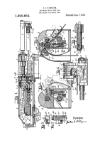
FIG. 1 shows a portion of a rifle with the tripping
mechanism in the safety position and with the breech
block displaced forwardly in the closed position;
FIGS. 2 and 3 show a detail of the assembly of FIG.
1, illustrating the action of the trigger tails on the con-
trolling and, respectively, arresting claws for the
counter means of the rapid fire mode;
FIG. 4	is a plane view, with parts cut-away, of FIG.
2;
FIG. 5	is an analogous view to that of FIG. 1, but
with the tripping mechanism in a first stage or phase of
the individual fire mode;
FIG. 6	shows a detail of the assembly of FIG. 5, in a
second and subsequent stage or phase of the individual
fire mode;
FIG. 7	shows the mechanism preset for the beginning
of the rapid fire continuous mode;
FIG. 8	shows the disengagement of the hammer dur-
ing the continuous rapid fire mode;
FIG. 9	is an analogous view to that of FIG. 5, but
with the mechanism in the position of beginning the
firing of the first shot of a controlled rapid fire mode;
FIG. 10	shows the mechanism in the condition of
beginning the counting of the shots during the con-
trolled rapid fire mode;
FIG. 11	shows the mechanism in the final position,
that is, in the position of rest, of the controlled rapid fire
mode;
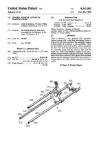
FIG. 12	is a perspective view of the hammer alone;
FIG. 13	is a perspective view of the trigger with the
pawl attached thereto;
FIG. 14	is a perspective view of the rapid fire lever
alone;
FIGS. 15 and 15a are perspective and, respectively,
end views of the fire counter or click for the controlled
rapid fire mode; and
FIG. 16	is a perspective view of the safety shaft with
the additional function of fire mode selector.
DETAILED DESCRIPTION OF THE
INVENTION
With reference to the accompanying drawings, nu-
meral 1 represents the tripping box of an automatic rifle
and numeral 2 represents the breech block of the
weapon, which includes a firing pin 3 and is displace-
able, in a manner known per se, from a rearward, open
position to a forward, closed position.
The following elements are mounted in the tripping
box 1: a tripping mechanism 4 for actuating the individ-
ual fire mode or the rapid but uncontrolled fire mode;
means 5 for controlling the rapid fire mode; and a safety
shaft 6 which serves also as mode selector and which is
positioned between and cooperates with the tripping
mechanism 4 and the control means 5, for the selection
of the firing mode. The firing modes are individual
shots, uncontrolled rapid fire and controlled rapid fire,
as will be described in greater detail hereinafter.
The tripping mechanism 4 substantially comprises a
hammer 7, a trigger 8, a tripping pawl 9 and a rapid fire
lever 10. Hammer 7 is rotatingly mounted on a pivot 7'
and is displaceable to its cocking or arming position by
means of the breech block 2. To strike the firing pin 3,
hammer 7 is displaceable by means of a preloaded
spring 11 mounted on a spring-carrying rod 12 which
169
4
therewith, said arm being urged by a spring 37 that
tends to displace it normally toward the safety shaft 6
and to keep correspondingly the toothed portion 33-34
rotated rearwardly, that is to say in opposition to the
action of the controlling claw 29.
The controlled rapid fire lever 28 is mounted on a
pivot 28' and has, on one side of said pivot, an upper
arm 38 aligned with the spring-carrying rod 12 and an
intermediate finger 39 with which the lever 31 is en-
gaged, and, on the opposed side of said pivot, a portion
40 on which the controlling claw 29 of the shot counter
27 pivots at 29'. The arresting counter-claw 30 pivots,
instead, on the support 25 by means of a pivot 30', as
shown in detail in FIGS. 3 and 4 of the accompanying
drawings.
The controlled rapid fire lever 28 is actuated by a
spring 41, which normally keeps the upper arm 28
thereof displaced toward the spring-carrying rod 12, in
opposition to the action of the lever 31 on the intermedi-
ate finger 39. The lever 31, which excludes from opera-
tion the controlled rapid fire lever 28, is in fact mounted
axially with respect to the shot counter 27 and is pro-
vided with an arm 42 which cooperates with the selec-
tor shaft 6, and a second arm 42' which engages the
finger 39, so as to displace and keep the lever 28 in the
inoperative position, when the weapon is used in the
individual shot fire mode or in the uncontrolled rapid
fire mode.
It is to be observed also that the controlling claw 29
and the arresting counter-claw 30 are urged by springs
43 and, respectively, 44 which tend to keep them in
contact with the teeth 33-34 of the shot counter 27 and
is each provided with a lateral plane or surface 45 and
46, respectively. On these surfaces 45-46 are engaged
the tails 16—16' of the trigger 8, when the weapon is in
safety position, as well as when, at the end (as explained
later on) of the controlled rapid fire operation, when it
becomes necessary to space the claws from the teeth of
the shot counter.
Finally the safety shaft 6 has cammed portions
47,48,49,50 which cooperate, respectively, with one of
the tails 16—16' of the trigger, with the rear arm 18 of
the pawl, with the exclusion lever 31 and with the arm
36 of the shot counter, so as to obtain the engagement of
the safety device or the selection of the various modes
of operation of the weapon, indicated on an extremity
or terminal disc which is integral with the safety shaft
and is provided with a manouver lever (see FIG. 16).
In FIG. 1 of the drawings, there is shown the overall
assembly of the mechanism in position of safety, with
breech block closed and with hammer cocked. In this
condition, the trigger is at rest and its forward extension
15 engages the lower step 13 of the hammer, blocking it
while the rapid fire lever 10 is kept in a condition of
non-influence on the part of the tooth 2' of the breech
block. The safety shaft 6 is rotated, so as to engage and
block (by means of the proper cammed portions 47 and
48) the tail 16' of the trigger and the rear arm 18 of the
pawl 9. In this way, the trigger 8 cannot be moved and
the tripping pawl 9 is kept in inoperative condition, that
is, without engaging with its beak 20 the rear tooth 14 of
the hammer 7.
On the other hand, the cammed portion of the safety
shaft engages the exclusion lever 31, so as to displace
and keep the controlled rapid fire lever 28 at rest, while
the cammed portion 50 engages the arm 36 of the shot
counter 26, in order to block it. Furthermore, the tails
16—16' of the trigger rest on the claw 29 and on the
4,693,
3
extends rearwardly. Hammer 7, furthermore, has a
lower step 13 alternatively cooperating with trigger 8
or with lever 10. Hammer 7 also as a rear engaging
tooth 14 for cooperation with the tripping pawl 9.
Trigger 8 is mounted within the tripping box 1 by 5
means of pin 8' and has a forward extension 15 which
engages the lower step 13 of the hammer 7 in the safety
position at the beginning and at the end of the three
modes of firing. Trigger 8 also has a pair of parallel tails
16—16' which extend rearwardly, passing underneath 10
the safety shaft 6 (see FIGS. 4 and 13).
The tripping pawl 9 is mounted, in a pivotable man-
ner, on the same pivot 8' of the trigger 8 and has a
forward arm 17 which can rest on the extension 15 of
the trigger, and a rear arm 18 which extends substan- 15
tially between the two tails 16—16' of the trigger and
which ends with a finger 19 facing upwardly, and an
upper arm having a beak 20 for engagement with the
tooth 14 of the hammer, so as to arrest the hammer in
the armed or cocked position. Between the body of the 20
trigger 8 and the tripping pawl 9 there is provided a
spring 21', the action of which tends to keep the trip-
ping pawl 9 normally in the position of engagement of
the hammer 7, while the trigger is urged by a suitable
recovery spring 21.	25
The rapid fire lever 10 is also pivotably mounted on
pivot 8' of the trigger 8 and has a first arm 22 facing
toward and engaging the lower step 13 of the hammer,
and a second arm 23 facing upwardly and cooperating,
at least during the rapid firing mode, with a pushing 30
cam 2' provided on the carriage-firing pin 2, for the
purpose hereinafter explained. The lever 10 is urged by
spring 24 (also see FIG. 5) which acts in opposition
direction to the action of the cam 2' on the lever itself,
so as to normally displace the first arm 22 into a position 35
of with interception of the lower step 13 of the hammer.
All the components of the control mechanism 5 are
premounted on a support 25 for their combined inser-
tion and placement, as a unit, in the tripping box 1, in
correlation with the tripping mechanism 4. The support 40
25 comprises a small wing 25' having an opening for
receiving the spring-carrying rod 12, of the hammer 7.
The support 25 is held fixed in the tripping box 1 by
means of a spine 26 and by the safety shaft 6. Explained
in greater detail, the control device 5 comprises a ratch- 45
et-type shot-counting member, hereafter called the shot
counter, 27, a controlled rapid fire lever 28, actuated by
the hammer 7 through the spring-carrying rod 12, a
control claw 29 connected to the lever 28 for the opera-
tion of the shot counter 27, a counter-claw 30 for arrest- 50
ing the shot counter, and a further lever 31 for exclud-
ing the controlled rapid fire lever 28 from being opera-
tive during the use of the weapon in the individual shot
fire mode or in the uncontrolled rapid fire mode (see
FIG. 2).	55
The shot counter 27 is pendularly mounted on a pivot
27' and has a portion 32 facing downwardly and pos-
sessing two series of teeth 33 and 34 that are ratchet-
like, and spaced apart by a zone with a radial surface 35
for cooperation with the terminal finger 19 of the rear 60
arm 18 of the pawl 9 (also see FIG. 15). The two series
of teeth of the shot counter are, respectively, in corre-
spondence with the controlling claw 29 and the arrest-
ing claw 30 and comprise two, three or more teeth,
depending on the number of shots to be controllably 65
fired.
The shot counter 27 is also provided with an arm 36
which extends above the safety shaft 6 and cooperates
4,693,169
5
counter-claw 30, keeping them spaced from the shot-
counter 27 and, therefore, in the inoperative position
(see also FIGS. 2-3).
Starting from the condition of safety, it is then neces-
sary to rotate the selector shaft 6, in order to set the
weapon to the individual shot fire mode or to the con-
trolled rapid fire mode or to the uncontrolled continu-
ous rapid fire mode.
For firing individual shots see FIGS. 5 and 6 the
selector shaft 6 is rotated, so as to allow the displace-
ment of the trigger and of the tripping pawl 9. Lever 28
is kept still at rest by the exclusion lever 31, which is still
engaged by the corresponding cammed portion 49,
while the shot counter 27 (because of the rotation of the
shaft 6 and because of the urging by the spring 37)
moves away from the finger 19 (rear finger) of the trip-
ping pawl and outside of the action zone of the claws
29-30. The claws 29-30, free from the arresting action
of the tails 16—16' of the trigger, are displaced toward
the shot counter 27. As a result, the trigger 8 may be
depressed and actuated in the direction of the arrow F
(see FIGS. 5 and 6), so as to free the hammer 7 from the
blocking action of the forward extension 15 of the trig-
ger for the firing of the first shot (phantom lines in FIG.
5). When the hammer 7 moves into the armed or cocked
position, as a result of the recoiling of the breech block
2, it is engaged and blocked by beak 20 of the pawl 9,
which engages with the rear tooth 14 of the hammer
(see FIG. 6). This is so even when the trigger 8 is still
depressed. In order to fire the subsequent shot, it is
necessary to let go of the trigger and then depress it
again, so as to displace, together with it, the tripping
pawl 9, in the direction for disengaging the pawl 9 from
the hammer. During the individual shot fire mode, the
lever 10 remains without influence and the spring-car-
rying rod 12 of the hammer does not act upon the con-
trolled rapid fire lever 28.
For rapid, automatic fire in the uncontrolled mode,
the selector shaft 6 is rotated, so as to permit the ma-
neuver of the trigger 8 and to block, in the inoperative
position, the controlled rapid fire lever 28 by means of
the exclusion lever 31 (see FIGS. 7 and 8). The shot
counter 27, due to the cammed portion 49 of the selec-
tor shaft 6, is positioned instead so as to intercept, with
the radial portion 35, the finger 19 of the rear arm 18 of
the tripping pawl 9, and thus to limit the displacement
thereof. This occurs in order to prevent the upper beak
20 of the tripping pawl 9 from engaging the rear tooth
14 of the hammer while the weapon is in the rapid fire
mode.
In such a condition (shown in FIG. 7 of the drawings)
by depressing the trigger 8 according to arrow F' one
obtains the disengagement of the hammer 7 for the
firing of a first shot, as in the case of firing a single,
individual shot. By keeping the trigger depressed, one
obtains the automatic, rapid fire mode up to the exhaus-
tion of the cartridges in the magazine.
After every shot, recoiling breech block 2, moves the
hammer 7 in the cocked position where it comes to be
blocked by the first arm 22 of the lever 10 engaged with
the step 13 of the hammer (see FIG. 8), while the trip-
ping pawl 9 remains inoperative. Such a blocking of the
hammer is, however, only temporary, because with the
subsequent return of the breech block into the closed
position, the tooth 2' thereof acts on the second arm 23
of the lever 10, moving its lever counter-clockwise (see
FIG. 8), so as to disengage automatically the hammer
for the firing of the weapon and the automatic exiting of
5
10
15
20
25
30
35
40
45
50
55
60
65
6
another shell. In actuality, lever 10 engages and disen-
gages the hammer 7 in synchronism with the opening
and closing displacements, respectively, of the breech
block 2.
Also in this case the displacements of the spring-car-
rying rod, concurrently with the hammer, have no in-
fluence on the lever 28 which is kept in the inoperative
position by the exclusion lever 31.
Finally, for the rapid fire (controlled) mode, the se-
lector shaft 6 is rotated and positioned as shown in
FIGS. 9-10-11 of the drawings. Then, the trigger 8 may
be depressed and, therefore, actuated, while the trip-
ping pawl 9 is blocked, even if only temporarily, by the
shot counter 27. Shot counter 27, in fact, because of the
action of the cammed portion 50 of shaft 6 on the arm 36
of the shot counter 27, comes to be positioned so as to
cooperate with the claw 29 and with the counter-claw
30 and, concurrently, to intercept with the radial por-
tion 35, the terminal finger 19 of the pawl, so that the
engagement of the hammer by the beak 20 is prevented,
as in the case of firing continuously without control. On
the other hand, the cammed portion 49 of the selector
shaft 6 is positioned, so as to permit a displacement of
the exclusion lever 31 in the inoperative position, thus
freeing the lever 28 for interaction with the spring-car-
rying rod 12. This will also cause the claw 29 to actuate
the shot counter 27.
In particular, FIG. 9 of the accompanying drawings
illustrates the condition of firing the first shot of a con-
trolled rapid fire mode, in which condition the depres-
sion of the trigger (arrow F") determines the disengage-
ment of the hammer 7, as in the case of the individual
shot firing mode, in which the first shot is fired. With
the displacement of the hammer 7 toward the firing pin
3, the spring-carrying rod 12 moves forwardly and
allows a concurrent displacement of the lever 28 and,
therefore, a displacement in the rearward direction of
the claw 29. This latter then comes into engagement
with the first tooth of the corresponding plurality of
teeth 33 of the shot counter 27, as shown in FIG. 10.
Subsequently, following the firing of the cartridge,
the breech block recoils and displaces the hammer 7 to
the cocked position, where it is temporarily held by the
first arm 22 of the rapid fire lever 10. Such a displace-
ment of the hammer results also in a movement in the
rearward direction of the spring-carrying rod 12, which
angularly moves the lever 28 on its pivot 28' in a direc-
tion opposite to the previous one.
It follows that that there is a positive movement,
forward, of the controlling claw 29, causing the advanc-
ing of the shot counter 27 by one notch or step, so as to
count the occurrance of a first shot. In a parallel sense,
the counter-claw 30 engages the first tooth of the corre-
sponding plurality of teeth 34 of the shot counter 27.
The subsequent return of the carriage-firing pin 2 in
the closed position, keeping always the trigger de-
pressed, determines (through its tooth 2') the displace-
ment of the lever 10 for the automatic disengagement of
the hammer 7, as in the case of the firing in the uncon-
trolled rapid fire mode, for the firing of another shot.
The above described sequence is then repeated; that is
to say, the displacement of the hammer 7, of the rod 12,
of the lever 28 and of the claw 29 for the advancement
of the shot counter 27 by a further notch or step, while
the counter-claw 30, in cooperation with the corre-
sponding teeth 34, prevents the movement of the shot
counter 27 by the spring 37 during the passive run of the
claw 29.
4,693,
7
This will continue until the shot counter 27 has
moved as many notches or steps as there are teeth 33 in
the counting process. This will result in the firing of a
corresponding number of shots.
In the case illustrated, the shot counter 27, having 5
three counter teeth 33, allows the controlled rapid fire
of three consecutive shots.
With the firing of the last shot of the controlled rapid
fire mode (see FIG. 11) the shot counter 26 comes to
rest in a position, in which its radial portion 35 is moved 10
away from the finger 19 of the tripping pawl 9. The
pawl, no longer limited in its displacements, comes to
rest in a position of interception and arrest of the rear
tooth 14 of the hammer by means of the beak 20. So,
when the hammer 7 moves into a cocked position, after 15
the firing of the last shot, it is arrested and blocked by
the beak 20 of the pawl 9, as shown in FIG. 11. In this
condition, the mechanism is automatically blocked,
interrupting the rapid firing mode even if the trigger is
still depressed.	20
In order to resume the cycle of controlled rapid fir-
ing, it is necessary to let go of the trigger, so that it may
return to rest. Then, the forward extension 15 of the
trigger 8 engages the lower step 13 of the hammer, so as
to block the latter in the cocked position, immediately 25
before the disengagement of the tripping pawl (which is
moving concurrently with the trigger 8 thanks to the
help of arm 17 on the extension 15) from the hammer
due to the blocking caused by the beak 20.
At the same time, the tails 16—16' of the trigger 8 30
come to rest on the claw 29 and on the counter-claw 30,
so as to lower them and disengage them from the re-
spective teeth of the shot counter 27. The shot counter
27, urged by the spring 37, returns to the initial position,
that is to say, the “zero” position, in which—see FIG. 35
9—its arm 36 rests on the selector shaft 6, its teeth 33-34
are all displaced rearwardly with respect to the two
claws 29-30, and its radial portion 35 intercepts the
terminal finger 19 of the tripping pawl 9, so as to limit
the displacement thereof and prevent the blocking ac- 40
tion of its beak 20 on the tooth 14 of the hammer.
At this point it is possible to repeat another cycle of
firing in the controlled rapid fire mode, or by moving
suitably the selector shaft 6, set the mechanism to the
safety position or establish the firing mode (individual 45
shots or uncontrolled rapid fire mode), according to the
above described operational procedure.
What is claimed is:
1.	A device for controlling the firing modes of a por-
table, automatic weapon, comprising:	50
(a)	a breech block having a firing pin thereon and
displaceable from a rear open position to a forward
closed position;
(b)	a tripping box with a tripping mechanism therein
which includes:	55
(i)	a spring-loaded hammer and a spring engaged
with said hammer, said hammer being displace-
able to a cocked position upon the opening of
said breech block, and displaceable to a firing
position upon urging by said spring, which 60
spring being mounted on a spring-carrying rod
that moves in accordance with the displacements
of said hammer;
(ii)	a trigger depressable to fire the weapon;
(iii)	a safety shaft having a safety position and func- 65
tioning also as a selector, said shaft having posi-
tions for said firing modes, said modes being a
first individual shot fire mode, a second uncon-
169
8
trolled rapid fire mode, and a third controlled
fire mode;
(iv) a first lever cooperating with said hammer and
with said breech block when said safety shaft is
in a position for said second fire mode and while
said trigger is kept depressed; and
(v) a tripping pawl mounted to interact with said
hammer to hold it in the cocked position during
said first fire mode;
(c)	a pendular, shot counter having at least one series
of teeth for counting the shots fired sequentially
during said third mode; said counter having a radial
portion engaged with said tripping pawl for limit-
ing the displacement of said pawl and preventing
the interaction of said pawl with said hammer dur-
ing said second and third fire modes;
(d)	a pivoting reciprocatingly displaceable second
lever for said third fire mode, actuated by said
hammer through said spring-carrying rod;
(e)	a controlling claw connected to said second lever,
positively displaceable for engagement with said
teeth of said counter and for advancement of said
counter by one count following the cocking of said
hammer after the firing of each controlled shot,
and passively displaceable as a result of its disen-
gagement from said hammer;
(f)	a blocking counter-claw for arresting said counter
during said passive displacement of said controlling
claw; and
(g)	a third lever for excluding said second lever from
said third fire mode, said third lever engaging a
first cammed portion of said safety shaft for dis-
placement of said second lever to a rest position
when the weapon is in one of the safety position,
said first fire mode and said second fire mode.
2.	The device of claim 1 wherein said counter com-
prises a second series of teeth cooperating with said
blocking counter-claw.
3.	The device of claim 1, wherein said counter has an
arm cooperating with a second cammed portion of said
safety shaft for positioning said counter in a non-inter-
ception position with said pawl during said first fire
mode or in an interception and blockage position with
said pawl during said second and third fire modes;
4.	Device according to claim 1, wherein said third
lever is mounted axially with respect to said counter
and has a first arm for contacting said first cammed
portion of said safety shaft, and a second arm facing and
cooperating with a finger of said third lever, so as to
block said third lever in a position away from said
spring-carrying rod, when the shaft is in safety position
or during said first or second fire modes.
5.	The device of claim 1, wherein said counter, said
second lever, said controlling claw, said counter-claw
and said third lever are all mounted within a support
box for their insertion into and extraction from, said
tripping box; said support box having a small wing with
an opening therein for guiding and sliding therethrough
said spring-carrying rod.
6.	The device of claim 5, wherein said trigger has two
tails said tripping box has mounted therein and trans-
versely thereto and to said support, the safety shaft, so
as to be positioned between said tails of said trigger and
said tripping pawl, on one side, and the arm of said
counter and the first arm of said third lever, on the other
side.
4,693,169
9
7.	Device according to claim 5, wherein said control-
ling claw is pivotable on said second lever, while said
blocking counterclaw is pivotable on said support box.
8.	A device for controlling the firing modes of a por-
table, automatic weapon comprising:
(a)	a breech block having a firing pin thereon and
displaceable from a rear open position to a forward
closed position;
(b)	a tripping box with a tripping mechanism therein
which includes:
(i)	a spring-loaded hammer and a spring engaged
with said hammer, said hammer being displace-
able to a cocked position upon the opening of
said breech block, and displaceable to a firing
position upon urging by said spring, which
spring being mounted on a spring-carrying rod
that moves in accordance with the displacements
of said hammer;
(ii)	a trigger depressable to fire the weapon;
(iii)	a safety shaft having a safety position and func-
tioning alsoas a selector, said shaft having posi-
tions for said firing modes, said modes being a
first individual shot fire mode, a second uncon-
trolled rapid fire mode, and a third controlled
fire mode;
(iv)	a first lever cooperating with said hammer and
with said breech block when said safety shaft is
in a position for said second fire mode and while
said trigger is kept depressed; and
(v)	a tripping pawl mounted to ionteract with said
hammer to hold it in the cocked position during
said first fire mode;
(c)	a pendular, shot counter having at least one series
of teeth for counting the shots fired sequentially
during said third mode;
(d)	a pivoting reciprocatingly displaceable second
lever for said third fire mode, actuated by said
hammer through said spring-carrying rod;
(e)	a controlling claw connected to said second lever,
positively displaceable for engagement with said
teeth of said counter and for advancement of said
counter by one count following the cocking of said
hammer after the firing of each controlled shot,
and passively displaceable as a result of its disen-
gagement from said hammer;
5
10
15
20
25
30
35
40
45
50
55
60
10
(f)	a blocking counter-claw for arresting said counter
during said passive displacement of said controlling
claw; and
(g)	a third lever for excluding said second lever from
said third fire mode, said third lever engaging a
first cammed portion of said safety shaft for dis-
placement of said second lever to a rest position
when the weapon is in one of the safety position,
said first fire mode and said second fire mode;
said trigger having a forward extension engaging a
forward arm of said pawl for the con-current dis-
placement of said trigger and said pawl during the
disengagement of said hammer from said pawl; said
trigger having two rear tails resting respectively on
said controlling claw and blocking claw, for mov-
ing them away from said counter when said trigger
is at rest, and for resetting said counter at the end of
said third fire mode.
9.	The device of claim 8, wherein said counter, said
second lever, said controlling claw, said counter-claw
and said third lever are all mounted within a support
box for their insertion into and extraction from, said
tripping box as a unit; said support box having a small
wing with an opening therein for guiding said spring-
carrying rod.
10.	The device of claim 9, wherein said tripping box
has mounted therein and transversely thereto and to
said support, the safety shaft so as to be positioned be-
tween said tails of said trigger and said tripping pawl, on
one side and the arm of said counter and the first arm of
said third lever, on the other side.
11.	The device according to claim 9, wherein said
controlling claw is pivotable on said second lever, while
said blocking counter-claw is pivotable on said support
box.
12.	The device according to claim 8, wherein said
counter comprises a second series of teeth cooperating
with said blocking counter-claw.
13.	The device of claim 8, wherein said counter has an
arm cooperating with a second cammed portion of said
safety shaft for positioning said counter in a non-inter-
ception position with said pawl during said first fire
mode or in an interception and blockage position with
said pawl during said second and third fire modes.
*****
65
UNITED STATES PATENT AND TRADEMARK OFFICE
CERTIFICATE OF CORRECTION
PATENTNO. : 4>693(169
DATED : September 15, 1987
INVENTOR(S) : Pier G. Beretta
It is certified that error appears in the above-identified patent and that said Letters Patent is hereby
corrected as shown below:
On the title page assignee should read
-- (73) Assignee: Fabbrica D'Armi P. Beretta S.p.A.
Signed and Sealed this
Sixteenth Day of February, 19S
Artest:
DONALD J QL'IGG
Attesting Officer
Commixrioner of Patents and Tnotentarks