/























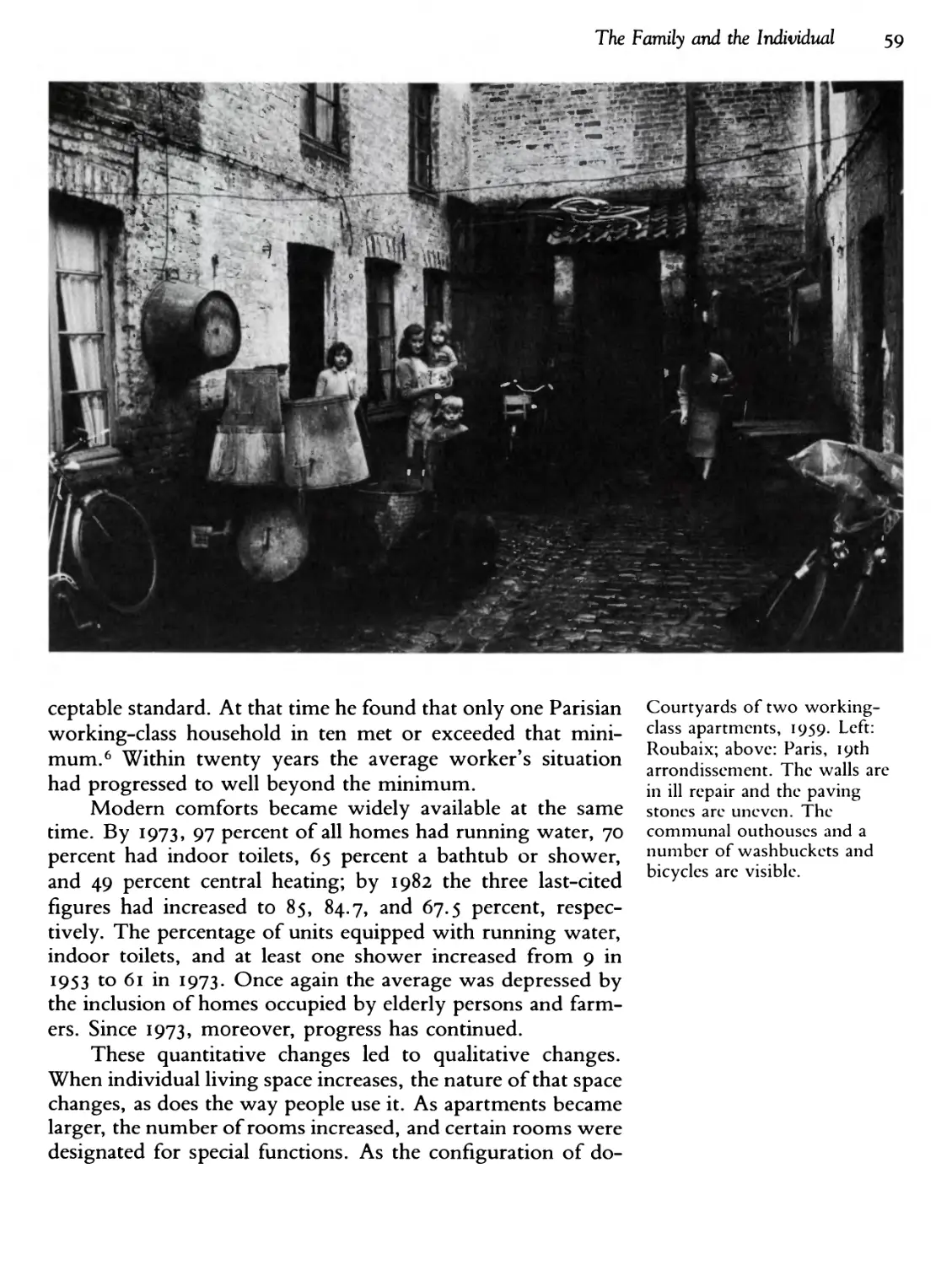


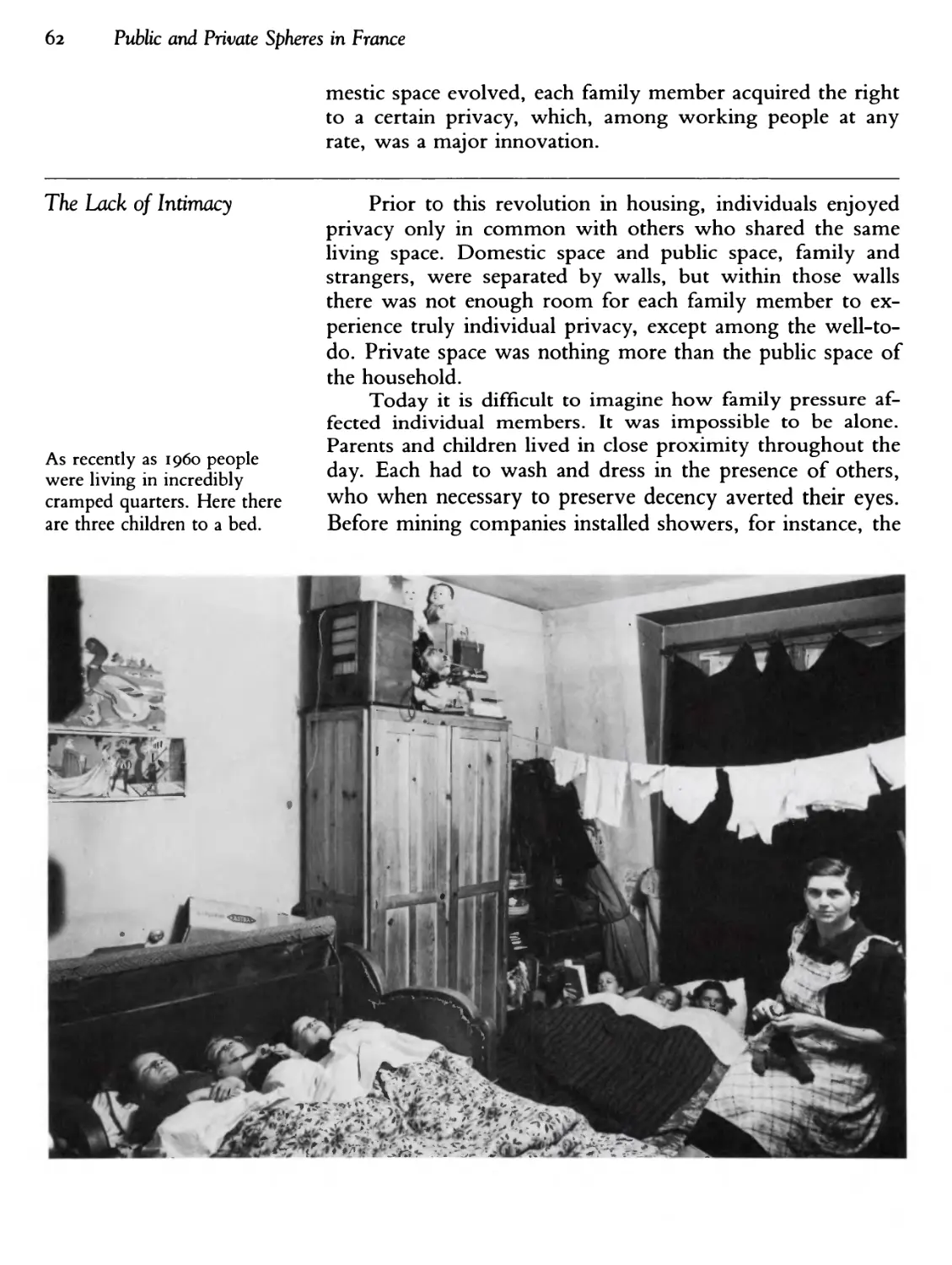





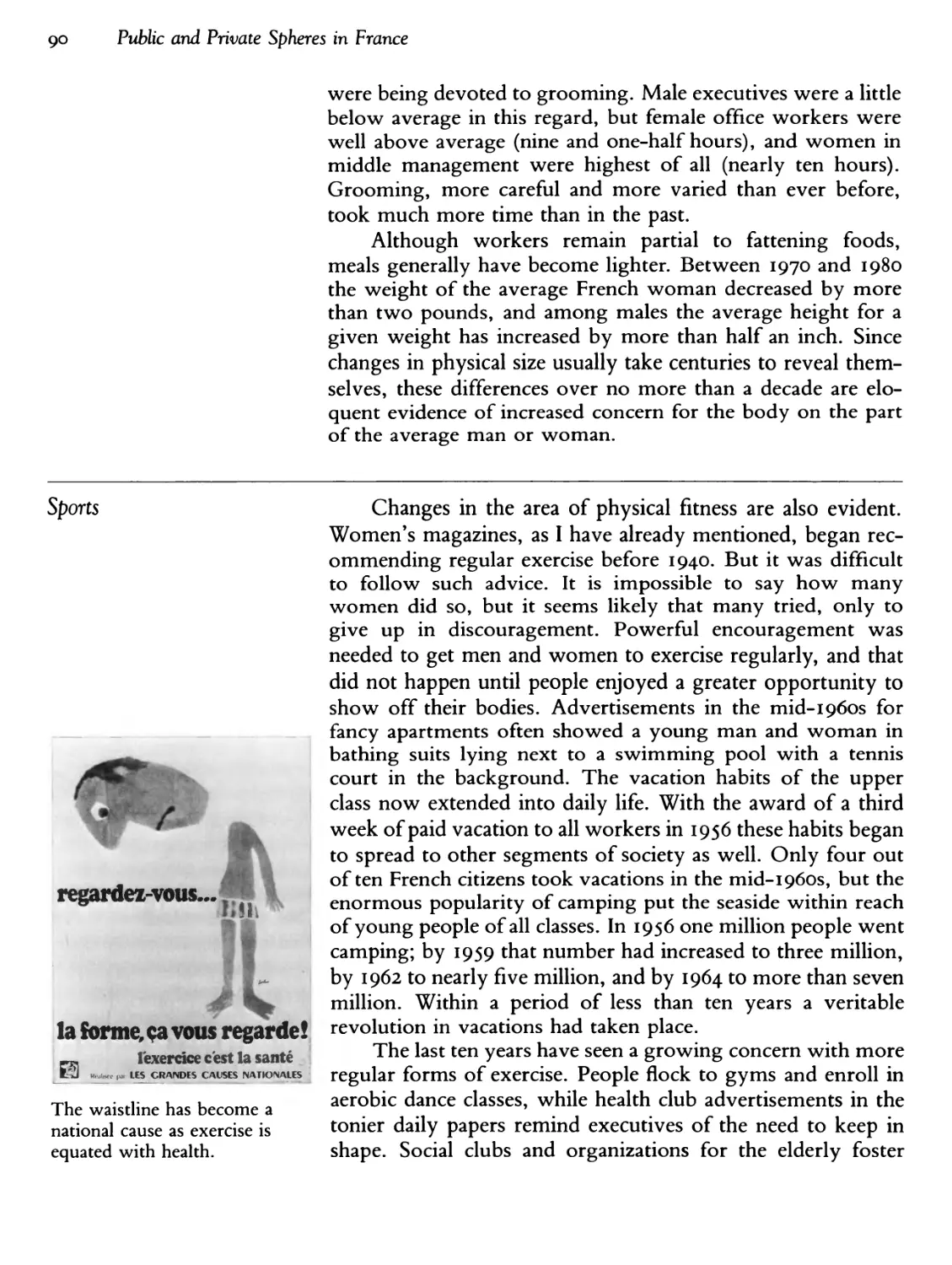

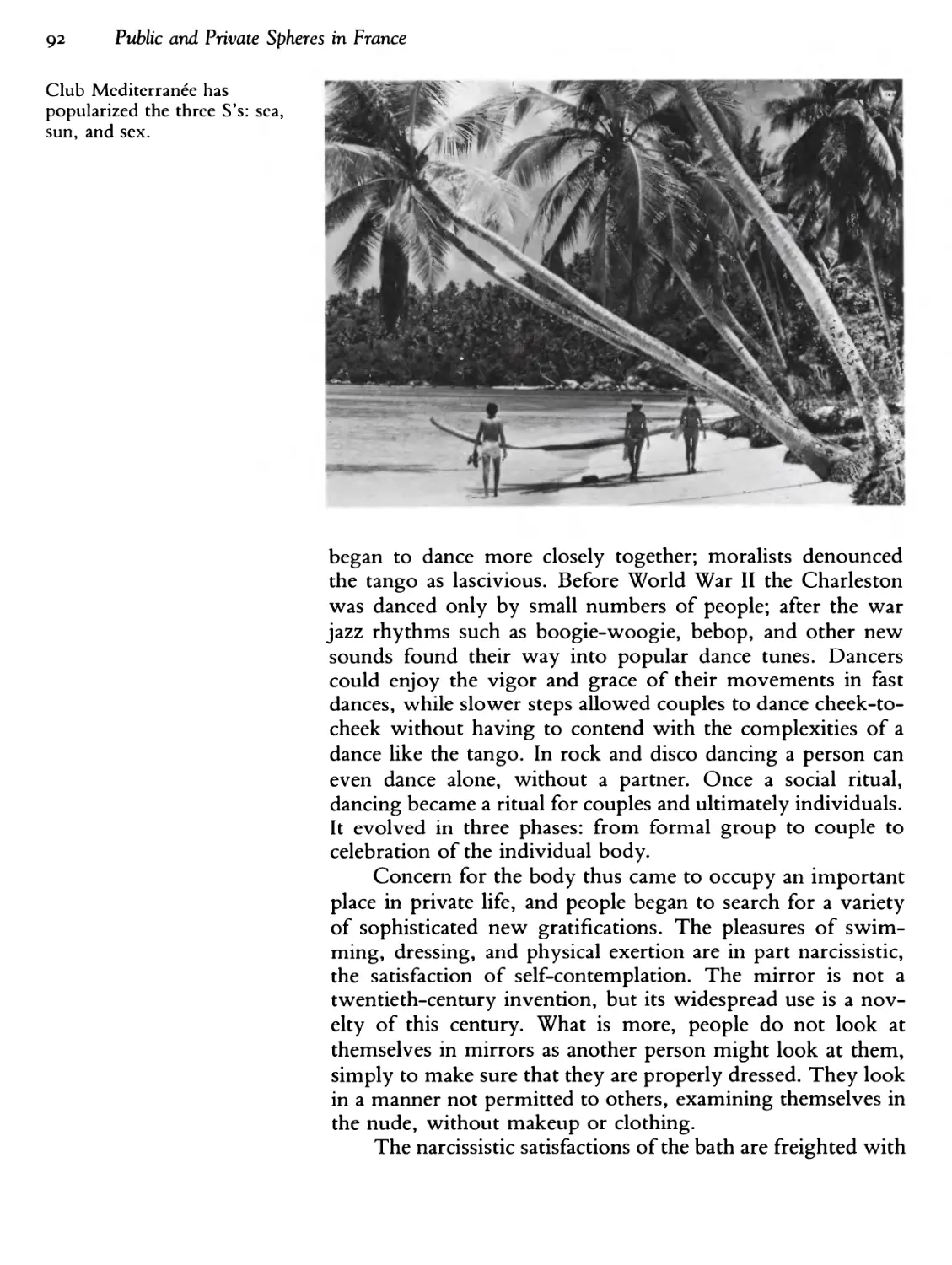
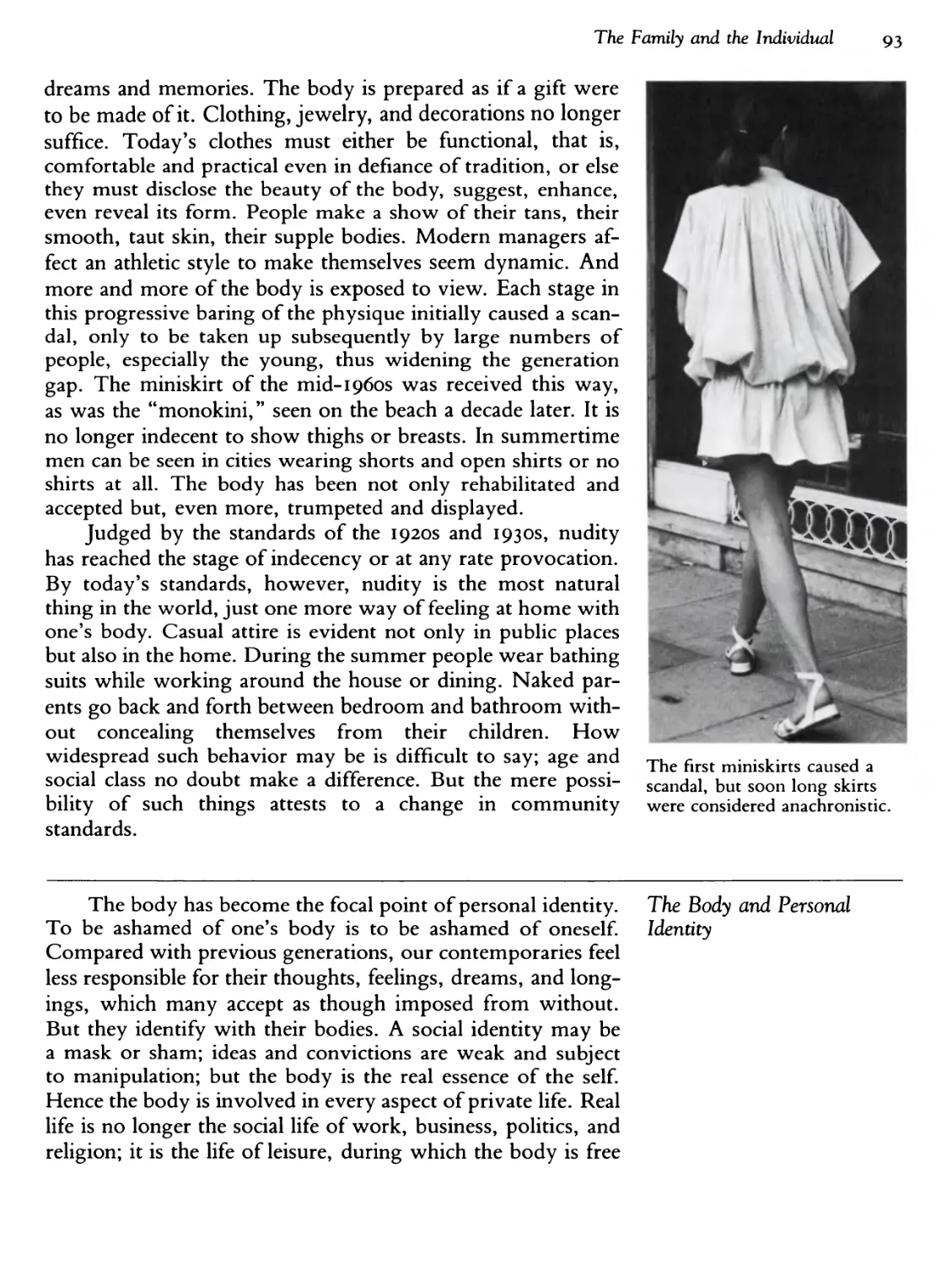








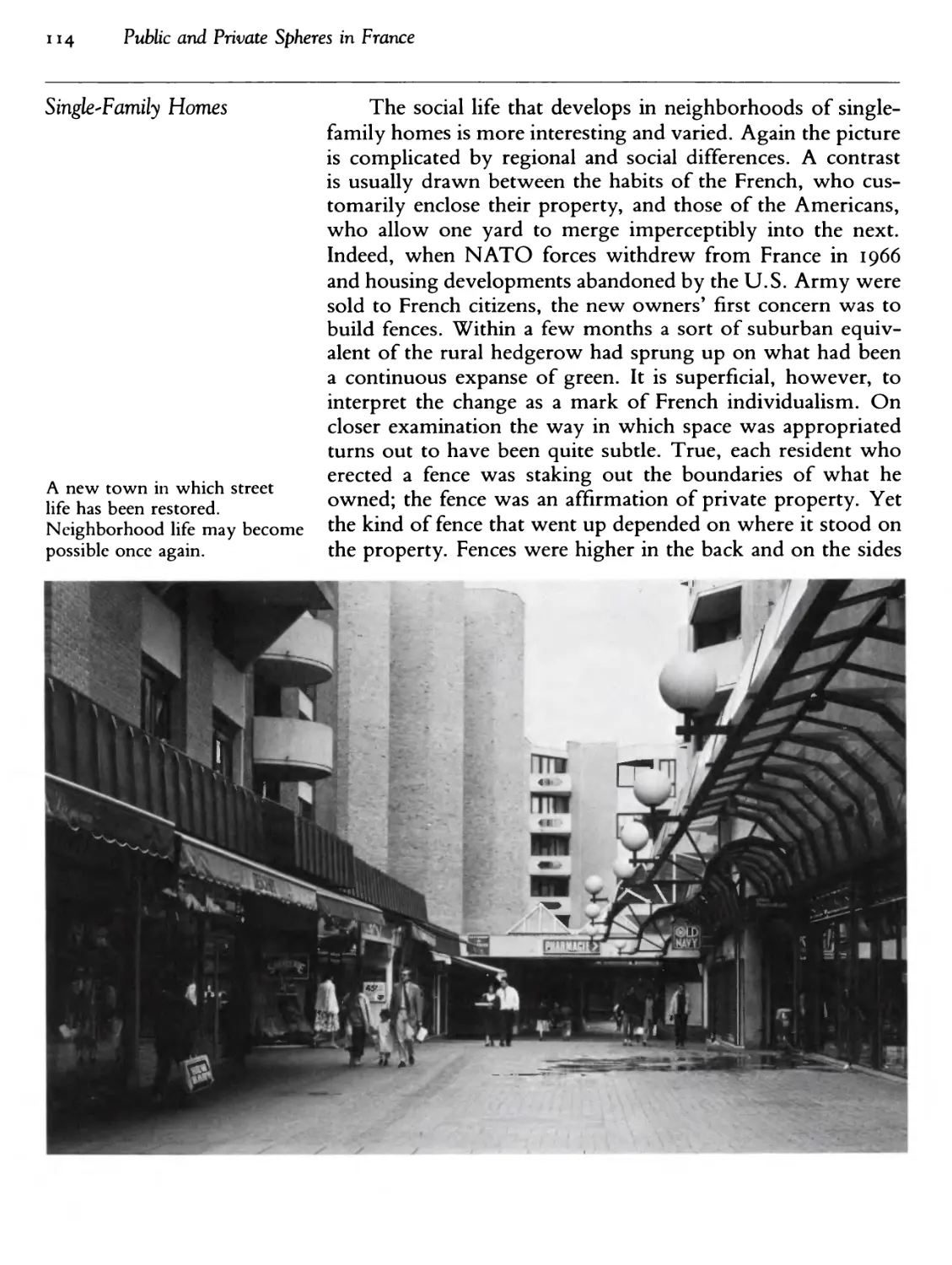













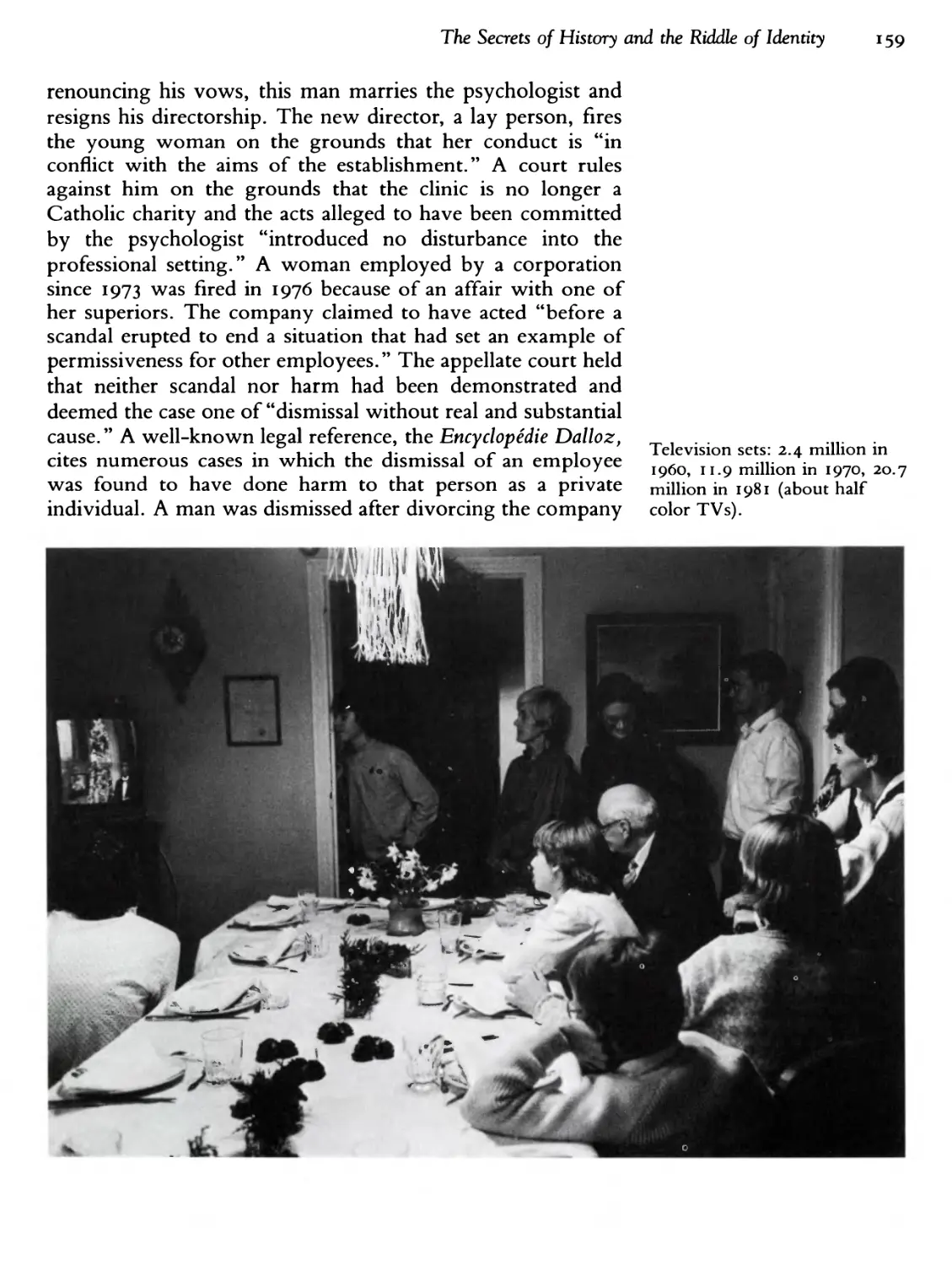



























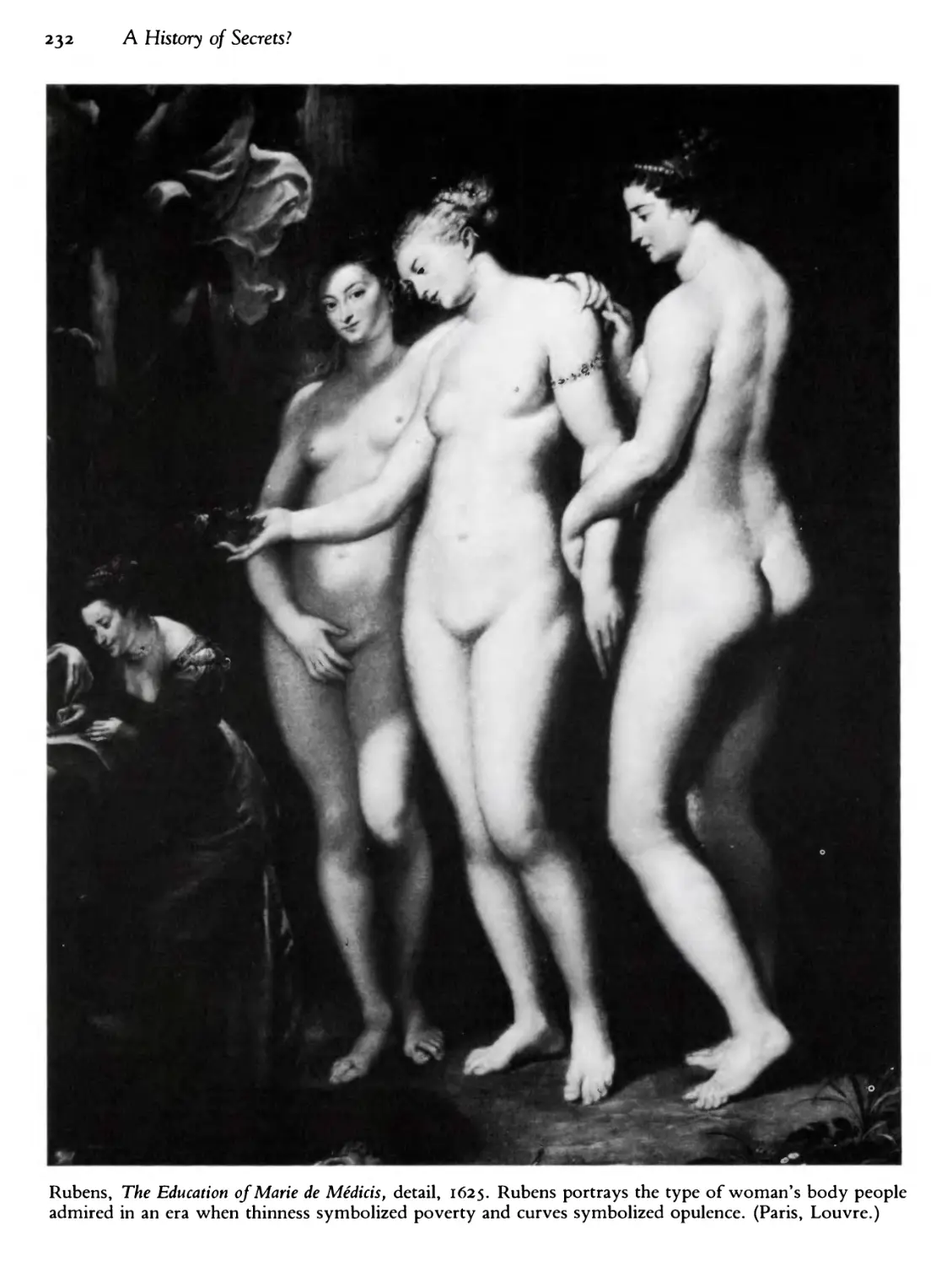
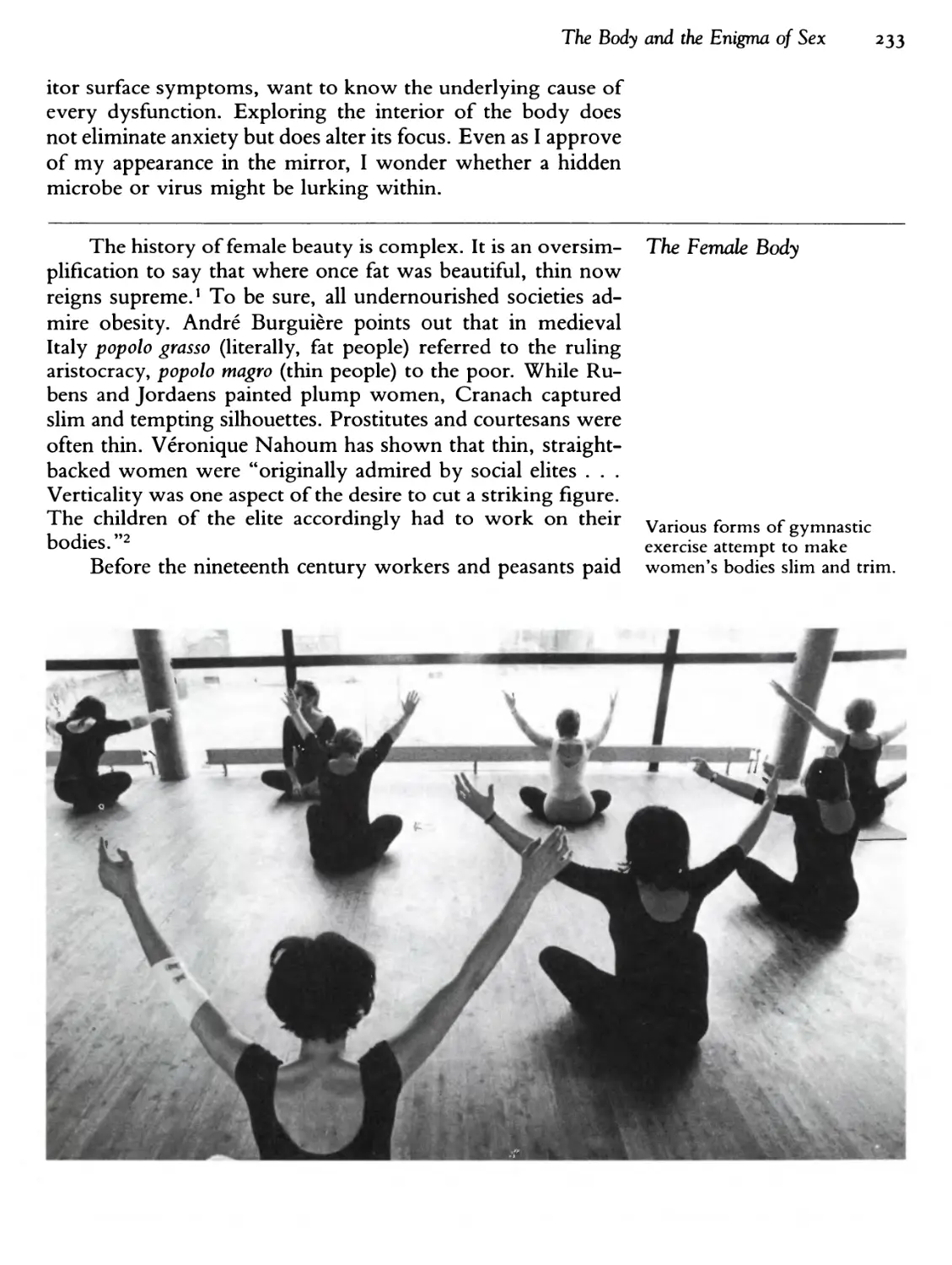
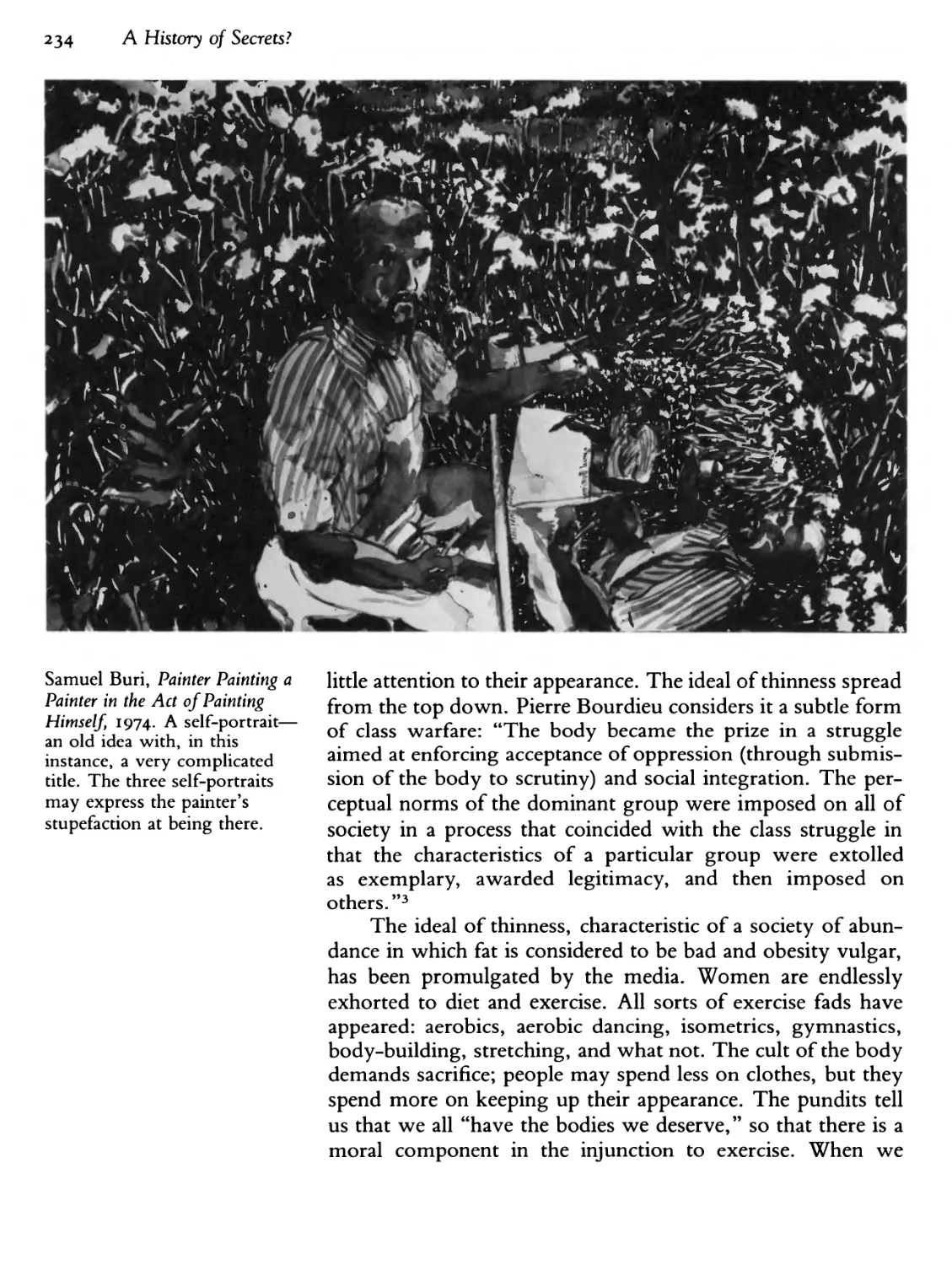
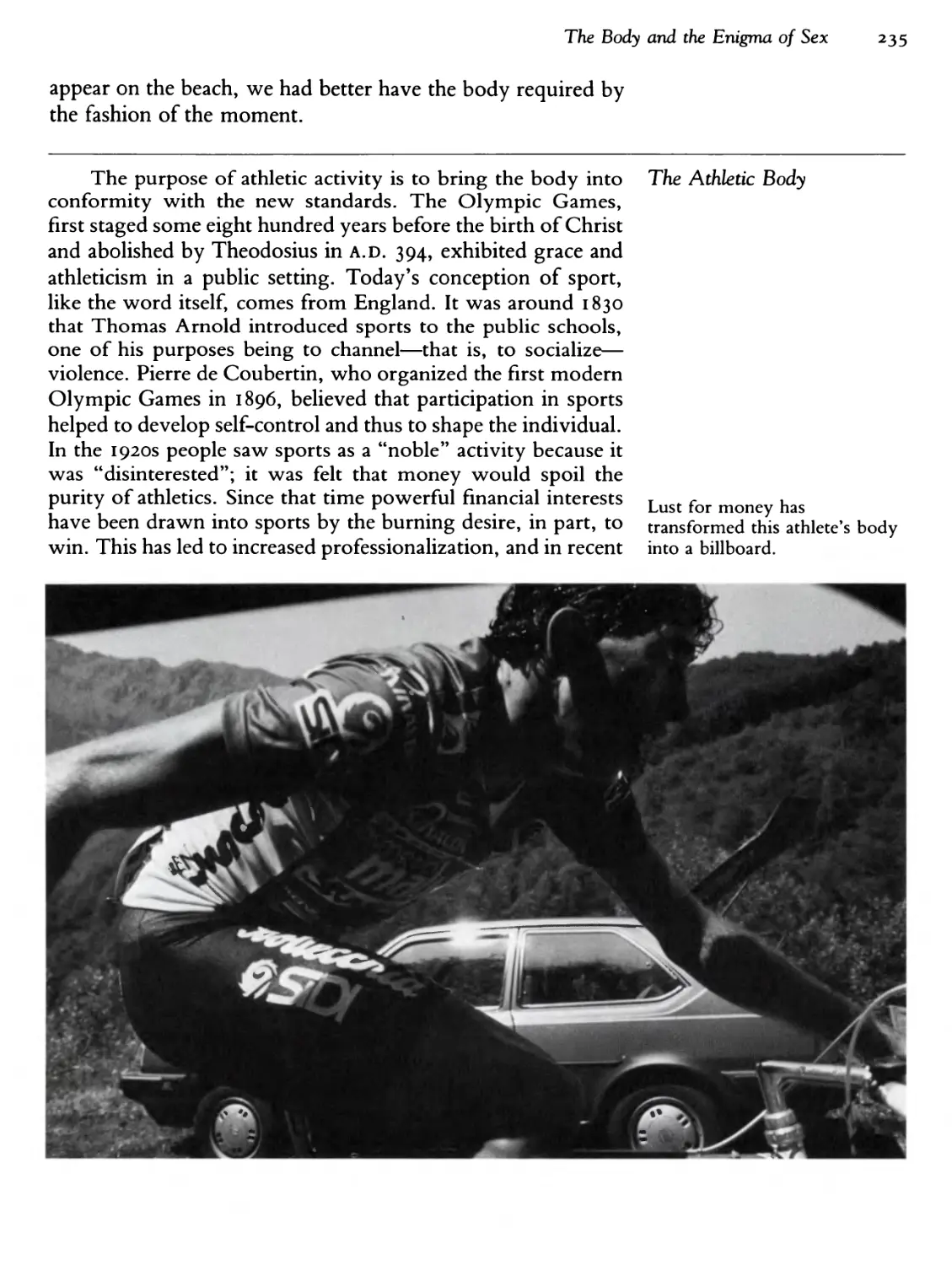





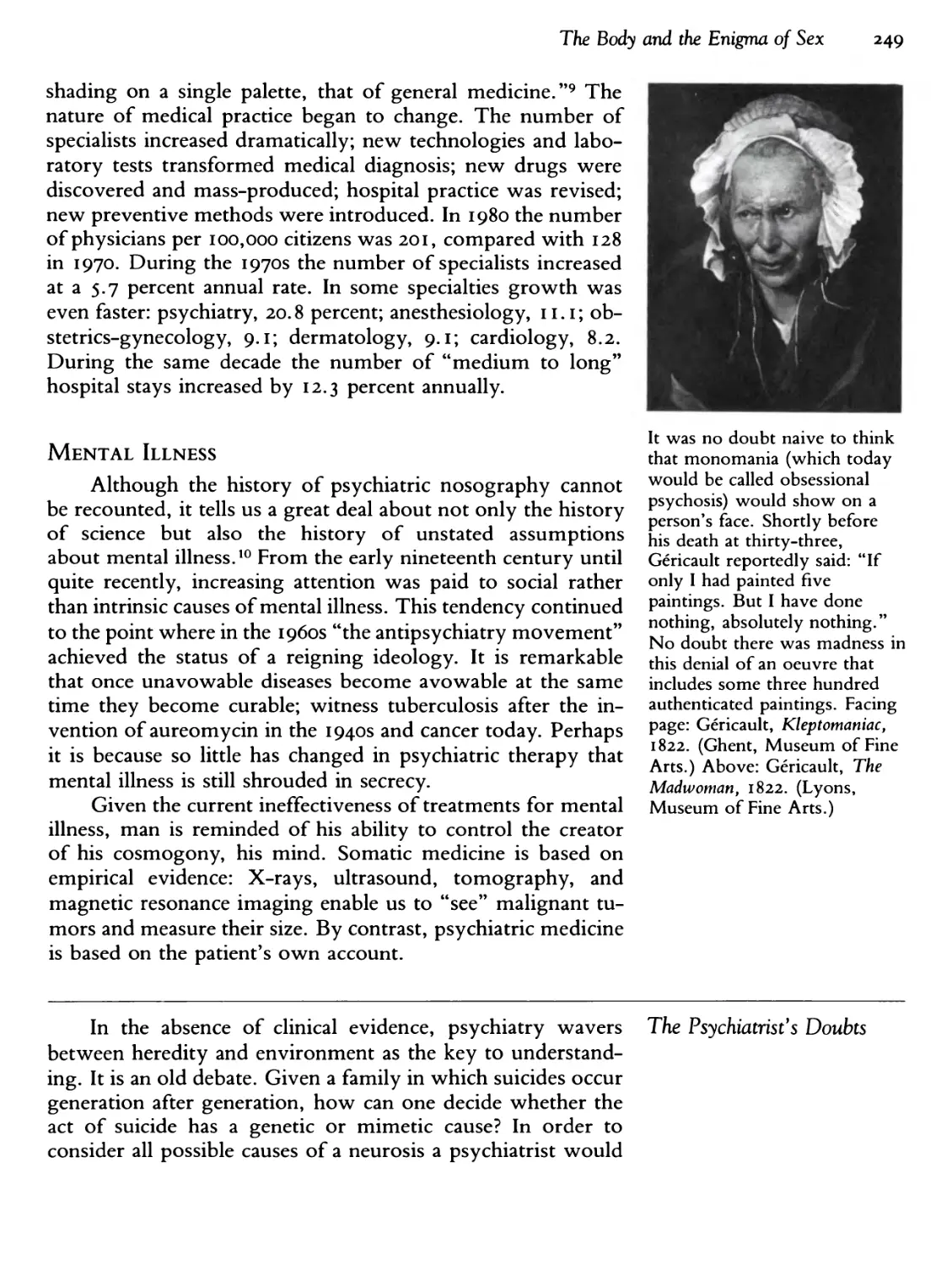




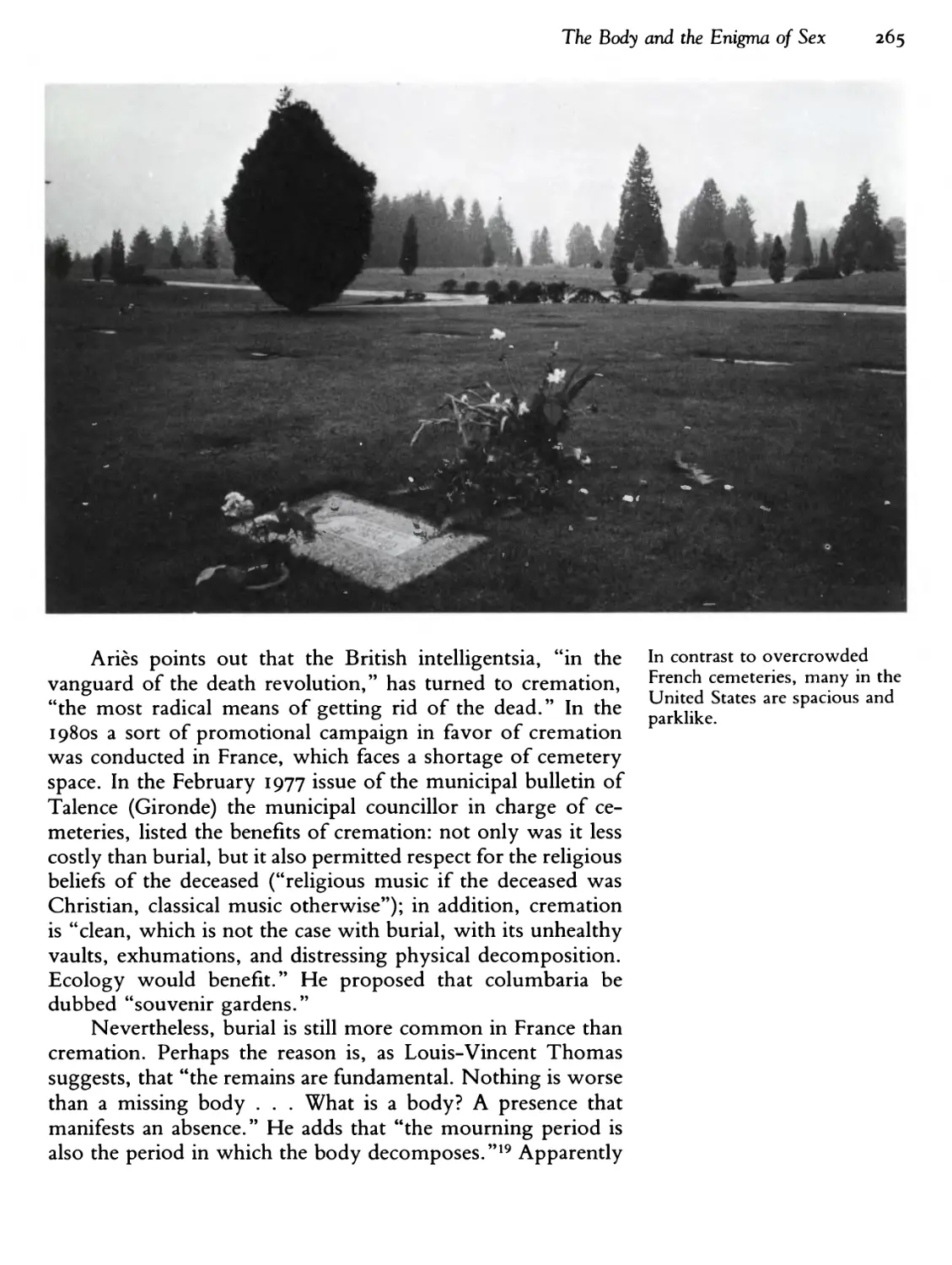
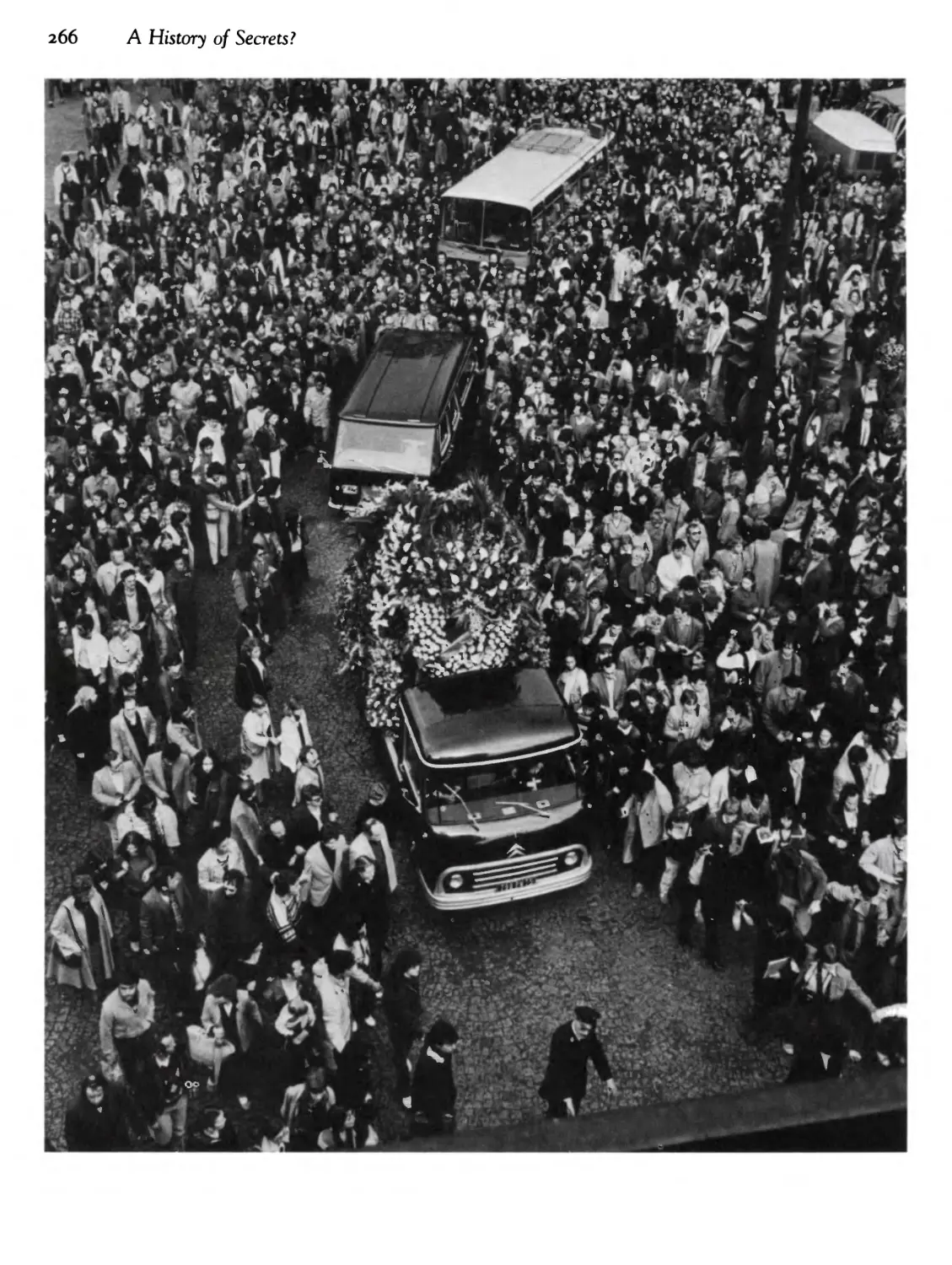


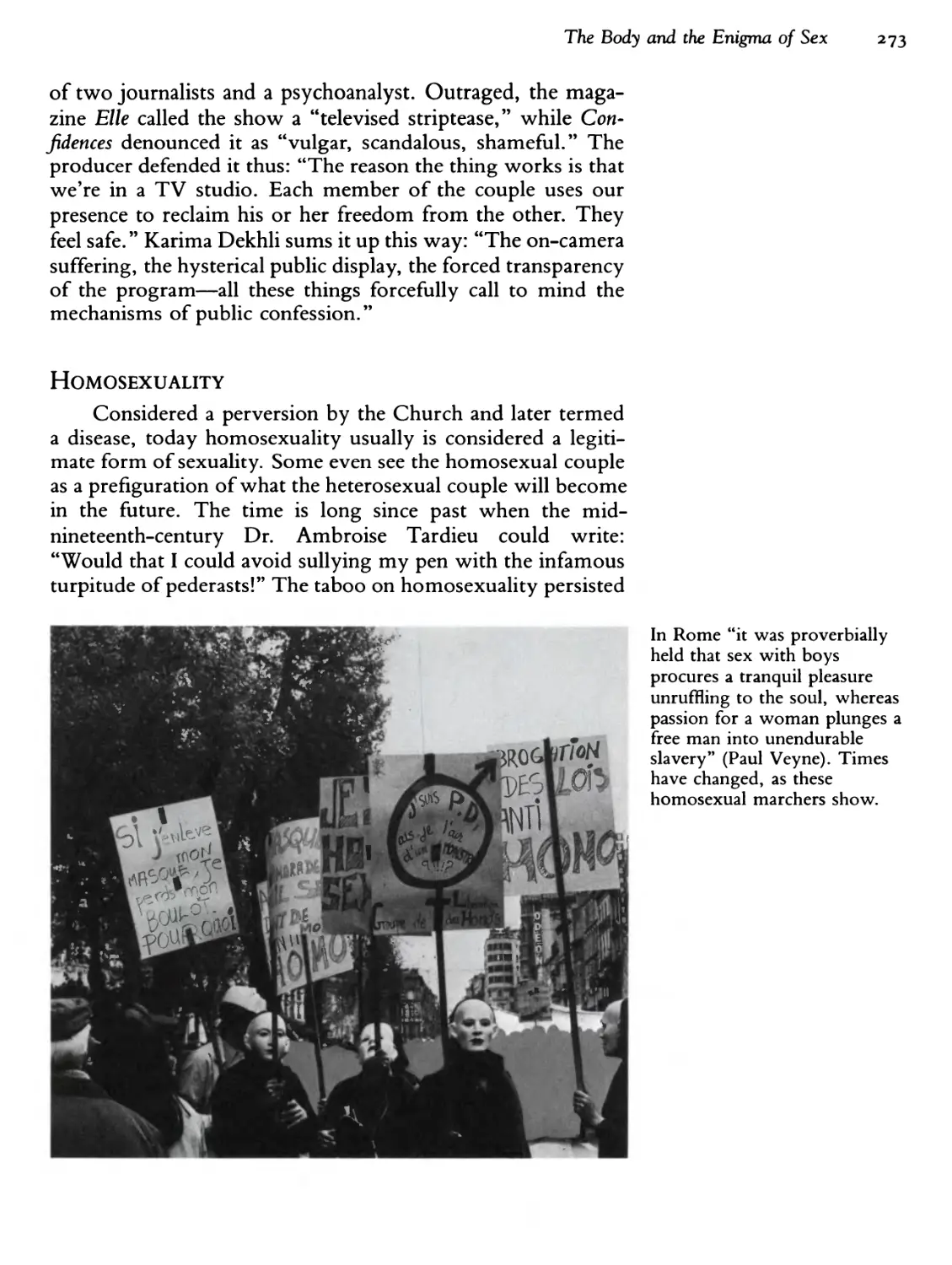

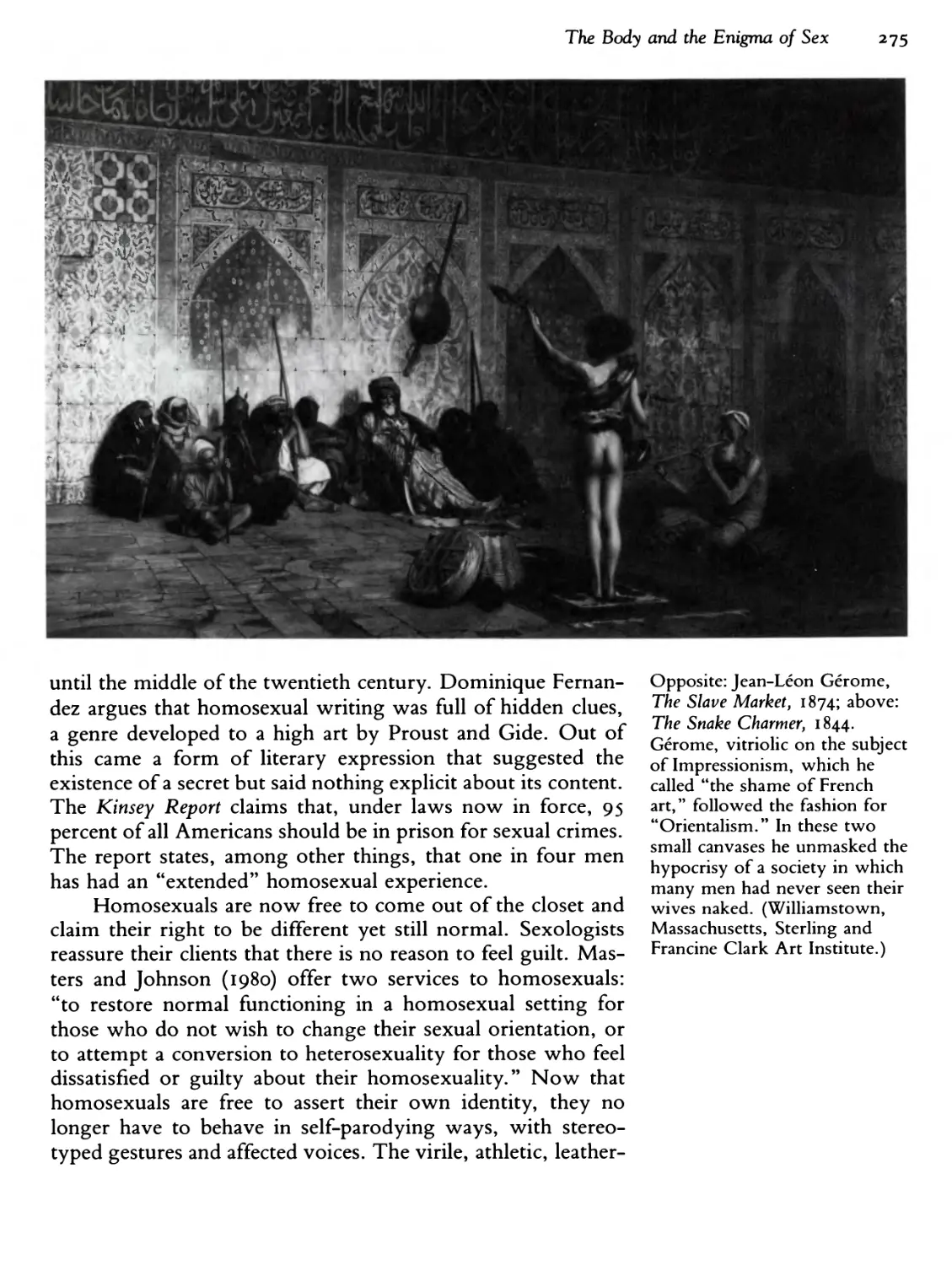






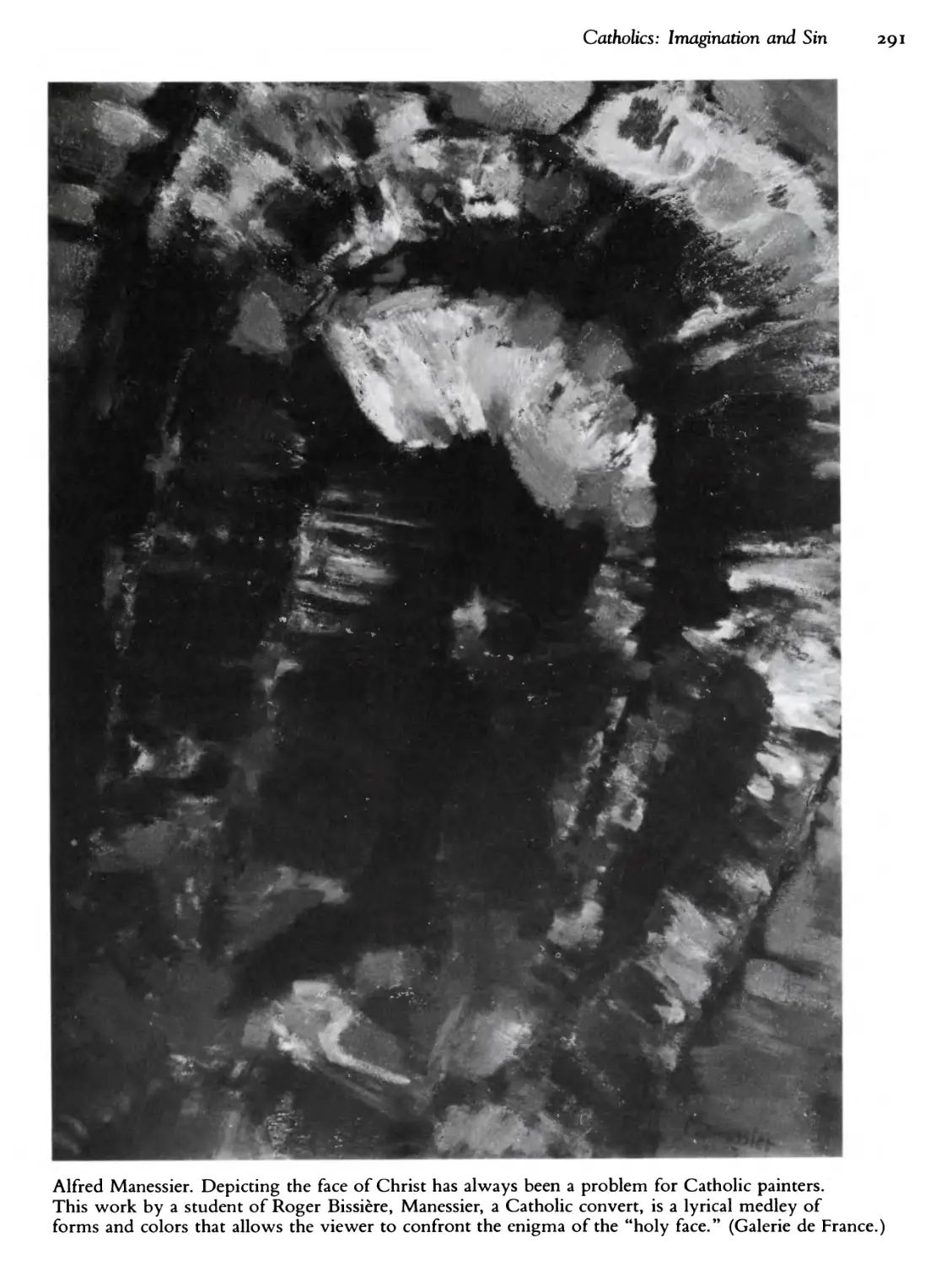






























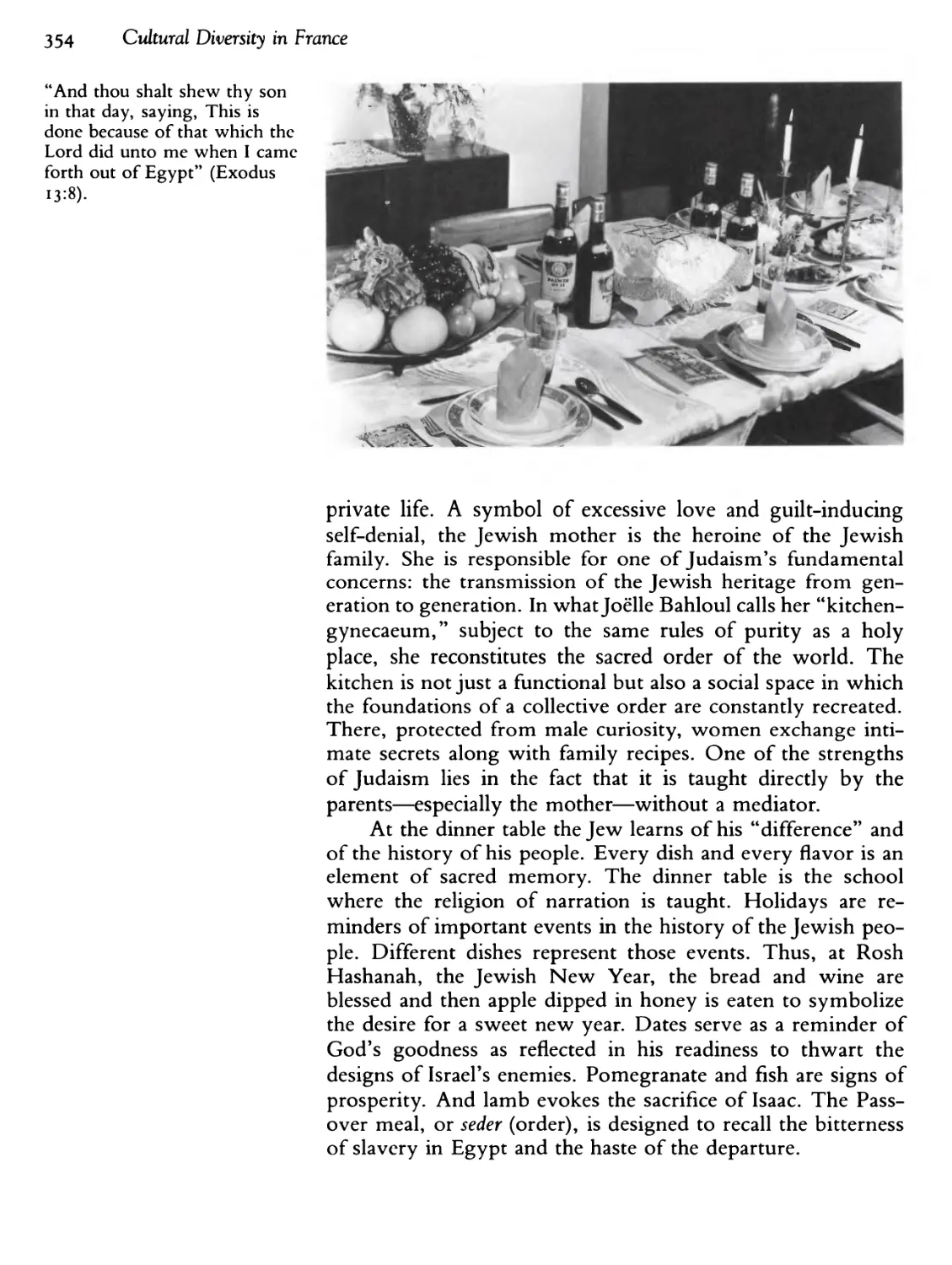
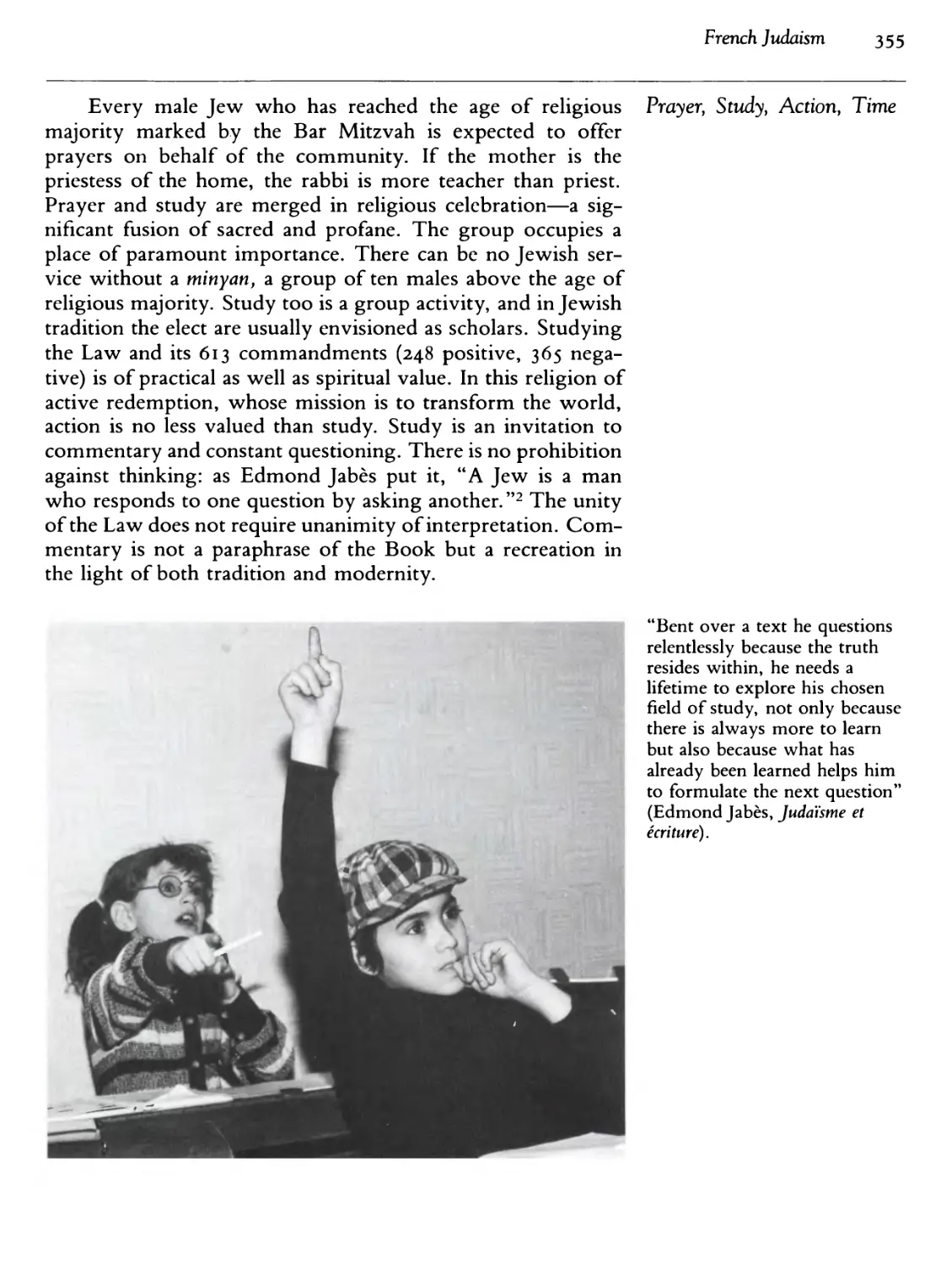
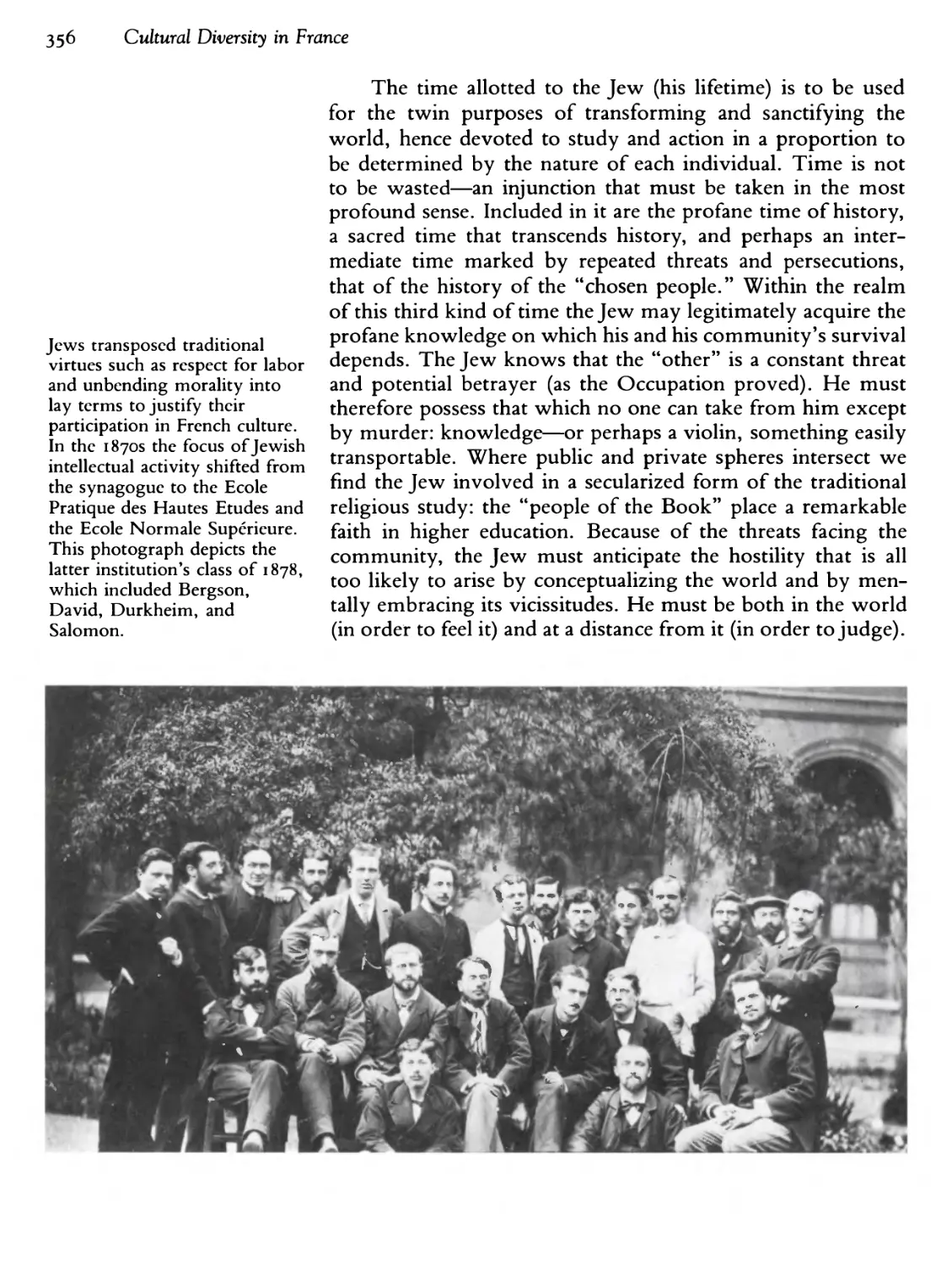

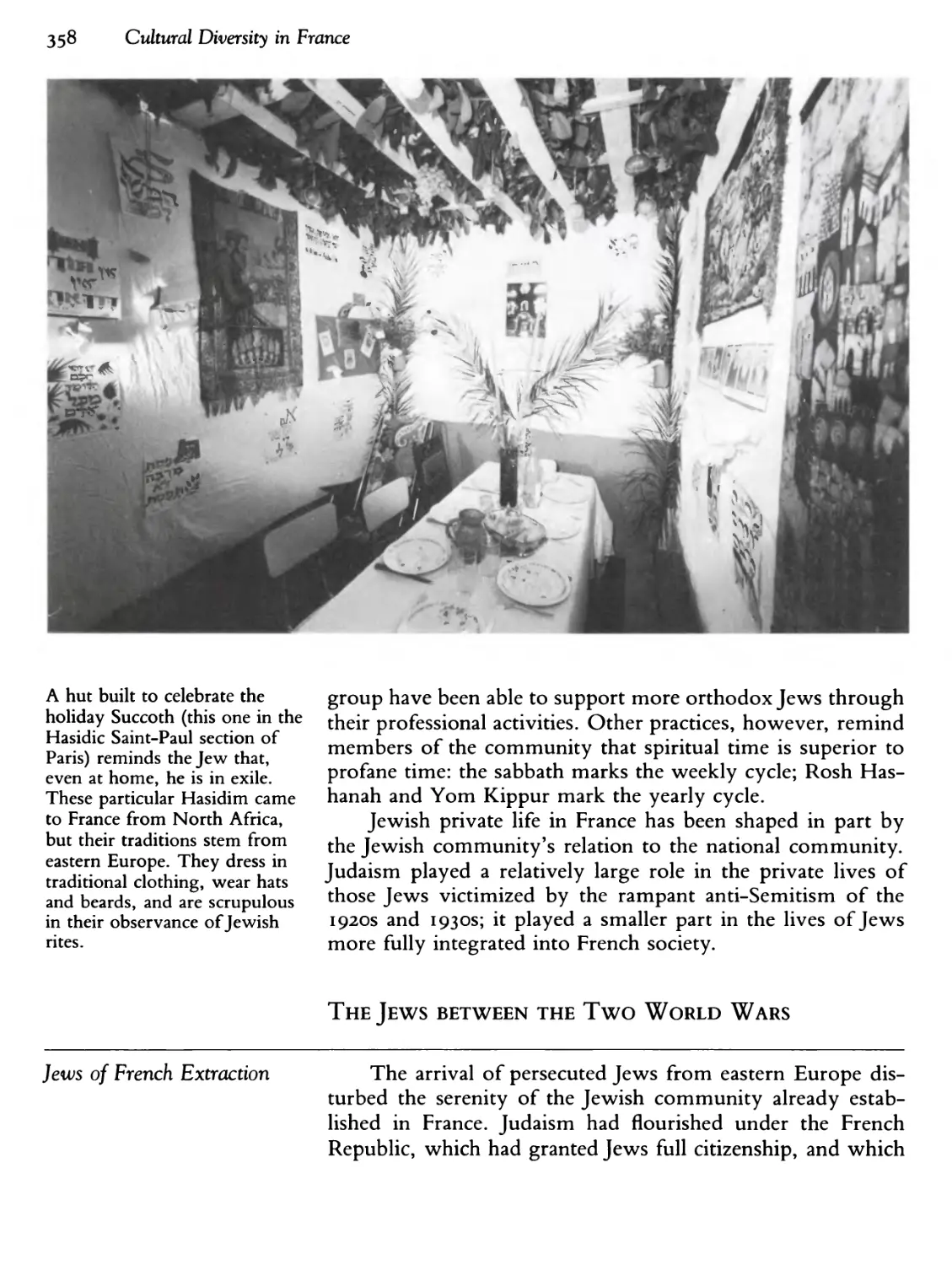






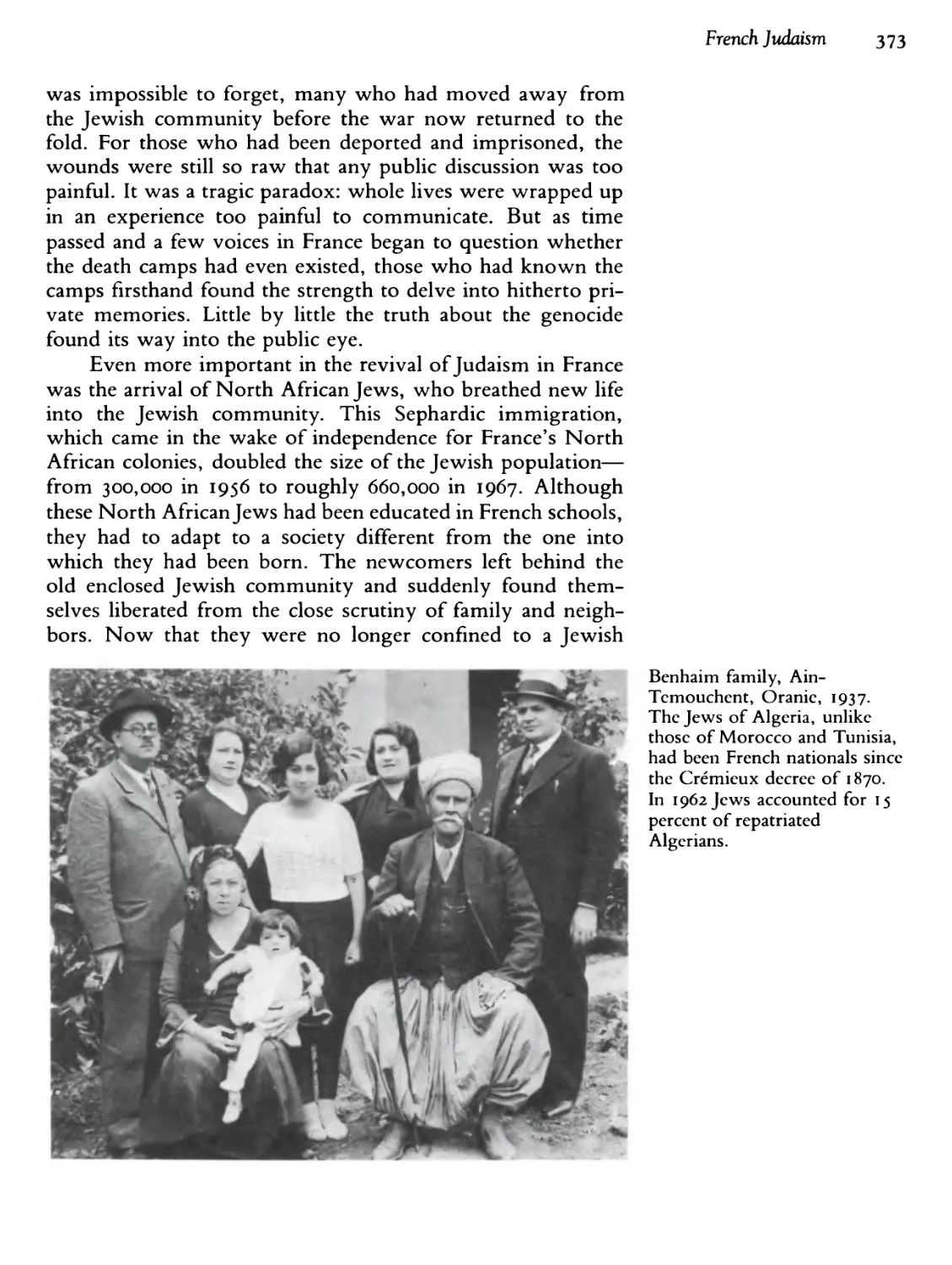
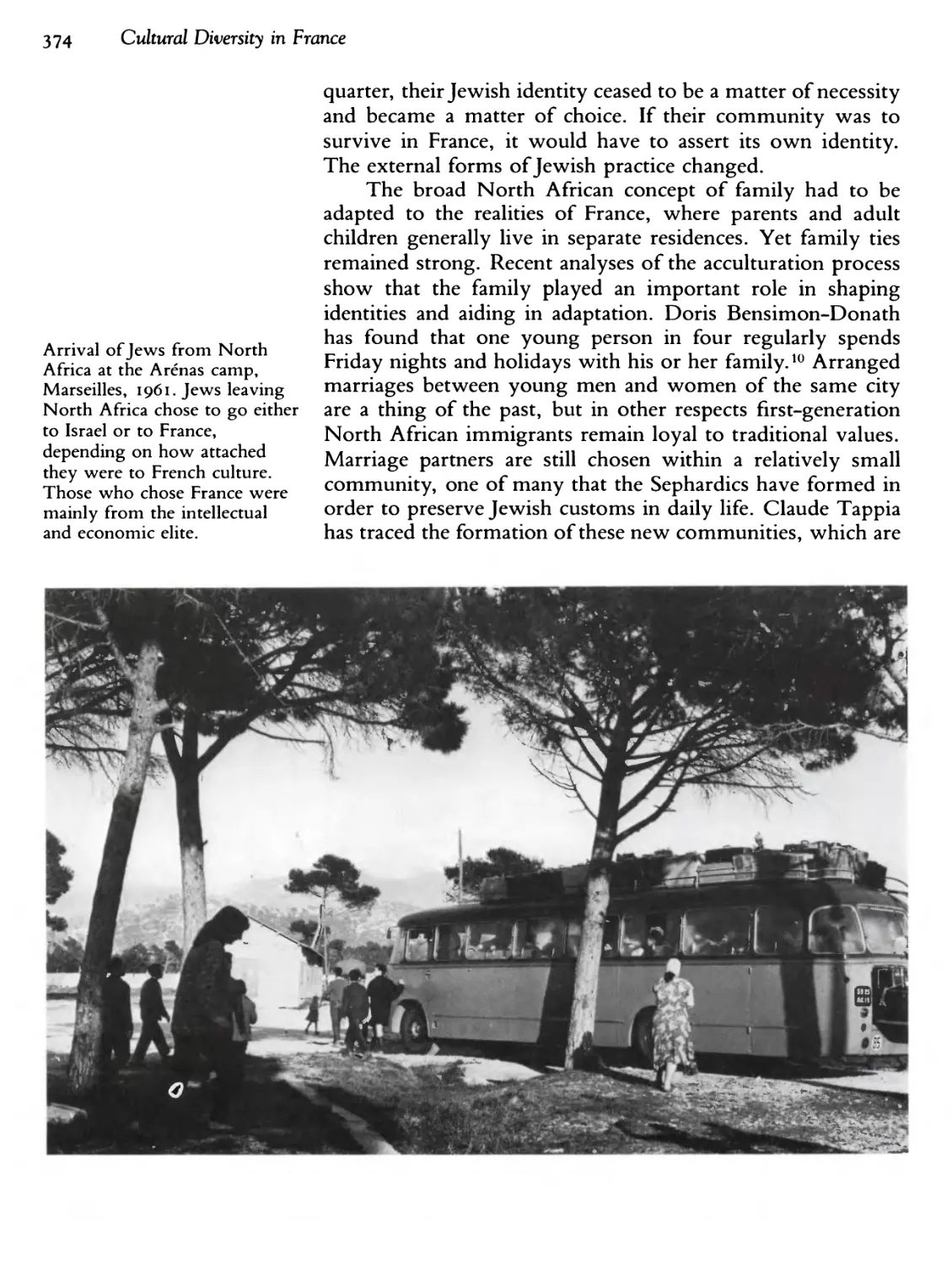
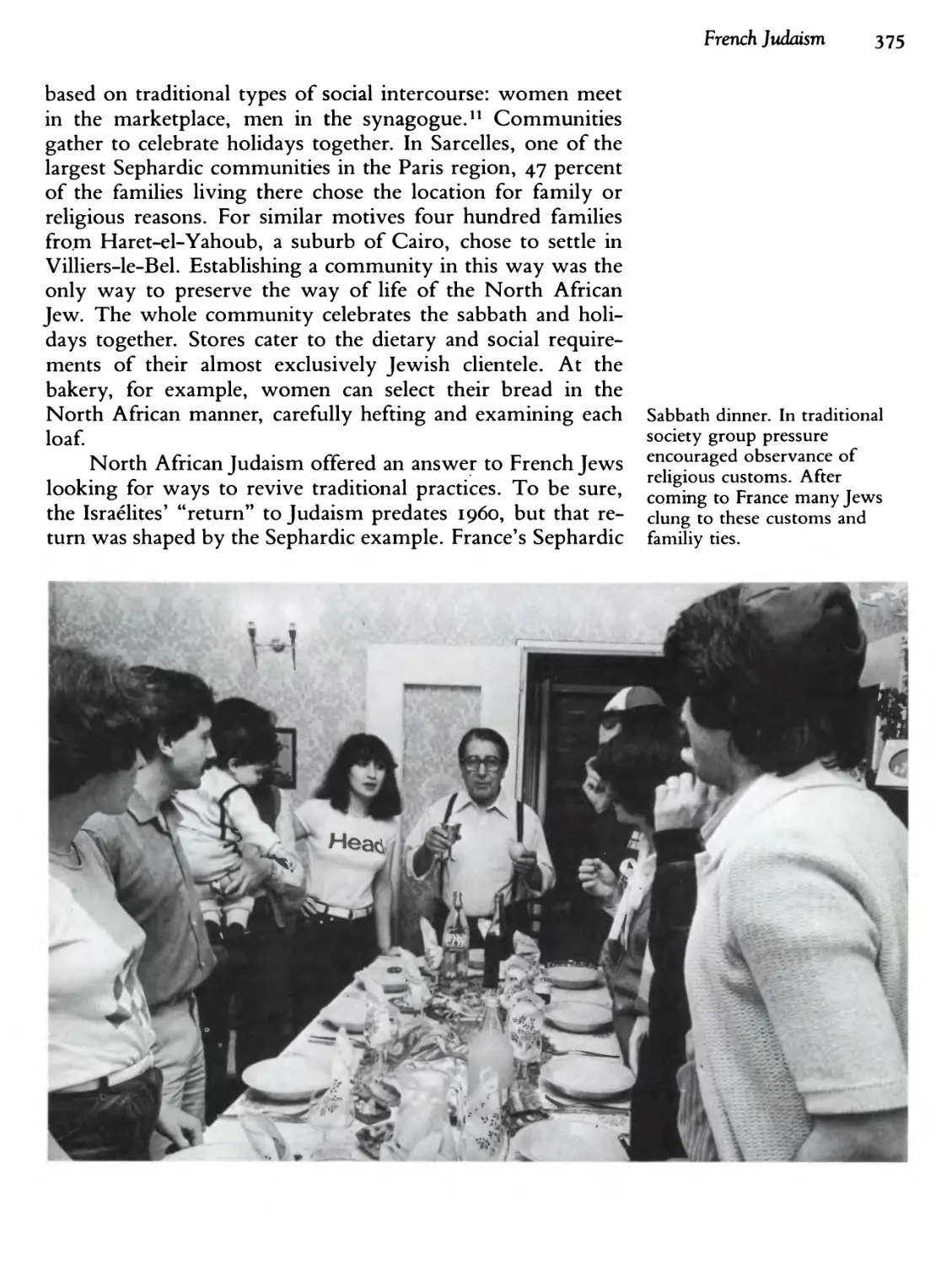






















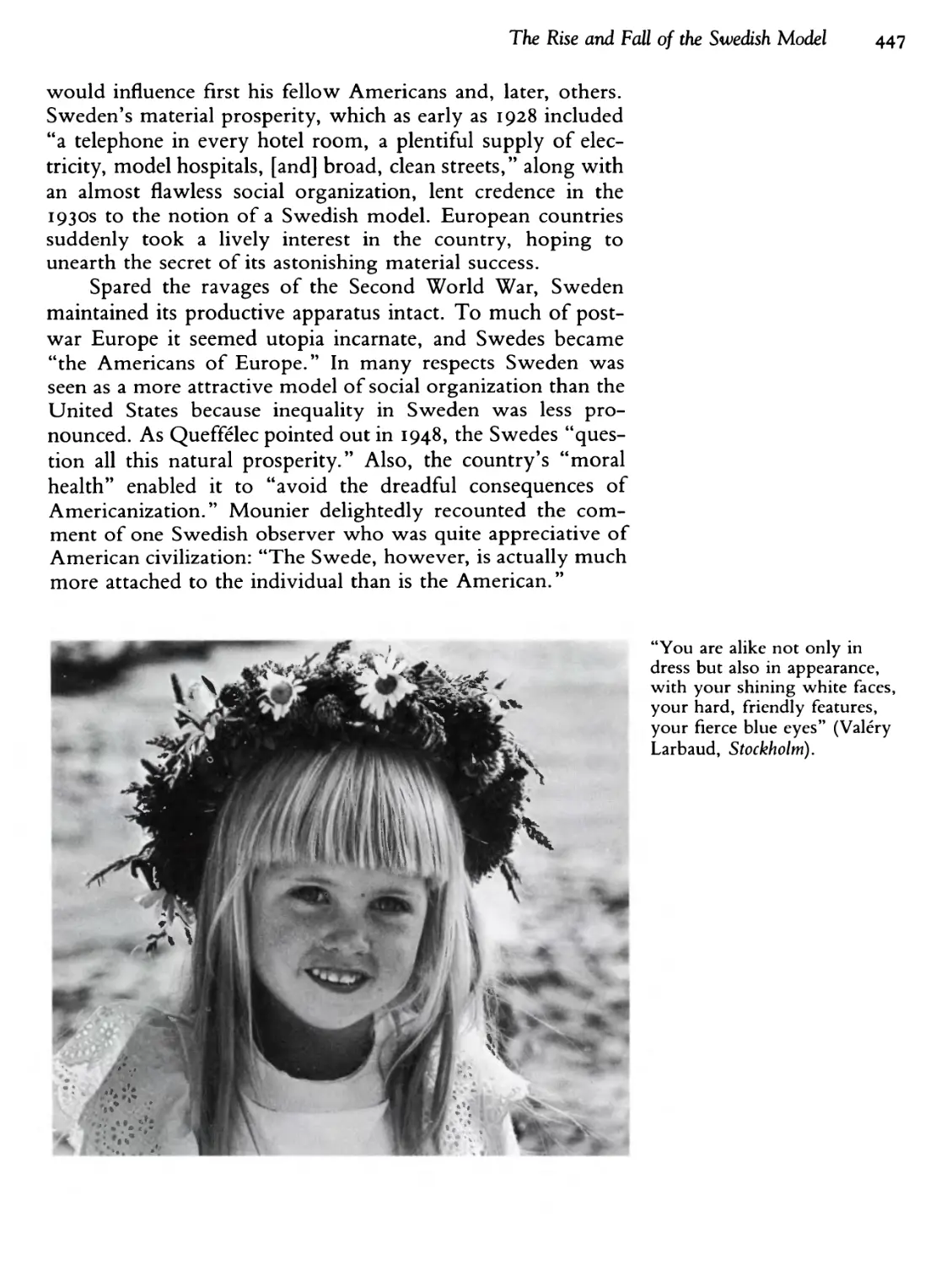




















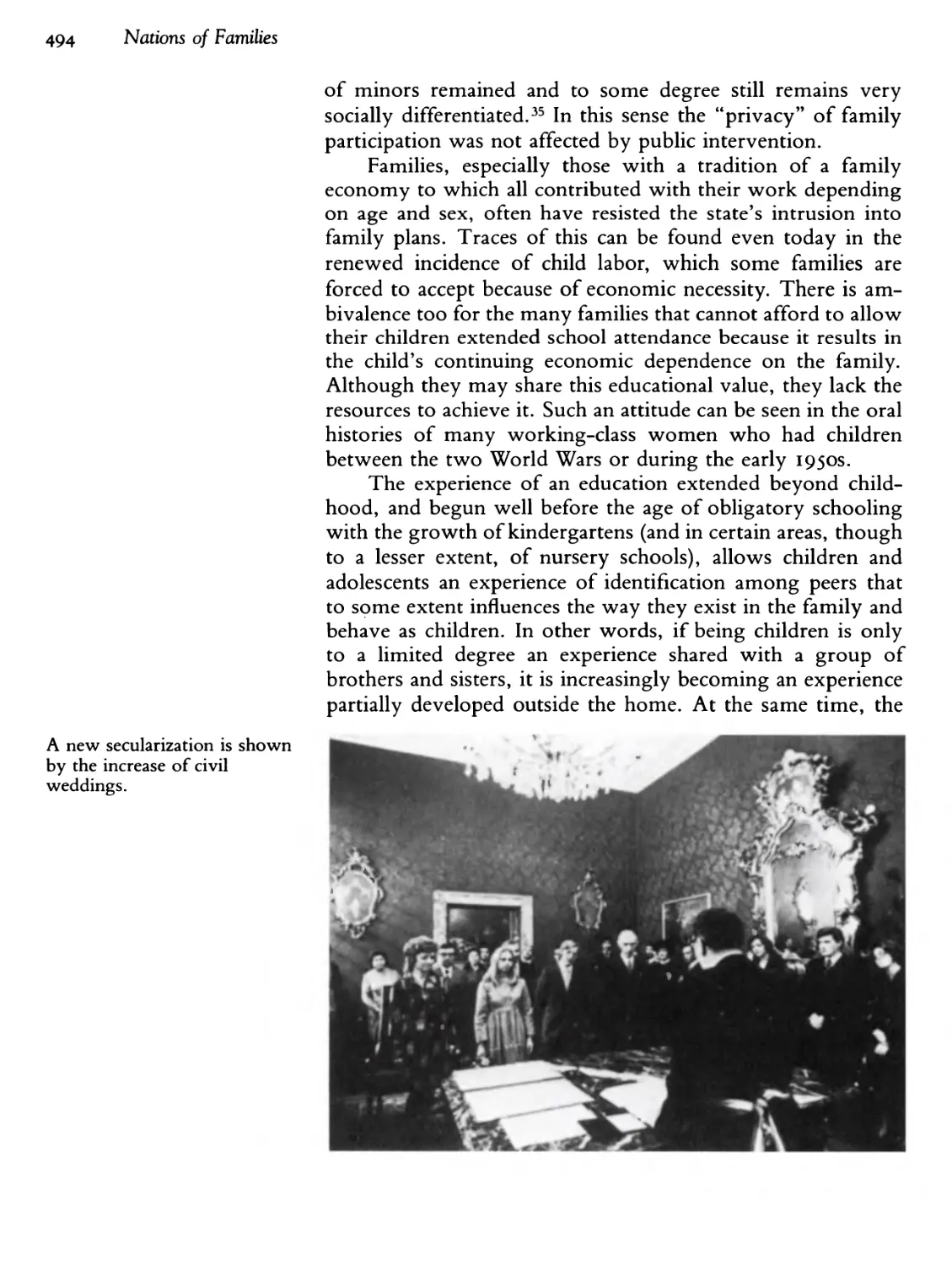





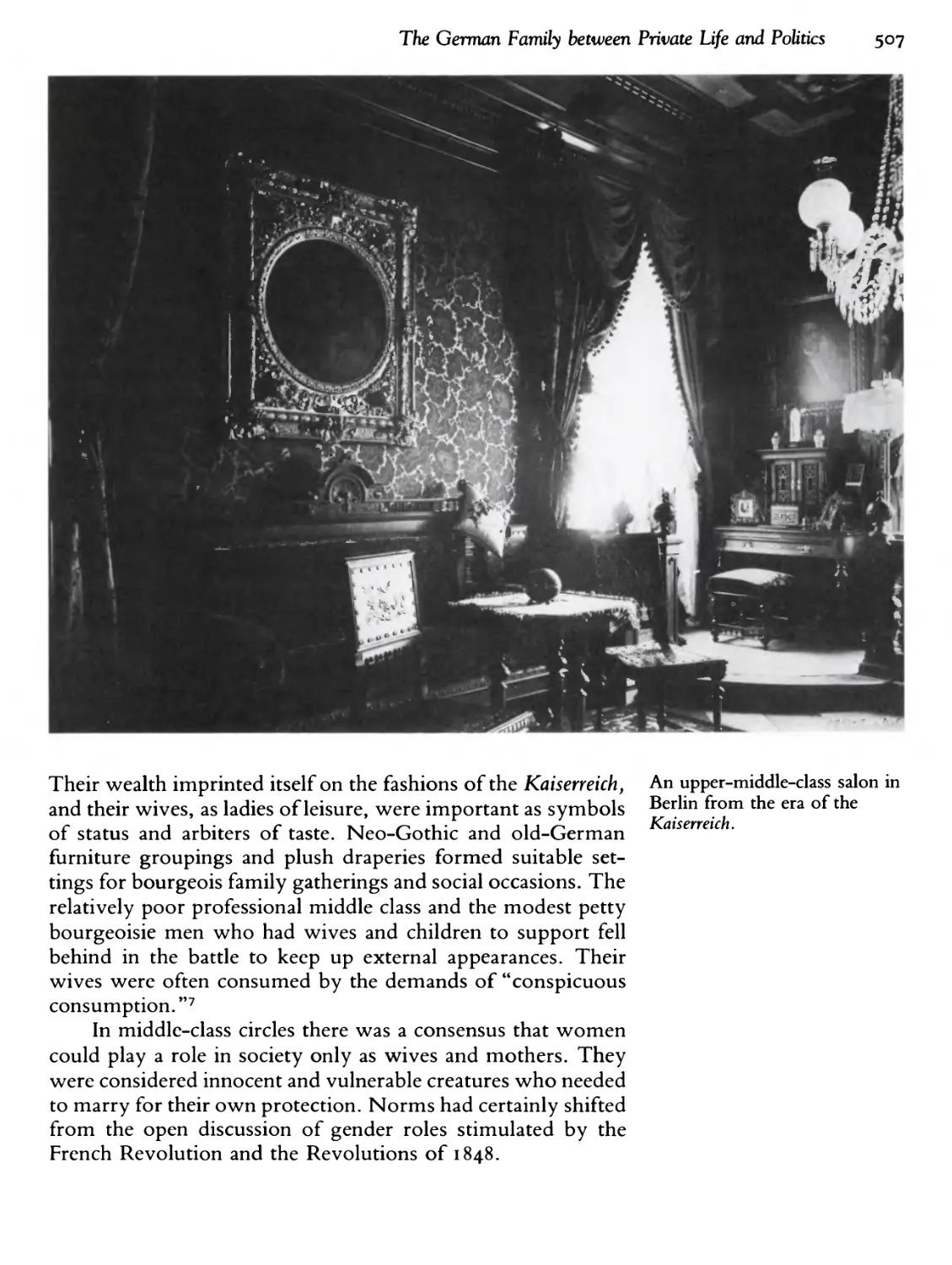




















































Text
                    ppr A 'L'J anc, • _
\-
;•■:)
/
>
^
Jr
'i^^
r f i-
r.
o _ r _ fines
/-^
, If. re
frt&rz
,Z'F. if

A HISTORY OF
PRIVATE LIFE
Philippe Aries and Georges Duby
General Editors
V • Riddles of Identity
in Modem Times

A HISTORY OF
PRIVATE LIFE
V • Riddles of Identity
in Modem Times
Antoine Prost and Gerard Vincent, Editors
Arthur Goldhammer, Translator
The Belknap Press of
Harvard University Press
CAMBRIDGE, MASSACHUSETTS
LONDON, ENGLAND

Copyright © 1991 by the President and Fellows of
Harvard College
All rights reserved
Printed in the United States of America
10 98765432
Originally published as Histoire de la vie Privee, vol. 5,
De la Premiere Guerre mondiale a nos jours, © Editions du
Seuil, 1987.
"The Italian Family: Paradoxes of Privacy" by Chiara
Saraceno was originally published as "La famiglia: i
paradossi della costruzione del privato," in La Vita
Privata: II Novecento, © Gius, Laterza & Figli, 1988.
Parts of "The German Family between Private Life and
Politics" by Ingeborg Weber-Kellermann originally
appeared in Die deutsche Familie, © Suhrkamp Verlag,
1974, 1980, and Die Familie, © Insel Verlag, 1976.
Library of Congress Cataloging-in-Publication Data
(Revised for vol. 5)
A history of private life.
Translation of: Histoire de la vie privee.
Includes bibliographical references and indexes.
Contents: v. 1. From pagan Rome to Byzantium /
Paul Veyne, editor—v. 5. Riddles of identity in modern
times / Antoine Prost and Gerard Vincent, editors;
Arthur Goldhammer, translator.
1. Manners and customs. 2. Family—History.
3. Civilizations—History. 4. Europe—Social conditions.
I. Aries, Philippe. II. Duby, Georges.
GT2400.H5713 1987 390'.009 86-18286
ISBN 0-674-39979-x (alk. paper) (cloth)
ISBN 0-674-40004-6 (paper)

Contents
Public and Private Spheres in France by Antoine
Prost i
Introduction 3
Changing Workers and Workplaces 9
The Family and the Individual 51
The Transition from Neighborhood to Metropolis 103
A History of Secrets? by Gerard Vincent 145
The Secrets of History and the Riddle of Identity 147
Family Secrets 185
The Body and the Enigma of Sex 231
Cultural Diversity in France by Gerard Vincent,
Perrine Sirnon-Nahurn, Remi Leveau, Dominique
Schnapper 283
Catholics: Imagination and Sin 285
Communism as a Way of Life 315
French Judaism 347
The Role of Immigrants 379
Nations of Families by Kristina Orfali, Chiara
Saraceno, Ingeborg Weber-Kellermann, Elaine Tyler
May 415
The Rise and Fall of the Swedish Model 417
The Italian Family: Paradoxes of Privacy
Translated by Raymond Rosenthal 451
The German Family between Private Life and Politics
Translated and Edited by Mary Jo Maynes and Michele
Mouton 503
Myths and Realities of the American Family 539
Notes 595
Bibliography 611
Credits 617
Index 619

A HISTORY OF
PRIVATE LIFE
Riddles of Identity
in Modern Times

\
^A-^
T ,.;»'.-
..A'-
1)1 '!
* * »
J
^v\
v. ;.^«»
, /
I i
«in
%
I
I
I
1,1
' 1
.u
\
V *;
XS
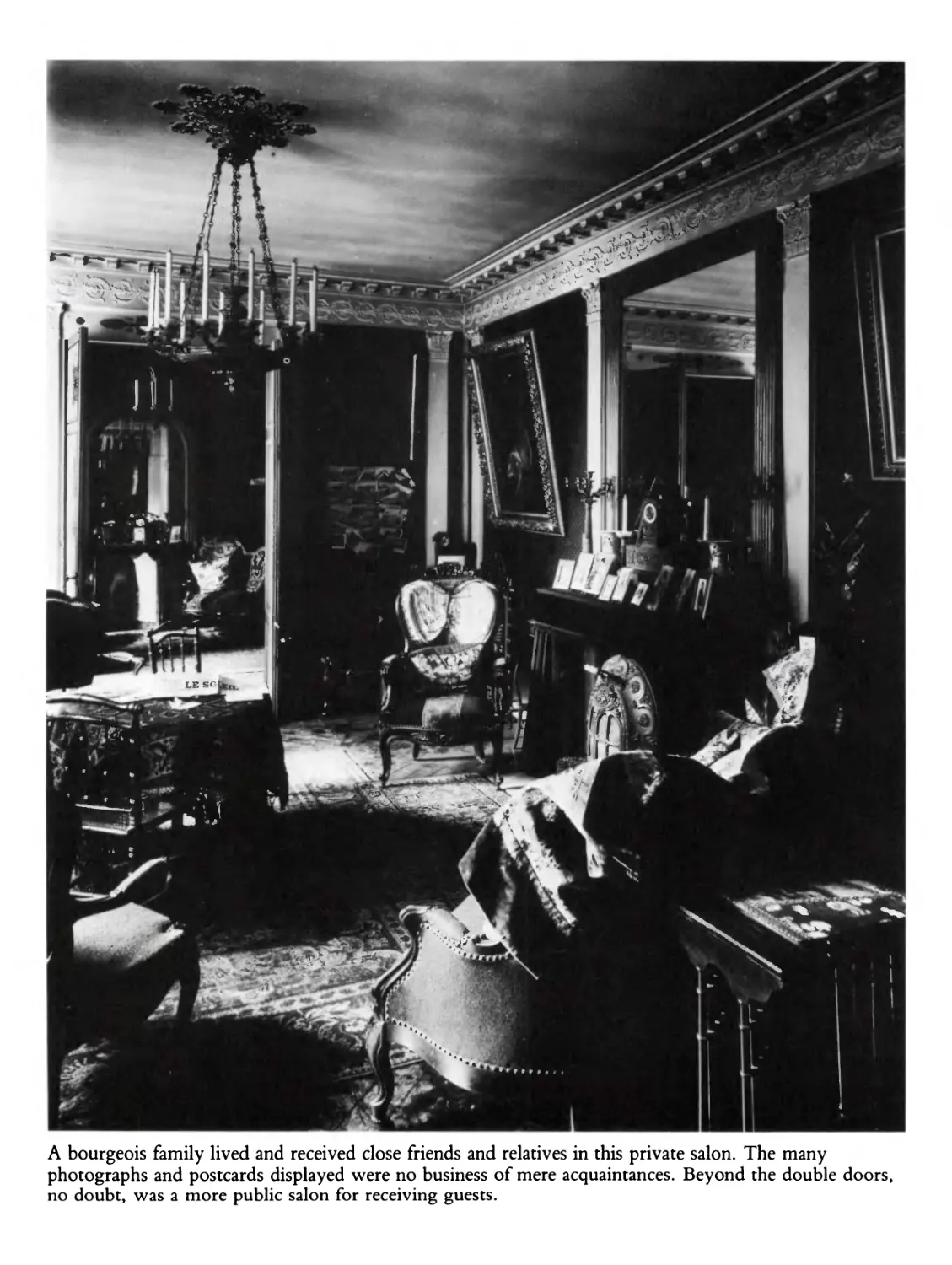
A bourgeois family lived and received close friends and relatives in this private salon. The many
photographs and postcards displayed were no business of mere acquaintances. Beyond the double doors,
no doubt, was a more public salon for receiving guests.

Public and Private
Spheres in France
Antoine Prost

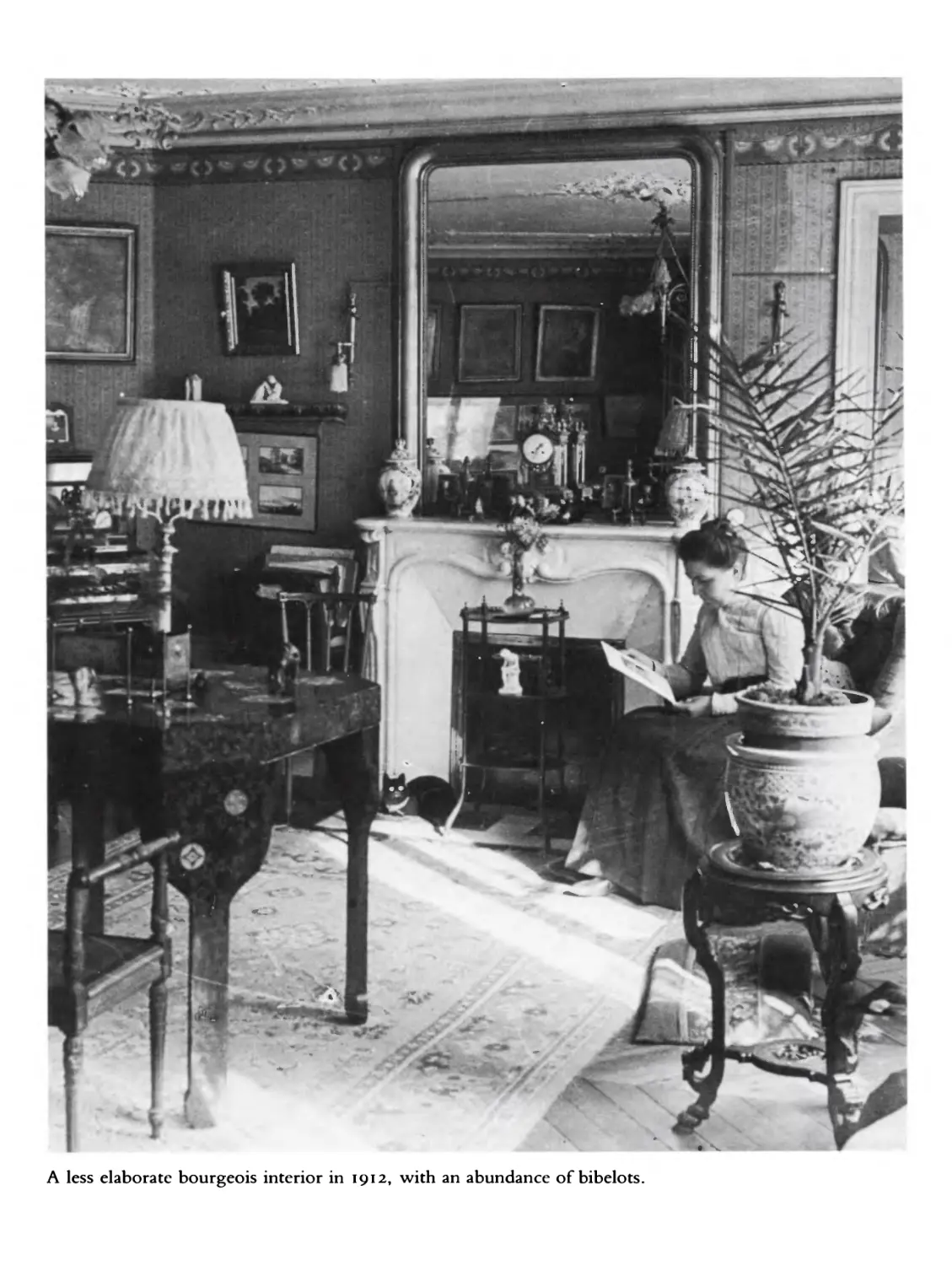
A less elaborate bourgeois interior in 1912, with an abundance of bibelots.

<^ Introduction
PRIVATE life is not something given in nature from the
beginning of time. It is a historical reality, which different
societies have construed in different ways. The boundaries of
private life are not laid down once and for all; the division of
human activity between public and private spheres is subject
to change. Private life makes sense only in relation to public
life; its history is first of all the history of its definition. How
did the distinction between public and private life evolve in
France over the course of the twentieth century?
The question is important, particularly since it is not at
all clear that the public-private distinction has the same
meaning at different levels of society. There can be no doubt that
for the bourgeoisie of the Belle Epoque "the wall of private
life" separated two quite distinct domains. On one side of the
protective barrier private life coincided more or less exactly
with family life. Such matters as family fortunes, health,
morals, and religion belonged to this private sphere. If parents
were obliged to make discreet inquiries through a notary
regarding a prospective marriage partner for one of their
children, it was because they were just as careful to hide from
public view information about a scoundrel of an uncle, a sister
with tuberculosis, a dissolute brother, or the size of their own
income. Jaures, responding to a socialist deputy who
reproached him because his daughter received communion, said:
"My dear colleague, clearly you make your wife what you
want her to be; I do not." With these words he indicated quite
precisely where the boundary lay between his role as a public
man and his private life.
This separation was enforced by a series of detailed
prescriptions. Baroness Staffe, for example, mentions a number
of such rules: "The less one pokes one's nose into other peo-

Public and Private Spheres in France
pie's business, the more one merits the esteem and respect of
one's neighbors ... In a railway car or other public place,
well-bred people never engage in conversation with strangers
. . . Private matters are never discussed in the presence of
others, not even with relatives or friends with whom one is
traveling."1 In upper-class homes there was a marked
difference between the rooms designated for receiving guests and
other parts of the house or apartment. Public rooms were for
display, for whatever was deemed "presentable"; everything
that should be shielded from indiscreet eyes was banished. The
family proper had no place in the salon. When guests were
being received, the children were not allowed to enter,
Baroness Staffe tells us, and family photographs were considered
out of place. But the public rooms were not open to just
anybody. Every lady of good society had her "day" (and in
Nevers in 1907 there were no fewer than 178 such days), but
before paying a call on a prominent lady one had to be
introduced.2 The public rooms of the house thus constituted a
transitional space between the public sphere and the strictly
private.
In other strata of society the clear distinction maintained
by the late-nineteenth-century bourgeoisie was not always
apparent. Living conditions of peasants, workers, and the
urban poor did not permit concealing from strangers a part of
life that became, by virtue of its very concealment, "private."
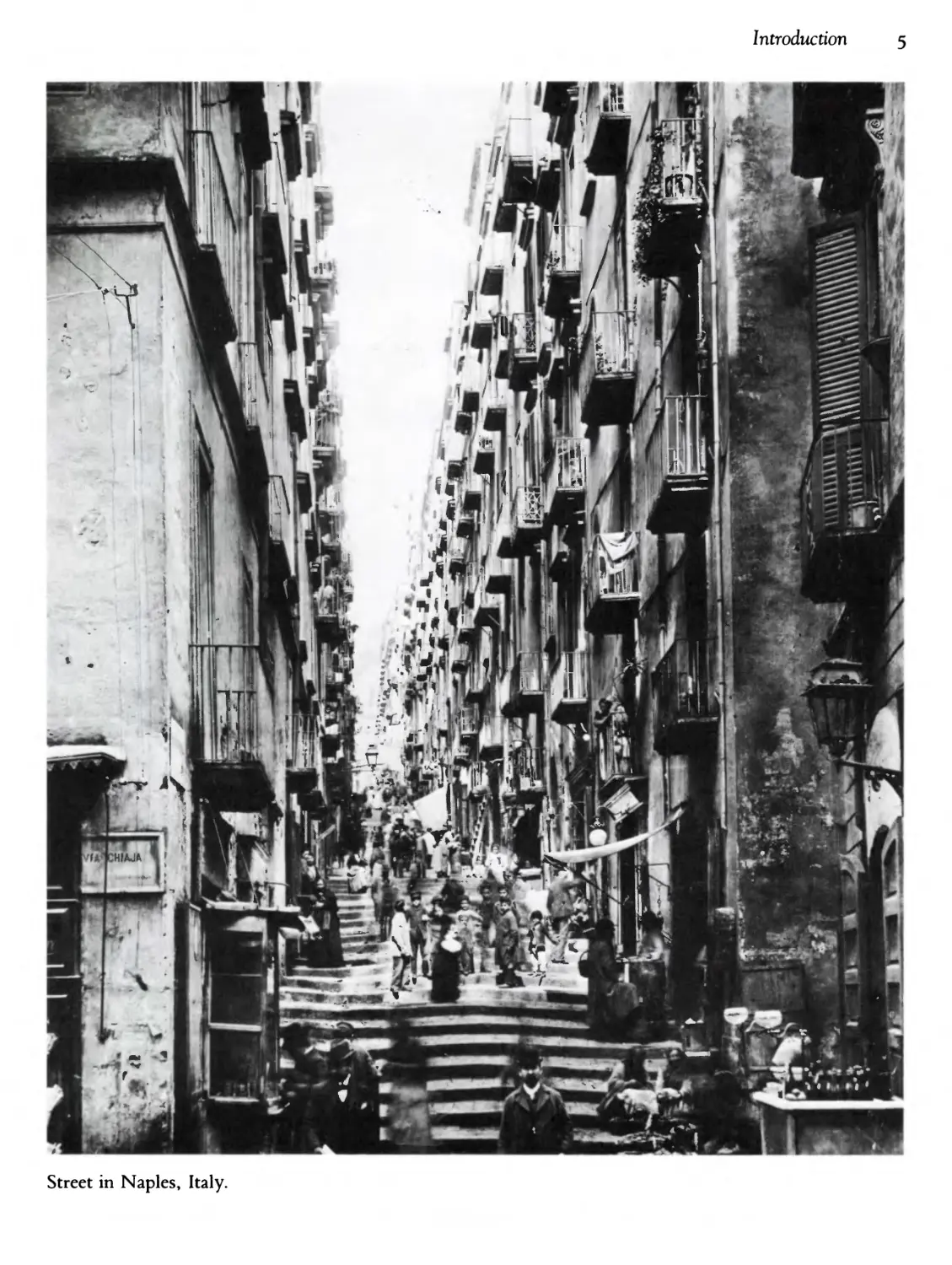
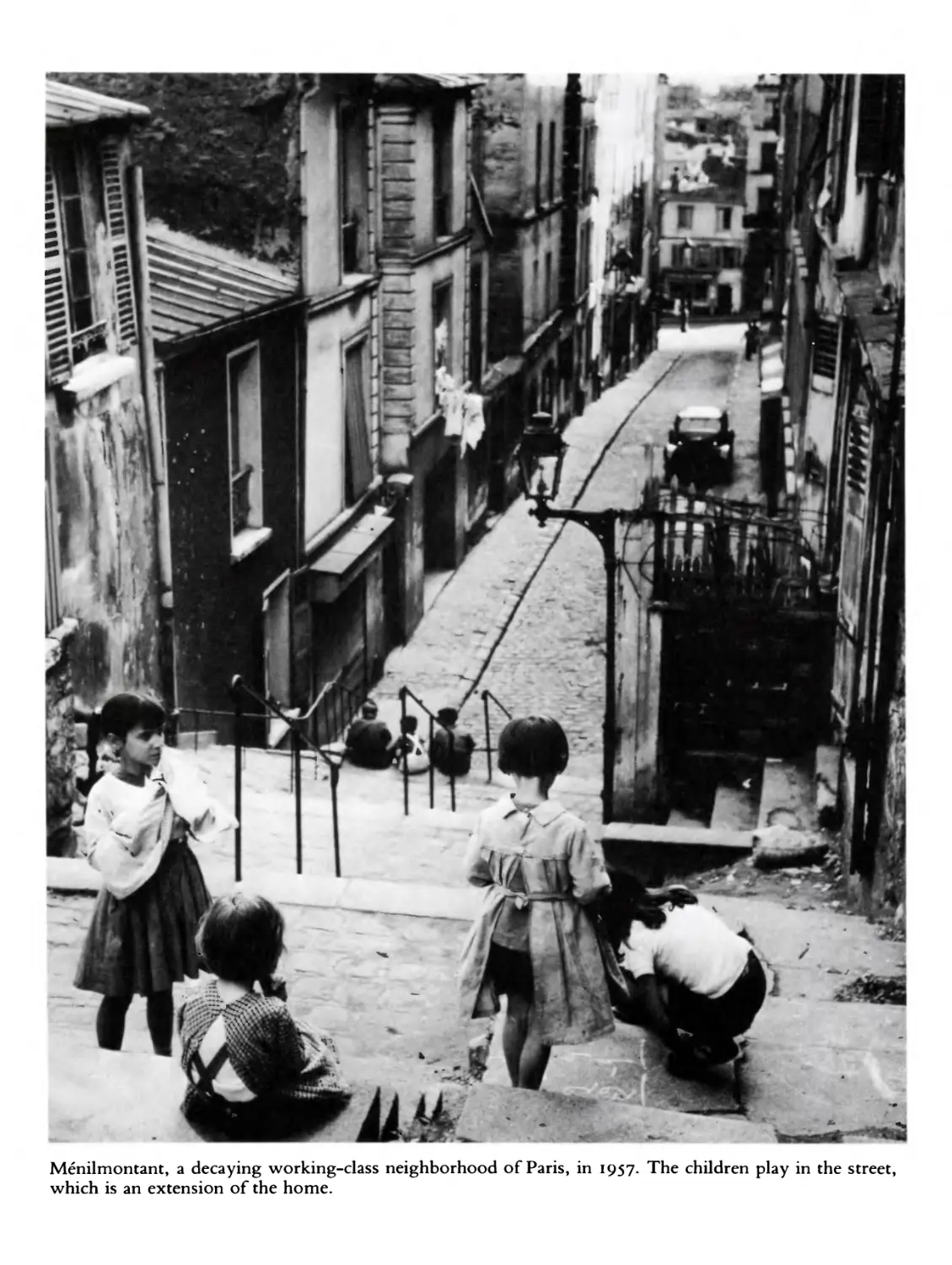
Let us walk, for instance, down a poor street in Naples with
Jean-Paul Sartre: "The ground floor of every building contains
a host of tiny rooms that open directly onto the street, and
each of these tiny rooms contains a family ... In these rooms
people sleep, eat, and work at their trades. But. . . people are
drawn into the street. They go outside for reasons of thrift,
so that they won't have to light a lamp, or to enjoy the fresh
air, and also, I suspect, out of fellow feeling, a desire to rub
shoulders with everyone else. They drag tables and chairs out
into the street or leave them on the threshold, half outside,
half inside, and in this intermediate environment they perform
the principal acts of their lives. Since there is no longer any
outside or inside and the street is an extension of their living
quarters, they fill it with their private smells and objects, as
well as with their history . . . Outside is organically linked to
inside . . . Yesterday I saw a mother and a father dining
outdoors, while their baby slept in a crib next to the parents'
bed and an older daughter did her homework at another table
by the light of a kerosene lantern ... If a woman falls ill and

Introduction 5
•tn
J
- ' ill"
L"
/>
- !.■■'"-
7 7- 1'
'•'»■': .11"
'ill
/J.
,1
1 I.
*
ii
i I
|M 1.1 :« -
Mi?
J f V-
*H 1
1
I HfAJA >
' V'Vn*;' '■■■■
■■->,. if:* , '
> 4
.-*■•,
l>*
V^
/'&
AM *
f
— * N
■>• I •
Street in Naples, Italy.

6 Public and Private Spheres in France
{
\
Vs
k
\\
\
i ■
\
:llt
N,
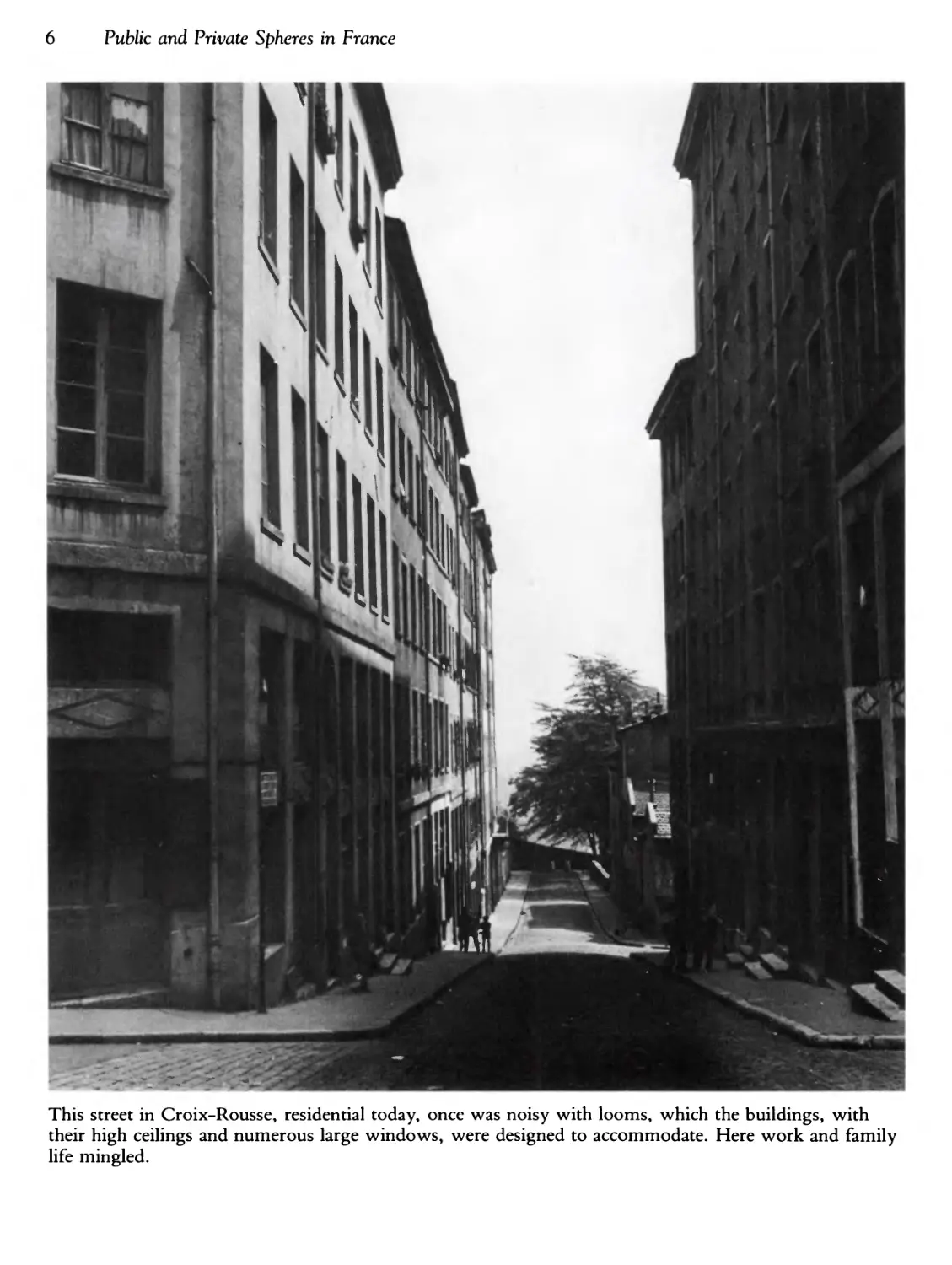
This street in Croix-Rousse, residential today, once was noisy with looms, which the buildings, with
their high ceilings and numerous large windows, were designed to accommodate. Here work and family
life mingled.

stays in bed all day, it's open knowledge and everyone can
look in on her."3
Clearly the meaning of private life for the poor of Naples
was not the same as for the French bourgeoisie of the Belle
Epoque. But perhaps the comparison is faulty: we are looking
at two different cultural traditions, and the interpenetration of
exterior and interior may well be a feature of Mediterranean
culture that can also be found in the cities and towns of
southern France. The fact remains that workers in Roubaix or
the Croix-Rousse section of Lyons or the mining towns of
northern France were no more able than villagers in Berri or
Lorraine to protect their privacy from the scrutiny of
neighbors; virtually everything that happened to them happened in
public. In one sense, the possibility of having a private life
was a class privilege limited to those who lived, often on
private incomes, in relatively sumptuous splendor. Those who
worked for a living inevitably experienced some intermingling
of public and private life. In this respect, the twentieth century
may be seen as a period during which the differentiation of
public and private, at first limited to the bourgeoisie, slowly
spread throughout the population. Thus, in one sense the
history of private life is a history of democratization.
This democratization must not be viewed as automatic or
conceived in simplistic terms. The private life available to
workers or farmers in the late twentieth century was by no
means the same as that enjoyed by the bourgeoisie of 1900.
At the same time, what took shape outside this slowly
constituted realm of privacy, and which for convenience I shall
call the public sphere, was subject to new norms. The
sharpened differentiation of public and private altered both private
life and public life. Both were conducted in new ways and
according to new rules. And, as new boundaries shifted and
solidified, the substance of life also changed.
Clearly the history of private life, of the acquisition and
organization of privacy, is a complex affair. The need to pay
attention to social and cultural differences complicates the
picture still further. It would be absurd to pretend that the
findings presented in this book are in any sense exhaustive. It will
be enough if we can identify major trends, raise important
questions, and establish key distinctions.

V
■ l ' /»
\
X
■I i
*!
\
.„;.iif
ii
- " • fc
i
i
-,.. /H>
^
<
v
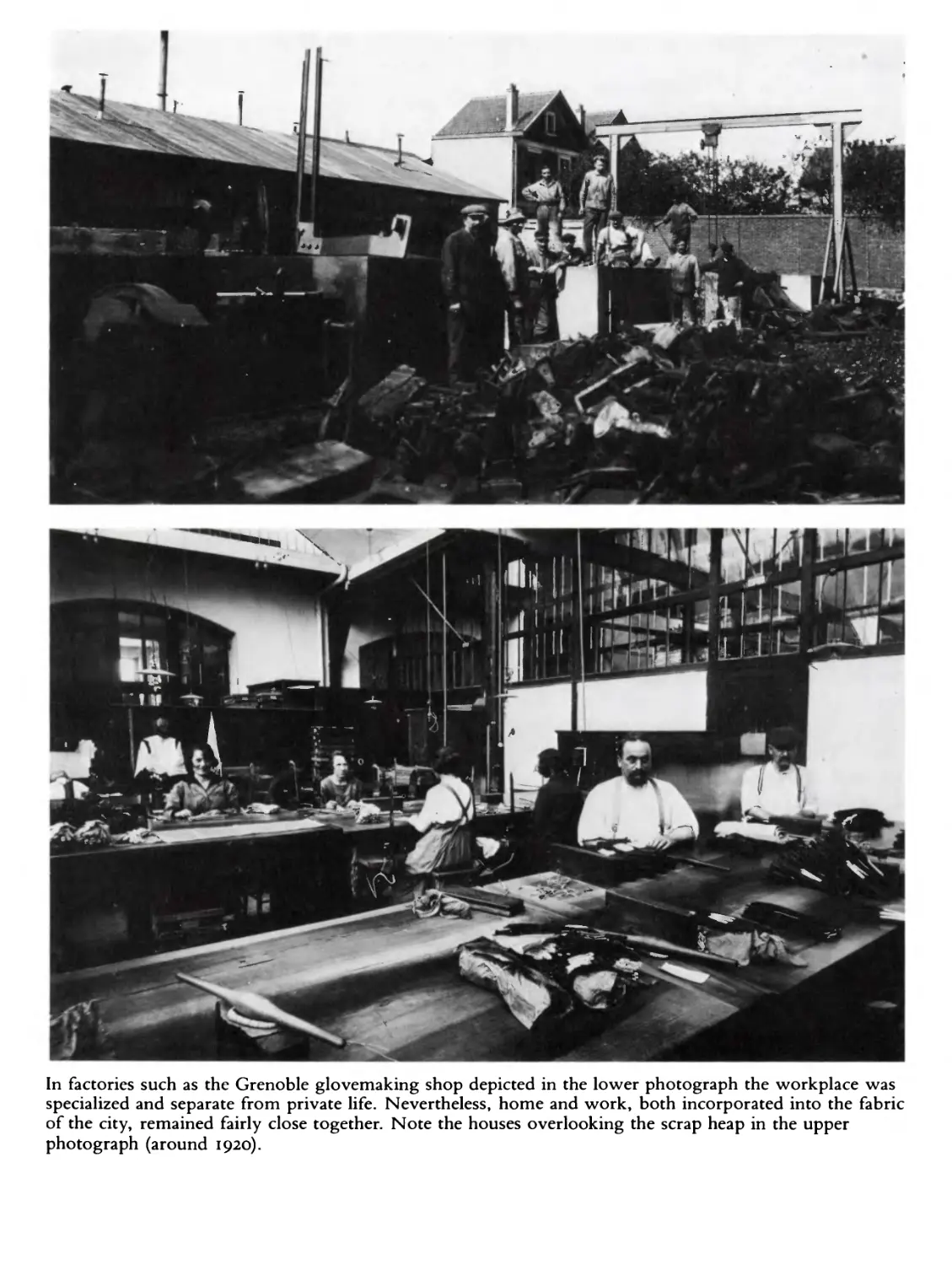
In factories such as the Grenoble glovemaking shop depicted in the lower photograph the workplace was
specialized and separate from private life. Nevertheless, home and work, both incorporated into the fabric
of the city, remained fairly close together. Note the houses overlooking the scrap heap in the upper
photograph (around 1920).

<?% Changing Workers
and Workplaces
ONE of the greatest changes to occur in the twentieth
century affected work. In broad terms, production moved
from the private sphere into the public. The change took two
forms. One was a differentiation and specialization of space:
workplace ceased to coincide with living space. Hand in hand
with spatial differentiation came a differentiation with respect
to norms: the household ceased to be subject to rules
pertaining to the work formerly performed in the domestic setting,
while at the same time work, no longer subject to norms of
a private order, came to be governed by collective contracts.
The Specialization of Space
At the turn of the century it made a great deal of difference
whether one worked at home or elsewhere. For a young girl
the ideal was to stay home and not work. If obliged to work,
it was best if she could do so at home—as a seamstress, for
instance. Only girls at the bottom of the social hierarchy
worked outside the home, in a factory or shop or as a servant
in a private home.1 In 1900 more than half, perhaps as many
as two-thirds, of French workers worked at home. Today, by
contrast, nearly all work outside the home. The
transformation is stunning.
There were basically two different ways of working at The Decline of Home Work
home: one could work for oneself or for someone else. In
between these two situations of course there was a range of
compromises. But the striking fact remains that both forms
of home-based work declined as the century progressed.
The number of workers employed at home is very diffi-
9

Public and Private Spheres in France
cult to ascertain. At the turn of the century several million
people found themselves in this situation. Census figures from
the period record what were called "isolated" workers, of
whom there were some 1,502,000 in 1906. Of these, some
were undoubtedly day laborers who actually worked outside
the home for various employers, but most, male and female
alike, worked in their own homes, primarily in the
manufacture of textiles, clothing, shoes, and gloves but also in making
eyeglasses, jewelry, and similar products on order from
merchants. Sometimes the merchant delivered raw materials or
semifinished products to the workers; in other cases the
worker picked up new work when delivering finished pieces.
Payment was by the piece.
The conditions of home work varied widely. Most home
workers were paid very poorly, at rates far below those factory
workers received. To eke out a miserable living they were
obliged to work from dawn till well past dusk. Meme Santerre
and her family constitute an extreme case.2 The Santerres were
employed in the textile industry, where the putting-out
system, under which home workers received raw materials from
jobbers, survived until finally supplanted by factories after
World War I. Family members worked as weavers only during
the six winter months. In spring they took seasonal jobs on
farms in Seine-Inferieure; they returned home in the fall and
paid off their debts from the previous winter with what they
had earned. Even domestic service paid better than weaving
at home. The fact that the Santerres owned their own looms
and were skilled weavers made no difference. They could not
support themselves on what they earned by weaving, even
though they subjected themselves to dreadful living and
working conditions. After rising at four, the father and children
went down to the basement to work at their looms; the mother
prepared the frames, and the looms were kept humming until
ten at night. They worked a roughly fifteen-hour day in a
damp basement where it was often impossible to work
without candlelight. Work was interrupted for a bowl of chicory
with bread in the morning and for soup at noon and in the
evening. On Sunday these fervent Catholics attended mass,
then worked the rest of the day. Even on Catherine Santerre's
wedding day, a festive occasion marked by a dinner of lamb
chops, the family worked, a sign of the depth of their
destitution.
Compared with such wretchedness, other home workers
enjoyed better conditions. The glovemakers of Millau, for

Changing Workers and Workplaces 11
example, constituted a workers' aristocracy in the 1920s, a
time when the Millau glove was a luxury item with which
the mass-produced gloves of Grenoble could not compete. For
the most part, however, home workers lived very poorly
although they worked very hard. That is one reason why they
gradually disappeared.
Many questions arise concerning the private lives of such
workers. Where could Catherine Santerre have enjoyed
privacy? On the hillside near her home where she spent a few
fleeting moments with her beloved, whom she would later
wed? In the bed in which she slept, done in by exhaustion?
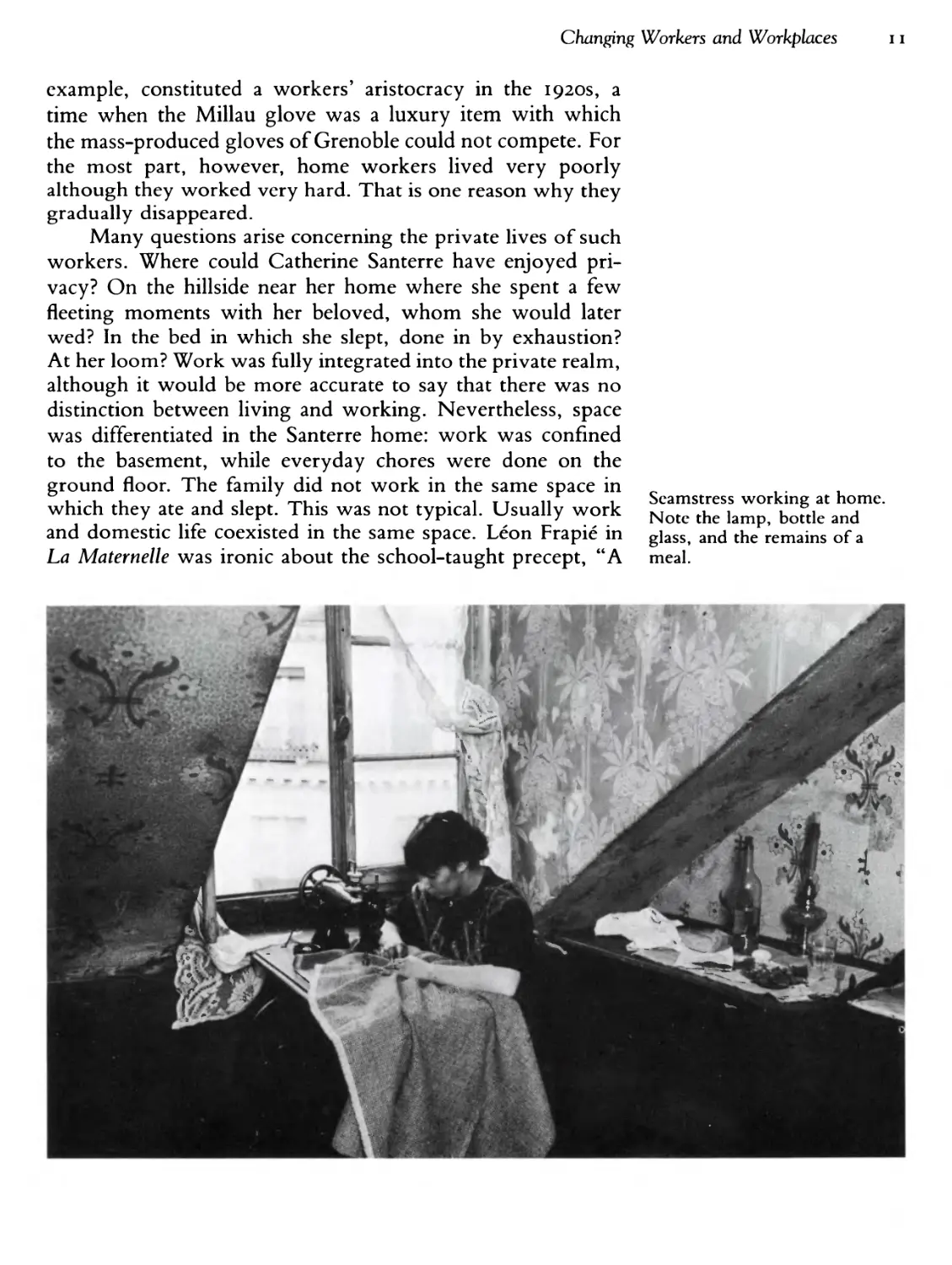
At her loom? Work was fully integrated into the private realm,
although it would be more accurate to say that there was no
distinction between living and working. Nevertheless, space
was differentiated in the Santerre home: work was confined
to the basement, while everyday chores were done on the
ground floor. The family did not work in the same space in
which they ate and slept. This was not typical. Usually work
and domestic life coexisted in the same space. Leon Frapie in
La Maternelle was ironic about the school-taught precept, "A
Seamstress working at home.
Note the lamp, bottle and
glass, and the remains of a
meal.
'\, •
u
^v
^s
4
X
i .

12 Public and Private Spheres in France
,1'
• * *
J.
rf.
-,«*- V
.v
^
The type of work done at home varied widely. Above is a fanmaker in a modest urban middle-class
apartment, below a hairdresser and seamstress in a rural home. In both cases work would have been
combined with the daily routine of family life.

Changing Workers and Workplaces
place for everything and everything in its place." He describes
a seamstress living in Paris's 20th arrondissement who had to
clear the table in order to make room for herself to work and
for her child to do homework.3 Space was at such a premium
in the typical nineteenth- or for that matter twentieth-century
worker's apartment that it was impossible to set aside a special
table or place for work.
Where work was done at home, the worker's home was
to some degree inevitably open to strangers. The seamstress
received clients; the weaver or glovemaker opened his doors
to merchants or their agents. The family's combined
workplace and living quarters sometimes became the scene of labor
conflict. Jean Guehenno recalls a dramatic occasion from his
childhood. In Fougeres his parents made shoes at home from
lasts they purchased by the dozen. During a strike in the shoe
industry at the turn of the century, Jean's father, his savings
exhausted, could endure no longer and went out in search of
lasts. Learning of this, the strikers burst into the Guehenno
home and accused the father of strikebreaking.4 Thus even the
most public of conflicts sometimes had a private setting. In
one sense the person who worked at home ceased to have a
home.
Home-based work did not disappear solely for economic
reasons, although economic factors were no doubt decisive.
Workers aspired to higher and more regular wages as well as
to shorter working hours. When you worked in a factory,
you knew when the day was over. The time not owed to the
boss was completely your own, and that time increased
steadily as the century progressed. The worker who worked
outside the home could be truly at home during off hours. In
this respect, the decline of home-based work reflects the
growing insistence on the right to a private life.
Nevertheless, home-based work did not disappear
entirely—far from it. The 1936 census counted some 351,000
home-based workers. Various factors contributed to the
perpetuation of this group. During the Depression legislation
tended to limit the access of foreign workers to the labor
market, and it was easier for immigrants to do piecework at
home than to obtain factory jobs. This arrangement served
the interests of manufacturers determined to cut costs, and it
also accorded well with the habits and traditions of numerous
immigrants from Poland and central Europe. As a result, the
number of home-based workers in the Parisian leather and fur
industries increased. The Manouchians, an organization that

14 Public and Private Spheres in France
played a notable role in the Resistance before being betrayed
to the Gestapo, drew many of its recruits from this
individualistic group of workers, many of whom were Jewish.
Today, home-based work is of negligible importance. It
is ill-suited to the contemporary belief that the home is the
bastion of privacy and free time is the worker's own, to do
with as he or she pleases. Who would be willing to work at
home for others, now that we are no longer willing to work
at home even for ourselves?
The Self-Employed More people are self-employed than are employed in their
homes by others. The number of self-employed has also been
decreasing, but the decline began later than that of the home-
based employee. At the turn of the century the self-employed
still accounted for more than half the population: 58 percent
of farmers fell into this group, along with numerous artisans,
merchants, and professionals. By contrast, in 1954 only a third
of the working population was self-employed, and by 1982 it
was only 16.7 percent. Self-employment has entered a period
of sharp decline.
These figures give a rather confused image of an
extremely important social transformation that has bestowed
radically new meaning on the family. Among peasants,
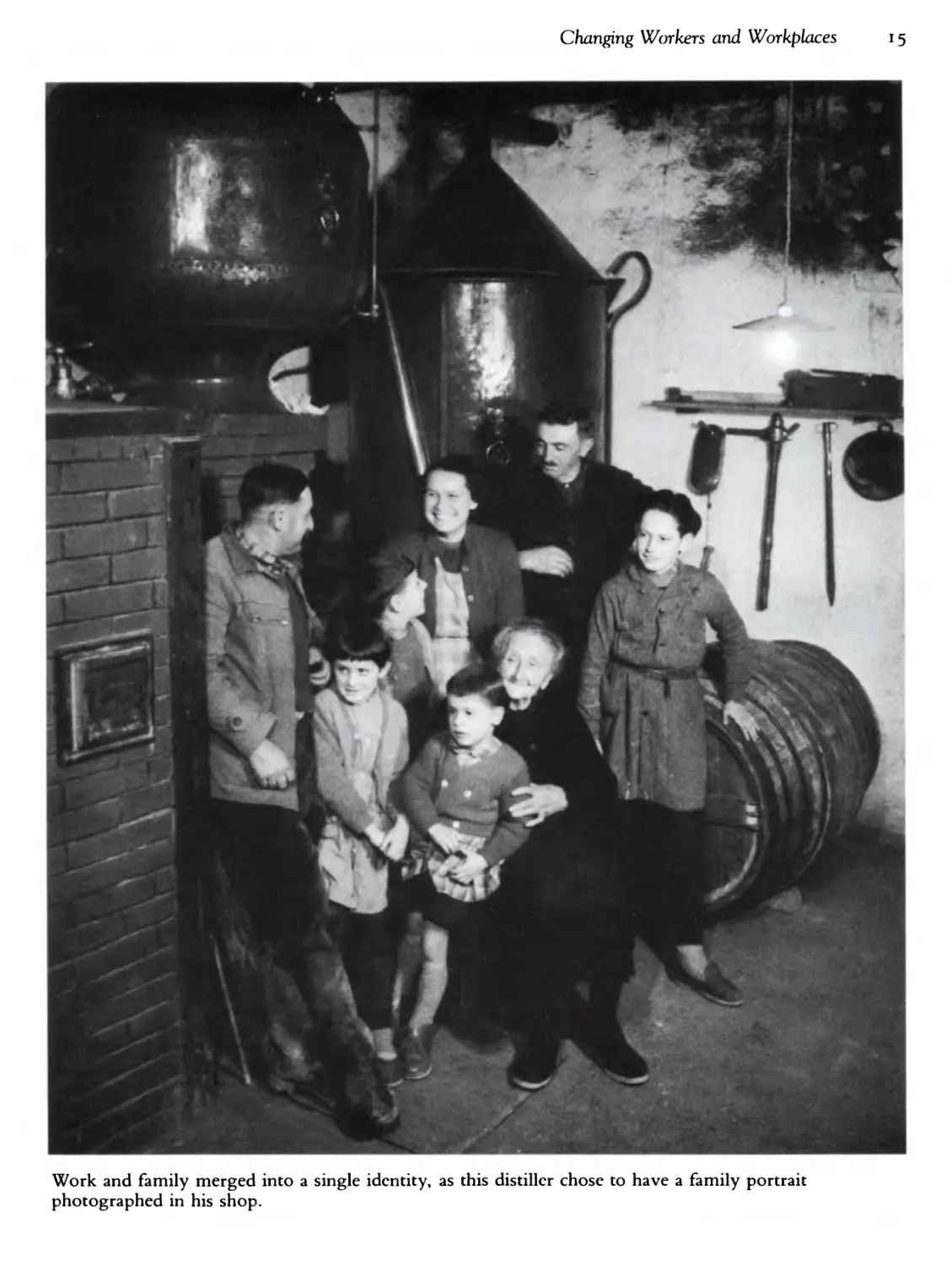
merchants, and artisans, the family is an independent production
unit, an economic cell. The whole group has a part to play in
running the family farm or business. Depending on age,
strength, and skill, each family member plays a different role.
On the farm the young and the elderly tend the cows, the boy
of fourteen does the work of a hired hand, and the wife is in
charge of the barn, the garden, and the chicken coop. Every
available hand is needed when it comes time to get in the hay
or harvest the crop, particularly if storms threaten. In small
businesses the wife usually keeps the books and, when not in
school, the children help out in the store or shop and run
errands.
Where the entire family is involved in earning a living,
private life is not clearly distinguished from working life. The
confusion is perhaps most evident when it comes to money:
there is only one cashbox, and the grocer's son dips into it
when he needs funds for a weekend's entertainment. Two
budgets are merged: the money the farmer's wife spends on
coffee, chocolate, or a scarf is money that may be needed to
pay the rent or buy livestock. Limiting private expenditure is

Changing Workers and Workplaces 15
Work and family merged into a single identity, as this distiller chose to have a family portrait
photographed in his shop.

16 Public and Private Spheres in France
therefore the principal and often the only means of balancing
the books of the farm or business and accumulating working
capital. The success of the business is based on holding down
household expenses.
In compensation the firm is private. If the family business
succeeds, that success is recognized by the community. The
family's place in the local hierarchy is measured by the amount
of land and livestock it owns or by the number of workers it
employs or by the recent repainting of its shop front. Being
economic in nature, the private success is also public.
Productive capital (business property, land, livestock, and so on) is
therefore also wealth, which can be passed on by inheritance
and divided up among heirs (sometimes in defiance of
economic rationality). When the family business grows to the
point where hired help is needed, the contradiction between
private ownership and public economic function becomes
apparent. Hired help may lose their jobs as the result of purely
private events, such as the death of the business' owner.
An indispensable economic unit, this type of family plays
a key role in the education of children and care of the elderly.
On the farm or in the shop young people learn skills from
relatives and friends; apprenticeship is a private family
function. At the same time, aged parents unable to take care of
themselves are provided with room and board by one of their
children. This does not mean that the family is of the
"patriarchal" type made familiar by an uncritical mythology.5 In most
parts of France other than the southwest, peasants live in
nuclear families consisting of parents and children. The
grandparents live nearby in a separate, usually smaller residence,
and they maintain this independent household as long as they
can. When this is no longer possible, particularly if the
grandmother dies before the grandfather, the children will take in
the surviving parent.
The rise of wage labor stripped the family of its economic
function. At the same time the decline of employment in the
home went hand in hand with socialization of education and
elderly care. Young people increasingly learn their trades in
school, and a state-financed social security system has
supplanted the family's role in care of the elderly.
Economic factors have been crucial in the decline of both
self-employment and home-based work. Small farms and
small businesses cannot produce and distribute widely used
The Decline of the Family
Business

Changing Workers and Workplaces 17
i & "t
"1 *>
t-
1. W^
consumer products at competitive prices. In France
protectionism and slow economic development for a long time
impeded the decline of the family business. Since World War
II, however, efforts to modernize the economy have
accelerated that decline. There have been periodic outbursts by
farmers and shopkeepers struggling for survival and demanding
the perpetuation of such advantages as fixed prices and tax
exemptions. The FNSEA (Federation Nationale des Syndicats
d'Exploitants Agricoles, a farmer's group), the movement led
by Pierre Poujade (1953-1956), and Gerard Nicoud's CID-
UNATI (Comite d'Information et de Defense de FUnion
Nationale des Artisans et Travailleurs Independants, an
association of small businessmen and self-employed workers) all
produced impressive demonstrations of widespread opposition
to the government's modernizing policies. Nevertheless, the
inexorable laws of the market have scarcely been impeded by
sporadic social programs or legislative measures such as a 1973
bill to restrict the spread of discount retail outlets.
Social change has also been important. The decline of the
family business is not unrelated to the wide range of social
benefits now available to employees. In agriculture the effect
of this change can be measured by the fact that today the son
who works with his father on the family farm is often officially
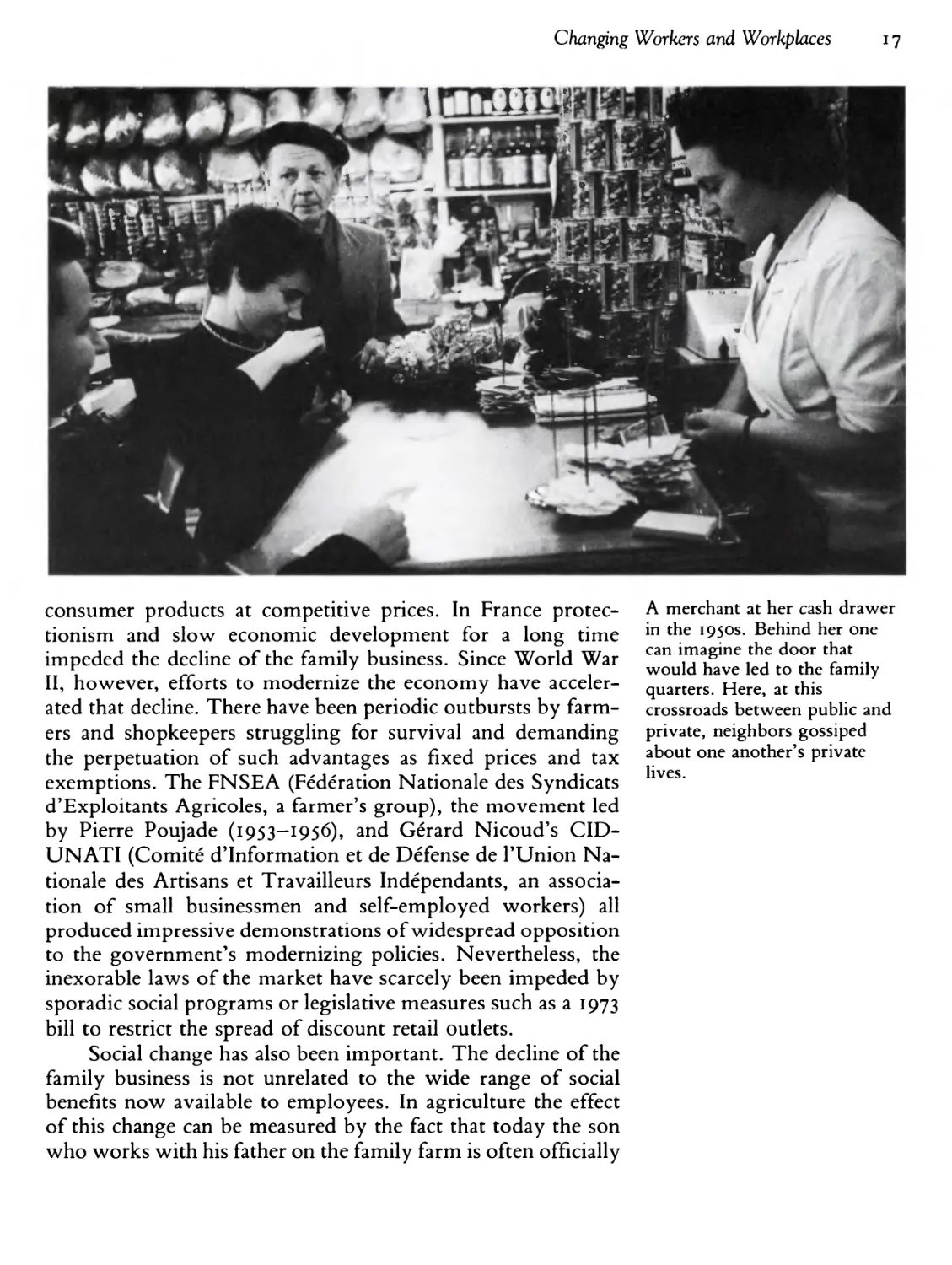
A merchant at her cash drawer
in the 1950s. Behind her one
can imagine the door that
would have led to the family
quarters. Here, at this
crossroads between public and
private, neighbors gossiped
about one another's private
lives.

18 Public and Private Spheres in France
declared to be a farm laborer. In retail merchandising and the
skilled trades the number of independent businesses has
declined sharply. Owners of small business accounted for 12
percent of the work force in 1954, 10 percent in 1962, 9.6
percent in 1968, but only 7.8 percent in 1982. Two different
phenomena are at work here: a slow decline in the number of
small businesses and skilled tradesmen, and a change in the
legal status of the small shop. Many small business owners
have transformed their once privately held operations into
limited partnerships or corporations, of which they then
become salaried managers. In census figures they are therefore
counted as management personnel rather than owners.
Severing the Family from the The change from owner to manager is more than just a
Business matter of vocabulary. Often it reflects a severing of the family
from the firm. Business and private life become distinct and
independent parts of life. The change has important
consequences, and not just in the financial realm, where the family's
private wealth and the firm's capital become clearly distinct.
More generally we find an increased differentiation of time
and space.
In earlier times two distinct types of activity were
combined in family businesses and farms. A merchant might live
with his wife and children in the back room of his shop, as
bakers still do today in small French villages. Wealthier
merchants might live in an apartment above the shop. Thus the
back room served as both living space and storage area.
Closets held merchandise along with the family's groceries and
cooking utensils. The family ate in the same room where the
shopkeeper did his books while the children did their
homework; sometimes everyone slept there as well.
Lack of differentiation in space led to lack of
differentiation in time. If customers found the doors of the shop closed,
they did not hesitate to knock on the window of the back
room where the family was eating, and someone would hasten
to help them. Things began to change when the lady of the
house, disturbed by a customer after closing time, ceased to
accept the interruption as a matter of course and instead
blurted out, "We'll never have any peace around here, that's
for sure!" At that point living in one's place of business came
to be seen as a kind of imprisonment in work. People began
to insist on privacy, and, in order to protect that privacy from
invasion by customers, it became necessary to find living

Changing Workers and Workplaces
quarters away from the place of business. Beds, armoires, and
cook stoves began to vanish from the back rooms of shops all
over France. Merchants rented apartments above street level
or built homes in the suburbs. Henceforth they would have
two addresses and, before long, two telephone lines, only one
of which appeared in the phone directory. Anonymity was the
price paid for peace and privacy.
To be sure, the transformation was neither universal nor
total. It affected downtown businessman more than
neighborhood shopkeepers and retailers of clothing, shoes, and
appliances more than small bakers or grocers. In many villages
the old living arrangements persist, but customers have been
sensitized to the inadvisability of disturbing merchants outside
normal working hours. Tradesmen, dependent on their
workshops, sometimes need to work evenings and weekends and
are therefore more reluctant than retailers to reside at a distance
from their places of business. If they do live in a separate
house, it is usually close by.
Nevertheless, the trend toward separate living quarters is
unmistakable, as can be seen from a glance at the professions.
Doctors, lawyers, and those quintessentially French
professionals the notaire (notary) and the huissier (bailiff) are
traditionally quite jealous of their status and independence, yet even
here change is quite evident. Doctors have begun, for tax
purposes, to declare their wives as receptionists. The women
continue to answer the phone and open the door as before,
but now their husbands pay them a salary (at least on paper)
and they are registered with the social security authorities. In
recent years professionals have begun to practice together as
groups with corporate identities. By itself this might not
require a change in the relation of professional to private life,
but many doctors and lawyers no longer live next to their
professional offices. It has become impossible to reach them
outside of normal working hours, impossible to call the family
physician at night. The doctor is not in; he has protected his
privacy from his patients.
In sum, private life increasingly has been separated from
working life. This new norm is so powerful that it tends to
apply even in work situations where there is no real threat to
privacy from the people with whom one does business.
Among farmers, for example, there has been a significant
move toward living quarters unconnected with the farm
buildings proper. This can be traced back to the nineteenth century,
when many farmers erected a wall between the common room

20 Public and Private Spheres in France
and the barn. At best, though, in the farms of Normandy or
the Beauce this meant that the family quarters would be built
on one side of the barnyard, the barn, stables, and outbuildings
on the other. The need to care for chickens and livestock meant
that farmers, animals, and feed had to remain close together.
Today these requirements no longer obtain. In prosperous
regions many farmers have abandoned livestock breeding and,
thus freed from the needs of the animals, have built modern
homes at a good distance from barns and storage sheds. In the
Beauce, for example, Ephrai'm Grenadou built what he called
a retirement house, which he moved into in 1965, long before
his anticipated retirement.6
On the farm the need was not to protect the family's
privacy, which was no more threatened in the old house than
in the new one. It was rather to establish a clear distinction
between work and private life. Today the very structure of
private life is defined by its contrast with working life. A clear
boundary divides two worlds that as recently as the turn of
the century were still intermingled.
The Old-Fashioned Factory: A symmetrical evolution resulted in a reorganization of
A Semipermeable Wall the workplace, from which all nonproductive functions were
eliminated. At the start of the twentieth century factory design
was still quite haphazard. Work areas were adapted to the
available space rather than laid out according to the demands
of the production process. The factory was a hodgepodge of
separate workshops. One of the best known, the Renault plant
at Billancourt, was a maze of shops occupying some forty
different buildings, not all connected.7 Some were former
homes turned into factory buildings, with huge rooms
connected by narrow, winding staircases. Moving materials
around these buildings required many hands, and for large
numbers of jobs not requiring tremendous strength children
were considered suitable. Parts and equipment flowed in
complex patterns throughout the production area. It was not
always clear where the plant began or ended. To go from one
shop to another sometimes required crossing a street or
courtyard that served other buildings. Nor was it easy to tell when
workers were where they were supposed to be, because there
were so many reasons for moving about the plant. Thus
internal discipline was limited by the nature of the space
available.
Some factories were even more confused in their orga-

Changing Workers and Workplaces 21
nization than the Renault plant. Consider the Longwy Steel
Mills, as described in property deeds dating back to the 1880s.
Alongside blast furnaces and shops we find the manager's
house, a dormitory for workers, a stable, a storage shed with
hayloft, twelve barracks buildings, a bakery, and a canteen.8
The steel company purchased much of the land put up for sale
in its environs. Access routes, including railways (not all of
the same gauge), were hemmed in by privately owned
property. There was still no wall around the premises, and on cold
winter nights tramps slept on the warm slag-heaps. In 1897
the management of the Neuves-Maisons mill called on the
police to protect its access roads and railways.
It was not until relatively late that walls were built around
plant perimeters, often in the wake of major strikes. These
walls marked out boundaries that had not been necessary until
they were challenged. At Le Creusot the factory walls were
either constructed or rebuilt after the 1899 strikes. In Lorraine,
following labor unrest at Pont-a-Mousson in 1905, "walls
were built to protect the plant." By 1909 all major firms had
adopted modern means of protection in case of strikes.9
Workers were not the only people admitted through the gates,
however. Writing in the 1920s, Georges Lamirand described
how women with children used to bring meals to their
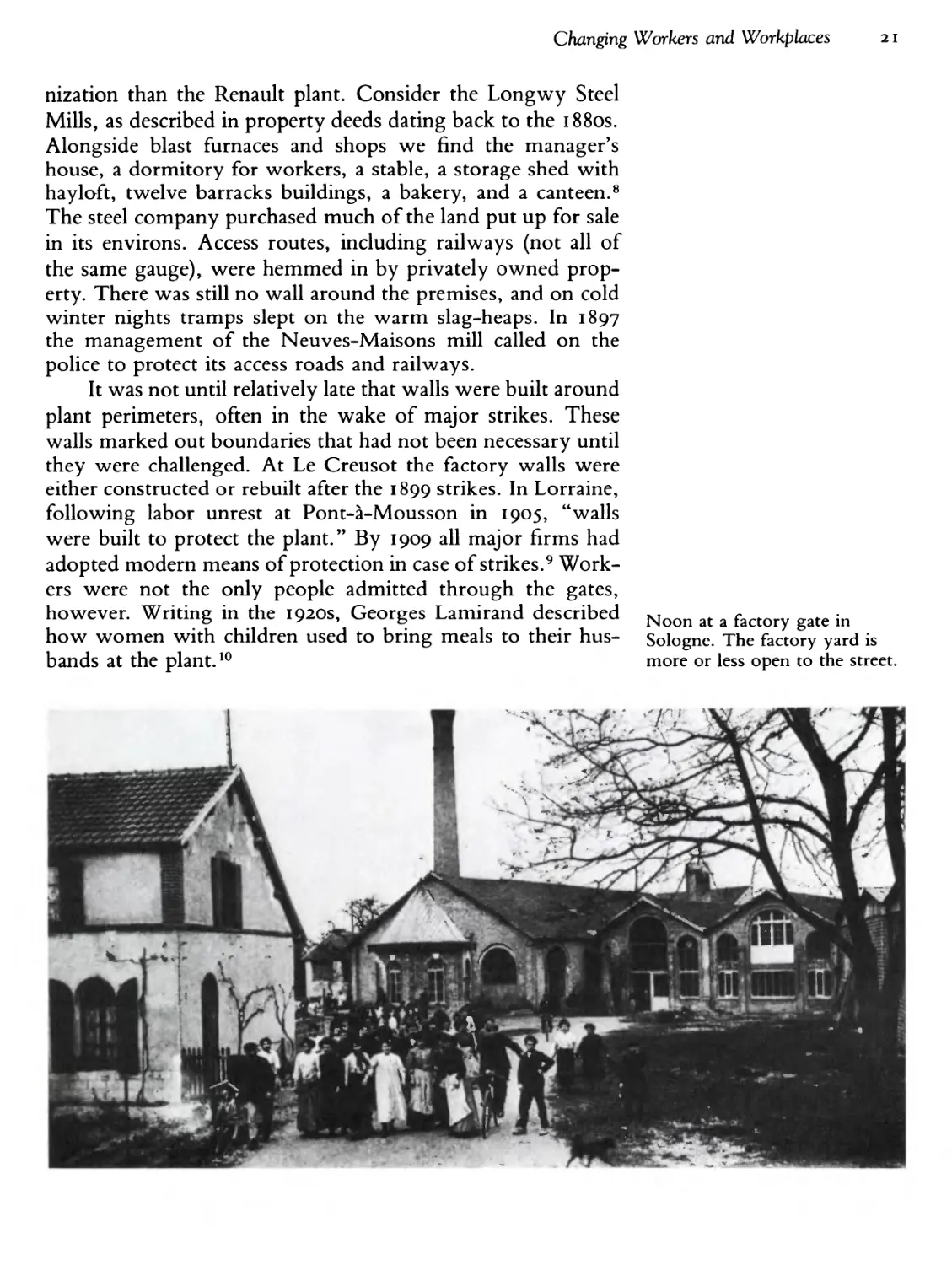
husbands at the plant.10
Noon at a factory gate in
Sologne. The factory yard is
more or less open to the street.
i
*-.;. .-t. ■ ■ /ill > % «■
vA
U .
.**
- I: *
\. %s
n
'X
>
. '}* S
I 1
t
-.1

22 Public and Private Spheres in France
Factory for manufacturing
armor plate. The machinery is
still belt-driven. This vast
hangar with its chain hoists and
overhead cranes was designed
for the sole purpose of
production.
Although the diversity of factory space resulted in part
from the haphazard way in which factories had grown, there
were other causes. Men and women were defined primarily
in terms of their work. The notion that workers have lives
outside work from which they derive a part of their identity
is a modern one. At the turn of the century only the
bourgeoisie, those who owned property or lived on private
incomes, were fully entitled to a private life. The working classes
were defined primarily in terms of work; their private lives
were subject to the constraints of that work. Some workers
lacked even homes of their own; they lived, ate, and slept at
the places where they worked. In the Lyons region some
textile firms were staffed exclusively by young peasant women
who were housed in dormitories supervised by nuns.11 Like
the Catalonian textile colonies, these convent-factories
organized the whole of life around work.
Most nineteenth-century hospitals were staffed by
resident nurses and attendants, many of whom replaced the nuns
who had previously filled the same roles. Their lives were
harsh, almost cloistered. They could not go out without per-
^ ft
v. s€l ti
•\ l,\ It I -r
' J J_ 1 'hVL-MM 1
"r ,, «r * •/ !
11
' .' : i :• V
/'
fm.
i.
I •

Changing Workers and Workplaces 23
mission, which was granted as a favor. Yet many hospital
employees were married men and women who wished to lead
a family life. Their confinement seemed unjustifiable,
particularly since the only available lodging was in filthy dormitories
that Dr. Bourneville stigmatized as breeding grounds for
tuberculosis.12 Gustave Mesureur, director of the Assistance
Publique at the turn of the century, nevertheless refused to
permit hospital staff to reside off the premises.
The right to reside elsewhere, tantamount to the right to
a private life, was granted first to ranking male personnel,
then to other male employees, next to married head nurses,
and finally to other married nurses. Unmarried employees
were supposed to fill all their needs at the hospital. The
requirement that they reside on the premises remained in force
until after World War II. Hospital dormitories developed a life
of their own, akin to that found in boarding schools. Residents
gathered in washrooms and kitchens. Still, there was no room
for private life as such except outside the hospital, where
nurses were rarely allowed to go, and in the solitude of the
bedroom.
\
3V'm
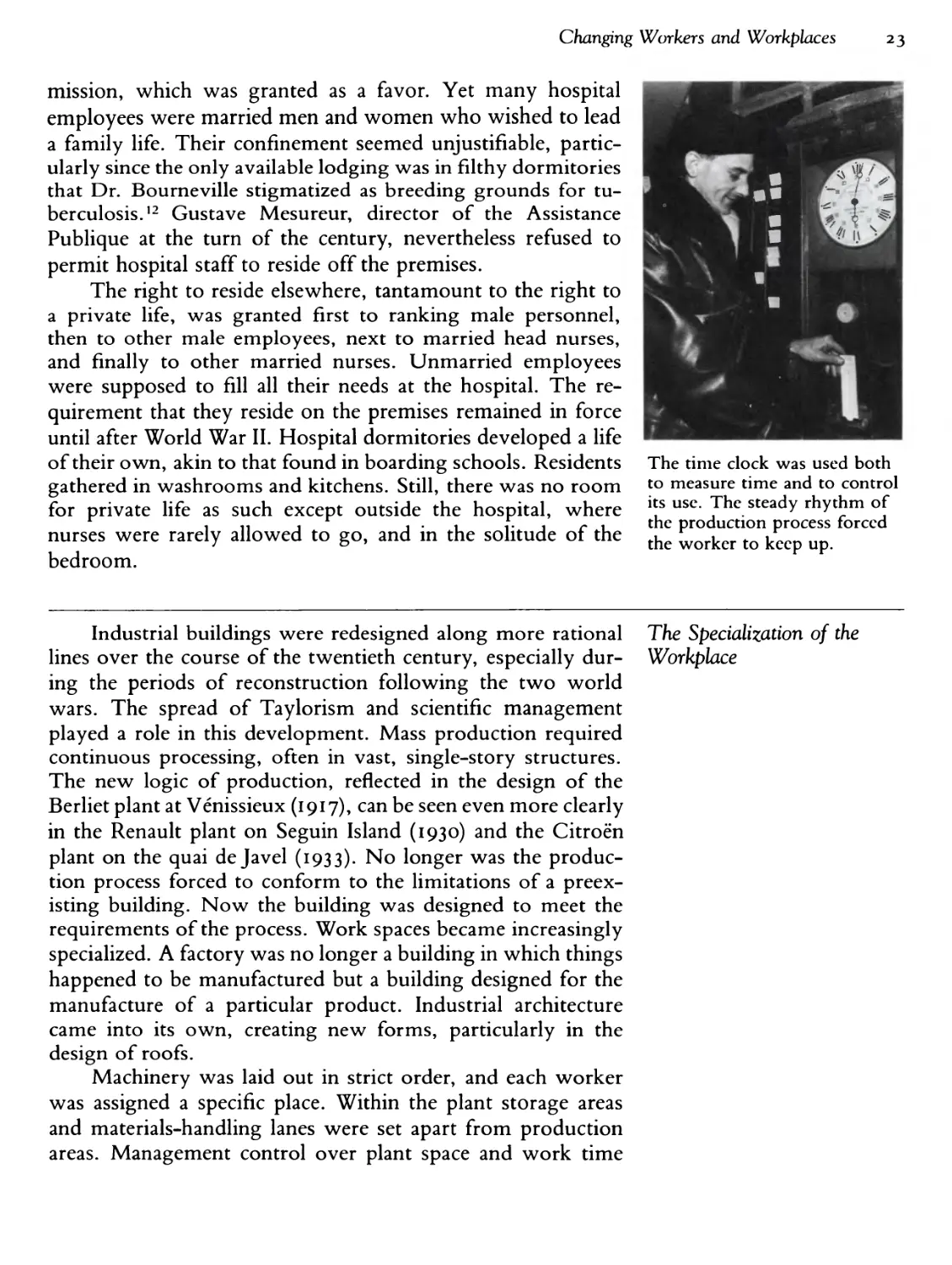
The time clock was used both
to measure time and to control
its use. The steady rhythm of
the production process forced
the worker to keep up.
Industrial buildings were redesigned along more rational
lines over the course of the twentieth century, especially
during the periods of reconstruction following the two world
wars. The spread of Taylorism and scientific management
played a role in this development. Mass production required
continuous processing, often in vast, single-story structures.
The new logic of production, reflected in the design of the
Berliet plant at Venissieux (1917), can be seen even more clearly
in the Renault plant on Seguin Island (1930) and the Citroen
plant on the quai de Javel (1933). No longer was the
production process forced to conform to the limitations of a
preexisting building. Now the building was designed to meet the
requirements of the process. Work spaces became increasingly
specialized. A factory was no longer a building in which things
happened to be manufactured but a building designed for the
manufacture of a particular product. Industrial architecture
came into its own, creating new forms, particularly in the
design of roofs.
Machinery was laid out in strict order, and each worker
was assigned a specific place. Within the plant storage areas
and materials-handling lanes were set apart from production
areas. Management control over plant space and work time
The Specialization of the
Workplace

24 Public and Private Spheres in France
**^ _ -« . .jo 4-^ro** •», » o> " "V «*7 -» V. * ' Tf «** - ^ * **
^•,i.
-%i
t«
~-£t:l \-\
*K'
-\
■•• '-I^J.:*
~. vwv
»^5»
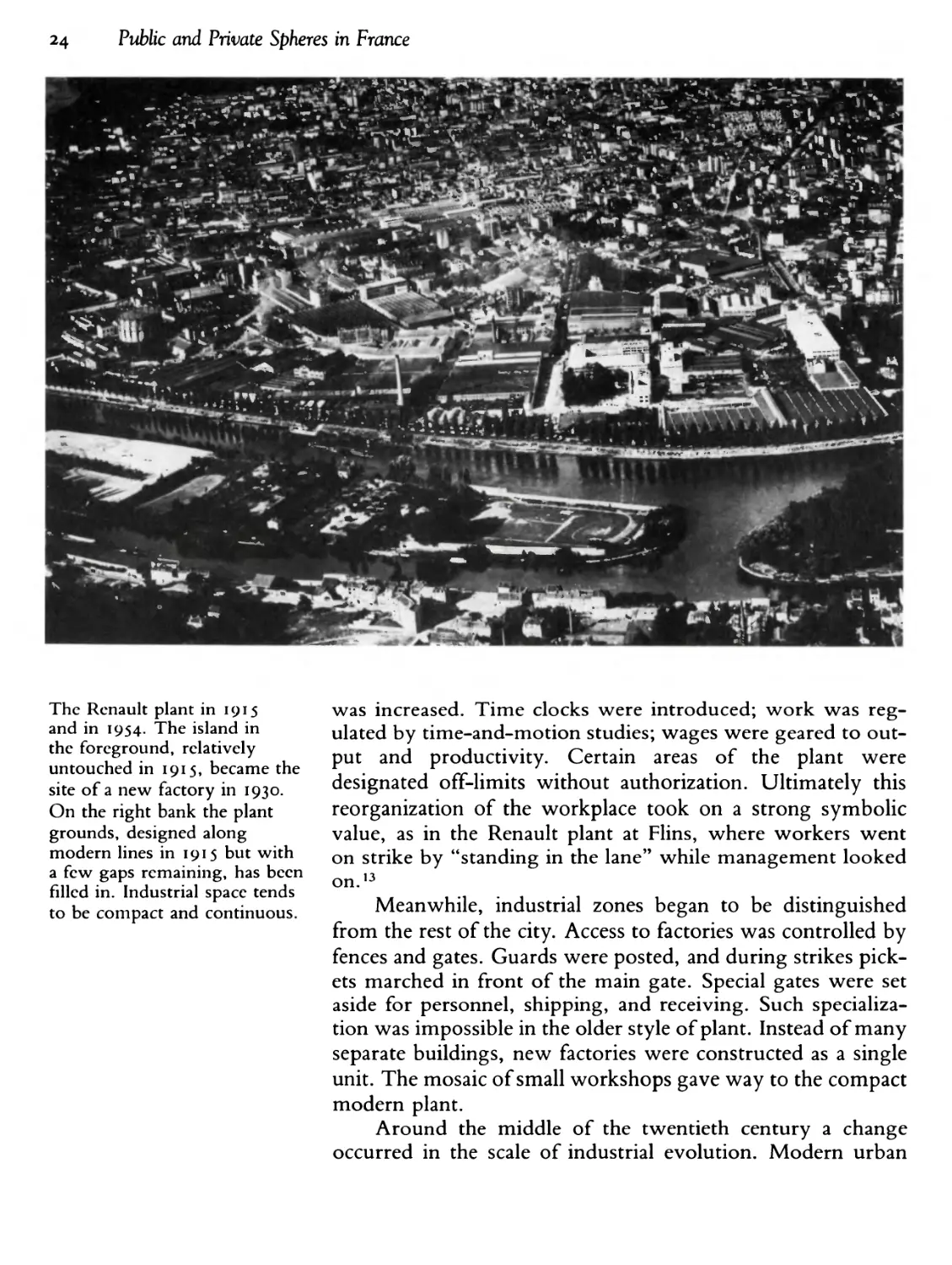
The Renault plant in 1915
and in 1954. The island in
the foreground, relatively
untouched in 1915, became the
site of a new factory in 1930.
On the right bank the plant
grounds, designed along
modern lines in 1915 but with
a few gaps remaining, has been
filled in. Industrial space tends
to be compact and continuous.
was increased. Time clocks were introduced; work was
regulated by time-and-motion studies; wages were geared to
output and productivity. Certain areas of the plant were
designated off-limits without authorization. Ultimately this
reorganization of the workplace took on a strong symbolic
value, as in the Renault plant at Flins, where workers went
on strike by "standing in the lane" while management looked
on.13
Meanwhile, industrial zones began to be distinguished
from the rest of the city. Access to factories was controlled by
fences and gates. Guards were posted, and during strikes
pickets marched in front of the main gate. Special gates were set
aside for personnel, shipping, and receiving. Such
specialization was impossible in the older style of plant. Instead of many
separate buildings, new factories were constructed as a single
unit. The mosaic of small workshops gave way to the compact
modern plant.
Around the middle of the twentieth century a change
occurred in the scale of industrial evolution. Modern urban

Changing Workers and Workplaces 25
r«. ♦ .i
r> .
•*-
■ >■••'■
■■»■: .1 . -
planning insisted that plants be confined to industrial zones.
In older cities housing and workshops coexisted. Apartment
buildings, warehouses, and shops shared the same courtyard.
The shouts of children mingled with the hum of machinery,
the whine of saws, and the pounding of hammers. But modern
urban design, exemplified by the Athens Charter (1930),
condemned such confusion. The criticism remained entirely
theoretical, however, as long as the Depression continued to halt
urban growth. After war demolished whole sections of
European cities, however, theory became practice that continued
during the subsequent period of rapid urban growth. Zoning
policies enforced a rigid distinction between industrial and
residential areas.
The first industrial zones were still fairly small, no more
than a few acres in size. With economic growth, however,
came an expansion of the horizon, with industrial or business
zones of hundreds of acres now commonplace. Urban planners
excluded all industrial construction from residential zones;
only small stores were allowed. Thus modern planning en-

26 Public and Private Spheres in France
Parts are stored along the assembly line, this one at Renault. A great deal of space is required to store
parts and machinery in the order in which they will be needed.

Changing Workers and Workplaces 27
shrined as a principle and imposed on the entire population
the old bourgeois predilection for residences away from
industrial noise and squalor. Working-class residential
neighborhoods sprang up next to older bourgeois residential
neighborhoods. In older sections workshops closed and the
space was converted to residential use. Gradually the urban
fabric became increasingly uniform. The change can be seen
in Paris in the 14th and 15 th arrondissements and in the Les
Brotteaux and Croix-Rousse sections of Lyons as well as in
other cities.
The contrast between private life and work life is
nowadays embedded in the very structure of modern cities and
schedules. People no longer work where they live or live
where they work. This principle applies not just to apartments
and workshops but to whole neighborhoods. Every day huge
populations migrate between home and workplace by
automobile and mass transportation.
Nevertheless, the dichotomy is not absolute. Schools,
post offices, hospitals, and retail stores are not located in
industrial zones, even though they are the workplace of many
employees. Zoning has led to such vast transformations that
Large companies soon
separated work space from
living quarters. The ideal was
one home per family. This late-
I9th-century one belonged to
the Saint-Eugene workers'
housing complex.
*i*
V
• V
Ebrr^T--——™**~"
*
5-v, ^«- . -
' ( V ' • '* r V i ^ 1 k
- ^

28 Public and Private Spheres in France
"ixi^ —^—s x ^
h Jtr** ---
• ■< .r
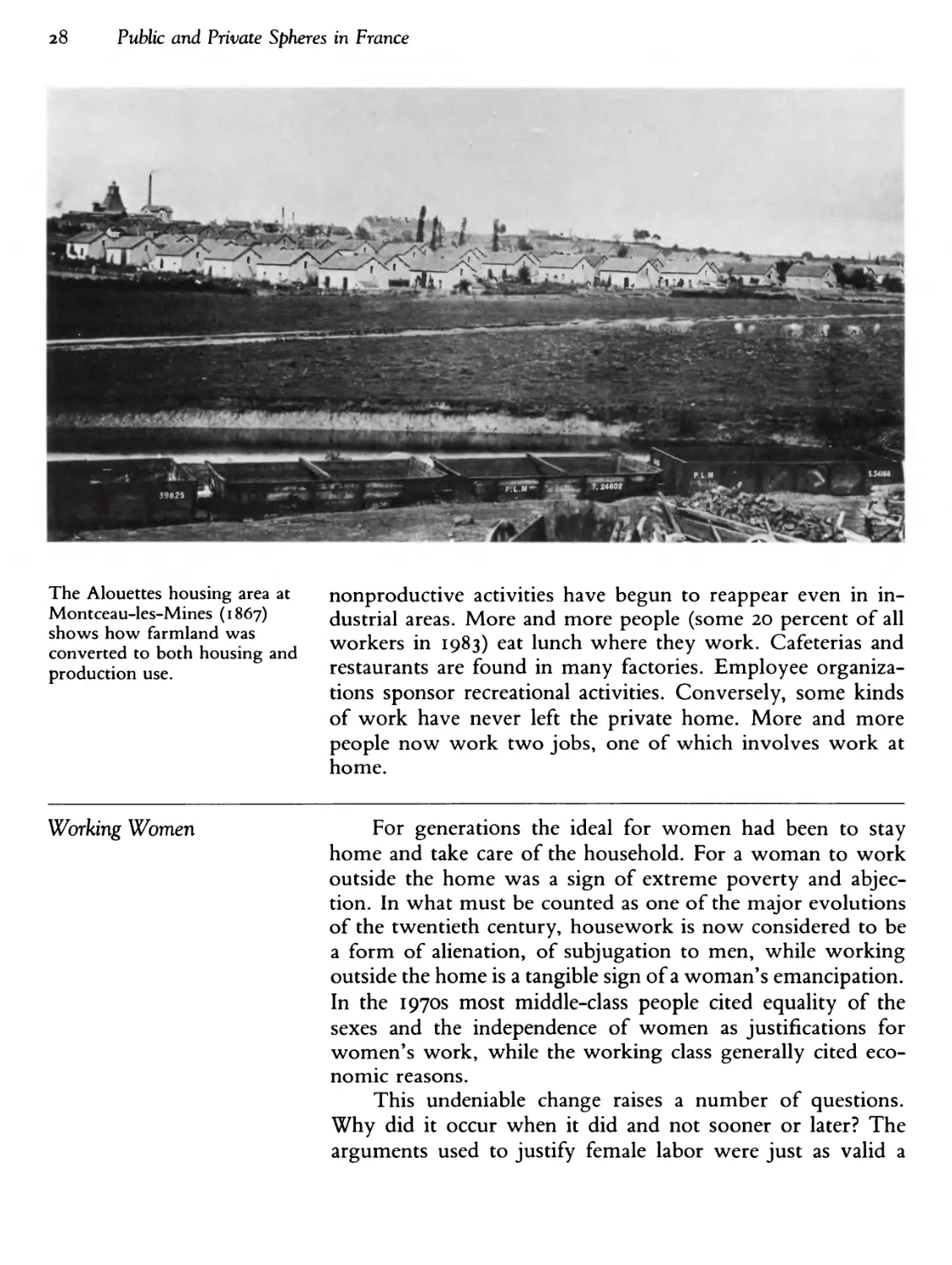
The Alouettes housing area at
Montceau-les-Mines (1867)
shows how farmland was
converted to both housing and
production use.
nonproductive activities have begun to reappear even in
industrial areas. More and more people (some 20 percent of all
workers in 1983) eat lunch where they work. Cafeterias and
restaurants are found in many factories. Employee
organizations sponsor recreational activities. Conversely, some kinds
of work have never left the private home. More and more
people now work two jobs, one of which involves work at
home.
Working Women
For generations the ideal for women had been to stay
home and take care of the household. For a woman to work
outside the home was a sign of extreme poverty and
abjection. In what must be counted as one of the major evolutions
of the twentieth century, housework is now considered to be
a form of alienation, of subjugation to men, while working
outside the home is a tangible sign of a woman's emancipation.
In the 1970s most middle-class people cited equality of the
sexes and the independence of women as justifications for
women's work, while the working class generally cited
economic reasons.
This undeniable change raises a number of questions.
Why did it occur when it did and not sooner or later? The
arguments used to justify female labor were just as valid a

Changing Workers and Workplaces 29
century ago as during the past two or three decades. Why did
women have to wait until the middle of the twentieth century?
And why did the change affect the urban middle class first,
before spreading slowly and gradually to the rest of society?
One answer has to do with the fact that for many people
home and workplace had coincided. As long as household
chores and productive labor were performed in the household,
the sexual division of labor was not perceived as involving
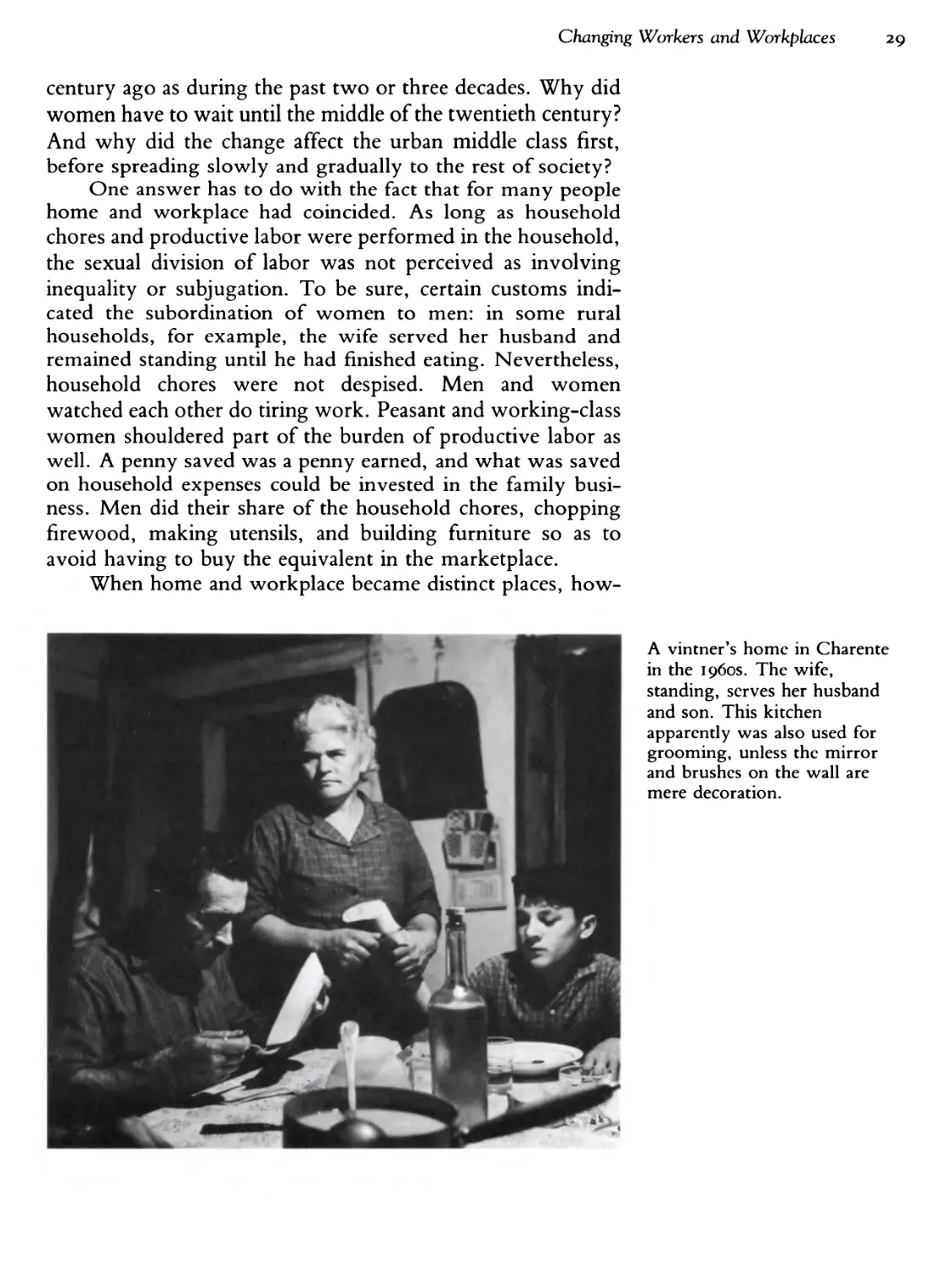
inequality or subjugation. To be sure, certain customs
indicated the subordination of women to men: in some rural
households, for example, the wife served her husband and
remained standing until he had finished eating. Nevertheless,
household chores were not despised. Men and women
watched each other do tiring work. Peasant and working-class
women shouldered part of the burden of productive labor as
well. A penny saved was a penny earned, and what was saved
on household expenses could be invested in the family
business. Men did their share of the household chores, chopping
firewood, making utensils, and building furniture so as to
avoid having to buy the equivalent in the marketplace.
When home and workplace became distinct places, how-
A vintner's home in Charente
in the 1960s. The wife,
standing, serves her husband
and son. This kitchen
apparently was also used for
grooming, unless the mirror
and brushes on the wall are
mere decoration.

30 Public and Private Spheres in France
Women working in a brush
factory in 1965. Not only is the
work space specialized, so are
the clothes the women are
wearing.
ever, marital equality ended and women became servants. The
stereotype of the man who sits in his armchair and reads his
paper while his wife works assumes that the husband is the
one who "comes home from work," that is, who works
outside the home. At the same time the household economy is
"monetarized": economizing on expenditures becomes less
important than bringing home a salary. Work for hire—man's
work—takes on a new dignity, while the woman who stays
home becomes her husband's domestic servant. No longer is
the key fact that she works at home, but that she does so for
someone else's benefit. The separation of home and workplace
bestows a new significance on the sexual division of labor; it
introduces into marriage a master-servant relationship
characteristic of the bourgeoisie of an earlier period. This is
intolerable, particularly since it has meanwhile become socially
atypical to work in someone else's private space. In this
century it has come to be seen as an emancipation for women to
work because the nature of paid labor has changed so
dramatically.
x
\
\

Changing Workers and Workplaces 31
The Socialization of Paid Labor
At the turn of the century working at home stood in
opposition to working for others. Whatever form hired labor
might take, it always involved working for someone else.
Work was done not in a public space subject to collective
norms but in the private domain of another person.
In this sense domestic service was the quintessential form Domestic Servants
of work for hire. Some 1,800,000 servants were employed in
rural households in 1892; in 1906 some 960,000 individuals
were employed as servants in bourgeois homes. In either case
servants gave up any semblance of private life when they went
to live in their masters' homes. Unlike day laborers and
cleaning women, servants lived under the master's roof and shared
the master's food, whether they ate in the kitchen or, in rural
homes, at the family table. They had no privacy. Rural
servants generally slept in the barn and carried their personal
belongings in a pocket or rucksack. In town, maids often slept
in a shed near the kitchen. Others had a room in the attic
where they might keep toilet articles and a few trinkets.
Homemakers' guidebooks recommended that the lady of the
house regularly inspect all maids' rooms. In any case, maids
had little free time to do anything in their rooms but sleep.
Relations among servants were subject to constant
scrutiny by their masters. Vacations were as brief as they were
infrequent, and mail was liable to be opened. If a maid met a
soldier in a public park while taking the children for a walk,
she risked losing her job if she invited him to call at the service
entrance leading to the kitchen.
There is no better indicator of how difficult it was for
servants to maintain a private life than the small number who
married. In rural homes nearly all servants were single, and
those who were married might as well have been single, for
they lived apart from their spouses. In wealthy bourgeois and
aristocratic households a chauffeur might marry a
chambermaid and both retain their employment. If they wished to
keep their jobs, however, they had better not have children,
unless their employers had a porter's lodge available in the
building or a gamekeeper's house on a country estate. Those
who entered domestic service were expected not to reproduce,
and the only private life they had was secret or marginal.
They did, however, share in the private lives of their

32 Public and Private Spheres in France
T7
' /
£'
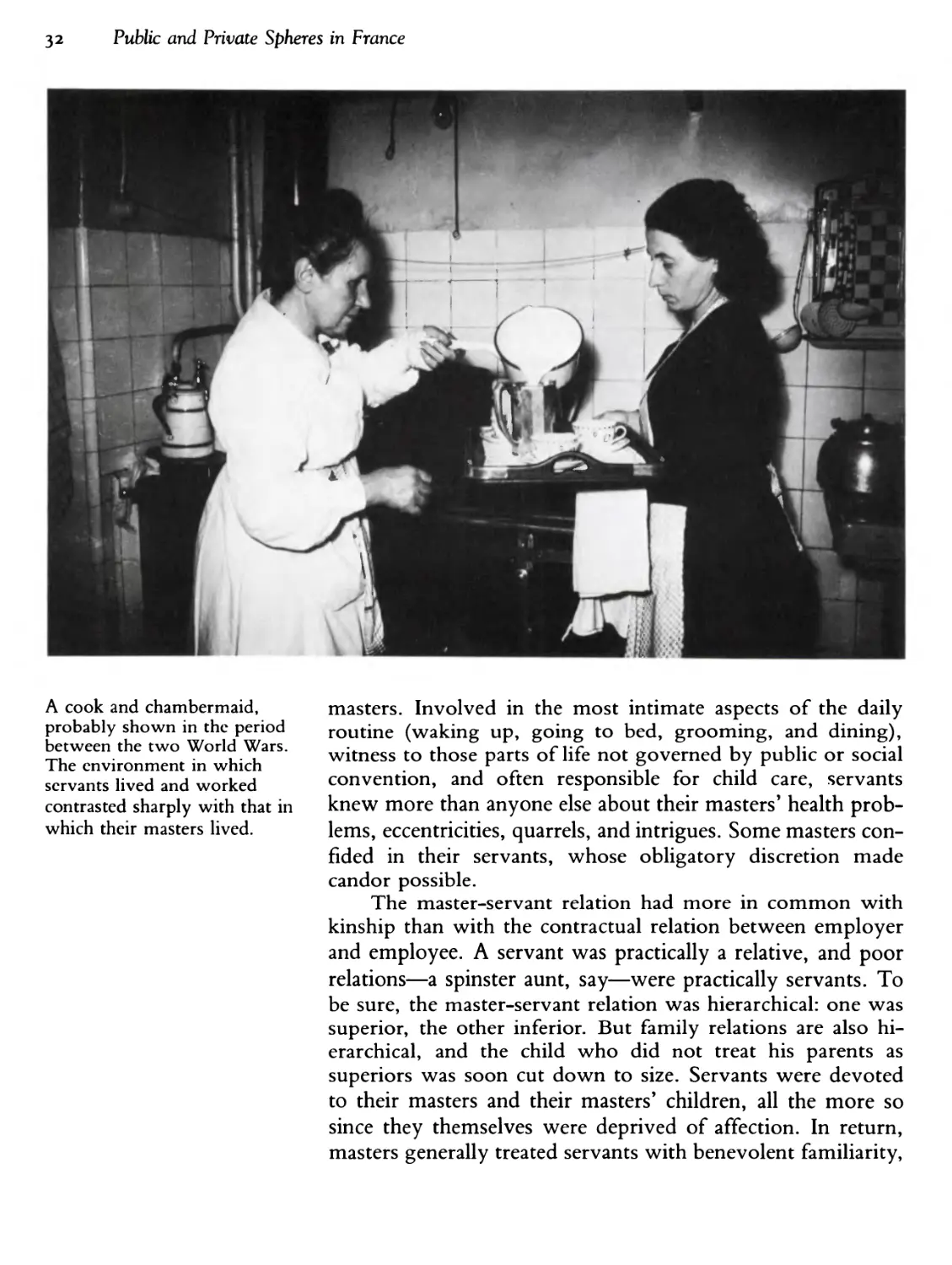
A cook and chambermaid,
probably shown in the period
between the two World Wars.
The environment in which
servants lived and worked
contrasted sharply with that in
which their masters lived.
masters. Involved in the most intimate aspects of the daily
routine (waking up, going to bed, grooming, and dining),
witness to those parts of life not governed by public or social
convention, and often responsible for child care, servants
knew more than anyone else about their masters' health
problems, eccentricities, quarrels, and intrigues. Some masters
confided in their servants, whose obligatory discretion made
candor possible.
The master-servant relation had more in common with
kinship than with the contractual relation between employer
and employee. A servant was practically a relative, and poor
relations—a spinster aunt, say—were practically servants. To
be sure, the master-servant relation was hierarchical: one was
superior, the other inferior. But family relations are also
hierarchical, and the child who did not treat his parents as
superiors was soon cut down to size. Servants were devoted
to their masters and their masters' children, all the more so
since they themselves were deprived of affection. In return,
masters generally treated servants with benevolent familiarity,

Changing Workers and Workplaces 33
Sr|
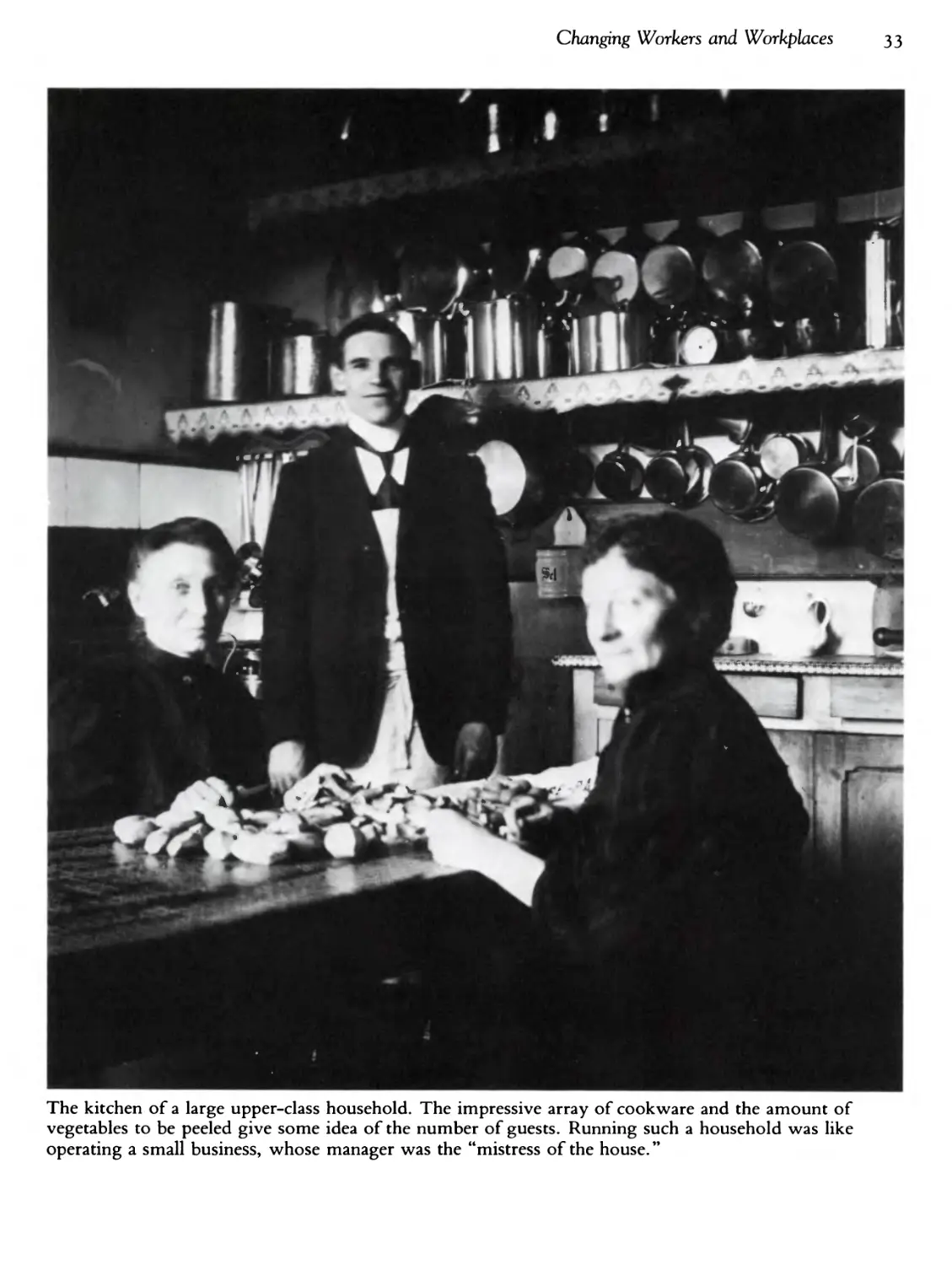
The kitchen of a large upper-class household. The impressive array of cookware and the amount of
vegetables to be peeled give some idea of the number of guests. Running such a household was like
operating a small business, whose manager was the "mistress of the house."

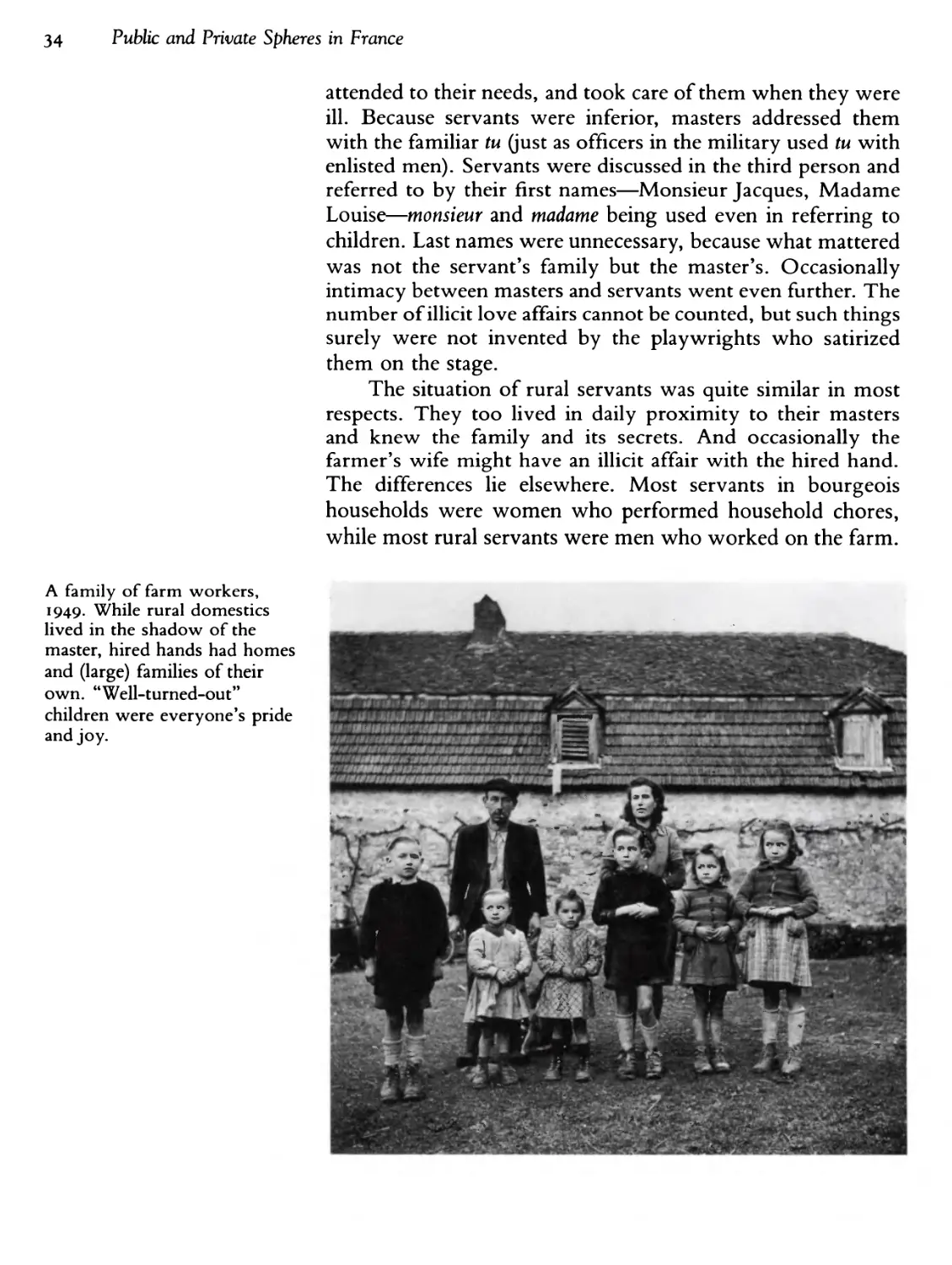
34 Public and Private Spheres in France
A family of farm workers,
1949. While rural domestics
lived in the shadow of the
master, hired hands had homes
and (large) families of their
own. "Well-turned-out"
children were everyone's pride
and joy.
attended to their needs, and took care of them when they were
ill. Because servants were inferior, masters addressed them
with the familiar tu (just as officers in the military used tu with
enlisted men). Servants were discussed in the third person and
referred to by their first names—Monsieur Jacques, Madame
Louise—monsieur and madame being used even in referring to
children. Last names were unnecessary, because what mattered
was not the servant's family but the master's. Occasionally
intimacy between masters and servants went even further. The
number of illicit love affairs cannot be counted, but such things
surely were not invented by the playwrights who satirized
them on the stage.
The situation of rural servants was quite similar in most
respects. They too lived in daily proximity to their masters
and knew the family and its secrets. And occasionally the
farmer's wife might have an illicit affair with the hired hand.
The differences lie elsewhere. Most servants in bourgeois
households were women who performed household chores,
while most rural servants were men who worked on the farm.
/ \
flv

Changing Workers and Workplaces 35
- ^
•»■
A worker (perhaps a farm worker) and his family at the entrance to their dwelling (around 1930). The
door has no lock, and the clothing is shabby—yet the baby is king.

36 Public and Private Spheres in France
Farmhands were less directly involved in the private lives of
their employers than were parlormaids and chambermaids.
The laborer's term of employment was also shorter. A
farmhand was usually hired for a year, and the expiration of that
term was sometimes marked by a week's vacation, as Pierre-
Jakez Helias reports of Brittany in the 1920s.14 By contrast,
housemaids, even if their wages were annual, were hired for
an indefinite period. On all but the largest farms hired hands
were employed at that point in a farmer's life when his sons
were still too young to do a man's work. When the boys
reached age sixteen or seventeen, the hired man's services were
no longer needed. But a bourgeois household without a
servant was inconceivable, and while the number of servants
employed was sometimes larger when there were young
children about (requiring a wet nurse, nanny, or tutor), the very
nature of the household routine required people to do
housework, cook, wash dishes, and so on. Without at least a maid
on tap, a family's social position was in jeopardy.
In both situations, the relation between master and
servant was direct and personal. Whether on the farm or in the
bourgeois home, servants reported to the master personally.
The servant's duties did not end when his or her work was
done, nor did the master fully discharge his obligation when
he paid the servant's wage. Masters expected of servants not
only work, whose content was never precisely defined, but
assistance of various kinds as well as understanding, respect,
and a pleasant demeanor. Ill-tempered and grouchy servants
were not kept on. Conversely, servants were entitled to expect
their masters not just to pay their wages but to display a degree
of benevolence. Payot in his moral guide urges future maids
not to stand for disrespect and not to remain in a home where
they are taught nothing.15 The mistress was supposed to
educate the female servant and teach her how to keep house.
The master-servant relation was not an impersonal labor
contract; each party had to find the other suitable. At a time when
marriages too were based on social proprieties, the master-
servant relation had affinities with interfamilial relations; it
belonged to the private sphere.
In France at the turn of the century there was no statutory
difference between domestic servants and other workers.
Many working people lived in housing provided by their
employers. Let us follow the census takers through a provin-
Workers Housed by Their
Employers

Changing Workers and Workplaces
rial town in 1911. We find a butcher's apprentice living under
his employer's roof and bakery workers sleeping close to their
oven. In the home of a chocolatemaker we find a dozen
workers, mostly men; naturally they are employed in the
manufacture of chocolate, but one of them is also a chauffeur. A
dressmaker lives with her sister and a seamstress whom she
employs and who probably also waits on the two sisters and
cleans up after them.16 It is impossible to draw a hard and fast
distinction between a servant and a worker living in an
employer's home.
It is just as difficult to distinguish between a domiciled
employee and a nondomiciled one. Some factories provided
quarters for at least some of their personnel, but these were
relatively rare. More significant was the fact that employer-
employee relations were in many respects identical to master-
servant relations. Of course the size of the firm made a big
difference from the worker's point of view. In smaller firms
where the owner was personally accessible, workers were
referred to by their first names as if they were servants of the
master: Monsieur Franqois, for example. A workman felt he
could speak to the boss man to man. In larger firms (relatively
rare in France, a country of small businesses), relations were
less personalized and workers ceased to feel that they reported
to a specific individual. Regardless of the size of the firm,
owners treated their factories like their homes: they were
private property, not public space. For a long time they refused
to allow labor inspectors onto the premises and resented any
such attempt as a violation of their privacy. The fact that the
firm was often referred to as the "house" is significant.
Paternalism came naturally to this type of employer. It is Paternalism
a mistake to think of paternalistic behavior as a calculated
pose. Admittedly paternalism served the interests of
employers, but they would have gone bankrupt had they not
concerned themselves with their own interests and it is pointless
to criticize them for doing so. To contemporaries employers
were either paternalistic or else harshly and cynically
exploitative. The employer aware of the duties of his position saw
himself as a "good father to his family." Was it not as families
that prosperous French "houses" were managed? Assuming
that the labor contract is a purely private affair, the only
"good" employer is necessarily a paternalistic one.
In paternalistic firms the employer's whole family became

38 Public and Private Spheres in France
x\
~*L
I
I 1
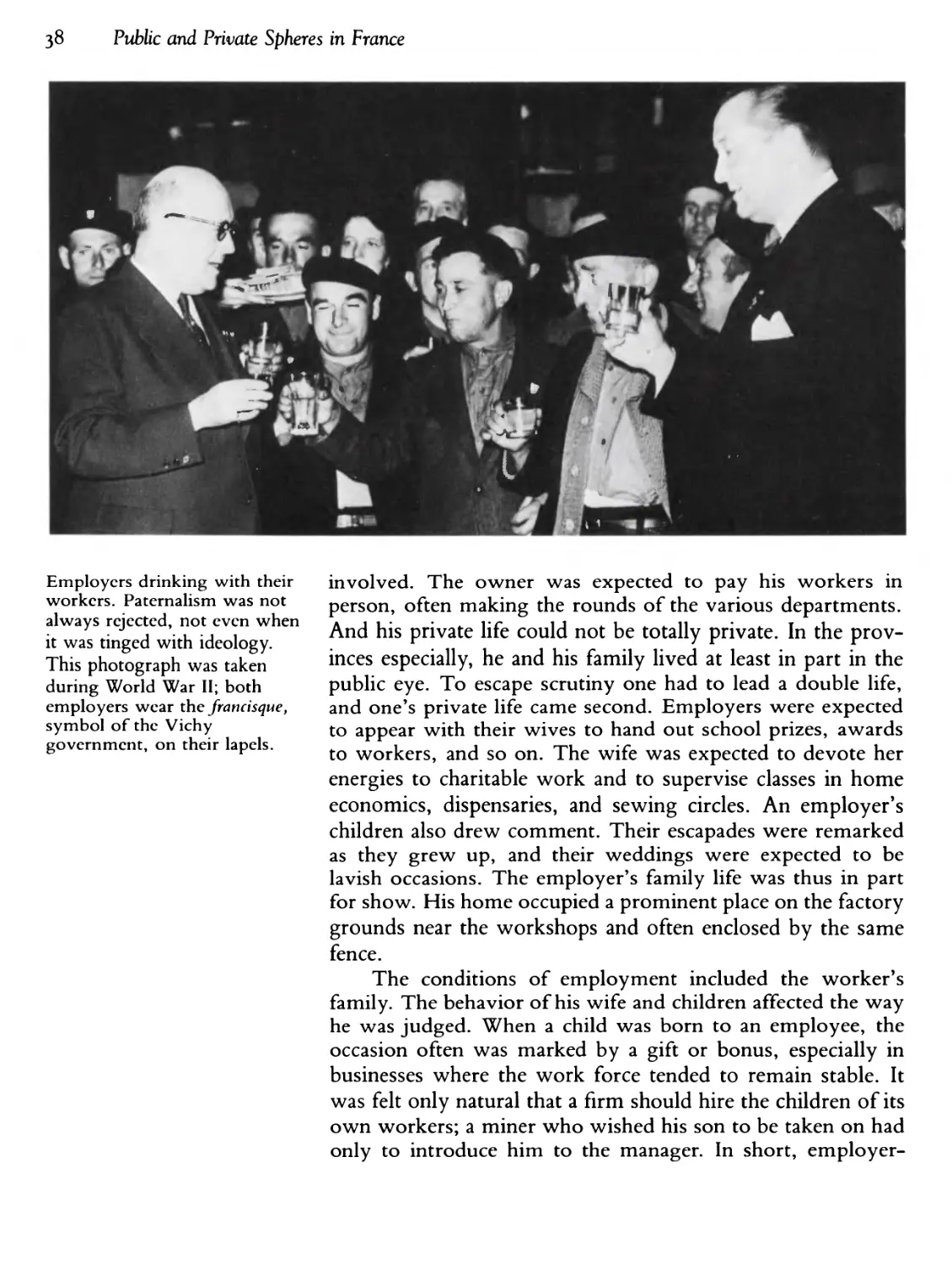
Employers drinking with their
workers. Paternalism was not
always rejected, not even when
it was tinged with ideology.
This photograph was taken
during World War II; both
employers wear the francisque,
symbol of the Vichy
government, on their lapels.
involved. The owner was expected to pay his workers in
person, often making the rounds of the various departments.
And his private life could not be totally private. In the
provinces especially, he and his family lived at least in part in the
public eye. To escape scrutiny one had to lead a double life,
and one's private life came second. Employers were expected
to appear with their wives to hand out school prizes, awards
to workers, and so on. The wife was expected to devote her
energies to charitable work and to supervise classes in home
economics, dispensaries, and sewing circles. An employer's
children also drew comment. Their escapades were remarked
as they grew up, and their weddings were expected to be
lavish occasions. The employer's family life was thus in part
for show. His home occupied a prominent place on the factory
grounds near the workshops and often enclosed by the same
fence.
The conditions of employment included the worker's
family. The behavior of his wife and children affected the way
he was judged. When a child was born to an employee, the
occasion often was marked by a gift or bonus, especially in
businesses where the work force tended to remain stable. It
was felt only natural that a firm should hire the children of its
own workers; a miner who wished his son to be taken on had
only to introduce him to the manager. In short, employer-

Changing Workers and Workplaces 39
employee relations were not unlike relations between rural
landlords and sharecroppers, in that they embraced the totality
of existence.
Today we reject such personalized relations of dependence
and find it difficult to believe that people once willingly
accepted them as self-evident and natural. Yet many workers
felt gratitude toward their employers and looked upon them
as benefactors. In the early years of the Third Republic an
industrialist who brought prosperity to a canton was
frequently elected conseillergeneral by his own workers; the choice
was so obvious that no stuffing of the ballot box was
necessary. Even after World War I iron miners in Lorraine
contributed toward a bouquet of flowers to be delivered by a
procession to their employer's residence.17 On January 1, 1919,
Renault workers presented founder Louis Renault with the
Cross of the Legion of Honor and a gilt book containing
12,000 of their signatures.18 While ancient traditions and
management organizers may have played a part in such
manifestations, the fact that they were not only planned but
successfully carried out shows that many workers saw the
firm as a sort of extended family presided over by the owner.
Not all workers were willing to enter into so unequal a
relationship with their employer. Some, whether trained at
school to show respect and gratitude or resigned to the status
quo, were willing to be treated as what some employers
referred to as "overgrown children," but by the end of the
nineteenth century growing numbers of workers refused to
accept this inferior status. Did not the schools of the Third
Republic teach that all men are equal? To many workers the
condescending benevolence of their employers seemed as
intolerable as the condescension of aristocrats had seemed to the
bourgeois of 1789. They wished to think of themselves as
hired laborers, not indentured servants. The factory was not
an extended family. It was a matter of dignity.
Because the labor contract brought the worker into the
private domain of his employer, the inevitable conflicts of
interest became personal confrontations. Strikes were seen as
personal attacks on the employer. Did children or servants
stage strikes? Striking workers, not content simply to state
their demands, challenged the authority of the pere de I'usine,
the father of the factory. For this very reason early twentieth-
century union leaders attached great importance to the strike:
The Severing of Personal
Ties by Strikes

40 Public and Private Spheres in France
Fiat workers on strike
(Nanterre, 1936). The fence
separates the street from the
plant's property; the occupying
workers have not torn it down.
A difference remains between
the street and the factory, but
the street is empty, while the
factory is full.
it served to educate, to mobilize, to train, and to create new
opportunities.19 A wage increase obtained by means of a strike
was far more valuable than a wage increase willingly granted
by an employer; the material benefit of the strike was
accompanied by a moral benefit.
This employers could not tolerate. To them, a strike was
an act of ingratitude, the sign of a bad attitude, an act of
insubordination or even, as one employer put it, "mutiny."20
After a wave of strikes in the time of the Popular Front (1936),
one employer in the Cote-d'Or required any worker who
wished to be rehired to sign the following letter: "Sir: We beg
your forgiveness for our bad behavior toward you in going
on strike and ask that we be rehired and allowed to redeem
ourselves by our exemplary conduct in the future. Thanking
you in advance, Monsieur Marchal, for your consideration.
Yours truly . . ."21
It should be clear, therefore, why employers stubbornly
refused to allow state authorities to intervene in strikes and
why, in contrast, workers actively solicited such intervention.
Employers viewed their businesses as an extension of their
homes. Arbitration by a justice of the peace, envisioned by an
1892 law, would have placed them on a footing of equality
with their workers. In their eyes such an idea was as senseless
7 A
.*
M ' i .1
V
't
•>h
,\ ' tm
lii
jl
I
1
1 *
j
« #
f I

Changing Workers and Workplaces
as allowing a judge to settle a dispute between a father and
son. Arbitration would have made a public issue of a
relationship that employers wished to keep strictly private.
Conversely, workers demanded arbitration because they did not
view strikes as a personal or family matter. Edmund Shorter
and Charles Tilly argue that despite the unions' antistate
rhetoric of the period, strikers had no compunctions about calling
for state intervention. Between 1893 and 1908 some 22 percent
of strikes went to arbitration. Of these, 48.3 percent were
arbitrated at the behest of workers and 46.2 percent on the
initiative of the justice of the peace. Virtually none went to
arbitration at the request of the employer. The state justified
intervention on the grounds that it was necessary to maintain
law and order. During strikes the police were often summoned
to protect an employer's private property, but the employer's
intransigence often posed a threat to law and order in the
streets. The state did not question the private character of the
labor contract, but it did feel compelled to intervene to stem
the public consequences of what was undeniably a private
dispute. That intervention generally worked in favor of the
workers, for the employer threatened with loss of police
protection was generally forced to compromise.
World War I altered the situation, but only temporarily.
In many plants for the duration of the war the labor contract
ceased to be a purely private matter. The state had a paramount
interest in maintaining war production; to that end it took
youths out of the army and assigned them as industrial
workers. These special workers were employed by the state, not
by the plant owner, and in some cases they were subject to
military authority. Strikes in key war industries could not be
tolerated. Malvy, the interior minister, intervened in labor
conflicts, and Albert Thomas, the minister of armaments,
required factories under his jurisdiction to set up arbitration
commissions and to allow election of shop delegates. In other
words, the war made labor relations in certain sectors of the
economy an affair of state. Labor issues that once had been
private matters were now a question of national security.
For the same reason the war gave rise to the notion that
the national wealth ought to be "returned to the nation." The
1921 platform of the CGT (Confederation Generale du
Travail) used the term "nationalization," and the choice of this
particular word, as opposed to collectivization, socialization,
or "state-ization," was no accident. In this context the idea of
abolishing private property stemmed not from an economic

42 Public and Private Spheres in France
IN
V^
Railway workers during the February 1920 strike wear armbands signifying that they are on the job
against their will. Work rules negotiated in collective bargaining came first to nationalized service
industries, then spread to the rest of the economy.

Changing Workers and Workplaces 43
analysis of capitalism but from a new awareness, born of war,
that certain types of labor are by nature public and in the
national interest. Accordingly, the demand for nationalization
was particularly powerful among railway workers, who had
already proposed it just before the war. The size of railroad
corporations had depersonalized employer-employee
relations, and whatever services were to be rendered were owed
to the worker's passengers rather than to his superiors. In
February and May of 1920 there were major railroad strikes
in France. The companies, ready for a test of strength,
emerged victorious and fired 20,000 workers without
provoking state intervention. Once all the troublemakers were
dismissed, exploitation could resume as before. But conditions
had changed. Nationalization, vigorously rejected in 1920, was
accomplished without real resistance in 1937.22
The decisive change came at the time of the Popular Plant Occupations during the
Front. The plant occupations of June 1936 caused a furor Popular Front
among the bourgeoisie, for they seemed to fly in the face of
private property. Factory owners feared a loss of social
standing and power even more than higher wages and other costs.
Forced to give in, they looked forward to taking revenge. Like
those who lived through the occupations, historians have
wondered about their meaning. Workers did not include
expropriation among their demands, showed no interest in
examining the books of occupied firms, and only rarely
attempted to restart production without the help of
management. It is tempting, therefore, to view the occupations as
nothing more than the seizure of a useful bargaining chip in
difficult negotiations. But this interpretation is not really
satisfactory, for it suggests that one of the major conflicts in
French social history was nothing more than a
misunderstanding: factory owners feared a loss of property that the workers
never threatened to inflict.
A more satisfactory explanation emerges if we view the
status of the labor contract and of employer-employee
relations as the central issue rather than ownership of the firm.
Owners believed that because the firm was their property, the
labor contract was purely private. But workers felt that, even
though a firm might be privately owned, factories were public
places where in a sense the workers were just as much at home
as the owners. A workshop is not private in the same sense
as a bedroom. Hence the labor contract, workers believed,

44 Public and Private Spheres in France
S
'ft*
\
* !k>
' * .»
**
■v*JSs ^
When workers occupied
factories, they enjoyed
themselves in what was usually
their workplace—a way of
staking a collective claim to
private property. The
photograph shows a cookie
factory in La Courneuve.
ought to be a public matter, and its contents ought to be
determined not by personal negotiations between individual
workers and their employers, which were impossible, but by
negotiation between workers' unions and management. In this
respect the major innovation was the introduction of collective
bargaining. Although collective bargaining was legalized in
1920, it is interesting to note that it did not become widespread
until after 1936.
The same argument explains why small employers felt
particularly threatened by the Matignon accords, which, in
1936, ended the plant occupations. These accords were signed,
on the side of business, by representatives of industry groups
speaking for the owners of large firms in the mining,
metallurgy, and machinery industries. Small businessmen accused
these groups of selling them out. They forced France's
principal business organization to change its name and bylaws to
allow small business greater influence. They refused to
negotiate with the CGT a second agreement that would have dealt
with labor disputes and arbitration, because they felt that it
would have interfered with their freedom to hire and fire as
they saw fit. Large firms were ready for compromise, but
small firms showed themselves intransigent. The explanation
for this difference is simple. In large firms labor relations were

Changing Workers and Workplaces
anonymous and impersonal (though foremen and floor bosses
continued to interact very directly with workers). In smaller
firms, however, employer-employee relations remained
highly personal, and workers still had much in common with
servants. It was precisely this personalized relation to
management that workers were now rejecting.
One anecdote brings this central issue of the day into
sharp relief. It was told to me by Benigno Caceres, who at
the time worked for a small construction company in
Toulouse. While he was enjoying the air outside his home one
Sunday morning, his employer passed by. After greetings
were exchanged, the boss said, "By the way, I left my car
down the street. Would you be kind enough to wash it for
me this morning?" To which Caceres responded: "Excuse me,
sir, but that isn't covered by the collective bargaining
agreement."
After 1936 labor became a matter of public policy.
Collective bargaining was backed by compulsory conciliation and
arbitration procedures. Wages were fixed by arbitrators.
Within the firm, shop delegates served as public, collective
spokesmen for workers whose problems with management
might otherwise have remained personal matters. New
legislation mandated a forty-hour week and paid vacations for all
workers, who thus succeeded in staking their claim to privacy.
In this respect private life as we know it today clearly dates
from the period of the Popular Front. Since then it has been
clear to everyone not only that every worker is entitled to a
private existence but also that the workplace—factory, shop,
or office—is not anyone's private domain but public space
subject to impersonal norms.
The Vichy regime did not restore the full powers that
employers had enjoyed before 1936. Circumstances forced the
government to maintain wage controls and to allocate raw
materials. Business organizations gained in power and
exercised additional restraints on the management of individual
firms. To be sure, the abolition of labor unions deprived
workers of collective representation. But the so-called charte
du travail, or labor charter, in attempting to reinstate private
values as the foundation of all social relations, paradoxically
relied upon a collective, public institution: the comites sociaux
d'entreprise, or factory social committees. The aim was to
abolish the distinction between employer and employee and
promote harmony in the firm around charitable activities, in
keeping with the paternalistic ideal of business as an extension

Public and Private Spheres in France
of the family. Now, however, it was no longer possible to
leave social assistance to the owner and his family and
representatives. The charter assigned this task to the factory
committees, which included representatives of blue- and white-
collar workers and management. Though public in nature,
these committees were supposed to promote respect for
private values. Their very existence meant that the plant was no
longer the owner's private domain.23
Now we can understand why the factory social
committees were continued after the Liberation in the guise of comites
d'entreprise, or factory committees. The latter admittedly differ
from the former in two ways that radically alter their
significance: employee representatives are elected, and only the
unions may nominate candidates. Nevertheless, the actual
responsibilities of the factory committees were not much
broader than those of the social committees under Vichy. The
possibility of a management role for the committes was
excluded from the outset, but still they might have played a role
in the organization of production. This did not happen. What
is more, firms employing fewer than fifty workers are not
required to have a committee. In businesses this small, labor
relations are still highly personal in nature, and there seems to
be no way to institutionalize the functions performed by the
committees in larger firms.
Thus the Liberation marked yet another milestone in the
transformation of labor relations to a less personalized system.
The nationalizations carried out in the immediate postwar
period, and, even more, the acceptance of those
nationalizations by the general public, indicate the importance of this
change.
1968: Self-Management Still another stage was reached in 1968, a year that saw,
in addition to much turmoil, calls for self-management and
the passage of legislation governing union locals in industry.
The aspiration of workers to manage themselves—which has
become known as autogestion, or self-management—requires
no comment. It is obviously based on the belief that a business
is a collective enterprise, and its challenge is directed not so
much at the ownership of property as at the power that goes
along with ownership. Advocates of self-management call for
an end to personal power in industry; in its stead they urge
that power be exercised through work collectives. In many
ways, therefore, self-management is the culmination of the
evolution just described.

Changing Workers and Workplaces 47
->;•■■
,-V
'I.
**' »«t\ ■>*■
fc.
'-yg-&\*&S'i ■***£&
JUSOHn SYNDIC*? S$fr
s.
./;
* u
~K
* rj*^jr { ' IT. ^ •• *V***^^** "*
1lnu:
V -
This maison des sytidicats in the
rue de la Grange-aux-Belles
was the headquarters of the
CGT in the early 1920s.
Unions, legal since 1884, had
established such headquarters,
but their presence within the
workplace was legally
prohibited until 1945; their role
was further expanded in 1968.
m
\*
To understand the significance of the 1968 law on union
locals, we must go back to the labor union legislation of 1884.
The 1884 law did little more than recognize the right of
workers to join together in work-related associations; it granted no
specific rights to such organizations themselves. Furthermore,
it authorized employers to band together in organizations as
freely as workers and farmers. To be sure, labor unions were
allowed to own such property as was necessary to discharge
their functions and could appear as parties in court, but they
had no status in business per se. The 1884 law did not authorize
the unions to represent workers in negotiations with
management. At best the unions were considered to be something
like a proxy for their membership, but originally that is all
they were. It was not unheard-of for employers to approve a
wage increase in talks with a union but to insist that the
increase applied only to union members on the grounds that
nonunionized workers were in no way represented in the talks.
Case law finally led to recognition of the union as the
representative of all the workers, even in firms where union
members constituted a minority of the work force. Collective
bargaining led to even more sweeping industry-wide
agreements, which applied to all firms in a particular branch of
industry, even those in which the unions that were party to
the agreements were not represented.

Public and Private Spheres in France
Recognition of the unions as the workers' representatives
did not automatically give them a role to play within
individual firms. Inside the factory, unions were illegal. The
distribution of union newspapers, the collection of union dues, and
the issuance of invitations to union meetings were all in
violation of official industrial regulations. A worker could be
summarily fired for such infractions. Thus, unions had the
right to speak on behalf of workers, but their existence within
the plant had to remain clandestine. As a result, delegates to
the factory committees could not be selected by the unions.
In 1945 the regulations were changed so that committee
delegates could be nominated by the unions and then voted on
by all employees. Their mandate stemmed from their election
by the workers, not from the unions, whose position was
precarious and whose representativity was subject to
challenge. Delegates to factory committees enjoyed legal
protections against summary dismissal, but union officials did not.
Accordingly, factory committees became an instrument
through which the unions obtained some measure of
legitimacy within the plant. They served as a legal "cover," but
full and frank recognition of a union presence was still
withheld.
The law of 1968 changed all that. The unions were at last
granted legal status within firms employing more than fifty
workers. Union locals were entitled to an office and a bulletin
board, and union officials were protected against summary
dismissal and authorized to spend a portion of their paid work
time on union activities (the exact amount of time depended
on the size of the firm). Before 1968 it was illegal to engage
in union activity inside the plant gates; now it was a guaranteed
right.
The New Norm Thus labor moved outside the private domain. It became
rare to work at home, even for the self-employed. At the same
time, working for wages ceased to be thought of as working
for someone else within that individual's private domain.
Work relations became impersonal and subject to formal
regulations determined by collective bargaining in which not only
employers but also workers' organizations enjoyed specific
rights.
These changes provoked a variety of responses. Private
life, expelled from the workplace, returned in a multitude of
guises, some of which will be mentioned later. The current

Changing Workers and Workplaces 49
conception of work is not fully satisfactory either to workers
or to those who rely on their services. What was once seen as
protection against incorporation into the employer's private
domain is now perceived by some as subjugation to a heartless
bureaucracy. People yearn for more personal work relations,
and this is even now leading to changes in the way we work,
although work itself remains firmly in the public sphere.

it
Menilmontant, a decaying working-class neighborhood of Paris, in 1957. The children play in the street,
which is an extension of the home.

^§ The Family and the
Individual
AT first glance the evolution of the family seems simple: it
gave up its "public" functions and retained only "private"
ones. Some of the tasks once entrusted to the family were
taken over by cooperative organizations. The socialization of
these functions left the family with no other role than to
further the development of private life. Hence we may speak
of a "privatization" of the family.
While not inaccurate, this analysis does not go far enough.
The modern family, exclusively concerned with private
functions, is no longer the same as the family that once performed
public functions as well. The change in function has brought
about a change in nature. In fact, the family has ceased to be
a powerful institution; its privatization has amounted to a
deinstitutionalization. Society is moving in the direction of
what might be called "informal" families. At the same time,
however, it is within the family that individuals have won the
right to an autonomous private life. Private life has assumed
two interconnected forms: within the private life of the family
the private life of the individual unfolds. An extreme form of
this tendency can be seen in households consisting of a single
individual, in which domestic life is reduced to nothing more
than one person's private activities.
The Space of Private Life
In theory the wall of private life encloses the entire
domestic universe, the family and household. This frontier
appears to be more sharply defined in France than it is in England
or the United States. The English "bed and breakfast," an
arrangement under which paying guests are taken into private
homes, is unknown in France. Nineteenth-century French par-

52 Public and Private Spheres in France
ents sent their children to schools with dormitories rather than
board them in the homes of teachers and other families as was
done in Germany. What went on in a French home was thus
strictly private.
An End to Overcrowding In a very real sense the twentieth century has been
characterized by the conquest of space, but not by astronauts. It
is living space that has been conquered, as more and more
people acquire the room without which a full-fledged private
life is impossible.
Until around 1950 the homes of the well-to-do differed
markedly from those of the poor. The wealthy had spare
rooms for receiving guests, a kitchen and other service rooms,
a bedroom for each family member, and often additional
rooms as well. Different parts of the house communicated via
corridors and a foyer. Working-class housing bore little
resemblance to the grand apartments of the bourgeoisie. Workers
and peasants often lived cramped into one or two rooms.
Many rural homes consisted of a single room used for
m * ■- *
1 - >
v. - I
I.I

The Family and the Individual 53
both cooking and sleeping. Physicians investigating health
conditions in rural housing in Morbihan and Yonne around
1900 described common rooms that contained as many as four
beds, each occupied by two people.1 Only the most prosperous
farmhouses included a separate bedroom. As the prosperity of
the peasantry grew after 1900 and especially between the First
and Second World Wars, families frequently added a bedroom
or two to an existing farmhouse. In addition to the number
of rooms, the size of rooms reflected the income of their
inhabitants. A farm laborer might occupy two tiny rooms; a
wealthier peasant might live in a single-room but quite ample
farmhouse. Rooms generally were quite small, however,
considering the variety of activities that went on inside them. In
Yonne the average farmhouse contained a mere 270 square
feet of living space.
Urban dwellings were less uniform. Many consisted of a
single room, while others had a separate kitchen. In 1894 some
20 percent of the population of Saint-Etienne, 19 percent of
the population of Nantes, and 16 percent of the population of
Lille, Lyons, Angers, and Limoges lived in one-room apart-
Left: a middle-class salon in
1958. A maid is serving coffee
amid books, paintings, an
oriental rug, flowers, and—a
rare prize at the time—a
television set. Below: the one-
room dwelling of a farmhand
with several children near
Moyon (Manche). Note the
new stove, a cabinet for storing
food attached to the wall, and
the fake mantelpiece behind the
stove.
..* t -"■ ••*-" t . i,i
fc.~ *
4 < <
'/•'
I-
1(
t J
' *

Public and Private Spheres in France
ments. Jean Guehenno's description is typical: "We had only
one room. There we worked, ate, and on some nights even
entertained friends. Along the walls we had to find space for
two beds, a table, two armoires, a buffet, and a gas stove, as
well as room to hang pots, photos of the family, and pictures
of the czar and the president of the Republic . . . Lines
stretching from one corner of the room to the other always held the
most recent laundry . . . Beneath [a high window] we installed
the 'workshop,' my mother's sewing machine, my father's
bench, and a large bucket of water in which arches and soles
were always kept soaking."2 And this was a home of recent
construction in a small town, a relatively favorable situation.
Older apartments in big cities were even less spacious.
Overcrowding, which Bertillon defined as a density of
two or more persons per room, was the rule. According to
the 1906 census, 26 percent of those living in cities whose
population was over 5,000 lived more than two to a room; 36
percent lived more than one to a room; 16.8 percent one to a
room; and only 21.2 percent less than one to a room.3 At the
end of the nineteenth century miners' housing offered more
space and a larger number of rooms. The Anzin Company,
for instance, typically offered its miners three-room homes
with 760 square feet of living space.4 Though quite basic, these
houses were designed by upper-class architects to standards
that they took for granted, so it is not surprising that they
were more spacious than the typical urban apartment, where
overcrowding and lack of privacy were the rule. As the
workplace moved outside the home, living quarters became less
cramped.
Generally speaking, the conditions just described persisted
through the first half of the twentieth century. Michel Quoist's
description of the Saint-Sauveur district of Rouen in 1949 is
reminiscent of Leon Frapie's account of Belleville in 1900 and
of the findings reported by Jacques Valdour from a survey
conducted just after World War I. The explanation is simple:
very little housing was constructed between 1919 and 1940,
no more than two million dwelling units all told. Rent control,
adopted after World War I to protect tenants and hold down
rising prices, resulted in rents so low that landlords had no
incentive to build new rental units other than apartments for
the well-to-do. Public housing might have offered a remedy,
but the nonprofit housing agencies set up by the government
in 1912 were never funded adequately to meet the demand.
Some projects were undertaken, however. Under the Lou-

The Family and the Individual 55
* %
' j
\
-\ l
i L
The public fountain was still widely used in 1956. If there was no running water at home, it was the best
place to wash clothes.

56 Public and Private Spheres in France
cheur Law (1928) some 200,000 low-cost apartment units were
built; high-rise apartments were constructed in Villeurbaine;
and low-rent apartment buildings went up on what once had
been the site of Paris's urban fortifications. In general,
however, the issue of housing for the poor, which had been raised
as early as the end of the nineteenth century, by 1950 had yet
to be resolved. The twentieth century got off to a slow start
in the area of urban housing.
Between 1900 and 1950, consequently, there was little
improvement in home comfort and appliances. The only
major development was the availability of electricity. By 1939
electric power had come to most villages and urban buildings.
Running water was not universally available, however. More
than half (1,300 out of 2,233) the buildings in the Saint-
Sauveur section of Rouen were without it as recently as 1949.5
Hence public fountains and hydrants were still much used.
Half the streets in the district lacked sewers. Hygiene was
rudimentary at best. There were of course no baths or indoor
toilets in buildings where washbasins lacked even cold-water
taps. There was no central heating, either, and in some
buildings no heating at all.
The 1954 census yields a striking image of the primitive
state of French housing. Of 13.4 million homes, scarcely more
than half (58.4 percent) had running water; only one-quarter
(26.6 percent) boasted indoor toilets; and only one in ten (10.4
percent) were equipped with a bathtub or shower or central
heating. Even allowing for the fact that the rural homes
included in these figures were particularly backward, it is hard
to believe that we are describing a situation that existed only
thirty-five years ago.
Since 1950 French housing has undergone unprecedented
change. New housing was built at the rate of 100,000 units
per year in 1953, 300,000 in 1959, and 400,000 in 1965. From
1972 to 1975 more than 500,000 new units were constructed
annually. During those four years, in other words, more new
housing was completed than during the entire period between
the two World Wars. From 1953 on home construction
received powerful encouragement from the government. This
continued until the mid-1960s, when rising rents once again
made private investment in housing profitable. Government
subsidies required that new housing meet certain minimum
standards in regard to size, number of rooms, and equipment.
A Leap Forward

The Family and the Individual 57
Although these standards were changed several times, their
general tenor is clear. No room could be inhabited unless it
was at least 98 square feet in size. Apartments were required
to contain a kitchen, a living room, a master bedroom, at least
one bedroom for every two children, a water closet, a
bathroom, and central heating. These standards were applied to
the vast apartment complexes that sprang up on the outskirts
of major cities. For millions of French families unable to afford
a home of their own, the new apartment buildings represented
a veritable leap into modernity. They extended to the bulk of
the population advantages previously enjoyed only by the
wealthy, who of course continued to enjoy distinctions with
respect to status, location, and furnishings. Nevertheless, the
sweeping changes of the 1950s and 1960s democratized
housing on a vast scale.
The improvement was spectacular. In 1973, less than
twenty years after the distressing results of the 1954 census,
the average French home contained 3.5 rooms; the average
room was 218 square feet, and the average person possessed
267 square feet of living space. Admittedly workers were
housed less well than the average, but even they disposed of
more than 200 square feet of living space per person. Contrast
this with the figure of 152 square feet per person that P.-H.
Chombart de Lauwe established in 1953 as a minimum ac-
An urban working-class
apartment in 1955. The beds
are crowded together, but
everything is clean and well-
kept. The double bed is of the
sort sold by the Galeries
Barbes; above it hangs the
couple's wedding photo. The
radio stands permanently on a
shelf of its own. This
apartment has at least one more
room.
• n
IX ■■*
v- <
\
* -^
-r " -V
1
'
* "
~ v~.
•<
a*.
S 8 ' "|
iv ;■ *
\S'-JM\
■5*5." & ' •
"i" if
.3 **■*■:*;

58 Public and Private Spheres in France
\
^v.\
\
\
V-
•V
. - ~\
M
'•^ v

The Family and the Individual 59
h{ , J>
V ' • ,-• ..-. ^ V, S
• r'-^ J? ">.. ■■ -4^-
*C';^ ' , • .< vi-v.
■s
>
* **
■t^t* 1*^ ^?« ***•
* * ^ ?V*2 "•"V, "~ ~ -*»*"
1 ; A«- ';^--i~ --- r
» >v< » .#• f -
■^ *" '
. 3: - _. «"~ "*""
%\\<
♦ UHi
w ^
'l-
i
ceptable standard. At that time he found that only one Parisian
working-class household in ten met or exceeded that
minimum.6 Within twenty years the average worker's situation
had progressed to well beyond the minimum.
Modern comforts became widely available at the same
time. By 1973, 97 percent of all homes had running water, 70
percent had indoor toilets, 65 percent a bathtub or shower,
and 49 percent central heating; by 1982 the three last-cited
figures had increased to 85, 84.7, and 67.5 percent,
respectively. The percentage of units equipped with running water,
indoor toilets, and at least one shower increased from 9 in
J953 to 61 in 1973. Once again the average was depressed by
the inclusion of homes occupied by elderly persons and
farmers. Since 1973, moreover, progress has continued.
These quantitative changes led to qualitative changes.
When individual living space increases, the nature of that space
changes, as does the way people use it. As apartments became
larger, the number of rooms increased, and certain rooms were
designated for special functions. As the configuration of do-
Courtyards of two working-
class apartments, 1959. Left:
Roubaix; above: Paris, 19th
arrondissement. The walls are
in ill repair and the paving
stones are uneven. The
communal outhouses and a
number of washbuckets and
bicycles are visible.

6o Public and Private Spheres in France
i
,'iV
/,;..•,'
!>•"■'
V
4
■v -i
/■'r
Above: Auvergne, around
i960. The furniture (four-
poster bed, night stand, clock)
suggests a fairly well-to-do
home, but the walls look
shabby, and salt pork hangs
from the beams of this room in
which a bedridden man lies.
11
• • 1
:\

The Family and the Individual 61
Lower left: a woman in
Chalon-sur-Saone does her
wash in the river in 1956. Left:
another woman uses a large
washing machine that barely
fits in the kitchen. Below: the
ideal was the functional and
hygienic "laboratory kitchen,"
with formica countertops and a
variety of appliances.
ii-
\

62 Public and Private Spheres in France
mestic space evolved, each family member acquired the right
to a certain privacy, which, among working people at any
rate, was a major innovation.
The Lack of Intimacy
As recently as i960 people
were living in incredibly
cramped quarters. Here there
are three children to a bed.
Prior to this revolution in housing, individuals enjoyed
privacy only in common with others who shared the same
living space. Domestic space and public space, family and
strangers, were separated by walls, but within those walls
there was not enough room for each family member to
experience truly individual privacy, except among the well-to-
do. Private space was nothing more than the public space of
the household.
Today it is difficult to imagine how family pressure
affected individual members. It was impossible to be alone.
Parents and children lived in close proximity throughout the
day. Each had to wash and dress in the presence of others,
who when necessary to preserve decency averted their eyes.
Before mining companies installed showers, for instance, the
V*-
hi
* * *.
v. L. —
"_ _ - j
I ..
\
\
•v.

The Family and the Individual
miner returned home to a wooden tub in the family room and
a kettle of water that his wife had heated on the stove. With
her help he then bathed in the tub. It was the same on the
farm: on the rare occasions when people bathed, they did so
in the common room or outside and never washed the whole
body at once.
Nor did anyone sleep alone. People slept several to a room
and often several to a bed. Michel Quoist, writing of the years
just after World War II, recalls the astonishment of poor
children arriving at summer camp and discovering their beds:
"Look at that, one for each!" He notes that "often there was
only one bed per household, occupied by two, four,
sometimes five or more people."7 In the country it was no different:
Pierre-Jakez Helias shared a curtained bed in the common
room with his grandfather. In 1947 two anthropologists
studying a village in Seine-Inferieure found similar conditions and,
applying the prejudices of their own culture, disapproved of
the fact that a four-year-old child slept in the bed with its
parents.8 Many more examples could be cited.
Under these conditions it was difficult for a person to
keep private belongings anywhere but in a pocket or purse. It
was hard to find even a niche of one's own when space was
at such a premium. And it was impossible to hide anything
from one's relatives. The slightest indisposition was instantly
revealed, and any attempt to be alone drew immediate
attention.
Intimacy was an almost meaningless notion. Sexuality,
taboo where there was ample room for private lovemaking in
a boudoir or alcove, could hardly be kept secret when
everyone lived in one room. Even the menstrual periods of the
women of the house were public knowledge, and in miners'
families the dates were marked on a calendar tacked to the
kitchen wall. Sexual activity was either relegated to the semi-
public realm—the woods behind a dance hall, say, or a thicket
at the edge of a field—or exposed to view at home. "Morality
does not suffer from the fact that nearly everyone sleeps in
one room," one specialist in rural housing wrote in 1894. "On
the contrary, a sort of mutual surveillance develops . . . Only
decency suffers, but this hindrance is less serious than one
accustomed only to private rooms might imagine."9 Leon
Frapie mentions one couple that lived with its children in a
single room. Before engaging in lovemaking, this couple sent
the children out into the stairway, where they waited quietly
until their parents allowed them back into the apartment.10

64 Public and Private Spheres in France
The fact that Frapie presents this couple as a paragon of
decency and tact suggests that most parents did not closet
themselves away for the purpose. It may be worth noting that the
issue of sex education for children and adolescents did not
arise before i960.
Thus, at the turn of the century the private lives of most
French men and women were indistinguishable from family
life. The poor had few personal belongings, and most of those
were generally objects received as gifts: a knife, a pipe, a
rosary, a watch, a jewel, or a dressing case. These often modest
objects took on great symbolic value, since they were the only
things a person could truly claim as his or her own. A similar
exclusive bond developed between peasants and their animals:
a cow, a dog, or a horse had a name and a master. This was
not much of a private life by today's standards, perhaps,
although it is difficult to believe that a modern pet owner's
feelings toward his cat or poodle could be more intense than
the affection a peasant felt for the animals that kept him alive.
Secrets Secrets offered another refuge for private life. Family
secrets were hidden even from the children. Personal secrets
included dreams, desires, fears, regrets, and fleeting or
persistent thoughts that remained unspoken. Persons outside the
family in a position to serve as confidants therefore assumed
great importance. The doctor was unlikely to be chosen,
however; the poor rarely called on his services and still more rarely
went to visit him in his offices. He made house calls in case
of serious illness, but the circumstances on such occasions were
hardly likely to inspire confidences. People sometimes
confided in nurses and social workers, and the dispensaries that
became common in the first half of the twentieth century
provided a suitable setting. The most likely confidants for
family secrets, however, were the notary and the priest. The
notary learned the family strategies of all from the lowliest
peasant to the grandest bourgeois: matters of marriage,
acquisition, sale, leasing, inheritance, and donation. The priest
heard confessions, especially of women, and had no
compunctions about asking the most intimate of questions. The
very poor, who, being propertyless, had no family strategy,
nonbelievers, and believers unwilling to allow the priest to
meddle in their private affairs (one of the root causes of anti-
clericalism) kept their secrets to themselves and wrapped their
private lives in the silent monotony of unremitting labor.

The Family and the Individual
The private life of the wealthy exhibited a greater variety.
For one thing, they had more room. Each person had his own
bed, his own room, his own dressing table, perhaps even his
own bathroom. A wider range of possible confidants was
available: servants; the family doctor, who knew each family
member as an individual and who could be consulted in
private; and an extensive range of family connections and friends.
There was time to visit an uncle, an aunt, a godparent, or an
old school friend. Shopkeepers and artisans had less time and
less space. Despite their growing economic advantages, their
private lives were more like those of workers and peasants
than those of the well-to-do. By contrast, the petty
bourgeoisie of office and clerical workers, bookkeepers,
schoolteachers and the like may have earned little more than laborers,
but they enjoyed a fuller private life. They constitute an
intermediate category about whose habits we would like to
know more.
It is no exaggeration to refer to the improvement in
French housing since 1950 as a revolution. In multiroom
apartments equipped with running water and central heating, each
member of the family can now claim a space of his or her
own. The forty-hour week and paid vacation, fruits of the
Popular Front period, have given people leisure time to enjoy
this newfound space. Family life proper is now concentrated
at specific times, such as mealtimes and Sundays, and in
specific places, such as the kitchen and what since World War II
has come to be called the living room. Lives are divided into
three unequal parts: public life, meaning essentially work;
family life; and personal life.
The diversification and expansion of private life in the
second half of the twentieth century has not been limited to
the household. Private life is on the move. Automobiles are
now widely available: 88 percent of all households owned at
least one automobile in 1981, and 27 percent owned two (for
semiskilled laborers the figures were 84 percent and 17
percent). Cars have liberated people from their homes and have
elicited a surprising, in some cases excessive, degree of
personal attachment. The automobile and other forms of
transportation have allowed people to enjoy their free time in an
ever-expanding variety of locales and with all sorts of other
people. Everyone now can enjoy places and activities once
accessible only to the wealthy. The ability to make friends at
ski resorts or to enjoy a summer romance on the beach is open
to all—one of the great changes of the twentieth century. In a

66
Public and Private Spheres in France
v
♦\
^
• •' A
Sarcelles-Locheres, 1961. People envied the comfort, appliances, and modern construction of high-rise
apartments; above all, they wanted the space.

The Family and the Individual 67
paradox that we will have occasion to explore further, private
life has moved beyond the home into certain once public
places.
Private Life versus the Family Institution
If there is one new idea in France, it must be that
individuals have the right to lead their private lives as they see fit.
For the first half of the twentieth century private life was in
most respects subject to communal controls. The wall that
was supposed to protect individual privacy was a privilege of
the bourgeoisie.
There is no more striking illustration of this class
difference than social attitudes toward the night of marriage. What
could be more private than the wedding night, the wedding
chamber, and the wedding bed? Among the bourgeoisie the
wedding night venue is a secret as closely guarded as the
honeymoon destination. Among peasants and workers, by
contrast, the custom in most regions of France is for members
of the wedding party to visit the newly weds in their bed in
the wee hours of the morning and to present them with a
concoction known as la rotie, a mixture of white wine, eggs,
chocolate, and biscuits delivered in a chamber pot. This ritual
embodies the community's control over the most private of
all acts. In a society where domestic values occupy a central
place, it is essential that the marriage be consummated. When
the family is the basic social cell, the union of husband and
wife must be made public.
The family used to exercise fairly strict control over its
members. The husband was the head. A married woman
needed her husband's written authorization to open a bank
account or manage her own property. All parental authority
was vested in the father. Not until the passage of new marriage
laws in 1965 and a new law on parental authority in 1970 was
the legal inferiority of women eliminated from French codes.
No doubt reality was more egalitarian than the law in some
segments of society and some regions. The anthropologist
Susan Rogers found that in the villages of Lorraine, but not
in Aveyron, the real power was wielded by women, who
determined not only whom their children would marry but
also whether or not their husbands could run for mayor. The
condition of this power, however, was that the women in
Power-sharing by Husband
and Wife

Public and Private Spheres in France
question always had to pretend in front of children, relatives,
and neighbors that the man was "boss."11
Such a situation raises questions. Is it true that the division
of roles between men and women tends to empower
women in the private sphere? That division has for the most
part assigned women a role within the family and men a role
outside it (in business transactions, representation of the
family, and politics), although Martine Segalen has noted certain
exceptions to this rule in traditional rural families.12 Has this
division worked to the detriment of women? Some feminists
argue that the truly important arena is that of public life and
therefore that the confinement of women to the home was a
setback. On the other hand, one might argue that, given the
central importance of domestic values in a society in which
the worth of an individual depended on the quality of his or
her family and there was only family, not individual, success,
women's power in the domestic sphere was in fact decisive.
As far as the history of private life is concerned, the important
fact is that the home was incontrovertibly the dominion of the
mistress of the household.
Quite often the man returned to what was in reality his
wife's home. In the house she was in charge. A man could do
nothing on his own without making a mess, breaking
something, or creating a disturbance. Hence outside the family there
developed an exclusively male society, whose justifications and
customs varied with social and geographical setting.
Cramped lodging and lack of privacy often drove work-
ingmen out of the house and into the cafe. Not until more
room became available at home could men enjoy leisure time
without going out. One of the most appreciated features in
high-rise apartments is the availability of a small room that
can be used for tool storage and workshop space. In houses a
garage or cellar provides even more space for such purposes.
Men of the upper classes once enjoyed a great deal of
leisure time. The club was a place to play cards and read the
newspaper. Some even offered discreet apartments away from
the family eye. But times have changed. Now women are as
well educated as men and able if they so choose to take their
place in the working world. They insist on equal rights in the
public sphere. Family connections are no longer the chief
source of marriage partners; young men and women meet
at summer camp or the university. In the wake of these
changes the couple, in the modern sense of the term, has
emerged. This in turn has led to a reapportionment of powers
in the private sphere.

The Family and the Individual 69
The question of power brings us to one of the major Parental Control
changes affecting private life. If there is some question as to
the relative power of husbands and wives before 1950, there
can be no doubt as to the power of parents. Children had no
right to a private life. Their free time was not their own, it
was their parents', and devoted to a thousand and one assigned
tasks. Parents closely monitored their children's friendships
and were wary even of innocent associations with children
from other families. If a child made the slightest overture to
another child in the park, he or she was reprimanded.13 Such
exclusivity was not limited to the bourgeoisie. Henri Mendras
noticed that the peasant children of No vis were subject to
similar restrictions just after World War II; they were
forbidden to dawdle on their way home from school.14 Young people
did band together in groups, segregated by sex, but these were
a traditional element of village life and subject to public
scrutiny.
The supervision of children included monitoring their
mail. For parents, reading children's letters was not only a
custom, it was a duty. This duty did not end when children
were sent away from home; it was simply delegated to others.
As late as 1930 letters sent to boarding students had to be
signed on the outside so that a proctor could check the
signature and make sure that the correspondent had been
authorized by the child's parents.
Such practices enabled parents to determine their
children's future, and first and foremost their choice of profession.
Upper-class parents decided what their sons and daughters
would study at school. Working-class parents chose the trade
their sons would apprentice in. In a survey conducted by a
widely read magazine in 1938, 30 percent of the readers
responded affirmatively to the question, "Should parents choose
a career for their children and steer them toward it from early
childhood?"15
Parental power actually went much further. Parents kept
a close watch on the private lives of their children. Marriage
was a family affair, hence of direct concern to the parents,
particularly where considerable wealth was at stake. At the
bottom of the social hierarchy, where lack of wealth obviated
the need for a family marital strategy, children were relatively
free to choose a spouse. Workers could marry without parental
interference. Among peasants, office workers, merchants, and
artisans, however, if parents no longer chose their children's
mates, they nevertheless made their preferences known. Be-

70 Public and Private Spheres in France
fore 1950 it was difficult to marry a person of whom one's
parents did not approve. In the bourgeoisie marriages
frequently were still arranged by families, and coming-out parties
remained the rule.
In theory marriage marked the emancipation of a young
man or woman from parental authority at all levels of society.
"Mariage, menage," the saying went: you married and started
a household of your own. In some cases, however, children
remained under parental tutelage, particularly where parents
and newly weds lived together under one roof. Such a situation
was deemed abnormal and scarcely tolerable, but it was not
always avoidable.
The Socialization of Progress in education has been a notable feature of the
Education second half of the twentieth century. For one thing, the
number of years that a person spends in school has increased. In
France education up to age thirteen (twelve for vocational
pupils) was made compulsory by minister of education Jules
Ferry in 1882. The age at which a child could leave school
was increased to fourteen (thirteen for vocational pupils) in
1936 and to sixteen for children born after January 1, 1953 (by
a directive issued on January 6, 1959). The average length of
schooling increased by three years. In the school year 1950-
51, only half of all fourteen-year-olds, a third of fifteen-year-
olds, and a quarter of sixteen-year-olds were in school. In
1982-83 nearly all fourteen- and fifteen-year-olds were in
school, along with 85.7 percent of sixteen-year-olds and 70.4
percent of seventeen-year-olds. Today, proportionately more
seventeen-year-olds attend school than did fourteen-year-olds
in 1950. And 44.8 percent of eighteen-year-olds are in school,
more than the percentage of fifteen-year-olds in 1950.
Three years more in school hardly constitutes a revolution
in family life, and we might be tempted to pass over the
phenomenon quickly or to see it as an indirect consequence
of the shift of work outside the home. Since children can no
longer learn a trade at home from their parents, who work
elsewhere, they must learn it outside. The prolongation of
schooling cannot be explained solely by a desire to improve
the training of the work force, nor by the aspirations of
families to improve their social standing in a period of rapid
economic growth. The fact that occupational training is now
conducted in the schools must also be taken into account.
Furthermore, the development of technical and occupational

The Family and the Individual
courses is one of the distinguishing features of the French
educational system. Two out of three high-school students in
the seventeen- and eighteen-year age group are enrolled in
such courses.
The prolongation of schooling actually stems from far
deeper changes in society. The phenomenon reflects not so
much the socialization of apprenticeship as the need for an
apprenticeship in the ways of society. In the past this kind of
teaching was carried on within the family, and for that reason
it was possible to characterize the family as society's "basic
cell." Subject to powerful economic constraints, the family
was governed by norms applicable to broader segments of
society subject to constraints of the same kind. These
constraints disappeared, partly because productive labor was
transferred out of the home, but partly too because of postwar
prosperity and the revolution in housework. If parents became
less authoritarian, more liberal, and more permissive, it was
partly because their own behavior had changed but above all
because the reasons for requiring children to do certain things
had disappeared. Parental authority became arbitrary; when it
ceased to be employed in the direction of indisputably
necessary family chores, it was exercised in a void. Yesterday's
parents were authoritarian not only because it was customary
but because they had to be. When storm clouds gathered, a
father did not solicit his children's opinions about the wisdom
of getting in the hay. And somebody had to fetch water,
wood, and other essentials. Necessity gave parental commands
the force of law.
The liberalization of family education shifted the burden
of educating youngsters for their future life in society from
the family to the school. The schools assumed responsibility
for teaching young people to respect the realities of time and
space and the rules of social life as well as how to relate to
other people. This socialization, moreover, was not limited to
the period of adolescence but extended throughout a child's
educational career.
In this regard the extension of schooling beyond age four- The Child outside the Home
teen is less significant than the development of the nursery
school. In no country other than France has the nursery school
taken on such great social significance. Ever since the late
1950s more and more people have felt compelled to send their
children to nursery school, despite the absence of any law

72 Public and Private Spheres in France
T *
. \
\'x \
"ff
■
■*'. *%
<f-% .. '
%
-
~v .
p.-
>
• .n
*
#.
'V -^
Nursery school, 1930. The school taught hygiene and cleanliness.

The Family and the Individual 73
requiring them to do so. Previously the norm was precisely
the opposite: to keep young children at home as long as
possible and even to teach them to read at home. Nursery schools
were for the children of the poor, whose mothers were obliged
to work. A nursery school was nothing more than a babysitter,
a regrettable but unavoidable necessity. Now, however, it is
widely believed that it is better for small children to be sent
to nursery school than to remain at home with their mothers.
Parents of the upper strata of society, especially the urban and
the well-educated, have led the way, even in families where
the mother does not work. In 1982, 91 percent of all three-
year-olds attended nursery school, as did a third of two-year-
olds. People have come to believe that the school is better
than the family, which is rapidly being supplanted.
This change, which has come about in less than a
generation, reflects the family's retreat into private life. If the
family has assented to its replacement by the school, it is
because it has become conscious of its constitutional unfitness
for the job. Since all education is education for public life, the
Municipal day-care center in
Rennes, 1980. Children are
taught to get along in groups.
V
v
4
\uU
% '

74 Public and Private Spheres in France
\
~2r*:
>*** ,
* — ^
71"
Children at a summer camp in
Brittany returning from the
beach. Because of a belief in
the healthy virtues of clean,
fresh air, some city children
spend vacations away from
home with friends rather than
with their families.
family, having become a purely private institution, can no
longer play an effective educational role. Parents notice the
change in more concrete terms when they say they have no
idea how to keep their children occupied.
A glance at the role of summer camps confirms these
observations. Originally the purpose of summer camps was
to promote health. Philanthropists sought to give sickly city
children an invigorating dose of fresh air. Today parents
choose camps to provide their children with an interesting
vacation. The camp, as they see it, offers a richer, more
stimulating environment than the home.
Adolescents, it is true, resist going to camp, and since the
early 1960s youth organizations have fallen on hard times. The
reason in both instances is the same: young people insist on
their right to a private life. The shift of educational
responsibilities from the family to the school carried with it an implicit
recognition by the family of the value of extrafamilial
relations. In the past families, believing that they alone were
capable of truly educating their children, were wary of outside
friendships. The nursery school phenomenon stems from the
opposite belief: that it is good for youngsters to intermingle
with children from other families. Through such contacts they
prepare themselves for life in society.

The Family and the Individual 75
Children allowed to mix with friends and classmates tend
to form groups. Thus, in a seeming paradox, the shift of
educational responsibilities from the family to a public
institution, the school, gives rise to new centers of private life that
compete with the family. Adolescents refuse to participate in
highly structured leisure activities, that is, in organizations
subject to the norms of public life. They accept institutions
such as the schools because they recognize their social
necessity, but to them the school belongs to the world of work,
hence to the public sphere. The world of leisure is private and
therefore unsuited to institutions that enforce collective norms.
Camps and youth groups aimed at adolescents must cease to
be institutions in order to survive. Their difficulties stem from
this intrinsic contradiction.
Parents face a similar problem. If they treat the family as
a coercive institution, their children will leave. Yet no family
can exist from day to day without certain indispensable rules,
which have to be worked out through compromise,
adaptation, and negotiation.
This adjustment is facilitated by another consequence of
longer schooling: the increasing influence of the schools over
decisions that affect the child's future. Occupational training
Boy Scouts in the Vosges
Mountains. Adult supervision
and educational programs
create a healthy climate for
adolescent friendships.
v« y ti ■■■' .. - ^i • ?; . :: •■ .♦«-♦•« *
% ' 'to n . v». $
v
\
i 1
^1 ■.
«1 „
5 *
;i />
,C*
-. - ^ *
t j\
-■■'• y-
\

76 Public and Private Spheres in France
LAVISITEUSE D HYGIENE EST LAUXILIAIRE DU
MEDECIN ET OES OEUVRES SOCIALES DANS
LA CROISADE COINTRE LA TUBERCULOSE
ET LA MORTALITE INFANTILE.
SOUTEINEZ LA !
The battle against tuberculosis
was a patriotic crusade.
determines many children's place in society, but the choice of
such training is not subject to parental control. Under the
neighborhood school system, where a child attends school is
determined by where its parents live. Testing and selection
determine the course of study open to a particular student.
Only good students have a real choice; the rest take what they
are given.
This elimination of the parents' role is a source of conflict,
because selection often becomes an impediment to lofty social
ambitions. Yet if selection is often challenged, it is also
convenient: responsibility for accommodating to an unpleasant
reality is shifted to an outside agency. Before the Second World
War parents often chose their children's careers; lately they
have renounced this prerogative and conceded their children's
right to choose.16 Nevertheless, the powerful pressures of
selection do the parents' work for them, making it unnecessary
for them to exert pressure on their children and thus
eliminating one source of tension within the family.
Public intervention in education has not been limited to
the schools; it has increased in other areas as well. The
government takes an interest in the child almost from the moment
of conception. Under a 1946 law a woman who wishes to be
eligible for child-care allowances must see a physician at least
three times during her pregnancy. Medical supervision is
required during breast-feeding and in early childhood.
Vaccinations are compulsory. The provision of child-care allowances
under the law of 1932, the family code of 1939, and the law
of 1946 has promoted increased medical supervision of
pregnant mothers and of children.
Any aspect of child-rearing potentially involves the
scrutiny of public authorities. In the 1920s and 1930s visiting
nurses were sent to inspect private homes as part of the
struggle against tuberculosis. In some towns, such as Suresnes
under socialist mayor Henri Sellier, these visits were
systematic and led to the compilation of complete health
documentation on every household. Soon welfare agencies were
sending social workers out into the field to make sure that
welfare money was being well spent. The social workers
reviewed family budgets and offered advice. In emergencies
families could be placed under official guardianship according
to a law of 1942; in such a case the social worker was
authorized to spend the family's allotment in place of the parents.
Welfare agencies were joined by health agencies and
juvenile courts. Judges were authorized (by a 1958 directive and

The Family and the Individual 77
; »:?A
* :tf
S
/ >VA
&$** :r
4t
t
>
•<
I
\
:;.« S-£''
1: r~~~S:i ■«?
a 1959 law) to take children away from their parents and assign
them to the care of an approved guardian. The removal of
"endangered" children from the home is of course an extreme
case. Nevertheless, the fact that a public authority is
empowered to entrust the education of children to persons other than
their parents reveals the shift that has taken place. France has
not yet evolved to the stage of Sweden, where children are
allowed to bring charges against their parents for
mistreatment, but it can certainly be said that French parents are now
only partially responsible for their children's upbringing, and
whatever they do is done under the watchful eye of the state.
Parents have relinquished to the schools the responsibility for
teaching the rules of social life to their children. The
responsibility to feed, clothe, and above all love their offspring is
still that of the parents, but now the state ultimately judges
whether they have adequately performed that task.
Two different worlds confront
each other as a medical
inspector visits a family in the
1930s. Domestic customs were
changing in response to
concerns about health and
hygiene.
The Change in Marriage
The evolution of marriage reveals the profound
transformation that has taken place in family life. In the first half of

78 Public and Private Spheres in France
Marriage, the family event par
excellence, was a mise-en-scene
of two families according to a
complex protocol. As the
custom waned, weddings
became less elaborate.
the twentieth century to marry was to establish a household,
that is, to lay the foundations for a socially well-defined and
collectively understood mode of existence. As recently as the
1930s, when it came to deciding on a mate, professional
prospects, wealth, and moral qualities were seen as more important
than aesthetic or psychological preferences.17 People married
in order to provide help and support to each other over the
course of what promised to be a difficult life (one even more
difficult for single people). They also married in order to have
children, add to and pass on a family fortune, and contribute
to their children's, and therefore their own, success. Family
values were central, and individuals were judged in light of
family success and their role in it.
This common purpose required a strong legal foundation.
A marriage, even if no notary was involved, constituted a
permanent contract that could be dissolved only for very
serious cause. An 1884 law permitted divorce only in cases
where the husband or wife was guilty of grave misconduct.
Divorce was rare: fewer than 15,000 annually at the turn of
the century and fewer than 30,000 as recently as 1940. Four
out of five divorces were granted at the request of the wife,
>, • .
i'

The Family and the Individual
often because an alcoholic husband not only was unfaithful,
abusive, and unable to support the household but became a
burden as well.18 Emotional dissatisfaction was less important
than material reality.
It is difficult to say anything precise about the role of the
emotions in marriage in this period, beyond the fact that love
was considered to be neither a prerequisite for marriage nor a
mark of success. Marriage required only that a man and a
woman like and feel capable of understanding, appreciating,
and respecting each other; in short, they had to be suitable
mates. This did not mean that they could not love each other
prior to marriage, any more than it ensured that they would
love each other later on. The institutional aspects of marriage
were emphasized, masking the emotional realities. As for what
was still referred to as the "physical" rather than "sexual" side
of marriage, a 1938 survey of marital happiness found that
while physical considerations were important in 67 percent of
those surveyed, these were outweighed by fidelity (78
percent), intellectual qualities (78 percent), sharing of authority
(76 percent), and sharing of worries and chores (92 percent).
To marry was above all to form a team.19
Things probably began to change in the 1930s, but it is Marrying for Love
impossible to be precise about the date because the change
was at first camouflaged by traditional-sounding rhetoric.
Among Catholics the emergence of what was known as
"conjugal spirituality" may serve as a convenient milestone. During
the Occupation groups of young couples began to form, and
a Catholic young couples' organization with its own
newsletter, the Anneau d'or (Gold Ring), was established. The first
issue of this newsletter appeared in January 1945, and the
second contained nothing less than a paean to conjugal love
composed by a respected churchman. At the risk of making a
comparison that may seem disrespectful, the words of this
homily were reminiscent of Edith Piaf's popular songs. The
question arises whether these observant Catholic couples were
behind the times compared with the rest of French society,
and the answer, to judge from numerous other signs, appears
to be no. In a remarkable article published in 1953, Philippe
Aries drew attention to what he saw as a recent development,
a new emphasis on conjugal love in all its forms, particularly
sexual (his word). In 1948, he notes, 12 percent of students
were married.20 This figure, he argues, marks a major change,

Public and Private Spheres in France
because previously it was unusual for a man to marry before
he had established a position in the world; student marriages
were love matches.
Social norms, meanwhile, were evolving. Women's
magazines published articles by doctors and psychologists who
argued that the emotions have their proper place in marriage
and who popularized Freudian concepts. Premarital lecture
courses were offered at teachers' schools in the Paris area in
1953. In these lectures marriage was depicted as a stage in the
process of emotional maturation, which culminated when the
desire to have children was finally satisfied.21 The proper
upbringing of children, it was argued, required not only parental
love but the love of peers.22 The term "couple" appeared in
such expressions as "the life of the couple" and "the problems
of the couple." Henceforth love occupied a central place in
marriage, of which it formed the very foundation.
This new norm legitimized sexuality, a term that came
into vogue in the late 1950s. Sexuality, which involved the
sincere expression of genuine emotions, became the language
of love. A Catholic physician, the abbe Oraison, wrote a book
entitled L'Union des epoux (The Union of Spouses), which
introduced the new norm into Catholic circles whose
traditional attitude toward sex had been ascetic: the sexual act was
tolerated as a concession to the weakness of the male and to
the need to reproduce the species. Readers of a magazine with
a very different outlook were treated to the story of a "woman
of marble" whose husband had failed to make "a real woman"
of her and who discovered pleasure in the arms of another,
only to return to her "onerous marital duty."23 Elsewhere a
woman wrote: "It was more immoral to live in each other's
presence without love than to live apart. "24 No longer was the
institution of matrimony alone sufficient to legitimate
sexuality; love was now essential.
The tie between love and marriage was not yet severed,
however, because sexuality remained tied to procreation. Not
that contraception was unheard-of at the time, but it was
primarily the man's responsibility, whereas pregnancy and its
consequences were of more direct concern to women. Public
opinion became more tolerant of premarital sexuality provided
that the engaged couple were in love and wished to make a
life together. Disapproval of unwed mothers remained harsh,
however, and young women continued to deny sex to their
young men unless marriage was in the offing. The number of
premarital concepts rose steadily through 1972, while the per-

The Family and the Individual
centage of illegitimate births remained stable. Couples slept
together sooner than before, but sex remained firmly linked
to marriage and childbearing.
But life-styles were changing. Feminism found a new
following, whose ranks were swollen by the events of 1968.
The procontraception movement evolved into the family-
planning movement, which promised control over the rhythm
of childbearing and the unfortunate consequences of unwanted
pregnancies, as detailed in the preamble to the Neuwirth law
of 1967. Abortion was legalized in 1975 under the Veil law,
passed after debate in which the right of women to control
their own bodies was frequently invoked. Subsequently it
became increasingly common for women to use
contraceptives, and the tie between sexuality and procreation was
severed.
Thereafter marriage slowly ceased to be an institution and
became a formality. As education evolved, young people
obtained a large measure of independence within their families.
No longer was it necessary to marry in order to escape parental
power. Nor was it necessary to marry in order to have regular
relations with a member of the opposite sex, because those
relations remained without consequence as long as the partners
wished.
The number of unmarried young couples living together Living Together
increased.25 Seventeen of every hundred couples who married
in 1968 and 1969 were already living together; by 1977 the
figure had increased to forty-four of every hundred. Gradually
the public came to accept the idea of young couples living
together. Parents of young people who lived together sought
to avoid estrangement by refraining from criticism. Parents
were informed of the situation 75 percent of the time, and 50
percent of them helped the young couple out financially. They
did so because they looked upon cohabitation as a kind of trial
marriage and hoped, often justifiably, that marriage would be
the eventual outcome.
This state of affairs reveals how deeply the institution of
marriage had been shaken. Getting married changed nothing
in the life of the young couple that already lived together. It
brought no additional social recognition, because cohabitation
was already treated as marriage by family and friends. As far
as the welfare and social security authorities were concerned,
a duly attested cohabitation was the equivalent of marriage.

82 Public and Private Spheres in France
\
* .»*
V
Cohabitation has become a
lifestyle. Here such conventions as
tables, chairs, and most
furniture have been discarded.
The couple that lived together gained nothing by marrying.
On the contrary, they often experienced a sense of loss: to
marry was to make a commitment, to devote one's life to a
purpose. Couples that lived together were content with
present happiness and wary of the future. The wager seemed risky.
Was not marriage a renunciation of freedom, a sacrifice of
possibilities, a curtailment of the self?
At a more profound level, couples feared that marriage
might affect their relations for the worse. They were afraid
that true feeling would degenerate into mere habit or routine.
Marriage meant growing old and turning bourgeois. Young
people felt that love under contract was an impossibility. If
affection was promised, did it not become obligation? The
young wished to be loved for what they were, not because it
was their due. And they were determined to preserve the
spontaneity, freshness, and intensity of their relationship; some
even believed that the absence of commitment and institutional
stability was what guaranteed its quality.26
Thus, as people individually staked their claims to private
life, they chipped away at the institution of matrimony from
within. The couple became the primary focus of individual

The Family and the Individual 83
self-development, a purely private affair of concern to no one
but the two people involved. As the legal status of marriage
was weakened, the frequency of marriage decreased. A 1975
law permitted divorce by mutual consent. Even before
passage of this law, the number of divorces had risen sharply:
28,600 in i960; 37,400 in 1970; 54,300 in 1975; and 79,700
in 1980. The frequency of divorce in the early years of
marriage also rose sharply. Undeniably marriage became more
and more fragile.
It also became less common. In 1971 a record 416,500
were celebrated. Ten years later the figure had dropped by
100,000. The number of unmarried individuals increased: 16
percent of men and 3 5 percent of women between the ages of
thirty and thirty-four were officially listed as unmarried in
1981. At the same time couples lived together for longer
periods without getting married. In 1981 some 11 percent of
all couples in which the man was less than thirty-five were
living together outside wedlock, compared with only 5
percent just six years earlier. Cohabitation and the avoidance of
marriage increased among managers, professionals, and white-
collar personnel. The new mode became a way of life among
An urban family, exemplar of a
new way of life and a new
culture.
J^^

84 Public and Private Spheres in France
educated and cultivated city dwellers. According to the 1982
census, more than half of all households in Paris consisted of
a single person.
The family too was shaken. No longer did the typical
household consist of a couple and its children. Single-parent
households became increasingly common. In 1981 some 10
percent of children were raised by a single parent—in three
out of four cases, the mother. In addition to divorcees living
with their children we find a growing number of mothers
who remained single by choice. The percentage of children
born out of wedlock doubled between 1970 and 1981, to one
in eight, but more than half of them were acknowledged by
their fathers, compared with only one in five before 1970.
With the advent of contraception, the seduced and abandoned
young mother has been replaced by the single woman who
chooses to have a child without marrying and who assumes
sole parental authority even though she maintains relations
with the child's father. The bond between mother and child
has tended to become the only stable and durable family tie.
Such extreme cases remain atypical, and the trend may
yet be interrupted or change course. Still, the transformation
of domestic space, the socialization of work and of much of
education, the alleviation of everyday constraints, and the
decisive evolution of life-styles have brought about genuine
change. A half-century ago the family took precedence over
the individual; now the individual takes precedence over the
family. The individual once was an intrinsic part of his or her
family. Private life was secondary, subordinate, and in many
cases secret or marginal. Now the relation of individual to
family has been reversed. Today, except for maternity, the
family is nothing more than a temporary meeting place for its
individual members. Each individual lives his or her own life
and in doing so expects support from a now informal family.
A person who considers his or her family suffocating is free
to seek more rewarding contacts elsewhere. Private life used
to coincide with family life; now the family is judged by the
contribution it makes to the individual private lives of its
members.
The Individual as King
There is no more telling sign of the primacy of individual
life than the modern cult of the body. At the turn of the
The Ascendancy of the
Individual

The Family and the Individual 85
century the status of the body depended in large part on social
background. Workers valued bodies that served them well and
bore hard labor without complaint. They respected physical
strength, fitness, and endurance. The bourgeoisie had a more
aesthetic attitude. Because it was important for members of
this class to display their social superiority, physical appearance
was more highly valued than it was by workers. But the body
was not shown unadorned. Distinguished people wore hats
and gloves and revealed little more than their faces, except for
women, whose evening gowns were generously decollete.
When Boy Scouts first donned shorts in the 1920s, it caused
a scandal, because they showed their legs.
At all levels of society one strain of Christian tradition
cast doubt, not to say anathema, upon the body. The biblical
contrast between the flesh and the spirit was translated into an
antithesis between body and soul. The soul was said to be
imprisoned in the body or fettered to it. Worthless, the body
kept man from realizing his full potential. To be sure, it
deserved respect; certain attentions were indispensable. But
too much attention to the body opened the way to sin—
especially sin of the flesh.
Grooming was therefore quite limited. Water was in short Hygienic Practices
supply among peasants and workers, and difficult to transport.
It was also widely believed that water turned the body soft,
while, as Guy Thuillier and Eugen Weber have shown, dirt
signified health.27 The face and hands—the visible parts of the
body—might be briefly washed, but rarely more than that.
Historians have rightly called attention to the importance of
primary schools in spreading information about cleanliness
and hygiene, but the standards they touted, though in advance
of local practices, today seem old-fashioned. Thuillier notes
that in Nievre before 1940 it was often impossible for children
to wash their hands at school.
Washing the whole body was not yet a normal part of
the daily routine. At the Dijon Academy prior to World War
I, four upper-level boys' dormitories were equipped with
showers but a fifth was not, nor were two upper-level girls'
dormitories, fifteen lower-level boys' dormitories, and
thirteen lower-level girls' dormitories. Students took footbaths
once a week. At the time a progressive local government was
building new showers, but taboos remained unshaken. On the
eve of World War II, when a school principal in Chartres
pointed out to a woman of the people that her daughter had

86 Public and Private Spheres in France
r i
r
A luxurious bathroom of the 1950s, with double sink, bathtub with shower, and toilet. The towels are
warmed by water passing through the pipes on which they are hung.

The Family and the Individual
begun to have her menstrual period, the woman indignantly
responded: "I am fifty years old, Madame, and I have never
washed down there!"28
The bourgeoisie and petty bourgeoisie washed more
extensively. By the end of World War I they often lived in
apartments equipped with bathrooms and tubs; where there
was no bathtub, a portable washtub was used. There was
often a dressing room off the bedroom, and from the diary of
a chambermaid that Octave Mirbeau has given us we learn of
the maid's irritation that her mistress would not allow her to
enter this inner sanctum.29 Running water, sinks, and bidets
expanded the range of possible ablutions. Infants were washed
daily and bathed thoroughly once a week, usually on Sunday.
In short, cleanliness habits varied widely with social class.
Social differences are clearly evident in the spread of
bathrooms to lower-class housing. The postwar construction
boom made it possible for families of modest means to move
into apartments equipped with all the modern conveniences.
People of the upper classes used to joke about workers in low-
rent housing who used their bathtubs to store coal or keep
rabbits. It took time for the new residents to accommodate to
modern customs.
These differences were by no means systematic. The The New Concern with
popularity of sports, youth hostels, and vacation spots had Physical Appearance
familiarized younger workers with new attitudes toward
cleanliness. Such differences as there were can be explained by
the existence in different social classes of very different
attitudes toward the body. For the upper classes, the period
between the two World Wars was one of physical liberation and
of a new attitude toward clothing. Previously clothing had
hidden the body and held it prisoner. For men the change,
which can be traced back before 1914, was modest: stiff collars
and top hats had given way to soft collars and homburgs.
Replaced by the sport jacket, the waistcoat became a
ceremonial costume. For women the change was more marked.
Corsets and girdles were discarded in favor of panties and
bras; dresses were shortened, and stockings drew attention to
legs; softer fabrics discreetly revealed the body's lines. A
woman's physical appearance depended more than in the past on
the body itself; that body, therefore, had to be kept in shape.
Women's magazines alerted their readers to this new need and
began to include regular columns on daily exercise. Women

88 Public and Private Spheres in France
millfALUMl
hi\ /'in
The first issue of Marie-Claire,
March 5, 1937. The cover set
the tone for the new woman.
were exhorted to stretch their abdominal muscles in regular
workouts. A lighter diet was recommended, with emphasis
on grilled foods and green vegetables. Menus were simplified,
and even at formal dinners the classical triad of appetizer,
sauced meat or fish, and roast gave way to the simpler fish
followed by meat. A round belly ceased to be a mark of
respectability in men and became a sign of neglect. Excess
weight causes fatigue. Svelte tennis players in flannel pants
and open shirts offered a new model of elegance that appealed
to the young.
Women could now openly avow a desire they might
previously have kept secret: the wish to remain attractive.
New women's magazines, such as Marie-Claire, first published
in 1937, urged women to maintain their looks if they wanted
to hold on to their husbands. That this was a new idea is
indirectly demonstrated by a reproach addressed to the editors
of Marie-Claire by an older reader, who complained that the
magazine asked too much of women. Keeping one's looks had
not been part of the marriage contract a generation earlier.30
Beauty treatments, makeup, and lipstick, no longer limited to
coquettes and women of easy virtue, became respectable
means of emphasizing charm.
How did these new attitudes spread? The research needed
to answer this question remains to be done, but let me hazard
a few guesses. The new model, which first gained a foothold
in the 1920s and 1930s, was initially adopted by Parisian
socialites who frequented coastal resorts and spas. This modern-
minded group, much influenced by English and American life
styles, frequently launched new fashions. The provincial
bourgeoisie, rooted in tradition, did not change until around the
time of the Second World War. Catholic Action movements,
Boy Scouts, and Girl Guides all may have played an important
role in legitimizing the new fashions.
In other segments of society the new habits were slow to
catch on. Clerical workers adopted them before workers and
peasants, and women preceded men, in every case under the
impetus of a growing consumer society. The advertising
revolution hastened the widespread adoption of practices that
physicians and social critics had been advocating since the turn
of the century. Following the successful marketing of a suntan
lotion in 1937, firms like L'Oreal resorted to massive
advertising campaigns to sell shampoo, perfume, deodorants,
creams, and sunscreens. The manufacturers of undergarments,
lingerie, bathing suits, and mineral waters quickly followed

The Family and the Individual 89
suit. Suggestive photos in magazines supported the
advertisers' message, which was also trumpeted by the movies and
above all by television. To sell a shampoo or toothpaste,
companies now sought to sell the public an image—a star's
hairdo or gleaming smile—to reinforce the idea that it is
essential for everyone to wash their hair and brush their teeth.
Similarly, suntan lotion could only be sold after people had
been convinced that it was a social requirement to come home
from vacation with a tan. Merchants did as much as health
professionals to popularize new attitudes toward the body.
Since the mid-1960s the focus has been on grooming,
diet, and physical fitness. A 1951 poll conducted by the
magazine Elle caused a furor when it was revealed that 25 percent
of the women questioned never brushed their teeth, that 39
percent bathed only once a month. In 1966 and 1967 time-use
surveys conducted in Paris and six other cities showed that
the average woman spent an hour a day caring for her body,
the average man slightly less. By 1974—75 the time devoted to
such grooming had increased by 30 to 40 percent for women
and 20 to 30 percent for men. Eight to nine hours a week
Jogging in the Bois de
Boulogne—and even in the
streets of Paris. Such running
no longer is seen as ridiculous.
^
*
A, ,
M ■}■
.&■•
A*
1 «-
U
z*

90 Public and Private Spheres in France
were being devoted to grooming. Male executives were a little
below average in this regard, but female office workers were
well above average (nine and one-half hours), and women in
middle management were highest of all (nearly ten hours).
Grooming, more careful and more varied than ever before,
took much more time than in the past.
Although workers remain partial to fattening foods,
meals generally have become lighter. Between 1970 and 1980
the weight of the average French woman decreased by more
than two pounds, and among males the average height for a
given weight has increased by more than half an inch. Since
changes in physical size usually take centuries to reveal
themselves, these differences over no more than a decade are
eloquent evidence of increased concern for the body on the part
of the average man or woman.
wts Changes in the area of physical fitness are also evident.
Women's magazines, as I have already mentioned, began
recommending regular exercise before 1940. But it was difficult
to follow such advice. It is impossible to say how many
women did so, but it seems likely that many tried, only to
give up in discouragement. Powerful encouragement was
needed to get men and women to exercise regularly, and that
did not happen until people enjoyed a greater opportunity to
show off their bodies. Advertisements in the mid-1960s for
fancy apartments often showed a young man and woman in
bathing suits lying next to a swimming pool with a tennis
court in the background. The vacation habits of the upper
class now extended into daily life. With the award of a third
week of paid vacation to all workers in 1956 these habits began
to spread to other segments of society as well. Only four out
often French citizens took vacations in the mid-1960s, but the
enormous popularity of camping put the seaside within reach
of young people of all classes. In 1956 one million people went
camping; by 1959 that number had increased to three million,
by 1962 to nearly five million, and by 1964 to more than seven
million. Within a period of less than ten years a veritable
revolution in vacations had taken place.
The last ten years have seen a growing concern with more
regular forms of exercise. People flock to gyms and enroll in
aerobic dance classes, while health club advertisements in the
tonier daily papers remind executives of the need to keep in
shape. Social clubs and organizations for the elderly foster
regardex-vous...
la forme, ca vous regarde!
_~ l'exercice c est la sante
Kj ***** p* LES GRANDES CAUSES NATIONALES
The waistline has become a
national cause as exercise is
equated with health.

The Family and the Individual 91
similar concerns in a very different group. In the late 1970s
jogging became popular, and individual sports have attracted
growing numbers of participants. Participation in team sports
such as soccer and rugby has remained constant, while
participation in tennis increased from 50,000 in 1950 to 133,000 in
1968 and 993,000 in 1981; the number active in judo went
from 200,000 in 1966 to 600,000 in 1977. Above all, sports
that yield a heady sensation of speed and mastery of the
elements have enjoyed unprecedented popularity: graduates of
skiing schools increased threefold from 1958 to 1978, and the
686,000 current graduates represent only a fraction of the
millions of skiers in France.31 In just a few years windsurfing
has developed into a major sport. And in recent years other
new sports have been invented, developed, and popularized.
As a result, the pursuit of physical fitness has acquired a
new status. Combining pleasure with health benefits, it is no
longer merely tolerated but enthusiastically prescribed. It has
become a duty for anyone who wishes to be up to the minute
to be athletic. Personal tastes no longer enter into it. One sign
of the times is that sports apparel, once confined to specific
times and places, is now commonly seen on city streets.
Sportswear has gained in popularity since 1976; the parka has
replaced the raincoat, sales of which have declined by 25
percent.32 People now wear sports outfits to the office and in the
street—a sure indication of the new status of sports.
Developing the Body
The rehabilitation of the body, one of the most important
aspects of the history of private life, has changed the
individual's relation to self and others. People who use makeup, do
gymnastics, jog, play tennis, or go skiing or windsurfing treat
their bodies as both ends and means. In physical labor and
certain other kinds of activities, the body is a means, not an
end. In cooking, the dish is the means, the body the end. What
is new in the late twentieth century is the widespread
popularity of physical activities whose purpose is to improve the
appearance, health, or skill of the body itself. To feel
comfortable with one's appearance has become the ideal.
Changes in dancing exemplify the new attitude. Dancing
always involves partners, and sensuality, however discreet, is
always a part of it. But turn-of-the-century dances such as the
waltz and quadrille were complex rituals; dancing revealed
mastery of the relevant social codes. After World War I couples

92 Public and Private Spheres in France
Club Mcditerranee has z*~ * ^^ " ^
popularized the three S's: sea, ■ - v-' • . % ^ T" -,^
sun, and sex. * *" ,,!£ ^s " \'• • ^ ..■ ; ■
is'
i '■ ■' . >
v *
• <. t-
* ; '« V*-
»
■ ;■?'•
began to dance more closely together; moralists denounced
the tango as lascivious. Before World War II the Charleston
was danced only by small numbers of people; after the war
jazz rhythms such as boogie-woogie, bebop, and other new
sounds found their way into popular dance tunes. Dancers
could enjoy the vigor and grace of their movements in fast
dances, while slower steps allowed couples to dance cheek-to-
cheek without having to contend with the complexities of a
dance like the tango. In rock and disco dancing a person can
even dance alone, without a partner. Once a social ritual,
dancing became a ritual for couples and ultimately individuals.
It evolved in three phases: from formal group to couple to
celebration of the individual body.
Concern for the body thus came to occupy an important
place in private life, and people began to search for a variety
of sophisticated new gratifications. The pleasures of
swimming, dressing, and physical exertion are in part narcissistic,
the satisfaction of self-contemplation. The mirror is not a
twentieth-century invention, but its widespread use is a
novelty of this century. What is more, people do not look at
themselves in mirrors as another person might look at them,
simply to make sure that they are properly dressed. They look
in a manner not permitted to others, examining themselves in
the nude, without makeup or clothing.
The narcissistic satisfactions of the bath are freighted with

The Family and the Individual 93
dreams and memories. The body is prepared as if a gift were
to be made of it. Clothing, jewelry, and decorations no longer
suffice. Today's clothes must either be functional, that is,
comfortable and practical even in defiance of tradition, or else
they must disclose the beauty of the body, suggest, enhance,
even reveal its form. People make a show of their tans, their
smooth, taut skin, their supple bodies. Modern managers
affect an athletic style to make themselves seem dynamic. And
more and more of the body is exposed to view. Each stage in
this progressive baring of the physique initially caused a
scandal, only to be taken up subsequently by large numbers of
people, especially the young, thus widening the generation
gap. The miniskirt of the mid-1960s was received this way,
as was the "monokini," seen on the beach a decade later. It is
no longer indecent to show thighs or breasts. In summertime
men can be seen in cities wearing shorts and open shirts or no
shirts at all. The body has been not only rehabilitated and
accepted but, even more, trumpeted and displayed.
Judged by the standards of the 1920s and 1930s, nudity
has reached the stage of indecency or at any rate provocation.
By today's standards, however, nudity is the most natural
thing in the world, just one more way of feeling at home with
one's body. Casual attire is evident not only in public places
but also in the home. During the summer people wear bathing
suits while working around the house or dining. Naked
parents go back and forth between bedroom and bathroom
without concealing themselves from their children. How
widespread such behavior may be is difficult to say; age and
social class no doubt make a difference. But the mere
possibility of such things attests to a change in community
standards.
The body has become the focal point of personal identity. The Body and Personal
To be ashamed of one's body is to be ashamed of oneself. Identity
Compared with previous generations, our contemporaries feel
less responsible for their thoughts, feelings, dreams, and
longings, which many accept as though imposed from without.
But they identify with their bodies. A social identity may be
a mask or sham; ideas and convictions are weak and subject
to manipulation; but the body is the real essence of the self.
Hence the body is involved in every aspect of private life. Real
life is no longer the social life of work, business, politics, and
religion; it is the life of leisure, during which the body is free
•v
\
ii'TT
The first miniskirts caused a
scandal, but soon long skirts
were considered anachronistic.

94 Public and Private Spheres in France
and unfettered. One high-school senior captured this new
attitude when he defined an animal as being like a human but
free. So did the slogan that appeared on walls in 1968: "Under
the streets, the beach."
The Body Threatened
Every threat to the body assumes a new gravity. Consider
violence. Contrary to conventional wisdom, violence today is
on the wane. It remains important on the fringes of society,
among those not well integrated into the social structure. On
the whole, however, the decline of violence is undeniable.
Take political violence. To measure the decline, one has only
to compare the Paris riots of February 6, 1934, which resulted
in sixteen deaths, with the events of May and June 1968, which
claimed only five victims throughout France.33 The presence
of specially trained riot police is of course part of the reason
why lethal confrontations were avoided in 1968; but beyond
that, the very idea that a demonstration should lead to
anyone's death has become intolerable. Ordinary street violence
also has declined, as Gilles Lipovetsky's figures make clear.34
Between 1875 and 1885, the rate of conviction for assault and
battery was 63 per 100,000 in the Seine departement and no
per 100,000 in the Nord departement. In 1975 the comparable
figures were 38 and 56 per 100,000. Deaths by homicide in
Paris numbered 3.4 per 100,000 in the period 1900 to 1910 but
dropped to just 1.1 per 100,000 in 1975.
Given these figures, one cannot refrain from asking why
people today are convinced that violence has been steadily on
the rise. The gap between fact and opinion is problematic. No
doubt the attention paid violent crime is partly responsible.
And it may be that less serious forms of violence have
increased. It is also clear, however, that people have become
more sensitized to violence. Any physical attack is keenly felt
as a violation of an absolute. Extrapolating, people have come
to feel that violence toward animals is cruel, not because of
what such acts reveal about those who commit them but
because they cause the animals to suffer, as if their bodies were
in every respect analogous to human bodies. The law now
punishes such acts as crimes. In short, respect for the integrity
of the body now stands at the top of our hierarchy of
standards.

The Family and the Individual 95
Threatened from without by violence, the body is threat- The Battle against Aging
ened even more from within by illness and old age. People
seek to slow the inexorable injuries of time, and with
undeniable success. Today's forty-year-old men and women bear
little resemblance to the forty-year-olds of two generations
ago. Hygiene, diet, and physical exercise are not the only
weapons in the war against aging; the whole cosmetic arsenal
has been mobilized. There is a brisk trade in antiwrinkle
creams, royal jellies, and mud baths, as people seek to exorcise
the fear of aging by digesting seemingly scientific claims and
alluring advertisements. Hair loss is combated. Luxurious
clinics promise miracle cures on the shores of Lake Leman or the
Mediterranean. And if they fail, there is always plastic surgery
to get rid of pouches under the eyes and shore up sagging
breasts.
Plastic surgery is a remedy normally used only by a
minority of film stars, politicians, and others constantly in the
public view. The less wealthy and famous rarely go so far.
But the popularity of facelifts has increased in recent years,
demonstrating the lengths to which our contemporaries will
go in the denial of aging. One is supposed to look young, and
the personality is so bound up with the body that it has almost
become necessary to remain young in order to retain one's
identity.
Resignation to growing old is no longer considered a
virtue, resignation to disease even less so. At the turn of the
century disease and death were familiar companions: one child
in five died before the age of five. Pneumonia, diphtheria, and
infectious disease claimed many lives; tuberculosis was a major
scourge. After 1945 antibiotics (including penicillin, for which
Fleming received the Nobel prize), blood transfusions, and
advances in surgery changed all that. Child mortality declined
dramatically, and the life expectancy of children born in 1985
exceeded that of children born at the turn of the century by
twenty years.
It now seems shocking that anyone should die young. To
die before reaching a ripe old age seems abnormal. Naturally
sudden deaths occur: traffic accidents claim the lives of healthy
people; heart attacks strike without warning. Cancer, which
afflicts men and women in the prime of life as readily as the
Fear of Illness

96 Public and Private Spheres in France
'\
■Ct
X
NM
V

The Family and the Individual 97
elderly, is often detected too late. It is therefore feared as a
curse, and people are sometimes reluctant to call it by name.
Now that most diseases have been conquered and the chief
threat to the body is the wear and tear of age, to live is no
longer considered a stroke of good fortune but a right.
Along with grooming and fitness, then, one of the
principal concerns of private life today is to protect the body from
disease. Fear of disease surrounds us. It has expanded the
clientele and enhanced the prestige of doctors, inflated the sales
of pharmacists, and ensured the success of medical
laboratories. At the first hint of trouble people turn to doctors and
drugs. Scientific progress has fostered a perhaps excessive
confidence in medicine, whose limitations have done nothing to
encourage resignation. The desire to seek treatment is so
powerful that the inevitable ultimate failure of normal medicine,
for all its greatly increased therapeutic efficacy, has led to the
development of alternatives. Quacks and faith healers flourish
against all probability, while homeopaths and acupuncturists
serve a greatly expanded clientele. Health is a constant
concern, a topic of conversation and subject of countless news-
Facial care for two generations:
not only is the mirror larger,
but the meaning is different.
The feminine gestures of an
earlier era have been replaced
by a more clinical technique.

98 Public and Private Spheres in France
paper and magazine articles. Meanwhile, modern biology, a
far cry from the natural science of an earlier era, has joined
physics at the pinnacle of the scientific hierarchy.
Ironically, however, sickness, a central concern of private
life, has become the focus of much public policy. Nothing is
as private as health, yet nothing is so readily made the
responsibility of the public authorities. Health is now a public
as well as private affair.
Public Health Policies When any issue takes on this much importance, the
government inevitably steps in. Public health concerns made a
state role in health imperative. Once effective therapeutic and
preventive measures existed, it was no longer acceptable for a
sick individual to compromise the health of his neighbors.
Health regulations proliferated, and in 1930 the government
established a ministry of public health. Smallpox vaccinations
were made compulsory, and all unvaccinated schoolchildren
received one. Anyone who wished to marry was obliged to
submit to a premarital medical examination to detect possible
communicable diseases and diagnose Rh-factor
incompatibility. Under the Popular Front the government introduced
maternal and well-baby clinics. Women who agreed to three
examinations during the course of their pregnancy became
eligible for prenatal allotments and could bring their newborns
to the clinics for treatment. Parents were urged to keep health
records for children. Summer camps were subject to health
inspection. Public health policy burgeoned into a complex
system of governmental regulations.
The state was not content simply to supervise and
prohibit. It sought to make the medical system accessible to the
entire population. In addition to promoting free health care
through a network of clinics, the government attempted to
eliminate cost as an obstacle to obtaining the best available
treatment. Private health insurance, though more widely used
than ever before, was a long way from covering the whole of
the population. In 1928 and 1930 the legislature approved laws
establishing a system of national health insurance, which went
into effect the same year that the ministry of health was
established. After 1945 the ministry of social security assumed
responsibility for and expanded the health-insurance program.
The health of French citizens thus became dependent on
the huge governmental agency that financed the health-care
system. Because of the great importance attached to health by

The Family and the Individual 99
* \
V
\
Heroic measures, the ultimate in medicalization. Restarting stopped hearts is high-tech medicine, and the
technology is reassuring.

ioo Public and Private Spheres in France
Originally the ward was large and well-ventilated—modernity incarnate. Over the years, however, new
beds were added in response to increased demand. Today's call for privacy spells doom for these open
wards.

The Family and the Individual
the general public, coupled with the growing complexity of
medical technology, health-care costs have risen more rapidly
than individual income or the government budget. In 1950
direct and indirect (third-party) payments for health care
accounted for 4.5 percent of household expenditures; by 1970
that figure had risen to 9.4 percent and by 1982 to 12.4 percent.
At the same time the position of the hospital has changed.
Prior to recent medical and surgical advances, hospitals cared
for the poor; they were charitable agencies. But as medical
treatment has become increasingly sophisticated, the hospital
has become the temple of medicine, the only place where
patients can be treated with the full arsenal of modern scientific
therapeutics. Accordingly, patients have flocked to hospital
beds. They go not only in order to receive the best treatment
when truly ill but also in order to avoid complications in
relatively routine matters such as childbirth. Prior to 1940
most women gave birth at home; today nearly all births occur
in hospitals. When the body is in jeopardy, treatment is no
longer administered in the private sphere. The burden of
health care—in the physical and emotional as well as financial
sense—has been assumed by public institutions.
There is a glaring contradiction between the desire to
experience what is an intensely emotional situation in private
and the public setting in which health care is dispensed.
Physicians, whose incomes rose after national health insurance
guaranteed the ability of their clientele to pay, overcome this
contradiction by insisting that medical care is still essentially
a private matter between doctor and patient.35 Though many
physicians are employed by state hospitals, they consider
themselves independent practitioners and continue to believe
in the doctor-patient dialogue as both a reality and an
ideology.
For the first time in history, people are born and die in
hospitals. All want the best care, and it is difficult for families
to assume the entire burden. Thus the most important of life's
moments, times when the meaning of existence and identity
are most clearly revealed, have been removed from the familiar
and relatively spacious setting of the home and moved into
the antiseptic and functional but anonymous setting of the
hospital room. The old wards, once good enough for homeless
charity cases, no longer seem tolerable. Over the past twenty
years older hospitals have been renovated, and wards replaced
by private or semiprivate rooms.

Suffetesta
v s
t M
\ %
« !
The neighborhood serves as a transitional space between public and private. Although no provision was
made for such transitional zones in early high-rise apartment complexes, new towns such as Cergy-
Pontoise are rediscovering their importance.

^ The Transition from
Neighborhood to Metropolis
I HE transition from private to public can be brutal, as
X. many of us discover each morning. The moment a person
leaves home, he or she is caught up in the world of work with
its obligations and requirements. Punctuality is essential.
Leaving home, the commuter, suddenly plunged into an alien,
not to say hostile, public environment, squeezes into a
crowded railway car, only too happy to arrive on time. Such
a journey is not a transition but a leap.
This picture is not atypical of today's large cities. More
than half the French population (50.7 percent in 1982) lives in
cities of more than 50,000 inhabitants. This degree of
urbanization is a novel feature of the late twentieth century. Since
people no longer work at home, they must travel to their jobs.
The workday begins with a commute, either by public
transportation or, in an effort to extend private life and ease the
transition into the public sphere, by private automobile. The
traffic jam is one consequence: even private vehicles must use
public roadways, and individuals in their cars are perfectly
anonymous and isolated.
Contrast this modern world with the old neighborhood The Neighborhood
and village, which constituted a kind of transitional space. A
neighborhood is a subjective matter, defined by where people
go when they leave home—on foot of course for the
neighborhood is defined by walking, just as the metropolis is
defined by motorized transportation. The space of the
neighborhood or village, open to all, is governed by a
communal code, but its focus remains the enclosed space of the
home. It is an outside defined with reference to an inside, a
public space whose center is a private one.
103

Public and Private Spheres in France
In this space people know one another. Details of private
life are known to casual acquaintances, people who are not
chosen, as friends are, and yet who are neighbors rather than
strangers. Proximity affords a degree of mutual knowledge;
outsiders are considered strangers. One thinks of the
unforgettable passages in Proust's Remembrance of Things Past in
which the narrator's aunt discusses with Franchise, the maid
in her Combray home, the identity of a dog "with whom she
is not familiar" or the source of the asparagus she sees a
neighbor carrying in her basket.
Neighbors not only know about each other's lives but
participate in various forms of social interaction. Anyone
willing to pay the price can enjoy the benefits of living in a
neighborhood: smiles, hellos, friendly greetings, an exchange
of pleasantries—things that make a person feel alive, known,
recognized, appreciated, and respected. Neighbors are even
more solicitous toward people in special circumstances. They
may, for instance, look in on an elderly widow if she does not
appear at the usual time to fetch her bread. In order to enjoy
these benefits, however, one must observe the neighborhood
rules; one must do what is done and refrain from doing what
is not done. Anyone who fails to respect these unwritten rules
is subject to unpleasant comments and perhaps even to a kind
of exclusion. If you don't play the game, you can find yourself
on the sidelines.
Pierre Mayol suggests using the term "proprieties" for
the set of rules governing such neighborhood interchange.1
These proprieties define a transitional space between the
private sphere and the public. Underlying the proprieties is the
fact that encounters with neighbors are inevitable yet
unpredictable. Anyone who leaves the privacy of his or her home
is likely to meet neighbors but usually has no idea which ones.
A neighborhood encounter is not a private matter. It is not
planned, takes place in a public setting, and generally is limited
to an exchange of commonplaces. Nevertheless, no one can
avoid being personally implicated in such a meeting: the other
person knows who you are and where you live. He knows
your wife, your relatives, and your children. She even knows
the purpose of your venture outside: whether you are running
errands, picking up the children at school, or returning home
from work. And he or she is full of neighborhood gossip,
especially rumors concerning other people's private lives.
The person who ventures into the neighborhood opens
himself up. The proprieties regulate, among other things, the

The Transition from Neighborhood to Metropolis 105
^'0
u:
••. c-
/ 1
t \
it-
^
"H »|i ,
11:
II ■ l •
J«
J -a
*»
i/
i1' *i1tn , - ,
V
:■■-•!<' *** *
^^""V r-"ir
> -Ti -£» \ v ^ *
Marseilles. In poor neighborhoods everyone knows everyone else.

Public and Private Spheres in France
way she is to present herself. This transitional space is marked,
according to Mayol, by a certain theatricality, and whoever
goes there is in some sense on display. It is best to offer a
presentable image. Dress immediately is subject to
interpretation, because neighbors know what is usual and what is not.
A shopkeeper may remark to a customer that she is looking
very pretty today, only to tell the neighbors a few minutes
later that Mrs. X was in this morning dressed to the nines.
Any deviation from customary dress had better be explicable,
for it will surely be noticed, commented on, and interpreted.
So will visits and personal remarks. Family quarrels attract
attention. Occasionally a party to such a dispute will call the
neighbors to witness. Any unusual purchases will set tongues
wagging. The proprieties might permit, say, the purchase of
a bottle of wine from the local grocer for Sunday dinner, but,
as Mayol shrewdly observes, the first bottles of whiskey drunk
in his home town of Croix-Rousse were purchased in nearby
Carrefour, where the anonymity of a large liquor store allowed
the buyers to pass unnoticed. The neighborhood is a public
stage on which everyone is required to present his or her
private life.
The proprieties not only govern the nature of that
presentation but to some extent protect the private lives
represented. Certain things are forbidden, others regulated.
Behavior toward the neighbors' children, for example, is
governed by shrewd customs that dictate when to abstain and
when to intervene, thus maintaining a delicate balance. What
can be said is also regulated. Private life is not only shown
but also recounted, yet always with discretion.
Women s Talk Here the analysis diverges, because men and women tend
to converse in different places. In the past, for example,
women congregated in the village washhouse, where the talk
was exclusively feminine. But even in today's cities, women
who shop prefer personal service to the supermarket-style
checkout. Shopkeepers who know their clients' tastes and can
assist them in their purchases thrive. Stores are chosen not
only for what they sell but also for more intangible qualities;
not even a bakery with good bread can survive if the woman
behind the counter is disagreeable. Merchants have to establish
a reputation and win the loyalty of their customers in order
to stay in business.2
The neighborhood grocer occupies a preeminent place

The Transition from Neighborhood to Metropolis 107
among merchants because the variety of items purchased in
the grocery store is eloquent testimony to the variety of private
lives. The grocer knows what people eat, when they are away
or ill, when some occasion is to be celebrated, and when a
family has fallen on hard times. If the store is not busy, the
grocer may engage his or her customer in seemingly innocuous
conversation in which a good deal of personal information is
nevertheless exchanged. To others such conversations may
seem little more than a tissue of banalities, and it is easy to be
ironical about them. Nevertheless, Mayol is correct when he
notes that with specific knowledge of the context it becomes
possible to draw real meaning from apparently stereotyped
words. When Mrs. X tells her grocer that "kids will be kids,"
he can easily infer from his knowledge of the circumstances
that her grandson is still living with his girlfriend.3 While
observing the proprieties, it is still possible to say a great deal,
provided it is couched in the impersonal form of proverbial
wisdom. Precisely because such proverbs have no meaning in
themselves, they take on a variety of meanings from the
context.
In France most men's talk goes on in cafes—not the ones Men's Talk
that serve transients but real neighborhood cafes, where clients
are known by name and have their usual drinks and regular
tables. Customers observe weekly and daily patterns. A man
on his way home from work may stop off for a drink at a
cafe near his bus stop or subway station. On Sunday mornings
between eleven and twelve he may go to a different cafe to
share a glass of white wine with old friends while scanning
the racing forms. It would be easy to construct an elaborate
typology.
Cafe conversations are very different from conversations
between shopkeepers and clients. There is less talk about
private affairs, more about work, business, and politics. When
private life is discussed, it is often in conventionally masculine
terms. To anyone not in the know, the conversation might
seem to consist of comments of the sort that men customarily
make about women. But this too is a formalized exchange
governed by the rules of propriety, and the ribaldry functions
as a kind of code. What is said is not to be taken seriously,
and if anyone were to take offense he would be exhibiting a
flawed character. Yet many a personal confidence has been
exchanged in the guise of such jocular dialogue.

io8 Public and Private Spheres in France
D
u
H-4 I 'I
I'll
■n
•t -
i i
,1?T*v*?*v; -
D
■# « :-
;t
v\.
A cafe frequented by habitues,
a center of male social life.
This fact helps to explain the importance of the cafe in
France, a country in which some 480,000 establishments were
licensed to sell alcoholic beverages on the eve of World War I
and some 500,000 on the eve of World War II—more than one
"bistro" per hundred inhabitants. Even the smallest village
had more than one cafe, and in industrial towns their number
was legion: one per fifty inhabitants of Roubaix at the end of
the nineteenth century. The small size of working-class
apartments was part of the reason for the popularity of the cafe,
and no study of workingmen's sociability is complete without
a stop at the cabaret or estaminet.4 From the middle of the
nineteenth until the middle of the twentieth century the private
life of the common people spilled over into these public places,
which argousins (cops) and rats de cave (revenuers) kept a close
eye on.
In a sense the French of this period spent as much time
in their quartier or village as they did at home. Colette Petonnet

The Transition from Neighborhood to Metropolis 109
has traced the daily routine of a woman whom the welfare
authorities wished to relocate. Admittedly she lived in a
wretchedly shabby room, but she was also at home in the
streets of her neighborhood. What good would a modern
apartment be if she lost her familiar streets?5 To draw a clear-
cut distinction between a purely private home and a wholly
public outside world is a peculiarly bourgeois perception. For
the Neapolitans described by Sartre and, to a lesser degree,
for the average Frenchman in years past, the opposition was
less dramatic. The neighborhood was indeed set apart from
private space, but as a kind of protective zone around it.
Thanks to the observance of the proprieties, the neighborhood
could remain open and public yet still welcome the spillover
of private life, which neighbors supported, and also on
occasion controlled. It formed a complex transitional zone.
Destructions and Reconstructions
Recent urbanization has destroyed this subtle interplay of
public and private. The "culture of the poor" could be passed
on from generation to generation only where the population
was relatively stable and there was time to assimilate
newcomers.6 From 1954 to 1968, however, France experienced a period
of very rapid urbanization. The percentage of urban dwellers
increased from 58.6 percent to 71.3 percent of the population.7
Subsequently the pace slowed, so that by 1982 the figure had
climbed to only 73.4 percent.
The sudden growth of the cities aggravated the housing
crisis and led to various attempted remedies. During the first
half of the twentieth century the pace of construction was
slow, yet another reason for the persistence of working-class
neighborhoods and their associated culture. The result was a
housing shortage. Large numbers of new buildings were
required, and entire sections of older cities needed rebuilding.
The new high-rise housing constituted a sudden leap into
modernity. Here I am interested primarily in those sections
that were entirely reconstructed and then populated with
people from other places. There is scarcely any historical
precedent for relocation on such a vast scale. Not only did the new
residents have no tradition, they even lacked the means to
create one. The new populations tended to be homogeneous,
all of the same generation and similar family situation. The
elderly were sorely lacking. A few grandmothers lived with
their children, but there were none of the solitary old people

11 o Public and Private Spheres in France
v
X
Modern city planning treats movement as a problem of flow. There is no opportunity for chance
encounters, for efficiency precludes idle ambling.

The Transition from Neighborhood to Metropolis 111
who in older neighborhoods served as repositories of local
memories and arbiters of the proprieties and who with sharp
eyes observed everyone's comings and goings from behind
drawn curtains. When schoolchildren and workers left the
neighborhood every morning, the life was drained out.
Modern urban design and architecture have disrupted the The Disruption of
space of the neighborhood, making the task of relating public Neighborhoods
to private even more difficult. Small streets have been
eliminated, small shops have been replaced by shopping centers
usually reached by automobile. In this functional environment
it no longer makes sense to go out for a walk. High rents
have driven the neighborhood cafe out of existence, leaving
only the larger, more impersonal cafes to serve their former
clientele (although at certain hours when off-track betting
windows are open a semblance of neighborhood life may
revive).
Relations with neighbors have also changed. An elevator
is not like a street. In the street you can watch people go by,
see where they stop, note differences between buildings. The
passengers in an elevator are hidden from view; they enter
their buildings through indistinguishable entranceways and
exit the elevator on floors that are as alike as two peas in a
pod. Similarity engenders anonymity. Yet people still have
neighbors, whom they can hear through thin walls even if
they cannot see them. A 1964 study examined social relations
in high-rise apartment buildings. Sixty-eight percent of the
residents had no sustained contact with anyone else using the
same entry; 50 percent had no relations with anyone in the
entire complex; and 21 percent had no relations with anyone
anywhere.8
Let us avoid facile nostalgia, however. City planners are
not to blame for what is actually the effect of a deep-seated
social trend. To be sure, the high-rise designers and slum
renovators of the 1950s and 1960s failed to grasp the fact that
urban forms fulfill social functions beyond their obviously
utilitarian uses in providing housing and promoting commerce
and industry. Consequently, they built buildings that make no
provision for the development of a transitional zone between
public and private. But older neighborhoods have also
evolved. As recently as the late 1970s it was still possible for
Pierre Mayol to study the rules of propriety that governed life
in the streets of Croix-Rousse. But even there, where the old

112 Public and Private Spheres in France
street life was exceptionally well preserved, it was no longer
as rich as it once had been and people no longer knew their
neighbors as well. Life styles have changed. People are in more
of a hurry and spend less time in the neighborhood. Also the
rule of propriety was not all positive; constant surveillance,
criticism, and malicious gossip were part of it. Modern
individualism cannot easily tolerate such close supervision. How
can you "do your own thing" when neighborhood gossips are
constantly spying on you? Bourgeois norms have not been
imposed on the poor just by city planners, public health
officials, and housing renovators. They have spread, more
widely and more subtly, by contagion to the new middle class
of white-collar workers. The young management trainee who
moves out of the old neighborhood with its myriad rules and
obligations has moved up a step in the social hierarchy.
In some areas the rules of propriety have reestablished
themselves, although in more limited, less coercive forms than
in the past. Even in supermarkets cordial relations sometimes
develop between customers and personnel. These relations are
limited, however, by the fact that the store personnel have no
independent knowledge of their customers' lives.
The retail outlet has become an
assembly-line operation,
leaving no room for neighbors
to meet.

The Transition from Neighborhood to Metropolis 113
///
■——
ff!i!rf![[ffffjiif"'»
-"
* m
-
- *2I
IB
r*
■ .
» L.
if
. I
1
» -
—
L— ~~
V—^
1 *'« ^
I
•^
;
.— -
1
. .
c
c
c
L
r
r__rgr
^.,
[■F—
IB?
p
. V*
-/•••*,.
•*••*.•'*-:.'?■ ,^--^'', •>.// ?. ,"- *s-. ... r,\. <. - -
>r
*Su?
. «*>
• ^
vy*1-"
*,•->?-
/
v^-.-.^V
The high-rise complex—anonymous, mass-produced housing. Gone are the streets and meeting places of
old.

114 Public and Private Spheres in France
Single-Family Homes
A new town in which street
life has been restored.
Neighborhood life may become
possible once again.
The social life that develops in neighborhoods of single-
family homes is more interesting and varied. Again the picture
is complicated by regional and social differences. A contrast
is usually drawn between the habits of the French, who
customarily enclose their property, and those of the Americans,
who allow one yard to merge imperceptibly into the next.
Indeed, when NATO forces withdrew from France in 1966
and housing developments abandoned by the U.S. Army were
sold to French citizens, the new owners' first concern was to
build fences. Within a few months a sort of suburban
equivalent of the rural hedgerow had sprung up on what had been
a continuous expanse of green. It is superficial, however, to
interpret the change as a mark of French individualism. On
closer examination the way in which space was appropriated
turns out to have been quite subtle. True, each resident who
erected a fence was staking out the boundaries of what he
owned; the fence was an affirmation of private property. Yet
the kind of fence that went up depended on where it stood on
the property. Fences were higher in the back and on the sides
' i
^ /sA *.
s f
, r
i 1

The Transition from Neighborhood to Metropolis 115
than in front of the house facing the street. This was because
different sections of the yard serve different purposes.
The house divides the property into two distinct parts.9
The back yard is purely private, an intimate setting where the
family can dine outdoors on warm summer evenings. Here
the wash is hung out and space may be set aside for an herb
and vegetable garden. The front yard, by contrast, is for show.
Homeowners are careful to present a good image of
themselves. Well-kept lawns and flowerbeds, illuminated statuary,
and showy vases contribute to the facade. A low fence or
hedge marks the boundaries of the property and restricts access
but not visibility; neighbors can talk right over it. The street
itself, visible from the windows, is domesticated space. If there
is not too much traffic, children can play or ride their bicycles
there. Thus a new kind of transitional space has been created
in the suburban development, a space governed by its own
rules of propriety.
Places for meeting and exchange frequently develop
around the foci of private life. The latest architectural trends
take the need for such space into account. The functionalist
theories that dominated urban planning twenty years ago have
given way to culturalist views, and it is now common for
architects to incorporate pedestrian walkways and small
squares into their designs. The differences between today's
projects and those completed no more than ten years ago can
be quite striking.
Semiprivate areas also develop outside residential
neighborhoods. At work they provide a kind of refuge where
informal social exchanges may take place, such as plant or office
cafeterias or nearby cafes where people who work together
can go during breaks. In some offices there is a lunchroom or
coffeeroom where employees can spend a few moments away
from superiors and clients. The organization is temporarily
forgotten as private life asserts itself in the very heart of the
workplace.
Such semiprivate meeting areas give rise to a variety of
interchanges. Sometimes the groups that gather are composed
exclusively of women, other times of men, although mixed
groups are also common, especially in the less intimate
environment of a factory cafeteria. People discuss the incidents of
the working day, and rumors fly. A kind of workplace
sociability develops, and in some companies committees may even
organize employee trips, ski weekends, fishing expeditions,
athletic events, shows, musicals, courses, or group purchases.

116 Public and Private Spheres in France
1 I
Chamlleuiy
Even in a suburban
development like this one,
where each family has its own
yard, children can play in the
streets, for there is little traffic.
Personal matters may be discussed: vacations, children,
domestic concerns. Once again the rules of propriety allow
people to reveal themselves discreetly to others whom they have
neither deliberately chosen nor pointedly rejected. Life today
affords greater opportunity for this type of relationship to
develop at the workplace than in the neighborhood.
The development of semiprivate zones within the
workplace is but one aspect of a more general trend. Private life,
driven out of the public world of work, has been quietly
finding its way back in. Although the boundary between
public and private is more sharply defined than ever before, each
may still influence the other across the boundary. The clear-
cut division of space and time between work and private life
is attenuated on the margins by a complex series of transitions.
More than that, it is partially overcome by the interactions
between the two.
Private Norms in Public Life
As productive labor moved out of the private sphere, it
was subjected to functional, impersonal norms. As jobs and
work relations came to be regulated by formal rules, workers

The Transition from Neighborhood to Metropolis 117
%>l
i
t-i
ceased to feel responsible to a single individual. The working
world became bureaucratized. Direct, face-to-face relations
tended to be avoided, and the power of managers was hidden
behind impersonal rules, directives, and evaluations issued
from on high. Employees tended more and more to limit their
relations to the workplace. In a i960 study of postal workers
Michel Crozier found that they rarely saw each other outside
work. A person's involvement in his or her work was strictly
limited; real life was private life.
As I have shown, certain kinds of congenial interaction
among coworkers developed in reaction to this bureaucratic
universe. As workers sought to reestablish warm personal
relations within the cold and impersonal workplace setting,
the effects spilled over beyond the cafeteria, the lunchroom,
and the break period and affected all aspects of the organization
of work.
What has been called young people's "allergy to work"10 Young People and Work
reflects not so much a repudiation of effort as a difficulty
entering into a hierarchical and purely functional system of
relations. A poll conducted by a respected organization in 1975

118 Public and Private Spheres in France
A modern office building, functional but impersonal. The individual is a cog in a large machine.

The Transition from Neighborhood to Metropolis 119
showed that the most important characteristic of a job, for 73
percent of the young people questioned, was that it be tailored
to their personal tastes. That the job should be respected,
socially useful, or afford an opportunity for independence
were less highly valued qualities. This desire for personal
growth on the job frequently led to disappointment, which in
turn was responsible for a high degree of instability among
people in the early stages of their professional careers. In 1974,
before the recession hit the job market, one poll found that 43
percent of the young people sampled had already quit at least
one job.11 Admittedly many of these were temporary or
seasonal employments, but we may ask whether young workers
took these jobs because they were the only ones available or
because their temporary nature made them less daunting.
A similar ambiguity surrounds the market for temporary
workers. The first agencies to offer the services of temps in
France were established in the 1950s: Bis in 1954 and
Manpower in 1956. By 1962, 170 employment agencies in the
country employed some 15,000 temporary workers. By 1980
there were more than 3,500 employing more than 200,000
people, most of whom were young. Many of these were
relatively unskilled high-school dropouts who had grown up
in suburban apartment complexes, a background that carried
a kind of stigma at that time. Yet while these young people
faced a bleak future, they were not without aspirations. The
sociologist Bernard Galambaud studied the attitudes of a
group of such youngsters from the Paris region in 1975. He
found that young temporaries placed an extremely high value
on actual workplace experience. When confronted with a
choice between very interesting work in a relatively unfriendly
environment and less interesting work in a relatively friendly
environment, six out of ten chose the latter. The younger they
were, the more importance they attached to the work
environment: 70 percent of those under twenty made this the
primary criterion, compared with 60 percent in the twenty-
twenty-five age group and 50 percent in the twenty-five-thirty
group.12 It also emerged that what constituted a good working
environment was the existence of authentic personal relations
among the employees. When such relations did not exist, 61
percent of those surveyed preferred to change jobs rather than
ignore their coworkers, in whom they valued frankness (46
percent) more than intelligence (31 percent) or competence (16
percent). In short, the picture of the workers that emerges
from Galambaud's study differs sharply from that of the

120 Public and Private Spheres in France
bureaucratic employee described by Crozier. The behavior of
today's younger workers challenges the formal, functional
organization of work. For them there is no such thing as work
relations, only human relations.
This insistence on the rights of private life within the
working environment is not limited to the young. One reason
for the major strike that affected the banking industry in 1974
was reaction against the changes in working conditions that
followed the introduction of computerized banking systems.
The resulting reorganization left many employees feeling that
their jobs had become meaningless and their relations with
other employees had been destroyed. Taylorism, or scientific
management, is not dead yet, but it is increasingly contested.
New methods seek to give more autonomy to work groups
in order to foster closer relations among workers. So-called
quality circles are one remedy that has been proposed to rescue
companies hamstrung by rigid formalism. Indeed, the clearest
sign of the impact of private values on work life has been in
the area of evolving concepts of the organization.
Throughout the first half of the twentieth century
organization theorists approved of hierarchical systems. Taylorism
accorded well with the French tradition of command. The
engineer cultivated the image of a commander. He was even
called a chejuntil the word fell into disrepute after 1945 because
of its fascist connotations (der Ftihrer translates as le chef).
People discussed the "social role" of the engineer much as
Lyautey, at the turn of the century, had discussed that of the
military officer.13 The hierarchy of an industrial organization
was as clearly delineated as that of an army. In the mines,
engineers were provided with a special bathroom and fresh
soap and towels; the firm also provided a clean suit of clothes
every day and paid for a servant for each engineer. Pit chiefs
were allowed a shower stall and assigned an aide to polish
their boots; the company paid for brown work uniforms.
Foremen had individual showers furnished with soap from
Marseilles and received a fresh pair of overalls every two
weeks. Ordinary miners had to pay for their own overalls and
soap and shared common showers and locker rooms.14 In the
Renault plant at Flins in 1970, "clothes made the boss: blue
shirts for team leaders, white shirts for shop foremen and floor
managers. Above that rank, managers wore suits, ties, held
their heads high, and looked haughty."15
Corporate Authority

The Transition from Neighborhood to Metropolis 121
Over the 1950s and 1960s this hierarchical conception
came under attack as American theories of human relations
gained influence. The French style of authority and command
seemed stiff compared with American-style management. It
was possible for a manager to discharge his responsibilities
without putting quite so much distance between himself and
his subordinates. It was argued that a less rigid, less formal
style that would afford workers greater autonomy might
prove more effective. American sociologists were read and
translated, and the phrase "democratic leadership" entered the
vocabulary of the organization. And terminology is not
without significance: a c/ze/commands, a "leader" (the English term
was taken over into French) shows the way to collaborators
who assume an active role.
Psychologists and psychosociologists such as Roger Muc-
chielli and Guy Palmade conducted seminars for business
leaders that gave wide currency to the new ideas. Influenced by
the new management techniques, new organizations such as
the Association pour la Recherche et l'lntervention Psycho-
sociologiques (ARIP, established in 1959) worked to spread
them still further, as did older organizations such as CEGOS
(Commission d'Etudes Generates des Organisations). At a
1966 seminar in Dourdan, two hundred managers crowded
into a lecture hall to hear a talk on nondirective management
techniques. Theory jostled theory, while certain academic
sociologists attempted to bring order to chaos. Missionaries of
varying degrees of competence sold business firms on a variety
of psychological techniques, with group dynamics (based on
the American T-group) perhaps the most widely adopted. In
a myriad of ways interpersonal relations assumed an important
place on the corporate agenda.
The impact of these new ideas on workplace relations is
hard to gauge. Large firms apparently were affected more than
small ones, and the service sector more than industry. The
creation of on-the-job professional advancement programs can
be used as a rough indicator. Even before a 1971 law compelled
businesses to devote 1 percent of their total payroll to such
programs, companies like Electricite de France, Air France,
and Saint-Gobain were already spending more than this
amount. Other companies, such as CGE, had set up their own
in-house training units. In 1968, when the ministry of national
education set up a short-lived office of professional
advancement, it chose the director of Renault's training affiliate to be
its head.

122 Public and Private Spheres in France
There is evidence that management attitudes actually did
change at around this time. Daniel Mothe has found that a
change in management style occurred around 1965 at Renault.
Managers began to shake hands with workers at the beginning
of each day. "Of the essential laws that have been discovered,
the first is that you have to be nice to your employees. So
thoroughly has this precept demonstrated its worth that it is
universally accepted. Management instills the need to be nice
in its foremen, who interpret it as best they can and, in so
doing, obtain results that put the authoritarian methods of the
old shop-floor despots to shame . . . The second law is: You
have to let people express themselves."16
Actually talking things over with employees worked
better for management than had more authoritarian tactics,
because workers were then more willing to follow orders. Thus
managers began to implement the recommendations of
organization-theory textbooks.
1968: A Protest against Changes were reinforced and radicalized by the events of
Hierarchy 1968—the riots and rebellions of students and workers.
Previously the initiative lay with management, which was
naturally cautious; now workers included changes in work
relations among their demands. Students set the tone by
challenging the pedagogical authority of their teachers.
Knowledge formed the basis of that authority but could not protect
it, for knowledge itself was attacked as abstract, impersonal
and irrelevant to the needs of individuals and the community.
People felt called upon to speak in the first person, to expose
themselves, to say what they thought rather than simply what
they knew. Protesters gleefully tore off social masks in search
of genuine personalities underneath. In the occupied Sor-
bonne, students presided over vast assemblies in which
everyone was allowed to speak. If a professor or lecturer had
something to say, he had to raise his hand and wait his turn
like anyone else. To some this was an intolerable affront.
The same spirit of protest soon spread to the factories.
While gauchistes (left-wingers) attacked the stodginess of union
bureaucracies, strike-committee leaders consulted constantly
with the rank and file—a notable difference from the factory
occupations of 1936. The strike was not aimed solely at
achieving wage increases or a change in government. In a confused
way the strikers also sought greater responsibility for
themselves in the work process and a transformation of hierarchical

The Transition from Neighborhood to Metropolis 123
- c .fc£fe
Lycee students demonstrating
in 1986. The climate was very
different from that of 1968:
there was no violence, and
student autonomy was now
taken for granted rather than
proclaimed as a demand.
workplace relations. In 1968 socialism could no longer be
defined as advocacy of an end to private ownership of the
means of production; it had taken on a new libertarian
component. Amid the creative ferment of those unprecedented
weeks, libertarian aims even gained priority. The protesters
insisted on the need to "change life" and to "prohibit
prohibition." With a deep yearning for sincerity and joy, everyone
spoke and expected others to listen. When such things happen
in the name of socialism, socialism ceases to be an economic
or even a political doctrine and becomes a secularized
eschatology.
The desire to restructure public workplace relations so as
to reflect private standards applicable to volitional, reciprocal
interpersonal relations can be seen with exceptional clarity in
the Lip strike of 1973. To the strikers the most important
thing was contact with one another, friendship. "In the course
of this struggle many people have changed and are now quite
frankly different men, and it's good to work with them and
argue with them," according to strike leader Charles Piaget.
The secretary of the factory committee echoed these
sentiments: "In this struggle 95 percent of the people have been
able to discover just how important human values are, and
just how much generosity and friendship have emerged. In
speaking to one another we no longer use the formal vous, we

124 Public and Private Spheres in France
> tv in i
SOLIPE
UP
U~ . .» fc
L
The strike at Lip was not only
a struggle but an opportunity
for people to get to know one
another.
use the familiar tu . . . We have discovered one another."
Ordinary workers corroborated him: "Now we all know each
other . . . We all call each other tu . . . Friendship develops of
its own accord ... I don't think we'll be as anonymous as
we were before."17
Self-Management as Utopia
It is not difficult to understand the power and appeal of
such aspirations, nor is it difficult to see why they failed.
Personal objectives can all too easily obscure the facts of the
situation. The determination not to surrender any of one's
freedom leads to a refusal to delegate authority and thus to
direct democracy, instability, and organizational weakness.
Work and politics belong to the public domain, which is
governed by rules of its own, and it is unrealistic to think that
the public sphere can be turned into a meeting place and theater
of individual development. Self-management, an attempt to
impose private norms on the public sphere, is a Utopian
notion.
This soon became apparent. The self-management
movement that grew out of the events of 1968 attracted only a

The Transition from Neighborhood to Metropolis 125
minority following in the years that followed. The CFDT
(Confederation Franqaise et Democratique du Travail) and
PSU (Parti Socialiste Unifie, a New Leftish group founded by
Michel Rocard) incorporated it into their programs, but it was
rejected by most of the CGT (Confederation Generale du
Travail). The newly formed Socialist Party occasionally
referred to the term self-management, but in a more moderate
context. Recession and unemployment changed the climate
after 1973, and self-management largely dropped out of
political and union debate.
Uneasiness about important institutions remained,
however. Only the form of its expression changed. The unions
consolidated their position under the law of 1968 and the
Auroux laws, but meanwhile their membership dwindled and
recruitment of leaders became difficult. As the unions became
more institutionalized, their support declined. Nevertheless,
the rigid formalism and hierarchy of public life continued to
be challenged, but now behavior rather than organizations
became the target. The focus shifted from management and
organization to habits and customs.
Toward a More Relaxed Society
Slowly and unevenly a measure of flexibility began to be
introduced into the formerly rigid codes that had previously
governed public life. This change was in fact part of a larger
challenge that was mounted to the existing pattern of social
roles.
At one time public life was organized in such a way that
each individual was assigned a particular status and function;
this status and function in turn determined the person's public
role. Behavior thus became predictable, but exchanges and
contacts were limited and spontaneity was suppressed. More
recently status differences have tended to disappear, as if the
people who face each other in the public arena, unique and
equal individuals, were to be accepted as such, with all their
distinguishing characteristics. Fundamentally this refusal to be
classified or defined in terms of status reflects a determination
to be treated, even in the public sphere, as a private individual.
The result has been an attenuation of social roles.
That attenuation probably began not in the relatively grim
areas of industry or politics but in the more frivolous ones of
sport and leisure activities. There was nothing inevitable about
this. In the past in fact the hierarchical organization of scout

126 Public and Private Spheres in France
camps had taught adolescents the nature of social roles. But
new kinds of organizations developed, the most significant
being Club Mediterranee.18 Its success stemmed from the
difference between the type of social relations encouraged at its
vacation spots and those found in everyday life. Club resorts
are closed compounds, and the welcoming ceremonies stress
the difference between life inside and life outside. Visible signs
of social and status distinctions are abolished. Another type of
hierarchy is established through sports and games. Once
formal constraints are removed, "true" human relations are free
to develop. The clubs encourage "encounters, exchanges,
[and] opportunities to join groups based on your own
affinities." Thus the private self is able to flourish in a public setting.
Vacations: A State of Mind Seen in this way, vacations are not a time or a place but
a state of mind, and valued as such. The function of the club
personnel is to help guests discover that state of mind; for that
reason, unlike hotel personnel, they share in the guests'
activities to some extent. The vacation industry promotes contacts,
smiles, and relaxation as norms. The ability to endure ridicule
in games, for example, shows that a person is open and
friendly, a "good sport." The earnestness of ordinary social
life has no place here; it is "square." In Edgar Morin's phrase,
the value of vacations is the vacation of values.19
A vacation is a break from everday routine, and a trip to
a club resort, however idealized, is an escape. The media,
particularly radio and television, have done much to
popularize a more relaxed everyday life-style. The radio station
Europe One, established in 1955, pioneered a new style of
programming in which listeners were encouraged to
participate in broadcasts. Game shows masked differences in the
statuses and roles of participants through the use of first names
and a warm if superficial familiarity. The new tone set by such
programs became available for the ordinary exchanges of daily
life.
The same tone crept into billboard and television
advertisements. Ads ceased to convey information; instead they
took pleasure in their own frivolity and triviality. The product
to be sold was set against an implausible but humorous
backdrop. Verbal and visual puns abounded, and seriousness was
avoided at all cost. In this connection Gilles Lipovetsky has
remarked on the novel importance of humor in today's
society.20 Earlier forms of humor from Moliere to Charlie Chaplin

The Transition from Neighborhood to Metropolis 127
featured characters who unwittingly made fun of themselves;
the new comedy made fun of itself, mocked its own silliness.
It was an era much given to deflating the sanctimonious and
to revealing the hollowness of traditional social and political
figures. This corrosive demystification undermined the very
structure of public life.
The events of 1968 marked a major milestone along this
path. The protesters who took to the streets in May challenged
the belief that people ought to talk and act in a manner
befitting their social status. They insisted that everyone, regardless
of function, behave "authentically." Old norms lost
credibility, because their legitimacy could no longer be taken for
granted. Anyone who remained "in character" was dismissed
as "conventional." Those who continued to play roles became
identified with the much-denounced institutions they served;
they acquiesced in their own alienation.
The role traditionally ascribed to women was subjected The Success of Feminism
to particularly vehement attack. Feminism did not originate
in 1968, but the movement then gained momentum that it
retained for several more years. In 1972 militant feminists
mobilized to win legalization of abortion. After that was
granted in 1975, they continued to work to ensure that the
new law would be enforced. At a deeper level, the success of
feminism has had much to do with the movement's insistence
on complete equality between women and men. The battle has
been not a war of the sexes but a struggle against sexist
discrimination that has garnered wide support extending far beyond
the younger generation, where tenets of the women's
movement are accepted as self-evident. Simply being a woman is no
reason for doing one thing and not doing another; in itself sex
requires no specific behavior. Sex roles are outmoded because
they stand in the way of self-affirmation and self-expression.
Changes in dress reflect the weakening of familiar statuses
and roles. The decline of the skirt is a sure sign of the
obliteration of traditional sex roles. In 1965 for the first time the
number of women's slacks sold exceeded the number of skirts.
In 1971, 15 million dresses were sold, compared with 14 million
pairs of pants. Blue jeans have become ubiquitous, the number
manufactured having quadrupled between 1970 and 1976.
Young men allow their hair to grow long and wear bracelets
and neck chains; young women hide their figures beneath
voluminous sweaters.

128 Public and Private Spheres in France
■■■S ,r
/4 /
PA
f I
\,K\ f -^
L \L
... L
oto*
-^k
£*.
s
"Women, you are not rabbits." Women demanded autonomy for themselves within the family and, if
necessary, against it.

The Transition from Neighborhood to Metropolis 129
The rules of dress have become less rigid. May 1968
marks a break with the past and the end of old taboos. In
girls' lycees, where students were once forbidden to wear
makeup and female teachers were not allowed to wear slacks,
a wide variety of dress is now acceptable. In the university an
ancient idol was smashed when the necktie was abandoned;
foulards and turtlenecks are a clear sign of liberalization.
Beards abound. Executives wear sport jackets and open shirts
on warm summer days. Lacoste shirts are seen in offices as
well as at resorts. Even politicians have hastened to show that
they are not stuffed shirts or sticks-in-the-mud. Valery Giscard
d'Estaing appeared on television in a sweater while serving as
a government minister. During the ceremonies marking his
inauguration as president of France, he walked up the
Champs-Elysees in a suit rather than the traditional morning
coat, out of place in the new relaxed France.
In fact the whole system of fashion began to fall apart.
The fashion industry reached its apogee in the early 1960s. By
then the vast majority of women would await the arrival of
new fall fashions—not just the small minority of fashion-
conscious society women who had sustained the industry fifty
years earlier. The essence of fashion is change; old clothes
become obsolete, so new ones must be bought. Those who
follow fashion are set apart socially from those who do not.
Yet even as fashions change, dress continues to convey an
intelligible message. Different styles refer to different social
situations. There are sweaters to be worn by the fireplace,
clothes for the hunt, outfits for an autumn walk in the woods,
others for an evening on the town or for cocktails or an
afternoon's shopping or a late-night party.21 To dress
fashionably and well, one must not only have taste but also
demonstrate a mastery of the social codes governing appearance at
such public occasions.
The very success of the fashion industry has been
responsible for its demise. As the appeal of fashion reached an
evergrowing number of women, it began to affect some unable
to afford a different outfit for every occasion. A secretary or
typist had to be able to wear the same dress or skirt to the
office that she wore to the movies and still be considered well
dressed. The accent shifted to accessories and outfits: one skirt
worn with a variety of blouses could serve many purposes.
By changing belts, gloves, shoes, scarves, handbags, and
jewelry a woman could work endless variations on the same basic
theme. Rules of dress became increasingly sophisticated.

130 Public and Private Spheres in France
Dressing is no longer a matter
of conforming to social codes
but a form of self-expression.
v
- *>
A M •
A Subtler Dress Code
Further change has complicated the issue. It became
fashionable to make fun of fashion and to wear clothes that were
strictly speaking out of place: exotic Indian and Mexican
costumes, clothes that were either too much or too little for the
occasion or too young or too old for the individual wearing
them. Dress lost its conventional and customary meaning.
People twisted the codes, investing them with personal
meaning. Change was still of the essence, but being fashionable

The Transition from Neighborhood to Metropolis 131
ceased to mean following fashion. The point now was to use
fashion to demonstrate that one was not fashion's fool. Thus
dress ceased to demonstrate the adaptation of the individual
to public life and became a way of demonstrating publicly
one's unique personality.
Does this mean that private norms and values entered the
public sphere? I think not, for two reasons. The first has to
do with the nature of the new norms. The relaxation of forms
of address, the use of first names, the attenuation of traditional
roles, the importance of humor and fashion—all these things
represent an effort to restore individual particularities in the
public setting. Nevertheless, public life was not thereby
transformed into private life. Today's society may be held together
by more flexible modes of regulation than in the past, social
codes may have become more subtle and discreet, but rules
remain. One cannot say whatever one pleases to a superior or
colleague, nor can one dress however one wishes. A person
The clothes in this scene are
less interesting than the
postures and their meaning.
;\ ■
ll
i
1
1
r
1
i
•i 1
■" V
WW..
JL JV i> ,k _
k 4k. Jk.
>;>.<:
, *
,v*

132 Public and Private Spheres in France
who wishes to express him- or herself in public must conform
to social codes more complex but just as real as those that
existed in the past. The person who, on grounds of
authenticity, voices some feeling at work in the same terms as that
person might do at home will very likely be misunderstood.
Social rules may have changed, but they have not disappeared.
The second reason has to do with the evolution of private
life itself. The changes just analyzed have been offset by
countervailing changes: public life has infiltrated and transformed
even the most intimate of private refuges.
The Impact of the Public on the Private
The Media: Press, Radio, Recent years have witnessed a prodigious burgeoning of
Television the mass media. At the turn of the century there was only one
way for public opinion to breach the walls of the domestic
fortress: through print, primarily in the form of newspapers.
Newspapers created a distance between the news and their
readers; the mediation of the written word was abstract, and
it took time for news to reach its destination. Here, however,
I choose to focus on other aspects of the print media.
Originally French newspapers were essentially local
journals. In 1912 there were more than 300 daily papers in France:
62 in Paris, 242 in the provinces.22 Ninety-four provincial cities
had daily papers. In addition there were some 1,662 provincial
weeklies and biweeklies, often more widely read than the
dailies. Broadly speaking, the press in the early 1900s was a
local press. Although local papers reported the national and
international news, they were rooted in the same environment
as their readers. They provided a window on the world, while
at the same time they respected local proprieties.
World War I created problems for these local papers,
which were not well placed to report news from the front.
More than one paper ceased publication during the war, only
to find it impossible to resume in the troubled economic
climate that followed. By 1922 the number of provincial weeklies
had dropped to 982, and by 1938 it was down to 860.
By the latter date the print media had to contend with a
new competitor: radio. The first broadcast station in France
began transmitting in 1920; in 1922 a second station began
broadcasting from atop the Eiffel Tower. Their audience was
limited, however, by the poor quality of the crystal receivers

The Transition from Neighborhood to Metropolis 133
V, V «.
V
■ I
available at the time. Radio did not really catch on until the
introduction of the vacuum tube, which made receivers easier
to tune and permitted the use of loudspeakers. By 1930 some
500,000 receivers were in use throughout France. Four years
later, in 1934, there were 1,400,000 sets in use, though most
French people still learned of the events of February 6 via the
newspapers rather than the radio. But during the Munich
conference of 1938 people stayed glued to some 4,700,000
radio receivers throughout France. A year later the number of
radios was up to 5,200,000, and in June 1940 countless French
men and women heard Marshal Petain announce that he would
seek an armistice with Germany. Few people heard de Gaulle's
June 18 appeal to the French to continue their resistance, but
during the Occupation many spent their evenings listening to
BBC broadcasts from London.
The early vacuum-tube sets were large and heavy and
required external antennas. They occupied a place of honor in
the kitchen or living room. Listening to broadcasts was a
Television makes its tempting
debut. Radios have been
reduced in size but not yet
transistorized.

134
Public and Private Spheres in France
A
. t

The Transition from Neighborhood to Metropolis 135
1
,3
Three eras in the history of
radio. 1942, a vacuum tube
radio at home; 1964, a
transistor radio on the beach;
and today, the Walkman. The
first two were suitable for
group listening, the latter only
for individual listening.
family activity, and in many homes people gathered around
the dinner table to hear the news. After the war people
continued to buy radios, and until 1958 there was little change in
the nature of radio listening.
By that date some 10 million radios were in use in France,
and more than 80 percent of all households had at least one.
The spread of radio listening seemed to have leveled off when
technology came to the rescue: the solid-state revolution began
with the invention of the transistor. These tiny devices
replaced the power-hungry tubes of an earlier era, making it
possible to build relatively low-cost, lightweight units that
could run on batteries. By 1959 half the radios manufactured
used transistors, and by 1962 nearly all did. French soldiers in
Algeria were among the first to buy transistor radios, as the
officers who staged a would-be coup in 1961 discovered to
their dismay. Cheap and portable, the transistor radio quickly
became an individual listening post. The manner in which the
radio was used changed. Once a family affair, listening now
became individualized. Young people bought radios so that
they could listen freely to music their parents disliked.
Receivers moved into the bedroom and bathroom. Private space
was opened up to sounds from the outside world. The clamor
of the entire world could now be heard in the most private
sanctum of the home.

Public and Private Spheres in France
Simultaneously the television set supplanted the big
family radio. Images were first transmitted over the airwaves in
the 1930s, but these early experimental transmissions were
over short distances only. The first televised news program in
France was broadcast in 1949, at a time when there were only
300 television receivers in the country. Progress was slow. In
order to broadcast programs nationwide, a costly network of
relay stations had to be constructed. As recently as 1956 only
half the population, occupying just one-third of France's land
area, could receive television broadcasts.23 In 1959 the first
national television network in France began operations. At
that time there were some 1,400,000 TV sets in the country,
and just over 10 percent of all households had at least one.
With the invention of the transistor, television sets became
smaller and cheaper, and more and more households acquired
one. In 1964, when a second national network was created,
there were 5,400,000 sets in 40 percent of French homes. By
1968, 62 percent of all households had a TV, and by 1974,
when the second network began color transmissions, 82
percent did. Today, depending on social level, anywhere from 88
to 96 percent of homes have a TV set, two-thirds of which
are color.
The presence of radio and television sets in nearly all
homes is a social change of major importance. The average
person today watches television sixteen hours per week:
twenty-four minutes of television per hour of work. TV sets
are still too expensive for each member of the family to own
one. The family watches television together, while individuals
listen to the radio alone. Together, these two media are capable
of filling every minute of leisure time, and many people today
rely on the radio to put them to sleep at night and wake them
up in the morning.
The other information media have suffered from the
competition. The number of daily newspapers in Paris dropped
from 36 in 1946 to 19 in 1981, and in the provinces from 184
to 75. The decline in circulation is just as precipitous: from
370 papers per 1,000 population in 1946 to 197 in 1978.24 To
be sure, news magazines have expanded, and televised news
documentaries are increasingly popular. Television and radio
now dominate the news business; the print media fill in the
gaps by providing in-depth information, specialized reporting,
and local news. But the broadcast media get the news out
more quickly to more people.
This has been more than a change in medium. The news

The Transition from Neighborhood to Metropolis 137
broadcast by radio and television is not the same news that
used to be carried in the newspapers. The very function of the
news has been transformed.
Liberated Conformism
The turn-of-the-century press was oriented entirely
toward public life. The subject might be politics or the local
county fair, but it was public, not private. The papers did not
tell readers about themselves. They gave advice about farming
or politics but avoided personal topics. Advertising was
relatively unimportant. When present at all, it was limited to texts
and slogans, with few pictures. It conveyed a message, not a
subliminal suggestion. A newspaper was not a looking glass.
Admittedly, even before World War I the movies offered
private idylls and melodramas to urban and suburban
audiences. In the period between the two World Wars, movie-
going was the primary diversion of the general public. Some
people deplored the fact that the movies were not exerting a
proper moral influence on the working-class families that
flocked every week to the local theater.25 But the films
portrayed another world. They might stimulate dreams and
encourage identification, but everyone knew that what they
depicted was not real life.
The popularity of film affected the print media. Films
were not all make-believe: weekly newsreels showed the news
as it was happening. As the technology for printing
photographs improved (heliogravure, 1912; phototelegraphy, 1914;
offset printing, 1932), newspapers began to include pictures,
not just line drawings possibly enhanced with color but actual
photographs, which lent authenticity to the news.
Pictures, legitimized by their use in reporting the news, Women s Magazines
soon found other uses, most notably in advertising. A whole
new branch of publishing came into existence: the women's
magazines. First came the fashion magazines, the most famous
of which was Le Petit Echo de la mode. This and other weekly
magazines contained advice concerning the latest fashions but
little else. On the eve of World War II a new type of woman's
magazine emerged: Marie-Claire appeared in 1937, followed
by Confidences in 1938. Both quickly achieved circulations in
excess of one million. The most successful of all was Elle,
which began publication in 1945. In addition to recipes and
patterns for knitting and sewing, these magazines offered con-

138 Public and Private Spheres in France
fident but friendly advice on grooming, makeup, interior
decorating, pleasing husbands, and raising children.
In an effort to personalize this advice, the magazines
conducted reader polls to find out what women were thinking.
Letters from readers aroused tremendous interest. Those
written by readers of Confidences, Evelyne Sullerot discovered,
contained a "frightful outpouring of distress, suffering, illness,
and vice, appeals for help of every variety . . . The flood of
letters demonstrated all too well the real need for such an
anonymous form of the confessional."26 Columnists such as
Marcelle Auclair, Marcelle Segal, and Menie Gregoire, who
answered readers' letters, became confessors to the nation.
New moral authorities, they dispensed intimate advice to
millions every week.
The Onslaught of Advertising Advertisers were intrigued by the success of the women's
magazines. As early as 1932 manufacturers of perfumes and
cosmetics discovered the virtues of advertising in Votre beaute.
Advertisements with color photographs not only lured buyers
Magazines are advisers as well
as mirrors, combining escape
with everyday life.

The Transition from Neighborhood to Metropolis 139
to new consumer products but spread new norms and values.
Ads for lingerie, cosmetics, and summer resorts encouraged
new adulation of the body. Ads for fruit juice and yogurt
changed eating habits. Refrigerators, washing machines,
stoves, and other major appliances were depicted in ads that
made kitchens look like laboratories; second-hand furniture
stores were filled with old cabinets replaced by new formica
countertops. Radio and television further multiplied the power
of advertising. Soon people were not only in touch with the
most remote corners of the world but inundated with publicity
touting a new way of life, perhaps even a new ethos.
Advertising contributed greatly to the erosion of rules
that once had governed private life. Since it existed for one
reason and one reason only—to sell new products—advertising
was obliged by its very nature to break down resistance. Often
that resistance was justified by tradition: "That's not the way
things are done." Advertisers quickly learned how to make
such attitudes look quaint: "Up-to-the-minute people don't
do things the old-fashioned way." Or they appealed to vague
longings: "Have it your way." Or they extolled independence
and nonconformity: "I make my own rules."
Quietly and subtly, advertising shapes the way people
live. Each person feels that he or she is acting independently,
but all these independent decisions add up to an expanding
market for the latest mass-produced product. People feel more
individualistic, but meanwhile tastes and fashions become
more and more standardized. The illusion of independence
gives rise to conformity.
Liberated conformism is not limited to life-styles and
consumer purchases; it also affects values and ideas. The great
principles of the moment are quietly propagated by the media.
Believing themselves well-informed, everyone hails the
liberation of Cambodia, only to discover a few years later the
bloody atrocities committed by the regime of Pol Pot. People
who believe they are thinking for themselves repeat the views
of the latest opinionmaker. Intimate gossip is broadcast over
the airwaves. Even our dreams are filled with images that
come to us via the media. What historian can say how much
the way we love has been affected by the movies?
None of this is the result of behind-the-scenes
machinations; it is simply the way our society works. No
Machiavellian decisionmakers sit dreaming up ways to impose their
ideology. Those who run the media and create the advertising
have no such intention. They are in any case a nebulous group,
N
^
r
<v*ec
1 ^4' 1
Advertising as decoration.

140 Public and Private Spheres in France
whose membership is constantly changing and in which no
one person holds real power. Each is simply doing his or her
job. But the nature of the media is such that no conspiracy is
necessary: everyone takes an interest in the same subjects at
the same time and forms the same opinions. The listening,
watching, and reading public supports them and assures their
success. Journalists believe that they are dealing with issues
that interest the public; so long as they are not boring, the
public believes them. In order not to be boring, journalists
personalize their reporting.
News used to be information: public issues were
presented as such, in their generality and exteriority. Now we
have communication: we are all supposed to become
personally involved in the issues of the day. General problems are
cast in the form of particular examples with which one is
supposed to identify; issues are dramatized and emotionalized.
We watch the events of the day unfold "live" on the screen as
if we were actors rather than spectators. The boundary
between private life and public life is eroded.
Consider the way the media treat public figures. People
involved in certain kinds of activity, such as sports, show
business, or politics, automatically become public figures.
Their success is measured in terms of notoriety, of "name
recognition." Yet mere recognition is not enough. People
want to know more; they want to enter into the private lives
of public figures.
This is not new. The public has always been fascinated
with the lives of great men. But a barrier existed, one that the
objects of fascination themselves could lower in certain
circumstances when they wished to place themselves on display.
Sometimes that barrier was broken down against their will.
Nowadays, though, the tendency is to do away with it
altogether. Stars avid for fame welcome journalists, and thus the
public at large, into their homes and reveal their likes and
dislikes, their loves, their suffering. The media give the public,
avid for such fare, what it wants. When the confidential
revelations are exhausted, they can always be embroidered with
fiction. Stories about celebrities sell well.27 With telephoto
lenses photographers even track them in their private lairs.
Things got so far out of hand that a law was passed (17 July
1970) to protect celebrities' rights to privacy.
Professionally and financially celebrities inhabit another
The Private Lives of Public
Figures

The Transition from Neighborhood to Metropolis 141
world, but in private they are men and women like everyone
else. This combination of proximity and distance transforms
them into models.28 The boundary between public and private
is blurred, as the private lives of public figures are served up
for popular consumption. It is difficult to say whether the
norms thus promulgated are more public, by virtue of their
origin, or private, by virtue of their destination.
The blurring is especially noticeable in politics, the public
arena par excellence. The media carry the message of politics
from one world to another. Political discourse used to be
carried on in public by means of after-dinner speeches,
dedications, political debates, and schoolyard rallies. Radio and
television have brought politics into the private home.
Yesterday's candidate simply had to capture the public; today's
has to touch individuals. In the past he had to master the art
of public speaking; now he must learn how to look squarely
at the camera and speak to families in their living rooms. The
persona of the politician has been transformed. Once he sought
The 1965 presidential elections
in France marked the
personalization of politics and
the intrusion of the political
spectacle into the privacy of the
home. Henceforth political
speech would find itself more
at home in the private setting
made possible by the television
than in public meetings.
v
1
ll
.. ' \
fit
~v>

142 Public and Private Spheres in France
to present himself as a statesman; now he appears in posters
with his wife and children. Television takes us into the
politician's home, so we can see how he lives. The public figure
must dramatize his private qualities in order to establish his
credibility with the viewing public.
I doubt that the public is entirely deceived. People are
dimly aware that, while the rhetoric conforms to a private
code, beneath the camouflage it remains public. Not even
showing the private lives of public figures has assuaged the
public's curiosity to know more. Rumors about the escapades
of politicians abound. Reports of illness, usually cancer, crop
up frequently in France, where old taboos remain in effect.
Unlike their American counterparts, French politicians reveal
neither their income tax returns nor their health records. But
their reticence fosters suspicions that sometimes erupt in
scandal, such as the one that led to the suicide of minister Robert
Boulin in 1979. Paradoxically, politicians must appear to be
sincere precisely because their sincerity is incomplete. A
presidential campaign may turn on the ability to appear genuine
when answering certain questions.
Conclusion No simple formula sums up the history of private life.
There has been a growing divergence between public and
private. While work migrated from the domestic sphere into
public places regulated by impersonal norms, individuals
asserted their right to privacy within the family; this broke down
the old family structure, and the physical aspects of individual
identity gained new importance. Public and private activities
formerly had been combined in the homes of much of the
population below the very highest strata of society; this old
unity has been replaced by a widening gap between an ever
more private life on the one hand and an ever more public life
on the other.
Social space was never so dramatically divided between
factory and office and bedroom and bathroom. Transitional
spaces, partly private and partly public, though destroyed by
urbanization, reconstituted themselves outside the old
neighborhoods. Public and private spheres influenced each other in
a variety of ways. The formal organization of public space
became less rigid as new, more relaxed norms took hold.
Private life was quietly but effectively subjected to the
influence of the media and advertising. People today insist on
investing their social roles with individuality, while behaving

The Transition from Neighborhood to Metropolis 143
in private in ways suggested by the media. Even politics has
begun to speak the language of private life in approaching
public issues.
The boundary between public and private, now blurred,
has not disappeared, but only become more subtle. Because
spaces and situations—public as well as private—have become
more and more specialized, the social norms and codes in use
in the two spheres have become increasingly similar. Situations
and places are no longer specified by public or private codes;
it is the other way around. A new equilibrium has been
established.

Richard Lindner, The Secret, i960. Engaged in his own occupations, each man preserves his secret.
Lindner (1901-1978), a German Jew who had sought refuge in France, was imprisoned when war came,
and moved to the United States in 1941, was the painter of total solitude. (Sands Point, N.Y., Joachim
Jean Aberbach Collection.)

A History of Secrets?
Gerard Vincent

J
Oskar Schlemmer, Four Figures with Cube, 1928. (Badenweiler, Germany, Schlemmer Family Collection.)

(^ The Secrets of History
and the Riddle of Identity
IT is widely, and incorrectly, believed that since 1914 the field
of private life has narrowed, that the curtains of secrecy have
been lifted, the frontier between what is said and not said
pushed back. In the 1920s three authorities continued to
preside over private life: the confessor in the spiritual realm; the
notary in the material realm (particularly in matters of
marriage); and the doctor in the realm of the physical. These three
were privy to the secrets of individuals and families.
Urbanization has increased anonymity. In the village everyone kept
an eye on everyone else. In the megalopolis what is unavow-
able, hidden, remains unavowed.
In a totalitarian regime all barriers between private life Private Life in the
and public life seem to be broken down. Mail is opened, the Totalitarian City
police may knock at the door at any hour of the day or night,
family members are encouraged to denounce one another, and
so on. There is nothing new about such practices; they existed
in the would-be theocratic societies of earlier times—Spain
during the Inquisition or Florence under Savonarola. But to
define a totalitarian society as one in which private life does
not exist would be to forget the many ruses to which men
will resort in extreme situations to preserve their secrets, even
if in practice that means no more than choosing the manner
in which they will die.
Orwell's 1984 was written in 1949. Rereading it today,
one feels that Orwell's bleak pessimism was excessive. In
matters of dissidence the human imagination is fertile. Strict
orthodoxy has always given rise to heresy. Paradoxical as it
may seem, it may be that private life, understood in the very
narrow sense of a secret existence, reaches its highest pinnacle
*47

of development under totalitarian regimes. In the essentially
schizophrenic Soviet society described by Zinoviev, every
individual leads a double life: as a citizen, he obeys the rules,
but as a cautious deviant he flouts them in order to feed
himself, satisfy his sexual needs, and maximize his gain. An
implicit consensus develops between official institutions,
which are not deceived by this discreet lawbreaking, and
cautious criminals, who know just how far they can go. Skirting
the edges of the law, every citizen is guilty of criminal activity
and subject to potential prosecution. Totalitarianism generates
more secrets than it ferrets out. As Sartre put it: "We were
never so free as under the German occupation."
The problem is more complex in a democratic society.
The state does not interfere with private life; an individual's
family and friends are not subject to investigation. The media,
spontaneously or consciously, operate as a system that works
effectively to maintain social peace. Subtly combining the
mimetic with the cathartic, the media perpetuate the "star
system," especially in the realm of sports, and thus divert
people's interests and passions from the field of social conflict.
Georges Devereux has analyzed what he calls the
"disorientation" of Sparta's helots, by which he means that the helots
had no choice but to turn to their masters to understand what
they were seeing and hearing and to find out what they could
think and say; the same mechanism operates in so-called liberal
societies. And even here pockets of totalitarianism subsist:
the Mafia and other underworld organizations dispense their
own swift justice and enter into relations with legitimate
institutions.
The fundamental question is: How much freedom of
action do people have in a particular situation? Max Weber
maintains that sociology "can be based only on the actions of
one, a few, or many separate individuals" and must adopt
"strictly individualistic methods." Raymond Boudon echoes
this view: "Individual action always develops within a system
of constraints, which may be well defined or not so well
defined, transparent or not so transparent, strict or not so
strict." At its most elementary level behavior is neither
absolutely free nor mechanically determined by socialization. If
behavior is determined by two systems of forces, what role
does each of them play? And if some degree of freedom of
choice is the basis of private life, what sources is the historian
able to use in order to be able to gauge that freedom?

\
I
V
\
Felix-Edouard Vallotton, Study of Trees, 1911. Even the most realistic painting can give at best a static,
simplified image of a tree. The painting is a mere translation, which, if it aims only at reproduction, is
unfaithful. (Quimper, Musee des Beaux Arts.)

150 A History of Secrets?
Sources
The historian who wishes to rummage through private
papers must circumvent their guardian, the law. In France the
law of January 3, 1979, and ordinance of December 3, 1979,
extended the period of protection afforded to public papers
from thirty to anywhere from sixty to a hundred and fifty
years, depending on the law's estimate of the importance of
the information contained therein. Papers containing
"information pertaining to the personal or family life or private
actions or behavior of individuals" are protected for a period
of one hundred years, medical information for one hundred
and fifty. One writer sums up the situation this way:
"Historians, keep your hands off the private lives of the living!
. . . The law protects our lovemaking, our suffering, our
vices, our illnesses, our manias, our homes, our pictures—
everything that it takes to be private ... It empowers judges
to censor texts and seize published works . . . And the dead
man who has heirs lives on." In 1970 a superior court in Paris
pointed out that "the 'rights of the historian' carried no weight
against the heirs of a Sarah Bernhardt fan whom the historian
had imprudently accused of having raped the illustrious actress
. . . How is history to be written when judges are the arbiters
in the conflict between the historian and the law?"1
What Is Said and Not Said Who's Who? is a good source of information about private
life. It contains information about the elite that is considered
to be avowable or "moral," thus legitimate; what is unavow-
able—regrettable or shameful—remains hidden. We learn
about the positions held by the members of this group—but
not about the way those positions were obtained, held, and
capitalized on. We read, for instance, that Mr. X was first
appointed undersecretary in some cabinet department and then
named to the appellate bench as a judge. We are not told
whether his promotion resulted from his exceptional talent,
opportunism, or selfless dedication to government service. We
learn nothing about the way in which diplomas from the right
schools are transformed into career success. The data can be
loaded into a computer, processed, and statistically analyzed,
but the machine cannot tell us more than has been fed into it.
No shame attaches to a person born into a family blessed with
social, economic, and cultural advantages, who attends good
schools and makes all the right educational decisions. Yet our
The Law: Guardian of
Secrecy

The Secrets of History and the Riddle of Identity 151
sources omit this information lest they seem to be minimizing
the "talent" of the individual. Similarly, marriage is usually
described as an affair of the heart, when in fact potential mates
are preselected by the system.
Who are the kingmakers? The kings do not tell. Max
Weber coined the term bureaucracy (which for him had no
pejorative connotation) to describe what he considered a
healthy rationalization of the functions of state. Recruited on
the basis of universalistic principles (examinations, diplomas,
and so forth), promoted in accordance with strict rules,
independent of superiors and subordinates, the bureaucrat,
Weber believed, would bring forth what we now call civil
society. Yet despite the existence of a rationalized bureaucracy
in France, personal ties such as friendship, loyalty, gratitude,
and kinship continue to play a part. Such ties predated the
modern state; they constituted an extensive system of
patronage, which facilitated the exercise of power while allowing for
some measure of social mobility. In France, where structures
of dominance take precedence over meritocratic structures to
a greater extent than in other Western countries, these
networks of private influence have survived repeated attempts to
establish more democratic systems of selection.
WHO'S WHO
PRANCE
Who's Who? reports only what
can be openly avowed. Those
providing information present
themselves in such a way
that their success appears a
legitimate reward for their
merits.
Where the Money Is
Money is more often alluded to than named. Ubiquitous,
omnipotent, transcendent, some say that it is fetishized as a
God; others say that God is a symbol of money. Whether
hidden or flaunted, money is everywhere. It makes its presence
felt at every stage of life. The birth of a child? The firstborn
is the family heir. First love? People cannot love those whom
they do not meet, and they meet only those who belong to
their own set. Marriage? Though it may no longer be
necessary to work out the financial details with a notary, various
social mechanisms perpetuate the confusion between chance
and necessity. Death? Tearfully the heirs firmly grip the
handles of the casket. The media? The rich are displayed to the
poor to teach them the virtues of a patience which they will
need throughout their lives. The enigma of good taste is also
the enigma of the bank account. World War I profiteers
displayed their profits ostentatiously; black marketeers hid theirs.
Money is an essential ingredient of those pockets of
totalitarianism that persist in democratic regimes. Organized
crime depends on the profits of prostitution, drug trafficking,
and gun-running. The repudiation of money by the counter-

152 A History of Secrets?

The Secrets of History and the Riddle of Identity 153
culture's alternative societies accounts for the hostility they
provoke. Latter-day hippies continue to believe in the words
of John Chrysostom: Pecunia pecuniam non parit.
Today half of all French families own their own homes.
More than 80 percent own a car. All, or nearly all, own a
television set. This triad of modernity preserves social peace,
despite the gap that still divides the rich from the poor. The
last structural revolution in France took place two centuries
ago, yet at the least sign of popular unrest people humor
themselves by asking whether or not a "revolutionary
situation" exists (as they did at the time of the Liberation and again
in May '58 and May '68).
In response to a question concerning what was most
precious in life, 1 percent of men and 5 percent of women polled
in 1947 answered "love," while 47 percent of men and 38
percent of women answered "money." The rampant inflation
triggered by World War I upset traditional rules. Deluded
about the possibility of returning to prewar conditions, the
French poured their money into savings and fixed-rate bonds.
Later they adapted to the new postwar situation and learned
to invest in real estate, stock, or gold, depending on
conditions. According to a 1953 poll, 72 percent of French men and
women believe that real estate, jewels, and paintings are the
safest investments, while 16 percent prefer stocks and other
negotiable securities.
Death often reveals a family's attitudes toward money
and forces the courts to intervene. Imagine a wealthy old man
who, though he has living nieces and nephews, leaves his
fortune to a woman unknown to his next of kin. The family
has no recourse but to prove that the deceased was "not of
sound mind" at the time the will was drawn up. Its validity
depends on the circumstances, and the proof is not simple.
Even seemingly solid family ties may not withstand the strain.
The veil of secrecy is then lifted as the case passes from the
private to the public domain.
4f
Since the face of another person
only deceives me when, at
long intervals, I turn my
intermittent attention to it,
why not replace it with an
apple? Or embellish it with
eyes that see but do not look?
Above: Vavro Oravec, Kajka.
(Private Collection.)
Opposite: Rene Magritte,
L'Idee, 1966. (Private
Collection.)
The State and the Law
In French statutes and other legal texts the phrase "private
life" is used without definition or gloss, as if its meaning were
obvious. Article 9 of the Civil Code (1970) states: "Every
person is entitled to respect for his or her private life." Article
8 of the European Treaty on the Rights of Man states: "Every
Can Liberty Be Codified?

154 A History of Secrets?

The Secrets of History and the Riddle of Identity 155
person is entitled to respect for his or her private and family
life, domicile, and correspondence." Article 12 of the
Universal Declaration of the Rights of Man states: "No person shall
be subject to arbitrary interference with his private life, family,
domicile, or correspondence or to attacks on his honor or
reputation." There is an ambiguity about the word "private,"
which Le Dictionnaire Robert naively defines as a place "to
which the public has no access." But at least some of the
public has access to the private rooms of casinos and sex shops.
Toilets used to be called privies, even when located in public
places. Parents who send their child to "private school"
willingly bear part of the costs of teachers' salaries and school
operating expenses. Yet some people object to being forced
to pay taxes to support public schools. The state, always the
focal point of desires as well as the target of criticism,
continues to cast its shadow.
The 1970 law prohibits wiretaps and clandestine
photography. Since then, however, the French public has become
increasingly frightened about criminal activity. In the resulting
repressive climate, a majority appears to favor the death
penalty and aggressive investigation of potential criminals. How
can such investigations be carried out without resorting to
wiretaps and hidden cameras in violation of the law? The law
of June 7, 1951, establishes a committee in charge of
coordinating statistical surveys by governmental agencies. All
receiving an official questionnaire must respond accurately
within the time period specified. Guardians of privacy protest
that this law is an unacceptable invasion of privacy, yet many
of them agree that it is important for the government to have
its finger on the nation's pulse. In cases of child abuse the
public is quick to denounce the silence of neighbors and the
inaction of public agencies. Under a 1951 law, family-court
judges have the right to order an investigation in cases of
suspected child abuse. Such an investigation can be triggered
by an anonymous report, a public rumor, or a teacher who
notices a child's bruises. The resulting inquiry is surely an
invasion of the family's privacy.
The automobile is the symbol of personal freedom. Freed
from the constraints of airline and train schedules, someone
with a car can go wherever he or she pleases. A car is by law
a private place, but the person who buys a car is subject to
many legal requirements. He must obtain a driver's license,
insurance, and an inspection sticker and observe the traffic
laws. Most French people prefer to own their own home. The
George Grosz, Rich Toads,
drawing for "Brigands," 1922.
Is the one-legged survivor of
the Great War lost in thought
about atrocities endured or
committed? There is no
resignation in the eyes of the
war widow who stands beside
her child. Is there any room for
remorse in the consciences of
the war profiteers who count
their cash? Who knows? In any
case, the army is still there,
keeping an eye on the internal
enemy: the poor. (West Berlin,
Nierendorf Gallery.)

156 A History of Secrets?
<&k
Don Eddy, painting, 1971.
government has designed policies to encourage home-buying.
Social security has helped the nuclear family to replace the
extended family. The elderly, once taken in by their children,
are now sent away to live in solitude.
Ensconced at home in front of the television set, the car
parked in the yard, the nuclear family can lead its secret
existence. If discord arrives, a couple may decide to divorce,
turning to a judge to resolve a private dispute. Before 1975
divorce implied responsibility, and the legal procedure
involved investigations, inquiries, and all the rest. The
introduction of divorce by mutual consent has limited the scope of
the inquisition, although the final decree remains a public act.
Private life can flourish only in a climate of security, which
can be guaranteed only by government. People complain
about the ever-growing number of incompetent,
money-hungry bureaucrats, yet they insist on more and more police.
Magistrates do not make the laws; elected representatives do.
The legislative imagination cannot possibly foresee the variety
of disputes that may arise. Therefore the law is extended by
the decisions of the courts. Judges cease merely to enforce the
law and begin to make it.
The public fears unofficial organizations. Youth gangs in
particular arouse alarm. It is no accident that the "antivandal-
ism" and "security and liberty" laws passed in recent years
were aimed primarily at gangs. Young people have long been
encouraged to join official groups such as the Boy Scouts and
Youth Cultural centers; cities and towns build youth recreation
facilities. Land use has always been a bone of contention, but
let a building threaten to rob a property-owner of his sunlight
or unobstructed view and all hell breaks loose. When a law
creating new national parks was passed on July 22, i960, there
was an immediate hue and cry, although many people use
these facilities for recreation. Of course properties bordering
the new parks immediately went up in value, so not everyone
was victimized.
Court Resolution of Private
Disputes
People turn to the courts when they are unable to resolve
private disputes. It is not the courts that intrude upon people's
privacy, but men and women who call upon judges to come
into their homes and even their bedrooms. Two examples
illustrate this phenomenon. On January 22, 1982, a divorce
court judge in Meaux issued an interim separation in which it
was stipulated that husband and wife would each retain pos-

The Secrets of History and the Riddle of Identity
157
Tr
tfll
II r
"I
tin
Hill II
session of personal items and the wife would take custody of
a dog owned by her. The husband petitioned for "the right to
visit and provide shelter [for the dog] on the first and third
weekends of each month as well as during school vacations."
When his petition was denied, he filed an appeal. On January
11, 1983, the Paris court of appeals again denied his petition
on the grounds that Article 254 of the Civil Code, which deals
with the custody of children, does not apply to dogs.
On February 22, 1983, an appellate court held that "no
court can be reproached for having ordered a divorced woman
to return to her mother-in-law a ring received on the day of
her engagement, when it has been proven by means of letters
that she . . . sincerely believed that the party in question was
aware of an obligation to return the item to the person from
whom she had received it upon becoming a member of a
family to which she would now cease to belong." Indeed the
future daughter-in-law (then fiancee) had promised in a letter
to return the ring in case of divorce, a prospect which on the
The expensive and deadly
automobile. In 1981, 94 percent
of families in which the head of
household was employed
owned at least one car. In 1984,
11,515 people died in highway
accidents in France, roughly 35
a day. (Saint-Etienne, Musee
d'Art et d'Industrie.)

158 A History of Secrets?
Pets: In 1980, 9 million dogs
and 7 million cats annually
consume a million tons of food
distributed through 5,000
outlets. Thousands of
veterinarians are among the
most highly paid professionals
in France.
». • 1
-* % ^ 's
*rs
• V
■■•A'
\
eve of her wedding naturally seemed rather remote (Gazette
du Palais, December 9-10, 1983). On March 23, 1983, an
appellate court upheld the decision of a lower court that a
divorced woman was obliged to return certain jewels to her
husband's family on the grounds that they were "family
jewels," although she had worn them for three decades.
A family jewel is movable property, so the question is in
what respect it differs from other jewels. The family jewel is
not a routine gift to which no emotional attachment is likely
to form, nor is it a family souvenir of the kind to which the
courts have attributed "considerable moral value" beyond any
possible monetary value. In order for a jewel to be a "family
jewel," it must have "display value," that is, it must be to
some degree an ostentatious item, hence not without value.
"The type of jewel with which the law is concerned is
characterized primarily by its preciousness," according to one law-
school dean, writing in 1984.
Employer-Employee Relations
Dismissals of employees for reasons relating to their
private activities have given rise to a large number of subtle and
often contradictory rulings of the courts. Consider these
examples. A female psychologist is employed by a facility that
specializes in the treatment of disturbed children and
adolescents. A divorcee, the woman has been living with the director
of the clinic, who happens to be a man of the cloth. After

The Secrets of History and the Riddle of Identity 159
renouncing his vows, this man marries the psychologist and
resigns his directorship. The new director, a lay person, fires
the young woman on the grounds that her conduct is "in
conflict with the aims of the establishment." A court rules
against him on the grounds that the clinic is no longer a
Catholic charity and the acts alleged to have been committed
by the psychologist "introduced no disturbance into the
professional setting." A woman employed by a corporation
since 1973 was fired in 1976 because of an affair with one of
her superiors. The company claimed to have acted "before a
scandal erupted to end a situation that had set an example of
permissiveness for other employees." The appellate court held
that neither scandal nor harm had been demonstrated and
deemed the case one of "dismissal without real and substantial
cause." A well-known legal reference, the Encyclopedic Dalloz,
cites numerous cases in which the dismissal of an employee
was found to have done harm to that person as a private
individual. A man was dismissed after divorcing the company
Television sets: 2.4 million in
i960, 11.9 million in 1970, 20.7
million in 1981 (about half
color TVs).
A

160 A History of Secrets?
Divortium, the Latin root of
"divorce," comes from
divertere, which means "to go
off in separate directions."
Meeting is a strictly private
affair, but parting requires
court action.
president's niece (1965). A woman was fired for refusing to
change her hairdo, makeup, and eyeglasses (1973). The female
manager of a business was dismissed after a suicide attempt,
although it was not claimed that either the business of the firm
or its good name was affected.
On the other hand, French courts generally regard
incompatibility with the boss as "real and substantial cause"
warranting an employee's dismissal. In such cases the burden of
proof does not fall on the employer (according to a 1981
appellate decision). Consider two rather remarkable cases. A
young woman living with a pharmacist at first volunteered to
help in the pharmacy and later was hired as a cashier and
bookkeeper. After living together for several years the couple
broke up, whereupon the woman was dismissed from her job.
She sued for damages on the grounds that her dismissal was
without "real and substantial cause." The court dismissed the
suit, and an appellate court rejected the woman's appeal on
the grounds that "the severing of personal relations between
the parties had an impact on relations of employer to
employee, which, given the nature of the employment and the
business in question, required a mutual confidence that no
longer existed" (1984). After two years' employment and
despite repeated warnings, a truck driver refused to wear glasses
while driving his employer's trucks, even though his license
required him to wear corrective lenses. Finally the employer
fired the man. The court found that, despite the absence of a
prior warning, the dismissal was justified. The appeals court
upheld the decision in 1982, because "the recalcitrance of the
party in question made it impossible for the employer to trust
him ... in the position of truck driver for which he had been
hired."
Suicide and Death
Although suicide is the most impenetrable of all private
actions, the courts are sometimes called upon to intervene.
On June 15, 1978, a truck driver hanged himself in the cab of
his truck during working hours. A court refused to term this
a "work-related accident." The judges found that the man in
question had had no on-the-job problems, that he had
appeared to be in good health, and that certain known emotional
problems might account for his action. Although the court
recognized that the widow was entitled to a "presumption of
responsibility" because the "accident" did occur while her
husband was on the job, it found that the act was "deliberate

The Secrets of History and the Riddle of Identity 161
~ 16
- v
•1H
and voluntary, having absolutely nothing to do with the work Wearing glasses could be
performed that day." The appeals court upheld the decision, required by law.
Another man, injured in a 1977 workplace accident that left
him 95 percent disabled, committed suicide on April 4, 1978.
This time.a court, upheld on initial appeal, awarded his widow
a "survivor's pension" on the grounds that the prior work-
related accident had been the cause of the man's suicide. But
the widow testified that the victim had been greatly affected
by the deaths of several family members, so the agency
responsible for paying the pension appealed to a higher court.
The decisions of the two lower courts were upheld on the
grounds that "the party in question had been sorely tried by
the prior accident, which left him unable to work for a long
period and led to a diminution of his physical and professional
capacities. A progressive, reactional major depression ensued,
resulting in suicide."2
Death can lead to litigiousness. A man who had lived
with his mistress for several years, though he continued to
visit his legal wife, and his children, was buried in the family
tomb. The mistress sued to have the body exhumed and re-
buried in a grave of her own choosing. The court found for
the defendants, arguing that in the absence of any explicit
instructions by the deceased it was their right to choose the
place of burial; furthermore, it was appropriate to give pref-

162 A History of Secrets?
erence to the children, who represented certain legally
protected interests; finally, "the dead are entitled to rest in peace,
and since the remains have lain in the family tomb for more
than three years, that fact alone would stand as an obstacle to
any proposed exhumation,, (1983).
Computers and Big Brother
"Mortals take no less care
enshrouding all thought of
death than they do with
burying the dead themselves"
(Bossuet, Sermon sur la mort,
1666).
Today it is a simple matter to interconnect huge data
bases. Big Brother can examine our criminal records, health
records, military service records, foreign travel, magazine
subscriptions, and what have you. On January 6, 1978, the
Commission "Informatique et Liberte" (CIL, or Computers and
Freedom Commission) was established in France. Various
guarantees to protect the privacy of electronic communications
and records were made, but one major loophole remained:
telephone conversations may be recorded if deemed to be "in
the public interest." Early in 1985 some young computer
hackers gained access to theoretically confidential files. Despite all
legal protections, the confidentiality of electronic information
remains at the mercy of the technically competent. Computer
security can be increased, but investigators can also resort to
more sophisticated methods of penetration.
,*
^
.«"' . .

The Secrets of History and the Riddle of Identity 163
The Impenetrable
Since such matters as marriage, divorce, suicide, burial,
jewelry, and pets can come before the courts, clearly private
life cannot be defined as that which falls beyond the purview
of the law. Only a unifying thread will allow us to
formulate hypotheses. That thread may be the concept of the
secret (le secret)—not that which is totally secret but that which
lies beyond the shifting boundary between what is said and
not said.
The word secret, which first came into use in the fifteenth The Etymology of the Word
century, is drawn from the Latin secretus, the past participle of Secret
secerno, to separate, to divide. Arnaud Levy notes that the
word secret "originates with the sifting of grain, whose purpose
is to separate the edible from the nonedible, the good from
the bad. The separation is effected by a hole, an orifice, whose
function is to allow something to pass or not to pass depending
on the relation of the object's shape and size to the shape and
size of the hole." Hence this sifting process allegedly
constitutes "a metaphorical representation of the anal function."3
The secret, defined as knowledge hidden from others,
contains, Levy argues, three semantic atoms: knowledge (which
consists of psychic, behavioral, and material components);
dissimulation of that knowledge (through refusal to
communicate, inarticulateness, silence, lying); and a relation to others
based on that dissimulation (which may yield power over
others, as in secret army, secret clique, secret agent, secret file,
and so on).
There is no word for the person who is in possession of
a secret. Secret is a powerful signifier, as its various
associations show. In a "violation of secrecy" is the violation
committed by the person who reveals the secret or the person who
extorts the disclosure? To be mis au secret is to be placed in
solitary confinement. Levy writes: "The divulgence of the
secret/content is associated with the notion of incontinence in
expressions such as 'to let the secret out* or 'the secret leaked
out.'" The secret is associated with the olfactory in expressions
such as "to sniff out a secret," or "to stick one's nose
everywhere." It is also associated with the sense of hearing: "The
secret exploded like a bombshell." An "open secret" is not a
secret at all. To be "in on the secret" is to join—or be drawn
into—a conspiracy, but "to possess a secret" is to wield the
threat of confession. The idea of secrecy is intolerable to the

164 A History of Secrets?
person excluded. But a secret may also be intolerable to one
who possesses it, so that revelation comes as a "relief."
Nevertheless, secrecy bestows power. The man who knows the score
can score first.
On Indiscretion
On February 2, 1933, M
Lancelin, a lawyer in Le Mans,
found the bodies of his wife
and daughter, who had been
murdered by their servants,
Christine and Lea Papin. After
their arrest the Papin sisters,
shown here, confessed at once,
voicing no regrets: "We've
been servants for a pretty long
time, and now we have shown
our strength." Previous
employers spoke of the Papins'
"impeccable work, perfect
honesty, and irreproachable
behavior." The investigation
found that "after the house was
cleaned, Mme Lancelin used to
put on white gloves to check
whether any dust remained on
the furniture."
The only absolute secret is the one that resides exclusively
in the conscious—or unconscious—mind of the individual,
beyond the reach of the historian. But there are "shared
secrets"—those of the family, primary group, village,
neighborhood, occupational group, and political party. The word
is therefore ambiguous, for it denotes both that which remains
completely unspoken and that which is subject to a certain
type of communication among initiates. Where a shared secret
exists, the historian has a chance of grasping it. The behavior
of an individual may imply that he belongs to a particular
sect. Communicate, a word in fashion these days, implies an
end to secrecy. What is an "intimate" conversation, if not an
exchange of secrets and indiscretions? ("I'll tell you, but you've
got to promise to keep it secret.") The moment a secret is
told, however, it ceases to be a secret. One divulges a secret
because it is a burden or an embarrassment, or because telling
it enhances one's own importance and may elicit secrets from
others. "Everone agrees that secrets must be kept, but people
do not always agree about their nature and importance.
Usually we consult only ourselves in deciding what we should
divulge to others and what we should keep to ourselves. Few
secrets are kept permanently, and reluctance to tell is not
always durable" (La Rochefoucauld).
The dividing line between family life and professional life
is hard to define. If a baker bakes bread, his wife runs the
store, and his children deliver pastries after school, there is no
division. But a business executive can say to his family: "My
work is none of your concern"; and at work he need not
disclose anything about his family life. Secrets also lurk within
the nuclear family. A man may keep a mistress or a woman
may take a lover of course. But there are also more subtle
secrets: a wife may be annoyed by her husband's mannerisms
or dream of wandering about the world alone. Family secrets
are difficult to keep in the poured-concrete apartment
buildings built since World War II. Walls are thin, neighbors
unavoidable. Members of youth gangs growing up in public-
housing projects spread tales from family to family.
In bureaucracies too there are secrets, some of them nee-

The Secrets of History and the Riddle of Identity 165
L
J •
- *af te '' '
» * * , *
•K-* •«, ••.♦"
■ ■&■■*■ ■ ;*£
136>*: *•- •
.*.*. * •• ..
' &*& :*^W'
^w ** *
C- ^ .
-J >• "'
: Y
essary, others not. Knowing a secret, concealing information,
can be a source of power, or of an illusion of power, giving
rise to what Michel Crozier calls "zones of uncertainty" in
which some bureaucrats naively squander their will to power.
Politicians staunchly guard their private secrets. Parliamentary
ethics in France forbid any allusion to the indiscretions of
fellow deputies, even enemies. Reprisals can easily escalate out
of hand, and scandal only strengthens the solidarity of the
scandalized.
Sharing secrets—whether among the membership of a
club for gentlemen, Freemasons, terrorists, a religious sect, a
youth gang, or a homosexual coterie—is a way out of the hell
of solitude. It is gratifying to be in the know. The shared
secret establishes a community that lives in invigorating fear
of a leak. Secrets fascinate. Agatha Christie and Alfred
Hitchcock keep us in suspense waiting for the secret to be revealed.
Some people are excited by the thought that the CIA or KGB
is at work everywhere.
The person with a secret often feels compelled to reveal
"Justice is a relation of
harmony that really exists
between two things. . . . Men,
it is true, do not always
perceive these relations . . .
Justice raises its voice, but it
has difficulty making itself
heard amid the tumult of the
passions" (Montesquieu, Lettres
persanes 84). No doubt it is for
fear of not making itself heard
that the Cour de Cassation of
Paris, France's most august
institution of justice, resorts to
the reinforcement of pomp.

166 A History of Secrets?

The Secrets of History and the Riddle of Identity 167
II 1 1
II
1 III 1
'-f
II
1 1 II
T III II
.\
it. Disclosures are made in surprising places. In planes, trains,
and taxis people often will say things they keep hidden from
their closest friends in the belief that they will never see the
person again. One can tell tall tales to strangers or invent a
new biography for the sheer pleasure of shedding the
constrictions of a unique identity. Since the 1970s telephone hot lines
have helped the lonely, battered women, homosexuals, and
others. They satisfy the need to confess, which proves that
interpersonal relations remain inhibited. The volunteer who
answers the telephone, like the priest in the confessional, is
anonymous and invisible.
The Work of Memory
"The root of the past is in the future." Heidegger's
statement holds true for collective history: it is impossible to
understand the past without knowing how the people who lived
then projected themselves into the future. The statement is
also true of individual history. We cannot discover who we
were without taking account of the future we envisioned. The
boundary between private and social memory is poorly
defined. Orwell showed that totalitarianism depends on
domination of language and memory. In the society he envisions,
Left: Georg Grosz, Painting.
Once homes were constructed
in such a way that family
secrets could be concealed. But
is it possible, in a high-rise
apartment building, to avoid
the neighbors' "sound and
fury"?

168
A History of Secrets?
J—
V
=./' V
! \
For young people Armistice
Day means speeches, flowers,
and elderly gentlemen with lots
of medals. When these last
witnesses have gone, little trace
of their suffering will remain.
history is constantly rewritten to reflect the needs of the
moment.
Even in France the manipulation of history is not entirely
unknown. A glance at history textbooks shows that periodi-
zation varies with historiographical fashion. When it was
believed that history was shaped by great men, periods were
marked by illustrious deaths. Then came the vogue of the
longue duree and the study of demographic and climatic
variations and their effects. More recently we have had the history
ofmentalites, or broadly shared cultural attitudes, which unfold
according to a variety of timetables. French and German
textbooks of the 1930s treated World War I so differently that one
wonders whether they were dealing with the same event.
Although the ability to write was much more widely
distributed by 1980, the French government nevertheless
attempted to reinvigorate the national memory by encouraging
Frenchmen, their eyes fixed firmly on the past, to embrace
the future of modernization as well. The device for
accomplishing this feat was the so-called annee du patrimoine, the year
of the national heritage. We are reminded inevitably of the
Vichy slogan: "Travail, famille, patrie" (work, family,
fatherland). The word patrimony evokes the rural roots of our
ancestors and the past glories of France, a country that never
tires of commemoration.
Today's family memories are preserved in forms
unknown or not widely available in the 1920s. In addition to the
traditional library (in cultivated, well-to-do households), we
now have photograph albums, slides, records, films, and
videotapes—an impressive mass of information. On the other
hand, one crucial form of documentation—letters—has been
on the decline. People claim that they no longer have time to
write. They live longer, start work sooner, retire earlier, take
longer vacations, and work fewer hours—yet they find no
time to write. Only starry-eyed lovers risk committing their
thoughts indelibly to paper.
Memory is idiosyncratic. Two people who live together
for decades remember different episodes. When an elderly
couple look back on their past, they discover that their
memories do not coincide. Even shared episodes are interpreted
differently. It is sometimes claimed that photographs and films
give proof of what actually took place. But a photograph is
not unbiased. The person may have been asked to pose, or
the picture may reflect the sensibility of the photographer
rather than of the subject.

The Secrets of History and the Riddle of Identity 169
t
A
v
V
K^ • """ -"<•? _-. : <l^- . v • ' f^s -■> ■ "*-.*■ >
.****•«* * V>*
it

170
A History of Secrets?
v
^
\ ■
\
/
\
I tlf
V T
i* - \
\ ;
Years later treasured photographs are reminders of happy occasions, old friends—and younger selves.

The Secrets of History and the Riddle of Identity 171
Watching a movie on television years after seeing it in a
theater is a good way to discover the three stages of memory:
what is consciously memorized through repetition; what is
apparently forgotten but quickly recalled; and what is
"completely" forgotten. In the words of Serge Leclaire: "The
operations of the unconscious system cannot be translated or
transposed into the grammar and logic of the conscious system
. . . The unconscious is a different system, in which neither
causality nor contradiction operates, and radically different
from the systems we elaborate with our conscious minds . . .
It is a different place, a different scene, not subject to the
ordering of either space or time."4 Photographs, films, and
tapes satisfy nostalgic yearnings, but do they restore the
presence of what they record? When history was static, the
question had a simple answer: social structures—and the norms
that revealed and perpetuated them—were stable, and people
died (at a relatively early age) in the same world into which
they had been born. Today things are different. Take someone
born at the turn of the century. The year 1985 bears little
resemblance to 1900 in science, technology, demography, or
culture. No matter how many memories the person may have
stored, he cannot reconstruct his past without resorting to
autobiographical invention.
The Lairs of the Secret: Humiliation, Shame,
and Fear
The 1980s have been a decade of exhibitionism, of sexual
and financial ostentation. Yet the range of the inarticulate
remains vast. It is easy to find people willing to listen to boasts
of sexual prowess, of thefts in supermarkets, of turnstile-
jumping in the subways, but things of which people are truly
ashamed remain unspoken. Some people are ashamed of their
greed, others of physical deformity. It takes a biographer to
tell us that so-and-so was lame or suffered from syphilis. We
are ashamed of humiliations inflicted upon us. Even an old
humiliation can resurface, reviving forgotten enmity.
What endures, what Pareto would have called a "residue,"
is uncertainty. In the 1920s there was still uncertainty about
the weather, as there is today in Africa, where the climate
determines the dividing line between survival and famine.
Today, if bad weather spoils a crop, a country like France is
not automatically plunged into famine. There used to be
uncertainty about health: syphilis, tuberculosis, pneumonia,

172 A History of Secrets?
*
J
} \
J .T* h-i
■3
"Xt.
\
1 .
*
> i ...
")
Hieronymus Bosch, 77ze Garden of Delights, detail from right panel. The often enigmatic tortures that
Bosch imagined for the damned probably were considered real possibilities, indeed probabilities, by his
contemporaries, who believed in heaven and hell. (Madrid, Prado.)

The Secrets of History and the Riddle of Identity 173
septicemia, and other maladies. Now tuberculosis has been
vanquished, syphilis brought under control. But there are new
areas of uncertainty. How long will a marriage last, or a job?
Farmers know that their children will not succeed them on
the farm, that soon they will choose to work on assembly
lines—if assembly-line workers have not been replaced by
robots.
The history of private life is also a history of various
kinds of fear. Fear of a nuclear apocalypse, for example. In
1985, the fortieth anniversary of the bombing of Hiroshima,
it was reported that the two superpowers possessed weapons
with a destructive capacity 500,000 times as great as that of
the bomb dropped on August 6, 1945. Paradoxically, people
do not seem to have internalized the knowledge that man now
possesses the technological capacity to destroy the planet
several times over. In the past, when pandemics threatened to
destroy humanity (in the wake of wars and the plague the
population of France declined from 18 million in 1300 to 9
million in 1400), impressive works of art emerged from the
collective imagination. But the possibility of immediate, total
destruction has not become an obsession. Nuclear disaster is
the subject of "entertainment"—popular books and films. The
real fear of the 1980s has been of crime. In May 1984 the
security industry staged its first trade show under the auspices
of the French Ministry of Industry and Research; burglar
alarms, security cameras, and other devices were
demonstrated. "Fears were thus brought into the commodity era.
The need for security has spawned a profession, and the
professionals in turn need no encouragement to stimulate our
fears. There is something for everyone here."5
Fear has a role to play in protecting secrecy. "I don't want
to know." Like lying, denial is a kind of simplification. The
godless man needs "charismatic historical figures"; their
pettiness, shabbiness, and grudges are no concern of his. Discreet
heroism, anonymous generosity, unexhibited works of art—
in short, any refusal of ostentation—is perceived as an insult
by a public that wishes to sit in judgment.
The Riddle of Identity
In the first three decades after World War II, although The Disoriented Person
social inequalities remained unchanged, the disposable income
of the average French household increased fourfold. This rapid

174 A History of Secrets?
Hieronymus Bosch, The Last
Judgment, detail. So strong is
the power of narcissism that it
limits us to anthropomorphic
representation. The demon
carrying off the sinful woman
has eyes astonishingly like
those of Steven Spielberg's
E.T. New forms are born not
from the imagination but from
the demands of science.
(Munich, Alte Pinakothek.)
r.
\
t i.
(V
^
~r<^ .-
r -v
>♦>:. \
-•»;
7^
^r
4
v-
wT
improvement in people's standard of living was
unprecedented, so surprising that it was referred to as a "miracle."
Other Western economies made similar advances. The old
Promethean myth was revived and fostered arrogance. One
saw it in economists and technocrats, who claimed to be able
to steer government policies in such a way as to produce a
steady improvement in prosperity. One saw it among urban
architects and city planners, symbolized by the name of Le
Corbusier, who hoped to orchestrate the futurist city. One
saw it in physicians, as advances in medical science raised
hopes that man's life expectancy would continue to increase.
Epidemics and meteorological disasters were increasingly
subject to human control. Decisionmakers seemed to have the
know-how needed to cope with the increasing complexity of
social mechanisms. By the 1980s, however, disillusionment
had begun to set in. Growing unemployment dampened de-

The Secrets of History and the Riddle of Identity 175
\
mand at a time of exponential growth in output.
Once-gleaming apartment complexes spawned delinquency and violence.
Neuroleptic drugs quieted but did not cure the mentally ill.
At one time people stayed in the same occupation or
profession all their lives; a trade often was passed on from
father to son. But the introduction of computers, automation,
computer-assisted instruction, and similar advances has led to
a "permanent revolution" in the production process, so that
today's worker must be regularly retrained. Unemployment
threatens people in all walks of life. Assembly-line workers
are replaced by robots; farmers are forced to sell farms too
small to be profitable; small businessmen are driven into
bankruptcy by competition from Southeast Asia. A person cast
overnight into unemployment, without hope of finding
another job in a reasonable period of time, is faced with a
dramatic change in identity—an "identity crisis," to use a

176 A History of Secrets?
) Oj rt>
r
1
>s>
c->
Salvador Dali, The Face of War. This painting is an allegory of war and its perpetual renewal, but human
atrocity outstrips painters' attempts to represent it. (Rotterdam, Boymans-Van Beuningen Museum.)

The Secrets of History and the Riddle of Identity
common but inadequate description that tends to break down
old allegiances. Among young people more and more the
watchword is "every man for himself" If a young person gets
wind of a job, he keeps that information to himself. Daily life
in socialist countries is so difficult it is also every man for
himself. Not friendship but complicity guides the search for
food and helps people avoid trouble with the authorities. A
society that calls itself classless actually encourages
self-protective behavior. So does capitalism. In other words, systemic
differences have little effect, and man remains what he is, more
Hobbesian than Rousseauist, regardless of the nature of the
political and ideological system under which he lives. The
trauma of unemployment is hard to overcome, all the more
so in that it affects people who are not so much rising in the
social hierarchy as improving their standard of living. They
are people who have taken risks, who have borrowed money
to purchase those three indispensable items—a home, a car,
and a TV set—and who now are faced with their loss. The
decline of self-employment also poses problems of identity,
though less dramatic than those associated with
unemployment. Until recently, tradesmen and small retailers
perpetuated an early capitalist mode of production in which family
and production unit coincided. The decline of independent
employment destroyed this, altered traditional roles, and
introduced the dichotomy of home and workplace.
The problem of identity is exacerbated by the changed A Pseudo-World
relations between urban and rural populations brought about
by France's embrace of what, for the sake of simplicity, I shall
call the modern model of civilization. Since the beginning of
the twentieth century the French people have undergone
experiences comparable to those of immigrants. The poilu who
went to the trenches in 1914 came back (if he was lucky) a
different man, with new attitudes toward such things as
language, clothing, and diet. The distribution of national media
to rural readers reinforced the effects of the mass exodus from
the countryside: rural people gradually gave up their regional
dialects and identities and absorbed urban, mainly Parisian,
norms and fashions.
In reaction to these developments, regionalist movements
sprang up in the 1970s. Earlier, in the 1920s and even more
with the onset of the Depression in the 1930s, survival—
holding on to a job and maintaining a standard of living—had

178 A History of Secrets?
*|
\
In Farrebique, subtitled "The
Four Seasons," a film shot in
1945-46 and first shown in
1947, Georges Rouquier sought
to portray life in a Rouergue
village where "nothing
happens." From the standpoint
of the urban media, it was the
film of a "nonevent."
been the chief preoccupation of most people. It was only when
the standard of living rose that cultural concerns were able to
come to the fore. Regional cultures became objects of study
and fascination. Young people developed interest in rural
dialects that had ceased to be spoken by all but the elderly.
Discovering one's roots had become a need as well as a
fashion. Tourism played a part in this, but it was a double-edged
sword. City dwellers bought country homes in which they
hoped to enjoy both today's comforts and yesterday's
customs. The locals (one hardly dares call them natives) obliged,
giving rise to a variety of "pseudo-revivals."
The Secret of the Analysand
In Civilization and Its Discontents (1929) Freud writes: "it
is impossible to ignore the extent to which civilization is built
up on renunciation of instinctual gratifications, the degree to
which the existence of civilization presupposes the
non-gratification (suppression, repression or something else?) of
powerful instinctual urgencies. This 'cultural privation' dominates

The Secrets of History and the Riddle of Identity 179
\
the whole field of social relations between human beings . . .
It is not easy to understand how it can become possible to
withhold satisfaction from an instinct . . . Since culture obeys
an inner erotic impulse which bids it bind mankind into a
closely knit mass, it can achieve this aim only by means of its
vigilance in fomenting an ever-increasing sense of guilt ... It
can be maintained that the community, too, develops a
superego, under whose influence cultural evolution proceeds."6
Psychoanalysis attempts to ferret out the patient's most
hidden secrets, secrets he is not even aware of hiding.
Psychoanalysis provoked indignation, aroused enthusiasm, and
extended its influence over all aspects of language, as was only
natural given that the discipline is based on language spoken
and heard. Ultimately it triggered a counteroffensive by
sexologists, about whom I shall have more to say later on.
It is important in the context of this book to note the
effects of psychoanalysis's revelation of memories that exist in
the present but are hidden. Take Freud's celebrated analysis of
the "Wolf Man." Sergei Petrov Tankieff lived for ninety-two
years (1887-1979). He was twenty-six when he began his
treatment with Freud. At age four he began having a recurrent
dream in which several white wolves with bushy tails stared
at him from the branches of a walnut tree. The child awoke
In Biquefarre, shot forty years
later in the same locale and
with some of the same people
who appeared in Farrebique,
Georges Rouquier shows us
what did pass: time. New
houses, appliances, television
sets, telephones, cars, running
water, and so on. The message
is that some things remain:
husband and wife and love of
the land, not altogether exempt
from greed.

180 A History of Secrets?
«-j' .:.v, i
* a-
» I
^ •• *•
%* h >
1 'Vr. 'Mlill- r.
*:-* ; ' ■ ■. !•••
*■••»,)• j} *
/'
ft
Mi
II
•
I
"Work, above all meditate, condense your thought, you know that beautiful fragments accomplish
nothing; unity, unity—that is what is all-important. The whole, that is what is lacking in everybody
today, the great as well as the small" (Flaubert, Correspondence).

The Secrets of History and the Riddle of Identity 181
f
\
in terror. Freud's interpretation was that the dream was a
reconstructed version of another "terrifying" memory hidden
deep in the boy's unconscious: at age eighteen months, while
sleeping in his parents' bedroom, young Sergei witnessed the
primal scene: his father, erect, penetrating his crouching
mother. The revelation of the secret did not result in a cure.
Tankieff, a Russian aristocrat ruined by the revolution, became
a ward of the young psychoanalytic community. "Without
psychoanalysis," he wrote, "I would never have been able to
bear what life held in store for me." This statement was true
in every sense. The man lived, preoccupied with his own
problems and indifferent to everyone else, in particular his
wife, a Jew, who committed suicide in 1938 in terror over the
rise of the Nazis. He experienced numerous relapses, which
led him to consult many other psychoanalysts, all the while
remaining in contact with Anna Freud, who recognized that
"this old patient from Vienna is part of [my] heritage."
The patient's secret sometimes eludes the analyst. Charles
David recounts the case of a man of forty-five, elegant,
sophisticated, reserved, and "highly sKilled in the use of
language," who came to see him after showing signs of sexual
inadequacy with a woman he particularly admired. In twelve
On January 3, 1953, Waiting for
Godot was performed in Paris.
Robbe-Grillet commented:
"The two tramps find
themselves on stage without a
role. There they are, and they
are free. A useless liberty. The
only thing they are not free to
do is to cease being there. They
will be there tomorrow and
tomorrow and tomorrow,
alone on stage, standing, futile,
without past or future,
irremediably present."

182 A History of Secrets?
Paul Gauguin, "Where Do We
Come From? What Are We?
Where Are We Going?," 1897.
No one has yet answered
Gauguin's questions.
(Museum of Fine Arts,
Boston.)
sessions on the couch, the man told the story of his life: "A
ribbon of words was unreeled before me, forming something
like a screen upon which he projected a film, my only function
being to watch . . . He left no space for any intervention on
my part." For the thirteenth session the man showed up as
usual, lay down, and continued his story. After forty minutes,
"he got up from the couch on his own initiative and
immediately paid my fee, at the same time telling me, with his
habitual aplomb, that he had come to a firm decision to end
his story there. The experience, he said, had been most
interesting. He even felt he had derived some profit from it, for
his difficulties had abated and the future looked bright. During
no session had he so much as breathed a word of this
improvement . . . The flight from analysis set me thinking." In
the remainder of the case study David argues that the patient
had a secret and ultimately kept it. Or perhaps he, the analyst,
had let it escape. "Just as the analysand can hide behind a
secret, so may the analyst hide at the moment of disclosure
. . . Sometimes sharing the patient's secret is the unconscious
equivalent of entering into incestuous relations with him.
Whether hidden or revealed, the secret may be staring us in
the face. If Oedipus had not unraveled the riddle of the Sphinx,
he would have died. Having unraveled it, what Henry James

V
The Secrets of History and the Riddle of Identity
i
might call an extraordinary concatenation of circumstances led
him to blind himself. Blessed for a moment with clear vision,
he would subsequently allow himself to be trapped by fate
and never forgive himself. "7
Women, until recently obliged to change names when
they married, may be more concerned than men by the riddle
of identity and therefore more likely to unravel it. The birth
of a daughter, so often a disappointment for parents who were
hoping for a son, is a source of guilt in Judeo-Christian society,
for it was through Eve that mankind was plunged into
tragedy, helplessness, and illusion. Because women are less
imbued with (false) certitudes than men, they are
predisposed to denounce the "social" that is masked by so-called
nature, which explains why they have set out to expose
psychoanalysis.

?v v
V 7 .X
A^
yiy*
V
*^.
^
< <k
s.
~v^
^,
A*
kvV
A
^
r\
X
5 ""X
jv\ \
■'*
, / '
4
££©
N t
Henry Moore, A Family. "The human figure is what interests me most deeply," Henry Moore wrote.
There are four in this sketch; each seems to be in a world of its own. (London, Christie's.)

^ Family Secrets
REPEATED condemnation of contraception in Christian
penitentials proves that it has been practiced for many
centuries. The Church declared the use of contraception, even
in marriage, to be a mortal sin; punishment was more severe
than that meted out for seduction of a virgin, kidnapping,
incest, or even acts of sacrilege. The purpose of sexual
intercourse was supposed to be procreation, not pleasure. Positions
thought to prevent the "female vessel" from retaining the
fertilizing semen were proscribed.
Yet even where such elementary contraceptive techniques
as coitus interruptus and sodomy were shunned, birthrates fell
short of what was theoretically possible. In medieval France
women rarely produced more than five or six viable births,
owing to late marriage, a high mortality rate (as a result of
childbirth especially), and difficulties in nurturing. Only two
of these half-dozen infants survived to adulthood, a figure not
far below today's average i. 81 children per couple. By the
end of the eighteenth century agricultural advances and the
decline of epidemic disease combined to create a situation
in which two out of every three children born lived to
adulthood.
The Legalization of Contraception
Responsibility for controlling births passed from the
community to the couple. A 1920 law in France made it illegal not
only to perform an abortion but also to disseminate
information about contraception. Nevertheless, the average couple
in the 1920s and 1930s still produced fewer than two children;
hence early forms of contraception must have been fairly
effective. In the 1880s workers had an explicitly political moti-

186 A History of Secrets?
vation for limiting births: through a "strike of the wombs"
they aimed to deprive employers of an abundant and therefore
cheap supply of labor and at the same time to deprive the
bourgeois state of "cannon fodder." In 1896 Paul Robin
founded the first Neo-Malthusian Association, but few
women joined. The most common means of contraception
was still withdrawal; if that failed, abortion was the only
recourse. Then World War I, which decimated the population,
undercut the anarchists' Malthusian campaign.
In 1978 pollsters examined a representative sample of
3,000 women in France between the ages of twenty and forty-
four. They found that 28 percent of those questioned used
birth-control pills and 68 percent used some other form of
birth control. Some who did not had been voluntarily
sterilized, while others stated that they wished to conceive. The
use of contraceptives was as high as 97.8 percent among those
aged twenty to twenty-four. Use of the pill was highest among
those between twenty-five and twenty-nine. Above the age
of thirty the pill was edged out by coitus interruptus; this was
the second most popular method, even with younger women.
A follow-up poll in 1982 found that 38 percent of young
women between the ages of fifteen and nineteen used either
the pill or the coil; the figure rose to 46 percent for those
between twenty-five and twenty-nine. Between 1978 and 1982
use of the pill held steady, while use of the coil doubled. (This
phenomenon previously had been observed in the United
States, where use of the pill dwindled after 1974.) Use of
traditional forms of birth control—withdrawal, condoms,
rhythm—increased with age.
Introducing sociological criteria further complicates the
picture. Among women who were between twenty and forty-
four years of age in 1982, 44 percent used either the pill or
coil. Of those who held the baccalaureate or higher degrees,
56 percent did. Of women who were top managers or
professionals, 48 percent; of women living in the Paris region, 55
percent; of women who attached no importance to religion,
52 percent; of unmarried women, 64 percent. The practice of
birth control indicated not an unwillingness to bear children
but a desire to decide when. Fewer and fewer couples chose
not to have children.
Contraception and In the short term the consequences of the declining fer-
Demography tility rate were beneficial: fewer maternity leaves; reduced

Family Secrets 187
An enigmatic family photo, with the father missing. The past hangs on the wall: are these portraits of the
dead or images of bygone happiness? Whom or what are these sad, sober gazes focused on? The only
smiles are on two faces cut from a magazine and fastened to the wall.

188 A History of Secrets?
medical costs; and fewer children categorized as "class three,"
those receiving the highest welfare allowances. There were
two longer-term consequences: a declining population, which
is not necessarily a catastrophe; and a declining youth
population combined with a growing number of the elderly, which
suggests that "young working people should be prepared
to deprive themselves of the fruits of higher productivity in
order to meet the needs of a proportionately larger elder
population."1
Yesterday people took "appropriate" steps to keep from
having a child; today they make a "positive decision" to have
one. The declining French fertility rate (which has actually
declined less than the fertility rate in other eastern and western
European countries) can be attributed to two causes: effective
contraception, which has reduced the number of what Alfred
Sauvy called "unwanted yet unrejected children," and the
decision by many couples to have no more than two children.
Still, demography is hardly an exact science, as is shown
by the "baby boom," which began in France in 1943, and by
a downward turn in the fertility rate beginning in 1965. The
French, though late to discover modern contraceptives,
embraced them enthusiastically, much as Swedes had done
somewhat earlier. A survey conducted in Sweden in the 1960s on
a representative sample of individuals of both sexes ranging
in age from eighteen to sixty found that 77 percent of those
under thirty used modern contraceptives; 57 percent of the
men and 44 percent of the women had their first sexual
experience before the age of eighteen; 98 percent of married
couples had had sexual relations before marriage; and only 1
percent felt that a child born out of wedlock should not enjoy
the same rights as a legitimate child.
Toward a ]video-Christian The recent widespread use of modern contraceptive tech-
"Erotics"? niques has brought dramatic changes to private life, changes
whose magnitude has yet to be fully measured and which are
all the more dramatic because, unlike other civilizations, the
Judeo-Christian, according to Pierre Simon, "has no erotics."
Couples can now plan when to have children. And women,
no longer obliged to suffer unwanted pregnancies, can
reasonably insist upon full satisfaction in their sexual lives. Society
for a long time was willing to tolerate what was considered
the "natural" polygamy of the male, but until recently
polyandry was restricted by male-dominated values and norms.
In recent years, however, these values, along with other as-

Family Secrets 189
pects of male supremacy, have been challenged. Not
surprisingly, it took many years for the idea of contraception to gain
legitimacy, or, to put it another way, for medical science to
gain control over the reproductive process. Many taboos and
prejudices had to be overcome, and victory was by no means
assured.
Let us review the high points in the history of birth
control in France. In 1953 the Littre Group, an association of
French-speaking doctors, mainly obstetricians, met in
Geneva to discuss the disturbing spectacle they witnessed every
day in the hospitals. Dr. Simon described it this way: "In the
hospitals? It's a massacre ... At the Hopital de la Pitie (Mercy
Hospital), which in this instance failed to live up to its name,
I recall appalling scenes in the ward for women suffering from
venereal disease. Curettage was practiced without anesthesia,
deliberately, in order to punish these women where they had
sinned. "2
Although the group's ultimate goal was the legalization
of abortion, members, aware of the obstacles posed by
traditional thinking on the subject, looked upon contraception as
a first step, the only infringement of the law of 1920 likely to
be accepted by public opinion and therefore by legislators. In
1954 the centrist Radical-Socialist coalition, then in the throes
of reorganization, filed a bill to abolish the law of 1920. In
1956 Dr. Lagroua Weill-Halle founded the "Happy
Motherhood" movement. In 1959 the MFPF, or French Family
Planning Movement, was launched. It soon gained support from
teachers, the press, Protestants, and even some Catholics. In
1961 the first regional family planning center was opened in
Grenoble by Dr. Henri Fabre, who was summoned to appear
before the local medical association after he tied the tubes of
a mentally ill woman. In 1963 the coil, developed by a New
York gynecologist, was brought to Paris by Pierre Simon. In
the 1965 presidential campaign, candidate Franqois Mitterrand
stated that he favored the legalization of contraception. The
Gaullists took up the cry, and in December 1967 the Neuwirth
Law was passed, although it would be five more years before
the necessary changes in bureaucratic regulations were
approved.
« l
^
Dr. Pierre Simon, cofounder of
the French Family Planning
Movement, is not without
enemies. In his book he
charged that "some Catholic
doctors had no intention of
saving their souls at the cost of
their clientele. Unwillingly,
surreptitiously, cautiously,
cushioned by prudence, careful
lest word leak out, they came
around to practicing painless
deliveries, rather like those
Catholic lawyers who have
always been willing to accept
divorce cases."
The Legalization of Abortion
The legalization of contraception was a first step toward
the legalization of abortion in France. This became clear on
April 5, 1971, when the weekly magazine Nouvel Observateur

190 A History of Secrets?
ouvel
BS RVATEUR
%enouvel
la II des 3431 ranfaises
qui ont le courage
d signer I manifeste
JEMESUI F IT AVORTER
Professor Lejeune agrees with
Monsignor Marty that
"abortion is objectively an evil,
a work of death" (January 9,
1975).
published the "Manifesto of 343 Women," all well known,
who stated—indeed proclaimed—that they had undergone
abortions. At last emerged from the shadows, abortion could
now be talked about openly. The manifesto and accompanying
articles totally changed the terms in which the issue was
discussed. The customary ethical evaluation was reversed: now
carrying an unwanted child to term was considered
"absolutely immoral." The body is not a machine, and to enforce
maternity was to fail to recognize the uniqueness of the life-
giving act. A woman's body deserved respect; so did the body
of the unborn child. Maternal love could flourish only if the
infant was wanted. The choice was not between abortion and
no abortion, but between clandestine abortion and abortion
under medical supervision.
Although credible statistics are hard to come by, the
number of clandestine abortions performed in France in the 1970s
has been estimated at around 600,000 annually; of these, some
500 resulted in death and 20,000 in sterility. Gynecologists
were well aware of the risks, because 20 percent of the women
they treated for sterility came to them following botched
abortions. The situation was one of absolute hypocrisy: the police
turned a blind eye to the problem, and the courts, defying the
law of 1920, refused to sentence abortionists even if caught.
According to Theodore Zeldin, between 1920 and 1939 the
courts heard only 350 abortion cases a year, and juries often
refused to return a verdict of guilty. In 1945 clandestine
abortion clinics were operating in Paris. A 1947 study showed that
73 percent of women who sought abortions were married and
did so with the consent of their husbands.
The "Manifesto of 343 Women," provocative though it
was, actually reflected the government's concerns. Prime
Minister Jacques Chaban-Delmas was then promoting his "new
society," and his health minister, Robert Boulin, set up a
commission to study the abortion question. Headed by Dr.
Pierre Simon, it included colleagues of various political
affiliations; it also sought the advice of Catholic and Protestant
theologians. Legislation seemed imminent when Chaban-
Delmas resigned—or, more accurately, was dismissed—on July
5, 1972. The Chirac government took up where Chaban left off,
and Simone Veil, Chirac's minister of health, shepherded the
bill through to final passage. The law legalizing abortion was
passed on November 29, 1974, by a vote of 284 to 189. By
this time the last of the regulations implementing the Neu-
wirth Law were also in place, and the Veil Law garnered

Family Secrets 191
**'* N NIN N,
\
u
H If*
^ ' »*l »H,H
Simone Veil, minister of health, argues for the bill to legalize abortion.

192 A History of Secrets?
widespread public support. In fact, a 1975 poll found that 93
percent of women between 15 and 50 years of age hoped to
plan their childbirths; 82 percent approved of the use of
contraceptives; and 74 percent wanted their children to receive
information about contraception.
The new abortion law was not without enemies. Philippe
Lejeune, head of an antiabortion group known as "Let Them
Live," accused Dr. Simon of having "hands red with the blood
of French infants." Although the Veil Law medicalized
abortion, it placed subtle obstacles in the path of women seeking
to avail themselves of their new right. Applicants had to have
their pregnancy verified by a physician and had to explain
their reasons for seeking an abortion. They were then given a
"Guide to Abortion," which explained various ways in which
the woman might carry the baby to term. The first edition of
the guide did not even list approved abortion clinics. Since
every abortion had to be reported by the attending physician,
we have accurate figures on the number performed: in 1973,
134,173 (18.7 percent of live births); in 1980, 171,218 (21.4
percent of live births); in 1983, 181,735 (21.4 percent of live
births). These figures, which are much lower than estimates
made prior to passage of the 1975 law, suggest that clandestine
abortions may still exist.
The Battle against Sterility
The Medicalization of "The learned specialist in contraception," Dr. Simon as-
Reproduction serts, "will also know how to treat sterility. The two
disciplines are one and the same, two sides of a single coin." One
1978 survey in France showed that 5 percent of the couples
questioned were unable to have children; 18.4 percent
experienced difficulties in conceiving at one time or another; 10.8
percent had trouble having a first child, but three out of four
successfully overcame the difficulties and gave birth.
Increasingly, couples who feel they cannot have children have been
turning to doctors for help. The entire reproductive process
has become highly medicalized: pregnancy-testing kits are sold
in pharmacies, prenatal diagnostic techniques such as
amniocentesis and ultrasound are widely used, and physicians
supervise artificial insemination; some doctors even claim to be
able to influence the sex of a child. Sterility is such an
emotional trauma that couples are willing to try anything, even to
reveal what has traditionally been kept secret.

Family Secrels
193
*mt
1 n
&
*
^
The imaginary child.

194 A History of Secrets?
The problem of sterility is hardly new. In antiquity a man
unable to father children might call on one of his slaves to act
in his stead. The same remedy existed in the case of a sterile
woman: when Abraham could not have a child with Sarah,
he turned to the slave woman Hagar. In the past a social taboo
ensured that the cause of sterility would be imputed to the
woman; to a man who confused virility with fertility, it would
have seemed dishonorable to submit his sperm for microscopic
examination. It appears that in one-third of the cases the
problem lies with the woman, with the man in another third, and
with a mismatch between the two in the remainder.
Sometimes the failure to conceive stems from the obsession with
procreation itself. Physicians have remarked that many
seemingly sterile couples conceive a child after adopting one.
Sperm Donors, In Vitro Consider a couple in which the man is sterile and the
Fertilization, and Surrogate woman fertile. The woman can be artificially inseminated with
Mothers sperm from a fertile sperm donor. Since 1975 more than a
thousand children in France have been born each year as a
result of this method (1,400 out of 749,000 births in 1983).
The technique is quite simple: the sperm is collected, preserved
by freezing, then introduced into the recipient's cervix. The
procedure is supervised by doctors and conducted, in France,
under the aegis of the Centers for the Study and Preservation
of Sperm. Sperm donors are anonymous and receive no
remuneration. The mother is both the biological and legal
mother; the father, although not the biological father, is the
legal father.
Consider next a couple in which the man is fertile but the
woman is infertile owing to an anomaly in her Fallopian tubes;
her ovaries, however, function normally, and the uterus is
normal and capable of supporting a pregnancy. Some 3 percent
of women fit this description. Surgery to correct the defect in
the Fallopian tubes is possible but difficult, with success in
roughly one out of four cases. Another possibility is in vitro
fertilization. An egg is removed from the woman's body either
by surgery under general anesthesia, coelioscopy, or
transvaginal incision with ultrasound monitoring. Once removed, the
egg is fertilized in vitro with sperm taken from the male of
the couple. The resulting embryo is then implanted in the
uterus of the woman from whom the egg was taken. The
result—the so-called test-tube baby—has proved to be a
fascinating subject for the news media. In such a case the mother

is both biological and legal, and so is the father. The Antoine-
Beclere Hospital in Clamart, which specializes in this type of
operation, performed as many as eighty a month in 1985 and
boasted a two-year waiting list. Only 20 percent of the
operations result in pregnancy, and a quarter of those end in
miscarriage. The technique is complex and costly and involves
the risk of extrauterine pregnancy. Between February 1982
and May 1985 one hundred children in France and fifteen
hundred throughout the world were born as a result of in
vitro fertilization.3
Consider a third case, one in which a woman who cannot
ovulate is capable of a normal pregnancy. An egg obtained
from another woman could be fertilized in vitro and implanted
in the first woman's uterus. Thus the mother would be legal,
though not biological, and the father legal and biological (if
he provided the sperm) or not (if the sperm came from another
donor).
Or consider a couple in which the woman is incapable of
supporting a full-term pregnancy. An egg fertilized by that
couple might be implanted in another woman who would
carry and give birth to the child, then presumably turn it over
to the original couple.
In another situation a woman might agree to become a
surrogate mother for a couple in which the woman is sterile.
The surrogate would then be artificially inseminated with
sperm from the male of the couple. In this case the father is
the biological father, but the "mother" is not; the surrogate
is. The legal status of the individuals involved has yet to be
resolved.
Legal Ambiguities
The problem of sterility increasingly has become an issue
for medical science. It has also become an issue for the courts.
The physician—no longer the "family doctor" of old—and the
judge have become participants in private life. In fact they
always were, but to a lesser degree. People believed that the
"law of the family" was rooted in nature and summed up
customary practices essential to any human society; it therefore
transcended the diversity of man-made laws. Today, such
great strides have been made in genetics and biology that
science, which claims mastery over nature, is seeking to
establish a new law made by men and adapted to human needs.
But legislation must contend with the old requirements

196 A History of Secrets?
\
V
Mama, where are you? And where are they taking us?

of natural law in their new modern guise. The biological
situation is unprecedented, the laws to cope with it inadequate.
Whenever existing law contradicts widespread attitudes and
customs, judges have the option of either enforcing the law
or circumventing it in creative and intelligent ways. Take one
example: since 1975 artificial insemination has been not only
legal but available free of charge in French public hospitals. A
husband agreed to allow his wife to take advantage of the
program. Shortly thereafter, for undisclosed reasons, he filed
a petition to be allowed to disavow paternity of the child. On
June 30, 1976, a court in Nice granted his request on the
grounds that "kinship cannot be renounced." In this particular
case it was clear that the child's biological father was not the
mother's husband. Was the child born in these circumstances
legitimate, illegitimate, or the fruit of adultery? Under the
terms of a 1972 law the legal status of an illegitimate child was
the same as that of a legitimate one, although the legitimate
child continued to enjoy preferential treatment with respect to
inheritance.
Suppose a surrogate mother had been involved. Would
the surrogate and the couple seeking her services be bound by
a contract as defined in the Civil Code: "Legal agreements
take the place of law for those who have entered into them.
They cannot be revoked except by mutual consent or for
reasons authorized by law. They must be executed in good
faith." As the law now stands, the answer would be negative.
The agreement between the surrogate and the couple would
not be regarded as "legal," hence it would not constitute a
binding contract. Nor would it constitute a donation, since a
donor is legally bound to carry out his pledge. A surrogate
mother can always change her mind and have an abortion or
refuse to hand over the child. By the same token, the couple
might decide not to accept the child if by some misfortune it
turned out to be abnormal. Can a surrogate mother receive
payment? To make contact with the couple she may have
relied on the services of an intermediary, a newspaper perhaps
or an agent of some sort. On this point the law is explicit and
provides for punishment of "anyone who, for purposes of
monetary gain, acts or attempts to act to bring about the
procurement or adoption of a child." Moreover, "Those guilty
of abducting, receiving, or concealing a child, or of
substituting one child for another, or of imputing a child to a woman
who has not given birth, shall be punished by imprisonment
for a period of five to ten years." But unless, as has actually

happened, a family member is willing to serve as surrogate,
who would agree to work without compensation?
These issues were discussed in January 1985 at a
conference on Genetics, Procreation, and Law. It was proposed that
pregnancy be considered a form of "labor." Every pregnant
woman is entitled to a government stipend. A surrogate
mother performs a service over a period of nine months,
during which her life is changed. She must refrain from doing
certain things and runs certain risks. The Committee on Ethics
therefore recommended that the surrogate mother receive not
remuneration but an indemnity in compensation for abiding
by the prescribed restrictions. This subtle distinction made it
possible to offer surrogate mothers compensation without
violating the law.
In 1979 Pierre Simon had raised a key issue: What about
a widow who has herself artificially inseminated with sperm
left by her late husband? In 1984 a woman asked a court in
Creteil to allow her to be artificially inseminated with sperm
left by her husband, who had died three years earlier. The
court authorized the insemination, in a decision handed down
in August 1984, on the grounds that, "since one purpose of
marriage is procreation, there is no offense against natural law
in the way in which the decedent's sperm was preserved or
handled or in the insemination of his widow." The dead man's
paternity is implicitly acknowledged. In this case, in the
absence of legislative action, the judges permitted themselves to
"make law." The decision was clearly open to legal challenge:
the child could not possibly be legitimate, since at the time of
its birth no marriage existed owing to the prior death of the
husband. The judges went far beyond the letter of the law in
finding that a dead man could father an orphan.
At the opening of the Genetics, Procreation, and Law
conference a message from the president of France raised the
issue of the need for legislation in this area: "What principles
can we rely on to guide us now at a time when the contours
of life are being altered and many are invoking the rights of
the unborn? . . . Now that mankind can control reproduction
and rule heredity . . . man finds himself at a point in time
when he himself must choose his own rules." Is legislation the
answer? Or would it be better, as Dean Carbonnier proposes,
if, when faced with a choice "between two solutions, always
to prefer the one that requires less legislation and leaves as
much as possible to custom and morality"? Robert Badinter,
an eminent legal scholar as well as minister of justice, mini-

Family Secrets 199
mizes the legal complexities of dealing with surrogate
motherhood. In his view, to "hire a womb" is simply to adopt a
child in advance of its birth; the child's interests are no more
in jeopardy than they would be in an ordinary adoption.
Georgina Dufoix, minister of social affairs, disagreed, as she
made clear in a statement broadcast on April 24, 1985: "I
cannot allow a market to develop in wombs for hire . . .
People's views on this subject differ, and differences exist even
within the government . . . No one can claim that he is today
in possession of the just solution, because the problem is too
new." Dr. Coutant had this to say: "The paradox is that,
because of an irresistible urge to fit in by having children,
these sterile couples have chipped away at the foundations of
the very social structures of which they wish to become a
part."
Experts are still asking questions rather than proposing
answers. The European Treaty on the Rights of Man states
that "every person's right to life is protected by law." The
constitution of West Germany states that "every person has a
right to life." But when does the human person come into
being? Is the fetus a person and therefore entitled to the
protections of law? An affirmative answer would rule out
abortion. Some people believe that a human being exists from the
moment of conception. Others hold that life begins when the
fertilized egg is implanted in the uterus five to seven days after
conception. Some insist that no person exists until the fetus
begins to resemble a human being in roughly the sixteenth
week of pregnancy. Others say that life begins when the fetus
begins to move; still others, when it becomes viable (twentieth
week). And, finally, there are some who hold that human life
does not begin until birth. Since women now have the right
to have an abortion, why deny them the freedom to choose
whatever mode of procreation they please? If unmarried
women are allowed to adopt children, why deny them the
freedom to procreate as they wish? Medical science has
developed technologies for prolonging life that have altered the
definition of death; now it is developing technologies that call
for a new definition of life.
Growing Up: Parent-Child Relations
It was not until the nineteenth century that children were Families and Households
perceived as something other than adults-to-be. Monsignor

200 A History of Secrets?
People dressed in their Sunday
best to be photographed (1930).
Felix Dupanloup wrote a six-volume treatise on Education; his
book L'Enfant (1869) is considered by some to be a veritable
summa of childhood. His conclusions were challenged by
Compayre's 1893 work, L'Evolution intellectuelle et morale de
I 'enfant, which challenges the notion of original sin and offers
a picture of the child more innocent than Dupanloup's. The
1920s and 1930s saw numerous works on childhood: Dr. Paul
Robin produced a twelve-volume work in which he argued
that children should be accorded greater freedom. In 1926
Henri de Montherlant saw what he called "adolescentism" as
a rival of feminism. A poll conducted in the 1950s found that
people considered the Fifth Commandment, "Honor thy
parents," the most important of all. Of those surveyed, 70 percent
felt that discipline was a crucial factor in education, and 52
percent wanted no sex education in the schools.
A 1983 poll conducted by Alain Girard and Jean Stoetzel
found that the family still enjoyed a very positive image: 72
percent of those questioned stated that they were close to their
fathers and 80 percent that they were close to their mothers;
75 percent felt that parents must always be respected,
regardless of their faults; 50 percent favored divorce and abortion,
while 85 percent felt that "for a child to grow up in a happy
environment, both father and mother must be present."
Nevertheless, 61 percent expressed approval of single women
having children if they so desired. The economic crisis
triggered by the 1973 oil embargo helped to keep children in a
situation of dependency: according to a 1978 survey, 85
percent of young people aged eighteen or nineteen lived at home;
for the twenty to twenty-one age group, the figure was 72
percent; for those twenty-two to twenty-three, 63 percent;
and of youths aged twenty-four, 53 percent. Seventy-five
percent of business executives provided financial assistance to
their children in the eighteen to twenty-four age group.
Economic Growth and the
Declining Fertility Rate
Polls conducted in the 1980s showed that the typical
French envisioned the ideal family as one with 2.7 children;
in bed, however, the average couple produced only 1.81
children. Workers were slightly more prolific than executives and
professional people and considerably more so than middle
managers, artisans, and merchants. Large families were rare.
In the eighteenth century the average woman bore five
children, but child mortality was so high that only two and a half
survived to the age of five.

Family Secrets 201
' t
,V >; * ^ 'I ^
.i ■" ■'
s^V
•■>,<
*^'
\,
- * *
■>
**** *r"
The large-family model was embraced for only a brief
period of demographic history, when the fertility rate and
frequency of religious practice were high and the mortality
rate was in rapid decline. Contraception, abortion, cramped
housing, working women, and lack of day care all worked
against large families. But even more than these factors, a
revolution in people's attitudes, probably linked to a decline
in religious practice, led parents to limit family size in order
to assure a more comfortable life for their children. Children
have become a focal point of their parents' hopes and dreams;
they have to be supported during long years of education.
Not so long ago even young children contributed to the
family's upkeep. Nowadays children are a drain on family finances
until the age of twenty or beyond. The family's hopes of social
advancement are invested in the children. By contrast,
immigrant workers, without hope of social advancement, exhibit
a high fertility rate. The children survive thanks to medical
advances and welfare allowances.
Children complete the
education of their parents
and grandparents. This
grandmother (or great-
grandmother?) explores the
world of Asterix (a French
comic-strip hero) as attentively
as the children.
Children are beaten every day. In 1985 a senatorial inves- Child Abuse
tigative committee found that every year some 50,000 French

202 A History of Secrets?
children suffered psychological, physical, or sexual abuse.
Some 400 died. Yet few charges were filed: 1,611 in 1982,
about 600 of which resulted in prison sentences or fines. This
relatively lenient treatment is the result of what the author of
the senate report called a "conspiracy of silence." Family
members tend to conceal out of fear, shame, or remorse. A 1971
law released physicians and social workers from their
obligation to maintain confidentiality in cases of abuse of minors
under the age of fifteen. Yet many still do not report such
crimes because they believe that it is best for the child to
remain with the family, regardless of the conditions.
Child abuse often is a class phenomenon, a consequence
of alcoholism, substandard housing, and "social and emotional
underdevelopment." Abusive parents were almost invariably
abused as children, and most abused children were either
unwanted or products of a previous marriage. The law provides
for punishment not only of abusive parents but also of people
who fail to report cases of abuse. Bills have been filed to
increase the penalties for these crimes, but even stiffer penalties
are unlikely to stem the tide.
Obedience Relations between parents and children have changed
greatly since 1920. In the past even wealthy families were
wary of spoiling their children. Toys were rare, gifts for
special occasions. Discipline was strict. Children were to be
"corrected" so as "to shape their characters." They were forbidden
to protest. Crying was not allowed. "We were not placed on
this earth to enjoy ourselves. Other children are less fortunate
than you. During the war your father saw children who . . ."
Feelings of guilt were instilled at an early age. Bed wetting was
a sin, soiling one's bed unthinkable. The value of work was
unquestioned, for girls as well as boys.
Girls were supposed to keep their hands constantly
occupied, as Yvonne Verdier recounts: "When my grandmother
saw us doing nothing, she would say, 'Here, girl, here's a
piece to hem.'" Even while tending cows in the fields, little
girls would knit standing up. At age twelve they would
embroider their names in red on little canvas squares for their
trousseau, a practice called "marking," which in Old French
also meant to menstruate. Menstruation marked a rite of
passage, at which point the almost-adult young woman would
turn to other activities: "I milked the cows, fed the chickens
and rabbits, and in the morning did a little housekeeping. We

Family Secrets 203
In the 1930s a young woman
was never to remain
unoccupied. Time was not
made to be wasted.
%
had a dozen cows, and mama and I had to take care of them.
I could milk four an hour, mama maybe five. During the
summer I always rose before dawn. From noon until two we
hoed the beet and carrot patch. I was doing all this work by
age twelve." Such was the schedule of a twelve-year-old girl
in 1920. Her virginity would have been subject to close
scrutiny. "I assure you, no boy could come near me. My father
wouldn't let them. When I went dancing in 1925, he was
always around, and when he called me, I had best not dawdle.
If I was dancing, I left the boy standing there and ran, because
my father had already left."4

204 A History of Secrets?
\
H
"1- I
» T
1
k
m
1
1
< ■ v ■
Above: Georges Pompidou between the first and second rounds of the presidential election that would
take him to the Elysee on June 15, 1969, with 57.5 percent of the vote, compared with 42.5 percent for
Alain Poher—a better showing than General de Gaulle's 54.5 percent in 1965.
Below: The "modest" home of Pompidou's peasant grandfather. The farmer's son became a teacher and
his grandson president of the Republic—a striking example of upward mobility.

Family Secrets 205
Deviance
Every society is structured by norms, and to some extent
everyone deviates from norms and their subsidiary rules.
Indeed, no system can function properly without some
deviation, as is illustrated by the type of job action in which
workers, by adhering strictly to established rules, actually
slow production. If no one deviated from social norms, if
everyone followed the rules that derive from them, social life
would be impossible.
The deviant is a disturbing figure because he is defiant
and contemptuous of legitimate values such as health, work,
career, property, and so on. Dynamic, "organic," possibly
anomic industrial societies are subject to constant challenge by
intellectuals and by the underprivileged. Depending on their
intensity, such challenges may be viewed as misconceived,
insulting, or even criminal, but ultimately they are integrated
into the fabric of society itself. Liberal society, as described by
Robert Merton, is distinguished by its ability to endure
precisely by absorbing all that occurs on its margins. Deviants
may assume a political or religious identity. Sometimes they
refuse to compromise with prevailing norms and are excluded
from society altogether. A system capable of evolving by
absorbing hostile perturbations is ultimately stable, as Durk-
heim realized: "There must be room for innovation. To make
room for the idealist who dreams of transcending his time,
there must also be room for the criminal, who is beneath his
time. You cannot have one without the other."
The two most prevalent forms of substance abuse are Alcoholism
alcohol and tobacco addiction. These abuses stem from (but
are not explained by) three factors: personal problems;
dependent personality traits; and, looming in the background,
substantial financial interests.
Alcoholism is a recent phenomenon. The average per-
capita consumption of alcohol in France rose from 51 liters
per year in 1848 to 77 in 1872 to 103 in 1904 to 136 in 1926.
Since i960 the consumption of wine has been declining
steadily. The customers of fast-food restaurants, 60 percent of
whom are between sixteen and twenty years of age, drink
water, soft drinks, and fruit juices. By contrast, the
consumption of highly alcoholic beverages such as whiskey, perceived
as a status symbol, has been on the increase. Estimates for
1985 suggest that 1,740,000 alcoholics (1,690,000 of them

A History of Secrets?
men) consumed an average of seven glasses of alcoholic
beverage (roughly 70 grams of pure alcohol) per day. There is
alcoholism among the poor, there is alcoholism in high
society. There is also an insidious solitary form of the disease,
which forces a person's family and friends to keep anything
with alcohol in it under lock and key. Victims of alcoholism
seek help from detoxification programs and other forms of
treatment.
Tobacco and alcohol are consumed openly, but drug use,
the bane of parents everywhere, is covert. The youth who
abuses drugs does so in secret, and if his or her parents stumble
onto the secret, they do not talk about it.
At a 1972 UNESCO conference on drugs Dr. Olieven-
stein stated the fundamental issue: "It is obvious that the
motivations of Hindus and Indians for using drugs are not the
same as those of young people in Western countries ... In
the underdeveloped countries young people take drugs to allay
their hunger, and there is reason to ask what hunger those
who take drugs in the developed countries might be seeking
to allay ... It is possible that somewhere in these new
experiences there is an attempt to send a message." Implicit in this
view is the notion that drug abusers have difficulty
communicating. What is new and devastating since 1970 is the
widespread use of drugs by children. Apart from psychotics, whose
use of narcotics may be a way of avoiding psychotic episodes,
specialists agree that there is no such thing as a born addict,
that addiction is the product of a certain disposition in contact
with a certain social and cultural environment.
According to Olievenstein, the disposition to use drugs
is usually a combination of two things. First, a rejection of
the father, the figure invested with power and money. By
using drugs the son "outstrips" the father by experiencing a
form of pleasure to which the elder man has no access. Second,
the drug addict enters into a special relationship with his or her
body. No longer is the body an object of "exchange," as in
heterosexual or homosexual encounters. Rather, it is wholly
eroticized; pleasure is experienced throughout the body, not
only in the genitals. Olievenstein claims that drug addiction
proceeds through two phases. The first is the "drug
honeymoon," in which pleasure alternates with craving. In this phase
the person on drugs feels like a god while high, whereas being
down is a form of self-punishment that is tolerable only be-
Drug Abuse
.**'"
1
< A.
\
"Drugs—let's talk about
them." But can we talk about
them so as to discourage rather
than encourage their use?

Family Secrets 207
The loneliness of the drug user.

208 A History of Secrets?
A fair-sized crowd attends the
funeral of Lucky Luciano.
cause the person knows he will soon be high again. The ability
to "do it again" is the big difference between the addict and
the potential suicide, whose act is irrevocable. Yet drug abuse
always ends in failure, because the honeymoon phase does not
last. When the "rush" disappears, the addict turns to drugs
not for pleasure but to alleviate the craving for drugs.
The fundamental question is why young people are
willing to accept this suffering, to reject society, to throw away
any chance of a career, and to embrace a life of crime or
prostitution to support their habits. Olievenstein's answer is
that "the rush is like an atom bomb. A person can spend his
or her whole life trying to recapture the pleasure or mourning
its loss. Unlike recovered alcoholics, they always feel nostalgia
for it." The intravenous injection that causes the rush brings
about a "fundamental libidinal severance" that reshapes the
personality. If the person who has had such an intense expe-
\
r «

rience no longer desires sex, it is a sign not of impotence but
of indifference toward what is regarded as a lesser pleasure.
During the drug honeymoon the substance abuser never seeks
help. If taken to a drug rehabilitation facility by the police or
by his parents, he or she will refuse treatment and run away.
He will seek treatment only after the rush has disappeared and
nothing but craving and dependency remain.
Living Together
The word concubine comes from the Latin concubina, "who
lies with." Since the word today carries a pejorative
connotation, French census-takers chose the more neutral cohabitation
to refer to couples who slept together. The pollsters were
interested in "young" couples, but their questionnaires did not
specify specific age limits. Living together out of wedlock is
not a recent phenomenon, nor is the fact that unmarried
couples sometimes produce children. In the middle of the
nineteenth century such children accounted for 30 percent of all
births in Lyons, 32 percent in Paris, and 35 percent in
Bordeaux; comparable figures for the 1890s are 21, 24, and 26
percent, respectively. Since 1975 cohabitation has increased
rapidly: 445,680 couples in 1975 (3.6 percent of all couples),
compared with 809,080 in 1982 (6.1 percent). "Illegitimate"
births increased from 7 percent of all births in 1970 to 14
percent in 1982, at which time 50 percent of the children were
recognized by their father compared with 20 percent in 1970.
Cohabitation is primarily an urban phenomenon: in 1982, 22.7
percent of all couples living in the greater Paris area were
unmarried, compared with 4.8 percent in rural areas.
The growing prevalence of cohabitation has not
compensated for the decline of marriage and the increase in divorce.
Between 1975 and 1982 the percentage of people under thirty
living in couples declined. So the dwindling marriage rate
cannot be imputed exclusively to the growing appeal of
cohabitation. If we are entering an era of solitude or of single-
parent families, other factors have played a part. Foremost
among these is a growing awareness of the difficulty of
maintaining a couple over a long period, perhaps because, in their
evolving attitudes toward marriage, Western societies have
attempted to reconcile two incompatible requirements:
romantic love, which is ephemeral, and property considerations,
which presumably are not. Be that as it may, over the past
ten years many people appear to have become convinced that
cohabitation is good preparation for the formidable difficulties

2io A History of Secrets?
of marriage. In 1968, 17 percent of young married couples had
lived together prior to marriage; by 1977 the figure had
increased to 44 percent.
A Training Ground for
Marriage?
(Photo from Aline Issermann's
film, L'Amant magnifique,
1986.) The new sexual morality
has reduced the length of the
waiting period.
Times change so quickly that the recent history of
cohabitation can be summed up by examining three surveys. In
1975 and 1976 some 2,765 individuals between the ages of
eighteen and twenty-nine were asked to fill out questionnaires.
It was found that 38 percent approved of cohabitation by
young couples; 86 percent of those actually living together
approved. Seventy percent felt that marriage was the result of
"direct social pressure." For them, a couple was a private
matter, not a social phenomenon. Of the parents, 15 percent
were unaware that their children were living together, but 70
percent saw their children and their children's partners
regularly. Twenty-five percent of unmarried couples received
financial assistance from their parents; 80 percent of the men
and 60 percent of the women had careers. Half of the couples
pooled their income. Sixty percent claimed to have a view of
life "somewhat different" or "very different" from that of their
parents, but 22 percent denied feeling any hostility toward
their mothers and fathers. "Real but minor" differences with
their parents were reported by 40 percent; only 25 percent

claimed to feel "strong hostility." Half of the unmarried
children living with their parents said that they had "frequent" or
"very frequent" conversations with them about "big
problems." Their ideas were "generally similar," and parental
control was "weak or nonexistent" for 75 percent. Another 30
percent disapproved of "communal living," and 45 percent
claimed it "did not interest" them.
From these results, Louis Roussel, who supervised the
survey, concluded that the couple remains a fundamental value
because living together allays fears of solitude. Thus,
cohabitation only appears to violate social taboos; in fact mutual
respect, confidence, and affection remain honored values.
Sexuality is of relatively minor concern (only one in five felt that
sexual harmony is a decisive element in love). Since young
people rapidly settle on a single partner, sexual freedom leads,
paradoxically, to shortening what Roussel circumspectly
characterizes as a period of "sexuality without stable
commitment." In his words: "Once this rather turbulent period of
youth is over, everyone returns to the traditional order.
Admittedly, there is greater freedom prior to marriage. In the
end, however, people do marry . . . Marriage is not obsolete."
Rather than enter impetuously into marriage, young people
first go through an exploratory phase, a period of "trial
marriage" such as Leon Blum advocated at the turn of the century.
Ultimately, however, they find themselves walking down the
aisle.
Another set of questionnaires was administered in 1978
to 2,730 people between the ages of eighteen and twenty-four.
The results confirm those obtained by Roussel. Of those
questioned, 28 percent stated that they were living or had lived
with another person before marriage; the percentage was
highest (36 percent) for the children of executives and professionals
and lowest for the children of farmers (15 percent). Paris was
still in the lead: 50 percent of young people there had cohab-
itated, compared with 14 percent in rural areas. Catherine
Gokalp, administrator of the survey, notes that cohabitation
is "therefore not a marginal phenomenon but a form of
behavior found in all segments of the population." Those who
believe that "society must be changed" are twice as likely to
cohabit as conformists. Only 10 percent of practicing
Catholics engaged in cohabitation. Cohabitation is not so much a
form of social protest as a reflection of the desire of young
people to allow themselves time to consider marriage before
taking the plunge. Thus it is more often an anticipation of

2i2 A History of Secrets ?
marriage rather than an outright rejection. In eight out of ten
cases the only experience of extramarital cohabitation is living
with a future spouse. There is some correlation between
probability of cohabitation and parental divorce: children of
divorced parents are more likely to live together than children
of couples that have remained together (44 versus 26 percent).
Having It All
Hermaphrodite. Hermaphrodite,
child of Hermes and
Aphrodite, was so handsome
that he inspired an irresistible
desire in the nymph Salmacis.
He rejected her advances, but
when the fifteen-year-old youth
went swimming, she took
advantage of the opportunity to
couple with him in the lake and
obtained from the gods the
favor that their two bodies
should never be separated.
Could Hermaphrodite be the
symbol of the egalitarian
couple? (Rome, National
Museum.)
In the early 1980s, when cohabitation among the young
was widely viewed as preparation for marriage and as no threat
to the established order of things amorous, investigators
sought to understand the success of this new rite of initiation.
Andre Bejin argued that cohabitation marked a tentative
synthesis of traditional marriage (with its threefold purpose of
duration, procreation, and transmission of wealth) with
extramarital love, in which people could explore their ambiguous
passions for intensity and diversity (while taking precautions
against pregnancy).5 Cohabitation, according to him, is a way
of satisfying "the modern obsession with 'having it all' and
leaving no possibility unexplored." He compares cohabitation
among the young with legitimate marriage and its extramarital
adventures, tolerated in husbands but not in wives, and finds
these differences: cohabitation is more durable than the
"affairs" of yesteryear but is not seen as permanent; cohabitation
is "semiconsecrated by society"; like marriage in the past,
cohabitation protects the partners against loneliness and
boredom, but sexual concord, optional in marriage, is here oblig-
CK M
V4«
\
X

Family Secrets 213
atory, for in its absence one of the partners may choose to
look elsewhere; the age-old "roles" of husband and wife are
rejected in the name of equality. Hence the partners must either
agree to be faithful or must consent freely to outside physical
relations, provided that such affairs are openly avowed and
emotional investment in them is limited. In other words, the
effect is to push back the boundaries of the secret. Everything
must be verbalized—not only outside sexual adventures but
even fantasies, including masturbatory fantasies. "It is quite a
heavy burden," Bejin remarks, "to have to be for one's partner
not only lover but also spouse, friend, parent, sibling,
confidant, and confessor." In traditional marriage some things
could remain unspoken. If a husband said he had spent the
previous day at his club, his wife asked no questions; perhaps
none even occurred to her. Is it not Utopian to dream of
transparent interpersonal relations? Is not some kind of secrecy
ultimately necessary? Underlying the restless search for
alternatives to traditional marriage is there not an element of that
yearning for unity that has been called "hermaphroditism"? In
Bejin's words: "It is as if the overgrown adolescents who aspire
to an 'egalitarian' relations with the opposite sex were seeking
both to find the other and to find themselves in the other.
Equal, each is reflected in his or her alter ego, and each
magically discovers the other blessed with that little difference, that
missing element needed to complete the self-sufficient and
stable figure of perfection, the androgyne, liberated from the
need for self-perpetuation."
Detailed study of the 1982 census and subsequent surveys The Rejection of Marriage
challenge the notion that juvenile cohabitation in France is
merely a prelude to marriage. In 1982 there were 800,000
unmarried couples, and the percentage of unwed couples was
roughly the same for all occupational groups with the
exception of farmers. Of those couples in which the man was under
thirty-five, 456,000 were living together without benefit of
matrimony in 1982, compared with 165,000 in 1975. Most of
these unmarried couples lived in the cities. One young couple
in five in the greater Paris area lived out of wedlock. In Paris
itself more than half of young couples without children were
living together.
Cohabitation often followed the breakup of a marriage.
After failure in matrimony, people hesitated to entangle
themselves again in legal bonds. A 1982 survey of unmarried cou-

pies found that in 280,000 cases at least one partner had been
divorced. The number of marriages performed each year
dwindled steadily: from 346,308 in 1965, the number rose to
a record high of 416,521 in 1972 before dropping to 387,379
in 1975, 334,377 in 1980, and 285,000 in 1984. Many couples
were having children without marrying. In more than half the
cases the fathers recognized their offspring, who were born as
the result of a deliberate choice, not an accident. Childbearing
no longer implies marriage. Cohabitation, no longer a youth
phenomenon, has evolved into a kind of free union. In 1982
some 56 percent of French men and women deemed
cohabitation "normal," compared with 37 percent in 1976; 70 percent
of cohabiting couples stated that they had not encountered
difficulties with friends or relatives or experienced problems
of any kind because of their living arrangements.
Is the decline of marriage merely a passing fancy that
conceals an underlying conservatism? In my view the answer
is no, because the decline reflects underlying economic
changes. In the past, marriage was based on the exploitation
of inherited wealth, be it large or small, from the loftiest noble
to the humblest peasant, artisan, or shopkeeper. Things began
to change when growing numbers of men and, even more
important, women began to work for wages, when society
began to offer protection—once the responsibility of the
family—against some of life's major risks, and when it became
easy to obtain "modern methods of contraception that permit
women to control reproduction, in contrast to the great Mal-
thusian revolution in nineteenth-century France, which relied
on male initiative."6
Yet as cohabitation gains wide acceptance, it more and
more resembles marriage. Motivated by a wish to keep church
and state out of matters of the heart, the reaction against
traditional marriage ends up by appealing to the services of
the state, because couples are unwilling to forego the
protections offered by society. The "privatization" of marriage thus
leads not to a revolution in mores but to changes in the law,
which, as we saw earlier, has followed rather than anticipated
changes in popular attitudes. The law makes fewer and fewer
distinctions between living together out of wedlock and legal
marriage or between legitimate children and illegitimate ones.
Some people believe that too many rights have been granted
to unmarried partners; others believe that they have too few.
The question is whether these changes in the law threaten to
undermine marriage as an institution.

Family Secrets 215
N
<;r
"V
\ *\
There may not be as many brides as in the past, but they still wear white.

216 A History of Secrets?
Challenges to Marriage
During the week I live with
Mother, who does the cooking.
On weekends I go to Dad's,
and I do the cooking.
In what was intended as a devastating critique, France's
Economic and Social Council attacked legislative measures
intended to protect married couples while also encouraging
cohabitation. Noting the decline in the number of marriages,
the increase in divorce, the decrease in the number of divorced
men and women who remarry, and the growing proportion
of children born outside of marriage, the council's report
maintains that "over the years countless laws and other
measures have done more to hinder marriage than to help it.
Certain people enjoy tax advantages accorded to single and
divorced individuals while at the same time receiving the social
benefits of marriage recently extended to unwed couples."
Evelyne Sullerot, who drafted the report, found it paradoxical
that the legislature should intervene to establish rules
governing those who, in repudiating marriage, were explicitly trying
to avoid such rules. Napoleon, she said, had correctly
proclaimed that "since concubines forgo the law, the law takes
no interest in them." In the 1950s most unwed mothers
worked as domestics, menials, or farm workers, but today's
single mothers are relatively well-educated inhabitants of large
cities, hence members of the avant-garde that people of lower
social status imitate.
Sullerot expressed outrage that laws passed between 1965
and 1982 "abandoned or weakened the principles of sacred
marriage, of respect for the patriarchal hierarchy, of respect
for the institution, and of the importance of legitimacy in
matters of kinship and inheritance, as well as the idea of
marriage as a solemn personal commitment."7 The law now
specified that, in the event of a death in an unmarried couple,
the surviving partner could remain in the couple's shared
apartment, provided that occupancy was established six
months prior to the date of death. Sales of property between
unmarried partners were valid, but not sales between husband
and wife. An unwed partner was entitled to health insurance,
family allotments, and maternity allowances as well as to death
benefits from the social security administration. The council's
report found it paradoxical that a 1975 law permitted divorce
by mutual consent, but custody of any children had to be
awarded to only one of the parents, in 90 percent of the cases
the mother. Before 1970 parental authority over a child born
outside marriage belonged to the parent who recognized the
child, and if both parents did, then to the one who did so
first; after 1970, however, the mother had sole authority re-

gardless. The child, once "the property of the father," became
"the property of the mother" at the very time when, on
grounds of equality between the sexes, men were being urged
to avail themselves of paternity leave in order to experience
the joys of child-rearing.
Sullerot found it outrageous that a man and a woman,
both earning the minimum wage and living together unwed,
paid no income tax, while the same couple, if married, was
liable to tax. She wondered whether it made sense to speak of
"family," given the phenomenal variety of living situations:
young, unwed couples; certified common-law marriages;
divorced couples with and without children; divorced people
living together; youths sharing apartments; unmarried couples
living with their families; and so on. Furthermore, it is
misleading to suggest that separation is easier for unmarried
couples than for married ones. Lawyers have become accustomed
to drawing up agreements between unwed couples detailing
what items belonged to each prior to the relationship or were
subsequently acquired by one party alone. In the name of
equity and virtue, Sullerot anxiously asked if France was on
its way to accepting the "Swedish model," under which 40
percent of all marriages end in divorce and 40 percent of
children are born out of wedlock.
In an otherwise bleak picture there are two bright spots.
According to Louis Roussel, divorce may result in additional
children: after having two children with a wife and then
divorcing, a man may decide to have another with his new
partner. And married couples, unstable though they may be,
live more communally than in the past: 70 percent of them
have joint bank accounts, and 80 percent intend to leave their
property to the surviving spouse.
The Choice of a Mate
Alain Girard and Louis Roussel have shown that people
tend to choose marriage partners from their own social group.
The same is true of the choice of partners for cohabitation.
One way to get an idea of what social, moral, and physical
characteristics people look for in prospective mates is to
examine the notices placed in Le Chasseur frangais, a monthly
magazine that includes advertisements for spouses. First
published in 1885, the magazine attained a circulation of 400,000
in 1939 and 850,000 in 1970 only to decline in subsequent
years. Its readership, originally composed mainly of peasants

218 A History of Secrets?
NELLY CARON-MIALARFT
CHOIS1R SON MARI
\
Choosing a Husband.
i ] MtT ' and provincial petty bourgeois, expanded in the 1950s to
include the urban middle classes. In 1903 the magazine began to
include a marriage section among its classified advertisements.
The number of marriage advertisements averaged 10 per
month in 1903, 67 in 1922, 444 in 1930, and 1,000 in 1977, by
which time marriage ads far outnumbered all others.
Marc Martin has studied these advertisements for the
period 1930 to 1977, focusing on the "part of the message in
which the advertiser describes him- or herself and proposes
marriage." In 1930 most of the men who advertised were in
the colonial administration or the military; most of the women
were postal workers or schoolteachers. Marriage was
conceived of primarily as a financial transaction, as evidenced by
the fact that nearly all the advertisers, both male and female,
indicated either what financial resources they would bring to
the couple or what their minimum requirements were.
"Property" and "expectations" were key terms. According to
Martin, "fifteen years of inflation and monetary difficulties had
done little to moderate the petty or middling bourgeois hunger
for modest holdings of property and small savings.
Devaluation had yet to enter anyone's mind." By 1977, however,
people had little if anything to say about "property." The key
economic referent was now occupation, and the range of
advertisers was considerably broader: many of the women were
professionals, business executives, secretaries, or nurses;
among the men were executives, engineers, and technicians.
In 1930 divorce was so disreputable that divorced women were
careful to make clear that their ex-husbands had been found
"at fault," hence by implication that they themselves were
"innocent." By 1977, however, divorce was mentioned
"without further details and without embarrassment." All references
to "tradition," "respectability," and Catholicism had vanished.
Physical details assumed new importance; many men as well
as women described the color of their eyes, their weight, and
their physique and mentioned their love of sports. In 1930 the
typical woman described herself as "a homebody, affectionate,
sentimental, serious." In 1977 she was "gentle, warm, knows
how to entertain." She no longer claimed to be able to sing
but described herself instead as a "musician" and claimed to
take an interest in art, reading, and other cultural activities.
Martin notes: "Over the past fifty years, femininity has ceased
to be embodied in the figure of Cinderella; the ideal woman
is now seen as a sort of homespun muse and model." One
thing has not changed: it is disadvantageous to be a foreigner

Family Secrets 219
or, worse yet, a member of a different "race," as is clear from
ads that end with the words "willing to consider foreigner."8
Love in Marriage
In May 1985 in the Indian state of Rajputana, 40,000 A New Idea
children were married in a twenty-four-hour period. Indians
believe that love is an unpredictable emotion that should not
be the basis of marriage. Although divorce exists, rural people
disapprove of it, so there is reason to believe that these
marriages will last a lifetime. By contrast, no one in France today
thinks of the family as having any basis other than the love
between a man and a woman.
The merging of love and marriage is circumscribed within
a limited geographical area; historically it is a new idea.
Philippe Aries has shown that the most widely accepted model
of marriage, historically as well as geographically, is one in
which a man may repudiate his wife and marry someone else.
Indissoluble, monogamic marriage is "the crucial fact in the
history of Western sexuality." Until the tenth century
marriage among nobles was a contract between two families, a
strictly private and secular affair that did not concern the
Church. If the woman did not give birth, she was considered
to be sterile and sent back to her family or to live in a moutier,
"a dependency of the castle in which the head of the family
kept daughters and widows." The Church was divided
between an ascetic model that can be traced back to Saint Jerome,
according to whom marriage was a vulgar, almost animal state
and no concern of religion, and a different model stemming
from Saint Paul, for whom "it was better to marry than to
burn."9
It was not until the thirteenth century that the Church,
through the prohibition of incest, gained a role in the
regulation of marriage. Over the objections of the nobility it
introduced the requirement of stabilitas (indissolubility),
although according to Paul Veyne rural communities had
accepted such a requirement of their own accord since the end
of Gallo-Roman times. After the Council of Trent, marriage,
having become a sacrament, began to be celebrated at the door
of the church and later, in the seventeenth century, at the altar.
Divorce was allowed for a brief period after the state
supplanted the Church, but the principle of indissolubility
soon was reinstated. Love had no place in the contract that

A History of Secrets?
joined two noble fortunes or two wretched peasants. If love
did develop between husband and wife, it was a fortunate
coincidence, unless it led to erotic excess of the sort relentlessly
condemned by a religious ethic that identified coitus interrup-
tus with infanticide. Love between husband and wife was
something to be kept secret, because it was so contrary to the
civilized code of conduct.
This state of affairs lasted until the twentieth century.
After the couple signed the marriage contract in the presence
of the notary, who was often the instigator of the marriage,
it would have been indecent, even ridiculous, for the pair to
exhibit too much enthusiasm toward each other. Leon Blum
caused a scandal when he urged, in his book Du mariage (1907),
that prospective brides and grooms gain experience with other
persons of similar station and background. In a lyrical style
he pointed out that "one cannot play the violin without study
. . . Do not pretend to take pleasure from a novice, then,
without first learning to play." For, "when equality of
experience enables both you and the other person to appreciate the
reasons for your choice, you may fully savor the pleasure
there is in living together." In other words, Blum was
recommending that young couples live together some
three-quarters of a century before it became fashionable to do so. Abbe
Grimaud, in a book entitled Futurs Epoux that won a prize
from the Academie Franchise in 1920, was more in tune with
his times when he recommended that men avoid not only
prostitutes but also female intellectuals and working women.
Secrets between Spouses In the past couples were discreet about passion in
marriage. Now that marriages last longer because of today's
greater longevity, they are just as discreet about the waning
of passion. In times past people accepted the enigma of the
other, provided that the spouse did what was expected in his
or her social and familial roles. What joins, or even brings
together, a couple in which one partner lives for the future
and the other lives in the past? How do memories of shared
life manifest themselves in old age? What was a high point to
one may have been forgotten by the other.
How do couples deal with this less-than-total
transparency? When exploring the realm of the secret, there is always
some question about the truthfulness of the answers people
give, and survey data must be interpreted with caution. In
1969 (after the events of May '68) apparently 41 percent of

women wanted a good husband, 20 percent desired a good
and harmonious home. Only 22 percent hoped to find love in
marriage, although 44 percent believed in "the love of a
lifetime." Where did they hope to find it?
The conclusions reached in 1983 by Alain Girard and Jean
Stoetzel are more comforting. They found that while the
French approve of contraception, most believe that a woman
needs children in order to develop to her full potential. The
factors contributing to the success of a marriage are: a good
sexual relationship, 70 percent; fidelity on both sides, 73
percent; respect for the other person, 86 percent; mutual
understanding, 73 percent. The authors sum up as follows: "The
family is the focal point of relaxation and leisure. It is the
place where people feel happy. They describe their feelings
toward the family in terms of security (66 percent), relaxation
(61 percent), and happiness (57 percent). On a scale of 1 to 10
satisfaction with home life measures 7.66. The family is seen
as a refuge against the assaults of modern life."10
This is an optimistic picture indeed, and perhaps some
degree of skepticism is permitted. Evidently the questionnaires
were filled out by satisfied husbands and wives. In the past
prostitution satisfied masculine desire for a variety of sexual
partners. Today, although prostitution still flourishes, men
also have flings (which sometimes develop into full-blown
affairs) with women of their own background and class.
Marriage, no longer based on the joint exploitation of two pooled
inheritances, now rests on feeling. Someone may agree to run
a business for a lifetime, but no one can guarantee that his or
her desires will endure forever. Fear of solitude and the
conviction that, once the bloom is off, life with another person
will subside into the same monotonous routine are the
negative factors that hold marriages together. Apparently these
have failed to capture the imagination of pollsters.
People organize their married lives in many different
ways. Franqois de Singly suggests, quite rightly, I think, that
Georg Simmers definition of socialization aptly describes the
family: "A form that comes into being in many different ways,
in which individuals constitute a unity on the basis of certain
interests and ideals, either temporary or permanent, conscious
or unconscious, and within which those interests are realized."
Franqois de Singly's research, admittedly focused on families
of relatively high social status, has shown that individuals
increasingly place development of their own potential and
freedom of choice ahead of "the constraints, limits, vexa-

222 A History of Secrets?
tions, and sacrifices implicit in a long-term multifunctional
relationship."11
This primacy of "I" over "we" in marriage, because it
tends to devalue fidelity and permanence in favor of self-
fulfillment and personal possibilities, casts marital life in a new
light. It is no longer possible to "settle in" to marriage. The
married person is aware that his or her partner is a free
individual, capable at any moment of insisting on his or her radical
otherness. Marriage thus becomes a realm of uncertainty.
What is emerging may be a more varied conception of
marriage: an initial phase of physical love, fidelity, and procreation
followed by a period of mutual freedom and intermittent
sexual relations leading to a time of friendship and
cooperation, of growing old together and sharing memories.
Guilt-free Divorce?
Divorce was impossible in prerevolutionary France.
Canon law permitted only annulment, of which there were
numerous instances. On September 20, 1792, a fairly liberal
divorce law was adopted: divorce could be granted not only
by mutual consent of the spouses but also on grounds of
incompatibility alleged by one spouse only. Under the law of
July 11, 1975, divorce for cause continued to be allowed and
divorce by mutual consent was reinstated. It could be granted
on application either by both spouses or by one spouse if
accepted by the other. Divorce was also authorized in case of
a separation of more than six years or of a serious change in
the mental faculties of one of the partners continuing for the
same length of time. A divorce court was established and
granted sole jurisdiction in the granting of divorce by mutual
consent. It could also determine the amount of compensatory
payment (in lieu of alimony) to be made in order to restore
financial equity, given the likely prospects of each party—no
small task for the judge.
Divorce, Commonplace but
Not Painless
In i960 there were more than 30,000 divorces in France;
by 1984 the number had risen to 100,000. Not only had the
frequency of divorce tripled in twenty-five years, but the
rupture occurred earlier in marriage. It has been calculated that
21 percent of those born in 1975 will experience divorce. In
Sweden today 40 percent of all marriages end in divorce, and
a marriage that lasts as long as seven years is termed a success.

The divorce rate in France began to increase long before
passage of the 1975 law. The legislature had merely sanctioned
established fact. When love dies, divorce does no more than
reveal a disillusionment previously endured in secret. In the
past couples remained together in order to "keep up the front"
or "for the children." Nowadays, when sex and
companionship give way to marital squabbles, people choose divorce.
Two-thirds of all divorces are initiated by the woman, usually
before the age of thirty. The proportion of women seeking
divorce is the same among service personnel, office workers,
and working women in the upper classes.
Has divorce become painless? Can a marriage be dissolved
amicably? Not always. Mutual consent works best with
couples that have been married for less than three years and have
no children or major property acquisitions. If there are
children and community property, a quick, low-cost resolution is
possible only if both parties agree about custody of the
children and division of the property. When women insist on
equal rights, men insist on equal privileges, including child
custody. Many women prefer the traditional alimony to the
more recent compensatory payment. Yet 40 percent of the
time alimony payments are irregular or nonexistent. When
this occurs the woman has to resort to complex legal
procedures to have her ex-husband's wages attached or money
withheld from his paycheck. According to the Sullerot Report,
even these measures are often ineffective because the men
pretend to be bankrupt.
If divorce remains an ordeal, some signs suggest that
marriage is too, and of longer duration. Remarriage among
divorced individuals is becoming less and less frequent because
there is a lasting disaffection with marriage among divorced
people. Among women of all ages, 57.1 percent remarried
after divorce in 1970, compared with only 49.7 percent in
1978. According to the Sullerot Report, this percentage was
continuing to decline. In the 1970s more than 80 percent of
those who divorced before the age of thirty remarried,
generally within two and a half years after the divorce. For the
relatively young divorce "used to be only a transitional phase
between two marriages. Few people remained for long in the
status of divorced individual." (This suggests that a third party
was involved prior to the divorce and perhaps provoked the
couple's decision to separate—or insisted on it.) Today,
however, people divorce more often and are less likely to remarry.
Of 847,000 single-parent families in France in 1982, 123,000

224 A History of Secrets?
were headed by single fathers and 724,000 by single mothers.
Of the latter, the percentage of divorcees was rapidly
increasing while the percentage of widows was on the decline.
The Eclipse of the Male
Today increasing numbers of women hold positions once
considered masculine preserves. There are, for example,
female engineers, although they are more often found in research
and development facilities than in factories or on construction
sites. Women are admitted to the top science and engineering
schools. Men apparently have suffered a relative eclipse in
recent years.
Working Women It has been estimated that the number of hours of free
domestic labor in France in 1981 was 53 billion, compared
with 39.5 billion hours of paid domestic labor. Naturally most
of this free domestic labor was performed by women. Men
who work outside the house spend an average of 96 minutes
per day working at home, compared with the average
housewife's 483 minutes. Domestic labor must not be very
rewarding because the 1982 census found that for the first time the
number of couples in which both partners worked exceeded
the number in which only the man worked. Furthermore, an
aging population and lower retirement age have resulted in an
increase in the number of couples in which neither partner
works. Also, since wives are typically younger than their
husbands, in many couples the man has retired while the
woman continues to work outside the home. Women at all
levels of society and in all occupational groups want to work
outside the home, even in relatively unrewarding jobs. The
growing role of women in the work force amounts to a
veritable cultural revolution.
The constant comparison of little girls with boys who
enjoy privileges that girls are denied results in reduced self-
esteem and thus hampers the girls' ability to achieve their
objectives in the battle of life.12 So charges Elena Gianini
Belotti in a study summarizing the results of American and
French research. Even in so-called advanced industrial societies
most couples still hope for a boy to carry on the family name.
Although most mothers are willing to breast-feed male babies,
The Socialization of Female
Children

Family Secrets 225
»» ' —
\
\
.'. I IP""1
. ,* f
• J ■
VI I
*.v
'V ,
This young, pretty, pregnant engineer is the boss on this project.

226 A History of Secrets?
v
r,. i
r i .
& a
- J"' .s-
1 ;
I
Dolls for little girls, guns for
little boys.
they are more reluctant to breast-feed daughters.
Toilet-training is instituted for girls earlier than for boys. Mothers tend
to show off their naked sons, while encouraging modesty in
their daughters. What is considered wantonness in young girls
is taken as a mark of virility in boys, in whom aggressiveness
is thought to be a positive sign. Little girls are expected to
"be good," not cry, watch their language, be neat, interrupt
what they are doing to perform an errand, and treat younger
children in a "maternal" manner.
Toys contribute to gender differentiation. When a female
investigator visited a number of toy stores and asked for a toy
for a child of three, she was invariably asked, "For a boy or
a girl?" Parents, worried that a boy takes too great an interest
in his sister's dolls, will direct the child toward more
aggressive and competitive forms of play. One American study of
144 textbooks used in elementary schools found that working
mothers were always depicted as typists, nurses, and school-

Family Secrets 227
1
\ V
I • *
\
N
*
\
\
4*
,!!!•--
M
teachers—-jobs traditionally held by women. A French study
of children's books found that groups of children were always
portrayed as being led by a boy.
Nursery schools in France are called ecoles maternelles, not
ecoles paternelles. Nearly all the teachers are women. They tend
to foster gender differentiation by insisting that girls be "well-
behaved" and asking them to straighten up and clean the
classroom, activities from which boys are exempted.
Women were slow to achieve career positions with deci- The Slow Social Ascent of
sionmaking power, ones that carried high cultural status. In Women
1920, at a time when a woman's average earnings were 31
percent below a man's, women first gained the right to join
unions without their husbands' consent. There were 300
women doctors in 1921 and 519 in 1929; 12 women lawyers in
1914 and 96 in 1928; and only 7 female university professors

A History of Secrets?
in 1930. In 1936 women earned only 85 percent as much as
men, although since 1927 female teachers in primary and
secondary schools earned the same as men of equal rank and
seniority.
Not until after World War II did women gain access to
jobs previously monopolized by men. Even then they still
were viewed in sexist terms, as evidenced by the way in which
the newspapers allowed themselves to comment on the
physical appearance of prominent women. In Jours de France
(December 1973) Florence d'Harcourt was described as "tall, thin,
blonde, and above all a mother." Anne-Marie Dupuy,
presidential chief of staff and a member of the Council of State,
"loves boating and skiing. Cheerful, brown-eyed, fair-
skinned, her brown hair soberly rolled up in a bun, the chief
of staff favors traditional suits or rather severe dresses in
discreet colors" (France Soir, January 11, 1974). Marie-France
Garaud "breathes warmth . . . But look at her neck. Powerful
and supple, it betrays the warlike Valkyrie burning for
combat. Who is this elegant woman? Succinctly put, she is a
shrewd, ambitious, and intelligent provincial. She has two
children, a husband who sits as a judge on the court of appeals,
and, like most of Pompidou's followers, a fierce will to
power" (Le Nouvel Observateur, December 24, 1973).
Marriage and the Progress of The progress of women toward prominence has affected
Women marital relations. The most highly educated working women
seem to be the least satisfied with marriage. Their
independence calls for a new definition of married life, a new division
of functions and roles, not only within the family but also
outside it. Unemployment has forced people at all levels of
society to rethink career choices. In families where the husband
is unemployed while the wife retains her job, the terms of the
"economic alliance" are reversed. As recently as a few decades
ago, even highly educated women often gave up their careers
when they married. They used their cultural capital to aid
their husband's career and educate their children. A survey of
medical students in the Marseilles region in the 1970s shows
that women often gave up their careers to marry men in the
same specialty or else became general practitioners without
specialized training, which meant taking relatively unpresti-
gious salaried positions.
Things are different today. More than one couple has
broken up when the wife's performance surpassed that of her

husband. A new form of jealousy has come into being because
the persistance of traditional thinking makes it difficult for a
man to contemplate marrying a woman with a more illustrious
career than his own. Such career rivalry raises new questions
about relations between couples and between parents and
children.

\
Tt~>
A
\
A
• v
w
?.\
■a
'.W
iii
^-
I
6, V
* \
v t
^
V *
*,<
■■\
\
Picasso, Femme au miroir, 1932. (New York, Museum of Modern Art.)

^8 The Body and the
Enigma of Sex
AS a people the French are handsomer than ever before.
Statistics prove it. In 1980 the average twenty-five-year-
old man was just over five feet eight inches tall, compared
with just over five foot seven in 1970 and approximately five
foot three in 1914. In the 1930s one saw goiters and club feet,
toothless mouths, and dwarfs. No one can deny that people
look better today. Yet social inequalities affect physical stature
along with everything else: the average doctor or lawyer
stands five foot nine, the typical farmhand only five foot six.
Now we have mirrors in which to admire our admirable
physiques. The first mirrors in France, imported from Venice
in the sixteenth century, were a precious commodity. As
recently as the 1930s mirrors were still rare and expensive items.
Full-length mirrors were found only in the homes of the
wealthy. Working-class and rural homes generally contained
one at most, a small shaving mirror fastened above the sink.
Borrowing a phrase from psychoanalysis, we might speak of
the recent popularization of the mirror as a historical "mirror
stage."
The bourgeoisie reached the mirror stage in the 1880s.
The bathroom was the most intimate room in the house. In
the full-length bathroom mirror it was possible to view the
body not as it appeared in society but in total nudity. This
experience is now available to people of all classes: in 1980,
80 percent of French homes had bathrooms.
Mirrors tell us nothing about what goes on inside the
body, but thanks to X-rays, ultrasound, computerized
tomography (CT scan), magnetic resonance imaging (MRI), and
positron emission tomography (PET scan), we know. These
new technologies, while therapeutically effective, are the
source of new concerns. Doctors, no longer content to mon-

232 A History of Secrets?
. <*
Rubens, The Education of Marie de Medicis, detail, 1625. Rubens portrays the type of woman's body people
admired in an era when thinness symbolized poverty and curves symbolized opulence. (Paris, Louvre.)

The Body and the Enigma of Sex 233
itor surface symptoms, want to know the underlying cause of
every dysfunction. Exploring the interior of the body does
not eliminate anxiety but does alter its focus. Even as I approve
of my appearance in the mirror, I wonder whether a hidden
microbe or virus might be lurking within.
The history of female beauty is complex. It is an
oversimplification to say that where once fat was beautiful, thin now
reigns supreme.1 To be sure, all undernourished societies
admire obesity. Andre Burguiere points out that in medieval
Italy popolo grasso (literally, fat people) referred to the ruling
aristocracy, popolo magro (thin people) to the poor. While
Rubens and Jordaens painted plump women, Cranach captured
slim and tempting silhouettes. Prostitutes and courtesans were
often thin. Veronique Nahoum has shown that thin, straight-
backed women were "originally admired by social elites . . .
Verticality was one aspect of the desire to cut a striking figure.
The children of the elite accordingly had to work on their
bodies."2
Before the nineteenth century workers and peasants paid
The Female Body
Various forms of gymnastic
exercise attempt to make
women's bodies slim and trim.

234 A History of Secrets?
11 «■
4 .. W V '
-..•1 'ij/j '\ , U . 1 ♦' *, 'v
rs ■ ■ < . . ... <* * -*.* ♦
t\
v
Samuel Buri, Painter Painting a
Painter in the Act of Painting
Himself, 1974. A self-portrait—
an old idea with, in this
instance, a very complicated
title. The three self-portraits
may express the painter's
stupefaction at being there.
little attention to their appearance. The ideal of thinness spread
from the top down. Pierre Bourdieu considers it a subtle form
of class warfare: "The body became the prize in a struggle
aimed at enforcing acceptance of oppression (through
submission of the body to scrutiny) and social integration. The
perceptual norms of the dominant group were imposed on all of
society in a process that coincided with the class struggle in
that the characteristics of a particular group were extolled
as exemplary, awarded legitimacy, and then imposed on
others."3
The ideal of thinness, characteristic of a society of
abundance in which fat is considered to be bad and obesity vulgar,
has been promulgated by the media. Women are endlessly
exhorted to diet and exercise. All sorts of exercise fads have
appeared: aerobics, aerobic dancing, isometrics, gymnastics,
body-building, stretching, and what not. The cult of the body
demands sacrifice; people may spend less on clothes, but they
spend more on keeping up their appearance. The pundits tell
us that we all "have the bodies we deserve," so that there is a
moral component in the injunction to exercise. When we

The Body and the Enigma of Sex 235
appear on the beach, we had better have the body required by
the fashion of the moment.
The purpose of athletic activity is to bring the body into
conformity with the new standards. The Olympic Games,
first staged some eight hundred years before the birth of Christ
and abolished by Theodosius in A.D. 394, exhibited grace and
athleticism in a public setting. Today's conception of sport,
like the word itself, comes from England. It was around 1830
that Thomas Arnold introduced sports to the public schools,
one of his purposes being to channel—that is, to socialize—
violence. Pierre de Coubertin, who organized the first modern
Olympic Games in 1896, believed that participation in sports
helped to develop self-control and thus to shape the individual.
In the 1920s people saw sports as a "noble" activity because it
was "disinterested"; it was felt that money would spoil the
purity of athletics. Since that time powerful financial interests
have been drawn into sports by the burning desire, in part, to
win. This has led to increased professionalization, and in recent
The Athletic Body
Lust for money has
transformed this athlete's body
into a billboard.
\
X

A History of Secrets?
years athletics have been dominated by money, medicine, and
the media.
The professional athlete has virtually no private life. His
body is ministered to by dieticians, trainers, cardiologists, and
other specialists. His coach coordinates the work of all these
assistants and helps the athlete develop an acceptable media
personality. Only by enduring an ascetic childhood and
adolescence can the young tennis player hope to attain
international rank. Having reached that level, the young champion
continues to train under medical supervision and with the
backing of a sponsor. Smoking, drinking, and partying are
out, for the goal is to make as much money in as short a time
as possible on the court. The standard of performance is so
high that the champion's career is brief Bjorn Borg is praised
for the wisdom of his decision to retire from competition at
age twenty-six.
Sports play a not insignificant role in maintaining the
social order. In Europe a televised soccer match can draw more
viewers than a broadcast of top political leaders. The media
lend credence to the idea that athletics can lead to social
advancement, whether in tennis, boxing, soccer, baseball,
football, or basketball. While not untrue, the claim is misleading
because success is such a rare exception to the rule. In sports
arenas the most extreme nationalism is still displayed
unabashedly and without fear of ridicule. At Roland-Garros,
where championship tennis is played in France, the crowd
applauds every double fault by foreign players as well as every
ace by French stars. The satirical newspaper Canard enchainee
sarcastically observes that the extreme Right wants to expel
from France all immigrants "except Platini," the soccer star.
In reaction against the conversion of sports into a branch of
the entertainment industry, a more hedonistic idea of athletics
has recently gained currency. Many people have begun to
participate in jogging, bicycling, and crosscountry skiing, not
with any hope of competing but simply to enjoy themselves.
The Fruits of the Earth
Cultural Influences The vocabulary of eating finds its way into all aspects of
language. In some African tribes women are forbidden to eat
birds because "eating fowl makes a person flighty." A clever
detective "grills" his subject, who then "spills the beans." A

The Body and the Enigma of Sex 237
Not all Jews in France keep
kosher. Some orthodox Jews
obey all the rules; other Jews
keep kosher only at home; still
others eat kosher food only on
Jewish holidays.
1 V
-K
V

man may call his girlfriend a "feast for sore eyes." Inspired by
the work of Claude Levi-Strauss, Mary Douglas has taken a
structuralist approach to culinary matters.4 She notes that the
ancient Hebrew code of kashrut was part of a larger set of rules
governing religious ritual, cleanliness, and sexual and marital
relations. For the ancient Hebrews, the material world
consisted of three elements: earth, water, and air. Any living thing
without a precise place in this taxonomy was excluded from
the table. Douglas notes that the laws of kashrut make sense
to anyone who understands that they reflect a total world
view, but that taken by themselves they may seem quite
meaningless.
Similar observations can be made of other peoples.
Douglas reports that among the Lele of Zaire, amphibious animals
and others that straddle divisions in the indigenous system of
classification are taboo. The French observe a very strict
dietary code: they do not, for example, eat carnivorous animals.
Hunters eat wild boar and venison but not fox; yet fox meat
is prized in some parts of the Soviet Union, just as dogs are
eaten in China. From evidence such as this Douglas concludes
that the principles that guide human dietary choices are of a
cultural rather than physiological order. Culture creates the
communicative system that deals with what is edible, toxic,
and satisfying. The transition from nature to culture is most
apparent at the moment of weaning, which often proves fatal
to infants in traditional societies. People try to find something
white to feed the infant, white being a symbolic substitute for
the mother's milk. In equatorial Africa some tribes use the
"milk of ape's bread," a whitish substance obtained from the
pulp of the baobab tree, while in the Antilles they use coconut
milk.
Social codes determine who distributes food. A woman
from Millot told Yvonne Verdier how, at the turn of the
century, newly married young couples sometimes had to live
with the groom's parents: "When everybody lived under one
roof, the daughter-in-law would never dare slice the bread.
The mother-in-law did the cooking and served the food, and
she waited on the others without serving herself the way
women do today . . . When a person was served a very small
piece of bread, they would say, 'Oh, so you're giving me the
mother-in-law's portion,' meaning that the mother-in-law put
herself last and made sure her daughter-in-law got enough to
eat . . . The mother-in-law's slice was a sliver, nothing at all
. . . And a mother-in-law's fire was a fire that had gone cold,

The Body and the Enigma of Sex 239
no fire at all. A mother-in-law was a person who looked out
for everyone else. "5
In France today men are still served by women, although
nearly all food critics and prestigious restaurant chefs are men.
Men claim that some women are "happy in the kitchen," but
when sociologists try to locate them they find that most are
housewives, dependent on their husbands, who derive
emotional satisfaction from their ability to cook and plan meals.
Some wives use their mother-in-law's recipes in order to
gratify their husband's taste buds with half-remembered flavors
of childhood. In any case, while cooking is mainly women's
work, eating knows fewer and fewer gender distinctions. In
the past honey and sweets were reserved for those "eternal
children," women; male virility required the consumption of
red meat and alcoholic beverages. Today traditional images of
virility and feminity have been largely obliterated.
Sugar has become public enemy number one. It is blamed
for obesity, diabetes, hypertension, cardiovascular ailments,
and tooth decay. People today eat only a quarter as much
bread as a century ago (150 versus 600 grams daily); they turn
up their noses at dried beans and potatoes. The average French
person consumes more than 80 pounds of sugar a year, and
everyone agrees that this is too much. Experts such as Claude
Daily Judgment: The
Bathroom Scale
The daily trial of those
condemned to a lifetime of
dieting.

240 A History of Secrets?
1SE
• *
£ T
m •
US SC RE
CEl ITE n
ES 5
N* '.
I '
M2875- 79-14,00F
...........Mil lllIillllllL
3792875014004 00790
102F.B. - 4.40F.S - 400P!as - Can.2.25 $ - Dhte ^
People today are made to feel guilty about eating. There are so many things to avoid: animal
fats, bread, potatoes, sugar, and alcohol—to name a few.

The Body and the Enigma of Sex 241
Fischler recommend grilled meats, milk products, and fresh One of the most unfashionable
fruits and vegetables. Since our diets are no longer subject to f°rms of freedom: being fat.
the seasons, "daily, without noticing, we realize the dreams
of the connoisseur: meat with all our meals, fruits and
vegetables the year round and to our heart's content, a variety of
cheeses and sweets, and countless other delights. The old
alternation of meat days and lean days is a thing of the past;
meat is now our daily bread."6 Fresh fruits and vegetables
come to us from all over the world, as did spices of old.
The need for food suppliers to make a profit has led to a
certain monotony. In nineteenth-century France there were
eighty-eight varieties of melon compared with only five today,
and twenty-eight varieties of fig compared with only three.
Anxiety is our compensation. The media exhort us to eat yet
enjoin us to stay thin; they send us to our kitchens with calorie-
saving recipes; they celebrate gourmet cooking and diet
schemes. Today's problem is how to be a gourmet and at the
same time have a good physique. Now that France has
forgotten the hunger of the Occupation, a flat stomach is a la
mode. Fat is reviled; obesity terrifies. Plumpness was a status
symbol for the bourgeoisie of the Belle Epoque, and nine-

242
A History of Secrets?
ck
Quic
^ic*
>u\c
I
' I \
. V* \ A
^ 'v.*.
*
X
x w

The Body and the Enigma of Sex 243
teenth-century workers were tolerant of the overweight, but
in today's jet set obesity is considered almost obscene. In May
1955 Marie-Claire ran this headline: "Public Enemy Number
One: Pudginess and Pimples." Dietary aids are big business.
People pay good money for fat-free cheese and yogurt,
byproducts that could be had without ration coupons during the
war. Many spend several anxious moments every morning on
bathroom scales.
The average workman spends a greater percentage of his Food and Social Class
income on food than the average lawyer. What is eaten differs
with social level. The so-called nouvelle cuisine, a fashion
launched by the upper class, is intended to be lighter than
traditional French cooking. Much use is made of steam
cooking; in order to preserve the "natural taste" of various
foods, cream is avoided as much as possible. The lower classes
cling to a more traditional cuisine with its familiar sauces.
Whiskey is bourgeois; pastis, working class. Champagne
crosses class boundaries but is drunk as an aperitif only by the
upper class. At the bottom of the social hierarchy wedding
banquets go on for hours (sometimes from lunch right
through dinner); among the elite it is now customary to serve
brunch to family and close friends and lunch to acquaintances.
In 1975 the magazine Cinquante Millions de Consommateurs
(Fifty Million Consumers) commissioned a poll of some
12,300 households representing more than 43,000 individuals.
Analysis of the results has yielded a "social hierarchy of diet."7
For each food item the experts computed an index in which
100 represents the average Frenchman's consumption for the
period 1965-1972. On this scale mutton and lamb
consumption by workers was 72, compared with 288 for "industrialists,
large-scale merchants, executives, and professionals." In other
words, a lawyer or top government official consumes 3.15
times as much mutton and lamb as a worker. "Bourgeois"
foods include certain meats, fish, cheese, and fresh fruits and
vegetables, in contrast to "working-class" foods such as pork,
potatoes, pasta, bread, and margarine. Factor analysis reveals
that those who eat leg of lamb, endives, and pears also go to
the theater, attend concerts, visit museums, read he Monde,
play tennis, frequent auction galleries, own country homes
and perhaps boats, and drive a Mercedes, BMW, or Alfa-
Romeo. Those who eat potatoes and margarine have never
flown on an airplane, drive small Citroens or Renaults, have

244 A History of Secrets?
jx
i ' ' '(
■,*-•
v^V
Claes Oldenburg, Meats, 1964.
Despite its name, pop art is the
opposite of popular art.
Oldenburg, a Swede, chooses
subjects "unworthy of
interest." He makes them the
point of departure for a critique
of society, whose products
(from meat to painting) and
producers (from butchers to
painters) he wishes to ridicule.
(Private Collection.)
borrowed money to buy appliances, own no high-fidelity
system, and prefer astrology to "hard" science. Adding other
variables such as age, sex, number of children, working or
nonworking spouse, family background, and region
introduces nuances into this perhaps overly schematic picture but
does not alter the fundamental conclusion, that status
distinctions tend to reinforce one another. French society remains
strictly hierarchical. The Potato Eaters are no longer those Van
Gogh painted; nevertheless, they remain at the bottom of a
social ladder up which neither they nor their children are likely
to climb more than a few rungs.
Powdered and Frozen
The ritual of dining (breakfast, lunch, dinner) once
determined the tempo of family life. Today dining is increasingly
affected by work requirements. About a thousand fast-food
restaurants in France serve an unknown number of meals daily.
The modern, industrial-style restaurant with its scientifically
planned, inexpensive menus poses a threat to old traditions of

The Body and the Enigma of Sex 245
family dining. Working people today grab a quick lunch at
the plant or office cafeteria or in a nearby fast-food restaurant;
they dine in the midst of coworkers but not with them. There
is no time, particularly if part of the lunch hour must be used
to run errands.
Meals are prepared as quickly as they are consumed:
canning, freezing, freeze-drying, and pasteurization have made it
possible to transfer to the food-packing plant tasks once
performed in the kitchen. Everyone is pressed for time; being
busy, even overwhelmed, has become a status symbol. People
in a hurry have no time for traditional cooking. Technology
to the rescue: companies developed instant coffee, powdered
milk, powdered soups, powdered sauces. Frozen foods were
another boon, as the magazine Elle proclaimed in 1961:
"French experts expect a major cold wave to hit the country
this year . . . Delighted as we still are by the joys of
refrigeration, now we can look forward to the triumph of frozen
foods." And so the age of the frozen dinner began, not without
resistance in some quarters, as the same Elle article was careful
to point out: "Many prejudices have yet to be overcome."
Eventually, however, resistance was vanquished.
The Body Threatened: From Patient to Client
The French have become not only better looking but also Diseases of the Past
healthier. Theodore Zeldin claims that between the two World
Wars some four million people—one-tenth of the French
population—suffered from syphilis and that 140,000 died of the
disease every year. The same malady was also responsible for
40,000 stillbirths annually. Gonorrhea too was devastating,
but not even the founding of a National League Against
Venereal Disease in 1924 could do much to stem the tide owing
to the lack of effective treatment. Tuberculosis became so
widespread that in 1918 the government required every case
to be divulged to the authorities. It also built new dispensaries,
trained so-called health monitors, and established schools to
train visiting nurses. The social control of disease was
facilitated by urbanization. Tens of thousands of people died every
year of what was vaguely termed "infectious disease" or
"influenza." Government action in this area was not without
results: there were no major typhoid outbreaks after 1929; the
measles epidemic of 1930-31 was controlled; and the
construction of new sanatoria reduced the prevalence of tuberculosis.

246 A History of Secrets?
Some common diseases were kept secret: "syph" and "clap,"
though widespread, were hidden from view, and tuberculosis
was never discussed until the victim's departure for the
sanatorium revealed the truth. Physical suffering was a part of
everyday life; it was not seen as a failure of medicine.
Consumption of analgesics was far lower than it is today, and
those who suffered from insomnia made do without sleeping
pills.
From Family Doctor to Between the turn of the century and the eve of World
General Practitioner War II, the number of doctors in France almost doubled, from
roughly 18,000 to 35,000. Together—at times in jealous
competition—with confessor, chambermaid, and notary, the
family doctor was privy to many secrets. At the turn of the
century "the doctor who ministered to the body also
ministered to the soul and looked not just at symptoms but at family
history in its emotional and social aspects." The nineteenth-
century physician treated not just the patient but the patient's
family. Only in poorer neighborhoods did patients go to the
doctor's office. Elsewhere the doctor made house calls, just
like the hairdressers, manicurists, and seamstresses who served
people of "good society." In so doing, Francine Muel-Dreyfus
tells us, he gained "knowledge of the interior in which
domestic life unfolded and thus of [the family's] secrets,
problems, and emotions." What is more, "the doctor took in
everything at a glance, all-seeing because it was already all-
knowing about such things as the family's social position, its
ambitions and defeats, its secret suffering, disappointments,
worries, loves, tastes, and melancholia . . . This shared
intimacy . . . this unbroken rapport with generation after
generation constituted the essence of the doctor-patient
relationship as described in nineteenth-century medical
memoirs."8
The person suffering from a disease was a patient, not a
client. The physician presented a yearly bill detailing his
honoraria, a word that significantly "denied the financial and
commercial aspect of the transaction." In some regions doctors did
not bill for payment until the patient had died—as if they were
sharing in the inheritance.
Specialists, when they first appeared on the scene, were
perceived as mercenary because they insisted on being paid
immediately. One doctor expressed contempt for the practice
in his memoirs: "The physician belongs to a kind of general-

The Body and the Enigma of Sex 247
ized family . . . There the specialist has no business, neither
as adjunct nor as replacement. He is like a distinguished
antique dealer who, when called in to appraise a gold and silver
urn in the family's possession, ascribes no value to either the
ashes the urn contains or the memories associated with it."
Today the family doctor has been supplanted by the
general practitioner, who often finds that the problems to be
treated are psychosomatic and that to treat them properly
requires knowledge of the patient's family life. If someone
requires nighttime emergency service today, the only option
is to go to a hospital emergency room or walk-in clinic, where
the doctor on call is a stranger. In routine cases he may write
a prescription; if the situation is more serious, he will
immediately consult a specialist. Muel-Dreyfus observes: "The
doctor's services are paid for on the spot. . . The meeting between
doctor and patient occurs in a vacuum, based on nothing but
the patient's own account of his or her symptoms."
Disease is sometimes admitted,
sometimes concealed,
sometimes imagined: Hans
Castorp, the hero of Thomas
Mann's Magic Mountain (1924),
visits his cousin in a sanatorium
and first wants to be, then
believes he truly is, ill. During
seven years on this "magic
mountain" he discovers the
insignificance (or
nonsignificance) of his person
and the vanity of knowledge.
(Photo from Hans W.
Gessendorfer's film of The
Magic Mountain, 1982.)
The era of the specialist began in the 1920s. Before this Specialists
time the various medical specialities were "mere gradations of

248 A History of Secrets?
-£.-**
"t*~ ^j. ,**p^ ^ - -r:
x
"%
\

The Body and the Enigma of Sex 249
shading on a single palette, that of general medicine."9 The
nature of medical practice began to change. The number of
specialists increased dramatically; new technologies and
laboratory tests transformed medical diagnosis; new drugs were
discovered and mass-produced; hospital practice was revised;
new preventive methods were introduced. In 1980 the number
of physicians per 100,000 citizens was 201, compared with 128
in 1970. During the 1970s the number of specialists increased
at a 5.7 percent annual rate. In some specialties growth was
even faster: psychiatry, 20.8 percent; anesthesiology, 11.1; ob-
stetrics-gynecology, 9.1; dermatology, 9.1; cardiology, 8.2.
During the same decade the number of "medium to long"
hospital stays increased by 12.3 percent annually.
Mental Illness
Although the history of psychiatric nosography cannot
be recounted, it tells us a great deal about not only the history
of science but also the history of unstated assumptions
about mental illness.10 From the early nineteenth century until
quite recently, increasing attention was paid to social rather
than intrinsic causes of mental illness. This tendency continued
to the point where in the 1960s "the antipsychiatry movement"
achieved the status of a reigning ideology. It is remarkable
that once unavowable diseases become avowable at the same
time they become curable; witness tuberculosis after the
invention of aureomycin in the 1940s and cancer today. Perhaps
it is because so little has changed in psychiatric therapy that
mental illness is still shrouded in secrecy.
Given the current ineffectiveness of treatments for mental
illness, man is reminded of his ability to control the creator
of his cosmogony, his mind. Somatic medicine is based on
empirical evidence: X-rays, ultrasound, tomography, and
magnetic resonance imaging enable us to "see" malignant
tumors and measure their size. By contrast, psychiatric medicine
is based on the patient's own account.
In the absence of clinical evidence, psychiatry wavers The Psychiatrist's Doubts
between heredity and environment as the key to
understanding. It is an old debate. Given a family in which suicides occur
generation after generation, how can one decide whether the
act of suicide has a genetic or mimetic cause? In order to
consider all possible causes of a neurosis a psychiatrist would
)
1
It was no doubt naive to think
that monomania (which today
would be called obsessional
psychosis) would show on a
person's face. Shortly before
his death at thirty-three,
Gericault reportedly said: "If
only I had painted five
paintings. But I have done
nothing, absolutely nothing."
No doubt there was madness in
this denial of an oeuvre that
includes some three hundred
authenticated paintings. Facing
page: Gericault, Kleptomaniac,
1822. (Ghent, Museum of Fine
Arts.) Above: Gericault, The
Madwoman, 1822. (Lyons,
Museum of Fine Arts.)

have to know many things not usually considered within the
domain of psychiatry. When faced with choices that may
disrupt not just the patient's life but also the life of his family,
many doctors prescribe psychoactive drugs, which allow the
patient to be treated at home.
The mentally ill raise questions about the identity of those
classified as normal. What is the threshhold of deviance? The
lunatic, suffering from an inability to communicate, reveals
our own inability to communicate because we can neither
understand nor respond. The persistence of mental illness
demonstrates the shortcomings of scientific research.
Aging
At what age does a person become old? When Mme de
Sevigne gave her famous description of Louis XIV's
remarriage ("Madame de Maintenon est devenue Madame de Mainten-
ant," Madame de Maintenon has become the Madame of the
Moment), she described the king, then aged forty-seven, as
"elderly." Old age is a social construct. Indeed, the whole
concept of age has changed in recent years. Adolescence has
joined childhood and adulthood. Many people can now look
forward to two, perhaps three decades between retirement and
the onset of the physical and mental handicaps that reduce
individual autonomy and therefore define old age. In the past,
when man's life expectancy was shorter, the period between
the end of work and the end of life was very brief or even
nonexistent. Today, millions of retired people remain active
and in full possession of their faculties.
The biological facts are clear. People age rapidly. The
human body attains its peak of efficiency quite early. The rate
of scar formation begins to decrease at age fifteen, and by age
twenty-five we are losing 300,000 neurons daily (although
billions remain). We notice signs of physical decline:
diminished eyesight, slightly impaired hearing, shortness of breath,
high blood pressure, and so on. Our mental faculties too
suffer. Memory lapses first affect proper names and then
recollections of the recent past, while older memories remain
intact. Dwelling in the past, the elderly person ceases to be a
contemporary of his or her own history. The laudator temporis
acti can annoy those around, people already irritated by the
old person's finickiness (associated with the loss of memory).
Love of comfort and desire for fame and honors come
with old age or are intensified by it. As a proselytizer for his

The Body and the Enigma of Sex 251
own life-style, the elderly person exasperates others by
exhibiting what seems to them unwarranted self-satisfaction.
Gradually the person enters what is sometimes called "second
childhood": a semiliquid diet replaces solid food; the digestive
functions become a focus of attention; modesty disappears;
and ultimately doctor and nurse become father and mother.
A child's dependency gradually decreases as the child
progresses toward life; the dependency of the elderly person ends
in death. One gerontologist puts it this way: "The elderly
person is a caricature of the child, a child without a future.
Old age is an empty childhood, an absurd childhood. It is a
void ahead and within."
The increasing percentage of the elderly within the pop- Growing Numbers of Elderly
ulation brings an utterly new challenge. Paul Paillat states that
"No system of values that advocates respect for one's forebears
has had to contend with such rampant proliferation."11 Of
every 10,000 children born, 3,194 males and 5,797 females will
survive to age eighty (compared with 1,333 males and 2,399
females in 1936). Men who are eighty today can expect to live
for six more years; women, for seven and a half more years.
It has been estimated that in 2025 the number of octogenarians
will be six times as great as in 1950. According to the 1982
census, 7,500,000 French citizens—some 13.8 percent of the
population—are over sixty-five. Of 100 men over the age of
sixty-five, 74 are married; of 100 women of the same age, 52
are widows. According to Paillat, "the principal division
within the elderly population is therefore gender." The
number of men over seventy-five is 1,058,000; the number of
women is 2,106,000.
Thus most of the elderly are women. Those who are not
married or who are no longer married have a slightly higher
mortality rate than those who are married. Men between the
ages of sixty-five and seventy-nine who never married are
more fragile than widowers. Nothing comparable is observed
among women. Suicide is more common among men than
among women. For men between ages sixty and seventy-
nine, widowers are three times as likely to commit suicide as
married men whose wives are still alive. The frequency of
suicide mirrors the social hierarchy: farm workers and other
laborers are most likely to kill themselves; white-collar
managers are less likely to commit suicide if they have worked in
the public sector.

252 A History of Secrets ?
\^
1 - "N
1
* &.
"Hardy old men, or, rather, old women, are to be looked for in such villages, because as one
disillusioned old lady put it, 'Men aren't very robust creatures'" (Colette).

The Body and the Enigma of Sex 253
People are living longer and retiring sooner. In 1906, 66.2
percent of men over sixty-five were still working, compared
with 36.2 percent in 1954 and 10.6 percent in 1975. The
average retirement age for managers has dropped from sixty-
eight years, five months, in 1950 to sixty-five years, eleven
months, in 1972; it will probably continue dropping until it
reaches sixty. One poll found that 83 percent of men and 50
percent of women between the ages of sixty-five and sixty-
nine suffer from no disability; for the seventy-to-seventy-four
age group the corresponding figures are 65 percent and 39
percent. According to Paillat, "men and women today can
look forward to an extra twenty years of life, from age sixty
to age eighty—a period as long as childhood and adolescence."
The disparity between the retirement age and the time Retirement
when the biological effects of aging begin to make themselves
felt is an important social fact. In military parlance
"retirement" means withdrawal; it is associated with defeat. One
Frenchman complained that "to expel a man from social life
at age sixty, when he is still able and eager to work, is an act
that must be shrouded in honorable rhetoric so as to hide its
ignominious character." The pace of retired life is so different
from that of working life that it is wrenching for everyone
and disastrous for those not yet ready to retire. Women who
have always devoted a part of their time to housework have
an easier time than men.
Unskilled laborers (who have the shortest life expectancy
of all occupational categories) are usually satisfied to retire at
sixty, despite their relatively small savings and pensions. The
self-employed often have inadequate savings and can reduce
the level of their activity gradually; hence they often prefer to
postpone full retirement as long as possible. Farmers have been
retiring at an earlier age since the introduction of so-called
severance annuities, a form of financial inducement to early
retirement. The two groups that work the longest are situated
at opposite ends of the income spectrum: "Service personnel,
at one extreme, earn low wages, can work flexible hours, are
relatively unskilled, and enjoy a favorable ratio of demand to
supply. Elderly people without resources (housewives, for
example) can find refuge in this job category. At the other
extreme are top executives, who like to remain on the job
because they find the work interesting and because the pay is
high."12

254 A History of Secrets?
IIVMH.VJUaiUMH
i jSBSSk
J DOOCES
'vTN
• LEGU • »
AVOS' ?
T :
LEGERS,SA
■ Notre T ^
Joyful retirement?
Consumer society has encouraged the rebelliousness of
"youthful" retirees. Notre temps, a magazine created in 1968 to
serve this segment of the population and with a current
circulation in excess of one million, explains it this way: "They
[the retirees] are looking for and can now afford a better
quality of life." By the time most people reach sixty, they
have inherited something from their own parents and their
children have grown; even if parents offer financial help to
their children, they are careful not to empty their own pockets.
The elderly can afford to participate in sports, travel, and drive
fast cars. Today's watchword is to grow old gracefully. Notre
temps has banished from its lexicon such demeaning terms as
"golden age" and "aged" and adopted instead the upbeat
"people of leisure." Many advertisers target this group, offering
such products and services as hair dyes, facial treatments,
plastic surgery, antiwrinkle creams, and skin lotions.
Nutritionists offer advice about diet. Sexologists point out that
pleasure knows no age limit. By contrast, so-called golden
age clubs are of interest chiefly to the middle class. Started in
the 1970s, by the 1980s the clubs numbered in the thousands
and boasted perhaps a million members. Surveys conducted
by the National Gerontology Foundation found evidence of
the importance of family life: 65 percent of retirees see their
children at least once a week. Many people today live to see
their great-grandchildren.
But it does not follow that everyone has access to the
"quality of life" extolled by the "leisure magazines."
Retirement exacerbates social inequalities. A person's physical and
mental condition on reaching retirement depend on what went
before, and the disadvantaged suffer numerous handicaps long
before their working days come to an end. "In ever growing
numbers the poorly educated join those whose health was
poor, who worked for many years for low wages, whose jobs
were stressful and unsatisfying, who had little time for
anything but laborious chores outside work, who led passive
rather than active lives, who shunned organizations, and so
on."13 These are the people who turn up in large numbers in
homes for the elderly when their physical and/or mental
condition deteriorates to the point where they can no longer take
care of themselves.
Today in France perhaps 400,000 to 500,000 people fit
this description. Those who have always been poor languish
in state-run homes and wait to die. It is easier for elderly
people in the cities to remain in their homes than it is for those

The Body and the Enigma of Sex 255
in the country. The elderly vote, so the government has
hastened to provide special services and benefits. But who will
take care of older people in rural areas, which have been losing
population at a rapid rate?
At one time the elderly were credited with special wisdom
and knowledge. In so-called primitive societies old age is
regarded as an advance rather than a decline. In oral cultures the
elderly are repositories of collective memory. When the life
expectancy is short, mere survival is enough to command
admiration and respect. In dynamic industrial societies,
however, change is so rapid that experience is devalued and even
experienced older workers must undergo retraining. The
elderly are so numerous that they have ceased to be an object
of special attention: scarcity creates value.
There is, however, one field in which experience does
count and older people play a surprising role: politics.
Politicians have gone to extraordinary lengths to exempt themselves
from any form of compulsory retirement. The pleasures of
power compensate for the pangs of age. Marshal Petain
became chief of state at age eighty-four. General de Gaulle
returned to power at age sixty-seven. Ayatollah Khomeini was
seventy-eight when he toppled the shah from his throne.
Francois Mitterrand, a politician who fought for a sixty-year
retirement age, was elected president of the Republic in his sixty-
fifth year.
Who Dies—and of What, When, and How?
Between 1975 and 1980 the leading causes of death among
men aged fifty-five to sixty-four were, in decreasing order:
cancer, circulatory diseases, cirrhosis, accident, suicide,
alcoholism, infectious diseases, and "indeterminate and other
causes." In different age groups of course the picture varies
greatly. From thirty-five to forty-five years, the number of
accidental deaths equals the number of deaths from cancer.
Today, thanks to antibiotics, infectious diseases rarely claim
lives. The prevalence of cancer confirms Philippe Aries's
observation that "more than the skeletal or emaciated figures of
the fourteenth- and fifteenth-century danse macabre, more
even than the leper with his clackers, death today is cancer."14
The life expectancy of a child born in 1900 was forty-eight
years; in 1935, sixty years; and in 1981, seventy years, five
months, for men and seventy-eight years, six months, for
women.15 The rate of infant mortality was 91 per thousand

256 A History of Secrets?
v

The Body and the Enigma of Sex 257
\
V*
births in 1940 but only 12 per thousand in 1978. The mortality
rate among children aged ten is extremely low (0.3 per
thousand). Indeed the death rate is very low among children
generally, except between the ages of eighteen and twenty-two,
when there is a high risk of death from motorcycle accidents.
In the eighteenth century only five of every hundred newborn
children had living grandparents, compared with forty-one in
1973. Some 91 percent of eighteenth-century thirty-year-olds
had no living grandparent, and 28 percent had no living
parent, compared with 53 percent and 4 percent respectively in
J973- One demographer sums it up this way: "In the
eighteenth century one generation succeeded another; generations
did not overlap as they do now."
Inequality in the face of death is a statistical fact. Teachers,
engineers, civil servants, and professionals live longer than
people in other occupations. Most vulnerable are manual
laborers, among whom the death rate in the thirty-five-to-sixty
age group is 25 per thousand, three times higher than for
teachers and engineers. At thirty-five the mortality rate for all
men is 2.3 per thousand, but for executives, professionals, and
We saw the first automobiles,
the first airplane, the first
atomic bombs, the first man on
the moon. We have known
two World Wars. We have lost
all our male friends and nearly
all our female ones. Some of
our children are dead. We are
as lonely at home as in the
nursing home. We can recount
our memories, not exchange
them. Facing page: Gerard
Vincent, Portrait of Madame P.
(Private Collection.)

258 A History of Secrets?
teachers it is only 1 per thousand, compared with 6 per
thousand for laborers and 4 per thousand for farmhands. If the
level of employment remains constant, more education means
longer life expectancy among both workers and managers.
Work delays death: in all occupational groups the
unemployed die younger than the employed. The mortality rate is
higher among the retired and semiretired than among
employed individuals of the same age. Marriage and family life
also seem to provide some protection: the mortality rate
among bachelors, widowers, and divorced men between the
ages of thirty-five and sixty is twice that among married men.
Among women these disparities are less marked: death is not
more frequent among unmarried, widowed, and divorced
women than among married women. Perhaps, for women,
the physical and emotional stress of married life is difficult to
bear. In any case, women bear the death of a spouse better
than men, notwithstanding the proverbial saying that "there
are inconsolable widows but no inconsolable widowers."
Urbanization exacerbates inequality with respect to death: in the
countryside the mortality rate of farmhands is two and a half
times that of schoolteachers, but in large cities the mortality
rate among manual laborers is four times that of schoolteachers
(five times in the Paris area).
Death, which takes place in a hospital or clinic 80 percent
of the time, has been completely medicalized. A representative
of the coroner's office must verify the cause of death before a
death certificate can be issued. Determining the time of death
has become a problem. Death used to be marked by the end
of respiration, determined by placing a mirror in front of the
deceased's mouth and nose to check for the absence of breath.
Later the moment of cardiac arrest became the definitive sign.
Today it is a flat electroencephalogram or electrocardiogram.
No longer is death a transition completed in a matter of
moments; it comes in stages that may be stretched out over several
hours or even days. In the words of Philippe Aries: "Death is
now a technological fact, a result of the cessation of treatment.
In other words, it is, and more and more is openly avowed
to be, a consequence of deliberate decisions by the doctor and
hospital staff."
Death and Dying Death has its fashions. Once there was a vogue for what
Aries called "domesticated death," defined as "a public
ceremony organized and presided over by the dying individual

The Body and the Enigma of Sex 259
\
9
\
*
Christian, The Operation, 1929. (Munich, Stadtische Galerie im Lenbachhaus.)

260 A History of Secrets?
"This death, which some call
the most horrible of all horrible
things—who does not know
that others call it the sole haven
from the torments of this life?"
(Montaigne).
and following a standard protocol." Men and women died as
they were born: in a bedroom so full of people that the
physicians of the time, believing in the "virtues of the air," ordered
the crowds out, extinguished the candles, and threw open the
windows.
It was not until the 1930s, with the United States leading
the way, that people began to die in hospitals rather than at
home. With the transfer of death to the hospitals, "all reference
to death came to be seen as improper," according to Aries.
"Death being morbid, people spoke as though it did not exist.
Certain people simply vanished and ceased to be spoken of,
at least for a time, until it could be forgotten that they were
dead." He questioned "whether much of today's social
pathology does not have its source in the banishment of death
from daily life, in the prohibition of mourning and of the right
to shed tears over the dead." If yesterday's death was a tragic
drama, today's is a lugubrious comedy: the dying person must
pretend not to be dying, and loved ones must participate in
the deception. The person is deprived of death, society of
mourning.
OS* ,
X^

The Body and the Enigma of Sex
These are sweeping indictments, and perhaps a measure
of skepticism is called for. Death cannot be a "public ceremony
organized and presided over by the dying individual" unless
the decedent remains lucid to the end and is spared disabling
pain. One oncologist says about the terminal stages of
leukemia: "I have never heard a dying person utter a historic phrase.
Of some 1500 patients dying from leukemia, among them
many physicians, I have known only one who dared to look
death in the eye." The belle mort Aries finds so enchanting—
death in which the victim remains lucid to the end and aware
of the imminence of death—surely did exist, and does so
today. But to claim that it was universal is to substitute
nostalgia for scientific rigor. "Domesticated death ... is not a
model taken from history but an ideal taken from the domain
of myth . . . The subject of death has become the focal point
of nostalgic and Utopian ideas."16
Nevertheless, Aries was on the right track when he
borrowed from English the notion of "dying" as opposed to
"death." The American authors who have studied the subject
take a variety of approaches, but all agree that after initial
anxiety and rebellion, the dying person gradually adapts to
the inevitability of death.
People today die in hospitals, where the staff behaves as Where People Die
if the person were going to live, administering treatment
whose primary purpose is to conceal the imminence of death.
Unlike American doctors, French doctors interviewed in 1968
stated that they categorically refused to inform hospital
patients that death was imminent. As justification they cited the
need to protect the hospital and staff as well as to calm the
patient. In the United States, R. S. Duff, a physician, and A.
B. Hollingshead, a sociologist, studied forty deaths that
occurred in hospitals. Their work calls attention to the tacit
understanding that develops between patients and staff. One
doctor told them that a well-bred person can grasp the truth
without being told.
The silence of a dying patient is hard on the staff, which
responds by falling into a silence of its own. One American
study shows that two patients in similar physical condition
may be classified on admission as curable or incurable
depending on their age and social class. If the patient is elderly,
a prognosis of certain death may be made even before the
doctor arrives. Alcoholics, drug addicts, prostitutes, and va-

262 A History of Secrets?
grants may be diagnosed as "dead on arrival." According to
Claudie Herzlich, the "probability that a person will be
considered dead or dying depends in part on that person's place
in the social structure."17 If someone is poor, old, alone, or
suffering from numerous other handicaps and unlikely to be
an interesting case, one of the kind doctors like to write up
for the medical journals—in other words, if a patient is socially
and medically unremarkable—he or she is simply swallowed
up by the machinery of the hospital. The death becomes one
more in a mass-produced series, and the job of the hospital
staff is to make the machinery run as efficiently as possible.
Euthanasia The universe of a dying person comprises three worlds:
the medical, the social, and that of family and friends. The
question of euthanasia involves all three. In 1968 it was stated
that "the physician's task is not to maintain life at all costs;
it is not to prevent natural death; it is only to prevent and
avoid premature pathological death." And in 1976 the
observation was made that "society still has to be organized in such
a way as to alleviate the dying person's temptation to commit
suicide by surrounding him with love, care, and
understanding, by relieving his suffering yet without indulging in
therapeutic heroics whose only purpose is to prolong a futile
agony."18 In 1967 a Chicago lawyer proposed that people be
allowed to draw up "living wills" in which they could state
their preference for "active" euthanasia in the event that they
were unable to make the decision themselves. A bill filed in
Michigan was designed to allow patients to designate a legal
agent "empowered to decide on medical treatment when the
person is incapacitated by illness or accident." When a sample
of Americans were asked whether "a patient suffering from
an incurable disease should be allowed to ask his doctor to let
him die rather than prolong his life when no cure is in sight,"
an affirmative reply was given by 76 percent of Protestants,
70 percent of Catholics, and 75 percent of Jews. The journal
Panorama des medecins polled 701 physicians, 666 of whom
opposed bills that would allow doctors to deny medical care
to terminally comatose patients. But another survey of 300
doctors found that 65 percent of those under thirty-five were
in favor of "passive euthanasia in cases in which the injured
or ill patient has lapsed into deep coma and is incontrovertibly
beyond hope of recovery." The crux of the matter lies in the
adverb "incontrovertibly."

The Body and the Enigma of Sex
The issue remains in the courts. Judges are bound by law:
in France active euthanasia is murder, a matter for criminal
prosecution; passive euthanasia constitutes failure to assist a
person in danger and is therefore a misdemeanor. Judges (and
juries), however, have shown themselves willing to go beyond
the strict letter of the law. Consider a few French examples.
Mireille Gouraud, who killed her hopelessly ill son, was
acquitted of murder charges in November 1966. Seven months
after the death of his father, Fernando Carillo killed his mother,
who was suffering from incurable cancer; in October 1977 he
was acquitted in Aix-en-Provence. Luigi Faita killed his
incurably ill brother but was acquitted in January 1982 by a
court in Colmar.
In England, Derek Humphrey, a journalist for the Sunday
Times, revealed on television in March 1978 that, with her
consent, he had killed his wife because she was suffering from
incurable cancer. He was acquitted. No prison sentence for
euthanasia has been meted out in Great Britain for the past
twenty-five years. What is surprising, given common
preconceived notions about Sweden, is that on September 15, 1978,
a court in Stockholm sentenced one Dr. Toss to eight months
in prison for voluntary manslaughter; the case involved a
patient who in 1974 had signed, in the presence of witnesses,
a will asking that no "extraordinary therapeutic measures" be
taken to prolong his life.
What is the doctor to do? The dilemma is most difficult
when a newborn baby is concerned. An unwritten rule allows
attempts at resuscitation to be halted if the infant has not
drawn breath after five minutes—by which time irreversible
damage to the central nervous system usually has occurred.
Yet there are exceptions: some newborns resuscitated after five
minutes have developed into normal adults. How should the
doctor respond to a mother's request that an abnormal child
not be allowed to live? It is likely that passive and active
euthanasia are practiced more often than is commonly
admitted or believed.
The suicide, by repudiating a life deemed unsatisfactory Suicide
and unbearable, throws down a gauntlet to the living. He
throws down a gauntlet to the dead, whom he seeks to rejoin
with incomprehensible haste. And he throws down a gauntlet
to God, since he denies God's Creation. That is why the
Catholic Church declared Judas Iscariot's suicide an unforgiv-

264 A History of Secrets?
able sin. Suicide sometimes elicits scorn ("What cowardice to
flee the battle of life!"), sometimes admiration ("What courage
it took to go through with it!"). Provocative and visible as
the act is, it remains shrouded in secrecy.
Suicide is so shrouded in secrecy that we do not even
know how many instances there are annually. What statistics
exist record only the "successful" and reported suicides and
thus underestimate the actual number. In 1983 there were
12,000 suicides and roughly 150,000 attempts; 10 percent of
all deaths in the fifteen-to-twenty-four age group resulted
from suicide. A special issue of the journal Laennec, published
in April 1985, reported that more suicides were committed on
Mondays than on other days; almost none were committed
on weekends. The months of May and June were favored;
suicide in winter was rare. City dwellers were likely to kill
themselves in August; and suicide was twice as likely in the
countryside as in Paris.
A study published by the Phoenix Association stressed
the importance of loneliness due to celibacy, divorce, or death
of a spouse. When Claude Guillon and Yves Le Bonniec
published Suicide mode d'emploi (Suicide: A User's Manual) in 1983,
it caused a scandal. One of the authors was indicted for failure
to assist a person in danger on a complaint filed by the family
of a person who, after several attempts, finally succeeded in
killing himself. It is always easiest to blame others. The person
who commits suicide condemns family and friends to a
lifetime of guilt.
After Death
Cremation versus Burial Philippe Aries has attacked the excessive "socialization"
of death and the excessive "deserialization" of mourning.
People now die in impersonal hospitals and are buried "in strict
privacy," without the traditional black-clad procession. Young
people, forbidden to view the body and excluded from the
funeral, have lost all familiarity with death. Quick funerals
and shortened mourning periods result in psychological
problems. Psychoanalysts tell us that we no longer know how to
"kill the dead" and that in the absence of a ceremony to
alleviate guilt survivors continue in their fantasies to be
obsessed by the deceased.
IE SUICIDEi
CES L'AFFAIRE DE PERSMIE
45.40.55.65
Swdibp* - JMHBW- OP ■BBKBW
rv
nh^nix
^T v
"Suicide Is Nobody's
Business." The friend or
relative of a suicide victim feels
guilty for not coming to the
aid of a person in danger. But
how can we understand the
wishes of one desperate to do
away with him- or herself?

The Body and the Enigma of Sex 265
Aries points out that the British intelligentsia, "in the
vanguard of the death revolution," has turned to cremation,
"the most radical means of getting rid of the dead." In the
1980s a sort of promotional campaign in favor of cremation
was conducted in France, which faces a shortage of cemetery
space. In the February 1977 issue of the municipal bulletin of
Talence (Gironde) the municipal councillor in charge of
cemeteries, listed the benefits of cremation: not only was it less
costly than burial, but it also permitted respect for the religious
beliefs of the deceased ("religious music if the deceased was
Christian, classical music otherwise"); in addition, cremation
is "clean, which is not the case with burial, with its unhealthy
vaults, exhumations, and distressing physical decomposition.
Ecology would benefit." He proposed that columbaria be
dubbed "souvenir gardens."
Nevertheless, burial is still more common in France than
cremation. Perhaps the reason is, as Louis-Vincent Thomas
suggests, that "the remains are fundamental. Nothing is worse
than a missing body . . . What is a body? A presence that
manifests an absence." He adds that "the mourning period is
also the period in which the body decomposes."19 Apparently
In contrast to overcrowded
French cemeteries, many in the
United States are spacious and
parklike.

266 A History of Secrets?
•J
\ •
A 9
• I
i:
>j .. • • ^ *\ * - .; v •
\
>K^
* > 1 -**
v .
C .
t v*
< #
' \>i
.a
'S
IK
-cs t^ .<
*♦
"i
• - v
\

The Body and the Enigma of Sex 267
N \
v.V^ 1:
;'^|»
owiXi
* p
* h,
it takes a year for the body to decompose fully, the length of
time it usually is assumed to take for the mourner's pain to
subside.
In societies steeped in Christianity, Aries tells us, "the
tomb has become the true family home." The cross on the
tomb is a symbol of resurrection, and the tombstone
represents the dead person. What lies beneath the durable marble
headstone that loved ones like to visit and decorate with
flowers? A body, says Thomas, a body subject to unpleasant
changes that no one wants to think about. Attention has been
shifted, in a kind of metonymy, from the contents to the
vessel. How can the memory of the deceased be preserved
while the state of the decomposing body is forgotten? With
photographs, films, and tapes—the modern ways of
preserving information. In the future, Thomas tells us, there may be
libraries of memories, just as today there are libraries of books.
There people will be able to trace the memory of their loved
ones. In so doing they will help to preserve the memory of
the past, without which no person or society can live.
Inequality in the face of death,
inequality after death: a
spectacular public funeral
contrasted with a quiet village
ceremony.
Nostalgia for the socialization of mourning should not be Inheritance
allowed to obscure the fact that death involves inheritance.

Today three generations often coexist, and even a
four-generation span is no longer exceptional. Thus inheritances are
deferred, and more and more people are responsible for
supporting elderly parents who choose to retire earlier than ever
before. Consider two extreme examples. A man of sixty may
be in line to inherit a large fortune, but if one or both parents
remain alive he may have received none of it. Another sixty-
year-old may have been forced to retire while still responsible
for a parent and one or more unemployed children.
Jean-Claude Chamboredon rightly argues that "a
sociology of death not based on a sociology of types of inheritance
risks being overly idealist and abstract." More and more
parents, aware that their children will not come into their
inheritances before they reach the age of retirement, are choosing
to make gifts of a portion of their estate while still alive. There
were 100,000 such gifts in France in 1970, 185,000 in 1983;
the average recipient was ten years younger than the average
legatee. It has also become increasingly common to make gifts
of property in the form of joint ownership: the number of
such transactions increased from 28,000 in 1964 to 54,000 in
1977 and has continued to grow ever since owing to a
provision in the French tax laws that allows taxes on the entire
property to be paid by the person who enjoys the benefit of
use. In the past people usually came into their inheritances
when they embarked on active life; today many must wait
until they are nearly finished working.
There can be no doubt that the tears and lamentations
that once accompanied the deceased to his or her final resting
place often masked simple greed. But division of the estate is
an important part of death, which among other things
confirms the position of the decedent's family in society. An estate
is more than just property; it is property invested with
emotion and family history. The father who saves, starts a
business, and amasses wealth so that he may leave his children
more than he received from his parents is motivated by more
than the desire for gain. Money is an instrument for
perpetuating the family name. An estate, a "patrimony," is, as the
term suggests, an image of the father. That is why
governments—even socialist governments—have always limited the
estate tax.
The Search for Sexual Harmony
According to Pierre Guiraud, there are in French some
1,300 words or phrases for coitus, 550 for penis, and an equal

The Body and the Enigma of Sex
number for the female sex organ.20 The word orgasm, defined
by Robert's Dictionary as "the highest degree of sexual
excitement, " is applied to the pleasure of men as well as women,
but it is seen as something more difficult for women to achieve
than for men.
The rich language of sex is generally expurgated in polite
society and ignored by dictionaries. The 1978 Petit Larousse
defines sexuality as "the set of specific internal and external
characteristics of individuals determined by their sex." Such
lofty abstraction is hardly likely to inspire fantasies in
teenagers. But Michel Foucault urges us to reflect on the loquacity
of this silence. Female pleasure preoccupied all the authorities,
and a few even dared to talk about it. In the seventeenth
century Dr. Nicolas Verrette said that women were by nature
"more lascivious" than men, and the Petite Bible des jeunes
epoux (Newlyweds' Bedside Bible, 1885) encouraged the
couple to aim for simultaneous orgasm. In the past a woman who
experienced orgasm without love was considered a
nymphomaniac, whereas a married man who frequented brothels was
"normal."
What is historically new is a discourse of women that
talks about their sexuality and enumerates their grievances.
Masters and Johnson report that in the 1950s their patients
were mainly men concerned with such sexual problems as
impotence and premature ejaculation. In the 1960s, however,
increasing numbers of women came to see them because of
difficulties in achieving orgasm. In the 1970s a new anxiety
concerning physical inadequacies appeared. Even after
psychological problems were resolved, people continued to worry
about differences in sexual performance. Sexual harmony
became the structural principle of the couple. Imperatives of duty
and reciprocal devotion are no longer the guiding principle of
the couple, nor is the child an essential feature of its structure.
Values have shifted toward greater emphasis on individual
and/or conjugal narcissism. The search for sexual harmony is
trumpeted by the media and spread by counseling, groups,
and other channels.21
The major event affecting private life in Western societies Orgasmology and
in recent decades is probably the emergence of an erotics Orgasmotherapy
totally alien to Judeo-Christian culture. Sexology came into
being in the second half of the nineteenth century. It did not
become a legitimate branch of the human sciences, however,
until after World War I (Wilhelm Reich's Function of the Orgasm

was published in 1927); further gains were made after World
War II (Kinsey's Sexual Behavior in Man was published in
1948). In 1950 Masters and Johnson, in a bold new use of the
laboratory, for the first time observed male and female genitals
during the sexual act. After years of observation they described
the human orgasm in Human Sexual Response, published in
1966. The female orgasm was analyzed in terms of
physiological, psychological, and sociological factors. The myth of the
clitoris, supposed analogue of the penis, was destroyed, and
the distinction between clitoral and vaginal orgasms was
shown to be illusory. Les Mesententes sexuelles (Sexual
Problems, 1971) proposed a nosography of sexual dysfunctions that
became the basis of the new disciplines of orgasmology and
orgasmotherapy. Unlike psychoanalysts, sexologists insist that
their work is based on experimentally verified scientific data
and results in cures. Two years before his death Freud wrote
"Analysis Terminable and Interminable," a title that can
perhaps be interpreted as an admission of failure; by contrast, the
orgasmotherapist claims to produce results in a limited period
of time.
Sexology takes its inspiration from behavioral therapy,
whose practitioners hold that neurotic behavior is "learned."
The sexologist's job is to help the patient unlearn his or her
dysfunctional behavior. "The goal," we are told, is "to
eliminate present symptoms (as opposed to past repressions) by
deconditioning and reconditioning the patient's body. There
are two possible approaches: eliminate the anxiety associated
with the behavior to be learned, or stimulate anxiety in
connection with the behavior to be unlearned."22 The treatment,
which lasts two weeks, is conducted by two therapists, one
male and one female, one a physician and the other a
psychologist. If successful, the treatment is followed up by five
years of posttherapeutic monitoring, generally by telephone.
Statistics of success and failure are periodically revised and
published.
Masturbation plays an important part in the treatment,
which may remove from onanism the pathological stigma it
has long had to bear. After millennia of condemnation it is
emerging from the realm of the secret to become, the
sexologists tell us, the best way of preparing for a sexual encounter
with another person. David Cooper, in Death of the Family
(1970), writes that "we cannot love another person unless we
love ourselves to the point of truly masturbating, that is,
masturbating to the point of orgasm . . . We move toward

The Body and the Enigma of Sex 271
others when we are ready." In The Sexual Dialogue (1976)
Gilbert Tordjman writes that "all children of both sexes
masturbate from early childhood." At the end of the latency period
it is essential that pubescent youths rediscover their "bad
habits" of old, now rebaptized good: "Adolescents who do not
experience masturbation as a stage of maturation are far more
likely to have difficulties in adult life than those who do."
In the past, when marriage was not a consecration of love From Confessor to Sexologist
but a contract linking two fortunes or two empty purses, the
life of the couple needed a governing rule. Such a rule was
provided, Jean-Louis Flandrin tells us, by the notion of a
"marital obligation" that was to be repaid "in bed and out,
but perhaps most of all in."23 If husband or wife refused to
participate in the sexual act, the other spouse could turn to
the confessor, who would then admonish the recalcitrant and
perhaps refuse absolution and communion. Today a woman
bedded and respected, but unsatisfied and therefore frigid, may
choose to consult a sexologist. A man may do the same if he
Sexologists now hang out their
shingles like other specialists.
PSYCHOSOCIOLOGUE
• f ^»\'jl* SEXOLOGIE el RELATIONS HUMA1NES \?
SUR RENDEZ-VOUS
i'&4 *.?».• --*'-' *.:<- %, •'":
■-• :."' ;'■ "1 £ v> ?l*wh?i^f*. '

272 A History of Secrets?
Sexuality is a source of eternal
dissatisfaction. In 1986 the
walls were covered with ads
urging people "to call Sophie"
or "type Geraldine" (on the
French phone company's
Minitel computer network). A
"hot" voice on the other end of
the telephone line thus became
an object of desire that existed
nowhere but in the
imagination.
•H* . i
1 ill
has difficulty having an erection or suffers from premature
ejaculation or cannot ejaculate at all. Like the confessor of old,
the orgasmologist is ready to share the couple's secret. "In the
realm of ethics," Bejin says, the sexologist "establishes a
simple rule: the orgasmic imperative, that is, a sexual contract, a
hedonic quid pro quo that inaugurates a sexual democracy. In
the realm of technique, he teaches his patients orgasmic self-
discipline. "
Thus the couple has been a three-way affair, involving a
man, a woman, and a third party (confessor, psychoanalyst,
sexologist). The state was unable to ignore the situation. In
1976 the French ministry of health established a Center for
Information on birth control, maternity, and sex. According
to one of its brochures, citizens could "call in by telephone to
establish a personal yet anonymous relationship with an
information specialist." It was like going to a confessor in
another town in order to restore the secrecy of the confessional.
Requests for information exceeded, if not the ministry's hopes,
then certainly its expectations. In 1980 the Center stopped
offering this kind of information. In 1983 a television network
broadcast a program called "Psyshow," on which a couple was
invited to air its sexual and emotional problems in the presence

The Body and the Enigma of Sex 273
of two journalists and a psychoanalyst. Outraged, the
magazine Elle called the show a "televised striptease," while Con-
Jidences denounced it as "vulgar, scandalous, shameful." The
producer defended it thus: "The reason the thing works is that
we're in a TV studio. Each member of the couple uses our
presence to reclaim his or her freedom from the other. They
feel safe." Karima Dekhli sums it up this way: "The on-camera
suffering, the hysterical public display, the forced transparency
of the program—all these things forcefully call to mind the
mechanisms of public confession."
Homosexuality
Considered a perversion by the Church and later termed
a disease, today homosexuality usually is considered a
legitimate form of sexuality. Some even see the homosexual couple
as a prefiguration of what the heterosexual couple will become
in the future. The time is long since past when the mid-
nineteenth-century Dr. Ambroise Tardieu could write:
"Would that I could avoid sullying my pen with the infamous
turpitude of pederasts!" The taboo on homosexuality persisted
In Rome "it was proverbially
held that sex with boys
procures a tranquil pleasure
unruffling to the soul, whereas
passion for a woman plunges a
free man into unendurable
slavery" (Paul Veyne). Times
have changed, as these
homosexual marchers show.
* *«
S*'
v
•'xsv
I
3\-U* *
i
¥> p
t«\oiL
OSS Jl %
I ,;
as-
3R0G 'HON
D£S .01 ■
MT1
.■> i

274 A History of Secrets?
IV

The Body and the Enigma of Sex 275
ft"
\ * vV
until the middle of the twentieth century. Dominique
Fernandez argues that homosexual writing was full of hidden clues,
a genre developed to a high art by Proust and Gide. Out of
this came a form of literary expression that suggested the
existence of a secret but said nothing explicit about its content.
The Kinsey Report claims that, under laws now in force, 95
percent of all Americans should be in prison for sexual crimes.
The report states, among other things, that one in four men
has had an "extended" homosexual experience.
Homosexuals are now free to come out of the closet and
claim their right to be different yet still normal. Sexologists
reassure their clients that there is no reason to feel guilt.
Masters and Johnson (1980) offer two services to homosexuals:
"to restore normal functioning in a homosexual setting for
those who do not wish to change their sexual orientation, or
to attempt a conversion to heterosexuality for those who feel
dissatisfied or guilty about their homosexuality." Now that
homosexuals are free to assert their own identity, they no
longer have to behave in self-parodying ways, with
stereotyped gestures and affected voices. The virile, athletic, leather-
Opposite: Jean-Leon Gerome,
The Slave Market, 1874; above:
The Snake Charmer, 1844.
Gerome, vitriolic on the subject
of Impressionism, which he
called "the shame of French
art," followed the fashion for
"Orientalism." In these two
small canvases he unmasked the
hypocrisy of a society in which
many men had never seen their
wives naked. (Williamstown,
Massachusetts, Sterling and
Francine Clark Art Institute.)

276 A History of Secrets?
clad homosexual is virtually a dead ringer for the "macho"
admired by some women. Michel Pollak states: "Short hair,
mustache or beard, muscular body . . . The most common
mythical images in the homosexual press and pornographic
magazines for gays are the cowboy, the truck driver, and the
athlete."24
Homosexual Biography
Caravaggio, Saint John the
Baptist in the Desert. The theme
of the youthful Saint John the
Baptist allowed Caravaggio to
paint several canvases that
exhibit his sexual preferences.
(Rome, Borghese Gallery.)
A crucial moment in the lives of most homosexuals is the
time of "coming out," or publicly revealing their
homosexuality. The difficulty of reconciling homosexual impulses with
socialization (especially in marriage) prior to coming out gives
rise to what Pollak calls "a schizophrenic style of
management." The later the coming out, the more powerful the
shock. Suicide attempts are twice as frequent as for others of
the same age group. Many German homosexuals interviewed
more than a decade ago felt a need to seek "medical treatment"
after their first homosexual experience. Once that hurdle had
been overcome, however, the suicide rate among homosexuals
was reportedly quite low.25
The sex life of the average homosexual is considerably
more active than that of the average heterosexual. To the
question "How many sexual partners have you had in the past
twelve months?" 28 percent of the whites and 32 percent of
the blacks in a 1978 American study answered "fifty-one or
more." In Germany, however, only 17 percent were this
active. Contacts are made in specific places such as bars, saunas,
gay restaurants and theaters, parks, and so on. Pollak
characterizes the life of the homosexual in these terms: "High
promiscuity, frequent relations, specialization in certain types
of activities." External signs indicate sexual tastes: "Keys worn
above the left rear pocket indicate a preference for an active
role; above the right rear pocket, a preference for a passive
role. The color of a handkerchief allowed to protrude from
the rear pocket symbolizes the type of activity sought: light
blue signifies oral sex; dark blue, sodomy; bright red, fisting."
After coming out, do homosexuals live without guilt? An
ancient taboo forced them to separate sexuality from emotion,
for they were obliged "to organize [their sexual lives] in such
a way as to minimize the risks while optimizing the yield,
that is, the orgasmic return." Many homosexuals are drawn
to the life of the couple. Sexologists say that many who come
to them are often seeking an answer to the problem of how
to reconcile sexual freedom with an enduring relationship. The

The Body and the Enigma of Sex 277
ST
u.s.
1 \c ti
Cttffi *•
WHN GEHT
Sexual militancy leads to political militance. This scene is Christopher Street in Greenwich Village, a
New York City neighborhood that is home to many homosexuals.

American study found that 31 percent of the whites and 8
percent of the blacks interviewed had been living in a stable
relationship for more than five years. In the homosexual
community a kind of equivalent of the extended family is provided
through enduring friendships that spring up between ex-
lovers, relationships in which resumption of sexual activity is
excluded.
Is there any correlation between homosexuality and social
status? Census figures cannot help resolve this question. If
homosexuals must adopt a "shizophrenic management style"
and change roles to suit the person they are with, they acquire
talents that may be useful in certain professions. In the upper
strata of the ruling class homosexuality is compromising, so
homosexuals born into that group are driven to seek careers
in intellectual or artistic fields where their homosexuality is
tolerated and where it may even be beneficial in a career
strategy aimed at exploiting the social capital amassed by the
homosexual subculture. Homosexual workers and peasants,
however, are likely to be singled out and excluded by their
peers.
Sexuality and Social Control
The socialized sexuality of the nuclear family in which
husband, wife, and children are permanently united by ties of
love is what Michel Foucault has called a "practice." By this
he means that it is the product of a given social state that
changes when society changes. It is an idealized practice, to
be sure, since love and friendship can die. One of the most
important developments in private life since the 1920s has to
do with our growing awareness of the emphemeral. In the
past, social codes and resulting taboos were so rigid that few
dared challenge their permanence. Misbehavior by males was
tolerated; they could amuse themselves with a mistress so long
as they respected their marital obligations. But as man's life
expectancy increased, so did the length of marriage. Changing
partners became an expression of man's instinctive sexuality.
Monogamy has not always existed or been required; it belongs
to a specific historical situation.
The faithful woman married to the fickle husband, the
irreproachable wife and her adulterous mate—such a couple is
a thing of the past. Western society is rediscovering the sexual
potential of women—something Ovid knew about long ago
and which is illustrated in numerous Greek and Latin myths.

The Body and the Enigma of Sex 279
Various cultures have attempted to attenuate that sexual
potential in one way or another: compulsory marriage,
segregation of women, excision, infibulation, and so on. Among
the French bourgeoisie women were expected to remain
virgins until they married. For many the wedding night was
experienced as a kind of rape, and subsequent sexual relations
were seen as a duty if not an onerous chore.
Can the sexually emancipated woman content herself
with one man for fifty years? Sexologists attempt to reassure
men and alleviate the guilt of women. They argue that the
best way to reconcile the need for social order with the
imperatives of sex is to institute a kind of "flexible monogamy"—
one or more stable relationships over the course of a lifetime,
together with occasional brief relationships, or flings.
Unisexuality
Philippe Aries considered the emergence of a unisex
society the most novel development of recent years. "Roles are
interchangeable—not only that of father and mother but also
that of male and female sex partners. Curiously, this single
model is virile. The young woman's figure more and more
resembles the young man's. Woman has cast off the
enveloping forms that so intrigued artists from the sixteenth to the
nineteenth century."26 Is there any truth to this sweeping
assertion? In the past of course public places were sexually
exclusive: Victorian pubs and clubs banned women; French
bistros were exclusively for men, save for a few women of
"ill repute"; village washhouses were closed to men, who
worried about what women talked about when they were
alone.
Today such segregation is a thing of the past. Schools and
professions once considered the exclusive province of men
gradually have been opened up to women. Conversely, men
have made their own into areas once limited to women: the
gynecologist has replaced the midwife; husbands participate in
the delivery of children; men diaper babies, cook, wash dishes.
Men and women both dress in blue jeans and strive for athletic
figures. Early sexual activity has tended to break down
barriers. When young women were expected to remain virgins
until they married, they discreetly exchanged sexual fantasies,
while young men went to brothels in groups and shared advice
about coping with venereal disease. Today young couples go
to the hospital hand in hand to seek treatment for gonorrhea.

280 A History of Secrets?
Lucas Cranach, Cupid
Complaining to Venus.
Associated with fecundity and
milk, the breasts are symbols
of maternity, softness, and
security. The tomboy figures
favored by certain advertisers
today have always been found
in painting. (London, National
Gallery.)
The Girard-Stoetzel study of French values found "a very
high level of agreement between the sexes." Although women
are more religious and conservative than men, the reason, say
these authors, has to do with the age structure of the female
population: octogenarian males are just as conservative as
women of the same age group, but their number is relatively
small. Young women employ the same crude, even obscene,
slang as their friends, lovers, and husbands. When it comes to
finding a man, they may take the initative. Advertising today
makes objects of men as well as women. Nevertheless, we
may still ask whether the trend toward unisexuality is
irreversible.
Somewhere in Sodom and Gomorrah Proust says that the
future of mankind depends on absolute separation of the two
sexes, that men and women cannot help following radically
divergent paths. Yet in France male and female roles still seem
to be divided much as they were in the past, along lines laid
down by tradition. How many women are key decisionmakers
in the economic and political spheres? Has France yet had a
female head of state, prime minister, defense minister, interior
minister, or minister of foreign affairs? The leaders of youth
gangs are nearly always boys. A glance at such men's
magazines as Lui or Penthouse shows that the androgynous model
has yet to captivate the masculine imagination: the women
portrayed in the nude in these magazines come closer to those
painted by Rubens than to those painted by Cranach or
portrayed in modern sportswear advertisements. It has always
been man's ruse to impute to "nature" what was in fact due
to "culture." The feminine and feminist counteroffensive has
yet to win a decisive victory. Clothing has changed and
statistics show that women have made headway in traditionally
masculine professions. This suggests that the rise of women
is irresistible and that they are claiming an ever-growing share
of life's monetary, social, and cultural rewards. But we must
not confuse masks with faces, fictions for realities.
Has friendship, that little understood and difficult to
maintain relationship between two human beings, disappeared
or changed profoundly over the past few decades? Has it
perhaps been killed off by the "cult of the couple," which
tends to exclude outsiders? Aries notes that "today emotion is
absorbed by the family. In the past the family held no
monopoly, and friendship therefore played an important role.
Men were bound by feelings that went beyond friendship,
even taken in its broadest sense. Those feelings gave life to

The Body and the Enigma of Sex 281
many forms of service that are regulated today by contract.
Social life was based on personal ties of dependency,
patronage, and mutual support. Service and work relations, once
man to man, evolved from friendship and trust to exploitation
and hatred."27
Love has become a prerequisite for a successful marriage.
When the ardor of desire subsides, friendship takes its place.
Marriage either evolves or ends in divorce. Family relations
are increasingly intimate, even between generations. In the
past differentiation according to status, function, and role was
strong, not only between sexes but also between parents and
children. Studies now agree that parents and children have
never been so close. Mothers have become the favorite
confidants of their children. Greater homogeneity has made it
easier to cross boundaries.

% '
% -'FESTIVAL •
• POUillPAH, , . —— -
^ f-alSJ l ' * ' * ' *
M'IKSECURITE Al SECURE ^.
U !R | NU LE ! • E § «-,
WSUHE '
LAiiOOTTl- DOH«
I .
• >. !
CIVH.
MK «T KIUT»Wf
el.
se -cm* \
* f A *-
«
Problems of cultural adaptation are especially difficult for Muslim immigrants from Africa. At school the
children learn French; at home they speak a different language. (Paris, Goutte-d'Or section, 1986.)

Cultural Diversity
in France
Gerard Vincent
Perrine Simon-Nahum
Remi Leveau
Dominique Schnapper

I
\
^4
1
r \
\
\
In the 12th century the number of sacramental rites was reduced to the symbolic number seven: baptism,
confirmation, communion, penitence, extreme unction, marriage, and ordination. The Council of Trent
conferred the status of dogma on this list. (Ordination at Notre-Dame in Paris, June 1985.)

<^ Catholics:
Imagination and Sin
Gerard Vincent
IN exploring the private lives of French Catholics I focus on
what I term "the secret." A few statistics from religious
sociology will help set the stage. In 1913 there were 59,000
Roman Catholic priests in France; by 1965 the number had
dropped to 41,000, and by 1985 to 28,000 (more than half of
whom were over forty). It has been estimated that by the year
2000 there will be no more than 16,000 priests in France. A
1985 Harris Poll on the clergy's place in French society sent
out 19,000 questionnaires.1 The 1,700 responses received and
answers from 609 priests interviewed showed that, though
poor (with an average monthly income of just $600), 82
percent of the priests considered their financial resources
adequate. Our situation, one said, "gives us the right to talk about
poverty." Sixty-three percent saw nothing wrong with priests'
holding other jobs. Half lived alone: "A can of sardines eaten
alone at noon on Christmas Day has a dreadful taste of
solitude."
Priests are a varied group politically. In 1986, 36 percent
planned to vote for the UDF (a center-right coalition party);
18 percent for the Socialists; 10 percent for the RPR (a party
of the right); 2 percent for the Communists; and 1 percent for
the extreme right-wing National Front. A left-wing priest
described his politics this way: "I went from a priori respect
for the established order to a priori distrust of the established
order." Conservatives attack "the aimlessness, decadence, and
rot of contemporary society." In 1980, 215,700 marriages were
celebrated by priests, compared with 334,300 civil marriages;
the number of church weddings per hundred civil weddings
declined from 79 in 1954 to 64.5 in 1980. Of the seven
sacraments, marriage suffered the most precipitous decline: in

286 Cultural Diversity in France
A seminarian come to witness
the pope's visit. "An almost
imperceptible tremor which
resembles that of inward joy, a
joy so profound that nothing
can lessen it, like a broad, calm
sea beneath stormy skies"
(Georges Bernanos, Diary of a
Country Priest.)
!952> 37 percent of French people who called themselves
Catholics never went to confession; by 1974 the percentage had
risen to 54 percent.
A 1981 survey conducted in nine countries yields
additional interesting results.2 Of those questioned, 26 percent said
they had no religion. Among Catholics, 10 percent attended
mass weekly. Sixty-two percent of the French believe in God,
46 percent in the reality of the soul. But 42 percent doubt the
reality of sin. Some 35 percent believe in life after death; 22
percent believe in reincarnation, 27 percent in heaven, 15
percent in hell, and 17 percent in the devil. The place of religion
will diminish in the future, according to 40 percent, while 35
percent believe it will remain the same. Religion brings
"strength and comfort" to 37 percent, and only 10 percent
declare themselves "convinced atheists."
Those responsible for the survey point to the
secularization of morality: while only 11 percent of the French believe
that religion must be taught to children, 76 percent believe
that children ought to be taught to be honest. For 21 percent
the distinction between good and evil "is not always clear,"
and 43 percent "have sometimes or frequently felt remorse."
When rules are broken, 28 percent want "the guilty party to
pay," but 39 percent favor prevention and reeducation. "Every
person should have an opportunity for a full sexual life,
without restriction," 27 percent believe. "Marriage is an outmoded
institution" for 29 percent, but 42 percent believe that the
"ideal" number of children per family is three; nevertheless,
practicing Catholics, among whom divorce is rare and wives
are less likely to work, are the only ones who actually seek to
achieve this ideal. The conclusions of the survey's authors can
be summarized thus: materialism is not a dominant value in
France; all the major religions are felt to contain "fundamental
truths and meanings"; the French do not consider their
civilization the "bearer of a universal and superior message"; they
are tolerant and understanding.
A brief survey of French Protestants shows them similar
to Catholics in many ways.3 Some 1,800,000 French citizens,
4.2 percent of the population, claim some "affinity with
Protestantism." Of these, some 800,000 are affiliated with a
church: 400,000 belong to the Calvinist Reformed Church of
France; 280,000, mostly in Alsace and the Montbeliard region,
to the Lutheran Confession of Augsburg; and the rest to
various evangelical churches (Baptist, Pentecostal, and so on).
Church membership reportedly has held steady for more than

Catholics: Imagination and Sin 287
♦ ^ %
>
* % i
v
In 1963 an old peasant couple listens deferentially to what the priest has to say. Are these dark-clad
figures an allegory for a dying Church, or will the young boy in white socks and Sunday suit carry on?

288 Cultural Diversity in France
Medieval mystery plays
depended on community. For
days on end the populace
would recreate Christ's passion
or the life of a patron saint.
There was no distinction
between actors and onlookers.
In 1437, during a representation
of the Passion at Metz, the
priest incarnating Jesus nearly
died on the cross, and the one
playing Judas was cut down
from the gallows at the last
minute. Father Guy de Fatto
attempted to revive the
mystery tradition in Nevers
Cathedral in November 1985.
Could he do this while using a
microphone?
a century. The failure to grow lurks behind the following
remark by the Reverend Andre Dumas: "Sociologically, this
standstill amounts to a decline, because the rural breeding
grounds of Protestantism have become depopulated; youth
and adult movements that were still vigorous at the end of
World War II have collapsed; and the faith is no longer passed
on as readily as it was in the days when families were prolific
in offspring, traditions, and vocations." Of church members
57 percent are women and 43 percent men; 39 percent are fifty
or older, compared with only 13 percent between the ages of
thirteen and twenty-four. One report found that "a relatively
small proportion, around 15 percent, of Protestants participate
regularly in religious activities, and this figure is only slightly
higher than the most recent figure for weekly mass attendance
among Catholics." To these troubling figures Reverend
Dumas adds a rather puzzling comment: "Historically, French
Protestantism has shown itself capable of engendering
distinctive characters but less capable of forging a distinct and united
people."4 This apparent de-Christianization, as measured by
the decline in the number of clergy, is not limited to France.
1 Y
\ „
>

Catholics: Imagination and Sin 289
In the United States the number of seminarians decreased from
49,000 in 1965 to 17,000 in 1975; the number of nuns decreased
by 25 percent, monks by 30 percent; and 45,000 nuns and
10,000 priests left their positions and in many cases quit the
Catholic Church altogether.
As its ranks have shrunk, the clergy has been transformed.
In prerevolutionary France younger children in certain families
were destined from birth for the pulpit or convent. Today a
religious vocation is a choice, one that requires perseverance
and acceptance of a certain way of life. But the audience of
the Church and of religious discourse in general exceeds the
number of churchgoers. Statistics abound, but they are devoid
of meaning; almost any hypothesis is conceivable, even this
one: that a resurgence of religiosity may be accompanied by
a decline in practice.
The Christian Imagination
Everything we do in this world is subsidiary. What are
our few years on earth compared with the eternity that awaits?
Yet what we do on earth is decisive too, for the use we make
of our freedom determines whether we are saved or damned.
Such is the traditional obsession of the faithful, but what
Catholic in France today shares it?
Eternity? Does anyone today take time out from work, Unimaginable Eternity
vacation, or television to think about it? Yet it was not so very
long ago, at the end of the last century, when preachers tried
from the pulpit to wrest youthful minds from the ephemeral
pleasures of the moment to remind them of what eternity
means. Listen to the Jesuit father preach to Stephen Dedalus
in James Joyce's Portrait of the Artist as a Young Man: "Try to
imagine the awful meaning of [eternity]. You have often seen
the sand on the seashore. How fine are its tiny grains! And
how many of those tiny little grains go to make up the small
handful which a child grasps in its play! Now imagine a
mountain of that sand, a million miles high, reaching from
the earth to the farthest heavens, and a million miles broad,
extending to remotest space, and a million miles in thickness;
and imagine such an enormous mass of countless particles of
sand multiplied as often as there are leaves in the forest, drops
of water in the mighty ocean, feathers on birds, scales on fish,
hairs on animals, atoms in the vast expanse of the air; and

Cultural Diversity in France
imagine that at the end of every million years a little bird came
to that mountain and carried away in its beak a tiny grain of
that sand. How many millions upon millions of centuries
would pass before that bird had carried away even a square
foot of that mountain, how many eons upon eons of ages
before it had carried away all? Yet at the end of that immense
stretch of time not even one instant of eternity could be said
to have ended. At the end of all those billions and trillions of
years eternity would have scarcely begun."
And hell? The horrendous paintings of Hieronymus
Bosch and Luca Signorelli are picture postcards compared with
the sadistic evocations of the Irish Jesuit: "In hell . . . one
torment, instead of counteracting another, lends it still greater
force; and, moreover, as the internal faculties are more perfect
than the external senses, so are they more capable of
suffering." And it never gets better: "But in hell the torments cannot
be overcome by habit, for while they are of terrible intensity
they are at the same time of continual variety, each pain, so
to speak, taking fire from another and re-endowing that which
has kindled it with still a fiercer flame." And even this physical
suffering is as nothing compared with the regret and remorse
that afflict the conscience: "In the lake of all-devouring flame
the proud king will remember the pomps of his court, the
wise but wicked man his libraries and instruments of research,
the lover of artistic pleasures his marbles and pictures and
other art treasures, he who delighted in the pleasures of the
table his gorgeous feasts . . . The miser will remember his
hoard of gold, the robber his ill-gotten wealth . . . the impure
and adulterous the unspeakable and filthy pleasures in which
they delighted. They will remember all this and loathe
themselves and their sins . . . How they will rage and fume to
think that they have lost the bliss of heaven for the dross of
earth, for a few pieces of metal, for vain honors, for bodily
comforts, for a tingling of the nerves."5
Since the beginning of the nineteenth century Rome had
urged confessors to refrain from instilling fear and an
obsession with damnation. In 1828 they were ordered to avoid "a
harshness of language likely to close the hearts of penitents"
and to refrain from "rigorism, the common fruit of youth,
inexperience, and perhaps our traditional instruction." Any
"exaggeration in the portrayal of terrible truths" was said to
be dangerous, whereas "a warm welcome might sow in the
heart the seeds of a happy return to the fold." After the middle
of the nineteenth century confessors were increasingly free to

Catholics: Imagination and Sin 291
t f<y-'r
Alfred Manessier. Depicting the face of Christ has always been a problem for Catholic painters.
This work by a student of Roger Bissiere, Manessier, a Catholic convert, is a lyrical medley of
forms and colors that allows the viewer to confront the enigma of the "holy face." (Galerie de France.

Cultural Diversity in France
make their own decisions, and the fear of hell began to wane.
The dreadful tortures of damnation had always been difficult
to reconcile with God's supposedly infinite goodness and
mercy.
But if hell does not exist (or is reserved for especially
wicked criminals), why subject oneself to vexing tasks and
deprive oneself of pleasant activities? Cynical Napoleon
observed: "A society cannot exist without inequality of wealth,
and inequality of wealth is intolerable unless religion asserts
that later, and for all time, things will be divided up
differently." If such a view is incompatible with "true" religion,
why not acquire as many honors and possessions as possible
here and now? The elderly protested, for they had taken so
much trouble to accumulate merits in this world on which
they hoped to capitalize in the next. "We went to church a lot
so that we would not go to hell," said one farm wife. Another
stated: "Either there is nothing or the rewards are handed out
indiscriminately, so they must not be worth much, because
nobody gets something for nothing." But if there is no such
thing as original sin or mortal sin, if there is no hell and no
purgatory, no tempter and no divine punishment, then "the
traditional underpinnings of Christianity are in jeopardy, in
particular the theodicy of suffering and the soteriology of
redemption. "6
Paradise on Earth? The misery of working-class life in France before the
middle nineteenth century was described in volume IV of this
series. Malnutrition, promiscuity, incest, prostitution, child
labor, and alcoholism were among its many scourges. But the
absolute pauperization of the working class predicted by Marx
never came to pass. For thirty years after World War II France
experienced steady economic growth, which, while not
eliminating class distinctions, brought new prosperity to all classes
of society. With a "decent" house, a "modest" automobile,
and a television set, along with the added blessings of the
welfare state and modern medicine, everyone could enjoy, if
not paradise on earth, at least a tolerable existence. In the past
the poor in France lived and died in a world much like the
one they had been born into. Upward mobility was
unthinkable, so the imagination fastened on the hereafter. Today's
dreams are short-term: everyone wants the new trinity (home,
car, TV), and even the poor can have it provided they are
willing to settle for the bottom of the line. Consumer society

Catholics: Imagination and Sin 293
has eradicated eschatology, but it has not been able to give
meaning to life.
What, then, should the Church preach? "Certainly no one What to Preach?
is required to aid his neighbor by depriving himself of what
he or his family needs or even by giving up any of what is
decent or proper" (Leo XIII, Rerum Novarum). "Religion
bestows its warmest consolations on the unfortunate by inspiring
in them the hope of immense and immortal goods in
proportion to the length and forbearance of their suffering" (Leo
XIII, Auspicato Concessum). "Christian democracy, precisely
because it calls itself Christian, must take the principles of
divine faith as its basis. It must minister to the needs of the
humble . . . Nothing should be more sacred to it than justice.
It must protect the rights of property and ownership from any
and all infringements and must maintain the distinction
between classes that is an integral part of any well-constituted
state" (Leo XIII, Graves de Communi). "Willingly accord to
masters the respect they deserve and furnish the labor that is
their due; do not disdain domestic life, so rich in rewards of
every variety; above all, practice religion and turn to it for
certain consolation in difficult periods of life" (Leo XIII,
Graves de Communi). These papal pronouncements were
promulgated less than a century ago, but what priest could read
them on the pulpit today? When interviewed by Yves Lambert,
one farmer had this to say about Sunday sermons: "They've
been forced to water things down, because otherwise nobody
would show up." More than half of churchgoing Protestants
look upon their pastor as a spiritual adviser, and less than 40
percent regard preaching as the most important aspect of a
ministry. Even preaching must conform to the iron law of the
media system: it must meet the audience's expectations.
Confession, Contrition, Conversion
Confession was and still is an opportunity to convey a An Obsolete Sacrament?
secret in the knowledge that it will not be divulged. Preserving
the secrecy of the confessional has been a point of honor for
the clergy and a matter of respect for the faithful and for the
rules of the sacrament. Not even twentieth-century anticlerical
propaganda has accused confessors of indiscretion. In the past
priests were martyred for refusing to talk. From bishops who

294 Cultural Diversity in France
L
l_
1
L. L L
. i. La
Confession no longer resembles a court appearance. The priest, who in the traditional confessional was
almost invisible, now sits in a pew and converses openly in his church, or ecclesia, that is, "assembly,"
which here joins the child and the man together with Christ.

Catholics: Imagination and Sin
moved among the elite to vicars who moved among the
humblest of parishioners, what was said in the confessional
remained inviolate. "Auricular confession belongs to an oral
culture that placed particular emphasis on human contact, on
an act of speech performed before the eyes of God alone at a
specific time and place. For the purposes of historical research,
the pentiential interview is the ideal place to explore the
mysteries of religion."7 But the history of confession cannot be
written, because it has no archives. The most famous
nineteenth-century confessor, Jean-Marie Vianney, cure of Ars,
canonized in 1925, took with him to his grave the secrets of
thousands of private lives. Of the two hundred-odd letters he
wrote to Monsignor Devie about difficult cases, virtually none
have survived. After the turn of the century the clergy
recommended frequent confession: "Medicine is not pleasant
either, yet you take it in order to preserve the health of your
body. Why should you have less courage when it comes to
your eternal salvation?" (from a 1913 parish bulletin).
Catholics were well-advised to be prepared lest death catch them
by surprise: "Will God take seriously those who attempt to
clear things up at the last minute?" Countless sermons
counseled the faithful to prepare themselves for God's judgment:
"In 1922, on Halloween, children equal in number to the
number of people who had died that year, whose names were
read out, were dressed some in black, others in white, and
still others in black and white, to illustrate the preacher's
words: those dressed in white were going to heaven, those in
black to hell, and the rest to purgatory. Thus sin was not an
abstract notion but something to be represented in a concrete
and emotional way." In the small Breton parish of Limerzel
in the 1920s groups of people made Easter confession in
unison. Half the residents confessed on the first Friday of the
month (though women outnumbered men); schoolchildren
went to confession by class. Did all these people believe in
hell? Perhaps, but usually for other people. Confession made
up for overzealousness in instilling guilt. One penitent told a
taverner: "I came in for a glass of wine because afterward I'm
going to clean myself up and this way it won't hurt as much."
The rules of confession gradually were eased. Hours became
less strict: in Quimper from i7ioto 1851 confession was not
heard "before sunrise or after sunset except on Christmas
night." The power to hear confessions was expanded: in 1830
only village priests were allowed to receive penitents; teachers
were given the right in 1895 and hospital chaplains in 1940.

Cultural Diversity in France
Absolution (granted if not after the first then after the second
confession) brought with it virtual certainty of God's
forgiveness, thus easing anxieties about damnation. Confession gave
rise to many humorous anecdotes. One concerns a thief who
stole bundles of faggots. When the priest asked how many
bundles he had stolen, the man replied: "Ten, but let's say
twenty, I'll get the rest on my way back." Another priest
questioned a man who had stolen a rope: "A long rope?" he
asked. "No, not very long," the man answered, "but there
was a cow on the end of it." The faithful were quick to protest
disparities in punishment. In Brittany, dancing in public could
lead to denial of absolution, but alcoholism was tolerated. One
merchant, guilty of having danced to a jazz tune at a wedding
in 1933, became outraged at this difference, so much so that
he attempted to blackmail the priest: "If you don't grant me
absolution, I'll never come back." The priest, conciliatory,
said: "All right. Leave, think it over, and come back in a few
minutes."8 Yet this priest was the most feared authority figure
in the village.
After World War II confession fell on hard times. In 1952,
15 percent of Catholics went to confession at least once a
month, while only 3 percent never went at all. By 1974 only
1 percent confessed as often as once a month; 54 percent never
did. Priests devoted less and less time to hearing confessions.
In the diocese of Quimper the number of "confessor-days"
was thirty-four in 1934, twenty-four in 1954, thirteen in i960,
and seven in 1974. What few young priests there are, are
overwhelmed with other jobs and unenthusiastic about taking
on a chore that many find distressing and "embarrassing." Yet
auricular confession, which Marcel Mauss called an
"individualized instrument of inquisition," was one of the
cornerstones of clerical power, perhaps the most important of all. It
was a symbolic power, to be sure, since it rested on secrecy
and involved no physical exertion, but it was still both
frightening and feared because the man who wielded it could judge
and absolve, and from his judgment there was no appeal
except in the other world. Limiting clerical power initiated a
process whereby morality ultimately achieved autonomy from
religion; it simultaneously increased the power of laymen
within the ecclesiastical organization itself. Traditionalists
claim that it also undermined the traditional economy of
salvation.

Catholics: Imagination and Sin 297
No sacrament has given rise to more disaffection than Theology and the Notion of
confession. Its decline is linked, I believe, to a waning of the "Status"
belief that man is by nature sinful. The cure of Ars (1786-
1859) heard confession seventeen hours a day during the
summer and thirteen hours a day during the winter; some five
hundred letters or notes addressed to him have survived.
During the lifetime of this prodigious confessor theology began
to take notice of what was called the "status" of the penitent.
Thomas Gousset's Theologie morale (1845) gives this advice:
"The confessor is required to impose a penance proportional
to the number and seriousness of the penitent's faults, with
due regard for the individual's status and dispositions" (II, 296).
A chapter of the second volume of this work is entitled: "On
the Duties of the Confessor to Those Who Are Not
Sufficiently Instructed in the Truths of Religion, or Who Are
Ignorant of Truths Relative to Their Status."9 By status the
theologians meant what we would now call social position,
and the admonition to confessors was intended to urge them
to take into account the social causes of sinful behavior.
Whether the object under consideration is sin, neurosis, or
criminal behavior, the evolution in thinking since the late
nineteenth century is similar: the status of the sinner, lunatic,
or criminal has increasingly had to be taken into account in
measuring the individual's "responsibility."
The story of Sister Marie-Zoe, recounted in an
unanswered 1858 letter to the cure of Ars, sheds further light on
the notion of status. Too poor to feed their daughter, Marie-
Zoe's parents sent her to live with an uncle, who abused the
girl and stole her "innocence" at age fourteen. After two years
in boarding school, she returned to her uncle's home, and
sexual relations with him resumed. Although she felt no
calling, she entered a convent as a novice and was seduced by a
priest. "Our hearts were joined in a dangerous friendship,"
she wrote, "and when we saw each other we kissed and did
similar things. This went on for a period of three years."
When this relationship ended, Marie-Zoe clung to her "bad
habits," and at age twenty-nine she wrote to the illustrious
confessor about her fear of damnation. Her inability to follow
the rules filled her not with a desire to protest but with feelings
of guilt. Philippe Boutry remarks: "She judged herself in terms
of an interpretation of events based on a vocabulary identical
to that found in moral theology textbooks." According to the

298 Cultural Diversity in France
»»»»»'******
In the 1950s more than a
hundred French priests chose to
live as workers. Their purpose
was not so much to convert
their fellow workers as to
define and live a new kind of
priesthood. In January 1954 the
episcopate ordered them to
avoid trade-union activity and
to work no more than three
hours per day. Half of them
accepted these conditions,
marking the end of an
experiment that may have
inspired priests in the 1980s
such as Father G. Gilbert, who
set out to share the lives of
marginal youths, even going so
far as to dress as they did.
textbooks, there are occasional sinners, repeat offenders, and
habitual sinners. At first Marie-Zoe was an occasional sinner.
The word occurs twice in her account. After her stay with
her uncle, she writes: "My parents took me back home with
them, and there at least I had no further occasion to sin." Later
she adds: "When I arrived as a novice, another occasion awaited
me: a priest conceived an affection for me, and I, being a
woman of strong passions, gave in once again." The girl's
second stay with her uncle and her time in the convent made
her a repeat offender, and masturbation made her a habitual
sinner: "I think that I'm damning myself by not sticking with
my vocation." What she wants is a change of status. Only
married life (a less perfect status) could quench "the fires of
lust." The confessional cannot do the job, because, apart from
"two extraordinary confessions," she has never admitted her
bad habits. At the time, however, return to lay status for such
a reason was unthinkable. Sister Marie-Zoe's fate seems to
have been to live with her fears of eternal damnation.
Today guilt has been displaced, and the hierarchy of sins
is no longer what it was. A 1983 poll found that 12 percent
of French men and women over the age of eighteen believed
that "it is the role of the Church to teach the moral
requirements of sexuality and marriage"; 33 percent felt that "the
Church should limit itself to giving advice"; 51 percent
maintained that "it is not the role of the Church to concern itself
with sexuality and marriage." When asked "Do you personally
take account of the Church's recommendations concerning
sexuality and married life?" 19 percent answered "Yes, as far
as possible"; 69 percent answered "No"; and 12 percent had
no opinion. Another survey found that even among women
who attended church regularly, only 25 percent condemned
the use of contraceptives by married women. A 1985 poll
revealed the attitudes of the clergy: 98 percent of the priests
questioned approved of John Paul II's position on the rights
of man, but only 56 percent agreed with papal declarations on
sexual morality and the family. In other words, many priests
and laymen reject part or all of the Vatican's teachings
regarding sex. Though aware of the Church's recommendations,
their consciences reject them.
As for Protestants, 63 percent favor free use of
contraceptives. In other countries sexuality has similarly shed its
former association with guilt. In the United States, Andrew
Greeley has found that 50 percent of Catholics reject papal
teachings concerning divorce (compared with only 15 percent

Catholics: Imagination and Sin 299
s-
yktX
Tim, Drawing. A high
percentage of French women,
including practicing Catholics,
use the birth-control pill.
who approve), and 63 percent of Catholic women practice
"illicit" forms of birth control. According to Michel de Cer-
teau, the papal encyclical Humanae vitae led to a dramatic
decline in Catholic practice in the United States. In Poland,
despite the special esteem in which John Paul II is held, the
birthrate is one of the lowest in Europe. When one French
priest expressed surprise at this fact, several couples responded
by telling him that there was no problem: "We go to
confession afterward." When the pope visited France and denounced
"permissiveness," he was cheered by a crowd of 100,000
young people in the Pare des Princes. It seems plausible, even
likely, that many of those who applauded the pope were young
couples who lived together without children.
This new attitude toward sexuality brings up the question
of priestly celibacy. The Catholic Church has made chastity a
value and claims that it yields spiritual benefits. But a survey
of the French clergy found that 29 percent favor allowing
priests to marry; 36 percent favor allowing women to enter
the priesthood; and 92 percent agree that nonordained
Christians should be allowed to officiate at burials. Many priests
say that they "chose" the priesthood but that celibacy was
"imposed" on them. The decline in the number of vocations,
Another Conception of the
Priesthood?

300 Cultural Diversity in France
Beati pauperes spiritu, "Blessed
are the poor in spirit"
(Matthew 5:3). The priest, no
longer above others, is now
one of them. Above: Priest
Alain de La Morandais. Facing
page: Father Christian.
the example of pastors and rabbis, and above all the number
of priests who have left the priesthood have raised new
questions not just among the clergy but among Catholics generally.
Some of the comments gathered by Lambert indicate the depth
of the concern: "Would you believe that they heard confessions
right up to the last moment!" "Abbe X ran off with a nun!
Why go and confess our foolishness to people who are even
greater fools!" "They forbid us to divorce, but they run off
without even asking anybody."
Now that women are being admitted to positions
previously reserved for men, does continuing to ban them from
the priesthood suggest that the Church clings to traditional
views of the inferiority of women? Michel de Certeau
maintains that "women are once again taking possession of their
bodies, which can no longer be controlled or defined by the
ideas or wishes of male theologians."10 Sister Marie-Zoe could
argue that her responsibility was diminished by the fact that
the occasion for sin was connected with the unfortunate fact
of male power (in the form of her abusive uncle and the
seducing priest). What right has man to claim a judicial
monopoly? Sexual discrimination in the Church is becoming
increasingly difficult to maintain, especially since the decline in
the number of vocations has forced church officials to allow
lay persons to perform tasks once limited to clerics. What is
more, many priests claim to have found comfort and support
in Christian households, acknowledging that they "evolved"
with the help of the very people whom they were supposed
to be serving as guides. One curate put it this way: "One used
to be a priest for other Christians; today one is much more a
priest with other Christians." A sixty-year-old priest summed
up the responses of many others: "My ordination in 1948
placed me 'above' other people. It gave me 'powers' and
conferred on me a certain 'knowledge.' . . . Since then I have
found my inner self. Less certainty and less authoritarianism
are my rules. There are others who know more than I do. I
have been forced to revise my estimate of what I thought I
knew ... I have come to realize that faith today is as much
fidelity to our world and to man as it is to Christ." Another
priest put it more succinctly: "We are in the process of
becoming Christians."
Another Ritual of Confession Vatican II reformed the penitential ritual. Priests were
urged to initiate discussion with penitents with a warm wel-

Catholics: Imagination and Sin 301
9 "-E OCi
*iif 9
> t
n^
—vy •
^ 1

302 Cultural Diversity in France
come and mention of God's love and mercy. They might read
a passage of gospel before pronouncing absolution and end
the interview with a prayer of thanksgiving. In some parishes
confessionals have been replaced by so-called chambres de
reconciliation, rooms in which priest and penitent can hold a
private conversation. Collective ceremonies of repentance
have become more common; these have the advantage of
allowing individual Christians to renew the bonds between
themselves, God, and the religious community. Nevertheless,
the sacrament of confession (instituted in the eleventh century)
is increasingly neglected. In 1952, 15 percent of French
Catholics confessed at least once a month; by 1983 only 1 percent
went to confession that often, and 69 percent said that they
never confessed. In this and many other areas of Catholic
practice Pope John Paul II wants to restore tradition and
"convince the faithful of the need to seek forgiveness personally,
fervently, and frequently" (papal address delivered at Lourdes
on August 15, 1983).
A New Sense of Guilt
The scope of conscience (considered the secret place in
which our choices originate) changes with time. Father Dan-
ielou observes in a homily: "Christianity is in history, but
history is in Christianity." Cardinal Suhard puts it this way:
"The Church at all times must both be and become. It must be
changeless in its invisible reality, and, century by century, it
must become in its visible reality." At the beginning of this
century the pope prescribed the private lives of Catholics in
the strictest terms. On September 8, 1907, the encyclical Pas-
cendi condemned doctrinal modernism and required
theologians to take an antimodernist oath. In a letter dated August
25, 1910, Pope Pius X (canonized in 1954 by Pius XII)
condemned Le Sillon, a Christian-Democratic journal of opinion
and ideas; its editor accepted the pope's judgment and ceased
publication. The same Pius X encouraged frequent
communion, devotion to the Sacred Heart, and the cults of the saints
and of Mary. Nevertheless, the scientific, technological,
political, social, and cultural upheavals of the twentieth century
ultimately affected the relation between the Church hierarchy
and the bulk of the faithful, who were obliged to improvise
responses to constant and unprecedented challenges. Such a
change was nothing new in the history of the Church. The
Certain Encyclicals

Catholics: Imagination and Sin 303
rebellion of Saint Francis of Assisi against his father and against
the mercantile culture of Assisi was redirected by Innocent III
into channels sufficiently innocuous that Honorius HI was able
to legitimize the order of Friars Minor in 1223.
What was new was the rapidity of change. The population
of the world, for instance, increased from 1.7 billion in 1900
to 3.6 billion in 1970 and is expected to reach 6.2 billion by
the year 2000; developing countries are doubling in population
every twenty-five years. The world's oldest bureaucracy had
to adapt. John XXIII, who knew that bureaucracy well
because he was a product of it, understood that in order to bring
about change he would need the support of the Church's
periphery against its center. Before the first session of Vatican
II he issued the encyclical Mater et Magistra; although
promulgated on July 15, 1961, the encyclical bore the date May 15,
the seventieth anniversary of Rerum Novarum and the thirtieth
anniversary of Quadragesimo Anno. The subject of the new
encyclical was the "contemporary evolution of social life in
the light of Christian principles."
I shall consider just two of its many themes. The pope
took an innovative position regarding the Church's presence
in the world: "The most important problem of our time
remains that of relations between economically developed and
developing countries. We are all jointly responsible for the
malnourished. Consciences must be trained to recognize the
responsibility that falls on everyone, but especially on the most
favored." As for preserving the transcendence of the Church,
the pope renewed the condemnation of all sexual activity other
than for the purpose of procreation: "Realized through a
deliberate and conscious act, the transmission of life is subject,
as such, to God's sacred, immutable, and inviolable laws."
The encyclical Pacem in Terris (April 11, 1963) was addressed,
not as usual to all Christians but to "all men." In it the pope
rejected the traditional misogyny of the Church and
pronounced himself a strong advocate of a role for women in
public life: "Increasingly conscious of her human dignity,
woman is no longer willing to be considered an instrument.
She demands to be treated as a person both at home and in
public life."
./
John XXIII, during his brief
pontificate (1958-1963), did
everything in his power to
ensure that the Church would
change without ceasing to be
the Church.
John XXIII, elected pope on October 28, 1958, on June From Vatican II to the
18, 1959, sent a lengthy questionnaire to all bishops, nuncios, Synod of December 1985
and superiors; more than 2,000 responded. On February 2,

304 Cultural Diversity in France
1962, he announced that a council would be held beginning
on October 11 of that same year. The complex history of the
council's four sessions (October u-December 8, 1962;
September 21-December 4, 1963; September 14-November 21,
1964; November 14-December 8, 1965) cannot be recounted
here. The decisions taken introduced major changes in
Catholic practice: the obligation to attend Sunday mass was
extended to include the whole weekend; the vernacular replaced
Latin; a new rite replaced the mass of Saint Pius V;
communion, which laymen could now legitimately dispense, could
under certain circumstances be given "in both kinds" (that is,
both bread and wine). The pope agreed to convoke an
episcopal synod at regular intervals in order to reconcile the
diversity of local churches with the unity of the universal
Church. Within each country bishops worked toward two
ends, described by Michel de Certeau: "Clerics mobilized to
produce a religious vocabulary in each language; and the
conscience of the various Christian communities was alerted to
issues of social justice."
Dom Helder Camara visiting a I • Vs / 1 ~ *, S*
poor section of Recife, Brazil, I
in 1962.
I A' -;'
.*>
V

Catholics: Imagination and Sin 305
Two prominent figures played a key role in informing
bishops about the growing misery of the Third World:
Monsignor Helder Camara, then auxiliary bishop of Rio and
secretary-general of the Brazilian episcopacy, and Monsignor
Larrain, bishop of Talca in Chile. Both prelates were
concerned to break the alliance between the Church and
conservative forces. How could a priest to favelas or poblaciones
preach a latter-day Sermon on the Mount? "Love your
enemies, bless them that curse you, do good to them that hate
you, and pray for them which despitefully use you and
persecute you . . . For if ye love them which love you, what
reward have ye?" (Matthew 5:44-46). How was it possible to
teach God's infinite goodness less than twenty years after the
Holocaust, in a world where plenty averted its eyes from want
and millions of children suffered from hunger?
Vatican II was intended to demonstrate that the Church
is the people of God, not a hierarchy at the top of which the
pope sits enthroned. In the council the Church temporarily
forgot about its intense interest in its internal problems and
4*
* 'n:
.4^-s,'
><£
*\
\ ,
"' .4
J
*'
'&.W
*t
?(.:
+■
w
*
i 1
Opening of the second session
of Vatican II, 1962. Vatican II
, * was not content simply to
modify Catholic liturgy. Two
solemn declarations on
religious freedom and on non-
Christian religions, particularly
Judaism, and a decree on
. j ecumenicism demonstrated that
Church councils were no
longer purely internal matters.
vJ
V,

306 Cultural Diversity in France
\J
V'
■sr
The abbe Pierre, who has
devoted his life to traditional
charitable work, has lost none
of his plainspoken bluntness.
"Poverty makes people stupid,
and wealth makes them
idiotic," according to this
apostle of evangelical poverty.
recognized that it had a great deal to learn from "others,"
meaning those who professed other faiths or even who had
no faith. This search for others, which led to the discovery of
the physical and moral suffering of the Third and Fourth
worlds, gradually superseded individual feelings of guilt. The
sense of sin and fear of hell gave way to a feeling of social
culpability, of joint responsibility for the world's woes.
Violations of human rights, no matter where they occurred,
compelled Catholics to engage in the great political debates of the
day.
The Reaction
Although the Church chose to "stand with the poor," its
choice was couched in such cautionary rhetoric that its force
was sapped. In 1972 the conservative hierarchy of the Latin
American Church took control of CELAM. The
organization's president, Monsignor Lopez Trujillo, followed a
prudently progressive neoconservative line and launched the first
attacks against so-called liberation theology. In 1979 John Paul

Catholics: Imagination and Sin 307
II put in an appearance at the Puebla conference, where bishops
stood firm to preserve what had been won at Medellin. In
1985 the pope returned to Latin America, where he delivered
forty-five speeches, all carefully balanced and clearly addressed
to all Catholics. He denounced social injustice as "intolerable,"
declared himself in favor of a "Church based on human rights
and according priority to the poor," and advocated "a new
evangelism." But he continually warned against "Marxist
contaminations," asserting that it was up to the hierarchy "to
direct this energy, this strength, this absence of passivity" that
was welling up from the poor. In other words, the pope
attempted to trace a middle course that would combine the
message of the gospel with social action and Roman primacy.
The media system, which consists not only of radio and
television but also of Catholic preaching and newspapers, has
forced the Christian conscience to confront the two faces of
the Church: inquisition and liberation. Catholics today are
aware of two tendencies within the Church: one conservative,
in which a part of the hierarchy joins with certain laymen; the
other, more ready to embrace the world and to seek greater
Liberation Theology
Meeting of a grass-roots
Christian community at
Crateus, Brazil, 1983.
SUCA
ft!
j^
v
. ."■ >

308 Cultural Diversity in France
Theodore or Jean Theodore de i
Bry, Illustration. The Spanish
missionary Las Casas described
the destruction of the Indians.
At age forty he charged that
"what is being done to the
Indians is unjust and
tyrannical," and he spent the
remaining fifty-two years of his
life defending them.
(Bartolome de Las Casas,
Narratio regionum indicarum per
Hispanos, Frankfurt am Main,
1598, illustrated by the de
Brys.)
^\7 #" \ -■•■* V*
V * *v - £ V -1 -
'•*««>
c
(;
>^
'•V
V-'."
/■
&
,,v£V"
•-'- - A^
/ P
justice, led by laymen in conjunction with other elements of
the hierarchy. Although the 1971 synod was composed
exclusively of bishops, it recognized that the "fight for justice" was
an integral part of the gospel's message. When liberation
theologians assert that "without commitment to the poor there is
no Christian life," they are merely repeating the message of
Saint James. In 1542 Bartolome de las Casas, in his Brief
Relation of the Destruction of the Indies, wrote these simple and
distressing words: "The Indians are dying before their time."
Liberation theology, though rooted in Latin America,
transcends its origins. It is, in the words of Peruvian priest
Gustavo Gutierrez, a "reflection on God, an attempt to find a
language in which to speak of the God of love to the
disinherited Christians of this continent. Liberation is a complex
term that affects the social, political, and human order—total
liberation of the person and not simply a change of structures.
To speak in biblical terms, it is liberation from sin, because
sin is nothing other than the failure to love thy neighbor, with
God."11 In reviewing the questions that "nonpersons," that
"less-than-nothings" ask of theodicy, he adds: "We are obliged
to ask ourselves how we can make those who consider
themselves to be less than nothing, those who suffer, believe that
God is love? How can we sing the Messiah when a people's
pain stifles its voice in its throat?"

Catholics: Imagination and Sin 309
In the nineteenth century Walter Bagehot maintained that
no pain could compare with that caused by a new idea. It is
hardly surprising, therefore, that Vatican H's decision that the
Church should work preferentially on behalf of the poor
without sacrificing the rich should have irritated many
traditionalists, as did various strands of liberation theology. Many
French Catholics cherished fond memories of the liturgy of
their childhood—a liturgy in Latin, which few of them
understood. When traditionalists began to demonstrate against the
changes, a part of the hierarchy was not displeased: the
innovations had been pushed through, after all, by a minority
of clerics with support from laymen and non-Catholics, and
forced on a majority that had little desire to change its old
familiar habits. From 1975 until 1980 the traditionalist bishop
Monsignor Lefebvre was the symbol of this resistance; as such
he was lionized by the French media. Paul VI, a complex man
torn between the heritage of John XXIII and the
injunctions of the Congregation for the Doctrine of Faith,
eventually was forced to issue a mild condemnation of the
traditionalists.
Traditionalism
Subversive by virtue of
excessive traditionalism—that is
the paradox of Monsignor
Lefebvre, who in 1970 founded
the Fraternite Sacerdotale Saint-
Pius X at Econe (Valais),
shown here in 1975. Since 1971
he has ordained several priests.
Suspended by the Holy See on
24 July 1976, he has persisted
in his activities, with the
support of some French
Catholics.
4
1 l
«&&

3io Cultural Diversity in France
Toward Ecumenicism?
In 1940 the pastor Roger
Schultz acquired a large
property at Taize (Saone-et-
Loire), where he offered shelter
to Jews pursued by the Nazis
until, sought by the Gestapo,
he was forced to flee to
Switzerland. In 1949 seven
novices pledged themselves
"for life and to the service of
God and our fellow man in
celibacy, community of
property, and obedience to
authority." Taize serves as a
retreat for tens of thousands of
young Christians annually.
A declining number of priests; an increasing role for lay
persons; a tendency for even practicing Catholics to ignore the
pope's prescriptions in sexual matters; contemplation of the
possibility of priestly marriage and ordination of women; a
conviction that everyone is jointly responsible for the evil,
whether located in the Third World or in the suburbs of big
cities; and a greater familiarity with the Bible, which is now
read and commented upon in the vernacular—these apparently
irreversible tendencies are at work in the Catholic Church
today. Will they lead to greater ecumenicism and, in particular,
to a rapprochement with Protestantism?
The Mehl report cited earlier noted a strong ecumenical
movement within Protestantism. To the question "Do you
wish to see unity among the various Protestant churches?" 74
percent answered "yes." The same poll showed an attenuation
of anti-Catholic sentiment: 69 percent wanted to see "closer
relations" with Catholics, and 23 percent felt that there had
been some rapprochement under John Paul II, compared with
\ \

Catholics: Imagination and Sin 311
\
11
1
centr
cum nlque
Ecumenical Center of Saint-Quentin-en-Yvelines. From the time he was elected, John XXIII made it
clear that one of the crucial missions of the council he planned to convoke would be to deal with
ecumenical hopes. He set up a secretariat for Christian unity and insisted that non-Catholics be allowed to
play an active role in the work of the council. On 4 December 1965 (four days before the formal closing
session), Paul VI officiated jointly with non-Catholics at a farewell ceremony for the observers.

3i2 Cultural Diversity in France
X
M^
r
a
•f o>.
\
The pilgrim, peregrinus, is both the foreigner and the one who goes on foot. A peregrinatio ascetica makes
the pilgrim a different person who meets others. This community of walkers (a pilgrimage is a prayer on
foot) is not supposed to end when they reach the cathedral at Chartres; it is supposed to remain indelibly
engraved in memory.

Catholics: Imagination and Sin 313
12 percent who felt that the two religions had moved farther
apart and 44 percent who found no change. Mixed marriages
are surprisingly common: only 20 percent of the Protestants
who responded to the survey have Protestant wives, 50
percent have wives who are Catholic. As far as the marriage of
children is concerned, 23 percent approve of mixed marriage,
45 percent are neutral, and only 2 percent are "fairly strongly
opposed." Mehl finds this indifference worrisome: "For a
small community like the Protestant community in France,
the increase in the number of mixed marriages is undoubtedly
a danger."
Will the Church soon become a "seamless fabric" again?
Probably not. Protestants tell this story: "For Catholics the
Church is a mother; for the Greek Orthodox it is a wife; for
Protestants it is an old bachelor who says no." Protestants,
though pleased that John Paul II heralds the gospel to all
mankind, point out that "it is the gospel that gives force to
the pope's words and not the reverse." These are the words
of the Reverend Andre Dumas, for whom the Church should
never be "a possession or screen but an annunciation and
service."
Protestant practice can perhaps be defined as an amalgam
of earnestness and liberalism. Eighteen percent of those who
call themselves Protestants refuse to give religious instruction
to their children. "What people love most of all in
Protestantism," Mehl tells us, "is the freedom of mind it allows." But,
he adds, there may be today "a group within the Church that
is unduly concerned with nondirective guidance and respect
for the child's freedom lest the child be manipulated before he
or she is capable of making an adult decision." The Catholic
hierarchy has no such scruples, but many Catholic parents are
troubled by the issue of manipulation. Regular reading of the
Bible scored much higher than did regular churchgoing in the
survey mentioned. Perhaps religious sociologists should focus
on this new tendency to keep the faith but to abandon formal
religious practice.
"•'II ■
.V
"The desire for prayer is
already a prayer and God
would never think of asking
for more. If prayer were really
a kind of chatter, a dialogue
between a maniac and his
shadow, or, worse still, a futile,
superstitious request for the
goods of this world, why
would anyone believe that
thousands of people find in it a
harsh, bracing, fulfilling joy?"
(Georges Bernanos, Diary of a
Country Priest).

\
\.
,*Vt
J' » " -
HI
M
s'l
^J;-'"'"*''
Communist Party posters in the Nord-Pas-de-Calais during the 1986 legislative elections.

<HS Communism as a
Way of Life
Gerard Vincent
T
I HE importance of the Communist Party cannot be under-
X. stood without reference to the Judeo-Christian heritage.
The shift from eschatology to teleology is explained by
nostalgia for monism, for a single principle capable of accounting
for the diversity of observed phenomena. For centuries
thinkers have hoped that humanity could be shaped by the
deliberate decision of a few men aware of pertinent causes and
effects. The Church sought to make a morality of necessity.
With meticulous care it constructed a hierarchy that endured
for centuries, a hierarchy of functions symbolized by colors:
black for the lower clergy, purple for bishops, red for
cardinals, white for the pope. This hierarchy did not so much
control natural forces as it followed in their wake. In the offices
ofL'Humanite, the newspaper of the French Communist Party,
a line from Gabriel Peri is said to have hung on the wall for
years: "I have practiced my profession as a kind of religion,
in which writing my daily article was a nightly ritual."
In the Critique of Hegel's Philosophy of Right Marx wrote:
"Religion is the fantastic realization of the human essence,
because the human essence has no true reality. Religion is the
soul of a heartless world as well as the spirit of a spiritless
world." A symbolic expression of the human and social
drama, religion, Marx maintained, is an illusory effort to
rejoin the other in an "other world." Its aim is to substitute
for a communication it deems illusory an actual interpersonal
relation in this world. In such diverse creations as Goethe's
projected "Wandering Jew," Dostoevsky's Grand Inquisitor,
Eugene Sue's Samuel, and Edgar Quinet's Ahasuerus we find
a recurrent theme: the Church is sinful, it has betrayed Christ's
teaching, and the Christian people are always ready to crucify
Christ again. There is a heritage that explains why so many

316 Cultural Diversity in France
V v
Otto Griebel, The International,
1928-1930. "For the worker,
work is not a part of his life; it
is a sacrifice of his life" (Karl
Marx, Communist Manifesto).
(Berlin, Museum fiir Deutsche
Geschichte.)
communists are converts from Christianity: for certain
Christians the proletariat became the vehicle of redemption. "The
one truly committed philosophy is the Marxist philosophy.
The communist is the conscience of the proletariat ... In him
thought and action are perhaps most intimately united." So
wrote Jean Lacroix in the Catholic magazine Esprit (December
1944). Lyssenko's ideas about the heritability of acquired
characters were believed to be true because they "proved" that
man could transform nature, just as the Davydov Plan would
convert vast areas of Siberia into a fertile breadbasket by
reversing the flow of great rivers.
The Judeo-Christian tradition laid the groundwork for
the atheistic materialism of the cult of personality. The
Church, while continuing to be what its etymology indicated
(that is, an assembly, from the Greek ekklesia), placed Saint
Peter's successor on a throne and burned incense before him.
Narrative history, which establishes no laws but simply notes
coincidences, suggests that all revolutions end in Bonapartism,
whether Bonaparte be called Caesar, Cromwell, Napoleon,
Stalin, Mao, or Fidel. It is as if the toppling of structures

Communism as a Way of Life 317
compelled men to rediscover their identity in a figure like
Stalin, "the man we love more than any other," or Mao, who
was to bring forth the "new man" from the communes of
China as God brought woman forth from Adam's rib.
The French Communist Party (abbreviated hereafter as
PCF) also had an idol: Maurice Thorez was described in a
somewhat "retouched" biography as an authentic coal miner.
Thorez lacked the global experience of communism of his
Italian counterpart, Palmiro Togliatti, an intellectual who had
taught in various universities. He also lacked Togliatti's
adaptability. A rigid Stalinist during the Spanish Civil War, the
Italian leader later became the leading exponent of a
communist movement with multiple centers and still later a vigorous
critic of simplistic efforts to explain the "excesses" of Stalinism
in terms of Stalin's psychology. Thorez lacked what
Dominique Desanti has termed the "pessimistic experience" that
Togliatti owed to service in the highest ranks of the
Komintern.
Many people joined the Communist Party in 1944 because The Prestige of the USSR
of the tremendous prestige of the Red Army. The French in 1944
understood that one reason the Allies were able to land troops
in Normandy just thirty-one months after the United States's
entry into the war was that the Nazi war machine had been
destroyed on the plains of Russia. The first three five-year
plans were remembered mainly for their effectiveness: they
had endowed the USSR with an army that, contrary to all
expectations after the disastrous summer and fall of 1941, was
able to mount massive counteroffensives on Rostov and
around Moscow, thereby reversing the military situation and
ultimately leading to victory. People even began to doubt the
truth of the great purges of 1937-38, during which half the
top-ranking officers in the military were liquidated. If such a
thing had happened, how could the Red Army have made
such a dramatic comeback? Not the least surprised was Hitler,
who had just transferred 400,000 men from the Eastern Front
to the West to begin preparations for the assault on England.
Many in France wondered if they had been duped by
"bourgeois" propaganda. Meanwhile, Stalin offered a simplified
textbook version of the history he claimed to be making. His
works reveal an astonishing talent for interpreting difficult
issues of nationalities, Marxism-Leninism, linguistics, and
economics in a way that ordinary readers could understand.

318 Cultural Diversity in France
From the basic texts of Marxism he took clear statements that
satisfied not only relatively uneducated workers but also
intellectuals tired of abstruse commentaries and hungry for
action to change the world.
The Communists and the
Resistance
Zhukov, Koniev, and
Rokossovski attacked Berlin on
April 12, 1945, with 180
divisions, 41,000 cannon, and
6,300 tanks. On May 2 General
Weidling, with 70,000 German
survivors, surrendered to
Shchuikov, the defender of
Stalingrad. Here the Soviet flag
flies over the Reichstag.
The PCF also benefited from its actions during the
Resistance. To be sure, the party was quick to style itself le parti
des fusilles (the party of those shot by German firing squads);
it exaggerated the number of Communists executed and said
nothing about the period of uncertainty between the Nazi-
Soviet pact and the German attack on the Soviet Union.
Nevertheless, the party's role in the Resistance was substantial.
Accustomed to clandestine action, it became effective the
moment it ceased to see the war as a struggle "between greedy
imperialists" and began to see it instead as an antifascist
crusade. The Communists also managed to avoid becoming
bogged down in various intrigues involving rival Giraudists
and Gaullists. They opted immediately for the Gaullists, and
Fernand Grenier was the first to pledge a party's support to
General de Gaulle.
\
^N

Communism as a Way of Life 319
Exploitation had led the proletariat to join the
Communist Party. In late-nineteenth-century Prussia, Bismarck had
adopted a daring two-pronged policy, strengthening
traditional institutions such as the administration, the army, the
courts, and dynamic sectors of industry while at the same time
instituting a series of social reforms that were quite bold for
the times. By the 1920s French social legislation lagged well
behind what had been accomplished in Germany. Even Hitler
won over a substantial segment of the German working class
by instituting a system of "social protection" that went well
beyond anything achieved in France by the Matignon Accords,
which settled the general strike in 1936. Social mobility in
France was limited in the 1920s as well as in the 1950s; the
Communist Party promised social upheaval and with it the
possibility of significant advancement, whereas the established
powers, with few exceptions, promised little more than
continuation of the status quo. One milling machine operator
summed it up this way: "Just because you're a Communist
doesn't necessarily mean that you're a great guy. I know some
Communists who are jerks. Obviously . . . you've got to do
what you can with them. But unlike other jerks, these are
Communist jerks . . . Idiotic as they are, they are taking part
in the transformation of society."1
After French Socialists and Communists split into two
parties at the Congress of Tours in the 1920s, the PCF sought
to win over members of the "bourgeois intelligentsia," whose
"objective conditions of existence" did not predispose them
to join the Communist Party. To gain the trust of intellectuals
the party evinced great respect for such writers as Jean Jaures,
Romain Rolland, and Anatole France. The writer Henri Bar-
busse joined in 1923. Although he had little knowledge of
Marxism, he founded the Clarte (Clarity) movement, which
published a journal of the same name. Other writers, such as
Georges Duhamel and Jules Romains, were thus attracted to
the party. In 1928 Barbusse founded the review Monde, edited
by Jean Guehenno. In 1927 five surrealists, including Andre
Breton, Louis Aragon, and Paul Eluard, joined the Party,
which apparently received them rather coldly. Other
intellectuals and artists joined over the years: Georges Politzer, Henri
Lefebvre, Paul Nizan, Fernand Leger, Pablo Picasso, and
Frederic Joliot-Curie.
After World War II countless young intellectuals of
bourgeois background joined the Communist Party, a decision that
Reasons for Joining
Picasso, sketch. Many
intellectuals, including Sartre,
joined the League for the
Rights of Man in defense of
Henri Martin, who was freed
in August 1953.

Cultural Diversity in France
U N USDE ONSAS A
par ARAGON, Frederic JOLIOT-CURIE, PICASSO
Henri BASSIS, Pierre COIJRTADE Pierre DAIX, Georges SADOUL
E
Spectacles
Prix: 35 fr. •*"•^."JC-"*
RES
f SCS
ARTS
' aaiwi« ' ' Prix: 35 fr»
-17, tat 4a Laana. rarfa-T. — TUJtWf* SZ-M -
• 4* 12 m It awn 1953
STALINE
le marxisme
et la science
par f. JOUOT-CUrUI
Y I MnbM, coanaa toali (louatrura, a auavrnl moftfrc «w«
a* Mine*, parkc da place, qu'tt *c 4t*ttopp« « M
STALINE
^ et la
FRANCE
pmr ARAGON
INF. E< S»<H» «»' U arfthod* «*»! |
t ,' perol U ■»•« M i"«r d* c« J
, *r*-», ac paal awaqoar ck
catt, a.(oortl»* com II y a ridnr dciperfeacai aoanSai A
am miilM, fciray fHaau 4c coaaaUancct aoavellai ; par
•alraordiMm »»t^cfcacaa 4* coaataacat. «rtaliK» d* w»
hern awltr*, awaart aat aetlvtt* pwvaaj wngnw d« caaagar tw
•MM. e:tal partor d* Mark*. «-*tr» maptactu par de* loraa.-
CM carter da naUlmi. m « dn coactoaiom aoa«4ln
Oinxe sorre de kitnce
BI tf. MARXISME, DISLNT
D-AUCt'KS. A Qllrt DOMAINE
> APfUQlE CETTX SCI "
• U autliai — rrpoad Sl.-
►Jat — c'nl U virrwc dt» !••»
du drvrroppcmtal d> I* nature ri
«c it anuMr. It kkiu (If la
(Cvolutioa de* Bawl opprimC"
(J teatti rammun *te » »ihK, „_ ,„ j»rt|lo|Itf, l<Nltt
Imulitc de rwrr 4c carat(ere ..b-
Lt marilume t* d u« I'arxl •"'" ** kl" ** ta •"««•• *°«
lalerct per le pa>^«. It *"«' -»H*. « L«
* Pail laafnia. en |0«V « ■>«" «i"»««qa. • i«
rule Qr» Cote
Xh» t» 4r J«awt fiodw. anal* * fe
«. C«f a...,*. **r« >«,jtf
» ret «*_ OlllnifH,l
\
i^L^-
.4 *»•« * Mat. et uat
fc-i^S5
"^ JUch-ppr/m-' T ™
dct autre «»r. J^ 1,1
ISii-B. i?JBv|i |fc Z7^^' ^ VtT d'Hiv
par Henri BASSIS
C Uari cl <l I n(«tt «•••».*
ia« «i c *«dif«»W«. fne c»l «
prrlU'wt 1« .« d ir
It -«rv Id CrAAd< flcrlc que (4
i-tt (Wftljnt u» maiirr tvl que Mj
..... L

Communism as a Way of Life 321
often led to a break with their families. They were fascinated
by the figure of the worker and hoped not to supplant the
working class but to explore ways in which it might discover
and play out its revolutionary role. A text written by Sartre
in 1948 captures the enthusiasm of the moment: "Totally
conditioned by his class, his wages, the nature of his work,
conditioned right down to his very feelings and thoughts, [the
worker] himself will decide what his and his comrades'
condition means, will decide whether the future of the proletariat
will be one of unremitting humiliation or of conquest and
victory, depending on whether he chooses to be resigned or
revolutionary." With the exception of Aragon, the role of
these intellectuals was not to make decisions but to spread the
good word. Artists would no longer allow their style of
writing or painting to be dictated to them. In March 1953 Les
Lettres Franqaises published a portrait of Stalin by Picasso
(Stalin had died on March 5) on its front page. This irritated top
PCF officials, who found Picasso "vain and petty-bourgeois."
They preferred Fougeron's Portrait of Marcel Cachin, because it
was faithful, offered a good likeness, was authentically
"revolutionary," and did not concern itself with questions of
"form."
Militancy
"Man is neither completely good nor completely bad," Careers in the Communist
Machiavelli wrote. Georges Lefebvre argued that what makes Subsociety
a class revolutionary is the conviction that it is serving both
its own interests and those of the community at large. In order
to understand why large numbers of "bourgeois" intellectuals
joined the PCF after World War II we must keep in mind that
the party was a kind of subsociety able to offer fairly young
people important posts, a level of responsibility to which they
could aspire only at a much later stage in life in the wider—
and largely gerontocratic—society. It was gratifying for a
young man of twenty-five to lead battalions of Communist
students in the huge May 28, 1952, demonstration against
Eisenhower's successor as commander of U.S. Forces in
Europe, General Matthew Ridgway—"Ridgway the plague," as
he was called in signs carried by the marchers. It was just as
heady an experience for a young student to become a top
reporter at Ce soir (an evening paper with a circulation of
600,000) and to travel through eastern Europe. Jean-Toussaint
Above: Andre Fougeron,
Portrait of Marcel Cachin
(L'Humanite, 20 September
1944). Opposite: Picasso,
Portrait of Stalin (Les Lettres
Francaises, 12-19 March 1953).

Cultural Diversity in France
Desanti recalled the postwar climate this way: "You get back
an immediate echo, which repeats your own words but with
enormous amplification, and that is flattering . . . You cease
to be a solitary intellectual and become the interpreter of a
group." But as to the question whether the party delegated
any real power to these young intellectuals, Desanti is quick
to respond that it was only "sham power."2
Political activists have their own myths and their own
pressures to deal with. The least naive and best informed of
the 1950s militants (those who had read Victor Serge and Boris
Souvarine) were aware of the merciless nature of Stalinist
repression. But the "communist family" was untroubled.
Whatever difficulties there may have been in the Soviet Union
had been "transcended." The case rested on three arguments.
First, the capitalist world had no right to give lessons in human
rights in view of the methods it used to hold on to the shreds
of power in its colonial empires. Second, the need for a
coercive system in the Soviet Union could be accounted for by
"objective" historical conditions unique to this vast, sprawling
land. Third, the communist goal was to create a "new man."
Christianity had worked toward the same goal for two
thousand years only to arrive at Auschwitz; therefore it had better
direct its criticisms inward.
Thorez and Socialist Realism When Stalin was the best beloved of the masses, in France
Maurice Thorez was the "most admired." In the 1950s mining
still ran in families from father to son, and at age fourteen the
"pit boy" went down into the mine for the first time, proudly
claiming his hereditary right. As example and myth, the miner
was featured in three "artistic" works: Le Mot mineur, camarade
(The Word Miner, Comrade, 1949), a collection of short
stories by Andre Stil; Le Point du jour (Daybreak, 1949), a film
by Louis Daquin; and Le Pays des Mines (Mining Country,
1951), a show of paintings by Andre Fougeron. At that time
80 percent of France's energy came from coal, and more than
300,000 people were employed in the mines. The miners who
had dared to go out on strike from May 27 to June 9, 1941,
symbolized working-class resistance to Nazism.
Maurice Thorez inaccurately portrayed himself as a miner
and the son of a miner in order to benefit from this myth:
"What grandeur there is in this fierce struggle with matter, in
the continuous hand-to-hand struggle in which man, who
must crouch or often lie in all the positions of combat, wrests

Communism as a Way of Life 323
V
v>\
\
the coal from the grip of the surrounding rock" (Action, March
22, 1946). Courageous, heroic, united, disciplined,
responsible, virile, and unconquerable, the miner, far from being
crushed by destiny, transformed it into a radiant future. He
was the new man, the communist man whom Louis Aragon
described in these terms: "He who puts man above himself
. . . who asks nothing and wants everything for man. "3 Even
more, he embodies "a new type of intellectual," whom
Laurent Casanova described as if he were viewing a statue: "Each
of the miner's acts reflects a sustained and elaborate effort of
thought, an innovative method of reasoning developed by
millions of proletarians . . . The worker already moves on a
level of thought well above that attained by any ideologue
trained in and still bound by the bourgeois disciplines."4
Whether he knows it or not, every miner is ontologically a
communist. He is the ideal type of proletarian, and invariably
he makes the petty-bourgeois intellectual feel guilty.
The miner would become the central figure in the party's
new iconography. Laurent Casanova set forth the party's cul-
"The phrase 'Maurice Thorez's
party' is regrettable ... I must
say that I have protested its use
many times to the politburo
and to Humanite. I regret that it
was not reported sooner to the
General Committee . . .
Demonstrations of affection
and confidence should not be
mistaken for a cult of
personality"—so spoke Maurice
Thorez in a speech to the
Central Committee, 10 May
1956.

324 Cultural Diversity in France
Andre Fougeron, Le Pensionne,
1950. "The essence of socialist
realism lies in fidelity to life's
truth, as painful as it may be,
all expressed in artistic images
envisioned from a communist
point of view" (Philosophical
Dictionary, Moscow, 1967).
(Bucharest, Museum of Fine
Arts.)
tural policy in 1947 at its Eleventh Congress. In painting,
allegory and symbolism were condemned as relics of a
decadent ideology. Portraits, industrial landscapes, and historical
frescoes celebrating the class struggle were honored. It was
explicitly stated that the painter should align himself "with the
political and ideological positions of the working class."
Formalism, defined as primacy of form over content, was
denounced. The important thing was the argument of a work,
the perfect fit between signifier and signified. Zhdanov's
peremptory assertion was invoked: "Every true work of genius
is accessible, and the more accessible it is to large masses of
people, the greater a work of genius it is." Socialist realism
was supposed to portray reality in its revolutionary aspects,
to depict not only the sense of the struggle but "the
ineluctability of victory." Andre Fougeron's Les Parisiennes au marche
(Parisian Women at the Market), shown at the Salon d'Au-
tomne of 1948, fulfilled this canon perfectly. The "new real-
* .
)
\
*. r
*• % ♦
\

Communism as a Way of Life
ism" reached its height in 1951, when the Bernheim-Jeune
Gallery showed a series of Fougeron's paintings in an
exhibition entitled Mining Country. Harsh criticism from Le Monde
proved to the PCF that it was on the right track, because the
work so outraged the "bourgeois" press. At the 1951 Salon
d'Automne came the ultimate accolade: the police confiscated
seven canvases accused of "insulting national feeling." From
then on Fougeron was the embodiment of the French
communist painter. In his column in La Nouvelle Critique he
explained that bourgeois artists sought refuge in abstraction
because reality was unbearable to them.
Like any subsociety, the Communist Party was a mutual
admiration society so long as one remained orthodox. One
canvas in the Mining Country show drew these comments
from Jean Freville: "We come to La Trieuse (Girl Separating
Coal): a young girl from coal country but with the face of a
Florentine virgin, in work clothes, wears a cap that protects
her from coal dust, while we observe her calm courage and a
gaze in which sadness mingles with dreams of happiness . . .
She resembles the coal sorter who, when beaten by the police
in the 1948 strike, shouted: 'Smash my skull if you like. You'll
never get what's inside.'" Another painting, Le Pensionne (The
Retired Miner), showed an emaciated old man living in a
modest cottage: "He gave his toil and his health, his lungs and
his blood, to make the lords of the mines wealthy. After a life
spent at the bottom of the mine, he no longer has the strength
to enjoy the sunshine, nor does he have a pension large enough
to provide him with medical care. Suffering from silicosis, an
invalid, prematurely old, weighing less than a hundred
pounds, his face marked by past and present suffering, he
huddles in the corner next to a small stove, awaiting death,
while the eyes in his battle-hardened veteran's face continue
to burn with an ardent flame."
Neither the coal sorter nor the retiree were resigned to
their fate. Despite the miserabilism of the style, the paintings
conformed to the rules laid down by Maurice Thorez: "We
need an optimistic art oriented toward the future ... To
bewildered intellectuals, lost in a maze of questions, we shall
bring certainties, possibilities of unlimited development. We
call upon them to turn away from the false problems of
individualism, pessimism, and decadent aestheticism and to give
meaning to their lives by linking them with the lives of
others."
After Stalin's death the PCF withdrew its advocacy of

326 Cultural Diversity in France
"socialist realism." The Thirteenth Congress questioned the
wisdom of Zhdanovite cultural policy, and the adaptable Louis
Aragon was the first to criticize Fougeron's art.
Denial of Reality
Picasso, The Korean War, 1951.
Picasso, one of the most
illustrious members of the
French Communist Party,
could not remain silent; nor did
he submit to the dictates of
Zhdanovism. (Paris, Musce
Picasso.)
Here I will deal only with the Cold War period. The
militant Communist of the 1950s knew, or could have known,
the truth about the liquidation of the kulaks, the Moscow
Trials, or anti-Semitism in the USSR. Boris Souvarine, whom
Alain Besanqon has described as "a communist for eight years
and an anticommunist for sixty years," was expelled from the
PCF in 1925; since then he has been a constant critic of
totalitarian Stalinism and its methods. His biography, Stalin,
published in France in 1935 with the subtitle "A Historic Look at
Bolshevism," went almost unnoticed; it was dismissed as a
hysterical pamphlet. Later, however, when it was reprinted in
1977, the historian Emmanuel Le Roy Ladurie would call it
"one of the greatest books of the century." The writings of
Victor Serge, along with innumerable eyewitness accounts of
the liquidation of the POUM and of the Trotskyists during
the Spanish Civil War, were available to all. The January 1950
issue of Temps modernes contains an article signed by both
Sartre and Merleau-Ponty in which one can read the following:
"It has been shown that Soviet citizens can be deported for an
unlimited period while still under investigation and prior to
any judgment ... It has also been shown that the repressive
^
S*T
r \
■*T~
'///
[~~~7 /\<*s\
r*.

Communism as a Way of Life
apparatus in the USSR has increasingly become a power unto
itself... It is likely, given the magnitude of the work on the
Baltic-White Sea Canal and the Moscow-Volga Canal, that
the total number of prisoners is in the millions; some say ten
million, others fifteen." The Rassemblement Democratique
Revolutionnaire (RDR, Revolutionary Democratic Coalition),
founded in February 1948, made disclosure of the truth about
the Soviet camps one of its missions. David Rousset, a
Resistance fighter who had been deported by the Nazis and who
was, along with Sartre and Camus, one of the founders of the
RDR, published damning documents concerning the USSR.
The Communist press branded him a liar. Some people simply
did not want to know.
Paradoxically, the major postwar trials (of Rajk, Slansky,
and others) actually helped French militants become more
Stalinist than ever. As Dominique Desanti recounts:
"According to Stalinist logic, there could be, as Savarius put it,
'no honest contradiction of the wisdom emanating from the
concentric circles centered in Moscow.' I honestly believe that
it was through the trials and the public explanation I gave of
them that I became totally and profoundly Stalinist." She goes
on to say that she wrote Les Staliniens (The Stalinists) "to
show how and why, when the need to believe exists, one can
refuse any information that might destroy or tarnish the faith."
She asks herself: "If The Gulag Archipelago had appeared at the
time, would I have found it convincing?" And she answers:
"No, I would not have believed it, because no one is willing
to shed a faith simply because it has been proven necessary by
inexorable logic. The USSR remained our savior, our myth.
The Nazis were different: we had seen them up close."5
In January 1955, while a strong economic recovery begun
the previous year was still under way, Maurice Thorez
published La Situation economique de la France, mystifications et realites
(The Economic Situation of France: Mystifications and
Realities), in which, against all evidence, he leveled his critical
guns at the "absolute pauperization" of the working class.
Denial was thus at the center of this addendum to the
Communist vulgate. The pauperization was continually harped on
for the next ten years: "Experience has verified, has fully
confirmed, the law of absolute and relative pauperization."
"In France today, hourly wage-earners have roughly half the
purchasing power they enjoyed before the war." "The Paris
worker eats less meat than did workers under the Second
Empire." These repetitious assertions by the secretary-general

328 Cultural Diversity in France
were backed by the party's economists. In Economie et Politique
(January 1965) J. Kahn "proved" that from 1956 to 1962
average purchasing power had declined 6 to 8 percent
annually. The INSEE (the French bureau of economic statistics)
provides the following figures for workers' households: the
percentage owning automobiles increased from 8 in 1954 to
61.1 in 1969; those owning television sets went from 0.9
percent in 1954 to 71.3 percent in 1969; refrigerators, 3.3
percent to 80.5 percent; washing machines, 8.5 percent to 65.5
percent (all for the same period). "Pauperized" France had
begun to drive automobiles and own homes. Workers began
to buy on credit, something that worried the party: the need
to make monthly payments might well decrease the worker's
willingness to fight. What is more, attendance at cell meetings
and rallies began to drop off in the 1960s owing to competition
from television.
Communist militants were not the only ones denying
reality. Denial is an essential part of private life: people refuse
to see the infidelity of a spouse; they "do not want to know"
that their child is taking drugs. And politically, to take just
one example, it took stubborn protest by the "mothers of
May" to impress upon the consciousness of the West the fact
that "order" in Argentina was based on torture and terror.
People deny what stares them in the face, not so much to
convince others as to reassure themselves. "The moment you
sense that the Other, the Enemy, has arguments that can
damage you, you react by becoming sectarian and violent.
That is why sectarianism was at its most virulent during the
Cold War," according to Jean-Toussaint Desanti.
Hirelings in the pay of foreigners, guilty of having cost
France her empire, bent on brainwashing or beating an entire
nation into submission, devoid of all political morality (since
the ends justify the means), hostile to any reform likely to
demobilize the working class by improving its condition,
determined to stamp out Christian humanism and to impose
Sovietization on the entire planet, taking advantage of socialist
naivete to plot Prague-style coups—all these charges and more
were leveled against the French Communist Party. The rest
of the nation united against the party, which was portrayed as
the embodiment of evil. Branded the party of lies, the PCF
performed the miraculous feat of convincing millions that no
The Communist as the
Indispensable "Internal
Enemy"

Maurice Utrillo, Rue des Saules in Montmartre. This street seems almost empty because there are no cars.
Today, traffic and parked cars would prevent us from seeing the pedestrians and would obscure the
neighbors' views. (Oslo, M. N. Bungard Collection.)

vr-
\.A v
>**—
*,
i
i _
* %
■II
V
<U
./•!,¥/
'.!«''/
t '
\./
Raoul Dufy, Sunday, Music in the Country, 1942. Dufy multiplies signs of leisure in an unreal rural setting.
This space, which has a center but no boundaries, is neither workplace nor home; we are somewhere
else. Leisure, initially an escape, an evasion, does not yet have an assigned place. (Paris, Musee d'Art
Moderne.)

'■ J
r
V /
./
v >
a
4 » ^ H*:»,*>
Pierre Bonnard, Toilette or Nude df Her Mirror, 1931. The atmosphere in this painting
belongs to the past. There is no separation between the dressing table and the room,
between the body, displayed in its glory, and the various fabrics, bibelots, and other
trinkets of intimacy. The bathroom established a barrier and set nudity in a different
ambiance. (Venice, Modern Art Gallery.)

at
l<
1
w
;\
'f>
The suntan, a commercial injunction to bask in the sun. A gilt, naked body became the
ideal of beauty, legitimatized by health concerns that today are considered health
hazards. (Advertising poster for Ambre Solaire, 1937.)

1
^
If J *
! • y
i .
i\n
Leonardo Cremonini, In the Mirror of Desire, 1966. The enigma of sex may be reflected in many ways.
(Private Collection.)

1
. : i
I
i
i ~
U
i
n
ii
IP*
h
i
\
»
4 * V
4 s
r
r
<*
.N
,
\v
s
% 1
tfc 1
♦ V
V-
\
\
t V
>%1
\ '
\
\ :
ft
Jacques Villon window, detail of the Crucifixion, 1957. "And with him they crucify two thieves;
the one on his right hand, and the other on his left." (Mark 15:27). The power of Christianity
remains strong in an increasingly secular world. (Metz, Saint-Etienne Cathedral.)

.-* H
\
Edouard Pignon, The Dead Worker (preliminary study). The surrealist Paul Eluard wanted this work
called "The Murdered Worker," but Pignon insisted on this title. Christian workers youth groups saw it
as a "laying to rest." The painting and its preliminary studies were exhibited at the 1952 Salon de Mai
and at the Galerie de France.

1
t
V
V
Gunhild Kvist, In the Land of the Fairies, 1976. The northern land of Sweden continues to fascinate
and puzzle—the rest of the world. (Private Collection.)

Mimmo Paladino, Untitled, 1982. Masks and elongated forms are among the many things featured in
the work of the Italian painter Domenico "Mimmo" Paladino. Here the skull-like face of the male
figure is counterposed with the blue face of the woman. (Cambridge, Mass., Fogg Art Museum.)

4
*
f i
r
V;.
\
v
\
Karl Horst Hodicke, The Welder, 1978. Hodicke, a member of the new generation of German artists,
has painted urban life since the mid-1970s. (Cambridge, Mass., Busch-Reisinger Museum.)

Edward Hopper, Nighthawks, 1942. In portraying the "essential solitude" of American society, Hopper
casts a cold but fascinated gaze on America's internal exiles trapped in empty, disquieting, yet familiar
places. (The Art Institute of Chicago.)

A
tt
\
I.
1
k-
life'
Milton Avery, Still-Life with Woman, 1946. This woman, painted by Avery during a trip to
Mexico, might be considered the expression of today's woman, pondering her choices in a
changing world. (Cambridge, Mass., Fogg Art Museum.)

Communism as a Way of Life 329
matter what it said, the opposite was true. When the party
claimed that accepting the Marshall Plan would turn France
into a minor power within the American sphere of influence,
its adversaries had to deny it simply because the Communists
said it was true. Since the PCF is the "foreigner's party," its
enemies must constitute the party of France.
The truth is that the PCF, like all parties, said some things
that were true and others that were not. If it denied the
existence of the Gulag, it also pointed out that the war in Indochina
was something other than a series of assassinations carried out
by a few fanatics trained in China and paid by Moscow. If it
denounced "absolute pauperization," it was also the only party
to take a serious look at the roots of anticolonialism. At the
time, however, the Communists were the "enemy" that
France needed to hold itself together. The whole nation came
to see itself as a threatened community. As Herbert Marcuse
rightly remarks: "Free institutions vied with authoritarian
institutions to make the enemy a lethal force within the system
. . . The enemy is always there ... It is lurking about even
when things are normal. It is always threatening in peacetime
as well as wartime (and perhaps even more threatening in
peacetime)."6
An entire volume could be filled with statements
reflecting this fundamental hatred. Early in 1954 Georges Duhamel
wrote: "Morocco, Tunisia, Algeria . . . Everything in these
countries is working against France: the forces of Islam as well
as those of communism" (Le Figaro, February 5, 1954). Who
was to blame for the 1954 uprising in the mountains of
Algeria? "A nationalist agitation associated with communism"
(Le Figaro, November 12, 1954). "The people have been
handed a scourge with which to flagellate themselves in the
name of freedom" (a Figaro journalist upon his return from
the USSR, January 6, 1947). "An occupation by Mongol and
Tartar hordes would be cruder than an occupation by Hitler's
legions: crimes, rapes, arsons, thefts. Deportation to labor
camps would be applauded by collaborators like [Communist
leaders] Duclos and Lecoeur, worthy successors to [Vichy
officials] Laval and Henriot. Communist voters, be logical.
Pack your bags and get ready to do your Compulsory Labor
Service in Siberia" (Le Populaire, April 16, 1951). And in Le
Figaro for January 23, 1948, the writer Francois Mauriac
warned: "The conquering Russians, whose kingdom is
chillingly of this world, take advantage of the hold that Marxism
i<
\ ©
corn-men '•"ofe*"
oouwte if? ^
tdiie par le GKOLPrMfNT HONOMIQIF
Am ArrondnsemrnK «Jr SCI U X C SAIM »r MS
"How to vote against
Bolshevism?" This poster may
have been intended to stiffen
the courage of property
owners.

330 Cultural Diversity in France
can exert over the mind to further their domination over
bodies and material things . . . We must fight this ideology
with all our strength, because it is in the service of pan-
Slavism."
Control by the Communist The Communist subsociety likes to portray itself as "one
Subsociety big family." It is based on the family. There is no firm
boundary between party life and private life. Marriages between
party activists are common. The moral asceticism of
communism is an extension of Judeo-Christian asceticism. Couples
do not necessarily have to marry, but they must be stable.
Adultery is condemned, and divorce is accepted only if one
of the partners is not a Communist, in which case it is
conceded that married life is impossible. Woman-chasing is
considered a contemptible, petty-bourgeois activity that places
sexual and emotional considerations above the purpose of the
party, which is revolution. Party authorities keep a close eye
on the morality of members. "Since I knew very few party
cadres, I still had no notion of the inquisition to which their
private lives were subjected: love affairs were ended on party
orders, officials were demoted to the rank and file because
they engaged in a dangerous dalliance or simply because the
wife happened to be a good Communist and complained to
higher-ups about behavior unbecoming a party member."7
Family life was subordinated in every way to party
requirements: the Communist's schedule was filled from
morning till night, and it was difficult if not impossible for a non-
Communist to remain married to a person whose
commitment was so total. "People look upon the Party as a big deal
. . . Actually, it's little jobs ... It takes more than one person
to get the Sports Arena ready for a rally of 100,000 people on
the Common Program. We built steps."8 The puritanical
marriage of Maurice Thorez and Jeannette Vermeersch was held
up as an example to thousands of Communist couples.
Jeannette Vermeersch, the daughter of an alcoholic miner and a
mother who took in washing from "bourgeois" families, was
fond of saying: "When your childhood came right out of a
Zola novel, let me tell you you remember it. For me, Germinal
was not fiction." As Maurice's idealized companion, she spoke
out enthusiastically on behalf of the new painless childbirth
technique from the Soviet Union, but she strongly opposed
contraception on the grounds that it would encourage free
love, a typical petty-bourgeois failing unworthy of a Com-

\
> K2
Porti Communutt S F I C tltcJK>ns legislatives 1936 Imp SchusUr Pom **%&-"■
Vu Lc Conoidot
The Nazi rise to power led to a drastic change in the strategy of the Third International. The
slogan "class against class" gave way to the "popular front against fascism." This poster from
the 1936 legislative elections was intended to present communism in a reassuring light: the
(postponed) revolution would respect the family.

332 Cultural Diversity in France
Maurice Thorez, Jeannette Vermeersch, and their four sons. "Every family generates its own inward
boredom, which drives its members away (while a little life still remains). But it also has an ancient and
powerful virtue, which resides in the communion around the evening soup, in the feeling of being at
home and without airs, as one really is. It follows that the family is a milieu in which a minimum of
pleasure coexists with a minimum of trouble" (Paul Valery, Suite).

Communism as a Way of Life
munist. Jeannette and the party resolutely favored large
families: Communist couples were expected to produce future
party members. In this area Jeannette said nothing to
contradict the pope's Humanae Vitae.
Here we touch on the most subtle contradiction of the
Communist subsociety: it was isomorphic to the larger society
and not in contradiction with it. Numerous accounts by
former members agree on this fundamental point: the militant
was expected to be a competent professional, a good husband
and father, a "normal," conformist member of society. The
goal was "to change the established society by requiring
militants to conform to established norms. The 'characters'
found in such large numbers in anarchist groups—bastards,
hunchbacks, homosexuals, butterfly collectors, drug addicts,
fetishists, people obsessed with personal problems, cultural,
sexual, and philosophical minorities, aficionados of music,
film, or camping—were not comfortable in Communist
organizations."9
Conformism plus seniority entitled a party member to
consideration for an official post in the hierarchy. Once in he
had to maintain his conformist behavior or risk being demoted
to the rank and file, which also meant returning to a regular
job in a trade he had not practiced for years. The PCF
hierarchy was quite different from that of other French
organizations. Here there were no cautious graduates of the top
schools taking a few years' leave from government service and
certain that they could always return to a good post. Many
party leaders were former workers, in whom the prospect of
returning to the factory was unlikely to arouse enthusiasm.
This reluctance to risk demotion no doubt accounts for what
Annie Kriegel calls the "blase endurance" that enabled party
officials to absorb endless changes in the party line. Philippe
Robrieux, a one-time Communist militant who left the party
to write a critical biography of Maurice Thorez, notes this
significant feature of the party: "the monarchical and religious
cult of the leader, [who is] presented as a new supreme guide
and raised above all other party militants."10
The Communist subsociety is isomorphic with the larger
society but not integrated into it. Its history contradicts the
view of Georges Sorel: "Experience soon showed that the
anarchists were right and that revolutionaries who joined
bourgeois institutions adopted their spirit and were
transformed. All deputies know that there is nothing quite so like
a representative of the bourgeoisie as a representative of the

334 Cultural Diversity in France
<*
**
at.
"Before we unite and in order
to unite us, we must first
resolutely and deliberately set
ourselves apart from those who
are not with us" (Lenin).
proletariat."11 The Communists were not swallowed up by
bourgeois society, but the subsociety they formed offered
party officials sufficient rewards that they were ultimately
wooed away from the "final goal" of revolution. Though
accused of being "in thrall to Moscow," the PCF is actually
quite French in its syndrome of denial, its preference for the
vulgate over the original text, its fondness for hierarchy, its
belief in the infallibility of the supreme hierarch—all of
which are characteristics of French Catholicism as well as
Communism.
Carrying the analysis one step further, we can see how
the core of private life shapes the history of thought. The
clearest indication of the isomorphism between the
Communist subsociety and the larger society is the PCF's embrace of
the Stalinist vulgate and its elimination of every last vestige
of Marx's dialectic. The French are allergic to the dialectic.
Although they are forever asking whether "the situation is
revolutionary," they reject the idea of a revolutionary process,
that is, a passage "from the inferior to the superior" via a
sudden and chaotic emergence of contradictions. Long before

Communism as a Way of Life 335
Martin Malia put forward the notion of a "universal ideocratic
bureaucracy,"12 Henri Lefebvre wrote: "The Russian Marxists,
who, between 1917 and 1920, were left in conditions of
indescribable chaos to pick up the debris of social and political
reality in a predominantly peasant country, made use of
Marxist ideology in a new, unforeseen, yet fruitful way. A doctrine
that proclaimed itself the accuser and negation of the status
quo became a justification of the current situation, which was
in fact truly novel yet not what was expected in the radical
critique of the previously existing situation."13 If one agreed
with Stalin that the first five-year plans had established a
socialist society, one also had to admit that that socialist society
bore within it the seeds of a still more perfect society—a
communist society—and that this new society could only be
born (according to Marxist doctrine) through a painful
delivery. Like all dictators, Stalin was a man who believed in order.
That is why he wrote this in his Economic Problems in the USSR,
a sort of political testament: "Under socialism there will be
no conflict between the relations of production and the forces
of production, because society will have had the time to bring
about the necessary correspondence between the backward
* 1
> : * NUE*
La Courneuve, September
1962, festival of L'Humanite. So
long as "the age of necessity"
lasts, the time that precedes—
and perhaps heralds—"the age
of freedom," the festival is an
interlude that suspends
"solidification" and possibly
"produces man himself along
with the other in freedom."
1

336 Cultural Diversity in France
relations of production and the character of the productive
forces." In other words, the law of perfect correspondence is
tendential in a socialist regime. It has become a normative
category, no longer a descriptive and critical one as in Marx.
An extraordinary importance is attached to the superstructure;
a political decision can change the relations of production, as
was "proven" by the collectivization of agriculture. We are
asked to believe that this came about "without conflict"—
proof that Stalin was not without black humor and a sense of
understatement. Stalin's ultimate conclusion is that the
development of the Soviet Union under socialist leadership will be
steady and irreversible. His idea of "progress" is the same as
that of the French Encyclopedists and Utopian socialists. The
death of the dialectic was explicitly announced in a 1954 Soviet
textbook on political economy: "The economic law of
development of socialist society is the law of necessary
correspondence between the relations of production and the character
of the forces of production."14 Reduced to a schematic and
"progressive" empiricism, this kind of Marxism held little
appeal for French intellectuals, but it was so close to
conservative thinking that it facilitated their exit from communism:
"I am a conservative in order to conserve what is good,"
Disraeli said, "and a radical to change what is bad."
La Seyne-sur-Mer, June 1982,
preparations for the festival of
the Communist Party
Federation of the Var.

Communism as a Way of Life 337
Leaving the Party
The "bolshevization" of the revolutionary party, as
theorized by Lenin in What Is to Be Done? and as imposed on the
PCF by the Third International three years after the split at
Tours, was entirely alien to the French socialist tradition as
defined first by Louis Auguste Blanqui and later by Jean Jaures.
That tradition allowed considerable scope for the spontaneous
expression of working-class sentiment as well as for the
possibility of alliance with certain "bourgeois" parties to improve
the condition of workers. Eugene Varlin, who called himself
an "antiauthoritarian collectivism" rejected the model of a
"centralized and authoritarian state, which appoints the
managers of factories, businesses, and retail outlets, who in turn
choose their own assistants, foremen, and so on, [thus leading
to] a top-down hierarchical organization of labor in which the
worker is reduced to little more than an unconscious cog in
the machinery, bereft of freedom and initiative."
This is not the place to examine in detail the polemic
between Marx and Bakunin in the First International or its
continuation in the controversy between Lenin and Rosa
Luxemburg, who repeatedly insisted that the views put forth in
What Is to Be Done? would lead to a totalitarian bureaucracy.
In Luxemburg's The Russian Revolution, written in a Berlin
prison in 1918, we read: "Freedom is always the freedom of
someone who thinks differently . . . The dictatorship of the
proletariat should be the work of the class and not of a small
minority ruling in the name of the class."
Antonio Gramsci, for whom Marxism was praxis (by
which he meant the unity of theory and practice), noted that
the last vestiges of freedom had been eliminated in Italy by
fascism and in the USSR by bolshevism at roughly the same
time. With great daring he wrote the leaders of the Soviet
Communist Party, urging them not to destroy the democratic
dialectic within the party through excessive measures.
Bolshevik Elitism
risu
Rosa Luxemburg, whom Fritz
Mchring called "the greatest
genius Marxism has produced
since Marx," was beaten to
death and thrown into a canal
in the Tiergarten in January
1919.
After the Congress of Tours, the majority of French
socialists chose the new Communist Party over the SFIO (French
Section of the Workers' International). To many activists the
"bolshevik graft" seemed a way of avoiding the fate that had
befallen German social democracy—integration into
"bourgeois" society. Yet French socialists did not feel at ease in the
new communist subsociety, where all boundaries between pri-
Class against Class: An
Antifascist Coalition

338 Cultural Diversity in France
vate life and politics were abolished. Many quit the party. The
subsociety shrank to a microsociety or sect: membership fell
from 120,000 in 1920 to 28,000 in 1934. The PCF cut itself
off from other Left-Wing parties, and Communists were
obliged to defend the party's class-against-class strategy at a
time when the institutionalization of Italian fascism and the
rise of Nazism showed that ultra-bolshevik tactics were
ineffective and that what was needed was a broad-based coalition
against fascism. In August 1932 Henri Barbusse and Romain
Rolland convened the first World Congress against Imperialist
War in Amsterdam, and in June 1933 the first European
Antifascist Congress was held at the Salle Pleyel in Paris.
Meanwhile, the PCF, confined to its ghetto, rehashed the eternal
question: "When will we seize power?" Maurice Thorez, who
since 1930 had been secretary-general of what was by now a
rump party, seized upon the riots of February 1934 as the
occasion to replace the party's "unified anticapitalist platform"
(which unified nobody) with a new antifascist platform calling
for "defense of republican freedoms." This was what many
workers had been waiting for, and membership again began
to grow. Fifteen months later, in August 1935, the Seventh
Congress of the Third International gave its approval to this
change of course: the class-against-class strategy was
abandoned in favor of alliance with social democracy and the petty
bourgeoisie in the struggle against fascism. In the elections of
1936 the PCF reaped the benefits of its new strategy: 1,468,000
votes and 72 deputies (compared with 783,000 votes and 10
deputies in 1932). Membership approached 300,000 in 1936,
even though the party had not abandoned what Annie Kriegel
calls "its radical strangeness."
A "Revolutionary" Situation? The Communist Party was indeed a "strange" party,
whose members were unlike those of any other political
group. Communists carried on political activity right on the
shop floor, risking dismissal. They continued their political
work outside the factory: attending cell meetings, putting up
posters, campaigning door to door, and so on. They politicked
even at home, which sometimes led to conflict and division.
Above all, without any kind of preparation, the Communist
tried to "explain" the directives handed down by higher
authority. Party members could hope for no social
advancement in the bourgeois society they claimed to be burying.
They were accused of proselytizing for a totalitarian society,
Antonio Gramsci, the theorist
who conceived the "organic
intellectuals" of the working
class, was arrested in
November 1926 and sentenced
to twenty years in prison; he
died in 1937. Bolshevism
claimed its victims; it also had
its martyrs.

Communism as a Way of Life
HOl/VELLE SERIE DE -VIVE IE COMMUNISWt •
*
journal marxiste -l^niniste-maoiste n°6 - sjuin 1970
I
KJ 1 I
1 ' 5U
K50 aX
r $
v;
* t
1
'I.
'-*.i «JT \
tllll
* ft
r -.1
•^ l'1
♦ I-
.1
'Who's afraid of whom?" Maoism comes to France in the wake of May '68.

340 Cultural Diversity in France
For General de Gaulle, the
Communists were "separatists"
in July 1947. The 1947 miners'
strike, shown here, followed
the expulsion of Communists
from the government.
but their everyday lives expressed a totality of political
commitment.
What kind of person could accept such an ascetic way of
life for a long period of time? Was he a precursor of the "new
man" that communism was supposed to bring forth? But how
could such new men spring from "the dungheap of capitalism"
when capitalism was offering workers a steadily growing share
in the fruits of consumer society? It is not surprising that there
was a high turnover in Communist Party ranks. Every year,
and especially with every new "crisis," old members resigned
and new members joined. Even during periods when
membership remained constant, apart from party officials and a
certain hard core of activists, the membership of the party
changed from day to day. Leaving the party was a wrenching
experience. One lost friends, and there was a question whether
they could ever be replaced. There were risks. The sirens of
anticommunism were always ready to accept ex-Communists
into the fold, provided they confessed their bitterness and
suffering.

Communism as a Way of Life
To be sure, Communists felt they were different from
other people, and quite possibly superior because their horizon
extended beyond the Tour de France, soccer scores, and the
pleasures of the table. They were taking part in the redemption
of mankind. But when would this secularized Second Coming
take place? When would the situation be "revolutionary"?
After World War I the revolutionary window of opportunity
had closed quickly with the triumph of repression in Germany
and the failure of general strikes in northern Italy. In 1936 no
revolutionary situation existed: the need to defend the borders
of the USSR and the danger of a Franco-style putsch
demanded moderation.
What about the Liberation? The presence of Allied troops
and directives from Moscow made compromise inevitable.
What about 1947, when Communist ministers were dismissed
from the government? The Americans were still on the scene
with their troops, their interim assistance, and before long the
Marshall Plan. In 1958 the political parties were only too glad
to let General de Gaulle pick up the burden of resolving the
"Algerian problem," and no one was persuaded by the PCF's
attempt to link Gaullism to fascism. The year 1968 saw a sham
rebellion by spoiled children of the bourgeoisie that had
nothing to do with the class struggle. In the sixty-five years of the
PCF's existence, the situation has never been "revolutionary."
But ultimately the rank-and-file Communist got tired of
waiting and could no longer stand the taunts of those "realists"
who favored immediate rewards.
The Communist militant had to justify what was taking The Millennium and "Real
place in the "fatherland of genuine socialism" and to explain Socialism"
Soviet directives. In the Moscow Trials those who confessed
were guilty because they confessed. The Nazi-Soviet pact of
August 1939 sowed consternation in the ranks of the party
and led to massive resignations. Nevertheless, thanks to its
effective participation in the Resistance, the PCF regained
credibility. In 1946 it reached its apogee, winning 28.6 percent
of the votes cast and 166 deputies in the November legislative
elections. The PCF was now the leading party in France in
terms of votes and seats. A few years later the new party line
was laid down by the USSR: the current situation was
described as one of "state monopoly capitalism." The Nineteenth
Congress of the Soviet Communist Party declared capitalism
to be stagnant, ergo it was stagnant. The crisis of capitalism

342 Cultural Diversity in France
Oi
O
■^ o
4
\
\
<*•#'■
fDITf PAR If PARTI COMMUNISTF FRANCAlS
For the Communists, as this poster designed by Andre Fougeron shows, General de
Gaulle represented a permanent threat of fascism.

Communism as a Way of Life
was said to have proceeded through three stages: 1917 saw the
birth of a socialist state; between 1945 and 1949 the socialist
camp extended its reach from the Oder-Neisse line to the
China Sea; the third stage began in 1950 with the anticolonial
movement, which pointed the way toward the worldwide
triumph of socialism. Capitalism had entered on a period of
irreversible decline. Progress in science and technology was
finished, production was in decline, the rate of profit was
falling.
Then, in 1956, came the Polish October and the
Hungarian November. Commenting on the crushing of the
Hungarian uprising, L'Humanite ran this headline: "Budapest Smiles."
Gilbert Mury confessed to Jean-Toussaint Desanti: "But the
news can't be true, because if it were, my life, our lives, would
lose their meaning. And that's impossible." But it was true,
and it was possible. "Everything collapsed," Desanti recounts.
"It wasn't a fire, it was an earthquake."15 Many party members
resigned, particularly after learning of the PCF's response to
de Gaulle's return to power. In the June 1958 issue of Cahiers
du Communisme Roger Garaudy observed that "the RPF (Ras-
semblement pour la France, the Gaullist party) exhibits the
social characteristics of a fascist party." In the August issue of
the same magazine Maurice Thorez claimed: "since June 1,
France has been ruled by a personal and military dictatorship
imposed on it by force and threat . . . Those who vote 'yes'
on October 5 will be voting 'yes' for fascism." The PCF
ordered a general mobilization of its members, asking them
to give up their vacations and devote the months prior to the
referendum to "the struggle against dictatorship . . . because
the future of our people, the future of our country, is at stake."
But the people of France calmly enjoyed their vacations, and
on October 5 the new constitution was approved by 79.25
percent of those voting. In the November legislative elections
the PCF received only 20.5 percent of the ballots cast, and the
new electoral law pragmatically imposed by the Gaullists
(requiring an absolute majority after two rounds of balloting)
reduced Communist representation to just ten deputies.
(Independents, who had garnered just 15.4 percent of the votes,
held 130 seats.) Two years later the sudden recall of Soviet
advisers from China put an end to illusions of "unity in the
socialist camp."
In May 1968 the PCF denounced what it saw as probable
ties between gauchisme (the New Left), the CIA, and
technocracy. In the September 1968 issue of La Nouvelle Critique

344 Cultural Diversity in France
Pierre Juquin wrote: "The grande bourgeoisie is expert at
manipulating gauchisme. Read Le Monde. Listen to Europe One.
News is beginning to leak out about the role of the minister
of the interior and the CIA in the events of May . . . The
interests of gauchisme and technocracy are frequently and
profoundly the same: this is the case with the PSU (Parti Socialiste
Unifie, zgauchiste party) and with the Geismar-Herzberg
leadership of SNE-Sup. (a student union) . . . The gauchistes are
demagogues, the worst enemies of the people." In a speech
broadcast over the radio at 4:30 p.m. on May 30, General de
Gaulle announced that the National Assembly was being
dissolved. Half an hour later Robert Ballanger, chairman of the
Communist deputies' group, announced that the PCF would
participate in the upcoming elections, even though the elderly
general had just told the nation that "in this time of national
despair [the PCF] intends to impose the power of totalitarian
communism." In August 1968 Warsaw Pact troops invaded
Czechoslovakia, ending the "Prague Spring."
Let me make a long story short. The Common Program,
an alliance between Communists and Socialists, was signed
on June 26, 1972, and renounced on September 23, 1977. The
Soviet Union invaded Afghanistan in 1979. Communist
presidential candidate Georges Marchais vehemently attacked his
Socialist rival in the first round of the 1981 presidential
elections, only to throw his support to Mitterrand in the second
round. Communist ministers agreed to join the Mauroy
government but refused to participate in the Fabius government.
With each turn of events, with each new twist in the party
line, party members had to change their tune—or quit the
party.
Resign?
Some who once "believed" lost their faith and quietly left
the party. To many of them Stalin, Mao, or Castro had once
been heroes who for years had justified the hope that the world
might be a better place, no longer oppressed by tragedy,
powerlessness, and delusion. Certain members joined the
party in late adolescence, before career worries forced them
to relinquish their vision of Utopia. Others found there the
family they lacked. Still others, who had based their identity
on Judeo-Christian ideals, needed a prop to help them through
a period of transition. And some joined the party as an act of
rebellion against collaborationist fathers. But most of all the

Communism as a Way of Life
party was—and is—filled with workers and sons of workers
who know full well that there is little likelihood that they or
their children will escape the condition into which they were
born.
There are also those who calculated the profits to be made
from their former commitments. That Soviet Communism
should have exerted a fascination on the French intelligentsia
is not surprising. Steeped for so long in Judeo-Christian ideals,
intellectuals were ready to embrace a new form of salvation.
What is astonishing, however, is that those who made so many
errors in the past suddenly laid claim to possession of the
truth. As Communists, they had been ready to open the gates
of the Gulag to receive those who expressed doubt that the
horrors of the moment could be overcome. When they became
gauchistes in 1968, they combined their newfound anticom-
munism with their old anti-Americanism to create a new
ideology of spontaneity, which, they claimed, would lead to a
new and just society. They then rediscovered the sentiments
of their fathers and became—as befits prodigal sons returned—
the toast of the media, leading many of their peers back to
good old "traditional" values, now restored and patched up
for the occasion.
Claude Mauriac, whom no one would mistake for a cryp-
tocommunist or a mean-spirited man, wonders why this
much-touted sect remained silent for so long, "as if a lengthy
blindness, a protracted silence, entitles those who have at long
last shed their blindfolds and gags to decide by themselves
what is the right path from now on."16 When a Communist
of some notoriety recants, when yesterday's pimp becomes
today's flagellant, one can only repeat the words of James
Joyce: "Had Pyrrhus not fallen by a beldam's hand in Argos
or Julius Caesar not been knifed to death? They are not to be
thought away. Time has branded them and fettered they are
lodged in the room of the infinite possibilities they have
ousted. But can those have been possible seeing that they never
were? Or was that only possible which came to pass? Weave,
weaver of the wind."17

\
o
\
"Happy as God in France"? Are French Jews today still a group apart in either their public or private
roles?

<s*8 French Judaism
Perrine Simon-Nahum
JEWISH culture has survived thousands of years of diaspora
and persecution, including the genocide of World War II.
Given the need of communities to adapt to their environment
in order to survive, it is in the limited sphere of private life
that the essence of Judaism has been preserved over the
centuries. Of course private space is always subject to the
surveillance of the inevitably hostile dominant culture, yet it is
also a space where an irreducible measure of freedom remains,
freedom based on a kind of secrecy. Bossuet saw the
"hardening" of the Jewish community as a "scandal," a view that
is one of the underpinnings of anti-Semitism. The hostility
and sympathy that French Jews arouse are unlike the hostility
and sympathy aroused by other communities.
Certain kinds of private spaces are unique to Judaism.
The traditional physical and cultural boundaries between
public and private are reinforced by a third boundary, this one
political (in the broad sense of life in a civic community). "Jew
at home, citizen outside," people used to say in nineteenth-
century France, where differences between Jews and other
Frenchmen were less pronounced than in some other countries
and where, even before the political emancipation
accomplished by the French Revolution, it was in private life that
Jews perpetuated an identity threatened by assimilation and
exclusion.
Some questions that arise are not easily answered. How
many Jews are there in France? According to recent estimates,
the number is between 535,000 and 700,000. But arriving at
any precise measure of the Jewish "community" (if it is a
community) is no easy matter. The figures are unreliable, and
there are many different definitions of the word "Jew" (from
religious to sociological to anti-Semitic). For convenience I

348 Cultural Diversity in France
Terrorist attacks on the
synagogue on rue Copernic in
October 1980, on a delicatessen
on the rue des Rosiers in 1982,
and on the Jewish Film Festival
in March 1984, along with
desecrations of tombstones
such as the one in the Bagneux
cemetery, reminded the French
Jewish community that, despite
its size and high degree of
integration, it was still
vulnerable.
shall call "Jew" anyone who considers himself or is considered
to be a Jew. The variety of definitions reflects the many ways
of relating to Judaism. Anyone wishing to study this diversity
confronts a major obstacle: there is a dearth of sources for the
years between the two World Wars. During this period both
Jews from old French families and Jews recently immigrated
from other countries had little desire to display their
"differences." Private expressions of Jewish identity were so discreet
as to be almost invisible. After the war Judaism became more
readily identifiable; for a while the genocide silenced the anti-
Semites. To put it another way, the complex history of the
Jewish minority (or minorities) in France is inseparable from
that of the larger society, which may, at one time or another,
tolerate, ignore, or reject the Jews or even close its eyes to
their annihilation.
When Jews talk about themselves, they often
spontaneously adopt the language of sociology. When anti-Semites—
covert, overt, or unconscious—talk about Jews, they stress
differences. When Jews lived in ghettos, they moved in a
**■ ;£rV*- ' "'*7/K'.■....#&> .■••■>-'
*%•
•//
*;"- ••.«',' V-^.T #*V*
*W

French Judaism 349
^
*X

350 Cultural Diversity in France
Jewish space where public and private were fused. Once
emancipation took hold, however, the French Jew came to be
defined primarily by the place Judaism occupied in his private
life.
A Private Life Dominated by It is tempting to speculate that in contemporary Judaism
Religion? the private is, in its very essence, religious. One might argue
that interpenetration of the sacred (the inviolable domain of
religious feeling) and the profane (that which is "outside the
Temple" and therefore alien to religion) is what makes Judaism
unique. Yet even an agnostic or atheist may participate in
certain religious practices or observe certain dietary
prohibitions. The content of these intermittent practices is secularized,
yet they still signify an ineradicable attachment (transcending
time and space) to the "chosen people." Ritual observance thus
protects the nearly assimilated Jew from imagining that he has
been truly accepted by the host society.
Tradition and Modernity Jewish law lays down rules and limitations, but it never
aims for radical suppression. Rejecting both asceticism and
mortification, it seeks an equilibrium. Moderation and free
will are the basis of an ethic of responsibility, ubiquitous in
the Jewish religion, which has no notion of dispensation. Duty
is a consequence of "chosenness." If the Jews are a "chosen
people," it is because they have special duties, not because
they claim special rights. Judaism is a religion of effort, in
which each individual is responsible to the community for his
actions. The relation to God is first of all enacted in the relation
to others, an idea that has been explored by the philosopher
Emmanuel Levinas.
This primacy of the religious originates in a dialectic
between tradition and modernity that preserves the central
place of the Bible. Because there is also an oral Law, the
written prescription can be adapted to changing conditions;
thus the teachings of the Torah never can become obsolete.
Central to this dialectic is the practice of discussion. Discussion
may take the form of commentary on the Law. Even if the
argument is sometimes more apparent than real, a mere
camouflage for the reiteration of certain norms, discussion of those
norms becomes a process of deduction, and the new laws take
on a character as sacred as the revealed Law itself, of which
they are an emanation.

French Judaism 351
Lighting the Chanukah candles. Memory is a fundamental component of Jewish thought. "Hear, O
Israel," says the fundamental prayer known as the Sh'ma. Beyond memory there is also observance. This
bipolarity between reflection and action is resolved in teaching.

352 Cultural Diversity in France
N^
*s
-4
"If your son is born to a Jewish woman, he shall be called your son, but if born to a non-Jewish woman,
he shall be called her son" (Kiddushim, 68b). The Talmud holds that the child's identity is determined by
the mother.

French Judaism 353
This relation to the biblical text bestows the mark of
religion on every manifestation of membership in the Jewish
community. Even the agnostic or atheistic Jew who registers
his belonging to the community thus participates in a rite that
either expresses the faith or simply—and secularly—celebrates
the vitality of the reassembled group. Of course Jewish
religious practice is not exempt from the decline of zeal that has
afflicted other monotheistic religions, Islam excepted.
Nevertheless, an essential "distinction" remains: the Jew who has
"lost the faith," who no longer practices, is still a Jew, both
for others and for himself.
French census questionnaires have not asked about
religious affiliation since 1872, so it is impossible to say exactly
how many Jews identify themselves as religious. A survey
conducted in the 1970s estimated that less than 20 percent of
the Jewish community based its ritual of observance on
religious belief, while an equal percentage did not practice at all.
For the rest, observance was apparently more a social than a
religious matter.
Private expressions of Judaism take many forms. As long
ago as 1919 religion had already ceased to be the universal
expression of French Judaism. Although the orthodox are only
a minority, they are the most distinctive group within the
Jewish community and exhibit many specifically Jewish
features in their private life. There are, however, many other
ways of participating in Judaism. Rather than attempt to
explore these in detail, I shall simply mention a typology first
proposed by Dominique Schnapper, who distinguishes
between practicing Jews, whose faith is religious and
metaphysical, and militant Jews, who are politically committed to the
support of Israel. Schnapper also considers a third category of
fully assimilated Jews, whose observance of Jewish tradition
is generally limited to celebration of the Bar Mitzvah, the rite
of passage from childhood to adolescence.l
The private sphere is a symbolic space important to the
survival of the group; it is also subject to external surveillance
and control. As a people "chosen" by God, the Jews are
collectively responsible for their fate. The Jew enjoys total
freedom of will within the limits of the Law, but he remains
subject to the scrutiny of the group. Freedom and surveillance
are merged in the family, the cornerstone of social life.
The figure of the "Jewish mother" dominates the family's
Private Life in a Collective
Mode

354 Cultural Diversity in France
"And thou shalt shew thy son
in that day, saying, This is
done because of that which the
Lord did unto me when I came
forth out of Egypt" (Exodus
i3:8).
H&
* i
-'*:\J^
~~ir*
y.v*
X
^e
^^^:
private life. A symbol of excessive love and guilt-inducing
self-denial, the Jewish mother is the heroine of the Jewish
family. She is responsible for one of Judaism's fundamental
concerns: the transmission of the Jewish heritage from
generation to generation. In what Joelle Bahloul calls her "kitchen-
gynecaeum," subject to the same rules of purity as a holy
place, she reconstitutes the sacred order of the world. The
kitchen is not just a functional but also a social space in which
the foundations of a collective order are constantly recreated.
There, protected from male curiosity, women exchange
intimate secrets along with family recipes. One of the strengths
of Judaism lies in the fact that it is taught directly by the
parents—especially the mother—without a mediator.
At the dinner table the Jew learns of his "difference" and
of the history of his people. Every dish and every flavor is an
element of sacred memory. The dinner table is the school
where the religion of narration is taught. Holidays are
reminders of important events in the history of the Jewish
people. Different dishes represent those events. Thus, at Rosh
Hashanah, the Jewish New Year, the bread and wine are
blessed and then apple dipped in honey is eaten to symbolize
the desire for a sweet new year. Dates serve as a reminder of
God's goodness as reflected in his readiness to thwart the
designs of Israel's enemies. Pomegranate and fish are signs of
prosperity. And lamb evokes the sacrifice of Isaac. The
Passover meal, or seder (order), is designed to recall the bitterness
of slavery in Egypt and the haste of the departure.

French Judaism 355
Every male Jew who has reached the age of religious Prayer, Study, Action, Time
majority marked by the Bar Mitzvah is expected to offer
prayers on behalf of the community. If the mother is the
priestess of the home, the rabbi is more teacher than priest.
Prayer and study are merged in religious celebration—a
significant fusion of sacred and profane. The group occupies a
place of paramount importance. There can be no Jewish
service without a minyan, a group often males above the age of
religious majority. Study too is a group activity, and in Jewish
tradition the elect are usually envisioned as scholars. Studying
the Law and its 613 commandments (248 positive, 365
negative) is of practical as well as spiritual value. In this religion of
active redemption, whose mission is to transform the world,
action is no less valued than study. Study is an invitation to
commentary and constant questioning. There is no prohibition
against thinking: as Edmond Jabes put it, "A Jew is a man
who responds to one question by asking another. "2 The unity
of the Law does not require unanimity of interpretation.
Commentary is not a paraphrase of the Book but a recreation in
the light of both tradition and modernity.
\
"Bent over a text he questions
relentlessly because the truth
resides within, he needs a
lifetime to explore his chosen
field of study, not only because
there is always more to learn
but also because what has
already been learned helps him
to formulate the next question"
(Edmond Jabes, Judaisme et
ecriture).
\

356 Cultural Diversity in France
Jews transposed traditional
virtues such as respect for labor
and unbending morality into
lay terms to justify their
participation in French culture.
In the 1870s the focus of Jewish
intellectual activity shifted from
the synagogue to the Ecole
Pratique des Hautes Etudes and
the Ecole Normale Superieure.
This photograph depicts the
latter institution's class of 1878,
which included Bergson,
David, Durkheim, and
Salomon.
The time allotted to the Jew (his lifetime) is to be used
for the twin purposes of transforming and sanctifying the
world, hence devoted to study and action in a proportion to
be determined by the nature of each individual. Time is not
to be wasted—an injunction that must be taken in the most
profound sense. Included in it are the profane time of history,
a sacred time that transcends history, and perhaps an
intermediate time marked by repeated threats and persecutions,
that of the history of the "chosen people." Within the realm
of this third kind of time the Jew may legitimately acquire the
profane knowledge on which his and his community's survival
depends. The Jew knows that the "other" is a constant threat
and potential betrayer (as the Occupation proved). He must
therefore possess that which no one can take from him except
by murder: knowledge—or perhaps a violin, something easily
transportable. Where public and private spheres intersect we
find the Jew involved in a secularized form of the traditional
religious study: the "people of the Book" place a remarkable
faith in higher education. Because of the threats facing the
community, the Jew must anticipate the hostility that is all
too likely to arise by conceptualizing the world and by
mentally embracing its vicissitudes. He must be both in the world
(in order to feel it) and at a distance from it (in order to judge).
*
*%••
*• v
^
\.
«.».
— 1
N-
^
■*«*
I .

Group prayer and collective study are a religious
expression of Jewish solidarity, which has enabled the Jewish
communities of the Diaspora to survive centuries of persecution.
Until the Nazis put an end to all exceptions, there were always
some Jews less vulnerable than others and ready to help their
imperiled coreligionists. Ultimately such solidarity may lead
to the eradication of all private life, as is the case in Hassidic
communities in which the usual boundaries of privacy (the
home, the family circle, and so on) are virtually nonexistent.
In such cases it is permissible to speak of a collective dimension
to private life.
The most visible index of community influence on private
life in twentieth-century France is the prohibition against
marrying non-Jews. Exogamic marriage imperils the cohesiveness
of any minority. The prohibition against such marriage,
though certainly religious in origin, also reflects concerns
about community identity. To marry in the synagogue is to
give public proof of one's attachment to the community.
According to a survey conducted in France in 1973 by Albert
Memmi, 82 percent of the Jews questioned had had religious
marriages. The proportion of mixed marriages, while on the
rise, has increased less rapidly than in other minority groups.
What increase there has been reflects a desire for integration
into the larger national community. Take, for example, a
community as highly structured as the Jewish community of
Strasbourg, in which 60 percent of marriages in the 1960s
were mixed. The non-Jewish spouse was not automatically
converted, because rabbis working under the authority of the
French Consistory, unlike those of the Liberal Synagogue,
refused to accept the non-Jew into the congregation. Today
there are roughly ten conversions to Judaism each year in
France, while Christianity annually has more than four
thousand converts.
Marriage and conversion, both private acts, are subject
to scrutiny by the group. Of course there may still be a secret
sphere protected from communal surveillance. People must
live—and survive—in the present, hence there is always some
deviation from the norm: religious authorities in Israel
authorized a female astronaut to participate in a 1984 space flight on
the grounds that the sabbath does not exist in sidereal time.
More down to earth, dietary laws are often ignored because
they complicate social and professional relations with non-
Jews. Such violations of the rules have a positive side:
members of the Jewish community living on the margins of the

358 Cultural Diversity in France
\
>
, I
.1
.T*
*^
n ■
^
tf '
#1,,
*^ •
x
■i-i
A hut built to celebrate the
holiday Succoth (this one in the
Hasidic Saint-Paul section of
Paris) reminds the Jew that,
even at home, he is in exile.
These particular Hasidim came
to France from North Africa,
but their traditions stem from
eastern Europe. They dress in
traditional clothing, wear hats
and beards, and are scrupulous
in their observance of Jewish
rites.
group have been able to support more orthodox Jews through
their professional activities. Other practices, however, remind
members of the community that spiritual time is superior to
profane time: the sabbath marks the weekly cycle; Rosh Has-
hanah and Yom Kippur mark the yearly cycle.
Jewish private life in France has been shaped in part by
the Jewish community's relation to the national community.
Judaism played a relatively large role in the private lives of
those Jews victimized by the rampant anti-Semitism of the
1920s and 1930s; it played a smaller part in the lives of Jews
more fully integrated into French society.
The Jews between the Two World Wars
Jews of French Extraction
The arrival of persecuted Jews from eastern Europe
disturbed the serenity of the Jewish community already
established in France. Judaism had flourished under the French
Republic, which had granted Jews full citizenship, and which

French Judaism 359
they in turn staunchly defended. Although echoes of the
Dreyfus Affair could still be heard, the rehabilitation of Captain
Dreyfus in 1906 in Jewish eyes stood for the victory of the
universal values of the French Revolution over the arbitrary
power of the state—even the republican state. Speaking of the
"fortunate Jews" of pre-1940 France, Dominique Schnapper
writes: "owing to a historical miracle, for which they thanked
Heaven and France, they were able to maintain the memory
of a Judaism to which they remained loyal out of dignity while
establishing firm French roots, which enabled them to
reconcile the singularity of their patriotism with the universality
of the values of the Revolution. The France of the Rights of
Man and the emancipation of their ancestors resolved the
problem of their identity, Jewish by memory and French by
passion, and of their fidelity to past and present."3
The years 1919—1939 were two decades of profound
changes. Jews from central and eastern Europe came to France
and joined, but did not identify or merge with, the existing
Jewish community. Apart from official contacts, the
traditional community remained aloof from if not downright
hostile to the new Diaspora. The two groups had little in
common. They were separated by demography, wealth, and
culture, and each lived by a law unto itself. The French Jewish
community confronted the crisis of the 1930s riven by severe
internal tensions.
It was at this time that French Jews coined the term
Israelite to mark their distinctiveness from the new arrivals.
Israelite connoted a successful fusion of the French nation with
its own established Judaism, to the exclusion of new
immigrants. French Jews were determined not only to set
themselves apart from the newcomers but to set them a model of
assimilation. The new definition of French Judaism invoked
both the connection of French Jews with the soil of France
and the relation of Judaism to French national history. The
Israelites rewrote the origins of French Judaism in terms of
their own genealogy; they concealed their foreign forebears
and emphasized only French ancestors. Within the Israelite
community there was even an implicit hierarchy in which
families with roots in the Comtat-Venaissin, Bordeaux, or
Metz were regarded as superior.
These families were joined by other Jews who had arrived
in France after 1870 but had fought in World War I. In August
1914, 10,000 foreign Jews volunteered for service in the French
army, 4,000 of them being allowed to enlist in the Foreign
/^
The "pope's Jews," authorized
to live in the four communities
of Cavaillon, Carpentras,
Avignon, and L'lsle-sur-
Sorgue, enjoyed many
privileges. Emancipated on 28
January 1790, the Jews of the
Comtat Venaissin constituted a
sort of aristocracy throughout
the 19th century. The
synagogue of Cavaillon, a
reminder of the years in the
Comtat, illustrates the
symbiotic relationship that
developed between Provence
and its Jews.

Cultural Diversity in France
Legion before being authorized to join French battalions.
French Jews suffered in combat and shared in the joy of
victory; even Maurice Barres (a writer known for anti-Semitic
views) hailed their patriotism.4 Thus Jews of old French stock,
who before the war had distinguished themselves from more
recently arrived Jews, after the war joined in forming the
Jewish community that called itself Israelite.
Although Jewish traditions had no place in public life,
nevertheless they influenced social and family relations.
Relations among Israelites were closer to relations among the
previous generation of French Jews than to those of the Catholic
bourgeoisie of the period. Although Jews played a part in all
aspects of French life, their relations with other Jewish families
in the community were of paramount importance. French
Judaism between the two World Wars was parochial in nature
and more social than religious in character. Life revolved
around the synagogue, but more as a meeting place than a
house of worship. Jewish social life revolved around weekly
attendance at synagogue and participation in charitable
endeavors, and in this respect it was not very different from the
social life of the Catholic bourgeoisie. The number of Bar
Mitzvahs and religious weddings declined. The rabbis of the
Consistory (who numbered thirty in 1905, seventeen in 1931)
officiated at eight hundred burials and four hundred marriages
annually. Nevertheless, intermarriage was rare, even among
the nonreligious. This was partly for religious reasons, partly
because the community was so small. Those who, like Julien
Benda, recall meeting non-Jews among their parents'
acquaintances are rare. Still, within the Jewish bourgeoisie social
barriers were less rigid than within the Catholic bourgeoisie; the
prestige of education compensated for lack of wealth. Berg-
son, the son of a Polish-born musician, married the daughter
of a director of the Rothschild Bank. Lucien Levy-Bruhl, the
son of a salesman, became the son-in-law of a wealthy jeweler.
Arranged marriages and double weddings (in which two
brothers married two sisters) were still common. In Paris,
where there were many Jews, it was relatively easy to marry
within the faith; in the provinces it was more difficult. In an
attempt to overcome this obstacle, families from provincial
towns attended Jewish community gatherings to which other
Jews from the surrounding region and elsewhere were invited.
The chronology of Jewish private life does not coincide
with that of France as a whole. World War I accelerated the
process of assimilation that had been temporarily halted by

French Judaism 361
. • •• .
the Dreyfus Affair. Jewish religious practice began to decline
early in the Third Republic as a result of urbanization, which
gradually destroyed rural communities. Although Jews
ardently embraced the Republic, they did not reject their
religious traditions, which were kept alive within the family but
hidden from the public eye. Here we must recall the role of
Catholics in the anti-Semitic furor surrounding the Dreyfus
Affair. Of 106,000 subscribers to Drumont's anti-Semitic
paper La Libre Parole, 30,000 were priests. To a bourgeois Jew
who supported the Republic and entertained a secular outlook,
it must have seemed contradictory for anyone to claim
allegiance to the liberal Republic while at the same time professing
religious convictions. But if Judaism maintained a discreet
silence in the public arena, it was perpetuated in the private
sphere by the Jewish mother, more attentive than ever to her
duty of transmitting Jewish tradition. Jules Isaac observes: "If
I was Jewish, it was primarily because of my mother." In this
respect, the generation that came of age in the 1920s and 1930s
followed in its parents' footsteps.
The central Consistory, quasi-
official representative of French
Jews, is still controlled by Jews
of Alsatian descent; between
the two World Wars its
membership consisted of barely
6,000 families. The synagogues
of the Consistory, attended
mainly by Jews of the Parisian
bourgeoisie, observe a highly
Christianized ritual. Music is
played on the organ, and rabbis
deliver patriotic sermons in
French.

Cultural Diversity in France
From their religious childhood these assimilated Jews
remembered some of the traditional practices in which they had
participated with their parents. Shabbat, or sabbath, was
different from other days, and at Friday night dinner dishes not
eaten during the rest of the week were served, although even
these meals were not strictly kosher. Such meals drew the
family together. Similarly, as Proust recounts, the "ancestral
jargon" that was avoided in the presence of strangers retained
its strong emotional value when spoken among family. The
holidays Yom Kippur (Day of Atonement), Rosh Hashanah
(New Year's), and Pesach (Passover) were celebrated but not
in accordance with orthodox ritual. At the Passover meal, or
seder, the head of the family would simply read a few prayers
and ask those in attendance to reflect on the history of the
Jewish people.
This privatization of Judaism was encouraged by the
shortcomings of religious teaching, which was neglected by
French rabbis who had lost touch with the tradition of biblical
exegesis. Hebrew school teaching was at best mediocre: "You
went two or three times a week to a rabbi but learned very
little. I had trouble learning to read the texts."
In effect, the traditional values of Judaism were reworked
to bring them into harmony with the principles of republican
ethics. But we must be careful about the meaning of
"assimilation." Biblical virtues were recast in secular form and
imparted to young children, who were taught to respect learning,
work diligently, and behave righteously. French Israelites
perpetuated the religion of culture characteristic of pious families.
Claude Levi-Strauss remembers: "In my circles cultural values
predominated. Culture was sacred ... I grew up in a family
of the book." This adaptation of traditional virtues to
republican values explains why the Zionist movement was relatively
unsuccessful in France. Of 94,131 immigrants to Palestine
between 1919 and 1926, only 105 were French. If World War
II had not intervened, what would have become of this
observance of Judaism as a token of fidelity to the past? Would
it have survived among French Jewish families, or would it
have disappeared over several generations and thus have ended
in assimilation in the full sense of the word?
Because French Jews conceived of Judaism as a private
practice, it was impossible for them to resolve the problems
posed by the immigration of additional Jews and the rise of
anti-Semitism. In order to respond politically and publicly to
what was going on, they would have had to renounce the

French Judaism 363
ideology of assimilation bequeathed by the Revolution. The
difficulty was compounded by the fact that French Israelites
underestimated the scope of anti-Semitism. But who could
have foreseen the dimensions it would take? Events moved
too rapidly to allow the community to adapt. The private
practice of Judaism had convinced French Jews that
emancipation was possible, and after 1930 this conviction became
their illusory defense against anti-Semitism. Some Israelites
felt bitterness toward the new arrivals, whom they regarded
as too "visible" and therefore likely to incite the animosity of
anti-Semites. It was not until 1933 that they began to be
concerned by the influx of more than 60,000 Jews from
Germany and Austria, Jews thought to be "assimilated" like
themselves, whose exile pointed to the failure of assimilation.
The younger generation, born after 1910, rejected the
ideal of assimilation, which they blamed for the failure to find
a solution to what was now being called the "Jewish question."
Young people expressed their Jewish identity by forming
youth movements, the most important of which, the Edaireurs
Israelites de France (French Jewish Scouts), was founded in
1923. But events moved at such a rapid pace that this new
form of Jewish organization had no time to develop to its full
potential.
In the 1920s and 1930s France was a place where Jews Jewish Immigrants, 1920-
came not merely to stop on their way to other countries but 1939
to settle. Between 1920 and 1939 approximately 80,000 Jews
came from central Europe and another 15,000 from the Middle
East. Although this influx amounted to only 2 percent of the
total immigration, it represented such a large change for the
Jewish community that parts of that community reacted with
hostility.
The few Sephardic Jews who came from North Africa
posed no problem. They quickly gave up speaking Ladino in
favor of a French they learned in French schools or at the
Alliance Israelite Universelle. Culturally they had more in
common with the Mediterranean inhabitants of southern
France than with their coreligionists from central Europe, and
they did not really constitute a distinct community. In 1907
some 37 percent of the Mediterranean Jews in Paris were living
in sections of the city where the Jewish population density
was low. Their institutions were affiliated with the Consistory.
I will focus on the Ashkenazy Jews who came from cen-

Cultural Diversity in France
tral and eastern Europe. Their integration into French society
was complicated by the fact that their Judaism had national
aspects, even though many of them had been relegated to a
marginal position in the societies from which they came.
Habits acquired over generations of life in the shtetl (Jewish ghetto)
had to be abandoned in France. Boundaries between public
and private had to be redrawn. Traditional allegiances had to
be adapted to meet the hostility with which the new arrivals
were greeted. Some immigrants had left for political reasons,
others for economic reasons, still others for both at once. No
matter what the reason for leaving, however, the immigrant
had taken a step away from his traditional community and
from his identification with its future. Hence the decision to
emigrate justified some deviations from community norms,
although the shock of being uprooted initially resulted in a
heightening of traditionalism. But once settled in France,
many immigrants soon reached negative judgments about the
societies they had abandoned. They embraced the myth of the
French Revolution as "liberating and progressive" even for
Judaism, and this belief rendered them impervious to Zionism.
Their future, they believed, henceforth lay in France.
Whole families immigrated. In this respect the Jewish
immigration differed from that of Polish and Italian Catholics,
where the husband often went ahead and sent for his family
later. Thus the family, as the guardian of Yiddish values, was
the place where the break with the shtetl was most keenly felt.
For some it led to total abandonment of all forms of Jewish
practice. Of the 769 Jews who converted to Catholicism
between 1915 and 1934, 43 percent had been born abroad.
Women in the ghetto were inclined to accept "modern" habits.
Although the conception of the role of women in the couple
did not change, the image women had of themselves did.
Attitudes toward the body evolved considerably. Women shed
their heavy fur-lined coats and hats and were no longer content
to hide their bodies. They took pleasure in making themselves
attractive to men. Those who still wore wigs changed their
cut and color as fashion dictated. Men abandoned their prayer
shawls and sacrificed their studies for business. Children were
sent to public rather than religious schools, which had been
the main means of transmitting community norms from
generation to generation. In 1939 Paris's sixteen Hebrew schools
had only 753 students, while 760 other students attended
schools where lessons were given in Yiddish. This "Frenchi-
fication" created ambivalence in the parents. Though proud

French Judaism 365
■m
DJE
EROMI
DUNE
M*» ► i *
The door of the rue Pavee synagogue in 1927, on the first day of the trial of Scholem Schwartzbard for
the murder of a Ukrainian nationalist leader by the name of Petlioura in retribution for the massacre of
Jews in east European pogroms. "I walked through the streets of the Jewish quarter in the heart of Paris,
and it seemed to me that I was back in Warsaw, in Muranow. I found the same tiny shops, the same
modest restaurants, the same excitement. My heart beat faster when I recognized my mother tongue"
(Moshe Zalcman, Histoire veridique de Moshe).

366
Cultural Diversity in France
"\
\ ~\
~\ ~y v " •%
\ %
X JX , . X .
• • ;*.

French Judaism 367
to see their children succeed in their new country, they
regretted the estrangement from their old culture. Yiddish, no
longer used in daily life, became a private language for use
exclusively within the family (and it was not always well
understood).
This westernization affected the structure of the family.
The nuclear family began to replace the traditional extended
family. The birthrate declined, as Jews born into families of
ten children produced only two children in the second
generation. Marriage with non-Jews began to take place, although
almost exclusively Jewish men with non-Jewish women.
The Ashkenazy Jews were a minority in two senses: they
were foreigners and they were Jews. They overcame the
difficulties of living in Catholic France by banding together in
small communities, in a sense reproducing the ghettos they
had left behind. It was easier for the newcomers to make their
way in French society than to establish close relations with
French Jews. J. Tchernoff recounts: "I came into contact with
an elite group, but when we found ourselves in the presence
of a Jewish family, my friends and I . . . had the distinct
impression that they looked upon us as foreigners, as Jews
born in Poland, Turkey, or Rumania."5 Unlike their elders,
post-World War I immigrants found an embryonic Jewish
community awaiting them, with its own established forms of
patronage, mutual assistance, and charitable aid. Forty-four
percent of the immigrants who arrived between 1920 and 1939
initially lived with relatives. Immigrants from different
countries tended to congregate in different sections of Paris. Each
community was unified above all by language. On rue Sedaine
the only language spoken was Ladino, unknown a few blocks
away. In the cafe Le Bosphore (The Bosphorus) the dishes
served included kojiikas kon arroz (meatballs with rice) and
avikas (beans) reminiscent of Turkish cooking. Immigrants
met "to play cards, listen to Eastern music, and eat borrekas,
pastries stuffed with cheese and meat and prepared by one of
the women of the community." Rue Basfroi, an extension of
rue Popincourt, was the Rumanian section. There Jewish life
was less public, but once a year the rabbi slaughtered chickens
in a doorway. The La Roquette quarter was fabled, Annie
Benveniste tells us, even "in the minds of future immigrants
who had heard of it as far away as Istanbul."6 The avenue
Ledru-Rollin formed a border between the Sephardic and
Ashkenazy sections. And the "Pletzl," an area occupied mainly by
.♦COIFFEUR
*
?
2!
-~ V a~
The Russian and Polish Jews
who came to Paris at the
beginning of the 20th century
opened small shops and stores.
The first to arrive rose quickly
in the social and economic
hierarchy with the help of
cheap labor provided by later
immigrants from eastern
Europe. Facing page: Goldberg
family, Vincennes, 1938.
Above: Kassis family,
Bagnolet, 1934.

Cultural Diversity in France
Jews from Alsace-Lorraine, became the Yiddish-speaking
district after the war.
These various microsocieties helped newcomers to find
work. Unlike other immigrant populations, the Jews resisted
proletarization and dispersion. They avoided public works
projects, mining, and domestic service, jobs eagerly accepted
by Poles and Italians. Jews became merchants or craftsmen.
In the 1920s they controlled 40 percent of the Paris garment
trade. This was due in part to the nature of the business:
startup costs were low and the family home could double as a
workplace. Jewish merchants found a ready clientele among
other Jews in the community. But this tendency of Jews to
congregate in certain sections and trades, denounced by anti-
Semites, limited contacts with the outside world. On-the-job
relations, which had such a powerful assimilating effect on
other populations, were irrelevant here.
Jews from central Europe felt out of place in French
synagogues. They were disconcerted by the sight of Jews in
religious garb talking business during the service. Upset by
the lack of religious fervor and impelled by mystical ardor,
immigrants gathered in synagogues of their own, houses of
worship and study where the Jewish community gathered. In
1906 new legislation enforcing the separation of church and
state put an end to the supremacy of the Consistory. Newly
arrived Jews were thus free to found their own houses of
worship and pay their rabbis. The result was a religious
pluralism previously unknown in the French Jewish community.
Ritual in the new synagogues was less solemn than in the
synagogues of the Consistory. The synagogue again became
a neighborhood meeting place. As a consequence, however,
it also became the place where French Judaism and foreign
Judaism met head on.
Immigrants from central Europe, having survived
repeated bouts of persecution, were more alert than were French
Jews to the rise of anti-Semitism. Though drawn to the
"Western model," they were prevented from embracing it by an
explosion of xenophobia and anti-Semitism during the
Depression, an explosion that led to a number of
discriminatory measures. Still under the influence of the community
model, immigrants were quick to respond to the hostility or
threats of hostility that they felt; in keeping with the traditions
of the shtetl their response took a political form. Indeed,
ghetto politics was a secularized form of community life that
straddled the boundary between public and private.

French Jews since 1940
Nazi persecution eventually would claim the lives of one-
third of France's Jewish population—two-thirds of this total
being recent immigrants. Official reports and estimates by
Jewish organizations agree on the figure of 75,000 people
deported for "racial" reasons. The last convoy for the death
camps left France on August 17, 1944. Israelites, who had
assumed that they were protected because they were "French,"
shared the fate of those whom they had attacked before the
war as responsible for the rise in anti-Semitism. How can one
speak of private life for the four years during which French
and immigrant Jews were united in a community of suffering?
What does the word "private" mean when persecution, escape,
and extermination are the very substance of everyday life?
During this period the obsession of Jews was to survive.
In the indiscriminate conditions of the camps all privacy
evaporated.
Deportees combatted those indiscriminate conditions by
chastening their conversation. Sex was never discussed. The
ability to maintain a decent physical appearance became the
condition of moral survival (self-esteem) as well as physical
survival (which depended on aptitude for work). In this time
of fear and atrocity man developed his individuality to an
extreme degree, yet the human was revealed in all its distress.
Georges Wellers remembers that "at Drancy in two weeks you
got to know someone better than in fifteen months of normal
life."7 In order to survive people shed all vestiges of private
life, including even their identity. Children changed their
names and were taken in by previously unknown families and
institutions. Life was traumatic for these young people waiting
in suspense.
Israelites, who right up to the moment of death clung to
their faith in the law, were subject to raids, denunciations, and
arrests. Persecution brought home to them the unity of the
Jewish people. The promulgation of "Jewish Laws" prior to
the extermination demonstrated to those who had dreamed of
assimilation that it had always been a myth. The divorce from
France led to a new definition of Judaism as an extension of
private life, itself a kind of myth that posited the unity of the
Jewish people in its rebirth as well as in its persecution. In the
words of Pierre Dreyfus, the embodiment of the supposedly
assimilated bourgeois Jew, "we Jews lived between 1940 and
1944 in a way different from non-Jews, even the most just,

37° Cultural Diversity in France
On July 17, 1942, Joseph Koganowsky, shown here at his Bar Mitzvah, was interned at the Vel d'Hiv
along with 4,050 other Jewish children arrested in a manhunt organized by French police. All were
deported; few returned.

French Judaism 371
most kindly, and most well-disposed."8 The postwar
generation of Sephardic Jews has internalized this alleged unity as a
part of their history. Since 1940 the genocide has been a part
of the history of the entire French Jewish community, whether
Ashkenazy or Sephardic.
Another event had a similar dramatic impact on the entire
French Jewish community: the Six-Day War between Israel
and Egypt in 1967. The fear that Israel would be wiped out
mobilized all Jews, Zionists and non-Zionists alike. The
magnitude of the reaction, even among those who had never
actively supported Israel, cannot be understood without the
Holocaust. During those few days of 1967 French Jews lived
on Israeli time. The only thing that mattered was the news
from Jerusalem, whose reunification excited even the nonre-
ligious. The Six-Day War contradicted many anti-Semitic
stereotypes. When General de Gaulle referred to Israel as a "peuple
d'elite, sur de lui et dominateur" (an elite people, sure of itself
and domineering), it could be read as a compliment. French
Jews now had a different concept of themselves because non-
Jews had a different idea of Jews.
The bond between French Jews and Israel should be
discussed in terms not of dual national allegiance but of its roots
in earlier private experience. Dual nationality is recognized
under international law; but those who invoke Israel and who
feel that they belong to the same "people" as that which
inhabits Israel indicate, as Vladimir Jankelevitch suggests, an
allegiance to a higher norm. French Jews welcomed the Se-
phardics of North Africa in the 1960s because they belonged
to this "people." These new arrivals were not ostracized as
central European Jews had been in the 1920s and 1930s.
Invoking the name of Israel, however, introduced a
political dimension and blurred the boundary between public and
private. Political activists began to identify themselves as Jews
whether or not they participated in traditional religious
practices. In 1975 the Zionist movement in France boasted some
45,000 supporters, although fewer than 40 percent took part
in any regular Zionist activities. Although the genocide had
dispelled any illusions of total assimilation, relatively few
French Jews went to live in Israel, a sign of deep attachment
to France. Lucien Lazare has studied Jews from Strasbourg
who decided to move to Israel. Most who did so, he found,
made the choice because of memories of persecution. Those
who left were not the "official" Zionists but the most
prominent citizens in the community, and it took most of them
"'
>v-
'■*- ^
V
.;
^ ■•
V
• ' .v.
*>*
I*1
./"'.
.■-#■
.#
V*
* '
^ " —
l " ,
•#,_
— *«, .
^
*> -
-..
— V —
x
-*
Tim, Drawing. This cartoon
was published after General
de Gaulle, in a 1967 news
conference, referred to the
Jewish people as "sure of itself
and domineering."

372 Cultural Diversity in France
more than twenty years to make up their minds whether or
not to emigrate.9 From 1968 to 1970 the Jewish Agency
recorded 13,300 departures. How many returned we do not
know. In 1977, 1,171 French Jews left for Israel. Surveys in
the 1980s reported that 30 to 50 percent of those questioned
had "given some thought" to moving to Israel, but a far
smaller number ultimately decided to go. According to an old
saying, French Jews are as "happy as God in France." Since
1945 the French Jewish community may have begun to think
of itself as a community of the Diaspora, but in terms of
geographical distribution and professional profile it has never
been closer to the French population as a whole.
Sephardic Jews and the The arrival of North African Jews has lessened the ten-
Return to Judaism dency of Jews to congregate in particular professions. Many
of the newcomers have jobs in middle management or in the
bureaucracy; a large number work as elementary and
secondary schoolteachers. Since their inclusion in the Jewish
community, more and more Jews work for salaries or wages rather
than as independent businessmen.
Paradoxically, French Jews have never before insisted as
firmly on their distinctive character as they have done in recent
years. This has been the great change since 1945, a result of
the survivor's syndrome, which has given rise to an unabashed
pride in Judaism. Even the word Israelite has taken on a new
meaning: instead of referring to Jews with a rather cool and
aloof attitude toward their Judaism, the word is now used to
distinguish between the Jews of Israel (Israeliens) and those of
the Diaspora. Until the war in Lebanon, any public expression
of anti-Semitism was taboo in France, a fact that encouraged
public avowal of one's private affiliation with Judaism. But a
more important source of pride in Judaism was the memory
of the extermination.
The genocide has been a matter of public discussion for
some time. The discussion itself is not new, but its public
character is. Memories of the extermination were for a long
time buried in the minds of survivors. In the immediate
postwar period a minority of Jews, unwilling to call attention
to their Jewishness, avoided all forms of public demonstration,
even weddings in the synagogue. Of 2,500 name changes over
the past century and a half, 2,150 took place between 1946
and 1958 (280 in 1950 alone). Most survivors, however, felt a
need to talk about what they had been through. Because it

French Judaism 373
was impossible to forget, many who had moved away from
the Jewish community before the war now returned to the
fold. For those who had been deported and imprisoned, the
wounds were still so raw that any public discussion was too
painful. It was a tragic paradox: whole lives were wrapped up
in an experience too painful to communicate. But as time
passed and a few voices in France began to question whether
the death camps had even existed, those who had known the
camps firsthand found the strength to delve into hitherto
private memories. Little by little the truth about the genocide
found its way into the public eye.
Even more important in the revival of Judaism in France
was the arrival of North African Jews, who breathed new life
into the Jewish community. This Sephardic immigration,
which came in the wake of independence for France's North
African colonies, doubled the size of the Jewish population—
from 300,000 in 1956 to roughly 660,000 in 1967. Although
these North African Jews had been educated in French schools,
they had to adapt to a society different from the one into
which they had been born. The newcomers left behind the
old enclosed Jewish community and suddenly found
themselves liberated from the close scrutiny of family and
neighbors. Now that they were no longer confined to a Jewish
Benhaim family, Ain-
* Tcmouchent, Oranic, 1937.
•c The Jews of Algeria, unlike
those of Morocco and Tunisia,
had been French nationals since
the Cremieux decree of 1870.
In 1962 Jews accounted for 15
percent of repatriated
Algerians.
\
1 •, ..^
4
V
\

374 Cultural Diversity in France
Arrival of Jews from North
Africa at the Arenas camp,
Marseilles, 1961. Jews leaving
North Africa chose to go either
to Israel or to France,
depending on how attached
they were to French culture.
Those who chose France were
mainly from the intellectual
and economic elite.
quarter, their Jewish identity ceased to be a matter of necessity
and became a matter of choice. If their community was to
survive in France, it would have to assert its own identity.
The external forms of Jewish practice changed.
The broad North African concept of family had to be
adapted to the realities of France, where parents and adult
children generally live in separate residences. Yet family ties
remained strong. Recent analyses of the acculturation process
show that the family played an important role in shaping
identities and aiding in adaptation. Doris Bensimon-Donath
has found that one young person in four regularly spends
Friday nights and holidays with his or her family.10 Arranged
marriages between young men and women of the same city
are a thing of the past, but in other respects first-generation
North African immigrants remain loyal to traditional values.
Marriage partners are still chosen within a relatively small
community, one of many that the Sephardics have formed in
order to preserve Jewish customs in daily life. Claude Tappia
has traced the formation of these new communities, which are
V. - *■
-*!
>-■
;«;,
£-v'
m
\p
t

French Judaism 375
based on traditional types of social intercourse: women meet
in the marketplace, men in the synagogue.11 Communities
gather to celebrate holidays together. In Sarcelles, one of the
largest Sephardic communities in the Paris region, 47 percent
of the families living there chose the location for family or
religious reasons. For similar motives four hundred families
from Haret-el-Yahoub, a suburb of Cairo, chose to settle in
Villiers-le-Bel. Establishing a community in this way was the
only way to preserve the way of life of the North African
Jew. The whole community celebrates the sabbath and
holidays together. Stores cater to the dietary and social
requirements of their almost exclusively Jewish clientele. At the
bakery, for example, women can select their bread in the
North African manner, carefully hefting and examining each
loaf.
North African Judaism offered an answer to French Jews
looking for ways to revive traditional practices. To be sure,
the Israelites' "return" to Judaism predates i960, but that
return was shaped by the Sephardic example. France's Sephardic
Sabbath dinner. In traditional
society group pressure
encouraged observance of
religious customs. After
coming to France many Jews
clung to these customs and
familiy ties.
>
-V
\
!•

376 Cultural Diversity in France
\
"If I forget thee, O Jerusalem, may my right arm forget me.

French Judaism 377
Jews are more religious and more traditionalist than its Ash-
kenazy Jews. They go to synagogue more often, observe the
sabbath more strictly, keep kosher more frequently, and fast
more completely on Yom Kippur. More than 80 percent have
their sons circumcised, and 70 percent choose religious
marriages. Their influence increasingly has affected the behavior
of Ashkenazy Jews.
The growth of Hebrew studies, increasing enrollment in Tomorrow's Judaism in
Jewish schools, and the emergence of a Jewish literary market France
are all signs of the current revival of Judaism. The
self-affirmation of the Sephardic community has contributed to that
revival, as has the development of a more decentralized Jewish
life based on community centers and youth movements rather
than on a hierarchical establishment. If, paradoxically, the
importance of religious practice has diminished, Israel
continues to play a central role. Young Jews pay close attention to
events in the Middle East, and partly for that reason there
have been occasional conflicts with young Muslims residing
in the same suburbs and faced with similar problems of
adaptation to French society.
The history of the younger generation of Jews cannot be
understood without reference to the genocide. Their
newfound Jewish identity represents not so much a return (teshuva)
in the traditional sense as a revival, born of the private
experience of the victims of Nazism. In many ways this revival
has been a source of conflict with the previous generation.
The determination of young Jews to be clear about the
Holocaust accounts for their reactions to anti-Semitic attacks and
to criticism of Israel in the media. The Middle East conflict
daily reinforces their insistence on defining themselves in
terms of difference.
Alain Finkielkraut has called these sentimental and
temperamental young Jews "Jews of the imagination."12 Will their
Judaism take a private or a political form in the future? It
remains to be seen what place French culture will make for
this new arrival.

v.:
Expectation, hope, anxiety. Solitary men arrive by train; their large valises, held together by ropes,
contain all their personal belongings.

<H? The Role of Immigrants
Remi Leveau and Dominique Schnapper
IN contemporary France the private domain is distinguished
from two public domains, one of work, the other of politics.
This distinction is associated with the nature of liberal
democracy, under which private life is respected so long as
certain conditions are met (most notably respect for the public
order). It is also associated with the nature of industrial society,
in which the increasing autonomy of the economic sphere
leads to separation of home and workplace, of business and
personal finances, of economic activity and private life.
For many immigrants the distinction between public and
private becomes a source of conflict between their native
culture and the culture of the society that receives them.
(Culture here is to be understood in the anthropological sense.)
North African immigrants to France offer a particularly clear
example.
The term "private life" assumes that individuals have the
right to organize part of their existence outside the family and
community of which they are members. But the concept of
an autonomous private life is not readily accepted in an Islamic
culture. The distinction made in French society between public
and private challenges one of Islam's fundamental tenets.
Given that another of its fundamental principles, incumbent
upon individuals as well as groups, is to fight for good and
against evil, what an individual does is subject to scrutiny and
possible correction by the community. Individual behavior
tends to conform to the collective judgment. Transgressions
are regulated by a complex economy of honor, which ranks
individuals and families and thereby controls their behavior.
Not all transgressions are pursued with equal vigilance,
however; only public transgressions are punishable. A person who
drinks wine in secret or who quietly breaks fast during Ra-

380 Cultural Diversity in France
Prayer during a break at the
Talbot factory in Poissy, a way
of affirming Muslim identity.
Such "sanctification" of the
workplace is more common in
Europe today than in countries
where Muslims are in the
majority.
madan will not incur community sanction unless the
misbehavior comes to light. In practice Islamic culture offers certain
refuges in which private life is possible away from the scrutiny
of family and community. Nevertheless, whatever "right" to
private life exists is not the same as that in the host society.
Private life and family life are not the same. Within the
family group the individual continues to have a world of his
own. But because there are few sources to tell us about
individual experience, we shall study private life as if it were
synonymous with family life.1
Is not the normal and therefore natural and proper way
to eat, to reproduce, to die, to arrange the house, to address
others, to respect parents, to raise children, and to deal with
relations between men and women implicit in the most deeply
ingrained of the habits acquired through the process of
socialization? Emigration, however, challenges these
assumptions about what is natural. What was taken for granted is
suddenly thrust into doubt, and the continuity between family
life and life in the immediate and wider society is broken.
v
\ \

The Role of Immigrants 381
Immigrants can neither renounce the internalized habits
on which they have built their identity nor continue to observe
their native customs in an alien society. Their private lives are
subject to voluntary or involuntary transformation and
acculturation. The form of that acculturation depends on a variety
of factors: date and origin of immigration; historical relations
between the country of origin and the host country; the variety
of cultures of origin; the evolution of the receiving society, in
particular with respect to its ability and willingness to
assimilate immigrants.
France has had a steady stream of immigrants ever since
the nineteenth century. Owing to a low birthrate during the
period of economic development and to the presence of a class
of farmers made wealthy by the acquisition of properties
confiscated during the French Revolution, the need for manual
labor has been constant. In 1930, when prewar immigration
was at its peak, there were at least three million foreigners in
France—7 percent of the total population and 15 percent of
the working class. These figures do not include either
naturalized foreigners or clandestine immigrants, whose number
Georges Mauco estimates at one-third of the total number of
legal immigrants. In addition to those who immigrated for
economic reasons, others left their homelands for political
reasons. Depending on the period, they fled authoritarian
regimes in central Europe, czarist Russia, Nazi Germany and
other fascist countries, and, since World War II, various
communist states.
The term "immigrant" is imprecise. In France it refers to
populations as different as Poles, Italians, Ukrainians, and
North Africans. They differ in religion, family and
community customs, and political experience. Each group arrived in
a different way. In the nineteenth century Italians were
recruited in their native villages to work in the steel industry in
Lorraine. Groups of Poles arrived to work in French coal
mines in the early 1920s. Poor "Levantines," southern Italians,
and North Africans came to France throughout the twentieth
century, many of them illegally. Algerian families arrived in
the 1960s.
The nature of the immigrant experience often shapes
attitudes toward the host society. Some central European
refugees who came to France in the 1930s dreamed of becoming
assimilated into the French population. By contrast, North
Africans of several nationalities (though we will treat them as
The Imprecise Concept of
"Immigrant"

Cultural Diversity in France
a single group), who began settling in France with their
families after 1950, had no desire to cut their ties to their native
countries. They tried to keep their options open, to preserve
their right to return as well as their right to stay, even though
many obstacles stood in the way of full naturalization, which
many saw as a form of conversion, a betrayal of indigenous
traditions.2
Each group arrived in France at a different stage of
acculturation to urban and industrial life. Some immigrants had
already experienced some form of urbanization in the country
of origin: for example, many of the Italians who left home
after 1945. Others came from traditional rural societies: for
example, those who came from North Africa in the first wave
of immigration, up to around 1950. At any given date one
finds in each national group first-generation immigrants,
children born prior to immigration (some of whom went to work
immediately upon arrival in France, while others attended
French schools), and children born after immigration or young
enough to have begun their schooling in France. Each of these
subgroups has a different relation to the host society and a
different type of private life.
The private life of immigrants cannot be understood
without understanding the "colonies" (as they were termed in
the 1930s) or communities they formed in France. The
community exercised social control over its members, helped to
maintain norms carried over from the country of origin, and
"created a facsimile of national life, a recreation of the
atmosphere and ambiance of which [immigrants] were totally
deprived."3
It is more difficult to investigate the private life of
immigrants than to explore that of other segments of the
population. Until recently French authorities, employers, and many
ordinary citizens have been reluctant to admit that there is any
difference at all between immigrants and native Frenchmen in
this regard. The differences are often concealed by immigrants
themselves and even more by their children, brought up in
and through French schools, who sometimes feel ashamed at
not being "as French as everybody else."
Broadly speaking, one can distinguish between two types
of immigrants on the basis of whether private life did or did
not exist. The first Italians and North Africans came to France
alone, lived in barracks, hotels, or hovels, and were defined
solely by their role as workers; they had no possibility of
private life. By contrast, in what might be called a "settlement

The Role of Immigrants 383
immigration," workers earned enough to bring their families
and to maintain some aspects of the private lives they had led
back home. Clearly, the situation of the immigrant bestowed
new meaning on private life. Where the outside world was
not only different and foreign but hostile, private life became
a refuge and protection; it enabled immigrants to settle in to
their new homeland. The elimination of private life is the
source of all the social problems attributed to the presence of
immigrants.
Despite the traditional notion that France welcomes im- Hospitality and Xenophobia
migrants and has a long tradition of hospitality, all signs are
that the bulk of the population was and is xenophobic. Take,
for example, the hysterical proclamations of the extreme right
in the 1930s and the almost universally accepted equation of
the number of unemployed with the number of immigrants.
There is even more striking evidence that French people at all
levels of society have never really accepted any immigrants
other than those who have become "assimilated," that is, who
have ceased to be foreign and become French. Consider this
text, published in 1932 by an observer who, though favorable
to immigration and aware of the immigrants' contribution to
the wealth of the nation, nevertheless displays the
characteristic prejudices of the xenophobe: "It is worth noting that in
the past foreigners arrived at a rate slow enough to permit a
regular fusion. Since World War II the massive influx of new
elements, their high density within the French population, and
their more fervently nationalistic spirit has made the problem
more complex. We have seen that the presence of a foreign
population of three million within French borders was not
without influence on the country's social and moral life. As a
result, the French workers' aristocracy, a settled group, as
conservative as it is materially satisfied, now faces an inferior
mass of foreign workers without ties to the country. The
ignorance of these workers has slowed the evolution of society
and may yet trigger a period of troubles. This horde of
immigrants, many of whom are rootless and maladjusted,
has increased the crime rate in France by one-third and has
thus led undeniably to demoralization and disorder. No less
pernicious is the shabby morality of certain Levantines,
Armenians, Greeks, Jews, and other foreign traders and
traffickers."4 In other words, the good immigrants were those
who had lived in France for a generation or more and expe-

384 Cultural Diversity in France
\IUIU.' MIIM l IN
iron Hanoi i
F' 'S CR""
Above: Medical students hold a
banner calling for a strike
"contre Tinvasion meteque,"
against the foreign invasion, in
the 1930s. Below: Offensive
slogans spray-painted on a wall
in 1980: "France for the French.
Niggers to the coconut trees.
Arabs out! Jews to the ovens!"
%mi$A^*
4
• *
«,
;&unjfo . .
&>
.- i

rienced "regular fusion" with the French nation. Xenophobia
of this kind was, at least for the generation of immigrants
themselves, a reason to preserve a characteristic style of private
life, a primary means of self-defense.
Given the diversity of the immigration phenomenon, we
shall limit ourselves to stating a few general propositions,
illustrated by Poles and Italians in the period 1920-1939 and
by North Africans since 1945. It is important to distinguish
between the period prior to 1940, when the effects of the
Depression were most severe and when assimilation was the
stated aim of French policy, and the postwar period, which
transformed the economic condition of French and immigrant
workers but which also witnessed the disintegration of
France's capacity and will to assimilate immigrant populations.
Since World War II neither the schools nor the Church nor
the army has been able to socialize French children, whether
born into immigrant families or not, with the same degree of
conviction as prior to 1940.
Italian and Polish Immigrants before
World War II
The slums around Paris in the 1930s were no different
from slums anywhere else. One often mentioned in the
literature is rue Jules-Valles in Saint-Ouen, where 300 to 350
individuals shared a single water spigot: "The streets are
narrow, filthy, and flanked by tall old houses. Sheets and clothes
hang from the windows or on lines stretched across the street
from window to window. Dirty, barefoot, brown children
swarm in every cranny and play with typically southern
enthusiasm. The wretched interiors, poorly ventilated and lit,
are filled with mattresses. Five or six people, sometimes more,
live in one room. Children sleep three or four to a mattress,
which in some cases is laid on an earthen floor."5 Poverty
eliminates differences and makes private life uniform.
In the 1920s and 1930s many workers came to France
without their families. Denounced as "lawless nomads," they
lived in conditions that made private life impossible. No bed
ever went unoccupied in hotels for unmarried workers; while
the night shift worked, the day shift slept on just-vacated
sheets. New arrivals holed up in makeshift accommodations
without amenities of any kind. In such living conditions there
is a danger that the norms of private life will be forgotten
altogether, a danger of "deculturation."

386 Cultural Diversity in France
Early North African
Immigration
Poor but dignified immigrants,
probably Poles, at the Gare
Saint-Lazare. The presence of
women suggests an organized
immigration, with the mines
and steel mills of northern and
eastern France the most likely
destination.
Certain highly structured groups resisted this process of
deculturation by limiting contact with the host society to an
absolute minimum. The first wave of Algerian immigrants
offers a good example.6 Until 1950 immigrants from North
Africa were exclusively unmarried men, sent by their villages
to work abroad for a few years so that their families could
remain together back home. Many came from poor
mountainous regions such as Kabylia and Sousse, inhabited by
Berber clans. Their emigration disrupted neither their own society
nor the host society. To save money and avoid entanglement
in the alien world in which they found themselves, they
usually socialized with others of similar background. They chose
difficult but well-paid jobs such as miner and worked overtime
(adding as much as a third to their base pay) in order to send
as much money as possible back home; for themselves they
kept just enough to eat. Their private life was limited to
infrequent contacts with other immigrants from the same
region or village. These North African workers entertained one
another and traded news from home, usually brought by trav-
«t

The Role of Immigrants
elers since few knew how to write. What they saved in years
of austerity abroad enabled their families to hold on to their
land and perhaps to repair the big house, purchase livestock,
or find suitable spouses for young relatives left behind. When
those who had gone abroad returned home, whether
temporarily for Ramadan or permanently after five years, they
regained their place in the village. Working in the mines or for
the colonial army wTas in many ways the ideal situation for
these emigrants. When they returned they could afford to buy
land, make good marriages, and perhaps aspire to a higher
social status. They also regained their right to a collective
private life, whose chief merit was that it was "public" and
thus enhanced the honor of both the individual and his family.
Men in exile dreamed of their eventual return home, of the
visits they would make to relatives, of the wedding invitations
they would receive, and of the local holy days and pilgrimages
in which they would participate. Such dreams helped them to
forget the harsh conditions in which they lived. It is no
exaggeration to say that such dreams were the extent of their
private life, their only compensation for the long, tiring hours
of work and the bleak conditions in which they lived.
In the 1930s many jobs in the mining and steel industry Italians and Poles
were claimed by groups of Italian and Polish workers who
constituted a kind of aristocracy among immigrants. Because
they brought their immediate families with them, they were
able to maintain a semblance of private life. While the men
adapted to the pace and requirements of work in France, the
family maintained a private life different from that of French
families. Italian immigrants were strikingly successful, not
only in the steel industry in Lorraine but also in agriculture in
southwestern France. One foreman, speaking of workers he
had known in Joeuf and Moutiers, said: "I worked with Italian
workers who were better suited to the work than the French."
When Italians arrived in the mines, French workers unable to
match their pace were driven out: "They were big, strapping
fellows, mostly from the mountains, who could load at least
twenty wagons. But let me tell you something, the guy who
could only fill fourteen was no slacker, believe me! Still, those
guys could fill twenty, and there was even one who worked
sixteen hours and filled as many as forty. That's what drove
down the price and forced out the French."7 The success of
Italian workers in the southwest in the 1920s and 1930s is

388 Cultural Diversity in France
reflected in the number who were able to save enough to
go from being seasonal workers to regular hired hands and
then to sharecropping and finally to buying land of their
own. Georges Mauco, writing in the style of the period,
comments: "Italian farm workers are highly valued and much
sought after. They are generally good workers, docile,
respectful, and devoted. Many employers prefer them to French
workers, whom they judge to be harder to handle and more
demanding."
This adaptation to the requirements of the French
workplace was not incompatible with the preservation of a
distinctive private life; perhaps it was the latter that made the former
possible. What has been called the kernel of culture, that which
most firmly resists acculturation, probably lies within the
family circle, in relations between husband and wife and parents
and children.8 Immigrants clung to traditional styles of interior
decoration, diet, and to some extent even clothing and holiday
celebration, as women continued to abide by the norms of
feminine behavior they had been brought up to honor. Family
life in steel-mill and mining towns was punctuated by the
thrice-daily wail of the siren that announced the end of one
shift and the beginning of the next. There was no avoiding
this forced rhythm, but it left plenty of room for the
expression of ethnic customs.
Immigrants did not come to France unformed and ready
to adopt French ways. They were already socialized in the
cultures of their native countries. The requirements of the host
society were interpreted according to the norms of the old
homeland. Italian, Polish, and North African immigrants did
not become "French"; they developed a life-style of their own
that mingled aspects of their native lands with features of the
host country's culture.
This general assertion cannot be applied indiscriminately
to different populations. Between the two World Wars the
two largest immigrant groups—the Poles and Italians—both
stemming from European Catholic countries, preserved traits
of their native cultures to some extent. Polish workers were
more apt than Italians to settle in organized groups and form
communities with their own religious leadership and
institutions, which helped perpetuate a Polish life-style and slow
assimilation. The Italians, less organized, more dispersed
despite their considerable presence in Lorraine, and less subject
Polish and Italian
Communities

The Role of Immigrants 389
ji
' < 1
•Mt
*N
1 *
\i
L\
*c
\
l< ''
\
to the control of religious institutions, shed native cultural
traits more quickly. One obvious sign of this is the rapid
decline of religious practice among Italian immigrants. In Au-
boue, for example, 55 percent of Italian children born between
1909 and 1914 were baptized, contrasted with 80 percent for
the population at large. Compared with the French, Italians
were less likely to have religious funerals or to participate in
Easter services. And the number of common-law marriages
between immigrants increased rapidly.9 Other evidence,
including the reports of the Italian Catholic Mission, confirms
this decline in religious practice.
By contrast, Polish immigrants who resided in specially
built factory towns were more likely to preserve traditional
religious and national traits. Each of the company towns built
in the 1920s to service the mines of northern France had its
church and priest, in some cases provided with housing and
paid by the mining company. People turned to the priest for
help in coping with the small problems of daily life. He served
as an intermediary between the immigrant population and
company and government officials and helped to discipline
Athletic clubs known as sakols
were one of the ways in which
the Polish community
maintained itself under the
authority of the clergy.

390 Cultural Diversity in France
Women preserved Polish
customs and consciousness by
working together in traditional
activities such as the one
commemorated in this
photograph.
the community. Until World War II the priest's flock kissed
his hand, and young girls made a quick curtsy when he passed,
this in recognition of his role as spiritual and "political" leader
of the community. Unlike other immigrant groups, the Poles
were allowed to employ schoolteachers of their own
nationality. In 1932 there were roughly 150 Polish teachers working
in France, 65 of them in the Nord and Pas-de-Calais, about
30 in central France, another 30 in eastern France, and around
20 more in the south and west. Approximately 20,000 children
benefitted from their teaching. Nuns also provided charitable
assistance. Because the life of Polish immigrants was so
structured and institutionalized many distinctive features of Polish
culture were preserved right up to World War II.
Workers in Polish factory towns were fervently religious.
Attendance at Sunday mass was an assertion not only of
religious but also of national identity: "The men wear uniforms
with colored caps and ribbons on their chests. Young girls
wear white dresses with black velvet bodices. Children wear
white suits with red embroidery. The women wear colorful
shawls of red, green, and blue . . . Everyone presses into the
chapel. Flags and banners bow before the altar and then are
set up in the choir. The church is always richly decorated and
filled with flowers. Gold and bright colors are naively dis-
9..- • ,.
^
v>
7~
Ik
^>X w «*
^ &&
**>
K s
fT
\
' 4

The Role of Immigrants
played. During the week the women prepare the decorative
motifs, and the children scour the woods and meadows for
flowers and greenery. The church is often too small to hold
the crowd . . . All take part in the ceremony and sing folksongs
in their native language."10
Other characteristic acts became regular rituals: "Sunday
clothes" were put away with loving care; on Saturday they
were taken out to be washed, starched, and ironed; the
children were bathed that night in the great family washtub. These
routines survived emigration. A novelist describes an Italian
immigrant as "amazed that the Poles starch everything, even
their sheets. They also wash them much better, despite the
acrid perspiration of the men. The starch protects the fibers
of the fabric from the dirt. They make it themselves by mixing
flour with water and then pouring it into a large pot of boiling
water (Knormal), which they stir vigorously with the top of
the Christmas tree, carefully preserved year after year for the
purpose. If flour is lacking, they collect the liquid from grated
potatoes (Kiowski Kartoplane). In either case the mixture is
filtered and mixed with the 'blueing' they use to make their
linen sparkle."11 Such practices, passed on from mother to
daughter since time immemorial, were preserved with special
care by immigrant women; in so doing they affirmed not only
their own identity but that of the group.
This preservation of religious fervor, at once personal and
collective, played an important part in maintaining traditional
norms, and in particular a traditional conception of sex roles.
It was no accident that in northern factory towns relations
with non-Poles ceased at the end of the working day, while
relations with friends and families continued within the group.
The rate of intermarriage between Polish men and French
women remained low, although it did increase from 5 percent
in 1914 to 9 percent in 1924.
It was observed that Polish "homes are clean and well Interiors
kept, despite the presence of large numbers of children."
Women were performing their traditional role. The Polish
interior preserved "a special note, an originality that is not
dispelled by either the mass-produced housing or the
inexpensive furnishings purchased in France. Colorful engravings
hang on the walls, usually religious subjects or portraits of
famous Poles. Long strips of fabric embroidered with mottoes,
greetings, or passages from the Gospel are affixed to the walls

392 Cultural Diversity in France
f
s 1
(,
v~.
i :
N 1,
I • I
. I
- I
Workers recreated a Polish
home in the midst of the steel
district of Lorraine. Note the
impeccably clean quarters, the
attentive wife, the embroidered
wall hanging on the right, the
crucifix and religious icons, and
the painted cupboard.
or the backs of chairs. The bed is covered with an enormous
down comforter, which sometimes takes the place of sheets.
There are many photographs, most depicting organizations to
which family members belong."12
Keeping a "clean" house was particularly noteworthy
because immigrants, like all urbanizing populations, had to
endure sordid living conditions. Protests lodged by the
governments of Belgium, Holland, Switzerland, and Italy
reveal just how woefully bad immigrant housing was, although
it was probably no worse than that of French peasants. Even
in factory towns electricity was a long time coming. At the
time of its construction in 1912 and 1913 the town of Man-
cieulle was the first in the Briey region to be wired for
electricity, and it long served as a model. Workers' homes in
Auboue had no electricity until 1928; running water was not
installed until 1945, gas in 1955.13 One retired foreman
remembers: "When we arrived from Italy, I was still quite little.
We used small oil lanterns for light. Every night, I remember,
my mother used to set one to three of those lanterns on the

The Role of Immigrants 393
table. I also remember that five of us slept in one bed, the
boys at the head, the girls at the foot."14 Such problems of
housing, water, and hygiene were not solved until after World
War II.
Ethnic identity was reaffirmed every day in the
preparation and consumption of meals. Culinary habits, it has often
been remarked, are more resistant to acculturation than any
other. In Lorraine factory towns, where workers of many
nationalities lived side by side, "cooking odors, more
individualized than identity papers, wafted into the streets" every
evening.15 Polish women made sauerkraut in the fall by
mincing cabbage and placing it in a barrel with a special brine.
Pork and potatoes were also preserved, and Polish
delicatessens were quite successful in the Polish colonies of northern
France. All observers agree that the rate of alcohol
consumption among immigrants was high.
Italians in general preferred a lighter diet. Always worried
about the budget, Italian workers often made do with diets
inadequate to the work they were expected to perform. When
In this family photo well-
groomed parents and children
breathe respectability. The
school medals worn by the
youngest son are tokens of the
aspiration toward social
advancement in the next
generation.

394 Cultural Diversity in France
they first arrived in France, Mauco tells us, they frequently
ate nothing but vegetable soup, rice, pasta, and above all
polenta, made of boiled cornmeal mixed with chestnuts.
Holidays were celebrated with the ritual preparation of pasta,
which varied depending on the village or region of origin; on
the most important holidays meat was eaten. After World War
II meat would become the symbol par excellence of material
success.
Customs in dress were maintained to different degrees.
Until World War II the Poles, better organized and more
conscious of their nationality, attempted to preserve their
native dress not only for Sunday mass but also for everyday use.
While little boys adopted the black smock, backpack, short
hair, and beret that was the uniform of French schoolboys at
the time, little girls added a Polish apron with embroidered
flowers to their black smock, wore a fringed shawl, and tied
their pigtails with red ribbons.
If the Italian family could afford it, the children went to
school dressed just like French children. Italian workers, who
dressed frugally and carelessly during the week, decked
themselves out on Sundays and holidays just as they would have
done in their native villages. With evident misgivings Camsy
observed: "On Sundays and holidays most of them are
unrecognizable, and their elegance puts even the best dressed clerks
in the shade: they wear suits of fine fabric in loud colors, boots
with light fabric tops and polished tips, natty ties, and
sometimes even a cane and gloves."16
Within the immigrant colony social relations in off-hours
revolved around music, theater, and above all sports.
Wherever Poles congregated they formed associations and
organizations of every variety. The Union of Polish Workers in
France had no fewer than 16,000 members distributed among
182 local organizations. Polish-language newspapers, of which
there were some fifteen in 1932, kept the community informed
about one another and about France (at a time when television
did not exist). Holidays were important occasions for the
community to assert its special identity. Among Poles, for
whom nationalism and religion went hand in hand, native
customs were promoted with particular energy. From one
fictional account we know how Christmas was celebrated in
a Polish community in Lorraine. Relatives in Poland sent each
family a large rectangular loaf like that eaten at the Last Sup-
Colkctive Life and Specific
Identity

per. These were carefully preserved until Christmas Eve, at
which time everyone began a strict fast, consuming only black
tea and salt herring. The day was devoted to preparations for
Christmas and for the Christmas Eve dinner. The tree was
decorated with candles of many colors, with traditional
strings, with sugared pastries wrapped in foil, and with
artificial flowers. At seven in the evening the whole family, freshly
washed and dressed in their finest clothes, gathered around
the table. Everyone remained standing. The father lit the
candles on the tree and recited a prayer. He then took part of the
Christmas loaf, turned toward his wife, and made three
wishes, each time breaking off a small piece of bread and
eating it. His wife did the same, and then the loaf was passed
around as each family member made his or her wishes.
Christmas dinner included twelve items: pearl barley, beets, carrots,
buckwheat, white beans, sauerkraut, prunes, noodles,
mushrooms, salt herring, poppy-seed cakes, and apples with bread.
While awaiting the stroke of midnight parents and children
sang and prayed. Coffee, cakes, and fruits were shared with
Polish neighbors after midnight mass. On Christmas day, in
places where there was a Polish school, the schoolmaster
would organize brief skits in Polish and lead the singing of
both secular and religious songs. Italian families also observed
the tradition of eating twelve different dishes during the
Christmas meal, and of course they too attended midnight
mass.17
At Eastertime Italians and Poles felt the same compulsion
as the French to clean the house from top to bottom before
Holy Thursday. Homemakers in factory towns vied with one
another to see who could hang out the most bed linen, beat
the most rugs and mattresses, have the shiniest windows. On
the Saturday before Easter some Italians sang the Gloria while
bathing in "holy water" and eating bread or cake moistened
with a little white wine. Poles took to their priests to be blessed
the twelve food items prepared for Easter dinner: eggs, salt,
bread, coldcuts, cheese, horseradish, goose pate, butter,
coffee, milk, sugar, and cake. On Easter Sunday the whole family
stood and sang the Hallelujah, after which the mother had the
honor of blessing the home, the family, and, with a palm leaf
divided into twelve parts, each of the twelve foods to be eaten
during dinner.
The custom of honoring the dead on All Saints' Day, still
very much alive in Italy, was also observed in Lorraine, an
observance that was especially apt since, as Gerard Noiriel

396 Cultural Diversity in France
observes, fatal accidents in the mines were not infrequent:
"When I went to the cemetery, candles or oil lamps had been
lighted on all the tombstones ... I do not know if this meant
that the dead had come back to life, but it made an impression
on me. I was also impressed by the fact that on All Saints'
Day people used to put photographs of the dead on a small
table with an embroidered cloth, chrysanthemums, and
burning candles. We were compelled to watch over the dead."18
Immigrants Children
School enabled the children of
immigrants in Lorraine to
become French and aspire to a
future different from that of
their parents.
Until World War II first-generation immigrants preserved
many aspects of private life in their country of origin. It was
an entirely different story with their children. While the first
generation remained essentially a group of foreigners in a
country where they had been obliged to settle, their children
became French not only in nationality but also in culture,
although some maintained emotional ties to their parents'
native land.
In 1932 Mauco remarked that girls adapted particularly
rapidly to the norms of French society, where they enjoyed
greater freedom than at home. The rapid acculturation of
immigrant children was the work of the primary schools,
authoritarian institutions. This was often traumatic for the
children because of the sternness and xenophobia of many
teachers. Yet it was quite effective. "All surveys of teaching
staff concur that young Italians assimilate rapidly and easily."19
Somcni ■ Sco aire
\

The Role of Immigrants 397
ITALIEN5 DU PAS-DE-CALAIS
FUSILLES PAR LES BOCHES
\ATTIUO, Chiarcossi
\ de Ot'^fnies, fus/Hi
- "^ARSONI SALVADORI
-^Giuseppe, deVermet s Antonio de lens
Ifi/Si//* Je U9 6-44 ft/sd/4 Je 2f-2 44
a Arras,d/age cfe 22cvrs dflav-is.a/izpedeZJaas
3AIELU, Frodigio,
'caurtsousJt/iS
<i/s///e lets8 44
7'a^e Zfant
IUCARINI
Pj t£ d-/end/n
us* He 2.244 ten]
a. tae&ans
TOSATO \
P-TOJcssimo >v
A- < C tt-Q 44
fit/ ft Jrto/.%\.
e x
qui sont rnorts
pour
que vivent libres
et independantes
la france et /' ta ie
MATT El
Giuseppe, de
An nay- sous lens
assass nt enprisofT a
fharlses a /ape
x de2Sans
The same could be said of young Poles, whose ready
adaptation is confirmed by the fact that large numbers of them
became priests and schoolteachers. Most immigrant children
were thus schooled in the French system, which proved to be
an efficient instrument of assimilation. As Jean Willemin
observed of Moutiers: "It bears emphasizing that these people
assimilated remarkably well. When I look back on it, it seems
hard to understand. The old Italians who came here didn't
speak a word of French, but their children went to school,
fought in the war, and were often taken prisoner. They're
almost more French than I am, because they weren't obliged
to be but did it on their own. It's a remarkable thing." In 1931
Franqois Mattenet wrote: "The Italians are the most
assimilable, the closest to us, no doubt because of our common Latin
ancestry. Their children attend our schools, speak our
language exclusively, and frequently earn diplomas. They can
scarcely be told apart from their classmates with French par-
To combat the suspicion of
disloyalty that affected all
minorities, the Italians of the
Pas-de-Calais reminded
Frenchmen of their
participation—and death—in
the fight against Hitler and
fascism.

398 Cultural Diversity in France
ents. They share our tastes and our habits, and when they turn
twenty they enlist in our army."20
The assimilation of Italian, and to a lesser extent of Polish,
children was seen in retrospect as an undeniable cultural gain
for France. At the time, however, they were frequently met
with hostility and labeled with pejorative tags such as
"Macaronis," or "Polacks."
North African Immigration after World War II
The postwar period marked a new chapter in the history
of French immigration. Most of the immigrants now came
from different places. The Poles and Italians were succeeded
by Spaniards, Portuguese, Yugoslavians, Turks, and North
Africans. Today the North Africans constitute the largest
group. Even the nature of the immigrant has changed: whereas
once immigrants were driven from their native lands by
hunger and poverty, many today leave home to embark on a form
of social mobility. Some immigrants, particularly illegals,
continued to live in the wretched conditions of the shantytowns
that persisted in France until the late 1960s. Most but not all
of these slum residents were immigrants. The period between
1950 and 1975 was one of unprecedented prosperity for the
French economy, however, and living conditions of French
workers as well as most immigrants improved dramatically.
Better housing and new appliances transformed the daily
routine without imposing uniformity on private life. For
immigrants who arrived with families and therefore led relatively
stable lives, the degree to which private life reflected specific
ethnic features depended, as before, on the degree of social
control exercised by the community. It also depended on the
extent to which an enclave could be carved out within the
larger society and apart from the workplace, an enclave within
which traditional dietary customs and styles of social, family,
and male-female relations could be preserved.
The transformation of immigrant life is best illustrated
by the North Africans. In an earlier phase of immigration,
North African workers had trimmed their own needs to a
minimum in order to send as much money as possible back
to their native villages to support their families and prepare
for their own eventual return. Gradually, however, the
situation changed to the point where immigrant workers were
Family Pressure and
Individualistic Behavior

The Role of Immigrants 399
r
Music and dancing open the Goutte-d'Or, an immigrant neighborhood of Paris, to the rest of the city.

Cultural Diversity in France
sending back home a bare minimum of family support. They
were accused of ingratitude, and various stratagems were
employed to strengthen family ties and justify demands from
home. It became common for young male workers to marry
before leaving for France; the wife and children were kept
home as hostages in custody of the young man's father or
brothers so as to ensure that regular payments would be sent.
Immigrants, meanwhile, absorbed French culture. Not
only did they leave home at a younger age than immigrants
of the previous generation had, but they were also better
educated. They had become familiar with the French language
and French values in primary school. Timidly, they felt
tempted to learn more, to break out of the self-imposed
segregation of their predecessors—only to discover a different
form of segregation imposed by French society. Individualistic
behavior asserted itself powerfully enough to create tension
with the society of origin, sometimes leading to a partial
break, yet not sufficient to constitute a true attempt at
integration. Some young immigrants went so far as to reject
austerity in favor of consumption. Following the lead of
French workers, they invested in dress suits and gradually
discovered the pleasures of the city, such as cafes, movies, and
Saturday-night dances. Soon, however, many of them would
discover a violent racism that forced them to return to their
own kind.
The ultimate integration—that of marriage with a French
woman—was experienced by only a very few. Often it meant
a break both with the local community and with North
African friends and relatives living in France. Acceptance by the
family and friends of the woman, often a coworker or
someone met a union meeting or political demonstration, could be
won only at the cost of breaking relations with the other
group: Such intermarriage was the great fear of the relatives
back home. It meant that less money would be sent, perhaps
none at all; it disrupted the emigre worker's emotional ties to
his native village; and it made it impossible for the man to
return home and reclaim his place in the village social system
by making a respectable marriage. The children of such mixed
marriages were cut off from their village roots, and for a time
at least the man's family would bear the mark of dishonor.
This new phase of immigration, which involved mostly
single men who remained in France for relatively long periods,
saw the emergence of racism in that country as the immigrants
came into contact with French society. Meanwhile they were

The Role of Immigrants
rejected by their native societies. At home emigre workers
wore French clothing, had plenty of money to spend,
sometimes drove cars, and perhaps consumed wine or beer—all
things that made the emigre seem almost a foreigner in his
native village. It became more and more difficult for those
who left home to find acceptance when they returned. During
brief visits they remained rather aloof from village ways and
problems. It was as though they had come back on vacation,
that their real lives were situated elsewhere.
Standing outside the group, they came to be seen as
models and symbols by educated young people who aspired
to escape the constriction of village life and who imitated the
returnees' foreign manners, dress, and habits (such as smoking
French cigarettes). Families quarreled about material matters.
In the first phase immigrants entrusted all their money to the
family group headed by a father or older brother, who had
sole power to decide how the money would be used. In
exchange, the returned immigrant received only a share in the
family estate to which his labors had added significantly.
Those who emigrated in the 1950s did not object to the custom
of keeping the family estate undivided, but they did insist on
separate houses for themselves. If they sent money to an elder
brother for that purpose, they had the audacity to ask for an
accounting of how the money was spent. A man might set
aside a few rooms in his house for his brothers and their
families, but the traditional division of living space was no
longer respected. The man who emigrated tended to assume
the role of head of the family, putting himself forward as a
rival to his father and older brothers regardless of where he
stood in the line of descent.
His eating habits also tended to impose themselves on the
group. Instead of adapting to frugal country ways, the
returned emigre would order meat and vegetables from the city
rather than settling for the items of dubious quality available
at nearby markets. Noodles, rice, and fried potatoes began to
replace couscous. Meat was no longer limited to holy days.
Carbonated beverages and coffee competed with mint tea.
The Settlement of Families
in France
The third phase of North African immigration began
when entire families started to move to France. Most North
Africans arriving in France today come with their families.
The change first became noticeable in the 1960s, after Algeria
won its independence. Improved living conditions for work-

4Q2 Cultural Diversity in France
\ i
For many women the television
is a window on the world, a
language teacher, and a
companion during the
husband's long working day.
Often it is the immigrants'
only access to the inside of a
French home.
ers, the eligibility of immigrants for low-rent housing, the
desire to see their families benefit from better schools and
health facilities than were available in North Africa, the
growing psychological and social distance that many returned
immigrants began to feel between themselves and their native
villages—all these factors contributed to the rise of family
immigration.
With the arrival of women and children it became possible
for North African immigrants to enjoy a private life in the
full sense of the word. Married couples developed their own
style, different from the traditional extended family life they
had known in North Africa. Married life was modeled on the
French couple, even though there was little contact between
immigrant and French families. Adaptation to the new life was
particularly difficult for women. Often they found themselves
alone in unpleasant surroundings, isolated by the language
barrier, and sorely tried by the French climate. Not a few
women were said to have cried for two years before adjusting
to life in France. If there were no Arab neighbors, a woman

The Role of Immigrants 403
could spend her life in total solitude. If she studied French, it
was most likely with her husband and neighbors rather than
in school. Radio and especially television played an important
role in bringing the French language and cultural models into
immigrant households. With these technological aids it was
possible to observe French society without being observed and
without risking a hostile or racist reaction. Often it took more
than a year for women to feel comfortable accompanying their
children to school, going shopping, or dealing with the
bureaucracy.
Purchases were closely supervised by the man of the
house. Women shopped in neighborhood stores run by North
African merchants and in large discount stores. While
husbands and children usually dressed in the French manner,
wives shed their veils but frequently wore moderately long
dresses. Some continued to wear the djellaba at home but
would put on a dress when it came time to go out. European
clothing was universally accepted, although attempts were
made to limit "abuses" by women and girls. Some men,
Women are allowed to go out
in groups or with the men to
do the marketing. Such
contacts with consumer society
are authorized by the
community. Shoppers can
touch, compare, and converse.
1
1 1 i
i
N
k-V
V '
•v<'
-< / r
\i
K i
~?
*\

404 Cultural Diversity in France
0
►
■t
•• *
1 *
► 1'
► .*
' .*.
I
• ,1 1-',.
-• ' '..:-J^'
]y/
\ y
iil ■ i '
.^i:>
T^':% v'
. >'-
N;
11 ^
;■ 14
4*
)
;. - J
The Emir Abd el-Kader,
copper pots, and native dolls
recreate something of the
village atmosphere.
Once the head of the family
has completed the sacrificial
slaughter, the women take
over—-just as they do at home.
Holidays recreate the warmth
of the native village in all too
fleeting moments during which
the hardships of daily life can
temporarily be forgotten.
however, wore Islamic garb (turban and djellaba) instead of a
dress suit on Sundays. On the other hand, clothing ceased to
play an important part in the affirmation of religious or
community identity, although it has recently regained some of its
former importance.
Traditional dietary customs were maintained. North
African cooking is time-consuming and requires ingredients not
readily found in France. Spices were used to lend an ethnic
quality to dishes cooked with potatoes, rice, and noodles,
ingredients easily obtained in France but unavailable back
home. French dairies began producing African cheeses and
other products in response to immigrant demand. Meat posed
special problems because of the ritual fattening of animals for
the slaughter. Economic necessity resulted in the neglect of
religious rules except for special occasions, such as holidays.
The introduction of freezers made it possible to observe
religious requirements and yet still purchase meat at reasonable
prices: several families could band together to buy a live
animal, then fatten it according to the prescribed ritual before
slaughter.
As more and more women arrived and as the number of
North African purveyors, some with their own shops, others
with market stalls, increased, men rediscovered pleasures of
the kitchen that they had all but forgotten except for brief
I
A
■i

The Role of Immigrants 405
^ v
5
>■'■
u
\-
s
-,-r
V^
1 * 1
N
tfat;&&"
cVff
> '
visits home or to ethnic restaurants. Mint tea has remained a
symbol of conviviality, although now it appears to have a rival
in alcohol, at least among men, particularly in contacts
between North African and French workers. Alcohol
consumption is probably a way to forget difficult living conditions,
hard work, daily frustrations, and the fear of losing one's
identity. From the earliest days of immigration there have
been North African cafes, whose existence has helped to bind
the immigrant community together. The French federation
of the FLN (the Algerian National Liberation Front) used such
places as its listening posts. Usually, however, even
immigrants who were alcoholics in France stopped drinking when
they returned home to visit or to stay. In immigrant families
drinking alcohol is generally prohibited at home, although it
is tolerated for men outside the home, so long as they continue
to provide for the wife and children.
Home interiors exemplify a compromise between two
cultures. Basic furnishings such as table, chairs, and appliances
are French, and as soon as there is any money it is spent on
The family gathers for coffee.
Despite the differences between
the traditional garb of the
parents and the jeans and long
hair of the young people, there
is pleasure in togetherness.

406 Cultural Diversity in France
such amenities as a color television or VCR, perhaps purchased
secondhand, a radio, and a cassette recorder. Wall decorations
symbolize North African life: calligraphy, color posters of
Mecca or Algeria, velvet tapestries, and embossed copper
plates. In some homes a convertible sofa stands ready to
receive a visiting relative or friend, lending an Oriental air to an
interior in other respects not very different from that of a
French working-class household.
A Renewal of Religious Family life has contributed to a revival of religious feeling.
Consciousness Boys are now circumcised in France, whereas formerly people
preferred to wait until they returned home. Many North
African parents are trying to strike a difficult balance between
Islamic education, which they wish to maintain, and the values
inculcated by French schools. Most parents, particularly those
resolved to remain in France for a long period of time, accept
French preschools and elementary schools despite fears of
being absorbed into the French community. In the classroom
young North Africans meet French students of their own age
and, at least initially, identify with them. Boys who speak
French better than their parents are apt to reject paternal
authority, which they associate with the despised image of the
docile manual laborer. Although they understand Arabic, they
refuse to speak it and among themselves use French first
names. Before long, however, they discover that they cannot
possibly realize their dreams in French society. This throws
them back on their North African identity, which, being based
in part on fantasy, is of changing content. Meanwhile, their
parents continue to view the French schools as offering access
to a better life, yet they are critical of the system for not
providing the kind of education that would encourage their
children to respect family values.
Immigrants view the teaching of religion at home or in
community schools as the best way of countering assimila-
tionist tendencies and therefore of accommodating to a lengthy
residence in France without renouncing their own identity.
Mosques and private associations offer courses in Arabic and
the Koran. Embassies sponsor courses in order to maintain
contact with their nationals in France. Home instruction in the
Koran for the entire family is available on videocassettes that
can be rented at Islamic bookstores. To stimulate interest
students have been shown commercial films with soundtracks
dubbed in Arabic, one such film being The Message, in which

The Role of Immigrants 407
\
X
V
The mosque, often a bare room in a basement or garage, is a place for older people to meet. Retirees and
unemployed workers attend more frequently than others.

408 Cultural Diversity in France
It is not easy to maintain one's
identity and one's dignity in a
foreign country. This man
prays on a doorstep so as not
to block the sidewalk. His
purchases are placed in front of
the man, in the direction of
Mecca, so he can keep an eye
on them.
Anthony Quinn plays the role of a companion of Mohammed.
Religious differences pose greater problems than national
differences, and immigrants have had to compromise,
however unenthusiastically. The renewed interest in religion is
exemplified by observance of the Ramadan fast. Immigrant
behavior in this respect appears to be related to a new sense
that their residence in France is permanent. In earlier phases
of immigration it was easier to accept the customs and habits
of the host country, provided taboos against the consumption
of pork and alcohol were respected. When immigrants
returned home to North Africa for Ramadan, they could enjoy
the warmth of evening celebrations that were difficult to stage
in France without offending neighbors. The regular return to
the native land allowed immigrants to compensate for the
infractions of religious rules they were forced to commit while
abroad. Over the past ten years, however, there has been a
tendency toward more open religious observances in France;
celebration of religious festivals provides the community with
an opportunity to assert its identity. The Muslim family takes
cognizance of its specificity and of its distinctive moral code.
Anyone who has violated the rules against smoking and drink-
—*
n

The Role of Immigrants 409
ing has an opportunity to quit at Ramadan. The custom of
making a fixed charitable contribution, the zekat, at the end
of Ramadan has been revived. This donation often goes to
religious institutions in the country of origin, but an increasing
share has been going to religious communities and mosques
in France.
Islamic holidays such as Aid-el-Kebir, which
commemorates Abraham's sacrifice, are also celebrated. If possible,
immigrants like to return home for these events since certain
religious customs pose problems in France. It is difficult, for
example, to purchase a live sheep and keep it at home until
the time comes for sacrifice.21 Muslims feel that it is unfair
that they cannot obtain leave for Islamic holidays. Although
they treat many French holidays simply as days of rest, many
Muslim families have adopted the French customs of setting
up Christmas trees and exchanging Christmas and New Year's
gifts.
French society—in the form of television, street life, and Recreation
shops—has influenced the leisure activities of immigrants.
Department stores are more than just purveyors of needed
commodities. Weekend shopping expeditions provide an
opportunity for families to explore consumer society and the
French way of life. The fascinating variety of goods for sale
gives an impression of accessible wealth. Off-track betting,
the national lottery, and other games of chance assumed an
importance in daily life that had more to do with French than
with Islamic traditions. Participation in these games even has
spread to the middle class back home in North Africa.
Immigrants still listen mainly to Arabic music, generally on
cassette but today broadcast over small community radio stations
as well. Some of these stations also broadcast Friday prayers
from Mecca.
Television, like the school, has been a potent instrument
of acculturation, all the more so because it is accepted by the
parents of young children. At the same time, however,
immigrants are fearful of total assimilation. Often the head of
the family feels guilty about allowing this to happen. Marriage
with non-Muslims is feared as a step toward loss of collective
identity. A particular cause of anxiety is the attitude of young
Muslim women, who are especially susceptible to the influence
of the schools and to the prospect of greater autonomy for
women that French society offers.

4io Cultural Diversity in France
t. • Pi
Music allows young
immigrants to express their
feelings.
Mothers and friends watch as
this young girl performs a
traditional dance.
W

The Role of Immigrants 411
Matrimonial strategies still are largely oriented toward Matrimonial Strategies
the country of origin, though there is less uniformity than in
the past. For men the ideal remains one of marriage to a girl
(if possible a cousin) chosen by the family from the village
back home. But not everyone gives in to family pressures,
and some men marry French women or immigrants from
other groups such as Portuguese or Yugoslavs. A more
dramatic but perhaps more common form of conflict involves the
refusal of young women to return to North Africa to marry
and raise a family. Some women have chosen to cut themselves
off from their families rather than give in. More intent on
succeeding in school than male students, girls often seek to
preserve their independence, vehemently rejecting the
traditional role that their fathers and brothers try to impose on
them. Although Muslim families in France are generally
smaller than in the country of origin, they are generally larger
than native French families. Family size typically decreases
from nine or ten to five or six children in the first generation
and to three or four children in the second generation.
# * ,* Women keep to themselves at a
———- "•«* wedding ceremony, as tradition
, * <« requires. Although European
vo ( dress is the rule in this wedding
•'* r • party, including even a white
gown for the bride, Oriental
dances are favored—as long as
"T* couples stay apart.
v <
J*

4i2 Cultural Diversity in France
al
-*P NA
***Hu
-*5^\~
k.
\"
People travel to visit their native lands or those of their parents.

The Role of Immigrants 413
In death as in marriage the immigrant community retains To Die at Home?
something of its native traditions. Elderly people still long to
return home to live out their last days in a large house built
near the homes of relatives in their native village. Only in the
land of Islam can Muslims feel secure about resurrection.
Nowadays, however, returning home to die means cutting
oneself off from children and grandchildren. Some of the
elderly therefore choose to remain in France, but take steps to
make sure they will be buried in their native soil. Still others
have come to accept the host country—with its organized
Muslim communities, its mosques and prayer halls—as
sufficiently sacred to serve as a burial ground.
This evolution in attitudes symbolizes a new relation to
French society. North Africans living in France are no longer
truly immigrants, nor are they yet full-fledged citizens. They
are members of a minority community that aspires to win
recognition of its communal existence by French society as a
whole. In sum, the participation of these new immigrants in
French life is in many ways ambiguous, and these ambiguities
are reflected in private behavior. Private life points up the
various ways in which populations of foreign origin enter into
the French population.

A, . ♦ > »
\
^ '
As the world becomes smaller, the peoples of its many nations mingle and learn about each other's
customs and needs.

h4h
Nations of Families
Kristina Orfali
Chiara Saraceno
Ingeborg Weber-Kellermann
Elaine Tyler May

1 ._ \
I)
The ritual skoal, a toast in honor of a guest, is governed by a detailed code of rules.

<s*8 The Rise and Fall of the
Swedish Model
Kristina Orfali
c
^^ WEDEN is a country that has long fascinated many parts
K^ of the world. In the 1960s a whole generation grew up on
cliches of blondness and liberation, on fantasies of a sexual El
Dorado filled with shapely Ekbergs and sirenic Garbos—but
also with Bergman's anguished heroines. Little by little,
however, this fantasy-land metamorphosed into a dark
country inhabited by bores, morbid minds, and would-be suicides,
a nation of "disintegrated families," "disoriented sex," and
"liberated lovers in search of love"—in short, a "paradise
lost."1 The Swedish ideal, once the object of extravagant
praise and extravagant denunciation, ultimately was converted
into a hyperborean mirage. The idyll was gone. The welfare
state, recast in the role of meddling nuisance, no longer was a
country to be imitated. Yesterday's middle way (between
communism and capitalism) had become a Utopian dream.
Today it is fashionable on the part of many people to
denounce Sweden as a "benign dictatorship" or "kid-glove
totalitarianism."
There is nothing fortuitous about either the initial
enthusiasm or the subsequent disillusionment. The Swedish
model—in part economic and political but primarily societal—
did indeed exist (and to some extent still does). The very word
model (not, it is worth noting, of Swedish coinage) is revealing.
People are apt to speak of the "Americanization of a society,"
of the "American myth" (that "everyone can become rich"),
or even of "American values," but when they speak of a
Swedish model they conjure up the image of an exemplary
society. Swedish society is endowed not just with material or
political content but with philosophical or even moral
significance, with "the good life." As long ago as 1950 Emmanuel
Mounier asked himself, "What is a happy man?" The Swedes,

4i8 Nations of Families
he answered, "were the first to have known the happy city."2
More than may meet the eye the Swedish model is a
model of social ethics. Insofar as Sweden is a nation above
suspicion, a nation that aspires to universality (in the form of
pacifism, aid to the Third World, social solidarity, and respect
for the rights of man), and a nation whose ideological
underpinnings are consensus and transparency, it can perhaps be
seen as the forerunner of a new social order.3 In this respect
the distinction between public and private in Sweden is highly
significant. Hostility to secrecy, deprivatization, public
administration of the private sphere—in all these areas Sweden
has shifted the boundary between public and private in
noteworthy ways. But the ethos of absolute transparency in social
relations and the ideal of perfect communication, both
characteristic of Swedish society, are seen in many parts of today's
world as violations of individual privacy. The antisecrecy
model has come to be seen as an intolerable form of
imperialism.
The Antisecrecy Model
The antisecrecy model affects all areas of social life down
to the most private. In Sweden, perhaps more than anywhere
else, the private is exposed to public scrutiny. The
communitarian, social-democratic ethos involves an obsession with
achieving total transparency in all social relations and all
aspects of social life.
Money without Mystery In Sweden money is not a confidential matter.4 Just as in
the United States, material success is highly valued and
ostentatiously exhibited. Transparency does not end there. Tax
returns are public documents. Anyone can consult the taxering
kalender, a document published annually by the finance
ministry that lists the name, address, date of birth, and declared
annual income of each taxpayer. Turning in tax cheats is
virtually an institutionalized practice. While the fiscal authorities
state publicly (in the press, for example) that informing on
cheats is morally reprehensible, they admit that such
information is frequently used. Even in the ethical sphere the
imperative of transparency takes precedence.5
Publication of Official Another illustration of this imperative is the principle of
Documents "free access to official documents" (Offentlighets Principen).

The Rise and Fall of the Swedish Model 419
Under the free-access law, which derives in large part from a
1766 law on freedom of the press, every citizen has the right
to examine official documents, including all documents
received, drafted, or dispatched by any agency of local or
national government. The law allows for examination of
documents in government offices as well as for having copies
made or ordering official copies from the agency in return for
payment of a fee. Any person denied access to public
information may immediately file a claim with the courts. In
practice the right of access is limited by the provisions of the
secrecy act, which excludes documents in certain sensitive
areas such as national security, defense, and confidential
economic information. Nevertheless, the rule is that "when in
doubt, the general principle [of free access] should prevail over
secrecy."6
As a result of the free-access principle the Swedish
bureaucracy has been exceptionally open. For a long time
Sweden has been an "information society," one in which
information circulates freely. Computerization has accentuated
this characteristic by facilitating the exchange of large
quantities of information, in particular between the private sector
and government agencies. There are few other countries in
which the computers of several insurance companies are
closely linked to those of the vital records office. Private
automobile dealers may be electronically linked to vehicle
registration records; a state agency may make use of a private
company's credit records. Since 1974 information stored in
computers has been treated just like other public documents
and thus made subject to free access.
Sweden was the first European country to establish a
central Bureau of Statistics (in 1756). It was also the first to
issue citizen identification numbers. Comparison of different
databases has been facilitated by this assignment of a personal
identification number to each citizen. The practice was begun
in 1946, and the numbers were used by state agencies before
being incorporated into electronic databases. They are now
widely used in public and private records.
If computers make individuals transparent to the state,
the machines themselves must be made transparent to
individuals. The computer security act of 1973 (amended in 1982)
was the first of its kind in the West. It established the office
of Inspector General for Computing Machinery with the au-
"Open Files"
Any citizen may learn what
any other citizen earns simply
by consulting the annual
directory of Swedish taxpayers.

420 Nations of Families
thority to grant authorization to establish a database, to
monitor the use of databases, and to act on complaints relative to
such use. While authorization to establish a database is usually
a mere formality, it is much more difficult to obtain when the
data to be gathered includes information considered to be
"private." Encompassed under this head are medical and health
records, records of official actions by social welfare agencies,
criminal records, military records, and so on. Only
government agencies required by law to acquire such information are
authorized to maintain these sensitive files. Finally, any person
on whom information is gathered has the right to obtain, once
a year at any time, a transcript of all pertinent information.
Some view this computerization of society as a highly
effective, not to say dangerous, instrument of social control.
Many foreign observers have seen it as marking an evolution
toward a police state in which all aspects of private life, from
health to income to jobs, are subject to shadowy manipulation.
Interestingly, computerization has aroused virtually no protest
within Sweden. Everyone seems convinced that it will be used
only for the citizen's benefit and never to his detriment. The
consensus reveals a deepseated confidence in the government
(or, rather, in the community as a whole, which is ultimately
responsible for control of the information-gathering
apparatus). To Swedes, the whole system—private individuals and
government agencies alike—is governed by one collective
morality.

The Rise and Fall of the Swedish Model 421
\
\
* \ "I *
* / I
<
'*\
/
V :.i;V*..>:■.■- •■*.-• :.*:VV.- *
•: i ? - *l ::".- •*•. V ■*:::■J: »• {V •:.?
V C*

422 Nations of Families
A "Society of Faces" We must guard against the simplistic notion that Swedish
society is a kind of Orwellian universe, a world of soulless
statistics. Paradoxically, this society of numbered, catalogued,
faceless individuals is also a society of individualized faces.
Every daily newspaper in the country publishes a half-page of
photos to mark readers' birthdays, anniversaries, and deaths.
Society notes take up at least a full page, and the absence of
social discrimination is striking. One obituary recounts the
career of a Mr. Andersson, Verkstdllande dirktor (plant
manager), while another is devoted to a Mr. Svensson, Taxichauffor
(taxi driver). Every birthday—especially the fiftieth, to which
great importance is attached—is commonly marked by several
lines in the paper and by time off work. This mixture of a
modern, computerized society with still vital ancient customs
is a unique aspect of Swedish society.
The Ombudsman and Public Transparency is also the rule in collective decisionmaking.
Investigations The ombudsman is one Swedish institution that is well-known
abroad. The parliamentary ombudsman, oldest of all (dating
back to 1809), handles disputes over the boundary between
public and private and is especially responsible for protecting
the individual's "right to secrecy." He hears complaints, takes
action when the law is violated, and offers advice to
government agencies. Less well known, perhaps, but just as
important is the procedure of public investigation. Before any major
law is enacted, an investigative committee is appointed to
consider pertinent issues. The committee includes
representatives of different political parties, important interest groups,
and various experts such as economists and sociologists. After
hearings, surveys, and perhaps on-the-spot investigation, the
committee transmits its report to the legislative department of
the relevant ministry, which then makes public
recommendations. Any citizen may also submit advice to the ministry.
Thus the most "private" subjects such as homosexuality,
prostitution, violence, and the like become the focus of major
public debates, on an equal footing with such "public" issues
as price controls, the regulation of television, the Swedish
book of psalms, or the country's energy policy.
This uniquely Swedish procedure plays an important role
in the elaboration of policy decisions and in the achievement
of consensus. Its existence demonstrates not only how the
most apparently "private" subjects are dealt with by institu-

The Rise and Fall of the Swedish Model 423
tions but also how individuals can take part in the various
phases of the decisionmaking process. Two key ethical
imperatives are highlighted: transparency of the decision process
and consensus concerning the results.
Many people are unaware that Lutheranism is the state An Established Church
religion of Sweden and that the Lutheran Church is the
established church. (Contrast this with Italy, where Catholicism is
no longer the established religion.) It was in 1523, at the
beginning of the Reformation, that the Lutheran Church began
to function as an integral part of the governmental apparatus.
The church played an instrumental role in the political
unification of Sweden, since participation in religious services was
then considered to be a civic obligation. The strength of the
bond between church and state is illustrated by the fact that
until 1860 Swedes were not permitted to quit the church—
and even then they were required to become members of
another Christian community. This requirement was not
eliminated until 1951. Any child born a citizen of Sweden
automatically becomes a member of the Church of Sweden if either
its father or its mother is a member. Thus 95 percent of the
Swedish population nominally belongs to the official church.
Sweden therefore remains one of the most officially
Christian of states, but it is also one of the most secular. The
church is controlled by the government, which appoints
bishops and some clergymen, fixes their salary, collects religious
taxes, and so on. (A citizen who does not belong to the Church
of Sweden still must pay at least 30 percent of the religious
tax because of the secular services performed by the church.)
The church is responsible for recording vital statistics,
managing cemeteries, and other public functions. Thus, every
Swedish citizen is inscribed on the register of some parish.
The pastor who performs religious marriages is also an official
of the state, so a religious marriage also serves as a civil
marriage.
The institutional character of the Church of Sweden is
reflected in public participation in religious ceremonies.
Roughly 65 percent of all couples choose to be married in
church. More than 80 percent of children are baptized and
confirmed in the Lutheran Church. Some members of the
official state church also belong to one of the "free," or
dissident, Protestant churches that derive from the Lutheran
evangelical wing of the religious awakening movement (Vdck-

424
Nations of Families
1'xs n
■- * ? *
<>
♦1
-' ■ ivs.f ; 3|
*•*
*"*•*& ^VJ^%
>
.. VW'-
1 .(! o
1C *.'$*
*W
**'*
U
8 * : 3<i "*
»*»| < CD i«f * f
^
n
\\U
■:f^*
i
-.1 ,
■■•
■ \
.♦. .♦♦♦♦.
\ .'
. *s
'#*\
Since 1958 the Church of Sweden has permitted the ordination of women. Although there are today
several hundred women pastors, there is still some resistance to their presence in the church.

The Rise and Fall of the Swedish Model 425
•4
V
\
v
- ?x v
e/se rorelser), most active in the early nineteenth century. Taken Anthony Quinn in Richard
together, the free churches claim a higher proportion of the Fleischer's Barahbas (1962).
religious population in Sweden than in other Scandinavian
countries.
Nevertheless, this formal presence of ecclesiastical
institutions cannot hide the widespread disaffection with religion
among Swedes. Fewer than 20 percent claim to be active
churchgoers. In contrast, a tenacious, almost metaphysical
anxiety is a profound trait of the Swedish temperament.
Swedes may not believe in hell, but they surely believe in the
supernatural. To convince oneself of this one need only glance
at the half-pagan, half-religious festivals that fill the Swedish
calendar or recall the importance of trolls and the fantastic in
Swedish literature, folklore, and films. Or consider a writer
as profoundly Swedish as Nobel prize winner Par Lagerkvist,
author of Barahbas and The Death ofAhasuerus, whose work is
one long, anguished religious interrogation. Andre Gide,
another tormented conscience, wrote of Barahbas that Lagerkvist
had pulled off "the tour de force of walking the tightrope

426 Nations of Families
across the dark stretch between the real world and the world
of faith."7
The reconciliation of the real with the spiritual is thus
more tenuous than it may first appear. The collective religious
morality of the past has been transformed into a new morality,
still collective but now secular, while literature and film
continue to reflect the spiritual world, the metaphysical anguish
and tenacious guilt that have left such a deep imprint on the
Swedish imagination.
The "Deprivatized" Family The degree to which the private sphere is open to the
public is clearly visible in the evolution of family structure.
There is nothing new about the fact that in a modern state
"functions" once left to the family have been taken over by
the government or community. In Sweden, however, this
deprivatization of the family has taken on a rather specific
aspect. The point is not merely to intervene in private life but
to make the private sphere totally transparent, to eliminate all
secrecy about what goes on there. If, for example, an unwed
or divorced mother applies to the government for financial
assistance, or if a child is born in circumstances where the
paternity is dubious, a thorough investigation is made to
identify the father. Any man who, according to the woman or her
friends, has had relations with the mother can be summoned
to testify. Putative fathers may be required to undergo blood
tests. If necessary the courts will decide. Once paternity is
established, the father is required to provide for the child's
upkeep.
The justification for such a procedure is not so much
economic as ethical: every child has the right to know its true
father. Clearly, however, acting on such a principle may yield
paradoxical results. A single woman who wants to have a
child and then raise it alone forfeits her social assistance if she
refuses to cooperate with the paternity investigation. Although
the 1975 abortion law grants women the right to control their
own bodies, they do not have the right "to give birth without
providing the name of the father." The child's rights take
precedence over all others; even if the mother refuses social
assistance, all available means (including the courts) will be
used to force her to reveal the father's identity, on the grounds
that the question is fundamental and that the child will wish
to know. In paternity, therefore, there is no secrecy. Kinship
is supposed to be transparent and clearly determined. The

The Rise and Fall of the Swedish Model 427
notion of legitimacy thus sidesteps the family, and the
institution of marriage rests on public information, which is
guaranteed by law.
Recent Swedish legislation on artificial insemination is
also based on the requirement of transparency. Goron Ewer-
lof, judge and secretary of the Commission on Artificial
Insemination, put it this way: "It is to be hoped that future
artifical inseminations will be more candid and open than they
have been until now. The objective should be to ensure that
birth by insemination is not unthinkable and indeed no more
unusual than adoption. In matters of adoption Sweden has
long since abandoned secrecy and mystery. According to
specialists in adoption, this has helped to make adoptive children
happier." Sweden was the first country in the world to adopt
a comprehensive law governing artificial insemination (March
1, 1985). Previously, artificial insemination involving a donor
had been shrouded as far as possible in secrecy. All information
concerning the donor was kept hidden (or destroyed). The
chief innovation of the new law—and incidentally an excellent
Two men and a baby carriage.
Sweden in 1975 was the first
country to adopt a law
requiring parental leave. Yet
according to a 1981 survey, it is
still mainly women who take
parental leave in Sweden; only
4 percent of men take off the
full allotted time.
^N
II
11 1

428 Nations of Families
illustration of the antisecrecy model—was to eliminate
anonymity for donors. Every child now has the right to know
who his biological father is and may even examine all hospital
data concerning the individual. (Not even adoptive parents
have access to this information.) In the past attention was
focused on preventing the child from learning how it was
conceived. Today it is the opposite: the primary objective is
to protect the child's interest, which means not blocking access
to any available information about the identity of its biological
father.8 The commission underscored the importance of a
frank and open attitude toward the child on the part of the
parents. In particular, it recommended (although the law does
not prescribe) that at the appropriate moment parents tell the
child how it was conceived. The interest of the child was again
invoked to justify the decision not to authorize artificial
insemination except for married couples or couples living together
as though married. It is not authorized for single women or
lesbian couples. Thus the image of the standard
family—father, mother, and children—has been maintained, even though
the number of single-parent families in Sweden has been on
the rise. Various psychological and psychiatric studies were
invoked in support of this decision. The primary goal is to
ensure the child's optimal development. Adoption laws are
even more restrictive, and adoption is limited in most cases
to married couples.
The Child as Full-Fledged The status of the child in Sweden tells us a great deal
Citizen about Swedish culture and ethics. Children are regarded both
as full citizens, and as defenseless individuals to be protected
in almost the same manner as other minority groups such as
Laplanders and immigrants. The changing status of children
is the clearest sign of deprivatization of the family. Since 1973
Sweden has had a children's ombudsman, whose role is to act
as a spokesperson for children and to educate the public about
children's needs and rights. The ombudsman has no legal
authority to intervene in particular cases. He can, however,
apply pressure to government agencies and political
representatives, suggest ways to improve the condition of children,
instruct adults about their responsibilities toward children,
and, thanks to a twenty-four-hour telephone hot-line, offer
support to individual children in distress. Thus children in
Sweden enjoy specific rights and an institution whose purpose
is to defend them. The objective is, while respecting the in-
#
o
Muninn the Troll, hero of one
of the classics of Scandinavian
children's literature, as shown
by Tove Jansson.

The Rise and Fall of the Swedish Model 429
dividuality of children, to make sure that they will be
integrated as harmoniously as possible into the society.
The same ethic prevails in regard to immigrant children,
who are entitled to receive instruction in their native language.
Since 1979 the state has allocated funds to provide language
lessons for immigrant children of preschool age, and nursery
schools increasingly group children by native tongue.
Everything possible is done to make sure that immigrant children
have the tools they need to learn their mother tongue and
preserve their culture by maintaining bilingual competence.
Results have not always kept pace with ambitions, however.
Many children have a hard time adapting to one culture or
the other and a hard time mastering one of the two languages.
Integration is envisioned, but respect for the immigrant's
native culture is considered imperative.
Immigrants in Sweden enjoy many rights: they can vote
in municipal and cantonal elections and are eligible to hold
office; they are not confined to ghettos but scattered
throughout the society in order to encourage integration; they receive
A course for Turkish children.
How are they to maintain a
dual cultural identity?
tf
•IPS
/
?s f^n*
<5--
<
£•
1
f
N

43 o Nations of Families
free instruction in Swedish; and they receive the same social
benefits as natives. Nevertheless, Sweden has not really been
able to achieve a fusion of cultures, a melting pot in the manner
of the United States.
Parent-Child Relations The autonomy of the child vis-a-vis familial and parental
authority is reflected in the law prohibiting corporal
punishment. Since July 1979 the law governing parent-child relations
has prohibited all forms of corporal punishment, including
spankings, as well as mental cruelty and oppressive treatment.
Examples explicitly mentioned in the law include shutting a
child in a closet, threatening or frightening, neglect, and overt
ridicule. Admittedly, no specific penalties for violation of these
provisions have been set, except in cases of physical injury.
Nevertheless, any child who is struck may file a complaint,
and the person responsible cannot protest that he believed he
had the right to administer a spanking. This once private right,
covert yet in a sense symbolic of parental authority, no longer
exists.
In various ways the political sphere controls more and
more of what used to be private space. The family no longer
bears exclusive responsibility for the child. The child's rights
are determined not by the family but by the entire national
community in the form of legal and social protections. The
child therefore spends more time outside the private realm and
is increasingly socialized outside the family. Parent-child
relations are no longer a strictly private matter; they are
governed by the public. The society as a whole is responsible for
all its children.
This way of thinking is illustrated by the so-called
parental education reform of 1980.9 All prospective parents were
invited to participate in voluntary discussion and training
groups during gestation and the first year after birth. (Those
who attended these groups during working hours were
entitled to compensation under the parents' insurance program.)
The goal of parental training was to "help improve the
situation of children and families in the society": "The community
and its institutions should not themselves assume
responsibility for children but should try instead to give parents the
means to do the job."10 Interestingly, this parental training,
usually administered outside the home to groups of parents,
was also a way of encouraging group experience, a way of
fostering solidarity among individuals faced with similar prob-

The Rise and Fall of the Swedish Model 431
lems. Individuals were drawn into group activities, and most
who began with a prenatal group continued with a postnatal
one. The social reforms helped to reinforce the highly
communal nature of Swedish society by emphasizing all the ways
in which the individual or family cell is integrated into the
larger group or society.
Because the Swedish child is considered to be a full
citizen, he or she may, at an appropriate age, take legal action to
alter unsatisfactory conditions. This principle applies in
particular to disputes arising out of divorce. The child may be a
party to hearings to determine custody and visiting rights and
is entitled to legal representation. Small children may even be
represented by a proxy appointed by the court. In case of
separation the child may choose which of its parents it wishes
to stay with, even contesting the amicable settlement reached
by the parents (although visiting rights are not subject to
challenge). In short, the child's opinion may be expressed and
defended in exactly the same manner as that of any other
citizen.
If family life is largely open to public scrutiny, so is the An End to Marital Secrets
life of the couple. Since 1965 sexual offenses such as marital
rape have been subject to criminal prosecution. Since 1981
battered women have not been required to appear in person
to accuse their husband or partner; a declaration by a third
party is sufficient to initiate proceedings. Of course
homosexuality is no longer a crime in Sweden; criminal penalties were
abolished as long ago as 1944. In 1970, following a period in
which a wave of sexual liberation spread over the country,
homosexuals founded the National Organization for
Equality of Sexual Rights, or RFSL (Riksforbundet for Sexuellt
Likaberattigande).
In 1980 the government conducted a sweeping
investigation into the possibility of reforming legislation concerning
homosexuals so as to prevent discrimination. The investigative
commission not only proposed a series of laws guaranteeing
complete equality between heterosexuals and homosexuals but
also advocated active support for homosexual culture and
organizations. The possibility of institutionalized cohabitation of
homosexual couples conferring the same benefits as marriage
was also discussed. These proposals stemmed from an official
investigative commission.11
Paradoxically, the proposal encountered vigorous oppo-

432 Nations of Families
sition on the part of certain lesbian groups, which contended
that the new laws would have the effect of forcing lesbians to
accept the outmoded institution of the family, which deserved
no additional support from the government. They insisted
that the law concern itself not with couples, whether
homosexual or heterosexual, but with individuals, regardless of their
relationship. The upshot was that homosexual marriage is still
legally impossible in Sweden.
Well before the sexual revolution of the 1960s sexuality
had lost something of its totally private character owing
to the introduction of sex-education classes in the schools.
In 1933 the National Association for Sexual Information,
or RFSU (Riksforbundet for Sexuellt Upplysning) was
founded.12 The goal of this nonprofit organization was to
"promote a society without prejudice, tolerant and open to
the problems of sexuality and to the life of the couple." At
the time the chief concern was not so much to liberalize
sexuality as to combat venereal disease and abortion.
Nevertheless, the effort to make sexual information widely available
gradually broke down a series of taboos. In 1938 a new law
on contraception and abortion struck down the ban that had
existed since 1910 on distributing information about or selling
contraceptives. The rules governing abortion were also
modified. Abortion was authorized for three reasons: physical
disability; pregnancy resulting from rape; and the possibility of
serious congenital defects.
In 1942 optional sex education was made available in the
schools, and in 1955 it became compulsory. Such instruction
initially was quite conservative; students were told that the
sole purpose of sexual relations was procreation in marriage.
Soon, however, students as young as seven were studying
sexuality, or what Le Monde in a December 1973 headline
called "la vie a deux." It was stressed that "the act of love
should be based on reciprocal affection and mutual respect."
Nevertheless, matters as intimate as "masturbation, frigidity,
homosexuality, contraception, venereal disease, and even
pleasure" were discussed. By 1946 the law required pharmacies to
stock contraceptives, and in 1959 the sale of contraceptives
outside pharmacies was authorized.
At last sexuality was out in the open, in a quite literal
sense. Finally, in 1964, advertising for contraceptives
(sponsored by the RFSU) began to appear in newspapers and mag-
Sexuality
Hut du in it skapt finns det allod en kondom som passat
"Whatever size you are, you'll
find a condom that fits."
(Campaign for condoms waged
by the RFSU.)

The Rise and Fall of the Swedish Model 433
V\
-!*•
\
Sex-education course.

434 Nations of Families
.3
• •
■1
rka I s»acillrna.
Anvdnd kondom. Rp$|J
"Guard against the diseases of azines. This advertising was meant to be informative, even
love; use condoms." (RFSU technical, but frequently it adopted a playful and engaging
tone, because its purpose was not only to inform but also to
sell. Before long, advertising went far beyond condoms and
diaphragms to include all sorts of sex-related products.
campaign, 1986.)
The End of Censorship
The demystification of sexuality, which initially grew out
of a concern to stamp out disease, misery, and ignorance, in
the 1960s came to be associated with debate about censorship.
In 1951 the Swedish film Hon dansade en sommar (She Only
Danced One Summer) caused a scandal because in it Folke Sund-
quist and Ulla Jacobsson, both stripped to the waist, are shown
embracing. The film helped establish Sweden's reputation as
a sexually liberated country. In 1963 the Bureau of Censorship
passed Ingmar Bergman's The Silence despite numerous
provocative scenes; but it prohibited screening of Vilgot Sjoman's
"491" (1966) until a scene in which youths force a woman to
have sexual relations with a dog had been cut. This act of
censorship gave rise to an impassioned debate, until ultimately
the uncut version of the film was allowed to be shown.
Homosexual scenes began to appear on the screen in 1965.
Finally, in 1967, another Sjoman film, I am Curious: Blue,
eliminated the last cinematic taboos. It gave rise to a polemic
that resulted in its being banned for viewing by children, but
the film was not cut. At this point several commissions were
appointed to recommend changes in laws that were clearly
outmoded. Documentaries on various sexual subjects were
issued, including The Language of Love, which dealt with
female sexual pleasure, and later, in 1971, More on the Language

The Rise and Fall of the Swedish Model
435
Sweden was the first country to permit nudity on the screen—in Arne Mattsson's film She Only Danced
One Summer.

436 Nations of Families
A cinematographic milestone
was this scene from Vilgot
Sjoman's / Am Curious: Blue.
'. --5S
J ■«•
of Love, which, among other things, dealt with male
homosexuality and the sexuality of the handicapped. That same
year censorship of films was permanently abolished (except
for scenes of excessive violence).
Pornography
Pornography was to the sexual revolution of the 1960s
and 1970s what sex education was to the 1940s and 1950s.
Pornography is perhaps the most immediate manifestation of
sexuality since, unlike eroticism, it places no mediator between
the spectator and the object of desire. Nothing is suggested or
even unveiled; everything is exhibited. It is interesting to note
that the Swedish literary tradition contains virtually no erotic
novel, no Justine or Histoire d'O, no equivalent to the works
of Bataille, the Marquis de Sade, or even Diderot in Les Bijoux
indiscrets. Sweden's only frivolous, libertine literature dates
from the eighteenth century when the country was considered
the "France of the North." Otherwise Swedish literature,
particularly in works dealing with sex, is not much given to
understatement, suggestion, or indirection. It is either overtly
pornographic or resolutely didactic.
Pornography thus represents a certain decline of the fan-
tasmagoric imagination, of the metaphorical evocation of the

The Rise and Fall of the Swedish Model 437
body. Fantasy belonged to the world of the secret and the
possible. Its representation, whether literal (as in peep shows)
or iconographic, does away with all mediation, with all work
of the imagination, and, ultimately, with all transgression.
That may explain why pornographic literature seems so
repetitious and anonymous. Sex-education textbooks illustrate
sexual techniques; pornographic magazines show
fundamentally the same thing together with a few pseudo-perverse
variations.
The sexual revolution seemed to sweep away the last
taboos. Once the right to sexual information was established,
the right to sexual pleasure was next to be proclaimed. No
one was to be left out—equality for all: from homosexuality
to voyeurism and zoophilia, all sexual practices were equally
legitimate. The very notion of a "crime against nature"
disappeared from the law and was replaced by that of "sexual
offense" (sedlighets hrotten).u
A reaction was not long coming, however. Indeed, when
The Right to Pleasure
"My papa doesn't like
pornography." After the
excesses of the sexual
revolution of the 1960s and
1970s, challenges have been
raised to what some people
now regard as illusory
liberation.
£*
«&("*.
°f^R
\

438 Nations of Families
examined closely, the sexual revolution of the 1960s and 1970s
turns out to have been partly illusory. Formal taboos were
eliminated, but traditional patterns remained largely
untouched. At least that is the view of Swedish feminists, who
vigorously attacked the portrayal of male-female relations in
pornographic literature. One anecdote is worth recounting.
The magazine Expedition 66, intended to be a female equivalent
of Playboy, first appeared in 1964. It ceased publication fairly
quickly, partly for lack of readers but even more for lack of
models. (In a gesture typical of Swedish honesty, the
magazine's editor, Nina Estin, refused to use photographs from the
files of homosexual magazines.) Subsequently almost all
pornography was directed toward men.
Prostitution An excellent illustration of the reaction against sexual
liberation, and in particular of the role played by institutions
in that reaction, can be found in prostitution. Rather
paradoxically, it was in the early 1970s—at a time when sex ostensibly
had ceased to constitute a transgression—that prostitution in
Sweden increased sharply. At the peak of this phenomenon
(1970-1972) more than a hundred "massage parlors" and
"photographic studios" were operating in the Stockholm area
alone.14 At the same time various voices were raised in favor
of greater freedom and openness for prostitutes. In 1965 J.
Erikson called for the socialization of prostitution, to be paid
for through social security.
In 1976 a commission was appointed to study the
prostitution question, and a plan for retraining prostitutes was
developed in 1980. The commission's report was extremely
detailed and analyzed all aspects of the trade: prostitute, client,
and procurer. It gave rise to a polemic between those who
favored repression (most notably feminist groups) and those
who feared that treating prostitutes as criminals would not
eliminate the problem but would, by forcing it underground,
render control impossible. The commission demonstrated in
particular that prostitution in Sweden was closely associated
with illicit drugs. Those who championed prostitution in the
1960s have therefore been forced to ask themselves whether it
was truly "liberating." Finally, the commission noted that
prostitution served exclusively as a means of satisfying male
sexual needs. Here too the sexual revolution had not truly
"liberated" women.
In the wake of this report, a series of restrictive measures

The Rise and Fall of the Swedish Model 439
was adopted. Although the new laws did not punish the client
(except in cases involving sexual relations with a minor), they
did provide for the prosecution of any person owning property
used for the purpose of prostitution. Combined with an
effective program for retraining prostitutes, the new laws have
led to a marked decline in prostitution since 1980.15
Laws were also passed against sexual activities involving
violence, a common subject in pornographic publications.
Peep shows were outlawed in 1982. The commission found
that most of the patrons were older men, especially foreign
businessmen, and concluded that "this was one part of the
Swedish cultural heritage not really worth preserving." And
so a specialty for which the country was internationally
renowned came to an end. In fact, the whole flood of
pornography that poured from the presses in the 1960s and 1970s has
been, if not stopped, then at least channeled. Debate once
focused on sex has been refocused on violence in all its forms,
including sexual violence.
The Facets of Privacy
For all the transparency of Swedish society, certain
opaque areas remain. Some things are prohibited, and because
their number is small they are all the more fiercely protected.
Violence, though uniformly condemned and prosecuted
everywhere, is still present. Alcoholism is probably the area
in which consensus is most tenuous and social control most
vigorously challenged. Certain places are jealously guarded
and kept strictly private: some exist in geographical space—
the home, the boat, the island—while others exist only in
poetry or the imagination.
The passions are soft-pedaled in Sweden. If violence is Violence
not significantly more prevalent than in other countries, when
it does occur it is much more shocking. Accordingly it is
sternly proscribed, even in private, as in the ban on spanking.
Sometimes the obsession with preventing violence can seem
rather silly. Since 1979, for example, Sweden has prohibited
the sale of war toys. In 1978 an exposition on the theme
"Violence Breeds Violence" lumped together allegedly violent
comic books, estimates of the number of children killed
annually in automobile accidents, and statistics on drug use.
The goal is not just to prohibit violence but to prevent

440 Nations of Families
A struggle against violence is a
permanent feature of Swedish
society: here, a 1978 exposition
entitled "Violence Breeds
Violence."
*
it. The government considers open, public violence as the
culmination of violence born in private, including at home
and on the playing field. At a deeper level, violence, whether
internal or external, private or public, constitutes a threat to
order and consensus. It remains one of the last areas of Swedish
life outside public control.
Alcoholism Another area yet to be brought under control is
alcoholism. To consume alcohol in Sweden is not an innocuous act.
Feelings of guilt weigh on those who drink—not just the
inveterate drunkards but the average Swedes who line up
furtively at the Systembolaget (state liquor store) and sneak
away with a few bottles carefully hidden away among their
other parcels. Regulations governing the sale of alcohol are
very strict. Temperance is officially praised, drunkenness
publicly condemned. People rarely drink in public, not only
because prices are high but even more because the community
quietly but firmly disapproves. Drinking is permissible—and
even valued—only on specific occasions, at holidays such as
Midsummer's Night or the mid-August crayfish festival; at
such times one drinks in order to get drunk. According to the
official morality, it is just as inappropriate to drink at home
in private and for no "social" reason—that is, without a jus-
2 ^v^*z^jVi-. V
* *
«*'
MR SKA VIGOKA
"; MIV . I TONGSYALDE
1 0.

The Rise and Fall of the Swedish Model 441
i*i
•» I
in:
SYSTEM sOL'E
., {
i *i
SXSTEM
BOLAGBf!
M
r
The Systembolaget enjoy an
absolute monopoly on the sale
of wines and spirits; their
windows are filled with posters
denouncing the evils of alcohol.
GJtljSte
*.;.
V *

442 Nations of Families
tifying ritual of communication—as it is to drink in public. A
daily aperitif or glass of wine can become a reprehensible secret
act, something that can produce feelings of guilt.
Swedish laws on alcohol are extremely harsh. There are
heavy penalties for drunk driving, which is defined as
operating a motor vehicle with a blood level of more than 0.5
grams of alcohol. Alcohol cannot be purchased by anyone
under the age of twenty-one, even though the age of legal
majority is eighteen. This severity is hard to understand in
terms of statistics alone. Alcohol consumption in Sweden in
1979 amounted to 7.1 liters per person, compared with 17
liters for France. Sweden ranks roughly twenty-fifth in the
world in per-capita alcohol consumption.
The severity of the law can be understood only in terms
of history. The manufacture and sale of alcoholic beverages
were regulated long before the turn of the century, but it was
around then that the temperance movement, having gained a
powerful position in the Swedish Parliament, won adoption
of a law unparalleled elsewhere in the world—the so-called
Bratt System, under which anyone who wished to purchase
alcohol had to present a ration book. Even today, no issue
unleashes passions as strong as those connected with the
alcohol problem, largely owing to members of temperance
societies, whose influence in Parliament is out of proportion to
their numbers in the population. Not so very long ago one
deputy in three belonged to a temperance organization, and
anti-alcohol societies have traditionally been a fertile breeding
ground for politicians.
Nevertheless, alcohol seems to be one area in which
breakdown of consensus is possible. Swedish unanimity in
opposition to alcohol is more apparent than real, for in private
Swedes readily violate the ban and boast, like people
everywhere, of their ability to "hold their liquor."
Drugs There is a much more solid consensus in opposition to
drugs. Since 1968 laws against narcotics abuse have become
stricter. Serious infractions of the narcotics laws incur one of
the stiffest penalties in Swedish law: ten years in prison.
Furthermore, the law does not distinguish between "soft drugs"
and "hard drugs." Compared with alcoholism, however, drug
abuse is quantitatively a minor problem.
Violence, alcoholism, drugs: these are the principal forms
of deviant behavior in Swedish society, the last areas not

The Rise and Fall of the Swedish Model 443
entirely controlled by the political sphere, the last
transgressions in a society liberated from the taboos of the past.
In such a highly communitarian society, so tightly
controlled by the "public," where can the individual find a private
refuge? In his home, his rustic frame sommarstuga lost in the
forest or tucked away on some lake shore. The individual
home is like an island, private space par excellence, cut off
and personalized. In "Scandinavian Notes" Emmanuel Moun-
ier remarked that "the most collectivist nations—Russia,
Germany, Sweden—are those in which housing is most solitary."16
The dream of every Swede is essentially an individualistic
one, expressed through the appreciation of primitive solitude,
of the vast reaches of unspoiled nature. Often built without
running water and with the most rudimentary facilities, the
stuga enables its owner to return to his rural roots and to
commune intimately with nature. Virtually no Swede will
travel abroad during that beautiful time in May and June when
The Imaginary
Carl Larsson (1855-1919),
Suzanne at the Window with
Flowers.

444 Nations of Families
'-':>^-'" i'- "VH.V #-
V-, '•.
- f
* *
■w* -tfc*
■ft
I-
/ , I
.11 * ! ,
• ' - ill ' VV
.•1**1- X _ X
*»*
'I
.•i"-"
, , . .-.--- ' -\,' . ., , , IP I
5v« i»-. - - * '•
Tjornarp, house in the woods. nature, at last emerged from the interminable sleep of winter,
bursts forth with a dazzling and liberating light and Sweden
once again becomes the land of 24,000 islands and 96,000 lakes!
The small cabin lost in the country or forest thus remains,
along with the island, the archipelago, and the sailboat (of
which there are more than 70,000 in the Stockholm area
alone), the last refuge of individualism in a highly
communitarian society.
The themes of isolation, nature, and archipelago are
omnipresent in Swedish literature and film. The novel entitled
The People of Hemso figures as a moment of illumination in
Strindberg's otherwise somber oeuvre. The beautiful film
Summer Paradise starring Gunnel Lindblom takes place entirely
in the enchanting setting of a wonderful lakeside house.
Though a genuine refuge, this private space can in certain
situations become a tragic trap in which individuals seek
desperately to recover some primitive state of communication,
some original purity.
In this claustrophobic enclosure, developed to the full in
such Ingmar Bergman films as The Silence (1963) and Cries
and Whispers (1972), people wait in vain for a word to be

The Rise and Fall of the Swedish Model
spoken, an exchange to take place. In After the Rehearsal, the
hero, a director and double for Bergman, expresses the
impossibility of communication by repeating the words:
"Distance and anguish, distance and ennui." Scenes from a Marriage,
which enjoyed considerable success in Sweden, recreates the
muffled atmosphere and stifled tensions of an intimate
relationship in which even violence is held in and damped down.
The couples in Bergman's films and Strindberg's plays exhibit
a similar harshness, a stifling of the passions.
Crimes of passion are rare in Sweden (when one does
occur, it is headline news). People almost never raise their
voices and rarely gesticulate; usually they keep silent.
Curiously in this society, where all sorts of things are said out loud
and with unaccustomed frankness, people have difficulty
conversing. Although workplace relations are simple, direct, and
devoid of hierarchy and everyone addresses everyone else
familiarly, dinner invitations are stiffly formal and prissy,
something that constantly surprises foreign visitors. It does not
make conversation any easier. In Swedes, Mounier saw "the
diffuse mysticism and poetry of lonely men: the Swedish
people remains, in a sense, incapable of expression."
This truly private side of a self that manifests itself not so
much in action as in imagination is a good starting point for
exploring Swedish society and attempting to grasp its
paradoxes and contradictions. How else can we understand the
coexistence of such highly communitarian and public feeling
with such intensely inward individualism? The solitude of that
world of silence, the Great North, the intimate communion
with nature—therein lies the source of Scandinavian
individualism. Primitive solitude compensates for community in all
its forms—organization, group study, celebration.
Everything, from holidays to laws, is directed toward breaking
down solitude, allowing each person a say, maintaining the
traditional community intact as a necessary condition of
physical survival in the harsh world of the past and of moral
survival in the harsh world of the present. What else could
account for the incredible popularity of the ancient pagan
festivals, generally associated with rural life but now
transformed into Christian holidays? Walpurgis Night celebrates
spring, Saint Lucy's Night the winter solstice, Saint John's
Night the middle of summer (Midsommar), to name only a
few of the holidays that dot an unchanging calendar. For one
night everyone forgets hierarchy, social class, differences, and
enmities and, in togetherness and unanimity, recreates the

446 Nations of Families
Midsommar, originally a pagan
festival, has become a national
holiday in Sweden. At this
time people dance around a
maypole (majstrang), symbol of
the Nordic summer that has
yet to blossom forth.
, A.
.^^!*
perfectly egalitarian, perfectly consensual Utopian community.
During one unbridled Midsommar Miss Julie in Strindberg's
play talks, drinks, sleeps, and plans a future with her father's
valet. Then morning comes and restores social difference, the
impossibility of communication, and rebellion. A night's folly
ends in death. How can one possibly understand the Swedish
imagination if one sees this as nothing more than an insipid
story of impossible love between a countess and a valet?
The Swedish model can be interpreted as a "total" or
"totalizing" society. It depends on a perfectly consensual
communitarian ethic, which in turn depends on absolute insistence
on transparency in social relations (from the old ritual known
as nattfrieri to the child's right to know the identity of its father
today).17 Private life cannot escape the influence of the
dominant ethos. The Swedish model combines yesterday's
communitarian morality with the modern social-democratic ethos.
Grandeur and Decline of a Myth
In the 1930s Marquis Childs referred to "Sweden, the
middle way," thus characterizing the country in a manner that

The Rise and Fall of the Swedish Model 447
would influence first his fellow Americans and, later, others.
Sweden's material prosperity, which as early as 1928 included
"a telephone in every hotel room, a plentiful supply of
electricity, model hospitals, [and] broad, clean streets," along with
an almost flawless social organization, lent credence in the
1930s to the notion of a Swedish model. European countries
suddenly took a lively interest in the country, hoping to
unearth the secret of its astonishing material success.
Spared the ravages of the Second World War, Sweden
maintained its productive apparatus intact. To much of
postwar Europe it seemed Utopia incarnate, and Swedes became
"the Americans of Europe." In many respects Sweden was
seen as a more attractive model of social organization than the
United States because inequality in Sweden was less
pronounced. As Queffelec pointed out in 1948, the Swedes
"question all this natural prosperity." Also, the country's "moral
health" enabled it to "avoid the dreadful consequences of
Americanization." Mounier delightedly recounted the
comment of one Swedish observer who was quite appreciative of
American civilization: "The Swede, however, is actually much
more attached to the individual than is the American."
»
'"*
a ;>
i.-
w.
vN
"You are alike not only in
dress but also in appearance,
with your shining white faces,
your hard, friendly features,
your fierce blue eyes" (Valery
Larbaud, Stockholm).
\>

448 Nations of Families
The Myth of the Swedish In the 1940s and 1950s some in the West saw the typical
Woman Swedish woman as one who was "beautiful, athletic, and
healthy." While "the legendary freedom of Scandinavian
morals" was taken for granted, "to the traveler these young people
seem distant and not very emotional. Couples dance quite
properly" (Action, September 1946). Louis-Charles Royer
wrote in Lumieres du Nord (Northern Lights, 1939): "It is
extremely difficult to court women in this country, because they
always treat you as a pal." In 1954 Franqois-Regis Bastide in
his book Suede (Sweden) asked: "What should you say to a
young Swedish woman?" His answer: "Whatever you do, it
is extremely dangerous to mention the well-known reputation
that Swedish women have . . . That is certain to chill things
off"18
The Swedish woman's reputation was no doubt
associated with the campaign to provide sexual information, which
since 1933 had done so much to break down sexual taboos.
Sweden had provided sex education in the schools since 1942,
at a time no other country had gone to such lengths. The West
had confused sexual information with sexual freedom, creating
an image of Sweden as a sexual paradise.
In 1964 French Prime Minister Georges Pompidou visited
"this strange socialist monarchy" and in a famous phrase
characterized his social and political ideal as "Sweden with a bit
more sun." Thus attention was once again focused on the
Swedish ideal, which would attain the peak of its glory in the
1970s. During this period Sweden was in vogue; whenever it
was mentioned, it was held up as an example.
Everywhere Sweden was exalted and glorified. Some had
dreamed the American dream; others had idealized the Soviet
Union or China or Cuba. Now the "Swedish model," the
image of a just compromise, seduced Europe. Sweden became
a journalistic cliche. The sexual revolution of the 1960s
reinforced the myth. A cover story on "Free Love" appeared in
1965, and one French magazine devoted a special issue to
Sweden. Seghers inaugurated a new series called Sweden In
Question, while Editions Balland issued a book on
Scandinavia in its collection Eros International. Sweden was the wave
of the future: the press said it, television showed it, books
explained it. The "Swedish case" was analyzed and dissected.
People also began to ask questions.

The Rise and Fall of the Swedish Model 449
By 1975 articles criticizing Sweden had begun to appear. The Countermyth
Headlines such as "Women Not Totally Free" and "The
Disintegrating Family" were read. Roland Huntford launched a
vigorous attack on social-democratic Sweden in his book The
New Totalitarians (1972). The defeat of the social democrats in
1976, after more than forty-four years in power, raised
questions about the political stability of Sweden. From "Dark
Spots in the Swedish Model" (Le Monde, 1976) to
"Delinquents Versus Blackheads" (La Croix, 1977), Sweden was
portrayed in France as a perverse model, a highly coercive society.
This "prodigiously permissive" society was said to have
engendered its own destruction. "Sweden: Liberated Lovers in
Search of Love," was trumpeted in 1980. That same year one
could read: "The Swedish mirror, much admired abroad, is
broken. Something is amiss in the world's most unusual
system." One headline asked, "Sweden—paradise lost?"
The Swedish model had not lived up to its promise.
Racism, xenophobia, suicide, and alcoholism all existed there
too. The countermodel was now at its height, even if traces
of the old paradise remained. In 1984 Le Point asked students
at France's leading institutions of higher education what
country best corresponded to their idea of the good society.
Switzerland led the list, followed by the United States; Sweden
came in fifth, behind France.
If the Swedish model had lost its appeal, it was because
the country had slipped badly. Claude Sarraute wrote of
"incessant investigations by the tax and welfare authorities,
unreasonable, Orwellian interventions in people's lives. The
government keeps tabs on incomes and individuals. The
meddlesome welfare state sticks its nose everywhere, even into the
way you bring up your children. It encourages children to
turn in 'deviant' parents."19 Much of the West decided it
wanted no part of this "revolution in private life." Though
the Swedish model may still exist, the Swedish myth is dead
as a doornail.

r
"V
»
•
A young peasant family of the 1920s poses stiffly, eyes staring fixedly at the camera.

<H$ The Italian Family:
Paradoxes of Privacy
Chiara Saraceno
Translated by Raymond Rosenthal
r"H VERYTHING had happened more quickly than
1 ^ Giacomo thought it would. Now they owned four
electrical appliances: the radio, TV, refrigerator, and washing
machine . . . For so many years he had been aware that people
in other places lived better than they did. Cooking over an
open fire as Maria did when they were first married reminded
him of the Germanic tribes of Caesar's time that he had read
about in the third grade. Little by little they had inched ahead
into the modern world; the gas stove he had bought in 1956,
the running water he had installed in 1963, and the Vespa were
all signs of this. It was a kind of catching up, he thought,
catching up with the American way of life that was also
becoming the Italian Way of Life. He saw it all on TV. The
well-to-do in the big cities like Rome and Milan were way
ahead of the likes of him—they would always be—but
Giacomo knew that the gap was closing."1 Such were the
reflections of Giacomo Rossi, laborer-handyman of Valmontone,
near Latina in central Italy, in autumn 1969, as he returned
home on his Vespa after having signed an agreement to
purchase on the installment plan a washing machine and a
refrigerator.
The history of three generations gathered by the
anthropologist Donald D. Pitkin is also the history of
transformations in the conditions of daily life of Italian families from the
beginning of the century down to the threshold of the 1980s.
It traces these conditions as they have been experienced by
poor people, forever poised between precarious employment
(Giacomo has never held a steady job, although he has always
worked) and the longed-for achievement of a permanent
position (like those of Salvatore, his wife's brother, and of Giulio
and Bruno, his sons). It is a history of technological innova-

452 Nations of Families
The Vespa and the Lambretta
were the first visible signs of
the transformation that
radically changed Italian
customs and standards of
living.
tions, of the acquiring of new needs, of transformations in
consumption patterns, and the rejection of old duties. (If it is
Giacomo who proposes the purchase of a radio, then of a
Vespa, it is Maria who requests the gas stove, indoor running
water, and the washing machine.) It treats the renegotiations
and redefinitions of the balance between familial solidarity and
continuity and the recognition or vindication of demands for
individual autonomy. The sons request a house for themselves
and their families in exchange for the income they have
brought to the family for many years; but the younger son
knows that he will have to wait until enough money has been
saved for his sister's trousseau.
The history is one of the redefinition—with different
outcomes—of the boundaries between public and private,
between family and society. On the one hand, building a house
and using electrical appliances allows greater privacy for fam-
\

The Italian Family: Paradoxes of Privacy
ily activities, which no longer must take place in public
because of a lack of space and facilities; it also permits a greater
individualization of each person's space within the family. On
the other hand, school attendance, which has become common
for the last generation, exposes the family and its members to
models of behavior, norms, and types of judgment that are
only partially analogous to the traditional community control.
However, school also becomes a right to be demanded. Rosa,
Maria's mother, after moving to Valmontone from Calabria,
forced the teacher to accept her oldest daughter in first grade,
although the child was much beyond the customary age. For
her part Maria considers it obvious and normal that her
children, especially the boys, should attend school through high
school and even further. And when the hard-won degree from
a technical secondary school proves insufficient to obtain a
decent job, the disappointment is great.
Medical practice is another public intrusion into private
life. Maria agreed or asked to be taken to the hospital to deliver
her last daughter, defying ancient prejudices about that place
"where they neither cure you nor feed you" that were handed
down to her by her mother. The memory of the fears and
risks of earlier deliveries, the midwife's advice—everything
concurred to make her believe that this was now the normal,
"modern," and even safe way to behave. Thus, childbirth
leaves the family. It no longer takes place in the matrimonial
bed, with the husband running for the midwife, the mother
and neighbors assisting or crying impotently, the children
returning home to find the new baby.
The story of Giacomo and Maria, of their family and of
their children's families, is unique, as are all family histories;
it also can be classified precisely in terms of social class and
geographical situation. Yet, in reading it I have found
resemblances—though with a ten- to twenty-year gap where certain
matters are concerned—with the generational experience of
many families that I know, above all my own (I mean that of
my parents), which was shaped in Milan, that big city, that
Giacomo believes is similar to America, and within the lower
and later the upper middle class. The history of
transformations and manifold interactions between familial cultures and
social and technological changes is similar. So is the need to
chart the change and transmit the elder generations' memory
of it to the younger. Maria's adolescent daughters have no
intention whatsoever of burdening themselves with the heavy
labor of their mother's past, with the clothes she washed in

454 Nations of Families
\l i V>
Tradition regulated the sharp
distinction of sexual roles. Here
women do the laundry at a
public washhouse.
the river, the water she lugged to the house several times a
day. My own daughters are astounded by my televisionless
childhood and my memories of a home where there was no
refrigerator. Similar, above all, is the role not only of the
family, but more specifically of women as the mediators of
social transformations of everyday life.
Among my earliest memories are the disjointed ones of
being awakened suddenly at night to be taken to the cellar
because Milan was being bombed, of kindergarten snacks of
bread and brown (rosso, or unrefined) sugar, of a coal stove
heating the room, of smaller brothers whom my mother
seemed to wrap endlessly in very long swaddling clothes. I
recall, after the war, the iceman's cry, which brought children
running downstairs from apartment houses all along the street
to buy a few liras' worth for the icebox. The laundryman's
cart, pulled by a mule, came every week to pick up dirty

The Italian Family: Paradoxes of Privacy
laundry and deliver clean. There was our first washing
machine: a strange—and probably very dangerous—device,
which required much soaping of the laundry beforehand and
laborious wringing out afterward. Our family was among the
first to own a refrigerator at the end of the 1940s. I remember
the first time we bought white bread, and without ration
cards. Enormous quantities of bread were consumed by a
family as large as ours throughout the 1950s and 1960s—
something I recall with astonishment whenever I buy a couple
of rolls. Various maids took care of us children during
childhood and adolescence, telling terrifying stories to my brothers
and me, quarreling with us, washing our clothes and our
dishes. As an adolescent in the liceo, I wrote their letters to
their parents. These letters had to follow a very rigid code of
expression so that the senders and the recipients would
recognize in them an expression of due respect: "By this letter I
wish to tell you that I am well and so I hope are you . . .
Your most devoted daughter." They accepted my grammatical
superiority, but not the ability to judge how one ought to
behave. I found this hard to understand, just as I did not
understand why they addressed their parents in so formal a
manner. A few years ago, when my daughters discovered a
number of letters I had written to my parents as a girl, I in
turn found myself in the analogous position of someone
"different," a bit comic because of her incomprehensible and
unbearable mannerisms. Other random memories concern
custom-made clothes, though in a greatly reduced number.
The dressmaker arrived with every change of season to turn
coats, let out hems, altering and retrimming as needed. (As
an adolescent, I badly wanted a readymade dress bought at
one of the new big department stores, the kind worn by
classmates who were more up-to-date, or poorer, or had
mothers who were not adept as mine when it came to sewing.)
Many uncles and cousins live in my memory, but only
one grandmother, and only for a few years. My daughters,
however, adolescents today, have grown up in a familial world
in which the grandparents are a strong affective presence.
Through them—at their house—my daughters meet uncles
and cousins and see their parents and uncles and aunts in the
roles of sons and brothers or sisters; there family rituals are
perpetuated, family traditions and cultures compared.
My children have grown up in a world in which washing
machine, refrigerator, vacuum cleaner, and television set are
taken for granted. The occasional novelties are luxury items

456 Nations of Families
Cluttered messiness and
numerous books, newspapers,
and magazines characterize the
home of a pair of intellectuals.
whose impact on daily life is too slight to affect its rhythms
or change the way things are done: color TV, freezer, home
computer, VCR. When my children were little they had
babysitters—a matter of great ambivalence for their grandmother—
but we have never had full-time maids. Housework in my
home, as in the homes of my contemporaries and even more
so of younger people, no longer seems to have that dimension
of ritualism undergirding the continuity of daily life that it
had in my mother's house. It follows the rhythm established
by the presence of the helper hired by the hour, and above all
according to any visible and more or less urgent need: floors
that are too dirty, an empty refrigerator, enough dirty laundry
to load the washing machine.2 Nevertheless, I can recognize
hidden rhythms that reveal a tenacious continuity with the
rhythms of my childhood.
My mother recalls the arrival, during her adolescence, of
gaslight and of running water—which in Milan's low-income
housing, even at the end of the 1950s, only reached certain
floors. Those whose homes lacked a bath went to the public
baths, which provided a reasonable amount of comfort and
the sensation of being waited on.
My parents, who like many of their contemporaries had
lost their fathers when very young, remember a world in
which child labor was widespread. Even then it revealed sharp
differences between otherwise contiguous classes: between
those whose children could continue their studies and those

The Italian Family: Paradoxes of Privacy
others which needed everyone's work and income. Yet both
groups shared the ideal model of prolonged schooling and a
childhood and adolescence free from economic responsibility.
In my mother's world an eleven-year-old girl could look for
a job without her mother's knowledge, in order to tell her
triumphantly: "Quite soon you no longer will have to work."
She thus expressed a culture not only of duty but of familial
coresponsibility, which was felt even by the youngest member
of a family; it made everyone feel useful, necessary (and not
only, perhaps, exploited). Our precious children, burdened
though they are with duties as well as rights, are deprived of
this dimension.
That same little girl, when older, had to defer to her
eldest brother's authority when it came to general behavior,
use of leisure time, and male companions. The greater freedom
of movement of young female workers during the early years
of the twentieth century, when compared to their bourgeois
contemporaries, is attested to by Vanessa Maher's study of the
young seamstresses of Turin.3 Families aspiring to middle-
class respectability felt the need for controls and rules to defend
their daughters both from men and from themselves. The
world was one in which the social position of men and women
was still strongly differentiated. The family, as the domain of
affections, of intimacy and private life, was becoming
increasingly identified with a figure of woman-wife-mother
protected and removed from exposure to a mixed, extrafamilial
sociability and its risks of promiscuity. The ambivalent
testimonies gathered by Merli regarding the image that factory
workers at the beginning of the 1900s had formed of their
female coworkers (and indirectly of themselves) provide a
similar impression: women exposed to the desire and violence
of men, too "free" and too little protected.4 It is worth noting
that, in a very different cultural and social context, Maria
Rossi, when she married, was confronted by the conflict
between her family tradition, in which the women had always
worked as farm laborers, laundresses, and maids, and the
"more advanced" culture of Giacomo's Valmontone. There it
was preferable for the women not to work outside the home,
although it was acceptable for them to perform heavy labor
on the family's land and around the house.
When my mother married, she gave up her job as a
seamstress, although she had enjoyed the work very much
and had reached almost the top of her field. But she preferred
to devote herself full-time to taking care of my father and,

later, of us children. Over the years she projected an image
that was both victorious and ambivalent about her decision.
She presented herself to us and to the world not as submissive
and weak but as the strong affective center and pivot of daily
life and of familial relations (my father seemed lost without
her)—and as someone who could have done other things.
There was a strong sense of value and personal autonomy in
the women who were aware of being the essential and creative
"artisans" of everyday life.
Women like my mother, belonging to the small educated
petite bourgeoisie, dedicated to intellectual and social
betterment, living in a big city in which the first services were
beginning to develop, considered it a social conquest to give
birth in a hospital as early as the end of the 1930s. (In the
nearby Brianza district this did not become a commonplace
until the 1950s.) They sent their children to nursery school,
not because they needed to be looked after but as part of an
educational project. The "private," intimate,
affective-educational family deliberately sought the support of other places,
of other institutions. They certainly did not think of delegating
to others their educational rights and duties, as mothers often
have been accused of doing in the 1970s and 1980s, when
attendance at nursery school became the norm for all.
The experiences of the generations who have grown up
and created families from the first postwar period until today
could be compared at length. Relations between the sexes and
between the generations might be considered. Privacy itself,
definitions of which are becoming ever more articulated to the
point of defending personal private spaces within the very
family, could be studied. "Family life is an interference with
private life," Karl Kraus has claimed.5 Other interferences that
are not only more articulated but also affected by relations
between the family and that form of the public represented by
the state, through legislation, social and fiscal policies, and so
on would be of interest. The variety of experiences revealed
by these comparisons constitutes not only the context of
relations between the generations but also the context of the life
experience of older generations, those who in the course of
their lives experienced different conditions of family life and
different definitions of the self-same family relations. The
problem of the continuity or discontinuity of experiences, of
models and values, concerns not only relations between
generations but also individual biographies. Relationships,
priorities, and definitions of reality within the latter have changed

The Italian Family: Paradoxes of Privacy 459
" \\
not only because of the natural flow of time in which
individuals, growing older, have assumed different roles, but because
of the historical period in which they have lived. This was a
time characterized by great social change and also by ruptures,
not least among them that of Fascism and the Second World
War. Consider that the cohorts and generations who are the
oldest today were born before the First World War, became
adult during Fascism, started their families during the Second
World War, and have been the protagonists of the advent of
the consumer society and of affluence.6 Women who are more
than seventy today have passed in less than twenty years from
having to buy milk on the black market for their children to
the "consumerism" of meat every day, of refrigerators and
automobiles, of summer vacations. They have seen their
daughters escape the long summer vacations that bourgeois
mothers and children used to take in the 1950s and 1960s; their
granddaughters travel by themselves at an ever earlier age.
At the same time, families that had not only very dissim-
Nothing was completely
"private" in the age of
communication. In 1944 a
peasant family in the Roman
countryside silently listens to
the news.

ilar economic resources but also different cultures and
behavioral models at the end of the 1960s at the beginning of the
1980s display very similar modes of behavior, at least with
regard to housing and what they consume. In the late 1960s
families in Milan's "banister" apartment houses (so called
because of the handrails on the tiers of narrow balconies
overhanging the central courtyard), and even more in the villages
and small towns of the Brianza, lacked indoor toilets and bath
tubs, usually had neither washing machine nor refrigerator,
knew nothing about the telephone, and adhered to a consumer
model that strongly favored savings and sacrifice. By the first
half of the 1980s these same families had housing standards
and consumption levels not unlike those of the families from
which they were far removed twenty years earlier. This
phenomenon cannot be explained simply in terms of social
mobility, of improved income that permits improved
consumption. What is striking is the changing definition and
recognition of needs that have occurred in certain families and
social groups, greatly accelerated during the last twenty years,
that has resulted in an unmistakable cultural leap ahead within
a single generation.
Let us try to follow a few strands of this journey of the
twentieth-century Italian family. They are interwoven with
the socioeconomic history of Italy during a period that has
seen the country pass from a prevalently agricultural society
to an advanced industrial one, despite the permanence of some
social and territorial imbalances, and that has several times
seen its structures and political cultures disrupted. These have
been many-sided and not linear processes, characterized also
by sharp conflicts. The processes include the birth of whatever
social state we have in Italy, which, to the extent that it
influences social reproduction, also interacts and interferes
with the life and organization of the family, helping to mark
out new relationships and new borders between public and
private.
Family Demographics, 1920S-1980S
Demographic data are useful indicators of family
development during this period and of the dimensions in which
changes have taken place, changes whose meaning and
direction must be further investigated by other methods. Although
problems of interpretation and comparison exist, because the
Census Bureau (Central Institute of Statistics, or ISTAT) over

The Italian Family: Paradoxes of Privacy 461
^
One result of increased
population was emigration:
here, in 1958, a ship leaves
Naples, most of its passengers
headed for a new life in a
strange country.
the years has changed its definition of family, the family, as it
appears from one census to the next, can be synthesized
through three interdependent indicators. First, the number of
families has increased more rapidly than the population as a
whole: in the hundred years from 1881 to 1981 the number of
families has tripled, while the population has doubled. This
disparity became clear during the period that runs from the
special family census of 1936 to the next census, in 1951.
Second, the average number of family components, which
remained more or less constant for several decades at the value
of 4.4-4.5, at the 1951 census declined below 4, a level that
continued during the years following. Third, there has been a
progressive nuclearization of the family with a reduction of
extended families and an increase of nuclear families composed
of couples with children, of only two persons, or of persons
who live alone (one-person families).

462 Nations of Families
The Effect of a Reduced The process of industrialization and urbanization that
Agricultural Population started at the beginning of the century did not fully evolve in
Italy until after World War II. It resulted in a reduction of the
agricultural population and farm families, with a concomitant
decline in the number of family production units, with their
well-defined division of sexual and generational roles and
organization of labor, time, and space. As late as 1931 those
employed in the primary sector accounted for over half of the
labor force, and 41.5 percent of all families had heads
employed in agriculture. In 1951 these percentages had decreased
respectively to 42 and 29.7 percent, and in 1981 to 11 and 6
percent.7
The decrease in agricultural families has had various
consequences. First, it reduced the number of families that were
potentially of the extended or multiple type. As Marzio Bar-
bagli remarks, in central northern Italy, given the typical
characteristics of agricultural production (sharecropping, tenancy,
scattered settlements) the rural family has always been larger
and more complex than the urban family.8 (This was also true
when the latter was a productive unit, such as artisan or small
merchant households.) The direct consequence of the decrease
in complex families was an increase in the number of families.
Where once there would have been only a single family, with
several conjugal nuclei, now there were two or more, as time
passed and sons married, brothers separated. This tendency
within the rural family is reinforced by another phenomenon.
In 1931 rural families and rural population almost coincided,
in the sense that if the head of the family was a peasant, almost
all the family members in turn became agriculturists. During
the following decade this became less and less true. The
diversification of the labor market in the wake of the development
of industry and of the traditional and modern tertiary sector
meant that many peasant families included members employed
in different sectors of the economy. Thus the peasant family
ceased to be a productive unit and became an earning unit. As
a result it was easier to divide the family home when children
married, without destroying the family's solidarity or its
emotional and economic interdependence.
Giacomo and Maria Rossi and their children are a good
example of such changes. For several years during their
married life, economic necessity forced the couple either to live
apart from or with his parents; later they took in her widowed,
partially invalid mother. When they finally were able to build

The Italian Family
a house on a three-hectare plot, which they received after a
redistribution of the land, they began to lay the foundation of
what might be called interdependent nuclearity. In this model
each family nucleus headed by a male son lives in a separate
but neighboring dwelling, with several services in common—
from the furnace and vegetable garden to the care of younger
children, and at times to communal meals at Giacomo and
Maria's house. Similar models of nearby residences can be
found in other areas, especially in family enterprises in which
father and sons work together (occasionally in the same
building, with the workshop on the ground floor and the various
apartments above). Along with the separation of residences
goes a separation of income, with each worker receiving his
own salary as in a cooperative rather than a family enterprise.
Alongside the persistence of old and the formation of strong
new interdependencies as well as of flexible boundaries among
the families—with children that come and go, everyday
cooperation and conflicts—these phenomena signal a desire to
create private spaces, to demarcate the boundaries separating
the families. Here doors can be closed, rhythms and habits
can be diverse, and conjugal relations can be developed
privately, away from the constant scrutiny of parents, parents-
in-law, brothers, and brothers-in-law. The tenacious survival
of intense exchanges within the kinship network, not only
affective but also economic and in the area of service, has
characterized the contemporary family in Italy and in other
countries, although it has received scholarly attention only
recently.9
A final phenomenon linked to the declining proportion
of agricultural families is lower female employment as a labor
force expelled from agriculture. Together with the decrease in
the female rate of unemployment that began in 1933-1935
(despite the simultaneous decrease in the employment rate), it
signals a radical transformation in the experience of a large
mass of women, the interruption of the processes of
transmission and of traditional models of female behavior and
lifestyles in vast strata of the population. Between the 1940s and
1960s, in a sometimes painless, sometimes conflictual manner,
a growing proportion of adult married women acceded—or
were driven—to the role of full-time housewife that had
previously been common in the urban lower and upper middle
class. Around this figure—a much more complex one than it
first appears, with occasional paid work at home or in
domestic service by the hour or day—the model of family as the

464 Nations of Families
space of private life developed and spread progressively
throughout all classes. The family became the center of affect
and of personal services, the organizer as well as the
determiner of consumption. Beginning with the second half of the
1950s, this pattern became widespread, a new norm.
The figure of the adult married woman as full-time home-
maker, only recently emerged, was short-lived in society and
the family—although it lives on tenaciously in the collective
imagination. Halfway through the 1960s, female employment
again began to increase, and it affected the very women to
whom the housewife model applied: married women with
children. Now women's participation in the work force takes
place within—and must reckon with—an organization of daily
life and culture model shaped by a norm of private life that is
characterized by a precise division of roles and tasks within
the family and specific responsibilities of the wife-mother to
satisfy all the needs of family members.
The Growing Popularity of Most of the proportionately greater increase in families
Marriage compared to the population as a whole results from higher
rates of marriage than in the past. This is true in all the
European countries involved in the industrialization process.
In Italy the phenomenon has been less clear. Italian
industrialization, late when compared to that of other European
countries such as England, France, and Germany, as well as the
longer lasting effects of the 1929 Depression in Italy, kept
marriage rates constant—about 7 per thousand—in the first
decades of this century. The pattern persisted despite various
measures taken by the Fascists to promote marriage (with the
purpose of increasing births), such as marriage bonuses for
war veterans, loans to newlyweds, and a celibacy tax.
Temporary increases in the marriage rate between 1921 and 1930,
and again in 1937, were the result of marriages postponed by,
respectively, the First World War and the war in Ethiopia,
rather than by long-term changes.10 The rate of those who
remained permanently unmarried began to drop below 16
percent only in the cohorts of women born after 1920. (In
other countries, which historically had higher nonmarriage
rates, the phenomenon had begun with the cohorts born in
1910.) In Italy it fell below 10 percent only among those born
in the 1930s; it declined more rapidly to 5.4 percent in later
cohorts, becoming more like other European countries.11

The Italian Family: Paradoxes of Privacy
It was not until the 1950s and 1960s that the Italian
marriage rate increased appreciably. Not surprisingly, during these
years the (nuclear) family model developed, becoming the
norm. Then everyone "had to" get married, and the family
became the place where one sought and satisfied one's needs
for relationship and intimacy. It is paradoxical that the cohorts
born during these years and immediately afterward ended
the increase in marriages in Italy and, more recently, even
reversed the tendency (though to a lesser degree than in other
countries).
Italian patterns also differed from those of European
countries such as Britain, France, and Sweden where age at
marriage is concerned. In other countries, although starting
from higher median ages at marriage (over twenty-five),
women born in 1910 and later married at a progressively
younger age, declining to about twenty-two for women born
after 1940. As late as the middle 1930s, however, Italian
women married at the age of 25.2, a figure that dropped to
24.2 for those born in 1940 and to 23 for even younger age
groups. The age difference between spouses was, and still is,
greater in Italy than in other countries (though it fell from
approximately four to three years).
The reasons for the persistence of this "delayed" model
of matrimony, with a relatively large age gap between the
spouses, must be sought in individual and above all family
strategies in the face of a difficult economic situation marked
by high rates of male and, until the mid-1930s, female
unemployment. In this situation families utilized all the labor
force available, occasionally sacrificing individual social
mobility through advanced schooling. This sacrifice was most
often made by daughters, since life-long employment for them
was not anticipated. The daughters of less well-to-do families
were often sent to work before the sons and were likely to
remain in the labor market as long as possible, postponing
marriage, which usually required leaving full-time work, as
well as loss of income for the family of origin. (This latter
factor affected the decision to delay the son's marriages.) From
this point of view data on women's participation in the labor
market according to age are significant. The census of 1936
showed that 18.5 percent of females between ten and fourteen
years of age were employed, 49.8 percent of those between
fifteen and twenty, 47 percent of those between twenty-one
and twenty-four (and as many as 32.9 percent of those between
twenty-five and forty-four). The ratio of females to males in

466 Nations of Families
the active population of the same age groups was, respectively,
67.0, 59.0, 50.2 (and 36.2).12
The histories of working-class women gathered by Mar-
zio Barbagli and those collected by Guidetti Serra in Turin
testify to a very early work experience during the 1920s and
1930s compared to today's standards. This unequal
participation of young males and females in the labor force continued
during succeeding decades. It did not change until the 1960s,
when young women began to attend school longer.
The most interesting change concerning marriage age is
not so much the lowering of the average age as the progressive
decrease in both marriage at a very young age (under twenty
for women), encouraged by legislation in 1975, and late
marriages. There is a growing coincidence between the average
age of marriage and the age at which the majority of people
marry, suggesting the emergence of shared beliefs concerning
the most suitable age at which to make certain decisions and
to behave in a certain way. In the middle 1980s other
tendencies emerged among cohorts, other ways of behaving. The
postponing if not the avoidance of marriage might point to
increasingly differentiated patterns in this area, although the
phenomenon is less clearly identifiable in Italy than in other
countries.
The increase in the number of family households in
relation to the population indicates not only that more children
set up families on their own but also that more elderly people
live apart as couples—or, when widowed, alone. Most couples
without children and individuals living alone are elderly. The
life cycle of the family is changing, or, rather, family structures
are changing. If it is becoming increasingly more likely for a
person to be born into a nuclear family, that person is also
more likely to spend many years of his or her old age without
children and grandchildren in the same house—although they
may well live nearby and relations may be close. In certain
age groups, persons who were born and grew up in a multiple
or extended family may spend their old age in a conjugal
family or alone.
There is no reason to believe that this discontinuity of
experience and cultural models is always perceived negatively,
even though it requires a reorientation of expectations. Large
families provided solidarity and relative security; but they also
sought to control their members and to limit their privacy and
Changing Life Cycles

The Italian Family: Paradoxes of Privacy
autonomy. To have a house of one's own, a space of one's
own, removed from the interference of even the closest
relatives, may be an aspiration of the grandmother forced by
practical considerations to live with a son or daughter's family.
The waning of hierarchies of authority based on age have
weakened the traditional modes of assigning rights and duties
and of solving (or concealing) conflicts.
Returning to Maria Rossi, she too, during one of her
forced returns to cohabitation with parents-in-law and
brothers-in-law, set separate kitchens as a condition, even if this
meant having to cook in the same room in which she and
Giacomo and their two children slept. This request, made
possible by the recent acquisition of a gas stove, expressed
very well her desire for privacy (considering the room as one's
house) as well as independence from the control and demands
of her mother-in-law, even in a situation in which both
resources and space for privacy were minimal.
The increase in the number of the elderly is the result also
of another phenomenon, which occurred during this period:
greater life expectancy. More people reach adulthood and can
expect to grow old; also old people's own hopes for life
expectancy have increased appreciably. In terms of family and
generations this phenomenon can be formulated as follows:
more children may live to become adults with living parents
and grandparents, and more parents may become grandparents
and see their grandchildren grow up. The accompanying table
shows this graphically. During the many years that have passed
since it was prepared, there have been further improvements.
Mortality and family life cycle, 1931—1961
Indicator Percent change
Median age of married women at time of death +12.8
Median age of married men at time of death + 8.3
Median length of marriage +19.0
Children without fathers -22.9
Children without mothers —61.9
Children without either parent — 70.9
Source: Paolo De Sandre, "Aspetti c problemi di demografia italiana,"
Studi di Sociologia 14 (1964): 180.
These developments, therefore, concern not only family
structures and patterns of coresidence but also the possibility
of particular generational relationships as earlier patterns and
their cultural context change.

468 Nations of Families
Fewer and "More Planned- Together with the lengthened life span, which makes a
For" Children greater number of generational positions within the family
and kinship network possible, another phenomenon has been
modifying relations between generations: the reduced
birthrate. This phenomenon, which affected all European
countries, prompted, especially during the 1920s and 1930s,
initiatives in demographic policies aimed at encouraging
births. During this period we see the beginning of family
allowances (in France and Italy, for example), health and
support services for maternal and child care (again in Italy, with
ONMI—Opera Nazional Maternita e Infanzia—and in Britain,
Sweden, and Germany), maternity subsidies, indemnities for
working women, and awards to fathers of large families (in
Italy). Policies differed from country to country. They might
favor the support of individual or family choices, as in
Sweden, where alongside a policy of support for large families
there existed a policy of liberal access to contraception and
voluntary abortion. Or they might support a single model of
behavior, like that which occurred in Italy and partially in
A prolific peasant family from France, where alongside birth awards and maternity and child-
Alto-Adige (1967). care institutions, abortion was declared a criminal offence and
4 : v.

The Italian Family
disseminating birth-control information was prohibited.
Obviously such different government attitudes were determined
by the various national cultures (countries with a prevalently
Catholic culture had more restrictive prescriptions), as well as
by the political regime of which they were the expression.
The decline of the birthrate in Italy, as indicated by
Massimo Livi Bacci, originally affected the large cities of north
and central Italy, magnifying the behavioral differences
between urban and rural classes and between populations of the
central northern areas and those of the south and the islands.13
According to the 1931 census, about 89 percent of married
women in the south and on the islands had more than four
children; for wives of the white-collar class (little more than
10 percent of the women in these areas) median family size
was three. In northern and central Italy, by contrast, the blue-
collar class which included one-quarter to one-third of all
women, had, like the white-collar class, an average of
approximately three children; other classes had four or more.
To the extent to which industrialization created a
widespread phenomenon of migration from the countryside to the
cities and from the south to the north, this discrepancy
between the behavior of the rural and southern classes when
compared to the central northern urban classes changed
considerably within the period of two generations. Urbanized
women of peasant origin relinquished their mothers'
behavioral patterns to a greater degree, going from 6-10 to 3-4
children. This is evident in many oral histories gathered by
Barbagli, for example.14
Differences between various classes and geographical
areas continue today, although, as public-opinion polls on the
ideal number of children show, the continuing reduction of
the birthrate involves all classes and all areas.15 As Santini
notes, in the large and medium-sized cities of central northern
Italy a third, and more and more often a second, child is
becoming increasingly rare. These patterns represent the norm
in the great majority of southern families.16 However, even
with the changing importance of procreation in the life cycle
of a family (and of a woman), and therefore also of the changed
position of the children within the family, different family
cultures probably exist regarding both procreation and the
place of women. The lower birthrate signals changes not only
in behavioral patterns but also in cultures and especially in
experiences, although these are not linear and easy to interpret.
Such changes have occurred above all in the behavioral pat-

470 Nations of Families
In homes with fewer children,
parents can devote more time
and energy to them, to each
other, and to their own
personal happiness.
U
( - r
i
6
terns and experiences of women, who, faced by increased
potential fertility because of improved health (age of menarche
has gone down and age of menopause has gone up), reduced
the number of children they bore, thus "liberating" a longer
nonreproductive period.17 Moreover, the declining birthrate
also signals changes in the parent-children relationship
(planned, welcome children in whom investments are made
individually, and so on), as well as in relationships between
couples (sexuality separate from procreation), based on
negotiation or mutual agreement. Finally it signals a change in
the experience of growing up in families in which not only
cousins, but brothers and sisters, are rare.
Deliberate Severing of the
Marital Bond
The most recent demographic indicator of change in the
Italian family is the increase in separations and divorces, that
is, the increase in deliberate breaks in relationships and forms
of family coexistence. If the possibility of being orphaned at
an early age or of being widowed in the bloom of life has
decreased greatly, and if the long-term migration that in
certain regions and classes constituted de facto separation ("white
widows," whose husbands had migrated, were still numerous
in certain southern inland areas during the 1950s), beginning
with the 1960s, the intentional breaking of the conjugal
relationship more than tripled in developed Western countries. In
Britain the annual divorce rate rose from 11 to 32 percent
between 1965 and 1975; in 1981 it reached 40 percent. In

The Italian Family: Paradoxes of Privacy
France during the same period it increased from 11 to 25
percent, and in Holland from 1 to 29 percent. It has been
estimated that for the younger married cohorts in Sweden it
may reach 50 percent, including couples of all ages and
marriages of all durations.18 In Italy the phenomenon was more
recent and more contained. Because the relatively late
introduction of divorce compared to other countries, separation,
legal separation in particular, had been quite limited for a long
time. However, from 1965—six years before the introduction
of divorce in 1971—to 1985, legal separations increased
sixfold, equal to 12 percent of the marriages celebrated each year.
This increase, which still indicates a lower rate of dissolution
than in other European countries, has only been partially
translated into divorce since the law was passed. As Santini notes,
the proportion of Italian couples obtaining divorces in 1975
was only one-tenth of the British and Danish and one-eighth
of the Austrian or French. The proportion of marital
dissolutions in Italy remained quite constant until 1982. At that
time their number began to increase; it doubled—from 14,640
in 1982 to 30,876 in 1988.
Even given the later onset of rising divorce rates, the data
point to the emergence of new patterns of behavior, new
models of couple relationships, reciprocal expectations, and
negotiation processes. This is also apparent in the results of a
1983 opinion poll; the majority of respondents favored legal
sanctions for the dissolution of marriage and supported current
legislation on the subject.19
The increase in separations and divorces signals the
possible emergence of a new configuration of family group
members. It would include men and women who change spouses
without being widowed; children and adolescent who, before
reaching adulthood, could experience two or three different
family structures—a family with both parents, one with a
single parent (in most cases, the mother), and one headed by
a new couple, with only one biological parent, and other
children in varying positions of consanguinity or affinity.
Children could belong simultaneously to two families—that
of the parent with whom they live and that of the other parent
with whom they have a more or less stable relationship. The
presence on the social and family scene of the man or woman
from whom one has separated distinguishes this experience
from the widowhood and orphaned condition of the past. The
other person, especially when children are involved, is not
only a memory but interferes directly or indirectly in everyday

472 Nations of Families
life, contributing to the definition of the household's internal
relations and making its boundaries problematic.
The Variety of Family
Experiences
The euphoria of a new home
and the happiness of a changed
condition do not seem to
obscure the serious problem of
space plaguing this family.
The phenomena summed up in the preceding paragraphs
involve men and women, adults and nonadults, and different
classes and regions. The family's nuclearization is more visible
in central and northern Italy, not only because these regions
are more industrialized but also because in the past, at the
rural level, they were characterized by more complex family
organizations. In the south, given the different type of rural
settlement, clustered in villages or agrotowns unlike the large
estates or farms of the central and northern parts, peasant
families often had a nuclear structure, even when families of
\

The Italian Family: Paradoxes of Privacy 473
relatives lived close by, or in the same building, or in the same
alley. This was true even though traditions and obligations of
reciprocity among relatives marked boundaries between public
and private, between intimacy and modesty, which were
different from those to which we are now accustomed. For
example, at the beginning of the century, Rosa, Maria Rossi's
mother, "paid homage" to her father-in-law, who lived in
another house, by helping him wash himself and cutting his
toenails and hair once a week. Her granddaughters would
perform such services not out of respect but in case of some
disability. Only personal incapacity would be considered
sufficient justification for such an intimacy that otherwise
would be deemed humiliating and intrusive into the private
lives of all concerned.
The increase in the deliberate severing of conjugal
relations, like the decline in birthrate, is more visible in cities of
central and northern Italy. There too the figure of the full-
time housewife as an adult female role model emerged, as did
more recently the model of the mother-workingwoman. In
other words, the experience of changed generational and
sexual roles and relationships continually being redefined between
internal and external and between public and private has not
followed a linear trend for all classes and for all geographic
areas. These changes have altered the complex geography of
the Italian family, but it has remained extremely varied.
Change cannot be reduced to a single model either in terms
of behavior patterns or in terms of values.20
Domestic Space
Symbol par excellence of private family life in the
twentieth century, the home—its ownership, its internal
organization, the roles and rights that it delineates—is the scene of
often angry interaction and struggle among the various actors
involved. Conflicts took place as urban centers were
restructured in the 1930s, in the second postwar period, and again in
the 1970s. There were negotiations among families, public
institutions, and local and central governments concerning the
question of how to make sure that this asset would be
protected and kept accessible. In addition, the various family
members were concerned with family savings and investment
strategies and with the allocation of space (who should have
a room for him- or herself?).

474 Nations of Families
Technological Development Until the end of the 1950s the type of dwelling markedly
and Domestic Life differentiated not only the countryside and the city but also
the various social classes. Urban bourgeois apartments and
houses contained, besides bedrooms for the couple and their
children, a kitchen, sewing room, formal living room, the
study of the husband-father, and sometimes a servant's room.
With such commodious arrangements, there was room for the
family's communal life, and each individual member enjoyed
additional space for his or her private life. But the majority of
workers' and farmers' dwellings contained far less space; and
what there was had to serve various purposes.
The 1931 census showed that the median number of
rooms (any space enclosed by walls that had a window) per
dwelling was 3.25; the median number of persons per dwelling
was 4.4, with a crowding index inversely proportionate to the
number of rooms per dwelling. The same census showed that
there was potable water in 66.9 percent of the buildings (not
necessarily in each single dwelling), and a toilet in 78.2
percent. The apartments of only 12.2 percent of families had
bathrooms. A 1941 inquiry by Fiat's Office of Statistics on a
sample of workers and employees indicated that not a single
family had a bathroom. Data from the 1951 census were not
very different, partly because of destruction caused by the
war, especially in large cities.21 The lack of running water and
toilets in rural areas resulted in a great deal of heavy labor,
particularly for the women, who had to carry water several
times a day. Many women in the south were still doing this
in the 1950s and 1960s.22
For families living in the "banister" apartment houses of
large cities the lack of such services meant difficulty in
performing the most elementary domestic tasks. In the absence
of rivers and fountains and with domestic space restricted,
laundry was a problem, for water had to be carried to the
house, heated, poured into tubs, and so on. (Because of this,
many families with modest incomes sent their laundry out to
be washed as soon as they could afford to.) A certain degree
of enforced intimacy with one's neighbors was inevitable;
because essential services were shared with them, they were
constant witnesses and interlocutors of a family's and
individual's most private and intimate behavior. The continuous
coming and going through the doors along the common landings
to enter other rooms (in houses with an inner ring of balconies
above the courtyard, rooms rarely communicated with each

The Italian Family: Paradoxes of Privacy 475
\
A courtyard in the old quarter of Milan, 1920. This closed-in place is the center of activity and intense
socializing that takes place daily.

other, but each had a door opening onto the communal
balcony), going to the toilet, getting water, hanging the laundry
out to dry, and so on, provided occasions for sociability-as
well as for disagreements or attempts to control behavior. But
under certain circumstances solidarity too was fostered. Some
of the women interviewed by Guidetti Serra recall how an
entire building would protect people hunted by the Fascist
militia. Others had sympathized with a neighbor who, having
been forced by Fascist toughs to drink castor oil, had to run
all night long—as was heard by everyone—to the common
toilet.23 All of this constituted an obstacle to the construction
of an authentic private space, not only physically but also in
terms of relationships. Every family quarrel immediately
became public property, not even protected by the aloofness that
for the most part governs relations among neighbors in
present-day condominiums whose thin walls expose the family's
private matters to the curiosity of others.
Limited space also resulted in a certain promiscuity within
the family. Rooms and often even beds were shared by
brothers and sisters of the same sex, or by children and adults.
Washing and dressing was done in communal spaces, and the
maintenance of any privacy required careful planning and
negotiations concerning schedules. For a long time in lower-
class families the smaller children slept in the parents' room,
if not in the same bed with them. Many of the women
interviewed for Barbagli's survey slept in their parents' bedroom—
with a folding screen to mark a labile borderline—until they
married.
In large peasant families, where the family of one or more
sons lived with that of the parents, the matter of space
allocation directly impinged on the degree of privacy, of
separation (or individualization), granted the couple. The couple was
always given a room to itself in the common home, even at
the expense of space for unmarried brothers or sisters. But
that room represented the entire private space allowed, to be
enjoyed in ways and at times that were established and
canonical. In such common dwellings the couple, by itself and
with its own children, had no space in which to carry on a
domestic life of its own; every activity had not only to be
shared but subordinated to the order and division of labor of
the family hierarchy. From the hour of meals to what was to
be eaten, to when fabric should be bought for a dress, and
even more so for a gift, everything had to be negotiated within

The Italian Family: Paradoxes of Privacy
the larger family community and subject to its authority.
Because the peasant family was a labor unit, life was lived not
so much by conjugal units as by sex and age groups. The
same was true of activities such as eating, entertainment, and
so on, which in other families already had the symbolic quality
of the intimacy of family life that spread to the majority of
families in the 1950s and 1960s (to the point of provoking
resistance to school cafeterias, short lunch breaks, five-day
work weeks, and other new developments perceived as
destructive of family domestic rituals).
Under such circumstances a different conception, or at
least a different experience of privacy existed within the
family. Paradoxically, was private life more possible outside the
family, in the spaces and relationships of external society, such
as the osteria or the bocce games for the men; dances or during
the Sunday promenade for the young people; in church, at
pilgrimages, or at the washhouse for the women? These places
though certainly public, were removed from the control or
simply too close a presence of family and neighbors. We might
suspect that men and women, adults and youngsters, could
enjoy a private life inversely proportionate to the amount of
time they spent in the domestic space.
Low-income housing, which had been started in Italy in
the 1930s, reflected the distribution of spaces and services
between private and communal. The apartments in such
housing usually did not have toilets and bathrooms, and often not
even running water. This was the result of an image of the
working-class family as different from bourgeois and middle-
class families in terms of needs and values. The same concept
was still present in some of the low-income housing built in
rural and semi-rural areas during the 1950s.
The situation in the bourgeois home, as I have pointed
out, was different. Space was usually ample, although a large
number of children sometimes made it difficult for each to
enjoy that "room of one's own," which by custom was set
aside at least for the oldest of each sex. Each family activity
had its proper place within the bourgeois home, which
exhibited spatially the rich articulation of private life, either toward
the outside (closed doors, private bathrooms) or toward the
inside. The parent's room was inaccessible to the children
when the door was closed; the males were separated from the
females, the grown-ups from the little ones, the kitchen from
the dining room, and the latter from the living room. Servants,

and sometimes the smaller children, ate apart from the family;
and guests were not to see the kitchen or the bedroom, only
the "neutral" space of the living room or dining room.
Lower-middle-class families often approximated this
model, providing a small study for the husband, even if he
used it only occasionally, furnishing a living room, which
often remained closed, its furniture protected by dust covers.
The family lived and ate in the tinello, or den—this typical
space of the lower-middle-class family that separated the place
where food was prepared from where it was eaten. This real
"family room" was where one listened to the radio (and in a
later period watched television), and read the newspapers.
Here the children sometimes did their homework and the
mother sewed. Sometimes, the room contained, disguised as
a sofa, the bed of a son too old to sleep with the others.
All of this began to change quite rapidly at the end of the
1950s. As electrification became widespread and the
technology of domestic infrastructures such as plumbing and heating
installations and of domestic appliances became more efficient,
dwelling standards changed on a mass basis at the very time
that families became smaller. Censuses and surveys from 1961
on show that running water, toilets, and bathrooms were
becoming normal features in Italian dwellings. After the end
of the 1960s—far later than in the United States, or countries
of northern Europe, but about the same time as France—the
washing machine, refrigerator, radio, television, and
automobile become common possessions, radically changing
people's habits and modes of domestic work. In all classes the
home increasingly became a space that was not only private
but also special, a place to be decorated and enriched.
Differences between the typologies of the urban and rural house
tended to decrease, sometimes to the advantage of the latter,
since more building space was available in the countryside.
This process was accompanied by an overall modification
in the levels and models of consumption. Whereas in the 1930s
families' standards of living had fallen, compared to the
decades immediately preceding, and in the 1950s half of the
median family's income was still spent on food, by the end of
the 1960s this percentage had dropped to 39 percent and by
the beginning of the 1980s had leveled off at about 30 percent.25
This means that even with improved diet, an increasing share
of the family income can be spent on other forms of
consumption, a greater number of needs recognized and satisfied.
As always there remain vast differences between social

The Italian Family: Paradoxes of Privacy
479
classes and regions in the possibility of owning a house and
enjoying a standard of domestic life considered adequate
today. A recent survey of poverty in Italy points out the
persistent imbalance between the central and northern parts of the
country and the south, to which is added the greater risk of
poverty for large families (that is, with three or more children)
and for the elderly.26 Technological advances in housing
conditions do not seem to have taken place or spread equally in
all areas. This has created social—and also, I believe,
political—inequalities that are particularly striking because they are
so far from the common standards of normality and adequacy.
To this day potable running water is not available in houses
in many parts of southern Italy, though running water can be
pumped from wells (that must be periodically filled). Potable
water is available only at specific times at the public fountain,
so it must be collected daily. Even in certain large southern
cities, such as Naples, Messina, or Palermo, water can be
scarce for more or less protracted periods, requiring a
different, at the same time more erratic and more planned,
organization of housework and personal hygiene. One cannot take
a bath according to personal standards of cleanliness, but
according to the availability of water. Women who live in certain
small towns in Apulia have trained themselves to wake up at
two o'clock at night, when the water arrives, to fill the
containers in the house and to operate the washing machine, and
so on.
Along with the persistence of marked inequality in the An Ambivalent Development
accessibility of "normal" home life goes a discontinuity in the
generational experience that has unfolded differently by class.
Although many workers' families in the 1960s and 1970s had
access to dwellings and consumption patterns that were
unthinkable only ten years earlier, the standards of space typical
of a middle-class family in the 1950s are not uniformly
accessible to its children ten and above all twenty years later.
Moreover, in bourgeois families and in many middle-class families
throughout the 1950s the heavier domestic tasks were
performed by servants. The daughters and sometimes the wives
of the more modest classes, especially rural classes, were
handed over by their families to the more affluent to guarantee
the physical work required for a comfortable domestic life.
This practice gradually declined as household appliances were
introduced. Women born into the urban bourgeoisie at the

beginning of the 1940s perform, as adults (with less effort and
perhaps lower standards) tasks that in their childhood and
adolescence had been considered servants' work.
Underlying this process are various phenomena, one of
which concerns the different cultures of privacy and decorum
that have developed in the classes involved. On the one hand,
girls who once would have gone into domestic service have
increasingly chosen not only the salaries but also the
distinction between the public-work sphere and private sphere by
taking factory jobs. They are no longer willing to accept the
more or less "motherly" supervision of mistresses or the
reduction of their private space to a cot in the kitchen or the
sewing room, unable to have a room of their own in which
to relax and entertain girlfriends. On the other hand, women
of the middle and upper classes have found that the presence
of strangers, even though subordinate, interfered with their
own private life. New forms of social consciousness, new
modes of interaction among social classes, render less and less
acceptable, in moral terms or simply in terms of good taste,
any intimacy in the hierarchy. They find too close relations
among different social groups and too visible inequalities (in
eating and sleeping, in personal spaces) within the same living
unit unacceptable. Only the very rich can afford space enough
to safeguard the need for privacy of all those involved in
domestic service relations. It is not by chance that, as a result
of this two-sided change in values, the number of full-time
domestic servants has diminished. Moreover, many of them now
come from poorer or less developed parts of the world.
Thus, in the majority of families of all classes, beginning
in the late 1950s, domestic privacy was linked not only to
greater comforts, such as inside running water, bathrooms,
and so on, but also by the internalizing of domestic service,
which was being taken over by the woman of the house, the
wife-mother. However, although full-time domestic help
diminished substantially in Italy much later than, for example,
in Britain, Sweden, and the United States, to this day a
middle-class Italian family (and woman) enjoys more domestic
help than is common in those other countries, even though it
usually is in the form of part-time hourly help for a few days
per week.
From these transformations an image of private family
life emerges that by now has "canonical" spaces and rhythms.
Sleeping has become separated from other activities; personal
hygiene requires ever more specific and appropriately fur-

The Italian Family: Paradoxes of Privacy 481
* « « «
o
The attitude of this Filipino domestic worker reflects a society that is developing new discriminations and
a new underclass. At the same time, the mingling of new cultures is a characteristic sign of modernity.

nished space to satisfy not only the need for cleanliness and
function but also for aesthetics and comfort (as soon as one
can afford it, one insists on two bathrooms). Here cooking is
a frequent, complex activity requiring much equipment and
so a great deal of space. (Think of the debate on the rational
kitchen begun in Germany and the United States in the 1930s,
which resulted in the "American-style kitchen.") More and
more space is required for consumer goods (domestic
appliances, clothing, toys of adults and children) as well as for the
equipment necessary to maintain the domestic space (cabinets,
closets, and so on). There has emerged a continuous
redefinition and renegotiation of both space and family roles.
The history of the kitchen is typical. It varies from a
maximum of compression (the kitchenette) that conceals it as
a place of work while at the same time allows space (for the
den, the living-dining room) for other family activities such
as eating and relaxation, and, at the opposite end, provides a
maximum of socialization that, with a curious return to the
old peasant kitchen, places the kitchen at the center of family
life. In this kitchen-den-mini-living room the work of cooking
and the person who performs it are not separated from family
life. The kitchen furnishings themselves and the pertinent
advertising messages oscillate between this twofold meaning,
between functionality-efficiency and sociability-warmth.
Beginning with the 1960s television often came to define both
the center of the family space and the position of the kitchen
in respect to this space and its inhabitants.
In these processes classes, and in particular the women of
different classes, push in different directions. "A kitcheH of
my own" is the dream tenaciously pursued by someone who
never had one, and the utensils that gradually fill it are symbols
of a finally achieved status. For other women who, after
marriage, have had a kitchen—and housework—handed to them,
following an adolescence of studies, wage work experiences,
and fantasies of a life of affection and attachments, "erasing"
the kitchen, or the reverse, setting it at the center—can
represent practical and symbolic strategies in resuming one's place
in space and in family relations. As a contemporary of mine
in the 1960s, perplexed and hurt when confronted by the
different experience that family responsibility represented for
her when compared to that of her mother (who had full-time
supervision of a large family, coordinating and watching over
the work of the servants with implacable rigor) said: "When

The Italian Family: Paradoxes of Privacy 483
I got married I left my job because I chose to be a mother,
not because I chose to be a housewife."
Other spaces are renegotiated and other family
protagonists are involved in the process of redefining the standards
and goals of family life. If in the majority of cases the parents
have achieved the privacy of the nocturnal space, and therefore
also of sexuality, they have by contrast, at least in middle-
class families, given up many individual spaces that were
typical of the father-husband (the den) and of the wife-mother
(the sewing room) in the old bourgeois family. At the same
time, communal spaces are more accessible to the children.
Who would think of telling them to stay away from the living
room with its television? They too now have private spaces,
rooms where they can receive their friends, arrange their
possessions as they please, set apart by their own symbols.
The Couple, Children, Relational
and Affective Styles
"My mother," the daughter of a sharecropper born at the
turn of the century recalls, "never sat down at the table with
us. Not even on Sundays. She stayed in the kitchen, ate in the
kitchen, on the chopping board." And another: "We never sat
down at the table. Never. Only the men were at the table, the
women on chairs in a corner of the kitchen. Not that the table
was too crowded. We were really used to this. I remember
that in the evening we ate our meal there, sitting on the floor.
We ate with our hands. Only the men had forks."27
Where once the family table and the ritual of eating
together identified the rights of only some within the family,
marking divisions of power and authority, in the space of a
generation the situation changed. By the 1950s, even in peasant
families, family unity was symbolized by sitting around the
same table, eating the same food, even though the women
continue to serve the men, getting up, changing the dishes,
spoon-feeding the children, and serving themselves last. In
poorer families the most recent memory is of the mother who,
when distributing the food, leaves herself until last and
occasionally passes her own food on the sly to her children. In the
families of the urban middle class, Segalen too notes an
appropriation "by right" on the part of the mother of the
leftover, the piece nobody wants.28 Similarly the custom of
The Growth of the
Affectionate Family

favoring the head of the family in the choice of tidbits persists,
as Chombart de Lauwe observed with respect to French
workers' families of the 1950s.29
At the same time, superimposed on the hierarchy of
traditional power, which remains very clearly defined in its
division of labor as well as, in certain families, its control of the
money, a relational style has emerged that leaves room for the
expression of affection and suggests some measure of equality
in family relations.
According to Barbagli, this process began in the upper
urban classes; it reached the agricultural classes last. It is,
however, the families of the more modest urban
strata—factory workers in particular—that seem most aware of the
change, perhaps because in the upper strata it had begun in
the previous century and so by now was something to be
taken for granted, which at most needed further perfecting.
There is more than one indicator for this change, which,
besides identifying ever more specifically the sphere of family
relations as a sphere of affection and reciprocity, separates it
by that very fact from the spheres of social life in which
relations are more distant and formal and the expectation of
reciprocity is less. On the basis of his oral sources Barbagli
stresses changes in the way that family members address each
other: in relations between children and parents, wives and
husbands, the formal voi has been superseded by the informal
tu. Such usage has become increasingly symmetrical, in the
sense that it is more and more unusual for a husband to address
his wife with the informal tu while she responds with the
formal voi. The transition may be long and complicated within
a particular family, but the conflicts and repressive reactions
bear witness to the fact that the context is changing. The
family universe is no longer rigid, so members of one family
can try to adopt the habits of another. A woman born at the
beginning of the twentieth century, daughter of a tenant
farmer, recounts: "A few times I addressed my mother with
the informal tu, out of curiosity and because certain of my
cousins addressed my aunt informally. So sometimes I felt like
saying tu to my mother, but she scolded me and threatened
to beat me, because she did not want us to use the tu." On
the other hand, another woman remembers that "once the
village priest asked my father why we children in speaking to
him were using the tu and not the voi. My father replied that
he did not mind. He said: I want children to feel close, affec-

The Italian Family: Paradoxes of Privacy 485
donate, so I prefer to have them address me informally rather
than insisting on the use of the formal vox.
This last attitude has become widely accepted by the
urban classes, especially the more educated. This group also
favors a style of behavior that encourages open demonstrations
of affection between spouses and between parents and
children, without fear that this might lead to a lack of respect or,
in the case of boys, to a weakening of character.30 To kiss in
front of family members is no longer considered unseemly,
and children and parents exchange caresses well past infancy.
Physicality, treating the body as an object not only of
care but also of tenderness, has assumed an ever more ample
place in family relations, paradoxically in inverse relation to
the increase in individual private spaces. It is almost as though
the decrease in overcrowded conditions has permitted contact
between bodies less needful of (self-) control. Tenderness is
also expressed in family rituals. Birthdays, wedding
anniversaries, Christmas, and other special days have become the focal
point of a "domestic religion," of family time in which the
precise attribution of values to single relationships finds its a golden wedding anniversary
own language and symbolism. This process may have cul- brings the generations together.
II.
iii ...
.«|
,\
X
^
^ \\\

486 Nations of Families
minated in the 1960s, when widespread prosperity allowed
many families a chance to give material expression to this
ritualism. In later years models of consumption became ever
more closely linked to market trends and stimuli. Accordingly,
the greater autonomy of individual family members, not only
in consumption but also in the use of leisure time and
sociability, may have weakened the symbolic importance of many
family rituals that spread during the previous decades, at least
in respect to certain ages or stages of life.
The Couple: Love, Sexuality, As family life developed a specific autonomy in the twen-
Reciprocity, Autonomy tieth century, so too did the life of the couple itself. From
working companions, partners in the enterprise of survival,
spouses have increasingly become mutual confidants, persons
who, in theory, share everything with each other. One can
expect support and understanding from one's spouse.
This occurred with a different rhythm and intensity in
the various classes, paradoxically in a manner inverse to the
degree of social difference between the spouses. In working-
class and rural families in which the woman had a strong
working role, a relationship based on language as well as
behavior, on hierarchy and authority between the sexes,
prevailed longer. The language of intimacy and affective equality
was more apt to be found among middle-class urban couples
in which the wife was completely within the domestic space
and role. The language of intimacy could coexist with strong
imbalances of power in everyday details: from control of the
shopping money to control of female sociability. As late as
the 1950s, wives in many middle-class families did not know
the salaries of their husbands, who controlled the household
expenses. And some women could rarely go out alone.
Nevertheless, despite the persistence of notable imbalances between
the sexes, during the course of the twentieth century the model
of intimacy and true partnership became ever more firmly
established as the normal model of conjugal relations.
The most striking indication of this transformation is the
place attributed in marriage to love and falling in love. At the
beginning of the century marriage was still a family matter in
the sense that a "well made" marriage began with the consent
of the parents, when it was not arranged by them. When
single persons made the decision, practical motivations were
common ("he/she is a good worker"), as were those of
morality ("he/she is a good person," "a reliable person"). During

The Italian Family: Paradoxes of Privacy 487
the course of the century affection and physical attraction
became more frequent, and above all more legitimate, reasons
for marriage. Today simply falling in love may justify the
decision to get married.
The 1983 opinion poll I have mentioned found that almost
all of those interviewed declared that love is the foundation of
marriage. For the generations born at the end of the nineteenth
century, mutual respect was what was important in a
marriage. Love, understood as tranquil affection, would come
later; sexuality, at least for women, was often something to
be endured (or at least so it was said). For women born
between the two wars, above all for those who belonged to
the urban middle and upper middle classes, being in love—or
saying that one was—was a precondition for marriage. (It is
no surprise that Liala's romances were so successful, for they
taught young women what feelings they and their men should
experience when they discovered their mutual affection and
provided them with a complete and precise vocabulary for
those feelings.) The status of sexuality, caught between taboo
and its declared aim of procreation, was less clear. The
"proper" woman was supposed to submit graciously to the
"conjugal debt," letting herself, in the best of cases, be
instructed in pleasure by her more experienced husband, or at
least not rejecting him. Nevertheless, the decrease in fertility,
which began in Italy at the start of the century, suggests that
some sort of negotiation, some sort of discussion of sexuality,
must have taken place between men and women in the
intimacy of their bedrooms, as well as between close friends of
the same sex. There definitely must have been much discussion
of it in the confessional, as "sexual sins" within marriage
increasingly became a matter of contention between women
and priests. It was one of the themes most frequently treated
in manuals of morality. There the interesting concept of
conjugal chastity was elaborated, traces of which are found in the
encyclicals Casti Connubi of 1930 and Humanae Vitae of 1968,
as well as the document Educational Orientation on Human Love
(1983). In the 1950s and into the 1960s married Catholic
women shared the name of the priest "who did not ask the
question." They sometimes supplied the name of the doctor
who performed curettage. This medical procedure disguised
many abortions among urban middle-class women, who were
much more fortunate than poorer women, forced to turn to
midwives or parsley infusions.
This is an interesting paradox of the definition and de-

veloping expression of family relations, and more specifically
of intimate and private conjugal relations, not subject to the
controls and rules of relatives or the community. As the
relation between spouses gradually becomes important in itself,
conjugal sexuality, released from procreational ends, takes on
an autonomous value in the couple's relations. At the same
time, there has been increasing direct or indirect interventions
by a number of extrafamilial agents, intent on codifying and
regulating husband/wife relations in general as well as the
practice of conjugal sexuality. From advice in women's
magazines to sermons from the pulpit or in the confessional all the
way to legislative or welfare-agency interference, conjugal
sexuality has become a social and state matter.
Throughout the twentieth century—and not just in recent
years as a result of the initiatives of the women's movement—
sexuality, the realm of privacy par excellence, has been the
subject of continued public discussion and intervention. This
obviously is true in the case of repressive intervention, such
as the prohibition of abortions or, until 1975, of the advertising
and sale of birth-control devices.
The targets of these efforts are almost exclusively women:
it is their sexuality that the various agencies wish to regulate.
And here the paradox, so to speak, becomes twofold. While
they are being held up as the ideal private subjects and the
custodians of privacy itself as mothers and as wives, women
as never before have become the subject of systematic
discussion and close public regulation. They have been the object of
a series of prohibition, restriction, and "protection" (above all
in the field of work, but for a long time in political and
other economic activities as well). The behavior and activities
of the "good wife," "good mother," and "good housewife"
are delineated clearly in marriage manuals and other normative
texts published over the last several decades. The prescriptive
claims in these manuals change over time, but they do not
become any less important. If in the 1950s a good wife was
supposed to be sexually available but passive, in the 1970s she
was expected to be active and imaginative. If in the 1930s and
1950s the way to a man's heart was through his stomach, in
the 1970s he was captured and kept in bed and in the living
room by the woman's intelligence, understanding, and charm
(without, however, neglecting dinner and the laundry). If until
halfway through the 1960s the agencies that formulated the
norms were in agreement, later a lack of homogeneity
developed, as did conflict. The results, depending on the particular

The Italian Family: Paradoxes of Privacy 489
The Venetian Lido in the
1950s. Uncertain times shook
family unity, undermining the
authority of fathers and
husbands, permitting the
liberation of sons and
daughters.
case (that is, on individual resources) were liberating, or, on
the contrary, paralyzing, when they did not inspire feelings of
guilt.
The discussion of sexuality is but one aspect, even if it is
paradoxically the most visible in prescribing comportment
that is both "natural" and "private," of the social construction
of the family as the space of relationships at once private,
intimate and regulated. This conceptualization is particular to
the twentieth century, at least to the degree and articulation
with which it has taken place. The growing importance at-

490 Nations of Families
tached to love and sexuality within marriage has had a
contradictory effect on the relationship of the couple. This is
shown clearly by the increase in separations and divorces
during recent years, even though in Italy they are less common
than elsewhere. If in fact it is love that legitimates the conjugal
relationship, when love is no longer there, or when the love
object is someone else, it becomes legitimate to terminate the
conjugal relationship, since it is no longer possible to maintain
intimacy without love, or without reciprocity in love. There
is also a tendency to regard as unacceptable a conjugal
relationship in which one partner forces his or her sexuality on
the other. The legislative changes that, beginning with the
1970s, have taken place or have been proposed indicate the
extent of these cultural and behavioral changes.
The culture of love, by implying some sort of parity
between two persons who choose each other because they
love each other, has the effect of bringing about, together with
demands for fusion—the American "togetherness" of the
1950s and 1960s—demands for reciprocity and independence
not only on the emotional plane but also in practical life. The
complicated renegotiation of conjugal roles, of division of
labor, of power, of the respective expectations,
responsibilities, and competencies, which attains its greatest visibility in
the negotiations surrounding the wife's participation in
salaried work and the husband's in the family, is interwoven with
partly contradictory expectations: fusion and autonomy,
continuity and choice, parity and hierarchy, love and duty.31
The manner in which each couple and each social group,
on the basis of its resources, cultural traditions, and possible
options, defines the point of balance among these different
instances produces different marriages, as is evident from the
answers to the above mentioned 1983 poll.32
Affective center of the family, the first members toward
whom it is not only legitimate but obligatory to express
tenderness, the main reason women are asked to devote
themselves to caring for the family and making it a sphere of
domesticity and privacy, children have been the object of a
twofold and only apparently contradictory process from the
beginning of the 1900s to this day. On the one hand, their
number per family has progressively diminished by more than
half; on the other, the affective space and the amount of care
devoted to them by the parents has expanded greatly. In the
The Changed Role and
Experience of Children

The Italian Family: Paradoxes of Privacy 491
1960s what Juliet Mitchell said of Great Britain and the United
States was true also of Italy: the same amount of time a woman
once had devoted to the procreation of many children was
now devoted, with a greater investment of psychic energies
and diversified abilities, to the upbringing and education of
one or two children.33 In the same period, though with
different rhythms and intensities, paternity has assumed the
qualities of increased affect and intimacy, with contemporary
fathers becoming ever more involved both in the games and
in the physical care of their children, particularly the youngest.
The drop in the birthrate has greatly changed the
experience of growing up. Childhood and adolescence are less often
shared with others in the family, who are a bit older or a bit
younger. Very few peers surround the child in the private
space of the home (or within the kinship network), and the
relationship with his or her parents is more direct, more
individualized, less mediated by other relationships, and
therefore more intense and laden with responsibility. A small
number of children means more selected, more wanted chil-
Although the father's authority
is weaker, its compensation is a
new tenderness.

dren, in whom greater expectations are invested; they must
"turn out well." Also, as is suggested by the increased recourse
to antisterility treatments and artificial insemination, all
children desired must be born.34
Like falling in love, the concept of choice, or at least of
deliberate intent, on the part of a married couple planning
to have children in today's world results in strong ambivalence
regarding what is desired and what is actually decided upon.
It explicitly concerns the value of the individuality of those
concerned: mother, father, son or daughter, possibly brothers
and sisters. Choice or a deliberate action to ensure that
procreation takes place reveals the precariousness of the child's
existence, making it dependent on the subjectivity and
autonomy of its parents (and on their processes of negotiation). At
the same time it affirms the child's value as an individual,
somehow distinct, irreducible, and therefore potentially
autonomous.
Children today grow up in this ambivalence between
dependence on deliberate intent (which, even as it may choose
not to give life, may choose not to give love, or find itself
incapable of giving it) and a message of autonomy. This
ambivalence displays a more material aspect in the prolonged
economic and material dependency of contemporary life.
Compared to only two generations ago, childhood is
prolonged by law and by affection. Yet the specific rights of
minors—as minors and as children—are recognized and
sanctioned by the law as well as by cultural models. The very fact
that the advertising industry has acknowledge that children
have become consumers in their own right, besides
determining a great part of the family's spending, indicates a growing
subjectivity of children, and even more so of adolescents, that
is not merely a consequence induced by the media.
Minors are now socially recognized as individuals who
have certain rights, for which the family and society are
responsible, and are capable of acting as both individual and
family consumers. This is not a linear casual process, but an
interactive process, whose effects are unforeseen and often
undesired, one with strong differences among social groups,
family cultures, and geographical localities.
In this complicated process, which has gone through
various stages, I am particularly concerned to reemphasize the
paradox of a social construction of relationships defined as
private. The prolonged dependency of the children, which has
changed their place in both the material and symbolic econ-

The Italian Family: Paradoxes of Privacy
omy of the family and in particular of the parents, does not
depend exclusively on choices made by the latter. It is the
consequence of measures taken at the legislative level; of
changes in the labor market; in the influence of the culture of
experts, doctors above all, as well as teachers, psychologists,
and so on. In other words, it results from more or less explicit
and more or less binding interventions on the part of agencies
outside the family, primarily the state. The parent-child
relationship, the images that these various individuals have of
themselves and of each other, in large measure are the result
of public discussions and conditions that have developed in
these external spheres.
Two examples are particularly apt. The first is health.
The development of hygiene and medicine are the cause of
that decrease in infant mortality that, even though later and
slower in Italy than in other countries, favored a reduced
birthrate and a greater investment in children. The first
attempt in Italy at organized intervention, as both welfare and
education, was the creation of ONMI (the Opera Nazionale
Maternita e Infanzia, National Maternity and Infant Care) in
1936. It was conceived for purposes of encouraging population
growth, with strong normative and social-control dimensions
(only mothers who obeyed the rules were entitled to
assistance). Its services were unevenly distributed between city and
countryside and between north and south. It was,
nevertheless, the first assumption of public responsibility with regard
to procreation and rearing. ONMI addressed the lower classes;
in middle-class families it was the family physician, or
pediatrician, who instructed mothers about how to perform their
duties.
The second example is the school. Rules that deal with
obligatory school attendance, which in the twentieth century
have progressively raised the age at which a child may legally
stop attending school, and those that regulate the curriculum
have also codified the responsibilities of the parents and the
position of minors within the family. The matter has not been
without ambiguity on the part of the state or without conflict
on the part of the family. The diversity of the schools available
to the various social classes, which until the middle 1960s
concerned basic schooling itself, the differences that exist to
this day among schools in various geographical regions, the
exemptions that for a long period, especially under Fascism,
were granted to families regarding scholastic obligations—all
of these clearly indicate how defining the duties and rights

494 Nations of Families
of minors remained and to some degree still remains very
socially differentiated.35 In this sense the "privacy" of family
participation was not affected by public intervention.
Families, especially those with a tradition of a family
economy to which all contributed with their work depending
on age and sex, often have resisted the state's intrusion into
family plans. Traces of this can be found even today in the
renewed incidence of child labor, which some families are
forced to accept because of economic necessity. There is
ambivalence too for the many families that cannot afford to allow
their children extended school attendance because it results in
the child's continuing economic dependence on the family.
Although they may share this educational value, they lack the
resources to achieve it. Such an attitude can be seen in the oral
histories of many working-class women who had children
between the two World Wars or during the early 1950s.
The experience of an education extended beyond
childhood, and begun well before the age of obligatory schooling
with the growth of kindergartens (and in certain areas, though
to a lesser extent, of nursery schools), allows children and
adolescents an experience of identification among peers that
to some extent influences the way they exist in the family and
behave as children. In other words, if being children is only
to a limited degree an experience shared with a group of
brothers and sisters, it is increasingly becoming an experience
partially developed outside the home. At the same time, the
A new secularization is shown
by the increase of civil
weddings.

The Italian Family: Paradoxes of Privacy 495
prolonged coresidence in the family of adolescents and
youngsters who are both economically dependent and the recipients
of rights functions in such a way that for long periods family
life takes on the features of a community of adults, with rights
and duties marked by differing generational positions. This
requires constant adjustment of expectations as well as of
everyday habits. The inherited culture of proper generational
and family relationships was unprepared for these negotiations
on rights and duties, on solidarity and autonomy, about what
is communal and what personal. The result is that the
imagination and patience of families and their members are tested
every day.
How Private Is the Private Family?
During the previous century, but with special intensity
and visibility in the twentieth, the family in Italy has been
involved in two parallel and apparently contradictory
phenomena. The first is a growing specification, legitimation, and
articulation of its space, relationships, and activities, as
private—if not indeed the private dimension par excellence. The
second is the increasing intrusion of other agents, institutions,
and in particular state organizations into family activities and
relations. This latter phenomenon is itself twofold. There is
first direct legislative intervention with regard to the
regulation of the so-called legitimate family, of relations between
spouses, of the rights and duties of the generations, of criteria
for the formation (age at marriage) and dissolution of the
family, of patrimonial relationships, and so on. There is also
indirect intervention through social policies in the material
conditions of everyday family life.
Family relations have been subjected to intense legislative Regulating Family Relations
regulation in the twentieth century. Profound changes
occurred when the Rocco code of 1942 was superseded by the
new family laws of 1975, including the introduction of
divorce, modification of legislation on adoption and foster care,
the legalization of contraception and abortion, the elimination
of the legal defense known as the "crime of honor" in murder
cases, and so on. No single aspect of family relations escaped
juridical scrutiny; all aspects have been legally redefined during
the last fifty years, with marked effects on so-called private
relationships. Exemplary from this point of view is the legal

496 Nations of Families
transformation of the status of the minor or child in the family.
He or she has become less and less the object of authority and
the subject of duties and more and more the subject of rights.
The state has assumed the protection of these rights; it can
enter the family's private confines for this purpose, going so
far as to intervene to modify generational relations, taking a
child away from natural parents deemed inadequate and giving
it to others.
Not all families' everyday affairs are equally open to state
control and intervention, however; poorer and less socially
integrated families are the usual objects of such intrusion and
interference. This only demonstrates the many meanings and
intentions of state intervention, not only to protect the weak
but also to defend them against behavior that is "outside the
norm"; as support but also as social control; as social
construction through specific legislative definition of what is "normal"
in life and in private relations. This mixture of ambiguity and
contradiction in the message by which the state socially
prescribes (and controls) a sphere defined as private is apparent
in many cases. These might include cases when suspicion of
child abuse requires intervention, inquiry, and verification (by
neighbors, relatives, and so on), which are repugnant to the
principle of the inviolability of privacy; or when the need to
protect family members from each other collides with the
parents' rights to supervise and educate their children. At
various times legislation and its juridical application have
favored one or the other horn of this dilemma. And if until the
1960s the solidarity and internal privacy of the family seemed
protected, privileged, at the expense of individual rights, today
the latter seem to have been given precedence.36
The second element of the state's intervention, which is
accompanied by that of private agencies and institutions, from
the Church to volunteer organizations, services, and so on, is
that of social policies.
The welfare state was developed specifically to intervene
in the area of reproduction, an area formerly entrusted, for
better or worse, to family resour:es alone. Today a good part
of the package of resources available to a family, of the material
conditions in which its daily life can be organized and its future
as well as that of its individual members can be planned, is
constituted by resources, conditions, and restrictions produced
by redistributive mechanisms: via monetary transfers (pen-
Social Policies and the
Contemporary Family

The Italian Family: Paradoxes of Privacy
sions, various indemnities, subsidies) and social services. This
means that the family organizes its own private life and defines
its own strategy in tight interaction with not only the labor
market (with its schedules, educational requirements and
performance, career stages, and so on) and the market of
consumer goods, but also with the definition of needs, the
standards of normality, and the resources that originate from
social policies.
We have seen how educational policies have played a large
role in defining the reciprocal statuses of children and parents.
Retirement policies socially define age roles, while forcing a
reorganization of the rhythms of everyday life. And
regulations regarding working mothers constitute a partial
assumption of the costs connected with the procreation and rearing
of children, recognizing the legitimacy of a woman's being
simultaneously a mother and a worker. This is certainly an
ambivalent recognition, since there is no analogous
recognition of paternal responsibilities regarding the care and rearing
of these same children. Nevertheless, the model of maternity
and family that emerges differs from one in which no
recognition of dual participation of mothers is considered and
procreation either brings about immediate job termination (which
still took place in Italy during the 1950s with the support of
the law) or is considered a totally private matter over which
no public responsibility whatsoever exists.
Social policies display the same dual dimension of support
and regulation of the private sphere mentioned earlier. Just as
the existence or nonexistence of a hospital, after-school
programs, or a nursery school is a crucial factor in family life
because they can satisfy specific needs, the manner in which
these services operate, the criteria on which they are based,
and the needs they address, while they designate areas of
rights, also designate family duties, if not actual family and
individual schedules. The analyses of family strategies, and in
particular of female family work, made in Italy at the
beginning of the 1970s showed clearly that, as in other countries, a
strong interdependence exists between family organization,
the division of labor between the sexes, the labor market, and
the functioning of the welfare state.37
On the one hand, a great many needs—from the care of
small children to the care of the elderly, and in great part care
of the sick—are actually still entrusted to the families in a
situation of needs that have become more diversified and more
expensive because of increased standards and expectations. On

498 Nations of Families
the other hand, the very resources offered by social policies
are based upon and require family integration. In the case
of many pensions and small subsidies, this means direct
economic integration; in the case of many other services, it is
integration through family work. No service can ever be a
true substitute for the family, not even the hospital, which
insists that the family aid the patient not only affectively but
also materially. And many services explicitly require the
presence of the family: in administration and in service activities
(washing the laundry of children in creches and nursery
schools, supplementing scholastic endeavors, and so on). One
might say that an efficient service is backed up by an efficient
family, that is, a family that knows how to interact
intelligently and flexibly with its formal and informal regulations,
one that knows how to choose as well as how to adapt. Such
a family functions as an independent service unit in accordance
with standards that are partially defined elsewhere; it works
to complement external services in accordance with the rules
and programs of the latter.
The Private Family and the A family? More correctly a woman: a wife, a mother, a
Family Woman daughter. Next to the child, the private-family figure most
redefined by and intertwined with enterprises outside the
family, in particular with social policies, is the adult woman, wife
and mother. In the space of a few decades the model of female
normality as well as specific female experiences have changed
greatly.
As recently as the 1930s and 1940s, the most common
adult female family experience—both working-class and
peasant—was that of a multifaceted figure, a
family-mother-sometime worker, always in and out of the labor market or the
family enterprise, depending on the family's needs, torn
between the demands of domestic life (and therefore of family
work) and the need for income to satisfy them (and therefore
of remunerated work). A different experience typified the
urban middle and bourgeois classes, where hired help freed
the mistress of the house from all or part of the domestic
work. During this period state intervention began to be more
explicit, directed in particular at women and their behavior
patterns and trying to draw the model of a normal family,
with a precise division of labor and allocation of power
between the sexes. Beyond the more specifically demographic
aims of the regime, this intervention had lasting effects. On

The Italian Family: Paradoxes of Privacy
the legislative level, female labor was regulated. On the level
of social policies, ONMI and family subsidies for heads of
families were instituted. At the level of propaganda and
education, the state's interest in the family and the family's
responsibility toward the state can be noted. The family—a
"social and political institution" according to an expressive
definition in the Rocco code of 1942—was based largely on a
precise social and family status for the woman. She was a
marginal worker lacking legal guarantees, secondary on the
labor market and in the family, and guarantor, by her family
work, not only of procreation but also of domestic well-
being.38
Economic and technological development during the
1950s and 1960s, while favoring the emergence of full-time
housewives among the working classes, no longer torn
between family work and precarious jobs, extended these
conditions to middle-class women.39 Many observers have noted
that the prosperity of the 1960s was owed at least equally to
the increase in real wages and to family work, in the
increasingly sophisticated though lighter burdens of the housewife.
Throughout this period state intervention in reproduction was
somewhat restricted in terms of the resources and services
offered, but it was high in normative terms. The very
organization of existing services—scarcity of preschool child care,
short school days, lack of services for the elderly, and so on—
posited a careful family organization based on the mother's
full-time presence. It is true that discussion of services for the
working mother had begun in the 1950s and 1960s. These
were understood as surrogate services and assistance in cases
where economic necessity did not permit the accepted and
codified model of normality to exist. Nevertheless, this
legislation concerning working women, with its restrictions and
the sex wage differentials it permitted, suggested what the
model of normality was, or what the wife-mother model
should be.
Moreover, in the 1960s, alongside the state and the
traditional agencies (the Church foremost among them)
elaborating the norms and models of private life, others were
created to address women directly in their role as consumers
and family workers. The figure of the housewife of the 1960s
was formed by the interweaving of labor market conditions,
social and legislative policies, and development of
consumption and media models. The last two factors rendered this
figure palatable, "modern," and somehow or other emanci-

5oo Nations of Families
The feminist explosion of the
1970s found expression in
demands for rights and equality
in an Italian society in which
men wielded virtually all
power. Features of this
revolution included the
acceptance of a woman's
individualism; closer
communications among
women, characterized by
tenderness and solidarity; and,
ultimately, an end to traditional
gender roles that had relegated
women to a feminine
underclass.
pated.40 Paradoxically, this partial emancipation through pro-
fessionalization and general acceptance of the figure of the
housewife, which has interacted with changes in reproductive
behavioral patterns (a reduced birthrate), and with growing
expectations of prosperity, has encouraged the emergence of
a third model of the family woman: the wife of the "dual
presence" of the 1970s and 1980s. This new woman handles a
salaried job and family work at the same time, in a balancing
act that changes throughout the family cycle. She has been

The Italian Family: Paradoxes of Privacy 501
assisted in this transformation not only by changes in private
behavioral patterns but also by changes in public policies.
Increased school attendance has affected women to an ever-
increasing extent, offering new experiences as they grow up
and resources to plan their future differently; state and local
care services, while modifying family work, has offered paid
employment to women; and so on.
This last development does not lack ambivalence.
Although it increasingly identifies the responsibility of the
group, of the state, for the conditions of everyday life and for
reproduction, it stresses the interdependence of family and
state as well as the crucial importance of the position of women
in this interdependency. During recent years many social
policies have in fact favored the entry of adult women with family
dependents into the labor market, by helping them fulfill the
demands of both employment and family. At the same time
women have become the interlocutors of social policies, which
reemphasizes their primary responsibility vis-a-vis managing
family life and caring for family members. The most recent
trend, in Italy as in other countries, in reexamining the balance
between the family and the collectivity in providing services
and protection for individuals, reemphasizes the
responsibilities of women. The argument about a return to family—
women's—work and responsibility, of the services that
provide care and nursing for infants, the elderly, and the sick and
invalid is the source of greatest controversy.
The last phase of family construction as a private space,
at least in terms of time, sees women with dependents as the
persons principally responsible for the relation and interface
between family and society, between the public and the
private. They are the indefatigable translators of the family's
needs to the services and of the norms of these services to the
family, the integrators of the missing pieces, of the voids.
Women are the weavers of the social network in which private
life, with its dense and mutable interdependencies, is built.

a.-v£-
X
■■>. *
- 5
<*«•
'. >'
n.o ■ -•-
**V>*<
) .
\ \ * v
~ «\
v "*C«"
* \
N > **•* -tB
r
' V.
- r,-' t-
* ..
1* . *
" V
v. •
A nontraditional engagement announcement, 1972.

<H$ The German Family
between Private
Life and Politics
Ingeborg Weber-Kellermann
Translated and edited by Mary Jo Maynes
and Michelle Mouton
ANEW concept of family relations is emerging today in
Central Europe. For the first time in the history of the
family the authoritarian order is being replaced by a family
that might be called democratic. Gradually some families,
particularly of the younger generation, are dismantling strictly
hierarchical relations and creating new ones based more on the
idea of "partnership." At the same time, in contrast with
earlier eras, the individuality and search for self-fulfillment of
family members is regarded as a given, as is the right of the
individual to his or her own life from early childhood on—
not in opposition to the family but rather with its support.
Still, democratization at all levels of social life is a process that
is difficult to bring about. Authoritarian responses often come
more readily, especially when "the good of the family,"
however defined, is held to be the highest priority. Moreover, the
emphasis on individuality entails a certain psychic cost as well.
The evolution of the German family in the twentieth century
has been marked by highly contentious political debates over
the nature of the family as well as by persistence and change
in everyday practices.1
The model of the German Christian family gradually The Historical Background
evolved under the legally established authority of the Haus-
vater, the patriarch. A product of early modern middle-class
and peasant family economies, the Haushaltsfamilie, or
household, included all those living together under one roof who
operated a common economic enterprise such as a farm, an
artisanal shop, or a commercial business. The group
comprised not only blood relations; servants, apprentices, and
journeymen also belonged to such household residential and
503

504 Nations of Families
economic communities. This was the predominant familial
form of the late Middle Ages and early modern times until
the early nineteenth century.
This type of household was often referred to as das ganze
Haus (the whole house) in the sense of Luther's biblical phrase
"I will serve the Lord with all my house." This old usage is
still preserved in expressions like "greetings from our house
to your house," "household," and "it's on the house." In
linguistic usage it was not until the sixteenth century that the
Latin term familia referring to the household community
began to be used. The Hausvater exercised legal, economic, and
guardianship rights over the entire household personnel; he
represented his house, its family, and its residents in communal
affairs; he possessed disciplinary powers over all members of
his household.2 Authoritarian and patriarchal principles of rule
permeated social thought and practice, and such principles also
served as the model for the political order. The prince as
Landesvater ruled over the Landeskinder, at the universities the
Doktorvater watched over his students. Bound up with
religious conceptions of a gracious and vindictive God the Father,
political authorities were thus also integrated into the same
system of order that governed the household. The institution
of marriage, after centuries of influence by religious and
political authority, reflected these notions as well.
The Emergence of the Beginning in the late eighteenth century, the Industrial
Bourgeois Family Revolution, a multifaceted and long-term process of technical
and economic change, altered productive techniques and the
organization of workplaces. The techniques used to administer
manual and service workers (if we can apply such recent
notions to those times) also changed, and there ensued a
separation of workplace and residence.3 This can be seen as the
most decisive change of the modern period, and it brought
with it the dissolution of "the whole house." The bourgeois
nuclear family, which ideally included only parents and
children, evolved in its place as the dominant family form. The
French Revolution of 1789 also contributed to this
development, since it elevated individualism to a new place in political
theory and practice. Significantly, in the same era marriage
became a matter of secular civic law as a legal contract
between two individuals. It required, in theory, only the consent
of the two partners.
With the separation of workplace and residence, a new

The German Family between Private Life and Politics 505
X %<
\
course of development for middle-class and petty bourgeois
families began.4 The Biedermeier era of the early 1800s
witnessed the emergence of a distinctive style of home furnishing.
For the first time bourgeois families developed their own
autonomous taste in furniture, simple and charming,
comfortable and solidly built, which exuded an air of homeyness.
The care of this domestic space became the responsibility of
the mother and housewife, who sought and found a
compensation here for her relegation to the sphere of Kirche-Kuche-
Kinder (church-kitchen-children). Still, in terms of the power
structure of the bourgeois family, not much had changed.
Family life continued according to the conservative rule of
an altered form of patriarchy; the mother was restricted to the
home and left unemancipated and the children brought up
under traditional authority relations.
The restriction of the family to the realm of interpersonal
relations did bring with it an expansion of sentimental life,
and in particular a new attention to the world of children.
Heinrich Ahrens (1805-1863),
The Hanusch Family. The
German nuclear family, which
evolved in the nineteenth
century, remained a patriarchy.
(Staatliche Kuntsammlungen
Kassel.)

506 Nations of Families
* ♦
Living room of the
Biedermeier era, with its
conventional middle-class
furniture. (Detmold, Lippisches
Landesmuseum.)
Now there were special rooms—nurseries—and a great wealth
of toys, especially at Christmas, which developed into a gift
fest for children.5 The separate spaces embodied new concepts
of family dynamics. Increasingly in these bourgeois families
spatial separations grew out of and reinforced an
understanding of children as vulnerable beings who needed to be
protected from physical or psychological intimacy with adults.
Because women were presumed to be destined by nature
for their domestic role, education seemed less important for
daughters than for sons. Relative educational deprivation was
the fate of most of the daughters of the upper bourgeoisie, and
increasingly so in the nineteenth century.6 With the
founding of the Kaiserreich in 1871, increased speculation promoted
by a new class of entrepreneurs willing to take risks, the
founding of banks and joint-stock companies, and much real
estate speculation, a milieu of nouveaux riches developed.

The German Family between Private Life and Politics 507
Their wealth imprinted itself on the fashions of the Kaiserreich,
and their wives, as ladies of leisure, were important as symbols
of status and arbiters of taste. Neo-Gothic and old-German
furniture groupings and plush draperies formed suitable
settings for bourgeois family gatherings and social occasions. The
relatively poor professional middle class and the modest petty
bourgeoisie men who had wives and children to support fell
behind in the battle to keep up external appearances. Their
wives were often consumed by the demands of "conspicuous
consumption."7
In middle-class circles there was a consensus that women
could play a role in society only as wives and mothers. They
were considered innocent and vulnerable creatures who needed
to marry for their own protection. Norms had certainly shifted
from the open discussion of gender roles stimulated by the
French Revolution and the Revolutions of 1848.
An upper-middle-class salon in
Berlin from the era of the
Kaiserreich.

Slowly, toward the century's end, a countermovement
emerged.8 If society remained permeated with signs of paternal
authority, new women's organizations energetically took up
struggles for women's right to employment, a better education
for girls, and the entrance of women into the universities. By
1900 Baden, the German state closest to the border of liberal
Switzerland, opened its universities to women; Prussia
followed suit by 1908. The General German Women's
Association, under the leadership of Helene Lange (1848-1930),
agitated throughout the latter decades of the nineteenth
century for better schooling for girls and for the possibility for
professional education.
Nevertheless, this movement stopped halfway. The posed
alternatives—career or marriage and motherhood—demoted
women's professional aspirations to the status of fallback
measures for the unmarriageable. With such a limited vision the
middle-class women's movement could not break through the
dominant social order. The bourgeois family model, with the
husband as breadwinner and the wife as keeper of the hearth,
continued to be widely accepted and even was considered by
many working-class women as an ideal to pursue. A
partnership between the sexes, which some women saw in the ideals
of the French Revolution, and attempted to put into practice
in the Berlin salons of the late eighteenth and early nineteenth
centuries, remained unfulfilled at the dawn of the twentieth.
Capitalist society had thus brought with it an altered but
still patriarchal model of the nuclear family, which was to last
for many generations and predominate in social, pedagogical,
psychological, and cultural realms. This development was
mirrored in many aspects of child socialization. Children were
taught conformity through exhortations to good behavior.
Good behavior was induced through a system of rewards that
culminated in the mythical gift-giving of the Weinachtsmann
and the Christkind who filled to overflowing houses richly
decorated for Christmas. These boys and girls, with their tin
soldiers, construction sets, and dolls, learned nothing of the
larger world nor of the countless children whom no
Weinachtsmann visited. Everything "filthy" and unpleasant was kept
from their tender minds. They learned nothing of money or
poverty. The stork brought babies, they were told, and so
sexual reality was hidden from them. In family photos, they
stand in their Sunday best, in white sailor suits and lace
dresses, living images of innocence itself.

The German Family between Private Life and Politics 509
These developments applied to bourgeois milieux, Working-Class and Rural
whereas working-class families of the nineteenth century lived Families
a very impoverished life and continued to be dependent on
the earnings of all their members. These included the women,
and children from the age often or so. Factory owners would
even calculate a sort of family wage that included all the
various members' contributions. Excessively long workdays
of twelve to fourteen hours barely permitted free time in the
evening, and the poor living conditions in the new tenements
permitted no space for children's play. Chances for education
and upward mobility were scarcely available to the proletarian
child.
The life of the working-class woman was especially harsh;
for her the class character of society was more than apparent.
Her extensive paid work along with housework in a poorly
appointed dwelling, combined with a continually growing
number of children, brought nearly insoluble problems.
Husbands were neither taught nor inclined to help with the
housework, and often fled from the discomfort and misery at home
to the neighborhood tavern. The working-class woman
suffered the most under the conditions of nineteenth-century
family life; her new life conditions were without precedent.
Certainly the proletarian women's movement of the turn of
the century strove for a way out of this vicious circle of
childbearing and impoverishment. A number of working-class
women sought solutions in political engagement.9 However,
overburdening, repression, and the generations-long lessons
of subservience under a patriarchal authority were strong
constraints. Inexperienced in resistance and acutely aware of the
needs of their families, most working women spent less time
on political activities than men did.
As far as that large group of women working—namely,
household servants—was concerned, the growing demand
brought employment under deteriorating conditions of labor.
The increasing economic dependency of the bourgeois
"mistress," and her increased need to appear as leisured, led to her
contempt for housework. The real work of housework was
thus disguised and its burden shifted insofar as possible onto
servants. The other side of the practiced idleness of bourgeois
daughters was the complete relegation of manual labor to
working-class women. These new attitudes produced
increased arrogance toward servants and growing snobbishness
in the ranks of the new middle classes.

51 o Nations of Families
^
-i
ar
i.
1
1 %
' .4
1 ■
, - »*-■*." ' •
" '-•*-"' '
• /' I. - - «. •
N
• . v' N N <
^ff
I i
'V.- il
i.
&■
This working-class kitchen in Hanover, 1933, makes clear the difficulties faced by the housewife.

The German Family between Private Life and Politics 511
The lives of farming families centered around subsistence
and the sale of goods produced on the farm. The agrarian
economy structured peasant economic conduct and with it the
logic of family organization. In this sector more than others,
the household remained directly attuned to the needs of the
family business. Work was delegated by sex. The man took
care of the fieldwork and held power over his farm in the
old manner as household head. The wife presided over the
interior of the house and the dairy barns (care of the horses
was deemed men's work). The gendered character of the
division of labor affected the structure of the farm family; it also
helped to perpetuate the patriarchal character of marriage and
intergenerational relations. The father was the highest
authority. He held the land, organized the work, and guaranteed the
obedience and the conduct of his wife, children, and servants
both on and off the farm. All family members were dependent
on one another, and were aware from early on that the farm
defined their life.
Within the peasant family the position of father and
director of the enterprise was combined. Masculinity appeared
to be a biological, a social, and an economic attribute. The
peasant wife, no matter how competent, followed her
husband's leadership as a matter of course. Marriage was a work
partnership, and the manner of raising children also turned
mainly on the roles that youngsters would eventually play on
the farm. A separate period of childhood was barely apparent
in the countryside. Children merely wore smaller versions of
adult clothing and worked with smaller tools. They were not
educated theoretically; instead, their training consisted of
observation and learning by doing. This was true for all rural
classes, even though otherwise there were clear distincions
between rich and poor which the hierarchy of landownership
demarcated.
Despite the many changes in family form and practices
that accompanied the vast socioeconomic transformations of
the nineteenth century, the family continued to be seen as a
model of "natural" relations and as a basis of continuities in
the social order in the twentieth century. The illusion of an
unchanging "traditional" family was called into question
during the First World War and the revolution which followed.
The disasters of the battlefront and the home front and the
disruption of family life which the war had brought challenged
The Family of the Weimar
Era

the usual practices of family life and the larger social order as
well.10
Timidly the Weimar Republic—the new parliamentary
German state established in 1918 after the collapse of the war
effort and subsequently the Reich—attempted to break down
class privileges, and the privileges of aristocratic and bourgeois
families. Nevertheless, much of the old society, and the old
accustomed patterns of patriarchalism, remained in force.
The economic disruptions literally hit home. The debt
incurred in the war and the disastrous inflation it produced
eroded the material basis of middle-class family life. The old
middle classes, who had lost their savings, suffered the greatest
economic losses in the aftermath of the war. In 1918 the value
of a mark had sunken to 50 pfennig; by November 1923 one
U.S. dollar was worth 4.2 billion paper marks. Many middle-
class families still clung to their expectations of a bourgeois
standard of living, but their resources no longer could support
it. Memoirs of this era tell of strategies for keeping up
appearances in the face of new deprivations. For example,
according to Walter Kempowski, who recounted the work
involved in keeping up the family linen closet, a sign of
middle-class pride: "the shelves had to be lined with paper, white
with small blue stars, and the inventory made of what one
had. Bed sheets, quilt covers with their rows of matching
buttons. Once again, check everything and mend it. What did
Aunt Basta actually do? From a prominent family, somehow
become impoverished, she always was such a help. The good
old woman. She sewed the whole dowry then."
For the working classes, fluctuating and often high levels
of unemployment were the worst problem. Workers who
were employed, armed as they were with the newly acquired
right to collective bargaining, managed to keep apace of
inflation better than the middle classes. Moreover, the national and
local systems of social support, ranging from government-
subsidized housing to health services and recreation, expanded
greatly under the Weimar regime. Government money was
made available for rent subsidies and for the construction of
low-income housing. The impact of these programs was
especially noticeable in cities like Berlin and Frankfurt, where
the new housing projects relocated as much as 10 percent of
the city's population in the second half of the 1920s.11
In addition to the economic and policy changes that
affected family life the ideological basis of the patriarchal nuclear
family shifted. Even before the war the emergence of psy-

The German Family between Private Life and Politics 513
A Sunday outing in 1930 reflects the changing role of the German father.

514 Nations of Families
The "Frankfurt Kitchen" of the
1920s designed by the architect
Grete Schutte-Lihotzky.
I
/
M
t 1
><v
chology as a discipline, as well as more popular expressions
of psychological insights, had called the patriarchal model into
question. But the increasing popularity of psychological
interpretations in middle-class circles in the 1920s cast doubt on
many older family practices. Through the work of Sigmund
Freud (1856-1939) the veil of taboos surrounding sexuality
was lifted. Discussion of sexual urges and sexual repression
and their social consequences became commonplace and were
seen as having a new significance for the development of
culture in general. Freud had argued that the subliminal sex
drive had an especially important influence on cultural
development, that it made possible "higher" psychic activities such
as science, art, and philosophy.
Wilhelm Reich (1897-1957) went a step further, arguing
that while sexual repression indeed provided a psychological

The German Family between Private Life and Politics 515
basis for a specific—namely, patriarchal—culture in all its
forms, it was not necessary as the basis of culture in general.
Reich attempted to combine psychoanalysis and dialectical
materialism and clearly recognized the historical interaction
between family and social structure. His work launched a
somewhat different kind of social-psychological tradition,
which was particularly important for the psychological
critique of authoritarianism that would emerge later.
But it was not only the theory of sexuality that was
changing. Prewar changes in sexual behavior, fertility, and relations
between married couples accelerated in the twenties and
became apparent to social observers. Demographic evidence
shows that, although the trend toward smaller families began
later in Germany than in many other western European
countries, the transition to small families occurred more rapidly
once it began. In the 1920s crude birthrates declined faster than
at any other point in German history. The large family of
German mythology very rapidly shrank to a couple of
children. Now not only were proper middle-class women
restricting the number of children they bore, but so too,
demonstrably, were women of the lower classes. Battles over
birth-control clinics and the legality of abortion brought sexual
politics to the center of the political stage.12 Popular culture,
especially films, cabarets, and songs, brought awareness of the
various messages of sexual revolt into the mainstream, even
if the term "New Women" could in fact be applied only to a
minority of the younger urban female population.13
Some of these changes related to new family strategies in
the working classes. Since the turn of the century fewer
families had been relying on the labor of young children to make
ends meet. In addition, many more women were working
outside of the home. As in other countries, the employment
of women had accelerated sharply during the war, but high
rates of female wage labor persisted afterward. In Germany,
35 percent of the work force was female in the mid-twenties,
a figure that was higher than any other European country
except for France. Women had long worked on farms, in the
textile industry, and as servants. Now many also took jobs in
the expanding service and clerical sectors.
Although these changes meant that the old material bases
of the patriarchal family eroded somewhat, conditions were
far from ideal for these New Women. Those who worked
now worked a double day, since they continued to be
responsible for household maintenance. The new appliances and
Carlo Mense (1886-1965).
Family portrait. Family size
diminished in the 1920s.

more efficient kitchens built in the modern housing projects
of the Weimar era helped somewhat, but the overall burden
on working women was still great, as the following excerpt
from a textileworker's account of her daily life attests: "At six
o'clock my alarm clock wakes me up and thus begins my
workday. Washing and dressing are my first jobs; as for
grooming, there's not much to do in that regard because I
have short hair. Then I put on water for coffee and get some
bread and butter ready for my husband and me. With that I'm
ready and it's also time to wake my husband because he has
a Half hour bike ride to his workplace. While he's getting dressed,
I get his bicycle ready. I pump air in the tires and fasten on his
lunchbox. He drinks his coffee and soon he's on his way. I go
to the front window and wave him goodbye. Now it's 7:45
and I must quickly bring a little order to the place. I have only
a small apartment, but it nonetheless takes some doing in order
to make it look right. At 8:15 I also have to leave. I work in
the colored-pattern weaving section from 8:30 to 12:30
without stop. I eat my breakfast about 9. But I don't let my looms
stop; they continue working, for when one works by contract, one
has to keep going in order to earn something. At 12:30 it's time
for lunch and I return home quickly. After eating, I clean the
hall and stairs, and meanwhile it's 1:45 and time to go. Work
then goes from 2 to 5 without stop. But when it's five, I go
back to my little place with a happy heart. Then my husband
soon returns, and I have always taken great pains to have his
dinner ready on time. Then I wash the dishes and my husband
reads me the newspaper."14
As this one woman's experience suggests, relations
between couples were also changing, though perhaps not as
much as the popular culture around sexuality would suggest.
On the one hand, emerging sexual norms recognized women's
sexual needs as legitimate and countered taboos around
discussion of sexual matters. But part and parcel of the
"rationalization" of sexuality in the 1920s was the emphasis on
heterosexual intercourse and closeness between spouses as the
center of a successful marriage. This served to raise
expectations on the part of both spouses entering marriage, and also
to channel wives' sexuality toward the kinds of pleasure
approved by the growing number of experts on marriage. Non-
heterosexual forms of physical intimacy, as well as close
relationships between women whether or not they included a
sexual dimension, became suspect.15 Networks of association,

The German Family between Private Life and Politics 517
friendship, and support among women were certainly
weakened as a result.
If change was apparent in many German families in the
Weimar era, there remained preserves of traditional family life:
rural farm families where women still worked as "family
helpers" under the direction of their husbands and rarely owned
or operated farms in their own right, as well as the more
conservative sectors of the middle classes like civil servants,
academics, and professionals. Changes that occurred, and
those only feared, generated a conservative backlash.
Conservative critics saw in the new family patterns grave dangers for
German social order. The city of Berlin, with its emancipated
sexual mores, its communities of openly practicing
homosexuals, its high abortion rate and low fertility, was anathema to
those who feared social breakdown and "race suicide."16
The racial thinking that was so central to Nazi ideology Family Policy under National
was based in part in this conservative backlash against the Socialism
loosening of patriarchy and the changes in sexuality and family
life that seemed to typify the Weimar era. The goal of
increasing the birthrate among Aryans led the Nazis, once they came
to power in 1933, to inaugurate family policies intended to
reinvigorate patriarchal models of the family and society and
to reestablish older patterns of more prolific childbearing
among the racially pure.17 Nevertheless, Nazi policy with
respect to the family was as contradictory as many other aspects
of Nazi policy. In the name of restoring tradition, the Nazi
state did more than any other regime to break down parental
autonomy and to make the family simply a vehicle of state
policy.
Intimations of Nazi ideology for the family were already
apparent in Mein Kampf. For example, Hitler noted that the
main emphasis of girls' education would rest upon "physical
training, only afterward on the spiritual, and lastly intellectual
values. The aim of female education is inalterably the future
mother." If Hitler's writings formed the inspiration for family
policy, a highly politicized science provided a more careful set
of guideposts. The writings of Horst Becker (b. 1906), who
drew upon the work of the conservative nineteenth-century
sociologist of the family Wilhelm Heinrich Riehl, reflected the
spirit of the Nazi movement. Becker took from Riehl his static
picture of the family. He argued that the family is part of "the

natural order of things" and that it serves as "the protector of
blood, the keeper of bloodlines." Becker was also in agreement
with Riehl about the origins of the family: the inequality of
man and woman within the family are God-willed and
"ordained by nature."
The irrationality of his views tie them to the blood-and-
soil mysticism that originated in earlier eras. From his starting
point it was just a small step to the glorification of the peasant
class per se and of its family form, which "seems to have
sprung from the depths of unmediated nature like a plant."18
The glorification of the peasant family, or rather of the image
that had been constructed of it as an ideology—as emerging
victoriously from the Germanic tribes, preserved pure and
unaltered in its present form—was the general theme of
Becker's book.
The bourgeois family, whose origins Becker documents
with a series of interpretations of classic family paintings,
aroused his suspicion: "The bourgeois family contains within
it the source of its own demise. It is removed from the work
of everyday life and from the public world, and it shows a
growing tendency toward independence. It has profited from
this isolation in that love, the personal side of family relations,
has become the basis and center of the family. The farm family
exists in a wider world. As a working community led by the
father, the farm family is an active member of the economic
order of the people. Represented by the farm head, the family
exists politically in the village as well. It is much more than a
private bond and anything but a site of relaxation and retreat."
This analysis, it is worth noting, makes ahistorical
presumptions to serve particular ideological ends. It argues as a
constant of history an image of the family that was in fact a
continually changing reality. Becker used this imagery to
argue for a particular kind of family useful for political purposes.
According to this vision, marriage is regarded not, as in the
bourgeois family, as "just a matter of love anymore, but rather
as a political responsibility and the basis of requirements of
racial hygiene and racial politics. To conceive and bear children
is a national duty, a necessity for population policy."
At the same time that this kind of thinking put new
emphasis on the family as a biological breeding grounds, it
also established the state's claims upon the young. Family love,
according to Becker, is merely personal. This loving attitude
needed to be expanded to include "the whole community of
the Volk. In order for this to happen, family socialization must

The German Family between Private Life and Politics 519
I 1 )• if «'
1
-7 '
4
* t
* f
\ .*
f
*%4
- \
v\\
be supplemented by teams for young people, youth organi- Drum corps of the Hitler
zations, the army, and the schools." Youth.
In particular, the education of boys along the lines of
heroic male-bonded models could not, according to National
Socialist political ideas, remain a family matter. It had to be
placed in the hands of the party. "My pedagogy is hard," said
Hitler in his speeches, "the weak must be hammered away. In
my new order there will grow a youth before which the world
will shrink in fear ... I don't want an intellectual education
. . . rather [boys] must learn to dominate. They must learn in
the face of the most difficult trials to conquer the fear of death
for my sake. This is the test of a heroic youth."19
The Nazi claim that "the family [is] the nucleus of the
state" was thus no more than a slogan to allay fears. It was
true only from a biological point of view, since as a site of
socialization, the family had virtually no role to play as far as
the Nazi Fuhrer was concerned. Its function was reduced as
never before in its entire social history since the time of the

52o Nations of Families
The Nazi Mother's Cross—
gold, if she had eight or more
children.
Germanic tribes. This policy affected women in particular.
Political activity was the preserve of men; motherhood defined
women. An article in the Nazi newspaper Volkischer Beobachter
in 1934 made this clear: "We must set this as an attainable
goal: the mother should be able to dedicate herself entirely to
her children, the wife to her husband; the unmarried girl
should be trained only for those jobs that are compatible with
her female character. Beyond this, employment should be left
to the man."20 The aim then was to take back the rights that
women of previous generations had fought for.
Policy measures followed these ideals as well. As one
of its earliest acts, the Nazi state forbade public employment
to married women whose husbands were employed. Low-
interest loans were given to young couples in order to help
them marry, again on condition that the bride quit her job.
Payments at the birth of each child, loan reductions, tax
reductions, even full exemption from taxes for families with five
or more children all were to serve to populate the "people's
state" with a racially pure new generation.
In the center of this policy stood the newly defined
housewife, the bearer of young, who from 1936 on was honored
with the Mother's Cross in different degrees, depending on
the number of children she had: bronze for a mother of four
or five, silver for six or seven, and gold for mothers with
eight or more children. The aims of these policies were
transparent: awards for getting married, provided that the wife
agreed not to work, reduced her function and her interest to
the household and the raising of children, who (the boys at
least) would be turned over to the guardianship of the state
immediately upon reaching maturity. The mother was also
cut off from her role as intellectual partner, as independent,
thinking citizen. The idealized role division placed the father
as the politically active and working authority within the
family and the mother as housekeeper and childbearer. Children
born and raised under such a regime would absorb a concept
of authority that permeated the entire political system.
The pronatalist policy was not the total cultural success
its authors had hoped for. According to a January 6, 1937,
article in the Frankfurter Zeitung: "The Art Council of the
Reich has announced that, according to the Office of Racial
Policy of the NSDAP, there are many images appearing today
in the public eye that still show the German family pictured
with one or two children. National Socialism is vigorously
combatting the two-child system, because it is leading to the

The German Family between Private Life and Politics 521
irremediable downfall of the German people. It supports the
call for at least four children per family in order to maintain
current population levels. Whenever artistic considerations
allow it—and this should be possible in most cases—artists,
especially painters and commercial artists, should set
themselves the goal of depicting within the framework of artistic
potential at least four German children whenever a 'family' is
portrayed."
Whatever the cause, by the late 1930s the crude birthrate
did show an upward turn in Germany, in contrast with all
other Western societies of the Depression decade. Just why
some women responded favorably to pronatalism is not
entirely clear. Certainly Nazi policy addressed the contradictions
felt by many women who attempted to combine paid work
and childbearing. If most of what the Party offered was
symbolic, and demographers argue that the upturn in births was
more a result of an increased number of marriages rather than
increased family size, it is nevertheless likely that the Party
did succeed in using the state to alter family strategies and
using its appeal to traditional family values to recruit support
for the state.21
By the late thirties the extremes to which the state was
willing to go in pursuit of its racial policy were becoming
clear. The other side of the encouragment of high fertility for
racially acceptable couples was the suppression of the sexual
and reproductive freedoms of categories of people deemed
"undesirable," or "racially alien," as well as the suppression
of the rights of Aryan women to limit fertility. Abortion was
punished rigorously. Homosexuals were arrested and often
interred in concentration camps along with Jews and
Gypsies—groups targeted as racial inferiors. Although debate
continues about precedents for sterilization policies prior to the
Nazi era, that they were in force under the fascist regime is
clear. After January 1, 1934, laws forcing sterilizations and the
limitation of reproduction along racial and also class lines
became standard practice. By creating an ideal standard for
"proper" reproduction—a father who earned the sole income
and a healthy Aryan mother who ran the household as a
dependent of her husband—Nazi policy "barred unwelcome
poor and deviant women from procreation and marriage."22
Because, as Gisela Bock has pointed out, selection of
candidates for sterilization was carried out by hospital, school,
prison, concentration camp, and welfare authorities, most of
whom had greater contact with the poor, lower-class women

were overrepresented among the victims of sterilization. In
addition, forced sterilization was the brutal fate of those
deemed racially inferior and of sex offenders. The horrors
perpetrated in the name of racial policy pushed to an extreme
its perverted consistencies. The promotion of "healthy" family
values for the racially pure, the suppression of women's
reproductive rights, and the symbolic elevation of the patriarchal
family with many children were one side of a policy whose
other side was genocidal brutality.
This racial policy spilled over into, and sometimes
collided with other aspects of the Nazi program; the real
contradictions inherent in Nazi family policy became clear only with
the war. As in other countries, the German war effort placed
new demands on its citizens. Among these was the need for
additional labor power. In Great Britain, and later in the
United States, new labor power was supplied by an increasing
number of women who entered, or in the case of Britain,
were even conscripted into the labor force. The Nazi
leadership was reluctant to recruit or coerce women to join the war
effort because of their ideological opposition to women in the
workplace and because of the extent to which their popularity
no doubt rested on the social benefits they provided, including
the system of family supports. The war brought all this into
question, as families were separated and male breadwinners
German and foreign labor in the war economy, 1939-1944*
(in millions).
Year
1939
1940
1941
1942
1943
1944
1944*
German labor
Men
24.5
20.4
19.0
16.9
15-5
14.2
13-5
Women
14.6
14.4
14.1
14.4
14.8
14.8
14.9
Total
39-1
34-8
33-1
31-3
30.3
29.0
28.4
Industrial labor
Women
2.6
2.5
2.6
2.5
2.8
2-7
2.6
Total
10.4
94
90
8-3
8.0
7-7
7-5
Foreign
labor
0-3
1.2
3-0
4.2
6.3
7-i
7-5
Overall
workforce
394
36.0
36.1
35-5
36.6
36.1
35-9
Source: Eva Kolinsky, Women in West Germany: Life, Work and Politics
(Oxford and New York: Berg, 1989), p. 22.
a. Within the borders of the German Reich, September 1, 1939.
b. Data for September 1944 and July 1944 for the labor force and women
in industry adapted from R. Wagenfuhr, Die deutsche Industrie im Kriege, 1939-
1945 (Berlin: Colloquium, 1963), p. 139, and Alan Milward, The German
Economy at War (London: Athlone, 1965), p. 47.

The German Family between Private Life and Politics 523
were conscripted into the army and thus off the farms and out
of the factories. But although women were forced to head
households under trying circumstances, in the early years of
the war at least their numbers in the workforce actually
diminished. Their labor, which was significant but not adequate,
was supplemented by increasing numbers of slaves,
concentration-camp inmates, and prisoners of war.
The eventual defeat in the war, and the destruction that
accompanied it, destroyed both the material base for and the
ideological justification of the Nazi model family. The postwar
states and the occupying powers saw a need for immediate
reconstruction—not only of Germany's devastated cities but
also of the family in ruins.
Nazi policymakers were not the only ones concerned with The Authoritarian Family
connections between family life and political agendas in the
1930s. It is also important to note how critics of the Nazi
state, especially a prominent group of emigre social
psychologists, regarded these developments. Many analysts of the
Nazi regime, during the thirties and later, even felt that they
had found the key to the success of Hitler's system in the
traditional family arrangements of the German people.
Max Horkheimer, Erich Fromm, and Herbert Marcuse
published many of their studies on authority relations in the
family after their emigration in the mid-1930s. Their work,
centered on new accounts of individual psychological
development, raised important questions about relations between
familial and political authorities. Fromm argued that during
the phase of superego development the individual internalizes
the views of figures who represent external authority. The
individual learns to behave according to rules established by
these authorities as if they were his or her own. In extremely
authoritarian contexts, this act of projection removes from the
individual the capacity for autonomous reason and forms the
basis of irrational attachments to authority even in adult life.
According to this view, "it would be difficult for the adult to
hold authorities in the same awe if these authorities did not
possess, because of this projection of the superego onto them,
the same power that parents once held over the uncritical
child."23 These new views argued that the political system of
authoritarian rule had a basis in the early childhood experiences
in the family, and particularly in the strict patriarchal family

524 Nations of Families
of German tradition. This group of social psychologists
succeeded in illustrating the interdependence between
authoritarian family socialization and Fascism and in discovering how
smoothly the dictators of their time exploited psychological
mechanisms.
The Postwar Family Despite these critiques, the family policy followed by the
new West German state in the aftermath of the war reflected
conservative family attitudes that were consistent with the
Federal Republic's alignment with the West in the early Cold
War era. Family policy, and family images, were once again
formulated in the light of political necessities. In 1953 the
government of the Federal Republic of Germany established
a Federal Ministry for Family Concerns (today called the
Federal Ministry for Health), formally recognizing the political
significance of family life for the first time in history. This
move reflected the family's status as a site for regenerating the
working population, and also the political plan to use the
family as a basis from which to rebuild the old order in the
wake of postwar turmoil.
In this political context family sociology too was
reestablished on a new footing and new research projects were
conducted. Gerhard Wurzbacher, for example, undertook an
analysis of the evolution of the nuclear family and its support
networks. Hilde Thurnwald interviewed nearly five hundred
Berlin families in the late 1940s about their living conditions
and perceptions of themselves. The family sociologist Helmut
Schelsky argued that the family was the only remnant of
stability in the postwar situation. He believed that the
restructuring of society could be accomplished only through the
family, a view reminiscent of the ideas of Riehl a hundred
years earlier. Like Riehl, Schelsky decried the decline of
familial authority and attacks on the traditional form of the
family, and he turned sharply against the critical ideas of the
emigre social psychologists of the 1930s and of the leftist
Frankfurt School. He attempted to erect a rigid barrier
between the private domain of the family and public laws of
society. This lively interest in the subject of family sociology in
the period after the Second World War resulted from the belief
that at that time the family was often the sole support system
that remained after the war and as a result had a great societal
relevance.

The German Family between Private Life and Politics 525
After this initial phase of West German family sociological The Wirtschaftswunder
research there emerged a second period associated with the
Wirtschaftswunder—the economic miracle of the late 1950s and
1960s. With economic recovery, severe deprivation
disappeared. Some formerly employed wives and mothers returned
to their household duties. In many families the husband and
father again assumed the breadwinner role. Prestige was
attached to the claim that "my wife doesn't need to work."
Once again these new arrangements were enshrined as the
traditional family form. The family's structure was connected
with its new political role: "the family" rose from the ashes
of ruin for the greater good of the state. This new image was
pursued on a variety of fronts, including appropriate family
television series. In 1960-1963, for example, there was "Family
Hesselbach," developed from a successful radio show of the
1950s. The series portrayed a patriarchal German family, and
its influence on the thinking and behavior of the audience was
investigated in exemplary communities.
But underneath the image of the restored nuclear family
dramatic changes were continuing to occur. Even as new
images of female domesticity proliferated in West Germany in
the 1950s and early 1960s, women were beginning to move
back into the labor force. These changes began once again to
lead to questions about sociological thought and government
policy in the West. In this context, the work of Elisabeth Pfeil
and Helga Pross, for example, is characteristic. Pfeil studied
the impact of the move of women from home and kitchen
into career. Pross argues that changes in the economic
conditions have always been critical for family life and changes in
it, and in particular for decisions about the bearing and raising
of children.
In East Germany the government that took control after
the war approached family law and policy from a very
different perspective. The dire need to rebuild the resources and
population of the devastated country, in the context of a
socialist theoretical commitment to the full participation of
women in the workforce, produced very different policies.
Women were encouraged to work, and to obtain the training
necessary for future jobs. Pressures resulting from the
combination of work and family roles for women were eased by
official support for child-care services and by the so-called
The Situation in East
Germany

526 Nations of Families
"baby year" policy of liberal maternity leave with 70 percent
pay. Despite the strong pronatalism behind these measures,
the government always supported the right to an abortion for
any women who could show physiologial, psychological, or
social reasons for wanting one. This law was further liberalized
in the early 1970s, removing the need for a woman in the
early stages of pregnancy to have her motives examined at all.
The very different consequences of these different policies
are apparent from the contrasting postwar histories of
women's education and workforce participation, and in the
provision of such services as day-care in the two Germanies. First,
the proportion of the labor force comprised of women hovered
just above a third in West Germany throughout the 1960s and
1970s, whereas in East Germany in the same period it rose to
half. (The subsequent rise in the West brought female
employment to nearly the same rate, but this is a more recent
development.) Second, women represented a far smaller
proportion of students in institutions of higher learning in West
Germany than in the East, and indeed, lower than in many
other Western countries as well. Third, by the late 1970s child-
care facilities were available for around two-thirds of pre-
kindergarten-aged children, and 90 percent of kindergarten-
aged children; the corresponding percentages in the West were
7 and 52 percent respectively. The different abortion policies
were reflected in different trends in maternal death rates, with
these dropping particularly noticeably in the East after the
liberalization of the abortion law there in 1972.24
In both Germanies persistent problems and contradictions
confronted families, and from the point-of-view of women
facing job and family responsibilities, the end of family history
has not arrived. Throughout Germany, as elsewhere in the
industrial world, women often face a double burden of paid
work and housework. These dilemmas are rooted in old
traditions and expectations. "For thousands of years, there has
been a widespread belief that there are certain inherent 'male'
and 'female' characteristics, but really these should be
attributed to different kinds of socialization. These different
characteristics are usually the result of unequal treatment. If
parental care is differentiated from birth according to the sex
of the child—with aggressive behavior, energy and ambition
encouraged in one sex and discouraged at every opportunity
in the other—how should these children be able to attain
Gender Differences in
Contemporary Germany

The German Family between Private Life and Politics 527
equality as adults? Kindergartens and schools, which allegedly
practice equality, cannot be very successful so long as boys
and girls are trained at home to fill different roles later in life:
the one to lead, rule, be self-confident and capable of success;
the other to be subordinate and exhibit the so-called 'female'
characteristics." This opinion, expressed by a twenty-year-old
West German woman in a letter to Die Zeit in July 1977,
decries attitudes that are still alive. Cliched sex roles and
gender-specific education still exist today. The author of the
letter correctly recognized the origins of this apparently
insurmountable limitation in the subtle persistence of patriarchal
family norms.
How do the traditional relationships between father and
mother, son and daughter, brother and sister, older and
younger generation, express themselves in contemporary
German family patterns, and where can changes be seen? Certainly
gender differences in childrearing persist. Boys "learn that it
is beneath their dignity to help with housework, and later as
spouses they consider it self-evident that the woman does
all the housework in addition to her job. Girls usually receive
less education than boys; this is justified by the argument that
girls will marry. Since girls are socialized from birth to fulfill
their future role as wife and mother, they themselves often
regard practical training as senseless." This complaint of an
eighteen-year-old interviewed in Die Zeit in 1977 still hits
home, because these roles continue to be taught from a very
early age.
Intelligent and well-educated women are often considered
to be lacking in erotic appeal and too "difficult" to marry. To
this day what really constitutes "female" and "male" behavior
remains an issue, but popular slogans suggest that old notions
are still alive. Just to mention a few: "Boys don't cry," "You
have to learn to hit back," and "Boys don't play with dolls"
vis-a-vis "Young ladies don't get dirty," "Girls don't hit," and
"As a girl you have to help around the house more." If a girl
shows a particular interest in scientific matters, people say
"they wasted a boy on you." These cliches, which many
children (perhaps somewhat less among intellectuals)
internalize from earliest childhood on, lead to conflicts in future
life and hinder women as well as men from developing their
full potential.
The distance that remains to travel toward egalitarian
family and gender attitudes was revealed in the controversy
over the reform of family law in the Federal Republic in the

528 Nations of Families
1970s and in surveys taken around that time. "GERMAN
FATHER FIGURE UNCHANGED" was the way one
headline in Der Spiegel reported the situation in the mid-1970s.
According to their survey, "in one out of every three 'intact'
West German families (husband employed, wife at home, at
least two children), fathers found time to spend with his
children during the workweek either "never" or "at most twice."
Yet half of these fathers belonged to a club, a political party,
or some other organization, whose meetings a quarter of the
fathers attended once or twice a week or more. Their
discussions with wives centered mainly on school assignments and
problems with the children. Family decisions reflected his
opinions more than hers.
In a questionnaire distributed by the Infas-Institute in 1976
only one citizen in twenty-five thought that wives should have
the right to sign contracts in their own name. Women and
men disagreed in their responses to such surveys. Women
tended to agree that the same general moral concepts should
apply for both sexes; they wanted to be treated not like men,
but certainly like human beings. Men tended to emphasize the
differences between the sexes and their different perspectives.25
Such findings illustrate that changes in consciousness about
the division of family roles does not always follow
automatically from changes in women's occupational roles.
The fuller labor force participation of women in the East
undermined many of, but by no means eradicated, these
attitudes. East German feminists complained about the
presumption that it was their responsibility to take on the housework
and serve their husbands, even when their workday was just
as long. As in the West, the women's movement of the 1970s
and 1980s concentrated on the establishment of reproductive
rights (the stringent West German abortion law was modified
somewhat in the late seventies) and equality in the family and
the workplace. But in addition, efforts of East German
feminists often turned to the creation of spaces women could call
their own, toward the opening of rights of self-expression,
and toward examination of the costs they incur as bearers of
the double burden.
Rethinking Marriage and the A deep uncertainty about traditional "family" institutions
Family is obvious in contemporary statistical evidence. In West
Germany the rate of marriages fell steadily after 1950; in fact it

The German Family between Private Life and Politics 529
was halved (from 10.7 to 5.4 per 1000). On the other hand,
the number of couples living together without marrying rose.
This practice is hard to track statistically, but is increasingly
accepted.
Parallel to this decline in marriage, the number of births
is sinking steadily. In 1900 the crude birthrate was still around
36 births per 1000 population. The rate dropped in the 1920s
to half that, rose during the Nazi era to around 20 per 1000,
and is now falling again throughout Germany. Whereas before
the First World War families of five or six children were
common, today the norm is one or two children. Illegitimate
births are also on the rise.
Changing patterns of marriage illustrate contemporary
family patterns especially clearly. In comparison with a
generation or two earlier, the changes in this institution have been
symbolically quite dramatic, even if they are diffuse and
difficult to document quantitatively. A few decades ago people
spoke of illegal cohabitation in whispers. In upper-class circles
such marriagelike relationships were called "wild marriage";
among the lower classes they were decried as "illicit." But
after the war society began to judge such relationships less
harshly. Widely tolerated "uncle marriages," where the couple
shunned the marriage bureau so that the war-widow bride
would not by remarriage lose her war-widow pension, became
common.
It could be that this type of marriage was pioneering.
Despite the old norms of sexual virtue, the children of such
unions were treated without prejudice. Now marriages
"without a license" are quite common, having begun in intellectual
and student circles but spread to wider social circles. There
are many reasons for this change. Through more effective
methods of birth control, above all the Pill, young couples
gained a degree of certainty in planning births, which had
never before been the case. Another reason for the new form
of cohabitation is the clear change in the way the two sexes
see themselves and their life plans. Instead of expecting to be
taken care of through marriage, of going from dependence on
a father to dependence on a husband, young women
increasingly look for a partnership between two people with the
same rights. In East Germany many young women even used
the services and supports made available by the state to bear
and raise children on their own.
Even in more conservative West Germany marriage law
no longer stipulated that the woman must assume the man's

family name. Many combinations are now permitted in
Germany, and this change signifies a large step in the direction of
emancipation. As a result, the change from Fraulein to Frau,
which in previous eras was a change heavily endowed with
meaning, no longer means very much, since in official
contexts every adult female has the right to the title of Frau. This
change in bureaucratic usage banished from official linguistic
usage a form of address characteristic of the old patriarchal
society that was particularly denigrating to women. The new
legal change, at least in theory, means that women will no
longer be labeled by marital status—single or married—a
distinction which would be unthinkable if applied to men. This
linguistic change has begun to catch on only recently and is
not recognized by all classes and political groups. It signifies
a conscious rejection of the elevation of women who are wives
and mothers over unmarried women, and a turn toward a
recognition of all women's equality as human beings.
It is another sign of the times that such changes are
evolving spontaneously rather than by regulation. Beside the new,
creative, or novel ways of doing things, traditional
relationships preserve their place. In part this reflects men's fears of
skilled and successful career women, who call into question
the traditional image of male superiority and strength. This is
clear from surveys and studies in both the western and eastern
parts of Germany. The submissive housewife is, now as
before, more desirable as a marriage partner than is an
independent female personality. A number of outward signs reveal
this persistence of older conceptions, for example, the
continued popularity of bride in white with veil and wreath. The
meaning of such customs is rarely the subject of reflection or
analysis, but these continued practices indicate the continuance
of old marital ideals.
Nevertheless, we should not underestimate even timid
steps in the direction of new social forms. That they exist
side-by-side with more conservative and even reactionary
ways of thinking reflects the pluralism of a democracy.
Moreover, these changes affect all social classes; this too is
something new. They affect the lives of women most directly in
their work and family options, more deeply in their intellectual
life and their erotic personalities. Practices considered taboo
or ridiculed in the 1950s have become commonplace among
young people today, whose individual choices reflect all shades
of possibility. Life has become less constrained by custom,
freer from hypocrisy.

The German Family between Private Life and Politics 531
**
?** *-
-K
Not every sign of change is positive. The rate of
employment of German women today could indicate their
growing emancipation. But as long as attitudes toward marriage
and the family and the division of labor in the family do not
change fundamentally, a career for women in addition to
household and child-rearing often leads not to self-realization
but to an unbearable overburden. Tensions between married
couples find expression in the growing number of divorces.
Divorce rates reflect the extent to which the institution of
marriage is being called into question. The old divorce laws,
according to which a marriage could be terminated only if one
of the spouses was found guilty of destroying the marriage,
were superseded in the old Germany by a legal reform in 1977.
The state of the marriage, the basis of the decision granting
divorce, and the dissolution takes place within a framework
of the equal rights of husband and wife.
A new understanding of marriage is reflected in these
Left: A rural bridal couple in
Hesse, wearing traditional
costumes (1919). Right: A
more recent wedding party
(1950), with the bride in white,
indicates the continuing
popularity of formal practices.

532 Nations of Families
A German family scene of the laws. The fragility of relationships built primarily on feelings
I97°s- and dependencies, which bring exaggerated mutual
expectations to both partners, is giving way to more independent
relationships, in which shared interests and conversations
replace the older notion of "eternal love." A general lack of
interest in rituals of betrothal is another sign of change. When
marriage was seen as the central ceremony of life, the old
customs offered a wealth of reminders of the departure from
youth, the transition from a free and easy life to a phase of
burden and responsibility. For young people today the wed-

The German Family between Private Life and Politics 533
ding brings no decisive shift, no surprises. The large number
of divorces reflects the impermanence of family relations. Not
even the mother-child bond is taken for granted as natural
anymore. Role cliches still hold, to be sure, and children have
tended to be awarded to the mother in divorce cases decided
by West German law. But such stereotyped decisions in
custody cases do not always meet today's realities.
A recent ad in the "personals" section of Die Zeit gives
evidence of new kinds of family arrangements: "Family (31/
29/1), tired of the performance principle and of being ruled by
others, is seeking partners for an alternative life-style without
party line. Details at ..." As this advertisement suggests,
the well-ordered family of the achievement-oriented society,
with its traditional roles, is losing ground. Whether this means
the demise of marriage and family per se, depends on what
these basic forms of social life come to mean. A model of
family life dominated by the norms of the upper classes, to
which workers were the exception, does not fit today's more
open social landscape. Once, in propertied milieux, everything
was stipulated and life was regulated from the cradle to the
grave by the power of "what will people think." Relations of
dependency of different kinds set rules, and deviations were
noted. If today many of the younger generation refuse such
well-worn patterns of life, it is—we should be clear about
this—no less than a rejection of bourgeois values and norms,
not necessarily a rejection of all family or familylike living
arrangements.
Many seek and discover new kinds of relationships,
formalized or spontaneous patterns of everyday personal
relationships. Almost anything is allowed; the only condition is
freedom from coercion. Still, new patterns of relationships are
often pie in the sky, since after more than a thousand years of
patriarchal practices and family organization and accustomed
patterns of power, it cannot be changed all in one generation.
In many circles these initiatives are perceived as dangerous and
antifamily. It is therefore problematic to draw a clear outline
of "the family" in contemporary German society.
The new trends affect the generations in very different
ways. Contemporary life-styles involving less committed
relationships are especially difficult for the older generation to
accept. The amount of space at hand or the nerves of the
young, often both, cannot support intergenerational coresi-
dence. So the nursing home becomes the last refuge for
many—a solution synonymous with loveless dependence, iso-

lation, and lack of freedom. Whereas at one time the family
had taken over the care of the older generation—though not
always in perfect harmony—today public institutions have
taken its place. The anonymity of personal relations in this
last phase of life, the lack of care, in fact often simply the lack
of news from the people they feel closest to, is hard for the
grandparent generation to comprehend. The elderly thus have
to bear the hardest burden of the new family practices and
loosening of social ties, and they suffer the most with
increasing emphasis on individuality.
But here too alternative activities are developing. The
senior citizens have been discovered by tourism and the
entertainment industry as new target groups; they are also
beginning to interest themselves in areas that once were not
thought of in connection with elderly people. It is becoming
clear that family life sometimes means unnecessary passivity
and decline for the older generation, habits traditionally
associated with growing old. Breaking away from the family,
if their health is good, can often mean freedom for older people
to enjoy a pleasant phase of life.
For children too the effects have been mixed. There are
indications of changing attitudes toward children, for
example, the status of the illegitimate. On the one hand, law
reforms grant children born out of wedlock better economic
and psychological conditions of life and have pulled them out
of their previous marginality. More young women today find
the strength to have a child without a legal father or to have
an abortion. What in the nineteenth century was a theme of
melodramatic tragedy—the young girl unmarried and
pregnant—is not a comedy today, but it is no longer unspeakable;
it is a socially recognized possibility. Also new is the story of
the half success of German feminists in the former West
Germany in the campaign against Paragraph 218 of the Civil Law
Code, a campaign that made abortion more readily available
in the Federal Republic and brought into public discussion
matters that would have been talked about only behind closed
doors a generation earlier.
Sexual matters in general are more subject to discussion;
for children new approaches to sex education have brought
about the final banishment of the stork. Today's middle-aged
and older generations are aware of the stresses and limitations
resulting from lack of sex education for adolescents; they
therefore tend to appreciate the relative freedom from sexual
taboos in which children grow up today.

The German Family between Private Life and Politics 535
These developments should by no means be taken as an
indication of an eternal upward evolution in family and
childhood conditions. The current upheaval in child-rearing
practices also brings many negatives. Besides the fun of learning
with "Sesame Street" there are the television shows watched
by many children, who, often alone in front of the screen, are
confronted with unexplained scenes and fears. Alongside the
frank explanations in the biology class, there are the premature
sexual discussions and activities with peers, along with the
continued taboos of many parents, leaving the child trapped
amid many conflicting messages and pressures, indoctrinated
in dangerous ways, and hindered in understanding his or her
real needs. In the meantime, fables and storybooks, even in
this emancipated era, often still convey an ideal of home life
centered on a full-time mother, images of stereotyped gender
roles, and pictures of a happy world filled with blooming
gardens and virtuous craftsmen.
In the arena of violence too the picture is mixed. Certainly
corporal punishment is officially frowned upon and forbidden
in school. Nevertheless, statistics gathered in West Germany
in the 1970s indicated six thousand annual cases of excessive
child abuse suspected and approximately two hundred cases
resulting in death.26 World politics revolve around peace and
detente, but the toy industry continues to produce war toys,
and many parents buy them for their children.
On the social front progress is uncertain. It is apparent
that we have not yet arrived at an optimal situation with regard
to equality of social openness. The situation of children varies
notably by parental social class. Innovations of the last century
include such important amenities as playgrounds (in the 1920s
public parks and sandboxes for children were a major
breakthrough). Schools are still informally class-structured. From
1970 on the idea of a common comprehensive school
predominated in the Federal Republic, replacing an earlier system of
specific schools for the children of different social classes. The
aim has been to equalize opportunities. Still, by 1980 only one
in ten working-class children in the former West Germany got
an advanced education; children of the lower classes remained
as before scholastically disadvantaged, a problem exacerbated
by the growing number of the most deprived of all: children
of guest workers.27
The problems, however, are at least apparent to many
and the claims of children and youth of all social groups at
least are recognized. The right to attend school without prej-

536 Nations of Families
udice and fear, and the school as a humane workplace for
children—these goals are worth striving for by parents as well.
What Family for a United Change is visible on all fronts, but no clear picture of the
Germany? future emerges. This is probably typical of a democratic era—
ambiguity and dissolution of predominant ideological frames.
In hierarchical class societies the need for symbolic barriers
exists, especially to divide the upper from the lower classes.
This need for barriers was true also for the historical family,
with its patriarchal authority structure in which children were
the subordinate class and had to be trained to conformity and
obedience. The era of authoritarian power as the social norm
has ended, even if its afterpains are still often perceptible and
some long for its return.
As in other historic moments of transformation, the
reconstruction of a united Germany that will dominate political
development in the 1990s will also bring family matters into
the political arena. Some areas of acute conflict have emerged
already. Will the new state follow the old West German family
law, or will this law be reformed to meet the presumptions
of women in the former East Germany about their right to
employment, education, and control over their reproductive
functions? A woman interviewed in the summer of 1990
commented that in a united Germany the imposition of West
Germany's abortion law, "would be a terrible step backward
for us." Christa Schmidt, formerly East Germany's minister
of health and the family, agreed, noting that "if we
recommend copying the West German rule, people will get angry
with us."28 Will the old East German day-care centers, with
their largely female workforce, simply shut down? Whose jobs
will go first with the projected rise in unemployment? Initial
talks between representatives of the two states made it clear
that existing inconsistencies are unbridgeable; something has
to give, but the future is far from certain. Some discussion of
the contradictions between the law and policy in the two
regions have already taken place; many more conflicts remain
to be addressed in the opening years of the newly unified
state.29
The transition after so many years of patriarchy to a world
of participation and partnership in family life continues slowly
and in the face of many difficulties, but it is an unstoppable
learning process. Only future generations will understand how
radical were the changes that the families of the sixties, sev-

The German Family between Private Life and Politics 537
enties, and eighties lived through. From the perspective of
1990 we can say only that these changes promise to be as
decisive as those of the years of the French and the Industrial
revolutions. There can be for our times no other possible rules
and prescriptions than those of open conversation, tolerance,
and understanding between the generations and the sexes and
the abolition of abuses of power that have marked their
interactions in the past.

>
V
Fathers take a more active role in caring for their children in today's American family.

<ri Myths and Realities of
the American Family
Elaine Tyler May
IN 1920 Lorimer Linganfield, a respectable Los Angeles
barber, filed for divorce. Although his wife, Marsha, held him
in "high regard and esteem as her husband," there were
"evidences of indiscretion" in her conduct. Her new bathing suit
seemed "designed especially for the purpose of exhibiting to
the public the shape and form of her body." To his further
humiliation, she was "beset with a desire to sing and dance at
cafes and restaurants for the entertainment of the public."
When Lorimer complained about her "appetite for beer and
whiskey," and her extravagant tastes for luxury, she replied
that he was "not the only pebble on the beach, she had a
millionaire 'guy' who would buy her all the clothes,
automobiles, diamonds and booze that she wanted." But the
ultimate insult was her refusal to have sexual intercourse,
claiming that she did not want any "dirty little brats around
her." The judge was sympathetic, and Lorimer Linganfield
won his suit.1
At first glance this case appears to be an example of an
unfortunate union between a morally righteous man and a
woman whose behavior was something less than proper. But
on closer examination, when placed in a broad historical
context, we see in this personal struggle a larger issue that frames
the history of American families in the twentieth century.
Over the past hundred years family life in the United States
has been powerfully shaped by the expectations brought to
it—expectations forged in the context of a family ideology
that evolved and changed gradually over time. As the ideology
of family life altered to fit the conditions of a rapidly
urbanizing and industrializing nation, individual women and men
struggled to negotiate the terms of their personal lives to create

families that they believed would provide them with personal
happiness and fulfillment.
The Linganfields were two such individuals in the early
years of the twentieth century who tried to achieve their ideal
of marital bliss. They came of age, courted, and wed at a time
when time-honored values about domesticity put into place
by middle-class white Americans in the nineteenth century
were being challenged by young people involved in the
emerging urban culture of the twentieth century. Marsha Linganfield
was shedding the mores of the Victorian past and eager to
enter new areas of work and play previously closed to women.
Her husband may well have been attracted to the vivacious
young woman he wooed and wed for those very reasons. But
like many men of his generation, he expected her to settle into
proper wifely decorum after their marriage. When she failed
to maintain the modest and frugal demeanor he expected of
his wife, he began to lose face with his patrons and customers.
Marsha's flamboyant behavior tarnished Lorimer's impeccable
reputation. Yet the young wife felt constrained by what she
believed to be overly prudish and restrictive behavior on the
part of her husband; she flaunted her adventurous spirit in
spite of his pleas. In this unhappy situation, ironically, it is
quite possible that Lorimer Linganfield divorced his wife for
precisely the same reasons he married her. The promise of
excitement and sexuality combined with family life and
children seemed unattainable, and the marriage collapsed.
The ideal for family life in the United States was not
invented by government propagandists, media moguls, or
Madison Avenue tycoons; it was a product of middle-class
American aspirations. In the late nineteenth century it
represented a tranquil haven against a competitive, often corrupt,
public arena. In the twentieth century it has become the focus
of hopes for the good life—for a secure and stable home
providing happiness as well as protection in a rapidly changing
world. In the later part of this century, as American public
life has become increasingly complicated, organized, and
fragmented, as community ties have weakened and work life has
become routinized and bureaucratic, individual women and
men increasingly have turned to the family for personal
satisfaction. This intense preoccupation with the family often
rests upon a mythic vision of a golden age in which a timeless,
stable domestic haven existed. But the myths need revising.
Middle-class family life, which has defined the norm over the

Myths and Realities of the American Family 541
centuries, has been rooted in social change and deeply
connected to the political world.
The modern domestic ideal that has held sway in the
United States is a relatively recent invention. It developed in
the early decades of the nineteenth century when the nation
began to urbanize. Prior to this time, the home was virtually
the same as the workplace. Households were productive units
that often included not only parents and children, but other
relatives, servants, apprentices, or boarders, all of whom
participated in the family's economic endeavors. In the emerging
cities, however, those who earned the family income (usually
the men) increasingly left the home to work in factories,
offices, or businesses removed from the family abode. It was
during these years that a distinct domestic ideology began to
take shape, one that identified the home as the female sphere
and defined the family primarily as the nuclear unit comprised
of parents and children. In these urban middle-class families,
men left the home to work in the rough-and-tumble public
arena, and returned for rest and refuge to a morally uplifting
domicile where women took care of the children, the
household chores, and the husband's needs.
Victorianism—that set of social and cultural values that The Victorian Legacy
characterized the white middle class in England and the United
States during most of the nineteenth century—dominated
cultural values in America long after the Victorian era came to
an end. Several studies locate the seeds of Victorian culture on
the East Coast, in the affluent segments of the urban
population in the latter decades of the eighteenth century. Economic
diversity had begun to give rise to a complex and stratified
social order. Men no longer automatically inherited their
fathers' land and worked alongside women to maintain family
farms. Rather, individuals coming of age often left the
parental, rural domain to move into new communities and enter
new occupations.
The growing cities attracted large groups of unattached
workingmen, as well as entrepreneurs with families who
endeavored to secure lucrative economic positions. At the upper
strata emerged a group of well-to-do merchants and
professionals. It was this class that began to define the cultural form
of Victorianism. Men usually worked in a separate sphere,
away from their homes. Their wives comprised America's

542 Nations of Families
"/ft
^—j^
* »
A
A four-generation American
family in 1898. Victorian ideals
of gentility dominated thinking
and behavior.
first leisure class, with the time and money to develop a genteel
way of life. These were the women and men whose
descendants would fill the ranks of the Protestant churches, engage
in various campaigns to reform society, and stand at the
forefront of economic development and westward movement.
Individuals born into this tradition became leaders of the
institutions that set the norms for other classes.
As early as the 1820s and 1830s, what came to be called
Victorian values were widely articulated in a profusion of
advice books, popular stories, journals, dime novels, sermons,
and exhortations of various sorts. Men and women were
taught to fulfill separate, but vitally interdependent functions.
Young men learned in church, at home, and in the popular
literature what was expected of American manhood. The key
element was moral autonomy: control over one's instincts and

Myths and Realities of the American Family 543
independent pursuit of one's calling. The core of this code was
economic self-mastery. Ideally a man would be his own boss,
own his own property, and control his own means of
production. A striving man was the perfect citizen, for his
ambition furthered, rather than hindered, the goal of national
progress.
In contrast, women learned that "the domestic fireside is
the great guardian of society against the excess of human
passion." It was the wife's duty to maintain a home
environment free from sensuality, to help protect husbands and sons
from dissipation. If men were not properly disciplined, they
might lead the country to economic stagnation. In this wider
sense the woman's role involved more than mere
housekeeping; it was vital to the future of the nation. Accordingly, boys
learned from an early age that "nothing is better calculated to
preserve a young man from contamination of low pleasures
and pursuits than frequent intercourse [that is, social
interaction] with the more refined and virtuous of the other sex,"
which would raise them "above those sordid and sensual
considerations which hold such sway over men." The man's
duty was to extend the asceticism he learned from women at
home into the economy. There he would contribute to
building a strong industrial state and, in turn, become personally
successful.2
This domestic ideal was difficult to achieve. Not all
Americans were Victorians. Obviously the code I have
outlined was virtually irrelevant for much of the working class
and many of the ethnic groups who also inhabited urban
centers. Most families with limited resources never
experienced the economic autonomy that lay at the center of the
Victorian success ethic and domestic ideal. The men were
rarely self-made entrepreneurs; usually they were dependent
upon whoever owned the company or land where they
labored. Their wives rarely had the luxury to be full-time moral
guardians of the home; they often worked with their children
in menial occupations, pooling their earnings. If they did not
have outside employment, they might work in their own
homes, taking in boarders, doing laundry, or providing other
services to earn additional income. Victorian gentility was
unobtainable for most of these women and men. Model
gender roles were not only beyond their reach, they were
probably not even considered desirable.
Some Americans were deliberately and aggressively
excluded from the Victorian ideal. African-Americans were of

544 Nations of Families
K
The mother's role as guardian of the home and instructor in right thinking is here illustrated in 1905.

Myths and Realities of the American Family 545
course the most systematically excluded. During slavery they
were not even allowed to marry legally. Moreover, the
foundations of Victorian manhood and womanhood (economic
self-sufficiency, chaste leisure) were forcibly denied to slaves,
who were required to work for the gain of others, and whose
lives were often under the control of white owners who
thought nothing of separating spouses from each other and
parents from children. The ethic of sexual purity, a
cornerstone of Victorian domesticity, was unavailable to slaves, since
white owners frequently used the bodies of their female slaves
for their own pleasure, while efforts at slave breeding made the
sexuality of male and female slaves into a part of the economy
of plantation life. The fact that African-American women and
men achieved strong family attachments in spite of the brutal
conditions of slavery testifies to their ability to resist the
system. Nevertheless, during as well as after slavery, African-
Americans remained distant from the Victorian domestic ideal
because of economic conditions, racist legal practices, and their
own preferred sexual and familial values.
Others who stayed apart from Victorianism included
immigrant families who came from preindustrial backgrounds.
They often had traditions of public and private life that were
quite distinct from those of their genteel neighbors. Many
preferred dances or camaraderie at the corner saloon to church
picnics or temperance meetings. For workers, Sunday was
often the only day for frivolous amusement, and their raucous
Sabbath behavior was particularly galling to their pious
"betters." Tensions between those inside and those outside the
Victorian construct often provided the dynamics for public
and political activity.
As a result of the increasing diversity of the urban centers,
the late nineteenth century witnessed a slight straining against
the codes of Victorianism emanating from within the white
middle class itself. But it was not until the turn of the century
that middle-class Americans began a widespread effort to reach
beyond the bounds of Victorianism to create a new domestic
ideal. Gradually the belief that the family provided the
foundation for public life was displaced by a more privatized
vision. After 1900 the communal values of sacrifice,
voluntarism, and virtuous domesticity were seriously shaken by the
rise of urban culture, which brought altered sex roles and
post-Victorian expectations of marriage and family life.
The Modern Family Ideal

546 Nations of FamiUes
The immigrant family—this one is Italian—in 1908 sought to become part of the American dream.

Myths and Realities of the American Family
The quest for something new found its most immediate
target in the home. But the change that gave rise to a new
concept of family life lay in the economy, not in the domestic
realm. The corporate order emerged full-blown in the early
twentieth century, striking a fatal blow to the entrepreneurial
ethos that had given meaning to the gender roles and
communal values of America's dominant groups during the
previous century. The first evidence of this transformation
appeared in the work force. It was here that the carefully
defined activities of Victorian men and women were
irreversibly altered. For men, the rise of large organizations undercut
the possibility for economic autonomy in the open market,
long the goal of American middle-class manhood. Beginning
in 1870, the proportion of independent businessmen in urban
centers declined steadily, and it became more and more
difficult for a man to be self-employed. Work changed for the
laboring classes as well. The craft tradition had been declining
throughout the nineteenth century; but the emphasis on time-
clock routine and single-task jobs accelerated during the turn-
of-the-century decades. As a result, although men of all classes
continued to identify their function in life with their jobs, they
began looking for new rewards in leisure. With work
becoming more routinized, men began to look to the home not so
much for moral uplift, but for fun and pleasure.
The change for women, in terms of both economic
activity and public behavior, was even more profound. Between
1880 and 1920 women went to work in unprecedented
numbers. While the proportion of men in the work force remained
fairly stable, the proportion of women rose 50 percent. This
increase was not so dramatic among working-class women,
for domestic work and factory labor were not new to them.
The most striking increase was among middle-class women.
Daughters of Victorians now joined sons of entrepreneurs in
the swelling white-collar ranks. Not only did this erode the
traditional women's role; it also drastically altered the tenor
of the work force. No longer was the business world an all-
male arena; now both women and men filed into the ordered
and predictable corporate system, to work side by side.3
Both men and women, then, became preoccupied with
material goods and leisure as the industrial economy generated
increasing abundance. Higher wages combined with mass
advertising yielded a new consumer ethic. The amount spent
nationally for personal consumption nearly tripled between
1909 and 1929, with the most striking increases for clothes,

548 Nations of Families
"Will You Go Home with
Your Outfit?" World War I
army posters stressed good
hygiene and sexual purity.
personal care, furniture, appliances, cars, and
recreation—primarily activities and goods associated with private life. Mass
consumption offered the promise—or the illusion—that the
good life was now within everyone's reach. 4
But the rising standard of living was a mixed blessing for
post-Victorian Americans with their tradition of distrust about
spending and abundance. The ascetic values of self-control and
frugality rested on a belief that too much spending and leisure
easily could lead to decadence and corruption, eroding the
work ethic. Yet it was much more than material abundance
that disturbed them; much of their cultural tradition was
undercut by the new organizational life. Most frightening of all,
perhaps, was that corporate employees, including their own
young women, were being drawn to the sorts of public
amusements that were once the domain of despised ethnic minorities.
<M.
Y>
' Jfe
^~:
iMiuwi^miuiiw*
-^
■iV
, .11 If-/ yvr-
*%_ <-.
WWJv»'f
fcv:
'H&$ *#^0"*i
Go back to them
phijjicallij fit and moralhj clean

Myths and Realities of the American Family 549
Now middle-class individuals, particularly youths, had the
time, money, and inclination to indulge in these pursuits.
One way to combat the danger of pleasure zones was to
alter home life. If the home was not so much the staid, genteel
domicile of the past, which seemed to breed restlessness and
make young people vulnerable to the allure of urban
amusements, it might be possible to incorporate some of the new
leisure ethic into domestic life itself. Social reformers in the
early twentieth century, known as Progressives, turned to
home life—a reinvigorated, leisure-oriented home—to fulfill
the desires of restless urbanites and combat the threat of what
they perceived as dangerous public amusements. Reformers
believed that if the family could offer wholesome pleasures
and still retain its character-building function, the moral
community might be preserved. Domestic life would have to be
expanded and altered to accommodate this need. In the
process, the concept of a new, leisure-oriented domestic life-style
gradually evolved.
The twentieth-century family was indeed something new.
The socially beneficial family had a new locale: the single-
family home in the suburbs. Suburbs first emerged in the
nineteenth century, as transportation advances made it possible
to live a distance from one's place of work. By the late
nineteenth century most American cities were developing suburbs
at an accelerating pace. During this time suburbs became more
than places to live; they signaled a new life-style.5
Suburbs opened up the possibility of a new, more leisure
and consumer-oriented life-style for the family. A writer in
Cosmopolitan in 1903 claimed that the suburb offered a
"compromise for those who temper an inherent or cultivated taste
for green fields . . . with an unwillingness to entirely forego
the delights of urban gaiety." Urban gaiety was a new feature
of the domestic ideology that emerged in the early twentieth
century. Yet middle-class Americans were equally intent upon
protecting their homes and neighborhoods from what they
perceived as the unsavory elements of the city. Cosmopolitan
continued, "The householder can rely upon quite a rigid
enforcement of the restrictions designed to ensure the erection
in the suburbs of residences of a uniformly creditable character,
and he is protected from the encroachments of manufacturing
and other interests likely to include uncongenial neighbors.
Saloons and shops, also, are excluded from these sacred
precincts."6 Zoning laws were instrumental in defining the
restrictions and protecting the residents' private domains, while

550 Nations of Families
Immigrant families like these in
the 1920s faced hardship and
discrimination. But in later
decades their children and
grandchildren may well have
settled in the suburbs, along
with countless other assimilated
white ethnic families.
keeping out the "influx of foreigners with low ideals of family
life."7
In these ways suburbs remained exclusive residential
communities, which included white middle-class families along
with only those affluent members of the working class and
people from foreign backgrounds who conformed to the
prevailing community norms. Modern family life found its ideal
locale in the suburbs. But place alone would not achieve the
desired domestic results. Women and men themselves would
need to change their attitudes and shed the repressive moral
codes of the past. In case individuals did not know how to do
this, there were many messages emanating from the popular
culture showing them the way. New sexual roles, styles of
courtship, and marriage itself received thorough treatment in
the burgeoning film industry.
One of the most popular motifs in the movies of the
1920s and 1930s was modern marriage and how to achieve it.
Although there were new elements in the formula for wedded

Myths and Realities of the American Family 551
bliss, traditional patterns were not discarded entirely.
Americans struggled to come to terms with modern matrimony
without fully giving up the values and norms of the past. As
couples tried to tread the fine line between the new and the
old, the movies began offering ideas on how the two might
be merged. The filmmaker who most successfully capitalized
on the formula was Cecil B. DeMille, who showed the public
how to combine new sexual styles and affluence with
traditional virtues. In a series of extravagant films, DeMille
portrayed an entirely new type of marriage. One typical example
of this genre, Why Change Your Wife?, emphasized the need to
enhance domesticity with excitement and allure. The husband,
bored at work, looks forward to his hours off the job when
he can enjoy life with his wife. But she constantly thwarts his my change Your Wije? (lo2o)
eagerness for fun and sensuality. He invites her dancing but was one of the earliest films on
she prefers a concert. He buys her revealing lingerie; she rejects the theme of modern marriage.
X
■"-'J
V
w
i r
A 93*83

it as "indecent." The husband is rebuffed one more time when
he telephones his wife from his singularly drab and sterile
office. Just then, the model from the dress shop enters and
agrees to go dancing with the exasperated man. This event
leads to a divorce, and the husband goes on to marry the
model, Sally.
The ex-wife, overhearing some women remark that she
lost her husband because she "dresses like an aunt, not his
wife," decides to change her ways and "go the limit." She
buys a new wardrobe of seductive clothes and takes on a
flirtatious personality. Meanwhile, the husband finds that Sally
wants to "play" too much and is only after his money. Finally
they divorce, as Sally comments that the "only good thing
about marriage is alimony." Soon afterward the husband
meets his first wife at a fashionable resort. She is clad in a
revealing swimsuit and surrounded by admiring men. He is
attracted to her before he realizes who she is. They reunite,
and the exciting style is then brought back into the moral
home.8
The same formula worked in reverse, with numerous
movies depicting an old-fashioned man who needs to be
transformed before he can make a happy marriage with his fun-
loving wife. These films, such as Don't Change Your Husband,
reflect the Hollywood solution to the dilemma faced by the
Linganfields, the young middle-class couple we met earlier.
In the movie version, after the divorce it would not be Marsha,
the defiant flapper, who would repent. Instead, Lorimer would
see the folly of his prudish ways and would adopt the modern
life-style himself. Hollywood's happy ending would then have
Marsha realize that kids could also be part of the fun, and they
would live happily ever after.
But the movies did not endorse a total overthrow of
traditional domesticity. The film heroes wanted both
excitement and domestic virtues in a wife, who could then revitalize
men in the home. The first wife in Why Change Your Wife? was
initially too moral; the second wife was immoral. In the end,
the two qualities merged into a new style of marriage that
promised to combine both elements successfully.
How was this modern marriage to be achieved? The
Hollywood ideal found its way into the lives and aspirations of
American women and men by shaping their outlook on
marriage and family life. Robert Lynd and Helen Merrill Lynd,
in their classic sociological study of American life in the 1920s,
noted that new expectations surrounding love and marriage

Myths and Realities of the American Family 553
were among the most profound changes affecting women and
men in Muncie, Indiana, since the 1890s. The Lynds noted
that Muncie's young people increasingly underscored the
notion of "romantic love as the only valid basis for marriage."
The city librarian noticed an increasing interest in "sex
adventure" fiction that "centers about the idea of romance
underlying the institution of marriage." In Muncie and elsewhere
in the country this intensified emphasis on romance and
marriage yielded striking results: twentieth-century Americans
were marrying younger, and more often, than their
predecessors.9 Although part of the downward trend in the marriage
age can be explained by increasing opportunities for young
men to earn a living in the city, the new emphasis on romance
and excitement in marriage also played a role.
The increasing emphasis on and participation in marriage The Rise in Divorce
reflected the heightened expectations brought to family life.
Young couples presumably would establish families in tranquil
suburban neighborhoods, where the restlessness generated by
twentieth-century life could be safely channeled and indulged.
Young urbanites hoped that an expanded and perfected
home—complete with youthful adults, exciting leisure
activities, and an abundance of consumer goods—might
compensate for long and tedious hours at work in routinized jobs.
Given the high expectations for personal fulfillment focused
on family life, however, marriage might turn out to be
disappointing. Indeed, in the early decades of the twentieth
century dissatisfied spouses like Lorimer and Marsha Linganfield
turned toward the divorce courts more than ever.
During the late nineteenth and early twentieth centuries,
at the very time that marital expectations were changing
dramatically, American marriages began to collapse at an
unprecedented rate. Between 1867 and 1929 the population of the
United States grew 300 percent, the number of marriages
increased 400 percent, and the divorce rate rose 2000 percent.
By the end of the 1920s more than one in every six marriages
was terminated in court, and the United States had achieved
the dubious distinction of having the highest divorce rate in
the world.10
Observers at the time claimed that the emancipation of
women was responsible for the rising number of broken
marriages. One turn-of-the-century social scientist from
Columbia University argued that "so far as women's work has

become masculine, her ability to make and keep a home happy
is diminished." Others were not so quick to condemn either
the change in women's roles or the rise in divorce. A
University of Pennsylvania sociologist, in 1909, also linked
women's emancipation to the rising divorce rate; but he viewed the
development positively. A woman "is not forced into marriage
as her only means of support," he wrote. "If marriage is a
failure, she does not face the alternative of endurance or
starvation. The way is open for independent support . . . She is
no longer compelled to accept support or yield to the tyranny
of a husband whose conduct is a menace to her health and
happiness."11
The increasing opportunities for women to find paid
employment outside the home undoubtedly had an impact on
divorce. Women who divorced were more likely to have held
jobs than their nondivorcing counterparts.12 But critics who
claimed that women were opting for independence and jobs
over home and marriage were simply wrong. A job may have
provided some women with the economic security they
needed to leave an unhappy marriage. But the income women
earned from employment was meager, and many divorcing
women complained that it was their husbands' failure to
provide for them that forced them to seek employment. Very few
rejected the ideal of marriage that rested on a breadwinner and
a full-time homemaker.13
In fact heightened expectations surrounding the home,
more than restless urges to abandon marriage for
independence, propelled the divorce rate. In the few decades between
1880, during the peak of Victorianism, and 1920, the
beginning of the Jazz Age, not only the numbers but the causes for
divorce changed dramatically, revealing the way in which
rapidly shifting marital expectations wreaked havoc in many
homes. The Linganfields were one couple among thousands
who found that both partners did not embrace modern life to
the same extent. For others, similar problems emerged as
women and men found that marriage did not easily provide
the material comforts, sexual delights, or leisure activities they
had hoped it would yield.
By the 1920s traditional virtues were not enough to keep
marriage alive. Now women and men wanted more fun and
excitement out of family life. But there was some confusion
surrounding domestic aspirations. Contrary to observers at
the time, most divorcing urbanites were not in the vanguard
of a moral revolution. Although they displayed desires for

Myths and Realities of the American Family 555
new excitement and sensuality, most were caught between
traditions of the past and visions of the future.
In general, wives in 1920 still preferred care and
protection over jobs and independence. These modern women were
still antagonistic to sexual excesses and inclined toward a
peaceful domestic life with children, albeit with more
opportunities for fun, leisure, and affluence than their Victorian
predecessors. Men also demonstrated some ambivalence. They
may have been attracted to the youthful and exciting "new
women," but they also wanted domestic, frugal, and virtuous
wives who would keep house and tend to the children.
Divorce provides a window into the struggles of couples
who attempted to blend traditional family values with the new
expectations of the twentieth-century home. Problems erupted
as couples tried to negotiate new terms of consumerism,
sexuality, and leisure. Balancing women's work against new
consumer desires caused many strains. Lisa Douglas, for example,
told the divorce court that her husband was "insulted to think
I would so disgrace his name by going to work, and that was
why he left me . . . He considered it incompatible with his
dignity to have me work." Harold Atweis also objected to his
wife's employment, but for different reasons. He was
annoyed, he said, because "she went to business all week and
did her housework on Saturday and Sundays and it was not
to my satisfaction."
James Howland had yet another objection. He claimed
that since taking a job, his wife had become "careless in
housekeeping and refused to cook and wash dishes . . . and would
refuse to arise in the morning and prepare breakfast or attend
to any housework." Yet there is no evidence that these women
were thrilled with their work. Many employed divorcing
women said they would be more than happy to give up their
jobs if their husbands would support them adequately.
Elizabeth Treadwell, for example, claimed that she would give up
her job as a hotel chambermaid, "whenever he gives me
satisfactory assurance that he will treat me in the future as a
husband should treat his wife, pay my lawyer fees, advance
me $50 as part payment on my expenses since he left . . . and
provide for me in the future."14
At the same time, new desires for leisure, excitement and
sexual fulfillment in marriage created tensions that led to
divorce. Although female sexuality was now affirmed as a
positive part of marriage (in contrast to Victorian notions of
chastity and sexual restraint), many women resisted what they

considered to be excessive sexual demands. Typical was the
response of Edith Foster, who claimed that her husband
"insisted upon intemperate sexual intercourse . . . He practiced
depraved and degenerate acts upon her, over her protest, and
by main physical force, making her submit, to the great peril
of her weakened health and to her inordinate disgust and
loathing." Similarly, Helen Mall claimed that her husband was
"lewd and unnatural in his sexual desires and habits" and
"forced her to have unnatural intercourse with him." Most of
these complaints were not specific, but they did reveal the
sensibilities of wives such as Mary Pflager, who claimed that
her husband committed "acts of sexual depravity and
degeneracy so revolting as to be improper of expression or
description."15
Issues surrounding the youth cult, consumerism, and
leisure also found their way into the divorce courts. One former
flapper explained why she left her first husband in 1920, fleeing
the Idaho farm for the excitement of Hollywood: "He never
wanted to go anywhere or do anything. He was a jerk, dear."
Men often complained about women who were too fun-
loving. Edward Moley said of his wife that "no damn man
living could keep her from going to dances or doing as she
pleased . . . and that she expected to continue to dance and
go to dances as long as she liked." On the other hand, men
wanted glamorous wives. One man bluntly told his wife of
seven years: "Bert, I am simply tired of you and furthermore
you are getting too fat, you are too much of the
washerwoman type for me." Another man said to his wife, "You are
too old. I'm getting myself a young woman."16
One of the most poignant illustrations of the tension
between old and new values comes from a young husband
whose wife was "tired of living on a farm" after three years
of marriage. "She was fond of moving pictures and wanted
to go [to her home town] most of her time, where things
were more active." The husband's father described his farm-
bred son as "a boy of good habits. He never uses liquor or
tobacco. He is a church member and a good boy. He has
always been industrious and works every day. He has always
been a good worker." That apparently was not enough for his
wife, who deserted him for the excitement of city life.17
By the 1920s the notion of the family as an institution
within society had undergone dramatic change. Although the
nineteenth-century middle-class home did not function
directly as an economic unit as it had in the preindustrial era,

Myths and Realities of the American Family 557
the roles of household members were defined vis-a-vis the
productive system. The Victorian family was expected to
produce producers. The twentieth century brought a shift in this
ethos. Now the home became one of the primary places where
the fruits of production would be consumed. Family members
became not merely producers (or nurturers of producers), but
purchasers of the goods they helped to create. In order to keep
the system thriving, ascetic discipline was no longer crucial;
indulgence served this new economic function more
efficiently. Suburban families became consuming units, absorbing
abundance and leisure into the home. In this sense, although
the home may have lost some of its previous social functions,
it evolved into an even more important institution for
satisfying personal desires.
The companionate marriage, a term some historians use The Domestic Ideal in Crisis
to describe the modern couple-centered family, developed
during the early decades of the twentieth century. It was based
on the premise that the strongest family was a nuclear unit
with a breadwinner and a homemaker working together to
provide for the family's material and emotional needs, while
enjoying the fruits of modern life in their leisure hours
together. But the events of the 1930s and 1940s would seriously
strain that ideal. The economic collapse of the Great
Depression and the massive disruptions of World War II created chaos
in many families. At the same time, the upheavals of these
years opened up new possibilities for domestic life that held
the potential for a major redefinition of the ideal family.
The Depression yielded not only misery but also
tremendous energy and radicalism. Union-organizing and
reform movements of all kinds flourished as the crisis challenged
Americans to abandon the constraints of the past and move
forward, boldly, into the future. Recovery in the family, as in
the economy, would be achieved not simply by returning to
ways of the past, but by adapting to new circumstances. The
economic crisis opened the way for a new type of family based
on shared breadwinning and equality of the sexes.18
The Depression thus paved the way for two different
family forms: one with two breadwinners who shared
household tasks, and the other with spouses whose roles were
sharply differentiated. In the latter form the father earned the
"family wage" while the mother cared for the children,
supplementing her husband's earnings with a job, if necessary.

Young people could have chosen either path. In the words of
one young wife, "Our marriage should be rational and
controllable. He has two legs and so do I; there is no insuperable
burden on either side."19 Couples entered marriage with open
eyes, facing new challenges and possibilities. But by the time
the Depression was over and World War II had come and
gone, it was clear that millions of middle-class American
families would take the path toward polarized gender roles. What
caused the overwhelming triumph of "traditional" roles in the
"modern" home? The answer can be found in the seeds sown
during the Depression, and how those seeds were cultivated
in the 1940s.
Efforts to save the family from financial disaster began
when the Depression first gripped the nation. Communities
and kin networks came together to provide mutual aid and
support. Sometimes these informal modes of assistance were
sufficient; often they were not. As a result, the state began to
intervene in private life to an unprecedented extent. President
Franklin D. Roosevelt not only told Americans that they had
"nothing to fear but fear itself"; he also taught them not to
fear the power of the national government as it encroached on
the home to alleviate the extreme hardships. From social
security, which provided support for the elderly, to numerous
public works programs that gave jobs to unemployed
breadwinners, the New Deal brought the government directly into
people's lives. Although some people resisted the intrusion,
most of the nation backed Roosevelt and his programs so
overwhelmingly that the political coalition that came together
around the New Deal retained national hegemony for three
decades.
The Depression did not affect everyone in the same
manner, but it created a general state of crisis that altered expected
roles and rewards. One thing that changed was the role of
marriage in people's lives. The marriage rate plummeted to
an all-time low during the early 1930s, as young women and
men postponed marriage or chose to remain single. Men were
reluctant to marry if they thought they would not be able to
provide for a family. Numerous educators, clergy, and
observers from many professions worried that delayed marriage
would lead to sexual transgressions. Fearful that calls for
restraint would prove ineffectual, they advised parents who
could afford to do so to help young lovers with financial
assistance to enable them to marry.
According to a 1937 Roper poll, so widespread was the

Myths and Realities of the American Family 559
The Depression created a major
economic upheaval and often
resulted in widespread
geographic dispersal.
concern about delayed marriage that over one-third of
Americans favored the extraordinary idea of governmental subsidies
to help young couples marry. Early marriage with financial
dependence was considered preferable to sexual involvement
prior to marriage, with the possibility of illegitimate children.
This was the first expression of an idea that would become
much more widely advocated during the war and postwar
years: early marriage as an antidote to illicit sex. As the well-
known marriage counselor Paul Popenoe wrote, "In heaven's
name, why wait? If you are sincerely in love, old enough to
know what you are doing, understand what marriage means
and are free to enter into it, you have no right to let anything,
least of all money, bar you from happiness."20
In spite of such exhortations, the marriage rate limped
along during the 1930s, below the rate of the 1920s. It did not
begin to rise significantly until 1940. The birthrate also
declined more sharply in the 1930s than previously, and divorces
increased as marriages collapsed, mostly under financial strain.
At the same time, the Depression created opportunities for a
growing number of single women to be self-reliant. These

working women were able to support themselves and their
families through their own efforts.21
The popular culture at the time, particularly movies and
fan magazines, glamorized single working women and
affirmed their active role in public life. In the 1930s record
numbers of young men and women watched the films and
read the stories about Hollywood celebrities. The motion
picture industry was one of the few economic enterprises that
did not suffer serious losses during the Depression. Although
few moviegoers lived like the Hollywood stars, they identified
with the personal dramas enacted on and off the screen. As
both a barometer and a beacon, Hollywood was a focal point
for the nation's mass culture.22
In on- and off-screen portrayals of stars' lives, Hollywood
encouraged the independence of women and the equality of
the sexes. The popular culture bolstered the side of the 1930s
that challenged traditional gender arrangements. Changing
images in the nation's most popular fan magazine, Photoplay,
provide powerful evidence of the emergence of these themes
from the 1930s onward. The 1920s had witnessed a shift away
from Victorian models of womanhood, as stars like Clara Bow
or Greta Garbo experimented with new moral styles and
sexual ethics. By the 1930s, however, a new female image—
strong, autonomous, competent, and career-oriented—had
gained momentum. Yet for all its affirmation of emancipated
women, Hollywood fell short of pointing the way toward a
restructured family that would incorporate independent
women. These strong and autonomous women of the thirties
no longer represented ideal wives, as did their counterparts in
the twenties who brought their emancipation into revitalized
marriages. Rather, these tough and rugged career women were
admired as women, not as wives. Hollywood perpetuated the
notion, reminiscent of the Victorian era, that if a woman chose
to pursue a career, she would have to forego marriage. As one
advice writer in Photoplay concluded, "There is a pretty big
conflict between a career in pictures and our unconscious
longing for a domestic life."23
Hollywood in the 1930s promoted equality of the sexes,
but it did not provide a new model of marriage that
incorporated equality. Major films of the decade illustrate this
ambivalent stance toward emancipated women who married.
Films such as Blonde Venus, a 1931 movie starring Marlene
Dietrich, warned viewers about the perils of role reversals in
homes where men lost their jobs and women became the

Myths and Realities of the American Family 561
1363-73
breadwinners. Even as late as 1940, films such as His Girl
Friday, a huge box-office hit, reflected pessimism about the
possibility of happiness in marriage for autonomous career
women.24
These ideas prevailed in the world beyond Hollywood as
well. Even the most radical measures of the New Deal, created
to alleviate hardship, failed to promote the possibility of a new
family structure based on gender equality. Although many
families depended on the earnings of both spouses, federal
policies supported unemployed male breadwinners but
discouraged married women from seeking jobs. Section 213 of
the Economy Act of 1932 mandated that whenever personnel
reductions took place in the executive branch, married persons
were to be the first discharged if married to a government
employee. As a result, 1,600 married women were dismissed
from their federal jobs. Many state and local governments
Marlene Dietrich, who starred
in Blonde Venus, plays a wife
gone bad when her
breadwinning husband loses his
job. Such fears were prevalent
in the 1930s.

562 Nations of Families
In His Girl Friday Rosalind
Russell, in the role of Cary
Grant's ex-wife, competes as an
equal in the rough-and-tumble
world of journalism.
followed suit; three out of four cities excluded married women
from teaching, and eight states passed laws excluding them
from state jobs. The government provided relief for families
in need, but not jobs for married women.25
These efforts to curtail women's employment
opportunities were directly related to the equally powerful imperative
to bolster the employment of men. Although most Americans
experienced some form of hardship, it was the nation's male
breadwinners—fathers who were responsible for providing
economic support for their families—who were threatened or
faced with the severest erosion of their identities. Those who
lost income or jobs frequently lost status at home, and self-
respect as well. Economic hardship placed severe strains on
marriage. Going on relief may well have helped the family
budget, but it would do little for the breadwinner's feelings
of failure.26
nv
: v.
\ ' -
11,

Myths and Realities of the American Family
With the breadwinner's role undermined, other family
roles shifted dramatically. Frequently wives and mothers who
had never been employed took jobs to provide supplemental
or even primary support for their families. Their employment
often meant facing intense social condemnation as well as
miserably low wages. Although women rarely displaced male
workers (the vast majority held "women's jobs" that men
would not take in any case), they were considered selfish if
they were employed when men were out of work. Women
also suffered the hardships of low wages and poor working
conditions. Despite the needed income these jobs provided,
employed wives were not likely to resist pressures to quit if
they could be certain of adequate support from their husbands.
A 1936 Gallop poll indicated that 82 percent of American
women and men surveyed believed that wives of employed
husbands should not work outside the home. By 1939 nearly
90 percent of the men who were polled believed that "women
should not hold a job after marriage," and most women
agreed. Public praise was reserved for self-supporting single
women or for frugal and resourceful homemakers whose
domestic endeavors helped their families through the crisis.27
Given the need for women's earnings, the widespread
employment of women might have been one of the most
important legacies of the Depression era. But discriminatory
policies and public hostility weakened that potential. As
women's paid work increased only slightly, their domestic roles
expanded considerably. In the home women made significant
contributions to their families' resources by spending frugally,
reusing previously purchased goods, and devising a variety of
other small economies. Because of such efforts, many families
with reduced incomes were able to maintain their
pre-Depression standard of living.28
The Depression thus created a tension between traditional
domestic roles and challenges to those roles. The prevailing
family ideology was gravely threatened during the 1930s,
when women and men adapted to hard times by shifting their
household responsibilities. In the long run, however, these
alternatives were viewed as temporary measures caused by
unfortunate circumstances, rather than as positive outcomes
of the crisis. Young people learned, on the one hand, to accept
women's employment as necessary for the family budget; on
the other hand, they saw that deviations from traditional roles
often wreaked havoc in marriages. Children who grew up in
economically deprived families during these years watched

their parents struggle to succeed as breadwinners and home-
makers, and they suffered along with their parents if those
expectations proved impossible to meet. The realities of family
life combined with institutional barriers to inhibit the potential
for sustained radical change among white middle-class
American families. The sociologist Glen Elder, in his pioneering
study of families during the Depression, found that the more
a family's traditional gender roles were disrupted, the more
likely the children were to disapprove of the altered balance
of power in their homes.29
The idea of the companionate marriage gained additional
support in the Depression, when men and women had to pull
together to keep their households intact. Although men were
expected to be the household heads, Depression-bred women
envisioned more egalitarian unions than did women in the
past: 60 percent of women polled by the Ladies Home Journal
in 1938 objected to the word "obey" in marriage vows; 75
percent believed in joint decisionmaking; and 80 percent
believed that an unemployed husband should keep house for a
working wife. Yet 60 percent said they would lose respect for
a husband who earned less than his wife, and 90 percent
believed a wife should give up her job if her husband wanted
her to do so. This vision of modern marriage, then, included
a measure of equality within the relationship but distinct roles
for breadwinners and homemakers.30
Women's acceptance of their domestic roles makes more
sense if one keeps in mind the constraints they faced in the
work world. The economic crisis legitimated employment for
single women, and for married women whose earnings
supplemented the male breadwinner's income. But women's jobs
remained in the pink-collar sector of the economy, yielding
lower pay and status and fewer possibilities for advancement
than did men's jobs.31
If the paid labor force had been more hospitable, and if
public policies had fostered equal opportunities for women,
young people in the 1930s might have been less inclined to
aspire to prevailing gender roles. Viable long-term job
prospects for women might have prompted new ways of
structuring family roles. In the face of persistent obstacles,
however, that potential withered. Popular culture reflected
widespread admiration for independent women, but even the
cultural vanguard in Hollywood fell short of affirming an
alternative to the traditional family arrangement.
And so the potential for radically altered gender roles in

Myths and Realities of the American Family 565
the family never reached fruition in the 1930s. As the
Depression continued, the path toward traditional domestic
arrangements appeared to be the one most likely to bring Americans
toward the secure homes they desired. The obstacles to gender
equality might have lifted with the end of hard times. With
full employment, women's jobs would no longer be seen as
contributing to men's unemployment and loss of status. When
World War II brought a sudden end to the Depression,
producing full employment and a booming economy, many of
the obstacles to a fundamental restructuring of public as well
as private roles were removed. The national response to this
new crisis determined which of the two paths created by the
Depression Americans would ultimately pursue.
Like the Depression, World War II brought new chal- Wartime Challenges
lenges and new disruptions to families. The war put on hold
the hopes of many who looked forward to building stable and
secure homes after the Depression. As thousands of men were
called to war, their manly responsibilities as soldiers took
precedence over their roles as breadwinners. While the men
vanished to foreign shores to fend off the enemy, the women
were left to fend for themselves.
The war emergency required society to restructure itself
and opened the way for the emancipation of women on an
unprecedented scale. The potential for gender equality,
thwarted during the 1930s, now had a chance to develop. The
Depression ended abruptly: the unemployment rate fell from
14 percent to nearly zero. In response to the needs of an
expanding wartime economy, public policy shifted
dramatically, from barring women from jobs to recruiting them.
Married women were encouraged to take "men's jobs" as a
patriotic duty to keep the war economy booming, while the
men were off fighting. Public opinion followed suit. During
the Depression, 82 percent of Americans objected to wives
working outside the home; by 1942 only 13 percent still
objected.32
As a result of the combined incentives of patriotism and
good wages, women began streaming into jobs. By 1945 the
number of employed women had leapt 60 percent. Three-
quarters of these new workers were married, and a third had
children under age fourteen.33 War-production needs might
have led to a restructuring of the labor force along gender-
neutral lines, ending sex segregation in the workplace and

bringing about a realignment of domestic roles. The
dislocation of wartime might have led to the postponement of
marriage and child-rearing, continuing the demographic trends of
the 1930s toward later marriage, a lower marriage rate, and
fewer children. But nothing of the kind took place. The
potential for significant alterations in gender arrangements was,
once again, thwarted. In spite of the tremendous changes
brought about by the war, the emergency situation ultimately
encouraged women to keep their sights set on the home, and
men to reclaim their status as the primary breadwinners and
household heads.
Instead of deterring Americans from embarking on family
life, the war may have sped up the process. Women entered
war production, but they did not give up on reproduction.
The war brought a dramatic reversal to the declining marriage
rate of the 1930s. Over one million more families were formed
between 1940 and 1943 than would have been expected during
normal times, and as soon as the United States entered the
war, fertility increased. Between 1940 and 1945 the birthrate
climbed from 19.4 to 24.5 per one thousand population. The
marriage age dropped and the marriage rate accelerated,
spurred in part by the possibility of draft deferments for
married men in the early war years and by the imminence of
the men's departure for foreign shores. Thus a curious
phenomenon marked the war years: a widespread disruption of
domestic life accompanied by a rush into marriage and
parenthood.34
Tangible as well as intangible factors spurred this increase
in the formation of families. Economic hardship was no longer
a barrier to marriage, as it had been in the 1930s, and
dependents' allowances eased the burdens of families if the
breadwinners were drafted. But perhaps more important was the
desire to solidify relationships and establish connections to the
future when war made life so uncertain. Widespread war-
propaganda efforts called on the nation to support the men
who were fighting to protect their families back home. The
popular culture carried many such appeals. Under the
sponsorship of the Office of Facts and Figures, in 1942 all the major
radio networks aired a series of programs to mobilize support
for the war. These appeals were aimed not at the need to
defeat fascism in Europe, but at the goal of promoting family
life at home. One highly acclaimed segment, "To The
Young," made it clear to listeners why it was important to
support the war effort:

Myths and Realities of the American Family 567
Young Male Voice: "That's one of the things this war's
about."
Young Female Voice: "About us?"
Young Male Voice: "About all young people like us. About
love and gettin' hitched, and havin' a home and some kids,
and breathin' fresh air out in the suburbs . . . about livin' and
workin' decent, like free people."35
Here we see the suburban ideal of the nuclear family
promoted as the centerpiece of the war effort. Movies carried
similar messages, and their sponsorship by the government
did nothing to dampen their popularity. The 1943 war
propaganda film This Is the Army, starring Ronald Reagan, was
the most successful film of the decade. The plot revolves
around the efforts of the central character's sweetheart, an At the climax of ^15/5 ^e
, . , , ,. , Army the hero (Ronald Reagan)
army nurse, to persuade her reluctant soldier to marry her. weds his sweetheart before6
She finally succeeds, and the duo wed just before the hero leaving for the front during
leaves to fight on foreign shores.36 World War II.
\
\ *
>
\
\

The popular culture reflected widespread admiration for
the many thousands of female war workers, but affirmed the
primacy of domesticity for women. These themes represent a
dramatic departure from the advice prevalent in the 1930s,
which urged women to follow their own ambitions, even if
it put their chances for a happy marriage at risk. Overall,
Hollywood's professed advocacy of gender equality
evaporated during the 1940s. The dramatic shift in the popular
culture raises a fundamental question: Why did the emphasis
on domesticity reach such intensity in the era of Rosie the
Riveter? Clues to this apparent irony are found in what some
historians consider to be the most substantial change of the
1940s: the entry of an unprecedented number of women into
the paid labor force. In examining who these women were
and what they did—particularly their long-term
opportunities—it becomes clear that the possibilities for employed
women were much more limited than they seemed.37
During the war the proportion of all women who were
employed rose from 28 percent to 37 percent, and three-
fourths of these new female employees were married. By the
end of the war fully 25 percent of all married women were
employed—a huge gain from 15 percent at the end of the
1930s. Because most of these workers had spent their early
adult years as homemakers, they were unlikely to enter careers
that required training and experience and that had significant
potential for good pay, advancement, or job security. As a
result, their large number contributed to the increasing
segregation of women into low-level "female" jobs.38
Rosie the Riveter was the notable exception, but the
women she represented were a temporary phenomenon.
Nearly all the "men's jobs" filled by women went back to
men when the war ended, largely as the result of pressure
from male-dominated unions. Even during the war, the
popular literature and the politicians exhorted married women to
return to their domestic duties and urged single women to
relinquish their jobs and find husbands when the hostilities
ceased.39
Women's wartime independence also gave rise to fears of
female sexuality as a dangerous force on the loose. Men were
urged to avoid single women and Victory girls who
frequented the amusement areas near bases, and women were
urged to keep their behavior and aspirations focused on the
home. Wartime purity crusades and propaganda efforts reflect
widespread fears that single women might not be willing to

Myths and Realities of the American Family
settle down into domesticity once the war ended. These
anxieties may have stemmed from the fact that the war years
brought so many women out of their homes and traditionally
sex-segregated jobs into occupations previously reserved for
men. In addition, the war removed men from the home front,
demonstrating that women could manage without them.
Single women now became targets of government-sponsored
campaigns urging women to return to their domestic roles.
There is no evidence to suggest that these anxieties were
well-founded. More families were formed than torn asunder
during World War II. Nevertheless, many observers continued
to fret about the new economic and sexual independence of
women and its potential effect on the family. Wartime ushered
in a fear of all forms of nonmarital sexuality that had been
dormant since the Progressive era and that continued in the
postwar years. This preoccupation ranged from a concern
about prostitution and "promiscuous" women to fierce
campaigns against homosexuals and other "deviants" in military
as well as civilian life.40
Ultimately, the vast changes in gender arrangements that
some feared and others hoped for never fully materialized.
Actually the war underscored women's tasks as homemakers,
consumers, and mothers just as powerfully as it expanded their
paid jobs. For all the publicity surrounding Rosie the Riveter,
few women took jobs that were previously held exclusively
by men, and those who did earned less than men.
Developments in the female labor force foreshadowed a pattern that
continued after the war: the numerical expansion of
opportunities flowing into an increasingly limited range of
occupations. Although women demonstrated their eagerness for
nontraditional work and proved themselves competent, few
were able to retain those jobs after the war. As a result,
wartime ultimately reinforced the sex-segregation of the labor
force.
In the wake of World War II the short-lived affirmation
of women's independence gave way to a pervasive
endorsement of female subordination and domesticity. In addition to
the ambivalence surrounding new roles for women, postwar
life in general seemed to offer mixed blessings. Americans had
postponed their desires to create something new and
liberating, but unleashing those desires could lead to chaos as well
as security. During the war, savings reached an all-time high
as people banked one-fourth of their disposable income.41
They looked forward to spending their money when the war

57° Nations of Families
\
o a
^--
* «*
V
V
^
.^ *"
*
*v
^ w
World War II was followed by
a renewed emphasis on the joys
of motherhood.
ended, and to satisfying other pent-up desires for sexually
charged relationships, leisure, and the good life. But according
to widely expressed fears, too much money, strong women,
and too much sex might destroy the dream of the good life
unless channeled in appropriate and healthy ways. If things
went awry, happiness and security would remain out of reach.
Given the impetus for a return to the familiar, along with
the quest for something new and yet secure, the potential for
a new model family, with two equal partners who shared
breadwinning and homemaking tasks, never gained
widespread support. In the long run, in spite of the opportunities
opened up by the Depression and the war, neither
policymakers nor the creators of the popular culture encouraged that
potential. Instead, they pointed to traditional gender roles as
the best means for Americans to achieve the happiness and

Myths and Realities of the American Family 571
security they desired. Public policies and economic realities
during the Depression and the war limited the options of both
women and men and reinforced traditional arrangements in
the home. Even during the war, Americans were heading
homeward toward gender-specific domestic roles. But it was
not until after the war that a unique domestic ideology fully
emerged.
Along with a revitalized ideology of domesticity, children The Baby Boom
took on a new centrality in American family life in the postwar
years. For the nation, the next generation symbolized hope
for the future. But for individuals, parenthood was much more
than a duty to posterity; the joys of raising children would
compensate for the thwarted expectations in other areas of
their lives. For men frustrated at work, for women bored at
home, children might fill the void.
The postwar consensus was nowhere more evident than
in the matter of having children. The baby boom was not the
result of the return to peace, or of births to older parents
postponed because of the war. The baby boom began during
the war and continued afterward because younger couples
were having babies earlier. Part of the boom can be explained
by the drop in the marriage age. But a lower marriage age
would not necessarily result in a higher birthrate. In fact
during the first few decades of the twentieth century the marriage
age and the birthrate both declined steadily. In the 1940s,
however, the birthrate skyrocketed, reversing a decline in
fertility that had lasted for nearly two centuries. How did this
reversal happen? Demographers have shown that the baby
boom did not result from women suddenly having huge
numbers of children; the number of children per family went up
modestly. Women coming of age in the 1930s had an average
of 2.4 children; those who reached adulthood in the 1950s
gave birth to an average of 3.2 children. What caused the baby
boom was that everyone was doing it—and at the same time.42
The birthrate rose among all social groups. One
demographic study of the sources of the baby boom concluded that
all ethnic, racial, and occupational groups participated. In
addition, Americans behaved with remarkable conformity
during these years. They married young and had an average of
at least three children in a few years. Most couples in the 1940s
and 1950s completed their families by the time they were in
their late twenties.43

572 Nations of Families
Mothers and their baby-boom
progeny.
The baby boom reflected a number of demographic,
economic, and ideological shifts that were deeply tied to the
historical developments of the era. Efforts to explain away the
baby boom as merely the result of a desire for a return to
"normal" family life after the war, or as a response to
improved economic conditions, fail to understand how dramatic
a development it was in terms of long-term trends. There
have been other wars and depressions, but none concluded by
ushering in a booming birthrate. In fact, earlier in the century
rising affluence seemed to coincide with a falling birthrate,
perhaps reflecting the lessened need for children as economic
assets, or perhaps reflecting greater expectations for
providing children with the fruits of abundance, making each
child an expensive proposition.44 There is no doubt that the
return of prosperity had something to do with the rising
v
MY*"'
t \tf&.
&?■ l
ShV ■> \
III
i
■ If
I"
\
**£-
N 1
' '^ -
^i>
, * *
-\
Y

Myths and Realities of the American Family 573
birthrate. But the extent of the phenomenon cannot be
explained without taking into consideration the rise of a
powerful ideology that placed children at the center of family
happiness.
Whether or not the 1950s was the golden age of the family
is a matter of considerable debate. But there is little doubt that
it was the golden age of domestic ideology. The companionate
family ideal, which had developed throughout the century
with an emphasis on romance, excitement, leisure,
consumerism, and sexuality, came to fruition in the postwar years.
There can be no doubt that Americans aspired to the ideal.
Never before or since have Americans married at such young
ages, in such high numbers, and with such conformity to a
pattern of early childbearing. The notorious American divorce
rate, rising since the late nineteenth century, with only a slight
dip in the Depression, took a downturn in the 1950s as
marriages remained remarkably stable. Popular culture and
political rhetoric centered on family values, as millions spent their
evenings at home watching families like those portrayed on
popular TV sitcoms such as "Ozzie and Harriet" or "Leave It
to Beaver." Even the Cold War centered on family values:
Vice President Richard Nixon spent two days arguing with
Soviet Premier Nikita Khrushchev over who had better
household appliances and more glamorous housewives, turning one
of the major skirmishes of the Cold War into the renowned
Kitchen Debate.45
Along with the new national obsession with family life
came an intense and widespread endorsement of pronatalism—
the belief in the positive value of having several children. A
major study conducted in 1957 found that most Americans
believed parenthood was the route to happiness. Childlessness
was considered deviant, selfish, and pitiable. Twenty years
later these pronatal norms began to break up. But in the 1940s
and 1950s nearly everyone believed thatiamily togetherness,
focused on children, was the mark of a successful and
wholesome personal life. One study of nine hundred wives in the
1950s found that the desire for children was second only to
companionship in stated marriage goals. Younger women
echoed these sentiments. A study of eighteen- to twenty-one-
year-old women in 1955 revealed a strong pronatalist
sentiment. These young women were much more likely to express
their desire for children than their eagerness for marriage,
stating that children—rather than marriage itself—was the
most important aspect of married life. These attitudes indicate

the strength of the baby-boom ideology, which would keep
the birthrate booming for nearly another decade.46
By the time of the postwar family boom, the nuclear
family ideal that had first taken shape in the nineteenth century
had undergone significant changes. White middle-class
families were no longer seen as the well-disciplined bulwark of
public life, rearing future citizens and providing men with the
necessary moral uplift to enable them to withstand the
temptations of the rough-and-tumble male world. The family
became an end in itself, a reward for hard work, and
compensation for the stresses, strains, and frustrations of the
highly organized corporate order. New elements in the
domestic ideology included consumerism, eroticism, leisure, and
fun-oriented child-rearing.
The place of children in the family reflects larger concerns
surrounding domesticity. In the Victorian era children were
sentimentalized; parents were to protect the innocence of
children and set examples for them to grow up to be model
citizens. The Progressive era brought in a new emphasis on
scientific child-rearing, which called for strict scheduling,
minimal physical affection, and discipline in order to fit children
for the more scientific, rational needs of modern society.
Gradually the rigid child-rearing advice of the early twentieth
century softened, as advice to parents in the 1920s and 1930s
moved toward an emphasis on personality development.
Parents were encouraged to be less rigid, more permissive and
affectionate with their children.47
By 1946, when Dr. Benjamin Spock wrote his famous
Baby and Child Care, Americans were already obsessed with
children. Spock reinforced popular notions that children were
an all-consuming responsibility. Echoing the almost
universally held belief that child-rearing was a mother's duty, Spock
addressed his book to women. Ironically he urged mothers to
trust their own instincts, while at the same time providing his
own expert advice. Children became the primary focus of
family goals, activities, and values.
According to advice writers as well as popular films and
stories at the time, children could prevent American families
from unraveling. At a time when fears of an out-of-control
postwar world were rampant, children were seen not only as
the hope of the future but as the hope for the present as well.
Children promised to provide security as well as fulfillment
for a generation of young adults desperately seeking both.
Family life centered on children would tame the wayward

Myths and Realities of the American Family 575
The 1950s suburban family was
expected to be fun-loving and
child-centered.
1
1
\
-A
tendencies of postwar youth. The editor of Better Homes and
Gardens articulated these sentiments: "The young fellow who
lives in the little house with the vines . . . used to be quite a
'stepper.' He didn't change his ways much when he married
his little redhead. Nor, for that matter, did she. Her bright
mop of hair was a danger signal, all right . . . We don't worry
about this couple any more. There are three in that family
now. The little fellow['s] mother lives every moment for his
comfort and welfare. His father is thinking, not about an
evening with the 'boys,' but away off in the future—about the
kid's schooling, about the sort of country and the sort of world
in which the lad will live someday . . . Perhaps there is not
\

576 Nations of Families
1 /' \
,"!4n■/./"- :;l- ')i" l ll\j ^Hfyji'-*''-: <'>' V\' f x J h«
A
Wifciiinpni r i-
In the post-World War II era
the pleasure in caring for their
children became known to
many American males for the
first time. In Penny Serenade
Cary Grant played a man
willing to accept a boring job
in order to reap the joys of
fatherhood.
much more needed in a recipe for happiness . . . we become
complete only thru our children."48
These themes filled the nation's movie screens as well.
Popular films such as the 1941 box-office hit Penny Serenade,
focused on the potential of children to tame men and make
them willing to submit to the monotony of corporate life. In
this film the adventurous father put his family at risk through
his insistence on being his own boss. But when faced with the
loss of his adopted child, he promised to mend his ways and
settle into a routine job to provide security for his family. His
reward: becoming a family man.
The postwar era not only glorified motherhood, it also
marked the creation of the "dad." Middle-class men had
largely lost their role as family patriarch in the early twentieth
century when the workplace became more distant from the
home and mothers took over control within the home.
Although recent research has suggested a brief moment of "mas-

Myths and Realities of the American Family 577
culine domesticity" in the early twentieth century, fathers
became fairly remote throughout most of the first half of the
century.49 But by the 1950s fatherhood had changed again.
Being a "dad" now became a new badge of masculinity. Men
began attending classes on marriage and family in
unprecedented numbers. In 1954 Life magazine announced "the
domestication of the American male." Fatherhood was important
not just to give meaning to men's lives, but to counteract what
was believed to be a potentially dangerous overabundance of
maternal care. Although mothers were of course expected to
devote themselves full-time to their children, excessive
mothering posed dangers that children would become too
dependent upon female attention. The unhappy result would be
"sissies." "Being a real father is not 'sissy' business," wrote a
male psychiatrist in Parents Magazine in 1947, "It is an
occupation . . . the most important occupation in the world."50
Dads were important as buddies to their children, pro- For Better or For Worse
viding a masculine influence. But they were not in charge of
child-rearing. That remained the task of mothers. What is
most remarkable about the family ideology after World War
II is the polarized gender roles that it contained. In spite of
the new empasis on togetherness and companionate marriage,
the distinct roles for male breadwinners and female home-
makers reflected a separation of the sexes more reminiscent of
the Victorian era than anything in the twentieth century.
This polarization remained ideologically intact even in the
face of powerful institutional and economic challenges. The
very years that witnessed the reinvigoration of the breadwin-
ner-homemaker dichotomy also witnessed the first significant
influx of married women into the paid labor force. In
increasing numbers of middle-class as well as working-class families,
a wife's income became essential to sustain the desired standard
of living. This widespread and widely noticed phenomenon
did virtually nothing to erode the belief that men should be
the providers for their families and women the full-time wives
and mothers.
Institutional constraints facing employed women no
doubt contributed to the relative invisibility of the massive
influx of married women into jobs. Job opportunities for
women expanded in numbers, but the range of possible
occupations narrowed into largely clerical and service jobs with
low pay and little opportunities for advancement. Because

these were "jobs" more than "careers," middle-class women
continued to define their "careers" in terms of their home-
making and child-rearing responsibilities. In their efforts to
elevate their domestic tasks to a level of status and
responsibility worthy of a career, women were largely responsible for
the heightening of standards and professionalization of home-
making that characterized these years. Given the lack of
prestigious and rewarding work for women outside the home, it
is no wonder that women downplayed their employment,
claiming it was merely a means of supplementing the family
income as well as diverting women during the hours when
their children were in school. Homemaking provided women
with the real rewards of status and meaning.51
Women understood the choices they faced. Many
deliberately gave up jobs or decided not to pursue professional
careers because it would be virtually impossible to combine
those kinds of occupations with their work at home. As one
middle-class woman explained in the 1950s, "I always hoped
to be just what I am—a wife and a mother." Many women in
the 1950s gave up occupational ambitions to become career
homemakers. They described their choice by using the word
"career," something for which they sacrificed and worked
hard. Often the pursuit of that goal required tolerating a less-
than-ideal marriage, scaling down expectations, and resigning
oneself to a great deal of unhappiness. Maria Kimball was one
woman whose marital saga includes many of the difficulties
facing women in the postwar era who were forced to make
difficult choices, and whose only route to respect and
appreciation was the apparent achievement of a successful family
life. Like many of her peers surveyed in a 1955 study of
married life, she was determined to make the best of her
situation. The advantages of suburban family life, combined
with the extreme personal, emotional, and financial costs of
divorce at the time, kept her in an unhappy marriage for more
than three decades.
Maria Kimball's marriage was poisoned from the very
beginning. Her husband, eager to enjoy premarital sexual
relations, at the same time believed in a double standard of sexual
morality. According to Maria, "The freedom of our relations
before marriage saved us many stresses and strains we might
otherwise have had. On the whole, however, I would say it
was unfortunate. Despite his failure to recognize it then—or
now, for that matter—I have concluded that my husband has
deep emotional conventionality such that the attitudes our Tree

Myths and Realities of the American Family 579
In the 1940s even the spunky
female stars of the 1930s, like
Joan Crawford, became
domesticated. (Here she is
shown in a publicity
photograph.)
,il
love' experience fostered undermined his respect and
admiration for me. This is pure guesswork—but I think we
established a set of 'mistress patterns' that had far-reaching
unhealthy effects for our marital adjustment. Also it was
stupid of me not to anticipate that his oft-expressed philosophy
of the desirability of sexual freedom indicated that he would
be prone to infidelity. I didn't expect it, and it came as a severe
blow. An even worse blow was his amazement at this, and
his statement that faith in a partner's constancy is sheer
stupidity. I have been faithful, but doubt if he believes this."
Maria admitted that she quickly lost her "complete faith
in the continuation of that romantic relationship," and that
she no longer had "the hope of being loved—the security of

living with someone I was sure was fond of me." Yet she
stayed with the marriage for the "selfish satisfaction of physical
nearness to someone whose nearness alone provides a thrill
and a pleasure, two lovely children, an economic position
stable enough so I can work at an ill-paid job I enjoy and have
leisure time for friends I care about." She expressed the "purely
female pleasure of having a husband whose behavior is never
an embarrassment, who never lets one down in public, never
vents malicious humor, and whose ideas and attitudes rarely
jar one's own beliefs. In outside contacts, we work like a well-
oiled team. It may be wryly amusing at times, but there's
some satisfaction in having acquaintances envy one's apparent
compatibility." She described what she called her "working
marriage" saying, "So long as we maintain a breakdown in
communication, we get along fine." Nevertheless, she
continued, "He gives me no approval or affection and very rare
support. Sex, which is completely without affection, gives me
no lasting satisfaction, and it is the only kind I get. Our
marriage works very well, yet I am frequently dreadfully
lonely." Years later, in the 1970s, when their children were
grown and divorce became more acceptable, the Kimballs
divorced.52
The Kimballs' case was not unique. The idealized family
of the 1950s was nearly impossible to achieve. Yet successful
family life was the badge of status, respectability, and good
citizenship. Couples like the Kimballs went to great lengths
to hide their difficulties and present themselves to the world
as a happy family. Although divorce was relatively rare, many
couples lowered their expectations and resigned themselves to
living in unsatisfying unions. It was a choice that made sense
at the time. The costs of deviating from the norm in the age
of consensus was extremely high. Unmarried women and men
were suspected of being selfish and immature at best,
perverted at worst. Divorce left women with few opportunities
to earn a decent living and a heavy stigma of having failed in
life's main task. For men, the inability to succeed as a "family
man" was tantamount to being un-American. As difficult as
it was to live up to the domestic ideal, abandoning the effort
posed even greater problems.
The domestic ideal, as it evolved during the twentieth
century, had even more destructive effects on those who were
outside its scope. Black families, for example, suffered from
the combined effects of racism and poverty. White America
excluded black families from suburban areas by redlining pol-

Myths and Realities of the American Family 581
icies based on race. Thus even black families who could afford
to live in suburbs were unable to move into them and had to
remain in expensive, substandard inner-city apartments.
Forced to rent when whites of modest means could buy, they
lost the chance to build up equity in homes, which became a
major means for white upward mobility after the war. The
resulting abandonment of the inner cities by whites left blacks
with a historical legacy of poverty.
At the same time, the kinship networks and extended
household patterns of black families differed dramatically from
the nuclear family ideal. Gender roles in black families rarely
conformed to the homemaker-breadwinner dichotomy, since
African-American women have usually worked to help sustain
their families. Black families have been remarkably strong
throughout American history in the face of powerful forces
that worked against them (from slavery to an ill-designed
welfare system). But African-American culture never included
much of the Victorian domestic ideal, such as sexual repression
and female domesticity, that came to define American
"mainstream" values.
Immigrants and poor families who lacked the resources
to achieve the "normative" affluent life-style suffered a stigma
when compared to their middle-class contemporaries. For
people who choose a different path altogether—gay men and
lesbians, individuals who preferred to remain single, "career
women" or men in nontraditional roles—the social ostracism
could be nearly intolerable. Many homosexual men and
women at the time married to protect themselves from
becoming total social outcasts. Single women and men faced
constant suspicion that there was something abnormal or
dangerous about them. Meanwhile, the vast majority of white
middle-class and working-class Americans conformed as best
they could to the prevailing ideology, marrying young, having
several children, and defining themselves first and foremost as
homemakers or breadwinners.
The powerful domestic ideology that defined the
successful family as an affluent, child-centered suburban
household with a male breadwinner and female homemaker came
under sustained attack. It failed to reflect reality accurately,
even for those prosperous white families who presumably
lived according to its precepts. In the early 1960s an increasing
number of white middle-class Americans began to question
The 1960s: A New
Watershed

the powerful domestic ideology that had prevailed since World
War II. Among the first critics were postwar parents
themselves. In 1963 Betty Friedan published her expose of
domesticity, The Feminine Mystique. Friedan gave a name to the
"problem that has no name" for career homemakers. A
postwar wife and mother herself, she spoke directly to women
who had tried to conform to the homemaker role, urging them
to break away from their domestic confines, go back to school,
pursue careers, and revive the vision of female independence
that had been alive before World War II. The Feminine Mystique
became an immediate best-seller and created a national
sensation. Hundreds of women, and many men as well, wrote
to Friedan expressing their gratitude to her for voicing their
feelings. The common thread linking those who responded to
Friedan's book was their hope for their children. These
postwar parents wanted to leave a different legacy to their children
than that provided by the model of their own lives.53
By the end of the 1960s the new feminist movement had
pushed beyond Friedan's call for self-realization into a full-
fledged assault on sexism in all its forms, organized by
younger women who emerged from their activism in the civil
rights movement and the New Left with newly discovered
skills and strengths. The new feminists demanded access to
professional occupations and skilled jobs, protested low
wages, and worked for pay equity. They formed
consciousness-raising groups throughout the United States, challenged
the gender division of labor in the home, and railed against
the sexual double standard. Young middle-class men also
began to rebel. They reacted against the rigidity of male gender
expectations by letting their hair grow long, rejecting the
"gray flannel suit" for flowered shirts and beads, and resisting
the ethos of masculinity that defined the path of their
breadwinner fathers.54
In spite of these challenges, attitudes changed only
gradually. In 1965, 80 percent of those polled believed that schools
should prohibit boys from wearing their hair long. A 1966
poll to determine the "ideal" family size yielded results that
matched surveys taken in 1945 and 1957: the most common
response was four or more children, given by 35 percent of
those polled. It was not until 1971 that the figure dropped
markedly, to 23 percent. In 1968 three out of four of those
polled believed that the nation's morals were getting worse,
and as late as 1969, more than two-thirds believed that
premarital sex was wrong.55

Myths and Realities of the American Family
Yet i960 signified a demographic watershed that
ultimately challenged normative behavior. After decades of
decline, the age at marriage began to rise. The birthrate began
to dwindle as the first baby boomers reached child-rearing
age; within a decade, it was at an all-time low and still
plummeting. The marriage rate also declined, as more people
remained single or lived together as couples, families, and
households without marriage. The divorce rate, after more
than a decade of stability, began to rise gradually in the early
1960s and then dramatically in the late sixties, skyrocketing
to unprecedented heights in the early 1970s.
Critics of the youths of the 1960s complained that the
family-centered ethic of "togetherness" gave way to the
hedonistic celebration of "doing your own thing." They failed
to perceive that the baby boomers pursued the quest for
meaning through intimacy and private life that had been at the heart
of the domestic ideology, merely using different routes to
achieve it. Many abandoned the traditional family, home-
centered consumerism, marriage-centered sex, polarized
gender roles, and the quest for meaning through children. The
youth culture, as well as the booming economy, encouraged
them to be risk-takers in fashioning their identities in ways
that their security-oriented parents found unthinkable.
Marriage became much less "normative." In the late 1970s
only 62 percent of all households included a married couple
and only one-third contained two parents and children under
age eighteen. Nearly one out of every four households
consisted of an individual living alone. Compared to their parents,
baby boomers were less inclined to scale down their
expectations to sustain unsatisfying unions. As divorce became more
common—50 percent of all new unions ended in divorce—the
stigma surrounding it began to lift. Divorce did not mean a
rejection of marriage, however; four out of every five divorced
persons remarried, half within three years. Divorced
individuals at every age in fact were more likely to marry than those
who had never been married.56
Marriage remained a popular institution, but it began to
take on a different look. The birthrate declined and voluntary
childlessness was on the rise. Women had their children later
and held jobs outside the home to a greater extent than their
mothers had, even when their children were small. In the early
1980s half the married women with school-age children held
jobs, as did one-third of those with children under age six. A
solid majority of wives aged twenty to twenty-four were

584 Nations of Families
I.
\
1
\
i
NV
In recent years, increasing numbers of women have been unwilling to choose between the joys of
motherhood and the satisfactions of a career. While it remains difficult to do both, it is not impossible,
especially for those who have ample resources.

Myths and Realities of the American Family
employed, compared to only 26 percent in 1950. The vast
number of married women in the paid labor force called into
question the assumption that they should be responsible for
all household chores when they, like their husbands, came
home after a hard day at work. According to polls taken in
the late 1970s, a majority of young single men, as well as
women, believed that after they married both spouses would
be employed and would share child care and housework
equally. What did not change much was that domestic gender
roles remained similar. The evidence suggests that although
men began to "help out" more with domestic chores, women
still suffered from double duty and remained responsible for
the lion's share of child care and housework.57 In America's
private lives, resistance to some changes was glacial.
In spite of all the challenges to the status quo, institutions
were slow to change. As the baby boomers matured, many
found that their aspirations had moved far beyond their
opportunities. Young women still faced enormous difficulties if
they hoped to combine a career with marriage. Equal
opportunity in the workplace was hindered by continued
discrimination, sexual harassment, and low wages. Problems
surrounding child care, parental leaves, and the burdens of
housework continued to bedevil employed mothers. These
persistent obstacles became so well known so quickly that
female college students had high levels of anxiety and
ambivalence toward the future. Political activism had done a great
deal to improve opportunities for women and minorities, but
only the tip of the institutional iceberg had begun to melt. Sex
segregation still prevailed in the work force, and deeply
entrenched attitudes about male and female roles still affected
domestic arrangements at home. Although more women
entered male-dominated professions, most working women still
faced what their mothers had tried to avoid: overwork,
inadequate pay, and extra burdens at home.58
Women who took the risk of divorce may have escaped
oppressive or even brutal marriages, but they also encountered
what their security-oriented mothers had feared: poverty,
loneliness, difficulties in caring for their children, and the
exhausting life of a single parent. Divorced women often
experienced an immediate and sharp decline in their standard
of living. Since they usually gained custody of children and
received less-than-adequate child support, the meagerness of
their incomes made their lives even more difficult. Divorced
women and their children were much more likely than men

to fall into poverty; men generally experienced a higher
standard of living after divorce.59 Even the legal triumphs that
were hailed as harbingers of a more humane future often
backfired, such as the no-fault divorce statutes. Because these
new laws treated men and women "equally," they ignored the
inequalities that marriage created and the lower earning power
that left women with even more disadvantages after the
dissolution of their marriages.60
Married or divorced, professional as well as
nonprofessional wage-earning women continued to face inequalities at
work and at home. Nevertheless, women finally achieved the
opportunity to make choices that had been unavailable to their
mothers. Women of the 1950s, constrained by tremendous
cultural and economic pressures to conform to the ideology
of domesticity, gave up their independence and personal
ambitions. Once they made the choice to embrace domesticity,
they did their best to thrive within it and claimed that their
sacrifices were ultimately worthwhile. Many of their
daughters abandoned security and material comfort to follow a more
autonomous path that brought them face to face with
economic hardship and pervasive discrimination. Yet, like their
mothers, many would say that the struggles were worth it.
Their mothers paid a price for security and dependence; the
daughters paid a price for autonomy and independence. In
both cases the lack of equal opportunity for women and the
persistent beliefs about women's proper roles limited their
options. Yet the daughters unquestionably had more
opportunities than their mothers as a result of the hard-won political
achievements of the 1960s and 1970s.
Political goals were only partially achieved, however.
Even before the end of the 1960s, the "silent majority" rose
up against the noisy, youthful minority to reassert what they
believed to be traditional and timeless family values. The
ideology of domesticity, once the centerpiece of the national
consensus, now became the political rallying cry of the
conservative right. After the Supreme Court in 1973 affirmed
women's right to choose abortion, powerful forces of reaction
mounted a crusade to recriminalize abortion in an effort to
regain control over women's lives. It is no accident that in the
wake of feminism and the sexual revolution of the 1960s and
1970s, the New Right emerged as a powerful political force
with the dual aims of promoting a conservative political
agenda and reasserting the ideology of domesticity.

Myths and Realities of the American Family 587
Within four decades following World War II the Ameri- The 1980s: Recasting the
can family had undergone such a massive transformation that Family
it would have been almost unrecognizable to a 1950s Rip Van
Winkle who awoke in the 1980s. The family that television
situation comedies defined as typical during the peak of the
baby boom—breadwinning father, homemaking mother, and
dependent children—represented fewer than 15 percent of all
families in the United States by the mid-eighties. The stigma
attached to what were once called "broken homes" eased as
divorce became increasingly common. Nearly half of all
children born in the 1980s would spend some of their early years
in a single-parent household. The baby boom turned into a
baby bust, from a high of 3.8 children per family down to
fewer than 2 in the late eighties. The number of unmarried
couples cohabiting quadrupled during the same years, while
the proportion of women waiting until marriage before
engaging in sexual intercourse dropped from half in i960 to one-
fifth three decades later. Out-of-wedlock births increased
fourfold.
Employment patterns for women changed as dramatically
as sexual, marriage, and childbearing norms. In 1950, 25
percent of wives were employed. By 1988 the proportion had
reached 60 percent. The most striking change within this
pattern was among women with children. Only 12 percent of
mothers of preschoolers were employed in 1950; by 1980 the
number had grown to 45 percent. By the late 1980s over two-
thirds of all three- and four-year-olds were in day care or
nursery schools.61
These statistics point to a dramatic transformation in
American family life that has had profound ramifications. On
the positive side, there is a much greater tolerance for a wide
range of family arrangements than existed before. Since no
"typical" family represents normative behavior, even the
popular culture has begun to reflect the variety of family forms
that exist today. At the same time, as the harsh reality of
domestic violence and child abuse has gained national
attention, some of the mythic haze that once surrounded the image
of the nuclear family has lifted. On the negative side, however,
public institutions of work and civic life operate as though the
mythic nuclear family of the Victorian era exists today.
Because women's wages often continue to reflect the fiction that
men earn the family wage, single mothers rarely earn enough
to support themselves and their children adequately. And be-

588 Nations of Families
*
" "i:::.::
•• .::::;•'-:■•
1.1 *
::::::i:':>J
1 <( :::
1
\V
#
The tremendous increase in working mothers has resulted in a proliferation of day-care centers for young
children.

Myths and Realities of the American Family 589
cause work is still organized around the assumption that
mothers stay home with children, even though few mothers can
afford to do so, child-care facilities in the United States remain
woefully inadequate.
Changes in the family have occurred more rapidly than
American political or economic institutions could adjust to
them. As a result a backlash has developed in which politicians
calling themselves "profamily" have tried to institute policies
that will force families to function together in ways that they
allegedly did in the past. These policymakers favor legislation
requiring parental consent for teenagers to get abortions and
oppose measures that would provide increased child-care
facilities for working mothers.
At a time when American teenagers have the highest
pregnancy rate of any industrialized nation, it is not likely that
such measures will force American women and men into the
sort of family arrangements favored by these politicians. It is
much more likely that the policies will create increased
difficulties for young mothers and their children. Since i960 the
number of babies born to unwed women has quadrupled.
Among sexually active teenage girls in the late 1970s, nearly
one-third of whites and nearly half of blacks had become
pregnant by the age of eighteen. Today more than half of all
black babies are born to unmarried women, and half of all
black children grow up in poverty.62 Punitive laws will not
improve the lives of these children. Eventually institutions
will be forced to change to meet the reality of the nation's
families. Without such changes the future might look bleak,
with most of the nation's parents forced to work long hours
for low wages, while their children receive inadequate care.
The "typical" family under such circumstances would be
marked by poverty and neglect, rather than the comfort and
solace that characterized the domestic ideal of the past.
Unfortunately the old mythic vision still holds sway in
the American imagination. Observers and moralists continue
to bemoan the collapse of the American family. But it is not
the first time, nor is it likely to be the last. The demise of the
family was proclaimed in the seventeenth century, as the
earliest European settlers arrived on American shores. The family
has evolved continuously since then. The rapid changes that
have occurred in the past few decades have been dramatic, and
they pose challenges that the nation has never faced before.
But American women and men continue to carve out their
lives as best they can, inside or outside society's norms.

590 Nations of Families
Summary: The Family and The American family is an institution that has changed
American Political Culture slowly, shaped by an ideology only recently in flux, influenced
by major historical events, and constrained by deeply held and
remarkably persistant attitudes about the proper roles of
women and men. The twentieth-century family ideal has its
roots in the nineteenth century, when Victorian Americans
defined the family in new ways that differed radically from
those of the past. The Victorian family, though culturally
situated in a realm separate from public life, remained deeply
tied to civic values and the goals of the larger political culture.
As the twentieth century progressed, the public functions
of the home receded as the ideal of family life became more
leisure-centered and more privatized. But the polarized gender
roles that provided the philosophical underpinnings of the
Victorian family continued to permeate public and private life.
The tenacity of these attitudes and their institutionalization in
political and economic institutions is all the more remarkable
given the enormous challenges to them throughout the
century.
In spite of the persistence of many of its features the
American family continues to evolve. The wide diversity of
family structures that exist today has profoundly challenged
beliefs about the "ideal" or "normative" family. Divorce has
become so common that today's families are frequently
arranged around relationships between ex-spouses and
stepparents, stepsiblings and quasi-in-laws. Marriage is no longer the
determining factor in family life, as couples live together, and
as single-parent families become increasingly common. Even
parenthood is being defined in new ways. With recent
developments in such areas as open adoption and new reproductive
technologies, children can have up to five "natural" parents:
genetic mother, birth mother, nurturing mother, genetic father
(or sperm donor), and nurturing father. At the same time, the
full-time homemaker as well as the male breadwinner who
earns the "family wage" exist in fewer than 10 percent of
American homes, as most families rely on the income of
virtually all the adults within it. As life expectancy increases,
families are faced with the care of additional dependents, not
only the children and stepchildren of the household, but
elderly parents as well.
Gradually, and ironically, the "normative" American
family is coming to resemble family patterns that have historically
been typical of "marginalized" Americans: black families or-

Myths and Realities of the American Family 591
V.
Teenage mothers of today frequently choose to keep their children, rather than put them up for adoption.
Many high schools have responded with special programs for student parents.

ganized around kinship and fictive kin, and households
organized around divorce rather than marriage. The white middle
class may be losing its place as the trend-setting group in
American domestic arrangements. Working-class and African-
American family patterns may be replacing those of the white
middle-class and taking the lead in new definitions of family
life. The middle class seems to be adopting patterns first
established by "outsiders" to the nuclear family ideal, as single-
parent, double-earner, and extended kinship patterns become
increasingly common.63
Eventually American institutions will have to adjust to
the new realities of family life. If families are to be healthy
and stable units, the home as well as the economic realm must
be more flexible to allow for greater sharing of responsibilities
and more available options to men as well as women. Until
that time individual women and men will need to negotiate
the terms of their private lives in the face of public or
institutional constraints and archaic beliefs about what it means to
be a man or a woman in American society, and what a stable,
happy, and healthy family requires.

Notes
Bibliography
Credits
Index

Notes
i. Public and Private Spheres in France
Introduction (Antoine Prost)
i. Baroness Staffe, Usages du monde. Regies du
savoir-vivre dans la societe moderne (Paris:
Victor-Harvard, 1893), pp. 342, 317, 320.
2. Guy Thuillier, Pour une histoire du quotidien en
Nivernais au XIXe siecle (Paris: Mouton, 1977), p.
178.
3. Jean-Paul Sartre, Lettres au Castor et a quelques
autres (Paris: Gallimard, 1983), I, 79.
Changing Workers and Workplaces
(Antoine Prost)
1. This hierarchy is clearly evident in studies of
the situation of young women at marriage. See
Antoine Prost, "Manage, jeunesse et societe a Orleans
en 1911," Annales E.S.C, July-August 1981, pp.
672-701.
2. Serge Grafteaux, Meme Santerre, une vie
(Paris: Editions dujour, 1975).
3. Leon Frapie, La Maternelle (1905; Paris: Albin
Michel, 1953). Frapie worked in an office in Paris's
city hall and was an adept of the Belleville section
of the city, which is described in his novel.
4. Jean Guehenno, Journal d'un homme de quar-
ante ans (Paris: Grasset, 1934), pp. 67-73.
5. For a long time scholars endorsed Le Play's
view that in traditional families one or more married
children remained under parental authority even
after having children of their own. When Peter Las-
lett's work on seventeenth- and eighteenth-century
England made it necessary to reexamine the
question, it was discovered that the average family in
many villages consisted of no more than three to
four individuals. At Chardonneret (Oise), for
example, in 1836, only 15 percent of all households
contained extended families. See the special issue of
Ethnologie francaise, nos. 1-2, 1974.
6. Ephraim Grenadou and Alain Prevost, Gren-
adou, paysan jrancais (Paris: Seuil, 1966).
7. Patrick Fridenson, Histoire des usines Renault
(Paris: Seuil, 1972), I, 332, includes plans for these
factories as of 1898, 1914, 1919, and 1926.
8. Gerard Noiriel, Longwy. Immigres et
proletaries, 1880-IQ80 (Paris: Presses Universitaires de
France, 1984), p. 42. The differentiation of factory
space at the immense Le Creusot plant began in the
mid-nineteenth century. Compare Christian Devill-
ers and Bernard Huet, Le Creusot, naissance et devel-
oppement d'une ville industrielle, 1782-1914 (Seyssel:
Champ Vallon, 1981).
9. Ibid., p. 91, based on a report of the Conseil
d'Etat following an investigation carried out in
cooperation with the Comite des Forges. The
observations concerned the Nord departement.
10. Georges Lamirand, Le role social de Vingen-
ieur. Scenes de la vie d'usine (Paris: Revue des jeunes,
1932, 1937), pp. 164-166.
11. Yves Lequin, Les Ouvriers de la region lyon-
naise (1848-1914), 2 vols. (Lyons: Presses
Universitaires de Lyon, 1977), II, 115-116, stresses the
importance of factory dormitories in the Lyons
region at the turn of the century.
12. Yvonne Knibiehler, ed., Cornettes et blouses
blanches. Les Injirmieres dans la societe francaise, 1880-
1980 (Paris: Hachette, 1984), p. 50.
13. Nicolas Dubost, Fins sans Jin (Paris: Mas-
pero, 1979).
14. Pierre-Jakez Helias, Le Cheval d'orgueil.
Memories d'un Breton du pays bigouden (Paris: Plon,
1975)-
15. Jules Payot, La Morale a Vecole (cours moyen
et superieur) (Paris: Armand Colin, 1907), p. 193.
16. These examples are based on studies of
documents pertaining to the 1911 census in Orleans.
17. Noiriel, Longwy, immigres et proletaries,' p.
211.
18. Jean-Paul Depretto and Sylvie V.
Schweitzer, Le Communisme a Vusine: Vie ouvriere et
mouvement ouvier chez Renault, 1920—1939 (Roubaix:
Edires, 1984), p. 61.
19. The phrase is that of the general secretary
of the CGT, quoted in Action directe, April 23, 1908.
See Jacques Julliard, Clemenceau, briseur de greves
(Paris: Julliard, 1965), p. 31.
20. The expression is that of M. Jacquet, a
smelter from Clermont-Ferrand. See Edwin Shorter
and Charles Tilly, Strikes in France (1830-1968)
595

596 Notes
(Cambridge: Cambridge University Press, 1974), p.
35-
21. Letter published in Le Peuple, August 21,
1936. This particular industrialist owned factories in
Brazey, Genlis, and Trouhans.
22. Georges Ribeill has thoroughly analyzed the
negotiations leading up to the 1937 compromise. See
Ribeill "Y a-t-il eu des nationalisations avant la
guerre?" in Claire Andrieu, Lucette Le Van, and
Antoine Prost, Les Nationalisations de la Liberation
(Paris: Presses de la FNSP, 1989), pp. 40-52.
23. Olivier Kourchid, Production industrielle et
travail sous VOccupation (Paris: Groupe de sociologie
du travail, 1985), vol. 3, mimeographed, describes
the organization of the social committee of the Lens
Mines. CEGOS recommended that worker
members of the social committees be chosen by election.
A memo circulated by the Paris regional
subcommittee of the UIMM, the business group
representing firms in the mining and metals industries,
recommended that workers who engaged in political
or union activity not be excluded from election
unless they were Communists.
The Family and the Individual (Antoine
Prost)
1. Roger-Henri Guerrand, Les Origines du loge-
ment social en France (Paris: Editions Ouvrieres,
1966).
2. Jean Guehenno, Journal d'un homme de quar-
ante ans (Paris: Grasset, 1934), pp. 57-58.
3. Guerrand, Les Origines, based on Dr. J. Ber-
tillon, Revue d'hygiene et de police sanitaire (May 1908):
377-399-
4. Odette Hardy-Hemery, De la croissance a la
desindustrialisation. Un siecle dans le Valenciennois
(Paris: Presses de la Fondation Nationale de Sciences
Politiques, 1984), p. 39.
5. Michel Quoist, La Ville et Vhomme (Paris:
Editions Ouvrieres, 1952).
6. Paul-Henri Chombart de Lauwe, La Vie quo-
tidienne des families ouvrieres (Paris: CNRS, 1956).
7. Quoist, La Ville et Vhomme, pp. 64-65.
8. Lucien Bernot and Rene Blancard, Neuville,
un village francais (Paris: Institut d'Ethnologie, 1953).
9. A. de Foville, Les Maisons types, 1894, cited
by Guerrand, Les Origines, p. 218.
10. Leon Frapie, La Maternelle (1905; Paris: Al-
bin Michel, 1953).
11. Susan Carol Rogers, "Female Forms of
Power and the Myth of Male Dominance: A Model
of Female-Male Interaction in Peasant Society,"
American Ethnologist 2 (1975): 727-756.
12. Martine Segalen, Mari et femme dans la societe
paysanne (Paris: Flammarion, 1980), translated as
Love and Power in the Peasant Family (London: Black-
well, 1983).
13. Martha Wolfenstein, "French Parents Take
Their Children to the Park," in Margaret Mead and
Martha Wolfenstein, eds., Childhood in Contemporary
Cultures (Chicago: University of Chicago Press,
1955), PP-99-H7-
14. Henri Mendras, Etudes de sociologie rurale,
Novis et Virgin (Paris: Armand Colin, 1953).
15. "Comment elever les enfants" (How to
Raise Children), poll conducted by Confidences, 29
July 1938 (results published 14 October 1938).
16. The magazine repeated the same poll in
1977. In answer to the same question, the noes (89
percent) far outweighed the yeses (4.4 percent).
17. Marc Martin, "Images du mari et de la
femme au XXe siecle. Les annonces de mariage du
Chasseur francais," Revue d'histoire moderne et contem-
poraine 2 (1980): 195-311. For 50 percent of the men
and 67 percent of the women, the 1930
announcements indicated the existence of a dowry or
"expectations"; and for 90 percent of the men and 38
percent of the women they indicated the profession
or social position.
18. Anne-Marie Sohn, "Les Roles feminins
dans la vie privee, approche methodologique et bilan
de recherches," Revue d'histoire moderne et contempo-
raine 4 (1981): 597-623.
19. "Comment concevez-vous le bonheur
conjugal?" (What Is Your Idea of Marital Happiness?),
poll conducted by Confidences, 17 June 1938 (results
published 26 August 1938).
20. Philippe Aries, "Families du demi-siecle,"
in Robert Prigent, ed., Renouveau des idees sur la
famille (Paris: Presses Universitaires de France,
1953), PP- 162-170.
21. See the texts of lectures by Andre Le Gall,
Serge Lebovici, Michel Cenac, Andre Berge, Juliette
Boutonier-Favez, and Clement Launay in L'Ecole des
parents, November 1953.
22. Caption of a photo published in La Croix,
5 May 1954, showing a young couple with the father
carrying the child.
23. "La Femme de marbre," Confidences, 17
March 1950.
24. Femmes francaises, 12 August 1950.
25. Louis Roussel, "La Cohabitation juvenile en
France," Population 1 (1978): 15-41. The preceding

Notes 597
analyses of marriage owe a great deal to Roussel's
work, especially Le Mariage dans la societe francaise
contemporaine. Faits de population, donnees d'opinion
(Paris: Presses Universitaires de France, 1975) and,
in collaboration with Odile Bourguignon, La Famille
apres le mariage des enfants, etude des relations entre
generations (Paris: Presses Universitaires de France,
1976) and Generations nouvelles et mariage traditionnel,
enquete aupres des jeunes de dix-huit/trente ans (Paris:
Presses Universitaires de France, 1979).
26. Franqois de Singly, "Le mariage informel.
Sur la cohabitation," Recherches sociologiques 1 (1981):
61-90.
27. Guy Thuillier, Pour une histoire du quotidien
en Nivernais au XIXe siecle (Paris: Mouton, 1977);
Eugen Weber, Peasants into Frenchmen: The
Modernization of Rural France, 1870-1914 (Stanford:
Stanford University Press, 1976), and France: Fin de Siecle
(Cambridge, Mass.: Harvard University Press,
1986).
28. I am indebted for this anecdote to my
colleague Michel Vovelle, whose mother was the school
principal.
29. Octave Mirbeau, Journal d'une femme de
chambre, cited by Georges Vigarello, Le Propre et le
sale. L* Hygiene du corps depuis le Moyen Age (Paris:
Seuil, 1985), p. 231.
30. See the letters column of Marie-Claire, 7
May 1937. Editor Marcelle Auclair writes: "A
grandmother from Neuilly-sur-Seine criticizes me
for encouraging selfishness in men when I
recommend that women make an effort to stay beautiful
in order to please their husbands as long as they
can."
31. Gilles Lipovetsky, L'Ere du vide. Essai sur
Vindividualisme contemporain (Paris: Gallimard, 1983),
p. 191; Pascal Ory, L'Entre-deux-Mai. Histoire cultu-
relle de la France, mai ig68-mai ig8i (Paris: Seuil,
1983), p. 129.
32. Paul Yonnet, "Des modes et des looks," Le
Debat 34 (1985): 113-129.
33. The five included: one Parisian killed during
a demonstration; a policeman in Lyons on the Pont
de la Guillotiere; the student Gilles Tautin, drowned
in the Seine near Flins; and two workers in Sochaux.
The student demonstrations of December 1986, in
which the death of a student sparked a tremendous
outcry, offer striking confirmation of the views
expressed here prior to the events.
34. Lipovetsky, L'Ere du vide, p. 223.
35. Henri Hatzfeld, Le Grand tournant de la me-
decine liberale (Paris: Ouvrieres, 1963), points out that
the payment schedule specified in the law of 1930
was not binding on doctors; it simply determined
the amount of reimbursement under national health
insurance. After the law was passed, doctors,
reassured that they would not be imposing an undue
burden on their poorest patients, did not hesitate to
insist on payment.
The Transition from Neighborhood to
Metropolis (Antoine Prost)
1. Luce Giard and Pierre Mayol, Habiter, Cuis-
iner (Paris: Union Generale d'Editions, 1980). The
first part of this book is a monograph on the life of
a working-class family in Croix-Rousse, to which I
am greatly indebted.
2. Daniel Bertaux and Isabelle Bertaux-Wiame,
"Artisanal Bakery in France: How It Lives and Why
It Survives," in Frank Bechofer and Bryan Elliott,
eds., The Petite Bourgeoisie: Comparative Studies of the
Uneasy Stratum (London: Macmillan, 1981), pp. 155—
181.
3. Giard and Mayol, Habiter, Cuisiner, p. 97. I
wish there were room to quote this dialogue in its
entirety.
4. Laurent Marty, Chanter pour survivre. Culture
ouvriere, travail et technique dans le textile: Roubaix,
1850-^14 (Lievin: Federation Leo-Lagrange, 1982),
pp. 123 ff.
5. Colette Petonnet, Espaces habites. Ethnologie
des banlieues (Paris: Galilee, 1982).
6. Richard Hoggart, The Uses of Literacy:
Changing Patterns in English Mass Culture (Oxford:
Oxford University Press, 1957). This remarkably
perspicacious book argued that, at the time of its
publication in 1957, working-class culture in
England had survived the onslaughts of the media,
advertising, and consumer society.
7. La Population francaise de A a Z (Paris: La
Documentation Franchise), Les Cahiers francais, no.
219, January-February 1985, p. 9.
8. Centre d'etude des groupes sociaux. Centre
de sociologie urbaine. Logement et vie familiale. Etude
sociologique de quartiers nouveaux (Paris: CSU, 1965).
9. Nicole Haumont, Les Pavillionnaires (Paris:
Centre de recherches d'urbanisme, 1975).
10. Jean Rousselet, L'Allergie au travail (Paris:
Seuil, 1974).
11. Felix S. Dossou, "L'insertion des jeunes
dans la vie professionnelle, conditions et mecanismes
de l'insertion," L'Entree dans la vie active (Paris:

598 Notes
Presses Universitaires de France, 1977), pp. 181-332
(Cahiers du Centre d'etudes de l'emploi, no. 15).
12. Bernard Galambaud, Les Jeunes Travailleurs
d'aujourd'hui (Toulouse: Privat, 1977).
13. Georges Lamirand, Le Role social de I'inge-
neiur. Scenes de la vie d'usine (Paris: Editions de la
Revue des Jeunes, 1932).
14. Jean-Pierre Barou, Gildaje t'aime, pas le
travail (Paris: Les Presses d'aujourd'hui, 1975), p. 67.
15. Nicolas Dubost, Flins sans Jin (Paris: Mas-
pero, 1979), p. 172.
16. Daniel Mothe, Militant chez Renault (Paris:
Seuil, 1965), pp. 32, 40.
17. Charles Piaget, Lip (Paris: Stock, 1973), pp.
43. 54. 95. 97- The Lip Company, which
manufactured watches, faced stiff competition from low-
priced imports and the new digital watch
technology.
18. Alain Ehrenberg, "C'est au Club et nulle
part ailleurs," Le Debat 34 (March 1985): 130-145.
The phrase "relaxed society" is borrowed from this
article.
19. Edgar Morin, L'Esprit du temps (Paris: Gras-
set, 1962), p. 97. This book, written almost thirty
years ago, proposed a diagnosis confirmed by
subsequent events.
20. The argument in this section owes much to
Gilles Lipovetsky, L'Ere du vide. Essai sur I'individu-
alisme contemporain (Paris: Gallimard, 1983).
21. Roland Barthes, Systeme de la mode (Paris:
Seuil, 1967).
22. Andre-Jean Tudesq, "L'evolution de la
presse quotidienne en France au XXe siecle," Revue
d'histoire moderne et contemporaine 3 (1982): 500-507.
23. Jean-Pierre Rioux, "Les trente-six chan-
delles de la tele," L'Histoire 86 (February 1986): 38-
53, and Pierre Albert and Andre-Jean Tudesq, His-
toire de la radio-television (Paris: Presses Universitaires
de France, 1981).
24. Pascal Ory, L'Entre-deux-Mai. Histoire cul-
turelle de la France, mai ig68-ig8i (Paris: Seuil, 1983),
P- 47-
25. See the surveys conducted by Jacques Val-
dour in the early 1920s; for example, Ateliers et taudis
de la banlieue de Paris: Observations vecues. (Paris:
SPES, 1923).
26. Evelyne Sullerot, La Presse feminine (Paris:
Armand Colin, 1966), p. 58.
27. Henry Raymond, "Hommes et dieux a Pal-
inero," Esprit 6 (1959): 1030-1040, refers to
celebrities as "Olympians."
28. Significantly, this analysis was given long
ago by Morin, VEsprit du temps, esp. p. 142.
2. A History of Secrets?
The Secrets of History and the Riddle of
Identity (Gerard Vincent)
1. J.-D. Bredin, "Le droit, le juge et l'histo-
rien," Le Debat 32 (1984): 93-111.
2. See Legislation sociale, no. 5285, 31 January
1983, D 344.
3. See Arnaud Levy, "Evaluation etymologique
et semantique du mot 'secret,'" Nouvelle revue de
psychanalyse 14 (1976): 117-130.
4. Serge Leclaire, "Fragments de langue d'avant
Babel," Nouvelle revue de psychanalyse 14 (1976): 207-
216.
5. E. Pleynel, Le Monde, 5 May 1984.
6. Sigmund Freud, Civilization and Its
Discontents, trans. Joan Riviere (London: Hogarth, 1951),
pp. 63-64, 121, 136.
7. Charles David, "Le Cauchemar d'un cur-
ieux," Nouvelle revue de psychanalyse 14 (1976): 261-
274.
Family Secrets (Gerard Vincent)
1. G. Calot, "Forces et faiblesses de la
population franchise. La population franchise de A a Z,"
Les Cahiers francais 219 (1985): 69-72.
2. The account given here is modeled on that
of Pierre Simon in De la vie avant toute chose (Paris:
Mazarine, 1979).
3. This information is taken from Dr. Pierre
Coutant et al., "Les Meres de substitution," Institut
d'Etudes Politiques internal document,
mimeographed, 1985.
4. Yvonne Verdier, Facons de dire,facons defaire.
La Laveuse, la couturiere, la cuisiniere (Paris:
Gallimard, 1979).
5. Andre Bejin, "Le Manage extraconjugal au-
jourd'hui," Communications 35 (1982): 138-146.
6. Sabine Chalvon-Demersay, "L'Union libre,"
Encyclopedia Universalis, 1985, pp. 408-411.
7. Evelyne Sullerot, Report on "Marital Status
and Its Legal Consequences" presented to the
Economic and Social Council on January 24 and 25,
I984'
8. See Marc Martin, "Images du mari et de la
femme au XXe siecle: les annonces de mariage du
Chasseur francais," Revue d'histoire moderne et
contemporaine (April-June 1980): 295-311; Sarah Roberts
and Olivier Robin-Marieton, "Les Petites Annonces
de mariage du Chasseur franqais," Institut d'Etudes
Politiques internal document, mimeographed, 1972.

Notes 599
9. Philippe Aries, "Le Mariage indissoluble"
and "L'Amour dans le mariage," Communications 35
(1982): 123-137, 116-122.
10. Alain Girard and Jean Stoetzel, Les Valeurs
du temps, une enquete europeenne (Paris: Presses Univ-
ersitaires de France, 1983).
11. See Franqois de Singly, "La Lutte conjugate
pour lc pouvoir domestique," Revue francaise de
sociologie (January-March 1976): 81-100; and Franqois
de Singly, "Sociologic de la famille: La Porte et le
pont," Encyclopaedia Universalis, Les Enjeux (1985),
pp. 670-679.
12. Elena Gianini Belotti, Du Cote des petites
files (Paris: Edition des Femmes, 1974).
The Body and the Enigma of Sex (Gerard
Vincent)
1. Philippe Perrot, Le Travail des apparences
(Paris: Seuil, 1984).
2. Veronique Nahoum, "La belle femme ou le
stade du miroir en histoire," Communications 31
(1979): 22-32.
3. Pierre Bourdieu, "Remarques provisoires sur
la perception sociale du corps," Actes de la recherche
en sciences sociales 14 (April 1977).
4. Mary Douglas, "Les structures de culinaire,"
Communications 31 (1979): 145-170.
5. Yvonne Vcrdicr, Facons de dire, facons defaire.
La Laveuse, la couturiere, la cuisiniere (Paris: Galli-
mard, 1980), p. 322.
6. C. Fischler, "Gastro-nomie et gastro-an-
omie. Sagesse du corps et crise bioculturelle de l'al-
imentation moderne," Communications 31 (1979):
189-210.
7. Claude and Christiane Grignon, "Styles d'al-
imentation et gouts populaires," special issue of
Revue francaise de sociologie (October-December 1980):
531-569.
8. Francine Muel-Dreyfus, "Le Fantome du
medecin de famille," Actes de la recherche en sciences
sociales 54 (September 1984): 70-71.
9. M. Bariety and C. Coury, Histoire de la me-
decine (Paris: Fayard, 1963).
10. Gerard Vincent, Les Jeux francais. Essai sur
la societe moderne (Paris: Fayard, 1978), pp. 82-100.
11. Paul Paillat, "La Vieillesse," Encyclopaedia
Universalis, 1985, pp. 32-36.
12. E. Andreani, Indicateurs sociaux pour la
population dgee. Documents d'information et de gestion. Ger-
ontologie, September-November 1974.
13. Paillat, "La Vieillesse," p. 33.
14. For the Aries quotations in this section and
the next, see Philippe Aries, Essais sur Vhistoire de la
mort en Occident du Moyen Age a nos jours (Paris: Seuil,
1975); and "La Mort inversee, le changement des
attitudes devant la mort dans les societes occiden-
tales," Archives europeennes de sociologie 8 (1967): 169-
195-
15. The most recent statistics can be found in
Donnees sociales (1984) published by IN SEE in 1985,
pp. 348-383. See also G. Desplanques, "L'inegalite
sociale devant la mort," Economie et statistique 162
(January 1984): 29-50.
16. Jean-Claude Chamboredon, "La restaura-
tion de la mort, objets scientifiques et fantasmes
sociaux," Actes de la recherche en sciences sociales 2/3
(June 1976).
17. Claudie Herzlich, "Le Travail de la mort,"
Annales ESC, January-February 1976, pp. 197-217.
18. Denys Pouillard, "Le Droit de vivre sa
mort," Encyclopaedia Universalis, 1979, pp. 162-164.
19. Louis-Vincent Thomas, Anthropologic de la
mort (Paris: Payot, 1975).
20. Pierre Guiraud, Dictionnaire historique, stylis-
tique, rhetorique, etymologique de la litterature erotique
(Paris: Payot, 1978).
21. Karima Dekhli, "Civilite du sexe
moderne," La Chose sexuelle, Nouvelle Revue de psychan-
alyse 29 (1983). Although there is much discussion
of sexuality, little of it is serious. There are countless
surveys, but most are conducted casually. One
exception, already out of date, is the Rapport sur le
comportement sexuel des Francais, known as the
"Simon Report," edited by Rene Julliard and Pierre
Charron in 1972. Between June 20 and September
25» J970> 2,625 persons were interviewed and asked
to fill out written questionnaires. The survey was
conducted by 173 specially trained investigators,
each of whom attached notes to each questionnaire
and prepared an overall summary at the end of the
survey.
22. See Jean-Louis Flandrin, "La Vie sexuelle
des gens maries dans l'ancienne societe: de la doctrine
de l'Eglise a la realite des comportements,"
Communications 35 (1982): 102-113.
23. Andre Bejin, "Crepuscule des psychana-
lystes et matin des sexologues," and "Le Pouvoir des
sexologues et la democratic sexuelle,"
Communications 35 (1982): 159-171, 178-191.
24. Michel Pollak, "L'Homosexualite
masculine ou le bonheur dans le ghetto?" Communications
35 (1982): 37-53.
25. The figures in this section are taken from
two important studies of homosexuals: Martin Dan-

6oo Notes
necker and R. Reiche, Der gewohnliche Homosexuelle
(Frankfurt: Fischer, 1974), and A. P. Bell and M. S.
Weinberg, Homosexualities: A Study of Diversity
among Men and Women (New York: Simon and
Schuster, 1978).
26. Philippe Aries, "Reflexions sur l'histoire de
l'homosexualite," Communications 35 (1982): 57.
27. Ibid., p. 63.
3. Cultural Diversity in France
Catholics: Imagination and Sin (Gerard
Vincent)
1. Results of this study are given in G. Bessiere
etal., Les Volets du presbytere sont ouverts, summarized
in J.-C. Petit, "Les Volets du presbytere sont
ouverts," Ld Vie 2091 (September 26-October 2, 1985).
2. Alain Girard and Jean Stoetzel, Les Valeurs
du temps: une enquete europeenne (Paris: Presses Univ-
ersitaires de France, 1983). A summary of the
findings for France can be found in "Les Franqais et les
valeurs du temps present," Revue francaise desociologie
(January-March 1985): 3-31.
3. Roger Mehl, Rapport presente au Conseil de la
federation protestante de France le 30 max ig8i. Mehl
used the results of the IFOP survey of March 1980,
administered to a representative sample of 9,871
persons fifteen years of age or older; 414 of these said
they were "close to Protestantism."
4. Andre Dumas, "Les Protestants franqais,"
Encyclopaedia Universalis, 1984, p. 336.
5. James Joyce, A Portrait of the Artist as a Young
Man (New York: Penguin, i960), pp. 132, 130, 131,
129.
6. Yves Lambert, "Crise de la confession, crise
de l'economie du salut: le cas d'une paroisse de 1900
a 1902," Pratiques de la confession. Les Peres du Desert
de Vatican II (Paris: Cerf, 1983).
7. Philippe Boutry, "Reflexions sur la
confession au XIXe siecle: autour d'une lettre de soeur
Marie-Zoe au cure d'Ars (1858)," Pratiques de la
confession.
8. Lambert, "Crise de la confession," pp. 257,
259.
9. Some of this information comes from
Boutry, "Reflexions."
10. Michel de Certeau, "L'Eglise catholique: La
Fin de la periode postconciliaire," Encyclopaedia
Universalis, 1977, pp. 141-144.
11. Ibid.
Communism as a Way of Life (Gerard
Vincent)
1. Andre Harris and Alain de Sedouy, Voyage a
Vinterieur du parti communiste (Paris: Seuil, 1974), p.
34-
2. Dominique Desanti, Les Staliniens, une
experience politique, 1944-1956 (Paris: Fayard/Mara-
bout, 1975), PP- 513, 520.
3. Cited by Marc Lazard, "Le Mineur du fond.
Un exemple de l'identite du PCF," Revue francaise de
science politique (April 1985): 190-205.
4. Laurent Casanova, Le PCF, les Intellectuels et
la Nation (Paris: Editions Sociales, 1949), pp. 67-68.
5. Desanti, Les Staliniens, pp. 205, 206, 36.
6. Herbert Marcuse, One-Dimensional Man. The
analysis here is virtually identical with that given in
Gerard Vincent, Les Jeux francais (Paris: Fayard,
1978), pp. 256, 257, 272, 273.
7. Desanti, Les Staliniens, p. 33.
8. Harris and de Sedouy, Voyage, p. 35.
9. Annie Kriegel, Les Communistes francais
(1920-1970) (Paris: Seuil, 1985).
10. Philippe Robrieux, Maurice Thorez, vie
secrete et vie privee (Paris: Fayard, 1975).
11. Georges Sorel, Reflexions sur la violence
(Paris, 1908), p. 55.
12. Martin E. Malia, Comprendre la revolution
russe (Paris: Seuil, 1980).
13. Henri Lefebvre, La Somme et le reste (Paris:
NEF, 1959), I, 73.
14. On this question, see Henri Chambre, Le
Marxisme en Union sovietique (Paris: Seuil, 1955), pp.
468 ff, and Helene Carrere d'Encausse and Stuart
Schram, Le Marxisme et VAsie, 1853-1954 (Paris: Ar-
mand Colin, 1965), which considers the shift in the
center of communism from Europe to Asia.
15. Desanti, Les Staliniens, p. 510.
16. Le Monde, July 7, 1977.
17. James Joyce, Ulysses (Paris, 1922); quotation
from the 1971 Penguin reprint, p. 31.
Judaism in France (Perrine Simon-Nahum)
1. Dominique Schnapper, "Une Memoire de
renracinement: les juifs franqais avant 1940," Revue
des sciences humaines de Lille-III 191 (July-September
1983).
2. Edmond Jabes, Juda'isme et ecriture (Paris:
Gallimard.)
3. Schnapper, "Memoire de renracinement," p.
9i.
4. Information in private archives of the Rein-

Notes 601
ach family. A photograph shows Barres visiting one
of the Reinach brothers on the battlefield.
5. Jacques Tchernoff, Dans le creuset des
civilisations, 4 vols. Vol. 4: Des Prodromes du bolchevisme a
la societe des nations (Paris: Rieder, 1938), p. 246.
6. Annie Benveniste, "Les Structures de la
communaute judeo-espagnole du quartier de la Ro-
quette entre les deux guerres," Traces (special edition
on Jews and Judaism) 9-10 (1984): 34-37, p. 36.
7. Georges Wellers, De Drancy a Auschwitz
(Paris: Edition du Centre, 1946), p. 117.
8. Andre Harris and Alain de Sedouy, Juifs et
francais (Paris: Poche, 1980), p. 44.
9. Lucien Lazare, "L'Aliyah de Strasbourg,"
Dispersion et Unite 11 (1971): 63.
10. Doris Bensimon-Donath, VIntegration des
juifs nord-africains en France (Paris and La Haye: Mou-
ton, 1971), p. 117.
11. Claude Tappia, "Les Enfants de Belleville,"
L'Arche 155 (February 1970): 43-49.
12. Alain Finkielkraut, Le Juif imaginaire (Paris:
Seuil, 1980).
The Role of Immigrants (Remi Leveau and
Dominique Schnapper)
1. Remi Leveau and Catherine Wihtol de Wen-
den, "L'evolution des attitudes politiques des im-
migres maghrebins," Vingtieme Siecle 7 (July-
September 1985).
2. The Arabic terms are roumi and ntourmi,
equivalent to Christian and renegade.
3. Stephane Vlocevski, VInstallation des Italiens
en France (Paris: Alcan, 1934), p. 84.
4. Georges Mauco, Les Etrangers en France, leur
role dans Vactivite economique (Paris: Armand Colin,
1932), p. 558.
5. Ibid., p. 315.
6. Abdelmalek Sayad, "Les Trois ages de l'em-
igration algerienne en France," Actes de la recherche
en sciences sociales 15 (June 1977): 59-79.
7. Serge Bonnet, L'Homme de fer (lg^o-igsg)
(Nancy: Centre lorrain d'Etudes Sociologiques,
1979), II, 147.
8. Dominique Schnapper, "Identites et
acculturation: a propos des travailleurs emigres,"
Communications 43 (1986): 141-168.
9. Louis K611, Auboue en Lorraine du fer (Paris:
Karthala, 1981), p. 201.
10. Mauco, Les Etrangers, p. 332.
11. A.-M. Blanc, Marie Romaine (Metz: Serpen-
oise, 1978), pp. 146-147.
12. Mauco, Les Etrangers, p. 333.
13. Koll, Auboue, p. 109.
14. Quoted in Gerard Noiriel, Longwy, immigres
et proletaires, 1880-IQ80 (Paris: Presses Universitaires
de France, 1984), p. 183.
15. Blanc, Marie Romaine, p. 125.
16. Mauco, Les Etrangers, p. 337.
17. Blanc, Marie Romaine, pp. 150, 151.
18. Quoted in Noiriel, Longwy, p. 225.
19. Vlocevski, VInstallation, p. 83.
20. Bonnet, L'Homme der fer, pp. 146, 20.
21. Muslims do not understand why the French
are revolted by the idea of keeping and sacrificing a
sheep in an apartment. On the other hand, since they
rarely have pets, they are shocked by French
attitudes toward dogs and by the number of them in
France. To them the dog has a doubly negative
connotation, not only because of its place in their
cultural tradition but also because many dog-owners
use their pets in a manner demonstrating hostility
toward immigrants.
4. Nations of Families
The Rise and Fall of the Swedish Model
(Kristina Orfali)
1. Le Monde, March 18, 1976; Yves de Saint
Agnes in Paris Match, August 3, 1979; Robert Sarner
in Le Monde, 1980; Marie Miiller in Le Nouvel Ob-
servateur, May 26, 1980.
2. Emmanuel Mounier, "Notes scandinaves,"
Esprit, February 1950.
3. Switzerland has its secret bank accounts,
Germany its lugubrious past. Even American values
are suspect of concealing "imperialism,
neocolonialism, and violations of the rights of man." Swedish
values seem to derive from Kant's categorical
imperative: anyone may will that they become
universal laws.
4. Most of the French probably would agree
with General de Gaulle, who considered discussions
of money "improper." Pollsters find that direct
questions about income and wealth at best elicit a
response that underestimates the true value and at
worse provoke a defensive reaction.
5. Denunciation of tax fraud plays an important
role in France also, but French fiscal authorities have
never gone so far as to announce publicly the amount
of money recovered by such means. According to
an article in Sydsvenska dagbladet, the city of Malmo
collected 150,000 kroner in local taxes in this way in
1984.

602 Notes
6. In the words of Jan Freese, inspector general
of computing machinery.
7. Andre Gide, October 1950, letter to Lucien
Maury.
8. Although the law distinguishes between the
biological father and the legal father and stipulates
that all responsibility falls on the legal father (and
that in no case can the biological father be forced to
assume any responsibility whatsoever), the first
consequence of the measure was a spectacular decline in
the number of donors.
9. Barn och vuxna (Children and Adults), SOU
(1980): 27.
10. According to Kajsa Sundstrom-Feigenberg,
the gynecologist in charge of the parents education
program under the National Public Health and Social
Insurance Agency.
11. Government study on Homosexuella och
Samha'llet (Homosexuals and Society), SOU (1984):
63. A majority of those questioned (54 percent)
opposed marriage between homosexuals, but 46
percent agreed that homosexuals living together should
be able to obtain a mortgage (25 percent were
opposed).
12. A third of the RFSU budget consists of
subsidies from the government and public health
councils. The organization has a staff of about a
hundred, not counting part-time physicians and
other auxiliaries.
13. See Sexuella Overgrepp (a public study of
sex crimes), SOU 1976.
14. Prostitution in Sweden, SOU 1981: 71.
Streetwalking is virtually unknown in Sweden.
15. Retraining, tried most extensively in
Malmo, yielded successful results 50 percent of the
time. In 1980 the number of "massage parlors" and
other such places in the Stockholm area had dropped
to twenty-five.
16. Mounier, "Notes scandinaves."
17. Various authors such as Vilhelm Moberg
and Alva Myrdal discuss liberal sexual customs in
rural Sweden. In some provinces engaged couples
were allowed to spend the night together in the same
bed but without consummating the sexual act. Natt-
frieri was the word for this custom.
18. Franqois-Regis Bastide, Suede (Paris: Seuil,
1954).
19. Claude Sarraute in F Magazine (1984), p.
109.
The Italian Family: Paradoxes of Privacy
(Chiara Saraceno)
1. Donald D. Pitkin, The House that Giacomo
Built. History of an Italian Family, 18Q8-IQ7Q
(Cambridge: Cambridge University Press, 1985), p. 154.
2. See the observations of Helene Strohl on the
use of electrical appliances by women who have
incorporated them into domestic routines established
before their appearance, as well as by women of later
generations, for whom the use of electrical
appliances is as normal as running water and electric light.
See Helene Strohl, "Inside and Outside the Home:
How Our Lives Have Changed through Domestic
Automation," in Ann Showstack Sassoon, ed.,
Women and the State (London: Hutchinson, 1987).
3. See Vanessa Maher, "Un mestiere da raccon-
tare. Sarte e sartine torinesi fra le due guerre," Me-
moria 8 (1983): 52-71.
4. See Stefano Merli, Proletariato di fabbrica a
sviluppo industriale. I caso italiano: 1800-igoo
(Florence: La Nuova Italia, 1972).
5. Karl Kraus, Detti e contradetti (Milan: Adel-
phi, 1972), p. 102.
6. The concept of "generation" refers to family
relations (grandparents, parents, children), that of
"cohort" to persons born during a certain time
period. Persons of the same generation can belong to
very different groups on the basis of age, the life-
cycle phase, and so on. For a review of these
problems, see Chiara Saraceno, ed., Eta e corso della vita
(Bologna: II Mulino, 1987). See also G. H. Elder,
Jr., "Age Differentiation and the Life Course,"
Annual Review of Sociology 1 (1945): 165-190; David
Kertzer, "Generation as a Sociological Problem,"
Annual Review of Sociology 9 (1983): 125-149.
7. See Antonio Cortese, "Le modificazione
della famiglia attraverso i censimenti," in Atti di Con-
vegno La Famiglia in a special edition of Annali di
Statisticay year 115, series IX, vol. 6, (Rome: ISTAT,
1986), pp. 145-166.
8. See Marzio Barbagli, Sotto lo stesso tetto. Mu-
tamenti della famiglia italiana dal XV al XX secolo
(Bologna: II Mulino, 1984), chap. 3.
9. See, for example, the results of Inquiry into
Family structures and behaviors carried out by
ISTAT (Central Institute of Statistics) in 1983, analyzed
by Giovanni Sgritta, "La struttura delle relazioni in-
terfamiliari," in Atti del Convegno La Famiglia in
Italia, pp. 167-200. Agnes Pitrou has reached
analogous observations regarding France; see Vivre sans
Famille (Toulouse: Privat, 1978). When in the 1960s

Notes 603
scholars began to realize the importance of the
kinship network in family strategies there was coined
the fortunate, though conceptually ambiguous, term
of "modified extended family." See Eugene Litwack,
"Occupational Mobility and Extended Family
Cohesion," American Sociological Review 25 (i960): 9-21,
and "Geographic Mobility and Extended Family
Cohesion," American Sociological Review 25 (i960):
385-394.
10. I examine this period more systematically
in "La famiglia operaia sotto il fascismo," in Annali
of the Fondazione Giangiacomo Feltrinelli, 1979/80,
pp. 189-230; see also the bibliography there.
11. See Antonio Santini, "Recenti trasforma-
zioni della famiglia e della discendenza in Italia e in
Europa," in Atti del Convegno La Famiglia in Italia,
pp. 121-144, also for the data on the age of marriage
discussed later.
12. See Patrizia Sabbatucci Severini and Angelo
Trento, "Alcuni cenni sul mercato del lavoro durante
il fascismo," in Quaderni storici 10 vols. II—III, 1975;
Luisa Fornaciari, "Osservazioni sull'andamento del
lavoro femminile in Italia," Rivista internationale di
scienze sociali 27, 4 (1956); Nora Federici, "Caratter-
istiche e problemi della occupazione e disoccupazione
femminile," in Inchiesta parlamentare sulla
disoccupazione, bk. IV, vol. 5.
13. See Massimo Livi Bacci, A History of Italian
Fertility During the Last Two Centuries. Office of
Population Research Series (Princeton, N.J.: Princeton
University Press, 1976).
14. In his research into the changing Italian
family, reported in Sotto lo stesso tetto (see Note 8),
Barbagli surveyed a sample of 801 women born
between 1890 and 1910, from all social strata and
various regions of north central Italy. The quotations
used from here on are from the last two chapters of
his book. Other oral sources quoted to develop my
discussion of the changes in family relations come
from about fifty interviews carried out, using the
same questions Barbagli used, by Giovanni Vianello
for a Ph.D. thesis at the Faculty of Sociology of
Trento in 1979. Vianello's subjects were working-
class and upper-class Venetian women, born at the
turn of the century. I have also used testimonies
gathered by Bianca Guidetti Serra in Compagne, 2
vols. (Turin: Einaudi, 1977); by Nuto Revelli, //
Mondo dei vinti (Turin: Einaudi, 1977); and Uanello
forte (Turin: Einaudi, 1985); and by Luisa Passerini,
Torino operaio e Fascismo: una storia orale, (Rome and
Bari: Laterza, 1983).
15. Rossella Palomba, ed. Vita di coppia e figli.
Le opinioni degli Italiani degli anni Ottanta (Florence:
La Nuova Italia, 1987).
16. See Santini, "Recenti trasformazioni."
17. See Antonia Pinnelli, "La longevita
femminile. Cifre dimensioni, valori," in Memoria 16
(1986): 38-60.
18. See Santini, "Recenti trasformazioni."
19. See Palomba, Vita di coppia e figli.
20. I once tried to trace a "geography" of the
Italian family, relating forms of family organization,
local labor markets, and forms of redistribution
through public policies of transfers and services to
it. See Chiara Saraceno, "Modelli di famiglia," in
Sabino Acquaviva et al., Ritratto di famiglia degli anni
Ottanta (Rome and Bari: Laterza, 1981). See also
Chiara Saraceno, "Between State Intervention, the
Social Sphere and Private Life: Changes in the
Family Role," in Adalbert Evers, Helga Nowotny, and
Helmut Wintersberger, eds., The Changing Face of
Welfare (Brookfield, Vt.: Gower, 1987), pp. 60-78.
22. See also Giancarlo Consonni and Gresielle
Tonon, "Casa e lavoro nell'area milanese. Dalla fine
dell'Ottocento all'avvento del fascismo," in Classe 9,
14 (October 1977); Chamber of Deputies, Atti della
Commissione Parlamentare di Inchiesta sulla Miseria in
Italia igo3-ig$8 (Rome, 1959), vol. III.
22. See, for example, Fortunata Piselli, La donna
che lavora (Bari: De Donato, 1975); Maria Rosa Cu-
trufelli, Disoccupata con onore (Milan: Mazzotta,
1975).
23. See Guidetti Serra, Compagne.
24. See the research done in the 1950s by Paul
Chombart de Lauwe, La vie quotidienne des families
ouvrieres (Paris: CNRS, 1856).
25. See Mario Saibante, // tenore di vita delpopolo
italiano prima delVultima guerra in confronto con quello
degli altri popoli, in Rapporto al ministro deU'industria e
del commercio, edited by the Commission for
Reconversion (Rome: Poligrafico dello Stato, 1947); C.
D'Apice, Uarcipelago dei consumi (Bari: De Donato,
1981).
26. See Commission on Poverty, La Povertd in
Italia (Rome: Poligrafico dello Stato, 1985).
27. These and the preceding statements come
from Barbagli, Sotto lo stesso tetto.
28. See Martine Segalen, Sociologie de la famille
(Paris: A. Colin, 1981), p. 249; trans, by J. C. White-
house and Sarah Matthews as Historical Anthropology
of the Family (Cambridge: Cambridge University
Press, 1986).
29. See Chombart de Lauwe, La vie quotidienne.
30. Traces of such an attitude remain in the

604 Notes
fear of "spoiling" children, of raising them with
"vices." In her analysis of the correspondence
between parents (mothers in particular) and children in
the Moncalieri boarding school at the turn of the
century, Simonetta Tabboni shows how families of
the ruling class of that time—which, according to
Barbagli, was the first to elaborate and legitimatize
affective manifestations—still clung to an educational
model that feared intimacy, tenderness, as a "fault"
of love. See Simonetta Tabboni, // real collegio Carlo
Alberto di Moncalieri (Milan: F. Angeli, 1984).
31. There are few studies in Italy of couple
relationships or of how men experience married life,
paternity, and domestic existence. Though confined
to the division of labor in family work, one of the
few studies that have interviewed husbands is Chiara
Saraceno, ed., // lavoro mal diviso (Bari: De Donato,
1980). Testimonies of couples are in Marisa Rusconi,
Amati amanti (Milan: Feltrinelli, 1981). On paternity,
see also Giovanni Starace, La paternita, (Milan: F.
Angeli, 1983).
32. Palomba, Vita di coppia e figli.
33. Juliet Mitchell, Woman's Estate (New York:
Random House, 1973).
34. This in turn points to unsuspected
developments not only in family relations but also in the
relation between public and private that I cannot
discuss here for lack of space. For the first reflection
of this theme, see a collection of essays with the very
suggestive title: Lafamiglia moltiplicata (The Multiple
Family), ed. Carmine Ventimiglia (Milan: F. Angeli,
1987); see also Marina Sbisa, / figlia della scienza
(Milan: Emme, 1985).
35. See Dina Bertoni Jovine, L'alienazione
delVinfanzia (Rome: Editori Riuniti, 1963); see also
La scuola italiana dal 1870 ai giorni nostri (Rome:
Editori Riuniti, 1969).
36. For an analysis of legislative
transformations in the family sphere, see Carla Rodota and
Stefano Rodota, "II diritto di famiglia,' in Acquaviva
et al., Ritratto di famiglia.
37. See, for example, Laura Balbo and Renate
Siebert Zahar, eds., Interferenze (Milan: Feltrinelli,
1979); Marina Bianchi, I servizi sociali (Bari: De
Donato, 1981); Laura Balbo and Marina Bianchi, eds.,
Ricomposizioni (Milan: F. Angeli, 1982); Paolo De
Sandre, "Linee di analisi della divisione del lavoro
per la riproduzione sociale quotidiana," in Sociologia
e ricerca sociale 1 (1980), nn. 2-3; Marco Ingrosso,
Strategie familiari e servizi sociali (Milan: F. Angeli,
1984); Franca Bimbi and Flavia Prestinger, Profili
sovrapposti (Milan: F. Angeli, 1985). See also
Massimo Paci, "Pubblico e privato nel sistema italiano
di welfare," in Peter Lange and Marino Regini, eds.,
Stato e regolazione sociale (Bologna: II Mulino, 1987).
38. I have developed this discussion in greater
length in "La famiglia operaia sotto il fascismo"; see
also "Percorsi di vita femminile nella classe operaia.
Tra famiglia e lavoro durante il fascismo," in Me-
moria 2 (1981).
39. Lorenza Zanuso reveals that until the very
end of the 1960s the female status or profession that
has increased most rapidly was that of housewife, an
increase that constituted one of the reasons for the
prosperity of those years. See L. Zanuso, "La segre-
gazione occupazionale: i dati di lungo periodo (1901-
71)," in G. Barile, ed., Lavoro femminile, sviluppo
tecnologico e segregazione (Milan: F. Angeli, 1984), pp.
24-90.
40. See the analysis by Achille Ardigo in Eman-
cipazione femminile e urbanesimo (Brescia: Morcelliana,
1969); Alessandro Pizzorno, "Appunti su lavoro
femminile organizzazione domestica," in Passato e
Presente (January 1958): 75-77. For a more recent
and clear discussion on the relation of women to the
development of consumption, see Bimbi, "La doppia
presenza: diffusione di un modello e trasformazioni
dell'identita," in Bimbi and Prestinger, Profili
sovrapposti.
The German Family between Private Life
and Politics (Ingeborg Weber-Kellermann)
1. For an overview of Central European family
history that discusses alternative forms of family
organization, see Michael Mitterauer and Reinhard
Sieder, The European Family: Patriarchy and
Partnership from the Middle Ages to the Present, trans. Karla
Oosterveen and Manfred Horzinger (Chicago:
University of Chicago Press, 1982). This chapter is based
on three books and essays by Professor Ingeborg
Weber-Kellermann: Die deutsche Familie (Frankfurt-
am-Main: Suhrkamp, 1974), and the afterword to
the 6th edition, published in 1980; Die Familie
(Frankfurt-am-Main: Insel, 1976), and "Die Sozial-
geschichte der Familie in Deutschland—besonders in
Hinblick auf die Stellung der Frau," in B. Paetzold
and L. Fried, eds., Einfuhrung in die Familienpadagogik
(Weinheim and Basel: Beltz, 1989), pp. 21-33.
Additional material on the Weimar era and on the
family in Eastern Germany, as well as notes to guide the
American reader, have been added.
2. For a discussion of the notion of Hausvater,
see Julius Hoffmann, Die "Hausvaterliteratur" und die
"Predigten uber den christlichen Hausstand." Ein Beitrag
zur Geschichte der Lehre vom Haus und der Bilding fur

Notes 605
das hauslichen Leben (Gottingen, 1954). See also
Marion Gray, "Prescriptions for Productive Female
Domesticity in a Transition Era: Germany's
Hausmutterliteratur, 1780-1840," History of European
Ideas 8 (1987): 413-426, and Michael Mitterauer and
Reinhard Sicder, The European Family.
3. Early theoretical studies of the
transformation of the Central European family during the era
of the Industrial Revolution include Heidi Rosen-
baum, ed., Familie und Gesellschajisstruktur. Materialen
zu den soziobkonomischen Bedingungen von Familienfor-
men (Frankfurt, 1974), and Hans Mcdick, "The
proto-industrial family economy: the structural
function of household and family during the
transition from peasant society to industrial capitalism,"
Social History 1 (1976). Historical works on specific
aspects of this transformation include Edward
Shorter, The Making of the Modern Family (New
York: Basic Books, 1975), and R. J. Evans and W.
R. Lee, eds., The German Family (London: Croom
Helm, 1981).
4. A key article examining the ideological
polarization between male and female spheres in Karin
Hausen, "Family and Role Division: The
Polarisation of Sexual Stereotypes in the Nineteenth
Century—An Aspect of the Dissociation of Work and
Family Life," in Evans and Lee, eds., The German
Family.
5. There is a full analysis of the evolution of
middle- and upper-class childhood in Ingeborg We-
ber-Kellerman, Die Kindheit. Kleidung und Wohnung,
Arbeit und Spiel (Frankfurt, 1979). See also Jiirgen
Schlumbohm, Kinderstuben. Wie Kinder zu Bauern,
Burgern, Aristokraten wurden (Munich: DTV, 1983),
and Donata Elschenbroich, Kinder werden nicht ge-
boren (Frankfurt, 1977).
6. See Ingeborg Weber-Kellermann, Frauenle-
ben im ig. Jahrhundert (Munich: Beck, 1983). For a
good recent historical study of women's education
in nineteenth-century Germany, see James Albisetti,
Schooling German Girls and Women. Secondary and
Higher Education in the Nineteenth Century (Princeton:
Princeton University Press, 1989).
7. For a very interesting analysis of some of the
tactics employed by poorer middle-class women
struggling to keep up appearances, see Sibylle
Meyer, "The Tiresome Work of Conspicuous
Leisure. On the Domestic Duties of the Wives of Civil
Servants in the German Empire (1871-1918)," in
Marilyn Boxer and Jean Quataert, eds., Connecting
Spheres. Women in the Western World, 1300 to the
present (New York: Oxford University Press, 1987).
8. There are a growing number of studies of
the turn-of-the-century middle-class women's
movement in Germany, as well as more general
histories of women's conditions in the nineteenth
century. See, for example, Ute Gerhard, Verhaltnisse und
Verhinderungen: Frauenarbeit, Familie und Rechte der
Frauen im ig, Jahrhundert (Frankfurt, 1978); Ute
Frevert, Women in German History. From Bourgeois
Emancipation to Sexual Liberation (Oxford and
Hamburg: Berg, 1988); R. J. Evans, The Feminist
Movement in Germany, i8g4-igjj (London, 1976); Marion
Kaplan, The Jewish Feminist Movement in Gemany
(Westport, Conn.: Greenwood, 1979); John Fout,
ed., German Women in the Nineteenth Century (New
York: Holmes and Meier, 1984); and Ruth-Ellen B.
Joeres and M. J. Maynes, eds., German Women in the
Eighteenth and Nineteenth Centuries (Bloomington:
Indiana University Press, 1986).
9. For analyses of the working-class women's
movement, see Jean Quataert, Reluctant Feminists in
German Social Democracy, 1885-^17 (Princeton:
Princeton University Press, 1979); Werner Thonnes-
sen, The Emancipation of Women: The Rise and Decline
of the Women's Movement in German Social Democracy,
1863-1933 (London, 1970); and Heinz Niggemann,
Emanzipation zwischen Sozialismus und Feminismus
(Wuppertal: Peter Hammer, 1981).
10. Elizabeth Domansky presented a part of her
research on the gender dynamics of the First World
War in "World War I as Gender Conflict in
Germany," at a conference on "The Kaiserreich in the
1990s" in Philadelphia, February 1990.
11. Christiane C. Collins, "Concerned
Planning and Urban Design: the Urban Experiment of
Germany in the 1920s," in F. D. Hirschbach et al.,
eds., Germany in the Twenties. The Artist as Social
Critic (Minneapolis: University of Minnesota Press,
1980).
12. See Atina Grossmann, "Abortion and
Economic Crisis: The 1931 Campaign against Paragraph
218," in Renate Bridenthal, Atina Grossmann, and
Marion Kaplan, eds., When Biology Became Destiny.
Women in Weimar and Nazi Germany (New York:
Monthly Review Press, 1984).
13. For analysis of the situation of women
during the Weimar era, see Renate Bridenthal and
Claudia Koonz, "Beyond Kinder, Kiiche, Kirche:
Weimar Women in Politics and Work," in
Bridenthal, Grossmann, and Kaplan, eds., Biology;
Timothy Mason, "Women in Germany 1925-1940:
Family, Welfare and Work," History Workshop 1
(1976): 74-113, and 2 (1976): 5-32; and Atina
Grossmann, "The New Woman and the Rationalization
of Sexuality in Weimar Germany," in Ann Snitow

606 Notes
et al., eds., Powers of Desire: The Politics of Sexuality
(New York: Monthly Review Press, 1983).
14. Quoted in Bonnie Smith, Changing Lives.
Women in European History since 1700 (Lexington,
Mass.: D. C. Heath, 1989), p. 424.
15. Grossmann, "The New Woman."
16. See Mason, "Woman in Germany."
17. For an analysis of the family and
reproductive policy of the Nazis, see Rita Thalmann, Frausein
im Dritten Reich (Frankfurt: Ullstein, 1987); Gisela
Bock, "Racism and Sexism in Nazi Germany:
Motherhood, Compulsory Sterilization and the State," in
Bridenthal, Grossmann, and Kaplan, Biology; and
Claudia Koonz, Mothers in the Fatherland. Women, the
Family and Nazi Politics (New York: St. Martin's,
1987).
18. Horst Becker, Die Familie (1935), p. 14;
further quotations are from pp. 103, 146, and 139.
19. Der Nationalsozialismus. Dokumente 1933-
1943 (Frankfurt-am-Main: Fischer Bucherei, 1957),
p. 88.
20. Rudolf Frick in Volkischer Beobachter, June
12, 1934.
21. For a full discussion of these issues, see
Koonz, Mothers in the Fatherland.
22. Bock, "Racism," p. 287.
23. Erich Fromm in Max Horkheimer, ed.,
Studien uber Authorit'dt und Familie (1936), p. 84.
24. For these and other pointed comparisons,
see Harry G. Shaffer, Women in the Two Germanies
(New York: Pergamon, 1981).
25. Barbara Zahlmann-Willenbacher, Kritik des
functionalistischen Konzepts geschlechtstypischer Arbeit-
steilung, in Roland Eckert, ed., Geschlectsrollen und
Arbeitsteilung (Munich: Beck, 1979), p. 69.
26. Arbeitsgruppe Kinderschutz, Gewalt gegen
Kinder (Reinbeck bei Hamburg: Rowohlt, 1975).
27. Wolfgang Klafki, "Gesamtschule," Worter-
buch der Erziehung (Munich, 1974).
28. Quoted in Marlise Simons, "Abortion issue
divisive as East, West Germany move toward
unification," The St. Paul Pioneer Press, July 20, 1990,
p. 4.
29. A comparison of East and West German
policies with respect to family and women's issues
was made in a conference paper by Dorothy
Rosenberg, "Social Policy measures GDR/FRG,"
presented at the annual meeting of Women in German,
meeting near Minneapolis, Minnesota, October
1990.
Myths and Realities of the American
Family (Elaine Tyler May)
1. Case D492, 1920, Los Angeles County
Archives. All names used in cases cited in this chapter
have been modified to protect the privacy of the
individuals and their families.
2. Quotes are from Ebenezer Baily, The Young
Ladies' Class Book (Boston, 1831), p. 168; and
William Alcott, The Young Man's Guide (Boston, 1833),
pp. 299, 231.
3. Bureau of the Census, Population 2
(Washington, D.C.: United States Government Printing
Office, 1920): 22, 33; William Henry Chafe, The
American Woman (New York: Oxford University
Press, 1972), p. 56.
4. Department of Commerce, Historical
Statistics of the United States (Washington, D.C.: United
States Government Printing Office, i960), pp. 139,
179.
5. See, for example, Sam Bass Warner, Jr.,
Streetcar Suburbs (Cambridge, Mass.: Harvard
University Press, 1962); Kenneth Jackson, Crabgrass
Frontier: The Suburbanization of the United States
(New York: Oxford University Press, 1985);
Margaret Marsh, Suburban Lives (New Brunswick, N.J.:
Rutgers University Press, 1990).
6. Waldon Fawcett, "Suburban Life in
America," Cosmopolitan (July 1903): 309-316.
7. Bartlett, Better City, p. 84.
8. Cecil B. DeMille, Why Change Your Wife,
1919.
9. Robert S. Lynd and Helen M. Lynd, Mid-
dletown (New York, 1956 edition), pp. 117, 241;
U.S. Bureau of the Census, Historical Statistics of the
United States (Washington, D.C.: Government
Printing Office, i960), p. 15; Paul H. Jacobson, American
Marriage and Divorce (New York: Rinehart, 1959), p.
21. See also Elaine Tyler May, Great Expectations:
Marriage and Divorce in Post-Victorian America
(Chicago: University of Chicago Press, 1980), p. 167.
10. Alfred Cahen, Statistical Analysis of American
Divorce (New York: Columbia University Press,
1932), pp. 15, 21.
11. Walter F. Willcox, The Divorce Problem
(New York, 1987), pp. 66-67; James P- Lichtenber-
ger, Divorce, A Study in Social Causation (New York,
1909), PP- 169-170.
12. See Elaine Tyler May, Great Expectations:
Marriage and Divorce in Post-Victorian America
(Chicago: University of Chicago Press, 1980), p. 170.
13. See May, Great Expectations, esp. chap. 7.

Notes 607
14. Cases are from the Los Angeles County
Archives and the New Jersey State Archives: X-59-
628 (New Jersey), G-60-226 (New Jersey), D322
(Los Angeles), 1920.
15. Cases X-59-623 (New Jersey), D40 (Los
Angeles), 1920.
16. Interview with the author's grandmother-
in-law, Mrs. June Glassmeyer, 12 July 1974; Cases
D486 (Los Angeles), H-60-199 (New Jersey), D452
(Los Angeles), 1920.
17. Case H-60-1206 (New Jersey), 1920.
18. Susan M. Hartmann, The Home Front and
Beyond: American Women in the 1940s (Boston:
Twayne, 1987), pp. 16-19; Sherna Berger Gluck,
Rosie the Riveter Revisited: Women, the War, and Social
Change (Boston: Twayne, 1987), pp. 13-14.
19. Case 147, Kelly Longitudinal Study, Henry
Murray Research Center, Radcliffe College,
Cambridge, Mass.; hereafter referred to as KLS.
20. Paul Popenoe, as quoted in John Modell,
"Institutional Consequences of Hard Times:
Engagement in the 1930s," in Joan Aldous and David
M. Klein, eds., Social Stress and Family Development
(New York: Guilford, 1988).
21. U.S. Bureau of the Census, Historical
Statistics of the United States, Colonial Times to 1970
(Washington, D.C.: U.S. Government Printing
Office, 1975), pt. 1, pp. 20-21, 64; Ruth Milkman,
"Women's Work and the Economic Crisis: Some
Lessons from the Great Depression," The Review of
Radical Political Economics 8 (Spring 1976): 73-91, 95-
97; Peter Filene, Him/Her/Self: Sex Roles in Modern
America, 2nd ed. (Baltimore, Md.: Johns Hopkins
University Press, 1986), p. 158.
22. Lary May, "Making the American Way:
Moderne Theatres, Audiences, and the Film
Industry, 1929-1945," Prospects: Journal of American Culture
12 (1987): 89-124.
23. David Seabury (psychologist), "Why Can't
the Stars Stay Married?" Photoplay 51 (June 1937):
12.
24. Blonde Venus, 1931, directed by Erich Von
Sternberg; His Girl Friday, 1940, directed by
Howard Hawks.
25. See Lois Scharf, To Work and To Wed:
Female Employment, Feminism, and the Great Depression
(Westport, Conn.: Greenwood, 1980), pp. 46, in.
26. See Winifred D. Wandersee, Women's Work
and Family Values, 1920-1940 (Cambridge, Mass.:
Harvard University Press, 1981); Susan Ware,
Beyond Suffrage: Women in the New Deal (Cambridge,
Mass.: Harvard University Press, 1981); Scharf, To
Work and To Wed, chap. 5; Filene, Him/Her/Self pp.
155—157; Mirra Komarovsky, The Unemployed Man
and His Family (New York: Dry den, 1940), pp. 23-
47-
27. Glen Elder, Jr., Children of the Great
Depression: Social Change in Life Experience (Chicago:
University of Chicago Press, 1974), cites polls on pp. 50
and 202. See also Judith Smith, Family Connections:
A History of Italian and Jewish Immigrant Lives in
Providence, Rhode Island, 1900-1940 (Albany: State
University Press of New York, 1985), p. 115.
28. Milkman, "Women's Work," pp. 73-91;
Susan Ware, Holding Their Own: American Women in
the 1930s (Boston: Twayne, 1982), p. 6.
29. See Elder, Children of the Great Depression.
30. Cited in Filene, Him/Her/Self pp. 150, 160-
161.
31. Elder, Children of the Great Depression, p.
233-
32. Polls cited in Filene, Him/Her/Self pp. 161-
162.
33. Filene, Him/Her/Self p. 163.
34. Hartmann, The Home Front and Beyond, pp.
7, 164.
35. Quoted in John Morton Blum, V Was for
Victory: Politics and American Culture During World
War II (New York: Harcourt Brace Jovanovich,
1976), p. 28.
36. This Is the Army, Warner Brothers, 1943.
37. See William H. Chafe, The American
Woman: Her Changing Social, Economic and Political
Roles, 1920-1970 (New York: Oxford University
Press, 1986), pp. 15-16.
38. Karen Anderson, Wartime Women: Sex
Roles, Family Relations, and the Status of Women
During World War II (Westport, Conn.: Greenwood,
1981); and Hartmann, The Home Front and Beyond,
pp. 19-21.
39. Hartmann, The Home Front and Beyond,
chap. 5; Leila Rupp, Mobilizing Women for War:
German and American Propaganda, 1939-1943 (Princeton:
Princeton University Press, 1978), esp. chaps. 4-6.
40. See Allan M. Brandt, No Magic Bullet: A
Social History of Venereal Disease in the United States
Since 1880 (New York: Oxford University Press,
1985), chap. 5; John Costello, Virtue Under Fire: How
World War II Changed Our Social and Sexual Attitudes
(Boston: Little, Brown, 1985); U.S. Bureau of the
Census, Historical Statistics of the United States,
Colonial Times to 1970 (Washington, D.C.: U.S.
Government Printing Office, 1975), pt. 1, p. 49; John
D'Emilio, Sexual Politics, Sexual Communities: The

608 Notes
Making of a Homosexual Minority in the United States,
1940-1970 (Chicago: University of Chicago Press,
1983), chaps. 2 and 3; Allan Berube, Coming Out
Under Fire: The History of Gay Men and Women in
World War Two (New York: Free Press, 1990).
41. Economic Report of the President (Washington,
D.C.: U.S. Government Printing Office, 1987), p.
274.
42. Andrew Cherlin, Marriage, Divorce,
Remarriage (Cambridge, Mass.: Harvard University Press,
1976), pp. 19-21.
43. Ronald Rindfuss and James A. Sweet,
Postwar Fertility Trends and Differentials in the United States
(New York: Academic, 1977), p. 191; Ira S.
Steinberg, The New Lost Generation: The Population Boom
and Public Policy (New York: St. Martin's, 1982), p.
3. The conformity to patterns is described in John
Modell, Frank Furstenberg, Jr., and Douglass
Strong, "The Timing of Marriage in the Transition
to Adulthood: Continuity and Change, 1860-1975,"
in John Demos and Sarane Spence Boocock, eds.,
Turning Points: Historical and Sociological Essays on the
Family, supplement to the American Journal of
Sociology 84 (1978): S120-S150.
44. See Viviana A. Zelizer, Pricing the Priceless
Child: The Changing Social Value of Children (New
York: Basic Books, 1985).
45. For an analysis of the Kitchen Debate and
the centrality of the family ideology to the Cold War,
see Elaine Tyler May, Homeward Bound: American
Families in the Cold War Era (New York: Basic
Books, 1988), esp. chap. 1.
46. Joseph Veroff, Richard A. Kulka, and
Elizabeth Douvan, Mental Health in America: Patterns of
Help-Seeking from 1957 to 1976 (New York: Basic
Books, 1981), pp. 6, 31; Joseph Veroff, Elizabeth
Douvan, and Richard A. Kulka, The Inner American:
A Self-Portrait from 1957 to 1976 (New York: Basic
Books, 1981), p. 200; Robert O. Blood, Jr., and
Donald M. Wolfe, Husbands and Wives: The Dynamics
of Married Living (Glencoe, 111.: Free Press, i960), p.
117; John Campbell and John Modell, "Family
Ideology and Family Values in the Baby Boom: A
Secondary Analysis of the 1955 Growth of American
Families Survey of Single Women," Technical
Report No. 5 (Minneapolis: Family Study Center,
University of Minnesota, 1984).
47. Steven Mintz and Susan Kellogg, Domestic
Revolutions: A Social History of American Family Life
(New York: Free Press, 1988), pp. 117-123.
48. Frank McDonough, "Are Children
Necessary?" Better Homes and Gardens (October 1944): 7.
49. Mintz and Kellogg, Domestic Revolutions,
pp. 117-123; Margaret Marsh, Suburban Lives, chap.
3-
50. "The New American Domesticated Male,"
Life 36 (4 January 1954): 42-45; Parents Magazine,
quoted in Filene, Him/Her/Self pp. 172-173.
51. See May, Homeward Bound, esp. chap. 8.
52. Case 244, KLS.
53. Betty Fricdan, The Feminine Mystique (New
York: Dell, 1963); collection of letters to Betty Frie-
dan, in Friedan Manuscript Collection, Schlesinger
Library Manuscript Collections, Radcliffe College,
Cambridge, Mass.
54. See Sara Evans, Personal Politics: The Roots
of Women's Liberation in the Civil Rights Movement and
the New Left (New York: Alfred A. Knopf, 1979),
pp. 3-23.
55. Polls and trends are gathered from George
H. Gallup, The Gallup Poll: Public Opinion 1935-
1971 (New York: Random House, 1972), vols. 1, 2,
3-
56. Graham B. Spanier and Frank F.
Furstenberg, "Remarriage and Reconstituted Families,"
paper prepared for an Ad Hoc Meeting on Separation,
Divorce and Family Reconstitution organized by the
Committee on Child Development Research and
Public Policy of the National Academy of Sciences,
Stanford, California, April 15-16, 1982.
57. Ellen Rothman, Hands and Hearts: A History
of Courtship in America (New York: Basic Books,
1984), pp. 306-311; U.S. Bureau of the Census,
Historical Statistics of the United States, pp. 133, 134;
Valerie Kincaid Oppenheimer, "Structural Sources
of Economic Pressure for Wives to Work: An
Analytical Framework," Journal of Family History
(Summer 1979): 195; and "U.S. Expecting Smaller
Families, Waiting Longer to Have Children," Family
Planning Perspectives 13 (July-August 1981): 191. On
the family patterns of the baby boomers, see, for
example, Landon Y. Jones, Great Expectations:
America and the Baby Boom Generation (New York: Ballan-
tine, 1981); and Sar A. Levitan and Richard S.
Belous, What's Happening to the American Family?
(Baltimore, Md.: Johns Hopkins University Press,
1981), p. 43; A. Regula Herzog, Jerald G. Bachman,
and Lloyd D. Johnston, "Paid Work, Child Care,
and Housework: A National Survey of High School
Seniors' Preferences for Sharing Responsibilities
Between Husband and Wife," Sex Roles 9 (January
1983): 109-135; and Andrew Cherlin and Pamela
Barnhouse Walters, "Trends in United States Men's
and Women's Sex-Role Attitudes, 1972-78,"
American Sociological Review 46 (1981): 453-460.
58. Andrew Cherlin, "Postponing Marriage:

Notes 609
The Influence of Young Women's Work
Expectations," Journal of Marriage and the Family 42 (May
1980): 355-365; Stephany Stone Joy and Paula Sachs
Wise, "Maternal Unemployment, Anxiety, and Sex
Differences in College Students' Self-Descriptions,"
Sex Roles 9 (April 1983): 519-525.
59. Thomas J. Espenshade, "Economic
Consequences of Changing Family Structures for
Children, Families, and Society," Ad Hoc Meeting at
Stanford, 1982; Thomas J. Espenshade, "The
Economic Consequences of Divorce," Journal of Marriage
and the Family 41 (August 1979): 615-625; Mary
Corcoran, "The Economic Consequences of Marital
Dissolution for Women in the Middle Years," Sex
Roles 5 (March 1979): 343-353; and Ruth A. Brand-
wein, Carol A. Brown, and Elizabeth Maury Fox,
"Women and Children Last: The Social Situation of
Divorced Mothers and Their Families," Journal of
Marriage and the Family 36 (August 1974): 498-514.
60. For an excellent study of this problem, see
Lenore J. Weitzman, The Divorce Revolution: The
Unexpected Social and Economic Consequences for
Women and Children in America (New York: Free
Press, 1985), esp. pp. ix-xxiv.
61. Stephen Mintz and Susan Kellogg, Domestic
Revolutions: A Social History of American Family Life
(New York: Free Press, 1988), pp. 203-237.
62. Ibid., pp. 204-219; John D'Emilio and Es-
telle B. Freedman, Intimate Matters: A History of
Sexuality in America (New York: Harper and Row,
1988), p. 342.
63. See, for example, Judith Stacey, Brave New
Families (New York: Basic Books, 1990).

Bibliography
Albisetti, James. Schooling German Girls and Women:
Secondary and Higher Education in the Nineteenth
Century. Princeton: Princeton University Press,
1989.
Anglade, J. La Vie quotidienne des immigres en France
de iqiq a nos jours. Paris: Hachette, 1976.
Aries, Philippe. "L'Amour dans le mariage," and "Le
Mariage indissoluble," Communications. Paris:
Seuil, 1982, pp. 116-137.
Bagnasco, Arnaldo. Le Tre Italie. Bologna: II Mu-
lino, 1977.
Bahloul, J. Le Culte de la table dressee. Paris: A.-M.
Metaille, 1983.
Bailey, Beth. From Front Porch to Back Seat: Courtship
in Twentieth-Century America. Baltimore: Johns
Hopkins University Press, 1988.
Balbo, Laura. Stato di famiglia. Milan: Etas, 1976.
Banfield, Edward C. The Moral Basis of a Backward
Society. Glencoe, 111.: Free Press, 1956.
Barbagli, Marzio. Provando e riprovando: Matrimonio,
famiglia, divorzio, in Italia e in altri paesi occidentali.
Bologna: II Mulino, 1990.
Barbagli, Marzio, and David Kertzer, eds. "Italian
Family History, 1750-1950," special issue of The
Journal of Family History 15 (1990).
Barile, Giuseppe, and Lorenzo Zanuso. Lavoro fem-
minile e condizione familiare. Milan: F. Angeli, 1980.
Bell, Richard M. Fate and Honor, Family and Village:
Demographic and Cultural Change in Rural Italy since
1800. Chicago: University of Chicago Press, 1979.
Bellah, Robert N., et al. Habits of the Heart:
Individualism and Commitment in American Life. Berkeley:
University of California Press, 1985.
Bensai'd, Norbert. La Consultation. Paris: Mercure de
France, 1974.
Bensimon-Donath, Doris. L'Integration desjuifs nord-
africains en France. Paris and The Hague: Mouton,
1971.
Berger, Brigitte, and Peter L. Berger. The War over
the Family: Capturing the Middle Ground. Garden
City, N.J.: Anchor/Doubleday, 1983.
Bergstrom-Walan, M. B. Den svensha Kvinnorappor-
ten. Stockholm: Trevi AB, 1981.
Bernot, Lucien, and Rene Blancard. Neuville, un
village francais. Paris: Institut d'Ethnologie, 1953.
Bettelheim, Bruno. The Informed Heart: Autonomy in
a Mass Age. Glencoe, 111.: Free Press, i960.
Billy, A., and M. Twerdsky. Comme Dieu en France:
UEpopee de Murache Foigel. Paris: Plon, 1927.
Blasquez, A. Gaston Lucas, serrurier. Paris: Plon,
1976.
Boltanski, Luc. Prime education et morale de classe.
Paris and The Hague: Mouton, 1969.
Bonnet, Serge. L'Homme de fer, mineurs de fer et ou-
vriers siderurgistes lorrains. 4 vols. Nancy: Centre
Lorrain d'Etudes Sociologiques, 1976-1985.
Boyer, R. Les Religions de VEurope du Nord. Paris:
Fayard, 1974.
Bridenthal, Renata, Atina Grossman, and Marion
Kaplan, eds. When Biology Became Destiny. New
York: Monthly Review, 1984.
Bruch, Hilde. The Golden Cage: The Enigma of
Anorexia Nervosa. Cambridge, Mass.: Harvard
University Press, 1978.
Bruhat, J. // n'est jamais trop tard. Paris: Albin Michel,
1983.
Buchanan, William, and Hadley Cantril. How
Nations See Each Other. Urbana: University of Illinois
Press, 1953.
Burguiere, Andre. Bretons de Plozevet. Paris: Flam-
marion, 1975.
Carles, E. Une soupe aux herbes sauvages. Paris: Si-
moen, 1978.
Caute, David. Le Communisme et les intellectuels
francais, igi4~ig66. Paris: Gallimard, 1967.
Chabot, M. UEscarbille: Histoire d'Eugene Saulnier,
ouvrier-verrier. Paris: Les Presses de la Renaissance,
1978.
611

612 Bibliography
Chafe, William H. The Paradox of Change: American
Women in the Twentieth Century. New York:
Oxford University Press, 1991.
Childs, Marquis W. Sweden: The Middle Way on
Trial. New Haven: Yale University Press, 1980.
Chombart de Lauwe, Paul-Henri. La Vie quotidienne
des families ouvrieres. Paris: CNRS, 1956.
Couetouy, M., et al. Figures du secret. Grenoble:
Presses Universitaires de Grenoble, 1981.
CRESM. Maghrebins en France: Emigres ou immigres?
Paris: CNRS, 1983.
Davis, Kingsley, ed. Contemporary Marriage:
Comparative Perspectives on a Changing Institution. New
York: Russell Sage, 1985.
de Certeau, Michel. LTnvention du quotidien, vol. I.
Paris: Union Generale d'Editions, 1980.
de Faramond, G., and C. Glayman. Suede, la reforme
permanente. Paris: Stock, 1977.
Del Boca, Daniela, and Margherita Turvani. Famig-
lia e mercato del lavoro. Bologna: II Mulino, 1979.
D'Emilio, John, and Estelle B. Freedman. Intimate
Matters: A History of Sexuality in America. New
York: Harper and Row, 1988.
Depretto, Jean-Paul, and Sylvie Schweitzer. Le Com-
munisme a I'usine: Vie ouvriere et mouvement ouvrier
chez Renault, 1920-1939. Roubaix: Edires, 1984.
Desanti, Dominique. Les Staliniens: Une experience
politique, 1944-1956. Paris: Fayard-Marabout,
1975.
Desplanques, G. "L'Inegalite sociale devant la
mort," Economie et statistique 162 (January 1984):
29-50.
Douglass, William A. Emigration in a South Italian
Town: An Anthropological History. New
Brunswick, N.J.: Rutgers University Press, 1984.
"The South Italian Family: A Critique,"
Journal of Family History 5 (1980): 338-359.
DuBois, Ellen Carol, and Vicki L. Ruiz, eds.
Unequal Sisters: A Multi-Cultural Reader in U.S.
Women's History. New York: Routledge, 1990.
Dumont, Louis. Essais sur I'individualisme: Une
perspective anthropologique sur I'ideologie moderne. Paris:
Seuil, 1983.
Durand, F. Les Litteratures scandinaves. Paris: Presses
Universitaires de France, 1974.
Duras, Marguerite. La Douleur. Paris: Pol, 1985.
Elmer, A. Svenks Social Politik. Lund: Liber Laro-
medel, 1981.
Ertel, R. Le Shtetl, la bourgade juive de Pologne de la
tradition a la modernite. Paris: Payot, 1982.
"Etrangers, immigres, Franqais," special issue of
Vingtieme siecle (July-September 1985).
Evans, Richard J. The Feminist Movement in Germany,
1894-1933. London and Beverly Hills: Sage, 1976.
Evans, Richard J., and W. R. Lee, eds. The German
Family. London: Croom Helm, 1981.
Evans, Sara. Born for Liberty: A History of Women in
America. New York: Free Press, 1989.
Fout, John, ed. German Women in the Nineteenth
Century. New York: Holmes and Meier, 1984.
"Frangais-Immigres," special issue of Esprit (May
1985).
Frapie, Leon. La Maternelle. Paris: Librairie Uni-
verselle, 1904.
Freeman, Gary P. Immigrant Labor and Racial Conflict
in Industrial Societies: The French and British
Experience, 1945—1975. Princeton: Princeton University
Press, 1979.
Frevert, Ute. Women in German History: From
Bourgeois Emancipation to Sexual Liberation. Oxford and
Hamburg: Berg, 1988.
Fridenson, Patrick. Histoire des usines Renault, vol I.
Paris: Seuil, 1982.
Gaillard, A.-M. Couples suedois: Vers un autre ideal
sexuel. Paris: Editions Universitaires, 1983.
Garson, J.-P., and G. Tapinos, eds. L'Argent des
immigres: Revenus, epargne et transferts de fonds de huit
nationalites en France. Paris: INED, Cahier no. 94,
1981.
Giard, Luce, and Pierre Mayol. Habiter, Cuisiner.
Paris: Union Generale d'Editions, 1980.
L'Invention du quotidien, vol. 2. Paris: Union
Generale d'Editions, 1980.
Ginsborg, Paul. Storia d'ltalia dal dopoguerra ad oggi.
Turin: Einaudi, 1989.
Gordon, Linda. Heroes of Their Own Lives: The
Politics and History of Family Violence. New York:
Viking, 1988.
Woman's Body, Woman's Right: A Social
History of Birth Control in America. New York:
Grossman, 1976.
Grafteaux, Serge. Mime Santerre, Une Vie. Paris:
Editions du Jour, 1975.
Gras, A., and R. Sotto. La Suede et ses populations.
Brussels: Complexe, 1981.
Green, Nancy L. Jewish Immigrant Workers of the Belle
Epoque. New York: Holmes & Meier, 1985.
Grenadou, Ephraim, and Alain Prevost. Grenadou,
paysan francais. Paris: Seuil, 1966.
Grossmann, Vassily. Life and Fate, trans. Robert
Chandler. London: Collins Harvill, 1985.
Guehenno, Jean. Journal d'un homme de quarante ans.
Paris: Grasset, 1934.
Guerrand, Roger-Henri. Les Origines du logement
social en France. Paris: Ouvrieres, 1967.

Bibliography 613
Gutman, Herbert G. The Black Family in Slavery and
Freedom. New York: Pantheon, 1976.
Hatzfeld, Henri. Du pauperisme a la Securite sociale.
Paris: Armand Colin, 1971.
Le Grand tournant de la medecine liberate. Paris:
Ouvrieres, 1963.
Haumont, Nicole. Les Pavillonnaires. Paris: Centre
de Recherches d'Urbanisme, 1975.
Helias, Pierre-Jakez. Le Cheval d'orgueil. Paris: Plon,
I975-
Helys, M. A travers le feminisme suedois. Paris: Plon,
1906.
Hill, Reuben, and Rene Konig, eds. Families in East
and West. Paris: Mouton, 1970.
Huntford, Roland. The New Totalitarians. New
York: Stein & Day, 1972.
Hyman, P. De Dreyfus a Vichy. Paris: Fayard, 1985.
"L'Immigration maghrebine en France: Les faits et
les mythes," special issue of Les Temps modernes
452-454 (March-May 1984): 1556-2192.
Jackson, Kenneth. Crabgrass Frontier: The
Suburbanization of the United States. New York: Oxford
University Press, 1985.
Joeres, Ruth-Ellen B., and Mary Jo Maynes, eds.
German Women in the Eighteenth and Nineteenth
Centuries. Bloomington: Indiana University Press,
1986.
Kaes, R. Vivre dans les grands ensembles. Paris:
Ouvrieres, 1963.
Kayser, P. La Protection de la vie privee: Protection du
secret de la vie privee. Aix: Presses Universitaires
d'Aix-Marseille, 1984.
Kertzer, David. Family Life in Central Italy, 1880-
iqio: Sharecropping, Wage Labor and Coresidence
(New Brunswick, N.J.: Rutgers University Press,
1984).
Knibiehler, Yvonne. Cornettes et blouses blanches: Les
Infirmieres dans la societe franqaise, 1880-1980. Paris:
Hachette, 1984.
Kohn, Melvin L. Class and Conformity: A Study in
Values. Homewood, 111.: Dorsey, 1969.
Koonz, Claudia. Mothers in the Fatherland: Women,
the Family, and Nazi Politics. New York: St.
Martin's, 1987.
Korkaz, S. Lesjuifs en France et I'Etat dTsrael. Paris:
Denoel, 1969.
Kriegel, Annie. Aux origines du communisme franqais.
Paris: Flammarion, 1969.
Les Communistes franqais dans leur premier demi-
siecle, 1920-1970. Paris: Seuil, 1985.
Labrousse, C. Le Droit de la famille. Vol. 1, Les
Personnes. Paris: Masson, 1984.
Lazard, M. "Le Mineur de fond: Un exemple de
l'identite du PCF," Revue franqaise de science
politique (April 1985): 190-205.
Leijon, A. G., and M. Karre. La Condition familiale
en mutation. Paris: Seghers, 1972.
Lengrand, L., and M. Crapeau. Louis Lengrand,
mineur du Nord. Paris: Seuil, 1974.
Lequin, Yves. Histoire des Franqais. 3 vols. Paris:
Armand Colin, 1983-1984.
Levinas, Emmanuel. Difficile liberte. Paris: Le Livre
de Poche, 1984.
Linner, B. Sexualite et vie sociale en Suede. Paris: Gon-
thier, 1968.
Lipovetsky, Gilles. L'Ere du vide: Essai sur Vindivi-
dualisme contemporain. Paris: Gallimard, 1983.
Martin-Fugier, Anne. La Place des bonnes. Paris:
Grasset, 1979.
Marty, Laurent. Chanter pour survivre: Culture ou-
vriere, travail et technique dans le textile: Roubaix,
1850-1914. Lievin: Federation Leo-Lagrange,
1982.
Mauco, Georges. Les Etrangers en France: Leur role
dans Vactivite economique. Paris: Armand Colin,
1932.
May, Elaine Tyler. Great Expectations: Marriage and
Divorce in Post-Victorian America. Chicago:
University of Chicago Press, 1980.
Homeward Bound: American Families in the
Cold War Era. New York: Basic Books, 1988.
Mayeur, J.-M. Histoire religieuse de la France XlXe-
XXe siecle: Problemes et methodes. Paris: Beau-
chesne, 1975.
Maynes, Mary Jo, and Tom Taylor. "Children in
German History," in N. Ray Hiner and Joseph
Hawes, eds., Children in Comparative and Historical
Perspective: An International Handbook. Westport,
Conn.: Greenwood, 1991.
Michelat, G., and M. Simon. Classe, religion et com-
portement politique. Paris: Presses de la Fondation
Nationale des Sciences Politiques—Editions So-
ciales, 1977.
Mintz, Steven, and Susan Kellogg. Domestic
Revolutions: A Social History of American Family Life.
New York: Free Press, 1988.
Miquel, P. Histoire de la radio et de la television. Paris:
Richelieu, 1973.
Mitterauer, Michael, and Reinhard Sieder. The
European Family: Patriarchy and Partnership from the
Middle Ages to the Present, trans. Karla Oosterveen
and Manfred Horzinger. Chicago: University of
Chicago Press, 1982.
Moberg, V. Min svenska historia berdttad for folket.
Stockholm: Norstedt & Joners, 1970.

614 Bibliography
Modell, John. Into One's Own: From Youth to
Adulthood in the United States, 1920-1975. Berkeley:
University of California Press, 1989.
Morin, Edgar. L'Espritdu temps. Paris: Grasset, 1962.
Musset, Lucien. Les Peuples scandinaves au Moyen
Age. Paris: Presses Universitaires de France, 1951.
Myrdal, A. Folk ochfamilj. 1944.
Noiriel, Gerard. Longwy, immigres et proletaires,
1880-1980. Paris: Armand Colin, 1984.
Ory, Pascal. L'Entre-Deux-Mai: Histoire culturelle de
la France, mai 1968-mai 1981. Paris: Seuil, 1983.
Paci, Massimo, ed. Famiglia e mercato del lavoro in
un'economia periferica. Milan: F. Angeli, 1980.
Parent, J. Le Modele suedois. Paris: Calmann-Levy,
1970.
Perrot, Michelle. Le Mode de vie des families
bourgeoises, 1873-1953. Paris: Armand Colin, 1961.
Petit, J.-C. "Les Volets du presbytere sont ouverts,"
La Vie 2091 (September 26-October 2, 1985).
Petonnet, Colette. On est tous dans le brouillard: Ethno-
logie des banlieues. Paris: Galilee, 1979.
Piselli, Fortunata. Parentela e emigrazione: Mutamenti
e continuita in una comunita calabrese. Turin: Einaudi,
1981.
Ponty, J. "Une integration difficile: Les Polonais en
France dans le premier XXe siecle," Vingtieme Sie-
cle 7 (July-September 1985)-
"La Population franchise de A a Z," Les Cahiers
francais 219 (January-February 1985).
Pratiques de la confession, quinze etudes d'histoire,
colloquium of the Bussiere group. Paris: Le Cerf,
1983.
Prigent, Rorbert, ed. Renouveau des idees sur la famille.
Paris: Presses Universitaires de France, 1954.
Prost, Antoine. L'Ecole et la famille dans une societe en
mutation (1930-1980). Vol. 4, Histoire generale de
I'enseignement et de Veducation en France. Paris: Nou-
velle Librairie de France, 1982.
Queffelec, H. Portrait de la Suede. Paris: Hachette,
1948.
Quillardet, M. Suedois et Norvegiens chez eux. Paris:
Armand Colin, 1900.
Quoist, Michel. La Ville et I'homme. Paris: Ou-
vrieres, 1952.
Ravault, R.-J. "L'Imperialisme boomerang," RFEA
24-25 (May 1985): 291-311.
Redclift, Nanneke, and Enzo Mingione, eds. Beyond
Employment: Household, Gender, and Subsistence.
London: Basil Black well, 1985.
Regis-Bastide, F., and G. de Faramond. Suede. Paris:
Seuil, 1976.
Remy, J., and R. Woog. La Francaise et Vamour.
Paris: Robert Laffont, i960.
Roblin, M. Lesjuifs de Paris: Demographie, economie,
culture. Paris: A. and J. Picard, 1952.
Robrieux, Philippe. Histoire interieure du parti
communist. 4 vols. Paris: Fayard, 1980-1984.
Maurice Thorez, vie secrete et vie publique.
Paris: Fayard, 1975.
Roland, C. Du Ghetto a I'Occident: Deux generations
yiddish en France. Paris: Minuit, 1962.
Rothman, Ellen. Hands and Hearts: A History of
Courtship in America. New York: Basic Books,
1984.
Roudinesco, Elisabeth. La Bataille de cent ans: Histoire
de la psychanalyse en France. 2 vols. Paris: Seuil,
1986.
Roussel, Louis. Le Mariage dans la societe francaise
contemporaine: Faits de population, donnees d'opinion.
Paris: Presses Universitaires de France, 1975.
Roussel, Louis, and Odile Bourguignon. La Famille
apres le mariage des enfants, etude des relations entre
generations. Paris: Presses Universitaires de France,
1976.
Generations nouvelles et mariage traditionnel, en-
quete aupres des jeunes de dix-huit/trente ans. Paris:
Presses Universitaires de France, 1979.
Roussel, Louis, and Paul Festy. Recent Trends in
Attitudes and Behaviors Affecting the Family in Council
of Europe Member States. Council of Europe.
Strasbourg, 1979.
Royer, L.-C. Lumieres du Nord. Paris: Editions de
France, 1939.
Saint-Agnes, Y. de, Eros international-Scandinavie.
Paris: Balland, 1971.
"Les Suedois," Le Crapouillot 70 (1966).
Saraceno, Chiara. "Family Strategies and Patterns of
Work," Marriage and Family Review (1990).
"Shifts in Public and Private Boundaries:
Women as Mothers and Service Workers in Italian
Daycare," Feminist Studies 10 (Spring 1984): 7-30.
"The Social Construction of Childhood:
Childcare and Education Policies in Italy and the
United States," Social Problems 31 (February 1984):
35I-363-
Sociologia della famiglia. Bologna: II Mulino,
1988.
Sayad, A. "Les Trois ages de I'emigration algerienne
en France," Actes de la recherche en sciences sociales
15 (June 1977): 59-79-
Schnapper, Dominique. Juifs et Israelites. Paris: Gal-
limard, 1980. Trans. Arthur Goldhammer as
Jewish Identities in France. Chicago: University of
Chicago Press, 1983.
"Modernite et acculturations: A propos des

Bibliography 615
travailleurs emigres," Communications 43 (1986):
141-168.
Schneider, Jarie, and Peter Schneider. Culture and
Political Economy in Western Sicily. New York:
Academic Press, 1976.
Segalen, Martine. Mari et femme dans la societe pay-
sanne. Paris: Flammarion, 1980. Trans, as Love and
Power in the Peasant Family. London: Blackwell,
1983.
Shaffer, Harry G. Women in the Two Germanies. New
York: Pergamon, 1981.
Shorter, Edward. The Making of the Modern Family.
New York: Basic Books, 1975.
Silverman, S. "Agricultural Organization, Social
Structure and Values in Italy: Amoral Familism
Reconsidered," American Anthropologist (1970): 1-
20.
Simon, Pierre. De la vie avant toute chose. Paris:
Mazarine, 1979.
et al. Rapport sur le comportement sexuel des
Franqais. Paris: Julliard-Charron, 1972.
Smith, Judith. Family Connections: A History of Italian
and Jewish Immigrant Lives in Providence, Rhode
Island, igoo-ig40. Albany: State University Press
of New York, 1985.
Stacey, Judith. Brave New Families: Stories of Domestic
Upheaval in Late Twentieth-Century America. New
York: Basic Books, 1990.
Statut matrimonial et ses consequences juridiques, fiscales
et sociales, Le; known as the Sullerot Report. Conseil
Economique et Social, January 1984.
Sutter, J. La Vie religieuse des Franqais a travers les
sondages d'opinion, 1944-1976. Paris: CNRS, 194.
Swedish Institute. Actualites suedoises.
Talha, L. "L'Evolution du mouvement migratoire
entre le Maghreb et la France," Maghreb-Machrek.
Paris: La Documentation Franchise, no. 61, 1974,
pp. 17-34.
Tchernoff, Jacques. Dans le creuset des civilisations. 4
vols. Paris: Rieder, 1936-1938.
Thuillier, Guy. Pour une histoire du quotidien en Niver-
nais au XIX siecle. Paris: Mouton, 1977.
Ullerstam, L. Les Minorites erotiques. Paris: J.-J. Pau-
vert, 1965.
Valdour, Jacques. Ateliers et taudis de la banlieue de
Paris: Observations vecues. Paris: Spes, 1923.
Verdes-Leroux, J. Au service du Parti: Le PC, les
intellectuels et la culture, 1944-1956. Paris: Fayard-
Minuit, 1983.
Verdier, Yvonne. Faqons de dire, faqons de faire: La
Laveuse, la couturiere, la cuisiniere. Paris: Gallimard,
1980.
Vigarello, Georges. Le Propre et le sale: L'Hygiene du
corps depuis le Moyen Age. Paris: Seuil, 1985.
Vlocevski, Stephane. VInstallation des Italiens en
France. Paris: Alcan, 1934.
Weber, Eugen. France: Fin de Siecle. Cambridge,
Mass.: Harvard University Press, 1986.
Peasants into Frenchmen: The Modernization of
Rural France, 1870-1914. Stanford, Calif:
Stanford University Press, 1976.
Weber-Kellermann, Ingeborg. Die deutsche Familie.
Frankfurt am Main: Suhrkamp, 1974.
Die Familie. Frankfurt am Main: Insel, 1976.
"Die Sozialgeschichte der Familie in
Deutschland, besonders in Hinblick auf die Stel-
lung der Frau," in B. Paetzold and L. Fried, eds.,
Einjuhrung in die Familienpadagogik. Weinheim and
Basel: Beltz, 1989.
Weil, Simone. La Condition ouvriere. Paris:
Gallimard, 1964.
Winick, Charles. "Prostitutes' Clients' Perception of
the Prostitutes and of Themselves," International
Journal of Social Psychiatry (1982): 289-297.
Wistrand, B., "Le Mythe de I'egalite des sexes en
Suede: La Lutte continue," Cultures 8 (1982).
Wylie, Laurence. Village in the Vaucluse. Cambridge,
Mass.: Harvard University Press, 1974.
Zehraoui. Les Travailleurs algeriens en France: Etude
sociologique de quelques aspects de la vie familiale.
Paris: Maspero, 1976.
Zeldin, Theodore. France, 1848-1945. 2 vols.
Oxford: Clarendon, 1973-1977.
Zelizer, Viviana A. Pricing the Priceless Child: The
Changing Social Value of Children. New York:
Basic Books, 1985.
Ziegler, Edward F., ed. Children, Families and
Government: Perspectives on American Social Policy.
Cambridge: Cambridge University Press, 1983.
Zonabend, F. La Memoire longue. Paris: Presses
Universitaires de France, 1980.

Credits
The objects illustrated in this book (on the pages
noted) are found in various locations, as follows:
Alte Pinakothek, Munich, 174; Borghese Gallery,
Rome, 276; Boymans-Van Beuningen Museum,
Rotterdam, 176; Christie's, London, 184; Galerie de
France, 291 (© ADAGP, 1987); Joachim Jean Aber-
bach Collection, Sands Point, N.Y., 144; Lippisches
Landesmuseum, Detmold, 506; Louvre, Paris, 232;
Musee de l'Affiche et de la Publicite, Paris, 90, 130,
139; Musee des Beaux Arts, Quimper, 149; Musee
Picasso, Paris, 326 (© SPADEM, 1987); Museum
fur Deutsche Geschichte, Berlin, 316; Museum of
Fine Arts, Boston, 182-183; Museum of Fine Arts,
Bucharest, 324; Museum of Fine Arts, Ghent, 248;
Museum of Fine Arts, Lyons, 249; Museum of
Modern Art, New York, 230 (photo by Soichi Sunami);
National Gallery, London, 280a; National Museum,
Rome, 212; Nierendorf Gallery, Berlin, 154; Prado,
Madrid, 172; Private Collection, 152 (© ADAGP,
1987), 153, 244, 256; Schlemmer Family Collection,
Badenweiler, Germany, 146; Staatliche Kunt-
sammlungen Kassel, 505; Stadtische Galerie im Len-
bachhaus, Munich, 259; Sterling and Francine Clark
Institute, Williamstown, 274, 275.
Photographs were supplied by the following
institutions, agencies, and individuals: ADM, Varsovie,
390; APEP, Villerupt, 393, 396; American Heritage
Center, University of Wyoming, 575; American
Social Health Association, 570; Anderson-Viollet, 276;
Archiv Weber-Kellermann fur Familien-und Kind-
heitsforschung, Marburg, 502, 510, 514, 519, 520,
531a, 531b, 532; Archives Centre Culturel Suedois,
428, 443; Archives R. Damiani, 397; Archives Dazy,
384a; Archives Gesgon, 342 (© SPADEM, 1987);
Archives Memoires Juives, 366, 367, 370, 373;
Archives K. Orfali, 441b, 444; Archives Seuil, 151, 153,
172; Archives G. Silvain, 365; Archives Sirot-Angel,
356; B. Barbey, 433; Bernard, 181; D. Berretty,
100b; Bibliotheque Nationale, Paris, 307, 331
(© SPADEM, 1987); Bildarchiv Foto Marburg, 507,
515; Bildarchiv Preussischer Kulturbesitz, Berlin,
513; Bildhuset: B. Arvidsson, 492; Boyer-Viollet,
8b, 22; F. Brenner, 237; M. Brucker, 123; Bulloz,
182-183, 232, 248, 249; R. Burri, 61b; CIRIC, 294,
303, 304, 305, 308, 309; CNAC, Paris, 144 (photo
B. Hatala); Cahiers du Cinema, 175, 179; H. Cartier-
Bresson, 74, 124, 187; J.-Ph. Charbonnier, 17, 26,
57, 59, 62, 108; J.-M. Charles, 242; J.-L. Charmet,
76, 200; D. Chayito, 131, 227; R. Chenchabi, 282,
399; Chevojon, 72; J. Choisnel, 135, 159, 320
(© SPADEM, 1987), 321 (© SPADEM, 1987); Cic-
cione, 78; Cinematheque Franchise, 178; Collectif:
L. Perenom, 99; Collectif: E. Prouvost, 88; J.-L.
Courtina, 260; G. Dagli Orti, 154, 156, 244, 259;
J. H. Dahlstrom, 216, 441a; R. Dazy, 42; Y. Dejar-
din, 82; R. Delpit, 180, 346, 352, 375; Deluc, 239;
Departmental Archives, Blois, 21; M. Desjardins,
12a; C. Despoisse, 34, 55; Ecomusee de la Com-
munaute Urbaine, Le Creusot-Montceau, 27, 28; Ph.
Faure, 113, 226; Feinstein, 384b; Fotogram:
Chapman, 359; Franck Daniel, 351, 354, 358, 374; M.
Franck, 169, 314; R. Frieman, 207, 209; A. Garnet,
6; J. Gaumy, 267; Gery, 93; Giraudon, 149, 170a,
170b, 174, 319 (© SPADEM, 1987); Giraudon-
Anderson, 212; Giraudon-Bridgeman, 176 (©
SPADEM, 1987), 184; H. Gissinger, Zurich, 234 (©
SPADEM, 1987); Harlingue-Viollet, 11, 12b, 164,
203; E. Hartmann, 167; J. Houzel, 310; Hubert, 23;
Im'media: O. Leshaf, 404b; L. Ionesco, 52, 133;
J. K., 138; Andrea Jemolo, 452, 454, 456, 459, 468,
470, 472, 475, 481, 485, 489, 491, 494, 500; K.
Johansson, 447; R. Kalvar, 102, 112; Keystone, 134a,
190, 204b, 208, 306, 318, 337, 338; W. Klein, Diis-
seldorf, 166; La Vie Catholique: C. Boisseaux, 298,
313; M. Langrognet, 339; Lapi-Viollet, 32, 58, 86;
J.-P. Le Bihan, 157; Le Diascorn, 241; G. Le Quer-
rec, 30, 266; L'Humanite, 323, 329, 332, 334, 340;
Library of Congress, Washington, D.C., 559; M.
Lounes, 97; Y. Machatschek, 118; Maeght-Lelong
Gallery, facing i;J. Marando, 404a, 405, 407, 410a,
410b; G. Marineau, 141, 168; P. Michaud, 73, no,
257, 311; Midas, 435, 436; Minnesota Historical
Society, 542 (Olof A. Holm), 544, 546, 550, 572; Musee
d'Art et d'Industrie, Saint-Etienne, 157; Museum of
Modern Art/Film Stills Archive, 551, 561, 562, 567,
576, 579; Niepce, 15, 29, 50, 60b, 61a, 96, 134b,
160, 167, 201, 215, 225, 252; Notre Temps: M.
Clement, 254; B. O. Olsson, 427; S. Oredson, 76; Par-
ente, 378; Paris Match, 189; O. Pawel, 412; R. Phelps,
617

618 Credits
66y 113, 117; A. Pinoges, 286, 288; REA: J. Gavard,
196; RFSU, 432, 434; Rank.-Cauvin, 324 (© SPA-
DEM, 1987); Rapho: M. Baret, 162, 408; Rebours,
380; Renault, 24, 25; Roger-Viollet, 2, 33, 38, 40,
44, 47, 100a, 165, 280b, 361, 386, 389, 392; CAP
Roger-Viollet, 105; LL Roger-Viollet, 5; ND Roger-
Viollet, facing 1, 75; G. Roquier, 210, 247, 425;
Rush: Saint-Bris, 89; Salgado, 235; F. Sautereau, 300,
403; O. Schlemmer, 146; Scoop: A. Perlstein, 240;
L. Scoupe, 301; M. Serraillier, 92; Sevgi, 277; D.
Seymour, 35, 77; Sipa-Svenskt, 419, 420, 437; Sipa:
Ginies, 349; J.-N. de Soye, 284; Stock, Boston, 414
(Owen Franken), 484 (Spencer Grant), 591 (Arthur
Grace); A. J. Sullivan, Newton Highlands, Mass.,
538, 588; Sveriges Turistrad, 446; Sygma: J. Pavlov-
sky, 312; Tesseyre, 204a; Tim, 299, 371; Top: A.
Chadefaux, 60a; University of Minnesota, Social
Welfare History Archives, 546; B. Uzzle, 265; R.
Valme, 416; J.-P. Vieil, 233; J. Vigne, 8; Ch. Viou-
jard, 206, 264, 272; J. Windenberger, 53, 82, 116,
159, 170a, 170b, 193, 271, 273, 287, 335, 336, 402;
P. Zachmann, 348, 376, 411, 421a, 421b.
Credits for color plates in order of appearance
are: © SPADEM, 1987, Giraudon-Bridgeman;
© SPADEM, 1987, Bulloz; © SPADEM, 1987, G.
Dagli Orti Advertising poster, L'Oreal; ©
SPADEM, 1987; © SPADEM, 1987; © SPADEM,
1987, Giraudon-Lauros; © Gunhild Kvist; Courtesy
of the Fogg Art Museum, Harvard University,
Cambridge, Massachusetts, Deknatel Purchase
Fund; Courtesy of the Busch-Reisinger Museum,
Harvard University, Cambridge, Massachusetts,
Gift of the Friends of the Nationalgalerie, Berlin,
and European Friends of the Busch-Reisinger
Museum; © 1987, The Art Institute of Chicago, all
rights reserved; Courtesy of the Fogg Art Museum,
Harvard University, Cambridge, Massachusetts,
Gift of Dr. Harold Gershinowitz.

Index
References to illustrations are printed in
italics.
Abortion, 127, 296, 487; legalization
of, 189-192; clandestine, 190; in
Sweden, 432; in Italy, 468-469; in
Germany, 515, 521, 526, 528, 534;
in United States, 589
Academie Franchise, 220
Acculturation, 396, 409
Action, 323, 448
Adolescents, in youth groups, 75
Advertising, 88, go, 126, 137, 280;
campaigns, 88-89; impact of, 138-
140; as decoration, 139; and
retirees, 254; for contraceptives, 432-
433, 434
Afghanistan, Soviet invasion of, 344
African-Americans: exclusion of,
543-548, 580-581; and family
patterns, 591-592. See also Blacks
Aging, 95, 250-255
Ahrens, Heinrich, The Hanusch
Family, 505
Ai'd-el-Kebir, 409
Air France, 121
Alcohol, and North African
immigrants, 405
Alcoholism, 205-206, 439, 440-442
Algeria, independence of, 401
Alimony, 223
Alliance Israelite Universelle, 363
All Saints' Day, 395-396
American family: role of fathers in,
338; ideal for, 540; Victorian
legacy and, 541-545, 342; role of
mothers in, 344; modern ideal of,
545-553; in WW II, 565-571, 57o;
and political culture, 590-592;
ideology for, post-WW II, 577-581
Angers, 53
Anneau d'or (Gold Ring), 79
Annie du patrimoine, 168
Annulment, 222
Anticlericalism, 64
Anti-Semitism, 326, 347, 348, 358,
368, 369, 372
Antoin-Beclere Hospital, 195
Anzin Company, 54
Apartments: of working class, 37,
38; high-rise, 66, 68, 167; facilities
of, 87. See also Housing
Aragon, Louis, 319, 323, 326
Arbitration, 40-41, 45
Architecture: industrial, 23-24; of
Anzin homes, 54; functional vs.
cultural, 115; modern office
building, 118. See also Building design
Aries, Philippe, 79-80, 219, 255,
258-261, 264-265, 267, 279, 280
ARIP (Association pour la Recherche
et l'lntervention Psychosociolo-
giques), 121
Armistice Day, 168, 169
Arnold, Thomas, 235
Artificial insemination, 492; in
Sweden, 427-428
Assistance Publique, 23
Asterix, 201
Athens Charter, 25
Athletes, professional, 233, 236
Athletic clubs (sakols), 389
Auboue, 389, 392
Auclair, Marcelle, 138
Auroux laws, 125
Automobile: availability of, 65;
expensive and deadly, 137; as symbol
of freedom, 155
Auvergne, 60
Aveyron, 67
Avignon, 359
Baby Boom, 188, 571-577, 372
Bacci, Massimo Levi, 469
Badinter, Robert, 198-199
Bagehot, Walter, 309
Bagneux, 348
Bagnolet, 367
Bahloul, Joelle, 354
Bailiff (huissier), 19
Ballanger, Robert, 344
Bannister apartments, 474-475
Barbagli, Marzio, 462, 484
Barbusse, Henri, 319, 338
Bar Mitzvah, 353, 355
Barres, Maurice, 360
Bastide, Frangois-Regis, Suede
(Sweden), 448
Bataille, Henry, 436
Beauce, the, 20
Becker, Horst, 517-518
Beckett, Samuel, Waiting for Godot,
181
Bejin, Andre, 212-213, 272
Belleville, 54
Belotti, Elena Gianini, 224
Benda, Julien, 360
Bensimon-Donath, Doris, 374
Benveniste, Annie, 367
Berbers, 386
Bergman, Ingmar, The Silence, 434,
444; Cries and Whispers, 444; After
the Rehearsal, 445; Scenes from a
Marriage, 445
Bergson, Henri-Louis, 360
Berliet plant, 23
Bernanos, Georges, Diary of a
Country Priest, 286, 313
Bernheim-Jeune Gallery, 325
Bern, 7
Bertillon, J., 54
Besanqon, Alain, 326
Better Homes and Gardens, 575
Bible, in Judaism, 350
Biedermeier era, 505, 306
"Big Brother," 162
Biquefarre, 179
Birth control, in West Germany, 529
Birth-control pill, 299
Birthrate: Swedish, 468; Italian, 468-
470; in post-WW II U.S., 571-572
Bismarck, Otto E. von, 319
Bissiere, Roger, 291
Blacks: gender roles among, 581. See
also African-Americans
Blanqui, Louis Auguste, 337
Blonde Venus, 560, 361
Blum, Leon, 211; Du Mariage, 220
Bock, Gisela, 521
Body: cult of, 84-85; developing,
91-94; and personal identity, 93-
94; threats to, 94; and enigma of
sex, 231-281; female, 233-235;
athletic, 235-236
Bois de Boulogne (Paris), 89
619

620 Index
Bolshevism, 329
Bonapartism, 316-317
Borg, Bjorn, 236
Bosch, Hieronymus, 290; The Garden
of Delight, 172; The Last Judgment,
174
Bossuet, Jacques Benigne, 347;
Sermon sur la mort, 162
Boudon, Raymond, 148
Boulin, Robert, 142, 190
Bourdieu, Pierre, 234
Bourgeoisie: residential areas of, 27;
household/servants, 31-34, see also
Master/servant relations; and
wedding night, 67; and hygienic
practices, 87; fashions of, 85, 881;
"mirror stage" of, 231; and foods,
243; intellectuals and PCF, 319-
320, 321; and Communists, 334;
Catholic, 360; Jewish, 361, 369-
370; Italian, 458, 474, 477-478;
German, 504-508, 509, 518
Bourneville, Dr., 23
Boutry, Philippe, 297
Bow, Clara, 560
Boy Scouts, 75, 85
Bratt System, 442
Brazilian Christian community, 307
Breton, Andre, 319
Brianza, 458, 460
Brittany, 36, 74
Brotteaux (Lyons), 27
Brys, Jean Theodore de, Illustration,
308
Building design, 19—20
Bureau of Censorship (Sweden), 434
Bureau of Statistics (Sweden), 419
Burguiere, Andre, 233
Buri, Samuel, Painter Painting a
Painter in the Act of Painting
Himself 234
Caceres, Benigno, 45
Cafes, 68, 107, 108
Cafeterias and restaurants, 28
Cahiers du Communisme, 343
Calvinist Reformed church, 286
Camara, Helder, 304-305
Camus, Albert, 327
Canard enchaine, 236
Cancer, 95-96
Capital, productive, 16
Caravaggio, Saint John the Baptist in
the Desert, 276
Carbonnier, Dean, 198
Carillo, Fernando, 263
Carpentras, 359
Carrefour, 106
Casanova, Laurent, 323-324
Casti Connubi, 487
Catholic Church, rapprochement of,
with Protestantism, 310
Catholics and Catholicism: and
Sunday work, 10; and conjugal
spirituality, 79; and cohabitation, 211;
and suicide, 263-264; private lives
of, 285-313; Jewish converts to,
364; and birthrate (Italy), 469. See
also individual encyclicals;
Vatican II
Cavaillon, synagogue at, 339
CEGOS (Commission d'Etudes
Generales des Organisations), 121
CELAM, 306
Cemeteries, 265
Censorship, end of, in Sweden, 434
Center for Information (on birth
control, maternity, sex), 272
Centers for the Study and
Preservation of Sperm, 194
Central Institute of Statistics—ISTAT
(Italy), 460
Cergy-Pontoise, 102
Certeau, Michel de, 299, 300, 304
Ce soir, 321
CFDT (Confederation Franchise et
Democratique du Travail), 125
CGE, 121
CGT (Confederation Generale du
Travail), 41, 44, 47, 125
Chaban-Delmas, Jacques, 190
Chalon-sur-Saone, 60
Chamboredon, Jean-Claude, 268
Chambres de reconciliation, 302
Chanukah, 351
Charte du travail, 45-46
Chartres, 85-87
Child abuse, 201-202
Childbirth, 101, 454
Child-care allowance, 76
Child labor, in Italy, 456
Children: of working class, 15, 29,
34> 35> 57) 62; schooling of, 52;
monitoring mail of, 69; outside the
home, 71-77; in nursery school,
72; at summer camp, 74; and
health and hygiene, 77; of single
parents, 84; behavior toward
neighbors', 106; in suburbia, 115;
"imaginary child," 193; of unmar-
rieds, 197, 214, 216-217; and
grandparents, 201; and obedience,
202-203; socialization of female,
224-227; toys of, 226-227; of elite,
233; Jewish, 352; immigrant, 396-
398; of intermarriage, 400; status
of, in Sweden, 428-430; and
family structures, 471-473; Italian,
455, 456-457, 470, 490-495, 49*i
effect on, of outside agents, 493;
German, 506, 508, 511, 519, 520,
534-535; centrality of in post-
WW II, 571-577
Childs, Marquis, 446
Choosing a Husband, 218
"Chosen people," 350, 356
Christ, face of, 291
Christian, The Operation, 259
Christian imagination, 289-293
Christmas, 394-395
Chrysostom, St. John, 153
Church of Sweden, 423, 424
CID-UNATI (Comite Information
et de Defense de l'Union Nationale
des Artisans et Travailleurs Inde-
pendants), 17
CIL (Computers and Freedom
Commission), 162
Cinquante Millions de Consommateurs
(Fifty Million Consumers), 243
Citizen identification number
(Sweden), 419
Citizenship, of Swedish children,
431
Citroen plant, 23
Civil Code: Article 9, 153; Article
254, 157
Clamart, 195
Clarte (Clarity) movement, 319
Clothing: of factory workers, 30;
attitudes toward, 87; sports apparel,
91; functional and revealing, 93;
nonsexist, 127-129; trendy, 131;
bridal costume, 213; of Polish
immigrants, 390, 394; of North
African immigrants, 403-404. See also
Fashions
Club Mediterranee, 92, 126
Clubs, men's, 68
Cohabitation, 81-84, 82, 209; in
West Germany, 529; as training
ground for marriage, 210-211; and
rejection of marriage, 213-214
Cold War, 326, 524, 573
Collective bargaining, 44, 45, 47
Colonies, immigrant, 382
Commission on Artificial
Insemination, 427
Common Program, 344
Communism: and Judeo-Christian
heritage, 315-316; way of life,
315-345

Index 621
Communist Party, French. See PCF
Communist Party Federation of the
Var, 336
Community, family's place in, 16
Commuting, 103
Companiate marriage, 557, 564
Compayre, G., L'Evolution intellec-
tuelle et morale de Venfant, 200
Compulsory conciliation, 45
Computer security acts (Sweden),
419
Computers, 162
Concubine, 209
Confession, 293-296, 294, 300-302
Confidences, 137, 138, 273
Congregation for the Doctrine of
Faith, 309
Congress of Tours, 319, 337
Conseiller general, 39
Consumerism, in U.S., 547, 557
Consumer society, 88
Consumption level, in post-WW II
Italy, 478
Contraception, 80-81, 84;
legalization of, 185-189; and demography,
186-188; in Sweden, 432
Convent-factories, 22
Conversation, 4, 106-109
Cooper, David, Death of the Family,
270-271
Corporate authority, 120-122
Cosmopolitan, 549
Cote-d'Or, 40
Coubertin, Pierre de, 235
Council of Trent, 219, 284
Counterculture, 151-15 2
Couples, 486-490
Cour de Cassation of Paris, 165
Courts, and private disputes, 156—
158
Courtyards, 58, 59, 475
Coutant, Dr. Pierre, 199
Crafts, of North Africa, 404
Cranach, Lucas, 233; Cupid
Complaining to Venus, 280
Crawford, Joan, 379
Cremation, vs. burial, 264—267
Cremieux decree (1870), 373
Crime: organized, 151; fear of, 173
Croix-Rousse (Lyons), 6, 7, 27, 106,
111-112
Cross of the Legion of Honor, 39
Crozier, Michel, 117, 165
Cult of personality, 316
Cultural adaptation, 282
Customs: eating, among working
class, 29; employer/employee, 38;
wedding night, 67;
parent/children, 69; bathing, 87. See also
Family living
Czechoslovakia, invasion of, 344
Dali, Salvador, The Face of War, 170
Dancing, 91-92
Danielou, Father, 302
Daquin, Louis, Le Point du jour
(Daybreak), 322
David, Charles, 181-182
Davydov Plan, 316
Day-care centers, 73, 588
Death, 161-162; money and, 153;
causes of, 255; and dying, 258-
261; where people die, 261-262;
and North African immigrants,
413. See also Euthanasia; Suicide
Deculturation, 386
De Gaulle, Charles, 133, 204, 255,
342, 344, 37i
Dekhli, Karima, 273
DeMille, Cecil B., 551
Democratization, 7
Desanti, Dominique, 317, Les
Staliniens, 327
Desanti, Jean-Toussaint, 321-322,
328, 343
d'Estaing, Valery Giscard, 129
Devereux, Georges, 148
Deviance, 205—209
Devie, Monsignor, 295
Diaspora, 357, 359, 372
Diderot, Denis, Les Bijoux indiscrets,
436
Dietary laws, 357
Dieting codes, 238
Dietrich, Marlene, 560, 361
Diets and dieting, 239-243, 240; and
physical appearance, 88; among
workers, 90
Dijon Academy, 85
Dining, 245-246; in workplaces,
115-116; Jewish, 354; and family
rituals, 483. See also Foods
Discussion, and Judaism, 350
Disease, infectious, 95, 245-246. See
also Illness
Disraeli, Benjamin, 336
Division of labor: on farms, 14; in
factories, 20; sexual, 29, 30
Divorce, 78-79, 156, 160; and
cohabitation, 212; disreputable, 218;
guilt-free, ^222-224; Catholics and,
286; in Sweden, 431; rates in
Europe, 470-471; in post-WW II
Germany, 531; in United States,
539, 553-557, 573; attitudes
toward, in post-WW II U.S., 580
Doctors: and the poor, 64; role of,
246-247; specialists, 247-249
Doktorvater, 504
"Domestic religion," 485
Domestic servants, 2, 33
Domestic universe, 51
Don't Change Your Husband, 552
Dormitories: factory, 22; hospital,
23; of boarding schools, 52
Dostoevsky, Fyodor, 315
Douglas, Mary, 238
Drancy, 369
Dress codes, 130-132
Dreyfus, Pierre, 369
Dreyfus Affair, 359, 361
Drinking, 38. See also Alcoholism
Drugs and drug abuse, 206-209, 207\
in Sweden, 442-443
Dual nationality, 371
Duff, R. S., 261
Dufoix, Georgina, 199
Duhamel, Georges, 319, 329
Dumas, Andre, 288, 313
Dupanloup, Felix, Education, 200;
L'Enfant, 200
Dupuy, Anne-Marie, 228
Durkheim, Emile, 205
Eastertime, 395
East Germany, family law and policy
in, 525-526
Eating, vocabulary of, 236. See also
Cafes; Cafeterias and restaurants;
Dining; Foods
Eclaireurs Israelites de France (French
Jewish Scouts), 363
Econe (Valais), 309
Economic and Social Council, 216
Economie et Politique, 328
Economy Act of 1932 (United
States), 561-562
Ecumenicism, 305, 310-313
Eddy, Don, Painting, 156
Education: and self-employed, 16;
socialization of, 70—71;
compulsory, 70; nursery schools, 71-73;
shift from family to school, 71-75;
sex, 200; of North African
immigrants, 406. See also Schools
Educational Orientation on Human
Law, 487
Eiffel Tower, 132
Elder, Glen, 564
Elderly: on farms, 14; and
self-employed, 16; and social security, 16;

622 Index
Elderly (cont.)
housing of, 59, 156; in
reconstructed neighborhoods, 109-110;
growing numbers of, 251-253,
232; in retirement, 254; and
religion, 292; North African, 413; in
contemporary Germany, 533-534.
See also Aging
Electricite de France, 121
Electricity, 56
Elle, 89, 137, 273
Eluard, Paul, 319
Emigrants, Italian, 461
Emigres, returned North African,
401
Employer-employee relations, 37-39,
38, 43-46, 158-160. See also Labor;
Unions
Employment: contract terms, 36;
conditions of, 38. See also
Unemployment; Work
Encyclicals, papal, 302-303. See also
individual encyclicals
Encyclopedic Dalloz, 159
Encyclopedists, 336
"Endangered" children, 77
Entrepreneurial ethos, in U.S., 547
Erikson, J., 438
Esprit, 316
Estin, Nina, 438
Eternity, 289-292
European Antifascist Congress
(Paris), 338
European Treaty on the Rights of
Man, 199; Article 8, 153-154
Europe One, 126
Euthanasia, 262-263
Evangelical churches, 286
Ewerldf, Goron, 427
Exercise, 90-91
Exhibitionism, 171
Exodus 13:8, 354
Expedition 66, 438
Eyeglasses, 161
Fabre, Henri, 189
Facial care, g6, 97
Factory(ies), 8, 21, 22, 30; supplying
quarters, 37; cafeterias, 115-116;
strikes (1968), 122-123
Factory committees (comites d'enter-
prise), 46, 48
Factory social committees (comites
sociaux d'enterprise), 45-46
Faita, Luigi, 263
Family: as production unit, 14;
deinstitutionalization of, 51; as basic
cell, 71; vs. individual, 84-85;
defined, 221; and PCF, 330-333, 331,
332; deprivatization of Swedish,
426-428; changing life cycles of,
466-467; planned (Italy), 468-470;
relations and address, 484; and
state intrusion, 494; German
Christian model, 503. See also
American family; Family living;
German family; Italian family;
Sweden, and Swedish model
Family allowances, Italian, 468
Family business, decline of, 16-18
Family code (1939), 76
Family laws (Italy, 1975), 495
Family living, 187; public-private
distinction, 3-7; intermingling
public/private, 7; and work, 9-13,
13; shop owners', 18; and
household chores, 29-30; in upper-class
household, 33; of farm workers,
34, 35', lack of privacy in, 62; and
sexuality, 63-64; role of husband
and wife, 67-68; cohabitation, 81-
84; urban, 83-84; in
neighborhoods, 106-107; and movie-going,
137; in totalitarian regimes, 147-
148; and model families, 200-201;
rewards of, 221; and mothers-in-
law, 238-239; and dining, 244-245;
post-WW II, 292; Jewish, 346,
360, 362, 364; and Islamic tenets,
380; of North African immigrants,
374-375, 386-387, 402-406, 403,
404, 403; of immigrant workers,
388; of Italian laborer, 451-453; of
Saraceno generations, 453-458;
and desire for space, 482-483; and
social policies (Italy), 496-498; and
role shifts in Great Depression,
563; suburban, 373. See also
American family; Family; German
family; Italian family; Sweden, and
Swedish model
"Family Hesselbach," 525
Family jewels, 156-157
Family-planning movement, 81
Family relations, state regulation of,
495
Farrebique, 178
Fascists, and marriage (Italy), 464
Fashions, 85, 129-132, 130;
magazines, 137. See also Clothing
Father Christian, 301
Fear, 171-173
Federal Ministry for Family
Concerns (Germany), 524
Feminism and Feminists, 582; success
of, 127-129, 128; German, 534;
Swedish, 438; in Italy, 300
Fernandez, Dominique, 275
Ferry, Jules, 70
Fertility rate, 188, 200
Finkielkraut, Alain, 577
Firms, business, 37, 44-45
Fischler, Claude, 241
Flandrin, Jean-Louis, 271
Flaubert, Gustave, Correspondence,
180
Fleischer, Richard, 423
Fleming, Alexander, 95
FLN (Algerian National Liberation
Front), 405
FNSEA (Federation Nationale des
Syndicats d'Exploitants Agricoles),
17
Food(s): and cultural influences, 236-
239; and social class, 243-244; of
Jewish immigrants, 367; of Polish
immigrants, 393; of Italian
immigrants, 393-394; of North African
immigrants, 404. See also
Cafeterias and restaurants; Diets and
Dieting; Dining
Foreign Legion, 359-360
Forty-hour week, 65
Foucault, Michel, 269
Fougeres, 13
Fougeron, Andre, 343; Portrait of
Marcel Cachin, 321; Le Pays des
Mines (Mining Country), 322, 325;
Le Pensionne, 324, 325; Les Pari-
siennes au marche, 324; La Trieuse,
325
France, Anatole, 319
France Soir, 228
Francis of Assisi, St., 303
Frankfurter Zeitung, 520
Frapie, Leon, 54, 63-64; La Mater-
nelle, 11-12
Fraternite Sacerdotale Saint-Pius X,
309
Freedom of choice, 148
French Communist Party. See PCF
French Consistory (Jewish), 361,
363, 368; and Liberal Synagogue,
357
French Revolution (1789), 504
Freud, Sigmund, 514; Civilization and
Its Discontents, 178; "Analysis,
Terminable and Interminable," 270
Freville, Jean, 325

Index 623
Friars Minor, 303
Friedan, Betty, The Feminine
Mystique, 582
Fromm, Eric, 523
Funerals, 264, 266, 267
Furniture, 60; of Biedermeier era,
506. See also Home interiors;
Housing
Galambaud, Bernard, 119
Galeries Barbes, 57
Gallup poll, on employment of
wives, 563
Garand, Marie-France, 228
Garaudy, Roger, 343
Garbo, Greta, 560
Gauchisme (New Left), 343-344
Gauguin, Paul, Where Do We Come
From? What Are We? Where Are We
Going? 182
Gazette du Palais, 158
Gender equality, 560, 568
General German Women's
Association, 508
Genocide, 347, 371, 372
Gericault, Theodore, Kleptomaniac,
248; The Madwoman, 249
German family: historical
background, 503-504; patriarchical,
504-537 passim; emergence of
bourgeoisie, 504-508; working-
class and rural, 509-511; of
Weimar era, 511-517; under Nazis,
517-523; authoritarian, 523-524;
post-WW II, 524-525; in East
Germany, 525-526; gender differences
in, 526-528; traditional, 528-536,
532; and legal reforms (1977), 531-
532; and elderly, 533—534; in
united Germany, 536-537
Gerome, Jean-Leon, The Slave
Market, 274; The Snake Charmer, 273
Gessendorfer, Hans W., The Magic
Mountain, 247
Ghettos, 348
Gide, Andre, 275, 425
Gilbert, G., 298
Girandists vs. Gaullists, 318
Girard, Alain, 200, 217, 221
Girard-Stoetzel study, 280
Goethe, Johann Wolfgang von, 315
Gogh, Vincent van, Potato Eaters, 244
Gokalp, Catherine, 211
Gourand, Mireille, 263
Gousset, Thomas, Theologie morale,
297
Gramsci, Antonio, 337, 338
Grant, Cary, 362, 376
Great Depression, 13, 25, 177-178,
368; in Italy, 464; in United States,
557_565; and geographic dispersal,
559
Greeley, Andrew, 298-299
Greenwich Village (New York City),
277
Gregoire, Menie, 138
Grenadou, Ephrai'm, 20
Grenier, Fernand, 318
Grenoble, 8, 11, 189
Griebel, Otto, The International, 316
Grimaud, Abbe, Futurs Epoux, 220
Grooming, 85, 89-90
Grosz, George, Rich Toads, 134;
Painting, 166
Guehenno, Jean, 13, 54, 319
"Guide to Abortion," 192
Guillon/Le Bonniec, Suicide mode
d'emploi (Suicide: A User's
Manual), 264
Guilt, 302-313
Guirand, Pierre, 268-269
Gutierrez, Gustavo, 308
Gymnastic exercise, 233-234
Gypsies, German, 521
Handcrafts, 203
"Happy Motherhood" movement,
189
Harcourt, Florence d', 228
Harris Poll, of clergy's place in
society, 285
Hausvater, 503, 504
Hebrews, 238
Health: and hygiene, 76, 77;
insurance, 98; public policies
concerning, 98-101; fears about, 171-172
Heidegger, Martin, 167
Helias, Pierre-Jakez, 36, 63
Hell, 290-291
Hemophrodite, 212
Hemophroditism, 213
Herzlich, Claudie, 262
Hired help, and private ownership,
16
His Girl Friday, 561, 362
Hitler, Adolf, 319; Mein Kampf, 517;
pedagogy of, 519
Hitler Youth, 515
Holidays: of Polish and Italian
immigrants, 394-396; of North African
immigrants, 404; Islamic, 409;
Swedish, 440, 445
Hollingshead, A. B., 261
Hollywood, Calif, impact of, 560
Holocaust, 371, 372-373
Home interiors: of Polish
immigrants, 391-393, 392; of North
African immigrants, 405-406; of
Italian intellectuals, 456; of
German bourgeoisie, 505. See also
Furniture; Housing
Homemakers' guidebook, 31
Home work, 9-14
Homosexuality, 273-278; biography
of, 276-278; in Sweden, 431; in
Germany, 521; in post-WW II
U.S., 581
Honorius III, 303
Hopital de la Pitie (Mercy Hospital),
189
Horkheimer, Max, 523
Hospitals, 99, 100, 101; nineteenth-
century, 22-23; and death, 261-262
Households: nuclear family, 16; of
working class, 29; economy of, 30;
wealthy, 31, 36; public and private
space of, 62; disposable income of,
173-174; worker, and ownership
(1969), 328; immigrant, 393;
Muslim, in France, 411; Italian, 466; of
Rossi family, 462-463; Haushalts-
familie, 503-504
Housing: salons, x, 2, 52, 506; public
rooms, 4; of shopowners, 18, 19;
for professionals, 19; farmers, 19-
20» 34, 35, 531 retirement, 20;
Saint-Eugene complex, 27; and
work areas, 27; of workers by
employers, 36-37; for poor, 52, 56; of
well-to-do, 52; rural, 52-53;
urban, 53-54; miners', 54;
overcrowding, 54; starts (1919-1940),
54; bathrooms, 56, 59, 86, 231;
and government standards, 56-57;
central heating, 56, 59; running
water, 56, 59; apartments, 57, 111-
113, 460; outhouses, 58; qualitative
changes in, 59-62; cramped, 60,
62; kitchens, 61, 65, 482, 510, 514;
living rooms, 65; revolution in, 65;
neighborhood, 114; single-family,
114-116; suburban, 116, 117;
immigrant, 392; in Italy, 472, 474-
478. See also Apartments;
Dormitories
Humanae Vitae, 333, 487
Humanite, L', 315, 321, 323, 323, 343
Humiliation, 171
Humphrey, Derek, 263

624 Index
Hungarian uprising, 343
Huntford, Roland, The New Totali-
tarians, 449
Hygiene, 56, 85-87
Identity, riddle of, 173-183
Identity crisis, 175-176
Illegitimate births, 81, 209
Illness: fear of, 95; mental, 249-250.
See also Disease
Immigrants: Jewish, 363-368; role
of, 37&-413; concept of, 381-383;
North African, 381, 386-387, 398-
413, 402, 403, 404, 405, 407, 410,
411, 412; settlement immigration,
382-383; Italian, 385-398, 393,
397; Polish, 385-398, 386, 389,
390, 392; before WW II, 385-398;
of Berlin, 386; and racism, 400; in
Sweden, 429-430; in United
States, 546, 550
Indiscretion, 164-167
Individual, ascendancy of, 84-91
Industrial Revolution, 504
Industrial zones, 24-27
Infas-Institute, 528
Inheritance, 16, 267-268
Innocent III, Pope, 303
INSEE, 328
Inspector General for Computing
Machinery (Sweden), 419
Intimacy, lack of, 62-64
In vitro fertilization, 194-195
Isaac, Jule, 361
Islam, fundamental tenets of, 379
Israel, emigration to, 361-362
Israelites, 359, 362; and
anti-Semitism, 363; and Nazi attacks, 369
Issermann, Aline, L'Amant Magni-
fique, 210
Italian Catholic Mission, 389
Italian family, 451-501, 472; peasant,
45°, 459, 468'> and generational
relations, 458-460; demographics,
460-473; and marriage, 464-466;
changing life cycles in, 466-467;
and children, 468-470, 490-495;
and divorce, 470-472; and
domestic space, 472, 473-483; and
poverty, 479; affectionate, 483-490;
and couples, 486-490; and social
policies, 496-498
Jabes, Edmond, Juddisme et ecriture,
355
Jacobsson, Ulla, 434
Jankelevitch, Vladimir, 371
Jansson, Tove, 428
Jaures, Jean-Joseph, 3, 319, 337
Javel, quai de, 23
Jazz Age, 554
Jerome, St., 219
Jewish Agency, 372
Jewish laws, 350, 369
"Jewish mother," 352, 353~354
"Jewish question," 363
Jews and Judaism: in Manouchians,
13-14; and kosher, 237; definition
of, 347-348; tradition and
modernity, 350-353; religiosity of, 350,
353; and collective responsibility,
353_354; and education, 356;
group prayer of, 357; Hassidic,
357; between World Wars, 358-
368; French extraction, 358-363; in
French army, 359-360; assimilation
of, 360-361, 363; privatization of,
362; Mediterranean, 363; Se-
phardic, 363, 371, 372-377; Asken-
azy, 363-368; Russian and Polish,
367; religious pluralism of, 368; in
France (since 1940), 369-377; in
Germany, 521. See also French
Consistory
Joeuf, 387
Jogging, 89, 91
John Paul II, Pope, 298, 306-307,
313; Humanae vitae, 299; and
rapprochement, 310
John XXIII, Pope, 303-304, 311
Joliot-Curie, Frederic, 319
Jordaens, Jacob, 233
Jours de France, 228
Joyce, James, 345; Portrait of the Artist
as a Young Man, 289-290
Judas Iscariot, 263-264
Judeo-Christian civilizations, 188
Juquin, Pierre, 344
Justice, defined, 165
Juvenile courts, 76-77
Kahn, J., 328
Kaiserreich, life-style of, 506-507
Kashrut, 238
Kempowski, Walter, 512
Khomeini, Ayatollah, 255
Khrushchev, Nikita, 573
Kinsey, Alfred, Sexual Behavior in
Man, 270; Kinsey Report, 275
Kitchen Debate, 573
"Kitchen-gynecaeum," 354
Koganowski, Joseph, 370
Koran, 406
Kriegel, Annie, 333
Kulaks, 326
Labor: division of, 14; hired, 16; and
shopowners, 18; child, 10;
socialization of paid, 31-49; and plant
occupations, 43-46;
self-management (1968), 46-48; unions, 47;
outside the private domain, 48-49;
French need for manual, 381;
German and foreign labor (table), 522;
slave, in Nazi Germany, 523;
gender division of (1960s), 582. See
also Strikes; Work and workers
La Courneuve, 44, 335
Lacroix, Jean, 316
La Croix, 449
Ladies Home Journal, 564
Ladino, 363, 367
Ladurie, Emmanuel Le Roy, 326
Laennec, 264
La Libre Parole, 361
Lagerkvist, Par, Barabbas, 425; The
Death of Ahasuerus, 425
Lambert, Yves, 293, 300
Lambretta, 452
Landeskinder, 504
Landesvater, 504
Lange, Helene, 508
Language of Love, The, 434-436
La Nouvelle Critique, 325, 343-344
Larbaud, Valery, Stockholm, 447
La Rochefoucauld, Franqois de, 164
Larrain, Monsignor, 305
Larsson, Carl, Suzanne at the Window
with Flowers, 443
Las Casas, Bartolome de, Narratio re-
gionum indicarum per Hispanos, 308
La Seyne-sur-Mer, 336
Laundering, 60, 61, 391, 454
Lauwe, Chombart de, 57-59, 484
Laval, Pierre, 329
Law: as guardian of secrecy, 150;
extensions of, 156; and state, 153-
169; of the family, 195
Lazare, Lucien, 371
League for the Rights of Man, 319
"Leave It to Beaver," 573
Lebanon, war in, 372
Le Bosphore, 367
Le Chasseur francais, 217-218
Leclaire, Serge, 171
Le Creusot, 21
Le Dictionnaire Robert, 155, 269
Lefebvre, Henri, 319, 321, 335
Lefebvre, Monsignor, 309
Le Figaro, 329

Index 625
Leger, Fernand, 319
Lejeune, Philippe, igo, 191
Lele (Zaire), 238
Leman, Lake, 95
Lemirand, Georges, 21
Lenin, Vladimir I, 334, 337
Leo XIII, Pope: Rerutn Novarum, 293;
Auspicato Concessum, 293; Graves de
Communi, 293
"Let Them Live," 192
Lettres Francaise, Les, 320-321
Levinas, Emmanuel, 350
Levi-Strauss, Claude, 238, 362
Levy, Arnaud, 163
Levy-Bruhl, Lucien, 360
Liberated conformism, 139-140
Liberation theology, 307-309
Liberty, codified, 153-156
Life, 577
Life expectancy, 255
Life-styles, 82; influence of American
and English, 88
Lille, 53
Limerzel (Brittany), 295
Limoges, 53
Lindblom, Gunnel, 444
Linganfields, Marsha and Lorimer,
539
Lipovetsky, Gilles, 94, 126
L'Isle-sur-Sorgue, 359
Littre Group, 189
Living together. See Cohabitation
Living wills, 262
Longwy Steel Mills, 21
Lopez Trujillo, Monsignor, 306
Lorraine, 7, 39, 67, 387
Loucher Law (1928), 55-56
Louis XIV, 260
Luciano, "Lucky," 208
Lux, 280
Lutheran Confession of Augsburg,
286
Lutheranism, as established church in
Sweden, 423-426
Luxemburg, Rosa, The Russian
Revolution, 337
Lyautey, Franqois, 120
Lynd, Helen Merrill, 552
Lynd, Robert, 552
Lyons, 53
Lysenko, T. D., 316
Machiavelli, Niccolo, 321
Magazines: women's, 87-88, 90,
137-138; advertising in, 89
Magritte, Rene, L'Idee, 152
Maher, Vanessa, 457
Male, eclipse of, 224, 229
Malia, Martin, 335
Malvy, Louis-Jean, 41
Management, American vs. French,
121
Mancieulle, 392
Manessier, Alfred, 291
Mann, Thomas, Magic Mountain, 247
Manouchians, 13-14
Manpower, 119
Maoism, poster, 339
Mao Tse-tung, 317
Marchais, Georges, 344
Marcuse, Herbert, 329, 523
"Manage, menage," 70
Marie-Claire, 88, 137, 243
Marie-Zoe, Sister, 297-298, 300
Marriage: among servants, 30, 31; as
family affair, 69-70; evolution of,
77-84; love in, 79-81, 219-222;
Freudian concepts of, 80; legal
status of, 83; and cohabitation,
210-211; rejection of, 213-214;
privatization of, 214; challenges to,
216-217; and choosing mates, 217-
219; as financial transaction, 218;
Church regulation of, 219; models
of, 219; and secrets, 220-222; and
progress of women, 228-229; and
death, 258; monogamous or
otherwise, 278; mixed, 313; exogamic,
357; of North African immigrants,
374, 400, 411; in Italy, 464—466,
494; engagement announcement,
$02; and civic law, 504; German,
511, 523-536, 531; and Great
Depression, 558-565; and
Hollywood, 560. See also Cohabitation;
Couples
Marriage laws (1965), 67
Marseilles, 105
Marshall Plan, 329
Martin, Henri, 319
Martin, Marc, 218
Marx, Karl: Critique of Hegel's
Philosophy of Right, 315; Communist
Manifesto, 316
Mass production, 23-24
Masters and Johnson, 269, 275;
Human Sexual Response, 270
Master-servant relation, 30, 31-36
Masturbation, 213, 270, 298
Mater et Magistra, 303
Matignon Accords, 44, 319
Matt. 5:44-46, 305
Mattenet, Franqois, 397
Mattson, Arne, She Only Danced One
Summer, 434, 435
Mauco, Georges, 388, 394, 396
Mauriac, Claude, 345
Mauriac, Franqois, 329-330
Mauss, Marcel, 296
Mayol, Pierre, 104, 106, 107, m
Meaux, 156
Media, 132-140; and politics, 141-
142; in democratic society, 148;
and religion, 307
Medicine and medical practice, 76,
97; technology, 99-100, 230-231,
249; students, 384; in Italy, 452.
See also Doctors
Mehl report, 310-313
Mehring, Fritz, 337
Memmi, Albert, 357
Memory, work of, 167—171
Mendras, Henri, 69
Mense, Carlo, Family portrait, 515
Menstruation, 63, 202
Merleau-Ponty, Maurice, 316
Merli, 457
Merton, Robert, 205
Mesententes sexuelles, Les (Sexual
Problems), 270
Message, The, 406-407
Mesureur, Gustave, 23
Metz, 288
MFPF (French Family Planning
Movement), 189
Milan, 453, 454
Military service, of immigrants, 396-
397
Millau, io-ii
Miniskirts, 93
Ministry of public health, 98
Minyau, 355
Mirbeau, Octave, 87
Mirrors, 231
Mitchell, Juliet, 491
Mitterrand, Franqois, 189, 255
Monde, Le, 243, 319, 325, 432, 444
Money, 151-153; and self-employed,
14-15; in Sweden, 418
Monokini, 93
Monomania, 249
Montaigne, Michel de, 260
Montceau-les-Mines, Alouettes
housing area of, 28
Montesquieu, Lettres persanes, 165
Montherlant, Henri de, 200
Moore, Henry, A Family, 184
Morandais, Alain de la, 300
Morbihan, 53
More on the Language of Love, 434-
436

626 Index
Morin, Edgar, 126
Mortality and family life cycle
(table), 467
Moscow Trials, 326, 341
Mosque, 407
Mothe, Daniel, 122
Mother's Cross, 320
Mothers-in-law, 238-239
Motion pictures, 560; and modern
marriage, 550-553. See also
Hollywood; Movies
Mounier, Emmanuel, 417-418, 445,
447; "Scandinavian Notes," 443
Moutiers, 387, 397
Movies, 137; and physical
appearance, 89
Moyon (Manche), 53
Mucchielli, Roger, 121
Muel-Dreyfus, Francine, 246, 247
Muncie, Ind., 553
Munich Conference (1938), 133
Mury, Gilbert, 343
Music, of North African immigrants,
409, 410
Muslim: immigrants, 282; at prayer,
380, 408
Mystery plays, 288
Nahoum, Veronique, 233
Nanterre, 40
Nantes, 53
Naples (Italy), 4-7, 3
Napoleon, 216, 292
National Assembly, dissolution of,
by de Gaulle, 344
National Association for Sexual
Information (RFSU), 432
National Gerontology Foundation,
254
National health insurance, 101
Nationalizations: (1921), 41-43;
(1921), 43; post-WW II, 46
National League Against Venereal
Disease, 245
National Organization for Equality
of Sexual Rights (RFSL), 431
National Socialism, 517-523. See also
Nazis
NATO, 114
Nazis, 357; and persecution of Jews,
369; racial thinking of, 517-522
passim; and need for labor force,
522
Neighborhoods: Marseilles, 103;
reconstructed, 109, 111-113;
modern, no; disruption of, 111-113;
new town, 114
Neo-Malthusian Association, 186
Neuves-Maisons mill, 21
Neuwirth law, 81, 189, 190
Nevers, 4
Nevers Cathedral, 288
New Deal, 558
News magazines, 136
Newspapers, 132, 136;
Polish-language, 394; Swedish, 420
Nicoud, Gerard, 17
Nievre, 85
1950s, as age of domestic ideology,
573
1960s, domestic ideology of, in
U.S., 581-586
1968, tumult of, 122-124, 127
1970s, and American divorce, 583,
585-586
1980s: employment of women in,
583; American family living in,
587
Nixon, Richard, 573
Nizan, Paul, 319
Nord departement (Paris), 94
Noiriel, Gerard, 395-396
Normandy, 20
Notary (notaire), 19, 64
Notre temps, 234
Nouvel Observateur, Le, 189-190, 228
Novis, 69
Nuclear family, 16, 156; sexuality of,
278; Jewish, 367; Italian, 463, 465;
German, 504, 303, 508; suburban
ideal of, 567; mythic (1980s), 587
Nursing home, 237
Obedience, 202-203
Obesity, 241
Office of Facts and Figures (U.S.),
566
Oldenburg, Claes, Meats, 244
Olievenstein, Dr. Alain, 206-208
Olympic Games, 235
Ombudsman: Swedish, 422;
children's, 428
ONMI (Opera Nazional Maternita e
Infanzio), 468, 493, 499
Oraison, Abbe, L'Union des epoux
(The Union of Spouses), 80
Oravec, Vavro, Kojka, 153
Ordination, 284
Oreal, L\ 88
Orgasmology, 269-271, 272
Orgasmotherapy, 269-271
Orwell, George, 167-168; 1984, 147
Ovid, 278
"Ozzie and Harriet," 573
Pacem in Terris, 303
Painting, social realism vs.
formalism, 324
Palmade, Guy, 121
Panorama des medecins, 262
Papin sisters, 164
Parentage, legal ambiguities of, 195-
199
Parental authority law (1970), 67
Parental control, 69-70
Parental education reform (Sweden),
430
Parental leave, in Sweden, 427
Parent-child relations, 199-204; in
Sweden, 430-431; Italy, 491;
influences on, 493; Germany, 313
Parents Magazine, sil
Pareto, Vilfredo, 171
Paris: 14th and 15th arrondissements,
27; 19th arrondissement, 58; 20th
arrondissement, 13; anti-Semitic
terrorism in, 349; Jewish districts
of, 367-368; slums, 385; Goutte-
d'Or, 399
Pascendi, 302
Passion play, 288
Passover, 354, 362
Paternalism, 37-39
Paternity, issues in Sweden, 426-427
Paul VI, Pope, 309
Pauperization, 327, 328, 329
Payot, Jules, 36
PCF (French Communist Party):
poster of, 314, careers in, 321-322;
as subsociety, 321-322, 325, 330-
336, 338; militancy of, 321-336;
Eleventh Congress of, 324; during
Cold War, 326; Thirteenth
Congress of, 326; and denial of reality,
326-328; as "internal enemy," 328-
330; and conformism, 333;
isomorphism of, 333-334; and
antifascist coalition, 337-338; and
elections (1936), 338; membership
of, 340; as leading party in France,
341; and Resistance, 341; and
resignations, 344-345
Peasants, devotion of, 287
Penny Serenade, 376
Penthouse, 280
Pere de l'usine, 39
Peri, Gabriel, 315

Index 627
Periodization (historiographical), 168
Petain, Philippe, 133, 255
Petit Echo de la mode, Le, 137
Petite Bible des jeunes epoux (New-
lywed's Bedside Bible), 269
Petonnet, Colette, 108-109
Pets, 138
Pfeil, Elizabeth, 525
Philosophical Dictionary, 324
Phoenix Association, 264
Photography, 170; in news and
advertising, 137-138
Photoplay, 560
Physical appearance, 87-90
Physical dysfunctions, and new
technologies, 230-231
Physicians. See Doctors
Piaf, Edith, 79
Piaget, Charles, 123
Picasso, Pablo, jig; Portrait of Stalin,
320; The Korean War, 316
Pierre, Abbe, 306
Pilgrimages, 312
Pitkin, Donald D., 450
Pius V, Pope, 304
Pius X, Pope, 302
Pius XII, Pope, 302
Plant occupations, 43-46, 44. See also
Strikes
Plastic surgery, 95
Poher, Alain, 204
Point, Le, 449
Politzer, Georges, 319
Pollak, Michel, 276
Pompidou, Georges, 204, 448
Pont-a-Mousson, 21
Poor: personal belongings of, 64;
Church's stand with, 306-307
"Pope's Jews," 359
Popular Front, 40, 65; plant
occupations during, 43-46; public health
under, 98
Pornography, in Sweden, 436-437
Poujade, Pierre, 17
POUM, 326
Power-sharing, husband/wife, 67-68
Preaching, 293
Pregnancy, as form of "labor," 198
Priests and priesthood, 64; number
of, 285; politics of, 285; country,
287; conceptions of, 299-300
Privacy law (1970), 140
Procreation, 80-81
Professional corporate groups, 19
Progressive era, and child-rearing,
574
Progressives (American), 549
Pronatalism, 520-521, 526, 573
Proprieties, 109, 112, 115; of
neighborhoods, 104-106
Pross, Helga, 525
Prostitution, in Sweden, 438-439
Protestants and Protestantism:
practices of, 286-288, 313; churchgo-
ing, 293; and use of contraceptives,
298; ecumenical movement of, 310
Proust, Marcel, 275, 362;
Remembrance of Things Past, 104; Sodom
and Gomorrah, 280
Provence, and Jews, 359
PSU (Parti Socialiste Unifie), 344
Psychiatry, 249-250
Psychoanalysis, 179-183
Psychology, 514-515
"Psyshow," 272-273
Public figures, private lives of, 140-
142
Public fountain, 33
Public papers, protection of, 150
Quadragesimo Anno, 303
Queffelec, Yann, 447
Quimper, 295, 296
Quinet, Edgar, 315
Quinn, Anthony, 408, 425
Quoist, Michel, 54, 63
Rabbi, role of, 355
Radical-Socialist coalition (1954), 189
Radio, 132-135, 134
Railroads, and nationalization, 43
Ramadan, 379-380, 387, 408-409
Rassemblement Democratique Revo-
lutionnaire (RDR, Revolutionary
Democratic Coalition), 327
Reagan, Ronald, 567
Recreation, of North African
immigrants, 409-410
Red Army, 317
Regional cultures, 178
Reich, Wilhelm, 514; Function of the
Orgasm, 269-270
Reichstag, 318
Religious awakening movement
(Sweden), 423-424
Religious vocations, 289
Renault, Louis, 39
Renault plants, 26, 122; Billancourt,
20; Seguin Island, 23; Flins, 24,
120
Rennes, 73
Reproduction, medicalization of,
192-193
Rerum Novarum, 303
Resistance, 14; PCF and, 318
Retail outlets, 112
Retirement, 250, 253-254; and
politics, 255; policies of, 497
Rh-factor, 98
Ridgway, Matthew, 321
Riehl, Wilhelm Heinrich, 517-518
Riots and rebellions (1968), 94, 122-
124, 127
Robbe-Grillet, Alain, 181
Robin, Paul, 186, 200
Robrieux, Philippe, 333
Rocard, Michel, 125
Rocco code (Italy, 1942), 495, 499
Roger, Louis-Charles, Lumieres du
Nord (Northern Lights), 448
Rogers, Susan, 67
Rokossivski, Konstantin, 318
Roland-Garros, 236
Rolland, Romain, 319, 338
Romains, Jules, 319
Roosevelt, Franklin D., 558
Roper poll, on delayed marriage, 558
Rosh Hashanah, 354, 358, 362
"Rosie the Riveter," 568
Rossi, Giacomo, 451-453; household
of, 462; extended family of, 467
Roubaix (Lyons), 7, 59, 108
Rouquiet, Georges, 178, 179
Roussel, Louis, 211, 217
Rousset, David, 327
RPF (Rassemblement pour la
France), 343
Rubens, Peter Paul, The Education of
Marie de Med ids, 232, 233
Russell, Rosalind, 362
Sacraments, 284, 285-286
Sade, Marquis de, 436
Saint-Etienne, 53
Saint-Eugene, housing complex of,
27
Saint-Gobain, 121
Saint-Lazare, Gare, 386
Saint-Ouen, 385
Saint-Quentin-en-Yvelines,
Ecumenical Center of, 311
Saint-Sauveur (Rouen), 54, 56
Salon d'Automme, 324, 325
Santerre, Meme, 10
Santini, Antonio, 469, 471
Sarcelles-Locheres, 66, 375
Sarrante, Claude, 449

628 Index
Sartre, Jean-Paul, 4-5, 109, 148, 319,
321, 326, 327
Sauvy, Alfred, 188
Savings, during WW II, 569
Scandal, 165
Schelsky, Helmut, 524
Schlemmer, Oskar, Four Figures with
Cube, 146
Schmidt, Christa, 536
Schnapper, Dominique, 353, 359
Schools: boarding, 52; nursery, 71-
73, 72, 74, 227; lucee
demonstrations, 123; Ecole Normale Supe-
rieure, 356; Ecole Pratique des
Hautes Etudes, 356; Hebrew, 362,
363, 377; and immigrants, 382,
39o, 395. 396-397, 400, 406, 429;
souvenir of, 396; sex education in
Sweden, 432-433, 448; Italian,
453, 458, 493-494; German, 535-
536
Schultz, Roger, 310
Schutte-Liborsky, Grete, 514
Schwartzbard, Scholem, 365
Scout camps, 125-126
Second childhood, 251
Secrets, 64-67; history of, 147-173;
etymology of, 163-164;
bureaucratic, 164-165; family, 185-229;
in marriage, 220-222, 431-432; of
confessional, 293-295, 296
Segal, Marcelle, 138
Segalen, Martine, 68, 483
Seine departement (Paris), 94
Seine-Inferieure, 10, 63
Self-development, and couples, 83
Self-employed, 14-16
Self-management (1968), 46-48, 124-
125
Sellier, Henri, 76
Seminarians, 286
Separation, in Italy, 470. See also
Divorce
Separation of church and state, 368
Serge, Victor, 322, 326
Servants, 30, 31-36, 52; in Italian
homes, 455, 480; of German
bourgeoisie, 509
Seventh Congress, of Third
International, 338
Severance annuities, 253
Sevigne, Mme de, 250
Sex: language of, 268-269; Vatican
teachings about, 298; education,
433
Sexologists and sexology, 269, 270,
271-273, 276, 279
Sexual activity, and overcrowding,
63-64
Sexual harmony, 268-273
Sexuality: premarital, 80; and
cohabitation, 211; defined, 269; and social
control, 278-279; Catholic attitude
toward, 299; in Sweden, 432—434;
conjugal, 488; in Weimar
Republic, 514-515; heterosexuality, in
Germany, 516; of Berliners, 517;
and motion pictures, 550-552;
female, 555-556, 568-569
SFIO (French Section of the Workers
International), 337
Shabbat (Sabbath), 362
Shame, 171
She Only Danced One Summer, 434
Sh'ma, 351
Shorter, Edmund, 41
Shtetl, 364. See also Ghettos
Signorelli, Luca, 290
Sillon, Le, 302
Simmel, Georg, 221
Simon, Pierre, 188-1 £9, 190, 198
Singly, Franqois de, 221-222
Six-Day War, 371
Sjman, Vilgot: "491," 434; I Am
Curious: Blue, 434, 436
Skoal (toast), 416
Slave breeding, 545
Sleeping, 60, 62, 63
Small business, ownership change of,
18
SNE-Sup. (student union), 344
Socialism (1968), 123
Socialist Party, 125
Social security, 16, 19, 98, 156, 558
Social workers, 76
Sologne, 21
Sorbonne, 122
Sorel, Georges, 333
Souvarine, Boris, 322; Stalin, 326
Space, specialization of, 9-30
Spanish Civil War, 317, 326
Sperm donors, 194-195
Spielberg, Steven, E.T., 174
Spock, Benjamin, Baby and Child
Care, 574
Sports, 90-91, 235-236
Stabilitas (indissolubility), 219-220
Staffe, Baroness, 3-4
Stalin, Josef, 317-318; Economic
Problems in the USSR, 335-336
State, and law, 153-169
Sterility, battle against, 192-195
Sterilization, 186; in Germany, 521-
522
Stil, Andre, Le Mot mineur, camarade
(The Word Miner, Comrade), 322
Stoetzel, Jean, 200, 221
Strasbourg, 357; Jewish emigrants
from, 371-372
"Strike of the wombs," 186
Strikes, 21, 24, 39-43, 40, 42; of
shoe industry, 13; banking
industry (1974), 120; (1968), 122-123;
Lip, 123-124; coal (1941), 322;
miners (1947), 340; and medical
students, 384. See also Plant
occupations
Strindberg, August: The People of
Hemso, 444; Midsommar, 446
Suburbs, 116, 117; emergence of, in
U.S., 549
Succoth, 358
Suhard, Cardinal, 302
Suicide, 160-161, 249, 251, 263-264,
276
Sullerot, Evelyne, 138, 216-217
Sullerot Report, 223
Summer Paradise, 444
Sunday Times, 263
Sundquist, Folke, 434
Suresnes, 76
Surrogate mothers, 194-195
Sweden: marriage in, 217; divorce in,
222; and euthanasia, 263;
publication of official documents in, 418-
419; antisecrecy model of, 418-
439; open files in, 419-420;
"society of faces," 421, 422; role of
ombudsman in, 422; established
church in, 423-436; children in,
428-430; parent-child relations in,
430-431; sexuality in, 432-434;
right to pleasure in, 437-438;
prostitution in, 438-439; violence in,
439-440; individualism in, 443-
446; rustic retreats in, 444; myths
of, 446-449
Synagogue, rue Pavee, 365
Synod: (1971), 308; (1985), 307
Systembolaget (state liquor store),
440-441
Taize (Saone-et-Loire), 310
Talbot factory, 380
Talence (Gironde), 265
Talmud, 352
Tankieff, Sergei Petrov, 179-180
Tappia, Claude, 374
Tardieu, Dr. Ambroise, 273
Taylorism, 23, 120

Index 629
Tchernoff, J., 367
Teenage pregnancies, 589, $gi
Television, 133, 136; and physical
appearance, 89; number of sets,
15Q; and immigrants, 402
Temperance movement, in Sweden,
442
Temps modernes, 326
T-group, 121
Theodosius, 235
Theology, and status, 297-299
Thinness, vs. obesity, 234
Third International, 331, 337
Third Republic: early years of, 39;
and Jewish religious practice, 361
Third World, 305, 306
This Is the Army, 367
Thomas, Albert, 41
Thomas, Louis-Vincent, 265
Thorez, Maurice, 317, 323, 330-333,
332> 338, 343; and socialist realism,
322-326; La Situation economique de
la France, mystifications et realites
(The Economic Situation of
France: Mystifications and
Realities), 327
Thuillier, Guy, 85
Thurnwald, Hilde, 524
Tilly, Charles, 41
Tim, Drawing, 2QQ, 371
Time-and-motion studies, 24
Time clock, 23, 24
Tjornarp, 444
Togliatti, Palmiro, 317
Tombstones, Jewish, 348
Torah, 350
Tordjman, Gilbert, The Sexual
Dialogue, 271
Totalitarian regimes, private life in,
147-148
Toulouse, 45
Toys, 226-227
Traditionalism (religious), 309
Transparency, 422, 427
Transportation, 65—67
"Travail, famille, patrie," 168
Trotskyists, 326
Tuberculosis, 245
Underclass, in Italy, 481
Unemployment, 175-176, 228; and
death, 258; in Weimar era, 512
UNESCO, 206
Union of Polish Workers, 394
Unions: and new legislation (1968),
125; and Great Depression, 559
Unisexuality, 279-281
United States, religions in, 289
Universal Declaration of the Rights
of Man, 155
University, dress in, 129
Urban design, 25
Urbanization, 103, 109, 245, 541
Urban/rural relations, 177
USSR, prestige of (1944), 317-318
Vacations, workers', 31, 65, 90, 126-
127
Valdour, Jacques, 54
Valery, Paul, Suite, 332
Vallotton, Felix-Edouard, Study of
Trees, 149
Valmontone, 451
Varlin, Eugene, 337
Vatican II, 300-306, 303; reaction to,
306—307
Veil, Simone, 190, igi
Veil law, 81, 190-192
Velodrome d'Hiver (Vel d'Hiv), 370
Venetian Lido, 489
Venissieux, 23
Verdier, Yvonne, 202
Vermeesch, Jeannette, 330-333, 332
Verrette, Nicolas, 269
Vespa, 432
Veyne, Paul, 219, 273
Vianney, Jean-Marie, 295, 297
Vichy regime, 45
Victorianism, in U.S., 541-545
Villiers-le-Bel, 375
Vincennes, 367
Vincent, Gerard, Portrait of Madame
P., 256
Violence, 94, 439-440
Visiting nurses, 76, 77
Volkischer Beobachter, 520
Vosges Mountains, 73
Voire beaute, 138
Wage labor, 16
Wages, and output, 24
Weber, Eugen, 85
Weber, Max, 148; on bureaucracy,
151
Weddings, 67, 78. See also Marriage
Weill-Halle, Lagroua, 189
Weimar Republic, 512
Welfare agencies, 76
Wellers, Georges, 369
West Germany, constitution of, 199
Who's Who, 150, 151
Why Change Your Wife? 551-552
Willemin, Jean, 397
Wiretaps and clandestine
photography, 155
Wirtschafiswunder, 525
Women: working, 9, 28-36, 30, 224,
226-227; and household chores,
29; legal inferiority of, 67; and
riddle of identity, 183; social ascent
of, 227-228; and exercise, 233-234;
aged, 251, 253; North African, and
independence, 411; ordained, 424;
myth of Swedish, 448; Italian
family status of, 457, 498-501; in
Italian labor force, 463-464, 466;
domestics, in post-WW II Italy,
479-480; education of German,
506, 508, 526; in German labor
force, 515-516, 525-526; role of,
in Nazi Germany, 520; in
American work force, 547, 565-566,
577-578, 583-585, 5S4; and
divorce in U.S., 554-555
Work and workers: glovemaking, 8,
10-11; weaving, 10; hairdresser,
12, 367; seamstress, 12, 13, 37;
fanmaking, 12; shoemaking, 13,
leather and fur, 13; farmers, 14,
18, 388, 462; artisans, 14;
merchants, 14, 17, 18; professionals,
14, 19; distillers, 15; bakers, 18,
37; retailers, 19; textile, 22;
hospital, 22-23; and recreational
activities, 28; two-job employees, 28;
household chores, 29; vintners, 29;
brushmakers, 30; day laborers, 31;
cleaning women, 31; cook, 32,
chambermaid, 32, 36; parlormaids,
36; butcher, 37, chocolate maker,
37; chauffeur, 37; dressmaking, 37;
miner, 38, 39, 120, 322-323, 387;
housed by employers, 36-37;
railway, 42, 43; and unions, 47—48;
and status of body, 85; school
principal, 85-86; clerical, 88;
grocer, 106-107; in bureaucracies,
116-117; postal, 117; young people
and, 117-120; in modern office
building, 118; temporary, 119;
engineers, 120, 223; and corporate
authority, 120-122; veterinarians,
158; and career changes, 175; of
farm children, 202-203; domestic,
224, 481; women professionals,
227-228; doctors, 247-249;
occupations and death, 257-258;
coroner, 258; sexologist, 271; or-

630 Index
Work and workers (cont.)
gasmologist, 272; and religious
vocation, 289; priests as, 298; tailor,
366; of immigrants, 367, 368, 372,
381, 387-388; schoolteachers, 372;
attitude toward foreign, 383-385;
lawless nomads, 385; steel, 387; of
Italian women, 457, 480; and
gender roles (Italy), 500; German
factory, 509; sex-delegated, in
Germany, 511; home life in U.S.,
541-543; white-collar in U.S., 547;
pink-collar sector, 564. See also
Factories; Labor; Self-employed;
Servants; Women, working;
Workplaces
Work force: (1900), 14; (1954), 18
Work for hire, as man's work, 30
Working classes, and identity, 22
Workplaces, 9-49; home, 9-16;
factory, 20-23, 23-28; as public
space, 45
World Congress against Imperialist
War (Amsterdam), 338
World War I: and labor relations, 41;
and German family life, 511;
American army poster, 548
World War II: effect of, on American
families, 557, 565-571; job
opportunities for women in post-WW
II, 577-578
Wurzbacher, Gerhard, 524
Xenophobia, French, 383-385
Yiddish, 364, 367
Yom Kippur, 358, 362
Yonne, 53
Youth gangs, 156
Youth workers (WW I), 41
Zalcman, Moshe, Histoire veridique de
Moshe, 365
Zeit, Die, 527
Zeldin, Theodore, 190, 245
Zhdanov, Andrey, 324
Zhdanovism, 326
Zhukov, Georgy, 318
Zinoviev, Alexander, 148
Zionist movement, 362, 371
Zoning laws, 27; in suburban U.S.,
549

In this fifth and final volume of the award-winning series, e • is ■ n-
guished historians chart the remarkable inner history of our times from
the tumult of World War I to the present day, when personal identity
slipped its moorings and sailed toward new meanings about gender,
family, social class, religion, politics, and nationality.
"A History of Private Life has been an immense undertaking... The series
has deservedly attracted huge praise from historians of all hues for its
scholarly imagination and beautiful presentation. It is thus an unusually
strong recommendation to say that the final volume is worthy of its
predecessors/7
—Andrew Freeman, Financial Times
"The text is leavened with an abundant display of imagery... The entire
series amounts to a vast treasury of human thought and experience, a
sourcebook of ideas and images. At times lyrical, then analytical, but
always provocative... A tool for the analyst and the novelist as much as
the historian and anthropologist/'
—Jonathan Kirsch, Los Angeles Times
ditors Antoine Prost, Professor at the Universite de Paris I, and Gerard
Vincent, Professor at the Institut d'Etudes Politiques de Paris, have
written several of this volume's chapters. Other contributors include Remi
Leveau, Kristina Orf ali, Dominique Schnapper, and Perrine Simon-
Nahum.
The Belknap Press of
Harvard University Press
Cambridge, Massachusetts
London, England
ISBN 0-b?i4-M000M-b
Cover illustration: Emile Nolde, The Young Couple, 1931-35
(Lugano, Thyssen Collection; Scala/Art Resource, NY.)
Cover design by Joyce C. Weston