/
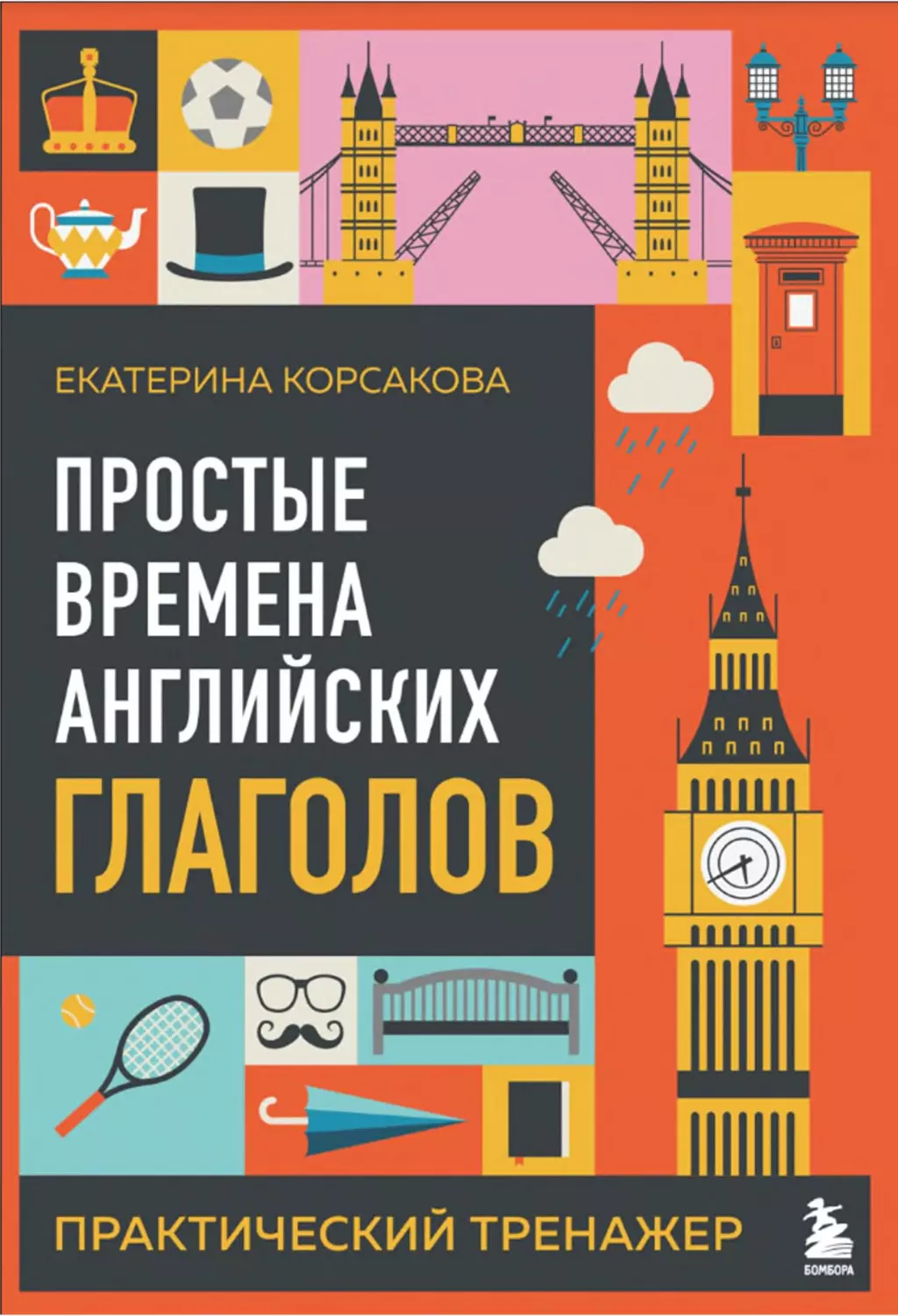


Author: Корсакова Е.В.
Tags: английский язык учебники и учебные пособия по английскому языку лингвистика подготовка к экзаменам языкознание изучение языков
ISBN: 978-5-04-218071-2
Year: 2026


Text
                    ПРОСТЫЕ .
ВРЕМЕНА «
АНГЛИЙСКИХ
ГЛАГОЛОВ
п
Wn nl /Л П П 'I
ПРАКТИЧЕСКИЙ ТРЕНАЖЕР Ж
БОМБОРА
П П П
Г П п п п 1
ПТТТТП
ЕКАТЕРИНА КОРСАКОВА
ПРОСТЫЕ ВРЕМЕНА АНГЛИЙСКИХ ГЛАГОЛОВ
ПРАКТИЧЕСКИЙ ТРЕНАЖЕР
ЗкБОМБОРА 4Е9 ИЗДАТЕЛЬСТВО
Москва
УДК 811 111(075)
ББК 81 2АМГЛ-9
К69
Корсакова, Екатерина Владимировна.
К69 Простые времена английских глаголов : практический тренажер / Екатерина Корсакова. — Москва : Эксмо, 2026. — 64 с. — (Языковой тренажер: учись на практике).
ISBN 978-5-04-218071-2
Тренажер -Простые времена английских глаголов- предназначен для широкого круга изучающих английский язык, включая школьников, готовящихся к ОГЭ и ЕГЭ. Пособие содержит разбор простых времен английского языка с упражнениями для закрепления и ответами в конце
Тренажер может использоваться как на занятиях в школе и языковых курсах, так и для самостоятельного освоения Он помогает систематизировать знания, отработать пройденное и свободно использовать времена в устной и письменной речи
УДК 811.111(075)
ББК 81.2Англ-9
ISBN 978-5-04-218071-2
© Корсакова Е.В., текст, 2025
© Оформление. ООО -Издательство -Эксмо-, 2026
Содержание
Введение..........................................4
Глоссарий.........................................4
ЧАСТЬ 1
Простое (Simple) и длительное (Continuous) время Раздел 1.
Английский глагол и его помощники
•	Что такое время (Tense) в английском языке?.......6
•	Глагол-герой	to be................................7
•	Глагол-герой	to do...............................10
•	Глагол-герой	to have.............................13
Раздел 2.
Факты и регулярные действия
Времена группы Simple
•	Present Simple (Настоящее простое)...............17
•	Past Simple (Прошедшее простое)..................21
•	Future Simple (Будущее простое)..................26
Повторение: Let's Practise: The Simple Tenses......30
Раздел 3.
Процессы и длительные действия:
Времена группы Continuous
•	Present Continuous (Настоящее длительное)........32
•	Сравнение Present Simple и Present Continuous....36
•	Past Continuous (Прошедшее длительное)...........39
•	Сравнение Past Simple и Past Continuous..........43
•	Future Continuous (Будущее длительное)...........46
Повторение: Let's Practise: The Continuous Tenses..50
Способы выражение будущего времени.................54
Ответы к упражненям................................58
з
Введение
Этот тренажер я хотела бы посвятить моей первой ученице, которая уже более 20 лет сама преподает английский язык. Она поверила в педагогические способности своей юной «учительницы», едва ли закончившей первый курс факультета иностранных языков Герценовского университета. Готовясь к важному экзамену, мы осваивали английскую грамматику, времена английского глагола. Усердная ученица запоминала времена, а я с огромной радостью пыталась донести до нее знания и понимание английской грамматики, которые год назад смогла структурировать в своем сознании благодаря объяснениям моего педагога. Мы писали, рисовали, выделяли ключевые слова, составляли таблицы, выполняли множество упражнений, и именно эти первые занятия практически «только грамматикой» помогли мне понять, чему нужно учить и как объяснять времена английского глагола. Надеюсь, материалы этого пособия будут полезны и вам.
Глоссарий
VI - инфинитив (work/do) - обозначает обезличенное действие
V2 - Past Simple (worked/did) - используется для действий в прошлом
V3 - Past Participle I Participle II (worked/done) - для группы времен Perfect и Passive Voice
V-ing - Participle I (working/doing) - для группы времен Continuous
4
Дорогие друзья, Добро пожаловать в мир времен английского глагола!
Вероятно, вы слышали, что английский язык - это язык глаголов. Практически в каждом английском предложении глагол является центральным, базовым элементом, и короткое высказывание может состоять только из одного глагола.
Почему же глагол так важен?
Времена глагола определяют смысл предложения
	происходит действие:	в настоящем, прошлом или будущем
происходи!:	происходило, уже завершено или все еще длится
с другими действиями
Ясно и точно!
Неправильное время искажает смысл: "I eat” vs. "lam eating"
Успех общения!
Я понимаю собеседника, я могу выразить свои мысли.
Грамотность на письме!
Я могу написать деловое письмо, отчет, эссе; выполнить письменные задания;
сдать экзамен (IELTS, TOEFL, ЕГЭ).
Тренажер поможет вам разобраться с системой времен в английском языке. Схемы, таблицы, рисунки наглядно представят (структурированный) грамматический матери ал, а множество упражнений позволят добиться автоматизма в употреблении временных форм английского глагола.
Тренежер разделен на две части:
PART 1: ВРЕМЕНА SIMPLE	PART 2: ВРЕМЕНА PERFECT
Present Simple, Past Simple, Future Simple Present Perfect, Past Perfect, Future Perfect
Времена Continuous:	Времена Perfect Continuous:
•	Present Continuous	• Present Perfect Continuous
•	Past Continuous	• Past Perfect Continuous
•	Future Continuous	• Future Perfect Continuous
Let's practise! Practise makes perfect. May your tenses become perfect!
5
ЧАСТЬ 1
Простое (Simple) и (Continuous) время
РАЗДЕЛ 1
Английский глагол и его помощники
Глагол
- это часть речи, обозначающая действия, события, состояния и отношения.
Что такое время (Tense) в английском языке?
Время действия
PAST  Прошедшее:  вчера
PRESENT Настоящее:  сегодня
FUTURE
Будщее: завтра
Что такое «смысловой глагол»
Main Verb?
«Смысловой глагол» передает основное значение / the real action.
Что такое «вспомогательный глагол»
Auxiliary Verb?
«Вспомогательный глагол» - это «грамматический помощник» / a helper используется для образования вопросов, отрицаний, сложных времен (Continuous, Perfect) - показывает время и не имеет
самостоятельного значения,
6
Как отличить: СМЫСЛОВОЙ ГЛАГОЛ или ГЛАГОЛ-ПОМОЩНИК
Задайте вопрос: «является» / «находится»?
Если «да» - смысловой глагол:
Не is a student. - Он является студентом
Если «нет» - вспомогательный глагол:
Не is reading. - Он является читающим.
ОСНОВНЫЕ ГЛАГОЛЫ-ПОМОЩНИКИ:
ТО BE ТО DO ТО HAVE
Интересно, что эти глаголы могут и СМЫСЛОВЫМИ, и ВСПОМОГАТЕЛЬНЫМИ.
Глагол-герой to be
один из самых важных глаголов в английском языке
to BE
Смысловой	•	самостоятельное значение, глагол-связка: «быть», «являться», «находиться», «существовать»; •	передает основной смысл предложения; •	переводится на русский язык, в настоящем времени может быть опущен.	/ от Jack. - Я Джек (букв. Я являюсь Джеком). They are at school. - Они в школе (находятся (там) в настоящее время). We are at home. - Мы (находимся) дома.
Вспомогательный	•	не имеет самостоятельного значения; •	участвует в образовании сложной грамматической формы длительных времен Continuous и пассивного залога Passive voice; •	отдельно не переводится.	She is singing. - Она поет. Не is reading. - Он читает (действие происходит в настоящее время). She is writing. - Она пишет.
7
Формы глагола to be
Утверждение		Отрицание		Вопрос
полная форма	сокращенная форма	полная форма	сокращенная форма
PAST - Прошедшее время
1 You	was were		1 You	was not were not	1 You	wan't weren't	Was Were	1? you?
Не She It	was		He She It	was not	He She It	wan't	Was	he? she? it?
We You They	were		We You They	were	We You They	weren't	Were	we? you? they?
PRESENT - Настоящее время
1 You	am	I'm You’re	1 You	am not are not	1 ’m not You aren't	Am Are	1? you?
He		He’s	He		He		he?
She	is	She's	She	is not	She	isn't	Is	she?
It		It's	It		It		it?
We		We're	We		We		we?
You	are	You’re	You	are not	You	aren’t	Are	you?
They		They're	They		They		they?
FUTURE - Будущее время
1 You He She It We You They	will be		1 You He She It We You They	will not be	1 You He She It We You They	won’t be	Will... be?	1 You He She It We You They
* для выражения будущего времени в современном английском языке используется will для всех лиц (ранее shall + 1-ое лицо ед.ч. и мн.ч.)
8
Let's practise:
Выберите и впишите правильную форму глагола to be:
am	is	are	will be	was	were
1. I				a student.	6. He	at home yesterday.
2. She				from Spain.	7. They		at the cinema last night.
3. They			my friends.	8. 1		very tired yesterday.
4. It		a big house.	9. The weather		nice next week.
5. We				happy.	10. You			late for school.
Выберите и обведите правильную форму глагола to be.
1.	Му parents (are / were)in the garden now.
2.	I (will be / was)at the zoo yesterday.
3.	She (is / was)a teacher. It is her job.
4.	The children (are / will be)at school now.
5.	It (is / was)cold last winter.
3 Раскройте скобки, используя утвердительную (+) или отрицательную (-) форму глагола to be.
Example: Cats (-) big animals.
Cats are not big animals.
1.	Jane(+)a very smart girl.
2.	I (+)from Russia.
3.	They (-)at home now.
4.	The book (+)interesting.
5.	We (+)tired after work.
2^ Составьте вопросы.
Example: she/is / where /?-► Where is she?
1.	Mike/is/a student/?
2.	old/you/how/are/?____________________
3.	the/are/children/happy/?
4.	was / he / why / sad / ?_____________
5.	your / is / birthday / when / ?______
9
Переведите предложения на русский язык.
1.	I am hungry.______________________________________________________________
2.	They are in the park._____________________________________________________
3.	She was a famous singer.__________________________________________________
4.	Weare not ready.___
5.	The keys were on the table.
Глагол-герой to do
Смысловой	•	самостоятельное значение: «делать, выполнять и осуществлять»; •	переводится на русский язык; •	передает основной смысл предложения.	1 do ту homework every evening. - Я делаю (выполняю) домашнее задание каждый вечер. They did it yesterday. - Они делали / сделали это вчера.
Вспомогательный	•	не имеет самостоятельного значения, отдельно не переводится; •	участвует в образова нии вопросительных и отрицательных форм глагола в простом настоящем Present Simple и простом прошедшем Past Simple.	Do you like ice-cream? - Ты любишь мороженое? Не didn't come yesterday. -Он не пришел вчера.
10
Формы глагола to do
Утверждение	Отрицание		Вопрос
полная форма	полная форма	сокращенная форма
PAST - Прошедшее время
I You Не She It We You They	did	I You He She It We You They	did not	I You He She It We You They	didn't	Did	I? you? he? she? it? we? you? they?
PRESENT - Настоящее время
I You	do	I You	do not	I You	don't	Do	I? you?
He She It	does	He She It	does not	He She It	doesn't	Does	she? he? it?
We You They	do	We You They	do not	We You They	don't	Do	we? you? they?
FUTURE - Будущее время
I You He She It We You They	will do	I You He She It We You They	will not do	I You He She It We You They	won't do	Will	I you he she it we you they	do?
11
Выберите и впишите правильную форму глагола to do:
do does did will do
1.	1			my homework every day.
2.	She 			her laundry on Sundays.
3.	You			a great job yesterday!
4.	1			not see him at the party in June.
5.	They			not like coffee.
6.	He			his exercises in the morning, and now he is in the office.
7.	They usually			the dishes after dinner.
8.	We			homework together yesterday.
9.	She 			her best to win in 2030.
10. He			not work on weekends next month.
Выберите и обведите правильную форму глагола to do.
1.	Му brother (do / does)his homework in the evening.
2.	I (did / do) (not go)to the cinema last weekend.
3.	She (do / does) (not eat)meat.
4.	We (did / do)a lot of work yesterday.
5.	He (do/does)the cleaning every Saturday.
3 Раскройте скобки, используя утвердительную (+) или отрицательную (-) форму глагола to do в нужном времени.
Example: They (-) it. (Present) - They do not (don't) do it.
She (+) the washing. (Past) - She did the washing.
1.	He (+)his homework every day. (Present)
2.	I (-)my room. (Past)
3.	Wed)	this task last month. (Past)
4.	They (-)exercises every day. (Present)
5.	She (+)	her best, and she won the prize. (Past)
12
Составьте вопросы. Используйте do, does, will do или did.
Example: you Idol what I every day /1 - What do you do every day?
1.	she / do / what / in the evening / ?___________________________________
2.	they / do / when / their homework I ?__________________________________
3.	you / do / how / it / ?________________________________________________
4.	he / do / why / that / ? (Future)______________________________________
5.	where / she / do / her exercises / ?___________________________________
Переведите предложения на русский язык.
1.	I do my exercises in the morning._
2.	She does not (doesn’t) do her homework on Sundays.
3.	What did you do yesterday?_____________________________________________
4.	They do a lot of work._________________________________________________
5.	We did not (didn't) do anything wrong._________________________________
Глагол-герой to have
Смысловой	•	имеет самостоятельное значение: «иметь, владеть, обладать»; •	переводится на русский язык; •	передает основной смысл предложения.	1 have а саг. - У меня есть машина (букв. Я имею машину). They had breakfast at 8 a.m. - Они завтракали (букв, имели завтрак) в 8 утра.
Вспомогательный	• не имеет самостоятельного значения, отдельно не переводится. • участвует в образовании вопросительных и отрицательных форм глагола в завершенных временах группы Perfect.	Have you been to Paris? -Ты был в Париже? Не hasn't done it yet. -Он еще не сделал это.
13
HAVE GOT
•	В разговорной речи в британском английском в настоящем времени часто используется конструкция "have дог" вместо “have" в значении «у меня есть».
•	В американском английском, а также в ситуациях формального общения в любой стране чаще используется "to have".
•	Вопросительные предложения:
Have you got а саг? (британский английский) / Do you have a car?
•	Отрицательные высказывания: She hasn't got a cat.
УСТОЙЧИВЫЕ ВЫРАЖЕНИЯ С ГЛАГОЛОМ TO HAVE
•	to have a lesson - посещать урок (находиться на уроке)
•	to have breakfast/lunch /dinner - завтракать / обедать / ужинать
•	to have a shower/a bath - принимать душ / ванну
•	to have a party/a meeting - устраивать вечеринку / встречу
•	to have a holiday/a day off- быть в отпуске / иметь выходной
•	to have a dream-иметь мечту
•	to have a baby - рожать ребенка
•	to have a good time/fun - хорошо проводить время
•	to have a problem - сталкиваться с проблемой
Формы глагола to have
Утверждение		Отрицание		Вопрос
полная форма	сокращенная форма	полная форма	сокращенная форма
PAST - Прошедшее время
I You Не She It We You They	had		I You He She it We You They	did not have/ hadn't	I You He She It We You They	didn't have/ hadn't	Had/ Did... have	I? you? he? she? it? we? you? they?
14
PRESENT - Настоящее время
I You	have	I've You've	I You	have not / do not have	I haven't / don't have You've not		Have = Dol have?	I You?
Не	has	He's	He	has not /	He	hasn’t /	Has/	he?
She		She's	She	does not	She	doesn’t	Does...	she?
It		It's	It	have	It	have	have	it?
We	have	We've	We	have not /	We	haven't /	Have/	we?
You		You’ve	You	do not have	You	don't have	Do...	you?
They		They've	They		They		have	they?
FUTURE - Будущее время
I You He She It We You They	will have	I'll have	I You He She It We You They	will not have	I You He She It We You They	won't have	Will... have?	I? you? he? she? It we? you? they?
Let's practise:
to have
Выберите и впишите правильную форму глагола to have:
have has had have got
В некоторых предложениях может быть несколько правильных вариантов.
1. 1			a new phone.
2. 1			a cat when 1 was a child.
3. We			breakfast at 8 a.m.
4. She			a big family in Italy.
5. They			a lot of friends.
6. He		a good job when he was 25.
7. They	a great time at the party yesterday.
8. We			a test last week.
9. He			a red car.
10.1			a big house in London.
15
Выберите и обведите правильную форму глагола to have.
1.	Му sister (have / has)a beautiful dress.
2.	I (have / had)a headache yesterday.
3.	They (have / has)a lesson now.
4.	He (have / had)a party last weekend.
5.	We (have / has)a lot of work today.
3 Раскройте скобки, используя утвердительную (+) или отрицательную (-) форму глагола to have в нужном времени.
Example: They (-) a dog. (Present) - They do not (don't) have a dog.
Example: She (+) a bike. (Past) - She had a bike.
1.	He (+)a shower every morning. (Present)
2.	I (-)a computer when I was ten. (Past)
3.	We (+)lunch at a cafe yesterday. (Past)
4.	They(-)a garden. (Present)
5.	She (+)a meeting here every day. (Present)
Составьте вопросы. Используйте do, does или did.
Example: you / have /what/ for breakfast /?- What do you have for breakfast?
1.	she / have I what / in her bag / ?_____________________________________
2.	they/have/when/English lessons/?_______________________________________
3.	you / have / how I many / books / ?____________________________________
4.	he / have / when / a party / ? (Past)__________________________________
5.	where / she / have / dinner / yesterday / ?
Переведите предложения на русский язык.
1.	I have a sister and a brother._________________________________________
2.	She does not (doesn’t) have a car._____________________________________
3.	What did you have for dinner?
4.	They have a lot of ideas.______________________________________________
5.	We did not (didn’t) have time to call you.
16
ФАКТЫ И РЕГУЛЯРНЫЕ ДЕЙСТВИЯ Времена группы Simple
РАЗДЕЛ 2
Present Simple (Настоящее простое)
Факт
Present Simple (Настоящее простое)
Обозначает регулярные, привычные действия, факты, истины.
Образование: от инфинитива глагола без частицы to = VI
в 3-ем лице ед.ч. прибавляется окончание -$.
PAST Прошедшее: вчера
PRESENT  Настоящее:  сегодня
FUTURE
Будщее: завтра
Если глагол оканчивается на:
-s, -ss, -sh, -ch, -х, -о	+es (miss-misses)
согласную букву t у	lies (try tries)
гласную букву + у	+5 (play-plays)
Правило: глагол + s
Окончание 3-его лица ед.ч. -s / -es произносится в зависимости
от звука, который слышен перед окончанием:
[S]	после глухих звуков [f], [k], [р]. [t]	laughs, makes, stops, puts
и	после шипящих и свистящих звуков [s], И, [ks], ПЛ. [d3], [Л	dances, freezes, mixes, watches, changes, wishes
и	после [Ь], [d],[g], [I]. [m], [n], (г)]. М + после всех гласных	robs, reads, digs, calls, comes, runs, sings, lives, plays
Вопрос	Отрицание
Do/does... VI...?	do not (don't) / does not (doesn't) + V1
17
PRESENT SIMPLE
Утверждение		Отрицание				Вопрос
		полная форма		сокращенная форма
I You	make	I You	do not make	I You	don’t make	Do... make?	I you
He She It	makes	He She It	does not make	He She It	doesn’t make	Does... make?	he she it
We You They	make	We You They	do not make	We You They	don't make	Do... make?	we you they
Употребление	Пример
• обычные, повторяющиеся, регулярные, ежедневные действия	Igo to school every day. - Я каждый день хожу в школу.
• факты в настоящем	She lives in Moscow. - Она живет в Москве.
• постоянные состояния	/ love ту family. - Я люблю свою семью.
• законы природы	The Sun rises in the east. - Солнце восходит на востоке.
• расписание	The lesson starts at 9 a.m. - Урок начинается в 9 утра.
•привычки	Не always does his homework. - Он всегда выполняет домашнее задание.
• общеизвестные истины	It rains a lot in autumn. - Осенью часто идет дождь.
• глаголы движения в будущем: соте, до, arrive, start, leave	We leave tonight. - Мы уезжаем сегодня вечером.
• глаголы, которые не употребляются в длительном времени (Continuous)	1 understand you.- Я понимаю тебя.
Слова-подсказки (маркеры Present Simple):
(always)( often )(usually) (sometimes) (seldom) (never )  summer / morning / day / week / month / year )
18
Let's practise:
Present Simple
1 Раскройте скобки, поставьте глагол в правильную форму Present Simple.
1.	Му brother (to play)	football every weekend.
2.	I (to like)chocolate ice-cream.
3.	She (to study)English at school.
4.	We (to watch)TV in the evenings.
5.	It often (to rain)in autumn.
Выберите правильный вариант: do или does?
1.	you live in a flat?
2.	your father work in an office?
3.	they have a dog?
4.	your sister know the answer?
5.	you bring your books to school?
Составьте отрицательные предложения.
Example: I like pizza. -1 don't like pizza.
1.	She works in a bank.
2.	They play tennis on Sundays.
3.	HespeaksFrench.
4.	We go to the park every day._______________________________
5.	Sheunderstandsyou._________________________________________
4 Составьте общие вопросы, на которые можно ответить «да» или «нет» (Yes/No questions).
Example: she/get up /early /? - Does she get up early?
1.	you / drink / coffee / in the morning / ?__________________
2.	they / live / in a big house / ?___________________________
3.	he / walk / to school / ?__________________________________
4.	your friends / like I computer games I ?
5.	it / snow / here in winter / ?_____________________________
19
Вставьте наречия из списка в нужное место в предложении: always usually often sometimes never
1.	She is happy, (always)
2.	They go to the gym. (often)
3.	He is late for work, (never)
4.	We	have	dinner	at  7 p.m. (usually)
5.	She drinks tea. (seldom)
6	Составьте специальные вопросы. Начните предложение с вопросительного слова.
Example: Where/she/live /? - Where does she live?
1.	What time / you / usually / get up / ?_______________________________
2.	Where / he / work / ?________________________________________________
3.	How often / they / visit / their grandparents / ?
4.	Why / she I always / wear / a red coat I ?
5.	When / the shop / open / ?___________________________________________
Дополните короткие ответы на вопросы нужной формой глагола.
1.	Do you live in a house? - Yes, I
2.	Does your mum speak English? - No, she
3.	Do they like music? - Yes, they
4.	Does he play tennis every morning? - No, he
5.	Do you get up at 6 a.m.? - No, I
8 Напишите 5 предложений о своем дне (daily routine), используя Present Simple.
Example: I get up at 7 o’clock. I have a shower and then I have breakfast...
20
Past Simple
(Прошедшее простое)
Факт в прошлом
Для обозначения фактов в прошлом - завершенных действий (однократных или многократных) в конкретный момент или период в прошлом + последовательность действий в прошлом (в рассказах).
Образование:
путем прибавления -ed (или -d, если глагол оканчивается на -е) = 1/2/либо неправильный глагол V2.
Irregular Verbs | Неправильные глаголы
Что такое неправильные глаголы?
Это глаголы, которые образуют Past Simple (прошедшее простое время) и Past Participle по общему правилу (то есть не путем добавления окончания -ed, а путем изменения самой формы слова).
Рекомендация: неправильные глаголы учим группами по типу изменения.
Группа 1: Все три формы одинаковые (ААА)
Infinitive (VI)	Past Simple (V2)	Past Participle (V3)	Перевод
cut	cut	cut	резать
put	put	put	класть
cost	cost	cost	стоить
hit	hit	hit	ударять
let	let	let	позволять
set	set	set	устанавливать
21
Группа 2: Две формы одинаковые, одна отличается (АВА)
Infinitive (VI)	Past Simple (V2)	Past Participle (V3)	Перевод
become	became	become	становиться
come	came	come	приходить
run	ran	run	бежать
Группа 3: Формы V2 и V3 одинаковые (АВВ) - самая большая группа
Infinitive (VI)	Past Simple (V2)	Past Participle (V3)	Перевод
buy	bought	bought	покупать
think	thought	thought	думать
teach	taught	taught	учить (преподавать)
bring	brought	brought	приносить
catch	caught	caught	ловить
build	built	built	строить
spend	spent	spent	тратить, проводить (время)
Группа 4: Все три формы разные (АВС)
Infinitive (V1)	Past Simple (V2)	Past Participle (V3)	Перевод
begin	began	begun	начинать
drink	drank	drunk	пить
sing	sang	sung	петь
swim	swam	swum	плавать
break	broke	broken	ломать
choose	chose	chosen	выбирать
speak	spoke	spoken	говорить
write	wrote	written	писать
go	went	gone	идти
see	saw	seen	видеть
22
Вернемся к
Past Simple
PAST Прошедшее:  вчера
PRESENT Настоящее: сегодня
FUTURE Будщее: завтра
Образование:
смысловой глагол V2 (regular/irregular, правильный / неправильный глагол).
Вопрос	Отрицание
Did... VI...?	did not (didin't)/+V1
Утверждение	Отрицание		Вопрос
	полная форма	сокращенная форма
PAST SIMPLE
I You Не She It We You They	made	1 You He She It We You They	did not make	1 You He It We You They	didn't make	Did... make?	1 you he she it we you they
23
Употребление
Пример
• факт в прошлом	We went to the park last weekend.- Мы были в парке в прошлые выходные, (время указано (или подразумевается)
• последовательность действий в прошлом	First, 1 went to the shop, then 1 cooked dinner. - Вначале я сходила в магазин, затем приготовила ужин, (одно действие за другим)
• регулярное повторяющееся действие / состояние в прошлом	Не played tennis every Sunday. - Он играл в теннис каждое воскресенье, (регулярно в прошлом)
Слова-подсказки (маркеры Past Simple):
(yesterday) (yesterdaymorning/evening) (last night/week) (two weeks/a month ago) (in 2018 )
Let's practise:
Past Simple
Раскройте скобки, поставьте глагол в форму Past Simple (правильные и неправильные глаголы).
Example: I (to play) football yesterday. - / played football yesterday.
1.	I (to finish)my work at 5 p.m. yesterday.
2.	She (to buy)a new dress last week.
3.	They (to go)to the cinema last weekend.
4.	He (to write)a letter to his friend.
5.	We (to see)a great film on TV.
24
Выберите правильный вариант: was или were?
1.	I at home yesterday evening.
2.	She very tired after work.
3.	The weather nice last Sunday.
4.	You late for the meeting.
5.	My parents young in 1980.
3 Составьте отрицательные предложения. Используйте did not (didn't) для глаголов действия и was not (wasn't) I were not (weren't) для глагола to be.
Example: He played tennis. - He didn't play tennis.
Example: She was happy. - She wasn't happy.
1.	They visited the museum. _
2.	I was at the park._
3.	She liked the concert.______________________
4.	We were hu ng ry.___________________________________________________
5.	He called me.
4 Составьте общие вопросы, на которые можно ответить «да» или «нет». Используйте Did...? для глаголов действия и И/os / Were...? для глагола to be.
Example: she /до/to school /?- Did she go to school?
Example: he /be fat home /? - Was heat home?
1.	you / watch / the news / yesterday / ?______________________________
2.	they / be / at the party / ?________________________________________
3.	he / enjoy / the trip / ?___________________________________________
4.	it / be / cold / yesterday / ?______________________________________
5.	she/cook/dinner/?___________________________________________________
Составьте специальные вопросы. Начните с вопросительного слова.
Example: Where/you/до/?- Where did you go?
1.	What time / you / finish / work / ?_________________________________
2.	Where / she / buy / that book / ?___________________________________
3.	Why / they / be / angry / ?_________________________________________
4.	How / he / fix / the computer / ?___________________________________
5.	When / your friends / arrive / ?____________________________________
25
Future Simple
(Будущее простое)
PAST	PRESENT
Прошедшее:  Настоящее: вчера	сегодня
FUTURE
Будщее: завтра
Действия, факты в будущем
Образование:
путем добавления will перед инфинитивом глагола без частицы to = VI will + смысловой глагол V1
до середины XX века
существовало строгое грамматическое правило I / We + shall
You / Не / She / It / They + will
Конструкция I/We will выражало решимость, обещание или желание говорящего.
Сейчас Will - универсальный маркер будущего: используется для всех лиц в 99%
ситуаций. Shall:
1.	Вопросы с / и we для предложения чего-либо или запроса инструкций.
Shall I open the window? - Мне открыть окно?
2.	Официальные документы, правила, законы и контракты в значении «должен» - обязательства.
3.	В риторических вопросах, решительно и торжественно We shall overcome. - Мы преодолеем.
Вопрос	Отрицание
Will...VI...?	will not (won't) + VI
26
Утверждение	Отрицание		Вопрос
	полная форма	сокращенная форма
FUTURE SIMPLE
1 You Не She It We You They	will make	1 You He She It We You They	will not make	1 You He She It We You They	won't make	Will... make?	1 you he she it we you they
Употребление	Примеры
• однократные действия в будущем	Не will finish his work at 5 p.m. - Он закончит свою работу в 5 вечера, (один раз в определенный момент в будущем)
• повторяющиеся действия в будущем	/ will visit ту grandparents every weekend. - Я буду навещать бабушку и дедушку каждые выходные, (регулярно в будущем)
• предположения или мнения о будущем, часто с элементами неуверенности (обычно употребляется с глаголами: hope, think, believe, expect, imagine..., с выражениями lam sure, lam afraid, с наречиями probably, perhaps...	/ hope she will like her birthday present. - Я надеюсь, ей понравится ее подарок на день рождения, (мнение о будущем, с элементом неуверенности)
• обещания (спонтанные или решительные), сделанные в момент речи.	/ will always love you. - Я всегда буду тебя любить, (обещание в момент речи)
Слова-подсказки (маркеры Future Simple): tomorrow) (nextweek/month/year) (tonight,soon) ( in a week/ month / year...)
27
Let's practise:
।	> Future Simple
1 Раскройте скобки, поставьте глагол в форму Future Simple (will + глагол).
Example: I think it (rain) tomorrow. - / think it will rain tomorrow.
1.	I’m sure she (pass)the exam.
2.	They probably (come)to the party.
3.	He (not / be)late, I promise.
4.	We (help)you with your homework.
5.	It (be)sunny tomorrow, I think.
Выберите правильный вариант.
1.	I think I (will go / go)to the cinema tomorrow.
2.	She (won't be / isn’t)angry, don't worry.
3.	They probably (will come / come)to visit us.
4.	He (will not / doesn't)forget your birthday.
5.	We (will see I see)you next week.
Составьте отрицательные предложения.
Example: She will call you. - She won't call you.
1.	They will arrive on time.
2.	I will forget your number.
3.	He will be angry._______________________________
4.	We will wait for you.
5.	It will be difficult.___________________________
Составьте вопросы.
Example: you I come /to the party? - Will you come to the party?
1.	she / call / me later?__________________________
2.	they / win / the game?__________________________
3.	you / be / at home tomorrow?____________________
4.	he / like / his present?________________________
5.	we / see / each other again?____________________
28
Вставьте will или won't.
1.	I’m sure you like this film.
2.	She come to the meeting, she’s sick.
3.	They probably arrive at 8 o’clock.
4.	He forget to call you, I'm sure.
5.	We be late, I promise.
Закончите предложения о будущем.
1.	Tomorrow I will... ___________________________________________________
2.	Next year I will probably...__________________________________________
3.	I think in the future people will...__________________________________
4.	I won’t... next week
5.	My friends will...____________________________________________________
7 Ответьте на вопросы о ваших планах на будущее, используя Future Simple.
1.	What will you do tomorrow evening?____________________________________
2.	Where will you go next weekend?_______________________________________
3.	Will you study English next year?_____________________________________
4.	What will you buy next month?_________________________________________
5.	Will you visit any new countries soon?________________________________
8 Напишите 5 предложений о ваших predictions (предсказаниях) о будущем, используя / think... will...
Example: I think robots will help people in the future.
29
Let's practise:
The Simple Tenses
1	Раскройте скобки, поставьте глагол в нужное время: Present Simple или Past Simple.
1.	I usually (to drink)coffee in the morning, but yesterday I (to drink)tea.
2.	She (to work)in a hospital. Last year she (to work) in a school.
3.	They (to watch)a new film every Friday. Last Friday they (to watch)a comedy.
4.	He often (to visit)his grandparents. Last weekend he (to visit)them too.
5.	The sun (to rise)in the east. Yesterday it (to rise)at 6:30.
2	Раскройте скобки, поставьте глагол в нужное время: Future Simple или Present Simple.
1.	I think he (to be)famous one day.
2.	When the lesson (to finish)we (to go)home.
3.	She(to call) you as soon as she (to arrive)
4.	According to the schedule, the train (to leave)at 19:45.
5.	I promise I (not / to forget)about your birthday.
3	Выберите правильный вариант: Present Simple, Past Simple или Future Simple.
1.	I (go / went /will go)to the cinema yesterday.
2.	She (is / was / will be)ten years old next month.
3.	He (doesn't like / didn't like I won't like)tomatoes when he was a child.
4.	If it (rains / rained / will rain)tomorrow, we (stay / stayed / will stay)at home.
5.	My brother (lives I lived I will live)in London in 2015.
Составьте отрицательные предложения.
Example: He works in an office. - He does not (doesn't) work in an office.
Example: They went to the park. - They did not (didn't) go to the park.
1.	She speaks Italian.__________________________________
2.	We visited Paris last year.
3.	He will arrive tomorrow.
4.	I understood the question.
5.	They like classical music____________________________
30
5 Составьте общие вопросы, на которые можно ответить «да» или «нет» (Zes / No questions).
Example: she/like /chocolate? - Does she like chocolate?
Example: you /go/to the party last night? - Did you go to the party last night?
1.	he I live / in Rome?__________________________________
2.	they / play / football yesterday?_____________________
3.	you I help / me with this project?____________________
4.	she / enjoy / the concert last week?__________________
5.	it / rain / tomorrow?_________________________________
Составьте специальные вопросы. Начните с вопросительного слова.
Example: Where/she/live?-Where does she live?
Example: What /you / do / last summer? - What did you do last summer?
1.	When / the lesson / start / every day?________________
2.	Why / you / leave / the party early yesterday?
3.	Who / you I meet / with tomorrow?
4.	How often / he / call / his parents?__________________
5.	Where / she / buy / that dress last month?
7 Раскройте скобки, выбрав правильное время глагола Simple: Present, Past или Future.
1.	Не usually(to drive) to work, but yesterday he(to take) a taxi.
2.	I(to buy) a new car next year if I(to save) enough money.
3.	She(not / to eat) sushi last night because she (not/to like) fish.
4.	When(you / to finish) your work every day?
5.	They(to be) very happy when they(to win) the competition last week.
8 Дополните диалог, используя глаголы в подходящем времени Simple: Present, Past или Future.
►	What (1)(you / do) yesterday evening?
►	I (2)(watch) a film. I (3)(watch) films every weekend.
►	Really? (4)(you / like) it?
►	Yes, it (5)(be) great! I think I (6)(watch) it again
next week. What about you? What (7)_(you / do) tomorrow?
►	I’m not sure. Maybe I (8)(visit) my friends.
31
РАЗДЕЛ 3
ПРОЦЕССЫ И ДЛИТЕЛЬНЫЕ ДЕЙСТВИЯ: Времена группы Continuous
Present Continuous
(Настоящее длительное)
Present Continuous (Настоящее длительное)
Процесс прямо сейчас
Для обозначения длительного действия, происходящего в данный
момент.
Образование: форма to be в Present Simple +V-ing, где: вспомогательный глагол to be (Present Simple) + смысловой глагол Participle I (VI + ing) am/is/are + ...ing.
Если глагол оканчивается на
-e	краткий ударный гласный + согласный
	краткий гласный + буква /
e + ing (come-coming)	согласный удваивается + ing (run - running)
	11 +ing (spell - spelling)
• глаголы to die, to lie, to tie - dying, lying, tying
PAST Прошедшее: вчера
PRESENT  Настоящее:  сегодня
FUTURE Будщее: завтра
Вопрос
Отрицание
Am/is/are... V+ing...? Participle I Am/is/are not + V+ing Participle I
Слова-подсказки (маркеры Present Continuous):
( now ) (at the moment) (at present )
(these days)
32
Утверждение		Отрицание				Вопрос
		полная форма		сокращенная форма
PRESENT CONTINUOUS
1 You	am making are making	1 You	am not making are not making	I'm You	not making aren't making	Am... making? Are... making?	1 You
He She It	is making	He She It	is not making	He She It	isn’t making	Is... making ?	he she it
We You They	are making	We You They	are not making	We You They	aren't making	Are... making?	we you they
Употребление	Примеры
• длительные действия в момент речи	Now 1 am writing a letter to ту friend. -Сейчас я пишу письмо своему другу.
• временное состояние / действие, которое предполагает скорое изменение	She is living in Tokyo now. - Сейчас она живет в Токио.
• действия, запланированные на ближайшее время (часто с глаголами движения: come, до, start, arrive, leave it)	Не is leaving tonight. - Он уезжает сегодня вечером.
• постоянные, непрерывные процессы	The Sun is always shining there. - Там всегда светит солнце.
• раздражение, критика (часто со словами always, constantly...)	They are always complaining. - Вечно они жалуются.
•	не употребляются во временах группы Continuous (длительное время) глаголы, обозначающие состояние / отношение: - чувственное восприятие: see, hear, feel, smell, taste; -	эмоции: love, like, hate, want, desire, wish, forgive...; -	умственная активность: know, think, believe, understand, realize, remember, forget...; -	существование, обладание: be, exist, have, own, possess, belong...; -	другие глаголы: need, require, declare, announce, look like; •	НО: если данные глаголы имеют иное значение, то могут употребляться + ing.	Sara has a bear. - У Сары есть медвежонок, (владение) Now, she is having lunch. - Сейчас она обедает. John can't see this. - Джон не может это увидеть. We are seeing him off tomorrow. - Завтра мы его провожаем. It smells good. - Это хорошо (приятно) пахнет. The girl is smelling the flowers. - Девочка нюхает цветы. / think 1 know you. - Думаю, что я вас знаю. Не is thinking of coming tomorrow. - Он думает, что завтра придет.
33
Let's practise:
Present Continuous
'J Раскройте скобки, поставьте глагол в форму Present Continuous.
Example: I (to read) a book now. - / am reading a book now.
1.	Look! They (to run)to the bus stop.
2.	Be quiet, please! The baby (to sleep)
3.	I (to do)my homework at the moment.
4.	She (to watch)a funny video on her phone.
5.	We (to cook)dinner right now.
Выберите правильный вариант: am, is или are?
1.	I having a great time!
2.	He listening to music.
3.	The children playing in the garden.
4.	You sitting in my place.
5.	My mum working now.
Составьте отрицательные предложения.
Example: He is working. - He is not (isn't) working.
1.	They are waiting for the bus.______________________________
2.	I am wearing a jacket.
3.	She is talking on the phone.
4.	We are leaving now.________________________________________
5.	It is raining._____________________________________________
4 Составьте общие вопросы, на которые можно ответить «да» или «нет» (Yes / No questions).
Example: she/cook/dinner/?- Is she cooking dinner?
1.	you / listen / to me / ?___________________________________________________________
2.	they / have / a party / ?_________________________________________________________
3.	he / study / for his exam / ?______________________________________________________
4.	the dog / bark/?.
5.	your friends / come / with us / ?__________________________________________________
34
Составьте специальные вопросы. Начните с вопросительного слова.
Example: What/you/do /1 - What are you doing?
1.	Where / she / go / ?_______________________________
2.	Why / you / laugh / ?______________________________
3.	Who/they/talk to/?_________________________________
4.	What / the teacher / write / on the board / ?
5.	When/he/leave/?____________________________________
Раскройте скобки, выбрав между Present Simple и Present Continuous.
1.	I usually (to drink)coffee, but now I (to drink)tea.
2.	She (to work)in an office, but this week she (to work) from	home.
3.	They (to play)football every Sunday. Look! They (to play) now.
4.	He never (to wear)a hat, but today he (to wear) one because it’s cold.
5.	We (to have)dinner at 8 p.m. every day. Right now, it's 7:30, so we (to cook)dinner.
Закончите диалог, используя глаголы в Present Continuous.
►	Hi! What (1)you (do)?
►	I (2) (try)to fix my computer. It's not working.
►	Where is Tom?
►	In the kitchen. He (3) (make)a sandwich.
►	And the children?
► They (4) (watch)a cartoon. They (5) (not make)noise, don’t worry.
8 Посмотрите на картинку и опишите, что делают люди. Используйте Present Continuous.
Example: A man is walking his dog. Two women are talking.
A boy is riding a bike.
35
Сравнение
Present Simple и Present Continuous
	PRESENT SIMPLE	PRESENT CONTINUOUS
Основное значение	• Регулярное, повторяющееся действие, факт, общеизвестная истина, расписание. She works in a bank. (Постоянная ситуация)	• Действие, происходящее в момент речи или в текущий период времени. Временная ситуация. She is working in the garden right now. (Она прямо сейчас работает в саду).
Ключевой вопрос для выбора времени	• Когда действие происходит? Ответ: обычно, всегда, каждый день, редко, по расписанию.	• Что происходит прямо сейчас или вокруг момента речи? Ответ: сейчас, в данный момент, сегодня, на этой неделе, в настоящее время.
PRESENT SIMPLE		PRESENT CONTINUOUS
Употребление	Примеры	Употребление	Примеры
• факт	She works at a railway station.	• процесс - сейчас	She is working in the garden right now.
• закон природы (факт), известные истины	The Earth revolves around the Sun.	• непрерывный процесс	1 am reading a very interesting book this week.
• регулярное повторяющееся действие	He plays tennis every Sunday.	• временное состояние / действие	She is working in the garden right now.
• последовательность действий	First, 1 boil the water, then 1 add tea leaves.	• изменяющееся состояние	The climate is getting warmer.
• расписание	The train leaves at 7:45 p.m.	• планы на будущее	1 am meeting my friends tomorrow at 6 p.m.
• нейтральное отношение (констатация фактов)	He always forgets his keys. - Он всегда забывает ключи (просто факт о его привычке).	• критика	He is always forgetting his keys! - Он вечно забывает свои ключи! (выражение сильного раздражения)
36
Let's practise:
Present Simple vs. Present Continuous
Раскройте скобки, выбрав между Present Simple (обычное действие) и Present Continuous (действие сейчас).
1.	I usually (to listen)to music in the evening, but right now I (to watch) 	a film.
2.	She (to work)in a hospital, but this month she (to work) in a clinic.
3.	They (to play)tennis every weekend. Look! They (to play)in the park now.
4.	He never (to wear)  a tie, but today he (to wear) one for the meeting.
5.	We (to have)dinner at 7 p.m., but it’s 6 p.m. now, so we (to cook) ________dinner.
Выберите правильный вариант.
1.	My sister (studies / is studying)at university. She is a student.
2.	Be quiet! The baby (sleeps / is sleeping)
3.	I (don't watch / am not watching)TV very often.
4.	He (doesn't eat I isn't eating)pizza right now because he's not hungry.
5.	(Do you know / Are you knowing)the answer to this question?
Составьте предложения, используя правильное время.
Example: she I often / read / books - She often reads books.
Example: she/read/a book/now - She is reading a book now.
1.	I / usually / drink / tea / in the morning______________________________________
2.	they / play I football / at the moment__________________________________________
3.	he / not / work / on Sundays
4.	what / you / do / right now?____________________________________________________
5.	she / always / wear /jeans______________________________________________________
4 Дополните диалог, используя глаголы в Present Simple или Present Continuous.
► Hi, Mark! What (1) (you / do)?
► I (2) (look) 	 for my keys. I always (3) (lose) _	_ them!
► I (4) (see)them on the table five minutes ago.
► Oh, you're right! Thanks. What about you? Where (5) (you / go)	?
► To the library. I usually (6) (study)there on Fridays.
37
5 Напишите, что обычно делает этот человек (Present Simple) и что он делает прямо сейчас (Present Continuous).
Example: a teacher - She usually teaches students. Right now she is drinking coffee.
1.	a doctor-_____________________________________________________________
2.	a programmer - _______________________________________________________
3.	a chef -______________________________________________________________
4.	a student -___________________________________________________________
5.	a taxi driver -_________________________________________
6.	a journalist - _______________________________________________________
7.	a musician -__________________________________________________________
8.	a barista -___________________________________________________________
9.	a postman -___________________________________________________________
10.	a blogger -__________________________________________________________
6 Составьте общие вопросы, на которые можно ответить «да» или «нет» (Yes /No questions).
1.	she / usually / work / late?___________________________________________
2.	it / rain / now?______________________________________________________
3.	they/watch/TV/every evening?
4.	you / study / English / at the moment?________________________________
5.	he / play / football / on weekends?___________________________________
7 Напишите 5 предложений о том, что вы обычно делаете в течение дня, и 5 предложений о том, что вы делаете прямо сейчас (или в данный момент в вашей жизни).
Обычно (Usually):
1.
2.	______________________________________________________________________
3.	______________________________________________________________________
4.	______________________________________________________________________
5.	______________________________________________________________________
Сейчас (Now):
1.
2.	______________________________________________________________________
3.	______________________________________________________________________
4.	______________________________________________________________________
5.	______________________________________________________________________
СЭ Прочитайте текст и раскройте скобки, выбрав правильное время.
Every day, John (1) (get up)at 7 a.m. He (2) (have)breakfast and then (3) (go)to work. He (4) (work)in an office. But today is different. Today, John (5) (not go)to work. He (6) (stay)at home because he (7) (feel) sick. He (8) (drink)tea and (9) (watch)TV. He usually (10) (not watch)______TV in the morning.
38
Past Continuous
(Прошедшее длительное)
Процесс в прошлом
Образование:
форма to be в Past Simple + V-ing, где: to be - вспомогательный, a V-ing - причастие настоящего времени Participle I was / were + ...ing
PAST Прошедшее: вчера
PRESENT  Настоящее:  сегодня
FUTURE Будщее: завтра
Вопрос
Отрицание
Am/ is / are... V-ing...? Participle I
am / is / are not + V-ing Participle I
Слова-подсказки (маркеры Past Continuous):
while) (when) (as) (allday/night/morning)
(all day yesterday) ( at 8 a.m.)
39
Past Continuous
Утверждение		Отрицание				Вопрос
		полная форма		сокращенная форма
1	was making	1	was not making	1	wasn't making	Was... making?	1
You	were making	You	were not making	You	weren't making	Were... making?	you
Не She It	was making	He She It	was not making	He She It	wasn't making	Was... making?	he she it
We You They	were making	We You They	were not making	We You They	weren't making	Were... making?	we you they
Употребление: процесс в прошлом - действие, длившееся в конкретный момент в прошлом + фоновое действие при описании + одновременные действия.
Употребление	Примеры
• длительные действия (процессы) в определенный момент или период времени в прошлом (не указывается, когда началось / закончилось действие)	A17p.m. yesterday, 1 was watching a movie. - Вчера в 7 вечера я смотрел фильм. (В 7 часов действие уже длилось, и мы не знаем, когда оно началось или закончилось).
• несколько (обычно два) длительных действий, происходящих одновременно (с союзом while)	Не was reading a book while the children were playing in the garden. - Он читал книгу, пока дети играли в саду.
• действие в прошлом, прерванное другим действием: - более длительное действие - Past Continuous - действие, которое прервало первое действие - Past Simple	She was talking to her friend when the bus arrived. - Она разговаривала с подругой, когда приехал автобус, was talking (длительный процесс) - прервано -arrived (короткое изменение)
• определенные повторяющиеся действия в прошлом с эмоциональной окраской (раздражение, удивление, восхищение и т. д.) (часто со словами always, constantly...)	Не was always losing his keys! - Он вечно терял свои ключи! (Выражает сильное раздражение)
40
Let's practise:
Past Continuous
Раскройте скобки, поставьте глагол в форму Past Continuous.
Example: I (to read) a book at 5 p.m. yesterday. -1 was reading a book at 5 p.m. yesterday.
1.	They (to play)football at 3 o’clock.
2.	I (to cook)dinner when you called.
3.	She (to study)English all evening.
4.	We (to watch)TV when the lights went out.
5.	He (not / work)at that time.
Выберите правильный вариант: was или were?
1.	I sleeping when the phone rang.
2.	They driving to work at 8 a.m.
3.	She talking to her friend.
4.	You waiting for a long time.
5.	The sun shining brightly.
Составьте отрицательные предложения.
Example: He was working. - He wasn't working.
1.	They were listening to music.____________________________________________
2.	I was wearing a coat.____________________________________________________
3.	She was talking on the phone.____________________________________________
4.	We were playing tennis.__________________________________________________
5.	It was raining.__________________________________________________________
Составьте вопросы.
Example: she/cook/dinner/ ?- Was she cooking dinner?
1.	you / sleep / at 11 p.m. / ?_____________________________________________
2.	they / watch / a movie / ?_______________________________________________
3.	he / work / in the garden / ?____________________________________________
4.	the children / play / in the park / ?____________________________________
5.	your friends / wait / for you / ?________________________________________
41
Составьте специальные вопросы. Начните с вопросительного слова.
Example: What /you /do /at 5 p.m.?- What were you doing at 5 p.m.?
1.	Where / she / go / ?
2.	Why / you / laugh / ?_____________________________________________
3.	Who / they / talk to / ?
4.	What I the teacher / explain / ?__________________________________
5.	When / he / leave / ?_____________________________________________
Раскройте скобки, выбрав между Past Simple и Past Continuous.
1.	While I (to cook)	dinner, my sister (to set)	the table.
2.	When he (to come)home, we (to watch)a film.
3.	They (to have)a picnic when it (to start)to rain.
4.	She (to break)her leg while she (to ski).
5.	I (to see)an accident while I (to drive)to work.
Закончите предложения, используя Past Continuous.
1.	At 7 p.m. yesterday, I
2.	While I was walking in the park,_________________
3.	They were having dinner when
4.	The phone rang while_____________________________
5.	It was raining so
Напишите, что делали эти люди вчера в 3 часа дня.
Example: I/read a book. -1 was reading a book at 3 p.m. yesterday.
1.	My mother / cook dinner._______________________________________________
2.	The children I do their homework.
3.	We I watch a football match.___________________________________________
4.	He / drive to work.
5.	They / play in the garden._____________________________________________
42
Сравнение
Past Simple и Past Continuous
PAST SIMPLE	PAST CONTINUOUS
Основное значение	• Действие, произошедшее в прошлом, факт. Указание на конкретный момент или период который уже закончился, (связь с настоящим отсутствует) She went to Italy last summer. (Она ездила в Италию прошлым летом. -Указание на конкретное время в прошлом, которое закончилось.)	• Длительное действие. которое было в процессе в определенный момент или период в прошлом. Фокус на процессе, (неизвестно, когда действие началось или закончилось) / was watching TV at 9 p.m. (Я смотрел телевизор в 9 вечера. -Процесс: в 9 часов я был занят просмотром.)
Ключевой вопрос для выбора времени	• Что произошло в конкретный момент в прошлом? Когда именно это случилось? Ответ: вчера, на прошлой неделе / в прошлом месяце / год тому назад в 2010, в понедельник	• Что происходило (в какой-то конкретный момент)? / Каким процессом вы были заняты? Ответ: в тот момент, в 5 часов, весь вечер, пока...
PAST SIMPLE	PAST CONTINUOUS
Употребление	Примеры	Употребление	Примеры
• факт в прошлом: время указано (или подразумевается)	We went to the park last weekend. - Мы были в парке в прошлые выходные.	• одно действие прерывает процесс в прошлом	She was reading a book when the telephone rang.
• последовательность действий	First, 1 went to the shop, then 1 cooked dinner.	• два или более одновременных действий в прошлом	She was watching TV while her friends were talking.
• регулярное повторяющееся действие / состояние в прошлом	He played tennis every Sunday.	• длительное действие происходило в определенный момент в прошлом	He was playing tennis in the morning.
• нейтральное отношение (констатация фактов в прошлом)	He always forgot his keys on the bench. -Он всегда забывал ключи на скамейке, (просто факт о привычке)	• эмоции (критика, восторг и т. д.)	He was always losing his keys! - Он вечно терял свои ключи! (выражение сильного раздражения)
43
Let's practise:
Past Simple vs.
Past Continuous
1 Раскройте скобки, выбрав между Past Continuous (длительный процесс) и Past Simple (завершенное действие).
1.	I (to walk)down the street when I (to meet)my old friend.
2.	While she (to cook)dinner, the children (to do)their homework.
3.	He (to break)his leg while he (to ski)in the Alps.
4.	We (to have)a picnic when it suddenly (to start)to rain.
5.	They (to play)cards all evening yesterday.
Выберите правильный вариант.
1.	I (watched / was watching) a film at 10 p.m. last night.
2.	She (was reading / read) a book when the phone rang.
3.	They (were living / lived) in London when the war started.
4.	He (was crossing / crossed) the road and got hit by a car.
5.	While I (was having / had) a shower, my brother called.
Составьте предложения, используя правильное время.
Example: she / read / a book / when /1 / call -She was reading a book when I called.
1.	I / wait / for the bus / when / it / start / to rain.
2.	they / play / tennis / at 4 p.m. yesterday.
3.	he / not / work / when / the boss / enter / the room.
4.	what I you / do / when /1 / see / you / in the park?
5.	she / always / complain / about her job.
4 Дополните диалог, используя глаголы в Past Simple или Past Continuous.
► Hi, Sarah! What (1)______(you / do) yesterday at 6 p.m.?
► I (2)(study) for my exam. It was so boring! While I (3)(read) my textbook, my friends (4)(have) a party.
► Oh, that’s a pity. I (5)_(call) you, but you didn't answer.
► Sorry, I (6)(not hear) the phone because I (7)(listen) to music with my headphones.
44
5 Напишите, что этот человек делал в прошлом (Past Simple) и что он делал в определенный момент в прошлом (Past Continuous).
Example: a teacher/yesterday at 3 p.m. - She usually taught students. Yesterday at 3 p.m. she was explaining a new topic.
1.	a doctor / when the alarm went off -______________________________
2.	a programmer / all day yesterday -________________________________
3.	a chef / when the fire started -_,
4.	a student / during the lecture -__________________________________
5.	a taxi driver / when he saw the accident -
6 Составьте общие вопросы, на которые можно ответить «да» или «нет» (Yes / No questions).
1.	you / sleep / when I called?______________________________________
2.	it / rain / when you left the house?______________________________
3.	they / watch / a movie at 9 p.m. last night?
4.	she / work / all day yesterday?___________________________________
5.	he / always / lose / his phone when he was young?
7 Напишите 5 предложений о том, что вы делали вчера (завершенные действия) и 5 предложений о том, что вы делали в определенный момент вчера (процесс).
Вчера:
1.
2.	______________________________________________________________
3.	______________________________________________________________
4.	______________________________________________________________
5.	______________________________________________________________
В процессе:
1.
2.	______________________________________________________________
3.	______________________________________________________________
4.	______________________________________________________________
5.	______________________________________________________________
8 Прочитайте текст и раскройте скобки, выбрав правильное время (Past Simple или Past Continuous).
Yesterday afternoon, John (1)(work) in his garden. The sun (2)
(shine) and the birds (3)(sing). He (4) (plant) some flowers when he suddenly (5)(see) something in the grass. It (6)
(be) a small, injured bird. While he (7)(pick) it up, his neighbor (8)(come) out of her house. She (9)(be) a vet, so she (10)(know) exactly what to do.
45
Future Continuous
(Будущее длительное)
Процесс в будущем
Образование:
форма to be в Future Simple + V-ing, где to be - вспомогательный глагола, a V-ing - смысловой глагол Participle I will be + ...ing
PAST Прошедшее: вчера
PRESENT Настоящее: сегодня
FUTURE Будщее: завтра
Вопрос	Отрицание
Will... beV-ing...? Participle 1	will not (won't) be + VI -ing Participle 1
FUTURE CONTINUOUS
Утверждение		Отрицание				Вопрос
		полная форма		сокращенная форма
1 You He She It We You They	will be making	1 You He She It We You They	will not be making	1 You He She It We You They	won't be making	Will... be making?	1 You He She It We You They
46
Употребление	Примеры	Комментарий к примеру
• длительное действие в будущем, действие, которое начнется до определенного момента в будущем и будет совершаться в этот момент	This time tomorrow 1 will be flying to Rome. - В это же время завтра я буду лететь в Рим.	Указывается конкретный момент (this time tomorrow) или период (between 6 and 8 p.m.). Фокус на процессе, а не на факте.
•	действие, которое будет совершаться в определенный период в будущем; •	часто начинается с "By the time.."или "When...".	By the time you arrive, the meeting will already be going on. - К тому времени, как ты приедешь, собрание уже будет идти	Подчеркивается, что действие уже началось и будет в самом разгаре в указанный будущий момент.
• заранее запланированные действия	The team will be working on this project all next month. - Команда будет работать над этим проектом весь следующий месяц	В этом значении Future Continuous часто взаимозаменяем с Present Continuous для запланированных событий, но делает акцент на продолжительности действия)
• вежливый вопрос о планах	Will you be using the computer this afternoon? Ты будешь пользоваться компьютером сегодня днем?	Эта форма более мягкая и тактичная, чем "Will you use...?", так как предполагает, что у собеседника уже есть свои планы, которые мы просто хотим узнать.
• не употребляются во временах группы Continuous (длительное время) глаголы, обозначающие состояние / отношение -	чувственное восприятие: see hear, feel, smell, taste... -	эмоции: love, like, hate, want, desire, wish, forgive... -	умственная активность: know, think, believe, understand, realize, remember, forget... 	существование, обладание: be, exist, have, own, possess, belong... 	другие глаголы: need, require, declare, announce, look like...
Слова-подсказки (маркеры Future Continuous): (at 5 o'clock) (tonight) (this weekend)
47
Let's practise:
Future Continuous
Раскройте скобки, поставьте глагол в форму Future Continuous.
Example: This time tomorrow I (fly) to Paris. - This time tomorrow I will be flying to Paris.
1.	At 8 p.m. tonight, I (have)dinner with my family.
2.	This time next week, they (travel)around Italy.
3.	Don’t call at 6 p.m.; she (drive)home from work.
4.	In an hour, we (watch)the new episode of our favorite series.
5.	At noon tomorrow, he (give)a presentation.
^2 Выберите правильный вариант: Future Simple или Future Continuous?
1.	I promise I (will call / will be calling)you tomorrow.
2.	This time next month, we (will lie / will be lying)on the beach.
3.	She (will work / will be working)from 9 to 5 tomorrow.
4.	I think it (will snow / will be snowing)later today.
5.	At 8 p.m., they (will have / will be having)a meeting.
Составьте отрицательные предложения.
Example: She will be waiting for you. - She won't be waiting for you.
1.	They will be working at that time.
2.	I will be sleeping when you arrive.__________________________________
3.	He will be studying all evening._____________________________________
4.	We will be traveling next week.
5.	She will be cooking dinner.__________________________________________
Составьте вопросы.
Example: What/you/do /at 8 p.m.? - What will you be doing at 8 p.m.?
1.	Where / she / work / this time next year?
2.	What / they / study / at university in five years?
3.	Who / you / meet / with tomorrow morning?
4.	How long / he / wait / for us?________________________________________________
5.	Why / we / still / work / so late?____________________________________________
48
Вставьте подходящие временные выражения: at this time tomorrow	all day tomorrow in an hour
from 2 to 4 p.m. when you arrive
1.	I’ll be sleeping_______________
2.	She'll be working___________________
3.	They'll be watching a movie
4.	We’ll be driving to the airport
5.	He'll be playing tennis
Закончите предложения.
1.	This time next yean I will be___________________________________________
2.	At 10 a.m. tomorrow, my friends will be_________________________________
3.	When you come home, I will be
4.	All day Sunday, we will be______________________________________________
5.	In five years, they will be
Ответьте на вопросы о ваших планах, используя Future Continuous.
1.	What will you be doing at 3 p.m. tomorrow?-
2.	Where will you be studying this time next year?
3.	What will you be watching on TV tonight?
4.	Who will you be meeting with next week?
5.	How will you be traveling to work tomorrow?
8 Напишите 5 предложений о том, что будут делать разные люди в определенное время завтра.
Example: At 9 a.m. tomorrow, my brother will be driving to work.
49
Комплекс упражнений
на все времена группы Continuous:
Present, Past, Future
Let's practise: The Continuous Tenses
1	Раскройте скобки, поставьте глагол в нужное время: Present Continuous или Past Continuous.
1.	I (to write)	an email right now. At 8 p.m.yesterday I (to write)
___________an email too.
2.	She (not / work)	at the moment because she (to rest)
after her night shift yesterday morning.
3.	They (to watch)	TV when we arrived. Now they (to watch)
___________TV again.
4.	What (you / do)	now? What (you / do)	when
the accident happened?
5.	He (to sleep)	now. He (to sleep)	when I called
him an hour ago.
2	Раскройте скобки, поставьте глагол в нужное время: Future Continuous или Present Continuous.
1.	This time next week I (to lie)on the beach.
2.	Don't call me at 8 p.m -1 (to have)dinner with my family.
3.	They (to move)_________to a new apartment tomorrow, so they can't
meet us.
4.	At noon tomorrow, she (to fly)to Paris.
5.	We (to have)a party on Saturday, so the house will be noisy.
3	Выберите правильный вариант: Present, Past или Future Continuous.
1.	Right now I (am reading / was reading / will be reading) a great book.
2.	This time yesterday they (are traveling / were traveling / will be traveling) _____________to the coast.
3.	Don't phone between 7 and 8 - we (are having / were having / will be having)dinner.
4.	When I saw him, he (is running / was running / will be running) to catch the bus.
5.	At 9 a.m. tomorrow, I (am attending / was attending / will be attending) an important meeting.
50
Составьте отрицательные предложения.
Example: Не is working now. - Не is not (isn't) working now.
Example: They were sleeping. - They were not (weren't) sleeping.
I.She is waiting for you.
2. We were watching a movie at that time.
3. He will be studying at this time tomorrow.
4.1 was cooking when you called.
5. They are coming to the party. _________________________________
Составьте общие вопросы (Yes/No questions).
Example: she /work/now? - Is she working now?
Example: they/sleep/when you came? - Were they sleeping when you came?
1.	he / work / on the project now?________________________________
2.	they / drive / to Moscow at this time yesterday?
3.	you / wait / for me when I arrive tomorrow?
4.	she / study / at the library at 3 p.m. yesterday?
5.	it / rain / when you left home?________________________________
Составьте специальные вопросы. Начните с вопросительного слова.
Example: What / she / do / now? - What is she doing now?
Example: Where /they/до/ when you saw them?- Where were they going when you saw them?
1.	What / you / do / at this time tomorrow?
2.	Why / he / work / so late yesterday evening?
3.	Who / she / talk to / on the phone right now?
4.	Where / they / live / next year at this time?
5.	How / you / feel / when the doctor was examining you?
51
Комплекс упражнений на все группы времен Simple и Continuous
Let's practise: All Simple & Continuous Tenses
Раскройте скобки, выбрав между Present Simple и Present Continuous.
1.	I usually (to drink) 	 tea, but today I (to drink) 	coffee.
2.	She (to work)as a teacher, but this week she (to work)as a translator.
3.	They (to play)tennis every Sunday. Look!
They (toplay)now.
4.	He (to speak)three languages. Listen!
He (to speak)	French with his friend.
5.	Water (to boil)at 100 degrees. Be careful, the water (to boil)now.
Раскройте скобки, выбрав между Past Simple и Past Continuous.
1.	When I (to see)her, she (to talk)on the phone.
2.	They (to have)dinner when the guests (to arrive).
3.	He (to break)	 his leg while he (to ski)	_ in the
mountains.
4.	We (to watch)	TV when the electricity (to go) 	 off.
5.	I (to meet)	 my old friend while I (to walk) 	in the park.
Раскройте скобки, выбрав между Future Simple и Future Continuous.
1.	This time next week I(to lie) on the beach.
2.	I promise I(to call) you as soon as I arrive.
3.	At 8 p.m. tomorrow he(to fly) to London.
4.	She(to finish) this project by next Monday.
5.	Don't call me at 7 p.m. I(to have) dinner with my family.
Выберите правильный вариант времени.
1.	I (work I am working / was working)on a new project these days.
2.	She (graduated / was graduating)from university last year.
3.	This time tomorrow they (will sit / will be sitting)on the plane.
4.	When he (called / was calling)me, I (cooked / was cooking) ___________dinner.
5.	We (usually go / are usually going)to the cinema on Fridays.
52
Составьте отрицательные предложения.
Example: Не works every day. - Не doesn't work every day.
Example: They were sleeping. - They weren't sleeping.
1.	She is watching TV now.________________________________
2.	We went to the concert yesterday.______________________
3.	He will be waiting for you.____________________________
4.	They play football every weekend.
5.	I was reading when you called._________________________
Составьте вопросы к предложениям.
Example: Не works in an office - Where does he work?
Example: They were sleeping. - What were they doing?
1.	She is writing a letter now. (What?)
2.	They went to Paris last year. (When?)
3.	He will be studying at 3 p.m.tomorrow. (What?)
4.	We usually have lunch at 1 p.m. (When?)
5.	I was cooking when he arrived. (What?)
Раскройте скобки, используя правильное время группы Simple и Continuous.
1.	I (to read)this book for three hours yesterday while my brother (to do)his homework.
2.	She (to work)	here since 2010, but next month she
(to start)a new job.
3.	They (to have)dinner when we (to call)them.
4.	This time next year I (to study)at university.
5.	He usually (to drive)to work, but tomorrow he (to take)the bus.
Дополните диалог подходящими временами.
>	What (1)(you I do) yesterday at 6 p.m.?
►	I (2) 	 (watch) TV. I usually (3)	 (watch) the news at that
time.
►	(4)(you / be) busy tomorrow evening?
►	Yes, I (5)(meet) some friends. We (6)(have) dinner together.
►	What about next week? (7)(you / work) on your project?
►	Yes, I (8)(start) on Monday. I think I (9)(work) on it all week.
►	Good luck! I hope you (10)(finish) it by Friday.
53
Способы выражения будущего времени
Конструкция	Значение и использование	Примеры с переводом	Маркеры и пояснения
Future Simple (will + infinitive)	1.	Спонтанное решение, принятое в момент речи. 2.	Обещание, предложение, предупреждение 3.	Предположение о будущем (с глаголами: think, hope, believe и наречиями: probably, perhaps). 4.	Неизбежные факты и события, которые мы не можем контролировать.	1.	The phone is ringing. I'll answer it. - Телефон звонит. Я возьму трубку. 2.	/ promise 1 will help you. - Обещаю, я помогу тебе. 3.	She will probably arrive late. -Она, вероятно, опоздает. 4.	He will be 30 next year. - В следующем году ему будет 30 лет.	tomorrow next week in 20301 think 1 hope 1 promise probably perhaps
be going to	1. План, намерение, о котором мы уже подумали заранее. 2. Предсказание о будущем, основанное на очевидных признаках в настоящем.	1. We have already decided. We are going to buy a car. - Мы уже решили. Мы собираемся купить машину. 2. Look at those black clouds! It's going to rain. - Посмотри на эти черные тучи! Сейчас пойдет дождь.	Уже есть план или явные признаки в настоящем. Часто отвечает на вопрос «Какие у тебя планы?»
Present Continuous (am/is/are + V-ing)	1. Точные планы, договоренности, назначенные встречи в ближайшем будущем (особенно с глагола ми движения). Акцент на организованности действия.	1. / am meeting ту dentist at 5 p.m. tomorrow. - Я встречаюсь со своим стоматологом завтра в 5 вечера. 2. They are flying to Paris next Monday. - Они улетают в Париж в следующий понедельник.	tonight tomorrow this weekend next Monday Указание конкретного времени.
Present Simple (V/ Vs)	1. Расписания, официальные программы, графики работы транспорта, киносеан сов. Действие происходит по фиксированному расписанию.	1.	The train departs at 8:00 a.m. -Поезд отправляется в 8:00. 2.	The film starts in 10 minutes. -Фильм начинается через 10 минут. 3.	The shop opens at 9 a.m. tomorrow. - Магазин открывается в 9 утра завтра.	Используется для расписаний поездов, самолетов, уроков, кино, мероприятий.
54
Future Continuous (Will be + V-ing)	1. Действие, которое будет происходить в определенный момент в будущем. 2. Вежливый вопрос о чьих-то планах, чтобы не звучало как давление.	1. This time tomorrow 1 will be flying to Rome. - В это же время завтра я буду лететь в Рим. 2. Will you be using the printer later? - Ты будешь пользоваться принтером позже?	Описывает процесс, а не факт. Часто указывается конкретный момент: at noon this time tomorrow when you arrive
Ключевые различия
План	Спонтанное решение
/ am going to visit my parents tonight. -У меня есть план.	You look tired. 1 will cook dinner. -Я только что решил это сделать.
Договоренность	Расписание
/ am having a meeting with the boss at 3 p.m. - Личная договоренность.	The conference starts at 3 p.m. Официальное расписание.
Будущий процесс	Будущий результат
8 p.m. 1 will be watching a movie. -Я буду в процессе просмотра.	By 10 p.m. 1 will have watched the movie. - К 10 вечера я уже посмотрю фильм до конца.
Let's practise:
Future Forms
Раскройте скобки, выбрав между Future Simple (will) и конструкцией be going to.
1.	Look at those dark clouds! It (to rain)soon.
2.	I promise I (to call)you when I arrive.
3.	We've made a decision. We (to buy)a new car next month.
4.	I think he (to become)a famous actor one day.
5.	The phone is ringing! - OK, I (to answer)it.
55
Выберите правильный вариант.
1.	Му train (leaves / is leaving)at 5 p.m. sharp from platform 3.
2.	I'm sure you (will pass / are passing)your exam.
3.	Sorry, I can't join you tonight. I ('m going to meet / 'll meet)	my
friend for coffee.
4.	This time next week, I (will lie / will be lying)	on the beach.
5.	By 2030, they (will build / will have built)the new space station.
3 Перефразируйте предложения, используя будущее время, указанное в скобках.
Example: I have a plan to study tonight, (be going to) -
I am going to study tonight.
1.	The film starts at 8 p.m. It's on the schedule. (Present Simple)
2.	I've decided to learn French, (be going to)
3.	1 promise to tell you the truth. (Future Simple)
4.	Our meeting is scheduled for 3 p.m. tomorrow. (Present Continuous)
5.	She will be in the middle of her exam at 10 a.m. (Future Continuous)
4 Раскройте скобки, используя подходящую форму будущего времени: Present Simple, Present Continuous, Future Simple, be going to, Future Continuous или Future Perfect.
1.	The museum (to open)at 10 a.m. every day.
2.	Hurry up! The bus (to arrive)soon!
3.	I (to see)	the doctor at 5 p.m. tomorrow. I have an appointment.
4.	This time next Friday, I (to ski)in the Alps.
5.	By the end of this year, I (to work)_here for ten years.
6.	I think robots (to do)all the housework in the future.
7.	We (to have)a picnic tomorrow. We’ve already prepared the food.
8.	Be careful! You (to drop)that glass!
56
Выберите правильный вариант.
1.	Don't call me between 6 and 8 p.m. I (will study / will be studying) 	for my exam.
2.	I'm so tired. -1 (will make / am going to make)you a cup of coffee.
3.	By 2025, my little brother (will graduate / will have graduated) from university.
4.	According to the schedule, the lesson (starts / is starting) in ten minutes.
5.	He has bought the paint. He (will paint / is going to paint) his room at the weekend.
6 Закончите диалог, используя глаголы в подходящей форме будущего времени.
► What (1)(you / do) tomorrow evening?
► Nothing special. I think I (2)(just / stay) at home and watch a movie. What about you?
► Well, I (3)(meet) Tom at 7 p.m. We’ve already booked a table at a restaurant.
► That sounds nice. Oh, look at the time! My favorite show (4)
(start) in 5 minutes! I (5)(call) you later!
► Okay, talk to you then!
7 Составьте предложения, используя подсказки и нужную форму будущего времени.
Example: I / probably /до /to the cinema / tonight. -I will probably go to the cinema tonight.
1.	She / travel / to Japan / next month, (план)
2.	The shop / open / at 9 a.m. / tomorrow, (расписание)
3.	By 2030, scientists / find / a cure for this disease, (предположение)
4.	At noon tomorrow, we / fly / over the Atlantic Ocean, (процесс в будущем)
5.	Be careful! You / spill / your coffee! (очевидные признаки)
57
ОТВЕТЫ К УПРАЖНЕНИЯМ
Что ты ел на ужин? 4. У них много идей. 5. У нас не было времени позвонить тебе.
Lets practise: to be
Let’s practise: Present Simple
Упражнение 1.1. am; 2. is; 3. are; 4. is; 5. are; 6. was; 7. were; 8. was; 9. will be; 10. were.
Упражнение 2.1. are; 2. was; 3. is; 4. are; 5. was.
Упражнение 3. 1. Jane is a very smart girt 2.1 am from Russia. 3. They are not at home now. 4. The book is interesting. 5. We are tired after work.
Упражнение 4.1. Is Mike a student? 2. How old are you? 3. Are the children happy? 4. Why was he sad? 5. When is your birthday?
Упражнение 5.1. Я голоден. 2. Они в парке.
3. Она была известной певицей. 4. Мы не готовы.
5. Ключи были на столе.
Let's practise: to do
Упражнение 1.1. do; 2. does; 3. did; 4. did; 5. do; 6. did; 7. do; 8. did; 9. will do; 10. will do.
Упражнение 2.1. does; 2. did; 3. does; 4. did; 5. does. Упражнение 3. 1. He does his homework every day. 2.1 did not (didn’t) do my room. 3. We did this task last month. 4. They do not (don’t) do exercises every day. 5. She did her best and she won the prize.
Упражнение 4. 1. What does she do in the evening? 2. When do they do their homework? 3. How do you do it? 4. Why will he do that?
5. Where does she do her exercises?
Упражнение 5.1. Я делаю свои упражнения утром.
2. Она не делает домашнее задание по воскре сеньям. 3. Что ты делал(а) вчера? 4. Они делают много работы. 5. Мы не делали ничего плохого.
Let's practise: to have
Упражнение 1.1. have / have got; 2. had; 3. have;
4. has / has got; 5. have / have got; 6. had; 7. had;
8. had; 9. has / has got; 10. have / haves got / had. Упражнение 2.1. has. 2. had. 3. have; 4. had; 5. have. Упражнение 3.1. He has a shower every morning.
2.1 did not (didn’t) have a computer when I was ten.
3. We had lunch at a cafe yesterday. 4. They do not (don’t) have a garden. 5. She has a meeting here every day.
Упражнение 4.1. What does she have in her bag?
2. When do they have English lessons? 3. How many books do you have? 4. When did he have a party?
5. Where did she have dinner yesterday? Упражнение 5.1. У меня есть сестра и брат.
2. У нее нет машины. 3. Что у тебя было на ужин? /
Упражнение 1.1. plays; 2. like; 3. studies; 4. watch; 5. rains.
Упражнение 2. 1. Do; 2. Does; 3. Do; 4. Does; 5. Do. Упражнение 3.1. She doesn't work in a bank.
2. They don’t play tennis on Sundays. 3. He doesn’t speak French. 4. We don’t go to the park every day.
5. She doesn't understand you.
Упражнение 4. 1. Do you drink coffee in the morning? 2. Do they live in a big house? 3. Does he walk to school? 4. Do your friends like computer games? 5. Does it snow here in winter?
Упражнение 5.1. She is always tiappy. 2. They often go to the gym. 3. He is never late for work. 4. We usually have dinner at 7 p.m. 5. She seldom drinks tea.
Упражнение 6. 1. What time do you usually get up? 2. Where does he work? 3. How often do they visit their grandparents? 4. Why does she always wear a red coat? 5. When does the shop open?
Упражнение 7. 1. do; 2. doesn't; 3. do; 4. doesn't; 5. don't.
Упражнение 8. (Возможные ответы)
1.1 go to the office at 8.30.2.1 have lunch at 1 p.m.
3.1 leave the office at 6 p.m. 4.1 cook dinner in the evening. 5.1 go to bed at 11 p.m.
Let’s practise: Past Simple
Упражнение 1.1. finished; 2. bought; 3. went 4. wrote; 5. saw.
Упражнение 2. 1. was; 2. was; 3. was; 4. were; 5. were.
Упражнение 3. 1. They didn’t visit the museum.
2.1 wasn't at the park. 3. She didn't like the concert. 4. We weren't hungry. 5. He didn’t call me.
Упражнение 4. 1. Did you watch the news yesterday? 2. Were they at the party? 3. Did he enjoy the trip? 4. Was it cold yesterday? 5. Did she cook dinner?
Упражнение 5.1. What time did you finish work? 2. Where did she buy that book? 3. Why were they angry? 4. How did he fix the computer? 5. When did your friends arrive?
Lets practise: Future Simple 1
Упражнение 1.1. will pass; 2. will come; 3. won't be;
4. will help; 5. will be.
Упражнение 2.1. will go; 2. won't be;
58
3.	will come; 4. will not; 5. will see.
Упражнение 3.1. They won’t arrive on time.
2.1 won t forget your number. 3. He won’t be angry.
4.	We won't wait for you. 5. It won’t be difficult.
Упражнение 4.1. Will she call me later?
2.	Will they win the game? 3. Will you be at home tomorrow? 4. Will he like his present? 5. Will we see each other again?
Упражнение 5. 1. will; 2. won't; 3. will; 4. won’t;
5.	won’t.
Упражнение 6. (Возможные ответы)
1. Tomorrow I will visit my grandmother. 2. Next year I will probably go to university. 3.1 think in the future people will live on other planets. 4.1 won't work next week. 5. My friends will help me.
Упражнение 7. (Возможные ответы)
1. I will watch a film tomorrow evening. 2. I will go to the park next weekend. 3. Yes, I will study English next year. 4. I will buy new clothes next month. 5. Yes, I will visit France soon.
Упражнение 8. (Возможные ответы)
1.	1 think cars will fly in the future. 2.1 think people will live longer. 3.1 think computers will be smarter than people. 4.1 think there will be no wars in the future. 5.1 think medicine will cure all diseases.
Lets practise: Simple Tenses 1
Упражнение 1.1. drink, drank; 2. works, worked; 3. watch, watched; 4. visits, visited; 5. rises, rose.
Упражнение 2.1. will be; 2. finishes, will go;
3.	will call, arrives; 4. leaves; 5. will not (won't) forget. Упражнение 3.1. went; 2. will be; 3. didn't like;
4.	rains, will stay; 5. lived.
Упражнение 4. 1. She does not (doesn’t) speak Italian. 2. We did not (didn’t) visit Paris last year. 3. He will not (won’t) arrive tomorrow. 4.1 did not (didn't) understand the question. 5. They do not (don't) like classical music.
Упражнение 5.1. Does he live in Rome?
2.	Did they play football yesterday? 3. Will you help me with this project? 4. Did she enjoy the concert last week? 5. Will it rain tomorrow?
Упражнение 6. 1. When does the lesson start every day? 2. Why did you leave the party early yesterday? 3. Who will you meet with tomorrow? 4. How often does he call his parents?
5.	Where did she buy that dress last month?
Упражнение 7.1. drives, took. 2. will buy, save. 3. didn’t eat, doesn t like. 4. do you finish. 5. were, won. Упражнение 8.1. did you do. 2. watched.
3. watch. 4. Did you like. 5. was. 6. will watch.
7. will you do. 8. will visit.
Let's practise: Present Continuous
Упражнение 1.
1. are running; 2. is sleeping; 3. am doing;
4. is watching. 5. are cooking
Упражнение 2.
1. am; 2. is; 3. are; 4. are; 5. is.
Упражнение 3.
1. They are not (aren’t) waiting for the bus.
2.1 am not (m not) wearing a jacket. 3. She is not (isn’t) talking on the phone. 4. We are not (aren’t) leaving now. 5. It is not (isn't) raining.
Упражнение 4.
1. Are you listening to me? 2. Are they having a party? 3. Is he studying for his exam? 4. Is the dog barking? 5. Are your friends coming with us?
Упражнение 5.
1. Where is she going? 2. Why are you laughing?
3. Who are they talking to? 4. What is the teacher writing on the board? 5. When is he leaving?
Упражнение 6.
1. drink; am drinking; 2. works; is working;
3. play; are playing; 4. wears; is wearing; 5. have; are cooking.
Упражнение 7.
1. are you doing; 2. am trying; 3. is making;
4. are watching; 5. are not making.
Упражнение 8. (Возможные ответы)
A woman is buying flowers. A girl is eating an ice cream. A man is reading a newspaper. Two friends are taking a photo. A bus is arriving.
Let's practise: Present Simple vs. Present Continuous
Упражнение 1.
1. listen, am watching; 2. works, is working;
3. play, are playing; 4. wears, is wearing; 5. have, are cooking.
Упражнение 2.
1. studies; 2. is sleeping; 3. don’t watch;
4. isn't eating; 5. Do you know.
Упражнение 3.
1.1 usually drink tea in the morning. 2. They are playing football at the moment. 3. He doesn’t work on Sundays. 4 What are you doing right now? 5. She always wears jeans.
Упражнение 4.
1.	are you doing; 2. am looking; 3. lose. 4. saw (Это Past Simple, ловушка!). 5. are you going. 6. Study.
Упражнение 5. 1. a doctor - He usually treats patients. Right now he is having lunch.
59
2.	a programmer - She usually writes code. Right now she is reading news.
3.	a chef He usually cooks delicious meals. Right now he is choosing a menu.
4.	a student - She usually studies for exams. Right now she is chatting with friends.
5.	a taxi driver - He usually drives people around the city. Right now he is washing his car.
6.	a journalist - She usually writes articles. Right now she is interviewing a politician.
7.	a musician - He usually plays the guitar.
Right now he is tuning it.
8.	a barista - She usually makes coffee.
Right now she is cleaning the coffee machine.
9.	a postman - He usually delivers letters.
Right now he is sorting mail.
10.	a blogger - She usually takes photos for her blog. Right now she is editing a video.
Упражнение 6. 1. Does she usually work late? 2. Is it raining now? 3. Do they watch TV every evening? 4. Are you studying English at the moment? 5. Does he play football on weekends?
Упражнение 7. (Возможные ответы)
Usually. 1. I get up at 8 a.m. 2.1 have coffee for breakfast. 3.1 work on my computer. 4.1 go for a walk in the evening. 5.1 call my friends.
Now. 1. I am sitting on the sofa. 2. I am writing an exercise. 3.1 am drinking water. 4. My dog is sleeping next to me. 5. The sun is shining.
Упражнение 8.1. gets up. 2. has. 3. goes.
4 works. 5. isn’t going. 6. is staying. 7. is feeling / feels (оба возможны, feel - глагол состояния).
8. is drinking. 9. watching. 10. doesn’t watch.
Let's practise: Past Continuous
Упражнение 1.1. were playing; 2. was cooking.
3. was studying; 4. were watching; 5. wasn't working. Упражнение 2. 1. was; 2. were; 3. was; 4. were;
5. was.
Упражнение 3.1 .They weren't listening to music.
2.1 wasn't wearing a coat. 3. She wasn't talking on the phone. 4. We weren't playing tennis.
5. It wasn't raining.
Упражнение 4.1. Were you sleeping at 11 p.m.?
2. Were they watching a movie? 3. Was he working in the garden? 4. Were the children playing in the park? 5. Were your friends waiting for you?
Упражнение 5.1. Where was she going?
2. Why were you laughing? 3. Who were they talking to? 4. What was the teacher explaining?
5. When was he leaving?
Упражнение 6.1. was cooking, was setting;
2. came, were watching; 3. were having, started;
4. broke, was skiing; 5. saw, was driving.
Упражнение 7. (Возможные ответы)
1. At 7 p.m. yesterday, I was having a shower. 2. While I was walking in the park, I met my friend.
3.	They were having dinner when the phone rang. 4. The phone rang while I was sleeping. 5. It was raining so we stayed at home.
Упражнение 8. 1. My mother was cooking dinner at 3 p.m. yesterday. 2. The children were doing their homework at 3 p.m. yesterday. 3. We were watching a football match at 3 p.m. yesterday.
4.	He was driving to work at 3 p.m. yesterday. 5. They were playing in the garden at 3 p.m. yesterday.
Lets practise: Past Simple vs. Past Continuous
Упражнение 1.1. was walking, met;
2.	was cooking, were doing; 3. broke, was skiing; 4. were having, started; 5. played / were playing (оба варианта возможны в зависимости от кон текста: played - факт, were playing - акцент на длительности)
Упражнение 2.1. was watching; 2. was reading; 3. were living; 4. was crossing; 5. was having.
Упражнение 3.1.1 was waiting for the bus when it started to rain. 2. They were playing tennis at 4 p.m. yesterday. 3. He wasn’t working when the boss entered the room. 4. What were you doing when I saw you in the park? 5. She was always complaining about her job.
Упражнение 4.1. were you doing; 2. was studying; 3. was reading; 4. were having; 5. called; 6. didn't hear; 7. was listening.
Упражнение 5. 1. He usually treated patients. When the alarm went off, he was operating on a patient. 2. She usually wrote code. All day yesterday she was debugging a program.
3.	He usually cooked delicious meals. When the fire started, he was frying fish. 4. She usually studied hard. During the lecture, she was taking notes. 5. He usually drove a taxi. When he saw the accident, he was waiting for a client.
Упражнение 6. 1. Were you sleeping when I called? 2. Was it raining when you left the house? 3. Were they watching a movie at 9 p.m. last night? 4. Was she working all day yesterday? / Did she work all day yesterday? (оба возможны^. Was he always losing his phone when he was young?
60
Упражнение 7. (Возможные ответы)
Вчера
1.1 finished my project. 2.1 bought some groceries.
3.1 called my parents. 4.1 watched a documentary.
5.1 went to bed early.
В процессе:
1.	At 3 p.m., I was writing an email.
2.	When my friend called, I was cooking lunch.
3.	From 7 to 8 p.m., I was exercising.
4.	While I was walking home, it was getting dark.
5.1 was reading a book all evening.
Упражнение 8.1. was working. 2. was shining.
3. were singing. 4. was planting. 5. saw. 6. was.
7. was carefully picking. 8. came. 9. was. 10. Knew.
Lets practise: Future Continuous
Упражнение 1. 1. will be having: 2. will be traveling; 3. will be driving; 4. will be watching; 5. will be giving.
Упражнение 2. 1. will call (обещание); 2. will be lying (конкретное время в будущем); 3. will be working (указанный период); 4. will snow (предсказание); 5. will be having (конкретное время).
Упражнение 3. 1. They won't be working at that time. 2.1 won’t be sleeping when you arrive. 3. He won’t be studying all evening. 4. We won’t be traveling next week. 5. She won’t be cooking dinner.
Упражнение 4. 1. Where will she be working this time next year? 2. What will they be studying at university in five years? 3. Who will you be meeting with tomorrow morning? 4. How long will he be waiting for us? 5. Why will we still be working so late?
Упражнение 5. 1. when you arrive; 2. from 2 to 4 PM; 3. in an hour; 4. at this time tomorrow;
5. all day tomorrow.
Упражнение б. (Возможные ответы)
1. This time next year, I will be studying at university. 2. At 10 a.m. tomorrow, my friends will be taking an exam. 3. When you come home, I will be cooking dinner. 4. All day Sunday, we will be cleaning the house. 5. In five years, they will be working as doctors.
Упражнение 7. (Возможные ответы)
1.1 will be working at the office at 3 p.m. tomorrow. 2. I will be studying at Moscow University this time next year. 3. I will be watching a new film tonight. 4. I will be meeting with my business partners next week. 5. I will be driving to work tomorrow.
Упражнение 8. (Возможные ответы)
1.	At 8 a.m. tomorrow, my mother will be making breakfast. 2. At 10 a.m., my father will be having a business meeting. 3. At 2 p.m., my sister will be doing her homework. 4. At 5 p.m., my friends will be playing football. 5. At 9 p.m., our family will be watching a movie together.
Let's practise: The Continuous Tenses
Упражнение 1.1. am writing, was writing;
2.	is not working, was resting; 3. were watching, are watching; 4. are you doing, were you doing;
5. is sleeping, was sleeping
Упражнение 2.1. will be lying; 2. will be having;
3.	are moving; 4. will be flying; 5. are having.
Упражнение 3.1. am reading; 2. were traveling;
3.	will be having; 4. was running; 5. will be attending. Упражнение 4. 1. She is not (isn't) waiting for you. 2. We were not (weren’t) watching a movie at that time. 3. He will not (won't) be studying at this time tomorrow. 4.1 was not (wasn’t) cooking when you called. 5. They are not (aren’t) coming to the party.
Упражнение 5. 1. Is he working on the project now? 2. Were they driving to Moscow at this time yesterday? 3. Will you be waiting for me when I arrive tomorrow? 4. Was she studying at the library at 3 p.m. yesterday? 5. Was it raining when you left home?
Упражнение 6. 1. What will you be doing at this time tomorrow? 2. Why was he working so late yesterday evening? 3. Who is she talking to on the phone right now? 4. Where will they be living next year at this time? 5. How were you feeling when the doctor was examining you?
Let's practise: All Simple & Continuous Tenses
Упражнение 1.1. drink, am drinking; 2. works, is working; 3. play, are playing; 4. speaks, is speaking;
5. boils, is boiling.
Упражнение 2.
1. saw, was talking; 2. were having, arrived;
3. broke, was skiing; 4. were watching, went;
5. met, was walking.
Упражнение 3.1. will be lying; 2. will call;
3. will be flying; 4. will finish; 5. will be having.
Упражнение 4. 1. am working; 2. graduated;
3. will be sitting; 4. called, was cooking;
5. usually go.
Упражнение 5.1. She isn't watching TV now.
61
2. \Ne didn't go to the concert yesterday. 3. He won't be waiting for you. 4. They don't play football every weekend. 5.1 wasn't reading when you called.
Упражнение 6.1. What is she writing now?
2. When did they go to Paris? 3. What will he be doing at 3 p.m. tomorrow? 4. When do you usually have lunch? 5. What were you doing when he arrived?
Упражнение 7. 1. was reading, was doing, 2. has been working / has worked, is starting; 3. were having, called; 4. will be studying; 5. drives, is taking.
Упражнение 8. 1. were you doing; 2. was watching; 3. watch, 4. Will you be; 5. am meeting; 6. are having; 7. Will you be working; 8. am starting; 9. will be working; 10. will finish.
Let's practise: Future Forms
Упражнение 1. 1. is going to rain {предсказание на основе очевидных признаков); 2. will call (обещание); 3. are going to buy (план, заранее принятое решение); 4. will become (предположение о будущем); 5. will answer (спонтанное решение).
Упражнение 2.
1. leaves (Present Simple для расписания);
2. will pass (Future Simple для предсказания-мнения); 3. ’m going to meet (Present Continuous для договоренности);
4. will be lying (Future Continuous для действия в процессе в будущем);
5. will have built (Future Perfect для действия, которое завершится к моменту в будущем).
Упражнение 3.
1. The film starts at 8 p.m. 2.1 am going to learn French. 3.1 will tell you the truth. 4. We are meeting at 3 p.m. tomorrow. 5. She will be taking her exam at 10 a.m.
Упражнение 4. 1. opens (Present Simple - расписание); 2. will arrive I is going to arrive (Future Simple / be going to - предсказание); 3. am seeing (Present Continuous - договоренность); 4. will be skiing (Future Continuous - процесс в определенный момент); 5. will have worked (Future Perfect - завершится к моменту в будущем);
6.	will do (Future Simple - предсказание);
7.	are going to have (be going to - план);
8.	are going to drop (be going to - предсказание на основе очевидных признаков)
Упражнение 5. 1. will be studying (процесс в определенный промежуток времени);
2.	will make (спонтанное решение); 3. will have graduated (действие завершится к моменту в будущем); 4. starts (Present Simple - расписание); 5. is going to paint (план, есть доказательства - он купил краску).
Упражнение 6.1. are you doing; 2. will just stay; 3. am meeting; 4. starts; 5. will call.
Упражнение 7.
1. She is going to travel to Japan next month.
2. The shop opens at 9 a.m. tomorrow. 3. By 2030 scientists will have found a cure for this disease. 4. At noon tomorrow, we will be flying over the Atlantic Ocean. 5. Be careful! You are going to spill your coffee!
62
Вс г грлм защищены Книга или любая ее члг гь w мол г г быть r<nn*yxiiww>. яогпрои-»лсле/« я -»л**г тронной или механической форме. я аиде фотокопии. записи п ллмятг. ЭВМ. реградугг|ми или клг им-либо мшии способом л гл« лгс игппл/к-жтллмл я ,-лобом »ггл*>прмлдл<пн»»пи системе бет лплумгн*»я рятрепгния от издателя Кппироплнил лос.прсмзпсдг'пиг и иное исполизопание книги или со члсги без согласия млдлтг ля ЯП лается незаконным и ллечст уголовную. администрлтианую и гражданскую огвстспилоюсгь
Издание развивающею обучения
Для среднего и старшего школьного возраста
ЯЗЫКОВОЙ ТРЕНАЖЕР: УЧИСЬ НА ПРАКТИКЕ
Корсакова Екатерина Владимировна
ПРОСТЫЕ ВРЕМЕНА АНГЛИЙСКИХ ГЛАГОЛОВ
ПРАКТИЧЕСКИЙ ТРЕНАЖЕР
Главный редактор Р. Фасхутдинов Начальник отдела Г Коробкина Шеф - редок гор Е Кудрявцева
Ответственные редакторы А Михаленко. А Литвинова Научный редактор Д Сабирова Младший редактор Н. Ефремов Художественный редактор О Сапожникова Компьютерная верстка С. Красильникова. А. Чалдушкина Корректоры С. Долгорукова. О. Величко
Страна происхождения- Российская Федерация Шыгарушы ел Ресей Федерациясы
t233M Paccve.r	cw 1 с X .^Л 2013.Т».-. 8.495) 44-68-М
Ногте pagn wwMkfikwini E-mal into «Hue. то гм
бноруик. •Идгыгогы.тям -Э*..»л_>- жш*.
123308. TVCOH. М»сжау•лгжм Зртг юоиЛГЛ. 1 м*. 1	20 МГот 2С13 «лв
Тех 81495)411 «8 Я6 нпглл рп ос **и» Hcwwi.ru t гпм нплнетпл* Т«рф6а<(с< «Эи>*>
Интернет мятазмн ммм* ь-о?4 ги Интернет магазин **•Ьоок24 tt Интернет духси  ммгя brw“fc/4 к?
Иммнво •» Р«у>/5л<»«у каэамтх ТОО -РД 4Длматм-кдесмс'эм Н>:пнбг*«ао*о *»М«-ОО’Т5У1М< -РДЦ Алмоги- Ж41Ю
ДсгрЖЬыо’ср и I(хдояя** ’«ин. ю । миом* I>рс<е»имй гм г рощтию u Pjc. lyCrtHW	I TOC -РДЦ A.MUIM-
ТОО РДЦАлмжть Алмятн уп	Э«я> iwrwv & офю: 1
ДкггрмГьлпх:. *-»не Кл»ихтйн Рвоп*Гч-*»^жх^.л» <►.».<« и^гимдйр <и»'».ДГЦ1* жл.«><лгп мол -тдц А*мл-|.- ЖШС Алыатик.. Д-«Сржм*«и 3-*-..кп}рБ офис 1.
Тел :в 1727)251 b9 9Q^I<92 t m«:RDC ДЭгглгухйяг*»
С**ЛЯ*н«" О t*.*СОО1Я4Н-Т1МЯ eevШ*» Co* xm'mi «mu vscitm iwv РФ о 1ЦЖ.М vc»cw LOVWMMW MV»'*.' u VK' V нд СУИ4J »*луч)'Ч4.'BJ >3k4MU*: «ник ekjmo.'u свПЯсаеол
Тыя»«*ялм«. nut wy rypoъ< РФ	и*й Gmlw. *.«инь*5смй(ы;»кЧм (mliwy
ryiWb* ыькжмйт-ищи ыы»4ААрйс Гчзйымьи «1угаОилаян РОр...stomo 'иcanfoAxv
Гутгитяедгио • ТЧхсиЯссп^ Фелгрм ахи ГУсеР Федер* (/«к «*шз в**гдк«ген
СГОПО»^»ттлугл «йтпоуц
Дата изготовления / Подписано в печать 16.12.2025 Формат 70x100'/*- Печать офсетная. Усл. печ. л. 5.19.
Тираж экз Заказ