/
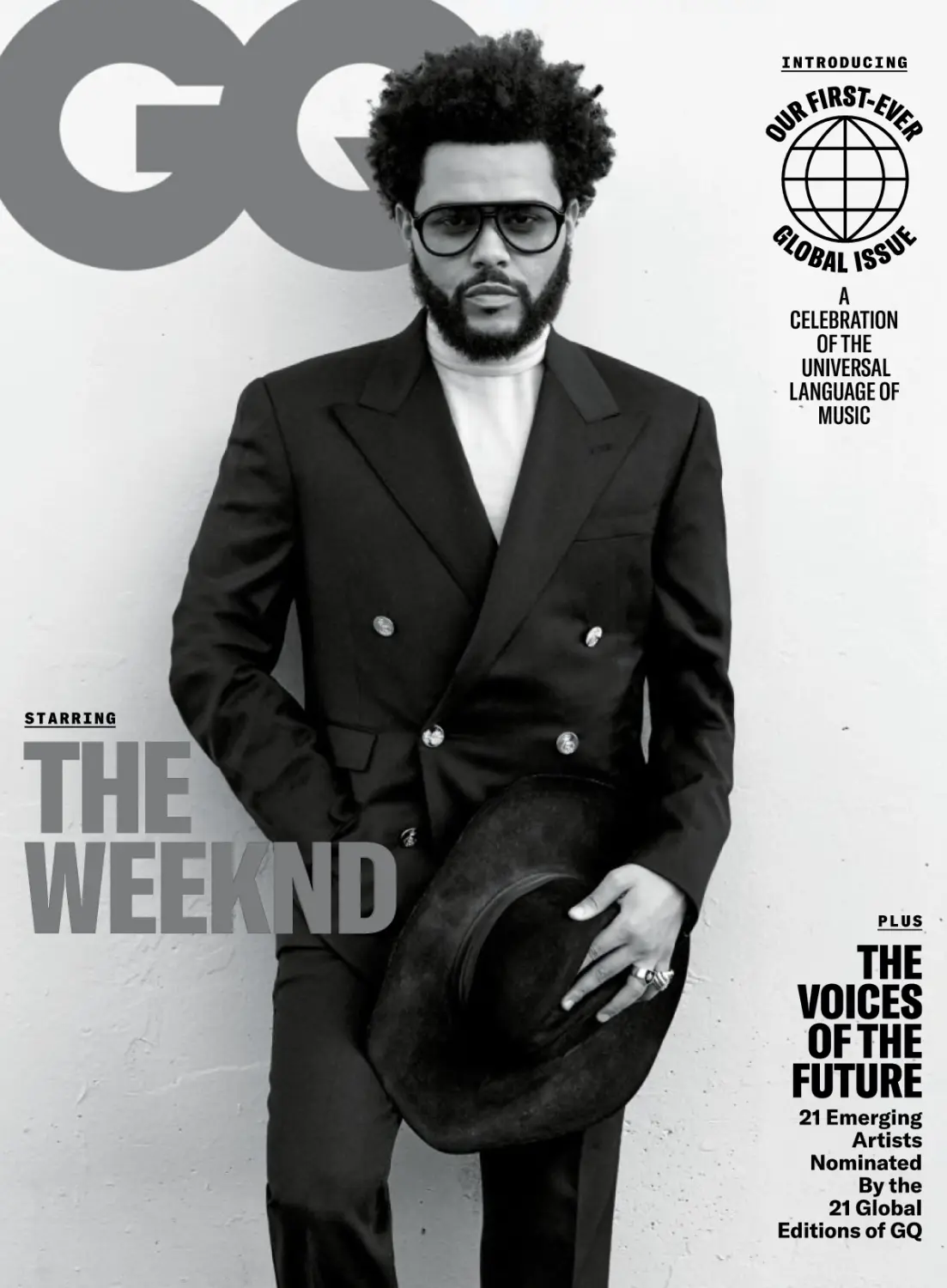






Text
                    INTRODUCING

A
CELEBRATION
OF THE
UNIVERSAL
LANGUAGE OF
MUSIC

STARRING

THE
PLUS

THE
VOICES
OF THE
FUTURE
21 Emerging
Artists
Nominated
By the
21 Global
Editions of GQ

TOMFORD.COM

CONTENTS

September
Behind the Scenes
With the People Who
Make GQ

GQ World

Contributor

The Drops: SA IN T J H N and Fall’s
Flyest Fashion......................... . . . . . . . . . . . . . . . . . . . 33
J OE K E E RY

Is the Fan Favorite..... . . . . . . . . . . . . . . . . . . . 46

A Radical New Era of Tailoring.... . . . . . . . . . . . . . . . . . . . 63
The Post-Hype Watch Collection. . . . . . . . . . . . . . . . . . . . 72
L A M E LO BA L L

and the NBA’s Next Generation. . . . 74

VICTORIA GRAHAM
Bookings director
Graham is a nexus at the heart of GQ,
working with talent, photographers,
stylists, art directors, editors, and more to
breathe life into our photo shoots. “I love
working with all the nuts and bolts on the
ground and bringing those parts together,”
she says. She collaborated on a new global
scale for this September issue, whose
cover will run in 17 markets around the
world. “It takes a village to do what we do.”

Features
Cover Story: T H E W EEK N D ......... . . . . . . . . . . . . . . . . . . . . 80

→

VICTORIA GRAHAM: MAT TEO MOBILIO. “OFFICE GRAILS”: COURTESY OF SUBJECTS.

Voices of the Future:
21 Global Musicians We Love. . . . . . . . . . . . . . . . . . . . . . . . . 100
The Lads Behind Skate Brand Palace............... 118
The Dresden Job. . . . . . . . . . . . . . . . . . . . . . . . . . . . . . . . . . . . . . . . . 128
OL I VI A RO D R IG O

Is Most Likely to Succeed....... 132

On the Cover
Photograph by Daniel Jackson.
Styled by George Cortina. Blazer,
$2,095, turtleneck, $1,095, and pants,
$695, by Ralph Lauren. Hat, $267, by
Janessa Leone. Sunglasses, $750,
by Jacques Marie Mage. Ring (on ring
finger), $530, by The Great Frog. Ring
(on pinkie), $9,900, by Sarah–Jane
Wilde. Hair by Daronn Carr for
BlendLA. Skin by Christine Nelli for
Magic Shave. Tailoring by Susie
Kourinian. Produced by GE Projects.

←

R A LPH L AUR EN

CONTENTS

For our cover story on The Weeknd, see page 80.
Coat, $2,390, by Saint Laurent by Anthony Vaccarello. Turtleneck, $1,095, by Ralph Lauren.
Hat, $267, by Janessa Leone. Sunglasses, $750, by Jacques Marie Mage. Necklace, $13,900, by Sarah–Jane Wilde.

2 4

G Q . C O M

S E P T E M B E R

2 0 2 1

P H O T O G R A P H

B Y

D A N I E L

J A C K S O N

ST YLIST, GEORGE CORTINA.

September

CONTENTS

ST Y L I ST, R E B E C C A R A M S E Y.

September

For our story on Olivia Rodrigo, see page 132.
Vest, $1,190, by Etro. Jewelry, her own.

2 6

G Q . C O M

S E P T E M B E R

2 0 2 1

P H O T O G R A P H

B Y

A D R I E N N E

R A Q U E L

LETTER FROM THE EDITOR

Welcome
to the
Worldwide
Era of GQ
a new beginning for
the global GQ brand. ¶ You may not know
that there are 21 unique editions of
GQ around the world. The original was
established in the U.S. in 1957. Some three
decades later, the spawning commenced,
first with British GQ in 1988, continuing
through a period of rapid expansion
in the aughts (including GQ Japan, GQ
France, GQ China, and more), and leading
up to the 2018 launch of our newest title,
GQ Middle East.
THIS ISSUE MARKS

The only thing that was strange
about this ever growing network
of GQ editions is that we didn’t
really speak to one another. And we
certainly didn’t collaborate. Which—
in an increasingly globalized world—
was a little like having access to an
incredible superpower and choosing
not to use it.
Well, that changes for good
with this issue. Like that scene in
Spider-Man in which Tobey Maguire
figures out how to fire cobwebs out
of his wrists, GQ has entered the
phase of its hero’s journey where it
is testing out its superpowers and
seeing what they can do.
To me, the coolest aspect of GQ’s
superpower is that it only activates
when we all work together.
For this issue, my international
colleagues and I chose to unite at
the intersection of two universal
languages: music and fashion. So 17
of our international editions
simultaneously published a cover
featuring the most mysterious and
compelling artist in global pop,

2 8

G Q . C O M

S E P T E M B E R

2 0 2 1

The Weeknd. And all 21 of us
co-produced and co-published a
portfolio called “Voices of the
Future,” which spotlights 21
emerging musicians, each of whom
was nominated, photographed, and
profiled by one of our editions.
So what does this newly unified
approach mean for you and our
64 million other monthly readers
around the world? Well, it means
that across our digital platforms,
and with each new print issue,
you will see not just your country
through the GQ lens but the whole
globe. Which could mean an
international megastar on the
cover—or a hyper-local story that
originates in Paris, Milan, Taipei,
Cape Town, Seoul, or Mexico City.
In an era that will continue
to be defined by the glorious
borderlessness of the internet, this
shift represents a great leap forward
for GQ. Especially because our
fashion-music-and-art-obsessed
audience comprises a continentcrossing network of young people

who share a worldview and are
all connected via social media.
And anyway, the GQ reader
has always been broad-minded
and voracious.
We don’t want to hunker down
at home—we want to get out and
experience the world in all its sublime,
complex fullness. We want provocative
ideas from diverse perspectives,
bold new fashion that eschews tired
rules, and vivid reporting that
challenges our assumptions and
pries open our minds.
For years now, our 21 international
editions have proved that the
stylish and cutting-edge spirit of GQ
is flourishing across borders, time
zones, and languages.
I like to think of GQ as a campfire
around which like-minded people
from across the planet gather.
With this issue, we strike the match.

Will Welch
GLOBAL EDITORIAL DIRECTOR

P H O T O G R A P H

B Y

D A N I E L

J A C K S O N

®

a

Chief Business Officer

Susan D. Plagemann
®

Global Editorial Director

Will Welch
D E P U T Y G LO B A L E D I TO R I A L D I R E CTO R

Adam Baidawi
G LO B A L E X E C U T I V E D E S I G N D I R E CTO R

Visuals
B O O K I N G S D I R E CTO R

Victoria Graham
S E N I O R V I S U A L S E D I TO R

Stephanie Tran

G LO B A L V I S U A L S D I R E CTO R

Roxanne Behr
G LO B A L FA S H I O N D I R E CTO R

Mobolaji Dawodu

V I S U A L S E D I TO R

Daria Di Lello
S TA F F P H OTO G R A P H E R

Martin Brown
B O O K I N G S C O O R D I N ATO R

Lauren Norton

G LO B A L F E AT U R E S E D I TO R

Geoffrey Gagnon

France: AD, AD Collector, GQ,
Vanity Fair, Vogue, Vogue Collections,
Vogue Hommes
Germany: AD, Glamour, GQ, GQ Style,
Vogue
India: AD, Condé Nast Traveller, GQ,
Vogue
Italy: AD, Condé Nast Traveller,
Experience Is, GQ, La Cucina Italiana,
L’Uomo Vogue, Vanity Fair, Vogue, Wired
Japan: GQ, Rumor Me, Vogue,
Vogue Girl, Vogue Wedding, Wired
Mexico and Latin America:
AD Mexico and Latin America,
Condé Nast College Américas,
Glamour Mexico and Latin America,
GQ Mexico and Latin America,
Vogue Mexico and Latin America
Spain: AD, Condé Nast College Spain,
Condé Nast Traveler, Glamour, GQ,
Vanity Fair, Vogue
Taiwan: GQ, Vogue
United Kingdom: London: HQ, Condé
Nast College of Fashion and Design,
Vogue Business; Britain: Condé Nast
Johansens, Condé Nast Traveller,
Glamour, GQ, GQ Style, House & Garden,
LOVE, Tatler, The World of Interiors,
Vanity Fair, Vogue, Wired
United States: Allure, Architectural
Digest, Ars Technica, basically,
Bon Appétit, Clever, Condé Nast Traveler,
epicurious, Glamour, GQ, GQ Style,
healthyish, HIVE, La Cucina Italiana,
LOVE, Pitchfork, Self, Teen Vogue, them.,
The New Yorker, The Scene, Vanity Fair,
Vogue, Wired

E N T E RTA I N M E N T

Robert Vargas

Sarah Schmidt

WORLDWIDE EDITIONS

Bill Mulvihill

G LO B A L D I R E CTO R O F
E D I TO R I A L O P E R AT I O N S

HEAD OF MARKETING

Kimberly Fasting-Berg
HE AD OF SALES, BE AUT Y
Lucy Kriz
H E A D O F S A L E S , A U TO & M E D I A /

Art & Production

G LO B A L D I G I TA L D I R E CTO R

D E S I G N D I R E CTO R

Jonathan Wilde

Keir Novesky

S I T E D I R E CTO R

A RT D I R E CTO R

Ben Williams

Simon Abranowicz

G LO B A L E N T E RTA I N M E N T D I R E CTO R

G LO B A L P R O D U CT I O N D I R E CTO R

H E A D O F SA L ES , B I Z /F I /T EC H
Doug Grinspan
HEAD OF SALES, CPG & VICE
Jeff Barish
H E A D O F S A L E S , H E A LT H
Carrie Moore
H E A D O F S A L E S , H O M E & T R AV E L
Beth Lusko-Gunderman
VP, REVENUE–MIDWEST
Pamela Quandt
VP, REVENUE–SAN FRANCISCO
Devon Rothwell
V P , E N T E R P R I S E S A L E S – LO S A N G E L E S
Dan Weiner
V P , F I N A N C E & B U S I N E S S D E V E LO P M E N T
Sylvia W. Chan
VP, BRAND MARKETING
Rachael Klein
E X E C U T I V E D I R E CTO R ,

Dana Mathews

Jim Gomez

S P E C I A L P R OJ E CT S E D I TO R

S E N I O R P R O D U CT I O N M A N A G E R

Mark Anthony Green

John Markic

Bobby Graham

G LO B A L S T Y L E E D I TO R

P R O D U CT I O N M A N A G E R

Noah Johnson

D I R E CTO R , B R A N D M A R K E T I N G ,

Timothy Meneely

G Q & G Q S P O RT S

A RT I C L E S E D I TO R S

S E N I O R W E B /CO M M E RC E P RO D U C E R

Jason Fitter

Chris Gayomali, Alex Hoyt

Ben Pardee

S E N I O R B U S I N E S S D I R E CTO R

S E N I O R S TA F F W R I T E R

WEB PRODUCERS

Kelly Hwang

Zach Baron

Stephen Aguila, Gabe Conte

I N T E R N AT I O N A L FA S H I O N

Published by Condé Nast

D E P U T Y S I T E E D I TO R

Sam Schube

Copy & Research

CHIEF EXECUTIVE OFFICER

D E P U T Y M A N A G I N G E D I TO R

C O P Y D I R E CTO R

Roger Lynch

PUBLISHED UNDER JOINT VENTURE

Codie Steensma

Laura L. Vitale

W E L L N E S S E D I TO R

Brazil: Casa Vogue, Glamour, GQ, Vogue
Russia: AD, Glamour, Glamour Style
Book, GQ, GQ Style, Tatler, Vogue

COPY MANAGER

G LO B A L C H I E F R E V E N U E O F F I C E R &
PRESIDENT, U.S. REVENUE

Chris Cohen

Rebecca O’Connor

Pamela Drucker Mann

E N T E RTA I N M E N T E D I TO R

SENIOR RESEARCH MANAGER

Luke Leifeste

Mick Rouse

FA S H I O N C R I T I C

RESEARCH MANAGER

CHIEF CONTENT OFFICER

L E G A L A F FA I R S E D I TO R ,
CONTENT INTEGRIT Y GROUP

CHIEF FINANCIAL OFFICER

Lucas Zaleski

CHIEF MARKETING OFFICER

Contributors

CHIEF PEOPLE OFFICER

Gabriella Paiella, Clay Skipper,
Tyler Tynes, Cam Wolf
S E N I O R A S S O C I AT E E D I TO R S

Samuel Hine, Frazier Tharpe
A S S I S TA N T TO T H E E D I TO R I N C H I E F

Colin Groundwater
E D I TO R I A L O P E R AT I O N S A S S O C I AT E

Danielle Cohen

Fashion

Deirdre Findlay
FA S H I O N E D I TO R – AT – L A R G E
George Cortina

Stan Duncan

CONTRIBUTING ST YLISTS

Danielle Carrig

Matthew Henson, Simon
Rasmussen
CORRESP ONDENTS

Miles Pope

Doug Bock Clark, Sean Flynn,
Alice Gregory, Chris Heath,
Julia Ioffe, Drew Magary,
Brett Martin, Michael Paterniti,
Daniel Riley, Wells Tower

A S S O C I AT E FA S H I O N E D I TO R

C O LU M N I S T S

Haley Gilbreath
Natalie Petit-Frere

Benjamin Clymer, Joe Holder
C R E AT I V E D I R E CTO R – AT – L A R G E
Jim Moore

Audience Development

Communications

G LO B A L S E N I O R D I R E CTO R O F

V P , C O M M U N I C AT I O N S

D E P U T Y FA S H I O N D I R E CTO R

Jon Tietz
S E N I O R M A R K E T E D I TO R

FA S H I O N A S S I S TA N T

A U D I E N C E D E V E LO P M E N T & A N A LY T I C S

Carly Holden

Joel Pavelski

A S S O C I AT E D I R E CTO R ,
C O M M U N I C AT I O N S

Rachel Janc
C O M M U N I C AT I O N S M A N A G E R

Jackson Chiappinelli
A S S O C I AT E M A N A G E R ,

V P , D I G I TA L V I D E O P R O G R A M M I N G &
D E V E LO P M E N T , S T Y L E

G Q / FA S H I O N

Brendon Henderson

Martin Mulkeen

HEAD OF PROGRAMMING, GQ

C O M M E R C E E D I TO R

Benjamin Key

Yang-Yi Goh
COMMERCE WRITERS

Avidan Grossman, Gerald Ortiz

C H I E F D ATA O F F I C E R

Karthic Bala
CHIEF CLIENT OFFICER

Jamie Jouning
C H I E F C O N T E N T O P E R AT I O N S O F F I C E R

Christiane Mack

In the United States
CHIEF BUSINESS OFFICER–
U . S . A D V E RT I S I N G R E V E N U E A N D
G LO B A L V I D E O S A L E S

Craig Kostelic
EXECUTIVE VICE PRESIDENT–REVENUE

Monica Ray

Chairman of the Board
Jonathan Newhouse

Condé Nast is a global media
company producing premium
content with a footprint of
more than 1 billion consumers
IS
I
in 32 markets. condenast.com
M A G A Z
Published at 1 World Trade
Center, New York NY 10007. Subscription
inquiries: visit subscribe.gq.com, condenast
.com/contact, or call (800) 289-2347.
For permissions and reprint requests:
(212) 630-5656; fax: (212) 630-5883. Address
all editorial, business, and production
correspondence to GQ Magazine, 1 World
Trade Center, New York NY 10007.
E

A

S E

R E
C

L E

G LO B A L C O M M E R C E C AT E G O RY D I R E CTO R ,

Sanjay Bhakta

H

Video
Commerce

C H I E F P R O D U CT & T E C H N O LO GY O F F I C E R

C

Dane McMillan

C H I E F O F S TA F F

Elizabeth Minshaw

Y

C O M M U N I C AT I O N S

C H I E F C O M M U N I C AT I O N S O F F I C E R

T

SENIOR MANAGER, SOCIAL MEDIA
Willa Bennett
M A N A G E R , A N A LY T I C S
Alex Wedel
S E N I O R M A N A G E R , N E W S L E T T E R S T R AT E GY
Stephanie Talmadge
A S S O C I AT E M A N A G E R , S O C I A L M E D I A
Melissa Yang

Jackie Marks

Australia: GQ, Vogue, Vogue Living
Bulgaria: Glamour
China: AD, Condé Nast Traveler,
GQ, GQ Lab, GQ Style, Vogue,
Vogue Café Beijing, Vogue Film,
Vogue Me, Vogue Business in China
Czech Republic and Slovakia:
La Cucina Italiana, Vogue
Germany: GQ Bar Berlin
Greece: Vogue
Hong Kong: Vogue, Vogue Man
Hungary: Glamour
Korea: Allure, GQ, Vogue, Wired
Malaysia: Vogue Lounge Kuala Lumpur
Middle East: AD, Condé Nast Traveller,
GQ, Vogue, Vogue Café Riyadh, Wired
Poland: Glamour, Vogue
Portugal: GQ, Vogue, Vogue Café Porto
Romania: Glamour
Russia: Vogue Café Moscow
Scandinavia: Vogue
Serbia: La Cucina Italiana
Singapore: Vogue
South Africa: Glamour, GQ, GQ Style,
House & Garden
Thailand: GQ, Vogue
The Netherlands: Glamour, Vogue, Vogue
Living, Vogue Man, Vogue The Book
Turkey: GQ, Vogue, Vogue Restaurant
Istanbul
Ukraine: Vogue, Vogue Man

E

Mary Marge Locker

S TA F F W R I T E R S

N

Agnes Chu

Rachel Tashjian

PUBLISHED UNDER LICENSE
O R C O P Y R I G H T C O O P E R AT I O N

P L

Anna Wintour
P R E S I D E N T , C O N D É N A S T E N T E RTA I N M E N T

© J&JCI 2021

FOR PEOPLE WHO
ARE A LITTLE INTENSE
A B O U T H Y D R AT I O N

4 8 - H O U R H Y D R AT I O N • H E A LT H Y G L O W Y S K I N

FOR PEOPLE WITH SKIN

TM

The
33

st es
ye ec
Fl Pi

GROOMING, BARRY WHITE FOR BARRY WHITEMENSGROOMING.COM. TAILORING, KSENIA GOLUB.

and

t s
es Fit
gg
Bi

Drops

DON’T CALL IT A
COLLAB
In his latest act of
delicious high-fashion
subversion, Gucci’s
Alessandro Michele
“hacked” Balenciaga
to generate the
zeitgeist-iest It bag in
recent memory. For
more on SAINt JHN,
see page 36.

of
Fall

Turtleneck,
$2,200, pants,
$4,100, and
bag, $3,200,
by Gucci.
Sunglasses,
$480, by
Ahlem. His
own watch by
Audemars
Piguet. Jewelry
(throughout),
his own.

Starting with chart-topping
Brooklyn songwriter
SAINt JHN and a paradigmshifting purse.
By SAMUEL HINE
P H O T O G R A P H

B Y

S T Y L E D

M A R T I N

B R O W N

B Y

T I E T Z

J O N

SHEARLING WITH
ATTITUDE
At Givenchy, Matthew
Williams is injecting
his kinky underground
sensibilities into
everything from the
heavy-duty hardware to
the oversized shearling
parkas (vest and coat,
prices upon request;
pants, $2,990, shoes,
$595, and hat, $697).

OPULENT SET
Casablanca designer
Charaf Tajer is an
immaculate crafter of
fantasy; this season he’s
proposing silky, sexy
tailoring straight out of
a modern and youthful—
but no less glam—
Monaco (jacket, $1,034,
and pants, $992).

INSTANT-CLASSIC
KICKS
Just in time for winter,
Bottega Veneta took
the brand’s viral Puddle
boots (you’ve seen the
neon green rubber ones)
and turned them into
durable, go-anywhere
hikers ($990).

THE BIGGEST
THING IN SMALL
WATCHES
The iconic Panthère de
Cartier is technically
a women’s timepiece, but
that hasn’t stopped some
of history’s most stylish
men (Keith Richards
and Pierce Brosnan)
from rocking the
elegant ’80s Cartier
design ($8,050).

3 4

G Q . C O M

YOUR NEW
FAVORITE
SNEAKER
First developed for the
1964 Olympics in Tokyo,
the Adidas Japan
returns this season,
thanks to Grace Wales
Bonner’s golden touch
(Adidas Originals x
Wales Bonner, $180).

BIG BOSS TRENCH
The trench coat may have
taken a hit from the rise of
Gore-Tex, but Boss
is making a case for
tailored outerwear with
a modular fanny pack
version that adds some
adventure to the familiar
style (coat, $1,295, pants,
$345, sunglasses, $290,
and bag, $550).

HIPPIE SWEATS
Think of Acne Studios’
velvet corduroy mandala
sweats as the tie-dyed
T-shirt of pants (price
upon request).

UNMISSABLE
OUTFIT
With sharp-as-a-knife
tailoring and trousers
with a radical, of-themoment flared silhouette,
genderless label
Egonlab is establishing
itself as the next young
Parisian brand to watch
(coat, $1,325, turtleneck,
$415, and pants, $415).

THE PERFECT
SWEATER
Like a blue blazer and
a pair of badass black
boots, the geometric
Giorgio Armani
wool-mohair sweater is
an essential wardrobe
staple ($1,795).
LUXURY LANYARD
Fendi’s Baguette
bag renaissance has
achieved its waviest form:
the MetroCard-size
calf-leather lanyard
pouch ($690).

CARTIER, BOT TEGA VENE TA, GIORGIO ARMANI, FENDI, AND ADIDAS: MARTIN BROWN; PROP
ST YLIST, DUSTIN HUBBS AT MARK EDWARD INC. SEE ADDITIONAL CREDITS, PAGE 141.

CHILL PARKA
Over the past few years,
fashion and outdoor
brands have borrowed
more and more spiritual
and technical inspiration
from one another. This
crunchy down parka
by Loewe sits right at
the center of the Venn
diagram ($1,950).

ADVOCACY HAS
ONE DIRECTION,
FORWARD.
Visit NAACP.ORG/FORWARD

GQ World
Drops

SAINt JHN’s “Roses
(Imanbek Remix)”
was one of 2020’s
biggest, catchiest, most
inescapable hits. But
the Brooklyn-slashGuyana-bred rapper is
far from an overnight
sensation—he’s spent
the past decade
carefully plotting for
this moment, writing
with Usher and
dropping verses on
Beyoncé singles, before
finally striking gold
on his own. “You know
when you’re about to go
out and you look in the
mirror and change your
outfit 30 times? I did
that,” he says of his prefame days. “I’m certain
of the human being I am,
and I would’ve applied
that to any profession.
It happened to be
music, but if I was just
on a boat, paddling?
I would’ve told the
water, ‘I am this sexy.’ ”

A-LIST BOMBER
Raf Simons’s first Prada
collection (alongside
Mrs. Prada herself) had
no shortage of tier-one
grails, but this oversized
bomber in aubergine
leather is sure to land in
the Met one day.

—YA N G -Y I G O H

Jacket, $6,600,
jumpsuit,
$2,340, pants,
$1,300, and
shoes, $1,170,
by Prada.
Socks, $42, by
Pantherella.
Sunglasses,
$495, by Jacques
Marie Mage.

3 6

G Q . C O M

S E P T E M B E R

2 0 2 1

GROOMING, BARRY WHITE FOR BARRY WHITEMENSGROOMING.COM. TAILORING, KSENIA GOLUB.

BLOWING
UP BIG

EVENTS

PROMOTIONS

EXCLUSIVES

REPORT
GENTLEMEN’S QUARTERLY

THE UK’S NUMBER ONE
PREMIUM GIN1
Whitley Neill Gin’s founder, Johnny
Neill, is the 8th generation in a family
of English gin masters going back to
1762. He has sourced 29 botanicals from
around the world, creating innovative
and award-winning gins. Whitley Neill
Rhubarb & Ginger Gin is inspired by his
memories of homemade rhubarb crumble
at his grandparents’ farm. This summer,
experience Whitley Neill, the UK’s number
one premium gin1.

EST. 1957

Reduce Redness to Help
Eyes Look More Awake
In Just 1 Minute
LUMIFY® redness reliever eye drops
from Bausch + Lomb are the first and
only redness reliever of their kind. The
unique drops, formulated with lowdose OTC brimonidine, work differently
by selectively targeting redness when
used as directed. One drop dramatically
reduces redness to help eyes look
noticeably whiter and more awake in
just 1 minute2.
www.lumifydrops.com

www.whitleyneill.com

Versatile Sneakers
from Skechers
If you’re looking for a clean fashion
sneaker that pairs with any look, the
Skechers UNO in black, off-white or
whiskey delivers. These stylish kicks
are rich, versatile, and number one in
comfort thanks to Skechers Air-Cooled
Memory Foam®.
skechers.com

Find Your Next Favorite
Discover addictive series, blockbuster
movies, and exclusive originals on
HBO Max. From iconic dramas to actionpacked hits, explore over 13,000 hours
of game-changing entertainment.
Sign Up Now→ hbom.ax/gq
Please Drink Responsibly. Hard Seltzer with Flavors. All Registered Trademarks,
used under license by White Claw Seltzer Works, Chicago, IL 60661.
Nutritional information available at whiteclaw.com

1

S H O P. G Q . C O M

Nielsen Scantrack UK value MAT to 01.02.21 2 LUMIFY is a trademark of Bausch & Lomb Incorporated or its affiliates. Content ©2021 Bausch & Lomb Incorporated or its affiliates. LUM.0134.USA.21

@GQREPORT

EVERYDAY GOLD
CHAIN
Jamaican-born, Houstonbased Mateo founder
Matthew Harris counts
modern art as a main
source of inspiration;
this 14-karat-gold link
bracelet is a refreshing
retort to the jewelry
world’s turn toward
maximalism ($2,500).

SCI-FI DRIP
Every designer reckoned
with the pandemic this
season, and Salvatore
Ferragamo’s Paul
Andrew found an escape
hatch in science fiction
tailoring and out-ofthis-world leatherwear
(vest, $4,500, coat,
$3,500, shirt, $1,790,
and pants, $660).

MAJOR BACKPACK
If there’s one brand
you can trust to make a
rucksack as gorgeous
as it is sturdy, it’s
Santoni, which is
practically synonymous
with relentlessly
luxurious handcrafted
footwear ($3,000).

RED-HOT
SNEAKERS
Coming soon to the NBA
tunnel: the Dior Men’s
B27 World Tour, which
was released alongside
a matching crossbody
sneaker bag ($1,400).

4 0

TWO-TONE
SHADES
This season Berluti
collaborated with
Russian abstractionist
Lev Khesin, whose
intense purpleblue hues elevate
these tortoiseshell
sunglasses into the
stratosphere ($460).

CHILL LEATHER
TROUSERS
Leather pants don’t have
to scream Jim Morrison.
These David Catálan
faux-leather trousers
instead call to mind your
favorite pair of slouchy,
wide-leg jeans ($254).

KILLER COLLAB
Tommy Hilfiger’s
yellow sailing
windbreaker
is an underrated ’90s
classic, and now
the retro-minded label
is teaming up with
Timberland for a
capsule collection
dripping with
nostalgia ($249).

FUTUREWEAR
A Balenciaga
collection is always as
much about the future
as it is about clothes,
and here Demna Gvasalia
outlines the way he
thinks people will start
wearing their favorite
garments: until they are
utterly destroyed. No
word on the return of
medieval armor just yet
(sweater, $1,450, hoodie,
$795, jeans, $950, and
boots, $7,150).

BODE, SANTONI, AND DAVID CATÁL AN: MARTIN BROWN; PROP ST YLIST, DUSTIN
HUBBS AT MARK EDWARD INC. SEE ADDITIONAL CREDITS, PAGE 141.

FRINGE COAT
Bode designer Emily
Bode has an impeccable
sense for how to craft
heirloom-level grails.
Her latest is this babyblue suede western
jacket, inspired by heady
strains of 1969 hippie
style ($2,300).

ARTISANAL
ACCESSORY
Nicholas Daley’s
furry mohair plaid
coats are becoming a
signature of his young
London brand, as are the
crochet berets made in
knitting circles across
the Midlands of England
(coat, $1,531, pants, $714,
and beret, $246).

GQ World
YEEHAW BOOTS
Hedi Slimane is basically
the Tinker Hatfield of
boot making, and this
season he dropped
another classic at
Celine Homme by
Hedi Slimane with
these metal-toe calfskin
cowboy boots ($1,350).

ALLMONOGRAMMED
EVERYTHING
You know the Medusa.
Now meet Versace’s
new logo, La Greca,
coming soon to the famed
house’s jackets, silk sets,
sneakers, and iPhone
cases (jacket, $2,575,
shirt, $1,295, shorts,
$895, sunglasses, $342,
and phone case, $425).

STATEMENT
SWEATER
Y/Project designer Glenn
Martens takes over
design duties at Diesel
next season, but if you’re
not revisiting Italy’s rebel
denim brand for its funky
sweaters right now, you’re
missing out ($325).

PUFFER PANTS
In colder climates, down
trousers are shockingly
underrated. With his
groovy, ’70s-inflected
version, fashion phenom
Eli Russel Linnetz of
ERL makes featherstuffed pants feel like a
no-brainer ($996).

OVER-THE-TOP
OVERSHIRT
Hermès started
in 1837 as a harness
workshop, and it still
sells impeccably crafted
saddles. For those who
don’t know a filly from
a donkey, it also offers
a red calfskin overshirt
with saddle stitching
($10,600).

ART COAT
Chitose Abe of Sacai
is the low-key queen
of collaborations, with
extremely covetable
Nike, Dior, and Jean Paul
Gaultier partnerships
under her belt. Next up?
This museum-worthy
graffiti-inspired coat,
made with help from her
friend Brian Donnelly,
a.k.a. KAWS (coat,
$2,000, and pants, $690).

GRANDPA VEST
The most iconic Polo
Ralph Lauren sweater
that doesn’t have a bear
on it? The fantastically
preppy Fair Isle sweatervest ($228).

UPCYCLED SUIT
At Botter, upcycling
isn’t used as a green
marketing spin. It’s
simply the way Rushemy
Botter does things,
and it’s how he made
this extremely dope
quilted suit set—with
secondhand tablecloths
that look swiped from
his grandmother (jacket,
$1,890, and pants, $910).

4 2

THE FUTURE OF
CLOGS
1017 Alyx 9SM sees
your rubbery Crocs and
raises you this pair of
seamlessly constructed
EVA foam spaceships for
your feet ($279).

FIRE NECKLACE
Ambush, the Japanese
label that brought bona
fide hype to the world
of men’s jewelry, has
a solution for those
who always leave their
lucky Bic lighters at
home ($210).

POLO RALPH L AUREN, ERL, AND HERMÈS: MARTIN BROWN; PROP ST YLIST,
DUSTIN HUBBS AT MARK EDWARD INC. SEE ADDITIONAL CREDITS, PAGE 141.

Drops

TRY
IT

Want to look and smell your very best? Be the first to try
new grooming products for your hair, skin, and beard by
signing up for GQ’s new Try It Program. We’ll send you
samples that match up with your own grooming routine.
Just fill out a grooming profile to qualify.*

Sign up now > GQ.com/tryit
*Spaces and samples are limited. Products are targeted to skin and hair types and preferences where applicable.

THE RE
AC
OFF
FIELD.

AL
TION IS
THE
WAT C H AT

youtube.com/gqsports

GQ World

U
Ke
s
l
er y Leve

What makes the Stranger Things actor and budding movie star one of the most
likable guys in Hollywood? We tried to get him to explain. (Operative word: tried.)
By BRENNAN KILBANE
P H O T O G R A P H S
4 6

G Q . C O M

S E P T E M B E R

2 0 2 1

S T Y L E D

B Y

B Y

M A R I E

T O M A N O V A

A L E X A N D E R – J U L I A N

HAIR, THOM PRIANO FOR R+CO. HAIRCARE. GROOMING, CL AUDIA L AKE FOR CHANEL. TAILORING, KSENIA GOLUB.

Jo

e

p

Fashion

These are no
ordinary clouds
They’re gathered by equatorial trade winds
over a remote Fijian island, 1,600 miles from
the nearest continent. Their rain filters through
volcanic rock, gathering more than double
the electrolytes* for a soft, smooth taste.
What these clouds make isn’t just water.
It’s FIJI Water.

FIJIWater. com
*Compared to the other two top premium bottled water brands.
© 2021 FIJI Water Company LLC. All Rights Reserved. FIJI, EARTH’S FINEST, EARTH’S FINEST WATER, the Trade Dress,
and accompanying logos are trademarks of FIJI Water Company LLC or its affiliates. FW210624-26

P R E V I O U S PA G E

Blazer, $5,800,
shirt, $800,
and pants,
$1,300,
by Gucci.
Sunglasses,
$138, by
Bonnie Clyde.
Scarf and bow,
vintage. Ring
(on left
index finger),
$285, by
OddballOddity.
Ring (on left
ring finger),
$229, by LMJ.
Ring (on right
hand), $300, by
Martine Ali.

GQ World
Fashion

T H I S PA G E

Jacket, $3,200,
and pants,
$860, by
Salvatore
Ferragamo.
Shirt, $700, by
Gucci. Tie,
$185, by
Drakes. Shoes,
$169, by
Johnston &
Murphy. Socks,
$28, by Falke.
Hat, $100, by
Adastra Los
Angeles.

E DOESN’T WASH HIS

hair. He rarely even
touches it, except during
moments of contemplation, when his fingers
will comb the fallen front strands back
into an upward swell that maintains
an anime level of consistency. He does
not “get” haircuts in the way most
people get haircuts—by asking for and
then paying for them. Haircuts simply

H

4 8

G Q . C O M

S E P T E M B E R

2 0 2 1

happen to him, in the way a belly rub
happens to a dog on a walk.
Joe Keery’s most valuable asset isn’t
the massively popular Netflix show he
is very famous for (Stranger Things)
or the Disney movie he is about to be
very famous for (Free Guy)—possibly
more famous than the 29-year-old
has ever been. It’s his gravity-defying
head of hair. A viral meme theorized
that his curl pattern, the result of two
cowlicks on the sides of his forehead,
unfolded in a perfect Fibonacci spiral,
and maybe that is why the public went
absolutely nuts in late 2019, when
Keery showed up to a Chanel dinner
and was photographed in a limp bowl
cut, his sacred geometry violated.
“It didn’t go over well,” he says now.
(People were threatening to dox the
hairstylist.) “I saw some funny photos
of it, and apparently I looked like a
fucking idiot. But that’s okay. I think
it’s good for everybody to look like an
idiot at some point.”
He was, of course, approached
to endorse a hair-care brand. This
is probably obvious just by looking
at him on a computer screen and
observing how his brunette waves
are set o≠ by the abject squareness of
his jaw, by the neckline of his Rowing
Blazers polo, and the glint of the gold
necklace that he rarely takes o≠. But

© HDIP, Inc.

Luxury is where you are.

GQ World
Fashion

in any case somebody reached out.
They promised a “bunch of money,”
but Keery said no thank you. “I think
it would just be so lame for the majority of people,” he says. “It would be a
sellout move. Don’t you think?”
Keery seems to always be doing
this: calculating other people’s expectations of him so he can playfully subvert them. His hair helps by inviting
interpretations of the actor beneath
it, who in person is as down-to-earth
as bedrock and as calm as an aquifer.
He constantly threatens to shave his
head—a natural fame-response from
somebody whose celebrity has ballooned beyond their personhood. He
fantasizes about how shocked people
would be, which makes it seem like,

if Keery is on the precipice of a new
level of fame he knows it and is willing
to keep things interesting.
Keery grew up in a postcard harborside town north of Boston. His
father is an architect and his mother
is an English professor, who helped
establish a Montessori school in their
community. (Montessori education
“pretty much set up my whole life,
I think, in a lot of ways,” Keery says.)
He left Massachusetts to study theater
at DePaul University in Chicago; after
he graduated, he was waiting tables
while shooting commercials and
appearing in guest spots on shows like
Empire. “My goal pretty much was
like, ‘If you could just pay your rent,
then you’re doing great and that’s
fine.’ ” It was the summer of 2015, and
he was working at a burger restaurant
when he got a call: He’d booked a part
on Netflix’s new horror series and he’d
soon be moving to Atlanta to film a
little show called Stranger Things.
“I figured I was going to get killed,
to be honest with you, because
I played the douchey sort of boyfriend,

5 0

G Q . C O M

S E P T E M B E R

2 0 2 1

ABOVE

Blazer, $1,680,
and pants,
$650, by Bode.
Shirt, $128,
by Tombolo.
Necklace,
$700, by Acne
Studios.
Bracelet, $440,
by Third Crown.
Ring (on left
ring finger),
$198, by
L. Jardim.
Ring (on left
pinkie), $300,
by Martine Ali.
L EF T

Coat, $4,790,
and turtleneck,
$1,730, by
Vetements.
Blazer, $560,
pants, $350,
and shoes, $325,
by The Pack.
Ring, $365, by
L. Jardim.

*

®
*

®

*

In a 28-day study applying a 1% Pentavitin® formulation, skin remained hydrated for 72 hours.

GQ World
Fashion

Suit, $8,595,
and tank top,
$125, by Dolce
& Gabbana.
Necklace
(price upon
request) by
In Gold We
Trust. Ring
(on pinkie),
$200, by
Third Crown.

5 4

G Q . C O M

which is the first guy to die,” Keery
says. But he failed to play the douchey
sort of boyfriend, instead bringing
a thoughtfulness to the character
of Steve Harrington that made him,
if not indispensable to the plot, too
main a character for the show’s writers to kill o≠ in season one—which
they’d originally intended to do. By
season two, Keery was written into
the primary cast and became one of
the most googled people in the world.
He appears this fall in Free Guy, a
film set in a video game that resembles
a Grand Theft Auto–like metropolis.
The marketing suggests the movie
is about a character played by Ryan
Reynolds, but it ends up really being
about a lightly greased video game
programmer played by Keery, who is,
surprise, the main character after all.
Netflix is one thing, but a Disney film
signals Keery’s ascent to a new tier of
bankability, somewhere between a
cartoon prince and a Hollywood leading gentleman.
Few actors cultivate the kind of
intense fascination that he does. His
Instagram and Twitter accounts are
distended with millions of followers

S E P T E M B E R

2 0 2 1

who love him, even though he rarely
posts. He receives enough attention
that he has to be extremely deliberate about how and where his
time is spent. His music career, for
example, is about as old as his acting career, but he has gone to great
lengths to separate the two. After
Stranger Things’ second season, he
dropped out of his psych-pop band,
Post Animal, citing concerns that
his celebrity might pull focus. “It’s
important to disassociate Steve from
Stranger Things to the band because
I think it will eventually hurt the
band,” he told Bustle at the time.
And now? “I guess I just try not to
use the notoriety of one thing to sort
of fuel the other thing,” he says. His
solo music persona, Djo (pronounced
“Joe” with added tongue), was originally intended as an electro-funk
alter ego. “I just mostly wanted to
confuse people,” he says, “so that
they would critique the music without me involved, I guess, or listen to
it without me involved. That’s always
the most rewarding, honestly, when
people are like, ‘What? Oh, I didn’t
know that was you.’ ”

His cover was immediately blown
by online fans. “It’s fucking obnoxious how talented this dude is,” a
Reddit commenter wrote, regarding his 2019 album, Twenty Twenty.
(Keery does not agree. Looking back,
he is surprised at how “basic” the
album was. He does this frequently:
minimizing his own accomplishments, as if they can be hidden from
public consumption.)
Further inquiry into his personal
life reveals that behind Joe Keery the
hotshot actor there is also Joe Keery,
a boyish 29-year-old who su≠ers from
only the most lawful good of human
impulses. This makes him a beloved
castmate and a perfect white male
love interest, as well as a charmingly
uncontroversial interview subject.
For example:
What’s your biggest vice? “I’m a
sucker for some bread pudding,” he
says. (He doesn’t even like taking
Advil for headaches.) You’re turning
30 soon—any big plans? “Sailing with
my dad.” Do you fear the apocalypse?
“I fear an environmental apocalypse
greatly, actually, especially after the
fires last year and the storms that are

GQ World
Fashion

Blazer, $3,350,
vest, $1,200,
jumpsuit (worn
underneath),
$2,650, and
pants, $1,300,
by Prada.

destroying the central south of our
country. Yeah, we’ve got some issues.
So there definitely is a part of me that
is like, ‘Where do I want to be when
all this stu≠ goes down?’ I’m not like
a bunker guy necessarily. I mean, this
is a pretty critical moment in the history of the human race.”
Rather than talk about himself,
he’d much prefer to say something
glowing about one of his collaborators, which he does constantly. Don’t
get him started on his Free Guy costar
and onscreen ex-girlfriend Jodie
Comer, because he will get started

anyway, in response to a totally unrelated question about what it’s like to
play a heartthrob on television: “She
could not be more down-to-earth!
She’s so cool, comes from a great family. She’s amazing. I’m a huge fan of
hers,” he gushes. “That doesn’t really
answer your question, I guess, at all.”
(In a roundabout way, it kind of does!)
In Joe Keery’s real world, Keery’s
girlfriend is the actor Maika
Monroe—the two met four years ago,
at a party in Los Angeles. He doesn’t
talk about her a lot, but her presence
in Keery’s life is great enough that
she pops up in every fourth or fifth
anecdote, like a guest star we love to
see. “Over quarantine, it was like we
spent so much time together, which
was rare,” Keery says. “I mean, that’s
one of the disadvantages of dating
someone else in the industry. There
are advantages as well: somebody
who kind of understands what’s
going on with you in a pretty deep
way. But yeah, I think she’s like me.
She doesn’t take it all too seriously.”
She is around Keery’s neck at all
times: His gold necklace was a gift
from her. “I found it while we were
traveling, and then it busted,” he says,
turning it between his fingers. “For
Christmas, she got it remade for me.”
The symbol is simple but specific—a
blue-white-and-red motif—though
Keery doesn’t know the necklace’s
exact provenance. He has worried
it might be haunted, but he doesn’t
exactly feel cursed. “Things have been
pretty good for me,” he admits, “so
I can’t say.”
brennan kilbane is a writer
based in Brooklyn.

S E P T E M B E R

2 0 2 1

G Q . C O M

5 7

In Florence, since 1970.

ILBISONTE.COM

H E R I TA G E C O L L E C T I O N

LOOK GOOD. GET THE BOX. GET YOURS AT GQ.COM/BESTSTUFFBOX

The GQ Best Stuff Box delivers editorapproved style upgrades, luxe grooming
products, and other GQ-endorsed essentials
to keep you looking (and feeling) good. What’s
inside is worth more than $200—but each
Best Stuff Box costs only $50.

Our latest box includes:
Knickerbocker Long-Sleeve Tee
Ralph Lauren Eau de Parfum
Oribe Flash Form Finishing Spray
Trade Coffee
and more

0200+ VALUE
FOR ONLY 050
See what’s in the latest box at
gq.com/beststuffbox

the

Where in

GQ World
Style

World
Is Your

“Tailoring
should be
very modern,”
says Lagosborn designer
Kenneth Ize,
whose suit is
shown here.
“It’s such an old
world. It should
feel fresh.”

JOSHUA WOODS.

By SAMUEL HINE

Suit
From?

A generation
of designers
and craftsmen
from around
the globe
are turning the
suit into the
ultimate
emblem of
expressive
personal style.

S E P T E M B E R

2 0 2 1

G Q . C O M

6 3

Style

SOME THOUGHT THE COVID - 19 pandemic would be the final nail in the coffin for the men’s
suit. ¶ And then a weird thing happened. Led by a new generation of designers and
makers who are tinkering with the traditional formulas to invent (or revive) strange and
exciting ways of dressing up, tailoring started coming back stronger than ever. ¶ The
barometric designer Virgil Abloh was likely sensing this shift when he donned an epic
suit—a belted blazer over voluminous trousers—in Paris on the day of his Louis Vuitton
show earlier this summer. All around, stylish 20-something Parisians increasingly
resemble French New Wave leading men, thanks to the influence of cult-favorite
tailoring brand Husbands. In Atlanta, a new label called Factor’s has been flooded with
appointments for its funky $3,000 unisex suiting. And in New York, where West Village
tailor J. Mueser’s crew of young dandies reside, I’ve never seen more blazers and ties
at downtown bars. ¶ Speaking of ties, Abloh’s comes emblazoned with the phrase
“A FORMALITY.” Classic Abloh-ian irony—the new era of tailoring is anything but.

ZIGGY CHEN
SHANGHAI

Ziggy Chen’s

inspired

to fashion design
late in life. A decade ago, shortly after
turning 40, the former university professor of textile design began experimenting with soft tailoring that
combines the loose, straight lines
of 1920s Chinese Changshan robes
with the construction of 19th-century
European jackets. Now, Chen’s growing line of artisanal menswear represents one of the most exciting
collections coming out of China.
ZIGGY CHEN CAME

classical
Suzhou.

Ziggy Chen

6 4

G Q . C O M

S E P T E M B E R

2 0 2 1

Chen’s namesake label is a conceptual ready-to-wear brand, not
a tailoring house. Whereas tailors
deliver suits that are crisp and
unworn, Ziggy Chen suits look like
they’ve been softened, crinkled, and
stained by years of wear. Chen’s customers flock to the brand’s Shanghai
store precisely because they don’t
want to look pristine—they want to
envelop themselves within his singular vision.
Chen approaches his collections
as part historian, part poet, and he
counts traditional Chinese art and
architecture as major sources of
inspiration. “The influence is deeply
ingrained instead of acquired through
learning,” he explains. “Perhaps it
was simply the sunlight shining on a
moss-covered wall that inspired my
design for a piece of fabric.”
Chen is also hyper-focused on the
feeling his garments convey to the
wearer. His clothes are designed to
conceal the shape of the body—jackets
and coats are cut straight and loose,
with soft, slender silhouettes that,
as Chen says, “endow liberty to the
wearer.” The only point of emphasis
in Chen’s jackets is where they trace
the shoulder. “A natural shoulder
line does not look aggressive,” he
says, “and clothes without shoulder
padding could reveal the wearer’s
natural unadorned shoulder line,
exuding the wearer’s inner strength.”
Western suits are designed to
project power; Chen’s deliver a
more subtle statement, one of quiet,
thoughtful confidence. He plans to
continue spreading his message on
the international fashion stage. “As
designers from di≠erent cultures,”
Chen says, “we need to think from
the perspective of our own cultural
background in this internet era.”

COURTESY OF ZIGGY CHEN (4).

GQ World

Kenneth Ize

DOPPIAA
GQ World

MILAN

Style

and Albert
Carreras embarked on a clothing
brand together, the longtime friends
decided, first of all, to dress their
dads. It was no easy task to impress
them: Albert’s father is the nattily
dressed Spanish tenor José Carreras,
and Fracassi’s father, Adriano, who
ran a boutique in northern Italy, is a
street style legend.
To satisfy their O.G.s, Doppiaa,
which they launched in 2015,
embraces certain classic Italian
sartorial principles. Their clothes
are refined and have a proper sense
of proportion. They are made out
of some of the finest fabrics available. And perhaps most important,
100 percent of the manufacturing
happens in Italy—no easy task in
today’s globalized world.
Beyond that, Fracassi and Carreras
don’t look back much at their parents’
generation. In fact, Doppiaa (which,
in a nod to the founders’ first names,
means “double a” in Italian) might
be the only Milanese menswear
brand that isn’t above styling plaid
double-breasted blazers with hoodies. Those blazers are designed to fit
WHEN ALAIN FRACASSI

For fall-winter
2021, Kenneth
Ize introduced
a quieter color
palette than
he’s known for.
“I wanted to
tap into my own
elegance,” he says.

KENNETH IZE
KENNE TH IZE, FALL-WINTER 2021: JOSHUA WOODS. KENNE TH IZE, PORTRAIT: JULIAN POROPATICH. DOPPIA A: COURTESY OF DOPPIA A 33).

LAGOS AND VIENNA
D E S I G N E R K E N N E T H I Z E launched
his collection in 2017 with the
proceeds from a successful GoFundMe
campaign. Soon after, his multicolored
jackets and trousers, tailored out of
aso oke fabric, a traditional Nigerian
textile, started winning him international accolades. Only three years after
his brand was just a dream, Ize opened
a weaving factory in Ilorin, Nigeria.
Because Ize’s aso oke is woven
the old-school way—by hand—it
takes three days to create enough
fabric to produce one suit jacket.
His slow-fashion approach is one
that most brands have modernized
their way out of. But aso oke, says the
Lagos-born designer, “is what I grew
up with and what I know. For me, it’s
very important.”
During the pandemic, Ize began
taking custom-tailoring orders so that
his employees could stay busy, and he
plans to launch a website where customers can order suits—and, in the
future, maybe even trade them with
one another once they’re ready for a
new look. It’s a modern vision of commerce fit for a suit liberated from the
old rules.
To Ize, tailoring should be inclusive, so he designed the cut of his
jackets to fit almost everybody. “For
me right now,” he says, “thinking of
something fresh is thinking about
fluidity. How can something fit perfectly for a guy and fit perfectly for a
girl as well? That’s what I’m seeing as
modern tailoring.”

Though every
Doppiaa garment is
made in Italy, when
it comes to fabrics
Alain Fracassi goes
wherever the best
is found: Japan
for indigo textiles,
Britain for wool.

seamlessly within a modern lifestyle:
Soft and unlined, a Doppiaa jacket—
available o≠-the-rack at the likes of
SSENSE—moves with the wearer and
won’t complain if you have to throw it
in a tote bag.
“We do mono-breast suits, of
course, but the double-breasted is
our favorite one,” says Carreras. “It’s
a little bit more sporty, more relaxed.
It’s not so square.” The idea is to
allow the wearer the ultimate freedom to style their suit however they
like, a simple idea with almost universal appeal: The brand’s customers
range in age from 20-somethings to
septuagenarians. (Their parents, it
turns out, approve.) “The same suit,
you can wear it in di≠erent scenarios depending on how you combine
it,” Carreras says. “You can wear it
with a polo, you can wear it with
knitwear or with a shirt, or even”—
gasp!—“with a tie.”

Albert Carreras
and
Alain Fracassi

S E P T E M B E R

2 0 2 1

G Q . C O M

6 5

Style

NEW YORK CITY

to the headq u a r t e r s o f t a i l o r i n g b ra n d
J. Mueser, I found something I
wasn’t expecting: a watermelonflavored sartorial explosion. There,
I was greeted by 26-year-old Mueser
employee Chase Winfrey, who was
wearing a bright green silk matka
blazer and electric pink linen trousers. He looked garish, like a Masters
winner who’d rummaged through a
rich grandmother’s boudoir.
ON A RECENT VISIT

I loved it. Winfrey’s ensemble
reminded me of the opulence and
fluidity of a Gucci collection. Though
the drape of his jacket and cut of his
trousers screamed tradition, the overall look broadcast a radical attitude
that felt brand-new. And Mueser’s
work has taken o≠ with a generation
fluent in hard-core personal style, as
evidenced by Winfrey and his friends,
who can often be spotted chasing the
night in dinner jackets and cowboy
boots, treating New York’s dive bars
like Studio 54.
Jake Mueser founded his brand in
2008 and has since established what
might be the closest thing NYC has
to a signature style of tailoring. His
suits are a “melting pot,” as he calls it,
of influences: There’s the American
natural shoulder, the English ticket
pocket, the generous Italian lapel.
Custom suits start at $2,450 and
take five weeks to make in a small
workshop in Naples. “We’re, I think,
exceptionally good at the nerdier side
of tailoring,” says Mueser.
But for all of his adherence to
tradition, what keeps his customers
coming back is his ability to break his
own rules. When the artist Walton
Ford requested suits that he could
wear while biking around and painting, Mueser made him several out of
a heavy-duty cotton drill and gave
them double-stitched seams for
extra durability. “I try to encourage
people to stay within our style, but
we have a lot of flexibility,” says
Mueser. “It’s not really bespoke if
you’re only doing it o≠ their body
measurements. It should be tailored
to them as a person.”

Right across
from J. Mueser’s
Christopher Street
showroom is his
store, which stocks
Italian-made shirts
and ties.

Jake Mueser

6 8

G Q . C O M

S E P T E M B E R

2 0 2 1

JAKE MUESER: ZEPH COLOMBAT TO (2).

GQ World

J. MUESER

HUSBANDS
GQ World

PARIS

Style

when Mick Jagger’s fluid,
feline style is exerting a renewed
influence throughout men’s fashion,
Parisian menswear brand Husbands
o≠ers an intriguing proposition: What
if you just dressed like Mick Jagger?
While working as a lawyer in
Paris, Nicolas Gabard asked himself
this question and found that there
weren’t any non-fashion brands
making clothes that channeled the
AT A TIME

Matt Lambert

The Husbands suit features a

FACTOR’S
ATLANTA

-

Customers can get their own sexy
tailoring at the brand’s chic storefront
near the Palais-Royal, where o≠-therack suits start at $1,600 and custom
suits, which take six to eight weeks
to produce, start at $1,800. (The suits
are all made by a third-generation
family operation in Naples, and most
of the fabrics hail from England.)
The store is a one-stop shop for
aspiring rock stars: Skinny patent
leather belts, wide-collared western
shirts, and swooping flared trousers
complement the suit’s attitude.
On a recent visit, I tried on a beefy
green corduroy blazer that looked
straight out of Antonioni’s Blow-Up
and a fatigues-colored overshirt
developed to resemble an exquisite
vintage find. An employee encouraged
me to try the shirt with a tie, noting
that Husbands “likes to show that you
can have fun with boring things.”

HUSBANDS: CYPRIEN BOURREC. FACTOR’S: COURTESY OF FACTOR’S (3).

to wear.”

designing the Factor’s model to be
reminiscent of a louche ’70s Saint
Laurent silhouette, with structured
shoulders, an elongated body, and
flowy straight-leg trousers.
Every Factor’s suit starts with an
appointment—often scheduled via
DM or text—at Lambert’s o∞ce in
the Atlanta neighborhood of Little
Five Points. He o≠ers dozens of fabrics, but none are patterned. “Texture
and wearability,” Lambert says,
“drive everything we do. The texture
is our pattern.” Suits start at $3,000
and take about 12 weeks to make in
American tailoring workshops, and
while they wait, clients can stock up
on Factor’s pieces that Cobain surely
would have approved of, like vintage
mesh military shirts and punkish
George Cox Popboy derbies. (Lambert
isn’t planning on making ties anytime soon.) Velvet is on the menu for
upcoming drops, and when we spoke
he hinted at just how far-out he’s willing to get. “Right now,” he told me,
“I’m excited about leather shorts.”

Though based in
Atlanta, there’s
nothing Southern
about a Factor’s
suit. “Berlin,”
says founder Matt
Lambert, “is just as
important to
me as Atlanta.”

Husbands’
suiting stakes a
middle ground
between stoic
English and
steezy Italian
silhouettes:
a fun, French
perspective.

S E P T E M B E R

2 0 2 1

G Q . C O M

7 1

GQ World
Watches

BY OUR
MONTHLY
WATCH
COLUMNIST,
BENJAMIN
CLYMER

The Ultimate Flex?
A Watch That
Makes You Happy
After over a decade buying drool-worthy watches, Hodinkee founder
Benjamin Clymer discovered the most important pieces in his
collection are a destroyed Seamaster and a watch made for children.

’VE BEEN OBSESSIVELY,

perhaps even compulsively,
buying watches for about
15 years now. Through my
work in the industry, I’ve
had the opportunity to see, experience,
and purchase more rarefied and unique
timepieces than I could ever have dreamed
of. But to my surprise, my tastes have
evolved a lot over the past decade and
a half. Many of the watches I’ve covered
in this column—the Submariners, the
Royal Oaks, and the Speedmasters of
the world—remain close to my heart. But
gone is the urge to stunt on Instagram
(been there, done that). I don’t even send
braggy wrist shots of great complications
or mega-mint vintage watches to friends
anymore. Now I find myself seeking
out watches that fall into one of two
categories: pieces that have a story
to tell and pieces that simply make me
feel happy every time I put them on.
I spent the summer of 2021 wearing
a Unimatic diver by the pool and a Swatch

I

7 2

G Q . C O M

S E P T E M B E R

2 0 2 1

Sistem 51 everywhere else. Combined,
they cost less than a single spare pusher of
a “Big Red” Daytona, and yet they brought
me as much joy as any hype-y watch I own.
It’s this experience that made me fall in
love with Parchie, a brand-new line of
timepieces for children conceived and built
by former Hodinkee editor Cara Barrett.
The idea is to encourage young people to
tell time in an analog way, but the straps will
fit well beyond one’s primary school days.
Wearing mine truly makes me feel like a kid
again. (Oh, and the watches contain a
Japanese-made movement and cost only
$50.) The brand officially launched in July,
and I expect that a lot of parents will want
to buy Parchies that match their children’s,
which to me is so much more exciting than
treating timepieces as heirlooms meant
to be passed down.
And then there’s my battle-scarred
Omega Seamaster 300. The crystal is
so scuffed you can barely see the
circled T on the dial, which connotes that it
was issued by the British military for official

service. (It still has the sweat-stained NATO
strap that came with the original.) Built
under the same contract that the six-figure
Rolex “MilSub” was, it has the same bezel,
hands style, and fixed spring bars as
the Sub, but it’s decidedly not fancy. This
particular piece was issued as a true tool
for a clearance diver in 1967, and it was
used, perhaps even abused, in service of
a higher purpose. It’s real, and the person
who wore it with courage and esteem
for decades before I acquired it was real.
The stories it could tell are so much more
meaningful to me than any tale of skipping
a wait list for yet another luxury watch.
And that’s what gets me excited today. It’s
no longer about what is the rarest or most
difficult to acquire—watch collecting for me
now is about having fun and celebrating
the moments when watches were tools,
not trophies of access.
This is the last piece in Ben’s yearlong
tour of duty as our watch columnist.
Thanks, Ben!

P H O T O G R A P H S

B Y

E V A N

A N G E L A S T R O

Celebrate tomorrow
by choosing paper today.
Paper straws. Boxed water. Paper grocery bags. If you’ve used any
of these, cheers to you. Paper, and paper packaging for products
you buy every day, are recyclable and made from trees — a natural,
renewable resource. So you can feel good about using them. When
the environment matters, choose paper and paper packaging.
Learn more at paperfornature.com.

© 2021, TM & ® Paper and Packaging Board. Please recycle your paper and boxes.

From the Makers of Paper and Packaging

GQ World
Sports

Generation
To everyone’s surprise except his own,
LaMelo Ball is the best young player
in the NBA—and the avatar of its future.

GROOMING, ADORIA MCINT YRE. TAILORING, SUZIE GRUBER. PRODUCED BY LIZ STOVALL /
FENTON PICTURES. WITH SPECIAL THANKS TO THE CHARLOTTE HORNETS.

By T YLER R. T YNES

7 4

G Q . C O M

S E P T E M B E R

2 0 2 1

P H O T O G R A P H S

B Y

K E N N E D I

S T Y L E D

B Y

S E B A S T I A N

C A R T E R
J E A N

I HEAR L A MELO BALL before I see him. “Sheeeeeeeeeeeesh!”

GQ World
Sports

P R E V I O U S PA G E

Jacket,
$9,300, and
pants (price
upon request)
by Dior Men.
Tank top
(price upon
request) by
Amiri. Jewelry
(throughout),
his own.
T H I S PA G E

Coat, $3,650,
by Prada.
Hoodie and
pants (prices
upon request)
by Supreme.
T-shirt, $42
for pack of
three, by
Calvin Klein
Underwear.
Shoes, $690,
by Lanvin.
Socks, $18 for
three pairs,
by Gold Toe.
Sunglasses,
$750, by
Jacques
Marie Mage.

7 6

G Q . C O M

he exclaims when entering a room, his electric, beaming
smile bouncing off the walls. “Sheeeeeeeeeeeesh!”
he moans on the Charlotte Hornets’ practice court after
an assistant coach scratches him across the eye.
“Sheeeeeeeeeeeesh!” he whistles when I play Babyface
Ray’s recent banger, “Real N-ggas Don’t Rap,” for him.
The high-pitched screech is American vernacular at
its wackiest, a sensational slang used all over TikTok to
signify excitement and appreciation. But for LaMelo
it’s almost like punctuation. He’s fluent in a patois drawn
straight from the viral internet.
In fact, he regards himself as a kind
of viral entity in his own right. “How
do I feel about memes?” he ponders for
a tick before giggling wryly. “I grew up
with this shit.” LaMelo’s impact on his
teammates is “like getting infected,” he
explains. “It’s a whole di≠erent swagger and everything. N-ggas carry theyselves di≠erent. N-ggas goin’ to they
jobs di≠erent. Ya feel me?”
I’m not entirely sure that I do
until I sit with James Borrego in the
Hornets head coach’s o∞ce and he
cranes his head back and booms that
familiar sound: “Sheeeeeeeeeeeesh!”
I had asked Borrego to encapsulate
LaMelo’s fabulous rookie season. To
which the coach cups his mouth, widens his eyes, and loopily blurts like
his star player.
I start saying sheeeeeeeeeeeesh
right back, and it goes on like this for a
few seconds, as if we’ve lost control
of our bodies.
“Sheeeeeeeeeeeesh!” Borrego says.
“Sheeeeeeeeeeeesh!” I shoot back.
We both chuckle, contaminated like all
of Charlotte by the LaMelo contagion.
But honestly, what other word is
there? “Sheeeeeeeeeeeesh!” is the logical response to LaMelo’s video game
passes, all-court vision, and fast-break
theatrics, which propelled him to one
of the greatest statistical seasons by a
19-year-old in NBA history, the Rookie
of the Year award, and the role of franchise centerpiece on the traditionally
moribund Hornets. And it’s in keeping with his massive online popularity
with the next generation of basketball
fans; he ranks sixth in Instagram followers gained and views generated in
the 2020–21 regular season, according
to internal NBA rankings—LeBron
James and Steph Curry territory.
To hear LaMelo tell it, all this was
preordained. “My whole life, I always
knew I was going to the NBA,” he says.
“I always knew. Everything about this
felt normal to me. I knew I’d have stardom. I grew up into it. I already had

S E P T E M B E R

2 0 2 1

my life planned out. My whole life,
I thought I was the star.... I ain’t even
gonna say I’m a rock star. It’s something other than that. I’m something
rare.” He has been famous since at
least the age of 15, when he scored 92
points in a high school game and his
father, LaVar, started a publicity campaign touting the basketball talents of
his three sons, which would often lead
national sports news broadcasts.
LaVar had a dream built in the
image of Richard Williams, Mario
Andretti, and Archie Manning:
Lonzo, LiAngelo, and LaMelo would
become NBA superstars playing

fun, run-and-gun basketball. And
for a while the perfectly named
Balls were the first family of hoops,
the Kardashians of the court, with
a reality-based Facebook show and
a self-owned apparel company. If
Lonzo was the brooding brother and
LiAngelo the quiet type, LaMelo was
regarded as the jocular one.
Then Lonzo struggled as the number two pick with the Lakers, LaVar
retreated from the spotlight, and
16-year-old LaMelo decided to leave
high school and skip college for professional basketball in Lithuania,
where LiAngelo joined him, and
then Australia. Naturally, he has no
regrets: “You wanna go to the league,
so school’s not your priority.” He
thinks the NCAA has to change and
there should be more options for kids
to make money before they get to the
NBA (the Supreme Court opened a
pathway toward that in a landmark
ruling shortly after our interview).
“We not trippin’ o≠ school. We not
dumb. We know how to learn. We
don’t need school. And school not
even teachin’ you shit—what the fuck
is school?”
He felt isolated in Lithuania, and
the local fans weren’t the kindest
either. “N-ggas was throwin’ waters
and Gatorades and they drinks at

L EF T

Coat, $995,
by R13. Sweater,
$1,220, and
jeans, $810, by
Louis Vuitton
Men’s. Belt,
$390, by Amiri.
Boots, $1,550,
by Dior Men.
Hat, $350, by
Marine Serre.
B EL O W

Coat (price
upon request) by
Lanvin. Vest,
$1,200, by Prada.
Pants, $1,190, by
Balenciaga.
Sneakers, $125,
by Puma.
Sunglasses,
$230, by
Retrosuperfuture.

n-ggas and all that shit,” he says. In
Australia, he was a constant tripledouble threat but, after playing just 12
games before sitting out the season,
also a mystery. When he entered the
2020 NBA draft, “there [was] a narrative out there,” Borrego tells me. “It
can be complicated bringing a player
like Melo in. ‘Will it be just about
Melo?’ ‘Can you coach the kid?’ ‘Is
there gonna be a show in town?’ ‘How
much is the family involved?’ Those
were all questions that were being
thrown at us.” When he was drafted,
The Charlotte Observer wrote that
the Hornets had made a mistake and
he’d never mature into a star. “There
were questions about this, questions
about that,” his manager, Jermaine
Jackson, says, smirking. “All those
questions got erased real fast, as you
see. All them people and reporters
sayin’ that shit, and you see what they
doin’ now?”

L A M E L O ’ S B E H A V I O R matches his
charmed life. He flashes and flexes
the type of accoutrements that only
a playful prodigy would enjoy. He
drives a garish sherbet orange Lambo
around Charlotte—a whip so icy folks
flip out their phones to catch it, along,
of course, with the city’s new luminary behind the wheel. His bright
custom grills and matching chain
dance under the sunlight. One night
during my visit, before attending a
baseball game, he curated a loud fit
equipped with sunglasses and studded, red-bottom kicks. He pays close
attention to what others are wearing
too, at one point poking fun at the
Birkenstocks he’d seen me sporting during the course of our time
together. “Mannn,” he says. “You love
you some Jesus slides, huh?”
But for all the big-time swagger
and adult-size responsibilities, he’s
also still just a teenager who loves

GQ World
Sports

Coat, $8,000,
pants, $5,350,
and boots,
$990, by
Bottega
Veneta. Tank
top, $42 for
pack of
three, by
Calvin Klein
Underwear.
Sunglasses,
$266, by
Oakley.

Stranger Things and is afraid of spiders, thanks to his time Down Under.
“Nahhhh, man. In Australia? Big-ass
spiders. I’m talking this big,” he says,
tilting his head back in disgust, measuring the size of his shaggy locks to
demonstrate. “Hellll naw! That bitch
was too big!” As for Stranger Things:
“The concept? The way that shit look?
Number Eleven? She goin’ crazy!
That shit hard as fuck! Her lil’ nose be
bleedin’?” LaMelo begins to wipe his
nostrils, emulating the rapper Young
Thug. “Slime! Kill a n-gga!”
To spend time with him is to listen
to an endless assortment of mantras
and boasts, an Ali-esque aplomb
filtered through Aaron McGruder’s
and Dan Harmon’s eyes. He describes
himself mainly in internet parlance
and lavish eccentricities. In conversation the dialogue becomes a zigzag.
One minute he’s “something you’ve
never seen,” the next he’s “one of one,”
then he’s “rare” or “the golden child”
or he’s “not from here.” (Catchphrases
like these will adorn his first Puma
signature sneaker, out in October.)
Take the way he explains one of his
current favorites while we’re talking
on a balcony in his apartment building
in Charlotte. “Everybody always asks
me what’s my slogan—kids, old people, adults. Two words, breh: Be you.
Because if you ain’t you, you being
somebody else and you already fucked
up from the jump. So now whatever
you trying to do, it ain’t never you.
Either you gonna be unhappy or something is fucked up,” he says, wistfully
gazing out across the city. “Say you

building something and you got all
the instructions and you fuck up from
the beginning? N-gga, you ain’t never
gonna build that shit. Ever. You just
gotta be you from the jump, and whatever supposed to happen gonna happen. But if you ain’t you, you already
lost.” He’s rolling now, occasionally
turning and staring for a second as if
I’m supposed to know his punch line
before he delivers it, o≠ering a tiny
grin between his words, motioning
and winking like I’m in the front row
of his comedy special. LaMelo congratulates himself on his homily. “That’s a
fact. That’s a big fact!”
speaking, playing in
Charlotte has come with frequent
calamity—the team has not progressed past the first round of the
playo≠s in 20 years, and it owns the
worst regular-season record of all
time. Hornets owner Michael Jordan
is often mocked for the ragtag crews
he shepherds onto the court each season. But getting superstars to flock to
small-market franchises is virtually
impossible, meaning the bulk of the
team building has to come through
the draft. In LaMelo, Charlotte basketball has a future for the first time
since Kemba Walker came to town
a decade ago or Larry Johnson and
Muggsy Bogues controlled Buzz City
in the ’90s.
At this point, LaMelo’s talent is
undeniable, “a jolt this program has
needed, this city has needed,” Borrego
says. Still, Borrego feels that someone has to hold LaMelo accountable.
HISTORICALLY

“There’s times you have to speak the
truth to young players, and Melo’s
no exception,” Borrego explains.
LaMelo didn’t immediately follow
the patterns that turn boys into men
and rookies into professionals in the
NBA, he says. “The habits of being on
time. Not skipping a weight session.
Studying your playbook. Knowing
your plays. These are areas of growth
that he’s working on.” He’s trying to
drill those habits into LaMelo now.
“Let’s not wait three or four years,
when he’s too far gone and already a
star. Then you can’t pull him back.”
LaMelo is a star right now. The goal
for all parties is for him to mature into
a bona fide supernova and even bring
a championship to Charlotte, which
sounds unlikely now but, if LaMelo
progresses as he should, is no longer
completely crazy to dream of. “That’s
definitely the plan, man,” LaMelo says.
“I want to be here for a long time. I love
the game. I love being around it. This
is what I wanted to do with my life.”
All summer he’s been in Charlotte,
perfecting his craft with tailored
workouts and 2 a.m. gym sessions. If
LaMelo stays healthy this season—he
missed 21 games last year—Charlotte
has a chance to evolve from League
Pass Legends to the national stage as
frisky fringe contenders in the Eastern
Conference. Borrego believes LaMelo
can transform the Hornets’ fortunes:
“He has the potential to lead that
charge more than anyone we’ve seen
in this city in a long time.”
While I’m sitting with Borrego,
I hear a cacophony of “yerr”s from
down the hallway outside his o∞ce.
It turns out that Miles Bridges,
Charlotte’s other young talent, has
just surprised LaMelo with the Rookie
of the Year trophy on camera. Before
I can get there, he’s darted away from
the arena in that Lambo, his prize in
hand, disappearing into the maze of
downtown Charlotte.
I thought I’d lost him, but I catch up
with LaMelo later that day on the balcony, sipping a smoothie, enthralled
by his own bliss. LaMelo is almost two
hours late for our meeting—but then,
this is the wunderkind Borrego lovingly describes as a “spirit of curiosity.”
Of course LaMelo is late. He has more
important shit to do than this.
“It’s the life of a busy man, ya
feeeeeel me?!” he says with a chuckle,
kicking his feet up, getting relaxed.
“I ain’t gon’ lie, I was definitely
late,” he says. And then he o≠ers yet
another LaMelo mantra: “But when
a n-gga finally get here? That shit
be fireworks.”
tyler r. tynes is a gq sta≠ writer.

ADVERTISEMENT

SMARTEN UP TO
SHRINK YOUR GUT
By Chris Hansen
Being a trainer, bodybuilder, and nutrition
expert means that companies frequently send
me their products and ask for my stamp of approval. Most of the time I dive into research, test
the product out, and send the company honest
feedback. Sometimes, however, I refuse to give
the product a try, because frankly, the ingredients inside aren’t real food. And I’d rather drink
diesel fuel than torture my body with a chemical concoction.
Like my father always said, “What you put inside your body always shows up on the outside.”
One protein shake that I received, that will
remain nameless, was touted as ‘the next big
shake’ but really had a list of gut destroying ingredients. Everywhere I read I saw harmful artificial ingredients, added sugars, synthetic dyes,
preservatives and cheap proteins; the kind of
proteins that keep you fat no matter how hard
you hit the gym, sap your energy and do nothing
for your muscles.
Disappointed after reviewing this “new”
shake, I hit the gym and bumped into my favorite bodybuilding coach. This guy is pushing 50,
has the energy of a college kid, and is ripped. So
are his clients.
While I firmly believe that the gym is a no-talk
focus zone, I had to ask, “Hey Zee, what protein
shake are you recommending to your clients
these days?”

Zee looked at me, and shook his head. “Protein shakes are old news and loaded with junk.
I don’t recommend protein shakes, I tell my
clients to drink INVIGOR8 Superfood Shake
because it’s the only all natural meal replacement that works and has a taste so good that
it’s addicting.”
Being skeptical of what Zee told me, I decided to investigate this superfood shake called
INVIGOR8.
Turns out INVIGOR8 Superfood Shake has
a near 5-star rating on Amazon. The creators
are actual scientists and personal trainers who
set out to create a complete meal replacement
shake chocked full of superfoods that—get this—
actually accelerate how quickly and easily you
lose belly fat and builds even more lean, calorie
burning muscle.
We all know that the more muscle you build,
the more calories you burn. The more fat you
melt away the more definition you get in your
arms, pecs and abs.
The makers of INVIGOR8 were determined to
make the first complete, natural, non-GMO superfood shake that helps you lose fat and build
lean muscle. The result is a shake that contains
100% grass-fed whey that has a superior nutrient profile to the grain-fed whey found in most
shakes, metabolism boosting raw coconut oil,
hormone free colostrum to promote a healthy

immune system, Omega 3, 6, 9-rich chia and
flaxseeds, superfood greens like kale, spinach,
broccoli, alfalfa, and chlorella, and clinically tested cognitive enhancers for improved mood and
brain function. The company even went a step
further by including a balance of pre and probiotics for regularity in optimal digestive health,
and digestive enzymes so your body absorbs the
high-caliber nutrition you get from INVIGOR8.
While there are over 2000 testimonials on
Amazon about how INVIGOR8 “gave me more
energy and stamina” and “melts away abdominal fat like butter on a hot sidewalk”, what really
impressed me was how many customers raved
about the taste. So I had to give it a try.
When it arrived I gave it the sniff test. Unlike
most meal replacement shakes it smelled like
whole food, not a chemical factory. So far so
good. Still INVIGOR8 had to pass the most important test, the taste test.
And INVIGOR8 was good. Better than good. I
could see what Zee meant when he said his clients found the taste addicting.
I also wanted to see if Invigor8 would help me
burn that body fat I’d tried to shave off for years
to achieve total definition.
Just a few weeks later I’m pleased to say, shaving that last abdominal fat from my midsection
wasn’t just easy. It was delicious.
Considering all the shakes I’ve tried I can honestly say that the results I’ve experienced from
INVIGOR8 are nothing short of astonishing.
A company spokesperson confirmed an exclusive offer for GQ readers: if you order INVIGOR8 this month, you’ll receive $10 off your first
order by using promo code “GQ” at checkout. If
you’re in a rush to burn fat, restore lean muscle
and boost your stamina and energy you can order INVIGOR8 today at drinkInvigor8.com or by
calling 1-800-958-3392.

that have been
streamed several
billion times,
he’s one of the
most ubiquitous pop
stars in the world.
But where does
Abel Tesfaye
end and his dark,
grimy public
persona begin?
MARK ANTHONY GREEN
finally gets
the artist to explain.
Photographs by
DANIEL JACKSON

S E P T E M B E R

2 0 2 1

G Q . C O M

8 1

These are three amenities that the Harvard House, an hourly motel tucked away on
Hollywood Boulevard, still proudly advertises in 2021. When a Yelp user wrote a one-star
review that concluded with the line “Definitely AVOID this shithole,” I doubt they foresaw it
being the temporary lair for one of the biggest global pop stars of our time. ¶ He’s leaning
against a wall, wearing a pinstripe Louis Vuitton suit and Celine Cuban heels that are so
tall they look like you need a safety permit to wear them. Styling assistants and groomers
buzz around him, primping and tweaking. Today his hair, a celebrity in its own right,
consists of tiny curls perfectly cascading out of an Afro. Each rogue coil attracts light from
the sun, creating something like a halo. Despite the current heat advisory in L.A., there
isn’t a single bead of sweat on his brow. No sheen. Nothing.

←←
OPENING PAGES

coat $2,390
Saint Laurent by
Anthony Vaccarello
turtleneck $1,095
Ralph Lauren
pants $35
Wrangler
boots (throughout)
$1,050
Celine Homme by
Hedi Slimane
sunglasses
(throughout) $750
Jacques Marie Mage
necklace $13,900
Sarah-Jane Wilde

8 2

G Q . C O M

Everyone crowding around the monitor looking at the incoming
photos is thinking the same thing: It’s him. The Starboy. The architect
of the sexiest music to ever chart. Sole winner of Super Bowl LV. Lover
to some of the most desired women on earth. The Ethiopian kid who
changed R&B with three twisted, druggy mixtapes and never showed
his face. The one with the falsetto rivaled only by the GOAT. The pop
star who was infamously nominated for an award at a kids’ show for
singing about face numbing o≠ a bag of blow. Sure, the Harvard House
has seen some shit. But so has Abel Tesfaye—a.k.a. The Weeknd.
The day before the photo shoot, I met that same guy at a recording studio in Century City. He was wearing a black Online Ceramics
hoodie and sweatpants that were more function than fashion. I don’t
remember his shoes, but they weren’t Cuban heels. A backpack
weighed down his right shoulder. It was stu≠ed as if he had packed for
a whole day of bouncing around in Ubers. There were no disco aviators.
His ’fro wasn’t illuminated. We were supposed to meet at 6 p.m. He
apologized, repeatedly, for being late. He arrived at 6:07 p.m.
It’s clear that the rumors are true: Abel and The Weeknd are two
very di≠erent beings. The Weeknd has the longest-charting song by a
solo artist in history and billions of worldwide streams. The Weeknd
spent his pandemic in a red blazer licking frogs dipped in LSD. Abel,
meanwhile, was bingeing The X-Files. (“Everyone copied them, bro,”
he told me. “Everyone.”) Abel talks about getting a good night’s sleep
the way someone might talk about good MDMA. He has been rediscovering L.A.: Last year, when the streets emptied out, he started taking
long walks. He exudes a type of politeness found only in the world
capital of politeness (Ontario, Canada). The Weeknd is the guy who
destroys the suite at Caesars Palace like in The Hangover. Abel is the
sweet guy whom they lose in the first 30 minutes and spend the rest
of the movie trying to find.

S E P T E M B E R

2 0 2 1

What is the difference between
Abel and The Weeknd?
The lines were blurry at the beginning. And
as my career developed—as I developed
as a man—it’s become very clear that Abel
is someone I go home to every night. And
The Weeknd is someone I go to work as.
GQ:

So am I interviewing The Weeknd
or Abel?
I think you’re getting a Jekyll and Hyde
situation right now. [Laughs.]
Which one’s Jekyll and which one’s Hyde?
I don’t know. Abel can be badass sometimes,
man. But I guess The Weeknd is Hyde. Abel
is Dr. Jekyll.
How do you feel about people thinking
you’re a dark person?
I am not dark. My art is dark, and I’ve
gone through dark times. I’ve used those
dark times as inspiration for my art. But
I feel like because I’m not dark, I was able
to channel it and put it into my music
and into my art.
What was the original reason for
your anonymity?
I don’t know. Maybe there is a deeper issue

←←
PREVIOUS PAGE
AND THIS PAGE

jacket (price
upon request)
turtleneck $1,090
Amiri
ring (on ring
finger) $530
The Great Frog
ring (on pinkie)
$9,900
Sarah-Jane Wilde

8 4

G Q . C O M

S E P T E M B E R

2 0 2 1

with that, but I feel like with me it’s never
been about the artist and the image of the
artist. With House of Balloons, nobody knew
what I looked like. And I felt like it was the
most unbiased reaction you can get to
the music, because you couldn’t put a face
to it. Especially R&B, which is a genre that
is heavily influenced by how the artist looks.
When did you first hear your voice and
know that it was special?
I used to get penalized for singing when I was
younger, because I always wanted to sing.
I didn’t know if it was good or bad. I just always
wanted to sing. I would sing in class. I would
sing at the dinner table. And I would get in
trouble for it because it was inappropriate at
the time. It wasn’t until I met La Mar, my
best friend. He heard me sing and was like,
“You should sing for Canadian Idol.”
Did you try to go on Canadian Idol?
No! [Laughs.] But then I started singing to
girls and I was getting great feedback.
The second instance was when “What You
Need” came out. It was the first song that
came out from The Weeknd. Nobody knew
what I looked like. I was not popping. I was
struggling at the time. A good friend of
mine hooked me up with a job at American
Apparel, and I was folding clothes there
when somebody at the store played the
song. Mind you, nobody knew who The
Weeknd was.
Did you freak out?
Well, no. I started listening, seeing what
people thought of it. That’s what I mean
by the unbiased reaction. When I saw that
everybody was like, “This is fire,” I was
like, “Oh!”
So where does the name The Weeknd
come from?
That’s what the album House of Balloons
used to be called: The Weekend. I was still
Abel. I didn’t love my name. So I called
myself The Weeknd.
Do you still like the name The Weeknd as
much as you did then?
As much as I did then?
Yeah.
No, not as much as I did then. I still like it,
but I think now it’s easy to take off that coat.
I like that I have that as an option to escape
Abel a little bit. I definitely loved it more
back then than I do now. I love my name now,
though: Abel.
Would you ever make music as Abel?
I feel like I already do. My fans don’t
call me The Weeknd. They just call me Abel.
It’s a tricky thing, but I think the name

S E P T E M B E R

2 0 2 1

G Q . C O M

8 5

The Weeknd holds such a legacy right now.
The story of that name isn’t done yet.
In most of your videos, The Weeknd
is murdered, beaten up, et cetera.
What is your fascination with killing
The Weeknd?
It’s crazy, right? I think it’s me removing
The Weeknd from Abel. I think a lot of people
are like, “Oh, he’s suicidal.” It’s not that. I think
it’s me removing The Weeknd from the world,
but he still finds his way back. He keeps
coming out. “Blinding Lights” is obviously not
going to have him disappear anytime soon.
Do you ever feel guilty, when you date
someone who isn’t famous, for bringing
so much attention and celebritydom
into their life?
Yes. I do feel guilty. For sure. That’s why
I don’t… I try not to do too much. I just
try not to bring attention to myself. And
I just love being in normal situations,
man. It’s such a great feeling. To be able
to just like go on a walk and not being
in a fucking SUV.
There’s chatter on the internet that
you’re sober or sober lite.
I like sober lite.
Do you drink?
I do. Occasionally. I’m not a heavy drinker,
as much as I used to be. The romance of
drinking isn’t there.

that I needed it. And not doing the work
to figure out how not to need it. And
I’ve spent the last few years realizing that
and thanking God that I don’t need it.
Because for a lot of people, it’s hard to
shake it. But I knew I didn’t want it.
It’s tough to play the long game with
drugs in the picture.
Right. And I eventually want a family. I know
I say I don’t, but I know I do. I want children.
Why do you say you don’t want children?
Why do I say I don’t?
Yeah. Is it a defense mechanism or
something?
Probably. I guess I say it because I like
the trajectory of my career. But also I feel
like having children would influence me
and inspire me more.
That makes me think of the lyric from the
“Hawái” remix with Maluma: “I’d rather
go half on a baby / ’Cause at least I know
that it’s not temporary / And at least
we’ll share something that’s real.”
Toxic! [Laughs.] Did I lie, though? Doesn’t
get more real than that. You know?
Do you ever think about having to explain
some of your more sexual lyrics to your
future kids?
Absolutely. And I’m prepared for it. At the
end of the day, it’s my art. And that’s who
Daddy was.

Weed?
Yes.
Other drugs?
No. Drugs were a crutch. It was me thinking

The one and only moment when The Weeknd
appeared in the studio was right before Abel
played me a few new songs o≠ his upcoming

“I like reviews, man.
I like critics.
Even the biased
ones that are

I think it’s interesting.
I think it’s humbling,
which is always great.”
8 6

G Q . C O M

S E P T E M B E R

2 0 2 1

album. He turned around, grinned, and
asked, “Ready?”
It wasn’t prompted by genuine concern
that maybe I needed to grab a notebook or
a bottle of water. Concern is Abel stu≠. This
“Ready?” was condescending. Knowing. It
had a certain arrogance someone could only
conjure with 100 percent certainty that I was
indeed not ready. And he was right.
The music hit the studio like a Mack truck.
The new project is packed with party records.
Like real-deal, illuminated-white-tiles-onthe-floor party records. Quincy Jones meets
Giorgio Moroder meets the best-night-ofyour-fucking-life party records. Not anachronistic disco stu≠. (Not “cosplay,” as Abel
put it.) That sort of retro thing is having a
moment right now in pop music, but these
records are new. Sweaty. Hard. Drenchedsuit, grinding-on-the-girl/boy-of-yourdreams party records.
“It’s the album I’ve always wanted to
make,” Abel said. That statement would linger in my brain for days. As did the music.
It became nearly impossible to find something
else to listen to. Everything else sounded soft.
Or didn’t groove enough. Or felt too happy. Or
too sad. It was clear to me that this isn’t just
the album The Weeknd has always wanted
to make; it’s the album we’ve always wanted
him to make.
The project wasn’t quite finished yet, but if
he stays the course it’ll be the best project he’s
ever put out. This, whatever it’ll be called—
following ‘After Hours,’ following ‘Starboy,’
following ‘Beauty Behind the Madness’—
will cement one of the most impressive choke
holds on the radio we’ve ever seen. Which is
why ‘Kiss Land,’ which came after the three
mixtapes and is considered his first “studio” album, is so curious. It doesn’t hit the
high standards of his other work—sonically,
lyrically, visually. It has a few truly great
songs on it—“Adaptation” and “Wanderlust,”
for example. But it’s a jumble of what feels
like an endless number of warring ideas.
‘Kiss Land’ is an odd fit in his catalog, considering that ever since he was a teenager,
The Weeknd has had such a clear vision for
his music.

I needed to say on Trilogy—and that sound
and whatever I wanted to put out into the
universe. It created a genre, and I made
30 of those fucking songs. I think by the time
I got to Kiss Land, I was definitely emotionally
tapped out.
(text continued on page 90)

jacket $4,000
shirt $550
pants $1,080
tie $220
Louis Vuitton Men’s
ring (on ring
finger) $530
The Great Frog
ring (on
pinkie) $9,900
Sarah-Jane Wilde

coat $9,900
shirt $550
Celine Homme
by Hedi Slimane

I did three albums in one year—plus I was
working on Take Care too. And that was all
in 2011.
That’s an insane run.
Then I went on tour. Jimmy Iovine told me
this, and I’ll never forget it. He goes, “You
never want to finish an album, let alone
make an album, on tour.” That album, I made
on tour. Kiss Land was a very tour-driven
album. And you have to understand, I’d
never left Toronto up to that point. I’d been
in Toronto my entire life. I’d never been on
a plane until I was 21 years old.
You did Coachella when you were around
21, right?
Yeah! The second time I ever got on a plane
was the Coachella performance. I went
on one plane trip before that—to Costa Rica
as a vacation. Going on tour, seeing the
world—I went to Tokyo, America—there’s
all this new information. And then on top
of that, I wanted to continue making music.
And me not fully transitioning into full-on
pop star yet, I was kind of in a middle
ground. And I feel like Kiss Land was that.
It was a very honest album. It was a lot
of me being stubborn, of not letting a lot
of input in. I had hit writer’s block, and my
friend Belly helped me out of that. It was
a lot of overcompensation to really say,
“I don’t know. This is what I have, but I don’t
know what this is.” And it became Kiss Land.
What did you learn from it?
It reminded me that I’ll never stop taking
chances. If it wasn’t for Kiss Land, I wouldn’t
have been able to make this new album. That
song that you just heard? That’s Kiss Land,
man. It’s just me understanding how to use
Kiss Land now, in my craft. But it’s definitely
my most honest record. I was the most naked.
Most vulnerable. And it is what it is.
Were you disappointed in the response
and reviews?
Oh, yeah. I think people were confused.
It wasn’t that it was bad music. I think
people were just confused. As much as
I was confused. And I kind of like that.
Did it discourage you at all?
No, no. If anything, it encouraged me. I read
every single review. I read every comment.
Everything. And I like reviews, man. I like
critics. Even the biased ones that are against
me, I like reading it. I think it’s interesting.
I think it’s humbling, which is always great.
I can now understand when you’re reading
stuff. Like I can see through the lines now.
Between the lines.
Did it hurt your feelings?
Of course. Yeah.

9 0

G Q . C O M

S E P T E M B E R

2 0 2 1

experience, but it still
inspires great music.”
So why read them? It feels like most
people in your position never read the
comments and reviews.
Heartbreak isn’t a good experience, but it still
inspires great music.
Could you have made a fourth mixtape
in the same vibe as the trilogy?
Honestly, I don’t think so. I was tapped
out, man. It just didn’t feel authentic. Like,
Kiss Land felt way more authentic. At least
Kiss Land was a genuine thing. It might
not have been what people expected.
It might not have been great at the time.
But that was who I was. And that’s what
all these albums are: That’s who I am
at that time. Melancholy. Six songs. That’s
all I got. How come it’s not nine songs?
Because I got nothing else to say.
What was the inspiration for your 2018
EP, My Dear Melancholy?
I used it as therapy. I made it in like three
weeks. I knew exactly what I wanted to say.
I knew how I wanted it to sound—and that
was it. And then I performed it at Coachella,
and boy, was that therapeutic, because I
was hearing people scream and sing along
to “Call Out My Name.” Just me and a guitar.
Then I went to Brazil and those festivals,
and hearing literally like 80,000, 90,000
people screaming every word to “Call Out
My Name”—it felt good.
When does the therapeutic healing
begin—when you make the song or when
people hear it?
I think when other people hear it.
Feels like it would be the other way
around, no?
I don’t know. It just feels better sharing.
Because now it’s real. It’s real. You’re
immortalizing it. When someone is talking
in therapy, they’re giving it to somebody.
You’re not getting it off your chest alone.

Last November, The Weeknd called the
Grammys “corrupt” when ‘After Hours’—
which hit No. 1 on the Billboard charts and
went double platinum—wasn’t nominated
in a single category. The snub felt like an
odd deviation from the organization’s usual
formula, in which critical acclaim plus commercial success equals a ton of nominations,
and he vowed to boycott the Grammys altogether going forward. A tweet from Kid Cudi
possibly summed up the entire situation
best: “Abel was robbed man this shits weak.”
In some ways, we still don’t know the
full story about what happened
with you and the Grammys. So what
happened?
I guess I just wasn’t good enough.
You don’t actually believe that,
though, right?
I don’t believe that, but to their standards,
that’s what it is. I wasn’t good enough, and
that’s the reality of it.
But do you think a group of people
objectively and fairly considered your
album along with other albums and didn’t
choose to nominate your art? Do you
think that’s actually what happened?
When it happened, I had all these ideas and
thoughts. I was angry and I was confused
and I was sad. But now, looking back at it,
I never want to know what really happened.
Really?
I just don’t care. Because that will never be
the reason why I do what I do. It never really
was before. And I’m glad that I can make
music and not have to think about that. I’ll
never be in that conversation ever again.
You’ll never submit your music to the
Grammys?
No. I mean, I have no interest. Everyone’s
like, “No, just (text continued on page 94)

jacket $6,490
shirt $830
Tom Ford
pants $35
Wrangler
belt $1,478
Artemas Quibble
ring $650
The Great Frog

do better next time.” I will do better, but not
for you. I’m going to do better for me.
How will you define success for the
next project?
What makes any of my albums a successful
album, especially this one, is me putting
it out and getting excited to make the next
one. So the excitement to make the next
project means that this one was successful
to me. I want to do this forever. And even if
I start getting into different mediums and
different types of expressions, music will be
right there. I’m not going to step away from it.

One admirable thing about Abel Tesfaye
is he has no problem making fun of The
Weeknd. Like all the other great pop stars, he
never takes himself too seriously. In 2020, he
cowrote and starred in an episode of ‘American
Dad,’ in which The Weeknd was actually a
closeted virgin and a light emanates from his
underutilized crotch. Even though he’s never
done an interview on a late-night talk show
(The Weeknd, apparently, doesn’t speak much
on camera), he did a very goofy—and very
long—bit with James Corden in preparation
for the Super Bowl. There’s dancing and an
obstacle course and other James Corden–y
gags. Even his part in ‘Uncut Gems,’ where The
Weeknd tries to hook up with Adam Sandler’s
girlfriend in the bathroom of 1 Oak, was a
parody of The Weeknd. He wore a wig of his
old unruly hair. For the entire year-plus promotional jag for ‘After Hours,’ The Weeknd
appeared in character as an unnamed man
in a red blazer and black tie, with a face full of
bandages and clotting blood.
How many of the red blazers from After
Hours do you own?
A lot.

More than 10? Fifteen?
I would say 20…yeah. And there was the
Super Bowl blazer. So 21. Yeah.
R.I.P. to the blazers. Are you happy to
be done with that character?
I am. I’m happy also because I’m just
really excited to get started on the new
project. But it was emotional, man,
ending it on the Super Bowl. I think it
was the best way to say goodbye to it.
There was so much detail in executing
the character. What was the meaning
behind it?
I guess I was just trying to symbolize
how dark this town can get. And how
the result of that darkness is very,
I guess, self-harming. And that’s what
the album was about. And I guess
I wanted to create something that was
haunting. What my depiction of
Hollywood was—what The Weeknd’s
depiction of Hollywood was. Not Abel’s,
but The Weeknd’s.
But to an outsider looking in, it would
appear that The Weeknd thrives off
of the toxicity of Hollywood.
That’s amazing. I think Abel would
love to depart and divide himself from
The Weeknd. It’s like the Venom thing,
man. [Editor’s note: In the Spider-Man
comics, Venom is an alien symbiote that
grafts its consciousness onto a human
host.] He just doesn’t know how to
yet. You know? And that is the journey
I feel for me. And he doesn’t know
how to yet.
Are you both into the same type of
women?
Yes. [Laughs.]

“I definitely put
myself in situations where
it’s psychologically
self-harming. Because

Congrats on the upcoming HBO show,
by the way. Do you plan on writing and
directing films one day?
Absolutely. When the time is right. Cinema
has always been my first passion.
When you were 19, first starting out,
what was your favorite movie?
So 2009, hmm. Audition, probably, by
Takashi Miike.
That’s a dark film, man! If you could
play any role from a past film, what would
it be?
Honestly, I’m just going to be honest with it.
Fucking Neo from The Matrix. I mean, who
didn’t want to be fucking Neo? That movie
literally changed my life.
So if you’re playing Neo, who would you
have play Trinity?
Carrie-Anne Moss. It would still be her. She
was fire.
Who would you like to work with soon?
I’d love to work with Arca. Arca’s great. I’d
love to work with Kanye again. Especially
on production. I got mad love for Tyler, the
Creator, and what he’s doing right now.
Tyler is funny, man. I remember he came to
one of my performances—I think it was like
a festival performance. And he was very
vocal about how “Starboy” was his favorite
song at the time. You can tell he’s waiting
for the song. I could see him. As soon as the
song happened, he’s like, “All right, cool.
Thanks.” And he just peaced out. It was
pretty funny. But he’s somebody that I really
admire, because he wears his feelings on
his sleeve.
What’s the craziest moment you’ve had
with someone fanning out to a song?
Tom Cruise singing to “Can’t Feel My Face”
on late-night TV. That was like, “What the
fuck is happening to my life?” When he did
that, that moment was crazy, just because
he’s not a real person. He’s a figment of
my childhood.
What’s missing?
In my life? Nothing at all.
Nothing at all?
Nothing that I could think of. Not at 31 years
old, no.

It’s an addiction and you
want to always have that.”
9 4

G Q . C O M

S E P T E M B E R

2 0 2 1

Were you able to celebrate your 30th,
or did the pandemic ruin that?
My birthday was right before. The party
wasn’t big. It was a little venue. Super
grungy. Really good. It’s a place on the
Eastside, lit-up floors. I was DJ’ing with
friends. There were like a hundred
people. We had fun, and we were sloppy.

←←
PREVIOUS PAGE
AND THIS PAGE

coat $2,350
Burberry
turtleneck $1,095
Ralph Lauren
pants $35
Wrangler
belt $1,478
Artemas Quibble
hat $950
Yohji Yamamoto
ring (on left
middle finger) $315
Veert
rings $530 each
(on left ring finger
and on right
pinkie) and $650
(on right ring finger)
The Great Frog

I think I hugged every single person in that
building. It was a great moment. And I met
Jim Carrey.
He came to the party?
No. We’d been texting prior to that. And
then, on my 30th birthday, he surprised me.
He just pulled up to my crib and took me
to breakfast.
How did he get your address?
He lived literally like two buildings down
from me. He had a telescope, and I had
a telescope. He was like, “Where do you
live? What floor do you live on?” I was like,
Blah, blah, blah. And we looked out the
windows on our telescopes and we could
see each other.
Telescope bros!
That was like the beginning of my 30s.
It was just like, What is going on?
Last few questions: Are you better at
making music when you’re happy or
when you’re sad?
I believe that when anybody is sad, they
make better music. They make more
emotional music, more honest music.
Cathartic, therapeutic music. And I’ve
definitely been a victim of wanting to be
sad for that, because I’m very aware.
I definitely put myself in situations where
it’s psychologically self-harming. Because
making great music is a drug. It’s an
addiction and you want to always have
that. Fortunately, I’ve been through that
and I’ve learned how to channel it. And I’ve
experienced enough darkness in my
life for a lifetime. I feel lucky that I have
music, and that’s probably why I haven’t
dabbled into too much therapy, because
I feel like music has been my therapy.
How do you feel about being compared
to Michael Jackson?
It’s a roller coaster, because Michael is
somebody that I admire. He’s not like
a real person, you know? When I started
making music, that’s all I wanted to aspire
to, just like every other musician. So
then when I started getting those types
of comparisons, I invited them, because
it’s like who wouldn’t want that? But I
guess the older I got, and the more I started
understanding who I was, it was very
important for me to realize: How do I
become that for someone else? Because
I know James Brown was that for Michael.
And I’m not trying to say I’m Michael’s
successor or whatnot. But I’m excited to
be the first Weeknd.
Mark Anthony Green is GQ’s special
projects editor.

9 6

G Q . C O M

S E P T E M B E R

2 0 2 1

coat $4,850
Hermès
turtleneck $630
Salvatore Ferragamo
pants $1,045
Balmain at
Matchesfashion
necklace $16,900
Sarah-Jane Wilde
ring $650
The Great Frog

S E P T E M B E R

2 0 2 1

G Q . C O M

9 7

coat $4,975
First by Madeline
jacket $7,200 for
tuxedo
bow tie $210
Brioni
shirt $745
Turnbull & Asser
vintage jeans
Levi’s from
Stock Vintage

GQ

UNITED
STATES

NOMINATES

The Melodic Prince of
American Hip-Hop
AGE: 22
HOMETOWN: Chicago
KEY TRACK: “Rapstar”

This summer, as heavyweight
rappers like J. Cole and
Migos returned from hiatus,
they found a new name
dominating the charts. A
shy 22-year-old named
Taurus Tremani Bartlett, he
calls himself Polo G, after
his favorite fashion label
and a friend named Gucci,
who died at 16. “I’ve had a
passion for rapping since
I was 19,” he says, “and it’s
been fun. But I only recently

found a deeper passion for
it.” He’s sitting in the lobby
of the Dream Downtown, in
Manhattan, reflecting on his
new project, Hall of Fame,
which topped the Billboard
200 and is starting to feel
like one of those pivotal
third albums that announce
a generational talent (think
Kanye’s Graduation or J. Cole’s
2014 Forest Hills Drive). On
Fame, Polo has transformed
himself from melodic street
rapper to megastar, proving
he can hang with his idols (Lil
Wayne), make big pop songs
(“For the Love of New York”),
and notch a chart-topping hit
while retaining his core sound
(“Rapstar”). The title, he
says, is a road map. It’s about
“knowing what type of legacy
I want to leave five years from
now,” he explains. But first,
he’s taking a rest—at least for
a minute. “I’m treating it as an
off-season, just trying to get
better.” Championships await.

coat and
pants
Fendi
shirt and
scarf
Hermès

—FRAZIER THARPE

GQ

SPAIN

NOMINATES

←←
PREVIOUS PAGE

shirt
Louis Vuitton
Men’s
his own watch
Audemars
Piguet
jewelry
(throughout),
his own
THIS PAGE

blazer and
pants
Givenchy
shirt
Theory
shoes
Prada

The Man Sparking
Flamenco’s New Energy
AGE: 29 HOMETOWN: Toledo KEY TRACK: “La Inocencia”

You notice that Israel Fernández is pure flamenco from
the moment he walks through the door. He embodies the
art, twisting the rich lyrics in his throat and unleashing
them as a wholly fresh sound. “It’s a gift God gave me,”
he says, “and it also comes from my family. I have Roma
origins. We grew up singing and dancing from a very
young age. This is my way of life.”
Fernández’s talent has already caught the attention
of the new wave of Spanish artists, like Rosalía,
C. Tangana, and El Guincho, who produced Fernández’s
recent single “La Inocencia.”
“For this song I didn’t want percussion, clapping, or
an acoustic finish,” he says. “I was looking for something
more electronic, and he was the one to do it.”
Thanks to his authentic approach to traditional
flamenco—and his ability to link up with collaborators—
Fernández is already considered the most important
cantaor of his era. And he’s regularly likened to the
master, Camarón de la Isla.
“I’m not going to say that I don’t like that comparison,
but Camarón is unrepeatable,” he says. “My only goal
in life is to bring flamenco to the younger generations
without the need to deceive them with something else.”
— F. JAV I E R G I R E L A

STYLED BY JAKE SAMMIS. Grooming by Hee Soo Kwon using Dior Beauty.
Tailoring by Yelena Travkina. Produced by Danielle Gruberger.

PHOTOGRAPHED BY JOR MARTINEZ on Gran Vía, Madrid.
STYLED BY JUAN LUIS ASCANIO. Grooming by Sandra Garcia Heras
for the Artist Management. Produced by Natalia Torres.

jacket
Juliana Jabour x
New Era
shirt
Dolce & Gabbana

GQ

BRAZIL

belt, shoes, and
her own hat
Gucci

NOMINATES

necklaces
Tiffany & Co.
ring (on right
index finger)
Vivara
rings (on right
middle finger and
on left hand)
Guerreiro

AGE: 26
HOMETOWN: São Paulo
KEY TRACK: “Bonekinha”

In Brazil, a new generation
of pop stars is on the rise:
artists like drag singer Pabllo
Vittar, trans rapper Urias,
and Gloria Groove, a drag
performer whose music
blurs the lines between
funk, rap, and soul. “We are
leading a major revolution
in Brazilian pop music,”
Groove says emphatically.
Born in São Paulo as
Daniel Garcia, the 26-yearold singer undergoes a
Superman-like transformation
inside the glam wardrobe
of Gloria Groove. Her drag
queen choreography—brash
and powerful—is in total
opposition to Garcia’s shy
demeanor. And really, these
are more than dance steps.
For Gloria Groove, they’re a
call to war.
“The dolly doesn’t fool
around,” goes the refrain
in “Bonekinha,” a thumping
track off Groove’s recent
project Lady Leste. She plans
to continue teasing songs
throughout the year, all via a
kaleidoscopic set of sounds
that swerve from rap to
pop to funk carioca. “I am
the descendant of an era
in pop music where the artist
is in a constant process of
reinvention,” she says. And no
kryptonite’s stopping that.
— G Q B R A Z I L S TA F F

PHOTOGRAPHED BY HICK DUARTE in Jardins, São Paulo.
STYLED BY BIANCA JAHARA. Hair by Perukelly. Makeup by Gloria Groove.
Special thanks to The Hotel Renaissance and Teatro Unimed.

S E P T E M B E R

2 0 2 1

G Q . C O M

1 0 3

AGE: 24 HOMETOWN: Satoshō KEY TRACK: “Nan-Nan”

AGE: 25
HOMETOWN: Ga-Rankuwa
KEY TRACK: “Ke Star (Remix)”

“In 2016, before my career
took off, I wrote on Twitter
that I would have a No. 1 hit in
2020,” says Lethabo Sebetso,
a.k.a. Pitori Maradona, a.k.a.
Focalistic. “That happened.”
Post-manifesting, Focalistic
broke out on the South
African Amapiano scene
with a string of tracks that
blend deep house, rap, and
jazz. But he struck a nerve
on the continent by holding
up a mirror to the youth.
“My music is about what’s
happening in South Africa

in our culture and how dope
African music continues to
be. That’s why the people who
listen to my music and love it
can relate to it—it represents
them.” Right now, Focalistic
has hit a stride that’s quickly
becoming a victory lap. In
February, he linked up with
Nigerian-American Afrobeat
overlord Davido to drop a
remix of “Ke Star,” which
clocked millions of streams
and got co-signs from Diddy
and Alicia Keys. Amidst all
this, he’s doubling down on
manifesting his future: “I am
definitely on my way to being
one of the greatest African
artists in the world.”
— G Q S O U T H A F R I C A S TA F F

“The music comes first,” says Fujii Kaze, one of
Japan’s new breed of YouTube-native pop stars.
“Let me share my favorite Michelangelo quote:
‘I saw the angel in the marble and carved until I set
him free.’ This is the way I like to follow.” In the noisy
J-pop space, Kaze has distinguished himself by
his ability to find marble worth carving. Early on,
he won fans and subscribers through a smorgasbord
of uploaded covers—everything from the Carpenters
to Ariana Grande to 19th-century romanticist
Frédéric Chopin.
That borderless curiosity paid dividends on
Kaze’s 2020 debut, Help Ever Hurt Never, a kind of
stylized disarray of genres that felt thrilling and
fresh. The album changes seasons from verse
to chorus and track to track, whirring from jazz to
classical to R&B in a way that’s neither jarring nor
forced. Reflecting on his brand of chaotic harmony,
Kaze is serene. “I don’t want to lie to myself or
others,” he says. “I just want to be myself—but a
better version, always.” — G Q J A P A N S TA F F

jacket,
turtleneck, and
pants
H&M
his own shoes
Dolce & Gabbana
sunglasses
Burberry

PHOTOGRAPHED BY OBAKENG MOLEPE in Ga-Rankuwa, Pretoria.
STYLED BY MIRA LEIBOWITZ. Grooming by Baby Choma.

jacket and
shirt
Bed J.W. Ford

PHOTOGRAPHED BY TAKAY in Tokyo Bay. STYLED BY
SHOHEI KASHIMA for W. Hair by Asashi for Ota Office.

S E P T E M B E R

2 0 2 1

G Q . C O M

1 0 5

dress
Richard
Quinn
umbrella
Burberry

BRITISH

NOMINATES

of Bedroom Pop
AGE: 20
HOMETOWN: Kings Langley
KEY TRACK: “Black Hole”

When GQ meets Griff, clad in
a pearly Richard Quinn dress
worthy of a Tudor queen, she’s
overjoyed: It’s the drizzly June
morning her debut mixtape,
One Foot in Front of the Other,
drops, and Taylor Swift, no
less, has just recommended
the project to her 166 million
Instagram followers.
“It’s really, really surreal,”
admits Griff, born Sarah
Griffiths in Hertfordshire,
just north of London, and of
Chinese-Jamaican heritage.
Yet it’s easy to see why Swift
would be impressed. Totally
authentic on social media

and fearless when layering
vocals to produce her unique,
confessional synth pop,
Griff is the consummate
modern “bedroom pop” star
gone boom.
Growing up, she felt that
“pop was always associated
with a lot of fake, music-

industry, churned-out
stuff.” Griff, on the other
hand, taught herself to use
Apple’s Logic Pro software
on her brother’s laptop via
YouTube tutorials.
That DIY ethic even
extended to the dress she
wore to perform at the Brit

1 0 6

2 0 2 1

PHOTOGRAPHED BY NICK THOMPSON in Shoreditch, London.
STYLED BY LUKE DAY. Hair by Tomi Roppongi. Makeup by Michelle Dacillo.

G Q . C O M

S E P T E M B E R

Awards in May: She stayed
up the night before to handstitch the fabric into an
asymmetric gown. “There’s a
lot of kids now taking things
into their own hands,” she
explains. “There’s a credibility
attached to pop again.”
—T H O M A S B A R R I E

AGE: 24
HOMETOWN: Antalya
KEY TRACK: “Kendine Gel”

One of the best nights Emir
Taha had during the turbulent
past year was spent cooped
up in an Airbnb, putting the
finishing touches on a track
he’d titled “Kendine Gel.”
The song—an R&B number
layered with synths and
Eastern melismas—reckoned
with a universal challenge:
getting ahold of yourself in
difficult times. It dropped last
year as one of the standouts
of Taha’s EP Hoppa pt. 1. “Just
like everyone else,” he says,
“I’ve accumulated a lot in my

head, which shows through
the way I think, live, and
create music.”
Taha’s Hoppa project
continued this year with a
second installment, this
one an even moodier take
on R&B. The pair of EPs
epitomize the borderless
nature of Taha’s sound:
You can hear shades of Kid
Cudi, Noah “40” Shebib’s
collaborations with Drake and
Majid Jordan, and Turkish pop
crooners from decades past.
Born in Antalya, on Turkey’s
Mediterranean coast, and now
based in London, Taha has
spent his career accumulating
disparate influences that
he stitches together in the
studio. The resulting songs
don’t show any seams, just a
deft combination of tradition
and modernity that brings to
mind the work of an artist like
Rosalía. “From Ahmet Kaya to
Kid Cudi, Duman to Slowthai,
everything I listen to is a
collection,” says Taha. “You
never know where inspiration
will come from.” — A L A R A K A P

jacket and
pants
Pacifism
t-shirt
Sunspel
necklaces
(winged
pendant
and chain)
Maple
necklace
(hamsa),
his own
rings,
his own

AGE: 26 HOMETOWN: Sydney KEY TRACK: “Black Thoughts”

shirt
Song for the
Mute
turtleneck
Prada
pants
COS

Ziggy Ramo PHOTOGRAPHED BY JAMES J ROBINSON in Little Bay, Sydney.
STYLED BY HARRIET CRAWFORD . Grooming by Gillian Campbell.

“My dad talks about the feather and the
sledgehammer,” says Ziggy Ramo. “You need to know
when to hit someone over the head, but also when
to be as gentle as possible. And for me, my art is my
sledgehammer.”
Born in Bellingen to a Wik and Solomon Islander
father and a mother of Scottish descent, Ramo began
making music in his teens. But when his first album,
Black Thoughts, arrived last year at the height of the
Black Lives Matter movement, it hit the Australian
music scene not just like a sledgehammer but like a
meteor. “Black Lives Matter, that’s the subject matter,”
he raps on the album’s title track. “Tell you to climb,
then they burn down your ladder.”
The album is both a passionate attack on the
systemic racism faced by generations of Indigenous
Australians and a celebration of the oldest civilization
on earth. It won an International Indigenous Hip Hop
award and found fresh acclaim when he performed
it at the Sydney Opera House. But Ramo knows this is
just the start. “One single performance is not going
to change the world,” says the artist, whose next
album will drop this year. “But it can be a catalyst for
something bigger.” — J A K E M I L L A R
Emir Taha PHOTOGRAPHED BY BURÇIN ERGÜN in Shoreditch,
London. STYLED BY LEWIS MUNRO.

dress
Carla
Fernández
ring
Tiffany & Co.

The Rapper Who Bridged Mumbai and Crown Heights
AGE: 29 HOMETOWN: Mumbai KEY TRACK: “Mere Gully Mein”

Just behind Mumbai’s glittering international airport
terminal stretches a teeming borough called Andheri
East. A patchwork of tin, tarpaulin, and glass, it’s a blend
of shantytowns and working-class neighborhoods—and
home to millions who have arrived, over decades, in
India’s city of dreams. It’s also where a young boy named
Vivian Fernandes discovered hip-hop.
He first encountered the culture on a friend’s T-shirt
emblazoned with 50 Cent’s face and on a borrowed
CD stuffed with dozens of songs by Tupac, Biggie, and
Wu-Tang Clan. In 2015, “Mere Gully Mein”—a track he
built online with Naezy, another young rapper on the
rise—went viral on YouTube, spawning the gully rap
subgenre. Divine’s seminal verse, delivered in his local
Bambaiya Hindi dialect, was brash and rebellious yet
honest and clean.
In 2019, Nas signed him to the label he co-owns,
Mass Appeal, giving Divine international distribution.
In December, his face flickered on a mammoth Spotify
billboard in Times Square. And earlier this year, he
scored features from Pusha T and Vince Staples. “When
sounds merge,” he says, “magic is created.”
But Divine remains tied to the streets, launching a
venture called Gully Gang Entertainment that helps
elevate talent from underrepresented groups. “The
people made me. I can never forget that,” he says from
his home studio in ’59, still his zip code. “I’m just a guy
with a mic. To stay grounded, be rooted in your culture.
That’s the only way to go.” — N I D H I G U P TA
Mexico’s Bridge From
Past to Future
AGE: 37
HOMETOWN: Coatepec
KEY TRACK: “Mi Tierra Veracruzana”

In addition to her career as
a singer, Natalia Lafourcade
takes another job very
seriously: recovering Mexican
folk’s bygone traditions. The
winner of two Grammys, she’s
worked to revive elements
of historical genres like
nueva canción and ranchera,
prying their old codes out of
obscurity and running
them through her signature
hazy folk soundscapes.
“The path I have walked
led me to get closer to the past
and reinterpret it with the
help of many musicians who
walk the same path,” she says.
“It has been a passionate

journey to discover so
many types of Mexicans
that exist—their different
ways of loving and
suffering throughout our
musical history.”
Though Lafourcade has
orbited the Mexican pop
scene for over two decades,
this phase of her career has
been a pivot. Now she’s a
bridge between past and
present for a country that
seems to have left many of its
roots—and its songs—behind.
In May, Lafourcade dropped
the second volume of her
album Un Canto Por México,
recorded to support the Son
Jarocho Documentation
Center, which was destroyed
in the 2017 Puebla earthquake.
“I’m on a journey to
understand where I come
from,” she says. “And how we
sing here.” — G Q M E X I C O S TA F F

PHOTOGRAPHED BY KARLA LISKER in Miguel Hidalgo, Mexico City. STYLED BY
FERNANDO CARRILLO . Hair by Gerardo Maldonado. Makeup by Gustavo Bortolotti.

hoodie,
joggers,
and
sneakers
Puma
hat
Haul
Apparel

PHOTOGRAPHED BY MOHIT MUKHI / GLTCH at Ballard Estate,
Mumbai. STYLED BY NEHA BAJAJ.

GQ

LATIN

NOMINATES

The Island’s Heir to the
Reggaeton Throne
AGE: 29
HOMETOWN: San Juan, Puerto Rico
KEY TRACK: “No Se Da Cuenta”
shirt and
shorts
Orlebar
Brown
sneakers
and
socks
Dior

PHOTOGRAPHED BY MANUEL VELEZ in Aguadilla, San Juan, Puerto Rico.
STYLED BY OMAR RIVERA . Grooming by Omar Rivera. Produced by
Brandon Vega. Special thanks to Edgard Andino.

What place will Puerto Rico occupy in music history
20 years from now? Reggaeton singer Juan Carlos Ozuna
Rosado, winner of two Latin Grammys, considers the
question and smiles, Boricua pride between his teeth.
“This is an island that sets the pace for many feet in the
world,” he says, “but I think several years from now we
will see the legacy more clearly.”
It’s a legacy Ozuna wants to be a part of. Last year he
released his fourth album, ENOC, which saw him return
to the roots of old-school reggaeton. It also continued
the Ozuna tradition of high-wattage collabs, with Sia
and Doja Cat dropping in for features.
“I’ve had the opportunity to collaborate with many
talents from the island and abroad,” he says, “and the
truth is there is an artist that I have pending who would
love to do something new: Rihanna.”
If he’s setting a high bar, it’s only because he wants
the island to have its own chapter in music history.
“Decades ago, a seed was sown with [reggaeton
pioneers] Daddy Yankee and Wisin & Yandel, from
which many of us are reaping the fruits,” he says.
“And many of us want to sow other seeds.”
— G Q L AT I N A M E R I C A S TA F F

S E P T E M B E R

2 0 2 1

G Q . C O M

1 0 9

sweater
Sandro

GQ

CHINA

NOMINATES

pants
Jacquemus
rings, his own

AGE: 33
HOMETOWN: Yunnan Province
KEY TRACK: “Shadow”

Years after breaking into
the Chinese music scene,
Akini Jing has rebooted her
image—though she calls it a
“firmware update.”
Her newly revealed cyborg
persona is replete with fits
worthy of a Y2K renaissance,
lonely pop tracks heavy
on cyberpunk synths, and
an earnest exploration of
humanity through the eyes of
an outsider.
But that futuristic makeover
perhaps masks a more
timeless sensibility. “The truth
is,” she says, “I’m just dearly
in love with what I’m doing
and get quite a kick out of it.”
— G Q C H I N A S TA F F

top
Texture Studio
sunglasses
Blackhead
necklace
Gucci

AGE: 27
HOMETOWN: Créteil
KEY TRACK: “Kid”

Three years ago, Eddy de Pretto became a national pop
idol within a few weeks. He grew up in a housing project a
few miles outside Paris, listening to a steady diet of hiphop and Jacques Brel; his sound is somewhere between
chanson, rap, and spoken word. “I was considered
a weirdo at school, and now I put this weirdo and his
feelings at the center of my songs, of my interviews,” says
de Pretto. “I turned him into a sun.”
Coming up, he caught eyes in industry circles with his
striking stage presence, and when he released his debut
album, Cure, in 2018, the people concurred: A week
after it dropped, Cure hit the top of the French charts.
Openly gay, de Pretto ruminates on toxic masculinity
(he cites Frank Ocean as a role model) but has no desire
to be a poster boy for the French LGBTQ+ movement.
Instead, he’s singing “for every freak, every weirdo, and
every bastard.” And that’s the very title of his sophomore
album, released last spring: À Tous Les Bâtards. “It’s
cool to be in love with one’s own imperfections, with
one’s differences,” he says. “That’s the only way to find
strength in them.” — G Q F R A N C E S TA F F

PHOTOGRAPHED BY ROMAIN LAPRADE in Saint-Germain-des-Prés, Paris.
STYLED BY VANESSA PINTO . Grooming by Cidji Humbert.

PHOTOGRAPHED BY JINLONG YANG
in Chaoyang District, Beijing.
STYLED BY TING YOUNG.

An Honest
Voice Out of
Lockdown
AGE: 19
HOMETOWN: Hamburg
KEY TRACK: “Control”

of Germany. Appearances on

PHOTOGRAPHED BY THERESA KAINDL in HafenCity, Hamburg. STYLED BY SASKIA JUNG.
Hair by Awa Kaloga. Makeup by Bastian Springer. Produced by Verena Aichinger.
Special thanks to the Elbphilharmonie and the Westin Hotel Hamburg.

Corden and Kimmel followed,
and Wees was crowned a legit
force in pop, all without having
ever played a concert.
In May she released Golden
Wings, an EP drenched in
power ballads—songs about
inclusion, visibility, anxiety,
and self-love. That ethos
is especially apparent on
“Control,” a track rooted in
her experience with benign
rolandic epilepsy. “I’ve always
been writing about my story,”
she says, “and I’m happy when
I can help people by sharing it.”
What’s most remarkable
about Wees’s light speed
ascension is that her songs
don’t wear themselves out.
She doesn’t feel like hype, but
a new classic. The stage is
calling. — U L F PA P E

S E P T E M B E R

vintage coat
Prada from
Nightboutique
hoodie and
pants
Adidas Originals
vintage earrings
Chanel from
Nightboutique
choker
Nué
vintage silver
necklace
Balenciaga from
Nightboutique
gold necklace
Chanel

2 0 2 1

G Q . C O M

1 1 1

The Social Conscience of
the Italian Glitterati
AGE: 31
HOMETOWN: Milan
KEY TRACK: “Vorrei ma non posto”
coat,
cardigan, and
pants
Prada

It took all of five minutes for Fedez to ignite a national
debate on discrimination, inclusivity, and the future
of Italian society. In a speech at a concert in May, he
accused a cabal of far-right politicians of stalling an
anti-homophobia bill in the Italian parliament. And he
did it live on national television. That the comments
came from one of Italy’s most glittering rappers—and
the husband of über-influencer Chiara Ferragni—
triggered both shock waves and praise, including a
shout-out from Donatella Versace. “I think young people
are ahead of the sensibilities of our politicians,” Fedez
says. “I get very angry when people who are supposed to
represent everyone say serious things against certain
types of people living in our society.”
For Fedez, the speech was an exclamation point on
his transition from tastemaker to change agent. And
a pair of platinum-certified No. 1 tracks in 2021 prove
that, whether he’s rapping or speaking out, the people
are listening. — G Q I TA LY S TA F F

coat and
shirt
Namesake
pants
Dior Men

A Stalwart of Mandarin Rap
Breaking New Ground
AGE: 33
HOMETOWN: Taipei
KEY TRACK: “Change”

E.SO—one of Taiwan’s reigning
rap monoliths—has been
lying low during lockdown:
staying home, playing video
games, even banking a little
coin from crypto. He’s also
working on the follow-up
to his first solo album, Outta
Body, which saw him zigzag
away from the hip-hop sound
associated with his Taiwanese
rap group, MJ116.
But E.SO is in no hurry to
wrap an LP—he takes the
long view on inspiration. “You
need to accumulate enough
feelings in your everyday life,”
he says. “Those thoughts
might not trigger anything in
the moment. But after a while,
they’ll suddenly come back
again—that’s inspiration.”
His methods are proving
effective: Outta Body—a
melding of hip-hop, neo-soul,
and Afrobeat—was a huge
hit. Now, over a decade after
entering the public eye, he’s
got another mission: “Taking
Mandarin music to new
places is a mindset as well
as a social responsibility.”
—G Q TA I W A N S TA F F
PHOTOGRAPHED BY DANIEL RIERA in Prehistoric Park, Cremona.
STYLED BY NIK PIRAS . Hair by Brian Cantarosso for Encadrer Studio.
Makeup by Anna Maria Negri for Julian Watson Agency.

PHOTOGRAPHED BY MR. TRIANGLE in the Xizhi District, Taipei.
STYLED BY KEVIN WANG. Hair by Johnson for Motivate Hair Salon.
Makeup by Lyra for So Easy Studio.

From Student Council President
to Daring Rap Sensation
AGE: 18
HOMETOWN: Bangkok
KEY TRACK: “Pakkorn”
dress,
sweater, and
shoes
Versace
rings
Bottega Veneta

It was a Friday evening last
August when Milli dropped
“Sudpang!”—a raucous
march of a trap tune that
capped a wild year for the
recent high school graduate
otherwise known as
Danupha Kanateerakul.
She had jumped from
student council president
to a national star known
for vibey beats with a swirl
of local slang—and hits that
get the whole club singing
along and re-creating the
dances from her videos.
It was soon clear that we
were witnessing the birth
of a new generation of Thai

PHOTOGRAPHED BY KOON PHATTCHAKHUN on the bank of the
Chao Phraya River in Bangkok. STYLED BY ANAKWEE EIAM-ONG.
Hair by Thanupol Phoothepamornkul. Makeup by Sukhon Srimarattanakul.

hip-hop. With “Pakkorn,”
her viral debut, Milli signaled
a fresh kind of ambition:
Laced through the lyrics
were different Thai dialects,
including Lu, an encrypted
set of words used by the
LGBTQ+ community in the
early ’90s.
“Someone told me, the
sooner you get attention, the
more you have to improve,”
she says. “When all eyes are
on Milli, people want to know
who she is. I have to jump as
high as I can. Otherwise, it
was just this Milli they saw.
There’s more for me to offer.”
— A K S U T T I YA N G Y U E N

S E P T E M B E R

2 0 2 1

G Q . C O M

1 1 3

Russia’s Very Online
Prince of Rap
AGE: 21
HOMETOWN: Novosibirsk
KEY TRACK: “I’m Getting

Drunk Again”
“Production is 50 percent
knowledge about how to
make music, 50 percent
the moment and mood,”
explains Slava Marlow, the
21-year-old wunderkind from
Siberia. “There is a lot of
magic in making music.” His
own process involves a bit of
magic too. Combining oldschool music education—he
took piano and sax lessons—
with a childhood love for
EDM, Marlow has crafted
his own strain of rap that’s
become a new soundtrack for
millions of Russians.
After finding his voice
as a YouTube creator,
Marlow shot to fame via
a 2019 collaboration with
Morgenshtern, a fellow
vlogger turned rapper. In
his ensuing solo career,
he’s dropped a string of
releases, including the
deeply autobiographical EP
APTËM. He’s also released
the very meta track “Tik Tok
Challenge,” which predictably
exploded on the platform.
(It’s on some 800,000 videos
and counting.) Despite his
soaring profile, Marlow
retains a sense of humility.
“I appreciate that I have the
opportunity to earn more
than most people in Russia,”
he says. “I understand that my
work is incomparable with the
work of a teacher or a miner.
I am very lucky that I do my
own thing and get paid for it.”
— G Q R U S S I A S TA F F

sweater and
jeans
Vereja
sneakers
RBRSL
necklace (top)
and
bracelet
EL Jewelry
necklace (bottom)
and
rings
@tresure_store

PHOTOGRAPHED BY VANYA BEREZKIN in Chertanovo Severnoye,
Moscow. STYLED BY ELENA DUDINA . Grooming by Ksenia Yarmak.
Produced by Julia Zauzolkova.

Pop Multi-Hyphenate
AGE: 27
HOMETOWN: Gondomar
KEY TRACK: “Quase Dança”

By the time Eurovision introduced her to the world
stage, Portugal had already fallen for Cláudia Pascoal’s
whimsical take on pop. But her talent doesn’t end with
breezy ballads and charming wordplay. To paraphrase
José Saramago, Pascoal is an artistic tsunami: She’s
experimented with painting, stand-up, directing video
clips, and tattooing. Of these side hustles, she says
nobody should “confuse diversified tastes with the
inability to dedicate themselves to just one thing.” But
Pascoal acknowledges that her artistry has evolved
with her. “If, at the beginning, music was just something
funny, and a way I had of communicating with people,
along the years it became something way more serious,”
she says. “It became like taking something out of my
chest, having an almost therapeutic effect.”
Last year she shored up her place in the Portuguese
pop sphere with ! (she sometimes calls it blah), a playful,
sunny debut album. Now almost 28, Pascoal says that
her teenage self couldn’t dream of the spot she’s landed
in. “I want to show myself to the world as an artist in a
way that no one knows me—not even myself.”
— G Q P O R T U G A L S TA F F

blazer
Longchamp
earrings
Cata Vassalo

PHOTOGRAPHED BY GONÇALO F. SANTOS in Avenida da Liberdade, Lisbon.
STYLED BY MARIA FALÉ. Hair by Edgar Venâncio. Makeup by Elodie Fiúza.
Special thanks to the Hotel Tivoli Avenida da Liberdade.

S E P T E M B E R

2 0 2 1

G Q . C O M

1 1 5

Born and raised in Alexandria,
Wegz blends trap and
mahraganat—Egypt’s answer
to EDM—as an ode to his
home turf. “Life in Egypt can
be chaotic at times and moves
at an insane pace,” he says.
“There’s always something
happening. It’s full of stories,
and that makes for some
serious inspiration.”
He grew up no stranger to
the party, and it only made
sense to mix global influences
with local tradition to create
something new. “Life is life,
Egypt or anywhere else,” he
says. “It has its ups and downs,
the good days and the bad. I
write music about all of it.”
Four years into his career,
the young musician is
challenging Egypt’s old guard
and the gatekeepers of the
music industry. Last year he
was Egypt’s most streamed
artist on Spotify. “I didn’t
plan for any of this,” he says
with a shrug. “I write music
that means something to
me, and I never think about
it beyond that. However, it is
very fulfilling to realize that
people can relate and that
they want to listen. It serves as
motivation to push my culture
forward and take it to the
global stage.” — R U S T Y B E U K E S

AGE: 23
HOMETOWN: Alexandria, Egypt
KEY TRACK: “Bel Salama

(Lorry Pt. 2 Remix)”
sweater and
hat
Fendi
pants
Kojak
sneakers
Zee

1 1 2

G Q . C O M

S E P T E M B E R

2 0 2 1

PHOTOGRAPHED BY PROD ANTZOULIS in Al Wardiyan, Alexandria.
STYLED BY AHMED SEROUR . Hair by Abboud for Al Sagheer Salon.
Makeup by Kareem Fawzy. Produced by Amira Elraghy.

GQ

KOREA

NOMINATES

“My music reminds listeners
of the dawn,” Colde
proclaims. “I think they are

Earlier this year,

to me,” he says. “I wrote
it the moment when I took
my first step towards my
dream in the dark.”
Colde’s next act: turning
this mood into an empire.
He runs his own record label,
the aptly titled WAVY, and
has flirted with the worlds of
fashion, art, and design.
“It’s creative to steadily
expand the movement into
various fields,” says Colde,
who increasingly sees the
moniker as a brand. “I always
want to try new things—just
keep moving forward.”
— K I M YO U N G JA E

KEY TRACK: “When Dawn

Comes Again”

PHOTOGRAPHED BY YOON JI YONG in Yongsan, Seoul.
STYLED BY SHIN HYE JEE . Grooming by Koo Hyun Mi.

which was released in April:
“It’s a song that has energy
that gives a lot of strength

shirt,
pants, and
belt
Bottega
Veneta

S E P T E M B E R

2 0 2 1

G Q . C O M

1 1 7

A

REN

SH

S

O
O M PA N Y W
K AT E C

N

O

VE

R

V

IN

G

EN

G

LI

R

L

PH

U
LA

HOW A F

UN

LO

By
Noah
Johnson

, RONALD

O,

AN

D

EN

IN

OS

N
G

FA

SHION B

RA

O
ND

E PL ANET
N TH

TH

EM

AI
RT

T

TE

Photographs
by
David Sims

WI

M B L E O N —A
D

B
ND

ECA M

E

S E P T E M B E R

2 0 2 1

G Q . C O M

1 1 9

2017, the English skater and designer Lev
Tanju traveled from London to New York to
take a meeting at the Madison Avenue headquarters of the Ralph Lauren Corporation.
Palace, the skate brand Tanju had founded
with friends in 2009, was on the brink of a
momentous collaboration: working with the
legendary American fashion company on a
co-branded collection that was set to include
silk pajamas, velvet slippers, and the beloved
“heelflip” Polo Bear sweater. Ralph Lauren
had always been one of Tanju’s favorite brands
(and a favorite of just about any skater who
came up in the ’90s). Nevertheless, Tanju
arrived for the meeting attired as he would be
on most any other day—whether he was going
to the pub or the skate park—wearing a pair of
heather gray track pants that Palace had produced for a collaboration with Adidas, along
with Gucci loafers in fluorescent green croc
skin. The pants were particularly noticeable:
They had a giant hole in one of the knees. What
Tanju hadn’t considered was that he might be
meeting with Ralph himself.
After a preliminary conversation with executives in a very corporate boardroom, Tanju
and Palace cofounder Gareth Skewis were led
through a pair of doors directly into Ralph’s
o∞ce. “Oh, okay,” Tanju recalls. “Didn’t know
about it.” Mr. Lauren, for what it’s worth,
isn’t the type to be too concerned about dress
codes, Tanju says. “Ralph don’t care about that
shit,” he says. “He’s so varied in what he wears,
do you know what I mean? He looks like a
fucking mountaineer or a cowboy half the
time. He runs his own kind of shit.”
The meeting was as casual as Tanju was
dressed. Lauren talked about his appreciation for European sportswear and his highend Western o≠shoot RRL, which Tanju and
Skewis had always loved. Tanju shared a
story about seeing Lauren at the Ralph store
on Madison Avenue years before—at the time
he’d thought he was viewing a hologram. Now
he was meeting the real thing up close. “I left
that meeting,” he continues, “and I was like,
‘Whoa, this is fucking crazy. What did I just
do?’ We went and got fucking annihilated
afterwards, straightaway. Just went and drank
so much booze. It was amazing. Just happy,
like, ‘Whoa, do you believe we did that?’ ”
Tanju’s dreams have a way of becoming
reality, and the collection that would eventually grow out of that meeting included not

1 2 0

G Q . C O M

S E P T E M B E R

2 0 2 1

just sweaters and slippers and pajamas but
other classic Polo pieces like rugby shirts and
corduroy trousers, all designed by Palace.
There were even Polo skate decks. And for
the promo campaign behind the collection,
there was no reining in Tanju’s wild creative
impulses. He decided that he wanted to have
a horse, ridden by Palace team skater Lucien
Clarke, jump over a Volkswagen Golf GTI—a
striking collision of iconic European engineering and Ralph Lauren’s classic vision of
the American West. The next thing he knew, he
and Skewis were in Spain, making it happen,
with acclaimed British fashion photographer
David Sims (who shot the photos accompanying this story). “And the horse fucking jumps
over the car,” Tanju says. “And then you’re
just like, ‘Whoa, that was amazing, man.’ And
David Sims takes a photo of it and it becomes
a proper thing.”
Lev Tanju recounts this story one recent
afternoon via Zoom from his home in London.
The conversation is one of a series of rare
interviews he and his team have agreed to,
o≠ering unprecedented insights into Palace’s
history and design process. And there’s a twinkle in his eye as he recalls the Ralph Lauren
collaboration. That pairing had followed
other successful partnerships—with Umbro,
on a reproduction of an old English football
shirt, and with Reebok, on a couple of pairs of
trainers—and together those projects spoke to
the very essence of Palace’s identity: that they
could be more than just a skate brand, and
that a skate brand could be about more than
just skating. Skaters in New York had taken
cues from hip-hop and basketball culture and
flipped them to make something of their own,
and Tanju was bringing the worlds of English
house music and football into skateboarding.
In doing so, he created a skate brand that could
act as a platform for his biggest dreams and
a world of new opportunities for the skaters
who mattered most to him. “There was nothing that Lev was interested in that he thought
Palace couldn’t be,” says Fergus Purcell,
his longtime graphic designer. “He had the
instinct that other people could relate to. And
he almost had a fuck-you attitude to the skate
industry as it stood, because it actually closed
lots of doors in a kind of bullshit way.”
Now, at the age of 39, Tanju has emerged
as a kind of creative genius, a design savant
with a sensibility so specific, so fully realized, that it has found resonance around the
world, among the most fickle skaters, fashion
fiends, and streetwear nerds alike. As a marketer, he has an uncanny knack for keeping
his customers entertained with unforgettable
stunts—fashion is entertainment, after all,
and no brand delivers on that like Palace does.
Frequently wearing the same Adidas track
pants and loafers as when he met with Ralph
Lauren, Tanju sticks to a straightforward formula: He simply makes what he likes, and

he’s just looking to have a good laugh while
he’s at it. As Purcell recalls, he’s been that way
since they first met, nearly 20 years ago: “He
stood out because even at his very young age,
he didn’t have any barriers on what he was or
what skate culture was.”
B A C K I N 2 0 0 9 , English skating was a
snooze—all of the good skate gear was coming from America. That didn’t sit right with
Lev Tanju. He was just another 20-something
skater then, an employee of Slam City Skates,
the legendary London shop that shared an
address with Rough Trade records, and a
fixture at the Southbank skate park, in the
shadow of the Waterloo Bridge. Through those
two institutions of English skating, Tanju met
Gareth Skewis, a fellow skater who would later
help to launch the successful but short-lived
English skatewear brand Silas and become the
co-owner of Slam. He also fell in with a crew of
skaters living together in a South London flophouse a≠ectionately known as the Palace. As
Tanju found his place in this milieu, he became
convinced that the London scene had something to o≠er the world that was more exciting than the same tired old stu≠ that had been
coming out of Southern California for years.
And he believed he was the person to deliver
it. “I was just a skateboarder,” he says. “I knew
I wanted a skate company. I liked clothes.
I wanted to make a skateboard company without looking towards America for references.
And to make nice clothes for myself to wear.”
At the time there weren’t many skate
brands putting serious thought into their garments. Skate clothes were, for the most part,
the kind of stu≠ that was being sold to kids at
the mall. There was one company operating on
the level that Tanju was imagining, of course,
started by another Englishman by the name
of James Jebbia. But Supreme represented
New York. Why couldn’t Tanju do the same
thing for London? Ever since Silas had ceased
production, Tanju had been talking to Skewis
about starting a new brand. But he didn’t have
a name for the company or a place to begin.
Then along came a couple of guys named Tim
and Barry, the hosts of a YouTube channel
called Don’t Watch That TV, which became the
megaphone for the South London grime scene.
They gave Tanju a show. By this time, the lads
at the Palace flophouse had taken to calling
themselves the Palace Wayward Boys Choir,
and there he found the name for his program:
The PWBC Weekly News. Every Wednesday at
4:20 p.m., Tanju would drop a new episode.
It was a kind of skate news show, with overdubbed audio and a chaotic edit of skating and
news clips, and it became the aesthetic foundation for what Palace would become.
After watching one episode, Skewis called
Tanju and said to him, “That board brand
we’ve been talking about? This is it. This is
it.” Palace was the natural name. “Palace had

Lev Tanju, who
founded Palace with
fellow London-based
skater Gareth
Skewis in 2009,
acts as the brand’s
creative director.

grainy, lo-fi-quality video,” Purcell says. “So the
idea was to put a massive back print on the
shirt so, really, everyone could see what it was.”
with few exceptions, are notoriously underpaid and exploited by sponsors,
and when Palace was getting o≠ the ground,
the skate-brand landscape was particularly
bleak. Tanju wanted to build something that
represented the skaters he admired, and he
wanted to o≠er them a kind of support he
felt they weren’t getting. “Everything was
a bit soft to me,” Tanju says. “It wasn’t very
English, and some of the skaters weren’t getting represented well by the companies they
were riding for. I just wanted to do it myself,
make the videos myself and showcase their
talents in the way that I saw.”
With Palace, Tanju spotted an opening.
“I could support my friends better than what
they were getting and pay them more than
they would be able to get paid,” he says. He also
brought them a cachet they couldn’t get elsewhere. And that started with Tanju’s personal
style, particularly track pants and loafers. Not
that he invented either, but both soon became
cool-guy menswear essentials. He grew up
wearing lots of Polo and Moschino and then
went on to orchestrate collaborations between
both of those brands and Palace. The Triferg
logo quickly became emblematic of an emerging generation of skaters who were excited to
embrace new ideas about what a skate brand
is and makes. But it was a couple of designs
by Tanju that supercharged Palace’s reputation: a flip of the Versace Medusa head logo
(famously worn by Rihanna) and a play on the
Chanel double-C logo. “It’s super direct, and
Lev is super instinct driven,” Purcell says of the
design process. “But so am I. Stu≠ just sparks
between us. He’ll say something, or I’ll say
something to instigate an idea, and that’s it.
Done deal. Very fluid, very organic, very easy,
and very quick.”
Palace has certainly had a hand in setting
trends. Its mix of ’90s sportswear with benchmade opulence is pervasive now; designer
brands like Celine and Dior have been
appealing to skaters with recent collections
that might make you wonder if Palace was
on their mood boards. As for what’s on the
mood boards at the Palace o∞ces? That’s anyone’s guess. “Lev’s not overtly influenced by
anything,” Skewis says. “We’ve never looked
at, like, what’s on trend.” And that, he says,
is the true proof of Tanju’s genius. “His gut
instincts, from a marketing and a creative
point of view, are normally 100 percent right.”
Palace releases five collections a year. In
addition to a constant procession of collaborations, there is an extensive main line that
includes plenty of fast-selling T-shirts, hoodies, and six-panel caps with big, graphic logos.
But there’s also lots of wild stu≠—western
shirts with floral embroidery, camo Gore-Tex
PRO SKATERS,

Pro skater Olly
Todd, the first
member of
the Palace
skate team.

a really amazing ring to it,” Skewis says. “Plus,
there’s the juxtaposition of the house basically being squat and the word Palace. And
then, also just the word, the way Palace looks,
it’s a balanced word, and it has interesting
connotations to it.” (Tanju and Skewis also
shared a great appreciation for the musician
Will Oldham, who released music under several variations of the word Palace, perhaps
most famously as Bonnie “Prince” Billy.
Oldham has appeared on tees and in look
books for Palace the brand.)
Through Slam City, Tanju became friends
with Fergus Purcell. A graduate of the
esteemed London fashion school Central Saint
Martins, Purcell later worked for Marc Jacobs,
but he grew up loving comic books and skate
graphics more than anything. “What was great
about skateboarding is that it’s such a bastard
thing,” Purcell tells me. “Especially in the ’90s.
It was stealing from everywhere, aesthetically speaking. They’d rip o≠ Tommy Hilfiger,
7-Eleven, fashion brands, anything. And that

1 2 2

G Q . C O M

S E P T E M B E R

2 0 2 1

really appealed to me, that idea that there isn’t
really any authenticity and there isn’t any real
ownership of things.”
Tanju knew exactly what the brand was
going to be all about when he asked Purcell
to create the logo. “I was just into triangles,”
Tanju says. “I don’t know, they’re just a powerful shape, really. I’m not a hippie or anything—I’m not into cosmic stu≠. But it’s just a
very strong shape.” At the time, he was shooting Palace videos on mobile phones—later
he’d switch to VHS camcorders. (Meanwhile,
the rest of the skate world was in a kind
of HD-video arms race.) So when Purcell
designed the three-dimensional-triangle
logo, the Triferg, it was meant to be something
slick that would pop when superimposed over
Palace’s especially gritty videos. Even more
important, when Palace skaters wore tees
bearing that logo, it had to be legible. “I was
thinking that, especially as Lev was shooting
on his phone, it would need to be something
really bold to translate through the super shit,

London skater
Charlie Birch, one of
the newest members
of the Palace crew.

Early Palace skaters Charlie Young, left, and Benny Fairfax, right, were members of the
Palace Wayward Boys Choir before the Palace brand came into existence.

parkas, sweaters with intarsia-knit middle
fingers, a million kinds of tracksuits, and,
recently, a line of golf apparel made in collaboration with Adidas.
“The real fun is the designing for the guy
like me,” says Palace designer Gabriel “Nugget”
Pluckrose, Tanju’s first hire for the brand. “The
skater kid that likes wearing stupid shit. That
maybe doesn’t mind getting bullied, doesn’t
mind getting cussed. It’s all good. He can deal
with that. He looks like an idiot anyway, so it
doesn’t matter! He’s up for being more of an
idiot. That’s the fun. Because it doesn’t matter.
Who cares? And that spirit and that humor,
that has to always live in every collection.
You’ve kind of lost it if you’re not doing that.”
Tanju, for his part, delights in the more
eccentric side of Palace’s designs. “It’s good
to make dodgy shit, isn’t it?” he says. “I like
being surprised by clothes. You should see
what fucking Nugget comes to the o∞ce
wearing. There’s a reason why we make weird
snakeskin Chelsea boots and shit like that.”

“LEV

ST

O

O

DO
U T, ”

By bringing fashion to skating, Tanju has
made his skaters more marketable than ever,
without asking any of them to be something
they aren’t. “I stood by my word, and I love
them all dearly,” he says. “And now they get
paid well, and they’re not getting paid late,
and all that bullshit about contracts and
stu≠. They’re my best friends, and I wanted to
make a support unit for them, because I think
they are some of the best skaters in the world.
And they’re my favorite skaters.” Tanju says
that he only started paying himself a couple
of years ago.
Tanju’s original ambition to do right by
skaters and to help create new financial
opportunities for them has worked out better than he imagined. Today, Palace skaters
are launching major campaigns and collaborations with other brands across the fashion universe. Lucien Clarke, who has been
skating for Palace since the beginning, now
has his own pro skate shoe designed by Virgil
Abloh for Louis Vuitton. And Blondey McCoy,
an early Palace team rider who’s no longer
with the brand, went on to have a modeling
career with representation from Kate Moss’s

agency and launch a skate-inflected Londoncentric fashion brand of his own, Thames.
Most of the Palace Wayward Boys Choir crew
still rides for or works at Palace today, and
many of them are cult heroes for skaters
around the world—Chewy Cannon, Danny
Brady, and Benny Fairfax, among others.
For Tanju, the marriage of fashion and
skating was an obvious one, even if it wasn’t
always clear to the Palace Wayward Boys
Choir. “Skateboarding is quite, like, I don’t
know…,” he says. “They don’t realize they’re
involved in fashion. But everybody’s fucking
looking at someone else’s chinos.”

new markets and
di≠erent scenes seems almost outlandish compared to other skate or fashion brands, most
of which cater to niche audiences and rarely
reach customers outside them. And the company’s expansive ethos is only growing stronger. To date, the Triferg logo has been worn
by players at Wimbledon, by the Rapha pro
cycling team, and on the livery of a MercedesAMG GT3 race car during the Nürburgring 24
PALACE’S EXPANSION INTO

I D N ’ T H AV E A
AY S ,
HE D
NY
U S E E V E N AT H I S
S
E
A
C
E
B
“
G
L
V E RY O U N G A
L
E
Y
URC

Skater Kyle Wilson, left, joined the Palace team in 2018. Gareth Skewis, right, was co-owner of
Slam City Skates in London before founding Palace with Tanju.

Hours race. Rihanna, Jonah Hill, and Jay-Z
have all been papped in Palace gear. There
are Palace stores in London, New York, Los
Angeles, and Tokyo. Palace has made sneakers with Reebok, Adidas, and Vans—a rare
footwear trifecta. The list of collaborators also
includes Stella Artois, The North Face, and the
Happy Mondays. What’s become apparent is
the simple fact that plenty of brands—even
big, multinational mega-brands—need Palace
more than Palace needs them.
That’s largely because the marketing is so
good that it makes you wonder if the marketing is designed to sell the clothes or if the
clothes are designed to create the marketing.
Of course, both can be true, and neither would
be any good if it weren’t for Tanju’s unique
sense of humor. He still writes every Instagram
caption and product description for the Palace
e-comm shop, including recent gems like
“Don’t eat too much beige stu≠” on a pair of
khaki chino pants and “Weird how some people wear camo to not be seen then some people
wear camo to be like hey everyone look at me”

R
BARRIE

SO

N

WH

AT H E
WA
SO

on a camo hoodie. Even Tanju’s approach to
writing those descriptions—something most
brands would outsource to a junior-level
copywriter—comes with a healthy dose of selfdeprecation. “If you don’t buy the stu≠ and like
the descriptions,” he says, “then I’m going to be
fucked, and I’m going to have to cook at home.”
And that innate feel for comedy has helped
make Palace a viral brand—those Tanju-isms
are widely shared and LOL’d about. But more
than that, it has created an undeniable allure,
one that catches the attention of both consumers and big corporate collaborators alike. All
parties want to be in on the joke—they want
to tap into a vein of creativity that’s widely
appealing and slyly subversive at the same
time. That’s what sells T-shirts. It’s also what
persuades Mercedes-Benz to take a meeting.
A recent collaboration with Vans on a line
of canvas sneakers featuring occasional Palace
mascot Jeremy the Duck put the brand’s irreverent marketing brilliance on full display.
“We’ve got to make a video for some Vans,”
Tanju says of the project. “What do we do?
Do we get a studio and have it spin round and
light it all well and be really serious and be

RW
H AT S K
AT E C U LT U R E WA S .”

like, ‘Vans. Palace. Coming soon’? Or do we just
fucking do something mental and get a duck
to come into the o∞ce and walk out of the lift?
And have it shit everywhere in the o∞ce?”
The correct answer is to get the duck. The
Palace Vans sold out swiftly. Tanju describes
these creative visions as “stupid fucking
stoner ideas,” but how many stoners come
up with something that good when they’re
baked? And it isn’t all jokes at Palace—at least
not the kind that involve a duck shitting all
over the o∞ce. One week after those Vans
were released, Palace dropped a collaboration with Juergen Teller, who’s been working
with the brand on look book and campaign
imagery since 2018. One hoodie in the collection features an all-over print photo of a pile
of cigarette butts smoked by the Norwegian
author Karl Ove Knausgård.
“Lev always had an interesting level of
taste,” Skewis tells me. “Lev and I, we’re open
to influences outside of skateboarding.”
There’s long been a joke among men’s style
enthusiasts about the streetwear poseur who
wears Supreme but doesn’t skate, the implication being that you don’t really get the brand
if you don’t get what the brand is about. Of
course, in the case of Supreme, you don’t
grow to be a billion-dollar business by selling

S E P T E M B E R

2 0 2 1

G Q . C O M

1 2 5

T-shirts and hoodies exclusively to skaters.
Tanju makes it very clear that the purpose of
Palace is to produce nice clothes for himself
and his mates, all of whom skateboard, and
to support the skaters he cares about, but
that the brand itself is for whomever wants
to wear it. “It’s for everyone,” Tanju says. “It’s
a brand. Good brands look after everyone and
appeal to everybody. I like so many things.
I watch football. I go skating. I just got into
surfing, so there’s probably going to be more
surf shit. I’m not going to pigeonhole myself,
and Palace is all about what we all like.”
Palace is for skaters, it’s made by skaters,
but it isn’t beholden to skateboarding. The
only thing the brand is beholden to, really, is
Tanju’s mind.

Purcell echoes that point. “It’s not for people who are in-the-know,” he says. “I hope I’m
making pop art, and if it’s good, you see it, you
like it, you want it. It doesn’t matter where
you’re from, who you are, how old you are,
any of that stu≠. It just speaks for itself.”

days when the Palace lads
were hanging around their South London
flophouse, that sly and irreverent humor
has been their defining trademark. “To make
someone smile or laugh out loud—that’s a
good goal to aim for,” Purcell says. “To me, the
graphics should bypass the consciousness.
They just go straight into your subconscious
and find some sort of resonance. And humor
is a really powerful thing to do that with.”
EVER SINCE THE

Designer and stylist
Gabriel “Nugget”
Pluckrose was one
of Tanju’s first
creative hires.

styled by gabriel
pluckrose. hair
by paul hanlon.
produced by
partner films.

1 2 6

G Q . C O M

S E P T E M B E R

2 0 2 1

Being funny is a funny thing. And Tanju
has a unique ability to find surprising ways
to be funny, and to make his brand funny,
beyond the obvious stu≠ that a consumer
engages with directly. In 2019, he organized a
collaboration between Palace and the Italian
football club Juventus—the team of Cristiano
Ronaldo, the prized Nike player who has
been called the most marketable athlete in
the world. Palace brought a simple idea to
Adidas, maker of the o∞cial Juventus team
uniforms: Let’s do some Palace Juventus
T-shirts. But what Tanju was really thinking
was more like this:
“Okay. How do we get Ronaldo to score
a goal in a Palace shirt? ‘Let’s get him in a
shirt, and you know he’s going to score.’ And
be that positive about how the whole thing
is going to happen. And then it’s probably
the biggest Nike athlete in the world, wearing Palace Adidas, scoring a goal. Do you
know what I mean? And posting a photo of
him in this shirt.” The kit, a version of the
classic black-and-white stripes Juventus is
famous for, but punched up with glowing
green accents, debuted in a match against
Genoa. Banners on the pitch promoted the
collaboration with the words “History. Lols.
Passion.” Juventus won the match with a
penalty kick scored by Ronaldo with just
seconds remaining. “We wanted to surprise
people, taking the field with a shirt that is the
fruit of a collaboration with an iconic reality
of the skate world at a global level,” Giorgio
Ricci, Juventus’s chief revenue o∞cer, said at
the time. “I was just laughing when that shit
happened,” Tanju says. “I mean, I was like,
‘Mate, that is the best marketing ever. The
Nike guy wearing Adidas Palace, scoring a
goal.’ It’s just fucking funny.”
Exactly how a bunch of skaters from
London manage to orchestrate such feats
of brand marketing will always be something of a mystery. Perhaps it’s the twinkle
in Tanju’s eye that does it. All he has to do is
walk into the room wearing his torn sweats
and croc loafers and magic starts to happen.
But it’s also the result of 12 or so years of
hard work. Consistency. And a certain confidence. “Every brand has got 12 guys that
work in the energy department or some
shit,” says Tanju. “Energy. And I guess, we
bring mad energy to shit, because we care
about it. And we think about it in a di≠erent
way. And we’re not a board of 55-year-old
men in suits, scratching our chins about
what to do next.”
Palace dreams big. They have a good time.
Who doesn’t want to be part of that? “I don’t
know how to run a business, to be honest
with you,” says Tanju. “We just do what we
want to do, and it’s working great.”

noah johnson is gq’s global
style director.

Pro skater Chewy
Cannon wearing an
Umbro jersey from
one of Palace’s very
first collaborations,
released in 2012.

When a rash of
sensational museum
robberies stunned
Europe, police zeroed in
on a fearsome crime
family—and a flashy
new generation
of young outlaws.
Joshua Hammer
unravels the case of a
billion-dollar jewel heist
and the race to catch
a brutally audacious
band of thieves.

S E P T E M B E R

2 0 2 1

G Q . C O M

1 2 9

S Y N D R A M S T A R E D out the
car window from the passenger
seat as the blackened streets
of Dresden, Germany, zipped by.
As a museum director, Syndram
doesn’t get many phone calls
in the middle of the night; he
isn’t often roused from his bed
and driven into work in the
predawn darkness. That sort of
thing can only mean the worst
has happened.
As his car slowed to a stop
outside the Residenzschloss—
the city’s iconic Baroque palace—Syndram could see that the
cops had the whole area sealed o≠. It was now a little before six
o’clock on the morning of November 25, 2019, and from the street
that ran past the palace, a keen observer might have noticed the
damage in a nook on the ground floor. A section of an iron gate had
been pried apart. Behind it, where there had once been a window,
there was now a gaping hole.
Police wouldn’t allow him through to survey the damage, but
Syndram didn’t need to go inside to understand what had happened. He knew—better than anybody—what the thieves had been
after. The window led to the so-called Green Vault, a glittering
repository of 3,000 of the most precious royal treasures in Europe:
gemstone-studded sculptures, ornate ivory cabinets, miniature
dioramas, massive diamonds, and hundreds of other rare objects of
enormous cultural significance—much of the trove commissioned
or acquired by the early-18th-century monarch Augustus II, nicknamed Augustus the Strong, who socked it all away in his sprawling
Residenzschloss, or Royal Palace, on the Elbe River.
Syndram, who’d been the Green Vault’s director since 1993, was
horrified and mystified: The museum, Syndram would later tell a
reporter, had in recent years conducted tests of its security system
and determined that all was working perfectly. What could have
possibly gone wrong?
When news of the heist hit the press, the robbery was described
as one of the most costly art heists in history. Reports valued the
looted treasure at as much as $1.2 billion. That figure was debatable,
but the scale of the loss was staggering, and Syndram knew a detail
that made the problem much, much worse: None of the art was
insured. The premiums on a collection that valuable would be too
taxing for the museum to handle.
Eventually authorities let Syndram inside to inspect the crime
scene. He walked through vaulted and mirrored antechambers into the Hall of Precious
Objects, where he could see the thieves’ point
of entry. Much of the room was intact, the
idiosyncratic treasures—gilded ostrich eggs,
nautiluses and sea snails set in silver, crystal
bowls—appeared untouched. Aside from the
missing window, the only sign of the intruders
was on the floor, where Syndram noticed an
exquisite jewelry box that had been knocked
o≠ a display table. It remained undamaged.
Syndram passed through another room
and into the burglars’ ultimate destination:
the Chamber of Jewels. In a far corner, a
display case had been hacked to pieces, the
safety glass reduced to thousands of tiny
shards. Syndram could see that the thieves
had made o≠ with a slew of very particular
treasures: a diamond-laden breast star of the
IRK

Polish Order of the White Eagle; a sword hilt containing nine large
and 770 smaller diamonds; an epaulet adorned with the Dresden
White Diamond, a 49-carat cushion-cut stone of unusual radiance
and purity believed to have been unearthed from the fabled Golconda
mines of India. Gone as well were many diamond-studded buttons
and shoe buckles worn by Augustus the Strong at wild-boar hunts
and weddings.
Syndram stared at the shattered showcase. He felt as if someone had injured a person he loved. He had been the individual
responsible for returning the collection to the Green Vault, after
decades of displacement and near destruction during World War II
and its convulsive aftermath. “The theft was brutal, shameless,” the
director would later say. It was also astonishingly fast. Apparently
aware that they had a narrow window of time between triggering
the alarm and the arrival of the police, the thieves had used less
than five minutes to get in and out of the museum. They seemed
to know exactly what they had come for. Or did they? Syndram
couldn’t decide for sure.
headquarters, the significance of the robbery
was instantly recognized. The directors of the force assembled an
elite 20-person team of detectives to begin hunting for clues. They
named the team after the stolen shoulder ornament adorned with
the Dresden White Diamond, calling it the Special Commando
Epaulette Squad.
The unit sifted through the physical evidence, reviewed
closed-circuit-camera footage, and interviewed two unarmed security guards who had heard the commotion and locked themselves
in the basement safe room during the robbery. Almost immediately,
investigators noticed that this incident fit into a larger pattern of
brazen crimes.
For roughly a decade, Germany had been beset by a rash of spectacular robberies, all noteworthy for their audacity and big payo≠s.
The spree had begun in March 2010, when four masked men brandishing machetes and guns burst into a weekend high-stakes poker
tournament in the Berlin Grand Hyatt, stole 242,000 euros in cash,
and escaped in a black Mercedes. Before dawn on a Sunday in
October 2014, thieves broke into a bank in the Berlin neighborhood of
Mariendorf, emptied 100 safe-deposit boxes of nearly 10 million euros,
and then blew up part of the building, possibly to cover their tracks.
Months later masked robbers strode into KaDeWe, a Berlin department store, at peak shopping time, incapacitated a guard by spraying
tear gas in his face, ransacked cases filled with expensive watches
and jewelry, and made o≠ with 800,000 euros’ worth of merchandise.
There had been armored-car robberies in plain daylight, as well as
another major museum heist. The range of targets was expansive; it
seemed that anyplace where valuables were
stored was liable to be hit. Thieves busted
into a Berlin school and swiped a piece of
art called “The Golden Nest,” a replica of
a bird’s nest woven from 74 strands of fine
gold, worth around 30,000 euros.
Each of those heists, police alleged, had
been the work of individuals with apparent
connections to crime families, particularly
a rising network of clans of Lebanese origin
that have turned Berlin into one of the gangland capitals of Europe. Many of these families had fled Lebanon in the 1980s, during the
country’s civil war, turning up in what was
then Communist East Germany before crossing into the West on tourist visas and applying
for political asylum. They settled in Neukölln,
a hardscrabble West Berlin neighborhood
beneath the flight path of jets landing at
AT DRESDEN POLICE

On a mild Tuesday
morning a year after
the heist, 1,638 officers
fanned out across
Berlin and searched
apartments, garages,
and vehicles. It was one
of the largest police
operations in postwar
German history.

1 3 0

G Q . C O M

S E P T E M B E R

2 0 2 1

THESE PAGES: SEE ADDITIONAL CREDITS, PAGE 141.

Issa Remmo, above,
Tempelhof Airport. “They were allowed to
the man who police
stay, but they were not integrated into socisay sits atop the
ety,” says Benjamin Jendro, a spokesperson for
notorious Remmo
the Berlin Police Union who has studied the
family, some of
families for years. “They had no access to the
whose members
labor market, no o∞cial residency status. And
have been linked
to spectacular
some of them turned to crime.”
heists, including the
Initially, experts say, the newcomers
looting of Dresden’s
focused on muscling in on Germany’s drug
famed Green
tra∞cking, prostitution, and protection rackVault, below.
ets, at the time dominated by the Russian
Mafia. More recently a second generation, born in Germany, has
nudged the clans toward more sensational criminal exploits, like
robbery and murder.
The clans have been di∞cult for law enforcement to penetrate;
they are insular and shun contact with outsiders. But the swaggering violence of those in their ranks routinely makes headlines. In
one of the most spectacular recent killings, Nidal Rabih, a 36-yearold reported enforcer from one of the clans, was shot eight times in
a Berlin park on a late-summer day in 2018 while standing beside
an ice cream truck with his wife and three young children. His
funeral drew 2,000 mourners, many with suspected clan a∞liation, from across Germany, as well as 150 police o∞cers, shutting
down streets and snarling tra∞c. Martin Hikel, the district mayor
of Neukölln, described the scene as “reminiscent of dark Mafia
films” to the German publication Die Welt. The popular TV series
4 Blocks portrays the clans as a sort of Arab-German Sopranos—
driving Mercedes and Audis instead of Cadillacs and Hummers,
plotting hits and other crimes over water pipes in outdoor shisha
bars on gritty Neukölln streets that could have come straight out of
Damascus or Baghdad.
Perhaps the most brazen and visible of the Lebanese clans are the
Remmos. The patriarch, Issa Remmo, who reportedly grew up in
a Palestinian refugee camp in Beirut, arrived in West Berlin in the
1980s. Today, authorities say, he sits atop an extensive network made
up of some dozen children and 15 siblings along with untold numbers of relatives and associates—some of whom have been connected
to high-profile crimes. The clan has earned a reputation for crude
violence and a brute criminal style. For example, instead of torching
their way into stolen safes with welding equipment, in at least one
instance that experts discussed, a safe was hauled up to the roof of
a tall building and thrown to the ground in order to bust it open.
Experts say that the clans impose a culture of omertà and stoicism
in the face of arrest. A prison term is considered a badge of honor.
“The family says that ‘jail makes men,’ ” says Falko Liecke, a Neukölln
politician who works to dissuade young people from pursuing criminal careers. “When the kids get out of prison, they throw them a big
party and give them their first Rolex watch.”
Almost instantly police wondered if the Green Vault robbery had
been a Remmo job. After all, it bore all the hallmarks of other cases
involving the family. The thieves had left a trail of violence and vandalism: Before breaking into the museum, they’d set fire to an electrical distribution box beside the Elbe River, plunging the neighborhood
into darkness and obscuring their images from the security cameras
outside the palace. They smashed through reinforced-glass cases with
a dozen blows of an ax, and they attempted to cover their tracks by
spraying the Chamber of Jewels with powder from a fire extinguisher.
In a nearby parking garage, police discovered the charred carcass
of one of the two cars they had driven to the scene, torched by the
thieves in an apparent e≠ort to destroy traces of their DNA. Though
in this, they weren’t as successful as they had hoped.
The thieves had also displayed an indi≠erence to the culture and
history of Germany. The Green Vault collection had been celebrated
nationally for the remarkable journey that it had taken over the
past 80 years, a tale of survival tied to Dresden’s tragic history. The

intruders had treated the objects with recklessness and even contempt, tearing them out of their display cases, scattering some jewels
on the floor.
Suspicions of clan involvement were bolstered after the police
studied surveillance footage recorded inside the museum. One
sequence captured four bearded men, casually dressed in sweatshirts, jeans or sweatpants, and running shoes, entering the
museum a day before the crime. The men picked up audio guides
at an information desk and moved together through the exhibits.
They could be observed standing in front of the window through
which the burglars would later enter the museum and before the
glass showcase that burglars would smash with an ax. The police
would later identify one visitor “with high probability” as a member
of the Remmo clan. They were there, the cops theorized, to case
the museum.
know what the men in the surveillance video learned
on their tour—or whether they were all that curious about the stories told in the audio guides they’d grabbed. Had they picked up
anything about Augustus the Strong, the largely forgotten monarch
who’d originally assembled much of the museum’s collection, they
might have been dazzled by his story. Augustus, after all, had once
been considered one of the most powerful, flamboyant—and megalomaniacal—monarchs in the world.
He’d been born in 1670 to Anna Sophie, the daughter of the King of
Denmark, and John George III, the Elector of Saxony, and he developed his acquisitive obsession early in life. He was 16 when he visited
Versailles, the court of Louis XIV, where master architects, designers,
and artisans were turning a modest royal (continued on page 139)
IT’S HARD TO

S E P T E M B E R

2 0 2 1

G Q . C O M

1 3 1

Rodrigo hasn’t made much progress with decorating her new apartment, but she did manage to hang up one prized piece of artwork
in her bedroom. Inside a white frame ceremoniously sits a single
printed-out tweet. Specifically, a tweet about her by Cardi B that
reads: “You doing sooo good for your age. Don’t let no toxic shit get
to you and don’t let nobody restrict you from your voice.”
“I honestly bawled. I literally saw it and cried,” Rodrigo says. “I was
like, ‘Thanks, Cardi. I’m not going to listen to bullshit.’ ”
On a hotel rooftop in late June, with Beverly Hills sprawled out
below us, Rodrigo points to her building in the distance. “I love living
alone,” she says. “I also just don’t know how to take care of myself,
though. I don’t know what to buy from the grocery store or how to
clean up after myself, I realized. It’s been a learning experience.” She’s
been navigating many of the typical markers of nascent adulthood
during the past few months: moving out on her own, turning 18,
graduating from high school. And some of the less typical ones too,
like becoming the biggest new pop star in the world.
Her first single, “Drivers License,” a mournful and melodic ballad
about young heartbreak, dropped in January and took root on TikTok
before fully taking over the zeitgeist. She chased it in May with her
debut album, Sour, a genre-skirting collection of lyrical breakup
anthems, each song more pointed than the last. The specific and teenage was suddenly universal: Sour smashed streaming records and
reigned at the top of the charts while being enthusiastically lauded
by critics. It also possessed major cross-generational appeal, drawing plenty of listeners who were statistically more likely to be experiencing daily back pain than adolescent longing. (It also inspired
more than a few memes about how ancient millennials seem when
trying to relate to Gen Z.) A few other stars aligned—that spark of
social media virality, a captive audience stuck inside and primed to
be swept away in a wave of capital-F feelings—and Rodrigo went from
teen actress to household name in no time at all.
Raised in Temecula, California, by a Filipino American father and
a white mother from Wisconsin, Rodrigo is an only child, though
there was a pet snake named Stripes in the picture. (“They kept it in
my bedroom when I was three years old. I’m like, ‘You kept a fucking
snake in my bedroom?’ ”) Lorde and Taylor Swift soundtracked her
youth, along with the Cure, the Smashing Pumpkins, and her mom’s
favorite riot grrrl bands. That ’90s influence bleeds into her look
today: a thrifted purple floral overall dress and T-shirt paired with
Doc Martens creepers. Her artistic impulse
for songwriting was seemingly ever present.
←←
“Olivia loved making up ‘gibberish’ songs
PREVIOUS PAGE
almost from the time she could speak,” her
vest $1,190
mom told me in an email. “Once she learned
pants $2,190
Etro
how to play instruments, that’s when her passion for music really escalated.”
jewelry (throughout),
her own
Before “Drivers License” made her a phenomenon, kids too young to drive or date
→
were already familiar with Rodrigo from
OPPOSITE PAGE
her work on the Disney shows Bizaardvark
dress $1,480
Khaite
and High School Musical: The Musical:
The Series. She wrote and performed origshoes $895
Christian Louboutin
inal songs on the latter, eventually signing
with Ge≠en Records and connecting with
socks $28
Comme Si
producer Daniel Nigro, formerly of the

1 3 4

G Q . C O M

S E P T E M B E R

2 0 2 1

early-aughts emo band As Tall as Lions. (That musical background
could be part of the reason why Sour burrowed into the brains of
30- and 40-somethings in the same way that certain frequencies
are audible only to dogs.) “She’s one of the hardest working people
I’ve ever been with in the studio,” Nigro said of Rodrigo in an email.
“Most singers that come nowadays want to lay down three or four
takes and then have the attitude of ‘oh, you can fix it later right?’ ”
But Rodrigo is a completist, someone who will try every possible
iteration dozens of times. “We’re both so hyper-critical,” Nigro says,
“about vocal performances and go over every detail and inflection.”
Rodrigo may have taken a ride on the Disney-to-pop-star express,
but she’s breaking out in the midst of the #FreeBritney era and the
attendant cultural reckoning around how young female artists are
treated. Perhaps as a result, she’s both assured and self-protective.
When speculation around the inspiration behind “Drivers License”
began, she opted to stay o≠ TikTok for six months. She deflects certain topics with the ease of Neo dodging bullets in The Matrix—if he
had been doing that since he was 12. This includes the accusations
of plagiarism leveled at her by Courtney Love (“To be honest, I’m
just flattered that Courtney Love knows that I exist,” she says with
a smile) as well as a question about her HSMTMTS costar Joshua
Bassett, whom the album was rumored to be about. I ask her if the
two had any conversations about Bassett’s coming out in an interview
with this publication back in June. “I know nothing about it, and it’s
not my business to speak on it,” she says.
Otherwise, Rodrigo is brimming with earnest, fast-talking energy.
Between bites of avocado toast with poached eggs, she asks me more
questions than any other subject I’ve encountered and is eager to discuss image-making as a pop star and why she stays o≠ social media.
Because her meteoric rise came in the midst of the pandemic, this
also happened to be one of her first in-person magazine interviews.
Was it surreal becoming globally famous while
everyone was locked down?
OLIVIA RODRIGO: Oh, my God. Totally. I think it was actually
awesome, because there was this lack of pressure. If there
was a concert and I could see that “Drivers License” was being
sung by thousands of people, I feel like I would’ve gotten
in my head more than I did.
GQ:

What was your first brush with celebrity once things
started to reopen?
Someone came up to me the other day and was like, “Sorry if this
is weird, but I had sex to the entirety of your album.” And I was like,
“What the fuck? That’s crazy.” That was the weirdest experience
I’ve ever had. I was flattered, of course.
Definitely an interesting choice!
I appreciate that she was bold enough to come up to me and
tell me that too. I was like, “You want to have sex to the breakup
songs?” It’s just really cool to go out and have people be like,
“I really like your music—that got me through a hard time in my life.”
People would come up to me and be like, “Oh, I love the character
they put on the show,” and that’s so awesome. But it’s a totally
different experience when someone’s like, “Oh, it’s a vulnerable
piece of your heart.”
Who was someone you were very starstruck to hear was
a fan of yours?
Ed Sheeran the other day was like, “I love Olivia Rodrigo.” And like,
“I love that she writes her own songs, like rocks out.” And I was like,
“Oh, my God—that’s so cool.” I think he’s one of the best songwriters
ever. It’s weird to think about people like that looking at my Spotify
and turning on my songs. That’s so crazy. But yeah, I’m excited to
meet my peers too. I haven’t met many people, so that will be fun.

jacket $3,390
Fendi

Your producer, Daniel Nigro, has said that you specifically
told him not to watch High School Musical. Why was it important
for you to keep those two worlds separate?
I’ve always just wanted to be taken seriously as a singer-songwriter—
not that being an actor takes away from that at all. I wanted
him to know me for me and not the side character that I was playing.
I also just get really self-conscious about stuff like that, on
a human level. I hate it when my friends listen to my songs or watch
anything related. I’m just like, “I don’t want you to. Just talk to me.”
I get insecure about it.

hair by clayton
hawkins using
tangle teezer.
makeup by molly
greenwald using
glossier. manicure
by tom bachik for
a-frame agency.
tailoring by irina
tshartaryan for
susie’s custom
designs, inc.
set design by
francis cardinale.
produced by
tsuruda studio.

Do you still want to act going forward?
Not sure. I really don’t know where my career’s going to go in the
next five years or in the next 10. I’m really grateful that I get to
be doing both now. I just think it’s about finding projects and writing
songs I feel really passionate about.
If you had to envision your life 10 years from now,
where would you be?
I’ll be 28. I think it’s really strange how there’s a finite amount of
time women can be pop stars, you know what I mean? I feel like
men can be making music and having it be successful and
popular until you’re super old, but I feel like women, the second
you turn 30, it’s hard to keep people’s attention. But hopefully
I’ll still be putting out music that I like, and it’ll still resonate with
other people. I’ve always wanted to be a songwriter that writes
songs for other people too.
What was the first song or album you heard that
inspired you to do this?
The one that first comes to mind is Lorde’s Pure Heroine. When it came
out, I was like 11 or 12 or something like that. I had the vinyl record of
it. I got it from Urban Outfitters. I remember listening to the lyrics and
thinking, Oh, my God—I can actually see myself in these lyrics.
You came up through Disney, which has been the path
for so many of our biggest pop stars, but we’ve also seen
the conversation around those stars and the treatment
of them shift. Right now, for instance, we’re in the middle
of the Britney Spears conservatorship conversation.
Were the challenges she faced something you were aware
of and tried to consciously avoid?
Yeah. The Britney stuff was just horrific, and I’ve been following it
very closely. I think it’s just so awful. I think, as an industry, people
are getting better at not taking advantage of and manipulating
and bullying young women. But it’s still so apparent, and I witness
that too. Not near at the level that Britney has, obviously. I think
that’s an important paradigm that I hope that we’ll be able to break
in the coming generations. I’ve definitely seen corporate dollars
be prioritized over people’s mental health. That’s always been
something that I’ve been really conscious of in my own career, and
I’m really lucky I’m surrounded by people who are conscious of that
and conscious of my mental health being the most important thing.
You can’t make art and have a good career if you’re not there.
I saw you also have a photo wearing the “Dump Him”
shirt that Britney wore.
Oh, my gosh. Yes. Me and my best friend, Iris [Apatow], we’re
obsessed with early-2000s culture. We love Paris Hilton and
The Simple Life. We love cool Britney shirts and stuff like that.
That was when I was a teenager, so I’m very curious about
the stuff you find appealing from that era.
I love The Simple Life. I just love looking at throwback pictures

1 3 6

G Q . C O M

S E P T E M B E R

2 0 2 1

of people from then and Kate Moss. And I love Winona Ryder—she’s
my favorite ever. I’ve watched all her movies and look at all of her
style references and stuff like that.
Do you have a vision board with all these things?
Are you just saving photos on your phone?
Yeah, Pinterest. I Pinterest it up.
How does the actual image-making process work?
You Pinterest your stuff and just go to your label and say,
“Okay, this is what I want”?
Yeah. Which is so fucking cool. I’ve been working on sets for so long,
where you go and you’re told what to say and told what to wear. The
fact that when you’re making a music video or something, people just

come up to you and they’re like, “What do you want to make to the
song that you wrote?” I’m like, “You guys are going to give me resources
and time to make whatever I want?” That’s the coolest thing ever.
I read something you said about how, when you were 14,
you were in rooms with all these adults asking you what your
brand is. How did that shape how you thought of yourself
and your identity?
It was not fun. I just remember being 14 years old and being like, “I
literally have no idea who I am. I don’t know what my personal style
is. I don’t know what I like. I don’t know who my true friends are. How
am I expected to cultivate an image?” That was always hard for me.
Even now, I have no idea. I try, but my image today is not going to be
the image that I’ll probably like tomorrow. (continued on next page)

S E P T E M B E R

2 0 2 1

G Q . C O M

1 3 7

O L I VIA RODRIG O

about, my team would tell me. It was really
hard for me to watch people on TikTok and
stu≠ that dissects my 17-year-old love life.
That was really weird. But again, I think I
understood the curiosity. It doesn’t a≠ect
me; it doesn’t matter. It doesn’t a≠ect my
songwriting and my life.

feelings that aren’t fun or socially acceptable
to talk about. Like, “good 4 u” is so angry and
petty. I would never go up to somebody and
say stu≠ like that, but you can in the song,
and it’s really therapeutic that way.

elevator down from the rooftop
and linger outside the hotel while the valet
goes to retrieve her [redacted luxury vehicle]. As we wait, Rodrigo is curious about my
life in New York City and peppers me with
questions: What kind of car do I drive? (Not
a [redacted luxury vehicle].) Have I ever had
cacio e pepe? (It’s one of the only things she
knows how to cook.) Do I like going to the
beaches there? (Hell yeah.) Do I live in a loft?
(I laugh to myself about that last one, then
soberly remember that when I was 18, I too
envisioned myself living in a loft, but on a
magazine writer’s salary.)
Rodrigo is now suspended between getting
preposterously famous during lockdown and
being able to actually tour. Discounting the
whole “global pop star who gets invited to
the White House” bit, her summer is playing
out much like many high school graduates’,
in that hazy, liminal stretch of months before
they embark into the real world. She’s planning to take her first vacation with friends
in a while. She can finally read for pleasure
rather than for schoolwork, so she started
The Alchemist, Paulo Coelho’s mystical allegorical novel about a young shepherd boy
who follows his dreams, because her friends
are “obsessed” with it. Dating, Rodrigo says,
is less of a priority. “I had Raya for a second,
and it was so vomit. Like, I could not,” she
tells me. (Later that week, photos of her with
the producer Adam Faze would surface.)
“I’m so happy for the first time in so long,
I just don’t want to fuck with it, you know
what I mean?” she says. “I just love my girlfriends and love my job and am exactly where
I’ve always wanted to be. Everything else is
just icing on the cake.”
I write this well aware that I can feel the
wrinkles on my face forming and a handful of
Werther’s Originals spontaneously appearing
in my pocket, but Rodrigo has what would
traditionally be called a good head on her
shoulders. Take, for instance, her reply when
I ask her about how she balances her various
public identities.
“Something that I learned very early on
is the importance of separating person versus persona. When people who don’t know
me are criticizing me, they’re criticizing my
persona, not my person,” she tells me. “But
that’s really di∞cult, though, too, because my
persona is being as genuine and honest as
I possibly can, so it’s this weird dichotomy.”
She’s landed on a good solution for now. “It
helps to not look at that shit,” Rodrigo says.
“That shit” would be social media—a friend of
hers set up a child lock on her phone a while
back and then forgot the password. As a result,
Rodrigo can log in to the apps for a maximum
of only 30 minutes a day. “Which is honestly
the biggest blessing,” she says. “You’re literally
not meant to know what everyone is saying
about you at all times.”
WE RIDE THE

C O N T I N U E D F RO M PAG E 1 37

And I think that’s also the fun part of being
an artist, that you get to create images that
evolve over time. But as a young girl, that was
really daunting to me. I felt like if it wasn’t
able to be seen by other people and it wasn’t
consumable over the internet or over other
mediums, then it wasn’t worthwhile. That’s
increasingly more prevalent in people: the
constant desire to always need to share so
much of yourself. You’re not a cool person if
people on the internet don’t think you’re a cool
person. That was a mindset that I had to get
out of, but I’m definitely out of that now.
That is rough. How did you get out of it?
I was so sheltered for a really long time, and
I think it takes real-life experiences to realize,
Okay, this is the real world. Taking a picture
of this isn’t real the way that existing in the
present moment is.
A good lesson to learn at 18. The
themes in your songs are pretty
universal, but there are many lyrics
that I think speak specifically to what
Gen Z is facing right now. What do
you think is the most misunderstood
thing about your generation?
Oh, my God. I’m not quite sure. Isn’t it we’re
always sad or something? I feel like that’s
always represented in the media. But I’m
so proud of my generation and the way that
people have come together and not put up
with bullshit that has been put up with for
so many years.
Were you surprised to get so many fans
in their 30s and 40s?
So surprised. And so many people that weren’t
straight girls too. I just think that speaks to
the universal nature of heartbreak, which
was so cool. Literally the week after “Drivers
License” came out, I was still on set for High
School Musical and P.A.s that I never really
talked to, older men, they’d come up to me and
be like, “We just went through a breakup, and
this song is just changing my life—this song is
exactly how I feel.” I was like, “Oh, my God—
that’s so cool. You never confided in me before,
but this is so cool that it has a≠ected you.”
So much fandom plays out online now
and obviously that’s been huge for you.
But then the flip side of that is there
are these massive groups of people
overanalyzing every move you make. How
do you work through things like that?
I try not to look at stu≠ like that, to be completely honest. I like to think that if there’s
actually something that I should know

1 3 8

G Q . C O M

S E P T E M B E R

2 0 2 1

Do you remember the first time you
stood up for yourself when making a
creative decision?
I’m very much a people pleaser. I’m getting
out of it as I grow up. But when I was younger,
I was like, “Oh, if that’s what you think, great.”
But that’s the worst. That’s the kiss of death
in music. I remember for “Deja Vu,” actually,

“Something that I learned
very early on is the
importance of separating
person versus persona.
When people who don’t
know me are criticizing me,
they’re criticizing my
persona, not my person.”
there’s this post-chorus that was initially
going to be this vocal chop, which I thought
was so pop-y and not my thing. And I really
wanted it to be that synth sound. Every time
I listen to it, I’m like, “I’m glad that I stuck to
my guns on that one.”

Where do you think the people pleasing
came from?
Being a girl. I think women are praised for
always being nice and kind and helpful.
And that’s something that I’ve had to sort of
outgrow as I grew up as a young woman in
the world—that notion of being sweet is the
end-all. That sort of mindset got me into a lot
of situations where I just didn’t stick up for
myself. I didn’t advocate for myself or treat
myself well. There’s a lot more adjectives to
me than sweet.
I feel like when you work on a set or you
make music or whatever, every little action
that you do is magnified. So I think that’s
another reason why I was always a people
pleaser. I was scared if I was like, “No, I actually don’t like the way that you’re treating
me,” people would be like, “Oh, she’s a diva.”
People are so quick to call successful women
divas or like, “Oh, they were a bitch to me.”
And so anytime anyone says something like
“Oh, I met someone’s daughter and she was
awful.” I’m like, “Is she just like a cool woman
that’s really successful?” I always take stu≠
with a grain of salt.
You have such a bubbly, outgoing
persona, and yet your songs are so
sad. How do you reconcile the two? Is
the songwriting your way to exorcise
those emotions?
I’m the happiest person ever, which people
might not guess from my songs. I love drama
in songs, and I just love really depressing
songs. I just love songs that move you. It’s
also, I think, a medium for you to express

gabriella paiella is a gq sta≠ writer.

T HE DRE SDE N J O B

C O N T I N U E D F RO M PAG E 1 3 1

hunting lodge into the most extravagant palace in Europe. For weeks the teenage prince
had the run of the place, ogling some of its
2,000 rooms as well as gardens, fountains, a
menagerie, and Roman-style baths designed for
assignations between Louis and his mistress.
“Everything was still in motion, everything was
still being built,” says Syndram, the museum
director. Each weekend, Louis XIV draped himself in diamonds and other jewels and attended
chapel, surrounded by his courtiers.
The spectacle made an impression on
Augustus. Later, as a young Germanic king
and the Elector of Saxony, he hewed to the
example set by the French monarch and went
about transforming his court into another
Versailles. Augustus consorted with a bevy of
paramours, with whom he fathered at least
eight children, perhaps dozens more. He
staged displays of strength for his courtiers
and the public, once snapping a horseshoe
with his bare hands, and hosted brutal competitions in which participants hurled live foxes,
badgers, and wildcats long distances by using
a sort of slingshot.
He went to war with the King of Sweden
over Poland, sending thousands of soldiers to
battle and nearly bankrupting the treasury.
He eventually won the territory and added the
King of Poland to his many titles. He built palaces, churches, and other magnificent edifices,
earning Dresden the sobriquet Florence on
the Elbe. And he attempted to match Louis
XIV, piece for piece, in amassing the finest
baubles in the world.
Augustus dispatched agents to acquire
diamonds smuggled from southern India,
emeralds from Colombia, rubies from Burma,
and other precious stones, and he gathered silversmiths, goldsmiths, painters, and jewelers
in his atelier to assemble fabulous creations.
The excess reached its apogee in 1707, when
the king’s favorite artisan, Johann Melchior
Dinglinger, along with the artist’s brothers and
other collaborators, painstakingly completed
a scale-model diorama of an elaborate birthday celebration held for a Mogul emperor. The
piece, which took six years to create, featured
137 figurines wrought from solid gold, as well
as a tiny palace adorned with 4,909 diamonds,
160 rubies, 164 emeralds, and 16 pearls. In 1723,
Augustus opened his storehouse of treasures
to the public, creating one of Europe’s first art
museums. The monarch died in 1733 at the
age of 62; his Green Vault continued to draw
a nearly uninterrupted stream of visitors over
the next two centuries.
Then came panic, chaos, death, and
destruction: In 1938, with war looming,
Hitler’s henchmen packed the collection

into crates as a protective measure. Four
years later, as Allied bombing raids extended
deep into Nazi Germany, the treasures were
evacuated to a mountaintop fortress called
Festung Königstein, which also served as a
POW camp. In February 1945, in one of the
most infamous events of the war, British
and U.S. aircraft dropped 3,900 tons of highexplosive bombs and incendiary devices on
Dresden, killing 25,000 people and reducing the historic Old City, including Augustus
the Strong’s Royal Palace and its then empty
Green Vault, to smoldering rubble.
Three months later, the Red Army reached
Festung Königstein. The Russians entered
storage rooms below the fortress and
absconded to Moscow with the Green Vault
treasures. Stalin planned to display them in a
grand Soviet museum, but it was never built,
and in 1958, five years after Stalin’s death, his
successor, Nikita Khrushchev, turned the collection over to what was then known as East
Germany, as a goodwill gesture.
The fall of the Berlin Wall and German
reunification in 1990 brought new hope—and
money—to the stagnating towns and cities
of the former Communist East. The government of Saxony rebuilt the Royal Palace in
the 2000s and later restored the artifacts
and jewels to a replica of the Green Vault.
Syndram presided over the 2006 reopening,
an emotional homecoming that drew thousands of Dresden residents. The morning of
the break-in, crowds massed outside the palace to grieve the loss and vent their outrage.
Some of those who’d gathered in the streets
were in tears.

of Saxony absorbed
the loss and Dresden commandos hunted for
clues, the burglars were likely dealing with
problems of their own. Thieves who steal
prominent works of art face a challenge right
o≠ the bat: finding a way of disposing of the
hot objects. Many thieves steal paintings and
sculptures with the expectation of selling them
on the open market, only to discover that buyers such as museums, galleries, and wealthy
private collectors are afraid to touch them.
“Legitimate collectors think, Why buy a
stolen one if I have enough money to buy a
real one?” says Arthur Brand, a Dutch private
detective who specializes in art theft. “You
can’t leave it to your kids. You can’t put it on
display.” Usually the thieves’ only options are
to ransom the artwork back to the museum,
use it to bargain with the police for a lesser
sentence in another crime, or find another
criminal to buy the art.
Octave Durham, who stole two Van Goghs
from Amsterdam’s Van Gogh Museum in 2002,
searched the underworld for a buyer and finally
made a deal, he said, with an Amsterdam co≠ee
shop owner who was also reportedly a member of the Camorra, the organized crime clans
around Naples. Police recovered the paintings,
which had been hidden in the wall of a home
belonging to the alleged mobster.
Another kind of art thief takes a more
destructive approach, targeting masterpieces composed of gemstones or precious
metals that can be broken up and sold piece
by piece. For these smash-and-grab robbers,
WHILE THE CITIZENS

reducing a piece of art to its easy-to-sell parts
is the goal. “They melt it down or break it up
immediately. They know they can get rid of
it,” says Brand.
For such thieves, there is no more desirable prize than the crown jewels of the great
monarchies of Europe. Putting aside whatever
cultural significance these treasures may have
later accrued—landing them in museums—the
simple fact is that these pieces were made of
materials that are still quite valuable today.
The authorities feared that if they didn’t catch
a quick break, pieces of the Green Vault collection would be lost forever.

for angles and suspects,
one recent crime attracted their attention.
It was a robbery that, for sheer brazenness,
matched the break-in at the Green Vault—and
it o≠ered a foreboding clue about the possible
fate of the Dresden treasure.
Before dawn on March 27, 2017, three men
climbed onto the elevated train tracks that
ran alongside the Bode Museum in the heart
of Berlin. The burglars, aware that the trains
stop running in the small hours of the morning, extended a ladder from the tracks, which
gave them access to a third-floor window of
the museum that someone had left ajar. The
window led into a cloakroom used by the
guards—an area not connected to the primary
alarm system that ran along the museum’s
periphery. A single unarmed guard was making his rounds as the thieves slipped into the
galleries, but—as the burglars knew ahead of
time—he always turned o≠ the motion detectors before he patrolled the building. The
men crept into a room replete with coins and
medals, where a strange curio dominated the
display. The Big Maple Leaf, on loan from a
wealthy Düsseldorf collector, was a 220-pound
solid-gold coin minted in Canada in 2007 and
stamped with the image of Queen Elizabeth II.
The thieves broke through the thick glass
case using a carbon-fiber-reinforced ax, placed
the enormous coin—the size of a car tire—on
a trolley, wheeled it back to the window, and
lowered it by rope to the train tracks. Then
they pushed the coin in a wheelbarrow 200
yards along the track bed to a railroad bridge
over a street and again used the rope to lower
the roughly $4 million trophy 20 feet to a getaway car.
When the police were summoned to the
scene, they found evidence that provided them
with a vivid picture of the crime: The men had
left behind the ladder, trolley, ax, wheelbarrow,
and rope. Police even discovered gold dust on
the street below the bridge—an indication that
the thieves had apparently dropped the coin
from a height and damaged it.
As the investigators dug deeper, they found
high-definition video of the railroad tracks that
revealed that the thieves had visited the scene
twice before—once on March 17, in what was
apparently a test run, and then four days later,
in an aborted mission. On that second foray,
they’d climbed the ladder and cut bolts from a
safety glass screen in front of the window but
hadn’t gone inside.
The police had unwittingly obtained
another key clue weeks before the break-in.
The cops had stopped a car being driven by
AS P OLICE LO OKED

S E P T E M B E R

2 0 2 1

G Q . C O M

1 3 9

TH E D R E S D E N J OB C O NTINUED

an 18-year-old Neukölln man, Denis Wilhelm,
who was carrying stolen license plates, and
what was later described as a burglary tool. He
also had with him a map of the Bode Museum.
After the theft, cops reexamined that suspicious encounter. Wilhelm, the cops learned,
had been friends with Ahmed Remmo, a
member of the powerful Remmo family, since
grade school and had gotten himself hired as a
Bode Museum security guard in early March.
They discovered that he had been working at
the museum before each of the three nights
that the thieves had visited. The police believe
that Wilhelm fed the thieves inside information about the design of the alarm system
and the timing of the guard’s rounds and left
the window open. On Wilhelm’s cell phone,
police found a sequence of selfies that traced
the route from the window to the Big Maple
Leaf exhibit—apparently used by the thieves
to guide them to their prize.
Then the investigators took a closer look at
the rope they’d recovered at the scene, the one
that had evidently been used to lower the coin.
When they unraveled it, they found, among the
fibers, skin particles that contained intact DNA.
Laboratory technicians compared the results
with information in a police database—and
were pointed to the Remmos.
Issa Remmo, the patriarch of the family, has
stayed out of legal trouble for decades and has
presented himself as a legitimate entrepreneur and real estate dealer. “I curse anyone
who sells drugs. I don’t support anyone who
steals and cheats. I am not breaking any laws,”
he told a reporter for the Berliner Zeitung in
2018. But other members of his family haven’t
been as successful at keeping themselves out
of trouble.
In May 2017, following a reported dispute
over a loan, Issa Remmo’s son Ismail allegedly
cornered the lender on a Berlin street and beat
him to death with a baseball bat. “There was
nothing left of the man’s head,” says Liecke.
Police recovered traces of Ismail Remmo’s
DNA from the victim’s clothing, but a judge
ruled that the DNA evidence and imprecise
witness accounts weren’t compelling enough
and acquitted him after a 14-month trial.
Two years earlier, according to multiple
news reports, a 33-year-old relative named
Toufic Remmo was convicted of robbery
through DNA found at the burgled and
bombed Mariendorf bank in 2014 and sent
to prison for eight years. Prosecutors may
have gotten their conviction, but the nearly
10 million euros he’d stolen was never recovered. Authorities say that the Remmo family—
which they believe places its ill-gotten proceeds in a communal pot—sprinkled the loot
around until its provenance vanished, making
investments in 77 di≠erent apartments and
other properties.

A S P O L I C E S T U D I E D the Big Maple Leaf coin
heist, they encountered additional familiar
Remmo faces. Wissam Remmo, who was 20 at
the time of the break-in, typified a brash new
breed of outlaw. He belonged to a Gen Z cohort
that was fond of expensive cars, flashy jewelry,
pricey watches—a group of young newcomers
eager to one-up one another with the daring
nature of their crimes.

1 4 0

G Q . C O M

S E P T E M B E R

2 0 2 1

Wissam Remmo was especially good at
that. His first reported conviction came at age
15, for stealing prepaid cell phone cards. Later
came an arrest for loading up a shopping cart
in an electronics store and bolting through
an emergency exit. Multiple convictions followed. His lawyers got him o≠ with warnings,
probation, and small fines.
Four months after the coin was rolled out
of the Bode Museum, police arrested Wissam
Remmo along with Ahmed Remmo, Ahmed’s
brother Wayci Remmo, and their friend Denis
Wilhelm, who’d gotten the job as a guard.
The evidence against them seemed to be
mounting. From the suspects’ cars and clothing, cops retrieved gold dust that matched the
99.999 percent purity of the Big Maple Leaf,
almost as distinct a marker as DNA. A scribbled note with Ahmed Remmo’s fingerprints
on it indicated that the gang had cut the Big
Maple Leaf into pieces, 6 to 11 pounds each,
and likely sold them to black-market buyers.
When the defendants went to trial in a
Berlin district court in January 2019, they
each faced up to 10 years in prison. The defendants’ lawyers argued that the state had no
proof that these men carried out the heist.
Wissam managed to stay out of jail during the
trial by successfully arguing that he needed to
care for his ailing father. Police were dubious
from the start. Later they would argue that
Wissam had used his freedom to attend to far
less charitable tasks.
Eleven months into the Big Maple Leaf
trial, Dirk Syndram’s phone rang in the middle
of the night, alerting him that the Green Vault
had been hit.
From the mangled iron bars that the thieves
had wiggled through, and from the blackened
remains of the getaway car, police harvested
skin particles that they tested for DNA. When
the Epaulette Commandos found a match, the
result was a shock but maybe not a surprise:
Wissam Remmo.
If what the cops were beginning to suspect
was true, a man who was standing trial for
stealing a 220-pound gold coin in spectacular fashion, had—while awaiting judgment—
apparently also pulled o≠ the Green Vault
heist. Those were seemingly busy weeks
for young Wissam: Improbably, he was
also scheduled to be sentenced for another
crime that, after his alleged involvement in
the Green Vault job, began to make more
sense to police. A hydraulic spreader—an
expensive rescue tool that many recognize
from the brand name Jaws of Life—had disappeared from a showroom in the Bavarian
city of Erlangen. Police reportedly had found
Wissam’s DNA at the scene of that crime,
and a court sentenced him to 30 months in
jail for stealing the implement, which police
now believe had been used to pull open the
iron bars outside the Green Vault so that the
thieves could squeeze through them.
In late February of 2020, Wissam and
his three gold-coin cohorts appeared again
in the Berlin district court, this time to
face judgment in the Bode Museum heist.
Former museum guard Denis Wilhelm drew
a 40-month sentence and a fine of 100,000
euros. Ahmed and Wissam each received 54
months in prison and were ordered to pay
back 3.3 million euros as restitution for the

stolen coin. The fourth defendant, Wayci
Remmo, was acquitted of all charges—
reportedly due to the lack of physical evidence
against him. Wissam again appealed and
went home, but surprisingly, he withdrew
his appeal in July—despite this, he reportedly
wasn’t incarcerated because his codefendants’
appeals were still ongoing. (Ultimately those
appeals would linger until July 2021, when
they were reportedly rejected.)
As Wissam strolled the streets of Neukölln,
the commandos in Dresden were still struggling to connect the dots to prove that he
played a role in the Green Vault heist. The
police would likely need more than just
DNA evidence to put Wissam away. Genetic
matches were hit-and-miss in court: They’d
been enough to get two convictions against
Wissam in 2019, but of course, prosecutors
might have recalled how Ismail Remmo had
walked free after allegedly beating a man
to death with a baseball bat when the trace
amounts of his DNA that were reportedly
found on the victim’s pockets weren’t considered substantial enough evidence to deliver
a conviction.
So the Berlin and Dresden police continued their investigation, scrutinizing the DNA
evidence, seizing SIM cards, and monitoring
the suspects. Then, one year after the Green
Vault heist, they at last received the go-ahead
from the German state prosecutor. On a mild
Tuesday morning in November 2020, 1,638
o∞cers from eight German states fanned
out across Berlin, focusing on the Remmos’
Neukölln stronghold, and searched apartments, garages, and vehicles. It was one of the
largest police operations in postwar German
history, recalling in scale and scope the hunt
for members of the Baader-Meinhof left-wing
terrorist gang of the 1970s.
Police picked up Wissam Remmo at a
tra∞c-control point at three o’clock in the
afternoon; two alleged accomplices reportedly from the Remmo clan were arrested at
their homes that evening. Two additional
suspects, twin brothers Abdul Majed and
Mohammed Remmo, age 21, made a getaway.
Mohammed Remmo was captured four weeks
later in his car in Neukölln, but Abdul Majed,
described in the media as a skilled burglar
with a string of convictions, remained at
large. There were rumors that he had escaped
to Turkey or Lebanon, as well as reports that
he was in Berlin, sheltered by relatives. The
mystery was finally solved on the evening of
Monday, May 17, 2021, when a joint force of
Berlin, Dresden, and federal police stormed a
Neukölln apartment. This time, they arrested
Abdul Majed, completing their roundup of the
five main suspects in the Green Vault robbery.
For Germany’s judicial system, some observers
say, the arrest of Wissam Remmo was a deep
embarrassment. It underscored the lenient
treatment that had allowed the career criminal to remain auf freiem Fuß—at large—time
and time again. But this go-round, Wissam
Remmo’s get-out-of-jail-free card seems to
have finally expired.

left unanswered in
the Green Vault caper is obvious: What happened to the jewels?
THE BIGGEST QUESTION

THE D R E S D E N J OB C O N TINUED

It’s unclear whether the Remmos have been
talking to police in custody while awaiting a
trial date for the Dresden heist. A defense
attorney who has represented members of
the family did not respond to requests from
GQ for comment. Similarly, o∞cials from the
Berlin General Public Prosecutor’s O∞ce did
not answer questions about their investigations—or what they may or may not have
learned from the suspects concerning the
whereabouts of the stolen treasure.
Initially some art experts and lawenforcement o∞cials had expressed hope
that the thieves were holding the jewels for
ransom—and that they would reach out to the
museum to make a deal. That didn’t happen.
In January 2020, though, the CGI Group, an
Israeli security firm, reported that someone
calling themself the Dark Grim Reaper had
o≠ered to sell the firm the Dresden White
Diamond and the star of the Polish Order of
the White Eagle for the surprisingly paltry
sum of 9 million euros, payable in Bitcoin.
“Please note we will not negotiate,” the alleged
seller had written to the Israelis via the dark
web. “You wont find us dont bother [sic].”
The CGI Group’s chief executive, Zvika Nave,
told reporters that the message had arrived
after the firm put out feelers on the dark web
on behalf of a law practice that he says hired
CGI to gather information on the heist. But
Dresden o∞cials disputed the legitimacy of
the o≠er CGI had received. (CGI Group did
not respond to a request for comment from
GQ. A representative for the Dresden State Art
Collections says that neither they, nor a third
party on their behalf, have commissioned private investigators.) Arthur Brand, the Dutch
private detective, who has tracked down dozens of pieces of stolen art, says con men often
read about high-profile art heists and o≠er
fakes on the dark web, hoping to lure in gullible and unscrupulous aficionados. “You can
o≠er anything on the dark web, even if you
don’t have it,” says the detective.
Brand isn’t sanguine about the fate of the
stolen jewels. He’s worked on similar cases in
Western Europe, including the 2002 theft of
the Portuguese crown jewels from the Museon
museum in The Hague while they were on
loan for an exhibition. Dutch investigators
failed to recover them after a long search,
and the Dutch government ended up paying 6
million euros in restitution to the Portuguese.
It’s assumed that the robbers at The Hague
dismantled the objects—most of them commissioned by King João VI after the original

collection was destroyed in the great Lisbon
earthquake of 1755—and recut and sold o≠
the individual gems. Brand is all but certain
the Green Vault thieves did the same thing.
“These guys [broke apart] the gold coin,
and when I heard the same family [was suspected], I thought, Obviously they didn’t steal
the pieces because they wanted to sell them as
art,” he tells me. German investigators agree.
“A drugstore, a jeweler, or the Green Vault are
the same for [the Remmos],” one investigator
told the Frankfurter Allgemeine Zeitung.
Brand says the burglars were likely disappointed by the o≠ers they received for their
hot rocks, especially if they put their faith in
the enormous valuation ascribed to the Green
Vault: “These were mostly second-class diamonds,” he maintains. “The Remmos didn’t
do their homework.” Dirk Syndram, the Green
Vault director, asserts that much of the value
of the pieces lies in their historical and cultural importance, not in the gems’ quality.
Most of the stolen stones, he says, “are not
white diamonds; they are not clear diamonds.
Sometimes they have a reddish tinge, sometimes a slight gray tinge.”
There is one notable exception, however.
The 49-carat Dresden White Diamond is celebrated for its purity, color, and provenance.
The Golconda mines in India dominated
world-class diamond production in the early
18th century, and today the term “Golconda
diamond” is used to describe the finest stones
from anywhere in the world. “The White
Diamond is the most beautiful, whitest you can
get,” says Guy Burton, an expert in antique diamonds and the owner of Hancocks Jewellery
Gallery in London, a high-end dealer since
1849. “It’s a type IIa,” he adds, meaning it’s
“pure carbon” and not adulterated by nitrogen
or other compressed elements.
But even this fabulous jewel couldn’t have
commanded a huge price. “If they tried to sell
it, they’d be arrested in seconds,” Burton says.
“Every dealer and auction house in the world
would be aware of it.” The only way to dispose of the Dresden White Diamond would
be to cut it up into a dozen or so smaller diamonds, which would sharply reduce its value.
“You’re talking hundreds of thousands of
dollars per stone,” Burton says—impressive,
but nowhere close to the eight-figure price
tag that the burglars might have anticipated
from the sale.
Based on his experience investigating dozens of other art crimes, Arthur Brand believes
that the burglars would have likely worked

GQ IS A REGISTERED TRADEMARK OF ADVANCE MAGAZINE PUBLISHERS INC. COPYRIGHT © 2021 CONDÉ NAST. ALL RIGHTS RESERVED. PRINTED IN
THE U.S.A. VOLUME 91, NO. 7. GQ (ISSN 0016-6979) is published monthly (except for combined issues in December/January and June/July) by Condé Nast, which
is a division of Advance Magazine Publishers Inc. PRINCIPAL OFFICE: Condé Nast, One World Trade Center, New York, NY 10007. Roger Lynch, Chief Executive
Officer; Pamela Drucker Mann, Global Chief Revenue Officer & President, U.S. Revenue; Jackie Marks, Chief Financial Officer. Periodicals postage paid at New York,
NY, and at additional mailing offices. Canada Post Publications Mail Agreement No. 40644503. Canadian Goods and Services Tax Registration No. 123242885RT0001. POSTMASTER: SEND ALL UAA TO CFS (SEE DMM 507.1.5.2); NON-POSTAL AND MILITARY FACILITIES: Send address corrections to GQ, P.O. Box 37617,
Boone, IA 50037-0717. FOR SUBSCRIPTIONS, ADDRESS CHANGES, ADJUSTMENTS, OR BACK ISSUE INQUIRIES: Please write to GQ, P.O. Box 37617, Boone,
IA 50037-0717, call 800-289-9330, or e-mail subscriptions@gq.com. Please give both new and old addresses as printed on most recent label. First copy of new
subscription will be mailed within eight weeks after receipt of order. Address all editorial, business, and production correspondence to GQ Magazine, One World
Trade Center, New York, NY 10007. For reprints, please e-mail reprints@condenast.com or call Wright’s Media, 877-652-5295. For re-use permissions, please e-mail
contentlicensing@condenast.com or call 800-897-8666. Visit us online at www.gq.com. To subscribe to other Condé Nast magazines on the World Wide Web, visit
www.condenastdigital.com. Occasionally, we make our subscriber list available to carefully screened companies that offer products and services that we believe
would interest our readers. If you do not want to receive these offers and/or information, please advise us at P.O. Box 37617, Boone, IA 50037-0717 or call 800-289-9330.
GQ IS NOT RESPONSIBLE FOR THE RETURN OR LOSS OF, OR FOR DAMAGE OR ANY OTHER INJURY TO, UNSOLICITED MANUSCRIPTS,
U N S O L I C I T E D A RT WO R K ( I N C LU D I N G , B U T N OT L I M I T E D TO, D R AW I N G S, P H OTO G R A P H S, A N D T R A N S PA R E N C I ES) , O R A N Y
OTHER UNSOLICITED MATERIALS. THOSE SUBMIT TING MANUSCRIPTS, PHOTOGRAPHS, ART WORK, OR OTHER MATERIALS FOR
CONSIDERATION SHOULD NOT SEND ORIGINALS, UNLESS SPECIFICALLY REQUESTED TO DO SO BY GQ IN WRITING. MANUSCRIPTS,
PHOTOGR APHS, AND OTHER MATERIALS SUBMIT TED MUST BE ACCOMPANIED BY A SELF-ADDRES SED STAMPED ENVELOPE.

with gem cutters and other experts in their
network—“people who know how to melt
things down, who know about diamonds,” he
says—and would have moved swiftly to scrape
the stolen goods for parts.
Dirk Syndram had keenly observed
the police roundup of the Remmos, but it
couldn’t compensate for his deep sense of
loss. “It was like when you feel totally fit
and healthy and someone tells you that you
are in the last stage of cancer,” he tells me
in his o∞ce in the Residence Palace on a
gray Dresden day. “We were absolutely certain that the vault was secured as much as
possible. And then the world collapsed.” It
was still a raw wound, and the thought of the
thieves languishing for a few years in prison
couldn’t make up for the likelihood that the
jewels would never be recovered.
The incarceration of the Green Vault robbery suspects, meanwhile, didn’t appear
to curb the crime wave that has overtaken
Berlin. Earlier this year, at 10 a.m. on a Friday
in February, a high-stakes heist played out on
the Kurfürstendamm, one of the busiest and
most elegant boulevards in Berlin. Thieves
disguised in the bright orange uniforms of
Berlin sanitation workers flagged down an
armored money truck. They immobilized one
guard with pepper spray, made others lie on
the ground, stu≠ed boxes of cash into a white
sack, heaved the sack into the trunk of a silver
Audi S6, and then made a high-speed getaway.
Police found the car’s torched remains
beside a supermarket five miles from the
crime scene. Spectators circulated videos
that they’d shot from o∞ces overlooking the
Kurfürstendamm. The one I looked at, shot
by a friend of a friend, shows cars and buses
speeding along, their drivers oblivious to
the heist, as the “garbagemen” quickly and
e∞ciently empty the van of steel boxes while
a prostrate guard watches helplessly from the
sidewalk. In March, Berlin police arrested
one suspect, who is reportedly a member of
the Remmo family. “My first thought was that
it could only have been the Remmos,” says
Liecke, the Neukölln clan expert who has
tried for years, with limited success, to divert
young clan members from the criminal path.
“Nothing,” he told me, “surprises me about
this family anymore.”

joshua hammer is a Berlin-based
journalist who wrote about the decadeslong hunt for accused war criminal Felicien
Kabuga in the February issue of gq.

AD D I T I O N AL C R E D I TS
Page 34. Casablanca, Loewe, Givenchy, Acne
Studios, Boss, and Egonlab: courtesy of brands.
Page 40. Salvatore Ferragamo, Dior Men,
Nicholas Daley, Berluti, Balenciaga, Mateo, and
TommyxTimberland: courtesy of brands.
Page 42. Diesel, Botter, Versace, 1017 Alyx 9SM,
Celine Homme by Hedi Slimane, Sacai, and
Ambush: courtesy of brands.
Pages 128–129. Jewelry: Grünes Gewölbe/
picture-alliance/dpa/AP Images (6).
Page 131. Issa Remmo: Sean Gallup/Getty
Images. Dresden’s Green Vault: Sebastian
Kahnert/picture-alliance/dpa/AP Images.

S E P T E M B E R

2 0 2 1

G Q . C O M

1 4 1

FINAL SHOT

1 2 2

G Q . C O M

S E P T E M B E R

2 0 2 1

For our cover story on
The Weeknd, see page 80.
ST YLIST, GEORGE CORTINA.

Blazer, $3,600,
by Gucci. Turtleneck,
$1,095, by Ralph
Lauren. Vintage jeans
by Levi’s from Stock
Vintage. Sunglasses,
$750, by Jacques
Marie Mage. Vintage
necklace, $23,500,
from FD Gallery.

P H O T O G R A P H

B Y

D A N I E L

J A C K S O N