/



Text
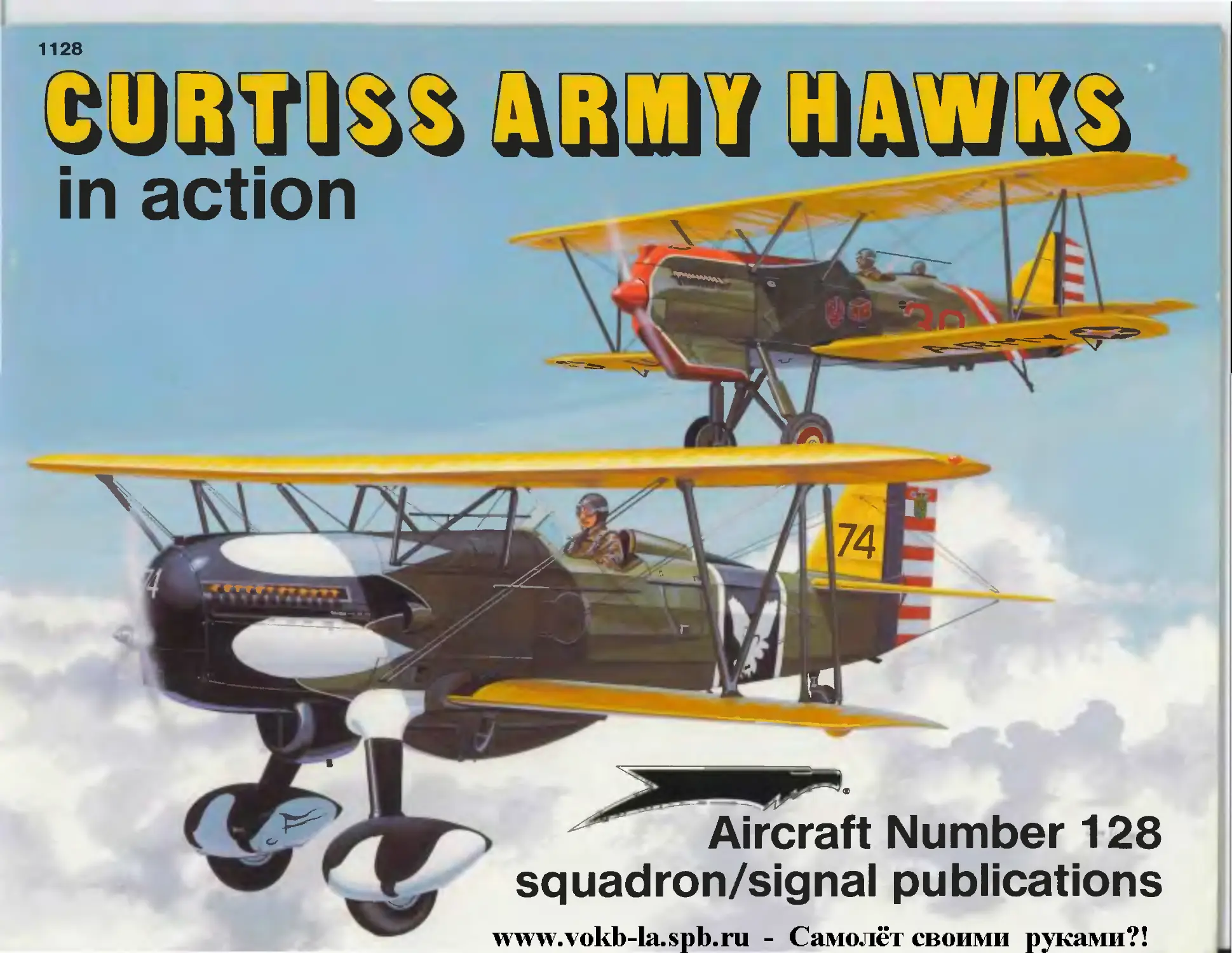
                    1128
in action
v
^
mm mm®
Jin
^sT
^" Aircraft Number 128
squadron/signal publications
www.vokb-la.spb.ru - CaMOJieT cboiimii pyKaMii?!

by Larry Davis m action
Color by Don Greer & Tom Tullis
Illustrated by Joe Sewell
<js£ >_ ^^. squadron/signal publications
* \ okb-I- sDb.ru tot tc h id h

COP\ RIGHT® 1992SQl'ADKON/SICN\I Pl'M-lCATIONS. INC.
1115 CROWLFY DR1VI t \RROI LTON. TFXAS 75011-5010
All rights reserved. No pari of this publication may be reproduced, stored in a retrieval system or
transmitted in anv form by anv means electrical, mechanical or otherwise, without written
permission of the publisher.
ISBN 0-89747-286-1
74
If vou have any photographs or (he aircraft, armor, soldiers or ships of any nation, particularly wartime
snapshots, why not share (hem with us and help make Squadron/Signal's books all (he more interesting
and complete in the future. Any photograph sent to us will be copied and the original returned. The donor
will be fully credited for any photos used. Please send them to:
Squadron/Signal Publications, Inc.
1115 Crowley Drive.
Carrollton, T\ 75011-5010.
A17th Pursuit Squadron P-6E Hawk and an A-3B Attack Falcon of the 90th Attack Squadron
form up during Joint Army maneuvers held In 1933.
Acknowledgements
Air Force Museum
Jack Binder
Peter Bowers
Jeff Ethell
Steven Hudek
Dedication
Vincent Bertnali
Warren Bodie
Robert F.sposito
Don Garrett. Jr.
Nicholas J. Waters III
To the memory of one of the true aviation pioneers - Glenn Hammond Curtiss.
Six P-6Es of the 17th Pursuit Squadron fly formation above a solid undercast. The command
stripes painted on the upper wing Indicated the pilot's position within the group — three
stripes for the group commander, two for the squadron commander and one stripe indicated
a flight or element leader. (AFM)
www.vokb-la.spb.ru - CaMOJier cbohmii pyicaMii?!

\
*.
WW

Introduction
With aviation enthusiasts, some things never change. Mention jet fighters and
(depending on the time period) enthusiasts will automatically think of— Eagles. Phantoms or
Sabres. Talk about propeller driven fighters and you'll hear about Mustangs, Spitfires,
and Messerschmitts. But bring up the subject of U.S. Army AirCorps biplane "pursuits"
and the conversation will usually turn to Curtiss Hawks. For it was the Curtiss Hawk,
more than any other Army aircraft, that captured the imagination of the public during
the 1920s and 1930s.
The Hawk wasn't the fastest or most maneuverable fighter of the period, but it did
have something no other pursuit ship of the time had — personality! Plain and simple, it
"looked" right. It had the sleek, aggressive look that the public felt a pursuit ship should
have. The Hawks, and their Falcon derivatives, kept the Curtiss Aeroplane and Motor
Company solvent through the Depression and lean budgets of the 1930s. This, in turn,
enabled Curtiss to build the more potent Hawks that fought on all fronts in the Second
World War.
Few people realize the impact that Glenn Hammond Curtiss had on aviation history.
Although the Wright Brothers are credited with the invention of the airplane, Glenn
Curtiss is credited with several of the significant developments that led to the modern
military aircraft. As a member of Alexander Graham Bell's Aerial Experiment Association,
Curtiss developed engines to be used for various flying machines. His own aircraft,
named June Bug. first flew on 21 June 1908. Later that same year Curtiss modified the
aircraft with a set of pontoons, making it the first attempt at a seaplane. In August of 1909 the
Curtiss Golden Flyer beat the Wright Brothers entry in the Gorden Bennett trophy race.
In June of 1910 Curtiss conducted the first successful aerial attack against a military
warship; although, the significance of this event (and Billy Mitchells later demonstrations)
would be ignored until 7 December 1941.
On 14 November 1910, Glenn Curtiss made an even more significant demonstration
when the Golden Flyer made the first successful launch from a U.S. warship. The first
Army LT Russell Maughan won the 1922 Pulitzer Trophy Race flying the #2 Curtiss R-6
racing/pursuit aircraft at a speed of 248.5 mph. The aircraft was powered by a 460 hp Curtiss
D12 liquid cooled engine. (AFM)
*
•*••••••„
1
I
4
WWW.
The PW-8 was the first production pursuit aircraft built by Curtiss. PW-8 stood for Pursuit,
Water-cooled design #8. The XPW-8 prototype rolled out in January 1923 and was fitted
with flush-mounted radiators built into the upper wing surface. (AFM)
deck landing came a year later when the aircraft landed on the aft deck of USS
PENNSYLVANIA. This landing also marked the first use of arresting gear on a naval vessel.
The Golden Flyer, equipped with pontoons, became the first successful seaplane when it
broke water on San Diego Bay on 26 January 1911. Ihis same aircraft (fitted with a
wheel/float combination) became the first amphibious aircraft.
I he first U.S. Navy aircraft was the Curtiss A. I. Other Curtiss "firsts "include: the first
passenger seaplane takeoff and landing, first aviator license, first enclosed hull on a
seaplane, first use of a Vee-hull on a seaplane and the first company to mass-produce an
aircraft (five flying boats for the Navy and three more for the Army).
The First World War saw the Curtiss Aeroplane and Motor Company move to the
forefront of aircraft production, not only in the United States but the world! Curtiss built
flying boats for both the U.S. and Royal Navy, and license-built several foreign designs
for use by the U.S. military. By 1917. orders for Curtiss aircraft outgrew the company's
production facilities and other manufacturers like Boeing and I ockheed license-built
several Curtiss designs to meet the demand.
It was the Curtiss Model JN, the immortal Jenny, that helped move Curtiss to the
forefront of aircraft production. The Curtiss JN-4 Jenny served as a trainer aircraft for
the U.S.. British and Canadian Air Services, with more than 10.000 being built. After the
end of the "war toend all wars." Jenny's went on to be stars of the barnstormingera. 11 was
the Jenny that brought flying to every little farm town across the U.S.
During the earl) 1920s Curtiss turned toward the construction of high speed pursuit
and racing aircraft. I n March of 1922 the Navy commissioned the USS LANGLEY as its
first aircraft carrier. In Mav of that same year. Curtiss unveiled the first fighter aircraft
specifically designed to operate from an aircraft carrier — the TS-1.
In the early 1920s, Curtiss aircraft dominated the air racing scene. Curtiss combi tied
several design characteristics to produce a pair of fighter/racer aircraft designs: the CF-1
and CF-2. later designated CR-1 and CR-2. These used wooden fuselages developed
along the lines of Curtiss' successful seaplane designs. The sleek, highly polished racers,
combined with a new Curtiss D-12 power plant, easily won the 1921 Pulitzer Trophy
Race for the Navy at an average speed of 176.7 mph.
By 1922. a keen rivalry7 had developed between the Army and Navy racing teams. Curtiss
modified the 1921 Pulitzer Trophy winning aircraft with a new engine as the Navy's
entry. The Army, however, wanted a new aircraft. To meet the Army requirement, Curtiss
created the R-6. Although similar to the Navy CRs, the R-6 was much smaller and over
60t) pounds lighter. The end of the 1922 Pulitzer Trophy Race saw the two Army R-6s in
1st and 2nd place, while the Navy CRs placed 3rd and 4th (out of a sixteen ship field).
i-la.spb.ru - CaMOJieT cboiimii pyKaMii?!

A *
A PW-8 of the 27th Pursuit Squadron at the 1924 Dayton Air Race. At this time the aircraft of
the Army Air Service were painted overall Olive Drab with vertical Red, White and Blue rudder
stripes. (AFM)
Ski-equipped PW-8s of the 1st Pursuit Group prepare for a flight from Selfndge Field,
Michigan, to Oscoda, Michigan during 1925. The bulges in the upper wing are water tanks for
the flush-mounted radiators. The wing radiators were a constant source of trouble. (AFM)
Adding insult to injury. Army LT Russell Maughan set a new Absolute World Speed
Record in an R-6 at 248.5 mph. Curtiss racers dominated the air racing scene and it
wasn't until 1926 that a serious challenger (from Furope) emerged. That race was the last
to see a pure racing design entered under the Curtiss name.
During 1923, Curtiss began work on the aircraft that led to the Curtiss Hawk family.
The new pursuit ship was a direct development of the Curtiss R2C/R3C racing aircraft
program. Powered by a 440 hp Curtiss D-12 engine, the XPW-8 (Fxperimental Pursuit
Water-cooled design number 8) first flew during January of 1923. It was quite similar in
appearance to the racers, but the XPW-8 was much larger and the wing was in a standard
position above the upper fuselage. The radiators were radical in design in that they were
flush-mounted on the upper wing surface directly in front of the pilot to reduce drag.
Radiator and welding technology being what it was in the early 1920s, these flush-
mounted radiators were a constant source of problems. They leaked often, dousing the
pilot with boiling water.
Being impressed with the performance of the Curtiss racers, and recognizing the
close tie between the new pursuit ship and the racers, the Army ordered twenty-five
aircraft under the designation PW-8 in September of 1923. LI'Russell Maughan used one of
the first production PW-8s to set a new trans-continental speed record during June of
1924.
A new company was fast emerging in the military aircraft field —Boeing. In April of
1923 Boeing unveiled the XPW-9. Powered by the same Curtiss D-12 engine as the PW-8.
the Boeing pursuit was much lighter, had the wing leading and trailing edges tapered and
had the radiator mounted vertically under the nose in a tunnel. A flyoff between the
XPW-9 and a production PW-8 during 1924 resulted in a clear win for the Hoeing
aircraft. It was more maneuverable and had a greater rate ol'climb. mostly due to its lighter
weight. As a result. Boeing was given a contract to build thirty PW-9s.
Curtiss immediately adopted the tunnel radiator in its follow-on aircraft, the XPW-8A.
The production PW-8A was powered by the same Curtiss D-12 rated at 440 hp. The top
speed was 178 mph at sea level, with a rate of climb of 1.830 ft/min and a service ceilingof
22.000 feel. Armament was the same as the PW-8: a pair of .30 caliber machine guns
mounted above the engine in the cowling. The weight of the PW-8A was 2,830 pounds,
some 300 pounds lighter than the PW-8 with its flush-mounted radiators.
To improve the aircraft's mancuverabilitv.Curtiss realized that the answer was to use
the Boeing-developed tapered wing. Using photographs of the Boeing wing as a model,
Curtiss engineers came up with a tapered wing of their own. By December of 1924, Curtiss
had modified the XPW-8A with a short-span, tapered wing. The results of flight tests with
the XPW-8B were very positive and the Army ordered the new lapered-wing design into
production. One other change would take place prior to production. During 1926, the
U.S. Army Air Service became the U.S. Army Air Corps and all aircraft designations
were changed. The first aircraft ordered into production for the new Armv AirCorps was
the production variant of the XPW-8B. now designated the Curtiss P-l. nicknamed
the Hawk.
LT Russell Maughan set a new trans-continental speed record of 21 hours 58 minutes on 23
June 1924 in this PW-8. It marked the first time that the continental United States had been
crossed in less than a day. (AFM)
»*«*■
20*
\ . oKb-J .
IT

Development
[\
PW-8
P-1A
P-6
P-6E
0-1
0-1G
A-3B
www.vokb-la.spb.ru - CaiviojieT cbohmh pyKaMH'

P-l Hawk
The Army issued Curtiss a contract in 1926 to build fifteen production variants of the
XPW-8B under the designation P-l. The aircraft was given the trade name "Hawk" b>
Curtiss and this soon caught on. becoming the popular name for the aircraft as well.
When the Army Air Service became the Army Air Corps in 1926. the PW designation was
dropped with all fighter-type aircraft becoming simply P (for Pursuit). The only
difference between the prototype XPW-8B and the P-1 was in the rudder balance area. The
P-l was powered by an 1,150 cubic inch. 435 hp. Curtiss D-12 in-line, liquid cooled
engine (Army designation V-l 150-1) giving the aircraft a top speed of 163 mph at sea
level, a rale of climb of 1.800 fl/min and a service ceiling of 22.000 feet.
The armament consisted of a pair of .30 caliber machine guns mounted in the upper
nose and firing through the propeller arc. The aircraft could also be configured with
either a fifty gallon jettisonable under fuselage fuel tank or a 200 pound bomb load. With
a full load of fuel and ammunition, the aircraft had a gross weight of 2.846 pounds.
Although the Army ordered fifteen P-l Hawks, only ten were delivered as P-ls
(serials 25-410 through 25-419), the last five aircraft on the contract bei ng completed as P-
2 Hawks. Navy interest in the Army Hawk resulted in a contract for nine aircraft under
the designation F6C-1, which were literally copies of the Army P-I Hawk. The first
production P-1 Hawk was delivered to the Air Sen ice test center at McCook Field in July of
1925 and the first operational aircraft went to the 1st Pursuit Group at Selfridge Field
(near Detroit). Michigan in October of 1925.
P-1A
The P-l A differed from the P-l in having the internal fuselage structure lengthened
three inches, resulting in an overall increase in the aircraft's length of one inch. Additionally,
the fuel system was improved, as was the bomb release mechanism. The Army ordered
twenty-five of these improved Hawks on 9 September 1925. Curtiss delivered the first
production P-l A to the I st Pursuit Group at Selfridge in April of 1926. Only twenty-three
P-l As were delivered from the original contract since two aircraft were pulled off the
Curtiss assembly line and finished as the AT-4 Advanced Trainer prototype and P-3
prototype.
P-1B
The P-1B incorporated a new engine, the improved Curtiss V-l 150-3 in-line engine,
which was a more reliable power plant but offered no increase in available horsepower.
The P-1B also had the radiator and radiator housing redesigned, larger wheels and
improved engine/flight control systems. These changes increased the empty weight by
almost 100 pounds. With no increase in availableengine power, the top speed of the P-1B
fell to 157 mph at sea level. More importantly, the rate of climb dropped from 1.810 fl/min
to 1.540 ft/min. The Army ordered twenty-five P-1 Bs in August of 1926 with the first
production aircraft being delivered in November of 1926 to the Air Corps Detachment at
Boiling Field, Washington. D.C.
\
A Boeing PW-9C from the Boiling Field Air Detachment, Washington, D.C. The Boeing PW-9
introduced both the under fuselage, tunnel-mounted radiator and the tapered wing into service.
Both these features were adapted by Curtiss for the Hawk series. (AFM)
Fuselage Development
7

PIC
The P- 1C used the V-1150-5 engine, which made improvements in engine reliability,
with no increase i n horse power. The P-1C had a narrower nose section, tapered radiator,
larger and heavier wheels and tires and mechanical brakes. Empty weight increased
another 50 pounds and with this increase the P-lC's top speed decreased to 154 mph.
while the rate of climb fell to 1.460 ft/min. The Army ordered thirty-three P-lCs in
October of 1928 with the first aircraft being delivered to the 1st Pursuit Group at Selfridge
in January of 1929.
AT-4/P-1D
The Army decided that a first line pursuit aircraft fitted with a lower horsepower
engi ne would be ideal to fi 11 the advanced trainer role. As a result of this decision, a P-1A
airframe was pulled off the Curtiss assembly line and re-engined with a 180 hp Hispano
"E" engine, license-built by Wright under the designation V-720. The aircraft was a standard
P-1A airframe, without weapons, and the reduced power resulted in a lop speed of
132 mph.
Even with this poor performance, the Army ordered forty of these advanced trainer
aircraft, under the designation AT-4. With the exception of the engine and the lack of
armament, the AT-4 was identical to the P-1A.
The Army soon realized that the AT-4 was totally unsuitable for the trainer role.
Production aircraft began to reach the school units at Kelly Field in May of 1927 and it was
quickly obvious that the performance of the AT-4 was miserably lacking in all areas. In
fact, the aircraft was quite dangerous in the hands of a student pilot. In 1928. the Army
ordered thirty-five out of the forty AT-4s re-engined with the 435 hp Curtiss V-1150-3
engine (the same engine used in the P-l B). This brought performance up to a level equal
to that of the other Hawk pursuits then in service. The re-engined Af-4s. armed with a
single .30 caliber machine gun, were re-designated as P-1 Ds.
AT-5/P-1E
The last five AT-4 aircraft were refitted with 220 hp Wright R-790-1 radial engi ties and
re-designated as AT-5s. Although the available power was increased by forty horse
powerover the Wright E'engine, the performance of the AT-5 actually fell off even more.
An overall Olive Drab P-1A Hawk of the 17th Pursuit Squadron based at Selfridge Field,
Michigan during 1924. The P-1 Hawk featured a tapered wing and tunnel radiator. It was the
first Curtiss fighter to carry the trade name Hawk, which later became accepted as the popular
name for the aircraft as well. (AFM)
8
with the top speed falling to 125 mph. The Army had Curtiss re-engine four of the AT-5s
with 435 hp V-1150-3 engines, re-designating the aircraft as P-lEs.
AT-5A/P-1F
The P-IF was a similar conversion of some thirty-five production AT-5A advanced
trainers. The AT-5A was powered by a 220 hp R-790-1 radial engine and its airframe had
been brought up to P-1B standards with larger wheels, brakes and improved engine controls.
With this added weight, the perfonnance of the AT-5A suffered, with the top speed dropping
to 122 mph. Deliveries of the AT-5A to Kelly Field school squadrons began in June of
1928. During 1929. however, the Army ordered the thirty-one AT-5As that had been
delivered re-engined with the 435 hp V-1150-3 engine and armed with one .30 cal. gun.
Once the conversion was complete, the aircraft were re-designated as P-IFs.
P-2
fhe last five aircraft on the original Army P-l contract were built with highly modified
engines under the designation P-2 Hawk. The V-1150-1 engines were bored out to a
displacement of 1.400 cubic inches and fitted with superchargers giving the engine a rating
of 505 hp. With this increase in power, the P-2 had a top speed of 172 mph and a rate of
climb of 2,170 ft/min. The supercharger gave the P-2 a service ceiling of 24.000 feet:
however, problems with the new supercharger cancelled out the advantages of the
increase in perfonnance. As a result, the Army had three of the P-2s re-engined with standard
V-1150-1 engines and redesignated them as P-l As. One of the remaining P-2s later
became the prototype for the P-6 series.
P-3
The last P-IA from the initial production run was modified to accept a new 410 hp
The Curtiss 435 hp D-12 (V-1150-1) water cooled, inline engine, powered both the P-1 Hawk
series and the later 0-1 Falcon series of aircraft. The oval object in the front of the engine was
the water tank for the radiator and the oval intake in the middle was the carburetor air
intake. (AFM)
\>
www.vokb-la.spb.ru - GaiviojieT cbohmh vjcsmh'

Pratt & Whitney R-1340 Wasp' air-cooled radial engine. Designated the XP-3/V the
radial-engine Hawk was used as an engine test bed throughout its service life. The
combination of the big air-cooled radial engine and Hawk airframe would later prove to be a
very good one — for the Navy! The Army was committed to the use of the liquid-cooled,
heavier V-12 engine in its Hawks. The simpler and easier to maintain Pratt & Whitney
Wasp radial was perfect forthe Navy and thev procured a large numberof radial cngined
Curtiss Hawks for the fleet.
The Army did purchase five P-3A Hawks during 1928. The basic airframe was the
same as the P-1B/AT-5A with larger wheels, brakes and improved flight controls.
Powered by the 410 hp Pratt & Whitney R-1340-3 Wasp, the P-3A Hawk had a top speed
of 154 mph and a rate of climb of 1,742 ft/min, neither of which was better than the D-12
powered Hawk then in service. The service ceiling did improve by almost 2.000 feet to
23,000 feet. But Army decided against use of the radial engine for its Hawks. The P-3As did
see operational service with all five being delivered to the 1st Pursuit Group at Selfridge
Field in October of 1928.
P-5
There were five P-5 Hawks built by Curtiss during 1928. These aircraft were basically
P-lBs powered by a 435 hp turbo-supercharged Curtiss D-12F engine (V-1150-3). I he
addition of the turbo-supercharger brought the gross weight of the P-5 up to 3.349
pounds, some 500 pounds more than a P-l Hawk. Additionally, the turbo-supercharger
added nothing but drag at lower altitudes. The sea level top speed of the P-5 was 142 mph.
but the top speed at altitude rose significantly to a rather phenomenal 173 mph at 25.000
feet. The rate of climb was poor, being only 1.150 ft/min, although the service ceiling
greatly improved. The P-5 had a ceiling of 31,000 feet, more than I0.(XJ0 feet above the P-l A.
Clearly the turbo-supercharger offered significant improvements in performance at P-1/P-1A
altitude, although its numerous technical problems killed the P-5 and the program was
halted after the delivery of the five production aircraft in I928.
Air Corps Cadet Wiseley crashed this P-1A of the 43rd School Squadron at Kelly Field, Texas
during 1928. The aircraft was painted to simulate a First World War German Fokker fighter for
the movie 'Wings.' (AFM)
This 95th PS P-1 Hawk has the wings and tail surfaces painted in a high visibility Yellow #4 (FS
13432) (commonly called Chrome Yellow) scheme, which was standardized by Army in 1927.
At this same time, the rudder stripes were changed from vertical to horizontal. (AFM)
Nose Development
Shallow Radiator
Housing
\
P-1B
.30 Caliber
Gun Port
^Carburetor Intake
Flat Side Cowling
-Deep Radiator
Housing
v " l
\
P-1C
Curved v
Nose ~
Section L/

www.vokb-la.spb.ru - CaiviojieT cbohmh pyicaMH?!

"II ..'! ,
- *4
K
A P-1 A Hawk of the 43rd School Squadron at Kelly Field, San Antonio, Texas. The V-shaped
panel under the cockpit was a laced up inspection panel in the fabric covered fuselage.
(Warren Bodie)
An Army Air Corps pilot runs up the engine of the first P-1B (27-63) on the snow-covered
ramp at Boiling Field, Washington. The insignia is that of the Air Corps Detachment at Boiling
Field, which was later adopted by the 14th Bomb Squadron. (Warren Bodie)
A sKI-equlpped P-1B Hawk of the 27th Pursuit Squadron on the Selfndge ramp during 1
Winter of 1927. The P-1B had a much deeper radiator housing than the P-1 A although 1
radiator itself was narrower. The nose was Red with a thin White outline. (AFM)
h

r> ^ =^
A
i •
A P-1B of the 1st Pursuit Group at Selfridge Field, Michigan during 1928. The P-1B had an
This P-1 B Hawk carries a mixture of standardized paint schemes. It had an overall Olive Drab imProved V-1150-3 engine and larger wheels than the P-1 A. The aircraft was Olive Drab with
fuselage and wings with "U.S. Army" in White under the wing, but also had the later style *f"°w wings/tail and had the 1 st PG mslgnia painted on the fuselage under the cockpit,
horizontal rudder stripes. The aircraft carries a fifty-six gallon fuel tank under the fuselage. (AFM)
(AFM)
A pair of P-1C Hawks of 43rd School Squadron on a gravel airstrip near Kelly Field, Texas d uring
1928. The P-1 C had larger wheels and mechanical brakes. Both of these aircraft have wire
mesh mud and stone guards over the main wheels. (AFM)
vw - 'okh-bi.sp .ru -

The P-1 C was powered by a 435 hp V-1150-5 engine, which had Improved reliability over the
earlier engines, but no increase in rated horsepower. The radiator was tapered with a more
rounded lower opening. (AFM)
MAJ Clarence Tinker flew this P-1D while assigned to the 43rd School Squadron at Kelly
Field. P-1 Ds were re-engined AT-4 advanced trainers. The aircraft were powered by a 435 hp
V-1150-3 engine in place of the 180 hp Hispano "E" used on the AT-4. The armament consisted
of a single .30 caliber machine gun in the cowl. (AFM)
A ski equipped P-1 C of the 1 st Pursuit Group parked in the snow and ice near the Selfridge The AT-4 was a standard P-1 A airframe powered by a 180 hp Wright "E" (Hispano) engine,
ramp during the Winter of 1929. The skis were mounted directly to the landing gear wheel The AT-4 was so underpowered that it was considered very dangerous to fly and most were
spindles and could be easily replaced by standard wheel landing gear at any time. (AFM) |ater re-engined with Curtiss D-12 engines and re-designated as P-1 Ds. (AFM)
Hk
\
> \

„ %
A pair of AT-4s from the Air Corps Technical School at Kelly Field. The Army ordered forty AT- The AT-5 series were powered by the 220 hp Wright J-5 Whirlwind air cooled radial engine.
4s, completing thirty-five of them before issuing orders that they would all be re-engined with still underpowered, the AT-5 and AT-5A were both re-engined with Curtiss D-12 engines and
D-12 engines as P-1 Ds. (Ed Huebner) redesignated as P-1 Es. A total of thirty-one AT-5AS were built. (AFM)
Nose Development
P-1 A
Curtiss 435 hp
D-12 Engine
AT-4
Wright 180 hp
"E" Engine
The Curtiss P-3 Hawk is generally considered the "father" of the Navy and export Hawk
series. The P-3A was a P-1 A airframe powered by a 410 hp Pratt & Whitney R-1340-1 Wasp air
cooled radial engine. The Army bought five P-3s but the Navy ordered thirty-one aircraft
under the designation F6C-4. (AFM)
Shallow Radiator
Housing
Four Exhaust
Stacks
/"""—Deep Radiator
Housing
AT-5/5A
Wright 220 hp
"Whirlwind"
Radial Engine
\
www.vokb-la.spb.ru - CaiviojieT cboiimii pyicaMH?!

XP-6
The prototype XP-6 Hawk started life as the fourth production P-2 airframe. The
aircraft was relumed to the Curtiss Garden City, New Jersey plant and re-engined with the
new600hp liquid cooled in-line CurtissV-1570 "Conqueror" engine to allow the aircraft
to compete in the 1927 National Air Races. Thecontract forthe XP-6 prototype was let in
April of 1927, although work actually started some weeks earlier.
When the aircraft emerged, it was similar in appearance to all the previous Hawk
variants; in fact, very little had been changed to the rear of the fuselage engine firewall
Thechangcs were all centered around the engine and radiator installation. The XP-6 was
entered in the 1927 National Air Race, placing second to what amounted to a purpose
built racing aircraft. The XP-6, flown by IT AJ Lyon, averaged 189 mph while the purpose
built racing aircraft that beat the XP-6 averaged 201 mph. That aircraft was the Curtiss
XP-6A.
After the race, the XP-6 was returned to Wright Field and assigned the test number
XP-494. Re-engined with a 525 hp V-1570-1 engine and fitted with military equipment,
the aircraft wasevalualed as a new pursuit aircraft- The XP-6 had a top speed of 176 mph,
a rate of climb of 2.277 ft/min and a service ceiling of 23.110 feet.
The winner of the race, the XP-6 A, was built using several different Curtiss aircraft as
a basis. The fuselage was that of a P-1A Hawk which was re-engined with one of the new
600 hp Conqueror engines, boosted to some 730 hp for racing. The engine was cowled in
a PW-8 engine cowling and the tunnel radiator and its housing was discarded in favor of
the untapered wings and flush-mounted radiators of the XPW-8A. The result was an
aircraft that was aerodynamieally smoother than the other Hawks. Powered by the higher
horsepower Conqueror engine, the XP-6A, flown by LI Earl C. Batten easily ran away
from its 1927 competition becoming the first U.S. Army Air Corps aircraft to break the
200 mph barrier (average speed 201 mph).
P-6
Satisfied with the results of the 1927 National Air Race and the showing made by a
virtually combat ready aircraft, the XP-6. the Army ordered the P-6 into production on 3
October 1928. Powered by the 600 hp V-1570-17 engine, the P-6 looked like a P-l A with a
deeper, more rounded nose. This change in profile was because the Conqueror was a
larger engine and required a larger radiator for engine cooling. The Army tied future
development of the P-6 with the development of a new cooling liquid called Prestone
coolant. Prestone (ethylene glycol) was a better cooling agent than water because it had
both a lower freezing and higher boiling point than water. Prestone development,
however, was lagging and the Army decided to order the P-6 into production using a
standard water radiator, which resulted in the deep rounded forward fuselage contours.
The P-6 also differed from the earlier P-l series in the landing gear. The P-6 used a
strengthened landing gear with an oleo-pneumatic shock absorber mounted in the forward
landing gear strut. This landing gear had been tested on the last two production P-lCs
and was selected as standard equipment for the P-6 series.
Performance of the P-6 closely matched that of the XP-6 and the Army ordered a total
of eighteen aircraft. I'he first production aircraft were delivered to the Wright Field Test
Center at Dayton. Ohio, in October of 1929. Operations with the 1st Pursuit Group at
Selfridge Field began a month later, in November of 1929.
The Army halted P-6 production after ten aircraft, ordering that the remaining eight
The XP-1 B was an engine test bed to conduct flight tests of new power plants. It was fitted
with a small, experimental radiator which was filled with a new coolant called Ethylene Glycol,
commonly called Prestone. Prestone radiator development ultimately led to the P-6E Hawk.
(AFM)
The first P-6 Hawk on the grass at Selfridge Field, Michigan during 1929, shortly after it was
delivered to the 27th Pursuit Squadron. The aircraft was powered by a 600 hp Curtiss V-1570
engine. (AFM)
I
»
15

aircraft on the production order be completed with Prestone coolant radiators in place of
the standard water radiator. Being a better coolant than water, less Prestone was required
for engine cooli ng and as a result, a smaller rad iator was needed on a Prestone-equipped
aircraft. The Prestone-cooled aircraft retained the deep radiator housing of the P-6, even
though they were equipped with a much smaller radiator. The last eight production
aircraft with the Prestone radiators were designated as P-6As and delivered to the 1st Pursuit
Group.
The XP-6B was a one-off aircraft built specifically for long range record flights. The
XP-6B was a P-1C airframe (29-529) re-engined with a V-1570-1 engine. The radiator
housing resembled the housing on the P-6 but was much rounder in appearance. The
biggest change was in the internal fuel capacity which was increased from 50 gallons to
250 gallons. CAPT Ross Hoyt tlew the XP-6B named Hoyt Special from Mitchell Field
near New York City to Nome. Alaska in thirty-four hours and twenty minutes (air time)
on 18/19 July 1929. The XP-6B crashed during the return flight and was trucked back to
Wright Field. After being repaired, the aircraft was retained at Wright Field for test work,
being retired in August of 1931. No production aircraft carried the designations P-6B or
P-6C.
P-6D
Army interest in the turbo-supercharger once again surfaced with the P-6D Hawk.
The first P-6A (29-260) was re-engined at Wright Field with a Curtiss V-1570-23 engine
fitted with a General Flectric F-2F type turbo-supercharger under the designation XP-6D.
The turbo-supercharger was mounted on the starboard side of the nose with large oil
cooler air intake/exhaust ports on the port side. The exhaust system used a wrap-around
exhaust manifold that channeled exhaust gasses from the port side of the engine to the
supercharger on the starboard side. After a series of successful tests, the Army ordered
The pilot of this P-6 of the 36th Pursuit Squadron warms up the engine of his Hawk prior to
starting another mission. The 36th PS was based at Selfridge Field during the Fall of 1930.
The first nine P-6s used water cooled engines. (AFM)
"i
nine P-6 aircraft and three P-6A aircraft converted to P-6D standards, with the actual
conversion work being undertaken by U.S. Army Air Corps depots.
As with the earlier P-5. sea level performance fell off. The aircraft had a top speed of
172 mph and rate of climb of 1,720 ft/min. Once again the service ceiling was dramatically
improved, topping out at 32.(XX) feet and the speed at 13.000 feet rose to 197 mph. With a
maximum weight of some 3.483 pounds, the P-6D was the heaviest P-6 variant. The P-6D
Hawk was also the first Hawk to be fitted with a Hamilton Standard three blade variable
pitch propeller in place of the Curtiss two blade unit.
After service testing with the 37th Pursuit Squadron. 8th Pursuit Group at Langley
Field. Virginia, a number of P-6Us were used operationally with the 1st Pursuit Group at
Selfridge Field as high altitude fighters. In any event, the turbo-supercharger proved to be
unreliable and no further conversions or new production P-6Ds were produced. A number
of P-6Ds remained in service until 1937, with the last aircraft being retired in April of
1938.
Fuselage Development
Landing Gear
•
www.vokb-la.spb.ru - CaiviojieT cboiimii pyicaMH?!

■I
*M
.?
The first P-6A Hawk (29-260) was assigned to the Fairfield Air Depot at Patterson Field near
Dayton, Ohio. The P-6A used a standard P-6 airframe equipped with a smaller Prestone
radiator. A total of nine P-6AS were built. (Vincent Berinati)
The XP-6B was a purpose-built aircraft for use on long range record flights and had a 250
gallon fuselage fuel tank in place of the standard 50 gallon tank. CAPT Ross Hoyt flew the XP-
6B from New York City to Nome, Alaska on 18/19 July 1929. (National Archives)
The heart of the XP-6D was the 600 hp Curtiss V-1570C Conqueror engine with its General Sixteen P-6 and P-6A aircraft were equipped with turbo-supercharged Curtiss V-1570-23
Electric F-2E turbo-supercharger. The XP-6D differed from the P-6D in that it had a two blade Conqueror engines driving three blade propellers under the designation P-6D. The super-
propeller. (AFM) charged engine brought the top speed at 15,000 feet to 197 mph and the service ceiling rose
to over 31,000 feet. (Peter Bowers)
\
^

'SITING
/
ships
ft.
\ s
A turbo-supercharged P-6D of the 37th Pursuit Squadron on the ramp at Langley Field,
Virginia during 1934. The command stripe behind the cockpit, wheels and spinner were in
Yellow, while the aircraft number was in White. (AFM)
The P-6D shared the very rounded forward fuselage which was common to all early P-6
variants. This P-6D was assigned to the 37th PS at Langley Field, Virginia during 1934. The
propeller spinner was Black and White, while the rest of the aircraft is the standard Army
scheme. (Robert Cavanaugh)
Turbo Supercharger
This light Blue P-6D was assigned to the training detachment at Chanute Field, Illinois during
the mid-1930s. Training units were often assigned older fighters as they were phased out of
first line service. (Pete Bowers)
Turbo
Supercharger
Wrap-around
Exhaust System
Manifold
r>
\
www vokb-la.spb.ru - CaiviojieT cbohmii pyicaMH?!

P-6E
The P-6E Hawk resulted from the mating of several features from different Curtiss
experimental programs. It began in October of 1930 when one of the bulbous P-6
airframes was fitted with a 650 hp Wright R-1870-9 Cyclone radial engine in place of the
standard Curtiss Conqueror under the designation YP-20. The aircraft featured standard
P-6 oleo-pneumatic landing gear but the wheels were covered by aerodynamic wheel
fairings known as "spats."The YP-20 also had an enlarged rudder, a spat-covered steerable
tail wheel, improved cockpit layout and a hinged rear fuselage turtledeck to allow easy
access to the baggage compartment and rear fuselage for maintenance. Overall performance
with the Cyclone radial was slightly improved over the standard P-6. but not enough for
the Army to justify putting the aircraft into production.
The second aircraft involved in development of the P-6F was the XP-22. The XP-22
used a P-6A airframe mated with a 600 hp V-1570-23 Conqueror engine housed in an
entirely reshaped engine cowling. The much smaller Prestone radiator was moved to the
rear and mounted in its own housing between a new style single-leg main landing gear.
After a successful series of tests, the XP-22 was soon stripped of all its new features and
put back into service as a production P-6A.
Taking the best features of the two experimental aircraft. Curtiss developed a new
prototype under the designation XP-6K. The YP-20 fuselage was extensively modified
with a 600 hp V-1570-23 Conqueror engine replacing the Wright Cyclone radial. The
engine cowling was patterned after the one used with the XP-22. including the smaller
Prestone radiator mounted between the single-leg landing gear with full wheel spats.
The aircraft carried the standard Army Air Corps fighter armament of two .30 caliber
machine guns, but the guns were now mounted under the engine cylinder heads, firing
through troughs in the engine cowling sides. Additionally, the XP-6E featured an
unspatted steerable tail wheel, revised horizontal tail surfaces and three blade Hamilton
Standard variable pitch propeller. Along with all these changes, the XP-6E also
underwent a major weight reduction program and emerged some 412 pounds lighter than a
standard P-6A (2,760 pounds).
The Curtiss YP-20 was a P-11 (P-6 with Chieftain engine) re-engined with a 650 hp Wright R-
1870-9 Cyclone air-cooled radial engine. The YP-20 airframe was later combined with certain
features of the XP-22 to become the prototype XP-6E. (AFM)
The Army was very enthusiastic about the XP-6E and ordered forty-six production P-
6Es in July of 1931. Performance tests with the P-6E revealed thai the aircraft was
superior in all ways to either the P-6A or the supercharged P-6D. The top speed was 198
mph at sea level, the rate of climb was 2.400 ft/min and the serv ice ceiling was 24,700 feet.
It compared favorably with its primary competition, the Boeing P-12. The P-6E was faster
at all altitudes but slower in rateofclimb and less maneuverable.The reason for this
difference was the engine type. The Boeing P-12 was powered by an air-cooled Pratt & Whitney
radial that was some 700 lbs lighter than the liquid cooled engine in the P-6E.
The first production P-6E was delivered to Wright Field for testing with the
remainder of the production run being delivered to three squadrons: the 17th. 33rd and 95th
Pursuit Squadrons. Of these only the 17th was solelvequipped with P-6Es. These aircraft
remained on active service through the mid-1930s, although accidents destroyed at least
twenty-seven of the forty-six aircraft built. Most service aircrafi had modified landing
gear spats. The closed spats cause problems when operating off dirt and grass fields in
wet weather or during the winter. Mud and or snow/ice would build up inside the spat
interfering with the wheels. As a result, the outboard portion of the spat was removed,
leaving the wheel uncovered. Finally, the last eighteen active P-6Fs were retired from service
between June and September of 1939. Most were donated to civil schools as non-flying
training aids.
Three other P-6 variants were produced using P-6F airframes. The XP-6F was an XP-
6E fitted with a turbo-supercharged V-1570F engine and a sliding cockpit canopy.
Advances in supercharger technology allowed the XP-6F to attain a top speed of 225 mph at
15,000 feet. The aircraft remained active at Wright Field until Octoberof 1937 when it was
retired and donated to an aeronautical school.
The XP-6G was built from the 22nd production P-6E and served as an engine test bed
for development work on the 700 hp V-1570F engine. Finally, the XP-6H was the first
production P-6F with both the upper and lower wings modified to allow for the installation
of a pair of .30 caliber guns in each wing, bringing the total armament to six .30 caliber
guns. The aircraft was tested b\ the 8th Pursuit Group. 1st Pursuit Group and 17th Pursuit
Group. With its increased armament, the XP-6H was the heav iest P-6 with a gross weight
of 3.858 pounds. Its top speed was 190 mph and rate of climb was 2.000 ft/min. The air-
The XP-22 was rebuilt from the third production P-6A. The modifications included single leg
landing gear, a close cowled engine and small Prestone radiator just In front of the main landing
gear. (AFM)
19

craft was finally retired in July of 1939.
The final P-6E on the production contract became the XP-23 prototype and it bore little
resemblance to any previous Hawk. The XP-23 had a completely new all-metal monocoque
fuselage, which was very slender through the nose area, and a taller all-metal fin and rudder.
The aircraft was powered by a 600-700 hp turbo-supercharged and geared G1V-1570-C
engine. The wings and landing gear were all that remained from its P-6FI heritage. Once
again performance "at altitude" was outstanding, with a speed of 225 mph at 15.000 feet
and a service ceiling of 33.000 feet. But rate of climb and sea level performance suffered.
With the arrival of the monoplane fighter in the Boeing P-26. the Army AirCorps abandoned
the XP-23 program. The XP-23 was finally disassembled and the wings and landing gear
were used as the basis for the XF11C prototype for the Naw.
\
Fuselage Development
The first production P-6E Hawk (32-233) sits on the ramp at Wright Field during late 1931.
Although resembling the XP-22. the P-6E had a much slimmer nose section and had the guns
relocated to the side of the nose. (Don Garrett, Jr.)
The cockpit of the P-6E was very simple. The large gauges are flight instruments, while the
smaller gauges are engine monitors. The instrument panel had a Black leather finish. (AFM)
• "N
20
\
www.vokb-la.spb.ru - CaiviojieT cboiimii pyKaiwn?!

The two .30 caliber machine guns were mounted in the opening Just below the engine _, ^ „^ ._ „ . ., ..^-„ „„ „ .. ...
exhaust stacks. The circular objects just behind the nose panel are the eng.ne oil cooler ™e P-6E Hawk was powered by a 600 horse power Curtiss V-1570-23 Conqueror liquid
assembly which fed cool air from the air scoop in the lower nose panel. (AFM) cooled In-line engine. With a three blade Hamilton Standard variable pitch propeller, the P-6E
Hawk had a top speed of 198 mph at sea level. (AFM)
A Curtiss P-6E Hawk of the 17th Pursuit Squadron, 1st Pursuit Group, based at Selfridge
Field, Michigan during 1933. The Snow Owl markings were originally applied for the squadron's
participation in the 1932 National Air Races.(AFM)
This P-6E Hawk, of the 17th Pursuit Squadron at Selfridge Field, carries a underf uselage fifty-
six gallon drop tank and has full wheel spats. This aircraft (32-264) was later sold to the
Chicago Aero School during 1939 as a non-flying instructional airframe. (Fred Dickey)
>i

\
\
»
74
P-6Es of the 17th Pursuit Squadron fly a line abreast formation during a squadron-strength,
2,840 mile distance record flight conducted during 1934. These aircraft carry the 17th's full
Two Army air groups operated the P-6E: the 1 st Pursuit Group at Selfridge Field, Michigan Snow Owl markings which have become synonymous with the P-6E Hawk. (AFM)
and the 8th Pursuit Group at Langley Field, Virginia. This P-6E of the 8th PG has radio antennas
mounted on the upper wing and vertical fin. (Fred Dickey)
A P-6E of the Boiling Field (Washington, D.C.) Detachment warms up its engine on the snow
covered ramp at Floyd Bennett Field, New York during March of 1934. The fuselage number
'1' indicates that the aircraft was assigned to the detachment commander. (Vincent Berinati)
www.vokb-la.spb.ru - CaiviojieT cboiimii pyKaMii'i

A Gloss Olive Drab P-6E of the 35th Pursuit Squadron at Langley Field during 1933. The band
on the fuselage is in Red, as is the aircraft number, 15, on the upper wing, while the number
on the fuselage was White. (Jack Binder)
A ski equipped P-6E of the 17th PS at Selfridge during 1934. The skis were interchangable
with the wheeled landing gear and Army pursuit planes were often ski-equipped when This 17th PS P-6E has had the outboard portion of the wheel spats removed, usually because
operating in winter areas. With skis fitted to the P-6E spindles, the landing gear strut covers of operations on muddy surfaces. The 17th PS markings on this aircraft were somewhat subdued
were removed (Bill Larkins) due to the great difficulty in maintaining the fancy paint scheme. (Vincent Berinati)
\
\
34
I
«r'

;t
V
J\
\A
1
P-6Es of the 17th Pursuit Squadron lined up for inspection at the 1932 National Air Race. The
squadron Snow Owl insignia differed from aircraft to aircraft since each was hand-painted.
(AFM)
Wheel Spats
P-6E
(Standard)
P-6E
(Field Modification)
This P-6E from the 2nd Wing, General Headquarters of the Air Force, collided with another
aircraft on landing at Boiling Field during 1937. By this date, all the P-6Es had the fuselage
painted In Light Blue #23 and most carried radio antennas of one form or another. (Robert L
Cavanaugh)
A Ught Blue P-6E of the 36th Pursuit Squadron at Langley Field, Virginia during 1936. The
two Yellow fuselage bands indicated the aircraft was flown by the squadron commander. By
this time most P-6Es had the outboard portion of the wheel spats removed. (Jack Binder)
28
\Outboard Section
Removed to
Expose Wheel

This P-6E of th 1 st PG carries a wargame camouflage scheme of Olive Green, Dark Green
and Purple This scheme was used during the 1933 Anti-Aircraft Exercises. Neutral Gray was
ubsti uted for Pu pie after it was ound that th Pu pie pain actually attacked some fabric
surface materials. (Peter Bowers)
A Yellow nosed P-6E Hawk of the 35th Pursuit Squadron P-6Eat Langley Field Virginia during
day of 1937. The tail number on a P-6E sualty, but not always was the last two digits of th
aircraft's serial number, in this case 32-241. (AFM)
Thi Light Blue P-6E from t e94th PursuitSquadron carries the later designator code for the
1 st PG "PA" and the individual aircraft number 98 (serial 32-298} on he fin, with the 94th
Pursuit Squadron Indian head insignia on the fuselage. Within a few months the 1st PG would
ransition to its first monoplan pursuit, h Seversky P-35 (Peter Bowers)
www.vokb-la.spb.ru -
CaiwojieT CBOiiMii pyicaMH?!

The XP-6F was a conversion of the original XP-6E (29-374) prototype re-englned with a 675
hp turbo-supercharged Curtiss V-1570-55 engine and a full cockpit canopy. The project did The xp.6H was a modificatlon of the first production P-6E (32-233) with additional guns. A
not progress beyond this single prototype. (AFM) pair of 30 cahber machine guns were mounted in the upper wing and a second pair were
mounted in the lower wing outside the propeller arc. The additional weight cut performance
and the project was abandoned. (AFM)
The XP-6F was modified in June of 1934 with Type 8 ski landing gear which fitted over the The XP-23 was the ultimate biplane Hawk It had an all-aluminum monocoque fuselage with
standard wheeled landing gear and did not require removal of the wheels. The landing gear taller tall surfaces. It was powered by a turbo-supercharged GIV-1570C engine, which gave it
strut fairing and wheel spats were removed. (AFM) a top speed of 225 mph at 15,000 feet, making it the fastest of all the Hawks. (AFM)
*•** ' v
www.vokb-la.spb.ru - CaiviojieT cboiimii pyKaMH?!

Export Hawks
The large percentage ofCurtiss export Hawks were based on Navy variants equipped
with easier to maintain air cooled radial engines. Regardless, they were still simply
known as Curtiss Hawks.
The first Hawk 1 export aircraft were standard P-l/P-1 A/P-l B aircraft that had been
approved by the Army for export sale. Seventeen P-l/1 lawk Is were built, sixteen lor the
government of Chile and one for Japan. Additionally, eight standard P-6 aircraft were
sold to the Dutch East Indies, with a fuTlheT eight being built in Holland under license.
These P-6s were also known as Hawk Is.
Several P-6 airframes were re-engined with 450 hp air cooled Pratt & Whitney Wasp
radial engines under the designation P-6S. Other than the engine, they were identical to
standard USAAC P-6s. Four aircraft were sold to Cuba during January of 1930 and one
other was sold to Japan during the early 1930s.
Curtiss built one Hawk I for use as a company demonstrator aircraft which was often
called the Doolittle Hawk thanks to the demonstrations put on in Europe and elsewhere
by MAJ James Doolittle- Later the aircraft was sold to race pilot Jesse Bristow and
registered as NX-9110. The aircraft was lost at sea in 1939 while enroute to Cuba.
The Haw k 1-A was a purpose-built demonstrator aircraft down by Al Williams and
named GULFH4WK. The aircraft was a standard P-6 airframe with additional fuselage
fuel tanks. Over its lifetime GULFH JH A' used a variety of engines, including a standard
V-1570 Conqueror and both Wright Cyclone and Bristol Jupiter air-cooled radial engines.
The aircraft still exists and is on display at the Marine Corps Aviation Museum at Quan-
tico. Virginia.
The export Hawk II series was based on the Navy Fl 1C Goshawk design, which was
basically a P-6E airframe re-engined with a 710hp Wright R-1820F-3 radial engine and
modified with naval equipment. Performance tests showed a top speed of 208 mph at
7.000 feet, with a service ceiling of 26.400 feet. Curtiss built some 127 H.wk U aircraft
which were sold to Bolivia. Chile, China, Columbia (floatplanes). Cuba. Thailand,
lurkey. Norway, and Nazi Germany. Several of the Hawk lis saw combat in South
American border conflicts and against the Japanese in the skies over China.
The 1 law kill was the export version of the Navy BF2C-1 which had retractable landing
gear, a semi-enclosed cockpit and wooden wings. The Haw k III was powered by a 750 hp
Wright R-l 820-53 Cyclone radial engine with a top speed of 240 mph and a service ceiling
of 27.000 feet. Some 138 Hawk Ills were produced and sold to 1 hailand. China. Turkey,
and Argentina. Again, some saw combat especially over China against the invading
Japanese. There was only one Hawk IV built, a demonstrator model with a fully enclosed
cockpit, that was eventually sold to Argentina. Beyond the enclosed canopy, the Hawk IV
was identical to the Hawk III and was the last of the biplane Hawk series. The day of the
monoplane had arrived and with it an entirely new generation of Hawks.
\
MAJ Doolittle puts the the P-6 Hawk I demonstrator through its paces during the European
tour. Because of his spirited demonstration flights the aircraft became known as the Doolittle
Hawk. (AFM)
MAJ Jimmie Doolittle in the cockpit ot the P-6 Hawk I demonstrator aircratt at Vienna, Austria
during 1932. Sixteen Hawk I (P-6) aircratt were eventually sold to the Dutch East Indies and
Royal Dutch Air Forces. (AFM)
HA**
1

M
The first export Hawks were P-1, P-1 A, and P-1 B aircraft cleared by the Army for export. The
Curtiss Hawk I was based on the P-6 airframe with different power plants. This P-6 Hawk I was
being shown to German officials during the 1932 Curtiss-Wright mission to Europe. (AFM)
Several Hawk Is were bought by civilians and used for various purposes. The Red, White, and
Blue Esso Hawk I was flown by Jesse Bristow and used for fiight demonstrations in the
1930s. The aircraft was lost at sea while enroute to Cuba for an air show. (Robert Cavanaugh)
The P-6S was a P-6 airframe fitted with a 450 hp Pratt & Whitney Wasp air cooled radial
engine. A total of four P-6S aircraft were built, three being exported to Cuba as Cuban Hawks
and the last to Japan.
Nose Development
P-6
600 hp Curtiss
V-1570A Engine
r
P-6S
450 hp Pratt
& Whitney Wasp
Radial Engine
Venting'
€s.
so
www.vokb-la.spb.ru - CaiviojieT cboiimii pvKaMH?!

• •>. ,
^aBs
'GULfH^
Al Williams' first GULFHAWK was a specially built Hawk l-A powered by a 575 hp Wright
Cyclone radial engine. The GULFHAWK, on the ramp at Roosevelt Field during 1931, was
painted in traditional Gulf Oil Company colors of Orange and Dark Blue. (Vincent Berinati)
Al Williams modified the GULFHAWK a number of times. At Floyd Bennett Field during 1934,
the GULFHAWK had an all-metal fuselage and was painted overall Gulf Oil Company Orange
with Dark Blue trim. (Jack Binder)
The Navy and export variant of the P-6E Hawk was the XF11C-2 Goshawk. The aircraft was
basically a P-6E powered by a 700 hp Wright R-1820 Cyclone radial engine and fitted with a
arrester hook and relocated tail wheel. The top speed for the Goshawk/Hawk II was 202 mph.
(Jeff Ethell)
The CurtIss Hawk III demonstrator (NR 14703) was based on the Navy BF2C-1 Goshawk
which featured a retractable landing gear. The main difference between the Hawk III and
Navy BF2C was that the Hawk III had wooden wings (AFM)
\
\ _
33

Curtiss Falcon
The two seat Falcon scries was a parallel development of the Hawk fighter series.
Basically a larger Hawk, the Falcon shared the same bolted fuselage framework technology
that was used with the Hawk. The Falcon used a PW-8/P-1 type fuselage that was extended
5.5 feet to accommodate a second cockpit for a rear gunner/observer. The wingplanform
differed from the Hawk in that the lower wing was not tapered and had a greater span
than the lower wing on the P-l Hawk. The upper wing was moved forward and had a
straight center section with the outer wing panels swept back some nine degrees. The
landinggear was the typical Curtiss Hawk style multi-strut main landing gear with a tail
skid. Falcons were built as both observation and attack aircraft for the U.S. Army Air
Corps.
O-l
The O-l Falcon evolved from a 1924 Army competition for a new observation
aircraft. Originally powered by the First World War Liberty engine, the XO-1 lost out badly
to the Douglas XO-2. The Army, however, really did not want a Liberty engincd aircraft
so another competition was set for 1925specifyingtheuseofthe new Packard 1A-I500V-
12 liquid cooled engine as the power plant. The Curtiss entry easily won and Curtiss was
awarded a production contract for ten O-l aircraft. Additionally, the specified power
plant was changed from the Packard engine to the435 hp CurtissV-1150( D-12). Production
O-ls differed from the XO-1 in having an enlarged vertical fin and rudder. The armament
consisted of a pair of flexible .30 caliber gunson a Scarf ring in the observer's cockpit and
two forward firing .30 caliber guns mounted in the upper engine cowling.
The XO-1 Falcon observation aircraft rolled out in 1924 powered by a 510 hp Packard 1A-
1500 liquid cooled engine. The O-l Falcon was basically a larger Hawk, sharing the same
fuselage design, landing gear and engine as the P-1 Hawk series. (AFM)
*
The O-l. known as the Falcon, had a gross weight of 4.4(H) pounds, almost 1.200
pounds more than a P-l Hawk, although both used the same power plant. Performance
tests showed a top speed of 136 mph. a rate of climb of975 ft/min and a service ceiling of
almost 16.000 feet. Deliveries of the ten production aircraft took place during 1925.
The O-IB was an O-l airframe with the same improvements as the P-1C Hawk: larger
steel wheels, mechanical brakes, a fuel jettison device for the main fuel tank and the
ability to carry a fifty-six gallon under fuselage drop tank. The Army ordered forty-five
O- IBs. with deliveries starting in 1927. Four unarmed O-ICs were built for specific use as
VIP transport aircraft and were assigned to very high ranking officers in the Army,
including the Secretary of the Army.
The O-IE differed from the O-IB/C in having the V-l 150-5 engine. Frise ailerons,
elevator balance horns, shock absorbers on the main landing gear and a refined cowl
design. One O-1E was experimentally fitted with a cockpit canopy over the front cockpit.
The Army ordered forty-one O-lEs during 1929. but several were modified into other
prototype aircraft including the O-IF, XBT-4/XO-1G. YO-13C, and XO-26.
The O- 1G had several notable changes over the O-1E. The gunner/observer cockpit
was lowered into the fuselage and the sides of the fuselage cut out for easy entry. The scarf
ring mount with its two .30 caliber machine guns was replaced by a vertical post mount
carry ing a single .30 caliber gun. the center of the upper wing was notched to improve the
pilot's upward vision, the horizontal tail surfaces were increased in area and a steerable
tail wheel replaced the earlier tail skid. The XO-1G prototype was built with full wheel
spats, although this feature was deleted on production aircraft. The Army ordered a total
of thirty production aircraft, which were delivered during 1931.
Oil
The next major variant was the O-l 1. The O-l 1 was built around an Army requirement
for an observation aircraft for the National Guard. Production of the D-12 engine was
barely enough to meet Army Air Corps pursuit aircraft needs so the Army decided to
Thefirst production O-l Falcon at the Curtiss plant in February1926. The production O-l differed
from the prototype in that it was powered by a 600 hp Curtiss D-12 engine and had the height
of the rudder increased. (AFM)
\*
N
I 1
www.vokb-la.spb.ru - CaiwojieT cboiimii pyKaMH'

install 420 hp Liberty engines in O-l airframes and issue these aircraft to National
Guard units. '1 he Liberty-engined O-l prototype was designaied the XO-11 and was
followed by sixty-six production O-l Is which used O-IB airframes powered by 435 hp
L iberty 12A engines.
0-39
The 0-39 was the final observation Falcon ordered into production. The 0-39 used most
of the same refinements found on the P-6F Hawk including the tightly-cowled V-1570-25
Conqueror engine and small Prestone radiator. J he slimmer cowl lines and smaller
radiator housing, plus the additional 165 horsepower, brought the top speed of the 0-39
up to 173 mph.The rate of climb was also improved at 1.620 ft/min and the service ceiling
rose to almost 23.()(X> feet. Production 0-39s had P-6L style rudders, full wheel spats and
multi-strut type landing gear. Armament was changed to a single .30 caliber machine
gun in the cowling plus a flexible, post-mounted .30 caliber machine gun in the observer's
cockpit. Although the 0-39 was designed to use a full cockpit canopy and wheel spats,
most aircraft in service had the canopy and spats deleted.
Fuselage Development
435 hp Curtiss
V-1150 Engine
A-3 Attack Falcon
A natural development of the Falcon series was its modification for use as an attack
aircraft. 1 he first attack Falcon was an O-l B airframe modified with a pairof .30 caliber
machine guns installed in the lower wings and underwingbomb racks. The aircraft was
powered by the Curtiss V-1150-3 engine, giving the A-3 a top speed of 141 mph. a rate of
climb of 1.046 ft/min and a service ceiling of almost 16.000 feet. Sixty-six A-3 Attack
Falcons were ordered by the Army during 1927. Additionally, anothersix A-3s were built
to fill the training role. 1 hese aircraft had the armament delctedand had dual flight controls.
1 he Army ordered seventy-eight A-3B Attack Falcons during 1929. These aircraft had all
the improvements found on the O-IK
At least twenty Falcon airframes were built by Curtiss for civilian use as mailplanes
and passenger aircraft. Most of these were powered by the 435 hp Liberty engine.
National Air Transport bought fourteen single-seat mailplanes while Pan American
Cirace Airways had a single Lalcon powered by a Wright Cyclone radial engine.
Export military sales amounted to a total of 135 aircraft. Fifteen O-IB aircraft were
sold to Columbia and ten to Peru during 1928. These aircraft saw action in the war between the
two countries that took place between 1932 and 1934. Ten O-1 Es were built in Chile and
some of these were transferred to Brazil where they saw combat during 1932 against rebel
forces. At least 100 O-IG airframes powered by 712 hp Wright Cyclone engines were
purchased by Columbia. These aircraft were used on both wheeled landing gear and
floats.
A Curtiss O-l parked on the grass at Wright Field. The radiator fairing has been removed
showing the angle of the Heinnch radiator installation. The O-1 differed from the P-1 series in
that the wing planf orm was changed with the upper wing, outer wing panels swept back from
a straight center section. (AFM)
35

Specifications
Curtiss 0-1B (A-3) Falcon
Wingspan 38 feel
Length 28 feet 4 inches
Height 10 feet 1 Vz inches
Empty Weight 2,227 (2,902) pounds
Maximum Weight 4,384 (4,458) pounds
Powerplant One 430 hp Curtiss V-1150
liquid cooled engine.
Armament.
.Two fixed .30 caliber machine guns
and two flexible .30 caliber guns
in the observer's position (four fixed .30
caliber guns and 200 pounds of
bombs for the A-3)
Performance
Maximum Speed 135.5 mph (139 mph)
Service ceiling 15,425 feet (14,100 feet)
Range 595 miles (647 miles)
Crew Two
www.vokb-la.spb.ru - CaiviojieT cbohmh pvKaMH?!

\
The pitot's cockpit of the O-1 Fatcon was Naturat Metat white the instrument panet was Black
Leather. The control quadrant in the center had labeled control levers for the throttle (T),
propeller pitch (P) and mixture (M). (AFM)
This O-l was assigned to .he Air Corps Technical School at Kelly Field, Texas. The 0-1 had a
single fixed .30 caliber gun in the engine cowling, plus a flexible .30 caliber gun mounted on
the Scarf ring for the observer. This 0-1 has been retrofitted with a tail wheel in place of the
tail skid. (AFM)
Wing Development
Ailerons on
Upper Wing Only
One 0-1 was re-engined with a Liberty engine under the designation 0-1 A. The aircraft was
taken into service with the serial 25-333 and assigned to a USAAC observation squadron
where It received the name VULCAN. (Warren Bodie)

u
. V
4h
The 0-1B Falcon featured the same improvements as the P-1C Hawk, including the installation of
mechanical brakes and the fifty-six gallon under fuselage fuel drop tank. Curtiss built a total
of forty-five C~1Bs during 1927/28. (AFM)
Five O-IBs from the Air Corps Bolting Retd Detachment share the Bolting Field ramp with
MGEN Benjamin Foulois' Douglas 0-2D. MGEN Foulois was the Chief of the Army Air Corps
during 1932. (AFM)
This O-IC was assigned to the Secretary of the Army, Mr. Davison (in rear cockpit), during
1927. The aircraft is Gloss Olive Drab with Yellow wings and tail surfaces. The OD painted fabric
areas of the fuselage appear tighter in color than the metal areas, which are Gloss Black.
(AFM)
"' I
&*
www.vokb-la.spb.ru - CaiviojieT cboiimii pyKaiwH";

\/
\
\
This O-1C was assigned to MGEN Fechet, the outgoing Chief of the Army Air Corps. The two
stars on the fin identified the aircraft as being assigned to a General Officer. The aircraft was
overall Gloss Olive Drab with a Gloss Black cowling, upper fuselage and fin band. (AFM)
One O-1E was fitted with a fully enclosed forward cockpit canopy and assigned to the Middletown
This 0-1E of the Air Corps Boiling Field Detachment was named WYOMING. The nose and A!:D°P°tt^Wright^**^^^deP°'markin9^^""*^"^™**^^'"
arrow were in Yettow and the aircraft number in the tail appears to be in Red. The 0-1E
introduced Frise ailerons and shock absorbers on the main landing gear. (AFM)
Black. (AFM)
lit
»»•••
39

^ -
^
0-1
XO-1G
An 0-1G of the 9th Bomb Group at the National Air Races during 1929. Production 0-1 Gs had
the wheel spats deleted. The number 2 on the fuselage is in White white the number under
the wing is in Gloss Black, not White (reflected light off the ground makes it appear tighter).
(Jack Binder)
The XO-1G prototype on the ramp at Wright Field. The XO-1G had the gunner/observer
cockpit towered into the fuselage and the gun mount was changed from the Scarf ring twin
gun mount to a single gun post mount. Additionally, the aircraft was fitted with a steerable tail
wheel. (Robert L Cavanaugh)
'►««
www.vokb-la.spb.ru - CaiviojieT cboiimii pyKaMH'

I
Several O-IGs and a DH-4B on the grass at Fort Ethan Allen, Vermont. The aircraft were
assigned to the Photo Section, 18th Brigade during September of 1928. Curtiss built a total A line-uP of °"11 Falcons at Kelly Reld, Texas in December of 1931. The Uberty-engined O-11
of thirty 0-1 Gs. The aircraft in the foreground with the star markings belonged to the Com- was used as a transition trainer aircraft during the early 1930s, as welt as being the primary
mander of the First Army. (AFM) observation aircraft of the National Guard. The aircraft are equipped with wire and mesh
stone guards over the wheels. (AFM)

[
V
An 0-1G Falcon of the 97th Observation Squadron at Mitchell Field, New York during 1930.
The aircraft has a landing tight installed on the leading edges of both lower wings. (Peter
Bowers via Steve Hudek)
This O-1G is painted with the Light Blue # 23 fuselage with Yellow wings that was standardized by
the Army dunng 1934. By this date most of the O-1 s remaining in service had been relegated
to the trainer role or were used as unit hacks. (R. Volker)
Pilots from the Photo Section of the 106th Observation Squadron, Alabama National Guard,
pose in front of an 0-11 at Roberts Field, Birmingham, Alabama. Curtiss built a total of sixty-
six 0-11s for issue to National Guard units. (AFM)
\
*
> _*
42
www.vokb-la.spb.ru - CaiviojieT cboiimii pyKaMH?!

iA
LT. Steensen flew this 0-11 Falcon during the late 1920s. The 0-11 used an O-l B airframe
powered by a 420 hp Liberty engine. 0-11 s were built solely for use by National Guard forces.
(Steenson Collection)
The paint schemes for National Guard aircraft were also changed by the 1934 directive that
changed pursuit and trainer aircraft fuselages from Olive Drab to Light Blue #23. This 0-11
also has been retrofitted with a steerable tail wheel. (Fred Dickey) The XO-13 was painted overall Olive Drab including the wing and tail surfaces and was
powered by a Curtiss V-1570 Conqueror engine, The aircraft placed Second in the two-place
category in the 1927 National Air Race. (AFM)
4*

\
\
The XO-13A used a Conqueror •ngin* equipped with PW-8 type, flush-mount radiators in the The A-3 was an attack version of the 0-1 Falcon observation aircraft. It was equipped with
upper and lower wings. The XO-13A won the two-seat class at the 1927 National Air Race, at underwing bomb racks and five .30 caliber guns: two in the lower wings, two in the engine
an average speed of over 170 mph. (AFM) cowling and one in the observer's cockpit. (AFM)
A pair of 0-13Cs from the 5th Observation Squadron, 9th BG at Mitchell Field. Three O-13Cs
were built as service test aircraft. The 0-13 was basically an 0-1E airframe mated with a 600
hp Conqueror engine. (Robert L. Cavanaugh)
An A-3A of the Air Corps Technical School at Kelly Field. Texas during 1928. The A-3A could
be used for both the attack and observation roles since it could be fitted with a camera
behind the gunner's cockpit. (AFM)
\ A
/P
'J
www.vokb-la.spb.ru - CaiviojieT cboiimii pyKaivin'S

vv
0 i'\
An A-3B from the 13th Attack Squadron at Fort Crockett, Texas during May of 1933. The A-3 In addition to its fixed forward firing armament, the A-3 was armed with a single flexible .30
had bomb racks under the wings and was capable of carrying up to 200 pound of bombs. caliber machine gun on a Scarf ring mount for the observer. (George Fisher)
(AFM)
An A-3 A from the 41 st Reconnaissance Squadron during June of 1930. By this date most A-
3s had been stripped of their forward firing armament and bomb racks and were assigned to
the observation squadrons, serving along the O-ls remaining in service. (AFM)
.--"
-70
45

t
«W*
This A-3B was assigned to the Training School at Chanute Field, Illinois. The winter weather
This A-3B carried the markings of the 90th Attack Squadron. The rear gun has been deleted conditions at northern fields weathered the paint very rapidly giving this aircraft a patchy
and a tall radio antenna mast has been added to the rear fuselage indicating that this A-3 is appearance. This A-3B has been stripped of armament and was being used as a trainer,
serving as a command aircraft. (AFM) (Robert Esposito)
An A-3B from the 13th Attack Squadron at Fort Crockett, Texas. This aircraft has been modified The 3rd Attack Group lined up on the grass at Fort Crockett, Texas during the late 1920s. The
with underwing beacon lamps for night flying. The aircraft was Olive Drab with Yellow wings 3rd Attack Group had four squadrons: the 8th, 13th, 26th and 90th Attack Squadrons, all
and tail surfaces, and has a White nose. Black spinner and Black and White wheels. (Warren equipped with A-3B aircraft, the only Air Corps group that was solely equipped with the
Bodie) A-3. (AFM)
ki
(2)
O "*- •'"■ * ' **~
www.vokb-la.spb.ru - CaiviojieT cboiimii pyicaMH?

I
i
- \
i 1 \
One O-1B was modified to use a 440 hp Pratt & Whitney Wasp air cooled radial engine under The YO-1G began life as an 0-1E that was re-equipped with a post gun mount in the observer's
the designation XA-4. The US Navy purchased twenty-five aircraft based on the XA-4 pro- cockpit and a steerable tail wheel. Thirty production O-IGs were based on the Y10-1G. Later
posal for the Marine Corps, designating them F8C-1/-3. (AFM) the YO-1G was re-engined with a V-1570 engine and small radiator. (Warren Bodie)
This 0-1G was assigned to Patterson Field in September 1937. It has been modified with a The XO-39 Falcon observation aircraft was the final development in the Army Hawk/Falcon
full canopy fitted over both cockpits and has been re-engined with a V-1570 Conqueror line. The XO-39 was powered by the Curtiss V-1570 Conqueror engine with the smaller Pres-
engine and small Prestone radiator. (Steven Hudek) tone radiator as used on the P-6E Hawk. (AFM)
\
\
47

I'
v A
B
A Wright Field 0-39 parked on the grass at the Middletown Air Depot. Production 0-39s had An 0-39 of the 99th Observation Squadron at Mitchell Field. The 0-39s were delivered with
all the improvements found on the 0-1G Falcon, but were powered by the V-1570 Conqueror full wheel spats, which were usually removed due to landing ground conditions. The deeply
engine. (AFM) cut back fuselage sides in the observer's cockpit area was common to the O-1G and the 0-39.
(Warren Bodie)
Fuselage Development
An 0-39 from the Headquarters Detachment, 9th BG at Mitchell Field, shares the ramp with a
9th BG Douglas Y1 B-7. The 0-39 has an Olive Drab fuselage with Yellow wings, nose and tail.
The aircraft is equipped with landing lights on the wing leading edge. (AFM)
0-1G
0-39
V-1570
Engine Small
Wheel Spats
(Often Deleted)
www.vokb-la.spb.ru - CaiviojieT cboiimii pyKaMH?!

V
1 ) 1
This Curtiss Falcon mail plane was powered by a 745 hp Wright Cyclone air-cooled radial
engine. The aircraft was used by Pan American Airways, Grace Division in Latin America.
(AFM)
This Falcon was used by the Wright Aeronautical Corporation as a test bed for geared and
turbo-supercharged Conqueror engine experimental work. The aircraft was originally built
as a Liberty powered aircraft. (Vincent Berinati)
This 0-39 of the 97th Observation Squadron was repainted with a Light Blue # 23 fuselage in
accordance with the 1934 directive. The aircraft is equipped with a radio antenna array on
the upper wing and fuselage and had navigational lights added to the wing and tail tips.
(Warren Bodie)
Most export versions of the Falcon were powered by Wright Cyclone radial engines, including
those sold to Columbia in 1932. The aircraft were equipped with floats and saw combat during
the 1932-34 war between Peru and Columbia. (Peter Bowers via Steven Hudek)
r-.r A
\\6 .
'(-,•
V [

1026
1063
Army Air Force
in Action
CURTISS
106 . *
P- 0
Ay.
in ction
AMCR FTNQtTe
BLACK
WIDOW
in action
1034
1067
^
1045
■5
Mustang
in action
*«*> krf"
| ' A>«'-RAFT No 49
A,
X
1080
iberato
P3B Lightning
1109
squadron/signal publications
50
www.vokb-la.spb.ru - CaiwojieT cbohmh pyKaiviH?!

-frU.B. ARMY-fr
1. /
17th Pursuit Squadron
This P-1 A Hawk (26-289), assigned to the 17th Pursuit Squadron at Selfrldge Field
during 1926, carried the early style USAAC rudder stripes.
K
~\
43rd School Squadron
B»-
V
46
P-1 A Hawks of the 43rd School Squadron at Kelly Field, Texas
during 1930 carried the revised rudder striping.
41
O
^
94th Pursuit Squadron
This Red nosed P-6E Hawk (32-241) flew with
the 94th Pursuit Squadron at Seifridge Fieid,
Michigan during 1934.
□30a
^ a&
Wright Field
A Blue fuselage P-6E Hawk attached to Wright Field, Ohio <
station hack during 1937.
a&-
66
This 17th Pursuit Squadron P-6E Hawk (32-268) was outfitted with a ski landing gear during
the Winter of 1933.
A. J
www.vokb-la.spb.ru - CaiviojieT cbohmh pyicaMH?!

This Curtlss P-6S Cuban Hawk was one of four ,i ,
P-6S models built Three were delivered to -1- p^.
Cuba and one to Japan during 1930.
*V,
X
Cuban Roundel
This 0-1E Falcon (29-307) was named WYOMING and assigned to the Boiling „
Field Detachment during April of 1930. Boiling Field Detachment
N
I 56
13th Attack Squadron An A.3B Attack Fa,con (30., 3) of the , 3th Attack Squadron based at
Fort Crockett, Texas during 1928.
©
+ + + +
s
9th Bomb Group
An 0-39 Falcon of the 9th Bomb Group Headquarters Flight based at Mitchell Reld, New York
In 1934.
NC
7455
This single-seat Curtis Falcon was used as a mallplane by Pan American
Grace Airways during 1930.
www.vokb-la.spb.ru - CaiviojieT cboiimii pvKaMH?!

NR982
Al Williams' GULFHAWK was a modified Hawk l-A used by the Gulf Oil Company as a
demonstration aircraft during 1934.
«.
-\ _
V .i
This 0-39 Falcon of the 97th Observation Squadron was based at Mitchell Field, New York
during 1935.
vokb-la.sp i
ISBN 0-89747-286-1
CaMOJieT CBOHMH DVKaMH?!