/


























































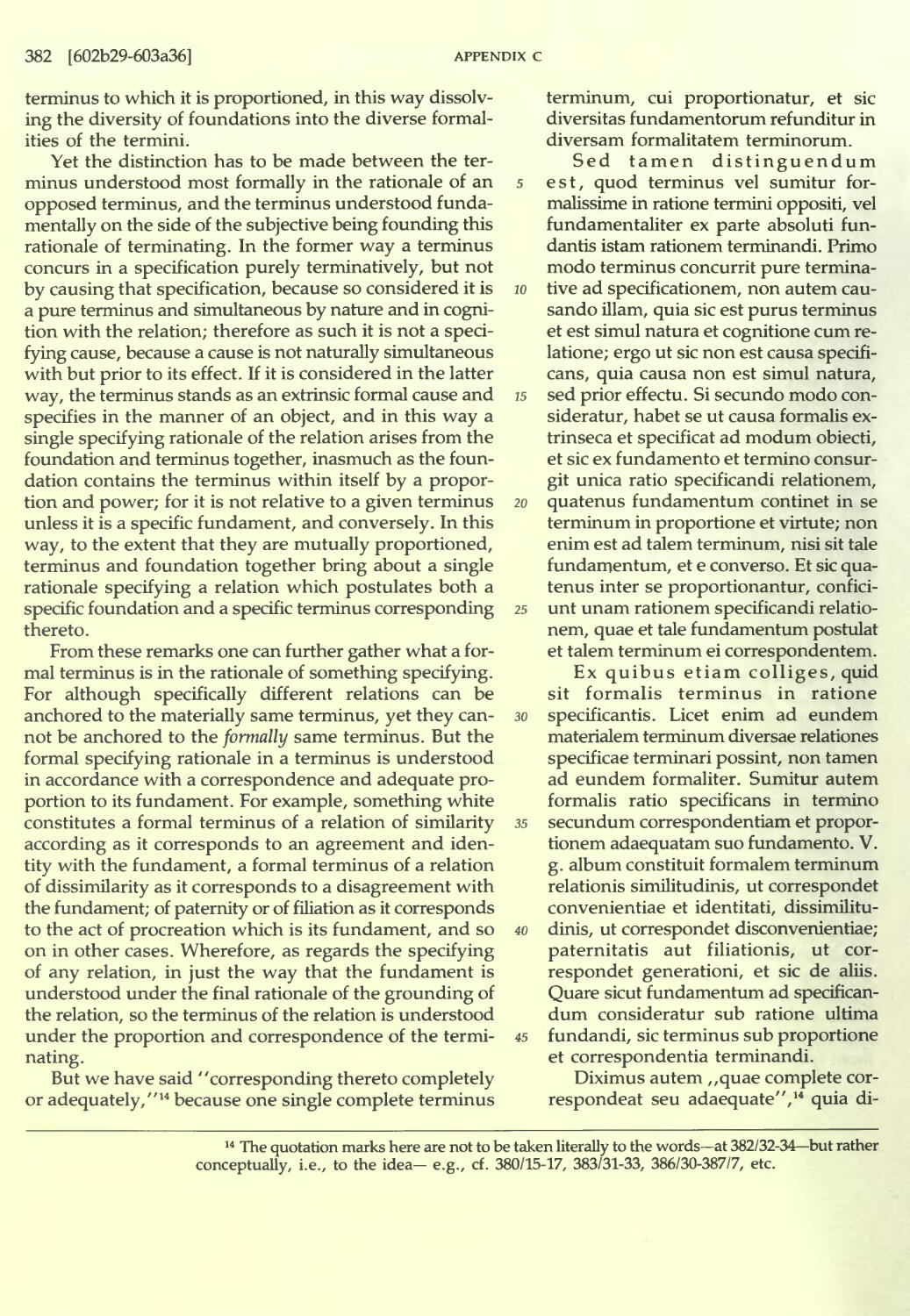


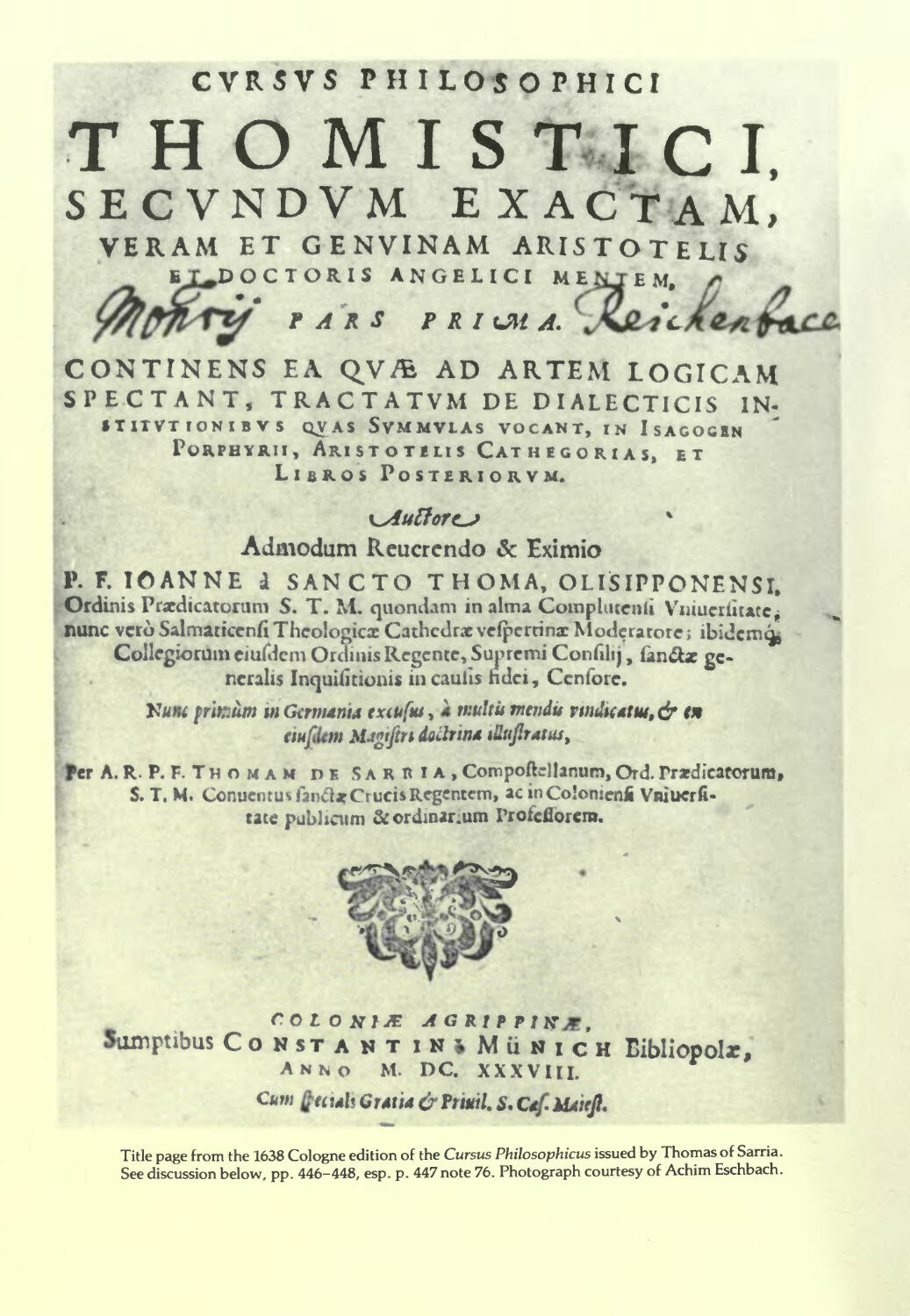


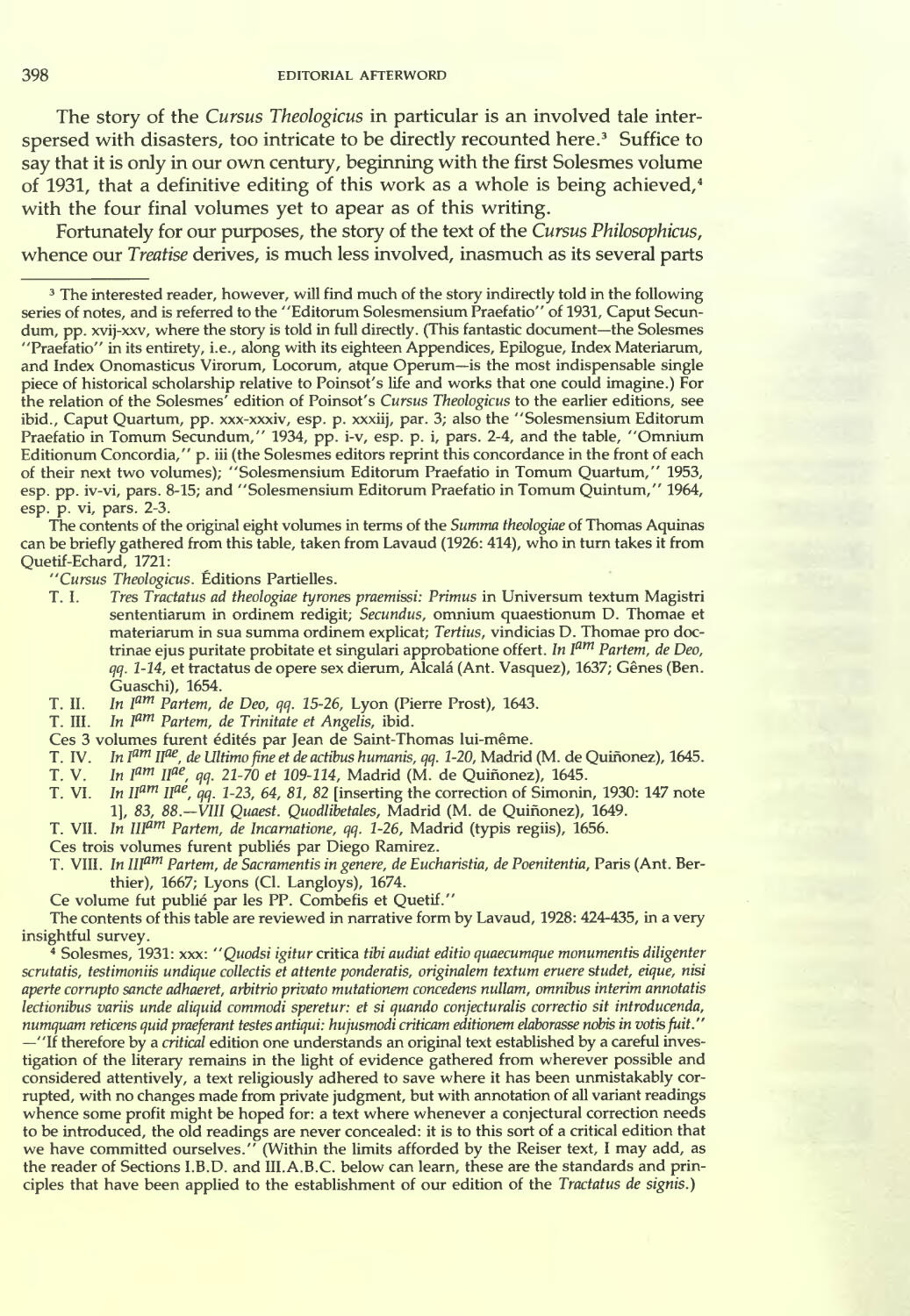


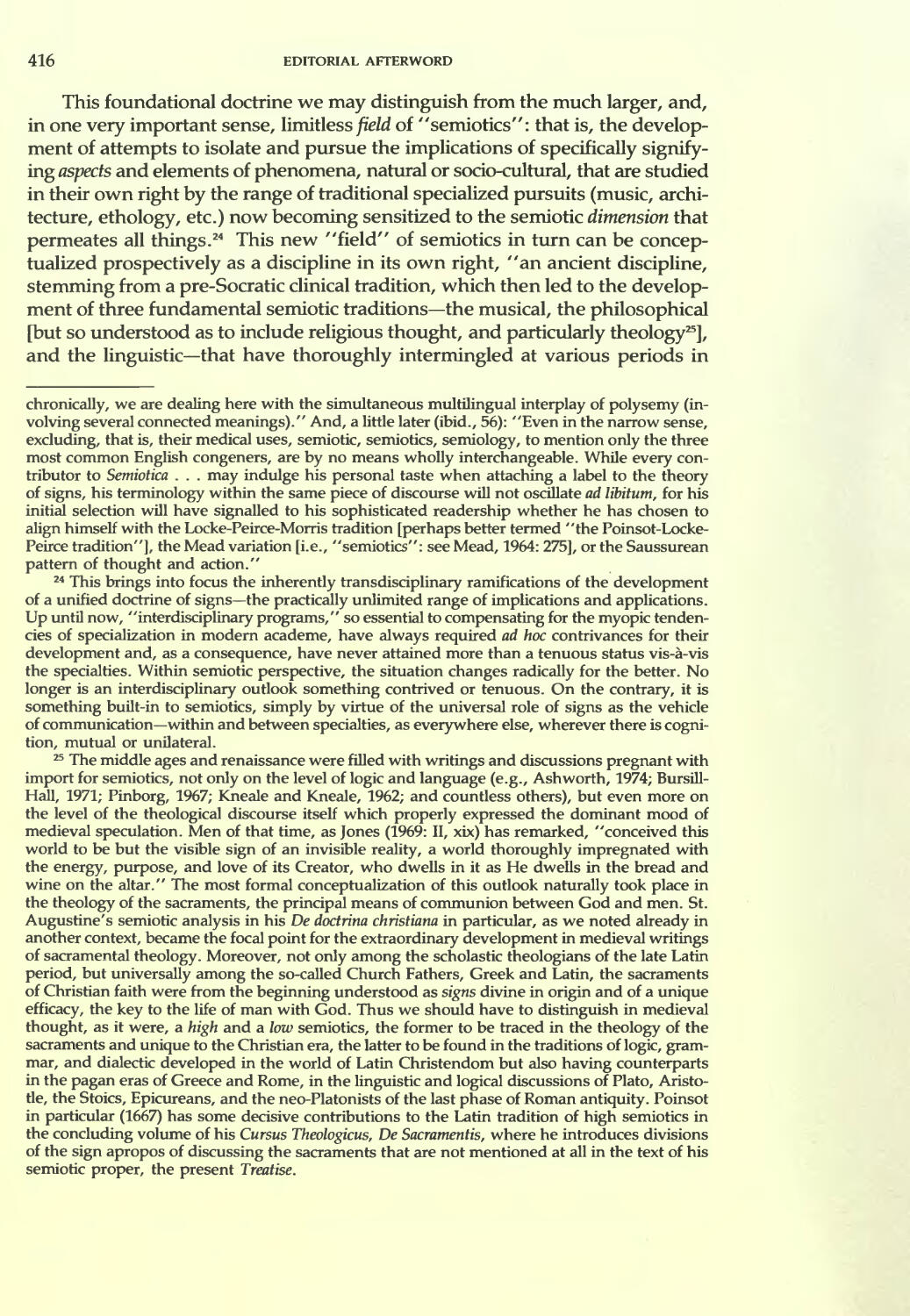







































Text
TRACTATUS DE SIGNIS
THE SEMIOTIC OF JOHN POINSOT
ero con mas fccsseo
que su mano
TR, los emienoz
pcrficcionc en toDo,
autem CcsCteco, ut
Libri eub manibuD [tuis]
at> ultimam ct omnimo5am
pcrfcctioncm clcvcntur.
hope is that
the books in youv h
will reach their highest
anD fullest perfection,
Juan de S.Xhomas
3 !ul? 1635
Slcala
TRACTATUS DE SIGNIS
THE SEMIOTIC OF JOHN POINSOT
Interpretive Arrangement by
JOHN N. DEELY
in consultation with
RALPH AUSTIN POWELL,
from the 1930 Reiser edition (emended second impression)
of the AYS Logica,
itself comprising the first two parts of the five part
Cursus Philosophicus of 1631-1635,
by the same author.
First Published at
ALCALA DE HENARES
(Complutum), Iberia,
1632.
IN BILINGUAL FORMAT
FIRST EDITION
1985
UNIVERSITY OF CALIFORNIA PRESS
BERKELEY LOS ANGELES LONDON
University of California Press
Berkeley and Los Angeles, California
University of California Press, Ltd.
London, England
Copyright 1985 by John N. Deely
Manufactured in the United States of America
Cataloging in Publication Data for Libraries
Poinsot, John ("Joannes a Sancto Thoma"), 1589-1644.
Tractatus de Signis.
Bilingual edition of early,
perhaps earliest, fully systematized treatise in semiotic,
originally published at Alcala de Henares (Complutum), Iberia, 1632,
as part of the Ars Logica of the same author,
itself comprising the first two parts
of the five-part Cursus Philosophicus of 1631-1635.
Bibliography: p. 587.
Including five indices.
1. Semiotics. 2. Logic early works before 1800.
3. Signs and symbols.
I. Deely, John N. II. Powell, Ralph Austin. III. Title.
BC60.J5724 1985 160 82-17658
ISBN 0-520-04252-2
IV
ACKNOWLEDGMENTS and DEDICATION
In the spring of 1970 this work was undertaken because of, and later sus-
tained by, the vision of Thomas A. Sebeok.
Yet the work would not have reached its fulfillment without the learned
assistance and patient counsel of Ralph Austin Powell, a graduate of Poinsot's
own alma mater and his brother in religious life. His subtle mastery of philosophical
traditions the Greek, the Latin, the German, and the French was an improbable
resource made priceless by being put at my disposal throughout the project.
Translation finally of the inscrutable Latin of Poinsot's "Word to the Reader"
of 1631 and 1640 was owing to J. Kenneth Downing. Archaic usage was much
reduced through detailed suggestions of Bert Mahoney. Editorial assistance in
point of organization came from Heinz Schmitz, and in point of grammar from
Brooke Williams, who also mastered Spanish Round Gothic script for the fron-
tispiece. The task of getting the notes on the text into presentable typescript was
executed with admirable fidelity and steadiness by Claire Levy, as were many
related tasks performed by my student Felicia Kruse. Carl Lenhart contributed
help with proofreading.
The aim for the Treatise text proper was to produce matching linguistic col-
umns, beginning and ending within the same line of text on every page. The ex-
tent to which this goal has been realized is due to the involvement and consum-
mate skill in typesetting of Bud MacFarlane, Production Manager of Composition
Specialists.
Jack Miles of the University of California Press pursued contractual arrange-
ments for this work with understanding, vision, and respect for detail. Chet Grycz
of the same press stands out in the work's actual production by his distinct com-
mitment to its being realized in the integrity of its design. His was not the first
press to try to see how this might be possible, a fact which provides the reader
an intimation of the exceptional talent Mr. Grycz brings to bear on his work.
A subsidy for publishing in bi-lingual format was provided from three sources,
the American Midwest Province of Saint Albert the Great, the DeRance Publica-
tion Fund of the ACPA in response to a proposal initiated under the presidency
of Desmond FitzGerald, and Mr. Jerome Powell. Free time along with typing and
copying facilities for an initial draft of this work was provided by Mortimer J. Adler.
This work is dedicated to the memory of J. Eris Powell (1875-1949), whose
concept of Public Life in the end made this work possible, and to the memory
of his wife, Mary Conroy Powell (1888-1960). It is dedicated also to the memory
of a monk of the abbey of Solesmes, with the hope that his work will be somehow
continued Dom Boissard, who produced the magnificent five volumes of the
Solesmes edition of Poinsot's theological Cursus according to standards the pres-
ent little work has sought to realize in its own order. His death in December of
1979 robbed humane culture for the second time (the first was Pere Combefis'
death in 1679) of a completed edition worthy of its proper merits.
CONTENTS
Acknowledgments and Dedication v
Abbreviations x
To the Reader of This Edition 1
FROM THE FIRST AND SECOND PARTS OF THE ARS LOG1CA,
Exhibiting the Rationale of the Entire Work
and the Manner of Its Derivation
To the Reader of 1631 4
First Semiotic Marker 7
INTRODUCTION TO THE ENTIRE WORK, in Two Prologues
First Prologue: On the Style of the Work 10
Second Prologue: On the Division of the Logical Art, Its Order and Necessity . .14
Second Semiotic Marker . . 18
THE SUMMULAE TEXTS (Ars Logica, Part I): Preliminary Chapters on the Doctrine of Signs
Chapter I, The Definition of "Term" 22
Chapter II, The Definition and Division of Signs 25
Chapter III, Some Divisions of Terms 28
Third Semiotic Marker 30
To the Reader of 1640 (Ars Logica, Part II) , .34
Fourth Semiotic Marker 36
"PERIHERMENIAS": the Relation of the Treatise on Signs to the Aristotelian Tradition,
Its Philosophical Justification, and Its Presuppositions within the Ars Logica 38
Fifth Semiotic Marker 40
FROM THE SECOND PART OF THE ARS LOGICA:
THE TRACTATUS DE SIGNIS PROPER,
in Two Preambles and Three Books, with Appendices
FIRST PREAMBLE: ON MIND-DEPENDENT BEING, in Three Articles
Order of the Preamble 44
Final Semiotic Marker 46
Article 1. What in General a Mind-Dependent Being Is, and How Many Kinds of
Mind-Dependent Being There Are 48
Article 2. What Is the Second Intention and Logical Mind-Dependent Relation,
and How Many Are There? 58
Article 3. By What Powers and through Which Acts Do Mind-Dependent Beings
Come About? 65
vi
SECOND PREAMBLE: ON RELATION, in Three Articles
Article 1. Whether There Exist on the Side of Mind-Dependent Being Intrinsic
Forms Which Are Relations 80
Article 2. What Is Required for a "Categorial" Relation 88
Article 3. What Are the Divisions of Categorial Relation and What Are Its
Essential Types? 100
BOOK I. CONCERNING THE SIGN IN ITS PROPER BEING, in Six Questions, with a Sequel
Question 1. Whether a Sign Is in the Order of Relation 116
Question 2. Whether the Sign-Relation in the Case of Natural Signs Is Mind-Independent
or Mind-Dependent 135
Question 3. Whether the Relation of Sign to Signified Is the Same as the Relation of
Sign to Cognitive Power 153
Question 4. In What Way Are Objects Divided into Stimulus Objects
and Terminative Objects? 166
Question 5. Whether to Signify, Formally Considered, Is to Cause Something in the
Order of Productive Causality 193
Question 6. Whether the True Rationale of Sign Is Present in the Behavior
of Brute Animals and in the Operation of the External Senses .... 204
Sequel 216
BOOK II. CONCERNING THE DIVISION OF SIGNS, in Six Questions
Transition to Book II (from the 1638 Cologne Edition) 222
Question 1. Whether the Division of Signs into Formal and Instrumental
Is Univocal and Sound 223
Question 2. Whether a Concept Is a Formal Sign . . . 240
Question 3. Whether an Impressed Specification Is a Formal Sign 254
Question 4. Whether an Act of Cognizing Is a Formal Sign 262
Question 5. Whether the Division of Signs into Natural, Stipulated, and Customary
Is a Sound Division 269
Question 6. Whether a Sign Arising from Custom Is Truly a Sign 278
BOOK III. CONCERNING MODES OF AWARENESS AND CONCEPTS, in Four Questions
Transition to Book III 286
Question 1. Whether Intuitive and Abstractive Awareness Differ Essentially in the
Rationale of Cognition 287
Question 2. Whether There Can Be an Intuitive Cognition, either in the Understanding
or in Exterior Sense, of a Thing Physically Absent 304
Question 3. How Do Reflexive Concepts Differ from Direct Concepts? 324
Question 4. What Sort of Distinction Is There between an Ultimate (or "Final")
Concept and a Nonultimate (or "Preliminary") Concept? 334
vii
APPENDIX A, On the Signification of Language:
WHETHER VOCAL EXPRESSIONS PRIMARILY SIGNIFY CONCEPTS OR THINGS ... 344
APPENDIX B: SYNTHETIC INDEX AND SYNOPTIC TABLE FOR POINSOT'S
CURSUS PHILOSOPHICUS
I. Synthetic Index 353
II. Synoptic Table (fold-out) 371
APPENDIX C: ON THE SPECIFIC AND INDIVIDUAL IDENTITY OF RELATIONS . . .378
EDITORIAL AFTERWORD
Contents .393
INDICES to the Treatise text:
Index Abbreviations s . 516
1. Index Aristotelicus: Passages from Aristotle
A. Opera (Works Cited) 517
B. Loci (Specific Citations) f , r . 517
2. Index Thomisticus: Passages from St. Thomas
A. Opera (Works Cited) 518
B. Loci (Specific Citations) 519
3. Index Personarum: Other Authors 522
4. Index Rerum Alphabeticus: Index of Terms and Propositions
A. Alphabetized List of Latin Base Terms . 525
B. The Index Proper 527
INDEX ONOMASTICUS EDITORIALIS: Editorial Index 577
REFERENCES with Some Annotations 587
Vlll
The Third Branch may be called Er||iicoTiKf|, or the Doctrine of Signs;
the most usual whereof being Words, it is aptly enough termed also AoyiKfj,
Logick; the business whereof, is to consider the Nature of Signs, the Mind
makes use of for the understanding of Things, or conveying its Knowledge
to others.
And, perhaps, if they were distinctly weighed, and duly considered,
they would afford us another sort of Logick and Critick, than what we have
been hitherto acquainted with.
John Locke,
"Of the Division of the Sciences
[beyond the Speculative and the Practical]/'
1690
IX
ABBREVIATIONS
Aristotle is cited according to the page, column (a, b), and line of the Berlin
edition (following Reiser 1930, XVII-XVIII: see Index Aristotelicus, p. 517
below).
Le = the Roman Leonine Edition of the works of St. Thomas Aquinas, 1882 ssq.
(following Reiser, loc. cit.: see Index Thomisticus, p. 518 below).
Pa = the Parma edition of the works of St. Thomas Aquinas, 1852-1873 (follow-
ing Reiser, loc. cit.: see Index Thomisticus, p. 518 below).
P.L. = Patrologiae Cursus Completus, ed. J.-P. Migne, Series Latina, Vols. 1-162,
Paris: 1878-1889.
Poinsot is cross-referenced according to the Parts of the original publication of
the Cursus Philosophicus, specifically: Artis Logicae Prima Pars = Logica
1. p. = 1631, Artis Logicae Secunda Pars = Logica 2. p. = 1632, Naturalis
Philosophiae Prima Pars = Phil. nat. 1. p. = 1633, Naturalis Philosophiae Ter-
tia Pars = Phil. nat. 3. p. = 1634, Naturalis Philosophiae Quarta Pars = Phil,
nat. 4. p. = 1635), followed by the Question (q.), Article (art.), and, where
necessary, also by specific volume (I, II, III), page, column (a, b), and line
references to Reiser's edition of the whole (Turin: Marietti, 1930-1937). The
Naturalis Philosophiae Secunda Pars, on astronomy, was suppressed in the
year of scheduled publication (1634, the year of Galileo's condemnation
in Rome) by Poinsot himself, and there is no extant text of this Part known
at the present time: see discussion in the "Editorial Afterword" following
the text of the Treatise.
Reiser's own footnotes from his edition of the Cursus are incorporated into this
edition of the Treatise on Signs, those referring to the works of Aristotle,
St. Thomas, or any other author with punctuation, spacing, and capitaliza-
tion unchanged.
To THE READER OF THIS EDITION:
The semiotic of John Poinsot here presented autonomously for the first
time was disengaged from a larger work entitled the Ars Logica, itself but the
first two parts of a five-part Cursus Philosophicus. Since this work has a con-
siderable historical interest in its own right, and in order to minimize the
violence of editing the tractatus de signis into a whole independent of that
original context, we have settled on the following manner of presentation.
Putting ourselves in the position of a reader coming to the Ars Logica for
the first time and interested only in Poinsot's discussion of signs, we asked
ourselves: What sections of the work would this hypothetical reader have to
look at in order to appreciate that discussion both in its own terms and in
terms of the whole of which it originally formed a part? To what extent are
these separable philosophically?
The pages that follow make up our solution to this problem. We have left
Poinsot's text stand virtually entirely according to the order he proposed for
it within the Ars Logica as a whole. To make this order clear, we have included
title pages, and all general statements Poinsot set down concerning the whole
(and therefore the Treatise as part), inserting where appropriate and to bridge
necessary jumps a series of brief comments designated "semiotic markers,"
designed to show the reader how the rationale of all 'editing is derived from
the original author's own intentions; and second, we have included all and
only those sections of the whole which have a direct bearing on under-
standing the doctrine proposed in the Treatise on Signs proper, as the semiotic
markers make clear.
In other words, we have tried to provide the reader with a guided tour
of the Ars Logica that leads directly to an understanding of the doctrine of
signs contained in that work, but does so by enabling him or her to appreciate
the historical origin of the account in the context of its author's own under-
standing of previous logical and philosophical traditions. We have chosen this
format as the one best suited, so far as we could judge, to exhibit the unique
mediating status Poinsot's Treatise occupies "archeologically," as it were, in
the Western tradition between the ontological concerns of ancient, medieval,
and renaissance philosophy, and the epistemological concerns of modern and
contemporary thought.
At the end of the work, the reader will find a lengthy "Editorial After-
word" explaining the entire work and giving its background and prospectus,
much the sort of materials commonly given in an Introduction to a translated
2 EDITOR S PREFACE
work. The device of the semiotic markers made it possible in this case to
bypass the need for lengthy introductory materials enabling the reader to
grasp the editorial structure of the whole, yet without of course obviating the
need for detailed discussions somewhere of the principles of the English text,
and of the historical situation of the author and his work. Thus we have been
able to enter simply and directly into the doctrinal content of the main text,
without cluttering its entrance with more than a very few lines of contem-
porary origin.
The reader will also find at the end of the work a complete series of indices
to this entire edition, both to its main text (which indices are explained at
length in the "Afterword" just mentioned) and to its accompanying editorial
materials, followed by a comprehensive list of bibliographical references.
Bibliographical references not complete in the markers or in the notes on the
text will be found there. All indexical references to the Treatise itself with its
attendant parts (i.e., to the bi-lingual portions of this edition) are by page and
line numbers, thus providing the reader with the exact place of each reference
in this English edition of Poinsot's text and, at the same time, the almost exact
place in the parallel column of the Latin original. Similarly, all cross-
references to other parts of Poinsot's Cursus Philosophicus, as in the running
heads of the present edition, are according to the pages, columns (a, b), and
lines of the Reiser edition, as set out in the "Abbreviations" immediately
preceding this preface.
From the
First and Second Parts
of the
ARS LOGICA
The Excerpts Which Exhibit
the Rationale
of the
Treatise on Signs
and the
Manner of Its Derivation
SPAIN
1631-1632
LECTORI: 1
Brevitatem sectantes otiosum videbitur rnorosa praefatione diffundi, vel
ipsa Spiritus Sancti sententia id praedamnante: Stultum est ante historiam
diffluere, in ipsa vero historia succingi 2 . Ne ergo taedium et onus lectori in
ipso limine iniciamus, tantum admonuerim studii nostri scopum eo collimasse,
ut ad brevem et concisam methodum pro viribus Logicae et Philosophiae
disciplinam iuxta S. Thornae sensum redigeremus. Idcirco non solum visum
est eius solidam sequi et imitari doctrinam, sed ordinem, brevitatem modestiam-
que aemulari.
Ut methodum ordinemque sequeremur, in operis fronte Logicam in duas
partes dividimus. Prima dialecticas disputationes, quas Summulas vocant, com-
plectitur et circa formam logicalem versatur. Secunda, circa praedicabilia et
praedicamenta ac libros Posteriorum, tractat de instrumentis logicalibus ex parte
materiae et posterioristicae resolutionis, ut abundantius in initio huius libri
adnotamus.
Ut brevitatem imitaremur, immensam inextricabilium quaestionum silvam
et spinosa sophismatum dumeta excidere curavimus, quae audientium men-
tibus onerosae et pungentes utilitatis nihil, dispendii non parum afferebant.
Ad haec metaphysicas difficultates pluresque alias ex libris de Anima, quae
disputantium ardore in ipsa Summularum cunabula irruperant, suo loco aman-
davimus et tractatum de signis et notitiis 3 in Logica super librum Perihermenias
expedimus. Quidquid autem in tractatu de termino et aliis locis ad Logicam
remittimus, ibidem etiam loca adnotamus. Nee tamen omnino evadere potui-
mus, quin aliqua libaremus ex praecipuis magisque necessariis difficultatibus,
quae et docentibus et discentibus ad logicales quaestiones explicandas con-
ducebant. Curabit autem lector, ut viso aliquo textus capitulo difficultates illi
correspondentes inquirat in quaestionibus; sic enim omnes, quae occurrerint,
To THE READER OF 1631: 1
It is useless to put off with a wordy preface those who appreciate brevity in
the words of the Spirit: "There would be no sense in expanding the preface
to the history and curtailing the history itself." 2 In order therefore to avoid
wearying the reader, let me say only this concerning the scope of my work,
that I have adopted, for the sake of brief and concise exposition, a method suited
to the vigor of a Logic and Philosophy developed according to the mind of St.
Thomas Aquinas. Accordingly, my plan has been not only to follow and repre-
sent his assured doctrine, but to emulate as well his order, brevity, and modesty.
Following his method and organization, I have divided the whole of Logic
into two parts. The first part, which is called the Summulae books, comprises
dialectical disputations and treats of formal logic. The second part, which con-
cerns the predicables, categories, and the books of Posterior Analytics, treats
of logical tools from the standpoint of analysis of content, as I explain more
fully where those books are taken up.
To imitate the brevity of St. Thomas, I have taken care to cut out of the
Summulae books a vast forest of intractable questions and a thorny thicket of
sophisms which serve only to burden and abrade the minds of students, caus-
ing no little damage in the past. The metaphysical and other difficulties from
the books On the Soul which the ardor of disputants has caused to intrude
into the very beginning of the Summulae books, I have removed to their proper
place, locating a treatise on signs and notices or modes of awareness 3 in Logic relative
to the book On Interpretation. Whatever I have removed to the second part
of Logic from the discussion of the term or other Summulae topics, I have so
noted at the appropriate place. Even so, I have not been able to postpone discus-
sion of all difficulties, but have taken up in the first part some of the principal
and more necessary questions that conduce to an understanding of logical ques-
tions for teachers and students alike. The reader will therefore take care, when
he has completed a chapter of the Summulae text, to look into the correspond-
ing difficulties discussed in the disputed questions which follow the Summulae
1 Auctoris in universam Logicam praefatio. Author's preface to the entire Ars Logica.
2 2. Machab. 2, 33.
3 As the term "awareness" is not usually used in the plural as an English word, I have used
the expression "modes of awareness," analogous to Norman Kemp Smith's translation of Erkennt-
nisse as "modes of knowledge" (cf . Immanuel Kant's Critique of Pure Reason, trans. Norman Kemp
Smith [New York: St. Martin's Press, 1963], p. 42, note 1). Given the level of awareness under
discussion in the context of our Treatise, "notices" would also be an appropriate rendering.
6 [2]
AUTHOR'S PREFACE OF 1631
in the first part of Logic; for in this way the reader
will be able more easily to perceive and overcome all
the difficulties that arise.
Finally, to engrave modesty (one of the more
gracious of the holy Doctor's angelic virtues) upon
this brevity, I have adopted the policy of abstaining
from lengthy citations and lists of names in referring
whether favorably or adversely to the positions of
various authors (for I do not publish this work for
the sake of contention or for promotion of partisan
rivalries, but to advance inquiry into truth, which con-
cerns doctrine and not persons). This policy is also
calculated to better dispose readers, in whom knowl-
edge is instilled the more easily when it is studied
not so much in terms of the contention of authors and
authorities as in terms of the struggle for truth alone.
My fullest wish, cultured reader, is that you may at-
tain truth with increased profit from this fragile but
dedicated pen. Farewell.
difficultates facilius percipiet et evincere
poterit.
Ut denique modestiam (gratiorem inter
angelicas S. Doctoris virtutes gemmam)
5 brevi huic annulo exculperemus, placuit sic
diversorum auctorum placita aut referre aut
impugnare aut sequi, ut plerumque a pro-
lixa citatione et publicatione nominum ab-
stineremus (nee enim haec nostra evulgamus
10 aut contentioni aut aemulationis zelo obse-
cundantes, sed veritatis inquisition! servien-
tes, quae doctrinam respicit, non personas);
et ut audientium commodo prospiceremus,
quibus facilius instillatur doctrina, si non tarn
is auctorum et auctoritatum concertationi
quam veritatis solius luctae studeatur. Quam
ut multiplicato foenore assequi possis, hu-
manissime lector, tenui hoc, sed affectuoso
calamo plenissime peroptamus. Vale.
Alcala, Spain, 1631
Alcala, Spain, 1631
First Semiotic Marker
This "Word to the Reader" of 1631 includes Poinsot's public announce-
ment of his forthcoming Treatise on Signs. Though that Treatise is to be issued
as a part of the much larger work on Logic, the Ars Logica that he here introduces,
it is clear from the way he singles out the Treatise that it occupies a position
of special importance in his understanding of the whole.
Moreover, the relationship of the Treatise to his Summulae, or introductory,
texts on logic is clear: it covers the same material as the opening chapters of
the introductory texts, but at a deeper level and reorganized according to a
different point of view, one for which Poinsot himself has no specific name,
but which exactly corresponds to the viewpoint Locke will suggest and label
semiotic fifty-nine years later and without knowledge of Poinsot's ground-
breaking work.
Finally, in asserting that the "proper place" for the Treatise is under the
traditional heading of "Interpretation," Poinsot implies a critique of the entire
tradition of Latin Aristotelianism which had developed a logic exclusively of
terms and propositions, and arguments made from these, whereas in fact "in-
terpretation" is a much broader activity coextensive with the entire life of the
mind, what Peirce, developing Locke's suggestion, will label in our own day
semiosis. This critique will become much sharper and more explicit when Poin-
sot reaches the point in his survey of the whole of logic traditionally conceived
where the Aristotelian books on interpretation would normally be considered,
as we shall see.
But in the meantime, the lines to be followed for disengaging the Treatise
on Signs from the larger whole of the Ars Logica have already been clearly drawn
in all essentials: the reader should have a look at the opening Summulae texts
which germinate in terminist perspective (the perspective of a logic of terms,
propositions, and arguments) the problems reduced to their proper unity in
the Treatise on Signs; then turn to the section of the second part of Poinsot's
Logic concerning the Aristotelian treatment of "Interpretation" where one will
find the Treatise on Signs proper. Additionally, since the Treatise was originally
embedded in the second part of the larger whole of the Ars Logica, Poinsot's
"Introduction to the Entire Work," explaining its style and organization, would
pertain equally to an understanding of the independent Treatise, as would the
"Word to the Reader" Poinsot added in 1640 to a republication of the Artis
Logicae Secunda Pars, inasmuch as this second part was the original matrix of
the Treatise on Signs. We take up each of these texts therefore in their proper
order.
7
PROLOGUS TOTIUS
DIALECTICAE
in Duobus Praeludiis
INTRODUCTION TO THE
ENTIRE WORK
in Two Prologues
[3al-b7]
FIRST PROLOGUE
[ON THE STYLE OF THE WORK]
Wherein Is Set Forth the Exercise and Practice of Dialectical Disputation
PRAELUDIUM PRIMUM
Quo Proponitur Dialecticae Disputationis Exercitium et Praxis
At the very beginning of the dialectic art that
we modestly set out to explain, it seemed best to
show beginners the form and procedure of disputa-
tion in actual use and practice. It can be briefly
described as follows.
In any disputation, the first concern of the one
arguing should be to propose an argument entirely
reduced to form. That is to say, having stripped away
everything superfluous, whether ambiguous words
or lengthy declarations, the one arguing should
succinctly and distinctly propose a syllogism or an
enthymeme. A syllogism contains three proposi-
tions, which are called the major premise, the minor
premise, and the conclusion or consequent, con-
nected by the sign of illation, which is the particle
"therefore." The connection itself, however, is called
the illation or consequence. An enthymeme contains
two propositions, of which the first is called an
antecedent, the second a consequent, also connected
by an illation. For example, if I want to prove that
one ought not embrace a life of voluptuousness,
I form a syllogism thus: "Whatever opposes true
human virtue ought not to be embraced; a volup-
tuous life opposes true human virtue; therefore it
ought not to be embraced." Or, if I wish to form
an enthymeme of antecedent and consequent, I
form it thus: "A voluptuous life is opposed to the
arduousness of virtue; therefore it ought not to be
embraced."
20
25
In ipsa fronte artis Dialecticae, quam pro
exiguitate nostra explicare aggredimur, for-
mam modumque disputationis tironibus in
ipso exercitio et praxi proponere visum est,
quae sic breviter explicari potest.
Igitur in quacumque disputatione primo
loco arguens proponere curet argumentum,
omnino ad f ormam redactum, omnibus aliis,
sive verborum ambagibus sive longis de-
clarationibus amputatis, succincteque ac
distincte syllogismum vel enthymema pro-
ponat. Et syllogismus continet tres pro-
positiones, quae dicuntur maior et minor et
conclusio seu consequens, per notam illa-
tionis, quae est particula ,, ergo ", connexas;
ipsa autem connexio vocatur illatio vel con-
sequentia. Enthymema autem continet
duas propositiones, quarum prima vocatur
antecedens, secunda consequens, eodem
etiam modo connexas. V. g. intendo pro-
bare, quod vita voluptuosa non sit amplec-
tenda, formo sic syllogismum: Quidquid
honestati virtutis repugnat, non est amplec-
tendum; vita voluptuosa honestati virtutis
repugnat; ergo non est amplectenda. Vel
si volo forrnare enthymema ex antecedente
et consequente, sic formo: Vita voluptuosa
opponitur arduitati virtutis; ergo non est
amplectenda.
* Cf. p. 456 for explanation of typographic conventions used in the text.
FIRST PROLOGUE
[3b8-4a32]
Hearing the formulation of the argument, the one
responding should attend to nothing except to repeat
integrally and faithfully the argument proposed, and
meanwhile, while he repeats the argument, he should
consider carefully whether each premise is true, and
to be granted, or false, and to be denied, or doubtful
or equivocal, and to be distinguished. He should
likewise consider whether the consequence or illation
is valid or invalid. Having repeated the argument
once without saying anything by way of response,
the one responding then should repeat and respond
to the propositions of the argument taken singly, in
this order: If there were three propositions and he thinks
the first to be true, he should say: "I grant the major
premise." If he thinks it false, he should say: "I deny
the major." If he thinks it does not matter for the conclu-
sion that ought to be inferred or drawn, he should say:
"Let the major pass," although this formula should be
used modestly and rarely, 1 and not unless it is clearly
the case that the proposition is irrelevant. If he thinks
the major is doubtful or equivocal; he should say: "I dis-
tinguish the major," and make the distinction with few
and clear words, based on the term in which there is
an equivocation. Having made the distinction, he
should not immediately explain it, unless either the
opponent asks for an explanation, or [he himself sees
how] it was not expressed clearly enough, in which
case he should explain it as briefly as he can. Especially
at the beginning of a disputation he should not use
up time explaining distinctions, but should in no wise
depart from the form itself of his argument. When the
major has been granted or explained under a distinc-
tion, he proceeds to the minor premise and observes
the same procedures in denying or conceding or dis-
tinguishing that we have set out for the major premise.
Then, coming to the conclusion, if it must be conceded,
he says: "I grant the consequence." If it must be denied,
he says, "I deny the consequence." But if the conclusion
must be distinguished, he should not say, "I distinguish
the consequence," but rather, "I distinguish the conse-
quent;" for since the consequence consists in the illation itself,
but not in an assertion of truth, it can be a valid or an
invalid illation, and so can be granted or denied as
valid or invalid, but it cannot be distinguished, because
a distinction falls upon an equivocation or ambiguity
in a proposition so far as the proposition has diverse
senses in signifying a truth, not upon the correctness it-
self of an illation. The consequent, however, is the il-
lated [or inferred] proposition, which can be certain or
Audita propositione argumenti defen-
dens ad nihil aliud attendat, quam ut integre
ac fideliter propositum argumentum repetat
et interim, dum argumentum resumit, per-
5 pendat, an aliqua praemissarum sit vera, ut
concedatur, vel falsa, ut negetur, an dubia
vel aequivoca, ut distinguatur; item conse-
quentia seu illatio an sit bona vel mala.
Resumpto semel argumento et nihil ad illud
w respondens, secundo repetat et ad singu-
las propositiones respondeat hoc ordine.
Si fuerint tres propositiones et primam vi-
deat esse veram, dicat: Concede maior-
em. Sivideatessefalsam, dicat: Nego
is maiorem. Si videat non pertinere ad con-
clusionem inferendam, dicat: Transeat
maior, quamquam hoc verbo modeste et
parce utendum est, 1 nee nisi clare constet
propositionem impertinenter se habere. Si
20 videat maiorem esse dubiam aut aequivo-
cam, dicat: Distinguo maiorem , et
super terminum, in quo est aequivocatio,
faciat distinctionem brevibus verbis, et non
confusis. Data autem distinctione non statim
25 illam explicet, nisi vel impugnator id petat,
vel non satis clare fuerit prolata, et tune bre-
vissime illam explicet. Praesertim autem in
initio disputationis non consumat tempus
in explicandis distinctionibus, sed ab ipsa
30 forma nullatenus recedat. Concessa maiore
vel sub distinctione explicata procedat ad
minorem et idem observet in negando vel
concedendo aut distinguendo, sicut diximus
de maiori. Deinde ad conclusionem deve-
35 niendo, si est concedenda, dicat: C o n c e-
do consequentiam, sineganda, dicat:
Nego consequentiam. Si autem est
distinguenda, non dicat: Distinguo conse-
quentiam, seddistinguo consequens;
40 consequentia enim cum consistat in ipsa il-
latione, non vero in assertione veritatis,
potest esse bona vel mala illatio, et sic con-
cedi aut negari ut bona vel mala, sed non
distingui, quia distinctio cadit super aequi-
45 vocationem aut ambiguitatem propositionis,
quatenus habet diversos sensus in significan-
do veritatem, non super ipsam convenien-
tiam illationis. Ipsum autem consequens est
propositio illata, quae potest esse certa aut
fact, Poinsot uses this expression only once in his Treatise, at 144/11 ( = 660a48).
12 [4a32-b39]
TRACTATUS DE SIGNIS
equivocal or ambiguous; whence, when it is equivocal,
it is distinguished, and so one does not say "I
distinguish the consequence," but "I distinguish the
consequent." Yet if the consequent is to be conced-
ed or denied, since this cannot be done except by con-
ceding or denying the consequence itself, it suffices
to say "I deny (or I grant) the consequence," but not
to say "I deny (or I grant) the consequent."
When a distinction has been made respecting some
proposition, that same distinction should be applied
as many times as the same equivocation occurs. One
should not subdistinguish the sense of a distinction
once that distinction has been granted unless another
equivocation plainly appears which cannot be re-
moved by the prior distinction. It is safer to deny
whatever is false and not permit it to pass, unless it
is certainly a case of an invalid consequence. If the
one responding does not grasp the sense of the prop-
osition, and so is unable to discern truth or falsity or
equivocation, he should ask the one propounding the
argument to explain its sense, and then he should
repeat the explanation.
Finally, the one responding should take care to
answer with few words, and to be bound only by the
form of the argument. Nor should he give a reason
for everything he says, unless a reason is asked of
him. He should rather leave to the one arguing the
entire burden of proof; for in this way the force of
the argument becomes more formally clear, and it is
the more quickly dispatched.
It is part of the task of the one presenting the argu-
ment: First, not to lay down many presuppositions,
nor to introduce many middle terms, nor to propose
excessively long or intricate propositions, but to hold
succinctly and stringently to form, not by asking many
questions, but rather by setting forth proofs, except
when the force of the argument devolves upon this,
that he is asked a reason for the things said, or when
the state of the disputation and the point of the diffi-
culty have not yet been made sufficiently clear. Sec-
ond, to proceed always with the same middle term
through its causes and principles, or in deducing an
inconsistency, but not to switch to another middle
term, or to repeat a proof already proposed either in
the same or in other words, because both are unduly
wordy and tedious. Finally, he should not always use
a syllogism, but sometimes an enthymeme, which
proceeds more briefly and concisely and manifests
less force of hidden illation, and for this reason
presents a greater difficulty to the one responding.
aequivoca aut ambigua, unde quando aequi-
voca est, distinguitur, et sic non dicitur
distinguo consequentiam , sed distinguo
consequens. Si tamen concedendum aut
5 negandum est consequens, quia id fieri non
potest, nisi concedendo aut negando ipsam
consequentiam, sufficit dicere, nego vel
concede consequentiam, non vero conse-
quens.
w Facta distinctione super aliqua proposi-
tione, quoties occurrat eadem aequivocatio,
adhibeat eandem distinctionem. Non sub-
distinguat sensum distinctionis semel con-
cessum, nisi evidenter alia aequivocatio
25 appareat, quae priori distinctione tolli non
potuit. Quodcumque falsum, tutius est ne-
gare, nee permittere ut transeat, nisi certo
constet de malitia consequentiae. Si sensum
propositionis non percipiat, ut veritatem aut
20 falsitatem vel aequivocationem discernat,
petat ab arguente, ut eius sensum explicet,
et tune resumat.
Denique curet pauca respondere et solum
alligari f ormae argumenti, nee de omnibus,
25 quae dicit, velit rationem reddere, nisi ab
ipso petatur, sed totum onus probandi
arguenti relinquat; sic enim et argumenti vis
formalius innotescit et citius expeditur.
Ad munus argumentatoris pertinet:
so Primo, non praemittere plures praesup-
positiones, nee inculcare plura media, nee
propositiones nimis longas aut intricatas
proponere, sed succincte ad formam se
astringere, non pluribus interrogationibus
35 utendo, sed magis probationes urgendo, nisi
quando vis argumenti ad hoc devolvitur,
ut petatur ratio dictorum, vel quando sta-
tus disputationis et punctus difficultatis
nondum est sufficienter declaratus. S e c u n-
40 d o, prosequatur semper idem medium per
suas causas et principia, vel ad inconven-
iens deducendo, non vero divertat ad aliud
medium, nee repetat probationem semel
propositam aut eisdem aut aliis verbis, quia
45 utrumque valde prolixum et taediosum
est. Denique non semper utatur syllogis-
mo, sed quandoque enthymemate, quod
brevius et concisius procedit minusque
manifestat vim latentis illationis ideoque
so maiorem respondenti incutit difficultatem.
FIRST PROLOGUE
[4b40-5a3] 13
It is, finally, the task of the Moderator of the dialec-
tical exercise: 2 First, to comprehend attentively the
entire progress of the argument and disputation.
Second, to see to it that the form of arguing and re-
sponding is fully observed. Third, not to assume or
preempt the function of the one responding, much
less that of the one arguing, but to suggest prudently
according to the perceived need of the one respond-
ing a denial, a concession, or a distinction within some
proposition. Finally, to render a judgment briefly
at the end of the disputation and to clear up any
obscurities.
10
Ad munus tandem Patroni seu Praesi-
dentis spectat: 2 Primo, attente totum pro-
gressum argumenti et disputationis compre-
hendere. Secundo, providere, ut forma
arguendi et respondendi omnino servetur.
T e r t i o, off icium respondentis non assume-
re vel praevenire, et multo minus impugna-
toris, sed provide iuxta quod viderit indigere
respondentem, suggerere negationem, con-
cessionem aut distinctionem propositionis.
Tandem, in fine iudicium de disputatione
breviter ferre et obscura declarare.
2 This, in effect, is the task that falls to the reader of the Treatise on Signs.
[5a4-43]
SECOND PROLOGUE
The Division of the Logical Art,
Its Order and Necessity
PRAELUDIUM SECUNDUM
Artis Logicae Divisio, Ordo, Necessitas
In any art, thought must be given principally to two
things, namely, the matter in which the art works, and
the form drawn out of that matter. For example, houses
are made from stones and wood, but their form is a com-
position, because these particular beams and stones are 5
coordinated among themselves in the single figure and
structure of a house. The architect does not supply the
material, but presupposes its reality; what he does sup-
ply and draw out is the form, which, because it was
properly educed by art, is simultaneously principally in- w
tended by that art, as being something produced by it.
But Logic is "a kind of art which has as its function the
direction of reason, lest it err in the paths of discours-
ing and knowing," just as the art of the builder directs
the worker, lest he err in the building of the house. And is
therefore Logic is called a rational art, not only because
it exists in the reasoning mind as in a subject, just as
do all arts, but because the materials it directs are them-
selves works of human understanding.
Now since reason proceeds analytically in develop- 20
ing opinions and making judgments, that is to say, in
deducing its principles and discerning proofs by which
reason is manifested, the preservation of reason from
error is identical with enabling it to resolve rightly
and properly the reasonings to which it applies itself. 25
For this reason, Aristotle called the parts of Logic
dealing with the making sure of judgments "analytics,"
that is, resolutory, because they teach the right resolu-
tion of reasonings and the avoidance of errors. But
In omni arte duo sunt praecipue con-
sideranda, scilicet materia, in qua ars ope-
ratur, et forma, quae in tali materia indu-
citur, sicut in f acienda domo materia sunt
lapides et ligna, forma autem est compo-
sitio, quia ista inter se coordinantur in una
figura et structura domus. Materiam artifex
non facit, sed praesupponit, formam vero
inducit, quae quia proprie educitur ab arte,
est etiam principaliter intenta ab ilia, ut-
pote factura eius. Est autem Logica ars
quaedam, cuius munus est dirigere rati-
onem, ne in modo discurrendi et cogno-
scendi erret , sicut ars aedificatoria dirigit
artificem, ne erret in f acienda domo. Et
ideo Logica dicitur ars rationalis, non
solum quia est in ratione ut in subiecto,
sicut aliae artes, sed quia materia, quam
dirigit, sunt ipsa opera rationis.
Et quia ratio ad discurrendum et feren-
dum iudicium procedit per modum resolu-
tionis, hoc est, in sua principia deducendo
et probationes, quibus manifestatur, dis-
cernendo, idem est Logicam dirigere ratio-
nem, ne erret, ac dirigere, ut recte et debite
resolvat. Unde Aristoteles partes Logicae,
quae docent certum praebere iudicium, vo-
cavit analyticas, id est resolutorias, quia do-
cent recte et sine errore resolvere. Fit au-
SECOND PROLOGUE
[5a43-b34] 15
right resolution of reasonings comes about owing both
to the requirements of the form and to the certitude
of the matter. "Materials" here signifies the things or
objects we wish to rightly objectify or come to know.
But form is the very mode or disposition whereby the
objects known are connected in a pattern according
to which they may be properly expressed and cog-
nized, for without such connection no truth is con-
ceived, nor does any discourse, or illation of one truth
from another, develop. Now resolution (analysis) on
the side of the form is said to pertain to prior analytics,
but resolution on the side of the materials, in terms
of certainty and requisite conditions, pertains to
posterior analytics, because the consideration of a form
created by art (the methodology or technique) is prior to
the consideration of materials in any art.
Hence we divide the art of Logic into two parts.
In the first part, we treat of all that pertains to the
form of logical art and to prioristic analysis, the sub-
jects treated by Aristotle in the books On Interpreta-
tion and in the books of the Prior Analytics. These
are also the subjects customarily treated in the Sum-
mulae books for beginning students. In the second
part, we treat of what pertains to the content of the
reasoning or to posterioristic analysis, especially in
the matter of demonstrations, at which Logic aims
above all. 1
And in that first part the Summulae textbooks
we provide brief summaries as the first thing students
must learn; then, for advanced students, we dispute
more difficult questions. In the second part, by con-
trast, we submit to dispute more useful and weighty
questions, following an ordered summary of the texts
of Porphyry and of Aristotle.
tern recta resolutio turn ex debita forma, turn
ex certitudine materiae . M a t e r i a sunt res
seu obiecta, quae volumus recte cognoscere.
Forma autem est ipse modus seu disposi-
5 tio, qua connectuntur obiecta cognita, ut
debite discurratur et cognoscatur, quia sine
connexione nee veritas aliqua concipitur, nee
ex una veritate ad aliam fit discursus et il-
latio. Et resolutio ex parte formae dicitur
w pertinere ad priorem resolutionem, ex parte
vero materiae secundum certitudinem et
conditiones debitas ad posteriorem resolu-
tionem, eo quod consideratio formae arti-
ficiosae est prior in aliqua arte, quam con-
is sideratio materiae.
Hinc ergo sumimus divisionem artis
Logicae et f acimus duas partes : In p r i m a
agemus de omnibus his, quae pertinent ad
formam artis Logicae et ad prioristicam
20 resolutionem, de quibus egit Philosophus in
libris Perihermenias et in libris Priorum Ana-
lyticorum, et in Summulis tradi solent tiro-
nibus. In secunda vero parte agemus de
his, quae pertinent ad materiam logicalem
25 seu ad posterioristicam resolutionem, max-
ime in demonstratione, ad quam praecipue
ordinatur Logica. 1
Et in hac prima parte formamus brevem
textum pro discipulis primum erudiendis,
so deinde pro provectioribus quaestiones dif-
ficiliores disputamus. In secunda vero parte
iuxta textum Porphyrii et Aristotelis sum-
matim positum utiliores et graviores subici-
emus disputationes.
1 Poinsot's own distribution of the materials in this traditional coverage is represented in
the following schema:
Division,
Art of Reasoning
Prior Analytics:
Summulae or Beginners' Texts
Posterior Analytics:
"more useful and weighty questions"
Tractatus de Signis"
16 [5b35-6bll]
TRACTATUS DE SIGNIS
The Order of Treatment. Since Logic provides the
means of reasoning rightly, and since there are three
acts of reason, which pass into one another, as St.
Thomas teaches in the first reading of the first book
of his Commentary on the Posterior Analytics, 2 there is
no better order to follow than that of treating Logic
in terms of these three operations. The first opera-
tion of our understanding is called simple apprehen-
sion or awareness as when I think of a man without
making any judgments concerning him. The second
is composition or division, when to wit I know a
thing in such a way as to attribute or deny something
to it, as when I say a man is white or deny he is a
stone. The third operation is discourse, as when I infer
and gather from some known truth another not so
known; for example, from the truth of the proposi-
tion "man is rational" I infer that "he is therefore
capable of learning through experience." The first
thing I apprehend therefore are terms, then I com-
pose from them a proposition, and finally I make of
propositions discourse.
Hence we separate this first part into three books:
A first for treating of whatever pertains to the first
operation, and it is here that we discuss simple terms.
A second for the second operation, where we treat
of speaking and of the proposition and its properties.
A third book for the third operation, where we treat
of the ways of discoursing and of forming syllogisms
and induction and all else that pertains to the domain
of things to be reasoned.
In the second part of the Logic we treat of what per-
tains to the matter of such operations, especially as
they are ordered to the forming of certain judgments
derived from necessary truths, which comes about
through demonstration. Now necessary truths de-
pend upon essential predicates, of the sort organized
in the categories, and these in turn derive from the
predicables, which express the modes of predicating,
as will be explained more fully at the beginning of
the Second Part of the Logic. Nor is it redundant for
simple terms and what pertains to the first operation
to be treated twice in Logic, because, as St. Thomas
says in the first reading of his Commentary on the first
book of Aristotle's On Interpretation, 3 simple terms
are treated from one point of view in the book of Cate-
gories, namely, as signifying simple essences, from
another point of view in the book On Interpreta-
tion, namely, as they are parts of an enunciation,
Ordo agendi. Cum Logica dirigat mo-
dum recte ratiocinandi et sint tres actus ra-
tionis, in quibus de uno proceditur ad alium,
ut docet S. Thomas 1. Poster, lect. I. 2 , non
5 potest melior ordo observari, quam ut trac-
tatum Logicae per has tres operationes dis-
tribuamus. Prima operatic nostri intellectus
vocatur simplex apprehensio, ut cum intel-
ligo hominem nihil de illo affirmando vel
w negando. Secunda est compositio aut divi-
sio, cum videlicet ita cognosco rem, ut illi
aliquid attribuam vel negem, ut cum dico
hominem album aut nego hominem esse
lapidem. Tertia operatic est discursus, ut
15 cum ex aliqua veritate nota infero et colligo
aliam non ita notam, ut cum ex ista veritate
homo est rationalis infero ergo est disci-
plinabilis. Primum ergo apprehendo termi-
nos, deinde compono ex illis propositionem,
20 denique formo ex propositionibus discursum.
Sic ergo in hac prima parte distribuemus
tres libros: Primum pro his, quae perti-
nent ad primam operationem, ubi agemus
de simplicibus terminis . Secundum pro
25 secunda operatione, ubi agemus de oratione
et propositione eiusque proprietatibus.
Tertium pro tertia, ubi agemus de modo
discurrendi et formandi syllogismos et in-
ductionem ceteraque pertinentia ad ratio-
30 cinandum.
In secunda autem parte Logicae agemus
de his, quae pertinent ad materiam talium
operationum, praecipue ut ordinatur ad for-
mandum certum iudicium ex veritatibus ne-
35 cessariis, quod fit per demonstrationem.
Veritates autem necessario pendent ex prae-
dicatis essentialibus, quae coordinantur in
praedicamentis, et haec ex praedicabilibus,
quae dicunt modos praedicandi, ut latius
40 initio secundae partis Logicae explicabitur.
Nee est inconveniens, quod de simplicibus
et his, quae pertinent ad primam operatio-
nem, agatur in Logica bis, quia, ut notat S.
Thomas 1. Periherm. lect. I. 3 , de dictionibus
45 simplicibus sub alia consideratione agitur in
Praedicamentis, scilicet ut significant sim-
plices essentias, sub alia in libro Periher-
menias, scilicet ut sunt partes enuntiationis,
2 Le I. 138. n. 4.
3 Le I. 8. n. 5.
SECOND PROLOGUE
[6bll-34] 17
and from yet another viewpoint in the books of Prior
Analytics, namely, as they constitute a syllogistic or-
der.
Finally, since it is possible in discourse to arrive
at a judgment in three different ways namely,
certainly, through demonstration; topically, through
opinion; and erroneously, through sophisms Aris-
totle treats of opinion in the Topics and of sophistic
syllogisms in the Refutations after treating of demon-
stration and knowledge in the books of Posterior
Analytics.
There is the greatest need for this art, both for the
general reason that man requires arts to direct his
works rightly and without error, and for the specific
reason that Logic directs the works of human under-
standing on which all discourse and reasoning de-
pend for being right, free of error, and orderly-
something very necessary for a man making use of
reason. But more of this in the opening question of
the second part of the Logic.
10
20
sub alia in libris Priorum, scilicet ut consti-
tuunt ordinem syllogisticum.
Denique, quia in discursu procedi potest
tripliciter ad formandum iudicium, scilicet
certo per demonstrationem, topice per opi-
nionem, erronee per sophismata, ideo Aris-
toteles postquam in libris Posteriorum egit
de demonstratione et scientia, agit in Topicis
de opinativo et in Elenchis de sophistico
syllogismo.
Necessitas huius artis maxima est, turn
generali ratione omnium artium, quae ne-
cessariae sunt, ut homo in suis operibus
recte et sine errore dirigatur, turn specialiter,
quia Logica dirigit opera rationis, ex quibus
omnis discursus et ratiocinatio pendet, ut
recta sit et sine errore et ordinate procedens,
quod utique valde necessarium est homini
ratione utenti. Sed de hoc amplius q. 1. pro-
oem. secundae partis Logicae.
Second Semiotic Marker
The importance of this second prologue to appreciating the interest of Poin-
sot's Treatise on Signs lies in seeing the extent of the tradition which Poinsot
undertakes to dominate in writing his Ars Logica. The Isagoge (or "Introduc-
tion") of Porphyry, along with the Categories and other of Aristotle's logical
tracts, was introduced to the Latin West in the sixth century through the transla-
tions and commentaries of Boethius. Though the creative period of Scholastic
logic did not begin until around the middle of the twelfth century (Bochenski,
1961: 149), the kind of problematic presented by Aristotle in his Prior Analytics
and focused on by the Scholastics in their textbooks of logic, together with the
works of Porphyry and Boethius, formed the center of logical discussion for
the whole of Latin thought up to the dawn of modern times. Thus Poinsot,
coming at the very end of Latin philosophy and Aristotelianism, but without
seeing that work and time as at an end, sought to situate his Treatise on Signs
relative to the whole Latin past of the philosophical tradition, and was more
concerned with clarifying the tradition than he was with marking out a new
beginning. Nothing could put him in sharper contrast with his contemporary,
Rene Descartes, who wanted to begin anew at the expense of tradition.
Nonetheless, Poinsot' s Treatise, as we shall see, essays a new beginning able
to incorporate and redistribute the entire medieval and renaissance heritage
of philosophical discourse, while at the same time opening it to the central
epistemological concerns that come to the fore in classical modern philosophy,
precisely by putting the heritage of the past into what we now call a semiotic
perspective.
Yet, as a Professor in the great Spanish university at Alcala, charged par-
ticularly with preserving and elaborating the philosophical heritage of St.
Thomas Aquinas, Poinsot did not think that the introductory course in logic,
which in that university milieu was the point of entry into the whole of
philosophical thought, was the proper place to lay the foundations of a new
beginning. Hence, explicitly aware, as already indicated in his "Word to the
Reader," that the semiotic point of view is interruptive of the then traditional
terminist treatment of introductory logical questions called Summulae in the
wake of the overwhelming success of the thirteenth-century introductory text,
the Summulae Logicales of Peter of Spain (cf. Simonin, 1930: 143), a man born
in Poinsot' s native Lisbon and also foundational to it, Poinsot is careful to reserve
the full discussion of signs to the second part of his Logic, which part is neither
introductory nor properly restricted to concern with logical form. He is fur-
18
SECOND SEMIOTIC MARKER
19
ther careful to situate the full discussion within that second part at a point where
the students following his Cursus Philosophicus will have already become familiar
with those notions in the Latin tradition to which the semiotician can most fruit-
fully refer for the purpose of making intelligible and effective the new begin-
ning in philosophy that the doctrine of signs requires. We will see this explicitly
put in Poinsot's "Remarks on Aristotle's books On Interpretation" (pp. 38-39
below), which spell out the relation of the Treatise to the Aristotelian tradition,
its philosophical justification, and its presuppositions.
But in this second prologue, together with the "Word to the Reader" of
the Ars Logica already examined (pp. 4-6 above), the sense in which the Treatise
on Signs constitutes a new beginning is already clear. In the first place, it covers
the very materials that make up the opening three chapters of the Summulae
books. In the second place, and more fundamentally, these opening materials
of the Summulae books concern the simplest elements of the primary form of cognitive
life: nothing less than the role of the sign at the origins and foundations of
awareness is what Poinsot undertakes to envisage in removing the discussion
from the traditional terminist perspective and recasting it in a unity and perspec-
tive proper to it. The Treatise, then, for all Poinsot's conservative concerns and
commitment to tradition in the very sense that post-Cartesian Europe will re-
ject, is of its very nature a radical work: it takes up again the then traditional
point of entry into philosophical study, and reshapes that point of departure
according to a semiotic understanding of the fundamental activity of mind
namely, awareness as such. We have here nothing less than the doctrinal begin-
nings of the semiotic revolution, which has become an intellectual movement
only in our century.
Prima Pars
ARTIS LOGICAE
SUMMULARUM
Liber Primus
De His, Quae Spectant Ad Primam Operationem Intellectus
Joao Poinsot
Complutum
(Alcala)
1631
The First Part of the
ART OF LOGIC
BOOKS FOR BEGINNERS
[Preliminary Texts on the Doctrine of Signs]
The First of the Summulae Books
Covering Matters Which Pertain to the
First Operation of the Understanding
Joao Poinsot
Complutum
: (Alcala)
1631
[7al-bl4]
CHAPTER 1
The Definition of Term
CAPUT PRIMUM
Definitio Termini
Authors think differently about the definition of
a term/ according as they consider in it diverse
respects or functions: that of a part entering into the
composition of a sentence in whatever manner; or
that of a principal part in the mode of an extreme only,
whether an extreme terminating the analysis of a
proposition and argument, or an extreme in the mode
of a predicate and of a subject.
Certainly all these considerations are legitimate
and have a place in the discussion of terms, but one
must see which among them more suitably expresses the
nature of a term for purposes of the present discussion. Our
minds proceed analytically in matters of knowledge,
and particularly in Logic (which is called "Analytics"
by Aristotle, 2 because it is resolutory). There must,
therefore, be an element or term of this analysis
designatable as final, beyond which resolution by
logical art cannot proceed (just as also in natural
generation prime matter is the ultimate principle of
resolution). If this were not the case, either the reso-
lution would proceed to infinity, or there would
not be a complete resolution. And since the com-
pletion of an analysis and the starting point of syn-
thesis are the same, that which is the last element into
which logical composites are resolved or analyzed
Varie de definitione termini 1 sentiunt
auctores, secundum quod considerant in eo
diversos respectus vel officia, sive partis
componentis orationem quomodocumque,
5 sive partis principalis et per modum extremi
tantum, sive per modum terminantis resolu-
tionem propositionis et syllogismi, sive per
modum praedicati et subiecti.
Et quidem considerationes istae verae
w sunt et omnes in termino locum habent, sed
oportet videre, quaenam convenientius ex-
plicet naturam termini, ut pertinet ad prae-
sens. Cum enim mens nostra in scientiis
resolutorie procedat, et praesertim in Logica,
is quae Analytica ab Aristotele 2 dicitur, quia
resolutoria, oportet, quod sit designabile
ultimum elementum seu terminus huius
resolutionis, ultra quod non fiat resolutio ab
arte, sicut etiam in naturali generatione
20 materia prima est ultimum principium reso-
lutionis, alioquin vel procedetur in infinitum,
vel non fiet perfecta resolutio. Et quia idem
est terminus resolutionis et principium com-
positionis, id quod fuerit ultimum elemen-
25 turn, in quod composita logicalia resolvun-
1 The 1663 Lyons text adds: "id est simplicis dictionis, ut homo, Petrus, lapis" "that is, of a
simple expression, such as 'man/ 'Peter/ 'stone.'
2 Rhet. I. c. 4. (1359 b 10).
SUMMULAE CHAPTER ONE
[7bl4-8b3] 23
will also be the first element out of which the others
are composed.
With this in mind, our concern in the present dis-
cussion is with the term understood as the last ele-
ment into which every logical composite even the 5
proposition itself and a statement is resolved;
because from this term, as from something first and
simple, it is proper to begin. And although Aristot-
le, in his Prior Analytics, Book I, chap. I, 3 would
define the term as that "into which a proposition is w
resolved as into a predicate and a subject," never-
theless, he has not yet there defined the term in its
entire extent, but restrictively, as it serves for
syllogistic construction and composition. A syllogism
is established from three terms inasmuch as they are is
extremes in propositions and take on the order or
character of a syllogistic, i.e., illative, part. In other
passages, Aristotle has considered the term under a
more universal rationale as it is also common to noun
and verb (not called "term," but "expression" or 20
"diction"), as the noun or the verb functions in a
sentence, rather than in an inference. Whence St.
Thomas, in Book I, reading 8, n. 17, of his Commen-
tary on Aristotle's Treatise on Interpretation* explaining
Aristotle's statement that "a noun and a verb only 25
will be an expression," 5 says: "And it is clear from
the context that Aristotle himself would have used
this name ["expression": dictio] for signifying the
parts of a sentence." According to Aristotle and St.
Thomas, therefore, there is some rationale common 30
to the parts of a sentence, which the Philosopher calls
"an expression" (or "diction") and which we are call-
ing "a term," on the grounds that in it all analysis
is terminated, not only of the syllogism, but even of
a sentence, which is composed of simple expressions 35
and consequently resolved into them. And in reading
5, n. 15, of the same work, 6 St. Thomas says that
sometimes "name" is understood according as it
signifies generally any expression whatever, including
even the verb. And at the beginning of his 40
Summa of the Whole Logic of Aristotle, 7 he calls terms
the "parts of a sentence." We say, therefore, that one
should begin from this most general acceptation of
"term" as from the final element of the whole of
logical analysis, and that one should define "term" 45
accordingly.
tur, dicetur etiam primum, ex quo cetera
componuntur.
Hoc igitur attendentes dicimus nos agere
in praesenti de termino sub conceptu ultimi
elementi, in quod terminarur omnis resolutio
compositionis logicae, etiam ipsius proposi-
tionis et orationis, quia ab hoc ut a prime et
simpliciori convenit incipere. Et licet Aris-
toteles in 1. Priorum 3 definierit terminum
per id, in quod resolvitur propositio ut in
praedicatum et subiectum , tamen ibi non
definivit terminum in tota sua latitudine, sed
contracte, ut deservit ad fabricam et com-
positionem syllogisticam, in qua syllogismus
constat ex tribus terminis, quatenus sunt ex-
trema in propositionibus et induunt habitu-
dinem partis syllogisticae, id est illativae.
Ceterum alibi consideravit Aristoteles ter-
minum sub universaliori ratione, ut etiam est
communis nomini et verbo, et non sub vo-
cabulo termini, sed sub vocabulo dictionis,
ut induit ordinem componentis enuntiatio-
nem, non habitudinem inferentis in syllo-
gismo. Unde D. Thomas 1. Periherm. lect.
8. Excludit* exponens illud verbum
Aristotelis: Nomen ergo et verbum dictio
sit sola, 5 inquit: Et videtur ex modo lo-
quendi, quod ipse imposuerit hoc nomen ad
significandum partes enuntiationis. Datur
ergo secundum Aristotelem et D. Thomam
aliqua ratio communis partibus enuntia-
tionis, quam Philosophus dictionem, nos ter-
minum vocamus, quia in ipso omnis reso-
lutio terminatur, non solum syllogismi, sed
etiam enuntiationis, quae ex simplicibus
componitur et consequenter in ilia resolvitur.
Et ibidem lect. 5. Ostendit 6 elicit S. Thomas,
quod aliquando nomen sumitur, prout com-
muniter significat quamlibet dictionem,
etiam ipsum verbum. Et in opusc. 48. in
initio 7 vocat terminos ,, partes enuntia-
tionis ". Ab hac ergo communissima accep-
tione termini tamquam ab ultimo elemento
totius resolutionis logicae dicimus esse in-
cipiendum et de illo tradendam definitio-
nem.
3 c. 1. (24 b 16).
4 Le I. 39. n. 17.
5 Periherm. c. 5. (17 a 17).
6 Le I. 26. n. 15.
7 Summa tot. Log. Arist. Prooem. (Pa XVII. 54 a).
24 [8b4-44]
TRACTATUS DE SIGNIS
And so an expression ("diction") or term is defined
not through the extremes of a proposition only, or
through predicate and subject, but through something
more general, namely, "that out of which a simple
proposition is made;" or rather, following Aristotle,
who defined noun, verb, and statement as spoken
words (because they are the signs more known to us),
the term is defined: "A vocal expression significative
by stipulation, from which a simple proposition or
sentence is constructed." 8 But in order to include
the mental and the written term, it will be defined:
"A sign out of which a simple proposition is con-
structed."
It is called a sign or significant sound in order to
exclude sounds without significance, e.g., "blitiri,"
just as Aristotle excludes them in the case of the
noun and the verb; and since every term is a noun,
a verb, or an adverb, if none of these is a sound
without significance, no sound without significance
is a term, as I will show more at length in the ques-
tion concerning this matter. It is said to be by
stipulation, in order to exclude sounds naturally
significant, e.g., a groan. It is said to be that from
which a simple proposition is made, in order to rule
out the proposition or statement itself, which is not
the elementary component, but is something com-
posite as a whole; and if it is sometimes a component,
it is a component not of a simple but of a hypothetical
proposition.
Whether a term outside of a proposition is a part
in act as regards the essence and character of a part,
even though not functioning as a component, I will
discuss in this first part of Logic in Art. 3 of Q. 1,
"Concerning Terms."
Et sic definitur terminus seu dictio non
per extremum propositionis tantum aut per
praedicatum et subiectum, sed per aliquid
communius, scilicet id, ex quo simplex con-
5 ficitur propositio ; vel potius imitantes Aris-
totelem, qui nomen, verbum et orationem
per voces definit, quia sunt signa nobis
notiora, definitur: Vox significativa ad
placitum, ex qua simplex conficitur proposi-
10 tio vel oratio. 8 Ut autem comprehendit
mentalem terminum et scriptum, definietur:
Signum, ex quo simplex conficitur proposi-
tio >>.
Dicitur signum vel vox significa-
15 tiva ad excludendum voces non significa-
tivas, ut blitiri, sicut illas exclusit Aristoteles
in nomine et verbo; et cum omnis terminus
sit nomen, verbum vel adverbium, si nihil
horum est vox non significativa, non est ter-
20 minus, ut latius in quaestione de hac re
ostendam. Dicitur ad placitum ad exclu-
dendas voces significativas naturaliter, ut
gemitus. Dicitur ex qua simplex confi-
citur propositio ad excludendam ipsam
25 propositionem seu orationem, quae non est
primum elementum componens, sed est ali-
quid compositum ut totum, et si aliquando
componit, non simplicem, sed hypotheticam
propositionem componit.
30 An vero terminus sit extra propositionem
actu pars, quantum ad essentiam et
habitudinem partis, licet non quoad exer-
citium componendi, dicemus infra q. 1. de
Termino, art. 3.
8 cf. Periherm. c. 2. (16 a 19); c. 4. (16 b 26).
[9al-30]
CHAPTER 2
The Definition and Division of Signs
CAPUT SECUNDUM
Definitio et Divisio Signi
A term, no less than a statement and a proposi-
tion, and any other logical instrument, is defined by
means of signification. This is due to the fact that the
understanding knows by means of the signification of
concepts, and expresses what it knows by means of
the signification of sounds, so that, without exception,
all the instruments which we use for knowing and
speaking are signs. Therefore, if the student of logic
is to know his tools namely, terms and statements
in an exact manner, it is necessary that he should also
know what a sign is. The sign, therefore, admits of the
following general definition: "That which represents
something other than itself to a cognitive power." 1
To better understand this definition, one must con-
sider that there is a fourfold cause of knowledge name-
ly, a productive, objective, formal, and instrumental
cause. 2 The productive or efficient cause is the power
itself which elicits an act of knowledge, for example, the
eye, the ear, the understanding. The object is the thing
which stimulates or toward which a cognition tends,
15
20
Quia ergo tarn terminus quam oratio et
propositio et reliqua instrumenta logicalia
per significationem definiuntur, eo quod in-
tellectus cognoscit per conceptus significa-
tivos et loquitur per voces significativas, et
in universum omnia instrumenta, quibus ad
cognoscendum et loquendum utimur, signa
sunt, ideo ut logicus exacte cognoscat in-
strumenta sua, scilicet terminos et orationes,
oportet, quod etiam cognoscat, quid sit sig-
num. Signum ergo definitur in communi:
Id, quod potentiae cognoscitivae aliquid
aliud a se repraesentatw. 1
Quae definitio ut melius innotescat,
oportet considerare, quod est quadruplex
causa cognitionis, scilicet efficiens, obiectiva,
formalis et instrumentalist Efficiens est ip-
sa potentia, quae elicit cognitionem, sicut
oculus, auditus, intellectus. Obiectum est
res, quae movet vel ad quam tendit cognitio,
1 The 1663 Lyons text adds: "Ita tradimus definitionem signi, ut complectatur omnia signa, tarn
formalia quam instrumental. Definitio enim quae communiter circumfertur: 'Signum est, quod praeter
species, quas ingerit sensui, aliud facit in cognitionem venire, ' solum instrumentali signo competit."-
"We formulate the definition of a sign thus so that it embraces all signs, formal as well as in-
strumental. For the definition which is commonly circulated: 'A sign is anything that, besides
the impressions it conveys to sense, makes another come into cognition/ applies only to an
instrumental sign." See further Book I, Question 1, 116/1-13, Question 5, 199/33-201/27, the Se-
quel to Book I, 216/7-217/27; and note 17 below. Also Book II, Question 1, 225/11-228/47.
2 See Book II, Question 4, 262/5-263/22.
26 [9a30-b34]
TRACTATUS DE SIGNIS
as when I see a stone or a man. 3 The formal cause
is the awareness itself whereby a power is rendered
cognizant, as the sight itself of the stone or of the
man. 4 The instrumental cause is the means by which
the object is represented to the power, as a picture
of Caesar represents Caesar. 5 The object is threefold,
to wit, stimulative only, terminative only, both
stimulative and terminative at once. An object that
is only a stimulus is one that arouses a power to
form an awareness not of the stimulating object
itself, but of another object, as, for example, the
picture of the emperor, which moves the power to
know the emperor. 6 An object that is terminative on-
ly is a thing known through an awareness produced
by some other object, for example, the emperor
known through the picture. 7 An object that is simul-
taneously terminative and stimulative is one that
arouses a power to form a cognition of the very
object stimulating, as when the wall is seen in
itself.
Thus, "making cognizant" has wider extension
than does "representing," 8 and "representing"
more than "signifying." 9 For to make cognizant is said
of every cause concurring in the production of knowl-
edge; and so it is said in four ways, namely, ef-
fectively, objectively, formally, and instrumentally.
Effectively, as of the power itself eliciting cognition
and of the causes concurring in that production, as
of God moving, the understanding acting or pro-
ducing specifying forms, the inclinations of habit, etc.
Objectively, as of the very thing which is known. For
example, if I know a man, the man as an object
makes himself known by presenting himself to the
power. Formally, as of the awareness itself, which,
as a form, makes the power know. Instrumentally,
as of the very medium or means bearing object to
power, as the picture of the emperor conveys the em-
peror to the understanding as a medium, 10 and this
means we call the instrument. 11 To represent is said
of each factor which makes anything become present
to a power, and so is said in three ways, namely, ob-
jectively, formally, and instrumentally. For an object
ut cum video lapidem vel hominem. 3 For-
malis est ipsa notitia, qua redditur potentia
cognoscens, ut visio ipsa lapidis vel homi-
nis. 4 Instrumentalis est medium, per quod
5 obiectum repraesentatur potentiae, sicut i-
mago exterior Caesaris repraesentat Caesar-
em. 5 Obiectum est triplex, scilicet motivum
tantum, terminativum tantum, motivum et
terminativum simul. Motivum tantum est,
10 quod movet potentiam ad formandam noti-
tiam non sui, sed alterius, sicut imperatoris
imago, quae movet ad cognoscendum im-
peratorem. 6 Terminativum tantum est res
cognita per notitiam ab alio obiecto produc-
15 tarn, sicut imperator cognitus per imagi-
nem. 7 Terminativum et motivum simul,
quod movet potentiam ad formandam cogni-
tionem sui, sicut quando paries in se vide-
tur.
20 Igitur facere cognoscere latius patet quam
repraesentare, 8 et repraesentare quam signi-
ficare. 9 Nam. facere cognoscere dicitur de omni
concurrente ad cognitionem; et sic dicitur
quadrupliciter, scilicet effective, obiective,
25 f ormaliter et instrumentaliter . Effective,
ut de ipsa potentia eliciente cognitionem et
de causis ad earn concurrentibus, ut de Deo
movente, intellectu agente seu producente
species, habitu adiuvante etc . Obiective,
30 ut de ipsa re, quae cognoscitur. V. g. si cog-
nosce hominem, homo ut obiectum facit cog-
noscere seipsum praesentando se potentiae.
Formaliter, utde ipsa notitia, quae tam-
quam forma reddit cognoscentem . I n s t r u-
35 m e n t a 1 i t e r , ut de ipso medio deferente
obiectum ad potentiam, ut imago impera-
toris defert imperatorem ad intellectum quasi
medium, 10 et hoc medium vocamus instru-
mentum. 11 Repraesentare dicitur de omni eo,
40 quo aliquid fit praesens potentiae, et sic dic-
tur tripliciter, scilicet obiective, formaliter et
instrumentaliter. Obiectum enim reprae-
3 See
4 See
5 See
6 See
7 See
8 See
9 See
10 See
11 See
Book I, Question 4, 166/4-168/48, 180/10-181/14.
Book II, Question 1, 223/7-224/19, 224/29-225/10; and Question 2, 240/1 ff.
Book I, Question 2, 135/7-11; Question 5, 201/28-203/32.
esp. Book I, Question 4, 169/1-173/38, esp. 172/44-46; and 181/15-185/29.
esp. Book I, Question 4, 173/39-180/7, 185/30-192/14.
Book I, Question 1, 124/19-39.
Book I, Question 1, 116/23-117/17, 122/16-124/18; and the Sequel to Book I, 219/29-48.
Book I, Question 1, esp. 124/42-127/6, and note 25, p. 125; and 128/7-131/7.
Book I, Question 5, 203/15-32.
SUMMULAE CHAPTER TWO
[9b34-10a26] 27
such as the wall represents itself objectively, an
awareness represents formally, a footprint 12 instru-
mentally. To signify is said of that by which some-
thing distinct from itself becomes present, and so
is said in only two ways, namely, formally and in-
strumentally.
Hence arises the twofold division of the sign. For
insofar as signs are ordered to a power, they are divid-
ed into formal and instrumental signs; 13 but insofar
as signs are ordered to something signified, they are
divided according to the cause of that ordering into
natural and stipulative and customary. 14 A formal
sign 15 is the formal awareness which represents of
itself, not by means of another. An instrumental
sign 16 is one that represents something other than
itself from a pre-existing cognition of itself as an ob-
ject, as the footprint of an ox represents an ox. And
this definition is usually given for signs generally. 17
A natural sign 18 is one that represents from the
nature of a thing, independently of any stipulation
and custom whatever, 19 and so it represents the
same for all, 20 as smoke signifies a fire burning. A
stipulated sign 21 is one that represents something
owing to an imposition by the will of a
community, 22 like the linguistic expression "man."
A customary sign is one that represents from use
alone without any public imposition, as napkins
upon the table signify a meal. 23 We will treat at
length all of these matters pertaining to the nature
and division of signs in the first two Books of our
Treatise on Signs. 24
10
IS
20
30
sentat se obiective, ut paries, notitia re-
praesentat formaliter, vestigium 12 i n s t r u-
mentaliter. Significare dicitur de eo, quo fit
praesens aliquid distinctum a se, et sic solum
dicitur dupliciter, scilicet formaliter et instru-
mentaliter.
Hinc nascitur duplex divisio signi. Nam
qua parte signum ordinatur ad potentiam,
dividitur in signum formale et instrumen-
tale; 13 quatenus vero ordinatur ad signatum,
dividitur penes causam ordinantem illud in
naturale et ad placitum et ex consuetudine. 14
Signum formale 15 est formalis notitia,
quae seipsa, non mediante alio, repraesentat.
Signum instrumentale 16 est, quod ex prae-
existente cognitione sui aliquid aliud a se re-
praesentat, sicut vestigium bovis repraesentat
bovem. Et haec definitio solet tradi commun-
iter de signo . 17 Signum naturale 18 est, quod
ex natura rei repraesentat quavis impositione
et consuetudine remota; 19 et sic repraesentat
idem apud omnes, 20 ut fumus ignem. Sig-
num ad placitum, 21 quod repraesentat ali-
quid ex impositione voluntatis per publicam
auctoritatem, 22 ut vox homo. Signum ex con-
suetudine , quod ex solo usu repraesentat
sine publica impositione, sicut mappae supra
mensam significant prandium. 23 De his omni-
bus, quae ad naturam et divisionem signorum
spectant, late agimus in Tractatu de Signis,
Libro Primo et Secundo. 24
12 The 1663 Lyons text adds: "vel imago" "or an image."
13 The basis of this division is not as straightforward as first here appears: see Book I, Ques-
tion 2, 145/10-28 with 143/8-20, Question 3, 161/45-162/21 with 163/12-164/12, Question 5, 202/19-22
with 201/28-202/8; Book II, Question 1, 238/28-45 with 235/15-25, and 229/24-38.
14 See esp. Book II, Questions 5 and 6.
15 See Book II, Question 2, and references in notes 4, 10, and 13 above.
16 See references in notes 5, 10, 11, and 13 above; also Book I, Question 4, 172/44-6,
172/49-173/28.
17 The 1663 Lyons text adds: "sed non convenit nisi signo instrumental!" "but it applies only
to an instrumental sign."
18 See esp. Book I, Question 2, 133/13ff., and Question 6, 205/35-209/32, 210/36-215/5.
19 See esp. Book III, Question 4, 335/23-39.
20 See Book II, Question 6, 283/23-32.
21 See esp. Book II, Questions 5 and 6.
22 Poinsot nowhere explicitly develops this notion of "public authority" ("will of a commu-
nity"), but it seems to involve in the end nothing more than the acceptance by another person
of one person's usage of a sign for given purposes. Thus any stipulation is public in principle,
and becomes public in fact through the mere tacit sanction of its use in given contexts. "Public
authority," thus, could be rendered as "a socially structured human intention." Cf. Book II,
Questions 5 and 6.
23 See esp. Book II, Question 6, 278/lff.
24 The original text reads here: ". . . in Logica q. 21. et 22."
[10a27-bl5]
CHAPTER 3
Some Divisions of Terms
CAPUT TERTIUM
De Quibusdam Divisionibus Terminorum
The first division of terms is into mental, vocal, and
written terms. A mental term is the awareness or con-
cept from which a simple proposition is made. 1 A
vocal term was defined in chapter 1 above. 2 A writ-
ten term is a mark signifying by stipulation, from
which a simple proposition is made.
The mental term, if we attend to its various es-
sential kinds, is divided according to the objects
which differentiate the modes of awareness. And so
in the present discussion we are not treating of
the division of those essential kinds of term, but
only of certain general conditions of apprehensions
or of concepts whereby various ways of know-
ing are distinguished. And note that it is simple
awareness that is divided here, that is, aware-
ness pertaining only to the first operation of
the mind; for we are treating of the division
of mental terms, but a term looks to the first
operation. Whence in this division of awareness,
any awareness pertaining to discourse or to com-
position is not included; for none of these is
a term or simple apprehension. And similarly,
Prima divisio termini est in mentalem,
vocalem et scriptum. M e n t a 1 i s est notitia
seu conceptus, ex quo simplex conficitur pro-
positio. 1 Vocalis supra est definitus cap.
5 I. 2 Scriptus est soiptura ad platitum signi-
ficans, ex qua simplex conficitur propositio.
Terminus mentalis, si attendamus ad diver-
sas species essentiales eius, dividitur penes
obiecta, a quibus species notitiarum sumitur.
w Et sic non agimus de divisione illorum in
praesenti, sed solum agimus de quibusdam
generalibus conditionibus notitiarum seu
conceptuum, quibus distinguuntur varii
modi cognoscendi. Et nota, dividi hie noti-
15 tiam simplicem, id est pertinentem tantum
ad primam operationem; agimus enim de
divisione termini mentalis, terminus autem
ad primam operationem spectat. Unde in
hac divisione notitiarum non includitur ali-
20 qua notitia pertinens ad discursum aut ad
compositionem; nulla enim istarum est ter-
minus vel simplex apprehensio. Et similiter
1 The 1663 Lyons text adds: "Conceptus est ilia imago, quam intra nos formamus, cum aliquid
intelligimus" " A concept is that image which we form within ourselves when we understand
something." See, in the Treatise on Signs proper, esp. Book I, Question 1, 132/47-133/12, Ques-
tion 3, 164/13-165/8; and Book II, Question 2, esp. notes 17 and 27.
2 at 24/8-9, as "a sound that signifies through stipulation."
SUMMULAE CHAPTER THREE
[10bl5-llal4] 29
all practical awareness, and all awareness bespeak-
ing an order to the will, is removed, because the will
is not moved by the simple apprehension of a term,
but by a composition or judgment concerning the ap-
propriateness of a thing, as we will say in the books
Concerning the Soul. 3
Therefore awareness, which is a simple apprehen-
sion, or the mental term, is divided first into intuitive
and abstractive awareness. 4 This division includes not
only intellective awareness, but also the awareness
of the external senses, which is always intuitive, and
of the internal senses, which is sometimes intuitive,
sometimes abstractive. An intuitive awareness is the
awareness of a thing physically present. And I say
"of a thing physically present," not "of a thing
presented to a given cognitive power"; for "to be
physically present" pertains to a thing in itself as it
is independent of the cognitive power, whereas "to
be presented" pertains to the thing as it is the object
of the very power, which is something common to
every awareness. An abstractive awareness is an
awareness of an absent thing, which is understood
in a way oposed to an intuitive awareness.
Apprehension is divided second, on the side of
the concept, into ultimate and nonultimate concepts. 5
An ultimate concept is a concept of a thing signified
by means of a term; for example, the thing which is
a man is signified by means of the linguistic expres-
sion "man." A nonultimate or mediative concept is
the concept of a term itself as signifying, for exam-
ple, the concept of this term "man."
Third, concepts are divided into direct and re-
flexive. 6 A reflexive concept is one by which we
know ourselves knowing, and thus has for an object
some act or concept or capacity within us. A direct
concept is one by which we know any object indepen-
dent of our concept, yet without reflecting on our
cognition, as when a [particular] stone or man is
known.
removetur omnis notitia practica et quae dicit
ordinem ad voluntatem, quia voluntas non
movetur a simplici apprehensione termini,
sed a compositione seu iudicio de conven-
5 ientia rei, ut dicemus in libro de Anima. 3
Igitur notitia, quae est simplex apprehen-
sio, seu terminus mentalis PRIMO dividitur
in notitiam intuitivam et abstractivam. 4
Quae divisio non solum amplectitur notitiam
w intellectivam, sed etiam sensuum exter-
norum, quae semper sunt notitiae intuitivae,
et internorum, quae aliquando sunt in-
tuitivae, aliquando abstractivae. Notitia in-
tuit i v a est notitia rei praesentis. Et dico rei
is praesentis, non praesentatae ipsi potentiae;
esse enim praesens pertinet ad rem in seip-
sa, ut est extra potentiam, esse praesentatam
convenit rei, ut obiectae ipsi potentiae, quod
omni notitiae commune est. Notitia ab-
20 stractiva est notitia rei absentis, quae op-
posito modo intelligitur ad intuitivam.
SECUNDO dividitur notitia ex parte con-
ceptus in conceptum ultimatum et non
ultimatum. 5 Conceptus ultimatus est con-
25 ceptus rei significatae per terminum, ut res,
quae est homo, est significata per vocem,
,,homo". Conceptus non ultimatus seu
medius est conceptus ipsius termini ut
significantis, ut conceptus huius termini
30 ,,homo".
TERTIO dividitur conceptus in directum et
reflexum. 6 Reflexu-s est, quo cognosci-
mus nos cognoscere, atque ita habet pro
obiecto aliquem actum vel conceptum aut
35 potentiam intra nos. Directus est, quo
cognoscimus aliquod obiectum extra concep-
tum nostrum, nee reflectimus supra cogni-
tionem nostram, ut cum cognoscitur lapis vel
homo.
3 Phil. nat. 4. p. q. 12. art. 1. et 2.
4 This distinction forms the subject matter for Book III, Questions 1 and 2 of the Treatise
on Signs.
5 This is the subject matter of Book III, Question 4, of the Treatise proper.
6 This is the subject of Book III, Question 3.
Third Semiotic Marker
These opening two and a half chapters of the first of the introductory logic
or Summulae books contain all the terms that form the subject of the discussion
in the Treatise on Signs to follow in the Second Part of the Logic. This illustrates
how literally exact was Poinsot's observation "To the Reader" above that the
problems of the semiotic foundations of the simplest awareness are latent in
the very beginning of logical and philosophical study.
Hewing to tradition at the level of introductory discussion, Poinsot writes
the Summulae from the terminist point of view, but with awareness of the
semiotic foundations, thus:
TERMINIST
LEVEL:
First Summulae Book, chapters 1-3:
Chapter 1
22/1-24/34 \
(=7al-8b44) \
Chapter 3
/ 28/1-29/39
/ (=10a28-llaU)
Basic Standpoint of the
Ars Logica as a traditional
treatise
SEMIOTIC
LEVEL:
Chapter 2
25/1-27/31
(=9al-10a26)
New Standpoint required
for a proper Treatise on
Signs
Here the semiotic view is interruptive rather than continuative, and nothing
shows this more plainly than the tedious, recondite list of 25/14-27/6, wherein
are enumerated the complex of terms involved in the germination of the
"definitio signi" demurely proposed (25/11-13) to replace the definition that
has served as the principal basis of semiotic discussion in the Latin world since
the fifth century, namely, the definition proposed by St. Augustine (27/14-18,
along with note on text from the first Lyons edition of 1663). This last point,
the need for a new definition at the base of semiotic understanding, indeed,
will become the point of departure for the Treatise on Signs proper (see below,
Book 1, 116/1-13). Here again the revolutionary character of his thought breaks
through Poinsot's own conservative designs, as the standpoint of his Treatise
the semiotic standpoint for the second time compels him to criticize in its en-
tirety the Latin tradition of philosophical understanding he seeks to preserve
and extend.
30
A R T I S
L O G I C AE
SECVNDA PARS,
IN PR A D I C A B I L I A, PIU- DIG A MENT A
Libros Perihcrmcnias,& Poftcriorum,
JFTIIORE P.M.fr. JOANNE DE
5. T H O M A 9 LISBONIBNS1, R JD ! M I i
fr*jt$(*ttru>* , Suprewi SenatiuJUci Qt**/ttr* f in Comflnttnfi
;'.i public* Tbtolo&itproftjbrt m Cttladr*
Ttom* Rtgtntt.
* diclio cparta ab Authors rcuifa,& cm:ti Jata.
f/iE
IK K. * ./
CVM PiUVlLEGlO.
AnnoM.DC.XXXX.
"* v^Ctt ac Efpcriofa Frascif<avM&dc Frtncifco
Title page from the 1640 Madrid edition of the Second Part of the Ars Logica, containing the
Treatise on Signs. This was the last edition issued in Poinsot's lifetime, and it is here that he singles
out the Treatise as an independent whole and gives it its title. See discussions below, pp. 404-411,
445-446. Photograph courtesy of Norma Elia Cantu.
Secunda Pars
ARTIS LOGICAE
In Isagogen Porphirii,
Aristotelis
Categories
et
Libros Perihermenias
et
Posteriorum
Joao Poinsot
Complutum
(Alcala)
1632
The Second Part of the
ART OF LOGIC
Covering the Isagoge of Porphyry,
of Aristotle
the Categories
and
Books on Interpretation
and
Posterior Analytics
Joao Poinsot
Complutum
(Alcala)
1632
LECTORI: 1
Oppignoratam fidem meam in emittenda secunda Logicae parte, editione
hac libero, legentium utilitati felicius obstrictam, avidius vinculatam. Certe quod
in me fuit, addiscentium commodo intentus, quibus in longum disputatae quaes-
tiones non parum impedimento sunt et taedio, fateor sic me ista tractasse, ut
accuratioribus oculis haud quaquam praeluxisse praesumam, at nee tardioribus
offudisse caliginem, illud perpetuo curans, ut quanta brevitate fieri possit, quid
tenendum sit, aperiatur, ne variis ambagibus disputationem terendo dum
aliorum placita displicent, sententiam propriam suspendamus. Optime enim
admonuit Ambrosius praefatione in Psalmos 2 faciliora esse, quae brevius ex-
plicantur. Praecipuam autem scriptoris intentionem praesertim in istis prioribus
scientiis enucleandis in eo sitam arbitror, ut facilitatem potius exhibeat quam
eruditionem et multiplicem doctrinae paraturam.
Quod in prima Logicae parte promisimus de quaestionibus pluribus, quae
ibi tractari solent, hie expediendis, plane solvimus, excepto quod iustis de causis
tractatum de signis, pluribus nee vulgaribus difficultatibus scaturientem, ne
hie iniectus aut sparsus gravaret tractatus alio satis per se graves, seorsum eden-
dum duximus loco commentarii in libros Perihermenias simul cum quaestionibus
in libros Posteriorum, et pro commodiori libri usu a tractatu Praedicamentorum
seiunximus.
Quod reliquum Philosophiae naturalis pro integro artium cursu complen-
do desideratur, simili stilo ac labore in diem evulgandum eadem fide iterum
obligata devovemus. Vale.
Madrid, Spain
1640
34
To THE READER OF 1640: l
With the appearance of this book I fulfill the pledge I gave of publishing
the second part of Logic, an event made the more pleasant by its ties to the
advantage of the readers. Aiming at the advantage of those who are learners
and find prolix disputation of questions tedious and no small hindrance, I claim
to have so handled the subject that I would by no means presume to have an-
ticipated those of quicker perception, but for the slower wits I have not raised
a fog. I strive always to disclose with what brevity I can the viewpoint to be
held, lest we tiresomely hold forth on obscure opinions we do not consider
sound while leaving in ambiguity what we do think is the case. Ambrose
counsels well in his preface to the Psalms 2 when he says that "matters become
easier when they are explained in brief." Especially in these beginning courses
of study, I think the chief intention of a writer should be more to disclose the
ease of the matter than the learning and complex fabric of his field.
We have now covered as we promised the several questions traditionally
dealt with in the first part of Logic, except that, for good reasons, the treatise
on signs, swarming with so many and extraordinary difficulties, and in order
to free the introductory texts of the pervasive presence of its uncommon dif-
ficulties, we have decided to publish separately in place of a commentary on
the books On Interpretation and together with questions on the books of Posterior
Analytics; and for the more convenient use of the work, we have separated the
treatise on signs from the discussion of the Categories.
What remains to be discussed of natural philosophy in order to complete
the course of studies in the Arts we pledge ourselves to treat in the same style
and manner. Farewell.
Madrid, Spain
1640
1 Auctoris praefatio in 4. editionem secundae partis artis Logicae. Author's preface to the 4th edi-
tion of the Second Part of the Ars Logica (Madrid, 1640).
2 Migne P.L. XIV. 967 B.
35
Fourth Semiotic Marker
This "Word to the Reader," entitling the Treatise as a single tractate, was
added by Poinsot to the fourth separate edition of the second part of his Logic
published in Madrid in 1640, eight years after the first publication of this part
at Alcala in 1632. It reiterates in even stronger terms the claim of special im-
portance and novelty made for the Treatise on Signs in the original "Word to
the Reader" of 1631 that announced the work as forthcoming. This retrospect
of 1640 thus amounts to a historical reissuing of the earlier claim for the unity
of the Tractatus de signis as something new in the entire Latin West, as we now
see, the first systematic semiotic.
It reaffirms, in short, in as clear terms as one could wish, the virtual autonomy
the Treatise enjoys relative to the other parts of the Logic and Cursus Philosophicus,
of which the Logic comprises but two of the five original volumes issued be-
tween 1631 and 1635, and all written, as Poinsot here troubles to note, "in the
same style and manner" and as part of "a complete course of philosophical
study in the Faculty of Arts." For of all the many parts comprising the five
volumes of the Cursus Philosophicus, it is certainly striking that the Treatise is
the only part that Poinsot, who does not indulge in wordy advertising, expressly
singles out for mention as unique and "published separately" in his other-
wise quite traditional selection of materials and arrangement of topics.
The virtual autonomy tacitly claimed here for the Treatise by its author is
precisely what the present editor and translator claims to have realized in the
present edition, the first edition of the work so constructed in the long history
of the Ars Logica, the second part of which has undergone ten Latin publica-
tions since its original appearance in 1632. (The 1640 Madrid edition, the fourth
of these ten printings, was the last before its author's death.)
It is worthy of note historically that Poinsot places the Treatise on a footing
of at least equal importance to the discussion of the Posterior Analytics, a work
which, though generally neglected in the modern and contemporary develop-
ments of logic, was keenly investigated and developed in the medieval-renais-
sance traditions of logic and philosophy which were Poinsot's privileged heritage
as a major professor in a major center of the Iberian university world of the
early seventeenth century.
Perhaps most important to note, however, is the fact that Poinsot identifies
the subject of semiotic as lying at the heart and foundation of the problematic
of formal logic, that kind of problematic presented in the Prior Analytics and,
according to Bochenski (1961: 2-4), the constant central problematic of Logic
36
FOURTH SEMIOTIC MARKER
37
throughout all its phases in the ages of Western thought down to the present
time. No observation could better bring out again the revolutionary import with
which the semiotic perspective first systematically essayed by Poinsot is preg-
nant. The merit of Poinsot 's treatment, moreover, is to make clear that semiotic
lies at the foundations of logic precisely because and inasmuch as logic con-
stitutes a mode of knowledge (cognitio), for it is the foundations of knowledge
as such and in its entirety simple awareness that are the first province of
semiotic and its unique vantage for grasping the unity of the life of the mind.
We arrive now at last at Poinsot's introduction to the Treatise on Signs proper.
[642al-26]
Super Libros
PERIHERMENIAS 1
Remarks on Aristotle's Books on Interpretation,
Explaining
the Relation of the Treatise on Signs to the Aristotelian Tradition,
Its Philosophical Justification,
and Its Presuppositions within the Ars Logica
The title Perihermenias is best translated "On Inter-
pretation." In these books, Aristotle treats principally
of the statement and proposition. To this end, it was
found necessary to treat first of their parts, which are
the noun and the verb, and then of their properties, such
as opposition, equivalence, contingency, possibility, and
the like. These matters we have covered in the Summulae
books; for all of them are ordered and pertain to Prior
Analytics [i.e., the analysis of discourse in terms of its
logical elements and their interrelation].
Nevertheless, because these matters are all treated
in those books by way of interpretation and significa-
tion, since indeed the universal instrument of Logic is
the sign, from which all its instruments are constituted,
therefore, lest the foundation of the expositions of logical
form go unexamined, the project of the present work
is to treat of these things which were introduced in the
Summulae books for explaining the nature and divisions
of signs, but which have been set aside for special treat-
ment here. For the grasp of beginners is not proportioned
to these questions about signs. Now, however, in this
work, they may be authentically introduced, following a
Libri Perihermenias sic vocantur quasi
dicas ,,de Interpretatione". In his agit Ari-
stoteles de oratione et propositione princi-
paliter. Ad quod necesse fuit prius agere de
5 earum partibus, quae stint nomen et verbum.
Deinde de earum proprietatibus, quales sunt
oppositio, aequipollentia, contingentia, pos-
sibilitas et alia similia. De his egimus in libris
Summularum; haec enim omnia ordinantur
20 et pertinent ad prioristicam resolutionem.
Sed tamen, quia haec omnia tractantur
in his libris per modum interpretationis et
significationis, commune siquidem Logicae
instrumentum est signum, quo omnia eius
15 instrumenta constant, idcirco visum est in
praesenti pro doctrina horum librorum ea
tradere, quae ad explicandam naturam
et divisiones signorum in Summulis
insinuata, hue vero reservata sunt. Nee enim
20 tironum captui quaestiones istae de signis
proportionatae sunt. Nunc autem in hoc loco
genuine introducuntur, post notitiam habi-
1 The two Greek words, "nepi tp\ir\veiaq,," were early conflated by the Latins into a single
word (Zigliara, 1882), as we see instanced here. Conversely, Aristotle's work itself of this title,
which is a single book in the Greek, was commonly divided by the Latin interpreters into two
books, the first comprising chapters 1-9, the second chapters 10-15 (Spiazzi, 1955: xi). A great
deal of philosophical history pertinent to semiotics in the Latin age is signaled by these seeming
vagaries: see my "The Relation of Logic to Semiotics," Semiotica 353/4 (1981), esp. note 23.
PERIHERMENIAS
[642a26-b3] 39
consideration of mind-dependent being 2 and of the cate-
gory of relation, 3 on which considerations this inquiry
concerning the nature and definable essence of signs
principally depends. 4
That the inquiry into signs might be the more clearly
and fruitfully conducted, it seemed best to devote to it
a separate treatise, rather than to include it in the dis-
cussion of the category of relation, in order to avoid
making the discussion of relation prolix and tedious
through the inclusion of extraneous matter, and also to
avoid a confused and over-brief consideration of the sign.
Concerning the rationale proper to signs, therefore,
two things present themselves as the principal objects
of controversy. The first concerns the nature and defini-
tion of a sign in general; the second concerns its division,
and each divided member in particular. In Book I 5 of this
Treatise we put in order the first of these matters, the se-
cond we put in order in Books II and III. 6
15
tam de ente rationis 2 et praedicamento re-
lationis, 3 a quibus principaliter dependet in-
quisitio ista de natura et quidditate signor-
um. 4
Ut autem clarius et uberius tractaretur,
visum est seorsum de hoc edere tractatum,
nee solum ad praedicamentum relationis il-
lud reducere, turn ne illius praedicamenti
disputatio extraneo hoc tractatu prolixior
redderetur et taediosior, turn ne istius con-
sideratio confusior esset et brevior.
Igitur circa ipsam rationem signorum
duo principalia occurrunt dispu-
tanda: Primum de natura et definitione
signi in communi, secundum de divisione eius
et de quolibet in particulari. Et primum ex-
pediemus in hoc libro, 5 secundum in
sequent!. 6
2 Included here as the First Preamble to the Treatise.
3 Included here as the Second Preamble to the Treatise.
4 Why the discussion of signs principally depends upon the prior notions of mind-dependent
being and of relation, and particularly upon that of relation i.e., what is the implicit content
of 38/21-39/81 have set forth at some length in " 'Semiotic' as the Doctrine of Signs," Ars Sem-
eiotica 1/3 (1977), 41-68.
5 In the original Latin: "in hac quaestione," i.e., Logica 2. p. q. 21.
6 Book III of the Treatise should be regarded (as Reiser has suggested in his "Tabula Synoptica
Totius Logicae," p. XVII) as an extended treatment of the working of the formal sign defined
and defended in the opening Questions of Book II. See Appendix B below. Hence the addition
of "et notitiis" to "tractatum de signis" in the 1631 Word to the Reader above; and the reference
in the Latin here (". . . in sequenti") to Books II and III as a unit.
Fifth Semiotic Marker
These remarks are in effect Poinsot's Foreword to the Treatise on Signs proper.
They confirm what we have already gathered from the "Words to the Reader"
of 1631 and 1640; in particular they confirm the foundational character of the Treatise
relative to the logical tradition already inferred from the Second Prologue above.
But in addition, these remarks expressly identify those other parts of the Ars
Logica required for understanding the doctrine of signs Poinsot undertakes to
establish namely, the parts discussing mind-dependent being and relation as
a category, type, or "kind" of mind-independent being. Moreover, of the two
discussions presupposed, Poinsot makes it clear that the discussion of relation
as a distinct variety of being is the more crucial one, from the fact that he con-
sidered incorporating the discussion of the sign into his discussion of relation
(39/6-11). This inference is confirmed by the discovery the careful reader makes
that the possibility of mind-dependent being is owing to the very same unique
feature of relation as that upon which Poinsot ultimately bases his account of signi-
fying, namely, the indifference of relation to the subjective ground or cause of
its existence. It is because relation alone of the varieties of mind-independent ex-
istence is essentially unaffected when it is transferred into a state of dependency
upon knowledge and cognitive life that such a thing as mind-dependent being
of any sort is possible in the first place, and it is this same fact that ultimately
accounts for the possibility of semiosis. Thus, the understanding of signifying
in Poinsot's doctrine depends upon an adequate understanding of mind-dependent
being and relation, but the understanding of mind-dependent being in turn
depends upon the understanding of relation. It is in the theory of relative being,
therefore, that Poinsot ultimately locates the foundations of semiotic, as the opening
question of the Treatise proper will make abundantly clear.
The relevant portions of Poinsot's prior discussion first of mind-dependent
being and then of relation comprise all that is necessary to translate the virtual
autonomy of the Treatise on Signs from the Cursus Philosophicus into an actual in-
dependence. Accordingly, we here include the necessary parts from those prior
discussions as the First and Second Preambles, respectively, in this first indepen-
dent edition of the Treatise on Signs. This completes the series of comments suffi-
cient to show the reader how the rationale of all editing in this first edition derives
from Poinsot's own intentions, and does violence neither to the original Ars Logica
nor to the now freed Treatise on Signs originally embedded therein. Reserving the
main discussion of editing and translation to the end of the work, we are now
in a position to let Poinsot begin the exposition of his doctrina signorum proper.
40
From the Second Part of the
ARS LOGICA
The
TRACTATUS DE SIGNIS
Proper
In Two Preambles and Three books,
with Appendices
Praeambulum Primum:
DE
ENTE RATIONIS*
First Preamble:
ON
MIND-DEPENDENT BEING
*In the original Latin: "Quaestio II. De Ente Rationis Logico, Quod Est Secunda Intentio. " Logica
2. p.: "Question 2. On Logical Mind-Dependent Being, Which Second Intention Is."
[284b42-50]
ORDER OF THE PREAMBLE
PRAEAMBULI 1
In beginning to treat of Logic, pedagogy requires
is to start from more universal considerations. We
>egin the discussion with being as existing depen-
lently upon apprehension, not indeed precisely accord-
ng as it is opposed to being as existing independently
>f apprehension and is something common to all mind-
lependent beings (for this sense pertains to the meta-
>hysician 2 ) but as dependence upon apprehension is
Ut obiectum seu materiam Logicae
tractare incipiamus, ipso ordine doctrinae
oportet ab universalioribus incipere. Et
sic disputationem inchoamus ab ente
rationis, non quidem prout praecise op-
ponitur enti reali et est commune om-
nibus entibus rationis, sic enim pertinet
ad metaphysicum, 2 sed ut est commune
1 These two preliminary paragraphs have no separate title in Reiser's edition.
2 Here is the opening occasion to comment on a conflict among the school philosophers of the seventeenth
century that is of the first importance to the doctrine of signs, not only theoretically, but historically as well.
Theoretically, the issue may be sharply drawn in terms of the opposed writings of Poinsot and the great Latin
master of seventeenth-century philosophy, Francis Suarez (d. 1617). Suarez begins with a thesis fairly classical
among the Aristotelians of medieval and renaissance times: "... diximus, objectum adaequatum et directum metaphysicae
non esse ens commune ad reale et rationis, sed ad reals tantum" (Disputationes Metaphysicae, disp. 47, sect. 3, par. 3:
"We categorically assert that the adequate and direct object of metaphysics is not being common to the mind-
independent and mind-dependent orders, but being restricted to the mind-independent order entirely"). But he
construes this thesis in a sense so strong as to be inimical to indeed, entirely destructive of the possibility of
a foundational doctrine of signifying: "Ostendimus enim ens non solum non esse univocum ad ens reale et rationis, verum
etiam non habere unum conceptum communem illis, etiam analogum, sed vel esse aequivocum, vel ad summum, analogum
analogia proportionalitis" (ibid.: "For we will show not only that being is not univocal to the mind-independent
and mind-dependent orders, but also that there is no concept common to the two, not even an analogous one;
rather, any allegedly common concept is either equivocal, or, at the most, analogous by an analogy of propor-
tionality"). Considering that, as Poinsot shows, it is precisely the essential univocity of relation in the two orders
that creates, first, the very possibility of a mind-dependent order of being, and, consequently, the ground of semiosis
among the higher animals, this view of Suarez as it applies to the particular case of relations removes entirely
the possibility of working out a doctrine of signs: "Cum ergo relationes rationis non sint entia realia, et consequenter
nee vera entia, . . . Addo praeterea, non posse habere univocam convenientiam cum relationibus realibus, si supponamus illas
esse vera entia realia. . . . Ratio autem est, quia cum ens rationis nihil sit, non potest habere veram similitudinem ac convenien-
tiam cum ente reali, in qua convenientia fundari solet univocatio et unitas conceptus; ergo non potest aliquis verus conceptus
et essentialis esse communis enti reali et rationis. Et idea merito Soncin., 4 Metaph., q. 5 et 6. approbat dictum Hervaei (quan-
quam errore typographi tribuatur Henrico), Quodl. 3, q. 1, articulo primo, in fine, non magis posse ens esse univocum ad
ens reale et rationis, quam sit homo ad hominem vivum et mortuum. Habet autem hoc dictum eamdem rationem veritatis
in communi, et in tali ente, scilicet, relatione, quia sicut ens rationis non est verum ens, sed fictum, sic relatio rationis non
est vera relatio, sed ficta . . . ""Since therefore mind-dependent relations are not beings independently of being
ORDER OF THE FIRST PREAMBLE [285al-ll] 45
common only to second intentions, which intentions per- solis secundis intentionibus, quae ad logi-
tain to the logician. 3 cum spectant. 3
Here, there are three considerations: First, what is this Circa quod triaconsideranda oc-
mind-dependent being? 4 Second, how many such are currunt: Primum, quodnam sit hoc ens
there? 5 Third, by what cause is it formed? 6 Prior to these s rationis; 4 secundum, quotuplex sit; 5 ter-
considerations, however, to establish at least a rudimen- Hum, per quam causam formetur. 6 Prius
tary notion of mind-dependent being in its opposition tamen, ut aliqua saltern imperfecta notitia
to mind-independent being [i.e., as it pertains to Meta- entis rationis in communi habeatur, ali-
physics], some features of the order of mind-dependent qua de ipso genere entis rationis prae-
being as such must be examined. 7 w libanda sunt. 7
known, and consequently not true beings, ... I state further that they cannot coincide univocally with mind-
independent relations, if we suppose these latter to be true mind-independent beings. . . . The reason for this
is that, since mind-dependent being is nothing, it cannot have a true similitude and coincidence with mind-
independent being, on which coincidence the univocity and unity of a concept is customarily founded; therefore
there can be no true and essential concept common to mind-independent and mind-dependent being. Thus Son-
cinus, in his Metaphysical Questions, qq. 5 and 6, rightly approves the saying of Hervaeus (although the saying
is attributed to Henricus because of a printer's error) in the third of his Questions at Random, toward the end of
Article 1, that being can no more be univocal to mind-independent and mind-dependent being, than man can
be univocal to a living man and a dead man. Yet this dictum has the same ground of truth in the case of common
being [ens commune: being as such] and in this particular case or kind of being, namely, relation, because, just
as mind-dependent being is not true but constructed or fictive being, so a mind-dependent relation is not a true
but a fictive relation ..." (Disputationes Metaphysicae, disp. 47, sect. 3, par. 3. Cf. Poinsot, Second Preamble,
Article 2, esp. 93/17-96/32).
This view forecloses the possibility of a doctrine of signs, for, as Poinsot remarks (Book I, Question 1, 117/28-118/18,
119/40-48), the fundamental problem for the semiotician is precisely that of finding a category and vocabulary for
explaining the coming together in signification of the distinct orders of what is and what is not independent of
human understanding. And it is precisely the essential univocity of relations in these two orders, so far as awareness
is concerned, that makes such an account possible (see esp. Book I, Question 2, 149/41-151/21, Question 4,
187/28-190/24, and notes 13, 33, and 35 thereto; Book II, Question 1, 235/36-236/46, Question 5, esp. 270/37-271/21
and the Second Preamble, Article 2, 93/17-96/36). Cf. Doyle, 1983, for details of Suarez's view in this regard.
The historical importance of Poinsot's and Suarez's opposition on this point of doctrine lies in the fact that
it was the teaching of Suarez in the Disputationes Metaphysicae that became the philosophia recepta so far as Latin
Aristotelianism was to be imbibed into the newly forming national language traditions of modern philosophy,
particularly in France, the Netherlands, and Germany. Quite simply: a coherent doctrine of signs is impossible
along the theoretical lines laid down by Suarez and essentially followed on the subject of relations, as Weinberg
(1965) has shown, without exception by Hobbes, Locke, Berkeley, Hume, Descartes, Spinoza, Leibniz, and Kant,
i.e., by modern thought up to Hegel, who again introduces an understanding of relation compatible with semiotics
(and semiosis!). Because of this striking fact, and the historical juxtaposition of Poinsot's and Suarez's opposed
accounts of relation in the milieu of the seventeenth century, I will cite at strategic points throughout the Treatise
the doctrinal conflict between these two figures so far as concerns the foundations of semiotic in the relative, to
facilitate not only a grasp of the doctrine Poinsot adumbrates, but also, and especially, future research into the
early Latin roots of modern thought as the reconstruction of philosophy along semiotic lines goes forward. Suffice
it to add that these notes are heuristic in design only, and in no sense substitute for a complete, detailed examina-
tion of the full ramifications of the differing accounts of relative being afforded by these two thinkers as it affects
all that concerns the doctrine of signs and its prospective significance for reconstructing the history of philosophy.
For example, the interested reader should compare Suarez's disp. 54, "De entibus rationis," with the present Preamble
to see how completely one's account of mind-dependent being is affected by one's account of relative being, whereas
my notes will be restricted to the latter, foundational differences.
3 Logica 2. p. q. 27 "De unitate et distinction scientiarum" ("On the unity and distinction of the sciences"),
art. 1., Reiser ed. Vol. I 826b28-40: ". . . Logica, sumit suam unitatem ab abstractione, quam habet similem quidem
Metaphysicae, sed diversam ab ea, quia est solum abstractio negativa. Versatur enim circa intentiones rationis, quatenus in-
strumenta sunt speculandi; quae abstractio est entis rationis, non prout praecise opponitur enti reali in communi, sic enim
secundario pertinet ad Metaphysicam, sed prout fundatur in rebus intellects, et a tali esse cognito rerum accipit abstractionem."
"Logic derives its unity from the abstraction which it has similar indeed to that of Metaphysics, but different therefrom
by the fact that it is only a negative abstraction. For it treats of intentions of reason to the extent they are instruments
of speculative thought; which abstraction is of mind-dependent being not precisely according as it is opposed to
mind-independent being in general, for in that sense it pertains secondarily to Metaphysics, but according as it
is founded on things understood, and it is from such a cognized being of things that Logic takes abstraction." See
further ibid., 824b45-825b35, esp. 825b6-21; and Deely, 1981, 1982, Winance, 1985, for general discussion.
4 58/1-61/30, esp. 60/7-11.
5 61/31-64/14, esp. 61/37-42 and 63/9-64/14.
6 65/1-76/45, esp. 71/20-29, 66/47-51 and 73/17-74/4, 75/1-21.
7 48/1-57/48.
Sixth Semiotic Marker
The reader should carefully note, for purposes of understanding Poinsot's
Treatise, the contrast between the opening paragraph and the concluding
sentence of Poinsot's explanation here of the "Order of the First Preamble."
There are few sharper examples of the care demanded on a reader's part by
the elliptical style in which Poinsot characteristically expresses developments
in his doctrine.
The opening paragraph, speaking strictly from the point of view of the Ars
Logica as a traditional logical tract, makes the point that the full consideration
of mind-dependent being does not fall within the purview of logic, since there
are many types of mind-dependent being besides the one constituting the subject
of formal logical studies. But Poinsot recurs in his final remark, the second
sentence of the second paragraph, to the broader perspective of metaphysics
already implicit in his opening remark (the first sentence of the first paragraph),
by making the further, strictly foundational point that the sort of mind-
dependent being of concern to the logician cannot be properly understood ex-
cept as a contraction or specification of the complete notion, and therefore he
devotes the entire First Article following to an expose of mind-dependent be-
ing in its full amplitude, i.e., in what is common to the entire order of what
exists dependency upon being apprehended in its opposition to what exists
independently of being apprehended ("ens reale"). It is mind-dependent be-
ing in this complete sense that is of import to the doctrine of signs, as well
as in the more restricted, logical sense which will become the principal focus
of the Second Article following.
Hence the three steps indicated in the sentence beginning the second
paragraph of the Ordo Praeambuli here do not at all correspond to the three Ar-
ticles of the Preamble, as a casual reading of the opening paragraph might sug-
gest. Rather, all three steps refer only to the last two of the Articles, and only
indicate Poinsot's order of treatment as it covers mind-dependent being in the
narrower sense, i.e., as it is proper to a tract in (then) traditional logic.
The last of the three Articles comprising this First Preamble, it should be
further noted, though within the perspective of the special treatment of Arti-
cle 2 as concerned to set off the mind-dependent being of logic, functions also
semiotically as an amplification of the general (metaphysical) perspective of
Article 1. The reason for this is that, in order to explain the cause of the mind-
dependent being constituting the object of logic as a science, which being is
but a specific one among other varieties of mind-dependent being, Poinsot
46
SIXTH SEMIOTIC MARKER 47
has to explain in general the contrast between mind-dependent being "material-
ly" and "formally" considered, and this contrast proves to be nothing less than
the contrast between mind-dependent being as it exists and functions zoo-
semiotically that is, at the perceptual level common to men and beasts and
mind-dependent being as it is able to be precised uniquely at the level of human
understanding. The point is so fundamental for establishing the horizon and
perspectives of the doctrine of signs that it must be underscored here at the
very entrance to the doctrine's perhaps earliest systematic exposition.
The "perceptual level common to men and the higher animals," in Poin-
sot's tradition, is explained by the doctrine of internal and external sense (Poin-
sot, 1635: Qq. IV-IX, incorporated into the textual notes arranged throughout
the later parts of the Treatise, as explained in the "Editorial Afterword," pp.
456, 466 n. 107, and 481-485; see also Deely, 1971a: 55-83); so that, in Article
3 of this Preamble, as in Book II, Question 2, of the Treatise, whatever is said
about the cognitive constructions or products of internal sense as such i.e.,
as these powers function in their own right, and not merely (as in human
experience) as ordered to and permeated by the further constructions of in-
tellectual apprehension applies equally to all animals capable of perception.
It is, thus, because internal sense knows through formal signs (Book II, Ques-
tion 2) and forms "materially" mind-dependent beings (First Preamble, Arti-
cle 3) that animals besides human beings develop social structures based on
custom (Book I, Question 6; Book II, Question 6). By contrast, the restricted
variety or species of mind-dependent being identified in Article 2 of this Pream-
ble as "second intentions," as a formal variety of mind-dependent being by
no means the only such variety, but the only one directly concerning tradi-
tional logic is found only in intellectual apprehension as it is proper to human
beings, owing to their species-specific power of reason or "understanding";
yet internal-sense powers apprehend and employ for practical purposes (e.g.,
deception among animals) many varieties of mind-dependent being, in perfect
indifference to the fact that such employments have no status (are non ens) in
the world as it is independently of apprehension, as Poinsot's analysis so skill-
fully and repeatedly shows over the course of this third Article. In short,
everything that is there said about mind-dependent being as formed by and
functioning within the purview of internal sense must be taken zoosemiotic-
ally, as applying to all animals capable of perception, and not just anthro-
posemiotically, as is demanded by the narrower remarks on the "second in-
tentions" of formal logic found in Article 2.
[285al2-b4]
ARTICLE 1
What in General a Mind-Dependent Being Is,
and How Many Kinds There Are
ARTICULUS PRIMUS
Quid Sit Ens Rationis in Communi et Quotuplex
If we attend to the signification of the name taken in its
fullest extent, "mind-dependent being" expresses that
which depends on the mind in any way. But something can
so depend either as an effect depends on a cause, or as an
object depends on the one knowing.
In the first way, something can be found to depend on
the mind as an effect upon a cause in two senses: either be-
cause it is from the mind as from an efficient cause, the way
that works of art [or technology] are devised and come to
be by virtue of the mind; or because it is in the mind as in
a subject and material cause, the way that acts and habits are
in the understanding. But each of these senses pertains to the
order of mind-independent being, because a being referred to
in either of these two senses has a true and physical existence
[i.e., an existence which does not wholly consist in being
known], though one dependent upon understanding.
That which depends on the understanding in the second
way, however, namely, as an object, is properly called a mind-
dependent or mental being, so far as is pertinent to present
concerns, because it has no existence outside of the mind,
but is said to exist only objectively within apprehension, and
so is opposed to mind-independent or physical being. That
there is being in this sense, to be sure, has been denied by
some, yet it is affirmed by the general consensus of theolo-
gians and philosophers, since they all distinguish mind-inde-
pendent being from constructed, fictive, or mind-dependent
being, by the fact that the former exists in the world of nature,
while the latter does not have an existence in nature but is
only known and constructed. Quite apart from any expert
ENS RATIONIS in omni sua latitudine,
si nominis significationem attendamus,
dicit id, quod dependet aliquo modo a
ratione. Potest autem dependere vel ut
5 effectus a causa vel ut obiectum a cog-
noscente.
Primo modo invenitur aliquid du-
pliciter dependere a ratione, vel quia est
ab ipsa ut ab efficiente, sicut opera ar-
10 tis, quae per rationem excogitantur et
fiunt, vel quia est in ipsa ut in subiecto
et causa materiali, sicut actus et habitus
sunt in intellectu. Sed uterque iste mo-
dus pertinet ad ens reale, quia ens sic
15 dictum habet veram et realem existen-
tiam, dependentem tamen ab intellectu.
Quod autem secundo modo ab
intellectu dependet, scilicet ut obiectum,
dicitur proprie ens rationis, ut pertinet
20 ad praesens, quia nullum esse habet ex-
tra rationem, sed solum obiective dicitur
esse in ipsa, et sic opponitur enti reali.
Quod quidem licet aliqui negaverint,
communi tamen theologorum et philo-
25 sophorum consensu dari constat, cum
omnes distinguant ens reale ab ente fic-
to seu rationis, quia illud existit in rerum
natura, hoc non habet existentiam in re,
sed solum cognoscitur et fingitur. lino
FIRST PREAMBLE, ARTICLE ONE
[285b4-286all] 49
opinion, experience itself sufficiently proves that there is such
a thing as being whose entire existence depends on the mind,
since we witness ourselves imagining and knowing many
things which are entirely impossible, and such are the con-
structed or fictive beings. They are beings, certainly, because
they are known in the way being is known; but they are con-
structs or fictions, because no true being on the side of
physical nature corresponds to them.
From these observations a general definition or explication
of mind-dependent being can be drawn, namely, that it is
"being having existence objectively in the mind, to which no
being in the physical world corresponds." This formulation
is taken from the following works of St. Thomas: On Being
and Essence, chap. I; 1 the Commentary on the Metaphysics of
Aristotle, Book V, lect. 9; 2 and the Summa theologica, I, q. 16,
art. 3, reply to obj. 2. In these works, it is said that that being
is called mind-dependent or mental which, while it posits
nothing in the physical world and in itself is not a being, is
nevertheless formed or understood as a being in the mind.
This way of explaining mind-dependent being is the more
suitable in view of the fact that, since being is denominated
from the act of being and in terms of an order to existence,
just as mind-independent being is defined in terms of the
order to the existence that it has truly and in the world of phys-
ical nature, so mind-dependent being, which is opposed to
physical being, must be explained in the opposite way, name-
ly, as that which does not have an existence in the world of
nature and does have existence objectively in cognition.
The view taken by some, however, such as Durandus (in
his Commentary on the Sentences of Peter Lombard, Book I, dist.
19, q. 5, n. 7), that mind-dependent being consists in the ex-
trinsic denomination whereby a thing is said to be "cognized"
or "known," is made doubtful in the first place because, as
we shall soon see, whether an extrinsic denomination is for-
mally a mind-dependent being is a point strongly disputed
among the experts. In the second place, it is false that mind-
dependent being universally speaking consists as such in the
mere denomination of something as cognized or known. For
this denomination either is the form constituting a mind-de-
pendent being, or it is that which receives the formation of a
mind-dependent being. The first alternative cannot be the case,
because the denomination in question can also fall upon the
mind-independent beings which are denominated cognized
(known), yet are not formed by this denomination into mind-
dependent beings, because they are not rendered constructs
or fictions. If we consider the second alternative, we find it is
true that an extrinsic denomination is apprehended as a mind-
dependent being, yet not only extrinsic denomination, but
other non-beings as well, such as negations, privations, etc.
w
20
25
30
35
40
45
ipsa experientia sufficienter id probat,
cum videamus multa nos imaginari et
cognoscere, quae omnino impossibilia
sunt, et talia sunt entia ficta. Entia qui-
dem, quia cognoscuntur ad modum en-
tis, ficta vero, quia non correspondet
illis aliquod esse verum a parte rei.
Ex quibus elici potest definitio seu ex-
plicatio entis rationis in communi, scilicet
quod sit ens habens esse obiective in ra-
tione, cui nullum esse correspondet in
re. Quod sumitur ex D. Thoma libro de
Ente et Essentia cap. I. 1 et 5. Metaph.
lect. 9. 2 et 1. p. q. 16. art. 3. ad 2.
dicente, quod ens rationis dicitur, quod
cum in re nihil ponat et in se non sit ens,
formatur tamen seu accipitur ut ens in
ratione. Qui modus explicandi conve-
nientior est, quia cum ens dicatur ab
essendo et per ordinem ad existentiam,
sicut ens reale definitur per ordinem ad
esse, quod vere habet et in re, ita ens ra-
tionis, quod illi opponitur, oportet, quod
opposite modo explicetur, scilicet quod
non habet esse in re et habet illud in
cognitione obiective.
Quod vero aliqui dicunt ens rationis
consistere in denominatione extrinseca,
qua res dicitur cognita, ut Durandus in
1. dist. 19. q. 5. n. 7 ., imprimis dubium
assumitur, cum inter auctores valde con-
troversum sit, an.denominatio extrinseca
formaliter sit ens rationis, ut statim
dicemus. Deinde falsum est universaliter
loquendo ens rationis ut sic consistere
in sola denominatione cogniti. Nam ista
denominatio vel est forma constituens
ens rationis, vel-est id, quod suscipit for-
mationem entis rationis. Primum esse
non potest, cum denominatio ista etiam
cadere possit super entia realia, quae
denominantur cognita, nee tamen hac
denominatione formantur in entia ratio-
nis, quia ficta non redduntur. Si secun-
dum, verum est denominationem extrin-
secam apprehendi ut ens rationis, sed
non solum denominatio extrinseca, sed
alia etiam non entia, ut negationes, pri-
vationes etc.
1 Pa XVI. 330 a.
2 Pa XX. 402 a.
50 [286al2-bl6]
TRACTATUS DE SIGNIS
But if you should ask, What is it to have being in cogni-
tion?, the response is that this depends on what we shall have
to say shortly [in Article 3] concerning the cause of a mind-de-
pendent being and the act by which it is formed. Meanwhile,
suffice it to listen to St. Thomas when he says, in his Commen-
tary on the Metaphysics of Aristotle, Book IV, reading I, 3 n. 540:
"We say of any things that they exist in the mind from the
fact that the mind, during the time it affirms or denies any-
thing of them, deals with them as if with some beings." This
statement must not be understood as saying that a mind-de-
pendent being is formed only by a proposition that denies
or affirms, but as saying that the formation of a proposition
concerning an object that does not have a physical existence
in the world of nature is a sign that the object in ques-
tion is grasped by the understanding in the way a being is
grasped, because the copula that signifies the act of being is
applied to it.
And so the very act of understanding, attaining in just
the way it would attain an extramental being an object that
does not exist extramentally, has two aspects: not only does
it, insofar as it is a cognition, render something known, and
in this respect posit in the object only the extrinsic denomina-
tion of being known; but it also renders that object known
on the pattern (that is, in the likeness or guise) of a being,
while in fact it is not a being (that is, does not exist extramen-
tally), and this is to give the object a mind-dependent, con-
structed, or fictive existence. And so St. Thomas, in his
Treatise on the Nature of a Genus, chap. I, 4 says that a mind-
dependent being is produced whenever the understanding
attempts to apprehend that which does not exist, and there-
fore construes that which is not as if it were a being. And
in his Commentary on the Sentences of Peter Lombard, Book I,
dist. 2, q. 1, art. 3, 5 he says that a mind-dependent being
results as a consequence of the manner of understanding
reality that exists independently of the human mind, and that
the intentions that our understanding introduces are of this
sort. In this passage from the Commentary on the Sentences,
St. Thomas reckons "to be effected by," "to be introduced
by," "to be apprehended by," and "to be consequent upon"
the manner or way of the understanding, as equivalent ex-
pressions as far as concerns mind-dependent being. And
thus, as we will say below, a mind-dependent being does not
have a formally fictive or objective existence from this, that
it is rendered known as that which is known; for in this respect
it is already supposed to have a being or some rationale upon
which the denomination of "known thing" falls. But that act,
which respects a non-being under the rationale and guise
10
15
20
25
30
35
40
45
Si autem quaeras, quid sit ha-
bere esse in cognitione, respondetur hoc
pendere ex his. quae postea dicenda
sunt de causa et actu, quo formatur ens
rationis. Interim sufficit audire D. Tho-
mam 4. Metaph. lect. I, 3 ubi inquit:
Dicimus aliqua in ratione esse, quia
ratio de eis negotiatur quasi de quibus-
dam entibus, dum de eis aliquid af-
firmat vel negat. Quod non est intelli-
gendum, quasi ens rationis solum for-
metur per propositionem, quae negat
vel affirmat, sed quia formatio proposi-
tionis circa obiectum, quod non habet
esse a parte rei, est signum, quod ad
modum entis ab intellectu accipitur,
quia ei applicatur copula, quae signi-
ficat esse.
Itaque ipse actus intellectus attin-
gens obiectum ad modum entis, quod
extra intellectum non est, habet duo:
et in quantum cognitio reddit cogni-
tum, et sic in obiecto solum ponit de-
nominationem extrinsecam cogniti, et
in quantum ad instar entis reddit tale
obiectum cognitum, cum in re non sit
ens, et hoc est dare esse rationis seu
esse fictum. Et sic D. Thomas opusc.
42. cap. I. 4 dicit, quod tune efficitur
ens rationis, quando intellectus nititur
apprehendere, quod non est, et ideo
fingit illud ac si esset ens. Et in 1. Sen-
tent, dist. 2. q. 1. art. 3. 5 inquit, quod
ens rationis consequitur ex modo intel-
ligendi rem, quae est extra animam, et
huiusmodi sunt intentiones, quas in-
tellectus noster adinvenit. Ubi S. Tho-
mas pro eodem reputat in ente rationis
effici, adinveniri, apprehendi et conse-
qui ex modo intelligendi. Et ita, ut in-
fra dicemus, ens rationis non habet f or-
maliter esse fictum seu obiectivum per
hoc, quod reddatur cognitum ut quod;
sic enim iam supponitur habere esse
seu rationem aliquam, supra quam ca-
dat denominatio cogniti. Sed ille actus,
qui respicit non ens sub ratione et
3 Pa XX. 343 a.
4 De natura generis (Pfl XVII. 8 a).
5 Pfl VI. 23 b.
FIRST PREAMBLE, ARTICLE ONE
[286bl6-287a25] 51
of a being, is said to construct or to form the mind-
dependent being, and not just to denominate. And in
this consists the having of being [exclusively] objective-
ly in the understanding, to wit, that that which is not
a being is, by the very method of cognizing, constructed
apprehensively as being, i.e., constructed by way of be-
ing known as a being.
You might say: If that is so, then every object that is
conceived by the understanding otherwise than as it is in
the physical world is a mind-dependent being. But the con-
sequent is false; for we conceive many mind-independent
beings such as God and pure spirits and those things
which we have not experienced after the pattern of some
other physical being, and not as they are in themselves.
The consequence is denied, because such mind-independent
beings as lie outside our direct experience and are conceived
by us, are supposed to be true physical beings existing in
fact. Whence the rationale of being is not attributed to them
from the process of cognizing; but because they are not
attained in a mode proper and special to themselves, they
are said to be attained after the pattern of another. Yet the
fact of being cognized on the pattern of another does not
suffice for them to be denominated beings formed absolute-
ly by the mind in the rationale of being, but they are
denominated cognized or known by way of an alien nature,
not by way of their proper being, and they receive thence
in their known being a connotation relative to that on whose
pattern they are known.
Having now a general notion of mind-dependent be-
ing, it remains also to establish briefly how many kinds
of mind-dependent being there are. Now the task of work-
ing out a scheme that divides mind-dependent being in
its entire extent does not fall to the logician, who treats
only of logical mind-dependent being, which is one of the
members of the division. But nevertheless, that it might
be known to which member of the division logical mind-
dependent being pertains, we mention briefly that St.
Thomas, in his Disputed Questions on Truth, q. 21, art. I, 6
exhaustively divides mind-dependent being understood
in the most general way into two members, namely, into
negation and mind-dependent relation. There are, he says,
only two possible kinds of mind-dependent being, namely,
a negation or some relation; "for every absolute use of
a word signifies something existing in the nature of things."
Under negation, however, he also includes privation. For
privation is a kind of negation or lack of a form in a sub-
ject suited for receiving the opposite form, whereas nega-
tion is a lack of a form in a subject unsuited for that form.
For example: the lack of a visual capacity in a stone is a
modo entis, dicitur fingere seu formare
ens rationis, et non solum denominare.
Et in hoc consistit habere esse obiective
in intellectu, id est ex ipso modo cognos-
5 cendi affici apprehensive ut ens, quod
non est ens.
DICES: Ergo omne obiectum, quod
aliter ab intellectu concipitur quam sit in
re, est ens rationis. Consequens est fal-
10 sum; nam plura entia realia cognoscimus
ad instar alterius, et non sicut sunt in se,
sicut Deum et angelos et ea, quae non
sumus experti.
Negatur consequentia, quia talia
is entia supponuntur in re esse vera entia
realia. Unde ex modo cognoscendi non
attribuitur illis ratio entis, sed quia modo
proprio et speciali suo non attinguntur,
dicuntur attingi ad instar alterius. Quod
20 tamen non sufficit, ut denominentur en-
tia formata a ratione absolute in ratione
entis, sed denominantur modo alienae
naturae, non propriae esse cognita, et
connotationem inde recipiunt in suo cog-
25 nosci ad id, ad cuius modum cognos-
cuntur.
Habita notitia entis rationis in commu-
ni, restat etiam breviter attingere, quotu-
plex sit ens rationis. De divisione ergo,
30 quae ens rationis in tota sua latitudine
dividit, non pertinet agere ad logicum, qui
solum tractat de ente rationis logico, quod
est unum ex membris dividentibus. Sed ta-
men ut sciatur, ad quod membrum divisio-
35 nis pertineat, breviter dicimus D. Thomam
in q. 21. de Veritate art. I. 6 dividere ens
rationis communissime sumptum in duo
membra adaequate dividentia, scilicet in
negationem et relationem rationis. Id, in-
40 quit, quod est rationis, non potest esse
nisi duplex, scilicet negatio vel aliqua
relatio; omnis enim positio absoluta ali-
quid in rerum natura existens significat.
Sub negatione autem etiam privationem
45 includit. Nam privatio est quaedam ne-
gatio seu carentia formae in subiecto ap-
to ad recipiendam formam oppositam,
negatio autem est carentia in subiecto
repugnante formae, sicut negatio poten-
6 Pa IX. 304 a et b.
52 [287a25-b35]
TRACTATUS DE SIGNIS
negation; in a man, it is a privation. Relation too has
something proper by virtue of its concept, which is being
toward another, that can be found in apprehension alone and
not in physical reality when, specifically, it so bears toward
another that it is not in anything, as St. Thomas shows in
the Summa theologica, I, q. 28, art. 1.
Not all admit the sufficiency of this division, however,
because some think that being as it exists dependently upon
the mind ought first to be divided into that which has a foun-
dation in mind-independent being and that which does not;
and the former is called a reasoned mind-dependent being,
the latter a mind-dependent being of reasoning. But only that
mind-dependent being which is reasoned is, they say, divid-
ed into negation and relation, whereas that mind-dependent
being which is of the mind reasoning they think is found in
all the categories. See Serna's Commentary on the Logic of Aris-
totle, disp. 1, sect. 4, q. 2, art. 3; Cabero's Digest of Logic,
"Concerning Universals," disp. 1, dub. 3; and Merinero's
Commentary on the Whole of Aristotle's Dialectical Works accord-
ing to the Mind of John Duns Scotus, disp. 3, q. 2.
Others espouse the view that there are no determinate
kinds of mind-dependent being, but every incompatibility or
every thing impossible and involving a contradiction, they
say, is a kind of mind-dependent being, because everything
of that sort is a constructed or fictional being. This is the posi-
tion Martinez takes in The Syllogistic Art of Aristotle, disp. 2,
"prologue" to q. 1.
Others assign other kinds of mind-dependent being arbi-
trarily, but there is no need to consider seriously such views.
Taking all these differences of opinion into account, it
must yet be said that this division of mind-dependent being
into negations and relations is the best and is exhaustive,
and is the one more directly suited to mind-dependent being
in general.
For in the case of a mind-dependent being we can con-
sider three factors or elements: The first is the subject to
which it is attributed; the second is the very rationale which
is conceived and attributed to another; the third is that on
the pattern of which the mind-dependent being is conceived
and apprehended.
On the side of the subject to which the mental construct is
attributed, sometimes there is a foundation in fact for some-
thing's being attributed to that subject in such or such a way,
sometimes not. And the distinction between a mind-depen-
dent being with a foundation in fact and one without such
a foundation is drawn in terms of this difference; for the
distinction in question is understood respectively to that sub-
ject to which a given mind-dependent being or mental con-
struct is attributed.
Similarly on the side of that on whose pattern a mind-depen-
dent being is conceived, it is not contradictory to find in-
tiae visivae in lapide est negatio, in
nomine privatio. Relatio etiam habet pro-
prium ex vi sui conceptus, qui est ad al-
terum, quod possit inveniri in sola ap-
5 prehensione et non in re, quando scilicet
ita se habet ad aliud, quod non est in ali-
quo, ut D. Thomas ostendit 1. p. q. 28.
art. 1.
Huius autem divisionis sufficientiam
w NON OMNES ADMiTTUNT, quia existimant
aliqui prius esse dividendum ens ra-
tionis in illud, quod habet fundamentum
in re et quod non habet; et primum vo-
catur rationis ratiocinatae, secundum ra-
15 tionis ratiocinantis. Solum autem illud,
quod est rationis ratiocinatae, dicunt di-
vidi in negationem et relationem, quod
vero est rationis ratiocinantis per omnia
genera putant divagari. Videatur Serna
20 in Logica disp. 1. sect. 4. q. 2. art. 3.,
Mag. Cabero de Universalibus disp. 1.
dub. 3., Merinero disp. 3. q. 2.
Alii existimant nullam dari speciem
determinatam entis rationis, sed omnem
25 repugnantiam seu omne impossibile et
contradictionem implicans dicunt esse
speciem entis rationis, quia omne illud
est ens fictum. Ita Martinez disp. 2. pro-
logi q. 1.
30 Alii alias species pro libito assignant,
de quibus non est curandum.
DlCENDUM NIHILOMINUS EST Optimam
et adaequatam esse hanc divisionem et
magis directe conveniens enti rationis
35 in communi.
Nam in ente rationis TRIA possumus
considerare: Primum est subiectum cui
attribuitur; secundum est ratio ipsa, quae
concipitur et attribuitur alteri; tertium est
40 id, ad cuius instar concipitur et appre-
henditur.
Ex parte subiecti, cui attribuitur,
aliquando invenitur fundamentum, ut
tali vel tali modo aliquid ei attribuatur,
45 aliquando non. Et ita respectu huius
sumitur ilia distinctio entis rationis cum
fundamento vel sine fundamento in re;
accipitur enim hoc respective ad id, cui
attribuitur tale ens rationis.
so SimHiter ex parte eius, ad cuius
instar concipitur ens rationis, non
FIRST PREAMBLE, ARTICLE ONE
[287b35-288a42] 53
stances in all the categories, because sometimes a mental con-
struct or being can be constructed and apprehended after the
pattern of substance (a chimera, for example, or a golden
mountain), sometimes after the pattern of quantity (a va-
cuum, for instance), sometimes after the pattern of quality
(as, for instance, if death or blindness were conceived as a
blackness or a kind of dark form, etc.). 7
But indeed if we consider mind-dependent being on
the side of the thing conceived, or on the side of that which,
even though it is not a being in the physical world, is know-
able in the way a physical being is knowable, then mind-de-
pendent or mental being is exhaustively divided into these
two members as into the primary kinds of mind-depen-
dent being, namely, into negation and relation, under
which many negations and relations are subdivided. And
because this is the formal element that is attained in a
mind-dependent being, therefore this division is the direct
and formal one, though yet other divisions can also be ad-
mitted, but as based on the conditions for mind-dependent
being, not as based on mind-dependent being directly.
Tliis division is, moreover, exhaustive, because the very
rationale of mental or mind-dependent being formally con-
sists in an opposition to physical or mind-independent
being, specifically, the rationale of a mind-dependent being
consists in the fact that it is not susceptible of a mind-
independent existence. But this mental being is either
something positive or nonpositive. If nonpositive, it is a
negation, that is, something not positing but removing a
form. If positive, it can only be a relation, because every
positive absolute, since it is not conceived in terms of
another, but in terms of itself, is either a substance in itself
or an accident in another. Wherefore no positive absolute
can be understood as a mind-dependent being, because
through the very concept of being in itself or in another
it impoits something of physical (or mind-independent)
reality. But relation alone, 8 because it bespeaks not only
the concept of "being in," but also the concept of "being
toward" (by reason of which precisely relation does not
bespeak an existence in terms of itself, but the extrinsic
attainment of a terminus), can therefore without con-
tradiction be conceived without anything of mind-indepen-
dent reality and therefore as a mind-dependent being
by a conceiving of that relational being not as in another
or as in itself, but as toward another with the negation
of an existence in another.
But you may object on two counts: First, in order
to prove that privations and negations are not rightly said
repugnat per omnia genera divagari, quia
aliquando potest fingi et apprehendi ali-
quid ad instar substantiae, ut chimaera,
mons aureus, aliquando ad instar quan-
5 titatis, ut vacuum, aliquando ad instar
qualitatis, ut si mors vel caecitas conci-
piatur tamquam nigredo vel forma quae-
dam obscura etc. 7
At vero si consideremus ens rationis
w ex parte rei conceptae seu exparte
eius, quod ad modum entis realis cogno-
scibile est, cum in re non sit ens, adae-
quate dividitur in ilia duo membra tam-
quam in prima genera entis rationis, sci-
15 licet in negationem et relationem, sub qui-
bus plures negationes et relationes subdi-
viduntur. Et quia hoc est formale, quod
attingitur in ente rationis, ideo haec di-
visio est directa et formalis, cum tamen
20 aliae divisiones etiam possint admitti, sed
quasi desumptae ex conditionibus entis ra-
tionis, non quasi directe sub Ulo positae.
Est autem adaequata haec divisio, quia
ratio ipsa entis rationis formaliter consistit
25 in oppositione ad ens reale, scilicet quod
non sit capax existentiae. Hoc autem vel
est aliquid positivum vel non positivum.
Si non positivum, est negatio, id est non
ponens, sed tollens formam. Si positi-
30 vum, solum potest esse relatio, quia om-
ne positivum absolutum, cum non conci-
piatur ad aliud, sed in se, vel in se est
substantia vel actidens in alio. Quare non
potest aliquid positivum absolutum sumi
35 ut ens rationis, cum per ipsum concep-
tum essendi in se vel in alio realitatem
aliquam importet. Sola vero relatio, 8 quia
non dicit solum conceptum ,,in", sed
etiam conceptum ,,ad", ratione cuius
40 praecise non dicit existentiam in se, sed
extrinsecam termini attingentiam, ideo
non repugnat concipi sine realitate, atque
adeo ut ens rationis, concipiendo illud
non ut in alio vel ut in se, sed ut ad aliud
45 cum negatione existentiae in aliquo.
Sed obicies duo: Prime ad proban-
dum non recte dici privationem et nega-
7 But see the Second Preamble, Article 2, 95/18-96/36.
8 See Article 3 of this Preamble, 69/13-69/40, and in the Second Preamble see Article 2,
94/24-96/36, esp. 95/18ff.
54 [288a42-b46]
TRACTATUS DE SIGNIS
to be mind-dependent beings. For privation and nega-
tion bespeak a lack of a form and denominate a sub-
ject deficient apart from any mind's considering; there-
fore they are not fictive deficiencies nor constructed
(mind-dependent) beings.
The consequent is clear from the fact that
mind-dependent being depends upon cognition in
order to be and in order to confer its formal effect;
therefore if prior to cognition a privation or a negation
gives its denomination to things, negation is not a
mind-dependent being. And the same argument ap-
plies to an extrinsic denomination such as being seen
or being known, namely, that, apart from any con-
sideration of the understanding, through this alone,
that there is a seeing of the wall in the eye, the wall
is denominated seen, and similarly, prior to the re-
sultance of a mind-dependent being, a nature can be
denominated superior and inferior, predicate or sub-
ject, etc.
This is confirmed by the fact that an extrinsic
denomination follows on a mind-independent form ex-
isting in some subject; therefore the denomination itself
is a mind-independent form. The consequent is clear
from the fact that, just as the denomination that follows
on a substantial form is substantial, and one that
follows on an accidental form is accidental, so one that
follows on a mind-independent form must be mind-
independent.
The response to this 9 is that negation, as bespeak-
ing the lack of a form, is given on the side of mind-
independent being negatively, because the form itself
is not in the thing. Yet it is not called a mind-dependent
being for this reason, but because, while in the phys-
ical world it is not a being, but the absence of a form,
it is understood by the mind after the manner of a
being, and so prior to the consideration of the under-
standing it denominates a deficient subject. But this
deficiency or lack is not properly a formal effect, nor
is to remove a form some form, but the deficiency is
understood in the manner of a formal effect, inasmuch
as it is understood in the mode of a form, and con-
sequently after the pattern of a formal effect, while
in fact the deficiency or lack in question is not a for-
mal effect, but the removal of that effect. And simi-
larly there is an extrinsic denomination on the part
of mind-independent being as regards the denomi-
nating form. But because its application to the thing
denominated is not mind-independently in the very
thing denominated, therefore to conceive that form as
tionem esse entia rationis. Nam privatio
et negatio nullo intellectu considerante
dicunt carentiam formae et denominant
subiectum carens; ergo non sunt caren-
5 tiae fictae nee entia rationis.
Patet consequens, quia ens rationis
dependet a cognitione, ut sit et ut con-
ferat suum effectum formalem; ergo si
ante cognitionem dat suam denomina-
w tionem rebus, negatio non est ens ratio-
nis. Et idem argumentum fit de deno-
minatione extrinseca, v. g. esse visum,
esse cognitum, quod nullo intellectu con-
siderante per hoc solum, quod detur
15 visio parietis in oculo, denominatur
paries visus, et similiter ante resultan-
tiam entis rationis potest denominari
natura superior et inferior, praedicatum
vel subiectum etc.
20 Et confir mat ur, quia denominatio
extrinseca sequitur ad formam realem
existentem in aliquo subiecto; ergo est
forma realis. Consequens patet, quia, sicut
denominatio, quae sequitur ad formam
25 substantialem, est substantialis, et quae
sequitur ad accidentalem, est accidenta-
lis, ita quae sequitur ad formam realem,
debet esse realis.
RESPONDETUR 9 negationem, ut dicit
30 carentiam formae, dari a parte rei nega-
tive, quia ipsa forma in re non est. Non
tamen ex hoc dicitur ens rationis, sed
quia cum in re non sit ens, sed carentia
formae, accipitur ab intellectu per mo-
35 dum entis, et ita ante considerationem
intellectus denominat subiectum carens.
Sed ista carentia proprie non est effec-
tus formalis, nee tollere formam est ali-
qua forma, sed per modum effectus for-
40 malis accipitur ab intellectu, quatenus
per modum formae accipitur, et conse-
quenter ad modum effectus formalis,
cum in re ilia carentia non sit effectus for-
malis, sed ablatio illius. Et similiter de-
45 nominatio extrinseca a parte rei datur
quantum ad formam denominantem.
Sed quia applicatio eius ad rem denorni-
natam non est realiter in ipsa re denomi-
nata, ideo concipere illam formam ut
9 i.e., to 53/46-54/19.
FIRST PREAMBLE, ARTICLE ONE
[288b46-289b4] 55
adjoining and applied to the very thing denominated is
something mind-dependent. But to be a predicate and
subject, superior and inferior, is found prior to the
awareness of understanding only fundamentally, not for-
mally under the concept of relation, as will be explained
at greater length in treating of universals.
To the confirmation 10 the response is that some hold
absolutely that an extrinsic denomination is something
mind-dependentVazquez, for example, in his Commen-
tary on the Summa theologica, I, disp. 115, chap. 2, n. 2, and
I-II, disp. 95, chap. 10. But others think that absolutely it is
something physical or mind-independent, though by an
extrinsic, not an intrinsic, mind-independence, that pro-
duces its effect without anything superadded by the mind:
thus Suarez, in the last of his Metaphysical Disputations,
sect. 2, and others. But it seems truer that in the denomina-
tion in question two factors concur, namely, the form itself
as the denominating rationale, and its adjacency or appli-
cation to the thing denominated as the condition. And as
regards the form itself, it is manifest that it is something
mind-independent or physical, as the sight, by which the
wall is denominated seen, is a form in the eye indepen-
dent of being itself apprehended objectively; yet the appli-
cation of the form as it touches the denominated subject
is not something mind-independent, because it posits
nothing in the wall itself. Every nonphysical apprehended
thing is, however, something mind-dependent, and so,
from the side of the application, an extrinsic denomina-
tion is something mind-dependent in the denominated
form. The subject [extrinsically] denominated is neverthe-
less said to be denominated prior to the operation of the
understanding, not by reason of that which the under-
standing posits in the denominated subject, but by reason
of that which the understanding supposes besides that
subject, because in itself an extrinsic denomination is a
mind-independent form, but it does not exist mind-inde-
pendently in that which it denominates. Whence by reason
of nonexistence it is taken as a mind-dependent being,
yet by reason of the pre-existence in another from which
it respects the denominated thing it is said to denominate
prior to the operation of the understanding.
And if it should be asked to which member of this divi-
sion an extrinsic denomination pertains when it is con-
ceived as a mind-dependent being, the response is that
it pertains to relation, because it is not conceived as affec-
ting by negating and removing a form, but by ordering
and depending on that whence the denomination is taken,
or on that toward which it is imposed and destined
through cognition.
adiacentem et applicatam ipsi rei deno-
minatae, aliquid rationis est. Esse autem
praedicatum et subiectum, superius et in-
ferius, ante cognitionem intellectus solum
5 invenitur fundamentaliter, non formaliter
sub conceptu relationis, ut latius dicetur
agendo de universalibus.
Ad confirmationem 10 respondetur
aliquos absolute sentire, quod denominatio
w extrinseca est aliquid rationis, ut P. Vaz-
quez 1. p. disp. 115. cap. 2. n. 2. et 1. 2.
disp. 95. cap. 10. Alii vero, quod absolute
est aliquid reale, realitate tamen extrinseca,
non intrinseca, quae sine aliquo rationis
is superaddito praebet suum effectum. Ita
Suarez disp. ult. Metaph. sect. 2. et alii.
Bed verius videtur, quod in denominatione
ista concurrunt duo, scilicet ipsa forma ut
ratio denominans, et adiacentia seu appli-
20 catio eius ad denominatum ut conditio. Et
quantum ad ipsam formam, manifestum
est esse aliquid reale, sicut visio, qua
paries denominatur visus, realis forma est
in oculo; applicatio tamen eius, ut tangit
25 subiectum denominatum, non est aliquid
reale, quia nihil in ipso pariete ponit.
Omne autem non reale apprehensum est
quid rationis, et sic ex parte applicationis
in forma denominata aliquid rationis est
30 denominatio extrinseca. Dicitur tamen de-
nominatum subiectum ante operationem
intellectus, non ratione eius, quod in illo
ponit, sed ratione eius, quod extra illud
supponit, quia in se est forma realis, sed
35 non realiter existit in eo, quod denominat.
Unde ratione non existentiae sumitur ut
ens rationis, ratione autem praeexistentiae
in alio, a quo respicit rem denominatam,
dicitur denpminare ante operationem in-
40 tellectus.
Et si inquiratur, ad quod mem-
brum huius divisionis pertineat denomina-
tio extrinseca, quando concipitur ut ens ra-
tionis, respondetur pertinere ad relationem,
45 quia non concipitur ut afficiens negando
et tollendo formam, sed ordinando et de-
pendendo ab eo, unde sumitur denomina-
tio, vel ad id, ad quod imponitur et desti-
natur per cognitionem.
10 54/20-28.
56 [289b5-290a7]
TRACTATUS DE SIGNIS
A second objection is offered to prove that
the division is not exhaustive. For a mind-dependent
unity of the sort given to a universal by the under-
standing is something made by the mind, and neither
a relation nor a negation. It is not a relation, because
unity is said absolutely, not respectively. It is not a
negation, both because unity bespeaks something
positive and not pure negation, as St. Thomas says in
the Summa theologica, I, q. 11, art. 1; and because if it
were a negation, it would have to be conceived in the
manner of a mind-dependent being, and thus would
not be called a mind-dependent unity that is, plurality
negated by the mind but a being of the mind (a mind-
dependent being) absolutely. And similarly, a mind-
dependent duality or distinction is not a negation, since
it rather removes the negation of unity; nor is it a rela-
tion, because the relation of the distinguished terms
is founded upon a distinction or duality; therefore it
is something of another kind.
This is confirmed in the case of things that are
purely figments, such as a chimera, a golden moun-
tain, and the like. For these are not negations nor rela-
tions, but various substances synthesized by the mind
out of antithetical parts. And similarly there can be a
mind-dependent quality or quantity for example, if
a vacuum is understood in the manner of a quantity,
or darkness in the manner of a quality. Therefore not
all mind-dependent beings reduce to negation and
relation.
Some have responded 11 by saying that a unity that is
only mental is taken from the unity of a concept, and that
a mind-dependent or mental distinction is taken from a
plurality of concepts, which is certainly true on the part
of the cause producing or causing mind-dependent being.
But the present inquiry is not about the efficient cause
of mind-dependent being, but about the objective or fun-
damental cause. Whence my own response 12 is that a
mind-dependent unity on the side of the object pertains
formally to negation or privation, because it is nothing
other than a segregation of that in which there is coin-
cidence or agreement from the several making a dif-
ference. And to the first reason assigned for the contrary
view 13 the response is that, according to St. Thomas in the
passage cited, unity materially and entitatively is some-
thing positive, but formally it is the negation of a divi-
sion. And to the second reason 14 my response is that it
w
15
20
25
30
35
40
45
Secundo obicitur ad probandum, quod
non sit divisio adaequate. Nam unitas ra-
tionis, qualis attribuitur universal! ab in-
tellectu, est aliquid rationis, et non relatio
neque negatio. Non relatio, quia unitas
dicitur absolute, non respective. Non ne-
gatio, turn quia unitas dicit aliquid positi-
vum et non puram negationem, ut dicit S.
Thomas 1. p. q. 11. art. 1.; turn quia, si
esset negatio, deberet concipi per modum
entis rationis, et sic non diceretur unitas
rationis, id est negatio rationis, sed ens ra-
tionis absolute. Et similiter dualitas seu
distinctio rationis non est negatio, cum
potius tollat negationem unitatis, nee re-
latio, quia super distinctionem seu duali-
tatem fundatur relatio distinctorum; ergo
est altera species.
Confirmatur in his, quae sunt pure
figmenta, ut chimaera, mons aureus et
similia. Haec enim non sunt negationes
nee relationes, sed plures substantiae ab
intellectu adunatae ex partibus inter se
repugnantibus. Et similiter potest dari
qualitas vel quantitas rationis, ut si va-
cuum accipiatur per modum quantitatis
vel tenebrae per modum qualitatis. Ergo
non omnia entia rationis ad ilia duo redu-
cuntur.
RESPONDETUR 11 aliquos existimare, quod
unitas rationis tantum sumitur ex unitate
conceptus, et distinctio ex pluralitate,
quod quidem verum est ex parte causae ef-
ficientis seu causantis ens rationis, quam
in praesenti non inquirimus, sed de obiec-
tiva seu fundamentali. Unde responde-
mus, 12 quod unitas rationis ex parte obiecti
pro formali pertinet ad negationem seu
privationem, quia nihil aliud est quam
segregatio eius, in quo est convenientia a
pluribus facientibus differentiam. Et ad
primam impugnationem 13 respondetur,
quod secundum D. Thomam in illo loco
unitas materialiter et entitative est aliquid
positivum, sed formaliter est negatio divi-
sionis. Et ad secundam respondetur, quod
11 to 56/1-19.
12 to 56/1-19.
13 56/7-9.
14 56/9-14.
FIRST PREAMBLE, ARTICLE ONE
[290a7-b21] 57
is not contradictory for this mind-dependent unity to
be also a mind-dependent being, since indeed the very
negation or separation of plurality and difference is
understood in the fashion of a being. And to the added
remark concerning a mind-dependent duality or dis-
tinction, 15 my response is that a mind-dependent dis-
tinction is formally a mental relation, and is the very
relation itself of the distinguished terms, whose distinc-
tion is a kind of relation by the very fact that they are
only distinguished mind-dependently, even though the
distinguished extremes are themselves sometimes con-
ceived on the pattern of absolute things, as, for exam-
ple, after the pattern of two substances, etc. But this
relation of the distinction is founded not on another
distinction formally understood, but fundamentally, that
is, on a virtual plurality that obtains on the side of the
object as subjected to a plurality of concepts.
To the confirmation 16 the response is that all the
figments in question are mind-dependent beings which
are negation; not indeed that there is a mind-dependent
substance or a mind-dependent quantity, because that
which is formed by the understanding on the pattern
of a mind-independent being is not a substance or a
quantity, but negations of substance or of quantity con-
ceived on the pattern of a substance or of a quantity.
That on whose pattern something is conceived is not
said to be a mind-dependent being, however, but that
object which, while it is not in itself a being, is conceived
after the pattern of a being. Concerning this, see fur-
ther Article 2 of the Second Preamble 17 on Relation. 18
From this it follows that in the case of the meta-
physical universal, which expresses only a nature ab-
stracted and conceived in the manner of a unity (as we
will say in the following Question), there is already
found something mind-dependent, namely, that which,
owing to an abstraction, belongs to the nature re-
presented or known, to. wit, the unity, whether apti-
tude or nonimpossibility for being in many. For these
negations are something mind-dependent, but are not
formally second intentions, which consist in a relation
founded on the natures thus abstracted. But the univer-
sal thus abstracted is called metaphysical, not logical,
because not every mind-dependent being formally and
directly pertains to Logic, but second intention, as we
have shown with the help of St. Thomas in Article 3
of the preceding Question. But a second intention is
a mind-dependent relation, not a negation like unity,
and yet it belongs to a thing abstracted and one.
non repugnat, quod ista unitas rationis sit
etiam ens rationis; siquidem ipsa negatio seu
separatio pluralitatis et differentiae per mo-
dum entis accipitur ab intellectu. Et ad id,
5 quod additur de dualitate seu distinctione
rationis, 15 respondetur, quod distinctio ratio-
nis formaliter relatio rationis est, et est ipsamet
relatio distinctorum, quae hoc ipso, quod sola
ratione distinguuntur, eorum distinctio relatio
w quaedam est, licet ipsa extrema ad instar ab-
solutorum aliquando distincta concipiantur,
v. g. ad modum duplicis substantiae etc. Fun-
datur autem relatio ista distinctionis non super
alia distinctione formaliter accepta, sed fun-
is damentaliter, id est in pluralitate virtuali,
quae tenet se ex parte obiecti, ut pluralitati
conceptuum subicitur.
Ad confirmationem 16 respondetur
omnia ilia figmenta esse entia rationis, quae
20 sunt negatio; non vero dari substantiam ra-
tionis vel quantitatem rationis, quia non est
substantia vel quantitas id, quod per rationem
formatur ad instar entis realis, sed negationes
substantiae vel quantitatis ad instar substan-
25 tiae vel quantitatis concipiuntur. Non dicitur
autem ens rationis id, ad cuius instar aliquid
concipitur, sed id, quod concipitur ad instar
entis, cum non sit in se ens. De hoc vide latius
infra Praeambulum Secundum 17 de Relatione
30 art. 2. 18
Ex hoc sequitur, quod in universali meta-
physico, quod solum dicit naturam abstractam
et per modum unius conceptam, ut seq.
quaest. dicemus, iam invenitur aliquid ra-
35 tionis, scilicet id, quod ex vi abstractionis con-
venit naturae repraesentatae seu cognitae, id
est unitas sive aptitudo aut non repugnantia
ad essendum in pluribus. Istae enim nega-
tiones aliquid rationis sunt, sed non sunt for-
40 maliter secundae intentiones, quae in relatione
consistunt fundata in naturis sic abstractis.
Dicitur autem universale sic abstractum
metaphysicum, non logicum, quia non omne
ens rationis formaliter et directe pertinet ad
45 Logicam, sed secunda intentio, ut ex D.
Thoma ostendimus quaest. praec. art. 3. Haec
autem est relatio rationis, non negatio, ut
unitas, et tamen convenit rei abstractae et uni.
15 56/14-19.
16 56/20-29.
17 In the original Latin: "q. 17."
18 esp. 96/1-36.
[290b22-291a7]
ARTICLE 2
What Is the Second Intention and Logical Mind-Dependent Relation
and How Many Kinds Are There
ARTICULUS SECUNDUS
Quid Sit Secunda Intentio et Relatio
Rationis Logica et Quotuplex
This is the mind-dependent being of which the logician
properly treats, inasmuch as the specific type of relation
which is considered by a logician is brought about as a
result of an ordination of concepts. Thus St. Thomas says,
in Book IV of his Commentary on the Metaphysics of Aristotle,
reading 4, 1 that "mind-dependent objective being is prop-
erly the name of those intentions which the understand-
ing brings about within or introduces into considered
things, such as, for example, the intention of a genus,
species, and the like," and mind-dependent objective be-
ing of this [restricted] kind is properly the subject of Logic.
Supposed here therefore are the things which we said
about terms of the first and second intention in the first
of the Summulae books. 2 And "intention" is used in the
present context not according as it expresses the act of the
will respecting an end as distinguished from [the act of]
choice [of means to realize that objective], but as standing
for or supposing the act or conception of the understand-
ing, which is said to be an intention in a general way, be-
cause it tends toward another, to wit, toward an object. And
so just as the concept in one mode is formal, in another
mode objective (that is to say, is the very cognition or thing
Hoc ens rationis est, de quo proprie
agit logicus, quatenus ex ordinatione
conceptuum adinvenitur talis relatio,
quae a logico consideratur. Et ita D.
5 Thomas in 4. Metaph. lect. 4. 1 inquit,
quod ens rationis dicitur proprie de il-
lis intentionibus, quas ratio adinvenit
in rebus consideratis, sicut intentio ge-
neris, speciei et similiurn, et huiusmodi
w ens rationis est proprie subiectum Logi-
cae.
SUPPONENDA ergo sunt, quae de ter-
minis primae et secundae intentionis
diximus in 1. libro Summularum. 2 Et
is sumitur intentio in praesenti, non
prout dicit actum voluntatis, qui distin-
guitur ab electione et respicit finem, sed
pro actu seu conceptu intellectus, qui
dicitur intentio generali modo, quia ten-
20 dit in aliud, scilicet in obiectum. Et ita
sicut conceptus alius est formalis, alius
obiectivus, scilicet ipsa cognitio vel res
1 Pa XX. 349 a et b.
2 Logica 1. p. lib. 1. c. 4, 12b49-13al9: "Terminus primae intentionis est, qui significat aliquid
secundum id, quod habet in re vel in suo proprio statu, id est secluso statu, quern habet in intellectu et
prout conceptum, sicut album, homo ut in re. Terminus secundae intentionis est, qui significat aliquid
secundum id, quod habet per conceptum mentis et in statu intellectus, sicut species, genus, et alia similia,
quae logicus tractat. Et dicuntur ista primae et secundae intentionis, quia id, quod convenit alicui secun-
dum se, est quasi primum in illo et status proprius; quod vero convenit alicui, secundum quod est intellectum,
FIRST PREAMBLE, ARTICLE TWO
[291a7-41] 59
known), so is a formal intention one mode, an objec-
tive intention another. The very mind-dependent rela-
tion which is attributed to a thing cognized is called an
objective intention; but the very concept by means of
which an objective intention is formed is called a for-
mal intention. For example, when we conceive "animal"
as superior to its inferiors, the very universality obtaining
on the side of animal conceived is called an objective
or passive intention, but the concept itself by which
animal is so conceived is called a formal intention. And
so a formal intention as distinguished against an objec-
tive intention is one relation, [but] the formality of a se-
cond intention as it obtains on the side of the object
cognized is something else again; for the formality of
a second intention is always something mind-depen-
dent, as being something resulting from cognition, but
a formal intention is an act whose being does not de-
pend on itself being cognized.
But this formality of a second intention is called "sec-
ond intention" according to the difference from a first
intention, as if a second state or condition of an object
were being expressed. For an object can be considered
in two states: First, as it is in itself, whether as regards
existence or as regards definable structure. Second, as
it is in apprehension, and this state of existing in cogni-
tion is second in respect of the state of existing in itself,
which is first, because just as knowability follows on
entity, so being known follows on that being which an
object has in itself. Those affections or formalities,
therefore, belonging to a thing according as it is in it-
10
15
20
25
30
cognita, ita alia est intentio formalis, alia
obiectiva. Obiectiva dicitur ipsa relatio ra-
tionis, quae attribuitur rei cognitae; for-
malis vero ipse conceptus, per quern for-
matur. Sicut quando concipimus animal
tamquam superius ad sua inferiora, ipsa
universalitas ex parte animalis se tenens
dicitur intentio obiectiva seu passiva, ipse
vero conceptus, quo sic concipitur animal,
dicitur intentio formalis. Et sic aliud est
formalis intentio, ut distinguitur contra
obiectivam, aliud formalitas intentionis
secundae, ut tenet se ex parte obiecti cog-
niti; haec enim semper est aliquid ratio-
nis, utpote ex cognitione resultans, ilia
vero est actus realis.
Vocatur vero s e c u n d a intentio ista
secundum differentiam a prima, quasi
dicatur secundus status seu conditio ob-
iecti. Potest enim obiectum considerari in
duplici statu: Primo, secundum quod est
in se, sive quantum ad existentiam sive
quantum ad quidditatem. Secundo, ut est
in apprehensione, et status iste essendi
in cognitione est secundus respectu status
essendi in se, qui est primus, quia sicut
cognoscibilitas sequitur ad entitatem, ita
esse cognitum est post illud esse, quod
habet in se. Illae ergo affectiones seu for-
malitates, quae conveniunt rei prout in
est quasi secundum et secundus status superveniens primo, et idea vocatur secundae intentionis, quasi
secundi status." "A term of the first intention is one that signifies something according to that
which the signified has in reality (independently of its being known) or in its own proper condi-
tion, that is to say, apart from the condition or status it has in the understanding and according
as it is conceived, such as a white thing, or a man, as existing independently of cognition. A
term of the second intention is one that signifies something according to that which the signified
has owing to a concept of the mind and in the condition or state of the understanding, such
as species, genus, and things of like kind that logicians treat. And these are said to be of first
and second intention, because that which belongs to anything according to its own being is,
as it were, primary in that thing and its own condition or state; but that which belongs to anything
according as it is understood is as it were secondary and a second condition or state superven-
ing upon the first, and for this reason it is called 'of second intention,' as of the second status."
the reader should note, however, that, as Poinsot puts it (Logica 2. p. q. 12. art. 1., Reiser
ed. 464b24-28): ". . . etiam in entibus rationis potest inveniri prima intentio, sicut sunt multae nega-
tiones et privationes et denominations extrinsecae" "a first intention can also be found in the case
of mind-dependent beings, as are many negations and privations and extrinsic denominations."
Thus, social and cultural roles and personality structure, though mind-dependent creations, yet
belong to the order of first intention: e.g., see 60/15-35 in this Article, and Book I, Question 2,
141/28-142/13, and note 32 p. 150, at the end. Also (ibid., 464b28-33): "Potest etiam una secunda
intentio materialiter substerni et denominari accidentaliter ab alia secunda intentione, et sic induit quasi
modum primae intentionis respectu eius, cui substernitur,""One second intention can even be
materially subtended and accidentally denominated by another second intention, and so a se-
cond intention assumes the manner of a first intention in respect of the second intention to which
it is subtended." See 61/31ff. below.
60 [291a42-292a2]
TRACTATUS DE SIGNIS
self, are called first intentions; those belonging to the
thing according as it is known are called second inten-
tions. And because it is the task of Logic to order things
as they exist in apprehension, therefore of itself Logic
considers second intentions, the intentions which coin-
cide with things as known.
From which it follows first that not every mind-
dependent objective relation is a second intention,
but, nevertheless, every second intention taken for-
mally, and not only fundamentally, is a mind-depen-
dent objective relation, not a mind-independent form,
nor an extrinsic denomination, as some erroneously
think.
The first part of this 3 is manifestly the case, because
even though every mind-dependent relation results from
cognition, yet not every such relation denominates a
thing only in the state of a cognized being, which is a
second state, but some also do so in the state of an ex-
istence independent of cognition, as, for example, the
relations of Creator and Lord do not denominate God
known in himself, but God existing, and similarly be-
ing a doctor, being a judge. For the existing man, not
the man as cognized, is a doctor or a judge, and so those
mind-dependent relations [being a doctor, judge, teacher,
etc.] denominate a state of existence. 4
Here note this difference: even though cognition is the
cause from which a mind-dependent relation results (as
it is the cause of all mind-dependent being), and thus,
as the mind-dependent relation belongs to and denom-
inates some subject, it necessarily requires cognition,
yet cognition does not always render the object itself apt
and congruous for the reception of such a denomina-
tion, so that the denomination belongs to that object only
in cognized being, for this happens only in second inten-
tions. And thus the relations of Creator and Lord, judge
and doctor, as they denominate a subject, require cogni-
tion, which causes such relations, but does not render
the subject capable in cognized or known being of receiv-
ing that denomination. But indeed the being of a genus
or species not only supposes cognition causing such rela-
tions, but also supposes a cognition which renders the
subject abstracted from individuals, and upon the thing
so abstracted falls that denomination [i.e., the denomi-
nation by a second intention].
The second part of the conclusion 5 is expressly that
of St. Thomas in his work, On the Nature of Genus, chap.
12, 6 where he says that second intentions are properties
se, vocantur primae intentiones, quae con-
veniunt rei prout cognita, vocantur secun-
dae. Et quia pertinet ad Logicam dirigere
res, secundum quod sunt in apprehensione,
5 ideo per se considerat Logica intentiones
secundas, quae conveniunt rebus ut cognitis.
Ex QUO DEDUCITUR PRIMO, quod non om-
nis relatio rationis est secunda intentio,
omnis tamen secunda intentio formaliter
w sumpta, et non solum fundamentaliter, est
relatio rationis, non forma realis, non de-
nominatio extrinseca, ut male aliqui putant.
Prima pars 3 constat manifeste, quia
licet omnis relatio rationis resultet ex cogni-
15 tione, non tamen omnis ista relatio deno-
minat rem solum in statu cogniti, qui est
status secundus, sed etiam in statu existen-
tiae extra cognitionem, sicut relatio Crea-
toris et Domini non denominat Deum in se
20 cognitum, .sed Deum existentem, et similiter
esse doctorem, esse iudicem. Neque enim
homo ut cognitus est doctor aut iudex, sed
homo existens, et ita denominant illae rela-
tiones pro statu existentiae. 4
25 Ubi discerne, quod licet cognitio sit causa,
ex qua resultat relatio rationis (quod omni
enti rationis commune est), et ita ut con-
veniat et denominet relatio rationis aliquod
subiectum, necessario exigat cognitionem,
30 non tamen semper cognitio reddit ipsum
obiectum aptum et congruum susceptivum
talis denominationis, ita ut solum conveniat
illi in esse cognito, sed solum hoc contingit
in intentionibus secundis. Et ita relatio Crea-
35 toris et Domini, iudicis et doctoris, ut de-
nominet subiectum, requirit cognitionem,
quae talem relationem causet, sed non quae
constituat subiectum in esse cognito capax,
ut denominationem illam suscipiat. At vero
40 esse genus vel speciem non solum supponit
cognitionem causantem tales relationes, sed
etiam supponit cognitionem, quae reddat
subiectum abstractum ab inferioribus, et su-
per rem sic abstractam cadit ilia denominatio.
45 Secunda vero pars 5 est expresse D.
Thomae in opusc. 42. cap. 12. 7 6 ubi dicit,
quod secundae intentiones sunt proprie-
3 60/7-8.
4 Cf. Book I, Question 2, 141/12-142/13, esp. 141/37-142/8.
5 60/9-13.
6 De natura generis (Pa XVII. 17 a).
FIRST PREAMBLE, ARTICLE TWO
[292a2-bll] 61
belonging to things as a result of their having being in un-
derstanding; and the Disputed Questions on the Power of God,
q. 7, art. 9, 7 says that "they [i.e., second intentions] follow
upon the mode of understanding"; and the Commentary
on the Metaphysics of Aristotle, Book IV, reading 4, 8 says that
second intentions belong to things as cognized or known
by the understanding. They are therefore not mind-inde-
pendent objective forms, but mind-dependent ones.
And this is the case, both because the rationale of genus
and of species and of any other universals [i.e., formal
universals] consists in a relation of superiors [e.g., classes]
to inferiors [e.g., instances], which relations cannot be
mind-independent (for otherwise there would be given a
universal formally existing in the order of mind-inde-
pendent being), and also because these intentions sup-
pose for a fundament a known being, as for example a
genus supposes a thing's being abstracted from inferiors
and belongs to that thing by reason of the abstraction.
Therefore a second intention supposes the extrinsic de-
nomination of a thing cognized and abstracted, but it is
not formally the extrinsic denomination itself, and much
less are second intentions mind-independent forms; for in
that case they would descend to the singular things them-
selves in which they would be found mind-independently
existing, and not only in what is abstracted from singulars.
But the very act of understanding is a kind of act indepen-
dent of being itself apprehended, yet it is not the objec-
tive second intention itself of which we now treat, but the
formal intention from which this objective [second] in-
tention results.
It follows secondly that although a first intention ab-
solutely taken must be something mind-independent or
belonging to something in the state of being independent
of objective apprehension (for otherwise it would not be
simply first, because that which is mind-independent
always precedes and is prior to that which is mind-
dependent), yet nevertheless it is not contradictory that
one second intention should be founded on another. In
such a case, the founding second intention takes on as it
were the condition of a first intention in respect of the
other or founded intention, not because it is simply first,
but because it is prior to that intention which it founds.
For since the understanding is reflexive upon its own
acts, it can know reflexively the second intention itself and
found upon that cognized intention another second inten-
tion; for example, the intention of a genus which is at-
tributed to animal, can as cognized again found the second
intention of species, inasmuch as the intention of genus
tates convenientes rebus ex eo, quod sunt
in intellectu; et q. 7. de Potentia art. 9., 7
quod sequuntur modum intelligendi; et
4. Metaph. lect. 4., 8 quod conveniunt re-
5 bus prout cognitae ab intellectu. Non ergo
reales formae sunt, sed rationis.
Et constat hoc, turn quia ratio generis
et speciei et reliquorum universalium con-
sistit in relatione superiorum ad inferiora,
w quae non possunt esse relationes reales,
alias daretur universale formaliter a parte
rei. Turn etiam, quia istae intentiones sup-
ponunt pro fundamento esse cognitum,
sicut genus supponit rem esse abstractam
25 ab inferioribus et ratione abstractionis ei
convenit. Ergo supponit denominationem
extrinsecam cogniti et abstracti, non vero
formaliter est ipsa denominatio extrinseca,
et multo minus sunt formae reales; sic
20 enim descenderent ad ipsa singularia, in
quibus realiter invenirentur, et non solum
in abstracto a singularibus. Ipse autern ac-
tus intellectus est quidam actus realis, sed
non est ipsa intentio secunda obiectiva,
25 de qua nunc agimus, sed formalis, ex qua
ista obiectiva resultat.
SECUNDO SEQUITUR, quod licet prima
intentio absolute sumpta debeat esse ali-
quid reale vel conveniens alicui in statu
30 realitatis, alias non esset simpliciter prima,
quia semper id, quod est reale, praecedit
et prius est eo, quod est rationis, nihilo-
minus tamen non repugnat etiam in ipsa
secunda intentione aliam secundam in-
35 tentionem fundari, et tune secunda in-
tentio fundans induit quasi conditionem
primae intentionis respectu alterius fun-
datae, non quia sit simpliciter prima, sed
quia est prior ilia, quam fundat.
40 Nam cum intellectus sit reflexivus
supra suos actus, potest ipsam secundam
intentionem reflexe cognoscere et super
ipsam cognitam fundare aliam secundam
intentionem; sicut intentio generis, quae
45 tribuitur animali, iterum ut cognita potest
fundare secundam intentionem speciei,
quatenus intentio generis est quaedam
species praedicabilis. Et tune secunda ista
7 Pa VIII. 163 a.
8 Pa XX. 349 b.
62 [292bll-293al9]
TRACTATUS DE SIGNIS
is a kind of predicable species. And then this found-
ed second intention denominates the founding second
intention as prior, by reason of which circumstance
it is said that the genus formally is a genus and de-
nominatively is a species. This is something that fre-
quently happens in these second intentions, to wit,
that one of them is in itself formally of a certain type,
but is of another type as known denominatively.
Nevertheless these are all said to be second intentions,
even though the one second intention is founded on
another second intention, and there is not said to be
a third or a fourth intention, because they all belong
to (or coincide with) the object as known, but being
known is always a second state for a thing. And be-
cause one second intention as it founds another takes
on as it were the condition of a first intention in
respect of that other founded on it, so even that in-
tention which is founded is always said to be second.
You may say: A second intention respects a
first intention as something correlative, because sec-
ond is spoken of in view of the first, therefore the
second intention does not respect the first intention
as a fundament, but as a terminus. Again: A second
intention is predicated of its fundament, for example:
"Man is a species"; but a second intention is not
predicated of a first, for this is false: "A first inten-
tion is a second intention"; therefore a second inten-
tion is not founded on a first intention.
The response to the first argument 9 is that the sec-
ond intention does not respect the first as something
correlative in the manner of a terminus, but as a sub-
ject to which it is attributed and which it denominates
or on which it is founded. And so it is expressed
through an order to a first intention as to a subject,
not as to a terminus; just as a relation is expressed
through an order to an absolute as to a subject or fun-
dament, but not as to a correlative, unless it takes on
the rationale of a terminus, and then it will be some-
thing respective or correlative, not as a subject, as we
will say in [treating] the category of relation. And
similarly the formal correlative of a second intention
always is some second intention, as genus to species
and vice versa.
To the second argument 10 it is said that a second
intention is predicated of a first intention in the con-
crete, as white of a man, but not in the abstract; and
for this reason it is true that man is a species, and false
that a first intention is a second intention. For second
intentio fundata denominat priorem fun-
dantem, ratione cuius dicitur, quod genus
formaliter est genus et denominative spe-
cies. Quod frequenter contingit in istis
5 secundis intentionibus, quod secundum
se una formaliter sit talis, et denominative
ut cognita sit alia. Et nihilominus omnes
istae dicuntur secundae intentiones, licet
una fundetur super aliam, non tertia vel
w quarta intentio, quia omnes conveniunt
obiecto ut cognito, esse autem cognitum
est semper status secundus rei. Et quia
una intentio ut f undat aliam, induit quasi
conditionem primae respectu illius, et sic
15 ilia, quae fundatur, semper dicitur se-
cunda.
DICES: Secunda intentio respicit pri-
mam ut correlativum, quia secunda dici-
tur per respectum ad primam, ergo non
20 ut fundamentum, sed ut terminum. Item:
Secunda intentio praedicatur de suo fun-
damento, ut Homo est species; sed se-
cunda intentio non praedicatur de prima,
nam haec est falsa: Prima intentio est
25 secunda intentio; ergo non fundatur in
ilia.
Respondetur ad primum 9 secun-
dam intentionem non respicere primam
ut correlativum per modum termini, sed
30 per modum subiecti, cui attribuitur et
quod denominat vel in quo fundatur. Et
sic dicitur per ordinem ad primam ut ad
subiectum, non ut ad terminum; sicut
relatio dicitur per ordinem ad absolutum
35 ut ad subiectum vel fundamentum, non
vero ut ad correlativum, nisi induat ratio-
nem termini, et tune erit aliquid respecti-
vum seu correlativum, non ut subiectum,
ut dicemus in praedicamento relationis.
40 Et similiter correlativum f ormale secundae
intentionis semper est aliqua secunda in-
tentio, ut genus ad speciem et e contra.
Ad secundum 10 dicitur, quod secunda
intentio praedicatur de prima in concrete,
45 sicut album de homine, sed non in ab-
stracto; et ideo est verum, quod homo est
species, et f alsum, quod prima intentio sit
secunda intentio. Nam etiam secundae
9 62/19-23.
10 62/23-28.
FIRST PREAMBLE, ARTICLE TWO
[293a20-b28] 63
intentions can also be signified by an abstract name, in
general by this name, "second intention," as well as
in particular, as by the name, "universality," "gener-
ality," and the like, which imply only a form of under-
standing in the abstract, but do not signify the sub-
ject or thing on which they are founded directly, but
indirectly; just as whiteness in the abstract implies a
body indirectly, because it is a quality of a body.
If you ask, how many types of second intention
are there and how are they divided, the answer is that
all relations are divided by reason of their proximate
fundament or rationale of founding, as we will say
in [our treatment of] the category of relation. 11
Whence also the mind-dependent relation, which is
formed on the pattern of mind-independent relation,
is rightly divided by means of its fundaments. But
because the fundament of a second intention is a thing
as known and as it is subjected to the state of appre-
hension, the division of second intention is also drawn
according to the diverse orders of the known (for
whose ordination the second intention is formed).
Whence, because the first operation of the under-
standing is ordered and directed in one way, the
second operation in another way, and the third in yet
another, therefore second intentions may be divided
in different ways according to the diverse ordinations
of these operations, and in each operation there will
be different intentions according to different orders
of directability.
As, for example, in the first operation the inten-
tion of the term which is ordered as a part of an enun-
ciation and syllogism is one order of directability,
under which the diverse intentions of a part are con-
tained, such as the rationale of a name, the rationale
of a copula, and of the other terms; another order of
directability is the intention of universality in the
mode of a higher predicable (which is also divided
into the various modes of universality, such as genus,
species, etc.), to which corresponds the intention of
subjectability, as it is found in the individual and in
the other lower predicates.
In the second operation, however, is found the
intention of a statement, which order of directability
is divided through the various modes of perfect and
imperfect statement. Again the proposition, which is
one of the perfect forms of statement, is divided into
the affirmative and the negative and the other divi-
sions which we have explained in the second of
intentiones nomine abstracto significari
possunt, tam in communi per hoc nomen
,,secunda intentio" quam in particular!,
ut hoc nomine ,,universalitas, genereitas"
5 et similia, quae solum important formam
rationis in abstracto, subiectum autem seu
rem, in qua fundantur, non significant
directe, sed in obliquo; sicut albedo in
abstracto importat corpus in obliquo, quia
w est qualitas corporis.
Si QUAERAS, quotuplex sit secunda in-
tentio et quomodo dividatur, respon-
d e t u r omnem relationem dividi ratione
sui fundamenti proximi seu rationis fun-
is dandi, ut dicemus in praedicamento re-
lationis. 11 Unde similiter relatio rationis,
quae ad instar relationis realis formatur,
recte dividetur per sua fundamenta. Cum
autem fundamentum secundae intentio-
20 nis sit res ut cognita et ut subest statui ap-
prehensionis, iuxta diversum ordinem
cogniti, ad cuius ordinationem secunda
intentio formatur, sumetur quoque divisio
secundae intentionis. Unde, quia aliter or-
25 dinatur et dirigitur prima operatic intel-
lectus, aliter secunda et aliter tertia, ideo
penes diversas ordinationes istarum ope-
rationum dividetur secunda intentio, et in
qualibet operatione secundum diversum
30 ordinem dirigibilitatis erit diversa intentio.
Sicut in prima operatione alia est inten-
tio termini, quae ordinatur ut pars enun-
tiationis et syllogismi, sub qua diversae
intentiones partis continentur, sicut ratio
35 nominis, ratio verbi et aliorum termino-
rum; alia est intentio universalitatis per
modum superioris praedicabilis, quae
etiam dividitur in varies modos univer-
salitatis, ut, genus, species etc., cui cor-
40 respondet intentio subicibilitatis, sicut in-
venitur in individuo et aliis inferioribus
praedicatis.
In secunda autem operatione invenitur
intentio orationis, quae dividitur per va-
45 rios modos orationis perfectae et imper-
fectae. Rursus propositio, quae est una ex
orationibus p rf ecu's, dividitur per affir-
mativam et negativam et alias divisiones,
11 q. 17. art. 3., i.e., in the present work, Second Preamble/Article 3, esp. 101/11-26.
64 [293b28-45]
TRACTATUS DE SIGNIS
the Summulae books. 12 And again the proposition founds
other second intentions, which are the properties of a
proposition, such as opposition and conversion, which
pertain to the whole proposition, and supposition and
extension, predicate and subject, and the like, which
are properties of the parts of a proposition, as was ex-
plained in the same book. 13
Finally in the third operation is the intention of the
consequence or of argumentation, which order of direct-
ability is divided through induction and syllogism; and
induction through ascent from singulars to universals and
descent from universals to singulars, 14 the syllogism
through the various modes and figures, which are ex-
plained in the same book. 15
10
quas libro 2. Summularum explicavimus. 12
Et rursus propositio fundat alias secundas in-
tentiones, quae sunt proprietates propositio-
nis, ut oppositio et conversio, quae pertinent
ad totam propositionem, et suppositio et am-
pliatio, praedicatum et subiectum aliaque
similia, quae sunt proprietates partium pro-
positionis, ut in eodem libro explicatum est. 13
Denique in tertia operatione est intentio
consequentiae seu argumentationis, quae
dividitur per inductionem et syllogismum;
et ilia per ascensum et descensum, 14 hie per
varies modos et figuras, de quibus ibidem
dictum est. 15
12 Logica 1. p. lib. 2. c. 7.
13 Logica 1. p. lib. 2. c. 9-19. incl.
14 Poinsot here remarks in passing a point of fundamental import for semiotic which was
recognized but underdeveloped by the scholastics, then forgotten wholly by the moderns. In
discussing this point in Introducing Semiotic (Deely 1982: 67-75), thus, I remarked (pp. 71, 72-73):
". . . it would seem that the most fertile development for semiotics in this area of logic comes
with the re-discovery by C. S. Peirce around 1866 that the notion of induction is heterogeneous,
comprising not one but two distinct species of movement: the movement of the mind whereby
we form an hypothesis on the basis of sensory experience, which Peirce called abduction
(sometimes "hypothesis," also "retroduction"), and the movement back whereby we confirm
or infirm our hypothesis with reference to the sensory, for which movement Peirce retained
the name induction. . . .
"In this way of understanding the matter, a simplistic 'contrast of opposite directions in
the reasoning process between the same two points' (cf. Eco 1976: 131-133) is replaced rather
by the phenomenological contrast between thought in its interaction with the realm of material
things outside itself, on the one hand which interaction moreover is of a twofold character;
and thought considered in its internal development according to the relations which are proper
to its own realm. Thus we have the three irreducibly distinct movements recognized in com-
mon by Peirce and some among the older Latin authors grounded in the integral treatment of
the Organon:
Ideas
DEDUCTION
(syllogismus)
( 2 )
- Ideas
Things
15 Logica 1. p. lib. 3. c. 2., 3., 5., 6.
Things
[301al-35]
ARTICLE 3 1
By What Powers and Through Which Acts
Do Mind-Dependent Beings Come About
ARTICULUS TERTius 1
Per Quam Potentiam et Per Quos Actus
Fiant Entia Rationis
There is no doubt that the powers by which [objectively]
mind-dependent being is produced must be powers that
work immanently; for powers that work transitively, it is
clear, produce something existing independently of under-
standing. But some immanent powers are cognitive, others 5
are appetitive. And as regards those which are appetitive,
some have said that mind-dependent beings can result from
the will [as well as from the understanding] Scotus, for ex-
ample, against whom Cajetan argues in his Commentary on
the Summa theologica, I, q. 28, art. 1. It must be noted, how- w
ever, that Scotus, in his Commentary on the Sentences of Peter
Lombard, Book HI, dist. 26, q. 2 [which is the passage Cajetan
refers to], seems to have been speaking of mind-dependent
being not strictly, but as the name "mind" includes both the
understanding and the will in its signification. Moreover, is
there are some who extend this capacity to produce mind-
dependent being to any power whatever from which there
results in an object an extrinsic denomination, on the basis
of the view that mind-dependent being consists in an extrinsic
denomination, which view we have discussed already. 2 As 20
regards the cognitive powers, however, there is room for
wondering whether at least the internal senses the imagin-
ative or fantasizing power, for example do not produce
mind-dependent beings, because the internal senses construct
and imagine many objects that are beings entirely fictive. 25
Constat potentias, quibus fit
ens rationis, debere esse potentias
operantes immanenter; nam quae tran-
seunter operantur, patet facere aliquid
extra intellectum existens. Potentiae
autem immanentes aliae sunt cogno-
scitavae, aliae appetitivae. Et de appe-
titivis aliqui dixerunt etiarn ex volun-
tate resultare entia rationis, ut Scotus,
contra quern agit Caietanus 1. p. q.
28. art. 1. Quamvis Scotus loqui vide-
atur de ente rationis non stricte, sed
prout hoc nomen ,, ratio" comprehen-
dit intellectum et voluntatem, in 3.
dist. 26. q. 2. Resp. Imo aliqui hoc ex-
tendunt ad quamlibet potentiam, unde
resultat in obiecto extrinseca denorni-
natio, eo quod existimant ens rationis
in denominatione extrinseca consis-
tere, de quibus diximus praec. art. 2 De
potentiis vero cognoscitivis dubitari
potest, saltern de sensibus internis, ut de
imaginativa vel phantasia, quia multa
fingunt et imaginantur, quae sunt entia
omnino ficta.
1 "Articulus IV" in the original Latin.
2 esp. 49/29-51/7, and 54/29-55/49.
66 [301a36-b38]
TRACTATUS DE SIGNIS
Turning from the questions concerning the powers
that produce mind-dependent beings to questions con-
cerning the act itself forming a mind-dependent being,
we find again room for doubt on two points. First, there
is the question whether a mind-dependent being can be
formed by an absolute act, such as a simple operation
is, or does the production of a mind-dependent being re-
quire some comparative or compositive act? Second, there
is the question whether a mind-dependent being requires,
in order to exist, a reflexive act whereby it would be
known from the very mental being formed as from the
object known; or indeed does a direct act suffice, an act
whereby something which is not a being is known on
the pattern of a being?
Taking up each of these four doubtful points in turn,
I say first: Neither the will nor the external senses form
mind-dependent beings, in the sense that by virtue
neither of an act of the will as such nor of an act of ex-
ternal sense as such would mind-dependent beings have
existence.
The conclusion is certain and is PROVED BY ONE SINGLE
REASON, because the will and the external senses alike
do not form their object, but presuppose an object formed
outside of themselves. Therefore they do not construct
anything within themselves, but if they apprehend a con-
structed or fictive object, they presuppose that it was con-
structed and formed by some other power.
The antecedent is clearly verified in the case of the
will, which supposes an object proposed by cognition,
whether that object be true or apparent; therefore the
will itself does not produce an object, but is borne to
a proposed object. The external senses, on the other
hand, are borne to objects posited outside of, not within,
themselves; but whatever has an existence outside or
independent of a cognitive power is not a mind-depen-
dent being.
Nor does it matter that the senses are deceived in
many cases, and therefore know only fictively. For the
external senses are not deceived in themselves, but are
occasionally said to be deceived from the fact that they
provide the understanding with an occasion for being
deceived as sight, for example, on seeing fool's gold,
is not deceived by judging that it is gold: rather does this
judgment pertain to the understanding. Sight, for its part,
apprehends only that colored outward appearance of the
fool's gold, in which there is not falsity or fiction.
I say secondly: The internal senses do not form mind-
dependent beings formally speaking, although material-
ly they are able to represent that on whose pattern some
fictive entity is formed, which is to form mind-de-
pendent beings materially.
D e a c t u vero f ormante ens ratio-
nis in duobus etiam potest esse dubi-
um: Primo, an possit fieri per actum
absolurum, qualis est operatio simplex,
5 an requirat aliquem comparativum vel
compositivum. Secundo, an requirat ac-
tum reflexum, quo cognoscatur de ip-
so ente rationis formato tamquam de
obiecto cognito, ad hoc ut existat; an
w vero sufficiat actus directus, quo cog-
noscatur aliquid, quod non est ens, ad
instar entis.
Dico PRIMO: Neque voluntas neque
sensus externi formant entia rationis,
is ita quod ex vi actuum eorum habeant
esse.
Conclusio est certa et probatur uni-
ca RATIONE, quia tarn voluntas quam
sensus externi non formant suum ob-
20 iectum, sed extra se supponunt forma-
tum. Ergo non fingunt aliquid intra se,
sed si respiciunt obiectum fictum, ab
alio supponunt esse fictum et forma-
tum.
25 Antecedens patet in voluntate, quae
supponit obiectum propositum per cog-
nitionem, sive sit verum sive apparens;
ergo ipsa non facit obiectum, sed in ob-
iectum propositum fertur. Sensus vero
30 externi feruntur in obiecta extra se po-
sita, non intra se; quidquid autem
habet esse extra potentiam cognoscen-
tem, non est ens rationis.
Necobstat, quod sensus falli vide-
35 atur in multis, atque adeo ficte cog-
noscere. Non enim fallitur sensus ex-
ternus in se, sed occasionaliter dicitur
falli, quia praebet occasionem intellec-
tui, ut fallatur, sicut visus videns auri-
40 chalcum non fallitur iudicando, quod
sit aurum, sed hoc iudicium pertinet
ad intellectum. Visus autem solum ap-
prehendit illam apparentiam coloris
aurichalci, in quo falsitas aut fictio non
45 est.
Dico SECUNDO: Sensus interni non
formant entia rationis formaliter lo-
quendo, licet materialiter repraesen-
tare possint id, ad cuius instar forma-
50 tur aliquod ens fictum, quod est ma-
terialiter formare entia rationis.
FIRST PREAMBLE, ARTICLE THREE
[301b39-302al6] 67
We say that the internal senses "formally speaking" do
not form mind-dependent beings, that is, they do not form
them by discriminating between mind-dependent being
and physical being, and by conceiving that which is not
a being after the pattern of physical being. Materially, how-
ever, to cognize a mind-dependent being is to attain the
very appearance of a being physically real, but not to
discriminate between that which is of the mind and that
which is of the physical world. 3 For example, the imagin-
ative power can form a gold mountain, and similarly it
can construct an animal composed of a she-goat, a lion,
and a serpent, which is the Chimera [of Greek mythology].
But in these constructions the imagination itself attains only
that which is sensible or representable to sense. Yet in-
ternal sense does not attain the fact that objects so known
have a condition relative to non-being, and from this rela-
tionship condition are said to be constructed, fictive, mind-
dependent, or mental which is formally to discriminate
between being and non-being.
The REASON seems clear: internal sense cannot refer
to anything except under a sensible rationale; but the fact
that that which is represented to it as sensible happens
to be opposed to physical being, does not pertain to in-
ternal sense to judge, because internal sense does not
Dicimus ,,formaliter loquendo" non
formare ilia, id est discernendo inter ens
rationis et ens reale, et concipiendo id,
quod non est ens, ad instar entis realis.
5 Materialiter autem cognoscere ens ratio-
nis est ipsam apparentiam realis entis
attingere, sed non discernere inter id,
quod rationis et realitatis est. 3 V. g. ima-
ginativa potest formare montem aureum
w et similiter animal compositum ex capra,
leone et serpente, quod est chimaera.
Sed in istis solum attingit id, quod sen-
sibile seu quoad sensum repraesentabile
est. Quod autem habeant habitudinem
15 ad non ens et ex ista habitudine entia
ficta seu rationis dicantur, quod est f or-
maliter discernere inter ens et non ens,
sensus internus non attingit.
RATIO videtur manifesta, quia sensus
20 internus non potest ferri in aliquid nisi
sub ratione sensibilis; quod autem id,
quod sibi repraesentatur ut sensibile, op-
ponatur enti reali, ad ipsum non pertinet
iudicare, quia non concipit ens sub ra-
3 Phil. nat. 4. p. q. 8. art. 3., Reiser ed., III. 263b41-264all, and 269b47-270al4: "Et non est
necesse, quod omnia, quae cognoscuntur in intellectu vel sensu interno, sint cognita per sensum externum,
sed sufficit, quod in specie, quae emittitur ab obiecto et deinde a sensu, virtualiter contineantur ilia omnia
et explicari possint in potentia superiori. Et sic dicit D. Thomas 1. p. q. 78. art. 4. ad 4., 'quod licet
operatio intellectus oriatur a sensu, tamen in re apprehensa per sensum intellectus multa cognoscit, quae
sensus percipere non potest, et similiter aestimativa, licet inferiori modo. ' Itaque bene potest cognosci per
sensum internum aliquid, quod directe et formaliter a sensu externo non cognoscatur, sed sit modus ali-
quis seu respectus fundatus in illis sensibilibus et in eis virtualiter contentus.""lt is not necessary
that everything known in the understanding or cognized by internal sense should be apprehended
by the external senses. It is enough if all those things are virtually contained in the formal specifica-
tion that is emitted by the object and then by sense, and can be unfolded in the higher power.
Thus St. Thomas says in the Summa theologica, I, q. 78, art. 4, reply to objection 4, that 'although
the operation of the understanding arises out of sense, the understanding yet cognizes many
facets of the thing apprehended through sense that sense cannot perceive, and the same holds
for the estimative power, although to a lesser extent.' It can well be, therefore, that something
can be known through internal sense that is not known directly and formally by external sense,
but is some modality or respect founded on those sensibles and virtually contained in them."
(See Book II, Question 2, p. 243 note 8.) "... non colligi, quod potentia sensitiva sit reflexiva, ex
eo quodformet idolum et mediante illo cognoscat obiectum repraesentatum in illo, dummodo non cognoscat
ipsum verbum in actu signato et tamquam obiectum cognitum, sed ut medium cognoscendi. Sicut etiam
non reflectit supra ipsum actum, licet utatur illo tamquam medio cognoscente et tendente ad obiectum,
sic utitur idolo formato ut repraesentante sibi obiectum extra tamquam termino producto ad repraesentan-
dum aliud, non ut sentiatur in se, quod requirebatur ad reflexionem.""lt is not to be gathered that
the sensitive power [i.e., internal sense] is reflexive from the fact that it forms an icon and by
means of that icon knows the object represented therein, while it does not know the word itself
[i.e., the icon] as a significate, but as the means of the knowing. Just as sense does not reflect
upon the act itself of knowing, even though it uses that activity as the means of cognizing and
tending toward the object, so too does it use the icon formed as representing to itself an exter-
nal object as a term produced for representing another, not as something sensed within itself,
which would be required for reflexion." (See below, note 17 and 71/20-72/17; Book II, Ques-
tions 1 and 2, esp. note 8 of Question 2, p. 243; and Book III, Question 3.)
68 [302al7-b24]
TRACTATUS DE SIGNIS
conceive of being under the rationale of being. The fact,
however, of anything's being regarded as a constructed
or fictive being formally consists in this, that it is known
to have nothing of entitative reality in the physical world,
and yet is attained or grasped on the pattern of a phys-
ical entity; otherwise, no discrimination is made between
mind-independent being and constructed or fictive being,
but only that is attained on whose pattern a mind-depen-
dent being is formed. When this object is something sen-
sible, there is no reason why it cannot be known by
sense. But sense attains only that which is sensible in
an object, whereas the condition relative to the non-being
in whose place the object is surrogated and whence it
fictively has being, does not pertain to sense. For this
reason, sense does not differentiate a constructed being,
under the formal rationale of being a construct, from a
true being.
But that sense is able to know fictive being materially
is manifestly the case. Not, indeed, from the fact that even
external sense can, for example, cognize a fictive color
or appearance, because this color, even though it is the
color [of a given object] only apparently, is nevertheless
not a fictive being, but one true and physical, that is to
say, it is something resulting from light. But that sense
grasps mind-dependent beings is proved by this fact, that
internal sense synthesizes many things which outside it-
self in no way are or can be. Sense therefore knows some-
thing which is in itself a constructed or fictive being,
although the fiction itself sense does not apprehend, but
only that which, in the fictive being, offers itself as sen-
sible. But sense does not perceive a privation of a prop-
er object darkness, for example by constructing it in
the manner of a being, but by not eliciting an act of see-
ing.
I say thirdly: The understanding needs some com-
parative act in order that mind-dependent beings might
be formed and be said to exist formally and not only
fundamentally.
This conclusion is taken FROM ST. THOMAS'S Commen-
tary on the first Book of Aristotle's treatise On Interpreta-
tion, reading 10, 4 where he says that "the understanding
forms intentions of this sort" he was discussing univer-
sals "according as it compares them to the things that
occur independently of the mind." And in his Disputed
Questions on the Power of God, q. 7, art. II, 5 he says that
the mental relations that the understanding invents and
attributes to the things understood are one thing, but the
mental relations that result from the mode of understand-
tione entis. Quod autem aliquid ac-
cipiatur tamquam ens fictum, formaliter
consistit in hoc, quod cognoscatur nihil
entitatis habere in re, et tamen ad instar
5 entis attingi; alioquin non discernitur in-
ter ens reale et ens fictum, sed solum at-
tingitur illud, ad cuius instar formatur
ens rationis. Quod quando est aliquid
sensibile, non repugnat a sensu cog-
w nosci, sed ad sensum solum pertinet id,
quod in illo de sensibilitate est attingere,
habitudinem vero ad non ens, cuius loco
subrogatur et unde ficte habet esse, ad
sensum non pertinet, et ideo ens fictum
is sub formali ratione ficti ab ente vero non
discernit.
Quod vero ens fictum materialiter
possit cognoscere sensus, constat mani-
feste. Non quidem, quia sensus etiam
20 externus potest v. g. cognoscere colorem
fictum seu apparentem, quia iste color,
licet apparenter sit color, non tamen est
ens fictum, sed verum et reale, scilicet
aliquid ex luce resultans. Sed ex eo pro-
25 batur, quia sensus internus multa ad in-
vicem componit, quae extra se nullo
modo sunt aut esse possunt. Cognoscit
ergo aliquid, quod in se est ens fictum,
licet ipsam fictionem non apprehendat,
30 sed solum id, quod in illo ente ficto tam-
quam sensibile se offert. Privationem
autem proprii obiecti, ut tenebras, sen-
sus non percipit fingendo illas ad mo-
dum entis, sed actum videndi non elici-
35 endo.
Dico TERTIO: Intellectus indiget ali-
quo actu comparative, ut entia rationis
f ormentur et dicantur formaliter esse et
non solum fundamentaliter.
40 Haec conclusio sumitur ex Divo Thoma
1. Periherm. lect. 10., 4 ubi inquit, quod
huiusmodi intentiones (de universali-
bus loquebatur) intellectus format, se-
cundum quod comparat eas ad res, quae
45 fiunt extra animam. Et q. 7. de Poten-
tia art. II. 5 inquit, quod relationes ra-
tionis aliae sunt, quas intellectus invenit
et attribuit rebus intellects, aliae vero,
4 Le I. 48. n. 9.
5 Pa VIII. 166 b.
FIRST PREAMBLE, ARTICLE THREE
[302b24-303a31] 69
ing are quite another, although the understanding does
not devise that mode, but proceeds in conformity with
it. And relations of the first sort the mind indeed brings
about by considering the ordering of that which is in
the understanding to the things which are independent
thereof, or also by considering the ordering of the
things understood [as such] among themselves; but the
other relations result from the fact that the under-
standing understands one thing in an order to another.
Therefore St. Thomas thinks that all [mind-dependent]
intentions are formed by some act of comparing or
relating.
THE REASON FOR THIS CONCLUSION is the fact that
every mind-dependent being is either a relation or
a negation. If a relation, it must be apprehended
comparatively to a term. If a negation, it must be
conceived positively on the pattern of being, which
is to be conceived comparatively to another. If this
negation is conceived absolutely, it is not conceived
positively, since in itself it is nothing positive. It must
therefore be conceived on the pattern of a being
[i.e., comparatively], not only because, on the side
of the principle of the knowing, it has to be conceived
through a physical specification, but also because,
on the side of the term known, it must be grasped
on the pattern of a being. And this requires some
comparative awareness, as, for example, when I con-
ceive the city of Rome on the pattern of Toledo, I
conceive Rome comparatively and not absolutely,
because I conceive it connotatively and respectively
to another. So too when I conceive a negation on the
pattern of being, I conceive it, not absolutely, but
respectively and comparatively. A mind-dependent
relation, however, because it is of itself expressed
positively and not negatively, requires a comparative
cognition on other grounds, specifically, because a
relation is a kind of comparison to a term, and again
because it is conceived after the pattern of a phys-
ical relation, even though it is in itself positively ex-
pressed. 6
By the phrase "a comparative act," however, we
understand not only a compositive, in the sense of a
judicative, comparison (which pertains to the second
operation of the mind), but any cognition whatever that
conceives [its object] with a connotation of and an order-
ing to another something that can also occur outside of
the second operation of the mind, as, for example, when
we apprehend a relation through the order to a terminus.
quae consequuntur modum intelligendi,
licet ilium modum intellectus non adin-
veniat, sed ex modo intelligendi con-
sequatur. Et primas quidem relationes
5 ratio adinvenit considerando ordinem
eius, quod est in intellectu, ad res, quae
sunt extra, vel etiam ordinem intellectum
ad invicem; aliae vero consequuntur ex
eo, quod intellectus intelligit unum in or-
10 dine ad aliud. Ergo omnes intentiones
existimat D. Thomas formari per aliquem
actum comparantem.
ET RATIO conclusionis est, quia omne
ens rationis vel est relatio vel aliqua
15 negatio. Si relatio, debet comparative ap-
prehendi ad terrninurn. Si negatio, debet
concipi positive ad instar entis, quod est
comparative ad alterum. Quae negatio si
concipitur absolute, non concipitur posi-
20 tive, cum in se nihil positivum sit. Debet
ergo concipi ad modum entis, non solum
quia ex parte principii cognoscendi per
speciem realem concipi debet, sed etiam
quia ex parte termini cogniti debet accipi
25 ad instar entis. Et hoc exigit aliquam
notitiam comparativam, sicut quando
concipio Romam ad instar Toleti, com-
parative concipio Romam et non abso-
lute, quia connotative et respective ad
30 aliud. Ita quando negationem concipio
ad instar entis, non absolute, sed respec-
tive et comparative concipio illud. Rela-
tio autem rationis quia positive de se
dicitur et non negative, aliunde indiget
35 comparativa cognitione, scilicet quia re-
latio comparatio quaedam est ad terrni-
num, et rursus quia ad instar relationis
realis concipitur, licet in se positive dica-
tur. 6
40 Nomine autem actuscomparativi
non solum intelligimus comparationem
compositivam vel iudicativam, quae per-
tinet ad secundam operationem, sed
quamcumque cognitionem, quae cum
45 connotatione et ordine ad aliud concipit,
quod etiam extra secundam operationem
fieri potest, ut quando apprehendimus
relationem per ordinem ad terrninurn.
6 See Article 1 of this Preamble, 53/8-45, and in the Second Preamble, Article 2, esp. 96/1-36,
in connection with this entire passage (69/13-40).
70 [303a31-b32]
TRACTATUS DE SIGNIS
A mind-dependent being can also come about as the result
of a compositive or of a discursive comparison. Indeed,
because the understanding affirms that there is such a thing
as blindness, the Philosopher, in his Metaphysics, Book V,
and St. Thomas in his Commentary thereon (reading 9, n.
896 7 ) as well as in numerous other places, proves that blind-
ness is a mind-dependent being. Through that enunciation,
therefore, whereby something is affirmed of a non-being,
non-being is conceived positively as if it were a being,
specifically, through the connotation of the verb "is."
And I have said in this third conclusion 8 that the
understanding requires a comparative act "in order that
mind-dependent beings might be said to exist formally
and not just fundamentally." For the fundament of a
mental relation does not require this comparison, as ap-
pears in the case when a nature is divested of in-
dividuating conditions by a simple abstraction, and yet
in such a case there is not an act of comparison, but only
a precision from particular instances. But then the univer-
sal is not a logical universal formally, but a metaphysical
universal, which is the fundament for a logical intention,
as will be explained in Q. 4 below, "On the Cause of a
Universal Concept."
From this you can gather that, in the case of mind-
dependent relations, there comes about a denomination
even before the relation itself is known in act through
a comparison, owing solely to this: that the fundament
is posited. For example, a nature is denominated universal
by the very fact that it is abstracted, even before it is ac-
tually related or compared [to its instances]; and the let-
ters in a closed book are a sign, even if the relation
of the sign, which is mind-dependent, is not actually
considered; 9 and God is denominated Lord, even if the
relation of a lord is not actually considered, but by reason
of dominative power. 10 In this, mind-dependent or mental
relations differ from mind-independent or physical relations, 11
because mind-independent relations do not denominate
unless they exist, as, for example, someone is not said
to be a father unless he actually has a relation to a son;
nor is one thing said to be similar to another unless it
has a similarity, even though it might have the funda-
ment for a similarity. The reason for this difference is that
in the case of mind-dependent relations, their actual ex-
istence consists in actually being cognized objective-
ly, which is something that does not take its origin
70
15
20
25
30
35
40
45
Potest etiam fieri ens rationis per com-
parationem compositivam aut discursi-
vam. Imo quia de caecitate intellectus af-
firmat, quod est, probat Philosophus et
D. Thomas 5. Metaph. lect. 9. 7 et alibi
saepe, quod caecitas est ens rationis. Per
illam ergo enuntiationem, qua de non
ente affirmatur aliquid, positive conci-
pitur ac si esset ens, scilicet per conno-
tationem ad verbum ,,est".
Et dixi in conclusione, 8 ut entia ratio-
nis dicantur formaliter esse et non solum
fundamentaliter. Nam fundamentum
relationis rationis non requirit istam
comparationem, ut patet, quando sim-
plici abstractione denudatur natura a
conditionibus individuantibus, et tamen
ibi non est actus comparationis, sed sola
praecisio ab inferioribus. Sed tune uni-
versale non est universale logicum for-
maliter, sed metaphysicum, quod est
fundamentum intentionis logicae, ut in-
fra q. 4. dicetur.
Unde colliges, quod in relationibus
rationis contingit fieri denorninationem,
etiam antequam actu cognoscatur per
comparationem ipsa relatio, solum per
hoc, quod ponatur fundamentum. V. g.
natura denominatur universalis hoc ip-
so, quod abstrahitur, etiam antequam ac-
tu comparetur; et litterae in libro clause
sunt signum, etiamsi actu non conside-
retur relatio signi, quae est rationis, 9 et
Deus denominatur Dominus, etiamsi ac-
tu non consideretur relatio domini, sed
ratione potentiae dominativae. 10 In quo
differunt relationes rationis a realibus, 11
quia reales non denominant nisi existant,
sicut non dicitur aliquis pater, nisi actu
habeat relationem ad filium, nee similis,
nisi habeat similitudinem, etiamsi habeat
fundamentum. Cuius ratio est, quia in re-
lationibus rationis esse actuale ipsarum
consistit in actualiter cognosci obiective,
quod non provenit ex fundamento et ter-
7 Pa XX. 402 b.
8 at 68/35-38.
9 See Book I, Question 1, 127/7-131/18, esp. 127/43-128/6 and 130/10-43; Book II, Question
5, 275/8-29.
10 Ibid., esp. 275/25-29.
11 Cf. Second Preamble, Article 2, 90/41-91/29, and Book II, Question 5, 275/8-41.
FIRST PREAMBLE, ARTICLE THREE
[303b33-304a37] 71
from the fundament and terminus, but from the under-
standing. 12 Whence many things could be said of a sub-
ject by reason of a fundament without the resultance
of a relation, because this does not follow upon the
fundament itself and the terminus, but upon cogni-
tion. But in the case of physical relations, since the
relation naturally results from the fundament and the
terminus, nothing belongs in an order to a terminus
by virtue of a fundament, except by the medium of
a relation. We understand, however, that this denom-
ination arises from the proximate fundament absolutely
speaking, but not in every way, because not under
that formality by which it is denominated by the re-
lation as known and existing; for God is denominated
"Lord" but is not related before the relation. This
is something that does not occur in cases of physical
relations, because when the relations do not exist, their
fundaments in no way denominate in an order to a
terminus.
I say fourthly and finally: The cognition forming a
mind-dependent being is not a reflexive cognition re-
specting that being as a thing cognized as the object
which [is known], but rather that direct cognition which
denominates the very non-mind-independent being (or
being that is not relative independently of mind)
"known" on the pattern of a mind-independent being
or relation is said to form a mind-dependent being. It
is from that direct cognition that a mind-dependent be-
ing results.
The REASON FOR THIS CONCLUSION is clear: such a cogni-
tion, whereby a mind-dependent being itself is denom-
inated cognized reflexively and as the "object which,"
supposes the [already] formed mind-dependent being,
since indeed the cognition is borne upon that being as
upon rhe terminus cognized. Therefore such a reflexive
cognition does not initially form that mind-dependent
being, but supposes its having been formed and, as it
were, examines that objective construct. Whence a [sub-
jective] denomination in the one cognizing does not
come about from the intentions thus reflexively cognized,
as when a pure spirit or when God perceives intellec-
tually that a man is syllogizing or forming a proposi-
tion, God is not on that account said to syllogize or to
express the proposition, and yet he understands as if
in a reflexive and signified act the very syllogism and
proposition and logical intentions. And it is the same
when anyone understands these intentions by examin-
ing their nature; for then the very intentions examined
mino, sed ex intellectu. 12 Unde multa
poterunt ratione fundamenti dici de sub-
iecto sine resultantia relationis, quia haec
non sequitur ipsum fundamentum et
5 terminum, sed cognitionem. In rela-
tionibus vero realibus cum relatio na-
turaliter resultet ex fundamento et ter-
mino, nihil convenit ex vi fundamenti in
ordine ad terminum nisi media relatione.
w Intelligimus autem convenire denomina-
tionem hanc ratione fundamenti proximi
absolute loquendo, sed non omni modo,
quia non sub ilia formalitate, qua de-
nominatur a relatione ut cognita et ex-
25 istente; denominatur enim Deus ante
relationem Dominus, sed non relatus.
Quod in relationibus realibus non con-
tingit, quia non existente relatione nullo
modo denominant in ordine ad termi-
20 num.
Dico ULTIMO: Cognitio formans ens
rationis non est reflexa respiciens ipsum
tamquam rem cognitam ut quod, sed il-
ia cognitio directa, quae ipsum non ens
25 reale vel quod realiter relativum non
est, denominat cognitum ad instar en-
tis vel relationis realis, dicitur formare
vel ex ilia resultare ens rationis.
RATIO est manifesta, quia talis cog-
30 nitio, qua ipsum ens rationis denomina-
tur cognitum reflexe et tamquam quod,
supponit ens rationis formatum, siqui-
dem super ipsum fertur tamquam super
terminum cognitum. Ergo talis cognitio
35 reflexa non primo format ipsum, sed
supponit formatum et quasi speculatur
ipsum ens rationis. Unde ab intentioni-
bus sic reflexe cognitis non fit denomi-
natio in cognoscentem, sicut quando
40 angelus vel Deus intelligit hominem
syllogizare aut propositionem formare,
non propterea dicitur Deus syllogizare
vel enuntiare, et tamen intelligit quasi in
actu reflexo et signato ipsum syllogis-
45 mum et propositionem et intentiones
logicas. Et idem est, quando aliquis in-
telligit istas intentiones speculando
naturam earum; tune enim non forman-
12 See, however, Book I, Question 6, 212/21-34, and above in the present Article, 66/47-68/34,
esp. 67/5-9.
72 [304a37-b42]
TRACTATUS DE SIGNIS
are not formed, but upon them others are founded,
inasmuch as they are cognized in general or by way
of predication, etc. And so St. Thomas says, in chapter
3 of his Treatise on the Nature of a Genus, that a men-
tal construct or being is effected precisely when the
understanding attempts to apprehend something that
is not, and for this reason constructs that non-being
as if it were a being. And in Book I of his Commentary
on the Sentences of Peter Lombard, dist. 2, q. 1, art. 3, 14
he says that intentions result "from the mode of un-
derstanding extramental reality." What formally and
essentially forms initially mind-dependent being is not,
therefore, the reflexive cognition whereby precisely a
mind-dependent being is denominated cognized as be-
ing mind-dependent, but the cognition whereby that
which is not is denominated cognized on the pattern
of that which is.
RESOLUTION OF COUNTER-ARGUMENTS
First, it is argued: Many other powers be-
sides the understanding are concerned with non-beings
by attaining and ordering them on the pattern of phys-
ical being; therefore these other powers will also form
mind-dependent beings.
The antecedent is proved in the case of the
will and of internal sense. For the will reaches out to-
ward an apparent good which is not a good in fact;
it also orders one good to another as means to end,
which sometimes is not truly a means nor truly or-
dered. Therefore it compares one object to another by
a relation not existing in fact, which is to form a mind-
dependent being.
Similarly sense, especially internal sense, com-
pares one object to another by forming propositions
and discourse concerning singulars, and, out of diverse
kinds of things, sense forms a fictive or constructed
being, such as, for example, a gold mountain out of
gold and a mountain, as St. Thomas teaches in the
Summa theologica, I, q. 12, art. 9, reply to obj. 2.
Therefore sense apprehends constructed or fictive
beings. And, generally, from each sense follows the
extrinsic denomination of being known, which is a
mind-dependent being.
The response to this argument is: I deny the ante-
cedent. To the proof, 15 the response is that the will, since
it bears on an apprehended object, does not know that
object formally, nor does the will give it being through
tur ipsae intentiones speculatae, sed
super ipsas fundantur aliae, quatenus
cognoscuntur in universali vel per mo-
dum praedicationis etc. Et ita dicit S.
5 Thomas opusc. 42. cap. 3., 13 quod tune
efficitur ens rationis, quando intellectus
nititur apprehendere, quod non est, et
ideo fingit illud, ac si ens esset. Et in 1.
Sentent. dist. 2. q. 1. art. 3. 14 dicit, quod
w intentiones consequuntur ex modo in-
telligendi rem extra animam. Non ergo
cognitio reflexa, qua praecise ens rationis
denominatur cognitum ut quod, sed qua
denominatur cognitum ad instar entis id,
35 quod non est, formaliter et per se primo
format ens rationis.
SOLVUNTUR ARGUMENTA.
Primo arguitur: Nam multae aliae po-
20 tentiae praeter intellectum versantur cir-
ca non entia, attingendo ilia et ordinando
ad instar entis realis; ergo etiam forma-
bunt entia rationis.
Antecedens probatur in volun-
25 tate et sensu interne. Nam voluntas ten-
dit appetendo in bonum apparens, quod
non est bonum in re; ordinat etiam
unum ad aliud ut medium in finem,
quod aliquando vere non est medium
30 nee vere ordinatur. Ergo comparat unum
alteri comparatione non existente in re,
quod est formare ens rationis.
Similiter sensus, praesertim internus,
comparat unum alteri, formando pro-
35 positiones et discursus circa singularia,
et ex speciebus diversis format ens fic-
tum, ut ex auro et monte montem aure-
um, ut docet D. Thomas 1. p. q. 12. art.
9. ad 2. Ergo cognoscit entia ficta. Et
40 generaliter ex omni sensu consequitur
denominatio extrinseca cogniti, quae est
ens rationis.
RESPONDETUR: Negatur antecedens.
Ad probationem 15 respondetur, quod
45 voluntas cum feratur in obiectum cogni-
tum et apprehensum, formaliter non
cognoscit illud nee dat illi esse per ra-
13 De natura generis (Pa XVII. 10 a).
14 Pa VI. 23 b.
15 72/25-32.
FIRST PREAMBLE, ARTICLE THREE
[304b42-305a25] 73
the mind, but that which results from the act of the
appetite is rather a kind of extrinsic denomination,
which is indeed a mind-dependent being fundamen-
tally; but only when it is actually known after the pat-
tern of a mind-independent form or relation does it ex-
ist in act [i.e., formally]. The will itself therefore does
not construct the apparent good, but supposes an ob-
ject known and proposed to itself, and so does not form
the object. But the ordination of a means to an end is
also proposed to the will by the understanding. The
will effects that ordination only by desiring, not by
perceiving. Such an ordination certainly posits an ex-
trinsic denomination in the thing ordinately willed, but
it does not formally render the mind-dependent be-
ing known.
To that which is added concerning sense, 16 the
response is that internal sense so compares or relates
one thing to another by forming a proposition and dis-
course, that the sense does not formally cognize the
very ordination of predicate and of subject and of
antecedent to consequent by distinguishing a fictive
from a physical relation. 17 And similarly, sense cog-
nizes a gold mountain as regards that which is sen-
sible in those represented parts of gold and a moun-
tain, not as regards the rationale of the construction
or fiction as distinguished from a mind-independent
tionem, sed solum id, quod resultat ex ac-
tu appetitus, est aliqua denominatio ex-
trinseca, quae quidem est ens rationis fun-
damentaliter; quando autem actu cogno-
5 scitur ad instar formae seu relationis realis,
tune existit actu. Bonum ergo apparens vo-
luntas ipsa non fingit, sed cognitum et sibi
propositum supponit, et sic non format ip-
sum. Ordinatio autem medii ad finem
w etiam sibi proponitur ab intellectu, ipsa
vero solum appetendo ordinat, non agno-
scendo. Talis autem ordinatio ponit quidem
denominationem extrinsecam in re ordi-
nate volita, non formaliter reddit ens ra-
15 tionis cognitum.
Ad id, quod additur de sensu respon-
detur, quod sensus internus ita comparat
unum alteri formando propositionem
et discursum, quod ipsam ordinationem
20 praedicati et subiecti, et antecedentis ad
consequens formaliter non cognoscit dis-
cernendo relationem fictam a reali. 17 Et
similiter montem aureum cognoscit quan-
tum ad id, quod sensibile est in illis par-
25 tibus repraesentatis auri et mentis, non
quantum ad rationem fictionis, ut distin-
16 72/33-43.
17 Phil. nat. 4. p. q. 8. art. 3., Reiser ed. III. 263bl3-41: "... non cognosci relationes a sensu
interne sub proprio modo relationis, scilicet cum comparatione ad terminum vel discursu neque in univer-
sali, sed ut se tenent ex parte fundamenti seu ut exercentur in illo, non ut in actu signato et secundum
se relatio potest apprehendi. Fundamentum autem est res ipsa sensibilis prout convenientiam vel disconve-
nientiam fundat. Sic autem non sentitur a sensu externo, quia illud fundare convenientiam vel disconve-
nientiam non est color vel sonum aut odor vel aliquid, quod sensu externo percipitur, ipsa tamen relatio
ut condistincta a fundamento et ut comparative accepta ad terminum non attingitur per aestimativam sine
collatione. Et cum dicitur, quod tales relationes non sunt aliquo modo sensibiles per se vel per accidens,
respondetur, quod directe non sunt aliquod tale sensibile nee formaliter, bene tamen fundamentaliter, quatenus
in illis fundantur, sicut in natura et qualitatibus lupi fundatur contrarietas ad ovem."- -"Relations are
not known by internal sense under the modality proper to relation, that is to say, with a com-
parison to a term or by discourse, nor are they known in general, but as they obtain on the
side of the fundament or as they are exercised therein, not as relation can be apprehended as
an actual significate and according to its own being. But the foundation of the relations knowable
by internal sense [e.g., 263a38-39, 265b21: aversion, friendliness, offspring, hostility, parents,
etc.] is the sensible thing itself according as it founds harmony [utility] or disharmony [harm-
fulness]. But the sensible thing is not sensed in this way by external sense, because that found-
ing of harmony or discord is not color or sound or smell or anything that is perceived by exter-
nal sense, yet the relation itself as contrasted to [counterdistinguished from] the fundament and
as understood comparatively to the terminus is not attained in perceptual evaluation without
collation [i.e., the sort of comparison that is possible only consequent on the capacity for
understanding the related things as existing independently of the interests of the perceiving
organism] . And when it is said that relations of the sorts in question are not in any way sensible
directly or indirectly, the answer is that directly they are not anything thus sensible nor are they
formally sensible, but they are indeed sensible fundamentally, insofar as they are founded in
those sensible individuals, as, for example, inimicality-to-a-sheep is founded in the nature and
qualities of a wolf." See further note 3 above, and Book II, Question 2, notes 3, 8, and 27.
74 [305a25-b28]
TRACTATUS DE SIGNIS
reality. To cognize in this regard is to cognize not formally
that which is constructed in the rationale of a being, but
materially that on whose pattern is constructed that which
in itself is not. But the extrinsic denomination that follows
on the cognition of sense, insofar as an extrinsic denom-
ination is not a mind-dependent relation formally but
fundamentally, is then a mind-dependent relation for-
mally when it is cognized on the pattern of a [mind-
independent] relation.
Second, it is argued: A simple apprehension
of the understanding does not compare or distinguish
the rationale of fictive or constructed being from the
rationale of true being. If it did, it would not be a sim-
ple apprehension, but one comparative or compositive
with another. Therefore the understanding, when it
simply apprehends, does not form a mind-dependent
being formally speaking, as neither do the internal
senses.
This is confirmed by the fact that a simple ap-
prehension is not a construct nor a fiction; for a construct
may be false, whereas a simple apprehension is always
true, precisely because it represents a thing as it is in itself
or as it is proposed to the apprehension. Therefore the
object of a simple apprehension is not a constructed or
fictive being, and consequently is not a mind-dependent
being.
The response to this argument 18 is that simple ap-
prehension does not compare one thing to another by
affirming or denying, but it does indeed compare by dif-
ferentiating one thing from another and by attaining the
order of one thing to another, just as it knows things that
are relative and attains the definition of a thing, the con-
gruity of terms, and the distinction of categories. Whence
in discussing the categories, according to the Philosopher,
one treats of simple apprehension, as St. Thomas says
in his Commentary on the first Book of Aristotle's treatise
On Interpretation, reading I. 19 Simple apprehension,
therefore, has enough comparison for forming a mind-
dependent being. Moreover, we do not deny to internal
sense the formation of a mind-dependent being on the
grounds of the absence of comparison, but on the grounds
of the absence of a knowing of universality, because sense
does not cognize the more universal rationales by dis-
criminating between true being and constructed or fic-
tive being, which is something that simple apprehension
does do; for simple apprehension discriminates between
categorial things and those things that are not in a
category of mind-independent being.
guitur a realitate. Quod est cognoscere
non formaliter id, quod in ratione entis
fingitur, sed materialiter id, ad cuius in-
star fingitur, quod in se non est. Deno-
5 minatio autem extrinseca, quae sequitur
ad cognitionem sensus, in quantum de-
nominatio extrinseca non est formaliter
relatio rationis, sed fundamentaliter,
tune autem est formaliter, quando ad in-
w star relationis cognoscitur.
Secundo arguitur: Simplex appre-
hensio intellectus etiam non comparat
neque discernit rationem ficti a ratione
entis veri, quia alias non esset simplex
25 apprehensio, sed comparativa seu com-
positiva cum altero. Ergo non format ens
rationis formaliter loquendo, sicut neque
sensus interni.
Et confirmatur, quia simplex ap-
20 prehensio non est fictio; fictio enim
falsitati subiecta est, simplex autem ap-
prehensio semper est vera, quia praecise
repraesentat rem, ut est in se seu ut pro-
ponitur sibi. Ergo eius obiectum non est
25 ens fictum, et consequenter neque ens
rationis.
RESPONDETUR, 18 quod simplex appre-
hensio non comparat unum alteri af-
firmando vel negando, bene tamen
30 discernendo unum ab alio et ordinem
unius ad alterum attingendo, sicut cog-
noscit relativa et attingit definitionem
rei et congruitatem terminorum ac
praedicamentorum distinctionem. Unde
35 in praedicamentis secundum Philo-
sophum agitur de simplici apprehen-
sione, ut dicit S. Thomas 1. Periherm.
lect. I. 19 Habet ergo sufficientem com-
parationem ad formandum ens rationis.
40 Sensui autem interiori non negamus for-
mationem entis rationis ex defectu com-
parationis, sed ex defectu universalitatis
cognoscendi, quia non cognoscit univer-
saliores rationes discernendo inter ens
45 verum et fictum, quod tamen facit sim-
plex apprehensio; discernit enim prae-
dicamenta ab iis, quae in praedicamen-
to non sunt.
18 74/10-18.
19 Le I. 7. n. 2. et
n. 5.
FIRST PREAMBLE, ARTICLE THREE
[305b29-306a36] 75
To the confirmation 20 1 answer that a simple apprehen-
sion is not a construction (or fiction) in the way of an enun-
ciation by affirming or denying, in which consists the con-
struction (or fiction) that is a deception or falsity; but a sim-
ple apprehension can well be a construction (or fiction) in 5
the way of formation, by apprehending something which
is not in fact, or by apprehending something impossible
after the manner of a being and differentiating that impossi-
ble thing from a true and physical being. Whence simple
apprehension does not always apprehend a thing as it is w
in itself, in the sense of never apprehending one thing on
the pattern of another, because we apprehend many things
not through proper concepts but through connotative ones;
but simple apprehension does apprehend a thing as it is
in itself in the sense of apprehending it without the addi- 15
tion of a composition, by reason of which it is also said that
simple apprehension is not false, because formally it does
not judge nor enunciate, in which alone consists formal
truth or falsity. But simple apprehension can very well ap-
prehend something that is not on the pattern of that which 20
is, without affirming or denying.
Finally, it is argued: A mind-dependent being
can exist even without a comparative act, therefore it can
also be formed without a comparative act.
The antecedent is proved: In the first place, 25
when in the very exercise some proposition or syllogism
is formed, a second intention results and the proposition
itself is denominated being, and yet a relation is not then
known comparatively to its term or on the pattern of a mind-
independent relation. Likewise, when a mind-dependent 30
being is itself said to be known reflexively, it has existence
through this being known, since indeed it objectively ter-
minates the cognition, which is what it is to exist objective-
ly. Nor is there any reason why a mind-independent or
physical nature conceived and known in general should be 35
said to exist objectively, but a mind-dependent being known
in general should not be said to exist objectively. A mind-
dependent being is known in general, however, when it
is reflexively rendered known and expressed in act. Final-
ly, the Philosopher, in the fifth book of his Metaphysics, 21 40
and St. Thomas, in his Commentary thereon, reading 9, a say
that blindness and any mind-dependent being whatever is
said to be from this, that the proposition is true whereby
we say, "Blindness exists." But when this proposition is
formed, privation is not considered on the pattern of a 45
being, nor does that comparative act [i.e., the act of
cognitively comparing a non-being to a being] occur; there-
Ad confirmationem 20 dicitur, quod
simplex apprehensio non est fictio per mo-
dum enuntiationis affirmando vel negan-
do, in quo consistit fictio, quae est deceptio
seu falsitas; sed bene potest esse fictio per
modum formationis, apprehendendo ali-
quid, quod in re non est, seu rem impos-
sibilem ad modum entis et discernendo
ipsum ab ente vero et reali. Unde non
semper apprehendit rem, ut est in se,
quasi numquam ad instar alterius, cum
plura apprehendamus non per proprios
conceptus, sed per connotativos; sed ap-
prehendit, ut est in se, id est sine additione
compositionis, ratione cuius dicitur etiam,
quod simplex apprehensio non est falsa,
quia formaliter non iudicat neque enun-
tiat, in quo solum consistit veritas vel
falsitas formalis. Bene tamen potest ali-
quid, quod non est, apprehendere ad in-
star eius, quod est, sine hoc, quod affirmet
vel neget.
Ultimo arguitur: Nam ens rationis etiam
sine actu comparativo potest existere, ergo
et formari.
Antecedens probatur: Namimprimis
quando in ipso exercitio formatur aliqua pro-
positio vel syllogismus, resultat secunda in-
tentio et ipsa propositio denominatur esse,
et tamen tune non cognoscitur comparative
relatio ad suum terminum vel ad instar rela-
tionis realis. Item quando ipsum ens rationis
reflexe dicitur cognitum, per hoc cognosci
habet esse, siquidem obiective terminat cog-
nitionem, quod est obiective existere. Nee est
aliqua ratio, cur natura realis in communi
concepta et cognita dicatur esse obiective,
ens autem rationis cognitum in communi
non dicatur .existere obiective. Cognoscitur
autem in communi, quando reflexe et in
actu signato redditur cognitum. Denique
Philosophus in 5. Metaph. 21 et Divus
Thomas ibi lect. 9. 12 dicunt, quod caecitas et
quodlibet ens rationis dicitur esse ex hoc,
quod vera est propositio, qua dicimus: Cae-
citas est. Sed quando formatur haec propo-
sitio, non consideratur privatio ad instar en-
20 74/19.26.
21 c. 7. (1017 a 31).
22 Pa XX. 402 a.
76 [306a36-b45]
TRACTATUS DE SIGNIS
fore without such an act a mind-dependent being
exists formally.
The response to this is: I deny the antecedent.
To the first proof 23 it is said that when a proposi-
tion is formed, there is not yet the second intention
of the proposition formally, but fundamentally proxi-
mately; just as when a universal nature is abstracted
from singulars, there is not yet an intention of
universality, but its fundament. Nevertheless the
proposition and syllogism is denominated by the
very fact that it is formed in exercise, just as some-
thing is denominated a metaphysical universal by
the very fact that it is abstracted. For, as we have
said above, 24 the denomination of a mind-depen-
dent form can be had even from the proximate fun-
dament itself, before the mind-dependent form is
formally cognized and existing.
To the second proof 25 it is said that when a
mind-dependent being is cognized reflexively, it
exists objectively as denominated extrinsically in
cognized being, not as initially formed. But to ter-
minate cognition as if extrinsically and as that upon
which cognition falls, is not to be formed in a ra-
tionale of being [mind-dependent or mind-indepen-
dent], but to be supposed as formed, and, thus
presupposed, to be denominated by a reflexive cog-
nition, which is as second, not first, in respect of the
mind-dependent being. But when mind-dependent
being is cognized in general, it is not said to be
formed, because it is supposed as formed already;
but the very universality or community under which
it is cognized is formed. A mind-independent or
physical nature, likewise, when it is cognized in
general, is not that which is formed, but its uni-
versality, which is then first taken on the pattern of
relation, when the object is cognized relatively to its
instances.
To the final proof 26 the answer is that when that
proposition, "Blindness exists," is formed, blind-
ness is considered in the very exercise as existing,
and therefore on the pattern of a mind-independent
being, and so it is then a mind-dependent being for-
mally, and is then cognized comparatively as much
in respect of its predicate as in respect of that on
whose pattern it is conceived as existing. 27
20
25
30
35
40
45
tis nee fit actus comparativus; ergo sine tali
actu existit formaliter ens rationis.
RESPONDETUR: Negatur antecedens. Ad
primam probationem 23 dicitur, quodquan-
do formatur propositio, non est adhuc forma-
liter secunda intentio propositionis, sed fun-
damentaliter proxime; sicut quando abstra-
hitur natura universalis a singularibus, non-
dum est intentio universalitatis, sed funda-
mentum eius. Denominatur tamen propositio
et syllogismus hoc ipso, quod formatur in ex-
ercitio, sicut denominatur aliquid universale
metaphysicum hoc ipso, quod abstrahitur.
Nam, ut supra 24 diximus, denominatio for-
mae rationis etiarn ex ipso fundamento prox-
imo potest haberi, antequam formaliter cog-
noscatur et existat forma rationis.
Ad secundam probationem 25 dici-
tur, quod ens rationis quando cognoscitur
reflexe, existit obiective, ut denominatum
extrinsece in esse cogniti, non ut primo
formatum. Terminare autem cognitionem
quasi extrinsece et tamquam id, super quod
cadit cognitio, non est formari in ratione
entis, sed formatum supponi, et sic prae-
suppositum denominari a cognitione re-
flexa, quae est quasi secunda, non prima
respectu entis rationis. Quando autem cog-
noscitur ens rationis in communi, non dici-
tur formari, quia iam formatum supponi-
tur; sed formatur ipsa universalitas seu
communitas, sub qua cognoscitur. Natura
autem realis quando cognoscitur in univer-
sali, non ipsa est, quae formatur, sed uni-
versalitas eius, quae tune primo ad instar
relationis accipitur, cum obiectum relative
cognoscitur ad inferiora.
Ad ultimam probationem 26 dicitur,
quod quando formatur ilia propositio: Cae-
citas est, in ipso exercitio consideratur
caecitas ut existens, atque adeo ad instar en-
tis realis, et sic formaliter tune est ens ra-
tionis, et tune cognoscitur comparative tam
respectu sui praedicati quam respectu eius,
ad cuius instar concipitur ut existens. 27
23 75/25-30.
24 70/24-71/19, and Article 1, esp. 54/31-55/2.
25 75/30-39.
26 75/40-76/2.
27 The 1663 Lyons text adds: "et per hoc constituitur ens rationis" "and it is through this that
it is constituted a mind-dependent being."
T 1 1
j
* %.t i c A (
I f\J I 5 A %l
// R E
]>. F- I C) A N N
D E S. T H O M A
Ll B >N1 r. N SI
Ortfinis ?r*d 'arum t
m
E R T I A 1: V> 1 1* K> CAST I G A 1 1 O R *
MIX. XXX VI!.
Mr iv ' -* t Maneipnu
S F P L a } O & V M
Title page from the 1637 Rome edition of the Second Part of the Ars Logica. This is actually the
fourth edition containing the Prima Pars of the Ars Logica (see p. 113 below), but only the second
edition of the Secunda Pars as such. The volume was issued as part of the first general edition of
Poinsot's completed Cursus Philosophicus, and it is from the general title given to the volumes of
the Natural Philosophy in this edition that the Cursus Philosophicus gets it most proper name.
Discussion in note 5, p. 396 below. Photograph courtesy of Norma Elia Cantu.
Praeambulum Secundum:
DE
RELATIONS*
Second Preamble:
ON
RELATION*
* In the original Latin: "Quaestio XVII. De Praedicamento Relationis." Logica 2. p.: "Question
17. On the Category of Relation."
79
[573b6-574a3]
ARTICLE 1
Whether There Exist on the Side of Mind-Independent Being
Intrinsic Forms Which Are Relations
ARTICULUS PRIMUS
Utrum a Parte Rei Dentur Relationes,
Quae Sint Formae Intrinsecae
When speaking of relation in its entire latitude, as
it comprehends transcendental and categorial, accord-
ing to the way being must be expressed in discourse
and according to the way relation has being, I find no
one who completely denies all relation. For even the
ancient philosophers did not deny relations according
to the way being must be expressed in discourse, as
is clear from the text of the chapter on "Relation" in
Aristotle's Categories, although in the same chapter
Aristotle established against those ancients the cate-
gorial relation, which differs entirely from an absolute
being. 1
Speaking therefore of relations in this sense, which
applies to relations only according to the way they have
being as distinguished from every subjective or "abso-
lute" entity, some have thought that relations are
nothing but either extrinsic denominations or some-
thing mind-dependent; which view is customarily attri-
buted to the Nominalists and to those who do not dis-
tinguish mind-independent relations from a funda-
ment. But these last speak in a far different sense, as
we will see below when we treat the difficulty. Final-
ly, some think that relations do not belong to things
except according to objective being, and are only in-
tentional affections or conditions by which we com-
pare one thing to another. Whence they constitute rela-
tions [i.e., make them consist] not in a respect, but in
Loquendo de relatione in tota sua lati-
tudine, ut comprehendit transcendentalem
et praedicamentalem, secundum dici et se-
cundum esse, non invenio, qui absolute
5 negaverit omnem relationem. Nam etiam
antiqui philosophi non negabant relationes
secundum dici, ut ex textu cap. ,,Ad ali-
quid" constat, licet praedicamentalem re-
lationem, quae omnino ab absolute ente
30 differat Aristoteles contra illos ibidem sta-
tuerit. 1
Loquendo ergo de relationibus in hac
sententia prout distinguuntur ab omni
entitate absoluta quod solum convenit
25 relationibus secundum esse, aliqui exis-
timaverunt nihil aliud esse quam vel de-
nominationes extrinsecas vel aliquid ra-
tionis; quod Nominalibus attribui solet et
illis, qui relationes reales a fundamento
20 non distinguunt. Sed isti ultimi in sensu
longe diverse loquuntur, ut infra videbi-
mus tractando difficultatem. Denique alii
existimant relationes non convenire rebus
nisi secundum esse obiectivum et solum
25 esse intentionales affectiones, quibus rem
unam alteri comparamus. Unde non in re-
spectu, sed in comparatione relationes con-
1 Categ. c. 7. (6 a 36 - 8 b 24).
SECOND PREAMBLE, ARTICLE ONE
[574a3-bl4] 81
a comparison; in the order of physical being, in contrast to
objective being, however, all relations are according to the
way being must be expressed in discourse, because a re-
lated thing is nothing but an independent or absolute thing
known through a comparison to another. And they want
this to be the opinion of Aristotle in the chapter on "Rela-
tion" in the Categories, and in Book V of the Metaphysics,
chap. 15. 2 And others cite St. Thomas's Summa theologica,
I-II, q. 7, art. 2, reply to obj. 1, where he teaches that some-
thing is denominated relative not only from that which is
in it, but also from that which touches it from the outside.
However, that we may start our own consideration
from this last point, in no way can this opinion be ascribed
to the Philosopher, because in the chapter on "Relation"
he manifestly rejects the definition of the ancients, who
defined relatives only according to the way being must
be expressed in discourse, by the fact that it followed from
their definition that even substance, along with any being
whatever that is expressed with a dependence on and a
comparison to another, is something relative. But Aris-
totle in defining relatives says that "they are those things
whose entire being consists in bearing toward another."
But in the opinion of those who posit relations only ac-
cording to the way being must be expressed in discourse,
the whole being of relatives does not bear toward another,
since indeed the being which they have independently
of mind is absolute, but they have a respect only because
they are cognized comparatively to another. Therefore Ar-
istotle's definition of relations as things whose whole
being exists toward another does not apply to such rela-
tives. Whence in vain would Aristotle have emended the
definition of the ancients, had he posited relations only
according to the way being must be expressed in dis-
course; for the ancients did not deny them, nor that they
are cognized comparatively to another. And therefore Ca-
jetan well noted in his Commentary on this chapter, "Re-
lation," that in this definition, the Philosopher has de-
fined relation according to the nature which it has, not
according to that which is cognized or expressed, and
therefore he said "are a relation to something" but not
"are expressed in relation to something"; but in the def-
inition of the ancients it was said "are expressed in rela-
tion to something." Therefore the Philosopher posited
mind-independent relations distinct from relations ac-
cording to the way being must be expressed in discourse.
There can be no doubt what THE OPINION OF ST.
THOMAS is, for he expressly argues against those who said
that relation is not a thing of nature, but something of
the mind. See the Summa theologica I, q. 13, art. 7; q. 28,
stituunt; in re autem omnes relationes esse
secundum did, quia nihil aliud est relatum
quam res absoluta cognita per comparatio-
nem ad aliud. Et volunt hanc esse Aristo-
s telis sententiam in isto cap. Ad aliquid
et 5. Metaph. cap. 15. 2 Et alii citant D.
Thomam 1. 2. q. 7. art. 2. ad 1., ubi docet
relatum denominari aliquid non solum ab
eo, quod inest, sed etiam ab eo, quod ex-
w trinsecus adiacet.
Ceterum, ut ab hoc ultimo incipiamus,
nullatenus potest haec sententia Philoso-
pho adscribi, cum manifeste in cap. Ad ali-
quid reiciat definitionem antiquorum, qui
is solum definierunt relativa secundum dici,
eo quod ex eorum definitione sequebatur
etiam substantiam esse relatam et quodcum-
que ens, quod cum dependentia et compa-
ratione ad alterum dicitur. Aristoteles vero
20 definiens relata dicit, quod sunt ilia, quo-
rum totum suum esse se habet ad aliud.
Sed in sententia eorum, qui solum ponunt
relationes secundum dici, non totum esse
relatorum se habet ad aliud, siquidem esse,
25 quod habent in re, est absolutum, solum
vero habent respectum, quia cognoscuntur
comparative ad aliud. Ergo talibus relatis
non convenit definitio Aristotelis, quorum
totum esse se habet ad aliud. Unde frustra
30 Aristoteles emendaret definitionem anti-
quorum, si solum poneret relationes secun-
dum dici; eas enim non negabant antiqui,
neque quod comparative ad aliud cogno-
scerentur. Et ideo bene notavit Caietanus
35 in Comment, huius cap. Ad aliquid, quod
in hac definitione Philosophus definivit re-
lationem secundum naturam, quam habet,
non secundum quod cognoscitur vel dici-
tur, et ideo dixit ,,ad aliquid sunt" non vero
40 ,,ad aliquid dicuntur"; in definitione vero
antiquorum dicebatur ,, ad aliquid dicun-
tur". Ergo Philosophus relationes reales
posuit distinctas a relationibus secundum
dici.
45 De mente S. Thomae nullatenus dubi-
tari potest, cum ex professo impugnet eos,
qui dicebant relationem non esse rem na-
turae, sed aliquid rationis. Videatur 1. p.
q. 13. art. 7. et q. 28. art. 2. et q. 39. art.
2 1020 b 26.
82 [574bl4-575al9]
TRACTATUS DE SIGNIS
art. 2; and q. 39, art. 1. See also the Summa contra gentiles,
Book II, chap. 12; the Disputed Questions on the Power of God,
q. 7, arts. 8 and 9, 3 and q. 8, art. 2. 4 And in a thousand other
passages, but particularly in these, St. Thomas clearly af-
firms that relation is something mind-independent and an
inhering accident.
THE FOUNDATION OF THIS VIEW is the fact that relations
according to the way being must be expressed in discourse
have an absolute being and are not totally toward another;
mind-dependent relations do not exist except in an appre-
hension of the understanding, from which they have an ob-
jective act of being; but apart from any consideration of the
mind, some things are encountered in reality which have
no being other than a being toward another. Therefore
physical relations are encountered, which are not according
to the way being must be expressed in discourse, and so
can constitute a category apart from [the categories of] "ab-
solute" mind-independent beings.
The antecedent 5 is proved, because, apart from the
mind's consideration, there are encountered in reality some
things to which can be assigned no relatively independent
or absolute being. For order is encountered for example,
an army on parade, the ordered physical universe; simili-
tude, dependence, parenthood, and other like things are
encountered, which cannot be explained by any absolute
being, and the whole content or being in these things pos-
sesses itself relative to another. The sign of this is the fact
that when the terminus becomes nonexistent, the similitude
or parenthood disappears. But if the being of those things
were something absolute, it would not disappear solely in
consequence of the disappearance of the term. But to deny
that these things are given in the order of mind-independent
being when no finite intelligence is forming and construct-
ing them, is to deny that which even the most unlearned
of men recognize in nature.
This reason is often used by St. Thomas, and he indicates
another in the first Book of the Commentary on the Sentences
Written for Annibald, dist. 26, q. 2, art. I, 6 culled from the
believed fact of there being divine relations, which, insofar
as they are mutually distinguished, are given independently
of the finite mind, for otherwise the relative persons would
not be distinguished independently of the finite mind,
which would be a heretical assertion. But the divine rela-
tions are not distinguished except as pure relations are ac-
cording to the way they have their being. For if they were
distinguished other than in a pure relation, there would be
1., et 2. Contra Gent. cap. 12. et q. 7.
de Potentia art. 8. et 9. 3 et q. 8. de Po-
tentia art. 2. 4 Et mille aliis locis, sed
praecipue in istis clare affirmat relatio-
5 nem esse aliquid reale et accidens in-
haerens.
FUNDAMENTUM EST, quia relationes
secundum dici habent esse absolutum
et non totum sunt ad aliud; relationes
20 rationis non sunt nisi in intellectu appre-
hendente, a quo habent esse obiecti-
vum; sed in re nullo intellectu conside-
rante inveniuntur aliqua non habentia
aliud esse quam ad aliud. Ergo inveni-
35 untur relationes reales, quae non sunt
secundum dici et sic praedicamentum
seorsum a rebus absolutis possunt con-
stituere.
Antecedens 5 probatur, quia nullo in-
20 tellectu considerante inveniuntur in re
aliqua, quibus nullum esse absolutum as-
signari potest. Invenitur enim ordo, ut ex-
ercitus ordinatus, universum ordinatum;
invenitur similitude, dependentia, pater-
25 nitas et alia similia, quae nullo esse ab-
solute explicari possunt, et totum esse in
eis se habet ad alterum. Cuius signum est,
quia non existente termino deficit simili-
tude aut paternitas. Si autem esse illorum
30 esset quid absolutum, non deficeret ex
solo defectu termini. Negare vero, quod
ista in re dentur nullo intellectu formante
et fingente ilia, est negare id, quod vel rus-
ticissimi homines in re dari cognoscunt.
35 Hac ratione utitur saepe D. Thomas
aliamque indicat in 1. ad Annibaldum
dist. 26. q. 2. art. I. 6 petitam ex relationi-
bus divinis, quae in quantum distingu-
untur inter se realiter, a parte rei dantur,
40 alioquin non distinguerentur realiter per-
sonae relativae, quod esset haereticum.
Non distinguuntur autem, nisi ut purae
relationes sunt secundum esse. Si enim
in alio quam in pura relatione distingue-
45 rentur, non solum relativa, sed etiam ab-
soluta dividerentur in Deo. Ergo dantur
3 Pa VIII. 161-164.
4 Pa VIII. 170-172.
5 82/12-14.
6 Pa XXII. 76 a.
SECOND PREAMBLE, ARTICLE ONE
[575al9-b28] 83
not only relative things divided in God, but absolute ones
also [which is impossible]. Therefore there exist in God
relations independent of all finite minds, although on
account of the supreme divine simplicity they are iden-
tified with substance. Why therefore should there be any
reluctance to acknowledge a mind-independent existence
of relations among created things, relations which are
neither substance nor infinite?
Finally, how does the understanding form pure re-
spects, if it has only absolute things or relations accord-
ing to the way being must be expressed in discourse, as
the pattern on which to form them? Relations formed
by the understanding therefore will be mere figments,
because they do not have in the order of being indepen-
dent of cognition pure and true relations on whose pat-
tern they are formed. 7
Nor can it be said that these relations are indeed given
independently of cognized being, but as extrinsic denomina-
tions, not as intrinsic forms. For against this is the fact that
every extrinsic denomination takes its origin from some real
(i.e., independent of being itself apprehended) form existing
in another subject, just as being seen or known originates
from a cognition existing in an apprehending subject. There-
fore if relation is an extrinsic denomination, it takes its origin
from some form existing in another subject. Therefore that
form in itself is either a relation or an absolute entity. If it
is a relation, there is already given an intrinsic relative form,
and so, just as it is given in that subject, it could likewise
be given in another. But if it is an absolute form, yet ex-
trinsically informing, how can a relative denomination arise
from that form? For a relative formal effect does not emanate
from an absolute form, neither intrinsically nor extrinsi-
cally; just as being seen is not the denomination of a
relation in the wall, but of termination. Although it is con-
ceived by us in the mode of a relation, in fact it is not a
relation.
Finally, those holding this opinion will find it most dif-
ficult to explain how there are three relative persons in the
divine processions constituted and distinct independently
of every finite mind, if relations are extrinsic denominations.
They will likewise find it very difficult to explain from which
absolute form such denominations derive. But if in God rela-
tions are not extrinsic denominations, but intrinsic forms,
although substantial and identified with the divine sub-
stance, why would we say that such an order of relative
being, although not identified with substance, is impossible
in creatures? Created things have rather more the funda-
ment of such a relation, because they are more dependent
and ordered or subordinated to another.
in Deo reales relationes, licet propter sum-
mam simplicitatem divinam identificatae
cum substantia. Cur ergo in creatis repug-
nabit dari tales relationes, quae nee sub-
5 stantia sint nee infinitae?
D e n i q u e quomodo intellectus puros
respectus format, si non habet nisi res ab-
solutas seu relationes secundum dici, ad
quarum instar eas formet? Erunt ergo mera
w figmenta relationes ab intellectu formatae,
cum non habeant in re puras et veras rela-
tiones, ad quarum instar formentur. 7
Nee dici potest dari quidem in re istas
relationes, sed per modum denomination's
15 extrinsecae, non intrinsecae formae. Sed
contra est, quia omnis extrinseca denomi-
natio provenit ex forma aliqua reali ex-
istente in alio subiecto, sicut esse visum
aut cognitum ex cognitione existente in
20 cognoscente. Ergo si relatio est denomina-
tio extrinseca, provenit ex aliqua forma ex-
istente in alio subiecto. Ergo vel ilia for-
ma in se est relatio vel absoluta entitas. Si
est relatio, iam datur forma relativa intrin-
25 seca, et sic sicut datur in illo subiecto, ita
poterit dari in alio. Si autem est forma ab-
soluta, extrinsece tamen informans, quo-
modo potest ab ilia provenire denominatio
relativa? A forma enim absoluta non ema-
30 nat eff ectus formalis relativus, neque intrin-
sece nee extrinsece; sicut esse visum in pari-
ete non est denominatio relationis, sed ter-
minationis, quamvis a nobis per modum re-
lationis concipiatur, sed in re relatio non est.
35 Denique durissime explicabit haec
sententia, quomodo sunt tres personae
relativae in divinis realiter constitutae et
distinctae, si sunt denominationes ex-
trinsecae, et a qua forma absoluta tales
40 denominationes proveniunt. Si autem in
Deo extrinsecae denominationes non sunt,
sed formae intrinsecae, licet substantiales
et identificatae cum divina substantia, cur
dicemus repugnare in creaturis tale genus
45 entis relativi, licet non identificatum cum
substantia, cum potius res creatae magis
habeant fundamentum talis relationis, quia
magis sunt dependentes et ordinatae vel
subordinatae ad aliud.
7 Cf. First Preamble, Article 1, 57/26-29 and below, Article 2, 96/3-8.
84 [575b29-576a39]
TRACTATUS DE SIGNIS
15
20
RESOLUTION OF COUNTER- ARGUMENTS
You object first: A relation posits nothing
mind-independent in a subject beyond the extrinsic
denomination of coexisting extremes. For it is not ap-
parent how this mode, which is called relation, contra- 5
distinguished from the remaining absolute forms,
comes to a thing without an intrinsic change of that
thing, if the relation is its intrinsic mode, nor does it
appear how a relation would be caused anew from the
sole positing of a term at whatever distance; as, for 70
example, if something white is produced in the Indies
when I am existing in Spain, that relation [of similar-
ity] results from such a distant term, nor is it produced
now by the agent which had produced the whiteness
here in Spain, because such an agent has often already
ceased to be at the time when the relation results, there-
fore it cannot then act.
Second, because it seems to increase to infinity
the multitude of relations in the same subject to all
the things which are similar, equal, agents, patients,
etc., in respect of that subject. And especially because
one relation can also found other relations, since two
relations are not less similar than are two absolute
things, and so the number of relations will increase
to infinity.
Finally, because there seems to be no necessity
for multiplying these relative entities by distinguish-
ing them from absolute ones. For by the very fact that
two white things are posited, they will be similar with-
out another entity or mode; and by the very fact that
someone generates, he will be a father without another
additional entity. Since therefore there is no experi-
ential evidence for these relations, and since the other
argument for their existence is satisfied merely by the
positing of two extremes, it is not proved on any solid 35
grounds that these relations are intrinsic forms.
Whence St. Thomas says, in the Summa of the Whole
Logic of Aristotle, chap. 3, 8 that a relation does not dif-
fer from a fundament except by reason of an extrinsic
term. And in the passage cited above from the Summa
theologica, I-II, q. 7, art. 2, reply to obj. 1, he teaches
that a thing is denominated relative not only from that
which is in it, but also from that which comes to it from
without.
To the first objection, 9 I answer that a relation 45
accrues to a subject without any change that is di-
rectly and immediately terminated at the relation,
but not without a change that is teminated mediately
25
30
40
SOLVUNTUR ARGUMENTA.
Obicies primo: Relatio nihil reale
ponit in subiecto praeter extrinsecam de-
nominationem extremorum coexistentium.
Nam iste modus, qui dicitur relatio, con-
distinctus a reliquis formis absolutis non
apparet, quomodo adveniat rei sine in-
trinseca eius mutatione, si intrinsecus eius
modus est, nee quomodo de novo causetur
ex sola positione termini in quacumque
distantia; ut si aliquod album producitur
in India me existente in Hispania, resultat
ilia relatio ab illo termino ita distanti, ne-
que producitur nunc ab agente, qui pro-
duxit albedinem hie, quia tale agens saepe
iam desiit, quando relatio resultat, ergo
tune non potest agere.
Secundo, quia videtur in infinitum
crescere multitude relationum in eodem
subiecto ad omnia, quae sunt sibi similia,
aequalia, agentia, patientia etc. Et praeser-
tim, quia etiam una relatio potest alias fun-
dare, cum non minus sint similes duae rela-
tiones quam duo absoluta, et sic in infini-
tum crescet numerus relationum.
D e n i q u e , quia nulla videtur necessi-
tas multiplicandi istas entitates relativas,
distinguendo illas ab absolutis. Nam hoc
ipso, quod ponantur duo alba, sine alia en-
titate vel modo erunt similia, et hoc ipso,
quod quis genuit, sine alia additione enti-
tatis erit pater. Cum ergo nulla detur ex-
perientia istarum relationum, et alius dis-
cursus, quo probantur dari, sufficienter
salvatur sola positione duorum extremo-
rum, non videtur solido fundamento pro-
bari, quod istae relationes sint formae in-
trinsecae. Unde D. Thomas opusc. 48. tract,
de Ad aliquid cap. 3. 8 dicit relationem non
differre a fundamento nisi ratione termini
extrinseci. Et loco supra cit. ex 1. 2. q. 7.
art. 2. ad 1. docet relatum denominari non
solum ab eo, quod inest, sed etiam ab eo,
quod extrinsecus adiacet.
Ad primum 9 respondetur, quod re-
latio advenit subiecto sine aliqua mutatione,
quae directe et immediate terminetur ad re-
lationem, non tamen sine mutatione, quae
8 Summa tot. Log. Arist. (Pa XVII. 74 a).
9 84/2-17.
SECOND PREAMBLE, ARTICLE ONE
[576a39-577a2] 85
and indirectly at that relation. Just as risibility results
from the same action by which a man is produced, so
from the production of a white thing is produced simi-
litude to another existing white thing. But if another
white thing did not exist, by virtue of the generation
of the first white thing, that similitude and any other
relation that would result from the positing of its ter-
minus would remain in a virtual state. Whence distance
neither conduces to nor obstructs the resultance of a
pure relation, because these relations do not depend
upon a local situation; for far or near, a son is in the
same way the son of his father. Nor is the relation in
the other extreme produced by the terminus itself
through some emission of power when it is brought
into existence. Rather is the existence of the terminus
the condition for a relation's resulting from an already
existing fundament by virtue of the original genera-
tion whereby that fundament was brought into being
as inclining toward any terminus of such a fundament.
Whence even though the generating has now ceased,
it yet remains in its effect or power, inasmuch as it
leaves a fundament sufficient for a relation to result,
just as there remains from the efficient cause of some-
thing heavy a capacity in the physical object to be
moved downward when an obstacle is removed.
And when one insists that Aristotle often
teaches that a relation is not the terminus of a change,
I answer that it is not the terminus of a physical change
essentially and directly; yet the Philosopher does not
deny that it is the terminus of a change incidentally
(by reason of a concomitant attribute, that is, through
another namely, its fundament) and secondarily.
Whence St. Thomas, in his Commentary on Book V of
the Physics, reading 3, 10 expressly teaches that a
physical change takes place in mind-independent rela-
tions, namely, some new determination according to
which what was in the fundament is drawn into act.
And in his Commentary on the Metaphysics, Book XI,
reading 12," he says that "in being toward something
there is no movement except incidentally."
To the second objection, 12 1 answer that it is not in-
congruous for these relations to be multiplied as often
as fundaments and termini are multiplied, although
the position St. Thomas takes greatly moderates the
number of relations, for he states in the Summa theo-
logica, III, q. 35, art. 5, that the numerically same rela-
tion can be referred to numerically diverse terms. But
mediate et indirecte terminetur ad illam.
Sicut eadem actione, qua producitur homo,
dimanat risibilitas, sic ad productionem albi
producitur similitudo ad aliud album, quod
5 existit. Si autem non existit, manet ex vi
generationis albi quasi in virtute ilia simi-
litudo et quaecumque alia relatio, ut re-
sultet posito suo termino. Unde ad hoc
nihil conducit vel obstat distantia, quia rela-
w tiones istae non dependent a locali situa-
tione; eodem enim modo est films sui patris
films distans et indistans. Neque enim ab
ipso termino, quando ponitur per aliquam
emissionem virtutis, producitur relatio in
15 alio extreme, sed positio termini est con-
ditio, ut ex fundamento antea posito res-
ultet relatio ex vi primae generationis, qua
positum est in rerum natura ut petens re-
spicere quemcumque terminum talis fun-
20 damenti. Unde licet generans iam desierit,
remanet tamen in sua virtute, quatenus
relinquit sufficiens fundamentum, ut resul-
tet relatio, sicut remanet virtute in gravi,
ut moveatur deorsum a generante remote
25 obstaculo.
Et quando fit instantia, quod Aristoteles
saepe docet relationem non esse terminum
mutationis, respondetur non esse terminum
mutationis physicae per se et directe; non
30 tamen negat Philosophus esse terminum
mutationis per accidens, id est per aliud et
secundario. Unde D. Thomas in 5. Phys.
lect. 3. 10 expresse docet mutationem realem
fieri in relationfbus realibus, scilicet aliquam
35 novam determinationem, secundum quam
explicatur in actu, quod erat in fundamen-
to. Et 11. Metaph. lect. 12." dicit, quod
in ad aliquid non est motus nisi per acci-
dens.
40 Ad secundum 12 respondetur nullum
esse inconveniens, quod multiplicentur is-
tae relationes, quoties multiplicantur fun-
damenta et termini. Praesertim vero in
sententia D. Thomae multo minor est nu-
45 merus relationum, quia ponit unam relatio-
nem numero posse ad diversos terminos
numero referri 3. p. q. 35. art. 5. Unam vero
10 Le II. 237. n. 7.
11 Pa XX. 617 b.
12 84/18-25.
86 [577a2-31]
TRACTATUS DE SIGNIS
he categorically denies that one relation is founded on
another relation, as we will show below at length. 13
See the Disputed Questions on the Power of God, q. 7, art.
9, reply to obj. 2, 14 and the Summa theologica, I, q. 42,
art. 1, reply to obj. 4.
To the third objection: 15 there is as much need to
posit this category of relation as an ontological rationale
as there is to posit a category of quantity or quality.
We know there are forms of quantity and quality from
seeing their effects. In the same way, from seeing in
the world of nature the effect of some things ordered
and having a condition relative to other things, such
as similitude, paternity, order, etc.; and from seeing
that in these things this effect of respecting is without
admixture of any absolute rationale, that their whole
being consists in a respect; it is from seeing this, I say,
that we best gather that there is this pure sort of relative
being, just as we gather from absolute effects that there
are absolute entities. Nor is greater experience needed
for this than in the case of other accidental forms where
we experience the effects, to be sure, but not their
distinction from substance. 16 But were God to let two
white things exist without the resultance of a rela-
tion, they would remain similar fundamentally, not
formally.
relationem fundari in alia omnino negat D.
Thomas, quod infra latius ostendemus. 13
Et videri potest q. 7. de Potentia art. 9. ad
2. 14 et 1. p. q. 42. art. 1. ad 4.
5 Ad tertium 15 dicitur, quod non est
minor necessitas ponendi hoc genus en-
titatis relativae quam genus quantitatis vel
qualitatis. Quia enim videmus effectus
quantitatis et qualitatis, inde tales formas
w dari colligimus. Sic etiam quia videmus dari
hunc effectum in rerum natura, scilicet or-
dinari aliqua et habitudinem habere ad alia,
sicut similitudo, paternitas, ordo etc., et in
istis non est iste effectus respiciendi mix-
is tus cum ratione absoluta, sed totum esse
eorum consistit in respectu, inde optime
colligimus dari hoc genus entitatis relativae,
sicut ex effectibus absolutis entitates ab-
solutas. Nee est necessaria ad hoc maior ex-
20 perientia quam in aliis formis accidenta-
libus, in quibus experimur quidem effec-
tus, sed non earum distinctionem a substan-
tia. 16 Quodsi Deus relinqueret duo alba sine
resultantia relationis, manerent similia
25 fundamentaliter, non formaliter.
13 In Article 3 of this Preamble, 102/36-105/13, esp. 104/42-105/6. Further in Logica 2. p. q.
17. art. 5. 600al9-25, and Appendix C of the present work esp. 380/lOff ., notably 386/20-21 and
387/17ff.
14 Pa VIII. 163 b.
15 84/26-44.
16 The reader should advert here to the entirely experiential claim Poinsot is making for his
affirmation of relation as among the furnishings of the physical world. Note too that he is say-
ing that the modes of being classified as "accidents" in the Aristotelian scheme of "categories"
(see below, Book I, Question 1, note 10) are not what sense attains, as opposed to "substance,"
but are analyzed out of what sense directly attains: "cognitio externa propter sui imperfectionem et
materialitatem non potest seipsam attingere neque accidentia, quae in se sunt, sed obiecta corporeo modo
sibi applicata" (Phil. nat. 4. p. q. 6. art. 4., Reiser ed. HI. 195b21-25). "External sense cognition,
on account of its imperfection and materiality, can attain neither itself nor [even] the accidents
that are independent of sensation, but only objects as here and now physically acting upon the
sense." There are thus for Poinsot two levels at work in Aristotle's categorial scheme: the ef-
fects of the diverse "accidental" characteristics of bodies which are directly given in experience
without any distinction from the individuals ("substances") possessing those characteristics,
and in which direct experience is given the contrast between two different sorts of relativity;
and a second level on which we distinguish by a further analysis between the characteristics directly
given in experience and the individuals as such possessing those characteristics. It is only on this
second level of analysis, once removed from the directly givens of experience, that we can speak
of a contrast between "substance" and "accidents." See further (inter alia) ibid.: 116a26-117b20,
esp. 117a24-27.
The importance of this for the doctrine of signs is considerable, for it means that semiotic
analysis begins at a point prior to the classical ontology of "substance" and "accident" (cf . Poinsot,
Phil. nat. 1. p. q. 1. art. 3., Reiser ed. II. 20al-33b8; discussion in Powell 1983: 28-29), with the
immediately experienced contrast of subjective and inter subjective elements of experience,
wherein "substance" is only implied. We do not experience the distinction of substance from
accidents, whence substance is not known by experience as a distinct reality; but we do directly
experience relations secundum did and secundum esse, whence substance and the scheme of ac-
SECOND PREAMBLE, ARTICLE ONE [577a32-b5] 87
As regards the interpretation of the texts cited from St. Thomas: Ad loca D. Thomae: Ad primum 17 ex
to the first one 17 from the Summa of the Whole Logic of Aris- opusc. 48. 18 respondetur sensum esse,
totle, 18 the response is that the sense of the passage is that a quod relatio differt ratione termini ex-
relation differs from its fundament by reason of an extrinsic trinseci, id est sumit distinctionem a ter-
terminus that is, it takes distinction from the terminus; but 5 mino; non vero negat, quod in se sit for-
the passage does not deny that the relation in itself is an ma intrinseca, quod toties affirmat D.
intrinsic form, a fact that St. Thomas affirms many times. Thomas. Et specialiter quod sit accidens
And that it is specifically an inhering accident, he teaches inhaerens, docet q. 7. de Potentia art.
in q. 7 of the Disputed Questions on the Power of God, art. 9, 9. ad 7. 19 In secundo autem loco ex 1.
reply to obj. 7. t9 But in the second passage from the Summa w 2. 20 solum docet D. Thomas, quod re-
theologica, I-II, 20 St. Thomas teaches only that relation takes latio denominationem sumit non solum
denomination not only from that which is intrinsic, that is ex eo, quod inest, id est in quantum
to say, insofar as it is inhering, but from that which concerns inhaerens, sed eo, quod extrinsecus
it from without, that is, from the terminus or from the order adiacet, id est ex termino seu ex ordine
to that terminus, which does not remove, but supposes, that 25 ad ilium, quod non tollit, sed supponit,
the relation is inhering, which is St. Thomas's own exposi- quod sit inhaerens, quae est expositio
tion in the passage cited from the Disputed Questions on the ipsius in cit. loco de Potentia et 1. p. q.
Power of God, and in the Summa theologica, I, q. 28, art. 2. 21 28. art. 2. 21
cidents are alike derived by further analysis. Hence the two "categories" fundamental to the
doctrine of signs the starting point of the Treatise (Book I, Question 1, 117/18-23) include all
reality that can be directly experienced in what will be called 'accidents' once substance has been
rationally, i.e., analytically, further distinguished among the secundum did relatives. What is
decisive here is that this way of conceptualizing the matter affords in effect and in principle
an alternative categorial scheme to Aristotle's own, equally comprehensive of all reality, but
more fundamental, being unlike Aristotle's scheme, wherein the most basic reality, substance,
is not directly experienced or experienceable as such, but only as characterized thus and so (i.e.,
in its accidents) entirely reducible to what can be directly experienced, namely, the contrast
between what is and what is not purely relative, the relative secundum esse (order among elements
or units making up a system) and the relative secundum did (the elements or units ordered).
Concerned as he was to fit an understanding of signs into the then traditional ontological
system of philosophy, Poinsot will continue to use throughout particularly, for example, in
the closing discussions of Book III, Question 2, 313/1-323/35 the traditional terminology of the
substance-accident scheme; but the reader who failed to see that the fundamental thrust of the
semiotic he essays is independent of, because ultimately foundational to, any such scheme (see
my " 'Semiotic' as the Doctrine of Signs," Ars Semeiotica 1/3 [1977], 41-68), and who failed to
adjust the understanding of the apparently "traditional" terminology accordingly, would be
bound to misunderstand entirely the doctrina Poinsot is essaying. The novelty of these two
"categories" as Poinsot construes them is the key to the system. Further discussion in Deely
1982: n. 9, pp. 168-179.
17 84/37-40.
18 Summa tot. Log. Arist. (Pa XVII. 74 a).
19 Pa VIII. 164 a.
20 84/40-44.
21 This discussion is expanded in detail in Appendix C, pp. 377-389 below. Note particularly
the distinction Poinsot implies between an "intrinsic" form which is inherent (i.e., "accidental"
or subjective in character) and an intrinsic form which is yet not as such in what is proper to it as
distinct from what is casual of it an inhering form, namely, categorial relation (i.e., intersubjec-
tive being), and therefore also any objective connections as such (i.e., ontological relations, even
when dependent upon being cognized. See Book II, Question 5, 272/25-45, inter alia.
[577b6-44]
ARTICLE 2
What is Required for a Categorial Relation
ARTICULUS SECUNDUM
Quid Requiratur, ut Aliqua Relatio Sit Praedicamentalis
To see why relation must be included in a categorial
scheme of the modes or ways in which mind-indepen-
dent subjects differ in being, one must see how rela-
tion in nature differs both from mind-dependent ob-
jective relation and from transcendental relation, which
also is customarily called relation according to the way
being must be expressed in discourse.
The better to perceive this difference, let us start
from the common teaching that in this category of
being which is called relation, three factors must con-
cur, namely, a subject, a fundament, and a terminus.
The subject, which is a factor common to every acci-
dent, is that which is formed and denominated by
the relation. The fundament is required as the ra-
tionale and cause whence these relations obtain an en-
titative being and existence. The terminus is required
as that toward which this respect tends and at which
it rests. And though a cause is required for every
entity and form, yet in a special sense a fundament
is said to be required for a relation, because other
forms require a cause only in order to be produced
in being and exist, whereas relation owing to its mini-
mal entitative character and because in terms of its
proper concept it is toward another requires a fun-
dament not only in order to exist but also in order to
be able to remain in existence, that is, in order to be
a mind-independent rationale of physical being. And
thus St. Thomas said, in Book I of the Commentary
on the Sentences Written for Annibald, dist. 30, q. 1,
Ad cognoscendam relationem prae-
dicamentalem oportet discernere illam et
a relatione rationis et a relatione tran-
scendentali, quae etiam appellari solet
5 relatio secundum dici.
Ut autem hoc possit melius percipi,
SUPPONENDA est communis doctrina,
quod in hoc genere entis, quod vocatur
relatio, tria debent concurrere, scilicet
10 subiectum, fundamentum et terminus.
Subiectum, quod est commune omni
accidenti, est illud, quod formatur et de-
nominatur a relatione. Fundamentum
requiritur tamquam ratio et causa, unde
15 relationes istae sortiuntur entitatem et
esse . Terminus tamquam id, ad quod
tendit et in quo sistit iste respectus. Et
licet ad omnem entitatem et formam re-
quiratur causa, specialiter tamen ad rela-
20 tionem dicitur requiri fundamentum,
quia aliae formae solum requirunt cau-
sam, ut producantur in esse et existant,
relatio autem propter suam minimam
entitatem et quia ex proprio conceptu
25 est ad aliud, requirit fundamentum
non solum ut existat, sed etiam ut sit
capax existendi, id est ut sit entitas
realis. Et ita dixit D. Thomas in 1. ad
Annibaldum dist. 30. quaest. unica
SECOND PREAMBLE, ARTICLE TWO
[577b44-578b5] 89
art. I, 1 that "relation is nothing other than the bearing of one
thing toward another; whence according to its proper ration-
ale it need not be anything in that of which it is predicated,
although it sometimes is this owing to the cause of the relative
condition." And practically the same notion is expressed in
Book I, dist. 26, q. 2, art. 1 of St. Thomas's Commentary on
the Sentences of Peter Lombard, 2 and in the Summa theologica,
I, q. 28, art. 1, where he says that "those things which are
said to be toward something signify according to their proper
rationale only a respect toward another. This respect some-
times indeed is in the nature of things, as when some things
are ordered among themselves according to their nature."
And the reason for this is that relation, on account of its
minimal entitative character, does not depend on a subject
in precisely the same way as the other absolute forms, but
stands rather as a third kind of being consisting in and re-
sulting from the coordination [in time] of two extremes; and
therefore, in order to exist in the nature of things, a relation
continuously depends on the fundament coordinating it with
a term, and not only on a subject and productive cause.
From these familiar distinctions it will not be difficult to
point out the difference between relations according to the
way being must be expressed in discourse and relations ac-
cording to the way some things have being, mind-indepen-
dent and mind-dependent. For things which are relative ac-
cording to the way they have being, and things which are
relative according to the way their being requires expression,
are distinguished in the very way that relativity is exercised,
because, in the case of things relative according to the way
they have being, the whole rationale or exercise is to respect,
and for that reason they are said to respect a terminus in the
rationale of a pure terminus. But the exercise or rationale of
a relation according to the way something must be expressed
in discourse is not purely to respect a terminus, but to exer-
cise something else whence a relation could follow; and for
this reason St. Thomas put it well in Book 2, dist. 1, q. 1,
art. 5, reply to obj. 8, of his Commentary on the Sentences of
Peter Lombard, 3 when he wrote that these relatives involve a
fundament and a relation, whereas things relative according
to the way they have being express only a relation, because
it is easy to see that things relative according to the way they
must be expressed in discourse bear on a terminus rather by
founding a relation than by actually respecting, and for that
reason they do not respect the terminus in question in the
rationale of a pure terminus, but according to some other
rationale that of a cause, say, or of an effect, or of an object,
or of some such. So a relation according to the way being must
art. I., 1 quod relatio non est aliud quam
habitude unius ad alterum; unde secun-
dum propriam rationem non habet, quod
sit aliquid in eo, de quo dicitur, sed hoc
5 aliquando habet ex habitudinis causa.
Et idem fere habet in 1. dist. 26. q. 2. art.
I. 2 et 1. p. q. 28. art. 1., ubi inquit, quod
ea, quae dicuntur ad aliquid, significant
secundum propriam rationem solum re-
w spectum ad aliud. Qui quidem respec-
tus aliquando est in rerum natura, utpote
quando aliquae res secundum naturam
suam ad invicem ordinatae sunt. Et
hoc ideo est, quia relatio propter suam
is minimam entitatem non praecise depen-
det a subiecto sicut aliae formae ab-
solutae, sed se habet ut entitas tertia ex
coordinatione duorum extremorum con-
sistens et resultans, ideoque ut sit in
20 rerum natura debet dependere a funda-
mento coordinante illam ad terminum, et
non solum a subiecto et causa produc-
tiva.
Ex his non erit difficile discernere in-
25 ter relationes secundum dici et secun-
dum esse, reales et rationis. Relativa
enim SECUNDUM ESSE et SECUNDUM DICI
discriminantur ex ipso exercitio, quia in
relativis secundum esse tota ratio seu
so exercitium est respicere, et ideo dicun-
tur respicere terminum in ratione puri
termini. Exercitium vero seu ratio relatio-
nis secundum dici non est pure re-
spicere terminum, sed aliquid aliud ex-
35 ercere, unde sequatur relatio; ideoque
dixit bene S. Thomas in 2. dist. 1. q. 1.
art. 5. ad 8. primo loco positum, 3 quod
ista relativa important fundamentum et
relationem, relativa vero secundum esse
40 tantum relationem dicunt, quia videlicet
relativa secundum dici potius erga ter-
minum se habent fundando relationem
quam actu respiciendo, et ideo non in
ratione puri termini ipsum respiciunt,
45 sed secundum aliam rationem, puta cau-
sae vel effectus aut obiecti aut quid
simile. Quapropter relatio secundum dici
1 Pa XXII. 84 b.
2 Pa VI. 219 b.
3 Pa VI. 393 b.
90 [578b5-579a7]
TRACTATUS DE SIGNIS
be expressed in discourse is constantly distinguished, in the
writings of St. Thomas, from relation according to the way
relation has being, in that the principal significate of an ex-
pression expressing a relation according to the way a sub-
ject must be expressed in discourse is not a relation, but
something else, upon which a relation follows. But when
the principal significate of any expression is the relation
itself, and not anything absolute, then there is a relation ac-
cording to the way the thing signified has being, as is clear
from the Summa theologica, I, q. 13, art. 7; the Commentary
on the Sentences of Peter Lombard, Book I, dist. 30, q. 1, art.
2; 4 and from chap. 1 of the Tractate concerning the category
of relation in the Summa of the Whole Logic of Aristotle , 5 where
St. Thomas clearly teaches this.
The establishing of this difference also establishes that
an expression expressing a transcendental relation which
is nothing else than a relation according to the way subjec-
tive being must be expressed in discourse does not con-
vey relation from its principal significate, but something ab-
solute, upon which some relation follows or could follow.
For if it does not convey an absolute, it will not be tran-
scendental, that is, ranging through diverse categories, but
will look to one category only. Whence a transcendental
relation is not a form adventitious to a subject or absolute
thing, but one assimilated to it, yet connoting something
extrinsic upon which the subject depends or with which it
is engaged, as, for example, matter relative to form, a head
relative to the headed, a creature relative to God; and so
transcendental relation coincides with relation according to
the way being must be expressed in discourse. Some er-
roneously divide relation according to the way it has being
into transcendental and categorial. 6 This is a wrong division,
because a transcendental relation is in the absolute entity
itself and does not differ from its [subjective] being, and so
its whole being is not toward another, which is required for
a relation to be ontological, i.e., a relation according to the
way it has being. But whether the transcendental relation
imports some imperfection and dependency and must for
that reason be excluded from God is a question for the
metaphysicians and theologians.
But mind-independent and mind-dependent relations,
which division is found in relation only according to the
in hoc perpetuo distinguitur a relatione
secundum esse ex D. Thoma, quod prin-
cipale significatum relationis secundum
dici non est relatio, sed aliquid aliud, ad
5 quod sequitur relatio. Quando autem
principale significatum alicuius est rela-
tio ipsa et non aliquid absolutum, tune
est relatio secundum esse, ut constat ex
1. p. q. 13. art. 7. et in 1. dist. 30. q. 1.
w art. 2. 4 et opusc. 48. tract, de praedica-
mento Ad aliquid cap. I., 5 ubi manifeste
hoc docet.
Ex quo etiam constat, quod relatio
transcendentalis, quae non est alia a rela-
35 tione secundum dici, non importat ex
principal! significato relationem, sed ali-
quid absolutum, ad quod sequitur vel se-
qui potest aliqua relatio. Nam si ab-
solutum non importat, transcendentalis
20 non erit, id est vagans per diversa gene-
ra, sed ad unum praedicamentum tan-
tum spectabit. Unde relatio transcenden-
talis non est forma adveniens subiecto
seu rei absolutae, sed illi imbibita, con-
25 notans tamen aliquid extrinsecum, a quo
pendet vel circa quod versatur, ut ma-
teria ad formam, caput ad capitatum,
creatura ad Deum, sicque relatio tran-
scendentalis coincidit cum relatione se-
30 cundum dici. Et male ab aliquibus relatio
secundum esse dividitur in transcenden-
talem et praedicamentalem, 6 cum tran-
scendentalis sit in ipsa entitate absoluta
nee ab eius esse dLfferat, et sic non sit
35 totum suum esse ad aliud, quod requi-
ritur ad relationem secundum esse. An
vero transcendentalis relatio imperfec-
tionem aliquam et dependentiam impor-
tet ideoque a Deo releganda sit, ad meta-
40 physicos et theologos spectat.
RELATIONES AUTEM REALES ET RA-
TIONIS, quae divisio solum in relatione
4 Pa VI. 245 b.
5 Summa tot. Log. Arist. (Pa XVII. 73 a).
6 Principal among the "some" Poinsot has in mind here was certainly Suarez: "Tertio ac
praecipue dividitur relatio realis et secundum esse, in transcendentalem et praedicamentalem . . ."- -"Third-
ly and principally is real and ontological relation divided into transcendental and categorial
. . .": Disputationes Metaphysicae, disp. 47, sect. 3, par. 10. ". . . relationes autem quae tantum sunt
secundum dici, proprie et in rigore sumptas, distingui ab omnibus relationibus secundum esse, sive tran-
scendentales sint, sive praedicamentales" " . . . relations which, taken in a proper and strict sense,
are only according to the way being must be expressed in discourse, are distinguished from
all ontological relations, whether transcendental or categorial": ibid, par. 9.
SECOND PREAMBLE, ARTICLE TWO
[579a7-b3] 91
way relation has being, are seen to be different owing principally
to the absence of any of the conditions required for the relations
to be mind-independent. Now five such conditions are required
by St. Thomas in the first chapter of the Tractate on the category
of relation in the Summa of the Whole Logic of Aristotle, 7 two on the
side of the subject of the relation, two on the side of the terminus
of the relation, and one on the part of the things related. On the
side of the subject, the two conditions are that the subject of the
relation be a mind-independent being and that it be a funda-
ment, that is to say, that the subject of the relation have the
rationale of the founding independently of that rationale's being
known. On the side of the terminus, the conditions are that the
terminus of the relation be something mind-independent and
mind-independently existing, and second, that it be mind-inde-
pendently distinct from the other extreme [i.e., the subject of the
relation]. But on the part of the relatives, i.e., of the subjective
things related, the condition is that they be of the same order,
for want of which condition there is not a mind-independent re-
lation of God to a creature, nor of a measure to the measured,
if the measure is of a different order from that of measured.
This doctrine accords with what St. Thomas teaches in the Com-
mentary on the Sentences of Peter Lombard, Book I, dist. 26, q. 2,
art. I, 8 and in the Summa theologica, I, q. 28, art. 1. Yet formally
and principally the whole difference between a mind-indepen-
dent relation and a mind-dependent one comes down to this,
that a physical relation has a mind-independent fundament with
a coexistent terminus, while a mental relation lacks such a
fundament, 9 as St. Thomas explains in the Commentary on the
Sentences Written for Annibald, Book I, dist. 30, q. 1, art. I. 10
Taking these differences as established, I say by way of
resolution: In order for any relation to be categorial, it must
have those conditions by which it is distinguished both from
a mind-dependent relation and from a transcendental relation,
i.e., a relation according to the way being must be expressed
in discourse; and therefore categorial relation is defined as
a mind-independent form whose whole being is toward an-
other.
By the first part of this conclusion categorial relation is distin-
guished from mental relation, which is not a mind-independent
form; by the second part of the conclusion categorial relation
is distinguished from transcendental relation and anything abso-
secundum esse invenitur, discriminan-
tur penes carentiam alicuius ex condi-
tionibus requisitis ad relationes reales.
Requiruntur autem quinque condi-
5 Hones a D. Thoma opusc. 48. tract, de
Relativis cap. I., 7 duae ex parte subiec-
ti, duae ex parte termini, una ex parte
relatorum. Ex parte subiecti, quod sub-
iectum sit ens reale et fundamentum
20 seu rationem fundandi realem habeat.
Ex parte termini, quod terminus sit res
aliqua realis et realiter existens, et se-
cundo, quod sit distincta realiter ab
alio extreme. Ex parte vero relativorum,
is quod sint eiusdem ordinis, defectu
cuius Dei ad creaturam non est relatio
realis nee mensurae ad mensuratum,
si sit diversi ordinis. Quae doctrina
concordat his, quae docet in 1. dist.
20 26. q. 2. art. I. 8 et 1. p. q. 28. art. 1.
Formaliter tamen et principaliter
reducitur tota differentia inter rela-
tionem realem et rationis, quod relatio
realis habet fundamentum reale cum
25 coexistentia termini, relatio rationis
caret fundamento, 9 ut ex D. Thoma
sumitur 1. ad Annibaldum dist. 30.
quaest. unica art. I. 10
HIS SUPPOSITIS RESOLUTORIE DICO:
30 Ad hoc ut relatio aliqua sit praedica-
mentalis, requiritur, quod habeat il-
las conditiones, quibus distinguatur
a relatione rationis et transcendental!
sive secuhdum dici, ideoque defini-
35 tur relatio praedicamental is, quod sit
forma realis, cuius totum esse est ad
aliud.
Per primam particulam distingui-
tur a relatione rationis, quae realis for-
40 ma non est, per secundam a relatione
transcendentali et quolibet absolute,
7 Summa tot. Log. Arist. (Pa XVII. 73 a, b).
8 Pa VI. 219 b.
9 This is the "formal and principal difference" from the point of view of the fundament as
cause of the being of the relationship. Since, however, in the case of mind-dependent relations
the fundament is not the cause of the relation's being, it is also possible to discriminate the two
cases "formally and principally" from the point of view of the different ways the fundaments
function in the denomination of a subject as relative: see the First Preamble, Article 3, 70/24-71/19.
This latter point of view is the one that is proximately crucial for the notion of the sign as ontologi-
cally relative, i.e., relative in its proper being without regard for the subjective ground whence
springs its being-toward: see Book I, Question 1, 125/31-39.
10 Pa XXII. 84 b.
92 [579b3-580al2]
TRACTATUS DE SIGNIS
lute the whole being of which is not toward another, since
in itself it is also something absolute.
In fact the three conditions of a categorial relation are
implied in this conclusion: First, that it be an ontological
relation, that is, a relation according to the way it has be-
ing; second, that it be mind-independent, where we in-
clude all the conditions required 11 for mind-independent
relation; third, that it be finite. (Scotus adds a fourth con-
dition, to wit, that the relation be intrinsically adven-
titious, that is to say, that it be a relation which immediate-
ly arises without any further change when the fundament
and the term are posited; but relations extrinsically adven-
titious he limits to the last six categories, which do not
result immediately and as if from within when a funda-
ment and term are given, but need some extrinsic change
in order to result. But in treating of the last six categories
in Q. 19 we will show that these extrinsically advenient
modes are not relations.)
By the first of these conditions for a categorial
relation are excluded all relations according to the
expressibility of subjective being in discourse, i.e., all
transcendental relations; by the second are excluded
all mind-dependent relations; by the third all divine
relations, which fall outside a category, since they are
pure acts.
But you might ask concerning that condition 12 of a
mind-independent and categorial relation, namely, that
the extremes be mind-independently distinct, whether
it is required that they be distinct on the part of the
things, that is, of the extremes materially, or whether
it is required that they be distinct not only materially
but also on the part of the rationale of their founda-
tion, so that the proximate fundament of the relation
is also mind-independently distinct from the relation.
The response to this inquiry is that in this lies the
difference between the schools of St. Thomas and of
Scotus. For Scotus, in Book I of his Commentary on the
Sentences of Peter Lombard, dist. 31, q. 1, requires only
a distinction between the things which are the extremes,
not between the rationales of founding. St. Thomas
requires both, as is clear in the Summa theologica, I, q.
42, art. 1, where on this ground he denies that there
is an ontological relation of similarity and equality
between the divine persons independently of our
minds, because the foundation [of relations of similarity
and equality] is the same in each of the persons, to wit,
the divine essence, by reason of which they are alike;
it would be the same if one whiteness existed in two
cuius totum esse non est ad aliud, cum
in se etiam absolutum aliquid sit.
Colliguntur vero tres conditiones rela-
tionis praedicamentalis: Prima, quod sit
5 relatio secundum esse; secunda, quod sit
realis, ubi includimus omnes conditiones
requisitas 11 ad relationem realem; tertia,
quod sit finita. Scotus quartam addit
conditionem, scilicet quod sit relatio in-
w trinsecus adveniens, id est quae sine ulla
mutatione, posito fundamento et ter-
mino statim consurgit; relationes vero
extrinsecus advenientes reicit ad sex ul-
tima praedicamenta, quae posito funda-
15 mento et termino non immediate et quasi
ab intrinseco resultant, sed extrinseca ali-
qua mutatione indigent, ut resultent.
Sed q. 19. agendo de sex ultimis prae-
dicamentis ostendemus non esse relatio-
20 nes istas extrinsecus advenientes.
Ex prima ergo conditione relationis
praedicamentalis excluduntur omnes
relationes secundum dici sive transcen-
dentales, ex secunda eiciuntur omnes
25 relationes rationis, ex tertia omnes rela-
tiones divinae, quae e praedicamento ex-
ulant, cum sint actus puri.
SED INQUIRES circa illam conditionem 12
relationis realis et praedicamentalis,
30 scilicet quod extrema sint distincta reali-
ter, an requiratur, quod sint distincta
solum ex parte rerum seu extremorum
materialiter, an etiam ex parte rationis
fundandi, ita ut fundamentum proxi-
35 mum sit etiam realiter distinctum.
Respondetur in hoc esse differen-
tiam inter scholam D. Thomae et Scoti.
Scotus enim in 1. dist. 31. quaest. unica
requirit solum distinctionem inter res,
40 quae sunt extrema, non inter rationes
fundandi. D. Thomas utrumque requirit,
ut patet 1. p. q. 42. art. 1., ubi ex eo negat
inter divinas personas dari relationem
realem similitudinis et aequalitatis, quia
45 fundamentum est idem in omnibus per-
sonis, scilicet divina essentia, ratione
cuius assimilantur, et idem esset, si
poneretur una albedo in duobus lapidi-
11 at 91/3-20.
12 91/12-16.
SECOND PREAMBLE, ARTICLE TWO
[580al2-bl9] 93
25
stones. The reason for this is taken from Cajetan and the other
interpreters commenting on q. 42, art. 1, because in these rela-
tives [i.e., in the case of ontological relatives that are reciprocal]
the material extremes are referred because the rationales them-
selves of the founding are referred; for it is because the white- 5
nesses are similar that the white things are similar. Whence
if, on the contrary, the whitenesses are not similar, because
there is only one whiteness, the white things themselves could
not be similar in whiteness, because they are the same, since
by hypothesis there is only one and the same whiteness. But w
if they are similar, it will be in something else, not in the for-
mal rationale itself of a white thing. But it is enough to have
insinuated this concerning this difficulty, for it is a difficulty
that looks more to the theologians and the metaphysicians.
15
RESOLUTION OF COUNTER-ARGUMENTS
A problem arises first from that well-known but difficult
passage in the Summa theologica, I, q. 28, art. 1, where St.
Thomas says that only in the case of the things that are a being
toward something are there instances that conform both to the 20
order of mind-independent being and to the order of mind-
dependent being. The statement has been a source of difficulties
for many. For St. Thomas is speaking either of categorial rela-
tion or of relation as it abstracts from the division into mind-
independent and mind-dependent. If he is speaking in the first
way, it is false that mind-dependent relations are found among
the categorial relations, or else we have falsely asserted that for
a categorial relation a mind-independent exercise of being-
toward is required. If he is speaking in the second way, it is
true that in relation conceived apart from the difference between
being mind-independent and mind-dependent both terms of
the division are found, but it is false to say that this way of con-
sidering being is found to be possible only if the being con-
sidered is itself a relation. For even in the case of substance
something can be conceived fictively, which would be called 35
a substance having its being from the mind, as are a chimera,
a goat-deer, and similar mythical creatures. In the case of quan-
tity, an imaginary arrangement of parts outside of parts can be
conceived; and similarly in the other categories. Therefore some-
thing objectively mind-dependent is not found in the case of 40
relation alone. And Cajetan's response to this difficulty in his
Commentary on the passage in question serves only to increase
the difficulty, for he says, in his Commentary on the Summa
theologica, I, q. 28, art. 1, that relation has this unique property,
that for it to exist dependency on the mind is not a condition
diminishing its rationale, because that relation which is mind-
dependent is a true relation. This increases the difficulty, for
it is certain that if a mental relation were a true relation, it would
make a subject refer truly, not fictively, and therefore not
through apprehension alone, but physically. so
This difficulty has provided the occasion for many of
30
45
bus. Cuius ratio sumitur ex Caietano
ibi, et aliis interpretibus, quia in his
relativis ex eo referuntur extrema ma-
terialia, quia ipsae rationes fundandi
referuntur; quia enim albedines sunt
similes, res albae sunt similes. Unde e
contra si albedines similes non sunt,
quia est unica albedo, ipsa alba similia
esse non possunt in albedine, sed sunt
idem, utpote cum sit unica tantum et
eadem albedo. Si vero sunt similia, erit
in aliquo alio, non in ipsa ratione for-
mali albi. Sed de hac difficultate hoc in-
sinuasse sufficiat, magis enim spectat
ad theologos et metaphysicos.
SOLVUNTUR ARGUMENTA.
Primo arguitur loco illo D. Thomae
satis noto, sed difficili, 1. p. q. 28. art.
1., ubi dicit, quod solum in his, quae
sunt ad aliquid, inveniuntur aliqua se-
cundum rem et aliqua secundum ratio-
nem. Quae verba multis difficilia visa
sunt. Nam vel loquitur D. Thomas de
relatione praedicamentali vel de rela-
tione, prout abstrahit a reali et rationis.
Si primo modo, falsum est in relatione
praedicamentali inveniri relationes ra-
tionis, vel falso diximus ad relationem
praedicamentalem requiri, quod sit rea-
lis. Si secundo modo, verum est in rela-
tione sic abstracta utramque reperiri,
scilicet realem et rationis, sed falsum est
hoc solum reperiri in relatione. Nam
etiam in substantia potest aliquid ficte
concipi, quod dicetur substantia ratio-
nis, sicut chimaera, hircocervus et simi-
lia, et in quantitate spatium imagina-
rium et similia in aliis generibus. Ergo
non in sola relatione invenitur aliquid
rationis. Et auget difficultatem respon-
sio Caietani ibidem, quod relatio pecu-
liariter hoc habet, quod esse in ratione
non est conditio diminuens, sed est
vera relatio ilia, quae est rationis; con-
stat enim, quod si esset vera relatio,
vere faceret referre subiectum et non
ficte, atque adeo neque per apprehen-
sionem, sed realiter.
Haec difficultas occasionem praebuit
multis sinistre intelligendi Divum
94 [580bl9-581a20]
TRACTATUS DE SIGNIS
understanding St. Thomas in a twisted way, as it has also been
the occasion of much poor philosophizing about relation. For
some think that physical relation divides into two concepts,
namely, the concept of an accident, which they call "being
in," and the concept of a respect, which they call "being
toward," and that the first is something mind-independent,
while the second is either dependent upon mind or else ab-
stracts from the mind-independent and the mind-dependent.
Others think that St. Thomas wished only to assert that some-
thing can be fabricated by human understanding on the pat-
tern of a categorial relation. 13 Others, finally, think that he is
speaking of relation as it abstracts from, i.e., is conceived apart
from, the difference between being independent of or depen-
dent upon mind.
But the proponents of the first interpretation 14 exclude true
mind-independence from the category of relation, if that which
is proper to such a category namely, the respect and rationale
of being toward is not instantiated independently of mind.
But proponents of the second interpretation 15 do not speak of
anything peculiar to relation, as St. Thomas posits, because
some mind-dependent beings can also be formed on the pat-
tern of the other categories of mind-independent being, as,
for example, on the pattern of substance and of quantity, etc.
Wherefore the third interpretation 16 is the truest as regards
one point, namely, that St. Thomas is speaking of relation in
its entire latitude, as it abstracts from being independent of
or dependent upon mind. For he did not say that in the
category of being-toward-something are found some things
conformed to the order of mind-dependent being, but he said
unqualifiedly, "in the case of these things, which are a being
toward something," in order to indicate that he is not speak-
ing of relation as it is a category determinately of mind-
independent being, but according to itself absolutely to which
point some who read St. Thomas less carefully ought to pay
attention. St. Thomas, therefore, in the passage in question,
is speaking of relation under the most formal concept of a
being-toward, and he asserts that from that content by which
the relation is considered toward a terminus, it both exists
positively, and is not determinately a mind-independent form, but
is indifferent to the exercise of a mind-independent or a mind-
dependent act of existence, even though a categorial exercise
of being-toward would also be mind-independently found-
ed. And thus St. Thomas did not wish to point out which
relation would be mind-independent or which mind-depen-
dent, but [rather] the rationale or content owing to which rela-
tion is [peculiarly] able to be mind-independent or mind-
Thomarn aut minus bene philosophandi
de relatione . Q u i d a m enirn existimant
relationem realem partiri in duos con-
ceptus, scilicet in conceptum accidentis,
5 quern vocant in, et respectum, quem
vocant ad; et primum esse realem, se-
cundum rationis vel abstrahere a reali
et rationis. Alii existimant solum volu-
isse D. Thomam significare, quod potest
w aliquid excogitari per rationem ad instar
relationis praedicamentalis. 13 Alii deni-
que, quod loquitur de relatione, ut ab-
strahit a reali et rationis.
Sed p r i m i 14 excludunt veram reali-
15 tatem in praedicamento relationis, si id,
quod est proprium talis praedicamen-
ti, scilicet respectus et ratio ad, non reali-
zatur. S e c u n d i 15 vero non dicunt ali-
quid peculiare relationis, ut S. Thomas
20 ponit, quia etiam possunt aliqua entia
rationis formari ad similitudinem alio-
rum generum, v. g. ad instar substan-
tiae et quantitatis etc.
Quare tertia expositio 16 quantum
25 ad unum verissima est, scilicet quod D.
Thomas loquitur de relatione in tota sua
latitudine, ut abstrahit a reali et rationis.
Neque enim dixit S. Doctor, quod in
praedicamento Ad aliquid inveniuntur
30 aliqua secundum rationem, sed absolute
dixit ,,in his, quae sunt ad aliquid", ut
significaret se non loqui de relatione, ut
determinate est genus, sed absolute se-
cundurn se. Quod deberent aliqui atten-
35 dere, qui minus sollicite legunt S. Doc-
torem. Itaque loquitur Divus Thomas de
relatione sub forrnalissimo conceptu ad
et significat, quod ex ilia parte, qua con-
sideratur ad terminum, et positive se
40 habet et non est determinate realis for-
ma, sed permittit, quod sit ens reale vel
rationis; licet ad praedicamentale et fun-
datum reale sit. Et ita non voluit D.
Thomas significare, quae relatio sit realis
45 vel quae rationis, sed ex qua parte habet
relatio, quod possit esse realis vel ratio-
13 This is the interpretation settled on by Suarez in the Disputationes Metaphysicae, disp. 47,
sect. 3, par. 5. He discusses the view of Cajetan in par. 2.
14 94/3-8.
15 94/9-11.
16 94/11-14.
SECOND PREAMBLE, ARTICLE TWO
[581a20-b23] 95
dependent, namely, the rationale or content whereby it is
toward a terminus; for even though it can have a mind-
independent existence there, yet it does not have a mind-
independent existence from there. St. Thomas makes this
point expressly in his Commentary on the Sentences Written
for Annibald, Book I, dist. 26, q. 2, art. I, 17 where he says
that "relation can be considered in two ways. In one way,
as regards that toward which it is said to be [i.e., its ter-
minus], from which it has the rationale of a relation, and
as regards this it need not posit anything, although too it
need not for this reason be nothing; for there are certain
respects which are something in the order of being as it
exists independently of mind, but certain others which are
nothing in the order of mind-independent being. In another
way, relation can be considered as regards that in which it
is, and so when it has existence in a subject, it is in the sub-
ject independently of mind." Thus St. Thomas.
But how this is peculiar to the case of relation and is not found
in the other categories, we say is owing to the fact that in
the other categories their proper and most formal rationale
cannot be understood positively unless it is also understood
entitatively, because their positive rationale is toward them-
selves only and subjective, and for this reason is not under-
stood positively unless also entitatively; for that which is
toward itself is an entity. Only relation has [both] to be
being and toward being, and from that content by which
it is toward being, it exists positively, yet it does not have
thence the rationale of being mind-independent. But a mind-
independent existence comes to relation from one source,
namely, from a [mind-independent] fundament, the posi-
tive rationale of toward from elsewhere, namely, from the
terminus, from which the relation does not have to be being,
but toward being, although that toward is truly mind-inde-
pendent when it is founded. That therefore something can
be considered positively, even if it does not exist entita-
tively independently of mind, is proper to relation. And this
is all that Cajetan wished to say in his Commentary on the
passage in question from the Summa theologica, when he
said that a mind-dependent relation is a true relation, not
by the truth of an entity and of an informing form, but
by the truth of an objective and positive tendency toward
a term. 18 Nor did Cajetan say that in the case of a
categorial relation, the very toward is something con-
structed; for he says expressly that it is truly instantiated
mind-independently.
70
20
25
30
35
40
45
nis, scilicet ex parte, qua est ad termi-
num; licet enim ibi realitatem habere
possit, non tamen inde. Quod expressit
S. Doctor in 1. ad Annibaldum dist. 26.
q. 2. art. I. 17 dicens, quod relatio potest
dupliciter considerari, uno modo quan-
tum ad id, ad quod dicitur, ex quo ra-
tionem relationis habet, et quantum ad
hoc non habet, quod ponat aliquid,
quamvis etiam ex hoc non habeat, quod
nihil sit; sunt enim quidam respectus,
qui sunt aliquid secundum rem, quidam
vero, qui nihil. Alio modo quantum ad
id, in quo est, et sic quando habet earn
in subiecto, realiter inest. Sic D. Tho-
mas.
Quomodo autem hoc sit peculiare in
relatione et 'n aliis generibus non in-
veniatur, dicimus ex eo esse, quia in aliis
generibus ratio propria et formalissima
eorum non potest positive intelligi, nisi
entitative etiam intelligatur, quia positiva
eorum ratio est ad se tantum et absoluta,
et ideo non intelligitur positive nisi etiam
entitative, quod enim est ad se, entitas
est. Sola relatio habet esse ens et ad ens,
et pro ea parte, qua se habet ad ens,
positive se habet, nee tamen inde habet
entitatem realem. Sed aliunde relationi
provenit realitas, scilicet a fundamento,
aliunde positiva ratio ad, scilicet ex ter-
mino, ex quo non habet esse ens, sed ad
ens, licet Uliid ad vere reale sit, quando
fundatum est. Quod ergo aliquid possit
considerari positive, etiamsi non en-
titative realiter, proprium relationis est.
Et hoc solum voluit dicere Caietanus cit.
loco, cum dixit relationem rationis esse
veram relationem, non veritate entitatis
et f ormae informantis, sed veritate obiec-
tivae et positivae tendentiae ad termi-
num. 18 Neque Caietanus dixit, quod in
relatione praedicamentali ipsum ad est
aliquid rationis; expresse enim dicit,
quod vere realizatur.
17 Pa XXII. 76 a.
18 Poinsot's exegesis of Cajetan on this central point of St. Thomas's understanding of rela-
tion is nicely confirmed and summarized by the following remark from Cajetan's Commentary (1507
publication date) on the Summa theologica, I, q. 28, art. 1, par. 9: "relatio est tale ens, cui additum
esse in ratione non est conditio diminuens, sicut in aliis. Rosa enim secundum rationem, non est rosa;
neque Homerus in opinione, est Homerus; relatio autem in ratione, est vera relatio. . . . Nee distinctio rosae
96 [581b24-582al6]
TRACTATUS DE SIGNIS
When one insists that, as a matter of fact, other
kinds of being too can in this way be said to be something
mind-dependent as a mind-dependent substance will be a
chimera, a mind-dependent quantity an imaginary space, and
so on for the other categories: The response is that, as was ex- 5
plained in our First Preamble on mind-dependent being, 19
that on whose pattern a mind-dependent being is formed is
not called mind-dependent; for mind-dependent being is
formed on the pattern of mind-independent being, but that
unreal being which is conceived on the pattern of a mind- w
independent being is called a mind-dependent being. There
is not therefore mind-dependent substance nor mind-de-
pendent quantity, because even though some non-being may
be conceived on the pattern of a substance for example,
the chimera and some on the pattern of quantity for exam- 15
pie, imaginary space yet neither substance itself nor any ra-
tionale of subjectivity is conceived by the understanding and
formed in being on the pattern of some other mind-indepen-
dent being. And for this reason that negation or chimerical
non-being and that non-being of an imaginary space will be 20
said to be a mind-dependent being. But this [i.e., any unreal
object whatever conceived as being a subject or a subjective
modification of being] is the mind-dependent being which
is called negation, yet it will not be a mind-dependent sub-
stance, because substance itself is not conceived as a mind- 25
dependent being patterned after some mind-independent
being rather, negations or non-beings are conceived on the
pattern of substance and quantity. But in the case of relatives,
indeed, not only is there some non-being conceived on the pat-
tern of relation, but also the very relation conceived on the part 30
of the respect toward, while it does not exist in the mind-
independent order, is conceived or formed on the pattern of a
mind-independent relation, and so that which is formed in
being, and not only that after whose pattern it is formed, is
a relation, and by reason of this there are in fact mind-depen- 35
dent relations, but not mind-dependent substances. 20
Quando vero instatur, quod etiarn
alia genera possunt hoc modo dici ali-
quid rationis, sicut substantia rationis erit
chimaera, quantitas rationis spatium i-
maginarium, et sic de aliis: Respondetur,
quod, ut supra dictum est [in] Praeam-
bulo Primo art. I., 19 non dicitur ens ra-
tionis illud, ad cuius instar formatur; for-
matur enim ens rationis ad instar entis
realis, sed dicitur ens rationis illud non
reale, quod ad instar realis entis con-
cipitur. Non datur ergo substantia ra-
tionis nee quantitas rationis, quia licet
aliquod non ens concipiatur ad instar
substantiae, v. g. chimaera, et aliquid ad
instar quantitatis, v. g. spatium imagi-
narium, non tamen ipsa substantia vel
aliqua substantiae ratio concipitur per ra-
tionem et formatur in esse ad instar al-
terius entis realis. Et ideo ilia negatio
seu non ens chimaerae, et illud non ens
spatii imaginarii dicetur ens rationis. Sed
hoc est ens rationis, quod vocatur nega-
tio, non autem erit substantia rationis,
cum non ipsa substantia ut ens rationis
ad instar alicuius realis concipiatur, sed
negationes seu non entia ad instar sub-
stantiae et quantitatis. At vero in relati-
vis non solum aliquod non ens concipitur
ad instar relationis, sed etiam ipsa relatio
ex parte respectus ad, cum non existit in
re, concipitur seu formatur ad instar rela-
tionis realis, et sic est, quod formatur in
esse, et non solum id, ad cuius instar for-
matur, et ratione huius datur relatio ra-
tionis, non substantia rationis. 20
in esse naturae et esse rationis, est distinctio diversarum quidditatum, quarum una sit ens reale, et altera
sit ens rationis, ut in relatione contingere diximus: sed est distinctio unius et eiusdem secundum diversos
modos essendi, scilicet simpliciter vel secundum quid." "Relation is the sort of being for which the
qualification existing in the mind does not detract from what is proper to it, as it does detract from
what is proper to all other sorts of being. For a rose formed by thought is not a rose, nor is Homer
in the mind's consideration Homer; but a relation formed by the mind is a true relation ....
Nor is the distinction between a rose in natural existence and in mental existence a distinction
of two diverse things, of which the one is a mind-independent being and the other a mind-
dependent being, as we have said happens in the case of relation: but it is a distinction of one
and the same thing according to different modes of existing, namely, absolutely or relatively."
The interested reader is well advised to read this entire article of Cajetan's Commentary on this
point so essential for semiotic.
19 In the original Latin: "q. 12. art. 1," which would seem to be an error, since the reference
does fit q. 2 (i.e., our First Preamble), art. 1, 57/26-30, but does not fit anything discussed in art.
1 of q. 12 of the Logic (q. 12: "De accidente cjuinto praedicabili""On the fifth predicable accident";
art. 1: "Utrum definitiones et divisiones accidentis recte sint traditae a Porphyrio" "Whether the defini-
tions and divisions of accident are rightly treated by Porphyry").
20 Cf. above, the First Preamble, Article 3, 69/13-40.
SECOND PREAMBLE, ARTICLE TWO [582al7-37] 97
It is argued secondly: the supreme genus Secundo arguitur: Supremum genus
of this category is a true mind-independent rela- huius praedicamenti est vera relatio rea-
tion, and yet this genus does not have a terminus lis, et tamen non habet terminum dis-
distinct from itself, which it respects; therefore we tinctum a se, quem respiciat; ergo falso
have falsely said that this is required for a real cate- 5 diximus hoc requiri ad relationem realem
gorial relation. praedicamentalem.
The minor is proved by the fact that the ter- Minor probatur, quia vel ille terminus
minus in question is something relative or something est aliquid relativum vel absolutum. Non
absolute. It is not absolute because (as we will our- absolutum, quia, ut infra 21 dicemus, for-
selves say below 21 ) the formal terminus of a rela- w malis terminus relationis non est aliquid
tion is not something absolute, but relative. Besides absolutum, sed relativum. Praeterquam
which, that absolute cannot be anything mind-in- quod iUud absolutum non potest esse ali-
dependent existing in the singular; for relation in quid reale existens in singular!; nee enim
general cannot respect something determinately sin- relatio in communi potest respicere pro
gular as terminus, for thus all relations would re- is termino aliquid singulare determinate,
spect that determinate thing. But if it is something sic enim omnes relationes ilium respi-
abstracted from singulars, that something cannot cerent. Si autem est aliquid abstractum a
terminate a physical relation, because it is not given singularibus, illud non potest terminare
21 Logica 2. p. q. 17. art. 5., "Utrum relatio formaliter terminetur ad absolutum vel ad relativum"
("Whether a relation is formally terminated at something absolute or at something relative"),
Reiser ed., I. 596a43-b36: "Dico primo: Ratio formalis termini relativi, ut terminus est, non potest esse
aliquid omnino absolutum et ad se.
"Ratio est duplex: Prima, quia terminus in quantum terminus formaliter alicuius est terminus; nihil
enim terminat nisi alterum. Ergo terminus relationis est aliquid relationis; ergo si est relatio praedicamen-
talis, terminus illius est pure terminus, id est non habet aliud quam terminare seu opponi relationi et esse
aliquid ipsius ut respicientis. In quo differt a fundamento, quia fundamentum oportet, quod det esse rela-
tioni secundum inhaerentiam, in quo esse convenit cum accidente absoluto. Terminus autem non dat esse
relationi, sed oppositionem terminationis. Ergo formalitas termini non est aliquid absolutum.
"Secunda ratio est, quia, ut constat ex D. Thoma 1. ad Annibaldum dist. 30. quaest. unica art. 1.
ad 3 [Pa XXII. 84 b.], terminus non potest intelligi nisi sub opposita habitudine. Et 2. Contra Gent,
cap. 11. dicit, quod 'non potest intelligi aliquid relative did ad alterum, nisi e converso illud relative dicatur
ad ipsum. ' Et ratio est, quia relatio ut relatio oppositionem habet non minus quam contrarietas vel privatio;
non habet autem oppositionem nisi ad suum terminum; ergo terminus ut terminus est oppositus ei relative.
Sicut ergo non potest intelligi relatio nisi ut habens oppositionem ad terminum, ita neque terminus formaliter
intelligitur nisi ut oppositus; sed ilia oppositio est relativa; ergo in quantum terminus est aliquid relativum."
"I say first: the formal character of the terminus of a relative, as it is a terminus, cannot be
something entirely absolute and existing in itself.
"The reason is twofold. In the first place, a terminus, insofar as it is such formally, is the
terminus of something; for nothing terminates unless it terminates another. Therefore the ter-
minus of a relation is something, i.e., a part, of the relation; therefore if the relation is categorial,
its terminus is purely such, that is, it does not have other than to terminate or to be opposed
to the relation and to be something of that relation as of a respecting. In this the terminus differs
from the fundament, because it is necessary for the fundament to give existence to the relation
according to inherence, in which existence the relation comes together with an absolute acci-
dent. But the terminus does not give existence to the relation, but the opposition of termina-
tion. Therefore the formality of the terminus is not something absolute.
"In the second place, as is clear from Book I, dist. 30, q. 1, art. 1, reply to objection 3 of
St. Thomas's Commentary on the Sentences Written for Annibald, a terminus cannot be understood
except under a condition of opposition. And in Book 2, chapter 11, of the Summa contra gentiles,
St. Thomas says that 'one thing spoken of relative to another thing cannot be understood unless
that other thing is spoken of conversely as relative to the first.' And the reason is that a relation
as a relation has an opposition no less than does contrariety or privation; but it does not have
an opposition except to its terminus; therefore the terminus as terminus is opposed to it relatively.
Just therefore as relation cannot be understood except as having an opposition to a terminus,
so neither can a terminus be understood formally except as something opposed; but that op-
position is something relative; therefore a terminus of a relation is something relative insofar
as it is a terminus."
98 [582a37-b47]
TRACTATUS DE SIGNIS
on the side of mind-independent being. But if
it is something relative, either it is equal to that
supreme genus or inferior. If equal, two genera
of relations are given. If inferior, it would be re-
spected by relation in general as that of which
relation is predicated, not as that at which relation
is terminated essentially as relation, but as some-
thing universal.
The response to this 22 is that relation in general
does not respect a terminus in act and in exercise,
but is only conceived as the rationale and definable
essence of relation itself and as a superior grade by
which individual relations are constituted for re-
specting, not [as] that which exertively respects,
for relation [generically considered] has this through
its inferiors; just as first substance taken vaguely
and in general is that by which accidents are sup-
ported, not that which exertively supports them.
And the reason for this is that relation generically
taken is not the concept of relation as opposed,
but as uniting by a common rationale the nature
of relation. Whence in that concept both relatives
and correlatives come together, they do not have
therein an opposition; but a relation is not exer-
cised toward a terminus except under a relative
opposition. And thus relation conceived under a
generic concept is stripped of a state of opposition
and only explicates the concept in which all rela-
tions agree, but not the exercise of respecting a
terminus, even though it is the rationale of respect-
ing that in its inferiors. And even in the opinion that
the terminus of a relation is something absolute,
terminus in general cannot be understood univo-
cally, because according to this opinion a terminus
of a relation is found in whatever category, nor can
one terminus which is respected by relation as such
come about from all the categories; but a determinate
terminus it does not respect, since it is generic
relation.
It is argued thirdly: Transcendental rela-
tions also have their whole being toward another.
For example, the whole essence of matter is relative
to form, the whole essence of habit and of act is rela-
tive to an object; for thence they have their entire
specific rationale. But a categorial relation, on the
contrary, does not have its whole being toward
another, because it is also an inhering accident, and
so has being in, not toward, the subject of the
relation.
relationem realem, cum non detur a parte
rei. Si autem est aliquid relativum, vel est
illi aequale vel inferius. Si aequale, dabun-
tur duo genera relationum. Si inferius, re-
5 spicietur a relatione in communi ut id, de
quo praedicatur, non ut id, ad quod ter-
minatur per se ut relatio, sed ut universale.
RESPONDETUR, 22 quod relatio in com-
muni non respicit terminum in actu et in
w exercitio, sed solum concipitur ut ratio et
quidditas ipsius relationis et ut gradus su-
perior, quo relationes inferiores constitu-
untur ad respiciendum, non id, quod ex-
ercite respicit, id enim habet per sua infer-
15 iora; sicut substantia prima vage et in com-
muni accepta est id, quo substatur acciden-
tibus, non id, quod exercite illis substat. Et
huius ratio est, quia relatio generice sump-
ta non est conceptus relationis ut oppositae,
20 sed ut unientis ratione communi naturam
relationis. Unde in illo conveniunt tam
relativa quam correlativa, non in illo op-
positionem habent; relatio autem non exer-
cetur ad terminum nisi sub oppositione
25 relativa. Et ita relatio concepta sub conceptu
generico exuit statum oppositionis et tan-
rum explicat conceptum, in quo conveniunt
omnes relationes, non autem exercitium re-
spiciendi terminum, licet sit ratio respicien-
30 di ilium in suis inferioribus. Et etiam in
sententia, quod terminus relationis sit ali-
quid absolutum, non tamen potest accipi
terminus in communi tamquam aliquid
unum, quia secundum hanc sententiam in
35 quocumque genere invenitur terminus rela-
tionis nee potest ex omnibus generibus
unus terminus fieri, qui respiciatur a rela-
tione ut sic; determinatum autem termi-
num non respicit, cum sit generica rela-
40 tio.
Tertio arguitur: Relationes transcenden-
tales etiam habent totum suum esse ad
aliud, sicut tota essentia materiae est ad for-
mam, tota essentia habitus et actus ad ob-
45 iectum; inde enim habent totam speciem.
E contra vero relatio praedicamentalis non
totum suum esse habet ad aliud, cum etiam
sit accidens inhaerens, et sic habet esse in
subiecto, non ad subiectum.
22 to 97/1-98/8.
SECOND PREAMBLE, ARTICLE TWO
[583al-50] 99
This is confirmed by the fact that a transcenden-
tal relation too depends upon its terminus, just as does
an ontological relation. There is, therefore, no reason why
a transcendental relation could be terminated at something
nonexistent, but not a categorial relation.
The response to this 23 is that a transcendental rela-
tion is not primarily and essentially toward another in
the way a categorial relation is, for, even though the
entire specific rationale and essence of transcendental
relations derives from or depends on another, it is
nevertheless not toward another. For example, matter
depends on form, and act on object, as upon causes
from which they have existence and specification. And
from this it results that they respect that other as a ter-
minus. But that it be primarily and essentially toward
another as toward a terminus is proper to categorial rela-
tion. And for this reason it is said that categorial rela-
tion respects a terminus purely as a terminus, that is,
only as toward another, not as from another or con-
cerning another or by any other mode of causality what-
ever, in the way that transcendental relation respects
a terminus not purely but by reason of some mode of
causality. But the fact that a categorial relation is said
to be in a subject does not take away from the fact that
its whole being is toward another "whole," I say, that
is, the being proper and peculiar to itself, in which it
differs from other absolute categories or subjective kinds
of being; yet by supposing the common rationale of an
accident, namely, to be in something, by reason of
which rationale an accident does not have to be toward
another, but does not exclude it either.
To the confirmation 24 the response is that a transcen-
dental relation is not primarily and essentially toward
another, as has been said, but from another or concern-
ing another, as a dependency or a causality or some-
thing of the kind; which can sometimes be verified not
by that which is the case in fact but by that which could
be the case or that which is required for something's
being the case. But a categorial relation, because it has
its whole being toward another, does not arise except
from the positing in fact of the extremes. Whence if
either is lacking, the categorial relation itself ceases to be.
Confirmatur, quia relatio transcen-
dentalis etiam dependet a suo termino sicut
relatio secundum esse. Ergo non est ratio,
cur transcendentalis possit terminari ad
5 non existens, non vero praedicamentalis.
RESPONDETUR, 23 quod relatio transcen-
dentalis non est primo et per se ad aliud
sicut praedicamentalis, quia licet tota ea-
rum species et essentia sumatur ab alio
w vel dependeat ab alio, non tamen ad
aliud, sicut materia dependet a forma et
actus ab obiecto sicut a causis, a quibus
habent esse et specif icationem. Et ex hoc
consequitur, quod respiciunt illud ut ter-
15 minurn. Sed quod primo et per se sit ad
aliud ut ad terminum, est proprium rela-
tionis praedicamentalis. Et ideo dicitur,
quod respicit terminum ut pure termi-
num, id est tantum ut ad aliud, non ut
20 ab alio vel circa aliud vel quocumque alio
causalitatis modo sicut transcendentalis.
Quod vero relatio praedicamentalis di-
citur esse in subiecto, non tollit, quin
totum suurn esse sit ad aliud, toturn, in-
25 quam, id est proprium et peculiare ipsius
esse, in quo differt ab aliis generibus
absolutis; supponendo tamen rationem
communem accidentis, scilicet esse in ali-
quo, ratione cuius non habet esse ad
so aliud, sed nee id excludit.
Ad confirmationem 24 respondetur,
quod transcendentalis relatio non est primo
et per se ad aliud, ut dictum est, sed ab alio
vel circa aliud, ut dependentia vel causa-
35 litas aut aliquid simile; quod aliquando
salvari potest non per id, quod de facto
est sed per id, quod convenire potest, vel
postulat, ut conveniat. Relatio autem prae-
dicamentalis,. quia totum suum esse habet
40 ad aliud, non consurgit nisi ex positione
extremorum. Unde altero illorum deficiente
deficit.
23 to 98/40-99/5.
24 99/1-5.
[583bl-41]
ARTICLE 3
What Are the Divisions of Categorial Relation
and What Are Its Essential Types
ARTICULUS TERTIUS
Quae Sint Divisiones Relationis Praedicamentalis
et Eius Species
In divisions of categorial relation we can consider
two lines of dividing, one according to conditions in-
cidental to the relation, another according to its specific
and essential differences.
In the first line, relation is divided in two ways. 5
First, into reciprocal and nonreciprocal relations. 1 Sec-
ond, reciprocal relations are divided into symmetrical
and asymmetrical relations. A relation is reciprocal,
when there is on the side of each extreme a relation
of the same order or rationale of being that is to say: w
if a reciprocal relation is in its being independent of
being cognized (mind-independent) , then it is so on
the side of both extremes; if it is mind-dependent, then
both extremes are dependent upon being known. For
example: father and son are referred reciprocally. Nor
is it sufficient that they are mutually converted, because
even nonreciprocal things are converted, that is, one
respects and the other is respected. A nonreciprocal
relation, conversely, exists when there is a true and
proper relation in one extreme only, as, for example, 20
a creature in relation to God, knowledge in relation
to the knowable. A symmetrical relation is a reciprocal
relation of the same rationale or denomination, as, for
example, a relation of similarity and a relation of equal-
ity: both extremes denominate something "similar" 25
or "equal." An asymmetrical relation is a relation
which denominates differently in each terminus or sub-
15
In divisionibus relationis praedicamen-
talis possumus considerare DUPLICEM LI-
NE AM DIVIDENDI: Prima penes conditiones
accidentales relationis, secunda penes spe-
cies et essentiales differentias.
Primo modo dividitur relatio dupli-
citer: Primo in relationes mutuas et non
mutuas. 1 Et secundo relatio mutua dividitur
in relationem aequiparantiae et disquipa-
rantiae. Relatio mutua est, quando ex parte
utriusque extremi datur ad invicem relatio
eiusdem ordinis seu entitatis, id est, si sit
relatio realis, quod ex parte utriusque ex-
tremi realis sit, si sit rationis, quod utraque
sit rationis; v. g. pater et filius mutuo re-
feruntur. Nee sufficit quod mutuo conver-
tantur, quia etiam non mutua convertun-
tur, id est unum respicit et aliud respicitur.
Relatio non mutua est e converse, quando
tantum in uno extreme est relatio vera et
propria, sicut in creatura ad Deum, in sci-
entia ad scibile. Relatio aequiparantiae est
relatio mutua eiusdem rationis seu denomi-
nationis, sicut relatio similitudinis et relatio
aequalitatis utrumque extremum denomi-
nat simile vel aequale. Relatio disquipa-
rantiae est diversae denominationis in utro-
or: "bilateral and unilateral."
SECOND PREAMBLE, ARTICLE THREE
[583b41-584a44] 101
ject, as father is said relative to son, not to father, and
a master to a servant, not to another master. And these
divisions are called incidental (based on concomitant
attributes of relations rather than on relations as such),
because the rationales of the reciprocal and of the non- 5
reciprocal, the symmetrical and the asymmetrical, are
not understood directly according to their fundaments
and termini but as consequent upon a relation's mode of
touching a given terminus and fundament, from which
two factors the essential type of a relation is derived, w
In the second line of division, relation is divided into
essential types according to the fundaments of relation,
to which fundaments must also correspond diverse for-
mal termini. Now the Philosopher, in his Metaphysics,
Book 5, chap. 15 2 (reading 17 of St. Thomas's Commen- is
tan/ 3 ), proposes three fundaments by which relation in
general is divided. The first fundament is that of sub-
jects relative according to unity and number. On unity
and number are founded relations of similarity and
dissimilarity, agreement and disagreement, etc. The sec- 20
ond fundament is that of subjects relative according to
action and reception. For example, it is in this way that
all effects and causes are relative. The third fundament
is in subjects relative by being one a measure and the
other measurable, as cognitive powers are measured 25
by the objects which properly specify them.
The sufficiency of this division St. Thomas estab-
lishes in the passage of his Commentary on the Metaphysics
of Aristotle cited above. 4 To understand the Commentary
at this point, one must bear in mind that, although every 30
absolute category of mind-independent being can be
the subject of a relation as materially receiving and de-
nominated by the given relation, yet only those char-
acteristics of subjects which have the rationale of order-
ing one subject to another can have the rationale of a 35
fundament. Whence it happens that, as St. Thomas says
in his Disputed Questions on the Power of God, q. 7, art. 8, 5
through "substance" and "quality," according to their
proper concepts, a thing is not ordered to anything but
itself otherwise than incidentally, inasmuch as a qual- 40
ity or a substantial form or matter possesses the ration-
ale of an active or a passive energy, or according as
some rationale of quantity namely, unity (identity) or
number [nonidentity] is considered in them. Where-
fore those things alone which induce a rationale of 45
ordering one thing to another are foundations for re-
que extremo, sicut pater dicitur ad filium,
non ad patrem, et dominus ad servum, non
ad alium dominum. Et istae divisiones di-
cuntur accidentales, quia ratio mutui et non
mutui, aequiparantiae vel disquiparantiae,
non sumuntur directe penes fundamenta
et terminos, sed consequuntur relationem
secundum modum tangendi talem termi-
num et fundamentum, a quibus species
relationis sumitur.
Secundo modo sumitur divisio rela-
tionis in species essentiales penes funda-
menta relationum, quibus etiam debent
correspondere diversi termini formales.
Proposuit autem Philosophus 5. Metaph., 2
lect. 17. apud D. Thomam, 3 tria fundamen-
ta, quibus generaliter dividitur relatio. Pri-
mum fundamentum est penes unitatem et
numerum, in quibus fundantur relationes
similitudinis et dissimilitudinis, convenien-
tiae et disconvenientiae etc. Secundum fun-
damentum est penes actionem et passio-
nem sicut omnes effectus et causae. Tertium
penes mensuram et mensurabile, sicut po-
tentiae mensurantur a suis obiectis, a qui-
bus specif icantur.
SUFFICIENTIAM huius divisionis colligit
S. Thomas loco cit. 4 Quae ut intelligatur,
est advertendum, quod licet omne prae-
dicamentum absolutum possit esse subiec-
tum relationis, quasi materialiter recipiens
illam et denominatum ab ilia, non tamen
potest habere rationem fundamenti nisi id,
quod habet rationem ordinandi unum ad
aliud. Ex quo fit, quod, ut dicit S. Thomas
q. 7. de Potentia art. 8., 5 per substantiam
et qualitatem secundum suos proprios con-
ceptus non ordinatur aliquid nisi ad seip-
sum, non ad alterum, nisi per accidens, se-
cundum quod qualitas vel forma substan-
tialis aut materia habet rationem virtutis
activae vel passivae, aut in eis consideratur
aliqua ratio quantitatis, id est unitas seu
identitas aut numerus. Quare solum erunt
fundamenta relationum ilia, quae inducunt
rationem ordinandi unum ad aliud. Omne
2 c. 15. (1020 b 26).
3 Pa XX. 420 a.
4 101/14-17.
5 Pa VIII. 161 b.
102 [584a45-585alO]
TRACTATUS DE SIGNIS
lations. But every thing which is ordered to another is
ordered either according to being, or according to opera-
tionor power to operate, or according to proportion,
that is to say, number and agreement. If it is ordered
to another according to being, it is a fundament for rela-
tions of measure and measurable, because those things
are measured which receive being and specification
dependency from another. If according to operation and
power, it is a fundament according to action and recep-
tion. If according to proportion and agreement, which
the Philosopher calls according to quantity (that is, unity
or number), it is a fundament for relations of unity and
diversity, agreement and disagreement. But there is no
fourth rationale habilitating and ordering one thing to
another which cannot be reduced to one of these three.
Many of the customarily disputed points concern-
ing the foundations of ontological relations pertain to
Metaphysics. But the disputed points must be at least
partially brought to resolution here, because without
at least some awareness of these points, the rationale
of the categorial relation cannot be perfectly isolated by
the understanding. And the points of difficulty are re-
duced to three. First, whether mind-independent rela-
tions themselves, precisely as such, are able to found
other relations. Second, whether each of these three
fundaments truly founds categorial relations, or only
relations according to the way being must be expressed
in discourse. Third, whether relations of the second type
[action (causing) and reception (being caused)] have for
their immediate fundament the very action and recep-
tion, or the active and receptive dispositions. The ex-
planation of the proper rationale and nature of the three
fundaments will come out in the course of explaining
these three points of basic difficulty.
THE FIRST DIFFICULTY
Concerning the first difficulty, 6 there is dissention be-
tween the school of St. Thomas and the school of Scotus.
For Scotus thinks that it is indeed possible for one cate-
gorial relation to be founded on another such relation.
The principal ground for this opinion is the
absence of any reason why we should say that all the other
natures which agree and differ among themselves
whether they are substantial or accidental found a rela-
tion of identity and agreement, but that two relations
for example, two paternities or two filiations cannot
found such relations, since they truly have agreement be-
tween themselves and disagreement from others. Now the
argument that relations are of themselves relative forms
autem, quod ordinatur ad aliud, vel ordi-
natur secundum esse vel secundum opera-
tionem seu virtutem vel secundum propor-
tionem seu numerum et convenientiam. Si
5 secundum esse, est fundamentum mensu-
rae et mensurabilis, quia ea mensurantur,
quae accipiunt esse et specificationem ab
alio. Si secundum operationem et virtutem,
est fundamentum secundum actionem et
w passionem. Si secundum proportionem et
convenientiam, quod Philosophus vocat se-
cundum quantitatem, id est unitatem vel
numerum, est fundamentum unitatis et di-
versitatis, convenientiae et disconvenient-
15 iae. Nulla autem alia ratio datur habilitans
et ordinans unum ad alterum, quae ad istas
non reducatur.
Plura autem solent circa ista fundamen-
ta controverti, quae ad Metaphysicam spec-
20 tant. Sed quia sine aliqua saltern eorum
notitia non potest relationis praedicamenta-
lis ratio perfecte dignosci, ideo saltern aliqua
delibanda sunt. Et reducuntur ad TRES DIF-
FICULTATES: Prim a, an ipsaemet relationes
25 reales possint fundare alias. S e c u n d a, an
revera omnia ista tria fundamenta fundent
relationes praedicamentales, an solum se-
cundum did. Tertia, an relationes secundi
generis habeant pro fundamento immediate
30 ipsam actionem et passionem, an potentiam
activam et passivam. In quibus difficultati-
bus explicandis obiter explicabitur propria
ratio et natura talium fundamentorum.
35 PRIMA DIFFICULTAS.
Circa primam difficultatem 6 est dissen-
sio inter scholam D. Thomae et Scoti. Nam
SCOTUS putat super relationem posse etiam
fundari aliam relationem praedicamentalem.
40 Cuiuspraecipua ratio est, quia non est,
unde dicamus, quod omnes aliae naturae,
sive substantiales sive accidentales, quae
conveniunt et differunt inter se, fundent
relationem identitatis et convenientiae, duae
45 autem relationes, v. g. duae paternitates vel
duae filiationes, id non possint fundare,
cum vere habeant convenientiam inter se et
disconvenientiam ab aliis. Quod vero rela-
tiones sint formae relativae seipsis ideoque
6 102/23-25.
SECOND PREAMBLE, ARTICLE THREE
[585all-b22] 103
and for this reason do not seem to need other relations
in order to be similar or dissimilar, is a futile argument,
because paternity, for example, is a form of being re-
lated in the nature of father, not in the nature of similar
or dissimilar; therefore it will need other relative forms
in order to be similar or dissimilar.
And this is confirmed by the fact that proportional-
ity is defined (according to Euclid 7 ) as a similarity of
two proportions. Therefore upon proportions, which
are relations, is founded another relation, namely, one
of similarity.
Nevertheless, ST. THOMAS EXPRESSLY HOLDS THE
OPPOSITE, in the Summa theologica, I, q. 42, art. 1,
reply to obj. 4. And generally many authors agree.
The FOUNDATION FOR THIS OPINION is the fact that
a progression into infinity among relations would
follow. For if paternity, for example, founds a rela-
tion of similarity to another paternity, it will also
found a relation of dissimilarity to filiation or to any
other relation. And again that relation of dissimilarity
will found another of similarity to a similar type of
relation, and the relation of similarity will found a
dissimilarity to any other type. And so, by alter-
nating into infinity, a relation of similarity will found
a relation of dissimilarity to another and the relation
of dissimilarity will found a relation of similarity to
the similar. But for there to be an infinity of rela-
tions is antinomic, both for the general reason
against positing an actual infinite about which we
speak in discussing Book 3 of Aristotle's Physics 6
and for a special reason, because in causes with re-
spect to effects there cannot be a progression into
infinity because the infinite is not traversible, neither
by motion nor by causality. For there will not be an
assignable final effect, if infinite causalities and ef-
fects precede. But the fundaments of relations are
the causes or principles from which the relations
result; therefore there is not an infinite regress in
them.
A twofold solution is usually assigned to this
argument. The first solution admits a progression
into infinity among relations, in the way that the
division of a continuum into undesignatable parts
is infinite. Others stop the progression with rela-
tions that are referred according to the same ra-
tionale; in this way, for example, two paternities
found a relation of identity, yet the relation of iden-
tity so founded does not found another relation of
non videantur indigere aliis relationibus,
ut sint similes vel dissimiles, futile est, quia
paternitas v. g. est forma referendi in ra-
tione patris, non in ratione similis vel dis-
5 similis, ergo indigebit aliis formis relativis,
ut sint similes vel dissimiles.
Et confirmatur, quia proportionalitas se-
cundum Euclidem 7 definitur similitudo du-
arum proportionum. Ergo super proportio-
w nes, quae sunt relationes, fundatur alia
relatio, quae est similitudinis.
Nihilominus oppositum tenet expresse
S. Thomas 1. p. q. 42. art. 1. ad 4. Et com-
muniter multi auctores sequuntur. FUNDA-
15 MENTUM EST, quia sequcretur processus in
infinitum in relationibus. Nam si paternitas
v. g. fundat relationem similitudinis ad
aliam paternitatem, etiam fundabit relatio-
nem dissimilitudinis ad filiationem vel ad
20 aliam relationem. Et rursus ilia relatio dis-
similitudinis fundabit aliam similitudinis ad
similem speciem relationis, et relatio simi-
litudinis fundabit dissimilitudinem ad aliam
speciem. Et sic alternando in infinitum
25 similitudo fundabit dissimilitudinem ad
aliud et dissimilitude ad simile. Dari autem
infinitas relationes est inconveniens turn
propter generalem rationem ponendi infini-
tum in actu, de quo dicemus 3. Phys., 8 turn
30 propter specialem rationem, quia in causis
respectu effectuum non potest dari proces-
sus in infinitum, quia infinitum non est
pertransibile neque per motum neque per
causalitatem. Non enim erit assignabilis
35 ultimus effectus, si infinitae causalitates et
effectus praecedunt. Fundamenta autem
relationum sunt causae seu principia, ex
quibus resultant; ergo in illis non datur pro-
cessus in infinitum.
40 DUPLEX SOLUTIO assignari solet huic ar-
gumento. Prim a admittit processum in
infinitum in relationibus, sicut divisio con-
tinui in partes indesignabiles infinita est.
Alii sistunt processum in relationibus,
45 quae referuntur secundum eandem ratio-
nem; sicut duae paternitates fundant rela-
tionem identitatis, tamen relatio identitatis
sic fundata non fundat aliam relationem
7 Element. (1. 5.) defin. 3., 4., 7.
8 Phil, nat. 1. p. q. 15.
104 [585b22-586a31]
TRACTATUS DE SIGNIS
similarity and identity, but by itself respects all iden-
tity.
But the first solution admits a progression into in-
finity in causes, which is rejected by the Philosopher
in Book II, chap. 2, of the Metaphysics,* and which
clearly calls for rejection, because if for one effect in-
finite concourses or causalities are required, it is never
possible to designate a final effect, because there is no
assignable final concourse [of causes]. Moreover, even
though in the case of the absolute power of God there
is room for doubt whether there can be an actual in-
finite, yet no one doubts that it cannot be given na-
turally, as is proved in my discussion of Book III of
the Physics. 10 There is therefore no infinite progression
in the causation of relations. The example of the divi-
sion of the continuum is not to the point, because
that infinity is not one of actually divided parts, but
is a quantity divisible potentially and syncategore-
matically; but the relations in our case are actually
infinite.
The second solution, on the other hand, is exclud-
ed by the reason given above." For we do not say that
on one relation is founded only a relation of similarity
which, by itself in all cases and not through a super-
added relation, will have a similarity to others, but we
also say 12 that that one relation founds a relation of
dissimilarity, just as it founds one of similarity. And
then by alternating, the infinite progression follows,
because upon the relation of similarity we found one
of dissimilarity, and upon the relation of dissimilarity
we found one of similarity. And again by commutating
we find always a new relation and a procession into
infinity, which argument the second solution does not
render void, speaking as it does only of a relation of
one rationale.
The response to the basis of the opposed argu-
ment 13 is that relations of the same type indeed have
a similarity and agreement that is quasi-transcenden-
tal [i.e., according to the way they must be expressed
in discourse], but not a categorial relative, for other-
wise an infinite progression would result, as has
been said. But we can investigate a-priori the rea-
son for this, in terms of the feebleness of rela-
tion, which has so minimal a rationale of entitative
being that it is not sufficient to found a mind-inde-
pendent relation; for in fact every fundament must
similitudinis et identitatis, sed seipsa re-
spicit omnem identitatem.
Sed prima solutio admittit processum
in infinitum in causis, qui a Philosopho
5 reprobatur in 2. Metaph. 9 et ex se patet,
quia si ad unum effectum requiruntur in-
finiti concursus seu causalitates, numquam
potest signari ultimus effectus, quia non est
designabilis ultimus concursus. Et prae-
w terea, licet de potentia absoluta vertatur in
dubium, an possit dari infinitum in actu,
tamen naturaliter nullus dubitat dari non
posse, ut 3. Phys. probatur. 10 Non ergo
datur processus in infinitum in causatione
is relationum. Exemplum autem de divisione
continui non est ad rem, quia ilia infinitas
non est partium actu divisarum, sed est
quantitas divisibilis in potentia et syncate-
gorematice; relationes autem in nostro casu
20 sunt infinitae actu.
S e c u n d a vero solutio ex ratione supra
posita 11 exclusa est. Non enim dicimus in
una relatione solum fundari relationem
similitudinis, quae utique seipsa, et non per
25 relationem superadditam, similitudinem
habebit ad alias, sed etiam dicimus 12 unam
relationem fundare relationem dissimilitu-
dinis, sicut fundat similitudinis. Et tune
alternando sequitur processus in infinitum,
30 cum super relationem similitudinis funda-
mus dissimilitudinem et super relationem
dissimilitudinis fundamus similitudinem.
Et iterum commutando invenimus semper
novam relationem et processum in infini-
35 turn. Quod solutio ista non evacuat, quae
solum loquitur de relatione unius rationis.
AD OPPOSITUM VERO FUNDAMENTUM 13 TC-
spondetur, quod relationes eiusdem speciei
habent quidem similitudinem et convenien-
40 tiam quasi transcendentalem, non relati-
vam praedicamentalem, ne sequatur pro-
cessus in infinitum, ut dictum est. A priori
autem possumus investigare rationem hu-
ius ex debilitate relationis, quae tarn mini-
45 mae entitatis est, ut non sufficiat ad fun-
dandam relationem realem; omne quippe
9 c. 2. (994 a 1); S. Thorn, lect. 2. (Pa XX. 300 b, 301).
10 Phil. nat. 1. p. q. 15. art. 1. et 2.
11 at 103/15-27.
12 103/17-27.
13 102/39-48.
SECOND PREAMBLE, ARTICLE THREE
[586a31-b39] 105
be more perfect than that which is founded, just
as one accident cannot substand another by sus-
taining that other, as we said in q. 15, 14 because it
does not have a more perfect mode of being. Thus,
since all relations are equal in the mode of being 5
relative, one cannot be the fundament of another.
To the confirmation 15 the response is as follows.
Admitting Euclid's definition of proportionality, it
remains for Scotus to prove that the similarity or
equality of proportions in question is a relation w
distinct from and founded upon the relations of the
proportions; for it suffices for that equality to be
transcendental.
THE SECOND DIFFICULTY 15
Concerning the second difficulty, 16 some have
said that relations of the first and third type are not
categorial. But some think that all relations of the
first type are mind-dependent, because their fun-
dament supposes something produced by the mind, 20
namely, a formal or essential unity common to
many, otherwise a relation of the first type will not
be founded on unity.
Others think that relations of the first type are
transcendental, because unity and number, upon 25
which these relations are founded, are something
transcendental and found in every category. For
there is not any reason why we should say that a
relation of unity and number is restricted only to
quantitative number, since a relation of similarity 30
and difference is found even in the case of pure
spirits.
Finally, some exclude relations of the first type
from the category of mind-independent relation,
since they think relations of this type are extrin- 35
sic denominations, both because the multitude of
relative entities will otherwise be immensely mul-
tiplied, since the combinations of agreement and
disagreement are practically infinite; and because
paternity and filiation in the case of the divine 40
Persons do not found mind-independent relations
of similarity and diversity, therefore these rela-
tions are not of themselves mind-independent; and
because coexistence or distance bespeak extrin-
sic denomination, as does the rationale of a right- 45
hand side in a column. Therefore diversity and
similarity will likewise be extrinsic denominations.
fundamentum debet esse perfectius eo, quod
fundatur, sicut unum accidens non potest
substare alteri sustentando illud, ut diximus
q. 15., 14 quia non habet perfectiorem mo-
dum essendi. Sic cum omnes relationes sint
aequales in modo essendi relative, una non
potest esse fundamentum alterius.
Ad confirmationem 15 respondetur
admittendo definitionem Euclidis de propor-
tionalitate. Sed restat probandum Scoto,
quod ista similitude seu aequalitas propor-
tionum sit relatio distincta et fundata super
relationibus proportionum; sufficit enim,
quod sit transcendentalis ilia aequalitas.
SECUNDA DIFFICULTAS.
Circa secundum 16 aliqui dixerunt RELA-
TIONES PRIMI ET TERTII GENERIS non esse prae-
dicamentales. Sed quidam existimant esse
rationis, quia fundamentum relationum
primi generis supponit aliquid rationis, id
est unitatem f ormalem vel essentialem, com-
munem multis, alias non poterit fundari
super unitatem.
Alii existimant esse transcendentales,
quia unitas et numerus, super quod fundan-
tur istae relationes, sunt aliquid transcen-
dentale et in omni genere inventum. Nee
enim est aliqua ratio, cur dicamus relatio-
nem unitatis et numeri solum restringi ad
numerum quantitativum. Cum etiam in an-
gelis inveniatur relatio similitudinis et dif-
ferentiae.
Denique alii excludunt RELATIONES PRIMI
GENERIS a praedicamento relationis, quia pu-
tant esse denominationes extrinsecas, turn
quia alias multiplicabitur in immensum mul-
titude entitatum relativarum, cum sint fere
infinitae combinationes convenientiae et dis-
convenientiae; turn quia paternitas et filiatio
in divinis non fundant relationes reales simi-
litudinis et diversitatis, ergo ex se istae re-
lationes reales non sunt; turn quia coexisten-
tia vel distantia dicunt extrinsecam deno-
minationem, sicut ratio dextri in columna.
Ergo similiter diversitas et similitude erunt
denominationes extrinsecae.
14 Logica 2. p. q. 15. art. 2.
15 103/7-11.
16 102/25-28.
106 [586b40-587a46]
TRACTATUS DE SIGNIS
Turning to relations of the third type, some exclude
these from the category of mind-independent relation,
because they place them among the transcendentals. For
it seems superfluous that in the case of knowledge rela-
tive to the knowable there should be [both] a categorial
relation and a transcendental relation of the sort that re-
mains in knowledge when the knowable is destroyed.
Others think that relations of the third type are extrinsic
denominations, because even though knowledge founds
a categorial relation to the knowable, nevertheless, that
relation is not a relation of this third type, but of the first
or of the second type. On the other hand, Aristotle does
not count the relation of knowledge to knowable or of
measured to measure in this third type, but, on the con-
trary, the relation of the knowable to knowledge and of
the measure to the measured, as is clear in Book V of the
Metaphysics, chap. 15; 17 but a relation of measure to
measured is not a mind-independent relation.
Nevertheless, it must be asserted, as common opin-
ion holds, that relations of both the first and the third
type are categorial, which is the view shared by Aristotle
and St. Thomas and Scotus.
And the sole reason is that all the factors required
for a categorial relation concur in the case of these rela-
tions, 18 no less than in relations of the second type.
For in these are found mind-independent correlatives
mind-independently distinct, namely, those things be-
tween which there is similarity or diversity, mensur-
ation and measure. There is also found an existing
terminus, as I now suppose; for if the existence of the
terminus is wanting, the categorial relation will perish,
even as in the case of relations of the second type.
There is similarly a mind-independent fundament [i.e.,
a fundament which does not depend for its being on
being known objectively] in relations of the third type,
indeed, one of dependence in specification upon the
object, just as in relations of the second type the phys-
ical foundation of the relations is the dependence of
effect upon cause; and the fundament is distinct from
the relation itself of the second type, because, as St.
Thomas well notes in his Commentary on the Metaphysics
of Aristotle, Book V, reading 17, 19 the fundament of the
third type of relation is the commensuration to the
specifying object, not a proportion or unity, as in the
first type, or an action and efficiency, as in the second.
Similarly in relations of the first type, the fundament
is something mind-independent, not indeed some
RELATIONES AUTEM TERTII GENERIS qui-
dam excludunt a praedicamento relatio-
nis, quia reiciunt illas ad transcendentales.
Videtur enim superfluum, quod in scien-
5 tia ad scibile detur relatio praedicamentalis
et transcendentalis, qualis est, quae re-
manet in scientia destructo scibili. Alii ex-
istimant esse denominationes extrinsecas,
quia licet scientia fundet relationem prae-
10 dicamentalem ad scibile, tamen ilia non est
relatio huius tertii generis, sed primi vel
secundi. In hoc autem tertio genere Aris-
toteles non numerat relationem scientiae ad
scibile vel mensurati ad mensuram, sed e
15 converse scibilis ad scientiam et mensurae
ad mensuratum, ut patet in 5. Metaph. cap.
15. ; 17 mensurae autem non est relatio rea-
lis.
NIHILOMINUS cum communi sententia
20 asserendum est utrumque genus relatio-
num, primum et tertium, esse praedica-
mentale, ut cum Aristotele et D. Thoma et
Scoto tenetur communiter.
ET RATIO UNICA est, quia concurrunt in
25 istis relationibus omnia, quae ad relationem
praedicamentalem requiruntur, 18 non mi-
nus quam in relationibus secundi generis.
Nam in istis inveniuntur correlativa realia
realiter distincta, scilicet ilia, inter quae est
so similitude aut diversitas, mensuratio et
mensura. Invenitur etiam terminus exis-
tens, ut nunc suppono; nam si existentia
termini def iciat, peribit relatio, sicut etiam
in relationibus secundi generis. Similiter
35 datur fundamentum reale, in relationibus
quidem tertii generis dependentiae in spe-
cificatione ab obiecto, sicut in relationibus
secundi generis dependentiae effectus a
causa; et distinctum est fundamentum ab
40 ipsa relatione secundi generis, quia, ut bene
notat D. Thomas 5. Metaph. lect. 17., 19 fun-
damentum tertii generis est commensuratio
ad obiectum specificans, non proportio seu
unitas, ut in primo, vel actio et efficientia,
45 ut in secundo. Similiter in relationibus pri-
mi generis fundamentum est aliquid reale,
non quidem unitas aliqua communis exis-
17 1020 b 30.
18 Cf . 91/3-20.
19 Pa XX. 421 a, b.
SECOND PREAMBLE, ARTICLE THREE
[587a46-588a7] 107
common unity existing in many, but an agreement or
conformity of the sort that is in distinct subjects, as,
for example, on the side of physical nature Peter and
Paul are alike, Peter and a horse are not alike. The ra-
tionale of the categorial relation, therefore, is found
no less in relations of the first and third type than in
relations of the second type.
You may say: In relations of the first type, the
rationale of founding, namely, unity or agreement, is
not found distinct from the subject, as in relations of
the second type action is distinguished from the power
to act. But in the first place this is false in the case of
a relation of accidental similarity. Second, in the case
of an essential similarity, why must the rationale of
founding be distinguished from the subject? For there
is required a mind-independent distinction only be-
tween the extremes of relations, but why is a mind-
independent distinction necessary between the subject
and the rationale of founding? And if it is legitimate
to argue from divine to created things, one finds there
a rationale of founding not distinct from the Father,
namely, generative power, and yet it founds a mind-
independent relation.
Nor again does it matter that among these relations
of the first and of the third type are sometimes found
transcendental relations, as between knowledge and the
knowable, and sometimes between similar extremes. For
in the first place, if this were an obstacle, even relations
of the second type would be obliterated, because between
a cause and an effect there is a transcendental relation,
as, for example, the transcendental relation of a creature
to God, because an effect respects not only under the ra-
tionale of a pure terminus but under the rationale of a
cause. Second, in the case of relations of similarity and
difference, we see that when the term is destroyed the
relation of similarity ceases; therefore there was not only
a transcendental relation, because this relation does not
perish when the term perishes, but there is also a cate-
gorial relation. And this appears much more clearly in the
case of a relation of accidental similarity, which is founded
on something superadded, but does not transcend.
To the foundations of the arguments opposed to
relations of the first type being categorial: 20 To the
first argument, 21 the response is that these relations
are not said to be founded on unity according as
unity bespeaks indivision (since a relation requires
rather divided and distinct extremes), but on unity
according as it bespeaks an agreement and conform-
tens in multis, sed convenientia vel con-
formitas, qualis est in distinctis subiectis,
sicut a parte rei Petrus et Paulus conveni-
unt, Petrus et equus disconveniunt. Nihil
5 ergo minus invenitur ratio praedicamen-
talis relationis in istis quam in secundo
genere.
DICES: Non invenitur in relationibus
primi generis ratio fundandi distincta a
w subiecto, scilicet unitas seu convenientia,
sicut in relationibus secundi generis actio
distinguitur a potentia. Sed imprimis hoc
est falsum in relatione similitudinis acciden-
talis. Deinde in similitudine essentiali cur
15 requiritur, quod ratio fundandi distingu-
atur a subiecto? Solum enim requiritur
distinctio realis inter extrema relationum,
inter subiectum autem et rationem fundan-
di cur est necessaria? Et si a divinis ad
20 creata fas est argumentari, ibi invenitur
ratio fundandi, v. g. potentia generativa in-
distincta a Patre, et tamen fundat relatio-
nem realem.
NEC ITERUM OBSTAT, quod in his aliquan-
25 do inveniuntur relationes transcendentales,
ut inter scientiam et scibile, et aliquando in-
ter extrema similia. Nam imprimis, si hoc
obstaret, etiam relationes secundi generis
essent ablegandae, quia inter effectum et
30 causam datur transcendentalis relatio, ut
creaturae ad Deum, quia non solum sub ra-
tione puri termini, sed sub ratione causae
respicit effectus. Deinde in relationibus simi-
litudinis et diversitatis videmus, quod de-
35 structo termino deficit relatio similitudinis;
ergo non solum erat transcendentalis rela-
tio, quia haec non perit pereunte termino,
sed est praedicamentalis. Et multo melius
id apparet in relatione similitudinis acci-
40 dentalis, quae fundatur in aliquo superad-
dito, non autem transcendit.
AD FUNDAMENTA opposiTA: 20 Ad primum, 21
contra relationes primi generis, respon-
detur, quod istae relationes non dicuntur
45 fundari in unitate, prout unitas dicit indivi-
sionem, cum potius relatio divisa et distinc-
ta extrema requirat, sed in unitate, prout
dicit convenientiam et conformitatem, quae
20 105/18-47.
21 105/18-23.
108 [588a7-bll]
TRACTATUS DE SIGNIS
ity which is in several subjects. A formal unity made
by the mind and positively undivided, therefore, is not
needed.
To the second argument 22 it is said that the fundament
of this relation is found materially in all the categories of
mind-independent being, but formally it is always one
thing, namely, agreement or unity, in whatever class or
category it is found. And this argument applies in the
same way against relations of the second type. For ac-
tion and reception, cause and effect, are also found in
diverse categories of mind-independent being; for all
things are effects of God, many are also causes, at least
material or formal causes [if not productive ones].
To the third argument against admitting that there are
categorial relations founded on unity and number 23 the
response is that that multitude of relations 24 in no way
frightens us into denying that there are such relations;
for howsoever great, it is finite. Moreover, by holding
with St. Thomas that one relation is terminated by several
numerically distinct terms, the multitude of relations
is sufficiently moderated. Concerning the case of the di-
vine Persons, 25 we say that there is another reason why
paternity and filiation do not found mind-independent
relations of similarity and diversity, namely, because (as
was said above) mind-independent relations are not
founded on other relations. But no argument that there
cannot be mind-independent relations of similarity or
diversity among created absolute things follows thence.
Concerning coexistence and distance, 26 1 say that nothing
prevents their being mind-independent relations just as
are similarity and difference. Nor is it like the case of a
right and a left side, which is found physically only in
an animal in which there is a heart or other organs from
which the right part draws strength and energies, which
is not found in a column, but a column is said to be on
the right denominatively by the juxtaposition of an
animal.
To the arguments raised against relations of the third
type being categorial: 27 To the first argument 28 the re-
sponse is that even if there is a transcendental relation,
a categorial relation is not superfluous; nay rather, a cate-
gorial relation is frequently founded on a transcendental
relation, as in the case of a relation to a cause founded
on an effect. And the transcendental relation too serves a
in pluribus subiectis est. Non est ergo ex-
pectanda unitas f ormalis facta per rationem
et positive indivisa.
Ad secundum 22 dicitur, quod fundamen-
5 turn huius relationis materialiter divagatur
per omnia genera, sed formaliter semper
est unum, scilicet convenientia seu unitas,
in quocumque genere seu praedicamento
inveniatur. Et eodem modo procedit hoc
w argumentum contra relationes secundi ge-
neris. Nam etiam actio et passio, causa et
effectus in diversis praedicamentis reper-
itur; omnia enim effectus sunt Dei, plura
etiam sunt causae saltern materiales aut
15 formales.
Ad tertium 23 respondetur, quod ilia mul-
titude relationum 24 nullo modo nos terret,
ut negemus dari tales relationes; quantum-
cumque enim grandis, finita est, praeter-
20 quam quod in sententia D. Thomae ponen-
tis, unam relationem ad plures terminos
numero distinctos terminari, satis moderata
est relationum mulititudo. De relationi-
bus 25 dicimus esse aliam rationem, quia, ut
25 supra dictum est, relationes reales non fun-
dantur in aliis relationibus. Inde tamen non
fit argumentum, quod in rebus creatis ab-
solutis non possit dari relatio realis simili-
tudinis vel diversitatis. De coexistentia et
30 distantia 26 dico nihil prohibere, quod sint
relationes reales sicut similitude et diffe-
rentia. Nee est simile de dextro et sinistro,
quod solum invenitur realiter in animali,
in quo est cor vel alia organa, a quibus dex-
35 tera pars trahit robur et vires, quod in co-
lumna non invenitur, sed dicitur dextera
denominative a iuxtapositione animalis.
Ad ea, quae obiciuntur contra relatio-
nes tertii generis: 27 Ad primam partem 28
40 respondetur non esse superfluam relatio-
nem praedicamentalem, etiamsi detur tran-
scendentalis, imo plerumque praedicamen-
talis in transcendentali; fundatur, ut in ef-
fectu relatio ad causam. Et deservit etiam
22 105/24-32.
23 105/33-47.
24 105/36-39.
25 105/40-43.
26 105/44-46.
27 106/1-18.
28 106/1-7.
SECOND PREAMBLE, ARTICLE THREE
[588bl2-589a20] 109
purpose, because even when the terminus is removed and
destroyed, the transcendental order remains, but not the
categorial one.
To the second argument 29 the response is that the
meaning of the Philosopher's text must be taken from 5
where he first posited a relation on the part of measur-
able to measure, saying: 30 "Other relatives are related
as measurable to measure." Then he gives the example:
"as the knowable to knowledge, the sensible to sense,"
in order to show that these relations are not reciprocal, w
a point which he had made more explicitly when he
was explaining those extremes [namely, the termini of
relations of the third type] on whose part there is no
relation, but which are denominated [relative] by other
extremes [that is, the subjects of the relations] in which 15
there are true relations, not extrinsic denominations.
The reason why the relations of this third type are not
reciprocal is given by St. Thomas in the Summa theologica,
I, q. 13, art. 7, and in his Disputed Questions on the Power
of God, q. 7, art. 10. 31 It is that the extremes are not of 20
the same order, but one depends upon and is subordina-
ted to the other, not conversely, because, as is plain, one
is measure, the other measurable, one perfecting, the other
perfectible; but something perfecting as perfecting does
not depend on the perfectible, but the reverse. Whence 25
they are not ordered reciprocally, but only the one is [cate-
gorially] ordered to the other. And thus God is indepen-
dent of the order of creatures, the sensible is independent
of sense, the intelligible is independent of understand-
ing, because all these act or specify without change of
themselves, and so they belong to another order, that is
to say, they are outside or independent of the change of
their correlatives, as they do not depend on one another
nor are they reciprocally referred.
THE THIRD DIFFICULTY
Authors preoccupy themselves with the third point, 32
and some anxiously enough. But the matter does not seem
to me of great moment. All agree that an action is required
at least as a condition, and also that a proximate and radical
principle of action is required. But Scotus, in his Commen-
tary on the Sentences of Peter Lombard, Book IV, dist. 6, q.
10, and in his Commentary on the Metaphysics of Aristotle,
Book V, chap. 14, says that since the action passes and
the relation endures, the action cannot be the funda-
ment of the relation, because when a fundament is re- 45
moved, the relation which adheres to or is identified
30
35
40
transcendentalis, quia adhuc remoto et de-
structo termino manet transcendentalis
ordo, non praedicamentalis.
Ad secundam partem 29 respondetur sen-
sum Philosophi ex littera desumi, ubi prius
posuit relationem ex parte mensurabilis ad
mensuram dicens: 30 Alia relativa se habent
ut mensurabile ad mensuram. Deinde sub-
dit exemplum, ut scibile ad scientiam, sen-
sibile ad sensum, ut ostenderet has rela-
tiones mutuas non esse, quod expressius
fiebat explicando ilia extrema, ex parte quo-
rum relatio non datur, sed ab altero extreme
denominantur, in quo relationes verae sunt,
non denominationes extrinsecae.
Cur autem relationes istius ter-
tii generis mutuae non sint, ratio-
nem reddit D. Thomas 1. p. q. 13. art. 7.
et q. 7. de Potentia art. 10., 31 quia extrema
non sunt eiusdem ordinis, sed unum de-
pendet et subordinatur alteri, non e conver-
se, quia videlicet unum est mensura,
alterum mensurabile, unum perficiens,
alterum perfectibile; perficiens autem ut per-
ficiens non pendet a perfectibili, sed e con-
verso. Unde non mutuo ordinantur, sed
unum tantum ordinatur ad aliud. Et sic
Deus est extra ordinem creaturae, sensibile
extra sensum, intelligibile extra intellecrum,
quia haec omnia sine mutatione sui agunt
aut specificant, et ita sunt extra ordinem, id
est extra mutationem suorum correla-
tivorum, ut non mutuo pendeant nee re-
ferantur.
TERTIA DIFFICULTAS.
Circa tertium punctum 32 decertant AUC-
TORES, et aliqui satis anxie. Mihi vero vide-
tur res non tanti momenti. Conveniunt
omnes requiri actionem saltern ut condi-
tionem, requiri etiam principium actionis
proximum et radicale. Sed Scotus in 4.
dist. 6. q. 10. et 5. Metaph. cap. 14. inquit,
quod cum actio transeat et relatio duret,
non potest actio esse fundamentum rela-
tionis, quia sublato fundamento concidit
relatio, quae ei adhaeret vel identificatur.
29 106/8-18.
30 1020 b 30.
31 Pa VIII. 165 a, b.
32 102/28-34.
110 [589a20-b31]
TRACTATUS DE SIGNIS
with it is destroyed. Action is required therefore for
the founding of a relation as a condition in the order
of becoming, [but] not for keeping the relation in
being as is the fundament.
Others, such as Suarez in his Metaphysical
Disputations, disp. 47, sect. 12, n. 5, the better to pro-
vide for the conservation of the relation, say that it
is founded neither on the action nor on the prox-
imate power, but on the radical or root power, that
is, on the substance itself, because a father has an
actual relation of paternity not only after the action
passes, but even if the power of generating is lost;
therefore this relation cannot be founded on the
proximate power. For if the power itself were the
fundament, the very fact of the power's being de-
stroyed would put an end to the relation; for when
the fundament is removed, a relation does not re-
main. This argument recommends itself to those
who distinguish proximate from root powers; for
they are bound to say that, if a relation is founded
on a power, and if when the fundament passes the
relation does not remain, then, when the proximate
power is destroyed, the relation of an action does
not remain if it was founded on that power; whence
if it does remain, it must be founded on the root
power. But Scotus, who does not distinguish prox-
imate from root powers, consequently does not ad-
mit that a proximate power is lost unless the sub-
stance is destroyed, although the power's action
would be blocked if the organ upon which it de-
pends were destroyed.
Nevertheless, THE OPINION OF ST. THOMAS holds
that these relations of the second type are founded
upon action and reception as on the proper funda-
ment, and not only as a requisite condition. For ac-
tion and reception are required generally as a con-
dition for any and every relation, because, as St.
Thomas says in his Commentary on the Sentences of
Peter Lombard, Book I, dist. 9, 33 a new relation can-
not arise in anything mind-independently except
through a movement, specifically, one mediately
terminated at the very relation, immediately at the
fundament or terminus. And we do not doubt that
some relations are founded immediately upon an ac-
tive power itself, as a power of heating respects
something able to be heated; for the power has this
relation antecedently to an action, since indeed this
relation is not to an effect, but to an object able to
be affected insofar as it is an object of that power,
Requiritur ergo actio ad fundandam rela-
tionem quasi in fieri ut conditio, non ad
conservandum in esse tamquam funda-
mentum.
5 Alii, ut P. Suarez disp. 47. Metaph.
sect. 12. n. 5., ut melius provideant con-
servationi relationis, dicunt earn neque in
actione neque in potentia proxima fundari,
sed in radicali, id est in ipsa substantia, quia
w pater relationem paternitatis in actu habet,
non solum postquam transit actio, sed
etiam si potentia generandi amittatur; ergo
non potest relatio ista fundari in potentia
proxima. Si enim ipsa esset fundamentum,
is hoc ipso quod destrueretur, desineret esse
relatio; fundamento enim sublato relatio
non manet. Quod argumentum urget in
sententia distinguentium potentias prpx-
imas a radicalibus; tenentur enim dicere,
20 quod si relatio fundatur in potentia et trans-
eunte fundamento non manet relatio, quod
destructa potentia proxima relatio actionis
non manet, si in ilia fundatur, unde si
manet, fundari debet in radicali potentia.
25 Sed Scotus, qui non distinguit potentias
proximas a radicalibus, consequenter non
admittit, quod tollatur potentia proxima
nisi destructa substantia, licet possit im-
pediri, ne agat, si destruatur organum, a
30 quo potentia dependet.
NIHILOMINUS sententia D. Thomae
tenet relationes istas secundi generis
fundari supra actionem et passionem
tamquam supra fundamentum proprium,
35 et non solum tamquam conditionem re-
quisitam. Hoc enim generaliter requiritur
ad omnem relationem, quia, ut dicit D.
Thomas in 1. dist. 9. in exposit. litterae, 33
non potest relatio nova nasci realiter in
40 aliquo nisi per motum, scilicet mediate
terminatum ad ipsam relationem, im-
mediate ad fundamentum vel terminum.
Et non dubitamus aliquas relationes fun-
dari immediate super ipsam potentiam
45 activam, sicut calefactivum respicit
calef actibile; hoc enim antecedenter habet
ad actionem, siquidem ista relatio non est
ad effectum, sed ad obiectum factibile, in
quantum obiectum est illius potentiae,
33 Pa VI. 88 b.
SECOND PREAMBLE, ARTICLE THREE
[589b31-590a41] 111
and is therefore reduced to a relation of the third type
rather [than of the second type], because it is in the
mode of a commensuration, as is gathered from St.
Thomas's Commentary on the Metaphysics of Aristotle,
Book V, reading 17. 34
But when speaking of a relation of the second type,
because it is not to the affectable, but to the affected
or effect, St. Thomas always teaches that it is founded
upon action or reception, as is clear in the Summa
theologica, I, q. 28, art. 4, the Summa of the Whole Logic
of Aristotle, chap. 4 of the Tractate on the category of
relation, 35 and the Summa contra gentiles, Book IV,
chap. 24. But more explicitly and better in the Com-
mentary on the Sentences of Peter Lombard, Book III, dist.
8, q. 1, art. S, 36 where, after having said that these rela-
tions are founded on action and reception, St. Thomas
adds: "It must likewise be considered that certain rela-
tions do not arise from acts according as they are in
act, but rather according as they were, as, for exam-
ple, someone is called a father after a pregnancy follows
from an act of sexual intercourse, and such relations
are founded upon that which is left in the agent from
the action, whether it be a disposition or a habit or
some right and power or whatever else is of this kind."
From these words it is clear that actions are not said
to found relations according as the actions are produc-
ing but according as they have in fact produced, 37 and
therefore actions leave on the side of the effect the pro-
duction of that effect, indeed, but on the side of the
cause they leave some determination to the past ef-
fect, whether through habit or through disposition or
right or anything of the kind. For that there is such
a determination or change left in the cause, even when
the action is over, is clear from the fact that a created
cause, when its action is over and an effect produced,
respects this effect otherwise than it had formerly
respected it. For formerly it had respected that effect
as something producible by itself; but after it has pro-
duced, it no longer respects that effect as producible
by itself, whether this be extrinsically or intrinsically,
because a created cause cannot produce the numerically
same effect twice. Therefore that relation or transcend-
ing order to the effect formerly possible for itself, is dif-
ferent from the order to the effect no longer so possi-
ble, the reason for which fact is that the cause respects
that [latter] effect as produced, and so some determina-
ideoque potius reducitur ad relationem ter-
tii generis, quia est per modum commen-
surationis, ut ex D. Thoma colligitur 5.
Metaph. lect. 17. 34
5 Loquendo autem de relatione secundi
generis, quia non est ad factibile, sed ad
factum seu effectum, semper docet D.
Thomas fundari supra actionem vel pas-
sionem, ut patet 1. p. q. 28. art. 4. et opusc.
w 48. tract, de Relatione cap. 4. 35 et 4. Con-
tra Gent. cap. 24. Sed expressius et melius
in 3. dist. 8. q. 1. art. 5., 36 ubi postquam
dixit fundari relationes istas in actione et
passione, subdit: Item considerandum est,
25 quod quaedam relationes non innascuntur
ex actibus, secundum quod sunt in actu,
sed magis secundum quod fuerunt, sicut
aliquis dicitur pater, postquam ex actione
est effectus consecutus, et tales relationes
20 fundantur super id, quod in agente ex ac-
tione relinquitur, sive sit dispositio sive
habitus sive aliquod ius et potestas vel
quidquid aliud est huiusmodi. Ex quibus
verbis constat, quod actiones non dicuntur
25 fundare relationes, secundum quod sunt in
fieri, sed secundum quod in facto esse, 37
atque adeo relinquunt ex parte quidem ef-
fectus productionem illius, ex parte vero
causae determinationem aliquam ad effec-
30 turn praeteritum, sive per habitum sive per
dispositionem aut ius vel aliquid simile.
Quod enim talis determinatio seu mutatio
detur in causa, etiam transacta actione,
manifestum relinquitur, quia causa creata
35 transacta actione et effectu producto aliter
respicit hunc effectum quam antea respici-
ebat. Antea enim respiciebat ilium ut facti-
bilem a se; postquam autem produxit, non
amplius respicit ilium ut factibilem a se,
40 sive hoc sit ab extrinseco sive ab intrinseco,
quia causa creata non potest reproducere
eundem numero effectum. Variatur ergo
relatio ilia seu ordo transcendens ad effec-
tum antea sibi possibilem, iam sibi non
45 possibilem, quod ideo est, quia respicit il-
ium ut factum, et sic relinquitur deter-
34 Pa XX. 421 a, b.
35 Summa tot. Log. Arist. (Pa XVII. 74).
36 Pa VII. 103 a.
37 i.e., actions found relations not as the actions pertain to the order of becoming but as
they are absorbed into the order of being.
112 [590a41-b32]
TRACTATUS DE SIGNIS
tion or change or ordination to the produced effect is
left in the cause, by reason of which it is ordered to
that effect as to something produced and no longer as
to something possible, which is not the case for God,
who, even after he has produced an effect once, is able
to produce that selfsame effect again a second time.
We have therefore the explanation of how a relation
of the second type is founded when the action is over,
to wit, it is not founded upon the bare power, but on
the power as determined by the action, even when the
action itself is over, and so it is truly founded upon
the action, not as on a becoming, but on the determina-
tion it leaves in the cause.
Whence the answer to the foundation of the op-
posed argument 38 is that when a fundament is re-
moved a relation is removed. But the fundament of
the relation in question is not a radical or proximate
principle considered without qualification; for so con-
sidered, a principle bespeaks only the relation of some-
thing able to act, not of something acting, for one who
is able to procreate is not called a father, but one who
procreates. Whence these relations of the second type
must have for the specifying fundament, and not only
for a necessary condition, an action as such and not
only the power. For the specific rationale of these rela-
tions is not according to some ability to act, but accord-
ing to action. But that from which the specification is
taken functions as the fundament and not as a condi-
tion; yet a relation of this second type is not founded
on an action inasmuch as the action briefly endures
in act, but inasmuch as it leaves its determination in
the power, not only proximate, but also radical; which
determination is not removed as long as the radical or
root principle endures, even if the action passes or the
proximate power is destroyed.
minatio aliqua seu immutatio aut ordinatio
in causa ad effectum productum, ratione
cuius ordinatur ad ilium ut ad factum et
non amplius ut possibilem, quod non est
5 in Deo, qui etiam postquam produxit effec-
tum, potest reproducere. Habemus ergo
transacta actione quomodo fundetur rela-
tio, scilicet non super nuda potentia, sed
determinata ab actione, etiam actione ipsa
w transacta, et sic vere super actione funda-
tur, non ut in fieri, sed ut in sua determi-
natione manet in causa.
UNDE AD OPPOSITUM FUNDAMENTUM 38
respondetur, quod remoto fundamento
is removetur relatio. Sed fundamentum in
hac relatione non est radicale vel proximum
principium nude sumptum; sic enim solum
dicit relationem potentis agere, non agen-
tis, neque enim dicitur pater, qui potest
20 generare, sed qui genera vit. Unde rela-
tiones istae secundi generis debent habere
pro fundamento specificante, et non solum
pro conditione requisita, ipsam actionem
et non solum potentiam. Species enim
25 harum relationum non est secundum posse
agere, sed secundum agere. Illud autem,
a quo sumitur specificatio, ut fundamen-
tum se habet et non ut conditio, nee tamen
fundatur in actione, quatenus brevi durat
30 in actu, sed quatenus determinationem sui
derelinquit in potentia, non solum prox-
ima, sed etiam radicali; quae determinatio
non tollitur, quamdiu radicale principium
durat, etiamsi actio transeat vel potentia
35 proxima destruatur.
38 109/45-110/1, 110/14-16, 110/21-22.
BRfi-
fa pi
fcwcnti
f*
4*
.ff
I*
4*
ft
breptutcm, mo4.-ii.uii>
m ipu
ms in initiohuiusiibti
ft
-**
' : * * %r
ligws ac nouu j s t jm
T Y"~;" l> -~? ~- d qujfnionibncficcnirnom
' o^jL o/SStt &oU* pc rC! P iet ' * cumcerc
potcri". ,.. / * " n"nt "*
e.u S-inAi Doctors * m ? b ' cui ^ C
u , sin ii>w -ctrina, linouumau:ho-ui., &
iirho-it !rn^c -nccrtat'oni qtum veritatis fuiiu,
%
^^^ jni^ - i_ . _ / _ j
[nofs5shiin.SBifs m v
ARTIS LOGICS
PARS I 1 R 1 M A,
DE D1ALECTIC1S 1NSTI-
TVTIONIBVS, QJTA S
$ V M M V L A S V O C A N T.
AVTHORE P. MAGISTRO R
IOANNE DESANCTOTHOMA
Ordinis Prxdicatomm, in florcncifli-
ma Complutcnd Academia Publico
Thcologix Profeflorc, Sc in Rcgali
Coniilio Suprcm^, ac Generalis In-
quifitionistatTO Ccnforc.
JJPITIO SICVNDA COR.RECTIOR.
GrJiruj FF. Trtditatrtun ik taint inf.
tim 1 6 }(.
D V A C I,
Apud GERARDVM PATTE' fub
%no Miflalis aurei. Anno i^j.
1
Panels 1-3 are the title page and "Word to the Reader" (translated pp. 5-6) from the second edi-
tion (1634) of the lost exemplar of the 1631 First Part of the Ars Logica, announcing the Treatise
on Signs as something new in philosophy. Discussion p. 7 above, pp, 405-406, 446 esp. n. 75
below. Panel 4 is the title page from the 1635 Douai edition, thought by the publisher to be the
second, but in fact the third, edition of this part. Discussion pp. 405-406, esp. note 12, p. 446 note
75, below. Photographs from 1634 edition courtesy of Norma Elia Cantii; from 1635, courtesy of
Christiane Pierard.
Liber Primus
DE SIGNO
SECUNDUM SE
Book I
CONCERNING THE SIGN
IN ITS PROPER BEING*
* In the original Latin: "Quaestio XXI. De Signo Secundum Be." Logica 2. p.: "Question 21.
Concerning the Sign in Its Proper Being."
[646a9-41]
QUESTION I 1
Whether a Sign Is in the Order of Relation
QUAESTIO PRIM A 1
Utrum Signum Sit in Genere Relationis
The present discussion turns on the definition of
sign given in the first of the Summulae books, chap.
2, 2 namely, that a sign is "that which represents some-
thing other than itself to a knowing power." We have
settled on a definition formulated in this general way,
so as to include all the kinds of signs, both formal and
instrumental. For the usual definition accepted as a
matter of course by the theologians in their commen-
taries on the opening of Book IV of The Sentences of Peter
Lombard, 3 the one taken from Augustine 4 "A sign is
something which, besides the impressions that it con-
veys to sense, makes something come into cognition"
applies only to the instrumental sign.
In our definition, therefore, two things concur to
constitute the general rationale of a sign. The first is
the rationale of something manifestative or represen-
tative. The second is an order to another, specifically,
on the one hand, to the thing which is represented
(which must be other than the sign, for nothing is a
sign of itself nor signifies itself), and, on the other hand,
to the cognitive power to which the sign manifests and
represents the thing distinct from itself.
To be sure, something manifestative as such need
not bespeak a relation, both because the manifestative
SUPPONENDA EST defmitio signi, quae
lib. 1. Summul. cap. 2. 2 tradita est, scilicet
quod signum est id, quod repraesentat
aliud a se potentiae cognoscenti. Quam
5 definitionem ita communiter tradidimus, ut
complecteremur omnia signorum genera,
et formale et instrumentale. Nam vulgaris
definitio, quae circumferri solet apud theo-
logos in initio 4. Sentent. 3 ex Augustino 4 :
w Signum est, quod praeter species, quas in-
gerit sensui, aliquid facit in cognitionem
venire, instrumentali signo solum con-
venit.
In nostra ergo definitione ad rationem
is signi in communi duo concurrunt: Primum
est ratio manifestativi seu repraesenta-
tivi. Secundum ordo ad alterum, scilicet
ad rem, quae repraesentatur, quae debet
esse diversa a signo, nihil enim est signum
20 sui nee significat se, et ad potentiam, cui
manifestat et repraesentat rem a se dis-
tinctam.
Et quidem manifestativum ut sic constat
non dicere relationem, turn quia potest sal-
1 In the original Latin: "Articulus Primus." Each "Question" of each "Book" of the Treatise
on Signs is an "Articulus" in the original Latin. Accordingly, since the change is noted here
as a systematic affair, it will not be further noted at the head of each "Question." See the "Editor-
ial Afterword," Section III. A.
2 Logica 1. p. lib. 1. c. 2., 25/12-13 above (Reiser's text here reads incorrectly: "cap. 4.").
3 dist. 1. q. 1. art. 1. quaestiunc. 2. (Pa VII. 454 a).
4 De doctrina Christiana II. c. 1. n. 1. (Migne P.L. XXXIV. 35).
BOOK ONE, QUESTION ONE
[646a41-b25] 117
can be verified in an order to itself and without respect to
another as when light manifests itself, when an object re-
presents itself in perception, etc. and because one thing
can manifest another without a dependence on that other,
but rather through a dependence of the other on the one
manifesting, as, for example, principles manifest conclu-
sions, light manifests colors, or the vision of God manifests
creatures, as the more expert theologians explain the Summa
theologica, I, qq. 12 and 14. In such cases, an illustration and
manifestation of another takes place without a dependence
upon and subordination to the thing manifested.
But indeed the manif estative element of a sign is found
both with an order to another, because nothing signifies it-
self, although something can represent itself, and with a de-
pendence on that other to which it is ordered, because a sign
is always less than what it signifies and is dependent thereon
as on a measure. 5
We ask therefore whether this formal rationale of a sign
consists, primarily and essentially, in a relation according
to the way it has being (an ontological relation) or in a rela-
tion according to the way being must be expressed in dis-
course (a transcendental relation), that is to say, 6 in something
subjective which founds an ontological relation.
What a relation is according to the way being must be ex-
pressed in discourse and according to the way it has being,
what a transcendental relation is and what a categorial rela-
tion is, has been explained in our Second Preamble 7 con-
cerning Relation. 8 And we speak here of ontological rela-
vari in ordine ad se et sine respectu ad
alterum, ut quando lux manif estat seip-
sam, quando obiectum repraesentat se,
ut videatur, etc.; turn quia potest aliquid
5 manifestare alterum sine dependentia
ab ipso, sed potius per dependentiam
alterius a se, sicut principia manifestant
conclusiones, lux colores, Deus visus
creaturas, ut peritiores theologi decent
w 1. p. q. 12. et 14. In quibus illustratio
et manifestatio alterius sine dependentia
et subordinatione ad rem manifestatam
fit.
At vero manifestativum signi in-
15 venitur et cum ordine ad alterum, quia
nihil seipsum significat, licet se reprae-
sentare possit, et cum dependentia, quia
signum semper est minus significato et
ab ipso ut a mensura dependens. 5
20 QUAERIMUS ERGO, an formalis ista
ratio signi consistat in relatione secun-
dum esse prirno et per se, an in relatione
secundum dici seu 6 in aliquo absolute,
quod fundet talem relationem.
25 Quid sit autem relatio secundum dici
et secundum esse, relatio transcenden-
talis et praedicamentalis, dictum est in
Praeambulo Secundo 7 de Relatione. 8 Et
5 The systematic contrast between representation and signification (or between the sign as a
representation and the sign as such, the representative [or manifestative] and the significative
aspects of a sign), which runs throughout the Treatise, is most fully explained at 122/17-123/25
and 132/16-46.
6 Seu in classical Latin usage introduces an alternative condition or a disjunction. This has
led even careful scholars (e.g., Yves R. Simon, John J. Glanville, and G. Donald Hollenhorst,
The Material Logic of John of St. Thomas [Chicago: The University of Chicago Press, 1955], p. 389)
into a most serious misreading of Poinsot at this point most serious, because it involves as
a consequence nothing less than total misunderstanding of the point of departure for the doctrine
of signs. Their rendering of this passage reads: "We propose to determine whether the formal
notion of the sign consists, primarily and essentially, (a) in a relation according to existence or
(b) in a relation according to expression or (c) in a thing absolute which would ground the rela-
tion that the sign implies." This is not a correct reading of the text.
What Poinsot envisages here, as Ralph Powell has shown (see my "What's in a Name?"
Semiotica 22:1-2 [1978], 159-163, esp. note 8, pp. 175-176), and as is clear from the first two Articles
of the Second Preamble above, are not three alternatives for the being proper to signs, but only
two. The seu here, thus, expresses neither an alternative condition nor a disjunction, but an
explication only. Poinsot is using "seu" not in the classical but rather in line with the novel medieval
sense cited by Du Cange, Glossarium Mediae et Infimae Latinitatis (orig. publ. 1883-1887; Graz,
Austria: Akademische Druck u. Verlagsanstalt, 1954, VII: 461: "Seu, pro Et, conjunctiva. Oc-
currit passim" (see also the entry for sive, p. 499). In other words, the seu here adds something
further but not opposed to the preceding secundum dici, namely, its explication aliis verbis. Secun-
dum esse and secundum dici are exclusive and exhaustive secundum rem, so that the seu here adds
to secundum dici something secundum verba tantuma verbal alternative that is conceptually equivalent.
Note the parallel construction in Poinsot's text shortly below at 118/21-24; and see the Second
Preamble, Article 1, note 16, p. 86 above, and Article 2, 89/21-91/29, esp. 90/15-37.
7 In the original Latin: "q. 17."
8 Articles 1 and 2.
118 [646b26-647al6]
TRACTATUS DE SIGNIS
tion of relation according to the way it has being not
of categorial relation, because we are discussing the
sign in general, as it includes equally the natural and the
social sign, in which general discussion even the signs
which are mental artifacts 9 namely, stipulated signs
as such are involved. And for this reason, the rationale
common to signs cannot be that of a categorial being,
nor a categorial relation, 10 although it could be an on-
tological relation, according to the point made by St.
Thomas in the Summa theologica, I, q. 28, art. 1, and ex-
plained in our Preamble 11 on Relation to wit, that only
in the case of these things which exist toward another
is found some mind-independent relation and some
mind-dependent relation, 12 which latter relation plainly
is not categorial, but is called a relation according to the
way relation has being (an ontological relation), because
it is purely a relation and does not import anything
absolute.
Some authors think that the general rationale of a sign
does not consist in a respect according to the way it has
being toward a thing signified and toward a power, but
in a respect according to the way being must be express-
ed in discourse, that is to say, in something absolute
founding that ontological relation. And they assign for
the rationale of a sign this: to be something leading cog-
nition to another. That this is the fundament of the sign
seems to follow from St. Thomas's remark in Book IV,
dist. 4, q. 1, art. 1, of his Commentary on the Sentences of
Peter Lombard, 13 where he says that the rationale of a sign
in the sacramental character is founded in something,
because a sign, besides the impressions which it conveys
to sense, makes known something other. A sign, there-
fore, does not formally consist in a relation, but in the
loquimur hie de relatione secundum
esse, non de relatione praedicamentali,
qui loquimur de signo in communi, pro-
ut includit tarn signum naturale quam ad
5 placitum, in quo involvitur etiam sig-
num, quod est aliquid rationis, 9 scilicet
signum ad placitum. Et ideo praedica-
mentale ens esse non potest nee relatio
praedicamentalis, 10 licet possit esse rela-
20 tio secundum esse iuxta doctrinam D.
Thomae 1. p. q. 28. art. 1. explicatam [in]
eodem Praeambulo, 11 quod solum in
his, quae sunt ad aliquid, invenitur ali-
qua relatio realis et aliqua rationis, 12
is quae relatio manifestum est, quod non
sit praedicamentalis, sed vocatur relatio
secundum esse, quia pure relatio est et
non aliquid absolutum importat.
Igitur ALIQUI AUCTORES existimant ra-
20 tionem signi in communi non consistere
in respectu secundum esse ad rem signi-
ficatam et ad potentiam, sed in respec-
tu secundum dici seu in aliquo absolute
fundante illam relationem. Et assignant
25 pro ratione signi hoc, quod est esse duc-
tivum cognitionis ad aliud. Hoc enim
esse fundamentum signi videtur deduci
ex D. Thoma in 4. dist. 4. q. 1. art. I. 13
dicente, quod ratio signi in charactere
30 fundatur in aliquo, quia signum praeter
species, quas ingerit sensibus, aliquid
aliud facit in cognitionem venire. Non
ergo signum formaliter in relatione con-
9 i.e., which are mind-dependent beings.
10 See Logica 2. p. q. 14. art. 1., "Quid sit praedicamentum et quid requiratur ut aliquid sit in
praedicamento" ("What a category is and what are the conditions for anything's belonging to
a category"), Reiser ed., 500b36-501a2: "Et quia praedicamentorum distinctio ad hoc introducta est,
ut diversarum naturarum ordines et classes proponerentur, ad quae omnia, quae naturam aliquam partici-
pant, reducerentur, ideo imprimis secludendum est ab omni praedicamento ens rationis, quia non habet
naturam neque entitatem veram, sed fictam, ideoque neque ad praedicamentum verum, sed fictum reici
debet. Unde D. Thomas q. 7. de Potentia art. 9. ionium res extra animam dicit pertinere ad praedicamen-
ta." "Since the distinction of the categories was introduced for this, that the orders and classes
of diverse natures might be set forth, to which all the things that participate some nature might
be reduced, the very first thing to be excluded from every category is mind-dependent being,
for being that depends for its existence on being cognized (mind-dependent being) has not a
nature nor a true entity, but a constructed one, and therefore must be relegated not to a true
category, but to a constructed one. Whence St. Thomas says (in q. 7, art. 9 of his Disputed Ques-
tions on the Power of God) that only a thing independent of the mind pertains to the categories."
See above, Second Preamble, Article 1, note 16, p. 86.
11 In the original Latin: "eadem q. 17."
12 See the Second Preamble, Article 2, esp. 93/17-96/36, but also 89/21-91/28. See further the
First Preamble, Article 1, 51/37-52/6, 53/32-45, Article 2, 60/7-44, Article 3, 70/24-71/19.
13 Pa VII. 506 a.
BOOK ONE, QUESTION ONE
[647al6-b26] 119
fundament of a relation. And this leading to another
to be known is nothing else than the representative or
manifestative rationale itself, not, indeed, in its entire
latitude, as including self-representation, but as it is
restricted to being manifestative of another. This indeed
respects a power in the way an object does, and in the
same order and line as an object; but an object does not
consist in a categorial relation to a power, nor in a depen-
dence on that power.
My own answer to the question before us is this: the
rationale of a sign formally speaking does not consist
in a relation according to the way being must be ex-
pressed in discourse [a transcendental relation], but in
a relation according to the way relation has being [an
ontological relation].
I have said "formally speaking," because material-
ly and presuppositively the sign bespeaks the rationale
of something manifestative or representative of another,
which doubtless does not imply only a relation accord-
ing to the way relation has being, as we will show short-
ly. Formally, however, the rationale of a sign does not
bespeak the mere rationale of something representative
of another, since it is well known that many things
represent or manifest another, and not in the mode
of a sign, as, for example, God represents creatures, and
every cause an effect, and principles manifest conclu-
sions, and light manifests colors: yet these do not have
the rationale of a sign. Therefore, to represent another
is indeed required for a sign, but a sign does not con-
sist in this alone; for a sign adds something beyond re-
presenting, and formally bespeaks representing another de-
ficiently or dependency upon the very thing signified, and
by substituting in the capacity of that thing. And thus a
sign respects a significate not as something purely self-
manifested and self-illuminated, but as the principal
knowable and the measure of the sign, something in
whose place the sign is surrogated and whose viceger-
ent the sign is in bringing that knowable thing to a
cognitive power.
We add in conclusion that the rationale of a sign con-
sists in a relation according to the way relation has being,
prescinding now from the question whether that on-
tological relation is mind-independent (physical) or
mind-dependent (objective only); for we take this up
in the following question. And thus we employ a desig-
nation [ontological] common to both kinds of relation,
and do not deal with only the mind-independent or the
mind-dependent relation determinately.
So explained, the conclusion is drawn initially FROM
THE TEACHING OF ST. THOMAS. For St. Thomas express-
ly posits that a sign is an instance of a relation founded
sistit, sed in fundamento relationis. Et hoc
ductivum ad alterum cognoscendum ni-
hil aliud est, quam ipsa ratio repraesen-
tativi seu manifestativi, non quidem in
5 tota sua latitudine, ut etiam comprehendit
repraesentare se, sed prout restringitur ad
manifestativum alterius, quod quidem
respicit potentiam sicut obiectum, et in
eodem ordine et linea, qua obiectum; ob-
w iectum autem non consistit in relatione
praedicamentali ad potentiam nee in de-
pendentia ab ilia.
SIT ERGO UNICA CONCLUSIO: Ratio sig-
ni formaliter loquendo non consistit in
relatione secundum did, sed secundum
esse.
Dixi ,, formaliter loquendo", quia ma-
terialiter et praesuppositive dicit rationem
manifestativi seu repraesentativi alterius,
20 quod sine dubio non importat solam rela-
tionem secundum esse, ut statim ostende-
mus. Formaliter autem ratio signi non
dicit solam rationem repraesentativi alter-
ius, cum constet multa repraesentare aliud
25 seu manifestare, et non per modum signi,
sicut Deus repraesentat creaturas, et om-
nis causa effectus, et principia manifes-
tant conclusiones, et lux colores; nee
tamen habent rationem signi. Igitur re-
30 praesentare aliud requiritur quidem ad
signum, sed non in hoc solo consistit; ad-
dit autem supra repraesentare, et forma-
liter dicit repraesentare aliud de-
ficienter vel dependenter ab ipsa
35 re significata, et quasi vice illius
substituendo. Etita respicit signif ica-
tum non ut pure manifestatum et illumi-
natum a se, sed ut principale cognoscibile
et mensuram sui, cuius loco subrogatur
40 et cuius vices gerit in deducendo ad po-
tentiam.
Addimus in conclusione consistere in
relatione secundum esse, abstrahendo
nunc an sit relatio realis vel rationis; de
45 hoc enim art. seq. agemus. Et ita utimur
vocabulo communi utrique relationi, et
non solum agimus de relatione reali vel
rationis determinate.
Sic explicata conclusio deducitur pri-
50 mo EX DOCTRINA D. THOMAS. Nam D.
Thomas expresse ponit, quod signum est
120 [647b26-648a27]
TRACTATUS DE SIGNIS
on something other. But a relation founded on something
other is a relation according to the way it has being, and,
if it is physical, belongs to the category of a mind-
independent being-toward something. Therefore, a sign
consists in a relation according to the way it has being,
an ontological relation.
The consequence is valid. The minor premise is taken
from Book IV of St. Thomas's Commentary on the Sentences
Written for Annibald, dist. 4, q. 1, art. I, 14 where he says
that "the nature of relation is to be founded always on
some other kind of being." Therefore, relation founded
on something other is condistinguished from the other
kinds of being on which it can be founded, and conse-
quently it is distinguished from a relation transcenden-
tal and according to the way being must be expressed
in discourse, because these relations are not distinguished
from the other kinds of being, as was shown in our
Preamble 15 on Relation. 16 For transcendental relations are
not pure respects, but absolute entities [intrinsically]
ordered or dependent with regard to another, as we have
proved more at length in our Preamble 17 on Relation. 18
Therefore a relation founded on some other kind of
being is always a relation according to the way rela-
tion has being, and if it is mind-independent, it will
be categorial.
The major premise, on the other hand, is established
explicitly by St. Thomas himself, both in the work cited
just above, and in his Commentary on the Sentences of
Peter Lombard, Book IV, dist. 4, q. 1, art. I, 19 and again
in the Summa theologica, III, q. 63, art. 2, reply to obj.
3, where, having given the argument: the sign is an
instance of relation, therefore the sacramental character
is an instance of relation, since a sacrament is a sign;
he responds that sign implies a relation founded on
something, and since the sign-relation of the sacramen-
tal character cannot be founded immediately on the
essence of the soul, it must be founded on some super-
added quality, and the sacramental character consists
in this quality antecedently to the relation of sign. St.
Thomas therefore is of the view that a sign-relation is
a relation founded on something other. And if it were
only a relation according to the way being must be ex-
pressed in discourse, that is, a transcendental relation,
he would not deny that the sacramental character con-
sists in such a relation, because a quality can well be
in genere relationis fundatae in aliquo
alio. Sed relatio fundata in aliquo alio est
relatio secundum esse et de praedica-
mento ad aliquid, si realis sit. Ergo
5 signum consistit in relatione secundum
esse.
Consequentia est legitima. Et mi-
nor sumitur ex doctrina D. Thomae in
4. ad Annibaldum dist. 4. quest, unica,
w art. I. 14 dicente, quod natura relationis
est, ut semper fundetur in aliquo alio
genere entis. Ergo relatio fundata in ali-
quo alio condistinguitur ab aliis gene-
ribus entis, in quibus potest fundari, et
is consequenter distinguitur a relatione
transcendentali et secundum dici, quia
istae relationes non distinguuntur ab aliis
generibus entis, ut in Praeambulo 15 de
Relatione ostensum est. 16 Nee enim sunt
20 puri respectus, sed entitates absolutae
circa aliud ordinatae vel dependentes, ut
latius probavimus in Praeambulo nostro 17
de Relatione. 18 Ergo relatio fundata in
aliquo alio genere entis semper est relatio
25 secundum esse, et si sit realis, erit prae-
dicamentalis.
M a i o r vero probatur aperte ex ipso
D. Thoma, turn in loco nuper cit., turn
in 4. dist. 4. q. 1. art. I. 19 et 3. p. q. 63.
30 art. 2. ad 3., ubi cum possuisset argu-
mentum, quod signum est in genere re-
lationis, ergo character est in genere rela-
tionis, cum sit signum, respondet, quod
signum importat relationem fundatam in
35 aliquo, et cum non possit relatio signi
characteris fundari immediate in essentia
animae, debet fundari in aliqua qualitate
superaddita, et in hac qualitate consis-
tit character antecedenter ad relationem
40 signi. Sentit ergo D. Thomas, quod re-
latio signi est relatio fundata in aliquo
alio. Et si solum esset relatio secundum
dici seu transcendentalis, non negaret D.
Thomas characterem in tali relatione con-
45 sistere, quia qualitas bene potest esse
14 Pa XXII. 335 b.
15 In the original Latin: "quaest."
16 Article 2, 90/15-30.
17 In the original Latin: "c
18 Esp. Article 2, 89/21-90/37.
19 Pa VII. 506 a.
BOOK ONE, QUESTION ONE
[648a27-b37] 121
a relation according to the way being must be expressed
in discourse, as knowledge exists relative to an object and
every act or habit to that by which it is specified. When
therefore St. Thomas identifies the sacramental character
with a quality and rules out identifying it with relation,
he definitively rules out any identification of the sacra-
mental character with a relation categorial and according
to the way it has being, that is, he excludes it from the
category of relation; for by placing it in the category of
quality he had not sufficiently excluded its identification
with a relation according to the way being must be ex-
pressed in discourse, since even in the category of quali-
ty is found relation according to the way being must be
expressed in discourse. But St. Thomas identifies the ra-
tionale of a sign with that relation from which he excludes
the sacramental character. Therefore it is manifest that
he constitutes the rationale of sign in a relation according
to the way relation has being or in a categorial relation.
And THE FOUNDATION FOR THIS CONCLUSION is taken
from the very nature and defining feature of a sign,
because the rationale of a sign does not consist only in
representing or manifesting another than itself, but in that
specific mode of manifesting by which one thing repre-
sents another as modally subordinate thereto, as the less
to the more principal, as the measured to its measure,
as something substituted and vicegerent to that for which
it is substituted, and in whose capacity it functions. But
a relation of measured to measure and of one substituting
for its principal is a categorial relation. Therefore the rela-
tion of sign to signified is categorial.
The minor premise of the argument is clear from the
fact that a relation of measured to measure is a relation
of the third of the three types of relation in the category
of relation, as was proved in our Preamble on relation, 20
Article 3. 21 The major premise, on the other hand, is clear
from the fact that the relation of a sign insofar as it is a
sign directly respects the significate as the principal thing
to be known, to which the sign leads the power. For the
function of a sign is to be a means and something substi-
tuting in the place of a thing signified, which the sign
manifests intentionally to a cognitive power, since the
thing does not become known by means of itself, but
through a substitute. Whence if a thing is manifest in it-
self, the rationale and office of sign ceases. A sign there-
fore is something respecting a significate as substituting
for it, and something subordinate and ministerial to it and
measured by it; for the more closely a sign is related to
the significate in itself, the better it signifies. Nor is this
relatio secundum dici, ut scientia se habet
ad obiectum et omnis actus seu habitus ad
id, a quo specificatur. Cum ergo ponit char-
acterem in qualitate et reicit a relatione,
5 utique a relatione praedicamentali et secun-
dum esse reicit, id est a praedicamento rela-
tionis; nam a relatione secundum dici non
sufficienter reiciebat ponens ilium in
praedicamento qualitatis, cum in hoc etiam
w inveniatur relatio secundum dici. Sed in
ilia relatione ponit D. Thomas rationem
signi, a qua reicit characterem. Ergo mani-
festum est, quod in relatione secundum
esse seu praedicamentali constituit ratio-
is nem signi.
Et sumitur FUNDAMENTUM huius conclu-
sionis ex ipsa natura et quidditate signi,
quia ratio signi non consistit tantum in hoc,
quod est repraesentare seu manifestare
20 aliud a se, sed in tali modo manifestandi,
quod est repraesentare aliud tamquam in-
feriori modo ad illud, ut minus principale
ad magis principale, ut mensuratum ad
suam mensuram, ut substitutum et vices
25 gerens ad id, pro quo substituitur et cuius
gerit vices. Sed relatio mensurati ad men-
suram et substituentis ad suum principale
est relatio praedicamentalis. Ergo relatio
signi ad signatum praedicamentalis est.
30 Minor constat, cum relatio mensurati
ad mensuram sit relatio tertii generis in
praedicamento relationis, ut supra [in]
Praeambulo Secundo 20 probatum est. 21
Maior auterri est manifesta, quia relatio
35 signi in quamtum signum directe respicit
signatum tamquam principale cognoscen-
dum, ad quod ducit potentiam. Ad hoc
enim deservit signum, ut sit medium et
substituens loco signati, quod intendit
40 manifestare potentiae, eo quod res per seip-
sam non innotescit, sed per tale medium.
Unde si res seipsa manifestatur, cessat ratio
et officium signi. Est ergo signum respi-
ciens signatum ut subrogatum vice ipsius
45 et aliquid deserviens et ministrans ipsi et
mensuratum per ipsum; tanto enim melius
signum significat, quanto propinquius se
habet ad signatum in se. Neque hoc suffi-
20 In the original Latin: "q. 17."
21 Article 3, esp. 101/11-102/15, and 105/15-109/34.
122 [648b37-649a48]
TRACTATUS DE SIGNIS
sufficiently explained by a transcendental relation, in-
asmuch as a sign bespeaks some connection with a signi-
fied and by its very nature manifests that signified thing;
for this is required, but it is not sufficient. For just as a son
(although he is an effect of a father, and under the rationale
of an effect respects that father transcendentally, yet in the
rationale of son, as that rationale bespeaks likeness to an-
other by reason of origin) does not express a transcenden-
tal relation, but one categorial and according to the way
relation has being; so a sign (although in the rationale of
something manifestative and representative it respects a
significate transcendentally, yet as it expresses the rationale
of something measured and substituted for a significate,
and, as it were, ministerial to it as to what is principal),
respects the significate by an ontological relation, a rela-
tion according to the way it has being.
From this can be seen the difference between the ration-
ale of something manifestative and of something significa-
tive. That which is manifestative principally respects a
power as the terminus toward which it tends or which it
stimulates, and similarly, to represent something to a
power is accomplished only by rendering the something
in question present to the power as knowable. This, ac-
cording to St. Thomas, in q. 7 of the Disputed Questions on
Truth, art. 5, reply to obj. 2, 22 is but [for the power] to con-
tain a similitude of the [represented] other. This contain-
ing of a similitude, however, can occur without there being
any relation which is a relation according to the way rela-
tion has being: in the first place, because such a contain-
ing can be a perfection simply and without any depend-
ence on the thing represented, as God represents creatures
in [the divine] ideas; in the second place, because this
containing [i.e., this being similar] is conserved and exer-
cised even when the [represented] term does not exist, and
consequently even without a categorial relation, as is clear
in a representation of a future or of a past thing; in the
third place, finally, because this representation pertains to
the rationale of something stimulating or arousing the
power to which an object is rendered present by means
of the representation. Whence it pertains essentially and
directly to the object itself to be represented; but the ob-
ject does not consist in an ontological relation to the
power on the contrary, an object, essentially speaking,
does not respect a power or depend on it, but power on
object; for a power takes [its] specification from an object.
Therefore to represent and to manifest do not consist in
an ontological relation [i.e., neither a representation nor
a manifestation is a relation according to the way it has
being].
cienter explicatur relatione transcendentali,
quatenus signum connexionem aliquam
elicit cum signato et ratione ipsius mani-
festat illud; hoc enim requiritur, sed non
5 sufficit. Sicut enim filius, licet sit effectus
patris, et sub ratione effectus transcenden-
taliter ipsum respiciat, tamen in ratione
filii, ut dicit simile alteri in ratione proces-
sionis, non dicit relationem transcenden-
w talem, sed praedicamentalem et secundum
esse; ita signum, licet in ratione manifes-
tativi et repraesentativi respiciat signatum
transcendentaliter, tamen ut dicit ratio-
nem mensurati et substituti respectu sig-
15 nati, et quasi ministrans ipsi ut principali,
respicit ipsum relatione secundum esse.
Et hinc discernitur differentia in-
ter rationem manifestativi et sig-
nificativi, quod manifestativum princi-
20 paliter respicit potentiam ut terminum, ad
quern tendit vel quem movet, et similiter
repraesentare aliquid potentiae solum
perficitur per hoc, quod reddat aliquid
praesens potentiae cognoscibiliter, quod
25 secundum D. Thomam, q. 7. de Veritate
art. 5. ad. 2., 22 non est aliud quam simi-
litudinem alterius continere. Ista autem
continentia similitudinis sine aliqua rela-
tione dari potest, quae sit relatio secun-
30 dum esse: Turn quia talis continentia po-
test esse perfectio simpliciter et sine ulla
dependentia a re repraesentata, sicut Deus
repraesentat creaturas in ideis. Turn quia
conservatur ista continentia et exercetur
35 etiam non existente termino, et conse-
quenter etiam sine relatione praedicamen-
tali, ut constat in repraesentatione rei
futurae vel praeteritae. Turn denique quia
repraesentatio ista pertinet ad rationem
40 movendi potentiam, cui redditur praesens
obiectum per repraesentationem. Unde
ipsi obiecto per se et directe convenit re-
praesentari; obiectum autem non consistit
in relatione secundum esse ad potentiam,
45 imo per se loquendo non respicit poten-
tiam aut ab ea dependet, sed potentia ab
ipso; ab eo enim specif icationem sumit.
Non ergo repraesentare et manifestare in
relatione secundum esse consistunt.
22 Pa IX. 108 b.
BOOK ONE, QUESTION ONE
[649bl-650al2] 123
But to signify or to be significative is understood
directly through an order to a significate for which
it substitutes and in whose capacity it functions as
the means by which the significate is brought to a
power. For a sign ministers to and subserves the signi-
ficate itself in this, that the sign brings and presents
that significate to the power as the sign's principal
content capable of being presented. In just the same
way too we consider two aspects in a minister and
substitute for another, namely, subjection to that other
whose place is taken as to the principal, and the ef-
fect which he is commissioned by his principal to
achieve. In this way, therefore, a sign, even though
in representing it respects a power in order to mani-
fest thereto what is signified (because a sign is des-
tined and used for this effect), and in this precise
consideration relative to a power need not consist
in a relation according to the way relation has being,
yet in the subordination to what is signified, inas-
much as it respects that signified as what is principal
and as the measure of itself, a sign must necessarily
consist in [an ontological] relation thereto, just as a
servant bespeaks a relation to a master and [as] a
minister or instrument [bespeaks a relation] to its
principal.
You might say: a sign does not respect a sig-
nifiable as a pure terminus, but as the object of its
signification; therefore a sign does not consist in a
pure respect, but in a transcendental order, just as
a cognitive power and knowledge respect an object,
and yet the object measures the knowledge and the
power.
But against this is the fact that a sign does not re-
spect a significate as an object or subject matter with
which ;t is precisely concerned, as a cognitive power
and knowledge respect their objects, but rather as a
substitute and vicegerent of the significate and sur-
rogated in its place of representing to a power. And
because a sign directly implies this substitution for and
surrogation to another, it is therefore formally some-
thing relative to that for which it substitutes. A
cognitive power and knowledge, by contrast, do not
imply this relation to an object, but imply the ration-
ale of a principle and an aptitude concerning something
of the one operating [i.e., an agent's aptitude], which
does not pertain to relation formally speaking; for it
does not pertain to relation to be operative, but to be
subject and substituted does pertain to relation. And
thus knowledge and cognitive power, act and habit,
respect an object as their measure fundamentally, not
in a formally relative manner as does a sign, which is
At vero signiftcare seu significativum esse
directe sumitur per ordinem ad signatum,
pro quo substituit et cuius vices gerit tam-
quam medium, quo signatum ducitur ad
5 potentiam. In hoc enim ministrat et deser-
vit signum ipsi signato, quod defert illud
et praesentat potentiae tamquam suum
principale repraesentabile; sicut etiam in
ministro et substitute alterius duo consi-
w deramus, scilicet subiectionem ad alterum,
cuius gerit vices, ut ad principale, et effec-
tum, pro quo ministrat et vices eius gerit.
Sic ergo signum, licet in repraesentando
respiciat potentiam, ut ei manifestet signa-
15 turn, quia ad hunc effectum destinatur et
assumitur, et in hac praecisa consideratione
ad potentiam non petat consistere in rela-
tione secundum esse, tamen in subordina-
tione ad signatum, quatenus respicit ipsum
20 ut principale et ut mensuram sui, neces-
sario debet in relatione ad ipsum consistere,
sicut servus dicit relationem ad dominum
et minister seu instrumentum ad suum
principale.
25 DICES: Signum non respicit significabile
ut purum terminum, sed ut obiectum suae
significationis, ergo non consistit in puro
respectu, sed in ordine transcendentali,
sicut potentia et scientia respiciunt obiec-
30 turn, et tamen obiectum mensurat scien-
tiam et potentiam.
Sed contra est, quia signum non res-
picit signatum ut obiectum seu materiam,
circa quam versetur praecise, sicut poten-
35 tia et scientia sua obiecta respiciunt, sed
tamquam substitutum et vices signati ge-
rens et loco eius subrogatum in reprae-
sentando potentiae. Et quia directe signum
importat hanc substitutionem et subroga-
40 tionem ad alterum, ideo formaliter est quid
relativum ad id, pro quo substituit. Poten-
tia autem et scientia non important hanc
relationem ad obiectum, sed important ra-
tionem principii et virtutis circa aliquid
45 operantis, quod non est relationis forma-
liter loquendo; operari enim relationi non
convenit, esse autem subiectum et substi-
tutum relationis est. Et ita scientia et poten-
tia, actus et habitus respiciunt obiectum ut
so mensuram sui fundamentaliter, non rela-
tive formaliter sicut signum, quod forma-
124 [650al2-b20]
TRACTATUS DE SIGNIS
formally something subordinated and subsidiary to a
signified, that is to say, is its vicegerent. This is the
point of St. Thomas's teaching in the Summa theologica,
I, q. 13, art. 7, reply to obj. 1, where he says that "some
relative words are imposed to signify the relative con-
dition or state itself, as, for example, 'master' and 'ser-
vant/ 'father' and 'son,' and the like; and these words
are said to be relative according to the way relation has
being. But some relative words are imposed to signify
the things which certain relations are consequent upon,
such words as 'mover' and 'moved,' 'head' and 'that
which has a head,' which are said to be relative ac-
cording to the way being must be expressed in dis-
course." Wherefore "knowledge" and "power"
signify the very thing and principle upon which follows
a relation to whatever objects, but "sign" directly
signifies the respect toward the significate to which the
sign is subordinated as a vicar to its principal.
And from this you learn the basis for distinguishing
between a power or light (which is the vitality of the
power), and a specifying form or specifier, 23 both of
which to be sure power and specifier concern an
object, but a specifier as vicegerent of the object and
containing it as its substitute, the power as tending
toward the object as a thing to be apprehended.
Whence between power and object it is sufficient that
there be a proportion of acquiring something and of
tending toward the terminus which is acquired, which
is the proportion of the principle of a motion to the
terminus. But a specifying form must have a propor-
tion to an object as of something substituting for and
acting on behalf of that object. And so, if it is perfect-
ly and adequately vicegerent of the object, there is re-
quired an altogether exact proportion in representable
being, by reason of which a corporeal representation
cannot be the specifier of a spiritual object, nor can a
created representation be the specifier for an uncreated
object. But if an uncreated representation is posited,
the entity of the specifier will also be uncreated.
RESOLUTION OF COUNTER-ARGUMENTS
The main basis for the opinion opposed [to
the view that a sign is a relation according to the way it
has being] is the case when a sign formally signifies a non-
existing thing, as when the footprint of an ox signifies
a nonexisting ox, or a statue of an emperor signifies a
dead emperor. In such cases there is formally a sign; for
a well-made inference from act to potency holds: "It
signifies, therefore it is a sign," and yet formally there
liter est quid subordinatum et inferius
signato seu vices eius gerens. Et pro hoc
servit doctrina S. Thomae 1. p. q. 13. art.
7. ad. 1., ubi inquit, quod relativa quae-
5 dam sunt imposita ad significandum ipsam
habitudinem relativam, ut dominus et ser-
vus, pater et filius et huiusmodi, et haec
dicuntur relativa secundum esse. Quaedam
vero sunt imposita ad significandum res,
w quas consequuntur quaedam habitudines,
sicut movens et motum, caput et capita-
turn, quae dicuntur relativa secundum di-
ci. Quare scientia et potentia significant
rem ipsam et principium, ad quod sequitur
is habitudo ad talia obiecta, signum autem
directe significat respectum ad signatum,
cui subordinatur ut vicarium suo principali.
Et hinc disces fundamentum ad discer-
nendum inter potentiam seu lumen, quod
20 est virtus potentiae, et speciem, 23 quod
utraque qiiidem versantur circa obiectum,
sed species ut vices gerens obiecti et ipsum
continens quasi eius substitutum, virtus
autem potentiae ut tendens ad obiectum
25 apprehendendum. Unde inter potentiam
et obiectum sufficit proportio acquirentis
aliquid et tendentis ad terminum, qui ac-
quiritur, quae est proportio principii motus
ad terminum. At vero species debet habere
30 proportionem ad obiectum tamquam sub-
stituentis et vices eius gerentis. Et ita si
perfecte et adaequate vices eius gerat, re-
quiritur omnimoda proportio in esse re-
praesentabili, ratione cuius nee corporea re-
35 praesentatio potest esse species spiritualis
obiecti nee creata repraesentatio species
obiecto increato. Si autem ponitur increata
repraesentatio, etiam et entitas speciei in-
creata erit.
40
SOLVUNTUR ARGUMENTA.
Praecipuum fundamentum sententiae
oppositae est, qui signum rem non exis-
tentem formaliter significat, ut vestigium
45 bovis bovem non existentem, imago imper-
atoris mortuum imperatorem. Ergo formali-
ter est signum; ab actu enim ad potentiam
bene valet: Significat, ergo est signum,
et tamen formaliter non est relatio, quia
23 See Book II, Questions 2 and 3, esp. 242/3-245/4, and 254/1-255/15.
BOOK ONE, QUESTION ONE
[650b20-651al4] 125
15
is not a relation, because there is no categorial relation
to a nonexisting term. Therefore, a sign does not formal-
ly consist in a relation.
This is confirmed by the fact that the formal ra-
tionale of a sign is sustained by this, that it be something 5
truly and formally leading a cognitive power to what it
signifies. But to lead a power to a significate does not
come about by means of a relation, but by means of the
proportion and connection which obtains between the
sign and the signified, which is the fundament of a rela- w
tion. Therefore a sign does not formally consist in a rela-
tion, but in the fundament of a relation. The major
premise follows from the definition of sign. If a sign is
"that which represents something to a knowing power,"
then it is accordingly something leading the power to an
object signified. The minor premise is proved by the fact
that for a sign to represent to me, it is not necessary that
I should be aware of its relation. For example, a coun-
tryman knows an animal by its tracks, not by thinking
of a relation, and brute animals make use of signs (as will
be explained below), and do not know the relation, but
only the significate precisely as it is known in the sign.
Therefore, if the relation is not known, the relation does
not lead, and so does not pertain to the formal rationale
of the sign.
In response to this, the first thing to be said is that the
argument 24 has no force in the eyes of those who think
that a sign-relation is always mind-dependent or mental,
even in the case of natural signs, because they think the
sign-relation is founded upon the apprehensibility of the 30
things which are signs. But given that the relation of a
natural sign to its significate is mind-independent, the
response to the foregoing argument is that when an em-
peror dies his statue does not remain a sign formally, but
virtually and fundamentally. Yet a sign arouses or stimu- 35
lates a cognitive power by reason of its fundament, not
by reason of its relation, just as a father begets not by
reason of a relation, but by reason of a generative power,
and yet being a father consists formally in a relation. 25
20
25
ad terminum non existentem non datur
relatio praedicamentalis. Ergo signum for-
maliter in relatione non consistit.
Confirmatur, quia forrnalis ratio sig-
ni salvatur per hoc, quod sit vere et for-
maliter ductivum potentiae ad suum sig-
natum. Sed ducere potentiam ad signatum
non fit media relatione, sed media propor-
tione et connexione, quae est inter signum
et signatum, quae est fundamentum rela-
tionis. Ergo signum formaliter non consistit
in relatione, sed in fundamento relationis.
Maior constat ex definitione signi quod
repraesentat aliquid potentiae cognoscen-
ti^ ergo est ductivum potentiae ad signa-
tum. Minor probatur, quia ut signum mihi
repraesentet, non est necesse, quod cog-
noscam relationem eius, sicut rusticus ex
vestigio cognoscit animal non cogitando de
relatione, et bruta utuntur signis, ut infra
dicetur, nee relationem cognoscunt, sed
solum signatum, prout cognoscitur in sig-
no. Ergo si relatio non cognoscitur, relatio
non ducit, et sic non pertinet ad f ormalem
rationem signi.
RESPONDETUR imprimis illud argumen-
tum 24 carere vi in opinione eorum, qui ex-
istimant relationem signi semper esse ra-
tionis, etiam in signis naturalibus, quia
existimant fundari in eorum apprehensibili-
tate. Sed dato, quod relatio signi naturalis
realis sit, respondetur, quod mortuo im-
peratore non manet signum formaliter, sed
virtualiter et fundamentaliter. Signum au-
tem ratione sui fundamenti movet poten-
tiam, non ratione suae relationis, sicut pater
non ratione relationis generat, sed ratione
potentiae generativae, et tamen formaliter
consistit in relatione. 25
24 124/42-125/3.
25 In the immediately preceding and following lines, Poinsot might seem to be thinking in
the perspective only of instrumental signs. This, however, is not the case, as he expressly recurs
to these passages in his Phil. nat. 4. p. q. 6. art. 3: "licet species sen similitude, ut habeat relationem
realem praedicamentalem ad obiectum, requirat existentiam illius, tamen ut sit repraesentativum eius et
exerceat repraesentationem ad potentiam, sufficit transcendentalis ordo ad obiectum, qui remanet etiam
non existente obiecto, et est fundamentum illius relationis, sicut mortuo imperatore potest imago eius
repraesentare ipsum, licet non respicere realiter ipsum. Et sic diximus in Logica q. 21. art. 1., quod licet
signum consistat in relatione secundum esse, tamen exercitium repraesentandi non fit per relationem ipsam,
sed per fundamentum eius, quod est esse repraesentativum, sicut pater licet relatione sit pater, non tamen
relatione generat, sed fundamento relationis, quae est potentia generativa" (Reiser ed., III.
191a4-25). "Although a specifier or similitude requires the existence of an object in order to
have a mind-independent categorial relation thereto, nevertheless, for it to be representative
126 [651al5-b8]
TRACTATUS DE SIGNIS
And to the proof: 26 "It signifies formally, i.e., in act,
therefore it is formally a sign," the consequence is flatly
denied, because it suffices to be a sign virtually in order
to signify in act. This can be readily seen in an example:
X in act causes and produces an effect, therefore it is in
act really a cause; for when the cause in question no
longer exists in itself, through the virtuality or efficacy
it leaves behind, it causes and causes formally, because
the effect is then formally produced. Just so, when a sign
exists and by a virtual signification formally leads the
mind to something signified [which no longer exists in
fact], it is nevertheless not a sign formally, but virtually
and fundamentally. For since the rationale of moving
or stimulating the mind remains, which comes about
through the sign insofar as it is something representative,
even if the relation of substitution for the signified does
not remain, the sign is able to exercise the functions of
substituting without the relation, just as a servant or
minister can perform the operations of his ministry even
when the master, to whom he bespeaks a relation, and
in which relation the rationale of servant and minister
formally consists, has died.
To the confirmation 27 the response is that in the ra-
tionale of something conductive or leading, there are two
elements to be considered, to wit, the capacity or rationale
of exercising the very representation of the thing to be
conveyed, and the relation of subjection to or substi-
tution for that on whose behalf it exercises the represen-
tation, just as in the case of a master, both a power of
governing or coercing subjects and a relation to them are
considered, and in the case of a servant, both a power
of obeying and a relation of subjection. As regards the
capacity to lead representatively, we grant that it is not
a relation according to the way relation has being, but
the fundament of [such] a relation; specifically, it is that
proportion and connection with the thing signified; but
as regards the formality of sign, which is not any pro-
10
15
20
25
30
35
Et ad probationem: 26 Formaliter, id est
actu significat, ergo formaliter est signum,
negatur liquide consequentia, quia sufficit
virtualiter esse signum, ut actu significet.
Et instatur manifeste in hac: B actu causat
et producit effectum, ergo actu in re est
causa; nam ipsa causa non existens in se,
per virtutem a se relictam causat et for-
maliter causat, quia effectus tune formaliter
producitur. Sic existente signo et significa-
tione virtuali formaliter ducit potentiam ad
signatum, et tamen formaliter non est
signum, sed virtualiter et fundamentaliter.
Cum enim maneat ratio movendi potentia,
quod fit per signum, in quantum reprae-
sentativum est, etiamsi non maneat re-
latio substitutionis ad signatum, potest
exercere functiones substituentis sine rela-
tione, sicut servus vel minister potest ex-
ercere operationes sui rninisterii etiam mor-
tuo domino, ad quern dicit relationem, et
in qua formaliter consistit ratio servi et
ministri.
Ad confirmationem 27 respondetur,
quod in ratione ductivi est duo considerare,
scilicit vim seu rationem exercendi ipsam
repraesentationem ducendi, et relationem
subiectionis seu substitutionis ad id, pro
quo earn exercet, sicut in domino et con-
sideratur potestas gubernandi seu coercen-
di subditos et relatio ad illos, et in servo
potestas obediendi et relatio subiectionis.
Quantum ad vim ducendi repraesentative,
fatemur non esse relationem secundum
esse, sed fundamentum relationis, scilicet
ilia proportio et connexio cum signato; sed
quantum ad formalitatem signi, quae non
of that object and exercise representation to the cognitive power, a transcendental order to the
object suffices. And this order remains even when the object does not exist, and it is the funda-
ment of that relation, just as when the emperor dies his image can represent him, even though
it cannot mind-independently respect him. And so we said in the Logic, q. 21, art. 1, that although
a sign consists in an ontological relation, yet the exercise of representing does not come about
through the relation itself, but through its fundament, which is to be representative, just as a
father, even though he is a father by a relation, yet does not generate by the relation, but by
the fundament of the relation, which is the generative power." On this last point, crucial to
the doctrine of signs, see particularly the First Preamble, Article 2, 60/26-44, Article 3, 70/24-71/19;
Second Preamble, Article 1, 84/45-84/40, Article 2, 88/14-27, 89/13-20, 95/25-36, Article 3, 110/39-42;
Book I, Question 2, Ull 12-1421 13, Question 3, 165/9-16, Question 5, note 21, p. 201, and
201/28-202/27; Book II, Question 5, 275/7-29; and in this Question the responses to the second
counterargument below, 128/7-131/18.
26 esp. 124/47-125/3.
27 125/4-25.
BOOK ONE, QUESTION ONE
[651b8-652al4] 127
portion and representation, but one subserving and
substituted for what is signified, it consists formally
in the relation of a substituted representative, just as
being a servant or being a master are formally relations,
and yet the right of coercing and of obeying are not
relations according to the way they have being.
A second argument against the view that
a sign consists in the very relation to what is signified,
rather than in the fundament of any such relation, is
as follows: A sign formally consists in this, that it is
something able to lead a cognitive power to a
significate; for it is through this that anything has
signification, which is the form of [i.e., which consti-
tutes] a sign, and it is through this that the definition
of a sign namely, what represents to a knowing
power something other than itself applies to it. But
a sign has this ability to lead to a signified even as a
means and instrument, through a transcendental rela-
tion. Therefore, it is in that relation that a sign formal-
ly consists.
The minor premise is proved: Forasignhas
the ability to lead a power as the means to something
signified, through that from which it has the ability to
manifest the significate to a power. It has this mani-
festative ability, however, not by reason of a categorial
relation, but by reason of a transcendental relation, be-
cause when a transcendental relation of cause or of ef-
fect or of image is known, or when any connection of two
things is known, the terminus of the relation or connec-
tion is immediately attained. Therefore there is no need
for any categorial relation in order that a sign might lead
to a signified or be able to so lead, since a transcendental
relation sufficiently exercises the requisite ability. Nor will
it do to say that that transcendental relation is the fun-
dament of the sign-relation, because what is only funda-
mentally of a given character cannot bring about the for-
mal effect, just as a generative power cannot formally
constitute a father, nor a quality a resemblance, even
though they are the fundaments of these relations. There-
fore, if a transcendental relation only founds the sign-
relation, it would not provide formally the formal effect
of the sign or its exercise.
This is confirmed by the fact that it is in-
congruous to say that in the case of stipulated signs, they
do not continue to be signs formally when they are not
here and now related to what they signify, as in the case
of a closed book: The sign the printing within is not
seen, and so does not have in act the relation which, since
it is mind-dependent, depends here and now upon an
actual cognition. Therefore a sign cannot consist for-
mally in a relation according to the way relation has
est quaelibet proportio et repraesentatio,
sed subserviens et substituta signato, con-
sistit formaliter in relatione substituti re-
praesentativi, sicut esse servum vel esse
5 dominum formaliter relationes sunt, et ta-
men ius coercendi et obediendi relationes
secundum esse non sunt.
Secundo arguitur: Signum formaliter
consistit in hoc, quod est posse ducere po-
w tentiam ad signatum; per hoc enim habet
significationem, quae est forma signi, et per
hoc convenit illi definitio signi, scilicet re-
praesentativum alterius a se potentiae cog-
noscenti. Sed hoc, quod est posse ducere
15 ad signatum etiam tamquam medium et in-
strumentum, habet per relationem trans-
cendentalem; ergo in ilia consistit signum
formaliter.
Minor probatur: Nam per id habet sig-
20 num ducere potentiam ad signatum ut
medium, per quod habet manifestare po-
tentiae signatum. Hoc autem habet non
ratione relationis praedicamentalis, sed
transcendentalis, quia cognita relatione
25 transcendental! causae vel effectus vel ima-
ginis vel quacumque connexione duorum,
attingitur statim terminus. Ergo non re-
quiritur aliqua relatio praedicamentalis, ut
signum ducat ad signatum vel possit du-
30 cere, cum transcendentalis id sufficienter
exerceat. Nee valet dicere, quod ilia trans-
cendentalis relatio est fundamentum rela-
tionis signi, quia quod solum est tale fun-
damentaliter, non potest dare effectum
35 formalem, sicut potentia generativa non
potest formaliter constituere patrem nee
qualitas simile, licet sint fundamenta is-
tarum relationum. Ergo si relatio transcen-
dentalis solum f undat relationem signi, f or-
40 maliter non praebet effectum formalem
signi aut eius exercitium.
Et confirmatur, quia inconveni-
ens est in signis ad placitum, quod non
maneant signa formaliter, quando actu
45 non respiciunt suum signatum, ut in li-
bro clause, in quo non cognoscitur sig-
num illud seu litterae ibi scriptae, et
sic actu non habent relationem, quae
cum sit rationis, ab actuali cognitione
so dependet. Ergo non potest consistere
signum formaliter in relatione secundum
128 [652al4-bl6]
TRACTATUS DE SIGNIS
being. 28 The antecedent is proved by the fact that a sign
in a closed book retains its imposition [i.e., its stipulated
character and status], therefore also its signification,
which can be reduced to act by opening the book.
Therefore it is formally and actually a sign, because it re-
tains in act a signification. 29
In response, it must be said that nothing more is
proved by this second argument 30 than by the preceding
argument, 31 and therefore we say that the formal rationale
of a sign consists in this, that it can lead someone to the
knowledge of a significate, not by an ability [to lead] in
any way whatever, but in one subjected to and
substituting for the signified and subsidiary thereto in the
rationale of sign. And therefore, in a sign, both the capa-
city for moving or arousing the power and the order of
substituting relative to that on whose behalf it stimu-
lates or moves, are considered. And the first is a tran-
scendental relation; the second, a categorial one. And it
is in the second that the sign consists, not in the first,
because the first, namely, to manifest another, also be-
longs to things which are not signs, as we have remarked
in the example of light manifesting colors, of an object
representing itself, of God representing creatures. The
fact therefore that when an effect is perceived a cause is
known, or that when an image is perceived the archetype
is cognized, does not formally constitute the rationale of
sign, unless we add the peculiar relation of a substituting
representative, etc., which is to say, a relation according
to the way relation has being.
And to the further argument, 32 the response is that the
fundament of a sign does not formally constitute the ra-
tionale of the sign as regards that which formally belongs
to subjection and substitution, but as regards that which
belongs to the capacity for arousing or moving, 33 just as
a generative power constitutes the capacity for generating
in a father, not the formal relation of [being] a father,
which consists in the rationale of an assimilating princi-
ple [a principle of likeness] and of having an authority
relative to the son.
As regards the confirmation of the second argument, 34
opinions differ widely on how it must be answered, in-
w
15
20
25
30
35
40
esse.^Antecedens autem probatur, quia sig-
num in libro clause retinet suam imposi-
tionem, ergo et suam significationem, quae
potest reduci ad actum aperiendo librum.
Ergo est f ormaliter et actu signum, quia ac-
tu retinet significationem. 29
RESPONDETUR illo argumento 30 nihil ma-
gis probari quam praecedenti, 31 et ideo
dicimus, quod formalis ratio signi consistit
in hoc, quod est posse ducere aliquem in
cognitionem signati, non potentia quomo-
documque, sed subiecta et substituente pro
signato et illi inferiori in ratione signi. Et
ideo consideratur in signo et vis movens
potentiam et ordo substituentis ad id, pro
quo mo vet. Et primum est relatio trans-
cendentalis, secundum praedicamentalis.
Et in secunda consistit signum, non in
prima, quia prima, scilicet manifestare
alterum, etiam illis convenit, quae signa
non sunt, sicut diximus de luce manifes-
tante colores, obiecto se repraesentante,
Deo repraesentante creaturas. Quod ergo
viso effectu cognoscatur causa vel visa ima-
gine archetypus, non constituit formaliter
rationem signi, nisi addamus peculiarem
relationem repraesentativi substituentis
etc., quod relationem secundum esse dicit.
Et ad impugnationem 32 respondetur,
quod fundamentum signi non constituit
formaliter rationem signi, quantum ad id,
quod formaliter est subiectionis et substitu-
tionis, sed quantum ad id, quod est virtutis
movendi, 33 sicut potentia generativa con-
stituit virtutem generandi in patre, non for-
malem relationem patris, quae consistit in
ratione principii assimilantis et auctoritatem
habentis in or dine ad f ilium.
Ad confirmationem 34 respondetur
varie aliquos sentire in hac parte de signis
ad placitum, eo quod in illis relatio signi
28 In addition to Poinsot's formal response to this at line 7 ff. immediately below, see the
First Preamble, Article 3, above, 70/24-71/19; and Book II, Question 5, 275/8-29, below.
29 The 1663 Lyons text adds: "Et ideo non consistit in pura relatione, quia haec non reducitur ad
actum, sed semper respicit actu suum terminum, si est vera relatio."- "And therefore it does not
consist in a pure relation, because this is not reduced to act, but always respects in act its term,
if it is a true relation."
so 127/7-20.
31 124/42-125/25.
32 127/34-42.
33 Cf. 125/31-39 above, and Question 5, 200/27-201/27 below.
34 127/43-128/6.
BOOK ONE, QUESTION ONE
[652bl6-653a21] 129
asmuch as it concerns stipulated signs, owing to the fact
that in the case of such signs the sign-relation (if there
is one) is acknowledged by all to be not mind-indepen-
dent, but mind-dependent.
And there are some who think that mind-dependent
relation not only denominates, but also exists by the ex-
istence of its fundament, at least imperfectly and in-
choately, and so denominates even before it is actually
apprehended. But this response leaves unresolved the
very two points of difficulty which are to be explained.
The first point of difficulty is that even such an existence
will not denominate the sign in question as a sign perfect-
ly and simply, but only inchoately and imperfectly; and
thus a sign in a closed book, or a sign uttered vocally but
not actually apprehended in a relation [to what it signi-
fies], will not be a sign perfectly, but i choately and im-
perfectly, yet it would acquire the p* .feet rationale of a
sign when it is actually apprehended. The same difficul-
ty to which this position was proposed as a solution,
therefore, remains outstanding, namely, how can the sign
in a closed book, or in a vocal utterance not apprehen-
ded relatively, perfectly signify and lead to a significate?
For the linguistic mark or sound "man" does not repre-
sent its significate less perfectly if its relation is appre-
hended than if it is not apprehended, for it retains im-
position and perfect signification in the same way [in
either case] . Therefore it will be a sign prior to the rela-
tion perfectly and consummately and not only inchoate-
ly, because equally perfectly it signifies and is a sign prior
to that relation. 35 The second point of difficulty turns on
the fact that the imperfect and inchoate existence in ques-
tion is either only fundamental and virtual in respect of
the sign, or actual as well. If it is only fundamental, this
is to say that only the fundament of the sign exists, not
the sign itself formally. If actual, it is very difficult to see
how a mind-independent physical existence of the sort
exercised by the fundament should, prior to an actual ap-
prehension, render actually existing that which is a mind-
dependent being possessed only of an objective existence.
For in that case it will not be a purely mind-dependent
being, since it will be capable of a physical existence as
well, albeit an imperfect and inchoate one.
Others are of the opinion that a stipulated sign is for-
mally a sign even prior to the formal existence of the
(si datur) secundum omnium consensum
realis non est, sed rationis.
Et sunt, qui putant relationem rationis
non solum denominare, sed etiam existere
5 existentia sui fundamenti, saltern imper-
fecte et inchoate, et sic denominare etiam,
antequam actu apprehendatur. Sed restant
huic responsioni duo difficilia explicanda.
Prirnum, quod etiam talis existentia non de-
w nominabit perfecte et simpliciter tale sed
solum inchoate et imperfecte; et sic signum
in libro clause vel in voce prolatum, sed
non actu apprehensa relatione, non erit sig-
num perfecte, sed inchoate et imperfecte,
is acquiret vero perfectam rationem signi,
quando actu apprehenditur. Restat ergo
eadem difficultas, quae in hanc cogit solu-
tionem, scilicet quomodo signum in libro
clause vel in voce prolatum, sed non ap-
20 prehensum relative, possit perfecte signi-
ficare et ducere in signatum. Nee enim
minus perfecte repraesentat ly homo suum
significatum, si apprehendatur relatio eius,
quam si non apprehendatur, retinet enim
25 eodem modo impositionem et perfectam
significationem. Ergo erit perfecte et con-
summate signum et non solum inchoate
ante relationem, quia aeque perfecte sig-
nificat et est signum ante illam. 35 Se-
30 cunda difficultas est, quia ilia imperfecta
existentia et inchoata vel est solum funda-
mentalis et virtualis respectu signi vel etiam
actualis. Si fundamentalis tantum, hoc est
dicere, quod solum existit fundamentum
35 signi, non formaliter ipsum signum. Si ac-
tualis, difficile valde est, quod existentia
realis, qualis est fundamenti, ante actualem
apprehensionem reddat actualiter existens
id, quod est ens rationis et solum habens
40 esse obiectivum. Sic enim non erit pure ens
rationis, cum sit capax etiam realis existen-
tiae, licet imperfectae et inchoatae.
Alii existimant formaliter esse signum
etiam ante formalem existentiam relationis
35 The 1663 Lyons text adds: "Aut saltern dignosceremus illam imperfectam significationem ex defectu
apprehensionis relationis provenientem, aut posita relatione crescentem, quod nullus experitur. Si autem
aeque perfecte ducit ante illam relationem, aeque perfecte significat et aeque perfecte est signum, ergo non
solum imperfecte et inchoate existit." "Or at least we should distinguish that imperfect significa-
tion arising from want of apprehension, or increasing when the relation is posited, which no
one experiences. But if it leads equally perfectly prior to that relation, it equally perfectly signifies
and is equally perfectly a sign, therefore it does not only imperfectly and inchoately exist."
130 [653a21-b29]
TRACTATUS DE SIGNIS
relation of the sign. Others deem it to be a sign only in a
moral way, because the imposition [the social institution
of its meaning] is said to remain in a moral way. But the
difficulty is whether this would be a sign-existence in act
or not. For to speak of a sign being in act "morally" is to
employ a mitigating particle, as if one were to say in act
"fundamentally," or in act "virtually"; for that "morali-
ty" of the enduring imposition [namely, social usage] is the
fundament of a relation.
Wherefore, it ought to be said simply that the imposi-
tion or stipulation of something to be a sign of such or such
a thing is only the fundament of the relation of the sign,
because it gives to the sign a connection with a given thing
and a substitution for it for the purpose of signifying, not
naturally, but according to the intention of the one impos-
ing, just as the abstraction of a nature is the fundament of
universality. Whence just as a natural sign exercises
signification by reason of its fundament, even when it does
not have a relation in act to what is signified owing to the
nonexistence of that particular significate for example, the
statue of the emperor when the emperor himself is dead; 36
so a linguistic sound or mark, even when the relation is
not conceived in act and consequently does not exist by
means of a concept, still signifies and represents by reason
of the imposition once made. This imposition does not
create the sign formally, but fundamentally and proximate-
ly, as we will explain in Book II, 37 Question 38 5. 39 And there
is nothing particularly puzzling or incongruous about the
fact that, in the case of these mind-dependent relatives,
when the actual cognition of some pattern ceases, the for-
mal existence of that pattern and the formal denomination
originating from such an existence should also cease, and
arise again when there is another actual cognition, as long
as the fundamental denomination remains constant the
sort of denomination that remains in a universal when it
is removed from comparison and relation and posited alone
in abstraction; for it continues to be something universal
metaphysically, not logically. So a stipulated sign without
a cognized relation continues to be a sign morally and fun-
damentally and (as it were) metaphysically, that is to say,
it remains in an order to the effect of representing; but it
does not continue to be a sign formally and (as it were)
logically or as regards the intention of the relation. 40
You will press the point: That passive imposition
of a sign leaves nothing mind-independent or physical in
the sign, therefore it cannot move the cognitive power nor
signi. Alii solum morali modo censeri sig-
num, quia morali modo dicitur manere
impositio. Sed an hoc sit actu esse signum
vel non, est difficultas. Nam actu morali-
5 ter est particula diminuens, perinde ac si
dicatur actu fundamentaliter vel actu vir-
tualiter; moralitas enim ilia impositionis
durantis est fundamentum relationis.
Quare simpliciter dicendum est, quod im-
w positio seu destinatio alicuius, ut sit sig-
num talis vel talis rei, solum est funda-
mentum relationis signi, quia dat illi con-
nexionem cum tali re et subrogationem
pro ilia ad significandum non naturaliter,
is sed secundum placitum imponentis, sicut
abstractio naturae est fundamentum uni-
versalitatis. Unde sicut signum naturale
ratione sui fundamenti exercet significa-
tionem, etiamsi non habeat relationem ac-
20 tu ad signatum, quia tale signatum non
existit, ut imago imperatoris ipso mor-
tuo; 36 ita vox vel scriptura, etiamsi actu
non concipiatur relatio et consequenter
non existat mediante conceptu, adhuc sig-
25 nificat et repraesentat ratione impositionis
semel factae, quae non reddit formaliter
signum, sed fundamentaliter proxime, ut
dicemus [in] libro 37 seq. q. 38 5. 39 Et non est
ullum inconveniens in his relativis ratio-
30 nis, quod cessante cognitione actuali ali-
cuius formae cesset formalis existentia
illius et formalis denominatio a tali exis-
tentia proveniens, et rursus posita cog-
nitione consurgat, manente semper fun-
35 damentali denominatione, qualis manet
in universali remota comparatione et rela-
tione positaque sola abstractione; manet
enim universale metaphysice, non logice.
Sic signum ad placitum sine relatione cog-
40 nita manet signum moraliter et funda-
mentaliter et quasi metaphysice, id est in
ordine ad effectum repraesentandi, non
formaliter et quasi logice seu quoad inten-
tionem relationis. 40
45 Instabis: nia impositio passiva signi
nihil reale in eo relinquit, ergo nequit
36 125/26-126/22 above, esp. note 25.
37 In the original Latin: "quaest."
38 In the original Latin: "art."
39 esp. at 275/9-41. See also the First Preamble, Article 3, 70/11-71/19.
40 See also Book II, Question 5, 273/22-275/41.
BOOK ONE, QUESTION ONE
[653b29-654a40] 131
lead that power to a significate, because a power cannot be
moved by that which is nothing; for an object stimulating
actuates and perfects a power, which the imposition in ques-
tion cannot do. Therefore [a linguistic mark in a closed book
or a linguistic sound heard but not understood] does not
remain a sign fundamentally, [for] this [i.e., the fundamental
being of a sign] consists in a stimulating and representing.
I answer that the entire argument so stated also applies
to the case of the stipulated sign when it exists in act and
completely; for it is always true of this genre of sign that
it is something produced by the mind. And therefore we
say that a stipulated sign moves (acts) by reason of the im-
position, not as knowable immediately and by reason of
itself, but mediately and through another, just as any other
unreal beings; and thus we say, presupposing that its
knowability is got by borrowing, a stipulated sign takes on
the rationale of something moving and representing, just
as it also takes on the rationale of something knowable. 41
A third argument: the genus of sign is [defined by]
the rationale of something representative together with the
rationale of a knowable object, knowable not terminally, as
what is signified, but instrumentally or mediately. But the
rationale of something representative and the rationale of
an object do not express the rationale of an ontological rela-
tion, but of a transcendental relation; what is more, the for-
mality of something knowable as such is not being formal-
ly, but presuppositively, since it is a coincident property of
being and consequently not the determinate kind of being
that relation is; therefore neither is the sign the kind of being
that relation is.
The consequence of this argument is clear, for if
the genus does not fall within the pattern of something rela-
tive, how can the specific kinds of signs pertain to relation?
The minor premise of the argument we grant. The major
premise follows from the definition of the sign as what
represents to a cognizing power; therefore being something
representative and being an object or knowable thing belong
to a sign essentially. For something cannot lead to the cogni-
tion of a signified except by objectifying and representing
itself to a cognitive power; but "representing" cannot be
predicated of a sign essentially as species or difference, since
it also belongs to other things. Therefore it must be
predicated as the genus.
This is confirmed: If sign in general cannot consist
in a relation, then absolutely a sign is not a relation. The
antecedent is proved in two ways. First, because the condi-
tion of being a sign is common to the formal and the in-
strumental sign; a formal sign, however, is not a relation,
but a quality, since it is an awareness or concept, as is said
movere potentiam nee ducere illam ad
signatum, quia potentia nequit moveri
ab eo, quod est nihil; obiectum enim
movens actuat et perficit potentiam,
5 quod ilia impositio non potest. Ergo non
manet fundamentaliter signum, hoc est
vis movens et repraesentans.
Respondetur totum hoc procedere
etiam in signo ipso ad placitum existente
w actu et complete; semper enim aliquid
rationis est. Et ideo dicimus, quod movet
ratione impositionis, non ut cognoscibilis
immediate et ratione sui, sed mediate et
per aliud, sicut reliqua entia non realia,
is et sic supposita eius cognoscibilitate
emendicata induit rationem moventis et
repraesentantis sicut et cognoscibilis. 41
Tertio arguitur: Genus signi est ratio
repraesentativi et ratio obiecti cognosci-
20 bilis, non ultimi, ut signatum, sed medii.
Sed ratio repraesentativi et obiecti non di-
cunt rationem relationis secundum esse,
sed transcendentalis; imo et formalitas
cognoscibilis ut sic non est ens formaliter,
25 sed praesuppositive, cum sit passio en-
tis et consequenter nee determinatum
ens, quod est relatio; ergo neque signum.
Consequentia patet, quia si genus non
est in ratione relativi, quomodo species
so ad relationem potest pertinere? Minor a
nobis admittitur. Maior ex definitione
signi constat, quod potentiae cognosci-
tivae repraesentativum est; ergo reprae-
sentativum et ratio obiecti seu cognosci-
35 bilis signo essentialiter convenit. Non
enim aliter ducere potest in cognitionem
signati nisi obiciendo et repraesentando
se potentiae; repraesentativum autem
non potest essentialiter dici de signo ut
40 species vel differentia, cum etiam aliis
conveniat, ergo ut genus.
Confirmatur: Signum in com-
muni non potest consistere in relatione,
ergo absolute signum non est relatio.
45 Antecedens probatur, turn quia signum est
commune ad signum formale et instru-
mentale; formale autem non est relatio,
sed qualitas, cum sit notitia vel concep-
tus, ut infra dicetur. Turn quia est com-
41 See Question 4 below, 189/8-190/3 and esp. note 35 p. 190.
132 [654a41-b44]
TRACTATUS DE SIGNIS
25
20
below. Second, because the condition of being a sign is
common to the stipulated and the natural sign; there is,
however, no relation common to both except relation
abstracting from the mind-independent and the mind-
dependent, in the opinion of those who say that the rela- 5
tion of a natural sign is mind-independent. But the rela-
tion of a sign is more determinate and contracted than
that which abstracts from the mind-independent and the
mind-dependent. Therefore the sign in general does not
bespeak a relation according to the way it has being; for w
it would have to be placed determinately in some member
of ontological relation, either in the physical or in the men-
tal. [Yet if it were placed in one of these determinately,
the condition of being a sign could not be common to
both stipulated and natural signs.]
The response to this third argument 42 is that being
representative is not the genus of sign, but the funda-
ment, just as generative power is not the genus of pater-
nity, but the fundament; nor is the fundament of sign
the representative alone for by itself the representative
bears only remotely on a sign to be founded but a
definite sort of representative factor, namely, one sub-
stituting for a signified and subordinated to it in repre-
senting and leading it to a cognitive power. And repre-
senting is posited in the definition of the sign as the 25
fundament which pertains to relation; for the sign as an
instance of relation depends essentially on a fundament.
And if the relation is of some cause or effect or opera-
tion, the entirety of its reality comes about through the
fundament; for a relation has no other reality than to re-
spect, if it is an ontological relation, just as a father
generates by reason of a fundament, a master commands
by reason of a fundament, a minister substitutes and
operates by reason of a fundament, a sign represents by
reason of a fundament. And this follows from the fact
that the rationale of object or of a thing which can be
represented is in a sign first in respect of itself; for it ob-
jectifies itself to the cognitive power, and insofar as it is
an object it directly respects the power as measure of the
power. All of which is not the genus of sign; for a sign
more principally respects the signif icate to which it subor-
dinates the very rationale of representing. Whence a sign
begins to consist in a substitutive relation to a signified;
a representative, however, as connecting itself substitu-
tively with a signified, founds that relation, and that 45
connection is the substitution fundamentally.
To the first part of the confirmation 43 , the response
is that awareness and a concept have the rationale of
30
35
40
mune ad signum ad placitum et natur-
ale; nulla autem relatio utrique commu-
nis est nisi relatio abstrahens a reali et
rationis, in sententia affirmante, quod re-
latio signi naturalis est realis. Relatio
autem signi est magis determinata et
contracta quam ilia, quae abstrahit a reali
et rationis. Ergo signum in communi non
dicit relationem secundum esse; deberet
enim poni in aliquo membro determi-
nate, vel reali vel rationis.
RESPONDETUR, 42 quod repraesentati-
vum non est genus signi, sed fundamen-
tum, sicut generativum non est genus
paternitatis, sed fundamentum; nee re-
praesentativum tantum, sic enim solum
remote se habet ad signum fundandum,
sed repraesentativum tale, id est substi-
tuens pro signato eique subordinatum in
repraesentando et ducendo ad potenti-
am. Et ponitur in definitione signi sicut
fundamentum, quod pertinet ad relatio-
nem; dependet enim essentialiter a fun-
damento. Et si relatio sit alicuius causae
vel effectus vel exercitii, totum ipsum ex-
ercitium fit per fundamentum; relatio
enim aliud exercitium non habet quam
respicere, si sit relatio secundum esse,
sicut pater ratione fundamenti generat,
dominus ratione fundamenti imperat,
minister ratione fundamenti substituit
et operatur, signum ratione fundamenti
repraesentat. Et constat hoc, quia ratio
obiecti seu repraesentabilis in signo pri-
mum est respectu sui; se enim obicit po-
tentiae, et in quantum obiectum directe
respicit potentiam ut mensura eiusdem.
Quod totum non est genus signi; signum
enim principalius respicit signatum, cui
subordinat rationem ipsam repraesen-
tandi. Unde in relatione substitutiva ad
signatum incipit consistere; repraesen-
tativum autem, ut connectens se substi-
tutive cum signato, fundat illam relatio-
nem, et ilia connexio est substitutio fun-
damentaliter.
Ad confirmationem 43 responde-
tur, quod notitia et conceptus habent ra-
42 131/19-43.
43 132/47-133/12.
BOOK ONE, QUESTION ONE
[654b44-655a47] 133
a quality as they are an act or an image of an object, upon
which likeness is founded the relation of the formal sign,
in which relation the sign essentially consists, insofar as it
is through it that awareness and concepts substitute for an
object. 44 Just as the sacramental character is called by St.
Thomas (in the passages cited above) a sign fundamental-
ly, since in itself it is a quality, yet a quality founding a sign-
relation: so a concept and an awareness are qualities which
signify informatively, not objectively, but they found the
relation constitutive of a formal sign, that is, the relation of
the sign whose representation and exercise of signifying is
brought about by the fact that it is informing.
And to the other part of the confirmation 45 the response
is that sign in general bespeaks a relation more determinate
than relation in general, whether a sign is a transcendental
relation or an ontological relation. For that argument 46 bears
on a point which every position [i.e., any theory of signs]
must give an account of, to wit, how is it that the sign in
general is a determinate kind of being and inferior to being
as such, and yet is divided into the mind-independent or
physical and the mind-dependent or purely objective? In-
deed, even if a sign is a transcendental relation, in the case
of a natural sign that relation will be mind-independent and
in the case of a stipulated sign mind-dependent. This part
of the argument, therefore, does not offer any special dif-
ficulty for our assertion that the sign-relation is ontological,
that is, a relation according to the way relation has being.
Wherefore it must be said that there is nothing to prevent
inferior [less universal] things from being clothed in an
analogous concept and divided in a manner analogical to,
although more restricted than, superior [more universal]
things. And according as analogues of a more restricted
analogy are referred to a more universal analogous concept,
they are not placed under a determinate and univocal
member of a division of the more universal analogy, but
relate analogously both among themselves in the restricted
analogy and to the members of the more universal analogy.
A familiar example is in this name "wisdom." For wisdom
is a concept more determinate than being, and yet it is
neither created nor uncreated determinately, but can be
divided into both, because it can be understood analogical-
ly. But if "wisdom" were understood univocally, then it will
be determinately created or determinately uncreated. In the
same way, the name "man," if likewise understood as it
abstracts from the differences between a true man and a pic-
tured man, a living man and a dead man, is something in-
ferior to [less universal than] being, but not in a determinate
tionem qualitatis, ut sunt actus vel ima-
go obiecti, super quod fundatur relatio
signi formalis, in qua essentialiter sig-
num consistit, quatenus sic substituunt
5 pro obiecto. 44 Sicut character dicitur a
Divo Thoma locis supra citatis signum
fundamentaliter, cum in se qualitas sit,
fundans tamen relationem signi: sic con-
ceptus et notitia qualitates sunt infor-
w mative, non obiective significantes, fun-
dant autem relationem signi formalis, id
est cuius repraesentatio et exercitium
significandi informando fit.
Et ad alteram partem argumenti 45 re-
25 spondetur, quod signum in communi
dicit relationem magis determinatam
quam relatio in communi, sive transcen-
dentalis sit sive relatio secundum esse.
Nam illud argumentum 46 in omni opin-
20 ione currit, quomodo scilicet signum in
communi sit ens determinatum et infer-
ius ad ens ut sic, et tamen dividatur in
reale et rationis; siquidem si relatio trans-
cendentalis est, in signo naturali realis
25 erit et in signo ad placitum rationis. Non
ergo specialem dtfficultatem affert con-
tra nostram assertionem de relatione sig-
ni secundum esse. Quare dicendum est
nullum esse inconveniens, quod res in-
30 feriores induant conceptum analogum et
dividantur modo analogico sicut super-
iora, licet magis restricto. Et prout sub-
sunt conceptui analogo, non ponuntur
sub determinate et univoco membro di-
35 visionis superioris, sed ad utrumque
analogice pertinent. Exemplum vulgare
est in hoc nomine ,,Sapientia". Est enim
conceptus magis determinatus quam
ens, et tamen nee est determinate creata
40 nee increata, sed potest dividi in utram-
que, quia potest sumi analogice. Si vero
sumatur univoca sapientia, sic erit deter-
minate creata vel determinate increata.
Eodem modo homo, si sumatur etiam ut
45 abstrahit a vero et picto, vivo et mortuo,
aliquid inferius est ad ens, sed non in
determinate membro, quia analogice
44 See Question 3 below, 164/13-165/8, and the Sequel to Book I, 219/29-48.
45 132/1-15.
46 at ibid.
134 [655a47-b7]
TRACTATUS DE SIGNIS
member of some division of being, because it is understood
analogically, and consequently not as determinately one nor
determinately in one member. Thus the state of being a sign,
as something common to the natural and the stipulated, is
analogous, just as if it were common to a true sign and a
pictured sign, a mind-independent sign and a mind-depen-
dent sign, and, accordingly, the sign as such is not in a deter-
minate division of being or of relation, but each of its in-
feriors, i.e., each of its particular instances, will be in a deter-
minate order or class according to its kind. 47
sumitur, et consequenter non ut de-
terminate unum nee determinate in
uno membro. Sic signum ut com-
mune ad naturale et ad placitum est
analogum veluti ad signum verum et
pictum, reale et rationis, et prout sic
non est in determinato membro entis
vel relationis, sed quodlibet suorum
inferiorum secundum se erit in deter-
minato genere. 47
47 Cf. Book II, Question 1, 235/46-236/46.
[655b8-42]
QUESTION 2
Whether the Sign-Relation in the Case of Natural Signs
Is Mind-Independent or Mind-Dependent
QUAESTIO SECUNDA
Utrum in Signo Naturali Relatio
Sit Realis vel Rationis
To get to the point of difficulty, it is necessary
to distinguish the several relations which can con-
cur in a sign. There is no doubt that some of these
relations could exist in a natural sign independently
of mind, yet they are not the formal and definitive
relation of sign. A sign by its definition is "that which
represents something to a knowing power." If the sign
is outside the cognitive power, in order to represent
another it must have in itself the rationale of an ob-
ject knowable in itself, so that the cognitive power
might arrive at another by knowing the sign. 1 If, on
the other hand, the sign is a formal sign and within
the povver, in order to represent another it must be
an intentional representation independent of being
itself known objectively, which in the physical order
is a kind of quality, yet one with a relation of similitude
to that of which it is a representation, and with an order
to the power. 2
Similarly, for a sign to be said to represent this
rather than that, there has to be in it some con-
gruence or proportion and connection with the given
sigmficate. This proportion or congruence can take
several forms. Sometimes it is one of an effect to a
cause or of cause to effect, as, for example, smoke
10
20
Ut attingatur punctus difficultatis, opor-
tet discernere plures relationes, quae in
signo concurrere possunt. Et de aliquibus
non est dubium, quod in signo naturali
possint esse reales, non tamen illae sunt ip-
sa formalis et quidditativa relatio signi.
Cum enim signum iuxta suam definitionem
dicatur id, quod repraesentat aliquid po-
tentiae cognoscenti, oportet, quod in sig-
no, ut repraesentet aliud, si sit signum
extra potentiam, habeat rationem obiecti
cognoscibilis in se, ut eo cognito ad aliud
potentia deveniat; 1 si vero sit signum for-
male et intra potentia, quod sit realis et
intentionalis repraesentatio, quae in re
qualitas quaedam est, cum relatione tamen
similitudinis ad id, cuius est repraesentatio,
et ordine ad potentiam. 2
Similiter habet inveniri in signo aliqua
convenientia seu proportio et connexio cum
tali signif icato, ut dicatur repraesentare hoc
potius quam illud. Quae proportio seu con-
venientia varia est. Aliquando enim est ef-
fectus ad causam vel causae ad effectum,
1 See Question 3 below, 163/12-36, esp. note 11; Book II, Question 1, 224/13-19, and Question
2, note 27, p. 249, citation from Poinsot's Phil. nat. 4 p. q. 11, art. 2.
2 See above, Question 1, 132/47-134/10; and below, Book II, Question 1, 227/9-49, 231/45-233/2,
Question 2, 250/7-39.
136 [655b42-656bll]
TRACTATUS DE SIGNIS
as an effect signifies fire, clouds or wind as a cause signify
rain. Sometimes it is one of similitude or of an image or
of whatever other proportion. But in the case of stipu-
lated signs, it is the imposition and appointment, the ac-
ceptance, by common usage. In a word: since a sign func-
tions relative to a significate and to a cognitive power,
the respects or rationales which habilitate it to the power
or those which habilitate it to the signified can precede
the forming of the rationale of a sign. But the formal and
definitive rationale of a sign does not consist in these,
nor does its relation to the thing signified (although
the Jesuit school of Aristotelian commentary associated
with the university of Coimbra, Portugal, the so-called
"Conimbricenses," holds the opposite opinion in Book
I, q. 1, art. 2 of their Commentary on the Perihermenias
books), since indeed they can be separated and found
apart from the rationale of a sign. For the rationale of an
object is found without the rationale of a sign; and the
rationale of an effect or cause or similitude or image can
also be found apart from the rationale of a sign. Again
because a relation to some thing bespeaks diverse fun-
daments and formal rationales, as, for example: the rela-
tion to an effect or a cause, which is founded on an ac-
tion; or the relation of an image, which is founded on
a similarity of imitation without an order to a cognitive
power; or the relation of a sign, which is founded on the
measured's being relative to its measure in the mode of
a representative substituting for another in an order to a
cognitive power, which the other relations do not respect.
We ask, therefore, whether that formal and most prop-
er sign-relation, which is found in addition to or as aris-
ing from all those involved in the habilitation of a sign
to its significate or to a cognitive power, is a mind-
independent relation in the case of physical or natural
signs. And we certainly acknowledge that the relation
of object to power, which precedes the sign-relation in
the case of the instrumental sign, whether by way of
stimulating or of terminating, is not a mind-independent
relation, because an object does not respect a power by
a relation that is mind-independent according to the way
it has being, but rather the power respects the object and
depends upon and is specified by it. And supposing that
the relation of object to power were mind-independent,
and that the object reciprocally respects the power in
just the way that the power respects the object (which
is certainly an assumption contrary to fact, since the
object is the measure and the power the measured),
this relation still would not be the relation nor the ra-
tionale of the sign, because the rationale of an object for-
mally and directly respects or is respected by the power
in such a way that the respect between the two is im-
sicut fumus signif icat ignem ut effectus,
nubes vel ventus significat pluviam ut
causa. Aliquando est similitudinis vel i-
maginis vel cuiuscumque alterius pro-
5 portionis; in signis autem ad placitum
est impositio et destinatio a republica. Et
unico verbo: Cum signum se habeat ad
signatum et ad potentiam, possunt prae-
cedere ad construendam rationem signi
w vel respectus seu rationes, quae habili-
tent ipsum ad potentiam vel ad signa-
tum. Sed in istis non consistit formalis
et quidditativa ratio signi nee relatio eius
ad rem significatam, licet oppositum sen-
is tiant Conimbric. 1. Periherm. q. 1. art.
2.; siquidem possunt separari et inveniri
sine ratione signi. Nam ratio obiecti sine
ratione signi invenitur, ratio etiam effec-
tus vel causae vel similitudinis aut ima-
20 ginis sine ratione signi possunt reperiri.
Item quia diversum fundamentum et ra-
tionem formalem dicit relatio ad rem ali-
quam, ut ad eff ectum vel causam, quod
fundatur in actione, vel imaginis, quod
25 fundatur in similitudine imitationis sine
ordine ad potentiam, vel signi, quod
fundatur in mensurato ad mensuram per
modum repraesentativi substituentis pro
alio in ordine ad potentiam, quam non
30 respiciunt aliae relationes.
QUAERIMUS ERGO, an ilia formalis et
propriissima relatio signi, quae praeter
istas omnes reperitur aut ex illis consur-
git, realis relatio sit in signis realibus
35 vel naturalibus. Et quidem fatemur,
quod relatio obiecti ad potentiam, quae
praecedit in signo instrumentali sive per
modum moventis sive terminantis, realis
relatio non est, quia obiectum non res-
40 picit potentiam relatione reali secun-
dum esse, sed potius potentia respicit
obiectum et ab eo dependet et specifi-
catur. Et dato, quod relatio obiecti ad
potentiam realis esset, et mutuo respice-
45 ret obiectum potentiam, sicut potentia
obiectum (quod constat esse falsum, cum
obiectum sit mensura et potentia men-
suratum), tamen non est relatio neque
ratio signi, quia ratio obiecti formaliter
so et directe respicit vel respicitur a poten-
tia ita, quod immediatus respectus est
BOOK ONE, QUESTION TWO
[656bll-37] 137
mediate; but the rationale of a sign directly respects a
signified and a power indirectly, because it respects the
thing signified as that which is to be manifested to a cogni-
tive power. 3 Therefore there is a different line and order
of respecting in an object inasmuch as it is an object, and
in a sign inasmuch as it is a sign, although for it to be
a sign, an object must be supposed. 4
I answer the question before us therefore by saying:
The relation of a natural sign to its signif icate by which
the sign is constituted in being as a sign, is mind-
independent and not mind-dependent, considered in
itself and by virtue of its fundament and presupposing
the existence of the terminus and the other conditions
for a mind-independent or physical relation.
This seems to be the view more in conformity with
THE THINKING OF ST. THOMAS, principally because he
teaches that the sign-relation in the sacramental character
is founded on a quality superadded to the soul, which
quality is a physical fundament, as is clear from the Summa
theologica, III, q. 63, art. 2, reply to obj. 3, and in the Com-
mentary on the Sentences of Peter Lombard, Book IV, dist.
4, q. 1, art. I. 5 And he is speaking of the proximate fun-
dament, because he opposes those who have said that
this relation is founded immediately upon the soul, and
inter ipsa; ratio autem signi directe res-
picit signatum et in obliquo potentia,
quia respicit signatum ut manifestandum
potentiae. 3 Diversa ergo linea et ordo
5 respiciendi est in obiecto quatenus obiec-
tum, et in signo quatenus signum, licet
ut signum sit, obiectum supponi de-
beat. 4
RESPONDED ERGO ET DICO: Relatio
w signi naturalis ad suum signatum, qua
constituitur in esse signi, realis est, et
non rationis, quantum est ex se et vi sui
fundamenti et supponendo existentiam
termini ceterasque conditiones relatio-
15 nis realis.
Haec videtur conformior menti S.
Thomae. Primo, quia docet relationem
signi characteris fundari in qualitate
superaddita animae, quae reale funda-
20 mentum est, ut patet 3. p. q. 63. art. 2.
ad 3. et in 4. dist. 4. q. 1. art. I. 5 Et lo
quitur de fundamento proximo, quia im-
pugnat eos, qui dicebant fundari hanc
relationem immediate super animam, et
3 The Lyons text of 1663 adds: "Unde distinctio et varietas signorum non sumitur ex ordine ad
potentiam vel ex diverse modo immutandi illam sicut obiectum, sed ex diversitate rei significatae. Licet
enim eodem modo immutet potentiam vestigium bovis et fumus, tamen differunt in ratione signi propter
diversum respectum ad signatum, non ad potentiam." "Whence the distinction and variety of signs
is not taken from the order to a power or from diverse ways of affecting that power as an object,
but from a diversity of the thing signified. For even though a cow's footprint and smoke affect
a cognitive power in the same way, they nevertheless differ in the rationale of sign on account
of diverse respects to the signified, not to the power." Cf. this Question below, 145/10-28; and
Book II, Question 1, 238/28-45.
4 The Lyons text of 1663 adds: "Similiter relationes illae, quibus signum proportionare potest ad
signatum, diversae sunt formaliter a relatione ipsa signi, e.g. relatio effectus vel causae, similitudinis vel
imaginis etc., licet aliqui recentes confundant relationem signi cum istis relationibus, sed immerito: turn
quia diversum exercitium est in signo significare vel causari aut similem esse. In significando enim ex-
ercetur substitutio principalis signati, ut manifestetur potentiae, in ratione vero causae aut effectus nihil
de ordine ad potentiam includitur; quare distincta fundamenta sunt, et sic distinctas relationes postulant.
Et praeterea separari possunt relationes istae a relatione signi, sicut filius est similis patri et effectus eius
et imago, non tamen signum. Addit ergo relatio signi super illas relationes, quas supponit aut praere-
quirit, ut habilitetur et proportionetur huic signato potius quam ////.""Similarly, those relations by
which a sign can be proportioned to a signified are formally other than the sign-relation itself,
e.g., the relation of effect to cause, of similitude or image, etc., even though some recent authors
confound the sign-relation with these relations, but unwarrantably: because to signify or to be
caused or to be similar are diverse exercises in a sign. For in signifying, a substitution for the
principal significate is exercised, that that principal may be manifested to a power, but in the
rationale of a cause or an effect is included nothing of an order to a cognitive power; wherefore
they are distinct fundaments, and so postulate distinct relations. These relations, moreover, can
be separated from the sign-relation, just as a son is similar to the father and his effect and im-
age, but not a sign. The sign-relation therefore adds to these relations, which it supposes or
prerequires in order to be habilitated and proportioned to this significate rather than to that
one." See Book I, Question 3 below, 160/10-21, and the discussion in note 13 of that same Ques-
tion, pp. 163-164.
5 Pa VII. 506 a.
138 [656b37-657b4]
TRACTATUS DE SIGNIS
he teaches that there must be something else to mediate,
upon which the sign-relation of the sacramental character
is founded, namely, the quality of the character; he is
speaking therefore of the proximate fundament. And in
the Summa theologica, I, q. 16, art. 6, he says that while
health does not reside in urine and in medicine, "there
is nevertheless something in both, on account of which
the latter indeed produces and the former signifies
health." Therefore the sign-relation in the case of a
natural sign is founded on something independent of
mind, some physical characteristic or quality of the sort
that founds the relation of urine to health, namely, some-
thing that possesses intrinsically the power of signify-
ing, just as medicine possesses intrinsically the power
of effecting health.
THE FOUNDATION OF THE CONCLUSION is taken from
the very nature and definable structure of the sign, which
consists in this, that it be something more known by
which is represented and manifested something more
unknown, as St. Thomas well notes in his Disputed Ques-
tions on Truth, q. 9, art. 4, reply to obj. 5, 6 and in his Com-
mentary on the Sentences, Book IV, dist. 1, q. 1, art. 1,
quaestiunc. 1, reply to obj. 5, and quaestiunc. 2. 7 But for
something to be more known than another and render
that other knowable and representable, it is required that
the knowability of the former should be more capable
of arousing or stimulating a cognitive power, and deter-
mined or conditioned to the specific significate, in order
that it should arouse [the power] to [an awareness of]
that significate rather than some other one, whether this
arousal and representation comes about formally or
objectively. But that a thing is knowable in itself can-
not be something produced by the mind; and that it is
more knowable relatively to another and renders that
other represented, is also something mind-independent
in the case of natural signs. Therefore the sign-relation
in the case of a natural sign is mind-independent.
The minor premise here has two parts, to wit, that
a thing in itself is knowable independently of mind, and
also that relatively to another it renders that other
represented and knowable independently of mind.
The first part of the minor premise is proved by the
fact that a thing is knowable prior to any operation of
the understanding. For if it were rendered knowable by
the operation of the understanding, it would be know-
able through being known and so would not be know-
able prior to cognition, which contradicts the fact that
cognition in us is taken from what is knowable; but
docet debere mediare aliud, super quod
fundetur relatio characteristici signi, scili-
cet qualitatem characteris; loquitur ergo
de fundamento proximo. Et 1. p. q. 16.
5 art. 6. dicit, quod licet in urina et medi-
cina non sit sanitas, est tamen aliquid
in utroque, per quod hoc quidem facit,
illud vero significat sanitatem. Ergo
in aliquo reali fundatur relatio signi na-
w turalis, qualis est urinae ad sanitatem,
nempe in aliquo, quod habet in se, ut
significet, sicut medicina habet, ut ef-
ficiat.
ET FUNDAMENTUM conclusionis dedu-
15 citur ex ipsa natura et quidditate signi,
quae in eo consistit, quod sit aliquid ma-
gis notum, quo repraesentetur et mani-
festetur ignotius, ut bene notat S. Tho-
mas q. 9. de Veritate art. 4. ad 5. 6 et in
20 4. dist. 1. q. 1. art. 1. quaestiunc. 1. ad 5.,
quaestiunc. 2. 7 Ad hoc autem, quod ali-
quid sit notius altero illudque reddat
cognoscibile et repraesentabile, requir-
itur, quod cognoscibilitas istius sit
25 habilior altera ad movendum potentiam,
et determinata seu affecta ad tale signa-
tum, ut ad illud potius moveat quam ad
aliud, sive ista motio et repraesentatio
fiat formaliter sive obiective. Sed quod
30 aliquid in seipso sit cognoscibile, non
potest esse aliquid rationis; quod vero
relate ad alterum sit cognoscibilius et
reddens ipsum repraesentatum, aliquid
etiam reale est in signis naturalibus. Ergo
35 relatio signi naturalis realis est.
Minor habet duas partes, scil. quod
res in seipsa sit cognoscibilis realiter, et
quod etiam relate ad alterum reddat
realiter aliud repraesentatum et cognos-
40 cibile.
Et quoad primam partem probatur, quia
ante omnern operationem intellectus res
est cognoscibilis. Si enim per opera-
tionem intellectus cognoscibilis red-
45 deretur, esset cognoscibilis per esse
cognitum, et sic non esset cognoscibilis
ante cognitionem, quod repugnat, quia
cognitio sumitur in nobis a cognoscibili,
6 Pa IX. 151 b.
7 Pa VII. 455 b.
BOOK ONE, QUESTION TWO
[657b4-658all] 139
if the knowable is rendered such by the mind or by
knowledge, then knowledge is prior to knowability, and
consequently knowledge is not taken from knowability
as from an object.
Nor does it matter that the cognizable or the object
does not respect the cognitive power by a mind-inde-
pendent relation, but by a mind-dependent relation,
because the very mind-independence of knowability is
proven the more strongly by this fact. For it is because
the power depends on the object, and not the object on
the power, that the object respects the power by a mind-
dependent relation; and the object exists as measure, the
power, however, as measured, which pertains to rela-
tions of the third type 8 in which the measured is depen-
dent and therefore respects physically, but the measure
does not depend on the measured and so respects it on-
ly through the mind. But nevertheless this fact itself
argues for the greater reality in the very rationale of
measure, inasmuch as it is the less dependent and con-
sequently the less reality is in [its] relation [to the
measured] just as, for example, the fact that God is a lord
relatively is something mental, but potestatively it is
something physical. And similarly a free act is physical-
ly free in God and by a much greater independence of
our mind, because only by our mind is it referred to the
free object, while physically it does not depend on it.
Therefore the knowable in physical objects is absolutely
and in itself something mind-independent, but relative-
ly to a cognitive power it is something mind-dependent.
But that knowability is greater or more manifest in one
thing than in another, is not taken from the mind-de-
pendent relation to a power, which is found in every ob-
ject, but from the greater force and efficacy of arousing
or stimulating and manifesting, which in itself is some-
thing independent of mind.
The second part of the minor premise 9 is shown by
the fact that although the knowable is something mind-
dependent in its order to a power, nevertheless it is in
itself something mind-independently knowable. There-
fore, in order for a natural sign to be knowable not only
in itself and with respect to itself, but also with respect
to another in whose capacity it functions and for which
it substitutes in knowability and presentation, a relation
must intervene independently of mind. The consequence
is clear from the fact that the substitutive relation in
the case of natural signs is founded on the physical
cognizability and mind-independent connection of the
sign with a specific significate, in order that the sign
si autem per rationem seu per cognitio-
nem redditur cognoscibile, prior est cog-
nitio quam cognoscibilitas, et consequen-
ter ab ilia ut ab obiecto non sumitur.
5 Neque obstat, quod cognoscibile seu
obiectum non reali relatione respicit po-
tentiam, sed relatione rationis, quia po-
tius ex hoc realitas ipsa cognoscibilitatis
probatur. Ideo enim respicit potentiam
w relatione rationis, quia potentia pendet
ab obiecto, non obiectum a potentia; et
se habet obiectum ut mensura, potentia
autem ut mensuratum, quod pertinet ad
relationes tertii ordinis, 8 in quibus men-
is suratum est dependens ideoque realiter
respicit, mensura vero non pendet a
mensurato et sic solum per rationem
respicit illud. Sed tamen hoc ipsum
arguit maiorem realitatem in ipsa ratione
20 mensurae, quanto est minus dependens
et consequenter minor realitas est in rela-
tione, sicut Deum esse dominum rela-
tive est aliquid rationis, sed potestative
est aliquid reale. Et similiter actus liber
25 realiter est liber in Deo et multo maiori
realitati, quia solum per rationem refer-
tur ad obiectum liberum, realiter autem
ab eo non pendet. Sic ergo cognoscibile
in obiectis realibus absolute et in se ali-
30 quid reale est, sed relative ad potentiam
aliquid rationis. Quod autem cognosci-
bilitas in uno sit maior aut manifestior
altera, non, sumitur ex relatione rationis
ad potentiam, quae in omni obiecto in-
35 venitur, sed ex maiori vi et efficacia mo-
vendi et manifestandi, quae in se aliquid
reale est.
Secunda vero pars illius minoris 9 osten-
ditur, quia licet cognoscibile per ordinem
40 ad potentiam sit aliquid rationis, tamen
in se realiter cognoscibile est. Ergo ut
non solum sit cognoscibile in se et res-
pectu sui, sed etiam respectu alterius,
cuius vices gerit et pro quo substituit in
45 cognoscibilitate et praesentatione, realis
relatio intercedet. Patet consequentia,
quia fundatur in cognoscibilitate reali et
connexione reali ipsius cum hoc signifi-
8 Explained in the Second Preamble above, Article 3, esp. 101/27-102/34, 105/15-109/34.
9 138/40-41.
140 [658all-bl7]
TRACTATUS DE SIGNIS
should represent that significate; the relation is not
founded on a connection with a cognitive power. There-
fore a natural sign will be a substitute for that specific
thing and will respect it as the thing signified by a
mind-independent relation, although such knowabili-
ty does not respect a cognitive power independently
of mind. For the fact that smoke represents fire rather
than water, that the footprint of an ox represents an
ox rather than a man, and that the concept of a horse
represents a horse rather than a stone, is founded on
some mind-independent or physical and intrinsic pro-
portion of those signs with these significates; from
a mind-independent proportion and connection with
something, however, arises a mind-independent rela-
tion. Whence it happens that some thinkers are very
much deluded on this point, who, upon seeing that the
knowability or apprehensibility of a sign founds the
sign-relation, and that this apprehensibility is a mind-
dependent relation to a cognitive power, suppose
without discussion that the very rationale of a sign is
simply a mind-dependent relation. They are greatly
deceived in this. The relation of knowability to a
cognitive power precedes and is presupposed for the ra-
tionale of a sign: for it pertains to the rationale com-
mon to any object or cognizable thing. But for the ra-
tionale of a sign it is further required that the knowability
of the sign be connected and coordinated with another,
that is, a thing signified, so that the sign substitutes for
and is subordinated and servile to that thing in bring-
ing it to mind. And thus the relation of this knowabili-
ty of the sign to that of the significate will also be an
essentially mind-independent relation, because it is
founded on the proportion and greater connection
which this knowability has relative to that knowability
rather than to some other, so that the sign can substitute
for that knowability and be vicegerent, and this is given
on the side of physical nature, as is also the exercise
of representing to the cognitive power, even though the
order and relation to the cognitive power is not mind-
independent; for whether the relation of object to power
is mind-independent is one question, [but] whether a
representation is mind-independent is quite another
question again.
Whence St. Thomas says in his Disputed Questions on
Truth, q. 3, art. 1, reply to obj. 2, 10 that "for a specifying
form which is a medium [of awareness], two things are
required, namely, a representation of the known thing,
which belongs to the specifier according to propinquity
to the cognizable, and a spiritual existence, which belongs
cato, ut illud repraesentet, non in con-
nexione cum potentia. Ergo reali relatio-
ne erit substitutum illius et respiciet il-
lud ut signatum, licet potentiam talis
5 cognoscibilitas non respiciat realiter.
Nam quod fumus repraesentet potius ig-
nem quam aquam, et vestigium bovis
potius bovem quam hominem, et con-
ceptus equi potius equum quam lapi-
w dem, in aliqua reali proportione et intrin-
seca istorum signorum cum illis signatis
fundatur; ex reali autem proportione et
connexione cum aliquo realis relatio in-
nascitur. Unde contingit hie maxirne hal-
15 lucinari aliquos, qui sine discussione,
cum videant cognoscibilitatem seu ap-
prehensibilitatem signi fundare rela-
tionem signi, et haec apprehensibilitas
est relatio rationis ad potentiam, sim-
20 pliciter ipsam rationem signi relationem
esse rationis putant. Ceterum in hoc
valde falluntur, quia relatio cognosci-
bilitatis ad potentiam praecedit et prae-
supponitur ad rationem signi: pertinet
25 enim ad communem rationem obiecti
seu cognoscibilis. Sed ulterius ad ratio-
nem signi requiritur, quod cognoscibil-
itas signi connectatur et coordinetur al-
teri, id est signato, ita ut substituat pro
30 eo et subordinetur ac serviat ei in de-
ferendo ipsum ad potentiam. Et ita rela-
tio huius cognoscibilitatis signi ad illam
signati erit relatio realis et per se, quia
fundatur in proportione et maiori con-
35 nexione, quam habet haec cognoscibili-
tas ad illam, quam ad aliam, ita ut pro
ilia possit substituere et vices gerere, et
hoc a parte rei datur, et exercitium re-
praesentandi potentiae etiam a parte rei
40 datur, licet ordo et relatio ad potentiam
realis non sit; aliud est enim relatio ob-
iecti ad potentiam an realis sit, aliud an
repraesentatio realis sit.
Unde D. Thomas q. 3. de Veritate art.
45 1. ad 2. 10 inquit, quod ad speciem, quae
est medium, requiruntur duo, scilicet re-
praesentatio rei cognitae, quae competit
ei secundum propinquitatem ad cognos-
cibile, et esse spirituale, quod competit
10 Pa IX. 54 a.
BOOK ONE, QUESTION TWO
[658bl7-659a22] 141
to the specifier according to the being that it has in one
cognizing." I am weighing here particularly these words:
"representation, which belongs to a specifying form ac-
cording to propinquity, etc." Therefore a representation
in the case of a natural sign is founded in the propin-
quity of the sign to the knowable object for which it
substitutes and in respect of which it is a medium or
means. But this propinquity will be a mind-independent
relation in the case of those things which are propor-
tioned and linked independently of mind, because it has
in that case a mind-independent fundament.
You may gather from what has been said that even in
the case of stipulated signs the rationale of sign must be
explained by a relation to a signified. But the relation
in this case is mind-dependent, yet the sign does not con-
sist only in the extrinsic denomination whereby it is ren-
dered imposed or appointed for signifying by common
usage, as some more recent philosophers" think, from
the fact that, apart from the relation constructed by the
understanding, the sign is denominated by the very im-
position alone. Yet this imposition is indeed required as
the fundament of the relation and rationale of the sign,
because it is through this imposition that something is
habilitated and appointed to be a stipulated sign, just
as it is through some natural sign's being proportioned
and connected with a given significate that there is foun-
ded a relation of the sign to that significate.
From that extrinsic denomination of stipulation and
imposition, 12 thus, a twofold mind-dependent relation
arises: The first is one common to every extrinsic de-
nomination, insofar as an extrinsic denomination is con-
ceived by the understanding on the pattern of a form
and a denominating relation, as, for example, being seen
is conceived relative to the one seeing, being loved
relative to the one loving. The other is the particular rela-
tion by which one denomination is distinguished from
another. For there can be appointment and imposition
by the community to various offices, which are not
distinguished otherwise than by a relation to those func-
tions for the exercise of which they are appointed, just
as someone is appointed and installed as a judge, a presi-
dent, a teacher, and other things are instituted to be signs
or insignia of these offices, and similarly, linguistic ex-
pressions are appointed to serve human communication.
These offices or functions arise from a distinction of the
requirements of public life, which is an extrinsic de-
ei secundum esse, quod habet in cognos-
cente. Ubi pondero ilia verba: reprae-
sentatio, quae competit ei secundum pro-
pinquitatem etc.. Ergo repraesentatio in
5 signo naturali fundatur in propinquitate
ipsius ad cognoscibile, pro quo substituit
et respectu cuius est medium. Haec autem
propinquitas in his, quae realiter propor-
tionantur et coniunguntur, realis relatio
w erit, cum reale fundamentum habeat.
Ex DICTIS COLLIGES in signis ad pla-
citum rationem signi etiam per relatio-
nem ad signatum explicandam esse. Sed
relatio ista rationis est, et non solum con-
is sistit signum in extrinseca denominatione,
qua redditur impositum seu destinatum
a republica ad significandum, ut aliqui
recentiores 11 putant, eo quod sine ilia fic-
tione intellectus per solam ipsam imposi-
20 tionem denominatur signum. Ceterum
haec impositio requiritur quidem tam-
quam fundamentum relationis et rationis
signi, quia per illam habilitatur et des-
tinatur aliquid, ut sit signum, sicut per
25 hoc, quod proportionatur et connectitur
aliquod signum naturale cum tali signato,
fundat relationem signi ad ipsum.
Itaque ex denominatione ilia extrinseca
destinationis et impositionis 12 consurgit
30 duplex relatio rationis: Primacom-
munis omni extrinsecae denominationi,
quatenus concipitur per intellectum ad
modum formae et relationis denominan-
tis, ut esse visum ad videntem, esse ama-
35 turn ad amantem. Alia est relatio particu-
laris, qua una denominatio distinguitur ab
alia. Destinatio enim et impositio reipub-
licae ad varia munera esse potest, quae
non nisi relatione distinguuntur ad ea, ad
40 quae exercenda destinantur, sicut desti-
natur aliquis et instituitur, ut sit iudex,
praeses, doctor, et aliqua, ut sint signa vel
insignia horum munerum, et similiter
voces destinantur, ut humanae conversa-
45 tioni deserviant. Haec munera ex distinc-
tione reipublicae oriuntur, quae denom-
11 In particular, Suarez, De sacramentis, disp. 1, par. 6. See Book II below, Question 5,
273/22-275/41.
12 See the discussion of extrinsic denomination in the First Preamble above, esp. Article 1,
55/7-49 and Article 2, 60/7-44.
142 [659a22-b33]
TRACTATUS DE SIGNIS
nomination. They are further distinguished because a
judge is ordered to judging a certain population, a presi-
dent to governing, a teacher to instructing, etc.: which
distinctions are understood through an order to their of-
fices, or to the objects concerning which they are exer-
cised, and they are not explained in any other way than
through relations; therefore they are distinguished by the
relations to their offices and objects. The same therefore
must be said of stipulated signs, even though they are
founded by the extrinsic denomination of imposition.
And when the relation ceases, these signs are said to re-
main fundamentally, inasmuch as that appointment of
common usage is said to remain morally or virtually.
RESOLUTION OF COUNTER-ARGUMENTS
Arguments for proving that the natural sign is some-
thing mind-dependently relative can be developed in two
ways: either from the aspect in which a sign respects a
cognitive power, or from the aspect in which a sign
respects a signified.
The argument basedon the aspect of the sign
which respects the power is a common one, but
difficult to resolve: A sign respects a power by a mind-
dependent relation. But this relation is intrinsic and
essential to a sign, and indeed the more principal one.
Therefore a natural sign does not consist precisely in a
mind-independent or physical relation.
The major premise in this argument is certain, be-
cause between sign and power obtains an order of the same
line and rationale as that which exists between object and
power. For a sign is a kind of object or substitute for an
object, and in this capacity it moves a power objectively,
not effectively, and therefore respects the power in the
same order as does an object. But it is certain that an ob-
ject respects a power by a relation constructed by the mind,
a mind-dependent relation, because there is not a reciprocal
relation between power and object. Therefore from the side
of the other extreme [i.e., the object] there is not a mind-
independent relation; but not from the side of the power
is the case that there no mind-independent relation [i.e.,
a relation obtaining without having to be itself part of the
known object as such], because a power physically respects
an object, therefore the relation between power and ob-
ject will be mind-dependent from the side of the object.
Now an instrumental sign in particular cannot manifest
anything to a power except as it is known; to be known,
however, is something mind-dependent. Therefore an in-
strumental sign leads to a significate by means of some-
thing mind-dependent, i.e., by means of a being known.
The minor premise is proved: First, because
a sign is an instrument which the cognitive power uses
inatio extrinseca est. Ceterum distinguun-
tur, quia iudex ordinatur ad tales subditos
iudicandum, praeses ad regendum, doc-
tor ad docendum etc.: quae distinctiones
5 sumuntur per ordinem ad sua officia seu
obiecta, circa quae exercentur, et nonnisi
per relationes explicantur, et non aliter;
ergo relationibus ad sua munera et obiecta
distinguuntur. Idem ergo dicendum de
w signis ad placitum, licet denominatione
extrinseca impositionis fundentur. Et ces-
sante relatione dicuntur manere ista fun-
damentaliter, quatenus ilia destinatio rei-
publicae moraliter dicitur manere aut
is virtualiter.
SOLVUNTUR ARGUMENTA.
Ex DUPLICI CAPITE possunt fieri argu-
menta ad probandum, quod signum na-
20 turale sit relativum rationis: vel qua parte
signum respicit potentiam, vel qua parte
respicit signatum.
Ex parte, qua respicit potentiam,
argumentum est commune, sed difficile:
25 Nam signum respicit potentiam relatione
rationis. Sed haec relatio est illi intrinseca
et essentialis, imo magis principalis. Ergo
signum naturale non consistit praecise in
relatione reali.
so Maior est certa, quia inter signum et
potentiam reperitur ordo eiusdem lineae
et rationis, quae est inter obiectum et
potentiam. Signum enim quoddam obiec-
tum est seu substitutum obiecti, et ita
35 movet obiective, non effective potentiam,
atque adeo in eodem ordine cum obiecto
respicit potentiam. Constat autem obiec-
tum respicere potentiam relatione ratio-
nis, quia non est relatio mutua inter po-
40 tentiam et obiectum. Ergo ex parte alterius
extremi non est relatio realis; sed non ex
parte potentiae, quia haec realiter respicit
obiectum, ergo erit rationis ex parte obiec-
ti. Specialiter autem signum instrumentale
45 non potest manifestare aliquid potentiae
nisi prout cognitum; esse autem cognitum
est aliquid rationis. Ergo signum instru-
mentale mediante aliquo rationis, id est
mediante esse cognitum ducit in signatum.
so Minor vero probatur: Turn, quia sig-
num est instrumentum, quo potentia uti-
BOOK ONE, QUESTION TWO
[659b33-660a37] 143
in order to arrive at a thing signified. Second, because
the end to which a sign is ordered is a manifestation
of the signified to the power itself. Therefore the
power itself, or rather, its cognition to which the sign
leads, is the end principally intended by the sign, and
therefore an order to a power is intrinsic and essen-
tial to a sign.
This reasoning is confirmed by the fact
that a formal and an instrumental sign differ within
the rationale of sign, as we will explain in Book II, 13
yet they do not differ because of a diverse order to
the signified, but to a cognitive power. For smoke as
an instrumental sign and a concept [i.e., a formal sign]
of fire respect the same thing signified, namely, fire;
but smoke does so instrumentally, the concept for-
mally. Therefore they differ from diverse orders to
a knowing power, and so this order is essential to a
sign, inasmuch as a formal sign respects a power as
a form of cognition, an instrumental sign as an ex-
ternal stimulus.
The response to this argument 14 is that whether
the order of sign to signified and to power is one rela-
tion only or two (which will be our next question 15 ),
in either case, precisely as it is a sign and under this
formality, it does not respect a power directly and
principally, nor does a sign respect a power as the
power's measure, but as a way of access to, and as
something leading a power to, that which is the
power's object and is manifestable to the power,
namely, a significate. Whence power and sign alike
respect the signified as a manifestable object by which
they are specified and measured the power indeed
as capacity knowing and tending toward that
significate, the sign as the way of access and means
through which the power is so inclined. But the fact
that a sign may also be an object and be known first
as such so that through it the power might tend
toward the significate, is not that which essentially
constitutes a sign insofar as it is a sign; for a formal
sign, without being an object known by the power,
but being the form rendering the power actually
knowing, manifests the signified to it. What pertains
essentially to the rationale of a sign, therefore, is that
it be something substituting for an object in the
representing of that object to a cognitive power, which
substitution bespeaks an actual subordination and
relation to a signified as to the principal object. This
tur ad deveniendum in signatum. Turn,
quia finis, ad quem ordinatur signum, est
manifestatio signati ad ipsam potentiam.
Ergo ipsa potentia seu cognitio eius, ad
5 quam signum ducit, est finis principaliter
intentus a signo, atque adeo intrinsecus
et essentialis est illi ordo ad potentiam.
Et confirmatur, quia signum f or-
male et instrumentale differunt in ratio-
w ne signi, ut dicemus in Libro Secundo, 13
et non differunt ex ordine ad signatum,
sed ad potentiam. Idem enim signatum
respicit fumus ut signum instrumentale,
scilicet ignem, et conceptus ignis; sed
is fumus instrumentaliter, conceptus formal-
iter. Ergo differunt ex diverse ordine ad
potentiam, et ita hie ordo essentialis est
signo, quatenus signum formale respicit
potentiam ut forma cognitionis, instru-
20 mentale ut movens extrinsecum.
RESPONDETUR, 14 quod sive ordo ad sig-
natum et ad potentiam in signo sit unus
tantum sive duplex, de quo quaest. 15 seq.,
tamen ut signum est et stando sub hac f or-
25 malitate, non respicit potentiam directe et
principaliter neque ut mensura eius, sed
ut via et ductivum potentiae ad id, quod
est obiectum eius et manifestable ipsi,
sell, ad signatum. Unde tam potentia
30 quam signum respiciunt signatum ut ob-
iectum manifestable, a quo specificantur
et mensurantur, potentia quidem ut vir-
tus cognoscens et ad illud tendens, sig-
num ut via et medium, per quod ad illud
35 tenditur. Quod vero signum sit etiam
obiectum et prius cognitum, ut per illud
tendat potentia ad signatum, non est id,
quod essentialiter constituit signum in
quantum signum; nam signum formale
40 sine hoc, quod sit obiectum cognitum a
potentia, sed forma reddens cognoscen-
tem potentiam, manifestat ei. Quod ergo
pertinet per se ad rationem signi, est,
quod sit substituens pro obiecto in re-
45 praesentando ipsum potentiae, quae sub-
stitutio realem subordinationem et rela-
tionem dicit ad signatum ut ad principale
13 In the original Latin: "art."
14 to 142/21-27
15 In the original Latin: "art."
144 [660a37-b40]
TRACTATUS DE SIGNIS
is the respect essential to and formally constitutive of
the sign, even though indirectly a sign also attains a
power, inasmuch as it respects a signified as mani-
festable to [capable of being known by] a power.
Wherefore the argument may be answered in form
as follows: I distinguish the proposition that a sign
respects a power by a mind-dependent relation: That
a sign formally, insofar as it is a sign, respects a power
by a relation direct and of measure to measured, I deny;
that a sign respects a power presuppositively and as
it is itself a kind of object, I let pass.
To the proof of the major premise 16 it is said: I deny
that a sign is in the line and order of an object prin-
cipally and essentially and as an object is a measure;
I grant that a sign is in the line and order of an object
as something substituting for and vicegerent of an ob-
ject. Whence a sign does not respect a cognitive power
in the same way that an object does, but directly
respects a manifestable object, and indirectly respects
a power, just as a habit, for example, which is in the
powers, respects the object by which it is specified
directly, although in order to assist a power in respect
of that object. Nor is the instrumental sign founded
on being known as regards the rationale of the sign,
but being known is required for the exercise as such
of signifying, not for the instrumental sign to be con-
stituted in the being of sign respecting an object as its
substitute; for this the sign has prior to being known,
because a sign does not consist in actual representa-
tion, but in the power of representing.
To the first proof of the minor premise 17 1 answer
that a sign is said to be an instrument of a cognitive
power in the same way that it is said to be an instru-
ment of a signified and its substitute for manifesting
itself to a power. For the sign is not an instrument of
the power on the side of the elicitation of a cognitive
act, as if the power elicits its act by means of the sign,
but on the side of the representation of an object,
inasmuch as an object is manifested by means of a sign,
and so a sign is more principally subordinated to the
object as to that for which it is substituted in represent-
ing to a power.
To the second proof of the minor 18 1 answer that
the end of a sign is to manifest a significate to a cog-
nitive power, yet out of a subordination to that very
significate as to the principal for which the sign is sur-
rogated and substituted in representing. However, that
obiectum, et hie est respectus essentialis et
formaliter constitutivus signi, licet in obli-
quo etiam potentiam attingat, quatenus
respicit signatum ut manifestabile poten-
5 tiae.
Quare ad argumentum in forma dicitur:
Signum respicit potentiam relatione ratio-
nis, distinguo: Formaliter, in quantum sig-
num, relatione directa et mensurae ad men-
w suratum, nego; praesuppositive et ut ob-
iectum quoddam est, transeat.
Et ad probationem 16 dicitur, quod sig-
num est in linea et ordine obiecti prin-
cipaliter et per se et ut mensura est, nego;
35 ut substituens et vices gerens obiecti, con-
cede. Unde non eodem modo, quo obiec-
tum, respicit potentiam, sed directe obiec-
tum manifestabile respicit, in obliquo
potentiam, sicut etiam habitus, qui est in
20 potentiis, respicit obiectum, a quo speci-
ficatur directe, licet in ordine ad adiuvan-
dum potentiam respectu illius. Nee signum
instrumentale fundatur in esse cognito
quantum ad rationem signi, sed esse cog-
25 nitum requiritur ad ipsum exercitium
significandi, non ut constituatur in esse
signi respicientis obiectum ut subsitutum
eius; hoc enim habet ante esse cognitum,
quia signum non consistit in actuali reprae-
30 sentatione, sed in potestate repraesentandi.
Ad primam probationem minoris 17 re-
spondetur signum dici instrumentum po-
tentiae eo modo, quo est instrumentum
signati et substitutum eius ad manifestan-
35 dum se potentiae. Nee enim signum est in-
strumentum potentiae ex parte elicientiae
actus, quasi medio signo eliciat, sed ex
parte repraesentationis obiecti, quatenus
medio signo manifestatur obiectum, et sic
40 principalius subordinatur obiecto tamquam
ei, pro quo substituitur in repraesentando
potentiae.
Ad secundam probationem 16 respondetur
finem signi esse manifestare potentiae
45 signatum, ex subordinatione tamen ad ip-
sum signatum ut ad principale, pro quo
subrogatur et substituitur in repraesen-
16 142/28-49.
17 142/50-143/1.
18 143/1-7.
BOOK ONE, QUESTION TWO
[660b40-661a40] 145
which, out of a subordination to and substitution for
another, respects some end, more principally respects
that for which it substitutes and surrogates than it does
that in relation to which it stimulates, or the end toward
which it tends, because this last it respects as an end- 5
effect, whereas it respects that for which it is substituted
as an end-for-the-sake-of-which; for it is out of the sub-
ordination to the latter that it respects the former as its
effect.
To the confirmation 19 1 answer that if the division of w
signs into formal and instrumental is an essential divi-
sion (which will be considered in the following Book 20 ),
it is not taken from the order to a cognitive power precise-
ly, but from diverse orders to a signified. 21 For diverse
ways of affecting a power, as an object first known as 15
such or as concept intrinsically informing, redound into
diverse rationales of manifesting and representing a
significate, because manifestation itself and representa-
tion is a kind of movement. And thus the mode of affec-
ting a power, which varies the movement, redounds to 20
a variety of representations. But diverse representations
respect a significate under diverse formalities or formal
rationales of the representable, because representation
and the representable must be proportioned, and vary
in function of one another, and it is in this way that signs 25
themselves are rendered formally diversified by reason
of the signified and the representable, although materially
they may be signs of the same thing signified.
A second argument that a natural sign is some-
thing mind-dependently relative can be developed by pro- 30
ving that even from the aspect of sign as respecting a thing
signified and in the order to that significate there is not
a mind-independent relation. First, there are times
when the thing signified does not exist, and yet a sign
is no tess formally a sign in respect of it, because the 35
sign in question represents that significate in act to
the cognitive power in question, and at such times the
relation to the nonexistent significate is not mind-in-
dependent. Second, there are times when a natural
sign represents some mind-dependent being, as, for ex- 40
ample, the concept of the Chimera 22 or a statue and im-
age of the mythical Chimera. T h i r d , a relation between
a natural sign and its significate is not independent of
mind, because a sign-relation differs from an image-
relation only in this, that a sign touches the signified 45
tando. Id autem, quod ex subordinatione
ad aliud respicit aliquem finem et ex sub-
stitutione pro ipso, principalius respicit
id, pro quo substituit et subrogatur,
quam id, ad quod movet, seu finem, ad
quem tendit, quia hunc respicit ut finem
effectum, id autem, pro quo substituitur,
ut finem cuius gratia; ex subordinatione
enim ad illud respicit talem effectum.
Ad confirmationem 19 responde-
tur divisionem signi in formale et in-
strumentale, si est essentialis (de quo
seq. liber 20 ), non sumi ex ordine ad po-
tentiam praecise, sed ex diverse ordine
ad signatum. 21 Diversus enim modus af-
ficiendi potentiam, ut obiectum prius
cognitum vel ut conceptus intrinsece
informans, refunditur in diversam ra-
tionem manifestandi et repraesentandi
signatum, quia manifestatio ipsa et re-
praesentatio quaedam motio est. Et sic
modus afficiendi potentiam, qui variat
motionem, refunditur in varietatem re-
praesentationis. Diversa autem reprae-
sentatio respicit signatum sub diversa
formalitate seu ratione formali reprae-
sentabilis, quia repraesentatio et reprae-
sentabile proportionari debent, et uno
variato variatur et aliud, et ita redditur
diversificatum ipsum signum formaliter
ratione signati et repraesentabilis, licet
materialiter sit idem.
Secundo arguitur probando, quod
etiam ex parte signati et in ordine ad il-
lud non sit realis relatio. Prime, quan-
do signatum non existit, et tamen non
minus formaliter est signum respectu il-
lius, quia repraesentat illud actu ipsi
potentiae, et tune relatio ad signatum
non existehs non est realis. Secundo,
quando signum repraesentat aliquod ens
rationis, ut conceptus chimaerae 22 vel ef-
figies et imago exterior illius. Tertio,
quia relatio signi differt a relatione ima-
ginis solum per hoc, quod signum tan-
19 143/8-20.
20 In the original Latin: "quaest."
21 See below, Question 3, 163/12-36, Question 5, 202/19-22 along with 201/28-202/8; and Book
II, Question 1, 229/24-38, 238/28-45 with 235/15-25.
22 The "She-monster" in Greek mythology possessing the head of a lion, the body of a goat,
and the tail of a serpent.
146 [661a40-b41]
TRACTATUS DE SIGNIS
as what is to be represented to the cognitive power,
whereas an image (a likeness) respects an exemplar as
something to be imitated by the image. But in a significate,
this being representable to a cognitive power is not
something mind-independent or physical, but something
mind-dependent and mental, because a thing signified
is not ordered to a knowing power by a physical ordina-
tion and relation, but [is thus ordered] as something
capable of being manifested, and so is like all other ob-
jects, which do not respect the power by a mutual rela-
tion. Therefore a sign is attained by a significate under
a certain mind-dependent formality, and therefore not
through a mind-independent relation. Finally, among
natural signs the relation of sign to signified is not inde-
pendent of the human understanding, because the very
exercise of signifying or representing places nothing
mind-independent in the thing signified. For no change
comes about in a signified as the result of its being
represented by a sign, but there is a physical change in
the cognitive power as a result of being stimulated anew
by a sign. Therefore, with respect to the signified, the
sign-relation is not independent of mind, because the
power of signifying cannot be more independent of
understanding than the act and exercise of signifying.
The response to the first proof 23 is that when the
significate does not exist, the sign does not remain a sign
formally, but fundamentally, because the formal and ac-
tual rationale of substitution ceases when that for which
it substitutes is nonexistent. But the capacity for
manifesting itself as well as the signified thus absent re-
mains, because the proportion or connection to that once
existent significate, which proportion can found a sign-
relation, remains; and by virtue of this proportion or con-
nection representation comes about, not by virtue of the
relation by which the sign is formally constituted in the
rationale of a substituted thing.
To the second proof 24 1 say that the concept of a mind-
dependent being, or an image of a chimerical thing,
represents the impossible thing in the mode of possible
things, as for example the Chimera [of Greek legend] is
represented through its parts, which are something
physically possible a lion's head, a goat's body, and a
serpent's tail although their conjunction does not
physically exist. And to this very element which in such
an object is purely chimerical and a mind-dependent be-
ing, there is no mind-independent relation of the natural
sign, 25 but there can be a manifestative and represen-
20
git signatum ut repraesentandum poten-
tiae, imago autem respicit exemplar ut
imitandum a se. Sed in signato hoc,
quod est esse repraesentabile potentiae,
5 non est aliquid reale, sed rationis, quia
ad potentiam cognoscentem non ordina-
tur signatum reali ordinatione et rela-
tione, sed ut manifestable, et sic ut
cetera obiecta, quae non mutua relatione
w respiciunt potentiam. Ergo signum attin-
gitur a signato sub formalitate quadam
rationis, atque adeo non per relationem
realem. Denique, quia ipsum exerci-
tium significandi seu repraesentandi
is nihil reale ponit in signato. Nee enim
mutatio aliqua fit in signato per hoc,
quod repraesentatur a signo, fit autem
mutatio realis in potentia per hoc, quod
moveatur de novo a signo. Ergo respec-
tu signati relatio signi realis non est, quia
non potest esse magis realis potestas
significandi quam actus et exercitium.
RESPONDETUR ad primam proba-
tionem, 23 quod signum non existente
25 signato non manet formaliter signum,
sed fundamentaliter, quia deficit formalis
et actualis ratio substitutionis non exis-
tente eo, pro quo substituit. Sed manet
virtus tarn manifestandi se quam signa-
30 rum sic absens, quia manet proportio seu
connexio ad ipsum, quae fundare potest
talem relationem, et virtute huius fit
repraesentatio, non virtute relationis qua
formaliter constituitur in ratione substi-
35 tuti.
Ad secundam probationem 24
dicitur, quod conceptus entis rationis vel
imago rei chimaericae repraesentat rem
impossibilem ad modum rerum possibil-
40 ium, sicut chimaera repraesentatur per
suas partes, quae sunt aliquid reale, ut
caput leonis, corpus caprae et cauda ser-
pentis, quorum tamen coniunctio realiter
non est. Et ad hoc ipsum, quod in tali
45 obiecto pure chimaericum est et ens ra-
tionis, non datur relatio realis signi
naturalis, 25 sed dari potest reale manifes-
23 145/33-38.
24 145/39-42.
25 See above, Question 1, note 25, bearing in mind also 119/45-48; and below, Question 5,
note 21, p. 200.
BOOK ONE, QUESTION TWO [661b41-662al6] 147
tative element that has its being independently of being tativum et repraesentativum, scilicet spe-
apprehended as an object, namely, the specifying form cies ad instar entis realis ens rationis
representing the mental construct on the pattern of mind- repraesentans; sed hoc manifestativum
independent or physical being; but this mind-independent realem relationem non requirit nee dicit
manifestative element does not require a mind-independent 5 formalitatem signi, sed transcendenta-
relation, nor does it express the formality of the sign, but lem rationem repraesentativi.
the transcendental rationale of something representative . Adtertiamprobationem 26 re-
To the third proof 26 the response is that something signi- spondetur, quod signatum ut obiectum
fied as an object manifestable to a cognitive power is in itself manifestable potentiae aliquid reale est
something mind-independent, even though it is not refer- w in se, licet non mutua relatione referatur
red by a reciprocal relation either to the power to which it neque ad potentiam, cui est repraesenta-
is representable, or to the sign by means of which it is bile, neque ad signum, per quod reprae-
representable. Indeed, because an object is less dependent sentabile est. Imo quia minus dependens
in its own order upon a cognitive power than is a cognitive est in suo ordine a potentia, quam poten-
power upon it, it does not have as object a reciprocal rela- is tia ab ipso, non habet ut obiectum rela-
tion to the power. Whence, just as knowledge and power tionem mutuam ad potentiam. Unde si-
respect an object by a mind-independent relation of the third cut ipsa scientia et potentia reali relatione
essential type, even though the object does not bear on the tertii generis respiciunt obiectum, licet
power by a mind-independent relation, because it suffices obiectum non reali relatione se habeat ad
for this type of relation if the terminus exists in the order 20 potentiam, quia sufficit ad hoc realitas
of mind-independent being and not in the formality of ter- termini in esse rei et non in formalitate
minus, as was said in article 5 of q. 17 27 : so also the sign- termini, ut q. 17. art. 5. dictum est 27 : ita
26 145/42-146/13.
27 Logica 2. p. q. 17. art. 5., Reiser ed., 597a41-598al3: "Probabilius videtur, quod in relativis
tertii ordinis non datur terminus formalis correlativus, sed solum fundamentaliter proxime.
"... Ita tertia sententia supra [596a27-41] relata. Et deduci videtur ex D. Thoma, qui saepe docet,
quod cointelligitur oppositio in terminis istarum relationum per intellectum et non in re, ut patet in 1.
p. q. 13. art. 7., praesertim ad 2. Et in 1. ad Annibaldum dist. 30. art. 1. ad 3. [Pa XXII. 84 b.] dicit,
'quod cuilibet relationi opponitur alia relatio, quae quandoque est in re, ad quam relatio terminatur, quan-
doque est in intellectu tantum, non sicut in relato, sed sicut in intelligente aliquid sub relatione'. Constat
ergo ex D. Thomas, quod terminus oppositionem dicit relativam, et tamen non semper est ista relatio in
re terminante, sed in intellectu, atque adeo non datur terminus formaliter in re.Et manifeste deducitur
ex praecedenti conclusione [Second Preamble, Article 2, note 21, p. 97], quia formalis ratio termini
consistit in oppositione ad suum correlativum; haec oppositio non invenitur formaliter ex parte alterius
extremi, quia non habet relationem realem et consequenter neque oppositionem relativam; ergo non est
formaliter terminus in re.
"Quod vero fundamentaliter proxime sit terminus, probatur, quia denominatur extrinsece talis a rela-
tione existente in altero extremo, sicut Deus dicitur dominus ex relatione servitutis existente in creatura,
et Christus secundum D. Thomam 3. p. q. 35. art. 5. et in 3. dist. 8. [q. 1. art. 5. (Pa VII. 103 a.)]
dicitur filius Virginis ob relationem maternitatis existentem in Virgine. Et videri potest in 1. dist. 40.
q. 1. art. 1. ad 2. [Pa VI. 328 a.], ubi inquit: 'In relativis quandoque denominatur aliquid per id, quod
in ipso est, sicut pater paternitate, quae est in ipso; quandoque autem denominatur eo, quod solum in
altero est, sicut in illis, in quorum alio est relatio secundum rem et in olio secundum rationem tantum. '
Quae omnia fundantur in dicto Aristotelis 5. Metaph. textu 20. [c. 15 (1021 a 29).], quod saepe repetit
S. Thomas, quod mensurabile et scibile dicitur aliquid eo, quod aliquid dicitur ad ipsum, sicut dicitur ali-
quid scibile, quia de eo datur scientia. Facta autem hac denominatione potest proxime in ilia fundari con-
ceptus relationis oppositae, quae importat formalitatem termini." "It seems more probable that in
relatives of the third order [i.e., in the case of the nonreciprocal relations of measured to measure]
there is no correlative formal term, but only a term proximately correlative after the manner
of a fundament.
"Such is the third of the three options outlined above [at 596a27-41]. And it seems to be drawn
from St. Thomas, who often teaches that the reciprocal opposition in the termini of these rela-
tions is from the understanding and is not in the things related, as is clear in the Summa theologica,
I, q. 13, art. 7, especially in the reply to objection 2. Also in the first book of the Commentary on
the Sentences Written for Annibald, dist. 30, art. 1, reply to the third objection, he says, 'that to any
relation whatever there is opposed another relation, which sometimes is in the thing at which
148 [662al6-46]
TRACTATUS DE SIGNIS
relation to that same object as signifiable to a power is
mind-independent, because in the order of mind-
independent being the signified is mind-independent,
even though the relation of the signified to the cognitive
power or to the sign itself is not mind-independent.
To the final proof 28 the response is that the exercise
of a sign does not posit anything in the thing signified,
since the sign rather receives from and depends upon
the signified, inasmuch as it is substituting for that
signified thing. But if a sign did physically alter the sig-
nificate, the significate would mind-independently respect
the sign by which it was altered. Whence, from the fact
that the sign does not physically alter the signified, it does
not follow that the sign does not mind-independently
respect the signified, but that the signified does not
mind-independently respect the sign, which we freely
grant; but the objector needed to prove that the sign was
not physically altered by or dependent upon the signi-
ficate for which it substitutes. In respect of a cognitive
power, however, a sign certainly stimulates independent-
ly of the mind in an objective way, not by acting produc-
tively, as is said below. 29 But such a stimulation belongs
to a sign not as a sign formally, but as an object [which
is also a sign]. To move by substituting for another is the
act of [an object which is also] a sign, or to signify; but
thus [the stimulus object] implies the relation of a
substitute for the significate, and therefore inasmuch as
10
15
20
25
et relatio signi ad idem obiectum ut sig-
nificabile potentiae realis est, quia in esse
rei signatum est reale, licet relatio signati
ad potentiam vel ad ipsum signum realis
non sit.
Ad ultimam probationem 28 res
pondetur, quod exercitium signi non
ponit aliquid in signato, cum potius sig-
num a signato recipiat et pendeat, utpote
pro ipso substituens. Si autem realiter
mutaret signatum, realiter respiceret sig-
num, a quo immutaretur. Unde ex eo,
quod non realiter immutat, non sequitur,
quod signum realiter non respiciat sig-
natum, sed quod signatum realiter non
respiciat signum, quod libenter conce-
dimus; sed oportebat probare, quod sig-
num non realiter immutatur vel pendet
a signato, pro quo substituit. Respectu
vero potentiae movet quidem signum
realiter obiective, non effective agendo,
ut infra dicetur. 29 Sed talis motio est sig-
ni non ut signum formaliter, sed ut
obiectum; movere autem substituendo
pro alio est actus signi seu significare,
sed sic importat relationem substituti ad
signatum, et ideo quatenus signum non
the first relation is terminated, sometimes is in the understanding only, not as in a related thing,
but as in the understanding of something under the aspect of a relation.' What is certain from
this remark by St. Thomas is that a term bespeaks a relative opposition, and yet this relation
is not always in the terminating thing, but [can sometimes only be] in the understanding, and
in such a case there is no term formally existing in the thing. And this clearly follows from
the preceding conclusion, because the formal character of a term consists in the opposition to
its correlative; but this opposition does not have a mind-independent relation, and consequent-
ly neither a relative opposition; therefore there is not formally a term in the thing.
"But that there is a term in the thing proximately after the manner of a fundament is proved
by the fact that the thing is extrinsically denominated as fundament for a relation by the relation
existing in the other extreme, as God, for example, is called Lord from the relation of 'being
subject' existing in a creature, or as Christ, according to St. Thomas in the Summa theologica,
III, q. 35, art. 5, and in his Commentary on the Sentences of Peter Lombard, Book 3, dist. 8, question
1, art. 5, is said to be the son of Mary on account of the relation of maternity existing in Mary.
Proof of the thesis can also be seen in Book I of St. Thomas's Commentary on the Sentences of
Peter Lombard, dist. 40, q. 1, art. 1, reply to objection 2, where he says: 'In the case of relative
things, sometimes something is denominated by that which is in it, as a father by the paternity
which is in him; but sometimes something is denominated by that which is only in the other,
as in the case of those relatives in one of which there is a relation according to fact, and in the
other of which there is a relation according to the understanding only.' All of which is based
on the saying of Aristotle, in the Metaphysics, Book 5, chap. 15 [1021 a 29], which St. Thomas
often repeats, that something is called measurable and knowable from this, that something is
said relative to it, as something is said to be knowable because there is knowledge of it. Given
this denomination, however, there can be founded on it proximately the concept of an opposite
relation, which imports the formality of a term."
28 146/13-24.
29 Question 5.
BOOK ONE, QUESTION TWO
[662a46-663a2] 149
it is a sign it does not respect the [stimulated] power direct-
ly, but the signif icate for which it substitutes in stimulating
the power.
A third argument: a natural sign and a stipulated
sign coincide univocally in the rationale of sign. Therefore
the one cannot be mind-independent and the other mind-
dependent, because nothing is univocal to mind-indepen-
dent and mind-dependent relations, nor are both natural
and stipulated signs something mind-independent, since a
stipulated sign is known to be a mental artifact; therefore
both natural and stipulated signs are mind-dependent.
The antecedent is p r o v e d : the rationale of an ob-
ject or knowable thing is univocal in a mind-independent
being and in a mind-dependent being, because it pertains
to univocal types of systematic knowledge and to the same
cognitive power. For Logic, which treats of mind-dependent
being, and Metaphysics, which treats of mind-independent
being, are univocally sciences [i.e., formally unified object-
domains]. Therefore their objects also are univocally objects
and systematically knowable things. Similarly, therefore,
natural and stipulated signs are univocally signs; if indeed
the rationale of sign and signif iable is of the order of an ob-
ject and knowable thing for which a sign substitutes.
This is confirmed by the oft-repeated argument that
because what is common to signs is a determinate species
of being or relation, sign must therefore be placed in a deter-
minate category or genus, but cannot abstract from the
mind-independent and the mind-dependent. Moreover,
even within the [determinate] category or genus of relation
[as a possible mode of mind-independent being] it is not
clear to which of the three essential types a sign should be
determinately assigned. For it is not always in the order of
measure and measurable, because sometimes a sign is not
perfected by the significate, but vice versa, as when a cause
is the sign of the caused for example, clouds are a sign of
rain; nor again is it readily apparent among signs which are
effects how smoke, for example, is measured by fire, or
how too in an image the two relations of measure should be
distinguished, one in the rationale of image, the other in the
rationale of sign, if indeed these rationales are different.
The response to this argument 30 is that it is true that the
rationale of something knowable and of an object can be uni-
vocal in a mind-independent and in a mind-dependent be-
ing; for the divisions of being in the order of physical ex-
istence are one thing, while divisions in the order of the
knowable are quite another, as Cajetan well teaches in Part
I, q. 1, art. 3, of his Commentary on the Summa theologica. 31
respicit directe potentiam, sed signatum,
pro quo substituit ad movendum poten-
tiam.
Tertio arguitur: Signum naturale et
5 ad placitum conveniunt univoce in ra-
tione signi. Ergo non potest alterum esse
reale, alterum rationis, quia ad rela-
tionem realem et rationis nihil est uni-
vocum, nee utrumque est aliquid reale,
w cum signum ad placitum constet esse ali-
quid rationis; ergo utrumque aliquid ra-
tionis est.
Antecedens probatur: Ratio obiecti seu
cognoscibilis est univoca in ente reali et
15 rationis, quia ad univocas scientias et
potentiam eandem pertinet. Logica e-
nim, quae agit de ente rationis, et Meta-
physica, quae de ente reali, univoce sunt
scientiae. Ergo et obiecta earum univoce
20 sunt obiecta et scibilia. Ergo similiter
univoce sunt signa; siquidem ratio signi
et significabilis est de genere obiecti et
cognoscibilis, pro quo substituit.
Confirmatur illo vulgari argumen-
25 to, quia signum in communi est deter-
minata species entis seu relationis, ergo
debet poni in determinate genere, non
vero abstrahere a reali et rationis. Imo
in ipsa relatione non apparet, in quo
30 genere determinate ponatur. Nam in
genere mensurae et mensurabilis non
semper ponitur, cum aliquando signum
non perficiatur a signato, sed e contra,
sicut quandd causa est signum causati,
35 ut nubes est signum pluviae; nee facile
etiam apparet inter signa, quae sunt ef-
fectus, quomodo fumus mensuretur ab
igne, quomodo etiam in imagine distin-
guatur duplex relatio mensurae, altera
40 in ratione imaginis, altera in ratione
signi, siquidem diver sae sunt.
RESPONDETUR 30 verum esse, quod ra-
tio cognoscibilis et obiecti in ente reali
et rationis potest esse univoca; aliae
45 enim sunt divisiones entis in esse rei,
aliae in genere scibilis, ut bene Caietanus
docet 1. p. q. 1. art. 3. 31 Et sic ratio
30 to 149/4-23.
31 See also the discussion of this in Question 4 below, 187/28-190/23, and note 33 thereto,
p. 187; and in Book II, Question 1, 235/36-236/46, Question 5, 270/37-271/21.
150 [663a2-19] TRACTATUS DE SIGNIS
And so the rationale of something knowable is not cognoscibilis non est ratio entis formaliter,
the rationale of being formally, but only presuppos- sed praesuppositive solum est ens et con-
itively is it being and consequent upon being; for secutum ad ens; verum enim est passio
the true is a coincident property of being, and so entis, et sic formaliter non est ens, sed con-
formally is not being, but consequent upon being 5 secutum ad ens et praesuppositive ens;
and presuppositively being; but the true is the same idem est autem verum quod cognoscibile. 32
as the knowable. 32 Whence it can well be that some Unde bene stat, quod aliquod ens incapax
being incapable of [mind-independent] existence is existentiae sit capax veritatis, non ut subiec-
capable of truth, not as a subject, but as an object, turn, sed ut obiectum, quatenus non habet
inasmuch as it does not have in itself the entitative w in se entitatem, quae tamquam subiectum
being which as subject founds truth and knowability, fundet veritatem et cognoscibilitatem, sed
but does have that which as object can be known habet, quod tamquam obiectum possit cog-
after the pattern of mind-independent being and so nosci ad instar entis realis et sic obiective
exist objectively in the understanding as something esse in intellectu tamquam verum. Unde
32 See Phil. nat. 4. p. q. 6. art. 3., esp. (in the Reiser ed.) III. 186b3-40: "Et quando instatur,
quod omnis unio realis vel est accidentalis vel substantiate, respondetur, quod in re ita est, quod omnis
talis unio vel identice vel formaliter sit accidentalis vel substantialis, sed non requiritur, quod solum
formaliter, sicut passiones entis, ut verum et bonum, non sunt formaliter ens, sed identice, alias non
essent passiones entis, sed ens ipsum, cui passiones conveniunt. Unio autem obiectiva intelligibilis datur
ratione ipsius veri seu cognoscibilitatis, quae est passio entis. Requiritur tamen ad istam unionem obiec-
tivam praesuppositive vel concomitanter aliqua realis et intima unio, vel in genere causae formalis
inhaerentis, sicut nostra species, quae est qualitas, vel in genere causae materialis sustentantis, sicut sub-
stantia angeli sustentat intellectum suum et in ratione speciei illi deservit, vel in ratione causae efficientis,
sicut Deus operando intra intellectum et dando illi esse per immensitatem etiam in ratione speciei
potest ilium actuare. Et posita aliqua unione ex istis potest etiam secundo modo seu in genere intelligibili
fieri unio, distincta tamen a prima, quia distinctos habet effectus, perficiendo et actuando immaterialiter
et faciendo, quod potentia in esse cognoscibili sit obiectum, non tertiam aliquam naturam ex reprae-
sentatione et potentia constituendo, bene tamen potentiam actuatam relinquendo." "And when it
is insisted that every real union is either accidental (a subjective modification) or substantial
(a subject), the response is that in the mind-independent order it is the case that any given union,
either identically or formally, is accidental or substantial, but it need not be the case that the union
be such only formally, just as, for example, the transcendental properties of being, such as true
and good, are not formally being, but identically otherwise they would not be properties of
being, but being itself to which the properties belong. But an objective intelligible union is given
by reason of the true itself or of knowability, which is a property of being. Yet some real and
intimate union is necessary presuppositively or concomitantly to this objective union, either in
the order of a formal inhering cause, such as our specifying form, which is a quality, or in the
order of a sustaining material cause, as the substance of a pure spirit sustains its self-understanding
and serves in the rationale of a specifying form thereto, or in the order of a productive cause,
as God, by acting within the understanding and giving it existence through immensity [the divine
property of being everywhere present through the creative power], can also actuate it in the
rationale of a specifier. And given some union of these factors, there can also come about in
a second way or in the intelligible order a union, yet one distinct from the first union [the en-
titative one], because it has distinct effects, by perfecting and actuating immaterially, and by
making the power be in knowable being the object, not by constituting some third nature out
of the representation and the power, but indeed by leaving the power actuated."
Powell comments on this as follows. 'Objective union is different from real union because
it has different effects. For objective union transcends the difference between the real and unreal.
For example, doing Logic, we experience a discipline that treats real and unreal components
of science as having necessary functions in scientific theory. Thus the unreal and real elements
have the same logical meaning as elements of theory. Likewise we experience real signs and unreal
stipulated signs as conveying meaning with equal force. For example, smoke as a real sign of
fire is no more efficacious than shouting "Fire!" in a crowded theatre (cf. Book I, Question 5,
270/37-271/21). Nevertheless, objective union is real union between the knower and his natural
and social environment. But this real union is only presupposed in objective union. Objective
union is not as such real union. For objective union transcends the difference between the real
and the unreal.'
BOOK ONE, QUESTION TWO
[663al9-bl7] 151
true. Whence, although entitatively mind-independent
being and mind-dependent being are analogized, never-
theless, objectively, because the one is represented on
the pattern of the other, even beings which are not
univocal entitatively can coincide in a univocal rationale
of an object, 33 as, for example, God and the creature,
substance and accident in the rationale of a metaphysical
knowable, or of something understandable by the hu-
man mind. Moreover, the rationale of a sign, because
it does not consist absolutely in the rationale of an ob-
ject, but of a substitution for another which is supposed
to be the object or thing signified, that it may be rep-
resented to a cognitive power, does not pertain to the
order of the cognizable absolutely, but relatively and
ministerially; and for this role the rationale of a sign takes
on something of the entitative order, to wit, as it is a
relation and as it draws the order of the knowable to
the order of the relative, and for this function a natural
sign-relation, which is mind-independent, does not coin-
cide univocally with a stipulated sign-relation, which
is mind-dependent.
To the confirmation 34 response has already been made
in the preceding question, 35 toward the end. 36 To the dif-
ficulty added in the present context concerning the
species or type in the category of relation within which
the sign is located, 37 the response is that it pertains to the
type of measure and measured. 38 For the significate
always functions as the principal thing to be represented,
and the sign as serving and ministering in this [type of
relation or] order, and so a sign respects its principal as
an extrinsic measure in the order of what is representable,
and through approximation to that measure the sign is
the better as it better represents. And thus smoke 39
respects fire as a measure in the rationale of a thing rep-
resentable, not in the order of being. And an image as
an image 40 respects an exemplar as measure in imitation
and derivation therefrom as from a principle, but in the
rationale of a sign an image respects the exemplar as the
measure in the order of something representable and
manifestable to a cognitive power, which relations [those
of image to exemplar and sign-image to signified] are not
the same. Although indeed a respect of cause or effect
is found in signs (whether efficient or formal relative to
licet entitative ens reale et ens rationis
analogentur, tamen obiective, cum unum
ad instar alterius repraesentetur, possunt
in ratione univoca obiecti convenire etiam
5 quae entitative univoca non sunt, 33 ut
Deus et creatura, substantia et accidens
in ratione scibilis metaphysici vel intel-
ligibilis ab intellectu. Ceterum ratio signi
cum non consistat in ratione obiecti ab-
w solute, sed substitutionis ad alterum,
quod supponitur esse obiectum seu sig-
natum, ut repraesentetur potentiae, non
pertinet ad genus cognoscibilis absolute,
sed relative et ministerialiter; et pro hac
is parte aliquid entitativi ordinis induit,
scilicet ut relatio est et ut trahit genus
cognoscibilis ad genus relativi, et pro
hac parte non convenit univoce relatio
signi naturalis, quae realis est, cum re-
20 latione signi ad placitum, quae est ratio-
nis.
Ad confirmationem 34 responsum
est quaest. 35 praec. circa finem. 36 Quod
vero additur de specie, in qua ponitur sig-
25 num in genere relationis, 37 respondetur
pertinere ad genus mensurae et mensura-
ti. 38 Semper enim signatum se habet ut
principale repraesentandum, et signum ut
deserviens et ministrans in hoc genere, sic-
30 que respicit suum principale ut mensuram
extrinsecam in genere repraesentabilis et
per accessum ad illam magis signum per-
ficitur, quanto melius repraesentat. Et ita
fumus 39 respicit ignem ut mensuram in ra-
35 done repraesentabilis, non in genere entis.
Et imago ut imago 40 respicit exemplar ut
mensuram in imitatione et deductione ex
ipso ut a principio, a quo derivatur, in ra-
tione vero signi tamquam mensuram in
40 genere repraesentabilis et manifestabilis
potentiae, quae relationes diversae sunt.
Quod vero in signis invenitur respectus
causae vel effectus, sive efficientis sive for-
33 Cross-references in note 31 above.
34 149/24-40.
35 In the original Latin: "art."
36 133/14-134/10, esp. 133/24.
37 149/25-28.
38 149/28-40.
39 149/36-37.
40 149/38-40.
152 [663bl7-25]
TRACTATUS DE SIGNIS
the sign's significate 41 ), such relations are not formal-
ly the sign-relation itself, but something presupposed
or concomitant, 42 rendering this sign proportionate to
that significate rather than to some other one, 43 but the
sign-relation proper is to a significate as a thing
representable to a cognitive power, not as an effect or
a cause/
malis ad suum signatum, 41 tales relationes
non sunt formaliter ipsa relatio signi, sed
aliquid praesuppositum aut concomitans, 42
ut hoc signum sit proportionatum illi sig-
nato potius quam alteri, 43 propria vero re-
latio signi est ad signatum ut repraesenta-
bile potentiae non ut effectus vel causa. 44
41 149/33-37.
42 as we pointed out at 135/19-136/11, and again at 137/7, note 4, in the addition made in
the 1663 Lyons text.
43 135/1-136/29, 138/23-32, 140/21-24.
44 See 140/21-43.
[663b26-664al7]
QUESTION 3
Whether the Relation of Sign to Signified Is the Same
as the Relation of Sign to Cognitive Power
QUAESTIO TERTIA
Utrum Sit Eadem Relatio Signi
ad Signatum et Potentiam
It is certain that an order to a cognitive power is found
in the signs which are external to sense and known first,
enabling them to lead to a significate, just as in the case
of any other objects known and terminating cognition,
because it is clearly apparent that such signs are known
as objects are known, as smoke, for example, is first seen
as an object, then leads from its own being known to
something signified. Whence the respect or order of a
sign to a cognitive power in the rationale of an object must
be distinct from the order or respect in the rationale of
sign, because in this respect of an object a sign coincides
with other objects which are not signs, and respects the
power objectively in the same way as those other objects
do. Considering therefore that an external sign might
respect a cognitive power not only purely objectively, but
also significatively, it remains to be examined whether
that relation whereby a sign respects a significate, and
in the order to which it takes on the rationale of a sign,
is the very same relation whereby the sign also respects
the cognitive power to which this significate is to be
manifested by the sign; or whether an external sign has
a relation to the signified separate and complete apart
from a respect to a cognitive power, which power the
sign, in the rationale of an object, respects by a second
relation, both of which relations together concur to con-
stitute the rationale of the sign; or even whether there
might be found in the very rationale of a sign, over and
above the rationale of object, a twofold relation, one to
a cognitive power, the other to the significate.
15
20
25
Certum est in signis externis, et quae
prius cognoscuntur, ut ducant ad signa-
tum, inveniri ordinem ad potentiam, sicut
in reliquis obiectis cognitis et terminan-
tibus cognitionem, cum clare appareat
talia signa cognosci ut obiecta, sicut
fumus prius videtur ut obiectum, deinde
ex cognitione sui dutit in signatum. Unde
respectus seu ordo sign! ad potentiam in
ratione obiecti distinctus debet esse ab
ordine seu respectu in ratione signi, cum
in hoc respectu obiecti conveniat cum aliis
obiectis, quae signa non sunt, et eodem
modo atque ilia potentiam respicit obiec-
tive. Ut ergo non solum pure obiective,
sed etiam significative respiciat poten-
tiam, inquirendum restat, an illamet rela-
tio, qua significatum respicit, et in ordine
ad quod rationem signi induit, illamet
etiam respiciat potentiam, cui signatum
hoc manifestandum est a signo; an vero
relationem habeat ad signatum purifica-
tam et absolutam a respectu ad potenti-
am, alia vero relatione respiciat potentiam
in ratione obiecti, et utraque concurrat ad
rationem signi constituendam, vel etiam
in ipsa ratione signi praeter rationem
obiecti reperiatur duplex relatio, altera ad
potentiam, altera ad signatum.
154 [664al8-b29]
TRACTATUS DE SIGNIS
The reason for the difficulty here arises from the
fact that from one side a sign does not respect a sig-
nificate only in itself, but in an order to a cognitive
power, because an order to a power is included in
the definition of sign as something manifestative to
a cognitive power, etc. If therefore the rationale of
a sign bespeaks this respect to a power, either the
sign respects both significate and power by one and
the same relation, and the difficulties to be touched
on below arise from the fact that significate and
power are entirely diverse terms, since in respect of
a power there is only a mind-dependent relation: in
respect of a signified there is [individual-mind-inde-
pendent] order of measured to measure; in respect
of a power, on the contrary, the power is measurable
by the [external] sign itself as by a known object. Or
the relations of sign to power and to signified are
diverse, and so the sign will not be in the category
of a relation, because there is in the rationale of sign
not just one relation, but a plurality of relations.
The conclusion will nevertheless be: If power and
signified are considered as termini directly attained
through a relation, they necessarily require a double
relation in the sign, but an external sign considered
in this way respects the cognitive power directly as
an object, not formally as a sign. But if the power
is considered as a terminus indirectly attained, then
the significate and the cognitive power are attained
by the single sign-relation, and this relation is the
proper and formal rationale of the sign.
In this way one and the same existing relation can
be bounded by two termini, one directly, the other
indirectly, which is to have simply but one terminus
in the formal rationale of terminus.
Many of the more recent proponents of sign
theory do not concur in this conclusion. For some
are of the opinion that a sign consists in two rela-
tions concurring equally, one to what is signified, the
other to a cognitive power. Others claim to see in
the sign, even as distinguished from an object, the
two relations of sign to signified and sign to power,
although not equally constituting the rationale of the
sign, yet intrinsically and essentially required. But
how one of these relations is coupled to the other
one, whether as a genus or as a difference or as a
property or as a mode, they explain with the greatest
difficulty. Still others conflate power and signified
as material parts into one integral formal term. Others
again deny that a sign as sign respects a cognitive
power, and yet others deny that it respects a signi-
ficate, holding that the entire essence of a sign con-
El CONSURGIT DIFFICULTATIS RATIO, quia
ex una parte signum non respicit solum
signatum in se, sed in ordine ad potenti-
am, cum in definitione signi ordo ad po-
5 tentiam includatur, scilicet quod sit mani-
festativum potentiae etc. Si ergo ratio sig-
ni respectum istum dicit ad potentiam, vel
unica et eadem relatione respicit utrumque,
et currunt difficultates infra attingendae,
w quia sunt termini omnino diversi, cum res-
pectu potentiae sit solum relatio rationis:
respectu signati sit ordo mensurati ad men-
suram, respectu potentiae e contra potentia
sit mensurabilis ab ipso signo ut ab obiecto
is cognito. Vel est diversa relatio signi ad po-
tentiam et signatum, et sic non erit signum
in praedicamento relationis, quia in ratione
signi non est unica relatio, sed pluralitas rela-
tionum.
20 SIT NIHILOMINUS coNCLUSio: Si potentia
et signatum considerentur ut termini directe
attacti per relationem, necessario exigunt
duplicem relationem in signo, sed hoc modo
signum respicit potentiam directe ut obiec-
25 turn, non formaliter ut signum. Si vero con-
sideretur potentia ut terminus in obliquo at-
tactus, sic unica relatione signi attingitur
signatum et potentia, et haec est propria et
formalis ratio signi.
30 Itaque potest aliqua relatio una et eadem
existens terminari ad duos terminos, alterum
in recto, alterum in obliquo, quod est simpli-
citer habere unum tantum terminum in ra-
tione formali termini.
35 Non conveniunt in hac conclusione plures
ex recentioribus. Aliqui enim existimant
signum consistere in duplici relatione ex
aequo concurrente, altera ad signatum, altera
ad potentiam. Alii vero etiam in signo,
40 ut distinguitur ab obiecto, duplicem rela-
tionem agnoscunt, signati et potentiae, licet
non ex aequo constituentem rationem signi,
intrinsece tamen et essentialiter requisitam.
Quomodo autem una istarum relationum
45 comparetur ad aliam, an ut genus vel ut dif-
ferentia vel ut passio vel ut modus, difficillime
explicant. Alii ex potentia et signato conflant
unum integrum terminum formalem quasi ex
materialibus partibus. Alii negant signum ut
so signum respicere potentiam, et alii respi-
cere signatum, sed totam essentiam signi con-
BOOK ONE, QUESTION THREE
[664b29-665al9] 155
sists in a certain apprehensibility by a cognitive power
as a means for knowing another. Although these last
two opinions are generally rejected on the grounds
that the definition of a sign postulates both a signi-
ficate which is manifested and a cognitive power to
which that significate is represented/ some never-
theless grant that it is of the intrinsic rationale of a
sign only to be able to terminate a power as a means
through or in which the signified is known, but that
it is not of a sign's intrinsic rationale to be referred
to a cognitive power either by a mind-independent
or by a transcendental order or by a mind-dependent
relation, even though in our way of conceiving, a sign
is not apprehended without such an order.
Yet the stated conclusion can be proved.
As regards the first part, 2 that cognitive power
and thing signified as termini directly attained postu-
late a double relation follows from the fact that 3 a cog-
nitive power is not respected directly except by its
own object, whether stimulating or terminating; for
a power directly respects an object as an object, but
a sign does not bespeak directly the rationale of an ob-
ject, but of something substituting for an object and
of a medium between significate and power, there-
fore a sign directly respects the significate for which
it substitutes, insofar as it is a sign. As it directly
respects a cognitive power, therefore, a sign needs to
be understood in the rationale of an object and not
in the rationale of a sign; and thus it directly attains
a power by a relation other than the sign-relation,
which is to be plurirelative. In sum: A direct relation
[of an object] to a power and as directly bearing
10
15
20
25
30
sistere in quadam apprehensibilitate a poten-
tia ut medium ad cognoscendum aliud. Quae
ultimae opiniones licet communiter reician-
tur, quia definitio signi utrumque postulat, et
signatum, quod manifestetur, et potentia, cui
repraesentetur; 1 tamen aliqui concedunt de
intrinseca ratione signi solum esse terminare
posse potentiam ut medium, per quod vel in
quo cognoscitur signatum, non vero esse de
intrinseca ratione eius, quod referatur ad
potentiam neque reali aut transcendental! or-
dine neque relatione rationis, licet ex parte
nostri modi concipiendi sine tali ordine non
apprehendatur.
Nihilominus conclusio posita
probatur.
ET QUOAD PRIMAM PARTEM, 2 quod potentia
et signatum ut termini directe attacti postulent
duplicem relationem, ex eo constat, 3 quia po-
tentia non respicitur directe nisi a suo obiecto
vel movente vel terminante; potentia enim di-
recte respicit obiectum ut obiectum, signum
autem non dicit directe rationem obiecti, sed
substituentis pro obiecto et medii inter signa-
tum et potentiam, ergo directe respicit signa-
tum, pro quo substituit, in quantum signum
est. Ut ergo directe respiciat potentiam, in-
diget sumi in ratione obiecti et non in ratione
signi; et sic alia relatione attinget directe
potentiam, quam relatione signi, quod est esse
plures relationes. In summa: Relatio ad po-
tentiam in recto et ut directe se habens ad
1 See Question 2 above, 140/22-43; and below, 159/7-22.
2 154/21-26.
3 The 1663 Lyons text at this point reads: ". . . ex eo constat, quia. sic considerate distinguuntur
et in esse rei et in ratione formali terminandi. In esse rei, quia signatum est aliquid extra potentiam et
ab ilia distinctum, sicut ignis cognitus exfumo, bos ex vestigio. In ratione formali terminandi, quia poten-
tia tantum est terminus, qui directe respicitur, in quantum movetur ab aliquo, vel aliquid terminatur ab
ipsa. Nee enim potentia, ut potentia cognoscitiva est, ab aliquo extrinseco directe pendet nisi vel ut movente
vel terminante, id est principio vel termino sui actus; quidquid praeter hoc est, non se habet potentia ad
illud directe. Sub ratione autem moventis vel terminantis non terminat signatum relationem signi; constat
enim, quod signatum neque movetur a signo neque terminatur ad signum, cum non versetur circa sig-
num."". . . follows from the fact that, so considered, power and signified are distinguished
both in the order of mind-independent being and in the formal rationale of terminating. In the
being of thing, because the signified is something outside the power and distinct from it, as,
for example, a fire known from smoke, an ox known from a footprint. In the formal rationale
of terminating, because the power is a terminus directly respected only insofar as it is moved
by another, or something is terminated by it. For a power, as it is a cognitive power, does not
directly depend on anything extrinsic except either as stimulating or terminating, that is, on
the principle or the term of its act; whatever is beyond this, the power does not hold itself toward
directly. But the significate does not terminate the sign-relation under the rationale of something
stimulating or terminating; for it is certain that the significate is neither moved by the sign nor
terminated at the sign, since it is not concerned with the sign."
156 [665al9-bl9]
TRACTATUS DE SIGNIS
thereto and the relation [of an object] to a sign pro-
ceed in opposite ways, because a cognitive power
is movable [stimulable] by a sign, for it is moved as
by one representing the signified; but the object itself
signified is not movable by the sign, but manifestable
by the sign, or is that on behalf of which the sign
is vicegerent in representation. Therefore, if these
relations are taken directly, they respect termini
distinct even formally in the rationale of terminus.
And it cannot be said that a sign is something rel-
ative to a significate and not to a power, but only
terminates a power. For that a sign is referred to a
significate is unintelligible, if the sign is unconnected
with a cognitive power and conceived without any
order thereto, because a sign, insofar as it respects
a significate, brings and presents that significate to
a cognitive power. Therefore this relation to the sig-
nificate as what is to be manifested contradicts being
unconnected with a cognitive power. But if a sign
does not exist absolutely in respect of a cognitive
power, but dependency and ordinately thereto, it
has consequently a relation thereto.
This is confirmed by the fact that although an
object in respect of a power is not constituted essen-
tially in a relation to that power, but rather does the
power depend upon the object, nevertheless an ex-
ternal or outward sign, which is vicegerent for an ob-
ject in representing and exhibiting itself to a cogni-
tive power, necessarily 4 includes this relation; both
w
20
25
potentiam et relatio ad signum opposite modo
procedunt, cum potentia sit mobilis a signo,
movetur enim ut a repraesentante signatum;
ipsum vero signatum non est mobile a signo,
sed manifestable, seu id, pro quo vices gerit
signum in repraesentatione. Ergo si istae rela-
tiones sumantur in recto, respiciunt distinc-
tos terminos etiam formaliter in ratione
termini.
Et non potest dici, quod signum sit
relativum ad signatum et non ad potentiam,
sed solum terminet potentiam. Repugnat
enim intelligere, quod signum referatur ad
signatum, si absolvatur a potentia et sine
ordine aliquo ad ipsam concipiatur, quia in
tantum respicit signatum, in quantum illud
defert et praesentat potentiae. Ergo ista re-
latio ad signatum ut potentiae manifestan-
dum repugnat, quod absolvatur a potentia.
Si autem respectu potentiae non absolute
se habet, sed dependenter et ordinate ad
illam, consequenter relationem habet ad il-
lam.
Conf irmatur, quia licet obiectum respectu
potentiae non constituatur per se in relatione
ad illam, sed potius potentia ab illo depen-
deat, tamen signum, quod gerit vices obiecti
in repraesentando et exhibendo se potentiae,
necessario 4 includit hanc relationem; turn
4 The 1663 Lyons text reads at this point: "... necessario includit hanc relationem; omnis enim
repraesentatio est sicut unio sive praesentia unius ad aliud. Omnis autem unio, omnis praesentia et con-
iunctio involvit intrinsece respectum ad id, cui praesens et coniunctum redditur; omnis enim praesentia
et coniunctio respicit extremum, cui coniungitur, nee aliter potest concipi. Ergo licet objectum in ipsa in-
trinseca ratione obiecti, quod est specificare vel terminare, non includat respectum ad potentiam, tamen
repraesentatio obiecti, quae est sicut applicatio et coniunctio eius ad potentiam, intrinsece dicit ordinem
ad potentiam, cui fit coniunctio et applicatio. Signum autem subservit obiecto et substituit pro eo in ipsa
ratione repraesentandi, non in ratione constitutiva obiecti principalis. Ergo signum intrinsece involvit ordinem
ad potentiam, et non solum terminationem ut medium, quia non stat esse medium in vi repraesentationis
et applicationis, nisi per ordinem ad terminum cui fit repraesentatio; fit autem potentiae."". . . neces-
sarily includes this relation; for every representation is as a union or presence of one thing to
another. But every union, any presence and conjunction, involves intrinsically a respect toward
that to which it is rendered present and conjoined; for every presence and conjunction respects
the extreme to which it is conjoined, nor can it be conceived otherwise. Therefore, even though
an object in the precise intrinsic rationale of object, which is to specify or to terminate [see Ques-
tion 4 of this Book, p. 166ff. within], does not include a respect to a cognitive power, never-
theless, a representation of an object [see Book II, Questions 2 and 3, pages 240-261, within],
which exists as an application and conjunction of it to a cognitive power, does intrinsically ex-
press an order to the power relative to which the conjunction and application occurs. But a sign
subserves an object and substitutes for it in the very rationale of representing [see Question
1 of Book I and of Book II, p. 116ff . and 223ff.], not in the rationale constitutive of the principal
object. Therefore a sign intrinsically involves an order to a cognitive power, and not only the
termination as medium or means, because it does not stand in the being of means in virtue of
the representation and application except through an order to the term to which the representa-
tion occurs; it occurs, however, to a cognitive power ."
BOOK ONE, QUESTION THREE
[665bl9-666a40] 157
because a substitution for anything is always in an
order to something, and since a sign substitutes for
and functions in the capacity of the thing signified in
an order to the office of representing to a cognitive
power, a sign must necessarily express an order to a
power; and because to represent is to make an object
present to a cognitive power, therefore, if a sign is a
medium and substitute of the signified in represent-
ing, it necessarily involves an order to that to which
it represents or makes present; but this ["to which"]
is a cognitive power.
The second part of the conclusion 5 is proved as
follows: The relation of sign to signified is a relation
in the mode of a representation or of its application
to a cognitive power. Therefore a sign must respect
the signified as the direct terminus "which" of its [i.e.,
of the sign's] respect, which respect also attains a
cognitive power indirectly and as a terminus "to
which." For in the case of these relations which exist
in the mode of substituting and representing, it is im-
possible that they should respect that whose vicegerent
they are, and not that on account of which or in an
order to which they substitute, because it is in sub-
stituting or functioning in the capacity of another ac-
cording to some determinate rationale and in an order
to some determinate end that one thing is a vicegerent
of that other; otherwise that substitution would not
be determinate, because a substitution is determined
by the end for which it is made. Therefore, if a rela-
tion of representing and substituting for some person
is determinate, it must needs so respect that person
that it also attains that on account of which and in an
order to which it substitutes, for it is thence that the
substitution is determinate. And so, since a sign is
acting in the capacity of and representing a significate
and substituting for that signified thing determinate-
ly (that it may render an object present to a cognitive
power), necessarily, in the very innards and intimate
rationale of such a substitution for and representation
of a signified, as it is a determinate substitution and
representation, some respect toward a cognitive power
is involved, because a sign substitutes for this, that it
should represent to a cognitive power.
Passing over many and various explanations of how
the same relation could be said to attain the significate
directly and a cognitive power indirectly, the more ade-
quate explanation seems to be that a sign respects a
power indirectly inasmuch as being manifestable to a
quia substitutio pro aliquo semper est in or-
dine ad aliquid, et cum signum substituat
et vices gerat signati in ordine ad munus
repraesentandi potentiae, necessario debet
5 dicere ordinem ad potentiam; turn quia re-
praesentare est praesens facere obiectum
potentiae, ergo si signum est medium et
substitutum signati in repraesentando, ne-
cessario involvit ordinem ad id, cui reprae-
w sentat seu praesens facit; hoc autem est
potentia.
SECUNDA VERO PARS conclusionis 5 proba-
tur: Relatio signi ad signatum est relatio per
modum repraesentationis seu applications
is eius ad potentiam, ergo ita debet respicere
signatum ut terminum directum et quod sui
respectus, quod eriam attingat potentiam in
obliquo et ut terminum cui. Repugnat enim
in istis relationibus, quae per modum substi-
20 tuentis et repraesentantis se habent, quod
respiciant id, cuius gerunt vices, et non id,
propter quod vel in ordine ad quod substi-
tuunt, quia substituens seu gerens vices
alicuius secundum aliquam determinatam
25 rationem et in ordine ad aliquem determi-
natum finem gerit vices illius; alioquin
substitutio ilia determinata non esset, cum
ex fine, propter quern fit, determinetur.
Ergo si relatio repraesentantis et substituen-
30 tis vicem alicuius personae est determinata,
oportet, quod ita respiciat illam personam,
quod etiam attingat id, propter quod et in
ordine ad quod substituit, inde enim deter-
minata substitutio est. Et ita cum signum
35 sit vices gerens et repraesentans signatum
substituensque pro illo determinate, ut
potentiae reddat praesens obiectum, neces-
sario in ipsis visceribus et intima ratione talis
substitutionis et repraesentationis signati, ut
40 determinata est, involvitur respectus aliquis
ad potentiam, quia ad hoc substituit, ut
potentiae repraesentet.
Quomodo autem eadem relatio dicatur
attingere in recto signatum et potentiam in
45 obliquo, omissis multis et variis explicatio-
nibus ilia adequatior videtur, quod signum
respicit potentiam in obliquo, quatenus in
ipso signato includitur esse manifestabile
5 154/26-30.
158 [666a41-b49]
TRACTATUS DE SIGNIS
power is included within the very thing signified. And
so, since the significate is not respected as it is some-
thing absolutely in itself or according to some other
order, but as manifestable to a cognitive power, the
power itself is necessarily touched indirectly by that rela-
tion which attains the significate not by resting on it
precisely as it is in itself, but as it is manifestable to a
cognitive power, and thus in some measure a sign-re-
lation attains a cognitive power in that rationale of
something manifestable to another, not by separately
attaining the power, but by attaining that which is man-
ifestable to the power, just as, for example, the virtue
of religion respects for [its] formal object worship as
something to be rendered to God, not that it respects
God directly, for thus it would be a theological virtue,
but worship directly, and God but indirectly, inasmuch
as God is contained in worship as the terminus to which
worship is rendered, and religion respects worship as
under that terminus, and not absolutely or under some
other consideration. The order to good that I will for
a friend in friendship is the same; for that order is not
terminated at the good willed absolutely, but at a good
willed as it is referable to the friend, and the friend as
the terminus of that good [willed] for someone ter-
minates the same relation, even though not as the direct
object, but as included in the direct object, by the fact
that that direct object, the willed good, is respected as
relative to this person and not absolutely.
It is indeed true that for a sign to respect a signified
in this way, i.e., as something manifestable to a cogni-
tive power, it is essentially presupposed that the sign
itself respects the power by some other relation, either
as an apprehensible object, if the sign is an instrumen-
tal sign, or as a form constituting an apprehension, if it
is a formal sign, and thus serves for arriving at an aware-
ness of another as an instrumental or as a formal sign.
Yet this relation of sign to power, as we remarked at
the beginning of this question, does not belong to the
sign as it is formally a sign, but as it is an object or a
form; presuppositively, however, this relation to a power
is required for an external sign, because an external sign
is also an object stimulating a cognitive power, and un-
less it does this as an object, it will not manifest [func-
tion] as a sign. But formally the one relation is distin-
guished from the other. 6 And although by virtue of the
respect to the signified alone, in which is included in-
directly the cognitive power to which that signified is
manifestable, a sign would not exercise representation
potentiae. Et ita cum signatum non res-
piciatur, ut est aliquid absolute in se vel
secundum alium ordinem, sed ut manifes-
table potentiae, necessario ipsa potentia
5 tangitur in obliquo ab ilia relatione, quae
attingit signatum non sistendo in illo ut in
se praecise, sed ut manif estabile potentiae,
et sic aliqualiter attingit potentiam in ilia ra-
tione manifestabilis alteri, non seorsum at-
w tingendo potentiam, sed attingendo id,
quod manifestable est potentiae, sicut
religio respicit pro obiecto formali cultum
ut exhibendum Deo, non quod Deum res-
piciat in recto, sic enim esset virtus theo-
15 logica, sed cultum in recto, Deum vero in
obliquo, quatenus Deus continetur in cultu
ut terminus, cui exhibetur, et religio res-
picit cultum, ut subest illi termino, et non
absolute vel sub alia consideratione. Et
20 idem est in amicitia ordo ad bonum, quod
volo amico; nee enim terminatur ordo ille
ad bonum volitum absolute, sed ut est re-
feribile amico, et amicus ut terminus illius
boni in aliquo eandem relationem terminat,
25 licet non ut obiectum directum, sed ut in-
clusum in obiecto directo, eo quod respi-
citur illud ut ad istud et non absolute.
Verum quidem est, quod, ut signum re-
spiciat signatum hoc modo, id est ut mani-
30 festabile potentiae, praesupponitur essen-
tialiter, quod ipsum signum alia relatione
respiciat potentiam, vel tamquam obiectum
apprehensibile, si sit signum instrumen-
tale, vel tamquam forma constituens appre-
35 hensionem, si sit signum formale, et sic de-
serviat ad deveniendum in notitiam alterius
ut signum instrumentale vel formale. Ce-
terum ista relatio signi ad potentiam, ut dix-
imus in initio articuli, non est signi ut
40 signum formaliter, sed ut obiecti vel for-
mae; praesuppositive autem ad signum re-
quiritur, quia etiam est obiectum movens
potentiam, et nisi moveat ut obiectum, non
manifestabit ut signum, formaliter autem
45 una relatio distinguitur ab alia. 6 Et licet ex
vi solius respectus ad signatum, in quo obli-
que includitur potentia, cui manifesta-
bile est, non exerceat repraesentationem,
6 See discussion in note 13 below.
BOOK ONE, QUESTION THREE
[666b49-667b8] 159
unless a stimulation of the power were adjoined as the
sign is a stimulus object, yet it is owing to that respect
to the significate that that movement of stimulation is
significative, that is to say, vicarious and substituting for
the other which it signifies, and is not principally on
behalf of [the stimulus object] itself.
From this it can be inferred that the apprehensibility
of a sign is not the very rationale founding the sign-
relation immediately and formally, because to be ap-
prehensible or knowable is the rationale of an object as
object, which is required for the rationale of a sign only
presuppositively; but that the fundament [of the sign-
relation] is the very rationale of medium or means which
the sign has relative to the significate as manifestable to
a cognitive power, by substituting for that significate in
the rationale of stimulating and representing. Much less
does the being known or apprehended in a sign (which
some call proximate apprehensibility) found or complete
the rationale of the sign, because being known does not
pertain to the rationale of a sign, but to its exercise (for
when a sign represents in act, it is cognized in act), not
as it is capable of representing.
RESOLUTION OF COUNTER-ARGUMENTS
It is argued first: the relation of sign to signified
is mind-independent among natural signs, but the rela-
tion of sign to power among those same signs is mind-
dependent, therefore there cannot be a single relation be-
tween sign, signified, and cognitive power.
The antecedent for the first part of this argument
was established in the preceding question. The antece-
dent for the second part is proved by the fact that a rela-
tion to a cognitive power is a relation of a sign insofar
as that sign is apprehensible by a cognitive power. But
the relation to a knowing power of something apprehen-
sible or knowable is a mind-dependent relation, even if
the something in question is apprehensible as a sign,
because being apprehensible or apprehended, whether
in a sign or in an object, posits nothing mind-independent
in what so exists; for cognition or apprehension really
exists only in the cognitive power, but in the thing ap-
prehended, whatever that might be, the apprehension
does not posit a physical or mind-independent reality.
The same argument can be made from the di-
versity in mode and type between the relation [of a
sign] to a cognitive power and the relation [of a sign]
to the signified: For a relation of sign to signified is
one of measured to measure, because the thing signi-
fied is the principal for which the sign substitutes and
is vicegerent, as has been often said. But a relation of
sign to power is conversely a relation of measure to
nisi adiungatur motio potentiae, ut obiec-
tum motivum est, tamen ex respectu illo
ad signatum habet, quod ilia motio signifi-
cativa sit, id est vicaria et substituens pro
5 alio, quod significat, non principalis pro
se.
Ex quo deducitur apprehensibilitatem
signi non esse ipsam rationem fundan-
tem relationem signi immediate et for-
w maliter, cum esse apprehensibile seu cog-
noscibile sit ratio obiecti ut obiectum,
quae solum praesuppositive ad rationem
signi requiritur; sed fundamentum esse
ipsam rationem medii, quam habet ad
is significatum ut manifestable potentiae,
substituendo pro ipso in ratione moven-
di et repraesentandi. Multo minus esse
cognitum seu apprehensum in signo,
quod aliqui vocant apprehensibilitatem
20 proximam, fundat aut complet rationem
signi, quia esse cognitum non pertinet ad
rationem signi, sed ad exercitium eius
(quando enim actu repraesentat, actu est
cognitum), non ut repraesentativum sit.
25
SOLVUNTUR ARGUMENTA.
Primo arguitur: Relatio signi ad
signatum in signis naturalibus est realis,
ad potentiam vero in eisdem est rationis,
30 ergo non potest esse unica relatio.
Antecedens pro prima parte constat ex
praec. art. Pro secunda probatur, quia
relatio ad poientiam est relatio signi, in
quantum apprehensibile est a potentia.
35 Sed relatio apprehensibilis seu cogno-
scibilis ad potentiam cognoscentem est
relatio rationis, etiamsi sit apprehensibile
ut signum, quia esse apprehensibile vel
apprehensum, sive in signo sive in obiec-
40 to, nihil reale ponit in ipso; cognitio enim
seu apprehensio solum est realiter in
potentia, in re vero apprehensa, quae-
cumque ilia sit, non ponit realitatem.
Idem argumentum fit ex diverse
45 modo et specie relationis ad potentiam
et ad signatum: Nam relatio signi ad
signatum est mensurati ad mensuram,
quia signatum est principale, pro quo
substituit et vices gerit signum, ut
so saepe dictum est. Signi vero relatio ad
potentiam est e converso mensurae ad
160 [667b8-668al5]
TRACTATUS DE SIGNIS
measured. For a sign respects a cognitive power by a
nonreciprocal relation, because the sign stands on the
side of an object representing and does not function as
measured by the power, therefore as measuring that
power; for a cognitive power does not measure an ap-
prehended thing, but is measured by that thing, because
it is perfected by that thing.
The response to this 7 and similar arguments which
are multiplied in the same manner is that they prove
what we have said from the start, namely, that the rela-
tion to a cognitive power from the side of a sign as object
of the power, and the relation to the significate, as to
direct termini, are not one relation, but multiple. Yet
neither of the two is the sign-relation formally. Rather,
the relation directly to the cognitive power is an object-
relation under the rationale and formality of an object,
while the relation directly to the thing signified is in
the rationale of a cause, or of an effect, or of some similar
rationale; whence the thing which is a sign is deter-
mined to be a creature of the signified, and so it
represents that significate rather than another.
Moreover, the relation itself of a sign, speaking most
formally as it is a sign, respects a knowing power indi-
rectly, not inasmuch as the sign is apprehensible by the
power and an object thereof, but inasmuch as the thing
itself signified is manifestable to the power. The sign at-
tains the signified or substitutes for it, not absolutely, but
as it is manifestable to a cognitive power: in that man-
ner a cognitive power is involved virtually and indirectly.
Wherefore, even though the relation of an object or ap-
prehensible thing to a cognitive power understood direct-
ly and in the mode of an object is mind-dependent, yet
the relation to a significate, even as something manifes-
table to a cognitive power, can be mind-independent,
because in an object being signifiable and representable
to a cognitive power is something mind-independent,
even though the object does not mind-independently
respect the power; for how an object respects a power
is one thing, quite another is what being manifestable
to a power is in an object. To be manifestable and ob-
jectifiable is something independent of mind, and that
upon which a cognitive power depends and by which
it is specified. Nay rather, it is because an object is thus
mind-independent that it does not depend upon a cog-
nitive power by a mind-independent relation. Where-
fore, since a sign under the formality of sign does
not respect a cognitive power directly (for this is the
formality of an object), but respects a thing signifi-
mensuratum. Signum enim respicit poten-
tiam relatione non mutua, cum signum
teneat se ex parte obiecti repraesentantis
et non se habet ut mensuratum a poten-
5 tia, ergo ut mensurans illam; potentia enim
rem apprehensam non mensurat, sed ab ea
mensuratur, quia ab ea perficitur.
RESPONDETUR haec argumenta 7 et simi-
lia, quae eodem modo multiplicantur, pro-
w bare id, quod a principio diximus, scilicet
quod relatio ad potentiam ex parte signi,
ut obiectum eius est, et ad signatum, ut ad
terminos directos, non est una relatio, sed
multiplex. Neutra tamen est relatio signi
is formaliter, sed relatio directe respiciens
potentiam est relatio obiecti sub ratione et
formalitate obiecti, respiciens vero rem
signatam directe est in ratione causae vel
effectus aut alterius similis rationis; unde
20 res, quae est signum, determinatur, ut sit
aliquid signati, et sic illud potius quam
aliud repraesentet.
Ceterum relatio ipsa signi formalissime
loquendo ut signum est, respicit potentiam
25 in obliquo, non quatenus signum appre-
hensibile est a potentia et obiectum Ulius,
sed quatenus ipsum signatum est manifes-
table potentiae, et attingendo signatum vel
substituendo pro ipso non absolute, sed ut
30 manifestable est potentiae, ibi virtualiter
et in obliquo involvitur potentia. Quare,
licet relatio obiecti seu apprehensibilis ad
potentiam directe sumptam et per modum
obiecti sit rationis, tamen relatio ad
35 signatum, etiam ut manifestable potentiae,
realis esse potest, quia in obiecto esse
significabile et repraesentabile potentiae ali-
quid reale est, licet non realiter respiciat
potentiam; aliud enim est quomodo obiec-
40 turn respiciat potentiam, aliud, quid sit in
obiecto esse manifestable potentiae. Esse
manifestabile et obicibile aliquid reale est,
et id, a quo dependet potentia et a quo
specificatur; imo quia ita reale est, non
45 dependet a potentia reali relatione. Quare
cum signum sub formalitate signi non res-
piciat potentiam directe, hoc enim est for-
malitatis obiecti, sed respiciat rem signifi-
159/25-43.
BOOK ONE, QUESTION THREE
[668al5-bl9] 161
able or manifestable to a cognitive power, a cognitive
power as indirectly included in that manifestable ob-
ject is attained by a mind-independent sign-relation,
because the cognitive power is not respected separately,
but as included in that which is mind-independent in
the object as something manifestable to a cognitive power;
where the whole which is attained in act and formally
is mind-independent, and the power whose object it
is enters there merely as something connoted and in-
directly. For example, a science which treats of colors
as they are an object of sight really respects colors as
being specificative of itself, although the colors them-
selves virtually include an order to the cognitive power
for which they are the objects, which order is mind-
dependent in the colors themselves, but the order of the
science to those objects is not mind-dependent. But that
respect by which a sign directly respects a cognitive
power by stimulating it to cognize the sign itself as well
as the significate whose vicegerent the sign is, is a mind-
dependent respect, but distinct from the sign-relation by
which the sign respects the significate, because it is the
respect of an object, not formally the respect of a sign
as sign.
Hence it appears that the response to the second argu-
ment 8 is that it proceeds from the relation by which a
sign directly and formally respects a cognitive power,
which is a relation of measure or of object measuring,
not from the relation by which a sign respects the
significate inasmuch as the significate is an object
manifestable to a cognitive power, where the power is
attained only indirectly and virtually, not through a mind-
dependent respect. And so a sign is not a measure of a
cognitive power, but an instrument of the signified in rela-
tion to a cognitive power.
A second argument against my thesis: These
termini, namely, significate and cognitive power, are
distinct even in the formality of terminus, because the
one is a terminus as something which is attained direct-
ly, while the other is a terminus as something to which;
they are distinguished therefore more than materially.
For when a sign has several inadequate significates, then
it is related to them as to several termini materially
diverse, therefore power and signified are distinguished
in the rationale of terminus more than materially.
This is confirmed by the fact that signs are spe-
cifically distinguished on the basis of an order to a
cognitive power, as is clear in the division of signs
into formal and instrumental signs, which are diverse
cabilem seu manifestabilem potentiae, sic
potentia ut in obliquo inclusa in illo obiec-
to manifestabili attingitur a reali relatione
signi, quia non respicitur potentia seor-
5 sum, sed ut inclusa in eo, quod reale est
obiecto ut manifestabili potentiae; ubi to-
tum, quod attingitur actu et formaliter
reale est, et solum potentia, cuius est ob-
iectum, intrat ibi de connotate et in obli-
w quo. Sicut srientia, quae agit de coloribus,
ut sunt obiectum visus, realiter respicit
colores, utpote specificativum sui, licet
ipsi indudant virtualiter ordinem ad po-
tentiam, cuius sunt obiecta, qui ordo est
25 rationis in ipsis coloribus, non ordo sci-
entiae ad ipsa obiecta rationis est. Die vero
respectus, quo signum respicit directe po-
tentiam, movendo earn tarn ad cognos-
cendum se quam signatum, cuius gerit
20 vices, respectus rationis est, sed distinc-
tus a relatione signi, qua respicit signa-
tum, quia est respectus obiecti, non for-
maliter signi ut signum.
Ethincpatet ad secundum argu-
25 mentum, 8 quod procedit de relatione,
qua signum directe et formaliter respicit
potentiam, quae est relatio mensurae seu
obiecti mensurantis, non de relatione, qua
respicit signatum quatenus obiectum
so manifestable potentiae, ubi potentia
solum in obliquo et virtualiter attingitur,
non per respectum rationis. Et sic signum
non est mensura potentiae, sed instru-
mentum signati ad illam.
35 Secundo arguitur: Termini isti, scilicet
signatum et potentia, sunt distincti etiam
in formalitate termini, cum unus sit ter-
minus ut quod et directe attactus, alius sit
terminus ut cui; distinguuntur ergo plus
40 quam materialiter. Quando enim signum
habet plura signata inadaequata, tune se
habet ad ilia ut ad plures terminos materi-
aliter diversos, ergo plus quam materialiter
distinguuntur in ratione terminorum po-
45 tentia et signatum.
Conf irmatur, quia ex ordine ad po-
tentiam distinguuntur specifice signa, ut
patet in signo formali et instrumentali,
8 159/44-160/7.
162 [668bl9-669a21]
TRACTATUS DE SIGNIS
species within the genus of sign, and are not distin-
guished on the side of the significate; for a concept of
fire, for example, can represent the same thing that smoke
does, which is a sign of fire, but a concept of fire and
smoke are distinguished in their mode of functioning
relative to a cognitive power, to wit, the concept by in-
forming and the smoke by objectifying. Therefore the
order to a cognitive power exists directly and not indirect-
ly in a sign, since indeed that order specifies and dis-
tinguishes kinds of sign.
This argument can also be stated conversely, be-
cause signs can be divided into diverse species or kinds
according to the order to the signified when the order
to a power remains invariant; this therefore is a sign that
there are distinct relations [making up the being proper
to the sign, one to a cognitive power and another to a
thing signified], for otherwise when the one relation
varied the other would vary also. The antecedent is true
in fact. For diverse concepts are varied by diverse
represented objects while the relation to the cognitive
power remains of the same rationale in all.
It is confirmed secondly: The rationale of a
sign and the rationale of an image differ in this, that an
image does not respect a cognitive power to which it
would represent, but the exemplar or idea of which it is
an imitation. For even if an image represents to a cognitive
power, this is incidental to the fact that it is an image.
A sign, however, essentially respects a cognitive power
as that to which it would represent. Therefore a relation
to a power is intrinsic to a sign and is constitutive of it,
since this relation essentially distinguishes a sign from
an image.
Finally, a third confirmation comes from the
fact that a relation to a cognitive power remains in a sign
even after the relation to a thing signified has been
destroyed, as is clear when the thing signified does not
exist, and yet the sign leads the cognitive power to an
awareness of that significate just as before. In such a case
the sign respects the cognitive power in the rationale of
something conductive and significative just as it did before
the significate ceased to exist, and thus the relation to
the power remains.
The response to the principal argument 9 is that the
signified which is represented, and the power to which
the representation is made, are not two termini adequate
and distinct in the rationale of terminus, but integrate
one terminus established out of something direct and
something indirect. Just as, for example, in the practice
quae sunt diversa specie in genere signi,
et non distinguuntur ex parte significati;
possunt enim idem repraesentare con-
ceptus, v. g. ignis et fumus, qui est
5 signum ignis, sed distinguuntur ex
modo se habendi erga potentiam infor-
mando vel obiciendo. Ergo ordo ad
potentiam habet se in recto et non in
obliquo in signo, siquidem illud spe-
w cificat et distinguit.
Potest etiam e converso fieri hoc
argumentum, quia potest signum dividi
per diversas species secundum ordinem
ad signatum manente invariato ordine
25 ad potentiam; ergo signum est, quod
sunt relationes distinctae, alioquin
variata una variaretur et alia. Antecedens
vero constat. Nam diversi conceptus
variantur ex diversis obiectis repraesen-
20 tatis manente relatione ad potentiam
eiusdem rationis in omnibus.
Confirmatur secundo: Ratio
signi et ratio imaginis in hoc differunt,
quod imago non respicit potentiam, cui
25 repraesentet, sed exemplar seu ideam,
cuius sit imitatio. Si quid vero repraesen-
tat potentiae, per accidens est ad ima-
ginem. Signum vero per se respicit po-
tentiam, ut cui repraesentet. Ergo relatio
30 ad potentiam signo est intrinseca et de
constitutive eius, cum essentialiter dis-
tinguat signum ab imagine.
Denique tertio confirmatur,
quia manet relatio ad potentiam in signo
35 destructa relatione ad signatum, ut
patet, quando signatum non existit, et
tamen signum ducit potentiam ad noti-
tiam illius sicut antea. Ergo respicit
potentiam in ratione ductivi et signifi-
40 cativi sicut antea, et sic manet relatio ad
potentiam.
RESPONDETUR ad principale ar-
gumentum, 9 quod signatum, quod
repraesentatur, et potentia, cui fit re-
45 praesentatio, non sunt duo termini adae-
quati et distincti in ratione termini, sed
unum terminum integrant, qui constat
ex directo et ex obliquo. Sicut in religione
9 161/35-40.
BOOK ONE, QUESTION THREE
[669a21-bl2] 163
15
of the virtue of religion, worship, which is rendered,
and God, to whom it is rendered, are not two adequate
[i.e., equal and independent] termini, but the one com-
plete term of religion. And to believe in God reveal-
ing and to believe in God revealed are not two termini, 5
but the one terminus of faith, inasmuch as thus is at-
tained one terminus, which completes not absolutely
and according to itself, but as modified and respectively
or connotatively bearing toward something other, just
as a thing signified is attained as representable to a w
cognitive power.
To the first confirmation 10 the response is that the
division of signs into formal and instrumental is a divi-
sion into diverse species or kinds which are directly
taken not just from diverse respects to a cognitive
power, but from diverse relations to a signified as
representable to a cognitive power in diverse ways. 11
For any object is representable by a twofold represen-
tative medium or means, namely, a means in which
and a means through which. 12 And the first founds a 20
formal representation acting within a cognitive power,
the second founds an instrumental representation
moving a cognitive power from without. Whence in
the representable thing itself signified are distinguished
diverse rationales or fundaments for the relations it ter- 25
minates from these diverse representations or modes
of representing in signs, even though the thing repre-
sented may be materially the same. And similarly, this
division of signs into instrumental and formal presup-
poses in the signs themselves diverse manners of so
stimulatively moving and representing to the cogni-
tive power, specifically, as an external object or as an
internal form; yet this is related presuppositively to
the rationale of sign, 13 whereas the most formal ra-
tionale of a sign consists in being something substituted 35
for a significate as representable in this or that way.
cultus, qui exhibetur, et Deus, cui exhibetur,
non sunt duo termini adaequati, sed unus
terminus integer religionis. Et credere Deo
et Deum, non sunt duo termini, sed unus
h'dei, quatenus sic attingitur unus terminus,
quod non absolute et secundum se termi-
nat, sed ut modificatur et respective seu
connotative se habet ad aliquid aliud, sicut
signatum attingitur ut repraesentabile po-
tentiae.
Ad primam confirmationem 10 re-
spondetur, quod divisio signi in formale et
instrumentale est divisio per diversas
species, quae directe non sumuntur ex solo
diverso respectu ad potentiam, sed ex diver-
sa relatione ad signatum ut diverso modo
repraesentabile potentiae. 11 Est enim
repraesentabile aliquod obiectum duplici
medio repraesentativo, scilicet medio in quo
et medio per quod. 12 Et primum fundat re-
praesentationem formalem intra potentiam
informantem, secundum repraesentationem
instrumentalem extra potentiam moventem.
Unde in ipso signato repraesentabili in-
venitur diversa ratio seu fundamentum ad
terminandum istas diversas repraesenta-
tiones seu modes repraesentandi in signis,
licet res repraesentata materialiter sit eadem.
Et similiter praesupponit in ipsis signis
diversum modum movendi et repraesentan-
di potentiae, scilicet ut obiectum extra vel
ut forma ad intra; hoc tamen praesupposi-
tive se habet ad rationem signi, 13 for-
malissima vero ratio se habet ut substituti
ad signatum, ut tali modo vel tali reprae-
sentabile.
10 161/45-162/10.
11 See above, Question 2, 145/10-28, and below, Book II, Question 1, 238/28-45 with 235/15-35.
12 This distinction between a means "in which" and a means "through which" is elsewhere
explained by Poinsot (in Book II, Question 1, 224/9-19, 224/29-34) as the difference between a
means "in which" that is formal and intrinsic to a cognitive power and a means "in which"
that is a material object existing independently of the power and as a sign of something else.
Whether it is called a "material and extrinsic means in which" or simply a "means through
which," what is in question is the sort of means making cognition mediate as opposed to the
sort of means that does not qualify the immediacy of cognition respecting its objective terminus:
see Book II, Question 1, 223/16-224/2, 226/35-45, 227/9-228/18, 231/45-233/2; and Question 2,
250/19-39. The point is also explained by Poinsot in his Phil. nat. 4. p. q. 11. art. 2., Reiser ed.,
III. 358b26-359all, cited below in Book II, Question 2, note 27, p. 249.
13 The relation of sign to signified, in other words, is necessarily and at once formally distinct
from and superordinate to a direct relation of sign to power, by the fact that the former relation
is always ontological, whereas the latter relation may be only transcendental (Book I, Question 1,
164 [669bl3-37]
TRACTATUS DE SIGNIS
And from this it is clear that the response to the
converse formulation of the first confirmation 14 is
that although the order to a cognitive power may
be of the same rationale in diverse significates, yet
it is not required that the cognitive power be invol-
ved by a distinct relation, because it can well be the
case that sign-relations are specifically varied by a
diversity of representable objects, even though they
may coincide or not differ on the side of the con-
notation indirectly included, just as, for example,
faith and opinion coincide in the mode of obscur-
ity, not in formal specifying character.
To the second confirmation 15 1 answer: because
a sign respects a signified precisely as representable
to a cognitive power, as its vicegerent and conse-
quently subordinate to it, but an image respects its
exemplar as something imitable and as the princi-
ple from which the image is originated and expres-
sed, and so can be not unequal to that exemplar, for
this reason, sign and image have distinct formalities
or formal rationales of terminating on the side of that
Et ex hoc patet ad alteram partem ar-
gumenti, 14 quod ordo ad potentiam, licet sit
eiusdem rationis in diversis signatis, non
tamen requiritur, quod distincta relatione at-
5 tingatur, quia bene stat, quod relationes signi
specie varientur ex diversitate obiecti
repraesentabilis, licet conveniant seu non dif-
ferant ex parte connotationis in obliquo in-
clusae, sicut fides et opinio conveniunt in
w modo obscuritatis, non in ratione formali spe-
cif icante.
Ad secundum confirmationem 15
respondetur, quod quia signum respicit
signatum praecise ut repraesentabile ad
15 potentiam ut vices eius gerens et conse-
quenter inferius ipso, imago autem respicit
suum exemplar ut imitabile et ut principium,
a quo originatur et exprimitur, et sic potest
illi non inaequalis esse, ideo ex parte ipsius
20 termini, quern directe respiciunt, habent
distinctas formalitates seu rationes formales
123/13-25, 126/23-127/6 and 128/9-19, esp. 19). It is precisely this formal superordination that
makes possible in the first place signs which are such without being themselves initially cognized
objectively in their own right, i.e., signs which relate the knower to external objects immediate-
ly (formal signs: cf. Ransdell, 1979, as discussed in Deely, 1980b and 1985). Cf. this Question,
158/1-159/6, with Book I, Question 2, 151/9-14 above. The following diagram, based on a 1975
sketch by the Adlerian psychologist P. Lawrence Belove, is useful here:
ORDER OF
INSTRUMENTAL SIGNS
nNTOLOGlCAL RELATION Or
~~
ORDER OF OBJECTS
SIGNIFIED
SIGNIFYING
Ej OBJECTS
(Instrumental signs
- OBJECTS SIGNIFIED
-N-,
ORDER OF
FORMAL SIGNS
*^ c * ORDER OF
OBJECTS SIGNIFIED
IK (jf O/(~) - ' rt\fl*
1AL SIGNS QC ^ RELATION OF SIGN^CAnON ^ OBJECTS SIGNIFIED
to the specifically superordinate character of the constitutive sign relation, refer back
0-21 in this Question, and to Book I, Question 2, esp. the 1663 Lyons variant cited in
n 1T7 flHovp
i*urtner iw nn_ oLy^\>u.i\.cij.iy OUL/^J-UJ.
to 160/10-21 in this Question, and
note 4, p. 137 above
14 162/11-21.
15 162/22-32.
BOOK ONE, QUESTION THREE
[669b37-670a8] 165
very terminus which they directly respect, even though
upon the one [i.e., the sign] follows indirectly an order
to a cognitive power in the very thing signified, which
it concerns, in the other [i.e., the exemplar] not. And so
the formal rationale distinguishing in the one case is the
rationale of a signified as such, in the other case the ra-
tionale of an exemplar as such, and not in either case the
cognitive power itself to which representation is made. 16
To the third confirmation 17 the response is that when
the order to a thing signified is destroyed, the order to
a cognitive power, which was included in the significate
itself indirectly and by connotation, is also destroyed. Yet
because this order to the nonexistent thing signified re-
mains in the sign fundamentally and virtually, that order
to a cognitive power, which goes with a thing signified,
also remains fundamentally. 18 At the same time, the sign
can formally retain in itself the rationale of a stimulating
object or of a representing form, which rationale is a rela-
tion other than the sign-relation, as has been said.
terminandi, licet ad unam sequatur ordo
ad potentiam in obliquo in ipso signato,
quod tangit, in alia non. Et ita formalis
ratio distinguens in utroque est ratio
5 signati ut sic, ratio exemplaris ut sic, non
ipsa potentia, cui fit repraesentatio. 16
Ad tertiam confirmationem 17
respondetur, quod destructo ordine ad
signatum destruitur ordo ad potentiam,
w qui in ipso signato in obliquo et con-
notato includebatur. Quia tamen rema-
net fundamentaliter et virtualiter ordo
iste in signo ad signatum non existens,
remanet etiam fundamentaliter ille ordo
15 ad potentiam, qui cum signato vadit. 18
Formaliter tamen retinere potest signum
in se rationem obiecti moventis vel for-
mae repraesentantis, quae est alia relatio
a signo, ut dictum est.
16 See above, Question 1, 132/47-133/12, and below, Sequel to Book I, 218/29-48.
17 162/33-42.
18 See Question 1 above, 125/31-39 and note 25 thereon.
[670a9-48]
QUESTION 4
In What Way Are Objects Divided into
Stimulus Objects and Terminative Objects
QUAESTIO QUARTA
Qualiter Dividatur Obiectum in
Motivum et Terminativum
The present discussion presupposes the definitions
of stimulus and terminative objects given in the Sum-
mulae books. 1 With those definitions presupposed . . .
Our first conclusion is this: Object in general, as it
abstracts from stimulus and terminus, consists in this, 5
that it be something extrinsic, from which derives and
upon which depends the intrinsic rationale and
specific character of any power or act; and this is
reduced to the category of an extrinsic formal cause
not causing existence, but specification. w
To understand this conclusion, advert to the fact
pointed out by Cajetan in his Commentary on the Sum-
ma theologica, I, q. 77, art. 3, that some things are en-
tirely absolute, depending in their specification and
constitution on nothing extrinsic to themselves, such
things as substance, quantity, etc. Other things are en-
tirely relative, those which have their whole content
in being toward another and depend upon that other
as on a pure terminus. Yet other things are in-
termediate between these, namely, those things which 20
have in themselves some definable content and an ab-
solute essence, so that they have something other than
to respect and to be referred; yet they depend in their
constitution and specification on something extrinsic,
not for respecting, but for acting or causing or ac- 25
complishing something. And it is in this intermediate
manner that powers and acts and habits stand with
15
Supponendae sunt definitiones istorum
obiectorum, quas 1. libro Summul. 1 tra-
didimus. Et illis suppositis.
SIT PRIMA CONCLUSIO: Obiectum in com-
muni, ut abstrahit a motive et terminativo,
consistit in hoc, quod sit aliquid extrin-
secum, a quo sumitur et dependet intrin-
seca ratio et species alicuius potentiae vel
actus; et hoc red ucitur ad genus causae f or-
malis extrinsecae non causantis existen-
tiam, sed specificationem.
Ut conclusio intelligatur, adverte ex
Caietano 1. p. q. 77. art. 3., quod aliquae
res sunt prorsus absolutae, in sui specifi-
catione et constitutione a nullo extrinseco
dependentes, ut substantia, quantitas etc.
Aliae sunt prorsus relativae, quae totum
suum esse habent ad aliud et ab illo pen-
dent ut a puro termino. Aliae sunt mediae
inter istas, quae in se quidem habent quid-
ditatem et essentiam absolutam, ita quod
aliquid aliud habent quam respicere et
referri; tamen in sui constitutione et
specificatione dependent ab aliquo ex-
trinseco, non ad respiciendum, sed ad
agendum vel causandum aut aliquid nego-
tiandum. Et sic se habent potentiae et ac-
1 c. 2., 26/6-20.
BOOK ONE, QUESTION FOUR
[670a48-671alO] 167
respect to the things which they attain, and are said
to have a transcendental order to them.
Note well that it is one thing for some thing to
be entirely absolute or independent of anything ex-
trinsic in its specification, but quite another thing
for it to be such in its existence. For in existing no
thing is absolute, i.e., independent of everything ex-
ternal to itself, except God alone, who is from him-
self, all other things being dependent on God. But
for the present we are speaking of the dependence
of a thing in its specification upon something extrin-
sic, and it is in this way that an object stands relative
to a power. For an object does not exist relative to
a cognitive power or act as effecting or influencing
existence; for this does not pertain to an object, but
to something producing. Yet the specification of a
cognitive act or power by its very nature depends
on an object, even abstracting from the object's
existence.
Lastly, note that, even though it is an extrinsic
formal cause, an object differs from an idea or ex-
emplary cause, both because an idea is that in whose
similitude an ideated thing comes to be, but an ob-
ject is not something in whose likeness a cognitive
power or its act exists; and because an idea expresses
a cause that is an exemplar by way of origin, but an
object is not a principle of origin in respect of a power
or an act of a power; and because, finally, an idea
is an efficacious exemplary cause, and in this func-
tion it also causes existence, for it enters into the
formation of an actual singular, and as such the idea
belongs to practical understanding extending itself
to a work and to the existence of an effect; but an
object does not move a power or act as regards ex-
ercise or efficacy but only as regards what is formal
and as regards a specification.
So understood, therefore, the stated conclusion
is derived from ST. THOMAS'S DICTUM in the Summa
theologica, I-II, q. 9, art. 1, that "an act is specified
according to the rationale of the object," and that
an object affects or moves [a power or act] by deter-
mining it in the mode of a formal principle through
which an action is specified in the order of mind-
independent natural things." And in I, q. 77, art.
3, St. Thomas says that "an object is related to a
passive power as a principle and moving cause,"
"but it is related to an active power as a terminus
and end." "From these two," he says, "an action
receives a specific character, namely, from a princi-
ple or from an end, that is, a terminus." There-
fore St. Thomas thinks that an object of a passive
tus et habitus circa ea, quae attingunt,
dicunturque habere ordinem transcen-
dentalem ad ea.
Et bene nota, quod aliud est rem
5 aliquam esse omnino absolutam ab aliquo
extrinseco in specificatione sua, aliud in ex-
istentia sua. In existendo enim nulla res
est absoluta ab aliquo extrinseco, nisi so-
lus Deus, qui est a se, reliqua sunt a Deo.
10 At vero in praesenti loquimur de depen-
dentia rei ab aliquo extrinseco in speci-
ficatione sua, et sic obiectum se habet ad
potentiam. Nee enim ad potentiam vel ac-
tum se habet ut efficiens seu influens ex-
35 istentiam; id enim non ad obiectum per-
tinet, sed ad producens. Ab obiecto
autem pendet specificatio actus vel po-
tentiae secundum se, etiam existentia
semota.
20 D e n i q u e dif f ert obiectum ab idea seu
causa exemplari, etiamsi causa formalis ex-
trinseca sit, turn quia idea est, ad cuius
similitudinem fit ideatum; obiectum autem
non est id, ad cuius similitudinem se habet
25 potentia vel actus eius; turn quia idea dicit
causam exemplarem per modum originis,
obiectum autem non est principium originis
respectu potentiae vel actus; turn denique
quia idea est causa exemplaris efficax, et
30 pro hac parte etiam causat existentiam, in-
fluit enim ad formandum rem in actu et
in singulari, sicque est in intellectu prac-
tice, qui se extendit ad opus et ad existen-
tiam effectus; obiectum autem non movet
35 quoad exercitium seu efficientiam, sed so-
lum quoad formale et quoad specificatio-
nem.
SlC ERGO CONCLUSIO POSITA SUMITUR EX
D. THOMA 1. 2. q. 9. art. 1. dicente, quod
40 secundum rationem obiecti specificatur
actus, et quod obiectum movet deter-
minando ad modum principii formalis, a
quo in rebus naturalibus specificatur actio.
Et. 1. p. q. 77. art. 3. dicit, quod obiec-
45 turn ad potentiam passivam comparatur ut
principium et causa movens, ad actum
vero potentiae activae comparatur ut ter-
minus et finis. Ex his autem duobus,
inquit, actio speciem recipit, scilicet ex
so principio vel fine seu termino. Ergo sen-
tit D. Thomas obiectum passivae et activae
168 [671alO-bl9]
TRACTATUS DE SIGNIS
power coincides with an object of an active power in
this, that it specifies an act. And finally, in his Com-
mentary on Book II of Aristotle's treatise, On the Soul,
toward the end of reading 6: 2 "It is manifest," he says,
"that every object is related to an operation of the soul
either as something active or as a terminus; but from
both is the operation specified." The word "every"
here expresses the universal rationale of an object.
THE REASON FOR THIS is that although active and
passive powers are founded on rationales as diverse
as are act and potency, because the one is for acting,
the other for receiving, as St. Thomas best explains in
the Summa theologica, I, q. 25, art. 1, yet the objects of
both agree in this, that they extrinsically determine or
perfect a power or its act. For in respect of a passive
power, it is certain that an object functions as
something perfecting extrinsically [operating from
without], since it reduces that power from potency to
act, for it is coupled to that power as a principle of the
power's act, which pertains to actuality and perfection;
and in respect of an active power, an object is related
as terminus and end. But though what is purely a ter-
minus cannot perfect, as, for example, in the case of
relatives, owing to the fact that a relation does not ad-
just or tend by acting productively, but simply by
respecting, and though similarly what is simply effect
does not perfect but is only perfected, as, for exam-
ple, creatures in respect of God are effected by God
in such a way that his action does not depend in itself
on their termination; nevertheless, in created actions
termination gives perfection to the acts, because if they
were not terminated, they would be neither perfect nor
complete, but, as it were, in transition and tendency;
they are perfected therefore by that very determina-
tion toward which they tend. And so St. Thomas says
in his Disputed Questions on the Power of God, q. 7, art.
10, 3 that in the effect or reception itself can be per-
ceived a kind of good and perfection of the one exer-
cising a causal influence, as in the case of univocal
agents, which perpetuate a specific kind of being
through their effects, and in the case of the other agents
which move, act, or cause only as they are moved; "for
from the very movement that they undergo they are
ordered to producing effects. And similarly in all cases
where a good of any kind accrues to the cause from
the effect." Thus St. Thomas. From this doctrine it is
clear how a terminative object can be something perfec-
tive of a power or an action.
potentiae convenire in hoc, quod est speci-
ficare actum. Ac denique 2. de Anima lect.
6. circa finem: 2 Manifestum est, inquit,
quod omne obiectum comparatur ad oper-
5 ationem animae vel ut activum vel ut finis;
ex utroque autem specif icatur operation
Ubi ly omne universalem rationem obiecti
explicat.
ET HUIUS RATIO EST, quia licet potentia
w activa et passiva fundentur in rationibus ita
diversis, sicut sunt actus et potentia, quia
una est ad agendum, alia ad recipiendum,
ut optime docet S. Thomas 1. p. q. 25. art.
1., tamen utriusque obiectum convenit in
15 hoc, quod est determinare vel perficere ex-
trinsece potentiam vel eius actum. Nam
respectu potentiae passivae constat, quod
obiectum se habet ut perficiens extrinsece,
cum reducat illam de potentia ad actum,
20 comparatur enim ad illam ut principium ac-
tus eius, quod pertinet ad actualitatem et
perfectionem; ad potentiam autem activam
comparatur ut terminus et finis. Licet
autem quod est pure terminus, non per-
25 ficiat, sicut in relativis, eo quod relatio non
tendit agendo, sed pure respiciendo, et
similiter quod est pure effectus, non per-
ficiat, sed pure perficiatur, sicut creaturae
respectu Dei, quae ita efficiuntur a Deo,
so quod ab earum terminatione eius actio in
se non pendet; tamen in actibus creatis ter-
minatio dat perfectionem actibus, quia si
terminati non sint, perfect! non sunt nee
completi, sed quasi in via et tendentia; per-
35 ficiuntur ergo determinatione ipsa, ad
quam tendunt. Et ita dicit S. Thomas 7. de
Potentia art. 10., 3 quod in ipso effectu seu
passione attenditur quoddam bonum et
perfectio moventis, sicut in univocis agen-
40 tibus, quae per suos effectus perpetuant
esse speciei, et in aliis, quae mota movent
vel agunt vel causant; nam ex ipso suo
motu ordinantur ad effectus producendos.
Et similiter in omnibus, quibus quodcum-
45 que bonum causae provenit ex effectu.
Ita D. Thomas. Ex qua doctrina constat,
quomodo obiectum terminativum possit
esse perfectivum potentiae vel actionis.
2 Pa XX. 55 b.
3 Pa VIII. 165 a.
BOOK ONE, QUESTION FOUR
[671b20-672a27] 169
Second conclusion: Even as distinguished from a ter-
minative object, the true rationale of an object is
preserved in a stimulus object.
This conclusion is against those who think that the
rationale of an object is preserved only in a terminative
object, but who exclude a stimulus object from the ra-
tionale of an object, on the grounds that it bespeaks pro-
duction; what belongs to an object as it is an object,
however, is not to produce, but to specify.
But a great equivocation is perpetrated in the use of
the term "stimulus" by applying it only to a produc-
tive (an efficient) cause, because it should be applied
also to other types of cause, as an end, for example, is
said to stimulate or motivate, or as an object proposed
by the will stimulates or motivates the will, and an ex-
emplar stimulates relative to its imitation. Following this
common usage, therefore, we distinguish between
something stimulating through the mode of exercise and
through the mode of specification. The first mode per-
tains to an efficient cause, the second one to a formal
object. And this follows from the passages cited from
St. Thomas 4 concerning the preceding conclusion. For
there St. Thomas perspicuously teaches that a stimulus
object specifies a passive power and is related to it as
a moving principle, and so is prior to its specificate in
the process of defining. Therefore an object in the ra-
tionale of a stimulus has the true rationale of an object
and not of productive efficiency; for something effect-
ing insofar as it is effecting respects the existence of the
thing which it produces, not the specification nor the
principles of definition, while St. Thomas nevertheless
says, especially in the passage already cited from his
Commentary on Book II of Aristotle's treatise On the Soul,
reading 6, 5 that "objects are prior to the operations of
the soul in the way of defining," and he had been speak-
ing of terminative and of stimulus objects alike. The ra-
tionale of being a stimulus, therefore, does not denote
efficiency in an object, but is contained within the limits
of an objective form, that is, of something specif icative.
Our conclusion is confirmed finally by the fact that a
passive power, insofar as it is such, is specifiable by some-
thing extrinsic, since indeed a passive power is ordered
on the basis of the kind of thing it is to that external speci-
ficative, and therefore its specific character, the kind of
thing that it is, is not entirely absolute in itself and inde-
pendent of every extrinsic factor. But whatever is not en-
tirely absolute in itself, but is orderable to another as a
consequence of what it is, is specifiable by that other. But
SECUNDA CONCLUSIO: In obiecto moti-
vo, etiam ut a terminativo distinguitur,
salvatur vera ratio obiecti.
Est contra aliquos, qui existimant ratio-
5 nem obiecti in solo terminativo salvari, ex-
cludunt autem motivum a ratione obiec-
ti, quia dicit efficientiam; obiecto autem
ut obiecto non convenit efficere, sed speci-
ficare.
w Ceterum magna aequivocatio
committitur in illo termino , , mo-
tivum" applicando illud solum causae ef-
ficienti, cum etiam aliis causis applicetur,
sicut finis dicitur movere, et obiectum pro-
is positum per voluntatem movet illam, et
exemplar movet ad sui imitationem. Sic
ergo distinguimus motivum per modum
exercitii et per modum specificationis, et il-
lud primum pertinet ad causam efficien-
20 tern, hoc secundum ad obiectum formale.
Et constat hoc ex D. Thoma locis cit. 4
praec. conclusione. Ibi enim perspicue do-
cet S. Thomas obiectum motivum specif i-
care potentiam passivam et comparari ad
25 ipsam ut principium movens, et sic est
prius suo specificate in via definiendi.
Ergo in ratione motivi habet veram ratio-
nem obiecti et non efficientiae; efficiens
enim in quantum efficiens respicit esse rei,
30 quod producit, non specificationem nee
definitionis principia, cum tamen D.
Thomas specialiter in 2. de Anima lect. 6.
cit. 5 dicat, quqd obiecta sunt priora oper-
ationibus animae in via definiendi, et
35 locutus fuerat tarn de obiectis terminati-
vis quam activis seu motivis. Ratio ergo
motivi non efficientiam dicit in obiecto,
sed intra limites obiectivae formae, id est
specif icativae . continetur .
40 Acdenique confirmatur, quiapo-
tentia passiva in quantum talis ab aliquo
extrinseco specificabilis est, siquidem ex
specie sua ordinatur ad illud, atque adeo
species eius non est omnino absoluta in
45 se et independens ab omni extrinseco.
Quidquid autem non est omnino absolu-
tum in se, sed ex sua specie ordinabile ad
aliud, specif icabile est ab illo. Sed poten-
4 at 167/37-168/8.
5 Pa XX. 55 b.
170 [672a27-46] TRACTATUS DE SIGNIS
a passive power as such is not related to an extrinsic tia passiva ut talis non comparatur ad ex-
specificative as to a terminus, but as to a stimulus, trinsecum specif icativum ut ad terminum,
because a passive power is in potency to be actuated, sed ut ad motivum, quia est in potentia,
not for its actuality to be terminated; for the power in ut actuetur, non ut actualitas eius ter-
question is a passive, not an active, power. Therefore 5 minetur; est enim potentia passiva, non ac-
that which is its stimulus is truly a specif icative object. tiva. Ergo id, quod est motivum eius, est
You might say: at least a stimulus object must vere obiectum specif icativum.
concur efficiently with a power in the production of DICES: Saltern obiectum motivum debet
an act; therefore the rationale of stimulus in an object efficienter concurrere cum potentia ad ac-
pertains to the order of productive, i.e., efficient, w turn; ergo ratio motivi in obiecto pertinet
causality. ad genus efficientiae.
The response to this is that, in the first place, the con- Respondetur hoc imprimis non cur-
elusion does not hold in respect of every power, but rere respectu omnis potentiae, sed tantum
only in the case of a cognitive power, in which case it in potentia cognoscitiva, in qua est pro-
is more probable that an impressed specifier concurs is babilius, quod species in genere efficientis
with the power in the production of the act. 6 But this concurrat ad actum cum potentia. 6 Ceterum
6 Phil. nat. 4. p. q. 6. art. 3., Reiser ed., III. 189b41-190b2: "Et ratio est, quid cognitio est actus
potentiae assimilativus el productivus spedei expressae. Sed potentia sola non est sufficiens principium
effectivum huius similitudinis expressae, siquidem non potest ipsi soli assimilari talis effectus. Ergo oportet
assignare alterum principium effectivum, cui simul cum potentia assimiletur iste effectus- illud autem prin-
cipium, cui effectus assimilatur, effectivum est. Non est autem aliud principium, cui assimiletur species
expressa ut egrediens a potentia, nisi impressa, quae determinat illam ad tale obiectum. Ergo cum in tali
egressione, quae effectiva est, egrediatur a potentia et specie ilia cognitio et similitudo, manifestum est,
quod non sola potentia est principium effectivum, sed potentia ut determinata per speciem, et consequenter
species ipsa effective cooperatur. . . . [D]e concursu vitali dicimus, quod species non est principium concur-
sus vitalis radicale et principale, sed determinativum et specificativum eius, eo quod potentia ista vitalis
dependet ab obiecto in suo concursu ut a determinante et specificante. Principium autem concursus vitalis
per modum determinantis non oportet, quod sit intrinsecum, sed ab extrinseco potest provenire, sicut habi-
tus, qui supervenit potentiae et cum ipsa concurrit effective, et tamen potest ab extrinseco provenire. Sed
est differentia, quod habitus sen lumen determinat potentiam ex parte virtutis et confortando vires eius
erga determinatum obiectum, species autem solum repraesentando et uniendo intentionaliter obiectum, et
hoc simul cum potentia parit notitiam etiam concurrendo effective, sicut in generatione animalis concurrit
active semen viri, quod potest magis ac magis perfici intra lineam suae activitatis et virtutis, sicut potentia
per habitum, sed tamen ulterius indiget semine femineo, quod ex coniunctione ad spirituosam virtutem
seminis virilis effective influit in productionem foetus." "The reason for this is that cognition is an
assimilative action by a power productive of an expressed specification. But the cognitive power
alone is not the sufficient productive principle of this expressed similitude, since indeed a given
effect cannot be assimilated to itself alone. Another productive principle must therefore be as-
signed, to which together with the power this effect might be assimilated; but that principle
to which an effect is assimilated is a productive principle. But there is no principle to which
an expressed specification as issuing from the power might be assimilated other than the impressed
specification that determines that power to that effect. Since therefore in such an issuing,
which is productive, that cognition and similitude issue from the power and the specification,
it is evident that the power alone is not the productive principle, but the power as determined
through the specifying form, and consequently the form of the specification itself cooper-
ates productively. . . . [O]f the vital concurrence we say that the specifying form is not the
radical and principal principle, but determinative and specificative of it, from the fact that the
vital power in question depends upon the object in its concurrence as upon something deter-
mining and specifying. Yet the principle determining a vital concurrence need not be intrinsic,
but can come from without, just as a habit supervenes upon a power and concurs with it pro-
ductively, and can nevertheless arise from outside the power. But there is this difference, that
a habit or light determines a power on the side of the power by strengthening its energies toward
a determinate object, whereas a specifying form determines the power only by representing
and intentionally uniting the object, and this object then together with the power gives birth
to an awareness by also concurring productively, just as in the generation of an animal the male
seed actively concurs, which can be more and more perfected within the line of its own activity
and power, like a power by a habit, and yet needs nevertheless the female seed, which from
BOOK ONE, QUESTION FOUR
[672a46-b42] 171
efficiency is by no means the formal and essential ra-
tionale of the specifier, which essentially need only be
representative and vicarious of the object on which the
cognitive act depends in its specification. But that the
act may in fact also depend on the stimulus object ef-
fectively as regards existence does not pertain to the
object insofar as it is an object, nor does it pertain to
the impressed specifying form or stimulus as precise-
ly representative and in the capacity of the object, but
because the specifier intrinsically determines and ac-
tuates the power, which, thus activated and determin-
ed, flows vitally and effectively into an act. For this
reason, just as the vitality of the power effectively has
an influence, so also do the intrinsic actuality and deter-
mination of the object have an influence in eliciting the
act in its specification, which depends on the object.
But if you should ask how the rationale of a stimulus
should be understood in a case of an objective cause,
when it is supposed that an objective cause is not some-
thing moving in the mode of a productive cause, the re-
sponse, based on what has been said, is that it is stimu-
lating or moving as regards specification, not as regards
exercise. This is explained by St. Thomas in his Summa
theologica, I-II, q. 9, art. 1, when he says that "a power
or vis of the soul can be in potency in two ways, in one
way as regards acting or not acting, in another way as
regards acting in this way or that; as the power of sight,
for example, sometimes sees, sometimes does not see,
and sometimes sees this, say, something white, and
sometimes that, say, something black. A power therefore
needs something moving and determining as regards
these two ways." And determining or moving to act or
not to act is said of movement on the side of the subject
or of exercise, but moving to acting in this or that way
is said of movement and determination on the side of the
object. And thus St. Thomas goes on to add that "an ob-
ject moves by determining an act in the mode of a for-
mal principle." To move in the manner of an agent (or on
haec efficientia non est formalis et per se
ratio speciei, quae per se solum dicit, quod
sit repraesentativa et vicaria obiecti, a quo
dependet actus in specif icatione. Quod
5 vero etiam dependeat effective quoad esse,
non pertinet ad obiectum quatenus obiec-
tum, nee ad speciem ut praecise repraesen-
tativa et vice obiecti, sed quia intrinsece
determinat et actuat potentiam, quae sic ac-
10 tuata et determinata influit vitaliter et ef-
fective in actum. Ideo sicut virtus poten-
tiae effective influit, etiam eius actualitas
intrinseca et determinatio obiecti influit, ut
actum in sua specificatione, quae ab obiecto
15 pendet, eliciat.
Si autem inquiras, quomodo in-
telligatur ratio motivi in causa obiectiva,
supposito quod non est movens per mo-
dum efficientis, respondetur ex dictis, quod
20 est movens quoad specificationem, non
quoad exercitium. Quod explicatur ex Divo
Thoma 1. 2. q. 9. art. 1. dicente, quod
potentia seu vis animae potest dupliciter
esse in potentia, uno modo quantum ad
25 agere vel non agere, alio modo quantum
ad agere hoc vel illud; sicut visus quando-
que videt, quandoque non videt, et quan-
doque videt hoc, puta album, quandoque
aliud, puta nigrum. Indiget ergo movente
30 et determinante quantum ad ista duo. Et
determinans seu movens ad agere vel non
agere dicitur movere ex parte subiecti seu
exercitii, movens autem ad agendum hoc
vel illud, dicitur movere et determinare ex
35 parte obiecti. Et ita subdit S. Thomas,
quod obiectum movet determinando ac-
tum ad modum principii formalism Distin-
guitur ergo movere per modum agentis seu
a conjunction with the living energy of the male effectively influxes into the production of a
foetus."
See further ibid., 184b8-22: "Et in hoc differt exemplum vulgare de semine, quod ita est virtus
generantis in esse naturali, quod nullo modo participat esse ipsius geniti, sed solum est virtus ad illud.
At vero species impressa ita est virtus obiecti ad eliciendam cognitionem etformandum verbum, quod tamen
formaliter in se habet esse intentionale, in quo convenit cum obiecto repraesentative, sed non entitative.
Et cum specie expressa convenit in eodem esse intentionali, licet non sit ita formatum et expressum sicut
in ipso verbo." "An impressed form of specification differs from the common example of seed
in this respect. Whereas the male seed is a power of generating in natural being, such that it
in no wise shares in the being of the individual generated, but is only a power or energy toward
that being, the form of an impressed specification by contrast is a power of the object for elicit-
ing cognition and the forming of a word such that it yet has within itself an intentional existence
or being wherein it coincides with the object representatively, but not entitatively. And it coin-
cides with the expressed specification in this same intentional existence, even though it is not
as formed and expressed as is the case with the word itself."
172 [672b43-673b3]
TRACTATUS DE SIGNIS
the side of a subject and of exercise), which pertains
to the order of a producing cause, therefore, is dis-
tinguished from a movement in the manner of a stim-
ulus object, which is reduced to the category of an ex-
trinsic formal cause, a cause consisting in nothing but 5
the fact that some power, in order to elicit an act of
such or such a kind, needs to be actuated or ordered
relative to an extrinsic object, not only in the termina-
tion of the act, but also in the elicitation and originating
of that act, because even to elicit it, the power is not w
sufficiently determined to a specific kind of act until
it is determined or moved and completed by an object.
From this it follows that even though for it to move
de facto, there must sometimes intervene in the case
of a stimulus object a production of some thing, which 15
production pertains to the order of an efficient cause,
the formal rationale of the stimulus object still does not
consist in this production essentially, but the produc-
tion bears on this formal rationale incidentally or con-
comitantly. There is the greatest reason for this to hap- 20
pen among the cognitive powers, which cannot be mov-
ed by objects unless those objects are impressed on the
cognitive powers and specifying forms are effectively
produced; but even so, the effective production of
specifiers is not the objective causality in the formal ra- 25
tionale of a stimulus object. For to produce specifiers
effectively does not pertain to the rationale of an ob-
ject, as is clear in the case of our understanding and
in the case of the intellect of a pure spirit. For in the
case of our understanding, it is the agency of the
understanding that effectively produces specifying
forms, not the object, and in the case of pure spirits
God infuses the specifiers, which is to produce them
effectively; but objects do not act effectively on the in-
tellect of a pure spirit, according to the opinion of St. 35
Thomas. And theologians agree that in the case of in-
fused knowledge God produces or infuses specifying
forms effectively; they are not produced by the objects
themselves. The rationale of producing specifiers is
therefore preserved independently of the rationale of 40
a specifying object, and conversely. Therefore the for-
mal rationale of a stimulus object specifying does not
consist in an efficient production of specifying forms.
It follows secondly that an object which is a stimulus
object only is not formally the same as an instrumental 45
sign, nor is an object that is terminative only the same
as a secondary object, although these often materially
coincide.
The reason why a stimulus object cannot be identi-
fied with an instrumental sign is that the rationale of so
an object which is a stimulus object only, while it acts
30
ex parte subiecti et exercitii, quod pertinet
ad genus causae efficientis, a motione per
modum obiecti motivi, quod reducitur ad
genus causae formalis extrinsecae, quae
non consistit in alio, quam quod aliqua
potentia, ut eliciat actum talis vel talis
speciei, indigeat actuari seu ordinari ad
obiectum extrinsecum, non solum in ter-
minatione actus, sed etiam in elicientia et
principio illius, quia etiam ut eliciat, poten-
tia non est sufficienter determinata ad
speciem actus, sed determinatur seu move-
tur et completur ab obiecto.
Ex QUO SEQUITUR, quod licet aliquan-
do in obiecto motivo, ut de facto move-
at, intervenire debeat alicuius rei produc-
tio, quae ad genus causae efficientis per-
tinet, non tamen in hoc per se consistit
formalis ratio obiecti moventis, sed per
accidens aut concomitanter se habet.
Quod maxime contingit in potentiis cog-
noscitivis, quae non possunt moveri ab
obiectis, nisi imprimantur in eis et pro-
ducantur effective species; sed tamen
productio effectiva specierum non est
causalitas obiectiva in ratione formali
obiecti motivi. Nam producere effective
species non pertinet ad rationem obiec-
ti, ut patet in nostro intellectu et in
angelico. Nam in nobis intellectus agens
est, qui effective producit species, non
obiectum, et in angelis Deus infundit
species, quod est effective eos producere;
obiecta vero non agunt effective in in-
tellectum angeli secundum sententiam S.
Thomae. Et in omnium sententia constat
Deum in scientia infusa producere seu in-
fundere species effective, non ab obiec-
tis ipsis produci. Salvatur ergo ratio effi-
ciendi species sine ratione obiecti speci-
ficantis et e contra, ac proinde formalis
ratio obiecti motivi specificantis non con-
sistit in efficientia specierum.
Sequitur secundo obiectum mo-
tivum tantum non esse formaliter idem
quod signum instrumentale, neque obiec-
tum terminativum tantum idem quod
obiectum secundarium, licet saepe ista
materialiter coincidant.
Primum constat, quia ratio obiecti motivi
tantum, licet moveat ad aliud praeter se,
BOOK ONE, QUESTION FOUR
[673b3-674a9] 173
relative to another beyond itself, nevertheless does not
directly respect a thing signified which it would represent
and of which it would be vicegerent, but directly respects
a power as something it is to stimulate or move. Whence
it stands in the line of an object coordinated with a power,
not in the line of a representation vicegerent for [taking
the place of] another and coordinated with the represented
thing. The rationale of a stimulus object and the rationale
of an instrumental sign are therefore diverse formalities,
because they directly respect diverse terms: an object as
[an instrumental] sign bespeaks the rationale of a means
leading to another; an object as stimulus object bespeaks
the rationale of a principle moving a power. Whence [the
notion of] a stimulus object does not bespeak something
subsidiary to and more imperfect than that relative to
which it moves, as, for example, when someone is moved
by a mind-independent being to cognizing a mind-depen-
dent being, or when someone is moved by God to a know-
ledge of creatures, or when through the essence of a pure
spirit one comes to know its accidents. But a sign as a sign
is always something more imperfect than the thing signi-
fied, as being its vicegerent and substituting in its place
in the order of the knowable. Thence it is that the rationale
of a sign is a categorial relation, as we have said above,
but the rationale of a stimulus object is not a categorial rela-
tion, because an object does not respect a power, but is
respected by it, as being according to the relation of mea-
sure and measured, which is not reciprocal.
The reason why a terminative object cannot be iden-
tified with a secondary object is clear from an example.
Take a case where I know a prototype through an image,
or an ox by means of a footprint. In these cases, the pro-
totype and the ox are terminative objects only, as being
known from the outward appearances of some other ob-
ject, and yet they are not secondary objects, but principal
ones, as being primarily and essentially intended, whereas
the image and the footprint are known as leading to those
principal objects.
A final conclusion: A terminative object also has, in
respect both of a cognitive and of an appetitive power,
the rationale of an extrinsic formal cause.
This conclusion is against some more recent authors 7
who think that a terminative object has the rationale of a
pure terminus, just as does a terminus in respect of a
categorial relation.
But the stated conclusion is taken from the Summa theo-
logica, MI, q. 18, art. 2, reply to obj. 2, where ST. THOMAS
SAYS that "an object is not a matter out of which, but con-
cerning which, and it has in a certain way the rationale of
tamen non directe respicit signatum, quod
repraesentet et cuius vices gerat, sed di-
recte respicit potentiam ut a se moven-
dam. Unde habet se in linea obiecti coor-
5 dinati potentiae, non in linea repraesen-
tationis vices gerentis pro alio et coor-
dinatae rei repraesentatae. Sunt ergo for-
malitates diversae, quia in recto diversos
terminos respiciunt, ut signum dicit ratio-
w nem medii ductivi ad aliud, ut obiectum
motivum rationem principii moventis po-
tentiam. Unde obiectum motivum non
dicit, quod sit aliquid inferius et imperfec-
tius eo, ad quod movet, ut cum per ens
is reale movetur quis ad cognoscendum ens
rationis, et per Deum movetur ad cognos-
cendum creaturas, et per essentiam angeli
ad cognoscendum eius accidentia. Sig-
num autem ut signum semper est quid
20 imperfectius re signata, utpote vices eius
gerens et loco eius substituens in genere
cognoscibili. Et inde est, quod genus signi
est relatio praedicamentalis, ut supra dixi-
mus, ratio vero obiecti motivi non est rela-
25 tio praedicamentalis, cum obiectum non
respiciat potentiam, sed ab ea respiciatur,
utpote secundum relationem mensurae et
mensurati, quae non est mutua.
Secundum vero constat, cum per im-
30 aginem cognosce prototypum aut per ves-
tigium bovem. Sunt enim obiecta termin-
ativa tantum prototypus et bos, utpote per
alterius obiecti species cognita, et tamen
non sunt obiecta secundaria, sed princi-
35 palia, utpote primo et per se intenta, im-
ago autem et vestigium ut deducentia ad
ilia.
ULTIMA CONCLUSIO: Obiectum ter-
minativum respectu potentiae cognosci-
40 tivae et appetitivae etiam habet rationem
causae formalis extrinsecae.
Est contra aliquos recentiores, 7 qui ex-
istimant obiectum terminativum habere
rationem puri termini, sicut terminus
45 respectu relationis praedicamentalis.
SED CONCLUSIO POSITA SUMITUR EX D.
THOMA 1. 2. q. 18. art. 2. ad 2., ubi dicit,
quod obiectum non est materia ex qua,
sed circa quam, et habet quodammodo
7 Principally, again, Francis Suarez: see the Disputationes MetaphySicae, disp. 12, sect. 3, par. 17.
174 [674a9-b4]
TRACTATUS DE SIGNIS
a form, inasmuch as it specifies." St. Thomas is clear-
ly speaking here of a terminative object: For a matter
concerning which is not a principle of an act moving
a power to elicit an act, but a principle terminating an
act, because the act is engaged with that matter. There- 5
fore a terminative object specifies extrinsically; for a
movement takes its specific character from the termin-
us, as is said in the fifth book of the Physics. 8 The con-
clusion is also taken from the Commentary on the Sen-
tences of Peter Lombard, I, dist. 1, q. 2, art. 1, reply to w
obj. 2, 9 where St. Thomas says that "the object of an
operation terminates and perfects that operation and
is its end." But anything perfecting functions formal-
ly in respect of something perfectible, at least extrin-
sically, and when it is not something perfecting by ef- is
fecting, but by terminating, we say that it functions
formally extrinsically.
Finally, THE CONCLUSION is PROVED by the fact that
a terminative object does not exist as a pure terminus,
as does a terminus in respect of a categorial relation;
for a terminative object specifies an active power, which
power is not a categorial relation, but respects the ob-
ject by a transcendental order. Therefore the object is
not a pure terminus, otherwise it would terminate only
a categorial relation, not a transcendental one. That 25
indeed a terminative object does not terminate and
specify in any other order of cause except that of for-
mal cause follows from this: it is not an efficient cause,
because it is not a principle but a terminus of action;
nor is it a material cause, because it is not a subject so
receiving or a disposing cause; nor is it an end, because
an end is either an end-effect or an end-cause (that is
to say, an end-for-the-sake-of- which). 10 An end-effect
20
rationem formae, in quantum dat speciem.
Ubi clare loquitur S. Doctor de obiecto ter-
minativo: Nam materia circa quam non est
principium actus movens potentiam ad eli-
ciendum actum, sed terminans actum, quia
circa illam versatur actus. Ergo obiectum ter-
minativum extrinsece specificat; nam a ter-
mino sumit motus speciem suam, ut dicitur
in 5. Phys. 8 Sumitur etiam ex D. Thoma in
1. dist. 1. q. 2. art. 1. ad 2., 9 ubi inquit,
quod obiectum operationis terminat et per-
ficit ipsam et est finis eius. Ornne autem per-
ficiens habet se formaliter respectu perfec-
tibilis, saltern extrinsece, et cum non sit per-
ficiens efficiendo, sed terminando, dicimus,
quod se habet formaliter extrinsece.
DEINDE PROBATUR, quia obiectum termin-
ativum non se habet ut purus terminus sicut
respectu relationis praedicamentalis; obiec-
tum enim terminativum specificat potentiam
activam, quae non est relatio praedicamenta-
lis, sed transcendental! ordine respicit obiec-
tum. Ergo obiectum non est purus terminus,
alias solum terminaret relationem praedica-
mentalem, non transcendentalem. Quod vero
non in alio genere causae terminet et specifi-
cet, nisi in genere causae formalis, ex eo de-
ducitur, quia non se habet ut causa efficiens,
cum non sit principium actionis, sed terminus;
nee causa materialis, cum non sit subiectum
recipiens aut causa disponens; nee finis, quia
finis vel est finis effectus vel finis causa seu
id, cuius gratia. 10 Finis effectus ut effectus
8 c. 5. (229 a 25); S. Thorn, lect. 8. (Le II. 257. n. 6-9. incl.).
9 Pa VI. 13 b.
10 Poinsot, 1633: Phil. nat. 1. p. q. 13. art. 1., Reiser ed., II. 271M3-44: "solum iste est finis
causa et condistinguitur a reliquis causis""on\y the end-for-the-sake-of-which is an end in the
sense of a cause and is contradistinguished from the other types of cause." Here and in the
remarks following Poinsot raises the subject of "final causality" not directly in its original con-
text of those natural phenomena which are seen to come about "regularly and for the most part"
and have nothing to do as such with human intentions (Aristotle, Physics, Book II, chap. 8),
but in the context primarily of human actions which are governed by the choice of ends and
means (Poinsot, 1633: Phil. nat. 1. p. q. 13.; see esp. art. 3, 287a24-b3, also art. 2, 276b46-277a33),
yet with an awareness of the prior, fundamental context from which this later, typically
renaissance context has been derived (Poinsot, 1633: Phil. nat. 1. p. "Summa textus libri secundi
Physicorum Aristotelis cap. 8," 169a21-b37; also q. 13, art. 1, 274bl7-275a25, 275MO-45, where he
distinguishes between "apprehensio formalis et ex parte subiecti se tenens" and "apprehensio radicalis
et ex parte obiecti"). To understand this shift or reversal of primary emphasis and context, two
things must be kept in mind. First, the Aristotelian tradition of natural philosophy as it developed
in the later Latin age throughout the Renaissance became increasingly focused on what we
would call in retrospect "the philosophy of man," i.e., the understanding of nature in reference
principally to human nature, and of the place of the animal rationale in the physical world. Sec-
ond, the development of this tradition took place, from its beginnings in the twelfth century,
BOOK ONE, QUESTION FOUR [674b4-10] 175
as effect does not specify, because as effect it does not non specificat, quia ut effectus non perficit
perfect an act or an active power, but is perfected or actum vel potentiam activam, sed perficitur
brought about by an active power, nor as effect does seu fit ab ea, nee causat ipsam ut effectus,
it cause the active power, but is caused by it. But an sed ab ea causatur. Finis autem ut causa
end as cause does not specify an act terminatively, but 5 non specificat actum terminative, sed mo-
in a theological context completing for these authors even properly philosophical reflection, as
we will have occasion to note in the "Editorial Afterword" following the Treatise proper, Sec-
tion III. A., esp. nn. 80-83. On both counts, the most crucial single factor making for difficulty
in reading the Ars Logica (see discussion in the "Afterword," Section I.B.) is equally and in the
same way at work in the reading of the Philosophia Naturalis as well, namely, the fact that these
later renaissance Latin writers all tend to assume a whole general view or system thoroughly
worked out in order to concentrate on and argue about particular points of difficulty within that
total view. It is the answering of these particular difficulties or "special questions," rather than
the viewpoint of building up from primitive experience a systematic body of interpretation (which
was the viewpoint perforce of Aristotle himself) that is the inevitable concern of any grand tradition
in its later stages the reason at once for its maturity and its decline. So much misunderstand-
ing and anthropomorphic distortion have developed around the notion of final causality since
Poinsot's day (for a survey of the question in Poinsot's day, see q. 13 of the Phil. nat. 1. p. re-
ferred to above, which was anthropocentric without being anthropomorphic, as has been indi-
cated), that it is important to recall the original context of the discussion in the order of observa-
tion of events outside the human sphere of volition entirely, as witnessed in Aristotle's contention
(Physics, Book II, chap. 8, 199a20) that "This," i.e., action 'for the sake of something, "is most
obvious in the case of animals other than man," and that (199a23-29) "by gradual advance in
this direction," i.e., away from the sphere of human volitions, "we come to see clearly that in
plants too that is produced which is conducive to the end" e.g., "it is both by nature and for
an end that the swallow makes its nest and the spider its web, and plants . . . send their roots
down (not up) for the sake of nourishment . . . ." (See the useful discussions of final "cause"
in John Herman Randall, Jr., Aristotle [New York: Columbia University Press, 1960], throughout.)
This original context is especially important for the student of semiotic, as is suggested by
the fact that the contemporary founder of the discipline, Charles Sanders Peirce, expressly
"thought of semiotic as precisely the development of a concept of a final cause process and
as a study of such processes" (Ransdell, "Some Leading Ideas of Peirce's Semiotic," Semiotica
19:3/4 [1977], 163). Brought up on the modern prejudices and misconceptions of the Latin tradi-
tion of natural philosophy, Ransdell remarks, Peirce's would-be commentators seem to have
found this fact "an embarrassment, a sort of intellectual club foot that one shouldn't be caught
looking at, much less blatantly pointing out to others," which would explain "why the topic
of final causation is so strangely absent in criticisms and explanations of Peirce's conception
of semiotic and semiosis," despite its centrality in Peirce's own reflections and explanations.
The situation is ludicrous, but no more so than the general situation of contemporary historio-
graphy vis-a-vis the late Latin age (cf. "Editorial Afterword," Section I. A., and note 129), of
which this embarrassed silence of the Peirceians is most likely but a particular manifestation.
What we have here in fact is another example, a particularly compelling instance, indeed, of
the ways in which semiotic is bound to force a revision of our approaches to the history of
philosophy and culture. For it seems that the point of view of the basic analysis of final causality
in the tradition Poinsot represented at its culminating stage (see in particular the reconstitution
essayed by Benedict Ashley, "Research into the Intrinsic Final Causes of Physical Things,"
ACPA Proceedings, XXVI [1952], 185-194) is very much the point of view adopted spontaneously
by Peirce himself (citing from Ransdell 1977: 163): "First of all, Peirce is talking about the overall
form of a process, not about the relation of a process to something external to it ["cum finis quan-
doque realiter non existat" "since the end often enough does not in fact exist" (Poinsot, 1633:
281al9)]. He is talking about the tendency toward an end-state, and the general features of such
a tendency in whatever medium the process may be realized." Thus "the final causational form
of a process can be realized only through efficient causation, and in that sense presupposes the
possibility of a physical explanation as well" (Poinsot, 1633: 282bl7-19: "causalitas finis non
est ipsa causalitas efficientis formaliter, sed identice"; Thomas Aquinas, c. 1265-1266, q. 5 de
Potentia art. 1 [Pa VIII. 101 a.]: "finis non est causa, nisi secundum quod movet efficientem
ad agendum"). It would be useful to have a detailed comparative analysis of Peirce and Poin-
sot's tradition of philosophia naturalis ("Physics") on this point.
For a brief and philosophically informed historical sketch of the problem something by no
176 [674blO-15] TRACTATUS DE SIGNIS
moves the efficient cause metaphorically," and so does vet efficientem metaphorice, 11 et sic non
not respect the specification of an action, i.e., its essen- respicit specif icationem actionis seu essen-
tial content or predicate, but its existence, for it moves tiale praedicatum eius, sed existentiam, ad
relative to that; and therefore as end it is numbered illam enim movet; ideoque ut finis inter cir-
among the circumstances; but as object it can specify, 5 cumstantias numeratur; ut obiectum vero
means easy to come by see Ashley's two articles, "Final Causality" and "Teleology," in The
New Catholic Encyclopedia (New York: McGraw-Hill, 1967), Vol. V, pp. 915-919, and Vol. XIII,
pp. 979-981, respectively, the first treating primarily of the Greek and Latin periods, the second
treating of the modern period. Further discussion in notes 11 and 12 following.
11 "Aristotle, who gave the first analysis of the notion of teleology," a term coined by Chris-
tian Wolff (1679-1754) from the Greek TeXoq (end, completion, goal) for the doctrine of final
causality "pointed out that a telos, or goal, is not a cause in the ordinary sense of that term,
but only in an analogical sense (Gen. et cor. 324b 16). It does not exert any force of agency, but
exists in the agent as a tendency to a determined action. Thus one may say that reproduction
is the telos of the reproductive system in an animal not in the sense that the offspring (which
does not yet exist) exerts any force on these organs, but in the sense that there exists in these
organs a natural tendency to produce a new animal.
"Obviously, taken in this sense teleology is something experimentally observable, since it
is possible to determine whether such a tendency exists in the organism by observing its regular
behavior and by locating this behavior in a particular organ or system. In fact, it is only by observ-
ing such effects that it is possible to determine the nature of the agent organs. The question
here is not to predict what the organism will do, but to explain what it has been observed to
do by discovering the precise agents of this behavior and the steps by which they acted. As
Aristotle pointed out (Part, animal. 640a 1-9), teleological explanations proceed backward. One
begins with the observation of some effect that is observed to recur frequently in nature and
then asks: What were the prerequisites of this effect? What matter [material cause], what forces
[efficient cause], what structures [formal cause], and what step-by-step processes were necessary
to produce this observed effect [final cause]? Hence, for the most part it is precisely the goal
that is the best-known and most easily observed feature in man's experience of an event" (Ashley,
1967b: 979-980). Hence, elsewhere (1952: 9 note 20), Ashley calls it "another common delusion
about final causality" to suppose "that teleological explanations are tentative and metaphorical
in character [in the sense that they] are rendered useless once the exact knowledge of the 'mechan-
ism' has been attained. This fails to see that for a mechanism to be determinate it must be deter-
mined by the end and direction of change." "It is this directiveness of natural processes and
of the things that produce them, which is not by chance or by strict necessity but to or for a
goal, that is final causality in its primary sense" (Ashley, 1967a: 917), so that "philosophy comes
to a knowledge of the final causality of particular things by an observation of natural processes,
since these for the most part (but not invariably) achieve their goal" (ibid., p. 916). Again (1967b:
981): "Purpose and direction imply a means-end relationship in a structure or a process, but
they do not necessarily imply consciousness." Thus (ibid.) "teleological explanations" properly
made and understood "do not rest on any assumption about the nature of the cosmos or its
dependency on God, but only upon the observed difference between random and organized
natural structures and processes. Such facts, like all facts, have implications for metaphysics"
such as were the principal concern of the later Latin scholastics (note 10 above) "but these
need not concern natural science" in the contemporary sense.
Ashley imagines the following brief dialogue on this point between a resurrected Aristotle
and a modern scientist (1952: 5-6). "If Aristotle were to appear on the scene of research and
were to find scientists engaged in the type of study just described, he would certainly declare
without equivocation that they are looking for precisely what he meant by the intrinsic final causes
of physical things. Perhaps the scientist would respond, 'But you are reading something into
what we are doing!' To which he might reply, 'But I meant nothing else than this, namely, that
things which change naturally (that is, in a manner due to their intrinsic constitution recognizable
by us in the regularity of these changes) have their changes determined and made definable by
the positive result of change.'
"Again we might imagine the modern as objecting, 'We admit that we look for these re-
sults, and that we define changes and the things that change by these observed results, but
we would never call such products of change its "cause," they are rather effects.' To this Aristo-
tle certainly would reply, 'Let us make no difficulty about words. By "cause" you are in the
habit of meaning only the agent of change. Now of course an agent is a cause only in so far
BOOK ONE, QUESTION FOUR [674bl6-25] 177
as is established in the Summa theologica, I-II, q. 1, art. specificare potest, ut constat 1. 2. q. 1. art.
4, where the specification of a moral act is taken from 4., ubi specif icatio actus moralis sumitur a
the end, as the end is a good and an object of will. fine, ut est bonum et obiectum voluntatis.
And in q. 18, art. 6, and again in q. 19, art. 2, the end Et in q. 18. art. 6. et q. 19. art. 2. finis dicitur
is said to specify insofar as it is the object of the in- 5 specificare in quantum obiectum actus in-
terior or imperating act; but it is a circumstance of the terioris seu imperantis; est autem cir-
imperated act, which act is for the sake of the end. 12 cumstantia actus imperati, qui est gratia
If therefore an end as end specifies, it takes on the ra- finis. 12 Si ergo ut finis specif icet, induit ra-
as the change depends upon its activity, and since this change must have a direction (as you
constantly observe in your researches on regular changes) the agent must itself be determined
to produce the very direction of that change, or it could not be an agent at all. But the direction
of a change is determined by its terminus ad quern [cf. Poinsot, 1633: 276b46-277a4: "Agens non
operatur nisi ut determinatum ad aliquid, quod operetur, alias a casu et per accidens operabitur. Deter-
minatur autem a fine, qui est terminus, in quern tendit agens.""An agent does not act save as deter-
mined toward something to be accomplished; otherwise, it will act by chance and incidentally.
But it is determined by an outcome, which is the terminus toward which the agent tends."];
hence on the terminus ad quern depends the change and even the causality of the agent itself.
So if you wish to call the agent a cause, all the more you should be willing to admit that the
terminus ad quern is a cause (although in a very different way), for the very causality of the agent
depends upon it.' The scientist would no doubt still object, 'But how can the result be a cause
since it does not even exist when the agent begins to act?' And to this Aristotle would conclude
by saying, 'Of course it does not exist as the completed result, but it does exist as a determined
tendency in the agent directing its action, and as the very direction of the change itself as it
proceeds.' " (Further to this last remark in Ashley, 1967a: 917, bottom right.) Thus the scholastics
called the final cause the "cause of causes," in that "a knowledge of the resultants of change
is a key to answering all the major types of physical questions."
Finally, as to the consequences of a rejection or confused notion of final causality, Ashley
makes the following observation (1952: 12): "Certainly few modern scientists would accept either
panpsychism or the doctrine of pure chance, since there is no evidence of consciousness in many
of the things they study, and there is wide-spread evidence of innate regularity in these same
things, but scientists do waver between the two conceptions. This wavering is the result of a
failure to find the correct concept of final causality which precisely mediates between these two
extremes and saves a moderate determinism in nature, a determinism which far from excluding
either chance or free will, includes them as special cases."
On the metaphorical aspect of final causality, see Poinsot, 1633: Phil. nat. 1. p. q. 13. art.
2., "Quae sit causalitas finis" ("What constitutes the causality of an end?"), esp. 277a34-278a27,
which states the problem and surveys alternative solutions that have been proposed. Poinsot' s
own position is effectively summarized in the formula (282b2-5; cf. 276al4-18): " causalitas finis
est metaphorice actio, . . . sed non metaphorice est causalitas" ("the causality of the end is an action
in a metaphorical sense, . . . but it is not metaphorically a mode of causality"), because a true
ontological dependency is involved. Further discussion in note 12 following.
12 Phil. nat. 1. p. q. 13. art. 2., Reiser ed. II. 279a27b37: "Et quidem ille actus seu amor, ut est
actus seu operatio causae, respicit ipsam ut efficientia seu actio. Ut vero pendet ab obiecto, adhuc fundat
duplicem habitudinem: Aliam specificationis, quae proprie respicit ipsum ut obiectum per modum specifica-
tivi et pertinet ad genus causae formalis extrinsecae. Alia est habitudo finalizationis, quatenus actus ille,
etiam postquam est specificatus, respicit alterum, cuius intuitu et gratia fiat, vel si intuitu suifit, in se habet
rationem finis distinctam a ratione obiecti. Itaque dependentia actus ab obiecto est communis lam obiecto,
qui est finis, quam qui non est finis, et solum consistit in dependentia ab ipso ut determinante speciem actus.
At vero finis non constituit speciem, sed movet agens ad exercitium actionis, et quia non potest exercere
actionem nisi per aliquam inclinationem, quae generaliter dicitur appetitus, neque inclinatio potest tendere
nisi ad aliquid certum, prius necesse est, quod reddatur inclinatio proportionata respectu illius termini, in
quern tendit. Et ilia proportio seu immutatio reddit inclinationem quasi coniunctam ipsi appetibili. [Ibid.,
q. 10. art. 3., 206a33-39: "Appetibile autem respectu appetitus habet rationem perfecti, et appetitus ra-
tionem perfectibilis, quia appetitus fundatur in potentialitate, qua tenditur ad perfectibile" it seems the
text should read here either appetibile or perfectum"ut ad terminum, in quo appetitus terminatur et
perficitur."] Et sic inclinatio ponderosa facta tendit in finem, et quanta plus facit aliquod bonum ponderare
in plures actiones, tanto universalior et perfectior finis est, et si facit ponderare in omnes, tune est ultimus
finis et dicitur appeti et diligi toto corde, imo et amari caritate, quia caritas addit super amorem communiter
178 [674b25-36] TRACTATUS DE SIGNIS
tionale of an object, for the rationale of a specifying tionem obiecti, alia est ratio obiecti
object is one thing, that of a moving end quite another. specificantis, alia finis moventis. Et sic
And thus specification pertains to the order of an ex- specificatio pertinet ad genus causae for-
trinsic formal cause, the "motion" of an end pertains malis extrinsecae, motio finis ad finaliza-
to finalization moving to produce a thing in being: but 5 tionem moventem ad producendum res in
to move relative to the act of being and existence is esse, movere autem ad esse et existentiam
outside the order of specification. est extra specif icationem.
From these remarks you can distinguish the other Ex his distingues alias divisiones
divisions of object, as into primary and secondary, obiecti, ut in primarium et secundarium,
dictum aestimationem rei voltitae quasi magni et cari pretii, ut dicit S. Thomas I. 2. q. 26. art. 3. Quare
haec immutatio seu pondus appetibilis in voluntate in re per actum amoris fit. Sed quatenus est elicita perfecte
a voluntate, dicitur actio voluntatis et effectus finis, quatenus vero est ab appetibili et subordinatur ei ad
amandum, est causalitas finis; finis enim est ipsum appetibile, et ab eo causalitas finalis esse debet. Et secun-
dum hanc rationem est ab obiecto proposito et praecedit rationem eius ut est a voluntate elicitive. . . ."
"And indeed that act or love, as it is an act or operation of a cause, respects that cause as an
efficiency or action. But as it depends upon an object, it yet founds a twofold relative condition:
One of specification, which properly regards the object as object in the mode of a specificative
and pertains to the class of an extrinsic formal cause. The other is a relative condition of finaliza-
tion, inasmuch as that act, even after it is specified, regards something other in consideration
of and on account of which it came to be, or, if it comes to be in view of itself, it has in itself
the rationale of an end distinct from the rationale of object. Therefore the dependency of an
act upon an object is common equally to an object which is an end and to one which is not
an end, and consists solely in the dependency upon it as determining the type or species of
the act. An end, by contrast, does not constitute the type, but moves the agent toward the exer-
cise of an action, and because it cannot exercise an action save through some inclination, which
is generally called an 'appetite,' nor can an inclination tend save toward something definite,
it is first necessary that the inclination be rendered proportionate in respect of that terminus
into which it tends. And that proportion or proportioning renders the inclination as if united
to the appetible object. [Ibid., q. 10. art. 3., 206a33-39: "The appetible in respect of appetite
has the rationale of something perfect, while the appetite has the rationale of something perfec-
tible, because appetite is rooted in a potentiality, whereby it is inclined toward the appetible "-
reading appetibile (perfectum) for Reiser's perfectibile "as toward the terminus in which the ap-
petite is terminated and perfected."] And thus an inclination made influential tends toward
an end, and by as much as it the more makes something good to weigh or influence in several
actions, so much the more universal and perfect is the end, and if it effects an influence on all
actions, then it is the final end and is said to be sought and loved with the whole heart, indeed
even to be loved by charity, because charity adds, over and above love commonly so called,
the estimation of a thing consciously willed as being of great and precious value, as St. Thomas
says in the Summa theologica, I-II, q. 26, art. 3. Wherefore this proportioning or influence of the
object of appetite on the will in fact comes about through an act of love. But insofar as it is fully
elicited from the will, it is said to be an action of the will and an effect of the end [an end-effect],
while insofar as it is from the appetible [desirable] and subordinated thereto as to something
to be loved, we have the causality of the end; for the end is the desirable object itself, and from
it must be the final causality. And according to this rationale the causality is from the proposed
object and antecedes its rationale as something from the will elicitively. ..."
Phil. nat. 1. p. q. 13. art. 2., 280a29-36: "Et ita causalitas eius non debet quaeri in ipsomet fine
neque in aliquo motu ab eo egrediente, sed in ipso effectu eius, scilicet hi ipso amore, qui est effectus et
causalitas finis secundum diversas habitudines et consider ationes. . . ."- -"And thus the causality of
the end must not be sought in the end itself nor in any movement issuing from it, but in its
very effect, that is to say in the love itself, which is the effect and the causality of the end accor-
ding to different relationships and considerations. ..."
Ibid., 283al3-18: "Unde ista attractio et causalitas identice et realiterest ipseactus amoris, formaliter
est ordo seu dependentia ipsius ab obiecto appetibili proposito ut ponderante in voluntate." "Whence
this attraction and causality identically and physically is the act itself of love, formally it is the
order or dependency of the acting upon the proposed desirable object as influencing the will."
All these remarks, as can be seen especially in note 11 above (see also note 10), would ex-
tend analogically but properly as regards the distinctions of dependencies to the order of devel-
opment within and among inanimate and noncognitive entities.
BOOK ONE, QUESTION FOUR [674b36-43] 179
formal and material. 13 For that object which essential- formale et materiale. 13 Id enim, quod per
ly or primarily or formally specifies, that is to say, that se vel primo aut formaliter specif icat seu est
object which is the form and rationale of specifying, forma et ratio specif icandi, dicitur per se
is called object essentially or the rationale of object; all obiectum seu ratio obiecti; reliquum vero
other things are said to be an object secondarily or 5 dicitur secundario seu per aliud et materia-
through another and materially. And the very rationale liter obiectum. Et ipsa ratio specificandi
13 In his Phil. nat. 4. p. q. 2. art. 3., Reiser ed. III. 76b37-77b25, Poinsot gives a somewhat
more detailed explanation of these distinctions, expressly deriving them from the fundamental
doctrine of the univocity of being and non-being in knowledge that is explained by his account
of relations and that underlies his doctrine of signs: "... in obiecto aliud est ipsa entitas, quae materialiter
in eo consideratur, aliud ipsa formalitas obiecti, secundum quam pertinet ad talem potentiam et actum illum-
que specificat aut distinguit. Quae formalitas nihil aliud est, quam proportio ipsa seu coaptatio cum tali actu
vel potentia; proportio autem respectus est. Et hinc contingit posse plum obiecta entitative et materialiter
diversa convenire in una formalitate obiectiva, et e contra posse in una entitate materiali obiecti fundari diversas
formalitates obiectivas, sicut manifeste patet exemplis. Videmus enim corpora substantialiter diversa, ut lapis,
lignum, homo, convenire in una ratione colorati et proportione movendi visum, et e contra eandem entitatem,
v. g. lapidem, fundare formalitatem visibilis ut coloratum, et tangibilis utfrigidum, et inteUigibilis ut substan-
tiam, et generalibis ut e materia producibilis, et creabilis ut ex nihilo factibilis. Unde bene dixit Caietanus
1. p. q. 1. art. 3. aliam esse divisionem rei ut res, aliam obiecti ut obiectum. Et scientiae dicuntur secari
sicut et res, non quidem in esse rei, sed in esse et formalitate obiecti.
"Ex quo colligitur, quid sit obiectum formale, quid materiale, quid adaequatum. Dicitur enim obiectum
adaequatum ilia ratio, quae terminat et complectitur, quidquid potest cadere sub attingentia alicuius poten-
tiae, sive primario sive secundario, tarn quoad rationem formalem, sub qua attingitur, quam quoad materiale,
quod attingitur. Obiectum formale dicitur ilia formalitas seu respectus, secundum quern fit proportio et
coaptatio inter obiectum et potentiam. Materiale dicitur illud, quod tali habitudini seu formalitati subster-
nitur et subiectum eius est.
"Sunt autem diversi termini, quibus explicantur rationes istae obiectivae, sicut dicitur ratio formalis
sub qua, ratio formalis quae, obiectum quod. Ratio formalis sub qua sumitur dupliciter: Uno modo, ut
tenet se ex parte potentiae seu habitus, et sic est ipsa ultima ratio virtutis, qua determinatur et proportionatur
erga tale obiectum. Alio modo sumitur ex parte ipsius obiecti, et sic est ultima formalitas proportionans et
coaptans obiectum potentiae vel actui, sicut in obiecto visibili color non est ultimum, quod proportionat obiec-
tum visui, sed lux, et ideo lux potest did ratio sub qua ex parte potentiae. Ratio quae dicitur solum ex
parte obiecti, non ex parte potentiae, et est ilia formalitas, quae constituit obiectum attingibile a potentia
vel actu, etiamsi non sit ultima formalitas, sicut color est ratio, quae attingitur in corpore, et non solum
lucidum. Non tamen repugnat, quod etiam aliquid, quod est ratio sub qua ex parte obiecti, sit etiam ratio,
quae attingitur tamquam ultimum, sicut lux attingitur in re visibili. Denique obiectum quod est ipsum
totum, quod constat ex obiecto materiali et formali; in hoc enim fertur potentia, non tamquam in rationem
seu formam attingendi, sed tamquam in rem attactam.""ln an object, 'entitative reality (which is con-
, sidered therein materially) is one thing, the formality itself of object according to which it pertains
to a given power and specifies or distinguishes that act is something else again, which formality
is nothing other than the very proportion or adaptation with the given act or power; but a pro-
portion is a respect. And hence it can happen that many objects entitatively and materially diverse
can come together or coincide in one objective formality, and conversely diverse objective for-
malities can be founded on the one material entity of an object, as is manifestly clear from examples.
For we see substantially diverse bodies, such as stone, wood, a man, coincide in the one rationale
of 'colored' and in the proportion of stimulating sight, and conversely, one same entity, e.g., a
stone, founds the formality of 'visible' as colored and of 'tangible' as cold, and of 'intelligible'
as a substance, and of 'generable' as something that can be produced from matter, and of 'creatable'
as able to be made from nothing. Whence Cajetan well says in his Commentary on the Summa
theologica, I. q. 1, art. 3, that the division of a thing as thing is one division, the division of an
object as object quite another. And sciences are said to be distinguished as things are, not indeed
in their existence as things, but in the being and formality of an object.
"Whence can be gathered what is a formal object, what a material object, and what an ade-
quate object. For that rationale which terminates and comprises whatever can fall under the at-
tainment of some power, whether primarily or secondarily, as much as regards the formal ra-
tionale under which it is attained as regards the material which is attained, is called the adequate
object. That formality or respect according to which a proportion and adaptation between object
and power comes about is called the formal object. That which is arranged by such a perspective
(habitude) or formality and is its subject is called the material object.
180 [674b43-675a37]
TRACTATUS DE SIGNIS
of specifying, understood according to itself, is also
customarily called the rationale "under which" or the
object "by which." But considered as in some thing
by affecting it, the thing so effected is called the "ra-
tionale which," the material object the "object which."
A simple example is the case of a wall colored and
lighted in respect of sight.
RESOLUTION OF COUNTER-ARGUMENTS
The first argument is against our first conclu-
sion. Assuredly the divine intelligence and its power
truly and properly have objects; for they are engaged
with something primarily and essentially, the in-
telligence with the divine essence, omnipotence with
creatures. And yet they are not specified by these
objects; for the divine power is not specified by crea-
tures, otherwise it would have actuality and perfec-
tion from them just as it would have species. Nor
likewise does the divine essence specify the divine in-
telligence, for in God extrinsic specificative and
specified cannot be distinguished, nor can perfecting
and perfectible, actuating and actuable. Therefore the
rationale of an object does not consist in specifying
extrinsically.
The response to this is that within the divine in-
telligence and omnipotence the rationale of object is
found freed from imperfections, that is to say, from
dependence on anything as extrinsically specifying and
formally causing. For there is not in God any specific
kind or specified thing which is caused, and conse-
quently neither is there the rationale of an object that
causes as a formal extrinsic cause. But in the divine
acts of intellection and will, there is the rationale of
an object as regards that which is of perfection and ac-
tuality, in this, that there is a terminus and factor
secundum se sumpta solet etiam dici ratio
sub qua seu obiectum quo. Ut autem con-
sideratur in aliqua re afficiendo ipsam, dici-
tur res sic effecta ratio quae, obiectum vero
5 materiale obiectum quod. Exemplum facile
est in pariete colorato et lucido respectu
visus.
SOLVUNTUR ARGUMENTA.
10 Primo arguitur contra primam conclu-
sionem. Nam intellectus divinus et eius
potentia vere et proprie habent obiecta; ver-
santur enim circa aliquid primo et per se,
intellectus circa divinam essentiam, om-
15 nipotentia vero circa creaturas. Et tamen
non specificantur ab ipsis obiectis; nam
divina potentia non specificatur a creaturis,
alioquin ab illis haberet actualitatem et
perfectionem sicut et speciem. Similiter ne-
20 que essentia divina specificat intellectum
divinum; nee enim ibi potest distingui
specificativum et specificatum extrinsecum,
sicut nee perficiens et perfectibile, actuans
et actuabile. Ergo non consistit in hoc, quod
25 est specificare extrinsece, ratio obiecti.
RESPONDETUR in divinis inveniri ra-
tionem obiecti seclusis imperfectionibus, id
est dependentia ab aliquo ut ab extrinseco
specif icante et formaliter causante. Nee
30 enim datur ibi aliqua species seu specifica-
tum, quod sit causatum, et consequenter
neque datur ratio obiecti, quod sit causa
formalis extrinseca ut causa. Sed in his ac-
tibus, quae sunt intelligere et velle, datur
35 ratio obiecti quantum ad id, quod perfec-
"There are, however, different terms by which these objective rationales are explained, such
as the 'formal rationale under which,' the 'formal rationale which/ the 'object which.' The for-
mal rationale under which is understood in two senses. In one way it is understood as obtaining
on the side of the power or habit, and so is the final rationale whereby the ower is determined
and proportioned respecting a given object. In another way it is understood on the side of the
object itself, and so is the final formality proportioning and adapting the object to the power
or to the act, as, for example, color is not the ultimate thing in a visible object that proportions
the object to sight, but light is, and therefore light can be called the 'rationale under which'
on the side of the object. The rationale which is expressed only on the side of the object, not
on the side of the power, and is that formality which constitutes the object as attainable by a
power or act, even if it is not the final formality, as for example color is the rationale which
it attained in a body, and not only illumination. Yet nothing prevents even something that is
a rationale under which on the side of the object from being also a rationale which is attained
or what is ultimate or final, as light is attained in a visible thing. Finally, the object which is that
totality which comprises the material and formal object; for a power is borne on this not as on
the rationale or form of the attaining, but as in the thing attained."
A slightly less detailed exposition of this same material is given in Poinsot's Logica 2. p.
q. 1. art. 3., Reiser ed. I. 266a34-b2. See further discussion in note 33 below.
BOOK ONE, QUESTION FOUR
[675a37-b47] 181
specificative of the knowledge, since cognition and voli-
tion must attain something, though even so the speci-
ficative is not distinguished from the specified, nor
does the specificative have in relation to the specified
the rationale of a cause, but specificative and specified
are one and the same owing to their consummate emin-
ence, as is had from St. Thomas, Summa theologica,
I, q. 14, arts. 2 and 4. Though indeed in respect of
the power executive relative to creatures, that is, in
respect of omnipotence, there is the rationale of an ob-
ject insofar as creatures are that with which that ex-
ecutive power of God is engaged as its pure effect, not
as perfective of the power, which has every perfection
from itself.
A second argument is against the rationale of
a stimulus object, which we have explained. For by
speaking of a stimulus object formally as it is stimulative,
the qualification "stimulus" expresses the rationale
either of a productive motion or of a formal one. If the
first, it is not an object properly and simply, as we have
shown above, because a productive movement does not
give specification, but existence. If the second, the ra-
tionale of the stimulus object is not distinguished from
the rationale of a terminative object, because each has
the same mode of causality, namely, the formal mode,
and so a stimulus object and a terminative object will
specify in the same way. For the fact that a stimulus
object has the rationale of a principle does not change
in it the rationale of an extrinsic formal cause, and
therefore a stimulus object does not possess the rationale
of an object insofar as it is a stimulus, but insofar as
it coincides with a terminative object in the rationale
of specifying extrinsically, not insofar as it has the ra-
tionale of a productively moving principle.
This is confirmed by the fact that if a stimulus
object insofar as it is a stimulus expresses the proper
rationale of an object, then there is no general rationale
of object common to both the stimulus and the ter-
minative, in which they coincide. For there cannot be
any rationale common to both a stimulus and a ter-
minative object except that of respecting a power as
something external to it. But this rationale belongs even
to the mere act of a power, which is something distinct
from the power and respects it by specifying, yet
without being the power's object. Therefore the ra-
tionale of an object as such does not consist in respec-
ting a power as something extrinsic specifying.
The response to this argument 14 is that in the ex-
pression "stimulus object" the qualification "stimulus"
tionis et actualitatis est, in hoc, quod datur
terminus et specificativum cognitionis, eo
quod cognitio et volitio aliquid debet at-
tingere, sed tamen specificativum non dis-
5 tinguitur a specificate nee habet in illud ra-
tionem causae, sed sunt unum et idem pro-
pter summam eminentiam, ut ex D. Thoma
habetur 1. p. q. 14. art. 2. et 4. Respectu
vero potentiae executivae ad extra seu om-
w nipotentiae datur ratio obiecti, in quantum
creaturae sunt id, circa quod versatur
potentia ilia executiva Dei, ut purus effec-
tus eius, non ut perfectivum potentiae,
quae a se habet omnem perfectionem.
25 Secundo arguitur contra rationem obiecti
motivi, quam explicavimus. Nam loquendo
de obiecto motive formaliter ut motivum est,
vel ly motivum dicit rationem motionis ef-
fectivae vel formalis. Si primum, non est pro-
20 prie et simpliciter obiectum, ut supra osten-
dimus, quia efficiens motio non dat specifi-
cationem, sed existentiam. Si secundum, non
distinguitur ratio motivi a terminativo, quia
utrumque habet eundem modum causaUta-
25 tis, scilicet formalis, et sic eodem modo
specificabit obiectum motivum et terminati-
vum. Quod enim motivum habeat rationem
prinripii, non variat rationem causae formal-
is extrinsecae, atque adeo rationem obiecti
30 non habet motivum in quantum motivum,
sed in quantum convenit cum terminativo
in ratione specificandi extrinsece, non in
quantum rationem habet principii moventis.
Conf irmatur, quia si obiectum motiv-
35 um in quantum motivum dicit propriam ra-
tionem obiecti, sequitur non dari aliquam
rationem obiecti in communi, in quo con-
veniant terminativum et motivum. Nee
enim motive et terminativo potest dari alia
40 ratio communis, nisi respicere potentiam
tamquam aliquid extra illam. Hoc autem
etiam convenit ipsi actui, qui est distinctum
quid a potentia et respicit ipsam speci-
ficando, et tamen non est obiectum eius.
45 Ergo ratio obiecti ut sic non consistit in hoc,
quod est respicere potentiam ut aliquid ex-
trinsecum specif icans.
RESPONDETUR, 14 quod in obiecto motive
ly motivum intelligitur de motione formali
14 180/10-24.
182 [675b47-676b2]
TRACTATUS DE SIGNIS
is understood of a formal moving in the mode of a prin-
ciple [of initiation] in respect of a passive power, as was
said above, so that the specification of an act, and not
only the exercise or existence of that act, depends on
such an object, not on the side of termination, but on
the side of eliciting and principle.
And when it is insisted that in this a stimulus object
coincides with a terminative object, the response is that
stimulative and terminative come together in the order
of causing specification, but not in the mode nor in the
kind of act caused, just as diverse habits and acts are
likewise specified in the same general mode of specifica-
tion, but not by the same specific mode, since they are
diverse in kind. But a diversity in modes of specifying
and a diversity of specifications is derived, as was said,
from this, that an object can function in the mode of
a principle or of a terminus, that is to say, an object can
be that on which the specification of an act depends
either in its being elicited or in its termination, because,
as St. Thomas often says, in the Summa theologica, I-II,
qq. 1 and 18, and elsewhere, the rationale of an act is
taken both from its principle or commencement and
from its end or termination. And the object function-
ing in the mode of a principle induces a mode of speci-
fying which is other than that of an object functioning
in the mode of a terminus, because an object specifies
an active or a passive power, which powers are always
diverse powers and have diverse acts.
To the confirmation 15 the response is that just as [the
concept of] power in general abstracts from active and
passive and joins the two in the rationale of a principle
or root of an act, so also "object in general" abstracts
from stimulus and terminative and expresses the extrin-
sic specificative of a power on the side of principle or
of terminus. An act, however, either is not entirely ex-
trinsic to a power, since it proceeds therefrom, or rather
should it be said that in an act in respect of a power
two things are considered: there is the rationale of
something produced, that is, of an effect, and considered
thus as produced the act does not respect the power by
specifying it, but by receiving from it existence and
specific character and nature; or the rationale of
something perfecting the power in acting is considered,
inasmuch as an act ultimately consummates the action
of a power, and so considered the act does not specify
except insofar as it stands on the side of a terminus in
which the actuality of the power is consummated, and
for this reason it takes on the rationale of a terminating
object, just as do other effects in respect of the agents
10
20
25
30
35
40
45
per modum principii respectu potentiae
passivae, ut supra dictum est, ita quod
specificatio actus, et non solum exercitium
seu esse illius pendent a tali obiecto, non
ex parte terminationis, sed ex parte eli-
cientiae et principii.
Et quando instatur, quod in hoc convenit
cum terminativo, respondetur corwenire in
genere causandi specificationem, sed non
in modo neque in specie actus causata,
sicut etiam diversi habitus et actus speci-
ficantur eodem modo specificationis in
genere, sed non eodem modo specificatio-
nis, cum diversae speciei sint. Diversus
autem modus specificandi et diversa spe-
cificatio sumitur, ut dictum est, ex eo,
quod obiectum se habeat per modum
principii vel termini, id est a quo de-
pendeat specificatio actus vel in sui eli-
cientia vel in sui terminatione, quia, ut
saepe dicit S. Thomas, 1. 2. q. 1. et q. 18.
et alibi, a principio et fine sumitur ratio
actus. Et habere se per modum principii
inducit diversum modum specificandi ab
eo, quod est per modum termini, quia
specificat potentiam activam vel passi-
vam, quae semper sunt diversae poten-
tiae et diver sos actus habent.
Ad confirmationem 15 responde-
tur, quod sicut potentia in communi ab-
strahit a potentia activa et passiva et con-
venit in ratione principii actus, ita obiec-
tum in communi abstrahit a motivo et ter-
minativo et dicit extrinsecum specificati-
vum potentiae ex parte principii vel ter-
mini. Actus autem vel non est omnino ex-
trinsecus potentiae, cum procedat ab il-
ia, vel potius dicendum est, quod in actu
respectu potentiae considerantur duo, sci-
licet et ratio producti seu effectus, et sic
non respicit potentiam specificando, sed
ab ipsa recipiendo esse et speciem et na-
turam. Vel consideratur ratio perficientis
potentiam in agendo, quatenus ultimo
consummat actionem, et sic non specifi-
cat, nisi in quantum tenet se ex parte ter-
mini, in quo consummatur actualitas po-
tentiae, et hac ratione induit rationem
obiecti terminantis, sicut alii effectus
15 181/35-47.
BOOK ONE, QUESTION FOUR
[676b2-677a7] 183
that produce them, insofar as they perfect and con-
summate those agents in act.
It is argued thirdly: A given object is a stimulus
object from the way in which a power respecting that
object is passive; for an object as stimulus corresponds
to a passive power as passive. But a cognitive power
is passive insofar as it receives a specifying form, in
which reception the object does not influx as object,
but as effectively producing and impressing. Therefore
the rationale of stimulus does not pertain to the ob-
ject as object, but to the rationale of something effec-
tively producing or impressing specifying forms, since
indeed a passive power functions as passive insofar
as it undergoes and receives specific determination
antecedently to act. But in that prior condition or state
in which the power receives a specifying form and is
moved, the object is not yet objectified, because it is
not then attained [by the power] as object when the
forms of specification are impressed.
This is confirmed by the fact that an object as
stimulative can specify neither an act nor a power,
therefore it specifies nothing.
Theantecedent is p r o v e d: A stimulus object
does not specify an act, because only that which is
movable by an object can be specified by that object.
But an act is not movable by an object, because it is
an effect of the object caused by the power and by the
object. Therefore an act cannot be specified by a
stimulus object, because a stimulus as stimulus only
specifies something movable as movable. Nor can a
stimulus object specify a power, because an object does
not specify a power except by means of an act, as St.
Thomas teaches in the Summa theologica, I, q. 77, art.
3. Therefore, if the stimulus object does not specify the
cognitive act, neither does it specify the cognitive
power.
The response to the main argument 16 is that a
cognitive power is passive both in respect of the agent
or thing impressing a specifying form, and in respect
of the form impressed. But an impressed specifying
form has two dimensions or aspects, namely: to in-
form entitatively or physically, and this pertains to a
specifier materially as what it has in common with all
other accidents [i.e., determinations of subjectivity];
and to inform intentionally, that is, as the form is
representatively one with the object, and in this way
the object informs intentionally in the same order as
the specifier, that is to say, formally, even though the
object is outside and the specifier is inside the cog-
respectu suorum agentium, in quantum
perficiunt et consummant ilia in actu.
Tertio arguitur: Obiectum eo modo
est motivum, quo potentia illud respic-
5 iens est passiva; nam obiectum ut mo-
tivum correspondet potentiae passivae
ut passivae. Sed potentia cognoscitiva
in tantum est passiva, in quantum reci-
pit species, in qua receptione obiectum
w non influit ut obiectum, sed ut efficiens
et imprimens. Ergo ratio motivi non per-
tinet ad obiectum ut obiectum, sed ad
rationem efficientis seu imprimentis spe-
cies, siquidem in tantum se habet po-
15 tentia passiva ut passiva, in quantum
antecedenter ad actum patitur et recipit
species. In illo autem priori, quo poten-
tia recipit species et movetur, non obi-
citur obiectum, quia non attingitur tune
20 ut obiectum, quando imprimuntur spe-
cies.
Confirmatur, quia obiectum ut mo-
tivum neque potest specificare actum
neque potentiam, ergo nihil specif icat.
25 Antecedens probatur: Non specificat ac-
tum, quia illud solum est specificabile ab
obiecto, quod est mobile ab ipso. Actus
autem non est mobilis ab obiecto, cum sit
effectus eius causatus a potentia et ab
30 obiecto. Ergo non est specif icabilis ab
obiecto motive, quia motivum ut moti-
vum solum specificat mobile ut mobile.
Neque potentiam specificare potest, quia
obiectum non "specif icat potentiam, nisi
35 mediante actu, ut docet D. Thomas 1. p.
q. 77. art. 3. Ergo si non specificat actum,
neque potentiam.
RESPONDETUR, 16 quod potentia est
passiva et respectu agentis seu impri-
40 mentis species et respectu forrnae im-
pressae. Forma autem impressa habet
duo, scilicet informare entitative seu
physice, et hoc materialiter se habet in
specie et commune est cum ceteris acci-
45 dentibus, et informare intentionaliter, id
est ut repraesentative est idem cum obi-
ecto, et sic obiectum informat intention-
aliter in eo ordine, quo species, scilicet
formaliter, licet obiectum extra, species
16 to 181/15-34.
184 [677a7-20] TRACTATUS DE SIGNIS
nitive power. 17 But the impression itself productive of intra potentiam. 17 Ipsa vero impressio ef-
specifying forms is not from the object as causing objec- fectiva specierum non est ab obiecto ut
tively, but from the thing producing the specifiers, obiective movente, sed a producente
which productive force does not [even materially] species, quae virtus productiva non semper
always belong to the very thing which is an object, but 5 convenit ipsi rei, quae est obiectum, sed
belongs sometimes to another agent, as, for example, alteri agenti, ut in nobis intellectus agens,
the agency of the understanding in us, or God infus- in angelis Deus infundens species. Quare
ing specifying forms in the pure spirits. Wherefore, the ratio motivi in obiecto non est ratio im-
rationale of a stimulus in an object is not the rationale primendi vel efficiendi species, sed obiec-
of impressing or producing specifiers, but of objective- w tive actuandi et determinandi potentiam
ly actuating and determining a power by means of a mediante specie ut intentionaliter, non ut
17 Phil. nat. 4. p. q. 6. art. 3., Reiser ed. III. 185a26-b36: ". . . respondetur speciem informare
dupliciter potentiam, scilicet entitative seu inhaerendo, intentionaliter autem et vice obiecti perftciendo seu
potius transformando potentiam in obiectum.
"Et ratio est, quia species inter omnes alias formas hoc habet speciale, quod non solum informat pro
se, sed vice alterius, scilicet obiecti, imo propter se non requiritur, sed propter obiectum, a quo perficitur
potentia sine hoc, quod cum ipso obiecto constituat naturam aliquam. . . . [N]am forma intentionalis en-
titative considerata dependet in suo esse a subiecto sicut reliquae formae, et actuat subiectum sicut ipsae.
At vero obiectum repraesentatum in specie non accipit aliquod esse a subiecto nee constituit cum illo ali-
quam naturam, sed ita praesentatur potentiae, quod determinat et actuat illam intelligibiliter sine hoc,
quod realiter alteret illam et transmutet aut componat aliquod tertium cum ilia. Item potentia non utitur
entitate speciei tamquam principio speciftcante actus suos, sed obiecto in ea repraesentato utitur tamquam
speciftcativo, sed potentia debet actuari a suo speciftcativo, in quantum specificativum est. Ergo si ab en-
titate speciei non specificatur, bene tamen ab obiecto repraesentato, alia unio seu actuatio aut determinatio
debet intercedere inter obiectum repraesentatum et potentiam, et haec dicitur unio intelligibilis seu inten-
tionalis, inter entitatem vero speciei et potentiam est unio accidentalis, id est inhaerentiae. Denique species
inhaeret potentiae, etiam quando actu non cognoscitur obiectum, sed species conservantur in ilia per modum
reliquorum accidentium. Cum vero potentia actu cognoscit, tune non solum actuatur entitative ipsa specie,
sed actuatur ipso obiecto in ea contento et repraesentato; ab hoc enim non semper actuatur potentia, sed
tune quando actu cognoscit." "A specification informs the cognitive power in a twofold manner,
namely, entitatively or by inhering, intentionally, however, and in the stead of the object by
perfecting or rather by transforming the power into the object.
"And the reason for this is that a specifying form is unique among all other forms in this,
that it informs not only for itself, but in the stead of another, namely, the object nay rather,
it is not needed on its own account, but on account of the object by which the power is per-
fected without constituting therewith some nature. . . . [F]or an intentional form entitatively
considered depends in its being on a subject as do the other forms, and it actuates the subject
just as they do. But the object represented in the specifier, by contrast, receives no being from
the subject nor does it constitute with that subject some nature, but is presented to the power
in such a way that it determines and actuates that power intelligibly without altering and
transmuting it in the order of mind-independent being or constituting with it some third thing.
Likewise, the power does not employ the entitative dimension of the specifying form as a princi-
ple specifying its acts, but uses rather the object represented in it as the specificative; but a
cognitive power must be actuated by its specificative insofar as it is something specificative. If
therefore the power is not specified by the entitative aspect of the specifier, yet indeed by the
object represented, another union or actuation or determination must intervene between the
object represented and the cognitive power, and this union is called 'intelligible' or 'intentional,'
whereas the union between the entitative aspect of the specification and the power is an ac-
cidental union, that is, one of inherence [and subjective]. Finally, the specifying form inheres
in [i.e., subjectively modifies] the power even when the object is not actually cognized, but the
specifying forms are preserved there in the manner of other accidents. When, on the other hand,
the power actually cognizes, then it is actuated by the specifying form not only entitatively,
but it is actuated by the object itself contained and represented therein; for the power is not
always actuated by this dimension of the form, but only then while it actually cognizes." Thus
the case is somewhat similar to that of the closed bock (cf . First Preamble, Article 3, 70/30-71/19;
Book I, Question 1, 127/8-131/7; Book II, Question 5, 258/8-28.
Further to this analysis see Phil. nat. 4. p. q. 6. art. 3. in toto, but esp. 186b3-40 and 186M2-
187a31; Question 5, note 21, p. 201 below; and Book II, Question 2, note 8, p. 243.
BOOK ONE, QUESTION FOUR
[677a20-b25] 185
specifying form as intentionally, not only as entitative-
ly, informing. And for this reason the stimulus object is
preserved in respect of the intellect of a pure spirit, not
because the object moves by impressing specifying forms,
but because the object determines and actuates that
cognitive power formally, not as that object exists in itself
entitatively, but intentionally, as represented in the
specifier, although it is God that effectively infuses that
form.
To the confirmation 18 the response is that a stimulus
object specifies a cognitive act by determining or actuating
a passive power which is movable by the stimulus ob-
ject, and by initiating or causing the act as regards
specification. For a stimulus object, which specifies a
cognitive act, does not respect the act as a subject mov-
able by the stimulus object itself, but as something ini-
tiated or principled; but a stimulus object does respect
the cognitive power, which it determines, as a movable
subject [since it determines the power to a particular
act]. Whence we deny that a stimulus object specifies
the power as a movable subject, but it specifies the act,
whose principle it is, as principled [specifically initiated]
by the object itself. For an action, as St. Thomas says
in his Commentary on Aristotle's treatise On the Soul,
Book II, reading 6, 19 is specified by a principle or ini-
tiation and a terminus; but because it initiates the act by
moving and determining the power to elicit this specific
cognitive act in particular, an object is called a stimulus
object.
A fourth argument is against the rationale of ter-
minative object. For according to my doctrine the rationale
of object is to be an extrinsic formal specifier; but a ter-
minus as terminus does not specify an act or a power;
therefore a terminative object as terminative is not an
object.
The minor premise is proved first, because other-
wise the terminus of a categorial relation would be its
object, because it specifies by terminating. Second, be-
cause something specificative of an act and of a physical
power must itself be something mind-independent, be-
cause the specifying form given by that specificative thing
is independent of mind and dependent on the specifi-
cative as on something perfecting and actuating. But it
is certain that a terminative object is not always some-
thing physical; for the rationale of object is found even
in a mind-dependent being, as we said in our introduc-
tory question concerning the object of Logic. 20 Third,
entitative tantum informante. Et hac ra-
tione salvatur respectu intellectus angeli
obiectum motivum, non quia movet
obiectum imprimendo species, sed quia
5 determinat et actuat ipsam potentiam
formaliter, non ut in se est entitative,
sed intentionaliter, ut repraesentatum in
specie, Deus autem effective illam infun-
dit.
10 Ad confirmationem 18 responde-
tur obiectum motivum specificare actum
determinando seu actuando potentiam
passivam, quae est mobilis ab ipso, et
principiando seu causando actum quoad
is specif icationem. Nam obiectum moti-
vum, quod specificat actum, non res-
picit actum ut mobile a se, sed ut prin-
cipiatum; potentiam vero, quam deter-
minat, respitit ut mobile. Unde negamus,
20 quod obiectum motivum specificet mo-
bile, quod est quasi subiectum, sed speci-
ficat actum, cuius est principium, quasi
principiatum a se. Actio enim, ut elicit
D. Thomas, 19 specificatur a principio et
25 fine; sed quia principiat actum movendo
ac determinando potentiam, ut eliciat
talem speciem actus, dicitur obiectum
motivum.
Quarto arguitur contra rationem
30 obiecti terminativi. Nam obiectum a no-
bis constituitur in ratione extrinseci
specificativi; sed terminus ut terminus
non specificat actum vel potentiam; ergo
terminativurn ut terminativum non est
35 obiectum.
Minor probatur primo, quia alias ter-
minus relationis praedicamentalis esset
obiectum eius, quia specificat terminan-
do. Secundo, quia specificativum actus et
40 potentiae realis debet esse aliquid reale,
cum species ab eo data realis sit et ab eo
ut a perficiente et actuante dependeat.
Constat autem obiectum terminativum
non semper esse aliquid reale; invenitur
45 enim ratio obiecti etiam in ente rationis,
sicut de obiecto Logicae diximus q. 1.
prooemiali. 20 Tertio, quia omne specifica-
18 183/20-22.
19 2. de Anima lect. 6. (Pa XX. 55 b).
20 Logica 2. p. q. 1. art. 3. See also note 35, p. 190 below, with further references therein.
186 [677b25-678a28]
TRACTATUS DE SIGNIS
because every specificative is a formal cause at least ex-
trinsically. But every formal cause is a principle giving
being; for it is form that determines the existence of a
thing. Therefore every object is a principle insofar as it
is an object and not a terminus, because it is a formal
specifying cause; and so every object will be a stimulus
object which specifies in the mode of a principle.
This is confirmed, because a stimulus object and
a terminative object participate in the rationale of ob-
ject analogically, therefore the one is an object simply,
the other only in a qualified way, and the rationale of
object does not belong to both simply.
The antecedent is proved first because mind-
independent and mind-dependent objects alike are
stimulus objects and terminative objects; and second
because active and passive powers function analogical-
ly in the order of power, as is said by St. Thomas in
his Commentary on the Metaphysics of Aristotle Book IX,
lect. I. 21 Therefore the stimulus and terminative ob-
jects corresponding to these powers are also analogues.
Whence a stimulus object is an object that actuates and
informs simply, and so it is said analogically that both
a stimulus and a terminative object specify or have the
rationale of a specifying form.
Response is made to the principal argument 22 by
denying the minor premise. 23
To the first proof 24 the response is that the terminus
of a relation does not specify precisely as it is a terminus,
but as it is subject to a fundament, without which the
specific type of relations is not understood, as we have
said in our Preamble on Relation 25 and as is establish-
ed by St. Thomas in his Commentary on the Sentences of
Peter Lombard, Book I, dist. 26, q. 2, art. 3. 26 By contrast,
an object specifies essentially insofar as it is an object.
To the second proof 27 the response is that an intrin-
sic specificative giving a specific physical character to
an act must necessarily be something independent of
being itself objectively known in its being, but not an
extrinsic specificative, because an extrinsic specificative
specifies not by informing and inhering, but by ter-
minating the tendency of another or by determining ex-
trinsically in relation to the eliciting of an act. And thus
it suffices for an extrinsic specificative that it should
10
15
20
25
30
35
40
tivum est causa formalis saltern extrinseca.
Omnis autem causa formalis est principium
dans esse; forma enim est, quae dat esse
rei. Ergo omne obiectum est principium, in
quantum obiectum et non terminus, quia
est causa formalis specificans; et sic erit
obiectum motivum, quod per modum prin-
cipii specif icat.
Confirmatur, quia obiectum moti-
vum et terminativum analogice participant
rationem obiecti, ergo alterum simpliciter,
alterum secundum quid, et non utrique
convenit simpliciter ratio obiecti.
Antecedens probatur, turn quia utrumque
tarn obiecto reali quam rationis convenit;
turn quia potentia activa et passiva
analogice se habent in genere potentiae,
ut dicitur 9. Metaph. lect. 1. apud D. Tho-
mam. 21 Ergo et obiectum motivum et ter-
minativum illis correspondens analoga
sunt. Unde motivum est, quod simpliciter
actuat et informat, et sic analogice dicitur
utrumque specif icare seu habere rationem
formae specif icantis.
RESPONDETUR ad principale argumen-
tum 22 negando minorem. 23
Ad primam probationem 2 * respondetur,
quod terminus relationis non specificat ut
praecise terminus est, sed ut subest fun-
damento, sine quo species relationum non
sumitur, ut diximus [in] Praeambulo
Secundo, 25 et constat ex D. Thoma in 1.
dist. 26. q. 2. art. 3., 26 obiectum autem per
se in quantum obiectum specificat.
Ad secundam probationem 27 respondetur,
quod specificativum intrinsecum dans spe-
ciem realem actui necessario debet esse
aliquid reale, specificativum autem ex-
trinsecum non, quia non informando et
inhaerendo specificat, sed tendentiam
alterius terminando vel ad elicientiam ac-
tus determinando extrinsece. Et ita sufficit,
quod media specie reali, quae intrinsece in-
21 Pa XX. 530 a.
22 185/30-35.
23 185/32-33.
24 185/36-38.
25 In the original Latin: "q. 17." See especially Article 2 of the Second Preamble, 88/8-89/20,
93/1-14; Article 3, 101/2-14, 101/30-102/1. See also Appendix C, 380/lOff.
26 Pa VI. 221 b.
27 185/38-47.
BOOK ONE, QUESTION FOUR
[678a28-b32] 187
determine the power itself to act by means of a specify-
ing form independent of being itself apprehended as
object, which form intrinsically informs physically, even
if the object itself [the extrinsic specif icative] in itself is
not mind-independent or does not physically exist. 28
To the third proof 29 the response is that a terminus
has the rationale of a cause or of an effect according to
diverse considerations, just as causes are causes one to
another. Inasmuch as it precisely terminates in the mode
of execution and effect, a terminus does not specify, but
rather is specified and given existence. But inasmuch
as this terminus is considered as perfecting and consum-
mating in existential fact an act of a power, it gives a
specific character by terminating and perfecting, and so
is considered as a principle and extrinsic cause deter-
mining existence consummatively and finally, not as
stimulus and initially; for it is the rationale of the perfec-
tion in the act as consummated, not as initiated. And
thus St. Thomas says in the Summa theologica, I-II, q.
33, art. 4, reply to obj. 2, that "operation causes joy as
the efficient cause, but joy perfects the operation as an
end." Whence a terminative object does not coincide
with a stimulus object; it also precedes in intention, even
though in execution as an effect it follows or receives
and does not give specification.
To the confirmation 30 I respond by denying the
antecedent. 31 To the first proof of the antecedent 32 the
response is that whether an object is mind-independent
or mind-dependent makes a difference only in the ra-
tionale of being, not in the rationale of object and
knowable thing. Something can well be an object simply
and not be a being simply. For the differences of things
in physical existence and being are one matter, dif-
ferences in the rationale of an object and cognizable
thing quite another, as Cajetan well notes in his Com-
mentary on the Summa theologica, I, q. 1, art. 3. And so
many things coincide univocally in the rationale of the
knowable, and not in rationale of [entitative] being, or
conversely. And similarly can many things coincide
specifically in the rationale of the knowable and not in
the rationale of being, or conversely, as is more fully
discussed in the last question of my discussion of the
books of Aristotle's Posterior Analytics. 33 For the present
purpose, a few examples illustrative of this point will
format realiter, ipsam potentiam deter-
minet ad actum, etiamsi obiectum ipsum
in se reale non sit vel realiter non exis-
tat. 28
5 Ad tertiam probationem 29 respondetur,
quod terminus secundum diversam con-
siderationem habet rationem causae vel
effectus, sicut causae ad invicem sunt
causae. Et quatenus praecise terminat per
w modum executionis et effectus, non spe-
cif icat, sed speciem recipit et existentiam.
Quatenus vero consideratur iste terminus
ut perficiens et consummans in facto esse
actum potentiae, dat speciem terminan-
15 do et perficiendo, et sic consideratur ut
principium et causa extrinseca dans esse
consummative et finaliter, non motive et
initialiter; est enim ratio perfectionis in ac-
tu ut consummatae, non ut initiatae. Et
20 ita dicit S. Thomas 1. 2. q. 33. art. 4. ad
2., quod operatio causat delectationem
ut causa efficiens, delectatio autem per-
ficit operationem ut finis. Unde non coin-
cidit cum obiecto motive; praecedit etiam
25 in intentione, licet in executione ut effec-
tus sequatur seu recipiat, non det specifi-
cationem.
Ad confirmationem 30 negatur an-
tecedens. 31 Ad primam probationem 32 re-
30 spondetur, quod obiectum esse reale vel
rationis solum facit differentiam in ra-
tione entis, non in ratione obiecti et cog-
noscibilis. Et stat bene, quod aliquid sit
simpliciter obiectum, et simpliciter non
35 sit ens. Aliae enim sunt differentiae rerum
in esse rei et entis, aliae in ratione obiecti
et cognoscibilis, ut bene advertit Caieta-
nus 1. p. q. 1. art. 3. Et sic univoce con-
veniunt plura in ratione scibilis et non in
40 ratione entis, vel e contra. Et similiter pos-
sunt convenire specifice in ratione scibilis
et non in ratione entis, vel e converse, ut
plenius dicitur quaest. ult. in libros Poste-
riorum. 33 Nunc sufficit exemplum ponere
28 See notes 6 and 17 above; and Book I, Question 1, note 25, with further references.
29 185/47-186/7.
30 186/8-12.
31 186/8-10.
32 186/13-15.
33 Logica 2. p. q. 27. art. 1., Reiser ed. 818b24-820alO: "Est cerium, quod scientiae, sicut omnes
alii habitus, ex obiecto sumunt suam speciem, ut constat ex 2. de Anima textu 33. [c. 4. (415 a 20)] et
188 [678b32-39] TRACTATUS DE SIGNIS
suffice. Logic is a science univocally with the other in Logica, quae univoce est scientia cum
sciences which treat of mind-independent being, al- aliis, quae agunt de ente reali, cum ipsa
though Logic itself treats of mind-dependent being; agat de ente rationis; et univoce convenit
and God and a creature coincide univocally in the ra- Deus et creatura in ratione scibilis meta-
tionale of a metaphysical object or knowable, but not 5 physici, non in ratione entis; et quanti-
in the rationale of being; and quantity and substance tas et substantia univoce sunt scibilia a
determinat D. Thomas 1. p. q. 77. art. 3., et sic semper debent adaequari et conformari unitas et distinctio
potentiae vel habitus cum unitate vel distinctione obiecti in ratione obiecti [further at 829a39-b4, 834a40-b3].
"Denique cerium est specificationem hanc scientiarum non sumi ex unitate vel distinctione obiecti
in esse rei, sed in esse obiecti, id est non ab obiecto considerate materialiter et entitative in se, sed ut con-
Audi vel proportionatur tali habitui vel potentiae [see further 824b30-44, 828a36-bl5]. Ideoque optime
monuit Caietanus 1. p. q. 1. art. 3. aliam esse rationem obiecti in ratione seu formalitate obiecti, aliam
in esse rei; et alias esse species rerum in esse rei, alias in esse obiecti, ut ipsa exempla dare demonstrant.
Nam color in esse qualitatis est quoddam genus, quod dividitur in varias species, et tamen in ratione visibilis
habet eandem speciem obiecti visus. Omnia corpora habent eandem speciem in ratione obiecti philosophici,
omnia entia in ratione Metaphysicae, licet in ratione entitativa corporis et entis in tarn varias species dividan-
tur. E contra vero idem color diverse modo attingitura visu et ab intellectu, eadem res ut bona a voluntate,
ut vera ab intellectu, eadem terra ut rotunda ab astrologo, ut mobilis a physico, et sic de multis aliis. Unde
constat aliam esse rationem specificam rei, aliam obiecti in esse et ratione formali obiecti.
"Quare in praesenti ad hoc devolvitur fere TOTA DIFFICULTAS, ut investigemus, quae sit ilia ratio
formalis, quae specifice constituit obiectum in ratione obiecti scientiae et facit ab olio differe in ipsa ratione
specifica. Ut autem diximus in quaest. 1. prooemiali art. 3. [see note 13 above for detailed exposi-
tion], distingui solet in ratione formali obiecti ratio quae et ratio sub qua. Quae distinctio reicienda non
est, ut facit Vazquez 1. p. disp. 7. cap. 3. Nam in ipso obiecto, quod attingitur a diversis habitibus vel
potentiis, designanda est aliqua ratio, quae specialiter attingitur ab uno et quae specialiter ab alio, et ista
ratio, quae specialiter est attacta, dicitur formalis ratio quae, id est quae attingitur ad differentiam materialis
obiecti, quod per talem rationem specialem determinatur, ut attingatur. Ratio autem sub qua dicitur for-
malis ilia ratio, quae ceteras actuat et sub se continet, ut attingatur a potentia. Quia enim contingit id,
quod est formale respectu unius, esse materiale respectu alterius, idea ultima formalitas, sub qua ceterae
continentur, dicitur formalis ratio sub qua simpliciter. Et sicut ex parte obiecti cognoscibilis consideratur
formalitas, quae attingitur, et ratio ultima formalis, sub qua ceterae redduntur attingibiles, quae coincidere
solet cum ipsa ratione quae ultima; ita ex parte potentiae correspondet ratio formalis sub qua attingendi
obiectum, quod est ipsum lumen seu actualitas, qua potentia redditur ordinata et actuata ad tale obiectum.
Exemplum manifestum est in visu. Nam corpus, v. g. paries vel lapis, est materiale, quod videtur, formale
autem, quo determinatur ad visum potius quam ad auditum, est color, et est ratio formalis, quae videtur.
Rursus vero color actuatur et formatur a luce, et ilia est ultima formalitas, qua redditur obiectum visibile
et sub qua ceterae rationes ordinantur ad visum, ex parte vero oculi datur lumen, sub quo actuata potentia
procedit ad videndum.
"Similiter ergo applicando haec obiecto scibili et scientiae, obiectum scibile est aliquid complexum constans
ex subiecto, de quo proprietas aliqua seu passio demonstratur. Et hoc obiectum, quod est veritas conclu-
sionis illata, illuminari debet per aliquod medium, quod in praemissis ponitur tamquam principium, a quo
infertur ilia veritas et inferendo illuminatur, et ita definitiones, quae se habent ut principia seu media
demonstrandi passiones, debent habere rationem determinandi scibilitatem talis obiecti illati illuminando
illud. Unde si quaelibet quidditas adaequate et secundum quod est in se cognosceretur, unaquaeque fun-
daret distinctam scientiam ab alia respectu suarum passionum [this is the truth which founds the thrust
of the insight attributed to Banez at 824b45-825b35 "in quo videtur mentem D. Thomae attigisse"],
sicut probabile est distingui scientiam infusam in Christo secundum distinctionem specierum repraesen-
tantium quidditates, ut significat D. Thomas 3. p. q. 11. art. 6. [See further 824a39-b44.] Nunc autem
cum intellectus sit unitivus et praecisivus nee quamlibet naturam intelligat, ut est adaequate in se, sed
coordinat et coniungit cum alia, et e contra unam et eandem rem diversis modis intelligit, contingit diver-
sas naturas pertinere ad eandem scientiam et eandem naturam in diversis scientiis considerari, et sic oportet
assignare aliquam rationem, qua plures naturae uniantur in eadem scientia, vel diversas, quibus diversi-
mode considerentur a diversis" [see further 825b22-35, 829a20-bl9]. "It is certain that the sciences,
like all habits, are determined in type by their objects, as is clear from what Aristotle says in
Book 2 of his treatise On the Soul, chap. 4, 415 a 20, and as St. Thomas establishes in his Summa
theologica, I. q. 77, art. 3, and so the unity and distinction of a power or habit must always be
adequated to and conformed with the unity or distinction of an object in the rationale of object
[further at 829a39-b4, 834a40-b3].
BOOK ONE, QUESTION FOUR [678b39-679a3] 189
are univocally knowable by Mathematics and Physics, just Mathematica et Physica, sicut ipsae scien-
as these sciences are themselves univocally sciences, but tiae univoce sunt scientiae, non in ra-
quantity and substance are not univocal in rationale of be- tione entis. Ratio enim scibilis solum dicit
ing. For the rationale of the knowable only bespeaks the connexionem necessariam veritatis, quae
necessary connection of truth, which connection coincides 5 univoce in ratione veri convenit cum
univocally with any other necessary connection whatever quacumque alia necessaria connexione,
in the rationale of the true, even if they would not coincide etiamsi in ratione entis non conveniant.
in rationale of being. And when it is said that an object Et cum dicitur, quod obiectum perficit
perfects a power, the response is that even a mind-depen- potentiam, respondetur, quod etiam ens
"Finally, it is certain that this specification of the sciences (the ways of knowing) is not derived
from the unity or distinction of the object in the order of physical being, but in objective being,
that is to say, not from an object considered materially and in its proper entitative existence,
but as it conduces or is proportioned to a given habit or power [see further 824b30-44, 828a36-bl5].
And therefore Cajetan wisely points out in his Commentary on the Summa theologica of St. Thomas,
Part I, q. 1, art. 3, that the rationale of an object in the rationale or formality of an object is
something quite other than the rationale of an object in the order of physical existence; and
that the species or types of things in the order of physical existence are something quite differ-
ent from the species or types of objective being, as examples clearly show. For color existing
as a quality is one kind of thing, which is divided into various species [red, blue, green, etc.],
and yet in the rationale of something visible color has the single specific character of the object
of sight. All bodies have the same specific type in the rationale of a philosophical object, all
beings in the rationale of Metaphysics, although in the entitative rationale of body and of being
they are divided into so many [i.e., a great variety of] species or types. Conversely, on the other
hand, the same color is attained in a different way by sight and by the understanding, the same
thing is differently attained by the will as good and as true by the understanding, the same
earth as round by the astronomer, as changeable by the philosopher of nature, and so on with
a multitude of other examples. Whence it follows that the specific rationale of a thing is other
than that of an object in the being and formal rationale of object.
"Wherefore in the question before us [whence derives the specific unity or diversity of the
sciences in the rationale of the knowable] practically the entire difficulty to be investigated comes
down to this: what is that formal rationale which specifically constitutes an object in the ration-
ale of an object of one type of knowledge and thanks to that same rationale makes it differ from
the object of another type of knowledge [e.g., what makes an object of chemistry, say, differ
from an object of psychology, or of mathematics, and so on]. As we have said in our introduc-
tory question to Material Logic, art. 3 [see note 13 above for detailed consideration], within the
formal rationale of an object, the rationales 'which' and 'under which' are customarily distin-
guished. Nor should this distinction be rejected, as it is by Vazquez in his Commentary on and
Disputations about the Summa theologica of St. Thomas, I. p., disp. 7, cap. 3. For in the very object
which is attained by diverse habits or powers, some rationale which is specially attained by one
rather than another habit or power must be designated, and this specially attained rationale
is what is called the 'formal rationale which,' that is, which is attained as differentiating a material
object which is determined that it may be attained through such a special rationale [e.g., as noisy,
or colored, or hard, etc.]. By contrast, that formal rationale which actuates the others and con-
tains them under itself that a given object may be attained by. a power, is called the 'rationale
under which.' For it happens that what is formal respecting one rationale is material in respect
of another, and for this reason the ultimate formality under which the others are contained is
called 'the formal rationale under which' without qualification. And just as the formality which
is attained, and the ultimate formal rationale under which others are rendered attainable (which
coincides in the customary way of speaking with the ultimate rationale which), must be taken
account of on the side of the object, so on the side of the power there corresponds a formal
rationale under which of attaining the object, which is the very light or actuality by which the
power is rendered ordered and actuated respecting that specific object. The case of seeing pro-
vides a clear example. For a body say, a wall, or a stone is a material object which is seen,
but the formal object by which it is determined to [the power of] sight rather than to hearing
is color, and that is the formal rationale which is seen. But again, color is actuated and formed
by illumination, and that is the ultimate formality by which the object is rendered visible and
under which the other rationales are ordered to sight, while on the side of the eye there is the
light under which the actuated power proceeds to the seeing.
190 [679a3-29] TRACTATUS DE SIGNIS
dent being perfects, not by reason of itself formally, but rationis perficit, non ratione sui formaliter
by reason of its fundament and of the mind-independent sed ratione sui fundamenti et entis realis,
being on whose pattern it is conceived. 34 ad cuius instar concipitur. 34
And if you should say: the rationale of the know- Et si dicas: Nam ista ratio cognoscibilis
able is surely transcendent relative to this or that know- 5 transcendens est ad istam vel illam ratio-
able rationale, and therefore is not univocal: The response nem cognoscibilis, ergo non univoca: Re-
is that the cognizable in general, like the true and the spondetur, quod cognoscibile in communi,
good and the coincident properties of being, is analogous sicut verum et bonum et passiones entis,
to this or that knowable, in the manner of any essence est analogum ad hoc vel illud cognoscibile,
predicable by a predicability of the second predicable w per modum cuiusdam quidditatis prae-
[namely, species] or of the first predicable [namely, dicabilis praedicabilitate secundi praedica-
genus]; that is to say, it is predicated transcendentally bilis vel primi seu transcendentaliter. Ce-
in all univocal categories. Moreover, we say that this or terum hoc vel illud cognoscibile determin-
that determinate knowable can be univocal in respect of atum ditimus, quod univocum esse potest
the subjects or beings to which it belongs denominatively is respectu subiectorum seu entium, quibus
in the manner of the fourth predicable [namely, prop- convenit denominative per modum quarti
erty] or of the fifth predicable [namely, accident], even vel quinti praedicabilis, licet ilia entia
though those beings are not univocal entitatively, for the univoca non sint entitative, eo quod non
reason that the determinate knowable in question is not consequitur ad ens, ut in se absolute sumi-
consequent on being as it is taken in itself absolutely, 20 tur, sed comparative ad potentiam cognos-
but comparatively to a knowing power, and there can centem, et potest esse idem modus com-
be a same way of relating in things not univocally coin- parandi in rebus non univoce convenien-
cident according to themselves and entitatively. 35 tibus secundum se et entitative. 35
"Similarly, therefore, applying this to the case of the knowable object and science, the
knowable object is something complex consisting of a subject of which some property or char-
acteristic [some genotypic or phenotypic trait] is demonstrated. And this object, which is the
truth of an inferred conclusion, must be illuminated through some medium which is posited
in the premises as a principle from which that truth is inferred and by the inferring illuminated,
and thus definitions, which stand as the principles or media of demonstrating characteristics,
must have the rationale of determining the knowability of such an inferred object by illuminat-
ing it. Whence if any knowable essence whatever were cognized adequately and according as
it is in itself, each such would found a science distinct from every other in respect of its own
characteristics [this is the truth which founds the thrust of the insight attributed to Banez at
824b45-825b35 "whereby he seems to have gotten the thought of St. Thomas"], in the manner
that the infused knowledge in Christ is probably to be distinguished according to a distinction
of species representing essences, as St. Thomas signifies in the Summa theologica, III, q. 11, art.
6. [See further 824a39-b44.] But now, since the understanding is unitive and precisive, nor does
it grasp any nature whatever as it is adequately in itself, but coordinates and conjoins [one nature]
with another, and conversely understands one same nature in diverse ways, it happens that
diverse natures pertain to the same science and that the same nature is considered in different
sciences, and so it is necessary to assign some reason whereby several natures are united in
the same science, or diverse reasons whereby the natures are differently considered by the dif-
ferent sciences" [see further 825b22-35, 829a20-bl9].
34 See note 35 below, Question 1 above, 130/44-131/18.
35 Phil. nat. 4. p. q. 2. art. 3., Reiser ed., III. 77b26-78a46: "... non attendi formaliter in obiecto
potentiae realitatem seu entitatem, prout habet esse in se, sed proportionem et coaptationem ad potentiam.
Quae quidem proportio, ut subiective existat in re, debet esse realis, sed secundum comparationem ad poten-
tiam non consideratur formaliter, quod sit subiective in ipsa re, sed quod se habet obiective ad talem poten-
tiam, licet aliunde, si potentia ipsa solum respiciat ens reale, etiam in ratione obiecti realitatem petal non
prout existentem, sed prout comparatam ad potentiam. Existentia enim semper est in ordine adseet subiective,
ad potentiam autem semper se habet obiective. Unde ens rationis, licet in se subiective non habeat realita-
tem, potest tamen esse obiectum actus intellectus et specificare ilium ratione proportionis obiectivae, quam
induit in ordine ad intellectum, quando habet fundamentum reale et ad instar realitatis concipitur. Tune
enim perficere et specificare potest intellectum perfectione reali, non innata sibi aut existente in se, sed
emendicata et appropriata ab entitate reali, ad cuius instar obiective concipitur, ut diximus in Logica q. 1.
BOOK ONE, QUESTION FOUR [679a30-37] 191
To the second proof of the antecedent 36 it is said Ad secundam probationem 36 dicitur, quod
that St. Thomas, in the text in question, plainly speaks D. Thomas aperte loquitur de potentia in
of power as a principle for acting; for it is in this way ratione principii ad agendum; sic enim non
that a passive and an active power do not coincide conveniunt univoce potentia passiva et ac-
univocally, because a passive power does not princi- s tiva, quia passiva non principiat actum, nisi
pie (or initiate) an act except dependently upon an ac- dependenter ab activa, cum de se non sit
art. 3. ad 1. Et ita, licet realitas et entitas subiective considerata conveniat enti reali et rationis analogice,
et non eodem modo simpliciter, obiective tamen simpliciter et univoce inveniri potest in ente rationis, quia
supposita emendicatione ab ente reali et fundamento ipsius, proportio ipsa et coaptatio ad potentiam, quae
sola pertinet ad rationem obiectivam, per se invenitur, quia vere et proprie coaptatur, ita ut verum et pro-
prium actum intelligent terminet sicut alia obiecta.
"Nee obstat, quod ens rationis habet esse per ipsum actum intellectus; ergo non perficit nee specificat
ilium, sed perficitur ab illo. Respondetur enim, quod ens rationis habet esse ab intellectu per modum exis-
tentiae non realiter, sed denominative, scilicet quantum ad denominationem cogniti, quae consequitur ac-
tum intellectus. Et idea tails denominatio consecuta non est ratio perficiens intellectum, sed ut effecta et
consecuta, perficit autem ens rationis intellectum, in quantum antecedenter ad istam denominationem,
ratione sui fundamenti induit coaptationem et proportionem obiectivam, qua vere et proprie terminat ut
obiectum intellectus, eo quod licet sit ens fictum, non tamen ficte obicitur et intelligitur, sed verum actum
terminat vera terminatione, etsi ficta entitate.""ln the object of a power the focus of attention
is not formally mind-independent or entitative reality, according as the object has being in itself,
but the proportion and adaptation to the power. This proportion indeed as it subjectively exists
in a thing must be mind-independent; but in terms of the relation to the power, that it exists
subjectively in the thing itself is not what is regarded, but rather that it exists objectively relative
to the power in question although on other grounds, if the power itself respects only mind-
independent being [as the external senses], it will also require a mind-independent being in
the object, not as existing, but as related to the power. For existence is always in an order to
itself and subjectively, whereas to a power it always pertains objectively. Whence a mind-
dependent being, although in itself it has subjectively no reality, can still be the object of an
act of understanding and specify that act by reason of an objective proportion which it takes
on in an order to the understanding when it has a real fundament and is conceived on the pat-
tern of mind-independent being. For then it can perfect and specify the understanding by a
mind-independent perfection, not one innate to itself or existing in itself, but one borrowed and
appropriated from mind-independent entity, on whose pattern it is objectively conceived, as
we have said in the Logic 2. p. q. 1. art. 3 [Reiser ed., 265b44-266bl2] . Thus, even though reality
and the character of being belongs to mind-independent and mind-dependent being analogical-
ly, and not simply in the same way, nevertheless, objectively it can be found in a mind-dependent
being simply in the same way as in a mind-independent being, because, presupposing a bor-
rowing from mind-independent being and from its fundament,' the very proportion and adap-
tation to a cognitive power which alone pertains essentially to an objective rationale is there,
for the mind-dependent being is truly and properly coapted, so that it terminates a true and
proper act of understanding exactly as do other objects.
"Nor does it matter that the mind-dependent being has existence from the act itself of under-
standing; therefore it does not perfect and specify that act, but is perfected by it. The answer
to this is that the mind-dependent being has existence from the understanding after the manner
of an existence not mind-independently, but denominatively, that is to say, as regards the
denomination of 'known thing,' which follows upon an act of understanding. And for this reason
such a consequent denomination is not a rationale perfecting the understanding, but as one
effected and consequent, yet the mind-dependent being does perfect the understanding insofar
as, antecedently to this denomination, by reason of its fundament, it takes on an objective adap-
tation and proportion whereby it truly and properly terminates as an object of understanding,
by the fact that, even though it is a constructed or fictive being, it is nevertheless not fictively
objectified and understood, but terminates a true act by a true termination, although by a fictive
entity." And, as we have seen, particularly in Article 3 of the First Preamble, the same basic
notions hold for the higher powers of purely sensory life. See also the discussion of this in notes
6 and 13 above; Question 1, note 25 (with further references); Question 2 above, 149/41-151/21;
and in Book II, Question 1, 235/36-236/46, Question 5, 270/37-271/21. This, then, is the heart
of Poinsot's difference with Suarez introduced in the note at the beginning of the First Pream-
ble, and grounded in their opposed understanding of relative being.
36 186/15-20.
192 [679a37-b5]
TRACTATUS DE SIGNIS
tive power, because, of itself, a passive power is not
in act. But in the rationale of something specifiable by
an extrinsic principle an active and a passive power
are related univocally, since they both have the
signification of a thing thus dependent. To the added
proposition that a stimulus object actuates simply, but
not a terminative object, I answer that in specifying
extrinsically both objects actuate simply, inasmuch as
a power or act depends on both in its action and perfec-
tion. For even though that object by which a passive
power is moved to elicit an act [i.e., a stimulus object]
approaches more in the mode of something moving
to the actuation of the intrinsic form, nevertheless, the
specification depends simply on both.
in actu. Ceterum in ratione specif icabilis ab
extrinseco principio univoce se habent pas-
siva et activa potentia, cum utraque signi-
ficationem sic dependentem habeat. Quod
5 vero additur obiectum motivum simpliciter
actuare, non terminativum, respondetur,
quod in specificando extrinsece utrumque
simpliciter actuat, quatenus ab utroque
dependet in sui actione et perfectione
w potentia vel actus, licet illud, a quo poten-
tia passiva movetur, ut actus eliciatur,
magis in modo movendi accedat ad actua-
tionem formae intrinsecae, simpliciter
tamen ab utroque dependet specif icatio.
[679b6-44]
QUESTION 5
Whether to Signify, Formally Considered, Is To Cause Something
in the Order of Productive Causality
QUAESTIO QUINTA
Utrum Significare Sit Formaliter Causare Aliquid
in Genere Efficiendi
That the point of difficulty may be clearly under-
stood, we take it for granted that we are not, in
the present context, speaking of sign and significa-
tion in terms of the very relation in which a sign
formally consists, as we have shown above; 1 for a
relation is in no way productive, but purely respec-
tive of a terminus, and to respect is not to effect.
We are speaking, therefore, of the fundament of a sign
and of signification, inasmuch as the fundament rep-
resents to a cognitive power something for which the
sign substitutes and is vicegerent in representing
that something to the power. 2 And we are asking
whether this leading and presentation or representa-
tion of its significate to a power is some kind of effi-
cient causality, or should be placed in some other order
of cause.
In the act itself of signifying or representing, we can
distinguish three things which seem to pertain to mak-
ing an object present in a power; for to represent is
nothing other than to make an object present or united
to a power.
The first is an emission or production of specifiers
which comes about in a power by the agency of an
object and external sign.
The second is the excitation of a power to direct at-
tention, which is distinguished from the impression
15
20
25
Ut punctus difficultatis clare intelligatur,
SUPPONIMUS nos non loqui in praesenti de
signo et significatione pro ipsa relatione,
in qua formaliter signum consistit, ut su-
pra 1 ostendimus; nam relatio nullo modo
est effectiva, sed pure respectiva ad ter-
minum, respicere autem non est efficere.
Loquimur ergo de fundamento signi et sig-
nificationis, quatenus repraesentat poten-
tiae cognoscitivae aliquid, pro quo substi-
tuit et vices ger;t in repraesentando ipsum
potentiae. 2 ET INQUIRIMUS, an ista deduc-
tio et exhibitio seu repraesentatio sui sig-
nificati ad potentiam sit aliqua effectio, vel
in quo genere causae collocari debeat.
Possumus autem in ipso significare seu
repraesentare DISTINGUERE tria, quae viden-
tur pertinere ad faciendam praesentiam
obiecti in potentia; repraesentare enim non
est aliud quam facere obiectum praesens
seu unitum potentiae.
Primum est emissio seu productio
specierum, quae ab obiecto et signo extrin-
seco fit in potentiam.
Secundum est excitatio potentiae, ut
attendat, quae distinguitur ab ipsa impres-
1 Question 1.
2 See esp. 201/28-203/32 below and discussion surrounding 380/4-7 in Appendix C.
194 [679b44-680a44]
TRACTATUS DE SIGNIS
itself of specifying forms; for even after the specifiers
have been received, someone needs to be aroused to
attention.
The third is the concurrence [of a sign] with a power
to elicit an awareness of a thing signified. To elicit
this act, an external sign concurs by means of the
intrinsically received specifying form, through which
it not only concurs in the formation of an awareness
of itself, but also of the significate to which it leads.
But this concurrence with a power is not the act of
signifying, 3 because this concurrence pertains to the
eliciting of knowledge. To elicit knowledge, however,
is not to signify, but if the knowledge is of a signi-
fied, it is the terminus and end of signifying; for a
sign works to this end, that an awareness may be
had of the thing signified. On the other hand, if the
cognition is of the sign itself, it is presupposed to
the actual signifying, because from the fact of being
something known, an external sign leads to another
or signifies. Nor do we doubt but that this repre-
sentation of a thing signified and leading of a power
to the significate to be attained, since it is some new
reality, must have an efficient or productive cause. But
we are asking whether this event, precisely as it
depends upon the sign, depends in the order of a pro-
ductive cause in such a way that the sign effects
signification and that signifying in second act is a pro-
duction of an effect; or whether indeed this event is
from another cause effectively, but from the sign vice-
objectively.
There is only one conclusion: The act of signify-
ing or representing is in no way effectively produced
by a sign, nor is to signify, formally speaking, to pro-
duce an effect.
Therefore this proposition: "A sign effects," is
never in the fourth mode of essential predication
[agency, "secondness": cf. 1632: 770a40-b6]. This con-
clusion, which is very common among the more recent
Thomists, who are wont to take it up in daily disputa-
tions, can be gathered originally FROM ST. THOMAS'S
Disputed Questions on Truth, q. 11, art. 1, reply to obj.
4, 4 where he says that "the proximate cause produc-
tive of knowledge is not signs, but reason inferring
from principles to a conclusion."
sione specierum; nam etiam post receptas
species indiget aliquis excitatione ad atten-
dendum.
Tertium est concursus cum potentia
5 ad eliciendam notitiam rei significatae, ad
quern actum eliciendum concurrit signum
extrinsecum mediante specie intrinsece re-
cepta, per quam non solum concurrit, ut
formetur notitia sui, sed etiam signati, ad
10 quod deducit. Ceterum iste concursus cum
potentia non est significare, 3 quia concur-
sus iste pertinet ad elicientiam cognitionis.
Elicientia autem cognitionis non est signi-
ficare, sed si sit cognitio signati, est ter-
35 minus et finis significandi; ad hoc enim
movet signum, ut accipiatur notitia signati.
Si vero est cognitio ipsius signi, praesup-
ponitur ad significare, quia ex eo, quod est
cognitum, ducit ad aliud seu significat. Nee
20 dubitamus, quin ista repraesentatio signati
et deductio potentiae ad ipsum attingen-
dum, cum sit aliquid de novo in rerum
natura, aliquam causam efficientem habere
debeat. Sed inquirimus, an prout pendet
25 a signo, pendeat in genere causae effectivae
ita, quod signum efficiat significationem et
significare in actu secundo sit efficere; an
vero ab alia causa sit effective, a signo vero
vice obiective.
30 SIT UNICA CONCLUSIO: Significare seu
repraesentare nullo modo est a signo ef-
fective, nee significare loquendo formal-
it er est efficere.
Itaque haec propositio: Signum efficit,
35 numquam est in quarto modo per se [agere
proprie alterando: cf. 1632: 770a40-b6].
Haec conclusio, quae valde communis est
inter recentiores thomistas, qui illam quoti-
dianis disputationibus agitare solent, im-
40 primis colligi potest ex D. Thoma q. 11. de
Veritate art. 1. ad. 4., 4 ubi inquit, quod
proximum effectivum scientiae non sunt
signa, sed ratio discurrens a principiis ad
conclusionem.
3 The Lyons text of 1663 adds here: "id est movere potentiam et repraesentare, quod facit signum,
sed effectus eius; ex motione quippe signi sequitur cognitio in potentia concurrente obiecto, ad hoc enim
movet." "that is to say, it is not the movement of the cognitive power and act of representing
which the sign performs, but an effect of it; for indeed a cognition follows in the power from
the movement of a sign when an object concurs, for it is relative to this object that the sign
moves." See note 21 below.
4 Pa IX. 184 b.
BOOK ONE, QUESTION FIVE
[680a45-681a9] 195
Principally, however, the stated conclusion has its
FOUNDATION in two principles:
The first is that an object, insofar as it exercises an
objective causality in respect of a power and represents
itself, does not do so effectively [that is, productively],
but only functions as an extrinsic form which is applied
to a cognitive power by some other efficient cause and
is rendered present to that power by means of a speci-
fying form. In cases where the very object possesses also
an effective force for applying itself to a cognitive power,
this active capacity functions materially and incidentally
[relative to the object as an extrinsic specificative], just
as in the case of natural beings a form manifests its
presence in matter, but precisely as derived from the
form that presence does not exist effectively but formal-
ly, for it is brought about effectively [productively] by
the agent applying and uniting the form.
The second principle is that a sign falls under the
notion of and is substituted in the place of an object in
this very line and order of an objective cause, but not
in the rationale of something productively applying nor
of something leading a power to a thing signified in the
mode of an effective cause. Rather a sign is an objec-
tive cause, not the principal objective cause, but a
substitutive one, by reason of which a sign is said to
be instrumental, not indeed as if it were an instrument
of an agent producing a physical effect, but as it is a
substitute for an object, not informing as a specifying
form, but representing from the outside.
The first principle is explained thus: Because the ration-
ale of an object, as we saw in the preceding question, 5 does
not consist in this, that it emit and produce forms represen-
tative of itself (specifiers) in a cognitive power, etc. For it is
certain that the specifying forms are sometimes infused ef-
fectively by God, as in the case of pure spirits and of in-
fused knowledge, when the object [known] is not effective-
ly impressing [does not produce specifying impressions].
And the root reason for this is that the rationale of an ob-
ject is preserved in this, that something is representable
and knowable passively by a power. But to be represent-
able passively does not of itself and as such bespeak [active]
capacity for applying and uniting an object to a power, but
bespeaks that which is [passively] united and made pres-
ent; for just as to represent is to make present, so to be
represented and representable is to be made present. If
therefore the rationale of object is preserved through a
thing's being representable, consequently making the
representation actively is outside the rationale of object
and not required for it; just as if a form consists in being
Praecipue tamen habet suum FUNDA-
MENTUM in duobus principiis:
Primum est, quod obiectum, in quan-
tum exercet causalitatem obiectivam re-
5 spectu potentiae et repraesentat se, non
effective id f acit, sed solum se habet ut for-
ma extrinseca, quae ab alio efficiente ap-
plicatur et praesens redditur per species
ipsi potentiae. Quodsi ipsum obiectum
w etiam habet vim effectivam se applican-
di, id materialiter et per accidens se habet,
sicut in naturalibus forma praesentiam sui
exhibet in materia, sed prout a forma non
est ilia praesentia effective, sed formaliter,
15 effective autem fit ab applicante et uniente
formam.
Secundum principium est, quod signum
succedit et substituitur loco obiecti in hac
ipsa linea et ordine obiectivae causae, non
20 autem in ratione applicantis effective nee
deducentis potentiam ad signatum modo
effectivo, sed obiectivo, non principali,
sed substitutivo, ratione cuius signum
dicitur instrumentale, non quidem quasi
25 instrumentum efficientis, sed quasi sub-
stitutum obiecti, non informans sicut spe-
cies, sed ab extrinseco repraesentans.
Primum principium explicatur
sic: Quia ratio obiecti, ut vidimus
30 quaest. 5 praec., non consistit in hoc, quod
emittat et producat species sui in poten-
tia cognoscitiva etc. Constat enim species
aliquando infundi effective a Deo, ut in
angelis et scientia infusa, obiecto non im-
35 primente effective. Et radicalis huius ratio
est, quia ratio obiecti salvarur in hoc, quod
aliquid sit repraesentabile et cognoscibile
passive a potentia. Esse autem repraesen-
tabile passive de se et ut sic non dicit vir-
40 tutem applicantem et unientem obiectum
potentiae, sed id, quod unitur et praesens
fit; sicut enim repraesentare est praesens
facere, ita repraesentari et repraesentabile
est praesens fieri. Si ergo ratio obiecti
45 salvarur per hoc, quod sit repraesentabile,
consequenter hoc, quod est facere reprae-
sentationem active, extra rationem obiecti
est nee requisitum ad rationem obiecti;
sicut si forma consistit in hoc, quod sit
In the original Latin: "art."
196 [681a9-bl9]
TRACTATUS DE SIGNIS
unitable to matter as informing and by its presence
making matter known, the rationale of form cannot
consist in effectively applying and uniting itself to
matter. Whence an object is compared by St. Thomas
to a form or actuality by which a power is rendered
actuated and formed. For the understandable [actu-
ated] is the understanding actuated, as he teaches
in the Summa theologica, I, q. 14, art. 2, and q. 79,
art. 2, and in many other places. Therefore to rep-
resent or to make present does not pertain to the
object itself as it is formally an object, as to the
cause effecting or producing this presentation, but
as to the form and act which is presented and united
to a power.
But from this same reason it follows that to ex-
cite effectively does not pertain to the rationale of
an object, both because this excitation comes about
effectively by the agency of another cause, whether
from within by God or from without by a man or
some other agency proposing and applying an ob-
ject to sense; and because in an excitation the ob-
ject is that which is applied to a power, but it is not
required that it be itself the thing effectively produc-
ing the application. Finally, for the production of
awareness an object placed within a power through
a specifying form can effectively concur, not in vir-
tue of the object as it is specifying, but in virtue of
the power determined and actuated through the ob-
ject out of which is constituted conjointly with the
power one single principle in act, not that the object
itself adds a productive vitality to the power. And
this concurrence or production of cognition is not
the act of signifying or of representing; for an elicita-
tion of cognition supposes an object represented to
a power and stimulating the power to tend toward
a consummate cognition and representation of the
thing signified. And thus, that cognition of the
signified is the terminus and end of a signification;
for it moves in an order to knowing.
The second principle is declared by the very
rationale proper to a sign as it is a sign, because a
sign is substituted for an object in order to bring that
object to a power in the way in which the object per-
forms essentially in the rationale of an object. For
a sign indeed, if it is instrumental and external, does
not represent its significate otherwise than by
representing itself as the more known object, and
the significate as something virtually contained in
itself, that is to say, as something more unknown,
to which the sign expresses some relation and con-
nection. Therefore its concurrence for representing
10
20
25
30
35
40
45
50
aliquid unibile materiae ut inf ormans et sui
praesentia intimans materiam, non potest
consistere ratio formae in hoc, quod effec-
tive applicet et uniat se materiae. Unde
obiectum a D. Thoma comparatur formae
seu actualitati, qua potentia redditur ac-
tuata et formata. Intelligible enim est actus
intellectus, sicut docet 1. p. q. 14. art. 2.
et q. 79. art. 2. et multis aliis locis. Igitur
repraesentare seu facere praesens non per-
tinet ad obiectum ipsum, ut formaliter
obiectum est, tamquam ad causam effici-
entem hanc praesentationem, sed ut ad for-
mam et actum qui potentiae praesentatur
et unitur.
Ex eadem autem ratione constat, quod
ad rationem obiecti non pertinet excitare ef-
fective, turn quia haec excitatio effective fit
ab alia causa, vel interius a Deo vel exterius
ab homine aut alio proponente et appli-
cante obiectum sensui; turn quia in excita-
tione obiectum est id, quod applicatur po-
tentiae, non vero requiritur, quod sit ipsum
applicans effective. Denique ad productio-
nem notitiae obiectum intra potentiam
positum per speciem potest effective con-
currere, non in vi obiecti, ut specificans est,
sed in vi potentiae determinatae et actuatae
per obiectum, ex quo et potentia unicum
principium constituitur in actu, non ipsum
obiectum virtutem addit potentiae effecti-
vam. Et iste concursus seu productio cog-
nitionis non est significare seu repraesen-
tare; elicientia enim cognitionis supponit
obiectum repraesentatum potentiae et mo-
vens, ut tendat ad consummatam cognitio-
nem et repraesentationem signati. Et ita ilia
cognitio signati est significationis terminus
et finis; mo vet enim ad cognoscendum.
Secundum principium ex ipsa ra-
tione propria signi, ut signum est, declara-
tur, quia signum substituitur loco obiecti,
ut ducat ipsum ad potentiam eo modo, quo
obiectum faceret per se in ratione obiecti.
Etenim signum si sit instrumentale et ex-
trinsecum, non aliter repraesentat signatum
quam repraesentando se ut obiectum magis
notum, et signatum ut aliquid in se virtu-
aliter contentum seu ut ignotius, ad quod
dicit habitudinem et connexionem aliquam.
Ergo concursus eius ad repraesentandum
BOOK ONE, QUESTION FIVE
[681bl9-682a24] 197
the significate to a power is the same as its concurrence
for representing itself, because by representing itself it
represents also the signified as pertaining to itself.
Whence emission of specifying stimuli and excitation of
a power pertains to the sign in the same way that it per-
tains to an object when an object represents itself, to wit,
by causing it objectively, not productively, because an in-
strumental sign does not represent a signified otherwise
than by first representing itself as an object, and then
further extending the representation of itself to another
virtually implicit and contained in itself. Therefore a sign
does not represent objectively absolutely, but objectively
instrumentally and as serving for another. 6 But if the sign
is a formal sign, it is clear that it does not represent pro-
ductively, but of itself represents formally, as follows from
its definition and as is clear in awareness and conception,
the subject of Books II and III 7 of this work.
RESOLUTION OF COUNTER- ARGUMENTS
The conclusion that signification as such does not in-
volve productive causality can be disputed first from
various passages written by St. Thomas. For in the Sum-
ma theologica, III, q. 62, 8 art. 4, reply to obj. 1, he says that
"there is in a person's voice a certain capacity for exciting
the mind of another, which is produced in the voice in-
sofar as it proceeds from a conception of the one speak-
ing." But this capacity of which St. Thomas speaks is a
physically productive capacity. For St. Thomas says there
that the spiritual energy in the sacraments exists in just
the way that that excitative energy exists in the voice. But
that energy which is in the sacraments is a causally ef-
fective energy; therefore so also is the energy of a per-
son's voice for exciting and consequently for signifying,
for the excitation comes about by signification.
Similarly in the Disputed Questions on Truth, q. 11,
art. 1, reply to obj. II, 9 St. Thomas says that "the words
of a teacher are more proximate to the causing of
knowledge than are the sensible things independent of
the mind, insofar as words are the signs of intelligible in-
tentions." Therefore words cause knowledge insofar as
they are signs, not by representing objectively, but by
leading to the thing signified.
Likewise in the Commentary on the Sentences of Peter
Lombard, Book IV, dist. 1, q. 1, art. 1, quaestiunc. 1, reply
to obj. 5, 10 he says that "a demonstration that such
and such is the case proceeds from a common sign";
signatum potentiae est idem atque ad re-
praesentandum se, quia repraesentando se
repraesentat etiam signatum ut pertinens
ad se. Unde emissio specierum et excitatio
5 potentiae eo modo pertinet ad signum sicut
ad obiectum quando se repraesentat, scil-
icet obiective id causando, non effective,
quia non aliter signatum repraesentat quam
prius se ut obiectum repraesentando, ul-
w terius extendendo repraesentationem sui
ad aliud in se virtualiter implicitum et con-
tentum. Et ideo signum non repraesentat
obiective absolute, sed obiective instrumen-
taliter et ut deserviens ad aliud. 6 Si autem
15 sit signum formale, constat, quod non ef-
fective, sed seipso formaliter repraesentat,
ut ex eius definitione constat et patet in
notitia et conceptu, de quo seq. libros. 7
20
SOLVUNTUR ARGUMENTA.
Primo argui potest ex variis auctoritati-
bus S. Thomae. Nam in 3. p. q. 62. 8 art.
4. ad 1. dicit, quod in voce est virtus
quaedam ad excitandum animum alterius
25 proveniens in voce, in quantum procedit
ex conceptione loquentis. Haec autem vir-
tus, de qua loquitur D. Thomas, est virtus
effectiva physice. Dicit enim ibi S. Thomas,
quod eo modo se habet vis spiritualis in
30 sacramentis, sicut ilia vis excitativa in voce.
Ilia autem, quae est in sacramentis, vis ef-
fectiva est; est ergo et ista, quae est in voce
ad excitandum et consequenter ad signifi-
candum, significatione enim excitatio fit.
35 Similiter in q. 11. de Veritate art. 1.
ad II. 9 inquit D. Thomas, quod verba
doctoris propinquius se habent ad causan-
dum scientiam, quam sensibilia extra ani-
rnam, in quantum sunt signa intelligibil-
40 ium intentionum. Ergo in quantum signa
causant scientiam, non obiective reprae-
sentando, sed deducendo ad rem signifi-
catam.
Item in 4. dist. 1. q. 1. art. 1. quaes-
45 tiunc. 1. ad 5. 10 inquit, quod demonstra-
tio quia procedit a signo communi; de-
6 See Book I, Question 2, 151/9-14; and cf. Book II, Question 2, note 27, toward the end.
7 In the original Latin: "seq. quaest."
8 Correcting the erroneous reference to "q. 64" in the original.
9 Pa IX. 185 a.
10 Pa VII. 455 b.
198 [682a24-b34]
TRACTATUS DE SIGNIS
but a demonstration effectively produces knowledge
by reason of the material from which it is established,
not by reason of a second intention; therefore a sign,
from which a demonstration is established, effectively
flows into knowledge.
And finally in his Treatise on the Unity of the
Intellect Against the Averroists, chap. 3, n. 219, " he says
that "the action of a mirror, which is to represent, can-
not be attributed to the man [reflected in the mirror],"
thereby granting that to represent or to signify is at
least sometimes an action.
The response to the first citation from St. Thomas 12
is that the excitative energy in a person's voice is not
the actual signification itself or the signifying of the
voice, since one is aroused rather to attending to the
signification of the voice. Rather, the voice's energy is
the use itself of the speaker's understanding manifesting
his concept through the voice, as Cajetan points out in
his Commentary on the passage in question. This use
[made of the voice] is something besides the sig-
nification, because it applies the very voice signifying
in order to fix the other's attention. And so that exci-
tation and excitative energy proceeds effectively, as a
kind of hidden energy, from the one uttering the voice
and using it, whereas the moving representatively and
objectively proceeds from the signifying voice. And this
excitative energy, i.e., the use of a voice derived from
a speaker's understanding, St. Thomas compares to that
sanctifying motion by which God moves and uses the
sacraments for producing grace, because the sacraments
are as it were a kind of sign and voices of God exciting
us to grace and producing grace. But this energy is ut-
terly distinct from the signification itself of the sacra-
ments, for it is superadded to that signification in the
same way that the use and excitative energy of speech
is superadded to the signification of words. For excita-
tion occurs to this end, that we attend to the signification
and be moved by that signification. And precisely as
resulting from a signifying voice, this signification or
representation does not work effectively, but objectively;
but as the voice is used by one speaking and stimu-
lating, it has a causally productive energy for exciting,
born not of the representation, but of the one pro-
pounding and using the voice derivatively signifying,
and thus the one speaking functions as applying the
signifying voice, while the signifying voice functions
as [passively] applied and signifying representative-
ly. Nor need we now dispute whether that energy
monstratio autem effective producit scien-
tiam ratione materiae, ex qua constat, non
ratione secundae intentionis; ergo signum,
ex quo constat demonstratio, effective in-
5 fluit in scientiam.
Ac denique in opusc. 16. Ostenso
igitur etc." dicit, quod actio speculi, quae
est repraesentare, non potest attribui homi-
ni; datur ergo repraesentare seu signifi-
w care, quod est actio.
RESPONDETUR ad primum locum D.
Thomae, 12 quod ilia virtus excitativa in
voce non est ipsa significatio actualis seu
signif icare vocis, cum potius ad hoc aliquis
is excitetur, ut ad vocis significationem atten-
dat, sed est usus ipse intellectus loquentis
et manifestantis per vocem suum concep-
tum, ut Caietanus advertit super dictum
locum. Qui usus est aliquid praeter signif i-
20 cationem, cum vocem ipsam significantem
applicet, ut alter attendat. Et sic a profe-
rente vocem et utente ilia procedit effective
talis excitatio et excitativa vis quasi energia
quaedam latens, a voce autem significante
25 repraesentative et obiective movente. Et
hanc vim excitativam, i. e. usum vocis ab
intellectu loquentis derivatum comparat
Divus Thomas virtuoso illi motui, quo Deus
movet et utitur sacramentis ad producen-
30 dam gratiam, eo quod sacramenta sunt
sicut quaedam signa et voces Dei excitan-
tis nos ad gratiam ipsamque producentis.
Quae vis longe distincta est a significatione
ipsa sacramentorum, superadditur enim illi
35 sicut usus vocis et vis excitativa superad-
ditur signif icationi vocis. Fit enim excitatio
ad hoc, ut attendamus ad significationem
et moveamur ab ipso. Et significatio seu
repraesentatio ista prout a voce significante
40 non est effective, sed obiective; ut autem
vox movetur a loquente et excitante, vim
habet effectivam excitandi, non a reprae-
sentatione ortam, sed a propenente et
movente vocem significantem derivatam,
45 atque ita loquens se habet ut applicans
vocem significantem, vox signih'cans ut ap-
plicata et signif icans repraesentative. Nee
debemus modo disputare, an ilia vis et usus
11 De unitate intellectus contra Averroistas (Pa XVI. 216 b).
12 197/20-34.
BOOK ONE, QUESTION FIVE
[682b35-683a34] 199
and use of voice is some physical power superadded
to the voice, or something moral. 13 For it suffices for
what has been proposed that that excitation, as it func-
tions effectively (whether morally or physically), is not
the very act of signifying, and does not proceed effec-
tively from the sign in signifying, unless perchance the
signification itself were called morally 14 or metaphori-
cally or rather grammatically an action and productive
efficiency.
To the second citation from q. 11 of the Disputed
Questions on Truth, 15 the response is that St. Thomas
says that the words of a teacher are more proximately
[closely] related to causing knowledge [than are sen-
sory things], but he does not say that they are related
thereto productively, but it suffices for them to be more
proximate [closer] representatively or objectively, be-
cause a sign is a substitute for the thing signified.
The response to the third citation 16 is that 17 in a de-
monstration by a sign the actual representing and signi-
fying of the sign is not the effecting of the demonstration
or the production of knowledge, but that knowledge
proceeds effectively from the understanding moved by
the object and the sign objectively, not effectively,
representing. And so says St. Thomas himself, in the
article cited above from the Disputed Questions on Truth,
q. 2, art. 1, reply to obj. 4: 18 "signs are not the proxi-
mate cause productive of knowledge, but the under-
standing itself is the proximate productive cause."
The response to the last citation 19 is that the action of
a mirror is said to represent presuppositively, as it were,
not formally, because through a reflection of light a mir-
ror productively generates an image, which represents.
It is argued secondly: Some rationale of pro-
ducing effectively is included in the very definition of
an instrumental sign, therefore a sign effects (i.e., causes
productively) insofar as it is formally a sign.
The antecedent is proved from St. Augustine's
commonly accepted definition of a sign: "A sign is
something which, beyond the impressions that it con-
veys to the senses, makes something else come into
vocis sit aliquid physicae virtutis superad-
ditum voci, vel quid morale. 13 Sufficit enim
ad propositum, quod ilia excitatio, ut effec-
tive se habet sive moraliter sive physice,
5 non est ipsum significare, nee a signo in
significando procedit effective, nisi forte
significatio ipsa moraliter 14 seu metaphor-
ice aut potius grammaticaliter dicatur actio
et efficientia.
w Ad secundum locum ex q. 11. de
Veritate 15 respondetur S. Thomam dicere,
quod proximius se habent verba doctoris ad
causandum scientiam, sed non dicit, quod
effective se habent, sed sufficit, quod re-
is praesentative seu obiective proximius, quia
signum est substitutum rei significatae.
Ad tertium locum 16 respondetur,
quod 17 in demonstratione a signo ipsum
repraesentare et significare signi non est ef-
20 ficere demonstrationem, aut producere sci-
entiam, sed ilia procedit effective ab intel-
lectu moto ab obiecto et signo obiective,
non effective repraesentante. Et sic dicit
ipse D. Thomas q. 2. de Veritate art. 1. sup.
25 cit. ad 4., 18 quod proximum effectivum
scientiae non sunt signa, sed ipse intel-
lectus.
Ad ultimum 1 o c u m 19 respondetur,
quod repraesentare dicitur actio speculi
30 quasi praesuppositive, non formaliter, quia
speculum per refractionem luminis generat
effective imaginem, quae repraesentat.
Secundo arguitur: In ipsa definitione
signi instrumentalis includitur aliqua ratio
35 efficiendi, ergo signum formaliter in quan-
tum signum efficit.
Antecedens probatur ex ilia communi de-
finitione Augustini: Signum est, quod
praeter species, quas ingerit sensibus, ali-
40 quid aliud facit in cognitionem venire. Ubi
13 "quid morale": i.e., the endurance of cultural stipulations in the habit structures engendered
by socialization: cf . Book II, Question 5, note 19 toward the end. Also Deely, 1980a: 215 note 7.
14 Cf . Question 2 above, 142/14, and below, Book II, Question 6, 280/26-36; and references
in preceding note.
15 197/35-42.
16 197/43-198/5.
17 The 1663 Lyons text adds: "... quod demonstratio procedens a signo supponit signum cognitum
et a fortiori repraesentatum. Et ita ipsum repraesentare etc. "". . . that a demonstration proceeding
by sign supposes the sign cognized and a fortiori represented. And so the actual representing
as such etc."
18 Pa IX. 184 b.
19 198/6-11.
200 [683a34-b45]
TRACTATUS DE SIGNIS
knowledge." In this definition, "to convey sense im-
pressions" and "to make something else come into
knowledge" both alike import productive causality; for
by the same movement and causality by which it con-
veys sense impressions for representing itself, it leads
to the cognition of another. But to convey sense impres-
sions is to effect and produce them, therefore to lead
to the cognition of another is likewise to function pro-
ductively. But this is posited in the definition of a sign;
therefore it is essential to a sign to effect [to exercise an
efficient causality] insofar as it is a sign, which is to
signify. For to effectively represent is nothing other than
to produce a representation. But a sign effects sense im-
pressions, which are representations; therefore it
represents effectively, i.e., by producing effects.
This is confirmed by the fact that many kinds
of productive causality belong to signs insofar as they
signify. For the sacraments, which are signs, effect in-
sofar as they signify; therefore to signify in the case of
the sacraments is formally to effect, otherwise they
would not formally be practical signs, if they did not
effect insofar as they signify. Similarly, it belongs to a
sign, insofar as it signifies, to excite a power, to emit
impressions (specifying stimuli), to influence the infer-
ring of a conclusion, the whole of which belongs to pro-
ductive causality.
The response to this argument 20 is that the two factors
posited in the definition of an instrumental sign, name-
ly, to convey sense impressions and to make something
else come into cognition, do not express signification in
the mode of efficient causality. For to convey impressions
or specifying forms is common to sign and non-sign alike;
for even an object which represents itself and does not
signify itself, conveys impressions, and the object does
not do this effectively insofar as it is an object, as we have
proved. Whence the so-called productivity of a significa-
tion cannot consist in the conveying of sense impressions.
But if external objects effectively impress specifying
forms, that efficiency does not constitute the object in
the rationale of object, but arises from some power, either
an occult power of the celestial spheres, as some think
and as St. Thomas suggests in q. 5, art. 8, of his Disputed
Questions on the Power of God, or from some manifest
power, as from light in the case of colors, from refracted
air in the case of sounds, etc. But in the second of the
two factors, which is to make something else come into
cognition, the phrase "to make" does not indicate pro-
ductivity on the part of the sign, but a quasi-objective
or vice-objective representation, which does not express
tarn ingerere species quam facere aliud in
cognitionem venire importat efficientiam;
eodem enim motu, et causalitate, qua in-
gerit species ad repraesentandum se, du-
5 cit ad cognitionem alterius. Ingerere au-
tem species est efficere et producere illas,
ergo et ducere ad cognitionem alterius est
effective se habere. Hoc autem ponitur
in definitione signi; ergo essentiale est
10 signo efficere in quantum signum, quod
est significare. Nihil enim aliud est effec-
tive repraesentare quam efficere reprae-
sentationem. Efficit autem species, quae
sunt repraesentationes; ergo repraesen-
15 tat effective.
Conf irmatur, quia signo, in quan-
tum significat, convenit multiplex efficien-
tia. Sacramenta enim, quae sunt signa,
efficiunt in quantum significant; ergo for-
20 maliter in illis significare est efficere, alio-
quin formaliter non essent signa practica,
si in quantum significant, non efficerent.
Similiter convenit signo, in quantum sig-
nificat, excitare potentiam, species irnrnit-
25 tere, ad inferendam conclusionem influ-
ere, quod totum effectivae causalitatis est.
Respondetur, 20 quod ilia duo in
definitione signi posita, scilicet ingerere
species et facere in cognitionem venire,
30 non dicunt significationem per modum ef-
ficientiae. Nam ingerere species est com-
mune signo et non signo; nam etiam ob-
iectum, quod se repraesentat et non se
significat, ingerit species, et hoc non facit
35 obiectum effective, in quantum obiectum
est, ut probavimus. Uncle in hoc, quod est
ingerere species, non potest consistere ef-
ficientia significationis. Quodsi obiecta ex-
terna effective imprimunt species, ilia ef-
40 ficientia non constituit obiectum in ratione
obiecti, sed provenit a virtute aliqua, vel
occulta ipsius coeli, ut insinuat S. Thomas
q. 5. de Potentia art. 8. et aliqui putant,
vel manifesta, ut a luce in coloribus, ab
45 acre refracto in sonis, etc. In secundo
autem, quod est facere in cognitionem venire,
ly facere non dicit efficientiam ex parte
signi, sed repraesentationem quasi obiec-
tivam seu vice obiectivam, quae non dicit
20 199/33-200/15.
BOOK ONE, QUESTION FIVE
[683b45-684a39] 201
a productive concurrence, but the concurrence of an
extrinsic formal cause first stimulating representatively
to make itself known, and besides this also leading to
an awareness of something else. 21
To the confirmation 22 the response is that each in-
stance of productive efficiency which is enumerated
in the argument is extrinsic and superadded to the sign
as signifying, nor is it essentially required for signify-
ing that efficiency be added to the sign; whence it is
that the proposition, "A sign effects," is never in the
fourth mode of essential predication. For that the
sacraments effect insofar as they signify is not because
the signification is formally an effectuation, but because
efficiency is adjoined and bound to the signification,
either in a moral way, inasmuch as the sacraments are
practical and by the command of God and the active
will of the minister, proceed to work not precisely by
enunciating, but by directing to work. Or else, as
another opinion has it, they act in a physical way by
receiving the power to produce grace from a command
of God. To the added remarks concerning the excita-
tion of a cognitive power and the emission of sense
impressions or specifiers, it has already been said that
such excitation does not belong to the sign as it is a
sign effectively, but objectively or vice-objectively; but
objective causality pertains to a formal extrinsic cause,
not to an efficient cause. 23
It is argued thirdly: There can be a formal
sign which is denominated such not from the very rela-
tion which is most formal in the sign (otherwise every
sign would be a formal sign, because every sign ex-
presses relation), but from its fundament, because
specifically a sign-relation is founded on something
concursum efficientem, sed causae formalis
extrinsecae moventis quidem repraesenta-
tive ad sui cognitionem, et praeter hoc
etiam ad alterius notitiam. 21
5 Adconfirmatione m 22 respondetur
omnem illam efficientiam, quae in argu-
mento numeratur, esse extrinsecam et su-
peradditam signo ut significant! nee ad
significationem per se requiri, ut illia adiun-
w gatur; unde numquam est in quarto modo
per se ,,signum efficit". Nam quod sacra-
menta efficiant, in quantum significant,
non est, quia significatio formaliter sit ef-
fectio, sed quia signification! adiungitur et
is alligatur efficientia, vel modo morali, qua-
tenus practica sunt et ab imperio Dei et
voluntate practica ministri procedunt non
praecise enuntiando, sed ad opus dirigen-
do, vel etiam modo physico, ex Dei imperio
20 accipiendo virtutem ad producendam gra-
tiam. Quod vero additur de excitatione
potentiae et immissione specierum, iam
dictum est, quod talis excitatio non conve-
nit signo ut signum est effective, sed obiec-
25 tive seu vice obiective; obiectiva autem
causalitas ad formalem extrinsecam perti-
net, non ad efficientem. 23
Tertio arguitur: Potest dari signum for-
male, quod denominatur tale non ab ipsa
30 relatione, quod formalissimum est in signo,
alias omne signum esset formale, quia dicit
relationem, sed ab eius fundamento, quia
scilicet fundatur relatio signi in aliquo,
21 See Phil. nat. 4. p. q. 6. art. 3., Reiser ed. III. 189a42-bl6: "Species comparata ad obiectum,
cuius gerit vices, nullam efficientiam habet circa ipsum, sed nudam repraesentationem, quae non est effi-
cientia erga obiectum, cum plerumque tale obiectum non existat, ut circa illud operari possit, et tamen
aeque bene repraesentat. Et sic non pertinet ad speciem efficere aliquid circa obiectum, sed solum loco illius
subrogari et reddere illud unitum et praesens potentiae, quod nihil efficientiae dicit, sed ionium imita-
tionem vel similitudinem, quae ad genus causae formalis reducitur, -qua redditur obiectum cognoscibile
et proxime habile ipsi potentiae, ut ipsi uniatur cognoscibiliter, quod totum pertinet ad genus causae for-
malis, quae vice obiecti actuat et repraesentat." "Compared to the object of which it is vicegerent,
a specifying form has no relation of efficient causality, but bare representation, which is not
an efficiency respecting the object, since very often the object in question does not exist for the
form to be operative upon, and yet it represents in such a circumstance equally well. Thus it
does not pertain to a specifier to effect anything with regard to an object, but only to be sur-
rogated (substituted) in the place of that object and render it united with and present to the
cognitive power, which function bespeaks nothing of efficiency, but only imitation or similitude,
which is reduced to the order of a formal cause whereby an object is rendered knowable and
proximately habilitated to the power itself, that it be united thereto in a knowable way, the whole
of which pertains to the order of a formal cause that actuates and represents on behalf of the
object."
22 200/16-26.
23 See Question 4 above, 166/4-168/48.
202 [684a39-b46]
TRACTATUS DE SIGNIS
which represents to a cognitive power by informing that
power as concept and awareness. Similarly, therefore,
because the fundament of an instrumental sign effects,
that is to say, emits, specifying forms and excites a
cognitive power and unites to it the represented thing,
an instrumental sign will be said to signify productive-
ly or effectively, just as a formal sign is said to signify
formally.
This is confirmed by the fact that a sign is tru-
ly called instrumental, and therefore also effective,
because an instrumental cause is reduced to an effec-
tive cause, not to a formal cause. Nor does it avail to
say that an instrumental sign is a logical instrumental
cause, not a physical one. For a logical instrument is
one that causes by means of some intention of reason.
But an instrumental sign, particularly if it is a natural
one, does not cause by means of an intention of reason,
but by the mind-independent reality of a representariofi.
The response to this argument 24 is that it is entirely
true that a sign is formal or instrumental by reason of
the fundament of the sign-relation itself, but not on the
part of the relation. 25 Moreover, since this fundament
is the very rationale of manifesting another on the side
of the object or vice-object it is not impossible for this
fundament to function in the order of formal cause from
the side of the object; but it is impossible for it to func-
tion in the order of efficient cause. For indeed the very
rationale of an object as such is to be the act and form
of a power; and only incidentally, owing to the fact that
it cannot be within the power entitatively, is the object
within the power intentionally by means of its signs,
which function in the capacity of that object as they are
concepts and apprehensions. Whence an extrinsic for-
mal causality belongs to an object essentially. But that
it should sometimes be intrinsic, through itself or
through its signs conjoined and united with a power,
is not contradictory. But that an object should effectively
move a power by applying and representing, is outside
the line of an objective cause and pertains to another
line of causality, not to an object as object, as we have
often said. If an object happens also to have an effective
energy for applying and presenting itself by producing
impressions or specifications, that will be incidentally
and materially or concomitantly, not essentially formally
and in the fourth mode of essential predication.
If you should press the question by ask-
ing: What therefore is it to signify and to manifest, if
it is neither to excite nor to emit specifying forms nor
quod informando potentiam ei repraesen-
tat, ut conceptus et notitia. Ergo similiter
quia fundamentum signi instrumentalis ef-
ficit, scilicet immittit species et excitat unit-
5 que potentiae rem repraesentatam, poterit
dici effective significare, sicut formale
signum dicitur significare formaliter.
Confirmatur, quia signum vere
dicitur instrumentale, ergo et effectivum,
w quia causa instrumentalis ad effectivam
reducitur, non ad formalem. Nee valet
dicere, quod est instrumentalis logica, non
physica. Nam instrumentum logicum est,
quod mediante aliqua intentione rationis
is causat. Signum autem praesertim naturale
non causat media intentione rationis, sed
realitate repraesentationis.
RESPONDETUR 24 verissimum esse, quod
signum esse formale vel instrumentale ex
20 ratione fundamenti ipsius relationis signi
desumitur, non vero ex parte relationis. 25
Ceterum hoc fundamentum cum sit ratio
ipsa manifestandi aliud ex parte obiecti seu
vice obiecti, non repugnat, quod in genere
25 causae formalis fiat ex parte obiecti; repug-
nat autem, quod in genere causae efficien-
tis. Etenim ipsa ratio obiecti de se est actus
et forma potentiae et per accidens, quia en-
titative intra potentiam esse non potest, in-
30 tentionaliter est per sua signa, quae vices
gerunt illius, ut sunt conceptus et notitiae.
Unde causalitas formalis extrinseca per se
convenit obiecto. Quod vero aliquando sit
intrinseca, per se vel per sua signa poten-
35 tiae coniuncta et unita, non repugnat. At
vero, quod effective potentiam moveat ap-
plicando et repraesentando obiectum, extra
lineam causae obiectivae est et ad aliam
lineam causandi pertinet, non ad obiectum
40 ut obiectum, ut saepe diximus. Quodsi ob-
iectum etiam habeat vim effectivam appli-
candi et praesentandi obiectum efficiendo
species, id erit per accidens et materialiter
seu concomitanter, non per se formaliter
45 et in quarto modo.
Quodsi instes: Quid est ergo significare
et manifestare, si neque est excitare neque
emittere species neque producere cogni-
24 201/28-202/8.
25 Cf. Question 2, 145/10-22 above; and below, Book II, Question 1, 229/24-38, 238/28-45.
BOOK ONE, QUESTION FIVE
[684b46-685a33] 203
to produce knowledge effectively? The response is that
it is to render an object present to a cognitive power
in the capacity of the object or thing signified. How-
ever, it must be noted that the presence of an ob-
ject in a power in first or second act depends on
many causes: on the cause producing the impres-
sions (the specifying forms) or applying the object
effectively; on the cognitive power generating
awareness, also effectively; on the object formally
presenting itself extrinsically or specificatively; on
a sign as substituting in the place of that object in
the same order of objective cause, although not as
the principal, but as its instrument or substitute, but
not effectively.
To the confirmation 26 the response is that a sign
is called instrumental objectively, not effectively, that
is, in place of (as vicar of) an object, as has been said.
And it is well called a logical, not a physical, instru-
ment, not because it works by means of an inten-
tion of reason, but because it does not represent nor
lead a cognitive power to a significate unless it is first
known, and thus it signifies as something known.
But that which belongs to a thing as known is said
to belong logically, because Logic treats of things as
known. But the truth is that this influence of a sign
is not effective but objective, or in the capacity and
place of an object signified in the same order and
line, not in the order of an effective cause, as has
been proved. And so this instrument is not reduced
to a productive or efficient cause, nor is it an in-
strument properly speaking, but metaphorically or
logically.
tionem effective? Respondetur, quod est vice
obiecti seu signati reddere obiectum prae-
sens potentiae. Praesentia autem obiecti in
actu primo vel secundo in potentia pendet
5 a multis causis: a producente species vel
applicante obiectum effective; a potentia
generante notitiam, etiam effective; ab
obiecto se praesentante formaliter extrin-
sece seu specificative; a signo ut substitu-
w ente vice illius in eodem genere causae
obiectivae, licet non ut principale, sed ut
instrumentum seu substitutum eius, sed
non effective.
Ad confirmationem 26 respondetur,
is quod signum dicitur instrumentale obiec-
tive, non effective, id est vice obiecti, ut
dictum est. Et bene dicitur instrumentum
logicum, non physicum, non quia medi-
ante intentione rationis operetur, sed quia
20 non repraesentat nee ducit potentiam ad
significatum, nisi prius cognoscatur, et ita
significat ut cognitum. Id autem, quod con-
venit rei ut cognitae, dicitur logice conve-
nire, quia Logica agit de rebus ut cognitis.
25 Veritas autem est, quod influxus iste signi
non est effectivus, sed obiectivus seu vice
et loco obiecti significati in eodem ordine
et linea, non in genere causae effectivae,
ut probatum est. Et ita non reducitur hoc
30 instrumentum ad causam efficientem, nee
est instrumentum proprie, sed metaphorice
aut logice.
26 202/9-18.
[685a34-b23]
QUESTION 6
Whether the True Rationale of Sign
Is Present in the Behavior of Brute Animals
and in the Operation of the External Senses
QUAESTIO SEXTA
Utrum in Brutis et Sensibus Externis
Sit Vera Ratio Signi
It is certain that brute animals and external senses
do not use signs through the comparison and collation
that require discourse. But the difficulty is whether
without discourse there can be, properly speaking, a use
of signs for knowing signified things. The raising of this 5
question leads most directly to a better understanding
of the way in which a sign represents and signifies to
a cognitive power.
First conclusion: Brute animals, properly speaking,
make use of signs, both of natural and of customary w
signs.
This conclusion is taken from q. 24 of St. Thomas's
Disputed Questions on Truth, art. 2, reply to obj. 7, 1 where
he says that "from a memory of past beatings or kind-
nesses it comes to pass that brute animals apprehend 25
something as if it were friendly and to be sought, or hostile
and to be fled." The observation can also be found in the
Summa theologica, I-II, q. 40, art. 3. And concerning the use
of natural signs, St. Thomas says in the Disputed Questions
on Truth, q. 9, art. 4, reply to obj. 10, 2 that brute animals 20
express their concepts by natural signs. He also speaks
about the use of customary signs in his Commentary on the
Metaphysics of Aristotle, Book I, reading I, 3 showing that
some animals are capable of learning, that is, able to be-
come accustomed through another's instruction regularly 25
Certum est bruta et sensus externos
non uti signis per comparationem et col-
lationem, quae discursum exigit. SED DIF-
FICULTAS est, an sine discursu detur pro-
prie usus signorum ad cognoscendum res
significatas. Quod utique conducit ad in-
telligendum modum, quo signum reprae-
sentat et significat potentiae.
PRIMA CONCLUSIO: Bruta proprie uhm-
tur signis, tam naturalibus quam ex con-
suetudine.
Sumitur ex D. Thoma q. 24. de Veritate
art. 2. ad 7., J ubi dicit, quod ex memoria
praeteritorum flagellorum vel beneficio-
rum contingit, ut bruta apprehendant ali-
quid quasi amicum et prosequendum vel
quasi inimicum et fugiendum. Et videri
etiam potest 1. 2. q. 40. art. 3. Et de signis
naturalibus dicit q. 9. de Veritate art. 4.
ad 10., 2 quod bruta exprimunt suos con-
ceptus signis naturalibus. Et de consue-
tudine loquitur in 1. Metaph. lect. I. 3
ostendens, quod aliqua animalia sunt dis-
ciplinabilia, ut scilicet per alterius instruc-
tionem possint assuescere ad aliquid faci-
1 Pa IX. 354 b.
2 ibid. 152 a.
3 Pa XX. 249 a.
BOOK ONE, QUESTION SIX
[685b23-686al9] 205
to do or to avoid doing something; therefore brute animals
are able to employ customary signs, i.e., signs resulting from
perceived patterns of behavior.
There is a REASON FOR THIS first conclusion over and above
the testimony of the daily experience wherein we see animals s
moved by signs, on one occasion by natural signs, such as a
groan or sigh, the bleating of sheep, the song of a bird, etc.,
on another occasion by associations learned in behavior or
customary signs, a dog, for example, moved by custom when
called by name, without, for all that, understanding the impo- 10
sition, but being guided rather by a customary association. 4
Over and above this testimony, I say, we observe that a brute
animal, on seeing one thing, directs its course toward some
other and quite distinct thing, as in the case where an animal
on perceiving a scent bounds along some path, or on seeing is
a low-hanging branch seeks to avoid it, or circumvents a timber
lying across the road, or on hearing the roar of a lion trembles
or flees, and six hundred other instances in which an animal
does not respond within the limits of that which it perceives
by exterior sense, but is led through sensation to something 20
else. Which plainly is to use a sign, that is, to employ a
representation of one thing not only for itself, but also for an-
other distinct from itself. And that this employment and use
is extended to signs arising from custom is also established
from the above remarks, because, since some animals are 25
capable of learning, they do not immediately perceive from
the outset some things which they know afterwards when a
custom has arisen, as a dog, for example, does not respond
the first time he is called by such or such a name, and after-
ward is moved when a custom has been established. Therefore 30
some brute animals employ signs from custom; for they are
not moved as a result of the imposition as such of the name,
for that imposition itself, which depends on the will of the one
stipulating it, a brute animal does not come to know. 5
I say secondly: Not only do internal senses perceive 35
signification and make use of signs, but so do the external
senses, both in ourselves and in brute animals.
And here we are speaking of instrumental signs; for what
must be said about formal signs depends on what must be
endum vel vitandum; possunt ergo
bruta uti signis ex consuetudine.
RATIO HUIUS praeter quotidianam ex-
perientiam, qua videmus bruta moveri
signis, rum naturalibus, ut gemitu, bala-
tu, cantu etc., turn ex consuetudine, ut
canis vocatus nomine consueto move-
tur, qui tamen impositionem non intelli-
git, sed consuetudine ducitur. 4 Praeter
hoc, inquam, videmus brutum uno viso
in aliud distinctum tendere sicut percep-
to odore insequitur aliquam viam, vel
fugit viso ramo vel ligno transverse in
via divertit, audito rugitu leonis tremit
aut fugit, et sexcenta alia, in quibus non
sistit brutum in eo, quod sensu exteriori
percipit, sed per illud in aliud ducitur.
Quod plane est uti signo, scilicet reprae-
sentatione unius non solum pro se, sed
pro altero distincto a se. Et quod hoc
etiam extendatur ad signa ex consuetu-
dine, ex supra dictis constat, quia cum
aliqua bruta sint disciplinae capacia, non
statim a principle aliqua percipiunt,
quae postea consuetudine procedente
cognoscunt, ut canis non statim a prin-
cipio movetur, cum vocatur tali vel tali
nomine, et postea movetur habita con-
suetudine. Ergo utuntur aliqua bruta
signis ex consuetudine; nam ex imposi-
tione ipsa nominis non moventur, quia
non innotescit illis impositio ipsa, 5 quae
ex voluntate imponentis dependet.
Dico SECUNDO: Non solum sensus
interni, sed etiam externi in nobis et in
brutis percipiunt significationem et
utuntur signis.
Et loquimur de signo instrumental!;
nam de signo formali pendet ex dicen-
4 What it means to assert that animals do not perceive the imposition itself involved in cus-
tomary signs fashioned by men can be gathered from the First Preamble, Article 3, esp. 66/47-71/19,
in terms of the difference between mind-dependent beings formed and cognized "materially"
and mind-dependent beings formed and cognized "formally": the former type of cognition suf-
fices for customary signs as such, while the latter sort of cognition is required for the apprehension
of stipulated elements at play as such within the network of customary associations. See 213/8-20
below; see further my "Modern Logic, Animal Psychology, and Human Discourse," Revue de
I'Universite d' Ottawa, 45 (janvier-mars, 1975), 80-100; "Toward the Origin of Semiotic," in Sight,
Sound, and Sense, ed. T. A. Sebeok (Bloomington: Indiana University Press, 1978), pp. 1-30, esp.
14 ff.; and "The Nonverbal Inlay in Linguistic Communication," in The Signifying Animal, ed.
Irmengard Rauch and Gerald F. Carr (Bloomington: Indiana University Press, 1980) pp. 201-217.
5 See preceding note. Also J. Maritain, "Language and the Theory of Sign," in Language: An
Enquiry into Its Meaning and Function, ed. R. N. Anshen (New York, 1957), pp. 86-101, esp. 90 ff .
206 [686al9-b27]
TRACTATUS DE SIGNIS
said in Book II as to whether specifying forms or acts
of knowing are formal signs, and whether the exter-
nal senses form some image or idol in the place of
a concept.
This second conclusion, therefore, is proved first
FROM ST. THOMAS, who teaches that a thing signified
through a sign is seen in the very sign, as is clear in
the Disputed Questions on Truth, q. 8, art. 5: 6 "We
know," he says, "Socrates through seeing in two
ways, both according as seeing is assimilated to
Socrates, and according as it is assimilated to an im-
age of Socrates, and either of these assimilations suf-
fices for knowing Socrates." And further on in the
same article: "When external sight sees Hercules in
his statue, the cognition does not come about through
some other similitude of the statue." 7 This teaching
can also be found in the Summa contra gentiles, Book
III, chap. 49. Since therefore an image and a statue
represent their significates to a cognitive power in the
mode of a sign, if external vision attains in a statue
and an image not only the statue, but also that which
the image represents, it cognizes one less known
thing through another thing more known, which is
to use signs.
THE CONCLUSION is PROVED secondly: There is
no reason to deny that external sense is led from
one thing to another without discourse and collation.
But for using a sign and signification, nothing more
is required, nor is discourse necessary. Therefore
the use of signs can be attributed to the external
senses.
The major premise is proved by the fact that ex-
ternal sense can discriminate between one object of
its knowability and another for example, sight can
discriminate between the color white and the color
green, between one carved image which represents,
say, Christ, and another which represents his mother;
it can also attain through a proper sensible such as
color, a common sensible such as movement or a pro-
file, and discriminate between the one and the other.
Therefore external sense can in one thing know
another or be led to another, because for this it suf-
fices that external sense should know how to dis-
criminate between the one thing and the other, and
to know the other thing as it is contained in the first
or as it pertains to it. But this suffices for external sense
to be led from one thing to another, because if it
discriminates between one thing and another and
dis seq. disp., an species vel actus cogno-
scendi sint signa formalia, et utrum sen-
sus externi forment aliquam imaginem vel
idolum loco conceptus.
5 PROBATUR ergo conclusio primo ex
D . T h o m a , qui rem signif icatam per sig-
num docet videri in ipso signo, ut patet
q. 8. de Veritate art. 5.: 6 Cognoscimus,
inquit, Socratem per visum dupliciter, et
10 in quantum visus assimilatur Socrati, et
in quantum assimilatur imagini Socratis,
et utraque istarum assimilationum sufficit
ad cognoscendum Socratem. Et infra:
Cum visus exterior videt Herculem in
is statua sua, non fit cognitio per aliquam
aliam similitudinem statuae. 7 Videatur
etiam in 3. Contra Gent. cap. 49. Cum
ergo imago et statua repraesentent poten-
tiae sua significata per modum signi, si
20 visus exterior in statua et imagine non
solum statuam attingit, sed etiam id, quod
repraesentat imago, cognoscit unum mi-
nus notum per aliud notius, quod est uti
signis.
25 Secundo probatur conclusio:
Nam non est ulla ratio, cur negetur sen-
sui exteriori, quod deducatur de uno ad
aliud sine discursu et collatione. Ad uten-
dum autem signo et signification non
30 requiritur aliquid amplius nee necessarius
est discursus. Ergo usus signi exterioribus
sensibus attribui potest.
Maior probatur, quia sensus externus
potest discernere inter unum obiectum et
35 aliud suae cognoscibilitatis, v. g. visus in-
ter colorem album et viridem, inter ima-
ginem unam et aliam, v. g. quae reprae-
sentat Christum vel B. Virginem; potest
etiam per proprium sensibile, v. g. colo-
40 rem, attingere sensibile commune, v. g.
motum aut figuram, et discernere inter
unum et aliud. Ergo potest in uno cogno-
scere aliud seu deduci ad aliud, quia ad
hoc sufficit, ut sciat discernere inter unum
45 et aliud, et cognoscere unum, ut contine-
tur in alio vel ut pertinet ad illud. Hoc
autem sufficit, ut deducatur de uno ad
aliud, quia si discernit inter unum et aliud
6 Pa IX. 122 a.
7 ibid.
BOOK ONE, QUESTION SIX
[686b27-687a39] 207
knows the one as contained in another (for exam-
ple, a profile as it affects or is affected by color, an
image as being in a mirror, Hercules in a statue, a
green as distinguished from a white thing), nothing
more is required in order that it should know another
through one thing and be led from the one to the
other.
The minor premise, however, is proved from the
fact that a sign calls for nothing in its definition except
that it should represent something other than itself and
should be a means leading to the other. But that this
should come about through discourse or by compar-
ing and knowing the relation of the one thing to the
other, the sign does not call for; otherwise, signs could
not be found in the internal senses in animals. 8 And
if formal discourse were required, a pure spirit would
not make use of signs, which is false.
Nevertheless, it should be observed that external
sense cannot know the significate apart from the sign
and in itself. For a significate is very often absent in
this manner, and if it were present and cognized
through a sign as something distinct from that sign,
this would require a comparison of the one to the other,
otherwise how will it be established that this taken
distinctly and separately from that is the significate of
that? External sense therefore knows a significate as
contained in a sign and pertaining to that sign, and,
as St. Thomas says, knows Hercules in a statue. Nor
is more required for a sign; for a sign represents no
more concerning its significate than that it is contained
in the sign, and so it is not necessary to know the sign
by a fuller and more perfect cognition, by connecting
and comparing the signified with the sign as mutual-
ly distinct things and by reason of the relation of the
one to the other. Nevertheless the significate itself thus
contained in the sign is known, just as it is known that
this is an image of a man and not of a horse, that that
is an image of Peter and not of Paul; which could not
be the case if the significate were not known at all.
But you might object: A significate must be
known as distinct from a sign. For if it is known as one
with the sign, external sense does not reach to a cogni-
tion of another from the sign, which is required for the
rationale of signification. But through sight a thing signi-
fied is not seen as distinct from the sign; for example,
when an image of Peter the Apostle is seen, the his-
torical Peter, who is absent, is not attained through the
seeing, and that historical person as absent is the thing
signified; for whatever is present to the seeing is nothing
et cognoscit unum, ut continetur in alio, si-
cut figuram, ut afficit vel afficitur colore,
imaginem ut in speculo, Herculem in sta-
tua, viride ut discernitur ab albo, nihil
5 amplius requiritur, ut per unum cognoscat
aliud et deducatur de uno ad aliud.
Minor vero constat, quia signum nihil
aliud petit in sua definitione, nisi ut re-
praesentet aliud a se et sit medium ducens
w ad aliud. Quod vero fiat per discursum aut
comparando et cognoscendo habitudinem
unius ad aliud, non petit; alias neque in
sensibus internis in brutis posset inveniri. 8
Et si requireretur discursus formalis, neque
15 angelus signis uteretur, quod est falsum.
Est tamen observandum, quod sensus
exterior non potest cognoscere signatum
seorsum a signo et secundum se. Sic enim
plerumque est absens, et si praesens sit et
20 cognoscatur per signum ut ab ipso distinc-
tum, requiret comparationem unius ad
aliud, alias quomodo ei constabit, quod hoc
distincte et seorsum sumptum ab illo est
signatum illius? Cognoscit ergo signatum
25 ut contentum in signo et ad ipsum perti-
nens, et, ut dicit D. Thomas, Herculem
cognoscit in statua. Nee amplius requiritur
ad signum; nee enim repraesentat signum
de suo signato amplius, quam quod in illo
so continetur, et sic non est necesse illud
cognoscere ampliori et perfection cognitio-
ne, conferendo et comparando signatum
cum signo ut distincta inter se et ratione
habitudinis unius ad aliud. Cognoscitur
35 tamen ipsum signatum sic in signo conten-
tum, sicut cognoscitur, quod haec est i-
mago hominis et non equi, ilia Petri et non
Pauli; quod esse non posset, si signatum
omnino ignoraretur.
40 SED OB ic IE s: Signatum debet cognosci
ut distinctum a signo. Si enim cognoscitur
ut idem cum signo, non devenitur in cog-
nitionem alterius a signo, quod requiritur
ad rationem significationis. Sed per visum
45 non videtur signatum distinctum a signo,
v. g. quando videtur imago D. Petri, non
attingitur per visum D. Petrus, qui est
absens, et ille ut absens est signatum; quid-
quid enim est praesens visui, non est nisi
8 See the First Preamble, Article 3, 73/17-74/4 and 74/39-46.
208 [687a39-b42]
TRACTATUS DE SIGNIS
but the sign and image. Therefore the significate is
not attained as distinct from the sign, and so the ex-
ternal sense does not reach from the sign to the signif-
icate, but the entire external cognition is absorbed in
the sign.
Some are persuaded by this argument to assert
that external sense makes use of a sign only when
the significate is also present to it, not when the sig-
nificate is absent. 9 But two considerations stand in
the way of this solution.
The first is the fact, cited by St. Thomas, that one
who sees a statue of Hercules sees Hercules in the
statue; and in chap. 49, n. 3, of Book III of the Sum-
ma contra gentiles, he says that a man is seen in a mir-
ror through his reflected similitude. Decidedly, how-
ever, a man whose reflected image is in a mirror can
be in back of the one seeing the reflection and not
present to him.
The second consideration is the fact that if both
sign and signified are presented to sense, sense is
not led to the significate which is separate as a re-
sult of the sign, but sees the significate through its
proper specifiers as it is present for itself and as it
presents itself to sight. Therefore the significate is
not then seen through an instrumental sign, nor is
the eye led from the sign to the signified, but both
sign and significate are manifested from themselves,
unless perchance by comparing the sign to the sig-
nificate it should be seen that this is a sign of that.
But this requires an act of comparison knowing a rela-
tion under the concept and formality of respecting,
and comparatively to the term, which never belongs
to external sense.
Wherefore we respond simply that sense cog-
nizes the significate in a sign in the way in which
that significate is present in the sign, but not only in
the way in which it is the same as the sign. For ex-
ample, when a proper sensible such as a color is
seen, and a common sensible, such as a profile and
movement, the profile is not seen as the same as the
color, but as conjoined to the color, and rendered
visible through that color, nor is the color seen sep-
arately and the profile separately; so when a sign is
seen and a significate is rendered present in it, the
significate is attained there as conjoined to the sign
and contained in it, not as existing separately and as
absent.
signum et imago. Ergo non attingitur
signatum ut distinctum a signo, et sic
non devenitur a signo in signatum, sed
tota cognitio externa consumitur in sig-
5 no.
Hoc argumento aliqui convincuntur ad
asserendum, quod tune solum sensus ex-
ternus utitur signo, cum signatum est
etiam ei praesens, non quando est ab-
w sens . 9 Sedobstant huic solutioni duo :
Primum, quia D. Thomas fatetur, quod
qui videt statuam Herculis, videt Her-
culem in statua, et 3. Contra Gent. cap.
49. dicit, quod homo videtur in speculo
is per suam similitudinem. Constat autem,
quod homo, cuius similitudo est in spe-
culo, potest esse retro videntem et non ei
praesens.
Secundum est, quia si utrumque, scilicet
20 signum et signatum, praesentatur sensui,
non manuducitur ex signo ad signatum,
quod est seorsum, sed signatum videt per
species proprias, ut sibi praesens est et ut
se praesentat visui. Ergo tune non videtur
25 signatum per signum nee manuducitur
oculus ex signo ad signatum, sed utrum-
que seipso manifestatur, nisi forte com-
parando signum ad signatum videatur
hoc esse signum illius. Sed hoc exigit ac-
30 turn comparantem et cognoscentem rela-
tionem sub conceptu et formalitate respi-
ciendi et comparative ad terminum, quod
utique sensui exteriori non convenit.
Quare simpliciter respondemus,
35 quod sensus cognoscit signatum in signo
eo modo, quo in signo praesens est, sed
non eo solum modo, quo cum signo idem
est. Sicut cum videtur sensibile proprium,
v. g. color, et sensibile commune, ut
40 figura et motus, non videtur figura ut
idem cum colore, sed ut coniuncta colori,
et per ilium visibilis reddita, nee videtur
seorsum color et seorsum figura; sic cum
videtur signum et in eo praesens redditur
45 signatum, ibi signatum attingitur ut con-
iunctum signo et contentum in eo, non ut
seorsum se habens et ut absens.
9 See Book III, Questions 1 and 2, esp. Question 2, 305/34-312/6, for grasping what
is at stake for Poinsot in the distinction between the presence and absence of objects to
sense.
BOOK ONE, QUESTION SIX
[687b43-688a44] 209
And if it is insisted: What is that in the sig-
nificate conjoined to the sign and present in the sign
besides the sign itself and its entitative being? The
response is that it is the very thing signified itself in
another existence, just as a thing represented through 5
a specifying form is the very object itself in intentional,
not physical, being. And so, just as one who grasps
a concept grasps that which is contained in the con-
cept as represented in it, and not merely that which
exists as representing, 10 so one who sees an external w
image sees not only the office or rationale of repre-
senting, but also the thing represented as being in that
image. 11 But by this very fact, that one also sees the
thing represented as being in the image, one sees
something distinct from the image, because an im- is
age as image is something representing, but it is not
the thing represented; one nevertheless sees that
represented thing as contained and present in the im-
age, not separately and as absent, and in a word, one
sees it as distinct from the image, [but] not as separate 20
and apart from the image.
From the foregoing remarks it can be gathered
that a univocal rationale of signs obtains in the
case of brute animals and in the case of rational
animals, because the rationale of a sign does not 25
depend on the way in which a cognitive power
uses it (by discoursing or comparing, or by a simple
way of attaining), but on the way in which the sign
represents, that is, renders something other than itself
present objectively, which is the same whether the 30
power knows in a simple manner or in a discursive
one.
RESOLUTION OF COUNTER-ARGUMENTS
It is argued first from the written sources. 35
For St. Thomas says, in his Summa theologica,
II-II, q. 110, art. 1, that "every representation con-
sists in a certain collation, which properly pertains
to reason; whence, although brute animals manifest
something, yet they do not intend the manifestation/' 40
Animals do not, therefore, properly use signs and
representation, except quite materially and remote-
ly, inasmuch as they do something from which a
manifestation follows, which even inanimate things
can do. 45
Et si instetur: Quid est illud in
signato coniunctum signo et praesens in
signo praeter ipsum signum et entitatem
eius? Respondetur esse ipsummet signatum
in alio esse, sicut res repraesentata per
speciem est ipsummet obiectum in esse
intentionali, non reali. Et sic, sicut qui
videret conceptum, videret id, quod in
conceptu continetur ut repraesentatum in
eo, et non solum id, quod se habet ut
repraesentans, 10 sic qui videt imaginem
externam, videt non solum munus seu ra-
tionem repraesentantis, sed etiam reprae-
sentatum prout in ea. 11 Sed hoc ipso,
quod videt repraesentatum etiam prout in
imagine, videt aliquid distinctum ab ima-
gine, quia imago ut imago repraesentans
est, non vero repraesentatum; illud tamen
videt ut contentum et praesens in ima-
gine, non seorsum et ut absens, et unico
verbo videt ut distinctum ab imagine, non
ut separatum et seorsum.
Ex DICTIS AUTEM coLLiciTUR in brutis
et in nobis reperiri rationem signi univo-
cam, quia ratio signi non pendet ex modo,
quo potentia utitur illo discurrendo vel
comparando aut simplici modo attingen-
do, sed ex modo, quo signum reprae-
sentat, id est reddit praesens aliud a se
obiective, quod eodem modo facit, sive
potentia simplici modo cognoscat sive dis-
cursivo.
SOLVUNTUR ARGUMENTA.
Primo arguitur ex auctoritatibus. Nam
D. Thomas 2. 2. q. 110. art. 1. inquit,
quod omnis repraesentatio consistit in
quadam collatione, quae proprie pertinet
ad rationem, unde etsi bruta aliquid
manifestant, sed non intendunt manif es-
tationem. Non ergo bruta proprie utun-
tur signis et repraesentatione, nisi valde
materialiter et remote, quatenus aliquid
faciunt, unde manifestatio sequitur, quod
etiam facere possunt res inanimatae.
10 See Book II, Question 1, 231/46-232/4, and the discussion beginning at 227/1.
11 See below, 211/29-212/18, and 212/35-213/7. See also, however, Book II, Question 1,
232/32-233/3, for the profound difference between seeing an object "in" an internal versus an
external image; also 224/11-19, 224/29-34, and 250/19-39. (Related discussion in Question 4 above,
note 33, p. 187.)
210 [688a45-689al]
TRACTATUS DE SIGNIS
Likewise, in the Disputed Questions on Truth, q.
9, art. 4, reply to obj. 4, 12 he says that, properly speaking,
something cannot be called a sign unless it is something
from which a cognition of something else is arrived at as
if by discursive reasoning; and on this account he denies
signs properly so called to the pure spirits. Therefore signs
in the proper sense of the word must with equal reason
be denied to brute animals, because they do not use
discourse.
The response to this is that, in the first passage, 13 St.
Thomas is speaking only of manifestation and rep-
resentation in the rational mode, not about representation
made in a natural mode, concerning which see Cajetan's
Commentary on this passage. Whence St. Thomas goes
on to say that "brute animals do not intend the manifesta-
tion, even though they do manifest something." He is
therefore of the opinion that they do signify something,
even though they do not deliberately intend the significa-
tion, and so such signification as is deliberately intended
calls for collation and discourse, not signification absolute-
ly. Nor are animals said to use signs only because they do
something from which signification follows, but because
they exercise signification and perceive a signif icate, which
inanimate things do not do.
As regards the second citation 14 the response is that a
sign is said to be found properly in discursive knowledge,
when speaking of the property of the perfection of signi-
fying, not of the property which would preserve the bare
essence of a sign absolutely. 15 To be sure, the rationale of
sign is discerned in discursive cognition more expressly
and distinctly than in simple cognition, although it is also
found in simple cognition, as St. Thomas teaches in other
places. And the pure spirits also use signs, because they
have discourse eminentially, even though discourse ap-
pears more formally in us.
It is argued secondly: knowledge of a sign
and of its significance is required for the use of the
sign, and likewise a knowledge of sign and signified is
required, ordered in such a way that the one know-
ledge is coordinated to the other and inferred from it:
otherwise the definition of an instrumental sign, that
it represents something else from a preexistent know-
ledge of itself, is not preserved. But these two re-
quirements are not preserved without some collative and
discursive knowledge. For the signification of something
cannot be perceived, unless an order or accord rela-
Item in q. 9. de Veritate art. 4. ad.
4. 12 dicit, quod proprie loquendo signum
non potest dici nisi aliquid, ex quo de-
veniatur in cognitionem alterius quasi dis-
5 currendo, et ob id negat huiusmodi signa
angelis. Ergo pari ratione negari debent
brutis, quia discursu non utuntur.
RESPONDETUR, quod in primo loco 13
solum loquitur D. Thomas de manifesta-
w tione et repraesentatione modo rationali,
non modo naturali facta, de quo vide ibid.
Caietanum. Unde subdit D. Thomas,
quod bruta non intendunt manifestatio-
nem, licet aliquid manifestent. Ergo sen-
is tit, quod aliquid significent, licet signi-
ficationem non intendant, et sic talis
significatio ut intenta collationem petit et
discursum, non significatio absolute. Nee
solum dicuntur significare, quia aliquid
20 faciunt, unde significatio sequitur, sed
quia significationem exercent et signatum
percipiunt, quod non faciunt res inani-
matae.
Ad secundumlocu m 14 responde-
25 tur, quod dicitur signum proprie reperiri
in cognitione discursiva, loquendo de pro-
prietate perfectionis significandi, non de
proprietate, quae salvet essentiam signi
absolute. 15 Expressius quippe et distincti-
30 us cernitur ratio signi in discursiva cogni-
tione quam in simplici, licet in hac etiam
inveniatur, ut aliis locis. S. Thomas docet.
Et angeli etiam utuntur signis, quia emi-
nentialiter habent discursum, licet in no-
35 bis formalius id appareat.
Secundo arguitur: Ad usum signi re-
quiritur cognitio signi et significationis
eius, itemque requiritur cognitio signi et
signati ordinata ita, quod una cognitio
40 coordinetur alteri et deducatur ex ilia, alias
non salvatur definitio, quod ex praeexis-
tenti cognitione sui aliquid aliud reprae-
sentat. Sed ista duo non salvantur sine
aliqua cognitione collativa et discursiva.
45 Nam significatio alicuius percipi non po-
test, nisi percipiatur ordo seu convenien-
12 Pa IX. 151 b.
13 209/35-45.
14 210/1-9.
15 See 211/29-39 below; and Book II, Question 1, 226/17-34, 227/1-8.
BOOK ONE, QUESTION SIX
[689al-b8] 211
tive to another is perceived; but to know order is to know
a relation and comparison, which the [internal] sense of
a brute animal is by no means able to do, much less exter-
nal sense [whether in brute or in rational animals]. Simi-
larly, if one act of knowledge is coordinated to another and 5
drawn from it in such a way that from the one knowledge
the other is arrived at, this is to discourse and to know col-
latively, which is in no way suited to the senses of brute
animals.
This is confirmed by the fact that when some ob- w
ject in which another object is contained is represented or
apprehended, that simple apprehension rests solely on the
object proposed in an immediate and simple way, other-
wise it would not be a simple cognition, if it moved itself
by passing from one object to another. Therefore use of is
an instrumental sign requires a power knowing collative-
ly and comparatively and by more than a simple tenden-
cy; but all the senses in brute animals know in a simple
manner and not collatively.
And our own experience itself supports the 20
proposition that when we perceive a sign and not its
significative force, a collation of the sign with its signifi-
cate is necessary if we are to elicit from the sign a know-
ledge of the significate. Therefore, since in brute animals
there is no collative power, they cannot perceive the force 25
of a sign naturally unknown to them, and so animals
do not advance from custom to understanding of a sig-
nificate.
The response to this 16 is that a double knowledge is not
required for the use of a sign, nor is it required that from 30
one act of knowledge another act of knowledge should be
reached, but it suffices that from one known object another
known object should be reached. But through one known
object to attain another known object is one thing, by one
act of knowledge to cause another act of knowledge is quite 35
something else again. For the rationale of signification it
suffices to reach from one known object to another, but
it is not necessary to pass from one act of knowledge to
another. 17 Whence the Philosopher says, in his book On
Memory and Reminiscence, 19 that a movement toward an im- 40
age is the same as a movement toward the thing whose
image it is, which statement St. Thomas, both in his Com-
mentary on this passage (reading 3) 19 and in his Summa
theologica, III, q. 25, art. 3, explains as referring to move-
ment relative to the image, not as it is a kind of thing, but 45
as image, i.e., as it exercises the office of representing
tia ad alterum; cognoscere autem ordinem
est cognoscere relationem et comparatio-
nem, quod utique sensus bruti cognoscere
non potest, et multo minus sensus exter-
nus. Similiter si una cognitio coordinatur
alteri et ex ilia desumitur, ita quod de-
veniat ex uno ad aliud, hoc est discurrere
et collative cognoscere, quod nullo modo
sensibus brutorum convenit.
Confirmatur, quia quando reprae-
sentatur vel apprehenditur aliquod obiec-
tum, in quo aliud continetur, ilia simplex
apprehensio solum sistit in obiecto imme-
diato et simplici modo proposito, alioquin
simplex cognitio non esset, si de uno ob-
iecto ad aliud transiret et se moveret. Ergo
requirit potentiam cognoscentem collative
et comparative et plus quam simplici ten-
dentia; omnes autem sensus in brutis sim-
plici modo cognoscunt et non collative.
Et suffragatur ipsa experientia in nobis,
quod quando percipimus signum et non
vim significativam eius, necessaria est col-
latio signi ad signatum, ut ex signo elicia-
mus cognitionem signati. Ergo cum in
brutis collativa vis non sit, non poterunt
percipere vim signi naturaliter sibi ignoti,
et sic non precedent ex consuetudine ad
intelligendum signatum.
RESPONDETUR 16 ad usum signi non re-
quiri duplicem cognitionem, nee quod ex
una cognitione deveniatur in aliam, sed
sufficit, quod ex uno cognito ad aliud
cognitum devetiiatur. Aliud autem est per
unum cognitum attingere alterum, aliud
ex una cognitione causare alteram. Ad ra-
tionem significations sufficit, quod de
uno cognito deveniatur ad aliud, sed non
est necesse, quod de una cognitione ad
aliam. 17 Unde dicit Philosophus in libro
de Memoria et Reminiscentia, 18 quod i-
dem est motus in imaginem, et in rem,
cuius est imago, quod D. Thomas ibi lect.
3. 19 et 3. p. q. 25. art. 3. explicat de motu
in imaginem, non ut res quaedam est, sed
ut imago, i. e. ut exercet officium reprae-
16 210/36-211/19.
17 Cf. Book II, Question 1, 226/17-34; see also 210/25-35 above, and 212/35-213/7 below.
18 c. 1. (450 b 20).
19 Pa XX. 204 a.
212 [689b8-690al2]
TRACTATUS DE SIGNIS
and leading to another. "For it is in this sense," says
St. Thomas, "that movement toward an image is one
and the same as movement toward the thing [im-
aged]." Cajetan affords the best interpretation of
this in his Commentary on the Summa, when he gives
us to understand that the remarks in question bear on
an image considered as image or in the office of a
representation, not considered as it is a kind of thing
in itself, as if signified in act. And that, from the stand-
point of apprehensive movement or knowing, move-
ment toward image and movement toward thing im-
aged are the same movement, as Cajetan there notes,
is the common consensus of all, because in the
knowledge of one relative falls the correlative. And
so discourse is not necessary, but a simple act of
knowledge suffices, in order that when an image or
a sign is seen, the thing itself which is contained in
the sign and is signified, be attained.
And to that which is said concerning the know-
ledge of signification, 20 that it is to know some rela-
tion and order, the response is that it is not necessary
to posit in the brute animals a knowledge of relation
formally and comparatively; but it is necessary to posit
that animals know its exercise, which founds a rela-
tion without comparison and collation, 21 the way an
animal knows a distant thing in relation to which it
moves, recalls a thing of the past, and has an expec-
tation of future prey, as St. Thomas explains in the
Summa theologica, I-II, q. 40, art. 3, without knowing
the relation of future or past or distance, but the
animal knows in exercise that which is distant or
future or representing, whereon is founded the rela-
tion which the animal does not know formally and
comparatively . 22
To the confirmation 23 the response is that in a
simple act of knowledge which does not become
discourse or collation, not only can the object which
is immediately proposed or apposed to sense be
attained, but also that which is contained in that ob-
ject; just as, for example, external vision sees Her-
cules in a statue, and just as a specifier [a sense
impression] representing a colored thing also rep-
resents the profile and movement and other com-
mon sensibles there contained and adjoined, yet
does not on this account pass beyond simple know-
10
15
20
25
30
35
40
45
sentandi et ducendi ad aliud. Sic enim
est unus et idem motus in imaginem cum
illo, qui est in rem, inquit S. Thomas.
Quod optime Caietanus ibi intelligit de
imagine considerata in exercitio imaginis
seu officio repraesentationis, non ut res
quaedam est in se, quasi in actu signato.
Et quod idem sit motus in imaginem et
in rem, cuius est imago, ex parte motus
apprehensivi seu cognitionis, ut Caieta-
nus ibi advertit, communis est omnium
consensus, cum in cognitione unius rela-
tivi cadat correlativum. Et sic non est ne-
cessarius discursus, sed simplex cognitio
sufficit, ut visa imagine seu signo res ip-
sa, quae in signo continetur et significa-
tur, attingatur.
Et ad id, quod dicitur de cognitione
significationis, 20 quod est cognoscere rela-
tionem aliquam et ordinem, respondetur,
quod non est necesse in brutis ponere
cognitionem relationis formaliter et
comparative; sed exercitium eius, quod
fundat relationem sine comparatione et
collatione cognoscunt, 21 sicut brutum cog-
noscit rem distantem, ad quam se movet,
et recordatur rei praeteritae et habet spem
praedae futurae, ut docet S. Thomas 1. 2.
q. 40. art. 3., sine hoc, quod relationem
futuri aut praeteriti vel distantiae cognos-
cat, sed cognoscit in exercitio id, quod est
distans aut futurum aut repraesentans,
ubi fundatur relatio, quam formaliter et
comparative non cognoscit. 22
Ad confirmationem 23 responde-
tur, quod in cognitione simplici sine hoc,
quod transeat ad discursum vel collatio-
nem, potest attingi non solum obiectum,
quod immediate proponitur seu apponi-
tur sensui, sed quod in eo continetur;
sicut videt visus externus Herculem in
statua et species repraesentans coloratum
etiam repraesentat figuram et motum alia-
que sensibilia communia ibi contenta et
adiuncta, nee tamen ob hoc desinit esse
20 210/45-211/4.
21 See the First Preamble, Article 3, 66/47-76/45, esp. 67/1-19, 69/41-70/2, 73/16-74/9, 74/39-46,
for the correct reading of this passage.
22 See note 4 above. Here again it is a question of mind-dependent objects formed and cog-
nized "materially" only: see the references in notes 4 and 21 above.
23 211/10-19.
BOOK ONE, QUESTION SIX
[690al2-blO] 213
ledge, even though the thing known is not simple, but
plural: 24 otherwise, we would not be able to see a
plurality of objects by a simple vision. But if we are able
to see many objects in a single vision, why not also an
ordered plurality and one thing through another, and
consequently a significate through a sign and as con-
tained in the sign? 25
And with respect to our experience of apprehending
a sign without apprehending its significative force, 26 it
is said that, in the case of signs whose signification we
do not know from the outset, we ourselves, no less than
brutes, have need of custom. But we accustom ourselves
through reason and discourse, whereas animals accus-
tom themselves inasmuch as their memory is fortified by
some ordered pluralities heard or known, as, for exam-
ple, a given name, especially if they are thence affected
by some benefit or injury, whence they remember it as
something to flee or to seek. And so memory suffices to
accustom, and animals which do not have memory do
not develop customs. See St. Thomas's Commentary on the
Metaphysics of Aristotle, Book I, reading I, 27 and q. 24 of
his Disputed Questions on Truth, art. 2, reply to obj. 7. 28
It is argued finally: A sheep, say, on hearing
a roar, apprehends the lion only as something harmful,
but not as represented by virtue of the roar; therefore,
the sheep does not use the roar as a sign.
The consequence is clear from the fact that one
cannot use any sign except for that which is represented
by virtue of the particular sign. Therefore, if that which
one apprehends is represented not by virture of a partic-
ular sign, but by virtue of something else, one does not
employ that sign as a sign formally speaking. The ante-
cedent is proved by the fact that a sheep apprehends a
lion as something harmful by a natural instinct, therefore
not from a pre-existing cognition. For that which is
known by natural instinct is not attained as a result of
pre-existing knowledge; and so the sheep does not appre-
hend the lion as harmful through a sign. But the sheep
does not apprehend the lion other than as something
harmful.
10
15
20
25
30
35
40
simplex cognitio, licet cognitum non sit
simplex, sed plura, 24 alioquin non pos-
semus simplici visione plura obiecta vi-
dere. Quodsi possumus, cur non etiam
ordinata et unum per aliud, et conse-
quenter signatum per signum et ut con-
tentum in signo? 25
Et ad experientiam illam 26 dicitur, quod
in signis, quorum significationem a prin-
cipio non cognoscimus, tarn nos quam
bruta opus habemus consuetudine. Sed
nos assuescimus cum ratione et discursu,
ilia vero, in quantum eorum memoria
roboratur aliquo pluries audito aut cog-
nito, v. g. tali nomine, praesertim si inde
afficiuntur aliquo beneficio vel nocumen-
to, unde recordentur ad fugiendum vel
prosequendum. Et sic memoria sufficit ad
assuetudinem, et bruta, quae non habent
memoriam, non assuescunt. Vide D.
Thomam 1. Metaph. lect. I. 27 et q. 24. de
Veritate art. 2. ad 7. 28
Ultimo arguitur: Nam ovis v. g. audito
rugitu non apprehendit leonem, nisi ut
nocivum, non vero ut repraesentatur ex
vi rugitus, ergo non utitur rugitu ut signo.
Consequentia patet, quia non potest uti
aliquo signo nisi ad id, quod ex vi talis
signi repraesentatur. Ergo si id, quod
apprehendit, non ex vi talis signi reprae-
sentatur, sed aliunde, non utitur illo ut
signo formaliter loquendo. Antecedens vero
probatur, quia ovis naturali instinctu ap-
prehendit leonem ut nocivum, ergo non
ex praeexistente cognitione. Quod enim
naturali instinctu cognoscitur, non ex
praeexistente cognitione attingitur; et sic
leonem ut nocivum non per signum at-
tingit. Alio autem modo non attingit,
quam in quantum nocivum.
24 See 210/25-35, 211/29-212/18, above; and Book II, Question 1, 226/17-34, below.
25 Here is the solution to the British empiricists' problem of how to overcome the discrete
character of proper sensibles ("sense data") without making all such elaboration of objects a
purely mind-dependent construction. In the way indicated by Poinsot, therefore, semiotic pro-
vides the solution to the problem of correctly distinguishing within perception the nature and
function of a "sensory core." See my "The Doctrine of Signs: Taking Form at Last," Semiotica,
18:2 (1976), esp. note 11, pp. 187-188; and "The Nonverbal Inlay in Linguistic Communication,"
in The Signifying Animal, ed. Rauch and Carr (Bloomington: Indiana University Press, 1980), esp.
pp. 203-205. See also Book III, Question 1, 292/11-30, Question 2, esp. notes 8 and 9.
26 211/20-39.
27 Pa XX. 249 a.
28 Pa IX. 354 b.
214 [690bll-691al6]
TRACTATUS DE SIGNIS
This is confirmed, because a sign is essentially a
means or medium leading to the cognition of something
signified. But means differ in consequence of diverse or-
ders to an end, and therefore signs too differ on this
basis. But signs are not ordered to a signified in a univ-
ocal way in rational animals and brute animals, because
brute animals are not borne toward a signified thing by
knowing the order and relation of the sign to that thing
in the same way that men are. 29 Therefore, "to signify"
in the case of rational and in the case of brute animals is
not said univocally, as neither is "to know" or "to be
instructed."
The response to this final argument 30 is that a sheep,
when it hears a lion's roar, apprehends the lion as
something harmful and as harmful in a specific way, for
the sheep flees and fears the roar more because it comes
from a lion that if it were the howl of a wolf. Whence the
sheep discriminates between the one and the other, which
would not be the case if it were not led by means of those
signs to a lion and to a wolf as different from one another,
and harmful in different ways. The fact that the sheep
forms the judgment about the lion and the wolf as things
to be fled by a natural instinct, does not remove the fact
that the sheep does this from a pre-existing knowledge.
For some knowledge in external sense must necessarily
precede, either a cognition that sees the lion or one that
hears his roar, in order for the estimative sense to appre-
hend and adjudge the lion as an enemy. For brute animals
have judgment, but without indifference, and therefore
determined to one thing and based on natural instinct,
which instinct does not exclude cognition and judgment,
but [only liberty of] indifference. Concerning this point St.
Thomas's remarks in the Summa theologica, I, q. 83, art.
1, and in his Disputed Questions on Truth, q. 24, art. 2 31
can be looked at.
To the confirmation 32 the response is that a sign and
an act of signifying are taken univocally through the order
to the signified as something manifestable to a cognitive
power. The fact that this comes about in such or such a
way according as the power makes use of the sign does
not render the rationale of the sign analogous or equivocal
in the order of manifesting, but renders the modes of the
cognitive power different in the cognition and use of the
sign. Nor is there a parallel between knowing rationally
and representing, because "to know rationally" formally
bespeaks a cognition according to understanding and con-
Confirmatur, quia signum essen-
tialiter est medium ductivum ad cognitio-
nem signati. Sed media differunt ex diver-
se ordine ad finem, ergo et signa. Sed in
5 hominibus et in brutis signa non univoco
modo ordinantur ad signatum, cum bruta
non ferantur ad signatum cognoscendo
ordinem et relationem signi ad illud sicut
homines. 29 Ergo significare in illis et in
20 brutis non dicitur univoce, sicut nee scire
aut disciplinari.
RESPONDETUR, 30 quod ovis audito rugi-
tu apprehendit leonem ut nocivum et ut
tale nocivum, magis enim fugit et timet
25 rugitum, quia leonis est, quam clamorem
lupi. Unde facit discretionem inter unum
et aliud, quod non esset, nisi per ilia signa
duceretur in leonem et in lupum, ut dis-
tinguuntur inter se, et diverse modo
20 nociva. Quod autem naturali instinctu
formet iudicium de leone et lupo fugien-
do, non tollit, quin id fiat ex praeexistente
cognitione. Necessario enim in sensu ex-
terno debet praecedere aliqua cognitio, vel
25 quae videat leonem vel audiat eius rugi-
tum, ut aestimativa ipsum ut inimicum
apprehendat et iudicet. Habent enim bru-
ta iudicium, sed sine indifferentia, ideo-
que determinatum ad unum et ex instinc-
30 tu naturali, qui instinctus cognitionem
iudiciumque non excludit, sed indifferen-
tiam. De quo videri potest S. Thomas 1.
p. q. 83. art. 1. et q. 24. de Veritate art.
2. 31
35 Ad confirmationem 32 responde-
tur, quod signum et significare desumitur
univoce per ordinem ad signatum ut mani-
festabile potentiae. Quod vero id fiat tali
vel tali modo, quo potentia utitur signo,
40 non reddit analogam aut aequivocam ra-
tionem signi ex genere manifestandi, sed
diversum modum potentiae in cognitione
et usu signi. Nee est simile de scire et
repraesentare, quia scire formaliter dicit
45 cognitionem secundum rationem et con-
sequentiam, quod bruto non convenit;
29 See the references in note 4 above.
30 213/23-40.
31 Pa IX. 354 a.
32 214/1-12.
BOOK ONE, QUESTION SIX [691al6-20] 215
sequence, which is not adapted to brute cognition; but "to repraesentare autem significando prae-
represent by signifying" precisely bespeaks the manifes- cise dicit manifestationem tmius per
tation of one thing through some medium, without deter- aliquod medium, non determinando,
mining whether that manifestation be through a conse- quod sit per consequentiam seu ratio-
quence or reason [or merely through some association]. 5 nem.
[691a21-b7]
SEQUEL TO BOOK I 1
CONSECTARIUM APPENDIX EX TOTO LlBRO 1
Let us take stock of what we have said in this Book
about the nature and rationale of signs. We have estab-
lished the definition of a sign, the conditions requisite
for a sign, and how the rationale of a sign differs from
an image and other things manifestative of something 5
besides themselves.
And indeed our general definition of the sign is an
essential definition. But we have defined sign in general,
by abstracting from the formal and the instrumental sign,
as: "That which represents something other than itself." 20
For the familiar definition which has been bandied about
since Augustine: 2 "A sign is something which, besides
the impressions that it conveys to the senses, makes
something else come into cognition," treats only of in-
strumental signs. But the definition we have proposed is is
handed down from St. Thomas Aquinas in Book IV of his
Commentary on the Sentences of Peter Lombard, dist. 1, q.
1, art. 1, quaestiunc. 1, reply to obj. 5, 3 where he says,
that "a sign imports something manifest with respect to
us, by which we are led to a knowledge of some other 20
thing." And in the Disputed Questions on Truth, q. 9, art.
4, reply to obj. 4, 4 St. Thomas says that "the sign, speak-
ing generally, is any thing whatever known, in which
another thing is known," where the qualification "speak-
ing generally" means the same as "in general." 25
Colligendo, quae de signi natura et ra-
tione in hac quaestione diximus, constat,
qualis sit definitio signi, et quae sint con-
ditiones ad ipsam requisitae, quomodo
item ab imagine et aliis manifestativis
aliorum differat ratio signi.
Et quidem definitio signi in communi
essentialis est. Definivimus autem signum
in communi abstrahendo a signo formali
et instrumentali, scilcet: Quod reprae-
sentat aliquid aliud a se. Nam ilia de-
finitio, quae ex Augustino 2 circumfertur:
Signum est, quod praeter species, quas
ingerit sensibus, aliquid aliud facit in
cognitionem venire, solum traditur de
signo instrumentali. Definitio autem posi-
ta traditur a Divo Thoma in 4. dist. 1. q.
1. art. 1. questiunc. 1. ad 5., 3 ubi inquit,
quod signum importat aliquid manifes-
tum quoad nos, quo manuducimur in al-
terius cognitionem. Et q. 9. de Veritate
art. 4. ad 4. 4 inquit, quod signum com-
muniter loquendo est quodcumque no-
turn, in quo aliud cognoscitur, ubi ly
communiter est idem quod in communi.
1 In the original Latin: "... tota quaestione."
2 De doctrine Christiana II. c. 1. (Migne P. L. XXXIV. 35).
3 Pa VII. 455 b.
4 Pa IX. 151 b.
SEQUEL TO BOOK ONE
[691b8-692al8] 217
This definition is essential in the way in which
relatives are said to be essentially defined through their
fundaments and in an order to a terminus; for an ac-
tion is specified by a fundament and a terminus. But
the rationale of something representative does not con-
sist in a formal categorial relation, because something
can be representative even when the [represented] ter-
minus does not exist, as is clear in the case of a dead
emperor represented by an image. The rationale of
something representative, therefore, remains even when
a relation does not exist, and so a representative is not
formally a relation, but in a sign the representative is
the fundament of the relation, inasmuch as it exists
relative to another and founds a representation of
another and does not stand in itself. And so the funda-
ment of a sign is treated in terms of genus and dif-
ference. For "something representative" is a genus,
since indeed it is common [both] to that which repre-
sents itself, as an object stimulating a cognition of itself,
and to that which represents something other than itself,
as a sign; and [from another point of view] it is inferior
to being manifestative, because many things manifest
and do not represent, such as light, for example, which
manifests by illuminating, not by representing, and
habit, which is also called a light, and so on for other
things which manifest effectively, but not representative-
ly and objectively.
From this you can gather that in the definition of sign,
the "represents" is taken strictly and most formally,
namely, for that which represents in such a way that
it does not manifest in any way other than by rep-
resenting, that is to say, a sign keeps on the side of a
representing object in such a way that only in rep-
resenting does it serve that object, nor does it manifest
in any other way than by representing.
Whence one excludes many things which represent
something besides themselves and are not signs, and
concludes that a sign must be more known and more
manifest than the significate in the representing, so that
in being and in knowable rationale it is dissimilar and
[unequal or] subsidiary to that significate.
The first point 5 is clear from the fact that many
things manifest things other than themselves by con-
taining those other things or by illuminating or by caus-
ing or by inferring, and so not only represent, but illu-
minate, and manifest in virtue of some connection, not
in virtue of a pure representation, that is, in the office
of representing and objectifying to a cognitive power
in the capacity of another. Thus premises as inferring do
Haec definitio est essentialis eo modo, quo
relativa dicuntur essentialiter definiri per
sua fundamenta et in ordine ad terminum;
a fundamento enim et termino specifi-
5 catur actio. Ratio autem repraesentativi
non consistit in formali relatione praedica-
mentali, quia datur repraesentativum
etiam non existente termino, ut patet cum
mortuo imperatore repreaesentatur ab
w imagine. Ratio ergo repraesentativi manet
relatione non existente, et sic formaliter
relatio non est, sed in signo est fundamen-
tum relationis, quatenus se habet ad
alterum et fundat alterius repraesenta-
25 tionem et non sistit in se. Et sic traditur
fundamentum signi per genus et differen-
tiam. Nam ,, repraesentativum " est ge-
nus, siquidem est commune ad id, quod
repraesentat se, ut obiectum movens ad
20 sui cognitionem, et id, quod repraesen-
tat aliud a se, ut signum, et est inferius
ad esse manifestativum, quia plura mani-
festant et non repraesentant, ut lux, quae
manifestat illustrando, non repraesentan-
25 do, et habitus, qui etiam dicitur lumen,
ac cetera, quae effective manifestant, sed
non repraesentative et obiective.
Ex quo colliges, quod in definitione
signi ly repraesentat sumitur stricte et for-
30 malissime, scilicet pro eo, quod repraesen-
tat ita, quod non alio modo manifestat nisi
repraesentando, id est ita ex parte obiec-
ti repraesentantis se tenet, quod solum in
repraesentando ei deservit nee alio modo
35 manifestat quam repraesentando.
Unde excludes plura, quae repraesentant
aliud a se et non sunt signa, et concludes
signum debere esse ita notius et mani-
festius signato in repraesentando, quod
40 in essendo et in ratione cognoscibili sit il-
li dissimile et inferius.
Primum 5 patet, quia multa mani-
festant alia a se continendo ilia, aut illumi-
nando aut causando aut inferendo, et sic
45 non solum repraesentant, sed illuminant,
et in vi connexionis alicuius ostendunt,
non vi purae repraesentationis, id est in
officio repraesentandi et obiciendi poten-
tiae vice alterius. Sic praemissae ut in-
5 217/36-37.
218 [692al8-b23]
TRACTATUS DE SIGNIS
not signify a conclusion (granted that in some cases
a demonstration is inferred from a sign, but in such
cases the signifying obtains materially); thus light does
not signify colors, but manifests them; thus God does
not signify creatures, even though he represents crea-
tures, because he does not contain them purely by rep-
resenting and portraying their condition, but also as
a cause and manifesting by his own light. Wherefore
it is impossible that there should be anything mani-
festing another purely in representing, unless it is sub-
sidiary to and less than that other which is represented,
as if substituted for and acting in that other's capacity.
But a sign must be dissimilar [to its significate], 6 be-
cause it is more known and more manifest; otherwise,
if it is equally manifest, there is no more reason for
this to be a sign of one thing rather than a sign of some
other thing; but a sign must be inferior to and less than
the significate, because, as we have seen, it cannot be
equal. But if it is superior, it will contain or cause that
significate, but it will not purely represent and func-
tion in its capacity. For that which is superior does not
represent another unless it causes that other; otherwise,
man would represent everything inferior to him, and
the highest of the created pure spirits would represent
all the things of the world. But if one thing represents
another, because it contains in a superior mode and
causes that other, it does not purely and precisely rep-
resent in the other's capacity, and so is not a sign.
From which you can gather what conditions are re-
quired for something to be a sign. For the being of
a sign essentially consists in an order to a signified as
to a distinct thing manifestable to a cognitive power;
and so a thing signified and a cognitive power are not
among the requisite conditions, but belong to the
essential rationale. Similarly, the rationale of something
representative is required, but on the side of the fun-
dament, and therefore the representative as such is not
a categorial relation, even if it is a representative of
another, but a transcendental relation; but in a sign
it founds a relation of measured to signified, which is
categorial. 7
Besides these, therefore, there are required or fol-
low the three conditions already mentioned: First, that
the sign be more known than the signified, not ac-
cording to nature, but as regards us. Second, that
the sign be subsidiary to or more imperfect than the
significate. Third, that the sign be dissimilar to that
significate.
ferentes non significant conclusionem (licet
aliquando ex signo deducatur demonstra-
tio, sed ibi significare materialiter se tenet),
sic lux non significat colores, sed mani-
5 festat, sic Deus non significat creaturas,
licet repraesentet, quia non pure reprae-
sentando et vices earum gerendo, sed etiam
ut causa continet et lumine suo manifes-
tans. Quare impossibile est, quod detur ali-
w quid manifestans alterum pure in reprae-
sentando, nisi sit eo inferius et minus illo,
quod repraesentatur, quasi substitutum et
vices eius gerens.
Dis simile vero esse debet, 6 quia no-
15 tius et manifestius, alias si aeque manifes-
tum est, non est maior ratio, quod hoc sit
signum istius quam hoc alterius; i nf e r i u s
autem et minus, quia aequale, ut vidimus,
esse non potest. Si autem sit superius, con-
20 tinebit aut causabit illud, non autem pure
repraesentabit et vices eius geret. Id enim,
quod superius est, non repraesentat aliud
nisi causet illud, alioquin homo repraesen-
taret omnia sibi inferiora et supremus an-
25 gelus omnes res mundi. Si autem reprae-
sentat alterum, quia continet superiori
modo et causat illud, non pure et praecise
repraesentat vice alterius, et sic non est
signum.
30 Ex quo colliges, quae conditiones requi-
rantur ad hoc, ut aliquid sit signum. Essen-
tialiter enim consistit in ordine ad signatum
ut ad rem distinctam manifestabilem poten-
tiae; et sic signatum et potentia non sunt
35 ex conditionibus requisitis, sed ex essentiali
ratione. Similiter requiritur ratio reprae-
sentativi, sed ex parte fundamenti, ideoque
repraesentativum ut sic non est relatio prae-
dicamentalis, etiamsi alterius repraesen-
40 tativum sit, sed transcendentalis, in signo
autem fundat relationem mensurati ad sig-
natum, quae praedicamentalis est. 7
Requiruntur ergo praeter ista seu con-
sequuntur tres conditiones iam dic-
45 tae: Prima, quod sit notius signato, non
secundum naturam, sed quoad nos. Secun-
da, quod sit inferius seu imperfectius
signato. Tertia, quod sit dissimUe ipsi.
6 217/39-41.
7 See esp. Book I, Question 1, 123/26-124/18.
SEQUEL TO BOOK ONE
[692b24-693a31] 219
Whence it follows that one image is not said to
be the sign of another image, nor one sheep of
another sheep, and whatever things are the same in
kind, insofar as they are such, do not function as signs
of one another, because each one is equally principal.
Nor does it matter that one image was transcribed
from another; for that is incidental to the rationale
of a sign, even as one man comes from another
without being a sign of that other, although he is an
image. For in the rationale of signifying each image
has the same prototype as essentially represented,
although one image can be more excellent than
another, because it is older or prior or better made,
which is incidental. But one concept can represent
another concept, as a reflex concept represents a direct
concept, though they differ in kind, because they
represent objects different in kind, to wit, the one an
external object, the other the very concept within.
But if you should ask, how then does one similar
thing represent or manifest another similar thing, the
response is that it represents the other as correlative,
not as representative, that is, by that general reason
whereby one relative expresses an order to its correla-
tive and includes it because correlatives are known
simultaneously, not by that special reason whereby
one thing is representatively related to another and
exercises the function of presenting other objects to
a cognitive power.
Finally, from this analysis it becomes clear how a
sign and an image differ. 8 For in the first place not
every image is a sign, nor every sign an image. For an
image can be of the same nature as that of which it is
an image (for example, a son is of the same nature as
a father, even in the divine persons), and yet not be a
sign of that imaged thing. Many signs, too, are not
images, as smoke of fire, a groan of pain. The ration-
ale of an image, therefore, consists in this, that it pro-
ceeds from another as from a principle and in a simil-
itude or likeness of that other, as St. Thomas teaches
in the Summa theologica, I, Qq. 35 and 93, and thus
comes to be in imitation of that other and can be so
perfectly similar to its principle as to be of the same
nature as it and be a propagative image, not only a
representative one. But it is not of the rationale of a sign
that it proceed from another in a similitude, but that
it be a means leading that other to a cognitive power
and that it substitute for that other in representing as
something more imperfect than and dissimilar to it.
Unde sequitur, quod una imago non dici-
tur signum alterius imaginis nee unum ovum
alterius ovi, et quaecumque eiusdem speciei,
in quantum in talibus non se habet unum ut
5 signum alterius, quia utrumque est aeque prin-
cipale. Nee obstat, quod una imago transcri-
batur ex altera; id enim per accidens est ad ra-
tionem signi, sicut etiam unus homo fit ex
altero nee est signum illius, licet sit imago.
w Utraque enim imago in ratione significandi
habet idem prototypum ut repraesentatum per
se, licet una imago possit haberi ut excellen-
tior altera, quia antiquior vel prior vel melius
fabricata, quod per accidens est. Unus autem
35 conceptus potest repraesentare alium, ut re-
flexus directum, sed differunt specie, cum
diversa obiecta specie repraesentent, scilicet
unus obiectum extra, alius ipsum conceptum
ad intra.
20 Si autem quaeras, quomodo ergo
unum simile repraesentat seu manifestat aliud
simile, respondetur, quod repraesentat aliud ut
correlativum, non ut repraesentativum, id est
ea generali ratione, qua unum relativum dicit
25 ordinem ad correlativum illudque includit,
quia sunt simul cognitione correlativa, non ea
speciali ratione, qua unum repraesentative se
habet ad aliud et munus exercet praesentandi
alia obiecta potentiae.
30 Denique innotescit ex dictis, quomodo dif-
ferant signum et imago. 8 Nam imprimis nee
omnis imago est signum nee ornne signum ima-
go. Potest enim imago esse eiusdem naturae
cum eo, cuius est 'imago, ut filius cum patre
35 etiam in divinis, et tamen non est illius
signum. Multa etiam signa non sunt imagines,
ut fumus ignis, gemitus doloris. Ratio ergo ima-
ginis consistit in hoc, quod procedat ab alio ut
a principio et in similitudinem eius, ut docet
40 S. Thomas 1. p. q. 35. et q. 93., et ita fit ad
imitationem illius potestque esse ita perfecte
similis suo prinicipio, ut sit eiusdem naturae
cum ipso et sit imago propagativa, non solum
repraesentativa. De ratione vero signi non est,
45 quod procedat ab alio in similitudinem, sed
quod sit medium ductivum illius ad potentiam
et substituat pro illo in repraesentando ut ali-
quid eo imperfectius et dissimile.
8 See Book I, Question 1, 132/47-133/12; and Question 3, 164/13-165/8. And Book II, Ques-
tion 2, note 27, p. 249. Cf. also Book I, Question 1, 116/14-117/17, .and 122/17-123/25.
Liber Secundus
DE
DIVISIONIBUS SIGNI"
Book II
CONCERNING THE
DIVISIONS OF SIGN
*In the original Latin: "Quaestio XXII. De Divisionibus Signi." Logica 2. p.: "Question 22.
Concerning the Divisions of Sign."
TRANSITION TO BOOK II*
The rationale and nature of a sign having been explained, a consideration
of its division follows. The division we have proposed for consideration is twofold,
one into formal and instrumental signs, the other into natural, stipulated, and
customary signs; and we treat of both divisions in this Book.
TRANSITUS AD LIBRUM SECUNDUM*
Post explicatam rationem et naturam signi, sequitur consideratio de divi-
sione eius, quae duplex est, altera informale et instrumental, altera in naturale
et ad placitum et ex consuetudine; et de utraque in hac quaestione agendum est.
*This passage is not included in Reiser's text, but is found in the Cologne edition of 1638,
and may therefore presumably have been either from or approved by Poinsot himself: see
"Editorial Afterword," Section III. A. The title for the passage was supplied by the translator.
222
[693a39-b31]
QUESTION 1
Whether the Division of Signs into Formal and
Instrumental Is Univocal and Sound
QUAESTIO PRIM A
Utrum Sit Univoca et Bona Divisio Signi
in Formale et Instrumentale
No one doubts that an instrumental sign is truly
and properly a sign; for nothing is more manifest than
the fact that instrumental and exterior signs are truly
signs. The whole difficulty is with the formal signs by
which a cognitive power is formed and informed for
the manifestation and knowledge of an object. The
whole difficulty comes down to this: How the rationale
of a medium or means leading a cognitive power to
a thing signified fits the formal sign, and how the con-
ditions for a sign apply to it, particularly the condi-
tion that a sign be more imperfect than its significate,
and that a thing is said to be known more imperfectly
through a sign than if it were known and represented
in itself and immediately.
And the reason for this difficulty is that a formal
sign, since it is the awareness itself or concept of a
thing, does not add numerically to [does not differ
from] the very cognition itself to which it leads the
power. It cannot then have the rationale of a means
to the end that a power be rendered actually knowing
and that from nonmanifest an object should become
manifest, since indeed the formal sign is the rationale
itself and the form of the knowing; and so the formal
sign leads to this, that a concept and awareness be
posited in a power and that the power become actual-
ly knowing; but not that the concept itself is in-
termediary to the knowing. On the contrary, something
is said to be known equally immediately when it is known
in itself and when it is known by means of a concept or
15
20
25
De signo instrumentali, quod vere et
proprie sit signum, nullus dubitat; nihil
enim manifestius quam instrumentalia et
exteriora signa vere esse signa. Sed TOTA
DIFFICULTAS est circa signa formalia, quibus
formatur et informatur potentia cognosci-
tiva ad manifestationem obiecti eiusque
cognitionem. Et tota difficultas devolvitur
ad hoc: Quomodo signo formali conveniat
ratio medii ductivi potentiae ad signatum,
et quomodo conveniant ei conditiones sig-
ni, praesertim ilia, quod sit imperfectior
suo significato, et dicatur res imperfec-
tius cognosci per signum, quam si in seip-
sa et immediate cognoscatur et repraesen-
tetur.
Et ratio est, quia signum formale, cum
sit ipsa notitia vel conceptus rei, non ponit
in numero cum ipsamet cognitione, ad
quam ducitur potentia. Unde non potest
habere rationem medii ad hoc, ut potentia
reddatur cognoscens et ut obiectum ex non
manifesto fiat manifestum, siquidem est
ipsa ratio et forma cognoscendi, et sic sig-
num ad hoc ducit, ut conceptus notitiaque
ponatur in potentia fiatque cognoscens;
non vero ipse conceptus medium est ad
cognoscendum. Imo aeque immediate dici-
tur aliquid cognosci, quando cognoscitur
224 [693b31-694a34]
TRACTATUS DE SIGNIS
awareness; for a concept does not make cognition
mediate.
To see how this is so the more briefly and clearly,
advert to St. Thomas's teaching in the Commentary on
the Sentences of Peter Lombard, Book IV, dist. 49, q. 2,
art. 1, reply to obj. 15, 1 and in the Questions at Ran-
dom, q. 7, art. I, 2 that the medium or means in cogni-
tion is threefold: the means under which, as the light
under whose illumination some thing is seen; the means
by which, namely, the impressed specifying form by
which a thing is seen; the means in which, namely, that
in which another thing is seen, as when I see a man
in a mirror. And this means in which can yet be
twofold: 3 something material and outside the cognitive
power, namely, that in which there is a similitude or
image of another, such as the reflection of a man in
a mirror; another formal and intrinsic to the power, as
is an expressed specifier or mental word, in which a
thing understood is cognized. For St. Thomas teaches
in his Disputed Questions on the Power of God, q. 8, art.
1, and q. 9, art. 5, 4 that the mental word or concept
is given as distinct from the act of cognition, and we
will ourselves show this to be the case in q. II 5 in the
books Concerning the Soul. Moreover, this fact estab-
lishes the principal ground for explaining that there
is a word in the divine relations, the fact that such a
word proceeding through understanding is given in
us. But those who deny that there is such a word in
us destroy this ground. And the first means-in-which
makes a cognition mediate, that is, drawn from another
known thing or cognition, and it pertains to the in-
strumental sign, but the second means-in-which does not
constitute a mediate cognition, because it does not double
the object known nor the cognition. But indeed it is truly
and properly a means representing an object, not as
an extrinsic medium, but as one intrinsic and forming
the cognitive power. For to represent is nothing other
than to render an object present and conjoined to a
power in knowable existence, whether as a principle
in an impressed specification, which obtains on the side
of the principle [of a cognition], because from it and
the power cognition must proceed; or on the side
in seipso et quando cognoscitur mediante
conceptu vel notitia; conceptus enim non
facit cognitionem mediatam.
Ut brevius et clarius res ista percipiatur,
5 adverte ex D. Thoma in 4. dist. 49. q. 2. art.
1. ad 15. * et Quodlib. 7. art. I., 2 quod
medium in cognitione est triplex: medium
sub quo, ut lumen sub cuius illustratione res
aliqua videtur; medium quo, scilicet species,
w qua res videtur; medium in quo, scilicet id,
in quo alia res videtur, ut in speculo video
hominem. Et hoc medium in quo potest
adhuc esse duplex: 3 quoddam materiale et
extra potentiam, scilicet illud, in quo est
15 similitude seu imago alterius, ut in speculo
imago hominis; aliud formale et intrinse-
cum, sicut species expressa seu verbum
mentis, in quo res intellecta cognoscitur.
Hoc enim dari ut distinctum ab actu cog-
20 nitionis docet Divus Thomas q. 8. de Poten-
tia art. 1. et q. 9. art. 5. 4 et nos ostendemus
in libris de Anima q. II. 5 constatque
praecipuam rationem explicandi verbum in
divinis esse, quia in nobis tale verbum
25 datur procedens per intellectionem. Qui
autem negant dari verbum in nobis, evacu-
ant istam rationem. Et primum medium in
quo facit cognitionem mediatam, id est ex
alio cognito vel cognitione deductam per-
30 tinetque ad signum instrumentale, secun-
dum vero medium cognitionem mediatam
non constituit, quia non duplicat obiectum
cognitum neque cognitionem. Ceterum
vere et proprie est medium repraesentans
35 obiectum, non ut medium extrinsecum, sed
ut intrinsecum et formans potentiam. Ete-
nim repraesentare non est aliud quam red-
dere praesens et coniunctum obiectum
potentiae in esse cognoscibili, sive per mo-
40 dum principii in specie impressa, quae ex
parte principii se tenet, quia ex ipsa et po-
tentia procedere debet cognitio, sive ex
1 Pa VII. 1201 a.
2 Pa IX. 553 a.
3 See the discussion and references above in Book I, Question 3, note 12, p. 163.
4 Pa VIII. 169 a et 186 a.
5 In the original Latin: "q. 10," i.e., Phil. nat. 4. p. q. 10, "De intellectu agente et possibili"
("On the acting and possible understanding"), which does not fit the context referred to, whereas
q. 11, "De intellectione et conceptu" ("On the act of understanding and the concept") does,
specifically, art. 1, "Utrum intellectio sit de praedicamento actionis vel qualitatis distinguaturque realiter
a verbo mentis" ("Whether the activity of understanding belongs to the category of action or of
quality and whether it should be really distinguished from the mental word").
BOOK TWO, QUESTION ONE
[694a34-b44] 225
of the terminus in an expressed specifier, which obtains
on the side of the terminus, because in it the object is
proposed and presented as cognized and terminating
cognition within the power, within which the specifier
assumes the rationale of the object. But an object is ren-
dered present or represented to a power not from itself
immediately, but by means of a concept or expressed
specifier. A concept is therefore a means in represent-
ing an object, by which the object is thus rendered
represented and conjoined to the cognitive power.
I say therefore first: In the opinion of St. Thomas,
it is more probable that a formal sign is truly and prop-
erly a sign, and therefore univocally with an instru-
mental sign, even though formal signs and instrumen-
tal signs greatly differ in mode of specifying.
In order to make clear the mind of St. Thomas on
this question, one must reckon with the fact that some-
times he speaks of a sign precisely as it exercises the
office of representing another besides itself, and in this
way of speaking he concedes to the formal sign the ra-
tionale of a sign simply. At other times St. Thomas
speaks of signs which, as things objectified and first
known, lead us to something signified, and in this usage
he teaches that a sign is principally found in sensible
things, not in spiritual things which are less manifest
to us, as he says in his Commentary on the Sentences of
Peter Lombard, Book IV, dist. 1, q. 1, quaestiunc. 2, 6 and
in the Summa theologica, III, q. 60, art. 4, reply to obj. 1.
That therefore a formal sign is a sign simply and ab-
solutely, is inferred first from the Questions at Random,
q. 4, art. 17, 7 where he says that "a voice is the sign
and not the signified; but a concept is sign and signified,
just as it is also the thing [known]." But according to
St. Thomas, a concept could not be an instrumental
sign, as is perfectly clear, since a concept is not an ex-
trinsic stimulating object; therefore he attributes to it
the rationale of a sign insofar as it is a formal sign.
Likewise in q. 4 of the Disputed Questions on Truth,
art. 1, reply to obj. 7, 8 he speaks thus: "The ration-
ale of a sign belongs to an effect before it belongs
to a cause by a natural priority when the cause is
related to the effect as its cause of being, but not
when related to the effect as its cause of signifying.
But when an effect has from the cause not only the
fact of its existence, but also the fact of its exist-
ing as signifying, then, just as the cause is prior to
the effect in being, so is it prior in signifying, and
therefore the interior word possesses a rationale of
parte termini in specie expressa, quae ex
parte termini se tenet, quia in ipsa obiec-
tum proponitur et praesentatur ut cogni-
tum et cognitionem terminans intra poten-
5 tiam, intra quam induit rationem obiecti.
Redditur autem obiectum praesens seu re-
praesentatur potentiae non seipso imme-
diate, sed mediante conceptu vel specie.
Est ergo medium in repraesentando id,
10 quo sic redditur obiectum repraesentatum
et coniunctum potentiae.
Dico ERGO PRIMO: In sententia S. Tho-
mae probabilius est signum f ormale esse
vere et proprie signum, atque adeo uni-
15 voce cum instrumentali, licet in modo
significandi valde differant.
Et pro mente S. Doctoris declaranda ex-
pendendum est, quod aliquando loquitur
de signo, ut praecise exercet officium re-
20 praesentandi aliud a se, et sic tribuit
formali rationem signi simpliciter. Aliquan-
do loquitur S. Thomas de signis, quae tam-
quam res obiectae et prius cognitae ducunt
nos ad aliquod signatum, et in tali accep-
25 tione docet signum principaliter inveniri
in sensibilibus, non in spiritualibus, quae
minus manifesta nobis sunt, ut loquitur in
4. dist. 1. q. 1. art. 1. quaestiunc. 2. 6 et 3.
p. q. 60. art. 4. ad 1.
30 Quod ergo signum formale sim-
pliciter et absolute sit signum, de-
ducitur primo ex Quodlib. 4. art. 17. , 7 ubi
inquit, quod vqx est signum et non sig-
natum; conceptus autem est signum et
35 signatum, sicut et res. Sed secundum D.
Thomam non potuit conceptus esse sig-
num instrumentale, ut de se patet, cum
non sit obiectum extrinsecum movens;
ergo attribuit ei rationem signi, in quan-
40 turn signum formale.
Item in q. 4. de Veritate art. 1. ad 7. 8 sic
inquit: Ratio signi per prius convenit ef-
fectui quam causae, quando causa est effec-
tui causa essendi, non autem significandi.
45 Sed quando effectus habet a causa non
solum, quod sit, sed etiam quod significet,
tune sicut causa est prior quam effectus in
essendo, ita in significando, et ideo verbum
6 Pa VII. 455 b.
7 Pa IX. 517 a.
8 Pa IX. 65 a.
226 [694b44-695b4]
TRACTATUS DE SIGNIS
20
signification that is naturally prior to that of the exterior
word." Thus St. Thomas, where he speaks absolutely
concerning the mental word as such, also attributes to
it the rationale of a sign which cannot be an instrumental
sign, because a mental word does not exist outside of 5
a cognitive power nor does it stimulate or move, as has
been said.
And finally in q. 9 of the Disputed Questions on Truth,
art. 4, reply to obj. 4, 9 he says that "for us signs are
sensible things, because our cognition, as it involves w
discourse, arises from the senses. But in general we can
say that anything whatever known in which another
is known is a sign. And according to this usage an in-
telligible form can be said to be a sign of the thing which
is known through it. And so pure spirits know things is
through signs, and one spirit communicates with an-
other through a sign." Thus when St. Thomas uses the
phrase "in general we can say that etc.," he is not using
"in general" as a synonym for "improperly and not
truly," but is using it in accordance with the rationale
of sign that is simultaneously general and true, even
though he is not speaking of the usual way in which
we employ signs according to our mode of knowing by
passing from one thing to another and by forming an
imperfect (or, if you will, a discursive) knowledge from
sign to signified. And thus as regards the mode of cog-
nizing, the rationale of sign is ascertained with a cer-
tain greater propriety in an external and instrumental
sign, inasmuch as the act of leading from one thing to
another is more manifestly exercised there when the 30
two cognitions exist (first one of the sign, and then one
of the signified) than when there is but one cognition,
as is found in the leading to another exercised by a for-
mal sign. 10 Whence St. Thomas says finally in q. 9 of
the Disputed Questions on Truth, art. 4, reply to obj. 5, 11 35
that "it is not of the rationale of sign properly under-
stood to be prior or posterior by nature, but only to be
precognized by us." Whence it happens that for pre-
serving [in anything] the property of [being] a sign, it
suffices to verify that [the thing in question] is precog- 40
nized known first which is accomplished for a for-
mal sign not because it is first known as an object, but
as the rationale and form whereby an object is rendered
known within a power, and so it is precognized for-
mally, not denominatively and as a thing is cognized. 12 45
25
interius per prius habet rationem significa-
tionis quam verbum exterius. Ita D. Tho-
mas, ubi loquitur absolute de quocumque
verbo mentis et rationem signi illi attribuit,
quod instrumentale esse non potest, cum
extra potentiam non sit nee moveat, ut dic-
tum est.
Ac denique in q. 9. de Veritate art. 4. ad
4. 9 inquit, quod signa in nobis sunt sen-
sibilia, quia nostra cognitio, ut discursiva
est, a sensibus oritur. Sed communiter pos-
sumus signum dicere quodcumque notum,
in quo aliud cognoscatur. Et secundum hoc
forma intelligibilis potest dici signum rei,
quae per ipsam cognoscitur. Et sic angeli
cognoscunt res per signa, et unus angelus
per signum alteri loquitur. Ita D. Thomas,
ubi quando dicit: Signum communiter
possumus dicere etc., ly communiter non
est idem quod improprie et non vere, sed
secundum communem rationem signi, ve-
ram tamen, licet non sub ea appropriatione,
qua nos utimur signis secundum nostrum
modum cognoscendi, deveniendo de uno
ad aliud et formando cognitionem imper-
fectam aut discursivam ex signo ad signa-
tum. Et ita quoad modum cognoscendi cum
quadam maiori proprietate invenitur ratio
signi in signo externo et instrumentali,
quatenus ibi manifestius exercetur ducere
de uno ad aliud, duplici existente cognitio-
ne, altera signi, altera signati, quam unica
solum, sicut in signo formali invenitur. 10
Unde tandem D. Thomas hoc ultimo loco
cit. solut. ad 5. 11 dicit, quod de ratione
signi proprie accepta non est, quod sit prius
vel posterius narura, sed solummodo, quod
sit nobis praecognitum. Ex quo fit, quod
ad salvandam proprietatem signi sufficit
salvare, quod sit praecognitum, quod in
signo formali reperitur, non quia sit prae-
cognitum ut obiectum, sed ut ratio et for-
ma, qua obiectum redditur cognitum intra
potentiam, et sic est praecognitum formali-
ter, non denominative et ut res cognita. 12
9 Pa IX. 151 b.
10 See above, Book I, Question 6, 210/25-35, 211/29-39, and 212/15-18.
11 Pa IX. 151 b.
12 See below, 231/45-232/31; Question 2, 249/13-251/13; Book III, Question 3, 324/7-329/41,
and 330/13-332/13, but esp. 325/22-32, 326/35-327/14, 328/40-329/5, and 331/27-35.
BOOK TWO, QUESTION ONE
[695b5-696al4] 227
And from this is taken the FOUNDATION OF OUR CON-
CLUSION stated above, because it belongs to a formal
sign properly and truly to be representative of another
than itself, and it is ordered of its nature to this repre-
sentation precisely as substituting in the place of the
thing or object which it renders present to the under-
standing; therefore it preserves the essential rationale
of a sign. 13
The consequence is clear, because it substantiates
the definition of a sign as a representative of another
than itself through the mode of something more known
and substituting for another, and therefore not equal
to it, but more imperfect and deficient. But the whole
of this is found in a formal sign. For the concept, for
example, of man, represents another besides itself,
namely, human beings; and it is more known, not ob-
jectively, but formally, since indeed it renders known
and cognized a being who without the concept is un-
known and not presented to the understanding; and
for the same reason it is something first known formally,
that is, it exists as the rationale whereby an object is
rendered cognized. But that which is the underlying
reason for something's being such, insofar as it is the
rationale and form, is prior to that thing in the same
way that a form is prior to a formal effect. If therefore
a concept is the reason why a thing is known, it is prior
by the priority of form to subject and of denominating
rationale to denominated thing. Similarly, a concept is
not equal to the very object represented, but is sub-
sidiary to and more imperfect than that object, as is dear
in the case of created concepts, because created con-
cepts are intentions ordered and subordinated by their
nature to substitute for objects and to act in the capaci-
ty of those objects (to be their vicegerents) on the side
of the terminus represented and of the cognizing [of
the object's being known] by a power. Therefore they
are subsidiaries of an object precisely as it is the object
of those concepts, because an object always exists as
the principal and a concept as representing and vice-
gerent of a principal. And so in intentional being a con-
cept is always subsidiary or inferior, although on other
grounds, namely, in the rationale of a spiritual entity,
a concept can sometimes be superior to an object. And
when we say that an object is more principal and more
perfect, we are speaking about the primary and formal
object of a concept; for the material and secondary ob-
ject exists accessorially, nor need it be more perfect than
the concept, since the concept does not substitute for
that object directly and essentially.
Et ex hoc sumitur FUNDAMENTUM CON-
CLUSIONIS, quia signo formali convenit pro-
prie et vere esse repraesentativum alterius
a se, et ex natura sua ordinatur ad hanc
5 repraesentationem tamquam substituens
loco rei seu obiecti, quod reddit praesens
intellectui; ergo salvat essentialem rationem
signi. 13
Consequentia patet, quia salvat definitio-
w nem traditam signi, quod sit repraesentati-
vum alterius a se per modum alicuius ma-
gis noti et substituentis pro alio, atque adeo
illi non aequale, sed imperfectius et defici-
ens. Hoc autem totum invenitur in signo
15 formali. Nam conceptus, v. g. hominis, re-
praesentat aliud a se, scilicet hominem; et
est notior, non obiective, sed formaliter, si-
quidem hominem reddit notum et cogni-
tum, qui sine conceptu latens est et non
20 praesentatus intellectui; et eadem ratione
est prius cognitum formaliter, id est habet
se ut ratio, qua obiectum redditur cogni-
tum. Id autem, quod est ratio, ut aliquid
sit tale, in quantum ratio et forma, est prius
25 eo, eo modo, quo forma est prior effectu
formali. Si ergo conceptus est ratio, ut res
sit cognita, prius est prioritate formae ad
subiectum et rationis denominantis ad rem
denominatam. Similiter non est aequale ip-
30 si obiecto repraesentato, sed inferius et im-
perfectius illo, ut in conceptibus creatis
patet, quia conceptus creati sunt intentio-
nes ex natura sua ordinatae et subordinatae
obiectis, ut loco illorum substituant et vices
35 eorum gerant ex parte termini repraesentati
et cognoscendi a potentia. Ergo sunt inferi-
ores obiecto, ut obiectum illorum est, quia
semper obiectum se habet ut principale et
conceptus ut repraesentans et eius gerens
40 vices. Et sic in esse intentionali semper est
inferius, licet aliunde in ratione spiritualis
entitatis possit aliquando conceptus supera-
re obiectum. Et quando dicimus obiectum
esse principalius et perfectius, loquimur de
45 obiecto primario et formali conceptus; nam
obiectum materiale et secundarium habet
se accessorie, nee est necesse, quod sit per-
fectius, cum pro illo non directe et per se
substituat conceptus.
13 See Book I, Question 1, 119/28-39; Question 6, 210/25-35.
228 [696al5-bl6]
TRACTATUS DE SIGNIS
Finally, it does not matter that a concept does not
seem to add numerically to the represented object,
since indeed a thing is seen in the concept and not
outside of it. For even though in the representative
mode one thing may be seen to result from the rep-
resenting concept and the represented object, yet
this unity does not destroy the true and proper
representative and significative being. Nay rather,
the more a representation is one with the thing rep-
resented, the better and more efficacious is the
representation. Yet no matter how perfect, a con-
cept in us does not attain to identity with the rep-
resented, because it never attains to this, that it
represents itself, but [always rather] another than
itself, because it always functions as something vi-
carious in respect of an object; it always retains a
distinction, therefore, between the thing signified
and itself signifying. 14
It is otherwise in the Divine Relations. For the
Word, because it is a highest representation in pure
act, by virtue of so great a representation, attains to
identity with the represented divine essence, and thus
loses the rationale of a sign, 15 about which see St.
Thomas, Summa theologica, I, q. 27, art. 1. And for this
same reason a concept or expressed specification re-
tains the rationale of a medium or means to an extent
sufficient for the rationale of sign. For it possesses the
rationale of a means in which, because it never
represents itself, but another besides itself, as it keeps
on the side of a term of the cognition, not on the side
of a principle as does an impressed specifier. But
because it is not the final terminus, that is to say,
because it is not known as the thing, but as servile to
a power, that in it the power should apprehend the
thing as finally known, therefore it possesses sufficient-
ly the rationale of a means by this very fact, that it is
not the final terminus in the knowing. 16 Nor is the
concept said to bear toward the thing signified de-
ficiently, as if to say that it represents deficiently
and imperfectly; for a deficient and imperfect repre-
sentation is not of the rationale of a sign, but happens
to it. But for a concept to be a sign it is enough that
the concept should be of itself subservient to the
signified and vicegerent of the represented object and
substituting in place of that object, since indeed insofar
as it is such it is subsidiary to that for which it sub-
stitutes.
Denique non obstat, quod conceptus
non videtur ponere in numero cum obiec-
to repraesentato, siquidem res in concep-
tu videtur et non extra. Nam licet modo
5 repraesentativo videatur fieri unum ex con-
ceptu repraesentante et obiecto repraesen-
tato, tamen haec unitas non destruit verum
et proprium esse repraesentativum et sig-
nificativum. Imo quanto magis repraesen-
10 tatio est unum cum re repraesentata, tan-
to melior et efficacior est repraesentatio.
Nee tamen pervenit in nobis conceptus,
quantumcumque perfectus, ad identitatem
cum repraesentato, quia numquam perve-
15 nit ad hoc, quod repraesentet se, sed aliud
a se, quia semper se habet ut vicarium quid
respectu obiecti; semper ergo retinet dis-
tinctionem inter rem significatam et ipsum
significans. 14
20 Aliud est in Divinis. Verbum enim quia
est summa repraesentatio in actu puro, ex
vi tantae repraesentationis pervenit ad
identitatem cum essentia divina repraesen-
tata, et ita amittit rationem signi, 15 de quo
25 Divus Thomas 1. p. q. 27. art. 1. Et ex hac
eadem ratione conceptus seu species ex-
pressa retinet rationem medii, quantum
sufficit ad rationem signi. Habet enim ra-
tionem medii in quo, quia numquam se, sed
so aliud a se repraesentat, ut tenet se ex parte
termini cognitionis, non ex parte principii
sicut species impressa. Sed quia non est ter-
minus ultimus seu cognitum tamquam res,
sed ut deserviens potentiae, ut in eo rem
35 apprehendat tamquam ultimo cognitam,
ideo sufficienter habet rationem medii hoc
ipso, quod non est terminus ultimus in
cognoscendo. 16 Nee dicitur deficienter se
habere ad signatum, quasi deficienter et
40 imperfecte repraesentet; deficiens enim
repraesentatio et imperfecta non est de
ratione signe, sed accidit illi. Sufficit
autem, quod ex se sit subserviens signa-
to et vices gerens obiecti repraesentati
45 et loco illius substituens, siquidem in
quantum tale est inferius eo, pro quo sub-
stituit.
14 See 233/35-234/5 below.
15 See below, 233/3-25. And cf. Question 2, 253/4-37.
16 See below, 231/45-232/31; and Question 2, 249/15-20.
BOOK TWO, QUESTION ONE
[696bl7-697a21] 229
I say secondly: the division into formal and in-
strumental signs is essential, univocal, and ade-
quate.
That it is univocal and essential is inferred from
the preceding conclusion, because a formal sign is
truly and essentially a sign, as we have shown. But
no one doubts that an instrumental sign is truly and
essentially a sign. Therefore the division is essen-
tial and univocal.
That the division is adequate is established from
the fact that the members of the division are reduced
to contradictories, and so exhaust the divided whole.
For since every sign is a means leading to another,
either this means is first known with another's being
known as a result, or not [i.e., another's being is
known without resulting from the sign's being ob-
jectively known] . If it is first known denominative-
ly or objectively, it is an instrumental sign. If it is
not first known objectively, and represents another
nevertheless, it does so formally, because it is the
rationale whereby another is rendered known within
a power, not outside as an object known; 17 therefore
it is a formal sign.
Finally, that the division is essential, not acciden-
tal, is established from the fact that the essential ra-
tionale of a sign consists in the representation of a
significate, inasmuch as an object is rendered pres-
ent to a cognitive power and conjoined thereto. But
to render another present to a power from one's self
formally, and to render another present [to a power]
as a thing first known in its own right and as an ob-
ject of that power, are essentially different modes
of representation. Therefore different presences re-
sult from a form representing immediately or from
an object first known as an object, and consequent-
ly there are essentially different representations and
different notifications, and therefore essentially dif-
ferent signs. 18
RESOLUTION OF COUNTER-ARGUMENTS
Against the first conclusion arguments can be
formed either from certain propositions written by
St. Thomas, or by attempting to prove that condi-
tions requisite for the essence of a sign do not fit the
case of a formal sign.
From St. Thomas therefore it can be objected
first, because in the Summa theologica, III, q. 60, art.
4, reply to obj. 1, he says that things which are
Dico SECUNDO: Divisio in signum for-
male et instrumentale est essentialis, uni-
voca et adaequata.
Quod sit univoca et essentialis
5 ex praecedenti conclusione deducitur, quia
signum formale vere et essentialiter est
signum, ut ostendimus. De instrumental!
autem nullus dubitat, quod sit signum.
Ergo essentialis et univoca est.
w Quod vero sit adaequata, constat,
quia divisionis membra reducuntur ad
contradictoria, et sic exhauriunt totum
divisum. Nam cum omne signum sit me-
dium ductivum ad aliud, vel hoc medium
is est prius cognitum ad hoc, ut aliud cog-
noscatur, vel non. Si est prius cognitum
denominative seu obiective, est signum in-
strumentale. Si non est prius cognitum
obiective, et tamen repraesentat aliud, id
20 facit formaliter, quia est ratio, qua aliud
redditur cognitum intra potentiam, non
extra ut obiectum cognitum; 17 ergo est
signum formale.
Denique quod divisio e s s e n t i a 1 i s sit,
25 non accidentalis, inde constat, quia essen-
tialis ratio signi consistit in repraesenta-
tione signati, quatenus obiectum redditur
praesens potentiae et illi coniungitur. Di-
versus autem modus repraesentationis est
30 essentialiter in hoc, quod est seipso for-
maliter reddere alterum praesens poten-
tiae, et in hoc, quod est reddere praesens
ut prius cognitum et obiectum potentiae.
Ergo fit diversa praesentia per formam re-
35 praesentantem immediate vel per obiec-
tum prius cognitum, et consequenter di-
versa repraesentatio essentialiter est et
diversa notificatio, atque adeo diversum
signum essentialiter. 18
40
SOLVUNTUR ARGUMENTA
Contra primam conclusionem f ormari
possunt argumenta vel ex quibusdam auc-
toritatibus D. Thomae vel intendendo pro-
45 bare, quod non conveniunt signo formali
conditiones ad essentiam signi requisitae.
Ex D. THOMA ergo obici potest primo,
quia 3. p. q. 60. art. 4. ad 1. inquit, quod
17 See Book I, Question 2, 135/6-18 above; and below, Question 2, 249/14-20.
18 See above, Book I, Question 2, 145/10-28; and below, Book II, Question 2, 238/28-45.
230 [697a21-b27]
TRACTATUS DE SIGNIS
offered to the senses are first and principally called signs,
but intelligible effects do not have the rationale of a sign ex-
cept as they are manifested through some signs. But formal
signs are a kind of intelligible effect, as they are concepts
and expressed specifying forms; therefore they are not
signs, except as they are manifested by something sensible.
Similarly, in Book IV of the Commentary on the Sen-
tences, dist. 1, q. 1, art. 1, quaestiunc. 2, 19 he says that "the
word 'sign' as regards its first meaning refers to some sen-
sible thing, according as we are led by means of it into
a cognition of something hidden." Therefore, since [the
expression] "formal signs" does not designate anything
sensible leading to something hidden, formal signs are not
primarily and essentially signs.
And for the same conclusion, that text will
serve which we have cited above from the Disputed Ques-
tions on Truth, q. 9, art. 4, 20 reply to obj. 4, where he says
that a sign is found properly, when cognition passes from
one object known to another; nevertheless, it can be said
in general that a sign is anything whatever known, in
which another is known. The formal sign, therefore, is not
properly a sign.
The response 21 is that St. Thomas is speaking in these
places about the sign not according to the general ration-
ale of sign, but according as signs are subject to our cogni-
tion, insofar as our cognition first needs the external guid-
ance of an object, and only thereafter requires formation
through concepts and intelligible forms; and in this latter
need our cognition shares with that of pure spirits, but
it differs in the first need, and thus it is proper to our cogni-
tion to be led by an object externally proposed. 22 In respect
of our knowledge, therefore, the proper rationale of a sign
is found in a sensible sign leading us to a significate. I say
"proper" rationale, not of a sign as such, but "proper"
as it is subject to us and first comes into the control or use
of our cognition. Whence those things which are spiritual
are not subject to our cognition in the mode of a sign [i.e.,
as objects representing another object] unless they are
manifested to us through something sensible. And it is
in this way that St. Thomas is speaking in the third part
of the Summa theologica and in the fourth book of the Com-
mentary on the Sentences. But he explains his own mind in
the passage cited from q. 9 of the Disputed Questions on
Truth, where he says that a sign is properly found when
cognition passes from one known object to another.
"Properly," I say, with respect to ourselves, and as a sign
primo et principaliter dicuntur signa, quae
sensibus offeruntur, effectus autem intel-
ligibiles non habent rationem signi, nisi
secundum quod sunt manifestati per aliqua
5 signa. Sed signa formalia sunt effectus
quidam intelligibiles, sicut conceptus et
species expressae; ergo non sunt signa, nisi
ut manifestantur aliquo sensibili.
Similiter 4. dist. 1. q. 1. art. 1. quaes-
10 tiunc. 2. 19 inquit, quod signum quantum
ad primarn sui institutionem signat aliquam
rem sensibilem, prout per earn manudu-
cimur in cognitionem alicuius occulti. Ergo
cum signa formalia non designent aliquid
is sensibile ducens in occultum, non sunt
primo et per se signa.
Et ad idem servit id, quod supra retulimus
ex q. 9. de Veritate art. 4. ad 4., 20 ubi sig-
num proprie dicit reperiri, quando discur-
20 ritur de uno ad aliud; potest tamen com-
muniter dici signum quodcumque notum,
in quo aliud cognoscitur. Non ergo signum
formale proprie est signum.
Respondetur 21 D. Thomam in his
25 locis loqui de signo non secundum com-
munem rationem signi, sed prout deservit
nostrae cognitioni, quatenus nostra cogni-
tio indiget manuductione externa obiecti,
deinde formatione per conceptus et formas
30 intelligibiles; et in hoc convenit cum an-
gelis, sed differt in primo, et ita est pro-
priurn nostrae cognitionis deduci ex obiecto
externe proposito. 22 Respectu ergo nostri
propria ratio signi invenitur in sensibili
35 signo ducente nos ad signatum. Propria,
inquam, ratio non signi secundum se, sed
propria, ut deservit nobis et venit in usum
nostrae cognitionis. Unde ea, quae spiritu-
alia sunt, nisi manifestentur per aliquid
40 sensibile nobis, nostrae cognitioni per mo-
dum signi non deserviunt. Et sic loquitur
S. Thomas in 3. p. et in 4. Sentent. Explicat
autem propriam mentem in q. 9. de Veri-
tate cit., ubi dicit proprie reperiri signum,
45 quando discurritur de uno ad aliud. Pro-
prie, inquam, quoad nos et ut deservit ac-
19 Pa VII. 455 b.
20 Pa IX. 151 b.
21 to 229/47-230/22.
22 See Book III, Question 2, esp. 304/10-14 and 305/34-312/6; and Question 3 throughout in
the light of 326/23-33.
BOOK TWO, QUESTION ONE
[697b27-698a35] 231
serves the acquisition of cognition. But he adds that
in general anything known in which another is cog-
nized can be called a sign, not by understanding by
the term "in general" an improper sign, but the
general rationale of a sign, proper indeed according
to the way a sign as such has being, but not proper
according to the way a sign has being for our mode
of acquiring cognition.
It is argued secondly that conditions requi-
site for a sign are absent from the case of a so-called
formal sign. For a formal sign does not have the ra-
tionale of medium, but it can have the rationale of
terminus of cognition, and consequently is posterior
to cognition itself and proceeds therefrom, as is clear
in the case of a concept or mental word, which is a
terminus of understanding and proceeds from the
understanding. Therefore a formal sign is not a
medium for the understanding itself. Likewise, a con-
cept does not make a cognition mediate, but imme-
diate; for we understand the objectified thing in itself
immediately, albeit we understand by means of a con-
cept and an awareness. But it is against the rationale
of a sign to make something known in itself immediate-
ly; for when we know a thing in a sign, we know it
less perfectly than if we were to know it in itself im-
mediately. Therefore, since a formal sign does not do
away with but rather conduces to the knowing of a
thing in itself, it does not assume the proper rationale
of a sign.
This is confirmed, because we see that a for-
mal rationale "under which" is not called a sign in
respect of the objective rationale "which," nor is an
impressed specifier called a sign, because it is an in-
trinsic principle of knowing, as we will say below.
Therefore neither will a formal sign be a sign, because
it is the very form of an act of knowing, nor does it
add numerically to an object in order that that object
be rendered known, and it keeps on the side of an in-
trinsic terminus of cognition, just as an impressed
specification keeps on the side of a principle. There-
fore, either both impressed and expressed specifiers
will be signs, because they are each representative, or
both will not be signs, because they are each intrinsic
forms of awareness and cognition.
The response to the first part of the argument 23 is
that the formal sign, which is a concept, has the ra-
tionale of a terminus of knowledge, but not of a final
terminus, rather of a terminus ordered to a further ter-
minus, namely, to the thing which is known and rep-
quisitioni cognitionis. Addit autem, quod
communiter signum dici potest quodcum-
que notum, in quo aliud cognoscitur non
intelligendo per ly communiter signum im-
5 proprium, sed communem rationem signi,
propriam quidem secundum se, sed non
ita propriam pro nostro modo acquirendi
cognitionem.
SECUNDO ARGUITUR, quia desunt signo
w formali conditiones requisitae ad signum.
Nam signum formale non habet rationem
medii, sed potest habere rationem termini
cognitionis, et consequenter ipsa cogni-
tione esse posterius et ab ilia procedere,
25 ut patet in conceptu seu verbo mentis,
quod est terminus intellectionis et procedit
ab ipsa. Ergo non est medium ad ipsam
intellectionem. Item non facit cognitionem
mediatam, sed immediatam; rem enim
20 obiectam immediate intelligimus in se,
etiamsi mediante conceptu et notitia in-
telligamus. Est autem contra rationem
signi, quod faciat cognitionem rei in se im-
mediate; quando enim cognoscimus rem
25 per signum, minus perfecte cognoscimus,
quam si cognosceremus rem in seipsa im-
mediate. Ergo cum signum formale non
tollat, sed magis conducat ad cognoscen-
dum rem in se, non induit propriam ra-
30 tionem signi.
Confirmatur, quia videmus rationem for-
malem sub qua non dici signum respectu
rationis obiectivae quae nee speciem im-
pressam, quia est principium intrinsecum
35 cognoscendi, ut infra dicemus. Ergo neque
signum formale erit signum, quia est ipsa
forma cognoscendi, nee ponit in numero
cum obiecto, ut reddatur cognitum, et
tenet se ex parte termini intrinseci cogni-
40 tionis, sicut species impressa ex parte prin-
cipii. Ergo vel utrumque erit signum, quia
repraesentativum est, vel utrumque non
erit signum, quia intrinseca forma notitiae
et cognitionis est.
45 Respondetur ad primam partem argu-
ment!, 23 quod signum formale, quod est
conceptus, habet rationem termini cogni-
tionis, sed non ultimi, ordinati autem ad
ulteriorem terminum scilicet ad rem, quae
23 231/9-18.
232 [698a35-b42]
TRACTATUS DE SIGNIS
resented in that [ordered] terminus. 24 But there is
nothing antinomic about something's being both a ter-
minus and a medium, when it is not a final terminus,
but one respecting and ordered to something outside.
Nor can it be insisted that because the object
is not attained according as it is outside, but according
as it is contained and rendered understandable within
the concept, therefore the concept is not a medium
leading to something beyond itself, but one stopping
in itself. This is answered by distinguishing the antece-
dent: That the object is not attained according as it is
outside the concept is true, if the "according as" ex-
presses the rationale or ground [the intentional mode]
of the attaining; if it expresses the thing attained, it is
false, for that thing which is outside is truly attained
and known, although by the means of an intrinsic
cognition and concept, and this suffices for the con-
cept to be a sign or intrinsic means.
To the other part of the argument 25 the response
is that it is not necessary for a formal sign to make a
cognition mediate by the mediation of an object known,
but by the mediation of a form informing and render-
ing an object present, as we will explain more at length
in treating of the word of the mind in the books Con-
cerning the Soul, q. II. 26 And in the same way we con-
firm that the formal sign is something leading to its
significate formally, that is to say, as a form represent-
ing and uniting an object to a cognitive power, not in-
strumentally or as a thing objectively cognized first
[known first as an object], and it is also more known
formally, not objectively or denominatively.
To the added proposition 27 that it is of the rationale
of a sign to make a cognition imperfect and not of the
thing as it is in itself, the response is that this proposi-
tion pertains only to the instrumental sign, which
represents a significate by means of something ex-
traneous, but not to the sign generally speaking, which
only expresses something more known in which a less
known is manifested, as we have often said in con-
nection with q. 9 of St. Thomas's Disputed Questions
on Truth, art. 4, reply to obj. 4. 28 And this [general ra-
tionale] is preserved in the formal sign, which is more
known than the thing signified by the fact that it for-
mally renders the signified known and is also the me-
dium for it formally and representatively, although it
is not an imperfect and extraneous representation, but
cognoscitur et in illo termino repraesenta-
tur. 24 Non est autem inconveniens, quod
aliquid sit terminus et medium, quando
non est terminus ultimus, sed respiciens et
5 ordinatus ad aliquid extra.
Nee potest instari, quia obiectum prout
extra non attingitur, sed prout intra con-
ceptum continetur et redditur intelligibile,
ergo conceptus non est medium deducens
w ad aliquid extra se, sed sistens in se. Respon-
detur distinguendo antecedens: Prout ex-
tra non attingitur obiectum, si ly prout dicat
rationem attingendi, verum est; si dicat rern
attactam, est falsum, est enim res vere at-
35 tacta et cognita ilia, quae est extra, licet
media intrinseca cognitione et conceptu, et
hoc sufficit, ut sit signum seu medium in-
trinsecum.
Ad aliam partem argumenti 25 respondetur,
20 quod signum formale non est necesse, quod
faciat cognitionem mediatam mediatione ob-
iecti cogniti, sed mediatione formae infor-
mantis et praesens reddentis obiectum, ut
agendo de verbo mentis latius dicemus in
25 libris de Anima q. II. 26 Et eodem modo veri-
ficamus, quod signum formale est manu-
ductivum ad suum signatum formaliter, id
est ut forma repraesentans et uniens obiec-
tum potentiae, non instrumentaliter seu ut
30 res prius cognita, et etiam est notius for-
maliter, non obiective aut denominative.
Quod vero additur 27 esse de ratione sig-
ni, quod faciat cognitionem imperfectam et
non rei ut est in se, respondetur id solum
35 pertinere ad signum instrumentale, quod
per aliquid extraneum repraesentat signa-
tum, non vero ad signum communiter dic-
tum, quod solum dicit aliquid notius, in
quo manifestatur minus notum, ut ex D.
40 Thoma saepe diximus quaest. ilia 9. de
Veritate art. 4. ad 4. 28 Et hoc salvatur in
signo formali, quod est notius re significata,
quia formaliter illam reddit notam et est
medium ad illam etiam formaliter et re-
45 praesentative, licet non sit imperfecta et ex-
tranea repraesentatio, sed solum reprae-
24 See Question 2 below, 250/7-39, and 251/5-13.
25 231/18-29.
26 Phil. nat. 4. p. q. 11. art. 2.
27 231/24-29.
28 Pa IX. 151 b.
BOOK TWO, QUESTION ONE
[698b42-699a47] 233
only a representation of another than itself, for which
other it substitutes and to which it is ordered.
And if you should insist: For the Divine Word
is excluded from the rationale of sign for this reason
only, because it represents most perfectly the Divine
Essence; and similarly the son of Peter, although he is
an image of Peter, he is yet not a sign, because he per-
fectly equals Peter's likeness; and God is not a sign of
creatures, although he represents them, because he rep-
resents most perfectly. Therefore it is of the rationale
of a sign to represent imperfectly. The response is that
the Divine Word is not a sign of God not only because
he represents most perfectly, but because he is con-
substantial with and equal to God. And so he is not
more known nor substituting for nor servile to God,
much less with respect to creatures, to which the Divine
Word is not ordered, but rather are creatures ordered
to him, and therefore creatures are signs of God, signs
which represent God to us as being themselves more
known to us. Yet imperfection of the cognition which
it generates is not of the rationale of a sign, but substitu-
tion on behalf of the significate which the sign
represents is. But a man who is the son of his father
is not more known than the father, but univocally equal,
and therefore does not take on the rationale of a sign.
To the confirmation 29 the response is that a formal
rationale "under which" 30 is not a sign because it does
not make an object present to a cognitive power, but
constitutes the object itself in the being of such or such
a kind of object determinately and specifically; but in
the rationale of something present to and conjoined
with a cognitive power, an object is made present
through a formal sign or through an instrumental sign
or by something supplying the place of the object.
But to the added proposition 31 that a formal sign
does not add numerically to the thing itself signified
in order [for that significate] to be made known, the
response is that it is true that a formal sign does not
add numerically as if there were two things known and
represented; but it is not true that a formal sign does
not add numerically as one representing and another
represented; 32 and so it suffices that there is a sign and
a signified, even though in intentional or representa-
tive existence the formal sign is said to make one thing
with the object, not only as do those things which coin-
cide in one common rationale, but rather because it
sentatio alterius a se, pro quo substituit et
ad quod ordinatur.
Et si instes: Nam ideo solum excluditur
a ratione signi Verbum Divinum, quia re-
5 praesentat perfectissime Divinam Essen-
tiam; et similiter filius Petri licet sit eius
imago, sed non signum, quia perfecte adae-
quat eius similitudinem; et Deus non est
signum creaturarum, licet illas repraesen-
w tet, quia perfectissime repraesentat. Ergo
est de ratione signi imperfecte repraesen-
tare. Respondetur Verbum Divinum non
esse signum Dei, non solum quia perfectis-
sime repraesentat, sed quia est consub-
15 stantiale et aequale ipsi. Et sic non est
notius nee substituens pro eo aut deservi-
ens, multo minus respectu creaturarum,
ad quas non ordinatur, sed creaturae ad
ipsum, et ideo creaturae sunt signa Dei,
20 quae nobis ipsum ut notiora nobis reprae-
sentant. Non tamen est de ratione signi
imperfectio cognitionis, quam generat, sed
substitutio pro signato, quod repraesen-
tat. Homo autem, qui est filius patris sui,
25 non est eo notior, sed univoce aequalis, et
ideo non induit rationem signi.
Ad conftrmationem 29 respondetur, quod
ratio formalis sub qua 30 non est signum
quia non facit praesens obiectum poten-
30 tiae, sed constituit obiectum ipsum in esse
talis vel talis obiecti determinate et speci-
fice; in ratione autem praesentis et con-
iuncti potentiae,,id fit per signum formale
vel instrumentale aut aliquo supplente
35 vices obiecti.
Quod vero additur 31 signum formale
non ponere in numero cum ipsa re signata,
ut reddatur cognita, respondetur non
ponere in numero quasi duae res cognitae
40 et repraesentatae, verum est; quasi unum
repraesentans et alterum repraesentatum,
negatur; 32 et sic sufficit, ut sit signum et
signatum, licet in esse intentionali seu re-
praesentativo dicatur facere unum cum
45 obiecto, non solum sicut ea, quae conve-
niunt in una ratione communi, sed potius
29 231/30-44.
30 Explained above in Book I, Question 4, 178/8-180/7.
31 231/35-38.
32 See above, 228/1-18.
234 [699a47-700a4]
TRACTATUS DE SIGNIS
totally contains and represents the numerically same be-
ing that is in another. But this fact itself supposes that
the representing and the represented are distinct, in such
a way that one and the same thing never represents itself;
for this identity cancels the rationale of a sign.
Finally, to that which is said 33 concerning the im-
pressed specification or specifying form, namely, that it
will be a sign just as is an expressed specifier, this will
be treated in Question 3 below. 34 Suffice it to say for now
that if the impressed specifier is to be removed from the
rationale of sign, the reason is that it does not represent
to cognition, but to a cognitive power in order that a
cognition might be produced. But an expressed specifier
represents both to the power and to the cognition, because
it is a terminus of the cognition and it is also a form
representing to the very cognition. But of this below.
Against the second conclusion it is argued
on the grounds that this division of signs into formal and
instrumental seems to be neither univocal nor adequate
nor essential. Therefore.
The antecedent as regards the first part
(that the division is not univocal) is proved by the fact
that this division embraces instrumental signs in their en-
tire extent, and so includes natural and stipulated in-
strumental signs, which do not coincide univocally in the
rationale of sign, since the one is mind-independent, the
other mind-dependent.
Similarly, the rationale of means is not found
univocally in the case of a formal sign and in the case of
an instrumental sign, but is found in the one with a priori-
ty of nature over the other, and dependently in the case
of the exterior sign. 35 Whence St. Thomas says in the
Disputed Questions on Truth, q. 4, art. 1, reply to obj. Z, 36
that signification is found by priority of nature in the in-
terior rather than in the exterior word, therefore not
univocally.
The second part of the antecedent (that the
division into formal and instrumental signs is not ade-
quate) is proved by the fact that there seem to be some
signs which are neither formal nor instrumental, and also
some which can be both at once. An example of the first:
Certainly a phantasm is that in which the understanding
knows a singular, and yet a phantasm is not a formal sign,
since it does not inhere in nor inform the understanding;
nor is it an instrumental sign, since it does not lead to
a significate from a preexisting cognition, but immediately
represents that significate; for the understanding does not
quia totaliter continet idem numero, quod
est in alio, et repraesentat illud. Sed hoc
ipsum supponit, quod distincta sint reprae-
sentans et repraesentatum, ita ut numquam
5 idem seipsum repraesentet; haec enim
identitas evacuat rationem signi.
Denique ad id, quod dicitur 33 de specie
impressa, quod erit signum sicut expressa,
infra tractabitur, quaest. 34 3. Sufficit nunc
w dicere, quod impressa, si removetur a ra-
tione signi, ideo est, quia non repraesen-
tat cognitioni, sed potentiae, ut producatur
cognitio. Species autem expressa et po-
tentiae et cognitioni repraesentat, quia
15 terminus cognitionis est et forma reprae-
sentans etiam cognitioni ipsi. Sed de hoc
infra.
Contra secundam conclusionem argui-
tur, quia haec divisio neque videtur uni-
20 voca neque adaequata neque essentialis.
Ergo.
Antecedens quoad primam partem probatur,
quia haec divisio comprehendit instrumen-
tale signum in tota sua latitudine, et sic
25 comprehendit instrumentale, naturale et ad
placitum, quod univoce non convenit in ra-
tione signi, cum unum sit reale, aliud ra-
tionis.
Similiter ratio medii non invenitur uni-
30 voce in signo formali et instrumentali, sed
per prius in uno quam in altero, et depen-
denter in signo exteriori. 35 Unde dicit D.
Thomas 4. de Veritate art. 1. ad 7., 36 quod
significatio per prius invenitur in verbo
35 interiori quam in exteriori, ergo non uni-
voce.
Secunda pars probatur, quia videntur dari
aliqua signa, quae non sunt f ormalia neque
instrumentalia, aliqua etiam, quae simul
40 utrumque esse possunt. Exemplum primi:
Nam phantasma est id, in quo intellectus
cognoscit singulare, et tamen neque est
signum formale, cum non inhaereat nee in-
formet intellectum; nee est instrumentale,
45 cum non ex praeexistente cognitione du-
cat in signatum, sed immediate repraesen-
tet illud; nee enim intellectus indiget ad
33 231/40-44.
34 In the original Latin: "art."
35 The 1663 Lyons text here adds: "a signo formali interiori" "upon the interior formal sign.
36 Pa IX. 65 a.
BOOK TWO, QUESTION ONE
[700a4-blO] 235
need first to know the phantasm as a thing known,
in order to have a knowledge of singulars. Similarly,
a phantasm of smoke in respect of the understanding
is not a formal sign of fire, because it does not inform
the understanding; nor is it an instrumental sign,
because it is not an effect of the fire itself, as is the
mind-independent smoke. Likewise, a preliminary or
"nonultimate " concept is a formal sign in respect of
a spoken word, and an instrumental sign in respect
of the thing signified through the spoken word; and
the concept of a man or of a pure spirit is a formal sign
for the thinker, yet it is an instrumental sign for the
one to whom it is vocally expressed. Therefore the
same thing can be an instrumental and a formal sign.
Finally, the third part of the antece-
dent (that the division of signs into formal and in-
strumental is not essential) is proved by the fact that
the division into instrumental and formal signs is
drawn in terms of the order to a power; since indeed
a formal sign is one that inheres in a cognitive power,
and an instrumental sign is that which is known. But
an order to a cognitive power does not pertain to the
constitution of a sign directly, but indirectly, as we said
in Book I [esp. Question 3]. Therefore it is not an essen-
tial division primarily and of itself.
And the antecedent is confirmed by the
fact that the same thing cannot be divided by two
essential divisions not subalternately posited. But the
division of sign into natural and stipulated is an essen-
tial division, as will be said below, 37 and is not subor-
dinated to the division into instrumental and formal
signs, because the natural sign is also superior to the
formal and the instrumental sign, and again the in-
strumental sign divides into the natural and the stipu-
lated. Therefore these divisions are not essential.
To the first part of the argument (that the division
is not univocal) 38 two things can be said: 39 First, that
in the division of signs into formal and instrumental,
signs are not divided in their entire extent, but only
natural signs, because only natural signs are included
in both members. And although a stipulated sign too
is instrumental, yet it is not an instrumental sign ac-
cording as instrumental sign is a member opposed to
formal sign; for the formal sign is counterposed in this
division only to a natural instrumental sign. But a
stipulated sign is a sign extrinsically, as it were, and
not of itself. But in every division that which is capable
cognitionem singularium prius cognoscere
phantasma tamquam rem cognitam. Simi-
liter phantasma fumi respectu intellectus
non est formale signum ignis, cum non in-
5 formet intellectum; nee instrumentale,
cum non sit effectus ipsius ignis, sicut
fumus a parte rei. Item conceptus non
ultimatus est signum formale respectu vo-
cis, et instrumentale respectu rei signifi-
w catae per vocem; et conceptus hominis vel
angeli in ordine ad se est signum formale,
et in ordine ad ilium, cui loquitur, est in-
strumentale. Ergo idem potest esse signum
instrumentale et formale.
is Tertia denique pars, quod non sit essen-
tialis divisio, probatur, quia divisio in-
strumentalis et formalis sumitur per or-
dinem ad potentiam; siquidem formale
signum est, quod inhaeret potentiae, in-
20 strumentale, quod cognoscitur. Ordo au-
tem ad potentiam non pertinet ad consti-
tutionem signi directe, sed in obliquo, ut
diximus quaest. praec. Ergo non est divi-
sio essentialis primo et per se.
25 Et confirmatur, quia non potest
idem dividi duplici divisione essential! non
subalternatim posita. Sed divisio signi in
naturale et ad placitum est essentialis, ut
infra 37 dicetur, et non subordinatur isti di-
30 visioni in formale et instrumentale, cum
signum naturale etiam sit superius ad for-
male et instrumentale, et rursus instru-
mentale in naturale et ad placitum. Ergo
istae divisiones non sunt essentiales.
35 Ad primam partem argument! 38
dupliciter DICI POTEST. 39 Primo, quod
in hac divisione non dividitur signum in
tota sua latitudine, sed solum signum na-
turale, eo quod solum signum naturale est
40 capax utriusque membri. Et licet signum
ad placitum sit etiam instrumentale, non
tamen est instrumentale, secundum quod
est membrum oppositum formali; non e-
nim formale contraponitur in hac divisione
45 nisi instrumentali naturali. Signum autem
ad placitum est signum quasi ab extrinseco
et non per se. In omni autem divisione
37 Question 5 ("art. 5." in Reiser).
38 234/22-36.
39 Cf. Question 5 below, 269/8-14.
236 [700bll-701al7]
TRACTATUS DE SIGNIS
of being included in each of the dividing members must
always be accepted as that which is divided. For ex-
ample, when intellective habit is divided into wisdom
and science, the division is univocal; yet the term
"wisdom" must not be taken in its full extent, as
it includes also uncreated wisdom, for so understood
it does not divide habit. And similarly relation is di-
vided univocally into relations of paternity and of
similarity; yet paternity must not be understood in its
entire extent as including also the divine paternity. So
signs are divided into instrumental and formal signs
univocally, not in their entire extent on the side of
the instrumental sign, but as restricted to the natural
sign.
Secondly we answer 40 that the division can be uni-
vocal even taking the instrumental sign in its entire ex-
tent, as it also includes the stipulated sign, because even
though that which is mind-independent and that which
is mind-dependent do not coincide univocally in ra-
tionale of being, nevertheless in the order and formal-
ity of sign they can coincide univocally, inasmuch as
a sign pertains to the knowable and objective order. And
indeed it can well be the case that a mind-independent
and a mind-dependent object coincide univocally in the
rationale of object and knowable thing, when they per-
tain to the same specific power or to sciences univocal-
ly agreeing, as, for example, to Logic, which treats of
being as it exists dependency upon our objective appre-
hensions (mind-dependent being), and to Metaphysics,
which treats of being as it exists independently of our
objective apprehensions (mind-independent being),
even though in the rationale of being these objects are
analogized. Thus the stipulated and the natural sign,
even though they express relations analogically coinci-
dent in rationale of being, nevertheless, in the rationale of
sign as pertaining to the order of the knowable, they
coincide univocally as means representative of an ob-
ject. And so when the division of signs is understood
precisely in the order and line of the knowable, it can
be univocally extended to stipulated signs, but not when
the division of signs is understood in the order of mind-
independent being or relation.
Through this is explained how formal and instru-
mental signs coincide univocally in the rationale of a
representative medium, inasmuch as both truly and
properly serve for representing. 41 But the dependence
semper debet accipi divisum id, quod est
capax utriusque membri dividends . Sicut
v. g. quando habitus intellectivus dividitur
in sapientiam et scientiam, divisio est uni-
5 voca; non tamen ly sapientia debet intelligi
in tota sua latitudine, ut comprehendit
etiam sapientiam increatam, sic enim non
dividit habitum. Et similiter relatio dividitur
univoce in relationem paternitatis et simili-
w tudinis; non tamen debet intelligi paternitas
in tota sua latitudine, ut includit etiam
divinam. Sic dividitur signum in instru-
mentale et formale univoce, non pro in-
strumentali in tota latitudine, sed ut re-
is stringitur ad signum naturale.
Secundo* respondetur, quod etiam po-
test esse divisio univoca sumendo signum
instrumentale in tota sua latitudine, ut
etiam comprehendit signum ad placitum,
20 quia licet in ratione entis non conveniant
univoce id, quod est reale et rationis, ta-
men in ordine et formalitate signi univoce
convenire possunt, quatenus signum per-
tinet ad ordinem cognoscibilem et obiec-
25 tivum. Bene autem stat, quod in ratione
obiecti et cognoscibilis univoce conveniant
obiectum reale et rationis, quando pertinent
ad eandem specificam potentiam vel ad
scientias univoce convenientes, v. g. ad
30 Logicam, quae agit de ente rationis, et
Metaphysicam, quae agit de ente reali, licet
in ratione entis ista obiecta analogentur. Ita
signum ad placitum et naturale, licet dicant
relationes analogice convenientes in ratione
35 entis, in ratione tamen signi ut ad genus
cognoscibilis pertinentis, ut medium re-
praesentativum obiecti univoce conveni-
unt. Et sic intellecta divisione de signo
praecise in genere et linea cognoscibilis,
40 potest univoce extendi ad signa ad placi-
tum, non de signo in esse rei seu relationis.
Et per hoc explicatur, quomodo conveni-
ant signum formale et instrumentale uni-
voce in ratione medii repraesentativi, qua-
45 tenus utrumque vere et proprie deservit ad
repraesentandum. 41 Dependentia autem,
40 to 234/21-36.
41 This is directly contrary to the common doctrine accepted from Suarez, as indicated above
in note 1 to the "Order of the Preamble" on "Mind-Dependent Being." See also the discus-
sions in Book I, Question 2, 149/41-151/21, Question 4, note 13 and 187/28-190/23, above; and
below, Question 5, 270/37-271/21.
BOOK TWO, QUESTION ONE
[701al7-b21] 237
that is in an instrumental sign in respect of a formal sign,
and in a spoken word in respect of a concept, 42 is a
physical dependence, not a logical one, that is, it is a
dependence in order that one kind of being might be
posited physically in exercise, or that some operation of
one kind of being can depend on another, 43 somewhat
as, for example, a surface depends on a line, a ternary
on a binary, a compound on an element, etc. Never-
theless, the dependence is not a logical dependence, that
is, it is not a dependence in participating a general ra-
tionale, as an accident depends on a substance in the very
rationale of being. This last dependency creates analogy,
not the first one. This doctrine is common and is expressly
propounded by St. Thomas in his Commentary on the first
book of Aristotle's treatise On Interpretation, reading 8,
nos. 5-6. 44
To the second part of the argument (that the divi-
sion of sign into formal and instrumental is not an ade-
quate division) 45 the response is that the first example
is not to the point, because a phantasm of singulars does
not serve intellectual knowledge as a sign, but as that
from which the agency of the understanding takes speci-
fication. And for this reason a universal represents [its
object] with some connotation respecting singulars, by
reason of which state and connotation the understand-
ing reflecting attains the very singulars, not through the
phantasm as through a sign, but through a specifying
form abstracted as originated from the phantasm and
therefore connoting the singular as a quitted terminus-
from-which, not directly representing it, as is explained
more at length in q. 1 of my Physics and in the books
Concerning the Soul, q. 10. 46 If, nevertheless, the under-
standing were to respect the phantasm as a knowable
thing and attain the singular by means of it, the under-
standing would be using the phantasm as a known
object manifesting another and consequently as an in-
strumental sign. But this will be through a reflex cog-
nition upon the entity of the phantasm.
The other examples adduced in the argument 47 are
similarly explained, as the one concerning the phan-
tasm of smoke in respect of fire, a preliminary concept
in relation to the thing signified, etc. For these ex-
amples prove that the same thing can be a formal sign
and an instrumental sign in respect of different objects
and different modes of representing, not in respect
quae est in signo instrumentali respectu
formalis et in voce respectu conceptus, 42
est dependentia physica, non logica, id est
ut physice ponatur in exercitio una species,
5 vel aliqua eius operatic potest dependere
ab alia, 43 sicut dependet superficies a line-
a, sicut ternarius a binario, mixtum ab
elemento etc. Non tamen est dependen-
tia logica, id est in participando rationem
w communem, sicut dependet accidens a
substantia in ipsa ratione entis; et haec
dependentia facit analogiam, non prima.
Doctrina haec est communis et traditur
expresse a D. Thoma 1. Periherm. lect.
15 8. 44
Ad secundam partem argumen-
ti 45 respondetur primum exemplum non
esse ad propositum, quia phantasma sin-
gularium non deservit ad cognitionem in-
20 tellectus tamquam signum, sed tamquam
id, a quo intellectus agens accipit species.
Et ideo repraesentat universale cum aliqua
connotatione ad singularia, ratione cuius
habitudinis et connotationis reflectens in-
25 tellectus ipsa singularia attingit, non per
phantasma tamquam per signum, sed per
speciem abstractam ut originatam a phan-
tasmate et ideo connotantem singulare ut
terminum a quo relictum, non directe ip-
30 sum repraesentantem, ut latius in 1. quaest.
Phys. et in libris de Anima q. 10. 46 dicetur.
Si tamen intellectus respiciat phantasma
ut rem cognoscibilem et mediante ipso at-
tingat singulare, utetur phantasmate ut
35 obiecto cognito manifestante aliud et con-
sequenter ut signo instrumentali. Sed hoc
erit per cognitionem reflexam super enti-
tatem phantasmatis.
Et similiter dicitur ad alia exempla ad-
40 ducta in argurnento, 47 ut de phantasmate
fumi respectu ignis, conceptus non ultima-
ti ad rem significatam etc. Haec enim pro-
bant, quod idem potest esse signum for-
male et instrumentale respectu diversorum
45 et diversi modi repraesentandi, non re-
42 234/29-36.
43 This same point is expanded by Poinsot in Question 5 below, 271/22-42.
44 Le I. 36. n. 5., 6. See also Question 5 below, 271/22-42.
45 234/38-235/14.
46 Art. 4; correcting the reference in the original Latin to "q. 9."
47 234/42-235/14.
238 [701b22-702a28]
TRACTATUS DE SIGNIS
of the same [object and mode of representing]; as, for
example, the phantasm of smoke is a formal sign in re-
spect of the imagination, and through that representation
the imagination formally knows smoke immediately and
fire mediately, as contained in the represented smoke,
but the external smoke, as known, is an instrumental
sign. But if the understanding should reflect upon the
phantasm of the smoke as upon a thing known, it would
understand in the phantasm as in an instrumental sign
the external smoke and the fire which the phantasm
signifies. A nonultimate concept likewise represents a
significative voice [a spoken word], but it will represent
the thing signified and contained in the voice mediately,
but formally as two things ordinately represented in the
same concept. But in respect of the cognition whereby
a nonultimate concept is reflexively known, the prelimi-
nary concept will represent both the word or voice and
the significate of the word instrumentally, if indeed a
concept of a word [a nonultimate concept of a linguistic
expression] attains the thing signified by the word in any
way, which is not so certain, as we will see below. 48 Fin-
ally, in the telephathic communication between spirits,
the "speaker's" concept represents formally to the
speaker; but to the "listener," who perceives the con-
cept as a thing known and in it a thing represented, it
represents instrumentally; but this is in respect of diverse
[objects and modes of representing].
To the third contention of the argument (that the
division of sign into formal and instrumental is not an
essential division) 49 the response is that even though
an order to a cognitive power is in a sign consequent
upon the order to the thing signified, inasmuch as the
sign represents that thing as significate to the power,
nevertheless, diverse modes of bringing a thing sig-
nified to a cognitive power redound into a formal diver-
sity of the thing signified as it is signified, inasmuch
as they respect diverse modes of representability in the
thing signified, as they represent that thing to a
cognitive power by diverse modes. But a division ac-
cording to intrinsic modes redounds to or supposes
an essential diversity of the things upon which the
modes are founded, just as a diversity according to
obscurity and clarity diversifies revelations and lights,
even though in faith obscurity is an intrinsic mode, not
the formal rationale. 50
To the confirmation 51 the response is that, as we
have shown in the Summulae books, q. 5, art. 4, reply
is
20
30
35
40
45
spectu eiusdem; sicut phantasma fumi est
signum formale respectu phantasiae, et per
illam repraesentationem formaliter cog-
noscit fumum immediate et ignem mediate,
ut contentum in fumo repraesentato, fu-
mus autem externus, ut cognitus, est sig-
num instrumentale. Si vero intellectus
reflectat supra phantasma fumi tamquam
super rem cognitam, intelliget in phan-
tasmate tamquam in signo instrumentali
fumum externum et ignem, quern signifi-
cat. Conceptus etiam non ultimatus reprae-
sentat vocem significativam, rem autem
significatam et in voce contentam mediate
repraesentabit, sed formaliter sicut duo or-
dinate repraesentata in eodem conceptu.
Respectu autem cognitionis, qua reflexe
cognoscitur conceptus non ultimatus, in-
strumentaliter repraesentabit et vocem et
significatum vocis, si tamen conceptus
vocis aliqub modo rem significatam attingit,
quod non est ita certum, de quo infra. 48
Denique conceptus loquentis angeli for-
maliter ipsi loquenti repraesentat, audien-
ti autem, qui percipit conceptum ut rem
cognitam et in ea rem repraesentatam, in-
strumentaliter; sed hoc est respectu diver-
sorum.
Ad tertiam partem argumenti 49
respondetur, quod licet ordo ad potentiam
sit in signo consequens ordinem ad sig-
natum, quatenus repraesentat illud ut sig-
nificatum potentiae, tamen diversus modus
deducendi signatum ad potentiam redun-
dat in diversitatem formalem signati, ut
signatum est, quatenus diversum modum
repraesentabilitatis in signato respicit, ut
diverse modo illud potentiae repraesentet.
Divisio autem penes modes intrinsecos re-
funditur vel supponit diversitatem essen-
tialem rerum, super quas fundantur, sicut
diversitas penes obscuritatem et claritatem
diversificat revelationes et lumina, licet in
fide obscuritas sit modus intrinsecus, non
formalis ratio. 50
Ad conf irmationem 51 responde-
tur, quod, ut ostendimus in Summulis q.
48 Book III, Question 4 (correcting Reiser's reference to "art. 6.").
49 235/15-25.
50 See above, Book I, Question 2, 145/8-27, Question 3, 163/12-36.
51 235/26-35.
BOOK TWO, QUESTION ONE
[702a28-37] 239
to the second counterargument, 52 where we have
proved the point with various examples, nothing pre-
vents the same thing from being divided by several
essential divisions, not subalternately, but immediate-
ly, as long as each of those divisions is made accord-
ing to some essential formality inadequately taken, not
according to the whole adequately considered. See the
examples in the Summulae.
5. art. 4. ad 2. arg., 52 non est inconveni-
ens, quod idem dividatur pluribus essen-
tialibus divisionibus non subalternatim,
sed immediate, quando quaelibet illarum
fit penes aliquam formalitatem essentialem
inadaequate sumptam, non penes totum
adaequate consideratum, ubi id ex variis
exemplis probavimus. Videatur ibi.
52 Logica 1. p. q. 5. art. 4. ad 2. arg., Reiser ed. 164a41-165a45.
[702a38-48]
QUESTION 2
Whether a Concept Is A Formal Sign
QUAESTIO SECUNDA
Utrum Conceptus Sit Signum Formale
The question holds as much for a concept of Procedit quaestio tam de conceptu in-
the understanding, which is called an expressed tellectus, qui vocatur species expressa et
specifier and word, as for an expressed specifier of verbum, quam de specie expressa phan-
perception 1 or imagination, 2 which is called an icon or tasiae 1 seu imaginativae, 2 quae dicitur ido-
1 "... phantasia (id est cognitio internorum sensuum) . . ." (Phil. nat. 4. p. q. 6. art. 3., Reiser
ed., III. 187b32-33) ". . . phantasia (i.e., the cognition of the internal senses) . . .": see the dis-
cussion in the following note.
2 "phantasia seu imaginatio": Phantasia has two distinct uses in scholastic Latin, a broad usage
that covers roughly what we express in English by "perception" as contrasted with "sensa-
tion," and a narrow usage that is synonymous with imagination as one among several internal
senses, i.e., as a name for a distinct cognitive capacity. Since Poinsot is dealing in this Question
with the products of all the internal senses, not just of the imagination, as the "second conclu-
sion" below (247/22-24) explicitly tells us, it is clear than phantasia should be translated here
in the broad sense contrasted with imagination, and not in the narrow sense synonymous with
imagination. In other words, seu here is employed in the classical disjunctive sense rather than
in the conjunctive sense that Poinsot frequently uses (see Book I, Question 1, note 6, above).
"Perception" is not the perfect vehicle for this meaning, since the species expressae phantasiae
would cover the cases of dreams, hallucinations, etc.; but if the reader well understands the
point of the contrast here, no difficulties should result from our rendering. In Poinsot's own
words (Phil. nat. 4. p. q. 8. art. 2., "Quid sint phantasia et reliquae potentiae interiores, et in quibus
subiectis sint" "What is the 'phantasia/ and the other powers of internal sense, and what
organisms possess these powers"): "Phantasia sumitur dupliciter, uno modo communiter pro omni
potentia interior! formante obiecta sua et faciente apparere, ad distinctionem sensus communis et sensuum
exteriorum, qui non faciunt apparere sua obiecta, sed solum cognoscunt ilia, a quibus immutantur. Et
sic omnis potentia interior praeter sensum communem habet commune nomen phantasiae, quae ut tradit
D. Thomas led. 6. cit. [Pa XX. 114 a.] derivatura nomine 'phos', quod graece significat idem quod lux,
et inde derivatur 'phanos', quod est illuminatio seu apparitio, et 'phantasia', quae est sensus cognoscens
et formatus secundum apparitiones, quia necessario supponit obiecta apparuisse in sensu, et exinde for-
matur alia apparitio. Alio modo sumitur phantasia specialiter pro potentia imaginativa ut distincta ab
aestimativa et memoria et appellatur nomine illo generico propter penuriam vocabulorum, praesertim quia
ad imaginativam maxime pertinet ipsa apparitio et formatio imaginum, ad aestimativam autem special
alius actus principalior, qui est intentiones cognoscere et aestimationem facere de rebus secundum con-
venientiam vel disconvenientiam earum in ordine ad se. . . . Itaque phantasiari et sentire distinguuntur
BOOK TWO, QUESTION TWO [702a48-b2] 241
phantasm. 3 How does the definition of a formal lum vel phantasma, 3 quomodo illis con-
sign, which is a formal awareness and which of it- veniat definitio signi formalis, quod sit for-
tamquam duo genera cognoscendi, et definitur unum, ut condistinguitur ab altero. Et sicut sentire in com-
muni did debet, quod est motus factus a sensibili secundum se, ita phantasiari in communi definitur, quod
est motus factus non a sensibili, sed a sensu, id est ab obiecto iam cognito" (Reiser ed., III. 252b20-
253a4V). "Phantasia is used in two senses. In one way generally for every interior power form-
ing its own objects and making them appear, in contrast with the synthetic or common sense
[which coordinates and wholly depends upon the external senses] and the external senses, which
likewise do not cause their objects to appear, but cognize only those aspects of things by which
they are here and now affected. And so every interior power beyond the common sense has
the general or common name of phantasia, which, as St. Thomas explains in his Commentary
on Aristotle's treatise On the Soul, Book III, reading 6, is derived from the Greek noun phos,
which signifies what our word 'light' signifies, and thence is derived phanos, which is an il-
lumination or manifestation, and phantasia, which is sense knowing and formed according to
appearances, because it supposes necessarily objects that have already appeared in sense, and
another appearance formed therefrom afterward. In another way phantasia is used specifically
to designate the power of imagination as distinct from the estimative or evaluative power and
the memory, and imagination is called by that generic name on account of the poverty of language,
particularly in view of the fact that this manifestation and formation of images pertains especial-
ly to the imagination, whereas another act more principally pertains to the estimative power,
namely, the activity of cognizing unsensed aspects of things and evaluating them according to
their utility or harm to the perceiver. . . . Therefore phantasiari [to perceive?] and to sense are
distinguished as two types or kinds of knowing, and the one is defined in contrast with the
other. And just as that stimulation [of a cognitive power] which is produced by a sensible object
according to its own being must be called in general 'sensation,' so that movement [of a cognitive
power] which is produced not by the sensible, but by the sense, that is to say, by an object
already cognized, is defined in general as phantasiari ["perception," roughly]." Further in note
3 following.
For a more thorough discussion of the problematic indicated here, see my "Animal Intelli-
gence and Concept-Formation," The Thomist, XXXV (January, 1971), esp. pp. 55-83; and
"Antecedents to Peirce's Notion of Iconic Signs," in Semiotics 1980, compilation by Michael Herz-
feld and Margot D. Lenhart (New York: Plenum, 1982), pp. 109-119.
3 "idolum vel phantasma": Corresponding to the broad and the narrow use of phantasia as
a name, respectively, for all the higher powers of internal sense (that is, those powers able to
cognize physically absent or nonexistent objects) or for the one specific power of imagination,
as discussed in note 2 above, there is a broad and a narrow use of the term phantasma to name
the products, respectively, of the cognitive activities of all the higher powers of internal sense
or of the imagination alone. In the present context again it is the broad usage that is principally
at issue.
Synonymous with phantasma in this broad sense as the cognitive product of perceptual ac-
tivity is the term idolum, which means a mental image or (roughly) "percept." Although the
Oxford English Dictionary does list "idol" as an English term meaning "image," the thrust
of the term "idol" in English is toward an external image, and, where it names an internal im-
age, as Poinsot's context strictly requires, it tends to have the sense of a "false or misleading"
mental image or notion (as in Bacon's early "idols of the mind"), thus lacking the neutrality
toward reality required by Poinsot's formal sign as founding an ontological relation. The same
remarks apply to the Oxford Dictionary's listing of "idolum" as an English word in use from
at least the early 1600s to the late 1800s. The closest English word to Poinsot's use of idolum
is the term "icon" as defined semiotically by C. S. Peirce, c. 1903 (Collected Papers, 4.447): "An
icon is a representamen of what it represents and for the mind that interprets it as such, by
virtue of its being an immediate image, that is to say by virtue of characters which belong to
it in itself as a sensible object, and which it would possess just the same were there no object
in nature that it resembled, and though it never were interpreted as a sign. It is of the nature
of an appearance, and as such, strictly speaking, exists only in consciousness, although for con-
venience in ordinary parlance and when extreme precision is not called for, we extend the term
icon to the outward objects which excite in consciousness the image itself. ... A pure icon can
convey no positive or factual information; for it affords no assurance that there is any such thing
in nature. But it is of the utmost value for enabling its interpreter to study what would be the
character of such an object in case any such did exist." Cf. Book I, Question 5, note 21 above.
Further to iconicity in Peirce and Poinsot, see Ransdell, 1979; Deely, 1980b, 1982, 1985.
242 [702b2-30] TRACTATUS DE SIGNIS
self and immediately represents something, apply malis notitia, et quod seipso et immediate ali-
to these? 4 quid repraesentet. 4
But that the uninstructed may grasp a true outline Ut autem rudi saltern minerva intelligi
at least of what is a concept, word, expressed possit, quid sit conceptus, verbum, species
specifier, or terminus of understanding (which are 5 expressa seu terminus intellectionis (quae
all the same), and why it is posited, it is necessary omnia idem sunt), et propter quid ponatur,
to advert to the fact that, for reasons which we will advertendumestex his, quae latius dispu-
discuss more at length in the books Concerning the tabimus in libris de Anima 5 q. 6. 8. et II., 6
Sow/, 5 qq. 6, 8, and II, 6 this terminus of knowledge quod terminus iste cognitionis, qui
which is posited within the knowing power is w ponitur intra potentiam cognoscen-
posited for two reasons: either on account of a tem, ob duplicem causam ponitur:
necessity on the side of the object, or on account Vel propter necessitatem ex parte obiecti vel
of the fecundity on the side of the power. propter fecunditatem ex parte potentiae.
On account of fecundity indeed because it is from Propter fecunditatem quidem, quia ex abun-
the abundance of the heart 7 that the mouth speaks, is dantia cordis 7 os loquitur, et sic verbum dici-
and so a concept is called a word, inasmuch as it tur conceptus, quatenus exprimitur et forma-
is expressed and formed by the power for mani- tur a potentia ad manifestandum ea, quae
festing those things which are known. For the cognoscuntur. Naturaliter enim intellectus
understanding naturally seeks and breaks out in manifestationem quaerit et in earn prorum-
manifestation; and such an expressive manifestation 20 pit; et talis manifestatio expressiva vocatur
is called an expression or interior discourse, and the dictio seu locutio interior, et ipsum verbum
word itself is a form of specification or some likeness est species seu similitudo aliqua expressa et
expressed and spoken. dicta.
4 Thus the notion of the "expressed form of specification," usually called a "concept" with
reference to understanding and an "icon," "image," or "phantasm" with reference to sense
perception, is used by Poinsot in a generic way that parallels Locke's use of "idea" to cover
the products of all of our cognitive powers. But whereas Locke goes on to identify our ideas
with the objects as such of our awareness (cf. An Essay concerning Human Understanding [1690],
Introduction, par. 9), Poinsot is careful to show that concepts are only that on the basis of which
we are related to objects of cognition, and thus avoids the "idealism" of both the British em-
piricists and the Continental rationalists, as of their successors down to contemporary times:
see my "Semiotic and the Controversy over Mental Events," ACPA Proceedings, LII (1978).
Note too that insofar as species expressa provides the root notion common to the concept and
the icon, one would in semiotic context be justified in extending either specific term to a generic
usage, thus speaking of all cognitive products indifferently as "icons," "concepts," or "ideas,"
i.e., species expressae. It is thus generically, for example, that Peirce extends the notion of icon
when he says (elided portion of citation in note 3 above): "A geometrical diagram is a good
example of an icon."
5 Phil. nat. 4. p.
6 In the original Latin: "6. 7. et 10.," which would seem to be an error. The reference-
namely, what an actively formed terminus of cognition is and under what conditions such an
objective terminus must be formed by the cognizing organism fits q. 6, "De obiectis sensuum
externorum in communi" ("Concerning the objects of the external senses in general"), wherein
it is shown, particularly in art. 1. ("Utrum requiratur necessario, quod obiectum exterius sit praesens,
ut sentiri potest" "Whether it is necessary that an external object be physically present in order
to be sensed") and art. 4 ("Utrum sensus externi forment idolum seu speciem expressam, ut cognoscant"-
" Whether the external senses form an icon or expressed specifier in order to cognize") that there
is no actively formed objective terminus at the level of sensation, for want of the conditions
requisite for such formation. The reference, however, does not fit q. 7, "De obiectis sensuum ex-
teriorum in particulars" ("Concerning the objects of each of the external senses in particular"),
though it does fit q. 8, "De sensibus internis" ("On the internal senses"), particularly art. 4, "Quae
sint species impressae et expressae in sensibus internis" ("What are the impressed and expressed
forms specifying internal sense"). Finally, the reference does not fit q. 10, though it does fit
q. 11, as we have already discussed in this Book, Question 1, note 5, p. 225 above.
7 "abundantia cordis," that is to say, fulfilment of subjectivity: cf. Phil. nat. 4. p. q. II. art.
1. 349all-28, art. 2. 356a29-357b27.
BOOK TWO, QUESTION TWO [702b31-703alO] 243
On account of necessity for an object, on the other hand, Propter necessitatem autem obiecti ponitur,
the concept is posited so that an object would be rendered ut obiectum reddatur unitum potentiae in ra-
united to the power in the rationale of a known terminus tione termini cogniti et ei praesens sit. Ut
and be present to the power. But as St. Thomas teaches autem docet S. Thomas 1. Contra Gent. cap.
in the Summa contra gentiles, Book I, chap. 53, there is also 5 53., duplex etiam necessitas est ponendi
a twofold necessity for positing this terminus or object hunc terminum seu obiectum intra poten-
within the knowing power. In the first place, because the tiam cognoscentem. Vel quia obiectum est
object is absent and the knowledge cannot be terminated absens et non potest terminari cognitio ad
at it, unless it be rendered present in the rationale of the ipsum, nisi in ratione termini reddatur prae-
terminus; and so it is necessary that some similitude or w sens; et sic oportet formari aliquam simili-
specifier be formed, in which the object is rendered pres- tudinem seu speciem, in qua praesens seu
ent or represented. For just as it was necessary to posit repraesentatum reddatur. Sicut enim, ut
an impressed specification or form in order for the object obiectum esset praesens et unitum potentiae
to be present and united to a cognitive power in the ra- in ratione principii concurrents ad forman-
tionale of a principle concurring in the forming of the is dam cognitionem, oportuit ponere speciem
power's cognition, so must another similitude or specifier impressam, ita ut praesens sit in ratione ter-
be posited in order for the object to be present in the mini, ad quern tendit cognitio, oportet aliam
rationale of the terminus toward which knowledge tends, similitudinem seu speciem ponere, si res sit
if the thing objectified is absent. In the second place, absens. Vel secundo oportet ponere concep-
it is necessary to posit the concept within the power in 20 turn intra potentiam, ut res cognita seu obiec-
order for the things known or objects to be rendered pro- ta reddatur proportionata et conformis ipsi
portioned and conformed to the power itself. 8 For just as potentiae. 8 Sicut enim obiectum non po-
8 This second of the reasons why concepts (in the generic sense) are necessary to cognition
is by far the more important one from a semiotic point of view, for it applies to all cases of aware-
ness that exceed bare sensation, as Poinsot points out (Phil. nat. 4. p. q. 8. art. 4., Reiser ed., III.
265b9-32): "Supponimus dari species in sensibus internis, sicut datur cognitio. Quodsi illae potentiae
intemae sunt altiores in cognoscendo, etiam requirunt altiores species vel saltern altiori modo ordinatas,
ut cognitio elevatior elici possit. Specialiter autem quando obiecta repraesentata sunt altioris abstractionis,
ut intentiones insensatae, requirere videntur aliquas species perfectiores et elevatiores repraesentantes tales
intentiones, sicut odium, inimicitiam, filios, parentes etc. Istae enim formalitates non repraesentantur in
sensibus externis, et tamen cognoscuntur ab internis, ergo datur alicjuod principium repraesentativum il-
larum, quod non debet esse ita materiale et imperfectum, quod sistat in ipsis rebus sensatis, sicut sistunt
sensus externi; ergo perfectior species debet esse quam species sensus externi, quae solum repraesentat res
sensatas.""We suppose that there are specifying forms at work in the internal sense, just as
there is cognition there. For if those internal powers are higher in the knowing process [than
are the external senses], they also require higher forms of specification, or at least ones ordered
in a higher way, in order to bring forth a higher level of awareness. But specifiers of a more
perfect and elevated type are seen to be necessary particularly when the objects represented
are of a more abstract character [i.e., more removed from the here-and-now immediacy of sen-
sation], as is the case with such perceptible but unsensed characteristics as hatred, hostility,
offspring, parents, and so forth. For these formalities are not represented in the external senses,
and yet they are known by the internal senses; therefore there exists some principle represen-
tative of them, which must not be so material and imperfect as to obtain at the level of the sensed
objects as such, at which level the cognitions of external sense are constrained. Therefore it
must be a form of specification more perfect than a specification of external sense, which
represents only sensed [as contrasted to perceived] things."
It is here, then, that semiotic accounts for the "perspectival" character of all the higher forms
of knowledge and apprehension, as for selective perception and "bias": " Et generaliter est necessaria
pro omni cognitione, sive in praesentia sive in absentia rei, eo quod obiectum mediante ilia debet concurrere
cum potentia ad eliciendam cognitionem. Exigitur tamen, quod etiam obiectum terminet talem cognitionem
secundum esse proportionatum ad terminandum illam" (Phil. nat. 4. p. q. 8. art. 4, Reiser ed., III.
267b8-17). "A specifying form is necessary in a general way for all awareness, whether in the pres-
ence or in the absence of a physical thing, by the fact that the object must concur by means of that
form with the power in order to elicit cognition. Yet it is further necessary that the object should
terminate the awareness in question according to a being proportioned to the terminating" (see above
Book I, Question 4, note 6; and below, note 17). "... non solum requiri verbum propter absentiam
244 [703alO-bl]
TRACTATUS DE SIGNIS
an object cannot serve as a terminus for external vision
except when it is bathed in visible light, so neither can
an object be attained by the understanding unless it is
divested of sensibility and is affected and formed by a
spiritual light, which is immateriality or abstraction. 9 But 5
an immaterial light is not found outside the intellective
power; therefore it must needs be that within the power
the object is illuminated and formed by that spirituality
as the condition for its being attained; and what has been
formed [within the power] in the being of the object is 10
the word or concept, which is not itself the cognition (as
we have said above from St. Thomas and as will be said
in Question 10 4 below), because it keeps to the side of the
object or terminus known, and its office is not to render
formally knowing in the precise way that knowledge is is
a tendency toward an object, but to render the object pres-
ent in the mode of a known terminus. Nor does the con-
cept antecede the cognition, as does an impressed form
of cognitive specification, because it is formed through
the cognition, nor is it given as a principle of cognition, 20
but as a terminus. Nor does this make it necessary that
such a word or specifying form be cognized as an object,
in the way an exterior image is known, in order for the
thing represented in it to be attained, because, since it
represents within the understanding and as the form in- 25
forming the understanding, it does not represent objec-
tively and as something first known, but formally and
as the rationale of the process of knowing, as we will ex-
plain more at length in the books Concerning the Sow/, 11
q. 11. Concerning these several points, consult the 30
passage from St. Thomas in the Summa contra gentiles
referred to above (Book I, chap. 53), also Book IV, chap.
test terminare visionem externam, nisi
luce visibili perfundatur, ita nee obiectum
potest ab intellectu attingi, nisi a sen-
sibilitate sit denudatum et luce spirituali,
quae est immaterialitas seu abstractio 9 af-
fectum et formatum. Immaterialis autern
lux non invenitur extra potentiam intellec-
tivam; ergo oportet, quod intra ipsam il-
luminetur obiectum et formetur ilia
spiritualitate, ut attingatur; et hoc for-
matum in esse obiecti est verbum seu con-
ceptus, quod non est ipsa cognitio, ut
supra ex D. Thoma diximus et infra
quaest. 10 4. dicetur, quia tenet se ex parte
obiecti seu termini cogniti, eiusque of-
ficium non est reddere formaliter
cognoscentem, ut cognitio est tendentia
ad obiectum, sed reddere obiectum
praesens per modum termini cogniti. Nee
antecedit cognitionem sicut species im-
pressa, quia formatur per cognitionem,
nee datur ut principium cognitionis, sed
ut terminus. Nee propterea oportet, quod
tale verbum seu species cognoscatur ut
quod, sicut cognoscitur imago exterior, ut
in ea res repraesentata attingatur, quia
cum repraesentet intra intellectum et ut
forma informans ilium, non repraesentat
obiective et prius cognitum, sed formaliter
et ut ratio cognoscendi, ut latius dicemus
in libris de Anima 11 q. 11. De quo plura
vide apud D. Thomam loco cit. et 4. Con-
physicam obiecti, haec enim non semper invenitur, sed etiam ut obiectum in rations termini cognitionis red-
datur immaterial et intentionale in actu ultimo, ut D. Thomas affirmat 1. Contra Gent. cit. cap. 53. Et
ad hoc non sufficit praesentia, quam habet obiectum in specie impressa. . . . Et ita species impressa existit
in intellectu, etiam ipso non intelligente per illam; species autem expressa cessante intellectione cessat, quia
repraesentat rem ut intellectam in actu" (Phil. nat. 4. p. q. 11. art. 2., Reiser ed., ffl. 362a38-47 and
362b21-26). "A concept is required not only on account of the physical absence of an object, for
it is not always the case that a given object is thus absent, but also that the object in the rationale
of terminus of the cognition be rendered immaterial and intentional in final act, as St. Thomas
affirms in Book I of his Summa contra gentiles, chap. 53. And for this the presence that the object
has in an impressed form of specification is not sufficient. . . . And so the impressed specifier
exists in the understanding even when the individual is not understanding through that form;
but an expressed specifier ceases when the activity of understanding ceases, because it represents
a thing as actually understood." See also Book I, Question 4, note 13.
9 Here Poinsot uses "abstraction" in a common metaphysical sense for an operation per-
formed by the understanding; but in Book HI, Questions 1 and 2, he will reduce this classical
metaphysical discussion to its experimental ground, where the primary meaning of "abstraction"
becomes the awareness of an object not physically given as such in the awareness, i.e., removal
from the "here and now" of external sensation.
10 In the original Latin: "art."
11 phil. nat. 4. p.
BOOK TWO, QUESTION TWO
[703bl-42] 245
11 of that work, and St. Thomas's Treatise on the Difference
between the Divine and Human Word, 12 and Treatise on the
Nature of the Word of the Understanding, together with the
many other places where he treats of the mental word.
But if you should ask, through which act does this ex-
pression or concept come about, we would say briefly
(for this matter looks to the books Concerning the Soul)
that it comes about in the understanding through the act
which substantially is a cognition, but has something
more, namely, that it is a fecund cognition, that is, mani-
festative and speaking or expressive. For the understand-
ing does not know for itself alone, but gives rise also
to an impulse for manifesting; and that bursting forth
toward something to be manifested is a kind of expres-
sion and conception and, indeed, a giving birth by the
understanding.
But in sensitive powers, St. Thomas seems to concede
that there are two ways of producing these expressed
specifying forms, which in these powers are called an idol.
First, because the sensitive powers form or produce
specifiers actively, as says the Summa theologica, I, q. 12,
art. 9, reply to obj. 2: "the imagination forms a represen-
tation of a golden mountain from previously received
specifiers of a mountain and of gold." Second, because
the sensitive powers receive the express specifications
formed by other causes or powers, concerning which St.
Thomas's Summa contra gentiles, Book IV, chap. 11, and
his Treatise on the Nature of the Word of the Understanding, 14
can be seen saying that a form or representation is ex-
pressed by sense and terminated in the imagination; and
so the principle from which this similitude emanates is
one thing, and the principle in which it is terminated
another. Although this proposition that the internal
senses receive their express forms of specification from
the external senses 15 has some probability, it seems yet
more probable, as we say in the books Concerning the Soul,
q. 8, art. 4, 16 that an expressed specifier (or form of
specification) is always a living image produced through
a vital action by the power which it serves in order that
tra Gent. cap. 11. et opusc. 13. 12 et 14. 13
et multis aliis locis, ubi agit de verbo
mentis.
Si autem quaeras, per quern ac-
5 turn fiat haec expressio seu con-
ceptus, breviter dicimus (nam res ista
ad libros de Anima spectat) in intellect u
fieri per actum, qui substantialiter est
cognitio, sed aliquid amplius habet,
w scilicet quod sit cognitio fecunda, id
est manifestativa et dicens seu expres-
siva. Nee enim intellectus sibi soli cog-
noscit, sed facit etiam impetum ad
manifestandum; et illud prorumpere
15 ad manifestandum est expressio quae-
dam et conceptio ac partus intellec-
tus.
In potentiis autem sensitivis videtur con-
cedere D. Thomas duplicem modum fa-
20 ciendi istas species expressas, quae in ip-
sis vocantur idolum. Primo, quia ipsae
formant eas active aut producunt, sicut
dicit 1. p. q. 12. art. 9. ad 2., quod i-
maginatio ex praeconceptis speciebus
25 mentis et auri format speciem mentis
aurei. Secundo, quia ab aliis causis seu
potentiis formatas recipiunt, de quo
videri potest D. Thomas 4. Contra Gent,
cap. 11. et opusc. 14. 14 dicens, quod a
30 sensu exprimitur forma seu repraesen-
tatio et terminatur in phantasia; et sic
aliud est principium, a quo emanat ista
similitude, et aliud, in quo terminatur.
Quod licet probabilitatem habere pos-
35 sit, 15 probabilius tamen videtur, ut dice-
mus in libris de Anima q. 8. art. 4., 16
quod species expressa semper est imago
viva et producitur per actionem vitalem
a potentia, cui deservit, ut per earn cog-
12 De differentia verbi divini et humani (Pa XVI. 177).
13 De natura verbi intellectus (Pa XVI. 179-182).
14 Pa XVI. 179 a.
15 245/29-33.
16 Phil. nat. 4. p. q. 8., "De sensibus internis" ("On the internal senses") art. 4., "Quae sint
species impressae et expressae in sensibus internis" ("Which are the impressed and which the ex-
pressed specifiers in the case of the internal senses"), Reiser ed., III. 265bl-271b20, esp.
268b24-269al7 (cited in note 17 below). This corrects the reference in the Reiser Latin to "q.
7. art. 3.," clearly incorrect, since the Phil. nat. 4. p. q. 7. is on the objects of external sense
(where for Poinsot there are no expressed specifiers), and art. 3. of that question concerns the
nature and subject of sound, containing no mention of species expressae. See Appendix B, Part
II, below.
246 [703b42-704al9] TRACTATUS DE SIGNIS
the power might know by means of it. 17 But impressed noscat. 17 Sed species impressae sunt, quae
forms of specification are specifiers that are impressed by ab una potentia ad aliam imprimuntur et
one power on another and move that other power to cog- ad cognitionem formationemque idoli mo-
nition and the formation of an icon. And because they are vent aliam potentiam. Et quia spiritibus seu
borne by the animal spirits or by the blood, therefore when 5 sanguine deferuntur, ideo descendente
the blood and animal spirits descend to the organs of sanguine et spiritibus ad organa sensuum,
sense, they thence arouse the imagination just as if it were inde movent phantasiam, perinde ac si a
moved by the senses, as happens in dreams, and sensibus moveretur, ut accidit in somniis,
sometimes an excitement of the imagination is procured et aliquando a daemone vel angelo sic pro-
in this way by a demon or an angel, as St. Thomas teaches w curatur informatio phantasiae, ut docet S.
in the Summa theologica, I, q. Ill, art. 3, in the Disputed Thomas 1. p. q. 111. art. 3. et q. 16. de Malo
Questions on Evil, q. 16, art. II, 18 and in other places. art. II. 18 et aliis locis.
First conclusion. A concept or specifying form ex- PRIMA CONCLUSIO. Conceptus seu spe-
pressed by the understanding is most properly a formal cies expressa ab intellectu propriissime est
sign. is signum formale.
This conclusion is taken FROM ST. THOMAS, who often Haec conclusio SUMITUR EX Divo THOMA,
teaches that the [mental] word is a sign and similitude of qui saepe docet verbum esse signum et
a thing, as, for example, in the Questions at Random, q. 4, similitudinem rei, ut in Quodlib. 4. art.
art. 17, 19 the Disputed Questions on Truth, q. 4, art. 1, reply 17. 19 et q. 4. de Veritate art. 1. ad 7. 20 et
to obj. 7, 20 and the Summa contra gentiles, Book IV, chap. 20 4. Contra Gent. cap. 11. Non est autem
17 Phil. nat. 4. p. q. 8. art. 4., Reiser ed. III. 268b24-269al7: "Ratio autem est, quia species ex-
pressa est imago vitalis, quia repraesentat non ut principium cognitionis, sed ut terminus eius, et consequen-
ter non ante vitalem actionem, sed post ipsam et dependenter ab ipsa ut terminus eius, alias non esset
expressa species et per modum termini repraesentans ipsi cognitioni. Ergo licet species impressa, quae est
principium cognitionis, possit per motum extrinsecum advenire, tamen expressa, quae est terminus cognitio-
nis et operationis immanentis, non potest per extrinsecam operationem, sed per cognitionem vitalem produci.
Quod vero talis species expressa non possit formari ab una potentia et deservire alteri, ut in ea tamquam in
termino cognoscat, patet, quia quod formatur ab una potentia, non potest esse terminus operationis elicitae
ab altera, nee formaliter illi reddere rem cognitam et repraesentatam per modum termini. Sed si species for-
mata ab una potentia repraesentata alteri, solum potest esse movendo illam obiective, siquidem extra illam
est, et sic ut tale idolum seu imago repraesentaret et cognosceretur ab alia potentia, deberet emittere speciem
sui ad illam, sicut imago exterior, quae obiective movet potentiam, per speciem sui movet illam. Si autem
species expressa deberet informare aliam potentiam mediante specie a se emissa, iam non informaret ut ter-
minus cognitionis, sed ut obiectum movens ad extra." "The reason for this is that an expressed specifier
is a vital icon or image, but it represents not as the principle of a cognition, but as its terminus,
and consequently not prior to a vital action, but after and dependently upon it as its terminus-
otherwise, it would not be an expressed specifier and one representing to the cognition proper in
the mode of a terminus. Therefore, even though an impressed specification, which is the princi-
ple or indication of a cognition, can arrive [at a cognitive power] through an extrinsic stimula-
tion, yet the expressed specification, which is the terminus of the cognition and immanent opera-
tion, cannot come about through an extrinsic activity, but must be produced through the vital
cognition. But that such an expressed form of specification cannot be fashioned by one power
and function in another so as to be cognized in the other power as in a terminus, is clear from
the fact that what is formed by one power cannot be the terminus of an operation elicited from
another power, nor can it formally render a thing known and represented in the manner of a
terminus for that other power. But if a specifier formed by one power represented to another
power, that could only be by stimulating or moving that other power objectively, since by hypothesis
it is external to it, and so for such an icon or image to represent to and be known by the other
power, it would have to emit a specification of itself to that other power, just as an exterior image
stimulating a cognitive power [e.g., just as a statue which stimulates the sense of sight] does so
through a specification of itself. But if an expressed specifier must inform another power by means
of a specification emitted from itself, already, by that very fact, it would not inform as a terminus
of the cognition, but as an object stimulating from outside the power."
18 Pa VIII. 421 b.
19 Pa IX. 517 a.
20 Pa IX. 65 a.
BOOK TWO, QUESTION TWO
[704al9-bl6] 247
11. But it is not an instrumental sign, because it is not
an object first known which leads from a preexisting
cognition of itself to a represented thing, but it is a ter-
minus of understanding by which as by an intrinsic ter-
minus a thing is rendered known and present to the
understanding, as St. Thomas teaches in the places just
cited, in his Treatise on the Difference Between the Divine
and Human Word, and in his Treatise on the Nature of the
Word of the Understanding. Therefore the word of the
mind is a formal sign.
And THE FOUNDATION OF THE CONCLUSION is taken
from the fact that an intelligible concept directly
represents another than itself to the cognitive power,
as, for example, a man or a stone, because it is a natural
similitude 22 of those things, and through its informa-
tion the concept renders the understanding knowing
in act by a cognition terminated by the cognition of itself,
and not from a preexisting cognition of itself. Therefore
the concept is the formal awareness rendering under-
standing not in the mode of an act, but in the mode
of a terminus or terminated awareness.
Second conclusion. Likewise the icon or sensible
form of specification expressed in the interior sense
powers is a formal sign in respect of those powers.
There is no difficulty about this conclusion if these
icons are formed by the powers themselves just as a
concept is formed in the understanding. But the dif-
ficulty is, how can it be maintained that they are for-
mal awarenesses, at least terminatively, if it is true that
these expressions can be formed also by an extrinsic
principle, as when they are formed by an angel or a
demon through an agitation of the animal spirits, or
even when they are formed by a descent of the blood
to the organs of the senses in persons asleep.
But we say nevertheless that even granting that
possibility (whose opposite seems the more likely to
be true, as we have said 23 ), it would still be the case
[0
20
25
30
35
signum instrumentale, quia non est obiec-
tum prius cognitum, quod ex praeexisten-
ti sui cognitione ducat ad rem repraesenta-
tam, sed est terminus intellectionis, quo
tamquam termino intrinseco res redditur
cognita et praesens intellectui, ut eisdem
locis docet D. Thomas et opusc. 13. et 14. 21
Ergo est signum formale.
Et ex hoc sumitur FUNDAMENTUM CON-
CLUSIONIS, quia conceptus intelligibilis
directe repraesentat aliud a se potentiae,
v. g. hominem vel lapidem, quia est na-
turalis illorum similitude, 22 et per sui infor-
mationem reddit intellectum cognoscentem
in actu cognitione terminata cognitione sui,
et non ex praeexistente cognitione sui. Ergo
est formalis notitia reddens intelligentem
non per modum actus, sed per modum ter-
mini seu notitiae terminatae.
SECUNDA CONCLUSIO. Etiam idolum seu
species expressa sensibilis in potentiis in-
terioribus est signum formale respectu ta-
lium potentiarum.
Haec conclusio non habet difficultatem,
si ista idola formentur ab ipsis potentiis
sicut conceptus in intellectu. SED DIF-
FICULTAS EST, quomodo salvetur, quod sint
formales notitiae, saltern terminative, si
verum est, quod possunt istae expressiones
formari etiam a principio extrinseco, ut
quando formantur ab angelo vel daemone
per commotionem spirituum, vel etiam per
descensum sanguinis in dormientibus ad
organa sensuum.
SED NIHILOMINUS DICITUR, quod etiam
illo dato (cuius oppositum verius est, ut
diximus 23 ) adhuc tales imagines seu idola
21 De differentia verbi divini et humani (Pa XVI. 177); De natura verbi intellectus (Pa XVI.
179-182).
22 "Quod autem species expressa naturaliter repraesentat, non sufficit certificare nobis experimentaliter,
quia potest falso repraesentare, ut saepe fit in phantasia. Ergo certitude experimental non potest sistere
in intellectu formante verbum neque in phantasia formante idolum, sed debet resolvi in sensum attingentem
rem in se sine imagine" (Phil. nat. 4. p. q. 6. art. 4., Reiser ed., III. 195b6-15). "The fact that
an expressed specifier represents naturally is not enough to give us experimental certitude,
because it can represent falsely, as often happens in the imagination. Therefore experimental
certitude cannot rest in the understanding forming a word [i.e., concept] nor in the imagination
forming an icon, but must be resolved in sense attaining the thing in itself [but see Phil. nat.
4. p. q. 6., Reiser ed., III. 195b21-25, cited in the Second Preamble, Article 1, note 16, p. 86 above]
without an image."
See the discussion in notes 2 and 3 above, and of the absence of images in sensation below
in Book III, Question 2, esp. notes 1, 9, and 10.
23 at 245/35-246/1 above, and in note 16 thereto.
248 [704bl6-705a25]
TRACTATUS DE SIGNIS
that such images or icons are formal signs, because they do
not lead the power nor represent to it an object from a prior
cognition of themselves as objects, but lead immediately to
the very objects represented, because these sensitive powers
are not able to reflect upon themselves and upon the ex-
pressed specifying forms which they have. Therefore, with-
out these expressed specifiers being objectively known by
the sense powers, the things [known] are rendered im-
mediately represented to the powers; therefore this repre-
sentation comes about formally and not instrumentally, nor
from some prior cognition of the image or idol itself.
Wherefore for it [i.e., a concept formed by internal sense]
to be a formal sign, it suffices that it terminate an act of
knowledge, whether it be formed through that very cogni-
tion or formed by another cause and united to that cogni-
tion in such a way that the act is terminated at that icon;
just as if God were by himself alone to unite a concept to
the understanding and the act [of the understanding] were
terminated at that concept, it would be truly and properly
called a formal awareness terminatively, even though it
would not emanate from that act of understanding.
RESOLUTION OF COUNTER-ARGUMENTS
It is argued first, that a concept represents to a power
as an instrumental sign, therefore not as a formal sign.
The antecedent is proved first from St. Thomas's
Questions at Random, q. 5, art. 9, reply to obj. I, 24 where he
says that "the understanding understands something in two
ways: in one way formally, and it is thus that it understands
by means of the intelligible specifier whereby it is constituted
in act; in another way as by an instrument which is used
for understanding something else, and it is in this way that
the understanding understands by a word, because it forms
a word for this, that it might understand a thing." Therefore
according to St. Thomas the understanding does not un-
derstand by the word as by a form, but as by an instrument,
and for this reason the mental word is not a formal sign,
but an instrumental sign.
Then the antecedent is proved by reason, from
the fact that a concept represents as something known,
therefore as an instrumental sign; for an instrumental sign
is something which, when known, leads to a knowledge of
another. That the concept as something known leads to the
knowledge of another is proved by what St. Thomas says
in his Disputed Questions on Truth, q. 4, art. 2, reply to obj.
3, 25 that "a conception of the understanding is not only that
which is understood, but also that by which a thing is
understood, so that in this way that which is understood
sunt signa formalia, quia non ducunt
potentiam nee repraesentant illi obiec-
tum ex priori cognitione sui, sed imme-
diate ducunt ad ipsa obiecta repraesen-
5 tata, quia potentiae istae sensitivae non
possunt reflectere supra seipsas et supra
species expressas, quas habent. Ergo
sine hoc, quod cognoscantur ab illis, im-
mediate res repraesentatae redduntur
w potentiis; ergo ista repraesentatio fit for-
maliter et non instrumentaliter, nee ex
aliqua priori cognitione ipsius imaginis
seu idoli. Quare ut sit formale signum,
sufficit, quod terminet actum cognitio-
25 nis, sive formetur per ipsam sive ab alia
causa formetur et illi uniatur ita, ut ad
illud actus terminetur; sicut si Deus se
solo uniret conceptum intellectui et ad
ilium terminaretur actus, vere et proprie
20 diceretur formalis notitia terminative, eti-
amsi ab ipso non emanaret.
SOLVUNTUR ARGUMENTA.
Prime arguitur, quia conceptus rep-
25 raesentat potentiae ut signum instru-
mentale, ergo non ut formale.
Antecedens probatur primo ex Divo
Thoma Quodlib. 5. art. 9. ad I., 24 ubi in-
quit, quod intellectus intelligit aliquid
30 dupliciter, uno modo formaliter, et sic
intelligit specie intelligibili, qua fit in ac-
tu, alio modo sicut intrumento, quo uti-
tur ad aliud intelligendum, et hoc modo
intellectus verbo intelligit, quia format
35 verbum ad hoc, quod intelligat rem.
Ergo secundum D. Thomam intellectus
non intelligit verbo tamquam forma, sed
tamquam instrumento, atque ideo non
est signum formale, sed instrumentale.
40 Deinde probatur ratione, quia concep-
tus repraesentat ut cognitus, ergo ut
signum instrumentale; hoc enim est,
quod cognitum ducit ad cognitionem
alterius. Antecedens probatur, quia dicit
45 D. Thomas in q. 4. de Veritate art. 2. ad
3., 25 quod conceptio intellectus non
solum est id, quod intellectum est, sed
etiam id, quo res intelligitur, ut sic id,
24 Pa IX. 532 b.
25 Pa IX. 66 b.
BOOK TWO, QUESTION TWO
[705a25-b6] 249
can be said to be both the thing itself and the concep-
tion of the understanding." Therefore according to St.
Thomas the word is known as that which is known,
and so it represents as something known. The same
conclusion follows from the fact that the act of
understanding is compared to the word as the act of
existence to a being in act, as St. Thomas says in the
Summa theologica, I, q. 34, art. 1, reply to obj. 2.
Therefore the word does not represent except as
formed through cognition and as something known,
and therefore as an instrumental sign, which is a sign
that represents as something known.
We deny the antecedent. 26 To the first proof from
the authority of St. Thomas, the response is that St.
Thomas calls the mental word an instrument by which
the understanding knows something, not as if it were
a known medium which is an instrument and external
means, but as it is an internal medium or means in
which the understanding understands within itself,
and this is to be a formal sign. 27 But "impressed
specifier" is the name for that form of specification by
which the understanding formally understands, because
it obtains on the side of the principle of the action of
understanding; but that which keeps to the side of a
quod intelligitur, possit dici et res ipsa et
conceptio intellectus. Ergo secundum D.
Thomam verbum est cognitum ut quod, et
sic tamquam cognitum repraesentat. Item
5 etiam, quia intelligere comparatur ad ver-
bum sicut esse ad ens actu, ut dicit D.
Thomas 1. p. 34. art. 1. ad 2. Ergo verbum
non repraesentat, nisi ut formatum per
cognitionem et ut cognitum, atque adeo ut
w signum instrumentale, quod tamquam
cognitum repraesentat.
RESPONDETUR negando antecedens. 26
Ad primam probationem ex auc-
toritate D. Thomae respondetur, quod
15 D. Thomas vocat verbum instrumentum,
quo intellectus aliquid cognoscit, non tam-
quam medium cognitum, quod est instru-
mentum et medium externum, sed ut
medium internum, in quo intellectus in-
20 telligit intra se, et hoc est esse signum
formale. 27 Species autem impressa dicitur
id, quo formaliter intelligit intellectus, quia
tenet se ex parte principii intellectionis;
quod autem tenet se ex parte principii,
26 248/24-25.
27 See Question 1 of Book II above, 224/34-227/8, 231/45-232/31. Cf. Phil. nat. 4. p. q. 11.
art. 2., Reiser ed., vol. Ill, 358b26-359all: "Quodsi inquiras, quomodo ipsum verbum possit deservire
ad cognoscendum obiectum, nisi prius cognoscitur tamquam imago repraesentans, cum tamen nullus ex-
periatur se prius videre hanc imaginem, ut in ea videat obiectem; quomodo etiam potest per cognitionem
formari, si ipsa cognitio non respicit obiectum nisi in ipso verbo repraesentatum.
"Respondetur, quod imago est duplex: Alia exterior et instrumental, quae ut cognita ducit in cogni-
tionem obiecti, et talis imago prius debet attingi et cognosci quam obiectum ipsum. Alia est interior et
formalis, quae non est obiectum cognitum, sed ipsa est ratio et forma terminans cognitionem, et haec non
debet esse cognita obiective, sed solum cognitionem reddere terminatam fprmaliter respectu obiecti. Debet
autem formari per cognitionem ipsum verbum, quia ut dictum est, verbum repraesentat rem ut cognitam
et intellectam, et sic intellectione ipsa debet formari. Et vocatur aliquando verbum a D. Thoma instrumen-
tum, quo intellectus utitur ad cognoscendum, ut Quodlib. 5. art. 9. ad 1., sed tamen non sumit instrumentum
pro signo instrumentali, quod obiective movet potentiam, sed pro medio intelligendi formali et intrinseco
ipsi cognoscenti." "But if you should ask, how can the word serve for knowing the object unless
it is itself first known as a representing image, although no one has the experience of first seeing
this image so that in it he sees the object; how too can it be formed through the cognition, if the
cognition itself does not respect the object unless it is represented in the word itself.
"The response to this is that an image is of two sorts: One is exterior and instrumental,
which as known leads to a cognition of the object, and an image of this sort must itself be first
attained and known as an object. The other is interior and formal, which is not an object known,
but is itself the rationale and form terminating the cognition, and this sort of image need not
be known objectively, but must only render cognition formally terminated with respect to an
object. But the word itself must be formed through the cognition because, as has been said,
the word represents a thing as known and understood, and so must be formed by the very ac-
tivity of understanding. And the word is sometimes called by St. Thomas an instrument which
the understanding employs for knowing, as in the Questions at Random, 5, art. 9, reply to the
first objection, but nevertheless he does not take 'instrument' there for an instrumental sign,
but for the medium of understanding formal and intrinsic to the one knowing."
On the "interior and formal image," see also Book I, Question 1, 132/47-133/12, Question
3, 164/13-165/8; and the First Preamble, Article 3, note 17, p. 73.
250 [705b6-706al3]
TRACTATUS DE SIGNIS
principle of acting is called a form. And yet St. Thomas
did not say that an impressed specifier formally signifies
or represents, but that it is that principle by which the
understanding formally understands; but it is one thing
to be a formal sign, and another to be a principle "by
which" of understanding.
To the second proof from reason 28 the response is
that a concept is not said to represent as something
first known in the mode of an extrinsic object, so that
the qualification "known" would be an extrinsic de-
nomination; a concept is said to represent as something
intrinsic known, that is, as the terminus of the
knowledge within the power. But because it is not the
terminus in which the cognition finally stops, but one by
whose mediation the power is borne to the knowing
of an outside object, 29 for this reason a concept has the
being of a formal sign, because it is something intrin-
sic known, that is to say, because it is the intrinsic ra-
tionale of the knowing. Whence an instrumental sign is
known as something which is known extrinsically and
as a thing known, from the knowledge of which the
significate is arrived at; but a concept is known as some-
thing which is known, not as is an extrinsic known
thing, but as that in which is contained the thing known
within the understanding. 30 And so, by the essential-
ly same cognition, concept and thing conceived are at-
tained, but the cognition of the thing conceived is not
arrived at from the cognition of the concept. And
because the concept is that in which the thing or ob-
ject is rendered proportioned and immaterialized in the
mode of a terminus, for this reason the concept itself is
said to be known as something "which" not as a
thing separately known, but as constituting the object
in the rationale of known terminus. But even though
an instrumental sign can be attained with the signified
by a single act of cognition, it remains true even then
that it is from the known sign that the significate is ar-
rived at, that the [instrumental] sign itself does not for-
mally constitute the [signified] thing as known.
To the third proof 31 the response is that the act
of understanding, as it is a diction or expression, has
for its complement the word itself as terminus. And
so St. Thomas, in the Disputed Questions on Power,
q. 8, art. I, 32 says that "the act of understanding is
completed through the word." But again the word
itself in another order is actuated and completed by
vocatur forma. Et tamen non dixit D. Tho-
mas, quod species impressa formaliter sig-
nificat seu repraesentat, sed quod est id,
quo formaliter intellectus intelligit; aliud est
5 autem esse signum formale, aliud princi-
pium quo intelligendi.
Ad secondam probationem ex
ratione 28 respondetur, quod conceptus non
dicitur repraesentare tamquam prius cog-
20 nitum per modum obiecti extrinseci, ita
quod ly cognitum sit denominatio extrin-
seca, sed tamquam cognitum intrinsecum,
id est ut terminus cognitionis intra poten-
tiam. Sed quia non est terminus, in quo
15 ultimate sistit cognitio, sed quo mediante
fertur ad cognoscendum obiectum extra, 29
ideo habet esse signum formale, quia est
cognitum intrinsecum, id est ratio intrin-
seca cognoscendi. Unde signum instru-
20 mentale est cognitum ut quod extrinsece et
tamquam res cognita, ex cuius cognitione
devenitur in signatum; conceptus autem
est cognitum ut quod, non tamquam res
cognita extrinseca, sed tamquam id, in quo
25 continetur res cognita intra intellectum. 30
Et sic eadem cognitione per se attingitur
conceptus et res concepta, non ex cogni-
tione eius devenitur in cognitionem rei
conceptae. Et quia est id, in quo res seu ob-
30 jectum redditur proportionatum et imma-
terializatum per modum termini, ideo dici-
tur ipse conceptus cognosci ut quod, non
tamquam res seorsum cognita, sed tam-
quam constituens obiectum in ratione ter-
35 mini cogniti. Licet autem signum instru-
mentale possit attingi unica cognitione cum
signato, tamen etiam tune ex signo cognito
devenitur in signatum, non ipsum signum
formaliter constituit rem ut cognitam.
40 Ad tertiam probationem 31 re-
spondetur, quod intelligere, ut est dictio
seu expressio, habet pro complemento ip-
sum verbum tamquam terminum. Et sic D.
Thomas in q. 8. de Potentia art. I. 32 dicit,
45 quod intelligere completur per verbum.
Rursus vero ipsum verbum in alio genere
28 248/39-249/4.
29 See Question 1 above, 226/38-227/22 and 231/45-232/31.
30 See above, Book I, Question 3, note 12, p. 163.
31 249/4-12.
32 Pa VIII. 169 a.
BOOK TWO, QUESTION TWO
[706al3-b22] 251
the act of understanding, inasmuch as the act of un-
derstanding is the ultimate actuality in the intelligible
order, just as the act of being is the ultimate perfection
in that [i.e., the entitative] order, as St. Thomas says
in the Summa theologica, I, q. 14, art. 4. But the fact that
the word is rendered known by reason of this actua-
tion does not suffice for the rationale of an instrumen-
tal sign, because the word is not known as an object
and extrinsic thing, but as the intrinsic terminus of the
very action of understanding; for this is to represent
within the power by informing it and rendering it ac-
tually knowing, and therefore the concept or word is
called a formal sign.
It is argued secondly: The word is not a for-
mal awareness, therefore it is not a formal sign.
The consequence is plain from the definition
of a formal sign. The antecedent is proved first by the
fact that a formal awareness is that which renders a
power formally knowing. But a power is rendered for-
mally knowing by an act of cognition, which is the im-
mediate form of the knowing, particularly because to
know consists in an action, since it is a vital operation;
but a word is not the very operation or action of know-
ing, but something formed through the cognition and
an effect of that action. Therefore it is not the form that
constitutes the knowing, but a form that proceeds from
and is effected by the knowing; therefore it is not the
formal awareness itself of the cognitive power. Whence
a word is not constituted by the act of understanding
actively, but by being understood passively; therefore
neither does it formally constitute the understanding,
but formally constitutes the thing understood.
The same antecedent is proved secondly
because in the divine relations the Word does not for-
mally produce understanding, because the Father does
not understand by a generated wisdom, as St. Thomas,
following St. Augustine, teaches in his Commentary
on the Sentences of Peter Lombard, Book I, dist. 32, q.
2, art. I. 33 Therefore the mental word does not render
[a power] formally understanding from the kind of thing
it is.
This is confirmed by the fact that if the word
were a formal awareness, without a word the under-
standing would not be able to be formally knowing, at
least not perfectly. But without the formation of a word
the understanding does formally know, as is admitted
to be probable in the case of the blessed in heaven, and
as is manifestly the case in the intellection whereby the
Word and the Holy Spirit understand. Therefore.
actuatur et completur per intelligere, qua-
tenus actus intelligent est ultima actua-
litas in genere intelligibili, sicut esse est
ultima perfectio in eo genere, ut dicit D.
5 Thomas 1. p. q. 14. art. 4. Quod autem
ratione huius actuationis verbum redditur
cognitum, non sufficit ad rationem signi in-
strumentalis, quia non est cognitum quasi
obiectum et res extrinseca, sed ut terminus
w intrinsecus ipsius intellectionis; hoc enim
est repraesentare intra potentiam informan-
do ipsam et reddendo cognoscentem, ideo-
que dicitur signum formale.
Secundo arguitur: Verbum non est for-
25 malis notitia, ergo non est signum for-
male.
Consequentia patet ex definitione signi
formalis. Antecedens probatur primo, quia for-
malis notitia est ilia, quae reddit potentiam
20 formaliter cognoscentem. Redditur autem
formaliter cognoscens per actum cognitio-
nis, quae est immediata forma cognoscen-
tis, et praesertim quia cognoscere consistit
in actione, cum sit operatic vitalis; verbum
25 autem non est ipsa operatio seu actio cog-
noscendi, sed aliquid formatum per cog-
nitionem et effectus illius. Ergo non est
forma, quae constituit cognoscentem, sed
quae procedit et efficitur a cognoscente;
30 ergo non est ipsa formalis notitia potentiae.
Unde verbum non constituitur per intel-
ligere active, sed per intelligi passive; ergo
nee constituit formaliter intelligentem, sed
formaliter constituit rem intellectam.
35 Secundo probatur idem antecedens, quia
in divinis Verbum non facit formaliter in-
telligentem, quia Pater non intelligit sapien-
tia genita, ut ex Augustino docet D.
Thomas in 1. dist. 32. q. 2. art. I. 33 Ergo ex
40 genere suo verbum non reddit formaliter
intelligentem.
Confirmatur, quia si verbum esset
formalis notitia, sine verbo non posset in-
tellectus formaliter esse cognoscens saltern
45 perfecte. Sed sine formatione verbi intellec-
tus formaliter cognoscit, ut probabiliter ad-
mittitur in Beatis et in intellectione, qua
Verbum et Spiritus sanctus intelligunt,
manifest constat. Ergo.
33 Pa VI. 261 b.
252 [706b23-707a32]
TRACTATUS DE SIGNIS
Response is made to the principal argument by
distinguishing the antecedent: 34 That a word is not a
formal awareness in the mode of an operation, I grant;
that it is not a formal awareness in the mode of a ter-
minus, I deny. And so a word renders the understand-
ing formally understanding, formally terminatively , not
formally operatively. But when 35 it is called a formal
sign, which is a formal awareness, this is understood
of the formal awareness terminated, not of the very
operation of awareness apart from the term, because
it is of the rationale of a sign that it be something rep-
resentative, but an operation as operation does not
represent. But that which represents must be some-
thing expressed and similar to that which is repre-
sented, which pertains to the rationale of an image;
but to be something similar and expressed properly
belongs to the term issuing forth, which is assimilated
to its principle, not to the operation, which is more
assimilative than it is a thing [made] similar. But the
proposition 36 that an act of understanding consists in
an action or operation is true of the formal act itself
of understanding. But when the formal sign is called
a formal awareness, this is not understood of formal
awareness according as it is an operation, but of the
formal awareness which is a representation and ex-
pression, which belongs only to a terminated formal
awareness or to the terminus of the awareness, not to
the operation as it is an operation. And when it is
said 37 that the word is the effect of the cognition, it is
understood that it is an effect of the operation and the
way or tendency of the cognition, not of the cognition
as terminated. For the word is the form of a cognition
as terminated, because the word is cognition's very ter-
minus; but the word is the effect of the cognition as
the cognition is an expressive operation and a diction,
and so it supposes an act of understanding not ter-
minated and completed, but rather as operating and
expressing, and therefore a place is left for the word
(or concept) to be a formal awareness formally termi-
natively, not formally operatively. And for this reason
the word is constituted by being understood and not
by the act of understanding actively, because it does
not pertain to the word insofar as it is a formal sign
to be a formal awareness operatively and actively, but
terminatively and according to an intrinsic being
understood whereby a thing itself is rendered under-
stood and represented intrinsically; but representation,
RESPONDETUR ad principale argumentum
distinguendo antecedens: 34 Verbum non
est formalis notitia per modum operationis,
concede; per modum termini, nego. Et sic
5 reddit intellectum formaliter intelligentem,
formaliter terminative, non formaliter ope-
rative. Quando autem 35 dicitur signum for-
male, quod est formalis notitia, intelligitur
de formali notitia terminata, non de ope-
w ratione ipsa notitiae sine termino, quia de
ratione signi est, quod sit repraesenta-
tivum, operatic autem ut operatic non
repraesentat. Sed id, quod repraesentat,
debet esse expressum et simile ei, quod
15 repraesentatur, quod pertinet ad rationem
imaginis; esse autem simile et expressum,
proprie convenit termino procedenti, quod
assimilatur suo principio, non operationi,
quae magis est assimilativa quam simile.
20 Quod vero dicitur, 36 quod intelligere con-
sistit in actione seu operatione, verum est
de ipso actu formali intelligendi. Ceterum
quando signum formale dicitur notitia for-
malis, non intelligitur de notitia formali,
25 prout est operatic, sed de notitia formali,
quae est repraesentatio et expressio, quod
solum convenit notitiae formali terminatae
seu termino notitiae, non operationi, ut ope-
ratic est. Et quando dicitur, 37 quod verbum
so est effectus cognitionis, intelligitur, quod est
effectus cognitionis operatio et via seu ten-
dentia, non cognitionis ut terminatae. Cog-
nitionis enim ut terminatae verbum est for-
ma, quia est ipse terminus eius; cognitionis
35 autem, ut operatio expressiva et dictio, ver-
bum est effectus, et ita supponit actum intel-
ligendi non terminatum et completum, sed
ut operantem et dicentem, ideoque relinqui-
tur locus, ut sit formalis notitia formaliter
40 terminative, non formaliter operative. Et hac
ratione constituitur verbum per intelligi et
non per intelligere active, quia non pertinet
ad ipsum, in quantum est signum formale,
esse f ormalem notitiam operative et active,
45 sed terminative et secundum intelligi intrin-
secum, quo res ipsa redditur intellecta et re-
praesentata intrinsece; pertinet autem ad ra-
34 251/14-15.
35 251/17-32.
36 251/21-22.
37 251/23-25.
BOOK TWO, QUESTION TWO
[707a32-b23] 253
not operation, pertains to the rationale of a sign, and to
be a formal representative awareness, not an operative
one.
To the second proof 38 the response is that the ra-
tionale of the Divine Word is not the same as that of a 5
human word, because the Word in the divine relations
supposes an essential intellection entirely terminated and
complete, since it is a question of pure act in the intelligi-
ble order, nor does the Word issue forth that the intellec-
tion might be completed essentially, but that it might be w
spoken and expressed notionally. And so the Divine
Word does not render God formally understanding even
terminatively, essentially, and in perfect intelligible be-
ing, nor does it render God an object understood in act,
because the divine essence itself according to its being is
is in final act understanding and understood, because it
is pure act in the intelligible order, and it does not possess
this condition through the procession of the Word, but
rather does the procession of the Word suppose this con-
dition. But in us, because an object is not understood in 20
final act of itself, it is necessary that it be formed within
the understanding in the rationale of terminating object;
and this comes about through the expression of a word
in representative being, and therefore through that word
is the understanding rendered formally understanding 25
terminatively.
To the confirmation 39 the response is that there can-
not be any cognition without a word, either a word
formed by the very one understanding or a word united
to the one understanding. Yet it is not always required 30
that the word should proceed from and be formed by the
very one understanding. And so in the case of the bles-
sed in heaven the divine essence is united [to their under-
standing] in the rationale of an expressed specifying form,
a point discussed at more length in St. Thomas's Summa 35
theologica, I, q. 12, 40 art. 2, and touched on in my books
Concerning the Soul, q. II. 41
tionem signi repraesentatio, non opera-
tio, et esse formalem notitiam repraesen-
tativam, non operativam.
Ad secundam probationem 36 responde-
tur esse disparem rationem de Verbo
Divino, quia Verbum in divinis supponit
intellectionem essentialem omnino ter-
minatam et completam, cum sit actus
purus in genere intelligibili, nee procedit
Verbum, ut compleatur intellectio essen-
tialiter, sed ut dicatur et exprimatur no-
tionaliter. Et ita non reddit formaliter in-
telligentem Deum etiam terminative, es-
sentialiter et in esse perfecto intelligibili,
nee obiectum intellectum in actu, quia
ipsa divina essentia secundum se est in
actu ultimo intelligens et intellecta, cum
sit actus purus in genere intelligibili, et
non id habet per processionem Verbi,
sed supponit. In nobis autem quia obiec-
tum non est in actu ultimo intellectum
per se, oportet, quod formetur intra in-
tellectum in ratione obiecti terminantis;
et hoc fit per expressionem verbi in esse
repraesentativo, atque adeo per illud
redditur intellectus formaliter intelligens
terminative.
Ad confirmationem 39 responde-
tur, quod non potest dari aliqua cognitio
sine verbo, vel formato ab ipso intelli-
gente vel illi unito. Non tamen requiritur
semper, quod verbum procedat et for-
metur ab ipso intelligente. Et sic in Beatis
divina essentia unitur in ratione speciei
expressae, de quo latius 1. p. q. 12. * art.
2., et aliquid attingetur in libris de Anima
q. II. 41
38 251/33-41.
39 251/42-49.
40 Correcting Reiser's reference to "q. 1."
41 Correcting the reference to "q. 10" in the original Latin (see the discussion in this Book,
Question 1, note 5; and note 6 of this Question, above), since the matter referred to is expressly
discussed in Poinsot's Phil. nat. 4. p. q. 11. art. 2., "Utrum ad omnem intellectionem sit necessaria
productio verbi" ("Whether the production of a word is necessary to every act of understanding").
See esp. 358b37-360a28 of the Reiser edition of the Phil. nat. 4. p.
[707b24-708alO]
QUESTION 3
Whether an Impressed Specification
Is a formal Sign
QUAESTIO TERTIA
Utrum Species Impressa Sit
Signum Formale
We suppose that there are impressed specifying forms,
which are united to a cognitive power in the capacity of
an object for eliciting cognition or awareness, from the
fact that cognition is born from a cognitive power and an
object. Whence it is necessary that the object be rendered
united or present to the power and determine it to an
eliciting of cognition. And since the object cannot go in-
to the power and be united thereto of itself, it is necessary
for this to come about by means of some form, which is
said to be a specifying form, specification, or specifier,
which so contains the object itself in an intentional and
knowable mode that it can render that object present and
united to a cognitive power. 1 And because that form or
specifier is instituted by nature for this function, it is said
to represent the object to the power, because it presents
or renders that object present to a cognitive power. 2 It
is also called a natural similitude of the object, because
from its very nature it acts as the vicegerent of an object,
or rather it is the very object itself in intentional being. 3
This unity or coincidence is said to be a similitude or
likeness, and it is said to be such also because it is given
for [the] forming [by a cognitive power of] an expressed
similitude [of the object]. 4 But it is said to be impressed,
because it is impressed upon a cognitive power and
superadded thereto by an extrinsic principle, but it does
20
25
SUPPONIMUS dari species impressas, quae
vice obiecti uniantur potentiae ad elicien-
dam cognitionem seu notitiam, eo quod ista
paritur a potentia et obiecto. Unde oportet,
quod obiectum reddatur unitum seu prae-
sens potentiae illamque determinet ad eli-
ciendam cognitionem. Et cum objectum
non possit per seipsum ingredi potentiam
illique uniri, oportet hoc fieri media aliqua
forma, quae vocatur species, quae ita ip-
sum obiectum continet modo intentionali
et cognoscibili, quod potest illud reddere
praesens et unitum potentiae. 1 Et quia ad
hoc munus ilia forma seu species instituta
est a natura, dicitur repraesentare obiectum
potentiae, quia praesentat seu praesens
reddit illud potentiae. 2 Et dicitur etiam
s i m i 1 i t u d o obiecti naturalis, quia ex ip-
sa natura sua gerit vices obiecti, seu est ip-
summet obiectum in esse intentionali. 3
Quae unitas seu convenientia similitude
dicitur, et similiter quia datur ad similitu-
dinem expressam formandam. 4 Vocatur
autem i m p r e s s a , quia irnprirnitur poten-
tiae et illi superadditur ab extrinseco prin-
1 See Book I, Question 4, 169/1-173/38, esp. note 6, p. 170.
2 See ibid., esp. 183/37-184/1, esp. note 17.
3 See Book I above, Question 1, esp. note 25, p. 125; Question 5, note 21, p. 201.
4 See Book I, Question 4, note 6; Book II, Question 2, notes 3, 8, and 22.
BOOK TWO, QUESTION THREE
[708alO-bll] 255
not proceed from and is not expressed by that power as is
an expressed specifying form. For the impressed specifica-
tion is given to that power for eliciting cognition, and so
it functions in the mode of a principle and concurs with the
very power in eliciting an act of knowing, not in the mode
of a terminus proceeding from the very power and its act
of knowing. These suppositions will be explained at greater
length in my three books Concerning the Soul, 5 and exposi-
tions by St. Thomas can be seen in the Disputed Questions
on the Power of God, q. 8, art. I, 6 the Treatise on the Difference
between the Divine and Human Word, 7 the Treatise on the Nature
of the Word of the Understanding, 6 the Treatise on Intelligence
and the Intelligible, 9 the Questions at Random, q. 7, art. I, 10 and
in many other places where he explains the nature of im-
pressed forms of specification.
We inquire, therefore, whether this specifier thus repre-
senting an object in the mode of a principle of cognition
could have the rationale of a formal sign, just as it has [of
its very nature] the rationale of something representative
[inasmuch as it derives from and so virtually images the
stimulus object].
There is only one conclusion: An impressed specifying
form is not a formal sign.
This conclusion is taken in the first place FROM ST.
THOMAS, who, speaking of the sign generally expressed,
as it has a rationale congruent with a formal [as well as with
an instrumental] sign, says in the Disputed Questions on Truth,
q. 9, art. 4, reply to obj. 4, 11 that a sign is "anything
whatever known, in which something is known, and so an
intelligible form can be said to be a sign of the thing which
is known through it." But an impressed specifying form
is not an intelligible form which is something known, in
which something [else] is known, because for it to be
something known, it would have to be either a thing known
or a terminus of the cognition. But an impressed specifier
is only that by which a power knows as from a principle,
as is established by St. Thomas in the Questions at Random,
q. 7, art. I, 12 in the Summa theologica, I, q. 85, arts. 2 and
7, and in the Commentary on the Sentences of Peter Lombard,
Book IV, dist. 49, q. 2, art. I. 13 Therefore it does not have
the rationale of a sign expressed generally and in the mode
of an intelligible form, in the sense in which an intelligible
form is a formal sign.
cipio, non vero ab ipsa procedit et ex-
primitur sicut species expressa. Datur
enim ipsi potentiae ad eliciendam cog-
nitionem, et sic per modum principii
5 se habet et cum ipsa potentia concur-
rit ad eliciendam cognitionem, non
per modum termini procedentis ab ip-
sa potentia et cognitione illius. Quod
latius dicetur in 3. de Anima 5 et videri
w potest D. Thomas q. 8. de Potentia art.
I. 6 et opusc. 13. 7 et 14. 8 et 53. 9 et
Quodlib. 7. art. I. 10 et pluribus aliis
locis, ubi explicat naturam speciei
impressae.
15 INQUIRIMUS ergo, an species ista sic
repraesentans obiectum per modum
principii cognitionis habeat rationem
signi formalis, sicut habet rationem
repraesentativi.
20 SIT UNICA CONCLUSIO: Species im-
pressa non est signum formale.
Haec conclusio sumitur imprimis
EX D. THOMA, qui loquens de signo
communiter dicto, quale est illud,
25 quod convenit signo formali, dicit q.
9. de Veritate art. 4. ad 4., 11 quod est
quodcumque notum, in quo aliquid
cognoscitur, et sic forma intelligibilis
potest dici signum rei, quae per ipsam
30 cognoscitur. Sed species impressa
non est forma intelligibilis, quae sit ali-
quid notum, in quo aliquid cogno-
scatur, quia ut esset aliquid notum,
deberet esse vel res cognita vel ter-
35 minus cognitionis. Species autem im-
pressa solum est id, quo potentia cog-
noscit tamquam principio, ut constat
ex D. Thoma Quodlib. 7. art. I. 12 et
1. p. q. 85. art 2. et 7., in 4. dist. 49.
40 q. 2. art. I. 13 Ergo non habet rationem
signi communiter dicti et per modum
formae intelligibilis, ut est signum
formale.
5 Phil. nat. 4. p. q. 6. art. 2. et 3.
6 Pa VIII. 169 a.
7 De differentia verbi divini et humani (Pa XVI. 177).
8 De natura verbi intellectus (Pa XVI. 179-182).
9 De intellectu et intelligibili (Pa XVII. 126-127).
10 Pa IX. 553 a.
11 Pa IX. 151 b.
12 Pa IX. 553 a.
13 Pa VII. 1199 a.
256 [708bl2-709a30]
TRACTATUS DE SIGNIS
The FOUNDATION OF THIS CONCLUSION is the fact that
an impressed specifier does not represent an object to a
knowing power, or rather, to the cognition of a power,
but unites the object to the power in order that that power
might know; therefore it is not a formal sign.
The consequence is proved from the very intrinsic ra-
tionale of a sign, because the proper and essential work
of a sign is to manifest another or to lead a power to
something by means of a manifestation. But a specifying
form cannot manifest anything to a power antecedently
to cognition, because every manifestation supposes or oc-
curs within cognition itself, but a form of impressed
specification does not suppose a cognition to which it
would manifest, because it is a principle [an inchoative
principle] of cognition. But at the time when a cognition
has been elicited or posited it is not the impressed
specifier itself that manifests, but an expressed specifier,
which is a terminus in which the cognition is completed;
for cognition neither tends toward the impressed speci-
fying form nor cognizes in that form. Therefore an im-
pressed specification is not a form which manifests an
object to cognition formally, but one which produces
cognition, in the terminus of which cognition namely,
in an expressed specifying form the object is rendered
manifest. And thus the object concurs in an impressed
specifier as a principle of cognition determining a cog-
nitive power for eliciting, not [determining the cognitive
power] as an object known, and therefore neither as [an
object] manifested; for something is not rendered
manifested to a power within that very power, except in-
sofar as it is known. What, therefore, does not manifest
something to cognition, does not render an object mani-
fested and consequently neither does it render an object
signified.
And this is confirmed by the fact that it can in no way
be verified from an impressed specifier that there is a for-
mal awareness which of itself immediately represents.
Therefore an impressed specifier is not a formal sign, for
such formal awareness is required for the definition of
a formal sign.
The antecedent is proved: An impressed specifying
form is a principle of formal awareness; for it constitutes
an intellect in first act for eliciting a formal awareness.
But it is of the rationale of a formal awareness that it pro-
ceed from the intellect equally with the terminus of
understanding, namely, the word, even though it is not
absolutely necessary that a given word proceed from
every intelligence understanding by means of that word,
but it suffices either that the word be formed by the in-
tellect understanding or that a word formed by another
be united to the intellect understanding, as, in the prob-
FUNDAMENTUM EST, quia species irnpres-
sa non repraesentat obiectum potentiae
cognoscenti seu cognitioni potentiae, sed
unit obiectum potentiae, ut cognoscat; ergo
5 non est signum formale.
Consequentia probatur ex intrinseca ipsa
ratione signi, quia proprium et essentiale
munus signi est manifestare alterum seu
ducere potentiam mediante manifestatione
w ad aliquid. Potentiae autem antecedenter
ad cognitionem species manifestare non
potest aliquid, cum omnis manifestatio cog-
nitionem supponat vel in ipsa cognitione
fiat, species autem impressa cognitionem
15 non supponit, cui manifestet, quia est
cognitionis principium. Elicita autem seu
posita cognitione iam non ipsa species im-
pressam manifestat, sed expressa, quae est
terminus, in quo completur cognitio; nee
20 enim cognitio aut tendit ad speciem impres-
sam, aut cognoscit in ipsa. Ergo ipsa non
est, quae manifestat cognitioni obiectum
formaliter, sed quae cognitionem producit,
in cuius cognitionis termino, scilicet in
25 specie expressa, redditur obiectum mani-
festatum. Itaque in specie impressa obiec-
tum concurrit ut cognitionis principium
determinans potentiam ad eliciendum, non
ut obiectum cognitum, atque adeo nee
30 manifestatum; nee enim redditur aliquid
manifestatum potentiae intra ipsam poten-
tiam, nisi in quantum cognitum. Quod ergo
non manifestat cognitioni, non reddit ob-
iectum manifestatum et consequenter
35 neque significatum.
Et confirmatur, quia species im-
pressa nullo modo potest verificari, quod
sit formalis notitia, quae seipsa immediate
repraesentet. Ergo non est signum formale,
40 hoc enim ad eius definitionem requiritur.
Antecedens probatur: Species impressa
est principium notitiae formalis; constituit
enim intellectum in actu primo ad elicien-
dam notitiam formalem. Est autem de ra-
45 tione formalis notitiae, quod ab intellectu
procedat, tarn ipsa quam terminus eius,
scilicet verbum, licet verbum absolute non
sit necesse, quod procedat ab omni intellec-
tu intelligente per illud, sed sufficit, quod
so vel ab eo formetur vel ab alio formatum ei
uniatur, sicut in probabili opinione, quod
BOOK TWO, QUESTION THREE
[709a30-b38] 257
able opinion, the divine essence is united to the intellect
of the blessed in place of a word. But yet even though
the divine essence does not proceed from the intellect
of the individual blessed, it is nevertheless united or at
least related as the rationale understood intrinsically and
as the medium-in-which of knowledge itself and under-
standing. If therefore "formal awareness" is accepted as
standing for the very act of cognition, it is manifest that
formal awareness does not coincide with an impressed
specifying form, since an impressed specifier is not an
act proceeding [from the cognitive power], but a princi-
ple of the act and cognition. But if formal awareness is
taken for something proceeding from the understanding,
not indeed in the mode of an act, but in the mode of a
term issuing forth vitally, on this acceptation formal
awareness is an expressed specifier, not an impressed
one. Therefore nothing proceeding or issuing from the
understanding is an impressed specifying form, and con-
sequently an impressed specifier is not in any way a
formal awareness, because a formal awareness must pro-
ceed from a cognitive power either as an act or as a ter-
minus, because it is something vital, since indeed it has
for [its] formal effect to render [a power] vitally and for-
mally knowing. An impressed specifier, therefore, is not
a formal awareness, and therefore not a formal sign.
RESOLUTION OF COUNTER-ARGUMENTS
It is argued first: Certainly a form of impressed
specification is truly and properly representative of an
oject and a similitude of that object and substituting in
its capacity. And it is not representative objectively nor
productively or instrumentally, therefore formally and
as a formal sign.
The consequence is clear from the fact that for
a specifying form to be representative in the mode of a
sign, it suffices that it be representative of another be-
sides itself and in the mode of one substituting for that
other which it represents.
The major premise is established by St. Thomas
in many places, where he calls an impressed specifier a
similitude and representation, as for example in the
Disputed Questions on Truth, q. 8, art. I, 14 where he says
that that by which one seeing sees either is a similitude
of the object seen or its essence. And he adds that the
mode of cognition is according to the coincidence of the
similarity, which is a coincidence according to representa-
tion. But it is certain that that by which one seeing sees
is an impressed specifier. And in the book On Memory
and Reminiscence, reading 3, 15 he says that a kind of sen-
divina essentia loco verbi unitur beatis.
Sed tamen licet non procedat ab intellec-
tu beati, unitur tamen vel saltern com-
paratur ut ratio intellecta intrinsece et ut
5 medium in quo ipsius cognitionis et in-
telligentiae. Formalis ergo notitia si ac-
cipiatur pro ipso cognitionis actu, mani-
festum est, quod non convenit speciei
impressae, cum ipsa non sit actus pro-
10 cedens, sed principium actus et cogni-
tionis. Si autem sumatur pro aliquo pro-
cedente ab intellectu, non quidem per
modum actus, sed per modum termini
procedentis vitaliter, sic est species
15 expressa, non impressa. Ergo nihil pro-
cedens ab intellectu est species impres-
sa, et consequenter non est aliquo mo-
do formalis notitia, quia haec procedere
debet vel ut actus vel ut terminus, cum
20 sit aliquid vitale, siquidem pro effectu
formali habet reddere vitaliter et for-
maliter cognoscentem. Non ergo species
impressa est formalis notitia, atque adeo
neque signum formale.
25
SOLVUNTUR ARGUMENTA.
Prime arguitur: Nam species impressa
est vere et proprie repraesentativa obiecti
et similitude illius et vice illius substituens.
30 Et non est repraesentativa obiective neque
effective aut instrumentaliter, ergo forma-
liter et ut signum formale.
Consequential patet, quia ut sit reprae-
sentativa per modum signi, sufficit, quod
35 sit repraesentativa alterius a se et per
modum substituentis pro eo, quod reprae-
sentat.
Maior est D. Thomae pluribus in locis,
ubi speciem irnpressam vocat similitudi-
40 nem et repraesentationem, ut in q. 8. de
Veritate art. 1. in c., 14 ubi inquit, quod
id, quo videns videt, vel est similitude
visi vel essentia visi. Et addit, quod
modus cognitionis est secundum con-
45 venientiam similitudinis, quae est con-
venientia secundum repraesentationem.
Constat autem, quod id, quo videns
videt, est species impressa. Et in libro de
Memoria et Reminiscentia lect. 3. 15 dicit,
14 Pa IX. 112 a.
15 Pa XX. 202 b.
258 [709b38-710a47]
TRACTATUS DE SIGNIS
sible figure, as it were, is impressed on the imagination,
which impression remains when the sensible object is
absent, just as the figure of a seal is imprinted in wax.
But it is certain that the sensible object impresses only
an impressed specifying form on the cognitive power.
Finally, in the Summa contra gentiles, Book I, chap. 53,
he says that both, that is, the understood intention and
the understandable specifier, are a similitude of the ob-
ject; and because an understandable specifier, which
is a principle of understanding, is a similitude of an ex-
terior thing, it follows that the understanding forms a
similar intention of that thing. Here he is most clearly
speaking about the impressed specifier as it is distin-
guished from the expressed specifier.
The minor premise is proved: For in the first
place an impressed specifier is constituted in the
representative order by the fact that it is in the inten-
tional order. And it does not represent as an object, but
as vicegerent of an object, therefore as a medium or
means between power and object. Nor does it repre-
sent instrumentally, because it does not move [the
power] thanks to a pre-existing cognition of itself, for
a form of [impressed] specification is not known in order
to represent; nor does it represent productively because
there is no such thing as a productive representation
or signification, as we showed in the preceding Book.
Therefore it represents formally, inasmuch as by itself
and through a union with the cognitive power it renders
that very power similar to the object by an intentional
similitude, which is representative.
This is confirmed by the fact that if an impress-
ed specifier is not a formal sign for the reason that it
does not represent to cognition, but keeps on the side
of the power as a principle of cognition, and yet is tru-
ly in the representative order, it is therefore rep-
resentative as a principle of cognition, therefore it
productively represents to the very cognition, and so
there is representation or signification productively.
It is responded first to the major premise of the
argument 16 that it is true that a form of impressed
specification is a representative similitude of an object,
but in the mode of a principle of cognition, not in the
mode of a formal awareness or of supposing an aware-
ness to which it would represent, and for this reason
it is called a virtual similitude, because it is a principle
whence arises a formal similitude and formal awareness.
But as a result of this the rationale of a sign is wanting
in an impressed specifier, because even though it is a
similitude of an object and a representation uniting
quod in phantasia imprimitur quasi quae-
dam figura sensibilis, quae manet sensibili
abeunte, sicut in cera imprimitur figura an-
nuli. Certum est autem, quod sensibile non
5 imprimit in potentia nisi speciem impres-
sam. Denique 1. Contra Gent. cap. 53.
dicit, quod utrumque, id est intentio in-
tellecta et species intelligibillis sunt simi-
litude obiecti; et quia species intelligibilis,
w quae intelligendi est principium, est simili-
tude rei exterioris, sequitur, quod formet
intellectus intentionem illius rei similem.
Ubi clarissime loquitur de specie impressa,
ut distinguitur ab expressa.
is Minor vero probatur: Nam imprimis
species impressa constituitur in genere re-
praesentativo, quia est in genere intentio-
nali. Et non repraesentat ut obiectum, sed
ut vices gerens obiecti, ergo ut medium in-
20 ter potentiam et obiectum. Neque reprae-
sentat instrumentaliter, quia non ex prae-
existenti cognitione sui movet, nee enim
cognoscitur species, ut repraesentet; neque
effective, quia non datur repraesentatio seu
25 significatio effectiva, ut quaest. praec. os-
tendimus. Ergo repraesentat formaliter,
quatenus seipsa et per unionem ad poten-
tiam reddit ipsam potentiam similem obiec-
to similitudine intentionali, quae est reprae-
30 sentativa.
Confirmatur, quia si ideo species
impressa non est signum formale, quia non
repraesentat cognitioni, sed ex parte poten-
tiae se tenet ut principium cognitionis, et
35 tamen vere est in genere repraesentativo,
ergo est repraesentativa ut principium cog-
nitionis, ergo effective repraesentat ipsi
cognitioni, et sic datur repraesentatio seu
significatio effective.
40 RESPONDETUR primo a d maiorem ar-
gumenti 16 verum esse, quod species im-
pressa sit repraesentativa similitude obiecti,
sed per modum principii cognitionis, non
per modum formalis notitiae aut suppo-
45 nentis notitiam, cui repraesentet, et ideo
vocatur similitudo virtualis, quia est princi-
pium, unde oritur formalis similitudo et
formalis notitia. Ex hoc autem deficit in ea
ratio signi, quia licet sit similitudo obiecti
16 257/28-29, 257/39-258/14.
BOOK TWO, QUESTION THREE
[710a47-711a5] 259
and making an object present to a cognitive power, it does
not posit the object present to cognition, but is a princi-
ple of cognition. For representing something to a power
and not to cognition, an impressed specifier does not
represent by a manifesting in act, because actual mani-
festation does not occur without an actual cognition, but
it represents or unites and makes an object present, in
order that the manifestation itself and cognition may be
elicited. And it is of this kind of similitude virtual and
in the mode of a principle that St. Thomas is speaking
[in the passage in question].
And if you should insist that, because it is not
said in the definition of sign that a sign should represent
to a power as knowing or to the cognition itself, nor that
a sign should be a medium or principle of representing,
therefore we are arbitrarily adding these requirements to
the definition of sign:
The response is that these requirements are not added
to the definition but are contained in it, by the fact that
a sign essentially must have a representation manifesta-
tive of and leading to a significate; but a manifesta-
tive representation cannot manifest except to cognition.
Whence a representation which unites an object to a
cognitive power for that power to be activated to eliciting
a cognition, is not a manifestative representation, because
it is a representation or union and presence of an object
to a power not yet knowing. And so when an impressed
specifier informs a power it does not inform that power
by rendering it knowing as does a formal sign, which is
a formal awareness, but by rendering it able to know, and
consequently an impressed specification does not render
an object manifested in act, but renders an object ac-
tuating a cognitive power and determining it to elicit the
cognition in which an object is manifested.
To the proof of the minor premise of the principal
argument 17 the response is that an impressed specifier is
not representative by any of those modes [as an object,
as vicegerent of an object, as a medium between power
and object, as instrumental sign, as productive agent, or
as formal manifestation], because it is not representative
by manifesting in act an object, but by actuating and
determining a power in the mode of a principle for eli-
citing cognition, and this formally is what an impressed
specifier accomplishes. But this is not formally to be a
sign, because it is not to represent by manifesting actually,
as is required for the rationale of a sign, whose repre-
sentation must be manifestative for a knowing power,
and not only actuative of the power for eliciting a cog-
nition.
et repraesentatio uniens et ponens obiectum
praesens potentiae, sed non cognitioni,
est autem principium cognitionis. Reprae-
sentans enim potentiae et non cognitioni,
5 non repraesentat actu manifestando, quia
actualis manifestatio non fit sine actuali
cognitione, sed repraesentat seu unit et
praesens facit obiectum, ut eliciatur ipsa
manifestatio et cognitio. Et de isto genere
w similitudinis virtualis et per modum prin-
cipii loquitur Divus Thomas.
Et si instes, quia in definitione signi non
dicitur, quod signum repraesentet poten-
tiae ut cognoscenti seu ipsi cognitioni, nee
is ut sit medium vel principium repraesentan-
di, ergo voluntarie addimus ista omnia de-
finitioni signi:
Respondetur non addi ista, sed contineri,
eo quod signum essentialiter debet habere
20 repraesentationem manifestativam et duc-
tivam ad signatum; repraesentatio autem
manifestativa non potest manifestare nisi
cognitioni. Unde repraesentatio, quae unit
obiectum potentiae, ut constituatur deter-
25 minata ad eliciendam cognitionem, non est
repraesentatio manifestativa, quia est re-
praesentatio seu unio et praesentia obiecti
potentiae nondum cognoscenti. Et sic quan-
do species impressa informat potentiam, non
30 informat illam reddendo cognoscentem sicut
signum formale, quod est formalis notitia,
sed potentem cognoscere, et consequenter
non reddit obiectum manifestatum actu, sed
actuans potentiam et determinans, ut eliciat
35 cognitionem, in qua manifestatur obiectum.
Ad probationem minoris prin-
cipalis argumentPrespondetur, quod
species impressa non est repraesentativa
aliquo ex illis modis, quia non est reprae-
40 sentativa manifestando actu obiectum, sed
actuando et determinando potentiam per
modum principii ad eliciendam cognitio-
nem, et hoc formaliter facit species im-
pressa. Sed hoc non est formaliter esse
45 signum, quia non est repraesentare mani-
festando actualiter, sicut requiritur ad ra-
tionem signi, cuius repraesentatio debet
esse manifestativa et non solum actuativa
potentiae ad cognitionem eliciendam.
17 258/15-30.
260 [711a6-bl2]
TRACTATUS DE SIGNIS
To the confirmation 18 the response is that it does not
follow that there is such a thing as "to represent" or "to
signify productively," especially when speaking of a mani-
festative representation, because this does not belong to an
impressed specifying form actually, but virtually. Nor,
moreover, does it belong to any other mode of represent-
ing, because an impressed specifier makes representation
in the mode of an actuation of a power by informing, not
by producing [the representation] in the cognitive power.
But the production of an expressed representation indeed
comes about productively from an impressed specifier, but
this productive effectuation is not the representation, but
the production of a representing thing, namely, of the ex-
pressed specifying form, from which the actual representa-
tion will come about, not productively, but formally [from]
within the cognitive power [in the case of a formal sign],
or from an exterior sign in the capacity of an object [in the
case of an instrumental sign].
It is argued secondly: An impressed specifier has
whatever is formally required for the rationale of an image
much more than does an exterior image [actually function-
ing as a sign], therefore it has whatever is required for the
rationale of a sign representing in act.
The antecedent is proved by the fact that an im-
pressed specifier has those two conditions which, according
to St. Thomas in the Summa theologica, I, q. 93, arts. 1 and
2, are required for the rationale of an image, to wit, that it
have a similitude with another and an origin from it. But
an impressed form of specification is similar to an object,
because it has an intentional coincidence with that object,
and it is likewise derived from and originated by that object.
The consequence is proved by the fact that that
image of the impressed specifying form has an adjoined
representation, because it is an intentional similitude, and
this suffices for a concept [i.e., an expressed specifier] to
be said to have the rationale of a formal sign, notwithstand-
ing the fact that it is a terminus of cognition and not a
medium, because it is not the final terminus, but one
ordered to an exterior object. Therefore the impressed
specifier likewise, even though it has the rationale of a prin-
ciple of representing, still has the rationale of a sign, because
it is not the first principle (for this is the cognitive power
itself), but mediates between power and object. And thus
St. Thomas in the Commentary on the Sentences of Peter Lom-
bard, Book IV, dist. 49, q. 2, art. 1, reply to obj. 15, 19 and
in the Questions at Random, q. 7, art. I, 20 calls the impressed
specifying form a medium of cognition without qualification.
Adconfirmationem 18 respondetur
non sequi, quod detur repraesentare vel
significare effective, praesertim loquendo
de repraesentatione manifestativa, quia
5 haec non convenit actualiter speciei im-
pressae, sed virtualiter. Imo nee alio mo-
do repraesentandi, quia repraesentatio-
nem per modum actuationis potentiae facit
species impressa informando, non effi-
w ciendo in potentia. Productio autem rep-
raesentationis expressae fit quidem effec-
tive a specie, sed talis effectio non est
repraesentatio, sed productio rei reprae-
sentantis, scilicet speciei expressae, a qua
is repraesentatio actualis fiet, non effective,
sed formaliter intra potentiam, a signo
autem exteriori vice obiecti.
Secundo arguitur: Species impressa
habet, quidquid requiritur ad rationem i-
20 maginis formaliter multo magis, quam ima-
go exterior, ergo habet quidquid requiritur
ad rationem signi actu repraesentantis.
Antecedens probatur, quia habet illas
duas conditiones, quae requiruntur ad ra-
25 tionem imaginis secundum D. Thomam 1.
p. q. 93. art. 1. et 2., scilicet quod habet
similitudinem cum aliquo et originem ab
illo. Species autem impressa est similis
obiecto, quia habet convenientiam inten-
se tionalem cum illo, et similiter est deducta
et originata ab obiecto.
Consequentia vero probatur, quia ilia i-
mago speciei habet adiunctam repraesen-
tationem, cum sit similitude intentionalis,
35 et hoc sufficit, ut conceptus dicatur habere
rationem signi formalis, etiamsi sit ter-
minus cognitionis et non medium, quia
non est terminus ultimus, sed ordinatur ad
obiectum exterius. Ergo similiter species
40 impressa licet habeat rationem principii re-
praesentantis, quia tamen non est primum
principium, hoc enim est ipsa potentia,
sed mediat inter potentiam et obiectum,
habebit rationem signi. Et ita D. Thomas
45 in 4. dist. 49. q. 2. art. 1. ad 15. 19 et
Quodlib. 7. art. I. 20 absolute speciem im-
pressam vocat medium cognitionis.
18 258/31-38.
19 Pa VII. 1201 a.
20 Pa IX. 553 a.
BOOK TWO, QUESTION THREE
[711bl3-712al5] 261
The response to this argument 21 is that in the first
place a form of impressed specification is an image
only virtually, not formally; for it is without the
second condition, namely, that it be expressed, for it
is not expressed by the object, but impressed, just as
semen separated from an animal is not an image,
because even though it originated from that animal,
it is nevertheless not an expressed terminus, but as it
were a power impressed for generating. And therefore
not just any sort of origin from another constitutes an
image, but an origin in the mode of a terminus finally
intended.
Second, the consequence 22 is denied because the
representation of an impressed specifying form is not
a representation in the mode of a manifestative medi-
um, because it does not represent something to the
cognition itself, but in the mode of a form determin-
ing and actuating the cognitive power to be able to
know. In this it is far different from a concept, which,
although it keeps to the side of a terminus representing
an object, yet it represents this object to the cognition
itself, and through that representation the cognition
is rendered terminated, and so the concept formally
represents terminatively to the knowing power in the
mode of an actual manifestation. But an impressed
specifying form, even though it is indeed not the first
principle [of cognition, this being the cognitive power
itself 23 ], does nevertheless actuate a power prior to
cognition, and consequently prior to an actual mani-
festation, which is not to be a representative medium
manifestatively, but virtually, in the mode of a prin-
ciple for eliciting manifestation and cognition. Whence
not even the instrumental sign itself, which is an
extrinsic object, is said to signify and to manifest, ex-
cept according as it is cognized, not prior to cogni-
tion. For it is a condition of an instrumental sign that
it first be something known, in order that it signify,
and when St. Thomas calls an impressed specifier a
medium or means of cognition, he says that it is a
means by which, not a medium in which; but a means
by which is a principle of knowing, not something
manifestative in act of an object or thing cognized.
RESPONDETUR 21 imprimis speciem im-
pressam non esse imaginem nisi virtualiter,
non formaliter; deest enim illi secunda con-
ditio, scilicet quod sit expressa, non enim
5 est expressa ab obiecto, sed impressa, sicut
semen decisum ab animali non est imago,
quia licet ab illo sit originatum, non tamen
tamquam terminus expressus, sed tam-
quam virtus impressa ad generandum. Et
w ideo non quaelibet origo ab alio constituit
imaginem, sed origo per modum termini
ultimo intent! .
S e c u n d o negatur consequential quia
repraesentatio speciei impressae non est
is repraesentatio per modum medii manifesta-
tivi, quia non repraesentat ipsi cognitioni,
sed per modum formae determinantis et ac-
tuantis potentiam, ut possit cognoscere. In
quo longe differt a conceptu, qui licet teneat
20 se ex parte termini repraesentantis obiec-
tum, tamen repraesentat hoc ipsi cognitioni,
et per illam redditur cognitio terminata, et
sic formaliter terminative repraesentat
potentiae cognoscenti per modum actualis
25 manifestationis. At vero species impressa
licet non sit primum principium, 23 tamen
actuat potentiam ante cognitionem, et con-
sequenter ante manifestationem actualem,
quod est non esse medium repreaesentati-
30 vum manifestative, sed virtualiter, per
modum principii ad eliciendam manifesta-
tionem et cognitionem. Unde nee ipsum
signum instrumentale, quod est obiectum
extrinsecum, signare et manifestare dicitur,
35 nisi prout cognitum, non ante cognitionem.
Est enim conditio in signo instrumental!,
quod prius sit cognitum, ut significet, et
quando Divus Thomas vocat speciem im-
pressam medium cognitionis, dicit esse
40 medium quo, non in quo; medium autem
quo est principium cognoscendi, non actu
manifestativum obiecti seu rei cognitae.
21 260/19-23.
22 260/22, 260/32-47.
23 See 260/42-43.
[712al6-b3]
QUESTION 4
Whether an Act of Cognizing
Is a formal Sign
QUAESTIO QUARTA
Utrum Actus Cognoscendi
Sit Signum Formale
We suppose that the act of cognizing is distinguished
in the understanding from the object itself cognized,
and from the impressed and expressed forms of speci-
fication. For, as St. Thomas says in the Disputed Ques-
tions on the Power of God, q. 8, art. I, 1 there are four fac-
tors which concur in the understanding for cognition,
to wit, the thing which is understood, the conception
of the understanding, the [impressed] specification by
which it is understood, and the very act itself of under-
standing. And the reason is that there are necessarily
acknowledged to be in our understanding some vital
operations which proceed from the understanding when
it is formed by an impressed specification, since in-
deed the operation of the understanding and its cogni-
tion are born from an object and the power; but an ob-
ject actuates a power by means of an impressed form of
specification. Again, this vital operation cannot formal-
ly be the very expressed specifier or word formed by
the understanding, because if the word was formed from
that [i.e., on the basis of a given] impressed specifica-
tion, it was formed by some operation, and consequent-
ly the operation is distinguished from the expressed
specifier in question. And we call the operation "the act
of understanding," whereas we call the expressed form
of specification "the term or word spoken and expressed
by that operation," insofar as it is a mode of expressing
or diction.
SUPPONIMUS distingui in intellectu
actum cognoscendi ab ipso obiecto cog-
nito et a specie impressa et expressa.
Nam, ut dicit D. Thomas q. 8. de Po-
5 tentia art. I., 1 quatuor sunt, quae in
intellectu concurrunt ad cognitionem,
scilicet res, quae intelligitur, concep-
tio intellectus, species, qua intelligi-
tur, et ipsum intelligere. Et ratio est,
w quia necessario fatendum est in nos-
tro intellectu dari aliquam operatio-
nem vitalem, quae procedit ab intellec-
tu formato specie, siquidem operatic
intellectus et cognitio eius paritur ab
obiecto et potentia; obiectum autem
media specie actuat potentiam. Rur-
sus haec operatic formaliter non potest
esse ipsa species expressa seu verbum
formatum ab intellectu, quia si est for-
20 matum ab ilia, aliqua operatione for-
matum est, et consequenter operatio
distinguitur a tali specie expressa.
Et operationem vocamus actum intel-
ligendi, speciem autem expressam
25 terminum seu verbum dictum et ex-
pressum ab ilia, in quantum dictio
est.
25
VIII. 168 b.
BOOK TWO, QUESTION FOUR
[712b4-713a7] 263
This is further confirmed by the fact that an act of
understanding is considered either as it is an express-
ing diction, or as a pure act of contemplation and cogni-
tion. If as an expression or diction, it is essentially a
production of a word, and therefore demands that that
word be the terminus of such production. If as a pure
act of cognition, it requires that an object be applied
and united to that act in an immaterial existence, not
only in the mode of a principle by which the cogni-
tion is elicited, but also in the mode of a terminus in
which the object is attained. But the terminus of a
cognition is not the cognition itself, but the cognition
is a tendency toward the object known. And because
the object is not known and does not terminate a cogni-
tion according to a mind-independent and material
being outside the act of knowing, but as rendered
spiritual and immaterial within the cognitive power,
some intelligible form is required in which the object
is rendered thus immaterial and spiritual on the side
of the terminus. And this is the expressed specifier or
word. All of which will be explained more at length
in q. II 2 of the books Concerning the Soul.
Seeing therefore that it has been determined, concern-
ing the impressed and the expressed specifiers, whether
they are formal signs, it remains to show whether the
act itself of the understanding, which is the cognition and
tendency toward the object, is a formal sign.
In view of the foregoing distinctions, there is but
one conclusion: The act of understanding thus distinct
from the impressed and the expressed specifying
forms is not a formal sign, in whatever operation of
the understanding it be taken.
This conclusion is against some more recent
authors, including also some Thomists, but never-
theless in favor of it we find Capreolus, in his Com-
mentary on the Sentences of Peter Lombard, Book IV, dist.
49, q. 1, and Ferrariensis, in his Commentary on the Sum-
ma contra gentiles, Book II, chap. 49, toward the end
of the paragraph beginning with the words, "Ex hoc
enim . . ." ("For from this . . .").
The underlying REASON FOR THIS CONCLUSION is the
fact that a sign is essentially something representative,
but the act of understanding formally is not a represen-
tation, but an operation and tendency toward an ob-
ject. Whence, since habit is generated as the result of
such acts multiplied, an acquired habit is not something
representative, but a disposition of the cognitive power
for eliciting acts similar to those which formed the habit.
Unde etiam hoc amplius confirma-
tur, quia intelligere vel consideratur
ut est dictio exprimens, vel ut purum
contemplari et cognoscere. Si ut dictio,
5 est essentialiter productio verbi, atque
adeo petit, quod illud sit terminus talis
productionis. Si ut purum cognoscere,
requirit, quod obiectum sit illi appli-
catum et unitum in esse immateriali,
70 non solum per modum principii, quo
elicitur cognitio, sed etiam per modum
termini, in quo attingitur obiectum.
Terminus autem cognitionis non est ip-
sa cognitio, sed cognitio est tendentia
is ad obiectum, quod cognoscitur. Et quia
non cognoscitur obiectum nee terminat
cognitionem secundum esse reale et
materiale ad extra, sed ut redditur
spirituale et immateriale ad intra, re-
20 quiritur aliqua forma intelligibilis, in
qua reddatur obiectum sic immateriale
et spirituale ex parte termini. Et hoc est
species expressa seu verbum. Quod
totum latius explicabitur in libro de
25 Anima q. II. 2
Quia ergo determinatum est de ipsa
specie impressa et expressa, an sint sig-
na, restat id videre de actu ipso
intellectus, qui est cognitio et ten-
30 dentia ad obiectum.
SIT ERGO UNICA CONCLUSIO: Actus in-
telligendi sic distinctus a specie impres-
sa et expressa non est signum formale,
in quacumque operatione intellectus
35 sumatur.
Haec conclusio est contra aliquos re-
centiores, etiam ex thomistis, sed tamen
pro ilia videri potest Capreolus in 4. dist.
49. q. 1., Ferrariensis 2. Contra Gent.
40 cap. 49. Ex hoc enim in fine.
RATIO EST, quia signum essentialiter
est repraesentativum, actus autem intel-
ligendi formaliter non est repraesentatio,
sed operatic et tendentia ad obiectum.
45 Unde cum per tales actus multiplicatos
generatur habitus, habitus genitus non
est repraesentativus, sed dispositio po-
tentiae ad eliciendum actus sibi similes.
2 correcting the original reference to "q. 10." For the reasons, see, in this Book, Question
1, note 5, and Question 2, notes 6 and 41.
264 [713a8-bl3]
TRACTATUS DE SIGNIS
And thus St. Thomas, denying, in the Summa theologica,
I, q. 12, art. 2, that there is a specifier representative of
God as he is in himself, grants that there exists the light
of glory, which is a similitude strenghening the intellect
on the side of power, and so he denies to that light or
habit the rationale of a representation. Therefore similarly
an act of understanding is not a representation, because
acts are similar to habits, and if the act of understanding
were a representation, much more would the represen-
tation coincide with the habit than with the act, because
a habit is a kind of permanent thing, whereas an act is
a kind of operation.
This is confirmed by considering that if the act of
understanding were a representation, it would be a rep-
resentation either distinct from or the same as the ex-
pressed specifier. It cannot be the same as the expressed
specifier, because the act of understanding is a thing
distinct from the expressed specifier. But if the act of
understanding is distinct, either it represents the same
object as the word (the expressed specifier), and so one
of these two act or word is superfluous, or else it
represents something distinct, and so the same thing will
not be known through the act of cognition and through
its terminus which is the word.
Finally, that representation of the act of understand-
ing would be either an impressed similitude or an ex-
pressed one, because it does not seem possible for there
to be any variable intervening in the order of represen-
tation between the expressed and impressed specifica-
tion of a cognitive act. If the representation in question
is an impressed form of specification, it functions in the
mode of a principle that is impressed or infused by
something extrinsic to the understanding itself. But an
act of understanding cannot be imprinted from without,
but arises from within the understanding, because it is
a vital act. If the representation is a form of expressed
specification, then it is the word and functions in the
mode of a terminus expressed and produced; but here
we are speaking about the act of understanding accord-
ing as it is distinct from the word.
RESOLUTION OF COUNTER-ARGUMENTS
It is argued first: To be a formal sign is to be a
formal awareness of some cognitive power in the mode
of a representation; but all this belongs to the act of know-
ing; therefore it is a formal sign.
The minor premise is proved. For certainly it
is the case that an act of knowing is a formal awareness,
since that act is the very cognition itself which is one with
awareness. But that an act of knowing exists in the mode
of a representation is proved by the fact that it unites an
Et ita D. Thomas 1. p. q. 12. art. 2.
negans dari speciem repraesentativam
Dei, ut est in se, concedit dari lumen
gloriae, quod est similitude confortans
5 intellectum ex parte potentiae, et sic
negat lumini seu habitui rationem re-
praesentationis. Ergo similiter actus in-
telligendi non est repraesentatio, quia ac-
tus sunt similes habitibus, et si esset re-
w praesentatio, multo magis id conveniret
habitui, quia est res quaedam per-
manens, quam actui, qui est quaedam
operatic.
Et confirmatur, quia si actus es-
25 set repraesentatio, vel esset distincta
repraesentatio a specie expressa vel
eadem. Eadem esse non potest, cum sit
res distincta actus intelligendi a specie
expressa. Si autem est distincta, vel idem
20 repraesentat, quod verbum, et sic altera
illarum superfluit, vel aliquid distinctum,
et sic non cognosceretur idem per actum
cognitionis et per eius terminum, qui est
verbum.
25 Denique vel ilia repraesentatio
actus intelligendi esset similitudo im-
pressa vel expressa, quia non videtur
posse dari aliquod medium in genere
repraesentationis inter expressum et
30 impressum. Si est impressa, habet se
per modum principii, quod imprimitur
seu infunditur ab extrinseco ipsi in-
tellectui. Actus autem intelligendi non
potest ab extrinseco imprimi, sed ab in-
35 trinseco intellectus oritur, cum sit ac-
tus vitalis. Si est expressa, ergo est ver-
bum et per modum termini expressi et
producti se habet; nos autem hie lo-
quimur de actu intelligendi prout dis-
40 tincto a verbo.
SOLVUNTUR ARGUMENTA.
Primo arguitur: Signum formale est
esse potentiae formalem notitiam alicu-
45 ius per modum repraesentationis; sed
hoc totum convenit actui cognoscendi;
ergo est signum formale.
Minor probatur. Nam quod sit for-
malis notitia, constat, cum sit ipsamet
so cognitio, quae est idem quod notitia.
Quod autem per modum repraesentatio-
BOOK TWO, QUESTION FOUR
[713bl3-714al6] 265
object to a cognitive power; for the act of understanding,
as St. Thomas says in the Summa theologica, I, q. 27, art.
1, reply to obj. 2, consists in this, that it makes the
understanding one with the understandable object itself;
but this act of uniting is an act of making present to a
cognitive power the object which it unites with that
power, therefore it is a representation.
And this is confirmed by the fact that an imma-
nent action is not a formal production, but only a virtual
one. But formally an act of knowing is an act of the order
of a quality, which is engaged with an object by tending
toward it, not by operating [having an effect] on it. And
yet this tendency unites the object to the cognitive power,
even though the respecting does not produce the object,
and consequently the act of knowing represents, because
to represent is to make present or to unite knowably.
The response to this 3 is that an act of understanding
is not a formal sign, because the rationale of represent-
ing is wanting to it, as we have said. And to the objec-
tion asserting the contrary, 4 the response is that an act
of understanding unites an object [to a cognitive power]
in the mode of an operation tending toward that object,
not in the manner of a form which substitutes for and
is a vicegerent on behalf of that object. And therefore an
act of understanding does not have a rationale of
representing, because a representation is made by con-
taining another as its vicegerent, not by operating.
Whence the unitive action [of the act of understanding]
is not said to represent, even though it unifies [power
and object], and so not every mode of uniting is a mode
of representing; just as an impressed specifier too, for ex-
ample, because it unites [power and object] in the mode
of the principle of the cognition, does not unite in the
mode of [a specifier] representing formally.
To the confirmation 5 the response is that an act of
understanding, though it is a quality, does, nevertheless,
not render an object present as a form keeping on the
side of the object as if it were a vicegerent of that object,
but as a form tending toward and operating with respect
to [assimilating] the object from the side of the power.
And therefore it is not a representative but an operative
union, that is to say, a union in the mode of a second
act, not as containing, but as tending toward an object.
It is argued secondly: the awareness of an ex-
terior sense is a formal sign, and yet there there is no
word or expressed image, as St. Thomas teaches in the
Disputed Questions on Truth, q. 8, art. 5, 6 and in the
nis, probatur, quia unit obiectum potentiae;
intelligere enim, ut dicit D. Thomas 1. p.
q. 27. art. 1. ad 2., consistit in hoc, quod
facit unum cum ipso intelligibili; sed hoc
5 unire est praesens facere potentiae ob-
iectum, quod unit, ergo est repraesenta-
tio.
Et confirmatur, quia actio imma-
nens non est formalis productio, sed solum
w virtualis. Formaliter autem est actus de
genere qualitatis, qui versatur circa obiec-
tum tendendo in illud, non operando illud.
Ista autem tendentia etsi non producit ob-
iectum, unit obiectum potentiae, et conse-
25 quenter repraesentat, quia repraesentare
est praesens facere seu unire cognoscibili-
ter.
RESPONDETUR 3 actum intelligendi non
esse signum formale, quia deficit ei ratio
20 repraesentandi, ut diximus. Et ad impug-
nationem in oppositum 4 respondetur,
quod actus intelligendi unit obiectum per
modum operationis tendentis in illud, non
per modum formae, quae substituat et vices
25 gerat pro ilia. Et ideo non habet rationem
repraesentantis, quia repraesentatio fit con-
tinendo alterum tamquam vices eius ge-
rens, non operando. Unde actio unitiva
non dicitur repraesentare, licet uniat, et sic
so non omnis modus uniendi est modus re-
praesentandi; sicut etiam species impressa,
quia unit per modum principii cognitionis,
non unit per modum repraesentantis for-
maliter.
35 Ad confirmationem 5 respondetur,
quod actus intelligendi, licet sit qualitas,
non tamen reddit praesens obiectum ut for-
ma ex parte obiecti se tenens quasi vices
eius gerens, sed. ex parte potentiae tendens
40 et operans circa obiectum. Et ideo non est
unio repraesentativa, sed operativa seu per
modum actus secundi, non ut continens,
sed ut tendens ad obiectum.
Secundo arguitur: Notitia sensus exteri-
45 oris est signum formale, et tamen ibi non
est verbum aut imago expressa, ut docet
D. Thomas q. 8. de Veritate art. 5. 6 et
3 264/43-265/7.
4 264/50-265/7.
5 265/8-16.
6 Pa IX. 122 a.
266 [714al6-b7]
TRACTATUS DE SIGNIS
Treatise on the Nature of the Word of the Understanding. 7
Therefore an expressed similitude is not required for the
rationale of a formal sign, but an act of knowing suf-
fices.
The major premise is proved by the fact that 5
if the awareness of an exterior sense were not a formal
sign, there would not be formal awareness in the exter-
nal senses, and consequently no formal cognition,
because a formal awareness is a formal sign. Indeed, as
Master Dominic Soto says in his Summaries of Logic, Book w
I, chap. 3, the awareness of the external senses is a ter-
minus, inasmuch as it derives from the mode of signify-
ing; but it is of the rationale of a terminus to be a sign.
Therefore an act of external sense is a sign, and not an
instrumental sign, therefore a formal one. 15
This is confirmed because an act of an external
sense is truly an immanent act, therefore it is the final
complement and perfection of a power, therefore in it oc-
curs the final and perfect union with an object, therefore
also a representation, because there is no other union be-
tween external sense and an object than [the one that oc-
curs] by means of the act.
The response to this 8 is that it is true that external sense
does not have a word or expressed image in which it could
know, because owing to its materiality it does not demand
so great a union with the object that the object must be
within the power, but rather must sensation be borne to
the thing located outside, which is ultimately rendered
sensible as it exists independent of sense. 9 And even
though the cognition of external sense is an immanent ac- 30
tion, yet it is not of necessity a production, nor does it of
necessity respect the terminus as altered by itself, 10 but as
20
25
opusc. 14. 7 Ergo non requiritur ad ratio-
nem signi formalis similitudo expressa, sed
sufficit actus cognoscendi.
Maior probatur, quia alias in sensibus
externis non daretur notitia formalis, et
consequenter neque cognitio formalis, quia
notitia formalis est signum formale. Imo,
ut dicit Mag. Soto lib. 1. Summul. cap. 3.,
notitia sensuum exteriorum est terminus,
quantum est ex modo significandi; de ra-
tione autem termini est, quod sit signum.
Ergo actus sensus externi signum est, et
non instrumental, ergo formale.
Et confirmatur, quia actus sensus
externi est vere actus immanens, ergo est
ultimum complementum et perfectio po-
tentiae, ergo in ipso fit ultima et per-
fecta unio cum obiecto, ergo et reprae-
sentatio, cum non sit alia unio inter sen-
sum externum et obiectum quam mediante
actu.
RESPONDETUR 8 verum esse, quod sen-
sus externus non habet verbum seu ima-
ginem expressam, in qua cognoscat, quia
propter suam materialitatem non petit tan-
tarn unionem cum obiecto, ut sit intra po-
tentiam, sed debet ferri in rem extra posi-
tam, quae ultimate redditur sensibilis ut
est extra sensum. 9 Et licet cognitio sensus
externi sit actio immanens, non tamen de
necessitate est productio nee respicit ter-
minum ut immutatum a se, 10 sed ut inten-
7 De natura verbi intellectus (Pa XVI. 179).
8 265/44-266/4.
9 Cf. Book II, Question 2, notes 2 and 8, but see esp. Book III, Question 2, notes 9 and
10, and the caveat in Phil. nat. 4. p. q. 6. art. 4., Reiser ed., III. 195b21-25 (quoted in note 16
to Article 1 of the Second Preamble, p. 86 above).
10 Phil. nat. 4. p. q. 6. art. 4., Reiser ed., III. 196b31-197a2: "omnem actionem debere habere
terminum, . . . sed non eodem modo. Nam actio immanens ut formaliter immanens solum habet terminum
contemplatum aut amatum seu terminum obiectum, non productum, ideocjue vocatur actio metaphysica,
non physica, id est immutativa termini. Ut autem virtualiter et eminenter transiens habet terminum produc-
tum, sed non semper de necessitate, quia in primo, scilicet in termino contemplate, salvatur. Actio autem
formaliter transiens semper habet terminum productum seu immutatum, quia est formaliter fieri et tendentia
ad terminum." "Every action must have a terminus, but not in the same way. For an immanent
action as formally immanent has only a terminus contemplated (apprehended) or loved, that
is to say, an objectified, not a produced, terminus; and for this reason it is called a 'metaphysical'
action, not a physical action, that is, not an action that leaves its terminus altered. It may indeed
have as virtually and eminently transitive a produced terminus, but not as a matter of necessity
in every case, because in the first, namely, in a terminus contemplated, the action in question
is achieved in what is essential to it. But a formally transitive action always has a terminus pro-
duced or altered by its existence, because it formally consists in the becoming and tendency
toward the terminus." A clear exposition of this distinction is provided by Yves R. Simon, "An
Essay on the Classification of Action and the Understanding of Act," Revue de I'Universite d' Ot-
tawa 41 (octobre-decembre, 1971), 518-541.
BOOK TWO, QUESTION FOUR
[714b7-715al6] 267
intentionally and objectively united, though it can have
a productive energy virtually; just as cognition insofar
as it is an expression produces a word, and love insofar
as it is a spiration produces an impulse, so external sen-
sation too produces a representation" or specifying
form, not within itself, but in the internal senses, as
St. Thomas teaches in the Summa contra gentiles, Book
IV, chap. 11, and in the Treatise on the Nature of the Word
of the Understanding. 12 Nevertheless, of itself an imma-
nent act is not an action in the mode of a movement
and of a way of tending toward a further term, but in
the mode of a final actuality in which a whole cogni-
tion is completed, and for this reason the act of
understanding is compared by St. Thomas to the very
act of existing, in the Summa theologica, I, q. 14, art. 4,
and in many other places.
Wherefore to the proof of the argument 13 it is said
that in external sense there is a formal awareness in the
mode of a cognition which is a tendency of a power
toward an object, not in the mode of a representation,
which is a form substituting in place of the object
in a power. And so even though a formal sign is said
to be a formal awareness terminatively, because it
is a terminus of cognition, yet not every formal aware-
ness is a formal sign, specifically, the very act of know-
ing. Nor is the cognition of external sense said by
Master Soto to be a terminus unqualifiedly, but quali-
fiedly, only according as it is a kind of simple cogni-
tion.
To the confirmation 14 the response is that an act of
external sense is a final complement in the mode of sec-
ond act as counterdistinguished from transient action,
because, as St. Thomas says in the Disputed Questions
on Truth, q. 14, art. 3, 15 the act of a transient operation
has [its] complement in a term which is produced out-
side the agent; but the complement of immanent ac-
tions is not derived from that which is produced, but
from the mode of the acting, because the act itself is
the perfection and actuality of the power. Whence ex-
cellence in these powers is not considered according
to the best that is made, but according to this, that the
operation be good. Thus St. Thomas. But, even though
the operation of external sense is the final perfection
uniting object to power, yet the operation does not ac-
complish the union representatively, because, as we
have often said, it is a union in the mode of a ten-
tionaliter et obiective unitum, virtualiter ta-
men potest habere vim productionis; sicut
cognitio in quantum dictio producit verbum,
et amor in quantum spiratio impulsum, et
5 sensatio externa producit repraesentatio-
nem 11 seu speciem, non intra se, sed in sen-
sibus internis, ut docet S. Thomas 4. Contra
Gent. cap. 11. et opusc. 14. 12 Ex se tamen
actus immanens non est actio per modum
10 motus et viae tendentis ad ulteriorem ter-
minum, sed per modum ultimae actualitatis,
in qua completur tota cognitio, et ideo com-
paratur intelligere a Divo Thoma ipsi ex-
istere 1. p. q. 14. art. 4. et alibi saepe.
is Quare ad probationem 13 argumen-
ti dicitur, quod in sensu externo datur
notitia formalis per modum cognitionis,
quae est tendentia potentiae ad obiectum,
non per modum repraesentationis, quae est
20 forma loco obiecti substituens in potentia.
Et sic licet signum formale dicatur notitia
formalis terminative, quia est terminus
cognitionis, non tamen omnis notitia for-
malis est signum formale, scilicet ipse ac-
25 tus cognoscendi. Nee dicitur a Mag. Soto
terminus cognitio sensus externi absolute,
sed secundum quid, solum prout est
simplex quaedam cognitio.
Ad confirmationem 14 respondetur,
30 quod actus sensus externi est ultimum com-
plementum per modum actus secundi ad
differentiam actionis transeuntis, quia, ut
dicit Divus Thomas q. 14. de Veritate art.
3., 15 actus operationis transeuntis habet
35 complementum in termino, quod fit extra
agentem; complementum autem actionum
immanentium non sumitur penes id, quod
fit, sed penes modum agendi, quia ipse ac-
tus est perfectio et actualitas potentiae.
40 Unde virtus in his potentiis non attenditur
penes optimum, quod facit, sed penes hoc,
quod operatic sit bona. Ita Divus Thomas.
Ceterum licet operatic sensus externi sit
perfectio ultima uniens obiectum potentiae,
45 non tamen repraesentative id faciat, quia,
ut saepe diximus, est unio per modum
11 The 1663 Lyons text reads here: "idolum""icor\.
12 De natura verbi intelkctus (Pa XVI. 179).
13 266/5-15.
14 266/16-22.
15 Pa IX. 232 b.
268 [715al6-21] TRACTATUS DE SIGNIS
dency toward the object from the side of the power, tendentiae ex parte potentiae ad obiectum,
not in the mode of a form substituting for the object; 16 non per modum formae substituentis pro
but a representation is formally a substitution for that obiecto; 16 repraesentatio autem formaliter
which is represented. est substitutio eius, quod repraesentatur.
16 See Book III, Question 2, 309/47-312/6, esp. 311/8-312/6, and 323/13-35, and notes 1, 9,
and 10.
[715a22-bl]
QUESTION 5
Whether the Division of Signs into Natural, Stipulated,
and Customary 1 Is a Sound Division
QUAESTIO QUINTA
Utrum Sit Bona Divisio in Signum Naturale
et Ad Placitum et Ex Consuetudine 1
There is no difficulty about the soundness of this
division as regards adequacy, for by these members
the whole which is to be divided is exhausted; but there
is a difficulty as regards the quality of the division, to
wit, how is a stipulated sign truly a sign, and conse-
quently there is a question whether the division is
univocal.
The only conclusion is: If this division of signs in-
to natural and stipulated is considered entitatively and
in the order of mind-independent being, 2 it is an
analogous division; if it is considered in the order of
the representative or knowable, it is a univocal
division/ and a stipulated sign is truly a sign in the
office and capacity of an object, which it exercises.
The first part of the conclusion is manifest, because,
as was established in Book I, 4 a sign is constituted in
15
Bonitas huius divisionis non habet dif-
ficultatem quantum ad adaequationem,
exhauritur enim per ista membra totum
divisum; sed quantum ad qualitatem, quo-
modo scilicet signum ad placitum sit vere
signum, et consequenter andivisiouni-
voca sit.
SIT UNICA CONCLUSIO: Si haec divisio
signi in naturale et ad placitum entitative
et in esse rei ' consideretur, analoga est; si
in genere repraesentativi seu cognoscibilis,
univoca est, 3 et signum ad placitum est
vere signum in officio et vice obiecti,
quam exercet.
PRIMA PARS conclusionis manifesta est,
quia, ut praec. libro 4 tractatum est, signum
1 Here we encounter a structural anomaly in the Treatise. Although Poinsot poses this Ques-
tion in terms of all three of his classes of instrumental sign, in the body of the Question he pro-
ceeds in terms of only two of the classes the stipulated and the natural reserving the entire
next Question to discussing the status of the customary sign vis-a-vis these other two. Implicit
in this anomaly is the central novelty of Poinsot's doctrine as it applies to the understanding
of how sense perceptible signs function in experience. Here I can only call the reader's attention
to the anomaly. Elsewhere I have tried to set forth at length what it implies: see my "Toward
the Origin of Semiotic," in Sight, Sound, and Sense, ed. T. A. Sebeok (Bloomington: Indiana Univer-
sity Press, 1978), pp. 1-30 with the caveat entered in Deely 1982: 214 (gloss on "1978a").
2 The 1663 Lyons text reads here: " materialiter" "materially."
3 See the discussion of Suarez's views in note 1 to the "Order of the Preamble on Mind-
Dependent Being," p. 44 above; also Book I, Question 2, 149/41-151/21, Question 4, 187/28-190/23,
with notes 13, 33 and 35; and Book II, Question 1, 235/36-236/46, Question 5, 270/37-271/21.
4 In the original Latin: "quaest."
270 [715bl-716a3]
TRACTATUS DE SIGNIS
the category of relation formally speaking. But entitatively
speaking, there is nothing univocal to a relation that exists
independently of being objectively apprehended (a mind-
independent relation) and a relation that depends for its
whole existence on being an object of apprehension (a mind-
dependent relation), because they cannot be in the same cate-
gory; but the relation of a natural sign is mind-independent,
as we saw in Book I, whereas the relation of a stipulated sign
cannot be mind-independent. Therefore there is, entitatively
speaking, nothing univocal to these signs.
You might say: It is not certain that the relation of a
natural sign is mind-independent, nor that a stipulated sign
consists in a mind-dependent relation, but that the extrinsic
denomination by which it is said to be imposed by will suf-
fices for a stipulated sign; therefore the foundation for the
conclusion that the division entitatively considered is anal-
ogous does not hold up.
But this second proposition, that a stipulated sign consists in
an extrinsic denomination, does not weaken the foundation
of the conclusion that the division of signs into natural and
stipulated is analogous in the entitative order, because if a
stipulated sign only has the being of a sign from an extrinsic
denomination, by this very fact it is a sign in a certain respect
and not simply, because an extrinsic denomination is not for-
mally something mind-independent existing in that which is
denominated, but it is presuppositively [something indepen-
dent of being itself apprehended as existing] in the extrinsic
subject denominating. 5 The first proposition, that the relation of
a natural sign to its significate is a mind-independent relation,
was explained in the preceding Book, where we show that
a natural sign bespeaks something mind-independent in the
mode of relation, 6 although some say that the relation is trans-
cendental, not categorial. Yet those who would say that a sign
in what is formal to it consists in a mind-dependent relation,
must consequently constitute a rationale of sign entitatively
univocal in this division of signs into stipulated and natural.
The second part of the conclusion hangs from that dis-
tinguished doctrine in Cajetan's Commentary on the Summa
theologica, I, q. 1, art. 3, that the differences of things as
things are quite other than the differences of things as objects
and in the being of an object; and things that differ in kind
or more than in kind in the one line, can differ in the other
line not at all or not in the same way. 7 And so, seeing that
the rationale of a sign pertains to the rationale of the knowable
[the line of thing as object], because it substitutes for the
object, it will well be the case that in the rationale of object
a mind-independent natural sign and a stipulated mind-
constituitur in genere relationis for-
maliter loquendo. Sed relationi reali et
rationis nihil univocum est entitative lo-
quendo, cum non possint esse in eo-
5 dem praedicamento; relatio autem signi
naturalis est realis, ut vidimus ibi, re-
latio vero signi ad placitum realis esse
non potest. Ergo nihil illis univocum est
entitative loquendo.
w Dices: Non est certum relationem
signi naturalis esse realem nee signum
ad placitum consistere in relatione ra-
tionis, sed sufficit illi denominatio ex-
trinseca, qua dicitur impositum a vo-
15 luntate; ergo non subsistit fundamen-
tum positum.
Ceterum hoc secundum non enervat il-
lud, quia si solum habet esse signum
ex denominatione extrinseca, hoc ipso
20 est secundum quid tale et non sim-
pliciter, quia denominatio extrinseca
non est formaliter esse reale existens in
eo, quod denominatur, sed praesup-
positive in extrinseco denominante. 5
25 Primum vero quaest. praec. explicatum
est, ubi ostendimus signum naturale
dicere aliquid reale per modum rela-
tionis, 6 licet aliqui dicant illam esse
transcendentalem, non praedicamen-
30 talem. Qui tamen dicerent signum pro
formali consistere in relatione rationis,
consequenter univocam constituere ha-
bent rationem signi entitative in hac
divisione signi ad placitum et natura-
35 lis.
SECUNDA PARS conclusionis pendet
ex ilia celebri doctrina apud Caietanum
1. p. q. 1. art. 3., quod aliae sunt dif-
ferentiae rerum ut res, aliae ut obiec-
40 turn et in esse obiecti; et quae specie vel
plus quam specie differunt in una linea,
possunt in alia non differe vel non ita
differre. 7 Et sic cum ratio signi per-
tineat ad rationem cognoscibilis, cum
45 sit vice obiectum, stabit bene, quod in
ratione obiecti signum naturale reale et
ad placitum rationis sint signa univoca;
5 As explained in the First Preamble above, Article 1, 55/6-41.
6 Book I, Question 2.
7 Cross-references in note 3 above and note 17 below.
BOOK TWO, QUESTION FIVE
[716a3-blO] 271
dependent sign are univocal signs; just as a mind-in-
dependent being and a mind-dependent being assume one
rationale in their being as object, since indeed they ter-
minate the same power, namely, the power of under-
standing, and can be attained by the same habit, namely,
by Metaphysics, or at least specify two univocally coinci-
dent sciences, as for example, Logic and Physics. Therefore
in the being of an object specifying, stipulated and natural
signs coincide univocally.
So too a cognitive power is truly and univocally moved
and led to a thing signified by means of a stipulated sign
and by means of a natural sign. For that we are moved
by stipulated signs toward perceiving signified things,
experience itself manifests, and that this comes about
univocally [i.e., just as if the stipulated signs were mind-
independent beings] follows from the fact that a stipulated
sign does not signify in a qualified sense and dependent-
ly upon a mind-independent natural sign in the very ra-
tionale of signifying; for through itself alone an uttered
significative sound leads to a signified thing just as do the
other instrumental signs that are natural.
Nor does it matter that a sound or name does not signify
except by means of a concept, which is a natural sign. For
this also holds for a natural instrumental sign, that it does
not represent except by means of a concept making it an
object of awareness, and yet the natural instrumental sign
is not on this account a sign analogically, but truly and
univocally. 8 For the fact that [instrumental] signs depend
on a concept in representing does not remove the univocal
rationale of a sign, since indeed a concept and cognition
is that to which the [instrumental] signs represent, not a
means by which they represent as by a formal rationale,
even though the instrumental signs [if they are stipulated
or customary] may be produced from that concept and cog-
nition. For not every dependence of one thing on another
constitutes an analogy, but only that which is in an order
to participating a general or common rationale; for unless
that inequality [i.e., a given dependence] is partly the same
[in rationale] and partly different, it does not destroy univ-
ocation, as St. Thomas best explains in his Commentary on
the first book of Aristotle's treatise On Interpretation, in the
opening paragraphs of the eighth reading. 9
Finally, this second part of our conclusion is openly
taken from St. Thomas. For in the Summa theologica, III,
q. 60, art. 6, reply to obj. 2, he says that "although words
and other sensible things are in different orders so far as
pertains to the nature of a thing, they nevertheless enter
the same order in the rationale of a signifying thing, which
sicut ens reale et rationis in esse obiecti
induunt unam rationem, siquidem ter-
minant eandem potentiam, scilicet intel-
lectum, et ab eodem habitu possunt at-
5 tingi, scilicet a Metaphysica, vel saltern
duas scientias univoce convenientes speci-
ficare, v. g. Logicam et Physicam. Ergo in
esse obiecti specificantis univoce conveni-
unt.
w Sic etiam per signum ad placitum et
per signum naturale vere et univoce
movetur et deducitur potentia ad signa-
tum. Quod enim moveamur a signis ad
placitum ad percipienda signata, ipsa ex-
is perientia manifestat, et quod hoc univoce
fiat, constat, cum signum ad placitum non
significet secundum quid et dependenter
in ipsa ratione significandi a signo natu-
rali; nam per se solum vox significativa
20 prolata deducit ad signatum sicut alia
signa naturalia instrumentalia.
Nee obstat, quod vox seu nomen non
significat nisi mediante conceptu, qui est
signum naturale. Hoc enim etiam signo
25 instrumentali naturali convenit, quod non
nisi mediante conceptu et notitia sui
repraesentat, et tamen non ob hoc est
signum analogice, sed vere et univoce. 8
Quod enim signa in repraesentando de-
30 pendeant a conceptu, non tollit univocam
rationem signi, siquidem conceptus et
cognitio est, cui repraesentant, non medi-
ante quo repraesentant tamquam formali
ratione, licet effective possint ab eo esse.
35 Non omnis autem dependentia unius ab
alio constituit analogiam, sed solum ilia,
quae est in ordine ad participandam ra-
tionem communem; nisi enim ilia inae-
qualis sit et partim eadem, partim diver-
40 sa, non destruit univocationem, ut optime
tradit S. Thomas 1. Periherm. lect. 8. in
princ. 9
D e n i q u e haec secunda pars nostrae
conclusionis aperte deducitur ex D. Tho-
45 ma. Nam 3. p. q. 60. art. 6. ad 2. inquit,
quod quamvis verba et aliae res sensibiles
sint in diverso genere, quantum pertinet
ad naturam rei, conveniunt tamen in ra-
8 See Question 1 of this Book, 236/46-237/15.
9 Le I. 36. n. 6.
272 [716blO-717al8]
TRACTATUS DE SIGNIS
rationale is more perfect in the case of words than in
the case of other things. And for this reason a thing
that is in a certain way one comes to be from words
and things in the case of the sacraments, insofar, to
wit, as the signification of the things is perfected
through words." And in the Commentary on the Sen-
tences of Peter Lombard, Book IV, dist. 1, q. 1, art. 1,
quaestiunc. 5, reply to obj. 4, 10 he says that "although
the representation which is from the similitude of a
natural property imports a certain aptitude for signi-
fying, nevertheless the determination and completion
of the signification is from institution." St. Thomas
therefore feels that the signification in stipulated signs
is not signification analogically, since indeed it can ac-
tuate and perfect a natural signification and constitute
with it the one artificial sign which is the sacrament.
RESOLUTION OF COUNTER-ARGUMENTS
First it is argued: A specific rationale cannot
remain when the generic rationale is removed; but the
generic rationale of a sign, that is, relation, is not
found in a stipulated sign except analogically; therefore
neither is a specific rationale of sign found there ex-
cept analogically.
The minor premise of this argument fol-
lows from what has been said previously, because the
sign-relation in stipulated signs is a mind-dependent
relation, which does not coincide univocally with a
mind-independent relation in the rationale of relation.
It may be said in response that the argument 11 in-
contestably shows that a stipulated sign taken in the
order of being and categorially is not a sign univocal-
ly with a natural sign, but it does not show that it is
not univocally a sign in the being of a knowable and
representative thing. 12 For just as it is well the case that
some things do not coincide univocally in the being
of thing, as, for example, quantity and quality and sub-
stance, and yet do coincide univocally in the being of
object and knowable thing, because they pertain to the
same knowledge or cognitive power, so is it also the
case that some signs differ in kind in the being of thing
and in the rationale of being categorially and do not
coincide univocally, yet do coincide univocally in ob-
jective or vice-objective rationale, which is the rationale
of a representative and significative thing.
And if you should insist: Certainly this very
representative genus is relation, or we have unwisely
tione significandi, quae perfectius est in
verbis quam in aliis rebus. Et ideo ex ver-
bis et rebus fit quodammodo unum in Sa-
cramentis, in quantum scilicet per verba
5 perficitur significatio rerum. Et in 4. dist.
1. q. 1. art. 1. quaestiunc. 5. ad 4. 10 dicit,
quod etsi repraesentatio, quae est ex simi-
litudine naturalis proprietatis, importet ap-
titudinem quamdam ad significandum,
w tamen determinatio et complementum sig-
nificationis ex institutione est. Sentit ergo
D. Thomas in signis ad placitum non esse
analogice significationem, siquidem actuare
et perficere potest significationem natu-
15 ralem et cum ea unum signum artificiale
constituere, quod est sacramentum.
SOLVUNTUR ARGUMENTA
Primo arguitur: Remota ratione generica
20 non potest manere specifica; sed in signo
ad placitum non invenitur ratio generica
signi, scilicet relatio, nisi analogice; ergo
nee specifica ratio signi invenitur nisi ana-
logice.
25 Minor constat ex dictis, quia relatio signi
in signis ad placitum est rationis, quae
in ratione relationis non convenit univoce
cum relatione reali.
RESPONDETUR argumentum 11 convin-
30 cere, quod signum ad placitum in genere
entis et praedicamentaliter acceptum non
sit univoce signum cum signo naturali, non
tamen quod in esse cognoscibilis et reprae-
sentativi non sit univoce signum. 12 Sicut
35 enim stat bene, quod aliqua non conveniant
univoce in esse rei, ut quantitas et qualitas
et substantia, et tamen in esse obiecti et
scibilis conveniant univoce, quia pertinent
ad eandem scientiam vel potentiam, ita stat
40 bene, quod aliqua signa in esse rei et in
ratione entis praedicamentaliter differant
genere et non conveniant univoce, in ra-
tione tamen obiectiva seu vice obiectiva,
quae est ratio repraesentativi et significativi
45 univoce conveniant.
Et si instes: Nam hoc ipsum genus
repraesentativum relatio est, alioquin male
10 Pa VII. 457 a.
11 272/19-24.
12 See esp. Book I, Question 2, 151/1-21, but also the other references in note 3 above and
note 15 below; and the Second Preamble, Article 1, note 21, p. 87 above.
BOOK TWO, QUESTION FIVE
[717al8-b21] 273
said in the preceding Book 13 that a sign in the rationale
of sign is posited in the genus or order of [i.e., is a type
of] relation. 14 Therefore if a stipulated sign insofar as it
is a relation does not coincide univocally with a natural
sign, then neither does it coincide univocally with a
natural sign in the rationale of a representative thing:
The response is that the significative genus itself is con-
sidered in two ways, both in a being of thing and in a
being of object or knowable thing, nor can it totally pre-
scind from these rationales, because they are transcen-
dental. 15 And in the rationale of something knowable the
significative is only a coincident property of being and
presuppositively, not formally, being, while in the ration-
ale of being [formally, i.e., mind-independently] the signi-
ficative is either a transcendental or a categorial relation.
And when we said above 16 that the sign is constitued
generically by a relation, we were speaking of signs both
formally and categorially, 17 that is, as they exist represen-
tatively in the objective order [which order entitatively
falls within the category of relation whenever the requi-
site conditions for such relations 92/3-8 are fulfilled.]
It is argued secondly: A stipulated sign is con-
stituted through the very imposition which posits in that
sign nothing independent of mind, but only an extrinsic
denomination. Therefore a stipulated sign does not con-
sist in a relation the way a natural sign does, nor does
it have anything in itself by reason of which it is a
representative, but it moves only through another, name-
ly, by reason of the awareness which the understanding
has of the very imposition of the vocal sound.
The consequence is proved by the fact that an
extrinsic denomination is an effect arising from the
denominating form, but the form denominating extrin-
sically is not a relation, but the act of will of the one im-
posing. The antecedent, on the other hand, is proved by
the fact that if a stipulated sign does not consist in an ex-
trinsic denomination, but in a mind-dependent relation,
the sign would not exist in act except when it is actually
known, and so writing in a closed book or when not ac-
tually considered will not be a sign.
The response to this 18 is that some feel thus in
treating of the Sacraments, that the rationale in them
of stipulated sign consists in an extrinsic deputa-
tion, not in a mind-dependent relation. For example,
diximus [in] libro 13 praec. signum in ratio-
ne signi poni in genere relationis. 14 Ergo si
in quantum relatio non convenit univoce,
nee in ratione repraesentativi convenit uni-
5 voce:
Respondetur, quod ipsum genus signifi-
cativum consideratur dupliciter, et in esse
rei et in esse obiecti seu cognoscibilis, nee
potest ab his rationibus totaliter praescin-
w dere, quia transcendentales sunt. 15 Et in
ratione cognoscibilis solum est passio en-
tis et praesuppositive ens, non formaliter,
in ratione autem entis relatio est vel trans-
cendentalis vel praedicamentalis. Et quan-
15 do supra diximus 16 signum constitui in
genere relationis, locuti sumus de signo for-
maliter et praedicamentaliter, 17 i.e. reprae-
sentative in genere obiectivo.
Secundo arguitur: Quia signum ad
20 placitum constituitur per ipsam imposi-
tionem, quae in eo nihil reale ponit, sed
solum extrinsecam denominationem. Ergo
non consistit in relatione sicut signum
naturale, nee aliquid habet in se, ratione
25 cuius sit repraesentativum, sed solum mo-
vet per alterum, nempe ratione notitiae,
quam intellectus habet de ipsa impositione
vocis.
Consequentia probatur, quia extrinseca
30 denominatio est effectus proveniens a for-
ma denominante, forma autem denomi-
nans extrinsece non est relatio, sed actus
voluntatis imponentis. Antecedens vero pro-
batur, quia si signum ad placitum non con-
35 sistit in denominatione extrinseca, sed in
relatione rationis, non existet actu sig-
num, nisi quando actualiter cognoscitur, et
sic scriptura in libro clause vel quando
actualiter non consideratur, non erit sig-
40 num.
RESPONDETUR 18 aliquos ita sentire
agentes de Sacramentis, quod ratio signi ad
placitum in illis consistit in extrinseca
deputatione, non in relatione rationis, ut
13 In the original Latin: "quaest. praec."
14 Book I, Question 1.
15 See Question 1 of this Book, 235/36-237/14; also Book I, Question 2, 150/1-151/21; and the
Phil. nat. 4. p. q. 6. art. 3., esp. 185a26-187a42 of Reiser edition.
16 Book I, Question 1, esp. 119/10-122/16 and 121/19 ff.
17 The 1663 Lyons text adds here: "non fundamentaliter""noi fundamentally." Cf.
133/13-134/10, 151/14-21, 235/36-237/15, 270/37-271/42.
18 273/22-30.
274 [717b21-43] TRACTATUS DE SIGNIS
Suarez, in his treatise Concerning the Sacraments, First P. Suarez 3. torn. p. 3. disp. 1. sect. 3. 19
Disputation, Section 3. 19 But since an imposition of will Ceterum cum impositio voluntatis solum
only serves for determining the function and office of deserviat ad determinandum munus et of-
the stipulated sign, not as something absolute, but ficium signi, non tamquam aliquid absolu-
respectively to a significate to which the voice is not 5 turn, sed respective ad signatum, ad quod
determined from its nature as a thing, it follows that ex natura rei vox non est determinata, con-
the very deputation of will only does that which in stat, quod ipsa deputatio voluntatis solum
natural signs the nature itself of the thing does, which facit id, quod in signis naturalibus ipsa rei
nature certainly orders a natural sign to its significate natura facit, quae quidem ordinat ex natura
from the nature of the thing [which the sign is] and w rei ad signatum, et sic fundat relationem,
founds the relation in which the very rationale of sign in qua consistit ipsa ratio signi. Similiter
consists. Similarly therefore the imposition appointing ergo impositio destinans vocem ad signifi-
the voice for signifying founds the respect of a sign, candum fundat respectum signi, quia des-
because the very appointment is in the sign through tinatio ipsa est in signo per respectum ad
a respect toward another. But because this respect is 35 alterum. Sed quia iste respectus fundatur
founded on some appointment which posits nothing in aliqua destinatione, quae nihil reale ponit
mind-independent in the appointed thing, therefore it in re destinata, ideo respectus rationis
is a mind-dependent respect. 20 And besides, the same est. 20 Et praeterea currit in signis ad
rationale runs through stipulated and natural signs, placitum eadem ratio quae in naturalibus,
19 Francis Suarez, Opera Omnia (Paris ed.), vol. XX, Quaestio 60, "De Sacramentis" ("Con-
cerning the Sacraments"), Disputatio Prima, "De Essentia ac Definitione Sacramenti" (First Disputa-
tion, "On the Essence and Definition of a Sacrament"), Sectio Tertia, "An oporteat sacramentum
signum esse sensibile ex institutione" (Section 3, "Whether a sacrament must be a sensible sign
from its institution"), p. 21, par. 6: ". . . dicendum est, rationem signi, ex impositione signi ficantis,
proprie acformaliter non consistere in relatione, neque reali neque rationis. Primum patet, quia non habet
reale fundamentum in re significata; extrinseca enim impositio nullam rem ponit in eo quod ad significan-
dum imponitur. Secundum patet, quia relatio rationis tamdiu est, quamdiu ab intellectu concipitur, seu
fingitur. Huiusmodi autem signum postquam impositum est, non pendet ex ftctione, vel comparatione
intellectus referentis unum ad aliud; sine ilia enim seu ante illam, exercet munus signi excitando mentem,
ut veniat in rei significatae cognitionem. Haec ergo ratio signi praecise oritur ex impositione, quae re ipsa
facta est, quamvis nihil in re ponit physice, nisi denominationem extrinsecam, a reali actu provenientem:
moraliter vero et quasi mow humano loquendo, relinquitur in re imposita ad significandum habilitas quaedam,
seu aptitudo ad excitandum intellectum, ut rem aliam cognoscat, nam hae denominationes extrinsecae,
quatenus manent in memoria et existimatione hominum, multum valent ad huiusmodi actiones morales
ethumanas, ut facile potest exemplis dedarari, in potestate jurisdictionis, in gradu doctoratus; haecenim,
et similia, solum per quamdam extrinsecam deputationem et denominationem fiunt."". . . it must be
said that the rationale of a sign signifying by imposition properly and formally does not consist
in a relation, neither mind-independent nor mind-dependent. The first is evident from the fact
that such a sign has no mind-independent fundament in the signified thing; for an extrinsic
imposition posits nothing independent of cognition in that which is imposed for signifying. The
second is evident from the fact that a mind-dependent relation exists just so long as it is con-
ceived or constructed by the understanding. But a sign of the sort in question, once it has been
stipulated or established, does not depend upon a construction or a comparison of understand-
ing refering one thing to another; for without or before that, it exercises the function of a sign
by exciting the mind to come to an awareness of the thing signified. This rationale of sign therefore
precisely arises from the imposition which is made from the thing itself, although it puts nothing
in the thing physically save the extrinsic denomination arising from the act of cognition existing
independently of being itself an object known: yet morally, and speaking as it were in a human
way, a certain habitation or aptitude for exciting the understanding to cognize something else
is left in the thing stipulated for signifying, for these extrinsic denominations, to the extent that
they endure in the memory and opinion of men, exercise a considerable influence in moral and
human actions of this sort, as can be easily shown by such examples as the defining of a juris-
diction, the awarding of a doctorate; for these and similar things come to be only through a
kind of extrinsic deputation and denomination."
20 See above, Book I, Question 2, 141/12-142/13; and cf. the First Preamble, Article 1,
55/7-49.
BOOK TWO, QUESTION FIVE
[717b43-718a45] 275
since indeed the rationale of a sign is a respective ra-
tionale exercising its function in an order to a signified
as something substituting. Therefore, if a stipulated sign
is a sign and exercises this function, it must take on the
rationale of a relation, not a mind-independent one (be-
cause it lacks a sufficient foundation 21 ), therefore a mind-
dependent one.
And to the replication of the argument in the exam-
ple of a closed book, 22 it is said that writing in a closed
book or writing not considered by an understanding is
a sign actually fundamentally, not actually formally,
because a mind-dependent relation does not have an act
of being formally except through the understanding. The
writing is nevertheless denominated a sign absolutely and
simply, because in these mind-dependent relations the
proximate fundament suffices for denominating absolute-
ly, because on the side of the denominable thing whatever
is required for such denomination on its part has been
posited. But because that relation does not result from
a fundament in the way that mind-independent relations
do, but depends on an act of cognition, therefore a
stipulated sign does not have to wait for the relation itself
in order to be denominated a sign absolutely, although
it surely does require the relation itself in order to be
denominated a being related in act; 23 just as God is ab-
solutely denominated lord and creator, even though the
relation of lord and of creation is not known in act; yet
God is not denominated related in act to creatures, unless
he is so known in act.
But to that which is added that a stipulated sign
does not signify and move through anything which it has
in itself, but through another 24 the response is that a
stipulated sign signifies through the imposition which is
proper to it, even though that imposition is an extrinsic
denomination, and through that imposition as knowable
by the understanding the stipulated sign is able to move
[a cognitive power] in the way in which it is knowable, 25
although the awareness of such an imposition is required
as the condition for and application to exercise of the
signification, [but] not for constituting the form [i.e., the
formality or rationale] of the sign.
It is argued thirdly: Because some signs are
neither stipulated nor natural, therefore the division is
not adequate.
siquidem ratio signi est ratio respectiva ex-
ercens munus suum in ordine ad signatum
per modum substituentis. Ergo si signum
ad placitum est signum et exercet hoc
5 munus, rationem relationis debet induere,
non realem, quia caret fundamento suffi-
cienti, 21 ergo rationis.
Et ad replicam 22 dicitur, quod scrip-
tura in libro clause seu non considerata ab
w intellectu est signum actualiter fundamen-
taliter, non actualiter formaliter, quia relatio
rationis non habet esse formaliter nisi per
intellectum. Denominatur tamen absolute
et simpliciter signum, quia in istis relatio-
15 nibus rationis sufficit fundamentum proxi-
mum ad denominandum absolute, quia ex
parte rei denominabilis est positum, quid-
quid requiritur ad talem denominationem
ex parte sui. Sed quia relatio ilia non re-
20 sultat ex fundamento sicut relationes reales,
sed pendet ab actu cognitionis, ideo non
expectat ipsam relationem, ut denominetur
absolute tale, bene tamen, ut denominetur
actu esse relatum; 23 sicut Deus absolute
25 denominatur dominus et creator, licet
actu non cognoscatur relatio dominii et
creationis; non tamen actu denominatur
relatus ad creaturas, nisi sic actu cognos-
catur.
30 Ad id vero, quod additur, signum ad
placitum non significare et movere per ali-
quid, quod in se habeat, sed per alterum, 24
respondetur, quod significat per imposi-
tionem, quae propria eius est, licet sit
35 denominatio extrinseca, et per illam ut
cognoscibilem ab intellectu habet movere
eo modo, quo cognoscibilis est, 25 licet re-
quiratur notitia talis impositionis tamquam
conditio et applicatio ad exercitium signi-
40 ficationis, non ad constituendam formam
signi.
Tertio arguitur: Quia sunt aliqua signa
nee ad placitum nee naturalia, ergo divisio
non est adaequata.
21 See the Second Preamble, Article 2, 91/23-27, and the First Preamble, Article 3, 70/11-71/19.
22 273/31-40.
23 See above, the First Preamble, Article 3, 70/11-71/19, and Book I, Question 1, 127/7-131/18,
esp. 127/43-128/6 and 130/10-43, and note 25; also the references in note 20 above.
24 273/22-30.
25 "eo modo, quo cognoscibilis est" "in the way in which it is knowable": see Book I, Ques-
tion 1, 130/44-131/18, Question 4, 189/8-190/3 and esp. note 34 thereon.
276 [718a46-719a2]
TRACTATUS DE SIGNIS
The antecedent is proved: For certainly
an image made by a painter of Caesar, for example,
with whom the artist was not acquainted, is not a
natural sign, because it does not signify from the
nature of the thing, but from the free accommodation
of the artist; just as there are also many images
customarily deputed for such or such a saint, whom
they do not signify from propriety [i.e., as historically
accurate likenesses]. Nor are they stipulated signs,
because they do not signify from an imposition, but
in the mode of an image.
Likewise signs which are given by God,
such as the rainbow in the clouds for signifying that
there will not be another deluge on the scale of the
one referred to in Genesis, Chapter IX, verses 12-17,
and the sign which God placed on Cain, that he should
not be slain, were not signs from an imposition, since
indeed they were known to all; but stipulated signs
are not the same for all, as Aristotle says in the first
book of the treatise On Interpretation, chap. I, 26 nor
were [the signs given by God] natural signs, otherwise
they would have been imposed by God in vain.
Response is made by denying the antecedent. 27 To
the first example 28 the response is that a painted im-
age, even though it is a sign made by art, nevertheless
represents naturally, to wit, by reason of a similitude
which it has physically, and not by reason of the ra-
tionale of imposition. But the image is said to be ar-
tificial by reason of the efficient cause by which it was
produced, not from the side of the formal rationale by
which it signifies, which is physical and intrinsic,
namely, a similitude to another ordered for represent-
ing. But these images do not directly signify the ob-
ject as it is in itself, but as it is in the idea of the painter,
which idea the image directly represents. And because
the idea of the artist is sometimes proper in respect
of his object, sometimes improper or less proper,
therefore the image too does not always represent the
object properly as it is in itself, but its idea. But when
one image is accommodated to this or that saint from
the use of men [i.e., by tradition], such a representa-
tion constitutes a customary sign, as we will say in the
next Question. 29
To the second example 30 the response is that many
signs are stipulated from divine institution, as is clear
in the case of the Sacraments. And such signs do not
Antecedent probatur: Nam imago facta
a pictore, v.g. Caesaris, quern non novit,
non est signum naturale, quia non signifi-
cat ex natura rei, sed ex libera accommoda-
5 tione pictoris; sicut etiam solent multae
imagines deputari pro tali vel tali sancto,
quern ex proprietate non significant. Neque
sunt signa ad placitum, quia non ex imposi-
tione significant, sed per modum imaginis.
w Item signa, quae sunt data a Deo, ut ar-
cus in nubibus ad significandum diluvium
non futurum, ut Gen. IX. 12-17., et sig-
num, quod posuit in Cain, ut non inter-
ficeretur, non erant signa ex impositione,
is siquidem erant omnibus nota; signa autem
ad placitum non sunt eadem apud omnes,
ut dicit Aristoteles 1. Periherm. cap. I., 26
nee erant naturalia, alias frustra imponer-
entur a Deo.
20 RESPONDETUR negando antecedens. 27 Ad
primum .exemplum 26 respondetur, quod i-
mago depicta licet sit signum factum ab
arte, naturaliter tamen repraesentat, scilicet
ratione similitudinis, quam realiter habet,
25 et non ratione impositionis. Dicitur autem
imago artificialis ratione causae efficientis,
a qua facta est, non ex parte rationis for-
malis, qua significat, quae realis et in-
trinseca est, scilicet similitudo ad alterum
30 ordinata ad repraesentandum. Ceterum is-
tae imagines non significant directe obiec-
tum, ut in seipso est, sed ut est in idea pic-
toris, quam directe imago repraesentat. Et
quia idea pictoris aliquando est propria
35 respectu sui obiecti, aliquando impropria
vel minus propria, ideo etiam imago non
semper repraesentat obiectum proprie, ut
est in se, sed ideam suam. Quando autem
una imago accommodatur isti vel illi sanc-
40 to ex hominum usu, talis repraesentatio
constituit signum ex consuetudine, ut dice-
mus seq. quaest. 29
Ad secundum exemplum 30 respondetur,
quod multa signa sunt ad placitum ex in-
45 stitutione divina, sicut patet in Sacramen-
tis. Et talia signa non repraesentant om-
26 16 a 5.
27 275/42-43.
28 276/1-11.
29 In the original Latin: "art."
30 276/12-22.
BOOK TWO, QUESTION FIVE
[719a2-15] 277
represent for all, but only for the ones knowing the
very imposition, and in this way the rainbow signifies
that there will not be another deluge by a particular
imposition of God. But perhaps the sign placed by
God on Cain was something natural, to wit, a cer-
tain trembling of the body, as St. Jerome says in his
36th letter, 31 which trembling moved all to compas-
sion, so that they would not slay him. Yet if the sign
on Cain was some sign stipulated by a divine insti-
tution, it must be said that God inscribed an aware-
ness of it in all who saw Cain, so they would not
kill him.
to
nibus, sed solum impositionem ipsam scien-
tibus, et hoc modo iris significat diluvium
non futurum ex particulari Dei impositione.
Signum autem positum in Cain fortasse fuit
aliquod naturale, scilicet quidam tremor cor-
poris, ut S. Hieronymus ep. 36. 31 dicit, qui
tremor movebat omnes ad misericordiam, ne
eum interficerent. Si tamen fuit aliquod
signum ad placitum ex divina institutione,
dicendum est, quod notitiam eius Deus in-
didit omnibus videntibus Cain, ne ilium
interficerent.
31 al. 125. (Migne, P. L. XXII. 453).
[719al6-bll]
QUESTION 6
Whether a Sign Arising from Custom Is truly a Sign
QUAESTIO SEXTA
Utrum Signum ex Consuetudine Sit vere Signum
There is a special difficulty concerning certain
signs which are accommodated to signifying some-
thing not from any public institution, i.e., not by is-
suing from a public authority, but from the mere in-
clination of private individuals to make frequent use
of them. Whence, because the whole force of the
signifying depends on the very use and frequency,
a doubt remains as to whether this use and frequency
signifies in a natural mode, or whether indeed by
a stipulated signification.
From all that has been said to now, there is but
one conclusion: If custom respects some sign by
appointing and proposing it for a sign, such a sign
founded on custom will be stipulated. But if custom
does not propose or institute something as a sign,
but expresses the simple use of the thing, and by
reason of that use the thing is taken for a sign, such
a sign is reduced to a natural sign.
Therefore custom either can be the cause of a sign,
as, for example, if a people by their customs introduce
and propose some sound for signifying; or it can
function as an effect which leads us to know its cause,
as, for example, a dog frequently seen accompany-
ing someone manifests that that person is its master,
and the custom of eating with napkins manifests to
us a meal when we see napkins set out, and univer-
sally almost every induction [see note 14, p. 64 above]
is founded on the frequency and custom whereby
we see something often happen.
is
20
Specialis difficultas est circa quaedam sig-
na, quae non publica aliqua institutione, i. e.
ab auctoritate publica dimanante, sed ex sola
voluntate particularium frequenter illis uten-
tium ad aliquid significandum accommodan-
tur. Unde quia tota vis significandi ex ipso usu
et frequentia dependet, DUBIUM RESTAT, an iste
usus et frequentia modo naturali significet, an
vero significatione ad placitum.
SIT ERGO UNICA CONCLUSIO: Si consuetudo
respiciat aliquod signum, destinando illud
et proponendo pro signo, tale signum fun-
datum in consuetudine erit ad placitum. Si
vero consuetudo non proponat aliquid vel in-
stituat pro signo, sed dicat simplicem usum
alicuius rei et ratione ill ius assumatur aliquid
in signum, tale signum reducitur ad naturale.
Itaque consuetudo vel potest esse causa sig-
ni, sicut si populus consuetudine sua introdu-
cat et proponat aliquam vocem ad significan-
dum; vel potest se habere ut effectus, qui nos
manuducit ad cognoscendam suam causam,
sicut canis frequenter visus comitari aliquem
manifestat, quod sit dominus eius, et consue-
tudo comedendi in mappis manifestat nobis
prandium, quando mappas videmus apposi-
tas, et in universum fere omnis inductio [vide
n. 14, p. 64 supra] fundatur in frequentia et
consuetudine, qua videmus aliquid saepe fieri.
BOOK TWO, QUESTION SIX
[719bl2-720a22] 279
The first part of the conclusion, therefore, is
proved from St. Thomas's Summa theologica, I-II, q.
97, art. 3, where he teaches that custom has the force
of law. Therefore a custom introducing something
for signifying introduces that thing as a sign by the
same authority by which the law itself would in-
troduce it. But if some vocal sound is proposed for
a sign by some public law, it is truly a stipulated sign,
because it is instituted by a public authority. There-
fore custom, which is surrogated in the stead of law
and has the authority of law, constitutes a stipulated
sign in the same way [as would legislation]. And we
see many sounds introduced into common life for
signifying in this manner, sounds which formerly
did not signify because they were not in use, and
many words now do not signify which did signify
formerly, because they have now fallen into
desuetude. Wherefore, concerning such signs aris-
ing from custom, when the "arising from" expresses
a productive cause according to the use and consen-
sus of a people, customary signs must be spoken
of in the same way that one speaks of stipulated
signs.
But the second part of the conclusion is proved
from the fact that custom, as it is a kind of effect,
leads us to a cognition of its cause in the same way
that other effects show their causes; and custom
much more than other effects, because the frequency
of effecting something heightens the probability that
the something in question is the effect of the cause
in question. But every effect represents its cause in-
sofar as it proceeds from that cause, and thus has
some coincidence and proportion. Therefore signi-
fication arising from custom is founded on some-
thing natural, to wit, on the procession of an effect
from its cause and on its coincidence with that cause.
Therefore custom as an effect founding signification
is reduced to a natural cause. And thus the Philoso-
pher says that pleasure is the sign of an acquired
habit, because we find pleasure in the things to
which we are frequently accustomed, on account of
a coincidence relative to that of which we have a
regular experience.
RESOLUTION OF COUNTER-ARGUMENTS
It is argued first that because custom is not
a natural effect, but a moral and free one, it therefore
cannot found the rationale of a natural sign.
The consequence is established by the
fact that a sign cannot be said to be more natural
than the cause from which it has being; if therefore
PRIMA ERGO PARS conclusions probatur
ex D. Thoma 1. 2. q. 97. art. 3., ubi docet
consuetudinem habere vim legis. Ergo con-
suetudo introducens aliquid ad significan-
5 dum eadem auctoritate introducit rem il-
lam in signum, qua ipsa lex introduceret.
Si autem ex lege publica aliqua vox propo-
natur in signum, est vere signum ad placi-
tum, quia auctoritate publica instituitur. Er-
w go consuetude, quae vice legis subrogatur
et auctoritatem legis habet, eodem modo
constituit signum ad placitum. Et hoc modo
videmus multas voces introductas in re-
publica ad significandum, quae ante non
is significabant, quia non erant in usu, et
multa verba modo non significant, quae
olim significabant, quia iam abierunt in
desuetudinem. Quare de tali signo ex con-
suetudine ly ex dicente causam efficientem
20 secundum usum et consensum populi, eo-
dem modo loquendum est sicut de signo
ad placitum.
SECUNDA VERO PARS conclusionis pro-
batur, quia consuetude, ut est quidam ef-
25 fectus, ducit nos in cognitionem suae cau-
sae eo modo, quo alii effectus suas causas
ostendunt; et multo magis consuetude,
quam alii effectus, quia frequentia efficiendi
aliquid firmat, quod illud sit effectus talis
30 causae. Sed omnis effectus repraesentat
suam causam, in quantum procedit ab il-
ia, et ita habet aliquam convenientiam et
proportionem. Ergo talis significatio fun-
datur in aliquo naturali, scilicet in processu
35 effectus a sua causa et convenientia cum
ilia. Ergo consuetude ut effectus fundans
significationem reducitur ad causam na-
turalem. Et ita dicit Philosophus, quod
delectatio est signum generati habitus, quia
40 in his, quae frequenter consuescimus, de-
lectamur propter convenientiam ad illud,
in quo habemus consuetudinem.
SOLVUNTUR ARGUMENTA
45 Primo arguitur, quia consuetude non
est effectus naturalis, sed moralis et liber,
ergo non potest fundare rationem signi na-
turalis.
Consequentia constat, quia non potest
so dici signum naturale magis quam eius
causa, a qua habet esse; signum ergo si non
280 [720a22-b30]
TRACTATUS DE SIGNIS
a sign is not from a natural cause, neither conse-
quently should it be called a natural sign.
The antecedent is proved by the fact that
custom is the same as the mores from which acts
are called moral or human, as St. Thomas teaches
in the Summa theologica, I-II, q. 1, art. 3. Therefore
custom among men is not a natural effect but a moral
one, and thus a sign which is founded on custom
is founded on something moral and free which posits
nothing mind-independent in exterior things, but
[merely] an extrinsic denomination; but a sign
founded on an extrinsic denomination cannot be a
natural sign.
The response to this 1 is that, in the first place,
custom, generally speaking, is found not only among
men, but also among animals operating by natural
estimation. 2 Whence St. Thomas shows in his Com-
mentary on the Metaphysics of Aristotle, Book I, reading
I, 3 that brute animals are capable of being taught
and being accustomed to do or to avoid something
through another's instruction, and thus not all
custom is a human act, but all custom can found a
natural sign, just as the custom of a dog's follow-
ing someone is a sign that that someone may be the
dog's master.
In the second place, when speaking of human
custom, even though it proceeds from a free cause
and so is denominated a free effect, nevertheless,
the formal rationale of signifying is not any free
deputation, but the very frequency and repetition
of acts, and this signifies naturally, because it is not
a moral deputation, that is to say, it is not an ex-
trinsic deputation which denominates only moral-
ly, but the intrinsic performance of acts and their fre-
quency and multiplication constitutes the customary
sign. Therefore a signification attaches to that sign
naturally, even as multiplied free acts generate a
habit as a natural and not as a free effect, because
the very multiplication of the acts does not function
freely relative to generating the habit, so neither to
the signifying resulting from the force of the repeti-
tion of the acts, even though these acts in themselves
[i.e., singly taken] may be free.
It is argued secondly: If a customary sign
represents naturally from the fact that it is [the ef-
fect of] a frequently repeated act, it follows that any
est a causa naturali, consequenter nee sig-
num naturale dicetur.
Antecedens vero probatur, quia con-
suetudo est idem, quod mos, a quo actus
5 dicuntur morales seu humani, ut docet D.
Thomas 1. 2. q. 1. art. 3. Ergo consuetude
in hominibus non est effectus naturalis, sed
moralis, et ita signum, quod fundatur in
consuetudine, fundatur in aliquo morali et
w libero, quod in rebus exterioribus nihil reale
ponit, sed extrinsecam denominationem;
signum autem fundatum in denominatione
extrinseca non potest esse signum naturale.
RESPONDETUR, 1 quod imprimis generali-
15 ter loquendo consuetude non solum in-
venitur in hominibus, sed etiam in brutis
naturali instinctu operantibus. 2 Unde D.
Thomas 1. Metaph. lect. I. 3 ostendit, quod
bruta possunt esse disciplinabilia et assue-
20 scere ad aliquid faciendum vel vitandum
per alterius instructionem, et ita non om-
nis consuetude est actus humanus et fun-
dare potest signum naturale, sicut consue-
tude canis sequentis aliquem est signum,
25 quod sit dominus eius.
Secundo respondetur loquendo de con-
suetudine humana, quod licet a sua causa
libera procedat et sic denominetur effectus
liber, tamen ratio f ormalis significandi non
30 est aliqua libera deputatio, sed ipsa fre-
quentia et repetitio actuum, et haec natu-
raliter significat, quia non moralis, id est
extrinseca deputatio, quae solum moraliter
denominat, sed intrinseca processio ac-
35 tuum eorumque frequentatio et multiplica-
tio constituit signum ex consuetudine. Er-
go naturaliter convenit illi significatio, sicut
etiam actus liberi multiplicati generant
habitum tamquam naturalem effectum et
40 non liberum, quia miltiplicatio ipsa actuum
non se habet libere ad generandum habi-
tum, sic neque ad significandum ex vi re-
petitionis actuum, licet ipsi in se liberi sint.
Secundo arguitur: Si signum ex con-
45 suetudine repraesentat naturaliter ex eo,
quod est actus saepius repetitus, ergo
1 to 279/46-48.
2 Detailed discussion in Deely 1971a: 55-83; background framework in Deely 1969; applica-
tions to semiotic in Deely 1975a, b, 1978a, 1980a, b, 1982.
3 Pa XX. 249 a.
BOOK TWO, QUESTION SIX
[720b30-721a39] 281
custom whatever will be a sign of some thing, be-
cause every custom is an effect proceeding from
repeated acts. But this consequence is contrary to
fact, because there are many customs which signify
nothing, as, for example, the custom of sleeping at
night and eating at noon, approaching a fire in win-
ter, etc., and an infinity of other customs signify
nothing. Therefore custom does not signify precisely
from the fact that it is the effect of some cause, and
so it will not be a natural sign.
This is confirmed by the fact that without
undergoing any intrinsic change a sign arising from
custom can cease to be a sign, specifically, through
desuetude alone or the mere omission of [any com-
munity's] using it; therefore it is not a natural sign.
The consequence is clear, because a natural sign
must be constituted through something intrinsic and
natural, therefore something that cannot be lost
through the mere suspension of voluntary use, but
through some physical reality opposed to it.
The response to this 4 is that for anything to be
a customary sign it is required that it should also
have those things which concur for the rationale of
a sign, namely, being ordered to something which
is rendered more known by the very custom, not
precisely because custom is an effect, but because
it has been frequently repeated. But if a custom either
is not taken as a means relative to something else,
as napkins relative to a meal, or if something else
is not rendered more known by the very frequent
repetition, as that someone is the master of the dog
by the frequency of [the dog's] following him, then
it will not be a customary sign, even though it is a
custom.
To the confirmation 5 the response is that a sign
arising from custom does not perish from a mere
suspension removing the institution, but from a
suspension removing the multiplication of acts and
frequency of use. Thus, because the representation
of a customary sign is founded on the very multi-
plication of acts which constitutes a custom, when
such multiplication is removed the fundament of the
sign is removed, and so the determination left as
consequence of the multiplication is destroyed by
means of the opposite privation, just as the habit of
a science is lost through being forgotten, especially
because something positive always intervenes in a
loss of memory or custom, insofar as objects succeed
quaelibet consuetude erit signum alicuius
rei, quia quaelibet consuetude est effectus
procedens ab actibus repetitis. Hoc autem
est falsum, quia multae sunt consuetu-
5 dines, quae nihil significant, sicut con-
suetudo dormiendi in nocte et prandendi
in meridie, accedendi ad ignem in hieme
etc., et infinitae aliae consuetudines nihil
significant. Non ergo consuetudo ex eo
10 praecise significat, quia effectus alicuius
causae est, et sic non erit signum naturale.
Et confirmatur, quia sine aliqua
mutatione intrinseca potest aliquod signum
ex consuetudine desinere esse signum, sci-
15 licet per solam desuetudinem seu omissio-
nem utendi illo; ergo non est signum na-
turale. Consequentia patet, quia signum
naturale debet constitui per aliquid intrinse-
cum et naturale, ergo non potest amitti per
20 solam suspensionem usus voluntarii, sed
per aliquid reale oppositum.
RESPONDETUR/ quod ut aliquid sit signum
ex consuetudine, requiritur, quod etiam
habeat ea, quae concurrunt ad rationem
25 signi, scilicet esse ordinatum ad aliquid, quod
ipsa consuetudine reddatur notius, non quia
praecise effectus est, sed quia frequentatus.
Si autem vel non assumatur ut medium ad
aliquid aliud, ut mappae ad prandium, vel
30 ipsa frequentatione non reddatur notius, ut
quod aliquis sit dominus cards frequentatione
sequendi ipsum, non erit signum ex consue-
tudine, licet consuetudo sit.
Ad confirmationem 5 respondetur,
35 quod signum ex consuetudine non desinit
ex sola suspensione tollente institutionem,
sed ex suspensione tollente multiplicatio-
nem actuum et frequentiam usus. Unde
cum repraesentatio signi ex consuetudine
40 fundetur in ipsa multiplication actuum,
quae consuetudinem constituit, sublata tali
multiplicatione tollitur fundamentum signi,
et sic destruitur determinatio relicta ex-
multiplicatione per privationem oppositam,
45 sicut habitus scientiae perditur per obli-
vionem, praesertim quia semper aliquid
positivum intervenit ad perdendum me-
moriam seu consuetudinem, quatenus alia
4 to 280/44-281/8.
5 281/11-20.
282 [721a39-b49]
TRACTATUS DE SIGNIS
one another in a succession by which the earlier ob-
jects gradually slip from memory by disposing to-
ward an opposite act or by impeding the memory
itself and custom from becoming rooted.
Finally it is argued: From the will alone,
without any multiplication of acts, a customary sign
can result; therefore at least then it does not repre-
sent as a natural sign.
The antecedent is proved by the fact that
from the mere accommodation and designation of
men, one statue or image is set up to represent some
saint, or likewise an actor represents a king or Caesar
not from a decree of the commonwealth nor from
a custom of men, but from the bare particular fact
of such a man.
This is confirmed, because if the doctrine pro-
posed in this question 6 is true, it follows that spoken
words naturally signify that for which they are im-
posed, because even if the imposition were removed
from this sound, "man," it will still continue to repre-
sent man to us, because of the custom which we
have; therefore it represents naturally from custom.
Finally, that a customary sign does not
signify naturally is proved by the fact that a
natural sign signifies the same thing for all. But a
customary sign does not signify the same thing for
all, but only for those knowing the custom, just as
a stipulated sign signifies for those knowing the im-
position; therefore, a customary sign does not repre-
sent naturally.
The response to this argument 7 is that any im-
age whatever, insofar as it is an image, represents
only that whose likeness it expresses, namely, its
idea, whatever that may be. But if from human
usage it is accommodated to representing another
object besides its idea, that accommodation or ap-
pointement in respect of the object in question con-
stitutes the image in the rationale of a stipulated sign
if that appointment comes about from a public au-
thority, or in the rationale of a customary sign if the
appointment comes about as a consequence of the
use of men. But if someone, through only one act,
without a custom, posits something for representing
another, such an appointment will be a kind of in-
choate custom, and so it will represent to him in the
mode of a customary sign or as something stimu-
lating memory. And for this reason an actor is said
to represent the king either by a customary signi-
atque alia obiecta succedunt, quibus alia pau-
latim decidunt a memoria disponendo ad op-
positum actum vel impediendo, ne memoria
ipsa et consuetude radicetur.
5 Ultimo arguitur: Ex sola voluntate, sine ali-
qua multiplicatione actuum, potest resultare
signum ex consuetudine; ergo saltern tune
non repraesentat tamquam signum naturale.
Antecedent probatur, quia ex sola accom-
w modatione et designatione hominum una sta-
tua vel imago ponitur ad repraesentandum
aliquem sanctum, vel etiam tragaedus reprae-
sentat regem vel Caesarem non ex placito
reipublicae nee ex consuetudine hominum,
15 sed ex solo particulari facto talis hominis.
Et confirmatur, quia si doctrina data 6
est vera, sequitur, quod voces naturaliter
significent id, ad quod sunt impositae, quia
etiamsi tollatur impositio ab hac voce ,,ho-
20 mo", adhuc propter consuetudinem, quam
habemus, repraesentabit nobis hominem;
ergo ex consuetudine naturaliter repraesen-
tat.
Denique, quia signum naturale est, quod
25 significat idem apud omnes. Sed signum ex
consuetudine non significat idem apud om-
nes, sed solum apud scientes consuetudinem,
sicut signum ad placitum significat apud sci-
entes impositionem; ergo non reprasentat na-
30 turaliter.
RESPONDETUR/ quod quaecumque imago,
in quantum imago est, solum repraesentat id,
ad cuius similitudinem est expressa, nempe
ideam suam, quaecumque ilia sit. Si autem
35 ex usu hominum accommodetur ad reprae-
sentandum aliud obiectum quam suae ideae,
ilia accommodatio vel destinatio respectu il-
lius obiecti constituet illam imaginem in ra-
tione signi ad placitum, si ex publica auctori-
40 tate ilia destinatio fiat, vel ex consuetudine,
si ex hominum usu id fiat. Quodsi aliquis per
unum tantum actum sine consuetudine po-
nat aliquid ad repraesentandum aliud, talis
destinatio erit inchoata quaedam consuetudo,
45 et sic repraesentabit illi ad modum signi ex
consuetudine vel ut excitativum memoriae. Et
hac ratione etiam tragaedus dicitur repraesen-
tare regem vel significatione ex consuetudine
6 278/12-18.
7 282/5-15.
BOOK TWO, QUESTION SIX
[721b49-722a37] 283
fication or as something stimulating memory, be-
cause it so happens that when people see an actor
who represents such a personage, [the perception]
is reduced to a memory of the represented thing;
just as from a pact or agreement something can be
designated for a sign or a stimulus of memory, the
whole of which reductively pertains to a stipulated
sign or to a customary sign.
To the confirmation 8 the answer is that essen-
tially spoken words only signify by stipulation,
but incidentally from custom, which is to signify
naturally not from themselves, but only for those
familiar with the custom. Nor is it antinomic that
two ways of signifying should attach to the same
thing according to distinct formalities. Whence
when one mode of signifying is removed the other
remains, and so the same sign is never a natural
sign and a stipulated sign formally, even though
a natural and a stipulated sign may be the same
materially, that is, even though a natural and a
stipulated mode of signifying may belong to the
same subject.
But the proposition 9 that that sign is said to be
a natural sign which signifies the same thing for
all, is understood of that which is a natural sign
simply, because nature is the same for all. 10 But a
custom is as a second nature, but not nature itself, and
thus it signifies for all to whom it is customary, not
for all simply, and so a sign arising from custom is
something imperfect in the order of natural sign, just
as custom itself is something imperfect in the order of
nature.
vel sicut excitativum memoriae, quia ita
convenit inter homines, ut viso illo, qui
talem personam repraesentat, in memori-
am rei repraesentatae reducatur; sicut etiam
5 ex pacto vel convenientia aliquorum potest
aliquid designari in signum vel in excitati-
vum memoriae, quod totum reductive per-
tinet ad signum ad placitum vel ex consue-
tudine.
w Ad confirmationem 8 respondetur,
quod voces per se solum significant ad
placitum, per accidens autem ex consuetu-
dine, quod est significare naturaliter non
ex se, sed solum respectu illorum, apud
15 quos est nota consuetudo. Nee est incon-
veniens, quod eidem rei conveniant duo
modi sigmficandi secundum distinctas for-
malitates. Unde una sublata altera manet,
et sic numquam est idem signum naturale et
20 ad placitum formaliter, licet materialiter sint
idem, id est conveniant eidem subiecto.
Quod autem dicitur 9 illud esse signum
naturale, quod significat idem apud omnes,
intelligitur de eo, quod est signum naturale
25 simpliciter, quia natura est eadem apud
omnes. 10 Consuetudo autem est quasi al-
tera natura, sed non natura ipsa, et ita sig-
nificat omnibus, apud quos est consuetudo,
non omnibus simpliciter, et sic est aliquid
30 imperfectius in genere signi naturalis, sicut
ipsa consuetudo est aliquid imperfectum in
genere naturae.
8 282/16-22.
9 282/24-30.
10 One catches here clear echoes of the Greek origins of semiotic in medical tradition par-
ticularly: "Xpf| el8evai rcepi TWV TSK^ripioov Kai TCDV aXAxov atineicov, OTI ev navii erei Kai naar\
X<oprj Ta Te KttKd KaKov TV or|naivei Kai TCI %pT|OTa ctyaOov, ercei Kai ev AifioTi Kai ev Af|Xcp Kai
ev ZKuGvrj (paiverai TCI Tipoyeypanneva arineva dXriGeuovTa. eij ouv xpT) ei8evai, OTI ev TOVQ auTotav
xcopioiaw ou6ev 5eivov TO nfj ouxi TCI TtoXXaTiXaaia eTUTuyxavevy, fw eK|aa9cov TIQ auTd Kpivew
Te Kai eKXoyi^eaOai opGcoc; eniOTtiTav." (Hippocrates, Prognostic XXV, c. 415 B.C.: "One must
clearly realize about sure signs and about symptoms generally, that in every year and in every
land bad signs indicate something bad, and good signs something favourable, since the symp-
toms described above prove to have the same significance in Libya, in Delos, and in Scythia.
So one must clearly realize that in the same districts it is not strange that one should be right
in the vast majority of instances, if one learns them well and knows how to estimate and appre-
ciate them properly." English trans, by W.H.S. Jones in Hippocrates [New York: G.P. Putnam's
Sons, 1923; The Loeb Classical Library], vol. II, p. 55.) Discussion in Sebeok, 1984.
Liber Tertius
DE NOTITIIS
ET CONCEPTIBUS
Book III
CONCERNING MODES OF
AWARENESS AND CONCEPTS
* In the original Latin: "Quaestio XXIII. De Notitiis et Conceptibus." Logica 2 p.: "Question
23. Concerning Modes of Awareness and Concepts."
[722a45-bl4]
TRANSITION TO BOOK III 1
Because the division of terms is made through mental and vocal terms, and
mental terms pertain to concepts and awareness, 2 and again because an exact
explication of signs depends principally on concepts and awareness, 3 discussion
of some of the distinctions concerning concepts and awareness is advisable in
connection with their exact explication, particularly as regards those distinc-
tions which pertain to the simple mental terms. But as we have said in the first
of the Summulae books, ch. 3, 4 awareness, which is a simple apprehension or
mental term, is divided on the side of cognition into intuitive and abstractive,
but on the side of the concept it is divided into preliminary and final, direct and
reflex concepts. Therefore we treat in this Book only of these distinctions.
TRANSITUS AD LIBRUM TERTIUM'
Quia terminorum divisio fit, per mentales et vocales, et mentales pertinent
ad conceptus et notitias, 2 rursusque exacta signorum explicatio ex conceptibus
et notitiis maxime pendet, 3 ad exactam eorum explicationem visum est aliqua
disputare de conceptibus et notitiis, praesertim quantum ad ea, quae ad simplices
terminos mentales pertinent, lit autem diximus in 1. libro Summul. cap. 3., 4
notitia, quae est simplex apprehensio seu terminus mentalis, ex parte cognitionis
dividitur in intuitivam et abstractivam, ex parte autem conceptus in conceptum
ultimatum et non ultimatum, directum et reflexum. Ideo de istis solum hie
agemus.
1 Title of this passage supplied by Translator.
2 See above, First Summulae Book, Chapter 3, 28/1-14.
3 See above, esp. Book II, Question 1, 236/46-237/6, Question 5, 271/22-42.
4 29/7-39.
286
[722bl5-723a5]
QUESTION 1
Whether Intuitive and Abstractive Awareness Differ Essentially
in the Rationale of Cognition
QUAESTIO PRIM A
Utrum Notitia Intuitiva et Abstractiva Differant Essentialiter
in Ratione Cognitionis
The traditional definitions of intuitive and abstractive
awareness, which we adopted in the first of the Summulae
books, chap. 3, 1 must be supposed here: intuitive awareness
is "the awareness of a present thing," while abstractive
awareness is "the awareness of an absent thing." In these 5
definitions presence and absence are not taken in the inten-
tional sense for the very presence or union of object with
cognitive power. For it hardly bears noting that there can
be no awareness failing this presence, since indeed without
an object united and present to a cognitive power no aware- w
ness can arise in the power. Accordingly, "awareness of
a present and of an absent thing" is said, taking "presence"
and "absence" for that which belongs to the thing in itself.
Whence St. Thomas says in q. 3 of his Disputed Questions
on Truth, art. 3, reply to obj. 8, 2 that the knowledge of vi-
sion (which is the same as intuitive awareness) adds to sim-
ple awareness something which is independent of the order
of awareness, namely, the existence of things. Therefore it
adds mind-independent physical existence, for an inten-
tional and objective existence is not independent of the
order of awareness. And in his Commentary on the Sentences
of Peter Lombard, Book III, dist. 14, q. 1, art. 2, quaestiunc.
2, 3 he says that "that object which has an act of being in-
dependent of the seeing is apprehended in itself." Therefore
the existence which intuitive awareness requires must be 25
a mind-independent and physical existence.
15
20
SUPPONENDA est definitio notitiae in-
tuitivae et abstractivae, quam tradidimus
lib. 1. Summul. cap. 3., 1 quod notitia in-
tuitiva est ,, notitia rei praesentis", notitia
vero abstractiva est ,, notitia rei absentis".
Ubi praesentia et absentia non sumuntur
intentionaliter pro ipsa praesentia seu
unione obiecti cum potentia. Constat e-
nim nulli notitiae posse deesse hanc prae-
sentiam, siquidem sine obiecto unito et
praesenti potentiae nulla potest oriri
notitia in potentia. Igitur dicitur notitia rei
praesentis et absentis, sumpta praesentia
et absentia pro ea, quae convenit rei in se.
Unde dicit D. Thomas in q. 3. de Veritate
art. 3. ad 8., 2 quod scientia visionis (quae
est idem, quod notitia intuitiva) addit sup-
ra simplicem notitiam aliquid, quod est
extra genus notitiae, scilicet existentiam
rerum. Ergo addit existentiam realem, nam
intentionalis et obiectiva non est extra
genus notitiae. Et in 3. dist. 14. q. 1. art.
2. quaestiunc. 2. 3 dicit, quod illud prop-
rie videtur, quod habet esse extra viden-
tem. Ergo existentia, quam requirit noti-
tia intuitiva, realis et physica esse debet.
1 29/13-23.
2 Pa IX. 58 b.
3 Pa VII. 153 a.
288 [723a6-bl3]
TRACTATUS DE SIGNIS
Concerning the proposed difficulty, therefore, var-
ious positions of authors have gained currency. For some
have considered the distinction of these two modes of
awareness from the standpoint of initiation, that is to
say, of the impressed specifier. And so according to
some authors cited by Ferrariensis in Book II, chap. 66
of his Commentary on the Summa contra gentiles, that
awareness is intuitive which occurs without an intelligi-
ble specifier, whereas that awareness is abstractive
which comes about by means of some specifier.
This opinion, however, must be entirely rejected, be-
cause no awareness at all can be elicited without a speci-
fying form. For every cognition depends upon an object
and a cognitive power, and this object, howsoever much
it might be present in itself, cannot intentionally inform
the power except through a specifying form, unless of
course the very object possesses in itself an intentional
and spiritual being which is conjoined to the power.
Others say that intuitive cognition is that which
knows a thing through proper specifiers, whereas ab-
stractive cognition is that which knows a thing through
alien specifiers. It seems that intuitive and abstractive
awareness can also be distinguished from the standpoint
of evidence, because intuitive awareness is always evi-
dent, as being of a thing in itself, whereas abstractive
awareness abstracts from obscurity and evidence, and
if at any time it has evidence, it is not of a thing in itself
immediately, but as contained in some thing else, as,
for example, in its causes and principles or the like, or
in an image, independently of presence.
Others distinguish intuitive awareness from the
standpoint of the terminus or of the object as terminating
according to the received definitions, because the one
is of an absent thing, the other of a present thing.
This point of view is the more common one among the
Thomists; for that distinction from the standpoint of the
specifying form, that awareness is through a proper
specifier or an alien one, [as also the distinction from
the standpoint of evidence, that an awareness is of a
thing] in itself or in another, obscure or clear: these are
not formalities which properly pertain to the rationale
of the intuitive or of the abstractive. For the intuitive
can be preserved 4 through a mediate cognition, that is
to say, a cognition in another; also, the abstractive can
be maintained through a cognition of as great an
evidence and clarity as the intuitive, and similarly can
an abstractive apprehension come about through an im-
mediate cognition and form of specification.
Circa propositam ergo difficultatem
VARIA PLACITA AUCTORUM circumferuntur.
Quidam enim consideraverunt distinctio-
nem istarum notitiarum ex parte principii,
5 scilicet speciei impressae. Et sic dixerunt
aliqui apud Ferrariensem 2. Contra Gent,
cap. 66. illam esse notitiam intuitivam,
quae fit sine specie intelligibili, illam vero
abstractivam, quae fit mediante aliqua
w specie.
Quae tamen sententia omnino reicien-
da est, cum nulla notitia sine specie elici
possit. Pendet enim omnis cognitio ab ob-
iecto et potentia, et hoc obiectum non
15 potest intentionaliter informare poten-
tiam, quantumcumque in se sit praesens,
nisi mediante specie, vel nisi ipsum ob-
iectum in se habeat esse intentionale et
spirituale, quod potentiae sit coniunctum.
20 Alii dicunt intuitivam cognitionem
esse illam, quae rem cognoscit per pro-
prias species, abstractivam vero, quae per
alienas. Ex parte etiam evidentiae videtur
distingui posse notitia intuitiva et abstrac-
25 tiva, quia intuitiva semper est evidens, ut-
pote rei in se, abstractiva vero abstrahit
ab obscuritate et evidentia, et si quando
evidentiam habet, non est rei in seipsa im-
mediate, sed ut continetur in aliquo alio,
30 v. g. in suis causis et principiis vel aliquo
simili aut imagine independenter a prae-
sentia.
Alii distinguunt notitiam intuitivam ex
parte termini seu obiecti ut terminantis
35 iuxta definitiones traditas, quia una est de
re absente, altera de re praesente. Quae
sententia est communior apud thomistas;
nam distinctio ilia ex parte speciei, quod
sit per propriam speciem vel per alienam,
40 in se vel in alio, obscura vel clara, non
sunt formalitates, quae proprie pertinent
ad rationem intuitivi vel abstractivi. Potest
enim salvari intuitivum 4 per cognitionem
mediatam seu in alio; potest etiam salvari
45 abstractivum per cognitionem tantae evi-
dentiae et claritatis sicut intuitivum, et
similiter potest fieri per cognitionem et
speciem immediatam.
4 The 1663 Lyons text adds here: "per speciem alienam et . . .""by means of an alien specifier
and.
BOOK THREE, QUESTION ONE
[723bl4-724a20] 289
The first part 5 that the distinction from the stand-
point of the specifying form does not express a formali-
ty which properly pertains to the rationale of either an
intuitive or an abstractive awareness is manifestly the
case, because future creatures are seen in the divine
essence as in an alien form of specification, and yet God
sees them intuitively. And that cognition is similarly
mediate and in another. In like manner, a pure spirit is
able, through its proper essence as through a specifying
form, to see intuitively the accidents which are in itself;
and it can similarly see, by means of a specifier represent-
ing another substance, the accidents which are present
in that substance. And in the opinion of St. Thomas the
human understanding does not have a direct specifier
of singulars, and yet it is able to see intuitively singular
corporeal things when they are present through the
senses. Therefore neither a proper specifier nor an im-
mediate and direct cognition is required for intuitive
awareness.
An example of the second point 6 that the distinc-
tion from the standpoint of evidence (clarity and distinct-
ness) does not express a formality proper to the rationale
of either intuitive or abstractive awareness is in the case
of God himself, who knows possible creatures abstrac-
tively with as great an evidence and clarity from the side
of the knowing as if they were present. Similarly, God
can infuse in someone a cognition of a possible essence
outside of the Word, and then that individual would
know that possible thing through a specifier proper to
it, and yet that person would know abstractively. Again
a pure spirit may have a proper specifier of a future eclipse
and [know] of its futurity and existence by means of the
proper specifier, and yet the cognition is abstractive; just
as we too are able indeed to recollect an absent thing
which we have seen through a proper specifier, and even
be borne to its existence in the mode of an object, as, for
example, when from effects I know that God is present,
and yet that cognition is abstractive. Intuitive and abstrac-
tive awareness, therefore, are not distinguished on these
heads, but it is necessary to recur to the known terminus,
namely, that the one cognition attains the object ter-
minating under its own physical presence, the other
cognition attains the object terminating under absence.
There remain, then, only two ways of distinguishing
these types of awareness, which are also the ways most
frequently followed by the Thomists. For some distinguish
them essentially according to presence and absence as ac-
cording to diverse rationales which are represented, and
Prima pars 5 constat manifeste, quia
creaturae futurae videntur in divina es-
sentia tamquam in specie aliena, et ta-
men videt illas intuitive. Et similiter est
5 cognitio ilia mediata et in alio. Similiter
angelus per propriam essentiam tam-
quam per speciem potest videre intuitive
accidentia, quae in se sunt, et similiter
per speciem repraesentantem aliam sub-
w stantiam potest videre accidentia, quae
in ea praesentia sunt. Et in sententia D.
Thomae intellectus non habet speciem
directam singularium, et tamen potest
res singulares corporeas intuitive videre,
is quando sunt praesentes per sensum.
Ergo neque requiritur species propria ne-
que cognitio immediata et directa.
Exemplum secundi 6 est in ipso Deo,
qui abstractive cognoscit creaturas pos-
20 sibiles tanta evidentia et claritate ex parte
cognoscentis sicut praesentes. Similiter
potest alicui infundere cognitionem
quidditatis possibilis extra Verbum, et
tune cognoscet rem illam per propriam
25 eius speciem, et tamen abstractive cog-
noscet. Et angelus habet propriam spe-
ciem eclipsis futurae et eius futuritionis
et existentiae per propriam speciem, et
tamen est cognitio abstractiva; sicut et
30 nos etiam rei absentis, quam vidimus,
per propriam speciem possumus recor-
dari, imo et in eius existentiam per mo-
dum obiecti ferri, ut quando ex effectibus
cognosce Deum esse praesentem et ta-
35 men ilia cognitio abstractiva est. Non
ergo ex istis capitibus distinguuntur in-
tuitiva et abstractiva notitia, sed oportet
ad terminum cognitum recurrere, nempe
quod una attingat rem sub ipsa praesen-
40 tia propria et physica terminantem, alia
sub absentia.
Quare solum duplex modus re-
stat distinguendi istas notitias,
qui etiam apud thomistas frequentes
45 sunt. Quidam enim distinguunt illas es-
sentialiter penes praesentiam et absen-
tiam tamquam penes rationes diversas,
quae repraesentantur, et consequenter
5 288/36-40; 288/19-22.
6 288/38-40; 288/22-30.
290 [724a20-b26]
TRACTATUS DE SIGNIS
consequently the very representations differ intrinsical-
ly and essentially on account of the diverse represented
objects.
Others, however, say that these types of awareness dif-
fer incidentally, because they do not require diverse
representations formally, but the same thing can be repre-
sented in an intuitive awareness and in an abstractive
awareness, namely, the thing with its existence and pres-
ence signified in act known and represented; but the repre-
sentations differ only accidentally on account of the diverse
exercise of terminating. For if the very object were
rendered present in itself and the very presence were
represented in the cognition, by this very fact the cogni-
tion is rendered intuitive. But if the physical presence of
the thing, through which presence the object terminates
the cognition, were removed, while all other conditions
on the side of the cognition and on the side of the repre-
sentation remain invariant, the cognition is rendered
abstractive. Whence some also say that the intuitive and
the abstractive are only extrinsic denominations, arising
in the cognition from the very existence or absence of the
thing in itself. But others say that the intuitive and the
abstractive are modes intrinsic to the very cognition (al-
though not essentially varying the representation itself),
because they pertain in truth to the very tendency of the
awareness to the object as terminating in this or that mode.
There is therefore but one conclusion: The formal and
proper rationale of the intuitive and the formal and
proper rationale of the abstractive are neither of them
rationales which essentially and intrinsically change
cognition, but are both of them rationales which do so
accidentally [and intrinsically]. Incidentally, however,
that is to say, through another and by reason of that to
which they are conjoined, intuitive and abstractive can
import types of awareness different in species or kind.
The first part of this conclusion is taken FROM THE
PASSAGES IN ST. THOMAS cited above from the Disputed
Questions on Truth, q. 3, art. 3, reply to obj. 8, and from
the Commentary on the Sentences of Peter Lombard, Book III,
dist. 14, q. 1, art. 2, quaestuinc. 2, because specifically
the knowledge of vision or intuitive awareness adds to
a simple or abstractive awareness something which is in-
dependent of the order of awareness, namely, the ex-
istence of the thing. He therefore feels that the rationales
of intuitive and abstractive awareness do not express
essential and intrinsic differences, because these ra-
tionales are not independent of the order of cognition,
but pertain to the very order of the knowable. But to add
something which is independent of the very seeing and
independent of the very order of cognition is to add
something accidental and extrinsic.
ipsae repraesentationes differunt intrin-
sece et essentialiter propter diversa ob-
iecta repraesentata.
Alii vero dicunt differre accidentaliter,
5 quia non requirunt diversas repraesen-
tationes formaliter, sed potest idem rep-
raesentari in notitia intuitiva et abstrac-
tiva, nempe res cum sua existentia et
praesentia in actu signato cognita et re-
w praesentata; solum vero differre acci-
dentaliter propter diversum exercitium
terminandi. Si enim obiectum ipsum
reddatur praesens in se et ipsa praesen-
tia repraesentetur in cognitione, hoc ip-
15 so redditur intuitiva cognitio. Si vero
tollatur praesentia physica rei, per quam
obiectum terminat cognitionem, reliquis
omnibus invariatis ex parte cognitionis
et repraesentationis, redditur notitia ab-
20 stractiva. Unde etiam quidam dicunt in-
tuitivum et abstractivum solum esse de-
nominationes extrinsecas, provenientes
in cognitione ex ipsa existentia vel ab-
sentia rei in se. Alii vero dicunt esse
25 modos intrinsecos in ipsa notitia (licet
non variantes ipsam repraesentationem
essentialiter), quia revera pertinent ad ip-
sam tendentiam notitiae ad obiectum, ut
tali vel tali modo terminans.
so SIT ERGO UNICA coNCLusio. Forma-
lis et propria ratio intuitivi et abstrac-
tivi non sunt rationes essentaliter et
intrinsece variantes cognitionem, sed
accidentaliter, licet per accidens, id est
35 per aliud et ratione eius, cui coniungun-
tur, possint diversas specie notitias
importare.
Prima pars sumitur ex locis Divi Tho-
mae supra cit. in q. 3. de Veritate et in
40 3. dist. 14., quia scilicet scientia visionis
seu notitia intuitiva addit supra notitiam
simplicem seu abstractivam aliquid, quod
est extra genus notitiae, scilicet existen-
tiam rei. Ergo sentit, quod non dicunt
45 differentias essentiales et intrinsecas,
quia istae non sunt extra genus notitiae,
sed pertinent ad ipsum ordinem cogno-
scibilis. Addere autem aliquid, quod est
extra ipsum videntem et extra genus ip-
so sius cognitionis, est addere aliquid ac-
cidentale et extrinsecum.
BOOK THREE, QUESTION ONE
[724b27-725a36] 291
But THE FOUNDATION OF THIS CONCLUSION is the
fact that the intuitive and the abstractive do not im-
port diversity into the formal principle itself of know-
ability, because the intuitive and the abstractive in
awarenesses do not arise out of the very means or
stimuli or specifying principles, nor out of a diversity
in the immateriality which is the root of cognition,
nor out of diverse "which" or "under which" formal
rationales 7 of representing. Therefore they do not im-
port specifically distinguishing rationales of them-
selves and by virtue of their respective formalities.
The antecedent is proved because, as we will
show in the following question, presence and absence
do not pertain specially to the intuitive and the
abstractive as being kinds of things represented, as
if they were kinds of definable structures or essences,
but only according as they affect and modify the ob-
ject in itself and render that object coexistent with
the cognition or not coexistent. Which is manifestly
the case, because specifiers representing the pres-
ence itself objectively as a thing represented can be
found in an abstractive awareness, as when I know
that God is present to me now, or that the soul or
the intellect is present to the body, or when we are
treating of their presence; and yet we see neither the
soul nor God intuitively. And much the same is the
case of the specifying forms [the concepts] of pure
spirits, which represent things as existent and pres-
ent before those things exist, and yet the pure spirits
do not see the things intuitively, except when the
things exist in themselves in act. Therefore presence
or absence as represented things essentially and
directly do not distinguish the intuitive and the
abstractive, but presence as represented can be
found in an abstractive cognition. But presence or
absence intrinsically vary the knowable order only
as represented and of themselves knowable or as an
object of themselves, not as a modification and ac-
cessory of another object, as we will show forthwith.
Therefore the formal rationale itself of an intuition
is not an essential difference in the order of know-
ability.
And this is confirmed, because presence and ab-
sence constitute the intuitive and the abstractive in-
sofar as the intuitive and the abstractive function as
modes of a knowable or represented thing, so that
the presence itself does not have the rationale of the
object primarily and essentially represented, but only
modifies the object represented, so that that presence
FUNDAMENTUM vero est, quia intuitivum
et abstractivum non important diversitatem
in ipso formali principio cognoscibilitatis,
quia intuitivum et abstractivum in notitiis
5 non oriuntur ex ipsis mediis seu motivis aut
principiis specificantibus, neque ex diver-
sa immaterialitate, quae est radix cogni-
tionis, neque ex diversa ratione formali
repraesentandi quae nee sub qua. 7 Ergo non
w important rationes specifice distinguentes
ex se et vi suae formalitatis.
Antecedens probatur, quia, ut seq. art. os-
tendemus, praesentia et absentia non per-
tinent specialiter ad intuitivum et abstrac-
15 tivum prout quaedam res repraesentatae,
quasi quaedam quidditates, sed solum prout
afficiunt et modificant obiectum in se et red-
dunt illud coexistens cognitioni vel non co-
existens. Quod manifeste patet, quia species
20 repraesentans praesentiam ipsam obiective
ut rem repraesentatam, inveniri potest in
notitia abstractiva, ut cum modo cognosce
Deum esse praesentem mihi, aut animam
seu intellectum praesentem esse corpori, vel
25 de eorum praesentia disserimus; et tamen
nee animam nee Deum videmus intuitive.
Et simile est de speciebus angelicis, quae
repraesentant res et existentiam ac praesen-
tiam, antequam sint, et tamen non vident
30 res intuitive, nisi quando actu sunt in se.
Ergo praesentia seu absentia ut res reprae-
sentatae, per se et directe non distinguunt
intuitivum et abstractivum, sed inveniri
potest praesentia' ut repraesentata in cogni-
35 tione abstractiva. Sed praesentia vel absentia
solum variant intrinsece genus cognoscibile
ut repraesentatae et per se cognoscibiles seu
ut obiectum per se, non ut alterius modifica-
tio et accessorium, ut statim ostendemus.
40 Ergo ratio ipsa formalis intuitionis non est
differentia essentialis in genere cognoscibili.
Et confirmatur, quia praesentia et
absentia in tantum constituunt intuitivum
et abstractivum, in quantum se habent ut
45 modi rei cognoscibilis seu repraesentatae,
ita quod ipsa praesentia non habeat ratio-
nem obiecti primo et per se repraesentati,
sed solum modificat obiectum repraesen-
tatum, ita quod facit terminari cognitionem
7 Explained in Book I, Question 4, 178/8-180/7.
292 [725a36-b38]
TRACTATUS DE SIGNIS
causes the cognition to be terminated at the object inasmuch
as that object is present, that is to say, as it [i.e., the physical-
ly present object] is rendered coexisting to [i.e., mind-
dependently related in its here-and-now physical and
perceptible being in act to] the knowing power, not in-
asmuch as the presence is itself a represented thing. For in
this way, as we have said, the existence of the thing in itself
can be attained even through an abstractive cognition,
because it is represented in the mode of a definable
character, which is the mode proper to abstractive cogni-
tion. Therefore presence only pertains to the intuitive in-
asmuch as it modifies the object, not inasmuch as it con-
stitutes the object. Therefore physical presence is not in itself
an essential difference, because it does not keep to the side
of the specifying principle (which an object or rationale of
the representable is) as a rationale "which" or "under
which," but it supposes a principal object represented, of
which it itself is a mode. For the presence in question
modifies the termination of the principal object, it does not
constitute the rationale of the stimulus, inasmuch as the
presence in question coexists with the rationale terminatively
or on the side of the terminus, the whole of which modifica-
tion varies a cognition accidentally, just as in seeing, the
modification of a common sensible in relation to a proper
sensible (so that a white thing is seen with or without mo-
tion, in this or that position) does not vary the seeing essen-
tially, because it does not keep on the side of the object
essentially and formally, but incidentally, 8 just so does the
modification of a termination through presence or absence
function in respect of awareness.
From which it follows that if modes of awareness dif-
fer because one respects presence as directly represented
and known, while another does not, such modes could
differ essentially on account of objects diverse in the being
of representable object, but they would not differ in the
rationale of intuitive and abstractive only, but in the ra-
tionale of objects diverse in the mode of a definable struc-
ture and represented thing.
The second part of the conclusion 9 namely, the prop-
osition that by reason of something contingent to the ra-
tionale of an intuitive or of an abstractive awareness, the
intuitive or the abstractive could import a difference in
kind [an essential diversity in type of objectification] -
is manifestly true, because the intuitive and the abstractive
can sometimes be found in cognitions otherwise distinct
in kind, either because they represent diverse objects or
because they represent under diverse means and speci-
fying lights, as is clear [in the difference between] the
ad obiectum, quatenus praesens, id est
ut redditur coexistens potentiae cogno-
scenti, non quatenus praesentia ipsa res
repraesentata est. Sic enim, ut diximus,
5 etiam per abstractivam cognitionem at-
tingi potest, quia per modum quidditatis
repraesentatur, quod proprium est cog-
nitionis abstractivae. Ergo praesentia
solum pertinet ad intuitivum, quatenus
w modificativa est obiecti, non quatenus
constitutiva obiecti. Ergo per se non est
differentia essentialis, quia non ex parte
principii specificantis se tenet, quod est
obiectum seu ratio repraesentabilis, ut
is ratio quae vel sub qua, sed supponit
obiectum principale repraesentatum,
cuius ipsa est modus. Modificat enim
terminationem ipsius, non rationem mo-
tivam constituit, quatenus illi coexistit
20 terminative seu ex parte termini, quod
totum accidentaliter variat cognitionem,
sicut in visione modificatio sensibilis
communis ad sensibile proprium, ut
quod album videatur cum motu vel sine
25 motu, in tali vel tali situ, non variat
essentialiter visionem, quia non ex parte
obiecti per se et formaliter, sed ex parte
obiecti accidentaliter se tenet, 8 sic
respectu notitiae se habet modificatio ter-
30 minationis per praesentiam vel absen-
tiam.
Ex quo sequitur, quod si diffe-
runt notitiae, quia una respicit praesen-
tiam ut directe repraesentatam et cog-
35 nitam, alia non, tales notitiae poterunt
differre essentialiter propter diversum
obiectum in esse obiecti repraesentabilis,
sed non different in ratione intuitivi et
abstractivi tantum, sed in ratione diver-
40 si obiecti per modum quidditatis et rei
repraesentatae.
Secunda vero pars conclusionis 9
manifeste constat, quia potest aliquan-
do intuitivum et abstractivum inveniri in
45 cognitionibus alias specie distinctis, quia
vel repraesentant diversa obiecta vel sub
diverse medio et lumine specificante,
sicut patet in visione intuitiva Dei in se
8 See Book I, Question 6, above, 212/36-213/7.
9 290/32-35.
BOOK THREE, QUESTION ONE
[725b38-726a45] 293
intuitive vision of God in himself and the abstractive
awarenss of him through faith, or [in the difference be-
tween] an intuitive cognition of Peter and an abstrac-
tive cognition of a horse. But these essential diversities
are not taken formally and precisely from the very ra-
tionale of the intuitive or of the abstractive, but from
other formal rationales which specify these cognitions
in the knowable order. Yet the rationale of the intuitive
or of the abstractive is added to these other formally
specifying rationales as an incidental accompanying ra-
tionale, not as the [formally] constitutive rationale [of
the essential differences in awareness as such].
But you might ask whether these rationales of the
intuitive and the abstractive, granted that they are not
of themselves essential differences of awareness, are
nevertheless modalities intrinsic to the cognition itself,
so that they really modify a cognition; or whether they
are only extrinsic denominations born of a physical coex-
istence; or what finally are they?
The response is that some think that the intuitive
and the abstractive consist only in an extrinsic denom-
ination, inasmuch as an object is said to be coexistent
with (physically present in cognition to) or not coex-
istent with the very cognition. And this opinion can be
supported by the example of truth and of falsity; for
the same cognition is now said to be true, now false,
from the mere extrinsic denomination that an object ex-
ists or does not exist in itself. Similarly, therefore, since
the intuitive bespeaks the physical coexistence of the
object and the abstractive negates the same, an aware-
ness is said to be intuitive or abstractive through the
mere extrinsic denomination from such a coexistence
or noncoexistence. And in the case of God it seems that
this must be asserted without doubt, because the
numerically same cognition which is of simple under-
standing in respect of possibles, is rendered intuitive
through a mere extrinsic denomination, because speci-
fically the thing itself passes from the possible into the
future, that is, to existing, which passage posits nothing
in the divine knowledge itself except an extrinsic de-
nomination, as likewise the fact that divine knowledge
is a knowledge of approbation is nothing but an extrinsic
denomination in the divine knowledge. But St. Thomas,
in the Disputed Questions on Truth, q. 3, art. 3, reply to
obj. 8, 10 equates knowledge of vision with knowledge
of approbation as regards this, that it adds something
from outside the order of awareness.
This opinion is probable. Nevertheless, it seems more
probable that the intuitive and the abstractive are
vel abstractiva illius per fidem, in cogni-
tione intuitiva Petri vel abstractiva equi.
Ceterum ista diversitas essentialis non
sumitur formaliter et praecise ex ipsa ra-
5 tione intuitivi et abstractivi, sed ex aliis ra-
tionibus formalibus, quae in genere cogno-
scibili specif icant istas cognitiones. Quibus
tamen adiungitur intuititivum et abstrac-
tivum tamquam rationes accidentales con-
w secutae, non constitutivae.
SED INQUIRES, an ista ratio intuitivi et
abstractivi, esto per se non sint essentiales
differentiae notitiae, sint tamen modi ali-
qui intrinseci in ipsa cognitione, ita quod
15 realiter illam immutent; an solum sint ex-
trinsecae denominationes ex physica coex-
istentia ortae; vel quid tandem sint.
Respondetur aliquos existimare,
quod intuitivum et abstractivum solum con^
20 sistunt in extrinseca denominatione, qua-
tenus obiectum dicitur esse praesens seu
coexistens ipsi cognitioni vel non coex-
istens. Et iuvari potest haec sententia ex-
emplo veritatis et falsitatis; eadem enim
25 cognitio dicitur modo vera, modo falsa ex
sola extrinseca denominatione, quod obiec-
tum sit vel non sit in se. Similiter ergo cum
intuitivum dicat coexistentiam physicam
obiecti et abstractivum neget, per solam ex-
30 trinsecam denominationem a tali coexisten-
tia vel non coexistentia dicetur notitia in-
tuitiva vel abstractiva. Et in Deo videtur
sine dubio hoc asserendum, quia eadem
numero cognitio, quae est simplicis intelli-
35 gentiae respectu possibilium, per solam ex-
trinsecam denominationem redditur intui-
tiva, quia scilicet res ipsa transit de possibili
in futuram seu existentem, quod nihil ponit
in ipsa scientia divina, nisi extrinsecam
40 denominationem; sicut etiam quod divina
scientia sit approbationis, non est nisi
denominatio extrinseca in scientia divina.
Aequiparat autem D. Thomas scientiam vi-
sionis scientiae approbationis quantum ad
45 hoc, quod est addere aliquid extra genus
notitiae, in 3. de Veritate art. 3. ad 8. 10
Haec sententia est probabilis. Nihilomi-
nus probabilius videtur, quod intuitivum et
abstractivum sint aliquid intrinsecum in ip-
T0 Pa IX. 58 b.
294 [726a45-727a6]
TRACTATUS DE SIGNIS
something intrinsic to awareness itself in its own order.
And so when a created awareness passes from intuitive
into abstractive and conversely, it is really modified.
The reason is that intuition imports the coexistence
of the physical presence of the object with the aware-
ness, coexistence not in any mode whatever, but with
the attention and tendency of the very cognition ter-
minated at this specific thing as coexisting with and
modifying the object. But a termination of cognition
diverse by means of an attention to a coexisting thing
posits some intrinsic modification in the very cogni-
tion; for an abstractive awareness does not have such
an attention to and termination at the coexistence of
the presence. Therein lies the wide difference between the
truth or falsity of a cognition and the rationale of the intui-
tive and of the abstractive, " because truth so consists in
conformity to the being or non-being of a thing, that
even if one does not attend to the being or non-being
of a thing, if just once one yet proffered a judgment
when the thing did not exist in the way it was judged
to be, by this very fact the cognition loses truth, and
when the thing exists in the way it is judged to be,
the cognition acquires truth without any other variable
intervening intrinsically in the cognition. But indeed
for someone to see intuitively, it is not enough that
while he is knowing something, that something is pos-
ited present in itself, but it must needs be that the one
knowing attend to its presence as to a presence coexisting
with himself, and not precisely as a represented presence.
If this kind of attention is missing, the intuition is
destroyed, even though the thing known be present
in itself, because it is not present in the terminating
of the attention and awareness; just as God is present
in himself to the knowledge which I have of him, and
the soul, and those which are in the soul, are present
in themselves, yet I do not see them intuitively. An
attention, therefore, diverse with such a termination
of the object as present and coexisting, is a rationale
intrinsic to the cognition, and yet it is not a rationale
that varies that cognition essentially, because it is a
modification incidental to the object itself, just as the
modification of a common sensible in respect of a prop-
er sensible is a modification incidental to the object of
the sense and does not vary cognitions essentially, even
though it demands a diverse attention and termina-
tion. Thus presence as coexisting of itself modifies, not
essentially distinguishes, an object, yet it belongs to
the act [of knowing] intrinsically on account of a diverse
attention.
sis notitiis ex suo genere. Et ita quando no-
titia creata transit de intuitiva in abstracti-
vam et e contra, realiter mutatur.
Ratio est, quia intuitio importat coex-
5 istentiam praesentiae physicae obiecti cum
notitia, non quomodocumque, sed cum at-
tentione et tendentia ipsius cognitionis ter-
minatae ad talem rem ut coexistentem et
modificantem obiectum. Diversa autem ter-
w minatio cognitionis mediante attentione
ad rem coexistentem, aliquam intrinsecam
mutationem ponit in ipsa cognitione; nee
enim talem attentionem et terminationem
ad coexistentiam praesentiae habet abstrac-
15 tiva notitia. In quo est latum discrimen in-
ter veritatem seu falsitatem cognitionis et
rationem intuitivi et abstractivi, 11 quia veri-
tas ita consistit in conformitate ad esse vel
non esse rei, quod etiam, si quis non at-
20 tendat ad esse vel non esse rei, si tamen
semel proferat iudicium, re non existente
eo modo, ut iudicat, hoc ipso amittit veri-
tatem, et re ita existente acquirit illam nulla
alia mutatione interveniente intrinsece in
25 cognitione. At vero ut aliquis intuitive
videat, non sufficit, quod ipso cognoscente
aliquid, illud ponatur praesens in se, sed
oportet, quod ad eius praesentiam atten-
dat cognoscens ut ad coexistentem sibi, et
so non ut praecise repraesentatam, quae at-
tentio talis si desit, destruitur intuitio, licet
res sit praesens in se, quia non est praesens
in terminando attentionem et notitiam; si-
cut Deus est praesens in se cognitioni,
35 quam habeo de ipso, et anima et ea, quae
sunt in anima, sunt in se praesentia, nee
tamen intuitive ea video. Diversa ergo at-
tentio cum tali terminatione obiecti ut
praesentis et coexistentis est intrinseca ratio
40 in cognitione, et tamen non essentialiter
variat ipsam, quia est modificatio acciden-
talis ipsius obiecti, sicut modificatio sen-
sibilis communis respecru sensibilis proprii,
quod non variat essentialiter cognitiones,
45 licet diversam exigat attentionem et ter-
minationem. Sic praesentia ut coexistens
modificat obiectum per se, non essentialiter
distinguit, propter diversam tamen atten-
tionem intrinsece convenit actui.
in response to 293/24-33.
BOOK THREE, QUESTION ONE
[727a7-bl6] 295
But to the objection concerning the intuitive cog-
nition of God, 12 the response is that just as the same
act of God's will, on account of its eminence, is ne-
cessary and free through its intrinsic perfection, even
though it connotes some mind-dependent respect or
extrinsic denomination in respect of the object, so
the same divine knowledge, on account of its emi-
nence, is intrinsically abstractive and intuitive and of
approbation, and at the same time also practical and
speculative, efficacious and inefficacious in respect of
diverse objects, even though it connotes some mind-
dependent relation or extrinsic denomination in respect
of the object. The divine knowledge, nevertheless, does
not formally consist in this mind-dependent respect
or extrinsic denomination, but without that respect it
is not denominated intuitive nor the act of the divine
will free. But what one act has in God eminently,
several acts have in us on account of the act's limita-
tion.
RESOLUTION OF COUNTER- ARGUMENTS
The first argument is drawn from the doctrine
of St. Thomas in the Summa theologica, I-II, q. 67, art.
5, where he says that the numerically same cognition
of faith cannot remain in heaven, because "when the
difference of some species is removed, the substance
of the genus does not remain the same by number, ' '
and so "it cannot be the case that the numerically same
awareness which first was enigmatic, should after-
wards become a clear vision." From which is formed
the argument: St. Thomas denies that the numerical-
ly same awareness which was enigmatic can be a clear
vision, for when the difference of some species is
removed the substance of the genus does not remain
the same by number. Therefore St. Thomas supposes
that clear vision is a specific difference of awareness;
otherwise he could conclude nothing from that reason-
ing, because if the rationale of intuition or vision adds
only an accidental difference, when that difference is
removed the whole substance of that cognition can re-
main.
And this is confirmed, because intuitive
awareness and abstractive awareness are opposed for-
mally and expel one another formally from a subject.
For they are opposed according to the clear and the
obscure concerning the presence of a thing, because
the intuitive intrinsically implies evidence and certitude
of the presence of the thing, which the abstractive does
not import. And by reason of this evidence and certi-
Ad id vero, quod obicitur de cognitione
intuitiva Dei, 12 respondetur, quod sicut
idem actus voluntatis Dei propter eminen-
tiam suam est necessarius et liber per suam
5 intrinsecam perfectionem, licet connotet
respectum aliquem rationis vel denomina-
tionem extrinsecam respectu obiecti, ita
eadem scientia ob eminentiam suam est
intrinsece abstractiva et intuitiva et appro-
10 bationis, et simul etiam practica et specula-
tiva, efficax et inefficax respectu diver-
sorum, licet connotet respectum aliquem
rationis vel extrinsecam denominationem
respectu obiecti. In quo tamen formaliter
25 non consistit, sed non sine illo denomina-
tur intuitiva vel libera ilia scientia seu ac-
tus. Quod vero eminenter in Deo habet
unus actus, in nobis habent plures ob sui
limitationem.
20
SOLVUNTUR ARGUMENTA
Primo arguitur ex doctrina Divi Thomae
1. 2. q. 67. art. 5., ubi inquit, quod eadem
numero cognitio fidei non potest manere
25 in patria, quia remota differentia alicuius
speciei, non remanet substantia generis ea-
dem numero, et ita non potest esse, quod
eadem numero notitia, quae prius aenigma-
tica erat, postea fiat visio aperta. Ex quo
30 formatur argumentum: Quia ideo negat Di-
vus Thomas, quod eadem numero notitia,
quae erat aenigmatica, non potest esse visio
aperta, quia remota differentia alicuius
speciei non remanet substantia generis ea-
35 dem numero. Ergo supponit D. Thomas,
quod visio aperta est differentia specifica
notitiae; alias nihil concluderet illo discur-
su, quia si ratio intuitionis seu visionis
solum addit differentiam accidentalem, po-
40 test remota ilia manere tota substantia il-
lius cognitionis.
Et confirmatur, quia notitia intui-
tiva et abstractiva opponuntur formaliter et
expellunt se formaliter a subiecto. Op-
45 ponuntur enim penes clarum et obscurum
circa praesentiam rei, quia intuitivum in-
trinsece importat evidentiam et certitudi-
nem de praesentia rei, quod non importat
abstractivum. Et ratione huius evidentiae
12 293/33-43.
296 [727bl6-728a22]
TRACTATUS DE SIGNIS
tude an intuitive awareness expels abstractive awareness;
for they are opposed in a subject not only as are two ac-
cidents of the same species or kind, otherwise intuitive
and abstractive awareness would be no more opposed
than two intuitive awarenesses or two abstractive aware-
nesses are between themselves. Whence too faith is not
opposed to the vision of glory otherwise than because
it is abstractive and the vision of glory is intuitive.
The response to this 13 is that St. Thomas is speak-
ing about a clear vision and an enigmatic cognition,
which are initiated by diverse means and do not only
include the mode of the intuitive or the abstractive. But
we have already said above that the intuitive and the
abstractive, although they are not essential differences
of cognition, can nevertheless be consequent upon and
presuppose specifically distinct cognitions to which
they are conjoined, when, to wit, they are found in
cognitions which are constituted through diverse
means or lights or through diverse representations. But
that in fact an enigmatic cognition and a clear vision
differ according to diverse means St. Thomas best ex-
plains in his Commentary on the First Epistle of Paul to
the Corinthians, chap. 13, reading 4. 14
To the confimation 15 the response is that the intui-
tive and the abstractive do not always differ according
to an evidence (a distinctness) and an indistinctness (a
lack of clarity, a certain confusion) essential to the very
cognition, which difference, specifically, is derived from
the formal rationale itself of the means by which the
specific rationale of the cognition is constituted. For
there can be an abstractive awareness which is also evi-
dent concerning all those objects which the intuitive
awareness represents, even though that intuitive aware-
ness would not have the evidence from the very pres-
ence as from something coexisting with the awareness
itself. But this evidence does not essentially distinguish
one awareness from another, because it does not ob-
tain on the side of a formal specifying rationale, but on
the side of the coexistence and application of the ob-
ject. Whence St. Thomas says in his Commentary on the
Sentences of Peter Lombard, Book III, dist. 14, q. 1, art.
2, quaestiunc. 3, 16 that "clarity of vision results from
three sources, either from the efficacy of the cognitive
power, as, for example, one who is of stronger vision
knows more clearly than one who is of weak vision; or
from the efficacy of the light, as, for example, one sees
more clearly by sunlight than by moonlight; or finally
et certitudinis intuitiva notitia expellit ab-
stractivam; non enim solum opponuntur
in subiecto sicut duo accidentia eiusdem
speciei, alias non magis opponerentur no-
5 titia intuitiva et abstractiva, quam duae in-
tuitivae et duae abstractivae inter se. Unde
et fides non aliter opponitur visioni gloriae,
nisi quia ilia est abstractiva et ista intui-
tiva.
w RESPONDETUR," quod D. Thomas loqui-
tur de visione aperta et cognitione aenig-
matica, quae innituntur diversis mediis et
non solum includunt modum intuitivi vel
abstractivi. lam autem supra diximus, quod
15 intuitivum et abstractivum, licet non sint
essentiales differentiae cognitionis, possunt
tamen consequi et praesupponere cognitio-
nes specie distinctas, quibus coniunguntur,
quando scilicet inveniuntur in cognitioni-
20 bus, quae per diversa media seu lumina aut
diversas repraesentationes constituuntur.
Quod autem cognitio aenigmatica et visio
aperta differant penes diversa media, op-
time explicat D. Thomas sup. 1. ad Corinth.
25 cap. 13. lect. 4. 14
Ad confirmationem 15 respondetur,
quod intuitivum et abstractivum non sem-
per differunt penes evidentiam et inevi-
dentiam essentialem ipsi cognitioni, quae
30 scilicet desumitur ex ipsa ratione formali
medii, qua constituitur specifica ratio cog-
nitionis. Potest enim dari abstractiva notitia
etiam evidens circa omnia ilia, quae re-
praesentat notitia intuitiva, licet non ha-
35 beat evidentiam de ipsa praesentia ut coex-
istenti sibi. Sed haec evidentia non distin-
guit essentialiter unam notitiam ab alia,
quia non tenet se ex parte rationis formalis
specificantis, sed ex parte coexistentiae et
40 applicationis obiecti. Unde dicit D. Thomas
3. dist. 14. q. 1. art. 2. quaestiunc. 3., 16
quod claritas visionis contingit ex tribus,
vel ex efficacia virtutis cognoscitivae, sicut
qui est fortioris visus, clarius cognoscit
45 quam qui est debilis; aut ex efficacia lumi-
nis, sicut clarius videt quis in lumine solis
quam in lumine lunae; aut denique ex con-
13 295/22-41.
14 Pa XIII. 264. sq.
15 295/42-296/8.
16 Pa VII. 154 a.
BOOK THREE, QUESTION ONE
[728a23-b32] 297
from the conjunction or application of the object, as,
for example, things near are seen more clearly than
things far away." Therefore the evidence of an in-
tuitive awareness from the precise and formal energy
of the intuition arises only from that awareness in
this last way. 17 But it is certain that such clarity or
evidence is accidental and extrinsic, because it
depends solely on the application and coexistence
of a presence more or less near.
As regards what is said concerning the opposi-
tion of the intuitive and the abstractive in the same
subject, 18 the response is that they are indeed
mutually opposed formally by a formality inciden-
tal to the cognition itself, but essential to the very
rationale of intuition; just as it is not essential for
a line to be terminated or not terminated by a point,
and yet a line cannot have both simultaneously. And
the same cognition cannot be simultaneously true
and false on account of opposite terminations relative
to objects, and yet truth and falsity belong to cogni-
tion accidentally. But faith and vision of God in the
afterlife differ not only precisely according to the in-
tuitive and the abstractive but also according to a dif-
ference of means, because faith is initiated by the
testimony of a speaker, vision by the representation
of a thing in itself. And in the same way the vision
of the divine essence granted to St. Paul and the
recollection whereby he called to mind that he had
seen it, differed not only according to the abstrac-
tive and the intuitive, but according to diverse means
of representation, because he saw God immediate-
ly in Himself through his representation, but he
recollected that he had seen God through a created
form of specification representing immediately some
created effect, namely, the very vision as regards its
having occured in fact.
Secondly it is argued: The intuitive and
the abstractive differ according to diverse formal ob-
jects and according to diverse things represented;
therefore they import essential differences in the
order of cognition.
The consequence is clear, because there is
no principle for distinguishing cognitions essentially
other than according to formal objects, and represen-
tations are distinguished according to the diverse
things represented. The antecedent is proved,
because the intuitive as intuitive respects an object
as present to itself formally, and according to this
iunctione seu applicatione obiecti, sicut
clarius videntur ea, quae sunt propinqua
quam quae sunt remota. Igitur evidentia
notitiae intuitivae ex vi praecisa et formali
5 intuitionis solum hoc ultimo modo 17 ab ilia
provenit. Constat autem, quod talis claritas
seu evidentia est accidentalis et extrinseca,
quia solum pendet ex applicatione et coex-
istentia praesentiae magis vel minus pro-
w pinquae.
Quod vero dicitur de oppositione intuitivi
et abstmctivi in eodem subiecto, respondetur
opponi quidem inter se formaliter formali-
tate accidental! ipsi notitiae, essentiali vero
is ipsi rationi intuitionis; sicut lineam esse ter-
minatam vel non terminatam per punctum,
non est essentiale lineae, et tamen non po-
test simul utrurnque habere. Et eadem cog-
nitio non potest esse simul vera et falsa
20 propter oppositam terminationem ad obiec-
ta, et tamen veritas et falsitas accidentaliter
conveniunt cognitioni. Fides autem et visio
patriae non solum differunt penes intuiti-
vum et abstractivum praecise, sed etiam
25 penes diversa media, quia fides innititur
testimonio dicentis, visio repraesentationi
rei in se. Et eodem modo visio divinae es-
sentiae in Divo Paulo et recordatio, qua
recordabatur ipsam vidisse, non solum dif-
30 ferebant penes abstractivum et intuitivum,
sed penes diversa media repraesentationis,
quia vidit Deum per repraesentationem
eius immediate in se, recordabatur autem
se vidisse per speciem creatam repraesen-
35 tantem immediate aliquem effectum crea-
tum, scilicet ipsam visionem quoad an est.
Secundo arguitur: Intuitivum et abstrac-
tivum differunt penes diversa obiecta for-
malia et penes diversas res repraesentatas;
40 ergo important differentias essentiales in
genere cognitionis.
Consequentia patet, quia non est aliud
principium distinguendi essentialiter cogni-
tiones, nisi penes obiecta formalia, et re-
45 praesentationes distinguuntur penes diver-
sas res repraesentatas. Antecedens probatur,
quia intuitivum ut intuitivum respicit obiec-
tum ut praesens sibi formaliter, et penes
17 291/35-38.
18 295/42-44, 296/2-6.
298 [728b32-729a41]
TRACTATUS DE SIGNIS
formality it differs from the abstractive. And in the
intuitive awareness the presence itself of the thing is
represented, since indeed it is known and attained as
a thing known. Nor is it sufficient for the presence to
be in the very object, unless that physical presence also
is represented in the cognition, as is plain from the case
of one who does not advert to a thing which passes
before him, and from the other examples brought for-
ward above. Therefore the intuitive does not imply the
presence of a thing as purely entitatively and physically
independent of the order of awareness, but as repre-
sented and attained knowably.
If it were said that that presence is represented ex-
ertively and not as the thing directly represented,
against this there are two instances: The
first is the case of the noun and of the verb, which,
as we said in the Summulae books, q. 2, art. 3, have
in their inflected forms concepts physically, although
not categorematically, distinct from the concepts of
their uninflected forms, and yet they do not differ ac-
cording to diverse things represented, but according
to diverse exercised connotations of the same repre-
sented thing. The second instance is in the formal ra-
tionale "under which," through which one cognition
is distinguished essentially from another, and yet the
rationale in question is not represented nor attained
by a direct cognition, for thus it would be a rationale
"which" and not "under which."
This is confirmed, because the present and
the absent essentially distinguish acts of desire, there-
fore also acts of cognition.
The consequence is clear from the parity of
rationale in the good and the true respecting the pres-
ent and the absent. The antecedent, on the other
hand, is proved by the fact that fear and sadness dif-
fer only by reason of an evil absent or present, just as
hope and joy differ only by reason of a good absent
and present. Therefore, presence and absence alone
specifically diversify acts of desire and cognition.
The response to the principal argument 19 is that the
intuitive and the abstractive do not differ according to
formal objects diverse in the being and formality of
something knowable, but in the being and formality
of some condition and accidental mode. And that
which is formal and essential to the intuitive itself is
one thing, that which is formal and essential to the
cognition itself quite another just as it is essential to
white that it differentiate seeing in contrast to black,
and yet it is not essential that man be white; and
hanc formalitatem differt ab abstractive. Et
in notitia intuitiva repraesentatur ipsa
praesentia rei, siquidem cognoscitur et at-
tingitur ut res cognita, nee sufficit, quod
5 praesentia sit in ipso obiecto, nisi sit etiam
repraesentata in cognitione, ut patet in eo,
qui non advertit ad rem, quae transit co-
ram se, et in aliis exemplis supra allatis.
Ergo intuitivum non importat praesentiam
w rei, ut pure entitative et physice extra genus
notitiae, sed ut repraesentatam et attactam
cognoscibiliter.
Si dicatur, quod ilia praesentia reprae-
sentatur exercite et non tamquam res di-
15 recte repraesentata, contra hoc est duplex
instantia: Prima in casibus nominis et ver-
bi, qui, ut diximus in Summul. q. 2. art.
3., habent distinctos conceptus a suis rec-
tis physice, licet non categorematice, et
20 tamen non differunt penes diversas res re-
praesentatas, sed penes diversam connota-
tionem exercitam eiusdem rei repraesenta-
tae. Secunda instantia est in ratione formali
sub qua, per quam distinguitur essentialiter
25 una cognitio ab alia, et tamen non reprae-
sentatur nee attingitur directa cognitio-
ne, sic enim esset ratio quae et non sub
qua.
Confirmatur, quia praesens et ab-
30 sens distinguunt essentialiter actus appeti-
tus, ergo etiam actus cognitionis.
Consequentia patet ex paritate rationis
in bono et vero ad praesens et absens.
Antecedens vero probatur, quia timor et
35 tristitia differunt solum ratione mali absen-
tis vel praesentis, sicut spes et gaudium ra-
tione praesentis et absentis. Ergo sola prae-
sentia et absentia diversificat specie istos
actus.
40 RESPONDETUR ad principale argumentum, 19
quod intuitivum et abstractivum non diffe-
runt penes diversa obiecta formalia in esse
et formalitate cognoscibilis, sed in esse et
formalitate alicuius conditionis et modi ac-
45 cidentalis. Et aliud est, quod sit formale et
essentiale ipsi intuitivo, aliud, quod sit for-
male et essentiale ipsi cognitioni, sicut esse
disgregativum visus est essentiale albo, ut
distinguitur essentialiter a nigro, non ta-
19 297/37-41.
BOOK THREE, QUESTION ONE
[729a41-b50] 299
similarly, an object as present or as absent, as
regards coexistence with the very cognition and ap-
plication of the object, is essential to the intuitive
itself and to the abstractive itself, and yet not to
cognition itself. And thus the intuitive and the
abstractive mutually differ essentially and by defini-
tion, just as do white and black, but these differences
are accidental to cognition itself, because, as has
been said, they do not respect the present and the
absent as these found knowability and diverse im-
aterialities, but as they found application to the
physical coexistence of the object in terminating
cognition.
To what is said about diverse representations, 20
the response is that the intuitive and the abstrac-
tive formally and by virtue of themselves- do not
differ according to diverse things represented. For
even an abstractive awareness can represent a pres-
ence on the side of the thing represented; as, for
example, I now think that God is present to me and
I know evidently through the effects that a soul is
present to me, and yet I see neither God nor the
soul intuitively. Wherefore these representations
do not differ according to diverse things repre-
sented nor according to a connotation or condition
relative to a distinct represented thing or accord-
ing to distinct rationales "under which" essential-
ly conducing to representation, but only according
to a diverse termination at the presence of the
object as coexistent with the very cognition, as has
been stated. Whence not every variation in a rep-
resentation is an essential variation, unless it could
be reduced to diverse rationales "which" or "under
which" of the very representation. As also in ex-
terior vision, not any change whatever essentially
varies the vision, as, for example, if the variation
comes about only according to diverse common
sensibles, as when something white is seen with
motion or without motion, with this or that posi-
tion or profile, none of which conditions vary the
vision itself essentially, but accidentally, as we have
said. Concerning this, see Banez's Commentary on
the Summa theologica of St. Thomas, I, q. 78, art. 3,
dub. 8. So also presence or absence do not vary
cognition essentially, insofar as they imply diverse
terminations of cognition at the presence of the ob-
ject as coexisting with the cognition. But if presence
and absence also function as things represented,
in this way they can vary modes of awareness as
men est essentiale homini, et similiter obiec-
tum ut praesens vel ut absens, quantum ad
coexistentiam cum ipsa cognitione et appli-
cationem obiecti, essentialia sunt ipsi intui-
5 tivo et abstractive, non tamen ipsi cognitioni.
Et ita intuitivum et abstractivum essentialiter
differunt et definitione inter se sicut album
et nigrum, sed istae differentiae sunt acci-
dentales ipsi cognitioni, quia, ut dictum est,
w non respiciunt praesens et absens, ut fundant
cognoscibilitatem et immaterialitatem diver-
sam, sed ut fundant applicationem ad coex-
istentiam obiecti physicam in terminando
cognitionem.
is Quod vero dicitur de diversa repraesenta-
tione, 20 respondetur intuitivum et abstracti-
vum formaliter et ex vi sua non differre penes
diversas res repraesentatas. Potest enim etiam
abstractiva notitia repraesentare praesentiam
20 ex parte rei repraesentatae; sicut ego modo
cogito Deum mihi praesentem et animam
cognosce mihi esse praesentem evidenter per
effectus, et tamen nee Deum nee animam
intuitive video. Quare non differunt istae
25 repraesentationes penes diversas res reprae-
sentatas nee penes connotationem seu habi-
tudinem ad distinctum repraesentatum vel
penes distinctas rationes sub quibus essen-
tialiter conducentibus ad repraesentationem,
30 sed solum penes diversam terminationem ad
praesentiam ut coexistentem ipsi cognitioni,
ut declaratum est. Unde non omnis variatio
in repraesentatione est variatio essentialis,
nisi reducatur ad diversam rationem quae
35 vel sub qua ipsius repraesentationis. Sicut
etiam in visione exteriori non quaecumque
mutatio variat essentialiter visionem, v. g.
si solum fiat variatio penes diversum sen-
sibile commune, ut si album videatur cum
40 motu vel sine motu, cum hoc vel illo situ
vel figura, quae non variat essentialiter ip-
sam visionem, sed accidentaliter, ut dixi-
mus. De quo videatur Mag. Bariez, 1. p. q.
78. art. 3. dub. 8. Sic etiam praesentia vel
45 absentia non variant essentialiter cognitio-
nem, in quantum important diversam termi-
nationem cognitionis ad praesentiam ut coex-
istentem sibi. Si autem etiam se habeant ut
res repraesentatae, sic variare possunt notitias
20 297/42-298/28.
300 [729b50-730b7]
TRACTATUS DE SIGNIS
their diverse objects, but not when they function
only as a condition pertaining to the coexistence of
the presence of an object with the awareness.
From which is also clear the response to the two
instances adduced above. 21 For if the diverse cases
(i.e., the inflected forms) of nouns distinguish con-
cepts essentially, the reason for this is that they bring
to the object some diverse relative condition and con-
notation to the thing represented, as, for example,
to the thing in the mode of an agent or of something
possessed, which is [to be represented] in the mode
of a "what" or an "of which" or a "to which,"
relative conditions that are understood to affect the
very thing represented and to be founded on it, and
that are a fortiori diverse rationales "under which."
But the intuitive and the abstractive according to
their precise formalities do not bespeak the very
presence or absence as they are representable things;
for in this way, as we have already said, the presence
of a thing can be a thing represented through an
abstractive cognition, as when I know abstractively
that God is present. But if some abstractive cogni-
tion does not represent the presence as a thing
represented, while an intuitive cognition does, then
those representations would differ essentially not by
virtue of the intuitive and the abstractive precisely,
but on account of the general reason of represent-
ing diverse objects. Standing therefore on the pre-
cise formalities of the intuitive and the abstractive,
which do not postulate diverse things represented
nor diverse relative conditions or connotations
founded on the very thing represented, but diverse
terminations and applications of the object according
to a coexistence relative to the awareness, for this
reason the concepts do not vary essentially, as
neither does a white thing when it is seen with
movement or without movement [vary awareness
essentially], or cognition when it is rendered true
or false from coexistence relative to the mind-
independent being of a thing.
To the confirmation 22 the response is that there
are diverse rationales in acts of desire and in acts
of cognition, because desire is borne toward good
or evil, but the rationale of good or of evil is varied
essentially according to diverse conformities or
disconformities. But conformity or disconformity
depends more than anything else on the presence
or absence of a thing, because a present object
tamquam diversa obiecta earum, non au-
tem quando solum gerunt vicem conditio-
nis pertinentis ad coexistentiam praesen-
tiae obiecti cum notitia.
5 Ex quo etiam patet ad instantias adduc-
tas. 21 Nam diversi casus nominum si distin-
guunt conceptus essentialiter, ideo est, quia
important in obiecto diversam aliquam ha-
bitudinem et connotationem ad rem reprae-
w sentatam, v. g. ad rem per modum agen-
tis vel possessae, quod est per modum quid
vel cuius vel cui, quae habitudines intelli-
guntur afficere ipsam rem repraesentatam
et in ea fundari, et a fortiori diversa ratio
15 sub qua. At vero intuitivum et abstractivum
secundum suam praecisam formalitatem
non dicunt ipsam praesentiam vel absen-
tiam ut sunt res repraesentabiles; sic enim,
ut iam diximus, potest praesentia rei esse
20 res repraesentata per cognitionem abstrac-
tivam, ut cum cognosce Deum esse prae-
sentem abstractive. Quodsi aliqua cognitio
abstractiva non repraesentat praesentiam
ut rem repraesentatam, intuitiva vero sic,
25 tune illae repraesentationes different essen-
tialiter non ex vi intuitivi et abstractivi
praecise, sed propter generalem rationem
repraesentandi diversa obiecta. Stando
ergo in praecisa formalitate intuitivi et
30 abstractivi, quae non postulant diversas res
repraesentatas nee diversam habitudinern
vel connotationem in ipsa re repraesentata
fundatam, sed diversam terminationem et
applicationem obiecti secundum coexisten-
35 tiam ad notitiam, ideo non variant essen-
tialiter conceptus, sicut nee album, quan-
do videtur cum motu vel sine motu, vel
cognitio, quando redditur vera vel falsa ex
coexistentia ad esse rei.
40 Ad confirmationem 22 respondetur
esse diversam rationem in actibus appetitus
et in actibus cognitionis, quia appetitus fer-
tur in bonum vel malum, variatur autem
essentialiter ratio boni vel mali secundum
45 diversam convenientiam vel disconvenien-
tiam. Maxime autem pendet convenientia
vel disconvenientia ex praesentia vel absen-
tia rei, quia obiectum praesens facit quie-
21 298/13-28.
22 298/29-39.
BOOK THREE, QUESTION ONE
[730b7-731a22] 301
satisfies desire, but an absent object arouses it, by
the fact that desire functions in the mode of an in-
clination and weight. But a weight behaves in one
way when it is at center, and in another way when
it is off center, and for this reason the presence or
absence of an object to that which functions in the
mode of an inclination counts for much in varying
the formal rationale of the object. But cognition, by
contrast, since it is perfected within the very power
by drawing things to itself, is always perfected by
the presence of those things in a knowable and in-
tentional existence. Whence, unless such [intentional]
presence is varied, no variation occurs in the essen-
tial rationale of the cognition, and so what remains
beyond that of the physical presence of an object,
whether it be coexistent or not coexistent with the
awareness, obtains independently of the order of
such awareness and is considered incidental, because
already it does not pertain to the intentional presence.
Finally it is argued that if the intuitive and
the abstractive do not vary awareness essentially,
but accidentally, either they are extrinsic denomina-
tions or intrinsic ones. They are not extrinsic de-
nominations; for if that were the case the numeri-
cally same awareness could be now intuitive, now
abstractive, just as the same cognition can be true
or false. And if presence and absence are compared
in respect of intuitive awareness and abstractive
awareness, as is a common sensible in respect of
sight, it is clear that they cannot be related as ex-
trinsic denominations; for the tendency toward a
common sensible is not an extrinsic denomination
in sight. But if the intuitive and the abstractive are
intrinsic modes, they cannot be other than the
tendency and order toward the object, which essen-
tially varies the cognition. Nor can it be understood
how these intrinsic modes would vary a concept ac-
cidentally, and not vary the representation itself in
the order toward the thing represented.
Rather, there is no division of cognition
according to intrinsic modes unless it be also an
essential division, just as the distinction according
to the clear and the obscure essentially varies cogni-
tion, even though obscurity is not a formal rationale,
but an intrinsic mode of cognition.
Finally, some examples can be adduced
which seem to prove that this distinction is essen-
tial, just as the practical and the speculative are
essential differences, and yet the practical bespeaks
an order to work which is [accomplished] outside
of the mind. And good and evil are essential dif-
scere appetitum, absens autem facit moveri,
eo quod appetitus se habet per modum in-
clinationis et ponderis. Pondus autem aliter
se habet in centro, aliter extra centrum, et ideo
5 praesentia vel absentia obiecti in eo, quod se
habet per modum inclinationis, multum con-
cludit ad variandam formalem rationem obiec-
ti. At vero cognitio cum perficiatur intra ip-
sam potentiam trahendo res ad se, semper
w perficitur per praesentiam illarum in esse
cognoscibili et intentionali. Unde nisi talis
praesentia varietur, non fit variatio in ratione
essentiali cognitionis, et ita id, quod restat de
praesentia physica obiecti, quod sit coexistens
is vel non coexistens notitiae, extra genus talis
notitiae se tenet et per accidens consideratur,
quia iam non pertinet ad praesentiam inten-
tionalem.
Ultimo arguitur, quia intuitivum et ab-
20 stractivum si non variant essentialiter noti-
tiam, sed accidentaliter, vel sunt denomina-
tiones extrinsecae vel intrinsecae. Non extrin-
secae; sic enim eadem numero notitia modo
posset esse intuitiva, modo abstractiva, sicut
25 potest esse vera vel falsa eadem cognitio. Et
si comparatur praesentia et absentia respec-
tu notitiae intuitivae et abstractivae, sicut sen-
sibile commune respectu visionis, clarum est,
quod non potest se habere ut denominatio ex-
30 trinseca; tendentia enim ad sensible commune
non est denominatio extrinseca in visione. Si
autem intuitivum et abstractivum sunt modi
intrinseci, non possunt esse aliud quam ten-
dentia et ordo ad obiectum, quod essentialiter
35 variat cognitionem. Nee intelligi potest, quo-
modo isti modi intrinseci varient conceptum
accidentaliter, et non varient ipsam reprae-
sentationem in ordine ad rem repraesentatam.
Imo neque datur divisio cognitionis penes
40 modos intrinsecos, nisi etiam sit divisio essen-
tialis, sicut distinctio penes clarum et obscu-
rum essentialiter variant cognitionem, licet
obscuritas non sit ratio formalis, sed modus
intrinsecus cognitionis.
45 Denique afferri possunt aliqua exempla,
quae distinctionem istam essentialem probare
videntur, sicut practicum et speculativum
sunt differentiae essentiales, et tamen prac-
ticum dicit ordinem ad opus, quod est extra
so rationem. Et bonum et malum sunt differen-
tia essentiales actus humani, et tamen malum
302 [731a22-48]
TRACTATUS DE SIGNIS
ferences of human acts, and yet evil can be derived
from some intrinsic circumstance.
The response to this 23 is that the intuitive and the
abstractive are accidental modes which reductively
pertain to the order of cognition as modes, not as
essential species or kinds, and, as we have said, 24 it
is more probable that they are intrinsic modes. And
when it is said that they are the very order or tenden-
cy toward the object, we say that formally and directly
they are not the very order to the object in the ra-
tionale of represented object, but modifications of this
order, inasmuch as they make [the awareness] tend
toward an object not only as represented, but as coex-
isting [or not coexisting] with the awareness, so
that the rationale of being toward the object as rep-
resented and known formally constitutes [the speci-
fication], but the rationale of being toward the ob-
ject thus represented as coexisting with the aware-
ness is a modifying respect. 25 But when we compare
the rationale of the intuitive to the order and respect
toward a common sensible, the example holds in this,
that a common sensible is not something primarily
10
is
20
potest sumi ex aliqua intrinseca circum-
stantia.
RESPONDETUR, 23 quod intuitivum et ab-
stractivum sunt modi accidentales, qui
reductive pertinent ad genus cognitionis
tamquam modi, non tamquam species es-
sentiales, et ut diximus, 24 probabilius est,
quod sint modi intrinseci. Et quando dici-
tur, quod sunt ipse ordo seu tendentia ad
obiectum, dicimus, quod formaliter et di-
recte non sunt ipse ordo ad obiectum in ra-
tione obiecti repraesentati, sed modificatio-
nes istius ordinis, quatenus faciunt tendere
ad obiectum non solum ut repraesentatum,
sed ut coexistens notitiae, ita quod ratio ad
obiectum, ut repraesentatum et cognitum
formaliter constituit, ad obiectum vero sic
repraesentatum ut coexistens notitiae est
respectus modificans. 25 Quando autem
comparamus rationem intuitivi ordini et res-
pectui ad sensibile commune, exemplum
tenet in hoc, quod sensibile commune non
23 301/20-39.
24 293/48-294/49.
25 291/43-292/30, as anticipating 301/27-36. What constitutes intuition is the tending towards
the stimulating object modified by real relation to it as coexisting with the awareness and tenden-
cy which the object causally grounds as stimulating (cf. Book I, Question 4). Poinsot has explained
in this Question and will further explain in the Question following that this only occurs thanks
to understanding an object as partially present in external sensation. For external sensation itself
stands upon and consists in a real relation or context of physical interaction (a "secondness")
in consciously attaining its object by the further real relation which first separates the actual semiosis
of cognitive life from the virtual semiosis of nature anterior to and supportive of that life, and
productive of its sensory specifications (cf. Book I, Question 2, note 4, p. 137 above). The act of
sensing takes place through an interaction in which the activity itself as a quality is a transcenden-
tal relation categorially related to its object precisely as producing in the sense its specification,
as Poinsot best explains in his Phil. nat. 4. p. q. 4. art. 4., Reiser III 126a38-47: "Sensus consistit
in quadam proportione dupliciter, turn in actu primo, turn in actu secundo. In actu primo quantum ad
temperamentum organi et spirituum animalium, qui si dissipantur, impeditur sensatio. In actu secundo est
proportio in attingendo obiectum cognoscitive . . . et idea non potest corrumpi et laedi sensus sola inten-
tionali actione seu repraesentativa, nisi aliqua naturalis alteratio et corruptiva ei adiungatur vel eminenter
contineatur in actione intentionali." "External sensation consists in a certain twofold real propor-
tioning, the one in first act, the other in second act. In first act, it consists in a right proportioning
of the organ and of its animal spirits: if these are disrupted, sensation is impeded. In second act,
external sensation is real relation in consciously attaining its object . . . and for this reason exter-
nal sense cannot be destroyed and damaged by an intentional or representative action alone, ex-
cept in the context of some physical alteration and disruption adjoined to or eminently contained
in the intentional action [whereby sensation attains its objects apprehensively and not just as effects
related causally to environmental stimuli]." The real relation in which external sensation consists
immediately involves sign-relations and is inseparable from them (Book I, Question 6, 205/35-215/5,
esp. 206/38-207/7, and 211/29-39, etc.), without itself being one (Book I, Question 5) inasmuch
as it is the very act of sensing which Poinsot has shown not to be as such a sign (Book II, Ques-
tion 4). So, inasmuch as understanding "accidentally" completes its objectifications by conscious
real relation to elements thereof as present in external sensation, that understanding itself becomes
mind-independently ("realiter") either mistaken semiotically or a semiotic intuition of natural being
as coexisting with awareness.
BOOK THREE, QUESTION ONE
[731a48-b50] 303
represented, but is represented as modifying a col-
or by a modification incidentally bearing on visibili-
ty. Thus presence in intuitive knowledge does not
function as a thing directly represented, for thus it
can also be represented in an abstractive awareness,
but as modifying the object represented by an ac-
cidental modification, as has been said, yet on the
side of coexistence, in which respect the example of
the common sensible does not hold.
And when it is said that a division according to
intrinsic modes is also an essential division, 26 the
response is that modes can be said to be intrinsic,
either because they modify the formal constitutive
rationale itself, and so are intrinsic to the very con-
stitution; or they can be said to be intrinsic because
they do not denominate extrinsically, even though
they do not modify the constitution intrinsically.
And a division in terms of modes of the first sort
is also essential, because a mode cannot be varied
without a constitution depending upon it being
varied, but a division in terms of modes of the
second sort is an accidental division, as has been
said.
To the examples, 27 the response is that the prac-
tical and the speculative differ essentially, because
that order to an external work arises from other prin-
ciples and means of knowing than the formal ra-
tionale of the speculative, but it does not import only
a diverse application and coexistence of the object
as do the intuitive and the abstractive, but diverse
formal principles of knowing an object in a synthetic
and an analytic way. But to that which is said con-
cerning the difference of moral evil [from moral
good], the response is that there is indeed an essen-
tial difference in respect of an act considered within
the order of mores, but nevertheless the essential
species or kind of an act of moral evil is not derived
from circumstance, unless the very circumstance
passes into the principal condition of the object, as
is said in the Summa theologica, I-II, q. 18, art. 10. But
the intuitive and the abstractive are always circum-
stances of cognition, because they pertain to the
aforementioned coexistence.
10
20
25
30
35
40
est primario repraesentatum, sed reprae-
sentatur ut modificans colorem modificatio-
ne accidentaliter se habente ad visibilita-
tem. Ita praesentia in intuitive non se habet
ut res directe repraesentata, sic enim etiam
in abstractiva notitia repraesentari potest,
sed ut modificans obiectum repraesenta-
tum modificatione accidentali, ut dictum
est, ex parte tamen coexistentiae, in quo
non tenet exemplum de sensibili communi.
Et quando dicitur, quod divisio penes mo-
dos intrinsecos est etiam essentialis, 26 respon-
detur, quod modi possunt dici intrinseci,
vel quia modificant ipsam formalem ra-
tionem constitutivam, et sic intrinseci sunt
ipsi constitution!; vel possunt dici in-
trinseci, quia non extrinsece denominant,
licet nee intrinsece constitutionem modifi-
cent. Et divisio per modos prirni generis est
etiam essentialis, quia non stat variari
modum, quin varietur constitutio ab eo
dependens, per modos vero secundi gene-
ris est accidentalis divisio, ut dictum est.
Ad exempla 27 respondetur, quod practi-
cum et speculativum differunt essentialiter,
quia ordo ille ad opus externum oritur ex
diversis principiis et mediis cognoscendi,
quam sit formalis ratio speculativi, non
autem importat solum diversam applica-
tionem et coexistentiam obiecti sicut in-
tuitivum et abstractivum, sed diversa prin-
cipia formalia cognoscendi obiectum modo
compositivo et resolutivo. Quod vero dici-
tur de differentia mali moralis, respondetur
esse quidem differentiam essentialem res-
pectu actus considerati intra genus moris,
sed tamen non desumi a circumstantia spe-
ciem essentialem actus moralis mali, nisi ip-
sa circumstantia transeat in principalem
obiecti conditionem, ut dicitur 1. 2. q. 18.
art. 10. Intuitivum autem et abstractivum
semper sunt circumstantiae cognitionis,
quia pertinent ad illam coexistentiam.
26 301/40-45.
27 301/46-302/2.
[732al-40]
QUESTION 2
Whether there Can Be an Intuitive Cognition, either in the Understanding
or in Exterior Sense, of a Thing Physically Absent
QUAESTIO SECUNDA
Utrum Possit Dari Cognitio Intuitiva de Re Physice Absenti,
sive in Intellectu sive in Sensu Exteriori
To explain exactly the rationale of the intuitive and
the abstractive, it is necessary to see the formal differences
which respectively characterize them. Now, there are
usually four differences enumerated. The first is on the
part of the cause, since intuitive awareness is produced
by the presence of the object, while abstractive awareness
is brought about by specifications left behind by objects
no longer present. The second is on the part of the ef-
fect, because intuitive awareness is clearer and more cer-
tain than abstractive awareness. The third difference is
from the standpoint of priority or order, because intuitive
awareness is prior to abstractive awareness; for all our
cognition has birth from some external sense by means
of an intuitive cognition. The fourth is on the side of the
subject, because intuitive awareness can be found in all
the cognitive powers, whether sensitive or intellective,
but abstractive awareness cannot be found in the exter-
nal senses.
But these four differences suppose a principal dif-
ference, which is derived from the thing attained and is
explicitly stated in the definitions of these types of
awareness, namely, that intuitive awareness is of a thing
present physically while abstractive awareness is of an
absent thing. And certainly the first three differences are
not so intrinsic that they could not sometimes be want-
ing to these modes of awareness, even though they are
differences very often found in our experience. For a
specifying form abstractively representing some thing or
definable material structure including indeed even the
15
20
25
Ad exacte explicandum rationem in-
tuitivi et abstractivi oportet videre dif-
ferentias, quae illis f ormaliter conveniunt
inter se. Solent autem QUATUOR DIFFE-
RENTIAE numerari: Prima ex parte causae,
quia intuitiva producitur a praesentia
obiecti, abstractiva vero a speciebus in
absentia obiecti relictis. Secunda ex parte
effectus, quia intuitiva est clarior et cer-
tior quam abstractiva. Tertia ex parte or-
dinis, quia intuitiva est prior quam ab-
stractiva; omnis enim cognitio nostra
ortum habet ab aliquo sensu exteriori
mediante intuitiva cognitione. Quarta est
ex parte subiecti, quia intuitiva potest in-
veniri in omnibus potentiis, sive sensi-
tivis sive intellectivis, abstractiva vero
non potest inveniri in sensibus externis.
Istae autem quatuor differentiae sup-
ponunt principalem differentiam, quae
ex re attacta desumitur et in definitioni-
bus istarum notitiarum explicatur, nem-
pe quod intuitiva sit de re praesenti,
abstractiva vero de re absenti. Et quidem
tres primae differentiae non sunt ita in-
trinsecae, quin possint aliquando defi-
cere in istis notitiis, licet plerumque in
nobis inveniantur. Potest enim infundi
a Deo species repraesentans rem ali-
BOOK THREE, QUESTION TWO
[732a40-b48] 305
presence of the thing in the mode of a definable char-
acteristic can be infused by God before any thing is
represented intuitively, nor can one attribute less clarity
and certitude to the abstractive than to the intuitive
awareness, as indeed the Divine Being does not know 5
possible things less clearly than future ones.
Wherefore the principal differences are reduced to
these two: namely, one on the side of the object, that
intuitive awareness is bound up with the physical
presence of a thing; and one on the side of the subject w
[i.e., the various cognitive powers], in which such
awarenesses can obtain, about which there is a ques-
tion, particularly about the external senses, whether
an abstractive awareness can occur in them.
Concerning the first of these two differences, there is
are a good many who think that the bare objective
presence of a thing suffices for an intuitive awareness,
and that the physical presence of the thing is not re-
quired, that is to say, it suffices that the presence of
a thing be known in order for an awareness to be in- 20
tuitive, but it is not required that the presence be coex-
istent with the very awareness. From which it follows
that there can be an essentially intuitive awareness of
a physically absent thing.
And concerning the second difference, some deem it 25
possible for a physically absent thing to be attained by
external sense through the power of God, if that thing
is represented as present. See the reasoning of the Con-
imbricenses' Commentary on Book II of Aristotle's Trea-
tise on the Soul, chap. 3, q. 3, arts. 1 and 2. 30
Briefly, however (for this matter pertains more to
the books Concerning the Soul), the response to these
opinions is twofold.
The first is: Intuitive cognition calls not only for the
objective presence of its object, but also for the physical 35
presence, and so there is no intuition of the past and
the future, unless it be reduced to some measure in
which it is present.
This is the conclusion commonly drawn FROM THE
TEACHING OF ST. THOMAS in the Summa theologica, I, q. 40
14, art. 13. And in commenting on that passage, those
who have learned from him, in order to posit in God
a vision of future events, generally say that future things
must be physically present in eternity; for of the future
as future there can be no vision. And certainly the argu- 45
ment of St. Thomas in that article necessarily requires
the physical presence in eternity of the future. For St.
Thomas proves that God knows all future things as
present, because he knows them not in their causes,
but in themselves, according as each single one of them so
is in act in itself, and because his cognition is measured
quam seu quidditatem abstractive, imo et
praesentiam rei per modum quidditatis,
antequam repraesentetur res aliqua intui-
tive, nee minorem claritatem et certitudi-
nem tribuere notitiae abstractivae quam in-
tuitivae, sicut et ipse Deus non minus clare
cognoscit res possibiles quam futuras.
Quare praecipuae differentiae
reducuntur ad illas duas: nempe ex
parte obiecti, quod intuitiva versetur circa
praesentiam rei; et ex parte subiecti, in quo
possunt tales notitiae reperiri, praesertim
circa sensus externos, an possit in illis re-
periri notitia abstractiva.
CIRCA PRIMUM plerique existimant ad
notitiam intuitivam solum sufficere prae-
sentiam rei obiectivam, non vero requiri
praesentiam rei physicam, id est sufficere,
quod praesentia sit cognita, non vero re-
quiri, quod sit coexistens ipsi notitiae. Ex
quo sequitur posse essentialiter dari noti-
tiam intuitivam de re physice absenti.
ET CIRCA SECUNDUM aliqui existimant
posse per potentiam Dei rem physice ab-
sentem attingi a sensu externo, dummodo
repraesentetur ut praesens. Videantur Co-
nimbric. 2. de Anima cap. 3. q. 3. art. 1.
et2.
Breviter tamen (quia res ista magis per-
tinet ad libros de Anima) duplici conclu-
sione respondetur:
PRIMA EST: Cognitio intuitiva non solum
petit praesentiam obiectivam sui obiecti,
sed etiam physicam, atque ita de praeterito
et futuro nulla datur intuitio, nisi redu-
catur ad aliquam mensuram, in qua sit
praesens.
Haec conclusio communiter deducitur
ex doctrina D. Thomae 1. p. q. 14. art. 13.
Et ibi communiter eius discipuli, qui ad
ponendam in Deo visionem rerum futura-
rum dicunt eas debere esse physice prae-
sentes in aeternitate; de futuro enim ut
futuro non potest dari aliqua visio. Et certe
discursus D. Thomae in illo art. id neces-
sario exigit. Probat enim D. Thomas, quod
Deus cognoscit omnia futura ut praesentia,
quia non cognoscit ea in suis causis, sed
in seipsis, prout unumquodque eorum est
in actu in seipso, et quia sua cognitio men-
suratur aeternitate, aeternitas autem am-
306 [732b48-733a25] TRACTATUS DE SIGNIS
by eternity, but eternity encompasses the whole of bit totum tempus, omnia autem, quae sunt
time, so all the things which are in time are present in tempore, sunt Deo ab aeterno praesen-
to God by eternity. This argument, if it concerns only tia. Qui discursus si solum procedit de
objective presence, is completely ineffective, because praesentia obiectiva, penitus est inefficax,
it would have proved the same through the same, since 5 quia probaret idem per idem, siquidem
indeed, when he intends to prove that God sees future cum intendat probare, quod Deus videt fu-
things as present in themselves, which is to have their tura ut in seipsis praesentia, quod est
presence in cognition and in an objective mode, he habere earum praesentiam in cognitione et
would have proved it on the grounds that they are obiective, id probaret, quia sunt in aeter-
present in eternity objectively, that is, present to cogni- w nitate obiective praesentia, id est cognitioni
tion: and so he would have proved that they are pres- praesentia, et sic probaret esse praesentia
ent objectively because they are present objectively! obiective, quia sunt praesentia obiective.
And THE FOUNDATION OF THIS CONCLUSION is taken ET SUMITUR FUNDAMENTUM conclusionis
from this, that it is agreed by all that an intuitive ex hoc, quod apud omnes convenit noti-
awareness must respect a [physically] present object. 25 tiam intuitivam debere respicere obiectum
For vision, i.e., seeing, must attain things in them- praesens. Visio enim debet attingere res in
selves, and according as they are independent of the seipsis, et secundum quod extra videntem
seeing; for an intuitive seeing functions as does an sunt; habet se enim intuitiva visio sicut ex-
experimental cognition, nay rather, it is the paradigm perimentalis cognitio, imo est ipsamet ex-
case of experience. But that there should be an ex- 20 perientia. Non est autem intelligibile, quod
perience of something other than a present thing is detur experientia nisi de rei praesentia,
unintelligible, for how can the absent as absent fall absens enim ut absens quomodo sub ex-
under experience? 1 But from this fact about seeing perientia cadere potest? 1 Ex hoc autem,
1 Poinsot, 1632: Logica 2. p. q. 27. art. 1., Reiser ed. I 828a36-b35 (omitting b!4-16 only):
"Si res cognoscerentur adaequate prout sunt in se, eadem esset immaterialitas rei in se et ut subest medio
cognitionis. Sed quia contingit rem eiusdem immaterialitatis cognosci per diversa media vel secundum diversas
connotationes et effectus, qui non eodem modo illuminant et apparere faciunt obiectum, ideo contingit de
eadem re immateriali [i.e., de eadem obiecibili realitate formali], non eodem modo et medio immateriali
cognita, dari diversas scientias, quia subsunt diversae immaterialitati formali, id est diversis principiis
seu mediis sub diversa immaterialitate conclusionem illuminantibus et deducentibus. Sumiturergo species
scientiarum ex diversa immaterialitate obiectiva seu fundamentali, non prout entitative est in ipsa re, sed
prout relucet in medio seu principio, quo apparet et demonstratur intellectui. Similiter ea, quae in se sunt
diversae abstractionis, ut angeli et corpora, possunt uniri in aliqua ratione seu medio superiori utrisque,
sicut in ratione entis, quam considerat metaphysicus per unicam abstractionem ....
"... Etiam in istis scientiis [soil, scientia a priori et a posteriori distinguuntur specie] invenitur diversa
abstractio specifica, quia demonstrare per causam et per effectus non est eiusdem immaterialitatis in esse
intelligibili, quia data, quod in esse entis causa et effectus sint eiusdem spiritualitatis, tamen non proce-
dunt istae scientiae a posteriori et quoad an est, nisi quatenus cadunt effectus sub experientia et induc-
tione, a qua originantur. Experimental autem cognitio non dicit abstractionem intelligibilem, qua cognoscitur
res per suam quidditatem, praesertim quia apud nos experientia semper dependet ab aliquibus sensibilibus.
Et sic est diversa abstractio a scientia, quae procedit a priori, quantum est ex se."- -"If things were known
adequately according to their subjective existence, the immateriality [i.e., the ontological for-
mality] of a thing in its entitative existence and as it is subject to a [channel or] means of cogni-
tion would be identical. But since it happens that a thing of one same immateriality is cognized
through different channels or according to different connotations and effects which do not il-
luminate, that is to say, make the object appear, in the same manner, it therefore happens that
of one same immaterial thing [i.e., of one same formal reality in its objectifiability] not cognized
[and made object] in the same way and by the same immaterial channel, there are [specifically]
different sciences, because these sciences are subject to a different formal immateriality, that
is to say, to different principles or means illuminating and leading to a conclusion under a dif-
ferent immateriality [a different mode of objective existence]. The specific type of the ways of
knowing therefore is taken from the diversity of objective or foundational immateriality, not
according as this is entitatively in the thing itself, but according as it reflects in the means or
principle by which the thing appears and is presented to the understanding. In like manner, those
things which in themselves belong to different orders of abstraction, such as pure spirits and
BOOK THREE, QUESTION TWO [733a25-35] 307
known to all, it manifestly follows that the physical quod apud omnes notum est de ipsa vi-
presence of the object is required, nor is the proposal 2 sione, deducitur manifeste requiri
that an objective presence suffices an intelligible prop- physicam obiecti praesentiam nee posse in-
osition. telligi, quod sufficiat obiectiva. 2
For indeed the presence of a thing can be known 5 Etenim praesentia rei solum dupliciter
in only two ways, either signified in act as a kind of cognosci potest, vel in actu signato, ut
definable characteristic, or precisely as it is exercised quidditas quaedam, vel prout exercetur et
and affects the very thing and renders that thing pres- afficit ipsam rem illamque in se reddit
bodies, can be unified in some rationale or medium transcending both, as, for example, in the
rationale of being, which the metaphysician considers through one single abstraction. . . .
"... Even in the case of knowledge developed a-priori and knowledge developed a-posteriori
there is a specifically diverse type of abstraction, because to establish [something] in terms of
a cause and to establish [that same thing] through an effect does not belong to the same level
of immateriality in the order of intelligible existence, by the fact that, given a cause and effect
belonging to the same level of entitative existence, nevertheless these ways of knowing do not
proceed a-posteriori and as regards existential fact save insofar as effects fall under an experi-
ence and abduction [i.e., in contrast to a deductive or heuristic "inductive" or "descensus"-
movement: in Deely, 1981, 1982: 67-75, partially cited in note 14, p. 64 above] from which the
knowing originates. But an experimental cognition does not express [does not bespeak] an in-
telligible abstraction whereby a thing is known through its essence, especially seeing that human
experience always depends upon surrounding conditions of the physical environment. And thus,
so far as it is taken in its own terms, it involves an abstraction heterogeneous to that of a type
of knowledge which proceeds a-priori [whether deductively or inductively (descensive)]" namely
(Poinsot, 1633: Phil. nat. 1. p. q. 1. art. 3., Reiser ed. II 31all-20), a negative abstraction "qualis
etiam potest contingere in sensu, qui accipit unum omisso alio, v.g. colorem in porno omisso sapore, et
in ipso colore possumus videre a longe rationem colorati singularis, non discernendo propriam differentiam
talis colons. Sic in prima cognitione intellectus accipit ens ut concretum quidditati sensibili. . . ." abstractio
negativa "of the sort that can occur even at the level of sense, which grasps one feature while
passing over another for example, the color in an apple apart from odor, and in the very color
we can see from afar the character of a colored individual without discerning the precise hue
of the color in question. It is thus that in originative awareness in primordial apprehension
the understanding grasps being as concretized in a sensible structure. . . .'
See further notes 9 and 10 below, also Book I, Question 4, note 33 and related discussions
above.
2 305/15-24. Poinsot spells this out at some length in his Phil. nat. 4. p. q. 6., "De obiectis
sensuum externorum in communi" ("General treatment of the objects of external sense"), art. 1,
"Utrum requiratur necessario, quod obiectum exterius sit praesens, ut sentiri possit" ("Whether an ex-
ternal object must be physically present in order to be sensed"), esp. 171b34-172a21 (Reiser ed.):
"... tenendum est implicare scilicet, quod res aliqua physice et realiter absens immediate in se attingatur
a sensu externo. Quod vero attingatur in alio, ut res in imagine, non est difficultas in praesenti, quia
hoc nihil aliud est quam videri ipsam imaginem, quae praesens est, licet res repraesentata per ipsam in
se sit absens. Unde ut tollatur aequivocatio, quando dicimus requiri praesentiam physicam obiecti, loquimur
in sensu formali, id est eius, quod proprie et immediate se habet ut obiectum, ita quod bene stat, quod
loco alicuius obiecti supponatur aliud, in quod feratur sensus et decipiatur interius iudicium putans esse
alterum, tamen sensus externus directe fertur in illud externum, quod.sibi supponitur. Similiter potest
aliquando ex vehementia imaginationis aliquis decipi aut deludi, putans se vere videre aut sentire exterius
rem aliquam, quam tamen non habet praesentem. Sed tune nee videt nee sentit exterius, sed imaginatur
sentire aut videre. Loquimur ergo, quando sensus exterior vere et proprie elicit actum; et de hoc dicimus
essentialiter postulare, quod obiectum exterius, in quod fertur, sit praesens physice, in quod talis actus
immediate terminetur, nee sufficit, quod species sit in sensu repraesentans aliquid ut praesens, sed re-
quiritur, quod ipsum obiectum praesens sit, ut terminet actum." "It is a contradiction in terms for
anything physically and really absent to be immediately attained in itself by an external sense.
That it should be attained in another as a thing in an image is not what is at issue here, for
this is nothing else than to see the image itself which is present [but as explained in Book II,
Question 2, esp. note 27; also the First Preamble, Article 3, note 3], even though the thing
represented by that image is in itself absent. Whence to remove equivocation, when we say
that the physical presence of the object is necessary, we are speaking in a formal sense, that
is, of that which it properly and immediately possesses as object, such that it can well happen
that in place of some object another is supposed, on which sense is actually borne, and the in-
terior judgment is deceived thinking it to be another, yet the external sense in spite of this is
308 [733a35-b32]
TRACTATUS DE SIGNIS
ent in itself. The first mode of knowing presence serves
abstractively for an awareness, because it is the con-
stitutive property of an abstractive cognition to consider
a thing in the mode of a definable characteristic and
nature. Thus it considers the presence itself also as a thing
and a kind of essence or definable character, and an
abstractive cognition is preserved even in respect of a
presence considered as it is a kind of thing and as an ob-
ject of discourse. This appears, for example, when I now
understand through discourse or through faith that God
is [physically] present and that my soul is [physically]
present within me, and yet I see neither God nor the soul
intuitively.
For the rationale of the intuitive, therefore, the second
mode of knowing presence 3 is required, that is to say,
it is required that some thing be attained under presence
itself, attained, that is to say, as it is affected by the very
presence and as presence is physically exercised in the
thing itself. But if presence is attained in this mode, it
cannot be attained as it is still within causes and in the
mode of something future, nor as it has passed away and
has the mode of something past, because neither of these
is to see a thing in itself nor to be moved by it, or to be
attained except as contained in another. For something
future under the rationale of future cannot be understood
except in the causes in which it is contained. For a future
event or thing is essentially said to be one which is not
yet outside causes, but is as yet within those causes which
are nevertheless ordered to producing the thing itself.
It would therefore involve a contradiction to know some-
thing as future except as being within causes or in an
order to them; for by this very fact, that it is conceived
in itself and apart from causes, it ceases to be conceived
as future. Similarly, something past as past cannot be con-
ceived except according to the rationale of a former ex-
istence. Therefore it is not conceived as in itself, because
in itself it does not have an entitative being and existence.
Therefore the past is conceived as divested of [entitative]
presence and existence. Whence it cannot be represented
except either by means of some effect or trace of itself
10
is
20
30
35
praesentem. Et primum deservit abstrac-
tivae notitiae, quia proprium est abstrac-
tivae cognitionis considerare res per mo-
dum quidditatis et naturae, sicque etiam
ipsam praesentiam ut rem et quidditatem
quamdam considerat, et salvatur abstracti-
va cognitio etiam respectu praesentiae con-
sideratae, ut res quaedam est et ut obiec-
tum, de quo agatur, ut patet cum modo per
discursum vel per fidem intelligo Deum
esse praesentem et animam meam esse
praesentem in me, et tamen nee Deum nee
animam video intuitive.
Requiritur ergo ad rationem intuitivi
secundum, 3 scilicet ut res aliqua attingatur
sub ipsa praesentia, ut scilicet ab ipsa
praesentia afficitur et in ipsa re physice ex-
ercetur. Si autem sic attingatur praesentia,
non potest attingi ut adhuc est intra causas
et per modum futuri, nee ut transivit et
habet modum praeteriti, quia neutrum est
videre rem in seipsa nee ab ea moveri aut
attingi nisi prout in alio. Nam futurum sub
ratione futuri non potest intelligi nisi in
causis, in quibus continetur. Essentialiter
enim futurum dicitur illud, quod nondum
est extra causas, sed adhuc est intra illas,
quae tamen ordinantur ad producendum
rem ipsam. Igitur implicat cognoscere ali-
quid ut futurum nisi prout intra causas seu
in ordine ad ipsas; nam hoc ipso, quod con-
cipitur in se et seorsum a causis, desinit
concipi ut futurum. Similiter praeteritum
ut praeteritum non potest concipi nisi
secundum rationem existentiae amissae.
Ergo iam non concipitur ut in se, quia in
se entitatem et existentiam non habet, ergo
concipitur praeteritum ut denudatum a
praesentia et existentia. Unde non potest
repraesentari nisi vel mediante aliquo ef-
borne onto that external thing which is presupposed for sensation. Similarly, sometimes a person
can be deceived or deluded by the force of the imagination into thinking he truly sees or senses
outwardly some thing which does not have a present existence. But in such a case the person
neither sees nor senses outwardly, but fancies that he senses or sees. We are speaking of the
case therefore when external sense truly and properly elicits an act; and of this case we say that
the essential postulate is that the exterior object on which sensation bears, in which such an
act is immediately terminated, is physically present; nor is it enough for a specifying form to
be in the sense representing something as present, but it is necessary that the very object itself
be present as terminating the act."
See esp. Book II, Question 2, notes 2, 8, and 22; and notes 9 and 10 below of this present
Question.
3 307/7-308/1.
BOOK THREE, QUESTION TWO
[733b33-734a39] 309
left behind, or by means of the determination of a speci-
fying form to the existence which it had: the whole of
which is not to see a thing in itself according to the act
of being which it has in itself independently of the see-
ing, but according as it is contained in another and be-
speaks a condition and connotation relative to another.
Since therefore an intuitive seeing or vision is borne
on a present thing according as presence affects that
thing in itself, and not according as that thing is con-
tained in another or according as the very presence is
known as it is a kind of thing and definable character,
the manifest conclusion is that intuition is borne on a
physical presence as physically obtaining on the side
of the object, and not only as the mind-independent
presence is objectively present to a cognitive power. For
this, which is to be objectively present, is preserved even
in an abstractive awareness, which can know presence
not as here and now terminating awareness, but as con-
tained in or deduced from some principle, or repre-
sented as it is a kind of definable character, as when
I now know abstractively that God is present to us.
From which it is gathered that Cajetan, in his Com-
mentary on the Summa theologica, I, q. 14, art. 9, had best
posited the two conditions for anything to be said to
be seen of itself and immediately: First, that it be here
and now objectified to the one seeing, that is, objec-
tified through a presence not as contained in another,
but as affecting the very thing in itself. Second, that
the thing seen have an act of being independent of the
seeing, a condition which St. Thomas had also posited
in his Commentary on the Sentences of Peter Lombard, Book
III, dist. 14, cited above. This is why it does not suffice
for the object of an intuitive awareness to have an act
of being within the seeing by means of its intentional
representation, but it must also have an act of being
independent of the seeing, which is to be a physical
object, at which the awareness is terminated.
But if you should ask: Where is the contradiction
in supposing that God could infuse in someone's mind
a representation of a future thing, as, for example, of
the Antichrist, as he is in himself future, and according
to an existence distinct from causes, yet with an order
and condition relative to causes, just as existing things
themselves also bespeak a condition relative to their
causes: to this we will respond in the solution of the
first counterargument below. 4
Second conclusion: It is in no way possible for there
to be in exterior sense an abstractive awareness, that
is to say, an awareness of an absent thing.
fectu a se relicto, vel mediante determinatio-
ne speciei ad existentiam, quam habuit, quod
totum est non videre rem in seipsa secundum
esse, quod habet in se extra videntem, sed
5 secundum quod continetur in alio et habitu-
dinem et connotationem dicit ad aliud.
Cum ergo intuitiva visio feratur in rem
praesentem, secundum quod praesentia af-
ficit rem illam in se, et non prout in alio
w continetur vel prout cognoscitur praesen-
tia ipsa ut res quaedam et quidditas est,
manifestum relinquitur, quod intuitio fer-
tur in praesentiam physicam, ut physice se
tenet ex parte obiecti, et non solum ut
25 obiective est praesens potentiae. Hoc enim,
quod est obiective esse praesens, salvatur
etiam in notitia abstractiva, quae cogno-
scere potest praesentiam non ut praesen-
tialiter terminantem notitiam, sed ut con-
20 tentam vel deductam ex aliquo principio,
sive repraesentatam, ut quidditas quaedam
est, ut quando modo cognoscimus abstrac-
tive Deum esse praesentem nobis.
Ex QUO COLLIGITUR optime Caietanum
25 1. p. q. 14. art. 9. posuisse duas condi-
tiones, ut aliquid dicatur visum per se et
immediate: Prima, quod praesentialiter
obiciatur videnti, id est per praesentiam
non ut contentam in alio, sed ut afficientem
30 rem ipsam in se. Secunda, quod res visa
habeat esse extra videntem, quod etiam D.
Thomas posuit in 3. dist. 14. supra cit. Hoc
est, non sufficit, quod habeat esse intra
videntem per intentionalem repraesenta-
35 tionem sui, sed etiam habeat esse extra
videntem, quod est esse physicum, ad
quod terminetur notitia.
Quodsi petas: Quaenam est implicatio,
quod Deus infundat alicui repraesenta-
40 tionem rei futurae, v. g. Antichristi, ut in
se futurus est, et secundum esse distinc-
tum a causis, cum ordine tamen et habitu-
dine ad causas, sicut ipase res existentes
etiam ad causas suas dicunt habitudinem:
45 ad hoc respondebimus in solutione primi
argumenti infra. 4
SECUNDA CONCLUSIO: Implicat, quod in
sensu exteriori inveniatur notitia abstrac-
tiva sive notitia de re absenti.
4 315/22-40.
310 [734a40-b47]
TRACTATUS DE SIGNIS
We treat of this conclusion in the books Concerning
the Soul, Q. 6, art. 1, and the Conimbricenses men-
tioned above agree on this, although they differ enor-
mously in the reason given, and deem it possible,
speaking absolutely and in terms of a divine influence,
for a physically absent thing to be sensed if it is
represented as present.
But our conclusion is the more common one among
those competent to treat of the question, especially
among the Thomistic authors; and St. Thomas's opin-
ion can be seen in the Summa theologica, III, q. 76, art.
7, and in his Commentary on the Sentences of Peter Lom-
bard, Book IV, dist. 10, q. 1, art. 4, quaestiunc. I. 5 Cer-
tainly it is de facto the case that an absent thing cannot
be seen, because the external senses must receive forms
of specification from objects. But if the objects are not
present to the very senses, they cannot stimulate them
and produce specifying forms. Therefore at least for
this the physical presence of an object is required.
Then in the senses requiring a physical contact in
order to produce sensation, as is the case with touch
and taste, it is manifest that the physical presence of
the object is essentially required, because a contact is
required, through which contact the sensation itself
is intrinsically brought about. But a contact essential-
ly requires the presence of the contacting things,
because contact cannot take place between distant
things; much less, therefore, between absent things,
because every thing absent in fact is distant. But if
someone touches not the very thing, but something
in the place of that thing, then he is not said to touch
the thing, but that which is surrogated in its place, just
as one who has a tongue infected by a bitter humor
tastes that humor rather than the flavor of another
thing which seems bitter to him: whence the bitterness,
which he senses, is present.
Concerning the rest of the [external] senses it is also
proved: First a-posteriori, because every sense cogni-
tion is experimental and inductive, since the certitude
of understanding is ultimately resolved into that cogni-
tion. But it is impossible for an experience to occur
engaging an absent thing, because, as long as it is ab-
sent, it needs another medium from which its cogni-
tion would be taken. Therefore something is yet want-
ing for experience, because experience rests on the
thing itself according as it exists in itself; for thus
is a thing subjected to experience, when it is attained
in itself. 6 The point is also proved a-priori, because
w
is
20
25
30
35
40
45
De hac conclusione agimus in libris de
Anima q. 6. art. 1., et in ea conveniunt
Conimbric. supra relati, licet valde diffe-
rant in ratione reddenda et absolute existi-
mant divinitus posse sentiri rem physice
absentem, dummodo repraesentetur ut
praesens.
Sed nostra conclusio communior est in-
ter auctuores, praesertim thomistas; et
videri potest D. Thomas 3. p. q. 76. art. 7.
et in 4. dist. 10. q. 1. art. 4. quaestiunc. I. 5
Et quidem de facto constat non posse videri
rem absentem, quia sensus externi debent
accipere species ab obiectis. Si autem obiec-
ta praesentia non sint ipsis sensibus, non
possunt illos movere et species immittere.
Ergo saltern ad hoc requiritur praesentia
obiecti physica.
Deinde in sensibus requirentibus
physicum contactum ad sensationem,
ut tactus et gustus, manifestum est es-
sentialiter requiri physicam praesentiam
obiecti, quia requiritur contactus, per quem
intrinsece fit ipsa sensatio. Contactus au-
tem essentialiter requirit praesentiam con-
tactorum, quia non potest fieri inter res
distantes; ergo multo minus inter absentes,
quia omne absens in re est distans. Quod-
si aliquis tangat non rem ipsam, sed aliquid
loco illius, tune non dicitur rem illam
tangere, sed id, quod loco illius subrogatur,
sicut qui habet linguam infectam humore
amaro, humorem ilium gustat potius quam
saporem alterius rei, quae sibi amara vide-
tur, unde amaritudo, quam sentit, praesens
est.
De reliquis vero sensibus id
etiam probatur: Turn a posteriori, quia om-
nis cognitio sensus est experimentalis et in-
ductiva, cum in illam ultimo resolvatur cer-
titudo intellectus. Repugnat autem, quod
experientia fiat circa rem absentem, quia
quamdiu absens est, indiget alio medio,
quo accipiatur eius cognitio. Ergo adhuc
deest aliquid ad experientiam, quia exper-
ientia sistit in ipsa re, secundum quod est
in seipsa; sic enim experientiae subicitur,
quando in seipsa attingitur. 6 Turn etiam a
5 Pa VII. 626 b.
6 See citations in notes 9 and 10 below, and above, Book II, Question 2, notes 2, 3, 4, 8, and 22.
BOOK THREE, QUESTION TWO
[734b47-735a30] 311
an exterior cognition of sense must necessarily be ter-
minated at some object not as represented within the
sense, therefore as situated outside or independent of the
sense power. 7 But that which is posited independently
of seeing has a physical existence, or, if it does not exist, 5
by this very fact sense will be without a terminating ob-
ject, and therefore it will not have an object with which
it is engaged, which is a contradiction. The minor premise
is proved by the fact that the external senses do not form
an icon, in order that the cognition might be perfected w
within the sense itself as in an intrinsic terminus, as must
be proved more at length in the books Concerning the
Soul. 8 The reason for the fact that external sense does not
form its own final specification is that the things which
are sensed are sensible in final act independently of the
power of sense, just as color becomes ultimately visible
by means of light, whence sense does not need any ex-
pressed specifier in order that in that specifier the object
might be rendered formed as sensible in final act. Nor,
again, does memory pertain to the external senses, that
they may recall absent things as do the interior senses;
therefore there is in them no rationale for forming an ex-
pressed specifier or word. On this principle, therefore,
as in a root, is founded the impossibility of knowing an
absent thing through external sense, lest sense should 25
be without a terminating object, 9 supposing that an
15
20
priori, quia exterior cognitio sensus ne-
cessario debet terminari ad aliquod obiec-
tum, non ut intra se repraesentatum, ergo
ut extra se positum. 7 Quod autem poni-
tur extra videntem, physicam existentiam
habet, vel si non existit, hoc ipso sensus
carebit obiecto terminante, atque adeo non
habebit obiectum, circa quod versetur,
quod implicat. Minor vero probatur, quia
sensus extern! non formant idolum, ut in
ipso perficiatur cognitio tamquam in ter-
mino intrinseco, ut latius probandum est
in libris de Anima. 8 Quod ideo est, quia
res, quae sentiuntur, extra ipsum sensum
sunt in actu ultimo sensibiles, sicut color
per lucem fit ultimate visibilis, unde non
indiget aliqua specie expressa, ut in ilia red-
datur obiectum in actu ultimo sensibili for-
matum. Nee rursus pertinet ad sensus ex-
ternos memoria, ut recordentur rerum ab-
sentium sicut sensus interiores; ergo nulla
est in illis ratio formandi speciem ex-
pressam seu verbum. In hoc ergo principio
tamquam in radice fundatur impossibilitas
cognoscendi rem absentem per sensum
externum, ne careat obiecto terminante, 9
7 See notes 9 and 10 below, and cross-references in preceding note.
8 Phil. nat. 4. p. q. 6. art. 4 (esp. citation in note 9 below). Poinsot discusses the phenomenon
of "after images" ("simulacra") e.g., from looking at a bright light at 194a23-b20.
9 Phil. nat. 4. p. q. 6. art. 1., Reiser ed., 172bl3-173a30: "Ratio autem et fundament um ad hoc
reducitur, quia sensus externi ex sua natura sunt infimi in genere cognitionis et immediate continuantur
ipsis rebus, a quibus accipiunt species, et magis materiales sunt inter omnes potentias cognoscitivas. Unde
quia ex ipsis originatur omnis nostra cognitio et in ipsos resolvitur, oportet, quod moveantur sensus exter-
ni ab obiectis accipiendo ab eis species, et rursus quod cognitio terminetur ad res ipsas prout extra sunt.
Et licet primum, scilicet moveri ab obiectis et procedere ab ipsis species effective, possit suppleri a Deo in-
fundente vel producente speciem in potentiis loco obiecti, et sic quantum ad productionem speciei non ex-
igat sensus essentialiter praesentiam obiecti, tamen quoad secundum suppleri non potest, quia pertinet
ad specificativam rationem sensationis externae quatenus externa est.
"Et probatur ex duplici conditione, quam habent sensus externi. Nam debent habere cognitionem ex-
perimentalem et in aliquibus eorum, ut in gustu et tactu, exigunt contactum realem neque possunt videre
obiectum per reflexionem in seipsis neque in alia potentia interiori vel exteriori, a qua moveantur, quia
sunt ultimae potentiae inter omnes cognoscitivas. Ergo immediate debent attingere obiectum in seipso.
Quod sit experimentalis cognitio in sensu exteriori patet, quia tune maxime aliquid experimur, cum ipso
sensu exteriori tangimus. Cum autem experientia sit ultimum, in quod resolvitur nostra cognitio, et per
quam tamquam per inductionem introducitur in nobis, non potest ultimate resolvi cognitio nisi in ipsum
obiectum, ut est realiter in se, quia si in aliquid aliud praeter rem ipsam resolveretur, ut in imaginem
vel idolum aut medium aliquod, restaret adhuc istud medium vel idolum conferre cum ipsa re seu obiecto,
cuius est, ut constaret, an esset verum necne. Unde semper restaret eadem difficultas conferendi istud medium
cum obiecto, cuius est repraesentativum. Quare necesse fuit ad habendam certitudinem et evidentiam ex-
perimentalem devenire ad cognitionem, quae ex propria sua ratione tenderet ad res in seipsis, et haec est
cognitio sensus exterioris, atque adeo ex ipsa propria ratione cognitionis ultimae et experimentalis exigit
obiectum esse praesens et nullo modo absens."'"The foundation and basis reduces to this, that ex-
ternal senses of their very nature are the lowest in the order of cognition and are immediately
continued by the very things from which they take specification, and they are the more material
of all the cognitive powers. Whence, because all our awareness originates from them and is re-
312 [735a30-36] TRACTATUS DE SIGNIS
external sense does not form within itself the specif ica- supposito, quod intus non format speciem,
tion in which [its own] cognition is terminated. 10 But in qua cognitio terminetur. 10 Quodsi existat
if the object exists in something produced by itself as in aliquo sui ut in imagine vel effectu,
in an image or effect, it will not be seen immediately, non immediate videbitur, sed ut conten-
but as contained in the image, while the image itself 5 turn in imagine, ipsa vero imago est, quae
is that which is seen. videtur.
solved into them, it is necessary for the external senses to be moved by the objects by receiving
from them specifications, and again it is necessary for cognition to be terminated at the things
themselves according as they are outside. And even though the first of these functions, name-
ly, to be stimulated by the objects and for the specifications to proceed effectively from them,
could be supplied by God infusing or producing a form of specification in the powers in place
of an object, and so as regards the production of a specification sense does not essentially re-
quire the presence of an object, yet the second function cannot be supplied by anything other
than the sensible things themselves, because it pertains to the specificative rationale of external
sense insofar as the sense is external.
"And this is proved from a twofold condition characterizing the external senses. For they
must have an experimental cognition, and in the case of some of them, such as taste and touch,
they require physical contact, nor can they see the object through reflexion upon themselves
or in some other interior or exterior power by which they are moved, because they are the ultimate
or final powers among all the powers of knowing. They must therefore immediately attain the
object in itself. That there is an experimental cognition in external sense is clear from the fact
that we have the greatest experience of something when we contact it through external sense.
But since experience is the final ground into which our awareness is resolved and is the channel
through which as through abduction awareness is brought into us, knowledge cannot be finally
resolved save into the very object as it is in itself independently of mind, because if it were resolved
into anything else besides the thing itself, as for example into an image or icon or some medium,
it would yet remain to match this medium or icon with the thing itself or object to which it belongs
in order to determine whether it were true or not. Whence the same difficulty of comparing the medium
with the object of which it is the representative always remains. Wherefore it proves necessary to the
having of experimental certainty and evidence to come down to a cognition that of its own
proper nature tends toward the things existing in themselves, and this is the cognition of exter-
nal sense, and therefore it is from the very nature of an ultimate and experimental cognition
that an object has to be present and in no way absent." See esp. Book II, Question 2, notes
2, 3, 8, 22, 27.
10 Phil. nat. 4. p. q. 6. art. 4., Reiser ed., III. 195a5-46: "... sensus externus non format idolum
sen speciem expressam, in qua obiectum suum cognoscat; hoc enim praecipue S. Doctor excludit.
"Fundamentum est, quia cognitio sensitiva essentialiter est experimentalis, experientia deducta ab
ipsis obiectis et ex motione eorum in sensus. De ratione autem tails cognitionis est, ut in illam ultimate
resolvatur omnis nostra cognitio utpote ab ipsa inchoata. Ergo necesse est, quod obiectum non attingat
in aliqua imagine a se formata, sed immediate in ipsomet obiecto in se.
"Patet consequentia, quia si res cognoscitur in imagine formata ex impressione ipsa obiectorum, non-
dum est experimentalis ipsius rei in se, sed in alio, scilicet in formatione imaginis, in qua res ilia repraesen-
tatur. Ergo ilia cognitio adhuc est resolubilis secundum comparationem illius imaginis ad ipsam rem, cuius
est imago. Unde enim iudicari debet et resolvi, quod ilia imago sit tails rei in seipsa, nisi res cognoscatur
in se sine imagine tamquam terminus cognitionis? Si enim in alia imagine cognosceretur, de ilia rediret
eadem difficultas, quomodo deberet ultimate iudicari per experientiam, quod esset imago tails rei, non cognita
ipsa re in se sine imagine. Ergo in cognitione desumpta ab ipsis rebus opportet ultimam et experimentalem
cognitionem reducere ad aliquam cognitionem, quae fiat sine imagine, sed immediate attingat rem ipsam
in se et continuetur seu coordinetur cognitio cum ipsis rebus." "External sense does not form an
icon or expressed specification in which it cognizes its object; it is this above all that St. Thomas
rules out.
"And the basis for doing so is the fact that sensory cognition is essentially experimental,
by an experience drawn from the objects themselves and from their impact on sense. It is of
the nature of such awareness that into it all our knowledge is ultimately resolved as being orig-
inated therefrom. It is therefore necessarily the case that it does not attain the object in some
self-formed image, but attains the object rather immediately in its own being.
"The consequence is clear from the fact that if a thing is known in an image formed from
the impression as such of the objects, it is not yet experimental of the thing itself in itself, but
in another, namely, in the formation of the image in which that thing is represented. That
BOOK THREE, QUESTION TWO
[735a37-b38] 313
RESOLUTION OF COUNTER-ARGUMENTS
It is argued first: An intuitive awareness can be
sustained without the physical presence of the object, but
with only the objective presence; therefore the physical
presence is not required.
The antecedent is proved by many examples:
First, because God can produce a specifier representing
something future (for example, the Antichrist as he is in
himself), and with as much evidence and certainty as if
he were present. Indeed, it is probable that Christ the
Lord saw future things intuitively through infused
knowledge. Therefore there can be intuitive cognition
which would represent something absent.
The antecedent is proved, on the grounds
that such a future thing's being represented does not in
itself involve a contradiction any more than a past thing's
being represented, yet there is a specifier properly rep-
resentative of a past thing. Next because that specifier
which the Antichrist emits from himself when he will be
present can be produced by God independently of the
Antichrist; then therefore the Antichrist will be intuitively
represented before he exists in himself. And the same
argument holds concerning the specifiers [the concepts]
of pure spirits, which are infused into them before the
things are produced, and represent the things without
any intrinsic variation whether the things exist or not;
therefore the forms of specification or specifiers in ques-
tion always represent intuitively. For an intuitive aware-
ness is either the same cognition as an abstractive aware-
ness, or a different cognition. If the same, there will
already be an intuitive awareness of an absent thing,
because the same awareness continues when the thing
is present and when it is absent. If different, the rep-
resentation in a pure spirit is therefore varied when the
spirit sees a thing intuitively and abstractively, while the
specification is nevertheless entirely the same.
The second example is in God, who sees
future things intuitively, before they exist in them-
selves, otherwise his awareness would depend for
10
is
20
25
30
35
SOLVUNTUR ARGUMENTA
Prime arguitur: Potest salvari notitia in-
tuitiva sine praesentia physica obiecti, sed
solum cum obiectiva; ergo non requiritur
praesentia physica.
Antecedens probatur multis exemplis:
P r i m o , quia potest Deus producere spe-
ciem repraesentantem futurum, v. g. An-
tichristum sicut est in se, et cum tanta
evidentia et certitudine, sicut si esset prae-
sens. Imo probabile est Christum Domi-
num per scientiam infusam intuitive vidisse
futura. Ergo poterit dari intuitiva cognitio,
quae repraesentet aliquid absens.
Antecedens probatur, quia nulla est im-
plicatio, quod repraesentetur tale futurum
in seipso magis, quam quod repraesentetur
praeteritum, cuius tamen datur species pro-
prie repraesentativa praeteriti. Deinde, quia
ilia species, quam Antichristus emittet ex se,
quando erit praesens, potest a Deo produci
independenter ab Antichristo; ergo tune
repraesentabitur Antichristus intuitive, an-
tequam sit in se. Et idem est de speciebus
angelicis, quae infunduntur illis, antequam
res sint productae, et sine ulla variatione
sui repraesentant res, sive existant sive non
existant; ergo semper repraesentant intui-
tive. Nam intuitiva vel est eadem cognitio
cum abstractiva vel diversa. Si eadem, iam
dabitur intuitiva de re absenti, quia con-
tinuatur eadem notitia, quando est prae-
sens et quando absens. Si diversa, ergo
variatur repraesentatio in angelo, quando
videt rem intuitive et abstractive, cum
tamen sit omnino eadem species.
Secundum exemplum estinDeo,
qui videt res futuras intuitive, antequam
sint in seipsis, alias dependeret notitia eius,
cognition therefore is still resolvable in terms of a comparison of that image with the thing itself
of which it is the image. For on what grounds must it be judged and decided that that image
is of a given thing in itself, unless the thing is known in itself as a terminus of cognition without
an image? For if it were known in another image, the same problem would arise again concern-
ing that image how must it be finally judged through experience that it is the image of a given
thing, without knowing the thing itself in itself without an image. It is therefore necessary in
the case of knowledge taken from things to reduce the ultimate and experimental level of the
knowledge to some awareness that transpires without an image, but attains the very thing in
itself so that the cognition is continued by or coordinated with the things themselves."
Thus does a semiotic of sensation enable one to overcome (uberwinderi) the modern heritage
of Hume and Kant by reopening for epistemology the way back to the common world of nature
and the animals which surrounds and sustains even the most human achievements of our under-
standing at their origins in sense.
314 [735b38-736a47]
TRACTATUS DE SIGNIS
its being intuitive on the physical presence of a thing. Nor
can it be said that the [future] things are present
[physically] in eternity. First because this is not certain,
but the opposite is probable. Further because even if
future things do not exist in eternity, they are still seen
by God intuitively. Again because future things exist in
eternity as in the cause on which their duration in time
depends, for they are in an alien act of being and in an
alien measure. Therefore for an awareness of a thing to
be intuitive the physical existence of the thing in itself
is not required, but an existence in another suffices. Final-
ly because things existing only conditionally are seen in-
tuitively, because they are not attained by a simple
understanding, and yet they do not have a presence in
act, neither in themselves nor in eternity, but they would
have that presence if the condition were fulfilled. There-
fore an intuitive awareness does not require the actual
presence of a thing in itself.
The last example is in our own understanding,
which knows things intuitively, and yet does not have
a specification representative of the singular thing, and
consequently neither of a presence as coexisting, which
sort of presence belongs only to the singular thing.
Therefore an intuitive cognition does not require the at-
tainment of physical presence.
We answer that in these examples 11 many things are
touched on which pertain to theological matters, and
for this reason we cannot dwell on them at length.
Briefly, however, the response to the first example 12
is that there cannot be a specifier of a future thing
which represents that thing as it is in itself, if the
qualification "in itself" expresses the coexistence of
the very presence and the termination of the cogni-
tion by that very presence immediately, yet there can
well be a specifier which represents a future thing as
it is in itself, if the qualification "in itself" expresses
the proper definable structure of the future thing as
it pertains to what is stimulative and specificative of
the cognition. Therefore the very essence or definable
structure of a future thing can be represented as
regards its substance and accidents in the mode of an
essence, and this with greater certitude and evidence
than if it were seen intuitively, because evidence and
certitude are derived from the side of the light and
means by which the cognition comes about, not from
the side of the termination. Whence a believer is more
certain of the mystery of the Incarnation than I am of
this paper which I see. Moreover, from the side of the
ut esset intuitiva, a praesentia physica rei.
Nee dici potest, quod res sunt praesentes
in aeternitate. Turn quia hoc non est cer-
tum, sed oppositum est probabile. Turn
5 quia, etiamsi non essent res in aeternitate,
adhuc viderentur intuitive. Turn quia res in
aeternitate sunt tamquam in causa, a qua
dependet duratio earum in tempore, sunt
enim in alieno esse et in aliena mensura;
w ergo non requiritur physica existentia rei
in se, sed sufficit in alio esse, ut sit intuitiva.
Turn denique quia res conditionate tantum
existentes videntur intuitive, cum non at-
tingantur per simplicem intelligentiam, et
15 tamen actu non habent praesentiam, nee
in se nee in aeternitate, sed haberent illam,
si poneretur conditio. Ergo notitia intuitiva
non requirit actualem praesentiam rei in se.
Ultimum exemplum est in intellec-
20 tu nostro, qui cognoscit res intuitive, et
tamen non habet speciem repraesentativam
rei singularis, et consequenter neque prae-
sentiae ut coexistentis, quae solum convenit
rei singular! . Ergo non requirit intuitiva
25 cognitio attingentiam praesentiae physicae.
RESPONDETUR in his exemplis 11 multa
tangi, quae pertinent ad materias theolo-
gicas, et ideo in illis non possumus ad Ion-
gum immorari.
so Breviter tamen respondetur ad pri-
mum exemplum, 12 quod de re futura
non potest dari species, quae repraesentet
illam, ut est in se, si ly ,,in se" dicat coex-
istentiam praesentiae ipsius et termina-
35 tionem cognitionis per seipsam immediate,
bene tamen, si ly ,,m se" dicat propriam
quidditatem rei futurae, ut pertinet ad
motivum et specif icativum cognitionis. Ita-
que potest repraesentari ipsa quidditas rei
40 futurae quoad substantiam et accidentia
eius per modum quidditatis, et hoc cum
maiori certitudine et evidentia, quam si
videretur intuitive, quia evidentia et cer-
titudo sumitur ex parte luminis et medii,
45 quo fit cognitio, non ex parte terminationis.
Unde fidelis certior est de mysterio Incar-
nationis quam ego de ista papyro, quam
video. Ceterum ex parte modi terminandi
11 313/6-314/25.
12 313/7-13.
BOOK THREE, QUESTION TWO
[736a48-737a2] 315
mode of terminating, a future or a past thing can never
be known according to presence as it is in itself, but
as it is in another, either because it is represented in
some similar thing, be it in an image formed of that
future thing, or in some cause in which is contained
a given future thing, or in some revelation and testi-
mony of a speaker, or in some other such thing. There-
fore this mode of cognition, which is to terminate
that cognition by the proper presence of the thing,
is never found except in an intuitive cognition,
howsoever much clearer an abstractive cognition may
be on the side of the means and light by which the
cognition comes about.
Whence appears the response to the proofs adduced
in support of this example. 13 For we say of a past
thing 14 that there can be a proper representation of the
thing in itself, because it has already shown itself and
so is able to terminate the representation of itself;
but it cannot terminate through itself in the way re-
quired for an intuitive awareness, but in something
produced by itself, as was said above.
To the second proof 15 it is said that that specifier
can be produced by God just as it would be produced
by the Antichrist as regards the entitative being of the
specifier, but it will not be able to have the same exer-
cise of representing the Antichrist as if he were pres-
ent, as is required for an intuition especially on the
side of the termination by physical self -presence. So
the cognition can only be able to be terminated at the
future thing as in another and by means of another.
And for this reason it is impossible that a cognition
of the thing as future had by means of such a specifier,
would not be varied intrinsically if the thing were
rendered present and the cognition became intuitive,
on account of the difference between a termination at
the thing in itself or in another, and the difference in
attention which such a difference in termination re-
quires. Whence a specification immediately represent-
ing the Antichrist as a future thing cannot be posited
in external sense.
And similarly to the proof concerning the specifiers
[or concepts] of pure spirits, 16 it is said that they can-
not represent future things by a termination at those
things in themselves, but as contained in causes. But
future things will then first begin to be represented in
themselves when they exist in themselves and cease
to be future, which does not require a distinct repre-
15
20
25
30
35
45
numquam potest futurum vel praeteritum
cognosci secundum praesentiam, ut est in
se, sed in alio, vel quia repraesentatur in
aliquo simili, sive imagine formata de ilia
re futura, vel in aliqua causa, in qua con-
tinetur tale futurum, vel in aliqua revela-
tione et testimonio dicentis aut in aliquo
alio simili. Itaque iste modus cognitionis,
qui est terminare illam per propriam prae-
sentiam rei, numquam invenitur nisi in
cognitione intuitiva, quantumcumque ab-
stractiva sit clarior ex parte medii et lumi-
nis, quo fit cognitio.
Unde patet ad probationes allatas pro
isto exemplo. 13 Dicimus enim, quod de re
praeterita 14 potest dari propria repraesen-
tatio rei in se, quia iam extitit et terminare
potest repraesentationem sui; sed non po-
test per seipsam terminare, sicut requiritur
ad notitiam intuitivam, sed in aliquo sui,
sicut supra dictum est.
Et ad secundam probationem 15 dicitur,
quod species ilia potest produci a Deo, sicut
produceretur ab Antichristo, quantum ad
entitatem speciei, sed non poterit habere
idem exercitium repraesentandi Antichris-
tum, ac si esset praesens, sicut requiritur
ad intuitionem praesertim ex parte termina-
tionis per sui praesentiam, sed solum po-
terit terminari ad rem futuram, ut in alio
et mediante alio. Et ideo impossibile est,
quod cognitio habita per talem speciem de
re ut futura, si reddatur praesens et fiat in-
tuitiva, non varietur intrinsece, propter
diversam terminationem ad rem in se vel
in alio, et diversam attentionem, quam ex-
igit. Unde in sensu externo non poterit poni
species immediate repraesentans Antichris-
tum ut futurum.
Et similiter ad probationem de speciebus
angelicis dicitur, quod non possunt re-
praesentare futura per terminationem ad
ilia in seipsis, sed ut continentur in causis.
Sed tune primo incipiunt repraesentari fu-
tura in seipsis, quando in seipsis existunt
et desinunt esse futura, quod non requirit
distinctam repraesentationem ex parte spe-
13 313/14-36.
14 313/14-18.
15 313/18-22.
16 313/22-36.
316 [737a2-b8]
TRACTATUS DE SIGNIS
sentation on the side of the specifier as regards the
rationale of representing and the thing represented,
but as regards the mode of the terminating of this
object, in which termination the similitude of the
specifying form is extrinsically completed, as St.
Thomas says in the Summa theologica, I, q. 57, art.
3, and q. 64, art. 1, reply to obj. 5. Therefore, if future
things are contained in causes contingently, a pure
spirit cannot, howsoever much it may comprehend
their specifying form, know those things as deter-
minately existing, but only indeterminately, because
they are not otherwise contained in the cause rep-
resented in that specifier, even though the pure spirit
would properly know their definable structure. But
from this fact, that the cognition of a pure spirit
is varied when it is rendered intuitive, it does not
follow that its impressed specifier is varied es-
sentially, but only the termination of the represented
thing; for the specifier which [now] represents the
thing and the presence, also coexists with the pres-
ent thing.
To the second example 17 the response is that this
opinion 18 concerning the physical presence required
for an intuition cannot be sustained unless future
things are posited as physically coexisting in eter-
nity, in which measure alone can the things coexist
physically with the divine cognition before they ex-
ist in a proper measure, and for this reason we now
suppose this opinion as the more certain, explica-
tion of which can be seen in the interpreters of St.
Thomas's Summa theologica, I, q. 14, art. 13, par-
ticularly in the interpretation by Cajetan, and in the
Summa contra gentiles, Book I, chap. 66. Whence not
even Christ the Lord was able to see future things
intuitively through infused knowledge, unless that
cognition could have been measured by eternity
(which, however, does not seem possible to admit),
as in the blessed vision which clearly manifests
God himself, and consequently his eternity in itself,
wherein future things are contained.
And to the proof of this example 19 it is said that
things are contained in eternity not only as in an effi-
cient cause, but as in a superior measure measuring
the duration of things not yet existing in their own or
proper measure, otherwise eternity would not be im-
mutable and indivisible in measuring, if it were actually
to measure things only when they mutably exist in
10
15
20
25
30
40
45
ciei, quantum ad rationem repraesentandi
et rem repraesentatam, sed quantum ad
modum terminandi istius obiecti, in qua
terminatione completur extrinsece simili-
tude speciei, ut loquitur D. Thomas 1. p.
q. 57. art. 3. et q. 64. art. 1. ad 5. Et ideo
si futura contingenter continentur in causis,
non potest angelus, quantumcumque com-
prehendat suam speciem, cognoscere ilia
ut determinate existentia, sed solum in-
determinate, quia non aliter continentur
in causa repraesentata in ilia specie, licet
quidditatem eorum proprie cognoscat. Per
hoc autem, quod varietur cognitio angeli,
quando redditur intuitiva, non sequitur,
quod varietur eius species impressa essen-
tialiter, sed solum rei repraesentatae ter-
minatio; species enim, quae repraesentat
rem et praesentiam, etiam praesenti coex-
istit.
Ad secundumexemplum 17 respon-
detur non posse sustineri istam senten-
tiam 18 de praesentia physica requisita ad
intuitionem, nisi ponantur res coexistere
physice in aeternitate, in qua solum men-
sura possunt res coexistere physice cogni-
tioni divinae, antequam sint in propria
mensura, et ideo hanc sententiam nunc
supponimus ut certiorem, cuius explicatio
videri potest apud interpretes D. Thomae
1. p. q. 14. art. 13. et Caietanum ibi, et 1.
Contra Gent. cap. 66. Unde neque Christus
Dominus per scientiam infusam potuit vi-
dere futura intuitive, nisi ilia cognitio men-
surata fuerit aeternitate, quod tamen non
videtur admittendum, sicut in visione beata,
quae manifestat clare ipsum Deum, et con-
sequenter eius aeternitatem in se, in qua
futura continentur.
Et ad probationem huius exempli 19
dicitur, quod res non continentur in aeter-
nitate solum tamquam in causa efficiente,
sed ut mensurante mensura superiori dura-
tionem rerum nondum in propria mensura
existentium, alias non esset immutabilis et
indivisibilis in mensurando, si solum men-
suraret actu res, quando mutabiliter exis-
17 313/37-314/6.
18 305/34-38.
19 314/6-11.
BOOK THREE, QUESTION TWO
[737b8-738al7] 317
themselves, and were not to measure them if they did
not so exist, which is against the rationale of the
measure of eternity, which measure is immutable and
indivisible even in measuring. Wherefore all things are
in eternity as in an alien measure, yet in such a way
that they are not in it as within causes, but as in them-
selves, yet not as produced in their own proper measure
and according to an illation of reception and mutation,
but as attained by an immutable and eternal duration,
inasmuch, specifically, as they are attained by the eter-
nal action of God under the aspect of action, not under
the aspect of reception. For the action of God is not
always conjoined to a reception and the consequence
of an effect in a proper mutation, as St. Thomas says
in the Summa theologica, I, q. 46, art. 1, reply to obj. 10.
And nevertheless, in itself the action of God is always
an eternal action, and under its eternal aspect respects
the term and elevates it to the eternal action's measure
in the rationale of action, and respects it not only as
being [contained] within causes. But of these distinc-
tions the theologians treat at length.
But to the other proof concerning conditioned future
things, 20 the response is that those things are not at-
tained by God intuitively, because truly they are not,
but could have been. But they are attained by a sim-
ple understanding, not inasmuch as simple under-
standing excludes a decree of will, but as it excludes
intuitively seeing, i.e., vision. For an understanding
is said to be simple either because it does not involve
anything of the physical presence which pertains to
vision, or because it does not involve anything of an
order to will, which pertains to decision, as St. Thomas
teaches in the Disputed Questions on Truth, q. 3, art. 3,
reply to obj. 8. 21 And in respect of a conditioned con-
tingent of determinate truth there is a decree deter-
mining that truth, not indeed as regards the [unrea-
lized] consequence which, when the condition and the
application of the concurrence of God are posited,
becomes a proposition of necessary truth. But the
decree safeguards the nature of a free subject, which
is not sufficiently determined by the mere fulfilling of
that condition, but by the decree and will of God.
Whence this determination is not attained by a sim-
ple understanding, insofar as the qualification "sim-
ple" is opposed to an order to will, but it is a simple
understanding as opposed to a physical presence in act.
To the last example 22 we answer first that even
though our intellect does not have an impressed speci-
tunt in seipsis, et si sic non existunt, non
mensuraret, quod est contra rationem men-
surae aeternitatis, quae etiam in mensuran-
do immutabilis et indivisibilis est. Quare
5 res omnes ita sunt in aeternitate ut in aliena
mensura, quod tamen non sunt in ipsa
sicut intra causas, sed ut in seipsis, non
tamen ut productae in propria mensura et
secundum illationem passionis et muta-
10 tionis, sed ut attactae duratione immutabili
et aeterna, quatenus scilicet attinguntur ab
actione Dei aeterna sub respectu actionis,
non sub respectu passionis. Nee enim ac-
tio Dei semper est coniuncta passioni et
is consecutioni effectus in propria mutatione,
ut dicit S. Thomas 1. p. q. 46. art. 1. ad 10.
Et tamen in se semper est actio aeterna et
sub respectu aeterno terminum respicit et
elevat ad suam mensuram in ratione ac-
20 tionis, et non solum eum respicit prout in-
tra causas. Sed de his latius theologi.
Ad aliam vero probationem de futuris
conditional 20 respondetur ilia non attingi
a Deo intuitive, quia vere non sunt, sed es-
25 sent. Attinguntur autem per simplicem in-
telligentiam, non quatenus excludit decre-
tum voluntatis, sed ut excludit visionem.
Simplex enim intelligentia dicitur, aut quia
non miscet aliquid de praesentia physica,
30 quod pertinet ad visionem, aut quia non
miscet aliquid de ordine ad voluntatem,
quod pertinet ad decretum, ut docet D.
Thomas q. 3. de Veritate art. 3. ad 8. 21 Et
respectu conditionati contingentis determi-
35 natae veritatis datur decretum determinans
illam, non quidem quantum ad consequen-
tiam, quae posita conditione et applicatione
concursus Dei est veritatis necessariae, sed
attenta natura subiecti liberi, quod per
40 solam positionem conditionis non sufficit
determinari, sed per decretum et volun-
tatem Dei. Unde haec deter minatio non at-
tingitur simplici intelligentia, quatenus ly
simplex opponitur ordini ad voluntatem,
45 sed est simplex intelligentia, ut opponitur
physicae praesentiae actu.
Ad ultimum exemplum 22 respon-
detur imprimis, quod licet intellectus noster
20 314/11-18.
21 Pa IX. 58 b.
22 314/19-25.
318 [738al7-b23]
TRACTATUS DE SIGNIS
fier directly representing the singular, it nevertheless has
as a concomitant, by the order and reflexion toward the
phantasm, a concept [or expressed specifier] properly 23
representing the singular, as we explain more at length
in the books of the Physics, Q. I, 24 and in the books Con-
cerning the Soul, Q. 10. 25 This suffices for the understand-
ing to be said to have an intuitive awareness of a present
thing, to wit, by means of such a concept.
Or secondly it is said 26 that, from this very fact, [viz.]
that the understanding knows with a continuation and
dependence upon phantasms, while phantasms are coor-
dinated with the senses (because a phantasm is a move-
ment produced by a sense in act, as is said in Aristotle's
treatise On the Soul, Book III, chap. 3 27 ), it follows that
even though the intellectual cognition comes about by a
specifier not directly representing the singular, it can
nevertheless at least indirectly know that singular by
means of this coordination and continuation relative to
the senses. This suffices for the understanding to have
an intutive awareness in the same way.
It is argued secondly that there can be an
abstractive awareness in external sense, because an in-
fidel or a heretic not believing that Christ is made pres-
ent in the Eucharist by the consecration continues to see
and to judge of the bread in the same way as before, and
he is assured of the presence of bread in the same way
as before, namely, by means of those accidents. But
before there was an intuitive awareness not only of the
accidents, but also of the bread through the accidents;
therefore that intuitive awareness engaging such an ob-
ject remains just as before. For if it were abstractive, it
would be another awareness or judgment, and yet the
bread is absent, therefore there is an intuition of an ab-
sent thing.
This is confirmed, because in a mirror there is
an intuitive awareness of the very thing there rep-
resented, since indeed [the reflection] comes about by
means of specifying stimuli emitted by the object and
reflected from the mirror to the eye. But an awareness
that comes about by means of specifiers maintained and
emitted by the object itself, is an intuitive cognition. And
nevertheless the physical presence of the man is not given
in the mirror, because, for example, he can be behind and
not in front of the one seeing when he is seen as an ob-
non habeat speciem impressam directe
repraesentantem singulare, habet tamen ex
adiuncto, ordine et reflexione ad phan-
tasma, conceptum proprie 23 repraesen-
5 tantem illud, ut latius dicemus in Phys. q.
I. 24 et libris de Anima q. 10. , 25 et hoc suf-
ficit, ut dicatur habere notitiam intuitivam
rei praesentis, videlicet mediante tali con-
ceptu.
10 Vel secundo dicitur, 26 quod hoc ipso
quod intellectus cognoscit cum continua-
tione et dependentia a phantasmatibus,
phantasmata autem coordinantur sensibus,
quia phantasia est motus factus a sensu in
15 actu, ut dicitur in 3. de Anima, 27 ideo
cognitio intellectus licet fiat a specie non
repraesentante directe singulare, potest
tamen saltern indirecte cognoscere illud
mediante ista coordinatione et continua-
20 tione ad sensus, et hoc sufficit, ut eodem
modo habeat notitiam intuitivam.
Secundo arguitur, quia gentilis vel
haereticus non credens in Eucharistia esse
Christum facta consecratione eodem modo
25 continuat visionem et iudicium de pane at-
que antea, et eodem modo certificatur de
praesentia panis sicut antea, scilicet me-
diantibus illis accidentibus. Sed antea erat
notitia intuitiva non solum accidentium,
30 sed eitam panis per accidentia; ergo manet
ilia notitia intuitiva circa tale obiectum sicut
antea. Nam si esset abstractiva, esset alia
notitia seu iudicium, et tamen panis est
absens, ergo datur intuitio de re absenti.
35 Confirmatur, quia in speculo datur
notitia intuitiva de ipsa re ibi repraesentata,
siquidem fit per species emissas ab obiec-
to et reflexas a speculo ad oculum. Quod
autem fit per species ab obiecto ipso con-
40 servatas et immissas, intuitiva cognitio est.
Et tamen in speculo non datur praesentia
physica hominis, v. g. quia potest esse retro
videntem et non ante, quando videtur in
speculo, ideoque panis visus in speculo
23 The 1663 Lyons text reads here: "directe"- -"directly."
24 Phi. nat. 1. p. q. 1. art. 3.
25 Phil. nat. 4. p. q. 10. art. 4., "Utrum singulare materiale pro hoc statu sit directe cognoscibile
ab intellect u" "Whether a material individual is directly knowable as such by human understand-
ing."
26 in response to 314/19-25.
27 428 b 11; S. Thorn, lect. 6 (Pa XX. 113 a).
BOOK THREE, QUESTION TWO
[738b24-739a30] 319
ject in the mirror, and for this reason bread seen in a
mirror is not apt matter for consecration, because it is
not physically present there.
If it were said that the very thing represented
is not seen in the mirror, but only its image, there
would stand in the way the difficult passage of
St. Thomas in the Disputed Questions on Truth, q. 2,
art. 6, 28 where he says that "by means of the simili-
tude which is received in sight from the mirror, sight
is directly borne to a cognition of the mirrored thing,
but through a kind of reversion it is borne by means
of the same received similitude to the very simili-
tude which is in the mirror." Therefore according
to St. Thomas the act of seeing not only sees the
similitude in the mirror, but also the very thing rep-
resented.
The response to this 29 is that there is in us in respect
of consecrated bread a double cognition. One belongs
to the exterior eye itself in respect of the object which
it sees; the other is a judgment which is made in the
understanding concerning the substance of the thing
seen. The first cognition remains intuitive just as
before, equally for one believing and for one not believ-
ing the mystery of the Eucharist, because it remains
invariant concerning the primary and essential object,
which is something colored. But in respect of the ac-
cidental sensible object, which is the substance, that
seeing does not remain, because a sense is not acted
on by something incidentally sensible, as the Philo-
sopher says in his Concerning on the Soul, Book II, chap.
6, 30 and as can be seen in reading 13 of St. Thomas's
Commentary thereon. 31 Therefore to external sense
insofar as it is external, it pertains only to attain in-
tuitively a colored thing according to the outward
appearance, but that which is inward, or the very
substance of the thing, since it is accidentally seen, is
also accidentally attained intuitively by sense. Whence
when that substance is removed, it no longer con-
tinues to be seen accidentally, but the very act of ex-
ternal vision is not intrinsically varied as a consequence
of this fact, because those aspects of things which are
incidental [to a given cognition] do not intrinsically
vary the cognition. But the judgment of intellect by
which the heretic decides that the substance is bread,
was never intuitive in itself and immediately, even
before the consecration, because the substance of a
thing is not seen in itself. Nor is a judgment properly
non est consecrabilis, quia non est prae-
ens.
Si dicatur non videri in speculo rem
ipsam repraesentatam, sed tantum eius
5 imaginem, obstat difficilis locus D.
Thomae q. 2. de Veritate art. 6., 28 ubi
dicit, quod per similitudinem, quae est
in visu a speculo accepta, directe fertur
visus in cognitionem rei speculatae, sed
w per quamdam reversionem fertur per
eandem in ipsam similitudinem, quae
est in speculo. Ergo secundum Divum
Thomam visus non solum videt simili-
tudinem in speculo, sed etiam rem ip-
15 sam repraesentatam.
RESPONDETUR, 29 quod in nobis res-
pectu panis consecrati datur duplex cog-
nitio, altera ipsius oculi exterioris res-
pectu obiecti, quod videt; altera est iu-
20 dicium, quod formatur in intellectu de
substantia rei visae. Prima cognitio ma-
net intuitiva sicut antea, tam in credente
quam non credente mysterium Eucharis-
tiae, quia manet invariata circa obiec-
25 turn primarium et per se, quod est co-
loratum. Respectu vero sensibilis per
accidens, quod est substantia, ilia visio
non manet, quia sensus non patitur a
sensibili per accidens, ut dicit Philoso-
30 phus in 2. de Anima textu 65. 30 et videri
potest D. Thomas lect. 13. 31 Et ideo ad
sensum externum, in quantum externus
est, solum pertinet intuitive attingere co-
loratum secundum externam superfici-
35 em, quod vero intus est, vel ipsa sub-
stantia rei, cum per accidens videatur,
per accidens etiam attingitur intuitive a
sensu. Unde illo remoto non manet am-
plius visum per accidens, sed non ex hoc
40 variatur intririsece ipsa visio exterior,
quia ea, quae sunt per accidens, non
variant intrinsece cognitionem. ludicium
vero intellectus, quo haereticus iudicat
esse panis substantiam, numquam fuit
45 intuitivum in se et immediate, etiam ante
consecrationem, quia substantia rei in se
non videtur. Nee iudicium proprie est in-
28 Pa IX. 37 b.
29 318/21-34.
30 c. 6. (418 a 23).
31 Pa XX. 70.
320 [739a30-b41]
TRACTATUS DE SIGNIS
intuitive or abstractive, except by reason of the ex-
tremes from which it is established; for "intuitive" is
said of simple awareness, not of judicative awareness
which formally does not regard a thing as present, but
as coincident with (corresponding to) another, the same
judgment concerning the substance of bread can there-
fore be continued before and after consecration, even
though the true intuition of bread, whose substance
was seen incidentally and not in itself, would be
discontinued, because what is only incidentally seen
and intuitive does not belong to a cognition intrinsic-
ally, but extrinsically, just as does truth or falsity. And
just as, if a nude substance could remain when the
accidents were removed, its continued cognition in the
understanding would not be intuitive, so conversely
when the accidents remain but not the substance, its
cognition in the intellect is not intuitive, and yet it is
the same cognition.
To the confirmation, 32 the response is that in a mir-
ror it is not the [mirrored] thing itself that is seen in-
tuitively, but its image, which is formed in the mirror
by the refraction of specifying stimuli and of light. That
a mirror image is generated, St. Thomas teaches in the
Commentary on the Sentences of Peter Lombard, Book IV,
dist. 10, q. 1, art. 3, quaestiunc. 3; 33 in the Summa
theologica, III, q. 76, art. 3; and in his Commentary on
Aristotle's Treatise on Meteorology, Book III, reading 6,
in a kind of digression on the colors of the rainbow,
query 4, reply to obj. 2. 34 In the mirror, therefore, by
the light refracted together with the specifiers which
are borne with that light, the image is generated and
results, even as in a cloud opposite the sun result the
colors of a rainbow. And that which the eye sees in
the mirror is the image formed there, which the eye
most definitely sees intuitively; but it sees the mirrored
thing only according as that thing is contained in the
very mirror-image. Yet the eye is said to see by means
of specifying stimuli emitted by the object and
refracted, not because it sees formally and immediately
by means of the specifiers as emitted by the object, but
by means of the specifiers of the very image formed
in the mirror by the specifiers which originated from
the object, and the other specifiers result through
refraction. But when St. Thomas says 35 that the act of
seeing is borne directly to a cognition of the thing mir-
rored by means of the similitude which is received in
sight from the mirror, he is not speaking of seeing only
tuitivum vel abstractivum, nisi ratione ex-
tremorum, ex quibus constat; intuitivum
enim dicitur de simplici notitia, non de
iudicativa, quae formaliter non respicit rem
5 ut praesentem, sed ut alteri convenientem.
Potest ergo continuari idem iudicium de
substantia panis ante et post consecra-
tionem, licet discontinuetur vera intuitio
panis, cuius substantia per accidens erat
w visa et non in se, quia quod solum per ac-
cidens est visum et intuitivum, non con-
venit intrinsece cognitioni, sed extrinsece
sicut veritas vel falsitas. Et sicut sublatis ac-
cidentibus si substantia nuda maneret, cog-
is nitio eius in intellectu continuata non esset
intuitiva, ita e contra manentibus acciden-
tibus, sed non substantia, eius cognitio in
intellectu intuitiva non est, et tamen est
eadem.
20 Ad confirmationem 32 respondetur,
quod in speculo non videtur intuitive res
ipsa, sed imago eius, quae per refractionem
specierum et luminis f ormatur in speculo,
quam imaginem generari docet D. Thomas
25 in 4. dist. 10. q. 1. art. 3. quaestiunc. 3. 33
et 3. p. q. 76. art. 3. et 3. Meteorolog. lect.
6. in digressione quadem de coloribus iri-
dis circa 4. q. ad 2. 34 Itaque in speculo per
lumen refractum simul cum speciebus,
30 quae cum lumine ipso deferuntur, gene-
ratur ibi et resultat ilia imago, sicut etiam
in nube opposita soli resultant colores
iridis. Et id, quod videt oculus in speculo,
est imago ilia ibi formata, quam utique in-
35 tuitive videt; rem autem speculatam solum
videt prout continetur in ipsa imagine spe-
culi. Dicitur autem videre per species ab
obiecto immissas et refractas, non quia for-
maliter et immediate videat per species ut
40 immissas ab obiecto, sed per species ipsius
imaginis formatae in speculo a speciebus,
quae originatae sunt ab obiecto, et per re-
fractionem aliae resultarunt. Quando vero
dicit Divus Thomas, 35 quod visus directe
45 fertur in cognitionem rei speculatae per
similitudinem, quae est in visu accepta a
speculo, non loquitur de visu pro sola cog-
32 318/35-319/3.
33 Pa VII. 624 a.
34 Le III. en n. 10.
35 See 319/4-16.
BOOK THREE, QUESTION TWO
[739b41-740a47] 321
in terms of the exterior sensitive cognition, but in terms
of the whole cognition, interior as well as exterior, which
is received from the mirror and does not stop at the mir-
ror image itself, but at the mirrored thing to which that
image leads, and this whole is named the act of seeing 5
or vision.
Thirdly it is argued: Some specifying form
representing an absent thing can be placed in external
sense by God or by a pure spirit; that absent thing will
therefore then be seen by the eye. w
The consequence is clear, because an eye
formed by a specifier, particularly when exterior light
remains, can produce an act of seeing; for a present ob-
ject is required for nothing but the supplying of speci-
fication to the eye. Therefore, when specifiers are given is
without the object, the power of vision will elicit an act
of seeing.
The antecedent is proved: First, because it
is not impossible that God should preserve a specifica-
tion without the object, because specifying forms depend 20
on that object only in the order of productive cause, which
God can supply. Second, because some appearances
concerning bodies are often seen when no change is
made in the bodies, but in the sense of the one seeing,
as is plain when the form of a young man or of flesh 25
appears in the Eucharist, as St. Thomas teaches in the
Summa theologica, III, q. 76, art. 8. And when Christ
was seen by his disciples in another form, as St. Thomas
teaches in the same work, q. 54, art. 2, and q. 55, art.
4, which occurs through the production of a similitude 30
in the eye, just as if it were naturally produced, as St.
Thomas teaches in the Commentary on the Sentences of
Peter Lombard, Book IV, dist. 10, q. 1, art. 4, quaesti-
unc. 2. 36 Moreover, some illusions come about in the
same way through the work of demons, when specify- 35
ing stimuli contact the organs of exterior sense and things
are seen as if they were independently present, as St.
Thomas teaches in his Commentary on the Sentences of
Peter Lombard, Book II, dist. 8, q. 1, art. 5, reply to obj.
4. 37 40
This is confirmed by the fact that God can
elevate a sensible thing so that it could act on something
distant, and even act instrumentally on something
spiritual. Therefore likewise it is not impossible [for God
or a pure spirit] to elevate [external] sense so that it could 45
operate by an immanent act respecting something not
present, since the rationale of presence or absence is not
outside of its adequate object.
nitione sensitiva exteriori, sed pro tota
cognitione, tarn interiori quam exteriori,
quae accipitur ex speculo et non sistit in
ipsa imagine speculi, sed in re speculata,
ad quam ducit ilia imago, et totum hoc
visus nominatur.
Tertio arguitur: Potest in sensu ex-
terno poni a Deo vel angelo species ali-
qua repraesentans rem absentem; ergo
tune videbitur ab oculo.
Consequentia patet, quia oculus for-
matus specie, praesertim remanente luce
exteriori, potest exire in actum; non
enim ad aliud requirit obiectum prae-
sens, nisi ut ipsi species subministret.
Ergo istis positis sine obiecto visus eliciet
actum.
Antecedens vero probatur: Primo quia
non repugnat, ut Deus conservet species
sine obiecto, cum solum pendeant ab il-
lo in genere causae efficients, quam
Deus potest supplere. Secundo, quia
saepe videntur aliquae apparentiae cir-
ca corpora, nulla f acta mutatione in cor-
poribus, sed in sensu videntis, ut patet
cum apparet forma pueri vel carnis in
Eucharistia, ut docet D. Thomas 3. p. q.
76. art. 8. Et quando Christus fuit visus
in alia effigie a discipulis, ut docet ibidem
q. 54. art. 2. et q. 55. art. 4., quod fit per
productionem similitudinis in oculo, per-
inde ac si naturaliter produceretur, ut
docet in 4. dist. 10. q. 1. art. 4. quaes-
tiunc. 2. 36 Imo'eodem modo per dae-
monum operationem fiunt aliqua prae-
stigia, quando species contingunt organa
sensus exterioris et videntur res, ac si
essent praesentes extra, ut docet D.
Thomas in 2. dist. 8. q. 1. art. 5. ad
4. 37
Et confirmatur, quia Deus po-
test elevare rem sensibilem, ut operetur
circa aliquid distans et etiam instrumen-
taliter circa aliquid spirituale. Ergo etiam
non repugnabit elevare sensum, ut ope-
retur actu immanenti circa non praesens,
cum ratio praesentis vel absentis non sit
extra adaequatum eius obiectum.
36 Pa VII. 626 a.
37 Pa VI. 458 a.
322 [740bl-741alO]
TRACTATUS DE SIGNIS
The response to the principal argument 38 is that
God can indeed preserve a specification in the eye
as regards its entitative being by supplying for the
productivity of the object, just as light can be
preserved in the air without the sun. But the eye ac-
tuated by such a specification cannot tend to the ob-
ject not present, just as it cannot see without exterior
light, because without exterior light or a present ob-
ject the eye is deprived of the form or terminus of
an experimental and external sensation, since indeed
no icon is formed within external sense wherein the
cognition might be perfected independently of the
exterior terminating sensible, as we saw above.
Wherefore, it involves a contradiction for a thing to
be known by the sensing and experiencing of an ex-
ternal sensation (which differs from an imaginative
sensation), except by attaining something external
in its external self and not as formed within the
sense.
To the second proof 39 it is said that these out-
ward appearances can only come about in two ways,
either through the elicitation of an external seeing,
or through the elicitation of an imaginative seeing
which considers or adjudges itself to see external-
ly, to the entent that specifiers inwardly existing
stimulate the organs of sense, whether of the com-
mon sense or of the external senses, and moved by
those specifiers perception imagines that it sees by
an external seeing, because it is moved by the very
seeing, that is, by the specifiers stimulating sight.
If the appearances come about in the first way, there
is always some change in the environment or in
some outside body, by a disturbance of the air there
and the appearing of color, just as swirling smoke
sometimes makes beams look like serpents or vines
or the like. And it is not impossible for some appari-
tions to occur in this way in the Eucharist or con-
cerning the body of Christ, not because a change
takes place in the body itself, but in the surrounding
environment, yet not because the eye might see
something without there being an outward visible
thing either apparent or true. The same thing hap-
pens whenever visible things are seen multiplied by
a refraction of specifying stimuli. In the second way
the seeing is not formed by the eye itself, but the
imagination is deluded or moved by taking itself to
see things which it does not see, just as in drunkards
specifying stimuli are doubled for the imagination as
RESPONDETUR ad principale argumentum, 36
quod Deus bene potest conservare speciem
in oculo quantum ad suam entitatem sup-
plendo efficientiam obiecti, sicut potest
5 lucem conservare in aere sine sole. Cete-
rum non potest oculus tali specie actuatus
tendere in obiectum non praesens, sicut
non potest sine luce exteriori videre, quia
sine luce exteriori vel obiecto praesenti caret
20 forma vel termino sensationis experimen-
talis et externae, siquidem non formatur
idolum intra sensum externum, ut in eo
perficiatur cognitio independenter ab ex-
teriori sensibili terminante, ut supra vidi-
25 mus. Quare implicat, quod res cognoscatur
sentiendo et experiendo sensatione exter-
na, quae differt ab imaginativa, nisi attin-
gendo aliquid externum in seipso et non
ut formatum intra se.
20 Ad secundam probationem 39 dicitur, quod
istae apparentiae externae solum possunt
fieri dupliciter, aut per elicientiam visionis
externae aut per elicientiam imaginativae,
quae putat seu iudicat se videre externe,
25 quatenus species intus existentes descen-
dunt circa organa sensuum, sive sensus
communis sive sensuum exteriorum, et ab
illis mota phantasia putat se videre visu ex-
terno, quia ab ipso visu movetur, id est a
30 speciebus descendentibus circa visum. Si
primo modo fiat, semper datur aliqua im-
mutatio in medio seu in aliquo corpore ex-
trinseco, ingrossato ibi aere et apparente
colore, sicut etiam per aliquem fumum
35 trabes videntur serpentes vel vites aut quid
simile. Et hoc modo non repugnat fieri ali-
quas apparitiones in Eucharistia vel circa
corpus Christi, non quia fiat mutatio circa
ipsum corpus, sed circa medium circum-
40 stans, non tamen quia oculus sine exteriori
visibili vel apparenti vel vero aliquid videat.
Et idem contingit, quoties per refractionem
specierum videntur multiplicari visibilia.
Secundo modo non formatur visio ab ipso
45 oculo, sed imaginatio deluditur vel move-
tur existimando se videre ea, quae non
videt, sicut etiam in temulentis ex nimia
commotione spirituum duplicantur species
38 321/7-22.
39 321/22-39.
BOOK THREE, QUESTION TWO
[741alO-b3] 323
a consequence of the excessive commotion of the animal
spirits, and demons often use them in this way for
deluding and deceiving the imagination. But because this
comes about through the stimulus of the specifying forms
or icons which are in the spirits of the imaginative power,
descending all the way down to the external organs, with
the result that the imaginative power seems thence to be
moved, for that reason St. Thomas says that those speci-
fiers contact the organs of external sense, namely, by
descending from the head to the senses, that thence they
might be thrown up again to the imagination, and so
something would appear to be seen.
To the confirmation 40 the response is that between
agents by a transitive action or whatever productive
cause, and a cognition of external sense, there is a dispari-
ty of rationale. For a productive cause, the presence of
a thing to be acted upon by the agent is only a condition
for the acting pertaining to the conjunction of the reci-
pient, not to the formal specification of the acting, and
therefore that condition can be supplied preserving the
essential rationale of acting. But for the senses, by con-
trast, the presence of the object does not pertain to the
conjunction of a recipient, but to the conjunction of a ter-
minus specifying the action, on which terminus the cogni-
tion essentially depends. Just as a transient action de-
pends on the effect produced, so does an immanent ac-
tion depend on the thing known, even as there cannot
be an act of understanding without a word either united
or produced; but for the external senses in place of the
word is the sensible thing independently present. But if
sight were to be strengthened for seeing something far
distant which was otherwise absent to it, this is not to
be elevated to seeing an absent thing, but that by the
sight's strength a thing is rendered present which was
not present for the weaker power.
ad imaginativam, et hoc modo saepe utun-
tur daemones deludendo et decipiendo
phantasiam. Sed quia hoc fit per descen-
sum specierum seu idolorum, quae sunt in
5 spiritibus imaginativae, usque ad organa
exteriora, ut inde videatur imaginativa
moveri, ideo dicit D. Thomas, quod illae
species contingunt organa exterioris sen-
sus, scilicet a capite descendendo ad sen-
20 sus, ut inde iterum eiaculentur in phan-
tasiam, et sic apparet aliquid videri.
Ad confirmationem 40 respondetur
esse disparem rationem inter agentia ac-
tione transeunte vel quamcumque causam
15 efficientem et cognitionem sensus externi,
quod in efficientibus praesentia passi cir-
ca agens solum est conditio ad agendum,
pertinens ad coniunctionem passi, non ad
formalem specificationem agendi, et ideo
20 salva essentiali ratione agendi potest sup-
pleri ilia conditio. At vero praesentia obiecti
in sensibus non pertinet ad coniunctionem
passi, sed ad coniunctionem termini speci-
ficantis actionem, a quo termino essentia-
25 liter dependet cognitio, sicut actio transiens
ab effectu producto, sic immanens a re
cognita, sicut etiam intellectio non potest
dari sine verbo vel unito vel producto; loco
autem verbi in sensibus externis est sen-
30 sibile extra praesens. Quodsi visus confort-
etur ad videndum aliquid longe distans,
quod alias illi erat absens, hoc non est
elevari ad videndam rem absentem, sed
quod virtuti eius'reddatur praesens, quod
35 virtuti debiliori praesens non erat.
40 321/41-48.
[741M-41]
QUESTION 3
How Do Reflexive Concepts Differ from
Direct Concepts
QUAESTIO TERTIA
Quomodo Diffemt Conceptus Reflexus
a Directo
Three things cause difficulty in this matter: First, there
is the question whether a reflexive concept really is distin-
guished from a direct concept, and what is the cause of
their difference. Second, what is known by means of reflex-
ive concepts, and what sort of objects do they have. Third,
whether direct and reflexive concepts differ essentially.
Relative to the first cause of difficulty some are of the
opinion that for knowing one's own concepts it is not
necessary to form another concept of them, as can be seen
in Ferrariensis's Commentary on the Summa contra gentiles
of St. Thomas, Book I, chap. 53, the paragraph beginning
"But when it is objected." But St. Thomas expressly says,
in the Summa theologica, I, q. 87, art. 3, reply to obj. 2,
that "the act by which one understands a stone is one
act, the act by which one understands oneself under-
standing is quite another"; therefore a reflexive concept
is also a distinct concept from a direct concept, because
distinct acts produce distinct concepts. This is more clear-
ly expressed by St. Thomas in his Disputed Questions on
the Power of God, q. 9, art. 5, 1 where he says: "In this
regard, it makes no difference whether the understand-
ing understands itself or something other than itself. For
just as when it understands something other than itself,
it forms a concept of that thing (which thing is signified
by the voice), so when it understands itself, it forms a
word [expressive] of itself, which [expressed mental word
or concept] can also be expressed by the voice."
TRIA in hoc articulo difficultatem faci-
unt: Primum, an revera conceptus reflex-
us distinguatur realiter a directo et quae
sit huius causa. Secundum, quid cognos-
5 catur per conceptum reflexum et quodnam
sit eius obiectum. Tertium, an essentia-
liter differant conceptus directus et re-
flexus.
Ad primum aliqui existimant, quod ad
w cognoscendum proprium conceptum non
oportet formare alium conceptum de illo,
ut videri potest in Ferrariensi 1. Contra
Gent. cap. 53. Cum autem obicitur. Sed ex-
presse D. Thomas 1. p. q. 87. art. 3. ad 2.
15 dicit, quod alius est actus, quo quis in-
telligit lapidem, alius, quo intelligit se in-
telligere; ergo et distinctus conceptus est
reflexus a directo, quia actus distinctus dis-
tinctum conceptum producit. Quod clarius
20 expressit D. Thomas q. 9. de Potentia art.
5., 1 ubi ait: Quantum ad hoc non differt,
utrum intellectus seipsum intelligat vel
aliud a se. Sicut enim cum intelligit aliud
a se, format conceptum illius rei, quod voce
25 significatur, ita cum intelligit seipsum, for-
mat verbum sui, quod voce etiam potest
exprimere.
1 Pa VIII. 186 a.
BOOK THREE, QUESTION THREE
[741b42-742a44] 325
Some authors indeed labor to assign the reason and
necessity of this reflexive concept for understanding
one's own concepts. But it can be clearly seen to be
deducible from the teaching of St. Thomas in the
passage cited from the Summa theologica, I, q. 87, art.
3, reply to obj. 2. We suppose that only an intellective
power (the power of understanding), not a sensitive
power, can be reflexive, i.e., able to turn back upon
itself, to begin with, because the power of the under-
standing respects universally every being, and there-
fore also itself, but a sensitive power in its act is devoid
of that which it knows; for example, the act of seeing
does not have a color in itself, and so does not attain
itself. Again, because one body cannot act upon itself
as a whole, but one part always acts on another part;
one part of an organ, however, does not suffice for
eliciting cognition. On this point St. Thomas's remarks
in the Commentary on the Sentences of Peter Lombard, Book
II, dist. 19, q. 1, art. I, 2 and Book III, dist. 23, q. 1, art.
2, reply to obj. 3, 3 should be consulted; and what we
ourselves say in the books Concerning the Soul, Q. 4. 4
In the intellective power, therefore, that is, in the
power of understanding, the whole rationale of reflex-
ion springs from this, that our understanding and its
act are not objectively understandable in this life ex-
cept dependently upon sensible things, and thus our
concepts, even though they are formally present, are
nevertheless not present objectively as long as they
are not formed on the pattern of a definable sensible
structure or ' 'essence/' which can only come about
by means of a turning back or ' 'reflexion" undertaken
from a sensible object. But in the case of pure spirits
and of separated substances such a reflexive concept
is not necessary, because pure spirits directly know
their own substance and understanding and the things
which are in themselves as accidents of their own prop-
er substance, and therefore through the same specifier
by which they know themselves they can also attain
those accidents. But they do not know themselves
reflexively, therefore neither their own concepts, be-
cause, when they are produced, concepts of themselves
are intelligible to the pure spirit's intelligence no less
than is its own substance.
But THE REASON FOR THIS is thus taken from the
aforementioned passage of the Summa, I, q. 87, art. 3,
reply to obj . 2, because each single thing is known ac-
cording as it is in act. But the final perfection of the
Laborant autem aliqui auctores in re-
ddenda ratione et necessitate
huius conceptus reflexi ad intel-
ligendum proprium conceptum.
5 Sed clare videtur deduci posse ex doc-
trina D. Thomae cit. loco 1. p. q. 87. Et
supponimus solum potentiam intellecti-
vam posse reflectere supra se, non sensi-
tivam, turn quia ilia respicit universaliter
20 omne ens, atque adeo etiam seipsam,
sensitiva vero in suo actu est expers
eius, quod cognoscit; v. g. visio non
habet in se colorem, et sic non se attingit.
Turn quia unum corpus non potest agere
25 in seipsum, sed semper una pars agit in
aliam, una autem pars organi non suf-
ficit ad eliciendam cognitionem. De quo
videndus est D. Thomas in 2. dist. 19.
q. 1. art. I. 2 et in 3. dist. 23. q. 1. art. 2.
20 ad 3., 3 et nos dicemus in libris de Anima
q. 4. 4
In potentiis ergo intellectivis tota ratio
reflexionis oritur ex eo, quod noster in-
tellectus et eius actus non est obiective
25 intelligibilis pro hac vita, nisi dependen-
ter a sensibilibus, et ita conceptus noster
licet formaliter sit praesens, non tamen
obiective, quamdiu non formatur ad in-
star quidditatis sensibilis, quod solum
30 potest fieri per reflexionem ab obiecto
sensibili desumptam. In angelis autem
et substantiis separatis non est neces-
sarius talis conceptus reflexus, quia di-
recte suam substantiam et intellectum et
35 quae sunt in seipsis, cognoscunt tam-
quam accidentia suae propriae substan-
tiae, atque adeo per eandem speciem,
qua se cognoscunt, etiam accidentia ilia
possunt attingere. Se autem non cog-
40 noscunt reflexe, ergo neque conceptum
suum, quia seipso, cum producitur, est
intelligibilis suo intellectui non minus
quam substantia sua.
RATIO AUTEM HUIUS sic deducitur a D.
45 Thoma praedicto loco 1. p., quia unum-
quodque cognoscitur, secundum quod
est in actu. Ultima autem perfectio in-
2 Pa VI. 554 b.
3 Pa VII. 240 b.
4 Phil. nat. 4. p.
4. art. 4.
326 [742a44-743a9]
TRACTATUS DE SIGNIS
intellect is its operation, because through the operation
it is not ordered to perfecting another, as is a transient
action. Therefore this is the first thing that is understood
by the intellect, namely, its own act of understanding,
because this is what is most actual in understanding and
consequently of itself primarily and maximally intelligi-
ble. Nevertheless, this fact is differently realized in differ-
ent orders of understanding. For there is one intelligence,
namely, the divine intelligence, which is itself its own act
of understanding, and so for God, to understand himself
understanding and to understand his essence are one and
the same thing, because his essence is his act of under-
standing. There is also another intelligence, namely, the
purely spiritual or angelic intelligence, which is not its
own act of understanding, but nevertheless the first ob-
ject of its own act of understanding is its own essence.
Thus, although for a pure spirit to understand itself
understanding, and to understand its essence, are distinct
according to rationale, nevertheless a pure spirit under-
stands both at the same time and by the same act, because
understanding its own essence is the proper perfection
of its essence, but simultaneously and by one act a thing
with its perfection is understood. But there is another in-
telligence, namely, the human understanding, which
neither is its own act of understanding, nor is the first
object of its act of understanding its own essence, but the
first object of human understanding is something extrin-
sic, namely, the nature of a material thing; and therefore
that which is first known by the human understanding
is this kind of an object, and the very act by which a ma-
terial object is known is known secondarily, and through
the act is known the intellect itself of which the very act
of understanding is the perfection. Thus far the reason-
ing of St. Thomas.
From this it manifestly follows that the entire root of the
reflexion of a concept upon the act itself and the power
of understanding derives from the objective rationale itself
of [human] understanding, because even though the con-
cept and the cognition are formally present to the power,
they are nevertheless not present objectively; nor does
a formal presence suffice for something to be directly
knowable, 5 as is best noted by Cajetan in his Commen-
tary on the summa theologica, I, q. 87, art. 3, reply to obj.
2. An objective presence is required. But something can-
not be objectively present unless it takes on the condi-
tions of an object of a given power. But since the prop-
er object of our understanding is the definable struc-
ture or essence of a material thing according to itself,
that which is not an essence of a material thing is not
10
25
30
35
40
45
tellectus est eius operatic, quia per opera-
tionem non ordinatur ad perficiendum
aliud, sicut actio transiens. Igitur hoc est
prirnum, quod intellectu intelligitur, scilicet
ipsum eius intelligere, quia hoc est actu-
alissimum in eo, et consequenter se primo
et maxime intelligibile. Sed tamen circa hoc
diversi intellectus diversimode se habent.
Est enim aliquis intellectus, scilicet divinus,
qui est ipsum suum intelligere, et sic in Deo
idem est, quod intelligat se intelligere, et
quod intelligat suam essentiam, quia sua
essentia est suum intelligere. Est etiam alius
intellectus, scilicet angelicus, qui non est
suum intelligere, sed tamen primum obiec-
tum sui intelligere est eius essentia. Unde
etsi aliud sit in angelo secundum rationem,
quod intelligat se intelligere, et quod in-
telligat suam essentiam, tamen simul et
eodem actu utrumque intelligit, quia hoc,
quod est intelligere suam essentiam, est
propria perfectio suae essentiae, simul
autem et uno actu intelligitur res cum sua
perfectione. Est autem alius intellectus,
scilicet humanus, qui nee est suum intel-
ligere, nee sui intelligere est obiectum
primum ipsa eius essentia, sed aliquid ex-
trinsecum, scilicet natura materialis rei, et
ideo quod primo cognoscitur ab intellectu
humano, est huiusmodi obiectum, et se-
cundario cognoscitur ipse actus, quo cog-
noscitur obiectum, et per actum cognoscitur
ipse intellectus, cuius est perfectio ipsum
intelligere. Hucusque discursus D. Tho-
mae.
Ex quo manifeste deducitur quod
tota radix reflexionis conceptus supra ip-
sum actum et potentiam intelligendi de-
sumitur ex ipsa ratione obiectiva intellec-
tus, quia licet conceptus et cognitio sint
formaliter praesentes potentiae, non tamen
obiective; nee sufficit formalis praesentia,
ut aliquid sit directe cognoscibile, 5 ut op-
time ibidem notavit Caietanus, sed requir-
itur obiectiva. Non potest autem aliquid
obiective esse praesens, nisi induat condi-
tiones obiecti talis potentiae. Cum autem
obiectum proprium nostri intellectus sit
quidditas rei materialis secundum se, illud
5 See Book II above, Questions 1 and 2.
BOOK THREE, QUESTION THREE
[743a9-bl9] 327
directly present [to our understanding] objectively, and
for it to take on such a character it needs a reflexion.
And thus our concepts, although they are understand-
able (intelligible) according to themselves, are never-
theless not understandable according to themselves in
the mode of a material structure, and are therefore
primarily and directly not present objectively, except
as they are taken in the mode of a sensible essence,
which mode without exception must be taken from a
sensible object. And because they receive this within
the power from an exterior object directly known, they
are said to be known reflexively, and to be rendered
understandable by the intelligibility of a material be-
ing. The whole of which does not obtain in the case
of pure spirits nor in God, who directly and primarily
understand their own essence and whatever is in it.
But if you should ask, What form of impressed
specification serves for a reflexive cognition of the con-
cept?, the response from St. Thomas in q. 10 of his
Disputed Questions on Truth, art. 9, reply to objs. 4 and
10, 6 is that those things which are known through
reflexive cognition are not known through their own
essence nor by means of a proper specifier, but by
knowing the object, that is to say, through the specifier
of those things with which the act and concept are
engaged, from the fact that the concept and act are in
need of reflexion inasmuch as they need to be formed
on the pattern of a sensible object with which a direct
concept is engaged. Therefore reflexive cognition needs
the specifying form of such an object in order to be
formed on the pattern of that object and known.
Whence St. Thomas says in the Commentary on the
Sentences of Peter Lombard, Book III, dist. 23, q. 1, art.
2, reply to obj. 3, 7 that "the understanding knows
itself just as it knows other things, because of course
it knows by means of a specifying form, not indeed
of itself, but of the object, which is the form of that
from which the intellect knows the nature of its own
act, and from the nature of the act the nature of the
power, and from the nature of the power the nature
of the essence, and consequently of the other powers.
Not that the understanding has different similitudes
for each of these, but because in its object the
understanding knows not only the rationale of the true,
but every cognition which is in it, etc." Here St.
Thomas clearly teaches how the specifying form of the
object serves for the cognition of the act, namely, ac-
cording as it represents in its object the rationale of
non est directe praesens obiective, quod
non est quidditas rei materialis, et ut earn
induat, indiget reflexione. Et ita conceptus
nostri licet secundum se sint intelligibiles,
5 non tamen secundum se sunt intelligibiles
ad modum quidditatis materialis, et ideo
primario et directe non sunt praesentes ob-
iective, nisi prout accipiuntur ad modum
quidditatis sensibilis, quod utique ab obiec-
w to sensibili accipere debent. Et quia hoc ac-
cipiunt intra potentiam ab obiecto exteriori
directe cognito, dicuntur reflexe cognosci
et reddi intelligibiles intelligibilitate entis
materialis. Quod totum non currit in ange-
15 lis nee in Deo, qui directe et primario intel-
ligunt propriam essentiam et quidquid in
ea est.
Quodsi petas, quaenam species im-
pressa deserviat ad cognitionem reflexam
20 conceptus, respondetur ex D. Thoma q. 10.
de Veritate art. 9. ad 4. et ad 10., 6 quod ea,
quae cognoscuntur per cognitionem reflex-
am, non cognoscuntur per suam essentiam
nee per speciem propriam, sed cognoscen-
25 do obiectum seu per speciem eorum, circa
quae versatur actus et conceptus, eo quod
conceptus et actus in tantum indigent re-
flexione, in quantum indigent formari ad
instar obiecti sensibilis, circa quod concep-
30 tus directus versatur, et ideo indiget specie
talis obiecti, ut formetur ad instar illius et
cognoscatur.
Unde dicit D. Thomas in 3. dist. 23. q.
1. art. 2. ad 3., 7 quod intellectus cognoscit
35 seipsum sicut alia, quia scilicet per speciem,
non quidem sui, sed obiecti, quae est for-
ma eius, ex qua cognoscit actus sui natu-
ram, et ex natura actus naturam potentiae,
et ex natura potentiae naturam essentiae,
40 et per consequens aliarum potentiarum.
Non quod habeat de omnibus his diversas
similitudines, sed quia in obiecto suo non
solum cognoscit rationem veri, sed omnem
cognitionem, quae est in eo etc.. Ubi clare
45 D. Thomas docet, quomodo species obiecti
deserviat ad cognitionem actus, prout scil-
icet repraesentat in obiecto suo rationem
cogniti. Manet enim in memoria species
6 Pa IX. 173.
7 Pa VII. 241 b.
328 [743bl9-744a23]
TRACTATUS DE SIGNIS
a known thing. For there remain in memory specifiers not
only representing an object, but also representing the fact
that it has been known, cognized, and from this relative
being of a known thing the understanding turns back
toward the very cognition and toward its principles.
Whence, too, through such a specification the very form
of the specifying can itself be attained reflexively, not im-
mediately in itself, but as it is something of the object
known. Yet afterwards it is not contradictory that the
understanding should separately form specifiers of the
concept and of the power and of other similar things in
the same way that it forms other specifiers from previous-
ly known forms of specification; for example, by means
of the specifiers of a mountain and of gold the imagina-
tion forms the specifier of a mountain of gold, as St.
Thomas teaches in the Sumtna theologica, I, q. 12, art. 9,
reply to obj. 2.
Concerning the second difficulty, 8 there are two
things that must be explained:
First, as regards the material object of a reflexive cog-
nition, there is the question of what things reflexive cog-
nition is engaged with. And to this we respond briefly
that reflexive awareness concerns all those things which
are found in the soul and take on, as a result of the cogni-
tion of a material object, the representation and manner of
a sensible essence, and so the understanding turns back
for knowing not only the concept and the act of knowing,
but also habit and specifier and power and the very nature
of the soul, as St. Thomas says in the passage recently
cited from Book III of his Commentary on the Sentences of
Peter Lombard, dist. 23, q. 1, art. 2, reply to obj. 3. And
when it is said in the definition of a reflexive concept that
it is a concept of another concept, it is understood that
it is also a concept of all the things which concur within
the soul to produce the concept, as we have said in the
first of the Summulae books, chap. 3. 9 Or it is said that
the reflexive concept is a concept of another concept be-
cause the first thing that is attained through reflexion is
another concept, next the power and soul and so forth.
The second thing which must be explained in connec-
tion with the second difficulty pertains to the formal ra-
tionale which a reflexive concept respects. And so we also
say briefly, from the same text of St. Thomas, that a reflex-
ive concept formally respects the knowing of the nature of
that on which it reflects in the way in which that nature
can be known through [its sensible] effects or connotative-
ly in the mode of a sensible essence. And although the
concepts are present there [in the understanding] physi-
15
20
25
30
35
40
45
non solum repraesentans obiectum, sed
etiam repraesentans, quod fuerit cogni-
tum, et ex hac habitudine cogniti regre-
ditur intellectus ad ipsam cognitionem
et ad eius principia. Unde etiam per ta-
lem speciem ipsamet species reflexe po-
test attingi, non immediate in se, sed ut
est aliquid obiecti cogniti. Postea tamen
non repugnat, quod intellectus formet
seorsum species conceptus et potentiae
et aliorum similium eo modo, quo ex
praeconceptis speciebus format alias,
v. g. per speciem mentis et auri speciem
mentis aurei, ut docet D. Thomas 1. p.
q. 12. art. 9. ad 2.
Circa secundam difficultatem 8 duo
explicari oportet:
PRIMUM quoad obiectum materiale
cognitionis reflexae, scilicet circa quae
versatur cognitio reflexa. Et ad hoc bre-
viter respondemus, quod sunt omnia
ilia, quae inveniuntur in anima et ex
cognitione obiecti induunt repraesen-
tationem et modum quidditatis sensi-
bilis, et sic regreditur intellectus ad
cognoscendum non solum conceptum
et acturn, sed etiam habitus et species
et potentiam et ipsam naturam animae,
ut loco nuper cit. ex 3. Sentent. dicit
D. Thomas. Et quando dicitur in defini-
tione conceptus reflexi, quod est con-
ceptus alterius conceptus, intelligitur,
quod sit etiam omnium, quae intra
animam ad conceptum concurrunt, ut
diximus 1. lib. Summul. cap. 3., 9 vel
quia primum, quod per reflexionem at-
tingitur, est alter conceptus, deinde
potentia et anima etc.
SECUNDUM, quod explicandum est,
pertinet ad formalem rationem, quam
respicit conceptus reflexus. Et sic etiam
breviter dicimus, ex eadem auctoritate D.
Thomae, quod formaliter respicit con-
ceptus reflexus cognoscere naturam eius,
supra quod reflectit, eo modo, quo cog-
nosci potest per effectus vel connotative
ad modum quidditatis sensibilis. Et licet
sint ibi praesentes physice, quia tamen
8 324/4-5.
9 Ila6-10 (correcting the erroneous Reiser text reference to "cap. 6").
BOOK THREE, QUESTION THREE
[744a23-b29] 329
cally, yet because they are not rendered present objec-
tively by means of themselves, but by means of the simil-
itude and connotation of a sensible structure (which is
to attain that presence, as it were, in another and not in
itself), we are not said to see our concepts intuitively. 10
From this it follows that by means of a reflexive con-
cept, inasmuch as it turns back upon a direct concept,
that very concept is indeed represented as it is a kind
of quality and an image signified in act in the mode
of the definable essence of an image. Consequently the
thing signified by means of the direct concept is not
represented there [i.e., in the reflexive concept] except
very remotely and indirectly. And the reason is that
in a reflexive concept the very thing signified [by a
direct concept] functions as the terminus-from-which
reflexion begins; therefore a reflexive concept does not
represent that thing as its object and as the terminus-
to-which the representation is borne, but only by con-
noting that thing as the terminus-from-which the
reflexion began. And even though a reflexive concept
attains a direct concept as the direct concept is a kind
of image, and the movement toward an image is also
toward the thing imaged, nevertheless, this is under-
stood [to hold true only] when the image is not con-
sidered separately and according to itself, but as it ex-
ercises the office of leading to its prototype, as the
Philosopher teaches in the book Concerning Memory and
Reminiscence, " and as St. Thomas explains in his Com-
mentary thereon, reading 3. 12 But in a reflexive concept
the movement comes about in the opposite way, that
is, from the object to the image; for by knowing an ob-
ject directly we turn back or reflect in order to know
the concept which is the object's image, and therefore
the understanding is borne by means of such reflex-
ion toward an image in the mode of a sensible essence
and by attaining that image signified in act. Conse-
quently the understanding need not tend through that
image toward the thing signified, although indirect-
ly, as we have said, it also attains that significate, in-
asmuch as the thing signified by the direct concept is
the terminus-from-which of this reflexive movement.
Concerning the last difficulty, 13 it is responded
briefly that although the qualifications "direct" and
"reflexive," according as they signify certain
movements of the understanding, would not seem to
imply essential differences of cognition, just as
knowledge as formed through discursive reasoning
non redduntur per seipsos praesentes
obiective, sed mediante similitudine et con-
notatione quidditatis sensibilis, quod est at-
tingere praesentiam illam quasi in alio et
5 non in seipsa, non dicimur intuitive videre
conceptus nostros. 10
Ex quo deducitur, quod per concep-
tum reflexum, quatenus regreditur supra
conceptum directum, repraesentatur qui-
w dem ipse conceptus, ut est qualitas quae-
dam et imago in actu signato per modum
quidditatis imaginis, et per consequens
non repraesentatur ibi res significata per
conceptum directum, nisi valde remote et
15 in obliquo. Et ratio est, quia in conceptu
reflexo ipsa res significata habet se ut ter-
minus, a quo reflexio ilia incipit; ergo non
repraesentat illam tamquam obiectum su-
um et ut terminum, in quern f ertur reprae-
20 sentatio, sed solum connotando illam ut
terminum, a quo incepit reflexio. Et licet
conceptus reflexus attingat directum, ut est
imago quaedam, et motus in imaginem sit
etiam in rem imaginatam, tamen hoc intel-
25 ligitur, quando non consideratur imago
seorsum et secundum se, sed ut exercet of-
ficium ducendi ad suum prototypum, ut
docet Philosophus in libro de Memoria et
Reminiscentia 11 et D. thomas ibi lect. 3. 12 In
so conceptu autem reflexo fit motus contrario
modo, id est ab obiecto ad imaginem; cog-
noscendo enim obiectum directe reflecti-
mus ad cognoscendum conceptum, qui est
eius imago, et ideo per talem reflexionem
35 f ertur intellectus ad imaginem per modum
quidditatis et in actu signato illam attin-
gendo, et consequenter non oportet per
illam tendere ad rem signatam, licet in ob-
liquo, ut diximus, etiam illam attingat, qua-
40 tenus est terminus a quo huius motus re-
flexi.
Circa ultimam difficultatem 13 respon-
detur breviter, quod licet directum et reflex-
um, secundum quod significant quosdam
45 motus intellectus, non videantur importare
essentiales differentias cognitionis, sicut
scientia ut formata per discursum et sine
10 See above, Book E, Question 1, esp. 226/34-227/40, 231/45-233/2; and Question 2, esp. 250/7-39.
11 c. 1. (450 b 20).
12 Pa XX. 203 b.
13 324/6.
330 [744b29-745a35]
TRACTATUS DE SIGNIS
and without it, if it is about the same object, does not
vary the essential rationale of the knowledge, never-
theless, inasmuch as reflexive and direct concepts im-
port diverse representations and diverse objects rep-
resented (because a direct concept is a similitude of an
object, whereas a reflexive concept is a similitude of the
very concept or of an act or of a power), for this reason,
I say, they must differ simply in kind; just as do also
other cognitions and representations which are con-
cerned with diverse objects. 14
RESOLUTION OF COUNTER- ARGUMENTS
Against our resolution 15 of the first difficulty 16 it is
argued first on the grounds that the understanding
understands the concept or word and the object repre-
sented in that concept by the same act. And similarly
the understanding is borne by the same act to the ob-
ject and to the act [knowing the object], as St. Thomas
teaches in the Commentary on the Sentences of Peter Lom-
bard, Book I, dist. 10, q. 1, art. 5, reply to obj. 2. 17
Therefore the understanding does not need a reflexive
act for discerning the concept and act.
This is confirmed by the fact that the concept
and act are much more intimately present and united
to the understanding than is the object itself, which is
united to the power by means of a given concept. And
similarly concept and act are immaterial and un-
derstandable in final act, and for that reason the con-
cept is compared to a light whereby the object itself is
illuminated, as St. Thomas says in his Treatise on the
Nature of the Word of the Understanding; 16 but that which
is understandable in final act does not need another con-
cept or understandable form in order to be known. Thus
light is known by the eye through its essence and not
by means of a similitude, which St. Thomas expressly
says in his Commentary on the Sentences of Peter Lombard,
Book II, dist. 23, q. 2, art. I, 19 where he distinguishes
between the way light is seen and the way a stone is
seen, saying that light is not seen by the eye by means
of some similitude of itself left in the eye, but through
its essence informing the eye; but a stone is seen by
means of a similitude left in the eye. The same point
is made in the Summa theologica, I, q. 56, art. 3. The same
thing is also usually said of an impressed specifying
form (that of itself it is already knowable), a fortiori
discursu, si sit circa idem obiectum, non
variat essentialem rationem scientiae, ta-
men quatenus conceptus reflexus et direc-
tus important diversas repraesentationes et
5 diversa obiecta repraesentata, quia direc-
tus est similitudo obiecti, reflexus autem est
similitude ipsius conceptus vel actus vel
potentiae, ideo simpliciter habent specie
differre; sicut etiam aliae cognitiones et
10 repraesentationes, quae versantur circa
diversa obiecta. 14
SOLVUNTUR ARGUMENTA
Contra id, quod resolvimus 15 circa pri-
25 mam difficultatem 16 arguitur primo, quia
intellectus eodem actu intelligit conceptum
seu verbum et obiectum repraesentatum in
illo. Et similiter eodem actu fertur in obiec-
tum et in actum, ut docet D. Thomas in 1.
20 dist. 10. q. 1. art. 5. ad 2. 17 Ergo ad agno-
scendum conceptum et actum non indiget
actu reflexo.
Et confirmatur, quia conceptus et
actus sunt intime praesentes et uniti in-
25 tellectui multo magis quam ipsum obiec-
tum, quod mediante tali conceptu unitur
potentiae. Et similiter sunt immateriales et
intelligibiles in actu ultimo, ideoque com-
paratur conceptus luci, qua obiectum ip-
30 sum redditur illustratum, ut dicit D. Tho-
mas opusc. 14. ; 18 quod autem est in actu
ultimo intelligibile, non indiget alio concep-
tu seu forma intelligibili, ut cognoscatur.
Unde lux per suam essentiam et non per
35 similitudinem cognoscitur ab oculo, quod
expresse dicit S. Thomas in 2. dist. 23. q.
2. art. I., 19 ubi distinguit inter modum, quo
videtur lux, et quo videtur lapis, dicens,
quod lux non videtur ab oculo per aliquam
40 similitudinem sui in ipso relictam, sed per
suam essentiam oculum informans; lapis
autem videtur per similitudinem relictam
in oculo. Et idem significat 1. p. q. 56. art.
3. Idem etiam dici solet de specie impressa,
45 quod seipsa iam est cognoscibilis, ergo a
14 Cf. Question 1 above, esp. 290/27-292/38.
15 326/35-327/2.
16 324/1-4.
17 Pa VI. 94 b.
18 De natura verbi intellectus (Pa XVI. 181 a).
" Pa VI. 587 a.
BOOK THREE, QUESTION THREE
[745a35-b43] 331
therefore a concept (an expressed specifying form),
which is more in act than is an impressed specifier.
The response to the principal argument 20 is that
the power is borne to the object and to the act by the
same act, according as the act is the ground of the
knowing, but not according as it is a thing known; for
in this mode of being the act needs a reflexive concept.
It is in this way that St. Thomas is understood in the
text cited by the counterargument: he is speaking about
the act of understanding according as it is attained
as the ground of knowing the direct object; for it is
in this way that the act of understanding is attained
by the same act as its object is attained. And the same
is true of the concept or word; for the concept and the
thing represented are understood by the same act,
according as the word is taken as the rationale ex-
pressing the object on the side of the terminus. For
this reason too the word itself is sometimes said to be
known as that which is apprehended when an object
is cognized, i.e., because it is known as being on the
side of the terminus which is apprehended, and not
as being on the side of the principle or as that by which
a thing is known.
To the confirmation 21 we answer from St. Thomas's
Disputed Questions on Truth, q. 10, art. 8, in the reply
to obj. 4, 22 and from Cajetan's Commentary on the Sum-
ma theologica, I, q. 87, art. 3, that the word or concept
is present to our understanding formally, but not ob-
jectively; for it is the inhering form by which an ob-
ject is known, yet it is not in itself an object endowed
with that intelligibility which is required for our under-
standing, namely, intelligibility in the mode of a sen-
sible essence, and for that reason a concept is neither
understandable nor understood in act by means of itself
in respect of our understanding. But in the case of
separated substances a concept is of itself understan-
dable formally and objectively, because separated
substances do not understand only a sensible essence,
but whatever is purely spiritual.
And to that which is added about light, 23 we an-
swer from St. Thomas's Disputed Questions on Truth,
q. 10, art. 8, in the reply given to obj. 10 of the second
series of objections, 24 that light is not seen through its
essence, except inasmuch as it is a rationale or ground
of visibility and a kind of form giving visible being
in act. But light according as it is in the sun itself
15
20
25
30
35
40
45
fortiori conceptus, qui est magis in actu
quam species impressa.
RESPONDETUR ad principale argumen-
tum, 20 quod eodem actu fertur potentia in
obiectum et in actum, secundum quod ac-
tus est ratio cognoscendi, non vero secun-
dum quod est res cognita; sic enim indiget
conceptu reflexo. Et sic intelligitur D.
Thomas in loco cit. ab argumento, quod lo-
quitur de actu intelligendi, secundum quod
attingitur ut ratio cognoscendi obiectum
directum; sic enim attingitur eodem actu
cum suo obiecto. Et idem est de conceptu
seu verbo; intelligitur enim conceptus et res
repraesentata eodem actu, secundum quod
sumitur verbum ut ratio exprimens obiec-
tum ex parte termini. Qua ratione etiam
aliquando dicitur ipsum verbum cognosci
ut quod, quando cognoscitur obiectum, id
est quia cognoscitur ut tenens se ex parte
termini quod, et non ut tenens se ex
parte principii seu ut id, quo res cogno-
scitur.
Ad confirmatione m 21 respondetur
ex D. Thoma q. 10. de Veritate art. 8. ad
4. secundo loco positum 22 et ex Caietano 1.
p. q. 87. art. 3., quod verbum seu concep-
tus est praesens nostro intellectui for-
maliter, sed non obiective; est enim forma
inhaerens, qua obiectum cognoscitur, non
tamen in se est obiectum ea intelligibilitate
praeditum, quae requiritur ad intellectum
nostrum, scilicet per modum quidditatis
sensibilis, et ideo nee est intelligibile nee
intellectum in actu per seipsum respectu
nostri intellectus. In substantiis autem
separatis per seipsum conceptus est intel-
ligibilis formaliter et obiective, quia non in-
telligunt solum quidditatem sensibilem, sed
quodcumque pure spirituale.
Et ad id, quod additur de luce, 23 respon-
detur ex D. Thoma q. 10. de Veritate art.
8. ad 10. secundo loco positum, 24 quod lux
non videtur per essentiam suam, nisi quate-
nus est ratio visibilitatis et forma quaedam
dans esse actu visibile. Lux autem prout est
20 330/14-22.
21 330/23-331/2.
22 Pa IX. 170 b.
23 330/27-45.
24 Pa IX. 171 a.
332 [745b43-746b2]
TRACTATUS DE SIGNIS
is not seen except through its similitude in the eye, just
as a stone is seen. When therefore St. Thomas says in
Book II, dist. 23, q. 2, art. 1, of his Commentary on the
Sentences of Peter Lombard, that light is seen through its
essence, the sense of the statement is that light is the form
of visibility through its essence, and precisely as it is such
a form giving actual visibility to color, it is not seen by
means of a similitude distinct from that which the very
color-made-visible emits. But of the impressed specify-
ing form 25 we say that it is knowable through itself as
"that by which," but not as "that which" and as a thing
known; for in this mode of being [i.e., as a known ob-
ject] the impressed specifier needs a reflexive concept.
It is argued secondly 26 on the grounds that a
spiritual thing God and pure spirits and whatever is
not a material essence cannot be attained by the
[human] understanding, except by taking on the mode
of a sensible object, and yet they are not known by a
reflexive cognition. Therefore neither our concepts nor
our acts are understood reflexively as a consequence of
the fact that they are known after the manner of a sensi-
ble object. For if they were known as they are in them-
selves, they would be known directly in the way in which
pure spirits know them.
And this is confirmed, because reflexive and direct
concepts are formed through distinct forms of specifica-
tion, since indeed the one is a specifier representing a con-
cept, the other an object, [so reflexive and direct concepts
must be different,] just as the [represented] things
themselves are also different. Therefore they are not
related as a reflexive and a direct movement; for a reflex-
ive movement must necessarily be continuous with a
direct movement and arise from the same principle. For
if distinct movements proceed from distinct principles,
the one is not reflexive in respect of the other.
The response to this 27 is that for the rationale of a re-
flexive concept it does not suffice to know something on
the pattern of another, but it is necessary that that which
is known should keep on the side of a principle of know-
ing. For it is in this way that the regression from the ob-
ject to the cognition or the principle of the cognition comes
about. But when some mind-independent object is clothed
[through the construction of our understanding] in the
guise of another object, there will be there an order or com-
parison of the one to the other, but not a reflexion.
To the confirmation 28 the response is that whether or
not the concept is known by means of specifiers distinct
15
20
25
30
35
40
45
in ipso sole, non videtur nisi per similitu-
dinem eius in oculo, sicut videtur lapis.
Quando ergo Divus Thomas dicit in 2. Sen-
tent, videri lucem per essentiam suam, sen-
sus est, quod est forma visibilitatis per
essentiam suam, et prout talis forma dans
esse actu visibile colori, non videtur per
similitudinem distinctam ab ea, quam emit-
tit ipse color factus visibilis. De specie au-
tem impressa 25 dicimus, quod est cognosci-
bilis per seipsam ut quo, non autem ut
quod et ut res cognita; sic enim indiget con-
ceptu reflexo.
Secundo arguitur, 26 quia res spiritualis,
Deus et angeli et quidquid non est quid-
ditas materialis, non potest attingi ab intel-
lectu, nisi induendo modum obiecti sensibi-
lis, et tamen non cognoscuntur cognitione
reflexa. Ergo neque conceptus neque actus
nostri intelliguntur reflexe ex eo, quod
cognoscuntur ad modum obiecti sensibilis.
Si enim cognoscerentur ut sunt in se, cog-
noscerentur directe eo modo, quo angeli il-
los cognoscunt.
Et confirmatur, quia conceptus
reflexus et directus formantur per distinc-
tas species, siquidem alia species est reprae-
sentans conceptum, alia obiectum, sicut et
ipsae res diversae sunt. Ergo non se habent
sicut motus reflexus et directus; motus
enim reflexus necessario debet continuari
cum directo et provenire ab eodem princi-
pio. Si enim a distinctis principiis procedant
distincti motus, non est unus reflexus res-
pectu alterius.
RESPONDETUR, 27 quod ad rationem con-
ceptus reflexi non sufficit cognoscere ali-
quid ad instar alterius, sed oportet, quod
illud, quod cognoscitur, se teneat ex parte
principii cognoscentis. Sic enim fit ab obiec-
to regressio ad cognitionem vel principium
cognitionis. Quando autem aliquod obiec-
tum ad extra induit modum alterius obiec-
ti, erit ibi ordo vel comparatio unius ad
alterum, sed non reflexio.
Ad confirmationem 28 respondetur,
quod sive conceptus cognoscatur per spe-
25 330/43-331/2.
26 "against our resolution [326/35-327/2] of the first difficulty [324/1-4] .
27 to 332/14-24.
28 332/25-35.
BOOK THREE, QUESTION THREE
[746b2-14] 333
from the specifiers of the object, 29 it is nevertheless said
to be known reflexively, because such a movement of
cognition has its origin from the object, and from the
cognition of the object one is moved to forming a cogni-
tion of the concept and of the specifiers by which the ob-
ject is known. Whence this distinction of the principles 30
does not remove the reflexion [i.e., the reflexive character]
of the cognition, but the more conduces to it, because the
very principles themselves of the knowing, that is, the
specifiers, are formed by that reflexive movement con-
tinuous with and derived from the cognition of the object.
w
cies distinctas a speciebus obiecti, sive
non, 29 tamen dicitur cognosci reflexe, quia
talis motus cognitionis originem habet ab
obiecto, et ab eius cognitione movetur ali-
quis ad formandam cognitionem concep-
tus et specierum, quibus cognoscitur. Unde
ista discinctio principiorum 30 non tollit
reflexionem cognitionis, sed rnagis con-
ducit, cum ipsamet principia cognoscendi
seu species formentur rnotu illo reflexo con-
tinuato et deducto ex congitione obiecti.
29 cf. 328/9-15.
30 332/33-35.
[746bl5-747a9]
QUESTION 4
What Sort of Distinction Is There
between an Ultimate (or "Final")
and a Non-Ultimate (or "Preliminary") Concept
QUAESTIO QUARTA
Qualis Sit Distinctio inter Conceptum
Ultimatum et Non Ultimatum
The ultimate and the non-ultimate are expressed re-
spectively, as end and means. And so generally any con-
cept whatever can be said to be ultimate, which stands as
the terminus and end of another, so that the one con-
cept is ordered to the other; and it is thus that one oper-
ation of the understanding is ordered to another oper-
ation, that principles are ordered to conclusions, and
discursive reasoning to perfect evaluation or judgment.
In whatever examples from the line of apprehension,
something is found on which the cognition stands, and
this is called ultimate; and something else is found
through which the cognition is borne toward that final
term, and this is called the medium, i.e., the means or
non-ultimate term.
Among dialecticians, who deal with names and signi-
ficative speech, the ultimate and non-ultimate concepts are
distinguished through this, that an ultimate concept is
engaged with the things signified, whereas a non-ultimate
concept is engaged with the very expressions or words
signifying. For this way of distinguishing the ultimate and
non-ultimate concepts provides an easy way of discern-
ing the object of Logic, because the dialectician does not
treat of things themselves as they are things (the way the
natural philosopher treats of them), but of the instruments
by which things are known, such as most often are signi-
ficative voices as rightly arranged and ordered.
From the distinction expressed in these terms, it fol-
lows that ultimate and non-ultimate are of themselves and
formally not essential differences of concepts, because
20
25
Ultimatum et non ultimatum dicuntur
respective, sicut finis et medium. Et ita
generaliter potest dici ultimatus conceptus,
quicumque est terminus et finis alterius, ita
quod unus ordinatur ad alium; et sic una
operatio intellectus ordinatur ad aliam, et
principia ordinantur ad conclusiones, et
discursus ad iudicium perfectum, et in om-
nibus istis invenitur aliquid, in quo sistit
cognitio, et hoc vocatur ultimum, et aliud,
per quod tenditur ad talem terminum, et
hoc vocatur medium seu non ultimum.
Ceterum quoad dialecticos, qui agunt de
nominibus et vocibus significativis, distin-
guitur conceptus ultimatus et non ultima-
tus per hoc, quod ultimatus versatur circa
res significatas, non ultimatus autem circa
ipsas voces significantes. Hoc enim condu-
cit ad discernendum obiectum Logicae,
quia non agit de rebus ipsis, ut res sunt,
sicut agit physicus, sed agit de instrumen-
tis, quibus res cognoscuntur, qualia pler-
umque sunt voces significativae, ut recte
dispositae et ordinatae.
Ex quo deducitur, quod ultimatum et
non ultimatum per se et formaliter non sunt
differentiae essentiales conceptuum, quia
non tenent se ex parte ipsius obiecri, ut dicit
rationem cognoscibilem, sed tenent se ex
BOOK THREE, QUESTION FOUR
[747a9-bl4] 335
they do not obtain on the side of the very object as ex-
pressing the knowable rationale, but they obtain rather on
the side of the order of one concept or cognition to another,
and so only add to a concept relations or conditions of
"being-toward" objects, not inasmuch as the objects are
knowable and specifying, but inasmuch as they are ordered
as means and end. But an essential difference in cogni-
tion derives from the object as stimulus and specif icative
and knowable; all other differences are accompanying
relative conditions or connotations. And yet presupposi-
tively, it sometimes happens that these accompanying con-
ditions of being-toward suppose a distinction of objects,
even though they do not formally constitute that distinc-
tion, and it is in this way that the ultimate and non-
ultimate, of which we are speaking in the present context,
are exercised between distinct concepts, of which one is
engaged with the thing signified, the other with the ex-
pression or voice signifying. By this function, because the
ultimate concepts and the non-ultimate concepts have dif-
ferent objects with which they are engaged, they are
distinct concepts presuppositively, not formally by virtue
of being ultimate and non-ultimate.
And it cannot be said that the concept of a significa-
tive voice signifies by stipulation the object of the ultimate
concept, as some authors teach, not on the grounds that
the non-ultimate concept itself is stipulatively established
for signifying, but because its object, namely, the expres-
sion or voice, signifies a thing by stipulation. But this is
impossible, because a concept is the natural similitude of
an object in such a way that it does not in any way derive
from the object a voluntaristically determined signification,
but that very signification of the voice which is stipulated
(i.e., voluntaristically determined) the non-ultimate con-
cept itself signifies naturally, to wit, as an image of that
[voluntaristically determined] signification; and thus the
willfully determined signification of an expresion (or voice)
is not the exercise of the signifying of a [non-ultimate] con-
cept [of that voice], but an object signified by [the non-
ultimate] concept.
There remains room for doubt in this context of dis-
cussion, therefore, whether a non-ultimate concept of a
linguistic expression represents only the expression itself,
but not its signification, or whether such a concept rep-
resents both the expression and its signification.
And almost all agree that some order to the signification
is required in order for a concept to have for its object a
stipulated sign, i.e., in order for a concept to be non-
ultimate. For if the expression voiced is nudely considered
as a certain sound made by an animal, it must needs per-
tain to a concept of a thing signified as an object simply,
i.e., to an ultimate concept, because in this way it is con-
parte ordinis unius conceptus seu cog-
nitionis ad aliam, et sic in conceptu
solum addunt relationes seu habitudi-
nes ad obiecta, non quatenus cognosci-
5 bilia et specificantia, sed ut ordinata
tamquam medium et terminus. Essen-
tialis autem differentia cognitionis
sumitur ex obiecto, ut motive et speci-
ficativo et cognoscibili, reliqua omnia
w sunt habitudines vel connotationes
consecutae. Et tamen praesuppositive
aliquando istae habitudines supponunt
distinctionem obiectorum, licet forma-
liter non constituant illam, et sic ul-
15 timatum et non ultimatum, de quo in
praesenti, exercentur inter distinctos
conceptus, quorum unus versatur cir-
ca rem significatam, alius circa vocem
significantem, et ex hac parte, quia ha-
20 bent diversa obiecta, circa quae versan-
tur, sunt distincti conceptus praesup-
positive, non formaliter ex vi ultimati
et non ultimati.
Et non potest did, quod conceptus
25 vocis significativae significat ad placi-
tum obiectum conceptus ultimati, ut
aliqui auctores decent, non quia ipse
conceptus sit impositus ad significan-
dum, sed quia obiectum eius, scilicet
30 vox, ex impositione rem significat. Sed
hoc est impossibile, quia conceptus ita
est naturalis similitude obiecti, quod
nullo modo ex obiecto haurit significa-
tionem ad placitum, sed illam ipsam
35 significationem vocis, quae ad placitum
est, ipse conceptus naturaliter signifi-
cat, scilicet ut imago illius, et ita signi-
ficatio vocis ad placitum non est exer-
citium significandi conceptus, sed ob-
40 iectum a conceptu significatum.
RESTAT ERGO IN PRAESENTI DUBIUM,
an conceptus non ultimatus vocis so-
lum repraesentet ipsam vocem, non
vero significationem eius, an vero
45 utrumque.
Etfereomnes conveniunt requi-
ri aliquem ordinem ad significationem,
ut conceptus sit non ultimatus. Nam si
vox nude consideretur ut quidam son-
50 us est ab animali factus, constat pertin-
ere ad conceptum ultimatum, quia sic
336 [747bl4-748al8]
TRACTATUS DE SIGNIS
sidered as it is a kind of thing, i.e., in just the way
Philosophy treats of that sound.
Yet there are some who say that it is not necessary for
the signification of the expression to be represented in a
non-ultimate concept (a concept of the spoken word as a
stipulated sign), but it suffices for that signification to be
exercised or for it to be supposed to be habitually known.
But the more common opinion is the truer one in hold-
ing that the signification itself must also be represented
in the non-ultimate concept itself, because it is said to be
non-ultimate insofar as something is conceived in which
the cognition does not cease, but which is understood as
a means to a further terminus. But only the signification
of a voice constitutes that voice in the rationale of a means
in respect of a thing signified. Therefore if the significa-
tion is not conceived, neither is that conceived through
which an expression is constituted in the rationale of a
means, that is to say, of something non-ultimate. Nor is
it enough to say that the signification in question is exer-
cised, because the case is rather that the voice as
represented in a non-ultimate concept does not exercise
its stipulated signification. 1 For all that is exercised in that
concept is of natural signification; therefore the stipulated
signification of the conceived voice is not exercised, but
represented, although it is not necessary to attain to the
very essence of the stipulated signification and the rela-
tion of the imposition, but it suffices to know the significa-
tion as regards the fact that it exists. Much less does an
habitual awareness of the signification or imposition
(stipulation) suffice for an non-ultimate concept, because
an habitual awareness is an awareness only in first act;
therefore, unless and until that awareness issues forth in
second act, it cannot be said to be a concept actually non-
ultimate [i.e., an actual concept of a sign], because an ac-
tual concept is a representation. Therefore an actual non-
ultimate concept cannot be denominated from an habitual
awareness of a signification.
But you may object: Surely a peasant, hearing
this Latin expression "animal," but without knowing its
signification, forms a non-ultimate concept of that ut-
terance, because he does not pass on to the thing signified,
and yet he is ignorant of the signification. Therefore a
representation of signification is not required for a non-
ultimate concept [i.e., for a concept whose object is a
stipulated sign as such.].
consideratur, ut quaedam res est, sicut de
illo agit Philosophia.
S e d a 1 i q u i dicunt non esse necesse,
quod significatio vocis repraesentetur in
5 conceptu non ultimate, sed sufficere, quod
exerceatur vel quod habitualiter cognita
supponatur.
Ceterum verius est, quod etiam ipsa
significatio repraesentari debeat in ipso
w conceptu non ultimato, quia in tantum
dicitur non ultimatus, in quantum conci-
pitur aliquid, in quo ultimo non sistitur, sed
sumitur ut medium ad ulteriorem termi-
num. Solum autem significatio vocis con-
is stituit illam in ratione medii respectu rei
significatae. Ergo si significatio non con-
cipitur, neque concipitur id, per quod con-
stituitur in ratione medii seu non ultimati.
Nee sufficit dicere, quod exercetur signi-
20 ficatio, quia potius vox prout ibi reprae-
sentata non exercet suam significationem
ad placitum. 1 Totum vero, quod exercetur
in illo conceptu naturalis significationis est;
ergo significatio ad placitum vocis concep-
25 tae non exercetur, sed repraesentatur, licet
non sit necesse attingere ipsam essentiam
significationis ad placitum et relationem im-
positionis, sed sufficit cognoscere significa-
tionem quoad an est. Multo minus sufficit
30 habitualis notitia significationis sive im-
positionis, quia habitualis notitia solum est
notitia in actu primo; ergo nisi ilia exeat in
actum secundum, non potest dici concep-
tus actu non ultimatus, quia conceptus ac-
35 tualis repraesentatio est. Ergo ex habituali
notitia significationis non potest denomi-
nari actualis conceptus non ultimatus.
Sed obicies: Nam rusticus audiens hanc
vocem latinam ,, animal", cuius significa-
40 tionem ignorat, format conceptum illius
vocis non ultimatum, quia non transit ad
rem significatam, et tarnen ignorat significa-
tionem. Ergo non requiritur ad conceptum
non ultimatum repraesentatio significatio-
45 nis.
1 The 1663 Lyons text here adds: "sed cognoscitur de ilia, quod significativa sit ad placitum"
"but it is known of it that it is significative in a manner involving stipulation" stipulation: i.e.,
the critically controlled element of non-being which in this case the mind-dependent sign rela-
tion constitutes when it is apprehended as such and comparatively to the order of mind-
independent being.
BOOK THREE, QUESTION FOUR
[748al9-b20] 337
This objection is confirmed by the fact that a
concept signifies the same thing for all, as the Philosopher
says in the first Book of the treatise On Interpretation, chap.
I. 2 But the significations of voices are not the same for
all; therefore non-ultimate concepts do not represent the
significations of voices, otherwise they would not signify
the same thing for all.
The response to this 3 is that the peasant hearing the
Latin expression either knows it to be significative at least
as regards the fact, because he sees men using that ex-
pression in discourse, even though he does not see what
it is that the expression signifies; or else he is in no way
aware that the expression is significative. If he ap-
prehends the voice in the first way, i.e., as an element
of discourse, he forms a non-ultimate concept, because
he truly knows the voice as significative. If in the second
way, i.e., if he is totally unaware that the sound is an
element of discourse, the concept he forms of it will be
an ultimate concept [that is, a concept whose object as
it is being apprehended fails to represent anything besides
itself], because it only represents the expression or voice
as it is a certain sound, not as a sign and a means leading
to another. But when he perceives the signification as
regards the fact of its being, yet without knowing to what
end that signification is intended, the concept in such a
case is called non-ultimate, because even though it does
not in fact lead to the thing signified as to the ultimate
thing in particular, it nevertheless does lead to a thing
signified at least in general and in a confusion arising from
the deficiency of the subject ignorant of the signification. 4
To the confirmation 5 we say that concepts signify the
same thing for all when they are about the same object
and have been formed in the same way; for they are
natural similitudes. Thus all non-ultimate concepts rep-
resenting expressions (or voices) inasmuch as they are
significative represent the same thing for all those among
whom they are so formed. But if they are not so formed
among all hearing them, owing to the fact that not all
know the signification of the voices, then the concepts
of the voices were not concepts of the same thing, and
so will not signify the same thing for all.
It is argued secondly: if a non-ultimate concept
(a concept whose object is also a sign) represents the very
signification of an expression or voice, then it follows that
when a concept represents an equivocal term, either
20
15
20
25
30
35
40
45
Et confirmatur, quia conceptus
significant idem apud omnes, ut dicit
Philosophus 1. Periherm. cap. I. 2 Sed
significationes vocum non sunt eaedem
apud omnes; ergo conceptus non ulti-
mati non repraesentant significationes
vocum, alias non significarent idem
apud omnes.
RESPONDETUR, 3 quod rusticus audi-
ens illam vocem, vel cognoscit esse sig-
nificativam saltern quoad an est, quia
videt homines loqui ilia voce, licet ig-
noret eius significatum, vel nullo modo
cognoscit esse significativam. Si primo
modo, format conceptum non ultima-
tum, quia vere cognoscit vocem ut signi-
ficativam. Si secundo modo, erit concep-
tus ultimatus, quia solum repraesentat
vocem ut quidam sonus est, non ut sig-
num et medium ducens ad aliud. Quan-
do autem percipit significationem quoad
an est, nondum tamen cognoscit, ad
quid sit imposita ilia significatio, talis
conceptus dicitur non ultimatus, quia
licet de facto non deducat ad rem signi-
ficatam tamquam ad ultimum in particu-
lari, deducit tamen saltern in communi
et in confuso ex def ectu subiecti ignoran-
tis significationem. 4
Ad confirmationem 5 dicitur,
quod conceptus significant idem apud
omnes, quando sunt circa idem obiec-
tum et eodem modo formati; sunt enim
naturales similitudines. Et ita omnes
conceptus non ultimati repraesentantes
voces quatenus significativas, idem
repraesentant apud omnes, apud quos
sic formantur. Si autem non sic forrnan-
tur apud omnes, quia non omnes cogno-
scunt significationem vocis, sic non erunt
iidem conceptus, et sic non significabunt
idem apud omnes.
Secundo arguitur: Si conceptus non
ultimatus repraesentat ipsam significa-
tionem vocis, ergo quando repraesentat
2 16 a 6.
3 to 336/38-45.
4 The Lyons text of 1663 adds here: "non ex def ectu conceptus repraesentantis rem ut de se duc-
tivam ad aliud" "not from a deficiency of the concept representing a thing in a way of itself
conductive toward another."
5 337/1-7.
338 [748b20-749a32]
TRACTATUS DE SIGNIS
several concepts are formed of that expression, or
only one. If only one, there will be an equivocation
in the mind, because the non-ultimate concept sig-
nifies the expression with several significations not
subordinated. If there are several concepts formed, it
follows that there is not in the mind a concept of an
equivocal term, because one voice is never represented
with several significations, and therefore an equivocal
term will not admit of a vocal expression, because
the mouth cannot utter save what is conceived by
the mind; but in that case, some equivocal term is
not conceived, because several concepts are formed
of the expression or term in question, each of which
concepts has only one signification, and so will be
univocal.
The response is that a concept of an equivocal
term, as, for example, of "dog," is only one non-
ultimate concept, because it represents one expres-
sion or voice having several significations, just as
a concept which represents a man having several
characteristics is one concept; nor does it follow from
this that there is an equivocation in that concept,
because these several significations are not in the
concept formally, but objectively. For the concept
in question represents an object which has several
significations, namely, the expression or voice in
question, but it does so by a single natural similitude
representing a single expression affected by several
impositions [i.e., by a diversity of accepted stipulated
usages]. An equivocation in the mind, however,
would follow only when the one concept would have
several formal significations, which are natural
similitudes; for these cannot be multiplied in one
concept. But the fact that one concept should repre-
sent the several significations of the one expression
or sign as a represented thing is nothing antinomic,
because it comes about by a single formal represen-
tation.
You will press the point: That non-ultimate
concept of the equivocal term is ordered to several
ultimate concepts, because it is ordered to several
significates, and not by a single ordination, but by
several, each of which pertains to the representation
of the non-ultimate concept. Therefore, just as there
is an equivocation in the expression because of several
significations relative to several significates, so the con-
cept of that expression should be called equivocal on
account of having several relations to several final
concepts.
The response to this is that that non-ultimate concept
is ordered to several ultimate ones by one single or-
terminum aequivocum, vel formantur plu-
res conceptus de ilia voce vel tantum unus.
Si tantum unus, dabitur aequivocatio in
mente, quia significat vocem cum pluribus
5 significationibus non subordinatis. Si sunt
plures conceptus, sequitur, quod non datur
in mente conceptus hominis aequivoci,
quia numquam repraesentatur una vox
cum pluribus significationibus, atque adeo
w neque poterit ore proferri, quia non pro-
fertur ore, nisi quod concipitur mente; tune
autem non concipitur aliquis terminus ae-
quivocus, quia formantur plures conceptus
illius vocis, quorum quilibet habet tantum
is unam significationem, et ita quilibet erit
univocus.
RESPONDETUR conceptum termini aequi-
voci, v. g. canis, esse tantum unum con-
ceptum non ultimatum, quia repraesentat
20 unam vocem habentem plures significatio-
nes, sicut qui repraesentat hominem ha-
bentem plura accidentia; nee ex hoc sequi-
tur aequivocatio in illo conceptu, quia illae
plures significationes non sunt formaliter
25 in conceptu, sed obiective. Repraesentat
enim obiectum, quod habet plures signifi-
cationes, scilicet vocem illam, sed unica
naturali similitudine repraesentante unicam
vocem pluribus impositionibus affectam.
30 Aequivocatio autem in mente tune solum
sequeretur, quando unus conceptus haber-
et plures significationes formales, quae sunt
naturales similitudines; has enim repugnat
multiplicari in uno conceptu. Quod vero
35 unus conceptus repraesentet plures signifi-
cationes unius vocis seu signi tamquam
rem repraesentatam, nullum inconveniens
est, quia unica repraesentatione formali id
fit.
40 Instabis: Ille conceptus non ultima-
tus termini aequivoci ordinatur ad plures
ultimatos, quia ordinatur ad plura signifi-
cata, et non unica ordinatione, sed pluri-
bus, quae pertinent ad repraesentationem
45 conceptus. Ergo sicut in voce datur aequi-
vocatio propter habitudinem plurium signi-
ficationum ad plura significata, ita ille con-
ceptus dicetur aequivocus propter plures
habitudines ad plures conceptus ultimatos.
so Respondetur conceptum ilium non ulti-
matum ordinari ad plures ultimatos unica
BOOK THREE, QUESTION FOUR
[749a32-b42] 339
dination on the part of the formal representation, but by
several ordinations on the part of the object represented.
For it represents by a single signification and natural
representation an expression ordered to several things
signified as the result of several impositions, and thus
on the side of its object it represents the several relations
belonging to the one expression coinciding with several
things and several ultimate concepts, and so the non-
ultimate concept in question expresses several relations
as represented; but formally it has a single representa-
tion of that voice or expression so affected by several
relationships.
Lastly it is argued that a non-ultimate concept
need not represent the fact of an expression's being
significative, because the same non-ultimate concept of
a voice, by the mere fact that that voice is cut off from
its signification [by falling out of use], will continue as
an ultimate concept, because it will [then] signify that
voice as a thing in which cognition ultimately rests.
Therefore a non-ultimate concept is not distinguished
essentially from an ultimate concept, since indeed with-
out any intrinsic change it can be rendered ultimate. Nor
can it be said that, because it represents itself, the ex-
pression or voice in question will have the capacity of a
terminus in respect of itself; for thus any thing whatever
representing itself would have a non-ultimate concept,
inasmuch as it represents itself.
The response to this is that these concepts do not dif-
fer essentially owing precisely to the fact that the one is
ultimate while the other is non-ultimate, as has been
shown, but owing to the fact that they are presupposed
to be of diverse objects, from which the essential dif-
ference is derived. Whence in the case of an expression's
being deprived of its significance, 6 if the understanding
knows that fact and forms a concept of the expression
as not signifying, that concept is already distinct from the
non-ultimate one which was previously formed of that
voice as significative, because it will thus be an ultimate
concept of the expression as of a thing, not as of a sign.
But if the understanding is unaware that the expression
has lost its significance and maintains the concept
previously formed of that voice as of a significative sound,
that concept remains non-ultimate just as before, al-
though false, and so it will be changed as regards the
truth-value, not as regards the essential representation.
And note that the relations of ultimate and non-ulti-
mate, even though they may be distinguished in kind as
diverse modes of concepts, nevertheless do not function
as specifying the very concepts formally. And so they
is
20
25
35
40
45
ordinatione ex parte repraesentationis for-
rnalis, pluribus autem ex parte obiecti re-
praesentati. Repraesentat enim unica signi-
ficatione et repraesentatione naturali vocem
ordinatam ad plures res significatas per
plures impositiones, et ita ex parte sui ob-
iecti plures habitudines repraesentat voci
uni convenientes ad plures res et plures
conceptus ultimatos, sicque dicit plures
habitudines ille conceptus ut repraesen-
tatas; formaliter autem unicam habet re-
praesentationem illius vocis sic affectae
pluribus habitudinibus.
Ultimo arguitur, quia idem conceptus
vocis, qui est non ultimatus, per hoc solum,
quod vox deponatur a sua significatione,
manebit ultimatus, quia signtficabit illam
vocem ut rem, in qua ultimo sistitur. Ergo
non distinguitur essentialiter a conceptu
ultimate, siquidem sine ulla mutatione in-
trinseca potest reddi ultimatus. Nee potest
dici, quod ilia vox habebit vicem termini
respectu sui, quia repraesentat se; sic enim
quaecumque res se repraesentans haberet
conceptum non ultimatum, quatenus seip-
sam repraesentat.
RESPONDETUR, quod illi conceptus non
differunt essentialiter ex eo praecise, quod
unus est ultimatus, alter non ultimatus, ut
ostensum est, sed ex eo, quod praesuppo-
nuntur esse de diversis obiectis, ex quibus
essentialis diversitas sumitur. Unde in
casu, quo vox deponeretur a sua significa-
tione, 6 si intellectus id cognoscit et format
conceptum vocis ut non significantis, iam
ille conceptus est distinctus a non ultimato,
quern antea formabat de ilia voce ut signi-
ficativa, quia sic erit conceptus ultimatus
vocis ut rei, non ut signi. Si autem nescit
esse depositam a sua significatione et con-
tinuat conceptum antea formatum de ipsa
tamquam de significativa, conceptus ille
manet non ultimatus sicut antea, licet fal-
sus, et sic mutabitur quoad f alsitatem, non
quoad essentialem repraesentationem.
Et adverte, quod relationes ultimati et
non ultimati, licet specie distinguantur tam-
quam diversi modi conceptuum, non ta-
men se habent tamquam specificantes ipsos
6 339/16-17.
340 [749b42-47] TRACTATUS DE SIGNIS
cause the modes themselves to be distinguished in kind conceptus formaliter. Et sic faciunt distingui
(specifically), but not the intrinsic rationale itself of the specifice ipsos modos, non autem ipsam ra-
concepts, unless because the concepts, on other tionem intrinsecam conceptuum, nisi quia
grounds, have objects specifically distinct. alias habent obiecta specie distincta.
APPENDICES
APPENDIX A
Ad Tractatum de Signis:
Exhibens Relationes Quae Se Habent
inter Voces, Conceptus, et Obiecta*
APPENDIX A
To the Treatise on Signs:
On the Relations between
Words, Ideas, and Objects
* In the original Latin: Logica 1. p. q. 1. "De Termino," art. 5, "Utrum Voces Significant per
prius Conceptus an Res" "Concerning the Term," art. 5, "Whether Vocal Expressions Primarily
Signify Concepts or Things."
[104b29-105a23]
APPENDIX A
Whether Vocal Expressions primarily Signify
Concepts or Things
APPENDIX A
Utrum Voces Significent per prius
Conceptus an Res
We suppose as granted by all that vocal expressions
signify formal concepts as much as objective ones, since
this is clearly established by the Philosopher in chap. 1,
Book I, of his treatise On Interpretation.' 1 And the fact is
manifestly attested to by experience. For when we wish 5
to manifest not only what we conceive, but also that which
we conceive, we do so through the sounds by which we
speak. See St. Thomas's Commentary on the treatise On
Interpretation, Book I, reading 2, 2 and his Disputed Ques-
tions on Power, q. 9, art. 5, where he says that "a spoken w
word signifies a concept of the understanding, by means
of which concept it signifies a thing." 3 In this passage
St. Thomas clearly distinguishes between the formal and
the objective concept and associates the linguistic sound
with both. Again, in his Summa contra gentiles, Book IV, is
chap. 11, he says that "the understood intention is a con-
ceived similitude, which spoken sounds signify."
There can be difficulty therefore on two points: First,
do vocal expressions signify concepts and things by the
same signification? Second, which of the two do they 20
signify more principally, things or concepts? And the
same can be asked of written signs in respect of vocal
expressions.
As to the first point of difficulty, some hold that vocal
expressions signify things and concepts by a double signi- 25
Supponimus tamquam apud omnes cer-
tum voces significare conceptus tam for-
males quam obiectivos, cum id sit aperte
statutum a Philosophic in 1. Periherm. cap.
I. 1 Et manifeste attestatur experientia. Cum
enim volumus manifestare, non solum quid
concipiamus, sed etiam quod concipimus,
id facimus per voces, quibus loquimur.
Videatur D. Thomas 1. Periherm. lect. 2. 2
et q. 9. de Potentia art. 5., ubi inquit, quod
vox significat conceptum intellectus, quo
mediante significat rem. 3 Ubi aperte dis-
tinguit inter conceptum formalem et obiec-
tivum et utrumque attribuit voci. Et in 4.
Contra Gent. cap. 11. dicit, quod inten-
tio intellecta est similitude concepta, quam
voces exteriores significant^
DIFFICULTAS ergo potest esse in duobus:
Primum, an voces eadem significatione
significent conceptus et res; secundum,
quidnam significent principalius, res an
conceptus. Et idem potest inquiri de scrip-
tura respectu vocum.
Circa primum aliqui tenent voces
significare res et conceptus duplici significa-
1 16 a 3 - 8.
2 Le I. 11-14.
3 Pa VIII. 186 a.
THE SIGNIFICATION OF LANGUAGE
[105a23-b34] 345
fication, and they cite Dominic Soto in support of this
opinion, but the citation is unwarranted, for Master Soto
did not say that a name signifies things and concepts
by a double signification, but that the "actual signify-
ing of a name is taken in two ways," either for moving
the mind or for expressing a concept; but nevertheless
both functions can belong to the same signification.
I say therefore: Vocal expressions signify things and
concepts by one single signification.
The FOUNDATION FOR THIS statement is that vocal ex-
pressions signify both thing and concept by the same
imposition, and therefore also by the same signification.
And second, because vocal expressions signify things
and concepts not equally immediately, and one sepa-
rately from the other, but the one by means of the other
and as subordinated to the other; therefore the same
signification suffices for both.
The consequence is clear from the fact that where
several things are subordinated, they are signified by
the same signification, just as the name "man," for ex-
ample, signifies not only human nature, but also the
individuals for which it stands, by the same significa-
tion. The antecedent is established, first, from St.
Thomas's observation in the Summa theologica, I, q. 13,
art. 1, and in the Disputed Questions on the Power of God,
q. 9, art. 5, where he says that vocal expressions im-
mediately signify conceptions of the mind and things
by means of these conceptions. 4 (The same can be
found in his Commentary on Aristotle's treatise On In-
terpretation, Book I, reading 2. 5 ) Then too, if a spoken
expression signified things and concepts by significa-
tions so diverse that they were not subordinated relative
to one another, every name would be equivocal, and
an expression could be deposed from one of the two
significations while the other remains, and so it would
signify the concept and not the thing, or conversely,
which would be absurd.
Notice, however, that the concept itself can be sig-
nified in two ways. First as it is in itself a sort of thing
explicitly signified and knowable reflexively by means of
another concept. And when the concept is referred to in
this way it is signified by a special name stipulated for
the purpose, such as "concept"; for it is signified in the
same way as other things are. In a second way concepts
are signified as a kind of interior sign or means of con-
ceiving things, from which interior signs are derived these
exterior signs [words and writing or gestures] by which
the interior signs are manifested; and in this way con-
tione citantque pro hac sententia Mag.
Soto, sed immerito, cum ipse non dixerit,
quod nomen significat res et conceptus
duplici significatione, sed quod ipsum sig-
5 nificare nominis bif ariam accipitur, vel pro
movere potentiam vel pro exprimere con-
ceptus; sed tamen utrumque munus con-
venire potest eidem signification!.
Dico ERGo:Voces unica significatione
w significant res et conceptus.
FUNDAMENTUM est, quia significant u-
trumque eadem impositione, ergo eadem
significatione.
Et secundo, quia significant res et
25 conceptus non aeque immediate, et unum
seorsum ab alio, sed unum mediante alio
et ut subordinatum alteri; ergo sufficit
eadem significatio ad utrumque.
Consequens patet, quia ubi sunt plura
20 subordinata, significantur eadem significa-
tione; sicut nomen homo v. g. non solum
significat naturam humanam, sed etiam in-
dividua, pro quibus supponit, eadem sig-
nificatione. Antecedens vero constat turn ex
25 D. Thoma 1. p. q. 13. art. 1. et q. 9. de
Potentia art. 5., ubi dicit, quod voces im-
mediate significant conceptiones mentis et
illis mediantibus res 4 . Et idem habet in 1.
Periherm. lect. 2. 5 Turn etiam, quia si vox
30 diversis significationibus significaret res et
conceptus, ita quod non subordinarentur
inter se, omne nomen esset aequivocum,
et non repugnaret deponi ab una significa-
tione ex illis altera remanente, sicque signi-
35 ficaret conceptum et non rem, vel e con-
verso, quod esset absurdum.
Adverte autem, quod ipse concep-
tus potest significari dupliciter. Primo ut
in se res quaedam est in actu signato et
40 ut cognoscibilis alio conceptu reflexe. Et
hoc modo conceptus significatur speciali
nomine ad hoc imposito, ut hoc nomine
,, conceptus"; significatur enim sicut aliae
res. Alio modo conceptus significantur
45 tamquam interiora quaedam signa seu
media concipiendi res, a quibus haec ex-
teriora signa derivantur, quibus interiora
manifestantur; et sic significantur con-
4 ibid.
5 Le I. 11-14.
346 [105b34-106a45]
APPENDIX A
cepts are signified by outward expressions as exercising
this function [of making things known].
But you might object: There is a double impo-
sition, one for signifying things and one for signifying
concepts; therefore there is also a double signification.
The consequence is evident, and the antece-
dent is proved, because men wished first to communicate
their thoughts in general; then they looked for a particular
way suited to such communication, which was stipula-
tion of sounds. Therefore, there were two separate acts
and accordingly two impositions.
And this is confirmed by the fact that vocal ex-
pressions signify the things themselves as "that which
[is spoken of]" theoretically, i.e., as that which is signi-
fied in the transmission of teachings; but concepts are
not signified, but indicated. Whence vocal expressions
are said to be substituted for concepts, but to signify
things.
I answer that this argument 6 is very deficient, first of
all, because it would prove the same thing about the
signification of the things themselves alone; for men first
wished in general, as it were, to signify things, and then
sought a way by which they could signify them by means
of a stipulation of vocal sounds. Then too, because to wish
or to intend to do something and thereafter (by settling
on the necessary means for accomplishing it) to carry out
the intention, does not induce a double effect, because
in respect of the same effect there must be an intention,
selection of means, and execution of the intention
through the means chosen. Therefore it does not follow
that there was a double imposition, just because they
willed by the two acts of intending and of executing.
To the confirmation 7 the response is that everything
there noted pertains to one single signification, because
everything there mentioned is part of a whole signified
by a certain order. For the same signification of a vocal
expression has a twofold office, namely, to substitute for
the things which the expression manifests, and, second,
to substitute for the concepts which signify these very
things in a hidden and interior way. The whole of this
is brought about by one single signification and imposi-
tion, because this sensible sign the outward expres-
sion is imposed for the purpose of manifesting that in-
terior sign the concept as ordered to the things
thought about; just as, for example, a minister of the king
by his very ministry and office substitutes for the king
as for the principal in an order to some affairs to be
governed as to an end.
ceptus a vocibus ut exercentes hoc mu-
nus.
SED OBICIES: Datur duplex impositio ad
significandas res et conceptus, ergo duplex
5 significatio.
Consequentia est nota, et antecedens
probatur, quia prius voluerunt homines
suos conceptus communicare in communi;
deinde investigaverunt modum ad talem
w communicationem accomodatum, qui fuit
impositio vocum. Ergo interfuerunt duo ac-
tus atque adeo duae impositiones.
Et confirmatur, quia voces significant res
ipsas ,,ut quod" et doctrinaliter, id est tam-
15 quam id, quod significatur in tradendis
doctrinis; conceptus vero non significantur,
sed indicantur. Unde dicuntur voces sub-
stitui pro conceptibus, significare vero res.
Respondetur illud argumentum 6 ni-
20 mis deficere, turn quia idem probaret de
signification ipsarum rerum tantum; nam
prius voluerunt homines quasi in communi
significare res, deinde investigarunt
modum, quo ipsas significarent mediante
25 impositione vocum. Turn etiam, quia velle
seu intendere aliquid facere, et postea
eligendo medium, quo faciendum est, il-
lud exsequi, non inducit duplicem effec-
tum, quia respectu eiusdem effectus debet
30 dari intentio et electio et executio. Ergo non
sequitur duplicem impositionem fuisse,
quia duplici actu voluerunt intendendo et
exsequendo.
Ad confirmationem 7 respondetur, quod
35 ilia omnia pertinent ad unicam significa-
tionem, quia ordine quodam totum hoc
significatur. Nam eadem significatio vocis
habet duplex officium, scilicet substituere
pro rebus, quas manifestat, et secundo
40 substituere pro conceptibus, qui ipsas res
occulte et interius significant. Quod totum
fit unica significatione et unica impositione,
quia istud signum sensibile imponitur ad
manifestandum illud signum interius in or-
45 dine ad res cogitatas; sicut minister regis
eodem ministerio et officio substituitur regi
ut principali in ordine ad res aliquas guber-
nandas ut ad finem.
6 346/3-11.
7 346/12-18.
THE SIGNIFICATION OF LANGUAGE
[106a46-b33] 347
You may object secondly: An outward expres-
sion cannot signify a concept immediately, and a thing
mediately; therefore it is falsely said that such an expres-
sion signifies a thing by means of a concept, but the expres-
sion must signify that thing immediately, and therefore by
a different signification [than the signification whereby the
expression signifies the concept].
The antecedent is proved: First, because a con-
cept is not a thing signified reflexively, for this is accom-
plished by means of this name, "concept"; nor is it the for-
mal rationale of signifying, because the imposition is this
rationale; nor is it a condition required for signifying on the
side of the thing signified, because things are not signified
as conceived, but as existing in themselves. Second, because
vocal expressions do not signify by means of a concept of
the listener or of the speaker nor of the one who first coined
the word, therefore they do not signify by means of any con-
cept. Not of the listener, because the listener is not the one
who declares his concepts, but the one to whom the con-
cept of another is declared. Not of the speaker, because even
if no one is speaking, as, for example, if voices are formed
in the air or by someone sleeping, they still signify; and
besides, the concept of the speaker is outside of the listener,
therefore is not for the listener a means for knowing the
thing. Not of the one who first coined the expression,
because we do not remember by means of the voice of the
inventor of the expression, nor do we know what sort of
concept he had in mind at the time. Moreover, the expres-
sion can represent the thing to me better than the originator
of the expression himself conceived it; therefore the con-
cept of the one imposing the one who coined the
expression is not the rationale of the representing.
I answer by denying the antecedent. 8 But it must be
noted that to signify one thing by means of another can
w
20
25
30
SECUNDO OBICIES: Vox non potest sig-
nificare conceptum immediate, et rem
mediate; ergo falso dicitur, quod medi-
ante conceptu rem significat, sed imme-
diate debet significare illam, atque adeo
diversa significatione.
Antecedens probatur: Primo, quia con-
ceptus non est res significata reflexe, id
enim fit per hoc nomen ,,conceptus";
neque est ratio formalis significandi, quia
haec est impositio; neque est conditio re-
quisita ad significandum ex parte rei
significatae, quia non significantur res ut
conceptae, sed ut existentes in se. Se-
cundo, quia voces non significant medio
conceptu audientis neque loquentis ne-
que imponentis, ergo nullo. Non audien-
tis, quia ipse audiens non est, qui de-
clarat suos conceptus, sed cui alterius
conceptus declaratur. Non loquentis,
quia etiamsi nullus sit loquens, ut si
voces formentur in acre vel a dormiente,
adhuc significant; et praeterea concep-
tus loquentis est extra audientem, non
ergo est illi medium ad cognoscendam
rem. Non imponentis, quia non recor-
damur per vocem ipsius imponentis ne-
que eius conceptum, qualis fuerit,
cognoscimus. Imo potest vox melius
mihi repraesentare rem, quam imponens
ipse conceperit; ergo conceptus impo-
nentis non est ratio repraesentandi.
Respondetur negando antece-
dens. 8 Sed est advertendum, quod sig-
8 347/1-3. The 1663 Lyons text here (based on the 1648 Madrid edition see "Editorial After-
word," note 78, p. 448 below) reads (Reiser ed., vol. I, 213a35-bl9): "Respondetur: negatur antecedens
[347/1-3]. Ad probationem conceditur antecedens, quia non omnia adaequate ibi numerantur. Et distinguitur
consequens [347/3-6]: Ergo vox non significat rem mediante conceptu tamquam ratione formali aut tam-
quam primario et immediato significato, conceditur consequens; ratio enim formalis significandi in voce
est impositio, et in conceptu est similitudo. Mediante conceptu ut principal! significante, cuius vox est
substitutum et quasi instrumentum, negatur consequens. Vox enim significat conceptum, quia vice eius
subrogatur, ut suppleat id, ad quod non potest pertingere conceptus, ut scilicet tarn sibi quam aliis manifestet
exterius. Et ita vox se habet quasi substitutum, quod repraesentat tarn suum principale, cui deservit (quod
est verbum mentis, a quo, ut ait S. Thomas q. 4. de Veritate art. 4. ad 7. [Pa IX. 65 a.] participat esse
et significationem), quam id, ad quod ordinatur, quod est res significata. Et sic voces significant concep-
tum ut principale significativum, res autem ut signification directe. Quas quidem repraesentant voces ut
conceptas specificative et exercite, seu ly ut dicente conditionem, repraesentantur enim res conceptae; non
tamen ly ut reduplicative sumpto pro statu, in quo sunt cognitae. Licet etiam aliquando voces significent
res, ut subsunt intentioni et statui, quern habent in mente. Et tune ipsa intentio est quasi res repraesen-
tata, sicut in intentionibus logicis species, genus etc.
"Ad secundam probationem . . . ." etc., p. 107a28 [ = 349/7].
"The response to this is: I deny the antecedent of the argument [347/1-3]. The proof of the
antecedent [347/8-32] I concede, because the list there given is not an adequate enumeration.
348 [106b34-107a20]
APPENDIX A
be understood in three ways: In one way by means of
another as by a formal rationale, yet not as by a thing
represented, just as a vocal expression is said to signify
by means of an imposition, a concept by means of a
similitude. In a second way by means of another as by
a thing represented as primarily and immediately
signified, just as "man" is said to signify immediate-
ly man in general, and mediately Peter, who is a par-
ticular man. In a third way by means of another not as
the thing signified, but as the signifying principal for
which the vocal expression is a substitute and, as it
were, an instrument, because it is from the word of
the mind itself that the vocal expression participates
being and signification, as St. Thomas says in his
Disputed Questions on Truth, q. 4, art. 1, reply to obj.
7. 9 And it is in this third way that a vocal expression
signifies a concept, because it is surrogated in place
of [substitutes for] a concept in order to supply that
which the concept cannot attain, in order, that is, that
the concept should manifest outwardly to oneself as
well as to others. And thus a vocal expression exists
as something substituted, which represents the prin-
cipal to which it is servile as well as that to which that
principal is ordered, namely, the thing signified.
To the first proof, therefore, 10 the response is that
vocal expressions signify concepts not as the thing
signified directly, but as the principal significative;
they also represent things as conceived, not by taking
the qualifier "as conceived" reduplicatively for the
state in which they are known, but specificatively and
exertively for the condition with which they are rep-
75
nificare unum mediante alio potest intelligi
tripliciter: lino modo mediante alio tam-
quam ratione formali, non tamen tamquam
re repraesentata, sicut vox dicitur signifi-
5 care media impositione, conceptus media
similitudine. Secundo mediante alio ut re
repraesentata tamquam primario et imme-
diate significato, sicut homo dicitur signi-
ficare immediate hominem in communi, et
w mediate Petrum, qui est homo in singular!
Tertio mediante alio non ut re significata,
sed ut principali significante, cuius vox est
substitutum et quasi instrumentum, quia
ab ipso verbo mentis participat esse et
significationem, ut dicit S. Thomas q. 4. de
Veritate art. 1. ad 7. 9 Et hoc modo vox
significat conceptum, quia vice eius subro-
gatur, ut suppleat id, ad quod non potest
pertingere conceptus, ut scilicet tarn sibi
quam aliis manifestet exterius. Et ita vox
se habet quasi substitutum, quod reprae-
sentat tarn suum principale, cui deservit,
quam id, ad quod ordinatur, quod est res
significata.
Ad primam ergo probationem responde-
tur voces significare conceptus non ut rem
significatam directe, sed ut principale sig-
nificativum, repraesentare etiam res ut con-
ceptas, non sumendo ly ,,ut conceptas"
30 reduplicative pro statu, in quo sunt cog-
nitae, sed specif icative et exercite pro con-
20
25
I distinguish the consequent [347/3-7]: That therefore a spoken word does not signify a thing
by means of a concept as by a formal rationale or as by a primary and immediate significate,
is the consequent I grant; for the formal rationale of the signifying in the case of an outward
expression is a stipulation, and in the case of a concept is a similitude. That an outward expres-
sion does not signify a thing by means of a concept as by the principal signifying, for which
the spoken word is substituted and, as it were, the instrument, is the consequent I deny. For
an outward expression does signify a concept, because it is surrogated in its place in order to
supply that which the concept is not able to achieve, namely, outward manifestation to self as
well as to others. So a spoken word exists as a kind of substitute, that represents as much its
principal to which it is subject (which is the word of the mind, from which, as St. Thomas says
in q. 4 of the Disputed Questions on Truth, art. 4., reply to the 7th objection [Pa IX 65 a.], it par-
ticipates being and signification), as that to which it is ordered, which is the thing signified.
And so spoken words signify a concept as the principal significative, but a thing as signified
directly. Which things indeed the spoken words represent as conceived specificatively and ex-
ertively, where the 'as' expresses a condition, for things conceived are represented; not however
with the 'as' understood reduplicatively [to express] the condition or state in which the things
are cognized [that is, as acquiring an intentional being or existence]. Although too words
sometimes signify things as they exist in the intention and state that they have in the mind.
And then the intention itself is as the thing represented, as in the case of the logical intentions
species, genus, etc.
"To the second proof . . . ."as below at 349/7.
9 Pa IX. 65 a.
10 347/8-14.
THE SIGNIFICATION OF LANGUAGE
[107a20-b29] 349
resented, because they are in fact conceived. Yet
sometimes too things are signified as they are subject to
the intention and state which they have in the mind, and
the intention itself is, as it were, a represented thing, as,
for example, in the case of the logical intentions, species, 5
genus, etc.
To the second proof 11 it is said that vocal expressions
signify from the concept of the one imposing [i.e., of the
one who first coined the expression] as from the source
whence they get signification and imposition, but they w
signify the concept of the speaker as that for which they
are surrogated; for it is to this end that expressions are
imposed or coined, that they might be surrogated [i.e.,
put to use] by anyone speaking. 12 But when vocal expres-
sions are formed by a non-speaker, 13 those sounds are 15
not speech, but physical sound resembling speech;
whence they do not signify from the imposition, but from
the custom which we have when we hear similar voices,
because the sounds in question are similar to the expres-
sions which are speech. Whence St. Thomas says in his 20
Summa theologica, I, q. 51, art. 3, reply to obj. 4, that a
sound formed by a pure spirit is not properly a linguistic
sound. And supposing that these are truly vocal expres-
sions, i.e., linguistic sounds, and do not signify a con-
cept of a speaker when they are so formed, it does not 25
follow that when they do signify some speaker's concept,
they signify the concept and a thing [what the concept
is about] by different significations, but by the same
signification having the power of signifying both, but not
always exercising both; for we do not always advert to 30
the speaker's concepts by distinguishing them from the
things [talked about] . And even though the concept of
the speaker is outside of the listener, it is nevertheless
present to the listener according to itself through the
voice, by means of which the concept is rendered 35
sensible.
Concerning the second of the two points of difficul-
ty, to wit, what do outward expressions more principal-
ly signify, things or concepts, I answer that they more
principally signify things, unless, as may happen, the 40
very thing signified is a concept or its intention.
The REASON is that the concept itself is ordered
ultimately and principally to representing the thing itself
of which it is an intentional similitude. Therefore an out-
ward expression, which is only an instrument of the con- 45
cept itself in representing and which renders the concept
itself sensible, will be ordered more principally to
ditione, cum qua repraesentantur, quia
revera conceptae sunt. Aliquando tamen
etiam significantur res, ut subsunt inten-
tioni et statui, quern habent in mente, et
ipsa intentio est quasi res repraesentata,
sicut in intentionibus logicis, species, genus
etc.
Ad secundam probationem 11 dicitur, quod
voces significant ex conceptu imponentis,
ut a quo suscipiunt significationem et im-
positionem, sed conceptum loquentis tam-
quam id, pro quo subrogantur; ad hoc enirn
imponuntur, ut a quolibet loquente sub-
rogari possint. 12 Cum autem voces a non
loquente formantur, 13 illae voces non sunt
locutio, sed sonus materialis similis locu-
tioni; unde non significant ex impositione,
sed ex consuetudine, quam nos habemus,
cum similes voces audimus, quia illae
similes sunt vocibus, quae sunt locutio.
Unde D. Thomas 1. p. q. 51. art. 3. ad 4.
dicit, quod vox formata ab angelo non est
proprie vox. Et dato, quod istae essent vere
voces et non significarent conceptum lo-
quentis, quando sic formantur, non sequi-
tur, quod quando ilium significant, diver-
sa significatione significent conceptum et
res, sed eadem significatione habente po-
testatem significandi utrumque, sed non
semper utrumque exercente; nee enim
semper advertimus ad conceptus loquen-
tis discernendo illos a rebus. Et licet con-
ceptus loquentis sit extra audientem, se-
cundum se st tamen illi praesens per
vocem, per quam redditur sensibilis.
Circa secundum punctum huius articuli,
scilicet quid voces principalius significent,
res an conceptus, respondetur principalius
significare res, nisi forte ipsa res signi-
ficata sit conceptus vel eius intentio.
RATIO EST, quia ipse conceptus ordinatur
ultimate et principaliter ad repraesentan-
dam ipsam rem, cuius est similitude inten-
tionalis. Ergo vox, quae solum est instru-
mentum ipsius conceptus in repraesentan-
do et reddit sensibilem ipsum conceptum,
ad easdem res repraesentandas principalius
11 347/14-32.
12 The 1663 Lyons text adds: "loco sui conceptus" "in the place of his concept."
13 347/20-22.
350 [107b29-33] APPENDIX A
representing those same things, because it is for this very ordinabitur, quia ad hoc ipsum deservit
task that it serves the concept. 14 And although an instru- conceptui. 14 Et licet instrumentum princi-
ment would seem to respect more principally the principal palius videatur respicere suum principale,
by which it is employed as an instrument than the a quo movetur, quam eff ectum, quern facit,
14 From here to the end (from Reiser, 213b37-214a40, but omitting 213b22-36, because it dif-
fers from our Latin of 349/37-350/2 only by omission of the two words "huius articuli" at 349/37),
the 1663 Lyons text, following the 1648 Madrid edition ("Editorial Afterword," note 78), reads:
"Dices primo: Instrumentum principalius respicit suum principale, a quo movetur, quam effectum, quern
facit. Ergo ex eo, quod vox sit instrumentum conceptus, potius infertur, quod principaliter ilium significet
et minus principaliter rem, quam intelligibilem seu cognoscibilem facit.
"Respondetur distinguendo antecedens: Instrumentum consideratum in ratione operandi et agendi, concedi-
tur; in ratione repraesentandi, negatur; quia instrumentum repraesentativum, quale est vox, habet pro prin-
cipali principio suae repraesentationis conceptum, qui etiam est repraesentativus rei, ad quam repraesentatio-
nem manifestandam aliis substituit sibi vocem; et sic praecipuum utriusque significatum est res ipsa. Unde
dicitS. Thomas q. 9. dePotentiaart. 4. [Pa WI. 183 a.], quod 'id formaliter significatur per nomen, ad quod
principaliter est impositum, sicut nomen homo ad significandum compositum ex corpore et anima rationali. '
"Contra secundo: Verbum divinum principalius repraesentat Patrem, qui est prindpium exprimens Ver-
bum, quam creaturas, quae sunt res expressae et repraesentatae per ipsum. Ergo etiam verbum exterius seu
vox principalius repraesentabit suum prindpium exprimens, scilicet conceptum, quam rem significatam et
expressam.
"Respondetur primo: Transeat antecedens et negatur consequens, quia vox non est naturalis expressio
sui principii sicut verbum aut conceptus, sed imposita et principaliter ordinata ad significandum id, quod
conceptus naturaliter repraesentat, scilicet res; et sic non bene arguitur ex uno ad aliud.
"Secundo respondetur, quod conceptus seu verbum principaliter repraesentat suum principale et for-
male obiectum, quia est expressio sui principii formalis, quod est species impressa repraesentans obiectum,
cuius formaliter est species; hoc autem in Divinis est Essentia et Personae. Creaturae autem sunt obiectum
secundarium et materiale, et idea non principaliter repraesentantur a Verbo Divino. Hinc autem non se-
quitur, quod verbum exterius seu vox principalius repraesentet conceptum, quia non est formale obiectum
repraesentatum, sed principale significativum rei." "You may say first: An instrument more prin-
cipally respects its principal by which it is moved than the effect which it accomplishes. From
the fact therefore that a spoken word is an instrument of a concept, it should rather be inferred
that the word signifies that concept principally and less principally the thing which it renders
intelligible or cognizable.
"I answer by distinguishing the antecedent. That an instrument more principally respects the
principal by which it is activated than the effect it accomplishes when considered in the rationale
of operating and acting, I grant; when considered in the rationale of representing, however, I
deny this; because a representative instrument, such as a spoken word is, has a concept for the
principal principle of its representation, which principle is also representative of the thing, and
substitutes for itself an outward expression in order to be manifest to others; and so the main
significate of both the concept and the word is the thing itself. Whence St. Thomas says in the
Disputed Questions on the Power of God, q. 9, art. 4 [Pa WI. 183 a.], that 'what a name formally
signifies is that for which it is principally stipulated, as the name "man" [is principally coined]
to signify the composite of body and rational soul.'
"You may say secondly: The divine Word represents the Father, who is the principle expressing
the Word, more principally than creatures, which are the things expressed and represented through
the Word. Likewise therefore an exterior spoken word will represent its expressing principle, to
wit, a concept, more principally than the thing signified and expressed.
"To this I answer, first: I pass over the antecedent [214a9-13] and deny the consequent
[214al3-17], because a spoken word is not a natural expression of its principle in the way that
a mental word or concept is, but one stipulated and principally ordered to signifying that which
the concept represents naturally, namely, a thing; and so there is no true parallel between the
two cases [they are not isomorphic].
"I answer secondly, that a concept or interior word principally represents its principal and
formal object because it is an expression of its formal principle, which is the impressed specifica-
tion representing the object of which it is formally a specifier; but this in the case of the Divinity
is the Essence and the Persons. Creatures on the other hand are a secondary and material object,
and for this reason are not primarily represented by the divine Word. Whence from this it does
not follow that an exterior or spoken word would represent more principally the concept, because
the concept is not a formal object represented, but the principal significative of a thing."
THE SIGNIFICATION OF LANGUAGE
[107b33-108a33] 351
effect which it produces, yet this is understood in the
rationale of operating and acting [productively]. In the
rationale of representing, however, if that which is
principal is also something representative of things and
substitutes some instrument for itself in order to ex-
tend and to manifest to others that very representa-
tion, the chief significate of [that which is ultimately
signified by] both [principal and instrument] is the
thing itself. Whence St. Thomas says, in his Disputed
Questions on the Power of God, q. 9, art. 4, 15 that "that
is formally signified by means of a name, for which
the name is principally imposed, as the name 'man'
for signifying something composed out of body and
rational soul."
And if you should say: A concept or
[mental] word does not signify principally the things
expressed, but its own expressing principle, as appears
in the case of the Divine Word, which more principal-
ly represents the Father, to whom it is similar, than
creatures; therefore the exterior word also will more
principally represent its principle, namely, the concept,
than the thing signified and expressed.
I answer that the concept or [mental] word is
an expression of its formal principle, which is the im-
pressed specification fecundating the expressing un-
derstanding, and this represents the object of which
it is formally a specification; and so a concept, by
representing its formal principle, represents princi-
pally its formal object. But creatures are a secondary
and material object [of the Divine Expression or Word],
and for this reason are not principally represented
by the Divine Word. Whence it does not follow that
the exterior word represents more principally the con-
cept [or interior word], because the concept is not
the formal object represented, but what is principally
significative. Besides which a linguistic sound is not
a natural expression of its principle as is a concept, but
an expression imposed for and directed to signifying
that which is conceived, i.e., that which the concept
is of.
tamen hoc intelligitur in ratione operandi
et agendi. In ratione tamen repraesentandi,
si id quod principale est, etiam est reprae-
sentativum rerum et ad ipsam repraesen-
5 tationem extendendam et manifestandam
aliis substituit sibi aliquod instrumentum,
praecipuum utriusque significatum est res
ipsa. Unde D. Thomas q. 9. de Potentia art.
4 15 dicit, quod id formaliter significatur
w per nomen, ad quod principaliter est im-
positum, sicut nomen homo ad significan-
dum compositum ex corpore et anima ra-
tionali.
Et si dicas: Nam conceptus seu ver-
15 bum non significat principaliter res expres-
sas, sed suum principium exprimens, ut
apparet in Verbo Divino, quod principalius
repraesentat Patrem, cui est simile, quam
creaturas; ergo etiam verbum exterius prin-
20 cipalius repraesentabit suum principium,
scilicet conceptum, quam rem significatam
et expressam.
Respondetur conceptum seu verbum esse
expressionem sui principii formalis, quod
25 est species impressa fecundans intellectum
exprimentem, et haec repraesentat obiec-
tum, cuius formaliter est species, et sic con-
ceptus repraesentando suum principium
formale repraesentat principaliter suum
30 obiectum formale. Creaturae autem sunt
obiectum secundarium et materiale, et ideo
non principaliter repraesentatur a Verbo
Divino. Unde non sequitur, quod verbum
exterius repraesentet principalius concep-
35 turn, quia non est formale obiectum reprae-
sentatum, sed principale significativum.
Praeterquam quod vox non est naruralis ex-
pressio sui principii sicut conceptus, sed
imposita et directa ad significandum id,
40 quod conceptus.
15 Pa VIII. 183 a.
APPENDIX B
To the Treatise on Signs:
Synthetic Index and Synoptic Table
for Poinsot's Cursus Philosophicus
I. SYNTHETIC INDEX
(Contents)
including pagination of the
1931-1937 Reiser Edition
of the complete Cursus.
IOANNIS A SANCTO THOMA 0. P
IN COMPLUTENSI ACADEM1A PROFESSOEIS QUONDAM PBUIABU
CURSUS
PHILOSOPHICUS THOMISTICUS
secundum exactam, veram, genuinam Aristotelis
et Doctoris Angelici mentem
il if 60
NOVA BDITIO
a f P. BEATO REISER 0. S. B.
IN COLLEGIO INTERNATIONAL! SANCTI ANSELMI DE URBE
PHILOSOPHIC PKOFESSOEE EXAKATA
MAEIETTI
Sanctae Sedis Apostolicae et Sacrae Bituum Congregationis Typographi
Title page from the Reiser edition of Poinsot's work used in the preparation of this volume.
INDEX SYNTHETICUS
EORUM, QUAE HOC CURSU CONTINENTUR
Reiser Edition,
Volume I,
Page
Lectori. Auctoris in universam Logicam praefatio 1
PROLOGUS TOTIUS DIALECTICAE.
Praeludium primum, quo proponitur dialecticae disputationis exercitium et praxis . . 3
Praeludium secundum. Artis Logicae divisio, ordo, necessitas 5
PRIMA PARS ARTIS LOGICAE.
DE DIALECTICS INSTITUTIONIBUS, QUAS SUMMULAS VOCANT.
TEXTUS SUMMULARUM.
LIBER PRIMUS: De his, quae spectant ad primam operationem intellectus 7
Cap. I. Definitio termini 7
II. Definitio et divisio signi 9
III. De quibusdam divisionibus terminorum. . . ' 10
IV. De aliis divisionibus terminorum 12
V. De nomine 13
VI. De verbo 15
LIBER SECUNDUS: De his, quae pertinent ad secundam operationem intellectus 17
Cap. I. De oratione in communi et eius divisione 17
II. De modo sciendi 18
III. De definitione 19
IV. De divisione 20
V. De argumentatione 22
VI. De propositione sive enuntiatione 23
VII. De divisionibus propositionis 25
VIII. De mater ia propositionum 28
IX. De proprietatibus propositionis et quo ordine tractandae sunt. . . 28
X. De suppositione 29
XI. De divisionibus suppositionis 31
XII. Regulae suppositionis 33
XIII. De relativis 35
XIV. De ampliatione, restrictione, alienatione. 37
356 APPENDIX B
Page
Cap. XV. De appellatione 39
XVI. De oppositione 42
XVII. De conditionibus requisitis ad species oppositarum propositionum
et regulis cognoscendi ipsas oppositiones speciales 43
XVIII. De aequipollentia propositionum 46
XIX. De conversione propositionum 46
XX. Demodalibus 48
XXI. De quantitate, qualitate, oppositione et aequipollentia modalium . . 49
XXII. De reductione modalium ad suas de inesse 52
XXIII. De hypotheticis propositionibus 53
XXIV. De exponibilibus 56
LIBER TERTIUS: De tertia operatione intellectus 59
Cap. I. De consequentia et divisione eius 59
II. De inductione 60
III. De ordine et modo resolvendi terminos per ascensum et descensum . 61
IV. De syllogismo eiusque materia et forma 62
V. De divisione syllogismi penes materiam et formam 64
VI. Explicantur omnes tres figurae et modi syllogismorum .... 65
VII. De reductione syllogismorum imperfectorum ad perfectos .... 67
VIII. De syllogismo expositorio 71
IX. De modo inveniendi medium . 72
X. De principiis, quibus innititur tota ars syllogizandi 73
XI. Quibus principiis universaliter innitatur bonitas consequentiae . . 75
XII. De principiis defectuum malae consequentiae 76
XIII. De defectibus in particular! 77
>> XIV. Defallaciis 82
QUAESTIONES DISPUTANDAE
AD ILLUSTRANDUM DIFFICULTATES ALIQUAS HUIUS TEXTUS.
QUAESTIO I. De termino 85
Art. I. Utrum recto ordine doctrinae incipiat Dialectica a termino .... 85
II. Utrum sit bona definitio termini enuntiativi, et in quo eius formalitas
consistat 89
III. Utrum definitio termini syllogistici bona sit, et quae eius formalitas . 95
IV. Quid sit definitum termini, et pro quo supponat 100
V. Utrum voces significent per prius conceptus an res 104
VI. Utrum terminus habeat aliquam divisionem essentialem .... 108
QUAESTIO II. De nomine 112
Art. I. Quomodo intelligenda sit ilia particula: ,,cuius nulla pars significat
separata" 112
II. Utrum nomen infinitum recte excludatur a ratione nominis . . . 114
III. Utrum casus obliqui recte excludantur a ratione nominis .... 118
QUAESTIO III. De verbo 121
Art. I. Quid sit significare cum tempore et absolvi a tempore 121
II. Utrum verbum possit infinitari intra propositionem 125
QUAESTIO IV. De oratione et modo sciendi 128
Art. I. Utrum sit bona definitio orationis, et quid sit eius definitum . . . 128
II. Utrum definitio definitionis recte sit tradita 133
III. Utrum definitio divisionis et ea, quae ad divisionem pertinent, recte
tradantur 141
CONTENTS OF THE CURSUS PHILOSOPHICUS 357
Page
QUAESTIO V. De enuntiatione 144
Art. I. In quo consistat ratio enuntiationis, ut abstrahit a categorica et
hypothetica 144
II. Utrum enuntiatio categorica sit aliqua simplex qualitas et conceptus
in mente, vel composita formaliter 150
III. Utrum divisio in hypotheticam et categoricam
sit essentialis et univoca 157
IV. Utrum divisiones in affirmativam et negativam, in universalem et
particularem sint bonae et essentiales 161
QUAESTIO VI. De suppositione et aliis proprietatibus partium enuntiationis 166
Art. I. Utrum definitio suppositionis sit bona 166
II. Utrum suppositio impropria reperiatur in conceptu mentis ultimate . 171
III. Quae sint notanda circa alias species suppositionis et proprietates
logicales 176
IV. Utrum regulae appellationis traditae in textu verae sint .... 179
QUAESTIO VII. De oppositione et conversione propositionum 182
Art. I. Utrum oppositio contradictoria sit maxima inter omnes oppositiones 182
II. Utrum dari possint aliquae contradictoriae, quae simul sint verae aut
falsae 185
III. Utrum regulae conversionis sint recte assignatae 193
QUAESTIO VIII. De consequentia et syllogismo 196
Art. I. Utrum recte assignetur differentia
inter consequentiam bonam et malam 196
II. Utrum inductio sit consequentia formalis 198
HI. Utrum conclusio sit de essentia syllogismi, an solum praemissae . 200
IV. Utrum syllogismus recte dividatur in perfectum et imperfectum . . 202
APPENDIX
AD SECUNDAM PARTEM SUMMULARUM
EXHIBENS TEXTUM EDITIONIS LUGDUNENSIS
PRO IIS ARTICULIS, IN QUIBUS LECTIO SUPRA POSITA AB HAC EDITIONE ALIQUOTIENS RECEDIT.
QUAESTIO I. De termino 205
Art. I. Utrum recto ordine doctrinae incipiat Dialectica a termino . . . 205
II. Utrum sit bona definitio termini enuntiativi et in quo eius formalitas
consistat 208
V. Utrum voces significent per prius conceptus an res 213
VI. Utrum terminus habeat aliquam divisionem essentialem .... 214
QUAESTIO II. De nomine 217
Art. I. Quomodo intelligenda sit ilia particula: ,,cuius nulla pars significat
separata" 217
II. Utrum nomen infinitum sit nomen 219
III. Utrum casus obliqui recte excludantur a ratione nominis .... 222
QUAESTIO III. De verbo 225
Art. I. Quid sit significare cum tempore et absolvi a tempore .... 225
II. Utrum verbum infinitari possit intra propositionem 228
QUAESTIO IV. De oratione et modo sciendi 230
Art. I. Utrum sit bona definitio orationis, et quid sit eius definitum . . 230
II. Utrum definitio definitionis recte sit tradita 234
III. Utrum definitio divisionis et ea, quae ad divisionem pertinent, recte
tradantur . 237
358 APPENDIX B
Page
QUAESTIO V. De enuntiatione 239
Art. I. In quo consistat ratio enuntiationis in communi 239
APPENDIX: De simplicitate aut compositione propositionis categoricae 243
SECUNDA PARS ARTIS LOGICAE.
DE INSTRUMENTS LOGIC ALIBUS EX PARTE MATERIAE.
Lectori. Auctoris praefatio in 4. editionem (Matrit. 1640) secundae partis artis Logicae 249
Proemium 250
QUAESTIO I. De Logica, quails sit et ad quae se extendat 251
Art. I. Utrum ars Logicae sit necessaria simpliciter
ad alias scientias acquirendas 251
II. Utrum Logica sit vera scientia et ars 256
III. Utrum obiectum formale et adaequatum Logicae sit ens rationis,
quod est secunda intentio 259
IV. Utrum Logica sit scientia speculativa vel practica 269
V. Quomodo distinguatur Logica docens et utens 277
QUAESTIO II. De ente rationis logico, quod est secunda intentio 284
Art. I. Quid sit ens rationis in communi et quotuplex 285
II. Quid sit secunda intentio et relatio rationis logica et quotuplex . . 290
III. Quid sit distinctio et unitas rationis ratiocinatae et ratiocinantis . . 294
IV. Per quam potentiam et per quos actus fiant entia rationis . . . 301
V. Utrum Deus formet entia rationis 307
QUAESTIO III. De universal! secundum se 313
Art. I. Explicatur diversa acceptio universalis et definitio illius .... 313
II. Utrum universale materialiter sumptum et pro subiecto
inveniatur a parte rei 315
III. Utrum unitas formalis ut distinca a singulari conveniat naturae
ante operationem intellectus 321
IV. Utrum aptitude et indifferentia ad multa conveniat rebus extra
operationem intellectus 328
V. An consistat essentialiter universalitas in relatione 333
VI. Utrum gradus metaphysici in qualibet re distinguantur
sola distinctione rationis, an ex natura rei 337
QUAESTIO IV. De causa universalis 343
Art. I. Utrum beneficio intellectus agentis in specie ab ipso producta
repraesentetur universale metaphysicum 343
II. Utrum universale metaphysicum in actu cognitum fiat per actum
absolutum intellectus et universale logicum per comparativum . 347
QUAESTIO V. De actu universalis, qui est praedicari de multis 354
Art. I. Quid sit in natura universali esse in multis et praedicari de multis . 354
II. Quid sit praedicatio et quid ad eius verificationem requiratur . . 357
III. Quomodo requirantur multa, ut aliquid dicatur
universale vel commune 360
IV. Quomodo verificentur praedicationes in concretis et abstractis
substantialibus 364
V. Quomodo verificentur praedicationes
in concretis et abstractis accidentalibus 369
EXPLICATIO TEXTUS ISAGOGIS PORPHYRII.
SUMMA TEXTUS PORPHYRII 376
CONTENTS OF THE CURSUS PHILOSOPHICUS 359
Page
QUAESTIO VI. De divisione universalis in quinque praedicabilia 378
Art. I. Utrum haec divisio sit bona et adaequata 378
II. Utrum haec divisio sit generis in species et immediata .... 383
QUAESTIO VII. De genere 386
Art. I. Utrum definitio generis tradita a Porphyrio sit bona .... 386
II. Quodnam sit definitum in definitione generis, intentio ipsa vel
subiectum vel ex utroque compositum 391
III. Quomodo genus dicatur totum potentiate et a materia desumi . . 398
QUAESTIO VIII. De specie praedicabili et subicibili 405
Art. I. Utrum species constituatur in ratione speciei
per rationem subicibilis vel praedicabilis 405
II. Explicantur definitiones speciei 411
III. Utrum possit dari species subicibilis, quae non sit praedicabilis de
multis, sed tantum habeat unum individuum 413
IV. Utrum species possit conservari in uno tantum individuo et genus in
una tantum specie 420
QUAESTIO IX. De individuo 424
Art. I. Utrum definitiones individui recte explicentur 425
II. Quid sit individuum in communi seu individuum vagum . . . 430
QUAESTIO X. De differentia communiter dicta et ut tertium praedicabile est .... 435
Art. I. Utrum bene dividatur differentia in communem, propriam et
propriissimam 435
II. Utrum definitiones differentiae tertii praedicabilis sint bonae . . 441
III. Utrum differentia dicatur universalis respectu suae speciei, an
respectu inferiorum talis speciei 446
IV. Utrum differentiae superiores et genericae includantur in differentiis
atomis et de illis praedicentur 449
QUAESTIO XI. Deproprio 453
Art. I. Explicatur natura proprii, eiusque divisiones expenduntur . . . 453
II. Quid sit proprium quartum praedicabile et respectu quorum sumatur 459
QUAESTIO XII. De accidente quinto praedicabili 463
Art. I. Utrum definitiones et divisiones accidentis recte sint traditae a
Porphyrio 463
II. Quomodo accidens dicatur quintum praedicabile et respectu quorum
inferiorum 469
LIBER PRAEDICAMENTORUM.
SUMMA TEXTUS ARISTOTELIS DE ANTEPRAEDICAMENTIS 474
QUAESTIO XIII. De antepraedicamentis et analogis . 475
Art. I. Quid sint antepraedicamenta et cur de illis hie egerit Aristoteles . 475
II. De definitione et divisione aequivocorum 478
III, Quid et quotuplex sit analogia . . 481
IV. Explicantur conditiones horum analogorum 486
V. Utrum in analogis detur unus conceptus ab inferioribus praecisus . 491
QUAESTIO XIV. De ente praedicamentali et divisione in decem praedicamenta .... 500
Art. I. Quid sit praedicamentum et quid requiratur, ut aliquid sit in
praedicamento 500
II. Utrum ens sit univocum vel analogum ad decem praedicamenta . 504
III. Qua analogia ens sit analogum 512
IV. Utrum accidens sit univocum ad novem genera 514
V. Utrum sit adaequata et bona divisio in decem praedicamenta . . 518
360 APPENDIX B
Page
SUMMA TEXTUS ARISTOTELIS DE PRAEDICAMENTIS 521
QUAESTIO XV. De substantia praedicamentali 523
Art. I. Quae sit formalis ratio constitutiva substantiae praedicamentalis . 523
II. Utrum bene dividatur substantia in primam et secundam . . . 527
III. Quomodo explicandae sunt definitiones primae et secundae
substantiae 533
IV. Quaenam reiciantur et ponantur in hoc praedicamento .... 535
V. Utrum suscipere contraria sit proprium quarto modo substantiae . 537
Coordinatio praedicamenti substantiae 540
QUAESTIO XVI. De quantitate 540
Art. I. Quae sit propria et formalis ratio quantitatis 540
II. Utrum quantitas discreta sit vera species quantitatis .... 551
HI. Utrum tempus et motus, locus et oratio reiciantur a speciebus
quantitatis 564
IV. Utrum linea, superficies et corpus sint verae species quantitatis . 570
Coordinatio et arbor praedicamenti quantitatis 573
QUAESTIO XVII. De praedicamento relationis 573
Art. I. Utrum a parte rei dentur relationes, quae sint formae intrinsecae . 573
II. Quid requiratur, ut aliqua relatio sit praedicamentalis .... 577
III. Quae sint divisiones relationis praedicamentalis et eius species . . 583
IV. Utrum relatio distinguatur a parte rei a suo fundamento .... 590
V. Utrum relatio formaliter terminetur ad absolutum vel ad relativum . 595
VI. Unde sumatur distinctio specif ica et numerica relationis .... 600
VII. Quomodo explicandae sunt proprietates relativorum, quod sint
simul natura et cognitione 606
Coordinatio praedicamenti relationis 608
QUAESTIO XVIII. Dequali tate 609
Art. I. Explicatur ratio formalis qualitatis et eius definitio 609
II. Explicatur divisio qualitatis in quatuor species 610
III. Quomodo singulae species explicandae sint 614
Coordinatio praedicamenti qualitatis 620
QUAESTIO XIX. De sex ultimis praedicamentis 621
Art. I. Utrum haec praedicamenta sint formae absolutae vel relativae vel
denominationes extrinsecae 621
II. Quid sit actio et passio praedicamentalis 625
Coordinatio praedicamenti actionis et passionis 629
III. Quid sit praedicamentum ubi et situs 630
Coordinatio praedicamenti ubi 634
Coordinatio in praedicamento situs 634
IV. Quid sit praedicamentum quando et habitus 634
Coordinatio praedicamenti quando 637
Coordinatio praedicamenti habitus 637
SUMMA TEXTUS ARISTOTELIS DE POSTPRAEDICAMENTIS 638
QUAESTIO XX. De postpraedicamentis 638
Art. I. Explicantur oppositiones 638
II. Quid notandum circa reliqua postpraedicamenta 641
SUPER LIBROS PERIHERMENIAS
SUMMA TEXTUS ARISTOTELIS PERIHERMENIAS 642
CONTENTS OF THE CURSUS PHILOSOPHICUS 361
CIRCA LIBROS PRIORUM. Page
SUMMA TEXTUS ARISTOTELIS DE ANALYTICIS PRIORIBUS 644
QUAESTIO XXI. De signo secundum se 646
Art. I. Utrum signum sit in genere relationis 646
II. Utrum in signo naturali relatio sit realis vel rationis .... 655
III. Utrum sit eadem relatio signi ad signatum et potentiam .... 663
IV. Qualiter dividatur obiectum in motivum et terminativum . . . 670
V. Utrum significare sit formaliter causare aliquid in genere efficiendi . 679
VI. Utrum in brutis et sensibus externis sit vera ratio signi .... 685
QUAESTIO XXII. De divisionibus signi 693
Art. I. Utrum sit univoca et bona divisio signi in formale et instrumentale . 693
II. Utrum conceptus sit signum formale 702
III. Utrum species impressa sit signum formale 707
IV. Utrum actus cognoscendi sit signum formale 712
V. Utrum sit bona divisio in signum naturale et ad placitum et ex
consuetudine 715
VI. Utrum signum ex consuetudine sit vere signum 719
QUAESTIO XXIII. De notitiis et conceptibus 722
Art. I. Utrum notitia intuitiva et abstractiva differant essentialiter
in ratione cognitionis 722
II. Utrum possit dari cognitio intuitiva de re physice absenti,
sive in intellectu sive in sensu exteriori 732
III. Quomodo differat conceptus reflexus a directo 741
IV. Qualis sit distinctio inter conceptum ultimatum et non ultimatum . 746
IN LIBROS POSTERIORUM.
SUMMA TEXTUS UTRIUSQUE LIBRI 750
QUESTIO XXIV. De praecognitis et praemissis 752
Art. I. Explicatur quid sint praecognita et praenotiones 752
II. Utrum praemissae efficienter influant in conclusionem vel in alio
genere causae t 758
III. Utrum praemissae necessitent ad assensum conclusionis, ita quod
minor simul cum conclusione cognoscatur 762
IV. Quid sit propositio per se nota et immediata, praedicatum de omni
et per se et secundum quod ipsum 767
QUESTIO XXV. De demonstratione 773
Art. I. Utrum recte sit definita demonstratio ab Aristotele 773
II. Quid requiratur, ut aliqua propositio sit demonstrabilis .... 778
III. Utrum omnis demonstratio circularis sit vitiosa 783
IV. Quid sit demonstratio quia et propter quid, et an sit bona divisio . 785
QUAESTIO XXVI. De scientia tarn secundum se quam in ordine ad opinionem et fidem . . 791
Art. I. Quid sit scientia et quomodo distinguatur a reliquis habitibus
evidentibus 791
II. Quid sint scientia subalternans et subalternata et quomodo differant
inter se 795
III. Utrum scientia subalternata sit vere et proprie scientia, etiamsi non
continuetur cum subalternante 799
IV. Qui sint habitus inevidentes et quomodo inter se differant . . . 803
V. Utrum opinio et fides cum scientia intrinsece repugnent . . . 808
362 APPENDIX B
Page
QUAESTIO XXVII. De unitate et distinctione scientiarum ......... 818
Art. I. Unde sumatur unitas vel diversitas specif ica scientiarum in ratione
scibilis ................ 818
II. Utrum scientia sit una simplex qualitas et habitus ..... 830
PRIMA PARS PHILOSOPHIAE NATURALIS. R ^ r Edition,
Volume II,
DE ENTE MOBILI IN COMMUNI. Page
Lectoribus .................... 1
Proemium .................... 3
Ordo primae partis Philosophiae .............. 5
QUAESTIO I. De scientia Philosophiae et ordine cognoscendi ........ 6
Art. 1. Utrum ens mobile sit obiectum formale Philosophiae .....
Art. 2. Utrum Philosophia sit unius speciei atomae in ratione scientiae ... 17
Art. 3. Utrum magis universale, atque adeo ipsum ens ut sic sit primo cognitum
ab intellectu nostro .............. 20
CIRCA LIBRUM PRIMUM PHYSICORUM.
DE PRINCIPIIS RERUM NATURALIUM.
SUMMA TEXTUS LIBRI PRIMI PHYSICORUM ARISTOTELIS ......... 34
QUAESTIO II. De principiis rerum naturalium in communi ........ 37
Art. 1. Quid sit principium rei naturalis et quomodo definiatur ..... 38
Art. 2. Utrum prima principia sint contraria .......... 43
Art. 3. Utrum principia naturalia sint tan turn tria ........ 49
QUAESTIO III. De principiis in particulari et primo de materia prima ...... 55
Art. 1. An sit et quid sit materia prima ........... 55
Art. 2. Utrum materia prima ex se ita sit pura potentia, quod careat omni actu
formali et entitativo .............. 59
Art. 3. Utrum materia possit existere sine omni forma, saltern de potentia
absoluta ................. 68
Art. 4. Explicantur propriae conditiones materiae primae ...... 76
Potentia materiae ................ 76
Appetitus materiae ................ 78
Ingenerabilitas et incorruptibilitas materiae .......... 80
Unitas et differentia materiae ............. 81
QUAESTIO IV. De forma quae est principium entis naturalis ........ 83
Art. 1. Quid sit forma et quomodo contineatur in potentia materiae
et educatur ex ilia ............... 83
Art. 2. Quae formae educantur de potentia materiae ........ 88
De forma rationali ................ 88
De formis coelestibus et elementalibus in prima productione ..... 90
De reliquis formis sublunaribus ............ 93
De formis accidentalibus .............. 93
QUAESTIO V. De privatione ................ 97
Art. 1. Quid sit privatio, ut est principium entis naturalis ...... 97
Art. 2. Utrum in materia sit tantum una privatio vel plures ..... 100
CONTENTS OF THE CURSUS PHILOSOPHICUS 363
Page
QUAESTIO VI. De toto composite substantial! 101
Art. 1. Quae sint partes substantiales componentes totum 102
Art. 2. Utrum totum distinguatur a partibus simul sumptis 105
Art. 3. Quid sit unio partium in toto 109
Corollaria ex dictis 116
QUAESTIO VII. De subsistentia et existentia 118
Art. 1. Quid sit subsistentia conveniens ipsi composite 118
Art. 2. Quomodo actiones conveniant suppositis 123
Art. 3. An subsistentia in rebus compositis sit unicus simplex terminus, vel
compositus ex pluribus subsistentiis 125
Art. 4. Utrum existentia distinguatur a parte rei ab essentia seu composito . . 131
Art. 5. Utrum unica existentia sufficiat toti composito 141
QUAESTIO VIII. De terminis magnitudinis et parvitatis 149
Art. 1. Explicantur principia et praesupposita huius quaestionis 149
Art. 2. Quo pacto terminentur corpora naturalia penes magnitudinem . . . 151
Art. 3. Utrum detur terminus parvitatis intrinsecus tam in animatis quam in
inanimatis 158
CIRCA LIBRUM SECUNDUM PHYSICORUM.
DE NATURA ET CAUSIS.
SUMMA TEXTUS LIBRI SECUNDI PHYSICORUM ARISTOTELIS 165
QUAESTIO IX. De natura, arte et violento 170
Art. 1. Explicatur definitio naturae 170
Art. 2. In quibus ratio naturae inveniatur 173
De composito 174
De materia et forma 176
De anima rationali 180
De coelo 182
De gravibus et levibus 184
De angelis 185
Art. 3. Utrum sit legitima differentia constituta inter naturalia et artificialia . . 185
Art. 4. Quomodo violentum distinguatur a naturali 188
QUAESTIO X. De causa in communi 197
Art. 1. Quae sit definitio causae in communi et quae conditiones causae . . 197
Art. 2. Quotuplex sit causa 200
Art. 3. Utrum omnis causa debeat esse prior, perfectior et distincta a suo causato 204
Art. 4. Utrum causae ad invicem sint causae . : 209
Art. 5. Utrum a duplici causa totali possit dependere idem effectus,
vel duae formae eandem materiam informare 213
QUAESTIO XI. De causa material!, formali et exemplari 223
Art. 1. Quid sit causa et causalitas materialis 223
Causalitas materiae 225
Conditiones materiae ad causandum 229
Effectus materiae 231
Art. 2. Quid sit causalitas formae et eius effectus 233
Causalitas formae 233
Conditiones formae ad causandum 236
Effectus formae 237
Art. 3. Ad quod genus causae reducatur idea seu exemplar 240
364 APPENDIX B
Page
QUAESTIO XII. De causa efficient! 247
Art. 1. Quid sit causa efficiens et quotuplex 248
Art. 2. Utrum in causis creatis principium efficiendi ut quo sit accidens . . 250
Art. 3. Utrum accidens indigeat peculiari influxu substantiae ad operandum . 258
Art. 4. Quae sit causalitas efficients 263
APPENDIX: De dimanatione 267
QUAESTIO XIII. De fine 270
Art. 1. Utrum apprehensio finis sit ratio causandi vel solum conditio . . . 270
Art. 2. Quae sit causalitas finis 276
Art. 3. Ad quae obiecta se extendat causalitas finis, an solum ad media vel
etiam ad ipsum amorem finis 283
CIRCA LIBRUM TERTIUM PHYSICORUM.
DE MOTU ET INFINITO.
SUMMA TEXTUS LIBRI TERTII PHYSICORUM ARISTOTELIS 288
QUAESTIO XIV. De motu et actione . 293
Art. 1. Explicatur definitio motus et eius essentialia constitutiva .... 293
Art. 2. Utrum motus distinguatur ab actione et passione, a termino a quo et
ad quern 298
Art. 3. Quid sit actio et quotuplex, et quid sit formalis terminus eius . . . 304
Art. 4. Utrum actio transiens subiective sit in agente 309
QUAESTIO XV. De infinite 315
Art. 1. Quid sit infinitum, et in quo sit punctum difficultatis 315
Art. 2. Utrum implicet dari infinitum actu secundum quantitatem vel intensionem 318
Implicationes circa infinitum multitudinis 322
Art. 3. Expediuntur difficultates et argumenta contra nostram sententiam . . 323
CIRCA LIBRUM QUARTUM PHYSICORUM.
DE LOCO, VACUO ET TEMPORE.
SUMMA TEXTUS LIBRI QUARTI PHYSICORUM ARISTOTELIS 327
QUAESTIO XVI. De loco et ubi 335
Art. 1. Quid sit locus extrinsecus et immobilitas eius 335
Art. 2. Quid sit ubi seu locus intrinsecus 342
Art. 3. Utrum omnibus corporibus conveniat esse in loco et habere ubi . . . 346
Art. 4. Utrum duo corpora possint penetrari in eodem loco divina virtute . . 350
Art. 5. Utrum implicet unum corpus esse in pluribus locis circumscriptive . . 354
QUAESTIO XVII. De vacua 360
Art. 1. Utrum vacuum naturaliter sit dabile 360
Art. 2. Utrum corpus in vacuo possit moveri 365
QUAESTIO XVIII. De tempore 369
Art. 1. Utrum tempus sit aliquid reale in genere mensurae durationis . . . 369
Art. 2. Utrum realis existentia temporis solum inveniatur in instanti vel
etiam in aliis partibus 376
Art. 3. Quod sit subiectum intrinsecum et extrinsecum temporis .... 380
CONTENTS OF THE CURSUS PHILOSOPHICUS 365
CIRCA LIBRUM QUINTUM PHYSICORUM.
DE DISTINCTIONS, UNITATE ET CONTRARIETATE MOTUS.
Page
SUMMA TEXTUS LIBRI QUINTI PHYSICORUM ARISTOTELIS 386
QUAESTIO XIX. De unitate et contrarietate motus 390
Art. 1. Utrum genera motus sumantur penes diversa praedicamenta, ad quae
est motus 390
Art. 2. Ad quae praedicamenta non detur motus per se 395
Art. 3. Ad quae praedicamenta detur per se motus 399
De motu ad quantitatem 401
Art. 4. Unde sumatur unitas numerica motus 405
Art. 5. Quae sit contrarietas in motibus et unde sumatur 407
CIRCA LIBRUM SEXTUM PHYSICORUM.
DE DIVISIONS MOTUS ET CONTINUI PER PARTES.
SUMMA TEXTUS LIBRI SEXTI PHYSICORUM ARISTOTELIS 410
QUAESTIO XX. De partibus et indivisibilibus continui 416
Art. 1. Quid sint partes proportionales et indivisibilia 416
Art. 2. Utrum indivisibilia et partes proportionales sint actu infinitae in continue 422
Art. 3. Utrum continuum componatur ex solis indivisibilibus 427
QUAESTIO XXI. De incoeptione et desitione rerum 433
Art. 1 Explicantur regulae incoeptionis et desitionis in permanentibus . . . 433
Art. 2. Regulae incoeptionis et desitionis in successivis et instantaneis et quiete 437
CIRCA LIBRUM SEPTIMUM PHYSICORUM.
DE COMPARATIONE MOVENTIUM ET MOBILIUM.
SUMMA TEXTUS LIBRI SEPTIMI PHYSICORUM ARISTOTELIS 443
QUAESTIO XXII. De conditionibus requisitis ad movendum 445
Art. 1. Utrum omne, quod movetur, ab alio moveatur 445
Art. 2. Utrum requiratur approximatio moventis ad mobile, ut operetur . . . 451
CIRCA LIBRUM OCTAVUM PHYSICORUM.
DE MOTUS AETERNITATE ET REDUCTIONE IN PRIMUM MOTOREM.
SUMMA TEXTUS LIBRI OCTAVI PHYSICORUM ARISTOTELIS . 456
QUAESTIO XXIII. De motu rerum naturalium et proiectorum 461
Art. 1. Utrum gravia et levia moveantur a se vel a principio extrinseco . . 461
Art. 2. Qua vi moveantur proiecta 471
QUAESTIO XXIV. De aeternitate motus et primo eius motore 477
Art. 1. Utrum res permanentes potuerint esse ab aeterno 477
Art. 2. Utrum repugnet res successivas fuisse ab aeterno 480
Art. 3. Quid Philosophus demonstret de Deo ex vi motus 484
QUAESTIO XXV. De subordinatione causae secundae ad primam 487
Art. 1. Quid sit concursus simultaneus, et quomodo distinguatur a concursu
causae primae 488
366 APPENDIX B
Page
Art. 2. Utrum detur realis et physicus concursus praevius in causa determinans
illam ad causandum 493
Art. 3. Expediuntur difficultates circa praemissa 503
Art. 4. Utrum causa per accidens, ut casus et fortuna, inveniatur in
subordinatione causarum 509
QUAESTIO XXVI. De instrumentis 513
Art. 1. Quae sit propria differentia causae instrumentalis a principali . . . 513
Art. 2. Utrum in omni instrumento requiratur aliqua propria operatic ad effectum
principalis agentis 523
SECUNDA PARS PHILOSOPHIAE NATURALIS.
DE ENTE MOBILI INCORRUPTIBILI.
[QUOD NON EXSTAT.]
TERTIA PARS PHILOSOPHIAE NATURALIS.
DE ENTE MOBILI CORRUPTIBILI.
Lectoribus 533
Proemium 535
CIRCA LIBRUM PRIMUM DE GENERATIONE ET CORRUPTIONE.
DE ORTU ET INTERITU RERUM IN COMMUNI.
SUMMA TEXTUS LIBRI PRIMI ARISTOTELIS DE GENERATIONE ET CORRUPTIONS .... 540
QUAESTIO I. De generatione substantial! 546
Art. 1. Quid est generatio communiter dicta et generatio propria viventium . . 546
De generatione viventium 551
Art. 2. Quibus principiis Philosophia assequatur dari generationem substantialem 552
Art. 3. In qua actione et mutatione consistat generatio substantialis .... 557
Art. 4. Quis sit terminus formalis et quis adaequatus generationis substantialis . 564
Art. 5. Quod sit subiectum generationis, et de eius distinctione a creatione . . 572
An creatio sit eiusdem rationis in simplicibus et in compositis 576
Art. 6. Utrum in generatione substantial! fiat resolutio omnis formae usque ad
materiam primam 581
Art. 7. Quomodo ultima dispositio causetur vel causet generationem substantialem 588
QUAESTIO II. De corruptione 599
Art. 1. Quomodo differat corruptio in ratione mutationis a generatione et ab
annihilatione 599
Art. 2. Utrum corruptio et generatio sint eadem actio, ratione cuius generatio
unius sit corruptio alterius 603
Art. 3. Utrum corruptio sit naturalis et per se intenta a natura 608
QUAESTIO III. De alteratione in communi 615
Art. 1. Quid sit alteratio et quotuplex 615
Art. 2. Ad quas species qualitatis detur per se alteratio 622
Art. 3. Utrum alteratio sit unus motus et continuus 626
De unitate alterationis 626
De continuitate alterationis 628
De indivisibilibus alterationis . . 630
CONTENTS OF THE CURSUS PHILOSOPHICUS 367
Page
QUAESTIO IV. De intensione et remissione 635
Art. 1. Quid sit intensio et remissio, et in quibus formis inveniatur .... 635
Art. 2. Utrum intensio fiat per additionem gradus ad gradum vel per maiorem
radicationem in subiecto 643
Art. 3. Expediuntur argumenta contra sententiam propositam 652
QUAESTIO V. De actione et reactione 659
Art. 1. Utrum aliquid possit agere in seipsum saltern per accidens .... 659
De antiperistasi 665
De intensione medii per reflexionem qualitatis 667
Art. 2. Utrum simile possit agere in suum simile 669
Art. 3. Quae proportio resistentiae requiratur inter agens et patiens ad reactionem 678
Art. 4. Utrum omne agens in agendo repatiatur 684
QUAESTIO VI. De mixtione 691
Art. 1. Quid sit mixtio et quomodo fiat 691
Art. 2. Quomodo mixtio fiat in liquoribus tarn eiusdem quam diversae speciei . 697
Art. 3. Quomodo fiat mixtio inter elementa, et quomodo ilia maneant in mixto . 701
QUAESTIO VII. De condensatione et rarefactione 707
Art. 1. Utrum rarefactio et condensatio terminetur prime et per se ad qualitatem 707
Art. 2. Utrum sine rarefactione et sine additione quantitatis possit aliquid fieri
maius altero 717
QUAESTIO VIII. De nutritione et augmentatione 719
Art. 1. Quid sint augmentatio et nutritio, et quomodo distinguantur .... 719
De essentia augmentationis et nutritionis 719
Distinctio augmentationis a nutritione 723
Art. 2. Quomodo intelligatur nutritio fieri ad partes substantiae 726
Art. 3. In qua actione consistat formaliter nutritio, et ubi resideat nutritiva facultas 730
Art. 4. Utrum augmentatio dum durat, et nutritio tota vita
sint successivae et continuae 737
Art. 5. Utrum in nutritione et augmentatione quaelibet pars viventis augeatur
et nutriatur 746
Art. 6. Quomodo vivens maneat idem toto tempore nutritionis et augmenti . . 749
QUAESTIO IX. De subiecto accidentium et principle individuationis 752
Art. 1. Utrum accidentia materialia subiectentur in toto composite vel in sola
materia 752
Art. 2. Quid debeat fieri in accidente, ut separatum maneat a subiecto . . . 765
Art. 3. A quo principio sumatur individuatio substantiae materialis .... 769
Art. 4. Quid sit materia signata quantitate, quae est principium individuans . . 781
Art. 5. Utrum accidentia individuentur a subiecto, nee possint esse in eodem
duo numero distincta 789
CIRCA LIBRUM SECUNDUM DE GENERATIONE ET CORRUPTIONE.
DE CORPORIBUS GENERABILIBUS.
SUMMA TEXTUS LIBRI SECUNDI ARISTOTELIS DE GENERATIONE ET CORRUPTIONE . . . 797
QUAESTIO X. De dementis et primis qualitatibus 802
Art. 1. Quid sit elementum et quotuplex, et quae sint qualitates primae . . . 802
Art. 2. Utrum qualitates contrariae se expellant in gradibus intensis et
compatiantur in remissis 808
Art. 3. Quae qualitates conveniant cuilibet elemento 819
Art. 4. Quomodo detur transitus de uno elemento ad aliud tarn in symbolis
quam in dissymbolis 823
368 APPENDIX B
Page
QUAESTIO XI. De mixtis et temperamento eorum 827
Art. 1. Quae sint mixta perfecta, quae imperfecta, et quod temperamentum
eorum 827
Art. 2. Quid sit temperamentum aequalitatis et ad pondus, et an sit dabile . 830
QUAESTIO XII. De reproduction rei corrupta 834
Art. 1. Utrum repugnet rem corruptam iterum reproduci 834
Art. 2. Utrum omnia corruptibilia habeant determinatam periodum durationis a
natura 841
TRACTATUS DE METEORIS.
AD QUATUOR LIBROS METEOROLOGICORUM ARISTOTELIS.
Proemium 845
TRACTATUS I. De meteoris in communi 846
Cap. 1. Quae materia, quae causae sint meteorologicarum impressionum . . 846
Cap. 2. Quae sint loca in toto universe, ubi accidunt meteorologicae impressiones 847
TRACTATUS II. De impressionibus coelestibus, quae in ipso coelo videntur 848
Cap. 1. De galaxia seu circulo lacteo 848
Cap. 2. De macula lunae 850
Cap. 3. Num in coelo meteorum aliquod de novo generetur 850
TRACTATUS III. De meteoris ignitis in aere apparentibus 851
Cap. 1. De cometarum materia et causa efficient! 851
Cap. 2. De accidentibus cometarum 853
Cap. 3. De tonitruo et fulgure 854
Cap. 4. De fulmine et eius effectibus 855
Cap. 5. De aliquibus ignibus in aere apparentibus 857
TRACTATUS IV. De coloribus in aere apparentibus 858
Cap. 1. De iride eiusque significatione 858
Cap. 2. De varietate colorum aeris, itemque de halo seu corona, voragine et hiatu 861
Cap. 3. De virgis et parheliis 862
TRACTATUS V. De ventis 863
Cap. 1. De materia et causa efficiente ventorum 863
Cap. 2. De numero ventorum eorumque proprietatibus 864
Cap. 3. De turbinibus, ecnephia, typhonis et praestere 865
TRACTATUS VI. De meteoris humidis genitis in aere 866
Cap. 1. De nube et pluvia 866
Cap. 2. De nive et grandine 868
Cap. 3. De nebula et glacie 869
Cap. 4. De rore, pruina, melle et manna 870
TRACTATUS VII. De mari eiusque motu et salsedine 872
Cap. 1. De situ maris 872
Cap. 2. De motibus maris 874
Cap. 3. De salsedine maris 876
TRACTATUS VIII. De fontibus et fluminibus 877
Cap. 1. De ortu et origine fontium et fluminum 877
Cap. 2. Dubia quaedam circa ortum et decursum fluviorum et fontium enodantur 880
Cap. 3. De quarumdam aquarum saporibus aliisque qualitatibus 881
TRACTATUS IX. De terrae motibus et subterraneis ignibus 883
Cap. 1. Quae sit vera causa terrae motus 883
Cap. 2. De accidentibus et effectibus terrae motuum 884
Cap. 3. Qua materia et vi ignes sub terra ardeant 885
CONTENTS OF THE CURSUS PHILOSOPHICUS 369
Page
TRACTATUS X. De metallis 886
Cap. 1. De materia et causa efficient* metallorum in genere 886
Cap. 2. De speciebus proprietatibusque et locis, quibus generantur metalla . . 887
QUARTA PARS PHILOSOPHIAE NATURALIS. Reiser EdU
Volume 1
Page
Lectori 1
Proemium 3
IN TRES LIBROS DE ANIMA.
DE ENTE MOBILI ANIMATO.
SUMMA TEXTUS LIBRI PRIMI ARISTOTELIS DE ANIMA 6
SUMMA TEXTUS LIBRI SECUNDI ARISTOTELIS D ANIMA 6
QUAESTIO I. De anima in communi eiusque definitionibus 12
Art. 1. Explicatur prima definitio animae 12
Art. 2. Utrum secunda definitio animae recte sit tradita, et an sint istae
definitiones essentiales 21
Art. 3. Utrum in quocumque vivente sit tantum una forma substantialis ad
omnes gradus 28
Art. 4. Quae sit divisio animae et quot sint gradus et modi viventium . . 38
Art. 5. Quomodo possint omnes gradus vitae in una forma contineri ... 45
QUAESTIO II. De proprietatibus animae in communi 50
Art. 1. Utrum aliquae animae sint divisibiles, aliae indivisibles 50
Art. 2. Utrum potentiae animae sint ab ipsa distinctae et ab ea dimanent . . 61
Art. 3. Utrum potentiae specif icentur et distinguantur per actus et obiecta . . 74
QUAESTIO III. De anima vegetativa eiusque potentiis 83
Art. 1. Quid sit anima vegetativa et quot eius potentiae 83
Art. 2. Quid sit potentia nutritiva eiusque obiectum et facultates ei ministrantes 88
Art. 3. An generativa distinguatur ab aliis potentiis vegetativis, et quae potentiae
ei deserviant 96
QUAESTIO IV. De anima sensitiva, et potentiis eius in communi 101
Art. 1. Utrum sensus sint potentiae passivae vel activae 101
Art. 2. Utrum sensibile recte dividatur in commune, proprium et per accidens . Ill
Art. 3. Utrum sensibile positum supra sensum sentiatur, et an laedat sensum . 120
Art. 4. Utrum sensibus externis conveniat deceptio et reflexio supra suos actus . 126
QUAESTIO V. De sensibus externis in particulari quoad se 132
Art. 1. Quod sit subiectum potentiae visivae et medium illius 133
Art. 2. Quomodo fiat actio videndi et quid sit 140
Art. 3. Quod sit organum potentiae auditivae, medium et actus 144
Art. 4. Quae sit potentia, actus et medium odoratus 151
Art. 5. Quid sit potentia, medio et actu gustus 158
Art. 6. Quid de potentia, actu et medio tactus 163
QUAESTIO VI. De obiectis sensuum externorum in communi 170
Art. 1. Utrum requiratur necessario, quod obiectum exterius sit praesens, ut
sentiri possit 170
De visione rei in speculo 174
Art. 2. Utrum necessario sint ponendae species impressae in sensibus . . . 177
370 APPENDIX B
Page
Art. 3. Expediuntur difficultates articulo praecedenti positae 183
Art. 4. Utrum sensus extern! forment idolum seu speciem expressam, ut
cognoscant 192
QUAESTIO VII. De obiectis sensuum exteriorum in particular! 198
Art. 1. Quid sit color, qui est obiectum visus 198
Art. 2. Quid sit lux et quomodo ad colorem et visum comparetur .... 206
Art. 3. Quid sit sonus et in quo subiecto sit 214
Art. 4. Quod sit vox, quid echo 222
Art. 5. In quo consistat odor, qui est obiectum olfactus 227
Art. 6. Quidnam sit sapor, qui est obiectum gustus 230
Art. 7. Quod sit obiectum tactus 234
QUAESTIO VIII. De sensibus internis 241
Art. 1. Utrum dentur sensus interni et quot sint 241
Art. 2. Quid sint phantasia et reliquae potentiae interiores, et in quibus
subiectis sint 252
Art. 3. Expediuntur difficultates contra praecedentem doctrinam .... 260
Art. 4. Quae sint species impressae et expressae in sensibus internis . . . 265
TRACTATUS DE ANIMA INTELLECTIVA.
SUMMA TEXTUS LIBRI TERTII ARISTOTELIS D ANIMA 272
QUAESTIO IX. De anima rationali secundum se 278
Art. 1. Quomodo naturaliter constet animam rationalem esse immortalem
et per se subsistentem 278
Art. 2. Quomodo anima rationalis sit entitative spiritualis et forma corporis . 288
QUAESTIO X. De intellectu agente et possibili 295
Art. 1. Utrum sit necesse poni intellectum agentem distinctum a possibili
et quid sit 295
Art. 2. Quomodo intellectus agens illustret phantasmata et intellectum possibilem 304
Art. 3. Quid sit obiectum adaequatum et specif icativum intellectus possibilis . 313
Art. 4. Utrum singulare materiale pro hoc statu sit directe cognoscibile ab intellectu 322
De necessitate conversionis ad phantasmata 331
Art. 5. Expediuntur difficultates contra doctrinam praecedentis articuli . . . 333
Art. 6. Utrum memoria, synderesis, speculativum et practicum sint diversae
potentiae 339
QUAESTIO XI. De intellectione et conceptu 344
Art. 1. Utrum intellectio sit de praedicamento actionis vel qualitatis
distinguaturque realiter a verbo mentis 344
Art. 2. Utrum ad omnem intellectionem sit necessaria productio verbi . . . 356
Art. 3. An sint tres operationes intellectus et quid sint 366
Art. 4. Utrum intellectus possit plura per modum plurium intelligere . . . 373
QUAESTIO XII. De appetitu et locomotivo 378
Art. 1. An detur appetitus elicitus in animalibus et quotuplex sit .... 378
Art. 2. Quae sit radix libertatis in voluntate 386
Art. 3. Quomodo originetur libertas voluntatis a radice extrinseca, quae est Deus 393
Art. 4. Circa quae obiecta versetur libertas 400
Art. 5. Utrum voluntas sit perfectior potentia intellectu 403
Art. 6. Utrum voluntas moveat alias potentias imprimendo aliquid reale in illas . 408
Art. 7. Utrum detur potentia distincta ab appetitu, et quomodo inveniatur in
anima separata 419
II. SYNOPTIC TABLE
PROLOGUS
peris- Praeludium Primum
iputatione scholastics
vITRODUCTlON
ire Work first Prologue:
of Scholastic Disputation
PROLOGUS
ad Logicam Praeludium Seamdum:
de divisione, ordine. et necessitate Logicae
INTRODUCTION
to the Logic Second Prologue:
the Division, Order,
and Necessity of Logic
operatione
intellectus
Simple
Awareness:
lib. I.
c. 1-6.
I. PARS:
Logica Formalis
First Part:
Formal Logic
Textus
Introductory
Texts
Quaestiones Disputandae seu
Illustrationes Summularum
Discussion of Difficult Points
(see Editorial Afterword, I.B., 111. A.,
esp. n. 78, p. 448)
Judgment
lib. II.
c. 1-24.
de tertia
operatione
intellectus
lib. III.
c. 1-14.
de prima
operatione
intellectus
Concerning
Simple
Awareness:
q. I-III.
de secunda
operatione
intellectus
Concerning
Judgment:
q. IV-VII.
de tertia
operatione
intellectus
Concerning
Discourse:
q. VIII.
de ipsa
Logica
On Logic
Itself:
q. 1.
II. PARS:
Logica Material)!
Second Part:
Material Logic
in Isagogen Porphyrii:
de Praedicabilibus
Questions on the Predicables
(covering Porphyry's "Intro-
duction to the Categoriesl
in Categorias Aristotelis
de Praedicamentis
On the Categories
(or "Predicaments")
of Aristotle
in libros Perihermenias
Aristotelis: de Signo
Treatise on Signs:
supplanting Aristotle's
books On Interpretation
in libros Analyticorum
Posteriorum Aristotelis:
de Demonstratione
On Demonstration
(Aristotle's Posterior Analytics)
de ipsa
divisione
On the
Division of
Universals
into Five
Predicables:
q. VI.
de membris
dividentibus
On Each
Member of
the Division:
q. VII-XII.
de
antepraedica
'resuppositions to
Dividing Being
into Categories,
esp. discussion
of the Analogy
of Being:
q. XIII-XIV.
de ipsis
praedicamentis
The Categories
Proper:
q. XV-X1X.
de
postpraedicamenti:
On Relations
of Opposition
and Priority:
q. XX.
de signo tormali
i" specie
Detailed Discussior
of Formal Signs:
their role in
experience:
q. XXIII.
de praerequisitis
ad demonstrationem
Presuppositions of
Demonstration:
q. XXIV.
de natura
demonstrationis
The Nature of
Proof:
q. XXV.
de natura
signi
The
Nature of
a Sign:
q. XXI.
de effectu demi
tionis, i.e., de !
Scientific Know
the Effect <
Demonstrat
de natura
scientiae
signi
The
Division
of Sign:
q. XXII.
Its Nature:
q. XXVI.
The
; PHILOSOPHICUS
of
ohn Poinsot
1. PARS: Of Ente Mobili in Communi
(in libros Physicorum Aristotelis)
FIRST PART: The General Consideration of Being Subject Ch
(the Physics of Aristotle)
Prooemium: de
Philosophia Natural!
Preliminary Remarks:
On Natural Philosophy
De Principiis Rerum Naturalium
(in 1. librum Physicorum)
The Principles of Natural Things
(Physics. Book I)
de eius
Obiecto
de eius
unitate
de primo
cognito
Original
Awareness:
q. I.
Its
Object:
q. I.
Its
Integrity:
q. I.
De Principiis Scientiae Naturalis
(in 2. librum Physicorum)
The Principles of Our
Philosophical Knowledge of Nature
(Physics. Book II)
in general:
q. X.
particular!
particular
de composilo
Concerning
Complex Wholes
de subiecto huius
scientiae: de Natura
Nature: the Subject
Matter of Such
Knowledge:
q. IX.
de medio demonslra-
Causes: the Means
of Establishing
de
materia
prima
First (or
"Prime")
Matter:
q. III.
de
forma
de
vatione
Form:
q. IV.
Privation:
q. V.
Quantitative:
q. VIII.
de ipso
composite
substantial.
On
Substantial
Composites:
q. VI.
de modis
compositionis
substantialis
On the
Modes of
Substantial
Composition:
q. VII.
APPENDIX C
Ad Tractatum de Signis:
Unde Sumatur Distincto
Specif ica et Numerica Relationis
APPENDIX C
To the Treatise on Signs:
On the Source
of Specific and Individual Identity of Relations
*In the original Latin: Logica 1. p. q. 17. "De Praedicamento Relationis," art. 6, "Unde Sumatur
Distinctio Specified et Numerica Relationis, ""On the Category of Relation, " art. 6, "On the Source
of Specific and Individual Identity of Relations."
[600b24-601al3]
APPENDIX C
On the Source of Specific and Individual Identity
of Relations'
APPENDIX C
Unde Sumatur Distinctio Specifica et
Numerica Relationis 1
Resolution of this matter depends upon two other
general difficulties: On specification by extrinsic princi-
ples, for example, by objects, and on the individuation
of accidents from subjects, which matters demand
treatment elsewhere 2 as well.
As regards the first difficulty, we suppose for the
present discussion the currently more common opinion
that powers and acts can be specified by objects, 3 as St.
Thomas proves in his Summa theologica, I, q. 77, art. 3.
But they are specified by objects not materially but for-
mally understood, that is to say, insofar as they per-
tain to the formality and order of the given thing to be
specified. We will treat of this at greater length in the
books On the Soul. 4 So, therefore, since relation de-
pends upon a fundament and a terminus as upon a
principle and an end which are the reasons why ob-
jects are said to specify, as St. Thomas explains in the
Summa theologica, I-II, q. 1, art. 3 it must be seen in
consequence how a relation derives its specific char-
acter from these two. In this context, we do not under-
stand the terminus materially nor the foundation re-
motely. For many different relations can be terminated
at the same terminus materially considered, as in a
given man are terminated the relation of being a father,
Pendet ista difficultas ex aliis duabus dif-
ficultatibus generalibus: De specif icatione
a principiis extrinsecis, v. g. ab objectis, et
de individuatione accidentium a subiectis,
5 quae alibi 2 tractandae sunt.
Et quoad primum SUPPONIMUS nunc
communiorem sententiam, quod ab obiec-
tis specif icari possunt potentiae et actus, 3
ut S. Thomas probat 1. p. q. 77. art. 3.
w Specificantur autem ab obiectis non mate-
rialiter, sed formaliter sumptis, id est
quatenus pertinet ad formalitatem et or-
dinem talis rei specif icandae. De quo latius
dicemus in libris de Anima. 4 Sic ergo, cum
15 relatio dependeat a fundamento et termino
ut a principio et fine, quae sunt rationes,
propter quas obiecta dicuntur specificare,
ut S. Thomas docet 1. 2. q. 1. art. 3., con-
sequenter videndum est, quomodo ab illis
20 speciem sumat. Et non sumimus hie termi-
num materialiter neque fundamentum
remote. Nam ad eundem terminum mate-
rialiter constat terminari plures relationes,
ut in homine terminatur relatio patris,
1 Logica 2. p. q. 17. art. 6. Reiser ed. 600b25-606a31.
2 Phil. nat. 3. p. q. 9. art. 5 (correcting Reiser's reference to "1. p.").
3 See Book I, Question 4 of the Treatise, above.
4 Phil. nat. 4. p. q. 2. art. 3.
IDENTITY OF RELATIONS
[601al3-601b22] 379
being similar, being a cause or an effect, and six hundred
other relations; and likewise in the same subject (or
remote foundation) many different relations can be
founded.
We are inquiring, therefore, into two things concern-
ing the unity and specific diversity of relations: First,
whether it derives from the fundament alone, or also from
the terminus; Second, supposing that it comes from both,
how precisely does each one concur in the specifying.
Concerning the numerical unity [i.e., the concrete indivi-
dual identity] of relations, however, we want to deter-
mine only whether it is taken from the unity or the plural-
ity of termini, or from the unity of a subject regardless
of whether the termini are numerically several.
Concerning the first point, it seems from one point
of view that a relation cannot be specified by a terminus:
first, because correlatives are simultaneous by nature,
therefore one does not exist as prior to the other, therefore
neither as its source of specification, because the source
of a specification is, as cause, prior to the specification
it causes. Second, the terminus is opposed to the rela-
tion; but a specific character cannot be taken from an
opposite, for it would then have to be a specific character
contrary to what it has. Third, a terminus is a pure ter-
minus in respect of a relation, therefore not the relation's
source of specific identity; for a pure terminus is one which
exercises no causality whatever, but simply respects,
while to specify is to exercise causality in a certain way.
Finally, there is only one relation of a son to the father
and to the mother, as St. Thomas explains in his Summa
theologica, III, q. 35, art. 5; for there is in the child only
one birth, and therefore only one sonship which is con-
sequent upon the birth. And yet the relation in question
being the son of is anchored in terms specifically diverse,
to wit, fatherhood and motherhood, which are relations
as diverse as are the male and female foundations of the
generating. Therefore, being compatible with specifical-
ly different terms, the specific unity of a relation cannot
be derived from its terminus.
Yet, from another perspective, it would appear that
only the terminus specifies a relation: First, for the gen-
eral reason that every thing which has its being with
reference to something other than itself is specified by
that other relative to which it has being, as is the case, for
example, with habits and activities therefore with great-
er reason in the case of a relation, which has its entire
reality in being toward another than itself, and conse-
quently the whole of its character as something definable
and specific. Second, for the reason that the same foun-
dation can give rise to different relations: for the same
color white is the ground of a similarity to the dove
relatio similis, causae vel effectus et sex-
centa alia; et similiter in eodem subiec-
to seu fundamento remote plures rela-
tiones possunt fundari.
5 INQUIRIMUS ergo circa unitatem et
diversitatem specif icam duo: Unum,
an sumatur a solo fundamento, an etiam
a termino. Secundum, dato quod ab utro-
que, quomodo utrumque concurrat ad
w specif icandum. Circa unitatem autem
numericam solum quaeritur, an sumatur
ex unitate vel pluralitate terminorum, vel
ex unitate subiecti, etiamsi termini
numerice sint plures.
25 Circa primum ex una parte videtur
a termino non posse relationem speci-
ficari: Primo quia correlativa sunt simul
natura, ergo unum non se habet ut prius
altero, ergo neque ut specificativum,
20 quia specificativum est prius specificatio,
utpote causa illius. Secundo, terminus est
oppositus relationi; ab opposite autem
non sumitur species, sumeretur enim
species opposita. Tertio, terminus est
25 purus terminus respectu relationis, ergo
non specificativum illius; ille enim est
purus terminus, qui causalitatem nullam
exercet, sed pure respicitur; specificare
autem quoddam causare est. Denique in
30 filio est una tantum relatio ad patrem et
matrem, ut S. Thomas docet 3. p. q. 35.
art. 5.; est enim in illo una tantum
nativitas, atque adeo una filiatio, quae
nativitatem sequitur. Et tamen termina-
35 tur ad terminos specie diversos, scilicet
paternitatem et maternitatem, quae
diversae relationes sunt, sicut et fun-
damenta ad generandum omnino diver-
sa. Ergo unitas relationis specif ica stat
40 cum terminis specie diversis et sic non
sumitur ex illis.
E contra vero quod solus terminus
specif icet, probatur: Turn in generali rati-
one, quia omnia, quae sunt ad aliud, spe-
45 cificantur ab illo, ad quod sunt, sicut ha-
bitus et actus; ergo multo magis relatio,
cuius totum esse est ad aliud, et conse-
quenter tota quidditas et species. Secundo,
quia idem fundamentum potest servire ad
so diversas relationes; nam eadem albedo est
fundamentum similitudinis ad nivem et
380 [601b22-602a22]
APPENDIX C
which is white and a dissimilarity to the crow which is
black; the same causality of a subordinate cause is the
foundation or ground of relations one to the effect and
another to the higher cause; and the same sign provides
the basis for the [single triadic] relation to the cognizing
organism and to the object apprehended by that organ-
ism. Therefore relations are differentiated in reality by
their termini, not by their fundaments.
Notwithstanding the apparent antinomy of the forego-
ing observations, it remains to be said that both grounds
and objectives work together in effecting the specification
of any given relation, nor does the one factor exclude the
other from the specifying. But a relation has specification
from its foundation as from its cause and specifying prin-
ciple, while it has specification from its term not as from
the cause of the specification, but as from a factor com-
pleting and terminating the rationale of the specifying.
Whence Albert, 5 as Master Soto notes in his Sum-
mulae text on Relation, Question 1, reply to the eighth
objection, well asserts that the being of one relative is not
defined through another, but toward another; for the lin-
guistic particle "through" bespeaks a cause, the particle
"toward" bespeaks and expresses order. And ST. THOMAS
in every case takes the specific identity of the relation under
discussion from its foundation or ground, for the reason
that, as he says clearly in his Commentary on the Sentences
of Peter Lombard, Book I, dist. 26, q. 2, art. 2, reply to the
fourth objection, 6 it is from its foundation that a relation
has its reality: "because a relation has a natural being only
owing to a mind-independent foundation, and from this
foundation is it established in the category of relation,
it follows that the essential differences of relations derive
from the differences of other beings, as is clear in the fifth
book of Aristotle's Metaphysics, where he says that some
relations are founded on quantity, some upon action, and
so on for others. So it is that according to the order of
being on which they are founded derives also the order
of the relations." This then is the reason why in so many
places St. Thomas takes the specific character of relations
from the foundations, as, for example, in the Summa
theologica, III, q. 35, art. 5, in the Questions at Random, q.
1, art. 2, 7 q. 9, art. 4, 8 in the Compendium theologiae, ch.
212, 9 and in the Commentary on the Sentences of Peter Lom-
bard, Book III, dist. 8, q. 1, art. 5, 10 where too in replying
to the fourth objection he points to the difference between
dissimilitudinis ad corvum; eadem
causalitas causae inferioris est fun-
damentum relationis ad effectum et ad
causam superiorem; et idem signum
5 praebet fundamentum relationi ad po-
tentiam et ad signatum. Ergo relationes
distinguuntur ex terminis, non ex
fundamentis.
NlHILOMINUS DICENDUM EST: Utrum-
w que concurrere ad specificationem re-
lationis, nee unum excludere alterum;
sed a fundamento habet relatio speci-
ficationem tamquam a causa et prin-
cipio specificante, a termino autem non
15 ut a causa specificationis, sed ut a com-
plente et terminante rationem specifi-
candi.
Unde bene dixit Albertus, 5 ut refert
Mag. Soto q. 1. de Relatione ad 8., quod
20 unum relativum non definitur per alte-
rum, sed ad alterum; nam ly per dicit
causam, ly ad dicit ordinem. Et commu-
niter S. Thomas sumit specificationem
relationis ex fundamentis, quia a funda-
25 mento dicit habere relationem, quod sit
realis, ut patet in 1. dist. 26. q. 2. art. 2.
ad 4., 6 dicens, quod, quia relatio non
habet esse naturale nisi ex hoc, quod
habet fundamentum in re, et ex hoc col-
30 locatur in genere, inde est, quod dif-
ferentiae relationum essentiales su-
muntur secundum differentias aliorum
entium, ut patet ex Philosopho 5.
Metaph., ubi dicit, quod quaedam fun-
35 dantur super quantitatem, quaedam
super actionem, et sic de aliis. Inde est,
quod secundum ordinem eorum, in qui-
bus fundantur relationes, est etiam ordo
relationum. Haec ergo est ratio, cur
40 plerisque locis S. Thomas sumat speci-
ficam rationem relationum ex fundamen-
tis, ut in 3. p. q. 35. art. 5. et Quodlib.
1. art. 2. 7 et Quodlib. 9. art. 4. 8 et opusc.
2. cap. 212. 9 et in 3. dist. 8. q. 1. art. 5., 10
45 ubi etiam ad 4. ponit differentiam inter
5 Liber de praedicamentis tract. 4. c. 9.
6 Pa VI. 221 b.
7 Pa IX. 460 a.
8 Pa IX. 589 b.
9 Compend. Theol. (Pa XVI. 59 a).
10 Pa VII. 103 b.
IDENTITY OF RELATIONS
[602a22-b29] 381
motion and relation with the remark that "every motion
is something in the order of mind-independent being,
but not every relation. And therefore, although the
respects of the relation are multiplied with the terms, it
yet need not be the case that relations are multiplied in
the order of mind-independent being in the way that
motions are multiplied in that order by a diversity of
terms." In this passage the learned Teacher consistently
reduces the mind-independent being of relations to the
foundations, 11 and to the terms with the fundament sup-
posed, yet he does not take this being from the terms
alone, as he does in the case of motions. It is in this way
that the general rule Aquinas lays down in his Summa
theologica, I-II, q. 54, art. 2, is to be interpreted, where
he says that "all those things which have a being requir-
ing description in terms of another than themselves are
distinguished according to the distinction of those things
in terms of which the being described requires expres-
sion." Whence it is clear that relations also derive their
specification from their terms, something Aquinas also
asserts in his Summa theologica, I, q. 32, art. 2, when he
says that "two relations are not specifically different if
one relation corresponds to them from the other side,"
which passage we will consider further below. 12
THE REASON FOR THESE REMARKS is taken from what
has been said, because the whole reality of a relation is
from its foundation according to the order to a terminus,
since indeed the entire being of a relation is toward
another, as the definition of relation says. Whence since
a relation essentially requires both foundation and ter-
minus, it ought not to be understood to be from one in
any way that precludes its being understood to be from
the other also.
But the second part of the conclusion, 13 about the way
in which these two work together in effecting the speci-
fication, must not be thought to assert that each partial-
ly concurs in such a way that the fundament provides
a part of the specification and the terminus a part, but
must be understood to assert that each provides the entire
specification in different orders of causality. Some explain
this situation by saying that the fundament concurs by
initiating and the terminus by completing, others by say-
ing that the fundament works in the order of an efficient
cause and the terminus in the order of an extrinsic for-
mal cause, and others again by saying that the funda-
ment specifies as virtually precontaining within itself the
motum et relationem, quod omnis
motus est aliquid secundum rem, non
autem omnis relatio. Et ideo quamvis ex
terminis multiplicentur respectus rela-
5 tionis, non tamen oportet, quod multi-
plicentur relationes secundum rem, sicut
motus multiplicantur secundum rem ex
diversitate terminorum. Ubi S. Doctor
realitatem relationum semper reducit ad
w fundamenta, 11 et fundamento supposito
ad terminos, non tamen ex solis terminis
sicut motus. Et sic potest sumi ex
generali regula S. Thomae 1. 2. q. 54. art.
2., ubi inquit, quod omnia, quae dicun-
15 tur ad aliquid, distinguuntur secundum
distinctionem eorum, ad quae dicuntur.
Ergo etiam relationes ex terminis desu-
munt suam specificationem. Quod etiam
expressit in 1. p. q. 32. art. 2., ubi dicit,
20 quod duae relationes non sunt diver-
sae secundum speciem, si ex opposite
una relatio eis correspondeat; quern
locum infra ponderabimus. 12
Ratio autem istorum ex dictis
25 sumitur, quia tota realitas relationis est
ex fundamento secundum ordinem ad
terminum, siquidem totum esse rela-
tionis est ad aliud, ut dicit eius definitio.
Unde cum essentialiter utrumque petat,
30 scilicet fundamentum et terminum, non
ita debet sumi praecise ab uno, quod non
sumatur etiam ab alio.
SECUNDA VERO PARS conclusionis 13 de
modo, quo ista duo concurrunt ad speci-
35 ficandum, non est existimandum, quod
ita partialiter concurrant, quod partem
specificationis det fundamentum, par-
tem terminus, sed unumquodque dat
totam specificationem in diverse genere
40 causae. Quod aliqui explicant dicendo,
quod fundamentum concurrit initiative
et terminus completive. Alii, quod fun-
damentum in genere causae efficientis
et terminus in genere causae formalis
45 extrinsecae. Alii, quod fundamentum
specificat ut virtualiter praehabens in se
11 Since the reality of the relation is not taken from its terminus, it must by implication be
taken from its foundation, the only alternative. See the Second Preamble, Article 2, above.
12 383/6-33.
13 380/13-17.
382 [602b29-603a36]
APPENDIX C
20
terminus to which it is proportioned, in this way dissolv-
ing the diversity of foundations into the diverse formal-
ities of the termini.
Yet the distinction has to be made between the ter-
minus understood most formally in the rationale of an 5
opposed terminus, and the terminus understood funda-
mentally on the side of the subjective being founding this
rationale of terminating. In the former way a terminus
concurs in a specification purely terminatively, but not
by causing that specification, because so considered it is w
a pure terminus and simultaneous by nature and in cogni-
tion with the relation; therefore as such it is not a speci-
fying cause, because a cause is not naturally simultaneous
with but prior to its effect. If it is considered in the latter
way, the terminus stands as an extrinsic formal cause and is
specifies in the manner of an object, and in this way a
single specifying rationale of the relation arises from the
foundation and terminus together, inasmuch as the foun-
dation contains the terminus within itself by a propor-
tion and power; for it is not relative to a given terminus
unless it is a specific fundament, and conversely. In this
way, to the extent that they are mutually proportioned,
terminus and foundation together bring about a single
rationale specifying a relation which postulates both a
specific foundation and a specific terminus corresponding
thereto.
From these remarks one can further gather what a for-
mal terminus is in the rationale of something specifying.
For although specifically different relations can be
anchored to the materially same terminus, yet they can-
not be anchored to the formally same terminus. But the
formal specifying rationale in a terminus is understood
in accordance with a correspondence and adequate pro-
portion to its fundament. For example, something white
constitutes a formal terminus of a relation of similarity 35
according as it corresponds to an agreement and iden-
tity with the fundament, a formal terminus of a relation
of dissimilarity as it corresponds to a disagreement with
the fundament; of paternity or of filiation as it corresponds
to the act of procreation which is its fundament, and so 40
on in other cases. Wherefore, as regards the specifying
of any relation, in just the way that the fundament is
understood under the final rationale of the grounding of
the relation, so the terminus of the relation is understood
under the proportion and correspondence of the termi- 45
nating.
But we have said "corresponding thereto completely
or adequately," 14 because one single complete terminus
25
30
terminum, cui proportionatur, et sic
diversitas fundamentorum refunditur in
diversam formalitatem terminorum.
Sed tamen distinguendum
est, quod terminus vel sumitur for-
malissime in ratione termini oppositi, vel
fundamentaliter ex parte absoluti fun-
dantis istam rationem terminandi. Primo
modo terminus concurrit pure termina-
tive ad specif icationem, non autem cau-
sando illam, quia sic est purus terminus
et est simul natura et cognitione cum re-
latione; ergo ut sic non est causa specifi-
cans, quia causa non est simul natura,
sed prior effectu. Si secundo modo con-
sideratur, habet se ut causa formalis ex-
trinseca et specificat ad modum obiecti,
et sic ex fundamento et termino consur-
git unica ratio specificandi relationem,
quatenus fundamentum continet in se
terminum in proportione et virtute; non
enim est ad talem terminum, nisi sit tale
fundamentum, et e converse. Et sic qua-
tenus inter se proportionantur, confici-
unt unam rationem specificandi relatio-
nem, quae et tale fundamentum postulat
et talem terminum ei correspondentem.
Ex quibus etiam colliges, quid
sit formalis terminus in ratione
specif icantis. Licet enim ad eundem
materialem terminum diversae relationes
specificae terminari possint, non tamen
ad eundem formaliter. Sumitur autem
formalis ratio specificans in termino
secundum correspondentiam et propor-
tionem adaequatam suo fundamento. V.
g. album constituit formalem terminum
relationis similitudinis, ut correspondet
convenientiae et identitati, dissimilitu-
dinis, ut correspondet disconvenientiae;
paternitatis aut filiationis, ut cor-
respondet generationi, et sic de aliis.
Quare sicut fundamentum ad specifican-
dum consideratur sub ratione ultima
fundandi, sic terminus sub proportione
et correspondentia terminandi.
Diximus autem ,,quae complete cor-
respondeat seu adaequate", 14 quia di-
14 The quotation marks here are not to be taken literally to the words at 382/32-34 but rather
conceptually, i.e., to the idea- e.g., cf. 380/15-17, 383/31-33, 386/30-387/7, etc.
IDENTITY OF RELATIONS
[603a37-603b34] 383
can correspond to relations different in kind, as to the
relation of being a son corresponds the relations of
being a mother and being a father; for the relation of
being a son is caused by that twofold manner of pro-
creation of the father and of the mother, but it springs
from the one birth. So St. Thomas teaches in the Summa
theologica, III, q. 35, art. 5, reply to the third objection.
But he seems to say the opposite in the Summa
theologica, I, q. 32, art. 2, where he says that "two rela-
tions are not different in kind when in opposition only
one relation corresponds to them." Nor do those who
think that the father and mother concur actively in the
generating free themselves from this difficulty. 15 For
even though they concur actively, they yet do so in
ways sufficiently different to found the different rela-
tions of fatherhood and motherhood, just as the sun
and man concur actively in generation, but in different
ways founding different relations of cause [to effect] .
Wherefore it must be said in resolution that to a twofold
partial relation can correspond one terminus or com-
plete correlative, but not to two total relations. But a
father and a mother and many causes of the same order
working together to one effect are different virtually
only in a partial way, and all together constitute an
integral cause and a single complete terminus, even
though they are partially several. And St. Thomas in
the first passage from the third part of the Summa 16 is
speaking of several partial relations from the side of
the one extreme, to which several partial relations only
one single adequate relation can correspond on the side
of the other extreme. But in the second passage from
the first part of the Summa 17 St. Thomas is speaking
of relations different adequately and completely.
To the bases of the opinions opposed to our own: 18
The answer to the first 19 is that specification of a rela-
tion depends upon its terminus, even though that ter-
minus is simultaneous with its correlative, yet not as
on a principle causing the specification but as on
something terminating and completing it. In this way
versis specie relationibus potest correspon-
dere unus terminus totalis, sicut filiation!
correspondet relatio paternitatis et mater-
nitatis; causatur enim duplici illo modo
5 generationis paternae et maternae, sed
unica nativitate egreditur. Et ita docet S.
Thomas 3. p. q. 35. art. 5. ad 3. Contrarium
autem videtur dicere 1. p. q. 32. art. 2., ubi
inquit, quod duae relationes non sunt
w specie diversae, si ex opposite una relatio
eis correspondeat. Nee ab hac difficultate
se liberant, qui putant tarn patrem quam
matrem concurrere active. 15 Nam etsi con-
currant active, diverse tamen modo suffici-
15 ente ad fundandam diversam relationem
paternitatis et maternitatis, sicut etiam sol
et homo concurrunt ad generatinem active,
sed diverse modo, qui diversas fundat rela-
tiones causae. Quare respondetur, quod du-
20 plici relationi partiali potest correspondere
unus terminus seu correlativum totale, non
duplici relationi totali. Pater autem et mater
et plures causae eiusdem ordinis ad eundem
effectum concurrentes sunt diversae quasi
25 partialiter, et omnes integram causam con-
stituunt et unicum terminum totalem, licet
partialiter sint plures. Et D. Thomas primo
loco ex 3. p. 16 loquitur de pluribus relatio-
nibus partialibus ex parte unius extremi,
30 quibus potest correspondere ex parte alteri-
us extremi unica tantum relatio adaequata.
In secundo autem loco ex 1. p. 17 loquitur de
diversis relationibus adaequate et complete.
AD FUNDAMENTA PRO SENTENTIIS OPPOSI-
35 us: 18 Ad primum 19 respondetur, quod
terminus, lice't sit simul cum suo correla-
tive, tamen ab illo dependet specificatio,
non ut a principio causante illam, sed ut a
terminante et complente. Et sic tota priori-
15 According to the view of Aristotle and to medieval biology based on that view, the female
was a purely passive matter or "fertile ground" for the male seed, which was alone thought to be
active in generation. By Poinsot's day this view was under direct challenge by more enlightened
biological views. Poinsot is concerned here strictly to make the point that the question under dis-
cussion in the present context is not a biological one. We are dealing rather with a question that
belongs as we will explain below in the Editorial Afterword, Section I.C. to the realm of doc-
trina rather than to that of scientia, and hence with a question that can be neither reduced to the
methods of nor resolved by advances in scientific understanding as such. It is, in short, a sem-
iotic question.
16 382/48-383/7; cf. 379/29-39, 380/39-40.
17 383/8-11; cf . 381/19-23.
18 379/15-380/8.
19 379/17-21.
384 [603b34-604a35]
APPENDIX C
the complete priority of the specifying cause obtains
on the side of the fundament, indeed it is not through
but toward the terminus that the fundament is speci-
fied.
To the second opposed opinion 20 the answer is that
from a term opposed by a respective opposition can be
taken a specification as from something terminating
and completing, not as from something causing that
specification, because a relative opposition is the least
among the forms of opposition; for it does not remove
the other extreme, but posits or presupposes it, and so
its specification can be ordered to that opposite
extreme.
To the third opposed opinion 21 the answer is that
a pure terminus under the formality of terminus can
specify by terminating and completing, not by caus-
ing, and as that toward which it is specified, not as that
through which.
The answer to the final opposed opinion 22 is clear
from what has already been said. 23
To the bases for the second opinion: To the first 24
it has already been answered that termini specify
purely by terminating, but foundations by causing.
And so the entire being of a relation is toward the ter-
minus as toward something purely terminating.
To the second 25 it is said that the same foundation
proximately and formally cannot serve for relations dif-
ferent in kind, as white under the formality of agree-
ment founds similarity, under the formality of disagree-
ment founds dissimilarity. And likewise in the other
examples produced, if they are different relations
(which I do not dispute), they also have different
proximate and formal foundations.
Concerning the second difficulty involved in this
article, 26 precisely as it concerns the distinction and
individual or numerical unity of a relation: Resolu-
tion of this depends upon that celebrated difficulty,
whether characteristics are individuated by their sub-
ject in such wise that there could not be two accidents
distinct only numerically in one and the same sub-
ject. In the present discussion no pretension is made to
treat of this issue in its entirety, but only to explain
whether one single relation can be extended to and anchored
on many different termini, each one of which sufficiently
tas causae specificantis tenet se ex parte
fundamenti. Per terminum vero non speci-
ficatur, sed ad terminum.
Ad secundum 20 respondetur, quod
5 a termino opposite oppositione respectiva
potest sumi specificatio ut a terminante et
complente, non ut causante illam, quia
oppositio relativa est minima inter omnes
oppositiones; neque enim tollit alterum
w extremum, sed ponit vel supponit, et ita ad
illud specificatio eius ordinari potest.
Ad tertium 21 respondetur, quod
purus terminus sub formalitate termini
specificare potest terminando et complen-
15 do, non causando, et tamquam id ad quod
specif icatur, non per quod.
Ad ultimum 22 constat ex dictis. 23
AD FUNDAMENTA PRO SECUNDA SENTEN-
TIA: Ad primum 24 iam responsum est,
20 quod termini specificant pure terminando,
fundamenta autem causando. Et sic totum
esse relationis est ad terminum ut ad pure
terminantem.
Ad secundum 25 dicitur, quod idem
25 fundamentum proxime et formaliter non
potest servire ad relationes specie diversas,
sicut album sub formalitate convenientiae
fundat similitudinem, sub formalitate dis-
convenientiae dissimilitudinem. Et similiter
30 in aliis exemplis allatis, si sunt diversae
relationes (de quo non dispute), etiam dan-
tur diversa fundamenta proxima et forma-
lia.
Circa secundam dif f icultatem, quae in
35 hoc articulo involvitur, 26 de distinctione et
imitate numerica relationis: Pendet quidem
ab ilia celebri difficultate, utrum accidentia
individuentur a subiecto, ita quod non pos-
sint duo accidentia solo numero distincta
40 esse in eodem subiecto. Ceterum de hoc in
praesenti agendum non est, sed solum ex-
plicandum, an possit unica relatio
extendi et versari circa plures ter-
minos, quorum quilibet sufficien-
20 379/21-24.
21 379/24-28.
22 379/29-39.
23 Notably 382/47-383/33.
24 379/41-49.
25 379/49-380/8.
26 378/3, 379/10.
IDENTITY OF RELATIONS [604a36-b8] 385
terminates that relation in the way, say, that one father is ter illam terminat, sicut unus
the father of many different sons. For it seems that this is pater plures filios. Videtur enim hoc esse
impossible: First because one and the same effect cannot impossibile: Turn quia non potest idem
depend upon many different total causes each belonging effectus pendere a pluribus causis total-
to the same order and rationale of causality; but any son 5 ibus eiusdem ordinis et rationis; quilibet
whatever is a sufficient and total term of being a father, autem filius est sufficiens et totalis ter-
for the reason that the relation is sufficiently and totally minus paternitatis, quia sufficienter et
specified to that being of father; therefore the father- totaliter ad illam specif icatur relatio; ergo
hood in question cannot depend upon a subsequent son. non potest a sequenti filio eadem relatio
Again too because in respect of the new son there exists 10 pendere. Turn etiam quia respectu novi
a new act of procreation, therefore also a new relation filii datur nova generatio, ergo et nova
identified with the generation. Nor can the already exist- relatio, quae cum generatione identifica-
ing fatherhood be extended, because an extension of this tur. Nee potest de novo extendi, quia ex-
sort is a new increase and addition of a relation and not tensio ista est novum augmentum et ad-
a part of that already existent, because a relation lacks 25 ditio relationis et non pars illius, quia
parts; therefore an additional son gives rise to an addi- relatio caret partibus, ergo nova relatio.
tional relation of paternity. Finally because a relation is an Turn denique, quia relatio est indivisibilis
indivisible and simple modality; 27 therefore if when one et simplex modus; 27 ergo si mortuo uno
27 Relation as a mode is "simple" in the way that all modes are simple, namely, as having
no parts proper to themselves. Thus the "modal distinction" is a unique form of mind-
independent difference, one which cannot even be treated directly in terms of act and potency,
the central concepts of the Aristotelian and scholastic physics (Poinsot, 1632: Logica 2. p. q.
17. art. 4. 593bl9-23: "In quaest. autem 7. de Potentia art. 8. [Pa VIII. 161b.] dicit [D. Thomas],
quod id, quod attribuitur alteri ut ab eo in aliud procedens, non facit compositionem cum eo,
ut actio cum agente"; 1633: Phil. nat. 1. p. q. 4. art. 2. 95b41-96a3: "relatio, ut dimanat a fun-
damento, non dicitur fieri ab ipso fundamento per eductionem, quia ad relationem non est per
se motus, educitur tamen mediate ab ipso agente, a quo productum est illud fundamentum,
quia producendo illud virtualiter producit omnes relationes, quae ex tali fundamento possunt
consurgere positis terminis"). This is why the sign and semiosic activity as such stand outside
the order of efficient and physical causality, as Poinsot notes (Treatise on Signs, Book I, Question
5). Nor are sign relations the only modes.
The basic distinction of the Tractatus de Signis is that between ontological and transcenden-
tal relation, as we have seen. Now a transcendental relation, as we have also seen, is a relative
absolute, such as a head vis-a-vis its torso (Second Preamble, Article 2, 90/23-30 [ = 578b29-38]).
A living head is an absolute thing with relativity to its torso "imbibed into it" (ibid.). That distinc-
tion between the absoluteness of the head and its "imbibed relativity" to its torso is a mind-inde-
pendent or 'real' distinction, though not so great as the distinction between individually separated
things, such as two higher organisms. Nor is it so great as a distinction between two relatively
absolute but unseparated things, such as the living head and its living torso taken in their
separability. Nor is it even so great a distinction as between a substance and its accidental forms
inhering in the substance as in their potential subject: e.g., as the accidents quantity and quality
inhere in their substantial subject (1632: Logica 2. p. q. 19. art. 1. 624a45-b4). It is called the
modal distinction, and it is found in all transcendental relations between the thing as absolute
and its imbibed relativity (ibid.: 624b39-47), as well as in all .ontological relations between the
relation as founded and in its own proper being (and therefore in all signs between the represen-
tative element as such and as signifying).
These modes are caused efficiently by the cause of the absolute thing of which they are modes.
Such is the case of categorial relations (1633: Phil. nat. 1. p. q. 4. art. 2, Reiser ed. vol. II.
95b41-96a6). A categorial relation is the imbibed relativity of its fundament as determined to a given
existing terminus. Thus the eye of the newborn had been produced in the fetus as transcenden-
tally relative to still-absent light and colors. Once born, the eye's transcendental relativity to
the now-present light results in a categorial relation. The new categorial relation is only modally
distinct from its transcendental foundation, just as the previous imbibed transcendental relativity
was only modally distinct from the absoluteness of the eye as a subjective part. "Ex hoc autem
explicatur," Poinsot proposes (1632: Logica 2. p. q. 17. art. 4. 594a5-26), "quommodo relatio possit
fundari etiam in quibuscumque modis, quod non esset, si secundum se esset realitas distincta a fundamento.
386 [604b9-45]
APPENDIX C
son dies and another survives the respect to the latter en-
dures and that to the former perishes, one and the same
entitative character endures and does not endure, because
the entitative character of a relation is simple.
St. Thomas holds the contrary opinion in the Summa
Theologica, III, q. 35, art. 5, and in the first of the Ques-
tions at Random, art. 2, 28 and in the ninth of the Questions
at Random, art. 4. 29 And the learned Teacher establishes
his opinion in terms not only of the general rationale
of subjective characteristics which cannot be multiplied
numerically in the same subject, but also in terms of
what is unique to the case of relations, the fact namely
that the foundation or cause is numerically identical,
for example, in a relation of size, the same quantity in
respect of all quantities of a given dimension; for one
cubit is equal to all cubits by the same quantity; in a
relation of paternity, the same generative power in re-
spect of each of the sons, even though that power is
modified by different exercises. Then too St. Thomas
opts for this view as a way of avoiding the infinite mul-
tiplication of relations, as in one subject there are infinite
proportions of parts, and in one teacher of a class com-
prising many students there are not many different teach-
ers but only the one, and in one ruler and king there
are not as many masters and relations as there are sub-
jects, since by one same action it is possible to teach
and to rule many. Finally, the relation of being a son
touches the father and the mother by one single rela-
tion, and the many towing a boat are respected by the
boat in a single relation. Therefore in like manner one
relation can attain all the termini of its specific char-
acter as inadequate terms of its proper extension,
20
25
30
filio et alio permanente respectus ad
unum permanet et ad alterum perit,
eadem entitas permanet et non per-
manet, quia simplex est.
Oppositam sentientiam tenet Divus
Thomas 3. p. q. 35. art. 5. , Quodlib. 1.
art. 2. 28 et Quodlib. 9. art. 4. 29 Et probat
S. Doctor non solum propter generalem
rationem accidentium, quae non possunt
multiplicari numero in eodem subiecto,
sed etiam propter specialem in relationi-
bus, quia causa seu fundamentum est i-
dem numero, v. g. in relatione quantitatis
eadem quantitas respectu omnium quan-
titatum eiusdem extensionis; unus enim
cubitus eadem quantitate omnibus cubitis
aequalis est; eadem potentia generativa
respectu omnium filiorum, licet diversis
actionibus modificata. Turn etiam ne se-
quatur infinita multiplicatio relationum,
sicut in uno subiecto sunt infinitae pro-
portiones partium, et in uno magistro
docente plures non sunt plura magiste-
ria, sed unum, et in uno domino et rege
non sunt tot dominia et relationes, quot
servi, cum eadem actione possint doceri
ac regi plures. Denique relatio filii tangit
patrem ac matrem unica relatione, et
plures trahentes navem respiciuntur uni-
ca relatione a navi. Ergo similiter potest
una relatio attingere omnes terminos suae
speciei tamquam inadaequatos suae ex-
Sequitur etiam, quomodo relatio sine mutatione physica dicatur resultare ad positionem termini, quod
saepe affirmat ex mente Aristotelis S. Thomas, praesertim 5. Phys. led. 3 [Le 77. 237. n. 7, et. 8] et
in 1. dist. 26. q. 2. art. 1. ad 3. [Pa VI. 220 a.], ubi dicit relationem cessare nulla facta mutatione in
re ipsa, quae refertur, hoc enim intelligitur fieri sine mutatione physica et entitativa, solum per novi modi
resultantiam, quam D. Thomas non negat, sed manifeste ponit loco cit. ex 5. Phys. dicens, quod de novo
determinatur radix relationis, quae est in aliquo, quando ponitur relatio ad istum vel ilium, licet nihil de
novo adveniat.""ln these terms is explicable how a relation can be founded even upon the various
other modes which are not relations, which could not be explained if relation in its proper being
exercised an existence distinct [i.e., in this context, separable] from its fundament independently
of mind. In these terms too is explicable how a relation should be said to radiate toward a posited
terminus, something often affirmed by St. Thomas as being in the line of the thinking of
Aristotle, notably in the Commentary on the fifth book of the Physics, lect. 3 [Le II. 237. n. 7.
et 8.] and in the Commentary on the first book of the Sentences of Peter Lombard, q. 2, dist. 26, art.
1, reply to the third objection [Pa VI. 220 a.], where Aquinas says that a relation ceases to be without
any change being wrought in the thing which is referred, for this is understood to be without
any physical and entitative change, only the result of a new modality, something Aquinas not
only does not deny, but openly asserts in the passage cited from the Commentary on the fifth book
of the Physics where he says that the root of a relation which has existence on the basis of another
is determined anew when the relation is posited toward this or that, even though nothing new
happens in the root itself."
28 Pa IX. 460 a.
29 Pa IX. 589 b.96
IDENTITY OF RELATIONS
[604b45-605b3] 387
even though each single terminus would suffice by itself
for the existence of the relation in question; and so even
though this relation would respect numerically this term
in a determinate way, yet it would not do so adequate-
ly, but would respect adequately all those termini in
which there is the formality of term of this determinate
character or given kind.
To the foundations of the opposed views 30 the answer
is: To the first 31 we say that one effect cannot depend on
many different total and adequate causes formally; but
if these causes are several only materially, the effect can
well depend upon them inasmuch as they are coincident
in some one way of causing or terminating. If for example
ten men are enough to haul a certain stone, it can yet
be hauled by twenty men who are only materially many
more, but formally coincident in the single rationale of
the hauling. In this way, the relation of being a father
is sufficiently terminated at one son, yet if there are
several offspring, this relation will also be terminated at
each of the offspring coinciding in the same rationale of
terminating the one same generative power modified by
the different acts of procreation; for in that power thus
modified is grounded the relation of parenthood in ques-
tion, as we said in our explanation of St. Thomas in Article
Three of the Second Preamble above. 32
Finally, this resolution of the present difficulty may be
clarified by a series of examples selected to show that when
some one effect is produced by a single sufficient cause,
if another sufficient cause joins in the production, that con-
curring cause does not produce the effect in question all
over again, but is active respecting it in a new modality or
way. In just this way, an alteration produces a quality, but
if that altering process becomes suddenly more vigorous,
the intensification of the action does not produce the quality
in question but establishes and attains it in a new way, even
if the amount of the increase would have been sufficient
by itself to produce the quality in the first place. And in the
case of the transsubstantiation of the Eucharist, even
though the action of consecration is sufficient to produce
the body of Christ, yet since it falls on something already
existent, it does not produce it anew but establishes it in
a new way. In the same way, even though one son suffi-
ciently terminates the relation of being a father, yet if a new
son is added to the existent relationship, that new son does
not terminate a new relationship but extends the existing
fatherhood as something now pertaining to himself as well.
In the light of the opinion of St. Thomas that there is only
tensioni, licet quilibet sufficiat ad suam
existentiam; et sic licet haec relatio
numero respiciat determinate hunc ter-
minum, non tamen adaequate, sed om-
5 nes illos, in quibus est formalitas talis
termini.
AD FUNDAMENTA opposiTA 30 respon-
detur: Ad primum 31 dicimus, quod
unus effectus non potest pendere a plu-
10 ribus causis totalibus et adaequatis for-
maliter; si tamen sint plures solum ma-
terialiter, bene potest ab illis pendere
effectus, quatenus in uno modo causan-
di vel terminandi conveniunt. Sicut si
15 tractio lapidis sufficienter fit a decem
hominibus, potest nihilominus fieri a vi-
ginti, qui materialiter solum sunt plures,
sed formaliter conveniunt in una ratione
causandi. Sic relatio patris sufficienter
20 terminatur ad unum fiUum, si tamen sint
plures, etiam terminabitur ad illos tam-
quam convenientes in eadem ratione ter-
minandi unicam potentiam generativam
diversis actionibus modificatam; in ea
25 enim sic modificata fundatur ista relatio,
ut art. 3. ex D. Thoma diximus. 32
Denique explicatur hoc diversis exemplis,
quibus videmus unum eff ectum, quando
est productus ab una causa sufficiente,
30 si alia causa sufficiens superveniat, non
de novo producit ilium, sed novo modo
versatur circa ilium. Sicut alteratio pro-
ducit qualitatem, intensio vero, quae de
novo advenit, non producit illam, sed
35 novo modo applicat et attingit, licet suf-
ficiens esset producere qualitatem. Et
transubstantiatio in Eucharistia licet sit
sufficiens producere substantiam corpo-
ris Christi, tamen quia invenit produc-
40 tarn, non de novo producit, sed novo
modo applicat. Sic unus filius licet suf-
ficienter terminet relationem patris,
tamen si novus filius relationi produc-
tae superveniat, non terminat novam
45 relationem, sed eandem ut ad se per-
tinentem extendit. In sententia Divi
Thomae, quod in toto composite est
30 385/2-386/4.
31 385/3-9.
32 110/33-112/35, esp. 111/25-112/35.
388 [605b3-606a8]
APPENDIX C
one act of existence in a complex natural whole, an ex-
ample more to the point can be found in the Summa
Theologica, III, q. 17, art. 2. If an existing whole loses one
of its parts, say, a hand or a foot, and afterward acquires
a new one, a new existence is not produced in that in-
dividual, but the individual existence of the whole is
applied to the new part as to something pertaining to the
whole itself; and we say the same of the basic principles 33
of a science extended to many different conclusions
without the addition of a new type of knowledge; and
an intense quality is more firmly rooted without the ad-
dition of a new quality.
To the second contrary view 34 1 say that even though
a new act of generation is posited respecting the new
son, by the fact that it occurs in a different time and
matter (for otherwise there can well be several sons born
of the same act of generation), yet the relation of being
a father is not identified with nor founded in the act of
generation except insofar as that action determines the
generative power, as we explained above, and this power
is one. Whence just as the relation of being a father can
only be one relation in the case of twins or triplets,
because it results from a single sexual act, so too when
sons are produced through several different copulations;
for it is only incidental whether several different actions
or a single action of a given power modify that power
respecting a relation of one specific rationale and char-
acter. Nor does this extension of a relation to different
termini come about through the addition of a new re-
lation, but through further deployment of the already
existing relation, inasmuch as that relation of itself
respects all termini preceding from the same fundament.
But it is deployed in act when an action either founds
or at least posits in fact a new terminus, as St. Thomas
says in his Commentary on the Physics of Aristotle, Book V,
lect. 3, 35 of the relation which springs from the root
of the fundament to a newly posited term, where the
terminus in question was virtually precontained. 36 And
that a new relation should issue from a fundament or that
a relation already in existence should be expanded or
applied to that new terminus as pertaining to the exis-
tent relation is something intrinsic to the being proper
to relation, namely, to tend and to be determined in act
toward that in respect to which the relation was already
tending virtually, and only for want of an existent ter-
minus was not anchored. This serves to explain how
w
15
20
25
30
35
40
45
tantum una existentia, est accomodatius
exemplum 3. p. q. 17. art. 2., quod si ex-
istente toto illi desit una pars, v. g.
manus vel pes, si postea adveniat, non
producitur in illo nova existentia, sed ex-
istentia totius illi applicatur tamquam rei
ad se pertinenti; et idem dicimus de
simplici habitu 33 scientiae se extendente
ad plures conclusiones sine additione
novi habitus; et radiocatur qualitas in-
tensa sine additione novae qualitatis.
Ad secundum 34 dicitur, quod licet
ponatur nova generatio respectu novi filii,
eo quod diverse tempore et ex diversa
materia fit (alias enim bene possint eadem
generatione plures filii nasci), tamen re-
latio non identificatur cum actione nee
fundatur in ilia, nisi quatenus determinat
potentiam generativam, ut supra dixi-
mus, et haec unica est. Unde sicut quan-
do plures filii nascuntur ex eodem partu,
relatio patris non potest esse nisi unica,
quia in eadem actione fundatur, ita etiam
quando per plures actiones producuntur;
per accidens enim se habet, quod plures
actiones vel unica actio eiusdem poten-
tiae earn modificent ad relationem
eiusdem rationis. Nee extensio ista rela-
tionis ad diversos terminos fit per addi-
tionem relationis novae, sed per explica-
tionem praeexistentis, quatenus ipsa de
se respicit omnes terminos procedentes
ex eodem fundamento; explicatur vero in
actu, quando actio vel fundat vel saltern
ponit de facto novum terminum, sicut D.
Thomas 5. Phys. lect. S. 35 declarat de
resultantia relationis ad positionem ter-
mini ex radice fundamenti, ubi
praehabebatur. 36 Et quod e fundamento
emittatur de novo relatio vel iam emissa
explicetur aut applicetur ad ilium novum
terminum ut ad se pertinentem, ipsi rela-
tioni intrinsecum est, scilicet tendere et
determinari in actu ad id, ad quod de se
tendebat virtualiter, et solum defectu ex-
istentiae termini non dabatur. Servit hoc
33 Reiser's text reads "habitus".
34 385/10-16.
35 Le II. 237. n. 7. et 8.
36 Cf. 381/40-382/26.
IDENTITY OF RELATIONS
[606a8-31] 389
the ideas of pure spirits, without any change in the
representative character of the ideas, can represent
a new object which formerly did not exist and now
begins to exist. 37
To the third view 38 I answer that a relation is
entitatively simple but terminatively multiple, which
is to be divisible respectively, indivisible entitatively;
and so when one among a given relation's materially
several termini perishes, the relation perishes as
regards its being anchored at and extended to that
terminus, but it does not perish simply and in its
proper being. The situation is similar to what we find
in a science which is extended to new conclusions and
can fail to reach some particular conclusion without
failing in respect of the others nor entitatively in
itself; and in the existence of a whole communicated
to different parts, and in one angelic idea attaining
some existing objects but not the non-existing ones.
All of which cases will be examined in their proper
place.
15
20
ad explicandum, quomodo species angeli
sine mutatione repraesentationis novum
obiectum repraesentent, quod ante non ex-
istebat et nunc incipit existere. 37
Ad tertium 38 respondetur, quod
relatio entitative est simplex, sed ter-
minative multiplex, quod est respective
esse divisibilem, entitative indivisibilem; et
ita pereunte uno ex terminis materialiter ibi
repertis, perit relatio quoad applicationem
et extensionem ad ilium, non simpliciter et
in se. Simile quid invenitur in habitu
simplici scientiae, qui extenditur ad novas
conclusiones, et potest deficere una con-
clusio, non deficiendo quoad alias nee
entitative in se; et in existentia totius com-
municata ad diversas partes, et in una
specie angelica attingente aliqua obiecta
existentia, non vero non existentia. Quae
omnia suis locis examinabuntur.
37 Detailed exposition in Poinsot 1643b: disp. 42. art. 2., esp. par. 30, p. 646.
38 385/17-386/4.
EDITORIAL AFTERWORD
T H O M I S T I C I,
SECVNDVM EXACT AM,
VERAM ET GENVINAM ARISTOTEUS
ErjDOCTORIS ANGEUCI M E fcLJ M,
PARS P R I <M A.
CONTINENS EA QV / AD ARTEM LOGICAM
SPECTANT, TRACTATVM DE DIALECTICS IN-
IT1TVT IQNI B V S Q^AS SVMMViAS VOCANT, IN IsAGOCIH
PORPHYRII, ARISTOTELIS CATHEGORIAS, ET
LISROS POSTERIORY M,
Adaiodum Reucrendo 5c Eximio
F. IOANNE i SANCTO T H OMA, OLISIPPONENSI.
tdinh PrxdicacorUTO S. T. M. quondam in aitna Cotiiphucnii ViiiucriitatCj
nunc vcro Salmadccnfi Theologies Cathcdrx vcfpcrrinx Modcratore ; ibidcm(j|
Collegiorain cmfdcm Ordinis Regcntc, Suprcmi Condltj , ian^lx gc-
ncralis Inqtiidnonis in cauils hdci , Cenfoic.
K*IK ftitmum m GetnuaM txwfa , 4 mitltit mtndit nnd\utm t & t*
iiufdtm Magijin dottrin*
*er A, It, P. F, T H o M A M D H S A R n i A , Compoftcllanum, Ord. Prardicator um f
S. T. M. Conucmuslanel*CrucisRegtntcm, ac inColomenfc Vniucrfi-
tate publiaim ºar;um Profcflorcm,
Sumptibus
NNO M. DC, XXXVIII,
f KM* GUUA & friwl $* &f MtitJI*
Bibliopolx,'
Title page from the 1638 Cologne edition of the Cursus Philosophicus issued by Thomas of Sarria.
See discussion below, pp. 446-448, esp. p. 447 note 76. Photograph courtesy of Achim Eschbach.
EDITORIAL AFTERWORD: CONTENTS
I. The Project of John Poinsot and the Text of the Treatise on Signs. . . 394
A. The Structure of the Cursus Philosophicus 399
B. The Novel Status of the Treatise on Signs 404
C. The Treatise on Signs as Semiotic 411
D. Method and Literary Forms 417
II. The Author of the Treatise 421
A. Name and National Origin 421
B . Historical Period and Life 424
1. Political Lebenswelt 426
2. Chronology of Events 430
III. The Translation 445
A. The Bi-Lingual Text: Overall Structure 445
B. Mechanical Aspects 451
1. Format 451
2. Page Design 451
3. Indices 451
4. Footnotes 454
5. Typographical Devices 456
C. Conceptual Aspects 457
1. Principles 457
2. Terms 462
D. Doctrinal Resume 471
1. The Fundamental Architecture of the Treatise 472
2. Other Terminology (Subordinate Elements) 479
a. Formal and Instrumental Signs 479
b. Natural, Stipulated, and Customary Signs 481
c. The Couplets in Book III 485
i. Intuitive and Abstractive Awareness 485
ii. Direct and Reflexive Concepts 487
iii. Concepts of Objects vs. Concepts of Signs 488
IV.Situating Semiotic 490
Excursus on Peirce and Poinsot as harbingers of a coming time 492
A. The Discussion of Mind-Independent Relation up to Poinsot. . . . 499
B. The Semiotic of Poinsot as Watershed of the
Philosophical Tradition 500
C. The Modern Tradition up to Kant 503
D. The Twilight of Modern Times 509
E. Conclusion . . 512
I.
THE PROJECT OF JOHN POINSOT
AND THE TEXT OF THE TREATISE ON SlGNS
The text of the Treatise on Signs, just presented integrally for the first time
in autonomous form, is the latest in a series of editions of Poinsot's writings
that began within Poinsot's own lifetime and have continued at intervals down
to the present day.
The project expressed by these writings, taken in their entirety, is nothing
less than a judicious assessment of the philosophical and theological thought
of the Latin West, taken in its historical totality as synthesizing influences of
ancient Greece, Rome, Byzantium (Constantinople), and Islam.
Poinsot devoted the full energies of his mature life, with a literally religious
fervor, to this monumental undertaking, leaving behind at the time of his death
a complete edition of his proposed university Cursus Philosophicus, and a par-
tially completed edition of a much larger Cursus Theologicus, the remaining
manuscripts for which were posthumously edited and published in a series
of volumes completed only in 1667, a full twenty-three years after the death
of their author. 1 These two Cursus, taken together, constitute in its integrity
1 One of the main lines separating modern from medieval times is the transition from manu-
script copies to printed texts. By this criterion, Poinsot, a renaissance Latin by intellectual tradi-
tion, belongs firmly on the modern side of the line. The manuscript traditions which wind so tor-
tuously across the centuries transmitting the major Latin writers down to the era of published
texts, and which make for such difficulty in researching the Latin origins of modern times, play no
role whatever in the study of Poinsot's work, not only because the greater part of his writing was
brought to press under his own direction, but because not so much as a fragment of the original
manuscripts for either Cursus is known to have survived beyond the 1667 publication of the
final tome of his theological writings (Reiser, 1930: XII-XIII; Solesmes, 1931: xxx-xxxj). The
Solesmes editors conjecture from this fact (ibid.) that Poinsot's posthumous editors may simply
have followed his own example in treating the original manuscripts as things of little or no value
once they had been set into type. ("Quo ex exemplo conjicere fas est auctoris nostri autographa, ubi
primum typis fuerunt excusa, quasi res nullius valoris neglecta atque destructa esse. Manuscriptis ergo
prorsus deficientibus, reliquum erat ut ad edita volumina converter emur.")
THE PROJECT OF JOHN POINSOT 395
the major project of Poinsot's intellectual life. 2 The truly extraordinary scale
of this enterprise was in many respects typical of the spirit of medieval and
renaissance scholasticism, which reached its final, most exotic bloom in the
university world of the Iberian peninsula. Since our Treatise originally appeared
as an integrated part of this much vaster enterprise, it is useful to begin with
some appreciation of the scale of the original whole. To this end, the following
chart of the various editions, partial and total, during and after their author's
lifetime, of Poinsot's main writings may be of some assistance:
2 Our author also wrote in Spanish some minor works of an ascetical and devotional nature,
which have also had an impressive publication history.
1) Explication de la doctrina Christiana y la obligation de los fieles en creer y obrar, ofrecida a la san-
tisima Virgen del Rosario senora neustra, Madrid, 1640. A fifth edition of this work was prepared
by Poinsot in the final months of his life, which was published at Alcala in 1645. A sixth edition
appeared this same year at Saragossa, a seventh at Antwerp in 1651. After these seven Spanish
editions, Henricus Hechtermans translated the work into Latin and published it at Brussels in
1658 under the title, Compendium totius doctrinae christianae. An Italian translation, Catechismo o
vero explicatione della Dottrina cristiana, by Joseph Bonfilio, was published at Rome in 1633. A
French translation by Antoine du Prat Chassagny, Catechisme du R.P. Jean de S. Thomas, del'ordre
des Freres Precheurs, published at Lyons in 1675, lists on its elaborate title page two additional
translations, without assigning them a date, one into Irish by a du Rosaire, and one into Polish
by Jean-Baptiste Gabriesquy; but the Solesmes editors (1931: XV) consider it uncertain whether
these last two translations ever went to press. Further discussion of this work can be found
in Reiser's "Editoris Praefatio" (1930: IX-X).
2) Practica y consideration para ayudar a bien morir, first published along with the preceding
work at Alcala in 1645, and again in 1645 at Saragossa. Hechtermans translated it into Latin
and published it along with his 1658 Brussels Latin edition of the preceding work. Raymond
Knilling made an independent Latin translation, Praxis adjuvandi infirmos, ad bene feliciterque morien-
dum, which he published at Prague, c. 1663, along with his Latin translation of the Promptuario
de materias morales written in Spanish by Simone de Salazar (see Solesmes "Praefatio," 1931:
XV note 4). An Italian translation entitled Prattica e considerazioni per ajutare e per disporsi a ben
morire was published at Florence in 1674. Another Latin translation appeared in Venice in 1693:
Aurea praxis adiuvandi infirmos ad bene feliciterque moriendum, simulque tractatus duo, alter ecclesiasticas
censuras omnes atque cunctarum propositionum damnatarum notitiam complectens, alter confessionem
regis generalem, et ut singularis persona et ut rex est edocens.
3) Breve tratado y muy importante, que por mandate de su Majesdad escribibio el R. P. Fr. Juan de
S. Tomas para saber hacer una confesion general, Madrid, 1644, 1692. In Latin translation, this work
was published along with the preceding work at Venice in 1693.
4) The 1692 Madrid edition of the preceding Breve tratado is bound along with another work,
Mysteries del Santisimo Rosario y modo ofrecerle, which Reiser ("Praefatio," 1930: X) ascribes to
Poinsot, but which the Solesmes editors (1931: xvj note 1) consider doubtful ("Quod enim una
cum genuine opuscule in uno volumine compactum invenitur, non est nisi valde debile de ejus
origine indicium").
396
EDITORIAL AFTERWORD
CURSUS PHILOSOPHICUS
Artis Logicae
la Pars Ha Pars
Naturalis
Philosophiae
la Pars
Ilia Pars
IVa Pars
1631
Alcala
1632
Alcala
1633
Madrid
1634
Alcala
Alcala
1635
Douai
Alcala
1637
1637-1638
Rome
Rome
Rome
Rome
Rome
1638
Cologne
Cologne
Cologne
Cologne
Cologne
1640
Madrid
1643
1644
Saragossa t
1645
1648
Madrid
1649
1654
Cologne
Cologne
Cologne
Cologne
Cologne
1656
1658
1663
Lyons
Lyons
Lyons
Lyons
Lyons
1667
1674
1678
Lyons
Lyons
Lyons
Lyons
Lyons
1684
Bologna
Bologna
Bologna
Bologna
Bologna
1694
Ferrara
Ferrara
1711
1883-1886
Paris
Paris
Paris
Paris
Paris
1928
1930
Turin
Turin
1931
1933
Turin
Turin
1934
1937
Turin
1946
1947
1948
1949
1951
1952
1953
1954
1955
Chicago 4 * 1
1962
Milwaukee 4 *
1964
1985
The Semiotic:
Tractatus
de Signis
le Partial, Latin 3e Partial, French
2e Partial, Spanish 4e Partial, English
tDeath of Poinsot
THE PROJECT OF JOHN POINSOT
397
CURSUS THEOLOGICUS
POINSOT, Joannes ("a sancto
Thoma," with variants, in the
late Latin period, and after)
Tomus
Primus Secundus Tertius Quartus Quintus Sextus Septimus Octavus
Alcala
Lyons
Lyons
Madrid
Madrid
Madrid
Genoa
Madrid
Cologne 16
Lyons
Lyons
Lyons
Lyons
Lyons
Lyons
Lyons
Paris
Lyons
Cologne
Cologne
Cologne
Cologne
Cologne
Cologne
Cologne
Cologne
Paris I, II
Paris III
Paris IV
Paris V
Paris VI
Paris VTI
Paris VIII
Paris IX
Paris 3 *
Paris 36
Solesmes I
Solesmes II
Solesmes III
Solesmes IV
Laval le
Laval 16
Madrid 26 ; Laval 16
Laval 16
New York 46
Laval le
Laval(bis) 16
Laval 16
Laval 16
Solesmes V
398 EDITORIAL AFTERWORD
The story of the Cursus Theologicus in particular is an involved tale inter-
spersed with disasters, too intricate to be directly recounted here. 3 Suffice to
say that it is only in our own century, beginning with the first Solesmes volume
of 1931, that a definitive editing of this work as a whole is being achieved, 4
with the four final volumes yet to apear as of this writing.
Fortunately for our purposes, the story of the text of the Cursus Philosophicus,
whence our Treatise derives, is much less involved, inasmuch as its several parts
3 The interested reader, however, will find much of the story indirectly told in the following
series of notes, and is referred to the "Editorum Solesmensium Praefatio" of 1931, Caput Secun-
dum, pp. xvij-xxv, where the story is told in full directly. (This fantastic document the Solesmes
"Praefatio" in its entirety, i.e., along with its eighteen Appendices, Epilogue, Index Materiarum,
and Index Onomasticus Virorum, Locorum, atque Operum is the most indispensable single
piece of historical scholarship relative to Poinsot's life and works that one could imagine.) For
the relation of the Solesmes' edition of Poinsot's Cursus Theologicus to the earlier editions, see
ibid., Caput Quartum, pp. xxx-xxxiv, esp. p. xxxiij, par. 3; also the "Solesmensium Editorum
Praefatio in Tomum Secundum," 1934, pp. i-v, esp. p. i, pars. 2-4, and the table, "Omnium
Editionum Concordia," p. iii (the Solesmes editors reprint this concordance in the front of each
of their next two volumes); "Solesmensium Editorum Praefatio in Tomum Quartum," 1953,
esp. pp. iv-vi, pars. 8-15; and "Solesmensium Editorum Praefatio in Tomum Quintum," 1964,
esp. p. vi, pars. 2-3.
The contents of the original eight volumes in terms of the Summa theologiae of Thomas Aquinas
can be briefly gathered from this table, taken from Lavaud (1926: 414), who in turn takes it from
Quetif-Echard, 1721:
"Cursus Theologicus. Editions Partielles.
T. I. Tres Tractatus ad theologiae tyrones praemissi: Primus in Universum textum Magistri
sententiarum in ordinem redigit; Secundus, omnium quaestionum D. Thomae et
materiarum in sua summa ordinem explicat; Tertius, vindicias D. Thomae pro doc-
trinae ejus puritate probitate et singulari approbatione offert. In I am Partem, de Deo,
qq. 1-14, et tractatus de opere sex dierum, Alcala (Ant. Vasquez), 1637; Genes (Ben.
Guaschi), 1654.
T. II. In I am Partem, de Deo, qq. 15-26, Lyon (Pierre Prost), 1643.
T. III. In I am Partem, de Trinitate et Angelis, ibid.
Ces 3 volumes furent edites par Jean de Saint-Thomas lui-meme.
T. IV. In I am If 16 , de Ultimo fine et de actibus humanis, qq. 1-20, Madrid (M. de Quinonez), 1645.
T. V. In I am II ae , qq. 21-70 et 109-114, Madrid (M. de Quinonez), 1645.
T. VI. In II am II ae , qq. 1-23, 64, 81, 82 [inserting the correction of Simonin, 1930: 147 note
1], 83, 88. VIII Quaest. Quodlibetales, Madrid (M. de Quinonez), 1649.
T. VII. In Ill am Partem, de Incarnatione, qq. 1-26, Madrid (typis regiis), 1656.
Ces trois volumes furent publics par Diego Ramirez.
T. VIII. In III am Partem, de Sacramentis in genere, de Eucharistia, de Poenitentia, Paris (Ant. Ber-
thier), 1667; Lyons (Cl. Langloys), 1674.
Ce volume fut public par les PP. Combefis et Quetif."
The contents of this table are reviewed in narrative form by Lavaud, 1928: 424-435, in a very
insightful survey.
4 Solesmes, 1931: xxx: "Quodsi igitur critica tibi audiat editio quaecumque monumentis diligenter
scrutatis, testimoniis undique collectis et attente ponderatis, originalem textum eruere studet, eique, nisi
aperte corrupto sancte adhaeret, arbitrio privato mutationem concedens nullam, omnibus interim annotatis
lectionibus variis unde aliquid commodi speretur: et si quando conjecturalis correctio sit introducenda,
numquam reticens quid praeferant testes antiqui: hujusmodi criticam editionem elaborasse nobis in votisfuit."
"If therefore by a critical edition one understands an original text established by a careful inves-
tigation of the literary remains in the light of evidence gathered from wherever possible and
considered attentively, a text religiously adhered to save where it has been unmistakably cor-
rupted, with no changes made from private judgment, but with annotation of all variant readings
whence some profit might be hoped for: a text where whenever a conjectural correction needs
to be introduced, the old readings are never concealed: it is to this sort of a critical edition that
we have committed ourselves." (Within the limits afforded by the Reiser text, I may add, as
the reader of Sections I.B.D. and III. A. B.C. below can learn, these are the standards and prin-
ciples that have been applied to the establishment of our edition of the Tractatus de signis.)
THE PROJECT OF JOHN POINSOT 399
were brought to completed publication within their author's lifetime and under
his own editorial guidance. 5 Nonetheless, there are anomalies and one strik-
ing lacuna in this Cursus that bear closer examination for those seeking to appre-
ciate in its historical origins the Treatise on Signs that is our central concern in
this work.
In the intellectual traditions of Latin scholasticism to which Poinsot was
heir, philosophical study was considered to include the entire life of reason
or human understanding with the resources proper to it, and to provide the
necessary foundation for and preamble to theological study as the enhance-
ment of human understanding made possible by Christian faith. As such, Poin-
sot' s Cursus Philosophicus demands to be understood on its own ground and
in its own terms, and it is to this task that we now turn.
A. The Structure of the Cursus Philosophicus
L'ouvrage de Jean de St. -Thomas se presente done comme un
ouvmge de transition; c'est la la marque de son originalite. . . .
Aussi n'est-ce pas sans emotion que I' on voit Jean de St. -Thomas
s' essay er a faire la synthese de I'inconciliable. D'un cote il n'entend
laisser perdre aucune des acquisitions nouvelles, et profiler des der-
niers developpements d'une scolastique qui s'epuise elle meme a
force de raffinements, mais d'autre part il entend, davantage encore,
rester un homme du passe et disposer I' ensemble de son oeuvre
selon le plan ancien et les anciennes methodes. II y fallait evidem-
ment le coup d'oeil et la main d'un artiste exceptionnel, et, quelque
sympathie que I' on puisse avoir pour la tentative, il semble bien
qu'elle n'etait pas appelee a se developper et a s'epanouir normale-
ment. . . . Ainsi comprise et situee a sa place dans I 'ensemble d'une
evolution, I' oeuvre de Jean de St. -Thomas prend une signification
speciale, et peut-etre un interet notable en un moment ou I' on
retrouve le gout du style ancien.
Simonin, 1930: 145-146
The work of Poinsot reveals itself as a work of transition; that is
the mark of its author's originality. . . . It is not without feeling
that one watches Poinsot attempt a synthesis of irreconcilables. On
the one hand, he is determined to let no new achievements be lost,
and to profit from the final developments of a Scholasticism which
has exhausted itself in the plentitude of its refinements; but on the
5 The general title of "Cursus Philosophicus" for the volumes Poinsot himself edited, first
appears in the first general edition of all the parts, the 1637-38 Rome edition but applied only
to the volumes of Natural Philosophy (Solesmes, 1931: xiv note 2). Whether this title was affixed
by Poinsot himself or only by the Roman publisher is not known (Reiser, "Editoris in Secun-
dum Volumen Praefatio," 1933: V; cf. Reiser, "Editoris Praefatio," 1930: XE and XVI). The general
title Reiser himself uses for his edition, "Cursus Philosophicus Thomisticus, " does not appear
until the Cologne edition of 1638 edited by Thomas of Sarria, and was perhaps only of Sarria's,
not of Poinsot's, devising. This fact, coupled with the lesser authority of the Cologne edition
(Reiser "Praefatio," 1930: XIV, XVI), leads me to prefer the earlier general title, which may well
have been given the work by Poinsot himself, and which the better parallels the general title
unquestionably chosen by Poinsot himself for his subsequent theological volumes. Following
the custom since at least 1638, I also extend this title to include the logic. See the discussion
in note 10 below.
400 EDITORIAL AFTERWORD
other hand, he is determined further still to remain a man of the
past and to arrange his work in its totality according to the pattern
and methods of long-standing tradition. One sees there quite clearly
the eye and hand of an exceptional artist, and, whatever sympathy
one may have for the attempt, it seems equally clear that it was not
destined to develop and fulfill itself normally. . . . Thus understood
and given its place in the development of history, the work of Poin-
sot acquires a particular significance, and perhaps an especial in-
terest at a time when one rediscovers the flavor of an ancient style.
The Cursus Philosophicus has two main parts, Logic and Natural Philoso-
phy. 6 Poinsot's presentation of both parts, but in very different ways, is a
revolutionary departure from the traditions to which he was heir. So as to wind
up at the point of principal interest to us, let us look first at the revolutionary
aspect in his discussion of the philosophy of nature.
As originally projected by its author, the Philosophia Naturalis was to have
four parts: I. a general study of material being ("de ente mobili in communi");
II. a study of the material being thought to be impervious to growth and decay,
namely, the celestial bodies ("de ente mobili incorruptibili, quod est coelum");
III. a study of the various ways in which material being is subjected to growth
and decay ("de ente mobili corruptibili"); and finally, IV. a study of the living
world in particular ("de ente mobili animato").
To appreciate the thoroughly traditional character of this fourfold division,
the reader needs to know something about integral Latin Aristotelianism, which
had its origin in the mid-twelfth-century translations of the entire body of Aristo-
tle's writings along with the extensive Commentaries thereon developed by
Islamic philosophers. The beginnings of this movement in the thirteenth cen-
tury in the writings of such men as Albertus Magnus (c. 1200-1280), Thomas
Aquinas (1225-1274), and Roger Bacon (1214-1292), and its influence in the four-
teenth century on such men as Duns Scotus (1265-1308), William of Ockham
(1280-1349), and John Buridan (c. 1300-1358), are a well-known and standard
part of the current academic presentation of "medieval philosophy."
Not so well-known or appreciated is the fact that the work of these
"medieval" and early renaissance Latin Aristotelians formed but the first wave
of a philosophical movement that became the backbone of the development
of European academic and university life for the next four hundred years. The
best of its writers tried to envision nothing less than a complete integration
and synthesis in the life of reason of all the achievements of the ancient Greeks
and Romans as of the civilizations of Christianity and Islam. The heterogeneous
currents of this broad movement in many ways reached their fullest expres-
sion in the vast compendia worked out in Iberia by the Jesuit Aristotelians of
Coimbra (the so-called Conimbricenses, sixteenth-seventeenth centuries), and by
the Carmelite Aristotelians of Alcala (the Complutenses, late sixteenth-early seven-
teenth centuries) and of Salamanca (the Salmanticenses, seventeenth century);
6 For the then-traditional way of understanding these parts, the reader is referred to Poin-
sot's "Prooemium" (1633) to phil. nat. 1. p. (Reiser ed. Vol. II, pp. 3-4); and to the remarks
of Reiser, 1930: XII (cited in note 83, page 450 below) on the treatment of metaphysics and ethics
in Poinsot's writings. See also Lavaud, 1928: 413-421.
STRUCTURE OF THE CURSUS PHILOSOPHICUS 401
but the way was prepared and the movement developed through the works
of more individual thinkers as diverse as John Capreolus (c. 1380-1444), Sylvester
Ferrariensis (c. 1474-1528), Pietro Pomponazzi (1462-1524), Thomas de vio Ca-
jetan (1469-1534), Francis Vitoria (1483-1546), Domingo Banez (1582-1604), Louis
Molina (1535-1600), the towering Francis Suarez (1548-1617), and our own John
Poinsot (1589-1644), to name only a few.
Compared to the work and influence of this mainstream Aristotelianism,
such popularly studied renaissance figures as Nicholas of Cusa (1401-1464),
Marsilius Ficino (1433-1499), Petrus Ramus (1515-1572), and others of com-
parative modern fame, were in many respects (Kristeller, 1961a: 42-44) side
currents, eddies in the general development dominated by the writings of
Aristotle. The controversies of mainstream Aristotelianism aimed, at their best,
to deepen our grasp of the world, if all too often succeeding only (and this
is the aspect of the period alone emphasized in the conventionalized modern
stereotype of "the scholastics") in confounding constructs of reason with natural
structures and substituting dialectical domination for philosophical understand-
ing.
This is not the place to clear away at a stroke the hoary prejudices that have
grown up since the time of Descartes to obscure and distort the age and achieve-
ments of Latin Aristotelianism. Suffice here to observe only that the want of
a proper outline of the intellectual currents providing the connecting links is a
large part of the reason why "the transition from the thirteenth to the seven-
teenth centuries, when modern philosophy is conventionally supposed to have
begun," is, as Randall (1962: vi-viii) well says, the "least known period in the
history of Western philosophy." As Kristeller, virtually alone among modern
historians, has enabled us to see (1961b: 114-116 passim; see also 99-100, 111,
119; 161a: 34; 1961b: 134):
. . . Renaissance Aristotelianism continued the medieval scholastic tradition
without any visible break. It preserved a firm hold on the university chairs
of logic, natural philosophy, and metaphysics, whereas even the humanist pro-
fessors of moral philosphy continued to base their lectures on Aristotle. The
literary activity of these Aristotelian philosophers ... is difficult of access and
arduous to read, but rich in philosophical problems and doctrines. It repre-
sents the bulk and kernel of the philosophical thought of the period, but it
has been badly neglected by modern historians. . . . Consequently, most
modern scholars have condemned the Aristotelian philosophers of the Renais-
sance without a hearing. ... If we want to judge the merits and limitations
of Renaissance Aristotelianism we will have to proceed to a new direct investiga-
tion of the source materials, instead of repeating antiquated judgments.
The last of these cited comments is the key one: what is needed before all else
is a return to sources, of which this present edition is one. For, in simple fact,
there is no name or place in the conventionalized history of philosophy as
settled, in particular, by the careful German-trained historians of the late nine-
teenth and early twentieth centuries (e.g., Hoffding, 1900; Windelband, 1901),
for the epoch of "philosophia naturalis" that culminates in the Cursus
Philosophicus of John Poinsot and other like syntheses of the period. Fascinated
by the rise of experimental science and taken in by the concomitant rhetoric
402 EDITORIAL AFTERWORD
of the early modern philosophers against the Latin tradition, these historians
lacked the means to interpret or appreciate the medieval Aristotelian heritage,
let alone its maturation through the renaissance. Even the great revival of
medieval studies after Gilson (d. 1978) carried no further than the fourteenth
century (cf. Kristeller, 1961a: 34; 1961b: 114-115; and note 130 below), while
the pioneering studies of Giacon (1944, 1946, 1950) can be regarded as no more
than partial and preliminary. Yet the "Middle Ages" from Augustine (354-430)
and Boethius (c. 480-525) to Abelard (1079-1142) and John of Salisbury (1115-1180)
are one thing; the development after the new translations of Aristotle (post-
c. 1150) culminating in the syntheses of Suarez and Poinsot at the dawn of
"modern philosophy" with the work particularly of Descartes (1596-1650) and
Locke (1632-1704) is something else again. This period, c. 1150-1650, was the
age of the philosophy of nature (Kristeller, 1961a, b, c; J. Maritain, 1922, 1932a,
1935a, b) rooted in the conviction that human understanding could attain a
grasp of what exists independently of human understanding, as it thus exists,
a conviction that was weakened and eventually lost in modern times as the
focus of philosophical understanding shifted from being to discourse as the
process and product of that very understanding.
In any event, it is to this tradition of natural philosophy that Poinsot's Cursus
Philosophicus firmly belongs, and it is the mainstream of this development as
it had taken form over the two and a half centuries or so before him that Poin-
sot consciously and deliberately expressed in the fourfold division projected
for his philosophia naturalis.
But when it comes to the publication of his lecture courses, a remarkable
lacuna appears under the author's own control, without any word of explana-
tion or apology of any kind. 7
Beginning in 1631, and in each subsequent year, Poinsot publishes a new
part of his Cursus Philosophicus. But immediately following the 1633 publica-
tion of the Philosophiae Naturalis Prima Pars (the general study of material be-
ing), Poinsot suppresses or omits the traditional "astronomy" (as a study of
bodies impervious to development or decline, subject only to change of posi-
tion in space), or Secunda Pars, and proceeds immediately to publish directly
in 1634 the Tertia Pars, or study of the ways in which material being is subject
7 The Solesmes editors (1953: iv-vj, pars. 8-15) relate a similar (and not unrelated) lacuna
caused by Poinsot in the publication of the manuscripts for his theological courses, namely, his
suppression of his treatise on the creation of the world (Tractatus de opere sex dierum), but with
the difference that, in this case (unlike the one we are considering above), the manuscript itself
did not disappear, and was posthumously published at the end of Vol. I of the criminal 1663
Lyons edition that Pere Combefis went so far as to attempt to have juridically suppressed (Soles-
mes, 1931: xxj-xxiv, Art. Ill, and Appendix XVII, xc-xciij; 1953: v par. 13; see notes 8 and 64
below), a place where fittingly enough, given the editors it completely disrupts the proper
order of the Cursus (Solesmes, 1931: xxxiij, number 3). Hence the Solesmes editors, under the
direction of Dom Boissard, relocate this tractate in its doctrinally proper place, after the treat-
ment of angels (Tomus Quartus Cursus Theologici, Solesmes ed. 1946, 1953: 837 ad finem tomi),
but set in a lesser typeface than the Cursus tractates (seu "disputationes") authorized by Poinsot
for publication, "veluti opusculum quoddam origine quidem genuinum, atfructu sententiarumque pondere
eerie inferius" (Solesmes 1953: v par. 14: "so as to indicate a lesser work of undoubtedly genuine
origin, but one whose results and opinions are certainly of a lesser order"). See further discus-
sion in note 55 below.
STRUCTURE OF THE CURSUS PHILOSOPHICUS 403
to generation and corruption. As if to heighten perplexity on the point, in his
"Preface" or "Word to the Reader" ("Lectori") opening this tertia pars, Pom-
sot, entirely silent on the matter of the secunda pars, devotes himself to explaining
the direct connection of the third part (that is, the detailed treatment of the modes
of alteration to which material being is subject) to the first part (namely, the
general treatment of the principles which render material being subject to
change) of the philosophy of nature! By coincidence at least, 1634 is of course
the year of the famous condemnation in Rome of Galileo. It is also the year
in which the traditional treatment of astronomy ("de caelo") was tentatively
adjudged irrelevant to the essential principles and proper understanding of
the Aristotelian philosophy of nature by the professor principally charged at
that time with the development of the curriculum of Arts at the major univer-
sity of Alcala de Henares, second only to Salamanca in Spain of the period.
I say "tentatively," because Poinsot never took the further step of suppress-
ing the then-traditional fourfold division itself in favor of a tri-partite structure
(though his posthumous editors took the liberty of doing that for him 8 ). None-
8 Reiser details these posthumous attempts "to cover and obliterate" ("oblinere et oblitterare")
Poinsot's original partition of the Natural Philosophy in his "Prefaces" of 1930: XIV-XV and
1933: V-VI. Already with the 1654 Cologne edition (Reiser, 1933: V note 4), early editors had
supplanted Poinsot's original fourfold division with a tripartite structure. The 1663 Lyons editors
did the same, and then, through the inexcusable device of unacknowledged alterations in Poin-
sot's 1634 "Prooemium" to his Tertia Pars Naturalis Philosophiae (Reiser ed., 1933: 536al-5 and
note 1), presented their work as though it were Poinsot's own (this was the same group of greedy
and unscrupulous bookdealers "ab his suspectae fidei bibliopolis," as the Solesmes editors later
summarized, 1953: iv responsible for the crime of the 1663 Lyons general edition of the Cursus
Theologicus related in appalling detail in Solesmes, 1931, 1953, as cited in note 7 above, which
edition set theological scholarship in this area back for a full three centuries). In 1721: 538, Quetif-
Echard, in order "to remove major inconveniences and achieve a smooth-flowing division,"
Reiser conjectures (1930: VII), so misrepresented the content of Poinsot's fourfold division as to
disguise the fact that one part had in fact been suppressed by its author. From that time on-
ward "one writer copies another without so much as a look at or reading of the actual works, "
Reiser says with perhaps a touch of scorn (1930: XV: "alius alium transcripsit, quin viderit aut legerit
ipsa opera") this convenient manner of "exposition" became commonplace (e.g., J. M. Ramirez,
1924: 804; Lavaud, 1926: 413, 1928: 414), thus making unwitting forfeiture of one of the most
pregnant of historical clues to the significance of Poinsot's Cursus Philosophicus and perpetuating
the myth that he clung to the discredited empirical beliefs of the. ancients (Lavaud, 1928: 416-417)
and knew nothing of the works of Galileo and Descartes (Simon, 1955: xix). On the contrary,
silence in the case of Poinsot does not automatically mean nescience (see the discussion below of
the Index Personarum in Section III.B.3), and such allegations seem simply incompatible with
the circumstances of Poinsot's life, the education he received, and the offices he was called on
to fill (see Section II below). Indeed, to the partisans of Poinsot's philosophical work from within
Iberia, it could only seem that his "Cursus Omnium Artium," as his first biographer, Didacus
Ramirez, called it (1645: in Solesmes, 1931: xxxvij), bid fair to establish itself and renew the univer-
sity traditions through the whole of Europe: "fere totam peragravit Europam, omnibus sic ap-
plaudentibus, et tanta aviditate inhiantibus ut repetitas ipse in Italia, Gallia, Germania, et Belgio
adhuc vivens viderit impressiones, superstitibus adhuc protestantibus Cartis quibus progredi
eum suppliciter Universitates exposcunt in exarandis doctrinae Thomisticae Commentariis, quibus
veritati Adversantium tela diluerunt."
It is also worth noting, with Kristeller (196 Ib: 118; see also 1961a: 45-46), that if the progress
during the sixteenth century enabling mathematics and astronomy to assume increasing impor-
tance in practical affairs and in the curricula of the schools and universities "did not immediate-
ly affect philosophy, this was due not to the stupidity or inertia of contemporary philosophers,
but to the fact that physics or natural philosophy was considered as a part of philosophy and
that there was almost no traditional link between the mathematical sciences and philosophy."
See further note 55 below.
404 EDITORIAL AFTERWORD
theless, the quiet dropping of the traditional treatment of astronomy as some-
thing alien and extraneous to the implicit consequences of the general structure
of material being is something of a revolution, if one views Poinsot's work retro-
spectively vis-a-vis the Latin Aristotelian mainstream. In effect, Poinsot is sug-
gesting that the entire development of the Quaestiones de caelo et mundo after
Aristotle in the Latin translations of Averroes (1126-1198) and Avicenna (980-
1037), in the works of Albertus Magnus, Thomas Aquinas, Peter of Auvergne
(d. 1302), Aegidius Romanus (c. 1247-1316), Buridan (c. 1300-1358), and the
"steady series of Expositions and Problems" (Moody, 1942: xviii) after Buridan
down to Galileo's time, has been parasitic upon and detrimental to the true
philosophical understanding of the material world in what is proper to it.
This construction of Poinsot's omission of this traditional treatise is sup-
ported by Poinsot's letter of 3 July 1635 to Nicolaus Ridolfi, 9 where, "having
before his eyes the publication of the first part of the Logic from 1631, of the
second part from 1632, of the first part of the Natural Philosophy from 1633,
the third part from 1634, and the fourth part from 1635," Poinsot described
his Cursus Philosophicus as a "corpus artium finitum seu perfectum" ("cuerpo
de Artes acabado") 10 a finished curriculum of Arts.
Thus Poinsot's handling of the traditional philosophy of nature is revolution-
ary in a negative way, by deletion. His handling of the logical tradition, by
contrast, to which we now turn, is revolutionary in a positive way, and indeed,
it would seem, in an absolutely foundational way that, while clearly envisioned
to some extent by its author, was so skillfully balanced and qualified by his
artistic integration of it into the traditional treatment of logic that its deep ten-
dency escaped the notice of his contemporary readers, however active and influ-
ential it doubless remained in his own thought (and throughout the Cursus
Theologicus as well) and as it was destined to enter the history of these ques-
tions anew in our own time.
B. The Novel Status of the Tractatus de Signis
within the Cursus Philosophicus
Here we must in effect resume and gather into a more compressed form
the insights that are woven into the reading of Poinsot's own text over the
9 Published in Reiser, 1933: VI-VII.
10 Reiser, 1933: VII, commenting on the letter in question, notes, among others, the follow-
ing points, from which the translated quotations above are excerpted:
"a) Prae oculis habeatur primam publicationem prioris partis Artis Logicae factam esse 1631,
alterius partis 1632, primae partis Philosophiae Naturalis 1633, tertiae 1634, quartae 1635.
"b) Auctor loquitur de 'Corpore artium (cuerpo de Artes).' Atqui 'corpus' non significat
membrum vel partem, sed totum. Ergo auctor loquitur de toto Cursu Philosophico, non solum-
modo de aliquo volumine huius Cursus.
"c) Certum est termino 'artes' in plurali secundum usum illius aetatis non Logicam signifi-
cari, sed Philosophiam. Logica quidem dicitur 'ars' (ars logicalis), sed non artes.
"Ergo 'corpus artium' idem est ac Cursus Philosophicus.
"d) Hoc corpus artium dicitur 'finitum seu perfectum (acabado).' Auctor igitur Superiori
suo, Reverendissimo Patri Generali, noluit transmittere unam vel alteram partem Cursus
Philosophici, quod aliquid imperfectum fuisset, sed totum Cursum, opus completum et perfec-
tum. Neque Cursu feliciter ad finem perducto auctor per longius tempus exspectasse, sed paulo
post opus perfectum Reverendissimo Patri Generali transmisisse putandus est."
THE NOVEL STATUS OF THE TREATISE ON SIGNS 405
several opening pages of this edition, through the device of the Semiotic
Markers. By that device, we were able to show how the editorial artifices
deployed to present the above work as an autonomous unit derive their integ-
rity from the express intentions and philosophical views of Poinsot, not from
imaginings of the present editor.
The following remarks cover this same ground. That is, they are intended to
show directly what readers familiar with the opening parts of this edition will
have already seen for themselves, namely, that an entirely independent edition
of Poinsot's doctrine of signs does not violate the context within which Poin-
sot conceived and drafted the work, even though he did not ever himself edit
such a presentation apart from the larger project of the Ars Logica within the
Cursus Philosophicus. (Since the texts cited from Poinsot in this section all are
taken from the Latin texts produced in the above edition, there is no need to
separately footnote them here.) As we shall see (again, in a different mode of
presentation), it has been not only Poinsot's own intention, but also his philo-
sophical views that have governed the contours of the editing: the organization
of the Treatise is determined internally by the requirements of the doctrine Poin-
sot proposes, for those requirements 11 provide the entire warrant for what has
been included and what has been excluded from the Cursus Philosophicus as
a whole in preparing this first independent edition of the treatise de signis, the
first to appear as such, therefore, in any language. Having shown this much,
we will then be in a position to consider more directly what is revolutionary
about Poinsot's doctrine, no longer as a part merely, integrated within a tradi-
tional presentation (i.e., not only in spite of itself), but in itself and in its direct
implications, even for the Latin tradition, as a new starting point for the whole
of philosophy, transcending the opposition between being and discourse which,
in a general way, divides modern and contemporary philosophy from the
philosophical traditions of ancient, medieval, and renaissance times. In a word,
having shown how Poinsot's Treatise is revolutionary within his philosophical
tradition, we will look directly at how it is revolutionary within our own time
as semiotic, the first such according to the definition proposed by Locke and
Peirce and the movement that has developed around the possibilities of such
a point of view only in the most recent decades.
As we have said, the first of the two main parts of the Cursus Philosophicus
is the Logic, titled by Poinsot Ars Logica. It is from the Ars Logica that the whole
of the Treatise on Signs derives. Ars Logica therefore is the collective name for
the first two of the five parts of Poinsot's Cursus Philosophicus. The Prima Pars
Artis Logicae, published in 1631 at Alcala, 12 Spain, consists of an introductory
11 1 am referring to the theoretical demands the work places particularly on the Ars Logica
as a whole in order to be fully intelligible in its own right.
12 No exemplar of this very first edition of the Textus Summularum is known to have sur-
vived to the present day. Nonetheless, there is little room to doubt of its at least former exis-
tence, for which indirect evidence is conclusive. See Solesmes, 1931: xiij note 4: "Hanc editionem
non vidimus neque bibliothecam ullam novimus quae earn possideat. Indubium tamen est revera
exstitisse, turn Echardi testimonio [Quetif-Echard, 1721: 538b], turn quia in 2 editione (1634) in-
venimus facultatem Provincialis datam die 29 augusti 1631, censuram vero P. Joannis Ponce de
Leon 4 junii 1631." A second and even stronger line of evidence is drawn in the following note
406 EDITORIAL AFTERWORD
logic text for beginners called Summulae books, according to the custom of
the times 13 followed by a series of eight "Quaestiones Disputandae" or ex-
ercises designed to illustrate some difficulties incident to the Summulae books, 14
and to ease transition to the "major" questions.
The Secunda Pars Artis Logicae was published at Alcala in 1632, and is of
an altogether different character, dealing primarily with questions raised by
the imperfect interrelations of truth and logical form. 15 Whereas Part I was in-
tended for beginning students, Part II is intended for advanced students, and
indeed for the author's peers. More philosophical than logical, by modern
standards, the task of Part II is "to explain leisurely, patiently, thoroughly,
and with unique skill in the selection and multiplication of standpoints a
restricted number of wonderful questions" (Simon, 1955: xx). The readers of
this Part, in Poinsot's milieu, could all be assumed to be familiar with the
Organon (the logical works) of Aristotle and with the major Latin writings related
(ibid., note 5), where, after citing the title page of the 1635 Douai edition, which claims to be
"secunda," the Solesmes editors comment: "Quae editio reapse tertia fuit; quod autem secunda
nuncupatur, satis indicat in Belgio tune adhuc ignotam fuisse editionem Complutensem 1634.
Duocensis igitur editio principem (Compluti 1631) editionem imitatur ..." (final emphasis added).
Reiser takes for granted the reality of the 1631 exemplar in his reflections on Poinsot's letter
of 3 July 1635 ("Praefatio," 1933: VII see note 10 above).
On the textual problems created by the variety of the editions of Poinsot's philosophical
volumes, particularly the Logic, note Solesmes, 1931: xxxj, text and note 4; and see discussion
in note 78 below.
13 Simonin, 1930: 148, comments on this aspect of Reiser's edition: "il ne semble pas que
Dom R." parait "connaitre le texte qui sert de base a la partie de la Logique intitulee: 'Sum-
mulae/ alors qu'il s'agit d'une interpretation, assez libre d'ailleurs, des 'Summulae logicales' de
Petrus Hispanus. II y avait la toute une serie de citations plus ou moins explicites a identifier."
14 Of this first part of the Ars Logica, the Summulae books (but not the "Quaestiones Disputan-
dae," the "Praeludium Primum," or the "Lectori" of 1631) have been translated into English by
Francis C. Wade under the title, Outlines of Formal Logic (Milwaukee: Marquette University Press,
1955). Thus, Wade's work includes the following sections from the present edition of the Treatise
on Signs: from the "Introduction to the Entire Work," the "Second Prologue" (Wade, pp. 25-27);
and from the Summulae Texts, Chapters 1-3 (Wade, pp. 29-33).
Simon (1955: xx) reports, in this connection, that "much of the doctrine" contained in Poin-
sot's Summulae formal logic "is available in the Formal Logic of Jacques Maritain," Imelda Cho-
quette's translation (New York: Sheed and Ward, 1937, 1946) of Elements de philosophic: II. L'or-
dre des concepts Petite logique (logique formelle) (Paris: Tequi, 1923).
15 Of this second part of the Ars Logica, about three fifths of the whole has been translated
into English by Yves R. Simon, John J. Glanville, and G. Donald Hollenhorst under the title,
The Material Logic of John of St. Thomas (Chicago: University of Chicago Press, 1955). This work
includes the following sections from the present edition of the Tractatus de Signis: from the "First
Preamble," Articles 1 and 2 (Simon, pp. 59-76); from the "Second Preamble," Articles 1, 2,
and 3 (Simon, pp. 306-335); from Book I, Question 1 (Simon, pp. 388-404); from Book III, Ques-
tions 1, 3, and 4 (Simon, pp. 405-435). It should be noted that this translation can be used in
the study of Poinsot's doctrine only with the greatest caution, since from the point of view neither
of style and terminology see Section III.C.l., esp. notes 92 and 93, and III. C. 2. (a), below nor
of doctrinal interpretation of the origins and point of departure of Poinsot's account of signs-
see Book I, Question 1, note 6 of Treatise can it be said to achieve semiotic clarity, i.e., clarity
in the principal matter-at-issue at this node of doctrinal reticulation. Nonetheless, in view of
the scarcity of works in this area and the difficulty of the problems involved in their mastery,
this pioneering effort of Simon and his collaborators is an indispensable mine of scholastic lore
in Simon's "Notes" and "Foreword" to the text. Simon's vignettes of reflection on the distinc-
tion between formal and material logic in the scholastic context (pp. ix-xviii) bear particular men-
tion in this regard.
Related discussion in notes 92 and 93 below.
THE NOVEL STATUS OF THE TREATISE ON SIGNS 407
thereto; and it must be said that, taken as a whole, the series of twenty-seven
questions comprising Part II of the Ars Logica acquires continuity and com-
pleteness only when set explicitly in relation to the Latin translations of Aristo-
tle's texts together with the major Latin discussions sparked by those texts all
the way back to Boethius in the sixth century. This makes for enormous dif-
ficulty in reading Poinsot, because it means that eleven hundred years of Latin
discussions of logical and philosophical questions are resumed and at issue
at each point of Poinsot' s work. In the particular case of the discussion of signs,
fortunately, this difficulty is minimized, owing to the originality of Poinsot' s
standpoint, and to his conscious intention in giving it expression. 16
16 What is especially true of the Treatise on Signs as a part in a paradigm way, we might
say is nonetheless also true of other parts of the Cursus as well, as Simonin (1930: 144-145) has
so wonderfully explained: "Quant au genre litteraire de Jean de Saint-Thomas, a son procede general
de composition, Dom R. note justement qu'il suit I'ordre des traites d'Aristote (comme il suit V or Are de
la Somme dans le Cursus theologicus,), mais sans s'astreindre a un commentaire litteral suivi: 'Quod
attinet viam et rationem procedendi in genere dicendum est magistrum nostrum seriem quidem et or-
dinem operum Aristotelis, non tamen litteram more commentatoris secutum esse' (p. XV). Cela est exacte-
ment dit, un peu brievement peut-etre, car il est facile d'envisager les raisons historiques qui engagerent
Jean de St-Thomas a agir de la sorte et de situer son travail dans I' ensemble des productions analogues.
Certes I'oeuvre de Jean de St-Thomas ne constitue plus un commentaire litteral des traites d'Aristote a
la maniere de ceux des XIII e et XIV 6 siecles, dans lesquels le texte du Philosophe etait expose et explique,
cette exegese etant coupee, ca et la, a I'occasion de passages traditionnels, par des questiones plus developpees
qui prenaient les allures de dissertations independantes. Par contre, le Cursus Philosophicus n'est pas
non plus un traite didactique, organise par exemple a la maniere des 'Disputationes Metaphysicae ' de
Suarez, selon un plan etabli par I'auteur lui-meme, et parfaitement independant des oeuvres de Stagirite.
Jean de St-Thomas, et ceci fait honneur a son sens de la tradition, conserve le cadre habituel de I'enseigne-
ment philosophique, tel qu 'il a etc fixe au XIII e siecle, il suit I 'ordre convenu des ecrits d 'Aristote, prefaces
par les 'Summulae' et par Porphyre, en ce qui concerne la logique. Mais a I'interieur de I'ancien edifice,
dont il conserve le cadre hieratique, abrite sous ces voutes solennelles, noire theologien construit, sur un
plan logique, et selon les exigences de la matiere, une serie de petits traites independants. L'ouvrage de
Jean de St-Thomas se presente done comme un ouvrage de transition; c'est la la marque de son originalite.
D'une part il est I'aboutissant naturel de toute une lente evolution subie par le genre classique des com-
mentaires, au terme de laquelle la quaestio s'est complement substitute a I' exegese litterale dans laquelle
elle etait autrefois enchassee; desormais elle subsiste seule et s' organise de plus en plus selon les exigences
d'un moderne traite. D'autre part I'ordre meme dans lequel ces quaestiones se presentent reste encore
celui des anciens commentateurs; nous n'avons pas encore le traite moderne, tel que cependant Suarez
I'a deja realise. Le Cursus de Jean de St-Thomas fait songer a une ancienne cathedrale gothique entiere-
ment decoree et amenagee par un artiste de la fin de la Renaissance. "-"As regards the literary genre
of Poinsot' s work, the general manner of his composition, Reiser accurately notes that he follows
the order of the treatises of Aristotle (even as he follows the order of the Summa of St. Thomas
in the Cursus Theologicus), but without tying himself down to a literal commentary: 'In general,
it must be said that our author follows the sequence indeed and the order of the works of Aristotle'
(Reiser, 1930: XV). That is exactly stated, but perhaps a bit too briefly, for it is not hard to con-
template the historical pressures which urge Poinsot to proceed in that way and to situate his
work in the totality of analogous undertakings. Certainly the work of Poinsot no longer con-
stitutes a literal commentary on the treatises of Aristotle in the manner of works of the thir-
teenth and fourteenth centuries, during which the text of Aristotle was expounded and
explained that exegesis being interrupted, here and there, at the occasion of traditional passages,
by some more developed questions which take on the appearance of independent treatments. On
the other hand, neither is the Cursus Philosophicus a didactic treatise organized, say, in the manner
of the Metaphysical Disputations of Suarez, according to a plan determined by the author himself,
and perfectly independent of the works of the Stagirite. Poinsot and this does credit to his
sense of tradition preserves the accustomed framework of philosophical teaching as it had been
settled in the thirteenth century; he follows the conventional order of Aristotle's writings, prefaced
by the Summulae [in Part 1] and by the Isagoge of Porphyry [in Part 2] in what concerns Logic.
But within the ancient edifice, of which he conserves the hieratic framework, under the shelter
408 EDITORIAL AFTERWORD
At the very beginning of the Ars Logica, in the "Word to the Reader/' 17
Poinsot draws particular attention to the originality in his handling of signs:
We have taken care to cut out [of the introductory text] an immense forest of
intractable questions and a thorny thicket of sophisms. . . . The metaphysical
and other difficulties from the books On the Soul which break out in the very
beginning of the Summulae books from the ardor of disputants, we have re-
moved to their proper place, and we have set forth the tractate on signs and
notices in Logic in relation to the Perihermenias books.
Why does Poinsot regard the discussion of Aristotle's Perihermenias books
as the proper context for considering the nature and function of signs? Not
because of the actual content of the traditional books so named, he will ex-
plain (in his "Remarks Concerning the Books Perihermenias" 18 ), but because
of the name itself, perihermenias, which means, in Latin, "on or concerning in-
terpretation" (de interpretation).
In writing his books on this subject, Aristotle (and subsequently his com-
mentators) restricted the consideration of interpretation to the logical elements
of discourse, with the result that the subject of interpretation has been (as of
Poinsot 's time) neither foundationally nor adequately treated. For interpreta-
tion, being an activity coextensive with awareness in its entirety, is far more
universal than logical analysis, and indeed, being based on signs, it includes
the logicians' instruments along with the many other instruments by which
sense is made out of the world. Thus, if the "theory of interpretation" is to
become transparent to itself and grounded in principle, Poinsot is saying, it
must not restrict itself to logical elements as such (as in the older Aristotelian
tradition), but must extend itself to include a consideration of signs taken in
their entire amplitude. It is the recognition of this fact that leads Poinsot to say
that in setting his discussion of signs in relation to the Perihermenias books,
he has at the same time found the proper place for inserting a Treatise on Signs
into the philosophical tradition of the Latin West. Hence the distinctive cast
of Poinsot's Treatise: it introduces a revolutionary viewpoint, but it does so in
a conservative way. Nothing of the old tradition is lost, but it is yet made to
surpass itself in the direction of its foundations.
Thus, the Summulae books, which open the Ars Logica and the Cursus Philo-
sophicus, begin with a chapter defining what a term is, followed by a chapter
of its solemn vaults, our theologian constructs, according to a logical plan and following the
requirements of the material, a series of lesser independent treatises. The work of Poinsot reveals
itself therefore as a work of transition. That is the index of its originality. On the one hand,
it is the natural outcome of a whole slow evolution undergone by the classical genre of com-
mentaries, at the term of which the question is completely substituted for the literal exegesis in
which it was formerly embedded; henceforward it subsists on its own and organizes itself more
and more according to the exigencies of a modern treatise. On the other hand, the very order
within which these questions present themselves continues to be that of the bygone commen-
tators; we do not yet have the modern treatise, such as had meanwhile already been realized
by Suarez. The Cursus of John Poinsot makes one think of an old gothic cathedral entirely reclaim-
ed and decorated by an artist of the twilight of the Renaissance."
17 The presumption is that this segment of text too, certainly extant as of 1634, belongs equally
to the lost exemplar of 1631: see note 12 above.
18 "Super libros perihermenias" see note 1 on this text as it occurs in the Treatise, p. 38 above.
THE NOVEL STATUS OF THE TREATISE ON SIGNS 409
on the definition and division of signs, and a third chapter dividing terms in
various ways. These initial three Summulae chapters, each less than two pages
in length, are pregnant with all the metaphysical and psychological difficulties
which Poinsot considers susceptible of a systematically unified treatment such
as they have heretofore not received, and which he thinks he has "removed
to their proper place" by dealing with them (as befits "uncommon difficulties")
in Part II rather than in Part I of the Ars Logica, and in particular by relating
them to the discussion of interpretation (perihermenias). These initial three Sum-
mulae chapters, therefore, are included in this edition of the Treatise on Signs,
according to an order dictated by the historical arrangement of the Books of
the Treatise, as explained by Poinsot in the subsequent "Remarks Concerning
the Books On Interpretation" ("super libros perihermenias") in Part II of the
Ars Logica. There one finds, together with the already-discussed statement of
Poinsot's reason for thinking this the proper place to develop his doctrine of
signs, a statement of the order which that development presupposes in the
earlier discussions of mind-dependent being (Question 2 of Part II of the Ars
Logica) and relation (Question 17 of Part II) that form the "Preambles" to our
Treatise and will follow over the next hundred pages or so (Questions 21-23
of Part II) that form the substance, i.e., the three main "Books," of his treat-
ment of signs. Poinsot himself, in the special "Preface" added to the 1640
Madrid edition of Part II of the Ars Logica, made a particular point of empha-
sizing this special autonomy he accorded to his discussion of signs within the
Ars Logica as a whole:
Our promise to resolve in the first part of Logic the several questions custom-
arily treated there has now been fulfilled, except that, for just reasons, we have
decided to publish separately the treatise on signs swarming with many and
uncommon difficulties in place of a commentary on the Perihermenias books,
and together with some questions on the books of the Posterior Analytics; and
for the more convenient use of the work we have separated the treatise on
signs from the treatment of the Categories.
This "special autonomy" involves a good deal more than the susceptibil-
ity for being edited separately we have so far emphasized. It is a special
autonomy within the very heart of the speculative order proper to philosophy
as a mode of understanding, for in the doctrine of signs are united, in a unique
standpoint, the traditionally opposed orders of discourse (non ens, or "ens ra-
tionis") and being (esse, or "ens reale").
To see how this is so, two passages from Poinsot's text are particularly help-
ful. The first occurs among Poinsot's opening remarks to Book I of the Treatise,
where he observes (117/28-118/6 [ = 646b25-33]) that a principal problem to be
solved at the outset by any doctrine of signs is that posed by the fact that signs
involve equally the being of nature ("ens reale") and the being that results
from the activities of our own minds ("ens rationis"), 19 so that any standpoint
19 Thomas Aquinas earlier had expressed this classical division as follows (c. 1269-1271: In
IV Met., lect. 4, n. 574): ". . . ens est duplex: ens scilicet rationis et ens naturae. Ens autem rationis
dicitur proprie de illis intentionibus, quas ratio adinvenit in rebus consideratis; sicut intentio generis, speciei
410 EDITORIAL AFTERWORD
proportioned preclusively to the apprehension of the one (e.g., traditional
philosophia naturalis) or the other (e.g., traditional logica 20 ) will be ipso facto in-
adequate to the study of signifying. For this study, an entirely new standpoint
must be adopted, one that straddles or bridges the two orders without being
restricted to or preoccupied with either taken separately.
The second passage occurs in Poinsot's 1631 Word to the Reader ("Lec-
tori") already referred to, where he remarks that the intrusion into the introduc-
tory logic texts of "metaphysical and other difficulties" properly handled tradi-
tionally in the fourth part of natural philosophy (the de anima), can also be
handled properly as they directly impinge on discourse by incorporating them
into the new standpoint demanded if one wishes to treat of signs ("de inter-
pretatione") in what is proper to them according to their unique way of being.
Thus, if one glances at the Synthetic Index to and Synoptic Table of the
entire Cursus Philosophicus provided in Appendix B above, and compares in
particular the contents of Books II and III of the Treatise (Ars Logica, Qq. XXII-
XXIII) with the contents of Questions IV-IX and Question XI of the fourth part
of the Philosophia Naturalis, one can discover that the very same material covered
from a semiotic point of view under the rubric of "signum formale" and
"notitia" is also covered from an ontological point of view (the point of view
of the then-traditional natural philosophy and metaphysics) under the rubric
of sensation and intellection. (See III.B.4. below.)
In this way, it can be seen concretely how the theoretical requirement that
semiotic develop from a standpoint superior to the classical division of being
into ens reale and ens rationis is realized in the development of Poinsot's Trac-
tatus: not only does the Treatise on Signs return to the beginnings of Logic and
reconceptualize the foundations proper to discourse in its entirety, but it in-
corporates into that new beginning and reaches in its own way results that
et similium, quae quidem non inveniuntur in rerum natura, sed considerationem rationis consequuntur.
Et huiusmodi, scilicet ens rationis, est proprie subiectum logicae. Huiusmodi autem intentiones intelligibiles,
entibus naturae aequiparantur, eo quod omnia entia naturae sub consideratione rationis cadunt. Et idea
subiectum logicae ad omnia se extendit, de quibus ens naturae praedicatur. Unde concludit, quod subiec-
tum logicae aequiparatur subiecto philosophiae, quod est ens naturae. Philosophus igitur ex prindpiis ipsius
procedit ad probandum ea quae sunt consideranda circa huiusmodi communia accidentia entis. Dialecticus
autem procedit ad ea consideranda ex intentionibus rationis, quae sunt extranea a natura rerum. Et ideo
dicitur, quod dialectica est tentativa, quia tentare proprium est ex prindpiis extraneis procedere." "Being
is of two kinds: specifically, of the mind [mind-dependent being] and of nature [mind-independent
being]. Those intentions that reason introduces into considered things are properly called mind-
dependent being, such intentions as that of a genus, a species, and the like, which sorts of in-
tentions are not found in the nature of the things, but are consequent upon the mind's con-
sideration. And being of this sort, specifically, mind-dependent being, is properly the subject
of logic. Yet intelligible intentions of this sort are coextensive with the beings of nature, from
the fact that all beings of nature fall under the consideration of reason. And therefore the sub-
ject of logic covers all those things of which mind-independent being is predicated. Whence
Aristotle concludes that the subject of logic [which is mind-dependent being] is coextensive with
the subject of philosophy, which is mind-independent being. A philosopher therefore proceeds
from his principles to demonstrate those things which must be considered regarding the com-
mon characteristics of mind-independent being. But the logician proceeds to those things which
must be considered from intentions of the mind, which are extraneous to the nature of things.
And this is why it is said that a logical proof is provisional or tentative, because it is proper
to a provisional scheme to proceed from extraneous principles."
20 See the passage cited in the preceding note.
THE TREATISE ON SIGNS AS SEMIOTIC 411
were also reached in traditional philosophy through the ontological analysis
of living beings as capable of perception and concept formation. It is not just
the beginnings but also the conclusions of the traditional Cursus Philosophicus
that are transcended in the point of view proper to the doctrina signorum. It is
the whole of philosophy that is embryonic to the semiotic point of view.
C. The Treatise on Signs as Semiotic
Since the term "semiotic" was never used by Poinsot, some explanation
is called for by our use of it in the subtitle to this edition of his tmctatus de signis.
"Semiotic" is an adaptation or "normal development," Romeo would say,
of the Greek term orn-iicoTiKTb which appears to have been a neologism devised
by John Locke for the purpose of designating the key component in his sugges-
tion for a new distribution of human knowledge, at the close of his Essay Con-
cerning Human Understanding, specifically, Book IV, Chapter XXI. 21
Leading up to the term, he opens this concluding chapter of his Essay with
the following observation:
All that can fall within the compass of Humane Understanding, being either
First, the Nature of Things, as they are in themselves, their Relations, and their
manner of Operation: Or, Secondly, That which Man himself ought to do, as
a rational and voluntary Agent, for the Attainment of any End, especially
Happiness: or, Thirdly, The ways and means, whereby the Knowledge of both
the one and the other of these, are attained and communicated; I think, Science
may be divided properly into these Three sorts:
whence he goes on to designate three branches corresponding to the above
partition, namely, physica or natural philosophy, practica or ethics, and a third
branch which he called
fj, or the Doctrine of Signs; the most usual whereof being Words, it
is aptly enough termed also AoyiKTi, Logick; the business whereof, is to con-
sider the Nature of Signs, the Mind makes use of for the understanding of
Things, or conveying its Knowledge to others.
Locke then introduces the familiar distinction between ideas in the mind and
articulate sounds as the broadest and most convenient but not the only class
of outward manifestations of the mind's workings, after discussing which he
concludes:
21 Such is the picture that emerges from the researches so far of Luigi Romeo, 1977: 37-49.
In particular, Romeo establishes (p. 38) that "Locke 1690: 361 introduces the term 'or|nuoTiKf|'
(not 'armeuoTiKrV) into the discipline (note also 'ZrinuoTiKfV in the 'contents,' third line from
the bottom)." "Semeiotic," the variant spelling which Peirce came to prefer, quasi- transliterates
the Greek term crmeuoTiKfi, which is the spelling customarily used in later editions of Locke's
Essay (e.g., Fraser, 1894: 461; Nidditch, 1975: 720/25). The first known appearance of Locke's
original espelling as such is in the 1572 Thesaurus Graecae Linguae of Henricus Stephanus, seem-
ingly (cf . Romeo, pp. 41-42, 43) as a faulty variant of armeuoTiKoq, a term associated since ancient
times with a part of medicine ("symptomatology," or the reading of organic signs). These facts
suggest to Romeo (p. 45) that "the term 'arnj.eiccmKTi' and Locke's 'oTinicflTuaj' have been bor-
rowed from classical philology, not from medical or musical sources in post-Renaissance times,"
as earlier researchers (L. J. Russell, 1939; Sebeok, 1971) had conjectured.
412 EDITORIAL AFTERWORD
The Consideration, then, of Ideas and Words as the great instruments of Knowl-
edge, makes no despicable part of their Contemplation who would take a view
of humane Knowledge in the whole Extent of it. And, perhaps, if they were
distinctly weighed, and duly considered, they would afford us with another sort of Logick
and Critick, than what we have been hitherto acquainted with. [Concluding empha-
sis added.]
The "logic and critic" with which Locke was familiar was generically
"scholastic," but of the sort taught in the English universities of his day, which
by all accounts was an exceedingly decadent vestige of the medieval heritage.
It is curious to wonder what course Locke's thinking might have taken had
he been acquainted with the richer Latin traditions of logic still living in Iberia,
and in particular with the course of logic taught at Alcala and first published
in the very year of Locke's birth by our John Poinsot. Curious, but a line of
wonderment impossible to resolve.
What is certain is that Locke had no inkling of the fact that his prophecy
had already been proved true by Poinsot's Tractatus. In the medieval tradition,
Augustine's definition of the sign, enshrined in the Sentences (c. 1150) of Peter
Lombard, was assumed as a matter of course in the theological discussions of
sacrament. That definition, laid down in the opening chapter of Book II of
Augustine's On Christian Doctrine (c. 397-426), made being sense perceptible
an essential element of the sign, and it was in taking exception to this gener-
ally assumed point that Poinsot was led to his decisive interpretation of the
distinction between signs which make present in awareness something other
than themselves before being themselves objects of possible apprehension in
their own right which he called, from the point of view of his treatise on signs,
formal signs, but which he called concepts or ideas from the point of view of his
natural philosophy and signs which indicate something else precisely and only
by virtue of their being themselves apprehended objectively, which he called
instrumental signs, according to the usage of the time (Romeo, 1979; Deely, 1981,
1982, 1983).
This distinction, Poinsot went on to show, was required in order to account
for the relation between words and ideas, as the former function in communi-
cation and the latter in the structuring of experience. In short, he showed that
a semiotic approach to "words and ideas" systematically pursued "distinct-
ly weighed and duly considered" leads not only to "a different sort of logic
and critic" from what has hitherto been found in philosophy, but as well to
an understanding of "ideas" incompatible with their definition as direct objects
of our apprehension, such as Locke, Descartes, and the main moderns after
them had led themselves to accept, with such solipsistic consequences as the
history of modern thought gives us to know (Deely, 1978c).
Moreover, as we have already had occasion to note, Poinsot's doctrine of
signs bridges the distinction between what is independent of man and what
comes about through human action in exactly the way proposed by Locke for
semiotic. In short, we call Poinsot's Tractatus de Signis his semiotic, because his
doctrine of signs fits exactly the definition and function proposed for semiotic
by John Locke as something new in philosophy.
The importance of appreciating this point cannot be overstressed. In pub-
THE TREATISE ON SIGNS AS SEMIOTIC 413
lishing a work from the seventeenth century, the powerful expectation is that
a modern editor's goals are historical. But the purpose of this edition of the
Treatise is to achieve something else, quite different, and in fact presupposed
for the genuine fruitfulness of any purely historical inquiry namely, an under-
standing of the intrinsic structure of Poinsot's doctrine of signs, taken in itself
and as an account of the phenomenon of signifying ("semeiosis") as it struc-
tures experience. Only when and if a theory is understood in its own terms
can it also be related to, and further understood in light of, its predecessors and
successors. Otherwise, of course, what is it that we should be seeking fore-
runners of and successors to? It is this point, I should think, that Maritain had
in mind when he observed (1955: vi) that thinkers of Poinsot's caliber "set such
an example of exacting respect" for genuine thought in works they consider
"that their guidance is a most effective protection against the risk of ignoring
the historical evolution of problems."
There can be no question of the value of a work approaching Poinsot's work
historically (cf . Romeo, 1979; Herculano de Carvalho, 1970), tracing precisely
in his forebears (such as the Conimbricenses, Complutenses, and other more
individualized thinkers) views and controversies on the subject of signs which,
as Poinsot mentions in the course of his Treatise (Book I, Question 5, 194/39-40
[ = 680a38-39]) had by his time become matters of "almost daily dispute" in the
schools. What is central to the present presentation of the work, however, is
rather Poinsot's own understanding of the relation of his treatment of signs to
the Summulae Logicales tradition of medieval origin, of which Poinsot's Artis
Logicae Prima Pars was consciously a continuation. Few thinkers of any age have
been more conscious or respectful of tradition than was John Poinsot ("Novarum
rerum et singularium opinionum aeque immicus," says Reiser, 1930: VIII
hardly the description of a neoteric). This gives all the more weight to his explicit
identification, on more than one occasion, of his systematic treatment of signs
precisely as novel and without formal precedent in the work of forebears. In
this regard, Poinsot's doctrina signorum precisely fits the definition of the pro-
spective "science" of semiotic limned by Locke, knowing nothing of Poinsot,
as in 1690 something to be accomplished, i.e., without precedent exactly as Poin-
sot saw his own work in formal terms. This was precisely the understanding
of semiotic taken up by Peirce in our own time and made the rallying point
of the international movement that has taken shape particularly since the end
of the last war (Sebeok, 1974; 1975a). Hence, it is in relation to this idea and
movement that the first edition of Poinsot's Treatise is conceived, not primar-
ily as one more item in the newly interesting history of logic and philosophy
between 1400 and 1650. Indeed, what first strikes one about Poinsot's doctrine
viewed retrospectively is precisely its stepping outside, as it were, of the
previous history of logic (details in Deely, 1981, 1982). (There is also the point
that it is not in the tradition of Logic as such that Poinsot locates the roots of
his account, but in the metaphysics of relation and in the epistemological thesis
appropriated from Cajetan and anticipatory of Hegel asserting the univoc-
ity of being and non-being in the order of knowledge.) Its retrospective signi-
ficance as a glimpse into the past indeed, as a new point of entry into the
lost centuries of renaissance Latin Aristotelianism and natural philosophy is
414 EDITORIAL AFTERWORD
there to be developed; but the dominant interest of the work remains the
prospective significance of semiotic as a wave of the future. Poinsot's is primar-
ily a seminal treatment, not a culminating one respecting former ages; it illumi-
nates prospectively the possibilities for a future age. Thus, the study of the Trac-
tatus de signis should best begin as quickly as possible with the text itself (which
is why these editorial explanations have been placed behind rather than before
the Tractatus proper). It harbingers a revolution against modern philosophy,
to be sure, but it is likewise revolutionary in the way it looks back toward the
medieval and classical times.
In short, we may say that the principal interest of the first edition of Poin-
sot's semiotic is not historical, but doctrinal, in a very precise sense.
I have used the terms "theory" and "science" above in connection with
Poinsot's work only with the greatest reluctance and reservations. Careful
semantics here can be of considerable help in conceptually clarifying what
semiotic promises. Sebeok (1976a: ix and following) was the first to remark that
Locke's designation of this could-be discipline as a "doctrine," rather than a
"science" (even though Locke speaks, in context, of the "division of the
sciences"), was particularly fortunate. This is true in a number of ways, but espe-
cially, perhaps, against the Latin background of the seventeenth-century usage
of terms. For the Latin doctrina, whence Locke's English "doctrine" comes,
was a crucial theoretical concept of scholasticism, expressing, we can say in
light of historical developments since then, a level or type of knowledge critically
distinct from scientific knowledge or science ("scientia") in the modern sense
that that term has inexorably taken on.
A "doctrine," in Latin or English, refers first of all to a "teaching," i.e., to
what some person or persons even unknown assert to be the case respecting
this or that. Thus, doctrina may concern natural or social reality, or any web and
admixture of the two. But, in the systematic context of Latin scholasticism, as
illustrated, for example (c. 1266), in the Question opening the Summa theologiae
of Thomas Aquinas, 22 doctrina referred to a body of thought sensitive to its own
implications and striving for consistency throughout, while achieving explana-
tions at a level beyond what can be empirically circumscribed in unambiguous
ways. Thus, the notion of doctrina is one of the avenues to realizing the differing
ways in which the sensory core of experience is relied upon in dominant moods
of thought that are typically "scientific" as contrasted with those that tend more
to typically "philosophic" analysis (cf. Simon, 1943; Cahalan, 1981, 1985).
In the former case, crucial theoretical claims are considered established in
a satisfactory way only when they have been successfully correlated with an
empirically accessible instantiation of consequence that is as thus accessible
22 "De sacra doctrina, qualis sit, et ad quae se extendat" ("Concerning sacred doctrine, what
it is and what it extends to"), the first article of which queries, "Utrum sit necessarium, praeter
philosophicas disciplinas, aliam doctrinam haberi" ("Whether there is need for another doctrine over
and above that provided by the disciplines of philosophy" logic, natural philosophy,
metaphysics, ethics, etc.) whence it is clear that philosophy itself is for Aquinas a mode or
type of doctrine. (We may note that Poinsot has a lengthy commentary on this question: see
Joannis a Sancto Thoma, 1637: Cursus Theologici Tomus Primus, Solesmes ed. 1931: 305-410, esp.,
for the present context, Disp. II, Arts. 1, 3, and 5-11). See Deely 1982: 127-130, "On the Notion
'Doctrine of Signs.' "
THE TREATISE ON SIGNS AS SEMIOTIC 415
unambiguously circumscribed for example, the requirement of Einstein's equa-
tions that light passing in its propagation close by a star be bent in its path to a
degree proportioned to known physical properties of the star; or the Michelson-
Morley requirements for the presence of ether. In the mood of thought proper to
scientia, everything principles, conclusions, theory, and method is but an instru-
ments subservient to discovery of new data of experience and expanding its reach.
But inasmuch as empirical ambiguity surrounds in principle the structure
or structures demanded by some concern of theoretical understanding (requir-
ing thereby the environment of a natural language for progress in the explica-
tion of its concepts), we are in the realm of philosophical reason and the field
proper to the development of doctrina for example, the requirement of Aris-
totle's natural philosophy that there be principles of being neither existent in
their own right nor accessible to perception (not "empirically accessible," not
isolable as sensory variables), two in number, and constitutive of individuality
at its base as something subject to alteration and exercising an existence inde-
pendently of perception and conception; or the requirement of the Kantian
account of reason that the objects of our experience be conformed to our concepts
insofar as they are phenomena, rather than the other way around. Data of ex-
perience, in this mood of thinking, are studied for the sake of understanding
the conclusions they imply.
Put in the perspective and terms of our Treatise text above (especially Book
III, Questions 1 and 2): both scientia and doctrina ultimately derive their legiti-
mated assertions exclusively from intuition of what is physically present in sensa-
tion. But what is intuited leads scientia to seek principally for their own sake
only further intuitions of what is physically present in external sense, whereas
it leads doctrina to seek principally for its own sake rather what the intuited
necessarily implies at the level of understanding in its own right.
Semiotic, thus, as doctrina, is a department of knowledge belonging to the
order of what is not as opposed to what is susceptible of critical resolution at
the empirical level. It is an objective discipline ruled by intrinsic demands indif-
ferent to subjectivity in its individual (though not in its social) dimensions, and
grounded in the signifying whereby the here and now acquires coherence of
structure, and what may be absent or non-existent, becomes a part of the tex-
ture of present experience whereby, in a word, the transcendence of the given
distinguishing cognitive life from merely assimilative and physically bound pro-
cesses of material individuality is established. Precisely because of its explicit
grasp of the possibility of uncovering these foundations, first surveyed by Poin-
sot, what Sebeok (1976a: ix) dubs "the semiotic tradition of Locke and Peirce"
exhibits itself on the contemporary scene as the increasingly dominant one in
the growing literature on signs. 23
23 "In contrast to what might be called the 'Locke-Peirce-Morris pattern'," Sebeok writes
(1971: 53), "that prevails generally in America, as it does, too, in both Northern and Eastern
Europe, there exists quite another tradition, widespread throughout the Romance areas, but
not confined to them, since reflexes of it occur in English, particularly British. This tradition,
that I shall refer to as the 'Saussure pattern,' actually has two different sources: originally, Greek
medicine [whence principally "semeiotic," as in Italian today]; then, superimposed much later,
the direct heritage of Ferdinand de Saussure (1857-1913) [whence principally "semiology"]. Syn-
416 EDITORIAL AFTERWORD
This foundational doctrine we may distinguish from the much larger, and,
in one very important sense, limitless field of "semiotics": that is, the develop-
ment of attempts to isolate and pursue the implications of specifically signify-
ing aspects and elements of phenomena, natural or socio-cultural, that are studied
in their own right by the range of traditional specialized pursuits (music, archi-
tecture, ethology, etc.) now becoming sensitized to the semiotic dimension that
permeates all things. 24 This new "field" of semiotics in turn can be concep-
tualized prospectively as a discipline in its own right, "an ancient discipline,
stemming from a pre-Socratic clinical tradition, which then led to the develop-
ment of three fundamental semiotic traditions the musical, the philosophical
[but so understood as to include religious thought, and particularly theology 25 ],
and the linguistic that have thoroughly intermingled at various periods in
chronically, we are dealing here with the simultaneous multilingual interplay of polysemy (in-
volving several connected meanings)." And, a little later (ibid., 56): "Even in the narrow sense,
excluding, that is, their medical uses, semiotic, semiotics, semiology, to mention only the three
most common English congeners, are by no means wholly interchangeable. While every con-
tributor to Semiotica . . . may indulge his personal taste when attaching a label to the theory
of signs, his terminology within the same piece of discourse will not oscillate ad libitum, for his
initial selection will have signalled to his sophisticated readership whether he has chosen to
align himself with the Locke-Peirce-Morris tradition [perhaps better termed "the Poinsot-Locke-
Peirce tradition"], the Mead variation [i.e., "semiotics": see Mead, 1964: 275], or the Saussurean
pattern of thought and action."
24 This brings into focus the inherently transdisciplinary ramifications of the development
of a unified doctrine of signs the practically unlimited range of implications and applications.
Up until now, "interdisciplinary programs," so essential to compensating for the myopic tenden-
cies of specialization in modern academe, have always required ad hoc contrivances for their
development and, as a consequence, have never attained more than a tenuous status vis-a-vis
the specialties. Within semiotic perspective, the situation changes radically for the better. No
longer is an interdisciplinary outlook something contrived or tenuous. On the contrary, it is
something built-in to semiotics, simply by virtue of the universal role of signs as the vehicle
of communication within and between specialties, as everywhere else, wherever there is cogni-
tion, mutual or unilateral.
25 The middle ages and renaissance were filled with writings and discussions pregnant with
import for semiotics, not only on the level of logic and language (e.g., Ash worth, 1974; Bursill-
Hall, 1971; Pinborg, 1967; Kneale and Kneale, 1962; and countless others), but even more on
the level of the theological discourse itself which properly expressed the dominant mood of
medieval speculation. Men of that time, as Jones (1969: II, xix) has remarked, "conceived this
world to be but the visible sign of an invisible reality, a world thoroughly impregnated with
the energy, purpose, and love of its Creator, who dwells in it as He dwells in the bread and
wine on the altar." The most formal conceptualization of this outlook naturally took place in
the theology of the sacraments, the principal means of communion between God and men. St.
Augustine's semiotic analysis in his De doctrina Christiana in particular, as we noted already in
another context, became the focal point for the extraordinary development in medieval writings
of sacramental theology. Moreover, not only among the scholastic theologians of the late Latin
period, but universally among the so-called Church Fathers, Greek and Latin, the sacraments
of Christian faith were from the beginning understood as signs divine in origin and of a unique
efficacy, the key to the life of man with God. Thus we should have to distinguish in medieval
thought, as it were, a high and a low semiotics, the former to be traced in the theology of the
sacraments and unique to the Christian era, the latter to be found in the traditions of logic, gram-
mar, and dialectic developed in the world of Latin Christendom but also having counterparts
in the pagan eras of Greece and Rome, in the linguistic and logical discussions of Plato, Aristo-
tle, the Stoics, Epicureans, and the neo-Platonists of the last phase of Roman antiquity. Poinsot
in particular (1667) has some decisive contributions to the Latin tradition of high semiotics in
the concluding volume of his Cursus Theologicus, De Sacramentis, where he introduces divisions
of the sign apropos of discussing the sacraments that are not mentioned at all in the text of his
semiotic proper, the present Treatise.
METHOD AND LITERARY FORMS 417
Western intellectual history, although there have been times when they strove
for autonomy" (Sebeok, 1976b: 1). The interdisciplinary or, rather, transdis-
ciplinary field of semiotics, thus, may be entered from an infinite variety of
disciplinary standpoints, but it is the attempt in principle to totalize these pos-
sibilities, as it were, that sets the enterprise of semiotics apart from the merely
specialized pursuit. The example of Peirce comes readily to mind (c.1897: 1.7):
"My philosophy may be described as the attempt of a physicist to make such
conjecture as to the constitution of the universe as the methods of science per-
mit, with the aid of all that had been done by previous philosophers."
At the foundational level of semiotic strictly so-called, Poinsot, distinguished
in his own time by an intimate familiarity with the entire tradition of the Latin
West, brought his thorough understanding to bear on the subject of signs at
the very point when the sacramental outlook of earlier Christian times was
effectively dissolving in favor of a more general interest in signs as the univer-
sal instrument whereby any communication, sacred or secular, is effected. Fully
cognizant of the importance of signum in the theology of patristic and medieval
times, but also aware of the new focus signum was acquiring in modern times
(indeed, since the fourteenth century, and as it would soon eventuate in Locke's
call for "semiotic" as the general study of "the nature of signs, the mind makes
use of for the understanding of things, or conveying its knowledge to others"),
Poinsot, in authoring his Treatise one of the earliest known and possibly the
actual first fully systematized attempt to thematize philosophically the being
proper to signs as the universal means of communication (not only between
God and man, according to the classical religious understanding achieved in
the sacramental notions of the saints and fathers, but also between persons,
and between men and the beings of nature) took up a uniquely important
position of liaison between the world of Christian theology, philosophical Latin-
ity, and modern intellectual concerns.
D. The Method and Literary Forms of the Treatise on Signs
The first of Poinsot's two "Prologues" which opened the original volume
of the entire Cursus Philosophicus also open this first edition of the Treatise on
Signs. In these pages, Poinsot himself explains fully the traditional forms and
styles of arguing according to scholastic standards of the time embodied in the
Cursus, and therefore in our Treatise as a part thereof. In more general terms,
following the stylized scholastic forms of that age, Poinsot defines in these pages
the respective tasks that fall in any age to one who proposes an argument, to
one who responds to the argument, and to one who adjudicates the exchange.
It is not their general historical character as "scholastic forms" that holds
the chief interest for purposes of this edition, however, but rather their appro-
priation by Poinsot as vehicles for the literary forms proper and peculiar to his
own text (cf. Lavaud, 1928: 414-416). These are what I wish to bring out in the
remarks that follow.
Thus, besides providing us with a trenchant and remarkably full yet succinct
account of the forms of disputation characteristic of late Latin scholasticism
(forms which become elemental literary forms in the scholastic writings), the
418 EDITORIAL AFTERWORD
pages of the First Prologue just mentioned, read in conjunction with the "Lec-
tori" of 1631, explain the logical and dialectical ideal which Poinsot set himself to
realize in his philosophical writing. They comprise, as it were, Poinsot 's Discours
de la methode. The reader who takes the trouble to remember the points and
distinctions Poinsot there lays down will find himself well along the way to
mastering the peculiarly abstract and elliptical style that results from Poinsot's
effort to subordinate clashes of authors and texts to the "wrestling of truth"
(luctae veritatis) 26 within the orbit of human understanding.
Over and above the exclusively dialectical and philosophical ideal of render-
ing publicly competing views relative to truth, however, Poinsot (as we shall see
in relating the events of his life) entertained the belief that the first principles
of understanding namely, those intellectual intuitions in which the functional
capacity characterizing understanding in its distinction from perception and sense
becomes transparent to itself have been indicated by St. Thomas Aquinas in
an order conformed to the real and thereby disposed to actively develop and
assimilate the infinity of future truths to be gleaned in the experience of
mankind. A judicious reading of St. Thomas's texts, Poinsot held, can be made
to illustrate the grounds and validity of this belief in particular cases.
Accordingly, in addition to the stylized incorporation into his writing of the
respective roles played by the partisans in philosophical controversy, Poinsot in-
cluded in stylized form a device for calling explicit attention to the continuity
of principle underlying his own thought and that of Thomas Aquinas. Since the
contemporary reader is likely to be without grounds for sharing or particularly
interesting himself in Poinsot's belief on this point, it is important to be aware
of the stylized device or literary form which is used to isolate, as it were, this
quasi-subjective element in its play against the objective elements of dialecti-
cal purity and philosophical truth. 27 The "mood of conquering vitality" and
"quiet ardor of intellectual life" which distinguish Poinsot's work (Maritain,
26 See the "Word to the Reader" ("Lectori"} of 1631, pp. 4-5 above, concluding paragraph.
See also the discussion in Section III.B.3. below of the Index Personarum, and the express discus-
sion of problems relating to Poinsot's style in III. C.I. below.
27 1 say "quasi-subjective, " because it was not from the point of view of persona that Poinsot
principally regarded St. Thomas, but from that of doctrina, so that he considered that in the work
of St. Thomas, something much greater than an individual person is at stake ("non est solius
privatae personae vindicatio"). And this is certainly true. Moreover, the secret of Poinsot's respect
for tradition and the reason for his constant focus on its sound development taking precedence
over winning personal fame by promoting one's own opinions for their novelty ("non quaeritur
propriae opinionis plausus et novitas"), must be sought first of all in this dimension of his interior
and intellectual life, i.e., his respect for doctrine over the person propounding it. While Poinsot's
"Thomism" is not the sort of thing that is as such a foreground concern to the readers of his
semiotic, therefore, neither is it something without semiotic interest to be lightly dismissed or
superficially accounted for. It was in this way that Poinsot sought to come to terms reflectively
with nothing less than the overwhelming historicity of man, according to his own lights and
with all the considerable resources of information and analysis at his disposal. Fortunately, he
has left us a partial record at least of his contemplation in this particular, which cannot in my
opinion be summarized or abbreviated or taken out of context without fatal distortion and in-
evitable misunderstanding, namely, his Tractatus de Approbatione et Auctoritatt Doctrinae D. Thomae,
in his Cursus Theologici Tomus Primus (1637), Solesmes ed., 1931: 221-301. See also Lavaud, 1928:
424-425 and 436-444. And particularly the circumstances of its composition, in Solesmes' note on
pp. 223-224 of their edition of Poinsot 1637.
METHOD AND LITERARY FORMS 419
1955: vii, viii) nowhere better left their mark than in the purity of these literary
forms at play in his writing.
With a few exceptions (most notably, Article 2 of the First Preamble, and
Book II, Question 1), the organization of the text of Book I, Question 1, is typical
of the organization of each of the Questions in each of the Books of our Treatise.
A Question opens with a statement of presupposed definitions or propositions,
followed by a summary of the opposed opinions extant within the framework
of the discussion, and a succinct statement of the point or points that must
be decided in order to adjudicate conflicts.
Poinsot then makes a formal statement of his own point of view, i.e., the
thesis he will defend. After whatever clarification of terms he deems neces-
sary to stave off ambiguity in the reading of the thesis, he sets himself to establish
the thesis in two distinct and notably different senses.
First, he sets himself to show the consonance between his own views and
the view that an informed reader would find himself or herself inclined to ascribe
to St. Thomas. Then he sets himself to show the rational necessities implicit
in his thesis, along with, often, consonances with sensory experience. 28
Stylistically, the first "proof" is introduced by the expression "Ex D.
Thoma" or some variant of this expression. The second or properly philosoph-
ical attempt to establish the thesis is then introduced by the expression "funda-
mentum huius" or "ratio huius." This ex Thoma/fundamentum huius distinc-
tion of literary forms runs throughout the Treatise, and will be found in the
paragraphs following most of the formal conclusions or "theses" Poinsot sets
himself to defend. The reader should note this distinction well, because the
sense of the citation of texts, whether from St. Thomas or anyone else, is deter-
mined by the literary form dominating the passage in which the citation occurs.
Finally, after the preliminary establishment of his own position, Poinsot
devotes the remainder of his discussion usually about half the treatment of
the particular question under investigation to the formal entertainment of argu-
ments against his own position. This section of each question is introduced
by the title, "Resolution of Counter- Arguments" (Solvuntur Argumenta). In this
section, Poinsot first sets out at length and then responds step by step to various
and often enormously sophisticated alternative positions that might seem
available within the framework of the question being discussed. These "resolu-
tion of counter-arguments" sections are undoubtedly the most difficult for the
modern reader of Poinsot to follow, because not only is it necessary to have
in mind the literary form determining the condition and mood of the "speaker"
of any given lines, but it is further necessary to explicitly recur to the particular
step in the objector's argument that Poinsot is responding to in a given passage.
The attentive reader will soon enough find within the counterarguments sec-
tion minor stylistic clues that will help him to find his way, but in addition to
28 Reiser, 1930: XV, describes the procedure thus: "Unaquaequae thesis duplici fere semper
argumento probatur: Prius desumitur ex auctioritate Aristotelis, D. Thomae nobiliorumque scholae
thomisticae doctorum, quo mens Philosophi et Doctoris Angelici patet, i.e., non tam scitur rem
ita esse, sed scholam aristotelico-thomisticam per continuitatem successionem ita docuisse;
ceterum his et via panditur ad ipsa argumenta philosophica. Alterum enim argumentum ex ratione
desumptum est vere philosophicum faciens scire."
420 EDITORIAL AFTERWORD
the stylized forms of the seventeenth-century text, I have introduced in foot-
notes to the counterarguments a reference back to the lines containing the exact
part of the argument Poinsot is answering in any given paragraph of his "reso-
lution" of a counterargument.
Such, then, are the main literary forms under which the questions form-
ing the books of the Treatise on Signs are discussed: each Question is divided
into two parts, a first part wherein Poinsot sets forth his own position, and a
second part wherein he answers arguments against his own view. Each of these
main parts is in turn divided into further parts, the first into an assessment of
the state of the question, formal statement of a position, and an establishment
of the truth of that position first in terms of its traditional roots ("ex Thoma")
and then in terms of philosophical truth (" ' fundamentum seu ratio huius"); the
second into a statement of counterarguments together with their resolution, one
by one, part by part, according to the structure of formal argument and defini-
tion of technical terms explained in the "First Prologue" to the Ars Logica and
Cursus Philosophicus as a whole.
II.
THE AUTHOR
OF THE TREATISE ON SIGNS
It is not often that a special discussion has to be devoted to the name of
the author of a given work, though indeed such a problem is far from unheard-
of. There are a number of considerations that make such a discussion useful
in the present case. Accordingly, I will proceed to identify the author of our
text in two steps: First, by explaining why I have settled on "John Poinsot"
as the most appropriate for our purpose of the several variant names he might
be and has been called by; Second, by recounting the events of his life in the
context of European history of the time.
A. The Name and National Origin of our Author
Joanni a S. Thoma id propemodum accidisse quod olim inclyto
Homero, multis gentibus ut eum sibi vindicarent jurgantibus, jam
advertebat Quetivius. Quae contentio nondum sopita est; immo
major hodie confusio, non soils Hispanic, Belgis, Gallis, Austriis
Lusitanisque (quos recensebat Quetivius) suae patriae Joannis ortum
adjudicantibus, sed in concertationem ingredientibus Hungaris et
Burgundionibus f septenariumque litigatorum numerum
complentibus.
Solesmes "Preface," 1931: bcxxvi
Quetif early remarked [1667] that what happened to the celebrated
Homer in ancient times happened likewise to Poinsot, namely, that
many peoples claimed him as one of their own. This dispute has not
yet been laid to rest. Indeed, the confusion today has increased, with
not only the Spaniards, Belgians, French, Austrians, and Portuguese
mentioned by Quetif claiming theirs as his land of origin, but also
Hungarians and Burgundians entering the fray, bringing the
complement of disputants to the full seven [i.e., to equal the
number of cities that claimed Homer for their own].
422 EDITORIAL AFTERWORD
The principal posthumous editors of Poinsot's works Reiser in the case
of the Cursus Philosophicus, the Solesmes editors in the case of the Cursus
Theologicususe for their author's name the Latin form "Joannes a Sancto
Thoma" ("John of Saint Thomas"). It was this name in this form that Poinsot
himself attached to the first three volumes he himself edited of his Cursus
Theologicus.
Nonetheless, the following three posthumous volumes of the Cursus
Theologicus revert to the variant, "Joannes de Sancto Thoma," which is also
the form used on the early editions of the volumes of the Cursus Philosophicus
one time, in the 1635 Douai edition of the Artis Logicae Prima Pars, with the
spelling "Johannes . . . ," 29
In personal correspondence, our author often wrote and signed in the
vernacular of Spain, "Juan de S. Thoma" (or "Thomas," "Toma," "Tomas").
The Solesmes editors seem to think that use of the Latin "de" form arose
in this case from assimilation to the Spanish version of the Latin "a Sancto
Thoma," to wit, "de Santo Thoma" (and "de Sancto Thoma" is not incorrect
Latin in any case), but that it was "a Sancto Thoma" that was the form Poin-
sot actually received in religious life. 30
The surname "Poinsot" certainly belonged to our author by birth, but
its etymological connotations create yet other problems in the present case,
since to modern ears it is unmistakably French in flavor, though our author's
father came from Austria while his mother (Maria Garcez) was Portuguese,
and he himself was educated in Portugal and Belgium, after which he en-
tered for the rest of his life the heartland of Spain, where he studied, taught,
and labored, ending his days in the Council of the King. 31 Living at the
time just prior to the emergence of the nation states as we think of them
today, Poinsot belongs to no "nationality" in the usual sense.
Portuguese by maternal blood, Viennese and French (Burgundian) by pater-
nal blood, Portuguese, Belgian, and Spanish by education, it is very difficult
to say how such a man identified himself in the civil order. How would he
think of himself? Certainly, no modern category would be the likely answer
to that question. 32
29 A full description of the original title pages of the various editions is given in the Solesmes
"Praefatio" (1931), Caput I, Art. Ill, "De operibus Joannis a Sancto Thoma," p. xiij and following.
30 Solesmes, 1931: vij, par. 12 and note 3: "Ab hac die," scil., 18 July 1610, the day of Poin-
sot's religious profession (see II. B. 2., below), "relicto quo in saeculo audierat nomine non jam
Joannes Poinsot vocari voluit, sed Joannes a Sancto Thoma." "Triplex invenitur hujus nominis
forma. Prima, vernacula hispanorum lingua: Juan de Santo Thoma [Reiser, 1933: XII, reproduces
a letter of this signature from 3 July 1635 ending Thomas] (vel: Toma, vel Tomds). Secunda:
Joannes de Sancto Thoma, quae, utpote primae similior, saepius usurpatur et ab ipso Joanne, et
ab huius temporis Hispanis. Tertia, Joannes a Sancto Thoma, reperitur ... in fronte hujusce tomi
(inde a prima editione) . . . ; quam igitur formam universali jam usu receptam, retinendam esse
duximus."
Conspicuously absent from this account, the most definitive we have on the subject, is the
variant, "Joao de Santo Thomaz," which appears nowhere in principal editions of Poinsot's work,
but which some sciolist who decides how card catalogues for modern libraries should read for
the United States had somehow settled upon for the principal listing! (The British Museum is
a letter better: see note 33 following.)
31 See Section II. B. 2. below.
32 Though "Spanish" would probably come closest. The Solesmes editors observe (1931:
NAME AND NATIONAL ORIGIN 423
Nonetheless, the complexity of our author's situation in the twilight of the
Latin era and dawn of modern times helps account for the perplexity of our
contemporary situation, where upward of a "baker's dozen" different versions
of our author's name must be used to locate in scholarly sources what has been
written about him in recent times! 33
Ixxxvi, par. 4) that "Hispanum fuisse Joannem a Sancto Thoma non dixerunt nisi pauci, aut historiae
parum gnari, aut ad regimen politicum externave locorum, institutionum disciplinarumque adjuncta, quibus
excolitur ingenium, magis attendentes quam ad sanguinem ac progeniem; si etenim ingenii culturam, si
civitatis jura, si erga regem regnumque summam fidelitatem spectas, non ambiguum est Philippi IV Con-
fessarium legitime Hispanis accenseri posse." "Some have called Poinsot a Spaniard for want of
historical knowledge. But some [e.g., Simonin, 1930: 140] have called him such not through
ignorance, but because they gave greater weight to affairs of state or to the environmental con-
ditions of the places, customs, and traditions of learning by which the mind is cultivated, than
to blood and family ancestry. For if one looks to the culture in which his mind was nurtured,
to the political rights he enjoyed, or to the king and kingdom that laid highest claim to his loyal-
ty, it is clear that the Confessor to Philip IV can be rightly counted a Spaniard."
It is true that Poinsot refers in his treatise on creation (Tractatus de Opere Sex Dierum, in the
Solesmes ed. of Poinsot 1645a: 878) to the Portuguese adventurers who had at that time ex-
plored previously unknown African lands as "our adventurers" ("ut ex nostrorum peregrinationibus
hoc tempore constat"). But this should not be taken to imply, as the later Solesmes editors sug-
gest (1935: v note 1), that Poinsot is here making a principal identification of himself as a Por-
tuguese. On the contrary, when one considers that at the time of Poinsot' s birth Portugal had
come under the rule of the Spanish king, that the household of Poinsot's father had as its prin-
cipal patron the Spanish king's delegate for the rule of Portugal, that Poinsot in no wise sided
against the Spanish crown when Portugal revolted in 1640, and that he died at the king of Spain's
side on a battlefield to restore unquestioned Spanish sovereignty over Catalonia, the far more
probable inference is that in referring to the Portuguese adventurers of the time as "our own,"
he was rather identifying the Portuguese as a part of greater Iberia, i.e., the rule of the Spanish
king, than he was identifying himself as a Portuguese vis-a-vis the Spaniards. Yet the situation
is complex, and it remains that no modern nationalistic category yet still, I think, Portuguese
less than Spanish fits this extraordinary case: By birth and upbringing he was identified with
Portugal; by education and family ties with larger Europe; by vocation and personal choice with
Spain; by his writings with the Latin world of an earlier, universal Christendom.
33 From notes taken in preparing this edition, I give the following list, without trying to en-
sure its completeness. (1) "Jean de Saint-Thomas": ]. M. Ramirez, 1924: 803 ff.; Lavaud, 1926:
387; Gardeil, 1927: XVIII; R. Maritain, 1930; Ghoos, 1951; Moreny, 1951; Dandenault, 1966; Abel,
1970. (2) "Joao de Sao Tome": Marias, 1967: 206-207. (3) "Juan de Santo Tomds": Belisario, 1954;
Rodriguez, 1954; Rodriguez and Camino, 1954; Blanes, 1956; Moreno, 1959, 1963; Prieto del Rey,
1963; Gambra, 1973: 175. (4) "John of St. Thomas": Oesterle, 1944; Glanville, Hollenhorst, and
Simon, 1949, 1955; Thomas, 1950; Veatch, 1950; Hughes, 1951; Doyle, 1953; Wade, 1955; J. Mari-
tain, 1959a: esp. 387ff.; Kane, 1959; Ehr, 1961; Makonski, 1962; Bondi, 1966; Masson, 1966; Bourke,
1967: 284. (5) "Joao de Sao Tomds": Bellerate, 1955; Goncalves, 1955a, b; Herculano de Carvalho,
1969. (6) "Giovanni di San Tommaso": Degl'lnnocenti, 1969; Alonso, 1957: 770. (7) "Jean de S.
Thomas": Wojtkiewicz, 1961. (8) "Joannes a Sancto Thoma": D. Ramirez, 1645; Reiser, 1930;
Solesmes, 1931; Mathieu and Gagne: 1947, 1948, 1949, 1952, 1953a, b, 1954, 1955. Crepeault,
1961; Coseriu, 1969: 135f. (9) "Johannes a Sancto Thoma": Quetif-Echard, 1721: 538. (10) "Jean
Poinsot": Lavaud, 1926: 388, Deely, 1974, 1975b; Sebeok, 1979. (11) " John Poinsot" : Simon, 1955:
xviii; Glanville, 1958. (12) "Juan Poinsot": Ashworth, 1974: 286. (13) "Joaode S. Tomds": Bellerate,
1958. (14) "Juan de Santo Toma": Trapiello, 1889. (15) "John of Saint Thomas": Wolicka, 1979: 96
ff. (16) "Poinsot (Joannes)": British Museum. General Catalogue of Printed Books, vol. 192, p. 67,
cross-referring for all entries to (17) "Juan [Poinsot], a Sancto Thoma" (a puzzling hybridization
of the Spanish and Latin forms see note 30 above); (18) "Joao de Santo Thomaz": entry for the
Lilly Library 1637 holding, as for the Library of Congress National Union Catalog prior to 1982.
The variations in this list range from the trivial to the significant, but their cumulative effect
is to import the desirability within semiotics of as simple and accurate a standard designation
for this author as is possible. Personally, it seems clear to me that "Joannes a Sancto Thoma" is
the proper Latin name for our author, but that outside the Latin language the best hope for
eliminating confusion is to recur to his family name of "Poinsot," which would be invariant
424 EDITORIAL AFTERWORD
On all the verions, John is the English form of our author's first name. That
his family surname was Poinsot is equally certain. Hence, for our English edi-
tion of his semiotic, the first such in any language, we thus nominally identify
our author.
Reverting to his family name, instead of continuing with some version
of the name substituted for it in religious life "de" or "a Sancto Thoma"-
has a number of advantages for our purposes in addition to its simplicity. In
the first place, the peculiar religious and cultural circumstances which gave
meaning to such a substitution in Poinsot's age no longer prevail and are not
so easily understood indeed, are more likely to generate misunderstand-
ingsin the English-speaking world of today. In the second place, apart from
the inelegance of using our author's most proper Latin name for presenting
an English edition, "Joannes a Sancto Thoma" was the very name adopted
by two other illustrious figures living in Poinsot's time Daniel Rindtfleisch
("Buccretius") and one Sarasatenus. This circumstance has in the past led to
confusion over the authorship of certain writings (Reiser, 1930: VII).
In the third place, and finally, among those few modern writers acquainted
with Poinsot's work even by way of his Latin religious name, 34 there are none
who demonstrate an awareness of the unique, pre-eminent, we might almost
say governing, position that the treatment of signs held in Poinsot's own mind
in the generation of the Cursus Philosophicus, the "first offspring born of John's
genius," as the Solesmes editors say (1931: xiij). Poinsot's doctrine of signs,
no longer controlled, balanced, qualified, and restricted by the total concerns
of Latin tradition ("tironum captui quaestiones istae de signis disproportionatae
sunt," in Poinsot's terms: cf. 38/21-22 [ = 642^22-24]), but free now to exhibit
its deep tendency as a beginning in its own right and to enter history on its
own terms, is for the first time achieved with this edition. It is just as well that
it comes to all readers for the first time under a name which harbors no illu-
sions of familiarity.
B. The Historical Period and Life of Our Author
Unde Gallia, Lusitania Austriaque sanguinem, Lusitania iterum,
Belgio et Hispania scientiam virtutesque ministrantibus, melius
elucet quanta veritate pronuntiaverit quondam Ramirezius, ut in
across all the national language lines, unlike the multiple possibilities of rendering opened up
by "de" or "a Sancto Thoma." Moreover, there is no other writer of this surname writing on
our Poinsot's topics. I continue this argument in the text above.
34 Poinsot under any name, for example, is entirely absent from the Kneale's The Develop-
ment of Logic (Oxford, 1962) from ancient times to the present. Or again, the very Latin itself
of Poinsot's first name has led to minor confusions of its own. Thus Sebeok (1975a: 152) reports
him "commonly known as Joannis . . . ," i.e., "of John," since "Joannis" is the possessive
form of the name "Joannes," which is no doubt all that Sebeok meant. Yet I have been asked
"why they sometimes spell his name with an 'e', other times with an 'i';" and, as a final note
on the confusion, the Latin interchangeability of "i" with "]" leads some editors (e.g., Reiser)
to spell John "loannes," while other editors (e.g., Solesmes) spell it "Joannes" (and I myself
have been systematically faithful to Reiser's "i" preference only in the main Treatise texts as
such, not in the notes or this "Afterword").
NAME AND NATIONAL ORIGIN 425
supremum unum sapientiae probitatisque exemplar tanta merita
congerentur, celebriores Europae partes adjuvasse.
Solesmes "Preface," 1931: Ixxxvij
Seeing that France, Portugal, and Austria supplied his blood, while
Portugal again, Belgium, and Spain contributed his learning and
character, the better shows how much truth there was in the pro-
nouncement [1645] of his biographer Ramirez, that the more famous
lands of Europe helped bring together so many equalities of insight
and integrity in one supreme exemplar.
Considerably scholarly effort has been expended in search of the origin
of Poinsot's family line. 35 The best opinion on the question holds that his
father, Peter Poinsot, himself born of noble blood in Austria, was descended
from the family of Jean Poinsot de Chatenois, ennobled on March 11, 1457,
by letters of Philip the Good, Duke of Burgundy, which letters gave to the
daughters of the family the rare privilege of ennobling bourgeoisie whom they
wed. Members of this family, thus, by serving the inheritors of the Burgun-
dian lands, were serving the lines of the German emperors and the Spanish
kings through the fifteenth and sixteenth centuries. 36
Peter Poinsot was the companion and secretary of the Archduke Albert
VI of Austria, who was the son of the Emperor Maximilian II, erstwhile cardinal
pro-King of Portugal, and later Prince of the Spanish Netherlands (Belgium)
and husband of Isabel, daughter of King Philip II of Spain. Peter Poinsot's
service to the Archduke took him around the year 1570 from Austria to Spain,
thence to Portugal in 1583, and finally to Belgium in 1598. It was in Lisbon,
Portugal, some time after 1583, 37 that Peter Poinsot met and married Maria
35 See "De Joannis a S. Thoma Gente et Stirpe," Appendix XV to the Solesmes "Preface,"
1931, pp. Ixxxvi-lxxxvij.
36 Ibid., p. Ixxxvij, par. 9: "... frequentior fuit toto saeculo XVI hujusmodi familiarum for-
tuna ex Burgundiae Comitatu ad Belgium, Hispaniam, Austriamve transeuntium, cunctis istis
regionibus tune ad idem pertinentibus, Caesareaeque Domus principibus libenter ex Burgun-
dionibus, ob perspectam gentis fidem, viros assumentibus quibus magnam aut etiam summam
in re publica crederent potestatem: inter quos clarissimi refulsere Nicolaus Perrenot, Caroli V.
Cancellarius, ejusque filius Cardinalis Granvelle. Dum igitur reperta non fuerit nobilis quaepiam
Poinsotiorum stirps quae reapse ex Austria originem sumat, satis tuto judicio adscribi poterit
Joannes a S. Thoma illi ex Burgundiae Comitatu veteri prosapiae, paternique seminis titulo in-
ter Burgundiones computari." "Ceterum," they add (ibid., note 3), "ut vidimus, rationibus
omnino concinunt documenta ex archivis desumpta."
Ibid., note 2, cites the following instructive passage from Courchetet d'Esnans, Histoire du
Cardinal de Granvelle (Paris, 1761), p. 24: "II est remarquable meme, que de toutes les Nations
qui furent soumises a Charles-Quint, il n'y en eut pas une seule qui ne se revoltat sous son
regne, si Ton en excepte la Franche-Comte, toujours feconde en Noblesse et en Peuples guer-
riers, et toujours fidelle a ses Maitres. Aussi Charles-Quint la distingua parmi toutes ses Pro-
vinces, et il repandit sur elle ses graces les plus signalees. Sa Noblesse occupa de grands
Gouvernements, et les premieres Charges de la Maison de 1'Empereur; 1'Histoire la nomme dans
toutes les guerres et dans toutes les grandes entreprises du terns. Ses magistrats dans le Ministere,
dans les Ambassades de France, d'Allemagne, d'Angleterre, et dans le Conseil d'Etat des Pays-
Bas. Plusieurs Eveques furent choisis dans 1'Ordre Ecclesiastique de la Province, et pour don-
ner a la Nation une preuve de la confiance qu'il avait en sa fidelite, Charles-Quint lui confia
la garde de sa personne."
See in this same line Simonin, 1930: 141-142.
37 The Solesmes editors, 1931: vj, say simply: "verisimile est nonnisi post annum 1583
obtigisse."
426 EDITORIAL AFTERWORD
Garcez, daughter of an old established Lisbon family. At least two children
were born of this union, our John and his elder brother Louis. 38
Not a great deal is known about John Poinsot's life, and what little is known
is so bound up with his studies that it seems best for our purposes to give simply
a bare chronology of the outward events of his life based on the best available
scholarly sources, together with a chronology of parallel events in the history
of science and culture of the time sufficient to situate Poinsot's life and work
in the context of European events more likely to be familiar to the reader's mind.
I precede this chronology with a brief account of the main political events
that determined the context of Poinsot's public life in Spain, those events
minimally requisite for seeing the historical connections between the titles,
personages, and places that occur prominently in the events of Poinsot's life.
1. THE POLITICAL FORMATION OF POINSOT'S LEBENSWELT
In seeking for a global understanding of a philosopher's thought, it is helpful
to have enough facts at hand to enable one to get some feel for the context
of life within his period and region. Being children of the French Revolution
and heirs of the English common-law traditions, we are accustomed to look
back in time from the perspective of the world that began in 1492, a world almost
entirely outside the peninsula of Iberia, rather than trouble ourselves to make
the effort of relating the data of our common European heritage along the quite
other patterns of probability and custom which had to be assessed and con-
fronted by anyone living within the Iberian peninsula in the seventeenth cen-
tury and participating in its public life. Any serious appreciation of Poinsot's
life and work in a global way requires an imaginative and sustained effort along
lines of vision that are not habitual to our eyes, but that afford a strikingly new
opening into "that least known period in the history of Western philosophy,
the transition from the thirteenth to the seventeenth centuries." 39
I have tried to gather here that minimum of facts which allows one to see
continuous lines of historical connection between the principal titles, individuals,
and places that will be mentioned in the chronology of events in Poinsot's life.
I find that this minimum can be provided by tracing the lines of political and
social power at the time as they pass through the kings of Spain in direct rela-
tion to the careers in public life of both Peter and John Poinsot. Since it was
the Holy Roman Emperor Charles V who established Philip II on the Spanish
38 Louis received his Bachelor's degree from the University of Coimbra the same year as
his brother, 1605, and took up the study of law at Coimbra in the fall of that same year. In 1610
Louis professed vows in the "Trinitarian Order for Redemption of Captives/' where he turned
to the study of theology. Louis later became a respected Professor of Theology at Coimbra, holding
at different times the chair of Durandus and of Scotus. He died in 1655. See Solesmes, 1931:
vj-vij, pars. 6-7.
39 Randall, 1962: 1, vii-viii. In the particular case of Poinsot, the angle of vision afforded into
this lost period, involving the "mature" bloom of the medieval institutions of censorship and
inquisition, has a singular speculative and empirical value in our present-day search for ways
to pattern humane civilization that can transcend national and racial bounds. As I have said
elsewhere (1977c: 16) the detailed historical reconstruction and study of Poinsot's Lebenswelt is
bound to come, and the sooner the better for modern prejudices all around! See references in
note 53 below.
POLITICAL LEBENSWELT 427
throne and who provides the political connection as well as the blood connec-
tion between Peter Poinsot's patron (the Archduke Albert) and Philip II, which
connections eventually led Peter Poinsot to Portugal and the arms of Maria
Garcez, our John's mother, I will begin my minimal reconstruction of the for-
mation of Poinsot's Lebenswelt along political lines with the famous abdication
by Charles of his royal titles. Beginning here gives us the added advantage
of making our preliminary entry into the unfamiliar world of Poinsot's Iberia
in terms of an extremely well known landmark figure for more familiar aspects
of European history.
Reserving to himself his other title as Charles V, Holy Roman Emperor,
in 1555 Charles I of Spain transferred to his son Philip sovereignty over the
seventeen Netherlands provinces (which included at that period most of what
we still call the "Low Countries," all of Belgium as well as Holland), and in
the following year he transferred his sovereignty over Spain as well, making
his son King Philip II.
Charles himself, born and raised in Flanders, came to Spain as the offspring
of a marriage in 1496 between Juana (Joan), the seemingly half -mad daughter
of Ferdinand and Isabella, and Philip the Handsome, son of the Austrian Holy
Roman Emperor Maximilian I, regent of the Netherlands from 1494. On the
death of his father in 1506, Charles became heir to the Netherlands (though
he would not be declared "of age" to rule until 1515, his own fifteenth year).
In 1516, when Ferdinand followed Isabella to the grave, he left Cardinal
Ximenes, who had been Queen Isabella's chaplain and confessor since 1492,
Archbishop of Toledo and Primate of Spain since 1495, to act as Regent in Castile,
until such time as Charles should journey from Flanders to claim the throne
of Spain. This Charles did in September of 1517. Ximenes died within three
months, aged 81, willing his great personal fortune to the University of Alcala,
which he had himself founded in 1508.
When, therefore, Charles I handed to his son Philip II the Spanish crown,
he handed him what was then thanks principally to the long and skillful reign
of Ferdinand and Isabella the largest empire and one of the three most unified
states in Europe. In 1492, Columbus had opened the New World for Spain.
But of far greater importance to the people of the time was the fall of Granada
in that year to the armies of Ferdinand, ending seven hundred and eighty-one
years of Islamic presence in Spain. Already in 1483, Ferdinand and Isabella
had managed to persuade Pope Sixtus IV to grant to the civil government of
Spain power to name all successors to the office of Inquisitor General, at the
same time that the Pope appointed Torquemada, the Dominican friar nominated
by Ferdinand, to first hold the post. With Torquemada installed, the Supreme
Council of the Inquisition was established in the same year (1483) as a govern-
mental agency in Spain. With this instrument for molding together the political
and religious unity of Spain already in place, it is not surprising, perhaps, that
the fall of Granada (where Francis Suarez would be born in 1548) in 1492 in-
spired the Spanish sovereigns to complete the unity of their Christian polity
by issuing in that same year an edict of exile for all unconverted Jews, followed
within seven years by a similar decree by Isabella (at Cardinal Ximenes 's urging)
against all unconverted followers of Islam (1499).
428 EDITORIAL AFTERWORD
Unlike his father who had grown up among the Netherlands' nobles, Philip
II was entirely a son of Spain. Not understanding or appreciating the long tradi-
tions of independent and republican rule in the Low Countries, Philip's promo-
tion of the Inquisition in the Netherlands and other demands brought about
armed and bloody revolt in those provinces. This revolt was headed principal-
ly by William of Nassau, Prince of Orange. Brought up to age eleven as a Luther-
an, then (for inheritance reasons) as a Catholic, not until 1572 did he decide
to become a Calvinist and to declare himself such (in part for reasons of state,
as it seems). This revolt developed through many complex, murderous stages
under a succession of regents appointed by Philip from distant Spain.
Having given Spain and its dependencies to his son in 1555-56, Charles V
soon abdicated his imperial title also, transferring the emperor's crown to his
brother Ferdinand in Austria, who became, in 1558, Ferdinand I. In 1564 Ferdi-
nand died, and the electors transmitted the imperial crown to Ferdinand's son,
who thus became Emperor Maximilian II. Among Maximilian's sons was the
Archduke Albert VI. It was this Albert, first cousin once removed of the reign-
ing king of Spain (Philip II), who was the employer and patron in Vienna of
Peter Poinsot, and who received in 1570 a summons to come to Spain for reasons
of the Spanish king. The Archduke Albert spent presumably the next twelve
years with Peter Poinsot in Philip's Spain, receiving from the Pope during this
period a cardinal's hat and a title to the see of Toledo (Ximenes' old domain),
even though he was not a priest.
In 1493, during the reign of Ferdinand and Isabella, the judicious inter-
vention of Pope Alexander VI with a "line of demarcation" separating the New
World claims of Portugal from those of Spain had averted a war between the
peninsular powers. By 1580, however, the last heir of the royal Aviz dynasty
(which had ruled Portugal since John I's defeat of the armies of Castile in 1385)
died without issue, and Philip II, as grandson of King Manuel of Portugal
(1495-1521), claimed the Portugese throne. The Cortes of Lisbon recognized
Philip's claim against other contenders, and, in 1581, Philip II of Spain marched
his armies into Lisbon as Philip I of Portugal. Thus, the papal division of the
New World was for a time rendered nugatory, and the whole of Iberia (except
for Navarre) came under one rule. In 1583, Philip I of Portugal installed the
Cardinal Archduke Albert (again accompanied by Peter Poinsot) in Lisbon as
pro-King of Portugal, while he himself returned to Madrid as Philip II.
In February of 1592, Philip's regent in the Netherlands since 1579, the skill-
ful Duke of Parma, died. In the fourteen years of his regency, Parma had not
succeeded in entirely quelling the rebellion and hatreds made so implacable
during the murderous regency of the Duke of Alva (1567-1573), who even the
Catholic clergy had warned Philip was ruining the state. But by 1585 Parma
had turned the near-total Spanish collapse of 1576 into a firm reassertion of
control over the ten southern provinces, confining the rebel factions in their
control to the seven northern provinces.
To succeed Parma, Philip II appointed as his regent in the Netherlands Arch-
duke Ernest of Austria, who neither lived long nor affected the status quo. Philip
II, now nearing death, conceived of a different strategy for reconciling the north-
ern and southern provinces. At the King's suggestion, and with the Pope's
POLITICAL LEBENSWELT 429
permission, the Cardinal Archduke Albert resigned his cardinalate, then mar-
ried Isabel, Philip II's daughter. The King then (1598) bestowed upon the couple
full sovereignty in the Netherlands, with the proviso that the sovereignty would
revert to Spain if the couple died without an heir. Peter Poinsot accompanied
the new royal couple to their new lands, where Albert too proved unable to
subdue the north, but established in the south a civilized and humane regime
under which learning and the arts flourished. (At Antwerp, for example, in
1609, Albert appointed Rubens Court Painter.) In 1621, Albert, Prince of the
Netherlands, died childless. Sovereignty reverted to Spain, but so did war with
the northern provinces, which Spain did not acknowledge free until the sign-
ing in 1648 of the Treaty of Westphalia.
Shortly after establishing his now son-in-law Albert and his daughter on
a throne in the Spanish Netherlands, Philip II died. His crown passed, on
September 13, 1598, to his twenty-year-old son, Philip III, a pious soul, timid
and weak, who promptly turned over management of his government to the
Duke of Lerma. Philip II had conceived during his reign a plan to endow
theological Chairs for the teaching of the thought of St. Thomas Aquinas at
the principal Iberian universities of Castile and Coimbra, and perhaps also at
the universities of Aragon and Andalusia (Beltran de Heredia, 1916: 268-269).
In August of 1611, acting with the authority of Philip II's son, the reigning Philip
III, the Duke of Lerma began negotiations for the establishment of such a Morn-
ing and an Evening Chair at Alcala, to be held in perpetuity by the Dominican
Order (ibid., 269). By September of 1613, a papal bull confirmed the establish-
ment of the Chairs (ibid., 272). Seventeen years later, our John Poinsot would
become the fourth holder of this Evening Chair at Alcala (ibid., 294), and twenty-
eight years later he would become the fifth holder of the Morning Chair (ibid.,
286).
In the meantime, the Spanish Crown would pass by death to Philip Ill's
son, crowned Philip IV. From 1621 to 1642, Philip IV entrusted the manage-
ment of his kingdom to the Count of Olivares, known in European history
for the countergame he played with Richelieu of France for hegemony of
Europe. In late January of 1643 Philip IV dismissed Olivares, and also the royal
confessor, Antonius de Sotomayor. In February he called upon John Poinsot
to leave his university chair and undertake to counsel and assist the King in
reforming and reorganizing the affairs of the Spanish Crown. Poinsot, accord-
ing to the report, 40 put to the King one condition of his service, "whether,
namely, the King is willing to hear and to follow the truth in all affairs; for
if not, he will not by any means undertake to guide Philip's conscience." An
unusual way to speak to a Hapsburg King. But it was not to politics that
Poinsot had chosen to order his life, and he did not relish the role his King
was forcing upon him. The imposition would not last long. Within eighteen
months of his first summons by the King, the author of our Treatise on Signs
would be dead.
40 Solesmes, 1931: x, par. 25: "D. Ludovico de Haro qui cum eo regis consilium communicabat,
respondit Joannes unum antea regi deliberandum: an scilicet vellet veritatem in omnibus audire
et sequi; sin minus, nequaquam se Philippi conscientiam regendam suscipere potest."
430
EDITORIAL AFTERWORD
2. CHRONOLOGY OF EVENTS
EVENTS OF POINSOT'S LIFE
PARALLEL EVENTS IN THE HISTORY
OF IBERIA AND EUROPE:
1588: Embryogenesis.
Thomas Hobbes is born at Westport in
England.
The "Spanish Armada" of Philip II is sunk
in the seas off England.
Kepler obtains a B.A. from the University
of Tubingen.
1589: July 9: Born to Maria and Peter Poinsot in
Lisbon, Portugal.
Francis Bacon begins teaching at the school
of law in London. In the year and place of
Poinsot's birth, Luis de Molina publishes his
famous work, Concordia liberi arbitrii cum
gratiae donis, divina praescientia, providentia,
praedestinatione et reprobatione, soon the prin-
cipal focus of the classic theological con-
troversy concerning free will and grace.
1596:
Kepler publishes his work advocating the
Copernican system, Mysterium Cosmographi-
cum; Galileo writes him a letter of praise and
encouragement .
March 31: Birth of Descartes in France.
1597:
Francis Suarez is appointed Professor Primar-
ius at the University of Coimbra by Philip II.
In this same year Suarez publishes his cele-
brated Disputationes Metaphysicae. The first
extended independent treatise in scholastic
metaphysics, this work includes a dialectical
survey and assessment of opinions covering
the preceding 400 years of Latin scholastic-
ism, and was destined to become for more
than a century the main philosophical text-
book in use throughout both the Catholic
and the Protestant countries of Europe, the
philosophia recepta so far as concerned the
Latin heritage of the parts of Europe where
modern thought was being born in the na-
tional languages. Suarez thus became the
almost exclusive principal channel by which
CHRONOLOGY OF EVENTS
431
"Thomism" and Latin Aristotelianism in
general influenced the circles of Descartes
and Leibniz and eventually (through Chris-
tian Wolff) of Kant, a fact of special interest,
because Poinsot's theory of signs and rela-
tions is opposed to the influence of Suarez,
with whose work Poinsot shows detailed
familiarity, at every structural point. 41
1598:
The Archduke Albert receives from Philip II
sovereignty over the Netherlands. Albert
and Peter Poinsot move to Belgium.
September 13: Philip III accedes to the
throne on his father's death, and entrusts
his government to the Duke of Lerma.
1600:
Kepler joins Tycho Brahe in Prague.
1601:
October 24: Brahe dies.
1603:
Hobbes enters Magdalen Hall, Oxford.
1604: Around this time, Poinsot is studying
under professors involved in the Conim-
bricenses group writing a treatise De Signo as
the first chapter of their commentary on
Aristotle's Perihermenias (cf. Doyle 1984).
Descartes enters the Jesuit College at La
Fleche.
Kepler discovers that the orbit of Mars is not
circular but elliptical.
41 Reiser, 1930: XI: "Quibus omnibus diligentissime observatis loannes discipulus S. Thomae
maxime egregius manifestatur, et cum Cajetanus doctrinam Angelici Doctoris commentariis pro-
fundis illustraret, Capreolus contra Scotum, Banez contra Molinam defenderet, loannes a Sanc-
to Thoma earn evolvit disputans contra Vazquez et praesertim Suarez, sine ulla tamen violentia
aut acerbitate. In qua concertatione virum nobilem et superiorem se praebuit ad unguem perfi-
ciens, quae veritatis defensorem perficere in fine praenominati tractatus [cf . note 27 above, in
finem] expostulavit."
Comparing this work of Suarez to the more tradition-honoring plan of Poinsot's Cursus (see
note 16 above), Simonin (1930: 145) says with a hint of wistfulness:
"Au contraire Suarez a mis a has resolument le vieil edifice, il tente de le reconstruire a
neuf, sur de nouveaux plans, en fonction du nouveau decor. Cette formule plus logique et plus
simple devait necessairement 1'emporter. Avec Suarez le traite de philosophic, genre dans lequel
s'illustreront un Leibnitz, un Spinoza et un Kant, est entre de facon definitive dans les moeurs
nouvelles; ce precede n'est evidemment possible qu'avec le triomphe du prejuge moderne selon
lequel chaque philosophe doit necessairement construire sa vue personnelle du monde et con-
cevoir son systeme propre. Les Anciens, plus modestes, mais faisant preuve d'une mentalite
peut-etre plus scientifique, preferaient demeurer a 1'abri de 1'ancienne cathedrale dont 1'ombre
leur etait familiere et propice."
432
1605:
EDITORIAL AFTERWORD
March 11: Poinsot, age 16, receives his Bach-
elor of Arts degree from the University of
Coimbra in Portugal. (This Coimbra degree
was elsewhere in Europe called a Master of
Arts degree.) 42
October 14: Poinsot begins studying theol-
ogy at Coimbra.
Suarez is at this period a member of the
faculty and Doctor Eximius at Coimbra, but
was away through most of the years of Poin-
sot's studies. The Solesmes editors conclude
(1931: vij note 1) that Poinsot probably "saw
but did not hear" Suarez in the course of
his studies.
In England, Francis Bacon publishes The Ad-
vancement of Learning.
1606: May 8: Last mention of Poinsot in the Coim-
bra University archives as "having attended
the first-year theological lectures."
c. June: Poinsot, age 17, goes to Belgium (the
southern or "Spanish" Netherlands) for the
purpose of continuing his studies at the Uni-
versity of Louvain (see entry under 1608:
February 12: below).
c. October: Poinsot attends lectures given
from the theological chair in the public audi-
toriums of the University of Louvain by
Thomas de Torres, a Dominican friar from
the convent of Our Lady of Atocha in
Madrid (Spanish capital since 1561). Im-
pressed, Poinsot comes strongly under the
influence of de Torres, 43 and over the next
two years conducts an independent study
of the writings of Thomas Aquinas under de
Torres' direction.
1607:
Cornelius Jansen receives the Biblical Bache-
lor degree from Louvain. Less than forty
years hence, the Louvain faculty itself would
become a center of resistance to the papal
42 See Solesmes, 1931: vj note 1.
43 Reiser, 1930: VHI, describes the association thus: "Quibus annis apud Louvanienses sacram
scientiam docuit Thomas de Torres y Jibaja. Quocum viro scientiae et virtutis laude aeque
praecellenti Joannem amicitia sancta conjunxit, quae ex communi magistri et discipuli desiderio
exorta est, in dies profundiores radices mittere in doctrina S. Thomae, non ut argutias dialecti-
cas jactarent, sed rerum divinarum contemplationem in fide et caritate fundatam magis magisque
intenderunt. Ita mirum non est, quod in corde adolescentis propositum maturuit vitam religiosam
in familia Fratrum Praedicatorum amplecti."
Thomas de Torres himself would remain at Louvain until 1614, when he returned to Spain.
In 1620, he was sent to Paraguay in the New World as a bishop, was transferred six years later
to Tucuman, and finally, in 1530, while attending a provincial council in Lima, Peru, was struck
by an illness and died, at the age of 66 (Lavaud, 1926: 390 note 1).
CHRONOLOGY OF EVENTS
433
condemnation (1643) of Jansen's book
Augustinus, and would appeal to Poinsot to
intervene in the affair which pitted Jansen-
ists against Molinists within the University
(see entry for 1644 below).
1608: February 9: Poinsot responds under Master
Samuel of the Louvain faculty, as part of his
Baccalaureus examinations, to questions on
"Divine concurrence in human freedom."
(In 1607, a special Roman Congregation de
auxiliis had closed its nine-year review of the
question by declaring all existing opinions
in the Molina-Banez controversy inadequate
to the exigencies of the question, with a
subsequent moratorium imposed on con-
tinued public debate. 44 )
Thomas Hobbes enters the service of William
Cavendish, Earl of Devonshire. The Caven-
dish family will become lifelong patrons of
Hobbes.
February 12: Poinsot, age 19, completes
under Master Samuel the requirements for
and receives the theological degree of Bibli-
cal Bachelor (Baccalaureus biblicus).
(By the statutes of the University of Lou-
vain, 45 reception of this required having
followed theological lectures for about three
years after the Master of Arts degree: hence
the inference that Poinsot came to Louvain
toward the middle of 1606.)
44 This event of Poinsot's youth was to leave its mark years later on the structure of his Cursus
Theologicus.
Poinsot "s'attarde relativement peu sur la grace actuelle," Lavaud observes (1928: 430); et
"sans doute, la raison principale d'une attitude qui n'est pas'propre a notre auteur, [est qu']
il etait interdit alors de publier des livres sur les questions debattues naguere devant la con-
gregation de Auxiliis, sans les avoir au prealable soumis a la sainte Inquisition." "Paul V," Lavaud
further explains (ibid., note 1), "pour mettre fin aux controverses trop ardent, s'etait d'abord
contente d'interdire les qualifications injurieuses entre thomistes et molinistes (lettre du 5 Sept.
1607, Denz. 1090). Plus tard il avait defendu de publier des livres in materia de auxiliis etiam sub
praetextu commentandi S. Thomam . . . quin prius S. Inquisition! propositi fuissent (decret du l er dec.
1611). Urbain VI avait aggrave cette defense en la sanctionnant par des peines rigoreuses (decrets
du 22 mai 1625 et du l er aout 1641, Denzinger, p. 339-340, note 3). Ces ordannances, qui tomberent
peu a peu en desuetude, etaient alors en pleine vigeur. Les theologiens de ce temps rraitent
tres brievement de la grace actuelle, ou plutot transportent ailleurs generalement a propos de
la science et de la volonte divines, ce qu'ils ont en dire. C'est ce que fait Jean de Saint-Thomas."
See, therefore, esp. Cursus Theologicus, Vol. 3 (1643) of Solesmes ed., 1937: disp. 27-30, pp. 329-357,
for Poinsot's views on this matter.
We may also note that the central philosophical issue at play here, namely, the understand-
ing of human freedom to originate actions responsibly, has been taken up, renewed, and ex-
tended in the express context of Poinsot's work by his modern student J. Maritain, 1966a, 1959b,
1948 (to a lesser extent: see the reservations in 1966a: 32-43), and elsewhere.
45 See Solesmes, 1931: vij, par. 9 and note 2.
EDITORIAL AFTERWORD
Poinsot decides in his twentieth year to be-
come a Dominican friar and to begin a life-
long study and explication of the philosoph-
ical and theological thought of Thomas
Aquinas.
The long and bloody revolt of the north-
ern Netherlands provinces under William of
Nassau, Prince of Orange, against Spanish
sovereignty, not healed with the arrival of
the Archduke Albert as Philip II's chosen
ruler of this low-countries region, had se-
verely disrupted regularity of life in the Bel-
gian (i.e., southern Netherlands) Dominican
houses, and studies there were in a state of
comparative disarray.
On these grounds, Friar Thomas de
Torres urged young Poinsot to join a house
of the Order in Spain proper. This Poinsot
did on July 17, spending the next year at the
Dominican Convent of Our Lady of Atocha
in Madrid, de Torres 's own house, in order
to consider well the implications of his
resolve.
The Archduke Albert appoints Rubens Court
Painter at Antwerp.
Descartes, age 13, begins his philosophical
and theological courses under the Jesuits at
La Fleche, and begins to wonder that noth-
ing to date "more lofty" has been erected on
such firm foundations as mathematics alone
among the sciences has.
Galileo Galilei applies the newly invented
telescope to use in astronomy.
Kepler publishes his Astronomia Nova in
Prague, the first work to suggest as a con-
sequence of postulating elliptical orbits for
the planets that neither the sun nor the earth
lies at the center of things.
July 17: Poinsot, age 21, professes religious
vows as a Dominican brother in the Order of
Friars Preachers. Following the ancient reli-
gious custom of choosing a new name to sig-
nify newness of life in the spirit, Poinsot
chooses to be known in his new way of life
by the name of "Joannes a SanctoThoma." 46
Following this profession, notwithstand-
ing his earlier studies at Coimbra and Lou-
vain, Poinsot is required to take at Atocha
the entire curriculum of studies for students
in the Order, excepting only the courses of
introductory ("Summulae") and advanced
Logic. These studies, omitting the Logic,
probably covered three years of Philosophy
and four of Theology. 47
Galileo publishes the Sidereus Nuncius ("Cel-
estial Messenger") in Italy, announcing his
first telescopic discoveries and providing a
Copernican line of rational interpretation for
these observations.
Thomas Hobbes visits France and Italy.
46 See Section II. A. above, esp. notes 30 and 33. Also note 27, p. 418 above. An attempt
at a sympathetic reconstruction of the religious and personal dimension of Poinsot' s life and
work is attempted by Lavaud, 1926.
47 Solesmes, 1931: viij, note 2: "Si ratio studiorum, a Magistro Sixto Fabri anno 1585 pro-
mulgata, etiam turn vigebat, integrum curriculum duobus Logicae, Philosophiae tribus, Theologiae
quattuor annis absolvebatur. Joannes itaque, a Summulis Logicaque tantum immunis, septem
annos Philosophiae ac Theologiae auditor adhuc fuisset: quod vix credibile arbitramur."
CHRONOLOGY OF EVENTS
435
1611:
August: The Duke of Lerma, acting with the
authority of the King of Spain, begins nego-
tiations for founding at the University of
Alcala Morning and Evening Chairs for the
thought of St. Thomas Aquinas. (Similar
Chairs were founded at Salamanca and other
principal Iberian universities.) 48
1612:
Descartes leaves La Fleche.
1613:
Galileo publishes his Letters on Sunspots.
September 26: A papal bull is issued con-
firming the foundation of the two theological
chairs for the teaching of St. Thomas at
Alcala.
1615:
Cervantes finishes Don Quixote at Alcala.
1616:
Cervantes dies.
March 5: The Holy Office publicly issues
from Rome a condemnation of Copernicus
and Copernicanism, privately warning
Galileo to take this as a sign that he should
moderate the course of his public state-
ments.
1617: Poinsot is made Lecturer in Arts (philos-
ophy) in the school of the Atocha convent,
and soon after also the Student Master. (This
date is conjectured upon the probable course
of his studies at Atocha: see entry under
1610: above.) It may be from this period,
then, that the beginnings of the Treatise on
Signs date.
Francis Suarez dies at Coimbra.
1618:
Descartes graduates from the University of
Poitiers with degrees in civil and canon law.
To the amazement of friends, he enlists in
the army of Maurice of Nassau, Prince of
Orange, leader of the Netherlands revolt
48 See Beltran de Heredia, 1916.
436
EDITORIAL AFTERWORD
against Philip II which is now being carried
on against the Archduke Albert, patron and
friend of Poinsot's father.
At Breda, Descartes meets Isaac Beeckman,
who "returns his mind to science and wor-
thier occupations" than military engineer-
ing: together the two discuss ways of render-
ing physical problems susceptible of mathe-
matical treatment.
1619:
Descartes, having left the military service of
the Netherlands' rebel Prince, joins the ar-
my of Maximilian of Bavaria, and is stationed
at Neuberg, near Ulm. At Ulm, Germany,
on November 10, he dreams of the reduc-
tion of physics to geometry.
Kepler publishes The Harmony of the World,
containing his third law of planetary motion.
1620: Poinsot is sent to Plascencia in southwestern
Spain as Lecturer in theology at the Domin-
ican priory. 49
Francis Bacon publishes his Novum Organum
in England.
Beginning of the Thirty Xears War.
1621:
The Archduke Albert dies childless, and
Netherlands sovereignty reverts to Spain.
Philip III dies; his son Philip IV accedes to
the throne, and appoints Don Caspar de
Guzman, Count of Olivares, as his chief
minister caring for the affairs of state.
1622:
Descartes sells his estate at Poitou in order
to free himself for travel and leisure pursuits.
1623:
Jacob Boehme publishes his Mysterium Mag-
num in Germany.
June 19: Birth of Pascal.
49 See Solesmes, 1931: p. viij, par. 14; Appendix IV, "Exerpta e Calatogo Religiosorum
Atochensis Conventus," p. lv, par. 4; and Appendix VI, "Excerpta ex Historia Atochensi Gabrielis
de Cepeda, O.P.," p. Ixj, par. 4.
This corrects the chronology given by J. M. Ramirez, 1924: 804.
1624:
CHRONOLOGY OF EVENTS
437
Galileo seeks to have the 1616 decree of con-
demnation against Copernicus revoked.
Isabel of the Netherlands, widow of the
Archduke Albert, persuades Philip IV to en-
noble the painter Rubens.
1625: Poinsot is made Regent of the College of St.
Thomas at the University of Alcala, along
with Salamanca and Coimbra one of the
greatest centers of learning in Iberia of the
time.
Poinsot becomes fast friends here with
another friar, Peter of Tapia, who had come
to Alcala two years previously as third hold-
er of the "Evening Chair" of theology
founded by the Duke of Lerma.
1627: Already Poinsot' s reputation for learning is
spread throughout Spain, and he is called
upon in connection with difficult cases in the
capacity of a Qualificator both for the
Supreme Council of the Spanish Inquisition
and for the Inquisition at Coimbra. 50
Poinsot is elected about this time to the
Evening Chair at the University of Sala-
manca, considered to be Spain's greatest
university center, but he declines to
accept. 51
Francis Bacon publishes his plan for organiz-
izing scientific research, New Atlantis.
1628:
Descartes returns to Holland and takes up
permanent resi4ence.
Harvey publishes his work on the circula-
tion of blood.
1629:
Descartes publishes his Rules for the Direc-
tion of the Mind, and begins work on his
treatise On the World.
50 Solesmes, 1931: ix par. 20 and notes 2-4, with further references given therein. It is men-
tioned that Poinsot was given the thankless task of editing either the sixth (1632) or the seventh
(1640) edition of the Index of forbidden books. See note 53 below.
51 This accolade was printed by Thomas of Sarria on the title page of his 1638 Cologne edi-
tion of the Cursus Philosophicus as though Poinsot had accepted the election, which was not the
case. See Solesmes, 1931: xiv, text at note 3; also p. ix par. 19bis, and Appendix VI, the "Excerpta
ex Historia Atochensi Gabrielis dp Cepeda, O.P.," p. Ixj no. 5.
438
EDITORIAL AFTERWORD
Hobbes publishes his translation of Thucy-
dides to instruct his countrymen on the
dangers of democracy.
1630: October: Poinsot, now 41 years of age, gives
his first public lectures at Alcala, after having
been appointed as fourth one to hold the
Evening Chair at the University. This chair
had become vacant in July upon the promo-
tion of Poinsot' s friend, Peter of Tapia, to
the principal or Morning chair.
Poinsot immediately arranges for the
publication of his Cursus Philosophicus.
November 15: Kepler dies.
1631: Poinsot begins the publication of his philo-
sophical writings, which he has now been
laboring over for about 20 years, 52 with the
publication of Part I of his Ars Logica at
Alcala.
1632:
Poinsot publishes at Alcala Part II of his Ars
Logica, containing the revolutionary doctrine
of signs.
John Locke is born in England, Spinoza in
Amsterdam.
Galileo publishes his Copernican Dialogue
Concerning the Two Chief World Systems.
1633: Part I of Poinsot's Philosophia Naturalis (De
Ente Mobili in Communi) is published at
Madrid.
Poinsot receives the title "Doctor of
Theology," a degree consequent upon hold-
ing the Evening Chair for two years, and
considered the highest academic honor in
Spain. 54
February: Galileo is summoned to Rome for
trial by the Inquisition.
June 21: Galileo is condemned. 53
Descartes completes his Copernican treatise
On the World (Le Monde), but, immediately
on learning from Mersenne of Galileo's con-
demnation, stops its publication in order to
avoid conflict with Rome.
52 Hence the expression of the Solesmes editors to describe this event (1931: viij): "Ab anno
1631 coepit Joannes in lucem dare Cursum Philosophicum." It is to this period also (post-1631)
that the Solesmes editors assign the probable composition of the Tractatus de Approbatione et Auctori-
tate Doctrinae D. Thomae discussed in note 27 above (see Cursus Theologici Tomus Primus (1637),
Solesmes ed. 1931: 224 note 1).
53 This whole affair and related matter has been interestingly reviewed recently by a stu-
dent of Poinsot's thought, J. Maritain, 1970: 257-361, esp. "Que penser de 1'Inquisition," 303
ff., and "La condamnation de Galilee," 345 ff. (pp. 176-199 and 200-211, respectively, in 1973
English trans.: see References).
54 Solesmes, 1931: ix par. 21: "supremus magisterii gradus."
CHRONOLOGY OF EVENTS 439
1634: Part III of Poinsot's Philosophia Naturalis
(De Ente Mobili Corruptibili) is published at
Alcala. Part II of this part of the Cursus
Philosophicus, De Ente Mobili Incorruptibili,
Quod Est Coelum (i.e., the tract on
astronomy), though Poinsot includes a place
for it in the outlines of his work, is not
published nor has any manuscript of this
section been found to this day. 55 This miss-
ing part of Poinsot's Cursus has been a
mystery to scholars (see the solution pro-
posed in Section I. A. above).
1635: The last part of Poinsot's Philosophia Naturalis
(De Ente Mobili Animato) is published at
Alcala. Poinsot turns to the preparation for
publication of his theological writing.
55 Reiser, 1933: V-VI, argues from four explicit references and one ambiguous reference within
other parts of the Cursus Philosophicus that such a manuscript must have existed at some time
prior to 1634, concluding simply:
"Libellum a loanne pro praelectionibus manu scriptum in bibliotheca alicuius conventus
vel capituli Hispaniae sepultum esse possibile est; ex quo sepulchre an futura sit resuscitatio,
quis audet dicere?" (See note 1 above, however, on Poinsot's manuscripts.)
The one trace I have been able to find in Poinsot's work of the celebrated astronomical con-
troversies of the early seventeenth century is a passing reference (in an article on projectile motion)
to, without comment upon, Paul V's condemnation of the opinion of Copernicus "et aliorum
de motu naturali terrae per modum gyrationis," adding, as condemned by Gregory XV, "etiam
librationis": phil. nat. 1. p. q. 23. art. 2, Reiser ed. vol. II, 474bl9-32. Yet it is impossible not
to relate Poinsot's suppression of this manuscript from the publication of his Cursus Philosophicus
to misgivings on his part concerning the current state of scientific knowledge of the heavens
as indeed St. Thomas long before (c. 1272-1273) had warned concerning the Ptolemaic astronomy
(In I de caelo, lect. 7, n. 77, and lect. 17, n. 451, as discussed in Deely 1973: 45-46, and 1969:
261-264ff. and 252 note 154), just as the Solesmes editors relate Poinsot's suppression of his
manuscript Treatise on the Work of the Six Days (i.e., the creation of the world by God) to reserva-
tions perhaps weighing in the author's mind concerning Biblical criticism and the current state
of exegesis (Solesmes, 1953: v par. 14: "quia videbatur ab auctore scienter consultoque in Cursu
suo Theologico non admissus, fortasse quod magis ad exegesim et biblicam expositionem perti-
neret quam ad theologicam disquisitionem"). No doubt these (the traditional tracts on astronomy
and creation) were two of the areas Poinsot had in mind when he reflected, in closing his treat-
ment of Logic (1632: q. 27. art. 2., 839a8-blO): "In fine huius articuli nota, quod cum in scientiis,
ut modo apud nos sunt, non solum inveniantur demonstrationes, sed etiam multae opiniones, quoad ea,
quae sub opinione cadunt, non deservit habitus scientificus, quia revera tales opiniones ad scientiam non
pertinent quantum ad assensum scientificum, licet quia versantur circa eandem materiam scientiae, tractentur
in eadem scientia, sed distinctum habitum generant.""Note finally that since, in the present state
of the sciences, there are not only genuine points of certainty, but many uncertain opinions
as well, as regards those matters which are subject to opinion, scientific confidence is inappro-
priate, for in truth such matters of opinion do not pertain to science as regards the assent proper
to it, even though, by the fact that the opinions bear on the same objects a science is concerned
to understand, they must be weighed within that science, yet they create a different state of
mind."
Further discussion in notes 7 and 8 above, pp. 402 and 403.
440
1637:
EDITORIAL AFTERWORD
Poinsot publishes the first volume of his
Cursus Theologicus at Alcala.
Descartes publishes in Ley den his Discourse
on Method (Discours de la Methode de bien con-
duire sa raison et chercher la verite dans les
sciences).
1637-38: The first complete simultaneous edition of
Poinsot' s philosophical works i.e., the
works published between 1631 and 1635 is
issued at Rome with the title Cursus Philo-
sophicus added to the volumes of the Natural
Philosophy.
1638: The second complete edition of the Cursus
Philosophicus is issued at Cologne with
"Thomisticus" added to the title, and the
general title extended to the volumes of
Logic as well as of Natural Philosophy. 56
One of Poinsot's earliest biographers
(Quetif , 1667) has left us this portrait of Poin-
sot as a teacher at this period: "He was never
seen to exasperate or shun anyone with the
stern pompous arrogance of the profess-
or." 57
Galileo publishes his Mathematical Discourses
and Demonstrations Concerning Two New Sci-
ences at Ley den.
1640: Poinsot adds a special "Preface" to the new
edition (Madrid) of his Artis Logicae Secunda
Pars, directing particular attention to the
position, autonomy, and utility of his Trea-
tise on Signs within the whole.
Hobbes privately circulates The Elements of
Law, Natural and Politic, in England.
Portugal and Catalonia rebel against the
Spanish Crown.
1641: Poinsot, age 52, is promoted to the Morning
Chair at Alcala, vacated by Peter of Tapia
on his being appointed Bishop of Segovia
by Philip IV. He is the fifth to hold the Chair
since Lerma's foundation.
Descartes publishes his Meditations on First
Philosophy.
1642:
January 8: Galileo dies.
56 See notes 5 and 10 above, pp. 399 and 404.
57 "Nullum lacessere, nullum aspernari vel austere tumidoque Magisterii supercilio dedignari
visus est: sed nee aliorum forte disputando verbis impetitus procacioribus accendebatur aut
reponebat, solus si modo ipse premeretur, non veritas." from the "Synopsis Vitae Joannis a
Sancto Thoma Auctore Jacobo Quetif" (anno 1667 in limine tomi de Sacramentis primum
vulgatum), Appendix III to Solesmes, 1931: xlix no. 32.
CHRONOLOGY OF EVENTS
441
Hobbes publishes De cive in Paris.
Antoine Arnauld, brother of Mere Ange-
lique, Abbess of Port-Royal, and future
author with Pierre Nicole of La Logique ou
I'art de penser (the celebrated Port-Royal Logic,
1662), receives his Ph.D. at the Sorbonne.
Arnauld will shortly begin his written
defenses of Jansen's book Augustinus, a con-
troversy that will eventually occasion
Pascal's famous Provincial Letters.
1643: Late February: Philip summons Poinsot to
Madrid and proposes that he become the
royal Confessor. Poinsot asks the King to
first consider whether he is willing "to hear
and to follow the truth in all affairs; for if
not, he will not by any means undertake to
guide Philip's conscience." 58 The King
allows Poinsot to return to Alcala, setting
Palm Sunday (March 29 that year) as the
date for further discussing the matter, which
date, however, seems not to have been held
to. 59
The Apostolic Nuncio for Spain, learning of
Philip's intention, directly holds a meeting
with Poinsot to remind him of the interests
of the Apostolic See in the Spanish king-
dom. Poinsot informs him that nothing has
been settled yet, 60 and returns to his
teaching at Alcala, secretly in the hope, it
would seem, of somehow managing to avoid
the new role proposed for him. 61
May 20: The King sends a letter peremptor-
ily summoning Poinsot to return to Madrid
and assume the duties of counselor and con-
Condemnation of Jansen's work.
58 "D. Ludovico de Haro qui cum eo regis consilium communicabat, respondit Joannes unum
antea regi deliberandum: an scilicet vellet veritatem in omnibus audire et sequi; sin minus,
nequaquam se Philippi conscientiam regendam suscipere posse." Solesmes, 1931: x par. 25,
with further references.
59 See Solesmes, 1931: x note 1.
60 Solesmes, 1931: x par. 26 and Appendix XIII, "Excerpta e Litteris Apostolici Nuntii," Ixxxiij
nos. 5, 7, and 9.
61 Solesmes, 1931: x par. 27: "Complutum igitur regressus . . . fortasse et ipsi Joanni adhuc
remanserat spes importunum onus evadendi." See also xij note 1 in finem. Simonin (1930: esp.
142) remarks "la vive repugnance manifested par Jean de St-Thomas lorsqu'il fut nomme a ces
nouvelles fonctions. ..."
442 EDITORIAL AFTERWORD
fessor to the King. Didacus Ramirez, friend
and first biographer of Poinsot (1645),
reports the event as follows: "He read the
letter in silence. His lips paled, his tongue
and eyes thrashed, and, with consternation
in his heart, he broke out in the words:
'Fathers, my life is ended, I am dead; pray
for me'. " 62
July 10: Poinsot accompanies Philip to visit
Maria of Agreda, a renowned Franciscan
mystic and later spiritual writer (The Mysti-
cal City of God, published 1670) in Spain of
the period. Poinsot attests to the authenticity
of her spiritual life and gifts, 63 and so begins
a relationship the King will continue,
through visits and letters, until Maria's death
in 1665.
Volumes II and III of Poinsot's Cursus The-
ologicus are published at Lyons. 64
1643-44: History records that, after ousting Olivares
in January of 1643 and taking Poinsot among
his counselors shortly thereafter, Philip IV
for a time took a direct and responsible hand
in the affairs of his kingdom, as he had not
done since ascending the throne. This
change may largely have been due to the in-
fluence of Poinsot. 65
62 From the "Vita Joannis a Sancto Thoma Didaco Ramirez O.P. Auctore" (initio tomi IV
Cursus Theologici Matriti 1645), reproduced as Appendix I to Solesmes 1931: xxxvij-xxxviij nos.
25-26: "Ex alta ergo ilia Complutensi Turri, Omnium Litterarum Specula, Scientiarumque
munitissima arce: ex praeeminenti virrutum culmine, cui alte repositus assistebat, in Confessarium
eligitur, Regiae, et Regni curae destinatur, et cum coram Fratribus Epistolam Matritum avocantem
silentio perlegisset, toto pallens ore, lingua et oculis conturbatus, totoque consernatus pectore
in hanc erupit vocem Actum est Patres de vita mea: Mortuus sum, Orate pro me, nihil amplius edicens
pluries interrogatus, donee eventus rem manifestavit."
63 See "Joannis a S. Thoma de Maria Agreda Judicium," Appendix XII to Solesmes, 1931:
Ixxxij. Also Solesmes, 1931: xj par. 32.
64 Solesmes, 1931: xviij, conjecture that Poinsot went to a publisher outside Spain at this
point in order to achieve more easily a wide distribution for his works.
Apparently (Lavaud, 1926: 393), Poinsot realized considerable sums from the publication
of his writings, which, like his stipend for being a counsel to the king (Solesmes, 1931: x par.
28), he disposed of entirely in favor of the poor, the College of St. Thomas at Alcala, or his
convent in Madrid. Indeed, it was no doubt just the anticipation of such sums that inspired
the action of the Lyons booksellers to secure the royal monopoly for their irresponsible 1663
edition of Poinsot's works, mentioned in note 8 above.
65 See Solesmes, 1931: x-xij pars. 23-39, esp. pars. 29-30. Poinsot's friend, Didacus Ramirez,
describes the quick ascendancy of Poinsot among the king's counselors in exuberant terms: "So
armed with truth and religious integrity, when it came to solving problems concerning war and
CHRONOLOGY OF EVENTS 443
1644: In the early months of this year, partisans of Descartes publishes his Principles of Philos-
Jansen on the Lou vain faculty write to Poin- ophy.
sot seeking his assistance in maintaining
their refusal, under protection of the Spanish
Crown, to accept the papal bull In Eminent!
(1643) condemning Jansen's work. Other
members of the Louvain faculty write to
Poinsot vindicating the Tightness of the bull,
a view urged on Poinsot also by the Apos-
tolic Nuncio. Poinsot, however, does not feel
himself sufficiently apprised of the situation,
and writes to the Governor of Belgium de-
manding fuller and fully accurate informa-
tion. Poinsot will be dead before the dispute
can be resolved one way or the other. 66
With the King on the Catalan expedition,
during the seige of Lerida, Poinsot retires
with Philip to Fraga. There he is stricken by
fever and dies on the 17th of June, 1644, not
yet 55 years of age: "a man worthy of a
longer life, but already mature for immor-
tality." 67
On this journey with the King, Poinsot has
taken with him, and continued to correct,
copy for a new edition of the first part of his
Philosophia Naturalis and the yet-unpublished
peace, Faith and human rights in a Christian polity (as befits the King and our Kingdom), at
the highest levels of affairs and of government almost he alone came to be heard. With the con-
summate flexibility of his mind, he perceived rapidly things that he had never heard before,
and things which, even if often heard, seemed scarcely soluble, disposing as he did of the key
of truth, virtue, and divine zeal." Ramirez, 1645: reprinted as Appendix I to Solesmes, 1931:
xxxix no. 44: "Sic veritate, ac vere religiosa integritate munitus, ut inter supremo, tot negociorum, ac
Gravissimorum Assistentium Condavia, turn Jurio, turn Politicae Christianitatis (ut regem decet, et Regnum
Nostrum) dubiis resolvendis, quasi Ipse solus ab Omnibus exaudiendus veniret, brevi momenta quae nun-
quam audivit, nee saepius audita de facili videbantur expendenda, summa ingenii dexteritate percipiens,
veritatisque, virtutis ac divini zeli clavo disponens."
66 Solesmes, 1931: xij par. 37, and Appendix VIII: "Decerpta e Monumentis Lovaniensis
Universitatis, ' ' Ixvj-lxviij .
67 Quoted anonymously from a Spanish hagiographer by Getino, 1916: 435: "hombre, did
un historiador, digno de una vida mas larga, pero y maduro para la'immortalidad." Solesmes, 1931:
xii, par. 39, has this description of Poinsot's deathbed: "Generali praemunitus confessione,
religionis habitus indutus, sacram Eucharistiam humi genuflexus adorare voluit atque in con-
spectu Dei sui magna voce protestatus 'numquam triginta annorum spatio aut scripsisse aut
docuisse quod veritati consonum, atque Angelico Doctori conforme non judicaret . . . numquam
regi quidquam consuluisse quod non in majus Dei obsequium, reipublicae commodum et Prin-
cipio benef icium credidisset, ' laetus in pace Domini exspiravit, die 17 junii 1644, quinquagesimo
quinto aetatis anno nondum plene exacto." (Cf. Reiser, 1930: IX no. 6.)
"Quoi qu'il en soit la cause immediate de cette mort," observes Lavaud (1926: 412), "a un
age ou Jean semblait devoir fournir une longue carriere, en expedition, loin de son couvent et
de ses freres, on ne peut se refuser d'y voir un dernier trait touchant de ressemblance avec saint
Thomas."
444 EDITORIAL AFTERWORD
fifth volume of his Cursus Theologicus. 63 This
last section of his Cursus Theologicus that Poin-
sot corrected in his own hand while journey-
ing with the King has come to be recognized
as a classical theological treatise on the nature
of mysticism and spiritual experience. 69
1645: In the years immediately following Poinsot's
death, the publication of his theological
writings continued under the direction of his
intimate friend and associate, Didacus
Ramirez. 70 Ramirez attached to the first
posthumous volume of these writings
(volume IV of the Cursus Theologicus) the first
biography of Poinsot, which makes a fitting
epigraphic comment on our author: "One in
person, many in role, serving God, the King,
and the World: his spirit to God, his life to
the King, his pen to the World." 71
1646: Birth of Leibniz.
68 "Res prope incredibilis!" exclaim the Solesmes editors (1964: vj), "ut serenis theologiae con-
templationibus destiterit incumbere," in view of the circumstances: "Mediis in castris, dum
Catalonicum bellum paratur et peragitur, editionem [quartam] curat Naturalis suae Philosophiae
[primae partis]; posteriorem tomum in Primam-Secundae recognoscit et corrigit (cum jam priorem
typis paratum, a censoribus Ordinis anno 1643 examinatum et probatum, Matriti reliquisset), at-
que cum perducit usque ad perfectum de Donis Spiritus Sancti," i.e., disp. 18 of what would
appear in 1645 as the fifth volume (tomus quintus) of the Cursus Theologicus (vol. 6 of the 1883 Paris
Vives edition and of the Solesmes edition). Reiser, 1930: XII, remarks likewise: "Quam firmiter
coelestibus adhaerere et quam familiariter cum Deo conversari oportuit eum, qui inter arma in
castris sublimem ilium de donis Spiritus Sancti tractatum scripsit, attestante nota in fine tractatus
opposita: 'Ad honorem Domini nostri lesu Christi crucifixi, Beatissimae Virginis, Beati Dominici
et Thomae, 21 Aprilis 1644, cum essemus Caesaragustae in expeditione Catalanica.'
69 "En cette matiere," J. M. Ramirez says simply (1924: 807), "on peut dire qu'il est le theologien
classique" echoing in so saying the judgment of several centuries: "M. Johannes a S. Thoma,"
wrote the Salmanticenses (1644), Tractatus XVHI, "De Spe Theologica," disp. IV, dub. 4 (Palme
ed., 1879: vol. 11, p. 564, col. 2 in fine), "de hac materia tarn docte, tarn profunde et luculenter agit
ut palmam aliis immo et sibi alia scribenti praeripere videatur" "John of St. Thomas has treated of
this matter with such wisdom, depth and clarity, that he surpasses all others, and indeed even
himself, making it seem impossible for anyone to write after him."
Within the Iberian world, many regard Menendez-Rigada's translation of this work, with com-
mentary (1948) as the classic rendition. Outside Iberia, two independent national-language edi-
tions have appeared, one in French (R. Maritain, 1930), and a later one which, however, curiously
takes no notice of the earlier interpretations in English (D. Hughes, 1951). Both are introduced
by distinguished Dominican theologians of their period, the former by Garrigou-Lagrange and
the latter by Walter Farrell.
70 Didacus Ramirez brought out Volumes IV and V of the Cursus Theologicus in 1645, Volume
VI in 1649, at which point he was elected to govern the Regal Convent of Our Lady of Atocha
in Madrid, which slowed down his work of editing. Volume VII did not appear until 1656. Before
completing the last volume, however, Ramirez died in late August of 1662. By unknown chan-
nels, the manuscript materials for this volume were transmitted to a convent of the Friars Preach-
ers in Paris, France, where finally it was published under the editorship of Francis Combefis in
1667. Thus, the work which Poinsot carried to his deathbed was brought to completion by his
brethren within twenty-three years. See Solesmes, 1931: esp. xviij-xx and xxj-xxiv.
71 Ramirez, 1645: "Vita Joannis," in Solesmes, 1931: xl no. 4: "unus persona, multus officio, Deo,
Regi, et Orbi deserviens, mente Deo, Vita Regi, Calamo Orbi."
III.
THE TRANSLATION
In works of this kind, it is often more important to know what has not been
done than to know what has been. To achieve what it is capable of, a source-
edition translation must not only serve to be intelligible in itself, but must also
be expected to provide a firm base for further researches of various kinds. It
is essential therefore to be as clear as possible about the exact relations between
this bi-lingual edition of the Treatise on Signs and the Latin edition of the Cur-
sus Philosophicus from which it is derived. 72
A. The Bi-Lingual Text: Overall Structure
To begin with the main title of our presentation, Tractatus de Signis, it is
the designation chosen by Poinsot himself to refer to this part of his work in
72 This demand arises directly from the purpose for which Reiser (1930: XVI) expressly pro-
vided his text:
"Amicis libenter acquiescens opus perfeci et hunc finem assequi studeo:
"a) ut legentes doctrinam scholae thomisticae ab eo potius percipiant, qui morte imminente
coram SS. Sacramento adiuravit se nihil per triginta totos annos aut scripsisse aut docuisse, quod
non iudicaret et veritati consonum et doctrinae S. Thomae conforme, quique ab omnibus doc-
trinae thomisticae magister et defensor est habitus, quam ab iis, qui semper in eo sunt, ut ra-
tiones quaerant, quibus excusati doctrinam S. Thomae possint subterfugere.
"b) ut legentes clare cognoscant, quomodo loannes a S. Thoma propositiones suas ex auc-
toritatibus optimis scholae thomisticae, et praesertim ex operibus S. Thomae confirmaverit et
defenderit, et ut legentes tali magistro ducente ad ipsos fontes genuinos et principales perve-
niant, ex quibus doctrina thomistica fluere dicitur, ita ut ipsi iam ex se ipsis nemine cogente
decidere possint, utrum ex illis fontibus originem ducat necne. Nolo ergo hac editione ego per
me doctrinam thomisticam defendere, sed legentes conducere ad fontes, ut ipsi legant et videant.
"c) ut legentes diiudicare et discernere possint, in quantum opiniones physicae illius aetatis
in explicandum et confirmandum systema thomisticum influxerint.
"Nova ergo hac editione Historiae philosophiae non minus quam speculation! philosophicae inservire
desidero." (Emphasis added.)
446 EDITORIAL AFTERWORD
his 1640 "Word to the Reader" of the Second Part of his Logic, as also in his
more general "Word to the Reader" of 1631 introducing the whole of the Logic
(see text, pp. 34-36 and 4-6, respectively, above).
The text and translation presented here have been based on the 1932
emended second impression of the edition and text of the complete Ars Logica
published in 1930 at Turin, Italy, by Marietti, edited by B. Reiser. Though it
was not yet a complete critical edition (e.g., see note 90 below, p. 455), H.-D.
Simonin (1930: 147, 148) nevertheless did not hesitate to call Reiser's text "the
classical edition" of Poinsot's work. For the first part of the Ars Logica the part
whence the materials of 1631 ("Lectori," "Prologus Totius," and "Summulae")
for this edition of the Treatise on Signs are taken Reiser used the text of the
1637 Rome edition, citing, in footnotes and an Appendix, variant texts from
the first Lyons edition of 1663, "insofar as they seemed to be useful for clarify-
ing Poinsot's position." 73 For the second part of the Ars Logica the part whence
are taken for presentation the Tractatus proper of 1632, with its "Preambles," and
the 1640 "Word to the Reader" ("Lectori") of the second part Reiser used the
1640 Madrid text, noting again, this time in footnotes only, 1663 Lyons variants
when these seemed to illustrate some important aspect of Poinsot's thought. 74
Reiser explains that his reason for choosing the 1637 Rome text for Part One
and the 1640 Madrid text for Part Two was simply that these were the last and
most reliable editions of the respective parts that appeared within their author's
lifetime and went under the exercise of their author's own hand. 75
There is, however, one short passage in our Treatise the so-called "Transi-
tion to Book II" that is not included in Reiser's edition of the Ars Logica, but
which I have included in this edition of the semiotic, from the text of the 1638
Cologne edition made by Thomas of Sarria, a professor of Poinsot's Order at
73 "In priore parte Logicae, scilicet in textu Summularum et quaestionibus disputandis huic
textui annexis secuti sumus ed. Romanam 1637. . . . Omnium utilitati consulere desiderantes
lectiones discrepantes, quae ad magistri sententiam illustrandam aliquid conferre videbantur,
ex ed. Lugdunensi (Parisiensi [i.e., the 1883 Paris edition, which only reproduces the Lyons
text, but with added corruptions]), in notis apposuimus, imo 'Illustrationes' Summularum, in
quantum cum 'Quaestionibus disputandis' in textu nostro ex ed. Romana positis non concor-
dant, in modum appendicis parti priori Logicae addimus" (Reiser, 1930: XVI). On this last point,
see the observations in Solesmes, 1931: xxxj note 4, and note 78 below.
74 "In altera parte Logicae, scilicet in Logica materiali secuti sumus ed. Matritensem 1640,
addentes sicut in parte priore lectiones discrepantes ex ed. Lugd. 1663, in quantum ad Magistri
sententiam illustrandam alicuius momenti esse videbantur" (Reiser, 1930: XVII).
75 "Quoad textum, hanc regulam semper observamus: Praeeligatur semper textus eius edi-
tionis, cui ultima ipsius auctoris manus accessit" (Reiser, 1930: XVI).
Which raises a question concerning our Textus Summularum, for while Reiser tells us (1930:
XVI) that "In priore parte Logicae . . . secuti sumus ed. Romanam 1637" (which, by the way,
can be seen in what concerns the Treatise on Signs in the Lilly Library of Indiana University at
Bloomington), he has earlier (XIII) told us that the 1634 Alcala edition (available in the Univer-
sity of Madrid Library) is the "ultima ab auctore edita." Since the Rome publishers claim their
edition of the Logic to be the third edition authenticated by the author ("ab auctore recognita"-
Reiser, 1930: XIV), and these same publishers were unaware of the 1635 Douai edition (Solesmes,
1931: xiij note 5 discussion in note 12, pp. 405-406 above), this would seem to imply that the
Roman text follows that of the 1634 Alcala edition (see Solesmes, 1931: xxxj note 4), in which
case Reiser's rule might be preserved. But this is a curious slip in so careful an editor.
Fortunately for our purposes, there is no such problem regarding the main text of the Treatise
itself. The 1640 Madrid text (available in the National Library in Paris and in Madrid), which
Reiser followed, is the authoritative and final one Poinsot edited.
STRUCTURE OF THE BILINGUAL TEXT 447
the University of Cologne. 76 Professor Sarria, according to his "Preface" to his
Cologne edition, had made some additions to the text of the Cursus Philosophi-
cus taken from "certain writings of Poinsot himself" ("quaedam ex magistri
scriptis"). For his purposes, Reiser felt obliged to lay Sarria' s edition aside,
because of the impossibility of determining whether its textual additions were
indeed authorized by Poinsot himself, as Sarria claimed. 77 Nonetheless, for our
76 By the sheerest luck, in a 1974 visit to an old Jesuit library in the walled city of Amberg,
Germany, I chanced upon a 1638 edition of Poinsot's Cursus Philosophicus. Not being under leisure-
ly circumstances at the time, I turned quickly to the section on signs, and was amazed to see how
much more an impression of independence the Tractatus there presented made simply by virtue
of its typographical layout. I was more amazed still to find the passage above mentioned, which
is exceedingly valuable to the text on signs but is nowhere mentioned in Reiser's work. I hastily
copied it out on an envelope and had to leave. Subsequent reading in Reiser, 1930, and Solesmes,
1931, led me to assume that the text I held in hand must have been that of Sarria (as it bore
the imprint of Cologne and the date of 1638) but rebound in a single large volume, as both Reiser
and Solesmes report the original publication to have been in three volumes. Thanks to Achim
Eschbach, who generously had the pertinent sections of the Amberg volume photographed and
mailed to me in the summer of 1983, 1 was able to confirm it as indeed Sarria's edition. Photocopy
sent me in this same summer by Michael Dodds from Fribourg revealed this same brief text as
appearing on p. 295 even in the 1663 Lyons edition, which makes Reiser's silence on this text,
discussed in the following note, the more inexplicable. One day I would like to check the text
of the Treatise against all the earlier editions, and publish a "Variorum" appendix to this work.
Yet I doubt that any so striking as the one chanced on so haphazardly in Amberg are awaiting
discovery among the old tomes!
77 "Coloniensem 1638 seposuimus propter additamenta a Thoma Sarria facta, quae an ad
mentem auctoris fuerint, nescimus" (Reiser, 1930: XVI).
I have already cited in full (notes 73 and 74 above, the ellipsis in note 73 being the statement
just cited in this note) Reiser's statements about his textual-variant footnotes, which, as we have
seen, refer basically to the 1663 Lyons text. Nonetheless, Simonin, in his review (1930: 147),
reports in this particular: "En plus du texte qui lui sert de base, 1'editeur ajoute en note les addi-
tions de Cologne et de Lyons . . . pour autant que ces additions peuvent servir a eclairer le
texte." And inded, at the front of each of Reiser's three volumes, in his list of Abbreviations, we
find the entry, "Col = ed. Coloniensis 1638." But an actual check of the three volumes reveals
that, while the notes are sprinkled with Lyons variants throughout, in the entire 2,152 pages of
Poinsot's text in Reiser's edition, there are but two variants entered under "Col," one of seven
lines in the Log. II p. q. 1. art. 5. (I, 278 note 1), the other of one word in phil. nat. 1. q. 7. art.
2 (II, 155 note 1). It is hard to believe, in view of Reiser's remarks and Sarria's own "Preface," that
these are indeed the only "additamenta." It may be that, while Reiser's scrutiny of Lyons 1663
was thorough, what scrutiny he made of the Cologne text was more casual. Yet it seems puzzl-
ing that Reiser should evince an apparently much keener interest in a text whose variants (with
the exception indicated in the note following) quite likely did not come from Poinsot, than in
a text whose variants are alleged to have come from Poinsot's own manuscripts ("quaedam ex
magistri scriptis": Sarria's Praefatio to the 1638 Cologne ed., cited in Reiser 1930: XIV), particularly
when the former text is celebrated for its corruptness and the want of integrity in its sponsors
(Solesmes 1931: xxi-xxiv; Reiser, 1930: XTV: "Harum trium editionem igitur Lugdunensis est peior,
melior Romana, Coloniensi medium tenente"). Or again, from quite another approach, in his
well-known "Sign and Symbol" essay (see Section IV below, opening paragraph and note 129),
Maritain quotes extensively from the texts of Poinsot's Treatise on Signs in the Ars Logica. Using,
as he himself describes it (1959a: xviii), "the rather off-hand manner which is customary among
French authors . . . quoting texts," no indication is given as to which edition of Poinsot's Artis
Logicae Secunda Pars Maritain had before him; but in 1943: 270, note 3, he cites a passage which
would be, in Reiser's edition, 669b26-45. Reiser notes no variant readings on this passage, which
creates a presumption, but no full assurance, that Maritain had in hand neither Lyons 1663,
Rome 1637-38, nor Cologne 1638; and yet, in Maritain's citation, the punctuation differs from
669b26-39, at which point the very wording diverges (Reiser, 669b39-40: ". . .in oblique in ipso
signato, quod tangit, in alia non"; Maritain citation: ". . .in obliquo, aut etiam praesupponatur,
in alia non"), and again at the end (Reiser, 669b44-45: "non ipsa potentia, cui fit repraesenta-
tio"; Maritain citation: "non ipsa potentia directe attacta"). Perhaps the text of the Treatise on Signs
is exactly the point where a full-scale critical edition of Poinsot's philosophical texts might begin.
448 EDITORIAL AFTERWORD
purposes of presenting the Treatise on Signs independently, the particular passage
in question fits in nicely, and its parallel to the paragraph of text similarly intro-
ducing Book III of our Treatise, which is unquestionably from Poinsot's own
hand, creates an impression of its authenticity sufficiently strong to warrant
its inclusion here.
The three Appendices included in this edition are quite different in char-
acter. Appendix A, "On the Relations between Words, Ideas, and Objects,"
treats of a perennial question in philosophy, resolving it from the point of view
of Poinsot's doctrine the question, namely, of what it is that the marks and
sounds of language refer to, and how it is that they perform this function. The
relevance of this matter to the doctrine of signs is so transparent as to hardly
warrant specific discussion of the rationale of its inclusion. The text of this Ap-
pendix is from the "Quaestiones Disputandae" designed to illustrate and
develop difficulties incident to the Summulae or introductory texts, in this case
particularly with reference to Chapter I. 78
Appendix B is a research tool of two parts, designed to give the reader first
a detailed prospectus of the intricacies of the entire system Poinsot envisaged
in his Cursus Philosophicus, and second a comprehensive overview of that sys-
tem. The former is achieved by the simple expedient of reproducing in full
Reiser's Index Syntheticus or "Table of Contents" of each of the parts of the
entire Cursus Philosophicus, along with the page numbers in his edition for each
entry. The latter has been achieved as follows.
At the beginning of each of the various Parts of the Cursus Philosophicus,
Reiser has taken the trouble to draw up a "synoptic table" providing at a glance
a view of the overall organization of the materials covered in that Part, 79 ex-
cept that, for reasons undisclosed, he omitted from his Tabulae for the Third
Part of the Natural Philosophy (p. 539) the "Tractate on Meteorology" with
78 The 1663 Lyons variant readings of the text in this Appendix derive from the 1648 Madrid
edition of the Artis Logicae Prima Pars, which was the edition used by the Lyons editors as the
basis for this part of their edition (Reiser, 1930: XTV). These variants Reiser incorporates in his
own edition as an Appendix to the Prima Pars, specifically, Vol. I, pp. 213a28-214a40 (see text
and note 73 above). This posthumous Madrid edition was the first and last entirely separate
publication of the First Part of the Logic (excepting the partial English edition of 1962), and dif-
fers from all editions that appeared in Poinsot's lifetime not so much in the Summulae books
themselves as in the "Quaestiones Disputandae" which follow the Summulae and prepare the
way, as it were, for the beginning student to pass on to the more difficult materials of the so-
called "major logic," i.e., the Artis Logicae Secunda Pars. (Reiser, 1930: XV, "prius proponit tex-
tum institutionum dein annectit 'quaestiones disputandas' ad difficultates circa hunc textum
vigentes enodandas et ad ipsum textum profundius penetrandum. Quibus via iam sternitur ad
alteram partem Logicae, quae est de materia operationum intellectus et quaecumque sunt dif-
ficiliora et subtiliora modo rigide scientifice tractat.") In the Madrid edition, as accordingly in
the subsequent general editions which incorporate it (Lyons, Paris), the "Quaestiones Disputan-
dae" are called rather "Illustrationes" and differ from the earlier "Quaestiones" principally
in having been rigidly reduced to the form of scholastic disputation (see the Second Prologue
of main text, p. 14ff. above, and Section I.D. of this Afterword; also Reiser, 1930: XVII:
"Discrepantia fere unice in eo deprehenditur, quod in 'Dlustrationibus' omnia magis in rigidam
formam scholasticam redacta sunt quam in 'Quaestionibus disputandis' "). The Solesmes editors
(1931: xxxj note 4) are of the opinion that these particular variants were probably based on
manuscript changes proposed by Poinsot himself, since this 1648 edition was prepared by Poin-
sot's brethren at the Royal Convent of Atocha in Madrid, where Poinsot's friend, literary heir,
and first posthumous editor, Didacus Ramirez, had taken the manuscripts in his charge.
79 See 1930: XXVII; 1933: XVII, XVTII, and 539; 1937: XV.
STRUCTURE OF THE BILINGUAL TEXT 449
which Poinsot concludes that Part (Tractatus de Meteoris, pp. 797-888). What I
have done is to take Reiser's series of five little tables, add thereto some minor
details and a complete outline of the previously omitted discussion of envi-
ronmental phenomena ("de Meteoris") just mentioned, and rework these ma-
terials into a single whole within a format of my own designed to bring out
the literary and cultural genre of Poinsot' s work taken in its entirety, as described
by Simonin, 1930: 144-145 (cited in note 16 above). The result provides for the
first time a synoptic view of the philosophical system as a whole, comparable per-
haps to the breathtaking view Stace provides of the Hegelian system (1924,
foldout Diagram inside back cover of 1954 reprint) with important differences.
Hegel always proceeds from the whole and works down to the particulars syste-
matically, so that a pretension to completeness is present in principle in the work
in the unfolding of each of its parts. Through the method of the dialectic, the
intelligible progressively concretizes itself in the particulars. With Poinsot, the
method of the work does not intrinsically require completeness, but treats phe-
nomena piecemeal. The general principles by no means determine in advance
or contain within themselves the means of deteirnining the particular instances
that may be found in experience in their particularity. The way is open to novel-
ty, contingence, the unpredictable (cf . Deely, 1969). Gaps in the system such
as the missing Astronomy are possible without embarrassment, as indicators
of the need for new and further data. Understanding has no priority to experi-
ence, but only illumines in what is experienced its necessary features, which
are not its whole. Here, dialectic bridges experiential gaps at its own peril, since
it has to rely in such instances on principles extrinsic to the order of what is
purportedly accounted for (see Sections I.B. and C. above), so that the notion
of "system" is veritably equivocal as it applies to Stace's "Diagram" and to
our "Synoptic Table." In any event, here at a glance is the entire refined world-
view of five centuries of Latin Aristotelianism, though one must always remem-
ber, of course, that in that scheme of things, philosophical reflection was but
the groundwork and seed for the yet vaster syntheses of theological understand-
ing; and indeed, Poinsot's Cursus Philosophicus, considerable as it is, is rather
brief by comparison with the edifice of his Cursus Theologicus, and is moreover
in certain respects intrinsically completed thereby, as Reiser tells us (1930: XII):
The fact that our author does not provide a specific dissertation on Meta-
physics and especially on Ethics within the compass of his Cursus Philosoph-
icus, while unfortunate from our point of view, should not lead anyone to
think that Poinsot has written little or nothing on these matters in other
places. Matters pertaining to natural theology and to ethics were left for
thematic treatment in the Cursus Theologicus, according to the custom of that
age, and, specifically, the matters of natural theology to the Commentary
on the First Part [Poinsot, 1637, 1643], those of Ethics 80 to the Commentary
on the Second Part [Poinsot, 1645, 1649] of the Summa Theologica of St.
Thomas, where all these matters are found treated at great length. 81
80 In particular, Lavaud, 1928: 429-430, mentions that Poinsot (1645; Vives ed., vol. 6, pp.
194-234) provides a classic summary of the scholastic view of the life of the feelings, a subject
usually neglected in their treatises, even up to the present time.
81 Latin in note 83 below.
450 EDITORIAL AFTERWORD
Moreover, while a superficial inspection of the Synthetic Index and Synoptic
Table of our Appendix B might seem to reveal little or nothing of Poinsot's
metaphysical stance,
anyone who not only looks at the index of questions and articles, but who
also reads the text attentively in its entirety, will find that practically every-
thing expounded by modern authors under the title of Ontology can be
found in Poinsot under his treatment of material Logic and under his treat-
ment of causes and the ground of motion in the Natural Philosophy. Like-
wise for the fundamentals of Criteriology, 82 which can be found treated
in the Second Part of the Logic in the questions on foreknowledge and
premises, demonstration and scientific knowledge. 83
With these restrictions in mind, readers of this Treatise should find this
second Appendix a useful tool particularly in the planning of strategies for
research into the larger implications of semiotic for the reinterpretation of
the history of philosophy and culture in general in its historical ("seinsgeschicht-
liches") dimension as a semiotic web, to borrow a particularly felicitous title from
Sebeok (1975a). This Appendix will also serve the purpose of enabling the stu-
dent of the discipline to get a very concrete notion of the comprehensive envi-
ronment in which the doctrine of signs was gestated, and of the historical
stratum in which its seemingly first thematic expression was embedded.
Appendix C is related to this larger question of research strategies, but in
a very specific way. It is provided to ground in Poinsot's text the Peircean
idea of extending semiotic understanding beyond the sphere of cognitive phe-
nomena to the whole of nature itself as a network virtually semiosic in character:
see, for example, Sebeok 1963, 1976a: 59-69, 95-130, Krampen 1981, Deely 1982a,
and Section IV of this Afterword, below. The discussion in this Third Appen-
dix, more specifically, extends and completes the discussion of objective causality
in Book I, Question 4, of the Treatise on Signs.
So much for the overall structures. Now for the details.
82 Lalande, Vocabulaire technique et critique de la philosophic (5th ed.; 1947), p. 188: " ' Criteriologie
Partie de la Logique qui concerne les criteres. Neologisme, particulierement dans 1'Ecole de Lou-
vain," and following entry: "Criterium ou CritereA. Signe apparent qui permet de reconnaitre
une chose ou une notion; B. Caractere ou propriete d'un objet (personne ou chose) d'apres
lequel on porte sur lui un jugement d' appreciation. En particulier, on appele Criterium de la verite
un signe extrinseque ou un caractere intrinseque permettant de reconnaitre la verite et de la
distinguer surement de 1'erreur (Stoicens, Descartes, etc.)."
83 Reiser, 1930: XII: "Titulis demonstrantibus agit de Logica et de Philosophia naturali. Ex
professo neque Metaphysicam neque Ethicam tractat, quare obiter inspicienti de his rebus nihil
vel prope nihil dixisse facile videtur. Qui quidem non tantum indicem quaestionum et articulorum,
sed ipsum textum eumque totum attente perlegerit, inveniet paene omnia, quae a recentioribus in
Ontologia exponuntur, apud ipsum in Logica totum tractatum de causis et de prima motore in Philosophia
haberi. Imo et fundamenta Criteriologiae [see note 82 above] in secunda parte Logicae, in quaestionibus
de praecognitis et praemissis, de demonstration et scientia tangit. Quod auctor de Metaphysica et praeser-
tim de Ethica intra ambitum Cursus philosophici propriis dissertationibus non egit, quamvis dolendum
sit, nemini tamen persuadere licet ipsum nihil vel pauca solummodo de his materiis aliis locis scripsisse.
Quae ad Theologiam naturalem et ad Ethicam spectant, ad morem illius aetatis ad Cursum theologicum
ex professo tractanda remittit, et quidem quae sunt Theologiae naturalis ad primam [Poinsot, 1637, 1643],
quae sunt Ethicae ad secundam partem Summae theologicae [Poinsot, 1645, 1649], ubi haec omnia plene
evoluta inveniuntur." (Italics represent the English citation on p. 449 at note 81 as well as at note
83 above.)
FORMAT AND PAGE DESIGN 451
B. Mechanical Aspects: 1. Format, 2. Page Design, 3. Indices,
4. Footnotes, 5. Typographical Devices
1. Format. Given Poinsot's own identification of Questions 21-23 of the Ars
Logica as an independent tractatus de signis, and the inelegance of beginning an
actually independent edition of that tractatus with "Question 21 . . . /' it was
decided to renumber the main parts of Poinsot's tractate to begin with one (I)
rather than with twenty-one (XXI), as in the original text. The further decision
to call the main parts "Books" rather than "Questions," with the internal divi-
sions called "Questions" rather than "Articles" (except in the two Preambles,
where "Article" is retained as the name of the main subdivisions), was made
simply on the grounds that this format seemed better suited to the autonomous
status the Treatise on Signs is here given, while it is at the same time a format
well suited to the appearance in English of a seventeenth-century philosophical
work, owing to customs established by major writings of that period.
2. Page Design. The double-column page design a column of Latin of the
approximate size of Reiser's text, a facing column in English, with the width
(the line-length) of each column determined on the given page by the re-
quirements of the two columns being identical in length and beginning and
ending in a common sentence, and with a vertical column of numbers between
the language columns at every fifth line was chosen over a facing page for-
mat for the two languages for three reasons.
First, it helps make unmistakable the source character of our edition, and
the genre to which our presentation in English belongs. Specifically, it is the
kind of translation in which each line is a commentary and not really usable
except as a commentary (see III. C.I. of this Section below).
Second, it makes possible a single set of footnotes for both languages located
appropriately at the bottom of the same page on which the superscript appears.
I will explain the system of these notes more fully below.
Third, by this simple device, the reader of any given entry in the indices
(e.g., "287/14-18") is immediately informed of the page (287) and lines (14-18)
where the entry may be found either (exactly) in the English interpretation or
(approximately) in the Latin original ( = , in this erase, 722b39-45 of Reiser).
The Reiser pagination has been provided in the running head for the ease
of readers who will also do further work with the original.
3. Indices. The indices to this edition are derived from the extraordinary,
detailed indices Reiser constructed for his Latin text of Poinsot's Cursus Philo-
sophicus. These indices appeared in 1937 at the end of the third and last volume
of Reiser's own edition of the complete Cursus. They are of five different kinds:
an Index Biblicus, or Index of Biblical Citations; an Index Aristotelicus, or Index
of Aristotelian Passages; an Index Thomisticus, or Index of Passages from St.
Thomas; an Index Personarum, or Index of Persons Mentioned by Name in Poin-
sot's Cursus; and an Index Rerum, or Index of Terms and Propositions.
Stripped of all the references to pages in the Ars Logica or the other parts
of the Cursus Philosophicus that fall outside the boundaries which establish this
English edition of Poinsot's Treatise as an independent whole, the first of these
452 EDITORIAL AFTERWORD
five indices (the Index Biblicus) entirely disappears, 84 and the remaining four
indices are reduced in size by roughly 93 percent. (The Treatise on Signs with
its ' 'Preambles/' quantitatively considered, takes up less than 1/6 about 16.6
percent of the Ars Logica, and just over 1/14 or 7.1 percent of the Cursus
Philosophicus as a whole in Reiser's edition.) Of these remaining four indices,
then, it is to be noted that they refer to the text itself of the Treatise.
Except for the Index Rerum, which I will discuss separately, these propor-
tionally reduced indices are otherwise reproduced here just as they appear in
Reiser's edition, with only minor corrections or additions, and translated where
appropriate (i.e., wherever properly philosophical or purely biographical details
or instructions were concerned). Accordingly, they may be described in order
as follows.
The Index Aristotelians and the Index Thomisticus are both twofold indices.
First, there is a table listing all and only the works of Aristotle and St. Thomas
to which Poinsot makes reference in the course of his Treatise; and in respect
of each single one of these works referred to, indication is made as to whether
it is genuine or spurious, 85 when it was composed, and in which editions and
where it may be found. Then follows an index of the passages in which Poinsot
refers to a given work according to title, chapter, question, etc. 86
The Index Personarum, except in the case of individual authors regarded by
Reiser as most celebrated and widely known, includes very brief biographical
notices followed by the titles of the works of the given author to which Poin-
sot refers his readers; the editions named are the editions which Reiser used
in collating the references. In addition, a list of the propositions for which a
84 There was no point in maintaining an entire index for the sake of just three references,
one direct (276/15, 277/2-3 [ = 718bll-12, 71903-5]), and two indirect (242/14-15 [ = 702&20J; and
276/16-17, 277/4-11 [ = 718bl2-13, 719a6-15]).
85 In this regard, much has sometimes been made, from the point of view of the narrower
tradition of Thomistic commentary, and by critics hostile to Poinsot's general position of eminence
in that school, of the fact that Poinsot sometimes refers to the authority of certain works
notably, as regards the Treatise on Signs (cf . Simon, 1955: xxvii), the Summa totius logicae Aristotelis,
and the commentary on Lombard's Sentences ad Annibaldumas being "of St. Thomas" which
the critical apparatus of nineteenth-century and later scholarship has been able to definitively
establish as spurious. Since, as has already been said (Section I.D. above, esp. note 27), this
was not a foreground concern of this edition, nothing touching this matter has been included
in the notes on the text itself of the Treatise. Here I wish only to make two general points. The
first is to remark simply that while the techniques and sensitivities of critical historical textual
scholarship were not yet wholly appreciated or consequently highly developed in the seventeenth
century, Poinsot was capable of displaying considerable skill in sorting out the intricacy of such
matters when he felt it necessary (cf. 1637: Solesmes ed. pp. 228-239 and 255-260; see also the
remarks of Simonin, 1930: 143, and Solesmes, 1931: xxxij). The second is to observe with Solesmes,
1931: xxxij, that, to the extent Poinsot is deficient in this area by the standards of contemporary
criticism, his mistakes are those of his age more than they are of his own ("Qui tamen errores
istius saeculi sunt, non unius hominis"). Whence the appropriateness of the general heading under
which the Solesmes editors take up this matter: "Minutiora quaedam notantur." It should be
noted that it has not yet even been established which of the manuscript-based editions of St.
Thomas Poinsot habitually relied on for his own work (see Simonin, 1930: 142-143).
86 Reiser, 1937: IX: "Index Aristotelicus et Thomisticus hoc modo compositi sunt, ut prius tabula
ponatur, in qua non omnia, sed ea sola opera Aristotelis et S. Thomae inveniuntur, ad quae auctor recur-
rit. Dein respectu uniuscuiusque opens indicatur, utrum sit genuinum an spurium, quo tempore sit com-
positum, in quibus editionibus et ubi inveniatur. Postea sequitur index locorum secundum seriem operum,
librorum, capitum, quaestionum etc."
INDICES 453
given author is cited by Poinsot in his Treatise is provided, along with the page
and line number of the citation. 87
The value of Reiser's work in this particular can hardly be overestimated,
as can be gathered from Ash worth's description of the scholastic customs of
the period (1974: XI): " Authors not only used each other's work without
acknowledgement, but they also criticized each other's work without giving
more specific references than 'a certain doctor said'. " Though this would hardly
describe Suarez, it does have some application to the case of Poinsot.
The reader should be aware, therefore, with respect to this Index Personarum,
that its value for determining the range of Poinsot' s awareness of contemporary
developments, as, for example, the fashions in the empirical and mathematical
sciences of the extra-Iberian Europe of his day, is sharply limited, owing to
the extreme discipline with which Poinsot chooses to execute his expositions
according to a style which eschews without remorse all the trappings of learned
or scholarly display, as he explained in his "Word to the Reader" of 1631:
In referring to the position of various authors, whether to impugn or to
follow them, it will be our policy generally to abstain from lengthy cita-
tions and lists of names. For we publish our position without yielding to
contention or jealous rivalry, but giving ourselves to the pursuit of truth,
which concerns doctrine and not persons.
No one understood better than Poinsot that, in philosophical discourse
above all, "if universality is attained," pace Chomsky "it will not be through
a universal language that would go back prior to the diversity of languages
to provide us with the foundations of all possible languages" (Merleau-Ponty,
1960; as per McCleary, 1964: 87). Indeed, as Jacques Maritain suggests (1955:
vi-vii), Poinsot may well be without peer in the entire Western tradition for
the internal freedom his thought attains from contradiction and inconsistency
in the order of its material expression, while at the same time reconciling itself
throughout with a view of experience as providing in its sensory elements a
naturally determined identity at the base of objectivity in being. But this makes
for difficulty for those who like to reduce philosophy so far as possible to a
matter of "sources" and "influences." 88
This brings us to the last of the indices, the Index Rerum or Index of Terms
and Propositions. For this index the proportionally reduced Index Rerum from
87 Ibid.: "Index personarum apud singulos auctores (exceptis celeberrimis et notissimis) continet
brevissimas notas biographicas necnon nomina eorum operum, ad quae loannes a S. Thoma lectores remit-
tit; et quidem eae editiones nominantur, quibuscum loci ab editore collati sunt. Praeterea fans ille adducitur,
ex quo notae adiectae sunt haustae et in quo lectores plura, si desiderant, reperire possunt. Dispositio deni-
que in articulis longioribus (Caietanus, Suarez etc.) servata nonnisi utilitati quaerentium consulere inten-
dit, quin statuatur quidquam per modum thesis de ordine systematico Philosophiae."
See further discussion in note 90 below.
88 Thus Thomas Deman (1936: 480) is led to conjecture that "de saint Thomas a son commen-
tateur de XVII e siecle, il n'est pas stir qu'il y ait une tradition d'ecole sans rupture ni melange,"
largely on the grounds that "Le thomisme du celebre commentateur fut . . . permeable aux influ-
ences de son milieu et son temps," and "il le commente, en fonction d'un milieu doctrinal deter-
mine, ou lui-meme evolue" as if a philosopher could do otherwise! This same misapprehension
of the nature of philosophical truth and its relation to traditions is exhibited in other otherwise
highly insightful studies, notably that of Krempel, 1952 (mentioned in notes 119 and 139 below).
454 EDITORIAL AFTERWORD
Reiser's edition served as both base and model. "In the index of terms and
propositions/' Reiser writes, "are included not only those things which per-
tain strictly to Philosophy, but whatever items of information are useful or
delightful and able to satisfy the tastes of anyone's erudition, studiousness,
or indeed scientific curiosity. In particular, all examples and explanations which
are drawn from theological matters are included." Under each entry are listed
one or more propositions in a numbered and roughly systematic sequence,
followed by a list of cross-references to treatments of the same ideas from other
angles. 89
This base provided from Reiser's Index Rerum I have greatly expanded upon,
being careful to draw from the text for inclusion in the index only those propo-
sitions properly ascribable to Poinsot himself. That is to say, the prepositional
index is entirely derived in a manner conformed to the literary forms which
distinguish throughout his text Poinsot's own positions from those of other
persons (see Section I.D. above). This index as expanded now is, I believe,
virtually exhaustive of the ideas and propositions key and curious alike laced
throughout Poinsot's Treatise, and should serve whatever research-standpoint
a reader might have in mind in turning to the semiotical elements of Poinsot's
work.
Selby-Bigge (1896: v) felt it necessary to apologize or at least show cause
for the length of the Index he attached to his edition of Hume's Treatise. Besides
serving the purpose of a critical introduction to a complex author, he remarked,
a long index, if well devised, "should point, not loudly but unmmistakably,
to any contradictions or inconsequences, and, if the work be systematic, to any
omissions which are of importance"; and this he declared to be "the aim" of
his index to Hume's Treatise. In the case of Poinsot's Treatise, however, a well-
devised index has the opposite effect of quietly and unmistakably pointing up
the consistency and rigor that uniquely distinguish Poinsot's work even within
the tradition he made his own:
Progress in the philosophic sciences is normally effected not by the substi-
tution of one system for another system, but by the accomplishment of
greater profundity and comprehensiveness within one and the same con-
tinuously living body of truth. Yet history offers few examples of processes
conforming to such a pattern. . . . But, if we compare the work of John
of St. Thomas latest of the great commentators with that of St. Thomas
himself, all important changes can be interpreted in terms of pure develop-
ment [J. Maritain, 1955: vii].
4. Footnotes. As regards footnotes, the following rule has been observed
throughout: foreign language quotations are set in italics when accompanied
by an English translation, otherwise not.
89 Reiser, 1937: IX-X: "In Indice rerum non ionium ponuntur ea, quae stricte ad Philosophiam
pertinent, sed quaecumque scitu utilia vel iucunda sunt et erudition!, studiositati, immo scientificae cuidam
curiositati satisfacere possunt. Praeprimis adducuntur omnia exempla omnesque explicationes, quae de
materiis theologicis afferuntur. In omni articulo prius ponuntur singulae materiae, in quantum fieri potuit,
systematice ordinatae, et numeris arabicis insignitae. Dein sub 'Vide' ii articuli adnectuntur, in quibus
de eadem materia quaedam dicta sunt; et quidem nomini articuli additur numerus arabicus, sub quo desiderata
quam celerrime inveniuntur."
FOOTNOTES 455
In the Afterword, foreign language citations in the notes which are closely
paraphrased by the main text to which the note is appended are also italicized.
In the bilingual text of the Treatise on Signs proper, the footnotes are identi-
cally numbered in both the Latin and English columns, and are of about ten
different sorts, in addition to the sort of footnote already described above (pp.
419-420) in connection with the literary forms of the Solvuntur Argumenta sec-
tions of Poinsot's text (I.D. of this Afterword).
First of all, I have retained all of Reiser's own footnotes. Where these con-
sist of editorial comments, a translation is provided. Where these consist of
a citation of the actual sources referred to in Poinsot's text and checked out
by Reiser, I have retained the exact abbreviations, punctuation, capitalization,
and spacing of the Reiser original. By their style, therefore, the careful reader
will soon be able to recognize them at once, without any need for an intrusive
indexical sign of identification. In particular, Reiser has cited Aristotle accord-
ing to the text of the 1831 Berlin edition, providing in the first part of the Index
Aristotelicus a concordance with the Paris (Didot) edition. Reiser has cited St.
Thomas according to the incomplete critical Leonine edition where available,
otherwise according to the complete Parma edition of 1852-1873. All other
authors are noted in the Index Personarum, wherein are described the editions
according to which Reiser made check of Poinsot's references. 90
The only group of Reiser footnotes that I have recast in my own form are
the variant readings introduced into the text posthumously by the 1663 Lyons
editors, or cross-references internal to the Treatise where Questions become
Books or Articles become Questions, as explained in III.B.l., p. 451 above.
In notes entirely my own added to the text will be found: 1) discussions
of terminology; 2) occasional comments of philosophical or historical nature;
3) internal cross-references on important or obscure points of the doctrine of
signs being propounded; 4) a record of all changes introduced into Poinsot's
Latin according to the pattern explained above whereby Questions XXI-XXIII
of the Ars Logica become Books I-III of the Treatise on Signs, Questions II and
XVII become the "Preambles" to the Treatise (these changes involve a few words
only, and the wording of the original is given in the note in each case); 5) iden-
tification, sometimes with citation and commentary, of Poinsot's veiled
references to the celebrated Suarez, the older contemporary with whom Poin-
sot was in conscious opposition (note 41 above) in all that pertained to his doc-
trine of signs, who dominated philosophy in all that concerned the survival
and transmission of the Latin tradition within the schools of Europe for the
subsequent two centuries, and who is therefore the single most important figure
of study for exploring via Poinsot the late stages of Latin Aristotelianism as
they bear on our understanding of modern and contemporary philosophy; 6) a
90 Reiser, 1930: XVII: "Specialis labor isque summe spinosus erat, ea quae ex aliis auctoribus
desumpta et relata inveniebantur, cum ipsis fontibus conferre ad probandum, an recte sint relata.
Quod a nulla hucusque editione factum videtur, cum fere apud omnes iidem inveniantur er-
rores, qui a generatione in genera tionem haereditate quadam traditi deprehenduntur. . . . Alii
auctores [praeter Aristotelem et S. Thomam] omnes in indice personarum in fine tertii voluminis
annexe notantur, ubi et editiones describuntur, secundum quas a nobis collatio est facta."
Simonin, 1930: 148, seems to enter a caveat: "II ne semble pas que Dom R. ait verifie les
nombreux renvois aux commentaires logiques de D. Soto et a la logique de Banez."
456 EDITORIAL AFTERWORD
few notes on Cajetan in the context of texts of his that were influential in shaping
one of the central ideas of Poinsot's semiotic, to wit, the univocity of being
and non-being in semiosis; 7) incorporation from other parts of the Cursus
Philophicus (esp. the phil. nat. 4. p.: see Section I.B. above, concluding para-
graphs) of Poinsot's treatment in traditional perspective of the very materials
treated in the discussion of signs from the new, semiotic point of view; or 8)
the incorporation of passages from other parts of the Cursus Philosophicus of
texts that amplify or explain some point or distinction Poinsot assumes in his
exposition of semiotic; 9) occasional corrections of Reiser's text, where the
original wording and reasons for the suggested correction are unfailingly given
in the notes (e.g., Second Preamble, Article 2, note 19; Book II, Question 2,
notes 16 and 40; Book II, Question 4, note 2; Book III, Question 3, note 9).
5. Typographical Devices. As regards typographical devices, I have left
those employed in Reiser's Latin original unchanged. But I have not hesitated
to put these devices in the translation text (as distinguished from the Notes, as
just discussed, p. 454ff., above) to a use largely of my own devising, as follows.
I have used italics, conventionally, for the names of books and for conceptual
emphases in the wording of the translation, according to my own judgment.
The "thesis" Poinsot sets himself to propound in any given Question or Article
I have set in bold-face type, reserving the use of SMALL CAPITALS to indicate
the ex Thoma/fundamentum huius distinction explained above (Section I.D., pp.
418-419) in discussing the literary forms of the Treatise. The beginning of any
paragraph of an argument being developed to the contrary of what Poinsot himself
holds I have set off by the use of wide-spacing for the letters of the words
in the opening phrase.
Thus, italics are used for emphasizing conceptual points or nodes in an
argument regardless of whether that argument is subscribed to by Poinsot or
not; but boldface type is used only in connection with propositions Poinsot holds
as expressing his own mind, and wide-spacing of type is used only to intro-
duce arguments Poinsot does not accept as his own, whether not at all or at
least not without qualification.
The conventions just outlined for the use of typographical devices, I repeat,
are my own and apply as outlined only to the English text, not to the Latin,
which is as Reiser presented it according to a use of typographical devices which
does not seem to me to relate to the substance of the Tractatus so much as to
that of the traditional Cursus, and hence to the literary complexities of a given
Article as these may vary (by increase or decrease) in a formal way relatively
independent of what is being asserted or denied in the course of the discus-
sion, or "controversy." 91 Without denying the aesthetic elegance and utility
of employing typographical devices in this way, where translation is involved,
or perhaps rather, interpreting, it seems to me more helpful if such devices are
conventionally related in a systematic way to the opposition of philosophical
judgments that distinguish the text in the order of internal subtlety, and this
91 Reiser, 1930: VII: "Docentium et discentium commodo aeque providentes editionem hanc
nostram ita confecimus, ut argumentum et structura uniuscuiusque articuli prime aspectu quam
clarissime appareat. ..."
TYPOGRAPHICAL DEVICES 457
is what I have tried to effect in the English, to wit, the autonomy of the tractate
vis-a-vis the traditional books.
Parentheses are used in the translation wherever they occur in the Latin,
and occasionally for parenthetical clauses Poinsot set off only by commas: but
always in the main text for Poinsot' s own thought. Square brackets in that text,
in sharp contrast, are used always and only to indicate the translator's own
explanations or comments: and they are used extremely sparingly.
C. Conceptual Aspects: Principles and Terminology
"La chose se supporte en son latin assez special; il y a conformite
entre la langue qu'il s'est faite et son mode de penser; ce serait
moins supportable dans une traduction francaise. ... I/ n'etait pas
non plus aise de mettre en francais courant un expose scolastique,
qui contient bien des termes techniques difficiles a rendre dans une
autre langue."
Garrigou-Lagrange, 1930: XIV
"The matter is supported by this rather peculiar Latin; there is a
conformity between the language its author creates and his way of
thinking; it would be less supportable in a modern translation. . . .
Having to put into current language a scholastic treatise filled with
technical terms difficult to render in another tongue did not make
the task any easier."
Here must be explained the principles that were adopted in generating our
English text and the reasons why they were adopted. Here too we must show
concretely how these principles apply in the actual rendering of our text, first
from the point of view of the key terms considered simply as semantic elements,
and then, in a separate section, from the point of view of their function as
doctrinal vehicles.
1. Principles. There are three basic principles underlying this translation.
The first and overriding principle is that the translation is dictated throughout
by the doctrine of signs Poinsot was setting forth. The translation, like the
editing, is made entirely in light of the intelligible content and scheme of the
Latin text, and aims before all else at fidelity to that scheme, conceptual by
definition. Thus, the first objective is to render expressions in function of the
doctrine of signs Poinsot proposes, aiming to convey the basic concepts exactly
(even when this requires lengthy English statements for concise Latin ones),
and with terminological consistency.
It is impossible to exaggerate the importance of this first principle in the
generation of our English text. It is this principle integrally understood that
requires the presence in this edition of Poinsot's original Latin. For the control
factor over interpretation and translation alike is always the original text, for
which in either case there is in the final arbitration no substitute. That is why,
in presenting a fundamentally new doctrine to the reader making an inter-
pretation, if you like: see note 106 below it is essential if at all possible that
that reader be given access at the same time to the original, the sole and only
means by which the reader can at will resolve the perplexities of translation
458 EDITORIAL AFTERWORD
for him or her self; and this we have provided in the present edition, as consola-
tion to the readers for asking them to take seriously in philosophy so start-
lingly unheard-of and novel a tale ("verba plane inaudita," as Solesmes put
it) as the English presentation of the Treatise on Signs has to tell. It is from this
principle that the remaining two fundamental principles follow.
The second of the three principles is: to retain the literary quality of the original,
specifically by duplicating in the English so far as possible the style and syntax
of the original, particularly as regards the use of subordinate clauses and parallel
grammatical structures to convey theoretical niceties in the development of the
thought. 92 The alternative of attempting to improve upon Poinsot's style (for
example, by breaking up the complex syntax with simple units in the transla-
92 The writing style of our author has been the occasion of much comment, puzzlement,
and indeed consternation over the centuries among his readers, friendly and hostile. In fact,
it is part and parcel of the unique genius of his doctrine, and one tampers with its idiosyncratic
elements at the peril of deceiving oneself as to the content of that doctrine, as the examples
of such attempts sufficiently attest (see notes 93 and 95 below). The most judicious appraisal
of his style so far offered, not surprisingly, is to be found in the remarkable document we have
drawn on so heavily in this work, the "Editorum Solesmensium Praefatio" of 1931, where an
entire chapter is given over to the question ("Caput Tertium. De stilo Joannis a Sancto Thoma,"
pp. xxvj-xxix). In this style they see first of all yet one more illustration of how vitally our author
made the traditions of the historically structured world of his time live according to his own
proper genius, and beyond that, how he pressed those customs into the service of the doctrine
he set himself to develop: "Recall the customs which flourished in the theological schools of
the period," they counsel. "Adapting himself to those customs, John in his lectures was con-
cerned little or not at all with the literary purity of his speech, since indeed the Spaniards of
the time unanimously sought in the theological schools doctrine, not words," whence "they
took pains to achieve simplicity and perspicuity at the expense of elegance." As a result, "he
made little use of the skill which he had in the Latin language, except for his Prefaces and Pro-
logues" such as particularly, in our text, the "Lectori" of 1631 and 1640 "and at times when
he was attacking adversaries: then he preserved a more accurate and ornate style. Aside from
those contexts, he always employed a manner of expression rough indeed and unpolished, yet
clear and wanting neither force nor strength, one eminently suited to the most refined points
of metaphysics a style of the sort that all were accustomed to use in the schools." These general
remarks form the heart of the First Article of their "Caput Tertium."
In a Second Article, they examine the more personal idiosyncrasies of his style, under three
headings. 1) New or strange words: "That John of St. Thomas uses rare or simply unheard-of
words is evident to anyone reading him: many such, it is true, he takes from the use of the
scholastics, but many seem to be the work of his own proper genius" ("plura tamen propria
minerva fabricasse videtur"). 2) Words that are employed in an unusual sense: following the centuries-
old practice of the philosophers, John sometimes twists words away from their proper sense
(cf. also p. xxxiij, no. 2, "De interpunctione et orthographia"). 3) Unwonted verbal constructions:
(a) "There is a rule of the grammarians that when two clauses are opposed as parallels, what
is actually said in the one can be understood in the other; in the case of our author, it is not
usually the exact same words that are to be understood, but somewhat dissimilar ones by which
the opposition of the clauses is increased"; (b) often negatives accumulate to a degree disrup-
tive of the sentence, which accumulation yet lends colorfulness and force to the discourse;
(c) "not rarely" does John shift constructions within a sentence so as to create syntactical incon-
sistencies (anacoluthons); (d) thus he sometimes fails to match the case of subjects and predicates;
(e) often our author indulges redundancies; (f) at other times excessive brevity on his part creates
some obscurity, though Solesmes suspects that most of these cases are owing to slips of the
early typographers.
This summary of the Solesmes stylistic analysis may serve as the basis for the otherwise
sometimes harsh-seeming remarks in notes 93 and 95 below, as well as amply to justify the adop-
tion of this second principle for the generation of the translation presented above, and perhaps
to recommend adoption of this principle by anyone seeking to create a national-language ver-
sion of Poinsot's Latin.
PRINCIPLES AND TERMINOLOGY 459
tion 93 ) is not really feasible, not only because of the inevitable loss of important
nuances cumulatively conveyed by the original semantic and grammatical struc-
tures (refinements the more important, usually, the longer the stretch of text
being considered), 94 but also in view of the actual disasters into which such
attempts at "improvement" have led earlier editors and translators of Poin-
sot's work. 95 Since the Latin of Poinsot's thought depends for many of its
nuances on compound-complex sentence structures and the use of subordinate
clauses, in sum, faithful conveyance of that syntactical structure is the only
appropriate course. 96
93 This was the course attempted by Simon and his collaborators (1955: xxi): "John of St.
Thomas is capable of sharpness and beauty in expression, but he often writes in the uninhibited
style of a teacher who depends confidently upon friendly communication with eager scholars.
In many cases, we have had [sic: yet chosen is the correct expression here] to reshape clauses,
to divide exceedingly long sentences, to modify the order of phrases, and effect other changes,
on the same minor scale, for the sake of better readability. We believe that accuracy has never
suffered in the process" a belief that, at least as concerns the doctrine of signs (see note 15
in this Afterword and Book I, Question 1, note 6, p. 117), is certainly illusory. In fact, for the
reasons given in the text as it continues above ("not only because of . . .") and amplified in
the discussion and notes following, changes of the sort Simon and his colleagues effected can
seldom be accurately said to be of a "minor scale" in the rendering of Poinsot's thought, except
where it is a question of comparatively short passages translated in isolation and therefore sup-
ported in the main point by the surrounding narrative of the one using the translation, which
narrative in that case can supply for the syntactical balance subtly but essentially supplied the
passage in its original environment.
94 My point here has also been nicely made by Simonin (1930: 144), who reports as follows:
"Du point de vue plus exterieur de la forme litteraire, Dom R. loue la facilite, la darte et la limpidite
du style, mats il ne pent se retenir de deplorer les nombreuses incorrectious qui le deparent (p. XII)."
"Reiser (p. XII) lauds the effortlessness, clarity and serenity of Poinsot's style, but he cannot
refrain from bemoaning the numerous solecisms which mar it from the purely external point
of view of literary form." Simonin then goes on to politely demur from the suggestion that these
material flaws are counterproductive to Poinsot's formal aim of doctrinal clarity (ibid.): "Et cepen-
dant ces phrases longues, coupees d'incidentes, alourdies par des redites, nous apportent souvent des for-
mules definitives, sagement equilibrees et dont le caractere lumineux nous eblouit. On chemine d'abord
dans une epaisse foret, mais tout a coup, dans une edaircie, I' ombre cesse, le jour parait dans tout son
eclat et Von peut sans peine apprecier le chemin parcouru et controler les resultats acquis.""For when
all is said and done, these long phrases, crisscrossed with difficulties, weighed down with repeti-
tions, often convey to the reader some conclusive formulae, judiciously balanced, of a dazzling
luminosity. One starts out in a dense forest, but suddenly, in a clearing, the shadow disappears,
day shines in all its splendor, and one can without difficulty appreciate the path covered and
control the acquired results."
95 The editors of the 1663 Lyons publication of Poinsot's Cursus claimed on their cover pages
to have "much improved" the text ("ab innumeris expurgatum esse mendis"). In the sections of
that text examined by the Solesmes editors, however (1931: xxij), "the truth is that the Lyons
editors applied so much diligence that the style of Poinsot, frequently primitive and careless
of rules, they undertook to correct, in many cases uselessly, occasionally with some success,
too often obtusely, so that by this clumsy industry they did more harm than good" "Revera
id tantum diligentiae contulerunt Lugdunenses, ut Joannis a S. Thoma stilum saepe agrestem regulasque
parvipendentem corrigere studuerint, in multis inutiliter, aliquando felicius, stolide nonnumquam, ita ut
inscita hoc sedulitate, plus etiam nocuerint quam profuerint." As we have already noted, the same
fate befell the like undertaking of Simon and his collaborators (note 93 above, with references),
as it awaits, I suspect, all future such attempts sustained over a sufficient length of Poinsot's
text, for the reasons that have been explained.
96 One last remark on the style of Poinsot, showing particularly why a bi-lingual format is
appropriate to the case of Poinsot's work far more than in most cases of translation, may be
cited here. "Poinsot to use the terminology of Pseudo-Dionysius preserved by St. Thomas (Sum-
ma theologica, II-II, q. 180, art. 6) had a 'circular contemplation' which, in contrast with an
ascensive movement, whether direct or indirect, returns constantly to the same things, describ-
460 EDITORIAL AFTERWORD
The third principle adopted in this translation is to make use of the full
historical resources of the English language in our selection of terms. Since the
audience for Poinsot's own writings (as distinguished, perhaps, from his doc-
trine of signs) will never be a popular but always a relatively specialized and
usually philosophically sophisticated one, and since the work I had undertaken
to translate came from the crucial period of transition from Latin to the national
languages as the medium of philosophical writing, there seemed no compell-
ing reason to overly strive for currency of usage in the terms of the translation,
especially as the ideas at play in the Latin original are by and large anything
but current notions. Therefore it seemed wisest within limits to avail ourselves
of older as well as current English vocabulary in the effort to remain faithful
to the Latin text.
The first criterion for the acceptable range of terms has been the Oxford
English Dictionary. Not that a word would be used without further ado if only
it appeared in the OED; but if an uncommon or obsolete word occurred there
that better and more exactly fitted the Latin thought than anything in current
or more common usage e.g., "ordinately," "fundament," "fictive," "signi-
ficate" its unfamiliarity or obsolescence would not necessarily rule it out. I
have, in short, not tried to disguise the fact that Poinsot's is a doctrine con-
ceived and expressed in an earlier century, by automatically shying away from
uncommon or older forms of English usage. Accuracy within the resources of
the language, the affording of the patient reader with maximum access to a
work of another age and linguistic community, the making available of this
work in a precise and conceptually reliable form: this was the essential task,
and my only final objective throughout.
In this regard, the difficulty of the concepts and conceptual architecture
ing the same circle several times without tiring, the better to see and review all the aspects and
all the riches of a higher truth. So the eagle, having soared to lofty heights by a direct or spiral
movement, is content to describe the same circle several times, then to hover motionless while
searching the horizon with its powerful gaze. These circular recursions to the same points can
tire readers who have not attained to a viewpoint so simple and lofty, who have not the same
joy as Poinsot in 'restating the same thing without ever repeating it'; they see the material repeti-
tion, and not enough the formal continuity of the gaze of understanding. . . .
"This is said in defense of our noble author, recognizing the while that he sometimes seems
to love a little too much the circle on which he returns. . . . He can for that reason appear to
be diffuse. The matter is supported by his peculiar enough Latin; there is a conformity between
the language that he creates and his way of thinking; it would be less supportable in a French
translation." Garrigou-Lagrange, 1930: XIII-XIV: "Jean de Saint-Thomas avait, pour employer la
terminologie de Denys, conservee par saint Thomas [Summa theologica, II-II, q. 180, art. 6], la 'contem-
plation circulaire, ' qui, par opposition au mouvement ascensionnel, soit droit, soit oblique, revient con-
stamment sur les memes choses, en decrivant plusiers fois le meme cercle, sans se lasser, pour mieux voir
et revoir tous les aspects et toutes les richesses d'une verite superieure. Ainsi I'aigle, apres s'etre eleve
tres haul par un mouvement droit ou par un mouvement en spirale, se plait a decrire plusieurs fois le
meme cercle, puis a planer comme immobile, en scrutant I'horizon de son puissant regard. Ces retours
circulaires sur les memes choses peuvent fatiguer les lecteurs qui ne sont pas parvenus a une vue si simple
et si haute, qui n'ont pas la meme joie que Jean de Saint-Thomas a 'redire la meme chose sans la repeter
jamais'; Us voient la repetition materielle, et pas assez la continuite formelle du regard intelligent. . . .
"Ceci dit pour defendre le noble Jean de Saint-Thomas, tout en reconnaissant qu'il parait quelque-fois
un peu trap aimer le cercle sur lequel il revient, et qui n'est encore qu'une image lointaine de Dieu. II
peut a cause de cela paraitre diffus; la chose se supporte en son latin assez special; il y a conformite entre
la langue qu'il s'est faite et son mode de penser; ce serait mains supportable dans une traduction fran-
caise."
PRINCIPLES AND TERMINOLOGY 461
of Poinsot's original Latin should not be underestimated. In the end, I would
hazard, difficulty in following the translation traces first to that source, and
it is not likely that an easy-to-follow English could succeed at this point in time
in conveying the meaning of this dense and elliptical Latin author whose con-
tent as regards this "theory" of the sign has virtually eluded the best even
of Latin readers (e.g. J. Gredt, 1961 97 ) except for Jacques Maritain in our own
time. And even Maritain, that unique philosophical genius and incomparable
student of Poinsot, still did not get clear about the foundations in relative being
of the doctrine of formal signs applied so fruitfully in his epistemological writings
(see discussion in Deely, 1978a: 22 note 10; and note 129 below, p. 490).
So, the third principle has been to achieve maximum readability and intel-
ligibility for the non-Latin-speaking public (which today means practically every-
one), on condition that the readers be willing to draw upon the historical
resources of their own tongue and forsake for a time the superficial pleasures
of accustomed and up-to-date literary qualities where the forging of new under-
standings is called for.
Within the boundaries defined by these three principles, what has been
attempted is the improbable goal of a translation so constituted that a reader
with reasonable linguistic competence and a key to the conventions of the text
(in this case, especially that provided by the double-column format together
with the Index Rerum) would be able to retranslate the new version into the very
words of the original, 98 according to the maxim of Augustine: "we do not
clearly see what the actual thought is which the several translators endeavor
to express, each according to his or her own ability and judgment, unless we
examine it in the language which they translate."'
Let us now consider these principles further, first at the level of individual
terms (III.C.2.), and then at the level of an understanding of the whole (III.D.).
97 The learned Benedictine philosopher-scientist, Joseph Gredt (1863-1940), undertook on
the basis of Poinsot's Cursus Philosophicus to write in Latin a two-volume text entitled Elementa
Philosophiae Aristotelico-Thomisticae, which would follow exactly the doctrine and order of Poin-
sot's Logic and Natural Philosophy, but updating particularly the latter in terms of modern
developments in psychology, biology, and physics, and addressing the problems under more
current headings (see the discussion of Appendix B in III. A. of this Afterword). This project,
which Gredt worked at and refined through many editions (twelve within his lifetime), is one
of the most extraordinary episodes in the Poinsot story, "an extremely exact and conscientious
work," as J. Maritain says (1966b: 202), "a precious repository of information," but precisely
one adhering entirely to what I have called the traditional perspective ("ce genre de philosophic
thomiste," as Maritain says) of Logic and Natural Philosophy (towards ens rationis secundae in-
tentionis and ens reale, respectively) as opposed to the semiotic viewpoint of the Tractatus. Thus,
if one compares the contents of the last edition of Gredt (1961) with the Index Syntheticus to Poin-
sot's Cursus (Appendix B.I., pp. 353-370 above), everything is there, newly decorated by an artist
of the late modern instead of the late renaissance era except that the tractatus de signis has disap-
peared as such, having been reabsorbed into and redistributed throughout the purely traditional
perspectives which otherwise dominate Poinsot's Cursus and characterize the philosophical tradi-
tions of Latin Aristotelianism and neoscholasticism alike.
98 That is, I have set myself to realize in this edition the ideal of philosophical translation
rightly described but not striven for (of course, for the famous "practical reasons") by Macquar-
rie and Robinson (1962:13), the translators of Being and Time.
99 St. Augustine, De Doctrina Christiana, liber 2, cap. 13, in P.L., vol. 34, p. 43: "... quoniam
et quae sit ipsa sententia, quam plures interpretes pro sua quisque facultate atque judicio conantur eloqui,
non apparet, nisi in ea lingua inspiciatur quam interpretantur."
462 EDITORIAL AFTERWORD
2. Terms. Six terms in particular may be singled out from our text for
lexicographic consideration. 100
(a) The first of these is relatio secundum did. In Poinsot's text, as in other Latin
writings from the renaissance and medieval periods, this term regularly appears
in juxtaposition with and contrast to relatio secundum esse. The only major his-
torical study that has been made of these terms (Krempel, 1952: esp. Chap.
XVIII) is not encouraging, since its author found it impossible to arrive at a satis-
factory rendering (p. 394). Fortunately, it is only Poinsot's use of these terms that
concerns us, and here a consistent interpretation is possible. For this, it is first
necessary to get beyond the superficial opposition in the two phrases of esse
("existence") to did ("discourse," or "being spoken"), as if the former were
a simple matter of reality, the latter a simple matter of language. In the Latin
of Poinsot's philosophical tradition, the "esse" of "relatio secundum esse" denotes
not the existence of relations, but their peculiar way of existing, that is, their
essential structure or essence. 101 Similarly, "dici" in "relatio secundum did"
denotes not the expression of a relation, but the realization in the order of ex-
pression of an obligation imposed on that order from the side of the mind-inde-
pendent nature of whatever it is that is being or to be talked about. 102 "Relatio
secundum did" is the name for a requirement inscribed in the intelligibility of
things which imposes itself if and when and insofar as they come to be understood.
Thus, the opposition of relation secundum esse and secundum did at the start
of Poinsot's discussion of signs (Book I, Question 1, fifth paragraph) is far from
any convenient opposition between "relations according to existence" and "rela-
tions according to expression," as Simon would have it (1955: 314; 609 note
9; 389) and others have suggested. There is no simple opposition here of the
"order or plane of existence" to the "order or plane of expression," super-
ficially plausible as such an interpretation might seem. It is much rather a ques-
tion of what, in the order of existence, makes the order of expression possible
in the first place (which for Poinsot turns out to be the essential being peculiar
to relation); and he begins his Treatise from this opposition because prior analysis
(our "Second Preamble" to the Treatise proper) has revealed that everything
in the physical universe is relative in one of these two ways, and therefore the
very first question to be settled about signs as relative beings is the question
of what sort of relative beings are they precisely as signs? 103 And the answer
100 1 wish to express thanks here particularly to Fr. Joseph Owens and Fr. Armand Maurer
of the Pontifical Institute of Mediaeval Studies, Toronto, acting for the DeRance Publication Fund,
whose exacting demands and probing questions about the translation text in general and the
terminology that I am here about to discuss in particular not only reflected their years of scholarly
familiarity with the Latin age of Western philosophy, but also brought the text to a level of clar-
ity and relative readability greater than it would have otherwise had.
101 The following texts at the base of Poinsot's tradition may be profitably consulted: St.
Thomas, 1252-1256: In I Sent. d. 33, q. 1, art. 1, ad 1; d. 8, q. 4, art. 3; d. 26, q. 2, art. 1; d.
33, q. 1, art. 1, ad 3; c. 1266: Summa Theologiae, I, q. 28, art. 2; c. 1265-1266: de Potentia, q. 3,
art. 5; q. 7, art. 10, ad 11.
102 Consult, along with the texts just cited (note 101), In V Met. (Aquinas, c. 1269-1272), lect.
17, nn. 1003, 1004, 1026, 1027-1029; also Cajetan, 1498: Commentaria in Praedicamenta Aristotelis
(1939 Rome ed.: Angelicum), pp. 114-115.
103 In these terms, the theoretical importance and historical uniqueness of Poinsot's approach
to the subject of signs can be briefly stated. From ancient Greek times to the present, all who
PRINCIPLES AND TERMINOLOGY 463
to this question must be, by the terms of the prior analysis, either relative
"secundum esse" or relative "secundum did."
Here, with the notion of the relative "secundum did," as much as any-
where else in the entire Treatise, we are dealing with a notion that, "at the time
when [or in the places rather where] modern philosophic languages were
formed," was, like other concepts of Latin Aristotelianism (Simon, 1955: 611
note 5), "absent from philosophic thought." (Cf. McKeon, 1929: xvi-xviii.) To
translate "secundum did" as transcendental, on the ground that Poinsot expressly
equates "relatio transcendentalis" with the problematic "relatio secundum did,"
is convenient nominally, but of course it leaves the conceptual difficulties exactly
where they were. 104
I leave the final clarification of this matter to the following section (III.D.L).
(b) To parallel the use of "transcendental" as a synonym for "secundum
did," in the case of "relatio secundum did," I have introduced the term "on-
tological" in a somewhat new sense to supply a one- word equivalent in English
for the "secundum esse" of "relatio secundum esse." The two cases are not
parallel, however, in the very important particular that neither Poinsot nor any
other Latin writer suggests a one- word equivalent for "secundum esse" in the
sense that Poinsot speaks of "relatio secundum esse." Here then we confront
a peculiarity of the translation that reflects a linguistic lacuna in the tradition
out of which Poinsot works, a lacuna indexical of the novelty and strict original-
ity of his semiotic.
As has already been indicated and will be discussed more at length in the
doctrinal section to follow, relatio secundum esse versus relatio secundum did is
the key theoretical couplet in the Treatise. Both these terms require strict inter-
pretation rather than simple translation in order to make any sense in a modern
language, with the unfortunate consequence of demanding cumbersome render-
have treated signs agree that a sign, as such, is something relative aliquid ad aliquid. Hence,
if the understanding of signs is to be grounded in principle, the first thing to be settled is the
question of what exactly constitutes the relativity peculiar to and characteristic of signs as such.
It is from this standpoint that Poinsot's Treatise is written, and all the many considerations ad-
vanced in the Treatise are developed in this light. Hence, Poinsotis work not only considers various
kinds and divisions of signs, but seeks to uncover a foundation common to all possible kinds
and divisions of signs. This foundational drive of the Treatise is its principal merit, and gives
it its importance for the modern context, as has been pointed out above (Section I.B. and C.)
and will be further discussed in D. of this section below. See also Deely, 1977a.
104 Here may be recorded the characteristically thoughtful comment communicated to me in
correspondence about these questions by R. J. LaPlante (letter of 18 January 1972): "Strictly speak-
ing," he writes, but looking exclusively from the perspective of. traditional "realism," it is possible
to place a difference "between the divisions of relation into relatio secundum esse and secundum
did, and predicamental and transcendental relations, (a) The division into secundum esse and
secundum did hinges on whether the one in the formal reason of relation (in general), i.e., the order
of one to another, is relative or absolute, (b) The division into predicamental and transcendental
hinges on whether the one in the formal reason of relation (in general), i.e., the order of one
to another, remains in the specific predicament [category] of relation or transcends this, attain-
ing the other predicaments (quantity, quality, measure), or attaining substance or even the order
of being. Thus the division into relatio secundum esse and secundum did considers the relative and
the absolute simply; but the division into predicamental and transcendental relation considers
the way or the how the absolute departs from the relative. This is the sense of 'significat abso-
lutum respective.' 'Respective' is an adverb of manner. If we look at the fact that it is an adverb,
we have the 'relatio secundum did'; in the manner, we have the transcendental relation."
464 EDITORIAL AFTERWORD
ings. 105 Fortunately, as we have just noted, Poinsot expressly equates secun-
dum did with transcendentalis, which lends itself readily to a one-word render-
ing. It would be nice if he had provided us with an equally manageable one-
105 Here I may note, with reference especially to the doctrinal account below (III.D.) of the
rendering of this distinction in our English Treatise, that a striking independent verification of
the appropriateness of the rendering settled upon was provided in correspondence with Dr.
John C. Cahalan. We have here a subject matter of the sort Poinsot describes (1632: Logica 2.
p. q. 27. art. 1., 822b23-28) as calling for diverse ways of speaking which yet say the same thing,
but by bringing to light unexpected dimensions of that "sameness" --"nee tamen diversum sen-
sum habent, sed eandem rent explicant, quae uno solum modo explicari non potest."
It will be recalled that one of the first problems posed for the understanding of Poinsot's
semiotic (see Section I.B. above) was the problem of deciding which other parts of the Ars Logica
were essential to the intelligibility of the problematic and text of the Treatise on Signs. Q. XVII
of the Logic, "On the Category of Relation" ("De praedicamento relationis") comprises seven
articles, only the first three of which proved necessary for the justification of the rendering finally
arrived at in English of secundum esse/secundum did. Other possible ways of construing the dis-
tinction seemed to require more than this on the side of the Latin text, as appears in the follow-
ing exchange (Cahalan, letter of 29 October 1975): "Would it cause any difficulty to your presen-
tation to admit that transcendental relations must always be defined with reference to some-
thing else? I see dialectical difficulties only, not doctrinal difficulties. The manner of distinguish-
ing transcendental relations from predicamental relations may become more cumbersome or
subtle, but nothing prevents the distinction from being made. On this hypothesis, both trans-
cendental relations and predicamental relations must be defined with reference to something
else, a term. But in the case of predicamental relations the term is required as nothing but an
opposing term, while in the case of transcendental relations the term is required as cause or
effect (which is precisely the point you make in saying that from 'an explanatory perspective con-
cerned with the conditions of actual existence . . . the relativity of the relative absolute forces
itself to the fore'). This method of making the distinction is accurate just as yours is. But using
this method would require going into the subtleties of Articles 5 and 6 of Poinsot's question on rela-
tions" (final emphasis added).
Further remarks of Cahalan 's likely to be of interest to those interested in these problems
of terminology can also be included here: "In Article 2, by the way, Poinsot refrains from classify-
ing all terms of transcendental relations as causes or effects; in addition he mentions objects
(p. 314 of the 1955 Simon translation). Perhaps I am failing to comprehend something, but since
objects at least necessary objects, which are the only ones under consideration in a discussion
of transcendental relations are causes in the order of specification, why not say that all terms
of transcendental relations are either causes or effects of the transcendental relation? This would
bolster your account of transcendental relations as requiring to be expressed relatively when
viewed from the perspective of the explanation of existence. Of course, predicamental relations
must be caused to exist also, but that is not the reason why their definition requires reference
to a term. I cannot think of any transcendental relations whose terms are not either their causes
or their effects if 'cause' and 'effect' are understood broadly enough.
"This suggests another way of making the distinction. Could one say that predicamental
relations are relative in the order of specification while transcendental relations are relative only
in the order of exercise? The very form of a predicamental relation requires a reference to a term
and in addition there is the reference to a term required by the postulation in existence of this
form. In the case of the transcendental relation a reference to a term is required only for the
postulation in existence of the form, not by the form considered in itself. This method of formu-
lation would only be in apparent contradiction to Poinsot's statement (p. 314) that transcenden-
tal relations 'ground the relation rather than exercise it actually.' (See the similar usage in Simon's
note 10, p. 609). What Poinsot means here by exercising a relation, or being a relation according
to existence, is precisely what I mean by being a relation in the order of specification. In other
words relations according to existence could also be called things whose essence is to be rela-
tions, and transcendental relations are things whose essence is not that of relations but which
are related to other things either because their essence requires these things in order to exist
or because the postulation of their essence in existence brings about the existence of some other
thing. Again, there is nothing doctrinally wrong with these formulas, but their apparent con-
tradiction to standard formulas may make their use disadvantageous from a pragmatic point
of view."
PRINCIPLES AND TERMINOLOGY 465
word equivalent for the cumbersome rendering required to express secundum esse.
Unfortunately, he did not; there is no Latin one- word equivalent for the cumber-
some demands of secundum esse to parallel the transcendentalis = secundum did
usage. Moreover, because the demands of rendering secundum esse are quite cum-
bersome, some such short equivalent is sorely needed. "Ontological" I have
settled upon as the most viable candidate. It is a term already coined in the period
from which the Treatise comes to us, even though it did not attain wide usage
until Wolff's time (1679-1754). In addition, it suggests itself from the Poinsot-
based work of Jacques Maritain, especially Creative Intuition in Art and Poetry (1953;
see also Hanke, 1973). There is no exact or perfect term in any language, so far
as I know, for the unique role Poinsot assigns the relatio secundum esse in his
explanation of signifying. I have settled upon "ontological" faute de mieux.
(c) A third term that bears scrutiny is ens reale. The obvious (and fairly stan-
dard) rendering of this expression is real being. This actually is quite unsatisfac-
tory, despite its widespread adoption, for a number of reasons. First of all, ens
reale in the Latin writings always implies a juxtaposition with and contrast to ens
rationis. We have here a couplet that ought to be rendered correlatively. Yet
the standard translation of ens reale as "real being 7 ' obscures the fact that ens
reale ens rationis is a distinction of two sorts of being, each having some "real-
ity," though of very different kinds, the former having existence independently
of being apprehended in cognition, while the latter owes its existence precise-
ly to being thus apprehended. It is a problem of drawing a contrast between
two sorts of being both of which are "real" members of a class R possessing
and not possessing property P, as it were; so no "translation" that obscures
or avoids this problem should be accepted.
The prevalence of this poor translation in English writings is all the more
astonishing in view of the fact that there is no doubt as to the signification of
ens reale: what exists independently of being known by a finite mind. 106 Mind-
106 It might thus be objected, as Fr. Owens did in fact suggest (letter of 1 June 1977), that what
I am proposing here "is not a translation but an interpretation." There is a valid point here,
but in the case of the present work it is a weak one. First of all, the line between translation
and interpretation is hard and fast only in cases where there dearly exist in two languages semantic
units so governed by established conventions and rules of usage that no understanding beyond
straightforward linguistic competence in the two tongues is required to see their comparative
synonymy. Where this is not the case, then translation without interpretation degenerates to
transliteration or to a greater or lesser degree of sheer guesswork. Where interpretation becomes
necessary, then, to guide the work of translation through a problem passage, the question is not
whether interpretation is involved, but whether it is correct or not; and no simple appeal to
the distinction between translation and interpretation can resolve the problem-situation, though
it remains the case that translation and interpretation should indeed be kept as separate as the
established conventions governing the respective languages allow. Second, in the case of
philosophical writers generally, and all the more so in the case of one as original and little known
as Poinsot, new ground is always being broken that is simply not covered by patterns of usage
prejacent to the writer's thought, as has been made abundantly clear in the matter of Poinsot's
writing ("maxima semper libertate usus est Joannis a S. Thoma" is a remark from Solesmes,
1931: xxxij, that we could well apply here; see also note 92 above), so that interpretation is normal-
ly necessary in philosophical translation to a greater extent than in most literary genres. He who
does not understand an author cannot be a reliable guide to the establishment of that author's text
in a second language. Third, as has been said above concerning the first principle for the genera-
tion of our English text of this edition, to which principle I would again refer the reader here,
the control factor over interpretation and translation alike, in their imperfect but real separability
and interweave, can only be the original text, and this has been provided in the present edition.
466 EDITORIAL AFTERWORD
independent being at once suggests itself as a shorthand rendering of this notion.
The correlative rendering for ens rationis in that case would be mind-dependent
being/ 07 with the caveat that this rendering is open to misunderstanding in
a number of ways, for, as our author observes in the "First Preamble" to the
Treatise (at 48/1-22 [=285^29-43]), there are several senses in which something
can be said to be "dependent upon the mind," and only one of these strictly
speaking answers to the notion of ens rationis, namely, that of being entirely
dependent as an object upon cognitive activity for existing.
Technically, then, "cografa'on-independent being" and "cognition-dependent
being" might be the most exact shorthand rendering for ens reale and ens rationis;
107 As good a defense of this choice as could be wished has been made by Prof. Rulon Wells,
who himself (owing to what I regard as an inadequate grasp of the role the correlative entia ra-
tionis play in semiosis as Poinsot discloses it) would wish nonetheless to accept the "real being"
of neoscholasticism for ens reale, Poinsot' s included. Professor Wells, in a communication dated
8 August 1979, remarks that there is a good side and a bad side to this rendering. "The good
features are that (i) the two modifiers are obviously correlative and complementary, which was
not obvious with their Latin originals; (ii) 'mind-dependent' is an adjective, so that an adverb
can be formed from it, which was not true of rationis nor of the traditional translation thereof,
'of reason.' In actual discussion of these matters, feature (ii) proves to be a great convenience.
On the other hand," he continues, on the bad side, "the phrases 'mind-independent, mind-
dependent' are uncouth mouthfillers." Yet in the context of conveying an author who by all
accounts uses a rough and primitive style, filled with "verba nova aut Barbara . . . quae aures
latinas offenderent" (see note 92 above and Solesmes, 1931: xxvij), this does not constitute a
serious objection.
Fr. Joseph Owens, in a letter of 1 June 1977, advanced the following considerations on this
point of terminology. "The force of the adjectival 'real' here," i.e., in the expression 'real being'
for ens reale, "is that they [i.e., 'real' beings] exist in themselves (in re: in se), whereas entia rationis
have to be produced by reason. Except for the vagueness in 'mind/ instead of the more specific
'reason,' 'mind-dependent' may pass as a translation of ens rationis, but the required parallelism
is in that case 'mind' and 'thing/ not 'dependent' and 'independent'. " Fr. Owens therefore
would suggest "thing-dependent being" for the translation of ens reale. But this revives the same
objection telling against the common rendering as "real being" examined above, namely, that
of a "distinction" one member of which includes the other member to which it is supposed
to be set in contrast; for there is no getting around the fact that, in the context of Latin philosophy
(e.g., see Poinsot, 1632: 594al-2: "res est de transcendentalibus . . ."), "thing" is a transcendental,
whence "thing-dependent being" does not provide a contrast to but includes as well "mind-
dependent being." I note too that the comparative vagueness of "mind" instead of the more
specific "reason" is for the case of our author not a disadvantage but something required by
the theoretical point that, for Poinsot, animals without reason ("animalia bruta") as well as men
form "entia rationis" in semiotic exchanges (see Deely, 1978a: 1-30 for an extended account;
also 1975a), which point I will discuss in D.2.(b) of this Section, below. (And, whereas Fr. Owens
accepts "mind-dependent" for ens rationis, objecting only to "mind-independent" for ens reale,
in a communication from the well-known medievalist Fr. James Weisheipl early in 1977 is the
suggestion that while "mind-independent being" seems perhaps right for ens reale, "mind-
dependent being" for ens rationis will never do!) Wells' proposal (loc. cit.) of "mind-made" for
ens rationis strikes me as being at least as awkward and uncultivated as "mind-dependent,"
if not more so, while in addition it precludes the possibility of a correlative complement for ens
reale, which is the whole point of the couplet as it functions in our Treatise on Signs. Clearly we
are at a point of considerable theoretical and linguistic sensitivity here, and the shop-worn "real
being" is not likely to contribute needed clarity at this point. By contrast, the lively response
from all quarters to the correlative rendering settled upon mind-dependent and mind-
independentis an excellent indication that it touches all the right nerves. Hence it is my gam-
ble that the rendering adopted in our text above is the best one for the circumstances; and I
will wager further that it will eventually supplant the current renderings and become common,
which is also the opinion of John Cahalan.
PRINCIPLES AND TERMINOLOGY 467
yet somehow the expressions using "mind" have more the flavor of the seven-
teenth century, and seem more likely to become generally adopted. 108
I leave further clarification of this matter to the following section (III.D.),
where we will also consider serious theoretical difficulties, in the context of
semiotic, to the standard English rendering of ens rationis as "being of reason."
(d) Poinsot writes of signa ex consuetudine and signa ad placitum, which I have
rendered, respectively, "customary signs" and "stipulated signs." Dr. Joseph
Owens, a particularly learned and distinguished scholar in Aristotelian and
scholastic studies, remarked in a private communication (September 20, 1976)
that " 'customary' and 'stipulated' are correct, but seem somewhat strange and
forced in the context, where 'conventional' would be the translation expected."
This seems to me an excellent example, in line with our discussion above of
the third principle of this translation, of the fact that reliance on current or
familiar notions in the reading of Poinsot is almost certain to result in a miss-
ing of what is essential to his doctrine of signs.
Nothing is more standard and familiar in works of modern and contem-
porary philosophy than the distinction between "conventional" and "natural"
signs. However, a main theoretical point of Poinsot's analysis is that such a
dichotomy will not do in accounting for the way natural and artificial beings
interpenetrate in the process of semeiosis and order of signification. Natural
and stipulated signs in fact have a kind of common ground in custom, which
is also a common ground in the experience of human and other animals; and
the interplay of ens reale and ens rationis in the sign as Poinsot exhibits it has
no counterpart known to me in the philosophical tradition apart from the
analysis of being and non-being essayed by Hegel at the beginning of his Logic
(1812), where it is asserted that in becoming, the two are somehow one. I believe
it is the same insight that is at the foundation of both works. Be this as it may,
it can be shown (see Deely, 1978a, and, to a lesser extent, 1980a) that to translate
Poinsot's signa ad placitum and signa ex consuetudine alike as "conventional signs"
would have been to blur one of the major theoretical contributions of the Treatise
as a whole.
(e) In one of the lengthiest and (to modern ears) strangest of the questions
of our Treatise (Book I, Question 4), Poinsot dwells on the distinction between
objectum motivum and objectum terminativum. How to render "motivum"? I finally
settled on "stimulus," after several experiments with "motive object," "moving
object," even the ludicrous "motor object." In the case of this and all related
expressions, it is clear in the Treatise that an arousal or stimulation of a cogni-
tive power is what is at issue, but usually in the context of objective, not effi-
cient, specif icative, not executive, causality. This is not a context for which
108 My reasons for so thinking are admittedly vague, as the "yet somehow ..." above openly
implies. A good enough linguist could probably explain the impression that I can only report,
namely, that in the course of making this translation, I found consistently that wherever there
was a choice of English words to render the Latin where one option led to an Anglo-Saxon root
while the other back to a Latin root, the latter choice seemed on the surface a better "fit," and
yet somehow seemed "soft" or "mushy," whereas the term of Anglo-Saxon origin had a
phenomenological solidity or "punch" and "felt" more correct in an indefinable way. It was
Dr. Powell who directed my attention to the respective etymological backgrounds invariably
accompanying this quasi-experiential difference in possible renderings.
468 EDITORIAL AFTERWORD
modern philosophical languages have developed anything like a sophisticated
usage, and hence there is no expression that of itself adequately carries Poin-
sot's discussions beyond the Latin. Still, it seemed that "stimulus" and related
expressions came the closest, and would succeed in the end for a careful reader
sufficiently attentive to context.
(f) The final lexical item I single out for discussion and as transition to our
doctrinal resume of the entire work, is the term ratio as it functions in the main
contexts of our Treatise. Originally, following the suggestion of Yves Simon
(1955), I tried rendering the term as "notion," experimenting subsequently with
several standard alternatives "nature," "character," etc. Finally "rationale"
was suggested by Dr. Ralph Powell, and it seemed right in all the main theore-
tical contexts, though "nature" and "character" fit better in some sub-con-
texts. 109 I would like to report here Dr. Powell's explanation of why "rationale"
is the correct rendering, by citing at length from his memorandum to me of
July 30, 1977. This account will also serve as the transition to our discussion
of terms as doctrinal vehicles within Poinsot's Treatise.
"A basic presupposition has guided this translation of the Treatise on Signs.
It is that three novelties in the understanding of reality and of knowing under-
lie the Treatise. The three novelties are intimately connected with the primary
meaning of ratio in the crucial texts.
"The novel understanding of reality consists in reducing all created reality
into two categories, each of which can be directly experienced: namely, the
categories of relation secundum did and predicamental relation ('Second
Preamble,' 82/7-18 [=574b21-32]):
Relations secundum did have absolute being and their whole being is not
relation to another. Relations of reason exist only in the intellect appre-
hending by which they have objective being. But without any intellect
considering, some things are found having no being except relation to
another. Therefore these latter are real relations that are not relations secun-
dum did but constitute a separate category of real being.
"Thanks to this exhaustive division of created reality, substance is included
under relation secundum did (ibid., 86/14-20 [=577al7-25]). Pre- Aristotelian philo-
sophers recognized only relations secundum did. According to this it follows
109 In a letter dated 9 September 1975 discussing this problem, John Cahalan wrote as
follows: "when suggesting a footnote explaining why you chose 'rationale/ I was thinking of
an explanation which would include a statement to the effect that you are translating a Latin
term for which there is really no English equivalent. If one is not directly commenting on a state-
ment by a Latin author using ratio in the scholastic sense, it is best to avoid the term altogether.
As you know, many terms are adequate substitutes for it in certain contexts. 'Intelligible struc-
ture/ 'formal intelligibility/ 'objective concept/ 'essence/ 'formal type/ 'essential type/
'definable type/ 'intelligibility/ can all serve in some contexts, as can 'meaning/ despite
the abuses of that term in analytic philosophy. But in other contexts only circumlocutions will
do.
"I can think of one good argument, however, for consistently translating ratio as 'ration-
ale.' The meaning of 'rationale' as an explanation for something or the reason for something
is, of course, one important aspect of ratio as used by the scholastics. For the essence of a thing,
whether a real essence or an 'essence' of reason, is the reason for its properties. And to explain
a thing's properties is to know the reason for them, that is, to know its essence. Hence the pro-
per ratio of any mode of being is the rationale of the properties of that mode of being."
PRINCIPLES AND TERMINOLOGY 469
that even substance is a relative. Except for substance, all remaining created
reality consists of accidents: accidents being either relations secundum did or
predicamental relations. Now all accidents are knowable in experience (ibid.,
86/19-20 [ = 577023-25]):
We need no greater experience to recognize the existence of relations than
for any other kind of accidental form in which we experience their effects
but not their distinction from substance.
"Since we do not experience the distinction of substance from accidents, sub-
stance is not known by experience as a distinct reality. But since all accidents are
either relations secundum did or predicamental ones, and since all accidents
are knowable in experience, then both kinds of accidents are knowable in
experience. Hence the two categories that include all created reality can be
directly experienced. Experience gives these categories only in what will be called
accidents once substance has been rationally distinguished as a distinct cate-
gory or reality. Experience itself gives only, e.g., this white object, that sound,
etc.
"The second novelty is to reduce real sign relations and unreal sign rela-
tions to univocity as known. Signs as such are something apt to be known. Real
and unreal sign relations are univocal in esse objecti because the real and the
unreal are univocal objects of the same power of intellect or of the same habit
of science, metaphysics (Book II, Question 5, 270/43-271/9 [ = 715b45-716al2]).
More proximate to the point, we experience this univocity of meaning between
natural signs and ad pladtum signs (ibid., 271/12-15 [ = 716016-19]). But natural
signs are real sign relations (Book I, Question 2, 137/9-14 [=656620-26]); and
ad pladtum signs are unreal sign relations (ibid., 140/44-142/13 [658bll-659a40]).
Real and unreal relations are called relations secundum esse. From the begin-
ning of the Treatise, the first thing shown is that the 'formalis ratio signi' con-
sists in relations secundum esse. Thus, the relation secundum esse as the formalis
ratio signi is the proper subject of the Treatise. The univocity as known of the
real and unreal sign relations determines how this proper subject exists as known.
"The third novelty is to reduce unfree real sign relations experienced in
special habits to intelligible unity with experienced free unreal relations. This
reduction is achieved thanks to the doctrine that the real sign relation is univocal
as known with the unreal sign relation that has only objective being. A peo-
ple's custom is a natural sign because it manifests (even more than other effects)
its cause, namely, the people's habits (Book II, Question 6, 279/24-38
[=719^37-72006]). However, a people's custom becomes a natural sign only when
its frequent observance is publicly taken as notification of something less
manifest (ibid., 281/21-34 [ = 72107-21]). Hence the customary sign is always an
object of frequent experience. Now we experience language as a customary
sign, it being an effect of the habits of speech of a people. As manifesting th?
causal effect of habit, language is not a free sign but is reduced to natural sign
as an imperfect species thereof being imperfect because it is not perceptible
to the whole human race, but only to that language group whose custom it
is (ibid., 283/26-32 [ = 722029-37]). Inasmuch as language is used with moral
freedom it is an ad pladtum sign (ibid., 280/26-43 [ = 720b5-26]). Thus the single
470 EDITORIAL AFTERWORD
experiential fact of language manifests both the natural real sign relation and
the ad placitum unreal sign relation under different formalities (ibid., 283/13-22
[ = 722al6-24]). And both kinds of relation have the same univocal meaning as
experienced. Thus in the experience of language, real relations in a people's
customary signs and unreal relations in the free ad placitum signs are reduced
to common intelligibility thanks to the univocity as known of the two kinds
of signs.
"The real sign relation becomes for Poinsot the proximate means whereby
concepts actually connect with the existing object world (Book I, Question 2,
139/39-140/15 [ = 658a3-25]). The concept as similitude is a mere transcendental
relation to the object which may exist or not (Book I, Question 1, 122/17-36
[=649all-35]). The concept as similitude is a transcendental relation that founds
the real predicamental relation to the existing object (ibid., 132/16-133/12
[ = 654b3-655a8]). But the concept as similitude is but a remote connection with
the existing object.
"Now the univocity of real and unreal relations as known is essential to
Poinsot' s doctrine that all signs are relations. Otherwise, the meaning in public
language of natural customary signs and free signs would not be univocally
the same. And that is contrary to experience. But the univocity of real and unreal
sign relations is ultimately grounded in Poinsot's doctrine of the primum cognitum
of the intellect. For him, what the intellect first knows is the reality .of concrete
singulars in which it cannot yet distinguish substance from accidents. Thus
intellectual knowledge is not yet abstract, but concerns these sensible singulars
themselves as real (Phil. nat. 1. p., Reiser ed., Vol. II, 24a42-25a43). This original
experience is readily understood in Poinsot's terms. A concrete experience is
really related to the concrete singulars experienced just as a bovine footprint
is really related to an ox (Book III, Questions 1 and 2). This original experience
is the paradigm for all other knowledge of existing objects. All other signs and
objects must be univocal as known to this original experience under pain of not
being conformed to reality, the proper object of the one power of intellect (Book
II, Question 5, 271/1-9 [ = 716a3-12]).
"Thanks to these innovations Poinsot can be seen as a bridge for a philoso-
phy of realism between medieval philosophy of real individual substance and
modern philosophers of empiricism and of social world. Empiricism is satisfied
in terms of realism by making transcendental relations and predicamental rela-
tions the empirical origin of realism in philosophy. Social world is made intel-
ligible in terms of realism by the univocity as known of real and unreal relations
in language as customary social signs.
"Now the basic use of ratio in this Treatise is ratio as used in the phrase
formalis ratio signi. Commanding the whole Treatise is the question: Quaerimus
ergo, an formalis ista ratio signi consistat in relatione secundum esse primo et per se,
an in relatione secundum did (Book I, Question 1, 117/18-22 [ = 646bl6-19]). The
answer to the question determines that the formalis ratio signi is the relatio secun-
dum esse. This is the principle whence he will conclude to the experienced uni-
vocity as known of real and unreal sign relations. By this conclusion the whole
Treatise is virtually completed, as I have indicated.
"The most obvious translation of ratio is 'reason.' The translation 'reason'
PRINCIPLES AND TERMINOLOGY 471
comes recommended by the whole medieval usage in the meaning of 'notion'
or 'aspect' derived from the Greek logos, and it has the theological overtones
applied to God as ratio divina or ratio Dei. But it is precisely this history and
these theological overtones that render it inapt as a translation in the crucial
texts that govern the Treatise (our usage is mixed in other contexts). 'Reason'
cannot capture the meaning of ratio in Poinsot's phrase, formalis ratio signi.
"For our translation must capture what is historically unique in Poinsot's
concept formalis ratio signi. He wrote many purely traditional treatises as well
as this one, but this Treatise contains in the concept formalis ratio signi a moment
when medieval realism of individual substance was passing into modern
philosophies of empiricism and social world. We do not claim that Poinsot's
concept of the formalis ratio signi is the only such moment. But the 'formalis
ratio signi' defined as relatio secundum esse expresses both the 'realist reason' of
medieval substance philosophy and the 'subjective empiricist reason' of modern
philosophies. Our translation of ratio must capture this meaning.
"According to the Oxford English Dictionary, contemporary English usage has
five generic meanings of 'reason' and twenty-three specific ones, eight of which
latter are obsolete. Number 9 of the specific meanings (qualified as 'obsolete') is
'rationale.' Illustrating the obsolete meaning of 'ratio' as 'rationale,' the OED
cites Gale, writing in 1678: The formal reason or nature of Sin consists in its
being a deordination or transgression of the Divine law.' (Cont. Gentiles, III,
7.) Hence, according to the OED, what we mean by 'rationale' today was ex-
pressed by 'formal reason or nature' in a 17th century writer. Moreover, this
writer is speaking of 'the formal reason or nature' just as Poinsot had written
formalis ratio signi. Hence, according to the OED we must translate 'formal
reason' or 'nature' of 17th century English by the contemporary term 'rationale.'
So likewise we must translate Poinsot's term formalis ratio signi by 'the formal
rationale of the sign.'
"According to the OED the contemporary word 'rationale' has only two
meanings: '1. A reasoned exposition of principles; an explanation or statement
of reasons. 2. The fundamental reason, the logical or rational basis (of any-
thing).' Here we have that realist and subjective meaning of ratio that we are
seeking. The first meaning clearly expresses a subjective meaning of reason: 'a
reasonable exposition of principles.' The second meaning carries a realist meaning
of reason. The OED cites examples under the second meaning: '1791. Paine,
Rights of Man (4th edition, p. 161): "He sees the rationale of the whole system,
its origin and its operation." 1894, H. Drummond, Ascent of Man, p. 3: "To
discover the rationale of social progress is the ambition of this age." ' Thus
our contemporary use of the word 'rationale' expresses both the subjective and
the realist meanings of 'reason' as found in Gale's 17th century English: 'the
formal reason [subjective meaning] or the nature [realist meaning].'
"Therefore, 'the formal rationale of a sign' is the correct English transla-
tion of Poinsot's formalis ratio signi."
D. Doctrinal Resume
Here we take up all the fundamental questions of terminology and transla-
tion, but now exclusively from the point of view of our first and governing
472 EDITORIAL AFTERWORD
principle of translation, where the questions are resolved, not lexically and
historically, but (so far as possible) purely doctrinally. We are at the heart
of the Treatise on Signs, so far as it is a creation of contemporary understand-
ing.
1. THE SECUNDUM DICI-SECUNDUM ESSE COUPLET:
THE FUNDAMENTAL ARCHITECTURE OF THE TREATISE ON SIGNS.
So far as there is any one key to the understanding of Poinsot's doctrine
of signs, the distinction between what is relative secundum did and what is
relative secundum esse is that key. The contrast may be explained as follows (and,
of course, in other ways as well: see note 105 above).
According to the view of Aristotelian metaphysics, the natural world is made
up of "a many, each of which is itself one," 110 and subject to change in time.
The "ones" or fundamental natural units in this scheme Aristotle called
substance, and the various ways in which the being of a substance could be
affected without losing its basic self-identity Aristotle called accidents, of which
he himself enumerated nine. Substance and the nine accidents make up the
traditional list of Aristotelian "categories." Though the number of categories
that ought to be listed was sometimes argued over among the important figures
in the Latin West, by the time of the high middle ages, there was general agree-
ment among them as to the purpose for which the Aristotelian categorial scheme
had been devised, a consensus well expressed by Poinsot in the following
passage:
The distinction of the categories was introduced for this, that the orders
and classes of diverse natures might be set forth, to which all the things
which participate some nature might be reduced, and on this basis the first
thing that must be excluded from every category is mind-dependent being,
because being which depends for its being on being cognized (mind-depen-
dent being) has not a nature nor a true entity, but a constructed one, and
therefore must be relegated not to a true category, but to a constructed
one. Whence St. Thomas says (in q. 7, art. 9 of his Disputed Questions on
the Power of God) that only a thing independent of the soul pertains to the
categories. 111
Substance and its accidents thus were understood by our author in the tra-
ditional sense as constituting the categories of mind-independent ways of being.
Aristotle was of the opinion that a category of "the relative" ought to be in-
110 Aristotle, Metaphysics, Book III, Chapter 4, 1001b5-6: "all things are either one or many,
and of the many each is one": anavia 5e TCI ovia f\ ev f| noXXd, cbv ev EKaotov.
111 Ars Logica (Reiser ed.), Part II, Q. XIV, Art. 1, "Quid sit praedicamentum et quid requiratur
ut aliquid sit in praedicamento" ("What Would a Category Be and What Would Be Required for
Something To Be in a Category"), 500b36-501a2: "Et quia praedicamentorum distinctio ad hoc in-
troducta est, ut diversarum naturarum ordines et classes proponerentur, ad quae omnia, quae naturam
aliquam participant, reducerentur, idea imprimis secludendum est ab omni praedicamento ens rationis,
quia non habet naturam neque entitatem veram, sed fictam, ideoque neque ad praedicamentum verum,
sed fictum reici debet. Unde D. Thomas q. 7. de Potentia art. 9. tantum res extra animam dicit pertinere
ad praedicamenta."
FUNDAMENTAL ARCHITECTURE OF THE TREATISE 473
eluded in the list of categorial accidents, and his first suggestion for the defini-
tion of this category was as follows:
Those things are called relative which, being either said to be of something
else or related to something else, are explained by reference to that other
thing. 112
Although this definition of the category of relation seemed sound to Aris-
totle, 113 he conceded that it presented some difficulty from the point of view
of constituting a distinct category within the substance-accident scheme:
Indeed, if our definition of that which is relative was complete, it is very
difficult, if not impossible, to prove that no substance is relative. If, however,
our definition was not complete, if those things only are properly called
relative in the case of which relation to an external object is a necessary
condition of existence, perhaps some explanation of the dilemma may be
found.
The former definition does indeed apply to all relatives, but the fact
that a thing is explained with reference to something else does not make
it essentially relative. 114
112 Aristotle, Categories, chap. 7, 6a36-39: IIpoc; TI 6e id roiaura Xsyeiav, oaa aura dTtep early
erepcov eivai XeyeTai, TI OTtcoaouv dAAcoc; Ttpoc; erepov, ovov TO fiev^ov rovG' onep early erepou
Xeyerar TIVOC; jap Xeyerai net^ov
I have cited the translation by E. M. Edghill in The Basic Works of Aristotle, ed. Richard McKeon
(New York: Random House, 1941), p. 17. Cf . the translation by J. L. Ackrill, Aristotle's Categories
and De Interpretation (Oxford: Clarendon, 1963), p. 17: "We call relatives all such things as are
said to be just what they are, of or than other things, or in some other way in relation to some-
thing else."
113 For example, he explicitly reaffirms it ibid., 6b6-9: Ttpoc; ri ouv eorlv oaa aura anep eariv
erepcov eivai Xeyerai, ri OTtcoaouv dXXcoc; Ttpoc; erepov, oiov opoc; i^eya Xeyerai Ttpoc; erepov
114 Categories, chap. 7, 8a28-34: ei nev ouv iKavcbc; 6 rcbv Ttpoc; ri opianoc; aTto8e8orai, f) rcbv
Ttdvu xa^encbv r) rcbv dSuvdroov earl TO 8elai ax; ouSenia ouaia rcov Ttpoc; ri Xeyerar ei 8e ^ni
iKttvcbc;, dXX,' eari rd Ttpoc; ri oic; TO eivai rauTov eon rep Ttpoc; ri Ttcoc; e%eiv, tacoq dv pr|6eir| n
Ttpoc; aura. 6 Se Ttporepoc; opia^ioc; TtapaKoXouGei M.ev Ttdai roic; Ttpoc; TI, ou ^fjv TUUTOV ye eaTi
TO) Ttpoc; ri auroic; eivai ro aura dTtep eariv erepcov XeyeaGai.
Edghill trans, (see note 112 above), p. 22. Whatever else is to be said of this translation,
in this passage and in the next one I shall quote, Edghill 's rendering at least conveys in English
the Greek-Latin parallel between Xeyerai and dicuntur ("Dans le texte grec comme dans la ver-
sion latine," notes Krempel, 1952: 398, "1'ancienne definition est dominee par un double XeyeTai,
dicuntur, la nouvelle, par eivai, esse"). This contrast, everywhere discussed in the Latin West
for over a thousand years, is much obscured, for example, in Ackrill 's rendering (reference in
note 112 above), pp. 22-23: "Now if the definition of relatives which was given above was ade-
quate, it is either exceedingly difficult or impossible to reach the solution that no substance is
spoken of as a relative. But if it was not adequate, and if those things are relatives for which
being is the same as being somehow related to something, then perhaps some answer may be found.
The previous definition does, indeed, apply to all relatives, yet this their being called what
they are, of other things is not what their being relatives is."
What seems to take place in Ackrill's rendering is a repetition of the now long-forgotten
(in the modern languages) attenuation of the Aristotelian conception of the categories introduced
into the sixth-century Latin West by Boethius under the Platonic construction of the categorial
scheme at work in Alexander of Aphrodisias, Plotinus, and Porphyry, according to the descrip-
tion of Krempel: "C'est ce qui amenait deja Alexandre d'Aphrodise (200 avant J.C., a Athenes),
et plus tard Plotin, a opposer trop brutalement XeyeTai BT eivai. Pour Aristote, XeyeTai n'est jamais
un simple: on dit. Si, par principe, il commence par le mot, il finit par la chose. Les predicaments
sont pour lui 1'echo de la realite. Boece semble avoir perdu ce fait de vue quand, sous I'influence
de ses predecesseurs, il accentuait outre mesure dicuntur et esse." This description by Krempel
474 EDITORIAL AFTERWORD
This distinction between what must be explained by reference to something
else without having itself to be a relation, and what is essentially a reference
to something other than that on which it is founded or based, is the classical
germ of the Latin distinction within the order of relation between what is rela-
tive secundum did and what is relative secundum esse. Relativity in the first sense
characterizes not only what falls under the category of relation in Aristotle's
scheme, but what falls under the "absolute" categories of substance, quan-
tity, and quality as well (categories called "absolute" from the fact that they
are defined subjectively, in terms of themselves, without including an essen-
tial relation to something else). Outside the mind, a substance and its accidents
other than relations a subject of existence in its subjective determinations, let
us say constitute the order of "absolute" and mind-independent being. Abso-
lute beings in this sense, though they can be defined without reference to any-
thing else, cannot be accounted for except by reference to something else, namely,
their principles and causes; and in this sense they are relative according to the
way their being must be expressed in discourse, even though they are not relative
according to the way they essentially have being. Such relativity, found as it
is in each of the absolute categories, is called by Poinsot transcendental," 5 in
line with the medieval custom of calling properties of being which are not
restricted to any one category "transcendental," i.e., transcending the categorial
divisions of the substance-accident scheme. 116
Opposed to what is relative only according to the way its being must be
expressed in discourse (secundum did), or to the transcendental notion of rela-
tion, there is the second kind of relativity, the relativity which affects a thing
according to the way it exercises existence and is essentially a reference toward
another. Beings relative in this sense are the constitutent structures of ontolog-
ical mtersubjectivity, and can be neither defined nor accounted for save in terms
would seem to be confirmed by Gilson's evaluation (1952b: 141) of Boethius' rendering of Aristo-
tle: "La logique de Boece est un commentaire de celle d'Aristote, ou perce frequemment le desir
de 1'interpreter selon la philosophic de Platon. Ce fait s'explique parce que Boece suit de pres
un commentaire de Porphyre (J. Bidez), et il explique a son tour le pullulements des opinions
contraires qui s'affronteront au XII e siecle sur 1'objet de la doctrine d'Aristote, car tous les profes-
seurs commenteront le texte de Boece, mais alors que les uns en retiendront ce qu'il avait garde
d'Aristote, les autres s'y attacheront au contraire a ce que son auteur y avait introduit de Platon."
In any event, there is no question in Poinsot that the secundum did involves, in principle,
being according to its own exigencies for understanding, and not merely a question of being
spoken of in an entirely contingent or dialectical fashion. It is precisely because the categories
are "1'echo de la realite" that Poinsot's contrast between did and esse establishes in principle
the ground of the categorial interconnections. Cf. Heidegger, 1927: p. 3, number 1, partially
quoted in notes 118 and 175 below.
115 Ars Logica (Reiser ed.), 590b48-591a5: Relationes "transcendentales non sunt aliquid distinc-
tum a re absoluta, sed vere sunt absolutae entitates; neque enim habent speciale praedicamen-
tum, sed per omnia vagantur et sic ex sua transcendentia habent imbibi in ipsa re absoluta, non
distingui."
116 E.g., Poinsot notes (Ars Logica, 594a43-b6) that St. Thomas "docet in 1. dist. 2, q. 1. art.
5. ad 2., quod res est de transcendentalibus et ideo se habet communiter ad absoluta et relativa.
Ibi enim sumit rem transcendentaliter, prout est communis ad entitatem et modum." (See also
note 139 below, and note 27 in Appendix C above, p. 385.) Cahalan remarks (letter of 9 September
1975), "to say that transcendental relations are relative but not relations seems to be precisely
the kind of paradox that the imperfect abstraction of analogical concepts accounts for." Cf.
Cahalan, "Analogy and the Disrepute of Metaphysics," The Thomist, XXXIV (July, 1970), 387-422.
FUNDAMENTAL ARCHITECTURE OF THE TREATISE 475
of what they themselves are not, namely, subjects or subjective determinations
of being.
The question concerning the relative raised by Aristotle in seeking to clarify
the divisions of his categorial scheme thus became, in the Latin West, the ques-
tion of whether there ought to be admitted among the categories of mind-
independent ways of being a category of external relation between subjects
(hence categorial relation); or ought it to be said rather that relation in a pure
form, i.e., as essentially toward another according to the way it has being, exists
only thanks to the powers of sense perception and understanding?
According to many of the Latin Aristotelians, most notably, perhaps,
William of Ockham in the fourteenth century and the nominalist movement
after him, 117 in the order of mind-independent being as such, there are only
absolute subjects with their individual determinations. Relativity in the precise
sense of something wholly essentially relative arises among these subjects
only as a result of our perceptions and attempts to explain things. This
order of being the order of being which does not depend for its existence
on being cognized: the mind-independent order of being reveals itself as relative
according to the way it must be expressed in discourse; but apart from the
work of perception and discourse, there is nothing of relative being in a way
that extends beyond subjectivity. The relative, on this view, is divided be-
tween what Poinsot calls transcendental relations, which are not truly relations
according to their way of being independently of the mind, and mental rela-
tions, which are truly relations but as such are in no way independent of the
mind: there is a mode of being which is a relation according to the way it has
being, but this mode is given existence only by the mind. Relation according
to the way it has being belongs exclusively to the order of mind-dependent
being.
For the tradition of Latin Aristotelianism represented by Poinsot, however,
there are relations given according to the way they have being independently
of our cognition as well as dependency upon it. Relation according to the way
relation has being is both a category of mind-independent being in the strict-
est Aristotelian sense of category, with its instances called categorial relations,
and something that is found existing sometimes entirely dependency upon
the mind. On this view, the relative includes not only transcendental relations,
which are mind-independent but not as relations, but also categorial relations,
which are mind-independent in their very existence as relations; and finally
mental or mind-dependent relations.
Relation according to the way relation has being thus provides the only
ontological rationale in Aristotle's categorial scheme which embraces both the
mind-independent and the mind-dependent orders of being. Not that mental
relations can be said to belong to the category of relation which would be a
contradiction in terms but that mental relations are relative according to the
way they have being, just as are categorial relations:
117 See Etienne Gilson, History of Christian Philosophy in the Middle Ages, 1955: 487-494, esp.
note 17, p. 787. Also, by the same author, La philosophic au moyen age, 1952b: 638-686; The Unity
of Philosophical Experience, 1937: 61-91.
476 EDITORIAL AFTERWORD
Any unreal object whatever conceived as being a subject or subjective
modification of being is the mind-dependent being which is called nega-
tion, yet it will not be a mind-dependent substance, because substance itself
is not conceived as a mind-dependent being patterned after some mind-
independent being: rather, negations or non-beings are conceived on the
pattern of substance and quantity.
But in the case of relatives, not only is there indeed some non-being conceived
on the pattern of relation, but also the very relative itself conceived, on the
part of the respect towards, while it does not exist in the mind-independent
order, it is conceived or formed on the pattern of a mind-independent rela-
tion, and so that which is formed, as well as the pattern on which it is formed
[the template for its formation], is a relation: and for this reason there are
in fact mind-dependent relations, but not mind-dependent substances
["Second Preamble," Article 2, 96/21-31 ( = 581M7-582al6)].
Relation in this sense, relation as indifferent to realization according to its proper
being in the opposed orders of what is mind-independent and what is mind-
dependent, is also called ontological relation in our translation of Poinsot's Treatise,
but this, as remarked above [III.C.2.(b), pp. 463-465], is an invented term, i.e.,
having no medieval or renaissance counterpart in the national languages until
well after the turn of the seventeenth century.
With this much background, we are in a position to grasp the conceptual
architecture of Poinsot's Treatise. The difficulty and originality of Poinsot's work
alike derive from his recognition that the first concern of anyone who would
seek to explain signs, the universal means of communication, must be to pay
heed "to Aristotle's problem of the unity of Being [as that which is experientially
first in human understanding] as over against the multiplicity of 'categories'
applicable to things." 118 The experience of signs and of the escape from the
subjectivity of the here and now is as fundamental in its own way as is the
experience of things in terms of the data which provide experimental justification
for the scheme of the categories, as is clear from the fact ("Second Preamble,"
Article 1, 86/9-22 [ = 577a9-28]) that the derivation of the categories from ex-
perience is itself a function of the use we make of signs in developed discourse.
The sign, as the medium of communication, functions by distinguishing
connections within experience, and so is not only presupposed to any system
of categories, but is also the instrument of their establishment. The analysis
of the sign, therefore, must be precisely fundamental to any categorial ontology,
that is to say, it must explain how it is that signs so function as to make pos-
sible the eventual assimilation of experience to a categorial scheme of whatever
kind (further in Deely, 1977a: 47-48).
The genius of Poinsot's Treatise was to see in the distinction between what
is relative secundum did and what is relative secundum esse the resources for
explaining the ontological status of signs according to their peculiar indiffer-
ence to the presence and absence, the being or non-being, of what they signify.
118 Martin Heidegger, 1927: 3: ". . . er das von Aristoteles schon gestellte Problem der Einheit
des Seins gegeniiber der Mannigfaltigkeit der sachhaltigen 'Kategorien' aus der Hand gibt." Fuller text
in note 175 below. Cf. discussion in note 114 above.
FUNDAMENTAL ARCHITECTURE OF THE TREATISE 477
Consider the question with which Poinsot opens his Treatise: Whether a sign
is in the order of relation. This question is answered affirmatively in the very
definition of the sign as that which makes present for cognition something other
than itself, but not without ambiguity: for something can be in the order of rela-
tion either transcendentallyi.e., simply according to the way its being must be
expressed in discourse (secundum did); or ontologicallyi.e., according to the way
it has being (secundum esse). In which way does the sign pertain to the order
of the relative? Hence when Poinsot comes to express precisely the import of
Book I, Question 1, he does so in these terms. "We are asking," he writes
(117/18-23 [ = 646al6-21]), "whether the formal rationale of a sign consists, pri-
marily and essentially, in a relation secundum esse or in a relation secundum did."
By posing the question in these terms, Poinsot allows his inquiry the broad-
est possible scope. In the first place, these two ways exhaust the possibilities
of anything's pertaining to the order of relation ("Second Preamble," Article
1). In the second place, by opposing ontological relation to transcendental rela-
tion, Poinsot has made room for stipulated signs which as such are mind-
dependent, without thereby foreclosing the possibility of signs whose relation
to what they signify is given independently of mind (Book I, Question 1,
117/28-118/18 [ = 646^26-45]). In short, he has posed the question in terms that
enable him to bring together in the sign the opposed orders of mind-dependent
and mind-independent being (Book I, Question 2, 151/9-21 [ = 663a28-41]) just
as they are found together in our direct experience of the world ("First
Preamble," Article 3, 66/47-51 [=301b33-38], 71/20-29 [=304c6-14], 75/1-16
[ = 305b30-45]).
Now, it does not take Poinsot long to resolve the pertinence of signs to
the order of relation in favor of relation according to the way it has being. Signs,
without exception, are constituted formally by ontological relations. But onto-
logical relations, for Poinsot, are both categorial and mental. This puts him in
a position to root his theory of the sign in mind-independent nature by arguing
that some signs are as such physically related to what they signify (Book I, Ques-
tion 2), and to show at the same time how initially stipulated or mind-depen-
dent signs can become through custom assimilated to the world of what is
natural (for a given community) and possessed in their turn of a relatively mind-
independent significance (Book II, Questions 5 and 6, especially 283/9-22
[ = 722alO-24], 282/31-283/8 [ = 721b27-722a9]; Deely, 1978a; andcf. Sebeok, 1975b).
Thus, the distinction between what is relative secundum esse and what is
so only secundum did is the first and most fundamental analytical couplet of
Poinsot's Treatise. Since, moreover, the relative secundum esse unites under one
(ontological) rationale the distinct orders of mind-independent and mind-depen-
dent being, and so includes implicitly (analytically) the second fundamental
couplet of the Treatise (ens reale/ens rationis), it does not seem too much to say
that the systematic contrast of these two terms determines the conceptual archi-
tecture of the Treatise on Signs as a whole: eleven hundred years of Latin philoso-
phizing are summarized and rendered aufgehoben in this application. 119 Nor
119 A. Krempel traces the origin of these two expressions in the Latin West all the way back
to Boethius' sixth-century translation of and commentaries upon Aristotle's Categories. From that
478
EDITORIAL AFTERWORD
does it seem too much to say that Poinsot's Treatise is the first successful attempt
in any language to construe in a systematic way the intricate network of con-
trasts that oppose these notions and give them unrestricted scope. For between
them, they divide the order of subjectivity taken in all its possible determina-
tions (transcendental relation), from the order of intersubjectivity and public
life (ontological relation) where truth and history are given among men. For
Poinsot, successful communication, whenever it occurs, and whether it
transpires between men and animals without human understanding, or be-
tween men and the physical world: wherever there is a "communing" between
things, it occurs because and only because a pure relation a relation according
to the way relation has being has arisen and serves as the medium of the com-
munion. 120 Unlike the subjects brought into union by such a relationship, the
relationship as such is an intersubjective reality: regardless of its subjective
cause mind or nature its positive content remains unchanged. It extends the
time until the seventeenth century, Krempel finds, "le couple au nom si etrange preoccupait
tous les scolastiques": La doctrine de la relation chez St. Thomas (Paris: J. Vrin, 1952), Chapitre
XVIII, "Le relativum secundum dici et le relativum secundum esse," p. 394. This chapter in
particular paradigmatically illustrates the strange character of Krempel's massive and remarkable
volume as a whole: a most careful and exhaustive compilation of texts on the subject of relation
drawn from the entire period of Latin schoolmen, combined with a flatly unsuccessful attempt
to interpret the import of the compilation philosophically. Nowhere is the philosophical barren-
ness of this impeccable (and invaluable) scholarly study more clearly in evidence than in Krempel's
conclusion concerning the secundum esse-secundum dici couplet. "Impossible," he writes (p.
394), "de trouver une traduction satisfaisante pour les deux termes." It is hardly to be wondered
at, in light of this failure, that Krempel, when he comes to interpret Poinsot (p. 412), finds (or
thinks he finds, for a whole nest of misconstructions in his work come together on this point)
that "a ce moment la tradition est rompue." What has actually transpired is something quite
different and of another order. At this moment, the latent possibilities of the tradition in the
distinction in question are freed of long-standing confusions and rendered actual in their proper
scope. It is not a matter of something rompue, but of something aufgehoben. And it must be said
that in whatever respects his interpretation falls short, it was conceived in the effort to elaborate
discursively a profoundly true intuition of the scope of the difficulty: "s'il y a des cas ou 1'on
doit remonter a 1'origine et a 1'original, c'est bien ici" (Krempel, p. 397).
120 The following diagram, taken from Deely 1978b: 168-171, "situating semiotics in the context
of communication phenomena," may be useful here:
(Pure)
RELATIONAL
PHENOMENA:
Communication
Events
Organic
Macroscopic
Cognitive
Intellectual
Sensory
SEMIOTIC
PHENOMENA
(Intrinsically
such)
Vegetative
(physiological)
Inorganic
Microscopic: genetic
code
Macroscopic
Microscopic
PRE-SEMIOTIC
PHENOMENA
(Extrinsically
semiotic,
i.e., able to
become
semiotic
through
cognition)
SUBORDINATE ELEMENTS 479
boundaries of existence over and beyond the boundaries of the subjective here
and now, mediating (in the case of real existents) a transsubjective contact and
union between otherwise isolated members of the material world. And because
of the ontological indifference relation enjoys toward its subjective ground, this
extension beyond subjectivity takes place sometimes along lines drawn by
nature, sometimes along lines drawn by the customs of a community, and
sometimes along lines creatively drawn by the free exercise of genius a pat-
tern which may in its turn become naturalized by customs to contribute to the
historical achievement of humanity expressed in a privileged line of trans-
mission, a traditio in the highest sense.
2. OTHER TERMINOLOGY
All the terminology that plays an architectural role in Poinsot's Treatise is
governed by the fundamental discovery in the order of relation of an ontological
rationale which at once divides the intersubjective from the subjective (the dis-
tinction of ontological from transcendental relation, secundum esse from secun-
dum did) and unites within the intersubjective the opposed orders of being exist-
ing now independently of and now dependently upon human (or animal)
awareness; for it is this discovery that enables Poinsot to explain how signs
enable us to transcend the sensory here and now by reason of their indifference
to the mind-independent existence or nonexistence of what they signify, itself
a consequence of the functional equivalence in cognition of "real" or mind-
independent and "unreal" or mind-dependent relations, which springs from
the indifference of relation in its proper rationale to the subjective cause or
ground whence it exercises existence. If this is well understood by the reader
of the Treatise, the rest of Poinsot's terminology will soon begin to take care
of itself. The process has been well described before (J. Maritain, 1955: viii):
In reading Poinsot, "a beginner who refuses to be discouraged by initial diffi-
culties will soon notice that things are no longer so hard, and by that time he
has already learned a great deal."
Nonetheless, the reader of this difficult work today is likely to appreciate
some assistance in mastering the complex of detail' in the working out of this
extended and slippery contrast as it is verified in differing ways through appli-
cation to the variety of signs considered from various points of view. Accord-
ingly, I will attempt in this section to provide a summary glimpse of what seem
to me the ways in which Poinsot's two main divisions of signs depend for being
rightly understood on being seen fundamentally in terms of the secundum did-
secundum esse contrast.
(a) The Subordinate Status of the Formale-Instrumentale Couplet
under the Secundum Esse-Secundum Did Contrast
From the standpoint of their mode of functioning in cognition and discourse,
Poinsot says, signs may be divided according as their foundations or "vehicles"
are first of all themselves objects of conscious awareness (objectified signs) or
as they are not and indeed cannot be first of all objects of conscious aware-
ness (unobjectified signs). Signs of the former sort he calls instrumental signs,
480 EDITORIAL AFTERWORD
signs of the latter sort he calls formal signs. Now all signs are instrumental
respecting their principal objects. Since as relations they draw cognition to the
order of being which is naturally determined, signs are naturally determined
instruments of their principal objects (Book I, Question 2, 151/9-18 [=663a28-38]):
The rationale of a sign, since it does not consist in the rationale of an object
absolutely, but of a substitution for another which is supposed to be the
object or significate representable to a cognitive power, does not pertain
to the order of the cognizable absolutely, but relatively and ministerially;
and for this function the rationale of a sign takes on something of the en-
titative order, specifically, as it is a relation and as it draws the order of
the cognizable to the order of the relative.
Thus signs are instrumental objects determined as such to their principal
objects. The principal objects are transcendental relations absolutely determin-
ing mental acts to their extrinsic formal specification (see Book I, Question 4).
Thus principal objects are the extrinsic specification of subjectivity, being but
the relativity of the ' 'absolute" act as a subject distinct from other transcenden-
tal relations similarly fixed in their subjectivity. But the sign instruments of
objects are relations indifferently mind-independent or mind-dependent, i.e.,
ontological relations. Therefore the naturally determined sign, as instrumen-
tally containing the object in relations indifferently real or unreal, frees the object
from relation either to one's own subjectivity or to that of others, since mind-
dependent relations can refer either to self or to others. Now both unobjecti-
fied formal signs within awareness and objectified instrumental signs are
univocally ontological relations (Book II, Question 1). Therefore, it is clear that
the formale-instrumentale couplet functions in Poinsot's thought in a manner sub-
ordinate to and derived from the contrast between the transcendentally (secun-
dum did) and the ontologically (secundum esse) relative.
But moreover, the very possibility of conceiving formal signs as subjective
means of knowing able to present objects other than themselves without first
having to be themselves fundamentally objectified, depends for its intelligibility
on the fact that signs as such do not pertain to the conizable order directly,
but ministerially (Book I, Question 2, 151/9-15 [=663025-34]; Question 3, esp.
163/12-36 [ = 669a34-bl2]). That is to say, the distinction between the subjective
means of objectification intrinsic to a cognizing power as signs that need not
themselves be cognized in order to function in awareness, and the objective
means of communication extrinsic to a cognitive power as signs that must be
themselves cognized in order to function in awareness, is a distinction based
in its proper intelligibility on the fact that since the ontological relation consti-
tutive of signifying respects the signified object directly and a cognitive power
only indirectly, the direct relation of sign to cognitive power can be merely
transcendental, i.e., can be entirely intrinsic to the cognitive power and the
subjectivity of the knower, without the signifying as such (the formal rationale
whereby the sign functions to present another than itself) being in any way
affected (Book I, Question 3). It is owing to this fact that a concept, a "qual-
ity" and "inhering accident," as such bound up with the subjectivity of the
knower, can yet serve as such to found an ontological relation to an object out-
SUBORDINATE ELEMENTS 481
side of the subject, by which relation the external object is made present in cog-
nition even though the foundation of that relation itself remains unobjectified
in that same cognition and intrinsic to it. "A sign is formal or instrumental/'
i.e., intrinsic or extrinsic, unconscious or conscious for its immediate user, Poin-
sot says simply, "by reason of the fundament of the sign-relation itself, but not
on the part of the relation'' (Book I, Question 5, 202/19-22 [=684blO-14]). On the
part of the relation itself, the sign is simply ontological; and so it is that Poin-
sot is able to reconcile (in the being proper to signs whereby they "draw the
order of the cognizable to the order of the relative") the subjectivity of our means
of knowing with the inter subjective character of our objects of knowledge, by
showing that these subjective means do not interpose themselves between con-
scious awareness and being, provided we understand "being" as it includes
mind-dependent as well as mind-independent patterns of actuality (praedicamenta
vera etficta) ("Order of the First Preamble," 44/2-7 [=284b46-50]), and provided
we understand that both the signs that need not themselves be cognized and can-
not be observed under any circumstances except in their effects on the sensible
patterns in perception (formal signs) and the signs that are objects first of all
(instrumental signs) can function as natural signs even when what they signify
is itself unreal, by virtue of the principal object's character as transcendental rela-
tion of the subject founding ontological relations indifferently real or unreal or,
put the other way round, by virtue of the signs' foundations in a subject for the
rationale of the relative indifferent in its positive content to the source of its exer-
cise (that is, the rationale of the ontological, not of the transcendental, relative). 121
It is only because all signs as such are ontologically relative that they are
able to function in cognition and communication without of themselves block-
ing or interfering with the public character of objectivity as indifferent to the
subjective rationales whence it derives existence in part from the mind alone
and in part from nature and mind simultaneously in the order of exercise,
and indifferent as well to the physical presence or absence of individual ob-
jects signified. It is this contention that makes room in Poinsot's theory for
knowability as a mind-independent property of objects despite the fact that
all objects as actually known depend in their being such on elements subjec-
tive to the knower (Book I, Question 2, 138/38-140/42 [=657a38-658blO]), in the
same way that it makes room for mind-independent relations to enter as such
into the structures of objectivity through formal and instrumental signs alike
(e.g., Book I, Question 2, 140/15-43 [=658a25-blO]; Question 3, 160/45-161/23
[ = 667b45-668a41]; etc.).
(b) The Role of the Secundum Dici-Secundum Esse Couplet
in Developing the Division of Signs into Natural, Stipulated, and Customary
To understand the influence of the secundum dki-secundum esse contrast over
Poinsot's other main division of signs it is first necessary to get clear about Poin-
sot's understanding of the distinction between ens reale and ens rationis, for it
121 For the case of instrumental signs, see (inter alia) the Treatise on Signs, Book I, Question
1, 126/1-22 ( = 651al5-41), and Book III, Question 4, 335/29-39 ( = 747a41-b2); and for the case of
formal signs, Book I, Question 1, note 25 with references, pp. 125-126; Question 4, 186/35-187/5
( = 678al8-32). See also "Second Preamble," Art. 2, etc.
482 EDITORIAL AFTERWORD
is his application of this distinction as an architectural couplet subordinate to
the secundum dici-secundum esse couplet that provides his principal way of explain-
ing and justifying the division of signs into natural, stipulated, and customary.
The distinction between ens reale and ens rationis, just because it is almost
universally familiar to philosophers, presents in many ways probable cause
of misunderstanding among latter-day readers of Poinsot; for it is certain that
Poinsot's understanding and use of this analytical couplet is by no means a
commonly received one among contemporary philosophers. For example, the
commonest translation of ens reale and ens rationis is perhaps "real being" and
"being of reason," with the latter term often further identified in more or less
vague ways as comprising mainly "second intentions." Quite apart from the
objection that even a being of reason is something real in its own way, and
so is united more fundamentally than it is opposed to real being (which is an
objection not devoid of sophistry), it is certain that this translation is unwork-
able within the framework of Poinsot's doctrine, for according to that doctrine,
animals other than men other animals than the ones possessed of reason or
human understanding form entia rationis. 122 A deepened understanding on
all counts is called for in point of "received interpretations" of these matters.
As explained in the very "First Preamble," and as key passages elsewhere
illustrate, what is opposed in this couplet throughout is the order of being as
it exists independently of being known (being as cut up by the praedicamenta
vera) and being as it exists dependently upon being known (being as cut up
according to praedicamenta ficta). The shortest expression I was able to devise
that still seemed to express virtually the entire extent of this opposition was
mind-independent being (sometimes "cognition-independent being") for ens reale
and mind-dependent being (or "cognition-dependent being") for ens rationis, it
being well understood that these shorthand expressions would sometimes be
misleading if the long equivalent expressions were not substituted. For example,
the concept or "formal sign" in Poinsot's theory is produced in and by an act
of cognition, and so considered, it is certainly something mind-dependent, but
it is not mind-dependent in the way that would constitute it an ens rationis.
To be an ens rationis, a being must be something objectively cognized here and
now (an actual object of direct awareness), even though it is something here
and now nonexistent relative to what is physically as well as objectively given
within the cognition, "inside" or "outside" the organism cognizing.
In short, entia rationis or mind-dependent beings are not mind-dependent
in a psychological sense. Psychological attitudes and states, psychological proper-
ties and characteristics of any kind, are, in Poinsot's framework, as much a
part of the order of ens reale and relatio transcendentalis as the physical disposi-
tions and attributes of material bodies ("First Preamble," Article 1, 48/6-16
[=285a25-36]). Only the objective order, the order of what exists in awareness,
harbors what Poinsot terms "mind-dependent being" (ens rationis).
Once this understanding of the term is secure, the reader is not surprised
122 "Materially," in Poinsot's terms: see the Treatise on Signs, "First Preamble," Article 3,
66/47-68/34 (=301b33-302b9), and 73/17-74/4 ( = 305024-29); and the last of the semiotic markers in
the above edition of the Treatise, pp. 46-47.
SUBORDINATE ELEMENTS 483
that Poinsot finds mind-dependent beings (entia rationis) present wherever cogni-
tion organizes sensation within perceptual and conceptual wholes, and sees
in their formation a process common to men and all higher animals alike. Thus,
all perception involves a network of relations not entirely given as such in the
order of being as it exists here and now in a physical way independent in its
being of actually being cognized. The network as such derives its formally
unified character from the mind, but it is not for this reason entirely structured
in mind-dependent ways. It is in its structural elements a fusion and confu-
sion of being (ens reale) and non-being (ens rationis}. 123
The peculiar work of human understanding, according to Poinsot, comes
to light in the attempt to sort out and control in a critical way the mind-depen-
dent and mind-independent elements of objectivity as they relate among them-
selves and to us as physical individuals. (What distinguishes the "objective"
observer engage, for example, is not the absence of subjective influences on the
structures of reportable objectivity, but the limited critical control consciously
and however imperfectly exercised over the presence of such influences.) Such
limited critical access to the element of non-being in awareness is accounted
for in Poinsot's theory in terms of the stipulated element in signs, which as stipu-
lated introduces conscious deliberation into semiosis in a way expressly recog-
nizable ("structured") as not given independently of the individual mind. But
any stipulation systematically adhered to in discourse, by the very repetition
in which its use consists, generates a habit of usage or custom among those
who frequently employ the term, and through this custom the stipulated sign
becomes itself "naturalized" among its users in the form of habitual patterns
whereby regular associations and connotations increment and alter the force
of the sign across time as it becomes an element increasingly assimilated to
an Umwelt or (culturated) life-world (Lebenswelt), through the observable actual
patterns of behavior, i.e., as it becomes a customary sign. In this way, the order
of mind-independent being becomes itself permeated and transformed by the
regular influx of non-being into the habits and institutions of a people, as new
patterns and possibilities are envisioned for and communicated to the materials
of the physical world (cf. Book II, Question 6; Deely 1978a, 1980a). Mud huts
become universities, observatories, and cathedrals; while cries and signals
become explanations, hypotheses, and "likely stories." Thus successful stipula-
tion, though it arises formally in the order of non-being, soon takes the form
of custom, and through signs made customary becomes transposed, as it were,
into the order of being, where it is materially accessible (in behavior and per-
ception) to animals without human understanding as well as to men (Book II,
Question 6, 280/14-25 [ = 720a39-b4]). But the stipulation as such, or, more
generally, the element of non-being among signs formally distinguished and recog-
nized as such in its opposition to mind-independent being this is found only where
the true and the false come to be consciously played off and set in thematic
contrast, that is to say, in the orbit of human understanding.
123 Cf . Poinsot's discussion (1633: phil. nat. 1. p.) of the primum cognitum in Vol. II of Reiser's
edition of the Cursus Philosophicus, Q. I, Art. 2, 20al-33b38, esp. 22a6-30 and 24a42-27a28. And
Deely, 1975a: esp. 96-99.
484 EDITORIAL AFTERWORD
With this, one begins to see the import and amplitude of the reale-rationis
couplet for the Treatise on Signs, according to Poinsot's way of understanding
the distinction. First of all, it is a couplet that applies to being in the order of
objectivity as expressible in signs, not to the order of mere subjectivity of
transcendental relations of acts to their objects. But more importantly, it is a
distinction based on experience through explicit recognition of the difference
in objects signified by natural signs of external sense respecting physical
presence (idem apud omnes) and things known by stipulated and customary signs
based ultimately on the former, as this difference relates to the order of physical
existence. 124 Thus the order of ens rationis is distinguished by a thoroughgoing
relativity in its contrast at any point with the order of ens reale. Whereas "being
relative'' is only one of the several ways in which mind-independent being
can be known to exist, mind-dependent being cannot become consciously
known to exist as such at all except as a condition relative to mind-independent
being ("First Preamble," Article 3). And it need not become so known in any
given case.
The identity in rationale of mind-dependent and mind-independent being
in the order of the strictly relative is what enables Poinsot to account for the
indifference of signs to the mind-independent being or non-being of what they
signify: for whether the relation the sign consists in is mind-independent (as
in the case of a concept whose object exists actually or aspectually in the order
of mind-independent being as well as objectively) or entirely mind-dependent
(as in the case of a concept whose object is given only objectively, i.e., only
in the order of being existing here and now dependently upn cognition), its
positive content and rationale of being (though not its cause of existence) is
unaffected. Thus, the same concept which (as itself an ens reale and quality in-
hering in a subject) both guides the apprehensive tendency of the cognitive
act and founds in its own right a relation in the order of mind-independent
being to its object as long as that object exists ("Second Preamble," Article
2, 91/30-92/2 [=579a37-b6]), continues to guide the apprehensive tendency
according to the same rationale and in exactly the same way (and so "founds"
a relation only in the order of mind-dependent being) when that object no longer
exists and so cannot terminate a mind-independent relation (Book I, Question
1, 124/42-127/6 [=650bll-651bl5], text and notes).
The same remarks apply when the sign in question is itself also an object
(an "instrumental" sign) existing independently of cognition, instead of a con-
cept (a "formal" sign): it suffices that a foundation be given in that object whence
would result (under appropriate physical conditions) a mind-independent rela-
tion, in order for that object perceived in terms of that foundation to function
as a natural (or "naturalized") sign even when what it signifies no longer exists
(or never did exist as such) in nature (see references in note 121 above, p. 481).
As Poinsot summarily puts it (126/3-4 [ = 65lal8-I9]), "it suffices to be virtually
a sign in order to actually signify," for the vitality of the mind can supply for
the deficiency of a fundament in respect of the physical conditions required
for categorial relation, by itself alone causing the exercise of relativity according
124 On this last point, see Treatise on Signs, "First Preamble," Article 1, 51/8-28 ( = 286b23-44).
SUBORDINATE ELEMENTS 485
to the very rationale whence would result from the foundation a mind-inde-
pendent exercise of relativity given physical conditions appropriately other than
those prevailing here and now.
With this scheme, Poinsot draws not only logical discourse under the rubric
of ens rationis, as in the common understanding of this traditional term, but
also society and culture (see Book I, Question 2, 141/12-142/13 [=658b30-659a39];
"First Preamble/ 7 Article 2, 60/15-25 [=291b9-21]), inasmuch as what is formally
constitutive of them (namely, a mind-dependent and objective pattern) per-
tains first of all to the order of non-being from the point of view of what is
given independently of human understanding. Yet, at the same time, by show-
ing how this order of non-being itself and the praedicamenta ficta penetrate and
structure in time the order of ens reale in the guise of custom and habit and
social institutions generally, Poinsot lays bare the ground of Dasein as a sein-
sgeschichtliches Wesen, that is, of "the dependence in which the human spirit
finds itself regarding age-old traditions, cultural environment, and, in general,
the weight of history/' 125
(c) The Couplets in Book III of the Treatise on Signs
Book III of Poinsot's Treatise introduces three further analytical couplets,
the distinction between knowledge of a present object and knowledge of an
absent object (what Poinsot calls "intuitive" and "abstractive" cognition), the
distinction between direct and reflexive concepts, and the distinction between
concepts whose objects do not function de facto in a given case as instrumen-
tal signs (so-called "ultimate" or "final" concepts) and concepts whose objects
as such are instrumental signs (so-called "nonultimate" or "intermediate"
concepts). But there is this great difference between this book and the preced-
ing two: whereas the definition of Book I and the divisions of Book II are con-
sidered by Poinsot to be essential to signs as such, the couplets of Book III do
not of themselves express essential differences in signs as signs, and moreover
they concern accidental conditions pertaining principally to the order of formal
signs. Nonetheless, the issues faced in Book III have been implicit throughout
the discussions of the previous two Books, which are as it were put to the test
of experience in Book III.
The difference between knowing a present object (intuition) and an absent
one (abstraction), Poinsot argues (Book III, Questions 1 and 2), is not of itself
an essential difference in cognitions, since it is the same object made present
by the concept in both cases; and yet it is an intrinsic difference that really
modifies the cognition. What does this mean? It means, in the simplest terms,
that mind-independent or "physical" things as such are objectified aspectual-
ly, according to Poinsot, when they are within range of our sensory powers
and we advert to them in our perception. Thus, the discussion of intuitive and
abstractive cognition is in many respects a spelling out in detail of the asser-
tion that mind-independent being, and not only mind-dependent being, belongs
as such to the objective order. But it is also in this discussion that Poinsot un-
125 ". . . la dependence dans laquelle se trouve V esprit humain a I'egard des traditions seculaires,
du milieu culturel, et, generalement parlant, du poids de I'histoire" (Jacques Maritain, 1966b: 121).
486 EDITORIAL AFTERWORD
folds the meaning, for him, of the ancient and commonly accepted maxim that
'there is nothing in the understanding that is not first in the senses' (see also the
discussion in the "Second Preamble," p. 67 note 3 above). Knowledge in pres-
ence, or intuitive knowledge, is precisely knowledge of something given in sen-
sation here and now. Such cognition, Poinsot argues, is ineluctably tied to the
order of mind-independent being in an objective and non-inferential way, which
provides the base upon which all "abstractive" cognition all knowledge, that is,
which transcends the sensory immediate in what it attains must ultimately rest.
This doctrine sets Poinsot apart in the scholastic world from Ockham and
Suarez, who did not tie the objective element in intuitive knowledge to the
order of what has being independently of cognition. It also clearly follows from
Poinsot's doctrine that all concepts are signs and all signs are relations: for all
relations are intrinsically modified by their term (presence and absence of the
term makes the difference between a mind-independent and a mind-depen-
dent relation: whereas the sameness of the object in each case is fixed by the
transcendental relation of acts to that determinate principal object). Thus, just
as the ontological status of signs as relations explains the indifference of dis-
course to being and nonbeing, so it explains why cognition is intrinsically and
mind-independentlythough not essentially modified by the physical presence
or absence of its objects, that is, modified from within in a way that does not
depend on the truth of our judgment as to what the object physically present
through sensation is in itself, though it does depend on our conscious atten-
tion to the physically present object (see especially Book III, Question 1, 294/14-49
[ = 726bU-727a6]).
Here again it is the secundum esse-secundum did contrast that provides the
controlling framework, but now the doctrine of signs it controls is being ap-
plied to the origins of our knowledge in experience and external sense. The
same doctrine of experience as rooted willy-nilly in mind-independent being
(through the sensory core of perception) that follows from Poinsot's definition
of the difference between objectification (which is as such transcendentally rela-
tive) and signification (which is as such ontologically relative) sets him in oppo-
sition not only to Suarez and Ockham before him, but also to the common doc-
trine that will come after him in the writings of Hobbes, Locke, Berkeley, Hume,
Descartes, Leibniz, and Kant, as we shall examine in Section IV below. A wholly
different doctrine of sense and of the relation of understanding to experience
thus comes to light as soon as Poinsot applies his theory of the sign as an on-
tological relation to the foundations of experience in sensory change. It is not
too much to say that Poinsot's discussion of intuitive and abstractive cogni-
tion, which occupies well over half of Book III, traces back to its experimental
ground the great medieval controversies over particulars and universals that
were carried on heretofore on principally metaphysical grounds. 126
126 "On a longtemps parle de la philosophic medievale comme si elle avait porte presque
entiere sur le probleme des universaux," writes Gilson (1952b: 141-142). "En fait, le probleme
des universaux est un champ de bataille sur lequel les adversaires n'engageaient le combat que
munis deja de toutes leurs armes. Des metaphysiques adverses ont mesure leurs forces en con-
courant a qui saurait mieux le resoudre, mais elles ne sont pas nees des solutions qu'elles en
proposaient." (See also Gilson, 1955: 96). With Poinsot, this whole situation is changed, "stood
on its head."
SUBORDINATE ELEMENTS 487
From this point of view Poinsot's treatment of the difference between intui-
tive and abstractive awareness can be regarded as subordinate only to the secun-
dum esse/secundum dici-ens reale/ens rationis distinctions as a key to his
semiotic, for it is here that he applies his doctrine to the explanation of human
experience in its most concrete form to wit, as here and now circumscribed by
physically constraining and objectively stimulating objects experienced as such
apprehensively. Particularly in Question 1 of this third Book, Poinsot is turn-
ing over new ground in his treatment of previous tradition. Here, external sen-
sation is viewed not only as originative of human knowledge, but as constantly
terminative of it in the "secondness" of physical interaction. Thus, the senses
are treated rather than as a distinct level of apprehension (the strictly tradition-
al perspective, largely resumed by Poinsot in Question 2 of Book III) as a modi-
fying aspect of understanding itself whereby the intellectual and thoroughly
semiotic superstructure of understanding is tied by real relations to the sur-
rounding bodies it interprets objectively in the building up of experience (Umwelt
alone in the case of animalia bruta, Lebenswelt in the case of the animalia rationalia).
Hence it is not the objects as such of external sense which determine experi-
ential knowing, still less some imagined mind-independence of the thoroughly
relative qualities of sense whereby these objects are manifested (despite the
slip of 310/33-35 [734b28-31]: see the Second Preamble, Article 1, note 16 [p. 86]
with references), but the fact that the act of external sensation exists through
and consists in real relations to its object (its terminus cognoscitivus qua tails, let
us say) as physically present interactively here and now; so that what Poinsot
calls intuitive awareness is achieved at the level of understanding only when
and insofar as the act of understanding finds its object accidentally modified
from within the very act of awareness by real relation to objective elements
given as coexisting with the awareness itself as anchoring it to an existent order
of things which, while known aspectually, are also independent of the knowing
in the intuitive elements constituting that knowing as here and now circum-
scribed or modified environmentally in objective but physical ways.
This doctrine of Book III, which is established in the perspective of Poin-
sot's doctrine of signs in Question 1 and refined in more traditional ways in
Question 2 (a Question which directly addresses what were to become for Hume
the final grounds of skepticism but with opposite results for Poinsot owing
to the more sophisticated treatment of ideas required by the perspective of
semiotic), carries over directly into Poinsot's treatment of our awareness of in-
terior cognitive states in Question 3 of Book III.
The distinction between direct and reflexive concepts has a long history of
discussion, but in Poinsot's framework it derives from the central fact that con-
cepts as formal signs make objects present without themselves having been
objectified. This at once raises the question of how we ever come to know of
concepts' existence in the first place? From their sensible effects the presence
of objects in perception 127 Poinsot answers, we can come to know them reflex-
127 In phil. nat. 4. p., 1635 (Reiser ed., vol. HI, 185a41-45), Poinsot cryptically writes: "haec unio
obiectiva non debet reputari intelligibilis [i.e., 178bl3-14: ponitur "in potentia ut res cognitae . . ."],
sed maxime ad intelligendum conducens, et ex ipsis effectibus manifeste colligitur debere earn
poni."
488 EDITORIAL AFTERWORD
ively and connotatively (analogously) by construing them on the pattern of what
of being is given directly in experience. Thus the distinction between direct
and reflexive concepts too appears in Poinsot's Treatise in a way directly tied
to the doctrine of signs as ontologically relative, since, as we have seen, it was
this doctrine that gave in the first place the notion of the pure or formal sign
a grounding in principle. Poinsot is to some extent in agreement with Locke:
"The Understanding, like the Eye, whilst it makes us see and perceive all other
Things, takes no notice of it self; and it requires Art and Pains to set it at a
distance, and make it its own Object." 128 The former point Poinsot explains
by the formal sign (unlike Locke, who remarks it without explanation). The
latter requirement he meets by reflexive concepts.
Poinsot's position that we have no intuitive awareness of our interior cognitive
states save analogously to the sensory objects made present in direct experience
of the environment merits being singled out for comment. The results of experi-
mental psychology in the last hundred years have tended to reject as scientifically
unreliable data arrived at by the method of introspection. The doctrine of formal
signs explains precisely why data arrived at in this fashion lack the precision of
what is understood in external sensation, as "methodological behaviorism" has
cogently argued, while at the same time avoiding the petitio principii of substan-
tive behaviorism which uses the observer to explain the observer away. I reflect
on the table or person as known and ponder it in absence only on the analogy
of the table or person as experienced intuitively as the secondness of experience
modifies thirdness and grounds its hypotheses 'inductively' (descensive).
This brings Poinsot to the last major question he treats of (Book III, Question
3), namely, the distinction between what were then called "ultimate" and "non-
ultimate" concepts, a distinction in the order of formal signs parallelling the
contemporary discussion in the order of instrumental signs of "language" and
"metalanguage". Thus, Poinsot brings his Treatise to a close (Book III, Question
4) with a discussion of our experience at the level of linguistic interchange of the
difference between signs as such and objects, or, perhaps better, between ob-
jects given in sensation which are experienced as signs and other such objects
experienced as not yet signifying or as not signifying in one or another way
for us what they are experienced as signifying for others apprehending them
here and now. The controlling point in this discussion appears at 335/29
( = 747a41), where Poinsot shows why even a concept which has as its object a
formally mind-dependent non-being nonetheless signifies that object in a natu-
rally determined way. He has in mind here a controversy developed among the
Latins at least since the time of Pierre d'Ailly (1350-1420). D'Ailly argued, in his
Treatise on Concepts (1372: pars. 16-20), that "the same mental term improperly
so called ["a concept of an utterance, or of an inscription synonymous with
such an utterance" (par. 16), a "non-ultimate" concept or "conceptus vocis
significativae" in Poinsot's vocabulary] is significative naturally and by conven-
tion" (par. 17), because it signifies one and the same thing "both naturally,
properly and adequately, and by convention ultimately inadequately" (par. 20).
128 John Locke, An Essay concerning Human Understanding, ed. P. H. Nidditch (Oxford: Claren-
don Press, 1975), "Introduction," par. 1, p. 43/4-7.
SUBORDINATE ELEMENTS 489
It is clear thus that notwithstanding the shift in Book III to "accidental"
differences among signs, the essential notions of Books I and II derived direct-
ly from the elements of the secundum dici-secundum esse contrast (especially as
underlying the notion of "formal" signs) continue at play, and do so under
the governance of that relative ground. This suffices to demonstrate the philo-
sophical unity underlying the artistic unity Poinsot creates in his selection for
Book III of traditional but current (in his milieu) and long-standing controver-
sies to be resolved on the basis of a right understanding of the ontological status
proper to signs.
For present concerns this suffices, though it by no means explores fully
the connection of Book III to the rest of the Treatise. To fully explain this con-
nection would be to show how the concerns of the Treatise on Signs remain subor-
dinated, as they do, even in their independence, to the larger concerns of the
Cursus Philosophicus as a whole a project which goes well beyond the com-
pass of the present work, but which is anticipated here by our inclusion of
Appendices B and C. Suffice it to say that in this respect the Treatise forever
bears the mark of its origin as a part albeit the privileged and most vital part of
a vast ontological synthesis that ambitioned to know the world in its proper
possibilities, and as it includes the power of human understanding.
But Poinsot's semiotic reduction of Aristotle's interpretive list of the tradi-
tional ten categories of mind-independent being to the two experiential
categories of transcendental and categorial relation has important consequences
for any future ontological synthesis, consequences for which Poinsot was con-
tent to lay the foundations, as one link in a work belonging to all the genera-
tions. After a long gestation, the actual work of new construction, of refashion-
ing a synthesis as superior to idealism (which in Poinsot's day had only begun
to establish itself as the peculiar modern development) as it must also be to
the ancient realism of the Cursus proper (and as Poinsot clearly indicated in
the sixth paragraph opening his Treatise on Signs), seems to be finally under-
waywith what results, as Saussure said, as shall have to be seen.
IV.
SITUATING SEMIOTIC
Hume (1776: 4) remarked of his Treatise of Human Nature that "it fell dead-
born from the press." The same could be said of Poinsot's Treatise on Signs,
with even greater justification, in view of the subsequent history of the respective
works. Not until 1938, a full 306 years after its first publication, did any leading
ideas from Poinsot's semiotic surface in the national-language traditions of
modern times. In that year, roughly simultaneously in French and in an English
version in the Journal of the Warburg Institute (1937-1938), Jacques Maritain
sketched out under the title of "Sign and Symbol" the project for "a treatise
on the sign and on the symbol" such as he hoped "may some day be writ-
ten." Yet even that remarkable essay, taking over its definitions and preliminary
distinctions entirely from Poinsot, and adding an Appendix of Latin extracts
from Poinsot's work, remained unclear about the foundations of semiotic (the
doctrine of signs) in the account of relative being. 129
129 This first and most fundamental point about Poinsot's doctrine Maritain treats in a single
sentence (1943: 192). After remarking that "each sign is constituted as such by the typical rela-
tionship of notification of another," he states: "Taken precisely as such, this relationship does
not belong to the class of transcendental relationships (relatio secundum did), but to that of rela-
tionship as a special entity (relatio secundum esse)," whereupon he cites in his Notes (number
2, p. 268) from Book I, Question 1, of our Treatise. "And in the case of the natural sign," he
continues, it is a real relationship," concluding: "This realist idea of the natural sign definitively
rests upon a metaphysics for which intelligibility is consubstantial with being (ens et verum con-
vertuntur)." How closely Maritain is taking his lead from Poinsot in this area appears from Mari-
tain's series of textual footnotes to his essay, which notes follow in general sequence Poinsot's
order of exposition in his 1632 and 1667 discussions of signifying (i.e., the tractatus de signis,
esp. Qq. XXI and XXII, from the Cursus Philosophicus notes 1-8, pp. 268-273 and the de sacramen-
tis, esp. disputatio 22, from the Cursus Theologicus notes 10-16, pp. 273-276).
The other fundamental point about Poinsot's doctrine of signs, namely, that it constitutes
a new beginning for the whole of philosophy (see Section I.C. above), is implicated by Mari-
tain's opening sentences (p. 191). "The sign," he says, "is in the human world a universal
SITUATING SEMIOTIC 491
This situation makes it difficult to situate historically Poinsot's semiotic,
owing both to the originality of the doctrine (a difficulty we may expect to
diminish largely in proportion as a study of renaissance philosophy in its actual
sources proceeds to replace the prejudices and myths of modern "histories"
of philosophy), 130 and to the absence until recently of any direct influences.
To overcome the difficulty, at least partly, I have settled on the following
strategy, which presupposes only an understanding of the basics of Poinsot's
doctrine of signs in its own terms, i.e., the Text of 1632.
Readers of the Treatise know that its doctrine presupposes that there are in the
world relations among individuals, which relations obtain independently of sensa-
tion, perception, or conception. If this proposition be denied, the way to Poinsot's
account of signs or rather, Poinsot would argue, to any finally coherent account
of signs (see Book I, Question 1, 117/28-118/8 [ = 646^26-35]) is closed.
Now, though Poinsot's doctrine proper transcends its sources (the "influ-
ences": see Delgado, 1972), and has no immediate successors, this proposition
about external relations it presupposes is both simple (hence comparatively easy
to identify in the views of a philosopher, however complex otherwise) and ex-
pressive of a position commonly accepted or rejected by all the major figures
throughout the medieval, renaissance, and modern periods alike. Hence this
proposition can be used heuristically , as it were, as a vehicle for situating Poinsot
historically by the terms of the central doctrinal presupposition, as it were, of his
account of signs. The entire section to follow, therefore, is structured around
this strategic theoretical proposition, set off by the foil of a preliminary excursus
to contrast the twilight of modern thought in our own time with its dawning
in the time of Poinsot.
instrument, just as is movement in the physical world." That seems like an innocent enough,
almost passing remark, unless one realizes that, in the tradition of philosophical analysis of nature
Maritain considered his own, motion in the physical world is the first and most universal feature
of being and element of experience, from the ontological analysis of which Natural Philosophy
("physics" in the Aristotelian sense) takes its origin (cf. Ashley, 1973). Thus, to say that the sign
is to the human world what motion is to the world of nature, is to say that it is the key to the
philosophical understanding of the world of human experience in what is proper to it (animal
rationale as Dasein), as it transcends (but all the while including formaliter eminenter: a Lebenswelt is
an Umwelt first of all) the physical order in its own way of being.
130 This situation, already mentioned in the opening Section of this essay (LA. above), may be
appropriately referred to again here. The Aristotelian tradition exhibited in the writings of Aquinas
and others of the High Middle Ages, "though exposed to attacks and subject to transformation,
continued strongly and vigorously to the end of the sixteenth century and even later" (Kristeller,
1961a: 33-34). Throughout this period, in contrast to the standard modern presentations, and "in
contrast to the humanists and to the Platonists" of renaissance times, "the Aristotelians represent
the solid professional tradition" (Kristeller, 1961c: 134). Failure to appreciate this fact, Kristeller
suggests (1961a: 34), is owing to a simple triumph of fashion over the hard work necessary to mas-
ter the sources! By and large, he observes, "historians of thought have been sympathetic to the
opponents of Aristotelianism in the Renaissance, whereas most of the defenders of medieval
philosophy have limited their efforts to its earlier phases before the end of the thirteenth century,
and have sacrificed the late scholastics to the critique of their contemporary and modern adver-
saries" (1961a: 34; see also 1961b: 114-115). Whatever its causes, we have a situation here that does
not do credit to the capacities of modern scholarship, a situation which it may be hoped the
present work, opening as it does a new perspective on the late Latin stages of medieval and
renaissance times, will help to change in the direction of study of the sources, to be sure, but more
than that, of far more general perception of the rationale required of source materials as a mode
of presentation and of advancing in philosophy.
492 EDITORIAL AFTERWORD
In the English-speaking world, no name is more closely associated with
the theory of signs than the name of Charles S. Peirce (1839-1914), and for the
best of reasons, since he was the first philosopher who sought not only to work
out the fundamental principles of a doctrine of signs, as did Poinsot, but also to
work out in detail the applications and implications of these principles for the
entire range of philosophical thought a project Poinsot glimpsed but never
attempted, confining himself strictly to the establishment of a sound foundation
in relation to past tradition, leaving future philosophy to care for itself. Thus
Peirce, though second to Poinsot as the first systematizer of semiotic founda-
tions, 131 was nonetheless the first to make of the vision of semiotic suggested
by Locke a beacon and guideline for actually developing a new direction and
general path for future philosophizing (c.1906: 5.488):
I am, as far as I know, a pioneer, or rather, a backwoodsman, in the work
of clearing and opening up what I call semiotic, that is, the doctrine of the
essential nature and fundamental varieties of possible semiosis [or signify-
ing]; and I find the field too vast, the labor too great, for a first-comer. 132
Beginning with his "New List of Categories" in 1867, and continuing until
his death in 1914, semiotic provided the underlying thrust and unity for the
whole of Peirce 's philosophy, something which came to be realized only gradual-
ly by later students of his thought (coming to it, as they generally did, from
some pre-established perspective such as realism, idealism, pragmatism, etc.),
and which has the effect of relegating all of the earlier publications concerning
Peirce including notably the Collected Papers to the status of provisional enter-
prises (cf. esp. Fisch, Ketner, and Kloesel 1979; Ransdell 1984).
Indeed, even in the "New List of Categories" as originally drafted, it is
fair to say that Peirce labored overly under the influence of Kant as Master of
131 As late as 1974 (p. 220), Sebeok could still consider that Peirce "was heir to the entire tra-
dition of philosophical analysis of signs." Considering that Sebeok' s knowledge as Steiner
observed at the time (1975: vii) "of the whole range of current language studies may well be
unrivalled," few remarks would better illustrate the oblivion into which Poinsot' s seventeenth
century work on signs fell. Poinsot is a classic example, as I have argued elsewhere (Deely 1983:
115 ff .), of how writing the history of semiotic "must inevitably take the form also of a rewriting
of the entire history of ideas and of philosophy," and of how we find in the course of this writing
"that figures known secondarily or not at all (quite forgotten) in the currently established histo-
ries" figures neglected "almost because of their importance for a discipline and doctrinal point of
view whose time had not yet come" "must be reckoned as primary sources and pioneers of
the first importance for the history of semiotic."
132 "Like Aristotle," writes T. A. Goudge, The Thought of C. S. Peirce (Toronto: University
of Toronto Press, 1950), p. 137, Peirce "saw that symbols are the medium through which the
rationality in the universe must be expressed and communicated." The facts making this so
"prior to Peirce's day," Goudge hazards, "had never been systematically investigated," and
Peirce "was thus forced to become the founder of a new discipline."
Charles Morris, in his book, Signs, Language, and Behavior (New York: George Braziller, 1955),
p. 287, states flatly that "Peirce was the heir of the whole historical philosophical analysis of signs."
"Many thinkers most notably C. S. Peirce have supposed," writes William P. Alston in the
article, "Sign and Symbol," for Edwards' Encyclopedia of Philosophy (New York: Free Press, 1967),
Vol. 7, p. 438, that all the different kinds of signs "are species of a single genus, for which the
term 'sign' can be employed."
Writing in the same volume of the Encyclopedia on "Semantics, History of," p. 395, Norman
Kretzman asserts that Peirce "went much further than anyone before him had tried to go toward
the development of a completely general theory of signs."
SITUATING SEMIOTIC 493
the Moderns that is to say, between the horns of the dilemma set by the (false)
dichotomy of the realism vs. idealism controversy, a controversy which semiotic
in principle begins by transcending (see Poinsot 1632: 117/28ff. [ = 646b26-45];
Deely 1977 a, 1982; Williams 1985 throughout). This I suggest is why Peirce is
so hard to classify in realist-idealist terms, and why he had such a time of it
classifying himself. Assuming naturally the terms of the controversy as it had
developed over the course of modern thought, he only gradually came to critical
terms with the fact that semiotic as such is a form neither of realism nor idealism,
but beyond both.
As a disciple of Kant in early life, Peirce labored at the impossible task of
establishing the complete autonomy of the ideal/mental from what is individual-
ly existent in nature. In late life, he concluded that this erroneous quest had
vitiated modern philosophy (1903a: 1.19-21). Significant of this evolution of
his thought is the fact that in Peirce 's later philosophy his supreme category
of Thirdness changed from representation in 1867 to triadic relation which
is common to both representations and to laws existent in nature (c.1899: 1.565).
By his Lowell Lectures of 1903, and even already in his c.1890 "Guess at the
Riddle," it is clear that Peirce is well on the way to taking his categories of
semiosis properly in hand, and is marking out a course of future development for
philosophy (as semiotic) that is nothing less than a new age, as different in its
characteristics as is the realism of Greek and Latin times from the idealism of
modern times in the national languages, especially German, French, and English.
In Peirce's "Minute Logic" (c.1902: 1.204-272) we have a lengthy analysis
of what he calls "ideal" or "final" causality. He assimilates these two terms
as descriptions of the same general type of causality (ibid.: 1.211, 227). But,
in successive analyses (ibid.: 1.211, 214, 227, 231; and similarly in 1903a: 1.26),
it emerges that causality by ideas constitutes the more general form of this sort
of explanation, inasmuch as final causality, being concerned with mind, pur-
pose, or quasi-purpose, is restricted to psychology and biology (c.1902: 1.269),
while ideal causality in its general type requires as such neither purpose (1.211)
nor mind or soul (1.216).
Close examination of Peirce's texts on "ideal" causality reveals it to be what
is in Poinsot's text extrinsic formal causality, particularly that extrinsic formal
causality peculiar to real relations (Treatise on Signs, Second Preamble, esp. Article
2; Book I, Question 4; and particularly Appendix C). Now philosophy of sci-
ence, so dear to Peirce (c.1897: 1.7), has a great stake in the difference between
extrinsic formal causality and final causality. Only substantial natures, in the
perspective of Aristotelian physics, can have natural final causes. But, as Peirce
so well pointed out (c.1896: 1.493), our science for a long time has been cen-
trally concerned with natural phenomena lacking substantial unity, such phe-
nomena as waves, foci of light, etc. Phenomena of this sort, indeed, are typical
of the concerns of modern physics, in sharp contrast to the ancient or Aristo-
telian and scholastic "physics", and admit of explanation of terms of extrinsic
formal causality, but they cannot be explained by natural final causality because
the "subjects" or infrastructure of such phenomena are not substances as such.
Since a substance alone has a nature it alone can relate to some things as favorable
and to some as unfavorable to the natural unity in which it consists. Hence
494 EDITORIAL AFTERWORD
substance alone is subject to natural final causality. Artifacts are subject to a
kind of final causality, to be sure, but this "final causality" is not only extrin-
sic but precisely mind-dependent and not part of nature in its prior being.
What Peirce calls "ideal" causality gives a "general character" to the effect
of the efficient cause (c.1902: 1.211 and 1903a: 1.26). Moreover, the ideal cause
is the "potential regularity" required by the efficient cause (ibid.: 1.213). Hence
Peirce's "ideal cause" corresponds to Poinsot's late scholastic notion of "objec-
tive" or "extrinsic formal" causality.
Now Peirce identifies this ideal causality with his category of Thirdness,
the central element of his semiotic (ibid.: 1.26). Thirdness consists of triadic
relations (c.1899: 1.565). In these triadic relations the foundations specify the
several relations in different ways, so that one relation is specified, e.g., as "lover
of" and another as "loved by" (1897: 3.466). Hence Peirce's "ideal" causality
functions in his semiotic as do Poinsot's foundations of sign relations, to wit,
as their extrinsic formal cause.
So Peirce's semiotic, similarly to that of Poinsot (Book I, Question 3 above,
pp. 153ff.), rests on the triadic specification of relations. Thanks to their speci-
fication, triadic relations have a certain generality (c.1902: 2.92; 1903b: 1.26).
Signs constitute one general class of triadic relations, and the laws of nature
constitute the other general class (c.1896: 1.480). Signs themselves are either
genuine or degenerate. Genuine signs concern existential relations between
interacting bodies, and need an interpretant to be fully specified as signs (c.1902:
2.92). For the genuine triadic sign relation is a mind-dependent similarity
relation 133 between the object of the existential relation and the existential rela-
tion itself as object for the interpretant (1904: 8.332). For example, words need
an interpretant to be fully specified as signs. Triadic sign relations degenerate
in the first degree concern existential relations between interacting bodies, but
require no interpretant to make them fully specified as signs; a rap on the door
means a visitor, with no explanation needed. Triadic sign relations degenerate
in the second degree concern mind-dependent relations specified by the in-
trinsic possibility of the objects with which they are concerned because these
relations cannot vary between truth and falsity whatever any group of single
men may think: for example, mathematics, logic, ethics, esthetics, psychology,
and poetry (1903b: 5.125; 1908: 6.455; c.1909: 6.328).
expression "mind-dependent relation," it will be remembered, is our rendering of
the Latin "relatio rationis," which has previously been rendered generally "relation of reason,"
as discussed above in this Afterword (text and note 107). Since this expression, with its cor-
relate "mind-independent," is not typical of the Peirce literature, some textual justification for
use of the expression in the context even of this passing exposition is called for. The following
quote from "A Guess at the Riddle" (c.1890: 1.365) may suffice here: "... besides genuine
Secondness, there is a degenerate sort which does not exist as such, but is only so conceived.
The medieval logicians (following a hint of Aristotle) distinguished between real relations and
relations of reason. A real relation subsists in virtue of a fact which would be totally impossible
were either of the related objects destroyed; while a relation of reason subsists in virtue of two
facts, one only of which would disappear on the annihilation of either of the relates. . . . This
brings us to consider a[nother] sort of degenerate Secondness that does not fulfill the definition
of a relation of reason. Identity is the relation that everything bears to itself: Lucullus dines with
Lucullus. . . . But the relations of reason and these self -relations are alike in this, that they arise
from the mind setting one part of a notion into relation to another." (For Poinsot, of course,
what Peirce here terms "self -relations" were a paradigm of relatio rationis.)
SITUATING SEMIOTIC 495
The second class of triadic relations concerns the laws of nature. All laws
of nature are genuine triadic relations (c.1896: 1.480). They concern existential
relations as specified by their foundations. Laws of nature are of two kinds.
The specifying foundations of some laws are such subjects of existential rela-
tions as remain intact in an identical existent individual despite interactions
with environment. These individuals are substances (c.1896: 1.461, 488, 493).
Other laws of nature concern existential relations similarly specified from dif-
ferent substantial subjects: for example, the existential relations involved in
a wave or a focus of light do not get specified from any single substantial particle.
Peirce's semiotic is built around his system of categories. Triadic relations
comprising signs and laws of nature constitute Peirce's category of Thirdness
(c.1896: 1.480). Existential relations and mind-dependent relations comprise
his category of Secondness the existential ones being genuine, and mind-
dependent ones being degenerate Secondness (c. 1890: 1.365). The merely intrin-
sically possible objects such as those of mathematics and poetry comprise the
category of Firstness (1908: 6.455).
Truth revealed by any signs degenerate in the second degree such as truths
of mathematics, logic, ethics, esthetics, and psychology derive ultimately from
existential relations. For sciences based on signs of this type derive from in-
stincts honed by evolution in the existential relations involved in eating and
procreation (1878: 6.418; 1898: 5.586; 1903a: 5.591; c.1910: 6.491).
Therefore Peirce's semiotic concerns specification of triadic relations. For
any triadic relation "consists in the fact that future facts of Secondness will take
on a determinate general character" (1903: 1.26, Peirce's own emphasis). Sign
relations, one great genus of triadic relations, derive their specification from
their representamens. For the representamen of a sign relation is its subject which,
because it is its subject, has the power to specify innumerable interpreting
thoughts to that same object (1903a: 1.540-542; c.1902: 2.274-276). Triadic rela-
tions of the other great genus are the laws of nature. They possess only the
conditional necessity of a habit (c.1890: 1.409-411). "Habits are understood to
apply to man, animal, plant, crystallizable chemical substance or to anything
else" (c.1902: 5.538). Habits account for conformity to the laws of nature i.e.,
habits specify the permanent relations observed, for example, in the laws of
mass, momentum, and energy (ibid.: 1.409, 1.415), within the framework of
which conformity most events in nature occur by chance (1868: 5.342; c.1890:
1.406; 1901: 8.146).
Peirce's semiotic of triadic relations as specified, thus, strikingly resembles
the semiotic of Poinsot. In Poinsot, the identity of specification/meaning be-
tween the mind-dependent and existential relation is the necessary core of a
doctrine of signs, as we have seen. Moreover, both relations derive specifica-
tion from the foundation of the categorial or "real" relation, which founda-
tion Poinsot calls the transcendental relation specifying the categorial relation
(1632: Logica 2. p. q. 16. art. 7. 607a36ff.: "Concurrit enim fundamentum ut
specificans per modum principii et causae, cum ordine tamen ad terminum,
in quo completur et terminatur specif icatio.") Likewise in Peirce, the specifica-
tion of the existential relation in its existent foundation traces back through
the genuine sign relation to all other known relations, at least thanks to the
496 EDITORIAL AFTERWORD
evolutionary formation of man himself. For Peirce, too, truth is conformity of
the sign to the interacting object (c.!905a: 5.554): 'Truth is the conformity of
a representamen to its object. . . . There must be an action of the object upon
the sign to make the latter true." Perhaps the most important and certainly
the most striking, point is that, for Poinsot as for Peirce, the 'objects' which
the sciences isolate in experience as essential units subject to distinctive laws
of nature need not be substances. Such essential units subject to determinate natural
laws may merely be systems of real relations specified by a single extrinsic formal
cause. Poinsot's examples are units of composition such as a house, or a suc-
cessive order over a time span of many years such as a river (1632: Logica 2.
p. q. 16. art. 2.). 134 The parallel examples in Peirce are a wave and a focus of
light (c.1896: 1.493).
134 Reiser ed. Vol. I, 560b44-561all: ". . . ex pluribus entibus in actu non fit unum per se unitate
formae, bene tamen unitate ordinis et mensurae, sicut fit ex pluribus entibus in actu unum artefactum
et unum sacramentum et unum convivium. Habent enim ista unitatem perse, quatenus opponitur unitati
per accidens, quae sumitur a multitudine et non ab aliquo uno, sive forma sive compositions sive ordine,
ut vidimus ex S. Thoma, 7. Metaph. lect. ult."". . . many actual entities cannot be essentially
unified by a unity of form, but they can well become so unified by a unity of order and of measure,
as one artifact and one sacrament and one banquet comes to be from many actual entities. For
these have an essential unity insofar as essential unity is opposed to the accidental unity taken
from a multitude and not from any one source, be it a form or a composition or an order, as
we saw from the final lesson in St. Thomas's Commentary on Book VII of Aristotle's Metaphysics"
Here Poinsot is referring back to his discussion at 557a38-b7: "Quod autem hoc sufficiat, ut
numerus sit unum simpliciter et non per accidens, sumitur ex doctrina S. Thomae 7. Metaph. lect. ult.
super textum 60., ubi reddit rationem distinguendi inter compositionem ex multis, quae facit unum
simpliciter, et quae facit unum secundum quid. 'Huius', inquit, 'diversitatis ratio est, quia compositum
quandoque sortitur speciem ab aliquo uno, quod est vel forma, ut patet in corpore mixto, vel compositio,
ut patet in domo, vel ordo, ut patet in syllaba et numero; et tune oportet, quod totum compositum sit
unum simpliciter. Quandoque vero compositum speciem sortitur ab ipsa multitudine partium collectarum,
ut patet in acervo et populo et aliis huiusmodi. Et in talibus totum compositum non est unum simpliciter,
sed solum secundum quid. ' Quae doctrina valde observanda est ad discernendum varios modos unitatis
simpliciter et per accidens; nee enim omnia ista dicuntur uno modo unum, sed sunt diversi gradus. Perfec-
tion enim modo est unum angelus et coelum, qui nullam varietatem recipiunt, quam animalia seu viven-
tia, quae continue incremento et decremento transeunt, et quam fluvius, qui nee in materia nee in forma
est idem, qui modo fluit, ab illo, qui fluebat a viginti annis, sed solum ratione loci, per quern fluit, et similiter
artefacta sunt unum solum ex parte formae artificial. Et tamen haec omnia includuntur sub ratione unitatis
simpliciter ex ilia regula S. Thomae, quod ea sunt unum simpliciter, quae sumunt speciem ab uno, sive
illud unum sit forma sive compositio sive ordo; solum autem sunt unum secundum quid, quae non ab
uno sumunt speciem, sed a multitudine." "But that [the order of many things as a] specific number
should suffice for a unity simply speaking rather than being merely an accidental unity is the
teaching of St. Thomas in his Commentary on the Metaphysics, Book VII, the last reading, par.
60. There he gives the rationale for distinguishing from an accidental unity a composite of many
things which constitutes a unity simply speaking. The reason for this diversity, he says, is that
sometimes a composite is allotted its specification by some one thing which is either a form,
as in a chemical compound, or is a structure, such as a house, or is an order, as is manifest
in a syllable and a number. And then the total composite must be a unity simply speaking. But
sometimes a composed whole takes its specific character from the very multitude of the col-
lected parts, as can be seen in the case of a heap and a population and in other such cases.
In all such cases the composed whole is not one thing simply speaking but only from some acci-
dent of contiguity [i.e., it is something unified not from any single principle internal to itself
but externally and in the conception of some observer].' This doctrine can be effectively employed
to discriminate the various modes of essential and accidental unity; nor are these various modes
all said to be one in a single way, for units of diverse levels or grades form alike within the
orders of that which is essentially and that which is accidentally one. For a pure spirit or a celestial
body which suffers no variation is unified in a more perfect manner than are animals or plants
which endure dependently upon continual processes of growth and decay, or than is a river,
SITUATING SEMIOTIC 497
In sum, while it is unfortunate Peirce did not know that his was not the
first attempt to overcome the "beastlike superficiality and lack of generalizing
thought [that] spreads like a pall over the writings of the scholastic masters
of logic" in the early Latin phrase of the modern period (c.!905b: 1.560; cf.
Ash worth 1964: XI), yet the situation is not without some redeeming value. We
which is the same river flowing now as flowed twenty years ago neither in manner nor in form but
only thanks to the place through which it flows; and artifacts likewise are one only owing to an
artificial form. And yet all these diverse types of unity are included under the rationale of a
unity simply speaking [i.e., absolutely, from the standpoint of the thing itself unified taken in its
own being independent of being observed] according to the rule of St. Thomas that those things
which derive their specific character from one source are one simply speaking, whether that one
source be a form or a composition or an ordering; whereas only those things are relatively one
which derive their specific character not from one source but from a multitude." Poinsot adds,
a little further on (563a32-48): "Si autem formalitas determinate! sit, sed materialis designatio sit inde-
terminata, simplidter datur species determinata in re, sicut datur unitas fluvii in re, licet materialiter aqua
non sit eadem, sed modo ista, modo ilia; quia tamen fluit sub eadem habitudine el successione ad alveum,
manet idem fluvius. Et similiter est de unitate loci succedentibus diversis superficiebus in eadem distantia.
Sic diversae unitates possunt succedere per designationem intellectus in eadem ratione ultimae, et sic habent
unitatem in re formaliter, licet non materialiter." "Now if the formality is determined, although the
material designation of its many parts is not, a specific unity nevertheless exists in the order of
mind-independent being. Thus, for example, a river has a natural unity, notwithstanding the
fact that its water is not the same water materially at one time and at another time. The river
remains one same river because it flows in a channel according to a determinate pattern of relation-
ships in space and time. And the case of a unity of place is similar: it obtains in spite of the
diverse succession of bodily surfaces over a given distance. Thus unities diverse in type can be
seen, through the designation of the understanding, to fall under or enter into the same ultimate
rationale, and thus have a unity in the order of natural being formally, although not materially."
Throughout these texts, Poinsot consistently distinguishes between two types of organiza-
tion or order that which suffices to constitute an essential or "absolute" (subjective) unity,
and that which does not suffice for a unit of being in the order of what is able to obtain in-
dependently of the conceptions of a here and now observer. The former is an order of specifica-
tion or specifying order ("ordo specif icationis"), the latter an order chaining only through rela-
tions diversely founded absent any single source subordinating the diversity as such ("ordo
relationis"). The situation may be summarized thus:
/ sumitur ab uno (557b33): having a single source of natural specification
unitas ordinis < sum j tur a pi ura iitate (563a2-3): a criss-cross of relations lacking a single center
\ of now-mind-independent unity
"Et sic distinguitur unitas ordinis in numero ab unitate exercitus vel civitatis, quae sunt entia per
accidens, eo quod in istis solum invenitur ordo relationis, qui non sufficit ad unitatem per se. Nam relatio
formaliter versatur inter plura extrema, et idea unitas ordinis sumitur potius a piuraiitate, quando Ionium
est relativa. At vero unitas ordinis [e.g.] quantitativi seu extensionis in numero, non est solum unitas
relationis, sed distinctio quantitum divisarum sub una ultima unitate, sub qua ceterae ordinantur et claudun-
tur, ut induentes novum mensurandi modum in ipsa extensione et quantitate discreta" (562b42-563all).
"In this way the unity of order in a number is distinguished, from the unity of an armed force
or of a city, which unities are accidental beings by the fact that only an order of relation obtains
within them, of the sort which does not suffice for an essential unity. For a relation obtains for-
mally among or between several extremes, and for this reason a unity of order derives rather
from the several when the unity is only relative. By contrast, the unify of a quantitative order
or of extension in a number is not solely the order of a relation, but a distinction of diverse quan-
tities subordinated to one ultimate unity, under which unity the others are ordered and fall as
taking on a new mode of measuring in the very extension and discretion of quantity." "Et habet
se unitas numeri sicut unitas loci. Sicut enim plures superficies transeunt in una distantia et cum super-
ficiebus plures relationes ad polos mundi, manet tamen idem locus formaliter respectu huius termini fixi,
quern respicit, licet materialiter sint plura, ut in 4. Phys. dicetur [c. 4. (212 a 19); S. Thorn, lect. 6.
(Le //. 164. n. 14-17). Cf. Phil. nat. 1. p. q. 16. art. 1.]; sic in numero datur ratio ultimae unitatis
ceteras terminantis" (Ibid.: 556bl2-22). "And the unity of a number obtains in the way that unity
498 EDITORIAL AFTERWORD
have in the doctrinal convergence of these two disparate but profound thinkers,
for one thing, a remarkable testimony to the objective character of semiotic as
a possible doctrine having, as Saussure is reported to have put it (1916: 33),
"a right to existence, its place . . . marked out in advance"; and, for another,
the uniqueness (not to say idiosyncracy) of Poinsot's historical situation respect-
ing semiotic foundations gives the philosophical view expressed in the Treatise
on Signs a unique heuristic value for interpreting the history of philosophy both
before and after the crucial seventeenth century including Peirce's effort to
re-establish a systematic view of signifying and erect upon its sound founda-
tions a new era of philosophical understanding.
What seems to me to be called for first of all is a clarification in terms of
the development of philosophy between Poinsot and the present, of the fun-
damental option which Poinsot poses at the very beginning of his Treatise, the
need for a choice between regarding signs as primarily and essentially relative
only according to the way their being must be cognized or expressed (trans-
cendentally), or according to the way they have the being proper to them as
signs (ontologically) and therefore (sometimes) independently of expression.
Yet, as Poinsot shows, this choice itself depends for its recognition and
possibility on a prior decision concerning the nature and reality of the relative
as it belongs to the order of mind-independent being. In this, Poinsot advances
the issue a step beyond his later contemporary, John Locke, who, having set
himself "to examine the Extent and Certainty of our Knowledge," soon enough
"found it had so near a connexion with Words, that unless their force and
manner of Signification were first well observed, there could be very little said
clearly and pertinently concerning Knowledge." 135 Thus Locke had already
uncovered for modern thought the decisive connection between signs and knowl-
edge, and no insight was to exercise greater influence over the immediate
development of philosophical thought both in England and in Europe; but it
was the privilege of Poinsot to see in exactly what way the connection between
knowledge and being is also decisively at stake in the explanation of signifying,
though this insight of Poinsot's is traceable after Locke mostly by its neglect
or absence.
We begin our attempt to historically situate the philosophical substance
of Poinsot's Treatise, therefore, with a sketch of the history in the Latin West
of the discussion of whether there are pure relations in the world, existing as
such dependently upon but supraordinate to and really distinct from their foun-
dations in material subjects. It was in the discussion of this question, accord-
ing to the terms of Poinsot's theory, that the way was prepared at the dawn
of modern times for the split between being and intelligibility that received its
classic systematic formulation in Kant and which has perpetuated itself down to
of location obtains. For just as a plurality of bodily surfaces and therewith several relations to
the poles of the earth traverse a given distance and yet the location remains formally the same
in respect of this fixed term which the location respects, even though these comprising surfaces
are plural, as is said in Book IV of the Physics [c. 4. (212 a 19); S. Thorn, lect. 6. (Le II. 164. n.
14-17). Cf. Phil. nat. 1. p. q. 16. art. 1.]; so in the case of number is there the rationale of an
ultimate unity terminating the others."
135 John Locke, An Essay concerning Human Understanding, Book III, Chap. IX, par. 21 (Nid-
ditch ed. p. 488/20-24).
SITUATING SEMIOTIC 499
our own times as the characteristic heritage of philosophy after Locke and
Descartes, but which is already implicit in any view of signs (and therefore
of concepts) as primarily relative in a transcendental rather than in an ontolog-
ical way. Poinsot's theory of the sign is the unique remedy for this split. At
stake in the contrast between the relative secundum esse (or ontologically rela-
tive) and the relative secundum did (or transcendentally relative) as Poinsot makes
it the foundation of his Treatise is nothing less than the classical medieval thesis,
ens et verum convertuntur. It is a question of being able to explain the apparent
intersubjectivity of objects in discourse (whereby they are referable indiffer-
ently to the self and to others) and their partial coincidence in experience with
mind-independent beings, or having to explain all this away.
A. The Discussion of Mind-Independent Relation in the Latin West
up to Poinsot.
As Krempel has shown, the question of whether there are in nature rela-
tions given as such independently of mind was commonly discussed in the
West, beginning with Boethius's sixth-century translation of and commentaries
upon the book of Aristotle's Categories; and with a few exceptions, the ques-
tion was resolved in the affirmative. Thus, well before the end of the thirteenth
century, there was a general consensus in the West that there are relations in
the world, existing as such dependently upon but supraordinate to and really
distinct from their subjective foundations in things.
This consensus was first challenged effectively in the work of William of Ock-
ham (c. 1300-1350), which gave rise to a movement called nominalism " a term
which does not at all serve to define it" 136 whose partisans were also known as
"terminists" (terministae) and "moderns" (moderni) , 137 Complex as the move-
ment was, it was united in its denial of the mind-independent reality of rela-
tions, 138 a denial to which Suarez had attached by Poinsot's day the weight and
influence of his Disputationes Metaphysicae. Thus, by the time of Poinsot's publi-
cation in 1632 of his Ars Logica, Part II, the medieval consensus in this matter
had given way to a clear opposition within the ranks of the Latin Aristotelians:
Those at one extreme think that relations are not distinguished on the side
of mind-independent being from their fundaments, but only by the mind.
This position is traditionally ascribed to the Nominalists, against whom
we argued in [the Treatise on Signs, First Preamble,] Article 1. Others, how-
ise "Nous penetrons ici," writes Gilson (1952b: 657), "sur un terrain doctrinal mal connu,
extremement complexe et dont on sait du moins deja ceci, que le terme de nominalisme ne suf-
fit aucunement a le definir."
137 Ibid., pp. 656-657.
138 "Les noms dont on designait au XI V e siecle les partisans des anciennes et ceux de la
nouvelle doctrine, supposent que Ton tracait entre eux une ligne de demarcation extremement
nette," writes Gilson (ibid., p. 656). This is the most fundamental such line suggested by Poin-
sot's Treatise, and one that, in the context of present considerations, gives an entirely new dimen-
sion to Jacques Maritain's contention (1959a: 1) that "a deep vice besets the philosophers of
our day, whether they be neo-Kantians, neo-positivists, idealists, Bergsonians, logisticians,
pragmatists, neo-Spinozists, or neo-mystics. It is the ancient error of the nominalists" or, as
Peirce put it some years earlier (1903a: 1.19): "all modern philosophy of every sect has been
nominalistic."
500 EDITORIAL AFTERWORD
ever, who admit categorial relations against those Nominalists, follow this
opinion concerning a mind-independent distinction from the fundament.
Thus Suarez in his Disputationes Metaphysicae, disp. 47, sec. 2. And others
at the opposite extreme distinguish all categorial relations from their fun-
daments mind-independently, which the Thomists generally follow,
although some distinguish the relation from the fundament as a thing from
a thing, others only as a mode. 139
Outside what Poinsot here calls the "Thomist" line, the position of Ock-
ham and Suarez was universally adopted by the figures who exercised the
controlling influence over the transition in the seventeenth and eighteenth cen-
turies from Latin philosophizing to philosophical discourse in the new national
languages. Whether we look to the work of Hobbes, Locke, Berkeley, and Hume
in England, or to the work of Descartes, Leibniz, and Kant on the Continent,
we find the unanimous adoption of the view of Suarez and Ockham denying
the reality in nature of mind-independent relations as such.
6. The Semiotic of Poinsot as Watershed of the Philosophical Tradition
This puts into a strikingly new perspective what Randall (1962: vii-viii) well
calls despite his own work embodying the results of several decades of re-
search in the area " that least known period in the history of Western philos-
ophy, the transition from the thirteenth to the seventeenth centuries, when
modern philosophy is conventionally supposed to have begun." The "essen-
tial continuity between medieval and modern philosophy" that increasingly
impressed Randall "ever since the early studies of Gilson on Descartes" is in
reality superficial. It does not at all obtain at the level of ultimate philosophical
understanding of the foundations in the order of the relative for the medieval
theory of knowledge and of truth as convertible with being. For Poinsot's theory
of signs precisely extends to the means of knowledge the instruments whereby
objectivity is structured in cognition, let us say St. Thomas's use (c. 1256-1259)
of the ontological rationale of the relative to explain truth as a "property" of
being, i.e., the convertibility of ens and verum. 140
139 Poinsot, Ars Logica, Part II (1632), Q. 17, Art. 4, "Utrum relatio distinguatur a parte rei a
suo fundamento" ("Whether a Relation Is Mind-Independently Distinct from Its Fundament"),
591a6-23: "Circa hanc ergo difficultatem divisi sunt auctores. Quidarri in uno extreme existimant rela-
tiones non distingui a parte rei a suis fundamentis, sed solum ratione; quod Nominalibus tribui solet,
contra quos egimus art. 1. [i.e., the Treatise on Signs, First Preamble, Article 1]. Aliqui tamen, qui
contra illos admittunt relationes praedicamentales, sententiam istam sequuntur de distinctione rationis
a fundamento. Ita P. Suarez disp. 47. Metaph. sec. 2. Et alii in alio extreme omnes relationes praedicamentales
realiter distinguunt a suo fundamento, quod communiter thomistae sequuntur, licet aliqui distinguunt
relationem a fundamento ut rem a re, alii solum ut modum."
Here Poinsot clearly identifies modal distinction as a type of real distinction. Here then is clear
proof of the unreliability of Krempel's study of relation so far as it concerns Poinsot; for Krempel
(1952: 270) writes: "Sous I'influence de saint Albert et surtout de Boece, la plupart des thomistes
primitifs, tel Herve de Nedellec et Nicolas Trivet, rejeterent la distinction reele entre la relation
accidentelle et son fondement absolu. De meme Gilles de Rome, les nominalistes, Suarez, et
Jean de saint Thomas." See further Appendix C, esp. note 27, p. 385, and note 116, p. 474, above.
140 See Thomas Aquinas, c. 1256-1259: Quaestiones disputatae de veritate, Q. 1, art. 1; Poinsot,
1643a: disp. II (Solesmes ed. 1953: disp. XXII, pp. 589-638), "De veritate transcendentali et
formali."
SITUATING SEMIOTIC 501
This extension is impossible within the confines of the modern tradition.
Having only the transcendental rationale of the relative with which to explain the
connection of being and truth, in the terms of Poinsot's theory, the modern tra-
dition is without resources for explaining the possibility of even the most limited
escape from the basic condition of subjectivity as something closed upon it-
self. 141 The ontological relative does allow for intersubjectivity as a rationale of
being equiprimordial with subjectivity, and, as realized in the particular case of
signs actually manifesting in cognition what they signify, does explain the inter-
subjective character of discourse and the public character of objects both real and
unreal. Discourse is intersubjective and objects of awareness are public, in prin-
ciple because the means or instruments of discourse and objectification are on-
tologicalty relative as signs, not transcendentally relative, and so "do not pertain
to the order of the cognizable absolutely, but relatively and ministerially," 142
i.e., in such a way as to be able to manifest otherwise than in terms of their ob-
jective selves alone, 143 and otherwise than in terms of the physical presence
or absence of objects signified. If signs are not ontologically relative, however,
they do not pertain to the order of the cognizable in a ministerial capacity first
of all, but in an objective capacity. The grounds for Poinsot's distinction, first,
between formal and instrumental signs, and second, between instrumental signs
which are founded in nature and instrumental signs which are founded in
custom or stipulation, are entirely removed. Being transcendentally relative,
concepts, even as signs, would be determinative of rather than specified by
and subordinate to their objects; nor would they be mind-independently distinct
from the subjective being of the knower as closed upon itself. There could be
no formal signs in Poinsot's sense, for being cognized would pertain to the
rationale as well as to the exercise of a sign; being formed by the mind and
being constituted in objective existence would be everywhere and at all points
the same. 144 There would still be signs founded on custom and stipulation;
but no signs founded on nature as something knowable in itself given with and
by the objects of experience. Whatever necessity human understanding might
think it discerns among objects would perforce be the result either of custom
alone, or of custom together with some hidden mechanisms of understanding
which determine thought along lines inscribed in and prescribed by an order
of "things-in-themselves" which are absolutely other than the objects presented
in consciousness by our concepts or discussed with our fellows through signs. 145
141 On the view that only transcendental relation is common to the two orders of mind-
independent and mind-dependent being, for example, even though mind-dependent being
further contains genuine relations, it does not contain them in a fully intersubjective way, for
it does not contain them as enjoying an indifference to their subjective ground. For this, mental
relation must be itself but a mind-dependent instance of something which is also given in its
positive content independently of the mind. Further in Deely, 1974, and esp. 1977a.
142 Treatise on Signs, Book I, Question 2, 151/13-15 (663*32-34).
143 See the Treatise on Signs, Book H, Question 1, esp. 227/1-228/47 (=695b5-696bl6); and Jacques
Maritain, 1959a: 119-120.
144 Just as it became for each one of the British empiricists and Continental rationalists. See,
in particular, John Locke's Essay concerning Human Understanding, Introduction, par. 8 (Nidditch
ed. p. 47/24-33).
145 This line of thought, it seems clear, is what is at stake in Chomsky's well-known study,
Cartesian Linguistics (New York: Harper and Row, 1966), which is much rather a "Kantian Linguis-
502 EDITORIAL AFTERWORD
In the choice between signs as ontologically relative or signs as transcen-
dentally relative, one chooses between the acceptance or denial of being and
truth as convertible; but in choosing to deny the mind-independent reality of
relation as distinct from and superordinate to its fundament, one perforce ex-
cludes the very notion of an ontological relative in the sense required to recon-
cile the medieval doctrine of transcendental truth with the dependence of objects
in their cognized being on means of objectification rooted in the subjectivity
of the being who knows.
Among those in the modern tradition conscious of the consequences of
excluding relation as an ontological rationale realized independently of human
understanding, few were more conscious than William of Ockham himself. And
it is useful to conjecture that the structure of Book III of Poinsot's Treatise may
have been conceived in part as a philosophical counter to what Gilson (1937:
68) called "Ockham's master stroke," namely, the perception that the problem
of removing entirely the character of relation as an ontological rationale "could
not be solved unless a new classification of the various types of knowledge
was first substituted for the old one," specifically, a classification beginning
with our experience of the difference between cognition of things present and
absent to sense. "Hence his division of knowledge into abstractive and intui-
tive, terms that had already been used before him, but to which he gave a new
turn and was to use in a new way." (See also Gilson, 1955: 489-491).
This last remark I apply to Poinsot as well as Ockham; for Poinsot did not
simply restore this division of knowledge to its foundation in Scotus's pre-
Ockhamite usage. 146 Rather, he rethought the experience on which it is based,
entirely in terms of the systematic implications of the identification of signs
as ontologically relative in rationale. It is because concepts as signs are ontologi-
cally relative that they are able to mediate between the transcendental relations
of objects to the order of mind-independent being (on the one side) and to the
order of what depends on cognition for its being (on the other side), and to
unite in the object the divisions relative to both orders the order of praedica-
menta vera et ficta simul.
Poinsot shows that the foundations for the prior possibility of critical truth
as the conformitas intellectus ad rem lies in the ontological peculiarity of the rela-
tive as something realizable as such in the order of mind-independent exis-
tence. 147 With his two divisions, one of natural signs into formal and instru-
tics," hardly Cartesian, which was essentially a philosophy of inner experience of consciousness,
not of an a-priori mapping mechanism not only hidden but wholly distinct from the intelligence
(Chomsky, 1968).
146 p or p o i nso t and Scotus alike, intuitive knowledge requires physical presence on the part
of the object apprehended as such. But for Scotus, abstractive knowledge prescinds from the
existence or nonexistence of its object, whereas for Poinsot abstractive awareness prescinds only
from physical presence, not necessarily from existence. These remarks may suffice here, but
a detailed comparison of Scotus and Poinsot on these points should eventually be made.
147 Thus Poinsot's theory at once answers Heidegger's central question in Vom Wesen der
Wahrheit (1943), namely, what is the basis for the prior possibility of truth as a 'correspondence'
or 'agreement' between thought and what is independent of thought, and provides the foun-
dations in ancient ontology required to ground in principle Heidegger's anticonstructivist view
(1927: 62) that "im Sichrichten auf . . . und Erfassen geht das Dasein nicht etwa erst aus seiner
Innensphare hinaus, in die es zunachst verkapselt ist, sondern es ist seiner primaren Seinsart
nach immer schon 'draussen' bei einem begegnenden Seienden der je schon entdeckten Welt."
SITUATING SEMIOTIC 503
mental, and one of instrumental signs into natural, stipulated, and customary,
both founded on the contrast between the ontologically and the merely trans-
cendentally relative as explaining the presence of non-being in cognition and
the mediating role of custom in structuring the apprehensive relations between
human understanding and mind-independent being, Poinsot may be said to
have provided, for the first time, and at the very end of a tradition founded
on an eleven-hundred-year-old consensus on the reality of relation as an inter-
subjective union, a metaphysical apparatus for analysis sufficiently refined and
delicate ("ens minimum, scilicet, relatio" 148 ) to accommodate transcendental
truth to history. At the very time when the medieval consensus entirely gave
way in modern thought to the nominalist or Ockhamite tradition on the non-
reality of relation (as transmitted through the work of Suarez, Hobbes, and
Descartes within Poinsot 's very lifetime, and as removing the foundation of truth
in the order of mind-independent being as such), Poinsot was achieving in the
older tradition the first entirely systematic clarification of the ontological foun-
dations in relation for the possibility of truth as a conformity known in the struc-
tures of objectivity between thought and things.
C. The Modern Tradition up to Kant.
Hobbes spoke for the fundamentally new (and Ockhamite) way philosophy
was to take in England, we may say, when he wrote in his Philosophia Prima:
"De Relatione autem non ita censendum est, tamquam ea esset accidens ali-
quod diversum ab aliis Relati accidentibus, sed unum ex illis, nempe, illud ipsum
secundum quod fit comparatio." 149 The implications of this view for the
grounds of knowledge and the understanding of signs were early put to work
systematically in the national language traditions of philosophy, it seems, with
the appearance in 1690 of John Locke's Essay concerning Human Understanding.
Here, all the consequences of choosing the transcendental alternative to Poin-
sot 's answer concerning the rationale constitutive of signs begin to come into
the open, for here for the first time a systematic work appears devoted to ex-
ploring the structures of signs and cognition on the supposition that "Ideas
of Modes and Relations, are Originals, and Archetypes; are not Copies, nor made
after the Pattern of any real Existence, to which the Mind intends them to be
conformable, and exactly to answer." 150
Now there is no doubt that we experience things as connected with one
another in various ways. But if there are no true relations save those our mind
makes, on what grounds do we experience these connections? Locke, it must
148 Thomas Aquinas, c. 1252-1256: In I Sent. dist. 26, q. 2 ad 2. As Maritain remarks (1963:
217): le probleme "le plus important de tous les problemes de la noetique . . . ne peut etre traite
comme il faut qu'en mettant en oeuvre 1'outillage metaphysique le plus affine. . . ." (English
in 1959a: 112.)
149 Thomas Hobbes, "Philosophia Prima," in Opera Philosophica, Quae Latine Scripsit, Omnia
(Amsterdam: Joannes Blaev, 1668), Vol. I, Caput 11, par. 6, p. 71: "Concerning relation, how-
ever, it must not be thought to exist in such a way as to be diverse from the other accidents
of the related thing, but as one of them, namely, that very one according to which a comparison
is made." Cf. the Treatise on Signs, Second Preamble, Article 1, 80/22-81/5 (=573b44-574a7).
150 John Locke, An Essay concerning Human Understanding, Book II, Chap. XXXI, par. 14 <Md-
ditch ed. pp. 383/35-384/3).
504 EDITORIAL AFTERWORD
be said, failed to face this question in a fully consistent way, and introduced
as a result many inconsistencies into his Essay.
It was left for Hume to remove these inconsistencies, by giving, in 1739 with
his Treatise of Human Nature, the first of the two possible answers (within the
confines of the modern tradition) to why we connect objects in our experience:
Nature, by an absolute and uncontroulable necessity, has determin'd us
to judge as well as to breathe and feel; nor can we any more forbear view-
ing certain objects in a stronger and fuller light, upon account of their
customary connexion with a present impression, than we can hinder our-
selves from thinking as long as we are awake, or seeing surrounding bodies,
when we turn our eyes towards them in broad sunshine. 151
This certainly improves upon Locke's contention "there is nothing more
required" than that relations have reality "only in the minds of men." 152
To Poinsot's question: "How does understanding form pure respects if it has
only absolute things (i.e., transcendental relations) as the pattern on which to
form them?," 153 Hume can now answer: If anything further be required, as
Locke doubted, the intervention of customs in our perceptions supplies that
requirement.
Poinsot has no doubt of the correctness of Hume's contention that custom
intervenes to structure the relations we directly perceive in objects. In simple
awareness, he writes, "we apprehend many things not through proper con-
cepts but through connotative ones." 154 Indeed, it is on this ground that he
explains the incorporation into nature of patterns of non-being through the
transformation of free creations into customary institutions through the use
men make of them in everyday life. 155 It is on this ground too that he explains
how language in use becomes a Lebensform, wherein stipulation, which belongs
to the order of non-being according to its foundation or direct ground in subjec-
tivity, is sensibly transformed into custom, whereby the element of stipulated
non-being is indirectly naturalized and made perceptible in the order of instru-
mental signs. 156 But, in Poinsot's scheme, the formal recognition of mind-
dependent relations as such by human understanding, whereby stipulation itself
first becomes possible, 157 also provides the resources for critically distinguishing
among customary associations those which are also connections realized inde-
pendently of custom (and so of human understanding) and those which are only
151 David Hume, A Treatise of Human Nature, 2nd ed. by L.A. Selby-Bigge with notes by P.H.
Nidditch (Oxford: Clarendon, 1978), Book I, Part IV, Section 1, p. 183.
152 John Locke, An Essay concerning Human Understanding, Book II, Chap. XXX, par. 4 (Nid-
ditch ed. p. 373/26-29): "Mixed Modes and Relations, having no other reality, but what they have
in the Minds of Men, there is nothing more required to those kinds of Ideas, to make them real,
but that they be so framed . . . ."
153 See the Treatise on Signs, Second Preamble, Article 1, 83/9-16 ( = 57525-32).
154 Treatise on Signs, First Preamble, Article 3, 75/12-13 (=305M2-43).
155 See the Treatise on Signs, Book II, Question 6, esp. 282/32-42 ( = 721b27-40).
156 Cf. Treatise on Signs, Book II, Question 6, 279/4-23 ( = 719bl5-36) and 283/10-22 ( = 722*21-24),
with Ludwig Wittgenstein, Philosophical Investigations, trans. G. E. M. Anscombe, 3rd ed. (New
York: Macmillan, 1958), p. 88, pars. 240-242, esp. 241.
157 Cf. Treatise on Signs, First Preamble, Article 3, 74/39-45 (305bl9-25); Book I, Question 6,
205/9-11 ( = 685b29-32).
SITUATING SEMIOTIC 505
connections realized through custom; because, for Poinsot, the discrimination
of the mind-dependent element in objective relations presupposes that rela-
tion in the ontological sense, i.e., as including mind-independent relations cog-
nized as such before being recognized as such in their contrast to mind-
dependent relations, has already been given in the line of being as first known
(ens ut primum cognitum). There is room thus in Poinsot's theory for the further
difference between customary signs, i.e., signs naturalized in experience, and
natural signs simply speaking, i.e., signs connected with what they signify
antecedently to and independently of their appearance as associated within
human experience. 158
Poinsot's theory achieves in this way a connection and commercium between
mind-dependent and mind-independent elements of objective structure know-
able as such, because his theory of signs as relations enables any given sign to
"take on something of the entitative order," 159 even though only some signs
have this entitative dimension immediately from the fact that cognizability itself
is something mind-independent in the order of the relative (ens ut verum funda-
mentaliter) .
But such discrimination is impossible for Hume, because it contradicts the
premise that relations as such have their being entirely from the work of human
understanding. Consequently, where Poinsot explains the discrimination be-
tween natural and customary elements on the grounds of the ontological
rationale proper to relation whereby non-being becomes a functional and struc-
tural element in our direct experience of objects, Hume is obliged to explain
this discrimination away as a natural illusion:
Tis natural for men, in their common and careless way of thinking, to im-
agine they perceive a connection betwixt such objects as they have constant-
ly found united together; and because custom has render 'd it difficult to
separate the ideas, they are apt to fancy such a separation to be in itself
impossible and absurd. But philosophers, who abstract from the effects
of custom, and compare the ideas of objects, immediately perceive the false-
hood of these vulgar sentiments, and discover that there is no known
connexion among objects. 160
Thus, by the middle of the eighteenth century in England, the denial by
Hobbes and Locke of the mind-independent character and ontological rationale
of relations has led directly to a theory according to which all objective struc-
tures are the free work of the mind, moderated or stayed, so far as can be known,
only by custom, the warrant available to man for his seeing things as related
in various ways.
The reduction of all connections among objects to custom is disastrous for
the theory of the sciences, which, since the time of Aristotle, had thought to
uncover necessary connections among things. This reduction was not acceptable
to Kant. Agreeing with Locke and Hume that all relations as such are the work
158 See the Treatise on Signs, Book II, Question 6, 278/27-29 ( = 719b8-ll) and 279/24-43
( = 719b37-720all).
159 Treatise on Signs, Book I, Question 2, 151/15-16 ( = 663034-36).
160 David Hume, A Treatise of Human Nature, Book I, Part IV, Section 3, p. 223 of Selby-
Bigge/Nidditch ed.
506 EDITORIAL AFTERWORD
of mind, Kant thought to restore true necessity among objective connections
by adding to the customary connections admitted by Hume, relations which
the mind forms by an a-priori necessity of its manner of operations.
Moreover, unlike Locke and Hume, who began to treat of human thought
and handled the question of relations along the way, Kant's critical reflections
are distinguished by beginning exactly as Poinsot's begin, with the problem
of the relative in being explicitly envisaged as such as the determining ground
for any problematic involving concepts.
For this reason, within the modern tradition as it took form in the national
languages, Kant, writing nearly a hundred and fifty years after Poinsot, emerges
as the only figure whose work stands to the foundations of the modern tradi-
tion in a position comparable to the position Poinsot's work occupies within
the older tradition. With Kant, for the first time in the national languages, we
have an entirely systematic work which not only (as with Locke and Hume)
explores the structures of signs and cognition, but does so from the first under
the guidance of the notion of relation. Just as Poinsot's Treatise is an attempt
to think through the affirmation of relation as an ontological rationale as this
bears on the order of human understanding and its possible objects, so the
enterprise of Kant's Critique can be viewed as an attempt to think through the
denial of relation as an ontological rationale as this bears on the order of human
understanding and its possible objects. Gilson (1952a: 122) considers that
Hume's influence on Kant was, in this respect, as direct as could be:
"There are two principles I cannot render consistent," Hume says in the
Appendix of his Treatise of Human Nature, 161 "nor is it in my power to
renounce either of them, namely, that all our distinct perceptions are distinct
existences, and that the mind never perceives any real connection among distinct
existences." We do not know with certainty what, exactly, Kant had read
of Hume, but there is little doubt that this sentence was the very one that
aroused Kant from his dogmatic slumber.
Kant's Critique is a systematic attempt to go to the very foundations of the
modern "way of ideas" as only transcendentally relative in founding the struc-
tures of objectivity, and to do so in a way revelatory of the nature of truth in
connection with objective being. Since the possible conformity of concepts to
mind-independent objects given in experience requires relation as an ontological
rationale indifferent in its positive content to its subjective ground, from within
the modern tradition premised on the denial of such a rationale, the most
consistent pursuit would indeed be to "make trial whether we may not have
more success in the tasks of metaphysics, if we suppose that objects must
conform to our knowledge." 162
It is instructive, with the contrast between the ontologically and the trans-
cendentally relative expressly in mind, to re-read the paragraphs in which Kant
161 p. 636 of the Selby-Bigge/Nidditch ed.
162 Immanuel Kant, Critique of Pure Reason, trans. Norman Kemp Smith (London: Macmillan,
1963), "Preface to Second Edition" (1787), p. 22. Kant's Gesammelte Schriften, herausgegeben
von der Koniglich Preussischen Akademie der Wissenschaften (Berlin: Reimer, 1911), Band III,
p. 12: "Man versuche es daher einmal, ob wir nicht in den Aufgaben der Metaphysik damit besser fortkom-
men, dass wir annehmen, die Gegenstande mussen sich nach unserem Erkenntnis richten."
SITUATING SEMIOTIC 507
explains the revolution he wishes to effect in philosophy by bringing its assump-
tions concerning the relation between objectivity and truth in knowledge into
conformity with the fact that relation is not an ontological rationale the passages
in which he celebrates his proposal by comparing it to the method of Copernicus:
Failing of satisfactory progress in explaining the movements of the heaven-
ly bodies on the supposition that they all revolved around the spectator,
he tried whether he might not have better success if he made the spec-
tator to revolve and the stars to remain at rest. 163
For Poinsot, this reduces the Copernican hypothesis down to a question of alter-
nate suppositions concerning which was the primarily real and which the
primarily unreal relation, and well illustrates the functional equivalence of the
two types of relation within an objective scheme. Kant continues:
A similar experiment can be tried in metaphysics as regards the intuition
of objects. If intuition must conform to the constitution of the objects, I
do not see how we could know anything of the latter a priori [i.e., how
there could be necessity in certain connections between objects in cer-
tain objective structures, let us say not reducible to the merely apparent
necessity of customary association alone postulated by Hume]; but if the
object (as object of the senses) must conform to the constitution of our faculty
of intuition, I have no difficulty in conceiving such a possibility. 164
So far, Poinsot still has no quarrel with Kant. The objects of our senses must
indeed conform to the constitution of the sense faculties: objects can affect the
eye primarily only as colored, and so on for each sense. Moreover, there is
a sense for Poinsot in which an external sense is in a privileged way called a
"faculty of intuition," since its operation alone requires the here-and-now
presence in physical being of its adequate object. 165 This is but to say, in Poin-
sot's terms, that powers are transcendentally related to their objects, and that,
in the case of sensation, physical interaction by itself alone suffices to explain
the objective union attendant upon the physical influence (categorial relation)
here and now of a physical object upon a passive sensory organ. 166 But here,
163 Ibid.: "Nachdem es mil der Erklarung der Himmelsbewegungen nicht gut fort wollte, wenn er
annahm, das ganze Sternenheer drehe sich um den Zuschauer, versuchte, ob es nicht besser gelingen mochte,
wenn er den Zuschauer sich drehen und dagegen die Sterne in Ruhe liess."
164 Ibid.: "In der Metaphysik kann man nun, was die Anschauung der Gegenstande betrifft, es auf
ahnliche Weise versuchen. Wenn die Anschauung sich nach der Beschaffenheit der Gegenstande richten
musste, so sehe ich nicht ein, wie man a priori von ihr etwas wissen konne; richtet sich aber der Gegen-
stand (als Objekt der Sinne) nach der Beschaffenheit unseres Anschauungsvermogens, so kann ich mir
diese Moglichkeit ganz wohl vorstellen."
165 Treatise on Signs, Book III, Question 2, 309/47-312/6 (= 734a37-735a36); Summulae text, Book
I, chap. 3, 29/7-23 ( = 10b22-40).
166 p or Poinsot, sense knowledge, analytically distinguished as such at the foundation and
core of experience, differs from all other cognition in this, that of itself it gives rise to no onto-
logical relation of signification over and above the categorial relation in the order of cause to
effect and effect to cause resulting from the action of the sensible object on the sense. Hence
sensory apprehension, inasmuch as it bears on the proper sensibles directly, enjoys none of
the indifference to the being of its object exhibited by imagination, memory, and understand-
ing, though it does involve real relations between such so-called "proper" sensibles as color
or sound and such so-called "common" sensibles as movement and shape, and so does not
508 EDITORIAL AFTERWORD
possible agreement ends. For as cognition develops out of the passivity of sense
through the active formation of concepts by internal sense (imagination,
memory, natural instinct of various kinds), the transcendental relation of power
to object is superseded in Poinsot's scheme by an ontological relation of sign
(concept as formal sign) to signified (object as made naturally present in cogni-
tion as extrinsic specifier). This reversal and subordination of the internal sub-
jective means of objectification to external specifications initially introduced
through the senses in not possible from within the modern tradition, for it can
only come about through the intervention of relation as an ontological rationale
mediating the connection between concepts and their objects in perception and
understanding. Hence Kant makes the decisive determination constitutive of
his Copernican revolution: he extends the primacy of transcendental relation
over the means of knowing not only into the active process of concept forma-
tion, but into the actual function concepts perform as means of objectification:
if sensory intuitions are to become known, "I cannot rest in these intuitions
. . . but must relate them as representations to something as their object, and deter-
mine this latter through them." 167
Kant may be said to be the first in the modern tradition concerning the
difference between a relation and its subjective foundation to have seen, with
a clarify and depth comparable to that found in Poinsot's Treatise, the true
requirements of the problem:
Either I must assume that the concepts, by means of which I obtain this deter-
mination [of what has been given in intuition], conform to the object [in
which case the concept as it functions in cognition is ontologically rela-
tive], or else I assume that the objects, or what is the same thing, that the
experience in which alone, as given objects, they can be known, conform
to the concepts [in which case the concept, even as it functions formally
as a pure means of cognition, is only transcendentally relative]. 168
To the question "whether the formal rationale constitutive of a sign as such
consists, primarily and essentially, in an ontological or in a transcendental rela-
have an "atomic" or isolated character, but immediately reveals objects as mind-independently
structured within sensation according to size and distance, shape and movement, etc. See esp.
Book I, Question 6, of the Treatise on Signs, and Deely, 1976: 187 note 11, 1980a: 203-207, 1982:
107-123. Also J. Gredt, 1924. Whereas for Locke and Hume (as later for Russell), the sense-data
were regarded as bare effects within my subjectivity directly known and supposedly caused
by unknown things, sense-data for Poinsot are effects indeed, but such effects as presuppose
and exhibit the here-and-now action of the cause as object, and hence effects which, as transcendental
relations, are pure means by which (principia quo) their causes are cognized under the aspect of
being noisy, colored, shaped, in motion, etc., and present in awareness in themselves here and
now. Thus Poinsot's view of sense experience comes much closer to the view of T. H. Green
(1836-1882), except that with Green even the primitive relations of sense perception remain wholly
the achievement of mind.
167 Immanuel Kant, Critique of Pure Reason, "Preface to Second Edition" (1787), p. 22, empha-
sis added. Kant's Gesammelte Schriften (note 162 above), p. 12: " Weil ich aber bei diesen Anschauungen,
wenn sie Erkentnisse werden sollen, nicht stehen bleiben kann, sondern sie als Vorstellungen auf irgend
etwas als Gegenstand beziehen und diesen durch jene bestimmen muss."
168 Ibid.: "So kann ich entweder annehmen, die Begriffe, wodurch ich diese Bestimmung zu Stande
bringe, richfen sich auch nach dem Gegenstande, . . . oder ich nehme an, die Gegenstdnde oder, welches
einerlei 1st, die Erfahrung, in welcher sie allein (als gegebene Gegenstande) erkannt werden, richte sich
nach diesen Begriffen."
SITUATING SEMIOTIC 509
tion/' 169 we have only two systematically conceived answers. One, published
by a professor at Alcala, in Iberia, in the year 1632, according to which con-
cepts (being natural signs formal in type) as they function in cognition are
ontologically relative, and so sustain the convertibility of being with truth: this
is Poinsot's Treatise on Signs. The other, published by a professor at Konigsberg,
Germany, in 1781, according to which concepts even as functioning in actual
cognition remain primarily transcendental in their relative being, and so com-
promise the transcendental character of truth (i.e., the character of truth as mind-
independently founded) and its convertibility with being.
Poinsot and Kant are, each in his own way, the culmination of two radical-
ly opposed traditions concerning the connection between being and truth. These
two traditions overlap in their Latin development for about 300 years (1350-
1650), at which point the older tradition that Poinsot represents is effectively
terminated for the time, and the initial formation of the modern tradition in
the national languages takes place entirely under the influence of the modern
and nominalistic position concerning the relative which underlies the stand-
point of the great Kantian critiques. The doctrine of intuition which Poinsot
introduces in Book I, Question 6, and develops in terms of formal signs through-
out most of Book III, clearly expresses the consequences of construing concepts
and the means of knowing generally as signs and ontologically rather than
transcendentally relative. As such, these pages serve to oppose Poinsot's notions
of intuition and experience as well to those of Kant after him as to those of
Ockham and the nominalists before him in what proved to be indeed the early
modern period.
D. The Twilight of Modern Times.
From the viewpoint of its foundations in the being proper to relation, the
modern tradition as found in the national languages is perfectly continuous
up to Kant, who, as we have said, brings into systematic play the innermost
possibilities of that tradition concerning concepts (the formal signs of under-
standing) much as Poinsot does for the older tradition. This unity of the for-
mative stage of the modern philosophical mind was 'clearly perceived by Hegel,
who wrote (in 1802): "Hume's and Locke's reflective way of philosophizing,
more thoroughly and systematically worked out on German ground and soil,
becomes German philosophy." 170
Hegel also brings the unity to an end. He becomes the first figure of stature
to challenge and deny the all but universal assumption that every relation exist-
ing as a relation is the work of the human mind.
I do not wish to say a great deal about Hegel here, beyond this: first, he
certainly seems to recognize, with his "absolute relation," essentially the same
169 Treatise on Signs, Book I, Question 1, 117/18-23 ( = 646bl6-21).
170 Hume's and Locke's "Reflexionswesen, aufdeutschem Grund und Boden weitliiufiger und sys-
tematischer ausgesponnen, deutsche . . . Philosophic gennant wird" (G. W. F. Hegel, "Glauben und
Wissen oder die Reflexionsphilosophie der Subjektivitat, " Journal der Philosophic, Band II, Stuck
2 [1802], as reprinted in Samtliche Werke [Stuttgart: Frommann, 1964], Vol. I, p. 374).
510 EDITORIAL AFTERWORD
notion of the relative termed "transcendental relation" by Poinsot; 171 second,
he certainly recognizes mind-dependent relations; 172 and third, he seems also
to recognize the equivalent of what Poinsot terms mind-independent or categor-
ial relations. 173 Thus, at least in a tacit and confused way, there would be oper-
ative in Hegel's thought the notion of relation as the ontological rationale
whereby Poinsot accounts for the presence of being and non-being alike in the
objects of our experience and awareness. The univocity of being and non-being
in cognition is a fundamental principle for Poinsot' s Treatise. It would not seem
entirely unrelated to the famous text at the opening of Hegel's Logic: "Being,
the immediate indeterminate, is in fact nothing." 174
But it does not seem to me that Hegel ever works out in a clear way the
reduction of mind-independent and mind-dependent relations to their com-
mon ground, or their functional interrelation in knowledge. It seems to me that
Heidegger's critique in passing of Hegel is probably sound: "when Hegel at
last defines 'Being' as the 'indeterminate immediate' and makes this defini-
tion basic for all the further categorial explications of his 'logic, ' he keeps looking
in the same direction as ancient ontology," 175 whereas with signs it is the ques-
tion of the prior possibility of a categorial scheme of any kind that is posed
for settlement in a fundamental way. The first problem is not to derive one
categorial scheme as superior to some other, but to lay bare the possibility of
deriving categorial schemes from experience and of distinguishing within
experience the mind-dependent and mind-independent elements of objectiv-
ity. 176
Be that as it may, if we look at modern philosophy from its national-lan-
guage beginnings in the seventeenth century up to its culmination in Kant's
Critiques, Hegel by comparison marks a perhaps confused but decidedly new
beginning. For the first time in almost two hundred years, the common assump-
tion of modern times underlying and necessitating its constant proclivity toward
solipsism and subjectivism is put into question. Without anywhere gaining
clarity as to its principles, the influence of Hegelian thought is pervasive through-
out the nineteenth century, and has begun to wax again in recent times; but
the confusion in Hegelianism nowhere demonstrates itself more effectively,
perhaps, than in the failure of the Hegelians to isolate and develop the conse-
quences of categorial relation with its ontological rationale.
171 "Das Nothwendige ist in sich absolutes Verhaltniss. . . ." (System der Philosophic, Erster
Teil: Die Wissenschaft der Logik [1830a], SW, Vol. 8, p. 337).
172 "... der Gedanke ist die Sache; einfache Identitat des subjectiven und Objektiven" (System
der Philosophic, Dritter Teil: Die Philosophic des Geistes [1830b], SW, Vol. 10, p. 359).
173 "... das Verhaltniss des Kindes im Mutter Leibe, ein Verhaltniss, das weder bloss leiblich
noch bloss geistig, sondern psychisch ist, ein Verhaltniss der Seele" (Ibid., p. 158).
174 "Das Seyn, das unbestimmte das Immittelbare ist in der that Nichts, und nicht mehr noch weniger
als Nichts" (Wissenschaft der Logik [1812], Erster Teil, Erstes Abschnitt, Bestimmtheit, Erstes Kapitel,
Seyn, par. A, Samtliche Werke, Vol. 4, p. 88).
175 "Und wenn schliesslich Hegel das 'Sein ' bestimmt als das 'unbestimmte Unmittelbare' und diese
Bestimmung alien weiteren kategorialen Explikationen seiner 'Logik' zugrunde legt, so halt er sich in
derselben Blickrichtung wie die antike Ontologie, nur dass er das von Aristoteles schon gestellte Problem
der Einheit des Seins gegenuber der Mannigfaltigkeit der sachhaltigen 'Kategorien' aus der Hand gibt"
(Martin Heidegger, Sein und Zeit, p. 3, emphasis added in English rendition).
176 See Section III.D.l. above.
SITUATING SEMIOTIC 511
After Hegel, there are at least two developments of particular interest in
the light of Poinsot's notion of the ontologically relative. 177 The first is intro-
duced by Franz Brentano (1838-1917), the second by Bertrand Russell
(1872-1970).
Brentano is celebrated for having introduced into modern discussions the
notion of intentionality , and for having inspired with this notion the founder
of phenomenology, Edmund Husserl (1859-1938). With his doctrine of inten-
tionality, Brentano originally set himself to explain the difference between mental
and physical phenomena precisely in terms of relation. This attempt foundered
in Brentano 's inability to explain how a mental phenomenon could be truly
related or referred to an unreal object. Failing to get clear about the ontological
peculiarity of the relative whereby precisely it introduces into discourse its own
characteristic indifference to physical reality, Brentano eventually abandoned
his view of mental phenomena as truly relative in structure (etwas Relatives)
and fell back upon a notion of it as after all only what Poinsot would call
transcendentally relative (etwas Relativliches: see Deely, 1972; 1975b; 1978c).
Husserl sustained and developed Brentano' s original idea of intentional-
ity as the thoroughly relational structure of consciousness, but in Husserl there
can be no question of relation as an ontological rationale in Poinsot's sense.
For this requires the explicit contrast between and comparison of natural and
mind-dependent elements in objects, a distinction within objectivity precluded
by Husserl's dogmatic adherence to what Heidegger (1927: 61) well terms the
"constructivist standpoint" regarding the being of objectivity. With Husserl,
there is no possible ground for introducing the contrast between mind-
dependent and mind-independent being in Poinsot's sense, and hence no pos-
sibility for developing the notion of an ontological rationale whereby the
Husserlian ego might slip out of its "transcendental subjectivity." Husserl
reverts entirely, but in highly suggestive and idiosyncratic ways comparable
to those of Kant in their obsessive power, to the modern and nominalistic tradi-
tion uniting the mainstream of British empiricism and Continental rationalism 178
in its denial of relation as a properly ontological rationale capable of bringing
together knowing and being through the instrument of signs.
In the English tradition, it is Bertrand Russell who, more than any other
single figure, has brought the notion of relation in recent years to the foreground
177 1 pass over the developments in England from Green, Caird, Wallace, etc., to Bradley,
developments to which Russell is in his origins largely a reaction, because, despite Bradley's
clear metaphysical superiority to anything that comes after him not only to Russell, but even
more to Ayer and Ryle he remains wholly within the confines of the modern assumption con-
cerning the categorial relative, and continues under the opposition of appearance and reality the
ineluctably consequent split between being and the intelligible. At the same time, it must be
noted that Bradley's thought on the relative is essentially unfinished, as his ex professo treat-
ment of relation was interrupted by his death in September of 1924. See F. H. Bradley, 1935.
178 According to Herbert Spiegelberg, The Phenomenological Movement, 2nd ed. (The Hague:
Martinus Nijhoff, 1965), Vol. I, pp. 92-93, "the British empiricists from Locke to Hume were
Husserl's introductory readings in philosophy and remained of basic importance to him all
through his later development. . . . He even kept recommending them to his students ... as
one of the best approaches to phenomenology."
On the side of Continental rationalism, it suffices merely to recall the title and content of
Husserl's late work (1931), the Cartesian Meditations.
512 EDITORIAL AFTERWORD
of discussion in British and American circles. In 1965, Weinberg could still write
that "we owe to Russell, more than to any single philosopher, a clear under-
standing of the nature and importance of relations/' 179 From his earliest studies
of Leibniz, and in opposition to Leibniz, Russell developed a lively sense of the
independent reality of relations and of their importance for any theory of knowl-
edge and truth. 180 Yet, from Poinsot's standpoint, Russell consistently mistakes
what is proper to relation as conceivable for what is proper to relation as susceptible
of existence. Because relation is conceivable as indifferent to physical or men-
tal existence, Russell argued that relation as such exists in neither the mental
nor the physical realm. But the notion of ontological relation derives from what
is peculiar to relation not as something conceivable, but as something susceptible
as such of existing in nature independently of perception and conception, though
not of subjective being tout court. It is perhaps not surprising, therefore, that
Russell repudiated Brentano's early views without correcting them, 182 and
spent most of his speculative time with relations in an effort to construct a logic
that would enable the sufficiently informed observer to correct, in principle
at least, the supposed defect (directly consequent upon the very nature of signs
as ontologically relative) whereby language can be used to speak of what does
not "in fact" exist. 183
On the exclusively American scene, John Dewey built an elaborate doc-
trine of experience and nature around the notion of relation. 184 But this theory
nowhere shows a clear awareness of its foundations or of the alternatives con-
cerning relation that the history of thought has made available.
E. Conclusion.
No matter where we look in modern times, we find far-reaching and detailed
differences, both dialectical and philosophical, directly related to the effective
termination with Poinsot's Treatise of the influence of the older medieval tradi-
tion concerning relation as far as concerns the epistemological and critical reflec-
tions of modern times. Given the date of publication of the part of Poinsot's
Cursus Philosophicus containing the tractatus de signis, it is no longer possible
to accept Whitehead's famous summation of our intellectual situation as the
twentieth century entered its second quarter: "a brief, but sufficiently accurate,
179 Julius R. Weinberg, Abstraction, Relation, and Induction (Madison: University of Wiscon-
sin Press, 1965), p. 117.
180 E.g., see Bertrand Russell, A Critical Exposition of the Philosophy of Leibniz, 2nd ed. (Lon-
don: Allen and Unwin, 1937), pp. 14-15, et alibi.
181 E.g., compare the Treatise on Signs, Second Preamble, Article 1, 97/1-98/39 (=582al7-b36),
with Russell's remarks in The Problems of Philosophy (1912), pp. 90 ff .
182 See "Recent Criticisms of Consciousness," chap. 1 of Russell's The Analysis of Mind (1921),
pp. 9-40.
183 1 am thinking, of course, of Russell's celebrated 1905 "theory of descriptions," apparently
inspired by a passing comment of Frege's (in Liber Sinn und Bedeutung, 1892), which became
a fundamental part (specifically, the third introductory chapter) of Russell and Whitehead's Prin-
cipia Mathematica and a principal inspiration to a whole generation of American logicians. See
my "Reference to the Non-Existent" (1975b), esp. pp. 258-270.
184 In particular, see his Human Nature and Conduct (1922), esp. Parts I and III; and his Logic:
The Theory of Inquiry (1938).
SITUATING SEMIOTIC 513
description of the intellectual life of the European races during the succeeding
two centuries and a quarter up to our own times is that they have been living
upon the accumulated capital of ideas provided for them by the genius of the
seventeenth century . " 185
If we except the remarkable studies of Jacques Maritain (1882-1973) and
his school, 186 and some of the logical investigations conducted by Henry
Veatch, 187 we can say that Poinsot's work in philosophy remains in its entirety
to be considered in modern times. It does not seem too much to expect that
at last it will be considered, and that the oldest Western tradition concerning
truth and the relative, lost at the very period when the concepts and
philosophical vocabulary of modern thought were being formed in the national
languages during the seventeenth and eighteenth centuries, will once again
become familiar in the world of learning and a civilizing force in the culture
of the West, restoring to a yet richer unity and continuity man's understand-
ing of himself and of his being in the world. For, as the sole figure in modern
times who achieved an adequate grasp of Poinsot's properly philosophical
thought has observed, "the sign involves the whole extent of moral and human
life; it is in the human world a universal instrument, just as is movement in
the physical world." 188 When we consider, as a consequence, that "there are
no more complex problems, no problems of wider bearing on psychology and
on culture than those pertaining to the sign," 189 we can perhaps appreciate
just how radical and revolutionary in principle was Poinsot's return to the
beginnings of his Cursus Philosophicus in his Treatise on Signs. For the first
time in the history of the West, the world of society and culture and history
generally was brought in principle and in a thematic way into the orbit of philo-
sophical understanding, along with the subjectivity of the knower whereby
he becomes inserted through his experience into a definite epoch and historical
185 Alfred North Whitehead, Science and the Modern World (New York: 1925), p. 39.
186 Particularly Maritain, 1924, 1932a ( = 1963 infra), 1937-8, 1938, 1943, 1957, and 1963: esp.
pp. 769-819, and 231 par. 24-263 fin.
187 In particular, his book, Intentional Logic (Yale: 1952), where he says explicitly (p. ix): "I
have relied heavily on the very rich but sadly neglected Ars Logica of John of St. Thomas. Needless
to say, I make no pretense of having exhausted or even adequately understood this massive
work." But also Francis H. Parker and Henry Veatch, Logic as a Human Instrument (1959), which
relies on Poinsot's doctrine of the formal sign (without, however, explicitly envisioning its
dependence on the secundum dici-secundum esse contrast); and Henry Veatch and Theodore Young,
"Metaphysics and the Paradoxes," The Review of Metaphysics, VI (December, 1952), 199-218.
Veatch's later study, Two Logics (Evanston: Northwestern, 1969), does not directly rely on Poinsot,
but continues to develop in lively and trenchant ways the contrasts between mathematical logic
and the philosophical logic of the Aristotelian tradition.
Ironically, Veatch was originally directed to Poinsot by John Wild, who himself, though he
drew on Poinsot's doctrine of signs (e.g., "An Introduction to the Phenomenology of Signs,"
Philosophy and Phenomenological Research, VIII [December, 1947], 217-244), shows, by his review
of Simon's 1955 translation (in Philosophy and Phenomenological Research, XVII [June, 1956], p.
558) wherein he expresses puzzlement as to why Poinsot thinks categorial relations exist as mind-
independently distinct from their fundament, that his grasp of Poinsot's doctrine was never
grounded in principle. From the standpoint of Poinsot's Treatise, Wild, while professing realism,
develops in spite of himself in the direction of nominalism and subjectivism.
Further comments in Deely, 1978a: 22 note 10.
188 Maritain, 1943: 191. See discussion in note 129, p. 490 above.
189 Ibid.
514 EDITORIAL AFTERWORD
world, 190 without thereby losing the privilege of intelligence whereby it is able
to grasp truths about things as they are "in themselves," and to speak languages
"other than its own."
When we consider the radical nature of the semiotic enterprise, and see
something of its possible scope in the doctrinal confluence of Poinsot's Trac-
tatus with the contemporary Peircean enterprise for philosophy commented
on above (pp. 491-498), it seems indeed that we are entering upon a new age.
Whether this future thought will no longer be called philosophy, as Heideg-
ger predicted, 191 is beside the point. The point is to achieve an understanding
of nature and culture expressing all that was sound in the ancient realisms and
modern idealisms, but at the level of a synthesis beyond both. Semiotic reveals
itself from the outset in the transcendental guise of ens ut verum, just as semiosis
reveals in its structuring of experience the formula Hegel tried in vain to teach
the moderns, ens et verum convertuntur. The conclusion to our reflections at this
point may be put in the words of the learned Benedictine, Eleuthere Winance
(1983: 515): "It is in the tradition of Peirce, Locke, and Poinsot that Logic
becomes semiotic, able to assimilate the whole of epistemology and natural
philosophy as well." 192
190 A preliminary account of this fact (after Heidegger) is given in Deely, The Tradition via
Heidegger (The Hague: Martinus Nijhoff, 1971), chap. VII, "Dasein as the Intentional Life of Man,"
pp. 88-110.
191 "Das kunftige Denken ist nicht mehr Philosophic, weil es urspriinglicher denkt als die
Metaphysik, welcher Name das gleiche Sagt": Martin Heidegger, Platons Lehre von der Wahrheit,
mil einem Brief iiber den Humanismus (Bern: Francke, 1947), p. 119.
"Sommaire: c'est dans la tradition de Peirce, Locke, et Jean de Saint-Thomas que la logique pent
devenir une semiotique qui absorberait I'epistemologie et meme la philosophic de la nature."
INDICES
GENERAL KEY to the INDICES:
Abbreviations specific to any given index will be indicated at the beginning of that index.
The following abbreviations are those general to all the indices:
IFF = Introduction to the Entire Work, First Prologue
ISP = Introduction to the Entire Work, Second Prologue
S = Summulae Texts
FP = First Preamble
SP = Second Preamble
I = Book I
II = Book II
III = Book III
A = Appendix A
C = Appendix C
EA = Editorial Afterword
n. = footnote
= signifies rough equivalence or synonymy
In the first four indices, page and line references are to the English column of our bi-lingual
Treatise text. These are followed in italicized parentheses by the equivalent page, column,
and line number in Reiser's edition. Where the reference is in a footnote citing other parts
of Poinsot's Cursus Philosophicus, the year is usually added within the parentheses, to help
the reader to identify exactly the part of Reiser's text from outside the Treatise being re-
ferred to (following the "Abbreviations", p. xii above).
I.
INDEX ARISTOTELICUS:
PASSAGES FROM ARISTOTLE
A. TABLE SHOWING ALL THE WORKS OF ARISTOTLE
MENTIONED IN THE TREATISE ON SIGNS
NOMINA OPERUM
ORIGO
B.C.
EDITIO
BEROLINENSI
EDITIO PARISIENSI
(DIDOT)
1. Logica:
Categoriae seu de Praedicamentis
c.360
1
1 1
Perihermenias seu de Interpretatione
c.330
16
I 24
Analytica Priora
c.348-347
24
I 39
Analytica Posteriora
c.348-347
71
I 121
2. Physica:
De Natural! Auscultatione seu Libri Physicorum seu Physica. .
De Anima
i.353-347
c.330
184
402
II 248
III 431
De Memoria et Reminiscentia
c.330
449
III 494
3. Metpahysica:
De Prima Philosophia seu Libri Metaphysicorum seu Metaphysica
4. Aesthetica:
De Arte Rhetorica
i.348-330
c.335-334
980
1354
II 468
I 310
B) LOCI
CATEGORIAE seu DE PRAEDICAMENTIS:
c. 7: I, 80/9, 81/7 (=573630, 584a8).
PERIHERMENIAS:
liber 1:
c. 1: A, 343/4 (=104MO); II, 271/41 (=716bl); III, 337/3 (=748a21).
c. 5: S, 23/25 (=8a23).
ANALYTICA PRIORA:
liber I:
c. 1: S, 23/9 (=8a2).
ANALYTICA POSTERIORA: in genere: ISP, 14/1-17/20
(=5alO-6b34), espec. 17/9 (=6bl8).
PHYSICA seu DE NATURALI AUSCULTATIONE:
liber II:
c. 8: I, 174 n. 10 (=1633: 169a21).
liber V:
c. 5: I, 174/8 (=674019).
DE ANIMA:
liber II:
c. 4: I, 187 n. 33 (= 1632: 818b27);
c. 6: III, 319/30 (=739010).
DE MEMORIA ET REMINISCENTIA:
c. 1: I, 211/39 (=689bl); III, 329/27 (=744b7).
METAPHYSICA:
liber 2:
c. 2: SP, 104/5 (=585b27).
liber 5: C, 380/34 (=60209);
c. 7: FP, 75/40 (=306029);
c. 15: SP, 81/7, 101/14, 106/17, 109/5 (=57409, 58408, 587010,
588bl7); I, 147-148 n. 27 (=1632: 59804).
RHETORICA:
liber I:
c. 4: S, 22/14 (=7bl)
517
II.
INDEX THOMISTICUS:
PASSAGES FROM ST. THOMAS
A. TABLE SHOWING THOSE WORKS OF ST. THOMAS OF WHICH
MENTION IS MADE IN THE TREATISE ON SIGNS
NOMINA OPERUM
AUTH.
ORIGO
ED.
PARMA
ED.
VIVES
ED.
LEONINA
ED.
MANDONNET
1. Commentaria:
a) in Sacram Scripturam
Expositio in 1. epistolam ad Cor. . .
b) in Aristotelem:
In libros Perihermenias expositio . .
In octo libros Physicorum
In libros Meteorologicorum ....
In libros de Anima
In librum de Memoria et
Reminiscentia
In libros Metaphysicorum
c) Commentum super 4 libros
Sententiarum Mag. Petri Lombardi .
d) Scriptum aliud in IV. Libros
Sententiarum, ad Annibaldum
Cardinalem
2. Magna opera systematica:
Summa contra Gentiles
Summa theologiae
3. Quaestiones
a) Disputatae:
De Veritate
De Potentia
De Malo
b) Quodlibetales:
Quodlibetum 4, 5
Quodlibetum 7
4. Opuscula:
op. 2. Compendium theologiae . . .
op. 13. De differentia verbi divini et
humani
op. 14. De natura verbi intellectus . .
op. 16. De unitate intellectus contra
Averroistas
op. 30. De ente et essentia
op. 42. De natura generis
op. 48. Summa totius Logicae Aristotelis
op. 53. De intellectu et intelligibili . .
1259-1265
1269-1272
ca. 1265
1269-1271
1270-1272
ca. 1266
ca. 1268-1272
1254-1256
ca. 1258-1260
1258-ca. 1264
1266-1273
1256-1259
1265-1266(67)
1263-1268
1269-1272 >
1256-1259 i
1272-1273
1270
1254-1256
XIII 1
XVIII 1
XVIII 226
XIX 300
XX 1
XX 197
XX 245
VI-VII
XXII 1
V
i-rv
IX 1
VIII 1
VIII 219
1X459
XVI 1
XVI 177
XVI 179
XVI 208
XVI 330
XVII 8
XVII 54
XVII 126
XX 377
XXII 1
XXII 292
XXIII 387
XXIV 1
XXIV 269
XXIV 333
VII-X
XII
I-IV
XIV 315
XIII 1
XIII 320
XV 357
XXVII 1
XXVII 266
XXVII 268
XXVII 311
XXVII 468
XXVIII 5
XXVIII 68
XXVIII 170
15
113
III 385
tria vol. 2
XIII et XIV
IV-XII
vol. un. 3
opusc. II 1
opusc. V 365
opusc. V 368
opusc.
opusc.
opusc.
opusc.
opusc.
133
1145
V221
VI
V376
1) Signum + indicat opus genuinum, - opus spurium. Vide Ueberweg 121 53-77. Quae opera sint genuina, quae spuria, docent
praesertim M. Grabmann (Die Werke des hi. Thomas von Aquin, ed. 2., Meunster 1931), P. Mandonnet (Les ecrits authentique de Saint
Thomas d'Aquin, ed. 2., Friburgii Helvet. 1910), A. Bade (Introductio compendiosa in opera S. Thomae Aquinatis, Romae apud
Angelicum 1925), G. Manser (Das Wesen des Thomismus, ed. 2., Friburgii Helvet. 1935, ubi quasi totam bibliographicam invenies).
2) Scriptum super Libros Sententiarum Magistri Petri Lombardi, vol. 1. et 2. a P. Mandonnet ed., Parisiis, Lethielleux 1929; vol.
3.: Scriptum super Sententiis..., a P. Moos ed., Parisiis, Lethielleux 1933.
3) Parisiis, Lethielleux 1926.
518
INDEX THOMISTICUS
519
B) LOCI
COMMENTARII IN SACRAM SCRIPTURAM:
in I. ep. ad Cor.:
c. 13. lect. 4: III, 296/21 (=727b43).
COMMENTARII IN ARISTOTELEM:
Libras Perihermenias:
liber 1:
lect. 1: IFF, 16/5, 17/9 (=5b39, 6b5); FP, 74/35 (=305bl6).
lect. 2: A, 344/8, 345/29 (=105a3, WSbll).
lect. 5: S, 23/36 (=8a36).
lect. 8: S, 23/23 (=8*21); II, 237/13 (=701a33).
lect. 10: FP, 68/39 (=302115).
In 8 Libros Physicorum:
liber 5:
lect. 3: SP, 85/33 (=576Z>30); C, 386 n. 27, 388/34 (=1632:
594al4 = 605b43).
In Libros Meteorologicorum:
liber 3:
lect. 6, n. 10 (quaesitio 4 ad 2): III, 320/26 (=739bl5).
In 3 libros de Anima:
liber 3:
lect. 6:
q. 4:
ad 2: II, 240-241 n. 2 (=1635: 252b31).
De Memoria et Reminiscentia:
lect. 3: I, 211/42 (=689b4); II, 257/48 (=709b36); III, 329/28
(-744b9).
In 12 Libros Metaphysicorum:
liber 1:
lect. 1: I, 204/22, 213/20 (=685bl9, 690a35); II, 280/17
(=720*43).
liber 4:
lect. 1: FP, 50/5 (=286al7)
lect. 4: FP, 58/4, 61/4 (=290b34, 292a5).
liber 5:
lect. 9: FP, 49/14, 70/5, 75/41 (=285bl8, 303a35, 306a30).
lect. 17: SP, 101/15, 106/41, 111/4 (=584a8, 587a38, 589b35).
liber 11:
lect 12: SP, 85/38 (=576b36).
COMMENTARII IN QUATUOR LIBROS SENTENTIARUM
MAGISTRI PETRI LOMBARDI:
liber primus:
dist. 1:
q. 2:
art. 1:
ad 2: I, 174/9 (=674a20).
dist. 2:
q. 1:
art. 3: FP, 50/32, 72/8 (=286*45, 304a46).
dist. 9: Expositio Litterae: FP, 110/38 (=589bl8).
dist. 10:
q. 1:
art. 5:
ad 2: II, 330/18 (=745*5).
dist. 26:
q. 2:
art. 1: SP, 89/6, 91/21 ( = 578*5, 579*27);
ad 3: C, 386 n. 27 (=1632: 594*15).
art. 2:
ad 4: C, 380/26 (=602al).
art. 3: I, 186/32 (=678*15).
dist. 30:
q. 1:
art. 2: SP, 90/10 (=578bl5).
dist. 32:
q. 2:
art. 1: II, 251/37 (=706bW).
dist. 40:
q. 1:
art. 1:
ad 2: I, 147-148 n. 2 (=1632: 597b39).
liber secundus:
dist. 1:
q. 1:
art. 5:
ad 8 (primo loco): SP, 89/36 (=578037).
dist. 8:
q. 1:
art. 5:
ad 4: III, 321/38 (=740*37).
dist. 19:
q. 1:
art. 1: III, 325/17 (=742al3).
dist. 23:
q. 2:
art. 1: HI, 330/35 (=745*24).
liber tertius:
dist. 8:
q. 1:
art. 5: SP, 111/13 (=589M4); I, 147-148 n. 27 (=1632: 59T&36);
C, 380/43 (=602a21).
ad 5: C, 380/45 (=602*22).
dist. 14;
q. 1:
art. 2:
quaestiunc. 2: III, 287/21 (=722b48).
quaestiunc. 3: III, 296/40, 309/30 (=728*14, 734*20).
dist. 23:
q. 1:
art. 2:
ad 3: III, 325/17, 327/32 (=742*13, 743*47).
dist. 28:
q. 1:
art. 5: C, 380/43 (=602*20).
ad 4: C, 380/26/=602*l).
liber quartus:
dist. 1:
q. 1:
art. 1:
quaestiunc. 1:
ad 5: I, 138/21, 197/43 (=657*19, 682*21).
quaestiunc. 2: I, 116 note 3, 138/21, 230/7 (=646*23,
.657*20, 697*31).
quaestiunc. 5:
ad 4: II, 272/6 (=716bl5).
dist. 4:
q. 1:
art. 1: I, 118/27, 120/28, 137/20 (=647*10, 648*8, 656W2).
dist. 10:
q. 1:
art. 3:
quaestiunc. 3: III, 320/23 (=739bl4).
dist. 49:
q. 2:
art. 1: II, 255/39 (=708fc8);
ad 15: II, 260/44 (-711W).
520
TRACTATUS DE SIGNIS
SCRIPTUM ALIUD IN IV. LIBROS SENTENTIARUM,
AD ANNIBALDUM CARDINALEM:
liber primus:
dist. 26:
q.2:
art. 1: SP, 82/37, 95/5 (=575a7, 581024).
dist. 30:
q. 1:
art. 1: SP, 88/28, 91/28 (= 577b23, 579a34);
ad 3: SP, 97 n. 21 (=1632: 596bl7); I, 147 n. 27 (=597a6).
liber quartus:
dist. 4:
q. 1:
art. 1: I, 120/8 (=647b34).
SUMMA CONTRA GENTILES:
liber 1:
cap. 53: II, 243/4, 244 n. 8, 258/6 (=702b35, 1635: 362a45, 709b44).
liber 2:
cap. 12: SP, 82/1 (=574bl4).
liber 3:
cap. 49: I, 206/17 (=686a38).
liber 4:
cap. 11: SP, 97 n. 21 (=1632: 596b20); II, 244/32, 245/27, 246/20,
267/7 (=703bl, 703b29, 704al8, 714bl5); A, 344/15
(=105alO).
cap. 24: SP, 111/12 (=589b42).
SUMMA THEOLOGIAE:
Prima Pars:
q. 1:
art. 3: II, 270/38 (=715b39).
q. 11:
art. 1: FP, 56/9 (=289bl4).
q. 12: in genere: I, 117/9 (=646b5);
art. 2: II, 253/35, 246/1 (=707b21 / 713a8).
art. 9: III, 328/16 (=743b34);
ad 2: FP, 72/39 (=304b31); II, 245/21 (=703b23).
q. 13:
art. 1: A, 345/24 (=105b6).
art. 7: SP, 81/49, 90/10 (=574bl3, 578bl4, 588b32); I, 147 n. 2
(=597b5);
ad 2 "praesertim": I, 147 n. 2 (=597b6).
q. 14: in genere: I, 117/9 (=646b5);
art. 2: I, 181/7, 196/8 (=675a46, 681al8).
art. 4: II, 181/7, 251/5, 267/15 ( = 675a46, 706al8, 714b23).
art. 13: III, 305/40, 316/31 (=732b33, 737a36).
q. 16:
art. 3:
ad 2: FP, 49/15 (=285bl9).
art. 6: I, 138/5 (=657a3).
q. 25:
art. 1: I, 168/12 (=671a24).
q. 27:
art. 1:
ad 2: II, 265/2 (=713bl5).
q. 28:
art. 1: FP, 52/6 (=287033); SP, 89/7, 91/23, 93/18 (=578a6,
579a28, 580a33); I, 118/10 ( = 646b37).
art. 2: SP, 81/49, 87/18 (=574bl4, 57T&5).
art. 4: SP, 111/9 (=589M1).
q.32:
art. 2: C, 381/21, 383/9, 383/32 ( = 602a43, 603044, 603b24).
q. 34:
art. 1:
ad 2: II, 249/8 (=705a33).
q. 39:
art. 1: SP, 82/1 (=574bl4).
q. 42:
art. 1: SP, 92/40 (=58004);
ad 4: SP, 86/4, 103/13 ( = 57706, 585025).
q. 46:
art. 1:
ad 10: III, 317/4 (=737b26).
q. 51:
art. 3:
ad 4: A, 349/21 (=107043).
q. 56:
art. 3: III, 330/43 (=745032).
q. 57:
art. 3: III, 316/5 (=73708).
q. 64:
art. 1:
ad 5: III, 316/5 (=73708).
q. 77:
art. 3: I, 167/44, 188 n. 33 (=67101, 1632: 818b28); C, 378/9
( = 600M1).
q. 78:
art. 4:
ad 4: FP, 67 n. 3 (=1635: 263M9).
q. 79:
art. 2: I, 196/8 (=681018).
q. 83:
art. 1: I, 214/33 (=69101).
q. 85:
art. 2: II, 255/38 (=708b7).
art. 7: II, 255/39 (=708b8).
q. 87:
art. 3:
ad 2: HI, 324/13 (=741b26).
q.93:
art. 1: II, 260/26 (=711034).
art. 2: II, 260/27 (=711035).
q. Ill:
art. 3: II, 246/11 (=70409).
Prima Secundae Pars:
q. 1: in genere: I, 182/20 (=676020);
art. 3: II, 280/6 (=720028); C, 378/17 (=60105).
art. 4: I, 177/1 ( = 674bl6).
q. 7:
art. 2:
ad 1: SP, 81/8, 84/41 (=574010, 576031).
q. 9:
art. 1: I, 167/39, 171/24 (=670b43, 672b23).
q. 18: in genere: I, 182/20 (=676020);
art. 2:
ad 2: I, 173/46 (=67406).
art. 6: I, 177/4 (=674bl9).
q. 19:
art. 2: I, 177/4 (=674b20).
q. 26:
art. 3: I, 178 n. 12 (=1633: 279b24).
q. 33:
art. 4:
ad 2: I, 187/19 (=678b4).
q. 40:
art. 3: I, 212/29 (=689b39).
q. 54:
art. 2: C, 381/14 (=602037).
q. 67:
art. 5: II, 295/23 (=727033)
q. 97:
art. 3: II, 279/2 (=719bl3).
Secunda Secundae Pars:
q. 110:
art. 1: I, 209/36 (=688033).
INDEX THOMISTICUS
521
Tertia Pars:
q. 11:
art. 6: I, 147 n. 27 (=1632: 819b46).
q. 17:
art. 2: C, 388/2 (=605b4).
q. 25:
art. 3: I, 211/43 (=689M).
q. 35:
art. 5: SP, 85/45 ( = 577al); I, 147-148 n. 27 (=1632: 597b36);
C, 379/30, 380/40, 386/5 ( = 602*48, 602*28, 604bl4);
ad 3: C, 383/6, 383/27 (=603a44, 603bl9).
q. 54:
art. 2: III, 321/29 (=740a27).
q. 55:
art. 4: III, 321/29 (=740a28).
q. 60:
art. 4: II, 229/47 (=697*20).
art. 6:
ad 2: II, 271/44 (=716b5).
q. 62:
art. 4:
ad 1: I, 197/23 (=681b45).
q. 63:
art. 2:
ad 3: I, 120/30, 137/19 (=648*9, 656b32).
q. 76:
art. 3: HI, 320/26 (=739bl5).
art. 7: III, 310/11 (=734b3).
art. 8: III, 321/29 (=740a25).
QUAESTIONES DISPUTATAE:
De Veritate:
q. 2:
art. 1:
ad 4: I, 199/25 (=683*26).
art. 6: III, 319/7 (=738b29).
q. 3:
art. 1:
ad 2: I, 140/44 (=658bll).
art. 3:
ad 8: HI, 287/14, 293/44, 317/33 (=722b40, 726a41, 737M7).
q. 4:
art. 1:
ad 7: A, 348/15 (=207*2); II, 234/33, 246/19 (=699b35,
704al7).
art. 2:
ad 3: II, 248/45 (=705a2l).
art. 4:
ad 7: A, 347-348 n. 8, 348/15 ( = Reiser I, 213b4, W7al).
q.8:
art. 1: II, 257/42 (=709b28).
art. 5: I, 206/8 ( = 686a27); II, 265/47, 267/33 (=724*25, 715al).
q. 9:
art. 4:
ad 4: 1, 210/1 (=688*45); II, 230/16, 232/40, 255/37 (=697a41,
698b35, 708*36);
ad 5: I, 138/20 (=657*28);
ad 10: I, 204/19 (=685bl5).
q. 10:
art. 8:
ad 4: III, 331/24 (=745bl7);
ad 10: III, 331/41 (=745b37).
art. 9:
ad 4: III, 327/20 (=743*33);
ad 10: III, 327/21 (=743*33).
q. 11:
art. 1:
ad 4: I, 194/40 (=680a40);
ad 11: I, 197/35, 199/11 (=682*22, 682b45).
q. 21:
art. 1: FP, 51/38 (=287aW).
q. 24:
art. 2: I, 214/34 (=691a2);
ad 7: I, 204/13, 213/22 ( = 685b7, 690a35).
De Potentia:
q. 5:
art. 1: 175 n. 10 (editor's citation),
art. 8: I, 200/42 (=683b37).
q. 7:
art. 8: SP, 82/3, 101/37 (=574M5, 584a31); A, 385 n. 27 (=2632;
593bl9).
art. 9:FP, 61/2 (=292a3); SP, 82/3 (=574bl5); I, 118 n. 10
(=1632: 500W7);
ad 2: SP, 86/4 (=577*5);
ad 7: SP, 87/10, 87/17 (=577*40, 577M).
art. 10: SP, 109/19 (=588b33); I, 168/36 (=672b5).
art. 11: FP, 68/44 (=302b20).
q.8:
art. 1: II, 250/43, 255/9, 262/4 (=706*20, 708a20, 712a28).
art. 2: SP, 82/3 (=574bl6).
q. 9:
art. 4: A, 350-351 n. 14, 351/9 (=214a3, 107b42).
art. 5: A, 344/9, 345/25 (=205*4, W5b7); III, 324/19 (=741b33).
De Malo:
q. 16:
art. 11: II, 246/11 (=704aW).
QUAESTIONES QUODLIBETALES:
Quodlibetum 1, De Deo, angelo el homine:
art. 2, Utrum fuerit in Christo una filiatio qua refertur ad
Patrem et ad matrem, an duae: C, 380/41, 386/6
(=602al8, 604bl5).
Quodlibetum 4, De rebus divinis et humanis:
art. 17, Utrum enuntiabile, quod semel sit verum, semper sit
verum: II, 246/18 (=704*27).
Quodlibetum 5, Deinde quaesitum est de Deo et angelis et hominibus:
art. 4, Utrum Deus possit peccare, si vult: C, 380/42 (=602al9).
art. 9, Utrum verbum cordis sit species intelligibilis:
ad 1: II, 248/27, 249 n. 27 (=705*2, 2635: 359*6).
Quodlibetum 7, Circa ea quae pertinent ad naturam, ad gratiam vel
culpam, ad poenam et gloriam:
art. 1, An senarius numerus, secundum quern omnes crea-
turae dicuntur esse perfectae, sit creator, vel
creatura: II, 255/13, 255/37, 260/46 (=708*22, 708b6,
711bW).
Quodlibetum 9, Quaesitum est prius de Christo capite, deinde de
membris:
art. 4, Utrum (in Christo) sit una tantum filiatio: C, 380/42,
386/7 (=602al9, 604bl5).
OPUSCULA:
Opusculum 2 Compendium theologiae: C, 380/42 (=602*20).
Opusculum 13 De differentia verbi divini et humani: II, 245/1,
247/7, 255/10 (=703W, 704*27, 708a21).
Opusculum 14 De natura verbi intellectus: II, 245/2, 245/28,
247/8, 255/11, 266/1, 267/8 (=703b2, 703b30,
704a27, 708a2l, 714al6, 714bl6); III, 330/30
(=745*27).
Opusculum 16 De unitate intellectus contra Averroistas: I,
198/6 (=682*30).
Opusculum 30 De ente et essentia: FP, 49/13 (=285bl7).
Opusculum 42 De natura generis: FP, 50/28, 60/46, 72/3
(=286*42, 292M8, 304a41).
Opusculum 48 Summa totius Logicae Aristotelis: S, 23/41
(=8a40); FP, 84/37, 87/2, 90/12, 91/5, 111/10
( = 576*27, 577*33, 578b26, 579*22, 589b41).
Opusculum 53 De intellectu et intelligibili: II, 255/12 (=708*22).
III.
INDEX PERSONARUM
INDEX OF OTHER AUTHORS CITED BY POINSOT
AND OF SOME CONTEMPORARIES
The following abbreviations are used for the works usually referred to in this index:
EA: Editorial Afterword, pp. 391-514 of the present volume.
El: Enciclopedia italiana (Istituto Giovanni Treccani 1930).
EU: Enciclopedia universal illustrada Europeo-Americana (Barcelona, Espana).
H: Hurter Hugo, Nomenclator Litterarius (3rd ed.; Innsbruck, 1906-1910).
NA: Nicolaus Antonius, Bibliotheca Hispana Nova, 2 vols. (Romae 1672).
QE: Quetif et Echard, Scriptores Ordinis Praedicatorum Recensiti Notisque Historicis et
Criticis Illustrati, 2 vols. (Lutetiae Parisiorum 1719).
Ue: Ueberweg, Grundriss der Geschichte der Philosophie (12th ed.; Berlin, 1926).
Capitalization of titles of works in the entries comprising this index follow Reiser.
A
ALBERTUS MAGNUS, Doctor of the Church, O.Pr.,
1193-1280, principal teacher and good friend of Thomas
Aquinas.
Works: Opera Omnia (Paris: Vives, 1890-1899).
A relative is not defined through another, but toward another:
C, 380/18 (=601b40).
ANNIBALD OF ANNIBALD, Romanus, O.P.: Taught at
Paris (1260-1261), friend of Thomas Aquinas, was made
a cardinal in 1263. Died 1272. QE, I, 261a.
Works: Commentaria in 4 libros Sententiarum, publish-
ed among the works of St. Thomas in vol. 22 of the Par-
ma edition.
On the mind-independent status of relations: SP, 82/36
(=575a7); What is relation: SP, 88/28 (=577b43);A mind-
dependent relation lacks a mind-independent fundament: SP,
91/27 (=579a33); Relation can be either physical (mind-
independent) or mental (mind-dependent): SP, 95/5 (=581a24);
On the nature of relation: I, 120/9 (=647134).
AUGUSTINE, Saint (Aurelius Augustinus): Father and
Doctor of the Church, 354-430.
Definition of sign: I, 116/10, 199/37, 216/12 (=646a24, 683a31,
691a38).
-B-
BANEZ, Dominicus, O.P.: Counted among the most
outstanding theologians, from about the middle of the six-
teenth century until the beginning of the seventeenth, he
greatly advanced the Thomistic school by the light of his
erudition and wisdom; taught at Salamanca. Died 1604.
QE, II, 352a.
Works: Institutiones minoris Dialecticae, quas Summulas
vacant ["which they call Summulae books"] (Salamanca,
1599); In Aristotelis Dialecticam (Cologne, 1618); De Genera-
Hone, et Corruptione (Cologne, 1616); Scholastica Commen-
taria in primam partem Angelici Doctoris S. Thomae, 2 vols.
(Douay, 1614).
Not every change whatever essentially varies seeing: I, 299/42
(=729b42); On the ultimate ground of diversity among the
sciences ("in which he seems to have attained the mind of St.
Thomas"): I, 188-190 n. 33 (=1635: 825al-2).
CABERO, Chrysostomus, Ord. Cist.: theological Doctor
of the "Complutenses" group of Carmelite professors
(founded by Cardinal Ximenes in 1489 and later associated
with the University of Alcala). Died 1653. Seems for the
most part to be cited by Poinsot not because of the im-
portance of his doctrine, but because he taught in the same
Alcalan Academy in which Poinsot taught. NA, I, 194a;
EU, X, 114a.
Works: Brevis Summularum recapitulatio succinctaque
totius Logicae evisceratio (Valladolid, 1623); Commentaria in
octos libros Physicorum (Alcala, 1628); In duos libros de Ortu
et Interitu (Alcala, 1636).
On the division of mind-dependent being: FP, 52/17 (=287a48).
CAJETAN, Thomas de Vio, O.P.: 1468-1534. QE, II, 14a.
Renaissance Cardinal and Thomistic Commentator; met
522
INDEX PERSONARUM
523
with Luther at Augsburg in 1518 as the Pope's represen-
tative; author of a celebrated Commentary on the Summa
theologiae which is reprinted in the Leonine edition of the
works of Thomas Aquinas.
Works: Commentaria in Summam theologicam S. Thomae
(in the Leonine edition of the works of St. Thomas); Super
Praedicabilia Porphyrii et Aristotelis Praedicamenta ac
Posteriorum Analyticorum libros (Venice, 1554), nova editio
by Isnardo M. Marega, O.P. (Rome, 1934); Super tres libros
de Anima (Florence, 1509, "Romae anno salutis 1509. 25.
Februarium aetatis suae anno 41. inchoante . . .");
Opuscula, 3 vols. (Venice, 1588); De nominum analogia. De
conceptu entis, nova ed. by P. N. Zammit (Rome, 1934);
In Ecclesiasten commentarii simul cum commentaries in
parabolas Salomonis in uno volumine (Rome, 1542; at the con-
clusion of this volume the author wrote: "Romae, die 23.
lunii 1534., anno autem aetatis meae sexagesimo sexto.
Deo gratias. Amen.").
Mind-dependent beings do not result from the will: FP, 65/9
(=301al9); The divisions of being in the order of physical ex-
istence are one thing, while the divisions in the order of the
knowable are quite another thing: I, 149/46, 179 n. 13 (=663al,
1635: 77al7); Distinguishes things entirely relative, entirely ab-
solute, and intermediate between these: I, 166/12 (=670a31);
The differences of things in physical being and existence are one
matter, differences in the rationale of object and knowable thing
quite another: I, 187/35, 188 n. 33 (=678b24, 1632: 818M2); What
is actual signification in a voice: I, 198/18 (=682a44);On the ra-
tionale of an image: I, 212/4 (=689bl2, 19); The sense in which
Aristotle defined relation: I, 81/35 (=574a43); A mind-dependent
relation is a true relation, not by the truth of an entity and of
an informing form, but by the truth of an objective and positive
tendency toward a term: I, 95/37 (=581bU); The differences of
things as things are quite other than the differences of things
as objects and in the being of object: II, 270/38 (=715b38); Posits
two conditions for something to be said to be cognized intuitively:
III, 309/22 (=734all); For anything to be directly cognizable, a
formal presence does not suffice, but objective presence is re-
quired: III, 326/42 (=743a3); A word [i.e., a concept] is present
to our understanding formally, but not objectively: III, 331/26
(=745bl 9); Future things are seen by God in his eternity: III,
316/32 (=737a37).
CAPREOUJS, Joannes, O. P.: 1380-1444. Titled "Prince of
the Thomists." QE, I, 795b.
Works: Libri defensionum, new ed. by Paban and Pe-
ques, 7 vols. (Toulouse, 1900-1908).
The act of understanding is not a formal sign: II, 263/35
(=712b43).
CARMELITANI (Carrmelites): The generic name for the
two groups of Professors at the Carmelite Colleges
associated respectively with the University of Alcala and
the University of Salamanca.
1) The professors of the Alcalan College of St. Cyril
of the Discalced Brothers of the Order of Our Lady of
Mount Carmel, referred to collectively as the Com-
plutenses (late 16th-early 17th century), authors of the
following works: In Aristotelis Dialecticam et Philosophiam
naturalem (Lyons, 1651); in duos libros de Generatione et Cor-
ruptione (Lyons, 1651); in tres libros de Anima (Lyons, 1651).
2) The professors of the Salamancan College of the
Discalced Brothers of the Order of Our Lady of Mount
Carmel, known collectively as the Salmanticenses (17th
century), who authored a celebrated Cursus theologicus
(new. ed. Paris: Victor Palme, 1870ff.).
COMPLUTENSES: See Carmelitani, 1.
CONIMBRICENSES: School of commentary formed by
Jesuit Professors of the College of Coimbra, 16th-17th cen-
turies, under the original leadership of Petrus Fonsecus
(Pedro da Fonseca). Teachers of Poinsot (see Doyle 1984).
Works: Commentarii in universam Dialecticam Aristotelis
(written inter 1592-1606: Lyons 1606; Venice, 1616); in oc-
tos libros Physicorum (Lyons, 1610); in duos libros de Genera-
tione et Corruptione (Lyons, 1613); in tres libros de Anima
(Lyons, 1612).
The definitive rationale of a sign: I, 136/14 (=656a7); Whether
by the absolute power of God a physically absent thing could
be attained by external sense: III, 305/28 (=732b21).
D
DURANDUS OF SAINT-POURCAIN, O.P.: Called "the most
resolute doctor". Died 1334. QE, I, 586a.
Works: In Petri Lombardi Sententias theologicas commen-
tariorum libri quattuor (Venice, 1571).
On mind-dependent being: FP, 49/29 (=285b36).
-E
EUCLID: floruit c. 300 B.C., taught at Alexandria. Called
the "Father of Geometry".
Works: Elementorum libri XV (Paris, 1573).
Definition of proportionality: SP, 103/8 (=585al9).
-F
FERRARIENSIS: Francis Sylvester of Sylvester, known by
the cognomen "Ferrariensis". Taught at Bologna,
c.1474-1528. QE, II, 59b.
Works: Commentaria in libros Sanctae Thomae Contra
Gentes (in the Leonine edition of the works of St. Thomas,
vol. XIII and XIV).
On the distinction between intuitive and abstractive
awareness: III, 288/6 <=723al2); The act of understanding is not
a formal sign: II, 263/37 ( = 712 b44); Whether it is necessary to
form another concept of our own concept in order to cognize it:
III, 324/10 (=741b24).
-G
GARCEZ, Maria: Mother of Louis and John Poinsot. EA,
425-426.
HENRICUS, GANDAVINUS (Henry of Ghent): taught at
Paris, "the Solemn Doctor", ca. 1217-1293. Ue II 498.
Works: Quodlibeta (Paris, 1518; Venice, 1608-1613);
Summa Theologiae (Ghent, 1520; Ferrara, 1647). Mentioned
by Suarez: FP, 44-45 n. 1.
HERVAEUS NATALIS (Herve Nedelec), O.Pr.: Doctor and
Professor at Paris, Master General of the Dominican
Order, the first to vigorously oppose the doctrine of St.
Thomas to positions of Scotus, mayhap more with vigor
than insight. Died 1323. QE, I, 533 b. Cited by Suarez:
FP, 44-45 n. 1.
524
TRACTATUS DE S1GNIS
T
JEROME (Eusebius Hieronymus), Saint: Father and Doc-
tor of the Church, 331-429.
On the sign placed by God on Cain: II, 277/6 (=719a9).
- L -
LOMBARD, Peter: "Master of the Sentences", died 1160.
Works: Libri quatuor Sententiarum, edited by the Pro-
fessors of the College of St. Bona venture, in two volumes
(Clear Waters [Quaracchi], near Florence, 1916).
-M-
MARTINEZ, John Gonzalez M.: From Burgos, but a pro-
fessor at Alcala three times assigned the course of arts,
he both taught and wrote. Martinez seems to be referred
to by Poinsot because he too taught at Alcala, and especial-
ly because Martinez was a vehement and mordant enemy
of the Thomists and of Thomistic teaching. Died 1656. NA,
II, 563; P. Beltran de Heredia, "La enserianza de Sto.
Tomas en Alcala," La Ciencia Tomista, XIII (1915), 407-408.
Works: Fabrica Syllogistica Aristotelis (Alcala, 1628, 1632);
Aristotelis Stagiritae Physica (Alcala, 1622); Aristotelis
Stagiritae de Generatione et Corruptione libri duo (Alcala,
1623).
On the division of mind-dependent being: FP, 52/26 (=287b9).
MERINERO, John, O.F.M., of Madrid: Formerly a
celebrated reader of theology in the convent of St. Mary
of Jesus at Alcala, a provincial minister in the province
of Castille, afterwards minister general of the whole Fran-
ciscan Order, finally Bishop of Valladolid. Died 1663. NA,
I, 568a.
Works: Commentarii in universam Aristotelis Dialecticam
juxta subtilis Doctoris Joannis Duns Scoti mentem (Alcala,
1629).
On the division of mind-dependent being: FP, 52/18 (=287bl).
N
NOMINALISTS: SP, 80/19 (=573b39); EA, 499ff.
O
OCKHAM (also spelled "Occam" and "Ocham"), William of,
O.F.M.: Called in the schools "venerabilis inceptor"
["distinguished innovator"] and "auctor invincibilis".
Prince of the Nominalists. Died 1349. Ue, II, 572; EA, III.C.
and IV., passim.
Works: Quaestiones in libros Physicorum; Quaestiones in
4 libros Sententiarum; Quodlibeta.
-P-
St. PAUL THE APOSTLE:
On the beatific vision: III, 297/27 (=728b7).
- R-
RAMIREZ, Didacus, O.P.: Friend and first biographer of
Poinsot. Died 1660. EU, LXIX, 516b. EA, 444.
S
SALMANTICENSES: See Carmelitani, 2.
SCOTUS, John Duns, O.F.M.: "The subtle doctor",
1266-1308.
Works: Opera omnia (Paris, 1891-1895); Commentaria Ox-
oniensa ad IV Libros Magistri Sententiarum, ed. Marianus Fer-
nandez Garcia, O.F.M. (Clear Waters [Quaracchi],
1912-1914 [in the Vatican edition of Scotus' work begun
in 1950 this work is referred to as the Ordinatio]).
Mind-dependent beings also result from the will: FP, 65/8,
10 ( = 301al8, 20); On the conditions for a categorial relation: SP,
92/8 ( = 579b12); That upon one categorial relation can be found-
ed another such relation: SP, 102/39 (=584b42); Relations of the
first and third type are also categorial: SP, 106/22 ( = 587al6);
Action cannot be the fundament of a relation: SP, 109/40
< = 589aU).
SERNA, Peter: Prefect and later general definitor for the
Conception province of the Discalced (from 1608 on)
Order [originally] for the Ransom of [i.e., exchange of self
for] Captives [taken by the Moslems].
Works: Commentaria in Logicam Aristotelis (Seville, 1624).
On the division of mind-dependent being: FP, 52/16 (=287a46).
SONCINAS, Paul, O.P. Died 1494. QE, I, 879b.
Works: Quaestiones Metaphysicae (Lyons, 1579).
Cited by Suarez against the idea of any univocity between
mind-independent and mind-dependent being: 44-45 n. 1.
SOTO, Dominic, O.P.: Taught at Salamanca, 1494-1560.
QE, II, 181a.
Works: Summulae (Salamanca, 1571); In Dialecticam
Aristotelis Commentaria (Salamanca, 1580); Super octos libros
Physicorum (Venice, 1582).
What voices signify: A, 345/1 (=W5a24); In what sense the
cognition of external sense is said to be a term: II, 267/27
(=714b37); how relatives are to be defined according to Albert
the Great: C, 380/18 ( = 601M1).
SUAREZ, Francis, S.J., from Granada: 1548-1617. Taught
philosophy at Segovia, theology at Avila, Segovia,
Valladolid, Rome (1580-1585), Alcala, Salamanca,
Coimbra.
Works: Opera omnia (Paris, 1856).
On extrinsic denomination: FP, 55/15 ( = 289al4);A. relation
is founded neither on action nor on a proximate power, but on
the radical power, i.e., on substance itself: SP, 110/5 (=589a25);
What the rationale of the stipulated sign consists in, in the case
of the sacraments: II, 274/1 (=717b21). On mind-dependent being:
FP, 44-45 n. 2.
V
VAZQUEZ, Gabriel, S.J.: Taught principally at Alcala and
Rome between about 1551 and 1604. H, III, 385.
Works: Commentariorum ac disputationum in primam
partem S. Thomae, 2 vols.; in primam secundae, 2 vols.; in
tertiam partem, 4 vols. (Lyons, 1631).
On extrinsic denomination: FP, 55/9 (=289a8); Rejects the
distinction of rationales "which" and "under which" within the
formal rationale of object: I, 188-189 n. 33 (=7632: 8Wa30).
IV.
INDEX RERUM
TERMS AND PROPOSITIONS
Roughhewn, by comparison with the other indices, the following index of terms
and propositions propriate to the semiotic we present is in some ways the most useful.
The index proper is alphabetized according a series of English terms derived from
the text of the Treatise, with propositions numerically listed under these terminological
entries. Since the Treatise text is not English, however, it is necessary first to iden-
tify the Latin terms which conceptually underlie the alphabetized English entries
used to organize the propositions of the index proper. The following list provides
this identification, and is not intended as a dictionary. The Latin base terms are listed
below in their own alphabetical order, with the derivative English Index entries set
opposite (and therefore out of the order in which they organize the Index proper).
The Index proper is placed after the list.
A) ALPHABETIZED LIST OF LATIN BASE TERMS
Absens: Absent
Absentia: Absence
Abstractio: Abstraction
Accidens: Accident, Subjective Determination
Actio: Action
Actio Immanens, Actus Immanens: Immanent Action
Actio Transiens, Actus Transiens: Transient Action
Actus: Act
Actus Cognoscendi: Act of Cognizing, Cognitive Act
Actus Cognoscitivus: Cognitive Act
Actus Comparativus: Comparative Act
Actus Intellectus: Act of Understanding
Actus Moralis: Moral Act
Ad Placitum: Stipulation, Imposition
Aeternitas: Eternity
Amicitia: Friendship
Analogia: Analogy
Analogum: Analogue
Analytical Analytics
Angelus, Angeli: Pure Spirits, Angel, Angels
Animalia: Animals
Antecedens: Antecedent
Antichristus: Antichrist
Apparitiones: Apparitions
Appetitus: Appetite, Desire
Applicans: Applying
Applicatio: Application
Apprehensibilitas: Apprehensibility
Apprehensio: Awareness
Argumentum: Argument
Ascensus: Ascent
Bruta: Brute Animals
Cain: Cain
Casus: Cases
Causa: Cause
Causa Finalis: Final Cause
Causa Formalis Extrinseca: Extrinsic Formal Cause
Character: Character
Christus: Christ
Claritas et Evidens: Clarity and Distinctness in Knowledge
Cognitio: Cognition, Knowledge
Cognito Reflexiva: Reflexion
Cognoscibilitas: Cognizability
Color: Color
Comparatio: Comparison
Conceptus: Concept
Conceptus Connotativus: Connotative Concepts
Conditionatum Contingens: Conditioned Contingent
Connotatio: Connotation
Consequens: Consequent
Consequential Consequence
Consuetudo: Custom
Contactus: Contact
Contiguum: Contiguous
525
526
TRACTATUS DE SIGNIS
Creatura: Creature
Cultus: Worship
Daemon: Demon
Denominatio: Denomination
Denominatio Extrinseca: Extrinsic Denomination
Descensus: Descent
Deus: God
Dictio: Diction
Discursus: Discourse
Disputatio: Disputation
Disputatio Dialectica: Dialectical Disputation
Divisio: Division
Doctor: Teacher
Doctrina: Teaching
Ens: Being
Ens Praedicamentale: Categorial Being, Mind-Independent Being
Ens Rationis: Mind-Dependent Being
Ens Reale: Mind-Independent Being, Real Being
Enthymema: Enthymeme
Esse: Being, Copula signifying existence
Esse Cognitum: Being Cognized
Eucharistia: Eucharist
Exemplar: Exemplar
Existentia: Existence
Experientia, Experimentum: Experience, Experimental Contact, i.e.,
Grounded in Physical Interaction
Expressio: Expression
Facere Cognoscere: Making Cognizant
Falsitas: Falsity
Fides: Faith
Finis: End
Finis Causa: Final Cause
Finis Cuius Gratia: Final Cause
Forma: Forma
Fundamentum: Fundament (also: Basis, Ground, Foundation,
Subject Term)
Futura: Future
Futura Conditionata: Conditioned Future Things
Gratia: Grace
Habitus: Habit
Idea: Idea
Idealismus (Reiser Neologism): Idealism
Idolum: Icon
Illation: Illation
Imaginatio: Imagination
Imago: Image
Impositio: Imposition, Stipulation
Independentia: Independence
Indifferentia: Indifference
Individuatio: Individuation
Individuum: Individual
Inductio: Induction
Inductio per Ascensum: Abduction
Inductio per Descensum: Induction
Instinctus: Instinct
Instrumentum: Instrument
Intellects: Human Understanding, Intellect, Intelligence, Under-
standing
Intentio: Intention
Intentio Prima: First Intention
Intentio Secunda: Second Intention
Intuitio: Intuition
Judicium: Judgment
Liber Clausus: Closed Book
Libertas: Liberty
Locutio Interior: Interior Discourse
Logica: Logic
Lumen: Light
Lux: Light
Manifestatio: Manifestation
Manifestativum: Manifestative
Materia: Matter
Medium: Means, Medium
Mensura: Measure
Metaphora: Metaphor
Minor: Minor
Motio: Motion, Movement
Motivum: Stimulation, Stimulus
Movere Obiective, Movere Potentiam Cognoscitivam: Stimulate
Mutatio: Change, Mutation
Natura: Nature
Negatio: Negation
Nomina: Names
Nominates, Nominalistae: Nominalists
Non Ens: Mind-Dependent Being, Non-Being
Notitia: Awareness
Notitia Abstractiva: Abstractive Awareness
Notitia Experimental: Experimental Knowledge
Notitia Formalis: Formal Awareness
Notitia Intuitiva: Intuitive Awareness
Notitia Simplex: Simple Awareness
Obiective Esse Praesens: Objective Presence
Obiectum: Object
Obtectum Physicum: Physical Object
Operatic Immanens: Immanent Action
Operatic Transiens: Transient Action
Opinio: Opinion
Phantasia: Imagination
Phantasma, Species Expressa Sensus Interioris: Phantasm
Potent ia: Power
Potentia Cognitiva: Cognitive Power
Potentia Cognoscitiva: Cognitive Power
Praecognitum: First Cognized, Known First Objectively
Praedicamentum: Category
Praesentia: Presence
Praesentia Obiectiva: Objective Presence
Praeteritum: Past
Principium: Principle
Processus in Infinitum: Infinite Regress
Proprium Sensibile: Proper Sensible
Qualitas: Quality
Ratio: Human Understanding, Rationale, Reason, Understanding
Ratiocinatio: Reasoning
Realitas: Real Being, Reality
Reddere Praesens: Making Present
Reflexio: Reflexion
INDEX RERUM
527
Refractio: Refraction
Regressus: Regress
Relatio: Relation
Relatio Praedicamentalis: Categorial Relation, Mind-Independent
Relation
Relatio Rationis: Mind-Dependent Relation
Relatio Realis: Mind-Independent Relation, Physical Relation
Relatio Secundum Did: Relation
According to the Way Being Must Be Expressed in Discourse
Relatio Secundum Esse: Relation
According to the Way Relation Has Being
Relatio Transcendentalis: Transcendental Relation
Religio: Religion
Repraesentabile: Representable
Repraesentans: Representing
Repraesentatio: Representation
Repraesentativum: Representative
Res Absoluta: Subjectivity, Existing as or in a Subject Simply
Sacramento: Sacraments
Scibile: Knowable
Scibilitas: Knowability
Scientia: Knowledge
Scientia Visionis: Knowledge of Vision
Scriptura: Writing
Sensatio: Sensation
Sensibile: Sense Datum
Sensibile Commune: Common Sensible
Sensus: Sense
Sensus Externus: External Sense
Sensus Internus: Internal Sense, Perception
Signans: Signifying
Signatum: Significate
Significare: Signifying
Significatio: Signification
Signum: Sign
Signum Formale: Formal Sign
Signum Instrumentale: Instrumental Sign
Signum Naturale: Natural Sign
Signum ad Placitum: Stipulated Sign
Signum ex Consuetudine: Customary Sign
Simplex Apprehensio: Simple Awareness
Singulare: Singular
Species: Specification, Specifier, Specifying Form
Species Expressa: Expressed Specifier
Species Impressa: Impressed Specifier
Specificatio: Specification
Specificativum: Specificative
Speculum: Mirror
Spiritus: Spirit
Spiritus Animalium: Animal Spirits
Subiectum: Subject
Substantia: Substance
Terminus: Term, Terminus
Transcendentalia, Transcendentia: Transcendentals
Trinitas: Trinity
Ultimatus et Nonultimatus: Ultimate and Non-Ultimate
Unio Obiectiva: Objective Union
Unitas: Unity
Universale: Universal
Universalitas: Universality
Univocum: Univocal
Usus: Use
Usus Vocis: Linguistic Usage
Verbum: Word
Veritas: Truth
Verum: The True (something true)
Virtus: Virtue
Visio, Visus: Act of Seeing, Seeing, Vision
Voluntas: Will
Vox: Voice
Vox Significans ut Applicata: Linguistic Usage
Vox Significativa: Linguistic Expression
B) INDEX OF TERMS AND PROPOSITIONS
A
ABDUCTION (Inductio per Ascensum): Induction is divided
through ascent from singulars to universals and descent from
universals to singulars: FP, 64/11 (=293b42) i.e., into abduction
and induction: FP, 64 note 14.
SEE: Induction
ABSENCE (Absentia):
SEE: Intuition
Presence
Sense
ABSENT (Absens): It is in no way possible for there to be in ex-
ternal sense an awareness of a physically absent thing: III, 306/13,
309/47, 310/37, 311/23 (=733al3, 734a37, 734b26, 734b35).
SEE: Intuition
Presence
Sense
Sign
ABSTRACTION (Abstractio): Just as an object cannot terminate
external vision except when it is bathed in visible light, so neither
can an object be attained by the understanding unless it is
divested of sensibility and is affected and formed by a spiritual
light, which is immateriality or abstraction: II, 243/22-244/5
(=703a9).
ABSTRACTIVE AWARENESS (Notitia Abstractiva):
SEE: Awareness
God
Intuition
Objective Presence
Presence
Truth
ACCIDENT, SUBJECTIVE DETERMINATION (Accidens): We
experience the effects of accidental forms but we do not ex-
perience their distinction from substance: SP, 86/20 (=577b25).
SEE: Sense 22
Subjectivity
ACT (Actus):
SEE: Action
528
TRACTATUS DE SIGNIS
ACT OF COGNIZING (Actus Cognoscendf):
SEE: Act of Understanding
Cognitive Act
Power 3
Specificative
Specifier
Stimulus
ACT OF SEEING (Visio, Visus):
SEE: Common Sensible
Intuition
Vision
ACT OF UNDERSTANDING (Actus Intellectus, Actus Intelligendi):
1. An act of understanding, though it is a quality, does, never-
theless, not render an object present as a form keeping on the
side of the object as if it were a vicegerent of that object, but as
a form tending toward and operating with respect to that is,
assimilating the object from the side of the power; it is therefore
not a representative but an operative union, that is, a union in
the mode of a second act, not as containing but as tending toward
an object: II, 265/2 (=71402).
2. Of itself an immanent act is not an action in the mode of
a movement and of a way of tending toward a further term, but
in the mode of a final actuality in which a whole cognition is com-
pleted; and for this reason St. Thomas compares the act of
understanding to the very act of existing: 267/9 (=714bl7).
3. The act of understanding is the ultimate actuality in the
intelligible order, just as the act of being is the ultimate perfec-
tion in the entitative order: H, 251/1 (=706014).
SEE: Cognition
Cognitive Act
Making Cognizant
Quality
Relation
ACTION (Actio): Difference between transitive and immanent
action: n, 267/34 (=71502).
SEE: Cause
Existence
Immanent Action
Mind-Dependent Being 42
Movement
Transient Action
ANALOGY, ANALOGUE (Analogia, Analogum):
1. A logical dependence, that is, a dependence in participating
a general rationale, creates an analogy, but a physical dependence
in being and exercise does not create analogy: II, 236/46-237/1
(=701al7, 30).
2. Not every dependence of one thing on another makes for
an analogy, but only that which is in an order to participating
a general or common rationale; for unless a given dependence
is partly the same in rationale and partly different, it does not
destroy univocation: II, 271/35 (=716041)
3. Nothing prevents less universal things from being cloth-
ed in an analogous concept and divided in a manner analogical
to, although more restricted than, more universal things: 1, 133/28
(=655a25).
4. According as analogues of a more restricted analogy are
referred to a more universal analogous concept, they are not
located under a determinate and univocal member of a division
of the more universal in the restricted analogy but relate in vary-
ing ways both among themselves in the restricted analogy and
to the members of the more universal analogy: I, 133/32
(=655030).
5. The cognizable in general, like the true and the good and
the coincident properties of being, is analogous to this or that
cognizable: I, 190/7 (=679010).
SEE: Division
Object
Transcendentals
Univocal
ANALYTICS (Analytica): Logic is called 'analytics' by Aristotle
because it is resolutory: S, 22/14 (=7bl).
ANGEL, ANGELS (Angelus, Angeli):
1. Objects do not act effectively on the intellect of a pure spirit:
I, 172/34 (=673032,).
2. How the stimulus object is preserved in respect of the in-
tellect of a pure spirit: I, 185/2 (=677a21).
3. The specifiers [or concepts] which pure spirits have of the
future cannot represent things by a termination at those things
in themselves, but as contained in causes: HI, 315/41 (=736b43).
4. Although for a pure spirit, understanding itself understand-
ing and understanding its own essence are distinct in rationale,
nevertheless, the first object of its own act of understanding is
its own essence, and for this reason it understands both itself
and its own essence at once and by the same act: III, 326/13
(=742bl3).
5. Pure spirits use signs because they have discourse eminen-
tially: I, 210/33 (=688b33).
6. In the case of pure spirits and of separated substances
reflexive concepts are not necessary: III, 325/32 (=742a26).
7. How a pure spirit cognizes its own subjective modifica-
tions and how it cognizes those of another substance: III, 289/8
(=723bl9).
SEE: Demon
Future
ANIMAL SPIRITS (Spiritus Animalium): Why apparitions can be
produced in the imagination by a disturbance of the animal spirits:
II, 246/4 (=70401); III, 322/44 (=74105).
ANIMALS (Animalia):
1. Animals have a judgment, but without indifference, and
therefore determined to one thing and based on natural instinct:
I, 246/4 (=690b42).
2. Animals are able to represent in perception that on whose
pattern some fictive entity is formed: FP, 66/47 (=301fe33).
3. Animals apprehend non-being objectively but not com-
paratively to the difference between being and non-being: FP,
67/1 (=301b39).
4. Animals attain to the sensible perception of the condition
relative to non-being which an object has without reflecting the
formal element of its indifference to such a condition, and
therefore as if it were not a condition relative to non-being: FP,
67/21 (=302011).
5. Higher animals form and know mind-dependent beings
without recognizing the mind-dependent elements as such in
what they objectively apprehend: FP, 66/47 (=301fe33); cf. 205/23
(=685b44).
INDEX RERUM
529
6. Customs are both learned by and formed by animals: II,
280/14 (=720a44).
7. Animals make use of signs: I, 204/9 (=685b4).
SEE: Brute Animals
Custom
Imagination
Mind-Dependent Being
Perception
Sensation
Sign
ANTECEDENT (Antecedens): The first of the two propositions
contained in an enthymeme: 10/18 (=3a29).
ANTICHRIST (Antichristus): How God could produce a specifier
[concept] representing the future antichrist just as he will be in
himself: III, 315/22 (=736b22).
APPARITIONS (Apparitiones): How apparitions observed in the
Eucharist or concerning the body of Christ might be explained:
HI, 322/20 f=740b23).
SEE: Awareness
Imagination
Intuition
Animal Spirits
APPETITE (Appetitus):
SEE: Awareness
APPLICATION, APPLYING (Applicatio, Applicans):
SEE: Making cognizant
Stimulus
Use
APPREHENSIBILITY (Apprehensibilitas) :
SEE: Cognizability
APPREHENSION (Apprehensio):
SEE: Awareness
Term
Truth 14
Word
ARGUMENT (Argumentum):
SEE: Disputation
ASCENT (Ascensus): Ascent and descent in argumentation: FP,
64/11 (=293b42) and n. 14.
SEE: Descent
Induction
AWARENESS (Notitia):
1. Awareness = simple apprehension = mental term = con-
cept: 28/2, 29/7 (=10a35, Wb22).
2. No awareness at all can be elicited without a specifying
form: III, 288/12 (=723al8).
3. Intuitive and abstractive awareness defined: HI, 287/1
(=722b24); S, 29/13, 2l.(=10b31,38).
4. Four differences between intuitive and abstractive cogni-
tion are assigned: III, 304/3 (=732al2).
5. The principal difference between an intuitive and an
abstractive awareness: III, 304/19 (=732a30).
6. Intuitive awareness demands not only an intentional but
also the physical presence of the object, and abstractive awareness
demands the physical absence of the object: III, 287/5 (= 722b29).
7. Intuitive awareness can be preserved through a mediate
cognition, that is to say, a cognition in another: III, 288/42, 289/1
C=723b7, J4).
8. Formal awareness and the proper rationales of the intuitive
and the abstractive are not rationales essentially and intrinsical-
ly altering cognition: III, 290/27 (=724b3).
9. Presence and absence as represented things essentially and
directly do not distinguish the intuitive and the abstractive: III,
291/31, 299/14, 307/5 (=725ol2, 729b9, 733a35).
10. Presence pertains to the intuitive only inasmuch as it is
modificative of the object, not inasmuch as it is constitutive of
it: III, 292/11 (=72544).
11. The intuitive and the abstractive differ from one another
essentially and by definition, but these differences are acciden-
tal to the cognition itself [subjectively considered]: III, 299/5
(=729o47).
12. The intuitive and the abstractive do not differ according
to formal objects diverse in the being and formality of the
cognizable, but in the being and formality of some condition and
accidental mode: III, 298/40 (=729a30).
13. Incidentally, i.e., through another to which they are con-
joined (or: by reason of a concomitant attribute) the intuitive and
the abstractive can import types of awareness different in kind:
III, 290/32, 296/13 (=724b7, 727Z>31). Examples: 292/48 (=725b37).
14. The intuitive and the abstractive are something intrinsic
to the very awareness in their own order as awareness: III, 293/49
(= 726a43).
15. When created awareness passes from intuitive to abstrac-
tive and conversely, it is really modified: III, 294/2 (=726a46).
16. Not every variation in a representation is an essential varia-
tion, unless it is reduced to diverse rationales 'which' or 'under
which' of the very representation: III, 299/31 (=729b29).
17. Why the physical presence and absence of an object essen-
tially distinguish acts of desire, but not acts of cognition: III, 300/41
(=730fl47).
18. The intuitive and the abstractive are accidental (inciden-
tal) modes which pertain reductively to the order of cognition
as modes, not as essential kinds: III, 302/3 (=731a25).
19. The intuitive and the abstractive do not essentially vary
awareness because they are circumstances of awareness and
always remain such: III, 303/41 (=731M7).
20. A past or a future "thing as such" cannot terminate an
intuitive cognition: III, 305/36 (=732b28).
21. An abstractive awareness, that is to say, an awareness of
a physically absent thing, is in no way possible for exterior sense:
III, 309/47 (=734a37>.
22. Intuitive seeing or vision bears on a present thing accord-
ing as presence affects that thing in itself, and not according as
that thing is attained in another or according as presence is cog-
nized as a kind of definable character: III, 309/7 (=733M1).
23. Reflexive awareness concerns all those things which are
found in the soul and take on as the result of the cognition of
a material object the representation and manner of a sensible
essence: HI, 328/22 (W43W7).
SEE: Formal Awareness
Intuition
Presence
Simple Awareness
530
TRACTATUS DE SIGNIS
B
BASIS (Fundamentum):
SEE: Extrinsic Formal Cause
Foundation, Fundament
Non-Being
Relation
Specifier
BEING (Ens): Being is denominated from the act of being and
in terms of an order to existence: FP, 49/21 (=285b25).
SEE: Object
Mind-Dependent Being
Mind-Independent Being
Presence
BEING (Esse):
SEE: Act of Understanding
Existence
Intuition
Mind-Independent Being
Presence
BEING COGNIZED (Esse Cognitum):
1. "Being cognized" is an extrinsic denomination: FP, 49/31
( = 285b34).
2. Being cognized is opposed to being cognizable as that
which follows upon to that which antecedes the activity of a
cognitive power: I, 138/44 (=657a45).
3. Being cognized does not pertain to the rationale of a sign,
but to its exercise: I, 159/19 (=667a22).
4. Being seen or cognized provenates from a cognition ex-
isting in a cognizing subject, just as every extrinsic denomina-
tion provenates from some real (i.e., independent of being itself
apprehended) form existing in another subject: SP, 83/20
(=575037;.
5. When the concept is said to be "that which is cognized"
by one and the same cognition as that by which the thing signified
by the concept is attained, because the concept is attained only
formally while the thing is attained objectively, the "being that
which is cognized" is an extrinsic denomination only with respect
to the thing; with respect to the concept, the qualification "cog-
nized" designates only the real form which founds that
denomination: II, 250/8 (=705bl4); cf. I, 202/19 (=684bW).
6. "Being cognized" is a denomination that can fall upon
mind-dependent and mind-independent beings alike: FP, 49/42
( = 286al).
7. Things denominated "cognized" on the pattern of another
are not ipso facto denominated as mind-dependent beings: FP,
51/21 ( = 286b37).
8. Things denominated cognized by way of an alien nature
(on the pattern of another), rather than by way of their proper
being, receive thence in their cognized being a connotation
relative to that on whose pattern they are cognized: FP, 51/15
( = 286b31).
SEE: Cognizable
Concept 27, 28
Intuition
Mind-Dependent Being
Presence
BRUTE ANIMALS (Bruta): Animals which lack sufficient
grounds for thematizing concern for the order of the true in-
asmuch as its formal being is relative [editors' definition]: cf. FP,
67/14, 74/39, etc. ( = 302a4, 305bl9).
SEE: Animals
Cognition
Custom
Experience
Instinct
Mind-Dependent Being esp. 45-48
Perception
Sense
-C-
CAIN: What sort of sign might have been placed on Cain by God:
II, 277/4 (=719a6).
CASES (Casus): Why the cases of names distinguish concepts
essentially in an inflected language: III, 300/5 ( = 730a6).
CATEGORIAL RELATION (Relatio Praedicamentalis):
SEE: Relation
CATEGORY (Praedicamentum) [see the discussion of categories
in FP page 86 n. 16, and in EA pages 472-479, 489]:
1. The distinction of the categories was introduced for this,
that the diverse orders of natures and classes to which all the
things which participate some nature might be reduced should
be set out; for this reason, the first thing that must be excluded
from any category is mind-dependent being because it does not
have a nature or true entity, but a constructed or fictive one.
Whence St. Thomas says that only things outside the soul per-
tain to the categories: I, 118 n. 10; EA, 472 n. Ill (=500b36-
501al2).
2. There is no less necessity for positing this category of a
relative entity or rationale of being than there is for positing the
category of quantity or quality. For it is from perceiving the ef-
fects of quantity and quality that we gather that there are such
forms. So in the same way it is from perceiving this efffect
namely, some things ordered and having a condition relative to
other things (such as similitude, paternity, priority, etc.) not
mixed with a subjective rationale, but entirely consisting in a
respect: thence we best gather that this type of relative entity is
given, just as we gather that there are subjective or absolute en-
tities from subjective effects. Nor is greater experience necessary
for this than in the cases of other accidental forms (determina-
tions of subjective being) in which we experience the effects in-
deed, but not their distinction from substance: SP, 86/6 (=577a7).
SEE: Mind-Dependent Being
Mind-Independent Being
Relation
CAUSE (Causa):
1. Actions leave on the side of a cause some determination
to the past effect, whether through habit or through disposition
or right or anything similar: SP, 111/28 (=590al7).
2. A created cause, when an action is over and an effect pro-
duced, respects this effect otherwise than it had formerly
respected it: SP, 111/34 (=590a26); And so some determination
or change or ordination to the produced effect is left in the cause,
by reason of which it is ordered to that effect as to something
produced and no longer as to something possible: SP, 111/46
( = 590a41).
3. A progression to infinity in causes must be rejected, because
if, for one effect, infinite concourses or causalities are required,
INDEX RERUM
531
it is never possible to designate a final effect, because there is
not a designatable final concourse of causes: SP, 104/5 (=585b28).
4. In causes with respect to effects there cannot be a progres-
sion into infinity, because the infinite is not traversible, neither
by motion nor by causality: SP, 103/31 (=585bl).
5. The same causality of a subordinate cause is the founda-
tion or ground of relations one to the effect and another to the
higher cause: C, 380/2 (=601b23).
SEE: Custom
Existence
Extrinsic Formal Cause
End
Idea
Infinite Regress
Instrument
Making Cognizant
Mind-Dependent Being
Object 10, 15-16, 18, 22, 25, 29-31, 36-37, 40, 42-44, 46,
48, 50-52
Relation
Sacrament
Sign
Signification
Specification
Stimulus
CHANGE (Mutatio):
SEE: Relation
CHARACTER (Character): The sacramental character is a sign fun-
damentally: I, 133/5, 137/17 (=654b49, 656b29).
SEE: Quality
CHRIST (Christus): Concerning the infused knowledge of Christ:
III, 316/33 (=737a38).
CLARITY AND DISTINCTNESS IN KNOWLEDGE (Claritas et
evidens):
SEE: Intuition
CLOSED BOOK (Liber Clausus): Writing in a closed book or
writing not considered by an understanding is a sign actually
fundamentally, not actually formally: II, 275/8 (=718a5); FP, 70/30
(=303bl6); The writing is nevertheless denominated a sign ab-
solutely and simply, because in the case of mind-dependent rela-
tions the proximate fundament suffices for denominating ab-
solutely: II, 275/14 (=7l8all); FP, 70/35 (=303b22).
SEE: Stipulated Sign
Stipulation
Voice
Writing
COGNITION (Cognitio):
1. The efficient, objective, formal, and instrumental cause of
cognition: S, 25/15 (=9a24).
2. An essential difference of cognition is derived from the ob-
ject as stimulative and specificative and cognizable; all other dif-
ferences are accompanying relative conditions or connotations:
III, 335/7 (=747al5).
3. The four factors which concur in the understanding for the
production of cognition: II, 262/5 (=712a28).
4. The act of cognizing in understanding is distinguished from
the object itself cognized and from the impressed and express-
ed specifying forms: II, 262/1 (=712a24).
5. All our cognition has birth from some exterior sense by
means of an intuitive apprehension: III, 304/11, 325/23 (=732a21,
742al7).
6. For the production of cognition an object placed within a
power through a specifying form can effectively concur, not in
virtue of the object as it is specifying, but in virtue of the power
determined and actuated through the object out of which is con-
stituted conjointly with the power one single principle in act
not that the object itself adds a productive vitality to the power,
nor that this concurrence is the act of signifying, which last the
elicitation of cognition already supposes: I, 196/24 (=681a36).
7. An elicitation of cognition supposes an object represented
to a power and stimulating the power to tend toward a consum-
mate cognition and representation of the thing signified: 1, 196/33
(=681a47).
8. That an object should effectively move a power by apply-
ing and representing is outside the line of objective cause and
pertains to another line of causing, not to the object as object:
I, 202/37 (=684b31). If an object happens also to have an effective
agency for applying and representing itself by producing impres-
sions or specifications, that will be incidentally and materially or
concomitantly, not essentially and formally: I, 202/41 (=684b37).
SEE: Act of Understanding
Awareness
Cognizability
Concept
Eucharist
Experience
Idea
Instinct
Intellect
Making Cognizant
Manifestation
Means
Mind-Dependent Being
Power
Quality
Reflexion
Relation
Sense
Sign
Specificative
Specifier
Understanding
COGNITIVE ACT (Actus Cognoscitivus, Actus Cognoscendi):
1. The act of cognition is distinct both from the object known
and from the impressed and expressed forms of specification:
I, 262/1 (=712a24).
2. So distinguished, the activity of knowing is not a formal
sign: I, 263/29 (=712b36).
SEE: Act of Understanding
Formal Awareness
Immanent Action
Understanding
COGNITIVE POWER (Potentia Cognitiva seu Cognoscitiva):
SEE: Power
Sign
COGNIZABILITY (Cognoscibilitas) :
1. Cognizability is in things prior to every operation of human
understanding: I, 138/43 (=657a44).
532
TRACTATUS DE SIGNIS
2. Cognizability does not follow on being in itself considered
absolutely, but on being as relative to a cognitive power: 1, 190/19
(=679a24).
3. Being cognizable or apprehensible is the rationale of an ob-
ject as object: I, 159/7 (=667a6).
4. Absolutely and in itself, cognizability is something mind-
independent in mind-independent things, but relatively to a
cognitive power it is something mind-dependent: I, 139/27, 37
(=657b35, 47).
5. That an object or cognizable thing respects a cognitive
power by a mind-dependent rather than by a mind-independent
relation proves that cognizability is something mind-independent:
I, 139/5; cf. 147/13 (=657b9; 662a5).
6. That there is greater intelligibility or cognizability in one
thing than in another does not derive from the mind-dependent
relation to a power which is found in every object, but a greater
force and efficacy of stimulating and manifesting, which in itself
is something mind-independent: I, 139/30 (=657b38).
7. The rationale of the cognizable is not the rationale of being
formally, but presuppositively: I, 150/1 (=663a2).
8. The cognizable or knowable does not follow on being as
taken in itself absolutely, but comparatively to a cognitive power:
I, 190/19 (=679a23).
9. The cognizable is the same as the true: 1, 150/6 text (=663a8)
and note 32 (=1635: 186b3-40).
10. The rationale of cognizable can be univocal in the case of
a mind-dependent and of a mind-independent object: I, 149/41
(=662b44).
11. Whether an object is mind-independent or mind-dependent
makes a difference only in the rationale of being, not in the ra-
tionale of cognizability: I, 187/28 (=678bl5).
12. The differences of things in the order of physical existence
and being are one matter, differences in the order of objective
existence and cognizability quite another: I, 149/44, 187/32
(=662b47, 678b20); II, 270/39 (=715b39).
13. The rationale of the knowable bespeaks only a nesessary
connection of truth, which is univocally congruent with any other
necessary connection whatever in the rationale of the true, even
if the connections in question are not congruent in the rationale
of being: I, 189/4 (=678M2).
14. Non-mind-independent beings are cognizable not im-
mediately and by reason of themselves, but mediately and
through another, and so suppose a cognizability borrowed from
mind-independent beings: I, 131/12, 189/8 (=653b41, 679a2).
15. The cognizable in general, like the true and the good and
the coincident properties of being, is analogous to this or that
cognizable, that is to say, it is predicated transcendentally in all
univocal categories: I, 190/7 (=679aW).
SEE: Analogy
Mind-Dependent Being
Sign
Transcendentals
Truth
COLOR (Color):
SEE: Light
COMMON SENSIBLE (Sensibile Commune): The common sen-
sibles are attained through the proper sensibles by a sign rela-
tionship: I, 206/38, 208/38 (=686bl5, 687b30).
SEE: Sense
Sign esp. 14, 15, 18, 19, 91, 94, 97, 108, 109
COMPARATIVE ACT (Actus Comparative): By the phrase "a
comparative act" is understood any cognition whatever that con-
ceives its object with a connotation of and an ordering to another:
FP, 69/41 (=303a21).
SEE: Connotation
Mind-Dependent Being
COMPARISON (Comparand): Some constitute relations formal-
ly not in a respect but in a comparison, and therefore entirely
in the order of cognition-dependent being: SP, 80/23 (=573b44).
SEE: Comparative Act
Relation
Sign
CONCEPT (Conceptus):
1. Concept = mental word = expressed specifier = express-
ed specifying form = expressed specification: II, 242/4 (=702b6).
2. Concepts tend toward their objects by an entirely natural
similitude or representation: HI, 335/29 (=747a41).
3. A concept is a natural expression of its principle: A, 351/36
(=W8a30).
4. The concept in one mode is formal, in another mode ob-
jective: FP, 58/21 (=291a5); A, 344/1 (=104b37).
5. A precise statement of how a concept is a formal sign: II,
227/14 (=695b21).
6. A concept or awareness as an informative quality is the
fundament of a relation, as objectively signifying it is a formal
sign and an instance of relation: I, 132/48 (=654b43); thus a con-
cept and an awareness are qualities which signify informative-
ly, not objectively, but they found the relation constitutive of a
formal sign, that is, the relation of the sign whose representa-
tion and exercise of signifying is brought about by the fact that
it is informing: I, 133/8 (=655a3) see diagram in note 13, page
164.
7. Concept and thing conceived are attained by essentially
the same cognition, but the cognition of the thing conceived is
not arrived at from the cognition of the concept, because the con-
cept is that in which the thing is rendered proportioned to the
knower and formally constituted in the rationale of cognized term;
when a cognition of one thing is arrived at from the cognition
of another, however, the one from which the other is cognized
is not the /ormal constitutive of the other as cognized: II, 250/25
(=705b35).
8. A concept is cognized as something which is known, not
as an extrinsic cognized thing, but as that in which the thing
cognized is contained within the understanding: II, 250/22
(=705b31); III, 331/13 (=745b4).
9. Because the concept is that in which the thing or object
is rendered proportioned and immaterialized in the mode of a
terminus, it is said to be itself that which is cognized, not as a
separate object, but as constituting the object cognized in the ra-
tionale of that which is cognized: II, 250/29 (=705b39).
10. A concept is cognized as the rationale and form whereby
an object is rendered cognized within a power, and so is
precognized formally, not denominatively and as the thing is
cognized: II, 226/38, 232/20 (=695a43, 698blO).
11. A concept is cognized formally, not objectively or
denominatively: II, 227/16, 232/30 (=695b23, 698b22); ffl, 331/27
(= 745b20).
12. The concept does not add numerically to the very cogni-
tion itself to which it leads the power: II, 223/15 (=693bl6).
INDEX RERUM
533
13. The concept is not itself intermediary to the cognizing; on
the contrary, a thing is said to be cognized equally immediately
when it is cognized in itself and when it is cognized by means
of a concept: II, 223/27 (=693&29).
14. A concept does not make a cognition mediate: II, 224/1
(=693b33).
15. A concept does not constitute a cognition as mediate,
because it does not double the object cognized or the cognition:
H, 224/32, 233/35 (=694020, 699a36).
16. In intentional being a concept is always inferior or "sub-
sidiary" to its object, although on other grounds, to wit, in en-
titative being, a concept can sometimes be superior to the ob-
ject: H, 227/40, 227/28, 41 (=696a4, 695b38, 69605).
17. The concept is said to be identified with the object in in-
tentional being not only as are those things which coincide in
one common rationale, but rather because it totally contains the
same content as is in the other, and represents that object. But
this identity itself supposes that the representing and the
represented are distinct, so that the same concept never
represents itself: n, 233/43 (=699a43).
18. A speaker's concept, whether the speaker be a pure spirit
or a human being, represents formally to the speaker, but to the
listener who perceives the concept as a thing cognized and in
it a represented thing, it represents instrumentally: II, 238/23
(=702al), as response to 235/11-14 (=700al6-20); in the case of
human discourse in particular, even though the speaker's con-
cept is outside the listener, it yet is present to the listener accord-
ing to itself through the voice, by means of which voice the con-
cept is rendered sensible: A, 349/32 (=W7bU).
19. Concepts must be posited within a cognitive power for one
or both of two reasons: on account of a necessity on the side of
the object, or on account of a necessity on the side of the sub-
ject: II, 242/9 (=702bl2).
20. Concepts are posited on account of the subject, inasmuch
as a concept is expressed and formed by a cognitive power for
manifesting the things which are cognized: II, 242/16 (=702b21).
21. Concepts are posited on account of a twofold necessity on
the side of the object: either because the object is absent and
cognition cannot be terminated at it unless it be rendered pre-
sent in the rationale of terminus, i.e., to supply presence; or
because the object must be proportioned and conformed to the
power: H, 243/5 (= 702b36).
22. The role of the concept is not to render formally cognizing
in the way cognition is a tendency toward an object, but to render
the object present in the mode of a cognized terminus: II, 244/14
(=703a26); cf. 223/19 (=693b20-29).
23. Since a concept represents within the understanding and
as the form informing the understanding, it does not represent
objectively and as something first cognized, but formally and as
the rationale of the cognizing: II, 244/24 (=703a39).
24. The most probable opinion is that a concept is always a
living image produced by the vital action of the power which
it serves in cognizing: II, 245/35 (=703b37): but see God 15.
25. All and only the products of cognitive powers are concepts,
and all concepts are what are called formal signs: n, 246/13, 247/22
(=704all, a42).
26. A concept is called an instrument by which the understan-
ding cognizes something, not as if it were the cognized means
which an instrument and external means is, but as it is the in-
ternal means in which the understanding understands within
itself, and this is to be a formal sign: II, 249/14 (=705a42).
27. A concept has the rationale of a formal sign because it is
not the terminus in which cognition finally stops, but is rather
a 'terminus' by means of which cognition is borne to the cogniz-
ing of an object outside the power i.e., it is rather a term which
serves to found i.e., a subject term than one which anchors a
relation ("term" as terminus): II, 250/13, 232/10 (=705b21, 698a46).
28. A concept, considered as the term of a cognition within
a power, is not the terminus in which the cognition rests: n, 250/11,
252/28 (=705b20, 707a9).
29. A concept is not said to represent as something first cogniz-
ed in the mode of an extrinsic object, so that "cognized" would
be an extrinsic denomination; it is said rather "to represent" as
something intrinsic cognized, that is, as a term of cognition within
the power at which the cognition does not rest save as on the
power foundation or fundament of a relation: II, 250/8 (= 705bl4),
I, 202/19 (=684blO); cf. II, 232/5 (=698a41).
30. When it is said that the concept or word is an effect of cogni-
tion, it is understood that it is an effect of the operation and way
or tendency, not of the cognition as terminated: n, 252/28
(=707a9).
31. The concept is the form of the cognition as terminated, but
it is the effect of the cognition as an expressive operation and
diction: II, 252/32 (=707al3).
32. Ultimate and non-ultimate concepts: S, 29/24 ( = 10b41); m,
334/1 (=746b24).
33. Any concept to which another concept is ordered as to a
terminus can be said to be an ultimate concept: III, 334/2
(=746b26).
34. Among dialecticians, however, ultimate and non-ultimate
concepts are distinguished as being, respectively, concepts of
things signified by words, and concepts of the words themselves:
III, 334/15 (=746b39).
35. Dialecticians prefer this way of distinguishing ultimate from
non-ultimate concepts because it provides a facile way of
discriminating the object of Logic, which, as including dialectic,
is concerned not with things as such, but with the instruments
by which things are cognized: III, 334/20 (=746b45).
36. Ultimate from non-ultimate are of themselves and formal-
ly not essential differences of concepts, because they do not ob-
tain on the side of the object itself as expressing the cognizable
rationale, but on the side of the order of one concept or cogni-
tion to another: HI, 334/27 (=747a3).
37. Being ultimate or non-ultimate adds to a concept only rela-
tions or conditions of being-toward objects, not inasmuch as the
objects are cognizable and specifying, but inasmuch as they are
ordered as means and end: HI, 335/4 (=747aW).
38. It sometimes happens that the connotations accompany-
ing a cognition presuppose a distinction of objects even though
they do not constitute the distinction, and it is in this way that
the ultimate and the non-ultimate as presently considered are
exercised between distinct concepts, of which one is engaged with
a thing signified, the other with the expression signifying: III,
335/10 (=747*20).
39. Presuppositively, therefore, because they are engaged with
different objects, not formally by virtue of being ultimate and
non-ultimate, ultimate and non-ultimate concepts are distinct
from one another: HI, 335/18 (=747a28).
40. The stipulated signification of a linguistic expression is the
object naturally signified by a non-ultimate concept: HI, 335/32
(=747*44).
41. Some order to the signification of a linguistic expression
534
TRACTATUS DE SIGNIS
is required in order for a concept of that expression to be non-
ultimate, because a concept is said to be non-ultimate only in-
sofar as the object conceived is itself conceived to be a means to
a further terminus: III, 335/45, 336/8 (=747b8, 23).
42. A non-ultimate concept of a voice not only represents the
voice, but also its signification, because only the signification of
a voice constitutes it as a means in respect of a thing signified:
III, 336/13 (=747b29).
43. The signification of an expression conceived by a non-
ultimate concept is a signification represented but not exercised:
III, 336/18, 22 (= 747b35, 40).
44. A non-ultimate concept must signify the signification of
an expression at least as regards the fact of its existence: III,
336/23, 337/8, 337/23 (=747M1, 748a27, 748a40).
45. Habitual awareness of a signification does not suffice for
a non-ultimate concept: III, 336/28 (=747M7).
46. Even a non-ultimate concept represents a significative voice,
but it will represent the thing signified and contained in the voice
mediately, but formally as two things ordinately represented in
the same concept: II, 238/11 (=701b34).
47. In respect of the cognition whereby a non-ultimate con-
cept is reflexively cognized, the non-ultimate concept will repre-
sent both the voice and the significate of the voice instrumental-
ly, if indeed a concept of a voice (a non-ultimate concept of a
linguistic expression) attains the thing signified by the voice in
any way, which is not always the case: II, 238/15 (=701b40).
48. If one is ignorant of the fact that a voice is significant, the
concept of that voice in the mind of the ignorant one will be an
ultimate concept: III, 337/17 (=748a36).
49. Concepts signify the same for all only when they are about
the same object and formed in the same way: III, 337/31 (= 748b3).
50. All non-ultimate concepts represent the same thing for all
those among whom the represented expressions are in common
use; otherwise not: III, 337/34 (=748b7).
51. A concept of an equivocal term is only one non-ultimate
concept: HI, 338/16 (=748b39).
52. That non-ultimate concept of an equivocal term represents
by a single signification and natural representation the expres-
sion ordered to several things signified by several impositions:
III, 339/3 (=749a35).
53. Ultimate and non-ultimate concepts do not differ essen-
tially owing to the fact that one is ultimate while the other is non-
ultimate, but sometimes owing to the fact that they are of diverse
objects whence an essential difference derives: HI, 339/28
(=749bl5).
54. How things stand with regard to the ultimate and non-
ultimate in a case where an expression has lost its significance:
III, 339/33(=749fc21).
55. Of themselves, the relations of ultimate and non-ultimate
specifically distinguish only modes of concepts, not the intrin-
sic rationale of concepts: HI, 339/46 (=749b38).
56. Reflex and direct concepts defined: S, 29/32 (=lla5).
57. Our concepts, even though they are formally present, are
nevertheless not present objectively as long as they are not formed
on the pattern of a definable sensible structure or "essence": III,
325/26 (=742a21).
58. Even though concept and cognition are formally present
to the cognitive power, they are nevertheless not present objec-
tively: III, 326/38 (=742b43).
59. A formal presence does not suffice for something to be
directly cognizable, but an objective presence is required: III,
326/40 (=742b46); and so our concepts, even though they are in-
telligible according to themselves, are yet not intelligible accor-
ding to the mode of a material structure, and therefore primari-
ly and directly they are not present to us objectively: III, 327/3
(=743al2).
60. One concept can represent another concept; for example,
a reflexive concept represents a direct concept, but these con-
cepts differ in kind, because they represent objects different in
kind, to wit, the one an external object, the other the internal
concept itself: I, 219/14 (=692b41).
61. Concept and act of cognition are in need of reflexion in-
asmuch as they need to be formed on the pattern of a sensible
object with which a direct concept is engaged: III, 327/26
(=743a39).
63. When it is said in the definition of a reflexive concept that
it is a concept of another concept, this is because the first thing
that is attained through reflexion is another concept, then all the
things which concur in the soul to produce the concept: III, 328/32
(=744a3).
64. A reflexive concept formally respects the cognizing of the
nature of that on which it reflects in the way in which that nature
can be cognized through [sensible] effects or connotatively in the
mode of a sensible essence: III, 328/43 (=744a16).
65. Even though concepts are present in the understanding
physically, yet because they are not rendered present by means
of themselves, but by means of a similitude and connotation of
a sensible structure, we are not said to see our concepts intuitive-
ly: III, 328/47 (=744*22).
66. A direct concept is represented by a reflexive concept as
it is a kind of quality and image signified in act in the mode of
the definable essence of an image: III, 329/6 ( = 744a30).
67. In a reflexive concept, the object signified by a direct con-
cept functions as the term-from-which reflexion begins; therefore
a reflexive concept does not represent that object except by con-
notation: III, 329/14 (=744fl40).
68. Direct and reflex concepts differ in kind: III, 330/3
(=744b32); cf. I, 219/14 (=692^41) entry 60 above.
69. Because our understanding and its act are not objectively
understandable except dependently upon sensible things, our
concepts, even though they are formally present, are nevertheless
not present objectively as long as they are not formed on the pat-
tern of a definable sensible structure, which can only come about
through a reflexion undertaken from a sensible object: III, 325/22
(=742al6).
70. A concept is an inhering form by which an object is cogniz-
ed, yet is not in itself endowed with that understandability which
is required for our understanding, namely, understandability in
the mode of a sensible essence, and, for that reason, a concept
is neither understandable nor understood by means of itself in
respect of our understanding: HI, 331/29 (=745b22).
71. For the rationale of a reflexive concept it does not suffice
to cognize something on the pattern of another, but it is necessary
that that which is cognized should keep on the side of a princi-
ple of the cognizing: III, 332/36 (=746a38).
72. The concept itself can be signified in two ways: A, 345/38
(=W5b21).
73. The concept itself is ordered ultimately and principally to
representing the thing itself of which it is an intentional
similitude: A, 349/42 (=107b21).
74. A concept is an expression of its formal principle, which
is the impressed specification fecundating the expressing under-
INDEX RERUM
535
standing, and thus represents the principle of which it is formally
a specification; and so the concept, by representing its formal
principle, represents principally its formal object: A, 351/23
(=108al3).
75. How unity and distinction are possessed in a created con-
cept with respect to the represented object: III, 228/4 (=696al9).
76. A concept or expressed specifier retains the rationale of
a means to an extent sufficient for the rationale of a sign: II, 228/25
( = 696a43).
77. Because our concepts receive the guise of a sensible essence
within the understanding from an exterior object directly cogniz-
ed, they are said to be cognized reflexively, and to be rendered
understandable by the understandability of a material being: III,
327/10 (=743a20).
78. We do not always advert to a speaker's concepts by con-
trasting them with the things talked about, which shows that,
even though the signification of linguistic expressions has the
power of signifying both concept and thing conceived, this double
signification is not always exercised: A, 349/25 (=107b2).
79. A linguistic expression refers to a concept not as a thing
signified but as the signifying principal for which the vocal or
written expression is substitute and instrument, because it is from
the word of the mind that the outer word participates being and
signification: A, 348/9 (=106b46).
80. In what sense the concept itself is said to be "that which"
is known: II, 250/29 (=705b39).
81. Whence the name "concept": A, 345/41 (=105b25).
SEE: Angel
Awareness
Equivocal
Expression
Formal Awareness
Formal Sign
Idea
Image
Linguistic Expression
Means
Quality
Reflexion
Representation
Simple Awareness
Sign
Sp ecifier
Term
Ultimate/Non-ultimate
Voice
Word
CONDITIONED CONTINGENT (Conditionatum Contingens):
How a determining divine decree is given in respect of the decree
itself: III, 317/34 ( = 737b48).
CONDITIONED FUTURE THINGS (Futufa Conditionata): How
they are known by God: III, 317/22 (=737b34).
CONNOTATION, CONNOTATIVE CONCEPTS (Connotatio,
Conceptus Connotativus): We apprehend many things not through
proper concepts, but connotative ones: FP, 75/12 (=305b41); as
when I conceive Rome after the pattern of Toledo, I conceive
Rome comparatively and not absolutely, because connotatively
and respectively to another: FP, 69/27 (=303a6).
SEE: Analogy
Concept
Experience 2, 3, 4, 11
Mind-Dependent Being
Past
Reflexion
Relation
CONSEQUENCE (Consequential
1. What it is: IFP, 10/16 (=3a26).
2. The consequence is valid or invalid, not true or false: IFP,
11/41 (=4a20).
SEE: Illation
CONSEQUENT (Consecjuens): What it is: IFP, 10/14, 19 (=3a24,
30).
CONTACT (Contactus):
SEE: Sense 3, 4, 19
CONTIGUOUS (Contiguum):
SEE: Experience 5, 6, 7
Sense 3, 4, 19
CREATURE (Creatura):
1. Creatures are effected by God in such a way that his ac-
tion does not in itself depend on their termination: I, 168/28
( = 671a42).
2. Creatures are signs of God which represent him to us as
being themselves the more known to us: II, 233/18 ( = 699al6).
CUSTOM (Consuetude):
1. If custom respects a sign by appointing and proposing it
as a sign, such a sign founded on custom will be stipulated: III,
278/12 (=719a35).
2. If "custom" expresses the simple use of a thing by reason
of which it can be taken as a sign, such a sign will be a natural
sign: HI, 278/14 ( = 719a39).
3. Custom can function as an effect which leads us to cognize
its cause: III, 278/21 (=719bl).
4. Almost every induction is founded on the frequency and
custom whereby we see something often happen: III,
278l27( = 719b8).
5. Concerning signs arising from custom, when the "arising
from" expresses the productive cause in terms of the use and
consensus of a people, customary signs must be spoken of in
the same way that one spjeaks of stipulated signs: III, 279/18
(=719b32).
6. Animals are able to form and use customary signs: I, 204/9,
204/21, 205/8, 205/23 ( = 685b4, b!8, b28, b45); III, 280/15 (=720a40).
7. Custom as it is a kind of effect leads us to a cognition of
its cause in the same way that any other effects show their causes:
III, 279/25 (=719b38); therefore signification arising from custom
is founded on something, natural: III, 279/33 ( = 720al).
8. The intrinsic progression of acts and their frequency and
multiplication constitutes a customary sign: III, 280/34 (=720bl4).
9. Not all custom is a human act, but all custom can found
a natural sign relation: III, 280/21 ( = 720a48).
10. As multiplication of acts does not function freely relative
to the generation of habit, so neither does it function freely relative
to the generation of a customary significance: III, 280/36
(=720bl9).
11. If a custom is not taken as a means relative to something
else, or if something else is not rendered more known by the
frequent repetition itself, then it will not be a customary sign,
even though it will be a custom: III, 281/27 (=721al4).
536
TRACTATUS DE SIGNIS
12. A sign arising from custom perishes from a suspension
removing the multiplication of acts and the frequency of use: HI,
281/35 C=72Ifl23;.
13. Because the representation of a customary sign is founded
on the very multiplication of acts which constitutes the custom,
when such multiplication is removed, the fundament of the sign
is removed: III, 281/39 (=721a27).
14. Something positive always intervenes in the loss of a
custom: III, 281/47 (=721a36).
15. If someone through only one act without a custom posits
something for representing another, such an appointment will
be a kind of inchoate custom: III, 282/42 (=721b40).
16. Linguistic expressions essentially signify from stipulation,
but incidentally from custom, which is to signify naturally not
from themselves, but only in respect of those among whom the
custom is known: III, 283/9 (= 722all).
17. A custom is as a second nature, but not nature itself, and
so it signifies for all to whom it is a custom, not for all simply:
III, 283/27 (=722a25).
18. A sign arising from custom is something imperfect in the
order of natural sign, just as custom itself is something imperfect
in the order of nature: II, 283/29 (=722a34).
SEE: Animals
Brute Animals
Experience
Instinct
Mind-Dependent Being
Perception
CUSTOMARY SIGN (Signum Ex Consuetudine):
SEE: Animal
Custom
Sign
D
DEMON (Daemon):
1. How an excitement of the imagination might be procured
by a demon or an angel: II, 246/10 (=704a7).
2. How apparitions might be caused by demons in the ima-
gination: III, 323/2 (=741aU).
SEE: Angels
Animal Spirits
Future
DENOMINATION (Denominatio):
SEE: Extrinsic Denomination
DESCENT (Descensus): Descent in argumentation: FP, 64/11
(=293M2), text and note 14.
SEE: Abduction
Ascent
Induction
DESIRE (Appetitus):
SEE: Awareness 17
DIALECTICAL DISPUTATION (Disputatio Dialectica):
SEE: Disputation
DICTION (Dictio):
SEE: Expression
Linguistic Expression
Term
DISCOURSE (Discursus):
SEE: Angel
Sign
DISPUTATION (Disputatio):
1. The argument: IFP, 10/7 (=3al6).
2. The task of the one presenting the argument (the argumen-
tator): IFP, 10/6, 12/31 (=3al5, 4bU).
3. The task of the one responding: IFP, 11/1 (=3b9).
4. The task of the Moderator: IFP, 13/1 (~4b40).
DIVISION (Divisio):
1. In every division, that which is capable of being included
in each of the dividing members must always be accepted as that
which is divided; illustrated by examples: II, 235/47 (=700b20).
2. Whether it is possible for something to be divided by
several essential divisions: II, 239/2 (=702a28).
3. Divisions in the two orders of being: I, 149/44, 187/32
(=662b47, 678b20); II, 270/39 (=715b39).
SEE: Analogy 4
Object
E-
END (Finis):
1. An end is either an end-effect or an end-cause: I, 174/32
(=674bl).
2. An end-effect as effect does not specify: I, 174/33 (=674b3).
3. Only the end-for-the-sake-of- which is an end in the sense
of a cause and is counterdistinguished from the other types of
cause: I, 174 note 10 (=1633: 271b43-44).
4. An end-cause as cause does not respect the specification
of an action, but its existence, for relative to existence it "moves"
the efficient cause metaphorically: I, 175/4 (=674b8).
5. An end-cause as end is counted among the circumstances
of an action, but as an object it can also specify: I, 176/4 (=674bl4);
if, therefore, an end specifies, it does so neither in the rationale
of cause nor of effect, but by taking on the rationale of an end-
object: I, 177/8 (=674b24).
6. The rationale of a specifying object is one thing, that of
a moving end quite another: I, 178/1 (=674b26).
7. The "motion" of an end-cause cause pertains to finaliza-
tion moving to produce a thing in being: but to move relative
to the act of being and existence is outside the order of specifica-
tion: I, 178/4f = 674W9).
SEE: Idea
Object
Specification
ENTHYMEME (Enthymema): Described in IFP, 10/17 (=3a27).
"ESSE": Copula which signifies existence: FP, 50/16 (=286a29).
ETERNITY (Aeternitas): How things are contained in eternity:
III, 316/42 (=737*48).
EUCHARIST (Eucharistia): What sort of cognition we have in
respect of consecrated bread: III, 319/17 (=738b40).
EXEMPLAR (Exemplar):
SEE: Act of Understanding
Cognizability
Idea
Image
Intuition
Movement
Object
Presence
Relation
INDEX RERUM
537
EXISTENCE (Existentia):
1. It can well be that some being incapable of existence is
capable of truth: I, 150/7 ( = 663a9).
2. The existence of things which is independent of the order
of awareness is physical, not objective, existence: III, 287/15
(=722b42).
SEE: Act of Understanding
Cognizability
Intuition
Mind-Dependent Being
Mind-Independent Being
Object
Presence
Relation
EXPERIENCE (Experientia, Experimentum):
1. The paradigm case of experience is the intuitive seeing of
physically present things as they are in themselves independent
of the seeing: HI, 306/16 ( = 733026,1.
2. Such mind-independent beings as lie outside our own ex-
perience are conceived by us on the pattern of the physical be-
ings of which we have had experience: FP, 51/11 (=286b26).
3. Such mind-independent beings as lie outside our own
direct experience and are so conceived by us do not have the ra-
tionale of being attributed to them from the process of cognition
but from the supposition of their having a mind-independent
act of being: FP, 51/15 (=286b31).
4. Such mind-independent beings as are conceived but not
experienced are denominated cognized by way of an alien nature
rather than by way of their proper being, and they receive in their
cognized being a connotation relative to that on whose pattern
they are cognized, but this connotation does not suffice for
denominating them beings formed simply by the mind in the
rationale of being: FP, 51/21 < = 286b37).
5. That there should be an experience of something other than
a present thing is unintelligible, for the absent as absent cannot
enter experience: III, 306/20 (=733a21).
6. Cognition by external sense must as such be experimen-
tal: root of this proposition: III, 311/23 (=735a26).
7 . Every cognition of sense is experimental and inductive,
since into that cognition certitude of the understanding is resolv-
ed: III, 310/38 (=734b35).
8. We experience the effects of accidental forms but we do
not experience their distinction from substance: SP, 86/20, text
(=577b25) and note 16.
9. It repugns for there to be an experience engaging an ab-
sent thing, because, as long as it is absent, it needs another
medium from which its cognition would be derived: III, 310/41
(=734b38).
10. Experience rests on the thing in itself according as it exists
in itself; for a thing is subjected to experience when it is attained
in itself: HI, 310/45 (=734b44); but see SP, 86 note 16.
11. All cognition has its birth in experience from some exter-
nal sense by way of an intuitive apprehension: III, 304/12
(=732021).
12. It involves a contradiction for a thing to be cognized by
experiencing an external sensation, which differs from an imagin-
ative sensation, except by attaining something external in its ex-
ternal self and not as formed within the sense: III, 322/14
(=740bl7).
13. The physical presence of an object is required for that ob-
ject to be experienced: III, 307/1 (=733027).
SEE: Common Sensible
Connotation
Formal Awareness 4
God 17
Intuition
Objective Presence
Perception
Presence
Relation
Sense
EXPERIMENTAL KNOWLEGE (Notitia Experimentalis):
SEE: Experience
Intuition Perception
Presence
Sense
Sensation
EXPRESSED SPECIFIER (Species Expressa):
SEE: Awareness
Concept
Icon
Image
Mirror
Object
Phantasm
Quality
Representation
Sense
Specifier
Understanding
Word
EXPRESSION (Expressio):
1. The act of understnading, as it is a diction or expression,
has for its completion the word itself as term: II, 250/40 (= 706a6).
2. The concept or mental word is the effect of cognition as
an expressive operation and diction: II, 252/34 (=707al6).
SEE: Concept
Linguistic Expression
Specifier
Term
Understanding
Word
Voice
EXTERNAL SENSE (Sensus Externus):
SEE: Experience
Intuition
Intuitive Awareness
Perception
Presence
Sense
EXTRINSIC DENOMINATION (Denominatio Extrinseca):
1. Extrinsic denomination is not coextensive with mind-
dependent being: FP, 49/36 (=285b41).
2. In an extrinsic denomination a factor dependent in its
538
TRACTATUS DE SIGNIS
being on being objectively cognized concurs with a factor in-
dependent of being itself cognized for its being: FP, 55/16
(=289al6).
3. The mind-dependent factor in an extrinsic denomination
is a relation: FP, 55/42 (=289a44).
4. Second intentions suppose the extrinsic denomination of
a thing cognized and abstracted, but they are not themselves ex-
trinsic denominations: FP, 61/19 ( = 292a20).
5. Every extrinsic denomination provenates from some real
(i.e., independent of being itself apprehended) form existing in
another subject, just as being seen or being cognized provenates
from the cognition existing in a cognizing subject: SP, 83/20
( = 575a37).
6. In itself an extrinsic denomination is a mind-independent
form (i.e., a form existing independently of being itself objec-
tively cognized), but it does not mind-independently exist in that
which it denominates: FP, 55/35 (=289a36).
7. By reason of its non-existence in that which it denominates,
an extrinsic denomination is taken as a mind-dependent being;
yet by reason of its pre-existence in another from which it respects
the denominated thing, it is said to denominate prior to the opera-
tion whereby it is objectified by the understanding: FP, 55/37
( = 289a38).
8. Extrinsic denomination, when it is conceived as a mind-
dependent being, pertains to relation because it is not conceiv-
ed as affecting by negating and removing a form, but by order-
ing and depending on that whence the denomination is taken,
or on that toward which it is imposed and destined through
cognition: FP, 55/42 (=289a44).
SEE: Being Cognized
Mind-Dependent Being 11, 52, 58
Relation
Intuitive Awareness
Nominalists
Non-Being
Relation 8
EXTRINSIC FORMAL CAUSE (Causa Formalis Extrinseca):
1. An extrinsic formal cause consists in nothing but the fact
that some power, in order to elicit an act of such or such a kind,
needs to be actuated or ordered relative to an extrinsic object,
not only in the termination of the act, but also in the elicitation
and originating of that act, because even to elicit it, the power
is not sufficiently determined to a specific kind of act until it is
determined or moved and completed by an object: I, 172/4
( = 672b46); cf. C, 382/15 ( = 603al).
2. Distinction must be made between the terminus of a rela-
tion understood most formally in the rationale of opposed ter-
minus, and the terminus understood fundamentally on the side
of subjectivity as founding this rationale of terminating: C, 382/4
(=602b33); in the latter sense, the terminus of a relation functions
as the extrinsic formal cause of the relation specifying it in the
manner of an object: C, 382/14 (=602b45).
SEE: Movement
Object
Relation
Specificative
Specifier
Terminus
F
FAITH (Fides):
1. Obscurity is an intrinsic mode but not the formal rationale
of faith: II, 238/44 (=702024).
2. Faith and opinion coincide in the rationale of obscurity (in-
sufficiency of evidence) as in a generic rationale, but they differ
in kind on account of a difference in means: I, 164/11 (=669b23).
3. Believing in God revealing and believing in God revealed
are not two terms of faith, but one: I, 163/4 ( = 669a24).
4. The difference between faith and clear vision in the
homeland is a difference in part between abstractive and intuitive
awareness and in part a difference in the means of awareness:
HI, 297/21 (=728a48).
FALSITY (Falsitas): How falsity and truth differ from the rationale
of cognition as intuitive or abstractive: III, 294/14 (=726bl4).
SEE: Truth
FINAL CAUSE (Finis Cuius Gratia, Causa Finalis):
SEE: End
FIRST COGNIZED (Prius Cognitum, Praecognitum):
SEE: Concept
Sign
FIRST INTENTION (Intentio Prima):
SEE: Intention
FORM (Forma): That which keeps to the side of a principle of
action is called a form: II, 249/24 ( = 705b5).
SEE: Object
Quality
Relation
Specifier
FORMAL AWARENESS (Notitia Formalis):
1. A formal awareness must proceed from a cognitive power
either as an act or as a term, because it is something vital: II,
257/20 (=709b2).
2. A formal awareness is something vital, because it has for
formal effect to render vitally and formally cognizing: II, 257/22
(=709b4).
3. Even though a formal sign is said to be a formal awareness
terminatively, because it is a terminus of cognition, yet not every
formal awareness is a formal sign, namely, the act itself of cogniz-
ing: II, 267/22 (=7Ub32).
4. It pertains to the rationale of a sign to be a formal represen-
tative awareness, not an operative one: II, 253/1 (=707a33); the
concept or formal sign is a formal awareness formally terminative-
ly, not formally operatively: II, 252/39 (=707a20).
5. In external sense there is formal awareness in the mode
of the cognition which is the tendency of the power toward an
object, not in the mode of the representation which is a form
substituting in the power in the place of an object as terminus:
II, 267/18 (=714b26).
6. When the formal sign is called a formal awareness, this
is not understood of formal awareness according as it is an opera-
tion, but of the formal awareness which is a representation and
expression, which belongs only to a terminated formal awareness
or to rather the terminus of the awareness, not to the operation
as it is an operation producing the concept: II, 252/22 (=707al).
SEE: Act of Understanding
Awareness
Cognitive Act
Concept
INDEX RERUM
539
Quality
Sense 7, 24
Sign 52
Simple Awareness
Specifier
Stimulus
FORMAL SIGN (Signum Formale):
1. A formal sign is that sign whose representation and exer-
cise of signifying is brought about by the fact that it is inform-
ing: I, 133/10 (=655a5). See diagram on page 164 note 13.
2. A sign is formal or instrumental by reason of the funda-
ment of the sign-relation itself, but not on the part of the rela-
tion: I, 202/19 (=684bU); Since this fundament is the very ra-
tionale of manifesting another on the side of the object or in the
role of object [if the sign is instrumental], it is not impossible for
this fundament to function in the order of formal cause from the
side of the object, but it is impossible for it to function in the
order of efficient cause: I, 202/22 (=684bl4).
SEE: Concept
Formal Awareness
Icon
Image
Quality
Representation
Sign
Specifier
Word
FOUNDATION, FUNDAMENT (Fundamentum):
1. The principle points of difficulty concerning the fun-
daments of relations reduce to three: whether one relation can
found another; whether each of the three essential fundaments
found mind-independent ontological relations, and what is the
proximate foundation for cause and effect relations: SP, 102/22
( = 584b24).
2. A concept and an awareness are qualities which signify
informatively, not objectively, but they found the relation con-
stitutive of a formal sign, that is, the relation of the sign whose
representing and exercise of signifying is brought about by the
fact that it is informing: I, 133/8 (=655a3).
3. A sign is formal or instrumental by reason of the founda-
tion (the fundament) of the sign-relation itself, but not on the
part of the relation: I, 202/11 ( = 684bll); Since this fundament is
the very rationale of manifesting another on the side of the ob-
ject or in the role of object [if the sign is instrumental], it is not
impossible for this foundation, as basis or ground of signifying,
to function in the order of formal cause from the side of the ob-
ject, but it is impossible for it to function in the order of an effi-
cient cause: I, 202/22 (=684bl4).
4. A relation's terminus as such does not specify the relation;
a relation's terminus specifies the relation rather as it is subor-
dinated existentially to its foundation: I, 186/27 (= 678aW); An in-
trinsic specificative giving a specific physical character to an act
must needs be independent of being itself as such cognized ob-
jectively, but not an extrinsic specificative, because an extrinsic
specificative plays its role not by informing and inhering, but by
terminating the tendency of another or by determining extrin-
sically relative to the elicitation of an act in the first place: 1, 186/35
(=678al9); So is it that it suffices for an extrinsic specificative to
determine the cognitive power to act by means of a specifying
form independent of being itself apprehended as object an in-
forming, not an objective, form intrinsically informing physi-
cally (whether in the mode of an impression, or expressly), even
if the object itself in itself is either not in its totality as such mind-
independent, or does not physically exist at all: I, 186/42 (=678al9).
SEE: Extrinsic Formal Cause
Formal Sign
Mind-Dependent Being
Non-Being
Relation
Representation
Sign
Specifier
FRIENDSHIP (Amicitia): In friendship there is an order to the
good which I will the friend; the order is to the good directly,
to the friend indirectly; the good is the terminus which, the friend
the terminus to which: I, 158/20 (=666b13).
FUTURE (Futura):
1. The future under the rationale of future cannot be
understood except in the causes in which it is contained: III,
308/26 (=733bl2).
2. In what sense there can be a concept of a future thing
representing that thing as it is in itself: III, 314/30 (=736a27).
3. It would involve a contradiction to cognize something
future except as being within causes or in an order to causes,
for by the very fact that something is conceived in itself and apart
from causes, it ceases to be conceived as future: III, 308/30
(=733bl9).
4. Cognition will only be able to be terminated at a future
thing as in another and by means of another: III, 315/29 ( = 736b31).
5. If future things are contained in causes contingently, a pure
spirit, howsoevermuch it may comprehend their specifying form,
cannot cognize those things as determinately existing, but only
indeterminately, because they are not otherwise contained in the
cause represented in that specifier, even though the pure spirit
would properly cognize their definable structure: III, 316/7
(=737a9).
SEE: Awareness
Experience
God 10, 11
Intuition
Past
Presence
-G-
GOD (Dews):
1. Between God and creature there is no reciprocal relation:
SP, 100/20 ( = 583b33).
2. God and creature univocally come together in the rationale
of a metaphysical knowable, not in the rationale of being: 1, 151/4,
188/4 (=663a25, 678b35). .
3. In what sense God is lord: I, 139/21 (= 657b28).
4. The free act in God: I, 139/23 (=657b30).
5. How the rationale of object is found in the divine in-
telligence and power: I, 180/25 (= 675a26).
6. The action of God is not always conjoined to a reception
and the consequence of an effect in a proper mutation: III, 317/12
(=737b23).
7. God is absolutely denominated lord and creator, even
though the relation of lord and of creation is not cognized in act:
II, 275/25 (=718a24).
8. In the case of God, to understand himself understanding
and to understand his essence are the same: III, 326/10 (= 742bW).
540
TRACTATUS DE SIGNIS
9. God sees future things intuitively insofar as they are posited
as coexisting in eternity: I, 316/22 (=737a25).
10. How God attains future conditioned things: III, 317/22
(=737b34).
11. How God has an intuitive cognition of future things: III,
305/41 (=732b34).
12. Just as the same act of God's will is on account of its
eminence necessary and free, so the same knowledge on account
of its eminence is intrinsically abstractive and intuitive, and at
the same time also practical and speculative, efficacious and in-
efficacious, in respect of diverse things: III, 295/2 ( = 727a9).
13. How there is given the rationale of an object in respect of
the divine omnipotence: I, 181/8 (=675a47).
14. God seen manifests creatures to those seeing: I, 117/7,
119/25 ( = 64663, 647044).
15. What if God were by himself alone to unite a concept or
expressed specifier to the understanding: II, 248/17 ( = 704635).
16. How God would be able to produce a specifier represent-
ing a future thing just as it is in itself, and how not: III, 314/30
(=736027).
17. God can preserve a sensible specification in the absence
of an object by supplying the efficiency of that object, but he can-
not supply the elicitation of a cognition by that specifying form
in the external sense concerning the absent object: III, 322/2
(=740b2).
18. God uses the sacraments as a kind of sign and also to pro-
duce grace: I, 198/29 (=682610).
SEE: Accident
Existence
Faith
Relation
Sacrament
Sign
Trinity
Virtue
GRACE (Gratia):
SEE: Light 5
GROUND (Fundamentum):
SEE: Foundation, Fundament
-H -
HABIT (Habitus): Since habit is generated as the result of specific
acts multiplied, an acquired habit is not something representative,
but a disposition of the power toward eliciting acts similar to those
which formed the habit: II, 263/45 (=713a5).
SEE: Concept
Custom
HUMAN UNDERSTANDING (Intellects, Ratio):
SEE: Reflexion
Understanding
-I -
ICON (Idolum) [discussion of translation term in II, page 241 note
3]:
1. The concept or expressed specifier formed in the higher
or internal sensory powers is called an icon: II, 245/19 (= 703b21).
2. St. Thomas apparently concedes that there are two ways
in which icons are produced: II, 245/17 (=703618); but this opin-
ion has little probability to recommend it: II, 245/35 (=703b36).
SEE: Concept
Idea
Image
Quality
Representation
Specifier
Word
IDEA (Idea):
1. An idea or exemplary cause is that in whose similitude an
ideated thing comes to be: I, 167/22 ( = 670623).
2. An idea expresses a cause that is an exemplar by way of
origin: I, 167/25 ( = 670b27).
3. An idea is an efficacious exemplary cause, and in this
capacity it also causes existence, for it influxes into the forma-
tion of an actual singular, and as such belongs to practical
understanding extending itself to work and to the existence of
an effect: I, 167/28 (=670b31).
4. By each of the above points, an idea is set in systematic
contrast with an object: I, 167/20 (=670b21).
5. An image (a statue or a painting) does not directly signify
an object as it is in itself, but as it is in the idea of the artist, which
idea the image directly represents: II, 276/33 ( = 718b32).
6. Because the idea of the artist is sometimes proper in respect
of his object, sometimes improper or less proper, therefore the
image too does not always represent the object properly as it is
in itself, but his idea: II, 276/35 (=718636).
7. Any image whatever made by art, insofar as it is an im-
age, represents only that in whose similitude it was expressed,
namely, its idea, whatever that may be: II, 282/31 ( = 722627).
8. If from the use of 'men a painting or statue is accomodated
to represent another object besides its idea, that accomodation
in respect of that object constitutes the image in the rationale
sometimes of a stipulated sign, sometimes of a customary sign:
II, 282/34 (=721631).
SEE: Concept
Icon
Image
Phantasm
Quality
Representation
IDEALISM (Idealismus): Note the distinction opposing idealism
and semi-idealism: The proposition that an object is not attain-
ed according as it is outside (or independent of) a concept must
be distinguished: if the qualification "according as" expresses
the rationale or ground of the attaining, it must be granted; but
if the qualification "according as" expresses the thing attained
as object, it must be denied: II, 232/5 (=698a41).
ILLATION (Illatio):
1. An illation is the logical connection itself between the
premises of a syllogism or the parts of an enthymeme: IFF, 10/16,
10/19, 11/41 ( = 3fl26, 3fl30, 4620).
2. "Illation" is a synonym for "consequence": IFF, 10/16,
11/41 ( = 3a26, 4620).
3. The particle "therefore" is the note or sign of illation: IFF,
10/15 ( = 324).
SEE: Consequence
Disputation
IMAGE (Imago):
1. An awareness and concept have the rationale of a quality as
they are an act or image of an object upon which likeness is founded
the relation of formal sign, in which relation the sign essentially
consists insofar as it is through it that awareness and concepts
substitute for the object: I, 132/48 (=654643); cf. 202/19 ( = 684610).
INDEX RERUM
541
2. One image is not said to be the sign of another image
because each is equally principal: I, 219/1 (=692b24).
3. How signs as such differ from images as such: I, 219/29
( = 693a9).
4. Not every image is a sign, nor every sign an image: I, 219/30
(=693all).
5. The rationale of an image consists in this, that it proceeds
from another as from a principle and in a similitude of that other:
I, 219/36 ( = 693al8).
6. Since an image comes to be in imitation of another, it can
be so similar to its principle as to be of the same nature as that
principle and be a propagative image, not only a representative
one: I, 219/40 ( = 693a22).
7. An expressed specifier or concept is always a living image
produced by the vital activity of the cognitive power which knows
by means of it: II, 245/37 (=703b39).
8. When an image is accomodated to this or that person from
the use men make of it, such representation constitutes a
customary sign: II, 276/39 (=718b41).
9. Any image whatever represents only that in whose
similitude it is expressed, namely, its idea, whatever that may
be: II, 282/31 ( = 721b27).
10. Images made by art do not directly signify an object as it
is in itself, but as it is in the idea of the artist, which the image
directly represents: II, 276/33 (=718b32).
11. Not any sort of origin from another constitutes an image,
but an origin in the mode of a terminus finally intended: II, 261/10
(=711b24).
12. A painted image, even though it is a sign made by art,
nevertheless represents naturally and not by reason of a rationale
of imposition inasmuch as it has a physical similarity to what
it images: II, 276/24 (=718b22).
13. An image is said to be artificial by reason of the efficient
cause by which it was produced, not from the side of the formal
rationale by which it signifies, which is physical and intrinsic,
namely, a similitude ordered to another for representing: II,
276/28 (=718b26).
14. Just as one who grasps a concept grasps that which is con-
tained in the concept as represented in it, and not merely that
which exists as representing, so one who sees an external image
sees not only the office or rationale of representing, but also the
thing represented as being in that image; by this very fact one
sees something distinct from the image as present in the image:
I, 209/7 ( = 687b50).
SEE: Concept
Icon
Idea
Mirror
Phantasm
Quality
Representation
Sign
Specifier
IMAGINATION (Imaginatio, Phantasia): The imagination is moved
by blood or animal spirits descending to the organs of sense just
as if it were moved by the senses: II, 246/4 (=704al).
SEE: Animal Spirits
Perception
Phantasm
IMMANENT ACTION (Actus Immanent, Actio Immanens):
1. Just as transient action depends on the effect produced, so
does an immanent action depend on the thing known: HI, 323/25
(=741a39).
2. Of itself an immanent act is not an action in the mode of a
movement and of a way tending toward a further term, but in the
mode of a final actuality in which a whole cognition is completed,
which is why St. Thomas compares the act of understanding to
the act of existing: II, 267/9 (=714bl7).
3. Although the cognition of external sense is an immanent
action, it is yet not of necessity a production, nor does it of necessi-
ty respect the terminus as altered by but as intentionally and ob-
jectively united to itself, though it can have a productive energy
virtually: II, 266/29 (=714b3).
SEE: Act of Understanding 2
Action
Cognitive Act
Movement
Perception
Sense 24-26
IMPOSITION (Impositio):
SEE: Image 12
Sign 78-90 esp.
Stipulated Sign
Stipulation
IMPRESSED SPECIFIER (Species Impressa):
SEE: Knowledge
Reflexion
Sign
Specifier
Stimulus
Understanding
INDEPENDENCE (Independentia): Independence from anything
extrinsic in the order of specification is quite another thing than
independence from anything extrinsic in the order of existence:
I, 167/3 ( = 670b3).
INDIFFERENCE (Indifferentia):
SEE: Instinct
INDIVIDUAL, INDIVIDUATION (Individuum, Individuatio):
SEE: Awareness
Mirror
Singular
Truth
INDUCTION (Inductio):
1. All cognition by external sense is experimental and induc-
tive, into which cognition the certitude of understanding is resolv-
ed: HI, 310/38 (=734b35). .
2. Induction is divided through ascent from singulars to
universals and descent from universals to singulars: FP, 64/11
( = 293b42); i.e., into abduction and induction: 64 note 14.
SEE: Abduction
Custom 4
INFERENCE:
SEE: Consequence
Illation
INFINITE REGRESS (Processus in Infinitum):
SEE: Cause 3, 4
Relation 79, 80, 81
542
TRACTATUS DE SIGNIS
INSTINCT (Instinctus):
1. Instinct does not exclude cognition and judgment, but in-
difference: I, 214/31 (=690b45).
2. Customs arise not only among humans acting by reason
but also among animals acting by natural estimation or 'instinct':
280/15 (=720040).
INSTRUMENT (Instrumentum):
1. An audible or visual expression is an instrument of the con-
cept in representing which renders the concept itself sensible:
A, 349/44 (=107b24).
2. Although an instrument would seem to respect more prin-
cipally the principal by which it is employed as an instrument
than the effect which it produces, yet this is understood in the
rationale of something operating and acting productively. In the
rationale of representing, however, if that which is principal is
also something representative of things and substitutes some in-
strument for itself in order to extend and to manifest to others
that very representation, the chief significate of both principal
(the concept) and instrument (a perceptible expression) is the
thing itself which is the object of the concept: A, 350/2 (= 107b30).
3. A verbal sign is called a logical, not a physical, instrument,
not because it works by means of an intention of reason, but
because it does not represent nor lead to a significate unless it
is first cognized, and thus it signifies as something cognized, and
that which belongs to a thing as cognized is said to belong logical-
ly: I, 203/18 ( = 685al6).
4. A logical instrument is not reduced to a productive cause,
nor is it an instrument properly speaking, but metaphorically or
logically: I, 203/29 ( =685a30).
5. A perceptible sign is said to be an instrument, not as if it
were an instrument of an agent producing a physical effect, but
as it is a substitute for an object, not informing as a specifying
form, but representing from outside a cognitive power: I, 195/25
(=680b25).
6. The word of the mind or concept is sometimes called by
St. Thomas an instrument which the understanding employs for
knowing, but he does not take "instrument" there for an in-
strumental sign, but for the medium of understanding formal
and intrinsic to the one knowing: II, 249 note 27 (=2635: 359a3).
7. St. Thomas calls the mental word an instrument by which
the understanding cognizes something, not as if it were a cog-
nized medium which is an instrument and external means, but
as it is an internal medium or means in which the understanding
understands within itself; and this is to be a formal sign: n, 249/15
(=705a42).
SEE: Concept 26
Linguistic Expression
Sign
Voice
INSTRUMENTAL SIGN (Signum Instrumentale):
1. An instrumental sign is that sign whose representation and
exercise of signifying is brought about by the fact that it is itself
apprehended as an object associated with some other object: S,
27/14 (=10a7) et passim; such signs, whether natural or social, ex-
ercise signification by reason of their fundaments, and hence can
signify what does not exist: I, 130/17-25 (=653a40-65).
2. Even though an instrumental sign can be attained with the
signified by a single act of cognition, it remains true even then
that it is from the known sign as object that the significate is reach-
ed, that the instrumental sign itself does not formally constitute
the object signified as known: 250/34 (=705b46).
SEE: Formal Sign 2
Linguistic Expression
Movement
Object
Perception
Sense
Sign
Voice
INTELLECT, INTELLIGENCE (Intellectus):
SEE: Act of Understanding
Perception
Simple Awareness
Understanding
INTENTION (Intentio):
1. "Intention" as standing for an act or concept of the
understanding is different from "intention"as standing for an
act of desire or will: FP, 58/14 (=290M5); cf. A, 346/24 (= 106al9, 24).
2. An act or concept of the understanding is called an "in-
tention" on the grounds that it tends toward another, namely,
toward the object of a cognition: FP, 58/17 (=291al).
3. A formal intention is distinct from an objective intention,
just as a formal concept is distinct from an objective one: FP, 58/21
(=291a5).
4. An objective intention is a mind-dependent cognized rela-
tion which is attributed to a cognized thing: FP, 59/2 (=292a9).
5. A formal intention is the very concept by which an objec-
tive intention is formed: FP, 59/4 (=291all).
6. A formal intention, as distinguished against an objective
intention, is other than the formality of a second intention as ob-
taining on the side of an object: FP, 59/11 (=291al9).
7. The formality of a second intention is always something
dependent for its being on being cognized, but a formal inten-
tion is an act independent of being itself cognized for its being:
A, 59/14 (=291a23).
8. Distiction between first and second intentions: FP, 59/19
( = 292026, 40); fn. to 58/14 (=1632: 22M9).
9. Why Logic of itself considers second intentions: FP, 60/3
( = 292a44).
10. Not every mind-dependent relation is a second intention,
but every second intention is a mind-dependent relation: FP, 60/7
(=291b2).
11. A second is predicated of a first intention in the concrete,
not in the abstract: FP: 62/44 (=293al3).
12. One second intention can be founded on another second
intention: FP, 61/37 (=292*40).
13. How second intentions are divided and how many kinds
there are: FP, 63/9 (=293a32).
14. A second does not respect a first intention as correlative
in the mode of a terminus, but in the mode of a subject on which
it is founded: FP, 62/29 (=292b41).
15. Second intentions consist in relations founded on natures
which have been abstracted and conceived in the manner of a
unity: FP, 57/40 (=290bW).
16. A second intention is a mind-dependent relation, not a
negation like unity, and yet it belongs to a thing abstracted and
one: FP, 57/46 (=290bl8).
17. Second intentions belong to things as being cognized by
the understanding; they are therefore not mind-independent ob-
jective forms, but mind-dependent ones: FP, 60/47 (=292al).
18. Second intentions suppose cognition not only as regards
INDEX RERUM
543
themselves formally considered, but also as regards the aptness
of the subjects which they denominate: FP, 60/15, 60/26, 60/39
(=291b9, 291b22, 291MO).
19. Second intentions are properties belonging to things as a
result of their having being in understanding: FP, 60/1, 60/47
(=291a42, 292al).
20. Second intention supposes the extrinsic denomination of
a thing cognized and abstracted, but that extrinsic denomina-
tion is not itself the second intention formally, only fundamen-
tally: FP, 61/19 (=292a20).
21. A first intention absolutely taken must be something
belonging to something in a state of being independent of ob-
jective apprehension: FP, 61/31 (=292a34).
22. Since the understanding is reflexive upon its own acts, it
can reflexively cognize the very second intention and found upon
that cognized intention another second intention: FP, 61/43
( = 292bl); in which case this founded second intention
denominates the founding second intention as prior or relative-
ly first: FP, 62/1 (=292bW).
23. It frequently happens among second intentions that one
of them is of itself formally of a certain type and denominatively
as cognized it is of another type; yet both founding and found-
ed second intentions are still called "second," and not "third,"
"fourth, "etc., because they all belong to the object according to
its cognized being, which is a second state of things: FP, 62/5
(=292bl5).
24. Second intentions suppose for their fundament cognized
being: FP, 61/15 (=292al5).
25. The act itself of understanding is not an objective second
intention, but the formal intention from which the objective in-
tention results: FP, 61/26 (=292027;.
26. Because the fundament of a second intention is a thing as
cognized and as subjected to the state of apprehension, the divi-
sion of second intention is drawn not only in terms of the prox-
imate fundaments or rationales of founding, just as any other
division of relations, but also according to the diverse orders of
the cognized for whose ordination the second intention is formed:
FP, 63/16 (=29339); illustrations: FP, 63/22-64/14 (=293bl-45).
27. All second intentions are formed by some comparing or
relating act: FP, 69/10 (=302b34).
28. When a proposition is formed there is not yet the second
intention of the proposition formally, but fundamentally prox-
imately, just as when a universal nature is abstracted from
singulars there is not yet an intention of universality, but its fun-
dament: FP, 76/4 (=306a41).
SEE: Extrinsic Denomination
Logic
Mind-Dependent Being 38, 39
Relation
Universal
INTERIOR DISCOURSE (Locutio Interior): Interior discourse is
an expressive manifestation of things as understood: II, 242/20
(=702b46).
SEE: Concept
Reflexion
INTERNAL SENSE (Sensus Internus):
SEE: Animals
Brute Animals
Custom
Experience
Mind-Dependent Being
Perception
INTUITION, INTUITIVE AWARENESS (Intuitio, Notitia
Intuition)',
1. The awareness which is a simple apprehension or mental
term can be divided into intuitive awareness and abstractive
awareness: S, 29/7 (=Wb22).
2. This division embraces the awareness of the external
senses, which is always intuitive, of the internal senses, which
is sometimes intuitive and sometimes abstractive, and of the
understanding, which is also sometimes intuitive and sometimes
abstractive: S, 29/9 (=10b25).
3. An intuitive awareness is the awareness of a thing physical-
ly present to the cognitive power: S, 29/13 (=Wb31); III, 287/25
(=723a3).
4. Note the difference between saying that a given awareness
is "of a thing physically present" and saying merely that it is
"of a thing presented to a given cognitive power": "to be
physically present" pertains to a thing in itself, as it is in-
dependently of the power; "to be presented" pertains to a thing
as objectified to the very power, and is common to every awareness:
S, 29/14 (=10b32).
5. Intuitive awareness is understood by way of opposition
to abstractive awareness, which accordingly is awareness of a
thing not physically given with and by the object here and now
apprehended: S, 29/21 (=Wb38).
6. In the definition of intuitive and abstractive awareness,
therefore, "awareness of a present thing and awareness of an
absent thing" is said, taking "presence" and "absence" for that
which belongs to the object in itself: III, 287/11 (=722b36).
7. "Knowledge of vision," which is another name for intuitive
awareness, is defined by St. Thomas as adding to simple
awareness something which is independent of the order of
awareness, namely, the existence of things: therefore physical
or mind-independent existence is meant, for an intentional and
objective existence is not independent of the order of awareness:
III, 287/14, 290/41 (=722MO, 724bl4).
8. Some ill-conceived attempts have been made to distinguish
intuitive and abstractive awareness according to formalities which
are not proper to the two modes of awareness in question: III,
288/36 (=723b2). .
9. The understanding is able to see singular corporeal things
when they are present through the senses: III, 289/14 (=723b26).
10. An intuitive and an abstractive awareness can be on a par
in point of clarity and distinctness (evidence): III, 288/44, 296/24,
305/3 (=723b9, 727b46, 732a44).
11. To properly distinguish intuitive from abstractive awareness
it is necessary to recur to the terminus cognized objectively: the
former cognition attains a thing terminating under its own
physical presence, the latter not: III, 289/40 (=724a8).
12. The rationales of the intuitive and the abstractive do not
of themselves express essential intrinsic differences, because they
pertain on the side of the subject to the very order of the
cognizable and are not independent of the order of cognition,
while insofar as the intuitive adds something to awareness on
the side of the object, what it adds is independent of the order
of cognition and therefore incidental and extrinsic to awareness
qua awareness: III, 290/44, 292/31 (=724bl9, 725b20).
13. Why the intuitive and the abstrative do not import a diver-
sity into the formal principle itself of cognizability: III, 291/2
(=724b27).
544
TRACTATUS DE SIGNIS
14. Presence and absence pertain specially to the intuitive and
the abstractive only according as they affect and modify the ob-
ject in itself and render that object coexistent or not coexistent
with the cognition: III, 291/13 (=724b41).
15. Presence or absence as represented things essentially and
directly do not distinguish the intuitive and the abstractive: III,
291/31 (=725al2).
16. Presence or absence intrinsically vary the cognizable order
only as represented and of themselves cognizable, or as objects
essentially, not as a modification and accessory of another ob-
ject: therefore the formal rationale of intuition is not an essen-
tial difference in the cognizable order: III, 291/35 (=725al8); cf.
entries 19 and 34 below.
17. In differentiating intuitive from abstractive awareness, the
physical presence itself does not have the rationale of the object
primarily and essentially represented, but only modifies the ob-
ject represented, so that the presence makes the cognition be ter-
minated at the object inasmuch as that object is as object physical-
ly present and coexistent with the power, not inasmuch as the
presence is itself a represented thing: III, 291/43 (=725a27).
18. Physical presence modifies the termination of the principal
object in an intuitive awareness, it does not constitute the ra-
tionale of the stimulus, inasmuch as it coexists with that rationale
terminatively, and hence it varies the cognition not essentially,
but incidentally: III, 292/18 (=725b4).
19. The intuitive and the abstractive can sometimes be found
in cognitions otherwise distinct in kind: III, 292/44 (=725b32); in
such cases, the rationale of intuitive or of abstrative is added to
the other formally specifying rationales as an incidental accom-
panying rationale: III, 293/8 (=725b46).
20. The opinion that the intuitive and the abstractive consist
only in an extrinsic denomination is probable: HI, 293/48
(=726a42); but the opinion that the intuitive and the abstractive
are intrinsic to awareness itself in its own order is more probable:
HI, 293/48 (=726a43).
21. When our awareness passes from intuitive into abstractive
and conversely it is really modified: III, 294/2 (=726a46); because
intuition imports the coexistence of the physical presence of the
object with the attention and tendency of the very cognition ter-
minated at this specific thing as coexisting with and modifying
the object, and a termination of cognition diverse by means of
an attention to a coexisting thing posists some intrinsic modifica-
tion in the very cognition: III, 294/4 (=726bl).
22. What the difference is between the truth or falsity of a
cognition and the rationale of the intuitive and of the abstrac-
tive: HI, 294/14 (=726bl4).
23. For anyone to see intuitively, it does not suffice that while
he is cognizing something that something is posited present in
itself, but it must needs be that the one cognizing attend to its
presence as to a presence coexisting with himself, and not as
precisely a represented presence; which attention, if it is miss-
ing, the intuition is destroyed, even though the thing be pre-
sent in itself: III, 294/25 (=726b26).
24. The intuitive and the abstractive, although they are not
essential differences of cognition, can nevertheless be consequent
upon and presuppose specifically distinct cognitions to which
they are conjoined, when, to wit, they are found in cognitions
which are constituted through diverse means or lights or
representations: III, 296/13 (=727b32).
25. Clarity and distinctness do not distinguish one awareness
from another essentially, because they do not obtain on the side
of the formal specifying rationale, but on the side of the coex-
istence and application of the object: III, 296/36 (=728a8).
26. Clarity of vision results from three sources: III, 296/42
(=728al5).
27. The evidence (clarity and distinctness) of an intuitive
awareness from the precise and formal energy of the intuition only
provenates from that awareness owing to the conjunction or ap-
plication of the object from more or less close at hand: but this
is accidental and extrinsic: III, 297/3 (=728a26).
28. The intuitive and abstractive in the same subject are op-
posed by a formality incidental to the cognition itself, but essen-
tial to the very rationale of intuition: III, 297/10 (=728a34).
29. Faith and the direct vision of God differ by more than the
difference between abstractive and intuitive awareness: HI, 297/21
(=728a48).
30. The intuitive and the abstractive do not differ according
to formal objects diverse in the being and formality of something
cognizable, but in the being and formality of some condition and
accidental mode: III, 298/41 (=729a30).
31. That which is formal and essential to the intuitive itself is
one thing, that which is formal and essential to cognition itself
quite another: HI, 298/44 (=729a35).
32. The intuitive and the abstractive mutually differ essential-
ly and by definition, but these differences are accidental to cogni-
tion itself, because they do not respect the present and the ab-
sent as these found cognizability and diverse immaterialities, but
as they found application to the mind-independent coexsistence
of the object in terminating cognition: HI, 299/5 (=729a47).
33. The intuitive and the abstractive formally and by virtue of
themselves do not differ acording to diverse things represented,
for even an abstractive awareness can represent a presence on the
side of the thing represented: HI, 299/15 <=729b9); nor do they
differ according to a connotation or condition relative to a distinct
represented thing or according to distinct "rationales under
which" essentially conducing to representation, but only accor-
ding to a diverse termination at presence as coexistent with the
very cognition: III, 299/23 (=729bl9).
34. If some abstractive cognition does not represent the pre-
sent physical existence of its object as a thing represented while
an intuitive cognition of that same object does so represent its
presence, then those cognitions would differ essentially, not by
virtue of the intuitive and the abstrative precisely, but for the
general reason of representing diverse objects: III, 300/22
(=730a25).
35. The intuitive and the abstractive are accidental modes
which reductively pertain to the order of cognition as modes,
not as essential species or kinds, and it is more probable that they
are intrinsic modes: III, 302/3 (=731a25).
36. Formally and directly, the intuitive and the abstractive are
not the very order or tendency toward the object in the rationale
of represented object, but modifications of this order, inamuch
as they make awareness tend toward an object not only as
represented, but as coexisting or not with the awareness: HI, 302/9
(=731a33).
37. The rationale of being toward an object as represented and
cognized formally constitutes an awareness, but the rationale of
being toward the object thus represented as physically coexisting
within the awareness is a modifying respect constituting the
awareness as intuitive: III, 302/15 (=731a40).
38. The physical presence of the object in intuitive awareness
does not function as a thing directly represented, for thus it can
INDEX RERUM
545
also be represented in an abstractive awareness, but as modify-
ing the object represented by an accidental modification: HI, 303/3
(=731b2).
39. Modes can be said to be intrinsic either because they modify
the formal constitutive rationale itself, and so, being intrinsic to
the very constitution, make an essential difference therein; or
because they do not exrrinsically denominate, even though they
do not essentially modify the constitution: and it is in the latter
way that the intuitive and the abstractive are modes of awareness:
III, 303/12 (=731bl3).
40. The intuitive and the abstractive are always circumstances
of cognition: III, 303/41 (=731b47).
41. Four differences are usually enumerated as formally dif-
ferentiating intuitive and abstractive awareness: III, 304/3
(=732al2); But these four presuppose a principal difference deriv-
ed from the thing attained and explicitly stated in the definitions
of the types of awareness in question: III, 304/19 (=732a29).
42. The principal differences between intuition and abstrac-
tive awareness reduce to two, one on the side of the object, and
one on the side of the subject: III, 305/7 (=732a49).
43. There can be no intuition of the past and the future, unless
the past or the future is reduced to some measure in which it
is present: III, 305/36 (=732b29).
44. Intuitive seeing functions as an experimental cognition, and
is indeed the paradigm case of experience: III, 306/18 (=733al9).
45. The proposition that an objective presence of itself suffices
to make a cognition intuitive is unintelligible: III, 307/2 (=733a28)
46. For the rationale of the intuitive it is required that an ob-
ject be attained under presence itself, that is, attained as it is af-
fected by the very presence and as it exercises that presence mind-
independently: III, 308/14 (=733bl); Presence attained in this
mode cannot be attained as it is still within causes (something
future) nor as it has passed away (something past): III, 308/19
(=733b5).
47. The two conditions for anything to be said to be seen of
itself and immediately, i.e., in an intuition: III, 309/24 (=734al2).
48. It does not suffice for the object of an intuitive awareness
to have an act of being within the seeing by means of its inten-
tional representation, but it must also have an act of being in-
dependent of the seeing, which is to be a physical object at which
an awareness is terminated: III, 309/32, 309/7 (=734a21, 733M1).
49. Awareness in the exterior senses is always and necessari-
ly intuitive: HI, 309/47 (=734a37); Proof: III, 310/14, 310/20, 310/38,
310/48 (=734b5, b!3, b35, M7).
50. That mode of cognition which is to be terminated by the
proper presence of a thing is never found outside intuition,
howsoever clear an abstractive cognition might become: HI, 315/8
(=736b6).
51. It is impossible for a cognition of a thing as future not to
be varied intrinsically if the thing is rendered present suchwise
that the cognition became intuitive, on account of the difference
between a termination at a thing in itself or in another, and the
difference in attention such a difference in termination requires:
III, 315/31 (=736b33).
52. From the fact that a cognition is intrinsically varied when
it is rendered intuitive, it does not follow that its impressed
specifier is varied essentially, but only the termination of the
represented thing; for the specifier which represents the thing
and the presence also coexists with the present thing: III, 316/15
(=737017).
53. If God has an intuitive vision of future things, then future
things must be present in eternity physically; for of the future as
future there can be no vision: III, 305/41, 316/22 (= 732b35, 737a26).
54. Past things can be known intuitively only in their traces,
i.e., indirectly, even if known properly, because physical self-
presence of an object as terminating is required for intuitive
awareness: III, 315/15 (=736bl5).
55. Even though our understanding does not have an impress-
ed specifier directly representing the singular, it nevertheless has
from adjunction, by the order and reflexion toward the phan-
tasm, a concept properly representing the singular, and this suf-
fices for the understanding to be said to have, through such a
concept, an intuitive awareness of a present thing: III, 317/47
(=738al6).
56. By the fact that the understanding cognizes with a con-
tinuation and dependence upon phantasms, while phantasms
are co-ordinated with the senses (because a phantasm is a move-
ment produced by a sense in act), it follows that even though
the cognition of the understanding comes about by a specifier
not directly representing the singular, it can nevertheless at least
indirectly cognize that singular by means of this co-ordination
and continuation relative to the senses; and this suffices for the
understanding to have in the same way an intuitive awareness:
III, 318/9 (=738a27).
57. Intuitive awareness is prior to abstractive awareness, for
all our cognition has birth from some external sense by means
of an intuitive cognition: III, 304/11 (=732a20).
58. There is a great difference between the presence of a thing
to be acted upon by an agent (i.e., the presence of a recipient
of another's action) and the presence of the object in an intuitive
cognition, between causes producing effects by transitive action
and the cognition of external sense: III, 323/13 (=741a24).
59. Not even by divine intervention can an awareness of ex-
ternal sense be borne to an absent object: III, 309/47, 315/22, 322/2
(=734a37, 736b22, 740b2).
60. Intuition is borne on a physical presence as physically ob-
taining on the side of the object, and not only as the mind-
independent presence is objectively present to the cognitive
power: III, 309/12 (=733b47).
61. Intuitive awareness can be found in all the cognitive
powers, whether sensitive or intellective, but abstractive aware-
ness cannot be found in the external senses: III, 304/15 (=732a25).
62. Why we can have no objective intuition of our own con-
cepts: III, 328/47, 326/44, 331/27 (=744021, 743a4, 745b20).
SEE: Awareness 1-22
Experience
Perception
Judgment
Presence
Sense
Understanding
-J-
JUDGMENT (Judicium): Judgment properly speaking is neither
intuitive nor abstractive except by reason of the extremes from
which it is established; for "intuitive" is said of simple awareness,
not of judicative awareness, which does not formally respect a
thing as present, but as belonging to or agreeing or coinciding
with another: III, 319/47 (=739a29).
SEE: Animals 1
Instinct
546
TRACTATUS DE SIGNIS
Sense 13
Truth
K
KNOWABILITY, KNOWABLE (Scibilitas, Cognoscibilitas, Scibile):
SEE: Cognizability
KNOWLEDGE (Scientia):
SEE: Cognition
Experience
Intuition
Perception
Sense
KNOWLEDGE OF VISION (Scientia Visionis): is the same as in-
tuitive awareness: III, 287/15 (=722b41).
SEE: Intuition 7
- L-
LIBERTY (Libertas):
SEE: God 4
LIGHT (Lumen, Lux):
1. Without exterior light or a physically present object the eye
is deprived of the form or of the terminus of an experimental
and external sensation: III, 322/8 (=740bW).
2. Light is seen through its essence only inasmuch as its
essence is to be the rationale or ground of visibility and a kind
of form giving visible being in act to the objects of sense: III, 331/43
(=745b39).
3. Light is the form of the visibility of sensible things through
its essence: III, 332/5 (=746a3).
4. Precisely as it is the form giving actual visibility to color,
light is not seen by means of a similitude distinct from that which
the very color-made-visible emits: III, 332/6 (=746a4).
5. The light of glory does not have the rationale of a represen-
tation: II, 264/1 (=713*S).
6. Color becomes ultimately visible by means of light: III,
311/16 (=735al7).
SEE: Abstraction
Mirror 1, 2, 3
Sense
LINGUISTIC EXPRESSION (Vox Significativa):
1. The term "linguistic expression" here applies to any sense-
perceptible mark, sound, or movement intended to express a con-
ception of the understanding: cf. A, 344/21 (=105*19).
2. Linguistic expressions signify both formal and objective
concepts: A, 344/1 (=104*37).
3. Linguistic expressions signify formal concepts as what we
conceive, objective concepts as that which we conceive: A, 344/5,
344/12 f=104fl41, 105*7).
4. A linguistic expression signifies object and concept by the
same imposition and signification: A, 345/8 (=105*33); this is
because the outward expression is imposed for the purpose of
manifesting the concept as ordered to or sign of certain things
thought about: A, 346/40 (=106*37).
5. Linguistic expressions do not signify objects and concepts
with equal immediacy, nor do they signify objects and concepts
separately, but objects by means of concepts and concepts as
subordinated to objects: A, 345/13 (=W5a38).
6. If linguistic expressions signified objects and concepts by
different and relatively unsubordinated significations, every name
would be equivocal, which is absurd: A, 345/30 (=105bl2).
7. Concepts are signified by linguistic expressions as exercis-
ing the function of making things cognized: A, 345/48 (= 105b34).
8. Linguistic expressions signify by participating in the
signification of concepts: A, 348/12 (=W6b49).
9. Linguistic expressions as instruments render concepts sen-
sible to the extent that they express what the concepts signify:
A, 349/44, 349/32 (=W7b24; WTbll). See entry 17 below.
10. One and the same signification of a linguistic expression
has a double function, to wit, to substitute for the objects which
the expression manifests, and to substitute for the concepts which
signify these objects in an interior and imperceptible way: A,
346/36 (= 106*32); and because this comes about through a single
signification and convention 346/40 (=106*37) either reference
can be exercised separately: 349/28 (=107b7). See entry 14 below.
11. A linguistic expression signifies a concept not as that which
is signified, but as that which signifies principally and as that
for which the expression is a substitute and instrument of
representation: A, 346/36 (=106*2).
12. A linguistic expression as such participates in the being
and signification of the mental word or concept: A, 348/12
(=106b49); Thus linguistic expressions exist as substitutes
representing a principal to which they are servile as well as by
representing the objects to which that principal is ordered, name-
ly, the things signified: A, 348/21 (=107*7).
13. Linguistic expressions signify concepts immediately, but
not directly as object signified; rather, they represent concepts
as the principal significative by the medium of which objects are
directly signified: A, 345/26, 348/26 (=W5b8, 107*13).
14. Linguistic expressions can represent things conceived in
two different ways: in one way, where the qualification "as con-
ceived" is taken specif icatively and exertively for the condition
with which they are represented; in another way, where the
qualification "as conceived" is taken reduplicatively for the state
in which the things are cognized, i.e., as signifying not the mere
fact of the things' being conceived, but the things conceived
precisely as subject to the intention and state which they have
in the mind, that state itself being explicitly represented as such:
A, 348/28 (=107*16).
15. Linguistic expressions are created in such a way that anyone
may subsequently make use of them; therefore they signify by
the concept of their creator as from the source of their linguistic
status and signification, but they signify the concept of an ac-
tual speaker here and now as that for which they are surrogated:
A, 349/7 (=107*29).
16. Linguistic expressions formed by a non-speaker [let us say,
a recording device on playback, a computer, or a robot] signify
by custom: A, 349/14 (=107*35).
17. Even though the speaker's concept is external to the
listener, it is yet present to the listener according to its own be-
ing through the linguistic expression, by means of which it is
rendered sensible: A, 349/32 (=107M1).
18. Linguistic expressions have the power of signifying both
concept and object, but this twofold signifying is not always ex-
ercised, for example, when the expression is produced by a non-
speaker, or when a speaker's concepts are not adverted to by
the listener's in their distinction from the objects spoken about:
A, 349/28 (=107f>5).
19. Linguistic expressions signify the objects of concepts more
principally than they signify concepts, because it is to those ob-
jects that the concepts themselves, which the speech expresses,
are themselves ordered in representing: A, 349/42 (=W7b21).
INDEX RERUM
547
20. If that which is principal in the rationale of representing
is itself a representation extending and manifesting its represen-
tative capacity by employing an instrument of representation,
the primary significate of both principal and instrument will be
the same: A, 351/2 (=107b35).
21. Because the concept is not the formal object represented,
but the principal significative thereof, it does not follow that
linguistic expressions represent concepts more principally than ob-
jects, even though they represent the concepts more proximately:
A, 351/32 (=108a25).
22. Linguistic expressions in their outwardly sensible voicings
are not natural expresssions of the understanding in the same
sense that the internal expressions embodied by the outward voic-
ings are natural: A, 351/36 (=105030); cf. I, 283/9, 26 ( = 722011, 29)
for the sense in which voiced expressions are natural even as
precisely linguistic.
23. Words as sensible vehicles are more proximate sources of
knowledge than are the sensible impressions made by mind-
independent things: I, 199/12, 197/36 (=683al, 682al3).
24. A vocal expression is surrogated for the purpose of sup-
plying that which the concept cannot attain, namely, outward
manifestation to the self and to others: A, 348/17 (=10703).
SEE: Custom
Expression
Instrumental Sign
Sign
Signifying 2
Term
Use
Voice
Word
Writing
LINGUISTIC USAGE (Usus Vocis, Vox Significans ut Applicata):
SEE: Custom
Use
LOGIC (Logica):
1. Logic is a science univocally with the other sciences which
treat of mind-independent being, although Logic itself treats of
mind-dependent being: I, 188/1 (=678b32).
2. Mind-independent and mind-dependent being can specify
two univocally coincident sciences, for example, Logic and
Physics: II, 271/1 (=716a3).
3. Not every mind-dependent being formally and directly per-
tains to Logic: FP, 57/43 (=290bl4).
4. Logic is concerned only with the mind-dependent being
of second intentions: FP, 44/7, 58/1 (=285al, 290b30).
5. Because it pertains to Logic to direct things according as
they exist in apprehension, therefore of itself Logic considers sec-
ond intentions, the intentions which belong to things as cognized:
FP, 60/3 (=291044).
6. The specific type of relation which is considered by a logi-
cian is brought about as a result of an ordination of concepts:
FP, 58/2 ( = 290b31).
7. Logic is called Analytics by Aristotle, because it proceeds
resolutorily: ISP, 14/26 (=5039); S, 22/14 (=7bl).
-M -
MAKING COGNIZANT (Facere Cognosces):
1. Making cognizant in relation to representing and signify-
ing: S, 26/21 (=9b7).
2. "To make cognizant" is said of each of the causes concur-
ring to produce cognition, and so is said in four ways, namely,
effectively, objectively, formally, and instrumentally: S, 26/23
(=9b9).
SEE: Cognition
Object
Representation
Understanding
MAKING PRESENT (Reddere Praesens):
1. To render something present to a power cognizably is but
to contain a similitude of another: I, 122/21 ( = 649al8).
2. Three things seem to pertain to the making present of an
object to a power, namely, an emission or production of specifiers
by the agency of an object and external sign, the excitation of
a power to direct attention, and the concurrence of object with
power to elicit awareness: I, 193/17 (=679b34).
SEE: Manifestation
Object
Representation
MANIFESTATION (Manifestatio):
1. Every manifestation supposes or takes place within cogni-
tion: II, 256/11, 259/5 (=708b25, 710b3).
2. One thing can manifest another without a dependence on
that other, but rather through a dependence of the other on the
one manifesting: I, 117/3 (=646a45).
SEE: Manifestative
Sign
MANIFESTATIVE (Manifestativum):
1. The rationale of the manifestative can preclude that of the
representative: I, 217/21, 217/42 (=691b31, 692a9); so to be
representative is inferior to being manifestative, because,
although indeed many things manifest by representing, many
also manifest without representing: I, 217/21 (=69Ib31); and the
representative manifestative, likewise, can occur apart from the
significative: 116/15, 23 (=646031, 39).
2. The manifestative as such need not express an ontological
relation: I, 116/23, 122/26 (=646039, 649022).
3. The manifestative element of a sign does necessarily express
an ontological relation: I, 117/12, 122/10, 123/1, 123/19 (=646b9,
64903, 649bl, 22); nor does it manifest otherwise than by represent-
ing: I, 217/28 ( = 691b39).
4. The manifestative principally respects a cognitive power
as a terminus toward which it tends or which it stimulates, and
similarly the representative: I, 122/19 (=649013).
5. What the difference in rationale is between the
manifestative and the significative: I, 122/17 (=649031).
6. It is impossible for something to manifest another purely
in representing unless it is subsidiary to and less than that other
which is represented, as if substituted for and acting in that
other's capacity: I Sequel, 218/9 ( = 692027).
SEE: Representation
Signifying
Sign
MATTER (Materia): Prime matter is the ultimate principle of reso-
lution in natural generation: S, 22/18 ( = 7b7).
MEANS, MEDIUM (Medium):
1. The medium or means in cognition is threefold: "under
which", "by which", "in which": II, 224/7 (=693b38).
2. The medium or means "in which" in turn is twofold: either
548
TRACTATUS DE SIGNIS
material and outside the cognitive power, or formal and within
the power: II, 224/13, 249 note 27 (=693b45, 1635: 358b26).
3. A means-in-which outside the power makes a cognition
mediate; a means-in-which inside the power does not: II, 224/29
(-694el6).
SEE: Instrument
Sign
Specifier
MEASURE (Mensura):
SEE: Relation
Sign
MEDIUM (Medium):
SEE: Means
METAPHOR (Metaphora):
SEE: End 4
MIND-DEPENDENT BEING (Ens Rationis, Non Ens):
1. Mind-dependent being (i.e., being as it exists dependent-
ly upon apprehension), precisely as it is opposed to mind-
independent being (i.e., being as existing independently of ap-
prehension), pertains to Metaphysics: FP, 44/4 (=284b47).
2. Mind-dependent being, i.e., dependence upon apprehen-
sion, as common only to second intentions, pertains to Logic:
FP, 44/8 (=284b50).
3. Taken in the fullest extent of its signification, "mind-
dependent being" expresses that which depends on the mind
in any way: FP, 48/1 (=285al9).
4. Something can depend on the mind in two ways, either
as an effect upon a cause, or as an object upon some organism
cognizing: FP, 48/3 (=285a22).
5. That which depends upon the mind as an effect upon a
cause has a true and physical existence though one dependent
upon mind: FP, 48/12 (=285a32).
6. That which depends upon the mind as an object is most
properly called a mind-dependent being, because it has no ex-
istence apart from the mind, and so is opposed to mind-
independent or physical being without qualification: FP, 48/17
(=285a37).
7. Direct experience sufficiently proves that there is such a
thing as being whose entire existence depends upon the mind:
FP, 49/1 (=285b4).
8. Mind-dependent being in the most proper sense can be
defined as "being having existence objectively in apprehension,
to which no being existing independently in the physical world
corresponds": FP, 49/9 (=285bl2).
9. That being is called mind-dependent or mental which,
while it posits nothing in the physical world and in itself is not
a being, is nevertheless formed or understood as a being in the
mind: FP, 49/16 ( = 285b20).
10. Since being is denominated from the act of being and in
terms of an order to existence, just as mind-independent being
is defined in terms of the order to the existence it has truly and
in the world of physical nature, so mind-dependent being, which
is opposed to physical being, must be explicated in an opposite
way, namely, as that which does not have an existence in the
world of physical nature and does have existence in cognition
objectively: FP, 49/21 (=285b25).
11. The proposition that mind-dependent being universally
speaking consists as such in the sole extrinsic denomination of
"something cognized" is false: FP, 49/36 (=285b41).
12. That extrinsic denomination cannot be the constitutive form
of mind-dependent being is proved by the fact that such
denomination can also fall upon mind-independent beings which
are denominated "cognized" without thereby being formed in-
to mind-dependent beings, because they are not rendered con-
structs or fictions: FP, 49/41 (=285b47).
13. Considered as that which receives the formation of a mind-
dependent being, an extrinsic denomination (such as "being
cognized") is apprehended as a mind-dependent being, but so
also are other non-beings as well: FP, 49/46 (=286a6).
14. The formation of a proposition concerning an object that
does not have a physical existence in the world of nature is a
sign that the object in question is grasped by the understanding
in the way a being is grasped: FP, 50/12 (=286a25).
15. An act of understanding attaining an object that does not
exist extramentally as if it did so exist has two aspects: FP, 50/18
(=286a31).
16. A mind-dependent being is produced whenever the
understanding attempts to apprehend that which is not as if it
were a being: FP, 50/28, 72/4 (=286a42, 304a42).
17. A mind-dependent being results as a consequence of a
manner of understanding reality that exists independently of the
human mind: FP, 50/33 (=286b1).
18. A mind-dependent being does not have a formally con-
structed or objective being from the fact that it is rendered cog-
nized as that which is cognized, for thus it already presupposes
having a being or some rationale upon which the denomination
"cognized" falls: FP, 50/42, 71/30 (=286b9, 304al5).
19. That act which respects a non-being under the rationale
and guise of a being is said to construct or form the mind-
dependent being, and not just to denominate: FP, 50/46
( = 286bl5).
20. The having of objective being exclusively in the understan-
ding consists in this, that that which is not a being is apprehen-
sively constructed as a being by the very method of the cogniz-
ing: FP, 51/2 ( = 286bl8).
21. The proposition that every object conceived by the
understanding otherwise than as it is in the physical world is
a mind-dependent being is false: FP, 51/8 (=286b23); because the
fact of something's being cognized on the pattern of another does
not suffice for its being denominated a being formed absolutely
by the mind in the rationale of being: FP, 51/15 (=286b31); for we
apprehend many things not through proper concepts, but con-
notative ones: FP, 75/12 (=305b41).
22. The task of exhaustively dividing mind-dependent being
does not fall to the logician, but to the metaphysician: FP, 44/7,
51/31 ( = 284b9, 287al).
23. Mind-dependent being in its fullest extent can be ex-
haustively divided into relations and negations, where negation
is understood as including also privation: FP, 51/39 (=287aW).
24. This division of mind-dependent being into negations and
relations is the only one based on the formal element that is at-
tained in mind-dependent being, namely, an object which,
though it does not exist in the physical world, is cognized in the
way a physical being is cognized: FP, 53/8, 53/16 (=287b44, 288a5).
25. We can consider three elements in a mind-dependent be-
ing, namely, the subject to which it is attributed, the rationale
conceived and attributed, and that on whose pattern the mind-
dependent being is conceived: FP, 52/35 (=287b17).
26. The division of mind-dependent being into that which has
a foundation in mind-independent being (a so-called reasoned
INDEX RERUM
549
mind-dependent being) and that which does not (a so-called mind-
dependent being of reasoning) is based on the subject to which a
mental construct is attributed, not on what is formal to the con-
struct as such: FP, 52/41 (=287b24).
27. Thus other divisions of mind-dependent being besides the
division into negations and relations can be admitted, but as based
on various conditions of mind-dependent being rather than on
mind-dependent being itself: FP, 53/18 (=288a8).
28. Why the division of mind-dependent being into negations
and relations is exhaustive: FP, 53/21 (=288al3).
29. Every positive absolute is conceived in terms of itself, either
as a subject or a subjective determination; wherefore no positive
absolute can be understood as a mind-dependent being: FP,
53/29, 32 (=288a20, 25).
30. Relation alone has in its proper and positive conception
(as a being toward another) an indifference to subjective being,
and so does not repugn being found positively in apprehension
alone and not in physical reality when, specifically, it so bears
toward another that it does not inhere in anything; and so rela-
tion provides the only positive form of mind-dependent being:
FP, 52/1, 53/29, 53/36 (=287a27, 288a20, 288a29); SP, 95/18, 96/28
(=581a38, 582a6).
31. Negation is called a mind-dependent being, not because
it is given on the side of mind-independent being negatively, but
because it is understood by the mind after the manner of a be-
ing while in the physical world it is not a being: FP, 54/32
(=288b26).
32. A negation, being a deficiency or lack in a subject, is not
properly a formal effect, nor is to remove a form some form; but
the deficiency is taken by the understanding in the manner of
a formal effect inasmuch as it is understood in the mode of a form,
and consequently after the pattern of a formal effect, while in
fact the deficiency or lack in question is not a formal effect, but
the ablation of that effect: FP, 54/37 (=288b32).
33. Every non-physical apprehended thing is something mind-
dependent: FP, 55/26 (=289a28).
34. From the side of the cause producing or causing mind-
dependent being, a unity that is only mental is taken from the
unity of a concept, and a mind-dependent or mental distinction
is taken from a plurality of concepts: FP, 56/30 (=289b39).
35. From the side of the object, a mind-dependent unity per-
tains formally to negation or privation, because it is nothing other
than a segregation of that in which there is coincidence from the
several making the difference: FP, 56/38 (=289M6).
36. A mind-dependent distinction is formally a purely objec-
tive relation, the very relation itself of the distinguished terms:
FP, 57/6 (=290aU).
37. The purely objective relation formally constituting a mind-
dependent distinction is founded on the virtual plurality that ob-
tains on the side of the object as subjected to a plurality of con-
cepts: FP, 57/13 (=290a23).
38. That on whose pattern something is conceived is not said
to be a mind-dependent being, but that object which, while in
itself it is not a being, is conceived after the pattern of a being:
FP, 57/26 (=290a39); SP, 96/7 (=581b30).
39. In a universal which expresses only a nature abstracted and
conceived in the manner of a unity there is already found
something mind-dependent, namely, the unity or aptitude or
non-repugnance for being in many that belongs to the nature
represented or cognized owing to the abstraction: FP, 57/31
(=290b45).
40. Though every mind-dependent relation results from cogni-
tion, yet not every such relation denominates a thing only in the
state of cognized being, which is a second state, but some also
do so in the state of an existence independent of cognition: FP,
60/15 (=291b9).
41. Even though cognition is the cause from which results a
mind-dependent relation (as it is the cause of all mind-dependent
being), and thus, as a mind-dependent relation belongs to and
denominates some subject, it necessarily requires cognition; yet
cognition does not always render the object itself apt for and coin-
cidentally receptive of such denomination, so that the denomina-
tion belongs to that object only in cognized being; for this happens
only in second intentions: FP, 60/26 (=291b22). See Relation 60, 62.
42. Mind-dependent relations can be divided according as the
cognition causing them also presupposes or does not presuppose
cognition as the cause rendering the subject of the relations apt
for being denominated by them: FP, 60/26, 35, 39 (=291b22, b34,
MO).
43. The powers by which objective mind-dependent being is
produced must be powers that work immanently, i.e., completing
their operation within themselves, not transitively, i.e., com-
pleting their operation in the production of an external physical
effect: FP, 65/1 (=301a9).
44. Neither the will nor the external senses produce mind-
dependent beings, because both alike presuppose their object as
formed outside themselves: FP, 66/21 (=301b4).
45. Materially, to cognize a mind-dependent being is to attain
the very appearance of a being physically real without
discriminating between that which is of the mind and that which
is of the physical world: FP, 67/5 (=301b43); In this sense, the in-
ternal senses form mind-dependent beings: FP, 66/48 (=301b35,
b48).
46. The fact of anything's being regarded as a constructed or
fictive being (a mind-dependent being) formally, consists in this:
that it is known to have nothing of entitative reality even though
it is attained on the pattern of a physical entity; otherwise, no
discrimination is made between mind-independent being and con-
structed or fictive being, but only that is attained on whose pat-
tern mind-dependent being is formed, which, when it is
something sensible, does not repugn being cognized by sense:
FP, 68/1 (=302al7).
47. To sense it pertains only to attain that which is of sensibili-
ty in an object, whereas a condition relative to non-being in whose
place the object is surrogated and whence it fictively has being
does not pertain to sense, and therefore sense does not differen-
tiate fictive being under the formal rationale of fiction from true
being: FP, 67/13, 68/11 (=30202, a23).
48. That sense is able to cognize fictive being materially is
manifestly the case, because internal sense synthesizes many
things which outside itself in no way are or can be, although the
fiction itself sense does not apprehend, but only that which of-
fers itself in the fiction as sensible: FP, 68/18 (=302a35).
49. The understanding needs some comparative act in order
that mind-dependent beings might be formed and said to exist
formally and not only fundamentally ("materially"): FP, 68/35
(=302b9).
50. Every mind-dependent being is either a relation or some
negation: if a relation, it must be apprehended relatively to some
terminus; if a negation, it must be conceived positively on the
pattern of being, which is to be conceived comparatively to
another: FP, 69/14 (=302b39)).
550
TRACTATUS DE SIGNIS
51. The fundament of a mind-dependent relation does not re-
quire being conceived in a comparative act: FP, 70/14 (=303a44).
52. In the case of mind-dependent relations, there comes about
a denomination even before the relation itself is cognized in act
through a comparison owing only to this: that the fundament
is posited: FP, 70/24 (=303b8).
53. How mind-dependent relations differ from mind-
independent relations: FP, 70/35 (=303b22).
54. The actual existence of mind-dependent relations consists
in actually being cognized objectively, which does not provenate
from the fundament and terminus, but from the understanding:
FP, 70/43 (=303b29).
55. Mind-dependent being is formed by or results from that
direct cognition which denominates the non-mind-independent
being itself cognized on the pattern of a mind-independent be-
ing: FP, 71/20, 72/11 (=304a6, 304b2).
56. A cognition whereby a mind-dependent being is
denominated cognized reflexively supposes the being as already
formed; therefore the reflexive cognition does not initially form
mind-dependent being: FP, 71/30 (=304025,).
57. When anyone understands mind-dependent intentions by
examining their nature, the intentions examined are not then
formed, but others are founded upon them, inasmuch as they
are cognized in general or by way of predication, etc.: FP, 71/46
(=304a34).
58. The extrinsic denomination that results from an act of ap-
petite or will is a mind-dependent being fundamentally, but not
formally until and unless it is cognized in act on the pattern of
a mind-independent relation: FP, 73/1 (=304b43).
59. Internal sense so compares or relates one thing to another
by forming a proposition and discourse that the very ordination
of predicate and of subject and of antecedent to consequent the
sense does not formally cognize by distinguishing the fictive from
physical relation: FP, 73/17 (=305aU).
60. Simple apprehension does not compare one thing to
another by affirming or denying, but it does indeed compare by
differentiating one thing from another and by attaining the order
of one thing to another; whence simple apprehension at the level
of human understanding has enough of comparison for form-
ing a mind-dependent being formally: FP, 74/27 (=305b6).
61. We do not deny that internal sense formally forms a mind-
dependent being on the grounds of lack of comparison, but on
the grounds of the absence of a cognizing of the more universal
rationales distinguishing true being from fictive being: FP, 74/39
(=305bl9).
62. Simple apprehension is not a construction in the way of
an enuntiation affirming or denying, but it can well be a con-
struction in the way of formation, by apprehending something
which is not apart from the apprehension: FP, 75/1 (=305b30).
63. Simple apprehension does not always apprehend a thing
as it is in itself, in the sense of never apprehending one thing
on the pattern of another, because we apprehend many things
not through proper concepts but through connotative ones, but
only in the sense of not formally judging of that which is ap-
prehended: FP, 75/9 (=305b39J.
64. When a mind-dependent being is cognized reflexively it
exists objectively as denominated extrinsically in cognized be-
ing, not as initially formed: FP, 76/18 (=306bl4).
65. When mind-depedent being is cognized in general, it is
not said to be formed, because it is supposed as formed already;
but the very universality or community under which it is cognized
is formed: FP, 76/28 (=306b25).
66. There is no such thing, properly speaking, as a mind-
dependent substance or quantity, etc., because even though some
non-being may be conceived on the pattern of a substance, yet
neither substance itself nor any rationale of subjectivity is con-
ceived by the understanding and formed in being on the pat-
tern of some other mind-independent being: SP, 96/11 (=581b35).
67. From that content by which a relation is considered toward
a terminus, it both exists positively and is not determinately a
mind-independent form, but is indifferent to the exercise of a
mind-independent or a mind-dependent act of existence: SP,
94/37 (=581all).
68. Relation has this peculiarity, that for it to exist dependently
upon the mind is not a condition diminishing its rationale,
because that relation which is mind-dependent is a true relation:
SP, 93/44, 95/34 (=S80b9, 581bll).
69. The rationale of something cognizable and of an object can
be univocal in a mind-independent and in a mind-dependent be-
ing: I, 149/41 (=662b45).
70. Although entitatively mind-independent being and mind-
dependent being are analogized, nevertheless, objectively,
because the one is represented on the pattern of the other, even
beings which are not univocal entitatively can coincide in a
univocal rationale of object: I, 151/1 (=663al9).
71. It can well be that some being incapable of mind-
independent existence is capable of truth, not as a subject, but
as an object, inasmuch as it does not have in itself the entitative
being which as subject founds truth and cognizability, but does
have that which as object can be cognized on the pattern of mind-
independent being and so exist objectively in the understanding
as something true: I, 150/7 (=663a9),
72. Whether an object is mind-independent or mind-dependent
makes a difference only in the rationale of being, not in the ra-
tionale of object and cognizable thing: I, 187/28 (=678bl5).
73. Even a mind-dependent object perfects a cognitive power,
not by reason of itself formally, but by reason of its fundament
and of the mind-independent being on whose pattern it is con-
ceived: I, 189/8, 186/35 (=679a3, 678al9).
74. Mind-independent and mind-dependent being assume in
the being of object a single rationale: II, 271/1 (=716a3).
75. All non-mind-independent (or "unreal") beings are
cognizable not immediately and by reason of themselves but
mediately and through another, and in the way, supposing a bor-
rowed cognizability, they take on the rationale of stimulating and
representing: I, 131/11 (=653b41).
76. Even though some non-being may be conceived on the pat-
tern of a substance, yet neither substance itself nor any rationale
of subjectivity is conceived by the understanding and formed on
the pattern of some other cognition-independent being; and for
this reason since that non-mind-independent being which is
conceived on the pattern of a cognition-independent being is call-
ed mind-dependent being a non-being conceived on the pat-
tern of substance is properly called a mind-dependent being, but
it cannot properly be called a mind-dependent substance; rather,
all non-mind-independent beings conceived according to any ra-
tionale of subjectivity are called negations: SP, 96/7 (=581b30).
77. When that on whose pattern mind-dependent being is
formed is something sensible, it can be cognized by internal sense,
i.e., perceived: FP, 68/9 (=302a25).
78. The fact of any thing's being regarded as a constructed,
INDEX RERUM
551
purely objective, or fictive being formally consists in this, that
it is known to have nothing of entitative reality in the physical
world, and yet is attained or grasped cognitively on the pattern
of a physical being; otherwise, no discrimination is made between
mind-independent and constructed or fictive [purely objective:
mind-dependent] being, but only that is cognized on whose pattern
a mind-dependent being could be formed, and when this object is
something sensible, nothing prevents its being known by sense,
which is to know mind-dependent being fundamentally and
materially: 68/1, 68/27 (=302al7, 302a45).
SEE: Cognizability
Intention
Logic
Mind-Independent Being
Object
Relation
Stipulated Sign
Stipulation
Truth
Understanding
MIND-DEPENDENT RELATION (Relatio Rationis):
SEE: Mind-Dependent Being
Relation
MIND-INDEPENDENENT BEING (Ens Praedicamentale, Ens
Reale):
1. Mind-independent being is defined in terms of the order
to existence that being has truly and in the world of physical
nature: FP, 49/23 (=285b26).
2. Things which depend on the mind as on an efficient cause
(works of art and technology) or as on a material cause (as the
cognitive powers are the subject in which acts and habits exist)
nevertheless pertain to the order of mind-independent being as
well, because what has being dependent upon the mind in either
of these two ways has a true existence which does not depend
for its being upon being actually cognized and objectified by the
mind: FP, 48/6 (=285a25).
3. Such mind-independent beings as lie outside our own ex-
perience are conceived by us after the pattern of the physical be-
ings of which we have had experience: FP, 51/11 (=286b26).
4. Such mind-independent beings as lie outside our direct ex-
perience and are conceived by us as supposed to exist in fact do
not have the rationale of being attributed to them from the pro-
cess of cognition, but from the supposition of their having an
act of 'mind-independent being: FP, 51/15 (=286b31).
5. Such mind-independent beings as are conceived by us but
not experienced in themselves are denominated cognized by way
of an alien nature, not by way of their proper being, and they
receive from that on whose pattern they are cognized a relative
connotation in their cognized being which connotation yet does
not suffice for them to be denominated beings formed absolutely
by the mind in the rationale of being: FP, 51/19 (=286b35).
6. Whatever exists independently of being itself cognized ob-
jectively is said to pertain to the order of mind-independent be-
ing, even if on other grounds it can be said to depend upon the
mind for its being: FP, 48/6, 55/19, 61/26 (=285a25, 289a21, 292*27).
7. Mind-independent and mind-dependent being assume in
the being of object a single rationale: II, 271/1 (=716a3).
SEE: Connotation
Cognizability
Intuition
Mind-Dependent Being
Relation
Object
Sense
Truth
MIND-INDEPENDENT RELATION (Relatio Praedicamentalis,
Relatio Realis):
SEE: Mind-Independent Being
Relation
MINOR (Minor): The second premise of a syllogism: IFF, 10/13
( = 3023).
MIRROR (Speculum):
1. The action of a mirror is said to represent presuppositive-
ly, as it were, not formally, because through the refraction of light
a mirror productively generates an image which represents: I,
199/29 (=683a21).
2. It is not the thing itself that is seen intuitively in a mirror,
but its image, formed in the mirror by the refraction of specify-
ing stimuli and of light: III, 320/19 (=739b9).
3. In a mirror, by refracted light together with specifiers borne
with the light, an image is generated and results: III, 320/29
(=739bl8); that which the eye sees in the mirror is that image,
which it sees intuitively; and it sees the mirrored thing only as
contained in that image: III, 320/33 (=739b23).
4. When St. Thomas says that the act of seeing is borne direct-
ly to a cognition of the thing mirrored by means of the similitude
received in sight from the mirror, he is not speaking of seeing
in terms only of the exterior sensitive cognition, but in terms of
the whole cognition, interior as well as exterior, which is received
from the mirror and does not stop at the mirror image itself, but
at the mirrored thing to which that image leads, and this whole
is named the act of seeing or vision: II, 320/44 (=739b36).
5. The eye is said to see in a mirror by means of specifying
stimuli emitted by the object and refracted, not because it sees
formally and immediately by means of the specifiers as emitted
by the object but by means of the specifiers of the very image
formed in the mirror by the specifiers which originated from the
subject objectified, and through the refraction other specifiers
result: III, 320/37 (=739b28).
MORAL ACT (Actus Moralis): To speak of a sign being in act
"morally" is to employ a mitigating particle: I, 130/1-9
(=653a21-30), cf. 130/38-43, 198/45 (=653b20-26, 682b30-44); for an ex-
trinsic deputation denominates only morally: II, 280/26-36, esp.
32-34 (=72*5-27, esp. 12-14), cf. I, 142/8-13, 198/45-199/9 (=659a32-39,
682b30-44).
MOTION, MOVEMENT (Motio, Motus): Movement in the man-
ner of an agent, that is, on the side of subject and exercise, which
pertains to the order of a producing cause, is distinct from mo-
tion in the manner of a stimulus object, which reduces to the
order of an extrinsic formal cause, since even in eliciting its act
a power is not sufficiently determined to a specific act until it
is determined or moved and completed by an object: 171/38
(=672M1).
SEE: End
Intention
Object
Relation
Sign
Stimulus
MUTATION (Mutatio):
SEE: Cause
Change
Motion
552
TRACTATUS DE SIGNIS
N
NAMES (Nomina):
1. If inflected forms of names distinguish concepts essential-
ly, it is because they import into the object some diverse relative
condition and connotation to the thing represented, which con-
ditions are understood to affect the very thing represented and
to be founded on it, and which a-fortiori are diverse "rationales
under which": III, 300/5 (=730a6).
2. An animal called by name is moved by custom, yet without
understanding the imposition (stipulation), but being guided
rather by a customary association: I, 205/9 (=685b29).
SEE: Custom
Linguistic Expression
Means
Object
Sign
Stipulated Sign
Stipulation
Term
NATURAL SIGN (Signum Naturale): Because the rationale or
character of sign pertains to the rationale of the knowable [the
line of thing as object, ens ut verum], since a sign substitutes for
an object by way of representation, it will of needs happen that
in the character of object a mind-independent natural sign and
a mind-dependent stipulated sign will come together univocal-
ly, just as do other natural and cultural forms of being in human
experience: II, 270/43; see I, 151/9-21 (=715b45; vide 663a28-41).
SEE: Mind-Dependent Being
Object
Sign
NATURE (Natura):
SEE: Image
Intuition
Mind-Independent Being
Presence
Representation
Sign
NEGATION (Negatio):
1. What a negation is: FP, 51/47, 53/27 (=287a23, 288al7).
2. In what way a negation is given in the order of mind-
independent being: FP, 54/29 (=288b23).
SEE: Mind-Dependent Being 27-28, 31-32, 35, 50, 76
NOMINALISTS (Nominates, Nominalistae):
1. Nominalists teach that relations are only extrinsic denom-
inations or something mind-dependent: SP, 80/16 (=573b36).
2. Nominalists hold, along with others, that relations are not
distinguished from their fundaments in the order of mind-
independent being, but only by the mind: SP, 80/19 (=573b39).
NON-BEING (Ens Rationis, Non Ens):
SEE: Experience
Mind-Dependent Being
Object
Perception
Relation 57, and throughout
Representation 6
-O-
OBJECT (Obiectum):
1. Mind-independent and mind-dependent being take on one
rationale in the existence of an object, and so can coincide
univocally in objective existence: I, 149/41, 187/36 text and note
33 (=662M5, 678b25); II, 271/1, 272/35 (=71603, 717a2).
2. Whether something is mind-independent or mind-
dependent makes a difference only in the rationale of being, not
in the rationale of object and cognizable; and hence something
can well be simply an object, and simply not a being: I, 187/28
(=678bl5).
3. Just as the notion of power in general abstracts from ac-
tive and passive and joins the two in the rationale of a principle
or root of an act, so too object in general abstracts from stimulus
and terminative and bespeaks the extrinsic specificative of a
power on the side of principle or of terminus: I, 182/29 (=676a30);
in specifying extrinsically both objects actuate simply, inasmuch
as a power or act depends on both in its action and perfection:
I, 192/7 (=679a44); but though the stimulative and the terminative
come together in the line of causing specification, they do not
coincide in the mode nor in the kind of act caused: I, 182/9
(=676a6); the object functioning in the mode of a principle in-
duces a mode of specifying which is other than that of an object
functioning in the mode of a terminus, because an object specifies
an active or a passive power, which powers are always diverse
powers and have diverse acts: I, 182/23 (=676a22).
4. What an object in general consists in, and to what order
of causality it is reduced: I, 166/4 (=670a21).
5. How an object differs from an idea: I, 167/20 (=670b21).
6. The object of a passive power coincides with the object of
an active power in this, that it specifies an act: I, 167/51, 168/9,
182/32 (=67109, a!9, 676a33); but not in the mode nor in the kind
of act caused: I, 182/9, 182/23 (=676a6, 676a22).
7. An object functions in respect of a passive power as a prin-
ciple of the power's act, but it is related to an active power as
a terminus and end: I, 168/15 (=671028).
8. How it is that a terminative object can perfect a power or
action even though a terminus purely as such does not perfect:
I, 168/22 (=671a37).
9. The true rationale of an object is found in a stimulus ob-
ject: I, 169/1 (=671b20).
10. What belongs to an object as it is an object is not to pro-
duce, but to specify: I, 169/8 (=671b27); that is, to extrinsically
determine or perfect a power: 168/13 (=671025).
11. We distinguish between what is a stimulus in the way of
exercise and what is a stimulus in the way of specification, and
predicate the latter of a formal object: I, 169/17 (=671b37).
12. A stimulus object specifies a passive power and is related
thereto as a moving principle, and so it is prior to its specificate
in the process of defining: I, 169/23 (=671M4); therefore an ob-
ject in the rationale of a stimulus has the true rationale of an ob-
ject: I, 169/26 (=67201).
13. The rationale of stimulus as applicable to an object is con-
tained within the limits of an objective form: I, 169/36, 172/13
(=672al2, 673010).
14. How powers and their acts and habits exist relative to their
objects, and are said to have a transcendental order to them: I,
166/26 (=670047).
15. That a cognitive act may in fact also depend on a stimulus
object productively as regards existence does not pertain to the
object insofar as it is an object: I, 171/4, 172/13 (=672b3, 673010).
16. A stimulus object as such is stimulating or moving as
regards specification, not as regards exercise: I, 171/21 (=672b20).
17. Determining or moving to act or not to act is said of move-
INDEX RERUM
553
ment on the side of the subject or of exercise, but moving to ac-
ting in this way or that is said of movement and determination
on the side of the object: I, 171/32 (=672633).
18. An extrinsic formal cause consists in nothing but the fact
that some power, in order to elicit an act of such or such a kind,
needs to be actuated or ordered relative to an extrinsic object,
not only in the termination of the act, but also in the elicitation
and originating of that act, because even to elicit it, the power
is not sufficiently determined to a specific kind of act until it is
determined or moved and completed by an object: I, 172/5
( = 672646).
19. Why a stimulus object cannot be formally identified with
an instrumental sign: I, 172/49 (=673bl).
20. Why a terminative object cannot be formally identified with
a secondary object: I, 173/29 (=673b36).
21. A terminative object does not exist as a pure terminus, for
a terminative object specifies an active power, which power is
not an ontological relation, but a transcendental one; but a pure
terminus terminates only a categorial relation: I, 174/19 (=674a30);
see further entry 32 below.
22. Proof that a terminative object does not specify in any order
of cause other than that of formal cause: I, 174/25 (=674a40).
23. Explanation of the division of objects into primary and
secondary, formal and material: I, 178/8 (=674b34).
24. Formal rationale under which and which; object by which and
object which: I, 179/6 (=674b43).
25. Within the divine intelligence and omnipotence the ra-
tionale of object is free of the imperfection of dependence upon
anything as upon something extrinsic specifying and formally
causing: I, 180/25 (=675a26); though in the divine acts of intellec-
tion and will there is the rationale of an object as regards that
which is of perfection and actuality, in this, that there is a ter-
minus and specif icative: I, 180/32 (=675035).
26. In the expression, "stimulus object," the qualification
"stimulus" is understood of a formal moving in the mode of a
principle in respect of a passive power, so that the specification
of an act, and not only the exercise or existence of that act,
depends on such an object, not on the side of termination, but
on the side of elicitation and commencement: 1, 181/48 (=675b45).
27. In what way an act of cognition can be considered as tak-
ing on the rationale of a terminative object: I, 182/42, 187/11
( = 676(745, 678a40).
28. How an object which is outside a cognitive power informs
intentionally in the same order as the specifying form which is
inside the power: I, 183/40, 183/45 (=676647, 677al).
29. The rationale of a stimulus object is not the rationale of
impressing or producing specifiers, but of objectively actuating
and determining a power by means of a specifying form as in-
tentionally, not only entitatively, informing: I, 184/8 (=677al5).
30. A stimulus object which specifies a cognitive act respects
the power as a subject movable by itself, but it respects the act
only as principled by itself: I, 185/14 (=677036).
31. An object is called a stimulus object because it principles
an act by moving the cognitive power to elicit this specific
cognitive act in particular: I, 185/26 (=677bl).
32. The terminus of a relation does not specify except as it is
subject to a fundament: I, 186/27 (=678aW); but an object specifies
essentially insofar as it is an object: I, 186/34 (=678al5); see entry
21 above.
33. An object or extrinsic specificative need not have a mind-
independent being, because it specifies not by informing and in-
hering, but by terminating the tendency of another: I, 186/38
( = 678a22).
34. A mind-dependent object perfects a cognitive power not
by reason of itself formally, but by reason of its fundament and
of the mind-independent being on whose pattern it is conceiv-
ed: I, 189/9 ( = 679fl3).
35. In specifying extrinsically, all objects , whether stimulative
or terminative, actuate simply, inasmuch as a power or act
depends on both in its action and perfection: I, 192/7 (=679a44).
36. How an extrinsic formal cause differs from an exemplary
cause: I, 167/20 ( = 670623).
37. An object, insofar as it exercises an objective causality in
respect of a power and represents itself, does not do so effec-
tively, that is, productively, but only functions as an extrinsic
form which is applied to a cognitive power by some other effi-
cient cause and is rendered present to that power by means of
a specifying form: I, 195/3 (=680bl).
38. An object is not understood in final act of itself, but must
be formed within the understanding in the rationale of ter-
minating object: II, 253/20 (=707b5).
39. An object is a thing which stimulates or toward which a
cognition tends: IFF, 25/19 (=9a28); Accordingly, any given ob-
ject is either stimulative only: IFF, 26/8 (=9a40); terminative on-
ly: IFF, 26/13 (=9a44); or both stimulative and terminative at once:
IFF, 26/16 ( = 9b3).
40. An object "by which" is the same as a rationale of speci-
fying "under which"; a material object is sometimes called the
"object which": 180/2 (=67463).
41. The rationale of a sign can, but the rationale of a stimulus
object cannot, consist in a categorial relation, because an object
does not respect but is respected by a power according to a non-
reciprocal relation of measured to measure: I, 173/23 (=673627).
42. The rationale of stimulating or moving in an objective cause
is a matter of moving as regards specification, not as regards ex-
ercise: I, 171/17 ( = 672626).
43. Although sometimes the production of some thing must
intervene in the causality of a stimulus object, nevertheless, the
formal rationale of the stimulating object does not consist in this
production: I, 172/13 ( = 673olO).
44. There is the greatest reason for an intervention of produc-
tive causality incidental to the rationale of a stimulus object in
the case of the cognitive- powers, since those powers cannot be
moved by objects unless the objects are impressed on the powers
and specifying forms are effectively produced in the powers; yet
the effective production of specifiers remains other than the ob-
jective causality exercised by the stimulus object in the formal
rationale of object: I, 172/20 (=673*17).
45. A stimulus object specifies an act by determining or ac-
tuating a passive power- which is movable by the object: 1, 185/10
( = 677fl30).
46. A terminative object is a principle and extrinsic cause giv-
ing being consummatively and finally, not stimulatively and ini-
tially: I, 187/15 ( = 678a44).
47. The first object of human understanding is something ex-
trinsic, namely, the nature of a material thing, and therefore that
which is first cognized by human understanding is this kind of
an object, and the act itself by which the material object is cog-
nized is cognized secondarily: III, 326/26 (=742b29).
48. The rationale of an object is preserved in this, that
something is representable and cognizable passively by a power,
which does not of itself and as such bespeak a power for ap-
554
TRACTATUS DE SIGNIS
plying and uniting an object to a power, but that which is united
and made present: I, 195/38 (=680b39).
49. Since the rationale of an object is preserved through a
thing's being representable, consequently making the represen-
tation actively is outside the rationale of an object and not re-
quired for it: I, 195/45 (=681a2).
50. To represent or to make present does not pertain to the
object itself as it is formally an object as to the cause effecting
this presentation, but as to the form and act which is presented
and united to a power: I, 196/9 (=681al9).
51. To excite effectively does not pertain to the rationale of an
object for two reasons: I, 196/15 (=681a27).
52. The presence of an object in a power in first or second act
depends on many causes: I, 203/4 (=684b49); four such are
enumerated including the sign: I, 203/6 (=685a2).
SEE: Cognizability
Concept
Extrinsic Formal Cause
Induction
Instrumental Sign
Making Present
Mind-Dependent Being
Mind-Independent Being
Reflexion
Relation
Sense
Sign
Specifier
Stimulus
Truth
Univocal
Word
OBJECTIVE PRESENCE (Obiective Esse Praesens, Praesentia
Obiectiva):
1. Something cannot be objectively present unless it takes on
the conditions of an object of a specific kind of cognitive power:
III, 326/44 (=743a4).
2. The presence of a thing can be known in only two ways,
either signified in act as a kind of definable character objective
presence as such or precisely as it is exercised and affects the
very thing made object, rendering it present in itself as coexis-
tent with the very awareness had of it objectively; and the first
mode of knowing presence suffices for abstractive awareness,
but the second is further required for an awareness to be intuitive:
III, 307/1, 5 C=733a25, 31); see further III, 291/43 (=725a27).
SEE: Object
Presence
Sense
Understanding
OBJECTIVE UNION (Unio Obiectiva): There exists such a thing
as objective union by reason of the true itself, that is to say, by
virtue of knowability as a property of being; yet some physical
union is presupposed or concomitant to an objective union, nor-
mally, as far as concerns direct human experience, in the order
of a formal inhering cause, such as our expressed specifying form,
which is a quality; yet the objective union remains distinct from
this other union prerequired, because it has effects irreducibly
distinct: I, 150 note 32 (=1635: 186b3-40).
SEE: Act of Understanding
Formal Sign
Immanent Action
ONTOLOGICAL RELATION (Relatio Secundum Esse):
SEE: Editorial Afterword III.C.2.(b)., page 463ff.
Relation
OPINION (Opinio):
SEE: Faith 2
P
PAST (Praeteritum):
1. The past as past cannot be conceived except according to
the rationale of a lost existence: III, 308/34 (=733b24).
2. In what sense there can be a representation of a past thing
in itself: III, 315/15 (=736bl5).
3. The past cannot be represented except either by means of
some effect or trace of itself left behind, or by means of the deter-
mination of a specifying form to the existence which it had, the
whole of which is not to see a thing in itself according to an act
of being that it has in itself independently of the seeing, but ac-
cording as it is contained in and expresses a condition and con-
notation relative to another: III, 308/38, 315/15 (=733b29, 736bl5).
SEE: Awareness
Future
Intuition
Memory
Mind-Dependent Being
Objective Presence
Presence
PERCEPTION (Sensus Internus):
1. Perception does not necessarily attain the fact that some
elements among its objects have a condition relative to non-being,
owing to which they are said to be constructs, fictive, mind-
dependent, or purely objective: FP, 67/14 (=30204,1.
2. The fact that that which is represented as sensible in percep-
tion happens to be existentially opposed to physical being does
not pertain to perception to discriminate: FP, 67/20 (=302all).
3. Perception can well include non-being within its object,
because internal sense can well represent what is on the pattern
of what is not now: FP, 67/20, 68/9, 68/18, 73/22 (=302all, 302a25,
302a35, 305a2l).
4. How perception is altered by the formal apprehension of
non-being among its objects: FP, 74/27 (=305b6).
5. Perception puts together many things which outside
perception in no way are or can be: FP, 68/24 (=302a43).
6. Perception of the sensible includes non-being which offers
itself as sensible and as if it were being: FP, 67/13, 68/8, 68/29
(=302al, 302a24, 302bl).
7. The change in colors of perceived objects as lighting con-
ditions change is an effect of the lighting, not of the senses: FP,
68/21 (=302a40).
SEE: Animals
Experience
Mind-Dependent Being
Object
Objective Presence
Sense
Sign
PHANTASM (Phantasma) [see discussion in Book II, Question
2, notes 1-4, pages 240-242 above]:
1. A specifier expressed and produced by the internal sense
powers is sometimes called a "phantasm": II, 240/3 (=702a48).
INDEX RERUM
555
2. A phantasm of singulars does not serve for a cognition of
the understanding as a sign, but as that from which the agency
of the understanding takes specification: II, 237/20 ( = 701a37).
SEE: Animal Spirits
Concept
Icon
Idea
Imagination
Quality
Representation
Sense
Sign
Specifier
PHYSICAL OBJECT (Obiectum Physicum):
SEE: Intuition 17, 48, 54, 60
Mind-Independent Being
Object
Objective Presence
Presence
Sense 3, 4, 14, 15, 17, 18, 19, 21
POWER (Potentia):
1. The notion of power in general abstracts from active and
passive and joins the two in the rationale of a principle of ac-
tion: I, 182/29 ( = 676a30).
2. Some things are intermediate between entirely absolute
things (things whose constitution is entirely specified internal-
ly) and entirely relative things (things whose constitution is en-
tirely specified externally), namely, those things which have in
themselves some definable content and absolute essence (so that
they have something besides respecting or being referred) and
yet depend in their constitution and specification on something
outside themselves in order to act: and it is in this intermediate
manner that powers (and acts and habits) exist with regard to
their objects, whence powers are said to be transcendentally
related to objects: I, 166/19 (=670a38).
3. Whatever is not entirely absolute in itself, but is orderable
to another as a consequence of its own nature, is specifiable by
that other: I, 169/46, 166/19 (=672a23, 670a38); It is in this way that
powers and acts and habits exist relative to their objects, and are
said to have a transcendental order to them: I, 166/26 (=670a47).
4. In an act in respect of a power two things are considered:
there is the rationale of something produced, that is, of an ef-
fect, and considered thus as produced the act does not respect
the power by specifying it, but by receiving from it existence and
specific character and nature; or the rationale of something per-
fecting the power in acting is considered, inasmuch as an act
ultimately consummates the action of a power, and so considered
the act does not specify except insofar as it stands on the side
of a terminus in which the actuality of the power is consummated,
and for this reason it takes on the rationale of a terminating ob-
ject, just as do other effects in respect of the agents that produce
them, insofar as they perfect and consummate those agents in
act: I, 182/37 (=676a40).
5. A passive power as such is not compared to an extrinsic
specificative as to a term, but as to a stimulus, because a passive
power is in potency to be actuated, not for its actuality to be ter-
minated: I, 170/1 (=672a27).
6. A cognitive power is passive both in respect of the agent
impressing a specification and in respect of the form impressed:
I, 183/37 ( = 676b44).
7. How an active and a passive power do and do not com-
pare univocally: I, 191/1 ( = 679a30).
SEE: Mind-Dependent Being
Object
Reflexion
Relation
Sign
Specifier
Stimulus
PRESENCE (Praesentia):
1. The presence of a thing can only be cognized in two ways:
either signified in act (as a kind of definable character) or precisely
as it is exercised and affects the very thing cognized so as to render
it physically present in its mind-independent existence: III, 307/5
(=733a31).
2. The presence of a thing signified in act serves for abstrac-
tive cognition: III, 308/1 (=733a36).
3. The presence of a thing exercised in act is further required
for intuitive cognition: III, 308/14 ( = 733bl).
4. "Presence" taken in an intentional sense stands for the
very union of an object with a cognitive power: III, 287/6
(=722b30).
5. Without presence in the intentional sense there can be no
awareness whatever, for without an object united and present
to a cognitive power no awareness can arise in the power: HI,
287/8 (=722b32).
6. Presence or absence intrinsically vary the cognizable order
only as represented and of themselves cognizable or as objects
essentially, not as a modification and accessory of another ob-
ject: HI, 291/35 (~725al8). Cf. entry 11 below.
7. Inasmuch as physical presence is represented, even an
abstractive cognition can attain to the existence of a thing in itself:
III, 292/6 (=725040).
8. Presence on the side of the object pertains specially to in-
tuition only inasmuch as it is a presence modificative of the ob-
ject, not constitutive of it: III, 292/11 (=725a44).
9. Physical presence is not of itself an essential difference in
a cognition because it does not obtain on the side of the specify-
ing principle as a rationale "which"or "under which", but sup-
poses a principal represented object of which it itself is a mode:
III, 292/13 < = 725a48).
10. Physical presence as coexisting with and objectively pres-
ent within cognition as modificative of the cognized term is an
intrinsic rationale in the cognition on account of a diverse atten-
tion, yet it is not a rationale that essentially varies that cogni-
tion, because it is an incidental modification of the object itself
as term of the cognition: III, 294/37 (=726b40).
11. Physical presence or absence of the object does not vary
the cognition of that object essentially insofar as these import
diverse terminations of cognition to presence as coexisting with
the cognition; but if presence and absence also function as things
represented, in this way they can vary awarenesses as their
diverse objects; but not when they only function as a condition
pertaining to the coexistence of the presence of the object with
the awareness: III, 299/44 (=729b44).
12. Cognition, since it is always perfected within the cognitive
power by drawing things to itself, is always perfected by the
presence of those things in a cognizable and intentional existence;
whence, unless such intentional presence is varied, no variation
occurs in the essential rationale of the cognition, and so what
556
TRACTATUS DE SIGNIS
remains beyond that intentional presence of the physical presence
of the object, whether it be coexistent or not coexistent with the
awareness, obtains independently of the order of such awareness
and is considered incidental, because already it does not pertain
to the intentional presence: III, 301/8 (=730bl7).
13. On what causes including the sign, the presence of an ob-
ject in a power depends: I, 203/4 (=684M9).
SEE: Awareness
Cognition
Intuition
Objective Presence
Representation
Sense
Sign
Singular
PRINCIPLE (Principium): Principles manifest the conclusions
which depend upon them: I, 117/6 (=646b2).
SEE: Form
Object
Specifier
PROPER SENSIBLE (Proprium Sensibile):
SEE: Common Sensible
PURE SPIRITS (Angelus, Angeli):
SEE: Angel
Demon
Future 5
-Q-
QUALITY (Qualitas):
1. A concept and an awareness are qualities which signify
informatively, not objectively, but they found the relation con-
stitutive of a formal sign, that is, the relation of the sign whose
representing and exercise of signifying is brought about by the
fact that it is informing: I, 133/8 (=655a3).
2. A sacramental character in itself is a quality founding a sign
relation: I, 133/7 (=655al); For this reason, St. Thomas calls the
quality constituting a sacrament a sign fundamentally: I, 133/5
(=654b49); And the sacramental character consists in this quality
superadded to the essence of the soul antecedently [by a logical,
not a temporal, priority] to the relation constitutive of the sign
formally as sign: I, 120/38 (=648al8).
SEE: Formal Sign
Reflection 7
Sacrament
Understanding
R
RATIONALE (Ratio):
1. Rationale of specifying or rationale under which: I, 179/6
(=674b43).
2. Rationale which: I, 180/3 (=674b47).
SEE: Editorial Afterword III.C.2.(f)., pp. 468-471
REAL BEING, REALITY (Ens Reale, Realitas):
SEE: Category
Mind-Independent Being
Subjectivity
REASON (Ratio):
SEE: Understanding
REASONING (Ratiocinatio):
SEE: Disputation
REFLEXION (Reflexio, Cognitio Reflexiva):
1. An intellective power can be reflexive, i.e., able fully to turn
back on itself, but not a sensitive power: III, 325/6 (=741b48).
2. The whole rationale or need for reflexion arises from this,
that the human understanding and its acts are not objectively
understandable except dependently upon sensible things: III,
325/22 (= 742al6, b40).
3. Since the proper object of our understanding is the
definable structure of a material thing according to itself, that
which is not an essence of a material thing is not directly pre-
sent to us objectively, and for it to become so a reflexion so con-
structing it is required: III, 326/35 (=743a6).
4. Which are the impressed specifiers that serve for a reflex-
ive cognition of concepts: III, 327/17 (=743a29).
5. The "material object" of reflexive cognition (what it is
engaged with) includes all those things which are found in the
soul and take on as a result of the cognition of a material object
the representation and manner of a sensible essence concept
and act, habit and specifier, power and the nature of the soul:
III, 328/23 (=743b40).
6. The formal rationale which reflexive cognition respects is
the cognizing of the nature of that on which it reflects in the way
in which that nature can be cognized through effects or con-
notatively in the manner of a sensible essence: III, 328/40
(=744al2).
7. Through a reflexive concept is represented the direct con-
cept itself signified in act as it is a kind of quality and image,
but the object signified through the direct concept is represented
only very remotely and obliquely: III, 329/6 (=744a30).
8. In reflexion a material thing signified by a direct concept
functions as the term-from-which the reflexion begins, and
therefore it is connoted only in the reflexive concept: III, 329/14
(= 744a40).
9. In what sense the maxim "a cognitive movement toward
an image is also toward the thing imaged" applies to the direct
concept as attained objectively in reflexion: III, 329/20 (=744a47).
10. Why it is that direct cognition and reflexive cognition dif-
fer in kind: III, 329/43 ( = 744b24).
11. By the same act the cognitive power is borne to the object
and the act according as the act is the rationale or ground of the
cognizing, and to the concept or word expressing the object, but
not according as the act and concept are things cognized objec-
tively: III, 331/4 (=745a37).
12. For an impressed specifier to be cognized as that which
and as a thing is cognized, reflexion is required: I, 332/9 (= 746a8).
13. In reflexion, i.e., for the rationale of a reflexive concept,
a regression toward cognition or a principle of cognition always
comes about and is necessary: III, 332/36 (=746a38).
SEE: Concept
Experience
Mind-Dependent Being
REFRACTION (Refractio):
SEE: Mirror 1-3, 5
REGRESS (Regressus):
SEE: Infinite Regress
Relation
RELATION (Relatio):
1. If relation and the relative are defined according to the re-
quirements of expressing being in discourse, any being whatever
that is expressed with a dependence on and comparison to
another is relative, including substance: SP, 81/12 (=574al5).
INDEX RERUM
557
2. Relation defined: SP, 81/20, 28 (=57425, 35).
3. In this definition, relation is defined according to the nature
which it has, not according to that which is cognized or expressed:
SP, 81/37 ( = 574a45).
4. St. Thomas expressly impugns those who say that rela-
tion is not a thing of nature, but of the mind: SP, 81/46 (=574b9).
5. Relation is something mind-independent and an inhering
accident: SP, 82/5 ( = 574bl9).
6. When no mind is considering, there are found in the world
some things not having any other being than a being toward
another, i.e., things to which can be assigned no relatively in-
dependent or absolute being: SP, 82/12, 19 (=574b26, 33).
7. The sign of mind-independent pure relatives: SP, 82/27
( = 574b42).
8. Why relations cannot be reduced in their existence indepen-
dent of cognition to extrinsic denominations: SP, 83/17 ( =575a33).
9. A relation accrues to a subject without any change that is
directly and immediately terminated at the relation, but not
without a change which is terminated mediately and indirectly
at that relation: SP, 84/45, 85/26 (=576a35, b23).
10. Distance neither conduces to nor obstructs the resultance
of a pure relation: SP, 85/8 (=576b3).
11. The positing of the terminus is the condition for a relation
to result from the fundament formerly posited by virtue of the
original generation whereby that fundament was posited in the
nature of things as demanding to respect whatever terminus of
such a fundament: SP, 85/15 (=576bW); And that a previously
merely potential relation should spring from a fundament actual-
ly, or that a relation therefrom already in existence should be
extended or expanded by applying itself to a newly posited ter-
minus as pertaining to the already existent relationship as such,
is something intrinsic to the being proper to relation taken on-
tologically as such namely, to tend and to be determined in act
toward that in respect to which the relation was already tending
virtually, and only for want of an existent terminus was not anchored
in being independently of being cognized: C, 388/39 (=605b46).
12. Mind-independent relations are multiplied as often as fun-
daments and termini are multiplied: SP, 85/41 (=576b39).
13. The numerically same relation is able to be referred to
numericaly diverse termini: SP, 85/46, 108/18 (=576b45, 588a30).
14. There is no less necessity for positing this category of a
relative entity or rationale of being than there is for positing a
category of quantity or quality, for all these are gathered from
their effects in experience: SP, 86/6 (=577a7).
15. No greater experience is needed for cognizing mind-
independent relations than is needed in cognizing other acciden-
tal forms, in which cases we certainly experience the effects, but
not their distinction from substance: SP, 86/19 (=577a23).
16. A relation differs from its fundament by the rationale of
an extrinsic terminus, that is, it takes distinction from the term,
but the relation itself is an intrinsic form: SP, 87/4 (=577a34).
17. Relation takes denomination not only from that which is
intrinsic, that is to say, insofar as it is inhering, but from that
which is extrinsically adjacent, that is, from the terminus or order
to the terminus, which does not remove, but supposes, that the
relation is inhering: SP, 87/11 (=577a42).
18. For a mind-independent relation to exist, three things con-
cur, namely, a subject, a fundament, and a terminus: SP, 88/9
(=5771720).
19. It is necessary to discern how a categorial (or mind-
independent) relation differs from a mind-dependent (or purely
objective) relation, on the one hand, and from a relation accord-
ing to the way being must be expressed in discourse (a
transcendental relation), on the other hand: SP, 88/1, 91/30
(=577bl3, 579a38).
20. A subject is required for a relation just as for every acci-
dent, and it is that which is formed and denominated by the rela-
tion : SP, 88/12 ( = 577b23).
21. The fundament is required for a relation as the rationale
and cause whence mind-dependent relations obtain entitative be-
ing and existence: SP, 88/14 (=577b26).
22. The terminus is required for a relation as that toward which
this respect tends and at which it rests: SP, 88/16 (=577b29).
23. Though a cause is required for every entity and form, never-
theless, a fundament is said to be required for a relation in a
special way, because other forms require a cause only in order
to be produced in being and exist, whereas relation, owing to
its minimal entitative character and to the fact that it is toward
another in terms of its proper concept, requires a fundament not
only in order to exist, but also in order to be able to remain in
existence: SP, 88/18 (=577b31).
24. Owing to its minimal entitative rationale, relation does not
depend on a subject in precisely the same way as do other deter-
minations of being, but stands rather as a third kind of being
consisting in and resulting from the coordination in time of two
extremes: SP, 89/13 (=578al4); and therefore, in order to exist in
the nature of things, a relation continuously depends on the fun-
dament coordinating it with the terminus, and not only on a sub-
ject and productive cause: SP, 89/18 (=578a20).
25. Relation, according to its proper rationale, need not be
anything in that of which it is predicated, although it sometimes
is this owing to the cause of the relative condition: SP, 89/2
(-57881).
26. Things which are relative according to the way they have
being, and things which are relative accrding to the way they
have expressed being, are distinguished in the very way that
relativity is exercised: SP, 89/25 (=578a27).
27. In the case of things relative acording to the way they have
being, the whole rationale or exercise is to respect a terminus
in the rationale of a pure terminus: SP, 89/29 ( = 578a29).
28. In the case of things relative according to the way being
must be expressed in discourse, the rationale or exercise is not
purely to respect a terminus, but something else upon which a
pure respect could follow: SP, 89/32 ( = 578a33).
29. Relatives according to the way being must be expressed
in discourse (transcendental relatives) import a fundament and
a relation, whereas things relative acording to the way they have
being (ontological relatives) express a relation only: SP, 89/38
( = 578a39).
30. Things relative according to the way they must be ex-
pressed in discourse bear on a terminus rather by founding a rela-
tion than by actually respecting, and for that reason they do not
respect the terminus in the rationale of pure terminus, but ac-
cording to some other rationale that of cause or effect or ob-
ject, etc.: SP, 89/41 (=578a42).
31. Relation according to the way being must be expressed in
discourse is forever distinguished from relation according to the
way relation has being in this, that the principal significate of
a linguistic expression expressing a relation according to the way
a subject must be expressed in discourse is not a relation, but
something else upon which a relation follows; while the prin-
cipal significate of any expression expressing a relation accord-
558
TRACTATUS DE SIGNIS
ing to the way relation has being is itself nothing but a relation:
SP, 89/47 (-578M).
32. A transcendental relation is the same as a relation accor-
ding to the way being must be expressed in discourse: SP, 90/16,
29 ( = 578bl9, b36).
33. An ontological relation is the same as a relation according
to the way relation has being: By convention of the translator:
EA, III. C. 2. (b)., p. 463ff.; for textual grounding, cf. SP, 92/4
( = 579b8); I, 117/28-118/18 ( = 646625-45), et passim.
34. A transcendental relation is not a form advenient to a sub-
ject or absolute thing, but one assimilated to it, yet connoting
something extrinsic upon which the subject depends or with
which it is engaged: SP, 90/23 (=575629).
35. A transcendental relation is in the absolute entity itself and
does not differ from its subjective being, and so its whole being
is not toward another, as is required for an ontological relation,
i.e., a relation according to the way relation has being: SP, 90/33
(-578M1).
36. Relations according to the way relation has being (on-
tological relations) are divided into mind-independent relations
and mind-dependent relations: SP, 90/41 (=579a5).
37. Five conditions are required for a mind-independent rela-
tion: SP, 91/3 ( = 579aW).
38. Formally and principally the whole difference between a
mind-independent relation and a mind-dependent one comes
down to this, that a mind-independent relation has a mind-
independent fundament with a coexistent terminus, while a
mind-dependent relation lacks such a fundament: SP, 91/23
( = 579a28).
39. A categorial relation must be, first, ontological (that is, a
relation according to the way it has being), second, physical (that
is, mind-independent), and third, finite: SP, 92/3 (=57966); the
first of these conditions excludes all transcendental relations, the
second all purely objective (mind-dependent) relations, the third
all divine relations: SP, 92/19 (=579627).
40. In the case of a relation that is categorial and mind-
independent, it is required that the extremes of the relation
i.e., the subject and the terminus be mind-independently
distinct formally as well as materially, i.e., it is required that
they be distinct on the part of the rationale of the founding, so
that the proximate fundament of the relation is also mind-
independently distinct from the relation: SP, 92/26 (=579635,
579b44).
41. In the case of ontological relatives that are reciprocal, the
material extremes are referred because the very rationales of the
founding are referred: SP, 93/2 (=580aU).
42. Only in the case of the things which are a being toward
something are instances found conformed both to the order of
mind-independent being and to the order of mind-dependent
being: SP, 93/19 ( = 580a34). See cross-references in I, 118 note
12.
43. Ontological relation in its entire latitude abstracts from the
division into mind-dependent and mind-independent, and ex-
hibits a peculiarity in its positive structure: SP, 94/25 (=580647).
44. The peculiarity in the positive character of relation consists
in this, that from that content by which a relation is considered
toward a terminus, i.e., considered in terms of its proper con-
tent, it not only exists positively (for this is true of all other kinds
of being susceptible of mind-independence), but it also (and this
is not true of any other modification of being susceptible of realiza-
tion in the mind-independent world) is not determinately a mind-
independent form, but permits being either mind-independent
or mind-dependent: SP, 94/37 (=581all).
45. Relation, even though it can have a mind-independent ex-
istence in its being-toward a terminus, nevertheless it does not
have such an existence from its being-toward: SP, 95/2 (=581a21);
see entries 48-50 below.
46. Relation can be considered in two ways, from the point
of view of the rationale proper to it (in which case it is indifferent
to dependence upon or independence of mind), or from the point
of view of inherence in a subject (in which case it belongs deter-
minately to the order of mind-independent being): SP, 95/7
( = 581a25).
47. How indifference to realization dependently upon or in-
dependently of cognition is unique and peculiar to relation in
a way not found in any other kind of being is explicable in terms
of the fact that all other aspects of mind-independent being have
a proper and most formal rationale that cannot be understood
positively unless it is also understood entitatively, because their
positive rationale is toward themselves only and subjective: SP,
95/18 ( = 581038).
48. The unique and peculiar status of relation vis-a-vis the
orders of mind-independent and mind-dependent existence
derives from the fact that only relation has to be a being toward
as well as a being, and though it exists positively from its con-
tent as toward being, yet it does not have thence the rationale
of being mind-independent: SP, 95/25 ( = 581bl); see entry 45
above.
49. Mind-independent existence provenates to relation from
one place, namely, from a mind-independent fundament, the
positive rationale of toward from elsewhere, namely, from the
terminus, from which the relation does not have its existence as
being but toward being (although that toivard is truly mind-
independent when it is founded): SP, 95/28 (=581b5).
50. That something can be considered positively, even if it does
not exist entitatively independently of cognition, is peculiar to
relation: SP, 95/34 (=581bll).
51. A cognition-dependent relation is a true relation, not by
the truth of an entity and of an informing form, but by the truth
of a positive tendency toward a terminus: SP, 95/39 (=581bl5).
52. In the case of a categorial relation, the toward is itself tru-
ly instantiated independently of cognition: SP, 95/42 (=581b20).
53. In the case of relatives, not only is there some non-being
conceived on the pattern of relation, but also, the very relation
conceived on the part of the respect toward, while it does not
exist in the mind-independent order, is conceived or formed on
the pattern of a mind-independent relation, and so that which
is formed in being, and not only that on whose pattern it is
formed, is a relation: and by reason of this there are in fact
cognition-dependent relations, but not cognition-dependent sub-
jects: SP, 96/28 ( = 582a7).
54. A transcendental relation is not primarily and essentially
toward another in the way a categorial relation is, because, even
though the entire specific rationale and essence of transcenden-
tal relations derives from or depends upon another, it is never-
theless not toward another: SP, 99/6, 32 ( = 583a8, a38).
55. Categorial relation respects a terminus purely, that is, on-
ly as toward another, not as from another or concerning another
or by any other mode of causality whatever, just as the
transcendental relation respects a terminus not purely but by
reason of some mode of causality: SP, 99/15, 17 ( = 583al8, all).
56. The fact that a categorial relation exists in a subject does
INDEX RERUM
559
not take away from the fact that its whole being that is, the being
proper and peculiar to itself, in which it differs from other ab-
solute categories (subjective kinds of being) is toward another:
SP, 99/23 (=583a26).
57. Why a transcendental relation can in its own way concern
what might but in fact does not exist: SP, 99/36 (=583a42).
58. Mind-dependent or purely objective relations differ from
mind-independent or physical relations in this, that in the case
of mind-dependent relations there comes about a denomination
when the fundament is posited even before the relation itself is
cognized in act through a comparison, but mind-independent
relations do not denominate unless they exist in act: FP, 70/35,
70/24 (=303b22, b8); the reason for which difference is that, in the
case of mind-dependent relations, their actual existence consists
in actually being cognized objectively, which is something that
does not provenate from the fundament and the terminus, but
from the understanding: whence many things could be said of
a subject by reason of the fundament without the resultance of
a relation, because this does not follow upon the fundament itself
and the terminus, but upon cognition; in the case of mind-
independent relations, by contrast, since the relation naturally
results from the fundament and the terminus, nothing belongs
in an order to a terminus by virtue of a fundament, except by
the medium of a relation, so that when the relations do not exist
their fundaments in no way denominate in an order to a terminus:
FP, 70/42, 71/15 (=303b28, 304a2).
59. Relation alone has in its proper and positive conception an
indifference to existing subjects, and so does not repugn being
found positively in apprehension alone and not in physical reality,
when, specifically, it so bears toward another that it does not
inhere in anything: FP, 52/1, 53/29, 53/36 (=287a27, 288a20, 288a29).
60. Though every mind-dependent relation results from cogni-
tion, yet not every such relation denominates a thing only in the
state of cognized being, but some do so in the state of existence
independent of cognition: FP, 60/15 (=291b9).
61. Even though cognition is the cause from which a mind-
dependent relation results, and thus the mind-dependent rela-
tion necessarily requires cognition as it belongs to and denomi-
nates some subject, yet it is not always cognition that renders
the object itself apt for and coincidentally receptive of such
denomination, so that the denomination belongs to that object
in cognized being: FP, 60/26 (=291b22).
62. Mind-dependent relations can be divided according as the
cognition causing them also presupposes or does not presup-
pose cognition as the cause of the subject's aptness for being
denominated by the relations: FP, 60/26, 35, 39 (=291b22, b34, MO).
63. Mind-dependent relations do not require being conceived
in a comparative act in order to be fundamentally, but they do
require being so conceived in order to be formally: FP, 70/12
(=303a42).
64. How mind-dependent relations differ from mind-inde-
pendent relations in respect of their fundaments: FP, 70/35
(=303b22). See entry 58 above.
65. The actual existence of mind-dependent relations consists
in actually being cognized objectively, which does not provenate
from the fundament and terminus, but from the understanding:
FP, 70/43 (=303b29).
66. Relation has this peculiarity, that for it to exist dependently
upon cognition is not a condition diminishing its rationale, be-
cause that relation which is cognition-dependent is a true rela-
tion: SP, 93/44, 95/18 (=580b9, 581a37).
67. Relations can be divided either on the basis of conditions
incidental to relation, or on the basis of specific and essential dif-
ferences: SP, 100/1 (=583blO).
68. In terms of incidental conditions relations can be divided
into reciprocal and non-reciprocal, and reciprocal relatons can
be further divided into symmetrical and asymmetrical: SP, 100/5
(=583bl5).
69. Reciprocal relations defined: SP, 100/8 (=583b20).
70. Non-reciprocal rlations defined: SP, 100/18 (=583b30).
71. Symmetrical relations defined: SP, 100/22 (=583b35).
72. Asymmetrical relatons defined: SP, 100/26 (=583b40).
73. The divisions into reciprocal and non-reciprocal, and sym-
metrical and asymmetrical, are not essential divisions because
relations so divided are not understood directly according to their
fundaments and termini but as consequent upon their mode of
touching a given terminus and fundament: SP, 101/2 (=583b45).
74. Relations divide into essential types according to their fun-
daments, to which fundaments must also correspond diverse for-
mal termini: SP, 101/11 (=584a3).
75. Although every subjective category of mind-independent
being can be the subject of a relation as materially receiving and
denominated by the given relation, yet only those characteristics
of subjects which have the rationale of ordering one subject to
another can have the rationale of a fundament: SP, 101/30
(=584a24).
76. Those things alone which induce a rationale of ordering
one thing to another will be foundatons (fundaments) for rela-
tions: SP, 101/33 (=584a42); But every thing which is ordered to
another is ordered either according to being (measured to
measure), or according to operation or power to operate (action
and reception), or according to unity and number (quantity): SP,
102/1 (=584a44); There is no fourth rationale habilitating and
ordering one thing to another which cannot be reduced to one
of these three: SP, 102/13 (=584bl5); Therefore there are three
fundaments by which relation in general is divided essentially:
SP, 101/16 (=584a9).
77. If one thing is ordered to another according to being, it
is a fundament for relations of measure and measurable, because
those things are measured which receive being and specification
dependently from another; if according to operation and power,
it is a fundament according to action and reception (cause and
effect); if according to unity or number (quantity), it is a founda-
tion for relations of similarity and dissimilarity, agreement and
disagreement: SP, 102/4, 101/17-26 (=584b3, 584all-20).
78. The principal points of difficulty concerning the fundaments
of relations reduce to three: whether one relation can found
another; whether each of the three essential fundaments found
mind-independent ontological relations, and what is the prox-
imate foundation for cause and effect relations: SP, 102/22
(=584b24).
79. If one relation could be the fundament for another rela-
tion, a progression into infinity would follow: SP, 103/16
(=585a27); But in causes with respect to effects there cannot be
a progression into infinity, because the infinite is not traversi-
ble, neither by motion nor by causality: SP, 103/31 (=585b2); But
the fundaments of mind-independent relations are the causes
from which the relations result: therefore there is not an infinite
regress in them i.e., one relaton cannot found another relation
in the order of mind-independent being: SP, 103/36, 86/1 (=585b8,
577al).
560
TRACTATUS DE SIGNIS
80. In the order of mind-dependent being, however, one rela-
tion can be founded on another relation, because in this order
of being it is not the fundaments of the relations but acts of cogni-
tion which give to the relations their actual being: FP, 61/37
(=292a40). See entry 93 below.
81. Relations of the same type indeed have a similarity that
is quasi-transcendental, but not a categorial relative, for other-
wise an infinite regress would result: SP, 104/37 (=586a21).
82. A further reason why one relation cannot serve mind-
independently as fundament for another relation is owing to the
debility of relation, which has so minimal a rationale of entitative
being that it is not sufficient to found a mind-independent rela-
tion, because every fundament must be more perfect than that
which is founded: thus, since all relations are equal in the mode
of being relative, one cannot be the fundament of another (just
as one accident cannot substand another by sustaining that other):
SP, 104/42 (=586a27).
83. Relations of the first and third type, i.e., relations found-
ed on quantity and on measurable being, no less than relations
of the second type, i.e., relations founded on causal action, are
categorial, because all the factors required for a categorial rela-
tion concur in the case of each of these fundaments: SP, 106/19,
23 ( = 587al3, a!8).
84. In relations of the third type (measured to measure), the
fundament is the mind-independent dependence in specification
upon an object, just as in relations of the second type the physical
foundation of the relations is the dependence of effect upon cause:
SP, 106/33 (=587a31).
85. The fundament of relations of the third type (measured
to measure) is distinct from the relation itself of the second type
(whether of cause to effect or effect to cause), because the fun-
dament of the third type of relation is the commensuration to
the specifying object, not a proportion or unity, as in the first
type, or an action and efficiency, as in the second: SP, 106/39
( = 587a36).
86. A mind-dependent distinction is required between the ex-
tremes of a categorial relation, but not necessarily between the
subject and the rationale of founding: SP, 107/13 (=587bl4).
87. Nothing prevents there being mind-independent relations
of coexistence and distance any more than anything prevents
there being such relations of similiarity and difference: SP, 108/29
(=588a40).
88. A categorial relation is frequently founded on a trans-
cendental relation, as in the case of the relation to a cause founded
on an effect: SP, 108/41 (=588b9); when a categorial relation is
founded on a transcendental relation and the terminus is
destroyed, the transcendental order remains, but not the
categorial one: SP, 109/1 (=588bl2).
89. The reason why relations of the third type (measured to
measure) are not reciprocal is that the extremes are not of the
same order, but the one depends upon and is subordinated to
the other, not conversely; whence they are not ordered reciprocal-
ly, but only the measured is ordered categorially to the measure:
SP, 109/17 (=588b30).
90. Action and reception are required generally as a condition
for any and every relation, because a new relation cannnot arise
in anything independently of cognition except through a move-
ment, specifically, one mediately terminated at the very relation,
immediately at the fundament or terminus: SP, 110/35 (=589bl5);
therefore relations of the second type (cause and effect) must be
founded upon action and reception as on the proper fundament,
and not only as a requisite condition: SP, 110/33 (=589bll).
91. Actions are not said to found relations according as actions
are in the order of becoming, but according as they have ac-
complished something in fact: SP, 111/25 (=590al4).
92. The unity which is the fundament of a relation is not the
unity of indivision, but of agreement and conformity of the ter-
mini: SP, 107/44 (=588al).
93. The relation in the case of a mind-dependent relation does
not result from the positing of the fundament, but through cogni-
tion: SP, 70/43 (=303b29).
94. Being able to determine the identity of relations depends
upon our understanding of how one thing is specified by another
and of how characteristics are distinctive of individuals: C, 378/1-5
(=600b31).
95. Powers and acts are specified by objects formally, not
materially, taken: C, 378/6-13 (=600b37).
96. A relation depends upon a fundament and a terminus for
the same reason that objects are said to specify: C, 378/14
(=601al).
97. Many different relations can terminate at the materially
same terminus, just as the materially same subject can found
many different relations: C, 378/22 (=601aW).
98. The same sign provides the basis for its relation to the
cognitive power on the one hand and to the object signified on
the other: C, 380/4 (=601b26); These entitatively several relations
in nature are reduced to a single triadic relation in the being
proper to the sign: I, 154/21 (=664a41).
99. Foundations and termini of relations work together in deter-
mining the specific character of the relations, the foundations
as originating causal ground and the term as completing: C,
380/10 (=601b31); They do this according to a mutual proportion-
ing whereby is completed one single rationale of specifying: C,
382/22 (=603aW).
100. One relative is defined toward rather than by or through
another: C, 380/20 (=601b42).
101. Why, though respects of a relation are multiplied from
its terms, yet the being of relations is not taken from these terms
alone, wherein relation differs from motion: C, 381/3 (=602a23).
102. How motion and relation differ: C, 381/1 (=602023).
103. Since the whole reality of relation derives from its fun-
dament according to an order to a terminus, the relation in its
specific identity or character must not be understood to be from
one in any way that precludes its being understood as from the
other as well: C, 381/26 (=602b5).
104. Foundation and terminus concur in the giving of specific
identity to relations not each partially, but each wholly in diverse
orders of causality: C, 381/34 (=602bl5).
105. Distinction must be made between a terminus understood
most formally in the rationale of opposed terminus, and a ter-
minus understood fundamentally on the side of subjectivity as
founding this rationale of terminating: C, 382/4 (=602b33); in the
former sense a terminus concurs in but does not cause specifica-
tion, while in the latter sense it functions as an extrinsic formal
cause specifying in the manner of an object: C, 382/8, 383/39
(=602b38, 603b33); and it is in this way that a single specifying ra-
tionale of a relation arises from foundation and terminus together:
C, 382/16 (=603a3).
106. Terminus and foundation together bring about a single
rationale specifying a relation to the extent that they are mutually
proportioned: C, 382/22 (=603aW).
INDEX RERUM
561
107. What a formal terminus is in the rationale of something
specifying: C, 382/27 (=603025).
108. In just the way that a fundament is understood under the
determinate aspect of grounding a relation, so the terminus of
the relation is understood under the proportion and cor-
respondence of completing: C, 382/41 (=603031).
109. A single complete terminus can correspond to relations
partially different in kind: C, 382/43, 383/19 (=603036, 603b8).
110. How relation is a simple mode: C, 385 note 27.
111. Why one single relation can be extended to and anchored
on many different termini, each one of which sufficiently ter-
minates the relation: C, 386/8-387/7 (=604b 1 6-60503).
112. One effect can well depend upon many materially dif-
ferent causes: 387/10 (=60508); But many causes of the same order
working together to one effect are different virtually only in a
partial way: C, 383/21 ( = 603al2-18).
113. When some one effect is being produced by a sufficient
cause, if another sufficient cause joins in the production, that
concurring cause adds to the being of the given effect a further
modality: 387/27 (=605a28); in the same way, a new term extends
further an existing relationship: C, 387/42 (=605a43).
114. It is only incidental whether several different actions or
a single action of a given power modify that power respecting
a relation of one specific rationale and character: C, 388/25
( = 605b30).
115. That an already existent relation should expand to a newly
posited terminus as pertaining to the existent relation is intrin-
sic to the being proper to relation: C, 388/40 (=605b46).
116. A relation is entitatively simple but terminatively multi-
ple: C, 389/5 ( = 606al3).
117. A relation is indivisible entitatively but divisible respec-
tively: C, 389/7 ( = 606015).
118. When one among a given relation's materially several ter-
mini perishes, the relation perishes only as regards its being an-
chored at and extended to that terminus, but it does not perish
in its proper being: C, 389/8 ( = 606077).
SEE: Existence
Extrinsic Denomination
God
Linguistic Expression
Mind-Dependent Being
Mind-Independent Being
Nominalists
Object 32
Sign
Term
Trinity
RELATION ACCORDING TO THE WAY BEING MUST BE EX-
PRESSED IN DISCOURSE (Relatio Secundum Did):
SEE: Relation
RELATION ACCORDING TO THE WAY RELATION HAS BE-
ING (Relatio Secundum Esse):
SEE: Relation
RELIGION (Religio): Religion respects worship directly, God in-
directly: I, 158/12, 162/48 ( = 666b4, 669a21).
REPRESENTABLE (Repraesentabile):
SEE: Cognizable
Object
Representation
REPRESENTATION, REPRESENTATIVE, REPRESENTING
(Repraesentatio, Repraesentativum, Repraesentans):
1. To represent is said of each cause whereby anything is
made present to a power, and so is said in three ways objectively
(of an object representing itself), formally (as awareness
represents an object), and instrumentally (as a perceptible sign
represents its significate): S, 26/39 (=9b30); cf. I, 193/17, 203/4
( = 679b32, 684b49).
2. To represent is nothing other then to render an object pre-
sent and conjoined to a power in cognizable existence, whether
on the side of the principle in the mode of an impressed specifica-
tion, or on the side of the terminus in the mode of an expressed
specification: II, 224/37 (=694a27); I, 193/17, 202/46, 203/1 (=679b36,
684M3, 684M7).
3. An object is rendered present or represented to a power
not from itself immediately, but by means of a concept, an ex-
pressed specifier: II, 225/5 ( = 694a40).
4. To represent something to the mind is accomplished only
by rendering it present in cognizable fashion, which is but for
the mind to contain a similitude of the represented: 122/21
( = 649al6).
5. Just as to represent is to make present, so to be represented
and representable is to be made present: I, 195/44 (=680b46).
6. The representation of an object within cognition, since it
is a new reality, must have an efficient or productive cause, but
this cause is other than the actual representing itself: I, 194/20,
31 ( = 680al8, a31).
7. Representation can be conserved and exercised even when
what is represented does not exist: I, 122/32, 217/5 (=649a30,
691M5). See also page 125 note 25, ( = 7635: 191a4-25).
8. To represent and to manifest do not consist in an on-
tological relation: I, 122/46 (=649a46).
9. How representation (or manifestation) differs from
signification: I, 122/17 (=649017).
10. Many things represent something besides themselves and
are not signs: I, 217/36, 217/42, 116/23 ( = 692*3, 69209, 646039).
11. What manifests in virtue of a pure representation functions
in the office of representing and objectifying to a cognitive power
in the capacity of another: I, 217/47 (=692015).
12. It is impossible that there should be anything manifesting
another purely in representing, unless it is subsidiary to and less
than that other which is represented, as if substituted for and
acting in that other's capacity: I, 218/9, 19, 25 (=692027, 039, 046).
13. That which is superior does not represent another unless
it causes that other: I, 218/21 (=692042).
14. The representative as such is not a categorial relation, even
if it is a representative of another, but a transcendental relation,
which, if it is in a sign, founds a relation of measured to signified
which is categorial: I, 218/37 (=692bW).
15. One similar thing represents or manifests another similar
thing as correlative, not as representative, that is to say, by that
general reason whereby one relative expresses an order to its cor-
relative and includes it because correlatives are cognized
simultaneously, not by that special reason whereby one thing
is representatively related to another and exercises the function
of presenting other objects to a cognitive power: I, 219/19
( = 692M7).
16. Not every variation in a representation is an essential varia-
tion, unless it could be reduced to diverse rationales "which"
or "under which" of the very representation: III, 299/31
<=729b29).
562
TRACTATUS DE SIGNIS
17. In the act of representing we can distinguish three things:
I, 193/17 (=679b32).
18. Not every mode of uniting is a mode of representing for-
mally: II, 265/30 (=713b46).
19. Representing in relation to making cognizant and to signi-
fying: S, 26/21 (=9b7).
20. How the representative element in a sign differs from a
representation simply: I, 117/12, 217/12, 217/17 (=646b9, 691b21,
69W26).
21. The representative is a genus common both to that which
represents itself as an object and to that which represents
something other than itself as a sign: I, 217/17 (=691b26).
22. Being representative is inferior to being manifestative,
because many things manifest without representing, that is,
because the manifestative can work effectively as well as represen-
tatively and objectively: I, 217/21, 42 (=691b31, 692a9).
23. The representative element in a sign manifests in no other
way than by representing: I, 217/28 (=691b39).
24. A representation is formally a substitution for that which
is represented: 268/3 (=715al9).
SEE: Formal Sign
Manifestation
Manifestative
Object
Quality
Sign
-S-
SACRAMENTS (Sacramenta):
1. The sacraments are stipulated signs by divine institution:
II, 276/44(=71SM7).
2. That the sacraments effect insofar as they signify is not
because the signification is formally an effectuation, but because
efficiency is adjoined and bound to the signification: I, 201/11
(=684al2).
3. A sign imports a relation founded on something, and since
the sign-relation of the sacramental character cannot be found-
ed immediately on the essence of the soul, it must be founded
on some superadded quality, and the sacramental character con-
sists in this quality antecedently to the relation of sign: I, 120/34
(=648al3).
SEE: God
Quality 2
Use 2
SECOND INTENTION (Intentio Secunda):
SEE: Intention 6-20, 22-28
Mind-Dependent Being 57
Understanding 5
Universal 1-6
Word 14-16, 18-19
SEEING (Visus, Visio):
SEE: Awareness
Experience
Intuition
Perception
Sense
Vision
SENSATION (Sensatio): An external sensation differs from an
imaginative sensation: III, 322/15 (=740bl9).
SEE: Common Sensible
Experience
Intuition
Perception
Sense
Vision
SENSE (Sensus):
1. All our cognition has birth from some external sense by
means of an intuitive cognition: III, 304/11 (=732020); and the cer-
titude of understanding is resolved into the experimental and
inductive cognition of sense: III, 310/38 (=734b36).
2. Abstractive awareness cannot be found in the external
senses: III, 304/17 (=732a27).
3. An exterior cognition of sense must be terminated at some
object not as present within the sense but as posited outside and
independent of sense power, failing which, sense will be by that
very fact deprived of a terminating object: III, 311/1 (=734b48).
4. External sense does not have a word or expressed image
in which it cognizes because, owing to its materiality, it does not
demand so great a union with the object that the object must
be within the power, but rather must sensation be borne to the
thing posited outside, which is ultimately rendered sensible in
its being independent of sense: II, 266/23 (=714a41).
5. Even though the cognition of external sense is an imma-
nent action, yet it is not of necessity a production nor does it
of necessity respect the terminus as altered by itself, but as in-
tentionally and objectively united, though it can have a produc-
tive energy virtually: II, 266/29 (=714b3).
6. External sensation produces a representation or specify-
ing form, not within itself, but in the internal senses: II, 267/4
(=714bl2).
7. Although the cognition of external sense is an immanent
action, it is yet not of necessity a production, nor does it of
necessity respect the terminus as altered by but as intentionally
and objectively united to itself, though it can have a productive
energy virtually: II, 266/29 ( = 714b3).
8. The internal and external senses alike cognize signification
and make use of instrumental signs: I, 205/35 (=686al3).
9. External sense is led from one thing to another without
discourse and collation I, 206/26 (=686bl); Proof: I, 206/32
(=686b9).
10. External sense cannot cognize a significate apart from a sign
and in itself: I, 207/18, 208/34 (=686b46, 687b28).
11. An act of comparison cognizing a relation under the con-
cept and formality of respecting and comparatively to the ter-
minus does not belong to external sense at any time: I, 208/30
(=687b21).
12. External sense cognizes the significate in a sign in the way
in which that significate is present in the sign, but not only in
the way in which it is the same as the sign: I, 208/34, 209/7, 207/26
(=687b28, 687b50, 687a9).
13. Some cognition in external sense must necessarily precede
an instinctive judgment in animals: I, 214/25 (=690b37).
14. The external senses do not form an icon in order that their
cognition might be perfected within the sense power itself as in
an intrinsic terminus: III, 311/9 (=735aW); The reason for this is
that the things which are sensed are sensible in final act in-
dependently of the power of sense, whence sense does not need
any expressed specifier in order that in that specifier the object
INDEX RERUM
563
might be rendered formed as sensible in final act: III, 311/13
<=735al4), 311 note 9, (=1635: 172bl3-173a30).
15. In this principle as in a root is founded the impossibility
of cognizing an absent thing through external sense: lest sense
should be without a terminating object, supposing that an ex-
ternal sense does not form within itself the specification in which
the cognition is terminated: III, 311/23 (=735a26), 311 note 9.
16. There is no rationale for the formation of an expressed
specifier or word at the level of external sensation: III, 311/13
(=735al4).
17. Without exterior light or a present object the eye is deprived
of the form or terminus of an experimental and external sensa-
tion, since indeed no icon is formed within external sense wherein
cognition might be perfected independently of the exterior ter-
minating sensible: III, 322/8 (=740bW).
18. It involves a contradiction for a thing to be cognized by
the sensing and experiencing of an external sensation (which dif-
fers from an imaginative sensation) except by attaining something
external in its external self and not as formed within the sense:
III, 322/14 (=740bl7).
19. The external senses require the physical presence of their
objects on two grounds: first, that the objects might stimulate
and impress on the sense their forms of specification: III, 310/15
(=734b6); second, for the cognition of external sense to have a
terminative object: III, 311/23, 322/8, 322/14 (=735a26, 740blO,
740bl7), 311 note 9; and the power of God can supply for the first
of these reasons, but not even the divine power can supplant
the second, for this would involve a contradiction: III, 322/2,
309/47; also 315/22-40 (=740b2, 734a37; etiam 736b22-42). On this last
point, see entry 25 below.
20. It pertains to external sense insofar as it is external to at-
tain a thing only according to its outward appearance; but that
which is inward, or the very substance of the thing, is attained
by sense only incidentally: III, 319/32 (=739al2).
21. There cannot be an act of understanding without a word
(a concept) either united to or produced by the understanding:
but for external sense, in the place of the word there is the sen-
sible thing independently present: III, 323/27 (=741a42).
22. External sense cognition, on account of its imperfection and
materiality, can attain neither itself nor even the accidents that
are independent of sensation, save as they characterize objects
as here and now physically acting upon the sense: SP, 86 note
16 (=1635: 195b21).
23. External sense necessarily respects its terminus as inten-
tionally and objectively united to itself, but not necessarily as
altered by itself: II, 266/30 text and note 10 (=714b2, 1635: 196b31).
24. Although the operation of external sense is the final perfec-
tion uniting object to power, yet the operation does not ac-
complish the union representatively, because it is a union in the
mode of a tendency toward the object from the side of the power,
not in the mode of a form substituting for the object, whereas
a representation formally is a substitution for that which is
represented: II, 267/42 (=715al2).
25. Between agents by a transitive action or whatever produc-
tive cause, and a cognition of external sense, there is a disparity
of rationale: for a productive cause, the presence of the thing
to be acted upon is only a condition for the action pertaining to
the conjunction of the recipient, not to the formal specification
of the acting, and can therefore be supplied while preserving the
essential rationale of the acting; but for the senses, in contrast,
the presence of the object does not pertain to the conjunction
of a recipient, but to the conjunction of the terminus specifying
the action that is, to the conjunction of a terminus on which
the cognition esentially depends: III, 323/13 (=741a25).
26. An act of external sense is a final complement in the mode
of second act as counterdistinguished from transient action,
because the act of a transient operation finds its completion in
the production of a terminus external to the agent, while the com-
pletion of immanent actions is not derived from what is produced
but from the manner of the acting, because the act itself is the
perfection and actuality of the power: II, 267/30 (=714b42).
SEE: Awareness
Common Sensible
Experience
Formal Awareness 4
God 17
Imagination
Intuition
Mind-Dependent Being
Mind-Independent Being
Objective Presence
Perception
Presence
Reflexion
Sign esp. 14, 15, 18, 19, 91, 94, 97, 108, 109
Singular
Specifier
SENSE DATUM (Sensibile):
SEE: Common Sensible
SIGN (Signum):
1. Sign defined: S, 25/11 (=9al8); I, 116/3 (=646al6).
2. The definition of the sign is an essential definition: I, 216/7
(=691a32); it is essential in the way in which relatives are said to
be essentially defined through their fundaments and in an order
to a terminus: 217/1 (=691b8).
3. The sign is defined in its entire extent: I, 116/4 (=646al8).
4. Two factors concur in the rationale of the sign: I, 116/14
( = 646a29).
5. The manifestative as such and the manifestative element
of a sign: I, 116/23, 117/12, 122/17, 217/42 (=646a39, 646b9, 649all,
692a9).
6. The conditions for anything's being a sign: I, 218/29
( = 692bl).
7. The special property of the sign: I, 121/21, 143/42, 217/36,
218/8 ( = 648bl, 660a31, 692a3, 692a27).
8. The rationale of sign to signified is a rationale of measured
to measure: I, 121/21 ( = 648bl).
9. The relation of sign-to signified is superordinate to whatever
relations of cause and effect or of similarity may also be present
in a sign: I, Lyons addition to 137/7 given in note 4 ( = 656bl9 note
2).
10. The rationale and office of a sign ceases if the thing is
manifested from itself: I, 121/38 (=648b24).
11. An order to a cognitive power is in a sign consequent upon
the order to the signified: II, 238/30 (=702a8).
12. The proper rationale of a sign expressed: I, 196/40 (=681b7).
13. How a sign and an image differ: I, 164/14, 219/29 (=669b27,
693a9).
14. The rationale of the sign is found univocally in the behavior
of men and of animals: I, 209/23 (=688al8).
564
TRACTATUS DE SIGNIS
15. How animals and man develop signs through custom: I,
213/10 (=69Ga21).
16. The rationale of a sign is discerned more expressly in discur-
sive cognition than in simple cognition: I, 210/29 (=688b28).
17. For the rationale of an instrumental sign it is required that
from one cognized object another object should be reached, but
it is not required that from one cognition another cognition should
be reached: I, 211/29 (=689a36).
18. For cognizing a sign it is not required to cognize relation
formally and comparatively, but its exercise: I, 212/21 (=689b34);
for a sign represents no more concerning its significate than that
it is contained in the sign, and so it is [possible at the level of
understanding but] not necessary [at the level of social interac-
tion] to know the sign by a fuller and more perfect cognition,
by connecting and comparing the signified with the sign as
mutually distinct things and by reason of the relation of the one
to the other: I, 207/29 (=687al3).
19. In respect of our cognition, the proper rationale of the sign,
not as such, but as it first falls under our control and use in ex-
perience, is found in a sensible sign leading us to a significate:
I, 230/31 (=697bll).
20. The formal rationale of a sign does not consist in a rela-
tion according to the way being must be expressed in discourse
(a transcendental relation), but in a relation according to the way
relation has being (an ontological relation): I, 119/10 (=647a30).
21. The formal rationale of a sign does not consist only in
representing another: I, 119/21 (=647a39).
22. A sign adds something beyond representing, and formal-
ly expresses representing another dependently upon the thing
signified and as functioning in the capacity of that thing: 1, 119/28
(=647bl).
23. A sign respects a signified by a relation according to the
way being must be expressed in discourse (a transcendental rela-
tion) and by a relation according to the way relation has being
(an ontological relation): I, 121/48 (=648b37). See entry 50 below.
24. The distinction between the rationale of the manifestative
(representative) and the rationale of the significative: I, 122/17
(=649all).
25. A sign does not respect its significate in the way that a
cognitive power and knowledge respect their objects: I, 122/17,
123/1 (=649all, bl). See entry 38 below.
26. For an instrumental sign to signify in act, it suffices for it
to be a sign virtually, just as for a cause to cause in act, it suf-
fices that it should exist virtually: I, 126/3 (=651al8).
27. The representative is not the genus of sign, but the fun-
dament: I, 132/16 (=654b3).
28. A sign begins to consist in a substitutive relation to a
significate: I, 132/42 (=654b36).
29. There are several relations which can concur in a sign
besides the formal sign-relation (the relation constitutive of the
sign as such): I, 135/1, 137 note 4 (=655bl6, 656 note 2).
30. In a sign both the capacity for moving a cognitive power
and the order of substituting for that on whose behalf it moves
are considered; and the first is a transcendental relation, the se-
cond the categorial relation in which the rationale of the sign con-
sists: I, 128/14 (=652030).
31. The fundament of a sign does not constitute the sign for-
mally as regards substitution, but as regards the capacity for mov-
ing: I, 128/31 (=652b2).
32. How a sign in a closed book could perfectly signify: I,
129/18, answered at 130/10 ( = 652b35, responsum est ad 653a31-654a3);
II, 275/8 (=718a6).
33. Without a cognized relation a stipulated sign remains a sign
morally and fundamentally and (as it were) metaphysically, i.e.,
in an order to the effect of representing, not formally and (as it
were) logically or as regards the intention of the relation: 1, 130/38
(=653bl9).
34. Presupposing the environmental conditions requisite to
physical relations, the relation of a natural sign to its significate,
by which the sign is constituted in the being of a sign, does not
depend for its being on being itself objectively cognized: I, 137/9
(=656b20).
35. A sign is anything more known whereby is represented
and manifested something more unknown: I, 138/18 (=657al5).
36. Both sign and cognitive power respect the significate as
a manifestable object by which they are specified and measured:
I, 143/30 (=660016).
37. The cognitive power respects the significate as the capac-
ity cognizing and tending toward the significate, the sign as the
way of access and means through which the power tends toward
that significate: I, 143/32 (=660a20).
38. A sign does not respect a cognitive power in the same way
as an object does, i.e., directly; rather, a sign directly respects
a manifestable object, indirectly a power: I, 144/17 (=660b3); that
is to say, the sign-relation as such is triadic: see I, Ques. 3, 153-165
(=663b29-670a8); EA, 494ff.; see entries 42, 47, 54, 90, and 111.
39. How a sign respects both a cognitive power and its
significate as ends, but the significate more principally: 1, 144/44
(=660b36).
40. An instrumental sign does not remain a sign formally but
fundamentally when its significate does not exist: I, 146/25
(=661bl5). See also 125 note 25 (=1635: 191a4-25).
41. In the case of a concept of a mind-dependent being, there
is given a mind-independent manifestative element, yet not the
cognition-independent relation of a natural sign, nor does this
manifestative element express the formality of the sign, but the
transcendental relation of something representative: I, 146/37
(=661629).
42. The relation of a natural sign to an object signified is
cognition-independent, even though the relation of the signified
to the cognitive power or to the sign itself is not cognition-
independent: I, 147/22 (=662al6).
43. The exercise of a sign does not posit anything in the
significate; otherwise, the significate would depend upon the
sign: I, 148/6 (=662023).
44. An instrumental sign exercises a twofold motion or stimula-
tion, one in the being of sign, another in the being of object: I,
148/19 (=662037). See entry 46 below.
45. A sign as an instance of relation is in the determinate type
of measure and measured: I, 151/24 (=663a44).
46. The respect of an instrumental sign to a cognitive power
in the being of an object is distinct from that by which it respects
that power as it is a sign: I, 153/8 (=663M3).
47. If cognitive power and thing signified are considered as
termini directly attained by means of a relation, they necessarily
require two relations in the sign; but if the power is considered
as a terminus indirectly attained, in this way the significate and
the power are attained by one single relation: I, 154/21 (=664041).
48. An istrumental sign respects its significate as the terminus
which, but a cognitive power as the terminus to which: I, 157/15
(=666al).
INDEX RERUM
565
49. The relation of sign to signified presupposes essentially
another relation of sign to power: I, 158/29 (=666b24); and this
relation (of sign to power) need not be ontological, i.e., a rela-
tion according to the way it exercises mind-independent ex-
istence, but can be only transcendental or according to the way
being must be expressed in discourse: I, 158/34, 128/9-34
(=666632, 652a24-b7). See entry for "Significate" below.
50. The relation of sign to signified is ontological as well as
transcendental: I, 121/48 (=648b37); but the relation of sign to
power can be only transcendental: I, 123/13, 126/32, 128/9
(=649bl5, 651b2, 652a24). See entry for "Significate" below.
51. The apprehensability of a sign is not the rationale found-
ing the sign-relation: I, 159/7 (=667a6).
52. "Being cognized" does not pertain to the rationale of a sign,
but to its exercise: I, 159/19 (=667a22). See entry 105 below.
53. An instrumental sign under the formality of sign does not
directly respect a cognitive power, but the thing signifiable to
a power: in this way, the cognitive power is attained by the
cognition-independent relation constituting a natural sign as in-
directly included in the Significate: I, 160/46 (=668al2).
54. Significate and cognitive power are not two adequate termi-
ni, but one adequate terminus integrated out of the direct and the
indirect: I, 162/43 (=669al5). See entry for "Significate" below.
55. The divisions of signs: S, 27/7 (=9b42), with cross
references to Books I and II in note 13, page 27.
56. Preliminary description of a formal sign: S, 27/12 (= 10a4);
an instrumental sign: S, 27/15 (=10a7); a natural sign: S, 27/19
(=10al2); a stipulated sign: S, 27/23 (=10al6); a customary sign:
S, 27/26 C=10a20X
57. Clarification of the rationale of the division of signs into
formal and instrumental: I, 163/13 (=669a34). See entry 55 above.
58. A sign is formal or instrumental by reason of the funda-
ment of the sign-relation, not by reason of the relation itself: I,
202/20 ( = 684bll).
59. Sign-relations can well be varied by a diversity of represen-
table objects, even though they do not differ on the side of the
indirectly included connotation toward a cognitive power: 1, 164/6
(=669bl8).
60. The division of signs into formal and instrumental is essen-
tial, univocal, and exhaustive: I, 229/1 (=696bl7).
61. How the division of signs into formal and instrumental can
be a univocal division even taking the notion of instrumental sign
in its entire extent as including both natural and stipulated signs:
II, 236/15 (=700b29).
62. How formal and instrumental signs coincide univocally in
the rationale of a representative means: II, 236/43 (=701al2).
63. The basic difficulty in the notion of a formal sign: II, 223/7
(=693b6).
64. In the opinion of St. Thomas it is more probable that a for-
mal sign is truly and properly a sign univocally with an in-
strumental sign: II, 225/11 (=694bl).
65. How a formal sign is more known, first cognized, sub-
sidiary to, and more imperfect than its significate: II, 227/13
(=695bl9).
66. A formal sign has the rationale of a terminus, but not of
a final terminus: II, 228/32, 231/46 (=696bl, 698a31).
67. A formal sign does not make a cognition mediate by the
mediation of an object cognized, but by the mediation of an in-
forming form: II, 232/20 (=698blO). See Specifier 39, 40.
68. A formal sign does not add numerically to the thing signified
as a second object cognized, but it does indeed add numerically
as one thing representing and another thing represented: II,
233/38, 228/11 (=699a39, 696a27); it always retains the distinction
therefore between the thing signified and itself signifying: 228/16
(=696a33).
69. A sign is said to be instrumental objectively, not effective-
ly: I, 203/15 (=685al3); it is a logical, not a physical, instrument:
I, 203/18 ( = 685al5).
70. The dependency of an instrumental sign in respect of the
formal sign is a physical dependency, not a logical dependency:
II, 236/46, 271/28 (=701*17, 716a34).
71. An instrumental sign does not exercise its signification ex-
cept by means of a concept: II, 271/22 (=716a27).
72. The absolute priority of the formal sign consists in this, that
no signs exercise their signification in act except within an actual
cognition: II, 261/33, 256/11, 259/3, 271/22 (=712a3, 708b25, 7Wbl,
716a27).
73. The same sign can be a formal sign and an instrumental
sign in respect of diverse objects but not in respect of the same
object (illustrated by examples): II, 237/42 (=701bl8).
74. The division of signs into natural and stipulated, entitatively
considered, is analogous; but considered in the order of the
representative and cognizable it is a univocal division: II, 236/33,
269/8 (WOlal, 715fl39).
75. A consideration of the division of signs into formal and in-
strumental as restricted to the signs which are natural (i.e., to the
exclusion of stipulated signs): II, 235/40 (=700a47).
76. One must distinguish between the natural sign simply,
which is founded on nature itself, and a more imperfect natural
sign founded on a certain aspect of nature, namely, custom (which
results naturally from a repetition of acts), which is as a second
nature: II, 283/23 (=722a25).
77. A natural instrumental sign is in itself a thing mind-
independently cognizable: II, 138/43 ( = 657a43); a mind-
independent relation also intervenes in respect of the other for
which the sign substitutes: I, 139/41 (=658a5).
78. A stipulated sign, if viewed in the perspective of natural
being, appears as if it were, so to say, a sign extrinsically rather
than of itself: II, 235/45 (=700b7).
79. The rationale of the sign must be explained in terms of a
relation to a significate even in the case of stipulated signs, but
the relation in this case is one dependent upon cognition: n, 141/12
(=658b30).
80. A double mind-dependent relation arises from the imposi-
tion as from a fundament, in the case of stipulated signs: II, 141/28
(=659al).
81. The deputation itself of the will does in the case of stipulated
signs nothing more than what the nature of a thing does in the
case of natural signs: II, 274/7 (=717b28).
82. Awareness of the imposition in stipulated signs is the con-
dition for the application to exercise of the signification as
stipulated, but it is not required for constituting the form of the
sign: II, 275/38 (=718a38). See entry 84.
83. Signs stipulated from a divine institution: II, 276/44
(=718M7).
84. A stipulated sign moves a cognitive power immediately by
reason of the imposition, not as something cognizable immediately
and by reason of itself, but mediately and through another, just
as do any other non-mind-independent beings: I, 131/12
(=653b40). See entry 82.
85. A stipulated sign is truly a sign functioning in the office
and capacity which it exercises of the object: II, 269/13 (= 715a44).
566
TRACTATUS DE SIGNIS
86. Custom can be the cause of a sign, or it can function as
an effect founding signification; in the first case the result is a
stipulated sign, in the second, a natural sign: II, 278/12, 278/19,
279/37 (=719a35, 719a45, 720a4).
87. A customary sign does not cease to be such from only a sus-
pension removing institution, but from a suspension removing the
multiplication of acts and the frequency of use: II, 281/35 (=721a23).
88. A sign essentially stipulated can be accidentally customary:
II, 283/19 (=722all).
89. It is not antinomic for a customary exercise of signification
and a stipulated exercise of signification to come together in the
same sign according to diverse formalities: II, 283/13 (=722al6).
90. When the order to a signified is destroyed, the order to
a cognitive power is also destroyed, even though both orders
may remain virtually when the significate is destroyed: I, 165/9
( = 669b46).
91. How it is that the conveying of sense impressions and the
making another come into cognition does not bespeak an effi-
ciency (a productive causality) in a sign: I, 200/27 (=683bl9).
92. Whether without discourse there can be properly speaking
a use of signs for cognizing the things signified: I, 204/3 (=685a44).
93. For a sign it is required that it should lead from one thing
to another, for which result discourse is not indispensable: I,
206/25 (=686bl).
94. The external senses also use signs respecting a signified
that is not physically present to them: I, 208/6ff. (=687a44); but
then in this situation the signified is attained as conjoined to
and contained in the sign, not as existing separately and as ab-
sent: I, 208/44 (=687b40).
95. There are many things which represent another than
themselves without being signs: I, 217/42 (=692a9).
96. How a sign must be dissimilar to its significate and inferior
(subsidiary) to it: I, 218/13 (=692a33).
97. The rationale of a sign does not depend on the way in
which a cognitive power uses it by discursive comparison or
by a simple way of attaining but only on the way in which the
sign represents, that is, renders something other than itself pre-
sent objectively, which is the same whether the power cognizes
in a simple manner or in a discursive one: I, 209/25 (=688a20).
98. Because the rationale of a sign does not consist in the ra-
tionale of an object absolutely, but of a substitution for another
which is suppposed to be the object or thing signified (in order
that this object might be represented to a cognitive power), a sign
does not pertain to the order of the cognizable absolutely, but
relatively and ministerially: I, 151/9 (=663a28).
99. In order to function as pertaining to the cogizable order
relatively and ministerially, rather than simply in the rationale
of an object, a sign takes on in its very rationale something of
the entitative order, specifically, as it is a relation and draws the
order of the cognizable to the order of the relative; and for this
function (considered in this light), a natural sign-relation, which
is independent of itself being cognized, does not come together
univocally with a stipulated sign-relation, which depends for its
being on being itself cognized: I, 151/15 (=663a34).
100. The significate always functions as the principal thing to
be represented, and the sign as serving and ministering in the
order of something measured relative to its measure; and so a
sign respects its principal as an extrinsic measure in the order
of the representable, and through accession to that measure a
sign is the better by as much as it the better represents: 1, 151/27
(=663a47).
101. Since a sign pertains in its rationale to the rationale of the
cognizable (the line of thing as object) inasmuch as a sign is
substitutionary of an object, it will well be the case that in the
rationale of object a mind-independent natural sign and a mind-
dependent stipulated sign are univocally signs, just as cognition-
independent and cognition-dependent being assume one ra-
tionale in the being of object; therefore stipulated and natural
signs coincide univocally in the being of a specifying object: II,
270/43 (=715b45).
102. It is one thing to be a formal sign, quite another to be a
principle by which (principium quo) of understanding: II, 250/4
(=705blO). See entries 7, 8, 9, 47-60 under "Specifier", and en-
try 106 below.
103. How the qualifier "first cognized" applies differently ac-
cording as a sign functions in a given cognition as an intrinsic
or an extrinsic rationale of the cognition of the signified: II, 250/8
(=705bl4).
104. The proper and essential work of a sign is to manifest
another or to lead a power to something by means of a manifesta-
tion: II, 256/7 (=708bl9).
105. That a sign should represent to a cognitive power as cogniz-
ing and should be a means of representing are requirements at-
taching to a sign from the fact that a sign must have a represen-
tation manifestative of and leading to a significate: II, 259/12-23
(=710bll-24). See entry 52 above.
106. A representation in the rationale of a sign must be mani-
festative for a cognizing power, and not only actuative of a power
for eliciting a cognition: II, 259/44 (=710b49). See entry 102 above.
107. Not even an instrumental sign itself, which is an extrinsic
object, is said to signify and to manifest, except according as it
is cognized, not prior to cognition: II, 261/33 (=712a3). See en-
tries 49 and 70-72 above.
108. A sign is said to be found properly in discursive cognition
by speaking of the property of the perfection of the signifying,
not of the property which secures the essence of a sign absolutely:
I, 210/25 (=688b24).
109. The rationale of a sign is discerned more expressly and
distinctly in discursive than in simple cognition, although it is
also found in simple cognition: I, 210/29, 212/35 (=688b28, 690al).
See entry 97 above.
110. Contrast of the ways in which formal and instrumental
signs are said to be known: II, 250/8-39 ( = 705bl4-706a4) .
111. The same sign provides the basis for its relation to the
cognitive power on the one hand and to the object signified on
the other: C, 380/4 (=601b26); These entitatively several relations
in nature are reduced to a single triadic relation in the being
proper to the sign: I, 154/21 (=664a41).
SEE: Common Sensible
Concept
Creature
Experience
God
Imposition
Moral Act
Perception
Quality
Representation
Sense
Linguistic Expression
Mind-Dependent Being
Object 41
INDEX RERUM
567
Phantasm
Relation
Representation
Sacrament
Sense
Specifier
Term
Understanding
Univocal
Voice
Word
Writing
SIGNIFICATE (Signatum): The same sign provides the basis for
its relation to the cognitive power on the one hand and to the
object signified on the other: C, 380/4 (=601b26); These entitative-
ly several relations in nature are reduced to a single triadic rela-
tion in the being proper to the sign: I, 154/21 (=664a41). (This pro-
position occurs in the form of a figure of speech at I, 123/8
[ = 649bl075].)
SEE: Object
Sign esp. 22-24, 30-31, 47-50, 54, 111
SIGNIFYING; SIGNIFICATION (Sigrwns, Significare; Significatio):
1. To signify one thing by means of another can be understood
in three ways: A, 347/33 (=306b33).
2. The use made of a linguistic expression is something
besides the signification of the expression: I, 198/19 (=682a45).
3. To signify is said of anything by which something distinct
from itself is made present: S, 27/3 (=9b37).
4. To signify is neither to excite nor to produce cognition ef-
fectively, but to render an object present to a cognitive power
in the capacity of object or thing signified: I, 202/47 (=684b43).
5. In the act itself of signifying we can distinguish three things
which seem to pertain to the making present of an object in a
cognitive power: I, 193/17 (=679b32).
6. To elicit cognition is not to signify, but if the cognition is
of the significate of an instrumental sign, that cognition is the
terminus and end of the signifying; for a sign moves to this end,
that an awareness might be had of the thing signified: I, 194/12,
196/33 (=680a9, 681a47).
7. The act of signifying is in no way effectively produced by
a sign, nor is signifying, formally speaking, the production of
an effect: I, 194/31 (=680a30).
8. Precisely as resulting from a signifying voice, signification
or representation does not dimanate effectively, but objectively:
I, 198/38 (=682b22).
9. Signifying in relation to making cognizant and represent-
ing: S, 26/21 (=9b7).
SEE: Manifestative
Movement
Representation
Sign
SIMPLE AWARENESS (Notitia Simplex, Simplex Apprehensio, Ter-
minus Mentalis):
1. Simple awareness ligically considered excludes any
awareness pertaining to discourse or to composition, and all
awareness bespeaking an order to will: S, 28/17 (=Wb7).
2. Awareness as a simple apprehension is divided first into
intuitive and abstractive awareness S, 29/7 (=10b22); This divi-
sion bust be understood inclusively to cover not only understand-
ing but perception and sensation as well: S, 29/9 (=10b25).
3. Simple awareness is divided of itself into intuitive and
abstractive: S, 29/7 (= Wb22); it is divided on the part of the concept
into ultimate and non-ultimate concepts: S, 29/24 (=Wb41); and
the concept itself is again divided into direct and reflexive con-
cepts: S, 29/32 (=Ub5).
4. Simple awareness does not compare one thing to another
by affirming or denying, but it does indeed compare by differen-
tiating one thing from another and by attaining the order of one
thing to another; whence simple apprehension at the level of
human understanding has enough of comparison for forming
a mind-dependent being formally: FP, 74/27 (=305b6).
5. Simple awareness is not a construction in the way of an
enunciation affirming or denying, but it can well be a construc-
tion in the way of formation, by apprehending something which
does not exist apart from the apprehension: FP, 75/1 (=305b30).
6. Simple awareness does not always apprehend a thing as
it is in itself, in the sense of never apprehending one thing on
the pattern of another, because we apprehend many things not
through proper concepts but through connotative ones, but on-
ly in the sense of not formally judging of that which is apprehend-
ed: FP, 75/9 C=305b39).
SEE: Act of Understanding
Cognitive Act
Common Sensible
Concept
Immanent Action
Intuition
Mind-Dependent Being
Perception
Object
Relation
SINGULAR (Singulare):
1. Our understanding does not have an impressed specifier
directly representing the singular, but it does have a proper con-
cept of the singular: III, 317/47 (=738al6).
2. Human understanding can see singular corporeal things
intuitively when they are present to the senses: III, 318/9, 289/13,
318/2 (=738a27, 723b25, 738al9).
3. How our understanding is able to intuitively cognize
singular things: III, 317/47-318/20 (=738al6-40).
SEE: Experience
Intuition
Perception
Sense
SPECIFICATION (Specificatio):
SEE: Specif icative
Specifier
SPECIFICATIVE (Specificativum):
1. Being specif icative pertains to the order of an extrinsic for-
mal cause: I, 178/3 (=674b27).
2. The intrinsic specif icative of any act is always something
independent of being in its being itself an object cognized, but
not so an extrinsic specif icative: I, 186/35 (=678al9).
SEE: Object
Power
Relation
Sign
Specifier
Stimulus
Terminus
568
TRACTATUS DE SIGNIS
SPECIFIER, SPECIFICATION, SPECIFYING FORM (Species,
Specificatio):
1. Specification pertains to the order of an extrinsic formal
cause: I, 178/3 (=674b27).
2. A specifying form essentially is representative and vicarious
of the object on which a cognitive power depends in its specifica-
tion: I, 171/1 (=672a47).
3. Basis of the distinction between cognitive power and speci-
fying form: I, 124/19 (=650*33).
4. The relation between objects and the effective production
of specifiers: I, 172/13 (=673*10).
5. The properties characteristic of impressed forms of
specification: II, 254/lff., 249/20 (=707b31ff., 705b2); A, 351/24
(=108al5).
6. The characteristics and function of impressed specifiers:
II, 254/1 (=707b31).
7. An impressed specification unites power and object in the
mode of a principle of cognition, not in the mode of represent-
ing formally: II, 265/31 (=713M7).
8. An impressed specifier actuates a power prior to cognition:
II, 261/25, 259/27 (=711b41, 7Wb31).
9. An impressed specifier is a means by which of cognition,
not a means in which: II, 261/38 (=712*9).
10. An impressed specifier does not represent an object in a
productive way: II, 260/1 (=711a6).
11. An impressed specifier is not an image formally, but only
virtually: II, 261/2, 260/3 (=711bl3, 711*8).
12. How an impressed form of specification functions and why
it is not a formal sign: II, 259/23 (=710b24).
13. Why an impressed specifier is called a virtual similitude:
II, 258/40 (=710a38); how it follows from this that an impressed
specification is not a formal sign: II, 258/47 (=710a45).
14. An impressed specifier does not suppose a cognition to
which it manifests, because it is a principle of a cognition: II,
256/12 (=708b27).
15. An impressed specifier is not a sign because it represents
not to cognition, but to a cognitive power that cognition might
be produced: II, 234/9 (=699bW).
16. An impressed specifier is not a formal sign: II, 255/22
(=708*30).
17. The interrelation of impressed and expressed specifiers:
A, 351/23 (=108*13).
18. What an expressed specifier is: A, 351/23 (=108*13).
19. The expressed specifier (or concept) is posited either on
account of fecundity of the side of the subjective power, or on
account of a necessity on the side of the object: II, 242/9 (= 702bl2).
20. How an expressed specifier or word and an act of
understanding are related: II, 250/40 (=706a5).
21. An expressed specifier or word renders the understanding
formally understanding in a terminative, not in an operative, way:
II, 252/2 (=706b25).
22. There can be no cognition without an expressed specifier
or word, whether it be formed by the understanding itself or
united thereto: II, 253/27 (=707bl4).
23. How an expressed specifier is both a form and an effect
of cognition: II, 252/32 (=707*13).
24. In what sense an expressed specifier can be called an "in-
strument" of cognition, in what sense not: II, 249/13 (=705*42),
text and note 27, (=7635: 358b26).
25. An instrumental sign is cognized as that which is known
extrinsically and as a thing is known, but an expressed specifier
is cognized as that which is known not as an extrinsic cognized
thing, but as that in which the cognized thing is contained within
the understanding: II, 250/19 (= 705b27).
26. By which act an expressed specifier is brought about in the
understanding and in the sensitive powers: II, 245/5, 252/34
(=70366, 707bl6).
27. Impressed specifiers concur effectively in the production
of a cognitive act not precisely as they are specifying, but as and
because they intrinsically determine and actuate a power which,
thus activated and determined, influxes vitally and effectively
into a cognitive act: I, 171/4 (=672b3).
28. Just as the vitality of the power effectively influxes, so also
does its intrinsic actuality and the determination of the object
[i.e., the specifying stimulus or impressed form] influx in eliciting
the act in its specification, which depends on the object: 1, 171/13
(=672bll).
29. Cognitive powers cannot be moved by objects unless those
objects are impressed on the powers and forms of specification
are effectively produced: I, 172/21 (=673al9).
30. An impressed specifying form has two dimensions or
aspects, namely, to inform entitatively or physically, and this per-
tains to a specifier materially as what it has in common with all
other determinations of a subject; and to inform intentionally,
that is, as the form is representatively one with the object: 1, 183/40
(=676M7).
31. The impression itself productive of specifying forms is not
from the object as moving objectively, but from the thing pro-
ducing the specifiers, which productive force often belongs to
an agent materially as well as formally distinct from the object
as such: I, 184/1 (=677*8).
32. An expressed specifier of the understanding is called a con-
cept and a word; an expressed specifier of the internal senses
(i.e., of perception) is called an icon or phantasm: II, 240/1
(=702a44). See Book II, Question 2, notes 3 and 4, pages 241-242.
33. Just as it is necessary to posit an impressed specifier in order
that the object be present and united to the cognitive power in
the rationale of a principle concurring in forming the power's
cognition, so is it necessary to posit an expressed specifier in order
to explain the proportional presence of the object to the power
in the rationale of terminus whenever it is a case of more than
simple sensation: II, 243/12, 263/13 (=702M5, 712b20).
34. The office of an expressed specifier is not to render for-
mally cognizing in the precise way that cognition is a tendency
toward an object, but to render the object present in the mode
of a terminus cognized; whence an expressed specifier, unlike
the impressed one, does not antecede cognition, but is formed
through cognition: II, 244/14 (=703*26).
35. An expressed specifier represents within the cognitive
power and as the form informing the power, and for this reason
it does not represent as something first cognized objectively, but
formally and as the rationale of the cognizing: II, 244/24
(=703*39).
36. An expressed specifier is, in all probability, an image liv-
ing and produced through a vital action by the cognitive power
it serves for cognizing by means of it: II, 245/35 (=703b37).
37. A specification expressed by the understanding is most
properly a formal sign: II, 246/13 (=704*21); specifications ex-
pressed by sensory powers are likewise formal signs in respect
of those powers: II, 247/22 (=704*42). See entry 32 above.
38. An expressed specifier directly represents another than
itself to the cognitive power: II, 247/12 (=704*30).
INDEX RERUM
569
39. It is true of all expressed specifiers of perception without
exception that, in respect of the cognitive power which forms
them, they do not lead the power nor represent an object to it
from a prior cognition of themselves as objects, but they lead
immediately to the very objects represented: II, 247/37 (=704bl5).
40. Without their expressed specifiers being objectively cog-
nized by the sense powers, things are rendered immediately
represented to the powers; therefore this representation comes
about formally and not instrumentally, nor from some prior cogni-
tion of the image or icon itself: wherefore for an expressed
specifier to be a formal sign, it suffices that it terminate an act
of cognition: II, 248/6 (=704b24).
41. We infer that there are impressed spcifying forms
(specifiers) which are united to the cognitive power in the capacity
of the object for eliciting cognition or awareness, from the fact
that cognition is born of the cognitive power and the object: II,
254/1 (=707b31).
42. Since an object cannot of itself enter a power and be united
thereto, it must needs be that this comes about through some
form, which is said to be a specifying form, specification, or specifier,
which so contains the object in itself in an intentional and
cognizable mode that it can render that object present and united
to a cognitive power: II, 254/7 (=707b38).
43. A specifier is called a "natural" similitude of the object,
because from its very nature it acts as the vicegerent of the ob-
ject, or rather, it is the very object itself in intentional being: II,
254/16 (=707a50).
44. An impressed specifier is said to be "of the object" because
it is given for the forming by the cognitive power of an expressed
similitude: II, 254/20 (=708a4).
45. A specifier is said to be an impressed specifier because it
is superadded to a given cognitive power by an extrinsic princi-
ple, and does not proceed from and is not expressed by that
power: II, 254/23 (=708a7).
46. An impressed specification is given to a power that the
power might elicit a cognition, and so an impressed specifier func-
tions in the mode of a principle and concurs with the very power
in eliciting the cognition, not in the mode of a terminus pro-
ceeding from the power itself and its cognition: II, 255/2
(=708aU).
47. An impressed specifying form has the rationale of
something virtually representative: II, 258/40 (=7Wa38); It does
not have the rationale of a formal sign: II, 258/47 (=7Wa45).
48. An impressed specifying form is not the intelligible form
which is something known, for otherwise it would not belong
on the side of the principle of a given cognition, but on the side
of its terminus: II, 255/31 (=708MO).
49. A specifying form cannot manifest anything to a power
antecedently to cognition, because every manifestation supposes
or occurs within cognition itself: II, 256/9 (=708b23).
50. An impressed specification is not a form which manifests
an object to cognition formally, but one which produces cogni-
tion, in the terminus of which cognition namely, in an expressed
specification the object is rendered manifest: II, 256/20
(=708b36).
51. An object concurs in an impressed specifier as a principle
of cognition determining a cognitive power for eliciting, not as
an object cognized: II, 256/25 (=708b41).
52. If "formal awareness" is accepted as standing for the act
itself of cognition, it is evident that formal awareness does not
coincide with an impressed specifier because such a specifier is
not the proceeding act, but a principle of the act and cognition;
but if "formal awareness" is taken for something proceeding from
the understanding, not indeed in the mode of an act, but in the
mode of a terminus issuing forth vitally, on this acceptation a
formal awareness is an expressed specifier: II, 257/7 (=709a36).
53. A form of impressed specification is a representative
similitude of an object, but in the mode of a principle of cogni-
tion, not in the mode of a formal awareness or of supposing an
awareness to which it would represent; and for this reason it is
called a virtual similitude, because it is a principle whence arises
a formal similitude and a formal awareness: II, 258/40 ( = 7Wa38).
54. When an impressed specifier informs a power, it does not
inform that power by rendering it cognizing, as does a formal
sign (which is a formal awareness), but by rendering it able to
cognize; and consequently an impressed specifier does not render
an object manifested in act, but does render an object actuating
a cognitive power and determining it to elicit a cognition in which
the object is manifested: II, 259/27 (=710b31).
55. An impressed specifier is representative neither as an ob-
ject, nor as a vicegerent of an object, nor as a medium between
power and object, nor as an instrumental sign, nor as a produc-
tive agent, nor as a formal manifestation, because it is not
representative by actually manifesting an object, but by actuating
and determining a power in the mode of a principle for eliciting
cognition, and this formally is what an impressed specifier does,
but this is not formally to be a sign: II, 259/36 (=710M2).
56. A manifestative representation does not belong to an im-
pressed specifying form actually, but virtually: II, 260/3 (=711a9).
57. The production of an expressed representation comes about
effectively from an impressed specifier, but this productive ef-
fectuation is not the representation, but the production of a
representing thing, namely, the expressed specifier, from which
expressed specifier the actual representation will come about, not
productively, but formally: II, 260/10 (=711al6).
58. A form of impressed specification is an image only virtually,
not formally: II, 261/2 (=711bl3).
59. The representation of an impressed specifying form is not
a representation in the mode of a manifestative medium, but in
the mode of a form determining and actuating a cognitive power
to be able to cognize: II, 261/14 (=711b28); In this it differs from
the representation of an expressed specifier, which represents
an object in cognition itself-: II, 261/19 (=7llb34).
60. An impressed specifier actuates a power prior to cognition,
and consequently prior to an actual manifestation, which is not
to be a representative medium manifestatively, but virtually, in
the mode of a principle for eliciting manifestation and cognition:
II, 261/28 (=711b43).
61. If an expressed specifier is formed from an impressed
specifier, it is formed by some operation, and consequently the
operation is distinguished from such an expressed specifier: II,
262/19 (=722042).
62. Every cognition depends upon an object and a cognitive
power, and this object, howsoevermuch it might be present in
itself, cannot intentionally inform the power except through a
specifying form: III, 288/13 (=723al9).
63. External sense does not need any expressed specifier in
order that the object might be rendered in that specifier formed
as sensible in final act: III, 311/17 (=735al8).
64. Of the impressed specifier we say that it is cognizable of
itself as "that by which" but not as "that which" and as a thing
570
TRACTATUS DE SIGNIS
cognized; for in this mode of being i.e., as an object cognized
the impressed specifier needs a reflexive concept: III, 332/9
(=746a8).
65. To convey sense impressions or specifying forms is com-
mon to material objects regardless of whether those objects also
function as signs: I, 200/31 (=683b24).
66. The excitation of a cognitive power to attend is distinguish-
ed from the impression itself of specifying forms; for even after
specifiers have been received one needs an excitation for attend-
ing: I, 193/25 (=679M2).
67. An expressed specifier is an expression of its formal prin-
ciple, which is the impressed specifier fecundating the under-
standing expressing, and this represents the object of which it
is formally a specification; and so a concept, by representing its
formal principle, represents principally its formal object: A, 351/23
(=108al3).
68. Efficient (effective) concurrence with a cognitive power in
the production of a cognitive act is by no means the formal and
essential rationale of a specifier, which essentially need only be
representative and vicarious of the object on which the cognitive
act depends in its specification: I, 170/16 (=672a46).
69. The specification of a cognitive act or power by its very
nature depends on an object, even be that object nonexistent:
I, 167/16 (=670627;.
SEE: Movement
Object
Specificative
Stimulus
Terminus
SPIRIT (Angelus; Spiritus Animalium):
SEE: Angel
Animal Spirits
Concept
Demon
STIMULATE, STIMULATION (Motivum):
SEE: Stimulus
STIMULUS (Motivum):
1. A great equivocation is perpetrated in the use of the term
"stimulus" by applying it only to a productive (an efficient) cause,
because it should be applied also to other types of cause: I, 169/10
( = 671b29).
2. We distinguish between something stimulating in the mode
of exercise and in the mode of specification; and the former per-
tains to an efficient cause, the latter to a formal object: I, 169/17
(=671b37).
3. An object in the rationale of a stimulus has the true rationale
of an object and not of productive efficiency; for something ef-
fecting insofar as it is effecting respects the existence of what it
produces, not the specification nor the principles of definition:
I, 169/26 (=672al).
4. The rationale of being a stimulus does not bespeak effi-
ciency in an object, but is contained within the limits of an objec-
tive form, that is, of something specif icative: I, 169/36 (=672al2).
5. That which is the stimulus of a passive power is truly a
specificative object: I, 170/6 (=672a33).
6. The rationale of stimulus in the case of an objective cause
is understood in terms of specification, not in terms of exercise:
I, 171/17 (=672bl6).
7. To stimulate or move in the mode of an agent, i.e., on the
side of the subject and of exercise, pertains to the order of a pro-
ducing cause and is distinguished from movement in the mode
of a stimulus object, which is reduced to the category of an ex-
trinsic formal cause, a cause consisting in nothing but the fact
that some power, in order to elicit an act of such or such a kind,
needs to be actuated or ordered relative to an extrinsic object not
only in the termination of the act, but also in the elicitation and
originating of that act, because even to elicit it the power is not
sufficiently determined to a specific kind of act until it is deter-
mined or moved and completed by an object: I, 171/38 (=672b41).
8. The qualifier "stimulus" in the phrase "stimulus object"
is understood of a formal moving in the mode of a principle in
respect of a passive power, so that the specification of an act, and
not only the exercise or existence of that act, depends on such
an object not on the side of termination, but on the side of elicita-
tion and commencement or principle: I, 181/48 (=675b45).
9. A stimulus object coincides with a terminative object in the
order of causing specification, but not in the mode nor in the
kind of act caused: I, 182/7 (=676a4).
10. The rationale of a stimulus in an object is not the rationale
of impressing or producing specifiers, but of objectively actuating
and determining a power by means of a specifying form as in-
tentionally, not only as entitatively, informing: I, 184/8 (=677al5).
11. Why the rationale of a stimulus object obtains even in
respect of the intellect of a pure spirit: I, 185/2 (=677a21).
12. The rationale of producing specifiers can obtain in-
dependently of the rationale of a specifying object, and converse-
ly; therefore the formal rationale of a stimulus object specifying
does not consist in the production of specifying forms: I, 172/39
(=673a38).
13. An object does not move a power or act as regards exer-
cise or efficiency but only as regards what is formal and as regards
specification: I, 167/33 (=670b38).
14. Why a stimulus object cannot be identified with an in-
strumental sign: I, 172/49 (=673a43).
SEE: Extrinsic Formal Cause
Movement
Object
Specificative
Sense 14, 24, 25
Specifier
STIPULATED SIGN (Signum ad Placitum):
1. Just as a natural instrumental sign exercises signification
by reason of its fundament even when it does not have a rela-
tion in act to what is signified owing to the fact of that particular
significate's not existing, so a stipulated sign signifies and rep-
resents by reason of the imposition once made even when the
relation is not conceived in act and consequently does not exist
by means of a concept: I, 130/17 (=653a40).
2. Because a mind-dependent relation does not result from
the fundament as do mind-independent relations, but depends
on an act of cognition, therefore a stipulated sign does not have
to wait for the relation itself in order to be denominated a sign
absolutely, although it does indeed require the relation itself in
order to be denominated a being related in act: II, 275/19
(=718al8).
3. A stipulated sign signifies through the imposition which
is proper to it even though that imposition is an extrinsic de-
nomination; and through that imposition as cognizable by the
understanding a stipulated sign is able to move a cognitive power
in the way in which it is cognizable: II, 275/33 (=718a34).
INDEX RERUM
571
4. It is always true of stipulated signs that they are something
produced by the mind something mind-dependent that is,
strictly but solely objective: I, 131/10 (=653b39).
5. A stipulated sign moves by reason of the imposition not
as cognizable immediately and by reason of itself, but mediately
and through another, just like any other unreal being; and so
we say, presupposing its cognizability is got by borrowing, that
a stipulated sign takes on the rationale of something moving and
representing, just as it also takes on the rationale of something
cognizable: I, 131/11 (=653M1).
6. Just as a natural sign exercises signification by reason of
its fundament, even when it does not have a relation in act to
what is signified owing to the nonexistence of that particular
significate, so a stipulated sign, even when the relation is not
conceived in act and consequently does not exist by means of
a concept, still signifies and represents by reason of the imposi-
tion once made, which imposition does not create the sign for-
mally, but fundamentally and proximately: I, 130/17 (=653a40).
Full explanation at II, 275/9 (=718a6).
7 . A stipulated sign without a cognized relation continues to
be a sign morally and fundamentally and quasi-metaphysically
that is to say, it remains in an order to the effect of representing;
but it does not continue to be a sign formally and quasi-logically,
or as regards the intention of the relation: I, 130/38 (=653b20).
8. Even in the case of stipulated signs the rationale of the sign
must be explained by a relation to a signified: 1, 141/12 (=658b30).
SEE: Custom
Extrinsic Denomination
Idea
Linguistic Expression
Sign
Stipulation
Terminus
Use
Voice
Writing
STIPULATION (Impositio, Ad Placitum):
1. The imposition or stipulation of something to be a sign of
such or such a thing is only the fundament of the relation of the
sign (just as the abstraction of a nature is the fundament of univer-
sality), because it gives to the sign a connection with a given thing
and a surrogation for it to the end of signifyig not naturally but
according to the objective of the one imposing: I, 130/10
(=653a32); Whence an imposition does not create a sign formal-
ly, but fundamentally and proximately: I, 130/25 (=653b4).
2. Awareness of a given imposition is required as the condi-
tion for and application to exercise of the signification of a
stipulated sign, not for constituting the form of the sign: II, 275/38
(=718a38).
3. The extrinsic denomination whereby a stipulated sign is
rendered imposed or appointed for signifying by common usage
is required as the fundament of the relation and rationale of the
sign, because it is through this imposition that something is
habilitated and appointed to be a stipulated sign, just as it is
through the fact of some natural sign's being proportioned and
connected with a given significate that there is founded a rela-
tion of the sign to that significate: I, 141/14, 141/21 (=658b34,
658M1).
4. From the extrinsic denomination of imposition and stipula-
tion a twofold mind-dependent relation arises: I, 141/28 (=659al).
5. An appointment and imposition in common life can be to
various offices, which are not distinguished otherwise than by
a relation to those functions for the exercise of which they are
established: I, 141/37 (=659all).
SEE: Closed Book
Custom
Extrinsic Denomination
Idea
Name
Sign
Stipulated Sign
Voice
Word
Writing
SUBJECT (Subiectum):
SEE: Mind-Dependent Being
Relation
Subjectivity
SUBJECTIVE DETERMINATION (Accidens):
SEE: Accident
Mind-Dependent Being
Subjectivity
SUBJECTIVITY (Res Absoluta): There is no such thing, properly
speaking, as a mind-dependent substance or quantity, etc.,
because even though some non-being may be conceived on the
pattern of a substance, yet neither substance itself nor any ra-
tionale of subjectivity is conceived by the understanding and
formed in being on the pattern of some other mind-independent
being: SP, 96/1 (=581b35).
SEE: Mind-Dependent Being
Truth
SUBSTANCE (Substantia):
SEE: Category
Mind-Dependent Being
Relation
Subjectivity
T
TEACHER, TEACHING '(Doctor, Doctrina): The words of a
teacher are representatvely or objectively more proximately
related to causing knowledge than are the sensible things in-
dependent of mind, because a sign is a substitute of the thing
signified, which is more closely bound to the order of understan-
ding in the former than in the latter case: I, 199/11 (=683al).
TERM (Terminus):
1. It behooves one to recognize which among the diverse
respects or offices that can be considered in a discussion of terms
more suitably expresses the nature of a term for purposes of pre-
sent discussion: S, 22/10 (=7al8).
2. Since our minds proceed analytically in matters of knowl-
edge there must needs be a designatably final element or term
of this analysis, beyond which resolution by logical art cannot
proceed (otherwise the reslolution would proceed to infinity):
S, 22/13 (=7a20).
3. Because the term of an analysis and the starting point of
synthesis are the same, that which will be the last element into
which logical composites are resolved or analyzed will also be
572
TRACTATUS DE SIGNIS
said to be the first element out of which the others are composed:
S, 22/22 (=7blO).
4. Our concern in the present discussion is with the term
understood as the last element in which every resolution of a
logical composite even of a proposition itself and a statement is
terminated: S, 23/3 (=7bl7).
5. Terms considered according as they serve for syllogistic
construction are considered restrictively, and not in their entire
extent: S, 23/8 (=8a2).
6. A more universal rationale of term appears when names and
verbs are considered as they alike take on the order of compos-
ing an enuntiation: S, 23/17 (=8al3); This more universal rationale
of term as restricted to elements of spoken language is called by
Aristotle "vocal expression" (vox significativa): S, 24/5 (=8b9).
7. One division of terms is into mental, vocal, and written:
S, 28/1 (=10a34).
8. A mental term logically considered is the awareness or con-
cept from which a simple proposition is made: S, 28/2 C= Wa35).
9. A vocal term logically considered is a sound which signifies
by stipulation: S, 24/8 (**8bU).
10. A written term is a mark signifying by stipulation: S, 28/4
(=10839).
11. Mental terms are essentially diverse acording to the objects
from which the differences in kinds of awareness derive: S, 28/7
(=10a42); and so in the discussions of Book III we treat only of
certain general conditions of apprehensions or of concepts
whereby various ways of knowing are distinguished, and not of
divisions essential to the term as an element of language: 28/10
(=10a45).
SEE: Concept
Object
Power
Relation
Sign
Simple Awareness
Specificative
Specifier
Voice
Word
TERMINUS (Terminus):
1. The terminus of an ontological relation understood fun-
damentally on the side of the subject founding the rationale of
the terminus as formally opposed to the subject, obtains as an
extrinsic formal cause specifying in the manner of an object, and
so the single specifying rationale of an ontological relation arises
from the foundation and terminus together: C, 382/15 (=602b45).
2. The terminus of a relation does not specify precisely as it
is a terminus, but as it is subject to a fundament, without which
the specific type of relations is not understood: 1, 186/27 (=678alO).
SEE: Object
Relation
Specificative
Specifier
TRANSCENDENTAL RELATION (Relatio Transcendentalis):
SEE: EA, III.C.2.(a). pages 462-463, and III.D.l. pages
472-479
Relation
TRANSCENDENTALS (Transcendentalia, Transcendentia):
1. St. Thomas teaches that "thing"is of the transcendentals,
and for this reason pertains commonly to absolutes and relatives:
Poinsot 1632: 594a43-b6, set out in EA, III.D.l. page 474 text and
notes 115, 116. See also C, 385 n. 27.
2. The making precise of analogates and of the transcenden-
tals does not occur through abstraction from diverse things but
according to diverse explications or indeed the confusion of one
and the same conception: Poinsot, 1632: 494bl8 (ibid.: 494b39:
". . . . transcendentia, ut ens, quia dicunt rationem, quae in ipsis
differentiis et modis imbibitur, quia omnia entia sunt, ideo non
potest separari conceptus entis in communi ab aliquo, quod enti
sit extraneum, sicut segregatur animal a rationali ut ab extraneo
sibi, in quantum animal est, sed separatur conceptus entis a suis
contrahentibus per hoc, quod in confuso et non explicite cognos-
cuntur ea, quae divisa sunt in inferioribus. Et haec est doctrina
D. Thomae . . . .").
SEE: Analogy
Relation
Truth 1, 2, 7
TRANSIENT ACTION (Operatio Transiens, Actio Transiens):
SEE: Action
Cause
Immanent Action
Movement
Sense 6, 25, 26
TRINITY (Trinitas):
1. Concerning relations in God: SP, 82/39, 83/42 (=575a9,
575bl2).
2. Why there is no ontological relation of similarity and equality
between the divine persons independently of our minds: SP, 92/42
(=580a5).
SEE: Object
Relation
TRUTH, THE TRUE (Veritas, Verum):
1. The true is the same as the cognizable: I, 150/6 (=663a8);
Thus the rationale of the cognizable is not the rationale of being
formally, but presuppositively only is it being and consequent
upon being, for the true is a coincident property of being: 1, 150/1
(=663a2). See also 150 note 32 (=2635: 186b3).
2. It can well be that some being incapable of mind-
independent existence is capable of truth, not as a subject, but
as an object, inasmuch as it does not have in itself the entitative
being which as subject founds truth and cognizability, but does
have that which as object can be cognized on the pattern of mind-
independent being and so exist objectively in the understanding
as something true: I, 150/7 (=663a9).
3. The difference between the rationale of a cognition as true
or false, and the rationale of a cognition as intuitive or abstrac-
tive, explained: III, 294/14 (= 726bl4).
4. The same cognition cannot be simultaneously true and false
on account of opposite terminations relative to objects, and yet
truth and falsity belong to cognition incidentally: III, 297/18
(=728a43).
5. Truth so consists in conformity to the being or non-being
of a thing, that even if one does not attend to the being or non-
being of the thing, if one yet but a single time preferred a judg-
ment when the thing did not exist in the way it was judged to
be, by this very fact the cognition loses truth, and when the thing
exists in the way it is judged to be the cognition acquires truth
without any other variable intervening in cognition: III 294/16
(=726bl7).
INDEX RERUM
573
6. Formal truth or falsity consists in a judgment or enuncia-
tion: FP, 75/17 (=305M7).
7. The rationale of the knowable bespeaks only the necessary
connection of truth, which connection coincides univocally with
any other necessary connection whatever in the rationale of the
true, even if they would not coincide in the rationale of being:
I, 189/4 ( = 678b42).
SEE: Existence
Mind-Dependent Being
Object
Transcendentals
-U-
ULTIMATE AND NON-ULTIMATE (Ultimahts et Non-Ultimatus):
1. General rationale of this distinction explained: III, 334/1
(=746b24).
2. Ultimate and non-ultimate concepts: III, 334/15 (=746139).
3. The ultimate and non-ultimate of themselves and formal-
ly are not essential differences of concepts: HI, 334/27 (=747a3).
SEE: Concept
UNDERSTANDING (Intellects, Ratio):
1. An understanding is said to be simple either because it does
not involve anything of the physical presence which pertains to
vision, or because it does not involve anything of an order to will,
which pertains to decision: HI, 317/28 (=737b4l).
2. Human understanding is neither its own act of understand-
ing, nor is its own essence the first object of its act of understand-
ing, but the first object of human understanding is something
extrinsic, namely, the nature of a material thing: III, 326/23
(=742b26).
3. The direct object of human understanding is something
extrinsic, namely, the nature of a material thing, and therefore
that which is first cognized by human understanding is this kind
of an object: HI, 326/26 (=742b29).
4. That which is first cognized by human understanding is
an external material object, and the very act by which the material
object is cognized, is cognized secondarily; and through the act
is cognized the understanding itself of which the very act of
understanding is the perfection: III, 326/29 (=742b32).
5. The act of understanding is the formal intention from which
an objective second intention results: FP, 61/26 (=292a27).
6. The act of cognizing is distinguished in the understanding
from the object itself cognized, and from the impressed and ex-
pressed forms of specification: II, 262/1 (=712a24).
7. Four factors concur in the understanding to produce cogni-
tion, to wit, the thing which is understood (the object), the con-
ception of the understanding, the impressed specifier by which
it is understood, and the act itself of understanding: II, 262/5
(=7Ua28); Proof that these four factors are to be mutually
distinguished: II, 262/10, 263/1 (=722a33, 712b4).
8. The act of understanding can be considered either as it is
an expressing diction, or as a pure act of contemplation and cogni-
tion: II, 263/1 (=722b5); As it is a diction or expression, it has for
its complement the concept as a terminus: 250/40 (=706a6), that
is, it is essentially a production: II, 263/4, 252/28 (=712b8, 70709,);
But as it is a cognition, the concept is constituted not by the act
of understanding actively but passively, i.e., by being understood,
because it does not pertain to the concept insofar as it is a for-
mal sign to be a formal awareness operatively and actively, but
terminatively and according to an intrinsic being understood
whereby a thing itself is rendered understood and represented:
II, 252/38 (=707a20).
9. The act of understanding is completed through produc-
ing a word; but in another order the word itself is actuated and
completed through the act of understanding, inasmuch as the
act of understanding is the ultimate actuality in the intelligible
order: II, 250/44 (=706all). See preceding entry.
10. The act of understanding unites object to cognitive power
in the mode of an operation tending toward that object, not in
the manner of a form which substitutes and is vicegerent on
behalf of that object: H, 265/20 (=713b36); Therefore an act as such
of cognition is not a formal sign: II, 265/17 (=713b32).
11. An act of understanding is not a formal sign: II, 263/29,
265/17 (=712b36, 713b32); A sign is essentially something represen-
tative, but the act of understanding formally is not a representa-
tion, it is an operation and tendency toward an object: 263/42
(=722M7).
12. The understanding cognizes through signs: S, 25/4 (=9a9).
13. An act of understanding is not formally a representation,
but an operation and tendency toward an object: II, 263/43
(=712b48); This is confirmed by considering that if the act of
understanding were a representation, it would be a representa-
tion either distinct from or the same as the expressed specifier: since
it is not the same, it must be distinct; but if distinct, it represents
either the same object or a different one: if the same, it is
superfluous, but if different, it will not make the same thing
known, and so will be a sign in a completely different an
equivocal sense [q.e.d.]: II, 264/13 (=723*22).
14. Different intellects are related to their own act of under-
standing according to different circumstances of existence, name-
ly, that of God at one extreme, that of pure spirits in the middle,
and that of human beings: II, 326/7 (=742b6).
15. The act of understanding is a quality and is an operative,
not a representative, union, i.e., a union not containing but tend-
ing toward a given object: II, 265/35 (=714a2).
16. The understanding does not cognize for itself alone, but
gives rise also to an impulse for manifesting; and that bursting
forth toward manifestation is a kind of expression and concep-
tion and indeed a giving birth by the understanding: II, 245/11
(=703bl2). See 242 note 7.
17. The act of understanding is the ultimate actuality in the
intelligible order [i.e., the order of intentional as supraordinate
to entitative union: I, 150 note 32 ( = 2635: 186b3); cf . Ramirez 1924:
807-808], just as the act of being is the ultimate perfection in the
entitative order: II, 251/1 (=706al4).
SEE: Act of Understanding
Experience
Mind-Dependent Being
Object
Perception
Phantasm
Rationale
Reflexion
Representing
Representation
Sense
Singular
Specifier
Universal
574
TRACTATUS DE SIGNIS
UNITY (Unitas):
1. A mind-dependent unity pertains in what is formal to it
to negation: FP, 56/38 (=289b46).
2. A unitive action is not said to represent, even though it
unifies, and thus not every mode of uniting is a mode of
representing: II, 265/28 (=713M4); the impressed specifier is
another example of the point: II, 265/31 (=713b47).
SEE: Mind-Dependent Being
Relation
Universal 1-2, 6
UNIVERSAL, UNIVERSALITY (Universale, Universalitas):
1. A metaphysical universal expresses only a nature abstracted
and conceived in the manner of a unity: FP, 57/31 (=290045); The
universal thus abstracted is called metaphysical, not logical,
because not every mind-dependent being formally and directly
pertains to Logic: FP, 57/41 (=290bl2).
2. In a metaphysical universal there is already found
something mind-dependent, namely, that which, owing to an
abstracting, belongs to the nature represented or cognized, name-
ly, the unity or aptitude or non-repugnance to being in many:
FP, 57/31 ( = 290a45).
3. A metaphysical universal is the fundament for a logical
universal, just as a formal apprehension of a mind-dependent
being a 'non-existent' object supposes a comparative act as its
fundament: FP, 70/11 ( = 303042).
4. A nature is denominated universal by the very fact that
it is abstracted, even before it is actually related or compared:
FP, 70/28 (=303bl3).
5. When a universal nature is abstracted from singulars, there
is not yet an intention of universality, but its fundament [i.e.,
an expressed specifier]: FP, 76/7 (=306044).
6. The rationale of genus and of species and of any other for-
mal universals consists in a relation of superiors to inferiors: FP,
61/9 (=29209); These relations cannot be mind-independent,
because otherwise there would be given a universal formally ex-
isting in the order of mind-independent being, and because these
relations suppose a cognized being for their fundament: FP, 61/12
(=292022).
SEE: Mind-Dependent Being
Relation
UNIVOCAL (Univocum):
1. Even though mind- independent and mind-dependent be-
ing are analogized, nevertheless, objectively, in the rationale of
an object can coincide univocally even things which are not
univocal entitatively: I, 151/1 (=663039).
2. Many things can come together univocally in the rationale
of the knowable and not in the rationale of being, and converse-
ly: I, 187/37 ( = 678b25).
3. Mind-independent and mind-dependent being take on one
rationale in the existence of an object and can specify two sciences
coming together univocally: II, 271/1, 271/6 (=72603, 71608).
4. This or that determinate cognizable can be univocal in
respect of the subjects or beings to which it belongs denominative-
ly, even though those beings are not univocal entitatively, for
the reason that the determinate cognizable in question is not con-
sequent on being as being is taken in itself absolutely, but as it
is taken comparatively to a cognizing power, and the same mode
of comparing can be in things not univocally coincident accord-
ing to themselves and entitatively: I, 190/13 (=679017).
SEE: Analogy
Object
Mind-Dependent Being
Transcendentals
USE (Usus):
1. The excitive energy in a person's voice is not itself the ac-
tual signification or signifying of the voice, but it is rather the
use itself of the understanding of the one speaking and mani-
festing his concept through the voice: I, 198/13 (=682037).
2. The use of words is something besides their signification,
since it applies signifying expressions to fix the attention of
another: I, 198/19 (=682045); The use and excitative energy of
speech is superadded to this signification of words in just the
way that the sanctifying movement of sacraments is utterly
distinct from and superadded to their signification: 198/27, 198/34
( = 682b7, 17).
3. As the voice is used by a speaker, it has a causally pro-
ductive energy for exciting, born not of representation, but of
the one propounding and using the voice derivatively signify-
ing; and thus the one speaking functions as applying the signi-
fying voice, while the signifying voice functions as something
applied and signifying representatively: I, 198/41 ( = 682b25).
4. The use made of an expression, as it functions effectively
(whether morally or physically), is not the act itself of signify-
ing, and does not proceed effectively from the sign in signifying
unless, perchance, the signification itself were metaphorically,
or rather, grammatically, called an action and productive effi-
ciency: I, 199/3 (=682b37).
5. Expressions are coined that they might be used by some
speaker: A, 349/12 (=107033).
6. The extrinsic denomination whereby a stipulated sign is
rendered imposed or appointed for signifying by common usage
is required as the fundament of the relation and rationale of the
sign, because it is through this imposition that something is
habilitated and appointed to be a stipulated sign: I, 141/15, 21
(=658b34, 41).
SEE: Custom
Linguistic Expression
Stimulus
Voice
Writing
VIRTUE (Virtus): A theological virtue respects God directly: I,
158/15 ( = 666b7).
VISION (Visus, Visio):
1. Knowledge of vision is the same as intuitive awareness:
III, 287/15 (=722M1).
2. Vision must attain things as they are in themselves, and
according as they exist independent of the seeing, for intuitive
seeing functions as does an experimental cognition: III, 306/16
(=733016).
SEE: Experience
Intuition
Mirror
Presence
Sense
VOICE (Vox):
1. Non-signficative voices are not terms: S, 24/14, 19 (-8bl9,
24).
INDEX RERUM
575
2. When voices are formed by a non-speaker, those sounds
are not speech, but physical sound resembling speech: A, 349/14
(=107a35).
3. Voices formed by a non-speaker do not signify from an im-
position, but from the custom we have on hearing similar voices:
A, 349/17 (=W7a38).
4. Voices signify formal and objective concepts: A, 344/1
(=104b36).
5. Voices signify things and concepts by a single significa-
tion: A, 345/8, 349/38 (=105a33, 107bl6).
6. How concepts are signified through voices: A, 348/16, 26
(=W7a2, 13), 347 note 8 ( = Reiser I 213a38).
7. Voices signify things more principally than they signify con-
cepts: A, 349/38 (=W7bl9).
8. The voice of a speaker is not a natural expression of its prin-
ciple in the way that a concept is, but is an expression imposed
and directed toward signifying that which a concept is of: A,
351/36 (=W8a30).
9. The actual signification in a voice is other than the effec-
tive use a speaker makes of words in manifesting his thought:
I, 198/13 (=682a42).
10. The formal rationale of signifying in a spoken voice is im-
position [stipulation resulting in customs], and in a concept it
is similitude: A, 347 note 8 (=Reiser 1 213a42).
SEE: Concept
Instrument
Linguistic Expression
Sacrament
Stimulus
Use
Word
Writing
W
WILL (Voluntas):
SEE: Intention
Mind-Dependent Being
Stipulation
WORD (Verbum):
1. A concept, word, expressed specifier, and terminus of
understanding are all one: II, 242/4 (=702b6); 242 note 4.
2. A concept is called a word inasmuch as it is expressed and
formed by a cognitive power for manifesting those things which
are cognized: II, 242/16 (=702b21).
3. The mental word itself is a form of specification, or some
similitude expressed and spoken: II, 242/21 (=702b28).
4. A mental word is a sign and similitude of a thing: II, 246/17
(=704al5).
5. A mental word, unlike a spoken word, is not an instrumen-
tal sign, because it is not an object first cognized which leads from
a pre-existing cognition of itself to a represented thing, but it is
a term of understanding by which as by an intrinsic terminus
a thing is rendered cognized and present to the understanding:
II, 247/1, 250/8-39 (=704al9, 705bl4-706a4); therefore a mental word
is a formal sign: II, 247/9 (=704a28).
6. St. Thomas calls the mental word an instrument by which
the understanding cognizes something, not as if it were a cog-
nized medium which is an instrument and external means, but
as it is an internal medium or means in or on the basis of which
the understanding understands within itself; and this is to be
a formal sign: II, 249/15 (=705a42).
7. An act of understanding, as it is a diction or expression,
has for its complement (or completion) the word itself as termi-
nus: II, 250/40 C= 70606).
8. The word itself in another order is actuated and completed
by the act of understanding inasmuch as the act of understand-
ing is the ultimate actuality in the intelligible order, just as the
act of being is the ultimate perfection in that order: II, 250/45
(=706aU).
9. The fact that the mental word is rendered cognized by
reason of its actuation by the understanding does not suffice for
the rationale of an instrumental sign, because a mental word is
not cognized as an object and extrinsic thing, but as the intrinsic
term of the action itself of understanding, for this is to represent
within the power by informing it and rendering it cognizing; and
it is for this reason that the concept or word is called a "formal"
[i.e., objectively hidden or "natural" but unrecognized ] sign:
II, 251/5 (=706al8).
10. A mental word renders the understanding formally under-
standing, but formally terminatively, not formally operatively:
II, 252/5 (=706b27).
11. When it is said that the word is an effect of cognition, it
is understood that it is an effect of the operation and the way
or tendency of the cognition, not of the cognition as terminated:
II, 252/28 (=707a9).
12. A mental word is the form of a cognition as terminated,
because the word is the cognition's very term; but the word is
the effect of the cognition as the cognition is an expressive opera-
tion and a diction, and so it supposes an act of understanding
not terminated and completed, but rather as operating and ex-
pressing; and for this reason place is left for the word (or con-
cept) to be a formal awareness formally terminatively, not for-
mally operatively: II, 252/32 (=707al3).
13. A mental word is constituted by being understood and not
by the act of understanding actively, because it does not pertain
to a word insofar as it is a formal sign to be a formal awareness
operatively and actively, but terminatively and according to an
intrinsic being understood and represented intrinsically; but
representation, not operation, pertains to the rationale of a sign,
and to be a formal representative awareness, not an operative
one: II, 252/41 (=707a24). t
14. The rationale of the Divine Word is not the same as that
of a human word, because the Word in the divine relations sup-
poses an essential intellection entirely terminated and complete,
since it is a question of pure act in the intelligible order: II, 253/4
(=707a37).
15. The Divine Word does not issue forth that intellection might
be completed essentially, but that it might be spoken and express-
ed notionally: II, 253/9 (=707a42).
16. The Divine Word does not render God formally understan-
ding even terminatively, essentially, and in perfect intelligible
being, nor does it render God an object understood in act, because
the divine essence itself according to its being is in final act
understanding and understood, because it is pure act in the in-
telligible order, and it does not possess this condition through
the procession of the Word, but rather does the procession of
the Word suppose this condition; but in our own case, because
the object is not understood in final act of itself, it is necessary
that it be formed within the understanding in the rationale of
terminating object, which comes about through the expression
576
TRACTATUS DE SIGNIS
of a word in representative being, and for this reason the
understanding is rendered through that word formally under-
standing terminatively: II, 253/11 (=707b45).
17. There cannot be any cognition without a word either formed
by or united to the one understanding: II, 253/27 (=707bU).
18. Why the Divine Word loses the rationale of a sign: II,
228/19, 233/12 ( = 696a36, 699a9).
19. Creatures are a secondary and material object of, and for
this reason are not represented by, the Divine Word: A, 351/29
(=108a21).
20. An exterior word does not represent the interior word more
principally than it represents the thing signified by the interior
word, because the interior word is not the formal object
represented but the principal significative: A, 351/32 (=W8a25).
21. Concept [word] and thing represented are understood by
the same act according as the word is taken as the rationale ex-
pressing the object on the side of the terminus, for which reason
the word itself is sometimes said to be cognized as that which
is apprehended when an object is cognized, that is, because it
is cognized as keeping on the side of the terminus which is ap-
prehended, and not as keeping on the side of the principle or
as that by which the thing is cognized: III, 331/13 (=745b4).
22. The word or concept is present to our understanding for-
mally, but not objectively; for it is the inhering form by which
an object is cognized, yet it is not in itself an object endowed
with that understandability which is required for our understand-
ing, namely, understandability in the mode of a sensible struc-
ture: III, 331/27 (=745b20).
SEE: Act of Understanding
Concept
Formal Awareness
Linguistic Expression
Phantasm
Quality
Reflexion
Representation
Sense
Sign
Specifier
Stipulated Sign
Term
Understanding
Use
Voice
Writing
WORSHIP (Cultus):
SEE: Religion
WRITING (Scriptura):
1. The same questions as can be raised of vocal expressions
in respect of concepts can be asked of written expressions: A,
344/21 (=105al9); nor is it particularly puzzling that, in the case
of these mind-dependent relatives of discourse, when the actual
cognition of some pattern ceases, the formal existence of that pat-
tern and the formal denomination originating from such an ex-
istence should also cease, and arise again when there is another
actual cognition, so long as the fundamental denomination re-
mains constant; so a linguistic element without a cognized rela-
tion continues to be a sign fundamentally and, as it were,
metaphysically that is to say, it remains in an order to the ef-
fect of representing, it does not continue to be a sign formally
as regards the intention of the relation: I, 130/27 (=653b8).
2. The writing in a closed book is a sign actually fundamen-
tally, not actually formally: I, 130/22 (=653bl); II, 275/8 (=718a5).
SEE: Closed Book
Instrumental Sign
Linguistic Expression
Relation
Sign
Term
Use
Voice
V.
INDEX ONOMASTICUS EDITORIALIS:
EDITORIAL INDEX
The following Index was not discussed in the Editorial Afterword, since it is not
an index to Poinsot's work but only to the editorial materials which have been
developed for the purpose of presenting this edition of the Treatise on Signs.
It covers, therefore, the front materials and the Semiotic Markers, the footnotes
added to the Reiser text, and the whole of the Editorial Afterword itself. (Reiser's
original notes to our text and the contents of citations drawn from other parts of
the Cursus Philosophicus and added as notes to our text have already been incorporated
into the previous indices).
It does not cover the References concluding the volume, which complete the
editorial materials. No systematic attempt has been made to include in this Index
the names of works referred to only by year in preceding editorial materials. A few
sources will be found by name therefore only in the References at the end of this
volume.
The term according to which entries in this Index have been alphabetized is in
capitals for ease of reference. The reader is asked to keep in mind that, logically,
a "term" of language may be either simple (a single "word" in the dictionary sense)
or complex (more than one word but short of a "complete thought" short, that is,
of a 'dicent' or saying sign. Thus e.g. "DE GIVE" is alphabetized under "dec .
. .", whereas "De GIVE" would be under "civ . . .", etc.
Under the entry "REISER" I have included a complete list of the corrections,
alterations, and additions made to Reiser's text, and of the locus of cross-references
made to other parts of Poinsot's Cursus Philosophicus in the form of citations from
those Parts appended as footnotes to the Treatise.
Under the entry "LYONS" will be found a complete listing of the textual addi-
tions made to the Treatise on Signs in the 1663 Lyons publication of the Cursus
Philosophicus, as well as indication of discussion of this infamous publishing event.
Finally, it may be noted that the main theological Summa of St. Thomas Aquinas,
to offer some hint and flavor of the difference between contemporary and older
usages, has been referred to in the editorial materials as theologiae, while in the transla-
tion materials as theologica.
ABEL, Jean: 423 n. 33
ABELARD, Peter: 402
ABSTRACTION, Relation, and Induction (Weinberg): 512 n. 179
ACKRILL, J. L.: 473 n. 112, 473 n. 114
ACPA Proceedings: 242 n. 4
AD ANNIBALDUM (a Commentary on the Sentences written in
fact by the good friend of Thomas Aquinas, Annibaldo d'An-
nibaldi, but which was thought in Poinsot's day to have been
written by Aquinas and dedicated to Annibald; Aquinas did
in fact c. 1263-1267 dedicate three major parts of his Catena
Aurea to Annibald, namely, the gloss on Mark, Luke, and
John): 452 n. 85
"ADDITAMENT to 'A Neglected Argument for the Reality of
God' " (Peirce): 495
ADLER, Mortimer J.: v
The ADVANCEMENT of Learning (Bacon): 432
AEGIDIUS Romanus: 404
d'AILLY, Pierre: 488
ALBERTUS MAGNUS ("Albert the Great"): 400, 404, 500 n. 139
ALBERT VI, Archduke: 425, 427, 428, 429, 431, 434, 436
ALCALA de Henares ("Complutum"): 6, 18, 36, 395 n. 2, 396,
397, 403, 405, 406, 406 n. 12, 412, 427, 429, 435, 438, 440, 441,
441 n. 61, 446 n. 75, 509
ALEXANDER of Aphrodisias: 473 n. 114
ALEXANDER VI, Pope: 428
ALONSO, A. Munoz: 423 n. 33
ALSTON, William P.: 492 n. 132
ALVA, Duke of: 428
AMBERG, Germany: 447 n. 76
AMERICA: 415 n. 23
577
578
TRACTATUS DE SIGNIS
AMSTERDAM: 438
"ANALOGY and the Disrepute of Metaphysics" (Cahalan): 474
n. 116
The ANALYSIS of Mind (B. Russell): 512 n. 182
ANDALUSIA: 429
Mere ANGELIQUE: 441
"ANIMAL Intelligence and Concept-Formation" (Deely): 241 n.
2, 280 n. 2
ANSCOMBE, G. E. M.: 504 n. 156
ANSHEN, Ruth Nanda: 205 n. 4
"ANTECEDENTS to Peirce's Notion of Iconic Signs" (Deely):
241 n. 2, 280 n. 2
ANTHROPOSEMIOTICS: 47
ANTOINE du Prat Chassagny: 395 n. 2
ANTWERP: 395 n. 2, 429, 434
APOSTOLIC Nuncio: 441, 441 n. 60, 443
AQUINAS, St. Thomas: 18, 175 n. 10, 398 n. 3, 400, 404, 409 n.
19, 414, 418, 418 n. 27 (Poinsot's relation to), 419, 429, 432,
434, 435, 453 n. 88, 462 n. 101, 462 n. 102, 472, 474 n. 116,
496-498 n. 134, 500, 500 n. 140, 503 n. 148
ARAGON: 429
ARISTOTLE: 18, 38 n. 1, 86 n. 16, 87 n. 16, 175 n. 10, 176 n. 11,
386 n. 27, 401, 402, 407, 407 n. 16, 416 n. 25, 473, 473 nn.
112-114, 474 n. 114, 475, 476, 496 n. 134, 499, 505
ARISTOTLE (Randall): 175 n. 10, 494 n. 133
ARISTOTLE'S Categories and De Interpretation (Ackrill trans.): 473
n. 112
ARNAULD, Antoine: 441
ARS LOCICA (see also Logic, Summulae): 1, 5, 7, 30, 36, 46, 405,
405ff . (division and relation of the main parts discussed), 406
n. 14, 406 n. 15, 407, 408, 409, 410, 413, 420, 438, 446, 447
n. 77, 451, 455, 464 n. 105, 472, 474 nn. 115-116, 496, 496 n.
134, 499, 500, 500 n. 139, 513 n. 187
ARS SEMEIOTICA: 39 n. 4, 87 n. 16
ASCENT of Man (Drummond): 471
ASHLEY, Benedict: 175 n. 10, 176 n. 11, 177 n. 11, 491 n. 129
ASHWORTH, E. J.: 416 n. 25, 423 n. 33, 453, 497
ASTRONOMIA Nova (Kepler): 434
ASTRONOMY: 402-404 (suppression of Poinsot's), 403 n. 8, 439,
449
ATHENS: 473 n. 114
ATOCHA: 432, 434, 435, 436 n. 49, 444 n. 70, 448 n. 78
AUGUSTINE: 30, 402, 412, 416 n. 25, 461, 461 n. 99
AUGUSTINUS (Jansen): 433, 441
AUREA Praxis adiuvandi infirmos ad bene feliciterque moriendum, etc.
(Latin trans, of Poinsot 1645c): 395 n. 2
AUSTRIA: 117 n. 6, 425, 428
De AUXILIIS: under DE AUXILIIS (i.e., "dea . . .")
AVERROES: 404
AVIZ Dynasty: 428
AYER, A. J.: 511 n. 177
BACON, Francis: 241 n. 3, 430, 432, 436, 437
BACON, Roger: 400
BANEZ, Domingo: 401, 431 n. 41
The BASIC WORKS of Aristotle (McKeon ed.): 473 n. 112
"BASIS of Pragmaticism" (Peirce): 496
BEECKMAN, Isaac: 436
BEHAVIORISM: 488
BEING AND TIME (Heidegger; see also "Sein und Zeit"): 461
n. 98
BELGIUM: 403 n. 8, 406 n. 12, 422, 425, 427, 431, 432, 443
BELISARIO, D. Tello: 423 n. 33
BELLERATE, Bruno: 423 n. 33
BELOVE, P. Lawrence: 164 n. 13 (diagram)
BELTRAN DE HEREDIA, V.: 429, 435 n. 48
BERKELEY, Bishop: 45 n. 2, 486, 500
BERTHIER: 398 n. 3
BIDEZ, J.: 474 n. 114
BLAEV, Joannes: 503 n. 149
BLANES, Guil: 423 n. 33
BLOOMINGTON, Indiana: 446 n. 75
BOCHENSKI, I. M.: 18, 36
BOEHME, Jacob: 436
BOETHIUS: 18, 402, 407, 473 n. 114, 474 n. 114, 499, 500 n. 139
Dom BOISSARD: v, 402 n. 7
BOLOGNA: 396
BONDI, Eugene: 423 n. 33
BONFILIO, Joseph: 395 n. 2
BOURKE, Vernon J.: 423 n. 33
BRADLEY, F. H.: 511 n. 177
BRAHE, Tycho: 431
BREDA: 436
BRENTANO, Franz: 511, 512
BREVE Tratado y muy importante, etc. (Poinsot): 395 n. 2
BRITISH EMPIRICISTS: 213 n. 23, 242 n. 4, 501 n. 144, 511, 511
n. 178
BRITISH MUSEUM: 422 n. 30, 423 n. 33
BRITISH MUSEUM GENERAL CATALOGUE: 422 n. 33
BRUSSELS: 395 n. 2
BUCCRETIUS: 424
BURGUNDY: 425
BURIDAN, John: 400, 404
BURSILL-HALL, Geoffrey: 416 n. 25
BYZANTIUM: 394
CAHALAN, John C: 414, 464 n. 105, 466 n. 107, 468 n. 109, 474
n. 116
CAIRO, Edward: 511 n. 117
CAJETAN, Thomas de Vio: 401, 413, 431 n. 41, 453 n. 87, 456,
462 n. 102
CAPREOLUS, John: 401, 431 n. 41
CARR, Gerald F.: 205 n. 4, 213 n. 25
CARTESIAN LINGUISTICS (Chomsky): 501 n. 145
CARTESIAN MEDITATIONS (Husserl): 511 n. 178
CASTILE: 427, 428, 429
CATALONIA: 423 n. 32, 440, 443, 444 n. 68
CATECHISME du R. P. Jean de S. Thomas: 395 n. 2
"That CATEGORICAL and Hypothetical Propositions Are One
in Essence" (Peirce): 493, 494
CATEGORIES: 15 n. 1, 80 n. 1, 409, 473 nn. 112-114, 477 n. 119,
499
CAUSALITY by Ideas: 493-494 (see also Objective Causality)
CAVENDISH, William: 433
CERVANTES: 435
"CHANGE and Process" (Ashley): 491 n. 129
CHARLES I ( = Charles V): 427
CHARLES V: 425 n. 36, 427
CHICAGO: 117 n. 6
CHOMSKY, Noam: 453, 501-502 n. 145
INDEX ONOMASTICUS EDITORIALIS
579
De COGN1TIONE Sensuum Externorum (Gredt): 508 n. 166
COIMBRA: 400, 426 n. 38, 429, 430, 432, 434, 435, 436, 437
COLLECTED PAPERS (of C. S. Peirce): 492
COLLEGE of St. Thomas (Alcala): 437, 442 n. 64
COLOGNE: 222 n., 396, 399 n. 5, 403 n. 8, 437 n. 51, 440, 446,
447, 447 nn. 76-77
COLUMBUS, Christopher: 427
COMBEFIS, Francis: v, 398 n. 3, 402 n. 7, 444 n. 70
COMMENTARIA IN PRAEDICAMENTA Aristotelis (Cajetan): 462
n. 102
COMMENTARIA IN SUMMAM THEOLOGICAM Sancti Thomae
Aquinatis (Cajetan): 95 n. 18
COMPENDIUM totius doctrinae christianae (Hechtermans Latin
trans, of Poinsot): 395 nn. 1, 2
COMPLUTENSES: 400, 413
CONCORDIA liberi arbitrii cum gratiae donis, divina praescientia, pro-
videntia, praedestinatione et reprobatione (Molina): 430
"La CONDEMNATION de Galilee" (Maritain): 438 n. 53
CONIMBRICENSES: 400, 413, 431
CONSTANTINOPLE: 394
CONSTRUCTFVIST Standpoint: 502 n. 147, 511
CONTINENTAL RATIONALISTS: 242 n. 4, 501 n. 144, 511, 511
n. 178
CONT. GENTILES (Gale): 471
COPERNICUS: 435, 437, 439, 507
CORTES of Lisbon: 428
COSERIU, Eugenic: 423 n. 33
COURCHETET D'ESNANS: 425 n. 36
CREATIVE INTUITION in Art and Poetry (Maritain): 465
CREPEAULT, P.-E.: 423 n. 33
CRITERIOLOGY: 450, 450 n. 82
CRITICAL EDITION, defined: 423 n. 33
A CRITICAL Exposition of the Philosophy of Leibniz (B. Russell): 512
n. 180
CRITIQUE of Pure Reason (Kant): 5 n. 3, 506, 506 n. 162
CURRICULUM of Arts: 404
CURSUS PHILOSOPHICUS (Poinsot): 1, 2, 19, 36, 40, 394, 394
n. 1, 396, 398, 399, 399 n. 5 (discussion of title), 401, 402, 403
n. 8, 404, 405, 407 n. 16 (general structure of), 408, 410, 417,
420, 422, 424, 431 n. 41, 437 n. 51, 438, 438 n. 52, 439, 439
n. 55, 440, 444, 445, 447, 447 n. 76, 448, 448 n. 78, 449, 451,
483 n. 123, 489, 490, 496-497 n. 134, 512, 513
CURSUS THEOLOGICUS (Poinsot): v, 394, 394 n. 1, 397, 398,
403 n. 8, 404, 416 n. 25, 422, 433 n. 44 (influence of Molinist
controversy on), 440, 442, 444, 449, 490
DANDENAULT, Germain: 423 n. 33
DASEIN: 491 n. 129, 502 n. 147, 514 n. 190
DE AUXILIIS (Roman Congregation on grace and free will): 433,
433 n. 44
DE CIVE (Hobbes): 441
In Aristotelis libros DE COELO et mundo expositio (Aquinas): 439
n. 55
DE DOCTRINA Christiana (Augustine; see also "On Christian
Doctrine"): 116 n. 4, 216 n. 2, 416 n. 25, 461 n. 99
DEELY, John: 64 n. 14, 87 n. 16, 269 n. 1, 280 n. 2, 307 n. 1, 412,
413, 414 n. 22, 423 n. 33, 450, 463 n. 103, 467, 476, 477, 478
n. 120, 483, 492 n. 131, 493, 501 n. 141, 508 n. 166, 511, 513
n. 187, 514 n. 190
"DE ENTIBUS Rationis" (Suarez): 45 n. 2
DEGL'INNOCENTI, Umberto: 423 n. 33
The DEGREES Of Knowledge (Maritain): 499 n. 138
DELGADO, V. Munoz: 491
DEM AN, Thomas: 453 n. 88
DENZINGER: 433 n. 44
DE POTENTIA (Disputed Questions on the Power of God) (Aquinas):
175 n. 10, 462 n. 101, 472
DERANCE Publication Fund: v, 462 n. 100
DE SACRAMENTIS (Poinsot): 416 n. 25, 490 n. 129
DE SACRAMENTIS (Suarez): 141 n. 11, 274 n. 19
DESCARTES, Rene: 18, 45 n. 2, 401, 402, 403 n. 8, 430, 431, 434,
435, 436, 437, 450 n. 82, 486, 499, 500, 503
The DEVELOPMENT of Logic (Kneale and Kneale): 424 n. 34, 440,
443
DEVONSHIRE: 433
DEWEY, John: 512
DIALOGUES Concerning the Two Chief World Systems (Galileo): 438
DISCOURSE on Method (Descartes): 440
DISPUTATIONES Metaphysicae (Suarez): 44 n. 1, 90 n. 6, 94 n.
13, 173 n. 7, 407 n. 16, 430, 499, 500
DISPUTED Questions on the Power of God (Aquinas): see DE
POTENTIA
DOCTRINE ("Doctrina"): 411, 414-417 (semiotic as), 414, 414 n.
22, 418 n. 27
La DOCTRINE de la RELATION chez St. Thomas (Krempel): 478
n. 119
"The DOCTRINE of SIGNS: Taking Form at Last" (Deely): 213
n. 25
DODDS, Michael: 447 n. 76
DON QUIXOTE: 435
DOUAI: 406 n. 12, 422, 446 n. 75
DOWNING, J. Kenneth: v
DOYLE, John J.: 423 n. 33
DOYLE, John P.: 45 n. 2, 431
DRUMMOND, H.: 471
DU CANGE, Carolus: 117 n. 6
DUNS SCOTUS, John: see Scotus
ECO, Umberto: 64 n. 14
EDGHILL, E. M.: 473 n. 112, 473 n. 114
"EDITORUM SOLESMENSIUM Praefatio": 398 n. 3
EHR, Donaldo J.: 423 n. 33
EINSTEIN, Albert: 415
ELEMENTA Philosophiae Aristotelico-Thomisticae (Gredt): 461 n. 97
ELEMENTS (Euclid): 103 n. 7
The ELEMENTS of LAW,' Natural and Politic (Hobbes): 440
ELEMENTS de PHILOSOPHIE: II. L'ordre des concepts - Petite lo-
gique (logique formelle) (Maritain): 406 n. 14
The ENCYCLOPEDIA of Philosophy: 492 n. 132
ENGLAND: 425 n. 36, 430, 440, 505
EPICUREANS: 416 n. 25
ERNEST of Austria, Archduke: 428
ESCHBACH, Achim: 447 n. 76
An ESSAY Concerning Human Understanding (Locke): 242 n. 4, 411,
488 n. 128, 498 n. 135, 501 n. 144, 503, 503 n. 150, 504
"An ESSAY on the Classification of Action and the Understand-
ing of Act" (Simon): 266 n. 10
ETHICS: 449, 450 n. 83
ETHOLOGY: 416
EUROPE: 19, 403 n. 8, 415 n. 23, 425 n. 32, 430, 453
EXPLICACltiN de la doctrina Christiana, etc. (Poinsot): 395 n. 2
FACULTY OF ARTS: 36
FARRELL, Walter: 444 n. 69
FERDINAND, King of Spain: 427, 428
580
TRACTATUS DE SIGNIS
FERDINAND I, Holy Roman Emperor: 428
FERRARA: 396
FERRARIENSIS, Sylvester: 401
FICINO, Marsilius: 401
"FINAL Causality" (Ashley): 176 n. 10, 176 n. 11
"The FIRST RULE of Logic" (Peirce): 495
FISCH, Max: 492
FLANDERS: 427
La FLECHE: 431, 434, 435
FLORENCE: 395 n. 2
FORMAL LOGIC (Maritain): 406 n. 14
FRAG A: 443
A FRAGMENT of biographical comments (Peirce): 493, 494
FRANCE: 45 n. 2, 403 n. 8 ("Gallia"), 425, 425 n. 36, 434
FRANCHE-COMTE: 425 n. 36
FRASER, A. C.: 411 n. 21
FREELY Chosen Reality (Powell): 86 n. 16
FREGE, Gottlob: 512 n. 183
FRIBOURG: 447 n. 76
GABRIEL de Cepeda: 436 n. 49, 437 n. 51
GABRIESQUY, Jean-Baptiste: 395 n. 2
GAGNE: 423 n. 33
GALE: 471
GALILEO Galilei: 403, 403 n. 8, 404, 430, 434, 435, 437, 438,
440
CAMERA, Rafael: 423 n. 33
GARCEZ, Maria: 422, 426, 427
GARDEIL, A.: 423 n. 33
GARRIGOU-LAGRANGE, Reginald: 444 n. 69, 457, 460 n. 96
GENOA: 398 n. 3
GERMANY: 45 n. 2, 403 n. 8, 425 n. 36, 436, 447 n. 76,
GESAMMELTE SCHRIFTEN (Kant): 506 n. 162
GETINO, Luis G. Alonso: 443 n. 67
GHOOS, J.: 423 n. 33
GIACON, Carlo: 402
GILES of Rome: 500 n. 139
GILSON, Etienne: 402, 474 n. 114, 475 n. 117, 486 n. 126, 499
nn. 136-138, 500, 502, 506
GLANVILLE, John J.: 117 n. 6, 406 n. 15, 423 n. 33
"GLAUBEN und Wissen oder die Reflexionsphilosophie der Sub-
jektivitat" (Hegel): 509 n. 170
GLOSSARIUM Mediae et Infimae Latinitatis (du Cange): 117 n. 6
GONCALVES, Antonio Manuel: 423 n. 33
GOUDGE, T. A.: 492 n. 132
GRANADA: 427
Cardinal GRANVELLE: 425 n. 36
GRAZ, Austria: 117 n. 6
GREDT, Joseph: 461, 461 n. 97, 508 n. 166
GREECE: 394
GREEK MEDICINE: 283 n. 10, 415 n. 23
GREEN, T. H.: 508 n. 166, 511 n. 177
GREGORY XV, Pope: 439 n. 55
"GROUNDS of VALIDITY of the Laws of Logic" (Peirce): 495
GRYCZ, Czeslaw Jan ("Chet"): v
GUASCHI: 398
"A GUESS at the Riddle" (Peirce): 493, 494, 495
HANKE, John W.: 465
The HARMONY of the World (Kepler): 436
de HARO, Ludovicus: 429 n. 40, 441 n. 58
HARVEY, William: 437
HECHTERMANS, Henricus: 395 n. 2
HEGEL, G. W. F.: 45 n. 2, 413, 449, 467, 509-510
HEIDEGGER, Martin: 474 n. 114, 476, 476 n. 118, 502 n. 147,
510 (critique of Hegel), 510 n. 175, 511 (critique of Husserl),
514 n. 190, 514 n. 191
HENRICUS Gandivinus (mentioned by Suarez): 44-45 n. 2
HERCULANO DE CARVALHO, Jose G.: 413, 423 n. 33
HERVAEUS (cited by Suarez): 44-45 n. 2
HERVE de Nedellec ("Hervaeus Natalis" in Index III above): 500
n. 139
HERZFELD, Michael: 241 n. 2
HIPPOCRATES: 283 n. 10
HISTOIRE du Cardinal de Granvelle: 425 n. 36
HISTORY of Christian Philosophy in the Middle Ages (Gilson): 475
n. 117
HOBBES, Thomas: 45 n. 2, 430, 433, 438, 440, 441, 486, 500, 503,
505
HOFFDING, Harald: 401
HOLLENHORST, G. Donald: 117 n. 6, 406 n. 15, 423 n. 33
HOLY OFFICE: 435
HOMER: 421
HUGHES, D.: 423 n. 33, 444 n. 69
HUMAN NATURE and Conduct (Dewey): 512 n. 184
HUME, David: 313 n. 10, 454, 486, 490, 500, 504-505, 506, 508
n. 166, 509, 509 n. 170, 511 n. 178
HUSSERL, Edmund: 511, 511 n. 178
IBERIA: 395, 400, 426, 444, 509
IDEALISM: 489, 493, 514.
"ILLUSTRATIONS of the Logic of Science" (Peirce): 495
INDEX ARISTOTELICUS: 451, 452, 452 n. 84, 455
INDEX BIBLICUS: 451-452, 452 n. 84
INDEX PERSONARUM: 451, 452, 453, 453 n. 87, 455, 455 n.90
INDEX RERUM: 451, 452, 453, 454, 454 n. 89, 461
INDEX SYNTHETICUS: 353-370, 448, 450, 461 n. 97
INDEX THOMISTICUS: 451, 452, 452 n. 84
IN EMINENTI (Papal Bull): 443
INQUISITION: 428, 433 n. 44, 437, 438
INQUISITION, SUPREME COUNCIL of the: 427, 437
INTENTIONAL Logic (Veatch): 513 n. 187
INTERPRETATION: 7, 408, 409
INTRODUCING Semiotic (Deely): 64 n. 14, 269 n. 1, 280 n. 2
"An INTRODUCTION to the Phenomenology of Signs" (Wild):
513 n. 187
ISABEL (daughter of Philip II): 425, 437
ISABELLA, Queen of Spain: 427, 428
ISAGOGE (Porphyry): 15 n. 1, 18, 407 n. 16
ISLAM: 394, 400, 427
ITALY: 403 n. 8, 434, 446
JANSEN, Cornelius: 432, 433, 441, 443
JANSENISTS: 433
JOANNES A SANCTO THOMA: see under POINSOT, and
discussion in EA 421-424, esp. nn. 30 and 33, pp. 422,
423-4.
"JOANNIS a S. Thoma de Maria Agreda Judicium"
(Solesmes Appendix): 442 n. 63
JOHN of Salisbury: 402
JOHN I, King of Portugal: 428
JONES, W. T.: 416 n. 25
JOURNAL der Philosophic: 509 n. 170
JOURNAL of the WARBURG Institute: 490
JUANA ("the Mad"): 427
KANE, Declan: 423 n. 33
INDEX ONOMASTICUS EDITORIALIS
581
KANT, Immanuel: 45 n. 2, 313 n. 10, 415, 431, 431 n. 41, 486,
492, 493, 498, 500, 505-509
KEPLER, Johannes: 430, 431, 434, 436, 438
KETNER, Kenneth Laine: 492
KLOESEL, Christian J. W.: 492
KNEALE and Kneale: 416 n. 25, 424 n. 34
KNILLING, Raymond: 395 n. 2
KOLN: entered as Cologne
KONIGSBERG: 509
KRAMPEN, Martin: 450
KREMPEL, A.: 453 n. 88, 462, 473 n. 114, 477, 477-478 n. 119,
499, 500 n. 139 (erroneously identifies Poinsot's view on the
difference between relation and its ground)
KRETZMAN, Norman: 492 n. 132
KRISTELLER, Paul Oskar: 401, 402, 403 n. 8, 491 n. 130
KRITIK der reinen Vernunft (Kant): see Critique of Pure Reason
KRUSE, Felicia E.: v
LALANDE, Andre: 450 n. 82
LA PLANTE, Robert J.: 463 n. 104
LANGLOYS: 398 n. 3
"LANGUAGE and the Theory of Sign" (Maritain): 205 n. 5
LANGUAGE: An Enquiry into Its Meaning and Function (Anshen
ed.): 205 n. 5
LAVAL: 397
LAVAUD, M.-Benoit: 398 n. 3, 400, 403 n. 8, 417, 418 n. 27, 423 n.
33, 432 n. 43, 433 n. 44, 434 n. 46, 442 n. 64, 443 n. 67, 449 n. 80
LEBENSWELT: 483, 487, 491 n. 129
"LECTURES on Pragmatism, III, The Three Kinds of Goodness"
(Peirce): 494
LEIBNIZ: 45 n. 2, 431, 431 n. 41, 444, 486, 500, 512
LENHART, Carl: v
LENHART, Margot D.: 241 n. 42
LERIDA: 443
LERMA, Duke of: 429, 431, 435, 436, 440
LETTERS on Sunspots (Galileo): 435
LEVY, Claire: v
LEYDEN: 440
LIBRARY of Congress: 423 n. 33
LILLY Library: 423 n. 33, 446 n. 75
LIMA, Peru: 432 n. 43
LISBON, Portugal: 18, 425, 426, 428, 430
LITERARY FORMS: 417-420
LOCKE, John: ix, 45 n. 2, 242 n. 4, 402, 411, 412, 414, 415, 415
n. 23, 416 n. 23, 438, 486, 488, 488 n. 128, 498, 498 n. 135,
499^ 500, 503, 504, 504 n. 152, 505, 508 n. 166, 509, 509 n. 170,
511 n. 178, 514
LOGIC (see also "Ars Logica" and "Summulae Logicales"): 18,
30, 36-37, 46, 400, 409-410 n. 18, 410, 411, 413, 461 n. 97
LOGIC (Die LOGIK) (Hegel): 467, 567
LOGIC as a HUMAN Instrument (Parker and Veatch): 513 n. 187
"The LOGIC of MATHEMATICS: An Attempt to Develop My
Categories from Within" (Peirce): 493, 494, 495, 496
"The LOGIC of RELATIVES" (Peirce): 494
"LOGIC: The Theory of Inquiry (Dewey): 512 n. 184
La LOGIQUE, ou I' art de penser (Port-Royal Logic): 441
LOMBARD, Peter: 412
LONDON: 430
LOUVAIN: 432, 432 n. 43, 433, 434, 443, 443 n. 66
"LOWELL Lectures" (Peirce): 493, 494, 495
LUCULLUS: 494 n. 133
LYONS: 1) 1663 textual additions: 22 n. 1, 25 n. 1, 27 n. 12, 27 n. 17,
28 n. 1, 76 n. 27, 128 n. 29, 129 n. 35, 137 n. 3, 137 n. 4 (cross-
referred in 152 n. 42 and 164 n. 13), 155 n. 3, 156 n. 4, 194 n. 3,
199 n. 17, 234 n. 35, 267 n. 11, 269 n. 2, 273 n. 17, 288 n. 4, 318
n. 23, 336 n. 1, 337 n. 4, 347 n. 8, 349 n. 12, 350 n. 14
2) discussion of the textual variants: 446, 446 nn. 73-74, 447
nn. 76-77, 448 n. 78
3) background of 1663 edition: 396, 397, 402 n. 7, 403 n. 8,
442, 459 n. 95
MACFARLANE, Bud: v
MACQUARRIE, John, and ROBINSON, Edward: 461 n. 98
MADRID: 34, 35, 36, 347 n. 8, 350 n. 14, 395 n. 2, 396, 397, 398
n. 3, 409, 428, 432, 434, 440, 441, 442 n. 64, 444 n. 70, 446,
446 nn. 74-75, 448 n. 78
MAGDALEN Hall, Oxford: 431
MAHONEY, Bertrand: v
MAKONSKI, Thomas J.: 423 n. 33
MANUEL, King of Portugal: 428
MARIA olAgreda: 442
MARIAS, Julian: 423 n. 33
MARIETTI: 446
MARITAIN, Jacques: 205 n. 5, 402, 406 n.14, 413, 418, 423 n. 33,
433 n. 44, 438 n. 53, 447 n. 77, 453, 454, 461, 465, 479, 485
n. 125, 490, 490 n. 129, 491 n. 129, 499 n. 138, 501 n. 143, 503
n. 148, 513, 513 n. 186, 513 n. 188
MARITAIN, Raissa: 423 n. 33, 444 n. 69
MARS: 431
MASSON, Reginald: 423 n. 33
MASTER SAMUEL: 433
The MATERIAL LOGIC of]ohn of St. Thomas (trans. Simon et al.):
117 n. 6, 406 n. 15 (evaluation of relative to the present work;
also 459 n. 93)
MATHEMATICAL Discourses and Demonstrations Concerning Two
New Sciences (Galileo): 440
MATHIEU, Armand, and GAGNE, Herve: 423 n. 33
MAURER, Armand: 462 n. 100
MAURICE of Nassau: 435
MAXIMILIAN of Bavaria: 436
MAXIMILIAN I, Emperor: 427
MAXIMILIAN II: 425, 428
McCLEARY, Richard: 453
McKEON, Richard: 463
MEAD, Margaret: 416 n. 23
MEDITATIONS on First Philosophy (Descartes): 440
MENENDEZ-RIGADA, fgnacio: 444 n. 69
MERLEAU-PONTY, Maurice: 453
MERSENNE: 438
METAPHYSICAL QUESTIONS (Soncinus): 44-45 n. 1
In duodecim libros METAPHYSICORUM Aristotelis expositio (Com-
mentary on the Metaphysics of Aristotle) (Aquinas): 409 n. 19,
462 n. 102, 496 n. 134
METAPHYSICS: 449-450, 450 n. 83, 472
METAPHYSICS (Aristotle): 472, 472 n. 110
"METAPHYSICS and the PARADOXES" (Veatch and Young):
513 n. 187
MICHELSON-MORLEY experiment: 415
MIGNE: 35, 116 n. 4, 216 n. 2, 277 n. 31
MILES, John Russiano [Jack Miles]: v
MILWAUKEE: 396, 406 n. 14
"MINUTE Logic" (Peirce): 493, 494, 495
"MODERN Logic, Animal Psychology, and Human Discourse"
(Deely): 205 n. 4, 280 n. 2
MOLINA, Luis: 401, 430, 431 n. 41
MOLINA-BANEZ Controversy: 433
582
TRACTATUS DE SIGNIS
MOLINISTS: 433
MOODY, Ernest A.: 404
MORENO, Alberto: 423 n. 33
MORENY, Robert: 423 n. 33
MORRIS, Charles: 415 n. 23, 416 n. 23, 492 n. 132
MYSTER1OS del Santissimo Rosario y modo ofrecerle (of uncertain
authorship): 395 n. 2
MYSTER1UM Cosmographicum (Kepler): 430
MYSTERIUM MAGNUM (Boehme): 436
The MYSTICAL CITY of God (Maria of Agreda): 442
NATIONAL UNION CATALOG: 423 n. 33
NATURAL PHILOSOPHY: 399 n. 5, 400, 402, 403 n. 8, 410, 440,
449, 487 n. 127
NAVARRE: 428
"A NEGLECTED ARGUMENT for the Reality of God" (Peirce):
494, 495
"NEGLECTED FIGURES in the History of Semiotic Inquiry: John
Poinsot" (Deely): 492 note 131
NEO-PLATONISTS: 416 n. 25
NETHERLANDS ("Pays-Bas"): 45 n. 2, 425, 427, 428, 429, 431,
432, 434, 435, 436, 437
NEUBERG, Germany: 436
NEW ATLANTIS (Bacon): 437
The NEW Catholic Encyclopedia: 176 n. 10
"NEW LIST of Categories" (Peirce): 492
NEW WORLD: 427, 432 n. 43
NEW YORK: 397
NICOLAS of Cusa: 401
NICOLE, Pierre: 441
NIDDITCH, P. H.: 411 n. 21, 504 n. 151
NOMINALISM, NOMINALISTS: 499, 499 n. 138, 500, 509, 511,
513 n. 187
NON-BEING: 456
"The NONVERBAL INLAY in Linguistic Communication"
(Deely): 205 n. 4, 213 n. 25, 280 n. 2
NOVUM Organum (Bacon): 436
OBJECTIVE CAUSALITY: 450
OCCAM: see "Ockham"
OCKHAM, William of: 400
OESTERLE, John A.: 423 n. 33
OLIVARES, Count of (Don Caspar de Guzman): 429, 436, 442
ON CHRISTIAN DOCTRINE (Augustine; see also "De doctrina
Christiana"): 412
ON INTERPRETATION (see also PERIHERMENIAS): 15 n. 1, 19
ON the SOUL (De Anima) (Poinsot): 408
ON the WORLD (Le Monde) (Descartes): 437, 438
OPERA Philosophica, Quae Latine Scripsit, Omnia (Hobbes): 503 n.
149
ORGANON: 64 n. 14, 406
OUTLINES of Formal Logic (Wade trans, of Poinsot 1631): 406 n. 14
OWENS, Joseph: 462 n. 100, 465 n. 106, 466 n. 107, 467
OXFORD: 424 n. 34, 431
OXFORD ENGLISH DICTIONARY: 241 n. 3, 460, 471
PAINE: 471
PARAGUAY: 432 n. 43
PARIS: 396, 397, 406 n. 14, 441, 446 n. 75, 448 n. 78
PARKER, Francis H.: 513 n. 187
PARMA, Duke of: 428
PASCAL, Blaise: 436, 441
PATRISTIC Times: 416 n. 25, 417
PAUL V: 433 n. 44, 439 n. 55
PAYS-BAS: see "Netherlands"
"PEARSON'S GRAMMAR of Science, Annotations on the First
Three Chapters" (Peirce): 495
PEIRCE, Charles Sanders: 64 n. 14, 175 n. 10, 241 n. 3, 242 n.
4, 413, 415, 415 n. 23, 416 n. 23, 417, 491-498 (excursus on
semiotic doctrine in Peirce and Poinsot), 514
PERIHERMENIAS: 38, 38 n. 1, 408, 408 n. 18, 409
PERRENOT, Nicolaus: 425 n. 36
PERU: 432 n. 43
PETER of Auvergne: 404
PETER LOMBARD: 412
PETER of SPAIN (Petrus Hispanus): 18, 406 n. 13
PETER of TAPIA: 436, 438
The PHENOMENOLOGICAL Movement (Spiegelberg): 511 n. 178
PHILIP the GOOD: 425
PHILIP the HANDSOME: 427
PHILIP I of Portugal ( = Philip II of Spain): 428
PHILIP II: 425, 426, 427, 428, 429, 434, 436
PHILIP III: 429, 431, 436
PHILIP IV: 423 n. 32, 429, 436, 441, 441 n. 58, 442
PHILOSOPHIA NATURALIS (see also "Natural Philosophy"):
438, 439, 443, 496-498 n. 134
PHILOSOPHIA PRIMA (Hobbes): 503, 503 n. 149
"The PHILOSOPHICAL DIMENSIONS of the Origin of Species"
(Deely): 280 n. 2
PHILOSOPHICAL INVESTIGATIONS (Wittgenstein): 504 n. 156
La PHILOSOPHIE au MOYEN AGE (Gilson): 475 n. 117
Die PHILOSOPHIE des Geistes (Hegel): 510 n. 172
PHILOSOPHY and Phenomenological Research (journal): 513 n. 187
In octo libros PHYSICORUM Aristotelis expositio (Aquinas): 497 n.
134, 498 n. 134
PHYSICS (Aristotle): 175 n. 10, 497 n. 134, 498 n. 134
PINBORG, Jan: 416 n. 25
PLASENCIA: 436
PLATO: 416 n. 25
PLATONISTS: 491 n. 130
PLATONS Lehre von der Wahrheit, mit einem Brief iiber den
Humanismus (Heidegger): 514 n. 191
PLOTINUS: 473 n. 114, 474 n. 114
POINSOT, John: 421-424 (discussion of name)
POINSOT, Louis: 426, 426 n. 38
POINSOT, Maria: see GARCEZ
POINSOT, Peter: 423 n. 32, 425, 427, 428, 429, 430
POINSOT DE CHATENOIS, Jean: 425
POITIERS: 435
POITOU: 436
POMPON AZZI, Pietro: 401
PONCE DE LEON, Joannis: 405 n. 12
PONTIFICAL INSTITUTE of Mediaeval Studies: 462 n. 100
PORPHYRY: 18, 96 n. 19, 407 n. 16, 473 n. 114
PORT-ROYAL: 441
PORTUGAL ("Lusitania"): 422, 423 n. 32, 425, 427, 428, 440
POSTERIOR Analytics (Aristotle): 15 n. 1, 36, 409
POWELL, J. Eris: v
POWELL, Jerome: v
POWELL, Mary Conroy: v
POWELL, Ralph Austin: v, 86 n. 16, 117 n. 6, 150 n. 32
PRACTICA y consideracion para ayudar a bien morir (Poinsot):
395 n. 2
"PRAGMATISM: Comments on 'A New List of Categories' '
(Peirce): 497
INDEX ONOMASTICUS EDITORIALIS
583
"PRAGMATISM (Editor [3])" (Peirce): 492
PRAGUE: 395 n. 2, 431
du PRAT CHASSAGNY, Antoine: 395 n. 2
PRATTICA e considerazioni per ajutare e per disporsi a ben morire
(Italian trans, of Poinsot 1645c): 395 n. 2
PRAXIS adjuvandi infirmos, Ad bene feliciterque moriendum (Latin
trans, of Poinsot 1645c): 395 n. 2
PRIETO del Rey: 423 n. 33
PRINCIPIA Mathematica (Whitehead and Russell): 512 n. 183
PRINCIPLES of Philosophy (Descartes): 443
PRIOR Analytics (Aristotle): 15 n. 1, 36
The PROBLEMS of Philosophy (B. Russell): 512 n. 181
PROGNOSTIC (Hippocrates): 283 n. 10
PROMPTUARIO de materias morales (de Salazar): 395 n. 2
PROST, Pierre: 398 n. 3
PROVINCIAL Letters (Pascal): 441
QUAESTIONES de CAELO ET MUNDO (as literary genre): 404
QUAESTIONES DISPUTATAE de Potentia (Aquinas): see DE
POTENTIA
QUAESTIONES DISPUTATAE DE VERITATE (Aquinas): 500 n.
140
"QUE PENSER de 1'Inquisition" (Maritain): 438 n. 53
QUETIF, Jacobus ("Quetivius"): 398 n. 5, 421, 440, 440 n. 57
QUETIF-ECHARD: 398 n. 3, 403 n. 8, 405 n. 12, 423 n. 33
QUINONEZ: 398 n. 3
RAMIREZ, Didacus ("Diego"): 403 n. 8, 423 n. 33, 425, 442, 442
n. 62, 442 n. 65, 444 nn. 70-71
RAMIREZ, J. M.: 423 n. 33, 436 n. 49, 442, 444, 444 n. 69, 444
n. 70, 448 n. 78
RAMUS, Petrus: 401
RANDALL, Jr., John Herman: 175 n. 10, 401, 426 n. 39, 500
RANSDELL, Joseph: 175 n. 10, 241 n. 3, 492
RAUCH, Irmengard: 205 n. 4, 213 n. 25
REALISM: 489, 493, 514
"RECENT Criticisms of Consciousness" (B. Russell): 512 n. 182
REDEEMING the Time (J. Maritain): 447 n. 77, 490 n. 129, 513
n. 188
"REFERENCE to the Non-Existent" (Deely): 280 n. 2, 512 n. 183
REISER, B.: 1) corrections of Reiser's text: 39 n. 5, 96 n. 19, 116
n. 2, 197 n. 8, 216 n. 1, 237 n. 46, 238 n. 48, 242 n. 6, 245 n.
16, 253 n. 40, 253 n. 41, 263 n. 2, 328 n. 9, 378 n. 2, 388 n. 33
2) alterations: 57 n. 17, 116 n. 1, 117 n. 7, 118 n. 11, 120 n.
15, 120 n. 17, 121 n. 20, 130 n. 37, 130 n. 38, 145 n. 20, 151
n. 35, 186 n. 25, 197 n. 7, 224 n. 5, 234 n. 34, 235 n. 37, 244
n. 10, 269 n. 4, 273 n. 13, 276 n. 29
3) additions: 44 n. 1, 222
. 4) passages cited in cross-reference: 163158 n. 2; 163245 n.
3, 58-59 n. 2, 97 n. 21, 118 n. 10, 147 n. 27, 187 n. 33, 188 n.
33, 306 n. 1, 385 n. 27; 1633-174 n. 10, 175 n. 10, 177 n. 11,
177 n. 12, 178 n. 12, 307 n. 1, 385 n. 27; 1635-67 n. 3, 73 n.
17, 86 n. 16, 125 n. 25, 150 n. 32, 170 n. 6, 179 n. 3, 184 n. 17,
190 n. 35, 201 n. 21, 240 n. 2, 243-244 n. 8, 246 n. 17, 247 n. 22,
249 n. 27, 266 n. 10, 302 n. 25, 307 n. 2, 311 n. 9, 312 n. 10
5) discussions about: 394 n. 1, 395 n. 2, 398 n. 4, 399 n. 5,
400 n. 6, 403 n. 8, 404 n. 9, 404 n. 10, 406 n. 13, 407 n. 16,
413, 419 n. 28, 422, 422 n. 30, 423 n. 33, 424, 424 n. 34, 432
n. 43, 439 n. 55, 443 n. 67, 445 n. 72, 446, 446 nn. 73-75, 447,
447 nn. 76-77, 448 n. 78, 449, 452 n. 86, 453, 454, 456, 456 n.
91, 459 n. 94
"The RELATION of Logic to Semiotics" (Deely): 38 n. 1, 307 n. 1
"RELATIONS" (Bradley): 511 n. 177
RENAISSANCE: 174 n. 10, 394 n. 1, 401, 407 n. 16, 413, 416 n.
25, 491 n. 30
"RESEARCH into the Intrinsic Final Causes of Physical Things"
(Ashley): 175 n. 10, 176 n. 11, 177 n. 11
"REVIEW" of Introducing Semiotic (Winance): 514
The REVIEW of METAPHYSICS (journal): 513 n. 187
"REVIEW" of Simon et al. 1955 (Wild): 513 n. 187
REVUE Thomiste: 514
REVUE de I'Universite d'Ottawa: 205 n. 4, 266 n. 10
RHETORIC (Aristotle): 22 n. 2
RICHELIEU, Cardinal: 429
RIDOLFI, Nicolaus: 404
The RIGHTS of Man (Paine): 471
RINDTFLEISCH, Daniel ("Buccretius"): 424
RODRIGUEZ, Leopoldo Eulogio Palacios: 423 n. 33
RODRIGUEZ, Leopoldo Eulogio Palacios, and CAMINO, Mar-
cial Solana G.: 423 n. 33
ROME: 394, 395 n. 2, 396, 403, 440, 446, 446 n. 73, 446 n. 75,
447 n. 77
ROMEO, Luigi: 411 note 21, 412, 413
du ROSAIRE: 395 n. 2
RUBENS, Peter Paul: 429, 433, 437
RULES for the Direction of the Mind (Descartes): 437
RUSSELL, Bertrand: 508 n. 166, 511-512, 511 n. 177, 511 n. 183
RUSSELL, L. J.: 411 n. 21
RYLE, Gilbert: 511 n. 177
SALAMANCA: 400, 403, 435, 437
de SALAZAR, Simone: 395 n. 2
SALMANTICENSES: 400, 444 n. 69
SAMTLICHE WERKE (Hegel): 510 n. 174
SARAGOSSA ("Caesaraugusta"): 395 n. 2, 396
SARASETENUS: 424
SARRIA: under Thomas of Sarria
de SAUSSURE, Ferdinand: 415 n. 23, 498
SCHMITZ, Heinz: v
SCHOLASTICISM: 395, 399, 414, 417, 430
SCIENCE (in contrast with Doctrine): 414-417
SCIENCE and the Modern World (Whitehead): 513 n. 185
SCOTUS, John Duns: 400, 431 n. 41, 502, 502 n. 146
SCRIPTUM ALIUD in IV. Libras Sententiarum, ad Annibaldem Car-
dinalem: see AD ANNIBALDUM
SCRIPTUM Super Libros Sententiarum Magistri Petri Lombardi
(Aquinas): 462 n. 10, 503 n. 148
SEBEOK, Thomas A.: v, 205 n. 4, 269 n. 1, 411 n. 21, 413, 414,
415, 415 n. 23, 417, 423 n. 33, 424 n. 34, 450, 477, 492 n. 131
SEGOVIA: 440
SEIN und Zeit (Heidegger; see also "Being and Time"): 510 n. 175
SELBY-BIGGE, L. A.: 454, 504 n. 151
"SEMANTICS, History of" (Kretzman): 492 n. 132
SEMEIOTIC: 411 note 21, 415 n. 23
SEMIOLOGY: 415 n. 23, 416 n. 23
SEMIOSIS: 7
SEMIOTIC (IrmuotiKii): ix, 1, 7, 18, 30, 283 n. 10, 397, 411, 412,
415 (as doctrine), 416 n. 23, 416 n. 24, 417, 461 n. 97, 490, 493;
as transcending realism-idealism opposition: 489, 493, 514
"SEMIOTIC and the Controversy over Mental Events" (Deely):
242 n. 4
" 'SEMIOTIC' as the Doctrine of Signs" (Deely): 39 n. 4, 87 n. 16
SEMIOTICA (journal): 38 n. 1, 213 n. 25, 416 n. 23
SEMIOTICS: 416 (contrasted to semiotic), 416 nn.23-24, 417
SEMIOTICS 1980 (ed. Herzfeld and Lenhart): 241 n. 2
584
TRACTATUS DE SIGNIS
SEMIOTICS 1983 (ed. Deely and Lenhart): 45 n. 2
SENTENCES (Lombard): 412
SIDERIUS Nuncius (Galileo): 434
SIGHT, Sound, and Sense '(Sebeok ed.): 205 n. 4, 269 n. 1
"SIGN and Symbol" (Alston): 492 n. 132
"SIGN and Symbol" (J. Maritain): 447 n. 77
The SIGNIFYING ANIMAL (Rauch and Carr eds.): 205 n. 4
SIGNS, Language, and Behavior (Morris): 492 n. 132
SIMON, Yves R.: 117 n. 6, 266 n. 10, 403 n. 8, 406, 406 n. 14,
406 n. 15, 414, 423 n. 33, 459 n. 93, 462, 463, 464 n. 105, 513
n. 187
SIMONIN, H. D.: 18, 398 n. 3, 399, 406 n. 13, 407 n. 16, 423 n.
32, 425 n. 33, 431 n. 41, 441 n. 61, 446, 447 n. 77, 449, 452
n. 85, 459 n. 94
"Uber SINN und Bedeutung" (Frege): 512 n. 183
SIXTUS FABRUS: 434 n. 47
SIXTUS IV (Pope): 427
SMITH, Norman Kemp: 5 n. 3
"SOLESMENSIUM EDITORUM PRAEFATIO": 398 n. 3
SOLESMES: v, 394 n. 1, 395 n. 2, 397, 398, 398 n. 3, 398 n. 4,
399 n. 5, 402 n. 7, 403 n. 8, 405 n. 12, 40& n. 12, 414 n. 22,
418 n. 27, 421, 422, 422 n. 29, 422 n. 30, 422 n. 32, 423 n. 33,
424, 425 n. 37, 426 n. 38, 429 n. 40, 432 n. 42, 433 n. 45, 434
n. 47, 436 n. 49, 437 n. 50, 437 n..51, 438 n. 52, 438 n. 53,
441 nn. 58-61, 442 n. 64, 443 n. 67, 444 n. 68, 444 n. 70, 446
n. 75, 447 nn. 76-77, 448 n. 78, 452 n. 85, 458, 458 n. 92, 465
n. 106, 466 n. 107, 500 n. 140
"SOME AMAZING Mazes, Fourth Curiosity" (Peirce): 494
"SOME LEADING Ideas of Peirce's Semiotic" (Ransdell): 175
n. 10
SONCINUS (cited by Suarez): 44-45 n. 2
SORBONNE: 441
SOTO, Dominic: 455 n. 90
de SOTOMAYOR, Antonius: 429
SPAIN: 422, 423 n. 32, 425, 426, 427, 428, 429, 435, 436, 437
De SPE Theologica (Salmanticenses): 444 n. 69
SPIAZZI, R.: 38 n. 1
SPIEGELBERG, Herbert: 511 n. 178
SPINOZA, Baruch: 45 n. 2, 431 n. 41, 438
STAGE, W. T.: 449
STEINER, George: 492 n. 131
STEPHANUS, Henricus: 411 n. 21
STOICS: 416 n. 25, 450 n. 82
STYLE (of Poinsot): 458-459, 458 n. 92, 459 nn. 94-95, 465 n. 106
SUAREZ, Francis: 44 n. 2, 45 n. 3, 90 n. 6, 94 n. 13, 141 n. 11,
173 n. 7, 269 n. 3, 274 n. 19, 401, 402, 407 n. 16, 427, 430, 431,
431 n. 41, 432, 435, 453 n. 87, 486, 499, 500, 503
"SUAREZ on Truth and Mind-Dependent Being" (Doyle): 45
n. 2
SUMMA THEOLOGIAE (Aquinas): 398 n. 3, 407 n. 16, 414, 449,
462 n. 101
SUMMA TOTIUS Logicae Aristotelis (author unknown): 452 n. 85
SUMMULAE ("Summulas," "Textus Summularum"): 5, 7, 15
n. 1, 19, 30, 286 n. 2, 405 n. 12, 406 n. 14, 407 n. 16, 408, 409,
434, 434 n. 47, 446, 446 n. 75, 448, 448 n. 78, 507 n. 165
SUMMULAE LOGICALES (Petrus Hispanus): 18, 406 n. 13, 413
"SYNOPSIS Vitae Joannis a Sancto Thoma Auctore Jacobo
Quetif": 440 n. 57
SYNOPTIC Table: 371-375 (foldout), 488-450 (text)
SYNTHETIC INDEX: see INDEX SYNTHETICUS
"TELEOLOGY" (Ashley): 176 n. 10, 176 n. 11
THEOLOGY: 416, 416 n. 25, 417, 449
' THESAURUS Graecae Linguae (Stephanus): 411 n. 21
THIRTY YEARS WAR: 436
THOMAS AQUINAS: See Aquinas
THOMAS, Ivo: 423 n. 33
THOMAS DE TORRES: 432, 434
THOMAS OF SARRIA: 399 n. 5, 437 n. 51, 446, 447, 447 nn. 76-77
The THOMIST (journal): 241 n. 2, 474 n. 116
The THOUGHT of C. S. Peirce (Goudge): 492 n. 132
THUCYDIDES: 438
TOLEDO: 428
TORONTO: 462 n. 100, 492 n. 132
TORQUEMADA: 427
de TORRES: see "Thomas de Torres"
"TOWARD the Origin of Semiotic" (Deely): 205 n. 4, 269 n. 1,
270 n. 2
"TRACTATUS DE APPROBATIONS et Auctoritate D. Thomae"
(Poinsot): 418 n. 27, 438 n. 52
"TRACTATUS DE METEORIS" (Poinsot): 448-449
"TRACTATUS DE OPERE sex dierum" (Poinsot): 402 n. 7, 439
n. 55
"TRACTATUS DE SIGNIS": see "Treatise on Signs"
The TRADITION via Heidegger (Deely): 514 n. 190
"De Veritate TRANSCENDENTALI et Formali" (Poinsot): 500
n. 140
TRAPIELLO: 423 n. 33
TREATISE on Concepts (d'Ailly): 488
A TREATISE of Human Nature (Hume): 454, 490, 504, 505 n. 160,
506
TREATISE ON SIGNS ("Tractatus de Signis," Poinsot): 1, 13 n.
. 2, 19, 30, 36, 37, 40, 45 n. 2, 46, 116 n. 1, 385 n. 27, 394, 395,
398, 398 n. 4, 399, 404, 406 n. 14, 406 n. 15, 408 (relation to
tradition), 410, 411, 412, 413, 414, 416 n. 25, 417, 420, 429,
435, 440, 445-446 (title), 447 nn. 76-77, 448, 450, 451, 455, 462
n. 103 (foundational thrust of), 464 n. 105, 466 n. 107, 467,
468ff. (basic novelties of), 476, 477, 478, 479, 482 n. 122, 484,
488, 489, 490 n. 129, 498, 499 n. 138, 503 n. 149, 504 n. 156,
509, 512, 513, 514
TREATY OF WESTPHALIA: 429
TRINITARIAN Order for Redemption of Captives: 426 n. 38
TRFVET, Nicolas: 500 n. 139
TUCUMAN: 432 n. 43
TUBINGEN: 430
TURIN: 396, 446
TWO Logics (Veatch): 513 n. 187
ULM: 436
UMWELT: 483, 487, 491 n. 129
UNITED STATES: 422 n. 30
The UNITY of Philosophical Experience (Gilson): 475 n. 117
URBAN VI: 433 n. 44
VASQUEZ, Gabriel: 398 n. 3, 431 n. 41
VEATCH, Henry: 423 n. 33, 513, 513 n. 187
VENICE: 395 n. 2
VIENNA: 428
"VITA Joannis a Sancto Thoma Didaco Ramirez Auctore": 442
n. 62, 442-443 n. 65, 444 n. 71
VTTORIA, Francis: 401
VOCABULAIRE technique et critique (Lalande): 450 n. 82
VOM WESEN der Wahrheit (Heidegger): 502
WADE, Francis C.: 406 n. 14, 423 n. 33
WALLACE, William: 511 n. 177
INDEX ONOMASTICUS EDITORIALIS
585
WARBURG: 490
WEINBERG, Julius R.: 45 n. 2, 512
WEISHEIPL, James: 466 n. 107
WELLS, Rulon: 466 n. 107
WESTPHALIA: 429
WESTPORT, England: 430
"WHAT'S in a Name?" (Deely): 117 n. 6
WHITEHEAD, Alfred North: 512, 512 n. 183
WILD, John: 513 n. 187
WILLIAM of Nassau (Prince of Orange): 428, 434
WILLIAMS, Brooke: v, 493
WINANCE, Eleuthere: 45 n. 2, 514
WINDELBAND, Wilhelm: 401
WISSENSCHAFT der Logik (Hegel): 510 n. 171, 510 n. 174
WITTGENSTEIN, Ludwig: 504 n. 156
WOJTKIEWICZ, C: 423 n. 33
WOLFF, Christian: 176 n. 11, 431, 465
WOLICKA, Elzbieta: 423 n. 33
XIMENES (Cardinal): 427, 428
YOUNG, Theodore: 513 n. 187
ZIGLIARA, Thomas M.: 38 n. 1
ZOOSEMIOTICS: 47
REFERENCES
REFERENCES IN EDITORIAL MATERIALS
with Some Annotations
(The references in the following Bibliography cover the editorial materials of the pres-
ent work in their entirety, i.e., the opening "To the Reader," the Semiotic Markers,
the notes to the text of the Treatise, and the "Editorial Afterword." They are listed
alphabetically by author in the customary fashion, with entries under authors historical-
ly layered so far as practical.)
ABEL, Jean.
1970. L'Influence de la charite sur les actes moraux dans une controverse posttridentine
(Louvain: Faculte de Theologie).
d'AILLY, Pierre.
c.1372. Concepts and Insolubles, an annotated translation by Paul Vincent Spade (Dor-
drecht, Holland: D. Reidel Publishing Company, 1980).
a. 1396. Destructions Modorum Significandi (secundum viam nominalium), nach In-
kunabelausgaben in einer Vorlaufigen Fassung neu Zusammengestellt und
mit Anmerkungen Versehen von Ludger Kaczmarek (Miinster: Miinsteraner
Arbeitskreis fur Semiotik, 1980).
ALONSO, A. Munoz.
1957. "Giovanni di San Tommaso," Enciclopedia Filosofica (Rome: Istituto per la
Collaborazione Culturale), Vol. II, p. 770.
ALSTON, William P.
1967. "Sign and Symbol," in The Encyclopedia of Philosophy, ed. Paul Edwards (New
York: Macmillan), Vol. 7, pp. 437-441.
AQUINAS, St. Thomas.
c. 1252-1256. Scriptum super libros sententiarum magistri Petri Lombardi, in 4 volumes;
Vols. 1 and 2 ed. R. P. Mandonnet (Paris: Lethielleux, 1929); Vols. 3 and
4 ed. R. P. Maria Fabianus Moos (Paris: Lethielleux, 1939, 1947).
c. 1256-1259. Quaestiones disputatae de veritate, in Quaestiones disputatae, Vol. I, 9th ed.
rev. by R. Spiazzi (Turin: Marietti, 1953).
c. 1265-1266. Quaestiones disputatae de potentia, ed. R. P. Pauli M. Pession, in Quaes-
tiones disputatae, Vol. II, 9th ed. rev. by P. Bazzi, M. Calcaterra, T. S. Centi,
E. Odetto, and P. M. Pession (Turin: Marietti, 1953), pp. 7-276.
c.1266. Summa theologiae prima pars, ed. P. Carmello cum textu ex recensione leonina
(Turin: Marietti, 1952).
c.1268. In octo libros Physicorum Aristotelis expositio, cura et studio P. M. Maggiolo
(Rome: Marietti, 1954).
c. 1269-1272. In duodecim libros metaphysicorum Aristotelis expositio, ed. M. R. Cathala
et R. M. Spiazzi (Turin: Marietti, 1950).
. 588
REFERENCES 589
c. 1269-1273. In Aristotelis librum de anima commentarium, 3rd ed. by P. F. A. M. Pirot-
ta (Turin: Marietti, 1948).
c. 1272-1273. In Aristotelis libros de caelo et mundo expositio,ed. R.M. Spiazzi cum textu
ex recensione leonina, and bound together with the commentaries on De
genemtione et corruptione and Meteorologica (Turin: Marietti, 1953), pp. 1-311.
ARISTOTLE.
C.335-322B.C. Categories. In the present work, the English translations of J. F. Ackrill,
Aristotle's Categories and De Interpretatione (Oxford: Clarendon, 1963), and E.
M. Edghill in The Basic Works of Aristotle, ed. R. McKeon (New York: Ran-
dom House, 1941), pp. 3-37, were used.
C.348-330B.C. Metaphysics. In the present work, the English translation of W. D. Ross
in The Basic Works of Aristotle, ed. R. McKeon (New York: Random House,
1941), pp. 681-926, was used.
ASHLEY, Benedict M.
1952. "Research into the Intrinsic Final Causes of Physical Things," ACPA Pro-
ceedings, XXVI (1952), 185-194.
1967a. "Final Causality," in The New Catholic Encyclopedia (New York: McGraw-Hill),
Vol. V, pp. 915-919.
1967b. "Teleology," in The New Catholic Encyclopedia (New York: McGraw-Hill), Vol.
XIII, pp. 979-981.
1973. "Change and Process," in The Problem of Evolution, ed. John N. Deely and
Raymond J. Nogar (Indianapolis, Ind.: Hackett Publishing Co.), pp. 265-294.
ASHWORTH, E. J.
1974. Language and Logic in the Post-Medieval Period (Dordrecht, Holland: Reidel).
Saint AUGUSTINE of Hippo.
c. 397-426. De doctrina Christiana libri quattuor ("Of" or "Concerning Christian Doc-
trine"), in Patrologiae Cursus Completus, ed. J. P. Migne, Series Latina (P.L.),
Vol. 34, cols. 15-122.
BELISARIO, D. Tello.
1954. "El ente de razon segiin Juan de Santo Thomas," Philosophia (Mendoza) 11,
no. 19, pp. 43-50.
BELLERATE, Bruno..
1955. "Principais contributes de Frei Joao de Sao'Tomas a doutrina de analogia
do Cardeal Caetano," Revista Portuguesa di Filosofia (Lisbon), 11, nos. 3-4, pp.
344-351 [Actas do I Congresso Nacional de Filosofia].
1958. "Conceito de existencia em Joao de S. Tomas" (Traducao de Antonio Mateus
Areias), Filosofia L. (5), 154-169.
BELTRAN DE HEREDIA, V.
1916. "La Ensenanza de Santo Tomas en la Universidad de Alcala. Fundacion de
dos catedras de Teologia de Santo Tomas por el Duque de Lerma para la
Orden de Predicatores, " La Ciencia Tomista, XIV, 267-297.
BLANES, Guil (Francisco).
1956. "Las raices de la doctrina de Juan de Santo Tomas acerca del universal
logico," Estudios Filosoficos. Las Caldas de Besaya (Santander) (17), 418-421.
BOCHENSKI, I. M.
1961 . A History of Formal Logic, translated and edited ' 'with the author's full concur-
rence" by Ivo Thomas from Formale Logik (Freiburg: Verlag Karl Alber, 1956)
(Notre Dame, Indiana: University of Notre Dame Press).
590 TRACTATUS DE SIGNIS
BONDI, Eugene.
1966 "Predication: A Study Based in the Ars Logica of John of St. Thomas," The
Thomist, XXX, 260-294.
BOURKE, Vernon J.
1967. "John of St. Thomas," in The Encyclopedia of Philosophy, ed. Paul Edwards
(New York: Macmillan), Vol. 4, p. 284.
BRADLEY, F. H.
1935. "Relations," in Collected Essays (Oxford: Clarendon), Vol. II, pp. 628-676.
BRENTANO, Franz.
1874, 1911. Psychologic vom empirischen Standpunkt, ed. by Oskar Kraus, trans, into
English under the title Psychology from an Empirical Standpoint (New York:
Humanities) by Antos C. Rancurello, D. B. Terrell and Linda L. McAlister,
this last translator being also editor for the English edition.
BURSILL-HALL, Geoffrey L.
1971. Speculative Grammars of the Middle Ages. The Doctrine of Paries Orationis of the
Modistae (The Hague: Mouton).
CAHALAN, John C.
1970. "Analogy and the Disrepute of Metaphysics," The Thomist, XXXIV (July),
387-422.
1975. See "Editorial Afterword," notes 105, 107, 109, 116.
1981. "Maritain's View on the Philosophy of Nature," in Selected Papers from the
Conference-Seminar on The Degrees of Knowledge, ed. Robert J. Henle, Marion
Cordes, and Jeanne Vatterott (Saint Louis: The American Maritain Associa-
tion), pp. 185-218.
1985. Causal Realism: An essay on philosophical method and the foundations of knowl-
edge (Washington, D.C.: University Press of America).
CAJETAN, Thomas de Vio.
1498. Commentaria in Praedicamenta Aristotelis (Pavia, Jan. 9). The ed. of M.-H.
Laurent (Rome: Angelicum, 1939) was used in preparing the present work.
1507. Commentaria in summam theologicam. Prima pars. (Rome: May 2). Reprinted
in the Leonine edition of the Sancti Thomae Aquinatis Doctoris Angelici Opera
Omnia, vols. 4 and 5 (Rome, 1888-1889), used in preparing the present work.
CHOMSKY, Noam.
1966. Cartesian Linguistics (New York: Harper & Row).
1968. Language and Mind (New York: Harcourt, Brace & World).
COSERIU, Eugenio.
1969. Die Geschichte der Sprachphilosophie von der Antike bis zur Gegenwart. Eine Uber-
sicht. Teil I: Von der Antike bis Leibniz (Stuttgart: Vogt KG).
COURCHETET D'ESNANS.
1761. Histoire du Cardinal de Granvelle (Paris).
CREPEAULT, P.-E.
1961 . De essentia gratiae habitualis. Utrum possit did secundum Joannem a Sancto Thoma
Divinae Naturae univoca participatio (Quebec: Les Presses Universitaires Laval).
DANDENAULT, Germain.
1966. De la superiorite de la justice legale sur la religion d'apres Cajetan et Jean de Saint-
Thomas (Rome: Tip. San Pio X).
DEELY, John N.
1969. "The Philosophical Dimensions of the Origin of Species," The Thomist, XXXIII
(January and April), I, 75-149; II, 251-342.
REFERENCES
591
1971a.
1971b.
1972.
1973.
1974.
1975a.
1975b.
1976.
1977a.
1977b.
1978a.
1978b.
1978c.
1980a.
1980b.
1981.
1982a.
1982.
1983a.
"Animal InteUigence and Concept-Formation," The Thomist, XXXV (January),
43-93.
The Tradition via Heidegger (The Hague: Martinus Nijhoff).
"The Ontological Status of Intentionality, " The New Scholasticism, XLVI,
220-233.
"The Impact of Evolution on Scientific Method," in The Problem of Evolution,
ed. John N. Deely and Raymond J. Nogar (New York: Appleton-Century-
Crofts; Indianapolis, Ind.: Hackett Publishing Co.), pp. 3-82.
"The Two Approaches to Language: Philosophical and Historical Reflections
on the Point of Departure of Jean Poinsot's Semiotic," The Thomist, XXXVII,
4 (October), 856-907.
"Modern Logic, Animal Psychology, and Human Discourse," Revue de I'Uni-
versite d' Ottawa 45, 1 (janvier-mars), 80-100.
"Reference to the Non-Existent, " The Thomist, XXXIX, 2 (April), 253-308.
"The Doctrine of Signs: Taking Form at Last," Semiotica, 18:2, 171-193.
' 'Semiotic' as the Doctrine of Signs," Ars Semeiotica 1/3, 41-68.
"Metaphysics, Modern Thought, and 'Thomism/ " in Notes et Documents
de I'Institut International "Jacques Maritain," 8 (juillet-septembre), 12-18. (The
reader must be warned that proofs were not supplied for this text, and it
is filled with printer's errors some quite substantial.)
"Toward the Origin of Semiotic," in Sight, Sound, and Sense, ed. Thomas
A. Sebeok (Bloomington: Indiana University Press), pp. 1-30. This work er-
roneously conjectures (p. 7) that the explicit thematization and appellation
of the division of signs into formal and instrumental "may well have been
original with Poinsot." Romeo (1979), working from Herculano de Carvalho,
1970 (q.v.), shows that while Poinsot's thematization in Book II, Question
2, of the Treatise was indeed original, the appellation of this contrast was
already in use with Petrus Fonsecus' Institutionum dialecticarum libri octo (1564),
a work with which Poinsot was certainly familiar. See Romeo, 1979: 194-195,
for a translation of Fonseca's summary remarks "about formal and instru-
mental signs." Follow-up in Deely, 1981, 1982; Doyle, 1984.
"What's in a Name," Semiotica, 22:1/2, 151-181.
"Semiotic and the Controversy over Mental Events," ACPA Proceedings, LII:
16-27.
"The Nonverbal Inlay in Linguistic Communication," in The Signifying
Animal, ed. Irmengard Rauch and Gerald F. Carr (Bloomington: Indiana
University Press), pp. 201-217. This essay is incorporated in revised form
under the title "Experience" as Part II, Section 3 (pp. 107-123) of the 1982
entry below.
"Antecedents to Peirce's Notion of Iconic Signs," in Semiotics 1980 (Proceed-
ings of the Semiotic Society of America, Fifth Annual Meeting), ed. Margot
D. Lenhart and Michael Herzfeld (New York: Plenum), pp. 109-120.
"The Relation of Logic to Semiotics," Semiotica 353/4: 193-265. This essay
is incorporated in its entirety, with revisions and expansions, as Part I (pp.
5-84) of the 1982 entry following.
"On the Notion of Phytosemiotics, " in Semiotics 1982, ed. John N. Deely
and Margot D. Lenhart (New York: Plenum, 1985).
Introducing Semiotic. Its History and Doctrine (Bloomington: Indiana Univer-
sity Press).
"Neglected Figures in the History of Semiotic Inquiry: John Poinsot," in
History of Semiotics, edited by Achim Eschbach and Jiirgen Trabant (Amster-
dam: John Benjamins Publishing Company), pp. 115-126.
592 TRACTATUS DE SIGNIS
1983b "Pierre d'Ailly as Piece in a Puzzle," presentation at the eighth Annual
Meeting of the Semiotic Society of America, Snowbird, Utah; October.
1985 "Idolum: Archeology and Ontology of the Iconic Sign," in Icomcity. Essays
on the Nature of Culture, ed. Paul Bouissac, Michael Herzfeld and Roland
Posner (The Hague: Mouton).
DEGL'INNOCENTI, Umberto.
1969. "II principio d'individuazione dei corpi e Giovanni di S. Tommaso, Aquinas
12: 55-99.
DELGADO, V. Munoz.
1972. Logica Hispana-Portuguesa hasta 1600 (Salamanca).
DEM AN, Thomas.
1936. "Probabalisme," Dictionnaire de theologie catholique (Paris: Libraine Letouzey
et Ane), Vol. 13, premiere partie, cols. 417-619.
DEWEY, John.
1922. Human Nature and Conduct (New York: Holt).
1938. Logic: The Theory of Inquiry (New York: Holt).
DOYLE, John J.
1953. "John of St. Thomas and Mathematical Logic," The New Scholasticism, XXVII,
3-38.
DOYLE, John P.
1983. "Suarez on Truth and Mind-Dependent Beings: Implication for a Unified
Semiotic," in Semiotics 1983, ed. John N. Deely and Margot D. Lenhart (in
preparation).
1984. "The Conimbricenses on the Relations Involved in Signs," in Semiotics 1984,
ed. John N. Deely (Washington: University Press of America). Breakthrough
presentation of research into Poinsot's immediate semiotic predecessors.
DU CANGE, Carolus du Fresne.
1883-1887. Glossarium Mediae et Infimae Latinitatis (Graz, Austria: Akademische Druck-
u. Verlagsanstalt, 1954 republication).
ECO, Umberto.
1976. A Theory of Semiotics (Bloomington: Indiana University Press). Reviewed in
Deely 1976.
EHR, Donaldo J.
1961. The Purpose of the Creator and of Creatures (Techny, 111. : Divine Word Publica-
tions).
FARRELL, Walter.
1951. "Foreword" to Hughes, 1951, q.v., pp. v-vii.
FISCH, Max H., KETNER, Kenneth Laine, and KLOESEL, Christian J. W.
1979. "The New Tools of Peirce Scholarship, with Particular Reference to Sem-
iotic," in Studies in Peirce' s Semiotic, ed. Kenneth Laine Ketner and Joseph
M. Ransdell, Peirce Studies no. 1 (Lubbock, Texas: Institute for Studies in
Pragmaticism), pp. 1-17.
FREGE, G.
1892. "Uber Sinn und Bedeutung," Zeitschrift fur Philosophie und philosophische Kritik
REFERENCES 593
GAGNE, Herve.
See under "MATHIEU, Armand and ..."
CAMERA, Rafael.
1973. Historia Sencilla de la Filosofia, 7th ed. (Madrid: Ediciones Rialp).
GARDEIL, A.
1927. La Structure de I'ame et I'experience mystique, 2 vols. (Paris: Victor Lecoffre).
Gardeil's "Introduction," vol. I, pp. XVIII-XXI, has an extended series of
remarks on Poinsot.
GARRIGOU-LAGRANGE, Reginald.
1930. "Preface" to Maritain, Rai'ssa, 1930, q.v., pp. VII-XV.
GETINO, Luis G. Alonso.
1916. "Domfnicos Espanoles Confessores de Reyes," La Ciencia Tomista, XIV, 374-
451.
GHOOS, J.
1951. "L'Acte a double effet: Etude de theologie positive [Navarrus, Medina, Vaz-
quez, Jean de Saint-Thomas]," Ephemerides Theologiae Lovaniensis 27: 30-52.
GIACON, Carlo.
1944-1950. La Seconda Scolastica, in 3 Vols.:
1944. I Grandi Commentatori di San Tommaso [Cajetan, d. 1534; Ferrariensis, d. c.
1528; Vitoria, d. 1546] (Milan: Fratelli Bocca).
1946. Precedenza Teoretiche ai Problemi Giuridici Toledo, Pereira, Fonseca, Molina, Suarez
(Milan: Fratelli Bocca).
1950. / Problemi Giuridico-Politici Suarez, Bellarmino, Mariana (Milan: Fratelli Bocca).
GILSON, Etienne.
1937. The Unity of Philosophical Experience (New York: Scribner's).
1952a. Being and Some Philosophers, 2nd ed. corrected and enlarged (Toronto: Pon-
tifical Institute of Mediaeval Studies).
1952b. La philosophie au moyen age: Des origines patristiques a la fin du XIV 6 siecle, 2eme
ed. rev. et aug. (Paris: Payot).
1955. History of Christian Philosophy in the Middle Ages (New York: Random House).
GLANVILLE, John J. See also "SIMON, Yves R., and . . ."
1958. "Zabarella and Poinsot on the Object and Nature of Logic," in Readings in
Logic, ed. Roland Houde (Dubuque: William C. Brown), pp. 204-226.
GON^ALVES, Antonio Manuel.
1955a. "O tomismo indefectivel de Frei Joao de Sao Tomas," Filosofia (Lisbon), 2
(April): 45-51.
1955b. "Actualidade de Frei Joao de Sao Tomas," Revista Portuguesa di Filosofia 11:
586-594 [Actas do I Congresso Nacional de Filosofia].
GOUDGE, T. A.
1950. The Thought of C. S. Peirce (Toronto: University of Toronto Press).
GREDT, Josephus.
1924. De Cognitione Sensuum Externorum Inquisitio Psychologico-Criteriologica circa
Realismum Criticum et Objectivitatem Qualitatum Sensibilium (ed. altera, aucta
et emendata; Rome: Desclee).
1961. Elementa Philosophiae Aristotelico-Thomisticae, 13th ed. recognita et aucta ab
Euchario Zenzen, O.S.B. (Barcelona: Herder), 2 Vols.
594 TRACTATUS DE SIGNIS
GREEN, Theodore Hill.
1886 ' "GeneTd Introduction to the First Volume" of The Philosophical Works of Hume,
ed Theodore Hill Green and Thomas Hodge Grose (Aalen: Scientia Verlag
reprint, 1964), pp. 1-299.
HANKE, John W.
1973. Maritain's Ontology of the Work of Art (The Hague: Martmus Nijhoff).
HEGEL, G. W. F.
1802 "Glauben und Wissen oder die Reflexionsphilosophie der Subjekhvitat,
from the Journal der Philosophic, Band II, Stuck 1, as reprinted in the Samtliche
Werke, ed. Hermann Glockner (Stuttgart: Frommann, 1958), Vol. I, pp. 278-
433.
1812. Wissenschaft der Logik. Erster Teil: Die Objektive Logik, in Samtliche Werke, Vol.
4 (Stuttgart: Frommann, 1958).
1830a. Die Logik, being the Erster Teil of System der Philosophie, in Samtliche Werke,
' Vol. 8 (Stuttgart: Frommann, 1964), i.e., Part I of the 3rd edition of En-
zyklopadie der philosophischen Wissenschaften, first published in 1816.
1830b Die Philosophie des Geistes, being the Dritter Teil of System der Philosophie, in
Samtliche Werke, Vol. 10 (Stuttgart: Frommann, 1958), i.e., Part III of Enzyklo-
padie der philosophischen Wissenschaften, first published in 1816.
HEIDEGGER, Martin.
1927. Sein und Zeit, originally published in the Jahrbuch fur Phanomenologie und
phanomenologische Forschung, ed. E. Husserl. Page references in the present
work are to the 10th edition (Tubingen: Niemeyer, 1963).
1929. Vom Wesen des Grundes (Frankfurt: Klostermann, 1955).
1943. Vom Wesen der Wahrheit (Frankfurt: Klostermann, 1954; actual composition
1930). The English translation by R. F. C. Hull and Alan Crick, "On the
Essence of Truth," in Existence and Being, ed. Werner Brock (Chicago: Gate-
way, 1949), pp. 292-324, was particularly consulted in preparing the present
work.
1947. Platans Lehre von der Wahrheit, mit einem Brief iiber den Humanismus (Bern:
Francke).
HERCULANO DE CARVALHO, Jose G.
1969. "Segno e significazione in Joao de Sao Tomas," in Estudos Linguistics, Vol.
2 (Coimbra: Atlantida Editora). Pp. 129-153 are exposition; 154-168 repro-
duce selected passages of Latin text. This careful essay, a most important
piece of work on our author's semiotic, stands along with the essay of Mari-
tain, 1938, 1943, as a firsthand presentation of Poinsot's views on the sub-
ject of signs.
1970. Teoria da linguagem. Natureza do fenomeno linguistico e a andlise das linguas (reprint
with additions of 1967 work of same title, and now as "Tomo I" with a second
volume of the same name published in 1973; Coimbra: Atlantida). "Rarely
acknowledged in the English-speaking world" (Romeo, 1979: 188-189),
several chapters of this work form "a basic introduction to general semiotics"
(in particular, Chs. 5-8 "should be required reading as a challenging and
fresh outlook on language analysis within semiotics") written "on the basis
of and stemming from a wide view of the science of language within the
western tradition of studies on the sign," and containing "considerations
on both human and non-human communication." This richly learned study
was a singularly fruitful result, according to Romeo, of the establishment
in 1957 of a chair for linguistics within the Faculty of Letters at the Univer-
sity of Coimbra. "Should Herculano de Carvalho's Teoria be translated one
REFERENCES 595
day/' Romeo muses (1979: 189), "crossing either the Channel or the Atlan-
tic, doubtless it will have an impact on a younger generation understandably
tired of being led by the nose by those astero-linguists who try to reinvent
the wheel each time a Ph.D. dissertation is 'published.' Let us hope his work
will not have to wait half a century for a Baskin."
HIPPOCRATES.
C.415B.C. Prognostic, in The Loeb Classical Library Hippocrates, Vol. II, ed. by E. Capps,
T. E. Page, W. H. D. Rouse, with an English translation by W. H. S. Jones
(New York: G. P. Putnam's Sons, 1923), pp. 6-54.
HOBBES, Thomas.
1668. Opera Philosophica, Quae Latine Scripsit, Omnia (Amsterdam: Joannes Blaev,
1668), 2 Vols.
HOFFDING, Harald.
1900. A History of Modern Philosophy, trans, from the German by E. E. Meyer (New
York: Macmillan), 2 Vols. Dover republication 1955.
HOLLENHORST, G. Donald. See under "SIMON, Yves R., and ..."
HUGHES, Dominic, trans.
1951. The Gifts of the Holy Ghost (New York: Sheed and Ward), translation of Poin-
sot's "De Donis Spiritus Sancti," from the Tomus Quintus Cursus Theologici
(1645), disp. 18 (Vol. VI of the Vives edition, Paris, 1885: 572-715.)
HUME, David.
1739-1740. A Treatise of Human Nature, ed. Selby-Bigge (1896), second ed. with text
rev. and variant readings by P. H. Nidditch (Oxford: Clarendon, 1978).
1776 (April 18). "My Own Life," Hume's autobiography, reprinted in An Enquiry
Concerning Human Understanding, ed. and intro. by Charles W. Hendel (New
York: Bobbs-Merrill, 1955), pp. 3-11.
HUSSERL, Edmund H.
1931. Cartesianische Meditationen. The English translation by Dorian Cairns, Carte-
sian Meditations (The Hague: Martinus Nijhoff, I960), was consulted in prepar-
ing the present work.
JONES, W. T.
1969. The Medieval Mind. Vol. II of the five- volume History of Western Philosophy,
2nd ed. rev. (New York: Harcourt, Brace & World).
KANE, Declan.
1959. "The Subject of Predicamental Action according to John of St. Thomas,"
The Thomist, XXII, 366-388.
KANT, Immanuel.
1781, 1787. Kritik der reinen Vernunft (Riga). References in the present work are to
the N.K. Smith translation, Kant's Critique of Pure Reason (New York: St. Mar-
tin's Press, 1963), and to Kant's Gesammelte Schriften, issued by the Koniglich
Preussischen Akademie der Wissenschaften, Band III, Kritik der reinen Ver-
nunft, 2nd ed. (1787) (Berlin: Druck und Verlag von Georg Reimer, 1911).
KEMP SMITH, Norman.
1963. Translation of and preface and notes to Kant, 1781, 1787 (q.v.).
596 TRACTATUS DE SIGNIS
KNEALE, William and Martha.
1962. The Development of Logic (Oxford).
KRAMPEN, Martin.
1981. "Phytosemiotics," Semiotica 36: 3-4, 187-209.
KREMPEL, A.
1952. La Doctrine de la relation chez St. Thomas (Paris: Vnn).
KRETZMAN, Norman.
1967. "Semantics, History of, " in The Encyclopedia of Philosophy, ed. Paul Edwards
(New York: Macmillan), Vol. 7, pp. 358-406.
KRISTELLER, Paul Oskar.
1961a. "The Aristotelian Tradition," in his Renaissance Thought (New York: Harper),
pp. 24-47.
1961b. "Humanism and Scholasticism in the Italian Renaissance," ibid., pp. 92-
119.
1961c. "The Philosophy of Man in the Italian Renaissance," ibid., pp. 120-139.
LALANDE, Andre.
1947. Vocabulaire technique et critique de la philosophic, 5th ed. aug. (Paris: Presses
Universitaires de France).
LA PL ANTE, Robert J.
1972. See "Editorial Afterword," note 104.
LAVAL. See under "MATHIEU, Armand, and GAGNE, Herve, eds."
LAVAUD, M.-Benoit.
1926. "Les maitres et modeles: Jean de Saint-Thomas (1589-1644)," La Vie spirituelle
(juillet-aout), 387-415.
1928. "Jean de Saint-Thomas, 1'homme et 1'oeuvre," Appendix II to Introduction
a la theologie de saint Thomas, being Lavaud's French translation of Poinsot's
"Isagoge ad D. Thomae Theologiam" (in the Tomus Primus Cursus Theologici
[1637], Solesmes ed., 1931: 142-219) (Paris: Andre Blot), pp. 411-446.
LOCKE, John.
1690. An Essay concerning Human Understanding, ed. P. H. Nidditch (Oxford: Claren-
don Press, 1975). The edition of Alexander Campbell Fraser (Oxford, 1894;
Dover reprint 1959) was also consulted.
LOMBARD, Peter.
c. 1150. Libri quattuor sententiarum (' 'The Four Books of the Sentences"), in Patrologiae
Cursus Completus, ed. J. P. Migne, Series Latina (P.L.), vol. 192, cols. 522-963.
(One of the very earliest printed editions of this formerly ubiquitous work
appeared in Venice: Vandelin Spire, 1477.)
MACQUARRIE, John, and ROBINSON, Edward.
1962. "Translator's Preface" to Martin Heidegger's Being and Time (New York:
Harper & Row), pp. 13-16.
MAKONSKI, Thomas J.
1962. The Radical Inferiority of Liberty according to the Principles of John of St. Thomas
(Rome: Officium libri catholici).
MARIAS, Julian.
1967. History of Philosophy, trans, from the 22nd Spanish ed. by Stanley Applebaum
and Clarence C. Stowbridge (New York: Dover).
REFERENCES
597
MARITAIN, Jacques.
1922. "De quelques conditions de la renaissance thomiste," in Antimoderne (Paris:
Editions de la Revue des Jeunes), pp. 121-167.
1923. Elements de philosophie: II. L'ordre des concepts Petite logique (Logique formelle)
(Paris: Tequi), translation by Imelda Choquette titled Formal Logic (New York:
Sheed and Ward, 1937, 1946). See "Editorial Afterword," note 14, p. 406
above.
1924. Reflexions sur I 'intelligence et sur sa vie propre, 2nd ed. (Paris: Nouvelle Librarie
Nationale, 1926).
1932a. Distinguer pour unir: ou les degres du savoir (Paris: Desclee). See also entries
for 1959a and 1963.
1932b. Le Songe de Descartes (Paris: Correa).
1935a. La Philosophie de la nature, essai critique sur ses frontieres et son objet (Paris: Te-
qui). The English translation by Imelda C. Byrne, Philosophy of Nature (New
York: Philosophical Library, 1951), was also consulted in preparing the
present work.
1935b. "La Philosophie de la nature," in Science et sagesse (Paris: Labergerie), trans.
Bernard Wall as "The Philosophy of Nature," in Science and Wisdom (New
York: Scribner's, 1940), pp. 34-69, which translation was used in preparing
the present work.
1937-38. "Sign and Symbol," trans. Mary Morris in Journal of the Warburg Institute,
I, pp. 1-11. See also entries for 1938 and 1943.
1938. "Signe et symbole," Revue Thomiste, XLIV (avril), 299-330.
1941. "The Conflict of Methods at the End of the Middle Ages," The Thomist, III
(October), 527-538.
1943. "Sign and Symbol," English trans, of 1938 entry above (q.v.) by H. L. Binsse
in Redeeming the Time (London: Geoffrey Bles), text pp. 191-224, Latin notes
pp. 268-276.
1948. Existence and the Existent, trans. Lewis Galantiere and Gerald B. Phelan (New
York: Pantheon, 1948). Original French publication 1947.
1953. Creative Intuition in Art and Poetry (New York: Pantheon).
1955. "Preface" to The Material Logic of John of St. Thomas, ed. and trans. Yves R.
Simon, John J. Glanville, and G. Donald Hollenhorst (Chicago: University
of Chicago Press), pp. v-viii.
1957. "Language and the Theory of Sign," in Language: An Enquiry into Its Mean-
ing and Function, ed. Ruth Nanda Anshen (New York: Harper), pp. 86-101.
1959a. The Degrees of Knowledge, trans, of the 4th French ed. (see entry for 1932a)
supervised by Gerald Phelan (New York: Scribner's).
1959b. The Sin of the Angel, trans. William Rossner (Westminster, Maryland: New-
man).
1963. Distinguer pour unir, ou Les degres du savoir, 7th ed. rev. et aug. (Paris: Desclee
de Brouwer).
1966a. God and the Permission of Evil, trans. Joseph W. Evans (Milwaukee: Bruce).
1966b. Le paysan de la Garonne (Paris: Desclee).
1970. De I'Eglise du Christ (Paris: Desclee, 1970). The English trans, by Joseph W.
Evans, On the Church of Christ (Notre Dame, 1973), was also consulted.
MARITAIN, Rai'ssa, translator and editor.
1930. Les Dons du Saint Esprit (Paris: Editions du Cerf). Translation into French of
Poinsot's "De Donis Spiritus Sancti," from the Tomus Quintus Cursus Theo-
logici (1637), disp. 18 (Vol. VI of the Vives edition, Paris, 1885: 572-715).
598
TRACTATUS DE SIGNIS
MASSON, Reginald.
1966 "Duns Scotus according to John of St. Thomas: An Appraisal, in De Doc-
trina Joannis Duns Scoti (Acta Congressus Scotistici Internationahs Oxonn et
Edinburgh 11-17 Sept. 1966 celebrati), Vol. IV, pp. 517-534.
MATHIEU Armand, and GAGNE, Herve, eds. Joannis a Sancto Thoma Cursus Theo-
lovici (CT) secundum principium sic dictum: "textum correximus ex mterna
comparatione et meditatione" (cf. "Editorial Afterword/' note 4 page 398),
Collectio Lavallensis, Sectio theologica (Quebec: Presses Universitaires Laval).
1947. De certitudine principiorum theologiae; De auctoritate summi Pontificis. Theologiae
dogmaticae communia.
1948. CT in lam Ilae De Donis Spiritus Sancti.
1949. CT in lam Ilae De Habitibus.
1952. CT in lam Ilae De Virtutibus.
1953a. CT in Ham Ilae De Caritate.
1953b. CT in Ham Ilae De Spe.
1954. CT in lam Ilae De Gratia.
1955. CT in lam Ilae De Effectibus Gratiae.
McCLEARY, Richard C, trans.
1964. Translation of Merleau-Ponty's 1960 work Signes (q.v.), titled Signs (Evanston:
Northwestern University Press).
McKEON, Richard
1929. "General Introduction" to his Selections from Medieval Philosophers (New York:
Scribner's), Vol. I, pp. ix-xx.
MEAD, Margaret.
1964. Remarks in "Discussion Session on Linguistics" and "Vicissitudes of the
Total Communication Process," Approaches to Semiotics, ed. Thomas A.
Sebeok, Alfred S. Hayes, and Mary Catherine Bateson (The Hague: Mouton),
pp. 265-287.
MENENDEZ-RIGADA, Ignacio.
1948. Los Dones del Espiritu Santo y la Perfection Christiana, with notes and commen-
tary (Madrid: Consejo Superior de Investigaciones Scientificas).
MERLEAU-PONTY, Maurice.
1960. Signes (Paris). Translated as Signs (Evanston: Northwestern University Press,
1964) by Richard McCleary (q.v.), the sole source consulted for the present
edition.
MOODY, Ernest Addison.
1942. "Introduction" to Johannis Buridani Quaestiones Super Libris Quattuor de Caelo
et Mundo (pre-1358), ed. Ernest Addison Moody (Cambridge, Mass.: The
Mediaeval Academy of America).
MORENO, Alberto.
1959. "Implicacion material en Juan de Santo Tomas," Sapientia 14: 188-191.
1963. "Logica proposicional en Juan de Santo Tomas," Sapientia 18: 86-107.
MORENY, Robert.
1951. "L'Action transitive [Jean de Saint-Thomas]," Sciences ecclesiastiques (Mon-
treal) 4: 55-64.
REFERENCES
599
MORRIS, Charles.
1955. Signs, Language, and Behavior (New York: George Braziller).
OESTERLE, John A.
1944. "Another Approach to the Problem of Meaning/' The Thomist, VII, 233-
263. (An analysis of key distinctions in Poinsot, concluding with a point-
by-point comparison between Poinsot and Ogden and Richards, The Mean-
ing of Meaning.)
OWENS, Joseph.
1977. See "Editorial Afterword," notes 100, 106, 107.
PARKER, Francis H. and VEATCH, Henry B.
1959. Logic as a Human Instrument (New York: Harper & Row).
PEIRCE, Charles Sanders. Our references to Peirce are exclusively from the eight-
volume Collected Papers of Charles Sanders Peirce, Vols. I- VI ed. Charles Hart-
shorne and Paul Weiss (Cambridge, Massachusetts: Harvard University
Press, 1931-1935); Vols. VII and VIII ed. Arthur W. Burks (Cambridge,
Massachusetts: Harvard University Press, 1958). We have chronologized our
references to the Collected Papers (CP) exclusively on the basis of the
"Bibliography" provided by Arthur W. Burks on pp. 249-330 in CP 8.
1867. "On a New List of Categories," CP 1.545-559: Burks p. 261.
1868. "Grounds of Validity of the Laws of Logic: Further Consequences of Four
Incapacities," CP 5.318-357: Burks p. 262.
1878. "Illustrations of the Logic of Science," CP 6.395-426: Burks p. 265.
c.1890. "A Guess at the Riddle," CP 1.354-416: Burks p. 276.
c.1896. "The Logic of Mathematics; An Attempt to Develop My Categories from
Within," CP 1.417-520: Burks p. 287.
1897. "The Logic of Relatives," CP 3.456-552: Burks p. 287.
c.1897. A fragment of biographical comments, CP 1.3-7: Burks p. 287.
1898. "The First Rule of Logic," CP 5.574-589: Burks p. 288.
c.1899. Insert covering CP 1.564-567 into the c.1895 essay "That Categorical and
Hypothetical Propositions Are One in Essence, with some connected mat-
ters": Burks p. 286.
1901. "Pearson's Grammar of Science, Annotations on the First Three Chapters,"
CP 8.132-156: Burks p. 290.
c.1902. "Minute Logic," cited passages are in CP 1.204-276, 2.92, 5.538: Burks pp.
293-294.
c.1903. "On Existential Graphs, Euler's Diagrams, and Logical Algebra," in CP
4.418-509 from 'Logical Tracts, No. 2': Burks p. 296.
1903a. Lowell Lectures (at Harvard) given under the general title "Some Topics of
Logic Bearing on Questions Now Vexed". Citations are from Lecture Ilia
entitled "Lessons from the History of Philosophy" in CP 1.15-26, from draft
3 of Lecture III entitled "Degenerate Cases" in 1. 521-544, and from Lecture
VIII, "How to Theorize," in CP 5.590-604: Burks p. 295.
1903b. "Lectures on Pragmatism," citation is from Lecture V, "The Three Kinds
of Goodness," in CP 5.120-150: Burks pp. 204-205.
1904. "On Signs and the Categories," from a letter to Lady Welby dated 12 Octo-
ber, in CP 8.327-341: Burks p. 321.
c.!905a. "Basis of Pragmaticism, " CP 5.549-573: Burks p. 298.
c.!905b. "Pragmatism," comments on "A New List of Categories," CP, 1.560-562:
Burks p. 280.
600
TRACTATUS DE SIGNIS
c.1906. From "Pragmatism (Editor [3])/' citation from CP 5.488: Burks p. 299.
1908. "A Neglected Argument for the Reality of God, " CP 6.452-485: Burks p. 300.
c.1909. "Some Amazing Mazes, Fourth Curiosity," CP, 6.318-348: Burks p. 300.
c.1910. "Additament" to 1908 above, CP 6.486-491: Burks p. 301.
PETER OF SPAIN (Petrus Hispanus).
c.1245. Summulae Logicales, ed. I. M. Bochenski (Rome: Marietti, 1947).
PINBORG, Jan.
1967. Die Entwicklung der Sprachtheorie im Mittelalter (Copenhagen: Verlag Arne
Frost-Hansen).
POINSOT, John (Joannes a Sancto Thoma).
1631. Artis Logicae Prima Pars (Alcala, Spain). The Reiser edition of this work (Vol.
I; Turin: Marietti, 1930: pp. 1-247), was used in this work and is the basis
for all page, column, and line references beyond the confines of the Treatise
on Signs text.
Artis Logicae Secunda Pars (Alcala, Spain). The Reiser edition of this work (Vol.
I; Turin: Marietti, 1930: pp. 249-839) was used in this work and is the basis
for all page, column, and line references beyond the confines of the Treatise
on Signs text.
Tractatus de Signis ("Treatise on Signs"), appearing within the Artis Logicae
Secunda Pars (entry immediately preceding), as explained in the "Editorial
Afterword," Section I.B.
Naturalis Philosophiae Prima Pars (Madrid, Spain). The Reiser edition of this
work (Vol. II; Turin: Marietti, 1933: pp. 1-529) was used in preparing the
present work and is the basis for all page, column, and line references in
the present work.
Naturalis Philosophiae Tertia Pars (Alcala, Spain). The Reiser edition of this
work (Vol. II; Turin: Marietti, 1933: pp. 533-888) was used in preparing the
present work and is the basis for all page, column, and line references.
Naturalis Philosophiae Quarta Pars: De Ente Mobili Animato (Alcala, Spain). The
Reiser edition of this work (Vol. Ill; Turin: Marietti. 1937: pp. 1-425) was
used in preparing the present work and is the basis for all page, column,
and line references.
Tomus Primus Cursus Theologici (Alcala, Spain). The Solesmes edition of this
work (Vol. I and Vol. II to p. 529; Paris: Desclee, 1931 and 1934) was used
in preparing the present work.
"Lectori," Preface added to the 4th edition (Madrid) of the Second P.art of
the Ars Logica, calling attention to the uniqueness, position, and utility of
the text of the Treatise on Signs within the Ars Logica and Cursus Philosophicus.
Included in the 1930 Reiser ed., p. 249.
1640a. Explicacion de la doctrina Christiana y la obligacion de los fieles en creer y obrar
(Madrid). Full information in "Editorial Afterword," note 2.
1643a. Tomus Secundus Cursus Theologici (Lyons). The Solesmes edition of this work
(Vol. II p. 531-end and Vol. Ill; Paris: Desclee, 1934 and 1937) was used in
preparing the present work.
1643b. Tomus Tertius Cursus Theologici. The Solesmes edition of this work (Vol. IV;
Paris: Desclee, 1946) was used in preparing the present work.
1644. Breve tratado y mwy importante, que por mandato de su Majesdad escribibio el R. P.
Fr. Juan de S. Tomds para saber hacer una confesion general (Madrid). Full infor-
mation in "Editorial Afterword," note 2.
1645a (posthumous). Tomus Quartus Cursus Theologici, ed. Didacus Ramirez (Madrid).
The Solesmes edition of this work (Vol. V; Matiscone: Protat Freres, 1946,
1953) was used in preparing the present work.
1632.
1632.
1633.
1634.
1635.
1637.
1640.
REFERENCES 601
1645b (posthumous). Tomus Quintus Cursus Theologici, ed. Didacus Ramirez (Madrid).
The Vives edition of this work (Vol. VI; Paris, 1885) was used in preparing
the present work.
1645c (posthumous). Practica y consideration para ayudar a bien morir (Alcala, Spain).
Full information in "Editorial Afterword," note 2.
1649 (posthumous). Tomus Sextus Cursus Theologici, ed. Didacus Ramirez (Madrid).
The Vives edition of this work (Vol. VII; Paris, 1885) was used in preparing
the present work.
1656 (posthumous). Tomus Septimus Cursus Theologici, ed. Didacus Ramirez (Madrid).
The Vives edition of this work (Vol. VIII; Paris, 1885) was used in preparing
the present work.
1667 (posthumous). Tomus Octavus Cursus Theologici, ed. Franciscus Combefis (Paris).
The Vives edition of this work (Vol. IX; Paris, 1885) was used in preparing
the present work.
POWELL, Ralph Austin.
1983. Freely Chosen Reality (Washington: University Press of America).
PORPHYRY.
c.271. Porphyrii Isagoge et in Aristotelis Categorias Commentarium (Greek text), ed. A.
Busse (Berlin, 1887), English trans, by Edward W. Warren, Porphyry the
Phoenician: Isagoge (Toronto: Pontifical Institute of Mediaeval Studies, 1975).
PRIETO DEL RAY, Maurilio.
1963-1965. "Significacion y sentido ultimado: La nocion de 'suppositio' en la logica
de Juan de Santo Tomas," Convivium, 15-16 (1963), 33-73 (part 1); 19-20 (1965),
45-72 (part 2).
QUETIF, Jacobus.
1667. "Synopsis Vitae Joannis a Sancto Thoma," in the 1667 Tomus Octavus Cur-
sus Theologici, immediately after the "Praefatio" of Franciscus Combefis, the
editor of the volume; reprinted as Appendix III to Solesmes, 1931: xlvj-liij.
QUETIF-ECHARD (Jacobus Quetif and Jacobus Echard).
1719. Scriptores Ordinis Praedicatorum Tomus Primus (Paris).
1721. Scriptores Ordinis Praedicatorum Tomus Secundus (Paris).
RAMIREZ, Didacus.
1645. "Vita Rmi P. Joannis a Sto Thoma," earliest biography of Poinsot, original-
ly published at the beginning of the first posthumous volume, i.e., Tomus
Quartus, of the Cursus Theologicus; reprinted as Appendix I to Solesmes, 1931:
xxv-xliij .
RAMIREZ, J. M.
1924. "Jean de St. Thomas," Dictionnaire de theologie catholic/ue (Paris: Letouzey),
Vol. 8, 803-808. (Note: This work is not reliable for chronology. See Reiser,
1930: XV, par. c.) "Comme particularite de la doctrine de Jean de Saint-
Thomas, il faut noter encore qu'il place le constitutif formel de la deite dans
1' intellection actuelle de Dieu par lui-meme" (cols. 807-808).
RANDALL, Jr., John Herman.
1960. Aristotle (New York: Columbia University Press).
1962. The Career of Philosophy . Vol. 1: From the Middle Ages to the Enlightenment (New
York: Columbia University Press).
602 TRACTATUS DE SIGNIS
RANSDELL, Joseph.
1977. "Some Leading Ideas of Peirce's Semiotic/' Semiotica 19: 157-178.
1979. "The Epistemic Function of Iconicity in Perception/' in Studies in Peirce's
Semiotic, ed. Kenneth Laine Ketner and Joseph M. Ransdell, Peirce Studies
no. 1 (Lubbock, Texas: Institute for Studies in Pragmaticism), pp. 51-66.
1985(7). "Peircean Semiotic," in preparation for Semiotica (complete in draft; await-
ing author's final revisions for production).
REISER, B.
1930. "Editoris Praefatio" to loannes a Sancto Thoma (Poinsot), Ars Logica
(1631-1632), nova editio a Reiser (Turin: Marietti), pp. VII-XVIII.
1933. "Editoris in Secundum Volumen Praefatio" to loannes a Sancto Thoma,
Naturalis Philosophiae I. et III. Pars (1633-1634), nova editio a Reiser (Turin:
Marietti), pp. V-VIII.
1937. "Editoris in Tertium et Ultimum Volumen Praefatio" to loannes a Sancto
Thoma, Naturalis Philosophiae IV. Pars (1635), nova editio a Reiser (Turin:
Marietti), IX-X.
ROBINSON, Edward. See under "MACQUARRIE, John, and . . ."
RODRIGUEZ, Leopoldo Eulogio Palacios.
1954. "Juan de Santo Tomas en la coyuntura de nuestro tiempo y la naturaleza
de la ciencia moral," Anales de la Real Academia de Ciencias Morales y Politicas,
6, no. 1, 7-20.
RODRIGUEZ, Leopoldo Eulogio Palacios, and CAMINO, Marcial Solana G.
1954. Discursos leidos en la Junta publica del martes 9 de nov. de 1954 para inaugurar
el curso academico 1954-1955 (Real Academia de Ciencias Morales y Politicas). Temas:
Juan de Santo Tomds en la coyuntura de nuestro tiempo y la naturaleza de la ciencia
moral Existencia y caracteres distintivos de la filosofia espanola segun Menendez
Pelayo (Madrid: C. Bermejo, 1954), 56 pp.
ROMEO, Luigi.
1977. "The Derivation of 'Semiotics' through the History of the Discipline," in
Semiosis 6, ed. M. Bense, G. Deledalle, and E. Walther, Heft 2, 37-49.
1979. "Pedro da Fonseca in Renaissance Semiotics: A Segmental History of Foot-
notes," Ars Semeiotica 11:2, 187-204.
RUSSELL, Bertrand. See also "WHITEHEAD, Alfred North, and ..."
1905. "On Denoting," Mind, XIV: 479-493.
1912. The Problems of Philosophy (Oxford).
1921. "Recent Criticisms of Consciousness," chap. 1 of Russell's The Analysis of
Mind (London: Allen and Unwin), pp. 9-40.
1937. A Critical Exposition of the Philosophy of Leibniz, 2nd ed. (London: Allen and
Unwin).
RUSSELL, L. J.
1939. "Note on the Term IHMEIQTIKH [sic] in Locke," Mind 48:405-406.
SALMANTICENSES.
1644. "De Spe (a quaestione 17 II-II)" (actual author: Fr. Dominic of St. Theresa),
Vol. 11, Tractatus 18 (Paris: Palme ed., 1879), pp. 440-619.
de SAUSSURE, Ferdinand.
1916 (posthumous). Cours de Linguistic/^ Generale, public par Charles Bally et Albert
Sechehaye avec la collaboration d' Albert Riedlinger, edition critique preparee
par Tullio de Mauro (Paris: Payot, 1972).
REFERENCES 603
SEBEOK, Thomas A.
1963. "Communication among Social Bees; Porpoises and Sonar; Man and
Dolphin" (review article), Language 39, 448-466.
1971. (Original draft). " 'Semiotics' and Its Congeners," reprinted in Sebeok,
1976a: 47-58, q.v. Page references in the present work are to the 1976 reprint.
1974. "Semiotics: A Survey of the State of the Art," in Linguistics and Adjacent Arts
and Sciences, Vol. 12 of the Current Trends in Linguistics Series, ed. by Sebeok
(The Hague: Mouton), pp. 211-264.
1975a. "The Semiotic Web: A Chronicle of Prejudices," Bulletin of Literary Semiotics
2: 1-63; reprinted in Sebeok, 1976: 149-188, q.v. Page references in the pres-
ent work are to the 1976 reprint.
1975b. "Zoosemiotics: At the Intersection of Nature and Culture," in The Tell-Tale
Sign, ed. Sebeok (Lisse, Netherlands: Peter de Ridder Press), pp. 85-95.
1976a. Contributions to the Doctrine of Signs (Lisse, Netherlands: Peter de Ridder
Press).
1976b. "Final Report: Narrative" for the National Endowment for the Humanities
on the Pilot Program in Semiotics in the Humanities at Indiana University,
Bloomington, August 1, 1975-July 31, 1976 (June 1, 1976: Research Center
for Language and Semiotic Studies, Indiana University, Bloomington), 14
pp.; subsequently published as "Appendix III. Teaching Semiotics: Report
on a Pilot Program," in Sebeok 1979: 272-279.
1979. The Sign & Its Masters (Austin: University of Texas Press).
1984. "Symptom," Chapter 10 of New Directions in Linguistics and Semiotics, ed.
James E. Copeland (Houston: Rice University Studies), pp. 212-230.
SELBY-BIGGE, L. A.
1896. "Editor's Preface" to the Selby-Bigge edition of David Hume, A Treatise of
Human Nature, 2nd ed. rev. by P. H. Nidditch (Oxford: Clarendon, 1978), p. v.
SIMON, Yves R.
1943. "Maritain's Philosophy of the Sciences," The Thomist, V, 85-102.
1955. "Foreword" and "Notes" to The Material Logic of John of St. Thomas, trans.
Yves R. Simon, John J. Glanville, and G. Donald Hollenhorst (Chicago:
University of Chicago Press), pp. ix-xxiii and 587-625.
1971. "An Essay on the Classification of Action and the Understanding of Act,"
Revue de I'Universite d' Ottawa, 41 (octobre-decembre), 518-541.
SIMON, Yves R., GLANVILLE, John J., and HOLLENHORST, G. Donald,
trans, and eds.
1949. "John of St. Thomas, 'Entia Rationis and Second Intentions,' trans, from
Ars Logica, Part II, Q. II, Art. 1," The New Scholasticism, XXIII, 395-413.
1955. The Material Logic of John of St. Thomas, partial translation of Poinsot, 1632,
corresponding to pp. 250-300, 313al8-342, 475bl7-521blO, 523-621a29, 646-
655b7, 722bl7-731, 741b5-749, 752b39-773a20, 791b27-839blO, of the 1930
Reiser edition of the Ars Logica (Chicago: University of Chicago Press). See
"Editorial Afterword," note 15, p. 406 above.
SIMONIN, H.-D.
1930. "Review" of the 1930 Reiser edition of Poinsot, 1631 and 1632, in Bulletin
Thomiste (septembre), 140-148.
SOLESMES.
1931. "Editorum Solesmensium Praefatio" to Joannes a Sancto Thoma (Poinsot,
1637) Cursus Theologici Tomus Primus (Paris: Desclee), i-cviij.
1934. "Solesmensium Editorum Praefatio in Tomum Secundum" Cursus Theologici
Joannis a Sancto Thoma (Poinsot, 1643a) (Paris: Desclee), i-vj.
604 TRACTATUS DE SIGNIS
1937. "Solesmensium Editorum Praefatio in Tomum Tertium" Cursus Theologici
Joannis a Sancto Thoma (Poinsot, 1643b) (Paris: Desclee), i-vj.
1953. "Solesmensium Editorum Praefatio in Tomum Quartum" Cursus Theologici
Joannis a Sancto Thoma (Poinsot, 1645a) (Paris: Desclee, 1946), iii-x.
1964. "Solesmensium Editorum Praefatio in Tomum Quintum" Cursus Theologici
Joannis a Sancto Thoma (Poinsot, 1645b) (Matiscone: Protat Freres), iv-xv.
SPIAZZI, Raymond.
1955. "Introductio Editoris" to St. Thomas Aquinas, In Aristotelis Libros Peri
Hermeneias et Posteriorum Analyticorum Expositio, cum textu ex recensione
leonina, ed. R. M. Spiazzi, pp. v-xvii.
SPIEGELBERG, Herbert H.
1965. The Phenomenological Movement, 2nd ed. (The Hague: M. Nijhoff), 2 Vols.
STAGE, W. T.
1924. The Philosophy of Hegel (London: Macmillan). Reprinted 1955 by Dover Pub-
lications.
STEINER, George.
1975. After Babel: Aspects of Language in Translation (Oxford).
STEPHANUS, Henricus.
1572-1573. Thesaurus Graecae Linguae, 6 Vols. (Geneva: excudebat H. Stephanus).
Paris edition of 1831-1865, Thesaurus Graecae linguae ab Henrico Stephana con-
structus. Post editionem Anglicam novis additamentis auctum ordinecjue alphabetico
tertio ediderunt, ed. C. B. Case and others, reprinted in Graz, Austria, by
Akademische Druck- u. Verlagsanstalt, 1954-1955.
SUAREZ, Francis.
1597. Disputationes Metaphysicae (Salamanca: Renaut Fratres). Vols. 25 and 26 of
the Opera Omnia, editio nova a Carolo Berton (Paris: Vives, 1861), were used
in preparing the present work.
1605. De Sacramentis (Venice: Apud Societatem Minimam). Vol. 20 of the Opera
Omnia, editio nova a Carolo Berton (Paris: Vives, 1860), was used in prepar-
ing the present work.
THOMAS, Ivo.
1950. "Material Implication in John of St. Thomas," Dominican Studies 3: 180.
TRAPIELLO.
1889. Juan de Santo Toma (Oviedo).
VEATCH, Henry B.
1950. "Aristotelian and Mathematical Logic," The Thomist, XIII, 50-96.
1952. Intentional Logic (New Haven: Yale University Press).
1969. Two Logics (Evanston: Northwestern University Press).
VEATCH, Henry B. and PARKER, Francis H. See under "PARKER, Francis H., and . . ."
VEATCH, Henry B. and YOUNG, Theodore.
1952. "Metaphysics and the Paradoxes," The Review of Metaphysics, VI (Decem-
ber), 199-218.
WADE, Francis C.
1955. Outlines of Formal Logic, partial trans, of Poinsot, 1631, corresponding to
REFERENCES 605
pp. 5a5-83b36 of 1930 Reiser edition of the Ars Logica (Milwaukee: Marquette
University Press). See the "Editorial Afterword," note 14, p. 406 above.
WEINBERG, Julius R.
1965. "The Concept of Relation: Some Observations on Its History," in Abstrac-
tion, Relation, and Induction (Madison: University of Wisconsin Press), pp
61-119.
WEISHEIPL, James A.
1977. See "Editorial Afterword," note 107, page 466.
WELLS, Rulon.
1979. See "Editorial Afterword," note 107, page 466.
WHITEHEAD, Alfred North.
1925. Science and the Modern World (New York: Free Press).
WHITEHEAD, Alfred North, and RUSSELL, Bertrand.
1910. "Incomplete Symbols," chap. 3 of Principia Mathematica (London: Cambridge
University Press), pp. 66-84.
WILD, John.
1947. "An Introduction to the Phenomenology of Signs," Philosophy and Phenom-
enological Research, VIII (December), 217-244.
1956. "Review" of The Material Logic of John of St. Thomas as edited and trans, by
Yves R. Simon, G. Donald Hollenhorst, and John J. Glanville, in Philosophy
and Phenomenological Research, XVII (June), 558.
WILLIAMS, Brooke.
1985. "What Has History To Do with Semiotic?", Semiotica 54 (in press). Also
available with index, and bibliography layered historically, under the title
History and Semiotic (Victoria University: Toronto Semiotic Circle Monograph,
Summer 1985).
WINANCE, Eleuthere.
1983. "Review" of Introducing Semiotic (Deely 1982), Revue Thomiste, LXXX (juillet-
aout), 514-516.
1985. "Echo de la querrelle du psychologisme et de 1'antipsychologisme dans 1'Ars
Logica de Jean Poinsot," Semiotica (in press).
WINDELBAND, Wilhelm.
1901. A History of Philosophy, authorized trans, by. James H. Tufts, 2nd ed. rev.
and enlarged (New York: Macmillan).
WITTGENSTEIN, Ludwig.
1958. Philosophical Investigations, 3rd ed. G? E. M.'Anscombe (New York: Macmil-
lan).
WOJTKIEWICZ, C.
1961. "L'Objet de la logique chez Jean de S. Thomas" (en polonais avec resume
en francais), Roczniki filozoficzne 9, no. 1.
WOLICKA, Elzbieta.
1979. "Notion of Truth in the Epistemology of John of St. Thomas," The New
Scholasticism, LIII (Winter), 96-106.
YOUNG, Theodore.
See under "VEATCH, Henry, and . . ."
ZIGLIARA, Thomas M.
1882. Synopses and Annotations to the Tomus Primus of the leonine Opera omnia
sancti Thomae Aquinatis, containing St. Thomas' uncompleted commentary
In Aristotelis libros perihermenias expositio, composed c. 1269-1274.
COLOPHON
It is a time-honored habit in publishing books, when space permits, to
comment on the "making of a book". Since our signatures in this book have
broken in a way that allows such space, we wish here to share with our read-
ers the more salient aspects of the process of getting the type onto paper.
This book began in 1969 as an idea for a simple translation of a Latin text.
The one principle operative at that stage was that this book be a translation,
as distinct from a transliteration of any sort. When, however, it took three
years to reach an intelligible rendering of the key terms of the Treatise ("sec-
undum esse/secundum did"), and seeing that this rendering took seventeen
English words (two terms of seven and ten words, respectively) to convey the
point of the bare four Latin words, it also became clear that the translation
should not be presented apart from the original text.
Once the commitment was made to a bilingual presentation, the rest of the
design was dictated by the objective of making the languages interplay as
exactly as possible, a demand enhanced by the plan to generate a detailed set
of indices. Originally, the plan was to key the indices to the Latin text, ren-
dered photographically from the Reiser edition. Eventually, however, it
became clear that the Latin would have to be set afresh for reasons of aesthetics.
The decision to reset the Latin suggested a further possibility: perfectly
matched columns of Latin and English, perhaps the most exact bilingual pres-
entation in the history of right-justified printing, with line numbers between
the columns to key the indices. The process of executing this plan gradually
imposed the realization that, for all its fundamentality, the Latin text in this
edition was nonetheless framed and carried by the English language, and final
keying of the indices was made accordingly.
A major problem from the outset was the selection and arrangement of the
segments of Latin text required to read Poinsot's questions on semiotic as a
whole unto themselves. The first attempt at solution caused a disruption of
the pagination sequence of the texts as they appear in the Ars Logica, and had
the further disadvantage of making the text proper accessible only by way of
a lengthy and tedious "Translator's Introduction".
The second solution was the series of "semiotic markers". This device at a
stroke restored the pagination sequence of Poinsot's original presentation,
and removed from the reader's path the obstacle of a ponderous Introduction.
The conception and basic editorial design of the work was now complete.
There remained only the matter of execution. For this, several vendors were
invited to respond to the task. One response that of Mr. Bud MacFarlane,
Manager of Composition Specialists stood out from all the others in that he
COLOPHON 607
alone was able to produce complete sample pages with matched columns and
notes without any "cut and paste", from his Compugraphic 8400 phototype-
setter.
There was also Mr. MacFarlane's attitude. "I want this job," he told me.
"It's my chance to produce a masterpiece." Chet Grycz, as Production and
Design Manager of the University of California Press, after some lengthy dis-
cussion with Bud, confirmed the estimate. We had in Bud, Chet said, "some
sort of typesetting genius; grab him."
The manuscript pages of Latin and English were marked every third to fifth
word with numbered slashes, enabling the typesetter to know exactly where
he was in both languages at all times. Two devices were then employed to
secure the identical length with opening and closing line match for the col-
umns: subtle variations in set-size (i.e., letter-width), combined with, espe-
cially, a floating margin between the columns, making of each page, in effect,
a composition unto itself. "There is no photocomposing machine built,"
Grycz once wrote, "that can easily generate pages of such complexity as these.
To look at Bud's accomplished pages with even a little knowledge of the
typographic art is immediately to understand that a human being made
numberless small judgments and decisions on each page; and made slight
compromises here and there, all with the purpose of bringing the text more
clearly to the reader's eye. To do so, is a mark of a craftsman. To do so with
elegance, the mark of an artist."
It is Bud MacFarlane's masterpiece, and we are pleased to thank him openly
for it, in this colophon.
The typeface, chosen for the particular openness that makes it legible even
in reduced point sizes (see especially the Indices), is Palacio, a face derived
from the Palatine type designed in 1948 by the German-born calligrapher/
designer (1918-) Hermann Zapf based upon an oldstyle typeface from the late
15th century and first issued by Mergenthaler Linotype, 1955. The text is set
throughout in two image sizes, a 40 pica line for bilingual matter in a point
size of 10.5 on a leading of 12, and a 32 pica line set 11 on 13, with the notes
on pages 44-45, which are set 8.5 on 9.1 in order to fit on the pages with the
text they accompany). To describe the agony of finding an appropriate typo-
graphical vehicle to convey the various sorts of information inherent in a
complicated set of indices would defy our space limits: suffice to say that the
indices are predominantly set 8 on 10, but with some further internal varia-
tions, especially in the Index Personarum. (We only hope that the readers
who turn to the indices in the course of studying this work will experience an
ease of use and utility that is the result of our efforts.) Design coordination of
the display text for title pages throughout and for the gatefold and other
charts is by Mark Ong. The book is printed on acid-free paper manufactured
by the Glatfelter Paper Mill in Spring Grove, Pennsylvania. It was printed
by Malloy Lithographing in Ann Arbor, Michigan. The sheets were folded
and bound by John Dekker and Sons bindery in Grand Rapids, Michigan.
C.J.G.
J.D.
Berkeley, California
7 May 1985