/


ISBN: 1-84325-568-5



Text
Student's Book
Published by Express Publishing
Liberty House, New Greenham Park, Newbury,
Berkshire RG19 6HW
Tel.: (0044) 1635 817 363
Fax' (0044) 1635 817 463
e-mail: inquiries@expresspublishing.co.uk
http: //www.expresspublishing.co.uk
© Virginia Evans - Jenny Dooley 2002
Design and Illustration © Express Publishing, 2002
All rights reserved No part of this publication may be reproduced,
stored in a retrieval system, or transmitted in any form, or by any
means, electronic, photocopying or otherwise, without the prior
written permission of the publishers.
First published 2002
ISBN 1-84325-568-5
Acknowledgements
Authors' Acknowledgements
We would like to thank all the staff at Express Publishing who have contributed their skills to producing this book
Thanks are due in particular to Megan Lawton (Editor in Chief), Stephanie Smith and Michael Sadler (senior editors),
Andrew Wright (editorial assistant), Brian O'Neil (senior production controller) and the Express Publishing design team,
Warehouse (recording producer) and Emily Newton, Kevin hams, Daniel Parker, Enea Thompson and Timothy Forster
for their support and patience. We would also like to thank those institutions and teachers who piloted the
manuscript, and whose comments and feedback were invaluable in the production of the book
The authors and publishers wish to thank the following who have kindly given permission for the use of copyright
material
"Rhythm & blues" by Lisa Melton, © New Scientist, RBi Ltd, 3/6/ 2000, for the article on p 71, Extract from "The Time
Machine", by H G Wells Repr inted by permission of A P Watt Ltd on behalf of the Executors of the Estate of H G Wells, on
p 95, Extracts from "DietTips", © Woman's Own, on p 117, "Oliver Twist"by Charles Dickens, Retold by Deborah Tempest
website: www.pengumieaders.co uk, on p 127, Special thanks to Worldbook, Inc.
Colour Illustrations: Nathan, Chris
Music Compositions & Arrangement by Pistiolotronics
While every effort has been made to trace all the copyright holders, if any have been inadvertently overlooked the
publishers will be pleased to make the necessary arrangements at the first opportunity.
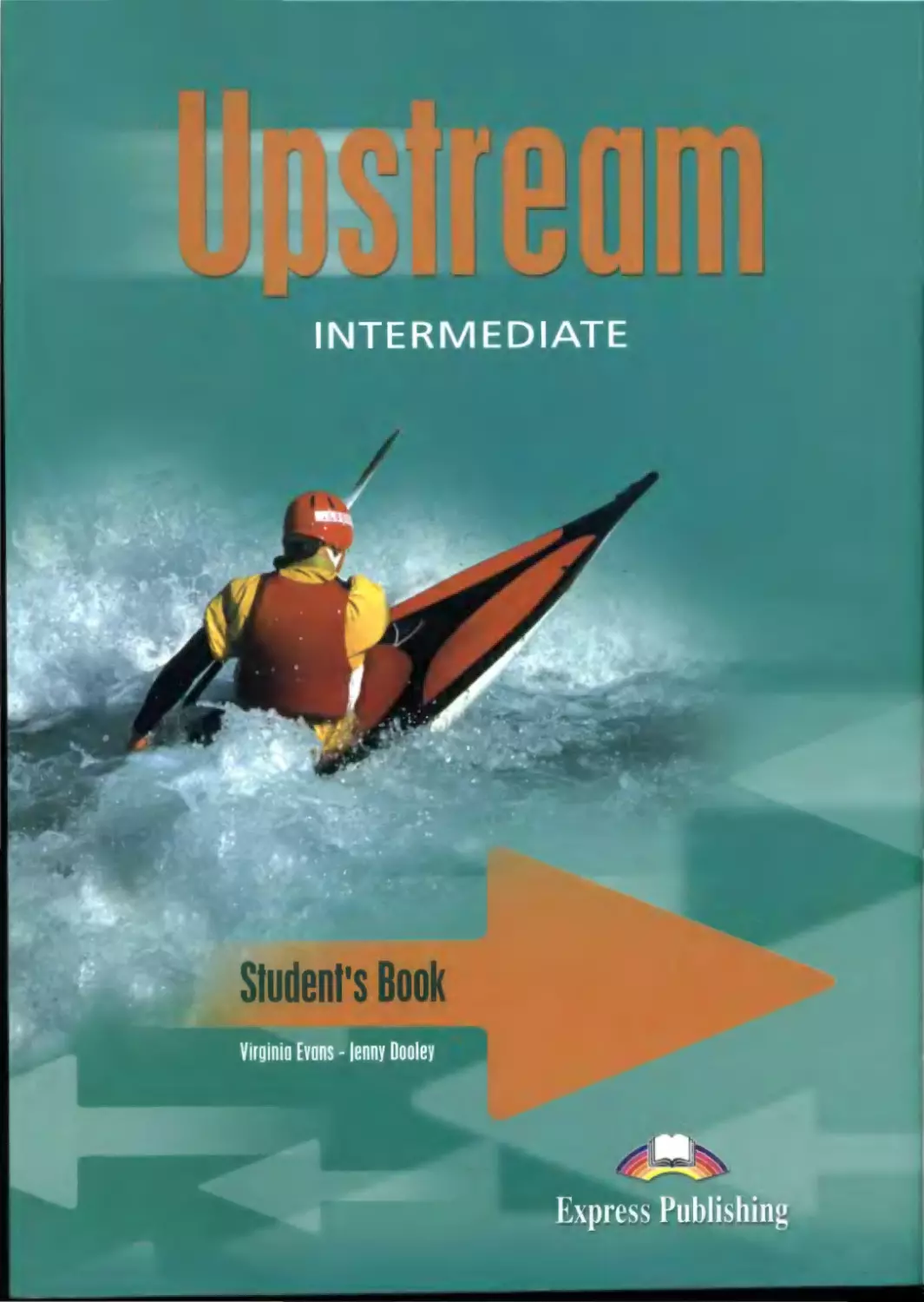
Upstream
IhJTERrVIEOIA ГЕ
Menl's Book
Virginia Evons-Jenny Dooley
Express Publishing
Menis
Module 5--- --------Module 4 --- ----- Module 3---- ------ Module 2 —-- ------Module 1
UNIT 1 My Home is my Castle (pp. 6-19) dwellings dwellings & appliances, household chores, colours & rooms, home safety F — In Search of the Perfect Home (multiple choice) The Charming Past Blarnt Castle - Dunnottar Castle F 7
UNIT 2 While there's life, there's hope (pp. 20-33) Self-Assessment Mod UNIT3 Travel Broadens the Mind (pp. 38-51) life events ule 1 (pp. 34-37) travel, holidays; festivals facial features, feelings; stages in life; family relationships, work weather; types of holidays & holiday equipment, holiday resorts; holiday troubles; traveller's tips; festivals - A Dream Come True (gapped text) - Extract from Jack A Jill - Getting away from it all (multiple matching) - Spectacular Nature White Cliffs of Dover - The Rockies
UNIT 4 Earth is Dearer than Gold (pp. 52-65) Self-Assessment Mod UNIT 5 Early to Bed... (pp. 70-83) environment; energy ule 2 (pp. 66-69) health; daily routines planet Earth, environmental problems; conservation; energy crisis, preseivation of animals & plants health problems, daily routines; stress & relaxation; describing feelings, character adjectives - The Answer is Blowing in the Wind (gapped text) - The Little Land (poern) - Can you feel the rhythm? (multiple choice) - Naturally Hot Rotorua - Ainsworth Hot Springs
UNIT 6 Better Safe than Sorry (pp. 84-97) Self-Assessment Mod UNIT 7 Penny Wise, Pound Foolish (pp. 102-115) technology; crime ule 3 (pp. 98-101) shopping, advertising technology at home, electrical appliances, types of offence; descriptions of objects shops & department stores, clothes, products; credit cards; shopping complaints; online shopping - No More Secrets (matching headings to paragraphs) - Extract from The Time Machine - Picking the Perfect Present (multiple matching) - In the Market for a Bargain- Portobello Road Market - Queen Victoria Market
UNIT 8 You Are What you Eat (pp. 116-129) Self-Assessment Mod UNIT 9 Every Man to his Taste (pp. 134-147) food, healthy eating, eating habits ule4(pp. 130-133) sports & entertainment types of food, recipes; kitchen utensils, ways of cooking, places to eat; diners' complaints types of sports, qualities; places & equipment, free-time activities, types of entertainment, the paralympics - How to burn fat all day long (gapped text) - Extract from Oliver Twist - Daredevil Shaun (multiple choice) - Trophy Hunters Wimbledon - The Super Bowl
UNIT 10 Spead the News (pp. 148-161) the media, disasters the news, natural/man-made disasters, newspapers; TV Guide, cinema, types of films - E-books the books of the future? (gapped text) - Extract from Robinson Crusoe
Self-Assessment Module 5 (pp. 162-165)
Grammar Reference Section (pp. 166-180)
Irregular Verbs (p 181)
Appendices (pp 182-188)
1 apescripts (pp. 189-215)
Word List (pp 216-222)
Grammar Listening L Speaking L Writing 1
[ present tenses; adverbs of frequency, state verbs Phrasal verbs. BREAK, BRING note-taking, T/F statements, matching speakers to statements compare types of houses, suggest ways to make houses safe for children, renting a house, expressing sympathy, requesting services - an advertisement - an informal letter describing a house for rent
past tenses, used to/would Phrasal verbs CARRY, COME future tenses, C onditmnals Type 0 & 1, the definite article [ Phrasal verbs. CUT, DO matching speakers to statements; Т/Г statements note-taking, T/F/ Doesn't say, multiple choice discuss important things in life; express opinions on family matters; talk about memones of early childhood, breaking the news, describing people; introducing people discuss weekend activities, speculations; holiday experiences; acceptmg/refusmg invitations, cancelling a hotel reservation, renting a vehicle - famous people's profiles - a narrative - a letter of complaint - a semi-formal transactional letter
comparisons, too/enough; - ng form/ infinitive I Phrasal verbs FALL. GET mg/-ed participles, modal verbs, making deductions; question tags Phrasal verbs: GIVE, GO note-taking, matching speakers to statements Yes/No statements; multiple choice; matching speakers to statements suggest ways to protect animals from extinction; suggest solutions to improve the environment, complaining; offering solutions to problems, expressing hesitation discuss ways to relax; speculating; give advice, losing your temper, making an appointment, describing symptoms - a set of rules - an essay providing solutions to problems - an informal letter describing a personal problem - a for and against essay
order of adjectives; the passive, relatives, relative clauses Phrasal verbs: HOLD, KEEP causative form; reported speech (statements, questions, orders) Phrasal verbs LET, LOOK multiple matching, note-taking, matching speakers to statements note-taking, Yes/No statements, multiple choice discuss pros & cons of using computers, discuss effects of modern technology on our lives, "filler" phrases, reporting a theft, giving instructions ask for information, discuss pros/ cons of advertising, discuss dress code, expressing opinions, making complaints, buying clothes - a news report - an opinion essay - describe clothes for a fashion magazine - an article describing a visit to a place
quantifiers (some, any, no, (a) little, (a) few); countable/ uncountable nouns; reported speech (special introductory verbs) Phrasal verbs: MAKE, PUT T/F statements, multiple matching, multiple choice give advice, compare junk food to home cooked food, accepting/ refusing invitations; doing your shopping, ordering a meal/fast food - a recipe - an assessment report
Conditionals Type 2 & 3; wishes, would rather Phrasal verbs RUN SEE, SET note-taking, T/F statements, matching speakers to statements give opinions; guess content, talk about hobbies; asking for permission & polite requests; taking a phone message, inviting a friend to a sporting event - instructions for a magic trick - a letter to the editor
future perfect, linkers & quantifiers (either/neither, although, both, all, none) Phrasal verbs' STAND, TAKE, TURN multiple matching, note-taking compare types of films, express preferences; talk about disasters, gossip; making arrangements, making excuses - a news report - a formal transactional letter
People & Homes
UNIT 1
My Home is my Castle
UNIT 2 While there's life, there's hope
Before you start...
[Learn how to ... 1
Practise ...
Units 1-2
How long have you been studying English?
Why are you studying?
• l isten, read and talk about
• dwellings
• home appliances
• household chores
• rooms
• colours
• home safety
• stages in life
• life events
• types of families
• facial features
• feelings
• working lives
' Phrasal verbs
make houses safe for
children
describe a room/a
house
request services
express sympathy
decide on a house
describe people
express feelings
express your opinion
spread the news
introduce people
present tenses
adverbs of frequency
prepositions of place
linkers
state verbs
past tenses
used to/would
break
bring
carry
come
Write ...
an advertisement for
a house
an informal letter
describing a house for
rent
a description of a
person
a narrative
Lead-in
1
My Home is my Castle
1
A
The title above is taken from an English proverb.
What do you think it means?
a. Which of the houses in the pictures:
has: five storeys and a house on top; a fibreglass
shark; brick walls; a thatched roof; a chimney; a rock
on the roof; wooden stairs up to the front door; stone
walls; a pitched roof; a tiled roof?
is: built underground; a castle; built on stilts?
b Use the adjectives to describe each house. Give reasons.
• economical •impractical •cold •spacious •cramped
• airy •comfortable «attractive •eccentric
House A is economical to maintain because it doesn't cost very
much to heat and cool.
c;* Listen and match the houses to the countries.
five-storey building
terraced house
hut on stilts
rock house
Suffolk, England
Zimbabwe
Portugal
Headington, England
d. Describe the houses А-D. Think about:
• type of house • location • special features
• general description
The house in picture A is a hut on stilts. It is located in Zimbabwe.
It has got a thatched roof and wooden stairs up to the front door.
It's cramped but it's probably quite airy.
e. Which house would you/wouldn't you like to live in?
Give reasons.
I'd like to live in the hut on stilts because it looks very attractive to me.
I wouldn't like to live in the rock house because it must get very cold.
How would you like to live in a castle, a tn
house or even underground? This might not be
unusual as you think. It seems that these days mo
and more people want to live somewhere special ai
out of the ordinary, and if they can’t buy what th<
want they are quite prepared to build it fro
scratch.
For John Mew and his wife Josephine their hon
really is their castle. They have built their ov
English castle in the Sussex countryside. Tl
building is brand new with all the luxuries you won
expect from a house that cost more than £350,000 f
build. However, when you first see it from tl
outside it would be easy to think that you are lookir
at an ancient monument. The building has a lot ।
the features of a traditional castle, including a kec
a moat and a drawbridge. “My choice of house
somewhat eccentric and building it was very hai
work, but we’ve got the perfect place to live,” Me
says. Although some would say that the building
impractical and may be cold in harsh British winter
he certainly has got a unique and spacious home.
If you don’t look carefully, you might not even s€
the home that Jonathan Ridley-Jones and Shano
Ridd built at all! That’s because the house is
converted underground water tank. The only thir
that can be seen from the surface is a door leadir
into the hillside. “We’ve never wanted to live in a
ordinary house,” Shanon says. “Living below groun
means that our home is quiet and very cosy - none c
the usual draughts. It doesn’t damage the loci
surroundings and has very low fuel bills. Some <
our friends find it dark and feel shut in when the
first visit, but they soon get used to it!”
I In Search
» Г °f tfie
’erlect Home
a tret И an underground home doesn’t appeal to you, 35
И be « how about living in the tree tops? Dan Garner, a
ys mon tree surgeon from Gloucestershire, certainly thinks
cial am that this is the way to go up in the world.
rat the “When our family became short of space at home
it froir oui solution was to build a luxuiy tree house in the 4<J
garden. The tree house is built into a spruce tree six
iT hom« metres above the ground. It has one main room, a
йг owi bedroom and a balcony running around two sides.”
e. Th. Gamer is so happy with this practical extension to
ii wouk his home that he thinks he can convince more 45
),000 ti people of the benefits of living in the trees. He wants
эт th, to ur his own enterprise making more of the
looking deluxe tree dwellings, saying, “Tree houses are airy,
a lot o’ secure and comfortable and the only disadvantage is
a keep
louse ц
7 hare
,” Men
Iding is
vinters
me.
ven seu
shan or
se is
у thm.
leading
e in ar
groundi
rone of
г loca
jme of
:n they
that they might not be suitable for people who 50
suffer from hay fever or a fear of heights!”
Even people who live in more ordinary settings
sometimes can't resist doing something to make
them stand out from the crowd. One extreme
example of this is Bill Heines’ house in Headington, 55
Oxfordshire. Until one morning in 1986, his house
looked much like all the others in his street, when
suddenly overnight a 7.5 m long fibreglass shark
appeared to have crashed through the roof. The
shark was a sculpture by local artist John Buckley. 60
At first some people complained that it might be
dangerous or that it spoilt the look of the
neighbourhood, but engineers checked that the
sculpture was safe and the ‘Headington shark’ has
become a well-known and popular landmark. It 65
seems that no matter where you live, you can always
do something to make sure your house says
something about who you are.
Reading
a. Look at the
title of the
article. What
do you think
Read the text
quickly to get a general
idea of what it is about.
Look at the first part of the question,
then find the part of the text the question
refers to. Go through the choices and choose
it is about?
Where might
you read it?
Say words you
the answer that best fits. Keep in mind that
the information may be rephrased. Even if
you think you know the correct answer,
always check that the others are not
appropriate. Check your answer
expect to find in it.
against the text
b. Read the article
and answer the questions.
c. Explain the words in bold, then suggest synonyms
for the highlighted words.
1 More and more people build their own home
A so that they can live underground
li so that they can have exactly the home they want.
C because it is cheaper than buying a new house
D because they want all the modern luxuries you find in
a new home.
2 John and Josephine Mew
A know that their choice of home is unusual
Б found that creating their dream home was easy
C wanted to live like people would have in traditional
castles
D converted an ancient building into a modern home
3 What do Jonathan Ridley-Jones and Shanon
Ridd say about their home?
A It’s just an ordinary house.
в They always wanted to live underground
C It doesn't harm the environment
D They don't pay anything for heating and lighting
4 Why did Dan build a tree house in his garden?
A He wants to persuade people to buy one.
В His family wanted to live in a tree house.
C He builds them for a living
D His family needed more room.
5 The 'Headington shark'
A was created by Bill Heines.
В crashed into the roof of Bill Heines' house one night.
C was immediately popular with everyone in the town.
D was built without any warning
Follow-up
4 a. List the advantages and disadvantages of Mew's,
Ridd's and Garner's dwellings, then talk about
them.
b. What would your ideal house be? Describe it giving
reasons.
My ideal house would be a castle. It would be mode of...
Dwellings and Appliances
5 a. Go through the table and look up the
words you don't know in your dictionary.
b. Listen and underline the words that best
describe Ann's house. Circle the ones which best
describe John's house.
7 a Which of these items are in your house? In
which room?
• refrigerator • vacuum cleaner • electric heater
• washing machine • microwave • humidifier
• air conditioner • hairdryer • dishwasher • cooker
refrigerator - kitchen
traditional, modern, apartment/flat, (semi)
detached, terraced house, cottage, villa,
1/2/3 storey building, castle
Location:
cosy, comfortable, secure, luxurious, well-
maintained, fully furnished, airy, noisy, cold
village, city, centrally located, residential
area, close to the shops, in the suburbs, on
the outskirts, isolated, in the country
small, tiny, spacious, large, huge, average,
family-sized, 172- bedroomed
cheap, low-priced, overpriced, expensive,
economical
GENBAI
DEsCRFTTOrC
c. Use the words to describe Ann’s and John's
houses, then describe your house.
Ann lives in a traditional cottage in the country. The cottage is..
a. Read the advertisements, then, in pairs, list the special
features of each property under the headings:
Inside - Outside
CoftWtl
A: Inside: large lounge/dining room...
Outside: garage, driveway..
FOR SALE £399,986 Golders Green. London.
A superb first-floor 2-bedroomed flat.
Fully-furnished with a large balcony, double glazing
and air conditioning. Fully-equipped kitchen and
modern security system. Minutes from tube station.
Full details at Primary Properties: 020 8731 68«9
b. What features are there inside/outside your house?
8
b. Match the columns. Which of these have
you/haven't you got in your house?
built-in system
central hall
fitted glazing
double wardrobes
entrance kitchen
private parking
security heating
There are built in wardrobes in our house.
We haven't got...
g Complete the dialogue, then listen and
check.
A Hello!
В Good morning. I'm calling about the house
advertised for rent in Paddington.
A. Oh yes?
В I wonder 1).....................................
give me a bit more information, please.
A. Of course. 2) ................................
like to know?
B: First of all, 3)..............................
exactly where the house is situated?
A. Yes, it's on 15, Bayswater Drive
В And the lounge and dining room - are they
separate?
A: Yes, but they're joined by a sliding glass door.
F And do all the bedrooms have fitted
wardrobes?
A. No, only the two largest bedrooms.
B. One last question. Is the garage large enough
for two cars?
A Oh, definitely
B. It sounds perfect. 4)
............................... I could see it?
A. 5) . 6 o'clock this evening'-’
В That's fine — see you then.
b. In pairs, take roles and act out dialogues
about each of the advertisements in Ex. 6.
OWNER/ESTATE AGENT
CLIENT
greeting greeting - ask for information
agree to give information ^ask your questions (e.g. exact
answer the questions location - special features)
agree on a viewing arrange a viewing
er
(J a. Use the prompts and the
linkers to make up sentences
for each house, as in
the exampies.
e
• both • as well as
• also • besides
• whereas • but
• although • however
В
• driveway / / • balcony / X
• chimney / X • air conditioning /
• garage / / • security system J
• pool X • cellar X J
• garden X J • fireplace ✓ X
• attic 7 J • built-in wardrobes X X
• patio X X • central heating ✓ у
• fence X X • fitted kitchen ✓ X
Both house A and В have got a driveway.
house A has got a chimney, but house В hasn't got one.
House A has got a driveway as well as a garage.
Besides having a garage, house A has got a driveway.
Writing Project
b. Which of these verbs can be changed to do + ing
form of the verb? Make up sentences about
your family using these phrases.
Mum always does the ironing on Saturday.
Colours & Rooms
11 .V Listen and circle the words that are mentioned
in connection with each colour.
red
T cornoetilive, romantic, active, excited
oran®*
conservative, talkative, adventurous
Vl-ILOVC shV' reliable, cheerful, generous,
impatient, creative
calm, confident, stressed, relaxed,
peaceful_______________________________________
1
?
relaxed, peaceful, refreshed, depressed
cheerful, isolated, withdrawn
b Listen again. What colour would you paint these
rooms? Why?
• a dining room • a child's bedroom
• a play area • a living room • a classroom
/ would paint a dining room orange because it stimulates the
appetite.
2 Use the prepositions and the words in the list to
describe the living room.
b. Look at the pictures A and В and write an
advertisement for each house. Say if it is for
rent/sale, what kind of house it is, how much it
costs, what special features it has got and give a
telephone number for contact Use the
advertisements in Ex. 6a as models to help you.
Household Chores
1Q a. Match the verbs to the nouns.
wash the beds
dust Sw the carpets
make the clothes
iron the dishes
vacuum the windows
clean the floors
mop the lawn
mow the furniture
Which of these household chores do you do?
How often? Which do you like/not mmd/hate
doing7
/sometimes wash the dishes in the evenings.
• in front of • next to • behind • opposite • on
• between • above • in the middle of
• fireplace • candlesticks «carpet «paintings «sofa
• armchair «cushions «plant • glass coffee table
• window • lamp
There is a glass coffee table in front of the sofa.
Grammar in use
L _______
Present tenses
Grammar Reference
1 3 Identify the tenses in bold, then match them to
their use.
1 The Eaith revolves round the Sun.
2 The tram leaves at 5:30. ....
3 John is looking for a new house
4 She can't olay, She has broken her leg .....
5 He is always biting his nails.
6 I have been trying to cal! you for an hour..
7 He is flying to Madrid tomorrow
8 It's getting colder and colder. .....
a action which started in the past and continues up
to the present with emphasis on duration
b law of nature
c expressing irritation
d action happening around the time of speaking
e result/consequence of a past activity in the present
f fixed arrangement in the future
g timetable
h gradual development
j* State verbs
We do not normally use believe, forget, hate, know,
like, love, need, prefer, realise, remember, suppose,
understand, want, appear m continuous tenses.
I believe you. NOT I'm heHwiMt
The verbs think, taste, see, look, smell, feel and have
can have continuous tenses, but there is a difference m
meaning.
/ think he is desperate. (= I believe) BUT I'm thinking about
moving house. (= I'm considering)
14 Put the verbs in brackets into the correct present
tense, then identify their use.
1 She................... (move) house next week.
2 Carl and Mary are looking for a new house. The
landlord (evict) them from their flat
3 . (you/wait) a long time?
4 They ......................... (convert) the old
mill into a beautiful new home at the moment.
5 Water ............... . (freeze) at 0° C.
6 Her flight .. (arrive) tonight at 7pm
7 .....................................(you/sign)
the contract for the house next week?
8 The Earth (become) warmer
and warmer
9 The bus .. . . (come) every ten minutes.
10 Jack and Maggie ................................
(still/search) for the perfect house
11 Bob can't move house now because he.............
(sign) a two-year contract.
1 J Fill in the correct tense of the verb in brackets.
1 A .................... ...........................
(Jane/still/think) of renting the house’
В Yes, why?
A Well, some people ..................
(think) that it is haunted.
2 A Mark .. ... .. . (taste) the curry to
see if we need to add any more spices
В I don't think we do. It... . .. .... ... .
(taste) delicious as it is.
3 A Why ................................ (you/smell)
the milk? I only bought it this morning!
B. Well, it . (smell) off to me!
*| g a. Talk about British homes, using adverbs of
frequency, as in the example.
British
Homes
100% always ............running water
75% usually............a garden or yard
50% often..............a garage
25% sometimes.......... a cellar or basemem
10% rarely.............. a swimming pool
0% nevei..............a slorm cellar
British homes always have running water.
There is always running water in British homes.
You can always find running water in British homes.
b. In pairs draw a similar chart about homes in
your country, then present it in class.
7 In pairs, talk about:
• what you do/don't do in your free time
• what you are doing this weekend
• what you have done so far today
8 How much have you changed since you were five
years old? Make up sentences, as in the example.
I’ve grown my hair long.
*| 0 In pairs, act out dialogues, as in the example
• sleep outdoors • visit a castle • be in a tree house
• stay at a campsite • redecorate your own bedroom
• stay in a house with its own swimming pool
• have a power cut at your home • move house
A: Have you ever slept outdoors ?
B: No, I haven't. Have you ever visited a castle?
A: Yes, I have.
B: Really? When was that?
A: Two years ago. Have you ever... ? etc
2Q Use the prompts to act out
dialogues, as in the example.
1 exhausted - work/garden
• plant/flowers (/)
• prune/bushes (/)
• water/lawn (X)
A- You look exhausted. What
have you been doing?
B: I've been working in the
garden.
A: What have you done?
B: Well, I've planted some
| flowers and pruned the
bushes but I haven't
watered the lawn yet.
2 tired - do/homework
• finish/Maths (/)
• write/composition (/)
• study/test (X)
3 excited - organise party
• send out/invitations (/)
• book/caterers (/)
• book/band (X)
23 Circle the correct tense.
1 I'm afraid I can't make it tonight. I .......... the estate agent at 7
o'clock.
A see В am seeing C have seen D have been seeing
2 The film..............at 7:30.
A has been starting В has started C is starting D starts
3 He................to find a cleaning woman for a month now.
A has been trying В tries C is trying D has tried
4 Look! You.................coffee all over my desk!
A have been spilling C were spilling
В have spilt D spill
5 He.............the property section of the newspaper every day, but
he still hasn't found anything.
A has been reading В is reading C have read D read
Prepositions
Appendix 1
2 j Make up sentences about
yourself, using present tenses
and the time adverbs in the list.
• yet • still • already • for
• since • at the moment
• every day • now
• next Saturday
/ haven't done my homework yet.
22 Use the prompts to write
sentences, as in the example. Use
present perfect or present perfect
continuous.
24 a Fill in the correct preposition, then explain the phrases.
1 Ann has been absent ...............work for two weeks.
2 It has taken Mark a long time to become accustomed
the Australian climate.
3 They accused him...............stealing the car.
4 We need to agree...............a time to meet.
5 He apologised ............Mary..........being late last night.
6 Emma has applied ......... Leeds University..............a place on
the History course.
7 Some people don't approve...............the council's plan to build a
new shopping centre in town.
8 The old man was begging...............food.
9 Do you believe...............magic?
10 Rob has been busy ................the redecorating all week.
b. Chain Story. Read the beginning of the story, then, one after the
other, continue the story using the phrases in bold from Ex. 24a.
1 Ann can't get into the house,
(lose/her key)
Ann can't get into the house. She
has lost her key.
2 Tom's sunburnt (sit/in the
sun/all morning)
3 My eyes hurt, (watch TV/
hours)
4 John passed his Maths exam,
(study/hard)
5 Nick has lost a lot of weight.
(be on a diet)
6 Amy looks so happy! (buy/
new house)
John Smith worked as an office
manager. He was very
good at his job, but
unfortunately he
wasn't able to go to
work because he
was very ill. He was
absent from
work for three
weeks.
25 Fill in the correct prepositions.
Then choose any five phrases and
make up sentences using them.
Word Formation
1..........the ordinary; 2 ......
scratch. 3 ......the countryside,
4 to expect sth ........... sb,
5 ...............the winter; 6 to
appeal .............sb; 7 to live
...........a tree top; 8 to become
short ..... space; 9 an
extension...............his home;
10 to convince people..............
sth; 11 the benefits...............
sth, 12 suitable...............sb.
13 to suffer ................... hay
fever, 14 fear............heights
Phrasal Verbs'^-
Appendix 2
26 a Replace the words in bold
with the appropriate phrasal
verb formed with breaker
bring.
1 My computer has stopped
working. (= broken down)
2 My favourite band have just
released their new album.
3 Schools finish for the summer
holidays tomorrow
4 She was raised by her grandma.
5 The burglars entered by force
and stole all our valuables.
6 A fire began suddenly on the
second floor of the building.
7 Visiting my old neighbourhood
always makes me recall
memories of family holidays.
8 The two countries ended
diplomatic relations with each
other two years ago.
Competition Game
b. Choose one of the phrasal
verbs in Ex. 26a and draw a
picture about it. In teams,
show your picture to the
class. The team which guesses
the phrasal verb first gets one
point. Continue the game
until all of you have shown
your pictures. The team with
the most points is the winner.
27 Fill in the correct
word derived from
the word in bold.
Read the title of the
text to get an idea what the
text is about. Read the text once
quickly. For each gap decide what the missing w
is (e.g. noun, verb, adverb, etc.) You may need •
write the word in the plural or with a negativ
meaning.Think of possible prefixes and suffixe
Fill in the gaps. Check the spelling. Read the
completed text to check if it
makes sense.
Can you imagine anything worse than returning
home to find that burglars have broken into your
house? 0) Unfortunately, this happens to about 1
million people in Britain 1)...........However, if
you want better 2)............... against burglars
there are several things you can do. To improve
3)............, check all the locks on your doors and
windows. The 4).................... of lighting all
around the house will make sure a burglar is
5).............. to hide in the shadows. An alarm
system is another good 6)..........................
measure you can take.
Starting a 7)..................... watch group is
also a very 8)...............way to prevent crime in
your area. Since most 9)................ take place
when people are away on holiday, this is when your
neighbours’ help is most 10).................. Ask
them to collect your mail, open and close your
curtains every day, switch your lights on and off and
even mow your lawn to make your house look
occupied.
FORTUNE
ANNUAl
PROTEC1
SECURE
INSTATE
ABLE
PREVEN1
NEIGHBOUR
EFFECT
BURGLAR
VALUE
Error Correction
28 Read the text below and
look carefully at each line.
If the line is correct, put a
tick (/).
If it has a word that
should not be there, write
this word on the lines, as in
the examples.
Read the title
of the text to see
what the text is about Read the
text once quickly, then read it sentence by
sentence. Look for mistakes with articles,
auxiliary/modal verbs, prepositions, pronouns,
comparative forms etc.The extra words are
wrong, not just unnecessary. Mark your
answers. Check the whole text.
An Unusual Home
Idioms & Fixed Phrases
30 Fill in the correct colour(s). Then
explain the expressions in bold.
Why would a basketball player to have an exact copy of a 0
pirate ship in his backyard? The basketball player is LA 00
taker's star, Kobe Bryant, who he has created an 1
adventure wonderland in his California home. There are 2
many of tropical gardens around the house, complete 3
with waterfalls, and the pirate ship is in one of these. The 4
ship it not only fits in with the garden, but also gives 5
to the home a fun-park theme. 6
The house is over 16,000 square feet in the size, with ten 7
bedrooms and over twelve bathrooms. A huge guest 8
house stands next to a theatre and a billiards room. Even if 9
the guests need something else to look at, apart from the 10
rest of the decor, there are so beautiful ceilings which 11
have to been carefully hand-painted. These give Kobe's 12
house a casual but elegant look. Kobe didn't want to buy 13
a ready-built home, so that he had this one specially built 14
for him - at a cost of about $13.5 million! 15
fo
1 Sophie goes to the cinema once
in a ................... moon. She
doesn't like it much.
2 Jack fell down the stairs and he
is.......... and..........all over.
3 Angela definitely has ..........
fingers - everything in her
garden grows really well.
4 He is a bit .............. - he
hasn't got much experience in
this kind of work.
5 They knew that if she found out
the truth it would hurt her
feelings so they told her a little
....................lie.
6 She doesn't want to say
anything until she has seen the
facts in and
Key
-word Transformations
29 Complete the second
sentence using the word
in bold. You can use two
to five words including
the word given. Don't
change the word given.
Read the whole
sentence, then look at
the key word.Try to work out what
the question is testing (passive, indirect
speech, part of speech, etc). Complete the
sentences without changing the word
given. Check that you have written
two to five words.Also check
for spelling.
1 I've never seen such a tiny house,
ever It's the .......................................................seen.
2 It's a long time since he last visited us.
for He..................................................a long time.
3 It's a year since he started working here
been He....................................................... a year now.
4 His new book will be on the market next March,
out His new book .............................................next March.
5 Two men forced their way into Sally's flat last night,
broke Two men ..................................................last night.
3 *| Underline the correct word, then
explain the phrases.
1 Ian is very active. He is always
out and about/around
2 After the argument they both
did their best to clean/dear the
air.
3 I can't find my keys anywhere -
they seem to have vanished
into thin/delicate air.
4 Matt is very determined to buy
the cottage. He won't
accept/take no for an answer
5 They wanted to build a holiday
resort here, but the owners of
those beachfront cottages
refused/deniedto play ball
6 They knew they would have to
drive a difficult/hard bargain if
they wanted to buy the house
at a price they could afford
Listening & Speaking skills
32 ,, You Wl*l hear
five people
talking about
Read the
instructions to
understand what the speakers
have in common. Read the list A-F and
bj Listen again and mark the sentences as true (T)
or false (F).
problems
they are
having with
their houses.
Listen and match
the problems (A-F)
underline the words you have to listen
for. Listen for clues to match each speaker
to the prompts. Remember the extracts
may have distracting information so
listen to the whole part before you
decide. Listen again and check
your answers.
to the speakers (1-5).
There is one extra problem which you do not need
to use.
1 Marsha Ward is a writer and a parent.
2 1,000 children in Britain have accidents
at home each year.
3 Young children have more accidents
than older children.
4 The bathroom is the most dangerous
room in the house.
35 Look at the pictures and in pairs talk about:
A badly fitting window
В central heating doesn't work
C air conditioner doesn't work
D leaking roof
E not enough space
F driveway needs repairing
Speaker 1 I I
Speaker? I I
Speaker 3 | |
Speaker 4 | |
Speaker 5 | |
33 Look at the pictures. Compare and contrast them.
You can use the expressions below to help you.
Both pictures show...
Picture A ... but picture В ...
Picture A ... . In addition...
Picture B, on the other hand, ...
Although/While picture A....
picture В ...
• Which house would you
|lke to live in? Give reasons.
• How IS your house similar
to/different from the ones
in the pictures?
. What problems might you
face in each type of house?
Think about: noise, neighbours,
distance from shops/facilities,
space, heating etc.
• the dangers children face at home
• how to make our houses safe for children
Use the prompts below to help you.
• electrical sockets/hot stoves - safety covers
• chemicals/deaning products/medicine - locked
cupboards
• cupboards & drawers - safety catches on
• swimming pools - guard rails
• staircases - safety gates
• knives/irons - keep out of reach
Electrical sockets are very dangerous because children can
be electrocuted. Safety covers should be put on.
34 Л You are 9oin9t0 hear a woman talking about
home safety. Which of these words do you
expect to hear and in what context? Listen and
check.
• headache • falling • burning • drowning
• choking • toothache • poisoning • scalding
• cutting • electrocution • indigestion
/ wouldn't expect to hear the word headache.
I would expect to hear the word 'falling'.
"Falling down the stairs is a common household accident."
36 Listen to an estate agent talking to a client on
the phone and complete the form, then talk about
the house.
Main Requirement: big garden
Type of house: 1
Price: |2 | '
When built: 1930s
Parking: large double (3
Number of bedrooms: 4
Number of bathrooms: 15 [
Extra features: [ 6
fT)
37
Your friend, who's got a
family of four, has inherited
£10,000 and she is thinking
of making some
improvements to her house.
In pairs, decide which would
be the best and why.
A I think she should add a
second bathroom.
B: Yes, she's got a big family
so another bathroom
would be very useful.
Expressing sympathy
40 A
b.
Listen and say what each
dialogue is about.
Read the exchanges and
underline the phrases that
express sympathy.
Deciding on a house
A I'm afraid that the plumber
won't be able to come
today He's had a car
accident
В How awful! Will he be all
right?
A Oh, no I locked myself out!
B. That's too bad
n
ut
38 a Listen to the dialogue. Where does it take place?
b. Complete the dialogue, then use the prompts to act out similar
dialogues.
A: How do you 1) ....... it, then?
f Well, it's nicely decorated and the garden is lovely, but the kitchen is
very 2)
A’ That's true. But it is 3) .......... equipped.
В And there are only two bedrooms.
A Mmm, yes But we can use the 4) ....... as another
bedroom.
В: I think it will suit our needs And it's not so expensive, either
A Okay, then. Let's tell the estate agent that we are definitely 5)
• nice area (+) • four-bedroomed (+) • a long way from the shops (-)
• a bus stop nearby (+) • no central heating (-) • loq fire (+)
• well maintained (+) • garden (+) • no garage (-)
• park on the street (+) • no fence (-) • modern security system (+)
Requesting services
3g a. Listen to the dialogue. Who's worried? Now match the exchanges.
j11 b| Hrown & Sons. How can I help
you?
|2 | | Hello, Ms Smith. What can I
do for you?
I31 | What's wrong with it?
|41 | I'll send someone to look at it
right away
[5T | What is your address, please?
a Well it doesn't lock properly
b Hello My name's Ann
Smith.
c 21, Market Street.
d I've got a problem with my
front door.
e Thank you, that would be
great
b. Use the prompts to make up similar dialogues
A
name of company
ask for problem
suggest sending sb
ask for address ’
В
full name
describe the problem
thank
give address
3 A The Smiths are going to be
evicted.
В I'm sorry to hear that.
c. Use the phrases to make up
dialogues expressing
sympathy in the following
situations.
• How temble/awful/sad!
• That's temble/awful/a pity/a
shame/too bad!
• You must be very worried/
upset.
• I'm (really) sorry about that/ to
heai that
1 fire in the basement
2 an aunt fell down the stairs
3 not getting the flat you wanted
4 a friend’s daughter burnt her
hand on the cooker.
Intonation
41 Listen, then, read out the
exchanges in pairs.
• A' I have to move out!
В That's a shame
• A: My flat was broken into last
night
B. I'm sorry to hear that.
• A. I can't afford the rent.
P You must be very worried.
• A My antique table is ruined
В How sad!
The Charming Past
42 a How does the title relate to the pictures?
b. In what context do you expect to find the
following words in the texts?
Blarney Castle
• tourist attraction • in ruins • battlements
• well-kept grounds • interesting historical site
Dunnotar Castle
• cliffs • exciting past • the Scottish Crown Jewels
• the strongest fortresses • lodgings • stables
• storehouses • popular with birdwatchers
Blarney Castle is a famous tourist attraction.
43 a. Think of three questions you would like to ask
about each castle. Read the texts and see if you
can answer them.
b. Read the texts again and answer the questions.
Write A (for Blarney Castle) or В (for Dunnottar
Castle).
Which of the castles ...
1
2
3
4
5
was used to hide sth precious?
has a special stone?
is associated with a famous film star?
has something that nobody really understands?
stands on a cliff?
® Blarney Castle
Eight kilometres north of the city of Cork you will
find Blarney Castle, home of the famous Blarney
Stone. This stone is traditionally believed to give
whoever kisses it the gift of eloquent speech. Built
5 in 1446 by Dermot McCarthy, King of Munster,
Blarney Castle has a rich history. It is believed that a
past king of Munster sent 4,000 men to help Robert
the Bruce win the Battle of Bannockburn in 1314. His
reward was said to be half of the Stone of Scone,
10 which was renamed the Blarney Stone.
Blarney Castle today is a very popular tourist
attraction although most of it is in ruins. Many
features remain, though, like the tower and the
narrow spiral staircases. Visitors who wish to kiss
15 the stone must climb up a very narrow winding
staircase to the top of the battlements, then lie on
their back and lean slightly over the edge of the
tower to reach the stone. Visitors can also enjoy a
walk through the beautiful, well-kept grounds,
1 20 where they will find the Rock Close. This is a
mysterious place with ancient stones and trees that
were used by the druids.
Blarney Castle is a very interesting historical site
and definitely well worth a visit. It is one place you
25 must not miss if you get the chance to go to Southern
d.
Ireland.
Explain the words in bold. Which words are
similar to words in your language? Where could
you read such pieces of writing?
Find the synonyms.
Text A
• payment (P. 9)
• endure (P. 13)
• merit (P. 24)
Text В
• situated (P. 3)
• deserted (P. 11)
• modern (P. 15)
Culture Нр
44 a Which of the two buildings
would you most like to visit?
Why?
b. Are there any buildings like these
in your country? Talk about them.
Think about:
• location
• historical details
• exterior/interior
Writing
Д5 Write a short article for your school
magazine about a famous historic
building in your country. In the first
paragraph, write its name and location. In
the second paragraph, write its historical
details. In the third paragraph, write a
description of its exterior/interior. End your
artide with a recommendation.
® DUNNOTTAR CASTLE 1
Scotland is full of castles, each with its own myths and legends. One such
castle is Dunnottar Castle on Scotland’s east coast, 15 miles from the city of
Aberdeen. Located on a huge outcrop of flat rock with sheer diffs on three
sides, it is the perfect place for a fortress, and there has been one here since
5 the 13th century.
Dunnottar has a long and exciting past. William Wallace, Mary Queen of
Scots, King Charles II and the Marquis of Montrose have all played a part in
its rich history. The Scottish Crown Jewels, the “Honours of Scotland", were hidden
here in the 17th century so that Oliver Cromwell couldn’t destroy them.
10 Dunnottar used to be one of the strongest fortresses in Scotland. However,
the castle was abandoned in the 18th century and it fell into decay until 1925,
when Viscountess Cowdray began repairs. Visitors can see the 14th century
keep, which was built by Sir William Keith in 1392 and is still intact. There
are also barracks, lodgings, stables and storehouses.
15 The castle has become a lot more popular in recent years since the site
was used as one of the locations for the film “Hamlet" starring Mel Gibson. It
is also popular with birdwatchers because of its location. Whatever the reason
for your visit, it will certainly be memorable.
Writing an informal letter describing a house for rent
When we write an informal letter to a friend
describing a house for rent, we can divide it into
five paragraphs. We start our letter with Dear + our
Analysing a Model Text
47 a Read the letter and underline the topic
sentences, then replace them with
friend's first name.
Introduction
In the first paragraph we write our opening remarks
and the reason for writing our letter.
Main Body
In the second paragraph we describe the location of
the house and give details of the rent.
In the third paragraph we describe the exterior of the
house (what к is made of, garden, etc).
In the fourth paragraph we describe the interior of
the house (e.g. floors, rooms, furniture, special
features, etc). We start each main-body paragraph
with a topic sentence i.e, a sentence which introduces
or summarises the paragraph.
Conclusion
In the last paragraph we write our closing remarks
and sign off using Yours, Best wishes, etc + our first
name.
\Ne can use a variety of adjectives to make our
descriptions more interesting to the reader.
Analysing the Rubric
46 Read the rubric, look at the underlined phrases and
answer the questions.
Peter has been looking for a summer house to
rent on the coast for August. He has asked his
friend , Laura, to find a house for him. Laura has
• found a suitable house and is going to write
Peter a letter describing the house and giving
! rental details.
Dear Peter,
Q How are you? Hope everything's OK I'm writing to let you
know that I think I've found the perfect summer cottage for
41
you.
Q It’s in a really nice location. It's a quiet area, but the best
thing about it is that it is less than a kilometre from the sea.
Also, the rent for the cottage is only £150 a week.
0 The house is really charming outside It's an old bnck farm
building which has been converted into a holiday cottage. It’s
got a patio and is surrounded by a beautiful garden.
0 Inside, the house is nice and comfortable. It has two
floors. On the ground floor there is a cosy living room and a
kitchen with all the modern equipment you would expect
as well as a dining room and a WC Upstairs there are two
small bedrooms and a bathroom. The house is fully
furnished so you don't need to worry about that
Let me know if you like the sound of ft. I can easily talk to
the owner, Mr Smith, for you. I hope I'll see you here soon
I’ll tell you all of my news then.
Yours,
Laura
Й1111 Й
4S
b. Which words/phrases does Laura use to describe
the interior/exterior of the house? In which
paragraphs does she mention these?
1 Who is going to write a letter? To whom? What is
their relationship?
2
3
What style is appropriate?
formal - to someone in authority
semi-formal - to someone you do not know very
well
informal - to someone you know very well
Which of the following would you expect to find in
Laura's letter? Tick (/) accordingly.
• description of the outside
• description of the inside Г~
• location of the house
• historical details
• weather conditions
• rent
Style
c. Study the table, then find examples of informal
style in Laura's letter.
Informal style
abbreviations e.g. I've got
• simple linking words e.g. but, so, and, etc.
• shorter sentences e.g. I'd like to see you
• personal tone e.g. I've got some great news
• everyday expressions e.g. Thanks a lot.
Formal style
• no abbreviations e.g. I have got
• formal linking words e.g. despite
• longer sentences
• impersonal tone e.g. passive
• formal expressions e.g. I look forward to hearing
Loi
Ex'
Int
Rei
Opening/Closing Remarks
d. What are Laura's opening and closing remarks?
Which of the following can you use instead?
Why can't you use the others?
a Thanks for your letter
b I feel obliged to write to inform you .
c Sorry I haven't written for so long.
d Get in touch with rne soon.
e Looking forward to hearing from you
f I look forward to receiving a prompt reply.
c. Use your notes to ask and answer questions, as in
the example, then talk about the house.
Descriptive Writing
4$ Use the phrases to describe the building where you
live.
fiat
[^ouWe-g/ozed, French jHHHHBii
^vegetab/e, front, back, rose
front, back, glass jHHHHI
Fd/ning, cosy spore, living, comfortable, spacious
windows
J
garde»’
J
door
J
room
Г modern, antique, old fashioned, classic
furniture
J
A: Where is the house located?
B- It is located...
50 Use the information in Ex. 49b to answer the
questions in the plan. Then write your letter. You
can use the letter in Ex. 47a as a model.
Dear (yourJriend's first name)
Introduction
(Para 1) opening remarks
I live m a detached house. It's got...
Discuss & Write
Д9 a. Read the rubric and underline the key
words.Then, answer the questions.
Your friend wants to move to your area and is
looking for a house to rent, He/She has asked you
to help. Write a lettei to your friend describing a
! house you have seen and giving fuither details
1 What type of writing is it?
2 Who is sending the letter? What is the relationship
between you and the recipient of the letter?
3 What style is appropriate? Justify.
4 What information do you need to include?
5 What opening and dosing remarks can you use?
t b. Listen to the conversation you had with an
estate agent and complete the table
Location 1) " " ""1 .. Beech Lane, Deighton
Exterior large 2) at the front; garage
Interior fully-furnished; upstairs two bedrooms, a 3) . downstairs bathroom, living room; old 4) ; dining room; large kitchen
Rent 5)£... .... a month
Main Body (Suggest topic sentences)
(Para 2) Where exactly is the house? How much is the
rent ?
(Para 3) Uhot is the exterior like? (material, garden,
etc)
(Para 4) Who! is the interior like? How many floors/
rooms/furniture?
Conclusion
(Para 5) What should you do next: give phone number/
hook it?
closing remar hs
Yours,
your first name
g Explain the sentences below in your own words.
Famous
• A man travels the world over in search of what he
needs, and returns home to find it.
George Moore (Irish aulhut/poer)
• Strength of character may be learned at work, but
beauty of character is learned at home.
Henry Drummond (1851-1897) (Scottish naturalist)
Lead-in
While there's life, there's hope
'J a. Which of the following life events match the pictures
(1-4)? What other life events can you think of?
engagement • moving house • having a baby
retirement • graduation • wedding
workif
a.
73% Divorce
b.
63% Death in the family
53% Personal injury or illness
50% Marriage
A
45% Retirement
39% Bringing up children
В
36% Changing jobs
C
V
В
fr
C
fi
о
a. Listen and match the people to the events. How
does each person feel?
In pairs, use the adjectives below to talk aboir
some important events in your life
• sad • happy • scared • thrilled • excited
• worried • disappointed • pleased • irritated
/7/ never forget my first day at school. I felt very scared.
I was so happy at my sister's wedding. She looked gorgea
in her white dress. It was unforgettable!
3 a. Look at the chart and see what American adii
consider to be the top ten stressful life events д
Then make up sentences, as in the examples.
b. In pairs, think of words related to each life
event in the pictures. Use the words to describe
the pictures.
The man in picture 1 is moving house. He is carrying a large
box. He looks happy.
Marta
Steve
Laura
Tony
losing your job
moving house
having a baby
leaving school
26% Startmg/leaving school
23% Trouble at work
20% Moving he use
Bill & Terry
retirement
feet in Bost
femoon in
uddenly he
ansmittefl
liephone an
had been
Alexander
speak corr
called *visi
At the <
mutes; of
father’s s',
A few ye<
men who
Unfort
called ti
Alexandr
tribe of
Brantfor-
come ar
Alex;
the wor
busy tl
inventii
Th(
young
a wort
experi
free ti
Shev
Seventy-th
percert
Americans conn
divorce to be them
stressful event ini
Sixty-three percert
Americans consider a det
in the family k
the second most stress
event ini
D
E
P
h
h
A
-r
H
p
H
q
a.
b. Which are the three most stressful life events
for you? Give reasons.
si
a
A Dream Come True
to talk about
e.
ixcrted
• irritated
ery scared.
ooked gorgeous
Tne young professor was working in his workshop in a narrow
tot in Boston, not far from Scollay Square It was a very hot
Йпооп in June, but the the man did not notice. 0) I F' I
Bdenly he heard an almost inaudible sound, the first sound ever
ensmitted through a wire. The machine was the very first
jtepbone and the young man was Alexander Graham Bell.
Although he was only 28 years old at the time, Alexander had
een working in the fields of speech, anatomy, electricity and
Slegraphy for over 11 years. 1) I I In fact, his whole family
Bd been involved in the study of speech and sounds,
iexander’s father had also written several books on how to
как correctly as well as creating a form of sign language
Ed ‘visible speech’
I the age of 16 Alexander started to help teach young deaf
s; children who could not hear or speak. He used his
ris system of visible speech’ and achieved amazing results.
A few years later, while working in London, Alexander met two
men who would play an important role in his life. 2) I I
Unfortunately it was around this time that the fatal disease
called the while plague spread through Britain and both
Alexander’s brothers died 3) Г I Alexander was teaching to a
tribe of Mohawk Indians in a small Canadian town called
Brantford, when the Boston Board of Education asked him to
come and work in the USA at a new school for deaf mutes
Alexander was very happy to move to Boston and continue
the work he had started in Britain. 4) □ However, he was so
busy there that he did not have the time to work on his
speak because of a childhood 1
illness. Her name was Mabel
Hubbard, and four years later they
got married Although many people
thought that the plan to invent a
human voice transmitter was a
waste of time, Alexander refused
to give up his dream. He continued his experiments with sound
vibrations. He even copied the design of the human ear using
iron rods and electrical wires to produce the same effect.
Alexander was spending so much time and energy on his
inventions he did less and less work with his students and soon ran
out of money. He was about to give up when he met Professor
John Henry, an expert on the telegraph and electricity. 6) I I
In order to survive financially Bell had to work on the
musical telegraph, but he also continued working on his
mechanical voice transmitter 7) CZZI Almost a year later, in
March 1876, the first words were heard coming through the
phone.
On his 29th birthday
Alexander Graham Bell
mencan adults
ful life events,
e examples.
Sevenfy-thre»
percent я
rcetobethe mot
consider a dec
n the family to
event in life
life events
Inventions.
Then, two years later, he agreed to give private lessons to a
young boy whose family allowed him to use their basement as
a workshop. This gave Alexander the opportunity to resume his
experiments with sound transmitters. He used to spend all his
free time, and most of his money, on his inventions. 5) Г' I
She was a young girl who had lost her hearing and the ability to
registered his
invention with the
patent office and,
because they had
never seen
anything like it
before, they
registered his
invention as ‘an
improvement in
telegraphy'. The
name 'telephone'
came later.
Read the text through.
Think of what information
might be missing. Read the list of
missing sentences. Cross out the one used in the
example. Remember there is one extra sentence.
Start fitting the sentences into the gaps. Match the
topic of the missing sentence with the topic of the
sentence before and after each gap. Look for clues such
as reference words (he, there, it etc) or linking words
before or after each gap. Check that the sentence
you choose fits grammatically and makes sense
Read the completed text to see if it
makes sense.
Reading
Д a. What do you know about Alexander Graham
Bell? What did he invent? When? Did he come
from a big family? Read the article and find out.
b. Choose from sentences, (A-1), the one that best
fits each gap (1-7) to complete the text. There is
one extra sentence you do not need to use.
A Professor Henry realised immediately that Alexander
had made an amazing discovery and encouraged
him to continue with his experiments
В At that time he had another student who greatly
пЯда «d his life
C His grandfather had invented a system to help
people with speech problems.
D He was inspired by the Baron's work and refused to
give up his dream
E Mr Alexander Ellis, a professor of philology, and Sir
Charles Wheatstone, an expert in telegraphy,
started him thinking about sending sounds through
a machine
F He was totally absorbed in his strange machine which
he had been working on for about three years.
G As a result Alexander and his parents left the
country and moved to Canada.
H On that summei afternoon in 1875, when Alexander
heard the first sound transmitted over his machine,
he realised that he had finally achieved his >af
I He became so successful that he soon opened his
own school called "The School of Vocal Physiology"
c. Read the article again and explain the words in
bold. Give synonyms for the highlighted words.
d. Which of the following words best describe
Alexander Graham Bell? Give reasons.
• persistent • sensitive • daydreamer • stubborn
• hardworking • patient • indifferent
Follow-up
5 Read the article again and make notes about
Alexander Graham Bell's life. Then, talk about his life.
How has his invention changed our lives?
(1958)
(1945)
Jean
094J)
[Tony
(1953)
Mr Harris
checkout clerk
footballer
Peter
Look at the pictuies. Who's got: wrinkles,
freckles, spiky hair, dimples, a centre parting,
crooked teeth, a beard, bushy eyebrows, glasses,
straight hair, a wide for ehead, frizzy hair, sideburns,
a moustache, a pointed chin?
English teacher
forest fire fighter
carpenter
c. Talk about each person, as in the example
Д When wos Michdle Pfeiffer born?
В She was bom in 1958?
A What does she look like?
B: She has got long blonde hair and blue eyes.
A What did she do before she became an actress?
B: She was a checkout clerk.
(1953)
^b./ Listen and match the jobs
to the famous people above.
Look at the pictures, then use the words from
Ex. 6 to describe each • ne
Miche le Pfeiffer
Rad Stewart
Harrison Ford
John Malkovich
b. In pairs, complete the table with as many
adjectives or phrases as possible. Then, use the
words to describe yourself.
Age in his teens,
Height/Build: broad-shouldered,
Hair: wavy,
Face: oval,
Cheeks; rosy,
Eyebrows: arched,
- Eyes. green,
Eyelashes. thidg
Nose. snub,
Mouth- wide,
Chin: pointed,
/ am in my early teens. I am tall and slim and...
Project
Prepare a poster of famous people. Write their job,
age and a short description of each Decorate your
project with pictures.
Stages in Life
В a Listen and fill in the average ages for people in
the USA, then make up sentences, as in the
example.
4
4
4
EVEN’ AGE
start elementary school
go to collegeAiniversity
leave home
get married
have first child
buy a house
retire
Americans usually start elementary school at the age of five.
10
words from
‘xample.
b. Make a similar table for your country. How does
your country differ from the USA?
t Listen to these sounds and match them to how
you would feel. Then, make up sentences, as in the
'es.
dress?
c. Study the diagrarri and in pairs, think of two
events typical of each stage.
Hitt
example.
siren wailing irritated
dogs barking nervous
waves splashing scared
message notification eager
thunder crashing relaxed
0-1 1-2 2-12 13-19 20+ 40+ 60+
Whenever I hear a siren wailing, I feel nervous.
A siren wailing makes me feel nervous.
'J 2 These symbols, or emoticons, are used in e-mails and
chat rooms to suggest feelings. Study them and
then use the symbols to respond to the comments.
A baby learns to ctawl.
A toddler learns to walk.
Feelings
9 a. Write the adjectives on the correct line.
• terrified • bored • delighted • worried
• impatient • calm • annoyed • cheerful • sad
• depressed ♦ ecstatic • furious • miserable
• pleased • nervous • relaxed • frustrated
Pleasant
Neutral
-o Shocked
X= Hopeful
-e Disappointed
|-0 Bored
'-/ Doubtful
> -C Angry
-) Happy
- ( Sad
Tearful
S-) Greedy
So/ Excited
D Very happy
rite their job,
ecorate your
r Unpleasant]
or people in
as in the
b. Choose one adjective from each column. When
was the last time you felt like this? What had
happened to cause this feeling?
The last time I felt annoyed was when the train was late.
1 Con you believe It? He gets fjoid $ 1 million c Him!:-/
2 Guess what? I got engagedl
3 He's in hospital. He's very ill.
4 They won 3-0!
5 tko) JLmtfidnvn UJnmim&nsnftyt:
6 / didn't get the job.
Listening
t the age of five
IQ Listen and write how each speaker felt. Why did
each speaker feel that way?
3 Fill in be and/or feel. Then use the collocations to
make up sentences about yourself.
1 .. convinced 6 ............expressive
2 exhausted 7 easy-going
3 . kind 8 forgiven
4 pathetic 9 interested
5 worried 10 responsible
He felt/was convinced that she didn't like him.
Past tenses "Ж
Grammai Reference
7
14 a. Identify the tenses in bold, then match them to their use.
1 She left university su yeaisago
2 He was waiting for the bus when the accident happened
3 He had just finished his report when his boss asked to see him
4 She had been working as a clerk toi two years before she got promoted
a happened before another past action with emphasis on continuation
b happened at a specific time in the past
c happened before another past action
d was in progress at a certain time in the past
b. Underline the time adverbs used with each tense. What other
adverbs can you think of which can be used with these tenses?
Make up three sentences using them.
*] g Match the prompts from each column to make sentences.
(you/work) late last night’"
"Yes, actually I
(not/leave) until
11 pm."
8 She
(visit) Fiance before but she
only .....................(go)
to Paris last month
9 A
(you/see) Jamie at the party
last night’
В No, by the time I
(get) there, he
(already/leave)
10 Amy
(walk) home when she
(hear) hei
mobile phone ring
while
the lights went off
I
3
1
4
*
they had been
looking for a house
for six months-----
Martin has been \
living m Thailand
I anet was working
ч hei computer
I haven't seen Joanne
loe was coo) ing
when
since
for
before
Gail has been abroad
three times
two years now
this yeai
they found wf>ai they wen
looking foi.
Ann was laying the table
she got married
J Put the verbs in brackets into the correct past tense. Justify your
answers.
1 Paul (break) his arm while he
(paint) the wall
2 Sandia finally (pass) the exam She
(study) really hard for months.
3 A: How long........................................................
(Mary/work) here before sne (retire)'5'
В More than twenty years
4 While I. (walk) home last night,
I..........................................(bump) into Sally.
5 The sun (shine) and the birds
(sing) as we (drive)
towards the village
6 We (finish) the main course and
(wait) for dessert when
the fire alarm (ring)
17 Underline the correct words.
1 When she entered her flat she
had found/found that someone
had broken/broke in
2 He had been drivmg/was driving
home when/after he crashed
into a tree
3 When Laura arrived/had arrived
at the restaurant, Tony had
gone/had been gone home
4 When/While I walked .nto the
100m, they had just/yet finished
their dinner
5 After they had been hving/irveo
there srnce/for two years they
decided to build an extension tc
their house
6 He didn't shave/hadn't been
shaving this morning because
he hadn't had/didn't have
time.
7 While/After he graduated from
university, he joined/was
joining the army
8 She bad been watching/
watched TV when/since Tom
came home.
9 He was havrng/had a bath when
the lights had gone/went out
10 She had riever/ever been to
South America before/after
Game
Look al the cartoons, then in
teams try to explain what
happened to each of the people
using past tenses. Each correct
sentence gets 1 point. The team
with the most points is the
winner
b Listen to Sam and Sarah and tick (/) the things that they used to
do when they were children and cross (X) the things that they
didn't use to do Then make up sentences, as in the example.
play with compufets
have then own puvate
telephone lines
piay outdoors
piay with their friends >n the
street
go fishing
go swimming in the liver
lock i hen doors
do lots of cho>es
have early nights
wear a uniform to school
go to school six days a week
visit then grandparents in the
school holidays
Sam and Sarah didn't use toplay with computers
c. Talk about what you used to do during your childhood.
не fell off the ladder while he was
painting the wall and broke his arm.
He had been playing football for an
hour when
10 a- Study the two examples. Which sentence refers to the past?
a. They met ten years ago b. They hove been together since then
b. Put the verbs in brackets into the post simple or the present perfect.
Used to/Would Ж
Alex Morton is a talented writer who I)
Grammar Reference
a. Study the examples. In which
of the sentences (1-6) can you
use would instead of usedtoT
Tick (/) accordingly.
very interesting life He was born m 1945 in Manchester, and he was
the youngest of six children. From the moment he could read, he was
nevei without a book in his hands He was an avid reader
throughout his scnooldays, and he soon 2) ....
talent for writing, too. In fact, his teachers 3)
him extra assignments just to be able to read more of his work
After he 4)
(leave) school he went to Manchester
He used to/woi ild go jogging before
breakfast (post routine)
He used to live in York os a student.
(past state)
NOT: HeweMHveinYorkasa
student.
University By the time he got his BA. he had already published .
number of short stories, and his first novel was almost finished
Over the next few years he 5)
(write) non-stop and each
of his books was more successful than the last Despite being so busy with
1 I used to come here when I was
young
2 Jack's parents used to live in
Canada
3 lourse used to have a
motorbike but I think she has a
car now
4 Caroline used to play tennis
every week when she was a
child
5 When they were younger, they
used to go for long walks in the
countryside
6 Grandma used to make
porridge for breakfast
i
his work. Alex still 6)
children. He 7).....
father.
Alex Morton 8)
and his name 9) ...
(find) time for romance He met Fiona Joi
(show) his
(lead) a
while he was ar university and they were married in 1971 They have two
(always/be) a devoted husband and
(write) over twenty books so fai
(be) on the best seller list more
times than he can remember. However, the pinnacle of his career was when he
Ю).....
Alex II)
12)....
(win) the Booker Prize for Fiction in 1995 Since then,
.............(continue) to write and many of his books
............. (be/made) into films
c. Talk about one of your older relatives. You can talk about his/her
• childhood • education • work • family (e g mamage/rhildren)
• achievements • later years
My grandfather is called Harry. He was born in Brighton in 1920 When he left
school he joined the local fire bngade. He got married when he was twenty six. He
and his wife Ada hod seven children He says that his family was his most important
achievement in life. My grandfather retired three years ago. Since then he and my
grandmother have spent their time travelling and gardening.
Prepositions
Appendix 1
20 a Underline the correct
preposition, then explain the
phases in bold.
1 Julie is capable of/for doing it
on hei own
2 You can depend to/on Simon
He's very reliable
3 He shouldn't comment on/to
that when he doesn't know all of
the facts
4 It was very unfair that Paul was
dismissed from/of his job
5 The criminal has been charged
for/with burglary
6 They're always complaining of/
about something
7 Children arc very curious for/
about the world they live in.
8 Julian is very seuous and
dedicated to/at his work
9 She is finding it difficult to
concentrate on/to her studies
IC Sally is amazing I don't know
how she copes with/other job,
and her kids at the same time
3 When Lucy's uncle died she came a lot of money
4 Sue asked Rick and Claire to come foi dinner tonight.
5 Danny carried his speech peitectly
6 Jason is going to carry the business after his father retires.
7 The author has a new novel coming next week.
8 Liz has come an excellent solution to our problen
9 Doctors will carry more tests to find out what the problem is
10 John is ill, he has come chickenpox
О
23 Re
an
the
wf
fit’
gai
onl
b Look up other meanings of come out and come (a)round in your
dictionary Then make up sentences using these meanings.
Word Formation
22 Fill in the correct word derived from the word in bold
Although the 0) majorityof people say that they work, MAJOR
‘for the money’ the 1) .................. reward isn’t FINANCE
actually the only thing that they think about.
2) ... .. . , research has shown that people RFCENI
consider many different factors to be of 3) .. IMPORT
when ihey make their 4)........ A worldwide CHUOSF
survey of students showed that after 5) .............. GRADl'AlE
they would be looking foi jobs that allowed them to
balance their 6) . .. . lives with their work PERSOh
lives.
b. Fill in the correct preposition
Then choose any three phrases
and make up sentences using
them
Itb nol just the younger generation who think like
this either. There has even been an increase in the
1 . fact. 2 to be involved
sth, 3 to move
Boston. 4 to spend time and
money . sth, 5 a waste
time; 6 an expert sth
Phrasal Verbs
Appendix 2
numbei of middle-aged 7) ......who are moving WORK
aviaj from highly-paid executive positions into less
8)........... jobs. They are looking for something STRESS
which is more 9) ..............and gives them more ENJOV
leisure time All this has meant that 10) ..... are EMPLOl
realising that they need to do more than just offer good
wages if they are going to keep their workers happy
and motivated1 2
The I
of
In V
USA, fan
drama ticalh
The numb
parents gc
parent ran
i 3) ....
from then
these char
then fami
-—7) ......
A ret
people tin
more impc
having a t
surveyed s
earn less n
with then
they had v
they shoo
15)
traditional
21 a. Fill in the correct particle and
explain the phrasal verbs.
• out (x2) • up with • into
• across • round • away • on
• off • down with
1 The fans got completely carried
when their team
scored m the last minute
2 Neil was reading the newspaper
when he came . an
article about an old fnend of
his
Key
24 Com|
Your
indue
1 H
fc
2 He
at
wy.
tonight
athei retires.
k.
j our problem
he problem is
Open Cloze
23
Read the text
and think of
the word
which best
Read the title of the
text It is a summary of what
you are going to read. Read the text
once quickly to get the general meaning. Read
the text again Pay attention to the words
fits each befbra'after each gap.These will help you decide what
nd in your
mngs.
gap. Use
only ONE
WORD in
each gap
word is missing. Missing words can be adverbs, articles,
modal/auxiliary verbs, conjunctions, prepositions,
pronouns, phrasal verbs ett.The word that you
choose must be gramr.iaucally correct and make
sense in context When you have filled in the
gaps read the text again to see if it
makes sense.
3 We haven't bad a holiday foi years
ages It's........................................
a holiday
4 We haven't been out since last summer
time The..........................................
was last summei
5 After hours of discussion, they finally succeeded in
reaching an agreement
managed They .................................
aftei bouts of discussion
6 She wasn t involved in the ai gument at all
nothing She had
the aigumentatali
MAJOR
FINANCE
RECENT
IMPORT
CHOOSE
GRADUATE
PERSON
The Importance
of Family
In Western Europe and the
USA, family life O)has changed
dramatically over the last forty years
The number of families that depend 1)
both
Idioms & Fixed Phrases
WORK
STRESS
ENJOY
EM Pl OY
parents going out to work, or where ?) is one
parent raising the children alone, is much greater than it
3) to be Also, many more people move away
>rom thev families 4) ever before 5)
these changes, most people still think 6)
their lamily as one of the most significant parts of
7) lives
A recent American survey showed that 8)
people think that spending time 9) home is
more important 1G) earning a high salary or
having a challenging job The majority of young people
surveyed said that they 11) be happy to
earn less money it they had more time to 12)
with then loved ones Older people also commented t at
they hao worked 13) hard in the past when
theyr should have 14) with their families
jj) if the typical family doesn't follow the
traditional model today, it is still a vital part of our lives
Key-word Transformations
24 Complete the sentences using the words in bold.
You must use between two and five words,
including the word given
1 He started to play golf five years ago
tor He ...
five years now.
2 How long is it since you moved here?
ago How
heie?
25 Underline the correct word, then try to explain the
idioms
1 Let's put on some music It's as silent/quiet as the
grave in here
2 He's got food poisoning and he's been as sick as a
dog/cat all week
3 Don’t worry about Maggie, she's as tough as old
shoes/boots
4 The Martin children are not at all alike They’re as
different as chalk and cheese/milk
5 I'll look ahei Jo anytime Really, she's as good as
silver/gold
6 Ben can't wait to get started on the project He's
as keen as ketchup/mustard
26 Circle the correct word, then explain the
expressions in bold.
1 Things are going very well at work at the moment,
I think a promotion might even be on the
A books Г cards C letters D papers
2 Chris does lots of work tor charity. He's always
doing something foi a good
A aim В example C cause D reason
3 You have to make it to her exactly how you
feel
A easy В straight C clean D deal
4 Helen is a lovely girl, but she always has her head
in the She never notices what’s going on
around her
A sky В stars C douds D air
5 It was only a silly argument, but they were both
getting very under the collar
A hot В red C heated D warm
27 £> You will hear fivp people talking about the most
important thing in their lives Listen and match
the speakers to the statements There is one
statement which does not match any of the
speakers
A We have a great relationship
В Financial security is very important
to me.
C Nothing is as important as your
health
D They're like my family
E My family is everything to me
F My career is my life
Speaker 1
Speaker 2
Speaker 3
Speakei 4
Speaker 5
b. Listen again and write one reason why each
person feels this way.
28 Look at the survey results and the visual prompts.
Then, in pairs, discuss the following
• Which of these things ao you consider to be
important tn your life7 Why/why not?
• Are some things just as important as other things7
Which ones7 Give reasons
A / think family life is the most important thing in my life
because m y family help and support me
B: Really, I think friendships ate the most important thing
because I share everything with my fnends etc
Moments .
in Life
100 people were questioner} about
what they thought was the
most important thing in
24? their lives. This is
what they said.
20%
29 a Listen and mark the Read ths
sentences T (true) statements
ОГ F (false). before you listen and
underline the key words Tr
1 Rachel gets plenty of attention t0,13^ woror
from her patents. ..... with similar words in
2 Hei parents spoil her. ........ me script.
32 1
v
c
3 She nevei tee's lonely __
4 She sometimes wisnes she had
a brother. ______
5 She ooesn't want to shaie things with anyone __________
6 Sne likes having nerowr room
7 She thinks that fnends can be as good as sisters.
b. In pairs talk about your family.
How big is your family7 What does each
member of your family look like? Which family
member do you admire most? Whc is your
favourite relative? Why? Hnw often do you see
your relatives?
30 Descnbe the pictures. Then, in pairs, express your
opinions about:
the advantages and disadvantages of each type of
family
the problems the
children in each
type of family
might have
how each family
compares to your
own
EXPRESSING OPINIONS
<
/7
O'
s
33 <?»
b.
Picture A shows .., wheieas , I think I believe ., li
my opinion , it seems to me
AGREEING
You're nght/Thats true/
1 quite agree with you
DISAGREEING
Do you (really) think so?
No, I'm afraid I can’t agtet
with you.
A: Picture A shows a large family There are the parents ana
three children; two girls and a boy. They look European 01
American. What doyou think 1’
В: I thinkyou re right. They’look very happy etc
31 C /You'll hear five people talking about a past
experience. Decide which of the statements (A-F)
matches what the speaker says. There is one extra
statement which you do not need to use.
1
2
3
4
In
34 О
A I simply didn't want to do it.
I' It was an unforgettable experience
C I've never been so afraid
D It was the best day of my life.
E I was really excited
F I didn't know what was going on
32 Look at the pictures and identify what they show.
Winch of these bring back memories of your early
childhood7 Talk about your memories.
I'll never forget my first fancy dress party. I was dressed
as a cowboy. It was...
Spreading the news
33 W Listen and identify which extracts give
good/bad news.
b Read the exchanges and practise the intonation.
Then, use the prompts to act out similar
dialogues
• Your sister has got engaged
• Youi brother has been promoted
• Your fi lend was in a car accident
* You passed ycur exams.
* You got ycur driving licence
• Your friend lost his job.
1 A I've got something to tell you. I’m afraid I
tailed my driving test
E That's a pity. You musl be really disappointed
2 A Have you heard? I won a trip to Florida
В Wow! Congratulations! You must be thrilled!
3 A Guess what! I've got a new job'
В That's brilliant! You must be very happy
4 A I’m afraid I've just heard something ternble
Simon crashed his motorbike
E Ob no! How awful!
Intonation (contrastive stress)
Describing people
35 a Listen to the dialogue. Who does Simon want to
meet?
b Match the columns to form a dialogue Then, in
pairs, act out similar dialogues fbi the people in
the pictures.
|д [ | This is a great party,
Fted
1 No problem Let's go ovei and
I'll introduce you
|B [ | Yes, I am, but who's 2
that over there7
Ob, that's Diana She's just
startea working in my office
Do you want to meet her?
Thanks Are you having a
good time?
|c ] | The girl with the long 3
blonde hair
Introducing people
35 a Listen to the dialogue Where does it take
place?
b. Read the dialogue Then use the expressions in
the box to introduce.
• your new friend to your parents
• your husband/wrfe to youi employe'
• two business associates to each other
A: Miss Lane, I'd like to introduce you to a colleague
of mine
В Certamly.
A: Miss Lane, this is my colleague, Mi Kent Mr Kent
this is Miss Lane
В How do you do7 It is a pleasure to meet you Mr
Kent
C It is a pleasure to meet you too. Miss Lane
4 w r' Listen, mark the stressed words, then repeat
• A Did you make a chocolate cake7
F No, I made a fruit cake
• A Do you want thi ее boxes ot chocolates7
B. No, I want two boxes.
h Did you ask Mr Johnson?
В No, I asked Miss Johnson
INTRODUCTIONS
Formal Informal
May 1 introduce 1 would like you tc meer 1 would like to introduce you to How do you do? It is a pleasure to meet you This is Come and meet Hi, how are you? Hi there! Pleased to meet you
Louisa May Alcott (1832-1888) was born in Germantown, Pennsylvania
second Of four sisters. At an early age, Louisa and her family moved to
Massachusetts, where she lived for most of her life. Her father was a teacher
and he encouraged Louisa to keep a diary. She started to wnte at the age of
16 Alcott used her diary to help her wnte about her own life and
experiences. One of her most famous books is L*le Women ,
w hich is based on the life of her family. She w rote Jac* and Jill
A Village Story in 1880. Alcott has been called the novelist of
children’ for her ability to reflect the teenage point of view.
jack and Jill tells the story of life in rural New Englanc al
the turn of the century. It tells of how the friendship
between the two main characters is tested by a terrible
accident. With the help of their friends and family, I hey
put their bad luck behind them and get on with their
lives.
“Ge
Decern
Harmo
the sea
5 fast as
led intc
there w
fence t<
they air
10 “Her
judge,”
37
38
Read the title and the author's biography. What do you think the novel is about?
How could Alcott's own experiences have helped her write the novel? Look at
the picture What time of year is it? What are the children doing?
39
a. Read the extract and match the characters with their descriptions, then
make up sentences about them. Finally explain the words in bold
111 jFrank Minot a white teeth, golden hair
N Jbttle Boo b short legs, round face
l?J ~]td Devlin c tall, keen sparkle in his eye
Hl “jjdck d black eyes, red cheeks
l5l _jill e sweet-faced, rosy cheeks
b. Which of the characters is’ serious:clever: good natured, popular;
protective;patient? Underline the words/phrases/sentences which
imply the character
c. Which of the characters can you see in the pic tures? Describe them.
d. Match the highlighted words to their synonyms in the list.
• boy • serious • smarter • guy • gathered • playful • generously
• first-rate • protected • shy
a. This chapter is called The Catastrophe What catastrophe do you think might
happen? In pairs, predict what you think is going to happen next
I think there is going to be a fight between loe and Jack.
b Listen and check if your guesses were correct.
Project
You have decided tc enter the Louisa May Alcott drawing competition
Read the extract again, then choose a scene to draw for the competition
set look
fixed on
“Her
and dov
’()
behind
sides, ai
full moc
“Thei
long boy
were at
bottom!
"Hun
sweet-fa,
his brow
“Laur
meadow
this long
can’t be >
nose off,
screamin
“No, s
“Cleai
rhymes a
Down
all smile
wt
Chapter 1
The Catastrophe
“Clear the lulla!” was the general cry on a bright
December afternoon, when all the boys and girls of
Harmony Village were out enjoying the first good snow of
the season, Up and down three long coasts they went as
5 last as legs and sleds could carry them. One smooth path
led into the meadow, and here the little folk congregated;
there was a group of lads and lasses sitting or leaning on a
fence to rest after an exciting race, and, as they reposed,
they amused themselves with criticising their mates.
|P “Here comes Frank Minot, looking as solemn as a
judge,” cried one, as a tall fellow of sixteen spun by, with a
set look about the mouth and a keen sparkle of the eyes,
fixed on the distant goal with a do-or-die expression.
“Here’s Molly loo and Little Boo,” sang out another;
15 and down came a girl with flying hair, carrying a small boy
behind her, so fat that his short legs stuck out from the
sides, and his round face looked over her shoulder like a
full moon.
"There’s Gus Burton; doesn’t he go it?” and such a very
3 long boy whizzed by, that it looked almost as if his heels
। were at the top of the hill when his head was at the
bottom!
“Hurrah for Ed Devlin!” and a general shout greeted a
' sweet-faced l-.J with a laugh on his lips, a fine colour on
I his brown check, and a gay word for every girl he passed.
“Laura and Lotty keep to the safe, coast into the
meadow, and Molly Loo is the only girl that dares to try
this long one to the pond. I wouldn’t for the world, the ice
I can’t be str ong yet, though it is cold enough to freeze one’s
К nose off,” said a timid damsel, who sal bugging a post and
| screaming whenever a mischievous lad shook the fence.
“No, she isn’t. Here’s Jack and Jill going like fury.”
"Clear the track for jolly Jack!” sang the boys, who had
rhyme'- and nicknames for nearly everyone.
Down came a gay red sled, bearing a boy who seemed
К all smile and sunshine, so white weie his teeth, so golden
I was his hair, so bright and happy his whole air.
Behind him clung a girl, with black eyes and
hail, cheeks as red as her hood, and a lace full el
fun and sparkle, as she waved Jack’s blue tippet like a
banner with one hand, and held on with the other.
“Jill goes wherever Jack does, and he lets her. He’s such
a good-natured chap, he can’t say Ло.”
“To a girl,” slyly added one of the boys, who had wished 41)
to borrow the red sled, and had been politely refused
because Jill wanted it.
“He’s the nicest boy in ihe world, for he nevei gets
mad,” said the timid young lady, recalling the many times
Jack had Shielded her from the terrors which beset her 45
path to school, in the shape of cows, dogs, and boys who
made faces and called her ‘Fraidcat’.
“He doesn’t dare to get mad with Jill, for she’d take his
head off in two minutes if he did, ’ growled Joe Flint
“She wouldn’t! She’s a dear! You needn’t sniff at her 50
because she is poor. She’s ever so much hngb'ei than you
are, or she wouldn’t always be al the head of your class,
old Joe,” cried the girls, standing by their friend with a
unanimity which proved what a favourite she was.
Joe subsided with as scornful a curl to his nose as its 55
chilly slate permitted, and Merry Grant introduced a
subject of general interest by asking abruptly, “Who is
going to the candy-scrape tonight?”
“All of us, Frank invited the whole set, and we shall
have a tiptop time. We always do at the Minots’,” cried 60
Sue, the timid trembler.
“Jack said there was a barrel of molasses in the house,
so there would be enough for all to eat and some to carry
away. They know how to do things licit" and the
speaker licked his lips, as if already tasting the feast in 65
store for him.
“Mrs Minot is a mother worth having,” said Molly Ixxi,
coming up with Boo on the sled; and she knew what it was
to need a mother, for she had none, and tned to care for
the little brother with maternal love and patience 70
“She is just as sweet as she can be!” declar ed Merry,
enthusiastically.
lip------------------------------------
To wute a story we first der ide
on the type of story, the plot and
the main characters Our story can be a
comedy, a spy story, a thriller, an
adventure story, a detective story, a
fan у tale etc
Introduction
In the first paragraph, wc write when
and whore the event happened, who
the people in the story were and what
happened first
Mair Body
In the main body paragraphs, we
describe the events in the order they
happened One of the events should
be the climax event We can use so,
because, and, also etc to join our
sentence or ideas
Conclusion
in the last paragraph, we write what
happened m the end and how the
people in the story felt We ran use a
variety of adjectives or adverbs to make
our story more interesting. We
normally use past tenses in stones.
Analysing a Rubric
Analysing a Model lext
c
41 a Read the story and fill in the linkers. What tenses has the writer
used?
• by the time • while * then • but • as soon as • as a
L>
b. Which scene does the picture show? What happened before/aftei c
it? Who do you think the writer is? d
e
40 Read the rubric and answer the
questions.
ENTER NOW AND HAVE
YOUR STORY PRINTED
IN TEENS!
What is your most unforgettable
childhood experience?
Send m your story (120-180 words) for
your chance to win a two-week all-
expenses paid trip to Disneyland.
Paris Runners-up will receive a one-
yeai subscription to TEENS'.
Closing date 10th December
Results announced 17th februaiy.
1 Wl iere would you see this
announcement published?
2 Whal is the announcement
about?
3 Who are you going to write
about?
4 What could your story be
about?
Whenever I look at that photograph, it takes me back to
those early years when every new experience was so important
that it was almost unbearable. It was towards the end of the school
year - my first year at primary school - that it happened I had been
looking forward to that day with such eagerness.
I can still remember the shouts of the spectators as I went out
onto the sports field with my classmates. Earlier that week I had
qualified for the finals of the 100 metres. Now, looking around, I
was determined to win.
I) ........I was walking across to the start, I began to feel
more and more nervous. I looked at the bustling crowd of
spectators, and I saw my proud parents waving
enthusiastically. My heart was pounding fast 2).........I lined
up with the other eager competitors. I felt so excited that my
whole body was shaking. I braced myself, took some deep breaths
and waited for the signal. J)............... the starting pistol sounded
and I set off down the track.
I could hear the crowd shouting excitedly, 4).............the noise
1 seemed very far away. I sprinted as fast as I could, not looking at
anything except the finishing line. 5)..................... I crossed the?
line I was so exhausted I could hardly breathe. 6).............. I
heard the result announced, I realized I had won! Ovei |oyed, I
collapsed on the soft grass with a broad grin on my face.
"Well done!" said the Headmaster later, as he presented me
with the winner's certificate. I had never felt sc happy and
proud in my life
t/li
43 a
• de<
Wc
the
dif
of
era
the
we
b
Be
wr
sto
I
Sequence of events
c. Read the story again and put the events in the
correct order.
a He set off
b The runners lined up tor the race
c Hp finished the race
d He was presented with a certificate
e He walked to the start
f The result was announced
g He went very fast
h The starting pistol sounded.
i He collapsed on the grass.
I He entered the sports field
Descriptive Techniques
Д2 a- Fill infhe adjectives from the story, in pairs,
think of synonyms for each adjective.
1 competitors 5 . . grass
2 parents 6 breaths
3 grin 7 pistol
4 crowd 8 line
b. Underline the verb/adverb collocations the
wnter used. Can you think of othei adverbs
used with these verbs? Write them down, then
make up sentences using them.
G The writer used his senses to describe the event.
Read the story and find examples.
the shouts of the spectators
ДЗ a. Use the adjectives and adverbs in the list to
make the paragraph more interesting
• deafening • heav»• winaina • nnlhant • gloomy • huge
• suddenly • luckily • rervously • loudly • slowiy
We were driving along the road through the forest, on
the way to my grandmother's house The ram made it
difficult to see where we were going there was a flash
of lightning followed by a crash of thunder A tree
crashed into the road in front of us My father stopped
the car in time We all looked at each other What
were we going to du now7
b Underline the words and phrases that use the
senses to make the story interesting.
Begmnings/Endings
44 Read the beginning of the stoiy in Ex. 41 again.
What does the writer say about the place/timc his
story took place7 people involved? event?
^^^^CWarrZnr^^to^yoi^an^
• Use direct speed, (e.g. ‘Hurry up!" Jim shouted as
he ran dowr > the stairs. "We are going to be late!")
• Ask a rhetorical question, (e g. Have you ever
wondered what ir would be like to escape for a day?)
• Refer to feelmgs/moods (e g It was a bright, cleai
Sunday afternoon, and I was excited by the thought of
the adventure ahead.)
• Use our senses to begin a stoiy (e.g. The sun was
shining brightly, and the birds were singing as Jim
pulled on a light jacket and ran out of the house)
45 What techniques has the writer used to start/end
his story? In pairs, rewrite the first and last
paragraph using different techniques.
Discuss & Write
46 a You have read the rubric in Ex. 40 end you have
decided to enter the competition. Plan your
own story by answering the questions below.
Introduction
(Fara 1) Where wcreyou? tVhen did it happen?
What happened?
Main Body
(Paras 2-4) What exactly happened? (1 ist the events in
chronological order.)
What was the climax event7
Conclusion
(Para 5) What was the outcome? Hew did you feel?
b. Write your story. Check you have
• made your beginning interesting by applying one
of the techniques mentioned
• used a variety of adjectives and adverbs
• put the events in the correct chronological ordei
• ended your story by using one of the techniques
mentioned
* given it a suitable title
47 Explain the sentences below in your own words.
Famous^r
• It takes courage to grow up and become who you
really are с c cummings (US poet)
• Live your beliefs and у ou can turn the world around.
H D Thoreau (US poet)
-Assessment Module
Vocabulary & Grammar
Fill in the missing word.
1 A fire broke . in the school cafeteria
last night.
2 They're tired. They.............. been painting
all morning.
3 Are you a good time, Jim?
4 Bill is nineteen, so he's still in his
5 When he reached 65 he . from work
6 Oh no! I haven't finished my homework I
7 He usually the lawn on Sundays.
8 Peter was washing the dishes ..............the
phone rang.
9 Janet thinking of moving to Italy?
10 We to play football every day when
I was a teenager.
11 Jason was accused ... cheating on
the test
12 Did you know that John was dismissed
his job?
13 I don't know how she copes a full-
time job and a family.
14 Igo to the theatre once in a moon
15 Sarah was cleaning the attic when she came
her grandmother's silver necklace
16 Because of a childhood illness she
her hearing. Now she can't hear at all.
17 My wallet has disappeared into. air!
18 Reading my old diaries always
back memories of my childhood
19 I'm afraid I just don't approve this
kind of behaviouH
20 The fans got really carried when
Beckham scored a goal.
(10 marks)
Circle the correct item.
1 They couldn’t find what they wanted, so they had
to build it from . .
A begin В scrape C scratch D first
2 Her leaped when she heard the news.
A head В heart C mind D stomach
3 She is very, pretty, with rosy . . and big eyes.
A nose В mouth C face D cheeks
4 My new flat has central ., so it's really warm
A heating В system C wardrobe D parking
5 Jane became . as she was waiting for Tom
to turn up
A easy-going C impatient
В exhausted D depressed
6 Listen! A siren is......
A barking В wailing C crashing D splashing
7 Ann has got frizzy hair and a chin
A wide В pointed C crooked D spiky
8 Bill has got a wide and wrinkles.
A forehead В build C chin D face
9 Jim has come .........the flu, so he won't be
able to come.
A down with В up with C on with D in with
10 He gives pnvate lessons for a small
A fee В money C payment D receipt
(10 marks)
Use of English
3 Complete the second sentence using the word in
bold. You can use two to five words including the
word given. Don't change the word given
1 It's a month since he started working here.
been He ........................ . a month
2 How long is it since you went to Russia?
ago How.............................to Russia?
3 Their new album will be on the market ne»
month
out Their new album ......................
next month
4 She succeeded in passing her exams.
managed She .
........................her exams
5 They haven't been out for months.
ages It's................................ out
(5 marks)
/[ Fill in the correct word derived from the word i
bold.
1 Jim seems to have .....................
problems. FINANG
2 Jenny is an................... woman
in her early thirties. ATTRAO
3 They decided to have a.....
system installed SECUR1
4 He was to find a
solution so he asked for help ABU
5 After....................he started
looking for a job GRADUATl
(5 marks)
siting for Tom
D splashing
chin
D spiky
nkles.
D face
> won't be
D in with
........
D receipt
(JO marks)
the word in
including the
ven.
; here
. a month
sia?
to Russia?
market next
Read the sentences. If a sentence is correct put a
tick (/) If it has a word which should not be there,
write this word on the line.
1 The Smiths house, which it is in the suburbs
2 was broken into the last night The owners
3 were at the theatre at the time to celebrating
4 their tenth wedding anniversary Surprisingly
5 the alarm didn't go off although it was on
(5 marks)
Communication
Complete the dialogue.
A Hi Ben, it's Janet 1) ?
В Oh hi, Janet I'm fine How 2) ?
next month
her exams.
... out
(5 marks)
i the word in
FINANCE
n
ATTRACT
SECURE
ABIE
GRADUATE
(5 marks)
A I'm okay Look, are you busy on Saturday night?
В No, as a mattei of fact. I'm not
A I'm having a party at my house Would 3)
?
В I’d love tc 4) ?
A Anytime after 8
В Sounds great 5)
on Saturday, then.
A I'll be there
(5 marks)
Complete the exchanges.
1 A ?
В She's got short fair han and green eyes.
2 A Mr Smith this is Mrs James
В ~ It is a pleasure to
meet you
ЗА. the post office?
B: It's on Apple Street, five minutes from the tube
station
4 A Hello. h/1i Smith you?
В Yes. I've got a problem with the roof
5 A , please?
B: 21 Blueberry Street.
(5 marks)
Listening
a. You will hear five people talking about their
childhood homes. What do you think they will
talk about?
(b. Listen and match the speakers (1-5) to the
statements (A-F). Use the letters only once
There is one extra letter which you do not need
to use.
A Memories of unusual houses
В Hand-made furnishings
C Large but almost empty
D Built for another purpose
E Expensive fittings everywhere
F An escape from city life
Speaking (prioritising)
Speaker
Speaker
Speaker
Speaker
Speaker
□E
□1
EK
(JG marks)
Leo has decided tu go on a ten-day toui of
Portugal. Look at the visual prompts, then, in pairs,
decide what he needs to take with him and what
he doesn't, giving reasons You can also suggest
other things he can take with him.
(JO marks)
Reading
] Q You are going to read a brief summary of the book "Black Beauty". Choose the most suitable heading from the list
(A-H) for each part (1-6) of the article, There is one extra heading which you d<< not need to use There is an
example at the beginning (0)
Wi
BLACK BEAUTY
THE LIFE OF A HORSE IN NINETEENTH CENTURT ENGLAND
Use
Out
we!
Anna Sewell (1820-1878) wrote only one novel during her
lifetime, a nook describing the life c f a beautiful, black horse.
Black Beauty. Sewell was very concerned about animals and
used the book ro write about the terrible treat ment of horses in
England at the tine. The book is written from the point of view
of the horse, which helps us to understand the influence that
good and bad treatment had on the horses in the story. Black
Beauty had a great effect on the treatment of animals and
changed the way that people thought about horses
D
0
Black Beauty spent his early years in a picturesque, green held
with bis mother and some other young colts. When it was time
foi him to be trained to serve men, he was gently and patiently
broken in by his master He learned to wear a saddle and bndle,
and carry a human quietly on his back
Black Beauty learnt about the way horses can suffei because of
men very eady in life He witnessed a hunting expedition in
which a horse was pushed too hard and fast by an inexperienced
and overconfident ndei. The consequences were tragic The nder
took a fall that killed him and the fine horse broke his leg and
was then shot
2
Al hrs next home, one of the horses with whom he shared a
stable, had the reputation of being wild and aggressive This
horse, Ginger, said this was because she had been treated very
badly at a young age. Ginger was taken away from her mother,
not long after birth, and was trained to work, iri a very rough
manner, by men who did not care for horses Although her new
master and his employees were very kind, she could not help
being suspicious of men
iZT'___________“ zzz
Black Beauty's kind owner was forced to move abroad for the
sake of his wife's health This marked the beginning of a string
of owners with different personalities Some >vere well-
intentioned but allowed their grooms full control of their
(15 murks/
animals. Unfortunately, in Black Beauty's case, this often proved
to be harmful He was often either neglected or misused
4
1П1
(Pat
Fortunately, after some time Black Beauty was bought by Jerij
Barker, a kind cao ownei There, hp was treated very well
Although being a cab horse was very hard work. Black BeautJ
always did his best because- he enjoyed pleasing his maste
Black Beauty was very well cared for He was given good food i
eat, a wane stable tc- sleep in and lots of kind words Pla-
Beauty learned many things from his new ownei, such as th
advantages of not being greedy and of being fair and kind to э
creatures Black Beauty spent a couple of very happy year
there
5
Me
(Par
(Par
Co
I Par
This pleasant life came to a sudden end when Jerry was force
to sell his horses Aftei several other owneis. Black Beauty wa
sold to Nicholas Skinner He had to work every day with no rest
insufficient food and poot accommodation Although he we
still a cab horse, it was a different world Black Beauty s vano.
drivers would swear at him and whip him Eventually, Blad
Beauty became very ill from all this hard work and ba<
treatment His owner wanted to have him killed when he cout
no longer do the job l uckily, a vet convinced Skinnei to allov
Black Beauty to rest and recover, and then sell him, so that Ц
would make a bigger profit The owner agreed to have th
horse's life spared, but only for the sake of money
12
a I
After spending years on condor, s streets, Black Beauty’s rex
home was a pleasant farm, with a caring master After nutsinj
him back to good health, the farmei decided that Black Beata
needc>d to be in a place more appropriate than a farm. He suit
Black Beauty to two kind young sisters, who lived on a pleasac
country estate with a large, green meadow Here the weary bi.
content horse finally found the rest and peace of mind chai h
so desited and deserved
A
В
C
D
E
F
G
H
A cruel and greedy owner
Unable to trust
Time to take it easy
A gentle teacher
In the wrong hands
Hard but satisfying work
Life as a cart horse
A fatal accident
b. V
s
from the list
eis an
is otten proved
misused
fought by Jerry
ited very well.
<, Biack Beauty
ing nis master,
n good rood to
d words Black
er, such as the
and kind to all
у happy years
eiry was forced
ack Beauty was
ay with no rest,
though he was
3ea.ity's various
ver'tually. Black
логк and bad
when he could
kinner to allow
him, so that he
?d to have the
ay.
к Beauty s next
ir. Aftei nursing
at Black Beauty
a lam He sold
'd on a pleasant
etlie weary but
of mind that he
Writing a first person narrative
* | Use the notes to write a short story entitled "A Day
Out to Remember” (120-180 words). Use the notes as
well as your own ideas.
Introduction
(Para 1) one afternoon lust summer - friend came to
your home - invitation - a hike nde
Main Body
(Para 2) made sandwiches - set off - early morning -
country lanes — open fields nice weather
(Рага ij field - stop for lunch - picnic. - bull ran at us
-left picnic - i an away - bull ate sandwiches
- we watched ft от a distance
Conclusion
(Рага 4) hours later - bai h home -felt happy - tired
- very hungry
(20 marks)
(Total =100 marks)
2 a Look at the picture What could Jimmy be
dreaming about?
b. What are your dreams? What do you think you
should do tc make them come true?
Sing Along!
c Listen and fill in. Then, listen again and sing.
Jimmy worked m an office
from eight o’clock 1)
His job was satisfying
But he 2)
four
for something more
He was waiting for a sign
And he knew there’d
come a time
When a turning point
would change his life
And bring a chance
for him to shine
Jimmy had an old guitar
People
3)
to hear
him play
And he knew- he could be
A TURNING
Powt
4)
If fie could only find a 5)
He was waiting for a sign
When Jimmy played at a party
His dream 6)
A 7)
became real
producer heard him
And offered him a 8)
He was waiting for a sign .
Jimmy marie a record
It went straight to 9)
He'd found the life he wanted
He'd found his 10)
He’d been waiting for a sign ...
one
in the sun
Progress Update
How do you rate your progress? Tick (/) the box
that applies to you.
Excellent Good OK ** Could do better *
Vocabulary & Grammar
Listening
bpeakmg
Reading
Wnting
Communication
Planet Earth
UNIT 3 Travel Broadens the Mind
UNIT 4 Earth is Dearer than Gold
Module 2
Units 3-4
Before you start...
What would your ideal house be? Describe it.
Which has the most important event in your life
been7 Talk about it
Listen, read and talk about...
weather
holidays/hohday
destinations
holiday troubles
traveller's tips
festivals
weekend activities
planet Earth
environmental problems
conservation
endangered species
the Tundra
Learn how to ... ।
make invitations/
accepting - refusing
cancel a hotel
reservation
rent a vehicle
offer solutions to
problems
make suggestions
complain
show hesitation
ractise ...
future tenses
conditionals Types 0
& 1
the definite article
comparisons
too - enough
-mg form/infmitive
Phrasal verbs
cut
do
fall
get
Write ...
a letter of complaint
a short article about
a natural area in your
country
a semi-formal
transactional letter
a short article about
global warming
a short poem
an essay providing
solutions to problems
Travel Broadens the Mind
the text,'
you are n
which ai
you finisf
ana t.
refer
th
4 Republic
Canada
b.
hotc
situate
sea7 mi
activitie
c. Readtf
questions
Which placet'
• is not a h
[pjg
• are perfe
offers the
person s I
is situate»
Lead-in
a How is the title related to the pictures? In which
continent is each place in the pictures? What do
you know about these places? Have you ever
visited them? Which would you like to visit?
Why?
2
b. Which of the following do you think you can do
in each place? You can add your own ideas
• visit gallenes/museums/ancient castles/histoncal
sites
* s® № дагда
• go scub^dj^ing/snorkehing/hiking/kayaking/
white-water rafting
• walk jlpnq white sands beaches
• tr^^kious^Iccal^is^i^^M^^^
• see spectacular falls 1
• take leisurely strolls
• buy handmade souvenirs c*J & /
jee people in traditional dress
• admirt interesting architecture
In Russia you can visit galleries, museums, ancient caste
and historical sites. Irou can also...
i L isten and match the people to the type of
holiday. Which of the places in the pictures is
each person going to?
Carl adventure holiday
ionya cultural holiday
Rick package holiday
Moira island holiday
1 b Listen again and write down what each persa
is going to do, then make up sentences, as in
the example
Carl и going on a cultural tout of Russia He is going to st I
the Hermitage Museum
c Where do you like spending your holidays: by
the sea7 on an island? Why7 Which country
would you most like to visit? Why 7
• are not fa
SZlg
• offers the
C?TJ
• is suitable
Ю
• is near the
• is not in tl
was built i
d. Rear
expl.
Ther
high
find
simil
e Whu
tost
Read the
questions carefully and
underline the key words. Scan
the texts for the information you need. As
you are reading, underline parts of the texts
which are related to the questions. When
you finish reading, go back to the questions
and try to answer them one by one
referring to the texts. Keep in mind
that some information may be
rephrased.
Getting away Ve
& from it all 4J
Reading
3 a. Look at the
subheadings of the
Г article in which country
. are these places situated?
'' What information do you
expect to read7
b Ask questions about the
hotels, using the key words;
situated7 shops? countryside?
sea? modern? room service?
activities’ facilities?
c Read the ancle ai id answer the
questions 1-13. Write Д В, C or D
A Radisson SAb Portman Hotei, London
For those who enjoy the finer things in life, a break ai the Radisson SAS
Portman Hotel w ill be right up your street This deluxe four-si ar hotel is
just a minute’s walk away from Marble Arch and a stone’s throw from the
stylish boutiques of Oxford Street. After spending a day shopping and
sightseeing in London’s trendiest area, you can relax in youi room, watch
cable TV and enjoy something from the extensive room service menu. At
this hotel, you will also be in the ideal place to visit the many sights of
London such as Buckingham Palace and the Houses of Parliament. You
must also be sure to allow yourself the time to enjoy the leisure facilities
of the hotel itself. The hotel has a fully equipped gym and two fantastic
restaurants where you can sample goutmet cuisine.
В Langley Castle Hotel, Northumberland
For a touch of medieval magic why not take the time to visit I angley Castle
Hotel. Set in its own ten-acre woodlaud this fabulous castle hotel dates back
to 1350. All guest rooms have got private facilities and are luxurious. Some
have special features such as four-poster beds, stained glass window?, and
window seats. The hotel is the perfect base from which to explore Hadrian’s
Wall and the Northumberland countryside, as well as the Scottish Borders
and the Lake District At night relax in the hotel lounge m fivnt of the
roaring log fire or in style in the award-winning restaurant. During
your stay, you can go hot-air ballooning or try your hand at archeiy. You
can even have a picnic especially prepared for you by the hotel’s chefs.
However you choose to spend your time, you will never forget your stay.
Which placets):
• is not a hotel?
• are perieci for a luxury break?
* offers the chance to visit a famous
person's home?
• is situated on a hill?
are not far from shops’
offers the chance to eat outdoors?
• is suitable for fitness fanatics?
• is rear the sea?
• is not in the countryside?
• was built тоге than 1 GO years aqo?
ШШШ
d. Read the article again and
explain the words in bold
Then, give a synonym tor the
highlighted words. Can you
find any words in the text
similar to your language?
e Which place would you like
to stay at? Why?
C The Metropole Hotel. Cornwall
This Victorian Hotel, situated in one of the most scenic areas of the
British Isles, stands on a hilltop with an amazing view out over Padstow
Harbour. Walk along the waterfront or one of the area's many unspoiled
beaches. Try some fabulous seafood - the local speciality. Wander
through Padstow’s narrow streets and buy some handmade souvenirs
from one of the many colourful shops. This is an area with a lasctnatine
history. Take a short trip to Tintagel where you can visit the rums, claimed
to be those of the legendary King Arthur’s castle. You can end the day
with a swim m the hotel’s heated outdoor pool. The Metropole Hotei is
ideal for those who want to expciм1. . the mystery of Cornwall.
D Old Oxenhope Hall Cottage, West Yorkshire
Fans of English Literature should not miss the opportunity to spend a few
days at Old Oxenhope Hall Cottage. This attractive 17th century building
is just five minutes from the village of Haworth, where the famous Bronte
sisters lived. Their house, Huwurth Parsonage, is open to the public and is
well worth a visit. The moors, where they would —idcr for hours, are
perfect for those who enjoy walking. The cottage itself is fully self-
contained and has been restored to a high standard of comfort. It is
furnished with all the modern conveniences, and will certainly' appeal к
history lovers and aspiring writers alik<
Follow-up
Д a Read the article again, choose one hotel and make notes under the
headings below. Then, use your notes to talk about it.
• name • location • description • facilities • things to see/do
b. Make notes under the same headings for a place you have stayed on
holiday. Then use your notes to write a short article about it. You
can use the article in Ex. 3 as a model.
IT
Vocabulary Practice
Weather
5 a. Listen to the weather forecast and fill in the gaps,
then talk about the weather in these places
What type of holiday suits you best? Do the quiz
find out.
II
k»**i.
Geneva warm, dry,
temperature 18°C
h-oupavquiz
How do you feet when you go shopping u
sightseeing during your holiday?
A
В
C
D
napped
hot and bothered
excited
bored
Havana, hot, dry,
temperature high thirties
Cape Town- wet,
temperature below freezing
Hong Kong- rainy season, hot,
., temperature 35°C
You’re trying to enjoy your holiday but the
weather is terrible. What do you dot
InI iavana it's hot, dry and sunny The temperature is in the
high thirties.
b. Imagine you are a weather reporter Report
tomorrow's weather
S snowy sunny a rainy cloudy I* foggy
3542 boilinqhot, 30°C hot, 25UC warm, 15°C cool, 1042 chilly;
542 cold: 5°C freecing cold
Athens 01542
Barcelona 1742
Budapest JB 10°C
Chicago Ф 2°C
Istanbul Ci 104
Kiev 0 842
Madrid 2042
Milan * 1742
MOSCOW JB 442
Prague 5°C
Singapore Ci 33°C
Warsaw |B 12°C
It will be cool and rainy in Athens with a temperature of 15°C
Holidays
g In pairs discuss which of the items below you would
pack if you were going to each of the places in Ex. 5a.
rucksack
sandals
umbrella boots gloves
qoggles insect repellent
money belt
shorts first aid kit c,edltcard
guidebook bjnocubrs
laptop computer -це phone
cameia t-,ajr^ryer raincoat
A- If I visited Cape Town, I would definitely take my boots
because it is cold end wet there.
4Q В-I couldn't agree more. A raincoat is absolutely .
4
5
A
В
C
D
Get out into the countryside.
Stay in and get warm with a cup of tea.
Take your umbrella and do some window
shopping
Pack up and go home
You’re staying in an old family friend’s house
for your summer holiday. How do you thank
them?
A
В
c
D
Invite them on an adventure weekend.
Invite them to your house for a long weekend.
Invite them for a weekend out on the town.
Invite them to a health spa.
A friend suggests a trip to a country yuu’vr
never visited before. What do you ask him
about first?
A
В
c
D
the national parks
the beaches
the nightlife
the best restaui ants
What’s your ideal spring break?
A
В
c
D
Walking over the rugged Yorkshire moors.
Wandering along the beach in Tahiti.
A stopover in New York city.
A luxunous Mediterranean cruise.
New ohtofc. new
Mostly Aj’s, you enjoy adventure arid wide орет
spaces You would be happiest out hiking in госку
mountains, canoeing across deep blue lakes oi
camping under the stars in the middle of a greer
forest.
Mostly B) s, you enjoy gentler pastimes. You would be
happiest somewnere where you can relax A secluded
mountain resort or a sandy palm-fnnged beach vjhere
you need do nothing but lie back and relax is the
perfect spot for yon
Mostly C) s, you want tc be with people You wour
be happiest in a bustling city centre where you cap
fill youi days shopping m elegant boutiques and
your evenings sampling the non-stop nightlife of the
area ’s trendiest hot spots
Mostly D) s, you appreciate comfort and luxury
Glamorous resorts upscale hotels and first-class
cruises were created with you in mind Your holidays
are the time when you want to expenence all the
finer things in life
9
St
Ю’Л
Claire
Пт
Ham
b.
Guess the noun which goes with the adjectives,
then use them to describe the place you spent your
nolidays last year.
1 dean, sandy, dirty, secluded b e _d_ c /)
2 trendy, expensive, second-hand, souvenir s_________
3 narrow, busy, winding, cobbled s_________________
4 luxury, family, five-star, Victorian h_________
5 delicious, local, gourmet c___________________
6 rocky, snow-capped m_________________________
7 exotic, tropical, desert i______________
1 l ast year I went to a tropical island in the Caribbean. It
was great I spent mo st of my days on the sandy beaches.
Writing
Imagine that you are Tim Write a letter of
complaint to the Manager of The Milton Hotel.
Include these points. • ex^ct dates of stay
• complaints • action expected to be taken
traveller's Tips
J ’I a. Join the items from the two columns with in case
or so that to form sentences, as in the examples
.i?) Listen and match the speakers to the daces.
hotel
hostel
caravan
cruise liner
Speaker 1
Speaker 2
Speaker 3
Speaker 4
b Listen again
and complete
the
spidergrams
with words
which match
each place
Use any four
words to make
—• lounge
suite
• cabin
captain’s table
up sentences.
-—• mobile
—• cheap
basic accommodation
Some hotels have got a swimming pool and a gym.
Holiday Troubles
) a Listen to the speakers and underline the
problems they had while on holiday. What other
unpleasant holiday experiences can you think of?
Clair travel Slt-kness, fight delay, lost luggage,
alre engine trouble
small room, noisy guesrs, Terrible fooo
overcharged
Pam flat tyre, ran out of gas, cower cut, flat battery
b Talk about one of your bad holiday experiences.
Say where you were, when it happened, then
describe what happened to you in detail
1 Be careful in crowded
areas or at night
2 Let your family know
your travel plans
3 Take out travel
insurance
4 Find out the local
address of your
country's embassy or
consulate
5 Make photocopies of
your tickets and
oassport
they/
get in touch
with you/emergency
they/be replaced/mot
easily if lost
something senous/go
wrong at/destiration
d any of youi belongings^
be lost or stolen
e there/be picknockets or
muggers about
1 e - Be careful in crowded areas or at night in case there are
pickpockets or muggers about.
2 a- Let your family know your travel plans so that they can
get in touch with you in an emergency.
b. In pairs, think of other traveller's tips and wnte
them down giving a reason.
Festivals
2 a. Match the festivals with the events. Then make
up sentences, as in the example.
Festival
• Hoti (India)
• Rocket Fesuval
(Thailand)
• Moomba (Australia)
• Star Festival (Japan)
Lwnts
• dec orate towns with paper
lanterns
• throw dye filled water bombs
* make rockets/set off
rireworks
• decorate trams/parade
through streets
The Hoh Festival takes place in India. The Indian people
celebrate it by throwing dye-filled water bombs.
b. In pairs, talk about a festival in your country. Say
when it takes place and how you celebrate it.
Future tenses
Grammar Reference
13 Look at the question, then read sentences 1 to 4.
Which suggests: a future action already arranged?
an intention/plan? an uncertainty/possibility?
a prediction based on evidence?
What are your
holiday plans <
for the summer»
3 He'll pay us back when he 19
(get) a job. 1
4 We're not going out now. We’re going to л»
until Sandra.. (arrive!
5 As soon as he (come) bad 2
I'll tell him to call you 3
17 Fill in the correct future form of the verbs in 4
brackets.
Cc
1 The weather is getting hotter and hotter. I'm
going to spend the summer on my yacht.
2 I'm touring Malta.
3 I don't know yet. I think I'll go to Rio
4 I'm working all summer but I'm going to spend a
few days in Majorca in Septembei
1
A: Are you doing anything this afternoon’I I Qc
................................(go) to МагаЛ
for lunch if you're interested..20
В Oh that sounds good I (be
14 In pairs discuss your plans for your next holiday.
Talk about:
• destination • means of transport
• people to go with • length of stay
• place to stay • things to do
A: Are you doing anything on your next holiday?
B: Yes, I'm visiting a friend in Edinburgh.
A- That will be nice. Is anybody going with you?
В: I think my brother will come but he’s not sure yet. etc
15 a Read the sentences below. Which expresses: a
request, a promise, a hope, a fear, an offer?
Which tense is used in all of these sentences?
1 I'm afraid he will be fired if he keeps coming late to
work.
2 I'll definitely call you tomorrow.
3 Will you help me with the suitcases?
4 I'll translate it if you like, I speak a little Italian
5 I hope she won't be late We haven't got much
time today
18
2
3
in town this morning. I (meet
you after I .... (finish
my shopping.
A: I ........................(go) to the baker's (
you need anything?
B: Yes, please, a loaf of bread.
A: OK, I (get) you ona
A: We (go) to the park la J
В Are you crazy? Look at the clouds. It Я
(rain) You
(get) soaked
A (you/help)ii--
clean the house today?
В Yes of course. I (рю
Jane up from the station at three o'clock, be*
(help) you as soon
I........... (get) back
Put the verbs in brackets into the correct tense.
How do you feel about holidays in space?
FAR FROM EARTH
b. Think of another sentence for each use.
f The present simple tense can also be used to talk
about future events with time words, such as after,
while, before, as soon as, until, unless, when etc
e.g. I'm going to meet some friends after I finish work.
Call me as soon as you know what you are going to do.
Compare:
I'll phone you when I am ready, (time word)
Do you know when he'll be back? (question word)
Do you want a holiday that is really out of this world? Well
about booking tickets for two weeks in outer space
I)....................(be)a dream of science-fiction writer
decades Ьл some scientists are predicting that soon this r
2)....... ............(become) a real possibility. It seems da
business 3)...............................(also/realise) that»
is plenty of money to be made from taking tourists intr
orbit. The race is on to build a cheap and reusable
spacecraft to carry passengers and freight. Once they
4)
5)
(be) in space, these tourists
(need) somewhere to stay. A
*| g Put the verbs in brackets into the correct tense.
Japanese company 6)...................-.........— ’
(already/make) plans to build the first space hotel. They
say that they 7)..............(be) ready to accept tte
1 Jenny is going to finish her essay before she........
(meet) her friends
2 When (Sam/finish)
work tonight?
1 5
(
2 l’
3 I
ti
4 if
5S
6 If
a. U
ej
A
youi
you ns
he / work
you / lost
she / have
first guests in as little as five years.The guests 8).....
(pay) more than £40,000 and many 9)............-•*..--(®
from space sickness, but this isn’t expected to put off peep, 22
I Oy..........................(look for) the ultimate adw
If you t(
Com;:
b. Che
typ.
a p<
win
If To
Tean
Tean
a. Use
your
holiday.
19
Ding to wait
(arrive)
[come) back,
Write two sentences about your:
os in
ООП? I
d) to Marco s
(be)
(meet)
(finish)
e baker's Do
get) you one.
he park later
It
1 plans tor next year
Next year I am going to Portugal for
my holidays.
2 ambitions
3 predictions about the future of
the world ,
4 hopes/fears for the future
Conditionals Types "Ж
Oand 1
Grammar Reference
‘Q Fill in the correct tense, then say what type of
conditional each sentence is.
1 She will miss the train unless she
(come) now
2 If you mix red and b'ue paint, you
(get) purple
3 I (come) to the concen if
there are any tickets left
4 If you wear tliat coat, you (be) too hot
5 He’ll go to university unless he (fail)
his exams
6 If you (pour) oil on water, it firrats
you/help) me
.......(pick)
o’clock, but I
ou as soon as
к
ct tense.
:e?
21 a. Use if/when to make up sentences, as in the
example.
A
you lake / tram
rain / stop
I / see Tom
you reed / help
he.' work overtime
you / lose / passport
she/have tree rime
odd? Well how
.er space. This
non writers fa
юоп this dream
t seems that Ц
Jise) that there
ourists into
reusable
ice they
coui ists
ray A
If you take the train you will get there mom quickly.
Competition Game
otel They
accept ihe
.....(suffer]
it off people wtic
ornate adventure
b Chain story: In teams continue the story using
type 1 conditionals Each correct sentence wins
a point The team with the most points is the
winnei.
if Tom wins the competition ...
Teat nA ST. If Tom wins the competition, he'll win lots of
money.
Team В SI: If Tom wins lots of money, he'll buy a sports
cat etc
22 a- use the diagram to make up sentences about
yourself.
will definitely
will ptobably
could
may
might
I 'll definitely go to Paris this spring. - I II probably visit the
Eiffel Tower. -1 could stay in a 5-star hotel. -1 may visit the
Louvre. - /might hire a car
b. Use the prompts to make sentences about
yourself.
If I find a well pad job, I----- may
If I get my univer sity degree, I
get good job
•buy a house
have children
might
could
If i become famous, I
If I get some time off work, I к will probably-J be on TV'
If I get married, I
will definitely go to New York
If I find a well paid job, I will probably buy a house
The Definite Article Ж
Grammar Reference
23 Fill in the where necessary, justifying your answers.
Where might you find a text like this?
1) ...
Venezuela is a
beautiful country in
2) South
Holiday
America Destinations
which has sonething to offer to
every visitor there are tropical benches where 3)______________ land
meets 4)_______„ Caribbean Sea end 5)_____________Atlantic Ocear fo
6)________ east there are 7)_______________ snow capped peaks of
81---------- Andes Mountains and in 9)________________ south there is
10).......Amazonia- rainforest
Most tourists come into Tl)................ country by 12)........
air, lending in 13]............. capita! city, 14)......... Caracas.
While you are there, 15)................... Plaza Bolivar with its
architecture from 16)................ 17th cenfuiy is well worth a
visit as is 17) .......... busy 18)......... Porque Central
Most people, however, come to see 19).................. natural
wonders on offer. Two of 20) ............ favourite destinations aie
21)......... Angel Falls, 22).__ highest waterfall in 23) .......
world, and 24) ............ Lake Maracaibo. More adventurous
travellers can take canoe trip up 251_________________ Orinoco River,
climb 26)............ Pico Bolivar, 27j..........country's highest
mountain or take a bool trip along 28 ...........„... Corrao River to
291.......... Hocha Falls It will be 30) ........ experience of
a lifetime.
Prepositions
Appendix 1
24 a Fill in the correct prepositions,
then explain the phrases in
bold
1 On the day of the sale, crowds
of people gathered before the
shop opened, all eager
a oargam
2 Anne has really put a lot of
effort planning this
holiday so she hopes she will
have a really good time.
3 The management always puts
special emphasis the
comfort of its guests
4 The whole class was really
enthusiastic the trip to
Disneyland Pans
5 Are you familiar this
part of town ’
6 San Francisco is famous
its magnificent Golden Gate
Bridge
7 All of oui agents are expenenced
all aspects of the business
8 Lets speak to Jeff He's an
expert travel in Asia
b Fill in the correct preposition,
then choose any five of the
phrases and make up
sentences using them
1 to date back 1350;
2 to dine style,
3 situated an area,
4 to stand a hilltop,
5 trip ... a place, 6 ideal
sb, 7 open the
public; 8 to be furnished
, 9 to appeal sb
Phrasal Verbs *
Appendix 2
25 Fill in the correct particle, and
explain the phrasal verbs.
1 Tom always cuts the
park on his way home
2 John is trying to cut
the amount of sweet
food he eats every day
3 She forgot to pay the bill, and
now her phone's been cut
I
4 When he read the article, he found that the most exciting part ti £ f
been cut I
5 It's cold today, so make sure you do your coat
a cup of coffee nght now
e
7
I could really do
Sooner or later we will have to do
keys
Multiple Choice Cloze
26 Read the text and circle the answer
А. В, C or D, which best fits each
gap (1-15). There is an example at
the beginning (0)
room keys and have on!) и
\ V v* Look at the title
of the text to get ж
idea of what the text is about I
the text once to gel the ger»I
Read the text again, looking at tl<
refer e and after each gap.Then. Io'
choices and decide which wrdli
Do not leave any clanks. Final,
the completed text tc sei ill
makes sense
JOURNEY
TO THE LOST CITY
Ihe fcui-hour rail journey tc Mi
Picchu is nothing o) short of spectacda.
either 1) of the tracks you |
see steep mountains towering at.
As the outlines of the 2) 9
loom out of the mist, you
3) your first glimpse c
silent rums of the 'lost *
which stand on a high ridgew
a great 4) ol the Ar.
Mountains 5) oppe.
sides of the ruins, you will beat-
to 6) straight down 4
different river valleys. You can folh
an ancient stone road, 7) ieai-
the site to climb tc a gap 8) asl
'Gate of the Sun' 9) the dint
27 Rea
line
a w
wot
u
On Oc
Balloon
in Albu
which
it has
than 1.
as Bra
than fr
event I
memb*
meet I
hot at
halloor
deal 6
interna
balloor
an art'
much n
Ke
28 Con
bet
1
2
exhausting, the astonishing scenery 10)
unforgettaole experience Even though the Incas left 11) clues bet
when they abandoned Machu Picchu some 500 years 12) ......, it's believe
have been one of the homes cf the royal 13) A walking 14)
the site will take you about four and a half hours, but the experience wi
15)........ wr rth thq effort
0 A except ® short C less D otlei
1 A side В bank C edge D pan
2 A previous В past c ancient D cld 3
3 A grasp В take c catch D hold
4 A picture в sight c scene D view
5 A On в From c Ovei D For 4
6 A watch - view c look D see
7 A which в whose c where D who
8 A called в understood c thought D know 5
9 A When в Although c Even D Despi
10 A makes up Е makes for c makes off D make,
11 A little В few c many D much
12 A ago В Before c later D aha 6
13 A team В group c people D farmh
14 A tour Е trip c journey D trava
15 A fairly В rather c well D quite
Error Correction
ng part had
ave only catd
Up Up and Away!
tram
I've been feeling a bit under
the
all week
much more I know J will have a great time.
The fiesta also includes in the
Balloon Race, several night
and other activities such as
fair, the fireworks, parties and
dear morning sky
International Gas
ballooning events
an arts and crafts
Come on1 If you don't get a
on, we'll miss the
We arrived in the nick of
The show was
about to start as we sat down
27 Read the text below and look carefully at each
line. If the line is correct, put a tick (✓) If it has
a word that should not be there, write this
word on the line, as in the examples.
Tliis new job ir sales means that
III have tn hve out of a
for months
feet «time «suitcase
move • line • weather
thr t'tle
sxt to ger an
X is about. Read
the general idea
экиig at the wc
ip.Thcn, look ar
lich word fits be|
inks Finally, real
xt to see if it
:nse
I'll drop you a as
soon as I get there and let you
know what's going on.
I can't wait to put my
up and forget
about work
to Machu
Ktacular On
icks you will
'enng above.
) site
st, you will
impse of the
'lost city',
jh ridge with
if the Andes
opposite
On October 6th, I am going to the International
Balloon Fiesta which will get on underway
m Albuquerque, New Mexico. It is a colourful festival
which it started in 1972 with lust 15 balloons. Now,
it has been grown into one which attracts more
than 1,000 balloons from countries as far away from
as Brazil, South Africa, Turkey and more. More
than 800,000 people they come to this spectacular
event in every year I am going to volunteer as a
member of for one of the ground crews We will
meet before dawn in the morning and inflate the
hot air balloons. When the sun has rises, the
balloons will be released so to float into the crystal
Idioms & Fixed Phrases
29
0
00
1
2
3
5
6
7
8
9
10
11
12
13
14
15
16
a. Fill in the words from the list.
Then try to explain the
phrases in bold
i will be able
it dowr at
iu can follow
leaves I
... as the
Key-Word Transformations
b Are there similar idioms in
your language? What are
they1 2 3 4 5 6 7
the climb is
3) an
clues behind
's believed to
4).......of
lente will be
D other
D part
D old
D hold
D view
D For
D see
D who
D known
D Despite
D makes of
D much
D after
D family
D travel
D quite
2g Complete the second sentence using the word in bold. You must use
between two and five words, including the word given
1 Wc are qrateful for all your help in the matter
appreciate We really
the matter
2 He will never use that travel aqent again
last It's the
thar travel agent
3 I'll leave my mobile phone on so that you can call me
case I'll leave my mobile phone on
to call me
4 If you oon't leave immediately, you ’ll miss your flight
unless You'll miss your flight
right away
5 The first thing I'll do when I get to the hotel is to have a hot shower
soon I'll have a hot shower
to the hotel
6 You needn’t wait for me I’ll be a long time
point There's
for me I'll be a long time
30 Underline the correct word and
then explain the phrases.
1 That’s what we like about
Phoebe She’s willing to lend an
ear/eye and give her advice
2 It's early days/times yet Pete
has not yet made his decision
3 I can't believe you're going on a
cniise this summer, it must be
costing the fortune/earth'
4 You have to see that new film
at the Rialto, I was on the
corner/edge of my seat until the
very end
5 We’re finding it really difficult
to make ends meet/together
since Jason lost his job at tne
factory.
Listening & Speaking skills
3"| 4 / Listen to the
advertisement for a
holiday in Wales and
fill in the missing
information. Do not
use more than three
words in each gap.
Read each sentence
carefully Try to think of
what information Is missing e.g. a
name,a number etc Listen and start
filling in. Remember you can write up to
three words. What you write must fit
giammatically in the sentence and make
sense. Listen again and fill in the
other answers. Check what
you have written
2 What was the first place he went?
A To the beach
В To the hotel
C To the Carnival
IfT
37 (Л
3 What does Dave say about the dancers? 1
A They were tireless
ъ They were tiring 1
C They were tired
Breakaway is offering famiiy
at a hotel
The weekend costs
The hotel was built in the
Don t miss a visit to Snowdonia1* п^пУ
Snowdon.a >s a good place to go
and юск climbing.
Exercise in the hotels LJ
or the pH —
Try traditional —
Book before
Calljiowpn^Ol^2?^^-4'__________ >-
in the restaurani
in
• ways of spending
your free time
• bow young people relax
32 a
Look at the pictures and.
discuss the points listed
fxCTMT/Es
pairs.
4 How long does Carnival last?
A 10 hours
Б 10 days
C 5 days '
I
5 What does Dave say about the nightlife?
A It’s an interesting mix ।
F He didn t go oul much
C The nightclubs were great
6 What is Janet going to do? c
A Take some photos
В look at some photos
C Get some photos developed
You have Jdst come back from a trip. Tell a friend
yours:
• why you went there
• how you got there
• how long you stayed and where
* what you did during your stay • g<
A. So why did you decde to go there’
B: Well, I hod been dreaming of . etc
35 4 »'You are going to listen t > two news items. h
questions 1-6. decide which of the sentences are
true, which are false and which are not mertioni
Mark each statement as True/False/Doesn't say U
ticking the appropriate box.
b. Talk about your most exciting weekend. Who
were you with? What did you do? What made it
exciting?
33 ?You will hear a conversation between two
friends talking about a recent trip to Brazil. For
questions 1 -6, decide which of the following
choices А. Б or C is the best answer.
1 The Williams’ luggage never
leached Mexico
2 The suitcase was mislabelled in
J A
3 Mr Williams is having problems
wjth his insurance company
4 Mr Sor will go to court
5 Mr Sor claims fie had no choice
other than to leave the_boys
6 The boys missed the boat by
accident
Invrr
Lets/St.all
Why don't
How/Whar
I think we
We could
Would you
I was wont
Intor
a Lis
35 You had a bad experience while you were on
holiday. Now you are back, relate:
A The
timi
В I ho
1 Why did Dave go to Rio?
A On a business trip
b To go to the beach
C To experience Carnival
• what the problem was
• where you were and what you were doirg
• who helped you and how the problem was u
One of the worst experiences I had was.... I was...
A Josf
US. II
В I th!
A is Vi
invitations - Accepting and Refusing
(a Listen to the dialogues and write A (accepted), R
(refused) or NS (not sure) for each one.
3
4
1
2
1
A Oh hi Steve How are you?
E Fine. Listen I'm meeting George and Mary for
lunch in an hour Would you like to join us?
A Thanks, I'd love to but I'm working this
afternoon
2
3
A Hi Matt’
В Oh, hi Ann I Haven't seen you for ages
A । know, have you got time for a coffee?
В That’s a great idea
A Shall we go to that new restaurant for dinner
tonight?
В No, I'd rather not I'm not keen on Chinese
food
b. In pairs act out similar dialogues. Mind the
intonation.
Cancelling a hotel reservation
39 -,a J Listen to the dialogue. Who are the speakers?
b. Read and match the e xchai iges.
A
1 | | Good afternoon The
Palace Hotel, how can I
help you’’
12] ] Just a minute, please
Afi, yes You reserved a
double room for two
nights
[Ю Certainly, although you
do realise the deposit
you paid is non-
refundable?
В
I thought so That's
not a problem
Yes, that's right I’m
veiy sorry but can you
cancel it, please?
Hello I made a
reservation With you
about two weeks
ago My name's
Vanessa Bryce
a
b
4
a friend of
A I heard that there's a really good film on at the
Odeor. Why don't we go?
В I don't know I've got to finish this report I'll
let you know how I'm getting on later
b.
In pairs act out similar dialogues using the prompts
and the phrases in the box.
c. Use the prompts to act out similar dialogues.
Azar Airlines/? months ago/Tina Charles/
2 seats/10 am flight to Madnd/22nd August
Monsieur’s Pistrn/6 weeks ago/table/Bany White/
table for 6/New Year's Eve
go to the theatre
have dinner at an expensive restaurant
spend the weekend in Cornwall
Renting a vehicle
40Л Listen to the dialogue. Where does this
vs items For
itences are
jt mentioned.
>esn‘tsay by
were on
Inviting
cets/Slsall we
Why don't we/you
Hcw/What about
I think we should
We could
Would you like to
Iwas wondenng if
Accepuny/Hefusing
rd love to but
rm afraid I can't.
I suppose so
(not) fancy, (not) keen on, (not) like
। don’t really feel up to it
I'd love to.
That would be great
Another time perhaps
I'rn riot sure I can
Intonation (short answers)
a Listen and repeat.
A The plane will be on
time
В I hope so
В
A
A
b.
A
re doing
olem was solved
Iwas...
В
A
Josh is coming with
us, isn't he?
I think so
Is Vicky coming too?
В
A
В
I hope not.
Has Beth cancelled
the milk?
I don t think so.
Has Tim been there
before?
I suppose so
conversation take place?
Read the dialogue and change the questions in
bold into indirect questions as appropnate.
Good morning. How can 1 help you?
t Hello I d like to hire a car for the weekend, please
A Certainly What type of car would you like?
Ь A small hatctiback, please. How much is it going
to cost?
A Well including the insurance, it will cost E10G
В
A
В
A
That's fine
May I see your driving licence, please?
Of course Here you are
Now. if you will sign the contract here. I'll gel the
keys.
Use the prompts to act out similar dialogues.
MT f/7°fo^ ,
Spectacular Nature
,j q a. Look at the pictures What do these places have
in common? Where do you think they are?
b. In what context might you find these words in
the texts?
Text A: * stunning views • chalk • coastline
• shipwrecks • strategic location
• shipping lanes
Text B’ * slopes • spectacular scenery
• wild game • Indian tribes
• lailroad route • snow-capped peaks
The White Cliffs ofDovei offer stunning views of the
English Channel-
42 a. Read the texts and write A or В for each
question
Which natural feature(s)
1 contains the remains of ancient animals?
2 has been used to guard the country?
3 allows you to see another country?
4 is made up of several different ranges?
5 allows you tc see local wildlife?
6 contains tunnels?
7 made it difficult for travellers to move
west? ......
b. Which text may be from an encyclopaedia? a
tourist brochure?
43 Explain the words in bold Then, match the
synonyms below to the highlighted words.
♦ visit • pioneers • because of • sight
• passes • section • obstructed
Read the texts again and in pairs, talk about the
similarities and differences of these places. Then
say which place you would like to visit and why.
Writing Project
Write a short article about one of the most
interesting natural areas in your country for your
school magazine. Write about:
* its location
• size
• historical details
• what you can do/see there
• recommendation
When crossing the English Channel from
continental Europe to Dover. England, the first
sight you see is the famous White Cliffs of
Dover They are almost 70 million years old and
have been in existence since dinosaurs were
roaming the earth Their characteristic white
colour is due to the fact that they are made of
chalk. They are believed to grow 15 metres
every million years and are now around 250
metres high.
Due to their strategic location they have
been used to help defend the coast from
invasion throughout England’s history Dunng
the time of Napoleon, tunnels were dug into
the cliffs so that soldiers could attack the
invading French armies. These tunnels were
used as recently as World War II. There are
many shipwrecks to be found in the bays and
along the beaches below the cliffs because the
sea is exceptionally rough along this stretch of
the coast.
What 's more, there is plenty to see and do
in the surrounding area You can visrl one ol
Dover’s many spectacular hei Stage castles or
even the Roman tort al nearby Richborough.
The White Clifts themselves are an excellent
place for hiking, and offer stunning views of
one of the world’s busiest shipping lanes. On
a clear day, you can even
see the French
coastline. A visit to
England would not
be complete without
a stopover at this
Дг Л magnificent natural
feature
Culture j p
The Rockies
The Rocky Mountains are the lar gest mountain system in North America. The
Rocky Mountain chain extends for mor e than 4.800 km through the United States
and Canada. Visitors to the Rockies enjoy sparkling lakes, snow-capped peaks and
other spectacular scenery. The region is also famous for its ski resorts and wild
game. Some US and Canadian national paries can be found there. Sevei al rivers such
as, the Colorado, the Missouri, the Arkansas and others begin in the Rockies.
Chief ranges of the Rockies include the Southern Rockies, the Middle
Rockies, the Northern Rockies, the Canadian Rockies, the Selwyn and Mackenzie
mountains and the Brooks Range.
Plant and Animal life: Forests of pihon pines cover the lower slopes of the
Southern Rockies. In the highei areas of the Rockies firs, pines and spruces can be
found. Mountain goats, elk. bears, deer, mountain lions, squirrels and other animals
live in the Rockies.
History: The Rockies were formed over 65 million years ago. The sides of the
mountains contain fossils of animals which once lived in the sea as well as rocks
that were formed in the hot interior of the earth.
Many Indian tribes used to live there when Europeans first arrived m North
America. The first Europeans to reach the Rockies were Spanish explorers, who
established a colony near what is now Santa Fe, New Mexico, in 1598
The Rockies hampered transportation during the 1800’s when explorers and
settiers were moving westward. The first railroad route through them
was built in the Wyoming Basin in l868.Today,
Interstate Highway 80 runs -.
through the Wyoming *9^• *' f
’lip
We write a transactional letter to respond to
some kind of written input This input may be a letter.
an advertisement, an invitation, notes, etc, or a
combination of these
When we write a transactional letter, we have to:
• Read the rubric carefully, underlining the key
words/phrases
• Choose a writing style depending on who we are
wnting to (informal, semi-formal or formal)
• Cover all the points in the rubric in full sentences
We should use our own words
Analysing the Rubric
Read the rubric, underline the key words and
answer the questions.
You are a teacher and you are taking a group of
students on a skiing trip to France. You have made a
preliminary booking at the hotel and now the
assistant manager has contacted you for more details.
Read part of the letter and the notes you have made,
then write a letter answering his questions.
Analysing a Model Text
46 a Read the letter and cross out the inappropriate
phrases in bold. Justify your choices.
Dear Maria,
Thank you for your letter. 1) Here’s what you need I
know/l have the information you requested and I also have
few questions of my own.
f Firstly, 2) the dates stay as they are/we haven’t change
the dates We shall be coming from the 16th January to In
30th Also, 3) here are our flight details/our flight details ar
as follows, we will arrive on flight BA 257 at 10.20am. 4) On
party will consist of/There will be twenty students in tola
twelve boys and eight girts. There will also be two adults mys?
and another female teacher. 5) With regard to/And the spec*
requirements, there will be four vegetanans in our party
F" Also 6) can you tell me/could you kindly inform me if th
special discount price is still available? Finally, 7) would it Ik
possible for you to/ can you organise our ski lift passes i
advance.
1 hope this covers everything 8) I am looking forward to
seeing you soon/l can’t wait to see you
9) Yours truly/Love from,
Jennifer Taylor
48 R
1
2
3
4
5
If
49 R€
as
1
2
3
4
5
6
dates are the same
20 students
2 teachers (female)
12 boys - 8 girls
b. Look at the notes. Have the exact words been Di
First of all, you have booked from
the 16th to the 30th January. Can you confirm
these dates, please? Also, 1 would like to know if
you have the final numbers of boys and girls so we
can assign the rooms to you.
Secondly, I will need to know if any of your
students have any special needs.
used in the letter? Have all the points been
included? What is the topic of each paragraph? bU a’
Style
Finally, could you let me know your flight
details so I can make arrangements
for your transfer from the airport?
Yours sincerely,
Maria Reeve
4 vegetarians
47 Match the informal sentences to the semi-formal
ones of the same meaning. Then, identify the type
of letter each pair came from - accepting/refusing
an invitation, thank-you letter, asking for/giving
Information, apologising, giving advice.
INFORMAL STYLE
Special discount price still applies?
X s^ arrange ski lift
advance?
Flight details
BA 257 arrives
16th 10:20am
|11 | Thanks a lot for lending me your motorbike
|21 | Do you have a free room in the beginning •
May?
[31 | I'd love to come to your school play. FfOm
|41 | Sorry for not being able to make it last Satur
[5T~I I think you should book soon
|61 | I’m 20 years old I'm at university this year.
1 Who are you writing to?
2 What style will you use to write this letter? Why?
3 Which of the following pieces of information
should you include in your letter?
• date of arrival • time of arrival • duration of stay
• flight number • number of students
• number of boys/girls • students' special needs
4 What questions would you ask?
SEMI-FORMAL STYLE
I would be happy to attend the school play
If I were you, I would make the bookings as soon
possible
Thank you very much for the use of your vehicle
I'm a twenty-year-old university student.
I'd like to apologise for not managing to meet .
at last Saturday's conference.
I would like to know if you have any vacancies
early May
teacher
student
room
a
b
d
e
f
Rewrite the following sentences in semi-fonnal style.
1 Are there any flights to Portugal on 2nd April?
2 We weren't very pleased with our caom
3 I'm sorry the children were so noisy during then
visit to the museum
4 Can you tell me what time I should get to the
station?
5 Let me know what time the people will get here
c. Look at your notes. Then, in pairs, ask and
answer questions, as in the example.
A When will they arrive at Hawthorn Park’
Bt On 6th September
fl: When will they leave’ etc
d Rewrite the questions the teacher is going to
ask in a semi-formal style
Indirect Questions
51
49
Rewnte these direct questions as indirect questions,
as in the example Use the phrases below to help you.
Which of the following are opening and which are
closing remarks’ Which are appropriate for this
letter?
_ > • Could you (tell me/let me know).
• I would like to know ifAvhethei
• I would be grateful if
• I would appreciate it if
1 Can we hire a car at the hotel?
Could you tell me if we can hire a cat ot the hotel?
2 How much will it cost altogether?
3 Are there any school discounts available?
4 Does the hotel have facilities for young children?
5 What time will the plane arrive?
6 Will somebody meet us at the airport’
Discuss & Write
1 I am writing to confirm the arrangements foi our
school visit to Hawthorn Park
2 Call me if you want to know anything else
3 Please do not hesitate to contact me should you
requite any further information
4 You asked me to give you some details in writing
52 Answer the questions in the plan, then write your
letter (120-180 words). You do not need to include
any addresses Use the letter in Ex. 46 as a model.
i'JET
5Q a Read the rubric and underline the key words/
phrases How well does the person who is going
to write the letter know the recipient? What
would you expect to read rn the letter?
you are a teacher taking a group of stuoent- on a scnool
|W You have had a telephone conversation with the
* centre where you plan to stay Now the Activity Leader
has sent you a fax asking you to confirm the derails you
discussed on the pnone Reao the fax and the notes you
? made carefully. Then wnte a letter in response
Introduction
Dear (+ recipient^ full name,)
(Para 1) Why ore you writing the letter?
How can you start the letter?
Main Body
(Para 2) What information are you giving?
(Рага 3) What questions do you want to ash7
Conclusion
(Гага 4) How can you end the letter?
Read the fax carefully. Then, listen to the conversation
about the school trip and complete the notes.
^Hawthorn Park Residenliat
Activity CcKtrc
From Joe Benson, (Activity Leader)
To: Kate Peteison
Re Tup Details
teaoieis
students
rooms
53
Regarding out recent telephone conversation, I d II eyou
to confirm a few details in writing so that we car. move
ahead with the arrangements fa your schoc 1 trif At
, Bv.
. The dates of your stay
. The proposed time of anivai / means cl travel
• Sizecf party/number of rooms required
• Any questions’
I iook forward to hearing from you in the near future
Yours truly,
loe Bensor.
1 What......._....
do they have?
2 Can he arrange a visit
from ?
Yours sincerely / Yours truly,
(Your Full name)
Explain the sentences below in your own words.
FomouSi^r
He who travels west, travels not only with the sun
but with history.
fia! Borland (I'S journalist)
The world is a book, and those who do not travel,
read only a page. Suini Augustine (Fluman philosopher)
A rolling stone gathers no moss. (traditional)
Earth is Dearer than Gold
Re?
Lead-in
2
pump water
Real
sent
each
ane
do n
There are more and more cars on the roads.
There are more and mote people living in the cities.
(b.. Listen and write S (for solar energy), IV(for wind
power) and H(for hydropower) next to each
use Then, make up sentences as in the example.
cars «Lactones • greenhouse gases «smog
trees • water • people
run small gadgets
create electricity foi whole cities
powei grain mills and sawmills
heat water 0
tun homes anti communities
heat and cool factories 3 1 .....
Si c
E
3 a. Wh
you
fossil
’wind
nudec
altern
«'Ч|
wind
PhOcCm
rotor
Op
mor 11
D
a. Look at the pictures (1-5) and say as many
words as you can related to each one. How is
the title related to the pictures?
b Which of the problems in the pictures exist in
your country? Use the prompts to make up
sentences as in the example. You can use your
own ideas
a. Look at the list of where we get our energy
from today. Which of these are mostly used in
your country? Which of these are renewable
and which are non-renewable?
• wood • coal • water • gas • oil
• wind »sun
We can use solar energy ro run small gadgets.
d.
At t
arou
both
Mort
metl
areh
In fat
genei
wind
In fai
fastt
This r
enerc
cheap
highly
kind 1
Well,
comir
all arc
Wind
many
This j
genet,
is ma<
Explaii
then g
highlit
could ]
Find w
langue
Follow-
Read the г
underline
wind powi
any others
in your cot
,' л h’
wind
power »wiri
fossil fuels • generate power
A
в
C
Reading
a. Which of the words below can
you see in the picture on p 53?
The Answer is Blowing
in the Wind
• nuclear power stations
• alternative form of energy
,. ,. V/mwjx/ EQLtrw
• wind turbines • slim towers
• rotor bladed • unoccdpien sites
«sr и rizo wei-.iA
•moritoi wino direction 4-«. '
b Read the article and fill in the
sentences (A-H) which best fit
each paragraph (1-6). There is
one extra sentence which you
do not need to use.
At the mvmtni there are only
around sixty wind farms in Bntain
both on land and offshore
More importantly, though, these
methods of electnuty generation
are harmful to the environment.
Ir. far t, the Stroder winds
generated at sea make offshore
wind fan ns a practical alternative
In fact, today it is the world's
fastest -grow» iq source of energy
This new alternative source of
energy must also be practical,
cheap to set up and maintain,
highly productive and above all
kind to our planer
Well, as people are increasingly
coming to realise, the answer is
all around us.
Wind power has been used for
many years to pump water
This polo is connected to a
generator, where the electricity
is made
Explain the words in bold,
then give synonyms for the
highlighted words. Where
could you read such an article?
Find words similar in your
language.
Britain is in the middle of a serious energy crisis! We are desperately in
need of a new form of energy which will be capable of generating enough
power to see the country’s homes, businesses and industries into the
twenty-first century. But, that’s not all!|~0~ f This is certainly a tall order!
At the moment, more than 90% of Britain’s energy needs are met by
burning fossil fuels or generated in nuclear power stations.
Unfortunately, these are not renewable sources of energy, and once they
have run out, that’s it.pl [ | They emit harmful greenhouse gases, which
contribute to global warming and climate change.
How then can we produce enough energy to power an entire country
without damaging the environment? What can we use as an alternative,
reliable form of energy, which will generate as much power as fossil fuels
and nuclear energy, but have none of the drawbacks?! 2 | Wind power!
Wind power is an alternative energy source which has been used for
many years in countries like Holland and Denmark. [ 3~[ "I Strangely
enough, even though it is one of the windiest countries in Europe, Britain
has been slow to take advantage of wind power. The strong winds which
blow around Britain’s coastline could easily be used to provide us with all
our energy needs. All we need to do now is set up some wind farms.
Wind farms are actually arrays of electricity-generating wind turbines,
which are tall, slim towers with two or three rotor blades at the top. The
wind turns the blades, which spin a pole.| 4 [There can be as few as cue
and as many as thousands of wind turbines in a single array. Computers
monitor the wind direction and speed, and can shut down the turbines if
the wind becomes too strong.
What is more, wind turbines make hardly any noise and they are not
unpleasant to look at, certainly not as ugly as
nuclear power stations! Although wind farms do
take up a lot of space, they are eften located on
unoccupied sites or in areas that can also be used
foi farming Building wind farms at sea is also
possible.^5 ] Offshore wind farms also mean that
much larger turbines can be built, without
objections from the public.
A single wind turbine can produce enough
electricity to power 375 homes and these wind
farms are already making a small but significant
difference. Qt> jAs this number increases, we
may well see wind power supplying as much
as f0% of world’s electricity demands and
up to 20S2 of Britain’s total.
So, why delay? Wind power offers a solution to
all our energy problems by being a renewable, clean
and safe source of energy which is easy to live and
work with. Isn’t it about time we started building
more wind farms in Britain and protecting our
environment lor future generations?
Follow-up
Read the article again and
underline the advantages of
wind power Can you think of
any others? Is wind power used
in your country?
Problems
d
3
Effects
4
Solutions
1
A
В
C
D
1
2
3
Global wanning
Pollution
Hunting/Overfisfnng
Deforestation
destruction of the rainforest
many animals and fish wiped oul
change in world's climate - ocean levels rising -
extreme weal her conditions
very poor air quality in cities - rivers and lakes full
of industrial waste
Effects Solutions
a. Match the problems to their effects and their
solutions. Then in pairs discuss, as in the example
A
Planet Earth
5 V ./Listen and underline the correct piece of
information aoout the Earth, then talk about it.
Circumference: 40,000/14,000 km
Diameter 17,260/12,760 km
Percentage of surface area covered by oceans. 40% / 70%
Highest point Mt Everest 8,848/4,888 m
Lowest point: Dead Sea - 800/400 m below sea level
The Earth 's circumference is..
Environmental Problems
g a. Match the headlines to the environmental
problems.
Push for whale
sanctuary in South Pacific
8
Greenhouse gases
blamed for
sudden storms
More land
on limits for loggers
E
World to face water
shortages by 2025
Deforestation
Endangered species
Problems
Overpopulation
Lack of resources
Global warming
E population will rise
to 10 billion people in next 50 year s
b
c
Which of these problems do you think is the
most worrying7 Who do you think is
responsible for solving these problems?
Find headlines from newspapers related to
environmental problems and present them to
the class.
a
b
c
d
Have stricter laws and harsher punishments foi
illegal hunting and fishing.
Encourage countries to control the number of
trees that are cut down
Reduce gases emitted from factories Use public
transport instead of cars
Reduce use of aerosols. Use alternative sources of
energy
A What is the effect of global warming?
B. Global warming is causing a change in the world's
climate Ocean levels are rising and we ai e seeing more
extreme weather conditions. We need to do something
before it's too late
A: What can we do7
B. We could reduce the use of aerosols. We could also use
alternative sources of energy, etc
Writing
b Use ideas from Ex. 7a as well as information
from other sources Io write a short article
about global warming State the problem, then
write what has caused it. Finally, write what we
can do about it.
Match the columns to form compound nouns and
explain them. Finally make up sentences usrng them
rubbish
gas
acid
greenhouse
ozone
urban
cycle
effect
ram
dump
layer
path
mask
spnwl
rubbish dump: a place wheie rubbish is left
The rubbish dump or the outskirts of town is an
eyesore.
2
3
4
5
6
I.
IV
and their
। the example.
Answer the questionnaire to see if you are
environmentally aware.
1
Conservation
10
a.
Solutions
and lakes full
a
3
b
shments for
c
number of
To use less petrol for transportation we can ride a bicycle.
•s Use public
itive sources of
11
Making Suggestions
e could also use
Writing
12
Why don't we
We can / could also
It would be a good idea to
If... then
Do you
a
b
Do
a
b
c
you
separate all your rubbish and recycle what vou
can'5
recycle some of your rubbish9
nevei recycle anything?
only use heating and air conditu ming when you
really need them?
use heating and air conditioning now and again?
have the neating on all winter and the air
conditioning on all summer?
-vels rising -
1
2
3
4
5
6
the world s
are seeing more
о do something
When you leave a
room, do you
a turn ofl all the lights'5
b leave one light on?
c never bother to turn off the lights?
Do you
a take shon showers (less than 16 minutes)?
b I rave baths?
c take long showers (more than 10 minutes)?
Do you
a walk or nde a bike for short journeys?
b take public transport when you can?
c travel cvetywhere by car?
information
ort article
: problem, ther
write what we
nd nouns and
ices using them.
When you are outside, do you
a always put your litter in a rubbish bin?
b usually try and find a bin for your litter?
c throw your litter away on tne ground wherevei
you are?
What your answers mean:
Mostly a s
Mostly b's
Mostly cs
left
mis an
Well done! It sounds like you arc doing all
you can to help our planet. Keep up the
good wor k
It seems like you know about the problems
that are facing our environment and try to
do whal you can There ate still some more
things that you could do though
There is a lot more you could do to help the
environment. Why dont you read through
the a and b answers and see it you could do
any otttie things mentioned here? Every little
brt can help make our world a better place for
everyone.
There are many things we can do to conserve
our non-renewable resources Match the
following suggestions (1-6) to the correct
headings below. Then make up sentences, as in
the example
switch oh the lights when we leave a room
wear warmer clothes in the winter
nde a bicycle
insulate our houses
use fluorescent light bulbs
use public transport
To use less petrol for transportation
we can.
To use less electricity inside our houses
we can.
To use less coal, gas, petrol and electricity
to I ieat our homes we can
b. Can you think of any other ways to reduce
consumption of our non-renewable resources?
In pairs think of two ways that we can: save on
water, create less litter; reduce air pollution. Then, ask
and answer, as in the example.
f\- What con we do to save on water?
В. К good idea would be to take shorter showers.
A: Thads true, we could also etc
Use ideas from Ex. 10 as well as information from
other sources to write your own set of rules on
how to save on water. Write at least five rules and
pin them up on your class noticeboard
Comparisons "W
Grammar Reference
•J 3 Underline the comparative and superlative forms in
the sentences. How are more and most used?
1 Jenny is taller than Kate
2 The exam was easier than we expected
3 This restaurant is more expensive than the one we
went to iast night
4 The train was going faster and faster
5 The roads in the city are becoming more and more
crowded
6 He thinks that the richer he becomes, the happier
he will be
7 The African elephant is the biggest land mammal.
8 London is the busiest city in the UK.
9 She is the most beautiful woman I know
10 Ibny is more capable than Billy
14 Make up as many sentences as possible, as in the
example
fast # ♦* *#*
noisy « *♦ ***
clean ### ♦ **
expensive # #*# ##
• nor very #♦ quite *#* very
A bicycle is not very fast. A car is faster than a bicycle A train
is the fastest of all. A cat is quite fast A train is very fast.
5 Complete the sentences using the correct forms of
the comparative or superlative.
1 Ruth seems much (happy)
today than yesterday, doesn’t she?
2 Some scientists think that global warming is
(big) problem facing the
world today
3 It's becoming (hard) and
(hard) to find a job nowadays
4 Steve is definitely (good)
player in the team
5 Venice is.
(beautiful) city I have ever visited
6 He feels much (healthy)
since he started that diet
7 Tim finds history
(interesting) than maths.
8 It was one of
(difficult) things he has ever had to do
9 The (early) we leave,
the (soon) we'll arrive
10 I'm sure you can do (good)
than that Try harder.
| in pairs, use the pictures and the prompts to
compare lite nowand in the past. Think about: fife
people, dwelling, transportation; work, cities, streets.
• liard/easy • work shon/long hours • noisv/quiet
• healthy/unhealthy •slow/fast • exerting/bonng
• mconvenient/convenient • safe/danqerous
People used to . ,
These days
Most people in the
past/’i 'owadays
(The) used to be
but now
A Life used to be harder in the past than it is now.
В: I agree. These days life seems to be quite easy.
j In pairs use the prompts to ask and answer
questions about the animals listed, as in the
example
• elephant • lizard • mouse • cobra • centipede • figj
• many legs • large • tall • small • fast • slow
• loud • poisonous
A Which animal has got the most legs?
fr I think it's the centipede Which animal...
Too / Enough
Grammar Reference
g Complete the sentences using either too or enouf
1 Tom hasn't got money to mo
to a bigger flat
2 The river is .. . polluted to swirr
3 trica's old to make hei a
decisions.
4 Do you think that it's . tw
to carry?
5 It might be late to save soe
endai igered species.
6 Is it warm ... for you in he
7 The exam was difficult for n
The hole in the ozone layer means that part
the earth do not get protecs
from ultraviolet radiation
22
about: life;
Grammar Reference
ftrer; streets.
noisy/quiet
iting/boring
etous
‘19 Match the items in the two columns to make
complete sentences. Underline and label the -ing
form; the to-infinitive form; the infinitive without to
form
Fill in the -ingform or to-inf. Then explain the words
in bold
1 He forqot to put (put) out the fire (forget - not
remembet todo sth)
2 I'll never forget (visit)
Italy foi the first lime
I can't stand people
We can all
• I’d like
to join an environmental gioup
throwing rubbish in the streets
help save endangered species.
What does each group of words take- to-inf inf
without to or -ing form? Give an example for each.
in the
tiger
1 go \+ ar tivity) + -ing form
2 verb + proposition +
3 would love/iike/hate +
4 hke/love/hate -r
5 modal verbs +
6 can t stand/help, look forward to +
I often go swimming at weekends.
• slow
j | Put the verbs in bi ackets into the correct form.
er too or enough
money to move
illuted to swim in
to make her own
heavy
late to save some
. foi you in here1
difficult for me
leans that parts cl
protectior
1 He goes (swim) every
mon nng before work
2 George isn't here, he must .. . .
(be) on f us way to work
3 We’re still waiting foi him
(arrive).
4 I would love (visit) India
one day
5 Usa is looking foi ward to
(meet) you
6 He only finished the essay on time by
(work) all night
7 Come here I would like (tell)
you something
8 Laura didn't want to leave without
(speak) ro Dan
9 We should (do) more to help
endangered species
10 He is thinking abour
(change) jobs
3 Jamie couldn't stop (think)
about what had happened the niqht before
4 Sorry I'm a bit late I had to stop
(buy) petrol on the way ovei here
5 Rid you remember (get) some
milk when you were out?
6 I remembei (talk) to your
friend Debbie at the party
7 He wanted (catch) the
8 o'clock ti am but he was too late.
:• Sandra tried (write)
him a letter bul he didn't answer
Complete the sentences using to inf, inf without to
or -ingform.
1 Josh isn’t interested in
2 He refused .........................................
3 Paula's keen on ....................................
4 It they ve got enough time, they’ll
5 These days we can
6 She really hates
7 Jason can't help ...................................
8 Do you like .............?
9 You should
10 We’ re lookir ig for ward tc
Game
Chain Story. In turns use the words in the list to
make up a story using -ing form or infinitive forms
Cross out the words used each time so that you
won't use them again
• like • love
• manage • mind
• write • threaten
• hope • must
•start • finish
• hate • regret
•avoid «arrange
•afford «look
foi ward to
• want • can’t
stand «decide
John likes travelling abroad
One day.
Prepositions
Appendix 1
24 a- Fill in the correct preposition,
then explain the phrases in
bold
1 Sne was grateful all the
volunteers their I ielp
2 The chemical factory's owner
was found guilty
dumping barrels of chemicals
into the । iver
3 Did you hear the
Environmental Weekend at
Woodford in June’
4 Local authorities are anxious to
hear anyone who may
have seen the waste being
dumped in the park
5 Have you ever heard
the greenhouse effect’
6 He has always been hopeless
speaking in public
b. Fill in the correct prepositions,
then choose any five phrases
and make up sentences using
them.
1 in need 2 capable
3 to be generated 4 to
contribute 5 to protect
sth sb. 6 to take
advantage . sth, 7 to provide
sb , 8 to be used sth
Phrasal Verbs
Appendix 2
25 Replace the words in bold with
the correct phrasal verb formed
with fall or gel.
1 You can always rely on me for
help
2 Do you think that they are going
to escape without punishment
for their crime’
3 I really like Alice, she's such a
friendly person
4 It took Tony a long time to
recover from his illness
5 I can't believe they were
deceived by that old trick
6 The plans for the new spoits
centre failed to be completed.
7 He s going to try to finish the
first half of that report tonight
Word Formation
26 Fill in the correct word derived from the word in bold
Treasuring the Tiindra
The tundra is a cold, dry, 0) treeless, region with TREI
very cold temperature and little rain One of its
most 1) ...... characteristics is the D1ST1M
2) ...........Irozen layer of ground PERMANEh
called permafrosi. 3) these extreme SLRPR1S
conditions can support a wide 4) .......of \AK'
wildlife. In fact, several groups of Inuit people
live there, relying on hunting and fishing lor their
5) ............1 he animal life includes such SURVIVE
species as arctic foxes, reindeer, wolves and seals.
Inspnng, 0) flowers cover COLOU
the ground. The snow offers 7) PR() ГЕС
to such plants, allowing them to resist the cold
temperatures. However, it is 8) ........ POSSIBli
lor trees and larger plants to live in this
environment
Oi
28 R«
onl
so\
thmg-
or tig
3)
4)
combi
plants
6)
The tundra is extremely fragile so any changes
caused by increasing
temperatures and high
4)
levels will have a
TO)
effect on the environment
We need to safeguard this
delicate
environment
for the future
POLLLU
CONSIDER
A noth
from
from
9)
then t
plants
Key-word Transformations
27
Complete the second sentence using the word in bold. You must use
between two and five words including the word given.
29 Mat.
1 Emma is finding it difficult to manage on the money she earns now idjor
difficulty Emma .............................................. 1
on the money she earns no-
2 No one seemed to want to jom the theatre group Uns year
interest There seemed to
tne tneatre group this ye? *
3 She didn't say goodbye last night 1 2 3 4 1
without She left ...............................................1 s 6 7
last n>gn *"
4 Ian has managed to give up smokincj $
succeeded Ian .............................................. I ।
smoking , _
E
5 Richard is 18 so he can vote . p
old Richaid 7 j>
VC. 8 N
I
б
not Its
to go to the* park today
list, then explain the phrases m
bold In pairs, think of other
7 The tickets for the concert were more expensive than I had expected
as The tickets for the concert were
I had expected
idioms with animals.
TREE I
DISTINCT
GERMAN Г NT
SURPRISE
VARY L
Open Cloze
22 Read the text and think of the word which best fits each gap. Use
only ONE WORD in each gap.
SOWING THE SEEDS FOR SURVIVAL I
When people mention endangered species the 0) first
SURVIVE
COIOLR
PROTECT
POSSIBLE
things that come 1) mind are probably whales, pandas
or tigers Not 2) people vyould think of plants, but, in
3) ..., there are tar more threatened species of plants
4) of the threatened mammals, fish, birds and insects
combined
One of the 5) threats to the survival of many
plants is industrialisation This causes pollution and acid rain,
6) destroy forests and harm many species of plant
Another threat is man! Many products that man uses 7)
from plants, for instance, many plants 8) collected
from the Amazon and are used to make medicines. Other plants.
POLLUTE
CONSIDER
9) as mahogany trees, are valued 10)
their timber and are very popular building matenals. There are even
plants that 11) became desirable collectors' items
Luckily, 12) and more people are
becoming aware 13) . the
problem and change is on the way
14) are now a number of
organisations that are working to protect
endangered plants as 15) as
b animal species and preserve all living things for
the future
1 Ben was so nervous he had
must use
Idioms & Fixed Phrases
re earns now
she earns now
year
group this year
last night
29 Match the phrases in bold to the definitions. Have you got any similar
idioms/ phrases in your language? How do they compare with chose in
the exercise below?
• criticise • busy and active • be kind
• not show grantude for • admne • remain calm
• become disappointed • not move
vote
1 I really take my hat off to those ₽co-warnors At least they are
standing up for what they believe in
2 He's exhausted, he's been on the go all day
3 If you just hold still for a minute, I can explain everything io you
4 She may seem strict but underneath she has a heart of gold
5 I don't know why she was having a go at Steve it wasn't his fault
6 Environmentalists mustn't lose heart even when it seems like some
people are ignoni g them
7 I'm happy to help he' cut but I don't want to be taken for granted
8 Martin kept his head and didn't panic despite the chaos around him
in his
stomach before he gave his
speech
2 If I go into town to visit Mark, I
might as well kill two
with one stone and du some
shopping on the way home
3 I don't want to tell Liz the truth
but I suppose it's time to take
the by The horns
and get it over with
4 I'm sure Jean wasn't really upset,
those were just
tears
5 Peter has done most of the
work, so fie should get the
....... .'s share of the
money
Listening & Speaking Skills
3 Listen to the people talking about problems on
their island and write S (for Sandia), В (for Bill) or J
(tor Janet).
Which speaker:
• didn't hear a warning
• thinks the factory causes air pollution
• expected a warning
• believes that everyone is responsible
• saw somebooy littering
• mentions a new building project
• is worried about wildlife ........
• suggests doing something
32 a Look at the pictures and descnbe them. Then, in
pairs, discuss the problems faced by Sandra's
island. ___
b Use the prompts
below, as well as any
ideas of your own. to
suggest possible solutions, as in the example.
• fit filters to factoiy chimneys
• plant more trees
* write to 1 he government
• fine people who drop litter
• improve public ttansport
Useful language tor making suggestions
A good idea would be. , Wtiy don't we ...;
We should/could , Ifwe .then .;
Perhaps we should ...; I think
33 C /Ygu W'H hear part of a radio talk about
endangered species. For questions (1-6), complete
the notes which summarise what the speaker says
1 John McKenzie is an [ _
activist.
2 John is working to raise [
about the problem of our endangered species
3 We are wiping out the |
of many animals
4 We need to be more careful about the
] | we buy
5 If we look after rhe £ |
more animals will survive.
36 Loc
rec
for
6 We should report people who
[ and | animals to the police
34 a Look at the pictures and answer the questions
1 What dangers do these animals face?
2 I low is the title related to the pic tures ?
3 What can we do to protect animals?
4 What do you think this quotation implies "T
more I know people, the more I like animals"?
b. Give a one-minute monologue suggesting way>
tc protect animals.
35 You will hear five people talking about recydn
ideas. Match the speakers to the sentences. There
one sentence which does not match any of the
speakers.
A:
B:
О
37 \
b
A
В
A
В
A
A One of the problems which the island faces is air
pollution-
в. I couldn t agree more. You know, if factory owners fitted
filters to the factory chimneys, then there wouldn't be so
much air pollution.
A Tins will save lives.
В Teaching the public about
recycling
C Providii ig work and helping the
environment.
D Things can be used more than once
E Reasons why we should all recycle
F This helps cut down energy use
Speaker 1
Speaker ?
Speaker 3 _
Speaker 4 L_
Speaker 5
about
-6), complete
? speaker says
36
Look at the poster In pairs, talk about what we can
recycle and how. Then, explain why rt is important
for everyone to recycle
; the
i buy.
?red species
als to the police
the questions.
HELP
SAVE OUR NATURAL RESOURCES
STOP
RUBBISH TIPS FROM TAKING OVER THE
COUNTRYSIDE
Join a recycling programme today and you will
neip solve the pianet s proolems With just a httie
effort you can maxe a huge difference.
A- First of all, we (an recycle newspapers and magazines.
К Yes, we can put them into the rec ydmg bins in our
neighbourhood Then, they can be used to make
recyc led paper.
Offering solutions to problems
ЗУ a?) Listen to the dialogue What is the problem?
b Read the dialogue and fill in the missing phrases
ace7
tures?
ials?
.ion implies "The
like animals"?
suggesting ways
ig about recycling
ententes. There is
:h any of the
Speaker I I I
Speaker 2 I I
Speaker 3 | | j
Speaker 4 (~j
Speaker 5 | |
nee
de
• Let's • Have you thought about
• I can’t believe • I know • That's a great idea
A 1) how much
traffic there is on the roads these days
В 2) It took me two hours to
drive into the city centre today
A You know, I've just had a brilliant idea 3)
Б
A
... starting a cat pool?
4) !
We would save money and help reduce the amount
of traffic at the same time)
S) start nghi away Who is going
to drive tomorrow7
C.
Use the prompts io act out similar dialogues.
litter evetywhere/start a clean-up campaign/pick up
litter/dean up neighbourhood
concrete everywhere/start a tree-planting
campaign/rnake our town a more pleasant place
to live
Complaining
38 ® Listen to the dialogue. How are the speakers
related?
b. Match the sentences to form a dialogue.
A
U7ZI John, could I have a word
with you. please?
|~2~| | Well, I was wonaenng if
you could de something
about all that rubbish in
front of your house
Гз I 11 would appreciate it if
you could sort it out as
soon as possible, please
В
a Yes, you're right I'll
get right on it.
b Sure, Linda What’s
up?
c Oh right, yes. I’ve
been meaning to do
something about it.
but I keep forgetting
c. Follow the pattern and use the prompts to act
out similar dialogues.
greet/ask for a discussion^------return greeting/ask what
state problem the problem is
ask politely for solution —'M* make ar, excuse
«• agree politely
• dirty garden pond
• piles of bottles at the back of the house
Showing hesitation
30 a Listen to the dialogues Which of the sentences
show hesitation?
b. Read the dialogue and underline the words
which suggest hesitation.
1 A Are you busy tonight. Bob’
В Let me set erm I don’t think so Why7
2 A Shall we qo out next Saturday?
В Oh Well I don't know
3 A Have you made up your mind yet?
В Mmin but I'm not sure about it.
c. In pairs, act out similar dialogues using the
prompts.
• going to the beach
• planting some trees
• clean» ig up the back garden
Intonation (keyword stress)
40 ^'Listen and underline the words that are stressed.
1 The thing that worries me most is global
waiming
in this city is air pollution
of energy is wind powei
everyone should use
are in danger of
Roberi Louis Stevenson (1850-1894) was a Scottish novelist, essayist, and
poet Stevenson began to write at an early age and published Ins first
essays while he was still at university. He is best known for his novels
such as Treasure Island, Kidnapped and The Strange Case of D> Jekyll
Mr Hyde. His childhood, near the Royal Botanic Harden, inspired
many of his charnnng poems, published in A Child’s Garden of
Verses (1885). He is admired for his style and imagination.
Reading
a. Look at the title of the poem and the
picture What could the poem be
about?
The rhythm and rhyme scheme of poetry is
very important Without these we could not
read the poems with the same enjoyment and
understanding
b Read the first verse of the poem,
then read the author's biography
What kind of experiences do you
think might have inspired Robert
Louis Stevenson to write this poem?
42<Л’ Listen to the poem and follow the
lines. Read the poem verse by verse
and answer the questions
b. Look at the first verse It consists of
sixteen lines. The first two lines
rhyme with each other
"When at home alone I sit
And am very tned of it"
Is this consistent throughout the first
verse? Where does it change?
2
Who is "I"? How old do you think
he is?
Where does he dream of going?
Who lives there?
Which animals/msects doe*, the
poet mention? Which of these can
you see in the picture?
Which of these are busy? What are
they doing?
Where does the poet see a reflection
of himself?
What is "his boat'?
Where is the poet?
What can he see?
Where is the poet now?
How does he feel? What makes
him feel this way?
b How does this poem make you feel?
Why’
Rhythm, is created with stressed and
unstressed syllables
c Listen to the first two lines of the
poem and underline the stressed
syllables Listen again and repeat to
feel the rhythm.
Stevenson uses detailed descriptions, so that
we can imagine what "The Little Land" looks
like. Tins is called imagery.
d. Read the first verse and find an
example of imagery. Look at the
picture and underline the lines in the
poem which create these images.
Project
Draw a scene from The Little Land for
your class drawing tompetition.
43 Study the theory boxes to answer the
questions a - d.
There are three mam kinds of poetry lyric (any
shorn poern), narrative (poems which tell a
story, either epic or ballad), and dramatic
(poems which tell a story and in which the
poem’s chaiacters act out the story)
a What kind of poem is The Little Land ?
Writing
44 Use the following words to write your
own poem for your school's poetry
competition
• bed- red - head - said - fed
• see - bee - free - tea - agree
• ship- lip-slip-equip-skip
• eyes - skies - wise - tnes - nse
LiteraturCorner
£ У Ite кяф
When at home alone I sit
And am very tired of it,
I have just to shut my eyes
To go sailing through the skies -
To go sailing far away
To the pleasant Land of Play;
To the fairy lard afar
Where the Little People are;
Where the clover-tops are trees,
And the rain-pools are the seas,
And the leaves, like little ships,
Sail about on tiny trips,
And above the Daisy tree
T hrough the grasses,
Higli o'erhead the Bumble Bee
Hums and passes.
In that forest to and fro
I can wander, I can go;
See the spider and the fly,
And the ants go marching by,
Carrying parcels with their feet
Down the green and grassy street.
I can in the sorrel sit
Where the ladybird alit.
I can climb the jointed grass
And on high
• See the greater swallows pass
In the sky.
And the round sun rolling by
Heeding no such things as I.
Through that forest I can pass
Till, as in a looking-glass,
Humming fly and daisy tree
And my tiny self I see,
Painted very cleat and neat
On the rain-pool at my feet
should a leaflet come to land
Dotting near to where I stand,
Straight Г11 boaid that tiny boat
Round the rain-pool sea to float.
Little thoughtful creatures sit
On the grassy < oasts of it;
Little things with lovely eyes
See me sailing with surprise.
Some are c lad in armoui green -
(These had sure to battle been!) -
Some are pied with ev'ry hue,
Black and crimson gold and blue;
Some have wings and swift are gone; -
Bui they ail look kindly on.
When my eyes I once again
Open, and see all things plain:
High bare walls, great bare floor;
Great big knobs on diawer and doot;
Great big people perched or chairs,
Stitching tucks and mending tears,
Each a hill that I could climb.
And talking nonsense all the time -
О dear me,
That I could be
A sailor on the rain-pool sea,
A climber in the clovei tree,
And just come back a sleepy-head,
Late at night to go to bed
Writing an essay providing solutions to problems
Essays providing solutions to problems are
pieces of writing m which we present a problem
and its causes, then discuss our suggestions as well as
then expected results.
Introduction
in the first paragraph, we piesent the problem and its
causes
Mam Body
In the second, third and fourth paragraphs, we write
our suggestions and their expected results We write
each suggestion and its results in separate paragraphs
We should link our ideas using appropriate linking
words
Conclusion
In the last paragraph we summarise our opinion.
Such essays are normally wr itten in semi-formal or formal
style, depending on who is going to read them and
where it is going to be published They are usually found
as articles in magazines, newspapers, etc
To make our piece of wilting more interesting to the
reader, we can use certain techniques to start or end it
such as.
• addressing the reader directly. If you want to help
the environment, there are lots of things thatyoucan da
• using a quotation (a sentence/phrase from a book,
a play, etc). Don't forget co mention the name of
the person who said / wrote it
.„ as American anthropologist Margaret Mead said 'We
have nowhere else fo go... this is all we have."
• using a rhetorical question (a question that makes
a statement rather than expecting an answer)
Is it important to protect endangered species?
USEFUL VOCABULARY__________________
To make suggestions:
It would help if / be a good idea it
A / Another useful suggestion would be to
The situation could be improved if / by ,
Steps / Measures should be taken in order to solve / deal
with...
To present results and consequences:
In this way , This would , Then ., If ., the result
would be . The effect / consequence / result of would
be
Analysing the Rubric
45 Read the rubric and underline the key words. Then
answer the questions.
A local newspaper has asked its readers to write
articles entitled "How can we make our planet a
safer place for animals?" to be published in the
• newspaper.
1 Who is going to read your piece of writing? g(
2 What problems do animals face nowadays? Think
about their habitats, who hunts them and why, th 47 Re
effects of environmental problems such as various forms W
of pollution etc. be
3 Can you think of any ways tc help animals?
A W
Analysing a Model Text
46 a What words can you think of related to the title в Ail
of the article?
b. Read the article and put the paragraphs m the
correct order, then answer the questions.
How can we make our
planet a safer place
for animals?
j~A]~| Another solution is to promote education abo
endangered species If people are aware of th
problem, then they will buy fewer products made
materials such as ivory or fui.
I B[ J In conclusion, there are many ways to make cur wort
a better place for animals We all need tc do whata
we can As Malcolm Bradbury said "If you're not f»
cf the solution, you're part of the problem "
Ш is our planet a safe place for animals’ Unfortunately
doesn't seem like it Thousands of species have been
extinct and many more are now endangered We r<
to de something fast before it б too late for them
[Dj_| Firstly, measuies need to be taken tc proteci и
wildlife The destruction of threatened anrrr-
habitats should be illegal, with Iona prison sente»
for people who break these laws This would pn.tr
animals and the environments they live in.
|E ] Finally, we should create mon national parks »
conservation areas Tins would allow animals to live
breed safely in their natural habitats. As a result, th
numbers would increase and species would not de c
1 Underline the topic sentences in each of t
paragraphs in the main body What support
sentences does the wnter give?
2 What are the writer's suggestions? Which linknr
words has he used to introduce each one7 W
results does he expect?
3 How does the writer start and end the anide: w
a rhetorical question? a quotation? addressing Ip
reader airectly7 Suggest another beginning
ending tc the article.
he
ja
C As
fre
cel<
prii
Su
48
sen
c I
d i
I
Id-
way
pollu
Top
Д9 Reac
write
1 L
rr
П
e
F
2 H
sc
nr
Sc
be
Beginnings — Endings
Discuss & Write
50
47
ntmg?
vadays7 Think
and why. the
vanou j foi ms
nma Is?
Read the extiacts below, Which are beginnings?
Which are endings? Which writing technique has
beep used in each?
Read the rubric and underline the key words. In pairs
think of the causes of air pollution and make a list,
then discuss the suggestions you would make
A What would you like to learn about in school7 In my
opinion schools should focus on practical skills as well
as or academic subjects
Your teacher has asked you to write an article for
the school magazine entitled: "How can we reduce
air pollution levels in our cities?" (t20 180 words)
»d to the title
raphs in the
stions.
В All in all, I think rhat banning cars from the city centre
is an excellent idea It will таке shopping safet and
healthier foi pedestrans as well as reducing traffic
jams What more could the people of this city want7
5 a. Match the causes to the suggested solutions
and results
As Thomas Jefferson said "Our liberty depends on the
freedom of the press." However nowadays with
celebnties claiming that their private lives should remain
pnvate the issue is no longer so straightforward
Suggestions & Results
eour
lace I
ducatior about I
aware of the 1
oducts made of I
> make our world Г
j to do whatevei I
f you're not par' ।
ibiem "
1 unfortunately, it I
cies have become I
ingered We need 1
ite fa them.
i to protect our I
ratened animals I
prison sentences I
his would protect I
live in. j
itional parks and
animats to live and I
As a result, then I
would not die out I
, in each of the
What supporting
Match the suggestions to the results, then make
sentences, as in the example
Suggestion
|11 dl Use renewable energy sources.
12] I insulate your house and use energy efficient
products
|3 Create more nature reserves and wilderness areas.
Don’t use aerosol sprays
Result
a Use less fuel to heat and cool our houses
b Piotect endangered species’ habitats
с Pi event damage to the ozone layer
d Use fewer fossil fuels, which would reduce aii
pollution and acid ram
ld~lt would help if we used renewable energy sources. This
way. we would use fewer fossil fuels, which would reduce air
pollution and acid tain.
Topic & Supporting Sentences
Read the topic sentences; then use the prompts to
wnte appropriate supporting sentences.
1 Using fossil fuels to generate power has several
maja disadvantages
ron-renewable / bum fossil fuels / cause
environmental proble ms / acid ram / global warming
ms7 Which linking
e each one? What
nd the article with
on? addressing the
ther beginning or
Firstly, fossil fuels are non-renewable resources. Also, ..
2 Hunting, pollution and the destruction of food
sources mean that many species of whales are
now endangered
said to be / less than 5,000 blue whales / 9 000
bowhead whales / worldwide / soon none left
Cause Suggested Solution Result
too much traffic in the city centre create industrial park less rubbish being burned
factories polluting the ait introduce a recycling scheme less smoke over the city
too much rubbish being burned introduce park and nde scheme fewer cars in the city centi e
b Use your answers to Ex. 51 a to answer the
questions in the plan. Then write your article for
the school magazine. You can use the article in
Ex. 46b as a model.
1
Introduction
(Para 1) What is the problem?
What has caused it?
Main Body
(Рйга 2) Whai isyour first suggestion?
Whai would its results he?
(Рага 3) What rs your second suggestion?
What Jo you expect to happen?
(Рага 4) What is your third suggestion7
What results would ч have?
Conclusion
(Рата 4) How cun you summarise your opinion?
52 Explain the quotations, then choose one to start/
end your article in Ex 51b.
Famous^
• The only thing we have lo fear on this
planet is man.
Cail Jung (Swiss psychologist)
• Treat the F.anh well, it was not ghen to you
by your parents, it was loaned to you by
your children. Kenyan proverb
Self-Assessment Module
Vocabulary & Grammai
Fill m the missing word.
1
Many countries use fossil
coal, to generate electnoty
such as
6
2
Global
is caused by high levels of
3
4
5
6
dangerous gases in the atmosphere
It's freezing Do up your coat
Wind is a renewable of energy
Many species of fish have been wiped
by overfishing
Many forests in Europe have been damaged by
................rain
7
8
9
7
8
Tony is
reliaole than Rilly
She will be late for class
doesn't leave now
she
10
9
10
11
He is
He doesn't have
Wind power
problems
young to drive
money to buy a new car
a solution to energy
12
13
Pandas aie considered a(n)
species.
Jeff didn't pay his bill, so now his elecmoty has
3
14
15
16
17
18
been
Big Ben dates
That was the
have ever seen,
I can't
off.
to tlie mid-1800s
intei esting film I
people who tell lies
We should piotect animals'
habitat
you dnve more carefully, you'll
19
20
have an accident
The museum is
from 9 00am to 6 00pm
The ozone
the sun’s harmful rays
to the public daily
protects the eaith from
(10 marks)
Circle the correct item
1
The old Victorian building has been to its
• • i СГГЮЗЦЛМЛ-
ongmal condition
A redecorated
В rertorSff
C
D
All
2
VJ-l’u,/
Anna is always willing to
Pдсй’аргоЫет.
focu 'улдЛ Vs*
.4,1. { an eai when I've
3
A give
Pete had
he was on
В provide C offer
A biros
В butterflies
ад
IP his stornadh the whole time
аж. "*
4
He can’t help
A speaking
В to speak
C flies
_ . и /у
D insects
slOwly
C speak
D to be speaking
5
He i-^Piffto Malta next month
C be gang
A will have gene
В goes
We're looking forward
A meeting
В meet
He put I
A exerStffif В sweat
Mr Brown
C to meeting
D be meeting
into the pfejec^”
C effort ' D struggle
I'll &r 4 Vo)j a <- when I arriVe
'A fetter В une C note D>memo
The^r^nforeSf is ..b^fTk'to many spt^ies of birds
and an.rnals
A place В house C home D hb.tel
Thete are lots of
A popular В style
shopa to loot in
C fashion D trendy
marks)
Use of English
Complete the second
sentence using the word in
bold You can use two to five words including th
word given Don't change the word given
1
2
3
4
5
Ri
ti<
W
1
2
3
A
5
C
Fir
1
2
3
Its not worth trying to grovv oranges m England
point There is
to grow oranges in England
Juha couldn't dunk the tea as it was very hot
too
Tne tea
Julia to dnnk
We have never tiavelled by bus
first Its travelled by bus
lerny is as old as Alain
same Jenny Alain
If you don't leave row' you'll be late for work
unless You'll be late foi work
nov,
(5 marks)
Fill in the correct word derived from the word J
bold
1
2
3
4
5
4
5
Co
1
2
3
4
travellers can
go on a trip down the river
There is a great....................of
plants you can choose from
It's...........A........for me to do
it as it is very difficult
We should use
sources of energy
Visiting Malta will be an
experience
ADVENTU"
VAr
POSSIBl.
ALTERNA1
FORGf
(5 marks.
5
jwn
g
’9
D struggle
Dmen о
'jCb
rCies of birds
Read the sentences. If a sentence is correct put a
tick (/) If it has a word which should not be there,
write this woid on the line.
1 A visit to the Rio will nevei be complete
2 if you don't take part in the carnival
3 celeorat.ons It is the world's most biggest
4 street party in where you can enjoy fantastic
5 costumes, bright decorations and a lots of
dancing »
(5 marks)
D hotel
ok m
D trendy
Communication
Find the question which matches the answers.
(10 marks)
1 fhotel)?
2 (beach)?
j the word in
including the
iven.
(bike ride)?
s in England
4 (rubbish)?
jes in England
> veiy hot
(weekend)?
Not really
I do, actually
Why not?
It depends
Yes. sure
I can t
5
Oh right, yes
No problem
I don t think so
No. I'm not
(S marks)
Juba to drink
Complete the exchanges.
aveHed by bui
1 A . ......................................................
7
Alain
:e for work
now.
(5 marks)
im
the word in
for a game of tennis after work?
I! No, I'm afraid not I have to finish this report
2 A: ...... ..?
В Weil, it costs £50 per day or £200 for a week
3 A: ........................ .. ............... ?
В Yes, sir, we accept Visa, Masteicard and
American Express
4 A ?
ADVENTURE
jf
V4RY
io
POSSIBLE
В You can come and pick it up tomorrow
morning.
5 A There are too many cars on the roads these
days
В It for more people
to take the bus.
(S marks)
ALTERNATE
FORGET
(5 marks)
Listening
g You will hear an interview with a member of an
environmental protection group. Listen and mark
the sentences T (for true) or F (for false).
1 Dan is an aggressive person
2 The 'Ad Now group planted flowers
to show people how they feel
3 Ad Now' is tor children
4 Dan wants to teach people how to use
fertilizers and pesticides
5 Ad Now' arranges public protests and
demonstiations
6 Dan knows lots of famous people
7 Dan and his group spend a lot of time
on the computet
(10 marks)
Speaking (making decisions)
j Your school has decided to join in a project to help
the environment. Look at the pictures and, in pairs,
decide which activities you could participate in,
giving reasons.
Useful phrases
• 1 think • We should • Why don't we ? • It would be a good dea to • That way • So that • Then
(JO marks)
Reading
q Q You are going to read some geographical information about different English-speaking countries. For questions
(1-12), choose the country (A-C). There is an example at the beginning
A JOURNEY
T HROUGH THE ENGLISH-SPEAKING WORLD
A Ireland
LAND: The Republic ot Ireland takes up about 83% of the island of Ireland, which is located in north-
western Europe Ireland is a small country with an area of just 7C.285 km2 Although there are nigh
mountains near the coasts, the central part of Ireland is flatter and useo for farmland
CLIMATE: Most of Ireland is mild and wet throughout th e year giving Ireland its green countryside and
earning if the name The Lmeraid Isle
PEOPLE; Dublin is peril the capital and rhe largest city However only about 57% of the Irish people
today live in urban areas The first Irish people probably came from Scandinavia to Scotland and then to Ireland about 8,000 years ago Since then Irelard
has been invaded and colonised by Celts Vikings, English and Scots Today most of Ireland's 3,590.000 population are ot Celtic origin It was the Celts who
first introduced the language we know today as Irish which is une of the country s official languages English is the othei official language
В NewZealantlJ
LAND; Located in the southwest Pacific Ocean New Zealand is a small country of about 274.543 km2 it is made up of two
main islands, the North Island and the South Island, as well as a number of smaller islands The North island is famous for
Its volcanoes and many hot spnngs as well as its many forests. hills and mountains The South Island has many high
snowcapped mountains
CUMATE: Most of the country is mild and rainy ttnoughoui the year, with tne South island mucr cooler than the North
PEOPLE- Although Wellington is the capital city, it is not the largest. Aboui one third of New Zealand’s population lives in
Auckland, the largest city in New Zealand. Today, only about 15% of all New Zealanders live in rural areas
Must ot New Zealand's 3.683,000 population are descendants ot British settlers There are alsc increasing numbers of
people ot Asian and Pacific island descent living m New Zealand About 526 0UU Maons also live in New Zealand Their
ancestors came trom the Polynesian Islands about 10Ou years ago. Today the official language ot New Zealand is English
although many Maoris speak their own language, Maori, as well.
C Canada j
LAND; Canada with an area of 9 970,610 km2, is the second largest country in the world, spread across the top of Nortti America Canada is perhaps Cef
known fa its vast size and variety ot natural wilderness areas The high mountains in the west 01 Canada are covered witf green forests and crystal clear lakes,
while in the centre are flat lands known as prairies Further south there are roiling hills
CUMAIt 1 r« climate ranges from temperate m me south tc arctic in the nortri In fact tne far nortn arctic landscape
is so cold that trees cannot grow there In the north the winters are cold and summers are short and quite cod.
whereas m the south the winters are cold and tne summers are warm, it is wet on the coasts and Oy in the centre
PEOPLE: Ottawa is the capital of Canada, but Toronto is the largest city, with a population ol ovei 4 million
More than one third of Canada’s population of 29.450 0C0 are the descendants of British immigrants and there
are almost as many descendants of French immigrants This is why hotti English and French are the official
languages of Canada. Other large immigrant groups include Get mar Italian and Asian people Native Amencan
Indians and Inuit make up only a small pari of Canada s populauon
Which ccuntryfies)
• is smallei than only one other
country? О C
• are islands? 1 2
• has ore official language? 3
* have a constant climate throughout
the year? 4 5
♦ has an area wheie there are rc trees7 6
• are made up of many different
cultural gioups? 7
• have a population of about three
million? 9
• have minority racial groups? 11
8
10
12
(IS mark
QQlt.Accnccmant h/lr\Hiilo
Writing
Listen again and fill in, then sing.
1 <] Your local council is going to publish a brochure
called Cleaning Up Our Town. The brochure will
include short articles on how to improve the
environment in your town. You have been asked to
write a short article for this brochure on improving
the quality of the water in the local rivers and lakes.
Use the plan below to write your article.
(120-180 words)
Introduction
(Para 1) state problem: rivers and lakes polluted -
people throw litter- factories dump
industrial waste - can’t swim - can't dtink the
water - must do something
Main Body
(Para 2) organise a clean up campaign - volunteers
elean up livers and lakes - put out more
tubbish bins - less litter in water
(Para 3) fine factories that dump industrial waste into
lakes and rivers - water pollution will
decrease - cleaner water
Conclusion
(Рага 43 restate opinion local people and industry
work togethet - clean up our lakes and rivers -
can swim and use the water again
(20 marks)
(Total = 100 marks)
Sing Along!
j2 Look at the pictures and the title of the song.
Which of these problems do you expect to hear
about? Listen and check
There's so much pollution
Poisoning the 1)
There is so much 2)
We can see it everywhere
3) ..is
disappearing
While everyone stands by
The world we love is dying
And we're the
4) why
Why are we killing our world
Why aren’t we doing oui share
We can save our planet
We can help it survive
All it needs is a little care
If we all work together
Something can be done
We need a 5) campaign
Which involves everyone
We can slow down global 6)
We can step the acic ram
We can heal our 7)
We can help it live again
Why are we killing our world
If we don't act quickly
Our world will soon be dead
We must leave our 8) at home
And use bicycles instead
We must stop using chemicals
And 9) fossil fuels
We must recycle all our 10)
It’s so easy to de
We must stop killing our world
We must start doing our share ...
Save
Our
Planet
Progress Update
How do you rate your progress? Tick (/) the box
that applies to you.
Excellent Good OK Could do better *
Vocabulary & Grammar
Listening
Speaking
Reading
Writing
Communication
Life Matters
Module 3
Units 5-6
Before you start
When was the last time you went on holiday? Talk
about it
What can you do to protect the environment?
Listen, read and talk about ...
• daily routines
• health problems &
symptoms
• stress & relaxation
• feelings
• character adjectives
• ways to relax
• technology & leisure time
• technology at home
• crime
• computers
Learn how to ...
Phrasal verbs
_____________
• express preferences
• desct'be your feelings
• describe a pei son's
character
• make deductions
• speculating
• give advice
• make an
appointment
• express youi loss of
temper
• describe symptoms
• give
• go
• hold
• keep
Write ...
Practise ...
• rrodal verbs (must,
ought to, need,
mustn t, have to,
should, could, would,
may, might)
* past & perfect
modals
• clauses of i eason
• question tags
• the passive
• relatives
• relative defining-
non-defining clauses
• a letter to a friend
about a health
problem you had
• a set of school rules
• a shoit article about
a famous health spot
• a for and against
essay
• an inventor's short
biography
• a newspaper article
• a diary entry
• an opinion essay
Early to Bed..
Lead-in
a. The title is from a well-known proverb
Can you complete it? What does it mean?
b Describe the pictures on this page. What do you
think their daily routines are?
c What time do you usually wake up?
Do you wake up on your own, or do you need
an alarm clock?
Do you often have late nights, or do you always
go to bed early?
Do you have a strict daily routine? What do you
usually do every day?
2 a. Tick (/) the points bciow which you feel
describe you, then talk about yourself using
adverbs of frequency.
clumsy often have accidents
often feel tired
get ill more often than other people
suffer from indigestion/headaches etc
have I tealth problems (eg. heart problem,
muscular pains etc)
have a regular sleep pattern
have meals at the same times every day
/ am not usually clumsy.
I don't often have
b. How do you feel
about your
lifestyle? What
would yott frke —
to change?
Why7
Compare
answers with
your partner.
Can you
the
rhythm J
Reading
2
4
Routine is usually
seen as a negative term nowadays,
largely bec ause we no longer belong to e society
of nine-to-fivers. We live in what is fast becoming a 24-
hour society, where everything is open all hours. You can buy
your groceries at midnight, book your holiday on the Internet at 3
am. and do business online at the crack ol dawn. Before you <oiii
the 24-hour revolution, however, take a minute to listen to what your
body is trying to tell you - that a round-the-clock lifestyle is not what
nature intended
In an area ol cur brains called the hypothalamus, we have a body clock'
that controls our body’s natural rhythms. II tells us when it’s the nght time to hne 12
eat, sleep, work and play. It plays an important pan in our physical and
psychological well-being. It is, in fact, what makes us tick and it controls many line 14
things including cur hormones, temperature, immune functions and alertness It
synchronises all these like a conductor with an orchestra, it regulates tempo and
brings in all the different instruments on time to make music rather than random noise It we
try to ignore our body clocks, or even to switch them off for a while, we not only deprive
ourseh/es of much needed rest but we also run the risk of seriously damaging our health.
Ignoring your body clock and changing your body s natural rhythms can net only make you
depressed, anxious and accident prone, it can lead to much more serious health problems. For
example, heart disease, fatigue ulcers, muscular oain and frequent viral infections can all
result from trying to outsmart our body clocks Altering our patterns of sleeping and waking
iramaticaily affects our Immune system While we sleep the body's repaii mechanisms are at
work when we are awake natural killer cells circulate around our bodies and cause more
damage Our digestive system is affected, tou - high levels of glucose arid fal remain in
a. What is the man
below looking at?
How do you think
he feels? Why?
D Is it important to have a
standard daily routine?
Why/Why not?
Read the text to find out.
our bloodstream for longer periods of time and this can lead to heart disease.
Unfortunately, we were not designed to be members of a 24-hour society We
can t ignore millions of yeais of evolution and stay up all night and sleep all day
We function best with a regular pattern of sleep and wakefulness that is in
tune with our natural environment. Nature's cues are what keep our
body clocks ticking rhythmically and everything working, in
c. Read the text again and choose the correct
answer. А, В, C or D, for questions 1-6.
harmony So. next time you think a daily routine is boring
and predictable, remember that rounne may well
save your life in the long run
5 According tc the text, we shuuld
A do things when our body tells us to
В organise our body clock according to a strict
schedule
What does /t in line 12 refer to?
A our body s natural rhythms
В the hypothalamus
C use the natural environment to work out a regular
routine.
D have a boring, slow-paced lifestyle
D
our body's biological clock
our brain
What does the word tick in line 14 mean?
A
В
C
D
check
motivate
select
function
In what way is our body clock like the
conductor of an orchestra?
Л
в
C
D
The hypothalamus controls our actions
It makes all the body’s functions work
together at the nght time
The body clock is very precise
We have a special piogramme
If we change our sleep patterns, we
A
В
C
D
will get an infection.
will disturb our immune system
will get heart disease
get high levels of dangerous cells.
According to the text, our body clock
A
В
c
D
d
can be changed without harm.
determines when we should do things
helps us to fight sleep
is a boring loutme
Explain the words/phrases in bold. Which words
in the text do you think come from another
language? Are there any words in the text tliat
are the same in your language7
Follow-up
Why has the writer written this article? Are there
any points in the article you disagree with? Is there
any information you did not know before reading
the article? Compare answers with your partner.
Vocabulary Practice
Health Problems
a. Look at the taele and match the problems to their symptoms and causes
Symptoms
Problem
Common Cause
can't sleep
a bloated, painful stomach
headache, fever, aching muscles
high temperature, nausea, dizziness
a painful muscle contraction
difficulty breathing, wheezing
can't stop yawning
runny rose, sore eyes, sneezing
spots and red lumps on the face and neck
b In pairs, use the table to talk about health
problems, as in the example Which of these
problems have you experienced7
If you have a bloated painful stomach then you ve
probably qot indigestion This is usually caused by eating
too much, too quickly.
c. What medical problems could you suffer
• on a very hot day’
• if you get wet on a cold day7
a Match the words in column A to those in
column a to make collocations, then say what
might give you each problem
A
splitting
black
spra.ned
travel
pulled
food
sore
streaming
nose
heauache
sickness дД
[. 1
You may qet a splitting headache if you work on a computer
lot too long.
indigestion
asthma
insomnia
overtired
flu
cramp
acne
heat stroke
hay fever
not getting enuugn sleep
a virus
spending too much time in the sun
bacteria under the skin
eating too much or wo quickly
doing too much exercise
stress, anxiety
ar allergy to poller.
an allergy to dust or animals
b Match the coliccattons to the advice.
• take an aspirin
• put it m a sling
• pinch your nose
• put some ice on it
• get some fresh air
• drink plenty of fluids
• ask the doctor to
prescribe some
medicine
• rest the injured pan
suck on a throat
lozenge
If you have a splitting headache, you should take an aspirin
c. In pairs, act out dialogues, as in the example,
A I've got a splitting headache
В Really? Why?
A I've been working on the computer all day.
В You should take an aspirin.
Writing
Write a letter to a friend about a health problem
that you have had recently Write what caused it,
when/where it happened and what you did aboil
Iprei
I'dra
b. In
Us
I (really) enjo
prefer
I'm fond of/i
keen on
I find ... quit'
relaxmg/fasci
A. I fin
B: Re
squ
Stress and Relaxation
Describing Feelings
8
Look at the list below and rank the stressful
situations from 1 tc 9, where 1 is the least stressful
and 9 the most stressful. Compare your list to vcur
partner's and talk about the situations.
la; | beng stuck in a traffic jam
|b, | doing the bousewoiк
|c | I waiting in a queue for a long time
d j ~| being late for school/work
|e | | missing the bus/train to school/Work
Tl ~1 walking home alone al night
|gi | going to the dentist
fh i taking an exam
|i ' | not being able to sleep at night
A: Го me, going to the dentist is the most stressful situation.
I can't stand drills! What about you?
8- Well, I just hate being stuck in traffic jams I really get
stressed when I hove to sit and wait foi ages
*| Q a. Study the table, then choose words from the
list and make up pairs of sentences, as in the
examples in the table
PresenVPast Participles
We use-ed partic.ples to describe how we feel/feit
I feh satisfied when I passed the test
We use -ing participles to say what an experience is/was
like Passing the test was satisfying
satisfied • disappointed • thrilled • tired
embarrassed • frightened * excited
annoyed • fascinated • confused • worried
relaxed • bored • pleased • relieved
_b? Listen and say how each speaker sounds, using
words from the list above
A
C
a.
Look at the pictures. Which would you do to
help you relax when you are stressed? Vou can
play music
get together
with friends
Talk about two things - one pleasant and one
unpleasant - that happened to you. Say what
happened and how you felt about it, as in the
examples.
When my dog went missing I felt very worried
When my dog came home again I felt relieved
go shopping.
Character Adjectives
go cycling
a. Match the character adjectives to the
definitions.
pamt
go to the gym
I prefer playing tennis to going to the gym
I'drather watch Г/than play computer games.
b. In pairs, discuss what you prefer doing to relax.
Use the table below
1 ueallyj enjoy/like/love/
orefe.-
bn ford of/mterested in/
ter on
Ifinc quite exciting/
faxing/fasc nating etc
I don't like
I hate/detest/can't stand
I'm not very fond of/
interested in/keen on
I find a bit/i ather boring/
tiring etc
A / find painting quite relaxing.
B. Really? I’m mt very fond of drawing, but I enjoy playing
squash
|1|| soc iable a
|2| | sentimental b
jn conservative c
|41 | perfectionist d
151 | arrogant e
|6; I confident f
17j_ J moooy g
|81 1 reliable h
I91 | piactical i
fib | | impatient j
want things to be perfect
like going to parties
show pity/iove
can be trusted
hate change/new ideas
can't wart for long
make sensible decisions
be sure of your abilities
change feelings frequently
think you're better than others
b. Which of the adjectives above best describe
you/your friends? Give reasons. Use adjectives
of your own as well
/ think I'm quite sociable, because I like going to parties and
being with friends.
I wouldn't say I'm shy, because I don't feel uncomfortable
with people I've just met.
Obligation, Prohibition.
Suggestion, Necessity
Grammar Reference
Л g Join the sentences. Can you suggest another a
ending to each sentence? b
c
Students have to in case of an emergency cf
study haid \ e
Athletes have to > exercise regulady 1 otherwise they will have a heart attack
Lveiyone should i ЭЛ Fd
have a first-aid kit at home because \ they must keep fit ha
Patients with a heait they won't pass 1
condition must avoid stress oi else then exams. 2
Writing Project
*] 2 Read the sentences and match the verbs/modals in
bold to their meanings. Which express: obligation?
prohibition? suggestion? necessity? lack of necessity?
Hi | Surgeons must wear masks dunng an operation
[2 ] You ought to have an annual check-up.
13 j | You must clean your teeth every day.
[41 | You need to sleep for al leasl 7 hours a night
151 | You mustn't smoke m here
16l_ I You don't have to drive me to the- station
J71 ~~! You shouldn't be rude to your mother
ifil 1 In the UK you have to be 17 to get a driving
licence
a It would be a goon ‘dea to uo this
b This is a rule.
c You are not allowed to do this, it is forbidden.
d It is impoitant that you do this.
e It s not necessary, but you can if you want to.
f This is necessary
g It would be a good idea not to do this
h This is very important, it is essential
14 a Use the prompts and make up three sentences
each about doctors and nurses.
Write a set of five rules about what students need i:
do while at school
3
4
5
Nurses
Doctors
must/mustn't
have to/
de n't have to
should/
shouldn't
ought to/
ought not to
need to/
don't need to
listen to their patients
study medicine at university,
do shift work
visit their patients ar home
be impatient
be kind to patients.
enjoy working with people
work long hours.
explain treatments to their
patients
Doctors should listen to then patients.
Permission. Reguest,
Ability, Possibility 6
Grammar Reference
7
17 Match the modals in bold to the functions below.
8
• possibility • lack of ability • permission
• request • ability • lack ct permission g
1 Could/Would you help me with my homc-wodc’
2 You can't/muscn't/may not smoke in here
3 You can/may boirow my dictionary.
4 He can play the p,ano really well
5 He could/may/might have the flu. | Md
6 I can't speak French
21 Whi
1 g Underline the correct modal, then explain its use unc<
1 Could/Wonld it be OK if I left early today?
2 He won't/can't see without his glasses.
He n
3 No, you would not/may not borrow my car
4 She isn’t inside, she might/can be in the garder-
5 You wrll/may go home if you aren't feeling wen
22 kook
senti
b. Write three sentences about patients, using the
verbs listen, tell and visit.
Past & Perfect Modals shou
Grammar Refr-re» as in
1 g Match the medals in bold to their meaning.
15 Expand these signs into full sentences in as many
ways as possible Where might you see each sign?
He mt
He she
No . DU NOT
Smohingi ENTER!
No No
eating! talkinn!
Do nd leefl Ihe onimnis'
You must nor smoke
Smoking is forbidden.
You are not allowed
to smoke.
We might find this
sign in a public place.
111 11 should have phoned my mum on her bii that Heme
|2j~| You needn't have bought a ticket, because
an
1 I'
[41 | Jim drovi me to work, so i didn't have to wall!
[“г"I fie couldn't/wasn't able to play football i>nl|
his leg
[6~~ 1 He didn't need to go to the super г
because his w ft had already done the si opp.Л
ther
mergency
ill have a
trail
ust keep fit
ron't pass
xams
lents need to
Reference
ions below.
)n
homework?
in here
a He didn'1 do it, because it became unnecessary
b He did it but it was the wrong thing tc do.
c He didn't have the ability to do it
d He didn't do it, although it was necessary
e He didn't do it, because it wasn't necessary
f He did it, although it wasn't necessary
2Q Fill in could(n't) have ought (not) to have, needn’t
have, should(n't) have or didn't need to
1 We rook oui time because we
be there until 11 o'clock
2 You
*
gone to see a doctor if you were feeling so ill
3 Andy
said that to julie He really upset hei, didn't he?
4 I was busy last Saturday, so I
gone to his party even if I'd wanted to
5 You.......
come to pnk me up - there are plenty of taxis
6 He arrived
by now, because he left at least an hour ago
7 We .....................................rushed,
because we got there with plenty of time to spare
8 If you haa spiained your ankle, you
walked here
9 You................................let Paul know
whar we were doing - he was waiting for us
10 We.........................................take
an exam at the end of the course
Game
In teams, think of three sentences about the
following situations, using appropriate modals.
Each correct set of sentences gets a point. 7 he team
with the most points is the winner.
Suggested situations
A your friend is in bed with a bad cold
В your friend is upset because she has put on weight
C your bi other has failed his exam
D your uncle has been fired from his job
Team ASI: \ou shouldn't go to school
S2: You ought to see a doctor, etc
Question Tags
Grammai Reference
23 a Look at the examples and underline the question
tags. Which asks for confirmation? Which asks
tor information? How are they formed?
EALLlNG/RISING INTONATION
He isn't m today, is he’ (sure of the answer)
She left yesterday, didn't she? (not sure of the answer)
b. Fill in the correct question tags.
Making Deductions "Ж
Grammar Reference
tplain its use.
у today’
asses.
aw my car
in the garden
j ] Which of the sentences express certainty/
uncertainty?
Present
He must be tired
He might be tired
He can’t be tired
Past
He must have been at wor k
He might have been at work
He can't have been at work
1 They bought some flowers, ..........................?
2 He hasn't called yet................................?
3 Ann looks tired. ?
4 Stop talking, .....................................?
5 Let's have dinner together, ?
6 He will keep our secret, .?
7 You booked the tickets, ?
8 We are going out tonight, ?
9 Dad will be on time,.............................. ?
10 She won't forget,..................................?
r't feeling well
meaning.
12 Look at tire pictures. Write
sentences using must, could,
shouldn't, ought, can't, etc,
as in the examples.
He must be stressed,
he shouldn’t work so hard.
i He may have got a parking ticket.
He ought to relax.
His work can’t be going
very well etc
arnmar Reference
i on her birthday
icket, because we
J at his neighbour,
n't have to walk I
play football un’ifl
the supermarket,
June the shopping.
Prepositions
Appendix 1
24 a Underline the correct preposition, then explain
the phrases.
1 Look! That dress is identical ro/with. the one Jane
was wearing last night
2 I think he is jealous for/ofSally because of all the
money she's making these days
3 We offered to help hei but she insisted for/on
doing the whole thing hei self.
4 James thinks it's an excellent plan but I'm not so
keen on/ro the idea
5 Everyone has been very kind to/of me since the
accident
6 That book made a really strong
impression wtth/on Emma She
can't stop talking about it
7 Come to the fan - everyone is
welcome to join inAo the fun
8 In recent years there has been a
large increase of/in the number
of people who take no tegular
exercise
b Fill in the correct preposition,
then choose five phrases and
make sentences using them.
1 the паск of dawn, 2 to
playa part sth,
3 fact, 4 to deprive sb
sth, 5 to run the risk
sth, 6 to lead
sth, 7 example; 8 to be
tune sth,
9 harmony, 10
the long run
Phrasal Verbs
Appendix 2
25 Fill in the cor rect particles, then
explain the phrasal verbs.
1 I've seen this film before Don't
wony, though - I won t give
the ending.
2 The fire was giving
a lot of heal
3 The car was running fine this
morning but on the way home
the engine suddenly gave
4 It was obvious that they would
lose, but tliey still wouldn't give
5 He said he would do it -1 can't
believe he went
his word
6 I feel really ill today, I hope I m
not going flu
7 Erica left a bit suddenly, maybe
you should go
her and check she’s OK.
В The dog went him
when he tried to open the gate
9 I'm afraid there won't be enough
food to go
Multiple Choice Cloze
26 Read the text and decide which answer - А, В. C or D - best fits each
space (1-15). t here is an example at the beginning (0)
hr Bird
night and tliey sleep during the day If this 1)
2)
may tall into the same category 3)
morning, and like to be up late at night 4)
The 11)
human owls can t claim that a nocturnal existence is
their 12)
to be at their best 13)
14)
if we try to change our
our body 15)
down.
schedules and work at night.
Mother Nature isn’t tooled
Night is still the time when
5)
6)
is that, unlike the feathered owl
the day-
Owls aie nocturnal creatures. They’re wide 0) awake at
like
bliss to you, then, like about 20 percent of the population
find themselves most active at around 9 pm, you
our feathered
fnend Night owls often have difficulty waking up in the
of animal
behaviour indicate that being a night owl may actually be
into some people’s genes This would explain
those late-to-bed, late-to-nse people find it so
difficult to change then benaviour
The trouble for night owls is that they just 7) ... to
be at places such as work and school far 8) early
This is when the alarm clock becomes the night owl’s most
important survival tool. Experts 9) that one way tor a
night owl to beat their dependence 10) tneir alarm
clocks is to sleep with the curtains open. The theory is that if
they do so the morning sunlight will awaken them gently and
naturally
Night owls simply start
and finish a little later
than average.
lifestyle They are programmed
0 1 A A aware sounds В В wakeful hears (C) awake D D alert looks
C listens
2 A when В whose c which D who
3 A like в as c with D foi
4 A Research в Examinations c Enquiries D Studs
5 A constiucted в built c erected D made
6 A why в when c how D where I
7 A ought в have c must D shouk
8 A toe в enough c from D away
9 A tell в speak c inform D say
10 A in в on c to D foi
11 A tiuth в honesty c real D reason!
12 A usual в expected c ordinary D natural!
13 A while в throughout c thiough D dunr-g J
14 A Also в Even c Yet D As
15 A slows в moves c goes D falls
Error Correction
Eat to Relax
,t fits each
27
Read the text below and look carefully at each
line If the line is correct, put a tick (✓). If it
has a word that should not be there,
write this word on the line, as in the
examples.
We all know that eating of healthy foods helps us to
live longer and to ward off the danger of strokes or
heart disease A nealthy lifestyle, which includes and
regular exeicise and a diet with lots of fruit and
vegetables, not only keeps the doctor away hut also
makes us to feel good Being in good health is an
important way for to reduce stress, but this is not the
only benefit of eating properly. In particular, the types
of food that we eat influence on our moods. Eating
carbohydrate-rich foods like breads, cereals, rice and
pasta it causes the production of seratomn, which
makes us feel calm. Fruit and vegetables also set off
the production of this chemical, but in too smaller
doses. Milk, cheese and the yoghurt can also help,
especially when they eaten together with
carbohydrates. The next time you feel stressed, try a little
piece bread arid a glass of milk and you'll feel relaxed in
w time.
D alert
D looks
D who
D foi
D Studies
D made
D where
D should
D away
D say
D for
D reason
D natural
D during
D As
D falls
Key-word Transformations
Complete the second sentence using the word in bold You can use
two tc five words, including the word given.
1 11 was wrong of him not tc tell us as soon as he found out
should He
as soon as he found out
2 Anna didn't go to hospital, it was only a minor injury
have Anna ..................................................
to hospital, it was only a minor injury
3 It isn't necessary to make an appointment - ccme in any lime
tomorrow morning.
need You ..............................................-...
an appointment - come in any time tomorrow morning
4 His speech had an effect on everyone who was there
impression His speech..........................................
everyone who was there
5 Patients must be accompanied by a nurse when they leave the ward
allowed Patients...............................................
the ward unless accompanied by a nurse
6 You mustn't reveal the secret to
anybody
away You aren't allowed to
to anybody
Idioms & Fixed Phrases
29 Fill m the words from the list then
explain the phrases in bold.
• mouth • finger • stomach
• tooth • chest • bones
1 Martin loves chocolate and
biscuits he's really got a sweet
2 Thanks for listening. I needed to
get that off my
3 There's something wrong with
the car, but I just can't put rny
on what it is.
4 Surgeons need to have a strong
, because they can t let
the sight of blood and injuries
upset them
5 I'm sure something is going to
go wrong today I can feel it in
my
6 I didn’t say that Please oon't
put words into my
30 Underline the correct word then
explain the phrases.
1 At the start of the meeting the
boss told a few jokes to break
the ice/pace
2 She's really funny, she can do/
make impressions of all sorts of
famous people
3 He said that he would think
about H, but in fact he had no
plan/intenuon of going
4 Debbie has itchy feet/boots -
she never stays in one place for
more than a yeai or two before
she goes travelling again.
5 I think the professor has really
knocked/hitthe jackpot with his
latest invention
31 Yob are goinglisten to four people talking
about how they have improved their quality of life.
Match the statements which best summarise their
ideas (A-E) to the speakei s (1-4) There is one
statement which you do not need to use.
Л Be with fnends.
В Get back to nature
C Be satisfied with less
D Focus on the family
E Help those in need
Speaker 1
Speakei 2
Speaker 3
Speakei 4
32 Look at the table and the pictures, then, in pairs,
talk about:
4 What is the doctor's advice?
А Го exert ise more
В To exerr ise less
C To do some weightlifting
5 How did the woman hurt her hand?
A She burnt it
8 She trapped it in the kitchen door
C The man hurt it
Speculating
a. Look at the pictures. Who: is in a hurry? has a
splitting headache? has had an accident?
V
Us
ad
wi
V
L(
37 ?.
• different ways to relax,
• pros & cons of active and passive relaxation
HOW
PEOPLE
RELAX
b.
Survey results for 500 teenagers
2 7% watch TV
24% spend time with friends
J2% read a bonk
10% listen to music
(8% play sports ')
6%piay a musical instrument
5% go shopping
b. What do you think caused each problem?
Jack might have beet > playing football He could have
tripped and fallen down. He must be и > pam. etc
Readme
Instructions to find out
what the listening text is
about. Read the question stems ant.
3% go out for a meal
( 2% play computer games'j
Giving Advice
c. What advice would you give each person? Use
the phrases below, as well as your own ideas.
If I were you, I / You should(n't) / Why don't yoi.
Jack - You should be more careful.
underline any key words. Read the
options (А, В, C) for each question Do
not predict the answers. Listen and
mark your answers. Uster again
A- watching TV is a form
of passive relaxation.
8. Yes, you can sit quietly.
35 w You are going to hear someone giving advice a
how to reduce stress. Listen and say wheie yoi
might hear this dialogue. How do the speakers
sound? Why?
and check. Do not leave any
uestions unanswered
b. Listen again and write Vfesor No for each
statement (1-7).
1
2
3
4
33 fou will hear five shoit dialogues about people's
health. Listen and circle the correct item: A, В or C.
1 What happened to the girl?
A She crashed hei bicycle
В She a ashed her car.
C She c rashed her mother's car
2 What is wrong with the man ?
A He has gol food poisoning
В He is allergic to seafood.
C He ate too much
3 What has the man been doing?
A fighting
В dressing his children
C jogging
1 The woman is suffei ing from stress
2 She often goes out with her fnends Pf
3 She thinks her work is causing her stress
4 The man suggests that she find another job 38 a
5 The woman can woiк fewer hours.
6 I he man suggest s she take some medicine
36 Your friend is feeling stressed out and wants to ste
make some changes to his/her lifestyle pne
the
• suggest ways to change his/hei lifestyle in order tr у
help reduce stress (Jl.
• reject his/her reasons for not being able to follow
youi advice, and suggest alternatives г
• express yoi ir hope that everything will work out we
Writing
Use your ideas from Ex. 36 to write a letter of
advice to your friend on how to reduce stress Start
with your opening remarks. In the main body write
your advice End your letter with closing remarks.
Losing your temper
mny? has a
cident?
j 7 va. You will hear four short exchanges about
various problems. Listen and match the
exchanges (1-4) to the problems listed.
untidiness noise
roblem?
:ouldfime
ъ etc
person? Use
rown ideas.
Vhy don't you
jiving advice on
say where you
о the speakers
for each
overwork faulty appliance
b. Read the exchanges and replace the expressions
in bold, which show the speaker has lost their
temper, with appropriate ones from the hst.
• Foi crying cut loud! • I'm fed up with this!
• i don’t believe it! • I don't know what to do1
• Good gnef । • I can't put up with this!
• I'm sick of this1 • I've had all I can take'
1 A I've had enough! Go on - you fix this machine.
I give up!
В OK, I’ll do it Just calm down
2 A. I can't stand it any more! Don't you know it's
late and I’m trying to sleep? Turn down the
music or I’ll call the police
В Alright, alright Don't go on about it l'|l turn n
down
3 A. Haven't you finished that reporl yet?
В You must be joking! The phone hasn't stopped
ringing all day and I've been running around
after you When do you expect me to do rt?
4 A For goodness' sake! I won’t tell you again -
clean up this mess immediately, please
В Oh come on. Mum It's my room after all You
never stop nagging me
;s. ..-J
ds.
r stress,
nothei job.
s.
medicine
ind wants to
.tyle.
ifestyle m order to
ng able to follow
lives
ta will work out well
38
Pronunciation
a. Read the words and say which language each
comes from. Write G(for Greek), L(for Latin) or
В (for Both). Do you use any words in your
language which are similar to these?
stethoscope
pneumonia
thermometer
asthma
diarrhoea
physical
temperature
patient
medicine
muscle
Listen and repeat, then make up sentences using
the words. Be careful how you pronounce them.
Making an appointment
JQ <ча^ Listen to the dialogue and fill in the questions
Who is Tina speaking to?
A Good afternoon Meadows Surgery 1)
..........................?
В Oh yes, I’d like to make an appointment with
Doctor Michaels, please
A I'm afraid Dr Michaels is on holiday at the moment
2) .........................................?
В Erm yes, alright That would be fine
A Right The first available appointment is on Thursday
at 10 o'clock. 3) .. ..... ... ?
В Yes, that should be okay
A: Good. 4) ...................................?
B: Tina, Tina Wilcox
A: 5) ...................................,.....?
В I've been having trouble sleeping lately
A Right then, we'll see you on Thursday at 10 o’ dock
В Thank you Goodbye
b Use the prompts below to act out similar
dialogues.
2:} Of* 9 e'c-|otk
б-irol 6rl„
(k«rf (e>iric4?«)
Describing symptoms
40 Л ^sten to dialogue and fill in the missing
words. What's wrong with Betty?
• aches • the flu • pale
A Are you okay, Betty? You look a bit t)
В Actually, I feel terrible
A Oh । What's wrong?
В I'm burning up and my whole body 2)
too
A. Sounds to me like 3)
If I were you, I would go to bed.
b. Use the prompts to act out similar dialogues.
• burning feeling in my chest
heartburn - take an antacid tablet
• can t stop yawning
you're overtired - get an eai ly night
Natural not
Д'] a. Look at the pictures. What do these places have
in common?
b. The words/phrases below are used in the texts In
what context do you expect each to be used?
Make up sentences, as in the examples
Text A ancient limestone - high mineral content
relaxation and therapeutic put poses - darx and
humid - caves - natural steam bath
Text г bubbling geyser - active volcano ateas
mud pools - hot springs - pain-relieving qualities -
arthritis, rheumatism and neuralgia - spas
Text A The caves contain ancient limestone.
Text B. There ore lots of bubbling geysers in New Zealand.
q How do you think the title above is related to the
pictures?
Д2 Which of the following can you find in your country:
tnud pools?hot spring?active volcanic areas? caves in
mountains? natural steam baths? health spas?
Why might a person visit such places?
ДЗ a. Read the articles and decide which health spot
each statement refers to. Write R (foi Rotorua) or
A (for Ainsworth Hot Spnngs). Then, explain the
words in bold
Which place.
1 was once used by miners?
2 has water that comes fiom deep
below the ground’
3 has got caves?
4 is famous for its volcanoes’
5 car be found in an area of natural
beauty?
b. Read the articles again and find one similarity
and one difference between each of the resorts
c. Find synonyms for the highlighted words Then,
find words in the articles which are similar in
your language
d. In pairs, think of alternative titles for the articles.
44 What similar resorts are there in your country’ What
can you do there? Imagine you are a tourist guide,
and give a talk to the class about one such resort
Writing
Д5 Write a short article about a famous health spot in
your country. Write about:
• brief description of location / what it is famous fa
• historical details (if any)
• special features
• what to do there / recommendation
The Selkirk Mountains in British Golumb
Canada, are famous for die Cody Caves Sy
with its ancient limestone and natural l,r
springs. The spnngs have a naturally high minem
content and have long been used for relaxaoo
and therapeutic purposes
The native Indians originally discovered th
spnngs, but now they form part of one of rhe
country’s favourite holiday resorts. The spnnp
got their name from George Ainsworth f on
Oregon, who founded Hot Springs Camp in 1882
At that time the only visitors were local miners
and prospectors, but in the 1920s the springs
were developed and caves and a pool wen
constructed. Meanwhile the mining industry
declined, and all the mines were dosed by the!
1960s.
From its source in the Cody Caves, the wate1
works its way down through the rock, and the]
deeper it goes, the hotter it gets. It finally |
surfaces at Ainsworth Hot Springs, where thr
water temperature varies from 35"C to 42'C.TF.
caves are dark and humid and with rhe hot spring
water at waist height they act as a natut al stean
bath
The surrounding area is of great natural beauty
There are fantastic views of Kootenay Lake anr
the Purcell Mountains, and visitors can go hiking m
Kokanee Provincial Park.
Rotorua
Rotorua in New Zealand is famous as one of the world’s
most active volcanic areas. It is filled with bubbling
geysers, mud pools and natural hot springs. The springs
are famous for their relaxing and pain-relieving qualities.
The waters can help people with arthritis, rheumatism and
neuralgia, as well as improve their general health.
Throughout history, people have visited the area and
bathed in the mineral rich hot springs to relieve
their aches and pains. The healing properties of
the hot springs were discovered by the native
Maori people a long time ago but were only
made known to the rest of the world in
1878 when they were discovered by a
travelling priest. He found that his
arthritis was cured after bathing in the
waters, and the spring became known as
the Priest Spring.
The water from the Priest Spring is
acidic. It flows from the volcanic rock
deep below the surface of the earth,
and its temperature varies from 33°C
to 43°C. This is totally different from
the other springs in the area where
the water is alkaline and comes
from nearer the surface.
There are many spas to visit
in the region that have a
number of pools with different
temperatures. Other attractions
include visiting a volcanic crater,
hiking in a national park or
visiting a wildlife reserve.
lip
We usually write a for and
against essay in a formal style
When we write the essay, we need
to discuss both sides of the
argument to give a balanced view
Introduction
In the introduction we present
the topic, but do nor give our
opinion
Main Body
In the second paragraph we give
the arguments tor the topic
together with justifications and
examples
In the third paragraph we give
the arguments against the topic
We start each paragraph with
appropnate topic sentences.
Conclusion
In the last paragraph we write a
balanced personal opinion or
summarise the mam arguments
for and against
We also need to use appropnate
linkers to connect similar ideas and
introduce opposing ideas
Analysing a Model Text
47 a Read the article and underline the correct linkers Which
• list/add points • introduce reasons/examples
• show contrast * introduce a conclusion
b. What is each paragraph about?
More ez1
Do you know how
dangerous stress can
be? It affects us both
physically and mentally,
so reducing stress is
something that we
should all try to do
While many people feel
tnat the best way to get
nd of stress is some
form ot exercise, there
are other ways which
are just as effective.
Fhe benefits of physical
exerase are obvious
1) Moreover/First of all,
weeping fit helps your
body stay strong and
healthy 2) Therefore/
Because you are less
likely to get sick or suffer
from stress-relateo
health problems 3) such
8) Last but not leastin
conclusion, the best
way to combat stress n
our lives is to live a
as'in addition to hear
attacks and cancer.
4) Furthennore/How-
ever. exercise is a good
way tc get nd of
frustration and anger,
because after
exercise the brain
p-oc uces hoc о 'es
called endoiphins
и akc us feei good
5) On the other hand
Moreover, rf you are out
of shape, exercise can
be quite painful You
may pull a muscle or
injure yourself 6) Due to
the fact that Further-
more. exercising may
even cause more stress
7) what is more/slnce it
will add to youi already
healthy lite. As James
Freeman Clak says,
“Never hurry Take
plenty ot exeicise
Always be cheerful
Take ak the sleep you
need. You may expect
to be well "
hectic schedule
Analysing the Rubric
46 Read the rubric, underline the key
words and answer the questions
* foul school newspaper has
asked you to write an
article discussing the pros
* and cons of exercising to
• reduce stress.
Wnte your article in about
120-180 words.
1 What are you going to write7
2 Who is going to read youi
piece of writing7
3 Should you use informal
language7 Why (not)?
4 In pairs, think oi two positive
and two negative aspects of
exercising to reduce stress
Compare your answeis witn
the rest of the class
48 a Read the article again and list the points tor and against the topic
Are they similar to yours? What justifications/examples does the
writer give to support each point?
b What topic sentences has the writer used in the main body?
Suggest other appropriate ones.
c. What techniques has the writer used to start/end his article:
a quotation? addiessing the reader directly? a rhetorical question? Car
you suggest another beginning/ending?
lopic Sentences
49 a Choose the appropnate topic sentence 1-4 for the paragraph.
1 Society teache 5 women that good health i natters more than body shap
2 Women are getting the message that they are judged by their weight
3 A woman's physical appearance is less important than it used to be
4 Nowadays, a woman's intelligence and her personality are cons'dereC
more important than her look'
On TV, in films and magazines, only
thin women are considered beautiful, popular and successful As a result
many women feel that their lives will improve only if they lose weight Oui
society not only encourages women to become thin but almost insists on it
b. Suggest a topic sentence for the paragraph
For instance, obesity can
put a strain on the heart which can lead to heart disease
The extra weight also puts extra pressure on joints and
cones, which makes it painful as well as difficult tc move
Supporting Sentences & L inkers
5Q Expand the prompts into full supporting sentences
using appropriate linkers.
1 Theie are many arguments agamst taking diet pills
• pul on weight when you stop taking them
• not enough vitamins and minerals
• might have side effects/endangei health
2 Cosmetic surgery has certainly got its advantages
• surgeons can repair people's faces if they are
injured in an accident
• people can have scars or blemishes removed
• people can change parts of their bodies which
make them unhappy/depressed
Discuss & Write
51 Read the rubric and underline the key words, then
answer the questions.
Your school magazine has asked its readers
to wr<te an article discussing the advantages
and disadvantages
of fast food
Write your
artide for
the magazine
in about 120-
180 words.
1 What type of composition are you going to write?
2 What will the topic of each paiagrapb be?
3 Think of two pros/corrs which you can include
4 In which paragraph can you write your opinion?
5 Which techniques can you use to start/end your
essay? Suggest a full beymning/ending
52 a- Match the points to their justifications. Which
are positive, and which are negative?
il j our bodies need a balanced diet
|? J П not healthy
convenient
[дТ I large amounts of additives
a full of saturated fats and cthei chemicals
b we need some fats, sugars and salt in oui diet
c it's available whenevei you want it
d doesn't provide you with enough vitamins/mineials
b. Join the ideas into full sentences.
53
a. Look at the plan below, and use your answers
to Exs 51 and 52a to answer the questions.
Introduction
(Para 1) Horv can you present the topic?
What genera) remaihs can you make?
Main Body
(Para 2) Which are the pros?
What examples can you think of7
(Para 3) Which are the cons?
What examples can you think oj?
Conclusion
(Para 4) What is youi opinion?
b. What linking words can you use to list/add
points; introduce pros/cons; introduce
examples; show contrast; introduce a
conclusion?
c Will you write your personal opinion?
d What style will you use? Why?
e. What topic sentences will you use?
Use your answers to Ex 53 to write your article for
the magazine. You can use the article in Ex. 47 as a
model.
55 Try to explain these quotations in your own words.
How du they relate to the theme of the unit?
Fomous^.h
• To gee rich, never risk your health For it is
the truth that heahh is the wealth of wealth.
Richard Bahcr
• Health is the first muse, and sleep is the
condition lo produce it. Ralph Waldo Emerson
(L5 philosopher)
• The first wealth is health. Ralph Waldo Emerson
Better Safe than Sorry
(
c
1
b.
Lead-in
Which of the following can you see <n the pictures?
• mobile phone • credit card • ID card «ATM. «CCTV
• laptop computer * satellite dish • robot • rAdar screen
Which item do you think is the most/least useful?
How often do you/your parents use these items?
What other pieces of equipment do you use daily?
Match the columns to make sentences
CCTV (closed circuit TV) cameras J / У / / are used N to store and organise information
ID cards Radars to stole large amounts of information on circuits to monitor roads and public areas
Security systems to ioentify you
Satellites to locate ships and planes when we can't see them
AIMS to collect and send inform- ation to and from space
Microchips to protect a building ftom burglars
Computers to allow you to take money out of the bank
CCTV cameras are used to monitor roads and public areas.
Reading
a Read the headings A-H and the title of the
article. What do you expect to read in the text?
Read the article and check your guesses.
Read the text again and match the headings
A-H to each part 1-6 of the article There is
one heading which you de not need tc use.
There is an example at the beginning
A
в
C
E
T
>1
A single card
A difficult decision
The positive side
Nothing is hidden any more
Keeping watch is expensive
Captured on film tfifUrtQ X л
New forms of identification
Nowhere to hide
1
2
3
f
4 Ri
te
ег
th
Ju
Hft VCCdH?
0
Did yo
eveiythn
who you
even whi
the fact I
cash can.
is being r
the convi
even ас»
computei
' 1
You migf
are wror
everywhe
outside bi
They are
companie
as ni uggin
the roads
buildings
clocks ant
and what у
। 2
In the very
about forgi
number or
ID. Finger
already bi
employees,
technology
quite newc
special floo
nom the v
employer oi
you an
c. In pairs, think of other appropi late headings.
d Explain the words in bold, then answer these
questions, according to what the text says
1 How car. surveillance increase public safety?
2 lr what ways can ID technologies offer gieater
convenience?
3 What is the disadvantage of increased surveillance?
Follow-up
Д Read the article again and list all the surveillance
technologies mentioned, making notes on what
each does Then talk about the two technologies
that you think are the most useful in youi society
Justify your answers.
Resd the list
of headings quickly.
Read die text once and try
to under stand the main point of each
paragraph. Look al the headings again ard
underline the key words. Read the text again,
paragraph by paragraph,and try to find
words/phrases that match the headings.
The information might be phrased in
different woi ds Each, time you
choose a heading, cross
it out.
.JI __ _____________________D___________________________
i Did you know that somebody somewhere knows
everything about you - what you buy at the supermarket,
who you call on the phone, which videos you rent and
even what you like on your pizza? Most of us are aware of
the facl that every time we use a credit card, phone card,
cash card or supermarket card, our personal information
is being recorded somewhere. TTus is the price we pay for
Ihc convenience of using cards instead of cash. We have
even accepted the fact that nothing we do on our
computer is ever completely private.
J
Yuu might think that you have never been on TV, but you
are wrong. CCTV (closed circuit TV) cameras are
everywhere! They are in shopping centres, at AT Ms,
outside buildings and even on our roads raid motorways.
They are operated by the police and private security
companies, and they are there to discourage crimes such
as muggings, shoplifting, and carjackings. T hey also watch
the roads for people speeding, and more. In some
wildings there are even cameras in smoke detectors,
clocks and exit signs. The) keep track of where you are
and what you are doing all day, every day.
L? . _ _ . _
I In the veiy near future you will no longer have to wor ry
aboul forgetting your computer password, your cash card
number or even your keys, because your body will be your
ID. Finger scanning, which is similar to fingerprinting, is
Iready being used by large companies to identify
employees. Face recognition is another growing area of ID
technology, as are voice and eye recognition. Something
quite new on the market is footstep identification. Using
special floor tiles, computers are able to identify people
Jtvm the way they walk. This technology will let your
[employer or your teacher know exactly where you are and
what you are doing while you are at work or at school.
TTP
Locating y ou when you are not at work or at school is also
becoming easier. GPS (Global Positioning System^)
technology already exists, and in less than a minute it can
find out. via satellite, exactly where you are. Some car
rental companies are already using this technology to
keep track of their vehicles. Mobile phone companies are
even planning to use this technology in all their phones.
This means that when someone makes a call on their
mobile phone, or even it they simply have their phone
turned on, they can easily be located.
Identity cards are also getting ‘smarter’. Many countries
already have a system which requires their citizens to carry'
identification cards. These cards usually include personal
information such as name, address and birth date as well
as a personal identification number. However, in the near
future, these cards will also contain a microchip, which will
be able to store a lot more information. Using this
technology, one card will be able to replace your driving
licence, student card, medical card, library card, credit
card, birth certificate and most of the other pieces of ID
that we have to carry around with us.
The benefits of all these new ID systems are obvious.
Imagine walking into your office at work. The floor will
know you have arrived and your computer will recognise
your voice and automatically log you on "Y ou will be able
to walk up to your ATM, smile sweetly and say hello, and it
will give you your money. Your family will know exactly
where you are, and you will always know where your car is.
Criminals are going to find it a lot more difficult to commit
crimes, and the police will find it a lot easier to catch them
16 I Id
The question that we have to ask ourselves now is how the
nghts of the individual will be preserved. We must ask
ourselves w hether increased public safety and convenience
will come at the cost of oui privacy, and whether or not
this is a price we are willing to pay. Is convenience worth
the loss ol privacy as all our personal data from bank
records to health information and employment history is
on file and more readily available every day? Are we really
ready to live in a world where our every move is being
watched?
Vocabulary Practice
bnology at Home
5 a. Art you a technophile or a technophobe? Choose A, В or C to
tomplete each sentence in the way that best describes you
Add words to each of the
spidergrams, then make up
sentences using the words.
satellite dish
remote control
A
В
C
1 never always use a mobile phone only in an emergency C
1 seldom often use an answenng machine only if 1 have no choice
1 don’t ioveto play computer games when i’m in the mood
can't usually senu e-mails whenever need to
L । won't frequently use the Internet now and again
floppy disk
digital ------ TV
closed
circuit
keyboard
/ use a mobile phone only in ai i emergency
. Mostly A's: You are definitely technophobic There is nothing to be
scared of Try it - you might like it!
Mostly B's: You are without doubt a techuophtle Be careful you don't forge!
how to use pen and paper1
Mostly C’s: You seem to have the technical world under control Well done! It's
important to be able to use technology to help you, but not let it run your life.
,, hard
softwar e — computer — dn
withdraw
transaction
deposit----- ATM
PIN
b Now, use the words and phrases to talk about how often you:
• watch DVDs • listen to Mi’3s • buy something online
• watch satellite FV • cook with a r-icrowave oven
• withdraw money from an ATM
I never watch DVDs, because we haven't got a DvD player
g a Which of these have you got at home?
V.
call direct
signal
nng
tones
mobile
menu ----
phone
1 fax machine 2 rron
3camcordei 4 kettle 5 microwave oven 6 blender
b. Match the appliances above to their uses listed below,
then make up sentences, as in the example
video everts • cook food
boil water • iron, clothes
A fa> machine is used foi sending faxes.
Writing Project
Collect information about various
inventors (e.g date of birth/death,
nationality, etc) and their
inventions (e.g. year,
reasen/use, etc). Find or
draw pictures and prepare
a poster of famous
inventors and their
inventions.
a.
Fill in’ turnon, plugin, log off, create, send, ir>4H
1
The battery in my laptop is running out. , 5 4
► liquidise food
send faxes
2
I need to
I'm going to
it . and recharge it.
an e-mail to my mother, because it's
cheaper than calling her on the phone
3
4
5
6
Car you help me
I'm going to
this new computer game on my PC7
a "birthday" file to store my friends' birthdays
Your printei isn't broken - you just forgot to
it
b
Don t forget to
when you have finished using the
Internet, or youi phone bill will be huge.
Find the opposites of the verbs above.
Divide into two teams. One team
says a word related to technology
The other team makes up a
sentence using the word. Each
correct sentence gets a point. The
team with the most points is the
winner.
TeamAST ATM
Тест В Si: An ATM is used to allow us to get
money out of the bank.
Crime
$ a. Match the criminals 1-8 to the definitions a-h,
then make sentences, as in the example
|1 |cl burglar [51 J kidnapper
121 2| smuggler |6l J hijacker
shoplifter Lzi_ J thief
L«L 2] arsonist |8| J forget
a sets fire to buildings/
forests/etc on pui pose
b takes someone by force
and doesn't release them
until a ransom is paid
c breaks into a building in
order to steal things
d copies woiks of arV
doc uments/srgnatures/
etc to deceive people
e takes things into or oul
of a country illegally
f steals things from a shop
while pretending to be a
customer
g illegally takes control of a
plane or other vehicle
using force
h steals another person’s
property
A burglar breaks into a building tn order to steal things
b Give the name of the crime and the verb
related to each of the criminals above.
burglar - burglary - to burgle
10
a. Underline the coned word or phrase, then use
your dictionary to help you explain the meaning
Car. thief claims
innocence
24-year-old Sani Лют of Leeds was I) charged
with/sentenced to 5 years in prison yesterday for car
theft
After Thom was stopped for 2) speeding/skidding
last July, the police discovered that the car which he
was driving was stolen.
Although Thom pleaded not guilty at his 3) court/
trial, there were three 4) statements.'witnesses
wfio saw him smash the window of the car ar.d dnve it
away.
Thom told rhe 5) judge/trial that It was his car but he
had lost his keys. Unfortunately, he could not produce
6) defence/prouf that the rar was his and it was
discovered that the real owner had reported it
7) stolen/ robbed the same day.
“Гт innocent’’ is all Thorn would say to the reporters
outside the B) courtroom/courtyard.
b. Match the columns to make correct sentences.
Writing
Read the headline below, then write a news report.
75-year-old cougN shoplilling In suoermorKet
Write: • where/wher it happened
• what happened in detail
• what the criminal said
You can use words from Ex. 10.
1 Study the table, then rewrite the descriptions below,
putting the adjectives in the correct order
f When two oi mote adjectives are used togethei to
deset ibe the same noun, they usually follow this ordei
Opinion expensive elegant pretty
Size miniature large small
Age brand-new antique old
Shape rec+angular round square
Colour silver brown grey
Origin Japanese American Irish
Material plastic wooden stone
Use , mobile , f dining j , holiday
NOUN phone table cottage
a a(n) oval/jewellery/blue/enamel box
b a prehistoric/clay/cookmg/brown pot
c a stnped/new/small/canvas bag
d a pan of tnangular/ugly/plastic/orange earnngs
e a(n) antique/enormous/Chinese/beautiful vase
*| 2 a- You will hear someone describing his stolen bag
and what it contained. Listen and tick (/) which
of the objects below he describes
b. Describe each of the objects shown above.
g Take roles and act out a dialogue between a
police officer (A) and a person (B) who is
reporting the theft of their travel bag.
A
В
He was charged ,s
He was robbed
He was accused
He was sentenced
for murder
out of hrs money
of assault
with burglary
He was cheated
to two years' imprisonment
He was tried
of a family heirloom
ask B's name/address -----> give name/address
ask when/where/how 4г*' .. say when/where/how
the theft occui red the theft occurred
ask В for description 4 describe stolen bag
of bag and contents and contents in detail
The Passive
Grammar Reference
1 g Use the patterns in Ex. 15 to make sentences, as in
the example.
Rela
Re la
1 3 Read the sentences a-h and underline the passive
forms, then answer questions 1-6.
a Customers are requested to refrain from smoking
inside the store
b The motorist was fined £80 for illegal parking.
c Breakfast is now being served in the Garden Room.
d "Guernica" was painted by Picasso.
e The theft was committed with high-tech equipment.
f Rentals should be returned to the mam garage
g The telephone was invented by Alexander Graham
Bell.
h This is dearly a case of arson, because the fire was
started with rags soaked in petrol
1 People believe he has stolen £1m.
It is believed that he has stolen £ 1 m.
He is believed to have stolen £ 1 m.
2 They say he is working on a new software package
3 We expect the company will set up a computer
network this year.
4 The police think he was involved in the theft
5 Everyone thinks she is the creator of the robot-pet
17 Expand the newspaper headlines into full
sentences using the passive, as in the example.
19 a Us
th
b.
1 Where might you see/read the sentences above?
Are they formal or informal in style?
2 How do we form the passive?
3 Which sentenced) contain(s) the agent? Why? How
is the agent introduced?
4 Why is there no agent in the other sentences?
5 How do we form the passive of modal verbs?
6 When do we use with to introduce the agent?
14 Use the prompts to make complete passive
sentences, as in the example.
1 A. my office / break into / last night
My office was broken into last night.
B: Oh no’ D’d they take anything?
2 A: you / invite / to Bill's birthday party?
B. No, I wasn't.
3 A. Can I have my bill, please?
B: Of course, sir. Your bill / prepare / now
4 A. the new CCTV camera / install / yet?
В No, not yet
5 A. Is their website information up to date?
B: Maybe but I visited the website last week,
and / it / not / update / for months
6 A. Why is everyone lined up?
B: Our ID cards / check / the security guards.
Schools Try Out
Laptops
in the Classroom
grow
Stole Credit (
Numbers
Police to Install
cctv earner
in City Parks
Laptops are being tried out in the classroom by schools.
1 g Complete the text by putting the verbs into the
correct tense/form of the active or passive voice.
St
аг
20 Маке
pictur
1 g Study the examples. How do the two passive
sentences differ?
Active • People say that he escaped to Brazil.
Passive • He is said to have escaped to Brazil.
• It is said that he escaped to Brazil.
8)
they 12)
where it could 10)
school. When the boys 11)
whose names 3)
yet, 4)
ENT HACKERS
Arrested
Four high school computer
hackers 0) were arrested (arrest)
yesterday and face charges ol
theft and fraud It 1)
aged between 16 and 18, 2)
(believe) the four boys,
(use) a compleil
Internet scheme to steal computer equipment The boys
(not/release)
(say) to 5).....................1
(break) into a local Internet server and 6).
(steal) credit card numbers, which they used to go on e
giant online shopping top. Altogether, they 7)
(order) £20,000 worth of computer equipment before they
.. (catch). The equipment 9)
(deliver) to vacant homes in the
(pick up)
area,
afteu
(ask)
why they carried out such an elaborate scheme, they said
(surprise) at how easy it was
Relative Pronouns in Defining/Non-Defining
Relative Clauses Ж
Grammar Reference
21 Fill in who. whose or wnich. (n
which sentences could you leave
out the relative pronoun? Why?
1 g a. Use appropnate relative pronouns to match the main clauses to
the relative clauses. When do we use who. which/that or whose?
w 1 Main dause Relative Relative dause pronoun _ - —““T" г i
4. L 1 u Lucy likes people 1 Lucy likes things u That'S Lucy, V c c I are useful i who irer.t arrogant. which/that she can talk to whose family you have met she can make something with jbicyde was stolen yesterday
b. Study the rule below. Can we leave out the relative pronoun in
any of the sentences above? Which sentences, and why?
(V----------------------------------------------------------------
We can leave out the relative pronouns who which and that
if they are used as the object of a defining lelative clause
1 The man .. she was
talking to used to live here
2 He's got a new job,
is much better than his last one
3 That's the man
wife works with Steve
4 The police arrested the burglar
broke into their house
5 Sarah, dog I'm looking
after, is on holiday in Spain
6 We're looking for a restaurant
selves Italian food
7 Is that the girl bought
your car?
8 The train we were
going to take has just left
9 My video recorder
I bought last week, cost £20C
10 1 gave Joan, car had
broker, down, a lift to the office.
2" Make sentences with who/which about the peuple/thmgs in the
pictures, as in the example
of whom/ ..of which
1 j storagebox]
61 handcuffs
71 laiyer
^policeman
1 A storage box is
something
which we use to
store disks.
Whom (foi people) and which (for
things) can be used with noneof...,
all of.., most of..., any of..., many of,
some of..., both of.., each of ..., neither
of.... either of... one of... etc
He bought thiee jackets, all of which
were exactly the same colour.
He's got two brothers, Doth of whom
live in England.
22 Join the sentences using which or
whom as in the example
1 Mary has three sisters. One of
them is married
Mary has three sisters, one of whom
is married
2 He has three cars One of them
is a Jaguar.
3 Louise mvted fifty people co the
party Most cf them said that
they would come
4 The police arrested six men
Two of them are suspected of
organising the crime
5 Two prisoners escaped They
were both later recaptured by
the police
23 Fill in where, when or why
1 Do you remember the day
. we first met?
2 His office is in the stieet
Mary lives
3 Do you know the leason
... she didn't come?
4 rhe house he was
born has been broken into
5 1914 was the yeai
World War I bioke out
b. Fill in the correct preposition, then choose five of the completed
phrases and make up sentences using them
1 be aware sth
2 to pay sth
3 to do sth your computer
4 to be TV
5 to have a problem sth
6 to worry sth
7 to keep track sth
E to make a call your
mobile phone
9 the neai future
10 to be file
Of
27
Competition Game
In teams, think of definitions for
the nouns below using relative
pronouns. Each correct sentence
gets a point. The team with the
most points is the winner.
• CCTV • judge • court • arsonist
• microchip • satellite • burglar
• prison • ID card • shoplifter
• hijacker • courtroom • gavel
Team A SI. ССП is a system which is
used to monitor roads and
public areas.
Team В SI: A judge is a person who ..
ere
Prepositions
Appendix 1
24 a. Underline the correct
preposition, then explain the
phrases in bold.
1 He was given the job. despite
his lack in/ofexperience
2 Stop laughing ot/to him.
3 6e careful This area is
notorious fur/of stieet crime
4 Please don t lean gt/on the
table - it isn't very strong
5 Jo is married to/with Jack
6 She's really nervous about/for
the exam, because she hasn't
studied foi it
7 I often mistake Lyn from/for
Anna - they look so alike!
8 The new product was named
for/otter its invertor
Phrasal Verbs
Appendix 2
25 Replace the words or phrases in bold with the correct form of a
phrasal verb using hold or keep.
1 Can you wait for a minute? I'll see if Mr Walker is available.
2 I haven't fixed the problem, but I'll continue trying to find a solution
3 The children weie made to stay behind by the teacher after school
4 They built a fence so that people would not intrude on their land.
5 1 he bad weather delayed departure of the flight for a couple of hours.
Word Formation
26 Fill in the correct word derived from the word in bold.
It's All on
Film!
The 0) frequency with which surveillance cameras are used is FREQUENT
increasing 1) ....... all rhe time, and due to the STLADi
2) ol improved technology they are being INTRODUCE
used in a 3) ......... of new and unusual ways. VARI
CCTV cameras improve public 4) , it is said, SAFI
because they help the police to identify 5) ........., CRlMt
which makes the 6) of crime much easier PREVENT
traffic cameras him those 7) of speeding or GUILT
8)........... diiving, so reducing the risk of accidents. DANGER
Despite rhe general 9} of CCTV cameras,
some people 10) of their use, because they
feel that any surveillance is an invasion of privacy.
POPULAR
APPROVE
warp
to 4)
rada
pock
The
Latei
tradi
huge
com|
Кб’
28 Con
five
1
2
3
4
5 I
i
6 I
7
1
1
8 I
Open Cloze
27 Read the text and think of the word which best fits each gap Use only ONE WORD in each gap.
THE MICROWAVE MISHAP
Did you know that microwaves weie first used 0) tythe British Army in World War I11) identify enemy
warplanes7 In fact, it was 2) accident that made people aware that microwaves could also cook food
In 1945, Percy LeBaron Spencer, 3) work involved the testing of radar waves, became the first person
to 4) this connection 5) day at work. Spencci was standing near a machine which was emitting
racar waves. Later 6) , when he felt like a snack, he reached 7) the chocolate bar he had .n his
pocket - 8) to find that it had melted! When he thought about it, he realised 9) had happened
Ihe radar waves coming from the machine 10) he had been standing next to had melted his chocolate
Later, expenments showed that radar waves contain microwaves that could heat food 11) faster than
traditional ovens.
His company went 12) ... to develop and market the first microwave ovens in 1954 They 13)
huge, bulky and expensive, but since 14) , microwave ovens have become smaller, giving 15) the
compact models we see in our kitchens today
Key-word Transformations
2g Complete the second sentence using the word in bold. You can use two to
five words, including the word given
1 They don’t expect you to finish all that work today,
expected You .......................................................
all that work today.
2 They are building a new cinema in Cannon Stieet
built A new cinema
Cannon Street
3 That's the school which we attended when we were young
go Chat's the school we
when we were young.
4 Tne weather was so hot that they went to the seaside,
such It was ..................................
they went to the seaside
5 Nobody apart from Bill thought that it would work
only Bill...........................................................
thought that it would work
6 Experts have estimated that more than half the population of the UK
now own a mobile phone
been It.............................................................
mote than half the population of
the UK now own a mobile phone
7 Two men wearing ski masks carried out the robbery, which was the
third such crime in less than a month.
was the robbery,
two men wearing ski masks,
was the third such crime in less than a month
8 People say that the ancient Babylonians knew a lot about astronomy,
said The ancient Babylonians are
.......................................... a lot about
astronomy
Idioms & Fixed Phrases
29 Match the pairs if words joined
with, and, then use the phrases to
complete the sentences.
sate • alive • clean • hit • law • right
~~ — and
run • oi • tidy • wrongTsuiinri • well
1 the missing climber was found
two days later, safe and sound
2 Children have to be taught the
difference between
at a young age
3 She was knocked over in a(n)
accident
4 A policeman's job is to maintain
5 I haven't seen him since he went
to Amenca twenty years ago, but
I know he's
6 She spends a lot of time doing
housework Her flat is always
30 Underline the correct word, then
explain the fixed phrases.
1 I think if you interfere you will
only make/ao matters worse
2 I only see my grandparents
once in a blue sky/maon
3 Sales staff use mobile phones to
call the office when they are on
the round/road
4 Keep in mlnd/head that most
software soon goes out of date
31 к t ’Listen to the people talking about computers
and mark the sentences as M (for Martha), В (for
Bob) or 5 (for Sally).
Who
1 has been work mg longer hours to store
mtoi mation?
2 says that computers save on office space?
3 thinks computers save time?
4 says people can keep up to date while on
the road?
5 wishes their children would spend less time
using computers?
6 thinks that some children don't get much
chance to practise their computer skills?
7 mentions that computers damage people's
eyes?
32 a Look at the pictures and describe them
Picture A shows a young woman in an Internet cafe, etc
b. Answer the questions.
* When do you use a computei ?
• What are the advantages and disadvantages ot
using computers?
• How have computers affected various areas of
your life (e.g work, home health, etc)?
33 ч Л’5*16010 3 police officer giving advice on how to
protect our houses while we are away, and
complete the form.
living room or bedroom while you are away
The best thing is to get a 4
installed professionally.
Ask your 5
to check your
house for you when you go on holiday
Neighbourhood 6 _____________
schemes can help tc prevent burglaries
34
You are going away for a two-week holiday and
you are worried about your house being burgled
while you are away. Visit your neighbour and
• explain your problem.
• ask your neiohbour to check on your house while
Rq
37® ।
b г
you're away.
• thank your neighbour and offer to return the fava
[Ш
35 Listen and match the speakers to the ways in
which they relax. There is one way of relaxing
which you do not need to use.
A Internet
В Gameboy
C TV
D Board games
E Exercising
F DVD
Speaker 1 I I
Speaker 2 [_]
Speaker 3 Г I
Speaker 4 I I
Speaker 5 □
Г?Т
£
£
6
36 Look at the survey report below. Then, in pairs,
discuss the following:
С. т
tl
9Z
Get a _7
home from fire
co piocect your
• How has technology influenced our leisure time? I
• Have we become " coudi potatoes" ?
technology affects our lives ftus is what they said'
is modem technology turning us into
"couch potatoes”? 45% 55%
Will books be replaced by the net? | Do you use the internet every day? Do you watch more than one hour ot TV every day? 32% 68%
56% 44%
67% 33%
Do you spend less than an hour a day with your family? 71% 29%
Do you use the Internet to keep tn touch
with tnenos and relatives? 53%
47%
lnt(
38 OL
• c
• c
• b
• V
'Fill
39 ®u
«
®L
V
1 I'
2 I
3 V
4 It
5 I
6 Ir
7 E
8 I'
С. V
si
Reporting a theft
ЗУ (a. Listen to the dialogue Where does it take place?
b Match the columns to form the dialogue.
A
[1 [bl Good afternoon, sir What can I
do for you7
|2 | 3 Right I'll just take some details.
What is your name?
ГЗ~Г । W'hen and where did the theft
take place?
|41 | Now, can you tell me exactly
what happened7
|5 j Did anyone witness the theft,
sir?
6 Please fill in this form with your
details, a description of the
briefcase and a full list of the
b
a Michael Crawford
b I want to report a theft My
briefcase was stolen
c l don’t think so
d Well I was drinking a cup
of coffee My briefcase was
under the table I left the
table for a moment and
when I returned my briefcase
was gone
e About 15 minutes ago. at
the Coinmill Cafe on Chapel
Street.
contents
Take roles and make up similar dialogues about
the objects in the pictures. Think about.
• what was taken
• whenAvhere it
happened
• the event in detail
Intonation (stress in lists of adjectives)
j’. , , Listen and repeat.
• dress - party dress - red party dress - long red party dress
• car - sports car - blue sports car - new blue sports car
• bag - leather bag - black leather bag big black leal her bag
• vase - china vase - white china vase - beautiful white china vase
• you didn't near/understai id what
was said
• you can't remember a
wordmame/etc
• you want to give an
example/explanation
• you dor't k now the answer to a
question
Giving instructions
40 Listen to the dialogue. What
is Judy's problem?
b. Complete the dialogue with
finally, first, now. then
A What's the problem. Judy?
В I'm trying to send an e-mail, but
I can't do it
A Here, let me see Well,
1) you have to
click on "Cieate mail"
В Okay. I've done that
A: 2).............. you have to
type youi friend’s e-mail address
in the box marked "To".
В All right I’ve got her address
here Now what?
A 3) just start
typing in the box below
4) , when you've
finished, just dick on the
"Send" button at the top.
В Is that all? I thought rt'd be
more difficult than that
c. Use the instructions to act out.
a similar dialogue.
Filler" Phrases in Conversation
39 a Listen to two interviews with students of English. Who uses
"filler" expressions? Who leaves long pauses in the conversation?
1
b Listen again and label the following items as A or B, according to
which speaker says each one.
1 I'm sorry - I didn't catch whai you said
2 I really haveri1 got a clue, I'm afraio
3 What7
4 It's - oh, what's the word7 - it’s
5 I don't know
6 In other words.
7 Ei er
8 I'm afraid I'm not sure what you mean
Press Menu । 12? (Messages - Voice
messages - Voice mailbox number)
c. What phrases/expressrons could you use in the following
situations in a conversation? You can use youi own ideas.
2 Enter your voice mailbox phone number
3 Press OK
4 Press ’Yes. if you want to save your voice
mailbox password m your phone Press
No rt you don't
5 II you selected Yes enter your security
code
6 Press Ок i
7 Enter your voice mailbox password
8 Press Гок
The Time Machine
Read the title and the short biography. What do you expert to read in
this extract? What do you think made Wells write about this topic? Reed
and check your answers.
Herbert George Wells
(1866-1946) was a British
novelist, journalist,
sociologist and historian,
who is best known for his
science-fiction novels. His
rather romantic interest in
science came from his
years studying at the
Normal School of Science
in London The Time
Machine was his first
novel and was very
successful at the time.
The novel is about a man
who invents a time
machine and devotes his
life to travelling through
tune. His attention to
detail makes his work
realistic even today.
42 Read the extract and match the characters 1-6 to their positions a-f.
The lime Traveller
ЁП Filby
[£□ The Medical Man
[4j 21 The Provincial Mayoi
151 | The Very Young Man
|_6 j J The Psychologist
a next to the Provincial Mayor
b on the left of the Time Traveller
c behind the Time Traveller
d behind the Psychologist
e in front of the model time machine
f on the right of the Time Traveller
43 Explain the words in bold in the text, then match the highlighted words
to the synonyms below.
a unusual, strange
b amazing, unbelievable
c lit
d completely
e shining, sparkling
f copied
44 Read the extract again and put the sentences in the correct order.
I | The Time Traveller said that the model had taken two years to make
Г 1 The Time Traveller put the object on a small table
О The Psychologist pressed the lever on the object
I | The Time traveller held a small metal object in his hand
Г ~|The others gathered around the table and watched
Г iThe object disappeared!
Writing Project
L iThn Time Traveller explained how the machine worked
Г IThe Time Traveller said that the object was the model for a time machir
45 Which paragraph contains a descnption of the inside d-
room? Use the information to draw a picture, then us
words from the text to talk about your picture.
46 How do you think everyone felt when the model
vanished? How would you feel? Do you think rim
travel is really possible? Why/Why not?
Imagine that you have just returned from a visit to
another time. Wnte a diary entry descnbing whal
time period you visited, what you saw there, who
you met and how you felt about it.
5
10
15
20
25
30
35
40
The thing the Time Traveller
held in his hand was a
glittering metallic framework,
no largei than a small clock, and
very delicately made. He took one of
the small octagonal tables that were
scattered about the room, and set it
in front of the fire. On this table he
placed the mechanism. Then he drew
up a chair and sat down. The only
other object on the table was a small
lamp. There were also perhaps a
dozen candles about, so that die
room was brilliantly illuminated. I sat
in a low armchair nearest the fire,
and I drew' this forward so as to be
almost between the Time Traveller
and the fireplace. Filby sat behind
him, looking over his shoulder. The
Medical Man and the Provincial
Mayor watched him in profile from
the right, the Psychologist from the
left. 'Ihe Very Young Man stood
behind the Psychologist. We were all
on the alert It appears incredible to
me that any kind of trick could have
been played upon us under these
conditions.
'Hie Time Traveller looked at us,
and then at the mechanism. "Well?”
said the Psychologist.
"This little affair,” said the Time
Traveller, resting his elbows upon the
table and pressing his hands together
above the apparatus, “is only a
model. It is my plan for a machine
to travel through time. You will
notice that it looks quite uneven, and
that there is an odd twinkling
appearance about this bar, as though
it was in some way unreal.” He
pointed to the part with his finger.
“Also, here is one little white lever,
and here is another.”
The Medical Man got up out of
his chair and looked into the thing.
“It’s beautifully made,” he said.
“It took two years to make,” said
the Time Traveller. Then, when we
had all imitated the action of the
Medical Man, he said: “Now', 1 want
you clearly to understand that this
lever, being pressed over, sends the
machine into the future, and this
other reverses the motion. Ibis
saddle represents the seat of a time
traveller. Presently I am going to
press the lever, and off the machine
will go. It will vanish, pass into
future Time, and disappear. Have a
good look at the thing. Look at the
table too, and satisfy yourselves there
is no trickery. I don’t want to w’aste
this model, and then be told I’m a
quack”
There was a minute’s pause,
perhaps. The Psychologist seemed
about to speak to me, but changed
his mind. Then the Time Traveller
put forth his finger towards the lever.
“No,” he said suddenly. “Lend me
your hand.” And turning to the
Psychologist, he took that individual’s
hand in his own and told him to put
out his forefinger, so that it was the
Psychologist liimself who sent forth
the model Time Machine on its
voyage. We all saw the lever turn. I
am absolute)’ certain there was no
trickery Theie was a breath of wind,
and the lamp flame jumped. One of
the candles on rhe mantel was blown
out, and the little machine suddenly
swung round, became indistinct, was
seen as a ghost for a second perhaps;
and it was gone - vanished* Save
for the lamp, the table was bare.
45
50
55
6C
65
70
75
80
85
Writing an opinion essay
lip
“ r An opinion essay presents our
personal opinion on a particular
topic. We need to state our opinion
clearly and support it With examples
or reasons.
INTRODUCTION
•In the first paragraph we present
the topic and state our opinion
clearly
Main Body
•In the second and third paragiaphs
we present our viewpoints and give
reasons/examples. We present each
viewpoint, with reasons/examples, in
a separate paragraph
In the fourth paragraph we present
the opposing viewpoint and give
examples/reasons.
Conclusion
• In the last paragraph we restate
our opinion using different words
We usually use present tenses in this
kind of writing and avoid using
informal language such as contractions
(I've she's) and colloquialisms (What's
up?) etc We can use phrases like In my
opinion; I (strongly) believe that, It seems to
me that to introduce our opinion We
can find opinion essays in newspapers
and magazines as articles or letters to
the editor, etc
Analysing the Rubric
47 Read the rubric, underline the key
words and answer the questions.
Your local newspaper is
asking readers to write an
article giving their opinion on
J the following statement.
J Students should not be allowed to
have mobile phones at school.
1 What type of writing is it7
2 Who is going to read it?
3 What style should you use7
Analysing a Model Text
48 a Read the article and put the
paragraphs into the correct
order. What is each
paragraph about?
NO MOBILE PHONES
b
Pe
51 a
Furthermore, parents who work may need
to contact their children. For example, if a
parent has to work (ate the student has to
be told if anangements have been made for
a relative or neighbour to look after them
[ ~| In conclusion, I feel that students should be
allowed Io take mobile phones to school for
use in an emergency. However, all phones
should cenainly be turned off during lessons
| | Nowadays more and more students bring their mobile pnones I
school While I believe that students shoulo carry mobile phones в
case of an emergency, I am strongly opposed to these phone
bemg used at school, particularly in the classroom
| | On (he other hand, nothing is more disruptive dunng a lesson tha
the sound of a mobile phone ringing or playing an annoying tint
Moreover, students who send and receive text messages in cla-
are not paying attention to the lesson.
I | Firstly, many students travel to and from school without their parent
Therefore, it is important for them to have a mobile pnone m casr
they need help or have an accident on the way tc school or home
Linkers
b Identify the function of the linking words in bold, then replace
them with synonyms from the list below.
• in addition * also • to sum up • although • as a result
• to begin with • nonetheless • in contrast • foi instance
49 Underline the correct linking words
1 There are several reasons why we should all install burglar alarms ma
cars To begin with/ Furthermore, car theft is a big problem in the otj
2 Mobile phones are becoming smaller and moie efficient Although/i
addition, many models allow you to access the Internet
3 It is up to parents to teach a child nght from wrong In condusion/Fc.
example, they must learn not to take things that don't oelong to then
4 To sum up, while I ag'ee that shoplifting is a crime, it is not neailyw
serious as other crimes such as/apart from murder or kidnapping
Register
50 a Which register is each paragraph written in (formal, semi-fom&
informal etc)? Gtve reasons for your answer. Which paragraph
suitable for an opinion essay? Why?
A I strongly believe that we rely too much on technology today. T/u,
means that we are losing important skills such as personal
communication. For instance, people who spend long hours in front of
a computer no longer know how to talk to other people, and may even
feel uncomfortable tn the company of others.
1 В J think computer games are good stuff. They help us learn all about
technology. This is important ’cause it’ll help us to get ready for our
future jobs. You know, all jobs in the future will need computer skills.
a
b
c
d
e
f
b.
52
m;
sei
A
В
C
D
53 Re
a
b. Rewrite the incorrect paragraph in the correct
register.
Paragraph Structure
51 3
Match the newspapei headlines 1-3 to the topic
sentences a-f There are two sentences for each
headline. Say which lopit sentence agrees with
the headline, and which does not
a Many people think that using a computer is an
enjoyable pastime
b Soon all ait will be created on computers
c If we replace human teachers with computers, we
will develop the skills we will need to live and work
in the office of the future.
d Computers cannot teach creative subjects, such as
art, music and poetry, as well as a human teacher can
e Computers and computer labs are very expensive
to set up and maintain.
f Sitting in front of a computer screen all day can
make students feel lonely and bored
b In pairs, think of supporting sentences tor each
of the topic sentences above
54
1 What type of writing is it?
2 Wno is going to read it?
3 Should you use formal or informal language7 Why?
4 Can you think of an appropriate title?
5 Do you agree or disagree with the statement?
6 What arguments can you use to support your
opinion7
Look at the plan below, then use your answers to
Exercises 51, 52 and 53 to answer the questions.
•I®r
Introduction
(Para I) What is the topic? What rs your opinion?
Main Body
(Para 2) What is your first viewpoint ? W hat are
your lessons and examples?
52 C /'Jsten to ^e dialogue and fill in the gaps Then,
match each reason/example to one of the topic
sentences above
A Schools should use 1) in the classroom
as students will need computer 2)
when they are looking fot 3)
В Computers use 4) . , cartoons and
5) to help students
understand the materiel Students will think classes
(Para 3) Whai is your second viewpoint? Whaf are
your reasons and examples?
(Рага 4) Whai is the opposing viewpoint? What are
the reasons and examples?
Conclusion
(Final Para) What is your opinion again?
55 Write your article for the magazine You can use
the article in Ex. 48a as a model.
are more like a 6) lather than a lesson
C Techniques for the 7) of the future can
be taught in the computer lab Students can learn to
create 8) effects and how tc use
computer grapnics
56 Explain the sentences below in your own words
Fomous^
Discuss and Write
53 Read the rubric and underline the key words, then
answer the questions.
• You have been asked to write an article for a
monthly news magazine giving your opinion on
• the topic "Schools should provide computers for
students to use for all their school subjects"
• Modern science and techniques have taught
mankind at least one lesson' Nothing is
impossible. Lews Mumford (L'S philosopher)
• It is only when they go wrong that machines
remind you how powerful they are
Clive James (Australian critic)
• As machines get to be more and more like men,
men will come to be more like machines.
Joseph Hood hrutch (L'S naturalist)
-Assessment Module
Vocabulary & Grammar
Fill in the missing word
1 I've got a splitting.................I think I'll
take an aspirin.
2 Could I pay by card’
3 She was named her great-aunt
4 A shoplifter things from shops
5 You should carry a pump with you in
you have a puncture
6 The TV isn’t broken, you just forgot to
it in
7 Try not to make matters .. by failing
8 People must carry cards with
them in some countries
9 Jolin prefers tennis squash
10 That's the man sister was on TV
11 Mr Jones insisted cooking the
meal himself
12 Recently, there has been an increase
the numbei of people using a credit card
13 Thanks to ATMs we can money
from a bank whenever we want to
14 That gas heater doesn't give
enough heat.
15 Twenty people came to the party, three of
........................I've known since childhood
16 You must have been aware
the dangers.
17 That style of jacket has gone out of
18 He was to two months imprisonment.
19 My flat was into last night,
and my stereo was stolen.
20 I'd rather watch TV read a comic
(10 marks)
J Circle the correct item
1 It is believed that the forest fires were lit by
A smugglers C arsonists
В shoplifters D kidnappers
2 He got a £50 . for speeding in the centre of
town yesterday
A sentence В charge C arresl D fine
3 He be in Pans, I saw him in the library this
morning
A might В can't C shouldn’t D ought to
4 The battery is flat We need to it
A install В operate C recharge D liquidise
5 If you have a muscle, you should rest it
A pulled P strained C broken D sore
6 That essay is to the one that Peter wrott
A identical Б matching C alike D the same
7 If you have , you have a painful muscle
contraction
A cramp C insomnia
В indigestion D sunburn
8 He suffers from heart
A infection В attack C disease D pain
9 He was released due to of evidence
A need В lack C point D necessity
10 She has been rriar ried James for almost
twenty years
A wtth В for C to D by
(10 marks)
Use of English
Complete the second sentence using the word in
bold. You must use two to five words including th
word given. Don't change the word given.
1 This puzzle will need a lot of patience
have This puzzle ................................J
done very patiently
2 A fishmonger's is a shop that sells fish
where A fismonger’s is a shop
fish
3 It is thought that the company is expanding rapidly
be The company
......... . rapidly
4 Turn oft the electricity in case of fire
turned The electricity.
in case of fire.
5 It was wong of them tu give false information
given They.......................................I
false information
(5 marks)
Fill in the correct word derived from the word m
bold.
1 The of new technology
has helped us a lot INTRODUCE
2 The springs have been used for
for years. RELAX
3 He was found of theft GUILT
4 This place is one of the country's
....... ... holiday resorts FAVOUR
5 Measures should be taken to help the
of crime PREVENT
(i marks)
tei wrote
) the same
musde
) pain
nee
) necessity
almost
} by
(lOmarks)
ie word in
Juding the
/ patiently
fish
ling rapidly
rapidly.
ase of fire,
nation
formation.
f> marks)
ie word in
N PRODUCE
RELAX
GUILT
FAVOUR
PREVENT
(5 marks)
Read the sentences, if a sentence is correct put a
tick (✓). If it has a word which should not be there,
write this word on the line,
1 Computers they play an important role
2 in our lives today Children are been taught
3 how to use them at school, as they have
4 become part of the school curriculum In the
5 years to come eveiybody will be able to
use one
(5 marks)
Listening
You will hear people talking in six different
situations. For questions (1-6), choose the best
answer A, E or C.
1 You hear a conversation between two people in a
waiting room How does the woman feel?
A suspicious В angry C nervous
2 A man is talking on the phone What does he
want to do?
A tc buy some oil
В to make an appointment
C to complain about migraines
3 A man is taking part in a radio chat show Why has
he phoned in?
A tc discuss a health problem
В to complain about vitamins that he bought
C to talk about health food shops
4 A girl approaches you at a shopping centre What
does she want you tc do?
A to enrol in a course
В tc talk about painting
C to participate in something
5 While visiting an exhibition, you hear a man
talking How can yoga help you?
A It will help you to relax
В It will help you to lose weight
C It will help you breathe
6 A man is talking on the phone Where has he
railed?
A a flonst a college C a clinic
(10 marks)
Communication
Complete the questions.
A DM! Technology, Shirley speaking 1)
?
В I’d like to speak to Charles Lawton
A 2) ?
В Yes My name is Martin Banks
A Hold the line please, Mr Banks I'll see if he's
available
В Thank you
A I'm afraid he's not available at the moment
3) . ?
В Yes Could you tell him to call me at ICP, please
A: Of course, Mr Banks. 4)
7
B. It's 823 764
(5 marks)
Think of a question which matches the answers.
(restaurant)?.
(cnme)?
(junk food)?
(bill)?
(machine)?
1
2
3
4
5
Not really
Why not?
I don't think so
Actually yes.
Always
Never.
Of course
In a minute
No, I can't
OK, I'll do it.
(5 marks)
Speaking
9
Describe the photographs, then, in pairs, compare
and contrast them. Which type of job would you
prefer? Why?
(IC marks)
• work alone/meet
lots of people/morthiy
salary/ weekly wage
• 9-b/fiexible
hours/umtorms/smart
clothes
• part time/full
time/work long
hours/have a standard
daily routine
Reading
j [j You are going to read an article about rockets. For questions (1-5) choose the
correct answer А. В, C or D
1
Why aid the Chinese first use
rockets7
A
THE HISTORY OF ROCKETRY
в
FROM FIREWORKS IO THE MOON
At first glance you might think that there couldn i possibly
be anything in common between a 13th century festival in
China and the Apollo 11 moon landing m 1969 However
I there is a link and that is that they both relied on the use
1 of rockets.
| The Chinese first developed rackets liy filling bamboo
' tubes with an explosive made I rum saltpetre charcual.
and sulphur. The sealed tubes would lie thrown onto fires
during celebrations because it was thought that the loud
explosions would protect them When these tubes were not
perfectly sealed though they would fly out of the fire and could
explode some distance away. It wasn’t long before the ancient Chinese
realised the military potential of these device» and primitive rockets were used to repel a Mongol
invasion in 1232 AD. Word of these amazing new weapons quickly spread around the world and
soon rockets were being used in military operations in Noith Africa and Europe. Dui mg the 15th
and 16th centuries they were widely used in naval battles to set fire to enemy ships. Around this
lune they also started being used for more peaceful purposes again. In Ibth and 17th century
Europe firework displays using rockets became a very popular foi m of public entertainment.
In the late 18th century the British army suffeted two senuus dclcats at battles in Sermgapatam.
in India. The mam reason for these defeats was that the Indian prince. Haidar Alt’s army included
a corps ol nickel throwers. They used very large bamboo rockets which had a range of hundreds of
metres. The British were determined to leatn from their mistakes and a British officer, William
Congrieve, began work on developing even bigger and better i ockets. Within a tew years Congneve
had developed 14 kg iron rockets that could be fired over 3200m. These rockets wcie successfully
used against Napoleon al the battle ot Waterloo and dui ing the US War of Independence.
By the 1880s othet applications for rockets were being developed. They were Used for
signalling, for whaling, and even for rescuing people from sulking ships If a boat got into
trouble neat to the shore, a rocket with a ihm rope tied to it would be tired out over the boat,
survivors in lifeboats could use the ropes to pull themselves ashore These traditional rockets
are still used as distress signals on boats and planes.
However in the 1920s and 30s a great leap forward in the use of rockets took place with the
introduction of liquid fuel. This made rockets much more powerful The new rockets were so
impressive that lor the first time people began to seriously think about using rockets to take
people mtospacc.
it dtdn t take long for these drcams to become a reality. In the 1950s the Soviet Union and
the USA invested large amounts ot money in their new space programmes This lead to the
launch of Sputnik 1 the first artificial satellite, by the USSR in 1957 Less than a month later
they followed this with Sputnik 2 which carried a dog. Laika, into orbit The USA sent its first
satellite, Explorer 1, into space early the next year The next step, putting a man in space
followed in 1961 when Yuri Gagann orbited the Earth in Vostok 1. Eight years later Neil
Armstrong took those famous first steps on the lunar surface. This was possibly mankinds
greatest scientific achievement and it was all due to rockets whose basic design had been
thought up hundreds of years before.
5
2
10
3
15
20
4
25
5
30
35
40
c
D
They wanted to fire one to the
moon
They wanted to frighten then
enemies
They wanted to ororect
themselves.
They wanted to make
explosives
The ancient Chinese mihtaiy used
rockets
A
f
C
D
to defeat an invading army
in order tc invade Mongolia
against the North Africans and |
Europeans
to burn enemy boats
William Congneve designed a
new type of rocket
A
b
c
D
so that the British could
capture Sermgapatam
which was made of bamboo
and could travel for hundreds
of metres
with the help of an Indian
ounce, haidar Ah
which was used in later
military campaigns
What does 7r refer to in line 28’
A
E
C
D
a boat
a tocket
the shot e
a survivoi
Early in the 20th century rockets
improved greatly because
A
В
C
D
scientists started
experimenting with new types
of fuel
people stopped using petrol as
a fuel
a number of different
countries wanted to seno
rockets mto space
people began thinking of
different uses for rockets
12
Yo1
tec
ess
sta
Coi
Us<
(12
In
(Fa
M
(Pa
(Pa
(Pa
C(
(Pa
Sb
a.
Writing a first-person narrative
tb.( listen and till in. Then, listen again and sing
Your class has had a discussion about modern
technology Your teacher has asked you tc write an
essay, giving youi opinions on the following
statement
Computers are an essential part of our daily lives.
Use the plan below to write your essay
(120-180 words).
Introduction
(Para I) stale topic & your opinion: computers are used
in all parts of our liics - work school leisure
-make our lives easier - belter organised - can’t
live without them
Main Body
(Para 2) computers make our working lives easier -
accurate - save time - keep a lot of information
m one plaee — everything we need is right there
in front of us
(Рага 3} use the Internet for research, for work and school
and pleasure - helps us keep tn lontact with
people around the world - have fun as well as
work or study
(Рага 4) not healthy to spend too much time sitting at a
computer - can damage our eyes - we don I
exercise as much - dun I talk to other people
Conclusion
(Рага 5) restate your opinion: computers are an important
part of our lives today - help us to work and
study more effectively we shouldn't spend all
of our tunc in front of a computer screen
(20 marks)
(Total- 100 marks)
Sing Along!
3. Look at the picture What are they doing? Why?
How is the picture related to the title of the
song?
You know someone is watching
Although they are discreet
You can feel the 1)
upon you
As you're walking cowri the sireet
You don't know where they te
2)
Or just how much they know
But you know that they can see yo
No 3) where you g
Wherever you yo
Whatever you say or do
Always remember
big Brother is watching you
There are cameras in the 4)
There are cameras in the shops
Big Brother has eyes everywhere
The watchitig never 5)
They know about you, every move
And what you do each day
They re recording every 6) you take
And every 7) you say
Wherever you go
They know how you spend your money
They know what you like to 8)
They know exact'y where you are
They know exactly who you meet
There s no use tiying to 9)
They will find you anyway
You are under observation
Every 10) everyday
Wherever you go
c. Have you ever been photographed by a
suiveillance camera? Where? How did you feel?
Progress Update
How do you rate your progress? Tick (✓) the box
that applies to you.
Excellent Л*** Good *** OK ** Could do better ★
Vocabulary & Grammar
Listening
Soeakina
Reading
Writina
Communication
Shopping and Eating around torlc
UNIT 7 Penny Wise, Pound Foolish
UNIT 8 You Are What you Eat
thorld
Module 4
Units 7-8
Before you star! ...
Are you a techno maniac or a techno phobic? Justify
your answer.
Describe your most favourite possession
Have you got a standard daily routine? Talk about it.
Listen, read and talk about...
• shops & departments
• products
• shopping centres
• clothes
• shopping complaints
• advertising
• credit caids
[Learn how to ...
• ask for/give directions
• express preference
• describe people's
clothes
• express your opinion
• make complaints
• buy clothes
• accept/refuse
invitations
• do your shopping
• order fast food
Practise ...
the causative form
• reported speech
(statements -
questions - orders -
special introductory
verbs)
• quantifiers (some, any,
no, (a) little, (a) few, a
lot of, much, many,
plenty of)
• countable/
uncountable nouns
• containers & contents
• clauses of concession
• healthy eating
• food/drinks
• kitchen utensils
• recipes
• places to eat
• ways of cooking
• diners' complaints
Phrasal verbs
• look
• let
• make
• put
v rite ...
• a fashion section for
a women's magazine
• a short article about
a market
• an article describing a
visit to a place
• a recipe
• an assessment report
Helen .
о в
Libra
1>
Pisces
Реппу Wise, Pound Foolish
Lead-in
How often do you/your parents/your friends go shopping?
Where do you/your parents/your friends do your shopping- at
supermarkets; department stores; shopping centres; online?
How do you/your parents/your friends pay: in cash; by cheque; by credit
card?
2
Do you enjoy buying presents? What would you buy for your: six-
year-old brother/best friend/grandparents/boss on their birthday? Choose
from the list, giving reasons.
• jewellery • an antique ornament/dock • clothes • a CD
• a piece of art (e g a painting) • an expensive pen • a diary
• a leather wallet • a bunch of floweis • bath oils • a book
• tickets to the theatre • perfume
3
fi. Listen to the people. What was the best present ever given to
them? Who gave it to them?
Tony
; Linda
b. What was the best present ever given to you? Who gave it to
you? On what occasion?
Virgo
4
Reading
a. When were you born? What is your star sign? Describe your
personality.
b. What do you take into consideration when you choose a present for
someone: their position; their star sign; their preferences; their hobbies? Do
you believe that knowing someone's star sign can help you decide
on an appropriate present? Read the article and find out.
c. Read the article again and for questions 1-14, choose from the star
signs A-F. Some of the star signs may be used more than once.
Aries
Who.
• is too well-mannered to complain?
• would appreciate something old ?
• is job-oriented?
• dreams of receiving some property?
• likes to have their days planned?
• loves gifts with a personal touch?
• appreciates practical gifts?
• likes items from abroad?
• appreciates the best that money can buy?
• is likely to remember a gift?
• would welcome a trip or an outing?
• likes exercising?
5
з.О..
6..C
7 ..(Sf
8
9 JF
io C
11.0.
12 h..
14 E.
13.P.
d. Read the article again and explain the words in bold. Then find the
opposites of the highlighted adjectives.
Follow-up
List the characteristics of each star sign as well as the most
appropriate presents for them. Then, in pairs, talk about each sign.
Sagittarius
Aquarius
Picking the
Perfect Presen
'f you spend hours wondering what to
buy your friends and loved ones, why not look
to the stars. Knowing someone’s star sign can
give you a clue about what they would most
like to unwrap on their birthdays!
A Cancer (22 June - 22 July)
Cancer’s ideal gift would be a house or a boat, but
don’t worry if you don't have that kind of money
to spend' All people ruled by Cane г love
anything to do with the “good old days", so an
ornament or piece of jewellery is certain
to make them smile. Almost every Cancerian
collects something, and if you find out what the
Crab in your life collects, you will never run out
of gift ideas Another of their passions is cooking
for their friends and family, and they will definitely
appreciate anything which will help them in the
kitchen, such as cooking utensils or tableware If
you are on a tight budget, remember that
Cancer people are sensitive and love to receive
presents which have sentimental value. A
favourite family photograph in a simple frame will
make them just as happy as that expensive yacht'
В Libra (23 September - 23October)
Librans are diplomatic and will tell you that they
love whatever you buy them, because they are
just too pobte to hurt your feelings' However, if
you want to make them genuinely happy, bear
in mind that anyone born under the sign of
Libra loves beauty A piece of art, an ornate
mirror, or a marble statue will guarantee a wjrrn
response A gift which allows them to enhance
their personal beauty will also be well-received,
such as a trip to a beauty salon, or a shopping
spree for a new outfit Make sure you go along
with them to offer a second opinion - Librans
are hopeless at making decisions!
C Capricorn (22 December 19 January)
Capricorns are not usually very sentimental, but
they all like to feel materially and financially
secure They enjoy being given gifts with designer
labels, as they appreciate high quality goods All
Capricorns are ambitious, hardworking and
dedicated to their careers, so a business-
related present is always a good idea They are
also obsessed with time and will be delighted
with a watch or an antique clock If you are
thinking of buying clothes for the Capricorn in
your life, make sure they are stylish classics, and
not wacky fashion statements, as Capricorn
people are somewhat traditional!
D Taurus (20 April - 20May)
Taureans have conservative tastes, but they do
enjoy a touch of luxury now and then.They will
always be gi atc»ui tor fine leather goods or fresh
flowers. What they really hope to receive is a
piece of land or even cash, but they will fx
equally pleased with a wallet, a mirror, or a family •
memento. Give the Taurean in your life a chance
to pamper themselves with gifts of lotions, bath
oils or perfumes, or treat them to a night at the
opera or a performance of classical music. That
will appeal to their romantic side and definitely
bring a smile to their face. And remember
a quality gift is never wasted on a Taurean - they
make warm and faithful friends who will never
forget what you have given them.
E Virgo (23 August - 22 September)
It is true that Virgos always appreciate a bargain, so
if you can find a great gift at a price, they will
be thrilled Nevertheless, don't forget that all Virgos
are perfectionists, and will not be impressed by
imperfect products. The practical Virgo loves to
receive useful presents, such as socks, shirts and
other items of clothing which they may need
Virgos are also creatures of habit and like to
follow routines, so a gift which will help them to
organise their lives (a diary or a bookcase, for
example) will be a huge success Anything
connected to health and cleanliness will also appeal
to yourVirgo friends Bath products and diet books
are always on their list of wanted items.
F Sagittarius (22 November - 21 December)
Sagittarians love to play games and take risks
Sport is an obsession with them, so a new pair of
rollerblades or skis will always be appreciated A
typical Sagittanan is open-minded and optimistic.
They love travelling so foreign gifts are ideal,
particularly if you have had them imported For
the truly perfect present, though, you should
send the Sagittanan m your life on an adventure
Vocabulary Practice
s
В shoe shop
Shops and Departments
C bakery
a.
Match the items to the shop(s) where you can
♦ w
♦ Be
♦ Те
♦ St
♦ M
♦ Nr
buy them Then, make up
example.
sentences, as in the
F boutique
1
2
3
4
5
6
7
r
9
10
packet of aspirin A
bunch of flowers
sugar
black shoe polish
mangoes
lamb chops
pair of black gloves
pair of black leggings
bar of soap
oread
11
12
13
14
15
16
17
18
19
20
fish
packet ol biscuits
washing-up liquid
carrots
pair of tights
toothpaste
chocolate cake
beef steaks
tinned soup
thermometer
G department store
You can buy a packet of aspirin at a chemist’s.
b. In pairs, ask and answer, as in the example.
A I'm going to the butcher's. Do you need anyhing?
B: Ves, please. Could you pick up six lamb chops?
A Sure! Anything else?
B. No, thanks.
H supermarket
In pairs, complete the table. You can add your own ideas. Then make up
sentences as in the example
I greengrocer's
cooker «hammer «envelopes «carpet «toothpaste «fruit «jacket
washing powder • bracelet • ketchup • vacuum cleaner • deodorant • pen
lamp • furniture polish »washing machine «shin • ring «rice • birthday cat d «mirror
shampcc * dress • bleach • necklace • screwdriver • cornflakes • nails • tie
Electrical Appliances
cooker
. Furnishings
Stationery
Cleaning Products
Toiletries
Groceries
Nothing
Jewellery
\ Hardware
Gier
trou
a Here is a floor plan of the Lewston Shopping Centre. Listen and fill
in the spaces.
Lewston Shopping Centre
Ground Floor
First Floor
♦ WH Smith - newsagent's
♦ Boots - 1) ..... --------
♦ Tesco - 2)..............
♦ Starbucks - coffee shop
♦ McDonald’s - fast food restaurant
♦ Next - dothing
♦ Debenhams - 3)..........
♦ Habitat - 4)
♦ Dixons - electrical goods
♦ Homebase - DiY
♦ HMV - CDs
♦ Payne and Son - jeweller's
b. In pairs, use words from txs 7 & 8 to act out dialogues, as in the
example.
A I've got to buy a birthday card for my aunt Any ideas where to go?
B: Try the stationery department at WH Smith. It has a great selection of cards
Ac Where's that?
В On the ground floor
Clothes
Mart
b. Using the prompts, describe the clothes in the pictures.
2
3
4
5
6
7
8
man has with his new jacket.
How does he sound7
broken zip
missing buttons
torn lining
loose stitching
loose buttons
stained sleeve
uneven sleeves
uneven pockets
kJ Listen and match the objects
to the problems How does
the woman sound7 In pairs,
act out dialogues, as in the
Nancy j
u
a. Look at the pictures. Say who is
wearing something;
rpcpt.OV"
• striped ........ <
’^nlmjJjyUX:VyE,V-W otjuw'j0-
loose/baqqy Suzy
ttbwery
...М2
c. Write down five items of
clothing that only women
wear, then compare your list
with your partner's.
d. Which clothes would you
wear to
* go skiing • a wedding
• the beach
• a friend's birthday party
I'd wear a sweater, jeans, a /acket and
boots tc go skiing.
Writing Project
Design your own fashion section
foi a women's magazine. Cut out
pictures from fashion magazines
and write a description of the
clothes Write about: the material;
if it is formal/casual; occasion
suitable for; price; where you can buy
it.
Shopping Complaints
10® Listen to the dialogue and tick
(/) the problems that the
Jeffrey
Gloria
— • straight • flared • baggy/loose
«S Д * tight • long sleeved • plaid
? S • short sleeved • plain • pinstriped
- flowery « checked « polka-dot d
• leather • cotton
s • suede • wool
g • nylon • denim
1
2
3
4
5
example,
table —„
mirror
carpet
cushions
TV
A
В
C
D
E
cracked
stained
scratched
btoken
torn
= • boots • sandals
g «trainers
g • flat shoes
ei • high-heeled shoes
«jacket «sweater «blouse «anoiak
g z • evening dress «tuxedo «waistcoat
u. = «Т-shirt «skirt «jeans «shirt «suit
& e • dress • jumper • socks • leggings
u • shorts • tights • trousers
Gloria is wearing a black and yellow nylon anorak, a white T- shirt, light black
trousers and black leather bools.
1 A Good afternoon, Madam. How can
I help you?
В' I want to return this table. When it
was delivered this morning, I found
that it was scratched.
A Oh I'm terribly sorry, Madam. Would
you like us ro tepair it for you?
B: No. I would prefer to have a refund
Causative Form "Ж
Grammar Reference
] J a. Study the examples. Who did
the action himself/herself?
Jane cleaned her coat.
Sue had her coat cleaned
Mike had his car repaired.
Stew repaired his car.
b. Complete the rule.
f Jo say that we arrange for
someone else to do something for
us we use
+ object +
] Д. Complete the sentences using the causative.
1 Andy’s suit was dirty so he took it to the cleaner's
Andy had his suit cleaned.
2 Jane is in the hcrdiessei s at the moment She is changing her ha I
colour
She is ............................. .................J
3 Claire s TV isn’t working so she is taking it back to the shop to I
repaired
Claire is going................................................ I
4 Thus is the third time Steve's flat has been decorated since he moved in |
Steve .......... I
5 Chris is being measured for a new suit at tne tailor's today
Chris...............................................................
17 *
Sp
Reported Speech "W
Grammar Reference
1 J.
18 Re
th*
2 In pairs, ask and answer
questions, as in the examples.
*| 5 Fill in the correct verb said, told, asked, to change the sentences from
direct speech, into reported speech. How do we use these verbs in
reported speech?
1 cut/han yr)
A. Did you cm your hair?
B- No, I had /f cut
2 tidy/bedroom (/)
A Did you tidy your bedroom ?
В Yes, i tidied it mysell
3 wash/dishes (✓)
4 decorate/livmg room (Л)
5 ii on/skirt (✓)
6 change/tyre (X)
7 install/aii conditioning (Л)
8 fix/oike yr)
1 He told me to wait outside.
2 He that he Iked it
3 He.................... Jane that he vva
going to ne 'ate
4 He me if 1 could h« 1
him
5 He..................... me not to speail
so fast
Mark
James i
Mark
James 1
Mark i
James i
13 In pairs use the prompts to ask
and answer questions, as in the
example.
• barber's • laundrette
• jeweller’s • garage • optician's
1 watch/fix
A Where can I hove my watch
fixed?
fi At the jeweller's,
2 eyes/test
3 car/tepair
4 clot hes/wash
5 moustacheArim
•| £ Underline the correct tense What were the speakers’ exact words?
1 A Where’s Ann ?
E She s gone home She said she wasn’t feeling/isn't feeling well
2 A Is Mike coming to the party tomorrow’
В He told me that he wilt come/would come straight after work
3 A. Are you going to the supermarket tonight’
В No, John said that he would do/have done the shopping th
week
4 A Sarah asked me tc help ner with hei essay.
В Yes, she told me that she was having/has problems with it.
5 A When I saw Julie this mon ung she said that she was yomg/wer
into town
В Yes, I bumped into her at the bus stop She said that she wa
domg/is doing her Christmas shopping
Marl
19 Rev
1
2
3
4
5
Pre
20 a
i i
I
2 I
My Rewrite the shop assistant's comments as reported
speech.
1 Jone asked if she would like anything else.
itences from
e verbs in
he liked it.
e that he was I
if I could help
not to speak
act words?
feeling well
after work.
shopping this
with it
s going/went
that she was
] g Read the dialogue, then report the conversation
that Mark had with James.
Mark Oh, hi James How are you?
lames I’m fine
.fork Why aren't you at work?
tomes I've taken a day's holiday because I nave so much to
do
Mark Are you still looking for a new flat?
lames Actually, I found a place on Porter Street yesterday.
That's why I'm so busy, |'m moving in this afternoon
I've just come into town to collect the van I've hired
to move all my things
Mark asked James how he was.
'Ig Rewrite the direct questions as reported speech.
1 "Do you know what time the bank closes on
Saturdays?" Lucy asked Jenny.
2 "Has anyone seen Jill this morning?" Jack asked.
3 "Where are you going tomorrow night?" Pete
asked Joan
4 "Who is coming to lunch today?" Laura asked
Tony.
5 "Have you ever been here before?" Richard asked
Ann
Prepositions "Ж
Appendix 1
2Q a. Fill in the correct preposition. Then in your own
words explain the prepositional phrases.
1 He is very proud his daughter, especially
now she is at university.
2 Many people object the council's plan
to build a new road through the town centre.
3 She was wearing a long thick coat and a scarf to
protect herself the cold.
4 Maik takes great pleasure doing the
Christmas shopping.
5 Jane can’t part this ring Her mother
gave it to her when she graduated from university.
6 He's a good teacher and very popular his
students
7 Heather prides herself hei honesty
8 Graham takes pride his job
9 The thought had never occurred Malcolm
before
10 She has very sensitive skin and is prone
getting all sorts of rashes.
11 The doctors need to operate .... him.
12 The government is introducing new laws to
prevent people getting away with online
crime
b Fill in the correct preposition. Then, choose any
five phrases and make sentences using them.
1tobe. . . a tight budget; 2 to bear sth ...
mind, 3 to be hopeless . sth; 4 to be dedicated
sth; 5 to be delighted . sth, 6 to be
grateful sth; 7 to be pleased .. sth;
8 to appeal . sb, 9 to be a list
Phrasal Verbs
Appendix 2
Fill in the correct particles. Then explain the phrasal
verbs
1 I'm looking . . my niece at the
weekend. Her parents are going away.
2 Since it was his first offence, they let him
a caution
3 fhe police are looking rhe theft at the
school
4 You have to come tonight Dawn will be really
upset if you let her... .......
5 Charlie spoke to the estate agent and we're going
to look the flat this afternoon.
6 I must have put on weight I'll have to let these
trousers........
7 She's so arrogant She always seems to be looking
......... the rest of us.
8 James looked his essay again
before he handed it in.
Error Correction
Idioms & Fixed Phrases
22 Read the text below and l< ok carefully at each line. Put a tick (/) next
to the lines which are correct. If it has a word which should not be
there, write this word on the line. There are two examples at the
beginning
24 Complete each sentence with th.
correct word from the list. Ther
explain each of the phrases. Art
there any similar idioms in your
language? What are they?
Shopping Online
I really love to shopping online I buy everything on
the Internet books, CDs, even my groceries. It wasn't
always about like this, though. I have had my computer
fot years and I always enjoyed surfing the Net but I
had never used it to buy anything Even as though I
knew most sites were more safe and trustworthy, I was
worried about who might get hold out of my credit
card number and whether anything I paid for would
actually arrive. Finally, one of my fnends convinced me to
give it up a try and so I deeded to do my Christmas
shopping online It was so many easy; everything I
wanted was there at the touch cf a button. I didn't have
to fight iny way through the crowds in the bad weather
or struggle to carry through my shopping home at the
end of the day. Everything arrived in plenty time and in
perfect condition and since to then. I've been hooked. It
saves me time and makes shopping a real pleasure
Oo to
Open Cloze
23 $catl text and Think word which best fits each gap. Use only
ONE WORD in each gap.
Ads Everywhere!
Advertising has become a part 1) of everyday culture People are
exposed 2) .... hundreds of adverts every day whenever they switch
3) the TV or radio or open a newspaper or magazine This means
that we know all 4) the tucks that advertisers use to sell us their
products and so they need to woik hatder 5) ever Io keep us
interested The latest trend designed to do this is known 6)
ambient advertising This is the practice of putting ads m unusual places to
make the product stick 7) people's minds. It also allows the
advertisers to fi) . flexible and to try all sorts of new approaches to
advertising. Ambient ads started out on the sides of taxis and the backs of bus
tickets but even these 9) . now become commonplace One recent
award-winning campaign advertised a modem art agency IG)
putting stickers on everyday objects 11) as lamp-posts and paving
stories, desciibing them as 12) they were works of art. Another
involved projecting images of an English football team onto the While Cliffs of
Dover 13) promote a biand of trainers It seems that wherevei you
go 14) days some advertising agency will have got 15)
first and will be desperately trying to grab your attention
1 I love your new dress, it's sub
beautiful colour and it fits ye
like a
2 Elaine doesn't want anybody
know about het new job yet
keep it under your
3 She's so bossy I think it's ohvx
who wears the
n her family
4 I wouldn't want to be in Mike
when his b<
finds out he wasn’t really я
last week
5 If the deal goes wrong, he
going to lose his
nrases
e with the
ist. Then
ases. Are
s in your
ey?
In teams, say the name of a
product (e.g. a piece of clothing,
an electrical appliance, etc) and
its definition/use. Start with the
letter A and continue to W in
order. Each correct answer gets 1
point. The team with the most
points is the winner.
learn A SI. anorak:
Its a piece of clothing и-е
tvear when it's rainy.
Team. В SI: boots:
They are fool wear which
we wear when it's cold and
rainy.
shut
25
a. Fill in the correct word from
the list. Then explain each
of the fixed phrases m bold.
night • name • trouble • nerve
here • tail • dearest
It can be a huge 0) temptation to apply for a credit
card, 1)...................if you are having problems
managing your money. They can 2)
be very 3) ......... if you are travelling, if
you need to 4) .... make a big
purchase, or if you shop online. However, before you
fill in your 5) ..................form remember that
there are 6).......... .........too It can be very easy
to get into 7) .... .. . . buying things that
you don’t 8) need or can’t really
afford on credit. Itb also 9) .... not to
pay off the whole balance every month as the interest
10) ..........can soon get the better of у ou
APPUV
ADVANTAGE
DIFFICULT
ACTUAL
DANGER
PAY
TEMPT
PART! CL LAR
CERTAIN
USE
EXPECTED
Buying on
CREDIT
Word Formation
26 Fill in the correct word derived from the word in bold.
1 I bettei go and talk to het now
before I lose my
2 Technology is the
of the game these days, isn't
it?
3 What I think is neithei
nor there, it's what Jack says
that is irnpoi tar it
Key-word Transformations
27 Complete the second sentence using the word in bold. You must use two
to five words, induding the word given. Don’t change the word given
1 That's the garage where they repaired Andy s motorbike
had Andy...............................................................
at that garage
2 'Til call you later, Pete," he said
told He
>s, it's such a
J it fits you
anybody Io
/v job yet, so
к it's obvious
4 At a difficult time like this it
makes sense to spend time with
your nearest and
5 Those kids seem to have a nose
for They're
always getting into mischief
6 She went, to complain to the
neighbours because recently
they have been playing really
loud music day and
7 It took us hours to gel home,
the traffic was nose to
be in Mike's
en his boss
't really sick
wrong, he's
b. Can you guess where the
phrase in number 7 came
from?
call him later
3 "bid you buy a new coat in the sales?" she asked
asked She ...................................................................
bought a new coat
in the sales
4 The birthday present made Pam happy,
pleased Pam.. ........................................_......................
......................................the birthday present
5 "Ate you a university student, Ben?" she asked
whether She asked
a university student
6 When was the last time you went to the hairdresser's?
have When...................................................................
vour hair cut’’
7 Sally has got the same name as hei aunt
named Sally
her aunt.
8 "De you want a lift?" asked John,
if John ................................
a lift
28 .Лisten and complete the
advertisement for Gibson's Mall.
Look at the advertisements and in pairs discuss the following:
Gibson's Mall
Facilities’
• over 100 free 1) spaces,
• a roof-garden 2) shop.
• a gas station
• an indoor 3) are<a for
children
Stores
Kay s 4) , Baxter's Hardware
Store, Cartel's 5) , di ess
stores. 6) stores, shoe
stores, boutiques, bookstores, a deli, a
photoshop, a 7) salon and
much more
Opening hours:
Monday tn Saturday
8) .. am - 9) pm
Sunday 10 am -10) pm
• Which of the ads do you like most and why7 What does it promote7
29 a. You are new to the area and
you want your neighbour to
tell you where to do your
shopping. In pans discuss;
• where you should de. your daily
grocery- shopping and why;
• where it is and how to gel there,
• where the best places to buy
specific items e g. newspapers,
milk, medicine, etc. are
b. Draw a neighbourhood map
and mark the shops on it.
• On the whole, I like/dishke • I prefer • Generally speaking,
I'd say • If I had to choose, I'd say
--------------------------------
A: Hmm, if I hod to choose, I d say the one with the skotebonrder is the best
B: Oh, really? Why?
• How de you think advertising can benefit/harm the consumer?
1 hmk about positive/negative images, how ads influence us
30 t0 a radio interview
about advertising and mark the
sentences YES oi NO
32 „ Listen to the people talking and choose the best answer A. В or C
1 You are in a shop and you hear a conversation between a custom
and a sales assistant How does the customer pay for the jumper?
A by cheque
В by credit card
C in cash
YES MO
1 Donna believes
advertising is not
good □ Q
2 Ads make us feel
good about how
we lock | | L J
3 Ads try to mislead us |~ j |-J
4 Buying certain
pioducts will change
youriife. | I □
5 Ads have little effect
on us. □ □
6 Not all adverts are
bad ГП О
2 You hear someone talking about his shopping habits. Why does h>
shop in his own neighbourhood rather than in a superstore?
A Because neighbouihood shopkeepers are friendlier
В Because superstores arc more expensive
C Because neighbourhood shops are cheaper
3 You hear a conversation between two girls in a clothing shop. One d
them is trying on a pair of jeans Why does she decide to buy them?
A Because they are a good price
В Because they suit hei well
C Because they are tight
4 You hear an advertisement on the radio for a new mobile phon
What features does it have?
A It comes in six colours.
I It has five computer games and six different nng tones.
C It has callei ID and a voice dialing feature
Describe the people in the pictures Then, answer
the questions.
1
2
Do you feel more
comfortable in smart or
casual clothes7 Why'
How often do you go
clothes shopping?
Where?
3
Do you agree that
you can tell a person's
• given wrong change
• food/cold
Useful language for Complaints
Mild I may be mistaken but... I think thete may be a pioblern with There seems to be something wrong with Strong This just won t do I demand a refund This is just unacceptable
character by the way they dress’
Buying Clothes
Expressing Opinions
ЗД a. Listen and tick (/) the phrases the speakers use
to express their opinion.
1 You should 3 Trouble is
2 How about 4 Anyway
b Read the dialogues, then in pairs act out similar
dialogues using the prompts.
1 A Where do you think we should goto eat tonight?
B: How about Marco's’ We haven't been there
foi ages
2 A When I got home I noticed that the CD was
scratched
В You should take it back and exchange it.
3 A I think III wear my new T-shirt to the party
tonight
В Rouble is, I think its going to be quite formal
Maybe you should wear a shirt and tie instead
• go to new Italian restaurant fot dinner? / Chinese /
instead’
* go to Italy on noliday this year? / expensive / stay
home
Making Complaints
35 a., Listen to the dialogues. Which is a mild complaint’
Which is a strong complaint?
b. Read the dialogues Then, use the prompts to
make either a mild or a strong complaint
1 A Excuse me
В Yes
A I’m afraid this T-shirt is the wrong size
В Oh I’m sorry. III get you another one right away
2 A I would like to return this radio
В I'm sorry, but we don't give refunds
A Well, then I want to speak to the manager It
doesn't work and I want my money back
36® listen to the dialogue. What did the woman buy?
b Complete the dialogue
A Hello 1) ?
B: Yes, can I try these on. please?
A Of course Tne fitting rooms are over there
В Thank you
A What do you think’
Б Actually, they're a bit short 2)
the next size up, please’
A Certainly Here you are Are they any better ’
В Yes, they fit nicely 3) ’
A They're £35
В Okay I'll take them.
A. Thank you 4) ?
h In cash. Here you are
A Thank you very much Your receipt is in the bag
c.
Use the pictures to make up similar dialogues
Question Intonation
37 a; Listen and say which sentences have (jot falling
intonation and which have rising intonation.
How does this intonation pattern match
question intonation in your language?
• What time does the bank open?
• Can you tell me what time the bank opens’
• Do you know where the butcher's is?
• Where is the butcher's’
b Practise the intonation asking about-
• post office
• supermarket
38 ?; Listen to the sentences. Where do you think
you might hear them?
b. Match the speakers to what they are selling
A seafood/fish
В flowers
C glassware/ornaments
D baked goods
Speaker 1 Г
Speaker 2 | |
Speaker 3 [7
Speaker 4
c. Look at the pictures on p. 113. In pairs, decide
what you might find in each place. Choose from
the list. Skim the texts to see if you have guessed
correctly.
• antiques coffee • pasta • seafood
• jewellery • bedding • clothes
• household items • cakes • flowers
•souvenirs *iarerecords • furniture «bread
• specialities • leathei goods • handicrafts
I think we can buy antiques in Portobello Road Market.
39 Read the texts again. Fill the gaps with one of the
missing sentences below Then, explain the words
in bold.
a Here you can also find many different types of
cheese and a variety of game meats, including
ciocodile and kangaroo
b It is known as the world's largest antique market
and has been around since the 1870s.
c There is so much competition that you are guaianteed
the widest range, the highest quality and the most
competitive paces that you will find anywhere.
d Saturday is, of course, the busiest day of the week
e Dating from 1878, it is spread out over two mam
sites, the lower market and the upper market.
40 To make the texts more interesting to the reader,
the writers have used their senses while describing
the markets.
Read text A again and find two phrases related to
what we can hear.
Read text E again and find two phrases related to
what we can smell and taste.
41 a Read the list of phrases and match them to the
senses.
•neanng «smell «sight «taste «touch
1 The air is filled with the voices ol traders
2 The hustle and bustle of shoppers, traders ano
tourists..
3 Many talented street performers to keep an eye
out for, too
4 The aromatic sn tells that come from the food cour
5 So delicious youi mouth will watei
6 Come away empty-handed
b. Use the phrases to talk about a street market in
your country.
42 a Make notes about the age, location, size and
specialities of each market. Then, in pairs,
compare and contrast them. Which of these
places would you like to visit and why?
A- Both markets are very old, aren't they?
B- That's true. Portobello Road Market and Queen Victoria
Market both date from the 1870s
b Imagine you are a trader in one of these markers
Talk about a typical day at work.
I've beer, selling clothes in the marker for over thn ry years. A
you can imagine, I've seen styles come and go. A typical da>
for me starts bright and early at five in the morning wrier. I.
Writing
4Д Write a short article about a similar market in your
own country. Think about:
• opening days and times
• items sold
• specialities
• recommendations
find pictures to decorate your artide.
Vi
M
The bij
market tn
Victoria fr
In the I
Meat Hall
fishmonge
that seats
every tasti
world. The
from the F
mouth wil
Hall that c
cuisine fro
France, Ita
The upf
flowers, fat
Queer ’
impossible
itself as we
em to the
s...
traders and
eep an eye
ood court
CultuiClip
London has some of the biggest and eldest street
markets in the world and Poitobello Road in Notting Hill
is no exception |1 |f j It has over 1500 stalls which
sell all kinds of antiques and collectibles ranging in
pace from one or two pounds to several thousand
pounds People come from all ever the woild to visit
Portobello Road because they know there is no
other place like it
Portobello Market is several markets rolled into
one From Monday to Friday the market sells fruit
and vegetables The air is filled with the voices of
traders shouting and hawking their goods The
antique stall holders open on Saturdays There are
many antique and specialist shops along Portobello
Road as well as a large numbei of cafes and
restaurants 12~'~ The market opens at 5.30 am and the
hustle and bustle ot shoppers, traders and tourists
continues all day As well as antiques you can find
clothes, household items rare records and furniture There
are many talented street performers tc keep an eye out for,
too
So next time you are in London, make sure you visit Portobello Market
It s an experience not to be missed
na^ket in
reond
lies,
F these
ft
!n Victoria
e markets.
irty years. As
typical day
ingwhenl-
Queen
Victoria
MARKET
Market
t in your
The biggest and most culturally diverse
market in all of Austr alia is the Queen
Victoria Market in Melbourne. [31 I
In the lower market you will find the
Meat Hall that houses 23 butchers and 11
fchmongers.There is also the Food Court
that seats over 400 people and caters for
every taste with dishes from all around the
world.The aromatic smells that come
from the Fond Court are so delicious your
I mouth will water Then, there is the Deli
Hall that contains 17 delicatessens offering
cuisine from many count! ies including
France, Italy, Greece,Japan and Poland as well as a range of other shops selling cakes, bread, coffee and pasta. L4|_J
The upper market sells a great variety of fresh fruit and vegetables.Ther e you can also find clothes, leather goods,
I towers,fabric, jewellery, bedding, handicrafts and souvenirs.
Queen Victoria Market is the perfect place to shop, and there are many bargains to be found. [5] It is
impossible to visit Queen Victoria Market and come away empty-handed. With over 600 traders in the market
itself as well as the speciality shops and boutiques lining the surrounding streets, there is something for everyone.
Writing an article describing a visit to a place
"tip
When we write an article
describing a visit to a place
we usually write four paragraphs
Introduction
Analysing a Mode! Text
a Read the article. Find and correct the eight mistakes. Then,
complete the paragraph plan.
• In the first paragraph we
write the name and location
of the place as well as our
reason(s) for choosing it
Mam body
• In the second paragraph we
usually write about what the
olace looks like In the third
paragraph we describe the
place in detail Vve can
include the things we can see.
feel, hear, srnell and taste
Conclusion
• In the last paragraph, we
write about our feelings and
personal comments and/or
our recommendation.
Narrative descriptions of places can
be found in tounst magazines, letters,
stones etc We normally use past
tenses to descnbe our visit Howevei,
we use present tenses to talk about
the location We can use a variety of
adjectives and adverbs as well as oui
senses to make our description more
apoeahng to the reader
A Unique
* Shopping
Experience
Analysing the Rubric
44 Read the rubric, underline the
key words and answer the
questions.
A consumei magazine has
asked its readers to send in
articles about a shopping
place they have visited.
Write your article including
a detailed desci iption of
the place and why you
recommend it.
1 Who is going to read youi
article?
2 Tick (✓) the subjects you
should include
loc ation, type of
shops, prices. public
transpot t. opening hours,
emergency services
- have shopped in some very strange and interesting places. The best place!
I have ever been to is the Damnoen Saduak Floating Market. It is locultn
I about 80 km from Bangkok, in Thailand The market is over 100 years old {
and bus hardly changed for all that time
What maked my visit to this market so special is that the whole market is от
a canal and the brightly-dressed merchants sell their goods from thru
colourful boats. The day that I was there, there were hundred of boats
crowded together, where you could buy everythingfrom fruit and vegetables и i
clothes, toys and even cooking meals. If you wanted to buy something, you
could either wait on the hanks of the canal and the boats to pass by or yov
could hire your own boat and join in the Jun!
It wasn’t just the sights, though, that made this visit such an unforgettable
experience This market offers a feast Jot the senses! All around me weredirl
sounds of wooden boats bumping together and the noisy chatter oj the crowd ।
1 had never been to a place with so many different smells: the aroma
freshly ground spices, exotic fruit and vegetables, seafood and meats, alt
mixed with the mouth watering fragrance of fresh cooked Thai delicacies.
When J Jinrshed my shopping for the day I felt tired but excited and happy It
was certainly an experience 1 would never forget. If you are ever in Thailoi
you should definitely visit the floating market It’s an unique experience
Paiagraph 1
name, location
b
Paragraph 2 Paragraph 3
Paiagraph 4
rtcommerdatiors
Underline the topic sentences Then suggest appropriate
alternatives.
What senses does the writer discuss in the text? Give examples
Joi
48 Join
inti
1
r
1
c
2 )
c
c
3 L
V
4 I
c
S I
h
Pre
49 ^edC|
Paris is For
the majont
48 a- fhe following are seaions found in a supermarket Which of these Rue Mouffc
are found in your local supermarket? atmosphere
1 frozen food 8 toiletlies The market
2 international foods 9 paper goods Quarter 5). , runs 7)
3 deli 10 fluweis
4 tinned food 11 fruit Plantes and
5 oakery 12 cafeteria market is tt
6 fish 13 toy department wilt find sta
7 tea and coffee seafood or f the freshest
Listen to the dialogue and tick the sections of the supermarket 1 market is oj
mentioned in the conversation. 14) S
Using the Senses
hen,
47 Match the phrases to the pictures Then, use them
to make sentences
ique
ng
fence
best place I
It is located
00 years old
market is on
from then
ed oj boats
vegetables to
nething, you
ss by 01 you
nJ 01 get table
me went the
>J the crowd,
e atom a foi
I meats, all
licacies
nd happy. It
in Thailand
erience.
.h4
ndations
• wonderful scent of freshly cut flowers
• mouth-watering aroma of freshly
baked bread
* colourful displays of fresh fruit and
vegetables
Joining Sentences
До Join the sentences using the words in brackets, as
in the example.
1 The cafetena is a great place foi a snack or a hot
meal It has fresh, tasty and .nexpensive food (with)
With its fresh, tasty and inexpensive food, the cafetena is
a great place for a snack ora hot meal
2 You won't be able to resist the wonderhjl smell
coming from the bakery section They bake all their
own bread, cakes and biscuits (where)
3 Don’t miss the deli counter. It has an amazing
variety of cheeses (which)
4 I dian’t need to buy any I couldn't resist the smell
of the freshly-ground coffee (although)
5 I didn’t know which brand to ouy The fnendly staff
helped me. (when)
xamples.
<ch of these
Prepositions
ДГ| Read the text and fill in the correct prepositions
fans is home 1) more than seventy street markets and
the majority of Parisians shop 2) one every week The
I Sue Moufferard Market is a perfect example, with its lively
atmosphere and the wide variety 3) produce available
The market can be found 4) the heart of the Latin
Quarter 5) the city, south 6) the River Seme It
runs 7) an old, narrow street 8) the Jardin des
Plantes and the Jardin du Luxembourg A stroll 9) the
market is the perfect way to ao youi weekly shopping You
will find stalls selling everything 1U) French cheese tc
seafood or fresh bread Then, further 11) , you will find
the freshest fruit and vegetables 12) the city The
rmarket
market is open all day 13) . Tuesday to Saturday and
14) Sunday mornings 15) thesummei
50
Making Recommendations
Read the following recommendations. Which are
positive and which are negative? Justify your
answers
1 No 11 >p to the city centre is comple re without going
there
2 Its out-of-the-way location and pool selection of
goods mean that I would think twice before
shopping there again
3 On the whole it has everything you could want and
is well wot th a visit
4 Despite all the positive hype. I'm afraid my overall
impression was that it was a little disappointing.
Discuss & Write
5 a Read the rubric and underline the key words.
Then, answer the questions in the plan.
Your local newspaper is running a consumer
wnting competition The prize is £200 worth of
groceries. Write an article describing a visit to your
J local supermarket and explain why you would/
wouldn't recommend it to others.
Introduction
(Para I) Where is it? What is it colled?
Main Bod)
(Para 2) What is the overall impression?
(Para 3) What does it have? What features does it
have? What can you see, hear smell?
Conclusion
(Рага 4) Would you recommend it to the readers?
Why/why not? Will you shop there again?
Why/why not?
b Use your answers from Ex. 51a to write your
article. (120-180 words)
52 Explain the sentences below in your own words.
romous^
• Credit cards have three dimensions: height,
width and debl
Shelby Friedman (L'S journalist)
• Creditors have better memories than debiors
Benjamin Franklin (L'S statesman)
• Clothes make the man
Mark Twain (VS novelist)
You Are What
Lead-in
Describe the
pictures and
answer the
questions.
How is the
title related
to them?
Eat
Melissa
1Z
(«
c
a
Who seems
to be a sensible1
eater? Give reasons
b
c
d
Wlio is moie likely to skip breakfast? Why?
Who prefers home cooked meals to junk food 01
snacks?
Which of the following foods/dnnks is each person
more likely to include in their diet? Which are high
in carbohydtates, protein, fat. vitamins?
1 raw vegetables 10 chicken
2 kiwi fruit 11 tuna
3 banana 12 yoguit
4 dried fruit 13 chillies
5 rye bread 14 ginger
6 white bread 15 coffee
7 burger 16 green tea
8 chocolate 17 water
9 ice cream 18 salt
Answer the questions about yourself.
a
b
c
d
What is a typical breakfast foi you? What time do
you usually have bteakfast?
Which is the main meal of the day? When do you
have it?
How often do you have snacks during the day?
What do you usually have?
How often do you eat out? What kind of places
do you usually go to?
3
Reading
a. Read the title of the article. Which of the
following do you expect to read in it? Read and
check.
• how to lose weight • exercise • spices
• have a healthy diet • faster reflexes
• have a standard daily routine • skip breakfast
• nave regular checkups • plan what you eat
b. Read the article and choose the most suitable
paragraph from the list A-H that best completes
the article. There is one extra paragraph which
you du not need to use.
eat all the 1
foods and do plcn.
exercise, so why aren 1
losing any of rhat extra weir
Perhaps you need to think ah ,,
daily diet and exercise plan which 1
you when you should be eating, dr
and exercising in order to bum fat I
quickly.
\ou
shouldn’t
ro eat v
you have
with wau
After your hot drink, think
morning workout. This will help
about an
to elevate
energy levels and keep you alert all day long. But
until your body temperature has risen and give you
time to wake up. The best time to start exercising is
an hour after you open your eyes.
1
Later
and youi
the best
exercise,
flexible a
make the
De whatr
and burn
E
As you make your way through the first part of я
busy ichedulfi, don’t forget that mid-morning et I
boost. Eating just three meals a day makes the '
store more food as fat. The secret of burning fat ist I
little amounts at regular щго-.лк throughout tlx |
Keep away from unhealthy food like ice crearr
chocolate, though! A banana or a kiwi fruit at at
eleven will give you all the energy you need.
If you
your fat-i
that will t
calories,
will make
body tern
Don’t lea
need to g
you sleep
It is always important to eat lunch ea
rather than later. The later you leave it
easier it will be to fill up on fast foe
satisty your hunger. Try to plan
lunch menu and choose
carbohydrates and proteins
as tuna or chicken sandw
accompanied by
vegetables or fr
If you
don’t pan
alternativ
a glass of
milk, or e
camomile
and low-f
you to gel
A
The next step is to stock up on carbohydrates and
liquids This will help to give you the energy you
need to get moving Try to eat breakfast an hour
aftei exercising so the carbohydrates will be turned
low to bum
into energy and not be stored as body fat It's also
a good idea to eat plenty of unprocessed
carbohydrates such as fruit, yogurt and rye bread
You
eat all the right
and do plent)’ off
> why aren’t you!
lat extra weight?
to think about <>
• plan which telu
eating, drinkinii
j bum fat mor:
fat all day
long
You
shouldn’t want
to eat very much as
jou have already tilled up
with water.
В Now, by mid afternoon, you will find that your
stress levels are з ilv again That means
that you are in need of fuel to keep you going
through the rest of the afternoon A small sweet
snack would be the perfect choice Try dried fruit,
a banana or some fruit yogurt
C Try to start the day with a cup of gieen tea Green
tea wakes you up and gets you ready for your
4rtк day ahead You will feel upbeat and active
and at the same time your metabolism will be off
to a good start, burning up those extra calories
3
D It makes sense it you become a calorie counter.
Always read the back of packets and cans so that
you know exactly what you are eating and what
you are likely to gam fiom it
about an earl]
to elevate youi
lay long. But wait
and give yoursel
exercising is haii
Later in the day when you finish work
»nd your body temperature is at its peak is
the best time to do some fast, poweriiil
exercise. At this time, youi muscles are more
flexible and youi reflexes are faster than usual, so
make the most of it Go for a run or even a fast walk.
Do whatever you enjoy, as long as it gets you moving
and burning fat.
E So, eat regularly, drink lots of water, keep active,
relax and sleep well You too will be well on the
way to a fat-burning routine that will keep you
healthy arid
4
F Then, instead of sitting down in front of the TV for
those last few hours of your busy day, why not try
a few deep breathing relaxation techniques This
will guarantee that your body is calm and ready
for that deep sleep that you need to get ready for
the next day
If you plan well, this meal can be an important pari of
your fat-burning day. There are certain foods and spices
that will actually help your body to burn up any unwanted
first part of youi
clones, such as red peppers, chillies and ginger. These
-morning energ
G The next step is the evening meal It is important
to eat an hour 01 so aftei your evening workout
This will -i-1 *: some of the energy you have lost
so that you will be able to get up and get going
again the next day
If you have trouble getting off to sleep, though,
don’t jfeuk There are plenty of healthy, low fat
illeinjlrvuh to help you nod off. Why not try
itamomile tea? These natural
aid low-fat drinks will help
oil make your nervous system work faster and raise your
Don t leave your evening meal too late, though, as you
makes the bod*body temperature, which in turn will burn more calcries.
iming fat is to ci
•oughoul the day reed to give your hotly time to absorb the food before
re ice cream an yousleep.
wi fruit at aroun
ou need.
eat lunch earlin
r you leave it, th «glass of warm skimmed
p on fast food h milk, or even a cup of
Try to pla
d choose
ind proteins sun jou to gel to sleep,
licken sandwich ________________
anted by rai
getables or fruit.
H At around noon it s fMd to dunk lots of water.
Water will help to take the edge off your appetite
as it will fill you up Experts recommend drinking
cold water, as your body will have to use up
calories just to warm it up!
c. Read the article again and explain the words in
bold. Suggest synonyms for the highlighted
words. Then, list all the names of foods/drinks
mentioned. Which are the same in your
language? How similar are your daily eating
habits to what the article says?
Follow-up
Read the article again and make a timetable for the
perfect fat-burning day List the foods mentioned
and the approximate times for eating, exercising etc
117
Vocabulary Practice
Food
a. Read the lists. Can you add
to them? Which of these do
you eat every day? Which is
your favounte/least e •
favourite? _
Meat/Poultry
beef
veal
lamb
chicken
Fish
tuna
salmon
cod
trout
Vegetables
cauliflower
aubergine
cabbage
beans
peas
mushroom
leek
onion
tomato
carrot
lentils
Kitchen Utensils & Recipes
6 a
Match the verbs to the nouns. Can you think of any more foods to
match each verb?
flour
cheese
pastry
parsley
potatoes
eggs, cream
soup
• Which kitchen utensils do we use to do each of the above? Choose
from the pictures, then make up sentences, as in the example.
Seafood
oysters
mussels
shrimps
squid
octopus
Dairy
milk
cheese
yogurt
eggs
butter
spoon
We can beat eggs using a whisk.
Fruit
olives
pear
melon
grapes
pineapple
lemon
avocado
kiwi fruit
peach
Other
bread
pasta
rice
salt
pepper
ketchup
mayonnaise
snails
b.
What do you need to make
• a chicken salad sandwich?
• an omelette?
• a fruit salad?
c. Which of the fruits and
vegetables in Ex. 5a grow in
your country? Are they the
same in your language? Use
the words in the list to say
how you usually eat them.
• raw • boiled • steamed
• fried • grilled • baked
• roasted • pickled
Olives grow in my country. I
usually eat them pickled.
8
b Read the list of ingredients. What do ml, kg and g stand for? Which do
we use to measure weight? volume?
SEAFOOD PIE WITH LEEKS
Ingredients
I kg potatoes
650 g cod
500 ml milk
500 g leeks
35 g butter
325 g large
prawns
salt and pepper
for the cheese sauce:
200 g cheddar cheese
75 g butter
80 ml single cream
75 g plain white flour
c. Read the recipe and fill in the appropriate verbs from part a. Then,
talk about it using first, next, then, after that
First, you peel the potatoes.
METHOD
• I) Peel the potatoes and cut into
slices. Cook for 5 minutes in salted
boiling water. Drain thoroughly.
• Poach the fish in 75 ml of milk and
then separate into flakes.
• Wash and 2)..............the leeks
into small pieces and then fry in the
butter.
• To make the cheese sauce:
Melt the butter in a pan then
3)................the flour before adding
it to the pan to make a smooth paste.
Gradually pour in the rest of the milk,
while constantly 4)...... the
mixture.
• 5).......... the cheese and slowly
add ft to the pan and 6) ........
well Add the cream and salt and
pepper.
• Mix the fish, prawns, and leeks in a
pie dish and cover with half the
sauce.
• Layer the poratoes on top and then
pour on the remaining sauce.
• Bake at 190° C for about 45 minutes,
until it is bubbling and golden.
Serves 4
10
xxis to
e? Choose
tolling pin
Writing Project
Write the recipe of a famous dish from your country
for an international students' magazine First write
the list of ingredients, next write the steps that need
to be followed End your recioe saying how many
people the dish serves.
7 Match the pairs, then make up sentences
milk
salt
strawberries and
| bread
cheese
Do you take milk and sugar in your coffee?
g Match the opposites, then name foods or drinks
which can go with each
cream
butter
pepper
sugarW
biscuits
sweet
tender
fatty
tough
mild
spicy
sparkling
bitter/sour
still
lean
? Which do
! Then,
sweet chocolate - bitter coffee - sourlemor
и a Can you guess what each sentence is about7
1 Oh, well dene, please I can't eat it if it's rare
2 Would you like still or sparkling, sir?
3 There’s no white left I’m afraid, you'll have to have
brown
4 Yes, they do either a continental or a full English
5 Yes, there's still some in the pot Would you 'ike
milk and sugar7
Listen and check if you were correct.
Ways of cooking
1 Q Look at the pictures. How can each of these foods
be prepared? In pairs, act out dialogues,
.....the
» and slowly J
soft and
I leeks m a
>aifthe
p and then M
ouce. 4
it 45 minutes, V
Men. ,
• boned «roasted «fried «siuffed «grilled
A How can tomatoes be cooked?
B: they can be fried, stuffed or grilled
Places to eat
J Match the words tc the pictures. Write R(for
restaurant), F (for fast food) or В (lor both) Then
make up sentences using these words
1 tablecloth .; 2 bill . 3 tip 4 crystal
glasses .; 5 menu ...; 6 paper napkin
7 counter 8 plastic cup . ... 9 waiter .
10 till , 11 cutlery 12 plastic chairs
13 three-course meal , 14 tray 15 self-
service salad bar
The tables were laid with expensive, white linen tablecloths.
12 r Listen and match the speakers to the places.
What is each person complaining about?
Speaker 1
Speaker 2
Speakei 3
Speaker 4
fast food
supermarket
takeaway
restaurant
b. Where could you see these signs? In pairs, think
Chicken wmgs
8, sort Drin*
£ 2.5°
of two dishes you can have at each place.
Diner's Complaints
-J 3 Match the adjectives to the nouns, then, in pairs,
act out dialogues, as in the example.
dirty order
chipped soup
cold steak
overcooked knife
wrong
glass
A Excuse me
B: Yes, sir?
A This knife is dirty.
B: I'm sorry, sir, I'll replace it immediately
Quantifiers
Grammar Reference
1 Д Fill in some, any, no, little or few. How do we use
each?
1 Could I have some more coffee please?
2 Have we got biscuits? I'm starving
3 There is very milk left, could you qet
a pint when you are out?
4 Maggie is so fussy, there are very
things that she will eat
5 I'm sorry, sir, there is lobster left,
would you like to try something else?
6 There are sandwid.es in the fudge if
you are hungry.
7 I'm qomg tc the market, would you like
fruit or vegetables?
8 There are a ol.ves left in the bottom
of the jar
9 I think you should add a more pepper
to the sauce
IC moie potatoes for me, thanks, I'm full
1 g Complete the dialogue, then act out similar
dialogues using the prompts.
A Would you like 1) more bread?
В Yes, please Is theie 2) pasta
left?
A. Sorry, there's 3) pasta left but
there is a 4) salad if you would
like that
В No, that s OK Thanks
• potatoes/beef/gravy • cake/tea/orange juice
• water/curry/nce • chips/fish/sauce
•‘J £ a. Read the dialogue and underline the correct
item.
A It shouldn't take too Icnq to do the shopping this
week f don't think we need 1) many/much
P Well, there's 2) no/any cheese left and only a
3) little/few bit of butter
A Yes, don t worry They’re both on the list Can you
think of 4) something/anything else?
Б How 5) many/much eggs have we got left?
A Oh, there should be plenty I don't think we need
6) no/any more
B- Why don't you get 7)some/any spaghetti and a
8) little/few mmce and I'll make bolognaise for
dinner tonight.
A Oh, that would be nice I'll get a 9) few/little more
tomatoes and 10) sotne/any mushrooms as well
b. In pairs, look at the ingredients in Ex. 6b and
act out a similar dialogue.
18
17 Fill in a lot of, much, many, (a) few, (al little, plenty al
Cc
A How 1)
got left?
6 There's 2)
finish it?
A
В
How 3)...............
you like?
Just one, thanks I'll
more carrots as well
orange juice have we
bit, would you like tc
more jxitatoes wtxle
have 4)
19 WF
sen
pci
wit
[TATI;
[ I.YI.E
M
A
В
You should eat 5)
they re really good for you
I know I try to eat at least 6)
poruons each week
vegetables,
A There isn t 7)
oread left, so
more
can't make you a sandwich, I'm afraid
B: That's OK There's 8) fruit fl
eat some of that
A Would you like 9)
В
lemonade?
No thanks. I'm trying not to drink si
10)
There’s 11)
sauce, isn't there?
A
sugary drinks these days.
cream in thi»
В
Cdl
Yes, maybe I shouldn't have used so
12)
20 Writ»
toea
Look at the pictures and ask and answer, as in the
example.
Food
olive
spagl
mussr
Drink
tea
Othei
traffic
work
travel
joume
inform
bottle
I'd like
Comp
In pain
you ne
list to c
shoppi,
guess v
team tc
1 A Ate rnete enough biscuits tc go round?
B. No, there are only a few left
SI Hcv>
52 No, i
SI Allri
Containers & Contents
jg What can you see In the pictures? Make up
sentences using the words bag, box, carton, tin, bar,
packet, bottle, jar. What other foods/drinks can go
with each container?
Reported Speech,
special introductoiy verbs
21 Match the vei bs 1 -12 to the direct sentences a-1 and
then rewrite them as reported speech using the
appropnate introductory verb, as in the example.
Can I have a bottle of ketd юр, please?
Countable/Uncountable Nouns
2Q Write C (for countable) or U (for uncountable) next
to each of the nouns, then make up sentences.
Food: toast lamb , grape , olive
olive oil ketchup .; rice
spaghetti . bread , egg oyster
mussel , beef biscun . aubeigine
Drink, milk orange juice ., lemonade
lea .... Coke . coffee
Other accommodation news ; police
ti attic , advice , warning ...; job ......
work , Physics , furniture .... com
travel , money viev , scenery
journey , rubbish .; bag , luggage
information ; weather. Maths .;
bottle
I'd like some roast lamb, please.
Competition Game
|1 I |warn
[2 1 | invite
[3 ] remind
' 41 | advise
|5 | I offer
|6~[~] oider
bl ' boast
|8| |suggest
|i5] | apologise
[11j_ J threaten
|12|У| forbid
a Susans mum rold her, 'You are not allowed to go
ro the party*
Susan's mum forbade her to go tc the party.
b ’Would you like to t ome over to dmnei tonight’"
Ian asked her
c His secretary said, 'Don’t forget that the time of
the meeting has changed to 11 c clock ’
d "I m so sorry I was late My car broke down," Chris
said to Angela
e "The- service is veiy slow in this cafe, isn't it?" Dave
said
f Mary told Jim, "If you do that again, I'll have to tell
your mother"
g "Don't touch the oven or you’ll get burnc-d," she
said to the children
h "If I were you. I'd go to lony’s," Andy said to Mark
i Ben told Helen, "I can help you with the shopping
if you like."
I "Let’s have fish for dinner," said Tom
к "I'm definitely the best chef in town, " Bod said
I The policeman said tc Ihe criminal, “Stand still “
Prepositions *
Appendix 1
22 * Fill in the correct preposition, then explain the
phrases.
1 You can rely her She won't let you down
2 Remember to reply Mr Jones letter
3 Researchers have shown that there is a relationship
a high fat diet and heart disease
4 She took a long time to recover The shock
5 Citrus fruits are rich vitamin C
6 Sarah is responsible the catering
In pairs, think of a recipe and list the ingredients
you need. Stand in front of the class and use your
list to act out a dialogue as if you are making a
shopping list for this dish. Students, in teams, try to
guess what you are planning to cook The first
team to guess correctly is the winner.
51: Have we got any eggs?
S2: No, we need to buy some.
SI All right. What about butter? etc
7 Using peppers instead of chillies results
a mildei, sweerei dish
8 His doctor told him to refrain eating
fatty foods
b. Fill in the correct prepositions, then make up
sentences using the phrases.
Ito think sth (= consider), 2 the
i ise, 3 its peak, 4 ready sth,
5 . . need of sth
Phrasal Verbs "Ж
Appendix 2
Idioms & Fixed phrases
26 Ur
th<
in
23 Replace the verb in bold with the correct phrasal verb formed with
make nr put.
1 Let's postpone our trip to the countryside until the weather improves
2 He invented an excuse but I'm sure nobody believed him
3 Tina's dad was away on business on her Birthday but he compensated
for it by bringing her back some beautiful presents
4 It took the firefighters about two nours to extinguish rhe fire
5 John proposed some really good ideas at the last meeting
6 I don't think he is going to tolerate he, complaining for much longer
7 I could see the sign, but I couldn't Distinguish exactly what it said
8 Vicky is saving her money at the moment to buy a new car
9 He stored the potatoes in the cupboard
10 The thieves stole about £2000
Open Cloze
24 Read the text and think of the word
which best fits each gap Use only
ONE WORD in each gap.
When you walk around a supermarket 0) these oays you can easily be
The Low-Down
on Low-Fat Labelling
25
beans
cake
America
nutshell
1
IV
tf
or
$a
a. Fill in the gaps with the
correct word from the list and
then explain the meaning of
each expression
soup
potato
dazzled 1)
all the food labels claiming to be 'fat-free' or
‘hghf, but are these foods as healthy 2) ... . they claim to be?
Unfortunately, when you look more closely, 3) . becomes clear
that they are not. For example, a product tnat claims to 4) .
80% tat free is simply a product that contains 20% fat, actually quite a nigh
fat content The 5) .... goes for so-called light foods
4 Products 6) as sausages and mayonnaise that are
naturally high 7) ............fat can be labelled light' even if
8) fat content is only slightly reduced. Another
2
3
problem is that low m fat' 9) ..
low in taste So, tc make 10)
manufacturei s add a lot 11)
sometimes alsc mean
for this, some
salt and sugar to
4
their low-fat products than is needed. This makes them
12)
bad as, if not worse than, the full fat equivalent.
In the UK, the government is prepanng guidelines
that would strictly control 13) .................
use of pnrases like 'low fat' arid ‘light’ on food
packaging, but until these come 14) ...
effect don’t believe everything you read on the label.
5
6
If something looks 15)
true, 'i probably is.
good to be
b.
i thought it would be really
difficult to cook that That
recipe, but in the end и was a
piece of.................
The children haa a nap this
afternoon so now they are full
of
I didn't go to see the film with
Alex because it didn't sound
like my cup of
It's very simple In a
..... .........all you I lave to
do is call them and see what
they want
Labour relations is a bit of a
meat gni
candy
jelly
chips
can
cookie/cic
eggplant
french fi ie
zuccnmi
ground rm
b Ina
foot
lang
anol
3 fill in th<
hot
in our OfTKE
up sente
* loaf • [
• clove •
at the moment
Whenever she opens her moi л*
she seems to land right in ft
Find other English food
idioms and present them in
class
1
2
3
4
5
6
a piea
a
a
a
a
a
Erases
.hthe
the list and
.leaning of
2(j Underline the correct word and
then explain each of the phrases
in bold
1 Publishing his new cookery
bock has brought him into the
public eye'tongue
cake
jtato
tea
His grandparents would tell him
all sorts of stories about the
good/past old days
Jane is veiy happy with her new
job as a chef She seems to have
found her place in the sky/sun
The company donated £5000 to
Feed the Children, which was
very generous but unfortunately
just a drop in the sea'oceon
compared to what they actually
need
a. Match the American words to
their corresponding British
ones. Which of these are the
same in youi language?
1 be really
lai Thai
end it was a
i nap this
they are full
the film with
dn't sound
a
I you nave to
d see what
s a bit of a
in our office
ens her mouth,
d right in the
>h food
ant them in
American British
meat gnndei biscuit
randy sweets
jelly tin
chips mincer
can crisps
cookie/cracker mincemeat
eggplant chips
french fries courgette
zucchini aubergine
ground meat jam
b. In a mmute make a list of
foods which you use in your
language but come from
another language.
.g Fill in the correct word then make
up sentences.
* loaf • bunch • piece • gram
• clove • pinch
1 a piece of cake
2 a of i ice
3 a of bread
4 a......................of grapes
5 a of salt
6 a of garlic
Would you like another piece of cake7
Key-word Transformations
29 Complete the second sentence using the word in bold. You must use
between two and five words, including the word given Do not change the
word in bold.
1 There is only a little milk left in the bottle
much There in the bottle
2 He said to us, "I can give you a lift to the station it you like."
offered He a life to the station
3 "Don't forget to take an umbrella with you," she said to him.
reminded She . ... ...... ........
an umbrella with him
4 I’m sorry, there's no coffee left
run I'm soriy, we coffee
5 The fudge is almost empty
hardly There ... .in the fudge
6 "I'd cut down on Salt if I were you. Tim,” said Jo
advised Jo on salt
7 What is the price of that saucepan?
much How , please?
8 "Why don't we invite Lisa to the party?" Rob asked
suggested Roh to the party.
Error Correction
30 Read the text below and look carefully at each line. If the line is
correct, put a tick (/). If it has a word winch should not be there,
write this word on the line, as in the example
Mood Food
Did you know that what you eat can have been a
drastic effect on how you feel? We all know
that what we eat it affects us physically but did
you know some foods affect us mentally, too?
have been shown that chocolate can lift your s
and make you feel happier, however, the e
lasts only for a short time. The high fibre foods
on the other hand can be make people feel pos
energetic and think quicker Research shows that
people wl>o they eat a high fibre diet tend tg be less
stressed, less tired and less depressed than people are
who don't. Also, they are able to think lots more
quickly Nevertheless, other foods can that have a
negative effect on us such as coffee, eggs, sugar
and foods that they contain a lot of artificial
flavounngs and preservatives. These all foods can
make us feel sad, anxious and prone to panic
attacks. Foods that have beer proven to lift up your
spirits aie oily fish, salads, fruit, cereals and nub.
J
Q0
1
2
3
4
5
6
7
8
9
10
11
12
13
14
15
16
17
been
3 *| You will hear a conversation between three
friends talking about eating out versus cooking at
home Listen and decide who said what. Write G foi
• tell him/hei about a diet/exercise programme that
has worked for you,
• encourage him/ her to try it
Gary, S for Sarah or F for Frank.
1 Лиь speaker wants to go out for dinner
2 This speaker says that eating out is
unhealthy,
3 This speaker thinks that restaurant food
tastes good
4 This speaker says eating out is expensive
5 This speaker thinks someone is making
excuses.
6 This speaker thinks someone is lazy
7 This speaker can't conk well
32 Describe the pictures. Compare and contrast them,
then answer the questions.
Picture A shows a person at a takeaway restaurant whereas
Picture В shows a man preparing a salad at home.
a Why do some people prefer eating out to eating
at home’
b Why is junk food so popular ’
3 5 You are going to hear a news report on young
people's eating habits. Listen and choose the best
answer to the questions below
1 The speaker says young people
a had a healthier diet in the past
b think fast food is nutritious.
c would be I lealthy if they didn't eat Cast food
2 Modern day families
a prefer to eat out
b don't have time to prepare healthy food
c eat more than they should
3 The speaker says
a people should skip breakfast instead >f eatmc
doughnuts or croissants.
b home cooked meals are veiy nutritious.
c no fixed meal times lead to bad eating habits.
4 Young people eat junk food at lunchtime
a because it is convenient
b because it is filling
c because they can't afford anything else
5 The speaker says teenagers
a eat unhealthy snacks all day long
b soinetirnes eat notl iing I >ealthy all day
c need to learn to cook healtny food
6 Young people today
a don't eat fresh food
b usually have a healthy evening meal
c only drink sugaiy soft drinks
33 Ycu will heai a radio interview with a famous
cardiologist. For questions 1-6 decide whether the
statements are true (Л or false (F).
1 Heart attacks are more common now
than they were in the past
2 Dr Shaw says most people would eat a
healthiei diet if they had more time
3 If you have a fiealthy diet, with lots uf fruit
and vegetables, you don't have to exercise
4 Dr Shaw recommends joining a gym
5 Dr Shaw says men in their 50s tend to
smoke and dunk too much coffee
6 Dr Shaw implies men are more at risk
of hear! attacks than women
34 Your friend has put on a lot of weight recently and
wants to do something about it Talk to your friend and
• advise him/her on what to do in order to lose
weight in a healthy way
36 Lucy's son has invited his friends from the footbal
team over foi dinner. In pairs, decide which wouk
be appropriate for Lucy to cook for her guests.
A: I think she shouldn't cook burgers because they're ttbЛ
В: I couldn't agree more. A good idea would be _
that
Accepting/Refusing Invitations
J7 3 Listen to the dialogues. In which one is the
invitation accepted more enthusiastically?
on young
e the best
b. Complete the dialogues 1-4 using one of the
expressions from the boxes below
Accept
it food
od.
ad of eating
is.
g habits
ne
se.
У-
titnusiasucally. I hanks, I’d love to Tnanks, tnat sounds gteaVlike
fun I'd love to, thank you very much for asking/1 inviting me
iinenthusiasticany: I guess so, I suppose so; I might as well Why not?
Refuse
Politely: Thanks foi askirg/ihinkin>> of me but ...; h sounds
tovely/giealwcnderful hut I'm afraid ISorry I can’tI would
love tc, bul I’m airaid I can't because ihanks, but I'd rattier
noVI'm not very keen on
Firmly: No thanks I don’t enjoy/fancy/ feel like...
impolitely: No, I don't warn to/i hate
1 A We are all going out to that new Chinese
restaurant tonight Would you like to iom us?
В
(accept enthusiastically)
2 A I’m having a party on Saturday night I hope
you can make it
В
(accept unenthusiastically)
3 A I’m having a dinner party on Tuesday Would
you like to come7
в- ...............................................
(refuse politely)
the football
/hich would
r guests
;e they're too oily,
dbe...
4 A It’s my daughter’s birthday party on Sunday
and all the children from her class will be
there You are coming, aren’t you7
В
(refuse firmly)
c. In pairs, use the phrases from the table and the
prompts below to act out similar dialogues.
Invite somebody to
• a weddn ig reception • a fancy dress party
• a barbecue • an Italian restaurant
Doing your Shopping
Jg a. Listen to the dialogue Where does it take
place?
b Read the dialogue and fill in the questions, then
use the prompts to act out similar dialogues.
• Will that be all7 • Who’s next, please?
• Would you like anything else?
• What would you like?
A Number 54. please
B: Yes, that’s me
A: 1).............................................
В Can I Lave 250 grams of Camembeit cheese.
please7
A: Here you are. 2)..............................
B. Yes, I’d like half a kilo of smoked salmon and 300
grams of coleslaw, pleasr-
A: Right. 3)......................................
В Yes, that’s it Thank you
A Here you are Thank you veiy mud i. 4)
• half a kilo of Lancashire cheese/150 giams ot
potato salad/3 Scotch eggs
• 100 giams of cheese dip/250 giams of sliced
roast beef/2 slices of cheese and tomato quit he
Ordering Fast Food
a. Listen to the dialogue
How many people is the
food for? Listen again
and check.
b. Read the dialogue and
fill in the missing parts
A 1)
В No, I haven't.
A 2)
В Eim, 2 cheeseburgers and 2 large Cokes, please
A: 3).............................................
В Yes, 2 medium fries and a child's portion of chicken
nuggets
A: 4) ............................................
В No, that's it, thanks
A. 5) .....................................
Б Heie you are
A. Thank you It'll just be a couple of minutes.
a Use the prompts to act out similar dialogues.
• Mai gar ita pizza with extra t heese/any gar lic
bread7/yes, 1 and 2 tins of lemonade/f.8 ?0
• 6 pieces of chicken and 2 tubs ot coleslaw/any
chips/ves, 3 large t ortions/f 10 50
Intonaiion
q 0 ‘Listen and repeat, then say how we form
exclamations.
• That's expensive!
• How tasty1
• What nice sauce!
• What excellent roast beef!
• What impolite waiters*
• What a delicious dish’
Charles Dickens (1812 1870) is
generally considered to be the greatest
English novelist, enjoying immense
popularity throughout his career.
Dickens wrote novels that exposed
the terrible lives of the poor duung
the nineteenth century tn England
Novels such as David Copperfield,
real Expectations, Bleak House, 4
Christmas Carol and A Title of Two Cities
draw attention to the dreadful conditions in which so
many of London"s poor lived at that time. These novels
reflect Dickens own childhood, when his father was
unable to pay his debts and Dickens himself was sent out
to work in a factor}’ when he was just twelve years old.
Oliver Twist (1838) is set in the underworld of poverty
and crime which existed in early Victorian London. It
tells the story- of an orphan, Oliver, who, after spending
his early life in a workhouse is sent to work for a hard
taskmaster. Oliver runs awuy to London, where he joins
a gang and becomes a pickpocket. By chance, a wealthy
gentleman takes pity on Oliver and takes him into his
house. Although Oliver is forced to return for a time to
the gang, he eventually is reunited with his family and
lives happdy ever after.
Reading
41 Read the biography and the title. Who
do you think Dickens describes in Oliver
Twist? Why?
42 d Look at the pictures and describe
them. How do you think people lived
in early Victorian London? Was life
easy for children then? How do you
know?
b. Look at the pictures again. Who do you
think Oliver Twist is? What kind of life
did he have? Was it happy? Read the
extract and find out.
43 Read the extract again. Which picture is
described’
ДД Match the opposites in the list to the
highlighted words and then explain the
words in bold.
• hot • loud • unafraid • indifferent •
light • calmly • rosy-cheeked
VI ihe age of nine, Oliver was a pale, thin child. Hr
and the other workhouse hoys never had enougli
warn clothes or food. The) were given only thru
meals of thin soup every day. Ori Sundays they had
small piece of bread.
They were fed in a big hall. Л lar ge pot stoixl
one end of the r oom, and the soup was served by il.
master. Each boy had one small bowl of soup andiui
more The bowls never needed washing, because the
boys cleaned them with their spoons until the) shonr
But there was not enough food. Oliver and the othe
boys were always hungry, so one day they dead
that one boy would walk up to the master aU<
supper and ask for more soup. < llivet was chosen.
In the evening, the boys sal down at the table
THE ADVEN TURES OF
OLIVER TWIST
45 a Read the extract again and put the sentences li-
the correct order.
The m.
served,
and ma
table ar
spoon 11
“Plea
The
very pal
“Whs
“Plea
more.”
The
seized t
into the
had said
“He
cannot t
He tc
room 1
wot khot
anybody
Olivei
a whole
to wash.
Then he
boys bar
ot eveiy
night cat
and h igl
One c
Bumble
tall thin
coffins
people w
“I hav
who died
“Good
day, Mr
wants a I
and poin
The a
Bumble I
[ j Mr Bumble put Oliver in a dark room
I |Thc master served the soup
I I The boys whispered to each other
I I Oliver asked foi some more soup
□ The boys made siqns to Oliver
| | Oliver asked for some more soup a second time
□Oliver stood up
I ^The soup disappeared quickly
□ The master was surprised
b. f
1
Ol.vc
The
MrS
Mrs
LiteratUKSorner
\’S
n child He
ad enough
only three
they had a
K>t stood at
rved by the
3up and no
because the
tliey shone,
d the other
iey decided
laster alter
chosen
die tables
The master stood by the pot, and the soup was
served. It disappeared quickly. The boys whispered
and made signs to Oliver. He stood up from the
table and went to die master, widi his bowl and
poon in his hands.
I “Please, sir,” he said, “I want some more ”
The master was a fat, healthy man, but he went
very pale. Ue looked with surprise at die small boy.
“What?" said the master at last in a q>L-1 voice,
j “Please, sir,” repeated Oliver, “I want some
tiore.”
The master hit Oliver with his sptxin, then
«eized him and cned for help. Mt bumble rushed
mtn the room, and the master told him what Oliver
Ud said
“He asked for more?” Mi Bumble cried. “I
cannot lielieve it. One day they will hang the boy.”
He took Oliver away ancl shut him in a dark
room. The next morning a notice appealed on the
workhouse gate. Five pounds were offered to
anybody who would take Oliver Twist.
Oliver was a prisoner in that cold, dark room for
a whole week. Eveiy morning he was taken outside
to wash, and Mr Bumble beat him with a stick.
Then he was taken into the large hall where the
hoys had their soup. Mr Bumble beat him in front
of everybody. He spent eveiy day crying. When
night came he tired to sleep, but he was i < i-1 lonely
«nd t l ightened
One day, outside (he high workhouse gate, Mr
1 uinble met Mr Sowerbeny. Mr Sowerbeny was a
ill, thin man who wore black clothes and made
coffins. Many of his coffins were for the poor
people who died in the workhouse.
I “I have prepared the coffins for the two women
ho died last night,' he said to Mr Bumble
i “Good,” said Mr Bumble “You will be rich one
day, Mr SowerbeiTy! Do you know anybody who
wants a boy? And five pounds?" He raised his stick
and pointed to the notice on the gate.
The arrangements were soon made, and Mr
Bumble took Oliver to Mi Sowerberiy’s shop that
evening. Oliver did not want to go
“1 will be gcxxl, sir!” he said. “I am a very little
boy and it is so-so - lonely! Please don’t be angry
with me, sir!” To Mr Bumble’s surprise, Oliver had
tears in his eyes. He told the boy not to complain,
to diy his eyes and to be good. He took Oliver’s
hand, and they continued walking in silence.
Mr SowerbeiTy had closed the shop, and he was
writing by the light of a candle when they arrived-
“Here, Mr Sowerbeny, I have brought the boy,”
said Mt Bumble. Olivei bowed.
“Oh, that is tire boy. is it?” said Mr Sowerberry.
“Mrs Sowerberry, come here, my dear.” A short
thin woman with a uanow face came out from a
little room behind the shop “My- dear,” said Mr
Sowerbeny, “this is the boy from the workhouse
that I told you about.”
Oliver bowed again.
“Oh!” said the woman. “He is very small."
“Yes, he is rather small!” said Mr Bumble. “But
he will grow, Mrs Sowerbeny. he will grow/
‘Yes, I expect he will,” said the lady an ril /‘on
our food and our drink. Here, get downstairs, you
little bag of bones You can have some of the cold
meat that we saved for the dog. The dog hasn’t
come home since this morning.”
Mrs Sowerberry opened a door and pushed
Oliver down some stairs into a dark room.
Oliver's eyes shone at the thought of meat. They
gave him a plate of the dog’s Food, and he ate very
quickly Mrs Sowerbeny was not pleased that he
was socnihuSl asm
“Come with me,” she said, taking a dirty lamp
and leading him upstairs again. “Your bed is in the
shop.”
Oliver was left alone in the shop. He was alone in
a str ange place. He climbed quickly into his narrow
bed and fell asleep.
Prom “Other Twist" in the Penguin Readers senes,
retold by Deborah Tempest
- __________________________f
sentences tn
Cl The boys sat down at the tables in the big hall
I I Mr Bumble came into the room
I | Oliver went to the master
CjThe master called out foi help
b. Match the characters with the descriptions. What
do you think Mr Bumble looks like? Why do you
think so?
jeot d time
Oliver twist
the master
Mr Sowerberry
Mrs Sowerberry
fat and healthy
tall and thin with black clothes
short and thin with a narrow face
pale, thin and very small
46 a Make a list of the things that happened in the
story, then take turns to retell the story in your
own words.
b. Discuss what you would have done in Oliver
Twist's place.
Project
Choose one of the scenes from the extract and
draw a picture for your class's Olivet Twist Drawing
Competition
An assessment report is usually wntten for someone in
authority such as your employer. It presents and evaluates
the positive and negative qualities of a place, person, etc in
order to make some kind of judgment or recommendation
Reports always contain factual information.
We always begin a report by saying who the report is for
and their position, the writer's name and position and
what the report is about.
Introduction
In the first paragraph we present the purpose and
content of the report.
Main Body
In the main body, we present each topic in detail under
separate sub-headings
Conclusion
In the last paragraph we summarise the information and
state our general assessment or evaluation.
We usually write reports in a formal, impersonal style.
We write short sentences containing factual language so
that the information can be understood easily. We
normally use present tenses in assessment reports as well
as the passive voice and full verb forms.
Analysing the Rubric
47 Read the rubric, underline the key words, and
answer the questions.
The editor of the magazine where you work as
an assistant editor has asked you to write a
report assessing the good and bad points of the
Taj Mahal Indian restaurant. Write your report
* describing the restaurant's food, prices, service,
• and atmosphere.
1 Who is going to read your report?
a The restaurant's staff.
b Your editor.
c The restaurant’s customers.
2 What is your position according to the rubric?
3 What subheadings should the report have?
4 Match the nouns to the adjectives, then say which
of these are positive and which are negative.
slow
high
helpful
warm
varied
menu
service
atmosphere
pnces
staff
slow service (negative)
5 What should(n't) a good restaurant have? Use your
answers to make up sentences, as in the example.
A good restaurant should not have slow service.
However, it should have...
Analysing a Model Text
48 Read the report and fill in the appropriate
subheadings from the list.
• Conclusion • Service • Introduction
• Atmosphere • Fond and Prices
- —i — - —» — г**
To: Mr C. James, Editor
From: Al Thompson, Assistant Editor
Subject: Taj Mahal restaurant
.....................................................-j
The purpose of this report is to assess the good and bad points
of the Taj Mahal restaurant.
......................................................
The Taj Mahal offers a wide range of Indian cuisine, all of whn
is beautifully cooked and presented What is more the meals
are good value for money as the pnces are quite reasonable.
......................................................
The waiters are very polite and friendly and they are able to
make helpful suggestions about the menu. However, tte
service is a Tittle slow, especially when the restaurant get
busy.
.......................................................
The restaurant has a tasteful Eastern-style ddcor and tr*
carpets. In addition, tne soft ethnic music helps to give the Ti
Mahal a very pleasant atmosphere Nevertheless, the lighting r
poor, so it is difficult to read the menu.
....................................................
In conclusion, although the service can be slow and the lightfl
poor, the Taj Mahal is a pleasant restaurant that offers excefc-
food at reasonable prices. Therefore, I would certain
recommend it to anyone who enjoys Indian food
• Which are the positive/negative points that the
writer makes? What linking words has he used
to link contrasting ideas? similar ideas?
Style
49 Replace the informal phrases with appropriate
formal ones.
Informal Formal
I've written this report to tell you The aim of this report is to assess...
There are lots of Indian dishes. -4
It’s a bit pricey. 4
We couldn't see well.
If you like Italian food, you should go there. -1
50 v
rt
Tl
О
h
Tl
In
Ar
Tc
C
51 J°
th
• 1
• ।
2
3
4
5
6
Dis
52 a ’
i
c
f
II
s
v
V
® L
fi
tl
T
Tl
Tl
5Q Which of the following can you use to start/end a
report?
The purpose/aim of this report is to assess
Or the whole
I would (not) recommend
The report was carried out tc assess
In spite of the (disadvantages
As requested, this report is to assess
To sum up
Clauses of concession
57 Join the sentences using words from the list, as in
the example
• furthermore • however • despite the fact
• m addition • although • what's more
1 The staff were courteous ano helpful The service
was slow at times
The staff were courteous and helpful although the
service was slow at times.
Despite the fact that the staff were courteous and
helpful, the service was slow at times.
The staff were courteous and helpful However, the
service was slow at times.
2 The restaurant offers a wide vanety ot mam
courses There was little choice for dessert
3 The food was very reasonably priced Drinks were
cheap
4 It is in a poor location The extenor of the building
looks shabby and run down
5 The lights were loo bright The restaurant has a
pleasant atmosphere
6 It offers a wide variety of Japanese and Thai food
there are some English dishes for the less adventurous
Discuss & Write
52 a- Which of the following would you expect to
find in a fastfood restaurant?
fast service
clean tables
helpful, friendly staff
low prices
silver cutlery
wide variety of foods
white tablecloths
(b. Listen to the customers talking about Marco's
fast food restaurant and tick (✓) the comments
that they make.
The prices are reasonable. О
The staff are friendly and helpful I I
The service is slow when it's busy I I
There are not many dishes to choose from Г1
The restaurant opens early |~1
There are too many waiters
The restaurant is old and not very dean
There is nowhere to park your car.
It has Iona opening hours
It has a friendly relaxed atmcspnere
53 a Read the rubric, underline the key words and
answer the questions in the plan.
You are the assistant manager of Mateo’s, a fast
food restaurant which is part ot a large chain
The manager has asked you to write a report
* assessing the food and pnees, service and
! atmosphere, and suggesting any dranges that
you think need to be made.
To; Who arc you writing to?
From: Who are you?
Subject: Whol are you going to write about?
Introduction
(Гага 1) Why are you wt iting the report?
Main Body
(Paras 2-4) What information about food and prices.
service, atmosphere and facilities will you
include?
What are the good and bad points?
Can you make any suggestions’
Conclusion
(Para 5) What is your overall impression?
What are your recommendations?
b. Now write your report (120-180 words). You
can use the report in Ex. 48 as a model.
54 Try tc explain these quotations in your own words.
How do they relate I о the theme of the unit?
Famous^
The proof of the pudding is in the earing
Miguel de Cervantes (Spanish writer)
A balanced diet is a cookie in each hand
Barbara Johnson (American cook and author)
Vocabulary & Grammar
Fill in the missing word.
1 Grilled chicken accompanied
steamed vegetables is a very healthy meal
2 He is dedicated h'S family
3 The restauiant offers a three-
meal for tIO per person.
4 Have we got milk left?
5 Would you like still or.. water, sir?
6 She gave her mum a of
flowers as a birthday pi esent
7 She has always been prone ear
infections.
8 Do you prefei wearing foimal or
clothes?
9 That new suit fits you like a . I
10 The store caters people of all
ages.
11 Can you buy me a ............................. of biscuits,
please?
12 He is hopeless at decisions.
13 Luckily, the headmaster him off
with a warning
14 Virgos are creatures of habit, so they like tc
routines.
15 She never buys hei perfumes here She always Lias
them from France.
16 That's interesting The same idea occurred
me1
17 I'm afraid hoiror films are not really my cup of
18 She was on the of playing the
video when the electncity was cut off
19 The test was really easy It was a
of cake
20 Then you the eggs with the
whisk.
(10 narks)
2 Circle the correct item
4
1 Your energy level is at its in the early
afternoon
A top В high C peak D summit
2 We'll have strawberries and foi oessert.
A buhei E milk C yogurt D cream
3 Tom going for a picnic
A invited C suggested
В offered D asked
4 Milk pioducts are m calcium
A nch В wealthy C full D plentiful
5 His fee is just a di op in the compared to
the cost of the whole project
A uver В lake C ocean D sea
6 Keep a(n) out tor a parking space
A hand В eye C nose D ear
7 John . . . his car serviced last month.
A nas nad C will have
Г had D had had
8 He can t afford a holiday he's on a
budget
A wacky В low C strong D tight
9 Your body needs time to the vitamins ard
minerals in your food
A absorb В attract C stock D keep
10 Those old photographs have great value
to me
A emotional C expressive
В sentimental D sensitive
nOmcritsi
Use of English
Complete the second sentence using the word in
bold. You must use two to five words including the
word given. Don't change the word given.
1 The cupboards are pi actually empty,
hardly There ....................................
in the cupboaios
2 That's the garage where they fixed Arm's car
had Ann
atthatgaragt I
3 There are only a few strawberries left
many There let*
4 ''Why don't we go to the park?" Tony saio
suggested Tony...................................-1
to the park
5 "Are you interested m Biology?" Lauia asked Tim
if Laura
interested in Biolog, j
(S mark!.
Fill in the correct word derived from the word'n
bold.
1 Fill your full name и । the
form APR' |
2 Did you have any doing
the exercise? DlFFICLUi
3 It's to cross a street
without looking both ways DANGEI
4 He likes.....................music. TRADITION!
5 Dram the vegetables THOROUGH
(5 marks’
Read the sentences If a sentence is correct put a
tick (/). If it has a word which should not be there,
write this word on the line
1 Nowadays the mote and more people
2 tend to eat junk food T he main reason
3 is that people have less of time for eating
4 If we don't improve of our eating habits.
5 we are more likely to suffer from diseases
m the short term
Listening
You will hear an interview with an owner of an
organic food restaurant. For questions (1-10),
complete the sentences.
Organic food is produced without the use of
Diane's first introduction to organic food was as a
(5 marks)
Communication
Put the dialogue into the correct order
I I No problem. I'm happy to help you Goodbye
□ Oh, really. That's great news Sony to have
troubled you.
□ let me see Here it is The items you orderec were
sent out today
□ What seems to be the problem Ms Madoc?
□ Helle This is Ruth Madoc, Customer numbei
XJI2459 I m tailing about my order
□ I haven't received any goods yet and I placed my
order over three weeks ago
□ Hello, BMS customer services. Lyn speaking. How
may I help you?
(5 marks)
Ш.................. .... .2 ]•_________________________
Her grandmother used 3
fertilizers on her fruit and vegetables.
4 products can also be oigamc
A lot of 15 people go to the restaurant
Later in the day, there is a diffeient
|Гб| ... I-
In the summer the cafe has 7
People are realising that organic food tastes
8
The 9 also benefits from organic food.
The chemicals used in fertilizers and pesticides
(W marks)
Speaking
Describe the pictures Then, in pairs discuss the
following’
Complete the exchanges
1 A: ...... ?
Б. Of course The fitting rooms are over there
2 A this radio
В Certainly Would you like an exchange or a
refund?
3 A I'm having a pool party on Saturday Would
you like to come?
В ...............................................
I've got to study for my exams
4 A ............................................ ?
В Yes, Го like half a kilo of Stilton cheese, please
5 A what do you think?
. these sunglasses?
В Yes, but only if you can afford it
15 marks)
• Which type of food do you prefer eating7 Why7
• Where do you enjoy going out to eat? how often
do you go there? Why do you like it?
1
2
3
(Par
(Pan
To.
Frc
Sul
Coi
(Para
In
(Pai
Mi
(Par
Reading
”| [) You are going to read an article about tne history of the British monetary system. Choose tne most suitable heading
from the list (A-l) for each part (1 -7) of the article There is one extra heading which you do not need to use. There
is an example at the beginning.
0
In For a
Penny
In For a
Pound
England has enjoyed a relatively stable single narional currency
with an unbroken history of over 900 years The origins ot the
pound sterling date even further back. In fact, the pound as a unit
of currency has never had to be replaced by a new currency, in
contrast to many European currencies. The pound has also been
preferred and widely accepted in international trade for two
hundred years. As a result, other countries had to adapt their
currency arrangements to fit in with sterling.
Economic activity in the very eailiest civilizations had to do with
trading or "bartering”. Services were traded to meet individual
needs. For example, a master would reward his servant with food
and shelter. Goods of equal value were also exchanged. People
then began to use items tnat had the same value to everyone. In the
earliest civilizations cattle, grain, salt, leaves, and seeds were traded
to buy necessities. England has returned to barter several times
over the course ot its history.
The Ancient Britons used sword blades as currency before they
started minting coins. The designs of the earliest coins, dating back
to 125 BC, were imitations of Macedonia’s pure gold coins. As then
experience of minting grew the designs became more original. The
coins started to reflect their lifesty le and interests. The horse was a
common feature as they were a rural people. Their love of hunting
and farming can be seen in the designs of boars and ears of wheat.
Coins continued to be used in Britain while it was part of the
Roman Empire. The Romans did. however, impose their own
coinage on Britain. Small brass and copper "mmissimi" coins were
used tor low value purchases. When the Roman Empire collapsed
in the 5th centuiy and Britain was invaded by the Anglo-Saxons,
minting and the use ol coins ceased in England tor over 200 years.
The island went back to bartering and using other, more pnmitrve,
standards of value.
4
With the Viking invasions of England came an enormous increase
in the production of coms. Alfred the Great who prevented the
Vikings from conquering all of England, had eight mints built so
that he would have enough coins to pay his soldiers and to build
forts and ships. The kings who came after Alfred had to keep
increasing the number of mints in order to pay for the defense ol
the country. It became so complicated, that in 928, King Athelstan
passed a law stating that there was to be only one single type ot
money or currency in England, and there has been just one ever
since. This occurred many centuries before other major European
countries such as France. Germany and Italy had their own
national currency,
5
11 Yc
co
as-
th.
po
yo
Wt
The pound was introduced into England by the Normans even
before William I conquered and united England in 1066. It was
originally an amount of silver weighing a pound and became the
basis of the monetary systems throughout the British colonies With
Britain’s head start in the Industrial revolution, developments in
banking, her military victories and the spread of the British Empire
during the 19th century, the pound sterling became the world's
most important currency
6
In 1816 the standard of value for the sterling changed from silver №
gold and other countries followed the Bnnsh example, making iht
gold standard an international one. During the worldwide econom»
crisis in 1931, Britain was forced to abandon the gold standard The
US dollar replaced the pound sterling as the key global currency
Other countries then fixed their exchange rates against the dollar
the value of which remained detined in terms of gold.
7
After the Norman Conquest, the pound was divided into twenty
shillings. The shillings were made of silver and the weight of twenty
shillings was exactly that of one pound, The shillings were then
divided into twelve pence or pennies The pennies were made a
coppci, and the weight of twelve pennies was exactly the weight ol
one shilling. On 15th February, 1971. Britain introduced the
decimal system This meant that the pound (£) was equal to 11»
pence (p) which made it much easier to use
a. u
ar
A
В
C
D
E
F
G
H
The strongest currency worldwide
Deciding on a single currency
The long history of the pound
Using goods to buy and sell
Coms showed the ancient way of life
The oldest money in the world
Making it simpler foi all
From coins to trade again
Changing the way the pound is measured
(15 marks)
able heading
use. There
11
iminis increase
prevented the
mints built so
rs and io build
d had to keep
the defense of
King Athelstan
single type of
n just one ever
lajor European
nad their own
Normans even
in 1066. It was
nd became the
i colonies. With
evelopments in
British Empire
me the world’s
xl from silver to
pie, making the
dwide economic
d standard. The
global currency,
ainst the dollar,
L
into twenty
lings were then
•s were made of
tty the weight of
introduced the
tas equal to 101)
12
Writing an assessment report
You have a part-time job in the cafeteria in your
college. The manager wants you to write a report
assessing the cafeteria and suggesting any changes
that you think need to be made to make it more
popular with the students Use the notes as well as
your own ideas to write your report (120-180
words)
To: The Manager, Hillside Community College Cafeteria
From: your name
Subject: College Cafeteria
Introduction
(Para 1) purposeof report - assess college cafeteria-
suggesl changes
Main Body
(Para 2) food is inexpensive - suitahlefor students on
a tight budget — well-cooked — not a very wide
range of food - menu is bormg
(Para 3) cafeteria is bright and cheerful - long tables
no comfortable chairs
(Para 4) during the weeh - opens from 8am to 6pm -
more and more students have lessons at
night - study in the library at night and
weekends
Conclusion
\Para 5) inexpensive student cafeteria with a pleasant
atmosphere - expand menu - buy new
furniture - extend opening hours to 8am to
9pm - open on Saturdays and Sundays -
attract more students
(20 marks)
(Total = 100 marks)
a. Look at the picture and name the foods. Which
are healthy? Which are unhealthy?
b What do you usually have for: breakfast? lunch?
dinner? Are you a healthy eater? Why/Why not?
Sing Along!
^Listen and fill in. Then, listen again and sing.
Eat a 1) breakfast
Before you start your day
2) is what you
need
To help you work and
play
You’ve got to be
ic-xi wise
And watch what’s on
your plate
The right food at the
right time
Can keep you feeling
great.
Snacking burns off
3) .......... so
It can be good for you
But choose foods that are healthy
A 4) bar won t do1
You’ve got to be food wise ..
When it comes to lunchtime
Go for something 5)
A salad oi a 6)
Will make you feel just right
You've got to be food wise ...
A good 7) in rhe evening
Will make your day complete
With vegetables arid 8)
A tasty evening treat
You've got to be food wise ..
Progress Update
How do you rate your progress? Tick (/) the box
that applies to you.
Excellent Good OK ** Could do better *
Vocaou.ary 8 Grammar
1 istenmg
b peaking
Reading
Writing
Communication
Sports & Free-time Activities
UNIT 9 Every Man to his Taste
UNIT 10 Spread the News
Module 5
Units 9-10
Before you start...
Where do you usually do your shopping'-' Why?
Wha1 clothes do you like wearing?
What s your favourite food? How do you cook it?
Do you have a healthy lifestyle?
Listen, read and talk about...
sports
sports qualities
free-time activities
entertainment
Learn how to ...~1
make suggestions/
agree aisagree
express likes/dislikes
prioritise
ask foi permission
polite requests
take a phone
message
invite someone to an
event
express regret
gossip
make arrangements
make excuses
Practise ...
condiuonals Type 2/3
wishes
would lather
future perfect
linkers
quantifiers (both, all,
none, neithei, either,
every, each)
the media
the news
disasters
TV Guide
cinema
Phrasal verbs
• run
• set
• take
• turn
• stand
Write ...
M
• instructions foi a
magic trick
• an article about an
important sporting
event
• a letter to the editor
• an article about a
disaster
• ashoitstoiy
• a formal
transactional letter
Lead-in
Pictu/e 1 shows a man bungee jumping...
a. Look at the pictures, then listen to the three
music extracts. Which best matches how you
feel about the pictures?
b Use the phrases to describe the pictures. Can
you name any other extreme sports? Have you
ever participated in any of these sports? If so,
how did you feel?
• extreme kayaking • snowboarding • guggles
• bungee cord • Iree-fall parachuting
• slope «solojump • crane/bndge
• wet suit • bungee jumping
10
15
20
25
Reading
30
Which of these sentences best describes your
feelings about each of the sports above?
a rhe people in the pictures are called 'daredevils'.
What does this mean? Do you think what ihey
do is sheer lunacy? How do you think these
people feel?
b Read the article and choose the correct answer,
А, В, C or D, then explain the words in bold.
I wish I could do it more often
If I weren't too scared, I would give it a try
If only I could turn my fear into positive energy
I'm not sure if I could de, it
I've nevei wanted to do it
Which of these qualities should people have in
order to do high-risk spons? Discuss.
• fear • positive energy • courage • survival instinct
• anility to evaluate risks • sense of adventure
• physical strength • quick reactions • mental energy
• determination
Shaun Baker has two equally crazy ways ot dcsccnou
through the torrents of a waterfall in a small kayak. В
eithei paddles through a series ol boulder» that couH
smash him and his boat to pieces, or pushes his boat®
Every Man to his Taste
< 7 iLi*
into the air so that he free-falls through the air mtoili
w ater below.
He calls this extreme kayaking. Others may h
tempted to translate this as sheer lunacy. Howvv j
everyone agrees that it is a high-risk sport.
When Baker, a 32-year-old professional white wi>
rodeo champion from just outside Maidenb
explains what he does, it sounds impossible. When ‘
actually shows you, n is truly amazing how, each tint
he emerges from the waters below, a little bruised, It
in one smiling, triumphant piece.
One of his favourite areas to perform th
daredev ii feats is in a valley of waterfalls on the edgt
the Black Mountains in central Wales. А Ьгег
takingly beautiful but dangerous sjxit, it provi.
Baker with as nerve-wracking a challenge as any he
faced in the twenty years he has been in some кино
canoe.
“It’s in my blood," he explains, preparing him
both physically and mentally for the challenge ahe
“I don’t do this for any macho reasons, 1 do it !
myself. If I’m honest, ii scares the lite out of п I
especially when I start to tip over ihe edge and I k> *
there’s no turning back.”
"The trick is to turn the fear into positive cnei |
You arc frightened at the top of the fall, bui j
changes into a survival instinct. You need every on
of mental energy and reaction to survive. The real Л
is when you hit the bottom and reappear from ua
the water. That’s when you know you’ve made it g
that is the moment when you have a sense of elanoa
Apail
champio
the high
as the w
just abo
world.
“The
have the
not. If 11
‘Too i
different
himself 1
around €
you are !
In his tin
in the wo
It is al
down the
totally dil
He the
in order 1
“The t
of the k;
landing, ii
Baker
and then
under the
emerges a
“It’s a
climb our
“It’s nol t
I’m better
myself ag
night I loc
nothing 11
w each time, (round 60 feet, with dangerous rocks at the bottom.
bruised, but
50
1 white water
Maidenhead,
ole. When he
>1 descending
all kayak. He
rs that could
$ his boat out
e air into the
lere may be
ey. However,
1
2
3
5
6
Daredevil.
Sham
Apart from various national white water rodeo
championship wins, Baker also holds the record for
tiie highest free-fall waterfall drop in a kayak, as well
& the world speed altitude drop of 5U metres. He is
idst about the only regular extreme kayaker in the
world.
•‘The reason why I still do this,” he says, “is that I
c the ability to work out whether 1 can survive or
t If 1 think something is too risky, I won’t do it.”
Too risky’ in Baker’s language is, of course, totally
fcrent to my or your interpretation. As he steadies
imself for his first descent, a slide down a fall ol
irform these
on the edge of
s. A breath-
, it provides
as any he has
some kind of
mu arc left wondenng just how he is going to succeed.
In his tiny, 2 2 metre-long ‘Eskimo’ kayak, the smallest
в the world. Baker begins.
It is all over in a few seconds. He drops, like a stone,
(own the fall, and is then forced to his left and onto a
tally different route than he had planned.
He then moves downstream to his second challenge
order to perform an actual Iree fall.
The trick here is to punch the water with the nose
i the kayak,” Baker explains. “If you have a fiat
ending, it could kill you.”
Baker holds his arm in the air, shoots his thumb up.
, then leaps out into the sky before falling down and
। Imoer the river There is a second’s silence before he
taring himself
illcnge ahead,
is, I do it for
Ге out of me
ge and I know
ositive energy,
tall, but this
id every ounce
The real kick
ar from under
e made it, and
se of elation "
urges again - wet, a little bruised, but safe.
"It’s a whole way of life for me,” he explains, as we
lin.b our way out of the valley and back to the cars.
Il's not that I go out to impress anyone, or try to say
In better. It’s just the wonderful experience of testing
iself against nature and the elements. And each
-ли I look back on a day like today and realise there's
ung I would rather be doing with myself.”
55
1
What does the passage suggest about the two
methods Shaun uses to kayak down waterfalls?
A One is much safer than the other
В Both involve free-falling from the top of the
waterfall
C One is called 'extreme kayaking’
D Botn are very dangeroi is.
Why does Shaun enjoy kayaking in the waterfalls
on the edge of the Black Mountains?
A It is very beautiful there
В It offers him a great challenge.
C He has lived there for 20 years
D Kayaking is very easy there
What does 'it' in line 26 refer to?
A Shaun's kayak
В a waterfall
C extreme kayaking
D feeling frightened
When does Shaun feel best about a descent?
A before he starts kayaking
В at the top of the waterfall
C duiing the descent
D when he emerges at the bottom of the fall
Shaun still does extreme kayaking because ...
A he doesn't take any risks
В he is always able to work out if a descent is too
dangerous,
C he will do anything no matter how dangerous it is.
D he doesn't care if he survives or not.
Shaun enjoys his sport because .
A he is very good at it
L' it impresses other people
C rt doesn't scare him at all
D he enjoys testing himself.
c. Match the highlighted words to their synonyms
• pure • come down • jump • hit • appear
• victorious • thrill
60
65
Follow-up
Read the article again and list the reasons Shaun
does this sport and how this makes hirn feel. Then,
in pairs, talk about whether you would like to try
this sport, and explain why/why not.
7U
Sports
b In pairs, discuss what qualities each of the
sports below requires.
I rnoior
I
arm
Use the adjectives to act out dialogues, as in the
example.
• exciting • challenging • thrilling • relaxing
• competitive • dangerous • frigntenirig • risky
• exhausting • nerve-racking • demanding
i i
cycimo:*
A: I'd love to try hang gliding.
B. Really’Why?
A: I'm sure it would be exciting IVhat
about you’
8' No, I wouldn't like to try hang gliding.
I think it would be roc frightening. &
A What would you like to try then’ 1
ft Scuba diving... etc
A- Inmyopmion you need tc be daring to be a racing
dnver, because it is a dangerous sport
B: That's true rbu also have to be careful 01 you could get
seriously injured
a Match the columns, then, make up sentences.
Sports Place Equipment
football table gloves, boots
archeiy range ball
badminton ring -'~Jjow, arrows
snooker course tacquet,shuttlecocl-
boxing court clubs, ball
golf pitch cue, balls
IVe do archery on a range, using a bow and arrows.
b. What do we call the people who take part in
the sports in the table above7
archery - archer football footballer
Qualities
c.
a.
Fill in the correct word
competitive • accurate • co-operative • daring
iraceful • careful • determined • courageous
Complete the sentences with words from Ex. 7a &
b Which sport does each of these sentences refer
to? Which words tell you this?
The cheers from the ctowd were deafening as tht
tan onto the pitch
I've always loved
, so my parents
1 A footballer needs to be
play as part of a team
2 A person needs to be
to
to try
gave ine a cue for my fifteenth birthday
3 He got a hole in one on the 17th hole of the
sky surfing because it is quite a dangerous sport
3 An aicher needs to be to hit
the centre of the target.
4 А юпд distance runner needs to be
to finish the race because they get very tired
5 A lacing driver needs to be very because
he has to drive very fas’- and take a lot of risks
6 You need to be when you
are rock climbing oecause you could fall and
seriously m|ure yourself.
7 A successful sports person lias to be
and do their best to beat other athletes.
8 An ice-skater needs co be so that
they can glide across the 'ce with style and ease
4 lanet took aim at the centre of the target, pulled
back the string of her and fired.
5 At the end of each round, each
bias to return tc his cornet of the ring
Game
One student chooses a sport, and says a sentence
In teams, try tc guess what the sport is. Each
correct guess gets one point. The team with the
most points is the winner.
Leader. I'm v,earing shorts.
Team A SI: Are you playing tennis?
Leaden No. etc
Free-Time Activities
g a. In pairs, think of two more items in each category.
ethers
Free-Time Activities
making furr inure, models. —
games cards, chess, backgammon
the Arts painting, pnotogiaphy. Д
watchirg TV surfing the net
b. Which of these du you find interesting? challenging? boring? Why?
/ find collecting antiques quite interesting, because I can learn about how people
lived in the past.
b. Use the phrases from Ex. 10a
to make up a sentence about
each form of entertainment.
I enjoy going to concerts to see
talented bands play.
c. Which ol these forms ot
entertainment do you like
best? Why? Describe the last
time you went.
My favourite form of entertainment is
going to..
long
uld get
0 In pairs, use the vocabulary from Ex 8 and the useful language below
to act out short dialogues, as in the example
ences
t
ots
MS
luttlecock
Making Suggestions Agreeing/ Disagreeing
Why doi । r we .? How about ? What abour ? Let's 1 think we shoulc We could always That s a good/great idea Yes, let's do that. 1 oon't really fee, like it. Oh. it's too boring It's a nice idea but 1 don't (really) like
j j De you like magic tricks?
Which is your favourite one?
b Read the steps involved in the
magic trick, and put them in
the correct order. Which steps
do the pictures show?
jart in
Her
n Ex. 7a &
nces refer
ing as the
my parents
ale of the
get, pulled
fired
.entence
.ach
<th the
A How about a game of cards?
В I don 't really feel like it.
Entertainment
A Mat about watching Tv, then?
B: Yes, let’s do that.
low Listen and cross out the phrases you don't hear.
luxurious theatre
lop class venue
excellent sound effects
expansive stage
unforgettable
experience
talented band
smash-hit tunes
explosive shows
nerve-racking experience
huge tent
funny clowns
, mcredible animals
, excellent show
Preparation
Cut around the glass, so that its mouth is
covered by a paper circle
1 lake a clear glass and two sheets of white
paper
Put some glue on the rim of the glass and
stick it down on the paper
Performance
..Cover the glass with a cloth and move it over
the coin
Put tht cloth back over the glass.
Move the covered glass away to make the
coin ‘magically reappear
Remove the cloth and n will look as if the
coir has disappeared
.. Place a com on the second sheet ot papei
and place the glass upside down next to it
Writing Project
Think of a magic trick and write
instructions. Write what you
need, the preparation and the
piocedure you have to follow.
Conditionals type 2/3
Grammar Reference
'J g Write wishes about these
situations, as in the example.
2 Match the sentences to the meaning. How do we form type 2/3
conditionals?
|l | | If I had £100,1 would buy tickets for the concert.
121 | If I had driven more carefully, I wouldn't have crashed the car.
a imaginary situation in the past
b unreal situation in the present/future
13
Match the parts of the sentences, then say what type of conditional
each sentence is.
If we had played better, we_________
If he had been more careful, he
If I wasn't so scared, I
would do the parachute jump with you
would join a gym
wouldn't have lost the game
1 You have to work today; you'd
rather stay in bed
/ wish I didn't have to work today.
If only I could stay in bed.
2 Your team lost the match; you
wanted to play in the final
3 You don't have enough money
to go on holiday; you’d like to
go to Spain with your friends.
4 You painted your living room
green; now you’d rather you
had painted it blue instead
17 a. Use Jane's "wish list" to write
full sentences.
If you had said you wanted to come, I
would have got an extra ticket
• move into new flat / have more
20
If she had more time, she
wouldn't have been injured.
space
14 Complete the sentences using
1 If we had told her about it,
2 She would have agreed
3 If we had more time,..
4 We would have arrived in
London by now if...
5 Caroline would tell me .
a type 2 or type 3 conditional.
6 I would buy it if.
7 If she had passed her exams,
8 If Chris had come, ...
9 We would have won if
10 If I knew where it was.
• find new job / earn more money j
• go on diet / fit into my old
clothes
• be brave / go scuba diving
Jane wishes she could move into a new I
flat. If she moved into a new flat, she
would have more space.
15
In teams, make up as many
conditional sentences for
each picture as you can. Each
correct sentence gets a point.
The team with the most
points is the winner.
Team A SI: If he had heard the alarm, he would have
woken up on time.
Team В SI: If he had woken up on time, he wouldn't have
been late for work ...etc
Wishes Э-
Grammar Reference
b. Write down your own wish
list and then tell your wishes
to the class.
I wish I had lots of money.
^mobile phone
I didn't study
3
I wish I could play the guitar
money
I didn't hear
the alarm
“J g Look at the pictures and think of
relevant wishes, as in the example.
21
Study the sentences. Which refer to the present, and
which refer to the past? How do we form wishes?
I wish I knew more people
2
if only he were here
4
I wish I hadn't sprained my ankle.
Ifonly/I wish I owned a car.
If I owned a car, I could drive to work/
wouldn't need to take the bus. etc
Would rather "Ж
Grammar Reference
Prepositions Ж
Appendix 1
a. Study the examples. Which refer to the present/
future? Which refer to the past7
1 I'd rather play squash with Richard, but I promised
to have a game with Andy tonight
2 I'd rather have spent longer in bed this morning.
3 I'd rather Andy played squash with John tonight
4 I'd rather you hadn't done that
b. Compare sentences 1 and 3. Who is the subject
of play? Who is the subject of played? What is
the difference in the structures?
Put the verbs in brackets into the correct tense.
1 We went to the cinema last night, but I'd rather
(stay) at home and watched TV
2 "Can I borrow your Sociology notes tonight?"
"I'd rather you (borrow) them
tomorrow instead. I want to study them tonight"
3 I suggested Ben take up fishing as a hobby, but he
said he'd rather (take up) golf
4 She'd rather you (not / tell)
Ian about that - it was going to be a surprise
5 Kate would rather.... (go) to the
gym after work than go home and relax
6 I would rather (play) football last
Saturday
7 Our coach said it didn't matter that we lost the
match, but he'd rather we (win)
22 a Underline the correct preposition, then explain
the phrases in bold.
1 The burglar was sentenced to/fora year in prison
2 I’m terrible at/with chess. Can’t we play another
game instead?
3 That's typical to/of Steve He's always doing that
4 The coach wasn't satisfied at/with hts team’s
performance.
5 Teachers should be sensitive at/to students' needs.
6 She was shocked at/for the way Tony spoke to her.
7 Tim can’t afford to come with us. He's a bit short
with/of money this month
8 Will is determined to succeed to/in the competition
this year
9 The other players suspected him of/to cheating but
they couldn't prove anything
10 This restaurant specialises in/with seafood
b Fill in the correct preposition, then choose any
five phrases and make sentences using them.
1 to emerge the water, 2 the
edge of, 3 to provide sb sth 4 to be
sb's blood; 5 to change sth sth
else, 6 to hold the record sth, 7 a
few seconds, 8 to be armed sth
Phrasal Verbs Ж
Appendix 2
Look at the pictures and think of as many sentences
as you can using would rather.
I'd rather live in a nice cottage than a flat in town.
I'd rather have a big garden with lots of flowers.
23 a Fill in the correct particles to form phrasal verbs,
then explain their meaning.
1 I hadn't seen Bob for months, but yesterday I ran
. him in the street
2 We went to the airport to see Gill..........
3 They want to run the script one last time
before the first performance.
4 He set his own business when he was 21
5 Garys in hospital He was run by a cat
6 The bakery had run . brown bread,
so we had to get white.
7 I suppose this cold weather means that winter is
finally setting
8 The project took ages - we kept running
against unexpected problems
9 We've set some money so that we can
afford to go on holiday this summer
b Write a story using as many of the phrasal verbs
from Ex. 23a as possible.
As I left home yesterday morning, Iran into Jenny... etc
Multiple Choice Cloze
24 Reacl text ar|d decide which answer, А, В, C or D, best fits each
space. There is an example at the beginning
Idioms & Fixed phrases
25 a Match the idioms to the
sports in the pictures. What
do you think each idiom
means?
PARALYMPICS
The Paralympics is the largest sporting event 0) for disabled athletes in
the world Athletes from six disability groups take 1) during the
eleven days of competition. However, both the 2) and the
athletes stress that the sporting performance is what's important,
3) than the participant's disabilities. The Paralympics have
4) a long way since! 948, when a sports competition was first
5) in England for World War II veterans with spinal 6)
Competitors from Holland joined a few years 7) ..., and in Rome in
I960 the 8) official, Olympic-style Paralympics was first
organised. The Paralympics include 9) Summer and Winter
Games and now take place 10) the Olympics at the same venue
in the same year. Events such as wheelchair rugby are very 11)
with spectators and require great skill. Another favourite is three-track
skiing. Here disabled competitors ski on one leg while 12)
themselves on two crutches which also have small skis attached to
them In 13) years the Paralympics have grown dramatically,
both in popularity and in the 14) of athletes taking part. This
growth will 15) .. in the future as more and more
representatives to the Games.
countries send
0 A of В with © for D aoout 1 to be thrown in at E
1 A part В place C action D play the deep end swimming
2 A organisers В presenters C directors D coordinators 1
3 A more В other c rather D instead 2 to be on the ropes
4 A been в gone c done D come 3 to throw in the 2
5 A done в fixed c arranged D agreed towel
6 A illnesses в injuries c problems D wounds 4 to hit (somebody) 3
7 A after в later c then D pieviously below the belt
8 A most в many c more D much 5 to move the
9 A both в all c either D neither goalposts 4
10 A nearby в between c togethei D alongside 6 to box somebody
11 A precious в popular c worth D famous into a corner
12 A putting в leaning c holding D supporting
13 A last в recent c late D modern 7 to be out of one's
14 A addition в group c number D amount depth 5
15 A keep в continue c stay D expand 8 to be on the ball 6
зли i lining
27
b Use the correct idiom from Ex
25a to complete each of these
sentences.
1 We re never going to get this
finished or time We nrvght just
as well
now
2 Jack always manages to avoid
answenng any questions I will
have to
V" ...............
3 It seems like every time we think
we’ve finished, they
and
we have to make more changes
4 She was really
when she said
those nasty things about him
5 The company is
Tney will be
closing down any day now
6 We weren’t given any trairmg
We weie just
arid expected
to get on with it.
7 She doesn’t like all the extra
responsibility that comes with
hei new job. I think she feels a bit
t The company is really
They keep up with the latest
market changes, so they stay
ahead of their competitors.
Underline the correct word, then
explain the phrases in bold
1 I ve been very busy-in fact, I’ve
been rushed off my feet/legs
2 It's getting late perhaps it’s
time we hit/kicked the road
3 We Had a close save/shave on
the way here, a truck nearly
crashed into the back of the car
4 If you can’t decide what to do,
you snouid dream/sleep on it
ar.d see how you feel in the
morning
5 He's the best player in the team
He is second to none1 nothing
6 He is definitely going tomorrow,
come ram or sun/shine
^“1
Complete the second sentence so that it has a similar meaning to the first.
Use between two and five words, including the word in bold
1 I'm tired of Susan’s irresponsible behaviour
up I m behaviour
2 He didn’t wake up on time, so he missed the bus
have He
the bus if he had woken up on time
3 If you want ш sec the start of tne match you haven t got much time left
running You..........................................................
rf you want to see the start of the match
4 He didn t score from the penalty, so we oidn't win the game
won If he d scored from the penalty,
............................................................the game.
5 I’m disappointed that she didn't come to the party
wish I .................................................... the party.
6 We'll have a barbecue if it doesn’t ram this afternoon
unless We'll have a barbecue.........................................
this afternoon
7 I wish I hadn't gone out last nignt
not I'd out last night
8 I wish oui team had won the match
only If....................................................the match.
9 I'd prefer to go to the cinema tomorrow
rather I to the cinema tomorrow
10 it's getting cold and the days are shorter Winter is definitely starting
in It's getting cold and the days are shorter Winter
Error Correction
28
Read the text below and look carefully at each line If
the line is correct, put a tick (/). If it has an extra
woid, write this word on the line, as m the
examples
Terror
_ on tne
Terraces
You expert excitemenl at a lootbah match, sowhen
I first arrived at the stadium eveiythmg seemed to 00 to
normal and under control Tfie fans beside to me t
were wearing in their team's colours and chanting 2
football anthems rhe atmosphere was a Ort tense, but 3
that was because of the two teams playing were 4
being great 1 ivals As the match went on, tnough, the 5
crowd became the more ar >d more bad tempered.
The trouble really stai 1 ed when the referee made a
decision that many of us disagreed with it Before
I knew what was happening, suoporters from the
opposing teams had been run onto tfie pitch and were
attacking each the othei All around me people started
panicking and pushing at frantically to escape. I felt
like 1 was going to get crushed up, and I could near
some of people screaming and crying It was a
su h terrifying experience that I will nev r forget
8
9
10
11
12
13
14
15
Listening & Speaking skills
NORTHWOODS TO CAPITOL TOUR
The tour beams on 1
u2 23- Altogether [3
29 Л' Listen and fill in the sports
event advertisement.
people will take part Participants will cycle along two
Ilane 4 I- .. The tour will pass through
{5 | and* ~|. The tour is for riders
!of 6 ability. There will be
I?] days of cycling altogether. The
tour will cost 8 for each person The
participants will sleep in a 9
b. Look at the pictures. In pairs, discuss what you
will/won't need to take with you in order to join
♦ha n/rlinrr trtitr
Picture A shows two boxers in a boning ring. The boxer in blue
is punching the boxer in red The boxers are wearing.
In pairs, discuss the following
• Do you like going to such sporting events?
• Which is your favourite sport’ Give reasons
• Which sporting event would you (not) take young
children to? Why (not)?
A / enjoy going to watch live sporting events. Do you?
B: Ves, I de. I like going to watch football matches, because
the atmosphere in the stadium makes it more exciting.
A I agree- but I wouldn't take young children, because, etc
31 Listen to people talking about their hobbies, ano
match the statements (A-F) to the speakers There
is one extra letter which you do not need to use
A They have won a prize for
their hoboy
В They collect glass objects
C They took over a relative s
t'obby
D They keep their collection
in albums.
Speaker 1
Speaker 2
Speaker 3
Speaker 4
Speaker 5
E They collect something that makes them laugh
F they collect things they find in the ground
b. Look at the pictures showing various hobbies
Discuss which would be appropriate for the
people listed below, and explain why.
A Ithmk we need to take a helmet to protect our heads.
В I agree. We definitely doi ft need to take hiking boots,
though, because we won’t be walking.
ЗОЛ’Listen to a radio programme about violent
sports and mark the correct box, Zes or No.
YES NO
1 I here was a recent sporting injury I-] Cl
2 Boxing is the most dangerous sport Г ~l I I
3 Boxers are often arrested outside the
ring □
4 Violent sports make sports fans behave
violently | | I
5 Competition in sports can be a good
thing □ □
6 Dr Taylor thinks the players themselves
should decide whether it is worth
the risk □ I I
A Mr Henderson - 68-year-old retired businessman
В Jimmy Swenson - 13-year-old schoolboy
C Suzy Bellows - 6-yeai-old schoolgirl Д
D Hank Goodman - 28-year-old lawyer
A- I think gardening or painting would be
Now answer the following questions.
• What are youi hobbies?
• How did you get started?
• What do you enjoy about them?
• Do you think it's important foi people to have
hobbies'' Why/why not?
Asking for Permission,
Polite Requests
32 a. i Listen to the dialogues and wiite P (asking for
permission/ or R (polite request)
Dialogue 1 Dialogue 3
Dialogue 2 Dialogue 4
b. Read the dialogues and fill in the missing words.
1 A Excuse me- you tell
me where the tennis dub is?
В Certainly Just walk to the end of this road and
turn left.
2 A I open the window?
It's getting a bit stuffy in these changing rooms
В l'd rathei you didn't - I'm feeling a little cold
3 A I leave the training
session early? I've got a dentist's appointment
в Of course
4 A you give me a lift
to football practice. Dad?
В All right, but you'll have to take the bus home
c. In pairs, act out similar dialogues using the
following prompts and expressions from the
table below.
* Ask a colleague if they can lend you some money.
• Ask the flight attendant if you can change seats.
Ask the person next to you on the bus if they
know where the local gym is.
• Ask your English teacher if you can miss a class m
order to take part in an imoortant sports event
Taking a phone message
23 a Listen to the dialogue. Who is calling?
b. Read the dialogue and put Speaker B's replies in
the correct order.
A
|11 | Good morning Dixon &
Co - how can I help you7
[TO Who is speaking, please7
|31 I One moment, please
I'm afraid Mr Jackson isn't
in his office at the
moment Would you like
to leave a message?
|41 | Right I'll make sure Mi
Jackson gets the message.
В
a Yes, please Could
you tell him that I
won't be able to
meet him tomorrow,
as I'll be in Moscow?
b My name is Helen
Baxter
c Hello - can l speak to
Cohn Jackson, please?
d Thank you very much
c. Use the prompts to act out similar dialogues
* The football match has been cancelled
• The cricket ba! he ordered has arrived
Inviting a friend to a sporting event
J4\au Listen to the dialogue. What is Duncan going to
do?
b. Read the dialogue and fill in the gaps with the
words/phrases from the list below
• Another time, perhaps? • Why do you ask?
• What are you doing this weekend?
A Hi, Paul - it's Duncan 1)
E Hi. Duncan Er, J haven't got any plans 2)
A I was wondering if you'd like to come and watch a
football match. Manchester United are playing on
Saturday and I've got an extra ticket.
P Oh no' I wish I could go to the match with you, but
I've just remembered I do have plans after all
A: Never mind. 3) ............................
P I hope so Thanks for asking me, anyway
c. Use the prompts to act out similar dialogues.
Asking for permission/а favour Could l/you Would it be Ok if 1
Granting pptmission/a favour Certainly (Yes,) of course OK All right
Refusing permission/а favour Actually, 1 Sorry, but I'm afiaid that 1 d rather you didn't
• basketball game / Sheffield Sharks
• cricket match / Lancashire
Intonation - regrets
350Listen and repeat
I wish I'd won the game
If only I d taxen his advice
If only I'd made it to the Olympics
I wish I had gone To the match
If only I hadn't missed the pen
36
(A Wimbledon
Wimbledon is the most
famous tennis championship in
the world, and over the years it has
become a British institution Held every
summer at the Ail-Engiand Lawn Tennis
arid Croquet Club, the competition lasts for
two weeks
Wimbledon was first held in 1877 In those
days, it was an amateur event which only
men could enter Today, both men and
women, professionals or amateurs can take
part in the championship, which, is follower
in the media by millions of people
Tennis players come from all over the
wond to compete nopirg to win a trophy
and a substantial amount of money The
prize tor winning the Gentlemen’s bmgles
Championship is a large silver gilt cup
The winner ot the Ladies’ Singles gets
a silver salver called the Rosewater
Dish There arc also competitions in
both men’s and ladies’ doubles. The
prizes are traditionally presented by
the Duchess of Kent
What makes Wimbledon special is the
tradition involved It is the only international
tennis tournament which is still played on
grass, and the only competition open tc both amateurs and
professionals The best tradition of all, though, is the
spectators’ custom of eating stiawoemes and
cream while they watch the tennis.
The .
«рем
The :
e termi»
comp
ade ot
ams fi
The
more ek
oeople >
xtravac
famous
ational
lave pie
.iart in th
144
36 а Look at the title and the pictures. What do you think these
sportsmen compete for?
b. In which context do you expect to find these words in the
articles?
Article A
• tennis championship • held every summer • amateur event
• win a trophy • prizes are presented • played on grass
Article В
• footbad fans • top teams • piay matches
• go through tc the playoffs • sing the rational anthem
• cheerleaders and marching bards
Wimbledon is a famous tenr.is championship
c. Do you know when Wimbledon and the Super :;owl started? In
which countlies? Which ot the two competitions is older? Read
the texts to find out
37 Read the texts and, for each question, choose the sporting event (A-B).
Then, explain the words in bold
Which sports event
• is open to both professionals ard nor. professionals?
• asks a well-known person to perform ?
• includes aopearances by top celebrities’
• is an international competition?
• is more than 100 years old?
• allows participants tc play alone or m pairs’
• has several other non-sporting activities as part
of the event?
• g.ves a reward to Doth the winners and the losers?
38 a. Match the words to their
meaning
amateur • an important part of sth
honour ♦ last in a series of stages
feature • a fixed period when a
open to spoitb played
final round • nol piofessional
season • a special privilege
• may be entered by
b. What sporting organisations
do these initials stand for?
• NFI • NBA • UEFA • FIFA
• PGA • WBC
Speaking
39 Read the texts again and find
three differences between each
event.
Wimbledon is held in England, whereas
the Super Bowl is held in the USA
Writing
40 Think about your country’s most
important sporting event. Write
an article for a sports magazine.
Include.
• when/where it is held
• the event's history
• description of the event
• the prize
D
2)
3)
4)
5)
6)
7)
8)
The Super Bowl is the highlight of the year for American football fans It is the final round in a
(petition between the cop teams >n the National Football League, as well as a national celebratior
The 30 professional teams in the NFL play matches against each other all season tn
termine who will go through to the playoffs Then the two winning teams face each other
compete for tne Super Bowl Trophy, which is a model of a lootban m Kicking position
de of silver The trophy is presented by tne NFL commissioner All players from both
.ms receive a special commemorative silver ring
Ihe first Super Bowl was played in 1967 Since then, the event has giadually become
re elaborate and more popular These days, tne competition is watched by millions of
ople worldwide, and is more than just a football game In fact, it is an entertainment
avaganza with a pre game show ano a naif-time show wnich both feature
ous bands and singers. A big-name star is always asked to sing the
%inal anthem, which is considered to be a great honour The shows also
ve plenty o’ cheerleaders ano marching bands Everyone who takes
fl in the event, from the spectators to tne players, has a fantastic time
Writing a letter to the editor
We usually write a letter to the editor when we
want to express our opinion about a topic that is of
interest to the general public, to agree or disagree with
something that has been reported, or to discuss a problem
and suggest solutions. We usually write a letter to the
editor in a formal or semi-formal style
• We start our letter with DearSir/Madam,
Introduction
• In the first paragraph, we present our reason for writing
and our opinion about the topic.
Main Body
• In the second and third paragraphs, we present our
argumentsfthe problems, together with consequences/
suggestions/results, in separate paragraphs.
Conclusion
In the last paragraph we summanse our opinion or wnte it
again using different words.
We end with Yours faithfully, and our full name
_________________USEFUL EXPRESSIONS_____________________
• To begin the letter: I am writing to express my support
for/(dis)approval of. ; I am writing with regard to ,1
am writing about ...; I have just read ...; etc
• To state an opinion: In my opinion, ...; I (do not)
feel/believe/thmk , I am (totally) opposed to/in favoui
of , I strongly (dis)agree with ...; etc
• To express the consequences/results: This will/would
mean ., Then .... Therefore, As a result, ...;
Consequently,..., If we/they do/did this, .; Obviously,
Clearly,etc
• To list points: Firstly, .... First of all, ...; Secondly, ....
Furthermore, , What is more,.., Finally, ., etc
• To end the letter I hope my comments/suggestions/
points will be taken into consideration; I hope the
government/local council/we will , I hope something
will be done about this urgently, etc
Analysing the Rubric
Д'] Read the rubric, underline the key words and
answer the questions.
The local council has decided to build a new
sports centre in your home town where an old
factory used to be. Write a letter to the editor
• of your local newspaper, expressing your
! support for the plan.
1 Who is going to read your letter?
a The local council.
b The editor of the local newspaper
c The newspaper’s readers.
2 What is your opinion of the plan ?
3 How should you begin/end your letter?
4 Should the letter be written in a formal or informal
style?
5 Which of the following might you use in the letter’
Tick (✓).
In my opinion, this is an excellent idea. Q
I am totally opposed to the council's plan
I hope the council won't
I don't think we should
I strongly agree with the council's plan.
6 Which points might you make in your letter? What
advantages might a new sports centre have? Tick (/).
43
More people will be able to play sports. □
There will be less traffic on the roads □
People will have somewhere new to go.
It will bnng new jobs to the town Q
It will make the town centre cleaner and tidier. Q
Analysing a Model Text
42 a. Read the letter and choose sentences to
complete it. Why did you decide on them?
A Firstly, it will provide a number of job opportunities
В To start with, the town has very few sports facilities
C All in all, I must state that I am in total agreement
with the council's decision
D To sum up, I think it is a very bad idea
E Furthermore, the new centre will be in an excellent
location.
F Also, the location is fantastic.
Dear Sir,
I am writing about the recent article in your
newspaper regarding the decision to build a new
sports centre in our town. In my opinion, this is an
excellent idea which will have many advantages for
our town.
11 | | Many people do not get the chance to play
sports when they want. A new sports centre will
give more people the opportunity to play sports. It
will also give children and teenagers access to
better facilities than they have at school, as well as
somewhere to go at weekends. At the moment there
is very little for them to do.
12 | | It is in the centre of town, near the railway
station and several major bus routes. Consequently,
it will be very easy to get to. What is more, the fact
that it will be built on the site of the old factory
means that the town's appearance will be improved.
131 ~| I hope that the plan is put into effect as soon
as possible.
Yours faithfully,
Jame4 Marshall
James Marshall
45
b. How does the writer support his arguments?
c. Underline the linkers the writer uses to- list
points, express an opinion: express a result
Replace them with other appropriate ones.
d Find examples from the letter showing it is
written in a formal style
Style
Match the informal phrases/sentences (1-6) to the
formal ones (a-f).
•
111 11 am writing about
|2" 11 think that
|31 11 hate what they decided Io do
|41 11 don't like the idea of
[5? | So, then
I61 11 like this idea very muck
b
a I wish to express my disapproval of
d The consequence would be that
с I am strongly in favour of
d I am writing with regard to
e It is my opinion that
f I strongly disagree with this decision
Joining Sentences
Match the arguments to the consequences, then
write full sentences using the useful expressions
from the table on p 146
Arguments
ГТ| ~| If the park is sold there will be no open spaces
left
(2T~i There will be very few green areas in town
ГзТ ] The town will be crowded and built up
Consequences
a Them will be more traffic and pollution, and the
town will no longer be a nice place to live
b Children will not be able to play freely, and people
will have nowhere to walk then dogs, ride their
bicycles and so forth
c This is very unhealthy, as people need fresh air and
natural surroundings for good health
Discuss & Write
a Read the rubric, then use information from
Ex. 44 to answer the questions m the plan
You read the article below in Tuesday's edition
of the Westvale Herald You have decided to
a wnte a letter to the editor to express your
* opposition to the plan and to urge the council
to reconsider its decision.
At yesterday s meeting, , - p _ '
after a long discussion, ’
Westvale Council finally ' 1
made a decision on what •* ****^4^ j
to do with Longheath Park —|
The park has been neglected for
many years and it would require a large sum ot
money to improve facilities and to carry out otner (.
restoration work Despite the popularity of the park j I
with local residents, the council deeded that they
could not afford ro do this instead, in a controversial. "
' m. je. they have chosen to sell the land to a j
.property developer It is I
thought that the J
л > < - developer plans to
JhF W » ж— ' *
. • build an estate
» ’ of 50 houses on
♦ к v the land. J
Dear Sir,
Introduction
(Para 1) Why ai e you writing?
What is your opinion?
Main Body
(Paras 2 3) What are tout aiguments/the problems?
What are the consequences ot suggestions
and results?
Conclusion
(Рага 4) What is your opinion again 7
What do you think should happen next?
Yours faithfully.
Your full name
b. Use your answers to Ex. 45a to write your letter
(120-180 words). You can use the letter in Ex. 42
as a model
46 Explain the quotations below in your own words.
lomous,®-
• A man sits as many risks as he runs
Henrj David Thoreau (1'5 poet)
• Always do what you are afraid to do
Ralph Waldo Emerson (US philosopher)
• Everything is sweetened by risk.
Alexander Smith (Scottish poet)
• Sports do not build character They reveal it.
Heywood Hale Broun (US broadcast journalist)
Spread the News
Lead-in
Read the title What do you expect the unit is about?
a. How do you keep yourself informed7
• newspapers • magazines • Internet • TV
• radio • other
b. Are you a bookworm? What do you like
reading? What form ot books do you prefer:
hardcover? paperback? e-book? Give reasons.
Think about:
• cost • convenience • binding
I pretei rending paperbacks because they are cheap and
easy to carry.
c. Look at the survey results in the table What do
the percentages tell you7 Is the printed word
dying?
No of people who use
printed word electronic media
newspapers 36% 64%
magazines 54% 46%
encyclopaedias 74% 26%
dictionaries 78% 22%
The percentages tell us that more people use electronic media
to read newspapers than the printed word.
2 a In pairs, tick (/) the arguments in favour of
electronic media.
access information without leaving your desk
carry it around with you
take longer to read
good graphics and layout
it is cheaper
can tit in your pocket
get up-to-date information instantly
read sth over and over
lasts a long time, doesn't neeo replacing
b Use arguments from above to express your
opinion.
7 hanks to electronic media, I cat i access any information l want
to without ever, leaving my desk. Sadly, I ccn't carry it around
with me m the same way I can with traditional books.
Reading
/] a. Read the title. Is this possible? Wliy/Why riot?
Read and find out
b. Read the article again and choose the most
suitable sentence from the list (A l) for each
gap There is one extra sentence which you du
not need to use There is an example at the
beginning
1Й
the books
of the future?
A few years ago. nobody could have imagined buying
a whole dictionary or encyclopaedia on CD-Rom - but we
do now and it s a booming business. Are e-books set
to take over from the printed word7 Well, some
multimedia companies aie predicting that, in a few years
time, production of newspapers and magazines will have
been naived as we will be turning to our computers to
get the latest news But how de people feel about reading
their daily newspaper, or even their favourite novels, on
their computer screens? [OJE ’
It is certainly a question that we are going to have to
think about soon Technology produces new products
every day and the publishing industry is already
showit ig grnat interest in the future of the e-book 11
As for e-books, despite the fact that the technology
nas not been fully developed yet. and an e-book that you
can carry about with you is still much more expensive
than an ordinary book, researchers claim that soon e-
books will become much cheaper than paper version'
and will be much more popular.
121 I Stephen King, the best- selling writer ot horror
books, posted his newest short story on the Internet and
it sold more copies in its first days than many of his
printed novels had. (3
Well, is this really the end of the book and the
newspaper? I doubt it. and it seems that even Stephen
King agrees Despite his success on the Internet he does
not seem to think anything can replace the book* This is
oartly because, although we like to think that technology
is capable of anything it isn’t At least not yet! [д J It
took 25 hours for Associated Press tc download Stepnen
King s story This is because lack of band width makes it
very slow to send material, especially pictures, over the
Internet Even though work is constantly being earned out
to solve this problem >>and for the Internet is
increasing too fast for scientists to keep up What is more
it takes much longer for us to read on the net [5 |
There is another problem, too. which has nothing io de
with technology People simply prefer paper. It doesn’t
matter how many books, magazines or newspapers are
produc
we like
them in
bus or t
read in
ЕГ!
now - a
magazir
For mar
cup ofc
Neve
widely a
some of
[ZLiPi
who pre
worry a
place in
come up
we cant
then tne'
The diffe
about thi
the busli
dislike te
It sounds
tionlwant
/ it around
Why not?
empire
& JECONOJVI ICS
U.> sloe* auDiM raw ,<»,
First of all, the Internet is slow.
Many newspapers are already online, and you
can read them on screen at home, or even on
your mobile phone
Even if we haven't, it doesn't matter, as there
is probably plenty of room for both books and
A
В
C
screens
each
you do
tthe
trror
jrnet and
his
itephen
t, he does
к! This is
chnology
4| I It
|a Stephen
i makes it
over the
carried out
6
lat is more,
5ТП
thing to do
doesn’t
ipers are
induced we never stop buying them. It seems that
e like the feel of books and magazines - we like to put
Ifem in our bags or pockets and take them out on the
Bus or the train on the way to work. We like to sit and
.sad in the park or on the beach.
Il How many of us would exchange what we have
mow a row of books in a bookcase, or a pile ot
I agazmes on the coffee table - for a row of little screens?
or many of us, the idea of Sunday morning without a
Lp of coffee and afltaof newspapers is impossible.
I Nevertheless, by the time e-books have become as
jidely available as printed ones, it is likely that at least
Icme of us will have changed our minds.
Publishers will be delighted to cater foi those
кю prefer to use a screen, but paper lovers shouldn't
lorry, as the printed page will undoubtedly keep its
Lace in our lives There is even news that MIT will have
lane up with a compromise soon a system where
Ie can tell our computers what we want to read and
Lan they will print our own personal newspaper for us.
Же difference will be that we will only have to read
lout things which interest us. Just think - if you hate
1 ( business section, you don’t have to oraer it. If you
like tennis, you can request only the football results,
sounds like this could be good news for everyone!
D To publishers, this meant the arrival of the e-
book!
E Would you be happy to get youi newspaper
on the screen, or do you still prefei turning
those pages?
F Did you know that we can read 50% more
quickly on paper than we can on a computer
screen’
G It looks as if people are already interested in
the general idea.
H We like to decorate our rooms with them, too
I More than half of today's newspapers now
have websites
c. Find the phrasal verbs in the text, which mean:
think of, place inside, remove, do, move at the same
speed, replace. Then, explain the words in bold
and suggest synonyms for the highlighted words.
Follow-up
5 Which of the following best describes the author's
main point? Give reasons.
a Books are old fashioned
b The printed word will never die
c E-books will replace paper books
How far do you agree with the author?
The News
Disasters
g a Match the newspaper headlines to the sections.
Can you think ot any other sections? Which is
your favourite section of the newspaper? Why?
Which do you never read?
Poland nit mort pad v rather
Mobile phone company
makes bid for rival
flosslaii satellites laurnhco
Pmh results rorce t ng land's
cricket captain to quit
Cancer screen mg benefits
praised
Jl MAGICAL PGRFORMANCt
TV standards failing
UK backs peace plan
SOUTH-EAST ASIAN LEADERS
MEET FOR NEW TALKS
Education spending
L- next election
UK news
world news
politics
business
education
sports
saence/techriulogy
entertainment
health
reviews
/ like reading the sports section the most.
I never read the politics section. I'm not interested in it.
b. How often do you buy a newspapei? Is it a
daily or a weekly paper? Is it a tabloid (popular
press) or a broadsheet (quality press)? What is
its circulation?
7 , listen tc each of the people and match them to
the newspaper sections they are talking about.
Lyn horoscopes
Stacey letteis to the editoi
Hob classifieds
Tony crossword
a. The following words often appear in
newspaper headlines. Match them to their
meanings
a. Look at the headlines. Which disasters are
mentioned here? Which are natural and which
are man-made? Can you think of any other
disasters?
' MASSIVE EARTHQUAKE LEAVES
THOUSANDS HOMELESS IN INDIA
1 Мокши declares
famine
emergency
4 Arsonists blamed for
forest fires
5 Evacuation underway as
Mount Etna erupts again
Village
flooded as river
breaks banks
G Gas explosion
kills family
of four
b Listen to the radio report and fill in the table
Where? • small village of in
Warwickshire
When? • last
What happened? • nvei broke its
village
Results: • Thousands of pounds worth of
damage, up to
people evacuated their homes
Action taken- • The was called
in They used
to build up river banks
• Council look at ways of making
it never happens
again.
quit
DIO
cut
back
hit
talks
key
the important factor
to try to buy/take over sth
support
reduce
affect sb/sth badly
resign
formal discussions
b. Find the above words in the headlines in Ex 6a
then re-write each headline without using
them.
Poland hit by more bad weather.
Poland has been badly affected by more bad weather
c. Imagine you are the newsreader at your local
TV station. Report the flood in Ex. 9b.
The small village of Upton in Warwickshire was flooded yet
again last Tuesday when _.
Writing Project
Use the plan in Ex. 9b to write a news report aboiT
recent disaster in your country for the school
magazine Start by giving the summary of the event
(where, when, what, etc), and then describe the
event in detail. Finish your news report by writing
the action that will be taken.
J 0 Match the columns to form compound nouns, then
use them to complete sentences 1-6.
Cinema
magazine
radio
black and white
special
current
films
effects
broadcast
station
covers
"12 a- ln pairs. think of as many words as possible
related to the cinema
b. Look at the pictures. Which is on animated film, an
action film, a romance, a science fiction film? In pairs, use
the prompts to make up dialogues, as in the example
live
affairs
A- Wouldyou like to go and see a film tonight?
1 Photographs of hei have appeared on magazine
covers all over the world.
2 I always listen to that
in the morning because I really like the ID J
3 We'll go over now to a
from rhe Houses of Parliament wheie the Prime
Minister is about to give his speech
4 I love watching old
Some of them are classics.
5 We should watch that new
programme on TV tonight, it looks like it will be
really interesting.
6 The plot was a bit silly but the
were amazing.
B: Yes sure. Any suggestions?
A How about that
TV Guide
a. Look at the extract from the TV guide section
of a magazine and in pairs make up dialogues.
Neighbours Danny confronts Steve ’
Australian soap
BBC News: Presented by David Hawkins
Regional News. Weather
BBC1
7.00
7 30
Animal Hospital Real life stories of animals in
crisis presented by Rolf Harris.
EastEnders: A case of mistaken identity for Kat
П
-31
t
в.
A
B.
A
action film7
Which on?7
Lethal Weapon 3
What is it like7
The newspaper says
it's exciting. .etc
lion King
Incredible animation and
full of lovable characters,
this is one of Disney's best-
ever films For children and
adults alike.
8 00
8 3C
9 00
and Ian goes too far Soap
Weird Nature. New series which looks
stiange behaviour in the animal kingdom
This is your life- Michael Aspel presents
unsuspecting celebrity with their life story.
Manhunt: Police drama Borne and his team
manage to arrest most of the smugglers
^>tainng Ddvid Sachet.
at
an
A: Is there anything good on 1V tonight?
В: I quite fancy watching Manhunt.
A- What's that?
B- You know, the police series. It’s normally really good.
A- IV/iol time does it start?/! don't thinkso, it's not my style, etc
b How often do you watch TV? What do you
enjoy watching on TV? Which of the series on
BBC 1 can you watch in your country?
Lethal Weapon 3 ****
Exciting action sequences an
a funny, well-written script
make this film well woith
watching.
You've Got Mail **
Despite its predictable plot,
this is an enjoyable romantic
comedy with a happy ending
Star Wars Episode 1 The
Phantom Menace **“
Spectacular special effects,
a star studded cast along
with fast paced action
make this tfie greatest
space adventure of all time
Project
j Think of a film which you have recently seen and
talk about it, then write a short review. Write about:
type of film, cast, plot, directing, photography and
special effects. Finally make your recommendation
Game- Charades
Think of a film/TV programme. Indicate the number
of words in the title, then mime each word
Students try to guess what the title is. The student
who guesses correctly becomes the leader and you
continue the game,
Future Perfect J
Grammai Reference
-] у look at the newspaper headlines. Which do you
think will have happened in twenty years' time?
-] Д Study the sentences Which is used to describe an
action that will be finished before a stated future
time7 Which is used to emphasise the duration of
an action up to a certain point in the future?
he will have been working there for more than fort)' years
by the time he retires.
He will have had his novel published by the end of the
month.
1 Another huge leap as
first man walks on Mars.
— ---------------1
2 GMX announces the
invention of the
world's first hover car.
ctatm
they ca°
15
a Rachel is thinking about her future What does
she hope she will have done by the time she is
thirty years old?
noW curC
ail
disease-
graduate from
music college
become a
famous cellist
play in big
orchestras
play with other
great musicians
/ don t think mon will have
walked on Mors in twenty
years'time.
3 First woman
president of the USA
celebrates victory
5 New giooai currency
to be adopted by mort
than IOC countries
21
Rachel hopes she will have graduated
from the music college by the time she
is thirty years old.
g-ve concerts
around the
woild
b. What do you think you will have done by the
time you are thirty years old?
18 Put the verbs in brackets into the future perfect
simple or continuous.
1 A Why don't we meet at the leslaurant at 1
o'clock?
В That's a bit early. I m not sure if I 1)
(finish) by ther-
2 A De you think we snould call John and tell hirr
that we re going to be late.
В No. there's no point He 2)
(leave) by now
3 A Did you hear that Lucy is moving at the end of
the month?
В Really7 Bui by the end of the year she 3)
I hope I will have set up my own business by the time I am
thirty years old.
J g Use the prompts to make up sentences, as in the
example.
(live) in that flat for ten yeais'
4 A i think Dave's really looking forward to retiring
В I’m nol surprised. By the summer he 4)
(teach) tor more than thirty years
Linkers
Study the sentences. Which of the words in bold
show contrast? positive addition'1 negative addition?
Can you think of other synonymous words?
Neither of the two girls like/tikes horror films
Although he s rich, he isn’t happy
Besides being beautiful she is also talented
Join the sentences using the words in cold.
u
1 John has lived here foi six months. Sue has I'ved
here all her life. whereas
John has lived here for six months, whereas Sue has Im
here all her life.
2 The play opens next week Nick isn’t at rehea rsals |
despite
3 The film is excellent The speoal effects are
stunning. furthermore
4 Stuart doesn't play the guitar Mary doesn't play I
the guitar either. neither
(
22 a
1
2
3
4
5
6
7
5 He is a very taiented actoi He is a good singer
besides
8
All/Either of tne peopie in the audience were
clapping and cheering
6 The article was very interesting The writer was a
bttle biased
however
9 Fach/Every ot ms books has Deen a bestseller.
1Г I was surprised that every/none of the major
newspapers repotted the story
Circle the correct word A, B, or C.
1 I normally enjoy detective stones, I found
that one a bit predictable
A However В Although C But
2 Fiona speaks neither Spanish French
A not В no C nor
•
3 Dad always reads the international news
and the sports section
A neither В both C either
4 Dan doesn't want to move, his house was
damaged by the earthquake
A however В but C although
5 He's a very talented actor I don't think he‘s
good enough to win the Oscar
A but В and C or
6 Andrea loves romantic films, Joe prefers
thrillers
A besides В moreover C while
7 In to being ar excellent journalist, he is
also a newsreader
A addition В spite C order
8 Which programme do you want to watch? There is
the news or a documentary
A either В also C both
9 the plays excellent reviews, we didn't
enjoy it very much
A Despite P Apart C Whereas
1G Although she is best known for her role in the soap
opeia, she has .. appeared in some serious
dramas
A more В neither C also
Quantifiers
22 a. Underline the correct word,
1 The film has both/all a star-studded cast and a very
well-written script
2 Claire, Zoe and Carol all tried to get tickets for the
concert but none/neither of them had any luck
3 Fvery/Erther footballer dreams of winning the
world cup
4 Both/Each Adam and Joe work at the radio slation
as sound tecnmcians
5 Neither/Either of the boys has seen that film yet
6 Paul buys a newspaper all/every day
7 We could watch TV or we could rent a video,
every/either is fine with me
b. Look at the pictures Then make up sentences
using appropriate quantifiers and the prompts,
as in the examples.
• comedy • science fiction • exciting • thriller
• special effects • characters • romantic
• animated
Appendix 1
23 a Fill in the correct preposition.
1 The ticket can be used on all buses and trains in the
city centre and is valid one week
2 Paula wastes money clothes and CDs
3 I didn't vote him in the last election but I
actually think he's done a good job
4 The fiim was definitely worthy all the
awards that it won
5 You shouldn't worry things so much.
Everything's going to be OK
6 He couldn t get used working at the station.
b. Fill in the missing preposition, then choose any
five phrases and make up sentences using them
1) C D-POM. 2) the feel sth, 3) to read
a computer screen, 4) to think sth,
5) to show interest sth, 6) capable
sth; 7) least, 8) lack sth. 9) to exchange
sth sth else, 10) to catet sth/sb
Open Cloze
24 Read the text below and think of the word which best fits each space.
Use only one word in each space. There is an example (0) at the
beginning.
Millions of people 0) from all around the world buy a newspaper every day
Some people read a broadsheet 1) ........... ... its analysis of world events
Others just flick 2) ........ a tabloid for the latest celebrity gossip or to
glance 3) .............. the horoscopes or TV listings. Whatever the reason,
your paper can provide you 4).............. all sorts of useful and entertaining
information. In the past, newspapers played an even 5).............important
role, as they helped to improve literacy and encouraged people to fight
6) ..........freedom and human rights.
The concept of newspapers can be traced as 7) ......... back as
ancient Rome, where each day handwritten notices would 8)................put
up around the city and its provinces. They would give news about government
decisions, important marriages, births and deaths, and even the results
9)... gladiatorial contests. Printed reports of news events started
10)...............appear in the 16th century, and 11)........... the late) 8th
century newspapers were common in Europe and the USA. In fact, many
newspapers which are still going strong today,
12) The Observer and The Times in London,
date back to this period. As printing technology has
14)
15)
important part in
our lives.
the introduction and
development of other
media, such as TV and
radio, newspapers still
improved, newspapers have 13). able
to increase circulation, and now individual
newspapers can sell millions of copies. Even
an
Phrasal Verbs •
Appendix 2
25 Fill in the correct form of take,
turn or stand and then explain
each of the phrasal verbs.
1 I disagree with everything he
for He represents
everything I hate
2 It's amazing how much Jack
after his father
3 The radio's a bit loud, could you
................. it down’
4 Rick will be earning a lot more
although he'll have to
........on more responsibility
as well
5 She..... ... up skiing
while she was living in France
6 I'm really proud that he
up for what
he believes in.
7 Emma
over control of the company
when her father retired
8 Do you think Rebecca will
up at the party tonight’
9 The company is committed to
out high quality goods
at the lowest possible price.
10 They had already given him the
money before they realised they
had been ....................in by
a conman.
27
e
Br
Nt
I)
of
SU
thi
ha
4)
wa
we
7)
TV
pet
am
TV
28 ‘
i
i
1
26 Try to explain the abbreviations.
You can use your dictionary.
1 Fan mail should be sent c/o the
TV studios, care of
2 I didn't have any money so I had
to give Tom an IOU.
3 Helen works as a PA for a famous
film producer.
4 Julia works in the PR
department.
5 Please send an SAE with you
application form
6 He bought his new TV on HP
7 What’s the ETA of that flight?
8 We need to finish this report I
ASAP I
9 Simon really enjoys watching DIY
programmes but he never does
anything around the house.
10 The new cinema will be opened I
by a VIP
1
3
4
5
6
Word Formation
JO
>ndix 2
take,
slain
thing he
^presents
uch Jack
iis father,
could you
it down7
ot more
27 Use the words in capitals to form words that fit in the text below.
There is an example (0) at the beginning.
CAN'T GET
enou
Is TV
Britain^ n<
New figu
1)........
of Statistic
suggest that this might be
7 The article she is writing will be
finished by three o’clock
have She............................
the article by three
o'clock.
8 I don't think John is still at work
will I think John
now
Idioms & Fixed phrases
onsibility
up skiing
France.
for what
the case. Their 3)........................... RESEARCH
have found that watching TV is the nation^
4)............... pastime. Britons on average, FAVOUR
watch an 5)............... amount of TV each BELIEVE
week. The 6)................. couch potatoes BAD
7)................watch more than six hours of REGULAR
29 Fill in eye(s), ear(s) or nose and
then explain what each of the
phrases in bold means.
company
d.
>ecca will
у tonight?
imitted to
ility goods
> price
»n him the
•alised they
in by
viations.
nary.
ent do the
ley so I had
TV every day. The 8).............. of these MAJOR
people enjoy soap operas, 9)......... senes ENTERTAIN
and game shows and can’t wait for 10).......... DIGIT
TV with all the new channels it will offer.
1 We haven't planned what we're
going to do, we'll just play it by
2 Shall we get the bill? I'll try and
catch the waiter's
3 Apparently Mark offered to lend
her his old car but she turned
her up at the idea.
or a famous
: With your
ГУ on HP
rat flight?
this report
/etching DIY
> never does
house
II be opened
Key-word Transformations
28 Complete the second sentence using the word in bold. You must use
between two and five words including the word given. Don't change
the word given
1 Do you think Frank is going to come tonight?
up Do you think Frank .......................................
.......................................... tonight?
2 Disney Studios produce a fantastic animated film every couple of
years.
out Every couple of years..................................
a fantastic animated film
3 Chloe was completely fooled by the practical joke they played on her
taken Chloe.............................................................
the practical joke they played on her
4 We enjoyed the film even though it got poor reviews
spite We enjoyed the film
............................................... reviews.
5 Jim has known how to drive since last August,
driving By next August, Jim . ........
............................................... one year.
6 Sally was the only one who didn't enjoy the film,
apart Everyone .........................................................
....................................................Sally
4 Kate's house is beautifully
decorated; she has a really
good for colour.
5 It felt like Pete was looking
down his at us
because he thinks he’s more
intelligent.
6 When I told her how I might be
able to get her a ticket to the
concert, she was all
7 I don't know exactly what
happened but I think there's
more to it than meets the
8 It’s Neil's first real job and he's
still a bit wet behind the
9 He's thinking about moving, he
has a great flat but he's paying
through the for it.
10 I looked everywhere for my
glasses only to find they were
under my all the
time.
35
1
2
3
4
33 а
14] ~| Friday
[5[ "[Saturday
11 ' | Tuesday
[~2~|~ [Wednesday
[3 ~'[Thursday
34 . Listen and fill in the instructions leaflet
Describe the pictures. How do they make you
feel?
30 Listen and match the days to the events There
is one event which you do not need to use
A
В
C
D
E
F
On this day you can watch old films.
On this day you can visit an art exhibition.
On this day you can see a musical
On this day you can hear a concert on the radio.
On this day you can buy handmade products.
On this day you can meet a famous writer.
3 a. Look at the pictures and in pairs discuss the
following.
What do you think the pictures show? How do
you know?
What do you normally do in these places?
When was the last time you went to one of these
places? Talk about your experience
Which of these places would you take a visitor fiom
another country’ Why?
A / think pic tore A shows inside a theatre
B: That s right. There are actors on stage.
Usetul Language
How aoout ? What do you think of ..?
Would you prefer ? Why don't we ?
Shall we ? Do you fancy mg ?
A- How about going to the cinema?
B. Why not? Is there anything good on?
A Well, not really.
B- In that case, why don t we goto... etc
32 (. i Listen and mark the sentences Yes or No
YES NO
Angela thinks that the news should be
censored
Bernard disagrees that violent scenes
should be shown later at night
Angela thunks chilaren copy what they
see on IV
The fating system only tells people how
violent a progiarnme is.
The first picture shows c car exploding....
b. In pairs, discuss the following:
• Should the news show violent scenes?
• Does violence in the media have an effect on
children? What effect could it have on them?
b. Describe the pictures
Picture A shows a theatre There are actors in costume They
are on the stage. It looks like the play is set in an offk e.
c. Think of questions that match the answers.
I’d love to / Not really
No, not at all / Yes, I love them
It depends. /1 do, actually
Yes, I have / No, but I'd love to.
1 Would you like to go to the cinema?
d You and your friend want to go out somewhere
Use the prompts in part c and the useful
language to act out dialogues.
Sofery Instructions for Norurol Disosta
earthquake reri
’ Hotettyourself unr,er a
U I.____ or —]
• Be sure to cover [7| -- —.
• Carry а Гз] ~-------------~ ‘
1—1--------------------I with you.
HURRICANE
• Boaid up all the [4~[~----------------
• Take shelter tn the [~S~|- --------------,
• Keep supplies such as [fTT~
bottled water and tinned food
flood
• Wear Clothing that is [7~| —-------------,
• Climb onto your ПП - '
------------ and
wait to be rescued
35 Look at the pictures and, in pairs, decide which of
the following are needed m case of an earthquake
A- I think the most important thing to have is a torch
B: You re right This will help us... We would also need....
• A You'll never believe what happened Stacey
just got fired*
E No, really?
• A Don't tell anyone I told you, but I saw Jim
cheat on the test
В I won't say a word
• A Did you hear about Al? He’s moving away
В Are you sure?
Making arrangements
38<Л Listen to the dialogue What time are the
speakers going to meet?
b. Match the exchanges to form a dialogue
|1 । Hi Joanne, it's Rachel here.
Listen, do you still want to
go to an Internet cate this
afternoon?
[2 П Great! Where shall we go?
[з , Alright We'll gc there, then.
|4 "j How about six o'clock?
|5 | | We could meet at the bus
station
a Well there sone in
Church Street
b What time shall
we meet?
c Hi Rachel. Erm
yes if you ao
d Okay See you
there
e That's fine Where?
Gossip
jf, Listen to the dialogues. Which is about:
someone the speakers know? a famous person?
b. Read the dialogues. Which of the phrases in
bold; passes on gossip? responds to gossip? In
pairs, act out the dialogues.
• A Did you hear that Katie won a new car7
В Are you sure?
• A. Guess what! The lead singer of Soundbytes is
buying a house near here
L No, really? That's fantastic!
• A I've got the most amazing news You'll
never believe it when I tell you1 But you
didn't hear it from me
В Tell me. I won't tell a soul.
A Peter and Janet are finally getting married!
c. In pairs, use the phrases in bold to gossip about
• a friend of yours wno is going to have a baby.
• a neighbour who is going to appear on a TV quiz
Show
Intonation (Word Stress)
37 Listen and underline the stressed word. Listen
again and repeat.
c. Use the prompts to act out similar dialogues.
• I'brary/m the town centre/3pm/outside
• cinema this evenmg/the Odeon on Shelley Road/8
о clock/ш the cafe over the road
Making excuses
39A Listen to the dialogue Where nad Danny
planned to go?
b Read the dialogue and fill in the missing
phrases
A Hi, Danny. I’m calling about going to the cinema
tomorrow night t)
I can't make it.
В Of। no What's 2) ?
A Well, to be honest I'd forgotten that I promised I
would babysii for my sister
В I see Well, 3) time, then
A Yeah 4) Fnday?
В No problem
c. Take roles and act out a similar dialogue.
А в
greeting/cancel plans ask ter a reason
give excuse -------goffer to reschedule
accept and suggest when agree
Robinson Crusoe
Darnel Defoe (1660-1731) was ar. important English author, who many consider to be one of
the founders of the English novel During his lifetime, he published some 200 works of non-
fiction and 2000 short essays as well as his novels and other works of fiction His many works
reflect his own vaned interests and experiences After he left university, he became involved in
trade and politics, and travelled widely in Europe, publishing his first poem in 1701. His most
famous novel, Robinson Crusoe, was published in, 1719, when he was 60 vears old, and was partly
based on the memoirs of travellers and castaways Robinson Crusoe is about a young E nghshman
who dreams of going to sea When his father refuses to let him make even one journey, he runs
away to sea A ternole shipwteck occurs and Crusoe ends up on a desert island With a few
supplies from the shipwreck, he builds a house, a boat and a new life Ciusoe has many
adventures, and even rescues a native who eventually becomes his servant, Man Friday. Twenty-
seven years aftei the shipwreck, Ciusoe is finally rescued
41
The Earthquake
I had found a cave co live in and had spent three or four
months building a wall around its entrance. It meant that I
had to enter my home by using a ladder, but at least I
would be safe from the wild animals and any other
5 creatures which may live on the island.
When I had finally finished building, I pitched my tent
in the space between the cave mouth and the wall and felt
very comfortable and content However, this feeling did
not last long.The very next day, when I was busy in my new
I0 home, just inside the entrance to the cave, I saw some
earth falling from the roof of my cave, and ! heard two of
rhe supporting posts, which I had put up, make a
frightening, cracking noise. I was afraid that the roof of the
cave was about to fall in and bury me alive, so I ran to
15 my ladder and ckmbed over the wall to get clear of any
falling rocks which might roll dcwn the hill.
The moment I stepped down onto the ground, I realised
that a terrible earthquake was taking place. The ground I
was standing on shook three times, with a pause of about
20 eight minutes between each tremor. The shaking was so
strong that it would have brought down the strongest
building in the world Huge waves were crashing on the
shore and making a terrible noise as rhe earthquake shook
the watei I think that the shocks must have been stronger
25 under the water than they were on land.
The experience frightened me so much that I was
stunned, and could do nothing but stare around me. I felt sick
Ofrom the shaking of the earth, as if I was in a boat on a rough
sea-Ther. sudoenl/, I heard a crash as rocks fell from the hill,
10 and I was filled with fear I was won led that my months of
work would have beer- destroyed in a few minutes and that
my few belongings would be desrroyed.This thought made
me so sad that I felt my heart sink in my chest-
I sat on the ground until I was sure that the earthquake
35 had stopped. When there was no shaking for some time,
and it seemed that my wall had not been damaged by the
ear thquake, I began to fee! my courage returning.
However, I was still afraid to go back into my cave in case
the roof collapsed on top of me. I did cot know whai w
40 do.
As I sat there, the sky became grey and rain clouds
gathered overhead The wind began to blow, and grew
stronger and stronger, until, in no more than half an hour, a
dreadful hurricane was blowing.The sea was rough, and
45 trees were being pulled up by their roots. It was a terrible
storm. After three hours, the wind dropped and the rain
started. Through all this, I stayed sitting on the ground,
afraid to move
Suddenly, I realised that this strange weather must be a
50 result of the earthquake and therefore, it must mean that
the earthquake was over If I was right, then tt was safe to
return to my cave. I felt happier at this thought, and went
and sat in my tent, where I could shelter from the rain.
However, my tent war being beaten so hard by the storm
55 that I was forced to go into my cave, although I was still
nervous and unsure about the safety of the roof.
After some ume.l began co feel calmer.There had been
no more shaking, but I had made a new plan. If
earthquakes happened often on this island, then I would
60 have to build a new home. A cave was not a safe place to
live This lime, I would make a hut, surrounded by a wall,
and I would live there without fear.
Literature эгпег
40 a Read the author's biography and answer the
questions.
• Where did Robinson Crusoe come from?
• Why did he run away?
• What happened?
• Where did fie end up?
• How long was he there?
43 a. Find the words which mean:
• doorway (P. 2) • put up (P. 6) • satisfied (I. 8)
• dirt (P. 11) • astonished (f 27) • drop (P. 33)
• nerve (P. 37) • fell down (P 39) • pounded (f 54)
b. Underline the paragraph which best matches
the picture.
b What problems do you think he experienced on
the island?
41 Lrsten and number the sounds in the order you
hear them. Which of these would you expect to
find in the extract? Why?
supporting posts making a cracking noise
huge waves crashing
thunder
rocks lolling down the hill
leaves rustling
wind blowing
raining
hons roanng
44 Make a list of the things that happened during and
after the earthquake. Then, describe the event. Do
you agree with Robinson Crusoe's plan? What
would you do in his place7
Writing
Д5, Your local literature club has announced a short
story competition. To enter the competition, you
have to describe a typical day in the life of
somebody who has been shipwrecked on г desert
island. Write your story.
42
b Read the story and find out if your guesses
were correct
Read the extract again and mark the sentences C
(correct) or / (incorrect). Then, explain the words in
bold.
1
2
3
4
5
6
Crusoe built a cave to live in.
The tremor made the cave crash down
Crusoe's belongings were destroyed.
Crusoe stood near the wall during the
earthquake
There was a terrible storm
Crusoe started to repair the
cave
Writing a formal transactional letter
We usually write a formal transactional letter to
respond to wi tten information m the form of
advertisements, letters, invitations, notes etc
Introduction
In the first paragraph, we write oui opening remarks
and explain the reason for wnting the letter.
Main Body
In the second and third paragraphs we ask questions or
give the information requited We always ask our
questions in a formal indirect way
Conclusion
In the last paragraph we write our closing remarks
It is important to include all the facts provided in the
tubric and the notes However, we need to rewrite the
information in our own words as much as possible We
do not use abbreviations, contracted types or
colloquialisms for this type of transactional lettei
Analysing the Rubric
46 Read the rubric and underline the key words Then,
answer the questions.
You are an author and you have received the
following invitation Write a letter accepting the
• invitation and ask for details regaiding the
location, time and whether you can bring any
I guests with you.
Deal Mrs Stephens,
We would be delighted if you would accept oui
invitation to present the awards at the Book
Society s 5th annual awards dinner
Yours sincerely,
Peter Vari De Vere
1 What is the written information given?
a a note
b an invitation
c an advertisement
2 What will the letter be about?
a asking for more information
b refusing invitation
c accepting an invitation and asking fot morn
information
3 Who are you wnting to?
a someone you know well
b someone you’ve never met
c a friend
4 Will your lerter be formal/informal? Why?
5 What questions oo you reed to ask?
Analysing a Model Text
47 a Read the letter and underline the questions Mrs
Stephens asks Has she included al! the points?
Deai Mr Van De Vere,
Thank you for your k'nd invitation I would be
honoured to present the awards at the Book Society’s
5th annual awaids dinnei Unfortunately you failed to
mention a few important details
Firstly, I would be grateful if you cou!d let me know
the exact date of the event, so that I can reanange my
schedule I assume that you are holding tne event at
the Regency Hotel in tendon, as you did last yea'
However, I would be grateful if you could let me know
if the location has changed I also need to know what
time the event starts
In addition, I was wondering if it would be possible
to bi mg my daughter as my guest Finally, I would like
to mention that I am a strict vegetal «an, therefore I
would be grateful if you could let me know whether
there will be any vrgetanan dishes on the menu
Thank you again for choosing me to host such a
worthwhile ever-t I am looking foiward to it immensely
Youis sincerely,
Jane Stephens
b. Answer the questions.
1 Wnat is each paragraph about >
2 Find examples to suggest that the letter is formal
3 Have any extra questions been asked?
Indirect Questions
48 a Use the phrases to form indirect questions
• I would be gratelul/appreciate it if
• I was wondering if it would be possible (to/tai)
• Couid you please let me know/tell me (if/wnether)
• I would like to know (if/whether)
1 Where is the awards ceremony?
Could you please let me know where the awards
ceremony will be held?
2 Where is my seat ?
3 What time is the last tram?
4 Should l bung my own suppl'es?
5 Can I park my car nearby?
b. Rewrite the formal indirect questions in other
words, as in the example
1 Could you please let me know the location of the
awards ceremony7
Content analysis
49 a Match the formal indirect questions with the type of letter, then
change them to direct questions, as in the example.
11 | |Could you please Ie1 me know the whereabouts of the statue I
ordered and oaid for over a month ago?
|2 | |l would like to know the price of front row seats.
|3 | |We were wondering if you would be our guests at the concert next
Saturday night
|4] |We would be grateful if you would accept these backstage passes
and signed CDs as compensation for any inconvenience you night
have suffered
A letter of apology C letter requesting information
F- letter of complaint D letter of invitation
Where is the statue I ordered and paid for a month ago?
b. Which of the following closing remarks are appropriate for each
type of letter? Which are formal?
Please write back soon with your answers
I would lixe this matter to be resolved as soon as possible
Hope you can come.
Please accept our sincere apologies once more
Error Correction
5Q Read the paragraph and correct the mistakes. (There are four
mistakes.) What type of letter is it taken from?
Introduction
(Para 1) What are your opening
remarks?
What >s your reason for
writing?
Main Body
(Paras 2 3) Whaf questions do you have
to ask?
Do у ou have any other
questions to ask 7
Conclusion
(Para 4) What are your closing
remarks?
d Which of the following are
appropriate to begin/end
your letter?
1 Dear + Sir/Medam,
Yours faithfully.
2 Dear first name,
Lots of love,
3 Dear Mr/Miss/Ms + last name.
Yours sincerely,
I was wondering if it can be possible for you to send me a copy of your
calendar of events Also, could you please let me to know whether you
accept children under the age of 10? In addition, I would be appreciating it
if you could say me if you offer any courses during the winter
52 Write your letter to the
competition organisers using
your answers from Ex. 51 You
can use the letter in Ex. 47a as a
Discuss & Write
51 a?) Read the rubric and extract below, then listen to the dialogue and
complete the notes you have made.
You have just received a letter informing you that you have won a
competition. Write a letter to the competition organisers asking
for the information you require
Yours sincerely
pjtb-t Siir-lair
bobert Sinclair
ah dav?
owunised
О.......
Your painting has won first prize in
our art c ompetition.... you have won
rwo weeks at the Sutrolk Summer Arts
Camp..
(lease contact me toi
further information
b. Change your notes into formal indirect questions.
Could you please let me know the exact dates of the camp?
c. Read the rubric again, then answer the questions in the plan
model
Try to explain these quotations in
your own words
Famous,«sir
• Л room without books is
like a body without a soul
Marcus Tullius Cicero
(Reman statesman)
• A community needs news
for rhe same reason that a
man needs eyes. If has to
see where it is going
Dame Rebecca West,
(British author)
• TV is chewing gum for the
eyes
Frank Lloyd Wright
(US architect)
• The public is like a piano
You just have to know
what keys to poke.
Al Capp
(US cartoonist)
Self-Assessment Module
Vocabulary & Grammar
Fill in the missing word.
1 Earthquakes are disasters.
2 The arsonist was .. to twelve years in
prison.
3 We play football on a football. .
4 I don’t know if I will finished the
report by noon
5 He has been stamps since he was
six years old.
6 If 1 had a computer. I play computer
games in my free time
7 the bad weather, they decided to go out.
8 There is a lot of demand the new
computer game
9 Bungee jumping is a -risk sport
10 He is suspected stealing the car
11 He isn't a professional tennis player. He's an
12 He couldn't get to living in such a
cold country
13 Bill isn't afraid to up for what he
believes in
14 The castle was surrounded a dense
forest
15 The competition is twice a year.
16 Players from all over the world ... ...... in
the Championship events, hoping to win a prize.
17 Tony and Jim both entered the competition, but
of them were successful.
18 Daniel Defoe wrote many . ...of fiction.
19 Who did you vote . in the last election?
20 I think we should . ........the road before it
gets dark.
(10 marks)
J Circle the correct item.
1 Huge waves were . on the shore.
A cracking В crashing C jumping D dropping
2 A basketball player must be . so he can
work with the other members of his team.
A graceful C courageous
В competitive D co-operative
3 The competitors all sing the . . anthem
before the game starts
A state C national
В country D countryside
4 I'll read about the economy in the . . section.
A business В politics C health D education
5 If he the report on time, he wouldn't have
to do overtime
A finished C had been finished
В had finished D would have finished
6 The wind was . hard
A rolling В blowing C rustling D roaring
7 Let's try and catch the waiter's so we can
pay the bill.
A ear В nose C hand D eye
8 That new game is really second to .
A nothing В no C zero D none
9 Sports Day is the of the school year.
A focus В highlight C peak D feature
10 We some money to buy a new car.
A set up C set in
В set to D set aside
(10 marks)
Use of English
Complete the second sentence using the word in
bold. You must use two to five words including the
word given. Don’t change the word given.
1 She didn't study enough so she failed the test
have She.................. if
she had studied enough
2 I wish he hadn't misbehaved in class.
rather I .................... misbehaved in class
3 He's tired of Ann's lies.
fed He ........................... lies
4 He was the only one who didn't call
apart Everyone. him
5 The book he is working on will be finished by the
end of next month
have He .. book
by the end of next month.
(5 marks)
Fill in the correct word derived from the word in
bold.
1 Her house is . decorated BEAUTIFUL
2 "Friends" is my TV series. FAVOUR
3 He bought a last week . camera DIGIT
4 The of people enjoy watching soap operas MAJOR
5 What's your story? of the INTERPRET
(5 marks)
Read the sentences. If a sentence is correct put a
tick (/). If it has a word which should not be there,
write this word on the line.
1 "Three Men" is a great film The
2 cast they are excellent and the
3 script is much clever. The plot has an
4 unexpected twist and the end is
5 rather surprising. Don't be miss it.
I
I
(5 marks)
Communication
Listening
g You will hear a radio interview with an agent
who represents musicians. For questions (1-5),
choose the best answer A, В or C.
1 Peter has come on the show to talk about
A the group U4
В the problems famous people have.
C how to become famous.
2 Peter says that famous people
A are always perfect
В can't have any privacy.
C enjoy meeting people
Ask as many questions as possible to match the
answers. f.
1 (cinema)?
2 (new bike)?
4 (tennis)?
5 (kayaking)?
Sorry, I can't make it.
Yeah, why not.
No, really?
Are you sure?
<Sure, go ahead
Well. no.
Thanks but no.
Why not?
Me too.
I don't.
(5 marks)
Write questions to complete the exchanges.
3 Overenthusiastic fans sometimes
A ask for autographs.
В break into the stars' houses.
C put things into the stars' rubbish bins.
4 Famous people's children often
A pretend to have friends
В want to get close to their teachers.
C meet people who pretend to be their friends.
5 A famous person
A can have financial problems.
В has no privacy
C can suffer from a nervous breakdown
(10 marks)
Speaking
In pairs, talk about how the people are feeling in
each situation. Which photograph is the best image
of success? Why?
1
2
3
4
5
A: the window?
B: No, not at all
A a football
match?
B: I'd love to
A: ......................... Ms Johnson,
please?
В I’m afraid Ms Johnson isn't in her office at the
moment.
A Jenny won
a trip to Italy'
B: Really' That's fantastic!
A: .......................................meet?
B: We could meet in front of the restaurant
(5 marks)
Reading
*| Q You are going to read an article about lightning Choose the most suitable sentence from the list (A-H) to complete
each gap (1-6) in the article. There is one extra sentence which you do not need tc use. There is an example at the
beginning.
A thunderstorm is one of the most impressive sights in
nature with huge menacing black clouds producing not
bright flashes of lightning and booming thunder as well as
torrential rain or hail. But what causes these dramatic storms
and wnat exactly are thunder and lightning’
Clouds are formed when a mass of cold air meets a mass
of warm an. fo-] ' Water vapour m the warm ir condenses
to form clouds Thunder clouds are typically veiy tall, dark
and deep thunder and lightning are both caused when
electrical charges build up in these couds 11 | | However
they believe that it has something to do with charged water
droplets and tiny pieces of ice colliding inside tire cloud
Normally a positively charged area forms in the upper region
of the cloud and a negatively charged region forms in the
lower region of the cloud
These charges ate incredibly large and so thunderstorms
contain an enormous amount of energy A voltage of more
than 100 million volts can be generated between the cloud
and rhe ground. |~2~T An will not normally conduct electricity
but when such, huge voltages arc generated, the resistance of
the air breaks down We get a sudden spark called an
electrical discharge, which can occur inside the cloud
between the cloud and the ground, or between two
different clouds Ш Because it is so powerful, lightning
generates a lot of heat A lightning strike can heat the an
around it to more than 30.000 °C That’s five times flutter
than the surface of the suni The beat causes the an to
expand incredibly quickly and we get the loud explosive
sonic boom known as thunder
So lightning and thunder are created at more or less the
same time If you have been caught in a thunder storm,
though, you will know that we normally see tbie lightning
first and then hear the thunder a few seconds later flL,
The light travels so quickly that it gets to us almost
instantaneously but, in air, sound takes around three
seconds to travel one kilometre. This means that if we count
the number of seconds between seeing the lightning ard
hearing the thunder and divide by three we can find out
bow many kilometres away the storm is from us.
It can be very dangerous to be caught outside in a
thunder storm Moie than 100 people are killed by lightning
strikes each year in the USA alone, and many more are
senously injured If you do find yourself in this situation the
safest thing to do is to crouch down dose to the ground
|~5 Lightning tends to strike at the highest point in an
area so you are much more at risk near a tree, pole, or any
other tall structure You will be safer inside a metal oudied
cai, or even better inside a builomg If you are inside thcugf
it is best not to take a showei or use the phone since
lightning can strike phone lines oi water pipes Whatever
you do you shouldn't believe the saying that lightning never
strikes the same place twice 16 [ | Scientists observing
thunder storms have noticed that certain tall buildings o'
trees can be struck a numbet of times, even during a single
storm
12
A Whatever you do, don't take shelter under a tree
В This flash of electricity is a lightning strike
C In fact lightning can be attracted to the same spot over
and over again
D Compare that to the voltage of the electricity supply in
your home which is only about 200 volts.
E This is why lightning has its distinctive forked shape
F The warmei air is foiced to rise quickly above the colder
air.
G Scientists don’t understand exactly how the charges are
generated
H This is because light travels faster tfian sound and so the
light from the lightning reaches us before the sound
from the thunder
Writing a letter to the editor
mplete
at the
You read an article about a proposal to build a new
cinema complex in your town Write a letter to the
editor expressing your support. (120-180 words)
b. What happened today? In pairs, talk about
today's news headlines and how the events will
affect your country.
c.J Listen and fill in Then, listen again and sing
tied an
clcud.
П tWO
jhtnmg
the air
hotter
i air to
xplosive
less the
storm,
ghtning
almost
4 three
ie count
ng and
find out
de m a
ightning
>ore are
ition the
ground
nt in an
j, or any
il-bodied
though,
.ne since
Vhatever
.ng never
observing
dings or
l a single
I'vego! the 1)
so bad
:he colder
terges are
and so the
sound
Dear Sir, ‘ ,
Introduction
(Para 1) 1 am writing- recent article - proposed
cinema complex - in my opinion - excellent
idea - many advantages
Main Body
(Para 2) mans people - have the chance - watch new
films when they are released - provide
children and teenagers - somewhere to go at
weekends
(Para 3) provide many jobs -building, maintaining and
running the complex - be oj great benefit to
the whole town
Conclusion
(Para 4) wonderful idea - I hope - start building the
complex - as soon as possible
Yours faithfully,
(your lull name)
(20 marks)
(Toral- 100 marks)
Sing Along!
j2 a- In pairs, talk about what is taking place in each
of these pictures and decide whether these
situations would make a good news story and
why. Think about:
• where the event took place
• what kind of event each cne was
• what happened next
That I want the world to see
I'm going to tell you all about it
Are you 2)
me?
I'm spreading the news
That I've got the blues
There's so many ways to
tell you all
That I can pick and
choose
Which method to use
When I'm spreading the
news
You can read it in the 3)
Or in a 4)
You can see it in a 5)
Ori your TV screen
I'm spreading the news ...
I’m going to send the 6)
To let everybody know
Then I m going to give an 7)
On the 8)
I'm spreading the news
I've got to find a way
To make the woi Id sit up and look
I'm going to 9)
In an electronic IC)
I'm spreading t he news
an e-mail
my troubles
Progress Update
How do you rate your progress? Tick (/) the box
that applies co you
Excellent Good OK Could do bettei
Vocabulary & Grammar
Listening
Speaking
Reading
Wnting
Communication
Unit 1
Present Simple and Present Continuous
We use the present simple for:
• facts and permanent states. Frank works for an insurance
company.
• general truths and laws of nature. Oil flouts on water.
• habits and routines (with always usually etc) She usually
goes to the supermarket on Thursdays
• timetables and programmes (in the future) His flight
arrives ut six o'clock tomorrow morning.
• sporting commentaries, reviews and narrations
Beckham wins the ball, crosses and Owen scores
• feelings and emotions. Hove Venice, it s a beautiful city.
The time expressions we use with the present simple
are: Usually, often, always, every day/weekJmonth/yeor etc, in
the morning/afternoon/evening, at night/the weekend, on
Fridays, etc
We use the present continuous (to be + verb -mg):
• for actions taking place at or around the moment of
speaking The kids are watching a video in the living room
• for temporary situations We are decorating the kitchen
this week
• for fixed arrangements in the near future I’m going to о
party at Jack's house tonight
• for currently changing and developing situations The
sea is becoming mure and more polluted
• with adverbs such as always to express anger or
•rotation at a repeated action She is always talking on
the phone when I want tu use it.
The time expressions we use with the present
continuous are Now, at the moment, at present, these days,
nowadays, still, today, tonight, etc
State Verbs
Stative verbs are verbs which describe a state rarher than an
artion, and so do not usually have a continuous tense These
verbs are
• verbs of the senses (see, hear, smell, taste, feel, look,
sound, seem, appear etc) The material feels really soft
• verbs of peicepton (know, believe, understand, realise,
remember, forget etc) I know exactly what she means.
• verbs which express feelings and emotions (like, love,
hate, enjoy, prefer, detest, desire, want etc) Helen
enjoys going to the theatre
• and some otnei veibs (be, contain, include, belong,
fit, need, matter, cost, own, want, owe, weigh, wish,
have, keep etc) That jumper she bought me doesn't fit very
well.
Some of these verbs can be used m continuous terses b with a difference in meaning • Howi to bt meet/
Present
Present Simple Present Continuous
THINK think she's a very good teacher. (= believe) We1 are thinking about gang о holiday (= are considering) We use th * an ac past OCCuri car. M • an act the pi such г i s ix yea • a rec
HAVE He has hundreds of CDs. (= own, possess) 1 am having a great time (= experiencing; She is having a shower (= taking) We are having dinner. (= eating)
SEE lean see our house from up here. (= it is visible) 1 see what you mean (= understand) I'm seeing the optician often o'clock (= am meetnig) geogra • peisor The time are. for, sin week/montl
TASTE The dessen tastes delicious Bill is tasting the curry to see
(= ft is. has the flavour of) is spicy enough. (= is testing) Piesentl
SMELL The food smells very good has the aronia) She is smelling the flowers. (= is sniffing) We use the verb -ing): • to put started have be • for an .
APPEAR He appears to know what he's doing. (= seems co be) She is appearing in a play a Grand. (= is performing)
FIT The dress fits her perfectly. (= it s the right size) Mike is fitting a new lock on rt | dooi (= is attaenmg) 1 some ti already because ♦ to expre using rrr • for rept present the gym The time ex continuous month etc, lot Note with th Ilie present p DO difference
Note, • The verb enjoy can be used in continuous tenses: 1 express a specific preference Doug really enjoys going to the theatre, (ger? 1 preference) BUT She's enjoying the party very much (specific prefae: 1 • The verbs look (when we refer to somebm 1 appearance), feel (experience a particular emotioi i), hl! 1 and ache can be used in simple or continuous in-,1 with no difference in meaning 1 feel very happy. - lam feeling very happy.
Adverbs of Frequency liverpool tor thi
These include always, frequently, often, once tx i| sometimes, never, usually, ever, hardly ever, га 1 occasionally etc • Advei bs of frequency are normally placed before 11 main veib / rarely drive to work. / hardly ever gett 1 theatre | Prepositio Prepositions о чнаеопе or so
s tenses but
• However, adverbs of frequency are placed after the verb
to be and after auxiliary veibs Janet is often late for
meetings. I have always wanted to go to Cuba.
on/onto
into
Present Perfect
bout going or
isidermg)
it time
owei
iner.
‘ician at ten
leting)
We use the present perfect (have + past participle) for
• an action that happened at an unstated time in the
past The emphasis is on the action, the time that it
occurred is unimportant or unknown I have washed the
car. Mary has been to Italy twice.
• an action which started in the past and continues up to
the present, especially witn stative verbs (see above)
such as be, have, like, know, etc I have known her for
six years.
• a recently completed action I have finished my
geography essay.
• personal expeiiences or changes. She has dyed her hail.
The time expressions we use with the present perfect
are- for since, already, always, just, ever, never, so far, today, this
eek/month etc how long, lately, recently, still (in negations), etc
over
near
in front of
curry to see'ri it
<e flowers.
I in a play at tht
orming)
tew lock on the
img)
jous tenses to
eatre (general
Present Perfect Continuous
life use the present perfect continuous (have + been +
=rb -ing).
• to put emphasis on tne duration of an action which
started in the past and continues up to the present We
have been cleaning the house all morning
• foi an action which started in the past and lasted for
some time It may still be continuing or has finished
already with the result visible in the present Hes tired
becairse he has been working really hard recently.
• to express angei. nutation, or annoyance She has been
using my computer without askiny me.
• foi repealed actions n tne past continuing to the
1 present She has lost weight because she has been going to
the gym every night after work.
across
down
Unit 2
past
to
he time expressions we use with the present perfect
'c' lOntrnuous are. for, since, how long all day/morntng/
° somebod/s ^tbetclatetyiiecently
emotion), hurt
itmuous tenses
pte with the verbs live, work, teach and feel we can use
present perfect or the present perfect continuous with
difference in meaning He has Hved/has been living in
’ -ipool for the last five years
once, twice lieoositions of Place
i ever, rarely
"(positions ot place are prepositions which describe where
aced before the J neone or something is These prepositions include
ly ever go to tfie
along
UP
between
Past Simple
We use the past simple.
• for an action that occurred at a definite time (stared or
implied) in the past fhe postman delivered rhe paicelatd
o'clock this morning
• foi actions that happened immediately after one
another in the past She opened the curtains and looked
out of the window
• foi habits or states which are now finished. Mt Jones
worked in a fac tory when he was younger
Note that used to can also be used instead of the past
simple for nabits/repeated actions in the past (see
p 168).
The time expressions we use with the past simple are
yesterday, then, when, How long ago ...?, last night/week.'
month/year/Friday/October etc, three days/weeks etc ago. in
1999 etc
Past Continuous
We use the past continuous:
* for an action which was m progress when anoiher
action interrupted it. We use the past continuous for
the action in progress (the longei action) and the past
simple for the action which mceirupted it (shorter
action). We were playing football in the garden when it
started to rain.
• for two or more simultaneous actions in the past / was
cooking dinnet In the kitchen while Mary was watching TV in
the living room.
• for an action which was in progress at a stated time in
the pasr We don't mention when the action started or
finished At 11 o'clock last night I was driving home from the
party.
* to descnhe the atmosphere, setting etc and to give
background information to a story. The birds were
singing and the sun was shining I was sitting outside in the
garden when something strange happened
Note When there are two past continuous forms in a
sentence with the same subject we can avoid repetition by
just using the present participle (-ing form) and leave out the
verb to be He wns walking along, he was whistling a tune - He
was walking along, whistling a tune.
The time expressions we use with the past continuous
are: while, when, as, all mot ning/eveuing/day/ week etc
Past Perfect
We use the past perfect (had + past participle)
• for an action which happened before another past
action or before a stated tune in the past Lucy had
finished hei homework by six o’clock.
• foe an action which finished >n the past and whose
result was visible at a later point in the past He had
sprained his ankle a few days earliei and he was still limping
slightly.
• for a general situation in the past. Everything had
seemed normal at first.
The time expressions we use with the past perfect are:
before, after, already, just, for, since, till/until. when, by the time,
never etc
Past Perfect Continuous
We use the past perfect continuous:
• to put emphasis on the duration of an action which
started and finished iri the past, before anothei action
or stated time in the past, usually with foi or since I
had been walking for about half an hour when I realised I
was completely lost.
for an action which lasted for some t<me in the past am
whose result was visible in the past She had been
swimming and her han was still wet
Be goi
We use t
The time expressions we use with the past perfect
continuous are: for, since, how long, before, until etc
Used to
We use used to + infinitive to refer to past habits or state
In such cases used to can be replaced by the past simu
with no change in meaning When the children wereyowqt
they walked/used to walk to school every day
But foi an action that happened at a definite time in the pa”
we use the past simple not used to. I walked to workyeslettk
(NOT • • ‘k'v t< walk to work yt'vtonJ&y)
Time expressions to talk about the past:
ago (= back in time from now) is used with the pas’
simple I finished work about an houi ago.
since (= from a starting pomt m the past) is used
the present perfect (simple and contitiLoc
/ haven't seen Rick since he got married.
for (=over a period of time) is used with the prest
perfect (simple and continuous) They've
playing that computer game foi hours.
already is used in statements and questions (to slio
suiprise) I have already sooken to Nick. Haw)
finished your essay already?
yet is used with the present perfect in questions .
negations Have you paid the rent yet? I ha
finished eating yet.
Unit 3
Future Simple
We use the future simple (will + bare infinitive) for
• decisions made at the moment of speaking It's h"
here, I'll open a window.
• predictions about the future, based on what we M
believe or imagine, using the verbs think, beirr
expect etc, the expressions be sure, be afraid etc..
the adverbs probably, certainly, perhaps etc fieri
probably call you later
• promises, threats, warnings, requests, hope,
offers. Will you help me clean up this mess?
• actions, events, situations which will definitely Ида
in the future and which we can't control Sue wl1-
three years old m June.
• foi
gom
• actic
I futu
sumr
• pred
knov
will
tomg
The time
be going
p soon, next
Цк----------
Future
We use th
of the ven
• for ac
time
in the
• for ac
the re
mygre
• when
neat f
Fot future f
Time daus
When we
perfect, I
expression:
when, wh
time etcti
the film will
\Ne also us
NOT futun
unless, if, s
mease it rai
We use futu
when
you bet
• if/whet
ignoran
wondei
get the j
Type 0/1
iype 0 condi
scientific fact
stead of if
the past and
he had been
ast perfect
•tc
>its or states
> past simple
were у ou i ^ger
ne in the past
wrkyeslerday
Be going to
We use be going to
• for plans, intentions 01 ambitions for the future i'm
going to be a doctor when I finish university.
(• actions we have alieady decided to du in the neat
future Steve Is going to work with his dad during the
summer holidays.
• predictions based on what we can see 01 what we
know especially when there is evidence that something
I will happen The sky is very cleat it's going to be cold
tonight.
The time expressions we use with the future simple and
be going to are- tomorrow, the day after tomorrow, tonight,
। Joon, next week month/year summer etc, mawe ek/monthetc
Future Continuous
nth the past
I.
is used with
continuous)
the present
They've been
ns (to show
!ck. Have you
ueshoos and
/et7 I haven't
re) for.
king it's hot in
/hat we think,
link, believe,
iff aid etc, am.
as eti He will
hopes, and
rnitely happen
ol Sue will be
We use the future continuous (will be + present participle
of the verb).
• foi actions which will be in progress at a stated future
time I've got a new /ob this time next month 111 be working
in the bank
• foi actions which will definitely happen m the future as
the result of a routine or arrangement I will be visiting
my grandparents at the weekem i.
• when we ask politely about someone's plans for the
near future Will you be finishing with that boot, soon?
Ifft future perfect and future perfect continuous see unit 10
’rme clauses when talking about the future:
When we are using the present simple or present
perfect, hut NO1 future forms, we use words and
-sessions such as while, betore after until/till, as
When whenever, once, as soon as. as long as, by the
ume. etc to introduce time clauses By the time we get there
ч-г film will have started (NOl; fty thotimv** чл411 gut-и» .)
. also use the present simple and present perfect but
HOT future fours after words and expressions such as
unless if suppose/suppositig, in case etc lake an umbrella
incase it rains latei (NOT... Ьм»5е-чц* *#йв1#нт*т*)
we use future forms with
• when - when it is used as a question word When will
you be going shopping next?
• if/whether - after expressions which show uncertainty/
gnurance etc. Such as I don't know, I doubt, I
wonder I'm not sure, etc / don’t know whether he will
get the job
ЬреО/1 Conditionals
h'e 0 conditionals are used to express a general truth or a
I vctiric fact In this type of conditional we can use when
Bread of if
lf-clause Mam Clause
If/when + present simple -» present simple
if/When you mix red and yellow paint, yoi i get orange
Type 1 conditionals ate used to express a real oi very
probable situation in the present or future
lf-clause Main Clause
If + piesent ► future simple, imperative, can/
simple must/may etc t- bare infinitive
If I finish this essay tonight, I will/might/erc go ro the cinema
with Julie.
When the hypothesis comes before the main clause, we
separate them with a comma When the mam clause comes
before the if-clause, then we do not use a comma to
separate them
Note With type I conditionals we can use unless +
affirmative verb (= if + negative verb) I will not be able to come
unless Jack gives me a lift. (= if Jack, does not give me a lift, )
Clauses of purpose
Clauses of purpose are used to explain why somebody does
something Tney are introduced with the following words/
expressions
• to - infinitive - Cohn went ro the library to borrow a book
• in order to/sc as to + infinitive (formal) - The boss
requested that everyone work overtime in order to finish the
project or time.
• so that + car,/will (present/future reference) I will give
you my number so that you can call me it there are any
problems.
* so that + could/would (past inference) - He left at 5
o'clock, so that he would be ot the airport in plenty ol time
• in case + present tense (present or future reference)
Leave the answer machine on In case anyone calls when we
are out.
• in case + past tense (past reference) - Sht had made
some sandwiches in case we got hungry.
Note in case is never used with will oi would
• for » noun expresses ihe purpose of an action) We
wenr ro Marco s for a pizza
• for + -ing foi m (expresses the purpose of something or
its function) - Microwaves are used for heating up food.
• with a view to + -mg form The Wilson's bought the old
farmhouse with a view to renovating it.
We can express negative purpose by
• in order not to/so as not to t- infinitive -1 wrote a list of
the thmqs I had to do so os not to forget anything.
• prevent + noun/pronoun + (from) + -ing form The
teacher covered up what was writtei; on rhe board to prevent
the students from reading it.
The definite article the
\Ne use the
• with nouns when talking about something specific Jo
owns a car and a motorbike. The car is blue and the
motaibikeisied
• with nouns that are unique (the sun, the Earth etc)
• with names of newspapers (the Times), cinemas (the
Odeon), theatres (the Empire), inuseums/ari galleries (rhe
Louvre), ships (the Titanic), organisations (the United
Nations)
• with the names of rivers (the (homes), groups of Islands
(the Seychelles), mountain langes (the Pyrenees), deserts
(the Kalahari), oceans (the Pacific) canals (the Panama
canal), countries when they include words such as
States, Kingdom, Republic (the USA), and names or
nouns with of (the Houses of Parliament), in geogiaphical
terms such as the Antarctic/Arctic/equatar, the North of
Spam, the Narth/East/South/West
• with the names of musical instruments and dances (the
piano, the tango)
• with the names of families (the Smiths) and nationalities
ending in -sh, -ch. or -ese (the Chinese) Other nationalities
can be used with 01 without the (the Egyptians/Egyptians)
• with titles (the ambassador, the President) but not with
titles including a proper name (Prince Charles)
• with adjectives/adverbs in the superlative form (rhe best
book I have ever read) but when most is followed by a
noun it doesn't take the (most people en/oy going to the
cinema).
• with the words day, morning, afternoon and evening
It was late iti the afternoon and the sun was starting to set
BUT at night, at noon, at midnight, by day/night
• with historical penods/events (the last ice Age, the Vietnam
war) Bin- World War I
• with the words only, last and first (used as adjectives)
She was the only one who understood me.
• with the words station, cinema, theatre, libiary, shop,
coast, sea(side), beach, country(side). city, jungle,
world ground, weather We went for a drive along the
coast.
We do not use the
• with uncountable and plural nouns when talking about
something m general Cars release harmful gases into the
atmosphere Coffee is a very popular drink,
• with proper nouns Harry works in a bookshop.
• with the names of sports, games, activities, days,
months, celebrations, colours, drinks and meals Weare
going to have dinner on Monday
• with languages unless they are followed by the word
language Veronica speaks Spanish, Italian and English
fluently BUT: The French language is spoken in parts of
Canada.
with the names of countries which don't include the
word State, Kingdom or Republic. Germany, India,
Australia BUT there are some exceptions the
Netherlands, the Gambia, the Vatican
• with the names of streets (Oxford Street, Penny Lane BUT
rhe M6, the A42), squares (Trafalgar Square), bridges
(London Bridge BUT. the Golden Gate Bridge), parks
(Central Park), iailway stations (Euston, Kings Cross;
mountains (Mount Everest), individual islands (Sardinia)
lakes (Lake Wmdeimere) and continents (Africa)
• with possessive adjectives or the possessive case That л
my car
• with the names of restaurants, shoos, banks, hotels eh
wnich are named after the people who started then
(Harrods. Luigi's Restaurant)
• with the words bed, hospital, college, court, peso
school, university when we refer to the purpose fix
which they exist The injured girl had to be taken Io
hospital. BUT: We went to the hospital to visit Tina
• with tne word work (= place of work) I reed to bea
work by 10 o'clock.
• with the words home, mother, father etc when we
talk about our own horne/parenrs
• with by + means of transport (by bus/ferry/tram/cai e
They travelled to Glasgow by train
* with the names of illnesses He's gat pneumonia BUT
fh /the fiu, measles the measles, murrips/the mumps
N
m
• in
tc
dii
Nt
of
an
The infii
• aft
• afn
ma
mfi
foir
Not
-me
talk
• afte
thet
• help
infir
corp,
Unit 4
Infinitive
The to-infinitive is used
• to express purpose Carl called to talk about our plans J
tomorrow
• aftei certain verbs (agree, appear, decide, expect, fop
plan, promise, refuse, etc). They expect to finish
building work this afternoon
• after would like, would prefer, would love etc t
express a specific preference I would prefer to good It
dinner tonight.
• after adjectives which desciibe feelinqs/emot
(happy, sad, glad, etc), express willingness/unwilling I
(willing, eager, reluctant etc), refer to а репо 1
character (dever, kind etc) and the adjectives lucky ar I
fortunate I was very sad to hear that Carol had losther, I
Note With adjectives that refer to character we с I
also use an impersonal construction itwaskindofyulit
help Andrea with her essay
• aftei too/enough It isn't warm enough to go cut witi I
a coat.
• to talk about an unexpected event usually with ому 1
finally arrived at the airport only to find that my ffrghn I
been cancelled ।
• with it + be + adjective/noun It was easy to find i
house after all
• after be + first/second/next/last etc. She wus the Un I
person to congratulate me after the game was over
• after verbs and expressions such as ask. learn, expisr I
decide find out. want, want to know etc wher jm I
are followed by a question word The maths ttodl I
explained how to solve the problem.
ing foi
The -mg f,
• as a r
• after
deny,
quit,
you in
* aftei
gener.
1 the ph
would
• aftei e
good,
there's
have t
about it
• after sj
a lot oft
• after th
as look
to, pre:
playing
* after ot
job
• after the
feel to
talking t<
BUT- we
to, notic
action It
Difference ir
mg form
Some verbs cai
with a change
my Lane BUT
are), bridges
idgei. parks
KingS Cross),
ds (Sardinia),
co)
ecase That is
ks, hotels etc
started them
ourt, prison,
purpose for
э be taken to
tTmo
I need to be al
etc when we
y/train/car etc)
umonia. BUT
ruumpi
Note- why is followed by subject + verb, NOT an
infinitive I wonder why she didn't tell us,
• in the expressions to tell you the truth to be honest,
to sum up, to begin with etc To tell you the truth i
didn't expect that you would come.
Note If two to-infinitives are linked by and oi or the to
of the second infinitive can be omitted l would like to go
and see what is happening for my sell.
The infinitive without to is used
• after modal verbs Beth can speak German and Italian
• aftei the verbs let. make, see, hear and feel They
made him fill out a lot of forms. BUT we use the to-
infinitive after be made, be heard, be seen etc (passive
form) i le was made to fill out a lot of forms,
Note When see, hear and watch are followed by an
-mg form there is no change in the passive He saw me
talking to Anna. I was seen talking to Anna.
• after had better and would rather We had better take
the tram because the traffic is very bad at the moment
• help can be followed by either the to-infinitive or the
infinitive without to She helped me (to) choose the
carpet tor the living room
ring form
ut our plans for
expect, hope,
t to finish the
d love etc to
cer to go out for
lings/emotions
s/unwilhngness
to a person's
tives lucky and
had lost her )ob
iracter we can
as kind ot you to
j go out without
illy with only I
at my flight hud
easy to find the
The-ing form is used
• as a noun Smok ing is very bad for your health.
• after certain verbs admit, appreciate, avoid, continue,
deny fancy, go (foi activities), imagine mind, miss,
quit, save, suggest, practise consider, prevent Can
you imagine winning the lottery'
!• aftei love, like, enjoy, prefer, dislike hate to express
geneial preference lamie enjoys talking to his friends on
the phune. BUT: foi a specific preference (would like/
would prefer/would love) we use a to-infinitive
• aftei expressions such as be busy, it’s no use, it’s (no)
good it’s (not) worth what’s the use of, can’t help
there’s no point tn, can’t stand have difficulty (in),
have trouble etc There is no point in talking to the boss
about it, he nevet listens to us.
| after spend, waste, ot lose (time, money, etc) He spent
a lot of time and money repairing his car.
| • after the preposition to with verbs and expiessions such
as look forward u> be used to, in addition to. object
to, prefer (doing sth to sth else) Hi prefers swimming to
playing football
i । • after other piepositions. He was thinking of quitting his
job
* after the verbs hear, listen to, notice, see. watch, and
feel to describe an incomplete action / heard Nicky
talking toChns (I only heard part of the conversation.)
BUT: we use the infinitive without to with heai, listen
he was the first
.vasover.
learn, explain
etc when they
e maths teacher
to notice, see, watdi, and feel to describe the complete
action I heard Nicky tell the story. (I heard the whole story.)
Difference in meaning between the to-infinitive and
i g form
e verbs can take either the to-mfinitive oi the ing form
h a change in meaning
* forget + to-infinitive = not temember - He forgot to
lock the dooi
forget + -mg form - not recall - TH never forget
travelling oiound India.
• remember+ to infinitive = not forget Did you
remember to turn off all the lights?
remember + -ing form = recall -1 remember talking Го
Mie at the parry.
• mean + to infinitive = intend to - I'm sorry I never
meant to upset you
mean+ ing form = involve If I get this job I’m airaid it
will mean moving nearer to the city centre.
* regret + to-mfinitive - be sorry to (normally used in the
present simple with verbs such as say. tell, inform) - We
regret to inform passengers that the Bntish Airways flight to
Heathrow has been cancelled
regret + -ing form = feel sorry about -1 regret losing
touch with myoid friend Stuan
• try + to-infinitive = do one’s best, attempt - She tried
to call you but she couldn't get through
try + -ing form = do something as an experiment
Why don't you try changing the batteries?
• stop + to-infinitive = stop tempoianly in order to do
something else - After a couple of hours we stopped to
have o lest
stop + -ing form = finish doing something At five
о clock everyone stopped working and went home.
Comparisons
As / Like
We use like
• with nouns/pronouns/ ing form to express similarity
She treats him like a servant (He isn't a servant.)
• with feel, look, smell, taste He looks like his brother.
We use as
• to say what somebody Of something really is He works
as a personnel manager for that accounting firm
Comparatives and Superlatives
We use the comparative to compare one person or thing
with anothei We use the superiative to compare one
person oi thing with more than one person or thing of the
same group We often use than after a comparative and the
before a superlative He is older than me Hes the oldest person
in the room
Formation of comparatives and superlatives from adjectives
and adverbs
* with one-syllable adjectives, add -(e)r to form the
comparative arid -(e)st to form the superlative
close - closer -closest
Nofr for one syllable adjectives ending in a vowel + a
consonant, we double the consonant
big - bigger - biggest
• with two-syliable adjectives ending in -ly -y, -w, also
add -er / -est narrow -narrower - narrowest
Nou foi adjectives ending in a consonant + у we
replace the -y with an -i tiny - tinier - tiniest
• with other two-syllable adjectives or adjectives with
more than two syllables, comparatives and superlatives
are formed with more/most
intelligent - more intelligent - most intelligent
• wah adveibs tnat have the same form as their
adjectives we add er/-est hard harder-hardest
• two-syllable or compound adverbs take more/most
slowly more slowly - most slowly
Note clever common cruel, friendly gentle
pleasant, polite, shallow, simple stupid quiet can
form their comparatives and superlatives either with
-er/-est oi with more/most
• Irregular forms:
good better - best / bad - worse - worst /
much - more - most / little - less - least /
far - farther/furthei farthest/furtbest /
many/lots - more - most
Types of comparisons.
• as + adjective + as (to show that two people oi things
are similar in some way) In negative sentences we use
not as/so as hhe blue skirt is as expensive ns the red
one
• less + adjective + than (expresses the difference
between two people or things) The opposite is more .
than Paul is less successful than his brother.
• the least + adjecuve + of/in (compares one person or
tmng to two oi more people or things in the same
group The opposite is most .. of/m She is the least
ambitious person in the company.
• much/а lot/far/a little/a bic/slightly + comparative
(expresses the degree of difference between iwo
people oi things) brian is slightly older than Claire.
• comparative and comparative to show that something
is increasing or decreasing The traffn gets worse ana
worse every day
• the + comparative ., the + comparative (shows that
two things change together oi that one thing depends
on another thing) The longer the day went on, the more
tired she became.
• by far + the + superlative (emphasises the difference
between one person or thing and two or more people
or things in the same group) Lasr year was byfarthe best
rhe company has ever had
Unit5
Present/Past Participles
We ust present participles to describe something It was a
boring lecture (How was the lecture7 Bonng)
We use past participles to say how someone felt We were
bored. (How did we feeP Bored ;
Logical Assumptions/Deductions
Must: Sure/Ceitain that sth istiue
Must is used m affirmative sentences and expresses positive
logical beliefs You've been travelling all day. you must be
exhausted!
Can't/couldn't: Certain that sth is not true/real.
Can't and couldn't are used in negations ano express
negative logical assumptions That can't be Jason he's on
holiday in Spain at the moment
Possibility
Can + present infinitive: General possibility, stl
theoretically possible Not used for a specific situation Forth ,
main course you can have pasta oi pizza
Could/May/Miqht + present infinitive: it is possible
likely, perhaps Used to show sth is possible in a specifii
situation You should keep that picture, it may be valuable m I
day.
Note we can use can/could/might in questions BUT NOl 1
may Do yor i think that you can/could/might fix it?
Could/Might/Would + perfect infinitive: Refers tc the !
past sth that was possible but didn't happen She might I
have passed the exam rf she had studied harder
Obligation/Duty/Necessity
Must Lxpresses duty, strong obligation to do sth Stl I
essential We generally use must when the speaker has I
decided that sth is necessary I must pay the electricity bill tote I
Have to: Expresses strong necessity/obligatiun We ust elf, I
use have to when somebody other than the speaker til
decided that sth is necessary The teacher said wc have to Jvl
our homework in tomorrow.
Note Must and have to have different meanings in questicr-, I
Do I have to wash the car now? (Is it necessary for me ?)Must!wit
the car now? (Doyou insist that I.. ?)
Should/Ought to: Express duty, weak obligation ibt-l
are less emphatic than must/ have to We should redeaM i
the living ruum soar'
Need
to do
thing a
Proh
Mustr
rules/L
drive if
Critic
Could
Used ti
past) I
could h
Oues
• Oi
tn<
au
in
dir
• Af
int
an
He
She
No
Let
she
Let
me
I h,
(USi
car,
Thi!
chet
i an
A ni
Don
Unit €
Need: It is necessary tc, Need iauply for the)ob in writing?
Note Need ran be used as a modal verb or as a man,
with no change in meaning Need I finish the report rodayhD
need ro finish the report today?)
Absence of necessity j
Needn't/Don't have to/Don't need to + preset i
infinitive it isn’t necessary to do sth (in the piesent/futi r
You don't need to take the dog for a walk, I will do it.
The Pa
We form
tense am
transitive
the passiv
We use t
• wher
Didn't need to/Didn't have to: it wasn t necessaiy t<
sth We dont know if it was done or not She didn't nee
to/have to pay the whale amount today. (We doi r t know if she I
It or not.)
unkn
Jimi I
being
hash
Needn’t + bare perfect infinitive. It was not necessary
j do sth but it was done You needn't have typed the whole
iking again it was saved on the computer. (You did type и all.)
ises positive
Ou musr be
11
and express
згол, he's on
Prohibition
Mustn’t/Can't: It is forbidden to do sth. it is against the
iJes/law, you are not allowed to do sth You mustn't/can't
dive if you haven't got a licence.
•ssibiiity, sth
lation For the
t is possible/
in a specific
e valuable one
tns BUT NOT
Refers to the
en She might
dr, sth Sth is
e speaker has
ctncitybill toda\
on We usually
те speaker has
Ne have ro hand
iqs in questions
ie ?] Must I wash
pligation These
houid redecorate
;h in wnting?
I as a main, verb
report today? (DOl
Criticism
Г------------ ----------------------
Could/Should/Might/Ought to/ + perfect infinitive:
Used to criticise someone's actions or lack of action (in the
' past) It would have beer, better if you had (past) They
could have thanked me for everything I ve done for thei n
Quest'on Tags
• Question tags are formed with an auxiliary vern and
the appropriate personal pronoun. Ihey take the same
auxiliary as in the statement ot. if there isn't an auxiliary
ir the statement they take do/does (present simple) or
Gid '.past simple)
• Aftei affirmative statements we use a negative
interrogative tag and after negative statements we use
an ordinary interrogative tag
He works in the bank, doesn't he?
She couldn t lemember his phone number could she?
Note
Let's has the tag shall we? Let's put some music on,
shall we?
Let me/him has the tag will you/won’t you? You IIlei
me borrow this shirt, won'tyou'
I have (possess) has the tag haven't I? BUT I have
(used idiomatically) has the tag don ’t I? He has a blue
cor, hasn't he? Last week he had a cold, didn't he’
This/That is has the tag isn’t it? - This restaurant is very
cheap, isn't it?
I am has the tag aren't I? lam lore aren't I'
A negative imperative has the question tag will you? -
Don't tell anyone will you?
Unit 6
Passive
to + present
e present/futuie'
doit
't necessary to do
t. She didn't need
rft know if she раю
e form the passive with the vei b to be in the appropriate
-ise and the past participle of the main verb Only
•rsitive verbs (verbs which take an obiect) can be used in
he passive (live does not have a passive form)
We use the passive
• when the person or people who do the action are
unknown, unimportant oi obvious from the context
Jim’s bike was stolen (We don r know who stole it.) The house is
being redecotated (Its unimportant who is doing it.) The thief
has been arrested (Its obvious that the police arrested him.)
• when the action itself is more important than the
person/people who do it, as in news headlines,
newspaper articles, formal notices advertisements,
instructions, processes etc The annual general meeting
will be held on June 25th
• when we wanl to avoid taking responsibility for an
action or when we refer to an unpleasant event and we
do not want to say who o, what is to blame Three
people were seriously in/ured in the accident
Changing from the active to the passive
• the object of the active sentence becomes the subject
in the passive sentence
• the active verb remains in the same tense but changes
into a passive form
• the subject of the active sentence becomes the agent,
and is either introduced with the preposition by or is
omitted
Subject Veib Object
ACTIVE The chef was preparing a salad
Subject Verb Agent
PASSIVE A salad was being prepared by the chef
• Only transitive verbs (verbs that take an object) can be
changed into the passive Active: Jackie lives on the third
lloor (intransitive verb) no passive form The Hind hv& ь
Note Some transitive verbs (have, exist, seem fn suit
resemble, lack etc) cannot be changed into the passive
Rick has a ted jumper. NOT: A tod jumper-* AWAy Rick
• we can use the verb to get instead of the verb to be in
everyday speech when we talk about things that
happen by accident or unexpectedly He got injured when
he was playing ruqby (Instead of he was injured )
• By + the agent is used to say who or what carries out
an action with + mstrument/matenal/ingredient is
used to say what the agent used The pasta sauce was
made by Tony. It was made with fresh tomatoes from the
garden
• The agent can he omitted when the subject is they, he
someone/somebody, people, one, etc Somebody has
cleaned the car. = The car has beei i cleaned
• The agent is not omitted when rt is a specific or
important person oi when it is essential to the meaning
of the sentence The film was directed by David Lynch
• With verbs which can take two objects such as bring,
tell, send show, teach promise, buy, sell, read, offer, give lend
etc, we can form two diffeient passive sentences
Lucy gave the letter ro me (active)
I was given the letter by I ucy. (passive, mare usual)
Ihe letter was given to me by Lucy (passive less usual)
• If in an active sentence a preposition follows a verb,
then m the passive it is placed immediately after the
verb The bail hit Charlie on the head Charlie was hit on the
head by the ball.
• The verbs hear, help, see, and make are followed by
the bare infinitive in the active hut by the to-mfinitive in
the passive. Tinos mum made her clean her room Tino was
made to cleon her room by hei mum.
• Let becomes be allowed to in the passive The reocher let
the children leave early. The children were allowed to 'eave
early
• To ask questions m the passive we follow the same rules
as for statements, keeping in mind that the verb is in
the interrogative form Have they opened the new
snapping centre yer? Has the new shopping centre been
opened (by them) yet?
• When we want to find out wno or what performed an
action the passive question foim is Who/What by’
Who was rhe book written by?
Relative Clauses
Relative clauses are intioduced with either a relative
pronoun or a relative adverb
Relative Pronouns
We use.
i who(m)/that to refer to people
ii. which/that to refer to things
in whose with people, animals and obiects to show
possession (instead of a possessive adjective).
• Who. which, and that can be omitted when they are
the object of the relative clause He's the petson (who) I
am going to be working foi
• Whom can be used instead of who when it is the
object of the relative clause Whom is always used
instead ot who or that after a preposition That’s the girl
to whom Rob was speaking at the party last night
• Who which, or that is not omitted when it is the
subject of a relative clause The woman who owns that
testaurant is French
* Whose is nevei omitted That's the mat i whose son had the
accident
Relative adverbs
We use
i. when/that to refer to a time (and can be omitted)
Thar was the year (when 'that) we finished school
и where to refer to a place The hospital where I was bom is
closing down.
in why to give a reason, usually after the word reason
(why can be omitted) The reason (why) he did this is still
not clear
Identifying and Non-Identifying Relative
Clauses
An identifying relative clause gives necessary information
essential to the meaning of the mam sentence It is not put
in commas and is intioduced with who. which, that, whose,
where, when, or the reason (why) The man who sold me the
car said it had nevei broken down
A non-identifying relative clause gives extia information and
is not essential to the meaning of the main sentence. It is put
in commas and is intioduced with who whom, which
whose, where, or when The man who was very persuasive,
sold me rhe car for T1000
Rep
Repoi
said,
marks
Unit 7
introd
She so,
Causative form
• we use have + object + past participle to say that wt
have arranged foi someone to do something for us
The past participle has a passive meaning. Jackiehadhei
jacket cleaned at the diy cleaner's. (She didn't dean n
herself)
• Questions and negations of the verb have are formed
with do/does (present simple) or did (past simple) Did
you have the photogiaphs developed yesterday7
* We also use have something done to talk about a
unpleasant experience that somebody had Last nignl
Neil had his mobile phone stolen. (= his phone was stolen;
• We can use the verb get instead of have m mformd
conversation I'm going tc get a new luck fitted on the fra«
dooi
Note The word order is veiy important Tony had las
car repaired and Tony had repaired his car have very
different meanings In the first case Tony arranged fa
someone else to do the repairs whereas in the seccr'
case he carried out the repairs himself
Say -
* s
* s.
ti
• tr
txpres:
Say
Tell
Ask
1
i
f
c
t
Repot
• in I
рог
oft
Joh.
Joh
• We
thei
afte
Up-to-d
The tense
speech
Duect spi
Reported
Regular active form Causative form 1
Present Simple She washes t he windows She has rhe windows washed
Present Continuous She is washing the windows. She is having the windows washed
Past Simple She washed the windows. Sht had the windows washed
Past Continuous She was washing the windows She was having the windows washed
Future Simple She will wash the windows. Sht will have the window s washed
Future Continuous She will be washing the windows. She will be having the windows washed.
Pi esent Perfect She has washed the windows. She has had the window s washed
Present Perfect Continuous She has been washing the windows. She has been having the windows washed
Past Perfect She had washed the windows Shi had had the windows washed
Past Perfect Continuous She had been washing the windows She had been having the window' washed
Infinitive She should wash the windows. She should havetre window'- washed I
-ing form It’s worth washing the windows. It's worth having the windows । washed
Out-of-d
The mtroE
change as
lation and
:e It is put
Ti which,
persuasive,
эу that we
ng foi us.
kiehad her
't dean it
ire foi med
mple) Did
about an
Last night
vas stolen)
n informal
on the front
iy had his
have very
ranged for
he second
Reported Speech - Statements
Reported speech is the exact meaning of what someone
aid, but not the exact words We do not use quotation
marks The word that can either be used oi omitted aftei the
•itroductory verb (say, tell, suggest, etc)
She said (that) she wouldn't be back until 10 o'clock.
Say - Tell
* say + no personal object - He said he was very tired
• say + to + personal object - He said to us he was very
tired.
• tell + personal object - He told us ne was very tirec
Expressions used with say, tell and ask.
Say
Tell
Ask
hello, good mornmg/afternoun etc, something/
nothing, so, a prayer, a few words, no more, for
certain/sure etc
the truth, a he, a story, a secret, a joke, the time, the
difference, one from another, somebody one's name,
somebooy the way, somebody so, someone s
fortune, etc
a question, a favour, the price, aftei somebody, the
time, around, for something/somebody, etc
ive form
he
washed
vlr<g the
washed
•he
washed
having the
washed
lave the
washed
te having
MVS
lad the
washed
teen
he
washed
had the
washed
been
he
washed
dhavelhe
washed
having
WVS
Reported Statements
• In inpoited speech, personal/possessive picnouns and
possessive adjectives change according to the meaning
of the sentence
John said, "I'm having my bike repaired "
John said (that) he was having his bike repaired.
• We can report someone s words either a long time after
they were said (out-of-date reporting) or a shoit time
after they were said (up-to-date reporting)
Up-to-date reporting
The tenses can either change oi remain the same in reported
speech
Direct speech: Tim said, “I still haven't done my homework."
Reported speech Tim said (that) he still hasn't/hadn't done
his homework.
Out-of-date reporting
Ihe introductory verb is in the past simple and the tenses
change as follows
Direct speech Reported speech
Present Simple -♦ Past Simple
7Wy train arrives ot 3 o'clock." He said (that) his train arrived at 3 o'clock,
Present Continuous » Past Continuous
7 am playing chess this He said (that) he was playing
afternoon." chess that afternoon.
Present Perfect -• Past Perfect
7 have made lasagne.” He said (that) he had made lasagne.
Past Simple -> Past Simple or Past Perfect
7 paid five pounds for the He said (that) he poid/had paid
book." five pounds for the book
Past Continuous > Past Continuous or Past Perfect
Continuous
7 was walking to rhe bus stop." He said that he was walking/had been walking to the bus stop
Future (will) ► C onditional (would)
7 will return the videos He said that he would return
tomorrow' the videos the next day.
• Certain words ano time expressions change according
to the meaning as follows
now > then immediately
today ► that day
yesterday ► the day before, the previous day
tomorrow -* the next/following day
this week -» that week
last week -» the week befoie, the previous week
next week » the week after, the following week
ago - before
here -» them
come -* go
bung -> take
• The verb tenses remain the same in reported speech
when the introductory verb is in the present, future or
pmsent perfect
Ann has said. "Breakfast is ready."
Ann has said (that) breakfast is ready.
• The verb tenses can either change oi remain the same
in reported speech when reporting a general truth or
law of nature
The teacher said "Malla is an island."
Ihe teacher said (that) Malta is/was an island
Reported Questions
• Reported questions are usually introduced with the
verbs ask inquire, wonder or the expression want to
know
• When the direct question begins with a question word
(who where how when, what etc), the reported
question is introduced with the same question word
What rime is it, please? (direct question)
She asked me what the time was. (reported question)
• When the direct question Begins with an auxihaiy i'be
do have) or a modal veib (can may, etc), then the
leported question is introduced with if or wnether
fire there any oranges left? (dir ect question)
He asked me if/whether there were any oranges left.
(reported question)
• In reported questions, the verb is in the affirmative The
question mark and words/expressions such as please,
well, oh, etc are omitted The verb tenses, pronouns
and time expressions change as in statements
Canyon tell me when the next bus to Leeds is, please? (Direct
question)
She asked me when the next bus to Leeds was (reported
question)
Reported Orders
To report orders we use the introductory verbs order or tell +
sb + (not) to - infinitive
Cease fire1(direct order)
He ordered them to cease fire. (repor ted order)
Stop talking1 (direct oraer)
She told me to stop talking (reported or der)
Unit8
Reported Commands, Requests,
Suggestions, etc
To report commands, requests, suggestions instructions etc
we use a special introductory verb followed ву a to-
mfmitive, -ing form, or that-clause, depending on the
introductory verb
Introductory verb Direct speech Reported speech
+ to infinitive agree yes. I'll lend you the He agreed to lend me
*claim CD." "I'm working on n top the CD. He claimed to be
•demand secret project" 7 wont to be served working on a top secret project. He demanded to be
offer immediately." "Would you like me to served immediately He offered to buy
•promise buy rickets for the concert?" "I promise I'll call you tickets for the concert He promised to call me
refuse as soon as 1 get home 'No. I won t do what as soon as he got home He tefused to do what
•thieaten she wants" "Be quiet or I'll give you she wanted. He threatened to give
extra homework.” us extra homework if we weren 't quiet
introductory verb Direct speech Reported speech
+ sb + to-infinitive advise allow ask beg command encourage forbid invite order *ren mo ’warn "You should try to get more exercise ” "You can watch the film on TV" Where do you live?” "Please, please, you nave to do something "Put the gun down. "You should come to the party." "You cannot listen to your music at this time of night." "Will you come to my wedding reception?" ‘Do twenty press ups at once'" "Don't forget to lock the door when you leave." "Be careful don't believe everything she says." He advised me to try tc get more exercise He allowed me to watch the film on TV. He asked me where i live he begged me to do something. He commanded her to put the gun down He encouraged me to go to the party. He forbade me to lister to my music at that time of night He invited me to go tc his wedding reception. He ordered me to do twenty press ups immediately he reminded meta luck the door when! left He warned me not tc believe everything she says.
+ - mg form accuse sb of •admit (to; apologise foi •boast about/ of •complain (to sb) of/about •deny * insist on •suggest “She told Mot у my secret ‘ 'Yes, I dropped the glass.' "I'm sorry 1 am late.' "I’m an excellent singer." "1 feel very hungry." ”1 didn't steal the money!" "lam going to give you a lift homed “Why don't we play badminton tomorrow?" He accused her of telling his set ret to Mary He admitted to dropping./ having dropped the glass. He apologised tor being late. He boasted of teinq an excellent singer He complained tto ml of feeling very hungry He denied stet ihng/having staler the money. He insisted on giving me a lift home He suggested playing badminton the next day.
+ that clause explain inform sb "It is quicker to take the tram because the traffic is bad. 'The flight has been cancelled due to bod weather." He explained that it was quicker to take the tram because the tiahic was bad He informed us that the flight had been cancelled due to had weather
dspeech
I me to tty to
xercise
Imeto
film on IV
ne where I
l me to do
i.
indedher to
i down.
aged me to
iorfy
: me tu listen
ic at that
iht
me to gate
ig reception,
imetodu
ss ups
°ly.
led me to
nor when I
1 me not to
erything she
* The verbs marked with an asterisk can also be followed
by a that-clause in reported speech He claimed that he
knew nothing about it. etc
Note To report negative commands and requests we usually
use not + to-infinitive
Direct; Mum said, "Don't touch the iron, it's hot!"
Reported' Mum told us not to touch rhe iron because it was hot
• In conversation we use a mixture of statements,
commands and questions When we turn them into
reported speech, we use and as adding that and
he/she added that, because, but, since etc Words such
as oh? oh dear, well etc are omitted in reported speech
Direct' "Oh1 Thats a nice dress," Cathy said tome. It suits you
perfectly."
Reported: Cathy said that it was a nice dress and added that
it suited me perfectly.
Countable - Uncountable Nouns
d her oftelling
о Mary,
edto
'having
he glass
jisedfoi
a
•d of being
•nt singer.
mined (to me)
very hungry.
i
laving stolen
У-
don giving
юте
sled playmq
tn the next
nedthatit
to take the
juse the
sbad
red us that
had been
l due to bad
• Countable nouns are those that can be counted (one
apple, two apples etc). Uncountable nouns are those
that cannot be counted (water bread etc) Uncountable
nouns take a singular veib and are not used with a/an
Groups of uncountable nouns include
* rnass nouns (orangejuice, butter, sugar etc)
• subjects of study (chemistry, history, maths etc)
• sports (footboll rugby, cricket)
* languages (Italian. Japanese, Arabic)
• diseases (chickenpox, malaria, asthma)
• natural phenomena (rain. snow, mist)
• collective nouns (baggage, money, furniture)
• certain other nouns (accommodation, anger, luck)
Some/Any/No
-------------------------------------------------------
Some, any and no are used with uncountable nouns ana
plural countable nouns, some water, some potatoes
• Some arid its compounds (somebody, someone,
something, somewhere etc) are normally used in
affirmative sentences There is some water left in the bottle.
* Some ana its compounds are also used in intei rogative
sentences when we expect a positive answer, foi
example when we make an offer or request Would you
like something to eat?
• Any and its compounds (anyone, anything etc) are
usually used in interrogative sentences Has anyone seen
hat today? Not any is used in negative sentences There
isn't any petrol m the tank. Any and its compounds can
also be used with negative words such as without,
never rarely I have never met anyone like hei before.
• When any and its compounds are used in affirmative
sentences there is a difference in meaning We con go
anywhere you like (it doesn't matter where)
Anyone could have toldyou that, (it doesn't matter who)
• No and its compounds are used instead of not any in
negative sentences Dorodidni do anything. (= She did
nothing) There wasnt anybody there. (= There was nobody
there)
Note We use a singular verb with compounds of some,
any and no. There is nothing we can do
Every/Each
Each and every are used with singular countable nouns We
normally use each when we refer to two people or things
and every when we refer to three or more people or things
She was carrying a suitcase in each hand Every house in the street
has a blue frontdoor.
• The pronouns everyone, everybody, everything and
the adverb everywhere are used in affirmative
interrogative and negative sentences and are followed
by a singular verb We normally use evety when we are
thinking of people oi things together, in a group to
mean all, eveiyone etc Every person in the room was
listening to the speech (all together) Whereas we
noimally use each when we are thinking of people or
things separately, one at a time He spoke to each person
in turn (one at a time)
• We use every to show how often something happens
The tram leaves every hour
• We use every but not each with words and expressions
such as almost, nearly practically, and without
exception. In winter it rains almost every day
A fcw/Fcw - A little/Little
A few and few are used with plural countable nouns A little
and little are used with uncountable nouns.
• A few means not many but enough We have a few hours
before we need to be at the station, shall we go and get
something to cat. Few means hardly any, almost nunr-
and can be used with very for emphasis There were (very)
few people left in the office ottei 5 и clock
• A little means not much, but enough There is a little
coffee left, would you like another cup?
• Little means hardly any, almost none and can be used
with very for emphasis. There is (very) little milk leh. HI go
and buy some
A lol of/lots of - much - many
• A lot of/lots of are used with both plural countable and
uncountable nouns. They are normally used in
affirmative sentences The of is omitted when a lot/iots
are not followed by a noun Were there a lot/lots of apples
on the tree? Yes there were lots.
• Much and many are usually used in negative or
interrogative sentences Much is used with uncountable
nouns and many is used with plural countable nouns.
There aren't many parks in the centre of the city Did you
spend much money at the market?
• How much and how many are used in questions and
negations
How much + uncountable noun -* amount
How many + countable noun * number
How much salt shall I put in the sauce?
How many children does she have?
• Too much is used with uncountable nouns. It has a
negative meaning and shows that there is more of
something than is wanted or needed I couldn't sleep, the
workmen were making too much noise
• Too many is used with plural countable nouns It has
the same negative meaning as too much It was very
crowded There were too many people there.
• \Ne use many/much/some/any/most/(a) few/(a) little/
several/one/two etc + of followed by the/that/this/
these/those and then a noun wnen talking about a
specific group Some of the houses in that street are very
expensive (bouses in that street} but: Some houses are
very expensive, (houses in general)
Unit 9
Type 2 and 3 Conditionals
• Conditionals Type 2 (unreal present) are used to
express imaginary situations, which are contrary to tacts
in the present, and. therefore, are unlikely to happen in
the present ot the future We can use eithei were or
was tor all persons in the if clause We can also use the
structure If I were you .. to give advice.
If-clause Mam Clause
If + past simple/past continuous would/could/might + present » bare infinitive
If I watched that senal, I would know what they were talking
about.
If Jack was playing today, we would have a much bet ter chance
of winning.
If I were you, I would tell her the truth
• Conditionals Type 3 (unreal past) are used to express
imaginary situations which are contrary to farts in the
past They are also used to express regrets or criticism
If-clause Main Clause
If + past perfect/past would/could/might + perfect
perfect continuous -» bare infinitive
If they had invited me, I would have gone ro the patty.
If it hadn't been raining today, we would have gone to the
beach.
— Uni FutL • V fi fi The 1 are. J senter Fuiii beer • w th fu by At, Linkir Unking sentenc Positive and, bo more, in etc The Negativ neithet ( to the me Contras’ but, alth even tbo played vet Giving e such as, jaaiticular inpatticu Cause/Re as, becau a result broken dot Conditior if, wheth providing oundnion long as Purpose- to. so tha case etc £
Wishes
• We can use wish /if only to express a wish
Verb Tense I Use
+ past simple/ past continuous 1 wish 1 was on holiday now (but I'm not) If only 1 were going to the party (but I'm not) To say that we would like something to be different about a present situation.
+ past perfect 1 Wish 1 had started my essay earlier (bull didn't) If only she hadn't given away my secret (but she did) To express req ret about something which happened a didn't happei • in the past.
+ subject + would + bare inf. 1 wish you would behave bettei in class If only it would stop raining. to express • apolire imperative. * a desire fota situation or person's behaviour to change
Note • If only is used m exactly the same way as wish but it is more emphatic or more dramatu • We can use were instead ot was after wish and if only 1 wish t were/was on holiday now.
Had Better/ Would Rather
Had better (= it would be good to) is used to give strong a urgent advice Had better cannot be used in the past oi the comparative • had better + a bare infinitive + immediate future You had better apologise to Sonya. Would rather (= would preler to) expresses prefeierct When rhe subject o( would rather is also the subject of rhe following verb, we use the following constructions • would rather + present bare infinitive ► prrsenr/futurt I'd rather help you with that later. • would rather + present perfect bare infinitive -»past 1 went to the club last night hut I'd rather have stayed at home. • would rather 4 bare infinitive + than (+ bare infinitjvt) Since it's such n beautiful day, I'd rather play football that (play) squash today. When the subject ot would rather is different from th subject of the following verb, we use the follow | constructions, • would rather + past tense + present/future I'd rather John told you about the plan because it was' idea • Would rather + past perfect » past I'd rather we had left home a bit earlier, then we wou№<1 1 have been caughtm the rush hour traffic
Unit 10
Ie
uve WOUld
ring to be
rout a
jation.
regret
lerhmg
opened or
>pen in the
Future Perfect will have + past participle
• We use the future perfect for actions that will have
finished before a stated time in the future We will have
finished our course by the end of June.
The time expressions we use with the future perfect
are: Before, by, by then, by the time, until/till (only In negative
sentences).
tive.
rfora
moi
i
our to
ay as wish
atic.
r wish and
w.
e strong or
past or the
future
preference
□j'ect of the
is:
>sent/future
live * * past
ve stayed ot
re infinitive)
botball than
it from the
e following
e
use if was his
we wouldn’t
Future Perfect Continuous + will have
been + verb + -mg
• We use the future perfect continuous to emphasise
the duration of an action up to a certain time in the
future The future peifect continuous is used with
by for. By the end of the May Luke will have been living in
Manchester for five years
Linking Words
unking words show the logical relationship between
sentences or parts of sentences
Positive addition:
and. both and, too, besides (this/that), moreover, what is
more, in adoition (to), also, as well as (this/that), furthermore
etc The assistant was both friendly and helpful.
Negative addition.
neithei ( nor), nor, neither, either etc Neither Sam nor I went
t the meeting
Contrast:
but. although, in spite of, despite, while, whereas, however,
е/er though, on the other hand, yet, still etc Even though we
flayed very well we still lost the n latch
Giving examples:
such as, like, for example, for instance, especially, in
particular etc The weather has oeen excellent this week. Saturday
in pai ticulai was very hot and sunny.
Cause/Peason
as, because, because of, since, for this reason, due to, so, as
a result (of) etc. He had to take the bus because his car had
inker down.
Condition
whether, only it, in case of, in case, piovided (that),
providing (that), unless, as/so long as, otherwise, or (else), on
condition (that) etc. Amy's dad said she could gc to the party as
юпд as she was home by 11 о clock.
Purpose
ti so that, so as (nut) to. m order (not) to, in order that, in
iase etc Dan went to the bank to get some money.
Fffect/Result:
sucfi/so that, so, consequently, as a result, therefore, fen
this reason, etc She doesn't really like her flat so she is looking for
somewhere else to live.
Time
when, whenever, as, as soon as, while, before, until/till, after,
since etc. We'll go rut as soon as you get here
Exception.
except (for), apart from etc I've paid ail of the bills except for
the electricity one
Relatives
who, whom, whose, which, what, that That's the gid who
works in tht bookshop.
Listing points/events
To begin initially, first, at first, firstly, to start/begin
with, first of all etc First he packed his suitcase.
To continue- secondly, after this/that, second, afterwaids,
then, next etc Next he called fora taxi.
To conclude: finally, lastly, in the end, at last, eventually,
etc Eventually we left foi the station
Summarising m conclusion, m summary, to sum up, on the
whole, all in all, altogether, in shott etc All
in all it was one of the best holidays of my life.
Both/Neither - All/None - Either
• Both refers to two people, things or groups It has a
positive meaning and is followed oy a plural verb Both
men used to live in Brighton
• Neither refers to two people, things or gioups and has
a negative meaning. It is followed by a singular
countable noun. However the Neither of + plural noun
phrase structure can be followed by either a singular or
plural verb in the affirmative Neither shop had the CD I
was lookii ig for Neither of them has been to Pans before.
• All refers to more than two people, things or groups. It
has a positive meaning and is followed by a plural verb
All ot the rooms have en-suite bathrooms and air
conditioning.
• Both/All can go (a) after the verb to be or Пэ) after an
auxiliary verb but before the main verb They are both/all
very tired. They have all/both been working very hard
Whole is used with singular countable nnuns We use
a/the/this/my etc + whole + noun Whole is not used
with uncountable nouns She ate the whole pizza. She ate
allot the pizza. She spent all of het money NOT She spent
ihv whrJftrl hef.fuf'ney.
All + day/mornmg/week/year etc = the whole + day/
moming/week/year etc She's been working in the
restouiant all rnorning/the whole morning
• None of refers to two oi more people, groups or things
and has a negative meaning It is used with nouns or
object pronouns and is followed by either a singular or a
plural verb None of the islands is inhabited.
• Either refers to two people, things or groups and is
followed by a singular countable noun However tfie
Either of + plural noun phrase structure can be
followed by either a stngulai oi plural verb Either dress is
fine Either of rhe dresses ts/aiefine.
We can use not . . either (of) instead of neither (of)
Either can also be used at the end of a negative
sentence '/ have never seen Andy's fiat." */ have never seen it
either:
• Both and s followed by a plural verb Both Rob and
John go to the cafe every day.
Neither ... nor/Either . or are followed by eithei a
singular or plural verb. Neither Italy nor Spam is^are going
ro sign the treaty
Rules for Punctuation
Capital Letters
A capital letter is usee
• to begin a sentence This is a pen.
• for days of the week, months and public holidays
Munday. January, New Year
• for names of people and places My friend's name is Mary
and shes from Leeds. England
• for people’s tides Mr and Mrs Smith; Dr Parker; Professor
Jones etc
• for nationalities and languages They are Portuguese. He's
fluent in Spanish and Russian.
Note The personal pronoun I is always a capital letter
Tony and I are going out tonight.
Full Stop (.)
A full stop is used
• tc end a senrence that is not a question or an
exclamation We're having a wonderful time IVe wish you
were here
Comma (,)
A comma is used
• t< separate words in a list We need butter, milk, flour and
eggs.
• to separate a non-identifying relative clause (i.e a
clause giving extra information which is not essential to
the meaning of the main clause) from rhe mam clause
Steve, who is a teacher, lives in Australia
• after certain linking words/phrases (e g in addition to
this, moreover, for example, however, in conclusion,
etc) Moreover, Sue is very kind to children.
• when if-dauses begin sentences If you have any queries,
don't hesitate to ask.
Note No comma is used, however, when the if-clause
follows the mam clause
• to separate question tags from the rest of the sentence
Mr Jones is your physics teacher, isn't he?
Question Mark (?)
A question mark is used
• to end a direct question Where is Tanya?
Exclamation Mark (!)
An exclamation mark is used
• to end an exclamatory sentence, i.e a sentence
showing admiration, surpiise, joy, anger, etc That's кя
true! What horrible news’
Quotation Marks ('' " ")
Quotation marks are used
• in direct speech to report the exact words scmeom
said The bus arrives at ITASam, said Tony. "What's yov<
address ?" he asked her
Colon (.)
A colon is used
• to introduce a list There were three of us on the tram m,
sister, my friend Peter and me.
к-rackets ()
Biackets are used
• to separate extra information from the rest of the
sentence The most popular magazines (i.e Nation
Geographic Focus, Fan Lady, etc) can be found aliws
anywhere in the world
Apostrophe (')
An apostrophe is used
• in shoit forms to show that one oi more letters re
numbers have been left out I m(= I am) sending you.. Ft
left for Russia in the spring of 99 (=• 1999)
• before oi after the possessive -s to show ownership e
the relationship between people
Tom's cat, my sister’s husband (singular noun + ’s)
my grandparents friends (plural noun +')
men's hats (Irregular plural + 's)
Irregular Verbs
infinitive Past Pan Participle Infinitive Pasi Past participle
be was been he lay lam
bear boie born(e) light lit lit
beat beat beaten lose lost lost
з sentence become became bet ome make made made
c. That's not begin began begun mean meanl meant
bite bit bitten meet met met
blov< blew blown pay paid paid
break broke broken put put put
bring brought brought read lead read
is someone build □uilr built ride rode ridden
DUin burnt (burned) burnt (burned) ring rang rung
"What's your burst burst burst nse rose risen
buy bought bought run lan run
can coulo (been able to) say said said
catch caught caught see saw seen
choose chose chosen seek sought sought
the train: my come came come sell sold sold
cost cost cost send sent sent
cut cut cut set set set
deal dealt dealt sew sewed sewn
dig dug dug shake shook shaken
do did done shme shone shone
rest of the aieam dieamt (dreamed) dieamt (dreamed) shout shot shot
(i.e. National dunk drank dnink show showed shown
found almost duve drove di iven shut shut shut
cat ate eaten sing sang sung
fall fell fallen sit sat sat
feed fed fed sleep slept slept
feel felt felt smell smelt (smelled) smelt (smelled)
fight fought fought speak spoke spoken
□re letters or find found founo spell spelt (spelled) spelt (spelled)
idingyou.. He flee fled fed spend spent spent
fly flew flown split split split
ownership or forbid forbade forbidden spread spread spread
forget forgot forgotten spring sprang sprung
+ s) forgive forgave forgiven stand stood stood
freeze froze bozen steal stole stolen
get got got stick stuck stuck
give gave given stinq stung stung
go went gone stink stank stunk
grow grew grown strike struck struck
hang hunq (hanged) hung (hanged) swear swore sworn
have had had sweep swept swept
hear heard heaid swim swam swum
hide hid hidden take took taken
hit hit hit teach taught taught
hold held held teai tore torn
hurt hurt hurt tell told told
keep kept kept think thought thought
Know knew known throw threw thrown
lay laid laid undeistarid understood undei stood
lead led led wake woke woken
j learn learnt (learned) leamt (learned) wear wore worn
leave left left Win won won
1 lend lent lent write wrote written
let let let У
A
absent from (adj)
abstain from (v)
according to (prep)
account for (v)
accuse sb of (v)
accustomed to (adj)
acguamted with (adj)
advantage of (n)
advice on (n)
afraid of (adj)
agree with sb on sth (v)
aim at (v)
allergic to (adj)
amazed at/hy (adj)
amount to (v)
amused at/with/by (adj)
angry at whar sb does (adj)
angry with sb about sth (adj)
angry with sb for doing sth (adj)
annoyed with sb about sth (adj)
(in) answer to (n)
anxious about sth (adj)
apologise to sb for sth (v)
appeal tn/against (v)
apply (to sb) for sth (v)
approve of (v)
argue with sb about sth (v)
arrest sb tor sth (v)
arrive at (a small place) (v)
anive in (a town) (v)
ashamed of (adj)
ask for (v) (but ask sb a question)
astonished at/by (adj)
attend to (v)
(un)aware of (adj)
В
bad at (adj) (but He was
very bad to me)
base on (v)
beg for (v)
begin with (v)
believe in (v)
belong to (v)
benefit from (v)
bet or (v)
beware of (v)
(put the) blame on sb (n)
blame sb for sth (v)
blame sth on sb (v)
boast about/of (v)
bored with/of (adj)
borrow sth from sb (v)
brilliant at (adj)
busy with (adj)
C
capable of (adj)
care about (v)
care for sb (v) (= like)
(take) care of (n)
care for sth (v) (= like to
do sth)
careful of (adj)
careless about/with (adj)
cause of (n)
certain of (adj)
charge for (v)
charge sb with (a crime) (v)
cheque tor(n)
choice petween/of (n)
clever at (adj) (but It
was very clever of
you to buy it.)
close to (adj)
comment on (v)
communicate with (v)
compare with (v) (how people and
things are alike and how they are
different)
compare to (v) (show the likeness
between sb/sth and sb/sth else)
comparison between (n)
complain of (v) (= suffer from)
compla.n to sb about sth (v)
(= be annoyed at)
compliment sb on (v)
comply with (v)
concentrate on (v)
(have) confidence in sb (n)
congratulate sb on sth (v)
connection between (n)
(but in connection with)
connect to/with (v)
conscious of (adj)
consist of (v)
contact between (n) (but in
contact with)
content with (adj)
contrary to (prep)
contribute to (v)
convert to/into (v)
cope with (v)
correspond to/with (v)
crash into (v)
crazy about (adj)
crowded with (adj)
cruel to (adj)
cure for (n)
cunous about (adj)
D
date back to (v)
date from (v)
deal with (v)
dear to (adj)
decide on/agamst (v)
decrease in (n)
dedicate to (v)
deficient in (adj)
delay in (n)
delight in (v)
delighted with (adj)
demand for (n)
demand from (v)
depart from (v)
departure from (n)
depend on/upon (v)
describe sb/sth to sb else (v)
descripuon of (n)
die of/trom (v)
die in an accident (v)
differ from (v)
(have) difference between/cf (n)
different from (adj)
difficulty m/with (n)
disadvantage ot (n) (but there's a
disadvantage in doing sth)
disagree with (v)
disappointed with/about (aoj)
disapprove of (v)
discourage from (v)
discussion about/on (n)
dismiss from (v)
dissatisfied with (adj)
distinguish between (v)
dream about (v)
dream of (v) (= imagine)
dressed in (adj)
^eager for (adj) (put) effort into sth (n) emphasis on (n) engaged in sth (adj) engaged to sb (adj) enthusiastic about (adj) equal to (adj) escape from (v) example of (n) excellent at (adj) exception to (n) (make an exception cf sth/sb = treat sb/sth as a special case take exception to sth = object to sth) exchange sth for sth else (v) excited about (adj) exclaim at (v) excuse for (n) excuse sb for (v) expel from (v) experienced in (adj) experiment on/with (v) expert at/m (sth/domg sth) (n) (= person skilled at) expert at/in/on (sth/domg sth) (adj) (= done with skill or involving great knowledge) expert with sth (n) (= good at using sth) expert on (n) (= person knowl- edgeable about a subject)
failure in (an exam) (n) faithful to (adj) familiar to sb (adj) (= known tc sb) familiar with (adj) (= have knowledge of) famous for (adj) fed up with (adj) fill sth with sth else (v) fond of (adj) forget about sth (v) forgive sb for (v) friendly with/to (adj) frightened of (adj) full of (adj) furious with sb about/at sth (adj)
genius at (n) glance at (v) glare at (v) good at (adj) (but: He was very good to me.) grateful to sb for sth (adj) guilty of (adj) (bul He felt guilty about his crime)
happen to (v) happy about/with (adj) hear about (v) (= be told) hear from (v) (= receive a letter/phone call) hear of (v) (= know that sth or sb exists) hope for sth (v) (no) hope of (n) hopeless at (adj)
idea of (n) identical to (adj) ill with (adj) impressed by/with (adj) (make an) impression on sb (n) include in (v) increase in (n) ir idifferent to (adj) information about/on (n) insist on (v) (have no) intention ot (n) interest in (n) interested in (adj) interfere with/m (v) invest m (v) invitation to (n) invite sb to (v) involve m (v)
jealous of (adj)
knock at/on (v) know about/of (v) keen on sth (adj) keen to do sth (adj) kind to (adj) key to (n) knowledge of (n)
lack in (v) lack of (n) laugh at (v) lean on/agamst (v) lend sth to sb (v) listen to (v) look at (v)
married to (adj) mean to tadj) mention to (v) mistake sb for (v) mix with (v)
name after (v) necessary for (adj) need for (n) nervous about (adj) new to (adj) nice to (adj) (take) (no) notice of (n)
obedient to (adj) object to (v) objection to (n) obliged to sb for sth (adj) obvious tc (adj) occur to (v) operate on (v) opinion of/on (n)
p part with (v) patient with (adj) persist tn (v) (take a) photograph of (n) picture of (n) pity for (n) take pity on sb (phr) pleasant to (adj) pleased with (adj) (take) pleasure in (n) (have the) pleasure of (n) point at/to (v) (im)polite to (adj) popular with (adj) praise sb tor (v) prefer sth to sth else (v) prepare for (v) present sb with (v) prevent sb from (v) (take) pride in (n) pride oneself on sth/on doing (v) riroliioit sb from doing sth (vj prone to (adj) protect agamst/from (v) protection from (n) pioua of (adj) provide sb with (v) punish sb for (v)
Q quarrel about sth/with sb (v/n) qualified for (adj) quick at (adj) quotation from (n)
R leady for (adj) reason for (n) reason with (v) receive from (v) (keep) a record of (n) recover from (v) reduction in (n) refer to (v) (m/with) reference to (n) refrain from (v) regaidless of (prep) related to (adj) relationship between (n) (but a relationship with sb) relevant to (adi) rely on (v) remind sb of/about (v) remove from (v) replace sth with sth else (v) reply to (n/v) report on (n/v) reputation for/of (n) respect for (n) respond to (v) respensiblity for (n) responsible for (adj) result from (v) (= be the consequence of) result in (v) (= cause) result of (n) rich in (adj) rise in (n) rude to (adj)
S safe from (adj) same as (adj) satisfied wrth/by (adj) save sb fiom (v) scared of (adj) search for (v/n) (be) in search of (n) sensitive to (adj) sentence sb to (v) separate from (v) senous about (adj) shocked at/by (adj) short of (adj) shout at (v) shy of (adj) sick of (adj) similar to (adi) smell of (n/v) smile at (v) solution to (n) sorry about (adj) (= feel sorry for sb) (but I'm sorry for doing sth) specialise in (v) spend money on sth (v) spend time in/doing sth (v) stare at (v) subject to (adj/v) submit to (v) (but' submit sth for publication) subscribe to (v) succeed in (v) suffer from (v) superior to (adj) sure of/about (adj) surprised at/by (adj) suspect sb ot (v) suspicious of (adj) sympathise with (v)
T (have) taste in (n) taste of (v) terrible at (adj) terrified of (adj) thank sb for (v) thankful for (adj) think about/of (v) threaten sb with sth (v) throw at (v) (in order to hit) throw to (v) (in order to catch) tire of (v) tired of (adj) (= fed up with) translate from . into (v) typical of (adj)
w wait for (v) warn sb againstzabout/of (v) waste (time/money) on (v) weak m/at (adj) wonder about (v) worry about (v) worthy of (adj) write to sb (v)
Break
break down - 1) (mt) (of machinery) stop working,
2) (int) (of a person) lose control of feelmgs, 3) (mt) (of
talks/negotiations etc) fail, 4) (tr) separate under
headings
bieak in = (int) enter by force or illegally
break into = 1) (tr) enter by force; 2) (tr) interrupt
break off = (tr) end a relationship/agreement
— | break out = (mt) (of war, etc) begin suddenly
break through = (int) advance (in spite of opposition)
break to = (tr) tell (usu bad news) to sb in a kind way
break up = 1) (int) (of schools, etc), stop for hoi'days
2) (int) end a relationship
Bring
bring about = (tr) cause to happen
bring back = (tr) cause to recall
bring down = (tr) cause to fall
bring forward - (tr) move sth to ar earlier date or time
bnng in = (tr) create profrt/money
bring on = (tr) cause, usu sth unpleasant
bring out = (tr) put on rhe market
i sth for 3r'n9 round = M caus€1 to regain consciousness,
2) (tr) persuade, bring over (to)
bring up = 1) (tr) raise a child; 2) (tr) mention/mtroduce
i subject
Carry
De carried away = he very excited
carry off = (tr) handle a difficult situation successfully
carry on (with) = (tr) continue with
tairy out = (tr) conduct an experiment
carry through = (tr) complete successfully in spite of
difficulty
uh)
Come
come across = (tr) fmd/meet by chance
come by = (tr) obtain
come down to = (tr) be passed on to sb by inheritance
some down with = (ti) become ill, go down with
come into = (tr) inherit
come off = (int) succeed
----------'
come out = 1) (int) (of flowers) begin to blossom,
2) (mt) be published, 3) (int) (of stains) be able to be
removed
come round = 1) (int) visit casually, 2) (mt) recover
consciousness
come to = (tr) amount to a total
come up = 1) (mt) be mentioned, 2) (mt) arise; occur
come up to = 1) (tr) approach, 2) (tr) equal, (of
expectations) be up to
come up with - (tr) find (an answer, solution, etc)
Cut
cut across = (tr) take a shorter way
cut back (on) - (tr) reduce (expenses, production), cut
down on
cut in = 1) (int) move suddenly in front of another car; 2)
(mt) interrupt
cut into = (tr) interrupt
cut off = 1) (tr) disconnect, 2) (tr) isolate (usu places)
cut out =• (tr) omit
be cut out for/to be = be suited for (a profession)
cut up = (tr) cut into small pieces
Do
do away with = (tr) abolish
do down - (tr) speak badly ot sb
do in = (tr) kill
do < jp = (tr) fasten, tie
do with = (tr) want
do without = (tr) live or continue without having sth/sb
Fall
fall apart = (int) come to pieces
fall back on = (tr) turn to sb/sth for help when othei
plans have failed
fall behind with = (tr) fail to keep up with
fall for - 1) (ti) fall in love with sb, 2) (tr) be deceived
fall in = (mt) collapse
fall in with = (tr) agree with
fall into = 1) (tr) be divided into (categories); 2) (tr)
begin, enter a state
fall on = 1) (tr) attack, 2) (tr) eat hungrily
fall out with = (tr) quarrel
fall through = (int) fad to be complered
Get
get across = (tr) successfully communicate ideas
get along = (mt) continue despite difficulties
get along with = (tr) be on friendly terms, get on with
get at = (int) mean
get away with = (tr) escape punishment for a wrongful,
illegal act
get Dack = (tr) recover possession of
get down = 1) (tr) swallow with difficulty; 2) (tr) depress
get down to = (tr) start doing sth seriously
get on = 1) (tr) enter (bus, train etc), 2) (int) make
progress
get on with = (tr) be on good terms with
get out = (mt) (of news) become known
get over = (tr) recover from
get round = (tr) persuade, bring round
get round to (tr) = find time to do sth
get through = 1) (tr) finish (a piece of work), 2) (tr) go
on living through difficult times
get through to = (tr) reach by phone
get up = (int) rise from bed
Give
give away = 1) (tr) reveal; 2) (ti) give sth free ot charge
give back = (tr) return
give in = (int) surrender yield
give off = (tr) emit (smells, heat, fumes, etc)
gtveetrt = I) (mt) come to an end, 2) (tr) distribute
give up = 1) (tr) abandon an attempt/habrt, 2) (tr) surrender
Go
go after = (tr) pursue
go ahead = (mt) be allowed to happen
gc away - (mt) stop, cease
go back on = (tr) break a piomise/agreement
go by = (tr) base one's ideas on
go down with = (tr) become ill
go for »1) (tr) attack, 2) (tr) apply for (a job)
go in for = (ti) take part tn (a competition)
go off = 1) (mt) (of a bomb) explode, 2) (of an alarm)
ring, 3) (mt) (of food) spoil
go on = 1) (mt) continue, carry on, 2) (int) happen
go out = (int) stop burning
go over = 1) (tr) examine details, go through, 2) (tr)
repeat
go round = 1) (mt) be enough for everyone to have a
share; 2) (int) (news'disease) spread, circulate, get round
go through = 1) (tr) expenence, 2) (int) (of a deal/
arrangement) be completed with success, 3) (tr) discuss
m detail
go up = (mt) (of prices) use
go with = (tr) match
go without = (tr) endure the lack of sth, do without
Hold
hold back = 1) (tr) control (tears, laughter); 2) (int)
hesitate
hold in = (tr) restrain
hold off = (tr) keep at a distance
hold on = (mt) wait (esp on the phone)
hold out = 1) (int) last; 2) (mt) persist
hold to = (tr) follow exactly, keep to (a promise, etc)
hold up = 1) (tr) delay, 2) (tr) use violence in order to rob
Keep
keep after = (tr) continue to pursue
keep away (from) = (tr) stay away
keep back - (tr) conceal
keep down = (tr) cause to remain at a lower level
keep in = (tr) make sb stay indoors (as punislinient)
keep off = (tr) stay away from, avoid
keep on = (int) continue despite difficulties
keep out = (tr) exclude sb/sth
keep up (with) = (tr) stay at the same level as sb/sth
keep up with «(tr) continue to be informed
Let
let down = 1) (tr) (of clothes) lengthen (/ take up)
2) (tr) disappoint
let rn(to) = allow sb Io enter a place
let off = (tr) not punish
let on = (mt) reveal a secret
let out = 1) (tr) release, 2) (tr) (of clothes) make larger
(z take in)
let up = (int) become less strong
Look
look after = (tr) take care of
look back (on) = (tr) consider the past
look down on = (tr) despise (* look up to)
look
look i
look i
look (
look c
look t
lookc
look г
look t
look i
Maf
be ma
make
make
make
make
3) (mt)
make
make
Pas
pass a1
pass о
pass o-
Pay
pay bi
reveng<
pay do
over a ।
pay for
pay off
pay up
Pull
puli do-
pull in:
pull one
pull thr
pull up
Put
put asic
put acre
put a
mental г
> nave a look, forward io = (tr) anticipate with pleasure
t round look in on sb = (tr) pay a short visit to
a deal/ look into = (tr) investigate
) discuss look on = (mt) observe
look out = (int) be careful
look out ter = (tr) be alert in order to see/fmd sb/ sth
look ovei = (tr) examine carefully, go through
thout look round = (tr) inspect a place
look through = (tr) look at quickly
look up = (tr) look fo< sth in an appropriate book/list
2)(int) JMake
be made for = suit exactly
make for - (tr) go towards
make out = 1) (tr) distinguish, 2) (tr) write out, fill in
make over = (tr) give possession of sth to sb else
nise, etc) make up = 1) (tr) invent, 2) (tr) put cosmetics on,
ler tc rob 3) (mt) reconcile
make up for = (tr) compensate
make up one’s mind= decide
Pass
pass away = (mt) die
vel pass off as <= (tr) pretend to be sth/sb else successfully
nt) pass out = (mt) lose consciousness
Pay
. pay back = 1) (tr) return money owed; 2) (tr) take
revenge on sb
pay down - (tr) pay part of the price for sth and the rest
over a period of time
pay for = (tr) receive punishment
take up), pay off = (tr) pay sb to leave employment
pay up = (tr) pay (a debt) m full
Pull
pull down = (tr) demolish
e larger r
pull in = (>nt) (of trains) arrive (?* pull out)
pull oneself together = bring one s feelings under control
pull through = (mt) succeed despite difficulties
pull up = (mt) stop
Put
put aside/by = (tr) save
put across = (tr) communicate successfully, get across/ovei
put away = 1) (tr) store, 2) (tr) put sb into prison/
mental hospital
put down = 1) (tr) write down, take down, 2) (tr)
suppress forcibly
put down to = (tr) attribute to
put forward - (tr) propose
put off = (tr) postpone
put on = 1) (tr) dress oneself in, 2) (tr) increase (in
weight), 3) (tr) cause to take place (show/performance)
put out = (tr) extinguish (fire etc), 2) cause trouble
be put out = be annoyed
put through = (tr) connect by phone
put up = 1) (tr) erect, build, 2) (tr) offer hosp-tahty,
3) (tr) show in a public place
put up with = (ti) tolerate
Run
run across/into = (tr) meet/find by chance
run after = (tr) chase
run away with = (tr) steal
run down = 1) (tr) knock down (with a vehicle); run
over; 2) (tr) speak badly of sb
run in = (tr) bring a new car engine into full use (by
driving it slowly for a set period)
run off = (tr) make pnnts/copies
run out of = (tr) no longei have a supply
run through = 1) (tr) use up;2)(tr) rehearse, check or
revise quickly
run up = (tr) accumulate
run up against = (tr) encounter (difficulties/opposition)
See
see about = (ti) deal with, see to
see off = (tr) accompany a traveller to his/her plane
train, etc
see out = (tr) accompany sb tc the door/exit of a
house/building
see over = (tr) inspect a place, look round
see through = (tr) not be deceived
Set
set aside = (tr) save foi a special purpose
set in = (int) (of weather) start and seem likely to
continue
set off - (int) start a journey
set out = 1) (mt) begin a journey, 2) intend to do sth
set up = (tr) start a business
Stand
stand by - 1) (tr) support sb, esp in difficulties, 2) (ini)
be ready for action
stand for = 1) (tr) represent, ?) (tr) tolerate, put up with
stand in for = (tr) replace sb Temporarily
stand out = (int) be noticeable
stand up - 1) (mt) rise to one's feet; 2) (tr) fail to meet
stand up for = (tr) support
stand up to - (tr) resist
Take
take after = (tr) resemble
take away = (tr) remove
take back = (ti) apologise
take for = (tr) identify wrongly
take in - 1) (tr) give accommodation, 2) (tr) make
clothes narrowei (=/ let out), 3) (tr) fully undeistand
take off - 1) (tr) remove clothes (* put on), 2) (int) (of
planes) leave the ground (* c- -me down), 3) (tr) imitate
4) (tr) (ot time) take time as a holiday
take on = 1) (tr) undertake woiк/responsibility; 2) (tr)
employ
take out - 1) (tr) i emove, 2) (tr) clean (mark, dirt)
take over = (tr) gain control of sth
take to = 1) (tr) begin a habit, 2) (tr) like
take up = 1) (tr) begin a hobby, sport, job, 2) (tr) fill
(time, space)
be taken aback = be strongly surprised
be taken in = be deceived
Turn
turn away = (tr) refuse admittance
turn down = 1) (ti) refuse an offer, 2) (tr) reduce
loudness (* turn up)
turn in = 1) (int) go to bed; 2) (tr) give to the police
turn off = (tr) switch off (* turn on)
turn out = 1) (tr) produce, 2) (mt) prove to be
turn over = (mt) turn to a new page, change the TV
channel
turn to - 1) (tr) go to sb for help/advice, 2) (tr) begm (a
way of life or doing sth)
turn up = 1) (mt) arrive or appear (unexpectedly!,
2) (int) (of an opportunity) arise
Tapescripts
reduce
lice
the TV
jegin (a
ictedly);
UNIT 1
♦ Tapescript for Exercise 2c (p. 6)
A: There was a really interesting programme on TV last night
about strange houses.
B: Oh yeah? I saw a really unusual house once in Suffolk in
England. It was five storeys high and it looked like a house
on top of a block of flats.
А I know which one you mean. It's called 'The House in the
Clouds' and it was on that programme. It's a clapboard
building with a pitched roof and big chimney.
B: Yes, thats the one. And there's another weird house in
Britain with a shark in the roof, isn't there?
A- Yeah. It looks just like a normal terraced house - you
know - a brick wall around the fiont garden, a porch and
panelled windows and all that and then there's this great
big shark in the roof!
B: Well, there's no accounting for some people's taste So
what other houses were featured on that programme,
then?
A Well, there was this funny-looking hut on stilts in
Zimbabwe that had a thatched roof and was on stilts with
steps up to the front door, but my favourite was this really
tiny little rock house in Portugal.
B: What was so unusual about it?
A It had a low roof which was a big rock, stone walls, one
small window and a small door. I can't imagine anyone
living there.
8: Like I said, there's no accounting for some people's taste.
♦ Tapescript for Exercise 5b (p. 8)
John: How aie you settling in to your new home, Ann?
Ann: Fine, thanks John. Now I've got the home I've always
wanted a traditional cottage in the country.
John: Sounds lovely. How big is it?
Ann: Oh, it's only small, but it's really cheap.
John: It sounds great.
Ann: It is. And it's very comfortable, too.
John: Does it need a lot of fixing up?
Ann: No, actually it is quite well maintained. The only problem
I have is that it's rather cold. Anyway, how's your house
hunting going? Have you found anywhere yet?
John: I have actually, thanks for asking. I'm moving into my
nice new modern flat next month.
Ann: That's great news! Tell me all about it.
John: Well, it's part of a 3 storey building in the suburbs.
Ann: Is it far from the city?
John: No, not at all. It's really spacious, too. There's a huge
living room.
Ann: It sounds expensive.
John: Well, it is a bit expensive, but it's worth it because it's
veiy luxurious.
Ann: Oooh it sounds very nice. I suppose it comes fully
furnished?
John: It certainly does. You'll have to come round and see it
when I've moved in.
Ann: I'd love to.
♦ Tapescript for Exercise 11a (p. 9)
What colours are the rooms in your house painted? Would it
surprise you to learn that the colours aiound you can affect
how you feel? Well, it's true, colour can drastically affect your
mood So it makes sense to surround yourself with colours
that you like and ones that will put you into a positive frame
of mino
Red, for example, is a strong colour, so too much of it in a
room can be overwhelming. But, in small amounts red is
energising and can make us feel active and excited. Red is
best used outside or in a room where we spend a short
amount of time each day.
Orange can make us feel enthusiastic and talkative. Extroverts
usually prefer this colour because it makes them feel
adventurous. Orange stimulates our appetites too, so it
would be perfect for the kitchen or dining room
Yellow is an uplifting colour and can make us feel cheerful
and happy. However, it is a colour that should be used
sparingly because too much can make us feel impatient.
Blue is the colour that is the most u uversally preferred, and
blue rooms instil peacefulness so it is a good choice for
studies or doctors' waiting rooms. Blue can also help us feel
calm and confident, but it suppressess our appetites so it's
only a good choice for the kitchen if you are on a diet.
Green is often used in hospitals because of its soothing
properties. It has the power to make us feel relaxed and
refreshed. Therefore, don't paint a work area green because
you won't get much work done. Green is a good choice for
bedrooms.
White is often used in doctors' offices because it gives us an
impression of cleanliness. However, it does nothing to relax us
- we just feel cautious and nervous. It can also make us feel
isolated and withdrawn.
Therefore, we should think carefully about our colour
schemes when the time comes to redecorate because
different colours can affect how we feel in a number of ways.
That said, though, we should rely on our own taste and
surround ourselves with the colours we like and feel
comfortable wth. Use your favourite colours to create a
colour scheme you know you can live with.
♦ Tapescript for Exercise 32 (p. 14)
Speaker 1
Hello .. is that Mutray and Sons? Right... Well... I'm phoning
to ask it you can help me. The problem? Oh, yes ... Well, I had
some new tiles put on last month - not everywhere, only on
one part where the wind had blown off some of the old ones.
Anyway, the men who did the work can't have done a very
good job because now every time it rains we have to put
buckets in the room below to catch the water. Do you think
you could come and sort it out, please?
Speaker 2
It needs complete resurfacing. There are big holes all over and
when it rains they fill with water and I get soaked just walking
to the front door. I park the car on the street now because I
don't want to damage it any more. So the sooner you come
and do it the better.
<h
Speaker 3
Well, I only had the double glazing put in six months ago and
I didn't notice it in summer, but now it's cold outside and I
can really feel the draught. It's the one in the lounge. It looks
like it's closed but it's not and there's a gap and that's where
the cold air comes in.
Speaker 4
Yes, it's a very nice flat, two big rooms and a big balcony. It's got a
good view, too ovei the park towards the river, so you don't feel
closed in at all, the feeling of space is wonderful. So it was fine for
just the two of us, but now that we're going to have a family -
twins, too - we really have to move. It's a pity, but there you are!
Speakers
We've had someone in to check it - he says there's nothing
wrong, but it's still not working properly. I mean, it's really hot
outside, and I think to myself, well, at least it's going to be
cool at home. But when I switch it on, it just sends out warm
an We'll have to take it back to the shop. In this heat I need
something to keep me cool.
♦ Tapescript for Exercise 34a (p. 14)
Host: Today on "Family Life" we will be talking about child
safety in the home. Here with us to answer your questions
and to talk about the dangers children can face in the home
is Marsha Ward, mother of two and author of "Secure your
home; Save your child.” Welcome, Marsha.
Marsha:Thank you. It's great to be here.
Host: Well, we all know to keep children away from hot
stoves, irons and sharp objects, but I think there is a lot more
to child safety in the home than that, isn't there?
Marsha: Definitely. Did you know that more than a million
children in Britain every year require hospital treatment for
accidents that happen in the home?
Host: Really? No, I had no idea that the number was that high.
Marsha: Yes - and almost all of those accidents could have
been prevented.
Host: So, what are the most common causes of injuries and
how can we prevent them from happening?
Marsha: Falling, burns, drowning, choking and poisoning are the
main causes of injuries in the home and small children are the
most at risk. Parents can prevent children from falling down the
stairs by fitting safety gates at the top and bottom They can
use rubber mats to prevent children slipping on floors, especially
in the bathroon i. However, children should never be lent alone in
the bath. A child can drown in only two inches of water.
Host: Would you say that the bathroom is th₽ most
dangerous room in the house>
Marsha: It's true that a lot of accidents happen in the
bathroom, but the most dangerous room by far is the
kitchen. This is where there are the most hidden dangers.
Parents should never allow children to play alone in the
kitchen. Also, they should keep all appliance cords, knife
blocks and hot foods out of reach and put safety catches on
all the cupboards and drawers, especially where cleaning
items and medicines are kept.
Host: This is great advice, and I think now is a good time to
go to the phones and answer some of our listeners1
questions. Hello, line 1 ... [fade]
♦ Tapescript for Exercise 36 (p. 14)
Estate Agent: Good morning. Rutland Homefinders. Can I help
you?
Client: Yes, hello, my name is Markham, Celeste Markham. I
spoke to you last Monday about buying a house and you
asked me to phone back this morning to see if anything
suitable had come up.
Estate Agent: Ah yes ... Just a moment. Yes, we have got
something which might be suitable. You especially wanted a
big garden, didn't you?
Client: Yes, that's right. My husband and I are both keen
gardeners.
Estate Agent: Well, that's usually difficult here, but I think
we're in luck. There is a detached house near the river - quite
a prestigious area, really, with large front and back gardens.
Client: Hmm ... that sounds interesting. How much is it?
Estate Agent: They are asking for £400,000. Quite a good
price for the area.
Client: I see. What sort of age is the house?
Estate Agent: Well, it was built m the 1930s so it's fairly typical
ot the time - very well built.
Client: What about parking? Those old houses often don't
have a garage and we don't want to leave the car on the
street.
Estate Agent: No problem. There's a large double garage.
Client: Good! Now, how about the inside?
Estate Agent- Well, there are four bedrooms
Client: That would be fine, but what about bathrooms? There
are five of us and the children definitely need their own.
Estate Agent: Yes, the main bedroom has an en-suite
bathroom and there is also another one upstairs.
Client: What about downstairs? Does it have a TV room?
Estate Agent: Well, it's the usual arrangement: sitting room,
separate dining room, large kitchen which could also be used
as a family room - I suppose you could put the FV there. Oh,
and the present owners have recently put in a pool, which is
an extra feature that I'm sure your family will appreciate.
Client: Well, it does sound just what we're looking for. When
can I see it?
Estate Agent: Let's say ... [fade]
»
Tapescript for Exercise 49b (p. 19)
A Morris and Green. Can I help you?
B: Good morning, yes. I saw an advert in the paper for a
house you have to rent on Beech Lane. I was wondering if
you could give me some more details about it.
A- Oh yes, of course. I'll just find the file. ...
Ah OK, its number 32 Beech Lane. Do you know where
that is?
В: I think so. It's a couple of mnes out of town, towards
Deighton, isn't it?
A That's right. A very nice location, it's out in the
countryside but it's only about 15 minutes' drive into the
centre of town. There's a regular bus service as well,
which will be handy if you don't diive.
B: Does the house have a garden then?
A: Yes, the house backs on to a small wood but there's a
large garden at the front of the property.
B: Now the ad said that there are two bedrooms and that
the whole house is fully furnished. Is that right?
A Yes that's correct. Let's see, there are two very spacious
bedrooms and a bathroom upstairs. Then downstairs
there is another bathroom, and the living room, which
has a beautiful old fireplace. Then there's the dining
room, and a large modern kitchen. Ah and there's a door
from the kitchen directly into the garage.
B: That sounds perfect. Can I ask you about the rent?
A Of course, if you decide to take the property you would
be asked to sign a six month contract and the rent would
be £800 a month. A very good price for this property I
think. , . x'
B: Yes, that sounds excellent. Could I make an appointment
to come and see the house?
A Ol course madam, if I can just take some of your details
UNIT 2
♦ Tapescript for Exercise 2a (p. 20)
Marta
We moved house a week ago and now I'm miles away from
all my friends. Mum says I'll make new ones when I start my
new school, but that won't be for ages because it's still the
summer holidays. I don't like not having anyone to play with.
I've got my computer and all my toys in my new room, but
I've had enough of being all by myself all the time.
Steve
Oh, it's no use. I've been buying all the newspapers every day
and going through the job sections, but I still haven't had any
luck. I've sent off dozens of application letters, but I just get
rejected every time. I aid get one interview, but they didn't
call me back afterwards. I'm starting to lose my self-
confidence as well. What with being made redundant when
the factory closed and having to claim unemployment
benefit. I'm afraid I'm feeling a bit sorry for myself.
Laura
I couldn't wait until I finished my exams. I thought it would be the
best feeling ever. You know, having plenty of time to relax,
getting a job and earning some money for the first time It sounds
brilliant, doesn't it? The thing is though, now that I've actually left
school I've got no idea what I want to do. I've been reading about
different careers, but none of them really appeal to me. I'm
getting tired of doing nothing because my friends are either at
university or working, so I'll have to think of something soon.
Tony
Most people think that old people have an easy life. They
don't have to work, they get a pension from the state, and
they have time to take up all kinds of hobbies. Well, let me
tell you that the truth is rather different. I've worked all my
life, since I was sixteen years old and I really enjoyed it. Now
that I've retired, I don’t know what to do with myself. I miss
all my old work mates. I miss the daily routine Now that I'm
not working I feel that there's a big hole in my life. The
pension isn't that great either, so I've had to change my
lifestyle and qet by on much less money than before. Don't be
in such a hurry to retire, that's what I say!
Bill and Terry
Nothing prepares you for being a new parent. It doesn't
matter how many books you read, or how many experienced
mums and dads you might talk to, you will never be ready.
Having a baby in our lives has made a huge difference We
rarely go out now, we never get a good night's sleep
anymore, and we certainly never have a he-in on Sunday
mornings anymore, but we just don't care! The joy that our
tiny baby has brought us is greater than we could ever have
imagined.
♦ Tapescript for Exercise 7b (p. 22)
Speaker A
Sting is one of the most popular solo artists in the world and
has had huge success with his latest world tour. Sting, oi to
use his real name, Gordon Sumner, has always loved guitar
music, although he was trained as a pianist from a young age.
He did not become a professional musician straight away,
though. He had jobs as a ditch digger and as an English
teacher before he left his hometown of Newcastle and moved
to London to pursue his dream.
Speaker В
Many of Hollywood's greatest stars seem to have come from
poor backgrounds only to make it big on the silver screen.
Harrison Ford's life story is just one of these rags to riches
tales In his early career, Harrison had very little money and
even had to teach himself carpentry in order to find work.
These days, however, he is one of Hollywood's biggest names
with millions of dollars in the bank and a never-ending supply
of leading ides.
Speaker C
I just love Michelle Pfeiffer. I think she's a fantastic actress and
I've seen all her films. In my opinion, she just gets better and
better. It must be really hard to become a successful film star.
You have to be very ambitious. Michelle Pfeiffer was a
checkout clerk in her local supermarket before she went to
Hollywood to seek her fortune, so she can't have had much
acting experience. Some people are just naturally talented,
though, aren t they?
Speaker D
There aren't many rock stars who could manage to stay in the
charts for fou. decades, but Rod Stewart is not just any rock
star. He began his musical career in the early sixties and has
been a member of several different bands, including The Faces
and Shotgun Express Rod says that music is his first love, but
football is his second. In fact, he once played as an apprentice
professional for Brentford Football Club.
Speaker E
Who's my favourite actor? Well, I'd have to sav John
Malkovich. He's been working in the film industry for almost
twenty years and he has still got tnat special quality that
makes a brilliant actor. He can take on any role and really
make it work, if you know what I mean. He's had a very
interesting life, as well Did you know that he used to work as
a forest fire fighter in a national park in Canada? It's Vue He
also had jobs as a dishwasher and bus driver before he
became famous.
♦ Tapescript for Exercise 8a (p. 22)
A: So, what do you think of life in England, Amy?
B: Oh, I don't think it's all that different from life in America,
really.
A: Oh? How's that?
B: Well, people tend to do the same things at the same
stages in their lives. We have the same milestones, if you
know what I mean.
A: Hmm, I'm not sure I do. Give me an example.
B: OK. Well, children here in Britain start elementary school
at the age of five, don't they?
A: Yes, that's right.
B: Well, it's the same in the US.
A: Oh, I see. But then things are a little different after that,
aren t they?
B: Yes, I suppose so. In America, children go to junior high
school between the ages of 12 and 14, and you don't
have junior high schools here, do you?
A: Not usually, no. Children here go straight from primary or
elementary school to secondary school.
B: Yes, but they leave school at the same age as children in
the US.
A: Really?
B: Yes. In America, you can leave school when you are 16, or
vou can wait until you graduate at 18. If you leave school
at 16, you can get a job right away, but if you leave at 18
you can either get a job, or you can go to college. It's the
same here, isn't it?
A: Yes, you're right. So, for how long do people go to
college in the US?
B: Well, they usually stay in college for four years, whtch
means that they leave when they are twenty-two, but
they can also go to junior college, which means that they
can leave when they are twenty
A: I see. So the education systems are similar in both
countries.
B: Yes, but it's not only that. People in the US and in Britain
tend to leave home, get married and have children at
around the same ages, too.
A: Do they?
B: Yes. People usually leave home at 18 in both countries
because that's when they move away to go to college.
A: That makes sense. So, how old are people in the States
when they get married, then?
B- The average age for men is about 27, but women are
usually a little bit younger than that - around 25 so that’s
an average age of about 26. Women tend to have their
first child at about 27 on average.
A: Hmm, that's interesting. I think things are prettv similar
here.
B: They are I've studied this a lot, you know!
A; I didn't realise you were so interested in social issues.
What other things have you found out?
В: Well, I can tell you that people in America usually buy their
first house when they are in their mid thirties at about 35.
A: Really? I would have thought they would be in their
twenties.
B: No, most people want to wait before buying property
these days, so they rent houses or apartments for a few
years first
A- And what about retirement’ How old are people when
they stop working?
B: Well, you can stop working when you are 55, but most
people don't retire until they are 65 or older You can get
social security benefits from the age of 62, though.
A: I can't believe you know so much about all this.
B: Well, it s just something I find interesting. I like to find out
about how people live around the world and compare life
in different countries.
A: And which country would you most like to live in?
B: Oh, I would have to visit them all before I could decide on
something Ике that!
♦ Tapescript for Exercise 10 (p. 23)
Speaker 1
I don't know how it happened. I was at the bank and had
been waiting for ages. Noboby seemed to be doing any work,
let alone serving the customers. Suddenly, something just
snapped. I totally lost control of myself and started shouting
at the top of my voice. I shouted at the teller and banged on
the counter with my fist demanding service. I didn't calm
down until they had dealt with me and I left the building!
Speaker 2
It was the last thing I expected. I'd arrived home late from
work and I was tired and hungry. The house was unusually
dark and quiet. I let myself in and walxed into the lounge.
Suddenly, the lights went on and everyone jumped up and
shouted "Surprise!" We had a fantastic time. It was the best
birthday I've ever had.
Speaker 3
Today's lecture was really the worst. Every time Professor Brown
opened his mouth, this guy put up his hand and asked a
question. It wouldn't have been so bad if every question hadn't
taken the professor off the topic, but it was just one irrelevant
question after another By the end of the lecture, I was so
irritated that I just had to say something to this guy. Then,
when I did, I found out he wasn't even a student, just a visitor!
Speaker 4
It was fantastic. It's the biggest roller coaster in the country,
you know! Anyway, when we went down the first big cup, my
stomach felt like it was in my mouth. I just couldn't stop
screaming. I thought we were going to fly off the tracks. It
was really scary.
Speaker 5 *
It's such a waste of time! I just sit there all day in front of a
computer screen. It's always the same, day in, day out I have
a pile of cards and I punch the keys ano enter the data and
when I've finished I go home. The next day there's another
pile of cards. I really must find a more interesting job
♦ Tapescript for Exercise 18b (p. 25)
Sam: You know Sarah, things are really different today.
Sarah: Oh that's so true. Kids today seem to spend all their
time alone. You know, playing with computers and watching
TV. We never did any of that in our day We were always
doing something with our friends.
Sam: Yes, that's true And have you noticed that they're
always on the phone as welP Some kids even have their own
private line. Can you imagine that?
Sarah: We d never have been able to do that! We didn't even
have a phone when I was young We used to use the phone
at old Mrs Mantry's house. Do you remember how she used
to listen in on us?
Sam: I sure do. I also remember we'd spend a lot of time
running around and playing out in the fresh air Do you
remember the games we used to play with our friends in the
street? And during summer Dad would take us fishing in the
river.
Sarah: That's nght, but he would never let us swim there. He
said the current was too dangerous.
Sam: Yes, I remember. Those were the good old days. We
didn't have to worry about safety either. We would always
leave our doors unlocked.
Sarah: It was certainly much safer then
Sam: But it wasn't a bed of roses either. We had to do
everything by hand, even the washing Mum and Dad were
pretty strict with us, too We had to do all our chores every
day.
Sarah: Mmm. I used to feed the chickens and collect the eggs.
Sam: And I had to chop the wood every day for the stove
Sarah: Yes We all had to pull our weight around the house
Sam: And Mum and Dad made us go to bed early every night.
Sarah: Yes, especially on school nights The teachers at school
were rather strict too, weren't they?
Sam: Yes, we couldn't talk or do anything.
Sarah: Do you remember the school uniforms we used to
wear? They were awful, weren't they?
Sam: Yes, I had to wear a tie all year round! It was terrible!
Sarah: But we were always free on Saturdays and Sundays,
though. And school holidays were always a lot of fun, too.
We used to visit Grandma and Grandpa on the farm and
spend the whole summer with the animals.
♦ Tapescript for Exercise 27a (p. 28)
Speaker 1
I work to live. I don't live to work. I'm lucky because in my job
I can work from home so I get to spend more time with my
kids than most people. We eat together, we play together
and I get to see all the things that many working parents miss
out on We are very close, we love each other very much and
we would do anything for each other and that’s the way it
should be. After all, your family will still be there for you long
after all your friends have come and gone. Besides, I think a
person who has a strong family behind them is more secure
and confident and can deal with life better.
Speaker 2
Most people spend a third of their lives at work so obviously it
helps if you enjoy what you do. I'm lucky because I love my
work and there's nothing else I would rather be doing I've
worked very hard to get wnere I am, but it was worth it. I get
a lot from my job. I enjoy the responsibility of my position, the
respect from my colleagues and I get paid a lot of money. The
main reason why it's so important to me though is that
feeling of great satisfaction I get when I have achieved my
goals after a difficult day or week. It's a fantastic feeling.
Speaker 3
There's a saying that talks about how you can't choose vour
family but you can choose your friends. I think that's totally
true and my friends certainly mean a lot to me. I spend most
of my time with them, but if I don't see them for a while,
when we meet again it's like we were never apart. I care what
they think and I can talk to them about anything. I have a
small circle of good friends and we are always there for each
other if any one of us needs anything. It's a good feeling.
Speaker 4
The most important person in my life at the moment is my
fiancee We met at university and got engaged three months
ago We just clicked, you know, right from the start. We have
so much in common Sometimes we talk for hours on end.
We share everything and we tell each other everything. I think
it is important to have a partner that you can rely on and who
will support you. Someone who you can share all your
experiences with.
Speaker 5
You can be as rich as Bill Gates but if you only spend your
money on doctors and medical bills, then what's the point?
Being healthy means you can enjoy living. You can do
anything you want and live life to the fullest Without good
health you have nothing - that's my opinion
♦ Tapescript for Exercise 29a (p. 28)
Rachel
I don't really mind being an only child At least it means that
my parents give me lots of attention They only have me to
look after, so they have plenty of time to spend with me. I
think some children are spoilt because their parents give them
whatever they want, but mine aren't like that They are quite
strict. I wouldn't mind if my parents had another child
though, because I do spend more time than I would like by
myself. Sometimes, when my parents are at work, or when I
want to play with someone and all my friends are busy I think
about it. I wouldn't want a brother, but a sister might be luce
Sometimes I think it would be nice to have someone nearer
my own age at home to talk to and share clothes and stuff
with. Of course, if I had a sister we would have to move to a
bigger house because the house we live in now only has two
bedrooms. I wouldn’t want to have anyone else sleeping in
my room. I've got lots of good friends, so all in all I'm happy
being the only child in my family. I think that if you really have
a good friend then it's not so bad being an only child
♦ Tapescript for Exercise 31 (p. 28)
Speaker 1
I'll never forget that day. I was terrified as I walked through
those huge gates and joined the crowd of screaming five
year-olds. I was very shy at that age, so I didn't want to talk to
anyone. I stood on my own in a corner of the playground and
felt as though I was going to burst into tears at any minute
Luckily, I was soon rescued and taken to my desk, where I
could sit and read a book quietly so that no one would bother
me! Of course, it got much better after that first experience
and I made lots of friends. Now, I honestly believe that those
were the best days of my life, but I didn't know that at the
time!
Speaker 2
My strongest childhood memory is from when I was six or
seven years old. I'd got a brand new bike for my birthday, and
I couldn't wait to ride it. It was red and shiny and I was really
proud of it. It had been raining outside and my parents
wanted me to wait before I tried it out, but of course, I
wouldn't take no for an answer. I set off along the path,
wobbling bravely on my new bike. Then, tne front wheel
skidded on a wet patch and I went flying. I had cuts and
bruises all over my legs Look, you can still see one of the
scars!
Speaker 3
I thought it was the end of the world when my parents told
me that we were going to live in Scotland. My dad had got a
job there and it meant that he would earn much more
money, but I didn't care. All I thought about was the fact that
I would be leaving all my friends behind. I hated the idea of
changing schools, too, as I didn't want to have to get used to
a whole new set of teachers and children. In the end, though,
it wasn't that bad. I was a bit sad for a few weeks, but I soon
made new friends and everything was fine.
Speaker 4
I remember, when I was four years old, my father woke me up
in the middle of the night He told me that we were taking
Mum to hospital and that I should come too. He dressed me
and then helped Mum to go downstairs. We got in the car
and Dad drove to the hospital - speeding, if I remember
correctly. As soon as we arrived, my mother was taken away
and my father and I waited nervously. I don't know how long
we waited. It must have been ages, because I know I fell
asleep at one stage. Finally my father was called in. Then we
went in and I saw my mum holoing a tiny bundle wrapped in
a blanket. I looked and saw a little person with a wrinkled
face. I couldn't believse it! I had a new brother!
Speaker 5
There are certain things which you never forget. For me, the
one occasion which stands out in my memory is the time my
parents took me to Italy. I was only about eight years old, but
I remember seeing the Colosseum and listening to my Pig
brother telling me about the fights that had taken place
there. I was very impressed, I can tell you. I've been there
since, but that first visit will always be the most memorable to
me
♦ Tapescript for Exercise 39b (p. 30)
Jack and Jill decided to try again. They walked up to the top
of the slope and quickly jumped on their sled. They were still
talking excitedly, so Jill forgot to hold tight and Jack forgot to
steer carefully. They kept going faster and faster. They crashed
through the fence, went over the steep bank and flew into
the air. With two loud cries, they landed in the middle of the
road.
'We knew this would happen," the other children cried out
as they ran over to help They found Jack sitting up. He had a
dazed look on his face and a deep cut on his forehead.
"Where's Jill?" he asked in a worried voice. They all looked for
Jill. Finally, they found her lying quietly in the snow Her face
was white and very shocked.
When Jack tried to stand up, he cried out loudly. He couldn't
move. "I think I've broken my leg!" Ed Devlin tied his
handkerchief around Jack's head while the other children ran
over to help Jill.
Jill was lying in the snow. She was in a lot of pain, but she tried
very hard not to cry Just then, a sled arrived driven by Mr
Grant, a farmer. He gently lifted Jack and Jill onto his sled and
covered them with a coat. Then, the sad group set off home.
Module Self Assessment 1
♦ Tapescript for Exercise 8b (p. 35)
Speaker 1
Even though our house was small, it was very cosy. Mum was
good at sewing so there were lovely colourful curtains and
matching cushions everywhere. She also had a pet dog,
Chester, who was always lying about and that added to the
warm homely feeling of the house that I grew up in.
Speaker 2
Our house was big and very neat. There was always a lot of
space in the rooms, and the whole place had a light and airy
feel. There was little furniture and what we had was all white.
Our house was never cluttered and there was never any mess.
I must admit it did feel a bit bare at times, though. I used to
wish my house was a bit more like other people's - you know,
more lived in.
Speaker 3
Well, we had two houses. In the city, we lived in a flat.
Nothing fancy really, just a typical two-bedroomed place. But
our country house was fantastic. It was a cosy little cottage
made of old red bricks and had an enormous garden There
was a fireplace in it and lots of comfortable, old furniture. We
couldn't wait for the weekend to arrive so that we coula nead
down there to oui country retreat.
Speaker 4
I can't really say that I remember one particular home as
standing out. You see. Dad was in the army, so we travelled
quite a bit. We moved every year or so. Oh, there were some
interesting houses, like the one with a frog pond in the front
yard. There was also a strange, three-storey, tall, narrow
house, that was painted bright pink I couldn't wait to get
out of there. I was too embarrassed to invite my friends over!
Speaker 5
My parents were artists and our house was an old, renovated
warehouse. The ceiling was high and there were wooden
beams holding up the roof. There was really only one huge
room with beaded curtains and plants separating the various
sections of the house like the kitchen. It wasn't a traditional
house, compared to the ones other children live in. But we
had lots of space to run and play in so we were never bored।
UNIT 3
♦ Tapescript for Exercise 2a (p. 38)
Carl
I've been dreaming about going to Russia for ages. When I
was young, I read a book about St Petersburg, the Venice of
the north, and since then I've had a yearning to actually see it
for myself. At last, I'm off - the day after tomorrow. It's a
cultural tour so we'll spend lots of time at the Hermitage
Museum, the largest art gallery in Russia. We'll also visit the
fabulous Giand Palace which dates from the 18th century
and take a tour of the gardens and paviilions that are
scattered through the park. St Petersburg is the home of the
Kirov Ballet, too, so I'm definitely going to try to get tickets. I
can t wait. It's going to be a fantastic trip.
Sonya
I've always wanted to visit Australia and finally this year I've
managed to save up enough money to du it. It's going to be
brilliant! I'm flying in to Cairns and then I'm going to visit
Dunk, Lizard and Bedarria Islands. I can't wait to walk along
the white sandy beaches and go surfing off the beach. I'm
going to go snorkelling and scuba diving around the Great
Barner Reef. There's a glass bottom boat tour that I'm going
to take too. I'll see lots of exotic tropical fish and the
spectacular coral gardens in the reef. The highlight of my
holiday though, is definitely going to be swimming with the
giant potato cod on Lizard Island. I may even get the chance
to touch it!
Rick
I'm going to the Czech Republic this year It's somewhere that
I've never been but I've heard good things about it and my
travel agent set me up with a really good package deal. I'm
going to stay in Prague for two days and visit the historic
Prague Castle with its magnificent gallery and treasury. I'm
going to sit in the Old Town square and admire the
interesting mix of different styles of architecture that Prague
is famous for and visit some of the museums. Then I'm going
to visit one or two of the many medieval chateaux and
ancient castles in Bohemia and some picturesque traditional
villages where people still wear traditional folk costumes. I'll
be eating lots of traditional food while I'm away too, like
goulash, dumplings and sauerkraut. I can't wait!
Moira
I'm a very active person and not the sort who can sit still for
very long, so that's why I'm going to Canada. I'm going
hiking through the forests and mountains near Lake Superior
where I expect to see lots of animals like moose, deer, beavers
and maybe even a bear! It'll be great to enjoy the beautiful
unspoilt countryside. I'll be camping out every night, which I
think adds to the adventure. I'm going to visit Algonquin Park
and spend a few days crisscrossing the park's many trails.
Then, I'm going kayaking and white-water rafting and after
that I am going to see the spectacular Niagara Falls I am
really looking forward to it. It's going to be the trip of a
lifetime!
♦ Tapescript for Exercise 5a (p. 40)
Weather forecaster:
Good afternoon. I'm Gail Winters with the weekly worldwide
weather forecast. Let's start off in Latin America. Here, you
can see Havana Cuba, where the weather is beautiful at the
moment Anyone heading off to Cuba for their holidays this
summer will be pleased to hear that this is the perfect time to
go. There are no signs of the tropical storms which sometimes
hit the island at this time of year. It's hot, dry and sunny, with
temperatures expected to be in the high thirties all week
Taking a look at the rest of the cont.rient, now, you can see
that .. (fade)...
... we're going to head right across the Pacific Ocean now
and take a look at Hong Kong where it's the beginning of the
rainy season and the rains are expected at any time, although
they haven't arrived yet. At the moment, it's very hot and
humid there with temperatures reaching 35"C The weather is
also fairly hot and sticky in the rest of Asia ... [fade]
... let's move down into the southern hemisphere again and
see what the weather is like in South Africa. Now, as you can
probably tell from the chart, the rain has certainly arrived
here. On the west coast the weather is very wintry indeed. In
Cape Town it has been raining and windy all week. They're
having very wet, cool weather there arid last night the
temperature fell to below freezing for the first time this year.
The temperatures are much tne same throughout the rest of
South Africa ... [fade]...
... so we'll head back up to Europe For a look at the weather
there. As you can see, the weather in the Swiss Alps here is
very mild at the moment. I know many people hear the words
"Swiss Alps" and conjure up images of snow on the
mountains and all the great skiing that goes with it, but at
this time of the year the climate is much more pleasant,
although it can be quite changeable. In Geneva today it is
warm and dry, if a little bit breezy. A high temperature of
18°C is expected. So to take a quick look at the rest of
Europe, then,... [fade]
Tapescript for Exercise 9a (p. 41)
Speaker 1
This year I will be staying at the Regent again. All the staff are
friendly and co-operative, from the manager to the
chambermaid. The facilities are excellent, too. There's a
heated swimming pool, and a fully equipped gym, so I can
keep fit during my stay The restaurant is fantastic and there's
a very cosy lounge where I like to relax in the evenings. I think
I'll just book myself into my usual suite, order room service
and completely relax for my entire stay. Well, I deserve a bit of
luxury!
Speaker 2
In two weeks we are going on an all expenses paid trip to the
Bahamas. We've booked a first class cabin and I can't wait to set
sail. Brian is a bit nervous, though. I've told him that there's
nothing to worry about After all, there will be a fully-trained and
very experienced crew on board He says that we will probably
get bored, but there's going to be plenty of entertainment. I'm
especially looking forward to a,ning at the captain's table, which
is a special privilege for first class passengers. I just can't wait till
we are sitting by the pool soaking up the sun.
Speaker 3
We are the kind of people who like our home comforts So,
whenever we go orr holiday, we take them all with us! We
just pack up our belongings, hook up to the car and get out
on the open road. We have everything we need with us.
We've even got a fully equipped kitchen. Everything is very
compact. The furniture either converts into something else, or
folds away to make extra space. It's really liberating, too. If
we don't like a certain area, we can simply move on. The
beauty of being mobile is that we can tour a whole area and
choose the best places to stop.
Speaker 4
Well, my friends and I are all at university, and we don't have
a lot of money to spend on holidays. We have a budget to
stick to every day, so we try to find the cheapest places to
stay. Of course, the accommodation is very basic. We usually
have to share rooms and sleep in narrow bunks and we use
our own sleeping bags, as sheets and blankets are not
provided. The good thing about them is that they have
cooking facilities and communal dining halls where you can
meet travellers from all over the worid. That's great, because
you can sometimes pick up tips on other places to stay, as
well as on places to avoid1
♦ Tapescript for Exercise 10a (p. 41)
Claire
I was very worried about travelling on my own because that's
usually when things go wrong. I had tried to prepare for every
eventuality I thought I might get airsick so I took a travel
sickness pill, wh'ch didn't work. I considered the possibility
that my luggage might get lost so I had a spare change of
clothes in my hand luggage. I even worried that the flight
might be delayed so I had a book to read to pass the time.
Nevertheless, I had no idea that my worst fears would come
true and the plane would have to set down in the middle of
nowhere due to engine trouble
Tim
I can assure you I won't be staying there again. It started off
quite well. I checked in all right and I was pleased to find the
room was quite spacious and clean. I can't stand staying in
tiny rooms. The other guests kept to themselves and didn't
make too much noise. I only ordered room service once
because the food was so terrible, but when I got the bill I
nearly had a heart attack. I couldn't believe how much I had
to pay. It was disgraceful!
Pam
I never thought something like that would happen to me. I
am a very organised person and I always carry a spare tyre in
case I get a flat. I also have an extra gas bottle for the cooker
in case I run out. Little did I know, though, that the mam
battery would go flat and I would be unable to recharge it on
site because there was a general power cut in the area. I had
to use candles for the rest of my stay and wait for the power
to come back on so I could recharge the battery and go
home.
♦ Tapescript for Exercise 31 (p. 46)
Why not treat your family to a great winter, weekend in Wales
this month? Breakaway is offering special family weekend
breaks with luxury accommodation in the Snowdonia region,
for just £200.
With its relaxing log fires, stunning lakeside view, extensive
gardens and woodland walks, the beautiful 18th century
Bron-y-Byth Hotel is the ideal base for visiting Snowdonia's
many attractions. Take a ride on the Welsh Highland Railway
or visit one of Snowdonia's many casdes - some as much as
800 years old. Snowdonia is also renowned tor walking and
rock climbing, offering some of the most spectacular routes in
the world.
The hotel's suberb facilities include a heated indoor
swimming pool, and a fully equipped gym. There is also a
supervised games room to keep the children happy. All en-
suite rooms are attractively decorated and provide air-
conditioning, a colour television, telephone and even a
hairdryer. Other facilities include 24-hour room service as well
as a laundry service. Guests are particularly recommended to
take advantage of the Bron-y-Byths' excellent restaurant
which boasts delicious traditional Welsh dishes. Be sure not to
miss a taste of roast Welsn lamb with mint sauce or a fine
selection of tasty Welsh cakes and cheeses.
Breakaway's unbeatable offer is available from now until
January 4th. It is all inclusive and suitable for 2 adults and 2
children. To book, call Breakaway on 0180 2278954.
♦ Tapescript for Exercise 33 (p. 46)
Janet: Dave, I thought you were still in Brazil •
Dave: No. I got back last week.
Janet: What was the trip for; business or pleasure?
Dave: I went for Carnival, and it was fantastic. Definitely the
trip of a lifetime.
Janet: Ooh! Tell me all about it.
Dave: Well, the flight was a bit tiring. It took 10 hours, but
when I arrived I was whisked straight to a luxury hotel in Rio
de Janeiro near the Copacabana Beach where I had a swim
after my nap.
Janet: That sounds lovely. Tell me about the carnival. Was it as
good as everyone says?
Dave: It's fantastic. The parades were really spectacular. The
dancers were brilliant - I don't know where they got tneir
energy from. They danced the samba all night long. The
costumes were incredible, too. I went to the Sambodromo, a
street which is specially designed for samba parades, and
danced the night away, too.
Janet: Wow, I'm really jealous. How long were you there for?
Dave: I went for 10 days Carnival only lasts for 5 days,
though, so after the festival was over I tried to spend the rest
of my holiday relaxing on the beach
Janet: What do you mean you tried''
Dave: Well, the nightlife is so good it's difficult not to go out
all the time. There are some great restaurants and really
fantastic nightclubs, too. It's a really exciting city with such a
mix of nationalities. I met lots of interesting people.
Janet: Don't tell me you need a holiday to recover from your
holiday!
Dave: Yes, something like that! I've got my photos developed,
though if you'd like to pop round one evening and have a
look at them.
Janet: I'd love to, thanks.
♦ Tapescript for Exercise 35 (p. 46)
News Item 1
LOSTLUGGAGE FOUND 3 YEARS LATER
Bob Williams, 43, from Birmingham, England, got a surprise
this week when his lost luggage finally turned up 3 years after
he went on holiday. Bob went to Mexico in August, 1998,
with his wife, Sheila, on Air America flight 257. They had no
idea at the time that one of their suitcases would go on a
magical mystery tour around the world for the next three
years.
Apparently, the suitcase was mislabelled at Birmingham airport
and went to Malaga, in Spain. From there ft was redirected to
LA International, where the Williams had changed planes, and
someone in the lost property office there forwarded it to
Melbourne, Australia, on the basis of an old label, where it sat
unclaimed for the next 18 months. Finally, the case was opened
and it was forwarded to Mr Williams at his home address.
"It took me totally by surprise," said Mr Williams. "I thought
it was lost forevei I'm just a bit worried now about what to
tell the insurance company "
News Item 2
DESERT ISLAND DREAMERS
Two British tourists stranded for 3 days on a deserted Thai
island, were rescued yesterday by a local fisherman. Brothers
Paul and Darren Asquith from Merseyside say they will not be
taking legal action against boatman, Mr Nok Sor, who waited
1 1/2 hours for the boys to show up on the beach of Ko Phan
before he left them there last Friday. Six other tourists who
made the trip back to the mainland with Mr Sor da im he was
extremely anxious to sail home before dangerous weather
conditions made their return journey impossible. When asked
why they had missed the boat, Darren explained that he and
Paul had fallen asleep while sunbathing on a beach on the
other side of the island.
♦ Tapescript for Exercise 50b (p. 51)
Kate: Okay. I think we're ready to write a reply to this fax,
now. Do you have the details in front of you?
Sarah: Yes, I'm ready
Kate: Right now, can I just double-check those dates, then?
Sarah: The um, the 6th to the 16th September, that's 10 days
and eleven nights.
Kate: Right, I'll just make a note of that. Oh and have you
booked the bus?
Sarah: Yes, I called them yesterday, so that's all organised.
They'll pick us up at the school at 9 so we should arrive at
Hawthorn Park at around 12:45. Just in time for lunch.
Kate: Great. Now, lets look at the rooms. There'll be the two of
us, and 15, no 16 girls altogether. So we'll need one twin
room for the teachers and I think we should put the girls in
four, four-bed rooms. According to the brochure that Jne sent
us, that will work out the cheapest; especially with their school
discount. Oh, do we need another room for the driver?
Sarah: No, he's going to stay with someone locally, so we
don't have to worry about him. Just the five rooms.
Kate: That's something to be grateful for. Now I just have to
remember to ask them what sports facilities they have.
Sarah: Yes, and do we have to book these facilities before we
use them?
Kate: Good idea.
Sarah: Don't forget to ask for information about the local
area. Joe said that they could organise some things for us.
Can he arrange a visit from a local historian?
Kate: Right. I've written that down, too. I think I've got
everything I need now to write to Joe with the final details.
UNIT 4
♦ Tapescript for Exercise 2b (p. 52)
Speaker 1
Solar power is safe and clean. It does not pollute the
environment and it is a very powerful, cheap renewable
resource. Solar power has always given us light and heat but
now thanks, to solar technology, we are finding ways to store
this power and use it as an alternative source of energy. Solar
energy can be turned into electricity and used to run small
gadgets like calculators. It is also used to heat water and to
heat and cool factories, warehouses and other large buildings.
Solar power batteries are also available. They capture and
store the sun's eneigy so that it can be used when needed.
Speaker 2
We have been using windmills for hundreds of years to pump
water so this form ot energy is nothing new. However, today
we are using Wind turbines to turn this energy into electricity.
The wind turbines have large blades which catch the wind.
These blades are connected to a generator which produces
electricity Wind factories or farms are used to create enough
electricity to run homes and communities. Unfortunately,
areas which don't get enough wind have to use other sources
of power as well
Speaker 3
Hydropower is another natural source of energy. Fast moving
streams or rivers have been used for hundreds of years to
power grain and saw mills. Now they are used to create
electricity They can even create electricity for whole cities. By
building dams across bodies of water we can redirect the flow
through hydroelectric plants. Some hydroelectric power
plants can even store the power to be used later. Hydropower
is a safe and nati iral way to produce electricity as long as care
is taken not to flood the surrounding areas or interfere too
much with the natuial flow of the water.
♦ Tapescript for Exercise 5 (p. 54)
Children's TV presenter:
Now it's time for 'Did you know'. Today all our interesting
facts are about our own planet - tfie Earth. Okay, here we go.
Did you know that the Earth is the fifth biggest planet in our
solar system? It has a circumference of 40,000 km and a
diameter of about 12,760 km although^ this changes
depending on where you are because the Earth isn't perfectly
round.
Did you know that from outer space the Earth looks blue
because of all its water' 70% of our planet's surface area is
covered by seas and oceans, 97% of the world's water is salt
water and only 1 % is good enough for us to drink.
Okay, now let's read some viewers' letters and see how much
you know about the Earth. Here's one from Sarah Brown ip
Bolton who says: "Did you know that the highest point on
Earth is the top of Mount Everest at 8848 m above sea
level?" Well done Sarah. That's very interesting. "Do you
know what the lowest point is, though?" Well, Ryan Jones
from Leeds does. He tells us that it's the Dead Sea which is
400m below sea leve1 Thank you Ryan. Sarah and Ryan will
both recieve a 'Did you know' pen.
Now it's time for this week's competition ...
♦ Tapescript for Exercise 31 (p. 60)
Janet: Sandra, did you hear the smog alert on the news this
morning?
Sandra: No, what did it say?
Janet: That people with breathing difficulties should stay
indoors all day today.
Sandra:Oh dear. You know the air used to be so clean here on
the island. That's why I moved here.
Bill: Yes, me too. Ever since they built that factory over on the
east coast, the air we breathe has been getting dirtier and
dirtier. Yesterday it was pumping out enormous clouds of
thick grey smoke, so I'm not surprised there's a smog warning
today.
Janet: It's more than just the factories, though I think we're
all partly to blame. We all drive when we could walk or even
catch the bus. And the tourists coming to the island oon't
help either.
Bi//; What do you mean, Janet?
Janet: Well, you know, they all bring their cars across or hire
them here, and that doesn't help the situation at all.
Sandra: It's not just the air pollution, though. It seems that
the whole island is becoming one big environmental disaster.
Bill: You're right, there, Sandra. Whenever I go to the beach
or take a walk in the countryside, I see rubbish wherever I go.
I really don't know why people have to dump their rubbish in
such beautiful areas. It makes me really mad!
Janet: I know what you mean, Bill. I saw someone throwing
some litter out of the window of their car as they were
driving past. I shouted after them, but they didn't take any
notice of me.
Bill: I pick up rubbish when I see it and I try to recycle when I
can, but it's just not enough to make a difference.
Sandra: And on top of everything, there are more trees being
cut down every day. Do you know that they're clearing the
land over near the lake to build another tourist resort'
Janet: It won't be long before we don't have any forests left
on the island at ail. And that means all the birds and animals
that live in the forest will disappear as well Everything that's
beautiful will disappear and then no-one will want to come
here anymore.
Bill: Come on, you lot. Moaning isn't going to change
anything. We have to do something to get our beautiful
island back.
♦ Tapescript for Exercise 33 (p. 60)
Fran: Our guest speaker this morning is the famous animal
rights activist John McKenzie. He is here today to discuss the
growing problem of our endangered animals Welcome to the
show John, and thanks for joining us today.
John: Hello, Fran. Thanks for inviting me onto the programme.
Fran: I understand, John, that you are working with several
different environmental agencies to try to increase people's
awareness of how serious the problem of our endangered
species really is.
John: You're absolutely right Fran. Most people are aware
that ceitain animals are in danger of becoming extinct but,
unfortunately, the media tends to focus only on the exotic
animals like elephants, pandas and tigers. There are countless
other animals, birds and fish that are also becoming extinct.
In fact, there are very few animals on our planet which are
not in danger!
Fran: Really? Are thn igs that bad?
John: Oh yes. We can see the signs everywhere. For example,
we all know how polluted our planet has become. Well, if
pollution is affecting our air and water, then naturally all the
creatures who breathe the air and live in the water are also
suffering. Cutting down trees to grow crops or build houses is
another major factor. We are destroying the animals' natural
habitats so there is nowhere for them to live or find food.
Fran: OK John. So what the listeners and I need to know, is
what we can do about it.
John: One important thing we can all do, is to be more careful
about the souvenirs we buy when we are abroad. Many
countries are still selling leopard skin coats and crocodile
bags, belts and shoes. They are also using animal shells, such
as the sea turtle's, to make sunglasses and jewellery.
Although most of these products are officially banned, they
are still being made and sold. But, if we stop buying these
products, they will have to stop killing animals to produce
them.
Fran: What about at home, is there anything we can do in our
own neighbourhoods?
John: There most definitely is Fran. First of all, we can try to
clean up our environment. The less pollution we produce, the
more chance animals have of surviving. We can also keep an
eye on what is happening around us. It is illegal to hunt or kill
many animals in the UK, so if you notice anyone breaking
these laws you must report them to the authorities Also, if
there is a zoo in your area, you can make sure that the
animals are being well looked after. If you notice that the
animals are not healthy and happy or are being mistreated,
make sure you tell someone in charge. And don’t forget, if
you notice a problem has not been fixed, you can always go
to your local newspaper, radio or TV station. There is nothing
like negative publicity to get something done guickly.
Fran: Well John, I think we have all learned a lot today. Good
luck in your continuing struggle to save our endangered species.
Thank you for coming m and I hope you will come back
♦ Tapescript for Exercise 35 (p. 60)
Speaker 1
One of the most successful recycling programmes around today
is that of the aluminum can. This programme, which began in
1968, has shown us the value and importance of recycling.
Recycling aluminum helps the environment in two ways. Firstly,
95% less energy is used to recycle a can than to make a new
one. Secondly, by recycling them, we are keeping cans out of
our overflowing rubbish dumps and landfill sites.
Speaker 2
Last weekend thousands of people showed up at Centre City
zoo. The unusually large turnout was due to 'plastic recycling
day'. In an effort to help the environment, the zoo offered
50% off the cost of admission to anyone who brought in г
clean, empty plastic bottle for recycling. Visitors to the zoo
watched plastic recycling demonstrations and learnt about all
the recycled products available. It was such a successful event
that similar events are planned for the near future.
Speaker 3
Summer is nearly over and, this September, as the children
get ready to head back to school, here are some
environmentally friendly tips to keep in mind. Firstly, try to
reuse whatever your can from last year. You may be able to
buy second hand books as we'l Then, make sure you buy only
recycled paper and notebooks. If you really must buy
something new, make sure it's something that can be used
again next year - and the next.
Speaker 4
A UK based charity has found a way to use cardboard
recycling to help adults with learning disabilities. The scheme
involves a shop called 'Scrap for Play' where shredded
cardboard is made into bedding for horses and farm animals.
The trainees are sent to pick up the used cardboard from local
businesses and taught how to use the shredding machine.
The shredded cardboard is then sold to local farmers, who use
it to make warm bedding for their animals. This scheme is
providing job training and employment for people in need,
while at the same time helping the environment.
Speaker 5
The next time you use your phone card to call a friend or
make dinner reservations, you could be helping to feed a
starving child in India. A new scheme means that each card
can be traded in by a child at a soup kitchen for a meal of
bread, lentils, vegetables and dessert. So, save your old phone
cards and recycle them. You could be saving a child's life.
Module Self-Assessment 2
♦ Tapescript for Exercise 8 (p. 67)
Interviewer:Welcome to todays programme. Today, we have
as our guest Mr Dan Singer, who began the 'Act Now' group.
Hello Dan You have often been called an 'eco-warnor'. What
do you think of that?
Guest: Well I don't mind being called an eco-warnor, but some
people might think that the warrior bit means being
aggressive or even violent, and I'm not at all like that at all.
Nor is any member of the 'Act Now' group.
Interviewer: Some people think that the time you ripped up
pavements was quite aggressive, though What was that all
about?
Guest: What we d.d was, dig up a street and plant flowers
there. We did it to piove a point - that we're not going to
put up with living in a concrete jungle with no trees or
flowers. Humans are^nly part of the greater system of things.
It's about time people stopped being selfish and realised that
it's not just about now, I mean, the present It's also about
the future. What will our children have left to enjoy if we take
away nature's beauty?
Interviewer: So, the term 'eco-warrior' comes from these views
and actions.
Guest: I suppose people give it different meanings, but from
my point of view, you can call me an 'eco-warrior' if it means
someone who loves and respects nature and the
environment The 'warrior' bit is about fighting to protect it
Interviewer: One of your main concerns is obvously the
environment, but what exactly does 'Act Now" do?
Guest:OK. Let's take it from the start. We want to balance the
relationship between people and their natural environment.
At 'Act Now" we believe in working together as a
community. We provide people with information and try to
educate them about environmental issues like endangered
species and the use of toxic fertilizers and pesticides. As our
name suggests, we then show people that they can join us
and act now to prevent the destruction of our planet
Interviewer: So, how do you protect the environment? I mean,
what are some of your projects?
Guest: We organise protests against whatever we consider to
be harmful to the environment. For example, Newton Council
has decided to begin work on a new highway in the area. So,
we're making protesi signs and we're holding a march
outside the Town Hall tomonow
Interviewer: Do you have much public support during your
protests’
Guest: Oh yes We make brochures and flyers that we give
out, and we find that most people are curious and friendly.
Many also attend the protests.
Interviewer: Yes, last week I watched you being interviewed on
the news, when you were protesting against killing animals
for their fur.
Guest: That was a very successful event In fact, we even got
support from the mayor as well as a famous rock group and a
film star! We have also given clothing designers and
manufacturers information on fur substitutes.
Interviewer: So it's not all about marches and demonstrations.
It sounds like you do quite a bit of research too.
Guest: Indeed we do. Through the Internet, books, that sort
of thing
Interviewer: Thank you for taking the time to speak with us
today Dan, and good luck with 'Act Now’
Guest:Thank you.
UNIT 5
♦ Tapescript for Exercise 10b (p. 73)
A Oh no! I've got a letter from the company I applied for a
job with. It says they've found someone else1 Oh, what a
shame । I was sure I'd get that iob!
В Wait a minute. I don’t understand this The manual says
put plug A in socket B, but I can't find a socket B. It
doesn't make any sense
C Ah! I could really get used to this1 There's nothing like
lying by the pool on a sunny day with a waiter bringing
you cool refreshing drinks1 This is the life!
♦ Tapescript for Exercise 31 (p. 78)
Speaker 1
I used to be the most stressed man on earth. I was working for
a large company in the city and I used to spend up to twelve
hours a day in my office, struggling with mountains of
paperwork I got up at six every morning and didn't usually get
home until late in the evening My family never saw me. I never
had time to meet up with my friends. It was no kind of life,
really. Then one day, I suddenly realised that I was letting life
pass me by I decided that there are more important things In
this world than a fat pay packet. That was it. I gave up my job
and found work in a much smaller firm, where there was much
less pressure. I took quite a big drop in salary, but it was worth
it Having a well-paid job is not the only measure of success, is
it? I believe that if you are happy with your life, then you are
truly successful
Speaker 2
When you become a parent, you have all kinds of plans
Everybody does We all think we will be the best parent ever,
that we will be there for our children as they grow up and
that we will give them all the attention they need. In reality,
though, it is not as simple as that. Most of us have to work,
so we are away from our homes tor most of the day When I
had my eldest daughter, I knew that my life would have to
change if I was going to be the parent I wanted to be. I gave
up my job with a large fashion company and began to work
from home, designing and making clothes. It meant that I
could still work, and I also had the opportunity to be at home
with my children. I think we’re all much happier as a result.
Speaker 3
Life in the city was so hectic that I was always stressed out. It
took me over an hour to get to work on the train and the
bus, and by the time I got to the office I felt worn out. Then
there were all the traffic fumes and the noise. It really wasn't
very healthy. Then last year, I went to visit some friends who
live in a tiny village, miles away fiom anywhere. Their lifestyle
was so much more relaxed and peaceful that I decided there
and then to move out to the country. Now I live in a little
cottage, surrounded by fields and trees. I work from home, so
there are no more tiring journeys on public transport and I am
a far more positive person.
Speaker 4
My view is that, if you really want to improve your life, you
should try to improve the lives of others. I started doing
charity work about five years ago and, since then, I have
raised thousands of pounds and made life better for hundreds
of people around the world It is a truly wonderful feeling to
know that you are using your life, your time and your energy
for those in need. It also makes you realise how lucky you are
to have a roof over your head, food and clean water to drink.
There are so many people in the world who are less fortunate
than I am, so I think it is only right to try and give something
back.
♦ Tapescript for Exercise 33 (p. 78)
1 A: How are you feeling?
B: Oh, not too bad. A little bit shaken.
A: I'm not surprised! It must have been terrifying.
B: Well, yes. My whole life flashed before me. I've never
been so scared in all my life as when I saw that bicycle
in front of me.
A: Well, you'd better get used to being scared.
B: What do you mean?
A; You've still got to tell Mum what you did to her car,
remember!
2 A: Are you alright?
B: No. I feel awful. It must have been the seafood I don't
think it was 100% fresh
A: Well, I had the prawns and lots of them, and I'm OK.
Are you sure you're not allergic?
B: No way. I'm sure you just have a stronger stomach
than me Oh, my stomach! That's it! I'm never eating
at that seafood restaurant again.
3 A: Hi! I'm back!
B: Oh, it's so early. I don't know how you can do that
every morning.
A: Well, it's a great start to the day. I feel fighting fit and
ready to face anything!
B: Good. You can get the kids ready for school, then.
A: No problem. You know, you'd have much more energy
if you took regular exercise I dare you to join me
tomorrow. A good run will really set you up for the
day.
B: Hmm...we'll see.
4 A: Well, it looks as though someone has been overdoing
it.
B: Oh dear. Is it bad news?
A: Not really. Just a pulled muscle. Have you been doing
any strenuous exercise?
B: Well, I do quite a bit of weightlifting.
A: Ah, well. There's your answer. I would try to ease up a
bit if I were you
5 A: Ow! Be careful! That's my bad hand'
B: What do you mean, your bad hand? What's wrong
with it2 * * * * 7
A: I've got a blister on it and it really hurts. Look.
B: Ooh, that is nasty. How did you do that?
A: I caught it on the oven door when I was making
dinner.
B: Well, that was silly. Why didn't you use the oven
glove"-7
♦ Tapescript for Exercise 35a & b (p. 78)
A: Do sit down. Now, what seems to be the trouble?
B: Well, I'm just feeling very stressed. It's becoming a bit of a
problem really.
A: How do you mean?
B: Well, it's affecting my whole life, and I don't seem to have
a social life anymore. I just worry all the time and I can't
seem to relax.
A: I see. What do you think is causing this stress?
B: Well, I suppose it's my job, mainly. I've had to do a lot of
overtime recently. My boss keeps giving me impossible
deadlines to meet and I'm scared that he'll give me the
sack if I don't get everything done on time
A: Hmm. That's not good. Have you considered changing
your job?
B: Oh, yes! I think about it all the time! The trouble is, there's
just nothing available right now, and I really do need the job.
A: Well, in that case, perhaps you should talk to your bosi
and ask to cut down on the hours you work.
B: Oh, I don't think he would like that at all. Isn't there
anything else you can suggest?
A: Well. If you really want to beat stress, the best thing you
can do is make more time for yourself. You need to make
do that
I fit and
ten.
energy
loin me
for the
erdoing
n doing
sse up a
. wrong
making
le oven
bit of a
to have
i1 can't
a lot ^f
possible
me the
hanging
», there's
'the job.
>ur boss
1't there
jing you
to make
sure you use that time to do something just for you, to
help you relax, and put your problems aside.
В: I see. Well, it's true I don't have much free time at the
moment. When I'm not at work I have to take care of my
two children.
A: Why don't you consider child minding or day care for your
children. That might be the answer to your problem.
В: I suppose I could do something like that. But the thing is,
I really need a cure now. Aren't there any pills you can
give me?
A- Of course, there are pills to help people deal with stress,
but taking medicine is not the best solution. My advice to
you would be to tiy to take things easier for a while Cut
down on the overtime, put your children in day care. Oh,
and try to find time to relax.
B: I'll try that and see how I go. Well, thank you for your
advice
A: No problem. I hope things start to get easier for you.
th
UNIT 6
♦ Tapescript for Exercise 12a (p. 87)
A: Can I help you, sir?
B: Yes. I'd like to report a missing bag. I'm sure it's been
stolen. I turned my back on it just for a moment to buy
some magazines for the flight... and it was gone.
A: I see, sir. First, I'll need your name and address so we can
contact you if it's found.
B: Yes, of course. It's Henry Benson, and my address is 13
Court Road, Muchly.
A: Right, sir. Can you describe the bag for me?
B: Well, it's a blue trolley bag with a retractable handle.
About medium sized.
A: And when and where did you lose it?
B: It was just minutes ago, at the magazine stand in the
departure lounge.
A: And the contents of the bag? Can you remember what
was inside?
B: Well, let me think. Mostly clothes for the trip, but... yes,
there's a browi leather wallet with some credit cards and
some extia ID in case my passport got lost.
A; ... leather wallet, credit cards, ID. Anything else? Money,
travellers cheques, camera or other luxury items?
B: Oh yes. An old black instamatic, you know, one of those
easy to use things. But I wouldn t say it was valuable
A: OK.
B: And a pocket calculator White, with a digital display
window and grey push buttons. I find it comes in useful
when I travel abroad, to work out how much I'm spending
and if I'm getting a fair rate when I change money. Well...
that's about it, I think. Except, of course for the clothes.
There's a rather expensive new suit that I... [fade]
♦ Tapescript for Exercise 31 (p. 92)
Martha: Sorry I'm late. There was a problem with one of the
computers at work and I had to stay and sort it out.
Sally: Oh, don't talk to me about computers, Martha. Those
machines are more trouble than they're worth!
Bob: What makes you say that, Sally?
Sally: Well, we've just got a new computer at the doctor's
surgery where I work. It’s supposed to make my job as a
receptionist much easier, because all the patient's files will be
stored on computer and I won't have to deal with piles of
paper anymore.
Bob: So, what's the problem?
Sally: Well, guess who has to type in all the information. Me,
of course. I've been working late every night for a week trying
to get through it all.
Martha: Yes, but when you're done everything will be
organised and you'll be able to find everything very easily.
5o//y:Hmm. I suppose you're right.
Martha: It's like our computers in the office. I mean, they do
go wrong every now and then, and I suppose we do spend a
lot of time fixing problems, but most of the time they make
life a lot easier. On top of that we don't have to have so many
filing cabinets taking up all the space because all our files are
on disc.
Bob: Exactly. I admit, when I first got the computer I use at the
garage, it did take me a long time to learn how to use it
properly, but now I don't have half the trouble I used to have
with jobs like doing my accounts, or billing customers. And I
get everything done so much faster. I think they're wonderful
machines, really. Working with cars, as I do, you see just how
useful they can be.
Martha: What do you mean?
Bob: Well, they have computers in cars these days, don't they?
It means that people can use them while they are driving to
keep up with all the travel news or to find maps of whatever
area they want.
Sally: Really? I didn't know that. Computers are everywhere,
aren't they? Perhaps I shouldn't get angry with my kids for
spending so much time in Internet cafe.
Martha: Oh, no. They should use computers as much as
possible. They will need their computer skills if they want to
get jobs when they leave school.
Sally: I know that I just wish they would spend more time
reading and less time surfing the net. They need reading skills,
too. Anyway, they have computer lessons at school, so they
are learning all the useful stuff there.
Bob: I'm afraid I'll have to disagree with you there, Sally. Most
schools don't have enough computers for all the kids to get
enough practice. Things are getting better, but I think that
the more practice children can get in their free time, the
better. If they aren't familiar with computers, they won't have
a future. It's as simple as that.
Martha: Bob's right. Using computers may not be very good
for their eyesight, but it is good for their marks!
Sally: Oh well. Perhaps I should get a computer at home and
get connected to the Internet, then!
Bob: Definitely you won't regret it and you can check they're
not shopping online with your credit cards!
SaWy:Oh, don't! I won't sleep tonight now you've said that!
All: Hahaha!
♦ Tapescript for Exercise 33 (p. 92)
A: With me in the studio this afternoon is Police Inspector
Neal Mitchell, who will be telling us about certain things
we can do to protect our homes while we are away on
holiday, or just out for the evening. Inspector Mitchell,
thank you for joining us.
B: Oh, you can call me Neal. I'm not on duty at the moment!
A; Haha. Alright, Neal. So, what is the main thing we should
remember when we leave our homes for any period of
time?
B: Well, the first thing I'd like to suggest is fairly obvious, but
you'd be surprised how many people forget to do it. You
should always make sure that your doors and windows
are locked securely when you are getting ready to go out.
An open window is an invitation to a burglar
A: Of course.
B: You should also check that all valuables are locked up
safely If you have valuable jewellery, for example, it is a
good idea to invest in a safe. Burglars will help themselves
to anything they can get their hands on, so never leave
anything precious just lying around.
A: That’s good advice, Neal. A lot of people think that their
belongings are safe just because their doors are locked,
but it doesn't hurt to be extra careful, does it?
B: It certainly doesn't. Another good idea is to leave a light
on in the house when you go out for the evening, but it's
important to remember that burglars are not stupid. I
know a lot of people who leave their hall light on, but
how many people do you know who spend the evening
sitting in the hall?
A: Not many!
B: Exactly! Leave a light on where you would normally be,
let's say, in the living room, or in the bedroom. That way it
looks as though you are actually in the house. As an extra
safety measure, you could leave the radio on, or the
television, so that there is some noise to scare off the
burglars. Don't leave it on too loud, though, or your
neighbours won't be too happy - especially if you are late
home!
A: Good point!
B: Now, obviously, the best tiling you can do to prevent your
house from being burgled is to install a burglar alarm.
These are fairly expensive, but they are by far the best way
to secure your home. It's best to do this through a
reputable security firm in your area.
A: Right. And then of course you need to remember to set it
every time you leave the house!
B: Haha! Yes. Another thing you can do, which I strongly
recommend, is to let your neighbours know when you are
going to be away and ask them to keep an eye on your
house. You can offer to do the same for them, too.
A: Like a neighbourhood watch scheme, you mean?
B: Exactly. Neighbourhood watch schemes are extremely
successful in preventing crime. It's important that we all
work together for the good of the community.
A.- Yes. Now, Neal, it's not only burglars who put our homes
at risk while we are away, is it?
B: No, you're absolutely right. We also have to protect our
homes from fire. Now, I know this is really the fire
department's job, but I would like to advise all your
listeners to fit a smoke alarm in their homes. These are
essential gadgets and have saved thousands of homes
from fire damage.
A: Neal, I'm afraid we're running out of time, but I'd like to
thank you very much for joining us today. If you need any
more information about protecting your home,... [fade]
♦ Tapescript for Exercise 35 (p. 92)
Speaker 1
I've never really enjoyed passive forms of entertainment. I find
that the best way to unwind at the end of a long day is to do
something active. The minute I get home from work, I put on my
trainers and go for a run in the park. It really gets rid of all the
tension that builds up in me through the day. I go to the gym
four times a week, too. My friends don't understand why I donr
just lounge in front of the TV like they do, but the truth is that.
just don’t feel relaxed when I'm sitting around doing nothing.
Speaker 2
This machine has got to be the best thing I've ever bought It
was expensive, of course, but it was worth every penny. Now I
spend almost all my free time watching films. I nad a video
before, of course, but this is the next step up and much better.
The quality is fantastic, for a start, and you also get interviews
with the actors, and information about the making of the film,
which you never get on videos. The digital quality is just so
much better than videos, and of course the discs don't take up
nearly as much room. My favourite way to relax in the evenings
these day: is to curl up on the sofa with the remote in my hand.
Speaker 3
I was never a big fan of modern technology until I bought my
computer and got online. Now I spend most of my evenings
checking out different websites - just surfing, you know.
There's so much information out there - it's amazing I've
learnt so many new things and I've even made some new
friends in the chatrooms I've visited. Some people say that it's
an antisocial way of passing the time, but I don't agree. My
social life has improved, actually. I've found lots of brilliani
sites and I've learnt all sorts of things that I never knew before
Speaker 4
It might seem a bit old-fashioned in this world of computers
and I iigh-tech gadgets, but I have to say that I prefer to make
my own entertainment. My family agree with me. We hardly
ever watch television and we don't even own a computer. In
the evenings, when the kids have finished their homework
and we've all had dinner, we usually get together and play
something fun. I think it's better for the kids. They can
practise their spelling with Scrabble, and they learn all kinds
of useful facts when we play Trivial Pursuit. It's a great way to
improve your general knowledge. It's relaxing, but it exercises
our brains at the same time.
Speaker 5
My mum bought me this for my birthaay and now I hardly
ever put it down. I think it's much better than a computer
because you can take it everywhere with you. I've got loads
of games for it, and I swop them with my friends at school, so
I get to play lots of different things arid I never get bored. I
find it very relaxing. I just sit and play with it in my room after
school and at the weekends. I'm always trying to beat my last
score for each game and to get a higher score than all of my
friends.
♦ Tapescript for Exercise 39 (p. 93)
Student A
Int: (indistinct, because of background noise throughout - eg
phone/voicesoutside/etc)\NhA changes do you think we'll see
in computers of the future?
A- I'm sorry -1 didn't catch what you said.
Int: I wondered in what way you expect computers of the
future to be different.
A-Oh, I really haven't got a clue. I'm afraid. They'll be faster,
probably, and much smaller... other than that, I can't say.
Int: Do you use the Internet much?
A Yes, quite a lot.
Int: So would you say it's very important in your life?
A It's not - oh, what's the word? - it's not essential. Is that
right? In other words, I think it's useful, but I can live without
it.
Int Do you use it for recreation more than information?
A-I'm afraid I'm not sure what you mean.
Int: Sorry - what I was trying to say was, (fade) do you use it
for...
Student В
Int: (indistinct, because of background noise throughout - eg
phone/voices outside/etc)\Nhat changes do you think we'll see
in computers of the future?
R-What?
Int: I wondered in what way you expect computers of the
future to be different.
B:(pause)\ don't know, (pause) Faster, maybe ... much smaller
Int: Do you use the Internet much?
R-Yes, quite a lot.
Int: So would you say it's very important in your life?
B: (pause) It's ... er... er... (pause) I think it's useful, but I can
live without it.
Int: Do you use it for recreation more than information?
B: (long pause) What?
Int: Sorry - what I was trying to say was, (fade) do you use it
for...
♦ Tapescript for Exercise 52 (p. 97)
Jill:h\, Frank.
Frank:Oh hi, Jill.
Jill: How are you? Are the kids OK?
Frank: Yes, we're fine. The kids are really excited at the
moment.
Jill: Oh why's that?
Frank:Their school has just bought a lot of new computers for
the kids to use in their lessons.
Jill:That's a great idea. It's so useful for the kids to be learning
computer skills. They'll really need them when they start
looking for a job.
Frank: That's true. They love using computers as well. The
teachers can use films, cartoons and sound effects to teach
things.
Jill: It sounds more like a game than a lesson. It must be more
interesting than those boring old classes we used to sit
through.
Franlc\ wonder where the school found the money, though. It
must have cost a fortune for all those computers, not to
mention the new software as well.
Jill: And they'll need to hire some technical support staff. You
know how often things can go wrong.
Frank: It's strange, I heard that the school was going to hire a
new Music teacher or Art teacher last year but they decided
they couldn't afford it.
Jill: It would be a shame if the more creative subjects get
ignored because of this new technology.
Frank: I suppose they think the kids can be creative with the
computer. Artists in the future will be using special effects
and computer graphics instead of paint and canvasses... but I
think you're right - they need to find a balance ...
Module Self-Assessment 3
♦ Tapescript for Exercise 6 (p. 99)
1 Man: I don't think we'll have to wait very long today. I've
never seen the acupuncturist's waiting room so empty.
Woman: Oh, I don't mind waiting. I've never tried this
therapy before, and I can't imagine what it feels like.
Man: (laugh) Don't worry. Mr Lim is very experienced and
besides, acupuncture really works. The needles are very
fine so you hardly feel them.
Woman; You know what. Maybe this wasn't such a good
idea. Um, I think I might leave it for today. Apologise to
Mr Lim for me please. Er, well, uh, goodbye.
2 Man
Thanks for taking my call. I realise that you're busy. Er, I
was just wondering if you could tell me the name of that
sweet-smelling oil which you used during my last
treatment. It made my migraine disappear immediately
and I'm sure it was because of its smell. It would be great
to have some to use at home. I hope it's not hard to find,
as I wouldn't mind getting some.
»
3 Man: Er, yes, hello. I just wanted to say that I think this
alternative medicine business is all a load of rubbish.
Presenter: Well, this show is all about expressing your
opinion, (laugh) But do tell us, what makes you say that?
Man: Well, for starters I spent a fortune on bottles of
vitamin pills from the health food shop, as the assistant
advised, and well, they didn't work.
Presenter: You mean the vitamins didn't help with your
health problem?
Alan; That's right. I still suffer from arthritis, but now I also
have to put up with indigestion thanks to those vitamin
pills!
4 Girl
Hello, I'm a student from the College of Alternative
Therapies and I'm doing a research project on the
influence of colour on people's psychology. This will only
take a few moments. Are you ready? OK. Now, I'm going
to show you some cards, each with a different colour and
I'd like you to tell me in one word, how the particular
colour makes you feel.
5 Man
... and by practicing yoga every day, you will find it easier
to relax and unwind Your level of fitness doesn't really
matter at first, nor does your age. The exercises are all
gentle and mainly involve stretching, to help your body
gradually become more flexible Yoga also focuses on
breathing technigues. This can help to free your body and
mind from everyday pressures.
6 Receptionist: No, it's not too late, we are still accepting
applications.
Man: That's great. I've always been interested in plants
and their ability to heal. I hope I'll be accepted.
Receptionist: I'm sure you'll have no trouble sir. There are a
few reguirements, but the very fact that you're so
interested in what we teach is very important.
Man: Well, I want to start my own business one day, and
then perhaps teach others about the advantages of
natural therapies
UNIT 7
♦ Tapescript for Exercise 3a (p. 102)
Tony
The best present ever given to me? Oh that's easy. It was from
my parents on my 20th birthday. I had just passed my driving
test but I was really short of money so I was still taking the
bus to and from work each day. Mum and Dad had dropped a
few hints before my birthday and when the big day arrived I
was really excited. It was really hard to hide my
disappointment when all mum gave me was a small box but
when I opened it and found the keys inside, I was so happy. It
was the perfect present, so useful and exactly what I wanted.
Linda
It's so difficult to think of just one present. My best friend
Amy always gets perfect gifts for me. We're so similar that
she knows that if she likes something, then I'm bound to like
it too. Maybe it's because we're both Librans. You can see
what she got for me last year It's hanging on the wall over
there. Isn't it beautiful? I look at myself in it all the time.
Helen
A couple of Christmases ago some of my friends were going
on a skiing holiday. I was sc lealous you wouldn't believe it I
had just moved house though so I couldn't affoid to go with
them. Imagine my surprise wnen the day before they were
supposed to go, they all came round to see me. They said
they had clubbed together to get a special present for me
and gave me the ticket It was a major panic to get everything
organised in time but it was definitely the best present I have
ever had.
♦ Tapescript for Exercise 8a (p. 105)
Hello shoppers! Welcome to Lewston Shopping Centre! On
the ground floor, you will find W H Smith, the newsagent's,
Boots, the chemist's and Tesco supermarket. Why not stop for
a coffee at Starbucks or grab a bite to eat at McDonald's -
which are also on the ground floor? Next is having its end of
season sale so why not pop in and check out the clothing
bargains before you head upstairs?
On the first floor, Debenhams department store also has up to
40% off selected items Habitat furniture shop has lots ot great
deals, too, as does Dixons where this month's special deal is a
DVD player for only £199! Fancy a spot of DIY this weekend?
Then, Homebase has everything you need. Or, if you would
rather relax and listen to some music, HMV can satisfy every
taste from Mozart to Marilyn Manson. And if you're looking for
something special for the lady in your life, Payne & Son has an
extensive range of gold and silver jewellery for you to choose
from. Whatever vou want to buy - you're sure to find it here at
Lewston Shopping Centre. Happy shopping!
♦ Tapescript for Exercise 10a (p. 105)
Salesperson: Good morning Sir. Can I help you?
Customer: I hope so. My wife bought me this jacket for my
birthday but there are quite a few problems with it.
Salesperson: What kind of problems. Sir?
Customer: Well, first of all there are two missing buttons.
Secondly the lining is torn and there is a stain on the sleeve,
right there, look!
Salesperson: Yes Sir, I can see the problem. We can repair the
damage and have it cleaned for you if you would like to keep it.
Customer: Unfortunately, there is another, more serious,
problem. When I tried it on, I noticed that one sleeve is longer
than the other. I'll try it on and show you!
Salesperson: No Sir, that won't be necessary. I can see for
myself that the sleeves are uneven. I am terribly sorry the
jacket is obviously defective. Would you like to exchange it
for something else or would you prefer a refund?
Customer:/^ refund, please.
♦ Tapescript for Exercise 10b (p. 105)
Mgr: Good afternoon Madam, can I help you?
IVomanrl certainly hope so. Your salesgirl wasn't very helpful
at all. In fact, I found her to be rather rude!
Mgr: Yej Madam, I do apologise. Now, what seems to be the
problem.
Woman: Well, last week I came in here and bought a few
things for the house We've just had it redecorated you know
and I wanted to splash out a bit ... Anyway, the delivery van
came yesterday and after I had unpacked everything, I noticed
that several pieces were damaged. First of all, the table was
badly scratched. In fact, there were quite a few scratches on it
Mgr: May I ask if it was scratched when you bought it?
Woman: Of course it wasn't. And there's more! There was a
large crack running down the left side of the mirror.
Mgr: I see. Well obviously we
Woman; Wait a minute I haven't finished yet. Where was I? Let
me see., scratched table, cracked mirror, what else? Oh yes,
the carpet There was a nasty stain on the carpet, it looks like
someone has spilt tea or coffee on it. It looks awful! Oh yes
and the cushions! Well, the brown ones are okay but the
cream coloured ones are both badly torn... And as for the TV,
it just doesn't work! We plugged it in, switched it on
and...nothing. No sound, no picture nothing! I really don't
know how you can sell merchandise m such awful condition.
You should be ashamed! What am I supposed to do with torn
cushions, a stained carpet and a broken TV?
Mgr: I really am most dreadfully sorry Madam. Naturally we
will replace all the damaged items and please accept my
sincere apologies...
Woman; Well, to be honest, I was going to demand a full
refund but...
Tapescript for Exercise 28 (p. 110)
At Gibson's Mall we treat our customers as welcome guests.
With over 100 free parking spaces, a roof garden coffee shop,
a gas station and an indoor play area for children, Gibson's
has a great deal to offer.
On the right of the main entrance is Kay's Supermarket. You
can count on Kay's for value and freshness. They have the
largest organically grown produce section in the area and
their baked goods are baked fresh daily in their in-store
bakery. Opposite Kay's you will find Baxter's Hardware Store.
Baxter's is your one-stop shop for all your household needs.
As well as power tools you will find a large selection of house
wares and hardware. Next to Baxter's is Carter's Chemist's
where you can get help and advice as well as a huge range of
medicines.
These are just a few of the many stores arid businesses that
you will find at Gibson's Mall. You will also find dress stores,
toy stores, shoe stores, boutiques, bookstores, a deli, a photo
shop, a hair salon and much much more.
To help you enjoy your shopping experience at Gibson's our
friendly staff are happy and willing to assist you in any way
they can.
We are open from Monday to Saturday 9am - 9pm and
Sunday 10am - 6pm. So come on down to Gibson's Mall
where you will find whatever you want!
♦ Tapescript for Exercise 30 (p. 110)
Radio Host: Welcome back. My next guest on today's show is
writer and documentary filmmaker, Donna Farnham, who has
just published a new book all about the harmful effects of
advertising. Now, in your book you say that, in general,
advertising harms us all. Can you tell us what you mean by
this?
Donna: Certainly. I mean that advertising makes us dissatisfied
with our lives, our relationships, our houses, our jobs, and
especially our own appearance. Advertisers show us images of
perfection and make us feel inadequate. Then, they tell us if
we buy a certain product we can be perfect, too, and the
problem is we believe them even though it is obviously a lie.
Radio Host: I see. But aren't there laws against dishonest
advertising?
Donna: Yes. Advertisers can't say a mouthwash will give you
fresh breath if it doesn't. But the real lies in advertising are in
the images that promise that buying the mouthwash wil
transform your life and make you popular and attractive.
Radio Host: And when it doesn't, this is when we get
dissatisfied?
Donna: Precisely. We are encouraged to buy things that will
never really do what we want them to do, such as, solve our
problems, make us beautiful, rich, intelligent and so forth and
so we are constantly disappointed and dissatisfied.
Radio Host: I see. But do you really think that people actually
pay that much attention to ads?
Donna: If you ask people if they pay attention to ads and if
they think they are affected by them, they will instantly say
'No'. But the truth is that we are all influenced by ads without
even realising it. For instance, did you know that the top
selling brand of washing powder is also the one that is the
most heavily advertised?
Radio Host: So, is all advertising bad?
Donna: No There is nothing wrong with adverts that give us
honest information about products we need - it's just difficult
to name one that does that.
Radio Host: Ha ha. Well, that's all we have time for.. [fade]
♦ Tapescript for Exercise 32 (p. 110)
1 You are in a shop and you hear a conversation between
a customer and a sales assistant. How does the
customer pay for the jumper?
Customer: I'll take this jumper, please.
Shop assistant: Will that be cash or credit?
Customer: Umm cash, I think. No, wait, I don't have
enough on me You don't take cheques, do you?
Shop assistant: No, I'm sorry we don't.
Customer: Then I suppose it'll have to be credit Here you
are.
Shop assistant: Thank you. Sign here, please. Thank you,
2 You hear someone talking about his shopping habits.
Why does he shop in his own neighbourhood rather
than in a superstore?
You know I much prefer to go shopping at my
neighbourhood stores rather than those enormous new
superstores. They might charge a little more, but they
know me there and the people are so much friendlier.
They always have time for a neighbourly chat and they
even carry my groceries out to my car.
3 You hear a conversation between two girls in a
clothing shop. One of them is trying on a pair of jeans.
Why does she decide to buy them?
Girl 1: So, what do you think of this pair of jeans then? I
think they might be a bit tight.
Girl2: No, they're fantastic. You look great!
Girl /.-Really? How much are they? £45! That's far too
much.
Girl2: But they really do look great. I think vou should go
for it.
Girl 1: You think so? Mmm, maybe you're right They do
look good. I'll get them!
4 You hear an advertisement on the radio for a’ new
mobile phone What features does it have?
It's finally here the new Talk Back mobile phone just in
time for the holidays. It's small, light and comes with six
brightly coloured mix and match covers. You can
download ring tones, send text and picture messages to
your friends and it has five built-in computer games to
choose from. Vo.ce activated dialling lets you phone
someone by just saying then name and with caller ID you
can see who's calling you before you answer. It's fun and
affordable so what are you waiting for?
♦ Tapescript for Exercise 38a (p. 112)
Speaker 1
Hot and tasty like Mum's. Apple and cherry just out of the
oven.
Speaker 2
Lovely to look at, lovely to hold. But, if you break it consider it
sold!
Speaker 3
Step up, step up! So fresh they're still swimming1
Speaker 4
Lovely posies, sweet-smelling posies! Only 50p a bunch!
♦ Tapescript for Exercise 46b (p. 114)
Cynthia: Hi Sharon, have you been to that new supermarket
yet?
Sharon: Oh yes, I went last week. It's wonderful, isn't it? I
particularly like the 'Foods of the World' section, it looks so
colouiful with all those flags and posters from around the
world and it has so many interesting and exotic products.
Cynthia: I like the deli counter, I've never seen so many
different kinds of cheeses and all those pates and salamis look
very appetising. They even let you sample some of them if you
don't know what they taste like.
Sharon: Did you visit the bakery section? They bake all their
own bread, biscuits and cakes, so the smell is irresistible!
Cynthia:! know, and those pies look delicious, too. How about
the tea and coffee section? You can even ask them to grind
the beans for you, and there is nothing like the marvellous
aroma of freshly-ground cofree
Sharon:! can't get over how clean and bright the place is, and
the scent of the freshly cut flowers from the stall at the front
entrance is heavenly. It's much more pleasant than our old
supermarket in town, isn't it.
Cynthia: Definitely, and the staff are so polite and helpful. The
young man in the cafeteria even earned my tray for me
because my hands were full!
i new
just in
jith six
u can
iges to
mes to
phone
ID you
un and
Sharon: What's the cafeteria like7 I didn't have time to go in
there but it looked very nice. It's on the second floor, isn't it?
Cynthia: Yes, that's right, it's just behind the toy department.
The iood is fresh and tasty and the corree is wonderful. It's
very reasonably priced too. Look, I've got to go again
tomorrow and pick up some groceries for the weekend, why
don't we go together?
Sharon:That's a great idea. I'll call you in the morning and we
can meet at the bus stop.
Cynthia: OK, see vou tomorrow.
UNIT 8
♦ Tapescript for Exercise 9b (p. 119)
of the
nsider it
h!
^market
sn't it? I
looks so
jund the
lucts.
so many
amis look
em if you
э all their
jble!
ow about
n to grind
narvellous
ace is, and
t the front
in oui old
elpful. The
ay for me
1 A: How would you like your steak?
B: Oh, well done please, I can't eat it if it's rare.
2 A Could I have e bottle of mineral water?
B: Would you like still or sparkling sir?
3 A- Can I have a loaf of bread?
B: There's no white left I'm afraid, you'll have to have
brown.
4 A Can you aet breakfast at the hotel?
B: Yes they do either a continental or a full English.
5 A Is there any tea left?
B: Yes, there's still some m the pot. Would you like milk
and sugar?
♦ Tapescript for Exercise 12a (p. 119)
1 A Little Italy. Can I help you?
B: Hello, this is Jane Hoskins from 12, Station Road. I
phoned for a delivery about 45 minutes ago and it still
hasn't arrived.
A Let me check on that for you. . Yes I'm sorry Mrs
Hoskins, we've been very busy tonight. The driver has
just left with your order, he should be with you any
minute.
B: OK, great. Thank you.
2 A Are you ready to order?
B: Yes, but I was wondering if it would be possible for you
to move us to another table It's very dark in this corner.
A Of course Madam, right away. How about that table
next to the window?
B: Yes, that would be fine.
j A Good morning sir. How can I help you?
B: Hello, I came in yesterday and bought some of these
frozen dinners because I thought they were on sale.
A Yes, that's right they're half price at the moment.
6: Well, when I got home and looked at the receipt I
noticed that I'd been charged full price for them.
A: Can I see the receipt sir... oh I'm terribly sorry. I don't
know how that could have happened. I'll get you a
refund straight away.
4 A: Is something wrong sir?
B: Yes, I'm afraid this isn't what I ordered l asked for a
cheese burger but you've given me a chicken burger
instead.
A Oh I'm sorry. I must have misheard you ... there you
are sir.
B: Thank you.
♦ Tapescript for Exercise 31 (p. 124)
Gary: Do you want to go out for dinner tonight?
Sarah: Again! That's the third time this week. Don't you ever
eat at home Gary?
Gory: Yes, sometimes I get take out or order pizza
Sarah: Don't you ever cook anything?
Gary: Not often, I don't really know how to and I'm usually
too busy
Frank: Do you have any idea how unhealthy it is to eat out so
often?
Gary: Why do you say that Frank?
Frank: Well, first of all you can never be sure how fresh the
ingredients are and it's a well known fact that most
restaurants don't buy the best quality produce because it
costs too much.
Gary: So how come the food is always so tasty?
Frank: That's because they use a lot of fat and seasonings like
salt, pepper and spices to improve the flavour.
Sarah: Besides, eating out all the time can get expensive,
think of all the money you could save, Gary, if you ate at
home.
Gary: I suppose so, but the menu would be rather boring, I
can only make easy things like spaghetti and omelettes.
Sarah: So, get a cook book! There are lots of easy recipes that
you could tollow.
Gary: But then I'd have to go to the supermarket, buy the
ingredients, come home, cook and then do all that washing-
up afterwards. I certainly don't have the time to do that every
day.
Frank: Stop making excuses Gary. If you plan your meals in
advance you only have to shop once or twice a week and
washing-up doesn't take that long to do!
Sarah: I think you are just being lazy, Gary.
Frank: I know, let's start a dinner club. We each cook twice a
week, that way we can have home cooked food 6 times a
week and go out for dinner once a week. What do you say?
Sarah: I think that's a great idea Frank, don't you Gary?
Gary: I suppose so, but you'd better bring your indigestion
tablets when it's my turn to cook!
♦ Tapescript for Exercise 33 (p. 124)
Interviewer: Now, Welcome to 'You and Your Health'. Today
on our show we have the famous caroiologist Dr Shaw. He is
here to give us some advice about how to keep our hearts in
good condition. Thanks for taking the time to come on our
show Dr Shaw. A lot of our listeners have written in with
questions and concerns regarding their health and the health
of their loved ones. First of all maybe you could explain to us
why the numbers of people suffering from heart attacks seem
to be on the increase these days?
Dr Shaw: Well, I think the answer to that is, unfortunately, our
modern lifestyle
Interviewer: Could you be a little more specific please doctor?
Dr Shaw: Yes, of course. What I mean is that we live in a fast
paced, demanding world today. We all seem to be in a terrible
hurry, under a lot of stress with less and less time to relax and
take care of our health. For example, how many times have
you been too bus} to eat a proper meal and so end up eating
some unhealthy take out food full of salt, fat, preservatives
and colourings? Most people underestimate the importance
of a healthy diet We all know that we should eat more fresh
fruit, and vegetables, but when we are busy we tend to
forget and go for something quick, convenient and filling
which is often quite unhealthy.
Interviewer: So, what you're telling us is that if we all make an
effort to eat healthier food we are less likely to suffer from
heart problems.
Dr Shaw: Of course a healthier diet is going to help, however,
diet alone is not enough to guarantee a healthy heart.
Exercise is also important. We should all make sure we get a
regular moderate amount of daily exercise.
Interviewer: You mean we should all join a gym or buy exercise
machines?
Dr Shaw: Only if you have the time and the money. If not just
spend thirty minutes a day doing a physical activity such as
walking, cycling, gardening or even dancing, you will be
helping your heart as well as strengthening your muscles and
increasing your lung capacity. Which brings me to another
important lifestyle change that is quite hard for a lot of
people to make and that of course is to try and cut down on
caffeine and nicotine. In fact, if I had to describe a potential
heart attack victim it would be a man in his 50's with a
stressful job and a family to support, who drinks a lot of
coffee, smokes cigarettes doesn't eat proper balanced meals
and gets very little physical exercise.
Interviewer: Well, thanks Dr Shaw, you have certainly given us
a lot to think about. We are now going to open up the phone
lines and allow our listeners the chance to ask their questions
♦ Tapescript for Exercise 35 (p. 124)
Young People's eating habits
Most young people today, unfortunately, have very unhealthy
eating habits. Studies have shown that teenagers today eat
more processed foods than ever before. When eating out they
choose fast food restaurants for the obvious reasons. They are
cheap, noisy and usually filled with people their own age
However, fast food restaurants are not their only source of
unhealthy food. The modern day family usually has both parents
working outside the home and this means parents don't often
have the time to prepare healthy nutritious meals for the.i
family. Supermarkets today are filled with prepackaged, instant
foods. For example you can get mashed potatoes in a packet
(just add water), tinned or packaged soups as well as a large
variety of frozen ready made dishes such as lasagna, meat pies,
and many others. Therefore even home cooked meals might not
be that nutritious.
Another contributing factor to young people's unhealthy eating
habits is the fact that there seem to be no regular meal times
these days. Most people skip breakfast because they don't have
time or, if they do have something, it is usually of little nutritious
value such as toast and jam or a doughnut or croissant. Lunch is
also a problem, if you have a lunch break a lot of people use
their lunch hour to socialise or run errands and they don't want
to spend a lot of time eatinq. As a result the most popular foods
at lunchtime are snacks. These come in the form of burgers,
fries, hotdogs or sandwiches which are usually on white bread
with plenty of mayonnaise or butter and processed foods, such
as cheese or luncheon meats. After school, most young peool:
are hungry so they fill up on biscuits, crisps or other unhealthy
snacks. If they end their day with a meal of pizza or some other
ready made food they have not had anything fresh or nutritious
to eat all day. Combined with sugary soft drinks the average
young person's diet is unhealthier now than it has ever been!
♦ Tapescript for Exercise 37a (p. 125)
1 A: We're all going out to that new Chinese restaurant
tonight, would you like to join us?
B: Sure, why not? I don't have anything else to do tonight.
2 A: I'm having a party on Saturday night, I hope you can
make it.
B: Thanks, I'd love to come.
3 A: I'm having a dinner party on Tuesday, everyone has to
bring a dish. Would you like to come?
B: Um, I guess so.
4 A: It's my 6 year old daughter's birthday party on Sunday
and all the children from her class will be there, you
are coming aren't you?
B: Yes, I suppose so.
5 A Do you want to come to my parent's house for dinner
on Sunday?
В: Ok, I might as well. I don't want to stay here all by
myself.
♦ Tapescript for Exercise 39a (p. 125)
A Have you been served?
B: No, I haven't.
A What can I get you?
B: Erm, 2 cheeseburgers and 2 large Cokes, please.
A- Would you like any fries with that?
6; Yes, 2 medium fries and a child's portion of chicken
nuggets.
A OK. Anything else?
B: No, that's it, thanks
A That's £6.20, then, please.
B: Here you are.
A Thank you. It'll just be a couple of minutes
♦ Tapescript for Exercise 52b (p. 129)
Ben
I go to Marco's a couple of time a week because it's so close
to the office. There's not a wide variety of food, but it's good
and really cheap as well. Sometimes at lunchtime, though, it
gets a bit crowded. When that happens, the service is really
slow They definitely need extra staff for the busy periods. But
apart from that, its OK. Fine for a quick lunch.
I
Joey
No, I've never been in here before but today I was just looking
for somewhere I could grab a quick bite to eat. The food's
good, though, and the man behind the counter was friendly
and helpful. Mind you the place looks like it could do with
being decorated, doesn't it? It's a bit dirty and dingy. What's
more, it's so dark that you can hardly see the menu.
Rachel
What I like the most about Marco's is that it's always here
when I need it I finish work at 2 o'clock in the morning and I
like to go for something to eat before I go home. Everywhere
else in town is closing at that time but not this place. There's
a really friendly and relaxed atmosphere in here as well. I can
sit, chatting with my friends, for hours and you never feel any
pressure to finish up and leave. I wish they had a car park,
though. It's a little scary going back to my car so late when
everything is dark and deserted.
Module Self-Assessment 4
♦ Tapescript for Exercise 8 (p. 131)
Interviewer: Let's welcome Diane Hall, owner of the organic
food restaurant. Nature's Way. So, Diane, what exactly is
organic food?
Diane: Organic food is food that is natural. It hasn't been
grown using chemicals. Only natural fertilizers and no
pesticides.
Interviewer: And how did you first become interested in
organic food?
Diane: Well, as a teenager I remember going to my
grandmother's house. She had a wonderful garden where she
grew fruit and vegetables. I remember picking an apple from
her tree, and thinking it was delicious. When she had us over
for dinner, her salads were also very tasty. She used no
chemical fertilizers you see. So I suppose it was from there
that I became fascinated with organic food.
Interviewer: So, are fruit and vegetables the only types of
organic food?
Diane: Oh, no And I'm glad you've bought up that point
Stuart, because organic food includes meat, as well as fruit,
vegetables, grains, pulses and even dairy products.
Interviewer: That's interesting. I didn't know that meat and
dairy products could be organic.
Diane: Well, organic beef comes from cattle that are fed grass
grown in soil that hasn't been treated with chemicals.
Interviewer: I see. Do you use only organic products in your
cafe?
Diane: Yes, and we serve a wide variety of foods, for different
people. During the week, a lot of business people come in for
lunch or a snack. In the evenings, we have a different menu
for people who want a 3-course meal.
Interviewer: And are you open at weekends?
Diane: We are and we offer late breakfasts or brunch, as well
as dinner. In summer we open the patio and have barbecues.
Interviewer: So, do you find that organic food is becoming
more popular?
Diane: Yes, it is. Most people prefer food that has been grown
without using chemicals. They're also noticing that organic
food tastes better.
Interviewer: I've heard that organic food is also better for the
environment. Is this true?
Diane: Well, think of the chemical fertilizers and pesticides
poison the soil and end up in our water. Our wildlife becomes
affected and so do we. Organic means natural which is better
for us and our planet!
I UNIT 9
♦ Tapescript for Exercise 10a (p. 137)
A The fun, the colour, the entertainment. Come and see the
greatest show on earth with the Ringling Brothers, coming
to you all the way from the USA on August 2nd, 3rd and
4th. This amazing show will be held in a huge circus tent,
on the grounds of Sheffield Football Stadium. There will be
funny clowns, daring acrobats, incredible animals and
extraordinary performers ... Gates open at 7 pm, and the
:how goes on for three exciting hours. Buy tickets at the
door, for £5 per adult and £2 for children under 12. But
tickets are limited, so get there early ...
В Come and experience a night of mystery and passion, as
the luxurious La Roix, at Queen's Hill, brings you the
classic romance In The Dawn. This top-class venue, with
comfortable seating and first-rate views of the expansive
stage, provides an unforgettable theatrical experience. In
The Dawn stars Katherine Ross, along with an impressive
cast of brilliant actors, all of whom have recently returned
from a popular run of the play on Broadway. The play
opens on December 15th for two weeks. For enquiries
and ticket reservations, call Style Bookings on 3247621.
C Let The Storm begin. Yes, they're here. This talented rock
band, will soon be on stage near you. The Storm have had
a number of smash-hit tunes lately but haven't toured for
over 5 years. So all you screaming fans, get ready -
because at last they're coming to the Entertainment Hall,
for 2 explosive shows, on Saturday, March 10th & Sunday,
March 11th. Tickets go on sale on Monday 3rd February
at the Ticket Box - £3 for students and £5 for others. Get
ready for a wild party!
♦ Tapescript for Exercise 29a (p. 142)
Come on out and join us for the Northwoods to Capitol
cycling tour. From June 22-June 30, travel with us on our
cycling adventure through the spectacular scenery of Central
and Eastern Wisconsin.
300 participants will pedal along quiet two-lane roads from
Middleton to the beautiful shores of Green Bay and Lake
Michigan, in Door County Along the wav cyclists will pass
through some of the most beauHul hills and forests in
Wisconsin.
You don't have to be a professional cyclist to participate in
this tour. It has been designed for cyclists of average ability,
with terrain ranging from flat roads to rolling hills. The seven-
day tour includes six days of cycling plus one day to explore
the scenic Door County area.
At only $205 per person, this tour is a bargain! The cost
covers everything you need, including maps, a tent and the
use of showers at the rest stops. Meals are extra, but there
212
are cooking facilities available. So, don't miss out on the fun -
bring the family and have a blast!
♦ Tapescript for Exercise 30a (p. 142)
Phil: Today on Lookobout we are looking at the problem of
violent sports. Our guest is sports psychologist Dr Moira
Taylor. Thank you for coming today. Doctor.
Dr Taylor: Good morning, Phil. Great to be here.
Phil: As another professional boxer was seriously injured at the
weekend, is it time to stop violent sports?
Dr Taylor: Well, violence in sports does cause problems, but
there are a number of things we need to think about. For
example, which sports should we ban?
Phil: Sports like boxing, which are the most, dangerous, I
suppose.
Dr Taylor: Wei I, that’s only partly true. In boxing there are strict
rules which protect the participants. When these safety rules
and regulations are followed, boxing isn't as dangerous as it
looks. Far more people hurt themselves playing football. In
fact, you are more likely to suffer a serious injury while horse
riding than while boxing.
Phil: Maybe the reason so many people pick out sports like
boxing and wrestling as being particularly violent is that the
athletes are deliberately trying to injure their opponents.
Apart from anything else, do boxers make good role models
for young sports fans?
Dr Taylor: That's certainly a good argument, and we should
remember that if boxers behaved like that outside the ring
they would be arrested. However, even in ice hockey and
rugby, players are encouraged to be as physical as possible
We have to decide whether violent sports encourage fans to
behave more violently. Personally I don't think that violence in
society can be explained so easily.
Phil: So you wouldn't be in favour of banning violent sports?
Dr Taylor: No, I think that competitive sports can be a positive
influence on young people as long as they are encouraged to
behave in an acceptable sporting way. Of course we shouldn't
encourage violence, and we need to make sure that all sports
are as safe as possiole. This is especially important with the
increase in popularity of extreme sports in recent years.
However, whatever spoit we’re talking about, as :ong as the
competitors understand the risks involved then it should be
their decision.
Phil: And so you would take your children to watch, say a
boxing match?
Dr Taylor: Yes, of course.
♦ Tapescript for Exercise 31a (p. 142)
Speaker 1
Ever since I was a young child I can remember being fascinated
by my Aunt Edies' teaspoon collection. Each one was different;
some were brass, some were silver and she even had one
beautiful tiny gold one. What made them so interesting was
1
/
<
I
F
F
г
e
I
n
V
tl
d
Si
n
S
N
ai
о
rc
tl
at
b.
S|
l'\
n<
fa
M
he
cc
Cl
Ci
ev
th
M
lit
Sp
I n
to
bi
up
yo
co
wi
ev
ba
de
the fact that they all had different designs on them. When
Aunt Edie passed away she left me her collection She had fifty
spoons from all around the world and I now have over a
hundred. Personally, I find it a fascinating hobby, as most
spoons were made to commemorate a particular historical
event. I find it a very rewarding as well as educating pastime.
Speaker 2
People sometimes laugh when I tell them I collect unusual
paper napkins, but I'm quite serious about it. I have an
amazing collection of different ones from all over the world. I
even keep them in photo albums so they don't get damaged.
I have travelled to many different countries and I always
manage to find unique and interesting napkins to bring back
with me. My favourites are the ones I picked up in Taiwan;
they are brightly coloured and they have beautiful elaborate
designs or, them. I ve also got some interesting ones from
some expensive restaurants, but quite often they use cloth
napkins and they won't let me keep those!
Speaker 3
Most of the pieces in my rock collection are ones you can find in
any backyard. I clean them with a special solution and this brings
out their unusual colours and shapes. I found two very unusual
rocks at a relatives' property in the country and when I cleaned
them I realised that they were actually quartz crystals I must
admit I wouldn't mind adding a gold nugget to my collection,
but, unfortunately, those are very rare and hard to find.
Speaker 4
I've always enjoyed watching comedy films, so it was only
natural that I should start a comedy video collection. My
favourite has to be the one called “The Road to Italy" starring
Mel Winters, it's one of the funniest films I have ever seen. I
hope one day to have at least one film starring a famous
comedian from each decade. For example, I have a silent
Charlie Chaplin film as well as Laurel and Hardy, Abbot and
Costello all the way to the present with Eddie Murphy and
even Billy Connolly. To date, I have over 110 videos and I keep
them in alphabetical order on bookshelves in my living room.
Mv wife complains that our front room looks like a video
library, but it's a hobby that the whole family can enjoy!
Speaker 5
I never used to enjoy dancing much, probably because I'm not
too keen on the music that is popular in the clubs these days,
but ballroom dancing is something different You get to dress
up in fancy clothes and meet interesting people who share
your hobby. It also keeps you fit and improves your
coordination. The hardest part is finding someone to dance
with. Luckily I have a really good dance partner called Ted. We
even won a trophy in last year's competition. I began
ballroom dancing five years ago and it looks as though I'll be
doing it for a long time.
W UNIT 10
♦ Tapescript for Exercise 7 (p. 150)
Lyn
Ah, this could be what you're looking for. A fully-furnished
two-bedroomed flat, in the city centre. Five minutes walk
from the railway station. Just £400 a month. Shall we ring up
and arrange to go and see it?
Stacey
Do you want to hear yours? You're Capricorn aren't you? It
says it's a good week for you to meet new people and that on
the 12th you're going to have some unexpected good news.
Bob
I'm totally stuck. I can normally finish it in about 20 minutes
but today it's really difficult. Have you got any idea what 17
across could be?
Tony
I see someone's written in complaining about the council's
plan to build that new supermarket. He says it's going to
mean much more traffic in the city centre and that all our
small local shops are going to suffer. I certainly agree with him
about that.
♦ Tapescript for Exercise 9b (p. 150)
Radio news reporter
The bad weather that has been sweeping the country for the
last two months has taken its toll again on the unlucky
inhabitants of the small village of Upton, in Warwickshire.
They woke up on Tuesday to find that most of the village had
been flooded for the second time in less than three weeks.
The village lies on the River Severn, which has been at a
dangerously high level all month. The flood defences had
been reinforced after the first floods but they didn't prove to
be strong enough. Early on Tuesday morning the river broke
its banks again Within hours, low lying parts of the village
were submerged in more than a metre of water. Local
councillor. Bill Jameson said that it was a total disaster for the
town, as things were just getting back to normal after the
first floods. The flood has caused thousands of pounds worth
of damage, and up to a hundred people have had to be
evacuated from their homes. The army has been called in, and
has been working all day using sandbags to try to build up
the banks of the river again. However, Jameson says that in
the long term, more serious action will have to be taken. He
said that the local council will be looking at ways of making
sure that this never happens again. Even if it means such
drastic action as diverting the course of the river away from
the village ...
♦ Tapescript for Exercise 30 (p. 156)
Tuesday
As part of a special programme of events. Millford Art Centre
brings you an exhibition of some of the finest local artwork
produced in the last century. This week, you can view work by
a different arast every day, including a display of original
paintings and sculptures by Millford's own David Thornby, on
Tuesday. For a full programme, visit the Art Centre in Sanding
Road, or call us on 01432 678439.
Wednesday
The Millford Annual Arts and Crafts Fair will be held in the
Town Hall on Wednesday from 10 am until 5pm. There will be
a variety of stalls selling quality handmade goods to suit all
tastes, including clothing, ornaments, jewellery and toys
Homemade refreshments will also be available throughout
the day. The entrance fee is £1 for adults, and 50 pence for
children, senior citizens and students.
Thursday
Come along to Milestones Bookshop in Millford Shopping
Centre this Thursday and you will have the chance to meet
the author of this year's best-selling novel: Summer Skies For
one day only, Helen Blake will be in the store, reading extracts
from her book and signing copies for every customer as part
of a three-month promotional tour. She will also be taking
part in a question and answer session, so you can find out all
you need to know about the author and her work. Milestones
will be open from 9 am until 6 pm.
Friday
Movie lovers won't want to miss Friday's unique programme
at the Odeon Cinema. Three Alfred Hitchcock favourites will
be playing in an afternoon of classic thrillers. The Birds \n'\W be
shown at 2 pm, followed by Psycho at 4 pm and Vertigo ed 6
pm. View the movie of your choice for the special price of
£2.50, or, и you dare, see all three for just £5!
Saturday
If you didn't manage to get tickets to see Soundbytes live at
Millford Stadium, then you'll be pleased to know that you
don't have to miss out on the biggest musical event of the
year! We'll be bringing the concert live to your living room on
Saturday night. Tune in to Millford FM at eight o'clock, and
turn up the volume for an evening of live entertainment and
incredible music. 96 - 98FM.
♦ Tapescript for Exercise 32 (p. 156)
Angela: Turn that off Bernard! That's not suitable for the
children to see.
Bernard: But I’m only watching the news.
Angela: I don't care what it is. It's too violent.
Bernard: Yes, you're right, but I suppose it's a sign of the times
we're living in. We live in a violent world and so it's only logical
that there will be scenes showing violent events on the news.
Angela: Yes, but I don't want to see it. They should cut those
bits out.
Bernard: Now you're talking about censoring the news. We
don't want to do that, Angela Journalists have a moral
responsibility to report the truth. If we allow them to distort
the truth or change the facts just because it may offend or
upset some people then we will be asking for trouble
Ange/a: That may be so but they shouldn't show such violence
early in the evening when there is the possibility that young
children may be exposed to it. They could simply report the
news and then show the pictures on a later edition.
Bernard: That 's a good idea. You know some people say that if
children are exposed to violence in the media they develop
aggressive behaviour. They say this is why there is so much
violence in our society. The violence in society is reflected by
the media and shown on TV. Children see it and copy it, and
so we have a vicious circle.
Angela:! think they're right Parents have to be responsible and
make sure their children don't watch violent programmes.
Bernard: That's why we have a rating system so people know
before a film or TV programme starts what age group it is
suitable for and whether it contains violence or sex or bad
language.
Angela: Yes, but I don't expect the news to be X-rated!
♦ Tapescript for Exercise 34 (p. 156)
A; Guess what. Dad! I got an A on my Geography project.
B: Well done! What did you end up doing your project on?
A: You remember, it was all about what we should do in case
of a natural disaster.
B: Oh yes, that's right It was all about floods and earthquakes,
wasn't it?
A: ... and hurricanes.
B: Ok, so tell me, what should I do in an earthquake?
A: Well, the best thing to do is to get under a table or a bed
and cover your head, in case there is any falling glass. Oh
yes, and if you live in an area whete there are a lot of
earthquakes you should make sure you carry a whistle
with you so that you can whistle for help if you get stuck.
B: That makes sense, but what about a hurricane?
A; There is usually some warning when a hurricane is coming
so you must board up all your windows and go to the
basement You should also make sure that you have a
supply of candles, bottled water and tinned food, just in
case you have to stay down there for a while.
B: Ah ha, I see And what should I do if there is a flood >
Keep a boat in the garage, just in case?
A: Come on Dad, this is serious. You should make sure you
wear waterproof clothing so that you won't get too wet
while you are waiting to be rescued. Then, you must get
as high up as you can, like on the roof of your house or
the top of a hill.
В: Well, I am impressed, you obviously did a lot of work for
this project. You deserve a good grade. You know, I'm
really glad there's someone in the family who knows what
to do in case of an emergency!
♦ Tapescript for Exercise 51 (p. 161)
Ju/feMum, look at this! I won that painting competition! I got
first prize
Mum:That's wonderful. Well done! What did you win?
Julie:Two weeks at the Suffolk Summer Arts Camp.
Mum: What's that? ‘ ,
Julie: It's a place where you go to learn new techniques and
take part in workshops so you can improve your painting skills
and learn new things. They teach you all about oils, acrylics
and watercolours and other things like how to make jewellery
and pottery.
Mum: Wow. That sounds perfect for you. So, when do you
go? %
Julie: I don't know when it is exactly, it doesn't say. I hope I
get all my meals, accommodation and transportation paid for,
too.
Mum: I expect you will, but you'd better ask and make sure.
Julie: Yes, I wiil and I don't know how to get there exactly, so I
will ask if somebody is going to p.ck me up from the aii'por
Mum:That's a good idea. It will save you a lot of trouble.
Julie: Yes, and I wonder if we will have lessons all day or if we
will have time to do some sightseeing. Perhaps there will be
some organised trips, too. I have a lot of questions to ask.
Mum: Yes, you'd better make some notes so you can write a
letter and ask them everything you need to know.
Julie: Yes, I'll do that now. Oh, this is really exciting. I've never
won anything before.
Module Self-Assessment 5
♦ Tapescript for Exercise 8 (p. 163)
Interviewer: Welcome to the second part of our show. Before
the break we were talking to the gioup "U4", the winner of
our local talent competition. They are very talented and we
hope that one day we will see them at the top of the charts.
However, I have with me now an agent who has worked with
many famous musicians and has come to give us some
information regarding the problems of being famous.
Welcome to the show, Peter.
Peter: Thanks for inviting me
Interviewer: Now, Peter, perhaps you could explain to us
exactly what you mean when you say that famous people
have problems. It is certainly hard for us ordinary people to
imagine that famous people have any serious problems when
most of them have enough money to live a very comfortable
life. They also have lot> of people taking care of them, like
their agents, record companies and so on.
Peter: Well, it might seem like that to the rest of us but wben
you consider the pressure there is on a famous person to
always look good and be polite and friendly you can begin to
get an idea of how being famous can sometimes cause a
celebrity serious problems.
Interviewer: Ummm... well.. I mean, it must be great to be able
to walk into a shop or restaurant, be instantly recognized and
get the best service. I don't think I would have a problem with
people stopping me on the street and asking for my autograph!
Peter: Yes, but unfortunately it doesn't stop there! Imagine
you want to go jogging in the park, meet some friends at a
cafe, or even just go shopping with your family on a Saturday
afternoon. Your hair, make up and clothes must always look
perfect, because you never know when you will be
photographed. Not to mention the fact that people
constantly come up to you, ask for your autograph and want
to tell you how they feel about you and your work!
Interviewer: Well, that still doesn't sound so terrible to me!
Peter: Ok, how would you like to have to have a security system
installed to prevent over-enthusiastic fans from breaking into
your house, stealing your laundry off the washing line or taking
souvenirs from your rubbish bin!
Interviewer: You've got a point. I don’t think I'd like that very
much!
Peter: Then, of course, there's the paparazzi, the photographers
who secretly follow you around, hoping to get a picture of you
doing something embarrassing like taking out the rubbish with
curlers in your hair. Your family and friends will also find they
have very little privacy. The childen of famous people have a
particularly hard time because their classmates and even
teachers will sometimes pretend to be their friend just to get
closer to their parents
Interviewer: That's awful! But there must be some advantages
to being famous. For example, having all that money would be
nice!
Peter: Even the money can sometimes cause problems. You
can certainly afford to live a comfortable lifestyle but the
press will always criticize you. Let me give you an example. If
you buy an expensive car, they will say you are showing olf. If
you buy an inexpensive car, they will say you are cheap or
having financial problems. You also have to make sure that
you have a trustworthy accountant because the tax
department will be keeping a strict eye on you!
Interviewer: That's a point, I hadn't thought of that!
Peter: And don't forget, your personal life will become
everybody's business. For instance, if you take time off to
relax there will be rumours that you are having a nervous
breakdown, and if you ever have to go into hospital everyone
will know your personal health details.
Interviewer: As you see, being famous can be quite complicated.
You see, most people think celebrities are rich, successful people
enjoying the attention of the public. Only a few realise that they
are people too, who deserve some privacy. Thanks a lot, Peter, for
helping us understand a little better what celebntii s go through.
I suppose you really do have to pay a price for fame.
UNIT 1
abandon (v) /abaandan/
absent (adj) /aebsant/
accuse of (v) /akjuz av/
accustomed (aoj) /skAstamd/
active (adj) /asktiv/
adventurous (adj) /adventjaras/
airy (adj) /еэп/
apologise (v) /epoiecbaiz/
appeal to (v) /apd tu/
appliance (n) /aplaians/
apply (v) /aplai/ ‘ »
approve (v) /epruv/
attic (n) /aetik/
badly fitting (phr) /bsedli fitirj/
barrack (n) 'ьяагэк/
basement (n) /beismant/
battlements (n) /baetelmants/
become short of (phr)
beg (v) /beg/
bird-watcher (n) /b3:rd wptja7
brand-new (adj) /brand nju/
built-in (adj; /bilt in/
caterer (n) /keitara7
cellar (n) /sela7
centrally located (phr) /sentreli
loukertid/
chimney (n) /tjimni/
choke (v) /tjopk/
confident (adj) /kpnfidant/
conservative (adj) /kans3:rvativ/
convert (v) /kanv3:rt/
convince (v) /kanvins/
cramped (adj) /kraampt/
creative (aoj) /kneitiv/
decay (v) /dikei/
depressed (adj) /diprest/
detached (adj) /ditaetjt/
draughts (n) /drafts/
drawbridge (n) /drabndj/
driveway (n) /draivwei/
druid (n) /druid/
dwelling (n) /dwelirj/
electrocution (n) .'/lektrakjujm/
eloquent (adj) /elakwent/
evict (v) /л/ikt/
experience (v) /ikspianans/
extension (n) /ikstenjan/
feature (n) /fitja 7
fence (n) /fen‘s/
fibreglass (n) /faiba'glas/
fitted (adj) /fitid/
fortress (n) /fortns/
from scratch (idm) /fram
skrastj/
fuel bill (phr) /fjual bil/
fully furnished (phr) /foil f3rnijt/
216
guard rail (phr) /gg:rd reil/
harsh (adj) /harJ/
hay fever (phr) /hei ftvaV
humidifier (n) /hju:midzfaia7
hut (n) /hAt/
impractical (adj) /impraektik0!/
in authority (phr) /in aGprrti/
indigestion (n) /inaUcfeestfm/
intact (adj) /intcekt/
isolated (adj) .aisaleitid/
keep (n) /ki:p/
landmark (n) /laendmark/
leaking (adj) /Itkirj/
lodging (n) /Ipdjir)/
lounge (n) /lagncfc/
memorable (adj) cmemarab®!/
moat (n) /moot/
mop (v) /mop/
move out (phr v) /muv apt/
mow (v) /mon/
occupy (v) /nkjupai/
outcrop (n) /aptkrop/
outskirts (n) /aotsk3:rts/
peaceful (adj) /ptsfol'
pitched (adj) /pitft/
prevent (v) /pnvent/
rear patio (phr) /riar pastiou/
rename (v) /rimeim/
rental details (phr) /rentsl
dcteilz/
residential area (phr)
/reziderfpl earis/
resist (v) /rizist/
rubber mat (phr) /глЬаг meet/
safety catches (phr) /seifti
kartsiz/
safety cover (phr) /seifti kAva7
safety gate (phr) /seifti geit/
scalding (adj) /skaldirj/
sculpture (n) /skAlptJaV
set up (phr v) /set лр/
setting (n) /setirj/
shadow (n) /Jaedau/
sheer cliff (phr) /Jja' klif/
sliding (adj) /sladirj/
spacious (adj) /speijas/
spare room (phr) /spear rum/
spiral (adj) /spaiaral/
spruce (n) /sprus/
stable (n) /steib®!/
stand out (phr v) /stand aot/
stilt (n) /stilt/
storehouse (n) 'starhaus/
storey (n) /stan/
suburb (n) /злЬз.Ь/
suitable for (phr) /sutebal fe7
terraced (adj) /terast/
thatched (adj) /Gaetjt/
tiled (adj) /taiald/
tiny (adj) /tami/
watch group (phr) 'wot] grup/
well-maintained (adj) /wel
meinteind/
winding (adj) /wamdirj/
w.thdrawn (adj) /widdran/
UNIT 2
abruptly (adv) /ebmptli/
absorbed in (pl ,r) /abza'bd in/
achieve (v) /atji.v/
allow (v) /alau/
anatomy (n) /anastami/
announce (v) /anauns/
announcement (n)
/anaonsmant/
arched (adj; /nrtjt/
avid (adj) /aevid/
balance (v) /baslans/
banner (n) /baena7
bark (v) /Ьо/к/
barrel (n) /basral/
basement (n) /beismant/
best seller (phr) /best sela7
Board of Education (phr) /bard
av ed^ukeipn/
brace (v) /breis/
break in (phr v) /breik in/
bring up (phr v) 'bnrj лр/
broad (adj) /brad/
broad-shouldered (adj) /brad
jpoldard/
build (n) /bild/
bump (v) /Ьлтр/
bushy (adj) /boji/
bustling (adj) /bAslir;/
candy-scrape (n) /kasndi skreip/
capable of (phr) /keipab3!/
centre parting (phr) sentar
partirj/
chap (n) /tfasp/
charge with (phr v) /tJg/dj wi3/
chat room (phr) /tjast rpm/
cheek (n) /tjrk/
cheer (v) /tjia7
cheerful (adj) /tsiaW
chilly (adj) /tjih/
cling (v) /klirj/
comment on (phr) /kpmant on/
concentrate on (phr)
/kpnsantreit on/
congregate (v) /kprjgrigett/
cope with (phr) /koup wid/
crash (v) /kraef/
criticise (v) /kritisaiz/
crooked (adj) /krokid.
crowd (n) /kraud/
curl (n) /каг1/
damsel (n) /danmz8!/
deaf (adj) /def/
deafening (adj) /defenig/
declare (v) ’d/klea7
dedicate to (phr) .ded/keit tu/
depend on (phr) dipend on/
determined (adj) /drts: mind/
devoted (adj) /d/vorrtidi
diary (n) /daian/
dimple (n) /dimpM/
disappointed (adj) /disapantic
dismiss from (phr) /dismis
frem/
divorce (n) /divars/
do-or-die expression (phr)
doubtful (adj) /daotfol/
driving licence (phr) /draivin
laisans/
eagerness (n) /i:garnas/
ecstatic (adj) /ekstastik/
electrical wire (phr) //lektrikal
waia7
emoticon (n) /imont/kon
encourage (v) /mk/cndj/
engagement (n) /mgeid^mant/
excited (adj) iksaitid/
executive (adj) /igzekjutiv/
experience (n) /ikspianans/
experiment (n) /ikspenmant/
expressive (adj) /ikspresiv/
feast tn) /fast/
field (n) /fdd/
finances (n) /famsensaz/
financ ial security (phr)
/fain®njal sikjiarrti/
financially (adv) /fam®nj®li/
finishing line (phr) /finijirj lam/
fire brigade (phr) /faiar bugeid/
first-rate (adj) /fa-st reit/
folk (n) /fpuk/
forehead (n) /fond/
forgive (v) /fargiv/
freckle (n) /frekal/
frizzy (adj) /fnzi/
frustrated (adj) /frAstrertid/
furious (adj) /fjpanas/
generation (n) -djenareipn/
give up (phr v) /giv лр/
gloomy (adj) /glurni/
goal (n) /gopl/
good-natured (adj) /god
nettfad/
graduate (v) /grsc^ueit/
graduation (n) /graetfjueipn/
grin (n) /gnn/
Guess what< (phr)
handsomely (adv) /hasnsamh/
have an early night (phr)
highly-paid (adj) rfhaili peid/
hug (v) /Ьлд/
in store (phr) /in sta7
inaudible (ad|) /madib8!/
increase (n) /jnkrrs/
influence (v) /mfluans/
injury (n) /Indian
iron rod (phr) ,акгп rod/
irritated (adj) /irrteitid/
join the army (phr) •
lad (n) /laad/
lick (v) /lik/
living conditions (phr) /livirj
kandipnz/
lose hearing (phr) /luz hisnrj/
majority (n) /madjorrti/
marriage (n) /таепс£/
message notification (phr)
/mesidj nootifikeipn/
mischievous (adj) /mistjrves/
molasses (n) /malaesiz/
motivated (adj) /mout/veitid/
moving house (phr) /mitvirj
haus/
mute (adj) /mjut/
nickname (n) /mkneim/
overjoyed (adj) /ouvarc|3o!d/
patent office (phr) /peit8nt pfis/
path (n) /ро:0/
pinnacle (n) 'pm/kal/
pleased (adj) /plrzd/
pointed chin (phr) /paintid tfm/
qualify for (v) /kwolrfai fsr/
reflect (v) /г/flekt/
register (v) /recasts'/
repose (v) /npouz/
responsibility (n) /nsppnsibiliti/
resume (v) /rizium/
retirement (n) /rrtaiarmant/
run out of (phr v) /глп aut sv/
scared (adj) /skea'd/
scornful (adj) /sko:rnfal/
seem (v) /si:m/
senior citizen (phr) /si:njsr
sitrz°n/
set off (phr v) /set of/
shake (vj /feik/
shield (n) /Jr.ld/
sideburn (n) /saidb3:rn/
siren wailinq (phr) /saiaran
weiliri/
slyly (adv) /slajh/
snub (adj) /snAb/
solemn (adj) /splem/
sound transmitter (phr) /saund
traenzmiteV
sparkle (v) /spa rksl/
spectator (n) /spekteita7
speech problem (phr) 'sprtf
problem/
spiky (adj) /spaiki/
splash (v) /splaej/
spoil (v) /sped/
sports field (phr) /sp?rts fiild/
spread (v) /spred/
sprint (v) /sprint/
spin (v) /spin/
state (v) /steit/
stick out (phr v) /stik aut/
subscription (n) /sabsknppn/
subside (v) /sabsaid/
survey (n) /sa'vei/
survive (v) /sarvaiv/
tearful (adj) /tia’ful/
telegraphy (n) /tel/grafi/
That's a pity (phr)
thrilled (adj) /enld/
thunder (n) /0Anda7
timid (adj) /timid/
tippet (n) /tipet
tiptop (n) /tiptop/
toddler (n) /tpdle7
transmit (v) /traenzmit/
trembler (n) /tremble7
tribe (n) /traib/
turn of the century (phr)
unanimity (n) /junanimrti/
unbearable (adj) /лпЬеагеЬ8!/
vibration (n) /vaibreipn/
v< nee transmitter (phr) /vais
trasnzmite7
wage (n) /weicfc/
waste of time (phr)
wave (v) /weiv/
white plague (phr) Ал/ait pleig/
whiz (v) /hwiz/
winner's certificate (phr)
/winaz sartifikat/
wire (n) /wais7
workshop (n) /w3irkjop/
worldwide (adv) /wsldwaid/
worried (adj) /w/\nd/
wrinkle (n) /nrjksl/
об*
UNIT3
acre (n) 'eike7
adventure (n) /aedventfa7
alike jadv) /elaik/
appreciate (v) /apnjieit/
archery (n) /a:rtjsn/
aspect (n) /aaspekt/
aspiring (adj) /aspaiarirj/
assign (v) /esain/
award-winning (adj) /awa:rd
wmirj/
bargain (n) /Ьагдт/
boding hot (phr) 'boilirj hot/
bothered (adj) /bpdard/
break (n) /breik/
broaden (v) /bro:dsn/
brochure (n) /broujs7
cable (n) /keibsl/
cancel (v) /kaens8)/
chalk (n) /tjo:k/
changeable (adi) /tjemd^ab8!/
chief (n) /tjrf/
claim (v) /kleim/
clue (n) /klu./
coastline (n) 'koustlain/
cobbled (adj) /kpb8ld/
colony (n) /kplsni/
compact (adj) /kampaakt/
conference (n) /konfrans/
confirm (v) /кэпГз:гт/
consulate (n) /kpnsjulat/
continent (n) /kontmant/
continental (adj) /kontment8!/
convenience (n) /kanvmians/
court (n) /kart/
craft (n) /kraft/
credit card (phr) /kredit kard/
cruise (n) /kru:z/
cuisine (n) /kwizrn/
date back (phr v) /deit Ьжк/
decade (n) /dekeid/
deer (n) /dia7
defend (v) /drtend/
deposit (n) /dippzit/
destination (n) /destmeipn/
dine (v) /dan,'
discount (n) /diskaunt/
drop sb a line (phr)
due to tprep) /dju tu/
dye-filled (adj) /dai fild/
eager (adj) Лдэ7
elegant (adj) /el/gant/
elk (n) /elk/
embassy (n) /embasi/
emergency (n) /im3:rdjansi/
enthusiastic (adj) /in0juziaestik/
establish (v) //staebhj/
exceptional (adj) /iksepfan8!/
facility (n) /fesilrti/
fair (adj) /fea7
fall (n) /fal/
familiar (adj) /familia7
fans (n) /faenz/
feel a bit under the weather
(idm)
feel up to sth (phr v) /fi:l лр tu/
fiesta (n) /fiesta/
fir (n) /f3:7
first aid kit (phr) /fa'st eid kit/
flat (adj) /flaet/
float (v) /flout/
fortune (n) /fa:rtfu:n/
fossil (n) /fosel/
four-poster (adj) /fa? pousta7
freeze (v) /fn:z/
freight (n) /freit/
fully equipped (phr) /full /kwipt/
gather (v) geeda'
get a move on (phr)
glamorous (adj) /gtemeras/
glimpse (n) /glimps/
goat (n) /gout/
goggle (n) /дид®1/
gourmet (adj) /gua'mei/
guard (n) /gp'd/
guidebook (n) /gaidbuk/
hamper (v) /hasmpa7
handmade (adj) /hasndmeid/
hatchback (n) /haet|bask,
health spa (phr) /hel0 spa:/
heated (adj) /hind/
hot spot (phr) /hot spot/
in advance (phr) /in aedvans/
in the nick of time (phr)
insect repellent (phr) /msekt
ripelant/
insurance (n) /infuarans/
interior (n) /mtiana7
invasion (n) /inveiyW
journey (n) /d^a'ni/
lantern (n) /lasntarn/
legendary (adj) /ledyTidn/
leisurely (adj) flejali/
lifetime (n) /laiftaim/
live out of a suitcase (idm)
log fire (phr) /log fai?7
loom (v) /lum/
make ends meet (idm)
medieval (adj) /medirv8!/
mild (adj) /maild/
mislabel (v) /misleib8!/
mist (n) /mist/
money belt (phr) /тлт belt/
moor (n) /тиэ7
moss (n) /mps/
mugger (n) /тлда7
non-refundable (adj) man
nfAndeb8!/
orbit (n) /gbit/
Word List j
outer (adj) /aota7 tour (n) /tpa7 endangered species (phr) recycle (v) /rtsajk®!/
outline (n) /aptlam/ tower (v) /taoe7 /indandjard spijiz/ reindeer (n) /reindie7
overcharge (v) /opvartfgrd3/ track (n) /trask/ energy use (phr) /enardji jus/ rely on (v) /rrlat pn/
package holiday (phr) /paskidj travel (n) /traev®!/ epic (adj) /epik/ renewable (adj) /rrnjuab®!/
hol/dei/ trendy (adj) /trendi/ face (v) /fas/ reserve (v) Irrzs'Ml
palm-fringed (adj) 'pa:m trip (n) /trip/ fairy lano (phr) /fean land/ resource (n) /rise's/
fnndjd/ tyre (n) /taie7 filter (n) /filta7 rhetorical (adj) /rrtorik®!/
pastime (n) /pastaim/ ultimate (adj) -Aitimat/ fluorescent (adj) /floaresant/ rhyme (n) /rarm/
peak (n) iprk/ unspoiled (adj) Mnspoiid/ fossil fuel (phr) /fpsel fjual/ rhythm (n) /пЗэт/
pickpocket (n) /pikpokit/ upscale (v) /Apskeil/ fragile (adj) /fracjjail/ rotor blade (phr) /roots bleid/
pinon pine (phr) /pmon pain/ vacancy (n) /veikansi/ frozen (adj) /fropz®n/ rubbish dump (phr) /глЫ]
power cut (phr) /раоаг кл(7 volunteer (n) /vplantia7 gadget (n) /даэЬзЛ/ dAmp/
preliminary (adj) /prflm/nri/ wander (v) /wonde7 gas mask (n) /gas mask/ run (v) /глп/
proposed (adj) /prapppzd/ waterfront (n) /wota'frAnt/ generate (v) /djenarat/ safeguard (v) /spjfgard/
publ.c (adj) /рлЬИк/ weather forecast (phr) /we3ar global warming (phr) /glonbd sanctuary (n) /sasrjktfusrr/
put my feet up (idm) fg'kast/ wp:rmirj/ sawmill (n) /semil/
race (n) /reis/ white-water rafting (phr) giainmill (n) /gremmil/ seed (n) /si:d/
railroad route (phr) /reilrood /hwart wo:tar rgftirj/ grateful (adj) /gratfoli set up (phr v) /set лр/
ru:'./ wild game (phr) /waild gam/ greenhouse gases (phr) share (v) /Jes7
range (n) /reindj/ wildlife (n) /waildlaif/ /grmhaus gasiz/ shortage (n) /Jartid3/
restore (v) /ristaV wind (n) /wind/ field still (phr) /hopld stil/ shower (n) /jaoa7
reusable (adj) /ri:ju:zeb®l/ wintry (adj) /wintn/ hue (n) /hju/ significant (adj) /srgnrfikant/
ridge (n) /ndj/ with regard to (phr) hum (v) /Илт/ sleepy-head (n)/sli:pi hed/
roam (v) /тот/ woodland (n) /wgdland/ humming fly (phr) /hAmirj flai/ solar (adj) /sppla7
roar (v) /гэ:7 hydropower (n) /haidroopaoeV sorrel (n) /sprsl/
rucksack (n) /глкааек/ imagery (n) /im/djri sow (v) /sop/
rugged (adj) /глдк!/ UNIT 4 industrial (adj) /industrial/ stitch (n) /stitj/
ruins (n) /ru:mz/ inspire (v) /inspaia? storm (n) /stp:rm/
sample (v) /samp®l/ acid rain (phr) /aasid rem/ insulate (v) /msjclat/ swallow (n) /swploo/
sandy (adj) /s^ndi/ address (n) /edres/ Inuit (n) Anjuit/ swift (adj) /swift/
scenery (n) /sman/ afar (adv) /efg:7 knob (n) /npb/ take advantage of (phr)
scenic (adj) /srnik/ alternative (adj) /a:lts:rnativ/ lack (n) /lak/ take for granted (phr)
seafood (n) /si:fu:d/ ant (n) tent/ layer (n) /Iae7 tear (n) /tis7
secluded (adj) /siklgdid/ armour (n) /grme7 lizard (n) /uzard/ timber (n) /timba7
self-contained (adj) /self array (n) /ага/ logger (n) /Ioga7 treasure (n) Лгеза7
kantemd/ ballad (n) /baled/ lose heart (phr) |uz hart/ treeless (adj) /trrlss/
settler (n) /setle7 ban (v) /ban/ lyric (n) /link/ tuck (v) Ллк/
shipping lane (phr) /fipirj lein/ budget (n) /bAdjit/ mahogany (n) /mahpgerfl/ tundra (n) /tAndra/
shipwreck (n) /Jiprek/ can't help (phr) /kgnt help/ mammal (n) /тат®1/ turbine <n) /tarbam/
short of (phr) /Jgrt av/ can't stand (phr) /kgnt stand/ mend (v) /mend/ ultraviolet (adj) /Altravaialat/
site (n) 'sait/ car pool (phr) /ka' pul/ nuclear (adj) /njukliaV unoccupied (adj) /Anokjopaid/
ski lift pass (phr) /ski: lift pas/ centipede (n) /s^ntipra/ objection (n) /эЬЬзекрп/ urban sprawl (phr) /з:гЬэп
slope (n) /sloop/ circumference (n) /se kAmfrans/ off limits (phr) /pf limits/ spral/
snorkel (v) /sngrkal/ clad (adj) /kla&d/ offshore (adv) /pffa7 verse (n) /vars/
soaked (adj) /sogkt/ clover (n) /klggve7 ozone layer (phr) /oozoon Iaa7 vote (v) /vppt/
spectacular (adj) /spektaskjole7 coal (n) /kopl/ pedestrian (n) /р/destnan/ waste (n) /weist/
squirrel (n) /skwiral/ community (n) /ksmjunrti/ percentage (n) /pa'sentiqy wing (n) /wirj/
stained glass (phr) /stand glens/ consequence (n) /kpnsikwens/ perch (v) /рз/tj/ wipe out (phi v) /waip &Л1
stone's throw (phr) /stpunz conservation (n) /kpnsarvajBn/ permafrost (n) /pg'mafrost/
6rgg/ crimson (adj) /knmz®n/ pied (adj) 'ped/
stopover (n) /stopouvaV daisy tree (phr) /deizi tri:/ poisonous (adj) /poizanes/ UNIT 5
strategic (adj) /stratrqjik/ deceive (v) /disrv/ pole (n) /pool/
stretch (v) /stretj/ deforestation (n) /dr.foristei[an/ power (v) paga7 accident prone (phr) teksident
stroll (n) /stool/ demand (v) /dimand/ pump (v) /рлтр/ propn/.
stun (v) /stz\n/ diameter (n) /daiamrta7 push (n) 'poj/ ache (v) /eik/
stylish (adj) /stajlif/ drawback (n) /drabask/ quotation (n) /kwooteijan/ acidic (adj) /asidik,
sunscreen (n) /sAnskrrn/ drift (v) /drift/ radiation (n) /reidieipn/ acne (n) tekni/
touch (n) /tAtJ/ emit (v) /unit/ rare (adj) /rea7 alert (adj) /а1з:гМ
alkaline (adj) /aslkelam/
allergic (adj) /ala:rdjik/
annual (adj) /®njual/
antacid (adj) /asntaesid/
arrogant (adj) /asregant/
arthritis (n) /a:reraitis/
asthma (n) /aesma/
average (n) /aevandj/
awaken (v) /aweiken/
aware (adj) /awe§7
bacteria (n) /basktiana/
blemish (n) /blemij/
bloated (adj) /bloutid/
bloodstream (n) /blAdstn m/
brain (n) /brein/
break the ice (phr)
bubble (n) /ЬлЬ®1/
carbohydrate (n)
/kg/bouhadreit/
cast (n) /kast/
cave (n) /kav/
cereal in) /sianal/
check-up (n) /tjek лр/
circulate (v) /S3?rkjoleit/
clumsy (adj) /klAmzi/
conductor (n) /kandAkteV
construct (v) /kanstrAkt/
crack of dawn (phr)
cramp (n) /kraemp/
crater (n) /kreitaV
cure (n) /kjqa7
decline (v) /diklan/
depressed (adj) /drpmst/
deprive of (v) /drprav av/
determine (v) /drt3:rmin/
diarrhoea (n) /daiarra/
di jestive system (phr)
/daidjestrv sistam/
dizziness (n) /dizmas/
dose (n) ,douz/
early bird (phr) /з h b3:rd/
endorphin (n) /mdn'fm/
enquiry (n) /inkwasn/
erect (v) /irekt/
evolution (n) /i:vslujsn/
existence (n) /igzrstans/
fatigue (n) /fatrg/
feathered (adj) /feda'd/
reel it in my bones (phr)
fever (n) /five'/
flu (n) /flu/
fluid (n) /fluid/
food poisoning (phr) /fud
poizanir)/
found (v) /faund/
gene (n) /c^rn/
get that off my chest (phr)
geyser (n) /gi:za7
glucose (n) /glukooz/
harmony (n) /hq-mani/
have itchy feet (phr)
heart attack (phr) /hart atsek/
heart disease (phr) /hai't drzrz/
heat stroke (phr) /het strook/
hit the jackpot (idm)
hormone (n) /ha'moun/
hot spring (phr) /hot spnrj/
humid (adj) /hjumid/
hypothalamus (n)
/haipooBcelamas/
identical (aoj) /adentrk0!/
immune (adj) /imjun/
in tune with (phr)
indicate (v) /indikeit/
insomnia (n) /insomnia/
limestone (n) /lamstoon/
lump (n) /1лтр/
mechanism (n) /mekanizam/
miner (n) /mans'/
mineral (adj) /mineral/
moody (adj) /mudi/
motivate (v) /moutrveit/
mud (n) /m/\d/
muscle contraction (phr)
/mAsal kantra=kfsn/
muscular <adj) /mAskjols'/
native (adj) /neitiv/
nausea (n) /nazia/
neuralgia (n) nioaraeld^a/
night owl (phr) /nat aul/
nine-to-fiver (phr) 'nan te
faiva7
nocturnal (adj) /nokt3:rnel/
nose bleed (phr) /npoz bkd/
outsmart (v) /aotsma't/
owl (n) /aul/
patient (adj; 'peipnt/
perfectionist (n) /pe'fekjanist/
physical (adj) /fizikaIZ
pill (n) /pil/
pneumonia (n) /njumponie/
pollen (n) /polen/
practical (adj) /praektik3!/
predictable (adj) /prrdrkteb0!/
prescribe (v) /prrskraib/
priest (n) /prrst/
prospectoi (n) /praspekts'/
psychological (adj)
/saikelDcbik'il/
put my finger on (idm)
put words into my mouth
(idm)
queue (n) /kju/
random (adj) /raandam/
rat race (idm) /raat reis/
regulate (v) /regjoleit/
reliable (adj) /rrfaabT/
relieving (adj) /r/lrvirj/
(evolution (n) /revslupn/
rheumatism (n) /rumatizam/
runny nose (phr) /глп| nouz/
scar (n) /skar/
sentimental (adj) /sentrment®!/
serotonin (n) /seretuonm/
shift work (phr) /jift м/з:гк/
side effect (phr) /said rfekt/
sleep pattern (phr) /slip
pa?tarn/
sling (v) /slirj/
slow-paced (adj) /slop past/
sneeze (v) /snrz/
sociable (adj) /soufab®!/
sore eyes (phr) /sar aiz/
spa (n) /spa/
splitting (adj) /splitrrj/
spot (n) /spot/
sprain (v) , sprain/
steam (n) /stem/
stethoscope (n) /steSaskoup/
streaming (adj) /strrmtrj/
strict (adj) 'strikb
stroke (n) /strook/
stomach (n) .stAmsk/
surface (n) /saW
sweet tooth (idm) /swit tu6/
synchronise (v) /sirjkranaiz/
tablet (n) /tablet/
tempo (n) /tempoo/
tick (v) /tik/
traffic jam (phr) /trafik dsam.
travel sickness (phr) /traev®l
siknas,
treatment (n) /trrtment,
ulcer (n) /Alse7
viral infection (phr) /vaierel
infekpn/
virus (n) /vaiaras/
volcano (n) /volkeinoo/
wakeful (adj; /weikfol/
weightlifting (n) /weitlifiig/
wellbeing (n) /wHibtnj/
wheeze (v) Awrz/
wildlife reserve (phr) ,'waldlaif
r/Z3lrV/
yawn (v) fen/
UNIT 6
access (n) /aekses/
affair (n) /©fea7
answering machine (phr)
/anse iri msjrn/
apparatus (n) /apemites/
approve (v) /epruv/
arsonist (n) /a'senist/
ATM (n)
automatically (adv) /atamastikh/
aware of (adj) /eweef ev/
bare (adj) /bee7
be in the mood (phr)
birth certificate (phr) /Ьз:ге
sertifiket/
call direct (phr) /kal dairekt/
capture (v) /kasptjs7
carjack (n) /ka'djaek/
cheat (v) 'tji:t/
clay (n) /klei/
closed circuit (phr; /klo^zd
ssi'kit/
commit crimes (phr) /kemit
kramz/
company (n) /клтрат/
computer graphics (phr)
/kampjuta' grafiks/
contact (n) /konteekt/
contain (v) /kantem/
couch potato (idm) /kautj
pateitou/
courtroom (n) /ka'trom/
courtyard (n) /ko:rtjard/
data (n) /data/
defence (n) /drfens/
devote (v) /drvogt/
diary entry (phr) /daan entn/
discourage (v) /diskAridj/
disruptive (adj) /dismptiv/
dozen (n) /dAzan/
drop off (v) /drop of/
DVD (n)
elaborate (adj) //aabarat/
enamel (adj) /т<втТ/
enforce (v) /infai's/
estimate (v) /est/meit/
face charge (phr) /feis tja'd;/
face recognition (n) /fgis
reksgni[an/
fine (n) /fan/
finger scanning (phr) /firjger
skaanirj/
fingerprinting (n) /firjge'prmtir)/
flame (n) /fleim/
floppy disk (phr) /flppi disk/
footstep identification (phr)
/fotstep aident/f/keijan'
force (v) /fa's/
forefinger (n) /fo/firjga'/
forger (n) /fardjs7
forth (adv) /fo:r6/
framework (n) /freimwa'k/
fraud (n) /frad/
hacker (n) /haake'/
hard drive (phr) /hard draw/
hijacker (n) /haidjasksV
ID card (phr) /aidr kq:rd/
identification (n) /aidentrf/keij8n/
identify (v) /aidentrfai/
illuminate (v) //lumineit/
imitate (v) /imrtert/
in profile (phr) /in propfail/
incredible (adj) /mkredib®!/
indistinct (adj) /mdistirjkt/
install (v) /mstal/
judge (n) /gjAdj/
keep in touch (with) (pnr)
keep track of (phr)
keyboard (n) /kcbo:rd/
keypad (n) /ki:pad/
kidnapper (n) /kidnape7
laptop (n) /laptop/
lean (v) /Im/
lever (n) /Iiva7
line up (v) /lain лр/
liquidise (v) /likw/daiz/
locate (v) /lookeit/
log off (phr v) /log of/
log on (phr v) /log on/
mailbox (n) /meilboks/
maintain (v) /memtem/
mankind (n) /mankaind/
mantel (n) /mant8l/
microwave oven (phr)
/maikruoweiv xv®n/
miniature (n) /mmrtje7
mishap (n) /mishap/
mistake sb for (v) /misteik fa7
monitor (v) /mpnita7
mouse (n) /maos/
MP3 (n)
mugging (n) /тлдпу
name after (v) /neim g:fts7
network (n) /netw3:rk/
notorious (adj) /nootanas/
occur (v) /экз:7
odd (adj) /pd/
on the alert (phr)
operate (v) /ppareit/
opposed to (adj) /apoozd ts/
password (n) /pasw3:rd/
pause (n) /paz/
PIN (n)
plead not guilty (phr)
plug in (v) /р1лд in/
preserve (v) /pnza'v/
printer (n) /prints/
privacy (n) /pnvesi/
proof (n) /pmf/
property (n) /prnpa'ti/
quack (n) /kwak/
radar (n) /reida:7
rag (n) /гад/
ransom (n) /ransam/
recapture (v) /n:kaptjs7
record (n) /гекэ/d/
refrain from (v) /r/frein tram/
release (v) /nits/
remote control (phr) /r/morrt
kantrgpl/
rental (n) /rental/
request (n) /nkwest/
restate (v) /rrsteit/
reverse (v) /га/з:г8/
robot-pet (n) /roobot pet/
run one's life (phr)
satellite (n) /sataiart/
scatter (v) /skata7
scheme (n) /skrm/
security (n) /sikloarrti/
security guard (phr) /sikjoarrti
gard/
sentence to (v) /sentsns tu/
set fire (phr) /set faia7
shoplift (n) /Jpplift/
skid (v) /skid/
smash (v) /smaj/
smoke detector (phr) /smpuk
drtekta7
smuggle (v) /smxg®l/
soak (v) /sock/
sociologist (n) /sgusipladjist
software (n) /spftwea7
sparkling (adj) /spa klirj,
speed (n) /sprd/
statement (n) /steitmsnt/
store (v) /sta7
surveillance (n) /ssrveilans/
suspect (v) /saspekt/
swing (v) /swirj/
technophile (n) /teknocfail/
technophobe (n) /teknoofoub/
tone (n) /toon/
trial (n) /traial/
trickery (n) /tnksri/
try sb (v) /trai/
twinkling (adj) /twirjklirj/
up to date (phr)
vacant (adj) /vejkant/
vanish (v) /vanij/
via (prep) /vaia/
viewpoint (n) /vji'-point/
website (n) /websait/
willing (adj) /wiiirj,
withdraw (v) /wiSdra/
witness (n) /witnas/
UNIT 7
ambient advertising (phr)
/ambient adva taizirj/
award (n) /awa:rd/
baggy (adj) /bagi/
balance (n) /balans/
bank (n) /Ьарк/
bar (n) /ba:7
barber (n) /Ьп'оэ7
bear in mind (phr)
bleach (n) /blrtj/
boss (n) /bps/
brand (n) /brand/
bunch (n) /bxntj/
button (n) /bxt®n/
canal (n) /kenal/
cater for (v) /keitar fa7
chatter (v) /tjate7
checked (adj) /tjekt/
cheque (n) /tjek/
clue (n) /klu/
collectibles (n) /kalektibelz/
commonplace (adj)
/komenpleis/
counter (n) /kaonte7
dedicated (adj) /dedikeitid/
deli (n) /deli/
delicacy (n) /delikesi/
delicatessen (n) /delikatesan/
denim (n) /denim/
deodorant (n) /dioudsrsnt/
diverse (adj) /daiv3irs/
empty-handed (ad|) /empti
handed/
enhance (v) /mho ns/
envelope (n) 'enveloup?
expose (v) 'ikspopz/
fabric (n) /fabnk/
faithful (adj) /feiGful/
floating (adj) /floutirj/
flowery (adj) /flapari/
food court (phr) /fud kart/
fragrance (n) /freigrsns/
frame (n) /freim/
freshly ground (phr) /frejli
graund/
furnishing (n) /fs/n/Jirj/
genuinely (adv) /djeniumh/
glassware (n) /glaswee7
guarantee (v) /garanti:/
hammer (n) /hama7
hand in (phr v) /hand in/
handicrafts (n) /handikrajfts/
hardware (n) /hardwee7
hawk (v) /hoik/
house (v) /hapz/
hustle and bustle (phr)
hype (n) /haip/
import (v) ЛтрэД/
interest (n) /mtrsst/
job-oriented (adjfyqjob nnentid/
lamb chop (phr) /lam tjpp/
laundrette (n) /landret/
leggings (n) /legirjz/
line (v) /lain/
liquid (n) /likwid/
loose (adj) /lu s/
loose stitching (phr) /lj rs stitjirj/
mango (n) /marjgoo/
memento (n) /mrmentoo/
merchant (n) /m3:rtjant/
nail (n) /neil/
nylon (adj) /nailon/
object (v) /abdjekt/
obsessed (adj) /absest/
obsession (n) /sbsajen/
open-minded (adj) /oupan
maindid/
optimistic (adj) 'ppt/mistik/
ornament (n) /o:rnemant/
outing (n) zaotirj.
pamper (v) /pampa7
passion (n) 'pajbn/
pasta (n) /pasta/
pave (v) /peiv/
pinstriped (adj) /pmstraipt/
polish (n) /polij/
polka-dot (adj) /pplka dpt/
project (v) 'prpdjekt/
prone (adj) /progn/
rash (n) /raj/
refund (n) /rrfAnd/
roll (v) /real/
rule (v) /nil/
scratched (adj) /skratjt/
screwdriver (n) /skru:draiva7
shopping spree (phr) /Jopig
spn:/
sleeve (n) /sh:v/
speciality (n) /spefialrti/
spice (n) /spars/
stained (adj) /stemd/
stall (n) /steal/
stationery (n) ,'steijsnn/
striped (adj) /strajpt/
suede (adj) /sweid/
superstore (n) /su:psrsto:7
tableware tn) /teibalwea7
taste (n) /teist/
temptation (n) /tempteijsn/
thermometer (n) /6э'тстЛэ7
tight (adj) /tart/
tignt budget (phr) /tart bxcfyt
tights (n) /taits/
tin (n) /tin/
toiletries (n) /toilstriz/
torn lining (phr) /tarn lainir;/
trader (n) /treidaV
trend (n) /trend/
unwrap (v) /лпгжр/
utensil (n) /ju:tensal/
wacky (adj) /waeki/
washing powder (phr) /wofirj
paudaV
water (v) /wo:ta7
well mannered i,phr) /wel
magnate
zip (n) /zip/
►
UNIT 8
absorb (v) /abza:rb/
accompany (v) /эклтрэш/
appetite (n) teprtait/
aubergine (n) /oube^nn/
avocado (n) tevakadou/’
baked (pp) /beikt'
beat (v) /brt/
beef (n) /bi.f/
bitter (adj) /bitaV
boast (v) /boost/
boiled (pp) /boild/
bolognaise (n) /bolaneiz/
bubbling (adj) /ЬлЫнз/
cauliflower (n) /kpliflaoa7
chillies (n) /tjiliz/
chipped (pp) /tjipt/
chop (v) /tfop/
clove (n) /klopv/
cod (n) /kpd/
coffin (n) /kpfm/
coleslaw (n) /koolsla/
compensate (v) /kpmpanseit/
courteous (adj) /kartias/
cracker (n) /kraska7
croissant (n) /krwaeson/
cutlery (n) /kAtleri/
decor (n) /dc-iko.r/
dip (n) /dip/
donate (v) /dooneit/
doughnut (n) /dounxt/
drain (v) /drein/
dried fruit (phr) /drad frat/
eggplant (n) /egplant/
elevate (v) /elzveit/
energy boost (n) /enardji bust/
equivalent (adj) 'ikwivalantz
evaluate (v) /ivasljuert/
extinguish (v) /ikstirjgwiJ/
factual (adj) /tektjuak
fat free (phr) /fet frt/
fibre (n) /faba1/
flakes (n) /fleiks/
flexible (adj) /fleksib3!/
forbid (v) /farbid/
fried (pp) /frad/
gang (n) /gaerj/
gate (n) /gat/
ginger (n) /qjindjaV
gradually (adv) /graeCjuali/
grain (n) /gran/
grapes (n) /graps/
grate (v) /greit/
grater (n) /grata7
gravy (n) /greivi/
grilled (pp) /gnld/
ground meat (phr) /grapnd
mrV
hang (v) /hasrj/
hectic (adj) /hektik/
immense (adj) /imens/
ingredient (n) /ingredient/
interval (n) /inta'v,l/
jelly (n) /qjeli/
judgment (n) /djAdjment/
junK food (phr) /djxnk fu:d/
kiwi (n) /k'wi:/
lamb (n) /1аэт/
lean (adj) /1т/
leek (n) /Irk/
lentil (n) /lentzt
lobster (n) /IpbstaV
master (n) /mn.sta7
meat grinder (phr) /met
grande7
melon (n) /melon/
melt (v) /melt/
metabolism (n) /mitaabahzam/
mixture (n) /mikstja7
mushroom (n) /mxjrum/
mussel (n) 'тлза1/
nap (n) /паер/
napkin (n) /паэркт/
nod off (phr v) /nod of/
notice (v) /noptis/
nugget (n) /nxgit/
octopus (n) /pktepos/
olives (n) /plivz/
on the rise (phr)
overcooked (pp) /oovakgkt/
oysters (n) /oistorz/
packaging (n) /pakzdjirj/
pale (adj) /pal/
pan (n) /раеп/
parsley (n) /parsli/
paste (n) /past/
peach (n) 'pi:tJ7
pear (n) /peo.7
pea (n) /pi:/
peel (v) /pi:l/
peeler (n) /pi:le7
pickled (pp) /pikald/
pinch (n) /pmtj/
pineapple (n) /painaep3!/
pint (n) /paint/
pity (n) 'piti/
plain (adj) /plan/
poach (v) /pootf/
portion (n) /parJan/
postpone (v) /pouspoon/
pot (n) /pot/
poultry (n) /pooltri/
poverty (n) /ppverti/
pricey (adj) /prasi/
protein (n) /proptrn/
pudding (n) /pudirj/
quiche (n) /krj/
raw (adj) /га/
reflex (n) /rrf leks/
refrain (v) /nfrein/
remind (v) /rimand/
reunite (v) /rrjunait/
roasted (pp) /roosbd/
rolling pin (phr) /roulirj pm/
rye bread (phr) /rai bred/
salmon (n) /saeman/
sauce (n) /so:s/
schedule (n) /fedjul/
shabby (adj) /fasbi/
shrimps (n) /Jrimps/
sieve (n) /siv/
skimmed (adj) /skimd/
skip (v) /skip/
smoked (adj) /smoukt/
snail (n) /sneil/
soft drink (phr) /soft dnrjk/
sour (adj) /saoa7
spirit (n) /spirit/
squid (n) /skwid/
starve (v) /sta:rv/
steamed (ppj /strmd/
stick (n) /stik/
still (adj) zstil/
stir (v) /sta:7
stock up (phr v) /stpk лр/
stuffed (pp) /stxft/
tablecloth (n) /teibelklo0/
takeaway (n) /teikswei/
taskmaster (n) /taskmasta7
tender (adj) /tender/
threaten (v) /6ret3n/
tough (adj) /tAf/
tray (n) /trei/
trout (n) /traot/
tuna (n) /tjuna/
underworld (n) /AndaTzrate
unprocessed (adj) Mnproosest/
upbeat (adj) /лрЬй/
veal (n) /vd/
vital (adp /vaitBi/
warn (v) /warn/
whisk (n) +,wisk/
yogurt (n) /jpgart/
zucchini (n) /zukrni/
UNIT 9
altitude (n) aelt/tju:d/
amateur (adj) /aemate7
and so forth (phr)
anthem (n) tenSam/
archer (n) /grtja7
arrows (n) terooz/
attach (v) /atetf/
backgammon (n) /Ьаэкдаэтап/
band (n) /band/
boulder (n) /bpulda7
bow (v) /boo/
bungee cord (phr) /bAndji
kate
carry out (phr v) /казн apt/
challenge (n) /tjaslzndj/
championsh.p (n) /tjasmpianjip/
chant (v) /tjant/
cheerleader (n) /tjierli:de7
chess (n) /t]es/
club (n) /к1лЬ/
commemorative (adj)
/kamemarativ/
commissioner (n) /kamijanar/
controversial (adj) /kuntrav3:rJsl/
co-ordinator (n) /kppgfd/nertor/
council (n) /kaunsal/
course (n) /kars/
crane (n) /kran/
crush up (v) /кгл( лр/
crutch (n) /krAtf/
cue (n) /kju/
custom (n) /kAstam/
daredevil (adj) /deardev3l
daring (adj) /deanrj/
descend (v) drend/
disabled (adj) /dzseibald/
downstream (adv) /daonstrrm/
elaborate (adj) /itebarat/
elation (n) /zleijan/
element (n) /el/mant/
emerge (v) /irrtedy
estate (n) /isteit/
expand (v) /ikspaend/
explosive (n) /iksplpusiv/
extravaganza (n)
/ikstasvagaenza/
fan (n) /ten/
feature (v) /frtja7
free fall (phr) /fr te/
gilt (n) /gilt/
glide (v) /glaid/
graceful (adj) /greisfol/
handkerchief (n) /h®rjkertjif/
highlight (v) /hailait/
instinct (adj) /instirjkt/
institution (n) /instrtjupn/
interpretation (n)
/in ts:r pi i tejen/
kick (v) /kik/
lean (v) /Im/
leap (v) /flip/
lunacy (n) /luinssi/
macho (adj) /mastfoo/
media (n) /media/
mental (adj) /ment8l/
neglect (v) /nrglekt/
nerve-wracking (adj) /nsi'v
reekirj/
opposition (n) /opezijan/
paddle (v) /paed3l/
Paralympics (n) /p^erehmpiks/
participate (v) /partisipert/
pitch (n) /pitj/
positive (adj) /ppzrtiv/
present (v) /pnzent/
property developer (phr)
/props'll d/velapa7
punch (v) /рлпЦ/
range (n) /remd3/
reconsider (v) /n:kansida7
representative (n)
/repnzentativ/
require (v) /nkwaiaV
restoration (n) /restareipn/
rewarding (adj) /nwa:rdirj/
ring (n) /nrj/
rival (n) /raiv®l/
salver (n) fs®lva7
sheer (adj) /Jia7
sheet (n) /Jit/
shuttlecock (n) /JM®lkok/
sky surfing (phr) /skai ss/firj/
slope (n) 'sloop/
smash-hit (adj) /sm®J hit/
solo jump (phr) /sooloo флтр/
space (n) /spas/
specialise (v) /spejalaiz/
steady (adj) /stedi/
substantial (adj) /sabstanj8!/
support (v) /sapa:rt/
surroundings (n) /saraundirjz/
terrace (n) /tens/
three-track (adj) /Gri: traek/
thumb (n) /6л m/
tip (n) /tip/
top class (phr) /top klas/
torrent (n) /torent/
tournament (n) /tgarnamant/
triumphant (adj) /traiAmfant/
trophy (n) /troofi'
tune (n) /tjuinz
typical (n) /tipik8!/
urge (v) /з;гс[з/
valley (n) /v®h/
venue (n) /venju:/
waterfall (n) /watarfa:l/
wound (n) /wumd/
UNIT 10
access (v) /®kses/
adopt (v) /adopt/
animation (n) /®n/meij3n/
back (v) /Ьаек/
backstage (n) /baksteidj/
band width (phr) /band wtdG/
bid (n) /bid/
binding (n) /baindirj/
booming (adj) /bu mirj/
broadsheet (n) /broidjrt/
bury (v) /ben/
calendar (n) /kahnda7
castaway (n) /kgistawei/
cater (v) /kertar/
chest (n) /tjest/
circulation (n) ’s3rkjoleiJ8n/
clap (v) /klaap/
collapse (v) /kalaps/
compensation (n)
/KompanseiJ8n/
compromise (v) /kpmpramaiz/
confront (v) /kanfrAnt/
contest (n) /kpntest/
currency (n) /kAransi/
desert (adj) /dezart/
download (v) /dagnloud/
evacuation (n) /iv®kjueJ8n/
famine (n) /famin/
fast paced (phr) /foist past/
fiction (n) /fikf8n/
founder (n) /faundaV
gladiatorial (adj) /glaedietoin8!/
global (adj) /glpob8!/
halved (adj) /hg vd/
hardcover (n) /hairdkAva7
honour (v) /pna7
hurricane (n) /Ьлпкап/
immensely (adv) /imensli/
instantly (adv) /mstantli/
launch (n) /Igcntf/
layout (n) /leiaot/
leap (n) /hip/
literacy (n) /literesi/
massive (adj) /maesiv/
memoir (n) /memwa:7
overhead (adv) /ouva'ned/
paperback (n) /рарэЪаэк/
pile (n) /pail/
pitch (v) /pitj/
post (n) /poost/
reschedule (v) /rrjedjuil/
resolve (v) /rrzplv/
row (n) /гои/
screening (n) /skrnnirj/
script (n) /sknpt/
servant (n) /s3irvant/
shelter (n) /Jelta7
sink (v) /sirjk/
star studded (phr) /stgir stAdid/
supporting (adj) /sspartir)/
tabloid (n) /tabloid/
trade (n) /treid/
tremor (n) /trema7
valid (adj) /valid/
whereabouts (n) /''wearabauts/
IMPORTED FROM THE EU
BY CEIVTERCOM LTD
INTERMEDIATE
Upstream Intermediate is a modular secondary-level course for learners of
the English language at post-intermediate level (Pre-FCE, CEF B1/B2, ALTE
A3/A4 or any other examinations at the same level of difficulty.) The
series combines active English learning with a variety of lively topics
presented in themed units.
Key Features
• theme-based units from a wide variety of sources in five modules
• a variety of cross-cultural topics
• systematic development of all four language skills through
realistic challenging tasks which encourage the learner's
personal engagement
• lexical exercises practising and activating all essential vocabulary
including collocations, idioms, phrasal verbs and word formation
• a variety of authentic stimulating reading and listening tasks
• realistic, stimulating dialogues featuring people in everyday
situations
• grammar sections covering all major grammatical areas plus a
Grammar Reference Section
• composition analysis and practice on all types of writing with
full models
• a wide range of speaking activities
• intonation & pronunciation sections
• Culture Clips
• Literature pages
Components
Student's Book
Teacher's Book (interleaved)
Workbook (Student's)
Workbook (Teacher s overprinted)
Class audio cassettes/audio CDs
Student s audio cassette/audio CD
Test Booklet
isBh i-anies-sbe-s
9 78ie43''2556bC