/




Text
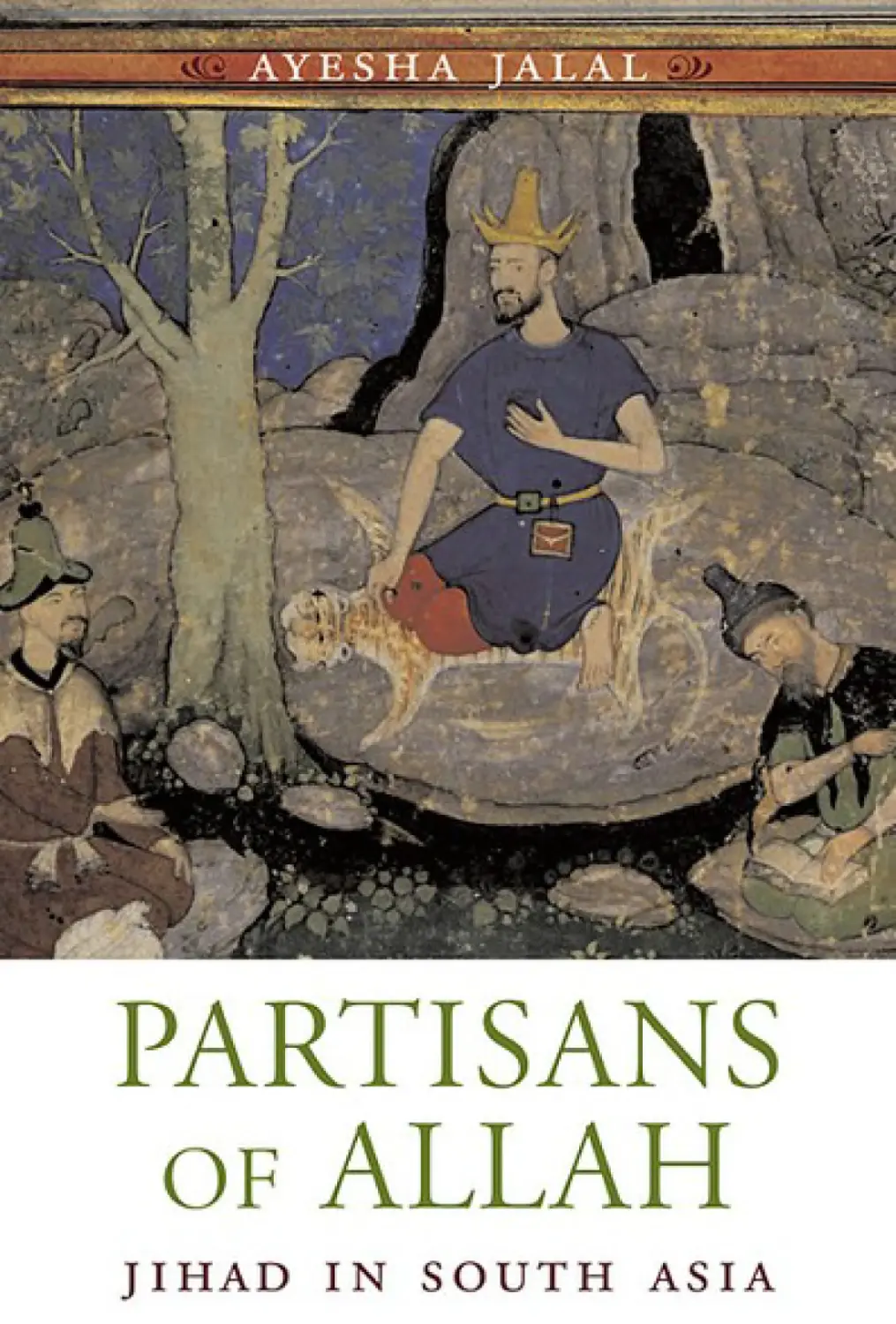
                    partisans of all ah

PARTISANS
OF ALLAH
jihad in south asia

Ayesha Jalal

h arvard univer sit y pres s
Cambridge, Massachusetts
London, England
2008

Copyright ©2008 by Ayesha Jalal
All rights reserved
Printed in the United States of America
Library of Congress Cataloging-in-Publication Data
Jalal, Ayesha.
Partisans of Allah : jihad in South Asia / Ayesha Jalal.
p. cm.
Includes bibliographical references and index.
ISBN-13: 978-0-674-02801-2 (alk. paper)
1. Jihad. 2. Martydom—Islam. 3. Muslim martyrs—South Asia.
4. Islam and politics—Asia. I. Title.
297.7′20954—dc22

2007040881

For my mother Zakia Hamid Jalal on her eightieth
birthday—
celebrating a life exemplifying the struggle to be human

Contents

List of Maps

ix

Preface

xi

1

Jihad as Ethics, Jihad as War

2

Jihad in Precolonial South Asia

20

3

The Martyrs of Balakot

58

4

Jihad in Colonial India

114

5

Jihad as Anticolonial Nationalism

176

6 Islam Subverted? Jihad as Terrorism

1

239

Conclusion

302

Glossary

317

Notes

321

Index

357

Maps

1. South Asia in the Islamic World
xvii
2. Journey toward Jihad: Sayyid Ahmad of Rai Bareilly’s Road
to Martyrdom
85

Preface

T

he call to prayer at the break of dawn has a special spiritual
significance for Muslims, even if few actually manage to stir from
the depths of slumber to give proof of their faith. Not willing to
leave the decision to the individual believer, mullahs at the everincreasing number of mosques dotting the urban landscapes of
Pakistan have in recent years taken to forcibly rousing the faithful
from bed. Only the deepest sleepers escape the cries every morning of an army of rival muezzins, one more raucous than the last.
On recent visits to my home city of Lahore I have been struck by
the lack of any elementary spirituality in the half hour cacophony
caused by scores of different calls to prayer. Some observers see
this as a sign of growing religiosity. Others frown at the excess,
which they attribute to the temporal rivalries between as well as
within different Muslim sects. Once a simple, beautiful, and melodious invocation of the divine, the azan is in danger of becoming nothing but a shrill and strident display of human arrogance.
In my last book, Self and Sovereignty, I drew a distinction between religion as faith and religion as a demarcator of difference.
The need persists for a disaggregation and contextualization of

Preface

the elements of religious experience, but it was in the desire to
gain a deeper understanding of religion as faith (iman) that I
launched my research for this book. My exploration of the literature on the subject immediately brought home to me the intrinsic connection between the concept of jihad as endeavor and the
Muslim faith. Far from being a passive and mindless activity, submission (islam) assumes dynamic effort and reasoned self-control
against the personal inclinations and social tendencies preventing
a believer from heeding God’s commands, and thereby destroying
any internal or external sense of balance and proportion. As
Frithjof Schuon put it succinctly in Understanding Islam, “The
practice of Islam at whatever level means to be at rest in effort; Islam is the way of equilibrium and of light resting on that equilibrium.” If the purpose of spiritual life and morality in Christianity
is the upward flight toward perfection as exemplified by Christ,
in Islam it inheres in the realization of an equilibrium without
which there can be no center from which to launch the ascent toward union with the divine Creator.
In the unitary Islamic worldview, faith in one God is balanced
by an ethical conception of life. The Quranic emphasis on egalitarianism promotes a God-centered humanism, as distinct from
the anthropocentric standard of the secular West. How far were
these normative ideals upheld in actual historical practice? It is a
commonplace to assert that the sacred and the temporal in Islam
are inextricably intertwined; however, the interplay of ethics and
politics in the unfolding of Muslim history has not been subjected to critical scrutiny. One way of remedying that oversight is
to train the spotlight on the much-contested idea of jihad and its
practice. To what extent was a concept that is at the heart of Islamic ethics transformed in shifting historical contexts as a consequence of temporal imperatives? Far too often Islam is simplistically associated with a specific geographical location, what is
today called the Middle East. Yet some of the key innovations in
xii

Preface

early modern and modern Islamic thought have taken place in
the South Asian subcontinent, which is home to more than a
third of the world’s Muslims. In particular, the idea and practice
of jihad have followed a trajectory in the subcontinent that illuminates the tension between faith and identity that has characterized Islam throughout its history.
The ethical meanings of jihad may well have been often swept
aside by legal and political tendencies privileging its connotations
as “holy war” against infidels. This propensity makes it all the
more important to investigate the historical forces that powered
the process leading many Muslims to emphasize the outer husk
of their religion more than its inner core. Yet the notion of jihad
was never wholly dislodged from its place at the center of Islamic
ethics. My own scholarly effort in writing this book has over the
past few years been an intellectual jihad, in the sense of a constant
struggle based on the rigorous exercise of ijtihad, or independent
reasoning. It has been an endeavor that has received the support
of many institutions and individuals. The moment has come for
me to record my gratitude to them.
Grappling with the concept of jihad in South Asian history
would have been inconceivable without knowledge of Islamic
thought and practice. The John D. and Catherine T. MacArthur
Foundation, through five generous years of support, made it possible for me to train myself to read and interpret texts in Islamic
theology, law, and philosophy. It was an enriching experience,
which has broadened my intellectual horizons and allowed me to
connect the separate worlds of religious studies and South Asian
history in ways that have significantly influenced this project, as
well as my teaching at both the undergraduate and graduate level.
I received unstinting support from Tufts University throughout
the period of researching and writing this work. I was granted
leave for four spring semesters during my time as a MacArthur
Fellow to conduct research in archives and libraries in Britain and
xiii

Preface

South Asia. I owe a special thanks to the provost of Tufts,
Jamshed Barucha, for nominating me for a fellowship from the
Carnegie Foundation at a most opportune time. To the Carnegie
Foundation, I owe an important debt—a yearlong fellowship
during 2005–2006, when I most needed the peace of mind to
bring my work to fruition.
I have presented parts of this book at several institutions, including Harvard University, Yale University, the State University
of New York at Buffalo, Duke University, Ryukoko University in
Japan, and University of Brunswick Law School in Fredericton,
Canada. My interactions with audiences in these places have
helped me better elucidate and fine-tune my arguments. Classroom exchanges with both undergraduate and graduate students
at Tufts have played a considerable role in fashioning some of the
main arguments in Partisans of Allah. My graduate students at the
history department and those who took my class on Islam and
the West at Fletcher heard my initial arguments and forced me to
clarify complex issues. I was fortunate to have capable research assistants in Neeti Nair, Neilesh Bose, Maliha Masud, and Lata
Parwani, who procured materials for me from the Tufts and Harvard libraries. In Lahore, Afzaal Ahmad at Sang-e-Meel went beyond the call of duty as my publisher in Pakistan to find me rare
books and pamphlets without which my research would have
been incomplete. Khwaja Mujeeb Ahmad was also resourceful in
obtaining access for me to the publications of different militant
groups.
Conversations with many individuals in the United States,
Britain, and South Asia have provided valuable insights that
hours of solitary research could not. I have gained much from
discussing aspects of the research with a number of people, especially Khaled Ahmed, C. A. Bayly, Homi Bhabha, Mridu Rai,
and Amartya Sen. I appreciate their support and critical interest
in my work. My colleagues at the History Department and the
xiv

Preface

Fletcher School of Law and Diplomacy have been accommodating and have not begrudged my absences from Tufts. Leila Fawaz
has been a caring friend, and she played a pivotal role in convincing me to place my findings in a comparative perspective at conferences organized by the Fares Center, which she directs. Jeanne
Penvenne has been a warm and supportive colleague. Shruti
Kapila went out of her way to get photocopies of relevant materials from the India Office Library. Annette Lazzara, the history department administrator, has been a model of efficiency and a major factor in keeping life at Tufts on an even keel.
The two anonymous readers for Harvard University Press provided much food for thought and enabled me to improve the
overall quality of the work. I was lucky to have found a meticulous editor in Joyce Seltzer. An exacting taskmaster, she gave the
text a careful reading. Her suggestions guided me through the
final revision and made me conscious of the need to make the
book accessible to a larger, nonspecialist audience. Rukun
Advani, my publisher in India, spurred me on with his encouraging comments to complete the manuscript for publication.
My family has been as warm and accommodating as always. I
am, as ever, deeply indebted to my mother, whose confidence in
my abilities is both reassuring and inspiring. I am grateful to my
siblings and their families for giving me the time and space to
pursue my preoccupation with research and writing. Friends on
three different continents have sustained me emotionally by helping me keep things in perspective. Although it is impossible to
name them all, I would like to register my thanks to Durre
Ahmed, Naazish Ataullah, Nuscie Jamil, and Nita Nazir for their
friendship and understanding. When it has come to cheering me
along through the occasional highs and more frequent lows of my
personal jihad, Sugata Bose has been exemplary in the patience
and indulgence he has shown over the years that this project has
been on the drawing board. He scrupulously read my innumeraxv

Preface

ble drafts and provided invaluable criticisms, while constantly
reminding me that the purpose of this work will be achieved only
if it breaches the artificial walls separating an academic and a
general readership. If I succeed in reaching out, he deserves the
credit in large measure. But if I fail to do so, the blame must rest
with me alone.

xvi

RA

NE

AN

IT

R

S

O

I

South Asia in the Islamic World

MOZAMBIQUE

COMOROS

Mogadishu

L

en

lf
Muscat

Gu
lf o
f
Oma Karachi
n

95% and over

20 to 49.9%

50 to 74.9%

75 to 89.9%

90 to 94.9%

Alma Ata
KYRGYZSTAN

Kabul

TAJIKI
STA
N

Bombay
(Mumbai)

Ahmadabad

E

B AY O F
BENGAL

INDIAN
OCEAN

I

Rangoon

LOAS

N

V

SO

U

Saigon

CAMBODIA

Hong Kong

Nanjing

Beijing

BRUNEI

Borneo

Jakarta

JAPAN

Celebes

PHILIPPINES

J AVA S E A

I N D O N E S I A

Singapore

M A L A Y S I A

Bangkok

I

Hanoi

A

THAILAND

Mandalay

H

MYANMAR

C

MONGOLIA

10 million Muslims
7.5 million Muslims
5 million Muslims
2.5 million Muslims
N.B. No symbol used for
populations below 2.5
million

SRI LANKA
Colombo

Hyderabad

Dacca
BANGLACalcutta DESH

BHUTAN

Lhasa
P A
L
du
Kathman

N

I N D I A

Delhi

Lahore

PAKISTAN

AFGHANISTAN

Herat

n

I S T Tas
A N hke

ARABIAN
SEA

A

% Muslim

O M

U.A.E.

Gu

Kerman

I R A N
Shiraz

EK

TURK
ME Samarkand
NIS
TA

Tehran

Baku

KAZAKHSTAN

MALDIVES

Zanzibar
Dar es Salaam

Mombasa

K E N YA

M

A

Gu l f o f A d

Aden

Y E M E N

DJIBUTI

ETHIOPIA

ER

Mecca

SAUDI
ARABIA

KUWAIT

Basrah

AZER.

UZB

SE

MALAWI

A

Astrakhan

AN

TANZANIA

UGANDA

Khartoum

SUDAN

Constantinople

TURKEY

Jeru LEB.
SYRIA
sale
Damascus
m
IRAQ
Cairo
DA N Baghdad
R
O

SE

EGYPT

ER

R U S S I A

ANDAM

Rest of West
Africa

WEST
AFRICA
NIGERIA

CHAD

NIGER

LYBIA

MOROCCO

TUNISIA

ALBANIA

J

ALGERIA

A

N

IT

EA

H

Re d Sea

M
N A

T

ian

SEA

s
Pe r

INA

ED
N

T

CH

M
t

E

A

partisans of all ah

鵻

1

鵼

Jihad as Ethics, Jihad as War

B

a l a kot is in many ways the epicenter of jihad in South
Asia. Blanketed by green, terraced fields and thick, dark forests,
this beautiful town is situated about eighteen miles from the city
of Mansehra in the North West Frontier Province (NWFP) of
Pakistan. Situated on the banks of the river Kunhar, it serves as a
gateway to the picturesque Kaghan Valley, which is bounded on
the east and the south by Kashmir. It is also a point of entry into
the history of jihad, struggle in the way of Allah, in the subcontinent. It was here that Sayyid Ahmad of Rai Bareilly (1786–1831)
and Shah Ismail (1779–1831), quintessential Islamic warriors in
South Asian Muslim consciousness, fell in battle against the Sikhs
on 6 May 1831. Considered to be the only real jihad ever fought
in the subcontinent to establish the supremacy of the Islamic
faith, it ended in dismal failure, owing to the treachery of some of
the Pathan tribesmen, who had initially rallied to the cause with
alacrity. Instead of pursuing the high ethical ideals for which the
jihad had been launched, the movement became embroiled in a
series of temporal compromises that led to an internecine war
among Muslims.

part isans of all ah
Legends about the Islamic warriors’ courageous stand against
a vastly superior army of infidels have overshadowed the history
of betrayal at the hands of fellow Muslims. The jihad came to
be remembered in the early twentieth century as a prelude to
anticolonial resistance against the British. With the cry “Allahu
Akbar” (“God is Great”) on his lips, Sayyid Ahmad had charged
out of the mosque where he had said his final prayers, and then
bravely faced death on the battlefield. It matters little to his devotees that he achieved his spiritual goal of martyrdom after his
temporal ambitions had been shattered by fellow Muslims. For
several decades, many believed that Sayyid Ahmad had miraculously escaped from Balakot and would return at the appointed
time as their savior. To this day, pilgrims pour into the town to
pay homage to the two martyrs, Sayyid Ahmad and Shah Ismail,
whose graves have acquired the status of sacred sites. Balakot’s
association with the idea and practice of jihad in South Asia was
reinforced in the 1990s, when militant groups set up training
camps in its environs to prepare for their campaign against Indian security forces stationed in predominantly Muslim Kashmir.
For these militants, Sayyid Ahmad and Shah Ismail are great
heroes, whose jihad their admirers wish to emulate, to redress
what they perceive as current injustices.
Almost 175 years after the momentous battle of Balakot, a catastrophic earthquake hit northern Pakistan on the fateful morning
of 8 October 2005 and flattened the mountainous town in a flash,
adding thousands of martyrs to the few that had given it prominence in the history of Islam in the subcontinent. (The victims of
natural disasters like earthquakes are considered martyrs in the
Islamic tradition.) Before the Pakistani state’s relief operations
got under way, young men belonging to radical Islamic groups
like the Lashkar-i-Tayyiba (Army of the Righteous) rushed to assist men, women, and children trapped under the rubble. The
Lashkar, which appeared on the American list of banned terrorist
2

Jihad as Ethics, Jihad as War

organizations, has assumed the name Jamaat-ud-Dawa (Party
That Propagates the Faith). Instead of the guns and grenades they
had learned to use in training camps in and around Balakot to
achieve martyrdom in the killing fields of Kashmir, they showed
their mettle in the wake of the earthquake, with their bare hands
saving the lives of hundreds of people and digging out scores of
decomposing bodies and severed limbs. If not for the zealous
work done by these young men, the fatalities might have been
higher, the despair of Balakot’s hapless residents more hellish. Acknowledging the efficacy of their relief efforts, foreign aid agencies joined forces with militant organizations to extend a helping
hand to the unfortunates living out under the open sky in what
had once been a town of legendary beauty.
Where men had failed, could an act of God change the form of
jihad in Pakistan? Had these young radicals found a new way to
struggle in the way of Allah? The Lashkar-i-Tayyiba leader, Hafiz
Mohammed Saeed, did not see this as waging jihad, but rather as
doing relief work. Working to alleviate human suffering might be
construed as jihd-o-jihad, a derivative of jihad used in speaking of
everyday struggles. Saeed allowed as much, but in his view the results could not compare with the benefits of the military jihad he
and his men were waging in Afghanistan and Kashmir.1
An attempt to unravel the multiple meanings of jihad in shifting historical contexts is long overdue. Few concepts have been
subjected to more consistent distortion than the Arabic word
jihad—whose literal meaning is “striving for a worthy and ennobling cause” but which is commonly thought today to mean
“holy war” against non-Muslims. It is paradoxical that Islam,
whose very meaning is salam, or peace, has come to be seen as
a belligerent religion with fanatical adherents determined to wage
perpetual war against unbelievers. This enduring perception stems
from an insistence on defining jihad as ideological warfare against
non-Muslims, a hopeless distortion of a concept that is the core
3

part isans of all ah
principle of Islamic faith and ethics. People have lost sight of the
ethical connotations of jihad in the turmoil of political battles
within the Muslim community, as well as the historical imperatives of conquest that temporal rulers have pursued in the name
of Islam. A critical analysis of the theory and practice of jihad
over the centuries in South Asia can help retrieve its ethical
meanings by throwing light on how Muslims interpreted this essential idea as they negotiated relations with members of other religious communities.
Often overlooked in discussions about Islam, South Asia is
home to one out of every three of the 1.8 billion Muslims in the
world. The region has played a crucial role, politically, economically, culturally, and intellectually, in the history of Islam for over
a millennium. Only by identifying some of the key dynamics in
Muslim interactions with predominantly non-Muslim populations is it possible to see how legal concepts of jihad in South Asia
departed from their West Asian and Central Asian roots to lend
fresh nuance to its meaning within the religious framework of
Islam. These adaptations over time continue to inform the ideological disputes among Muslims in South Asia. This is true not
only of militant groups in contemporary Pakistan but also of
anticolonial nationalists who waged jihad against the British.
Alas, not all things in life are easy;
Even man struggles to be human.2
This deceptively simple couplet by the great Urdu poet of
north India Mirza Asadullah Khan Ghalib (1797–1869) on the
face of it bears no relation to jihad, popularly construed as holy
war. But it lends itself well to a discussion of jihad as a spiritual
and ethical struggle that is meaningless without faith (iman). The
assertion that nothing is achievable in life without concerted effort is based on the observation that while being human comes
4

Jihad as Ethics, Jihad as War

[To view this image, refer to
the print version of this title.]

Mirza Asadullah Khan Ghalib, poet of the struggle to be human.

naturally enough, most people do not live up to the ethical standards of true humanity. What troubles the poet are not the hardships of life, but man’s unfitness to be the greatest creation of
God. It follows that what is deemed to be easy is actually difficult
to achieve, and nothing more so than the struggle to be human.
Ghalib’s extensive corpus in both Urdu and Persian is imbued
with a humanistic sensibility transcending religious distinc5

part isans of all ah
tions. This great poet was ensconced in the cultural milieu of
Hindustan—India, if one gives the term its most expansive spatial interpretation; or in its more restrictive sense, northern India
with Delhi as its center. At the same time, he identified himself
with the Muslim community and within it, despite his Sunni
background, with the Shia sect. Wary of all forms of religious orthodoxy, Ghalib defied social conventions and rejected cultural
rituals that set one community apart from the other. True faith
for him was not about mundane controversies over belief but
about commitment to the unity of God. Never a stickler for external religious rituals, he confessed:
I know the virtues of devotion and prayer,
But my temperament leads me to neither.
...
With what face will you go to the Kaaba, Ghalib?
But then, you are quite shameless.3
His poetic evocation of the struggle to be human points to the
complexity of ethical issues in the history of Islam in South Asia.
Without a heightened awareness of Islamic ethics and of the distinction between the temporal and the sacred aspects of jihad,
there can be little understanding of jihad as a key correlate of Islamic faith. Most works on jihad, while nodding in the direction
of its spiritual significance, have treated it as the Muslim practice
of war, whether of the aggressive or the defensive kind. Relying
on historical, legal, and literary sources, this book instead focuses
on the development of the idea and practice of jihad over several
centuries and across the space that connects West Asia to South
Asia. The Indian social and political scene before, during, and after British colonial rule forms the main locus for the unfolding of
the history of Islam.
Ghalib’s conception of the struggle to be human drew on
6

Jihad as Ethics, Jihad as War

the original meaning of jihad in the Quran. The word jihad is
derived etymologically from the Arabic root meaning to strive
against an undesirable opponent—an external enemy, Satan, or
the base inner self. Pre-Islamic Arab society interpreted it as any
endeavor in the service of a worthy cause; other words were
more commonly used for warfare. The opening sentence of the
Prophet’s agreement with the different tribes and religious communities of Medina after the migration (hijrat) from Mecca mentions jahada as striving for the collective well-being of the whole
community consisting of believers and nonbelievers. Fighting for
God was incumbent upon all Muslims, whereas the defense of
Medina was the responsibility of all signatories to the document.4
Semantically, jahada cannot be interpreted as armed struggle,
much less holy war, without twisting its Quranic meaning.
The root word appears forty-one times in eighteen chapters of
the Quran—and not always in the sense of sacred war—while
prohibitions against warring occur more than seventy times.5
Apart from verses specifically linking jahada to fighting on behalf
of God, all its derivative terms are most often used in relation to
striving in the cause of faith.6 The preferred word for fighting in
general is qital or harb,7 though there are instances of verses prescribing fighting for God.8 The only form of jahada mentioned
in the Quran as legitimate armed struggle is jihad fi sabil allah—
that is, jihad in the way of God. But even verses employing
that term are typically followed by exhortations to patience in adversity and leniency in strength, the essence of being of gentle
disposition.
If the Quran does not lend itself well to the notion of jihad as
holy war, and far less to the idea of continuous warfare against infidels, how did the discrepancy between the text and the later, legally based interpretations of the concept arise? To understand
why jihad was effectively stripped of its role as the moving principle of Muslim faith and ethics, we need to broaden the scope of
7

part isans of all ah
our enquiry from the specific question of warfare to other equally
important political and intellectual debates that vexed the early
community of Islam. In the first century of Islam, the extremist
Kharajite sect defined jihad as legitimate violence against the enemies of Islam, both internal and external, and declared it a pillar
of the faith. In the Kharajite view, Muslims deviating from the
Quran and practice as prescribed by the Prophet could not remain part of the community. A jihad had to be waged against
nonbelievers and those associating other beings with God. Such a
radical solution to the problem of true faith met with stiff resistance from those who later assumed the mantle of Sunni orthodoxy. The Kharajites were roundly rejected and none of the early
Muslim legal schools endorsed their position.9
Although the Kharajite challenge had been thwarted, the debate it had unleashed on the relationship between ethical actions
and faith would continue to preoccupy the leading minds of the
Muslim community.10 With the exception of the Kharajites, none
of the other participants in the debate considered evidence of
moral wrong to be justification for excommunication. Immorality was to be checked through preaching good and forbidding
wrong. Some considered this to be jihad of the tongue instead of
the sword.11 Pragmatic accommodation to the problem of immorality left the domain of inner conscience to the individual, while
the guardians of the community, religious or lay, concentrated on
monitoring external actions. An emphasis on Islamic ritual gave
believers a formal unity and served the cause of an expanding religious community. But it was a unity achieved by obfuscating
faith (iman) and virtuous conduct (ihsan) as substantive elements
of islam and making the performance of ritual practices the primary focus of religious life. The suspension of moral judgment
by the Muslim community had grave consequences for an ethics
based on the Quran.12
In counteracting the extremist Kharajite position, the more
influential among the spokesmen of the Muslim community
8

Jihad as Ethics, Jihad as War

tended to sideline ethics as an intrinsic element of the Muslim
faith. The implications of this became even more pronounced
once Islamic law (fiqh)—the main source of both the Muslim and
the Western understanding of jihad—detached itself from the
ethical considerations spelled out in the Quran. The expansive
Quranic conception of jihad was lost, and it assumed a reductive
meaning in the Islamic legal tradition. What had given Islamic
law its distinctive character and dynamism during the lifetimes of
the Prophet and the first four caliphs was precisely the incorporation of ethical motivations into legal norms based on interpretations of the revelation.13
The need for an ideology to legitimate the wars of conquest
fought by the Umayyad (661–750) and Abbasid (750–1258) dynasties induced Muslim legists to define jihad as armed struggle
and to divorce law from ethics. Classical juridical texts skirted
around the moral and spiritual meanings of jihad to concentrate
on the material facets of warfare—the division of spoils, the treatment of non-Muslims, and the rules of conduct for the Muslim
army. Such stipulations were matched by the invention of traditions (hadith) extolling jihad as armed struggle. Some Muslims
questioned the application of the concept of jihad to wars fought
by temporal rulers that had nothing to do with struggle for the
cause of God. One popular tradition justified the reservation.
Upon returning from one of the early wars in defense of the
newly established community, the Prophet Muhammad is said to
have told his companions that they had come back from waging
jihad al-asghar, or the lesser war, to fight the jihad al-akbar, or
the greater war, against those base inner forces which prevent
man from becoming human in accordance with his primordial
and God-given nature.14 This tradition was not included in any
of the authoritative collections of hadith during the Umayyad
and Abbasid caliphates, an omission that in itself reveals the
mindset of the compilers and the political climate of the times.
Proclamations of jihad against dissenting co-religionists elic9

part isans of all ah
ited skepticism from many Muslims. Those with a mystical bent
deplored the overemphasis on legal and external aspects of religion, deeming it to be an inadequate expression of the spirit of Islam, which required a jihad to purify the heart, in order to make
human conduct truly moral. They contested the reduction of the
notion of jihad to armed struggle alone. The Quran itself defines
jihad in terms that are much broader than the political uses made
of it in response to the exigencies attendant on Arab expansion.
What was spread by the sword was not the religion of Islam but
“the political dominion of Islam.”15 Instead of paving the way for
an egalitarian and just order, the expansion of Islam was a secular
process that, even when drawing upon religious ideology, rarely
managed to achieve the ideals prescribed in the Quran and underscored in the practice of the Prophet.
Notwithstanding changes in Islamic jurisprudence and theology in response to political developments from the end of the
seventh century on, mystical, ethical, poetic, and philosophical
Muslim literature attest to the indissoluble connection between
jihad and the quality of a believer’s faith and actions. Sufism in
particular contributed in important measure to the development
of a humanistic ethics in Islam. Indeed, Muslim ethics has been
described as an “ethics of mysticism” because of its inherent spirituality and asceticism.16 The prominence that the ethical writings of Ibn Miskawayh (d. 1030) and Abu Hamid al-Ghazali
(1058–1111) achieved, to say nothing of the widespread appeal of
the mystical poetry of Jalaluddin Rumi (1207–1273), make it
plain that members of the community never quite lost sight of
the ideal of a balance between inner conscience and external adherence to Islamic rituals.17 By the eleventh century, Muslim
writings on ethics (akhlaq) bore the imprint of creative
borrowings from Greek philosophy. Miskawayh’s Tehzib-ulAkhlaq, which is marked by Platonic and Neoplatonic influences, has served as a model for all subsequent Muslim writings
10

Jihad as Ethics, Jihad as War

on ethics. Significantly enough, it begins with the author’s description of his ongoing personal struggle for restraint, courage,
and discernment.18 Writing against the backdrop of the Crusades,
Ghazali in his magnum opus does not take a glorified view of jihad against infidels. Like the Sufis, he focuses on the inner spiritual jihad, which he likens to a battle between the armies of
good and evil. Good conduct based on self-control and sincere
effort in the way of God is described as constituting half of religion, and being of greater merit than ritual worship. In addition
to including the famous tradition in which the Prophet makes
a distinction between the greater and the lesser jihad, Ghazali
quotes him as saying: “Fight your passion with hunger and thirst.
Its merits are equal to those gained by Jihad in the way of God.”19
In similar vein, Rumi noted that not everyone killed in battle was
a martyr.20
The prominence given to legal and theological writings in
modern scholarship have had the result that jihad is unquestioningly linked with ideological warfare against the enemies of Islam. In more recent times, it has on the one hand been described
as an article of Muslim faith, and on the other equated with terrorism. Shorn of its inner dimensions and reduced to perpetual
holy war against non-Muslims, jihad is a recipe for disequilibrium and an inversion of a key concept in Islam. Having uncovered textual evidence of the Muslim preoccupation in the early
centuries of Islam with war, a strand of Orientalist scholarship
has done much to lend credence to simplistic divisions between
the Islamic and the non-Islamic traditions.21 As in any of the
other great religious traditions—Christianity, Judaism, or Hinduism—in Islam the ultimate goal for political and moral philosophy is to create a just and equitable social order. Not only did
Islam build on preexisting tribal traditions of kingship in the Arabian peninsula, but it also borrowed from those of the ancient
Near East and the Indian subcontinent, as well as the Hellenistic
11

part isans of all ah
and Roman world.22 The concept of a just war in Hinduism, as
well as in the Judeo-Christian tradition, echoes the interpretation
by Muslims of jihad as armed struggle.23
An exclusive reliance on the works of legal scholars and theologians would be far too limited to provide a measured view of jihad in Muslim history.24 Legists and theologians with ties to state
power tailored the concept of jihad to fit the shifting requirements of temporal rulers, who even while paying lip service to Islamic law (sharia) administered their domains on the basis of secular law. Not a creed or religion in the narrow sense of the word,
Islam is often deemed to be an all-encompassing way of life (din)
whose precepts are unchanging in nature. This has become a pretext for drawing an unjustified stark distinction between Islam
and concepts of the secular.25 Ignoring the passage of time and a
constantly changing tradition has skewed understanding of Islam, to the detriment of Muslims and non-Muslims alike. Notions of the religious and the secular borrowed from historical experience of other religious traditions cannot explain the subtle
overlap between the spiritual and the secular in Islam. In Christendom, the clash between the authority of the church and that
of the state established the contours of so-called religious and secular space. In the absence of a church in Islam, secular state authority had no need to separate itself from the religious.
The word secular has a dual meaning, for it refers to both location and time. Secularization is an historical process through
which human beings abandon otherworldly concerns and focus
on the here and now. During the European Enlightenment, religion came to be seen as an impersonal system of beliefs and practices, rather than a matter of personal faith. Without denying
the existence of a Creator, Enlightenment thought rejected the
notion of the cruel and punishing God who threatened mankind with eternal damnation. It was the consolidation of the
modern nation-state in the nineteenth century that established
12

Jihad as Ethics, Jihad as War

the separation between religion on the one hand and law, science,
rationality, and politics on the other. According to the confident
assumptions of this particular brand of modernism, the increasing secularization of daily life would ultimately marginalize religion or relegate it to the private sphere. The long historical process of secularization had been an open-ended one, in which
values and worldviews were subject to revision. The secularism of
the modern nation-state, by contrast, became a closed ideology,
which projected its values as absolute, superior, and final. The
certitude underpinning the secularism of modern states must not
be confused with the relativity of values and vibrant debates that
marked the more ecumenical process of secularization.26
Despite widespread unease among Muslims with what is perceived as the hubris of secularism in modern nation-states, the
history of Islam could not have escaped the process of secularization. Islamic theocentricism, on the face of it, is antithetical to
secularization based on human assumption of the responsibility
to reformulate ethical values. Yet Muslims throughout history
have resorted to the right of rational interpretation (ijtihad) to
question values not strictly embodied in the Quran. This questioning is in keeping with the Islamic aim of effecting a revolutionary change in human consciousness through ethical social
development. The Islamic conception of religion has been explained by stressing: submission (islam), or obedience relating
to external acts, faith (iman) pertaining to the believer’s inner
thoughts, and virtuous intentions (ihsan) aimed at doing what is
beneficial for the individual and the community.27 In the hierarchy of importance spelled out in the Quran, faith in one God
and the unity of creation (tawhid) precedes submission, whether
individual or collective. Virtuous intentions expand and deepen
faith, so that it becomes a lived certitude, thereby ensuring that
islam, instead of being restricted to specific rituals and attitudes,
touches every aspect of a believer’s life.28 Living according to the
13

part isans of all ah
teachings of the Quran and the Prophet requires not only submission but also faith and good intentions. If the triad of submission, faith, and good conduct is constitutive of Islam, its moving
principle is the notion of jihad as a spiritual, intellectual, and
moral struggle. To isolate jihad from faith and virtuous intentions is to lose sight of the high ethical standards that distinguish
mere mortals from human beings, and to reduce the sacred to the
profane and the transcendental to the purely worldly.
Intrinsic to faith in the unity of creation, and to the moving
principle of Islamic ethics in political, economic, and social activity, jihad has been susceptible to consistent misunderstanding
and misuse. Confusing God’s will with the practical and logistical
imperatives of an expanding Muslim community, and conflating
the sacred and the profane, Muslim exegetes, legists, theologians,
and historians in different times and places have distorted the
meaning of jihad in the Quran. Without restoring the historical
dimension and the distinction between the temporal and the sacred, there can be no understanding of jihad as a key correlate of
Islamic faith and ethics. A multilayered concept like jihad is best
understood with reference to the historical evolution of the idea
in response to the shifting requirements of the Muslim community, especially in the South Asian context.
The relation between the normative theory of jihad and its actual historical practice followed a somewhat different trajectory
in the South Asian subcontinent than it did in West Asia. In the
Arab lands tensions between Islamic law (fiqh) and religion in the
broadest sense (din) that were caused by the imperatives of the
wars of conquest had made the extrinsic features of being a Muslim more important than the spiritual and ethical struggle to be
human. Some of the debates between legists (fuquha) and philosophers (falsuf ) in West and Central Asia were replicated in South
Asia. But there was a crucial difference. The subcontinent, where
the Islamic faithful are in the minority, is an interesting labora14

Jihad as Ethics, Jihad as War

tory for a study of the multiple, less reductive meanings of jihad.
India under Muslim rule was deemed to be a Dar-ul-Islam, an
abode of peace. According to the jurists, jihad could only be
waged against a Dar-ul-Harb, an abode of war. The legal discourse on jihad and aman, or the granting of peace to non-Muslims, developed by the dominant Sunni school of Hanafi law in
the subcontinent, featured pragmatic adjustments to the Indian
environment. Sufis and freethinking philosophers contested the
narrow interpretations of the Arab and Arab-influenced legists
and theologians throughout India’s precolonial history. The accommodative tendencies were in the ascendant during much of
the Sultanate and the Mughal era stretching from the thirteenth
to the seventeenth centuries. These attitudes gained their fullest
expression during the reign of the Mughal emperor Akbar (1556–
1605), who enunciated a policy of peace for all. Akbar’s attempts
to build bridges with non-Muslims in his empire did, however,
provoke a withering critique from the Muslim theologian Sheikh
Ahmad Sirhandi (1564–1624). War and peace, faith and ethics
were matters of constant debate in precolonial India.
Many of the key innovations in modern Islamic thought were
fashioned in South Asia rather than West Asia. Muslim rulers in
the subcontinent were not indifferent to the sharia, as is best illustrated by the Fatawa-i-Alamgiri, a late seventeenth-century
compendium of Hanafi law, commissioned by Akbar’s greatgrandson Aurangzeb. Yet it was not until the eighteenth century
that fears about the loss of Muslim sovereignty triggered a redefinition of jihad as the obverse of aman. The writings of the
redoubtable Delhi-based scholar Shah Waliullah (1703–1762),
known for his enunciation of the most systematic theory of jihad
in South Asia, must be read in this historical context. His career
bridged the precolonial and colonial eras of South Asian history.
Hailed as being at once a Muslim modernist and the architect of
Sunni orthodoxy, Waliullah left an intellectual legacy that casts a
15

part isans of all ah
long shadow over all subsequent explications of jihad in theory
and attempts to translate it into practice.
It was Waliullah’s theory that Sayyid Ahmad of Rai Bareilly
sought to implement between 1826 and 1831. His endeavor illustrates how the high ethical values associated with jihad were diluted by the confusion between religion as faith and religion as a
demarcator of difference as well as of pragmatic compromise.
The geographic focal point of the jihad of 1826 to 1831 on the
northwest frontier of the subcontinent corresponds to the nerve
center of the current confrontation between Islamic radicals and
the West. The jihad movement directed primarily against the
Sikhs was transmuted in the course of the war into a conflict pitting Muslim against Muslim. This feature of intrafaith conflict
in a jihad as armed struggle has not diminished its appeal for
contemporary militants, who evidence many of the same failings
that undermined Sayyid Ahmad’s high ideals. The martyrdom of
those who fell at Balakot continues to weave its spell, making it
imperative to investigate the myth in its making.
If Sayyid Ahmad of Rai Bareilly’s early nineteenth-century jihad was seen as a precursor to an anticolonial war, his namesake
Sayyid Ahmad Khan (1817–1898) of Aligarh tried in the late nineteenth century to reinterpret jihad in terms other than those of
armed struggle. He and other Muslim modernists like Maulvi
Chiragh Ali (1844–1895) and Mirza Ghulam Ahmad (ca. 1839–
1908)—the controversial founder of the heterodox Ahmadi community—made concerted attempts to rethink jihad in the light
of British colonial rule. The historical context of the decisive suppression of the great rebellion in 1857 is of great importance for
understanding the reformulation of the idea of jihad. Yet the texts
need to be read on their own terms, not least because of the intellectual caliber of those who were responding to colonial strictures
on Islam as a religion of the sword and perceptions of Muslim
disloyalty. Variously dismissed as apologists of Islam and colonial
16

Jihad as Ethics, Jihad as War

collaborators, these men tried in their different ways to bring the
concept of jihad closer to the expansive, spiritual meanings it has
in the Quran. They also played a major role in constructing a
communitarian view in late nineteenth-century India of a distinctive Muslim identity. It is thus useful to trace the extent to
which efforts to revive the role of jihad, both in theory and in
practice, as a core principle of Islamic ethics reflected their notion
of jihad as defensive warfare.
With the start of a new Western offensive against the Muslim
world in the late nineteenth century, jihad entered another historical era, one that created the conditions for articulating an Islamic universalism that could be squared with the competing
ideal of territorial nationalism. The universalist dreams of Sayyid
Jamaluddin al-Afghani (1839–1897), the magnetic Iranian who
initiated the campaign against Western imperialism in the Muslim world, may have been somewhat ahead of his time. But his
ideas found a welcoming niche in the thought and politics of
such pro–Indian National Congress Muslims as Maulana Abul
Kalam Azad (1888–1958) and Obaidullah Sindhi (1872–1944).
Even as they espoused their own versions of Islamic humanism
and sought common ground with non-Muslims, these two anticolonial nationalists saw jihad as a legitimate means to wage a
transnational struggle against British imperialism. Azad, a key
voice in the field of Islamic law and ethics, was the preeminent
Muslim leader of the Congress, not just in preindependence India but also in the first decade after independence. Paradoxically,
he is best remembered today as a “secular nationalist,” having
served as education minister in India’s first independent government led by Jawaharlal Nehru. Azad’s less successful contemporary, Obaidullah Sindhi, was a Sikh convert to Islam who tried
giving practical shape to Waliullah’s ideas by starting a transnational jihad during World War I with the help of Afghans,
Germans, Russians, and Turks. His own writings and the mem17

part isans of all ah
oirs of some of his close associates offer a welter of insights into
the complex mindset of anticolonial nationalists, for whom jihad
was a powerful weapon against the British as well as a means to
combat injustices in their own society. Even the great poet and
philosopher Muhammad Iqbal (1877–1938), not an anticolonial
radical by any stretch of the imagination, dwelled at length on
the virtues of jihad as struggle against Western imperialism. His
poem “Jihad” lamented that Muslims in the face of colonial subjugation had lost all delight in death.
The history of jihad in postcolonial South Asia spotlights the
relationship between the modern nation-state and the ulema, or
religious scholars trained in madrassas. The end of British colonial rule brought the partition of the subcontinent, ostensibly
along religious lines, and the transfer of power to two nationstates—one avowedly secular, the other created as a Muslim
homeland. Contrary to the perception that modernity had
eclipsed the role of religious scholars, managers of modern states
like Pakistan gave the ulema greater prominence, by letting them
pose as guardians of public morality, if not Islamic ethics, so long
as they did not undermine state authority. The thought of Islamic ideologues like Abul Ala Mawdudi (1903–1979) and the
politics of contemporary self-styled “jihadis” need to be studied
in this context. The renewed interest in jihad by Mawdudi and,
through him, by such West Asian radicals as Sayyid Qutb—the
two authors most frequently cited by Western “experts” on socalled Islamic fundamentalism and terrorism—had more to do
with the internal dynamics of Muslim society than with an outright rejection of modernity under Western colonialism. In a
sense, jihad in the postcolonial era has been a more effective instrument of political opposition to the secular modernity promoted by Muslim nation-states than of resistance to Western
domination. Mawdudi advocated waging jihad against faithless
and unethical Muslims as a means toward achieving an Islamic
18

Jihad as Ethics, Jihad as War

society as he conceived it. The irony in proclaiming jihad against
co-religionists has been lost on those who adopted Mawdudi’s reformulation of the concept. Yet with the exception of Saudi Arabia and Iran, Muslim nation-states have desisted from formally
declaring a jihad, even as they have selectively implemented parts
of the sharia that do not undermine their claims to temporal
power. This is a judicious response, to be sure, which in such
states as Pakistan has resulted on the one hand in efforts to enforce punitive aspects of the sharia, in the guise of Islamization,
and on the other in support for so-called jihadis waging war to
liberate co-religionists in Afghanistan and Kashmir.
Muslim nation-states have been more eager to manipulate and
control religion than to correct the acts of omission and commission committed during the early centuries of Islam. These, in
separating law from the ethical teachings of the Quran, led to external rituals’ replacing virtuous actions as the predominant concern of the community. The result has been not just the secularization of Islamic law but the diminishment of the ideal of jihad
from the spiritual to the profane. Armed struggle in the way of
God is a contradiction in terms, without reference to the ethical
values outlined in the Quran. Jihad today is a pliable instrument
in the hands of a few who are more politically motivated than
ethically grounded. Their version of jihad has in turn nourished
ill-informed denunciations of Islam, most notably among commentators and policy makers in the West. The bias and suspicion
pervading these administrative circles have historical roots in the
age of modern imperialism, when the theme of jihad was interwoven with the anticolonial struggle. By teasing out the shifting
interpretations of jihad in different historical phases, I aim to restore its essential meaning as an ethical struggle to be human and
thereby more effectively combat the forces of disequilibrium that
plague the contemporary world.

19

鵻

2

鵼

Jihad in Precolonial South Asia

S

o u t h a s i a furnishes rich historical evidence of the multiple meanings and symbolisms of jihad in Muslim consciousness.
From court chroniclers seeking to legitimate wars fought by their
patrons against non-Muslim and Muslim rivals to Muslim legists
and theologians articulating theories that later reappeared in symbolic form in Persian and Urdu poetry and prose (to say nothing
of popular myths and legends), advocates of jihad have been
many—testimony to the potency of the idea and its pivotal place
in the Muslim imagination. Representing in all their variety the
manifold meanings of jihad in Muslim society, these expressions
undermine any notion that the idea is associated exclusively with
armed struggle. The Urdu phrase jihd-o-jihad, denoting effort
and exertion in a positive endeavor, finds widespread use in everyday life. At the same time, collective myths and legends about
jihad based on selective representations of history have been part
and parcel of popular consciousness—none more so than the
jihad launched by Sayyid Ahmad of Rai Bareilly in the early nineteenth century. Widely cited and variously remembered, it serves
as a trope whose psychological and mythological meanings and

Jihad in Precolonial South Asia

symbolism continue to inform political and ideological disagreements among Muslims in South Asia.
Deciphering both the sacred and secular symbolism of jihad
in South Asia illustrates how the politics of religious identity
shaped the idea, in combination with Muslim conceptions of
faith (iman) and ethics—both as akhlaq and adab (literally, correct social behavior). This region, where the Muslim faithful are
in the minority, constitutes a particularly interesting case study
for jihad against non-Muslims. Often downplayed in discussions about Muslims, South Asia is crucial to the historical evolution of the idea and practice of jihad. Jihad had multiple meanings in precolonial India, tensions between law (fiqh) and religion
(din) making the external facets of being Muslim more important than the inner spiritual and ethical struggle to be human.
Muslims in precolonial India had constantly to face the challenge of balancing the inner dimensions of faith with the external
manifestations of their identity in new and ever-changing circumstances.

Jihad or Temporal Warfare?
A spate of conquests by Muslim warlords from the beginning of
the second millennium on is often described as the “coming of
Islam to India.” An emphasis on the militaristic aspects of the
Muslim expansion overlooks how Islam in South Asia, far from
being a signed and sealed product exported from West Asia, was
fashioned by the Indian environment. Muslim rulers’ recourse to
an ideology of jihad for purposes of legitimacy was counterbalanced by the practical need to govern non-Muslim subjects. Despite the demographics, India under Muslim rule was considered
a Dar-ul-Islam (an abode of peace). According to the jurists, jihad
could only be waged against a Dar-ul-Harb (an abode of war).
This perception made the Indian subcontinent a fascinating test21

part isans of all ah
ing ground for the historical application of the Islamic principles
of war and peace.
The layered meanings of jihad in South Asia can be best
grasped by analyzing the different worldviews underlying the
written historical sources—by identifying their strengths and
weaknesses and juxtaposing their claims. Although Islamic law
was initially developed by Central Asian ulema that flocked to
Delhi during the period of the sultanate, Muslim efforts to seek
accommodation with non-Muslims lent fresh nuance to Islam
as both a faith (iman) and a culture (adab). Insofar as faith
has been key to the articulation of religiously informed cultural
differences,1 it is useful to explore how Islamic law dealt with
the problem of Muslim rule over non-Muslims. The commentary
of two Hanafi scholars—Abu Yusuf and Muhammad ashShaybani—on the twelfth-century Central Asian jurist Ali ibn
Abi Bakr Marginani’s Al-Hedaya provided the blueprint for Islamic jurisprudence in the subcontinent.2 Islamic legal theory
does not recognize custom as an independent source of law. In
the absence of textual sources, Al-Hedaya accorded customary
practices a role in legal theory, thereby facilitating the adaptation
of Islamic principles to preexisting social customs in newly conquered territories.
The application of Hanafi law in a context where Muslims
were in a minority had important implications for the concept of
jihad. Legal interpretations of jihad in South Asia, though based
on those developed in Western and Central Asia, also departed
from them, while remaining within the religious framework of
Islam. Under classical jurisprudence, a non-Muslim refusing to
accept Islam or pay the jizya, or poll tax, could legitimately
be put to the sword. There had been disagreement among classical jurists whether jizya could be collected from non-Arab
polytheists. But as early as Muhammad bin Qasim’s conquest of
Sind in a.d. 712, safe-conduct was extended to non-Muslims
22

Jihad in Precolonial South Asia

who agreed to pay jizya, in acknowledgment of their protected
status under Muslim suzerainty.3 The elasticity of Muslim jurisprudence, despite its perceived hidebound character, can be deduced from the treatment of jihad and its obverse, aman (peace),
in legal discourse and practice.
Elaborated by jurists hailing in the main from commercial
backgrounds,4 Hanafi law marks the triumph of the material over
the spiritual in Islamic law. Ownership of property was the defining feature of the legal personality, or zimma, defined as an individual who can claim rights and incur obligations. From zamm,
“to blame,”5 zimma means the capacity to incur contractual obligation and resembles aman, in that it guarantees the security of
life and property. The Islamic concept of zimmi, a non-Muslim
granted peace by a Muslim authority, was a substantial improvement over slavery. Zimmis were given equal legal status if they
were owners of property. As a human being, a slave is a legal person. But as the property of other people, a slave cannot own
property and is therefore not a full legal person.6 Without erasing all differences between Muslims and non-Muslims, discrimination in matters to do with religion did not extend to the secular
sphere of socioeconomic interactions. Such liberality of vision
made Hanafi classics like Al-Hedaya essential reading for the more
erudite among India’s Muslim rulers.
In addition to authors of works on jurisprudence, court chroniclers employed the trope of jihad, along with its concomitants
ghazi (warrior of the faith) and shaheed (martyr), to shower praise
on royal patrons. Since these works were uncritically taken as
source materials for later histories, jihad as a war against infidels
had become part of popular imagination long before colonial historians appeared on the scene. A succession of Muslim writers
commenting on Mahmud of Ghazni’s raids into India between
997 and 1030 defined it as a jihad against kafirs.7 A kafir is one
who denies the truth of the one and only God. Its transference to
23

part isans of all ah
entire groups of people, by blurring the distinction between the
temporal and the sacred, fuels the belief that Muslims are enjoined by their religion to subjugate, convert, or, failing that, kill
infidels. Like all half-truths, this charge has resonated in inverse
proportion to its historical credibility. Muslim warlords no doubt
had a sense of their religious identity and sought legitimacy in Islamic law whenever it suited their purpose. But when temporal
necessity proved incompatible with sacred law, Muslim warlords
and dynasts had no qualms about skirting around the injunctions of the sharia. Throughout the long period of Muslim rule
in the subcontinent, the sharia remained subordinate to the laws
decreed by temporal rulers, displaying varying degrees of faith
and piety.
Some of the Indian ulema were always ready to castigate rulers
for departing from the norms of the sharia in their efforts to
govern a predominantly non-Muslim population. Often religious
exclusionists for whom Islam served more as a determinant of
identity than a faith, they were loudest in showering praises on
the valor of Muslim rulers who were described as ghazis or
shaheeds. Any sort of cross-fertilization of ideas was frowned upon
and declared heretical. Among the more important statements
of their ideological position was the Din Panha, the doctrine
for the protection of religion, enunciated by Nuruddin Mubarik
Ghaznavi at the court of Shamsuddin Iltutmish in the thirteenth
century.8 Its rank bigotry toward Hindus made it politically inexpedient to implement. But its spirit continued to influence the
politics of a segment of the Muslim ulema in its battles for power
and prestige.
A succession of Delhi sultans kept opponents of accommodation with non-Muslims at an arm’s length. It was a delicate
balancing act, since alienating the ulema could undermine claims
to Islamic legitimacy, not something any Muslim ruler was prepared to countenance. So a Faustian bargain was struck between
24

Jihad in Precolonial South Asia

temporal and religious authorities. Throughout the period of
Muslim rule in India, the ulema occupied most of the nonmilitary positions in the state administration. The rulers could
bypass the sharia in the interests of statecraft but by the same
token could not aspire to be guardians of the faith—a status the
ulema claimed for themselves by spreading specious traditions about their inherent superiority in matters having to do
with religion. In classical Islamic political theory, the Muslim
ruler (imam) was the vice-regent of God, and the ulema were the
heirs of the Prophet. The Quran condemns remuneration for
propagating the divine message and rejects the institution of professional priesthood. This categorical commandment made it difficult for products of Muslim religious seminaries to eke out a living. By the eleventh century, Muslim legists had found ways to
justify the existence of a professional class of salaried religious officials responsible for giving the call to prayer and performing
other rituals in public and private mosques. Al-Hedaya upholds
the legitimacy of payment for religious duties.9 The ulema associated with private mosques and madrassas continued to enjoy a
measure of autonomy from temporal authority. Those dependent
on state employment had no choice but to refrain from attacking
policies that contravened the sharia.
It is tempting to see this as evidence of the secular triumphing
over the religious. A closer analysis of the historical evolution of
the sharia in South Asia, however, militates against a clear-cut
separation of the religious and the secular. With the dissociation
of ethics from law after the third century of Islam, the content of
the sharia, if not its form, was subject to secularization through
constant interpretation and change. Hanafi fiqh became the dominant school of jurisprudence in the subcontinent as early as the
reign of Qutb-ud-din Aibek. All manner of court cases were decided by judges (qazis), however, using the principle of equity
(itisihan) to privilege customary laws (urf ) over the sharia.
25

part isans of all ah
Known as qanun-i-shahi or zawabit, these contained both religious and secular elements and applied to both Muslims and
non-Muslims in varying measure.10
While Muslim rulers made a point of paying lip service to the
sharia as defined by jurists and theologians, secular works on
ethics like Khwajah Nasir ud Din Tusi’s Akhlaq-i-Nasiri and Muhammad bin Asad Dawani’s Akhlaq-i-Jalali are known to have influenced notions of good governance in India under both the sultanate and the Mughals.11 A deep concern with legitimacy and an
ability to divide temporal sovereignty acted as safeguards against
any tendency toward absolutism. Under the norms of Muslim
rule, absolute sovereignty was vested in Allah. As his vice-regent—or the “shadow of God on earth”—the ruler had ultimate
responsibility to Allah, which served as a check on the ruler’s secular role as lord and master of his subjects. The administration of
law and order, intrinsic to legitimacy, was vital to fulfilling that
responsibility, given the Quranic emphasis on justice and equity,
or adl. Integrating Greek thought with Islam and borrowing
heavily from Miskawayh’s Tehzib-ul-Akhlaq, Tusi’s thirteenthcentury text interpreted justice as social balance among conflicting interests. This has led to a flawed historical argument that
although religion was a part of the ideal state, it was not religion
(din) as defined by the jurists and the theologians. The sharia was
important, in this view, but it was not sharia in the strict juridical
sense. Justice, the cornerstone of the sharia, was seen to be defined in terms of secular ethics.12
The merits of such an argument are marred by the separation it assumes between the secular and the religious. This can be
quite misleading if “secular” implies the capacity to respond to
temporal change and “religious” refers to unchanging divine
principles. Even though no one would deny the importance of
akhlaq literature—a sort of mirror for princes—in defining Muslim norms of governance, the sharia was not in fact wholly dis26

Jihad in Precolonial South Asia

tinct from a secular ethics. Muslim rulers, it is generally accepted,
were not indifferent to the sharia. Several Delhi sultans and the
Mughal emperor Aurangzeb actively cultivated the ulema, the
legists among them in particular. A recognition by temporal rulers of the juristic authority exercised by the legal scholars afforded
madrassa-educated Muslims opportunities for state employment.
This created the basis for lucrative collaboration between state
power and the ulema. But there were also important points of
contention. Rulers consulted the jurists when administrative requirements made it necessary to refer to the sharia. The most
popular form of juristic literature was the fatwa, which took the
shape of questions and answers to key legal issues. While adhering to the broad principles outlined by earlier works of jurisprudence, the muftis or the givers of fatwas in their responses took
account of the changing socioeconomic and political context in
India. Typically, the muftis were expected to take ethical considerations into account when delivering an opinion. But the judge
(qazi) was under no obligation to give greater weight to an opinion simply because it ranked higher on the ethical scale. In principle a judge schooled in the methods of Islamic jurisprudence
could use his independent judgment (ijtihad) when there was disagreement among the jurists on any particular issue. If he was not
a qualified mujtahid (one who has the legal training to exercise
independent reasoning), he was expected to hand down a ruling
based on the fatwa of a learned jurist.13 Disagreements were widespread, and later generations of legists frequently departed from
decisions rendered by their mentors. This practice ensured that
even though the broad outlines of the sharia were observed, jurists had considerable scope to accommodate temporal change
when doing so was politically expedient.14
Underscoring the constant overlap between the religious and
the secular in precolonial India is the distinction in Hanafite law
between the private rights of individuals (huquq al-abad) and the
27

part isans of all ah
rights of God (huquq al-allah), the latter of which comprise the
public rights of the state in connection with the welfare of the
community. The rights assigned to human beings, including the
right to life and property, are covered by the law of transactions
and the rules governing marriage, the family, inheritance, and
parts of penal law. All acts of religious devotion, including jihad,
are subsumed under the rights of God, which in Islamic law
cover adultery (zina), the consumption of alcohol, and theft or
banditry.15 Punishments for infringing the rights of God (hud)
are specified in the sharia and can be imposed on Muslims and
non-Muslims alike, except in the case of the consumption of alcohol, punishment for which is exclusively applicable to believers. Penalties relating to the violation of the rights of man (tazir)
are not mentioned in the sharia and can be enforced on Muslims
only with the sanction of a Muslim ruler. The Islamic law on homicide, qisas (just retaliation), has two facets. One relates to the
rights of man, in that it deals with compensation to the kin of
the murdered victim. The other stems from the rights of God,
in that it aims to keep the world free of conflict and sedition.
The second resembles the Islamic idea of waging jihad to establish peace and harmony. With the exception of punishment for
certain hud offences that is imposed for the well-being of the
community, the rights of man have primacy over the rights of
God because, unlike human beings, God is all-powerful.16 This
reasoning partly explains why discussions of jihad as armed struggle in the legal literature deal more with the secular than with the
divine.
Given that the procedural aspects of the law were more important than the ethical content of the ruling, the activity of the
legists could hardly avoid the stamp of expediency. The issues
commonly referred to legal scholars had to do with the legal status of non-Muslims; the ruler’s share in the spoils of war and
other proceeds of the state treasury; imposition of taxes; and pun28

Jihad in Precolonial South Asia

ishments to be meted out to leaders of heretical sects and political
offenders.17 In the event of a clash between a sharia ruling and the
needs of the emerging state, it was never in doubt that temporal
power would take precedence. The struggle between state power
and the legists reflected the broader contest between temporal
rulers and the ulema for the mantle of Islamic authority. In executing God’s will, the ruler and his selected law officers, like qazis
and muftis, had to appear to be doing what was just and right.
And even though rulers often made light of the legal niceties in
asserting their temporal authority, certain honest and courageous
Muslim judges dared to question the excesses of a sultan. A high
value was placed on a judge’s moral and ethical qualities. The personal erudition and local stature of the judge were more important than his role as an appointee of the sultan in determining the
relative quality of the administration of justice.
When the great Moroccan traveler Abu Abdallah ibn Battuta
(d. 1368) visited India in the early 1330s, he ended up spending
nearly eight years as magistrate of Delhi in the administration of
Muhammad bin Tughluq. Battuta belonged to the Maliki school
of Islamic jurisprudence, whereas the overwhelming majority of
Indian Muslims followed the Hanafi school. Tughluq could afford to overlook the discrepancy. While formally respecting the
sharia—he is said to have memorized Al-Hedaya18—Tughluq kept
a tight lid on the ulema and on Sufis and curtailed the independence of judges to formulate legal opinions. He gave the position
to Battuta as a royal sinecure. As was the wont of the nobility,
Battuta showered gifts on the sultan to retain his favor. The duration of his stay in India was marked by excessive expenditure.
His indebtedness made him even more dependent on the sultan.
The only known ruling Battuta gave as a judge imposed in full
the specified sharia punishment (hud) for drinking wine—eighty
lashes!19 If he had cared to consult the Hanafi canons, Battuta
might have been more lenient. Although a transgression of the
29

part isans of all ah
limits set by God, the consumption of alcohol often went unpunished, owing to the conditions defined by jurists for the detection and reporting of the crime. According to the popular dictum, it was better for the judge to forgive in error than to punish
in error. Typically a drinker was liable to be punished while he
smelled of alcohol. There was always room for doubt, the possibility of denial on the part of the accused, or repentance leading
to forgiveness. A Hanafi judge might very well have let off the
transgressor Battuta punished, because he had confessed to consuming alcohol eight years earlier!20
Sentences for hud offences were not intended to eliminate sedition and sin from Dar-ul-Islam. They could be rooted out only
by means of repentance (tawba)—and not through the enforcement of hudood—literally, transgressions of set limits. Anything
residing in the inner sanctum of individual consciousness lay beyond the scope of a law geared to monitoring external actions.
Hud was enforced by the imam or someone deputed by him. Offenders were punished only in extreme situations, and even then
the accused was given ample opportunity to deny or repent. In a
glaring example of utter disregard of the ethical values spelled out
in the Quran, Hanafi jurisprudence held that an imam, who had
no superior authority over him, was not liable to be punished if
he drank, stole, or accused someone of adultery. This made nonsense of the normative view that as the slave of God, the imam
was no more immune to punishment than his subjects. Indian
legists, using their power of interpretation to make politically expedient rulings, took the secularization of Islamic law to new
lengths. Since power was a key determinant of change, later
Hanafi jurists overlooked Abu Hanifa’s view that force was legitimate only when used by the ruler. Indian fuqaha conformed to
the opinion of later jurists, in holding that the use of force by any
man powerful enough to enforce his will was legitimate.21
Letting Muslims rulers off the hook in plain violation of God’s
30

Jihad in Precolonial South Asia

rights was the kiss of death for any sort of Islamic ethics. The
limited Quranic basis for the Muslim administration of justice
did not, however, signify that jurists lacked influence over the
broader community to which they belonged. Their monopoly on
interpreting law and implementing the sharia gave them an advantage over temporal rulers in shaping the popular conception
of religion. A certain degree of ambiguity continued to characterize the relationship between the ulema and temporal authority.
While judicial officials endorsed state actions that contributed
to the public interest, equity, and necessity, the ulema jealously
guarded their own domain of expertise and reserved the right to
critique rulers for transgressing Islamic norms.22
Under weaker rulers, the ulema flourished through political intrigue, issuing fatwas against heresy as well as against unacceptable innovation (bidat). But as a corporate interest, they never
managed to reverse state policies, for some within their own
brotherhood were only too eager to come to the aid of a ruler accused of transgressing Islamic law. The ulema met their nemesis
in the Mughal emperor Akbar, during whose reign they were kept
firmly in control. Depicted as a ghazi by court chroniclers detailing his military exploits, Akbar often invoked divine dispensation
to legitimate his rule. His personal correspondence is laced with
Islamic idioms and reflects an awareness of the high ideals that
ethicists expected of a just ruler.23 Akbar’s rejection of all forms of
orthodoxy and policies of religious reconciliation earned him the
stinging abuse of a segment of the ulema led by Sheikh Ahmad
Sirhandi who accused him of being an infidel.24 In Akbar’s India,
according to Sirhandi, things had “come to such a pass that the
kafirs openly ridicule Islam and abuse the Muslims.” He was particularly irked by “the ceremonies of the kufr in every street and
bazaar,” not least because “such liberty was denied to the followers of Islam,” who were “reviled for obeying the Shariat.”25 A firm
believer in the need to use state power to enforce Islam, Sirhandi
31

part isans of all ah
coined the slogan “Shariat can be fostered through the sword.”26
But even when the ruler was renowned for his faith and piety, as
in the case of Aurangzeb, the temporal concerns of government
(dawla) outweighed those of religion (din). Contests between the
wielders of state authority and the ulema were not about secular
and religious power, as is commonly conceived, but over the monopoly claimed by the divines on interpretations of what was Islamic and un-Islamic.
The common misconception that the sharia is divinely ordained and unreceptive to change has prevented a systematic
analysis of the concept in historical context. The Fatawa-iAlamgiri, which superseded the Fatawa-i-Firuz Shahi, was commissioned by Aurangzeb to lend coherence to Hanafi jurisprudence in India.27 Its Kitab al-Siyar provides many useful insights
into legal opinions on jihad that technically come under that aspect of retaliation (qisas) which relates to the rights of God. Yet
the jurists were expected to give more weight to the rights of man
if these conflicted with the rights of God. Since the legal validity
of a ruling is more important than its judiciousness in establishing the truth in Islamic law, it is no cause for surprise that what
passes for jihad bears little if any resemblance to its Quranic
source. The Kitab al-Siyar does not refer to jihad as a spiritual
and ethical struggle. In treating jihad as armed struggle, it avoids
the issue of intentionality and concentrates on delineating precise
rules for the division of spoils, the treatment of defeated enemies,
and the norms of behavior expected of Muslim soldiers. More
like a manual of commercial behavior and fair exchange, the
Kitab al-Siyar’s reduction of jihad to the norms of temporal warfare is manifestly “secular” in orientation.
There is a fascinating case about two fictional characters, Zayd
and Umro. Zayd gives Umro money and materials to wage jihad.
The legal question testing the jurists’ grounding in the Quran
and hadith is whether Umro can use the money and materials for
32

Jihad in Precolonial South Asia

himself and his family. The variation in responses allowed a good
deal of scope to the judge to exercise independent judgment.28
According to one view, if Zayd asked Umro to use the money and
materials to wage jihad on his behalf, then Umro cannot use it
himself. But if Zayd said, this is yours, go and wage jihad with it,
Umro can use it for himself and his family. If he cannot go to
fight the jihad, he can give the remaining money and materials to
someone else to wage jihad. He can also give the money to the
state treasury and avoid jihad. Alternatively, he can decide to
keep the money for his personal use and not go on a jihad at all!29
The willingness to divorce ethical considerations from the
norms of waging war in the name of God makes a parody of the
Quranic idea of jihad. The Fatawa-i-Alamgiri makes plain that
what is otherwise considered sinful is acceptable if it furthers the
temporal aims of warfare. Soldiers are expected to obey the orders
of the Muslim commander even if they entail committing a sin.
But at the same time, soldiers can disobey the orders of the commander and commit sins if doing so furthers the cause of the
Muslim community. Although it is preferable for the imam to appoint a sagacious, pious, and courageous man to lead the Muslim
forces, the ruler is at liberty to appoint the best available man,
even if he is an egregious sinner!30 When it came to jihad as a
means of consolidating Muslim temporal power, most Hanafi jurists preferred to take the course of pragmatism.
A preoccupation with external conformity to Islam, understandable in a context where many of the faithful were new converts, is borne out by legal rulings on waging jihad and the extension of peace (aman). Since jihad can be waged only against a
non-Muslim who refuses to accept Islam or pay the jizya, the jurists spilled considerable ink arguing over when an infidel’s conversion was legitimate. Their rulings betray a concern with drawing community boundaries. There is a striking lack of concern
with the soundness of faith (iman) or the performance of virtu33

part isans of all ah
ous actions (ihsan) on the part of the new adherents. A non-Muslim who declares himself a Muslim is not considered one unless
he publicly renounces his earlier faith. If he changes his mind, he
will be killed, even if he recites the first part of the Islamic creed:
“There is no God but God.” In the event that the new convert
does not recant publicly but says his prayers with the Muslim
congregation, he will be considered a Muslim. The jurists disagreed whether a new convert who says his prayers in private can
be deemed a Muslim. Abu Hanifa thought that private prayers
were insufficient to bring the new convert into the Muslim fold.
Later jurists held that a new convert could not be killed if he
was seen offering prayers in a mosque. According to one juristic
opinion, a non-Muslim could be forcibly converted. Another jurist asserted that a non-Muslim who accepts Islam while intoxicated will be considered a Muslim. If he renounces his decision
once he is sober, he will be considered an apostate and punished
accordingly.31
At the same time, Hanafi jurisprudence was relatively broadminded when it came to providing protection to non-Muslims—
a vital issue in governing mainly Hindu India. Even if a Muslim
granting peace (aman) to a non-Muslim is no more than a peasant, the offer is binding on the entire community. Any Muslim
killing a non-Muslim who has been granted safe conduct faces
the same punishment based on retaliation (qisas) as for slaying a
Muslim. A non-Muslim living under Muslim rule (zimmi) who
has participated in jihad can extend a promise of security if asked
to do so by the commander of the Muslim forces; however, the
ruler can, after conveying the decision to the concerned party,
withdraw the protection if it is considered detrimental to Muslim
interests. In principle, non-Muslim women cannot be granted
aman, because they are war booty in the same way as jewels and
other forms of liquid capital. Under certain conditions, an enemy
can request that the aman also cover his womenfolk. Jurists in34

Jihad in Precolonial South Asia

voking the principle of equity (istishan) can extend aman to his
dependents. Such gestures toward peace and accommodation
with non-Muslims, however, were overshadowed by juristic preoccupations with the status of the material goods owned by the
man seeking protection. In principle, everything a man brings
with him when he asks for protection belongs to him and is not
included in the war booty. Since this meant denying Muslims
their due share of the spoils of war, the jurists ruled that if the
seeker of aman came overladen with goods, these would not be
considered protected, on account of the evident excess.32
An emphasis on the material rather than the spiritual aspects
of jihad was symptomatic of a much broader collusion between
secular authority and the would-be guardians of the sharia. It did
not go uncontested. Sufis, philosophers, and free thinkers roundly
opposed the worldly men of religion who were prepared to dance
to the tune of a temporal ruler. They were derogatively called
worldly clerics—ulema-i-duniya or ulema-i-suh—in order to
differentiate them from the ulema-i-akhirat or the ulema-irabbani—literally, those concerned with the hereafter and spiritualism. The distinction attempted to spare the pious and the virtuous from the ignominy of association with those who compromised faith for practical advantage. But it was a slippery one to
uphold and served merely as a weapon to discredit opponents.33
Such internal divisions among the ulema gave rulers considerable
latitude to assert temporal power without renouncing their own
claims to religious authority.

Early Debates on Indian Muslim Identity
Not only are misplaced notions rife about the relation between
the secular and the religious, but too much has also been made of
the clash between Sufis and the would-be guardians of the sharia.
The differences were really more about temperamental prefer35

part isans of all ah
ences, esoteric or exoteric, than about doctrinal differences. Spiritually minded ulema were also Sufis, just as many learned mystics
were religious scholars (alims). In the subcontinent there are
more instances of warrior saints’ combining their mystical leanings with the tradition of chivalry (futawa) to fight jihad than of
the worldly clerics’ taking up arms in the cause of Islam.34 Few
Muslim mystics rejected the sharia. Most deemed it to be the external manifestation of the inner spiritual struggle through strict
adherence to the correct path (tariqah) toward the one and only
truth (haqiqah). Believers of a mystical orientation see concordance between religious traditions and view them as expressions
of the same ultimate truth.35 Sufism in its efforts to accommodate
Islam to the Indian environment did make compromises with regional cultural traditions. This was hardly a novel development.
Islam had, since its first appearance on the Arabian peninsula,
permitted the incorporation of customary practices, so long as
these did not violate the basic tenets of the faith. If mystical excesses contributed to the vulgarization of the tenets of Islam, “orthodox” exponents of Sunnism put forth a welter of ideological
myths that distorted the teachings of the Quran and the Prophet.
More serious than the clashes between Sufis and the ulema
were disputes originating in the cultural orientation of proponents of one Islamic point of view or the other. The most significant cultural cleavage was between the Arabized and the
Persianized (Ajami) forms of Islam. Culturally, the Persian imprint was more widespread and remains so to this day. It elicited
opposition from those who drew upon Arab influences, which
took the form of puritanical movements.36 Crusaders for the
Arabized form of Islam were incensed by the willingness of Sufis—
especially those who did not adhere strictly to the sharia—to accommodate popular practices associated with Hinduism. The
critique of polytheistic practices covered the gamut of activities,
from attacks on such popular superstitious practices as worship36

Jihad in Precolonial South Asia

ping at the graves of saints to calls for the remarriage of widows
to disdain for those who failed to perform the hajj. At the intellectual level the criticism manifested itself in disagreement, starting in the early fifteenth century, between those who followed
Ibn al-‘Arabi (d. 1240) and those who adhered to Ahmad
Sirhandi’s interpretation of the ideas of the Central Asian mystic
Ala’ud-Daula Simnani (1261–1336).37
Ibn al-‘Arabi upbraided Sufis, especially al-Ghazali, for suggesting that God could be known without any reference to the
temporal world. Ignoring Ibn al-‘Arabi’s subtle but crucial distinction between the affirmation of God’s transcendence (tanzih)
and his likeness in created beings (tashbih), Ghazali accused al-‘Arabi
of conflating God’s essence and his attributes. The charge of pantheism coming from varied quarters to this day is based on a misreading of Ibn al-‘Arabi.38 He never denied the difference between
God and his creation. But he did note that the sacred was immanent in the world, an attitude of mind that inculcates respect for
other human beings irrespective of their specific religious traditions. He likened the synthesis of the two aspects to perceiving
the “Many as One and the One as Many.” According to Ibn al‘Arabi, only the Prophet Muhammad and the Quran embodied
real harmony and synthesis between the transcendence of God
and his likeness to created beings.39
Though Ibn al-‘Arabi never used the term, his followers popularized his main ideas under the name wahdut al-wujud—literally, the unity of creation. Opponents of the concept, like
Sirhandi, saw in it elements of pantheism and posited the alternative of the wahdut al-shuhud, or the unity of appearances. Despite
tensions at the level of terminology, the two concepts overlapped
in historical practice. Reduced to the slogans of hama ust (All is
God; wahdut al-wujud) or hama az ust (All is from God; wahdut
al-shuhud), it pitted Sufis as well as the ulema against one another. In his highly intellectualized notion of the unity of all cre37

part isans of all ah
ation, incomprehensible to the vast majority of Muslims, Ibn al‘Arabi rejected the difference between Islam and infidelity (kufr)
as a merely superficial phenomenon. Instead of probing the
deeper implications of his line of reasoning, his detractors seized
upon it—most notably Taqi al-Din Ibn Taymiyya (1263–1328),
who charged the Andalusian theosophist of association (shirk)
with God.40 This line of critique was promising for Muslims living in historical contexts where they felt politically threatened as
a minority. Sirhandi attacked Ibn al-‘Arabi for supposedly suggesting that the status of the infidel might be good and salutary,
and that evil was relative only to true faith and righteousness.
This suggestion was tantamount to sanctioning misguidedness.
In Sirhandi’s opinion, Islam and unbelief are incompatible, and
the strengthening of one can only come at the expense of the
other. Sirhandi fulminated against keeping company with infidels, who should be “kept at arm’s length like dogs”; and he asserted that “no relationship should be established with kafirs.”41
Adherents of Ibn al-‘Arabi’s ideas, who were known as wujudis,
tended to be more open-minded than other Muslims about the
cultural practices of other religious communities.42 In principle,
Sufis of all schools subscribed to the popular maxim “Those who
die before they die, they are not dead when they die.” This
was not a celebration of martyrdom on the field of battle but of
spiritual triumph over the lower self, which through annihilation
(fana) attains to salvation (baqa) in the unity of creation. Mystical writings regularly invoke the dagger of la, signifying the
Arabic letters lam and alif which constitute the first word of the
Muslim creed, la ilaha ilallah.43 Waging war against infidels tended
to be a natural corollary of this inner purification for those influenced by Sirhandi, who were referred to as shuhudis. By contrast,
the wujudis preached universal humanity and put a premium on
jihad al-akbar, the greater jihad against the lower self which the
Prophet had said was “man’s greatest enemy.”
38

Jihad in Precolonial South Asia

The leading fourteenth-century proponent of Ibn al-‘Arabi’s
thought in the subcontinent, Sheikh Sharf ud-Din Ahmad bin
Yahya Manyari, ridiculed those who wanted to annihilate nonbelievers with the sword.44 He placed a premium on the inner
battle against self-conceit, which was the source of infidelity and
polytheism. The well-being of Muslims was more important than
prayers and fasting, and there should be no question of compelling anyone to perform actions against his will. He was dismayed by hypocrisy parading as religion. Faith was rare, and the
faithful as precious as the philosopher’s stone. The greatest obstacle to religion was government office, which Manyari likened to
an idol and a Brahmanical thread of steel. “What type of Muslims are these,” he lamented, “who are neither true to the people
nor to God?” This was “mere confusion, not Islam”; “a selfconceited one cannot worship God at all.”45 Faith was nothing
but release from self-conceit—a highly ethical concept, to say
the least.
Not only does blanket condemnation of Ibn al-‘Arabi’s followers as pantheistic denigrate their liberal stance on social and cultural accommodations, but it is symptomatic of the failure to
come to grips with the mystical orientation.46 In declaring that
all is God, the wujudis never implied that God is in the material world, as their detractors maintained, but only that the world
itself is inexplicably immersed in God.47 An equally powerful
charge against this strand of Islamic thought has been its alleged
erasure of the distinction between faith and unbelief. Ibn al‘Arabi’s followers cultivated a temperament that saw only good in
the world, and no evil. To suggest that such a worldview cannot
arrive at “a genuinely ethical plane,” as Fazlur Rahman has argued, confuses an intellectual stance with a moral world view.48
Like Ibn al-‘Arabi, Manyari saw no difference between infidelity
and faith because God had no need of either. What mattered was
piety and virtuous actions. This was the essence of the ethical life
39

part isans of all ah
lived by the Prophet, and it required struggle against oneself, the
greater jihad without which religion was a mirage.
In the power struggles that characterized the precolonial and
early colonial Indian social and political landscape, people lost
sight of these subtle but significant points. With the sense of
community fractured by ideological and sectarian divisions, the
intellectual standoff between wujudis and shuhudis bred opposing
attitudes of mind, accommodative or closed, open-minded or
plainly bigoted. Historically, the wujudi view predominated and
flourished. Through creative interactions with yogis and Hindu
saints, it gave rise to the devotional bhakti movement and aided
Islam’s adaptation to the Indian environment.49 Sirhandi deplored
these accommodations. He hated the Sufis for not differentiating
between faith and infidelity but held the worldly ulema responsible for all the ills Muslims had suffered. They had misled the
rulers and contributed to the division of the community into
seventy-two squabbling sects. As a result, the “entire world appear[ed] like a vast ocean of darkness” on account of innovation,
and the Islamic tradition had been reduced to “a mere glowworm.”50
Yet long before Akbar’s religious policy of peace for all and his
great grandson Dara Shikoh’s exertions to assimilate Sufism and
Hindu mysticism, Sufis studying the Advaita Vedanta found it
entirely compatible with Islam.51 It was the efforts at mutual dialogue and knowledge about each other’s religious traditions that
rankled with the shuhudis, for whom the exclusionary attitudes of
a Sirhandi were a more effective means of combating the sense of
insecurity that flowed from residing in a sea of infidels.

Shah Waliullah’s Intellectual Legacy
The eighteenth-century sage Shah Waliullah (1703–1762), credited with explicating the most systematic theory of jihad in South
40

Jihad in Precolonial South Asia

Asia, made a concerted attempt to harmonize all points of contention between the wujudis and the shuhudis, as well as between
scholars of the Sufi tariqah and of the sharia. He compared
knowledge of the unity of creation (wahdut-ul-wujud) to the waters of the Nile, which are water to adherents and a curse for opponents. Since ordinary Muslims were incapable of understanding the issues involved, it was best for them to stick to blind
imitation (taqlid) on questions of the sharia and ignore the writings of the theologians.52 His widely acknowledged intellectual
feats in reconciling the wujudi-shuhudi rift and bridging the gulf
between the upholders of the tariqah and those of the sharia,
however, were tainted by inherited as well as acquired beliefs and
biases. In Waliullah’s own words:
I hail from a foreign country. My forebears came to India as
emigrants. I am proud of my Arab origin and my knowledge of Arabic, for both of these bring a person close to “the
sayyid (master) of the Ancients and the Moderns,” “the most
excellent of the prophets sent by God” and “the pride of
the whole creation.” In gratitude for this great favour I
ought to conform to the habits and customs of the early
Arabs and the Prophet himself as much as I can, and to abstain from the customs of the Turks (‘ajam) and the habits
of the Indians.53
As he explains in his magnum opus Hujjut Allah al-Baligha (literally, the conclusive argument from God), “loving the Arab is a
way to taking on their style” and “a means for inclining one to
join the monotheistic (Hanafi) religion since it was instantiated
through their customs and determined by the command of the
divine law brought by Muhammad.”54
Waliullah’s pro-Arab bias flowed from his antipathy toward the
Persian and Hindu influences on the Mughal state. Waliullah de41

part isans of all ah
plored the decadent lifestyle of the nobility and attributed Delhi’s
steady drift toward anarchy after Aurangzeb’s death in 1707 to a
Shia and Hindu conspiracy to weaken Muslim state power. At
the same time, he was aware of the internal reasons for the ethical
degeneration of the Indian Muslim community. The scion of a
noted scholarly family of Delhi, Waliullah spent his formative
years under the tutelage of his father, Shah Abdul Rahman, who
had briefly joined the group of ulema invited by Aurangzeb to
help compile the Fatawa-i-Alamgiri. An accomplished scholar
with a deep understanding of the Islamic intellectual and mystical tradition, the elder Shah did not take long to realize the futility of the exercise. Reforming the ethical values of Indian Muslim
society was no mean undertaking.
Aurangzeb’s imposition of Hanafi law made a mockery of the
administration of justice. Zealous attempts by the department of
accountability (ihtisab) to act as a moral police encroached on
similar duties previously assigned to Muslim law officers. The
accountability department’s agenda for establishing Islamic morality was the prohibition of consumption of wine and cannabis
(bhang), destruction of temples, and supervision of weights and
measures in the market. It failed to eradicate the smoking of
cannabis—even the muezzins of Delhi mosques allegedly smoked
it. The department tried compensating by enforcing prescribed
lengths for trousers and beards, making a laughing stock of its officials and further undermining its own credibility. Instead of
spreading morality, the promotion of sharia laws allowed criminals and corrupt revenue officials to expiate their crimes by embracing Islam. Unscrupulous debtors sought refuge in Islam to
evade creditors, by accusing them of reviling the Prophet. The result was complete degeneracy and, worse still, utter disarray and
confusion in the administration of justice.55
A firm believer in the Islamic principles of justice (adl) and
balance (tawazun), Waliullah tried revitalizing Sunni orthodoxy
42

Jihad in Precolonial South Asia

with a frontal attack on the spread of polytheistic and heretic
practices among Indian Muslims.56 In his opinion, while Islam
was a universal religion and open to all, a distinction had to be
made between those who accepted the message of the Prophet
and those who did not. Contact with infidels undermined faith;
he advised Muslims to live so far from Hindu towns that they
could not see the light of the fires in Hindu houses.57 If the circumstances pertaining in the first half of the eighteenth century
led Waliullah to emphasize religion as a demarcator of difference,
he also wrote prolifically on religion as faith. The pen of the
heart, he once wrote, was purer and more eloquent than the
pen of the tongue, for “God does not look at your faces and actions but keeps an eye on your hearts.”58 One of the leading originators of orthodox Sunni Muslim thought in modern South Asia,
Waliullah handed down writings that elucidate the relation between jihad and iman at the normative level, in addition to affording opportunities for seeing the practical outcome of that understanding.
A prolific theologian and sensitive mystic, Waliullah was a
master of Islamic jurisprudence (fiqh) and a keen observer of human history, who aimed at providing a complete political, social,
and ethical framework for the regeneration of Sunni Islam in India. A Hanafi of the Maturdite persuasion who admired al-Shafi
for privileging independent reasoning and hadith, he considered
renouncing affiliation to any particular school of jurisprudence.
Upon receiving a divine vision, he decided to concentrate on harmonizing the four schools of Sunni jurisprudence as a first step
toward unifying a divided community. Like Sirhandi, he gave
more weight to the sharia than to the Sufi tariqah and tried reconciling the two by bringing about a synthesis in the grand Hegelian mode.
Waliullah has been described as the “bridge between medieval
and modern Islam in India.” Others have called him “the founder
43

part isans of all ah
of Muslim Modernism.”59 If his championing of the hadith gave
rise to puritanical reform movements in Islam, his equally emphatic endorsement of independent reasoning inspired Muslim
modernists to try to craft an Islamic response to colonialism and
Western modernity. They were encouraged by his apparent familiarity with new forms of knowledge in the West.60 Like so many
Muslim modernists after him, Waliullah stated that the resurgent
West merely reflected back the knowledge it had borrowed from
the Islamic sciences. In the preface to the Hujjat, he claims that
God inspired him to write the book because the time had come
to elucidate the laws of the sharia on the basis of scientific reasoning.61 But for all his rich intellectual contributions, particularly in
the domain of Islamic ethics, this doyen of Sunni orthodoxy was
also responsible for providing the intellectual justification for a
stark distinction between the internal and the external facets of
the community.
This feat is all the more remarkable given that Waliullah distinguished between the outer husk of religion and its inner kernel, which he likened to the pearl concealed in the oyster shell.
The entire thrust of his philosophy was to tease out the inner
meaning of Islamic symbols and practices. He did so by integrating mystical, intellectual, and scriptural sources with rational argument, knowledge of history, and empirical observation. His
undeniably ambitious enterprise was informed by a worldview
based on an internal dialectic of conflict between different stages
of consciousness and the struggle to balance and harmonize them,
in order to attain a higher purpose. As such, the Quranic concept
of jihad as a constant inner spiritual struggle aimed at achieving
an ethical way of life pervades Waliullah’s syncretic and theocentric philosophy.62 “Our battle,” he once wrote to a close friend
and associate, “is also one of the branches of peace.” A true believer was one who used his rational faculties to investigate the
matter in a balanced manner, to avoid dictums of Hanafi law that
were contrary to the hadith.63
44

Jihad in Precolonial South Asia

This effort was especially urgent in an “age of fitna (social discord),” which was how Waliullah viewed the political situation in
eighteenth-century India.64 With his keen interest in human psychology and history combined with contextually specific interpretations of the Islamic tradition, he proposed stiff measures to
counteract non-Muslim influences. Valuing action above intellectual insight, he stressed the external over the internal dimensions
of Muslim identity and called for renewed interest in jihad as
armed struggle. This tactical rather than a strategic position never
entailed a denial of jihad’s broader meaning as permanent effort
for balance in all spheres of life. The only logical hikmat-i-amali,
or practical wisdom for Muslim rulers, was to strengthen community boundaries by conducting jihad against opponents and
promoting the cultural practices (adab) that differentiated the
faithful from non-Muslims. Jihad’s quality as a generative virtue
made it an ideal ideological aim for Muslim state power in India.
Islam was the most perfect of all revealed religions, according
to Waliullah, because it enjoined jihad. Like a bitter medicine to
be administered to the patient, jihad was a self-correcting principle preventing dispersion, and the cornerstone of sociopolitical
equilibrium.65 It was because of the jihad carried out by the
Prophet and his companions that Muslims conquered territories
and established the Islamic way of life as the only logical course
for humanity. This proved that jihad as armed struggle was vital
for the political glory of the community.66 A critic of dynastic
rule, Waliullah recognized the need to deploy state power to
create an Islamic social order in the subcontinent, so he made a
virtue out of pragmatic necessity. He matched an incisive intellectual critique of hereditary rule with practical efforts to strengthen
Muslim power. A strong Muslim state was needed to wage jihad against social practices that in his opinion ran counter to the
tenets of Islam. The contrived nature of the reconciliation underlined the gap between intention and result in Waliullah’s advocacy of jihad as an instrument of state power. Equally significantly,
45

part isans of all ah
the outcome reflected the ambiguity that had always characterized relations between the ulema and the wielders of temporal
power.
Waliullah may have been “radical” by the standards of Sunni
orthodoxy;67 yet for all his willingness to engage with the wider
world and his affirmation of the universal validity of human values, he upheld many strictures of mainstream Sunnism and did
much to consolidate its precepts in the light of his own times.
Anything short of a complete transformation of the Mughal state,
in his opinion, would result in divine chastisement:
When wrong doing, conflict, disorder . . . overindulgence in
pastimes, profligacy, pursuit of charming things . . . , use of
instruments of music become widespread, and every socioeconomic development becomes a burden on man and every earning changes into suffering carrying no benefit whatsoever and the ruling authority resorts to oppression, then
will await man a suitable punishment in some countries
which then will be dominated by the most powerful persons
who will violate the honour of their inhabitants. I find
Delhi heading towards that punishment.
The only hope for the inhabitants of the city was to “take recourse with a learned man who may straighten their crookedness
and guide them to the right path.”68
Waliullah was staking a bid for the intellectual and ethical
leadership of the Muslim community, not simply as a learned
man but as a spiritual leader. An adherent, like Sirhandi, of the
Naqshandiya order, he too claimed to be a qutb (literally, a pole
or axis)—a medium through whom God and the Prophet Muhammad communicated in dreams and visions. Qutb signifies the
axis or support where the transcendent intersects with the temporal. Waliullah justified his claims on the grounds that an individ46

Jihad in Precolonial South Asia

ual who had striven to acquire true spirituality and then balanced
it with reason could become the recipient of God-given knowledge. Such a person could discover beneficial elements in the
sharia of which other people were unaware, and use them to buttress civilization.69 This is what the prophets had done by combining divine revelation with the customary practices of the people among whom they lived. While certain acts are deemed to be
inherently good or bad by all people no matter what their cultural and ideological differences, others are specifically prescribed
or prohibited by God. Demonstrating the capacity of Islamic
thinkers to incorporate the temporal and the secular within the
their religious framework, Waliullah maintained that it was possible for the select to have knowledge about things on which the
sharia was silent.70 Together with his insistence on independent
reasoning, this point allowed sufficient scope for the development of a theory in which human life on earth evolves, so that it
increasingly converges with divinely revealed moral law.
Waliullah saw the historical development of human societies
as leading to religious life suited to the ideal form of humanity.
According to this view, when humankind attains the highest stage
of religious consciousness (irtiqadat), social relations will mirror
spirituality. Waliullah uses the term irtifaqat for the different
stages of civilization, which he defines as balanced socioeconomic
and political life based on an understanding of the salutary purposes of the sharia. The term is derived from the Arabic root rfq,
which means gentle, soft, gracious, and civil, and the eighth form
of the Arabic verb from this root conveys the idea of resting on a
support. He identified four stages of irtifaqat: 1) the elemental aspects of collective life based on natural and instinctual laws; 2)
the integration of family life and social transactions according to
just principles; 3) the establishment of a local political order, as
in the governance of a city (madinah); and 4) the extension of
this order to the international level, in the form of a universal Is47

part isans of all ah
lamic sovereignty or caliphate (khilafat), which he considered the
ultimate stage of human development.71 The various stages are a
reflection of the different levels of spiritual proximity to God
(irtiqadat). Each stage is an elaboration of the preceding stage.72
The first stage of irtifaqat provides for the basic needs of human
beings. The second stage adds the knowledge of experiment and
ethics. Aesthetics (zarafat) is added at the third stage, the initial
political form of the Islamic state that is attained only with the realization of universal caliphate in the fourth stage of irtifaqat.
The ideal Islamic state is the result of a balanced pursuit of
sociocultural aims, as dictated by natural disposition. By the same
token, the foundations of civilization are undermined when people adopt forms of governance or lifestyles that run contrary to
their natural disposition or belong to a stage of development attained prematurely, before the requirements of the earlier stage
have been fulfilled. As he states in the Al-Budur-Al-Bazigah, when
human beings internalize the different stages of irtifaqat, the rules
of natural religion (Islam) are revealed to them accordingly.73
In the Hujjut, Waliullah delineates the various aspects of faith
(iman). He identifies four personal virtues—piety, humility, magnanimity, and just social dealings—that together help the individual attain the equilibrium between the inner and outer self
that is explicitly decreed in the Quran and epitomized by the
Prophet. An individual possessing these four virtues would attain intellectual and practical perfection by conforming to his or
her original nature (fitrat).74 Waliullah explains in the Al-BudurAl-Bazigah that the higher stages of a spiritual relationship
with God (irtiqadat) require seven virtues: wisdom (hikmat), virtue or piety (iffat), magnanimity (samahat), courage (shujaat), eloquence (fasahat), honesty (diyanat), and good conduct (samt
salah).75 Most people, being dominated by the lower passions and
satanic temptations, have to be prevented from spreading corruption in the world. To subject such sinners to compulsion, so that
48

Jihad in Precolonial South Asia

faith finds its way into their hearts and minds is an act of divine
mercy. But for compulsion to work, those causing the greatest
harm have to be killed, their power broken, and their riches captured, so that they pose no further threat. It is only then that
their followers and progeny can embrace faith freely, through
conscious submission.76
Waliullah declared that the “actual intention of the providence
behind the divine legislation” was “not the condition of the individual but rather the condition of the collectivity.”77 It followed
that a person of exceptional spiritual merit had to be appointed
imam to promulgate the faith and ensure its ascendancy over
other faiths. The imam had to use “great compulsion” in enforcing the external rituals of the faith, for the religious duties of the
majority of people can be fulfilled only by establishing times,
guidelines, conditions, rules, and punishments. Ordinary Muslims have no choice in matters to do with the sharia. The imam
should keep hidden the knowledge of the inner meanings of
the divine laws . . . because most of those on whom the laws
are imposed do not recognize the beneficial purposes, nor
are they able to recognize them unless they are precisely determined by regulating devices . . . For if he permitted them
to omit some of them, and explained that the basic goal is
something other than these outer forms, he would widen for
them the avenues of unqualified discussion and they would
disagree excessively, and what God wanted for them would
not be achieved.78
In focusing on regulating the outward behavior of Muslims
rather than on the quality of faith, Waliullah was not going
against the grain of the sharia. Actions have an inherent connection with inner conscience; human beings are what they do. All
the revealed laws (sharia), he held, were in accordance with the
49

part isans of all ah
habits and customs (adat) of ordinary people. Whichever of their
habits are harmful are prohibited, while good habits are left undisturbed.79
Waliullah’s conception of good and bad habits offers crucial insights into the orthodox mentality. His discussion of gender relations at the second stage of development (irtifaqat) shows him
to be the quintessential patriarch. He considered men intelligent, but not women, who have to be obedient to their husbands.
This difference he assigns to the fact that human beings are either
masters or slaves.80 He derided the dominance of women over
men in his own time but was equally against men’s violation
of the natural rights of women. These natural rights evidently
did not extend to the equality of faith between men and women
explicitly granted in the Quran. In Waliullah’s opinion, women
were inferior in both intelligence and religion. He quoted an
alleged hadith of the Prophet in which women are held to be
deficient in religion because they do not pray and fast during
their monthly menstruation cycle. Women were not alone in
bearing the brunt of his conservatism. He reserved his sharpest
criticism for effeminate men who were inclined to dress like
women and had to be prevented from doing so in the general
social interest. There was no room for gender equality, much less
sexual deviancy, in Waliullah’s social ethics.81
Distressed by the political turmoil and socioeconomic crises in
Mughal India, Waliullah favored the emergence of a strong Muslim authority capable of waging a jihad to purge Sunni Islam of
polytheistic accretions, particularly the excesses of certain variants
of a resurgent Shi’ism. The internal struggle within Islam could
not prosper without a successful jihad against Maratha and Jat
warlords who were flouting Mughal state authority with impunity. According to his evolutionary scheme, India in the first half
of the eighteenth century represented the third stage of irtifaqat.
In his assessment, the two primary causes for ethical and politi50

Jihad in Precolonial South Asia

cal degeneration of cities were the depletion of the treasury and
the state’s nurturing of parasitical retainers.82 The failings of the
Mughals he attributed to an imbalance between socioeconomic
realities and the lifestyle of the ruling strata. He criticized the
Mughal state for levying heavy taxes on farmers, merchants, and
professionals and spending extravagantly on architectural
projects, instead of meeting the basic needs of the populace. In
adopting the ways of a higher stage of irtifaqat without fulfilling
the requirements of their own stage of development, the Mughals
had destroyed the social and human cultural underpinnings of
civilization. Unless the state created an infrastructure capable of
meeting the socioeconomic needs of the people, prospects for
their moral and spiritual development would remain dim.83
Walilullah based his theory of human development on empirical observation and inductive reasoning, rather than on the authority of the Quran and the practice of the Prophet (sunna).
This approach allowed him to accommodate the material, secular
world into his religious framework. The secularization of the idea
of jihad in his writings followed as a natural consequence. In
keeping with Sunni juristic opinion, he considered it illegitimate
to rebel against a government which had Muslim support, even if
the leader was not qualified for office. Muslims are obliged to
struggle for the deposition of a ruler only if he undermines the essential postulates of Islam. In that case, the attempt to overthrow
him would be the highest form of jihad.84 The removal of a corrupt person, a scourge to humanity, is commendable in the eyes
of God because it is for the universal welfare. In the face of despotism, “inspiration manifests itself in the heart of a righteous
man to kill him.” Upon feeling extreme anger, he is “effaced from
his own will and subsists through the will of God, and is absorbed in the mercy of God and His light, and humanity and
countries benefit from that.” At times God decrees the end of the
rule of tyrannical states and prompts his prophets to fight against
51

part isans of all ah
them. The desire to wage war is inculcated in the hearts of the
Prophet’s people, and they become “a people brought out for
mankind” and are blessed with divine mercy. In another instance,
a group realizes “through the comprehensive outlook of the goodness of saving the oppressed ones from the predatory ones and
undertaking the punishment of the disobedient ones and forbidding evil, so that this becomes a cause of the peace and contentment of the people and thus God rewards them for their
action.”85
Waliullah held that jihad can be waged successfully only when
there is a Muslim caliph with requisite military power at his disposal. Once the war had been won, it was imperative for the
caliph to follow strictly the example set by the Prophet and his
companions for a just and equitable division of the war booty.
Waliullah conceded that the spoils of war could potentially detract from the objectives of jihad in the way of God (jihad fi sabil
allah). But since human beings by nature and habit were not
conditioned to endanger their lives without hope of extracting
some benefit, God made war booty legitimate for Muslims.86 Departing from his argument about the need to fulfill earlier stages
of development, Waliullah advocated waging jihad to counteract
the weakening of Muslim political power in the subcontinent.
In keeping with his belief in jihad as the paramount duty of
an Islamic state, Waliullah wrote several letters to Muslim rulers
and notables in eighteenth-century India. His calls for harsh
measures against Hindus and Shias display his political naïveté
even more than they do his biases.87 He recommended avoiding
the company of “non-Muslims of devilish disposition” who were
superficial and devoid of any concern for religion.88 Ignoring
the potential for a backlash and overestimating Muslim political
power, he proposed banning holi and muharram festivals and
confiscating Hindu wealth. This proposal has been attributed to
his desire to restore the supremacy of Islam in India rather than
52

Jihad in Precolonial South Asia

to an inherently exclusionary attitude.89 It is difficult to discern
the difference between the two, given Waliullah’s bigoted statements about Hindus and Shias. The most that can be done is to
place these utterances in the historical context of eighteenthcentury India.
Commenting on the reduction of Mughal power to a shadow
of its former self and the rise of Maratha, Jat, and Sikh power,
Waliullah noted that Muslim sovereignty existed only in name.
After Nadir Shah’s devastating raid of 1739, the “sultanate of
Delhi had become a child’s game.” Shias were the real power behind the Mughal throne, and Hindus held important positions in
the Mughal administration. While Hindus had amassed wealth,
the majority of the Muslims were living in destitution and despair. It was necessary to break the power of the Hindus and curb
the Shias. Unless this was done, Waliullah thought, Muslims
would be tempted to abandon Islam and there would no longer
be any distinction between Muslims and non-Muslims. In the
name of God and the Prophet, he urged Muslim rulers and military commanders to take up arms against non-Muslims, thereby
adding their names to the list of fighters in the way of Allah
(mujahidin fi sabil allah).90 With this in view, Waliullah in his letters to the Rohilla Afghan military commander Najib-ud-Dawla
exhorted him to engage in jihad to strengthen Muslim power in
India. Waliullah had received spiritual communications from the
angelic world in his dreams that the power of the Marathas and
the Jats was destined to be destroyed shortly. All that was needed
was for Muslims with military means at their disposal to raise the
standard of Islam. This was of the essence, for the dagger of insurrection had pierced through to the bone of Muslim power in
India.91
His letter inviting Ahmad Shah Abdali to invade India has
been the subject of considerable controversy. Some scholars have
questioned the authenticity of the letter, while others have dis53

part isans of all ah
counted its importance in the overall context of Waliullah’s religious thought.92 Given his firm belief in the need to wage jihad
to stem the decay in eighteenth-century India, the letter to
Abdali seems to be genuine. Flattering the Durrani Afghan warlord by praising his manliness, courage, and foresight, Waliullah
reminded him of his obligation to embark on a jihad against
polytheism. If he did so, great rewards would accrue to him. Not
only would he be assured God’s recompense in the hereafter, but
“as far as worldly gains are concerned, incalculable booty would
fall into the hands of the Islamic ghazis and the Muslims would
be liberated from their bonds.”93 It seems incongruous to find
Waliullah, who had bitterly rued the destruction that Nadir Shah
had left in his wake, asking for help from someone who had been
part of the army that had brought death and despoliation to
Delhi.
Hujjat al-Baligha underscores the discrepancy between
Waliullah’s understanding of jihad as a sacred duty and the political uses he made of it in response to temporal exigencies. Jihad
is the “greatest of all deeds”; not to perform it “during such times
as the present” would deprive Muslims of “tremendous good.”
Waliullah cited a tradition in which someone asked the Prophet
whether a man fighting to display his courage and another who
did it out of “sheer fury” would be seen as fighting in the path of
God. The Prophet’s reply was that only the one who fought to exalt the divine word would be considered to be struggling in the
way of God. Jihad is a means to establish “the paramountcy of
the symbolic commands of God and His Religion and for the
popularization of all those virtues that please God.” It was “an exercise in which every part depends on the other . . . like a structure in which the wall rests on the foundation and the roof rests
over the wall.”94 The heart of a true warrior of the faith is so
inspired by jihad that he develops the attitude of an angel. According to Waliullah, “the one[s] most worthy of this perfection
54

Jihad in Precolonial South Asia

among all humans are those who are farthest from the evils of
animality and in whose minds and hearts Religion is deeply
seated” and is “indicative of one’s purity of heart.” An angelic disposition of this sort is inconceivable without piety, for the “human soul attains its bliss through utmost concentration on the
proximity of God.”95
In exhorting Abdali to fight the Marathas and the Jats to eradicate polytheism, Waliullah let his own high standards of jihad
fall by the wayside. At the theoretical level, he had argued that
only a struggle aimed at establishing universal truth, human dignity, and high ethical values qualified as jihad. But he was prepared to compromise to rein in the foes of Islam. His political
and ethical framework called for an imam whose foremost responsibility was keeping the Dar-ul-Islam—the territories of Islam—free of infidel forces and waging jihad for the supremacy of
Islam. Within his own domains, the imam was expected to forcibly regulate the outward behavior of Muslims, by ensuring the
removal of polytheistic accretions, preaching good, and forbidding evil. In giving more importance to religion as a demarcator
of Muslim identity than to religion as faith, Waliullah was responding to his own situation in predominantly non-Muslim India rather than to anything remotely connected with the spirit of
the Quranic message. In his words, because mere conquest “cannot remove the thick veils over their hearts,” the truth of faith has
to be established through forceful rhetoric, so that all distortions
of Islam are corrected in the public eye.96
Waliullah thus had no illusions about Abdali and his capacity
to wreak destruction on the people of Delhi. This would be the
fatal blow after the grievous injury inflicted by Nadir Shah. His
letters make plain that he was afraid of becoming a victim in any
violence against ordinary citizens following an invasion by the
Durrani tribesman.97 This understandable human reaction was
accompanied by pleas to Najib-ud-Dawla to ensure that no harm
55

part isans of all ah
was done to the people of Delhi, either Muslims or non-Muslims
who had protected (zimmi) status. Despite Waliullah’s advice on
how the “Islamic army” (described as “that paragon of bounty”98)
should conduct itself on arrival, Abdali’s sack of Delhi in January
1761 was a calamitous event. Mir Taqi Mir (1722–1810), has left a
chilling account of the atrocities committed by the soldiers of
Abdali and Najib-ud-Dawla:
They stole and plundered, and obscenely enriched themselves. They laid hands upon women. They waved their
swords and snatched away wealth . . . In every lane there was
a reign of terror, and every marketplace was a field of combat . . . The poor were drained bloodless, while tyrants wallowed in their blood . . . wherever one looked one saw heads
and limbs and torsos.
“The cries of the devastated people reached the seventh heaven,”
Mir exclaimed, “but they went unheard by the Shah [Abdali],
who remained engrossed in his own thoughts since he regarded
himself [as] a dervish.”99 Another poet gave a graphic description
of the misery afflicting Delhi’s citizens: “How can I describe the
desolation of Delhi?” wrote Mirza Muhammad Rafi Sauda (1713–
1781). There was not a house in the city from where the jackals’
cry could not be heard. The mosques were deserted: “No one
cares for Islam these days.” The lovely buildings and magnificent
gardens that had adorned the city lay in ruins. In the villages surrounding Delhi, young women were no longer seen drawing water from the wells, which were now full of corpses.100
Waliullah died in 1762, leaving behind no record of his reactions to the inhuman treatment unleashed on the inhabitants of
Delhi by the self-styled ghazis of Islam. But even for a man who
propounded the theory of fuq kul nizam, variously defined as anarchy or complete revolution, the destruction of Delhi was the
56

Jihad in Precolonial South Asia

last thing he could possibly have wanted. His shortsightedness in
deeming Abdali to be a savior of Sunni Islam, the product of miscalculation, points up the problems inherent in translating into
practice the theory of jihad as a sacred duty. Far from paving
the way for the triumph of Islamic power, as Waliullah, on the
basis of his spiritual visions, had confidently predicted in various epistles to Najib-ud-Dawla, Abdali’s incursion dealt a serious
blow to Muslim political power in northern India. It contributed
to the strengthening of Sikh power, thereby leading one author to
comment wryly that Abdali was the “greatest benefactor” of the
Sikhs.101 After an interlude of wildly fluctuating political fortunes, Delhi fell into the hands of the English East India Company by 1803.
Abdali’s sack of Delhi has never been claimed as a jihad; but
neither has the gulf between the intention and the outcome of
Waliullah’s foray into the political maelstrom of eighteenthcentury India been subjected to rigorous critical scrutiny. Instead, his idea of jihad has been seized on to serve a variety of political agendas. In the process, the difficulties involved in squaring
sacred precepts with temporal practice have been conveniently
overlooked. It is widely believed, albeit not without dispute, that
the only real jihad movement ever to be launched in the subcontinent was directly inspired by Waliullah’s teachings.102 This is
the jihad waged against the Sikhs between 1826 and 1831 by his
grandson, Shah Ismail, under the leadership of Sayyid Ahmad of
Rai Bareilly, a disciple of Waliullah’s son, the equally illustrious
religious scholar Shah Abdul Aziz (1745–1824). A favorite among
anticolonial nationalists and modern-day militants, Sayyid
Ahmad—and his movement and martyrdom—help distinguish
the intertwined threads of the sacred and the temporal, the ethical and the politically expedient, that have characterized the historical meanings of jihad in modern South Asia.

57

鵻

3

鵼

The Martyrs of Balakot

T

h i s i s how Hakim Momin Khan Momin (1801–1852) expressed his desire for martyrdom, as he prodded himself to prove
his faith by engaging in jihad:
Momin, if you have any respect for faith,
Jihad means battle: so go there now;
Be fair, more than God you love that life
Which you used to sacrifice for idols!1
Anything short of that was infidelity (kufr). A devotee of Sayyid
Ahmad of Rai Bareilly, to whom he had given an oath of allegiance, Momin wrote poetry that pulsates with passion for the
cause to which his mentor had devoted his life. Despite his frail
health, he yearned to join Sayyid Ahmad’s forces:
The army of Islam has congregated.
Heed the imam of the times—
Sacrifice your life for the sake of God.

The Martyrs of Balakot

Oh God, make me worthy of martyrdom too.
Make me worthy of this highest of all forms of worship.2
Momin had grown up in an environment permeated with the
teachings of Waliullah, who had popularized a hadith in which jihad was described as better than fasting and praying for a whole
month. Momin had been given his name at the instance of his father’s spiritual guide, Shah Abdul Aziz, under whom he received
his early education. The scion of a family of Muslim physicians
associated with the Mughal court, Momin is described as a pleasure seeker during his youth, who was “far too human to sink
into [being] a dour puritan.”3 But the influence of the Waliullah
clan on his thinking is evident. He resented the British lording it
over Delhi, while the Mughal emperor remained a virtual prisoner in the Red Fort. Momin has recorded the effects of his conversion to Sayyid Ahmad’s struggle in several of his poems, the
Masnavi-i-Jihadiyya in particular. Overlooked as a recruit on account of his ill health, Momin wrote about the hardships of an
endeavor that demanded piety and extreme physical exertion, lamenting: “Kafir hua mein din key adab dekh kar” (I became an
infidel upon seeing the ethics of Islam).4
Momin’s sympathy with Sayyid Ahmad’s jihad is well known.
More intriguing is Khawaja Manzoor Hosain’s discovery of the
all-pervasive presence of jihad in the verses of nineteenth-century
poets as different in temperament and disposition as Khawaja
Haider Ali Aatish (1767–1847), Sheikh Muhammad Ibrahim
Zauq (1788/9–1854), Mustafa Khan Shefta (d. 1869), Sheikh
Imam Baksh Nasikh (d. 1838), and Ghalib. In Hosain’s view, the
jihad fought by Sayyid Ahmad on the northwest frontier and in
the Punjab vies with the tragedy of Karbala as an explanation
for the appeal the theme of martyrdom has had for Persian and
Urdu poets and writers, both Shia and Sunni, in the subconti-

59

[To view this image, refer to
the print version of this title.]

Hakim Momin Khan, Portrait of the Poet (verso), attributed to Jivan Ram,
c. 1835, black ink and opaque watercolor on off-white paper. Harvard University Art Museums, Arthur M. Sackler Museum, Promised Gift of Stuart
Cary Welch, Jr., 253.1983. Photo: Allan Macintyre © President and Fellows
of Harvard College.

The Martyrs of Balakot

nent. Noted for his liberality of vision and his humanistic poetry,
Aatish extolled jihad as a deed that absolves sins and makes the
life of the fighters in God’s cause meaningful.5 He likens the
sword wound on the face of the warrior to a piece of jewelry.6
Zauq and Nasikh savor their association with Sayyid Ahmad’s
circle, even though neither took up arms. Ghalib’s alleged infatuation with Shah Ismail and because of him with Sayyid Ahmad
and his jihad is a more complex issue, whose explanation must
await a fuller research into the movement. For now, it is sufficient to note that where fact takes a backseat to sentiment, as
in hagiographies and eulogistic poetry about the jihad movement, the historian has the opportunity to investigate the meanings and symbolism of an important element in Indian Muslim
consciousness.

The Making of a Myth
Sayyid Ahmad’s war against the Sikh kingdom of Ranjit Singh in
the Punjab took place at a time when sovereignty had to all
intents and purposes passed into British hands. The historical significance of the war lies in the indelible imprint it has left on
the subcontinental Muslim psyche. Whatever the literary critic’s
verdict on Manzoor Hosain’s interpretation of certain verses, the
most gifted Muslims thinkers and poets of India were evidently
influenced by the movement and wrote feelingly about Sayyid
Ahmad’s martyrdom, along with that of Shah Ismail in Balakot
on 6 May 1831.7 To this day, Balakot, where the sayyid lies buried,
is a spot that has been greatly revered, not only by militants
in contemporary Pakistan, some of whom have set up training
camps near Balakot, but also by anticolonial nationalists, who interpreted the movement as a prelude to a jihad against the British
in India.8
The Shahnamah-i-Balakot is an extended laudatory poem on
61

part isans of all ah
the movement by a Pakistani poet. Writing across the great divide
of 1947, Maulana Husain Ahmad Nadwi notes in his foreword
that the hallowed blood shed on that famous battlefield still
runs in the veins of the Muslim community (millat). This is
because Sayyid Ahmad Shaheed and Maulana Ismail Shaheed’s
movement blended Ahmad Sirhandi’s ideas on Sunni reform and
the elimination of bidat (innovation) with Shah Waliullah’s jihad
movement. The party of six hundred or so selfless Muslim
mujahideen who fought in the rugged terrain of the northwest
frontier along with tens of thousands of Pathan tribesmen ushered in the spring of Islamic culture and civilization. It is their
deeds that have kept alive the spirit of jihad in Muslim society to
this day in the shape of various Muslim organizations and movements.9 The poet Alim Nasiri, for his part, extols Balakot and its
beautiful peaks, the envy of the Himalayas because they are colored with the blood of the mujahideen. He venerates the martyrs’
blood that has sanctified the millat and their supreme sacrifice,
which has strengthened the faith.10 Another modern writer spells
out the symbolism of Balakot:
Even today the mountains and valleys of Balakot tell the visitor stories of the mujahideen’s deeds. Those with sensitivity
can feel the spirituality still emanating from the place. Upon
seeing the landscape of Balakot, a discerning mind can see
that while nature had provided for all the possible needs of
the Islamic mujahideen, Muslims by their own treachery
and animosity tried extinguishing the light of Islam. Muslims, or rather those Muslims in name who separate themselves from Islam, can perish, but Islam, God’s eternal message, can never perish. Keeping the message alive is the party
of the mujahideen who raise the name of Islam by perishing
themselves. It is one such pious mujahid who lies buried in
Balakot. Blessed are those people who upon seeing this pi62

The Martyrs of Balakot

ous soil can obtain grace, and lucky are those Muslims who
take from the lives of the martyrs in the path of truth some
useful lesson for their own lives.11
Accolades showered on the martyrs of Balakot and reverential
accounts of the movement written by Sayyid Ahmad’s followers
and admirers have since 1831 assumed such proportions that separating the myth from its history is a difficult enterprise. Biographies by close relatives and ardent disciples give a larger-than-life
picture of Sayyid Ahmad.12 An Urdu biography by Maulvi Muhammad Jafar Thanesari presents him as a man with supernatural
powers, able to work miracles. Possessing the characteristics of
the Prophet Muhammad, he is believed to have received divine
commands. A mujaddid or renovator of the faith in the thirteenth
century of the Islamic calendar, the sayyid is likened to the middle Mahdi, or messiah before the return of Christ. Thanesari held
that Sayyid Ahmad had mysteriously disappeared from Balakot
and would return to complete the task of subduing the enemies
of Islam.13 The legend acquired a life of its own, and elaborate rituals came to be constructed around it. During a British expedition against the sayyids of Kaghan, allies of Sayyid Ahmad, “an
inflated hide . . . [was] dressed up as one of the holy family, and
placed in a cave before a Koran to [im]personate the deceased
saint.”14 The British, who had to contend with the jihad movement from 1853 to 1863, noted that there was disagreement over
Sayyid Ahmad’s spiritual status. In Bengal, the Faraizis led by
Haji Shariatullah (1781–1840) and his son Dudu Mian (1819–
1860) simply considered him to be a “good man,” whereas his followers in northern India thought he was an imam, who had temporarily disappeared and would return after some years. This was
the belief of the illiterate and, “though denied by the more educated Wahabee Moulvies, appears to have been fostered indirectly
by them with a view to excite the religious zeal of their disciples
63

part isans of all ah
in expectation of victory over infidels and worldly dominion and
power, general spread of the pure Mahomedan faith, and ultimate enjoyment of Paradise.”15
The eighteenth-century Arab reformer Muhammad Abdul
Wahab shared some teachers with Shah Waliullah during the latter’s extended sojourn in the Hejaz.16 And though there is no evidence of their coming into direct contact with one another, their
followers have been linked together as “Wahabis.” In the early
nineteenth century the Arabian Wahabis were anathema to orthodox Sunnis, bitter over Wahabi destruction of historic Muslim
shrines in Medina, including that of the Prophet, on the grounds
that they invited polytheism (shirk). By the time the Arabian
Wahabis were put down, Indian Muslims who felt an emotional
association with the holy places of Islam had ample reason to hate
Wahabis. But insofar as Wahabism represented an ideological
stance, the term Wahabi was used for those who deplored the
accommodations most South Asian Muslims had made with their
Indian surroundings. After Sayyid Ahmad’s death, his followers
called themselves Ahl-i-Hadith or adherents of the Tariqah-iMuhammadi—the Path of Muhammad—founded by him.
The appellation Wahabi, however, stuck in the colonial mind
after the military confrontation with Arabian Wahabis in the
early nineteenth century. An eighteenth century diplomatic
memoir by Sir Harford Jones, which would have been read by
British officials who dealt with the remnants of Sayyid Ahmad’s
jihad movement, lists four beliefs held by Arabian Wahabis: 1) to
invoke Muhammad or any of the imams for help is to make them
partners with God and is tantamount to blasphemy; 2) any Muslim deviating from the literal injunctions of the Quran was as
much an infidel as a Christian or a Jew, and fighting such Muslims is a positive duty incumbent upon every Wahabi and true
Muslim; 3) bestowing titles and honors on men is odious; God
alone deserves magnificent titles; and 4) all true Muslims are
obliged by the Quran to wage continuous war on unbelievers un64

The Martyrs of Balakot

til they convert or become hapless tributaries. If this was not already too severe a regime for Indian Muslims to accept, Wahab’s
followers thought that the construction of a magnificent tomb in
anyone’s memory was idol worship. In alliance with the Saud,
they wanted to destroy all Muslim tombs in Arabia and Persia
and to put their valuable ornaments to “better and more worldly
purposes.” Jones rounded off his memoir by noting the “less consequential” opinions held by these “Puritans.” Among these was a
firm belief that “everyone of their sect who falls in warring against
infidels . . . [is] immediately permitted to enjoy the delights of
Paradise.” They “not only regard a regular War against their
brother Musalmans of a different sect as incumbent on them but
each individual Whabee esteems it a meritorious act to plunder,
rob and murder any other individual Arab, he may meet and in
consequence of this opinion the Whabees have lately been a terrible annoyance to the caravans in passing the desert.”17
Jones may be guilty of exaggerating, if not misrepresenting,
Abdul Wahab’s ideas. But the Wahabi creed was crafted more by
zealous followers than by the relatively more circumspect founder.
The puritanism they aspired to was matched by a focus on temporal rewards, a heady doctrine that eventually led to the establishment of the Kingdom of Saudi Arabia. Sayyid Ahmad of Rai
Bareilly made the attempt to win state power on the northwest
frontier of the subcontinent, which, although it ended in a complete fiasco, inspired a few hundred of his followers based in
Patna to continue the jihad. Perseverance was made possible only
by perpetuation of the legend of his return. Forced to snuff out
the threat posed by the armed Patna rebels in 1863, the British associated them with the Arabian Wahabis and inflated the military
menace.18 Despite the nuisance the Patna rebels represented for
the colonial state seeking to impose its authority on a lawless
tribal frontier, even at their strongest they were hardly a match
for the British Indian army. After the suppression of the 1857 revolt they were forced to beat a retreat into the tribal areas on the
65

part isans of all ah
northwestern frontier, where other fleeing rebels, not all of them
Muslim, joined the insurgency. The British would have liked to
nip it in the bud, but it was only when some of the tribal chiefs
went back on their word not to support the rebel forces that the
British carried out the Ambala campaign, in 1863, to quash the
rebellion.
Compared with the myths, memories, and meanings attached
to it, the actual jihad movement was relatively inconsequential
in the annals of the subcontinent’s colonial history. Tracing the
dialectic between the event and its recollection reveals how the
trope of Sayyid Ahmad’s jihad has been socially constructed and
imagined by individuals with different ideological leanings and
political agendas. Described as India’s first Islamic movement
with a universal message, Sayyid Ahmad’s jihad has to be placed
in the social and political context of the early nineteenth century
before we can assess its debt to either Waliullah’s or Shah Abdul
Aziz’s teachings. Those who have interpreted the jihad against the
Sikhs as the implementation of the ideas of the two Delhi scholars have portrayed it as a dress rehearsal for the ultimate battle
with the British.19 Waliullah had nothing to say about the English, who were making inroads in Bengal; rather, he was primarily
concerned with the threat posed by the Marathas and the Jats.
Shah Abdul Aziz, for his part, was distressed by the assertion of
Sikh power:
May God sweep them away from this country
They are our greatest enemies, they are like bands of demons.
My own fate and those of others I entrust to God;
I hope He will protect us.20
This was a prayer to God, not a declaration of intent to wage war
on the Sikhs, or far less against the English, who had established a
firm foothold in eastern India by the late eighteenth century.
66

The Martyrs of Balakot

A fatwa by Shah Abdul Aziz sometime after the fall of Delhi
in 1803, declaring India an abode of war (Dar-ul-Harb), has been
at the center of a controversy. Widespread disagreement existed,
even among his most fervent admirers, about the precise implications of the fatwa. Nationalist writers, like Maulana Husain
Ahmad Madni (1879–1957), made much of the fact that the fatwa
was addressed to both Muslims and non-Muslims. Maulana Syed
Muhammad Mian, a follower of Madni, argued that the fatwa
was political rather than religious in meaning. According to Shah
Abdul Aziz, India had become a Dar-ul-Harb because Muslims
had lost sovereignty and the infidels were administering the affairs of the country. Muslims no longer had freedom of conscience and political liberty. It was immaterial that the Christian
rulers allowed the observance of Islamic rites like the Friday
prayer, the daily calls to prayer, and the sacrifice of cows, “because
these things do not hold any value in their eyes.” They had no
qualms about razing mosques, and no one could enter the city
without their permission.21 Legally speaking, Muslims living in
hostile territory are obliged to perform hijrat to another Muslim
country or to fight a jihad to wrest political control from the
infidels.
Shah Abdul Aziz did not explicitly call for a jihad or a hijrat,
however. He instead demonstrated a remarkable degree of pragmatism in the face of altered circumstances. The ambiguity of his
position gave rise to the story that he had constituted a central
revolutionary organization to implement his father’s principles.22
The claim is uncorroborated. Sayyid Ahmad is also said to have
joined the forces of the Pindari leader Nawab Amir Khan of Tonk
with the permission of his spiritual mentor, to acquire military
training to launch a jihad.23 Yet Shah Abdul Aziz’s measured attitude toward the English East India Company’s newly formed
administration in Delhi was far removed from jihad as armed
struggle. In 1807 his brother Shah Rafiuddin, known for his
translation of the Quran into Urdu, was implicated in the first
67

part isans of all ah
public disturbance in the city after the company’s takeover. It led
to several deaths, after enraged Muslims attacked a Hindu procession transporting an idol to a local temple. Colonial officials attributed the troubles to the “mistaken bigotry” of Muslims. But
Alexander Seton, the resident of Delhi, who was full of praise and
admiration for Shah Abdul Aziz’s piety and learning, noted that
his attitude throughout the disturbances “was no less marked by
mildness and moderation, than regulated by sound judgment.”24
The high estimation in which he was held by the British and the
restoration of rights to land taken away from the Waliullah family
hint at why Shah Abdul Aziz might have preferred the path of
least resistance.25
Indeed, it is debatable whether the fatwa was legally binding
on Indian Muslims. As he himself admitted, there was no agreement among the ulema on the matter. Shah Abdul Aziz is not
known to have consulted with anyone else on the subject. Questions about India’s becoming a Dar-ul-Harb were raised not because Muslims were concerned about the obligation of jihad or
hijrat, or even about ways of strengthening their religion. Those
who sent him queries on the subject wanted to know whether
taking interest in commercial transactions was permissible under
non-Muslim rule. Shah Abdul Aziz’s response was that under Islamic law interest on money invested for profitable purposes was
legitimate for Muslims living in a Dar-ul-Harb. Such flexibility
was accompanied by a series of other judgments underscoring
how Islamic doctrines, instead of being impervious to change,
were liable to continual modification, often at the expense of
stretching logic to the utmost. Having asserted, for example, that
the continuation of normal Islamic rituals in the absence of a
Muslim imam could not prevent a Dar-ul-Islam from becoming a
Dar-ul-Harb, Shah Abdul Aziz argued that Muslims need not
migrate from an abode of war, so long as they were allowed by the
infidel power to practice their religious rites in public.26 He also
68

The Martyrs of Balakot

declared it legitimate for Muslims to seek employment in the
company’s administration, so long as it did not undermine the
cause of Islam.27 As someone who believed that “bigotry against
infidels and innovatory sects (shias)” was “a virtue and an act of
worship,” he had no objections to Muslims wearing European
dress if the reason was practical comfort rather than a bid to win
the approval of infidels.28
Shah Abdul Aziz was elaborating on his father’s ideas on jihad
in response to the temporal imperatives of life under non-Muslim
rule. He identified three kinds of jihad. The first was carried out
verbally (jihad-i-zabani) through writings, sermons, and preaching with a view to explaining God’s commands and inviting people to embrace Islam. Then there was jihad geared to preparations for fighting so that opponents would be frightened by the
Muslim show of strength. Finally, there was jihad involving physical combat against the enemies of Islam. He noted that the
Prophet Muhammad had engaged only in the first two types of jihad, a fact proving their superior status by comparison with the
third form, jihad al-asghar, the lesser jihad.29 Instead of taking
into account the different meanings and categories of jihad, most
nationalist writers have interpreted it as fighting (qital). The fact
that Sayyid Ahmad did not embark upon the third kind of jihad
until well after Shah Abdul Aziz’s death in 1824 has generally been
discounted on the grounds that the earlier two types of jihad were
merely preparation for jihad as armed struggle.
According to Obaidullah Sindhi, Shah Abdul Aziz intended
his fatwa to translate Waliullah’s revolutionary ideas into practice.
The aim was to revive the Quranic revolution by setting up a national government pledged to introducing the ethical values practiced by the holy Prophet back into the economy and society.
Without offering anything substantial in support of the claim,
some people present the jihad against the Sikhs as a first step to
ousting the British from India. Sayyid Ahmad is said to have been
69

part isans of all ah
chosen because he belonged to a family long associated with the
chivalric tradition (futawa) in Sufism. His genealogy was expected to make him more acceptable to the Pathan tribesman.30
Ghulam Rasul Mehr, who has written the most extensively on the
movement, agrees that the main objective was the expulsion of
the British from India. But he dismisses Sindhi’s efforts to trace
the jihad to Waliullah and Shah Abdul Aziz. Thoroughly impressed with Sayyid Ahmad of Rai Bareilly, Mehr maintains that
he was committed to fighting a jihad to establish an Islamic government in India long before he joined Shah Abdul Aziz’s circle.31
Critics of neat, linear views of history have correctly noted that
such a nationalist construction is more revealing of the exigencies
of the colonial and postcolonial contexts in which the authors
wrote than of the subject of their study. Missing from works
of this kind is a systematic attempt to decipher the meanings
of jihad, especially its relationship with faith, on the basis of a
critical assessment of the actions of Sayyid Ahmad and his valiant
warriors. The potency of the popular myths that have grown
up around Sayyid Ahmad’s jihad has not been diluted by the
skepticism of scholars. Many people still regard it as the first step
toward restoring the glory of Islam in the subcontinent after
the onset of colonial rule, a view reinforced by works like W. W.
Hunter’s Indian Musalmans. Published in 1871 to examine
whether Muslims were bound by their religion to rebel against
the queen, the book drew on the writings of Sayyid Ahmad’s followers. It has served as a point of departure for several accounts of
the jihad movement since the late nineteenth century. Displaying
the myth in the process of its making, and proving that it is not
purely a Muslim construct, Hunter contended that Sayyid Ahmad
did not openly advocate jihad before leaving for a hajj in 1820 but
returned to India “a fanatical disciple” of Muhammad Abdul
Wahab. Although several Muslim writers vociferously denied that
assessment, anticolonial nationalists educated in religious semi70

The Martyrs of Balakot

naries seized upon it because it suited their particular value systems and orientations.32 Modern-day militants have found in it a
perfect mixture of religious belief and strong Arab overtones.
This has provided them with an ideology of warfare to assert
the political supremacy of a variant of Islam that is outwardly
puritanical and inwardly liable to serious doctrinal and ethical
breaches.
The common puritanical thread running through two reform
movements, separated in both time and space, should not detract
attention from key differences. Unlike their Arabian counterparts, the militants categorized as Wahabis in India never rejected
the mystical tradition in Islam. Although the focus on practical
morality rather than matters of doctrine among Indian Wahabis
points to certain similarities between them and Abdul Wahab’s
followers, Sayyid Ahmad’s main attraction for ordinary people
was precisely the aura of mystical spirituality that built up around
him. Arabian Wahabis, with their insistence on literalism, would
have been horrified by Sayyid Ahmad’s dreams and visions, in
which the Prophet Muhammad and God invested him with the
badge of prophecy! He even dreamed of Ali giving him a bath
and Fatima dressing him up in the finest clothes.33 Such dreams
and visions, however difficult for non-Sufis to accept, are not uncommon among Sufi mystics.
Hunter, who dismisses Sayyid Ahmad’s spiritual trances as epileptic fits, defines his movement as a “fanatical war” between Indian Muslim Wahabis and “Hindu Sikhs.” He vividly describes
Sayyid Ahmad as a Pindari bandit-turned-prophet, above middle
height and with a flowing beard falling over his chest. Ahmad was
prone to religious ecstasy and mystical trances. Though unlearned in Islamic law, he started his “apostolic career” at the age
of thirty-four, preaching the message of God’s unity and the
equality of all men. Hunter notes that his first two converts,
Shah Ismail and Maulana Abdul Hayee, the nephew and son-in71

part isans of all ah
law of Abdul Aziz, respectively, were men of “profound scholarship.” Like Sayyid Ahmad, they had studied at the feet of Shah
Abdul Aziz, the “Sun of India” and worthy successor to “the
greatest Muhammadan Doctor of the age.” The respect shown by
Shah Ismail and Abdul Hayee for the “ignorant horse-soldier”
with his “smattering of Arabic” helped establish his credentials as
a “prophet.”34
Hunter would have known that ascribing the status of prophet
to anyone after Muhammad undermines a key tenet of Islam. But
instead of underscoring this point, he focuses on the seditious
activities of Sayyid Ahmad’s followers. These centered on the
activities of two brothers, Maulanas Wilayat Ali (1790–1852) and
Inayat Ali (d. 1858), of the Sadiqpur family of Azimabad, Patna.
They popularized the legend of Sayyid Ahmad’s miraculous disappearance from the battlefield of Balakot and his anticipated return as the imam Mahdi, to lead his followers to victory over all
infidels.35 Wilayat Ali fought the Sikhs until he was defeated in
1847 by Gulab Singh, a key British ally following the annexation
of the Punjab in 1846. From his base on the frontier, Wilayat Ali
tried inciting the Muslim soldiers of the company’s Fourth Native
Infantry in Rawalpindi to rebellion. After his death, Inayat Ali assumed control of the movement and made Sittana his base. Impetuous as well as zealous, he was eager to start a jihad against the
Christians without waiting for Sayyid Ahmad’s return. He fought
skirmishes against the British on the northwest frontier from 1853
until his death in 1858. Inayat Ali’s efforts to goad Muslim soldiers
to rebel made him the archvillain in the British demonization of
Indian “Wahabis.”36 Remnants of the Patna rebel forces, recruited
in the main from Eastern Bengal, continued to defy British authority even after their defeat in 1863.37
State trials interpreted the jihad as political treason. While
claiming that “the Government had no possible wish or intention
of interference with the religious opinions of any portion of the
72

The Martyrs of Balakot

community,” British officials had no illusions about the political
factors that had sustained the movement. The commissioner of
Patna was of the opinion that without the supply of money to the
rebel center in Sadiqpur through an elaborate network stretching
from Bengal and the Deccan to the Mulka-Sittana Hills on the
frontier, “the priestly character of these Moulvies will cease to exercise much influence.” The British had already inflicted heavy
losses on the border tribes during the Ambala campaign. It was
imperative, therefore, to “get rid of this center of disaffection and
intrigue” and to spare no means “to secure the expulsion of the
Moulvies from the Hills.”38 In the event, the British were more
successful in destroying the Sadiqpur center than in cleansing the
frontier of anticolonial rebels.
T. E. Ravenshaw, the magistrate of Patna, noted some two
years after the Ambala campaign that the British had “not yet
succeeded in driving out the Hindustanee and Bengalee fanatics
from their position in the Hills.” Furthermore, “as long as these
men remain,” he warned, “so long will the minds of their fellows
and followers in Bengal be unsettled.” An alliance between the
frontier rebels and the Faraizis would test the British, for the “influence” these itinerant maulvis “exert[ed was] extraordinary.”
The only difference he could detect between the “Wahabee” and
the “Ferazie” was that the former was “an ultra-Ferazie . . . on the
subject of Jehad.” But he had no doubt that the real object of the
Faraizis was “subverting the British Government” and “the restoration of the Mahomedan power.” The government had “to keep
an eye on the sect,” whether it went under the “appellation of
Wahabees, Ferazies, Hidayeties, Mahomeddies or Nya [new]
Mussulmans.” With their “blind adherence to their Moulvies,
teachers and leaders, and the pertinacity with which they adhere
to their belief in the duty of Jehad,” Ravenshaw thought, “Ere
many years . . . elapsed they will be again heard of and may cause
trouble.”39
73

part isans of all ah
It is tempting to see the trouble being caused today by Osama
bin Laden’s followers in the hills as a fulfillment of Ravenshaw’s
prophecy. But the twists and turns in the jihad Sayyid Ahmad
and the Patna rebels waged against the Sikhs and the British militate against seeing an unbroken link between them and
Waliullah, or still less with the self-styled jihadis of today. It is intellectually more fruitful to examine the evolution of the idea in
Indian Muslim history. Disentangling the meanings assigned to
Sayyid Ahmad’s movement illustrates how Muslims, in their feverish effort to establish their distinctness both from other Muslim sects and from other religious communities, lost sight of the
high ethical values associated with jihad. Sayyid Ahmad’s struggle, occurring at a time of deep political, social, and psychological
turmoil during the transition to colonial rule, captures the formation of a mindset, which in emphasizing the outer husk of religion in order to establish the boundary with the “other,” eroded
the inner kernel of the faith.

The Jihad in Theory
When Sayyid Ahmad launched his reform movement, mystical
elements pervaded his practical teachings on morality; however,
unlike the Sufis, with their otherworldly outlook, he made his focus the affairs of this world. This was not unusual for a man who,
though not illiterate, as some of his followers have suggested, had
no interest in acquiring the knowledge of the Islamic sciences for
which the Waliullah clan is deservedly renowned. Endowed with
greater than normal physical strength, he held that someone devoted to intense spiritual exercises could not become a mujahid,
for one must remain constantly alert in order to take on the infidels. More a warrior-saint than a stickler for religious niceties,
Sayyid Ahmad stressed the importance of the sharia only in terms
of observing the five pillars of Islam. He told those joining his
74

The Martyrs of Balakot

Tariqah-i-Muhammadi that the relationship of this Sufi tariqah
with the Prophet was exoteric, involving the performance of external rituals in conformity with the sharia. But he was mostly silent on the sharia as it related to matters of law and avoided issues
linked with doctrine.
Evidence of Waliullah’s moral positivism in the sayyid’s teachings against idolatrous, superstitious, and innovative practices
is apparent in the refrain that not only were these un-Islamic,
but they brought economic ruin. He impressed upon those who
gave him their oath of allegiance that devotion to God and the
Prophet is sufficient for a Muslim. Discipleship would be meaningless if believers told lies or deceived others. If disciples were
truthful and trustworthy, they needed no spiritual mentor other
than God. He prescribed no new ritual or special oath for the
Tariqah-i-Muhammadi and asked his followers to heed all four
schools of jurisprudence. But if they came across an authentic
hadith of the Prophet, they should not seek out any legal scholar’s
decision. Sayyid Ahmad’s rejection of the authority of earlier
jurists has led to his classification as a ghair muqallid (one who
does not adhere to any school of jurisprudence). This has led to
speculations about his links with the Yemeni scholar Muhammad
bin Ali al-Shawkani (1760–1834), who emphasized independent
reasoning (ijtihad). Others have attributed the approach to Ibn
Taymiyya’s writings, which were well known in India.40 Whatever
the intellectual antecedents, Sayyid Ahmad’s insistence on ijtihad
was to make him popular among modernist thinkers, writers, and
politicians. But he also instructed his followers to look upon the
Ahl-i-Hadith as imams and to place their honour above themselves.41
There is a contradiction between rejecting blind adherence
(taqlid) to the schools of Sunni jurisprudence and calling the Ahli-Hadith imams. Apart from dividing the Muslim community
between the Ahl-i-Hadith and the Hanafis, this contradiction was
75

part isans of all ah
to split the Tariqah-i-Muhammadi after Sayyid Ahmad’s death. It is
worth probing into why Sayyid Ahmad upheld independent reasoning and at the same time claimed to be an imam created in
the likeness of the Prophet Muhammad. The Sirat-i-Mustaqim, a
compilation of his religious discourses written down by Shah
Ismail and Maulana Abdul Hayee prior to the hajj, gives a complicated line of reasoning on the subject. It says not that Sayyid
Ahmad was equal in status to the Prophet Muhammad, but that
he was “born to the path of prophethood,” which any truly spiritual man can attain through self-abnegation and absolute servitude to God. The path of prophethood was contrasted with the
path of sainthood. The two were linked, respectively, to the concepts of hubb-i-imani—literally, love of the faith, but closer to
steadfastness in belief—and hubb-i-ishqi, or passion for the self in
relation to God. Although the two are not mutually exclusive, the
path of prophethood has a higher status, for it is based on knowledge of God’s attributes, whereas the path of sainthood leads toward union with God.42
Using terminology slightly different from Ahmad Sirhandi’s,
Sayyid Ahmad rejected Ibn al-‘Arabi’s notion that sainthood was
superior to prophethood. While conceding that the two paths are
not mutually exclusive, he claimed that he was not merely a saint
but one on the path of prophethood. He blamed Sufis, who violated the sharia, for the social and moral degradation of Muslims
in India. They were exemplars of hubb-i-ishqi whose manifestation was the “neglect of knowledge and external acts of worship”
and a failure to understand the relation between the external and
the hidden aspects of the sharia. By contrast, hubb-i-imani represented a strong determination to follow the sharia in its outward forms. Unlike hubb-i-ishqi, which Sayyid Ahmad likened to
a mere roadside inn, hubb-i-imani was compared to a royal horse
awaiting the warrior—the hujutullah—the proof of God armed
with sword and spear to reform society.43 This reformation re76

The Martyrs of Balakot

quired a conscious revival of the sunna based on the hadith,
thereby purging Sunni Islam of such Shia innovations as the
taziya processions taken out during muharram and polytheistic practices like visitations to the graves of dead saints. Sayyid
Ahmad identified illiteracy among lower-class Muslims as the primary factor in the success “heretic Sufis” had in popularizing economically wasteful polytheistic and innovative practices.44
Insofar as Sayyid Ahmad was translating Waliullah’s philosophy of moral positivism and social welfare into practice, the
attack on polytheism and innovation was motivated by both
religious and secular reasons. He extolled piety, equity, and social service and condemned un-Islamic practices. The degree to
which he was successful in eradicating polytheism and innovation
can be gleaned from the fantastical narratives of his followers.
Jafar Thanesari depicts him as an ummi, or unlettered person,
like the Prophet Muhammad and makes much of the fact that
Sayyid Ahmad was born on the first day of the thirteenth century
of the Islamic era. Miracles are attributed to Sayyid Ahmad, who
allegedly performed a miraj to Syria to meet the qutb al-aqtab,
the living “axis” or spiritual master of the age.45 The axis is said to
be in direct contact with God through the intermediary of the
spiritual world (alam-i-malukat). Both Sirhandi and Waliullah
claimed to be living axes of their time. If Sayyid Ahmad himself
made no similar claim, then certainly his followers did, some going so far as to accord him the status of a prophet, without actually putting him on par with Muhammad, who is the seal of
the prophets. Taken literally to mean the finality of prophethood
in Muhammad, the term has a deeper significance.46 This is the
belief that the essence of Muhammad’s prophethood was already
present in the previous prophets.47 The Sirat-i-Mustaqim, in introducing the novel idea of the path of prophethood, as superior
to the path of sainthood, strains orthodox Muslim belief in the
uniqueness of Muhammad’s prophethood.
77

part isans of all ah
In distinguishing between the two, Sayyid Ahmad affirmed
Sirhandi’s and Waliullah’s ideas, while creating the leeway to make
a bid for his own leadership of the Muslim community. Like his
predecessors, he too was defining the outer limits of Muslim
identity. What he calls hubb-i-imani is a firm belief in the observance of outward rituals. Admirers of the movement have
portrayed the mujahideen as models of Islamic piety and correct
ethical behavior.48 Even if this portrayal is taken at face value,
much greater emphasis was placed on Islamic rituals as a
demarcator of identity than on the universal ethical values enshrined in the concept of iman in Islam. And this despite the
fact that Sayyid Ahmad in his own dealings treated Muslims and
non-Muslims with equal courtesy. He sought help from Hindu
rulers and showed no pangs of conscience about paying hefty
interest on money delivered to him by Hindu financiers for the
military campaign against the Sikhs. Such pragmatic adjustments
to India’s social and religious diversity, however, stood in some
contrast to his strident teachings of exclusiveness. These targeted
Sunni Muslims (known as tafdilis, who gave primacy to Ali over
the other caliphs) as much as Shias and non-Muslims.
As Shah Ismail explained in the Taqwiyat-ul-Iman, written
during and after Sayyid Ahmad’s return from hajj, “good faith”
constitutes belief in the one and only God (tawhid) and the
way of the Prophet Muhammad (sunna). This means rejecting
associationism (associating anyone or anything with God) and
innovation; “all other sins,” by comparison, are less significant,
for “they corrupt the morals only.” Once a believer is purified of
the evils of polytheism and innovation, “whatever transgressions
he may be guilty of, may be ascribed to the frailty of human nature, or to error.” The sins of a “perfect Unitarian” are a “hundredfold better” than the good deeds of “a pious Polytheist” because God forgives a repentant believer, whereas a “rebellious
sycophant . . . is proud of his hypocrisy.”49
This was a response to the sociological context of early nine78

The Martyrs of Balakot

teenth-century India, rather than a strict application of Islamic
teachings. The privileging of form over substance was to have farreaching consequences for the Muslim understanding of jihad
and faith in the subsequent history of the subcontinent—all the
more so because that attitude was predicated on a critical assumption which has been the bane of most Muslim intellectual
endeavors since the tenth century—namely, that rational thought
undermines faith, albeit faith defined by human interpretation
of beliefs about what constitutes the essence of the Quranic message disseminated by the Prophet Muhammad.50 The Quran repeatedly makes plain that faith (iman) in Islam is inextricably
linked to the human capacity for reason (al-aql) based on intuition or intelligence and is a precondition for knowledge (ilm).
Faith has meaning only if it is in accordance with what one
knows to be reasonable, something that stands the test of a universal human morality. It is belief, rather than faith in this sense
of the term, that has determined the positions taken by Muslim
thinkers on several issues. Alluding to the age-old conflict between the Mutazilites and the Asharites over human free will and
predestination, Shah Ismail categorically endorsed the Asharites.
He based his reasoning on a hadith in which the Prophet denigrated people who indulge in their own theories instead of relying on God. Some of them end up becoming atheists, others heretics and polytheists. In Shah Ismail’s words:
He alone who reposes his sole reliance on God, and does
not pursue any other course, is liked by Him, and is guided
in the right path; thereby he derives that comfort and ease
of mind which never falls to the lot of a freethinker. Of
course every one experiences in the world so much as has
already been written in his fate, but the whole career of
the life of a rationalist is nothing but misery and distress while that of the other is incessant comfort and happiness.51
79

part isans of all ah
An antirationalist stance, along with an intemperate view of
everyday social practices among Muslims, provoked virulent opposition to Sayyid Ahmad’s cause. The Sirat-i-Mustaqim deplores
the financial and emotional excesses of muharram observances.
Muslims are instead asked to feed the sayyids who were starving.
The truest expression of love for the great Shia martyr Imam
Husayn was the sacrifice of life and property for Islam, following
the sharia, and “carrying on open hostilities against infidels, sinners and innovators.” Such customary Indian Muslim practices as
circumcision ceremonies, weddings, and funerals were written
off as a waste of scarce resources. Some concessions were made to
human frailty. Muslims were not condemned for failing to say
their prayers. The giving of food and recitation of the opening
verse of the Quran (fatiha) were permitted, but the emphasis was
on simplicity. Muslims were urged to follow the Prophet’s example by limiting wedding festivities to the walima, the marriage
feast whose costs are borne by the bridegroom’s family. In short,
all ceremonies and customs that had originated in Hindustan,
Sind, Persia, or the Byzantine Empire had to be done away with.
The ban on remarriage of widows was the most repugnant of all
customs. Those who prevented widows from remarrying were
threatened with social boycott. Descendants of sayyid and saintly
(pir) families expecting intercession on the day of judgment were
declared sinners.52
The most stringent critic of the movement was Maulana Fazli-Haq Khairabadi (1797–1861), a senior disciple of Shah Abdul
Aziz who served the English East India Company in various
capacities before becoming chief justice of Delhi in 1855. He
came from a family that extended cooperation to the British after
the fall of Delhi and promoted secular learning.53 A philosopher
of logic and a rationalist, Fazl-i-Haq Khairabadi used his official
position to try to curb Shah Ismail’s “Wahabai” activities, even
before the start of the jihad movement. Like other Hanafi ulema,
80

The Martyrs of Balakot

he was incensed by the Taqwiyat-ul-Iman’s charge that the majority of Muslims were steeped in polytheism. Instead Fazl-i-Haq
stoutly defended the concept of intercession. He was perturbed
by Shah Ismail’s suggestion that God had the power to create another human being like Muhammad but did not, since doing so
would negate the concept of the seal of the prophets. Not only
was the argument thoroughly irrational, but it represented a subterfuge to credit Sayyid Ahmad with the holy qualities of the
Prophet Muhammad. He berated Shah Ismail for not having the
first idea about logic and rational perceptions. To maintain that
God cannot create a second Muhammad is not quite the same as
saying that God does not have the power to do so. Fazl-i-Haq enlisted the help of Ghalib, his close friend and disciple, in exposing
Shah Ismail’s fallacy. Showing his independence of mind, Ghalib
did not fully endorse his mentor and certainly refrained from saying that God did not have the power to create another Muhammad. When taken to task for the lapse, he simply added verses
stating that God had the power to create many new worlds and
therefore as many Muhammads.54 A fatwa signed by Fazl-i-Haq
and other leading ulema denounced Shah Ismail as an infidel
who deserved to be executed for apostasy. Anyone supporting
him was also an infidel, guilty of insulting the holy Prophet.55
Ideological controversies sparked by Sayyid Ahmad’s and Shah
Ismail’s teachings persisted even after the commencement of the
jihad against the Sikhs. Hated for their attacks on long-cherished
religious beliefs, the “Indian Wahabis” were, as Hunter discovered, “a menace to all classes” whose “hand [had] fallen heavily”
on any Muslim “so criminal as to differ from their views.”
Operating as reformers—not on the order of Luther or Cromwell, but “as destroyers” in the spirit of Robespierre—they were,
Hunter pointed out, “revolutionists alike in politics and religion.” Not surprisingly, their doctrines were “hateful to the wellto-do classes” of Muslims, who considered them a “scourge.” The
81

part isans of all ah
strength of the Wahabis lay in the practical morality they
preached to the poorer class of Muslims, suitably adapted to their
hopes and aspirations. Hunter considered most of Sayyid Ahmad’s
teachings, as propagated by his vice-regents, to be “faultless,” insofar as they aimed at “stir[ring] up thousands of their countrymen to purer life, and a truer conception of the Almighty.” But
an overemphasis on the regulation of outward behavior was not
without its drawbacks. Since “a mere system of morality can
never hold together a great sect,” the religious dimension of the
movement “began to lose its power,” and the sayyid’s agents
placed more emphasis on “their hearers’ detestation of the
Infidel.” By capitalizing on the “permanent hatred” Indian Muslims felt for the English, the reformers “transferred the basis of
their teachings from the noblest capabilities of the Musalman
heart to the fanatical fury of the populace.”56
Such an interpretation of the movement’s development implies
a shift away from an emphasis on practical morality to an open
declaration of war against infidels by Sayyid Ahmad’s followers
centered in Patna well after his martyrdom in 1831. A jihad was
fought because merely preaching practical morality did not guarantee continued success for the movement. The religious sanctions that Sikhs imposed on Muslims in the Punjab made it
obligatory for Sayyid Ahmad to undertake the jihad to prove the
sincerity of what he preached. Hunter maintains that Sayyid
Ahmad, until his pilgrimage to Mecca, had not formulated a coherent system of beliefs and that his peripatetic preaching went
largely unheeded by the British authorities. W. Connor, the honorary magistrate of Aligarh, recalled observing Sayyid Ahmad’s
and Shah Ismail’s activities in the district fifty years earlier. They
did “not touch any subject having tendency towards the Christians” but invited Muslims to join their “doctrine for the Conversion of Sikhs.” The two did “not preach any Jehad at all, nor was
such a thing as Jehad known in those times.”57
82

The Martyrs of Balakot

These views are belied by the fact that the Sirat-i-Mustaqim,
described by Hunter as the Quran of the movement, was put together at least four years before Sayyid Ahmad’s departure for a
hajj in 1820.58 The book compared jihad to rainfall that brings
down heavenly grace on all created beings and makes believers
sound in prayer, thus facilitating the spread of divine mercy and
the light of faith, so that justice prevails and the “munificence of
liberal people improves the economic conditions of the people.”
Jihad was a boon even for non-Muslims, for it might inspire
them to enter the fold of Islam.59 India’s conversion into a Darul-Harb had deprived it of heavenly blessings, such as just rulers,
learned ulema, and pious saints of the kind that had existed a few
centuries ago.60 Highlighting the worldly benefits of jihad, rather
than the rewards that would accrue to the martyrs in the hereafter, was intended to broaden the movement’s appeal. It also
explains the reason for claiming that Sayyid Ahmad had been in
the path of prophethood or, more accurately, in the likeness of
the Prophet. Ascribing a high spiritual status to Sayyid Ahmad
gave him the authority to motivate the mujahideen to undergo
the rigors of self-discipline, thereby assuring staunch commitment to the leader and the cause. Jihad, Sayyid Ahmad stated,
was meaningful only when the wielders of the sword had correct
intentions, honorable principles, and training in ethical reform.
Since there was no assured method of keeping a check on the
intentions of the mujahideen, belief in the imam’s status and
an emphasis on external conformity became the main focus of attention.
In the Mansab-i-Imamate, Shah Ismail likened the imam to the
son of the Prophet. An imam who raises the standard of jihad
is described as a sahib-i-dawat (literally, one who invites). His
actions and achievements replicate those of the Prophet, and it
is through him that divine commandments are revealed. In a departure from the classical Sunni theory of imamate, Shah Ismail
83

part isans of all ah
maintained that the imam is the vice-regent of the Prophet and
one closest to God. Muslims are obliged to obey his commands;
disobedience to them is an act of faithlessness, analogous to disobeying the Prophet himself. Though the sharia does not prohibit nationalistic wars, these are not jihad fi sabil allah. A sahib-idawat fights only for the sake of God, whereas wars fought by
temporal rulers against infidels and idolaters are imperialistic
ventures.61
The ideological justification for making a subtle distinction
between temporal rulership and imamate set the stage for the
armed struggle. Care had been taken to establish a sophisticated
network of deputies extending from northern India to the Deccan.
Apart from disseminating the sayyid’s teachings, their main responsibility was to recruit men and collect funds for the campaign. On 17 January 1826, optimistic about swaying Muslim rulers and Pathan tribal chiefs to join the cause, Sayyid Ahmad and
some six hundred of his carefully selected Hindustani disciples
embarked upon a hijrat from Rai Bareilly to the frontier with the
explicit aim of waging jihad.

The Business of Jihad
A sense of spectacle surrounded the long and winding journey to
the frontier, which took some ten months to complete.62 Hundreds jostled to catch a glimpse of Sayyid Ahmad’s sacred personage and offer him their oath of allegiance. Although many were
moved by his sermons on jihad as a means to restore the lost
glory of Islam, others harbored doubts about the ability of his
poorly armed warriors to vanquish the Sikhs. Few ventured to
join the ranks as the party snaked through the towns and countryside of northern India. Amid all the pageantry of the occasion,
Sayyid Ahmad was aware of the need to impress onlookers with
something more than pious words. Needing allies, recruits, and
84

d

Hyderabad

S I N D

Ramipur

A

PU

R

Jammu

Sia

Lahore

Delhi

SIRHIND

t
lko

Jodhpur
Pali

l
ba

Tonk

MARATHAS

Ajmer

GARWAL

KINGDOM

100

150 Miles
200 Kilometers

Lucknow

N E PA L

Allahabad

NORTHWEST
PROVINCES

Banaras

Rai Bareilly

OUDH

MARATHAS

Gwalior

Agra N
CE
S

Gan
ga

Rampur

100

T I B E T

50

0
0

Sayyid Ahmad’s route
British possessions
British dependencies
Independent states

Kashghar C H I N A

Tibet

Little
Srinagar

R A J P U TA N A

BAH

L
WA

Multan

Ra

vi

m
Jhelu
b
na
e
Ch

Nowshera

SIKH

s

Journey toward Jihad: Sayyid Ahmad of Rai Bareilly’s Road to Martyrdom

Arabian
Sea

Shikarpur

Kandah
ar

Baluchistan

an
lm
e
H

at
Sw
Ind
u

ar
Peshaw

Jalalabad

A F G H A N I S TA N

Ghazni

Kabul

am

Ch

us

s
ir

In
d

Ka
hm
T
ES
H WYamuna
T
R
NO

I
OV
R
P

part isans of all ah
war materials, he made two strategic stops, in Gwalior and Tonk,
whose rulers held him in high esteem on account of his spirituality and physical courage. In Gwalior, he and his followers were
royally entertained by Hindu Rao, the brother-in-law of the ruler
Maharaja Daulat Rao, and had presents lavished on them. In
Tonk Sayyid Ahmad was given a royal welcome by his old employer, Nawab Amir Khan, and his son, Nawab Wazir-ud-Dullah.
The sayyid stayed here for over a month, during which he received generous gifts in money and war materials, indicating that
Sayyid Ahmad had remained on good terms with Amir Khan
even after the latter had struck a deal with the British.63 The willingness to rub shoulders with a Hindu infidel and a former patron who turned British ally hints at the political pragmatism
that was to prove to be Sayyid Ahmad’s greatest strength and also
his principal weakness in his efforts to translate the theory of jihad into practice.
As the jihadis passed through different parts of Sind and
Baluchistan to reach Peshawar, curiosity interspersed with awe
and suspicion greeted the soldiers. On entering Sind with high
hopes of securing the support of the Talpur Mirs, Sayyid Ahmad
was taken aback to learn that some people thought he and his
men were British spies. At the same time several took an oath of
allegiance to him and graciously extended their hospitality. Invitations to the rulers of Sind and Bahawalpur to support the jihad
failed to elicit a positive response. Only the Hur leader, the Pir of
Pagara Sibgatullah Shah, in his desire to parry the threat posed by
the Sikhs, showed an inclination to join the party. But he postponed his decision until the sayyid had established a central command on the frontier and, more important, had secured military
victories. Recognizing Pir Sibgatullah as a friend and potential
ally, Sayyid Ahmad left his family in the protection of the Hurs
and proceeded to Baluchistan, where he delivered the call to jihad
to the reigning Mehran, Mehrab Khan. The Mehran declined, as
86

The Martyrs of Balakot

the Baluch were facing a threat from Abdullah Khan Durrani’s
Kandahari army. Vowing to mediate the dispute between his coreligionists, Sayyid Ahmad left for Peshawar on 22 August 1826
via Kandahar and Kabul.64
Before leaving for the frontier, Sayyid Ahmad had written to
different tribal chiefs asking them to heed his call to jihad. So
there was great anticipation among the Pathans, who saw in his
movement a means to unite their warring clans, in order to make
a concerted attempt to be rid of the Sikh menace. But by the
time he reached Peshawar, the sayyid had gained firsthand experience of the intensity of the infighting among the frontier tribesmen and realized the difficulty of the task ahead. A relatively cold
welcome from the Durrani chieftains of Peshawar, who paid an
annual tribute to the Sikhs in return for relative peace, persuaded
Sayyid Ahmad to move on quickly toward Yusufzai territory.
Sworn enemies of the Sikhs, who plundered their property at
will, the Yusufzai received him cordially. Several hundred tribesmen offered to fight alongside two hundred Kandahari volunteers
and the Hindustanis. Capturing the goods of conquered foes for
one’s personal aggrandizement was customary practice on the
frontier. The tribesmen joined the sayyid’s men in the expectation of collecting loot, not demonstrating religious virtue.
Convinced of the righteousness of his cause, Sayyid Ahmad welcomed the new recruits. The stage was set for the first military
encounter on 20 December 1826 in Okara near Nowshera with a
ten-thousand-strong Sikh army under the command of General
Budh Singh. A surprise nocturnal attack ended in disaster: the local recruits thought the success of the attack entitled them to engage in wholesale looting, but as the tribesmen concentrated on
collecting goods and disappeared to their homes, the Sikhs were
able to regroup and inflict losses on Sayyid Ahmad’s men and the
Kandaharis who did fight.65
This was an ill-fated beginning to the jihad. The battle of
87

part isans of all ah
Okara nevertheless had a marked effect. Reports of the war booty
collected raised the status of Sayyid Ahmad’s warriors in the eyes
of the local Pathans. Many more tribal chiefs now came forward
to swear loyalty. Khade Khan, the chief of Hund, offered his
territory as the command center for the movement. Once bitten
but not twice shy, Sayyid Ahmad accepted the invitation, only to
discover that his new ally was primarily interested in amassing
booty. Unable to succumb to such lowly temptations, the sayyid
refused to have anything to do with Khade Khan’s plot to raid the
Sikh commercial center of Hazru. He then relented and agreed,
on the unenforceable condition that no Muslim be put in harm’s
way during the course of the attack. Sayyid Ahmad watched as
the tribesmen and a few Kandaharis crossed the river to take the
Sikhs by surprise. As in Okara, the raid was initially a success.
But then the looting started, giving the Sikhs time to stage a
counterattack on the tribesmen crossing the river. Many of them,
laden with goods, drowned in the process. The Kandaharis
meanwhile made a desperate attempt to defend the fleeing
Pathans. Sayyid Ahmad had to set aside his noble ideals and send
in reinforcements, thereby becoming party to a raid carried out
with the clear intent to acquire material goods. Once the Sikhs
had been beaten back, the war booty proved to be a problem.
When Khade Khan ordered his men to let Sayyid Ahmad decide
on the distribution, a general uproar and a certain amount of verbal abuse ensued. Fearing an uprising, Sayyid Ahmad had to let
the quarrelsome tribesmen keep what they had collected, in contravention of principles outlined in the sharia for dividing the
spoils of war.66
The first two battles had made painfully clear that the local
tribesmen lacked organization and had no understanding of the
basic principles of Islamic law concerning jihad, much less its
spiritual and ethical dimensions. Shah Ismail was deputed to lift
the spiritual sights of the Pathan tribesmen, so that jihad in the
88

The Martyrs of Balakot

way of God (jihad fi sabil allah) was not reduced to the crass business of accumulating war booty. Even more important for the future of the campaign was the need to bring the tribesmen under
the aegis of a single central authority, for the local chiefs were
hopelessly divided. In keeping with the sharia, it was decided to
appoint Sayyid Ahmad imam. On 11 January 1827 near the lake at
Hund, various Pathan notables, mystics, and common people
pledged themselves to jihad under Sayyid Ahmad’s leadership.
The ghazis from India referred to him as amir-ul-momineen (the
commander of the faithful). The local Pathans called him Sayyid
Badshah, or Sayyid the king, and in his correspondence with the
Sikhs he used the appellation Khalifa (Caliph) Sahib. Under the
terms of the agreement, Sayyid Ahmad’s duties as imam were
confined to the business of jihad, while day-to-day administration remained the responsibility of the tribal chiefs.67
This was hardly an optimal solution to the problem of disciplining the Pathans. The indeterminate boundary between
Sayyid Ahmad’s spiritual powers as an imam and the temporal
authority he exercised in attempting to enforce the sharia
brought him into conflict with the tribal chiefs, who considered
the oath of allegiance to be limited to fighting. There was increasing criticism of Sayyid Ahmad’s activities on the frontier.
Needing to keep up the morale of his troops, Sayyid Ahmad sent
out another flurry of letters urging Pathan tribal chiefs and the
rulers of Chitral, Kashmir, and Bukhara to wage jihad. Mingling
pious exhortations and pretensions to spiritual eminence, the
epistles served only to arouse further suspicions about his ultimate aims. Those who came forward to take the oath of allegiance were the Durrani chiefs of Peshawar, Yar Muhammad
Khan and Pir Muhammad Khan, who had betrayed their own
brothers in the quest for power. Wary of the sayyid’s rising stock
among Pathan tribesmen, the Durrani brothers calculated that
joining the assemblage carried fewer dangers than outright oppo89

part isans of all ah
sition. Within two months of Sayyid Ahmad’s becoming imam,
an estimated eighty thousand Pathans are said to have pledged allegiance. Sayyid Ahmad was warned that Yar Muhammad Khan
and Pir Muhammad Khan were untrustworthy; but he left the
matter to Allah, who could turn betrayers into firm believers. The
arrival of the Durranis added another twenty thousand men to
the sayyid’s army; but numerical strength did not make for a
more effective fighting force. Most of the men lacked proper military training and were poorly equipped. Worse still, they all followed the orders of their own chiefs, each of whom had his own
insignia. A conservative estimate put the number of large military
flags as high as a thousand! Whether out of naïveté, a sense of opportunity, or both, Sayyid Ahmad thought he had a chance to
strike at the heart of Budh Singh’s army, consisting of around
thirty thousand disciplined and well-armed men.68
The British traveler Charles Masson, who was in the region at
the time of the mobilization, remarked that Sayyid Ahmad,
“joined by adventurers and crusaders from all parts of Afghanistan,” intended “to take possession of the Panjab, Hindostan and
China.” “Hope and exultation” in the Muslim camp were running high, and the imam was vowing to “compel Ranjit Singh
to turn Mussulman or cut off his head.” Confidence in their numerical advantage over the Sikhs, and “the presumed favour of
heaven, permitted none to doubt of success.” The dividing up of
Sikh towns and villages was done before a shot had been fired. In
a telling observation that contradicts hagiographical representations of Sayyid Ahmad as a paragon of humility, Masson alleged
that the imam’s “soul . . . [had] dilated” so much that “in his
pride of feeling, he used expressions implying that he considered
himself the master of Peshawer, and the Sirdars [tribal chiefs] as
his vassals.”69
Even if Masson exaggerated, there is no doubt that the Durrani
chiefs harbored grave suspicions about Sayyid Ahmad. It was
90

The Martyrs of Balakot

not long before they entered into an intrigue with Budh Singh,
who promised them amnesty if they avoided taking part in military action. A crafty operator, Yar Muhammad Khan not only
switched sides but poisoned Sayyid Ahmad the night before the
battle of Shaidu. Barely able to stay conscious, Sayyid Ahmad had
to sit it out, while his forces took on the Sikhs. Despite early
gains, the mujahideen were doomed once the Durranis refused to
fight. Their treachery cleared the way for a Sikh victory. Sayyid
Ahmad escaped capture after determined resistance by his Hindustani followers allowed time for his elephant to be taken across
the river. Among the innumerable casualties, an estimated six
thousand mujahideen are said to have perished in the battle.70
Feeling defeated, and physically debilitated by the poisoning,
Sayyid Ahmad married a third time, after securing the approval
of his first two wives. The new wife, Sayyida Fatima, was from
the Ismaili sect and had to be given instruction on how to conform to his view of Islam. As he slowly began to regain his
strength, Sayyid Ahmad made a public show of repentance, declaring that the military debacle was God’s retribution for mistakes that he and his men had committed. He prayed for forgiveness and guidance. But spiritual repentance alone could not
assure him success with his unruly Pathan allies. Unless he found
a way of managing internal feuds among the Pathan tribal chiefs,
victory against the Sikhs would continue to elude him. So Shah
Ismail was delegated to try to paper over the disagreements
among the tribal leaders around Hazara and in the surrounding
areas. Urgent requests were circulated for provision of funds and
recruits from Hindustan. Following a decisive defeat, such requests were not without peril. The Durranis in Peshawar, even as
they paid for their treachery by coughing up a hefty annual tribute to the Sikh court, obstructed the flow of monies and men.
Just how badly things were progressing was apparent once
Maulvi Mahboob Ali arrived with a group of recruits from Delhi.
91

part isans of all ah
Harassed by the Durranis on the way, he had written a charged
letter to Sayyid Ahmad, saying it was necessary to leave the Sikhs
alone and focus instead on fighting Muslim “infidels.” By the
time the maulvi reached Sayyid Ahmad’s camp in Panjtar, he was
in a petulant mood; he exploded on seeing a horse with a heavily
ornate cloth on its back prepared for the imam. Mahboob Ali accused the sayyid of adopting a conciliatory attitude towards the
Durrani sardars, living an unconscionably ostentatious life, and
leaving the mujahideen to starve. Sayyid Ahmad tried placating
the irate maulvi by offering him the imamate. The difficulties in
reconciling high ideals with the more mundane requirements of
waging a jihad were plain. Instead of taking the bait, Mahboob
Ali began telling the mujahideen to return to India, because no
jihad was taking place. They had killed no infidels and acquired
no land. Their only concern was with cooking food. Shah Ismail,
who was away in Pakhli at the time, urged him to wait in Panjtar
until his return. But he had seen enough and left for Delhi without bothering to inform anyone.71
Mahboob Ali’s account of what was happening on the frontier
was disappointing to the circles in Delhi that had been supporting Sayyid Ahmad. They suspended the flow of recruits as well as
money and forced Sayyid Ahmad to offer men salaries to enlist.
Paying soldiers to wage jihad was consistent with neither the
practice of the Prophet nor the sharia. In a sermon Sayyid Ahmad
skirted this technical difficulty, on the grounds that a man waging jihad for a salary also demonstrated virtue, albeit not to the
same degree as one who did so for the sake of Allah. After recruiting two hundred men as paid soldiers for two months, he had to
abandon the practice because of a shortage of funds. This was not
the only instance in which expediency resulted in stretching the
logic of jihad in the way of God. Since Shah Ishaq and Shah
Yaqub remained unreconciled to his methods and the Durrani
chiefs were interfering in efforts to raise money in Peshawar,
92

The Martyrs of Balakot

Sayyid Ahmad ignored the Islamic injunction on the payment of
interest and entered into an agreement with Hindu moneylenders in Manara, a large commercial center near Hund on the western side of the river Indus. There, two brothers, Moti and Santo,
had agreed to honor letters of credit arriving from other parts of
India. They charged twelve rupees interest for every hundred rupees sent.72
The arrangement replenished the kitty to the tune of thirtyfive thousand rupees. Sayyid Ahmad was consequently in a position to heed the advice of the council of Usmanzai tribal elders:
they recommended putting down the Peshawar sardars, who were
rebelling against his authority as imam, in violation of their oath
of allegiance. But for the war to be successful, it was important
to win the support of the tribal chiefs of Khyber. A delegation
carrying Sayyid Ahmad’s message informed them that jihad had
become impossible unless they dealt with those who were spreading sedition.73 This amounted to a declaration of war against
their co-religionists—just what Maulvi Mahboob Ali had prescribed. Building an effective alliance to crush the Durrani chiefs,
however, meant cutting through a web of intrigues and counterintrigues. After agreeing to fight alongside Sayyid Ahmad’s men,
the Khyber chiefs went back on their word, once again converting a possible victory into certain defeat. The jihad campaign had
by now become a war between Muslims. Sayyid Ahmad even
praised a Hindu named Rajaram for fighting courageously alongside the mujahideen.74
The abortive campaign against the Durranis in Peshawar
forced Sayyid Ahmad to reconsider the logic of confining his
power to spiritual matters alone. It was now decided that together
with the imamate-i-jihad he should assume the secular authority
to implement the sharia. The problem of funding would be
solved once Sayyid Ahmad could collect the ushr (tithe), a tenth
of the yield of the land. On 6 February 1829 at a special meeting
93

part isans of all ah
in Panjtar, the ulema and certain tribal chiefs agreed to let Sayyid
Ahmad enforce the sharia. The scope of the laws was broadly
defined to include the compulsory enforcement of Islamic injunctions relating to prayers and fasting, as well as a ban on usury,
polygamy, consumption of wine, distribution of a deceased man’s
wife and children among his brothers, and involvement in family
feuds.75 Anyone transgressing the sharia after swearing allegiance
to Sayyid Ahmad was to be treated as a sinner and rebel. Any
breach was punishable by death, and Muslims were prohibited
from saying prayers at the funerals of such people. Two weeks
later, after another meeting of tribesmen, Sayyid Ahmad began
appointing judges in different parts of the frontier. Maulvi Sayyid
Muhammad Haban was selected as the chief judge (qazi-ul-qaza).76
The moves, which had been justified on the grounds that a judicial administration was needed to implement the sharia, infringed on the temporal powers of the tribal chiefs and seriously
undermined the prerogatives of local religious leaders.
Even as the inner core of mujahideen from northern India remained devoted and willing to sacrifice themselves for the cause,
the new measures met with stiff resistance from the Pathan tribal
chiefs and religious leaders. Those like Khade Khan who had initially rallied to the support of Sayyid Ahmad drew back in horror
once the implications of the policies dawned upon them. Defections now came thick and fast. From the front Khade Khan took
the lead by striking a deal with the Sikhs. His dissension was endorsed by two other powerful Pathan clans, the Ismailzai and
Daulatzai, who had not been present at the meeting where the
decision to enforce the sharia was taken. The ulema of these two
tribes were resolute in opposing the sharia laws, because by custom they were entitled to proceeds from the ushr tax. Facing an
outright revolt among the very people he had come to rally for a
jihad against the Sikhs, Sayyid Ahmad, for all his high ethical ideals and spiritual resolve, was in need of a divine reprieve. After
94

The Martyrs of Balakot

the plan to attack Attock Fort with five hundred of his men was
leaked to Khade Khan, the sayyid was left to bemoan the treachery of the Pathan chiefs who had made a sham of his jihad. Unwilling to fight Khade Khan, Sayyid Ahmad met with him, only
to be told that the Pathan chiefs would ignore the decision to enforce the sharia: the local ulema had made the ruling, and the rulers felt no need to adhere to it. “We are Pakhtuns [Pathans, or
Pashtuns],” Khade Khan bluntly declared, “and these ulema are
dependent on our beneficence and have no say in matters to do
with the running of government.” If the advice given by the
ulema was useful, it was accepted; if not, it was simply ignored.77
The statement was categorical. As the chief notable in the area,
Khade Khan considered the sayyid of Rai Bareilly a cleric dependent on his patronage. There was no common ground here.
At Panjtar, Khade Khan joined forces with the Sikhs led by the
Italian mercenary commander Colonel Jean-Baptiste Ventura.
Sayyid Ahmad, seeing that his men were heavily outnumbered,
told them to recite verses from the Quran. Miraculously, Ventura
recalled his troops. This withdrawal emboldened the ghazis to
join with the residents of Manari to overpower Khade Khan’s
men, who had occupied their territory. The Pathan tribesmen
were sufficiently impressed by the mujahideen’s success in averting a battle that some of them offered to assist in expelling the
Sikhs from the area. Promises of this sort had been made before,
with disastrous results. Facing the Durranis in the northwest and
Khade Khan in the south, Sayyid Ahmad had little choice but to
accept whatever assistance he could secure. After intense deliberations on the wisdom of fighting fellow Muslims, a decision was
taken to attack Khade Khan’s fort at Hund. Heaven was smiling
on the mujahideen. Before an armed exchange could take place,
a ghazi shot Khade Khan dead. His brothers, incensed by the
murder, began mobilizing the tribes, including the Durranis, to
wreak vengeance on the mujahideen.78
95

part isans of all ah
The elimination of a key foe like Khade Khan and the acquisition of his property made the financial and military position
of Sayyid Ahmad stronger than ever. His sights were now set
on the Durrani camp at Topi near Zaida and, more ambitiously,
on Kashmir, which he wanted to “liberate” and use as a permanent base for his jihad.79 In September 1829, after a brief exchange
at Zaida during which elements of the Durrani forces conspired
with the mujahideen, Yar Mohammed Khan was killed and his
men put to flight. The war booty included six guns, an elephant,
over sixty camels, and three hundred horses, not to mention a
huge cache of arms and ammunition. It gave Sayyid Ahmad an
aura of “almost regal power.”80 Sensing an opportunity to expand
his influence into Kashmir, he demanded access through Amb
from its ruler, Painda Khan, known to be a sworn enemy of the
Sikhs. Located on the western bank of the Indus, Amb was strategically vital as an approach to Kashmir, which was under Sikh
control. Though he had earlier expressed his support for Sayyid
Ahmad, Painda Khan refused to let the ghazis move through his
territory. Sayyid Ahmad defeated him and forced him to cede territory on the western bank of the Indus. But he allowed Painda
Khan to retain control of the eastern area, so long as he did not
obstruct the movement of the ghazis. In testimony of future
goodwill, the sayyid promised Painda Khan grants of land in
Kashmir and Peshawar—once these had been taken.
Encouraged by successive victories and by offers of assistance
from the rulers of Chitral and Kawai in the Khagan Valley, Sayyid
Ahmad decided to try to conquer Kashmir. This was a tactical error: Painda Khan was still not reconciled to accepting the dictates
of the amir-ul-momineen. Time was of the essence. The Sikh governor of Kashmir, Diwan Ram Diyal, had been recalled by the
Lahore court for alleged misdemeanors. Ram Singh, the keeper of
the Qadirabad fort north of Nowshera on the eastern bank of the
Indus River, was a former resident of Rai Bareilly. He had the
96

The Martyrs of Balakot

highest regard for Sayyid Ahmad and his family and offered useful advice and assistance to the mujahideen. As a consequence,
Sayyid Ahmad, now confident of victory, sent a detachment led
by his nephew, Sayyid Ahmad Ali, to attack Phulera, ten miles
from Mansehra in the Hazara district. Painda Khan, fearing that
he would be caught in a pincer movement, sent a missive to Hari
Singh, the Sikh commander stationed near Manshera, to solicit
assistance. This led to a surprise attack by the Sikhs and the rout
of the mujahideen. Among those killed in the battle of Phulera
was Sayyid Ahmad Ali.
Sayyid Ahmad found his ambition to take Kashmir thwarted,
and the Durranis a thorn in his side. He turned his attention to
consolidating his forces and forming a government to administer
the conquered areas from Panjtar to Amb. But his narrowly punitive conception of the sharia was at odds with the customary
practices of the frontier tribesmen, who did not take at all kindly
to the new laws. In a departure from the leniency shown in the
Sirat-i-Mustaqim on the matter, those who did not say their
prayers were punished. Women found violating the sharia came
in for special treatment. Upon hearing that one Pathan woman
had lied about the death of her husband, who was still alive,
Sayyid Ahmad had her tied to the stairs and lashed. He went to
the women’s quarters himself to watch the punishment being carried out. The local custom of bathing naked in the river was
strictly prohibited; people caught doing so were initially fined
eight annas and later subjected to lashing. Various fines were also
levied and punishments inflicted on those who allowed their animals to graze on cultivated fields.81 In response to a shortage of
food, Sayyid Ahmad issued a decree: those who had fled Amb
were to come back to take charge of their fields; the lands of
any residents who failed to return would be handed over to the
ghazis. Watermelons were to be planted in the fields that were lying fallow.
97

part isans of all ah
To counter his growing unpopularity, stories were circulated
about Sayyid Ahmad’s miraculous powers. Mehr recounts one,
the parable of a barren mango tree that had formerly borne fruit,
in times when the rulers were honest. The sayyid prayed near the
tree and ordered the ghazis to receive their Quran lessons under it.
In time the tree once again bore fruit! Similar stories were propagated with an eye to restoring the spiritual status of an imam who
was implementing unpalatable laws. While ritualizing religious
practices among the Pathans by force, Sayyid Ahmad continued
to inculcate ethical values among his men, who were constantly
exhorted to be self-effacing and to sacrifice everything for God.82
A revealing exchange between Ventura and Sayyid Ahmad’s
emissary, Maulvi Khairuddin, in May 1830 suggests that such stories were generating heightened curiosity about the sayyid’s modus operandi. The Italian mercenary asked searching questions
about jihad. How could someone who had neither men nor
materials, Ventura inquired, decide to take on such a powerful
force as the Sikhs? Khairuddin gave him a long lecture on the
religious obligation of jihad, which was mandatory even for earlier prophets. Sayyid Ahmad had come to the frontier because the
Yusufzai needed to fight the Sikhs. Khairuddin took care to add
that jihad was not only about waging war but about exercising
one’s strength in the cause of God. Conquest was merely a byproduct of efforts to promote the faith. Ventura, expressing deep
admiration for Sayyid Ahmad, revealed that he (Ventura) was being accused by his Sikh employers of disloyalty. Ventura wanted
to send Sayyid Ahmad a horse as a token of his appreciation but
also asked for a gift in exchange. Khairuddin dismissed the request. Far from having a horse at his disposal, Sayyid Ahmad did
not have a donkey to give; he expected Ventura to pay not only
the tax imposed on recent converts to Islam (khairaj) but also the
jizya levied on non-Muslims.83
Arrogance cloaked in piety may have been a good strategy
98

The Martyrs of Balakot

when it came to dealing with the enemy. But it was beginning to
backfire, as Sayyid Ahmad’s chief judicial officer, Qazi Sayyid
Muhammad Haban, was discovering to his cost. The local mullahs continued to resist efforts to collect ushr for the mujahideen,
and some mullahs began preparing for an uprising. Backed by
Shah Ismail, Haban (quoting various law books) argued that any
ushr that was collected rightly belonged to the imam and not to
them. The mullah of Kotah brusquely told him that he was quite
wrong in thinking that preaching could make the Pathans abandon their customs. Instead of heeding the advice, Haban set up a
network of local councilors (nizams) to collect ushr. Regularly,
people who disobeyed the laws were subjected to lashing, often
for insignificant reasons. These coercive measures served only to
keep Pathan tempers at the boil. While withholding the payment
of ushr, the ruler of Mardan entered into talks with the Durranis
with the purpose of getting rid of the new revenue officers. On
hearing of this plan, Haban decided to attack Mardan. It proved
to be a fatal decision. Although the mujahideen prevailed, Haban
himself perished in the fray.84
Recognizing that several local khans and mullahs were eager to
join the struggle, Sultan Muhammad Durrani saw this as an opportune moment to avenge the death of his brother Yar Muhammad Khan. On the eve of the battle, Sayyid Ahmad lamented:
Look at the works of Allah! We migrated from Hindustan to
unite Muslims in a war against infidels. It is regrettable that
let alone the infidels, Muslims themselves are thirsting for
our blood and we have prepared to fight them. We never
wanted to fight them. Consequently we repeatedly tried to
persuade Sultan Muhammad. But alas, Satan has gained
such complete control over his soul that he understands
nothing. Well, if this is what has to be, we are helpless and
whatever happens we will deal with it.85
99

part isans of all ah
Sayyid Ahmad, resigned to his fate, donned his finest clothes
and looking every bit the king, as the local epithet Sayyid Badshah
implied, went into battle carrying an array of weapons, including two English rifles. Whether out of strategic considerations
or a sense of quiet confidence, he chose not to transport the cannons back from Amb, which had fallen into the hands of the
mujahideen after the battle of Zaida. When the battle lines were
drawn at Mayar, some two miles north of Mardan, three thousand of Sayyid Ahmad’s men faced a Durrani force estimated at
twelve thousand strong and backed by six cannons. Before firing
a shot, both sides summoned religion to their side. As was by
now established practice among them, the ghazis said prayers and
recited verses from the Quran, in addition to chanting songs and
poetry praising Sayyid Ahmad and declaring jihad to be the passport to paradise. For their part, the Durrani soldiers had to pass
under a hastily constructed doorway from which a Quran dangled: this gesture was intended as symbolic of their oath not to
desert in the heat of battle.86
The Durrani attempts to bribe providence were in vain.
Negotiations between the two sides, mediated by Faizullah Khan
Hazarkhani, allowed Sayyid Ahmad to advance to Peshawar in
October 1830. Faizullah Khan reached a spoken agreement with
Sultan Mohammad, leader of the Durranis, whereby the
mujahideen were to enter the city as “guests,” and not conquerors. They were to refrain from looting and to accept food
only if they paid for it. These concessions to wounded Durrani
pride underscored Sayyid Ahmad’s continuing concern with winning over to his side this troublesome clan. But the Durranis were
slippery customers, as Faizullah Khan himself admitted. According to the terms of the formal treaty, the Durranis were to pay
forty thousand rupees: twenty thousand in Peshawar, and the
rest once the mujahideen had retreated to Charsada. As a further
condition, the Durranis had to agree to participate in jihad. Sul100

The Martyrs of Balakot

tan Muhammad, when he came to meet Sayyid Ahmad, showed
him a fatwa addressed to the Pathan chiefs, which alleged that the
sayyid was an impostor and his jihad a ruse to take over their
country. It accused him of starting a new religion and of being a
British spy. Sayyid Ahmad asked Shah Ismail not to mention the
fatwa to the mujahideen, who might in their anger do something irrational. Seeing the sense in cutting his losses, Sultan Muhammad accepted the terms, despite rumblings of dissent in his
camp. Faizullah Khan warned Sayyid Ahmad that the Durranis
might attack his men as soon as they began the retreat. There was
a wave of criticism from within his rank and file.87 Sayyid Ahmad
appointed Maulvi Mazhar Ali Khan as his deputy in Peshawar, to
take responsibility for collecting the money from the Durranis
and keeping watch on their activities.
It was a tenuous arrangement, given the mounting opposition
to Sayyid Ahmad’s sharia laws. No one really knew “how long
this priestly rule and anomalous power of the Sayad” could succeed in “holding in restraint a wild, brave and independent people.” The manifest ease with which Sayyid Ahmad’s “undisciplined hordes” had prevailed over the regular armies of ruling
chieftains had “give[n] some colour to the popular superstition
that he possessed the faculty of silencing guns and rendering
bullets harmless.” Instead of using this reputation for spiritual
prowess to good advantage, the sayyid had, “in the pride of his
success, forgotten to be moderate, and ventured to impose upon
his subjects a strict and oppressive regime from which even their
superstitious reverence revolted.”88 The ulema in Peshawar attacked him for being a ghair muqallid and a Wahabi. Taking
refuge in his family prestige, Sayyid Ahmad declared himself a
staunch Hanafi.89 He denied being vindictive or cruel and justified his fighting against Muslim chiefs, by asserting that he had
not struck even a dog unnecessarily, but punishing and killing
hypocrites and apostates was “a divine blessing.” In fact, “enthusi101

part isans of all ah
asm for strengthening the faith and the contemptuous treatment
of its enemies were basic elements of faith.” If he had committed
any mistakes, the ulema ought to “warn him personally and not
spread scandals in the assemblies.” He appealed to the Pathans
not to desert him because of his personal failings during the jihad
against the Sikhs.90
His pleas fell on deaf ears. Outraged by the imposition of the
sharia at the expense of customary law, the Pathans openly defied
his authority. They were particularly riled by Sayyid Ahmad’s
distribution of newly acquired lands to the mujahideen and the
levying of Islamic taxes. But the final straw, the offense that
exhausted the patience of Pathan patriarchal society, was the
sayyid’s attempt at reforming marriage customs. Under the customary law prevalent on the northwest frontier, daughters were
“sold” in wedlock to the highest bidder. Sayyid Ahmad abolished
the practice and decreed that all Pathans should give their daughters in marriage at an early age without receiving money. Girls
who were not married could be claimed by their nearest relatives.91 Hunter has alleged that another edict was issued, according to which any girl unmarried for twelve days would become
the property of the mujahideen.92 If his allegation is true, the
sayyid’s zeal in finding wives for his men backfired badly. As if the
imposition of onerous taxes were not enough, tinkering with
marriage laws represented even more egregious interference in the
domestic affairs of the Pathans. The Yusufzai tribesmen rose in
revolt. A secret council met and appointed a day for the slaughter
of Sayyid Ahmad’s soldiers and agents. The popular code word
for the mission was threshing (of corn), and the chosen signal for
its commencement the lighting of a bonfire.93 On the designated
Friday, no sooner had the fire been lit than the Durranis, who either were privy to the plot or were apprised of it by word of
mouth, brutally murdered Maulvi Mazhar Ali and Faizulah Khan
Hazarkhani, along with all those who had been left behind in
102

The Martyrs of Balakot

Peshawar to oversee the interests of the mujahideen. One British
traveler, likening it to the insurrection of the Sicilian Vespers,
recorded that as “the fiery cross was passed round the hills as the
signal for the massacre of his agents . . . in one hour,—the hour
of evening prayer—they were murdered by the tribesmen almost to a man.”94 Not content with the blood they had already
shed, the Yusufzai threatened to march to Panjtar to eradicate
what remained of the warriors of Allah. Sayyid Ahmad managed
to evade the attack and, taking care to bury en route the cache of
guns he had seized from the Durranis, crossed the Indus to take
refuge in Pakli.95
The scale of the carnage shook the mujahideen to the core. Before Sayyid Ahmad could repair the damage and affirm the Islamic basis of his fledgling government, his stint at the helm of
power was over. Instead of uniting Muslims in a jihad, his policies had sharpened the rifts between his own men and the Pathan
tribesmen, some of whom connived with the Sikhs to pave the
way for his decisive defeat at Balakot. Deeming the area to be impregnable because of its topography, Sayyid Ahmad reckoned
that the Sikh forces under the command of Sher Singh would not
be able to attack. A battle could take place only if the mujahideen
came forward to confront the enemy. In his last letter, written
on 25 April 1831, he even expressed the solemn hope that a victory would ensure that the mujahideen held control all the way
to Kashmir. What upset his calculations yet again was betrayal
on the part of some local Pathans, who disclosed to the Sikhs
the narrow winding pathways leading to the place where the
mujahideen were holding out.
The attack on his forward positions came as a shock to Sayyid
Ahmad. All the precautions, piety, and prayers in the world had
not prevented the enemy from breaching his defenses. Yet upon
learning of a massive Sikh advance, he chose not to look for an
escape route. Most significantly, on the fateful morning of 6 May
103

part isans of all ah
1831, he scrapped the battle plan, pronounced the takbir—God is
great—and lunged out of the mosque where he had finished saying his prayers to attack the Sikhs, rather than wait for them to
congregate on the plain below. A ferocious battle ensued, in
which several hundred mujahideen and Sikhs are said to have
perished. Sayyid Ahmad and Shah Ismail fought with exemplary
courage, until they were felled by Sikh bullets. Both had realized
their ultimate spiritual aim of martyrdom, without attaining any
of their temporal objectives. It was, as Sayyid Ahmad might have
said, one more example of the mysterious ways in which Allah
worked his will!
The precise circumstances of Sayyid Ahmad’s death remain
shrouded in controversy, for no eyewitness survived to relate the
details of his final moments. Some of his loyal followers held that
although wounded, he escaped from the battlefield with the help
of some Gujar cattle herders. This report fueled the legend of his
disappearance and imminent return to revitalize the jihad movement. Other sources suggest that Nawab Khan Tanaoli found
and identified his headless body in the presence of Sher Singh
and gave it an Islamic burial.96 What transpired after Sher Singh
departed from the scene is clouded by myth to such an extent
that even the burial ground of the revered martyr remains subject
to wild speculation. Mehr discounts the theory that the Gujars
carried Sayyid Ahmad off the battlefield, but he is less emphatic
in rejecting the story that Sayyid Ahmad’s body was exhumed by
some Nihangs, thrown into the river, and, on reaching the shore,
hacked to pieces. He thinks that if this did take place, it was at
the behest of Sardars Mahan Singh and Lakhmir Singh, who
feared that Sayyid Ahmad’s grave would become a popular center
of Muslim devotion.97 In a slight variation on the theme, a local
landlord is said to have rescued one of Sayyid Ahmad’s thighs and
buried it at Pallikot.98 Mehr relates that an old woman found the
sayyid’s severed head, which was later buried in the place consid104

The Martyrs of Balakot

ered to be his tomb.99 Whatever the factual truth, Sayyid Ahmad
in death was a more potent symbol in Muslim consciousness than
he had been during his lifetime—a just reward for his tireless, if
ultimately tragic, efforts to strive in the way of Allah!

Postmortem of a Jihad
The irony that the jihad ended in a dismal failure through the
machinations of co-religionists has scarred Muslim consciousness
in South Asia, inviting bitter controversy over religious belief
(aqida) at the expense of faith (iman). But it has not dampened
the enthusiasm of the segment of Muslims who, having imbibed
tales of the piety and valor of the mujahideen, still believe in the
possibility of an Islamic revival using Sayyid Ahmad’s methods.
Few have paused to consider whether the gap between the high
ideals of the movement and its tragic end affords any lessons that
might have been overlooked in the eulogistic and nostalgic fog
enveloping the martyrs of Balakot. Fewer still have pondered over
the disjunction between a commitment to Islam’s high ethical
values and a teaching that not only stressed the killing of infidels
and Muslim apostates but differentiated itself from the beliefs of
the rest of the Muslim community. Even those who have discerned a modern positivist attitude in Sayyid Ahmad’s teachings
on morality and religion have been hard pressed to deny its divisive effect on the Muslim community.100 The use of religious
symbols and the insistence on reforming social rituals in the light
of new exigencies—or the rationalization of the mythical that has
been identified as a key characteristic of modern-day “fundamentalists”—point to the temporal considerations that led Sayyid
Ahmad and Shah Ismail to focus more on religion as an identity
than on religion as faith.
This assertion might enrage Muslims who idolize the two men
as pious and selfless martyrs. The point is not to question their
105

part isans of all ah
intentions, much less cast aspersions on the pious lives they are
said to have led. Rather, it is to assess the impact of their words
and actions at each step in the development of the jihad movement. The important tactical shift from verbal jihad to armed
struggle seems to have resulted in a much harsher stance towards the performance of religious rituals, such as daily prayers.
Anyone found guilty of not praying was liable to be punished
with whiplashing. The second significant shift after the battle of
Balakot was shaped far more by the reality of colonialism than
by the ethical teachings of Sayyid Ahmad. In Hunter’s words:
“Starting with an admirable system of morality, they by degrees
abandoned the spiritual element in their teaching, and strengthened their declining cause by appealing to the worst passions of
the human heart.”101
None of Sayyid Ahmad’s star-studded gallery of admirers has
offered a satisfactory answer to these stinging charges. On the
contrary, by emphasizing the singular importance of jihad and
martyrdom, they have merely confirmed the worst fears of nonMuslims. Reducing the concept of martyrdom to the fighting of
wars against non-Muslims, as we have seen, is a gross misreading
of the concept. According to a famous hadith, the Prophet Muhammad said that there were seven types of martyrdom, in addition to being killed in Allah’s cause: one who dies of plague is a
martyr; one who is drowned is a martyr; one who dies of pleurisy
is a martyr; one who dies of an internal complaint is a martyr;
one who is burned to death is a martyr; one killed by a building
falling on him is a martyr; and a woman who dies in childbirth is
a martyr.102 The number seven signifies “many” in the Arabic idiom used in the Prophet’s time. Thus, martyrdom in the path of
God is so varied as to encompass death from any kind of exertion—physical, intellectual, or spiritual.
Conscious of the intrinsic relation between jihad and faith,
Sayyid Ahmad constantly laid stress on ethical virtues without
106

The Martyrs of Balakot

which armed struggle would have no meaning. The Sirat-iMustaqim condemns envy, jealousy, avarice, presumption, backbiting, malevolence, hypocrisy, lying, and cupidity. Those who
can banish those defects are assured untold rewards. A believer’s
satisfaction with God’s will and the cleansing of the heart through
self-negation is a precondition for courage, contentment, generosity, and purity. Along with these general ethical principles, Muslims are urged to abide by the five pillars of Islam and give special
attention to jihad because it occupies a central place in the religious life of a believer. Tyranny is unacceptable because it breeds
pride and insurrection. The latter can take several forms, but insurrection against the living imam is forcefully condemned. Interestingly enough for a movement centered on preaching good
and forbidding evil, an undue interest in finding fault in others is
likened to homicide. Muslims are directed to be kind and merciful to all created beings, but this does not mean pleasing everyone. Muslims should pray that guidance will be given to Muslims
and non-Muslims, but seek Allah’s special mercies only for the
faithful.103
Unbending determination to maintain a sharp distinction between Muslims and non-Muslims blunted the effect of Sayyid
Ahmad’s ethical teachings. Together with the practical adjustments he had to make while establishing his authority on the
frontier, this exclusionary attitude eroded the spiritual and ethical
dimensions of his reformist efforts, reducing them to a political
movement that became increasingly more secular as it struggled
against old and emergent challenges. What remained sacred was
Sayyid Ahmad’s and Shah Ismail’s shahadat (martyrdom) and
their courageous stand against a more disciplined Sikh army in
the treacherous terrain of India’s northwestern frontier. But even
at that time people of different sensibilities differed in their interpretations of the jihad movement.
Contemporaries who met with Sayyid Ahmad felt the mag107

part isans of all ah
netic pull of his personality, which radiated spirituality. Yet no
single factor can fully explain why his teachings appealed to Muslims. Those who already subscribed to the ideological worldview
of the Waliullah clan had no difficulty accepting the doctrine of
jihad as a way of resisting religious infidelity. Some were drawn to
him because of their distaste for infidel rule and alien cultural influences. Others joined out of frustration at their dramatic loss of
social and political stature. Not all Muslims were culturally insular, even if it is possible to discern a broad correlation between a
sense of difference informed by religion and the proclivity to participate in the jihad.
A strong element of anticolonialism was also present in literary
circles. The Delhi-based Urdu poet Hakim Khan Momin believed that infidels and rebels had usurped Muslim power. Although forced to accept a pension from the company to compensate for the loss of his family estate, Momin found life under
English rule unbearable.104 He thought even less of Fazl-i-Haq
Khairabadi for advising him to come to terms with the new dispensation. Vowing to die rather than submit to Christ, Momin
preferred to embrace the ideals of Sayyid Ahmad’s movement.
Taunted by Fazl-i-Haq, he tried shunning his company. When
this tactic proved socially impractical, Momin relented, going so
far as to accept Fazl-i-Haq’s contention that those preparing for
jihad were just envious of Christian power. What was the use of
building mosques, Momin asked rhetorically, when they could be
razed at the drop of a hat. Everything in Delhi had changed; neither the land nor the sky was the same. Burning with sadness, he
longed, he said, for the cool breath of the sword.105
Aatish was cut to the quick by the effects of the company’s
dominance of the social and political life of Awadh. Thoroughly
enthralled by Waliullah’s family, he wrote complimentary verses
on their piety and bravery, describing all of them as beautiful
men of steel. Shah Ismail was inimitable; there was no idol so
pure as he in the Brahman’s house. To find another Shah Ismail
108

The Martyrs of Balakot

among a thousand men, Aatish declared, would be like discovering a heavenly seed in a pomegranate.106 Zauq, the poet laureate
at Bahadur Shah’s court, composed verses regretting Amir Khan’s
decision to give up military struggle against the company in return for the rulership of Tonk. Zauq too was taken by Sayyid
Ahmad’s determination to fight the infidels.107 For one like Ghalib,
tempted by unbelief but held back by faith, the rough-and-ready
strictures of the Tariqah-i-Muhammadi were utterly alien to his
temperament. Fiercely independent in his thinking and corresponding worldview, he could not suffer the narrow-mindedness
that characterized the movement. Ghalib had read Waliullah; he
is said to have been a close friend and admirer of Shah Ismail,
who introduced him to Sayyid Ahmad and his circle.
Manzoor Hosain finds symbolic references to Sayyid Ahmad’s
jihad in Ghalib’s poetry, although this view has not been endorsed by most literary scholars. Though Ghalib frequently alludes to Karbala, he makes no direct reference to Sayyid Ahmad’s
jihad. Even Ghulam Rasul Mehr, an ardent admirer of Sayyid
Ahmad, does not refer in his strictly literary interpretations of
Ghalib to the movement. Rejecting the notion that Urdu poetry
is devoid of historical concerns, Hosain claims that Ghalib and
other poets of the period masked references to Sayyid Ahmad’s
jihad through the use of traditional poetic devices. In this view,
Ghalib deployed familiar poetic terms to convey his skepticism
about the movement, as well as his awe for the supreme sacrifice
of martyrdom. In a couplet interpreted by Hosain as an allusion to Sayyid Ahmad’s jihad, Ghalib is astonished by the intensity of his desire for martyrdom and the nonchalance with which
he placed his head under the beloved’s sword. Mehr notes that
in terms of literary conventions, martyrdom here is a metaphor
for exertion in the cause of love, whether for a beloved here
on earth or for God.108 By speaking of shahadat in the cause of
love, either temporal or transcendental, Ghalib draws on the
meaning of martyrdom in the Islamic context, while also lending
109

part isans of all ah
it ethical significance. Self-abnegation and a willingness to sacrifice all for the cause of God or for love is the ultimate test of a believer’s faith.
Ghalib’s poetry is replete with references to shamshir and tegh,
meaning sword, as well as khun or blood, not all of which are attributable to the influence of Sayyid Ahmad’s jihad. In one couplet he declares that nothing is more delightful for the lover than
to arrive at the place of his own death and see the beloved’s naked
sword.109 A literal reader might marvel at the morbidity of the
poet. But Ghalib is referring to the joy a believer feels on attaining an objective after concerted effort. In the Islamic mystical tradition this is described as the moment of annihilation (fana),
which he likens to Eid, the Muslim religious festival. Part of the
same ghazal whose opening verse provided the point of departure
for considering jihad as an ethical and spiritual quest to be human, which cannot be divorced from faith (iman), the couplet
invokes the ecstasy that grips one nearing the completion of a
struggle. To suggest that the poet is referring to exertions against
the base inner self to achieve higher moral purposes in life is no
more far-fetched than to discover the trope of Sayyid Ahmad’s jihad in Ghalib’s poetry.
Ghalib found it impossible to fulfill the conditions of membership in Sayyid Ahmad’s circle, and even more so to engage in
the jihad movement. Giving up habits like drinking wine proved
to be impossible. At first he tried blaming Sayyid Ahmad, but
then turned to regretting his own failure, which he continued to
do for the rest of his life.110 The anguish he felt found expression
in innumerable verses:
That endearing congregation is something else, Ghalib;
We too went there and came away crying over your fate.111
Ghalib considered Shah Ismail a paragon of intellectual beauty
and majesty and dearly missed his presence in Delhi. His close
110

The Martyrs of Balakot

friendship with Maulana Fazl-i-Haq, who thought that Shah Ismail
and Sayyid Ahmad were leading their followers up the garden
path, occasionally led Ghalib to express his skepticism. But he
could not forget the experience of having had a friend like Shah
Ismail and, because of him, was mesmerized by Sayyid Ahmad’s
personality.112
Regardless of the attraction Ghalib felt toward Shah Ismail’s
intellect and Sayyid Ahmad’s spirituality, what is significant is
that when presented with the possibility of engaging in armed
struggle, he chose the struggle of the pen.113 According to his selfconfident pronouncement, he had mastered self-abnegation and
annihilation while Majnun, the forlorn lover of the popular Arabic
folktale Laila-Majnun, was still learning how to write lam ( )
and alif ( ) on the school walls. In invoking the imagery of the
sword in the word la ( ), composed of the Arabic letters alif ( )
and lam ( ),114 this colossus of Urdu literature in the subcontinent conveys the essence of the relation between jihad and iman
with a stroke of the pen. Signifying the sword of negation in the
word la, the same letters in a different configuration, alif, lam,
and alif, become “Allah” ( ). The initial negation followed by
absolute affirmation is the essence of the Muslim confession la
ilaha ilalla—There is no God but God. This statement reaffirms
the link between knowledge and faith. Those who rush to promote jihad as a duty incumbent on Muslims, without understanding the reasons for its intrinsic importance to the religious
life of the community, have lost sight of that link.
Ghalib used the theme of struggle and martyrdom in ways
that are diametrically at odds with the limited meaning assigned to jihad as holy war. For him it remained a struggle to
achieve the elementary virtues of humanity (insaniyat). As he
mourned:
He died of threats who was not a courageous warrior
Love calls for a man whose profession is warfare.115
111

part isans of all ah
For Ghalib, to die for love was the ultimate form of martyrdom,
and he understood this in terms consistent with Sufi spiritualism.
According to Muslim mystics, one who sheds blood for God is at
peace with him—the ultimate ethical ideal in Islam. Only a man
capable of suffering severe hardships could tread the path of love,
along which thousands of human limbs adorn the thornbushes,
like red roses.116 Ghalib follows this with a verse that Hosain
chalks up to the poet’s regret at not joining the jihad movement:
The thought of death was such a worry in life,
My face was pale before I could even fly.117
The last verse of the same ghazal finds Ghalib taking his pathos
to an extreme, declaring:
This coffinless corpse is of that hapless soul, Asad;
God have mercy: he was a uniquely independent man.118
Using similar imagery in another couplet, Ghalib declares that
the coffin has hidden the blemishes of his naked body.119 Otherwise, whatever clothing he wore, his body remained naked, a
source of embarrassment to himself and humanity because he
lacked virtue. Ghalib deploys the imagery of the naked body and
its blemishes to return to the theme of man’s struggle to be human. What he means is that in addition to the physical characteristics of the body, God has provided human beings with the virtues of piety and abstinence. Stripped of these virtues, man is
naked in relation to life and humanity; only death brings this
state to an end. To die in the struggle to be human, then, is of far
greater importance than to achieve physical martyrdom on the
field of battle. Even if Ghalib felt remorse at not participating in
the jihad, it was not a feeling he ever shared with anyone.
In the opening verse of one of his greatest ghazals, Ghalib con112

The Martyrs of Balakot

gratulates himself for enduring pain without becoming indebted
to anyone; suffering has made him neither commendable nor
worthy of condemnation.120 The penultimate verse in this ghazal
is seen as symbolizing Ghalib’s musings about Shah Ismail’s and
Sayyid Ahmad’s jihad, years after their death:
Was this a robbery or a teasing of the heart?
In taking away the heart, the teaser never left.121
In the verses preceding these, Ghalib complains that he has gone
to state his grievances to his beloved, only to find his rivals there.
There was such commotion that he could not convey his feelings.
Where is he to go to try his fortune, now that his beloved has
withheld the dagger? And then at his poignant best, Ghalib asks:
Was Nimrod the reigning God,
That nothing good came of my devotion?122
This is a comment on unrequited love, which the poet compares
with Pharaoh’s injustice. In the next verse, Ghalib makes plain
that in his view life lost on the path toward God is a poor recompense for the unbounded gifts bestowed on man by the Creator:
Gave up life, but it was given by him;
Truth is that what was owed was not repaid.123

113

鵻

4

鵼

Jihad in Colonial India

G

h a l i b made his definitive statement on jihad in the way
of Allah while Muslims were debating the implications of Shah
Abdul Aziz’s fatwa declaring India a Dar-ul-Harb. Giving one’s
life for Allah, he asserted, is insufficient recompense for what
one owes God. In invoking the idea of human indebtedness, the
essence of the Islamic concept of din, Ghalib once again alluded
to jihad as a struggle to be human. The poignancy of the comment was not lost on Muslims conscious of the broader ethical
meanings of the term. Preoccupation with the political and legal
ramifications of the loss of sovereignty, however, ensured that the
reality of British colonial rule framed the discourse on jihad during the second half of the nineteenth century. Amid suspicion
about Muslim loyalty to a non-Muslim government, each side
tried to harness Islamic theology and law for its own purposes in
the debate.
During the 1857 uprising, the ulema could not agree whether
to declare a jihad. Once the colonial state reestablished authority,
sustaining the passion for jihad became a more perilous exercise.
The risk did not deter a succession of rebels from making their

Jihad in Colonial India

way to the frontier, inspired by anticolonial feelings and the myth
of Sayyid Ahmad’s return. The Ambala campaign of 1863 was a
success for the British in terms of immediate military objectives.
But insofar as sedition was a symptom of disenchantment with
colonial dominance, the campaign did not stop the flow of rebels
to the northwestern frontier. The raw justice meted out to the defeated rebels led to further acts of sedition, while the targeting of
Muslims as the principal conspirators increased insecurity and
disaffection.
As the Patna rebels kept the standard of revolt afloat on the
frontier, colonial officials made much of “Wahabi” conspiracies
among their Muslim subjects. Alarmed by the prospect of British
hostility, Muslims representing a broad spectrum of ideological
orientations ventured to state their opinions on whether or not
they were religiously bound to wage war against the queen. Those
with the “vested interests of the Musalman clergy to back them”
repudiated the doctrine of jihad propounded by Sayyid Ahmad
Barelvi and his followers.1 The impetus of the so-called Wahabi
trials led to the transportation and exile of the rebel leaders in
1864 and 1865 and the harassment of Muslims accused of harboring pro-jihadi sentiments. A spate of fatwas questioned the validity of a jihad, arguing that so long as Muslims were allowed to
practice their religious rituals without hindrance as protected
people (mustamin), India was an abode of peace (Dar-ul-Aman).
With some variations, this was the view of Sayyid Ahmad
Khan (1817–1898), Nawab Abdul Latif Khan (1828–1893),
Maulana Karamat Ali of Jaunpur (1800–1873), a follower of
Sayyid Ahmad of Rai Bareilly who engineered a split in the
Tariqah-i-Muhammadi, and a student of Karamat Ali, Syed
Ameer Ali (1829–1928). A broad spectrum of Muslim intellectuals
questioned the equation of jihad and warfare in the late nineteenth century. Mirza Ghulam Ahmad (1836–1908), founder of
the heterodox Ahmadi movement in the Punjab, rejected armed
115

part isans of all ah
jihad as anachronistic. In an atmosphere where loyalty to the raj
was at a premium, even such influential members of the Ahl-iHadith as Maulana Sayyid Nazir Husain Dehalvi (d. 1902) advocated political quietism, despite their adherence to the Waliullah
school.2 The debate within the Muslim community demonstrates
how religious principles in combination with emerging secular
requirements could alter the terms of the debate on jihad. If the
remnants of Sayyid Ahmad’s movement offered an outlet to those
who considered an armed jihad obligatory in the face of foreign
rule, others denied its very significance and reached an accommodation with the colonial state. Temporal factors affected spiritual
and ideological considerations in both instances, albeit with qualitatively different results for Muslim conceptions of religiously informed cultural identities.
An analysis of the intellectual discourse on the appropriateness of fighting infidel rule challenges the common misconception that Muslims have always understood jihad as armed
struggle. Modernist Indian Muslims, denying that jihad was an
aggressive endeavor, pointed to its defensive and ethical aspects.
The Orientalist dismissal of this argument as a mere apologia is
in need of critical reexamination. In attempting to correct the colonial view of Islam as a religion of conquerors, some Muslims
may have been overly defensive. It remains to be seen how far this
attitude was a function of the strength of the attack on Islam by
British scholars and former officials, rather than a deliberate attempt to misrepresent the concept of jihad. If we are to assess the
balance between the religious and the secular in the rebellion of
1857, modernist Muslim thought must be reclaimed from the dismissive stigma of apologia. This aim can be achieved specifically
by analyzing the thought of a representative group of Muslims
with different ideological and sectarian affiliations. In repudiating the notion of jihad as armed struggle, did Muslims in late

116

Jihad in Colonial India

nineteenth-century India succeed in reconceptualizing the idea
and restoring its ethical appeal?

The 1857 Rebellion as Jihad
The first century of colonial rule in India witnessed a dramatic
shift in Muslim political fortunes. While some Muslims profited
by collaboration, colonial policies devastated many families, both
the aristocratic and the salaried. Their predicament was especially grim in Bengal.3 Local systems of patronage were left in disarray, and as a result of the colonial state’s demand for revenue,
the peasantry suffered greater undernourishment and oppression
than ever before. Maulvis Wilayat Ali and Inayat Ali recruited
men for the frontier from the Bengali Muslim peasantry in the
main. Yet during the rebellion, it was the newly conquered territories in northern and central India that posed the greatest threat
to the English East India Company.
Critics accused company officials of working hand in glove
with Christian missionaries who published inflammatory tracts
and gave public speeches attacking Indian religions. Most offensive to Muslims was the vilification of the Prophet in three treatises written by Reverend Carl Gottlieb Pfander.4 In his article
“The Mohammedan Controversy,” printed in the Calcutta Review in 1845, Sir William Muir (1819–1905) portrayed Islam as “a
subtle usurper,” which, having borrowed its weapons from Christianity, had become its “mortal foe” through conquest and conversion. For twelve centuries Christian powers did nothing to
combat Islam and the teachings of its “false Prophet.” The same
lack of resolve plagued the company’s government, which was a
“sad spectacle of men without a faith.” Because conquest “invests the conqueror’s faith and opinions with the prestige of
power and authority,” the British had a unique opportunity to

117

part isans of all ah
rectify past mistakes. Outnumbered by Hindus, Indian Muslims,
unlike their narrow-minded Turkish and Persian brethren, were
inclined toward “enlightened liberality.” By grasping the nettle
and promoting Christianity, the company state could break “the
bond of Mohammedan union” and “weaken the thraldom of
opinion and custom” that was the source of the bigotry of “our
opponents.”5
Most ulema linked to fatwas calling for a jihad during the rebellion participated in polemical debates with their Christian
counterparts in the pre-1857 period.6 Schools, medical missions,
and orphanages providing famine relief were charged with planting religious doubts in the minds of young Indians in preparation for converting them to Christianity. William Bentinck’s law
of 1832 protecting the civil rights of converts caused serious consternation. Population censuses showing an increase in the number of Christians in India were distributed as proof of the mala
fide intentions of the British. Colonial intervention in economy
and society was perceived as a conspiracy to eradicate Indian religious traditions.7 The replacement of Persian by English as the
administrative language in the upper echelons of government and
the steady dismantling of the Mughal system of justice helped
confirm those suspicions. For its part, the company state feared
a popular uprising, backed by a stream of wily tribesmen from
the northwestern frontier. The favored policy was to bribe the
Pathans into submission or attempt to overawe them. But the
specter of “predatory hordes” spilling into Peshawar and beyond
was never far from the colonial mind.8 The debacle of the first
Afghan war of 1839 was seen as a body blow to British prestige,
leading to a loosening of the bonds of respect between Indian
sepoys and their English superiors.9
As broken promises to the rulers of successor states to the
Mughals highlighted English perfidy, the widespread socioeconomic and psychological impact of the loss of sovereignty set the
118

Jihad in Colonial India

stage for a major conflagration. The rebellion of 1857, described
as a sepoy mutiny in British accounts, has been celebrated as India’s first war of independence. It is now clear that the company
state in its dying moments faced a multiclass struggle that encompassed regional aristocracies, peasants, artisans, and soldiers
belonging to all the major religious denominations. Although the
reverberations were felt throughout the subcontinent, the rebellion itself was confined to disaffected parts of northern and central India, where the company had gradually extended its rule
during the first half of the nineteenth century.
A sense of injustice, coupled with disdain for an immoral and
tyrannical English government, was already widespread, even before the annexation of Awadh inflamed the soldiers of the Bengal
army. Bhumihar Brahmans and Rajput Thakurs from the region
resented the loss of the special perquisites formerly attendant on
service abroad. Reeling under the loss of social prestige, they were
further stung by the prospect of losing their caste status, because
they had to bite off the ends of the greased cartridges of the new
Lee Enfield rifles supplied by the British. The cartridges were rumored to be smeared with pig fat and cow fat, repugnant to Muslims and Hindus, respectively. The disaffection of soldiers from
northern India soon transmuted itself into patriotic fervor in
support of the deposed king of Awadh, Wajid Ali Shah. One of
the king’s wives, Hazrat Mahal, raised the standard of revolt. Her
close circle included such leaders of the rebellion as the son of
the former Maratha Peshwa Baji Rao, Nana Sahib, and his representative Azimullah Khan; the dynamic Maulvi Ahmadullah
Shah Faizabadi; and the ever controversial Maulana Fazl-i-Haq
Khairabadi.
Nana Sahib’s decision to rebel was both personal and political.
In 1853 he had sent the suave, Western-educated Azimullah to
London, to plead for the reinstatement of Nana Sahib’s pension.
By the end of the futile mission, Azimullah had become thor119

part isans of all ah
oughly anti-British. On returning to India, he set up a revolutionary movement and persuaded his employer to join it. An
early example of the Muslim universalist, Azimullah established
contacts in Egypt and Russia. After the outbreak of the rebellion,
he masterminded an effective anticolonial resistance in Kanpur
with Nana Sahib’s help.10 It was, one British historian of the rebellion lamented, one of those “strange revenges,” for the Maratha leader had initially agreed to use his army to protect government treasure and munitions.11 Once the soldiers revolted in
Kanpur, Nana Sahib saw a certain sense in requisitioning these
items and allying himself with the rebels. The alliance—a product of political, not religious, impulse—qualifies as a patriotic
war, rather than as a jihad in the way of God.
Unlike the secular partnership between Nana Sahib and
Azimullah, both Ahmadullah and Fazl-i-Haq are associated with
fatwas declaring a jihad against the British. Maulvi Ahmadullah
Shah Faizabadi, alias Dhanka Sahib (1789–1858), was from the
Qutb Shahi royal family of the Deccan. Inspired by the courage
of Tipu Sultan and Sayyid Ahmad Barelvi, he visited England,
where he demonstrated his skill at arms. On his way back to
India, he performed hajj, and he spent the next twelve years in
quest of the truth. During an extended stay in Tonk, ruled by
Amir Khan’s son Wazirudullah, Ahmadullah was exposed to
the doctrines of Sayyid Ahmad and Shah Ismail’s followers. The
turning point in his life was his meeting with a saint, Mehrab
Khan Qalandar, who told him to wage jihad. Ahmadullah traveled widely in India before arriving in Delhi, only to be rebuffed
by the ulema, who scoffed at his ideas on jihad. He went next to
Agra, where he trained Muslims for jihad. The British attempted
to have him arrested, but the policemen refused to carry out the
orders. The jealousy of the local ulema compelled Ahmadullah to
leave the city.12 He arrived in Lucknow dressed as a beggar and

120

Jihad in Colonial India

held the populace spellbound with his “miracles,” which included
swallowing burning coals, and preached jihad.13
In January 1857 Ahmadullah declared a jihad against the English, who had abandoned all semblance of justice and were “appropriating the possessions of the Mohammadans.” Anyone who
fell in such a war would be “venerated as a martyr,” whereas “he
that held back would be execrated as an infidel and a heretic.”14
Ahmadullah fought some skirmishes with the colonial army, in
which he was injured, then arrested and given a death sentence.
The rebels released him from jail once news of the Meerut mutiny reached Faizabad. He joined Hazrat Mahal’s coterie and became the main rebel leader in Awadh. An archconspirator, in the
eyes of the British, he devised the scheme of distributing chapatis
among the rural population in the northwestern provinces as a
prearranged signal that the sepoys had rebelled.15 Though “not
the equal of Hyder [Ali] and Shivaji,” Ahmadullah has been portrayed by one British official historian as the “most determined of
the men who fought against us in the Indian mutiny.”16 A political and military genius, not a religious figure, he was less interested in scoring theological points for waging jihad than in rallying popular sentiment in support of fighting the alien rulers. He
succeeded in establishing his own government and would have
continued defying British authority if he had not been assassinated by one of the rajas of Bundlekhand whose assistance he had
solicited.17
If Ahmadullah had an ideological link with the martyrs of
Balakot, Fazl-i-Haq Khairabadi was their bitterest opponent. Although Fazl-i-Haq was sentenced to the penal colony on the
Andamans for allegedly signing a fatwa on jihad, his role as a freedom fighter has been a matter of contention. Detractors point to
his family’s long-standing collaboration with the British to cast
doubt on his jihadi credentials.18 As chief judge of Lucknow in

121

part isans of all ah
1855, he opposed, on the grounds that Muslims were in the minority, a fatwa calling for a jihad against Hindus who had demolished a mosque. Fighting established authority, even non-Muslim
authority, was strictly prohibited.19 The reasons for his conversion
to the rebels’ cause are unclear. There is no evidence of his signing any fatwa on jihad. In letters written after his arrest, he denies
any complicity in the revolt. Munshi Jeevan Lal, the secretary to
Bahadur Shah Zafar, recorded in his diary that Fazl-i-Haq had
asked the emperor to dissuade the rebels because they had no
chance of prevailing over the English. The rebel leaders distrusted
Fazl-i-Haq sufficiently that he was debarred from attending the
emperor’s advisory council, of which he was a member.20 In his
account of the revolt, Fazl-i-Haq reveals his sympathy and admiration for rebel leaders like Maulvi Ahmadullah but also mentions their mistakes. He complains bitterly that “the Christians
punished me with imprisonment by fabricating falsehoods and
deceptive devices against me.” Fazl-i-Haq had disagreed with two
men over the meaning of the Quranic verse he had interpreted
as stating that anyone who befriends a Christian becomes one
himself. These men had retaliated by supplying false testimony
against him. In attempting to downplay his own association with
the British, Fazl-i-Haq held that his enemies had “turned apostate, exchanging iman with kufr” by insisting on friendship with
Christians.21
The image of Sayyid Ahmad and Shah Ismail’s adversary languishing in a British jail is all the more poignant and paradoxical
when contrasted with the fate of a man who did take up arms.
Maulana Muhammad Qasim Nanautawi (1833–1879), the great
Deobandi scholar, fought against the British but survived a short
stint in jail and lived on to promote the anticolonial cause through
his educational and scholarly activities. His hagiographers portray him as an ethical man who practiced what he preached.
Nanautawi maintained that there are two kinds of Quranic in122

Jihad in Colonial India

junctions: those whose inner meaning and outer form are revealed, and those whose inner meaning and outer form are left to
the believer’s discretion. The first type of injunction can be followed readily, but the second type—of which jihad is an example—require that the inner meaning be discerned.22
Contemptuous of the company’s government, he steered clear
of the revolt until it took the form of a popular struggle. Along
with Maulana Rashid Ahmad Gangohi (1828–1905), he took up
arms when he was presented with clear evidence of English injustice. Nanautawi’s mentor was Haji Imdadullah, who had connections with the Waliullah family and the mujahideen movement.
He resided in Thana Bhawan, where the English had executed a
member of a well-to-do family of qazis without trial, on a false
charge of sedition brought by a Hindu moneylender who had an
old score to settle with them. The head of the clan vowed to
avenge the murder by launching a jihad.23 A majlis-i-shura (assembly of advisers) was convened in which the majority of the religious divines opposed waging jihad against the English. The
contention of the assembly members was that only a member of
the Prophet’s family could serve as imam, and he must be powerful so that success was assured. Shrugging aside these concerns,
Nanautawi nominated Imdadullah as imam. After a few initial
successes, the jihad fizzled out. Nanautawi went into hiding. He
was later reunited with his spiritual preceptor in Mecca. On returning to India, Nanautawi served a jail sentence, though he was
later acquitted of the charges against him.24 Gangohi was also
imprisoned. Upon release, Nanautawi and Gangohi helped transform the maktab in the Jamia Masjid of Deoband into a theological seminary. Modeled on Waliullah’s Madrasa-i-Rahimiya, it emphasized hadith, without denying the authority of Hanafi law.
This was the reason that not all Deobandis were unequivocally
supportive of jihadi ideology, even though they celebrated the
martyrs of Balakot.
123

part isans of all ah
Lesser-known fatwas offer further insights into the thinking of
the rebels.25 These fatwas, addressed to Muslims and Hindus,
played on the religious sentiments of both communities, without
being hampered by niceties of Islamic law and theology. Fatwas
were often obtained by force, forged, or attributed to people
without their knowledge, thereby provoking opposition from Sunni
and Shia ulema, who issued rulings of their own. The contradictory fatwas on jihad illustrate how religiously informed cultural
identities were articulated in the early struggles against colonialism. Recourse to jihad invariably established the outer limits of
Muslim identity. But definitions of identity are always contingent. The fatwas of 1857 were different from those given by
Sayyid Ahmad Barelvi in one important respect. In asking Indians to resist English injustices, the rebels made a more effective
case for a just war than for jihad fi sabil allah. Muslim legists had
laid down far too many conditions for a jihad, not all of which
the Indian situation satisfied. In declaring India a Dar-ul-Harb,
Shah Abdul Aziz had not called for either jihad or hijrat. The dilemma Muslims confronted during and after the 1857 rebellion
was whether to take his fatwa to its logical conclusion and wage
an armed jihad or to follow his example in making a conditional
peace with the British.
“Consider yourselves dead even before death” was the rebel exhortation to the Royal Army of Delhi. Evoking the hadith of the
Prophet “Die before you die,” it bears no resemblance to the Sufi
conception of annihilation (fana) in the Creator. The allusion
here is to physical, not spiritual, death. Soldiers who did not join
the rebels would be enticed by the English into their camp and
“put to death.” It was better to die honorably than be killed by
“unclean barbarians” who ate pork, drank wine, and engaged
in “lust and fornication.” A common prayer was prescribed for
Muslims and Hindus, who were told to rise to a man in defense
of their religions, which the infidel usurpers were contaminating.
124

Jihad in Colonial India

The rebels were offended by colonial laws giving women over
eighteen full legal rights to take their cases to court. This “full liberty to women” was seen as “subjecting every man to petticoat
government.”26 In a scurrilous attack aimed at substantiating the
promiscuity of Englishwomen, Queen Victoria was accused of
having an affair with her African slave! Woman’s rule was declared unacceptable on the authority of a hadith in which the
Prophet allegedly said that a tribe led by a woman could never
prosper. Detailing oppression the English had instituted and
their aim of forcibly converting Indians to Christianity, the rebels
vowed to die rather than abandon their faith.27
The cause célèbre was Dalhousie’s Caste Disabilities Act of
1850. Next on the scale of abominations was the General Service
Act requiring new recruits to serve overseas—a taboo for upper
caste Hindus, who called it kala pani—a term that in popular
parlance still means a life sentence. As Sayyid Ahmad Khan commented after the rebellion, it was widely believed that the Caste
Disabilities Act was “issued especially to allure people to become
Christians.” The Hindu community did not accept converts, and
Islam prohibited converts from inheriting the property of anyone
belonging to a different creed. So converts to Christianity enjoyed “great advantages,” but other religious communities none
whatsoever.28 The fears of a subjugated people are never more real
than in exaggeration. Hindu soldiers were afraid of losing their
caste status and being left with no alternative but to convert to
Christianity. Muslim concerns were primarily political. Efforts
were no doubt made to instill ethical values among the rebels by
suggesting that the “religious war” was not for worldly goods but
for the “fruits of eternity.”29 Yet on balance, the conception of
faith emerging from the proclamations owed less to the ethical
principles of Islam than to the temporally expedient use the rebels made of religion.
Nothing illustrates this point better than the worldly advice
125

part isans of all ah
to the soldiers to refuse colonial employment for more attractive
service conditions in the Mughal army. “Unanimity” in
“strengthen[ing] the King’s cause” was vital, and soldiers would
be rewarded with “lucrative appointment.” Those who had “purchased loot” or received interest on pensions and stipends would
be allowed to keep it after “due investigation,” whereas deserters would be “deprived of this boon.” Serving an infidel power
was pronounced “absolutely unlawful.” It was regrettable that so
many of the soldiers’ Hindu and Muslim brethren stood in “indescribable awe” of the English. The end of English rule exactly one
hundred years after its inception had been foretold by holy men
and astrologers. The prophecy of Hazrat Naimutullah Shah that
“a King in the West” would be “victorious” over the infidel rulers
with “the force of the sword of jihad” was widely circulated.
Nothing could now save such unjust and treacherous rulers from
the wrath of God. A great deal was made of the alleged fate of
thirty-five thousand English soldiers, sent to assist in the conversion of India but killed by Ottoman forces.30
In one of the more tragic twists taken by the rebel imagination, the expectation spread that Persia and Afghanistan would
declare war on the English. In May 1857, the newspaper Sadiq-alAkhbar of Delhi published a facetious proclamation in the name
of Shah Nasiruddin of Persia, calling on his troops to fight “a religious war of Extermination” by following the precepts of their
Prophet.31 Swearing not to “leave the English any resting place
this side of London,” it assured the Afghans that Persia had no interest in annexing their country. Emir Dost Muhammad Khan
was reminded of his promise to aid Persia if it was attacked by “a
people of different religion.”32 The unity of the ummah being
what it was, neither the Persian nor the Afghan ruler had any interest in aiding their co-religionists in India. The Persians needed
to keep fences mended with the British to hold the Russians at
bay. Dost Muhammad had recently signed a subsidiary treaty
126

Jihad in Colonial India

with the British and was maintaining a studied neutrality. This
appeared to prove that for the faithful, “love of English money
was stronger than hatred of the English race.”33
Rebel proclamations relied, in the absence of external assistance, on the power of fear. An English victory would leave Indians with the choice between conversion or death. Fighting would
make them warriors of the faith (ghazis), while death assured the
martyrs rewards in the hereafter. The English had given the order to slay “all [Indian] cavalry and infantryman” from Delhi
to Allahabad; the reward on each head was said to be fifty rupees!
A proclamation in Kanpur stated that Indians would be “executed indiscriminately.”34 To forestall this eventuality, the rebels
recommended wholesale plunder and slaughter of the English
and, in a recognition of the strategic importance of the province,
told Punjabis to “cast [off ] . . . the attire of the females” and join
the rebels in “the garments of men.” In case this slight on Punjabi
honor did not light the fires of revolt, they warned that Punjabis
would have their faces “blackened in both worlds” if they did not
join the rebellion.35
In recounting stories of Indian humiliation at the hands of
the English, the would-be fatwas reveal their authors’ fragile sense
of religious identity, which was coupled with a misogynist worldview. An insistence on the social control of women through preservation of the home, as an inner domain free of colonial intrusion, accompanied a singular concern with external aspects of
identity. If these were endangered, faith itself would be jeopardized. Apart from the accusation that the new rulers were undermining Indian manhood, the most biting charge brought against
the British was their alleged attempt to convert Indians by contaminating them, not just with greased cartridges but also with
food. A proclamation attributed to the Mughal emperor Bahadur
Shah repeatedly invoked God’s name, while complaining of the
company’s plot to “destroy our religions” by selling rice mixed
127

part isans of all ah
with small pieces of bones and flesh.36 Fear of losing their religion
by eating with Europeans was not uncommon among Muslims,
though the taboo was borrowed from Hindus. A fatwa addressed
to the royal army commented that although Muslims could seek
forgiveness for an inadvertent transgression through repentance,
“a Hindu’s religion once forsaken can never be regained.”37 If the
need to rally Hindus led the rebels to take a more lenient view of
polytheists, it was more than counterbalanced by revulsion for
the European “other.” The rebels, in drawing the outer boundary
that separated them from the treacherous infidel, called for the
slaughter of the English, in order to save Indian religions and
lives.
This was not just a Muslim attempt to carry out the
situationally specific Quranic command to flay the infidel. As
Nana Sahib realized, the need of the hour was a temporal war in
which retribution was to be carried out by men, and only indirectly by God. If Indians did not act here and now, the English
would “take away the[ir] faith and religion.” That would put
the final nail in the coffin of Indian sovereignty. God was on
the side of the rebels and had destroyed the consignment of
English sent by the queen to “Christianize the people and army
of Hindustan.” When the news reached Calcutta, the governorgeneral “beat his head” in sorrow. Nana Sahib responded with an
allegorical poem of rejoicing at the end of the company raj:
Early in the morning massacre began
In the morning neither had the body a head, nor the head
a crown
After one revolution of the sky
Neither Nadir remained in his position, nor his kingdom.38
The mutinous soldiers often fought courageously. In many instances, though, they degenerated into a disorganized rabble of
128

Jihad in Colonial India

murderers and plunderers. The rebels often violated Islamic prohibitions against killing the aged, women, and children. Nana Sahib’s defeat of the English division garrisoned in Kanpur led to
rebel atrocities. The damage done to the rebels’ cause partly explains the ambivalence many of their countrymen felt toward the
rebellion.
The need to curb the rebels’ excesses necessitated proclamations stating that the war against the English was a jihad. In February 1858 Mirza Firoz Shah, the Mughal emperor’s grandson,
gave one that was not a fatwa but a political statement amplifying on the duty of jihad. Describing himself as “a lover of justice, and a hater of oppression,” the prince called on all Indians to
save their religions and lives “by murdering all Englishmen.” Recounting his experiences in the struggle, he admitted that in the
past the “religious fervor” of the troops had become “so great that
they paid no attention to discipline.” Their desire for worldly
goods had made a mockery of jihad. The reason the English had
not been expelled was that “the army mercilessly murdered women and children” in violation of orders. The rebels had “oppressed the people” and given “themselves up so much to plunder
that they turned victory into defeat.” Yet there was consolation
for undisciplined and selfish soldiers: killing infidels was in itself
a victory!39
Not all Muslims accepted the rebels’ spin on the Sufi injunction to die before dying. Nor did most Muslims share the rebels’
hatred of the British, even as they deplored the more egregious
excesses of colonial rule. As Ghalib once quipped, a mere drop of
water was an ocean in itself; he could not abide narrow-minded
bigotry based on religious strictures.40 Mughal sovereignty was a
thing of the past. Jamshaid was the Persian emperor who could
look into his chalice and see all that was happening in the world.
Ghalib, likening sovereignty to a cup of wine that constantly
changed hands, noted that Bahadur Shah was no Jamshaid.41 The
129

part isans of all ah
poet admired the British for running an effective civil administration in Calcutta and promoting rationalism and science. But he
resented their policies in Awadh and bemoaned the lost glories of
Mughal Delhi. In his eyewitness account of the rebellion, Ghalib
strives to disguise his horror at the intensity of the British violence but stops short of endorsing the rebels, seeing no prospect
for their victory, far less for a restoration of Mughal sovereignty.42
The historian Maulvi Zakaullah was a student at governmentsupported Delhi College when the rebellion broke out. He
recalled visiting the Mughal court as a young boy and being
shocked by the “corruption and decay.” Things were appreciably
better under British rule, though much remained to be done to
educate Indians before the positive changes could begin to take
effect. The rebels had erred in their decision to take up arms. If
they had enjoyed the benefits of universal education, they would
not have rebelled in the face of such heavy odds. Fed on blind superstitions and prejudices, they had misled the common people
into engaging in a fruitless revolt. The rebels targeted Zakaullah,
whom they held in suspicion for his presumed leanings toward
Christianity, for trying to save his Christian friends at Delhi College. Ostracized by segments of his own community, he had to
take refuge in his home and pray for God’s mercy.43
Fighting a jihad for a lost cause, as men of Ghalib’s and
Zakaullah’s erudition knew, was not sanctioned by either the
Quran or the Muslim jurists. There were too many loopholes in
the rebel invective against the English to justify a jihad. It was
only when personal circumstances required individuals to overlook the legal niceties or, like Maulana Qasim Nanautawi, to
circumvent them through interpretation that the cry for jihad
was sounded. Many Muslims, including Sunni and Shia ulema,
collaborated with the British. The absence of an imam to spearhead the jihad ensured Shia opposition. Several of Nanautawi’s
fellow seminarians in Deoband and divines of the Ahl-i-Hadith
130

Jihad in Colonial India

reputed for their adherence to Sayyid Ahmad Barelvi rejected the
jihad. A fatwa by fifty-three ulema, including Deobandis and
non-Deobandis, declared British rule to be preferable to Russian,
since under the British the Indian Muslims were permitted to
practice their religion.44
Maulana Sayyid Nazir Husain Dehalvi was the most influential of the Ahl-Hadith ulema in Delhi at the time of the revolt.
The rebels coerced him into issuing a fatwa declaring a jihad.
He was imprisoned during the “Wahabi trials” but released once
it emerged that he had not been a supporter of the rebels.
According to Dehalvi, a jihad was legitimate only if initiated by
an imam from the Prophet’s family with a firm base of support
and sufficient arms and ammunition to fight the enemy. A proponent of jihad-i-lafzi (verbal struggle) for the propagation of
Islam, he ruled out armed jihad in India, on the grounds that the
relationship with the British government was a contract that
Muslims could not legally break unless their religious rights were
infringed.45
Although the ulema showed a certain pragmatism on the question, Muslims in the colonial service were emboldened to oppose
the rebellion. None did so with greater conviction than Sayyid
Ahmad Khan, who was employed with the East India Company
in Bijnor when the rebellion started. Despite his family’s long
association with the Mughals and his own emotional identification with Muslim culture, he was motivated by the liberal ethics
inculcated in him by a humanitarian and religiously oriented
mother. Not only did he jeopardize his own life to save English
women and children from the rebels, but he publicly opposed the
call for jihad. With the help of a local landlord, he disabused people in Bijnor of the view that the rebels were fighting a jihad.46
More than any of his contemporaries, Sayyid Ahmad Khan intuitively understood the intrinsic link between jihad and Muslim
identity. Unless Muslims made some accommodation with colo131

part isans of all ah
nial rule, they would be unable to correct the general impression
of the average Muslim as “arrogant and bigoted,” deserving nothing but “disdain and antipathy.”47 Whatever his later utterances
about the merits of British rule, he was not initially starry-eyed
about the boons of colonialism. In two of his earliest writings on
the revolt, Asbab-i-Baghawat (The Causes of the Indian Revolt) and
An Account of the Loyal Mohomedans of India, he spent more time
outlining the shortcomings of British rule than critiquing the
failings of his co-religionists.48
In The Causes of the Indian Revolt, published a year after the rebellion, Sayyid Ahmad dismissed the idea of a well-planned Muslim conspiracy against the British. Invoking Shah Ismail’s authority, he noted that so long as Muslims were allowed to practice
their religion, they could “not conscientiously take part in a religious war within the limits of Hindustan.” Those who declared a
jihad in 1857 were “vagabonds and ill-conditioned men,” “wine
drinkers” in the main, who “spent their time in debauchery and
dissipation.” Far from being a jihad, the revolt infringed the basic
tenets of Islam:
To be faithless to one’s salt is to disregard the first principles
of our religion. To slaughter innocents, especially women,
children and old men would be accounted abominable. Can
it possibly be imagined then, that this outbreak was of the
nature of a religious war? The fact seems to be that some
scoundrels, prompted by greed and hoping to gain their end
by deceiving fools and increasing their own numbers gave
the disturbances the title of a religious war. The project was
worthy of the men, but there was no crusade.49
Most ulema in Delhi considered the Mughal emperor a “heretic.” Before the revolt, they issued a fatwa prohibiting praying in
mosques that he visited or patronized. How could “men holding
132

Jihad in Colonial India

such views . . . give a futwah in favour of a religious war and . . .
plac[e] the King at the head of it?” Some associated with the
fatwas on jihad “sheltered Christians, and guarded their honour
and their lives.” Muslims were “in every respect more dissatisfied
than the Hindus,” and “in many districts the greater proportion
of rebels were found in their ranks.” But where Hindus rebelled,
“matters were carried to as great extremes.” Without absolving
Muslims, Sayyid Ahmad thought the government had only itself
to blame. It was an “impolitic and unwise” policy to keep up the
pretense of Mughal sovereignty after 1827, when the company
was declared the de facto ruler in India: “The King of Delhi was a
spark from the furnace which, wafted by the wind, eventually set
all Hindustan in a blaze.”50
Sayyid Ahmad used the Quran and Islamic law in the Loyal
Mohomedans of India to prove that the 1857 rebellion was not a jihad. He resented the “passion and prejudice” that dripped from
the pens of historians. Knowing “absolutely nothing whatsoever”
about Islam, they were culling passages from the Quran to show
that it sanctioned the “wholesale butchery of Christians” by “inciting a crusade against them!” As a consequence the government
was imputing atrocities to one community when “the parties really guilty may have been Ramdeen and Matadeen!” Such “monstrous calumnies” were inciting “a bitter feeling of rancour and
hostility” toward Muslims, thereby “sowing the seeds of animosity between the governed and their governors.” Sayyid Ahmad
asked, “How can religion foster cruelty, tumult, and disorder?”
According to the Fatawa-i-Alamgiri, jihad could be fought only if
no treaty arrangement or protection (aman) prevailed between
the rulers and the ruled. It was a “sad misnomer” to call “a sanguinary rebellion” fought for purposes of “secular aggrandizement” a jihad. The self-styled men of religion leading the rebels
were “heartily despised by all good Mahomedans, who had penetrated the character of these low bred-pseudo-Moulvies.” Truly
133

part isans of all ah
learned and pious Muslims did “not pollute themselves by the
smallest degree of complicity in the rebellion, which they utterly
denounced and condemned as infamous and criminal in the extreme.”51
Distinguishing the temporal from the religious, Sayyid Ahmad
Khan distanced the rebellion from the high ethical principles of
jihad. Far from repudiating jihad, he declared it to be an article of
faith for Muslims. But its purpose was “not to practice treachery
and cruelty,” and “no sane man” could honestly “apply that term
to an insurrection characterised by violence, crime and bloodshed.” Muslims were obliged to uphold treaties and not to plunder properties put in their trust. They were strictly prohibited
from slaying women, children, and others under their protection.
The rebels paid scant regard to these principles. Christians were
forcibly converted and then slain for being insincere in their profession of faith. It was “astounding” that those “enlighten[ing] the
world with their sapient views on the recent events” should claim
that these “low-lived wretches” who “committed every species of
revolting barbarity . . . against the children of the book” were motivated by Islam. How true were the words of the Oriental poet
who had wailed that there was “no misfortune sent from heaven
which ere it descended to earth, did not seek for its resting-place
the dwellings of Mohammedans!”52
Sayyid Ahmad Khan’s rationalizations of 1857 were intended to
rescue the Islamic conception of jihad from the taint of a failed
rebellion. But the primary motivation for his defense was the
practical need to adapt to British rule. He held pragmatically that
jihad was incumbent on the believers only if they were powerful
enough to defeat their rivals.53 Fighting a better-equipped enemy
was suicidal and strictly illegal in Islam. In his estimation, armed
struggle against a temporal ruler who protected Muslims was outright sedition, not a religious war. Muslims were obliged to fight
such rebels, regardless of their creed.
134

Jihad in Colonial India

Nawab Abdul Latif in Bengal echoed these ideas. He turned
his Muhammadan Literary Society of Calcutta into a vehicle of
opposition to a violent struggle against the British. Rejecting categorization of India as an abode of war, Latif tried dissuading
his co-religionists from waging an armed struggle against the
British. Instead of engaging in such futile political maneuvers,
which could bring only greater ruin, Muslims would be better
off solving their social and educational problems. To muster support for his strategy, he procured fatwas from leading ulema in
India and Mecca declaring India a Dar-ul-Islam. The signatories included Maulvi Karamat Ali of Jaunpur, who considered
Sayyid Ahmad Shaheed a renewer of the faith. He had broken
with the Tariqah-i-Muhammadi to form his own movement,
called Taiyuni—“to identify”—because he disagreed with the rejection of the four schools of Sunni jurisprudence by Sayyid
Ahmad’s “Wahabi” followers. Karamat Ali thought a jihad against
the British was unjustified, and he concentrated on reforming
Muslim society.54
Despite the best efforts of men like Nawab Abdul Latif, it was
not always possible to tailor Islamic legal thought on jihad to address the technical difficulties arising from the existential fact that
a non-Muslim power was acting as de facto ruler of India. In theory, Muslims living in a Dar-ul-Islam were obliged to fight an invasive infidel force. Realizing the contradiction resulting from the
ruling by the Muhammadan Literary Society of Calcutta, a group
of religious scholars in northern India issued their own fatwa declaring that jihad was illegal, even though India was a Dar-ulHarb. This was a shade closer to Sayyid Ahmad Khan’s thinking.
Based on his study of Hanafi law as detailed in the Fatawa-iAlamgiri, he argued that India was neither a Dar-ul-Islam nor
a Dar-ul-Harb, but a Dar-ul-Aman, or a place where peace prevailed.
Long before the publication of Hunter’s Indian Musalmans,
135

part isans of all ah
Sayyid Ahmad Khan had denounced categorizations of 1857 as jihad. After all, “hundreds of thousands of Mahomedans” were
“innocent in heart and deed of the foul enormities, so flagrantly
laid to our charge.” Many in their “devoted loyalty to the State”
had “sacrificed life and property, honour and reputation” and
“endured hardships and trials grievous to be borne.” Was it “fair
and honest then,” he asked, “to hurl contumely and reproach indiscriminately against Mahomedans in general as a class, and
grieve the hearts of the well affected as well as disaffected?”55 The
question of Muslim loyalty to the raj acquired greater significance
after 1870, when, as part of a review of British policy toward
the community, Governor-General Mayo commissioned W. W.
Hunter to investigate whether the followers of Islam were obliged
to rebel against the queen.

Wahabi Conspiracies and Muslim Apologetics
Now that prominent Indian Muslims were spurning religious
war, regardless whether India was a Dar-ul-Islam or a Dar-ulHarb, armed jihad after 1857 was confined to Sayyid Ahmad
Barelvi’s followers. Though loosely categorized as Wahabis, the
Indians so named were a far cry from their Arabian counterparts.
In 1809, Wahabis had looted some English ships in the Arabian
Sea. Transferring their fears of Arabian Wahabis to Indian acts of
sedition was the natural response of a colonial power unsure of its
bearings in a culturally alien society that had so recently erupted
in revolt. In a masterstroke, the British, who wished to act on
their own anxieties about Wahabis, played on the visceral hatred
a vast majority of Muslims felt for the notorious demolition
squad that had razed the Prophet’s grave. Between 1803 and 1809
the pilgrimage to Mecca suffered a serious blow when the great
human caravans from Asia and Africa ceased to arrive. The nonperformance of the hajj made the Wahabis the object of univer136

Jihad in Colonial India

sal execration among Muslims. But some in India admired the
Wahabi stance against popular superstitions and the shrinecentered rituals that masqueraded as Islam. The word Wahabi did
not have altogether negative connotations in India before colonial policy altered its meaning. Sayyid Ahmad Khan once said he
was a Wahabi if that meant the exercise of independent reasoning
in matters having to do with religion.56
During the nineteenth century, different movements came to
be labeled Wahabi, not for their religious beliefs but for acts of sedition, actual and anticipated. These movements included the
Faraizis of eastern Bengal, who on the basis of their founder Haji
Shariatullah’s interpretation of Hanafi law, abolished Friday congregational prayers designating India as a Dar-ul-Harb. While
calling for a return to the Quran and elimination of all forms
of mediation, Shariatullah merely replaced the pir-murid (priestdisciple) relationship with the ustad-shagird (teacher-student)
relationship, which implied a lesser degree of submission. The
Faraizis are often linked with the reformist activities of the professional wrestler Nasir Ali (alias Titu Mir), who between 1827 and
1831 rallied Muslim cultivators and weavers in the western districts of Bengal against Hindu moneylenders and British owners
of indigo plantations. Despite a common aversion to polytheism
and superstition, and rejection of the four schools of Sunni jurisprudence, there was no formal connection between Titu Mir and
the Faraizis. A disciple of Sayyid Ahmad Barelvi, Titu Mir concentrated on establishing the outer bounds of Bengali Muslim
identity and paid special attention to food and attire. He changed
the way Muslims donned the dhoti, the three-yard long loin
cloth worn by Bengali peasants, and instructed his followers to
grow beards. He was killed in a skirmish with the East India
Company’s army while protesting the local Hindu landlord’s imposition of a beard tax.
After Titu Mir’s death the loci of the Muslim reform move137

part isans of all ah
ment in Bengal shifted to the eastern districts under the leadership of Haji Shariatullah. Upon returning to India after twenty
years in the Hejaz, he declared shrine based-religious rituals and
Hindu influenced customs to be incompatible with Islam. An admirer of Arab culture, like Waliullah, Shariatullah ordered his followers to eat grasshoppers, which resembled locusts eaten by their
Arab brethren. His son Dudu Mian expanded the scale of activities, making converts and collecting taxes on behalf of the sect.
Suspicions that he was working for the expulsion of the British
led to the Faraizis’ being lumped with Wahabis. The Faraizis
found a fierce opponent in Maulana Karamat Ali, who accused
them of being the new Kharajites of Islam. Although he shared
the Faraizi antipathy for the excesses of shrine-based Islam and
Sunni participation in Shia mourning during muharram, Karamat
Ali accepted the principle of spiritual preceptorship.57 What he
deplored was the Faraizi insistence on treating India as a Dar-ulHarb, thereby making it obligatory for Muslims to wage an
armed jihad against the British.
By the time The Indian Musalmans revived the notion of
“Wahabi conspiracies” running the length and breadth of India,
neither the Patna rebels nor the Faraizis posed a real threat to the
colonial state. Showing a degree of paranoia unwarranted by his
own evidence, Hunter concluded that the “line between sullen
discontent and active disaffection” among Muslims was “a very
narrow one.” He made light of Sayyid Ahmad Khan’s opinion
that the British had erred in perpetuating Mughal sovereignty. If
they had “hastened by a single decade . . . [the] formal assumption of sovereignty,” the British would have faced a Muslim uprising “infinitely more serious than the mutinies of 1857.” Casting
his analytical net widely but basing his findings on the case of
Bengali Muslims, he noted that British “inattention to the wants
of peaceable Muhammadans in Bengal has enlisted their sympathies on the side of a class whom they would otherwise shrink
138

Jihad in Colonial India

from as firebrands and rebels.” Lack of education was one factor
pushing Muslims to Wahabism. The other was the loss of state
employment. If the urban educated classes were aggrieved, the indebted and emaciated rural masses of Bengal were mere cannon
fodder for articulate preachers from northern India looking to
sow the seeds of rebellion in the province. The real “danger” was
that the “entire Muhammadan community” was being “rapidly
. . . transformed into a mass of disloyal ignorant fanatics.”58
Hunter’s descriptions of the “Wahabi” preachers he encountered in eastern Bengal reflected horror mixed with admiration.
While denouncing them as “dangerous firebrands,” he thought
they were not altogether unworthy of respect. Willing to suffer
the hardships of their solitary wanderings, they were the “most
spiritual and least selfish type of the sect.” Though a “small fragment of a great sect,” the so-called Wahabis were “absolutely
conscientious” believers. By contrast, none of the younger generation of Muslims passed through government schools without
“learning to disbelieve the faith of his fathers.” In the same category as these skeptics, Hunter considered propertied Muslims,
all of whom were “men of inert convictions” who, though they
“decorously attend the mosque” to say their prayers, thought
“very little about the matter.”59
The nonchalance with which Hunter conferred the prize for
religiosity on the most extreme section of Indian Muslims is the
more remarkable given his own assessment of popular reactions
to Wahabi missionaries. Their singeing criticisms of local customs, he observed, antagonized the predominantly Hanafi Muslims of eastern Bengal quite as often as exhortations about jihad
converted them to the aim of “holy war.”60 This situation could
change if nothing was done to improve the lot of Bengali Muslims. The colonial state ought to deal leniently with rebels apprehended on the frontier. Otherwise, efforts to stamp out the Wahabi
conspiracy could “fan the zeal of the fanatics into a flame.” Not
139

part isans of all ah
content with “swaying the fanatical masses,” “Wahabi preachers”
were seeking to “bind the burden of Holy War upon the shoulders of all ranks of their countrymen.” It was a troubling choice,
for Muslims had either to face being denounced as apostates or to
enter into a deadly conspiracy. The colonial state’s enhanced
powers of arrest meant that “only the more bigoted consent to
take the risks.” Rejecting the “Laodicaean casuistry” of the better
off Muslims, the “dangerous [Wahabi] firebrands” had “drafted
away to certain slaughter batch after batch of deluded youths”
under the age of twenty in nearly all the districts of eastern Bengal, for the most part without the parental consent required under Islamic law. But the false propaganda of the Patna missionaries about the appearance of a “Divine Leader” to restore the glory
of Islam was the best guarantee against their attraction of additional recruits. “A single returned Crescentader [that is, the obverse of a Crusader] from the Frontier” did “more to ruin the
Wahabi cause in a District than a State Trial.” Even the “really
sincere Wahabis” were “willing to listen to any interpretation of
the law which frees them from the obligation to rebel.” Fatwas by
Sunni and Shia ulema against jihad gave the “comfortable classes”
of Muslims a pretext to “wash their hands of the business.”61
Hunter denounced the law doctors for relying on the Fatawa-iAlamgiri, rather than earlier and, in his biased opinion, more “authoritative” books on Islamic law. In his estimation, all three
conditions making a country a Dar-ul-Harb were operative in India: 1) the laws of non-Muslims had replaced those of Muslims;
2) the country directly adjoined a Dar-ul-Harb; and 3) neither
Muslims nor non-Muslim zimmis enjoyed protection. There was
no question that English law reigned supreme in post-1857 India.
Given that England had conquered India by sea, the latter had
the status of Dar-ul-Harb, for no intervening Muslim power existed capable of sending help to co-religionists in the subcontinent. The third condition depended on the interpretation of
140

Jihad in Colonial India

protection. In Hunter’s opinion, it covered the entire gamut of
religious security and status enjoyed by Muslims under their own
rule. The Muslims’ civil law and religious law were inseparable.
Such religious liberty and status as Muslims possessed were at the
pleasure of the English and in any case less than Indians had enjoyed under Mughal rule. The status of non-Muslim zimmis had
also changed, as was evident in the abolition of sati (burning of
widows).62 It followed that unlike the “Wahabis,” Muslims who
rejected jihad were distorting their own legal texts to give the
British a false sense of security.
In one of his more insightful comments, Hunter found it a
“misfortune” of British rule in India that the Wahabi-led “Reformation” of Muslims was so “inseparably linked with hatred
against the Infidel Conquerors.”63 This was not far removed from
Sayyid Ahmad Khan’s view of the potentially positive effects of
Wahabi strictures. Sayyid Ahmad regretted that the sect had been
“little understood by the world at large.” Tracing the origins of
the Arabian Wahabis to the Ahl-i-Hadith movement during the
Abbasid period, he noted how they were “hated by the masses”
and condemned in Muslim law books. Despite their well-known
excesses in curbing popular religious practices, “what the Protestant is to Roman Catholic, so is the Wahabi to the other
Mahomedan creeds.”64 He found fault with Hunter’s understanding of Islamic law and the equation of “Wahabism” with fanatical rebellion against the British. Nothing exposed the absurdity
of the analysis more than the characterization of the staunchly
Sunni frontier Pathans as Wahabis. It was vital not to confuse the
Sikh tyranny in the Punjab with British rule in India. Presenting
the Wahabi doctrine in its “most terrifying form,” Hunter had
glossed over the elementary fact that Muslims were debarred
from rebelling against an infidel ruler who did not interfere with
their religion.65
In countering Hunter’s arguments, Sayyid Ahmad Khan turned
141

part isans of all ah
loyalty toward a benevolent infidel government into a tenet of
Islam. He traced the different phases of the movement to show
how Wahabis had held firm to the principle of nonrebellion
against a government that allowed Muslims their religious freedom. The only jihad they had ever fought had been against the
Sikhs. Even Hunter, in his fanciful account of Wahabi sedition,
admitted that the Patna rebels avoided direct confrontation with
the British after Sikh rule ended in the Punjab. Hunter’s “sweeping assertion” that the “flames then kindled were nursed by the
Mahomedan community in India” until they resulted in the
conflagration of 1857 had not the “slightest foundation.” Pathan
tribes were notoriously irrepressible, and their attacks on villages
under British control could not be blamed on the rebels. During
the revolt, the rebels tried enlisting Sayyid Ahmad Barelvi’s critic
Mahboob Ali. The cantankerous maulvi refused on legal grounds
and “reproached” the rebels for the “inhuman cruelties perpetrated by them towards the European ladies and children.”
Maulanas Wilayat Ali and Inayat Ali fought the Sikhs but undertook “nothing towards the furtherance of jihad” against the colonial state. They knew that fighting while their families were
under English protection would deprive them of the “joys of paradise and martyrdom.” Money transmitted to the rebels, according to Sayyid Ahmad, was given as alms (zakat) and not to bring
down the British. The Akhund of Swat was “no Wahabi” jihadi,
even if he did receive alms from wealthy Muslims.66
Sayyid Ahmad Khan conceded that after 1857 a small band had
given the government trouble on the frontier. Consisting of Hindus and Muslims, it was “scarcely one which could be designated
as a jihadi community.” In some of the “most unjust, illiberal,
and insulting sentences ever penned against” Muslims, Hunter
had mischievously suggested that “the whole Mahomedan community had been openly deliberating on their obligation to rebel.” Letting the power of imagination run riot, the Englishman
142

Jihad in Colonial India

had “twist[ed] everything connected with Mahomadism in support of his cherished theories.”67 It was wrongheaded to conflate
“negative abstentions from the faith (kufr)” in the secular sphere
with “positive oppression and obstruction” in religious matters. A
jihad was justified only when Muslims were prevented from practicing the five pillars of Islam and not if it related to the civil administration of the country.68
In excluding political oppression from the sphere of positive
oppression, Sayyid Ahmad is seen as having heralded a break with
“classical” Islamic tradition, by restricting the scope of the duty to
wage a jihad. His separation of the religious from the political is
considered an “obvious innovation” in a religion that claims to
dominate all spheres of human activity.69 This opinion overlooks
the great variation within the Islamic legal tradition. Classical
Hanafi law, as historically interpreted and implemented in the
subcontinent, allowed for a separation of the religious from the
political. The idea that jihad was only for defensive purposes had
roots in the early years of the Muslim community in Mecca.
Quranic verses sanctioning armed jihad were often interpreted to
be defensive in intent. The neat dichotomy between the “classical” and the “modern” conceptions of jihad assumed by contemporary Islamic scholars becomes untenable when seen through
the complex and constantly shifting prism of Muslim history.
In defending the Wahabi stance on jihad, Sayyid Ahmad was
referring to armed warfare. That he was perfectly aware of the
broader meanings of jihad is suggested by his admission that
“some bigotted and superstitious Wahabis . . . look with hatred
and contempt not only on Infidels” but also on social interaction with other Muslims. But their opinions were not “infallible,”
and they “represent[ed] no principle of Wahabism.” There were
“many earnest Wahabis” and other Muslims who though not formally members of the sect hoped that just as Wahabism “inculcates the unity of God . . . it may also be the means of promoting
143

part isans of all ah
brotherhood among the human race.” If even the Wahabis were
really misunderstood humanists, then no one could doubt this:
“The purification of our faith and our loyalty to the Government
under whom we live and serve are perfectly compatible.”70
Although most Muslims opted for political quietism after the
great tumult, for some life under a nonreligious dispensation justified culturally exclusionary attitudes aimed at making the external boundaries of the community more rigid. In the search for
the correct political and ethical response to colonial subjugation,
Muslims of different ideological and sectarian orientations drew
on the model of the Prophet. A common source of inspiration
did not guarantee unanimity of opinion. The struggle within the
community was not about accepting or rejecting new ideas but
about the right to interpret Islam. Muslim ulema had no qualms
about incorporating new ideas if doing so furthered their own interest. Although Muslims who were the product of religious seminaries suffered from a lack of employment opportunities under
British rule, the ulema as a corporate interest arguably benefited
from the creation of a spurious distinction between a “secular”
public space monitored by the colonial state and a private space
of religious and cultural autonomy.71
Portraying themselves as the ethical conscience of a community besieged by alien cultural influences, the ulema used print
technology and new forms of communication to assert their
leadership. This course locked them in grim battle with Sayyid
Ahmad Khan and his followers, who urged Muslims to take to
Western learning and tried reinterpreting Islam in the light of
modern ideas. Ulema affiliated with the theological seminaries at
Deoband, Farangi Mahal in Lucknow, and Bareilly disapproved
of Sayyid Ahmad’s ideas on Islamic theology and jurisprudence.
The Deobandis objected to his refusal to consider the opinions of
Sunni jurists as authoritative. Sayyid Ahmad’s approval of independent reasoning was closer to the Ahl-i-Hadith point of view.
144

Jihad in Colonial India

But his use of religious interventions and rational criticism to arrive at a new ethical conception of Muslim identity was abhorrent to the ulema as a whole, who saw in them a threat to their
preeminent status as the religious guardians of the community.
They attacked Sayyid Ahmad’s pro-British policy, even while disagreeing among themselves on what constituted the correct Islamic response to colonial subjugation.
Prominent among Muslims who objected to Sayyid Ahmad’s
efforts to accommodate colonial rule were those loosely labeled
Wahabi. These included members of the Tariqah-i-Muhammadi
and the internally diverse supraregional conglomeration calling
itself the Ahl-i-Hadith, who claimed to be the true successors of
Waliullah’s reformist movement. Accusing other sects of undermining Islam through undue reliance on jurisprudence, the Ahli-Hadith held that the Quran and the hadith provided adequate
moral and ethical guidance to Muslims. But their own literalist
readings of the texts vitiated the beneficial effects of their stress
on independent reasoning. In the Ahl-i-Hadith view, independent reasoning was the preserve of prominent scholars and not of
individual believers. Even though disagreeing on the authority of
Sunni law and the obligation of jihad, the Tariqah-i-Muhammadi
and Karamat Ali’s followers considered themselves part of the
Ahl-i-Hadith and had no major doctrinal differences. In the
course of time, however, differences within the Ahl-i-Hadith
came to mirror the divisions their abrasive polemical style was
creating with fellow co-religionists. Once Wahabism and fanatical disloyalty became indistinguishable in colonial discourse,
the Ahl-i-Hadith openly professed loyalty to the raj. In 1887
the Ahl-i-Hadith, under the leadership of Sayyid Muhammad
Husain Batalvi, editor of the Ahl-i-Hadith newspaper Ishaat-uSunnat, formally requested that the group be differentiated from
the Wahabis.72 This provided the Ahl-i-Hadith with the requisite
leeway to propagate their version of Islam in colonial India.
145

part isans of all ah
The politics of Muslim cultural defense were not an Ahl-iHadith preserve. Deobandi ulema also considered themselves to
be successors of the Waliullah clan.73 Like the Ahl-i-Hadith,
Deobandis were divided over colonial India’s status under the
sharia. Muhammad Qasim Nanautawi held that India was a Darul-Harb, while Rashid Ahmad Gangohi thought it was a Dar-ulIslam. These differences did not extend to the role of Hanafi
law, which the Deobandis upheld. Deobandis shared the Ahl-iHadith antipathy for Christian missionaries and Hindu reformist
groups like the Arya Samajists, as well as Shias and the Ahmadis.
Deobandis opposed ritual excesses and innovation (bidat) among
Muslims on the occasion of marriages, birth, and death. Where
the Deobandis and Ahl-i-Hadith came to verbal blows was in the
latter’s taste for fatwas declaring co-religionists kafir and a general
proclivity to get embroiled in trivial religious disputes.74
The Ahl-i-Hadith’s aggressive posture toward local customs
and shrine-based Islam generated the stiffest opposition from the
Barelvis. Constituting the majority of Hanafi Muslims in India,
they rivaled the Deobandi claim to be the ahl sunnat wa jamaat
(the people of the practice of the Prophet Muhammad). Ahmad
Raza Khan (1856–1921), the founder of the sect, attacked both the
Deobandis and the Ahl-i-Hadith. He traced his intellectual lineage to Waliullah but did not consider him a mujaddid (renewer).
Instead, he regarded Shah Abdul Aziz as the mujaddid of the thirteenth-century hijri (Muslim calendar).75 Though backing popular rituals and Hanafi law, Barelvis shared Deobandi and Ahl-iHadith anxieties about the negative effects of alien influences on
Muslim identity.76 Barelvis were equally emphatic in opposing
Shia and Hindu influences and by no means free of the taint of
bigotry. In a strident assertion of Muslim difference at the cost of
a universal human ethics, Raza Khan said that presented with the
choice of giving water to a thirsty infidel or to a dog, a believer
should make the offering to the dog.77 His shunning of politics
146

Jihad in Colonial India

and his rejection of armed jihad distinguished the Barelvi response to colonial rule from that of the Ahl-i-Hadith. In Raza
Khan’s opinion, India was a Dar-ul-Islam, for Muslims had religious freedoms. Those arguing the contrary merely wanted to
take advantage of the provision allowing Muslims living under
non-Muslim rule to collect interest from commercial transactions
and had no desire to fight jihad or perform hijrat.78
More than doctrinal differences, it was the Ahl-i-Hadith’s
efforts to deviate from their co-religionists in the performance of
prayer, modes of dress, and cut of beard that accounted for their
negative standing in the Indian Muslim community. Crafting
an exclusionary identity in an ocean of difference was the Ahl-iHadith’s way of asserting the superiority of their religious
worldview.79 But an overemphasis on the literal interpretation of
selective hadith and Quranic verses led them to focus more on
Islam as a marker of a different identity than Islam as a faith
based on universal human values. It was not that Sayyid Ahmad
Barelvi’s teachings were devoid of ethical content. But the Ahl-iHadith construed narrowly the ethical values they prized, and
made them exclusionary in effect, a permanent source of friction
within the Muslim community.80
Under the influence of Nazir Hussain Dehalvi and Karamat
Ali, the politics of the Ahl-i-Hadith were quietist by comparison
with those of the mujahideen. Even Nawab Muhammad Siddiq
Hasan Khan of Bhopal (1832–1890), considered by the British to
be the strongest exponent of armed jihad, professed loyalty and
dismissed those advocating war as mischief makers.81 While renouncing armed struggle, the Ahl-i-Hadith called for an intellectual jihad against fellow Muslims on moral and ethical grounds.
In keeping with the Waliullah tradition, Dehalvi’s ijtihad was
limited to a rejection of Sunni jurisprudence. With their literal
readings of the Quran and hadith, the Ahl-i-Hadith were often
more conscientious in observing Islamic rituals than were Mus147

part isans of all ah
lims subscribing to the schools of Sunni jurisprudence.82 Opponents labeled the Ahl-i-Hadith zahirparast (those who worship
externals).83
The proliferation of hadith in the subcontinent, championed
by Waliullah and popularized by the Ahl-i-Hadith, helped divide
the community against itself. There were sporadic tensions in
northern India between the Ahl-i-Hadith and Sufis, Shias as well
as Sunnis of the Hanafi school. But they remained a minority
voice, and orthodox Sunni ulema as well as modernist Muslims
led by Sayyid Ahmad Khan and his Aligarh school countered
them. The Prophet Muhammad is recorded as identifying over
sixty kinds of faith. These included observing the five pillars of
Islam, believing in angels and the day of judgment, practicing
good deeds and haya (literally, “self-respect,” but with meanings
similar to “modesty,” “bashfulness,” “scruples”).84 It is also said
that after his death the Muslim community was going to split
into seventy-two sects, and he would belong to the seventythird. With contradictory hadith at their disposal, Indian Muslims could seek to discredit the more extreme expressions of
Islam.
Those discussing the obligation of jihad under colonial conditions did so from within their own tradition, arguing as Muslims have always done that in Islam there can be no separation
between religion and politics. What this idea meant for ethical
practice was a source of lively disputation. Many ulema did not
deny that Islam was consistent with new forms of Western
learning. The disagreement was temperamental, not doctrinal, a
distinction highlighting that the dimensions of the deepening
gulf within the community were worldly, rather than religious.
The key question was how far Muslims could remain faithful
to their religiously informed cultural traditions, while accepting
new forms of knowledge. This was the reason Sayyid Ahmad denounced bigotry and narrow-mindedness as a product of worldly
148

Jihad in Colonial India

rather than religious concerns. His liberal agenda inspired some
Muslims to project jihad as a defensive ethical struggle. Directly
or indirectly affiliated with the Aligarh movement, they produced
writings that offer interesting insights into how modernist Indian
Muslims of a liberal bent conceived of Islamic ethics, while responding to colonialism and Western modernity.

Jihad and Ethics in Modernist Muslim Thought
An overly simplified conception of the relation between religion
and politics in Islam obscures the myriad ways in which Muslims
divorced faith from politics for tactical and pragmatic reasons.
Reiterating the organic relationship between the religious and
secular aspects of a Muslim’s life did not mean that Islam was immune to secularization. Sayyid Ahmad Khan once commented
that din and duniya had “a strange relationship.” Leaving religion
does not result in leaving the world, but leaving the world does
result in leaving religion:
This is worship, this is religion [din] and faith [iman]:
When human beings help human beings in the world.85
Following Waliullah, he held that there is only one unchanging
din, which is rational and just, precisely because it is consistent
with human nature. He maintained that since all religions draw
upon a common core of ethical values, religiously based differences are not an insurmountable obstacle to peaceful coexistence.
The need of the hour was to counter the activities of Muslims
who, in propagating cultural exclusivity, were erecting artificial
barriers to accommodating change, thereby hastening the secularization of Islam. Muslims had grievances in plenty. But nothing in Islam propelled them to conspire against their temporal
overlords. The sharia sanctioned friendship with non-Muslims.
149

part isans of all ah
Enmity between Christians and Muslims on religious grounds
was impossible. More than any other religion except Christianity,
Islam revered Christ and his teachings. Muslims had to remain
loyal to a sovereign authority that granted them religious freedom, ruled with justice, maintained peace, and respected “individuality and property.” The Torah offered a precedent, in recording how Joseph faithfully served Potiphar, although he did
not observe the laws of Moses.86
Muslim discourses in the late nineteenth century reveal the intrinsic link between jihad and faith in conceptions of identity.
Based on the teachings of the Waliullah family, the debates were
animated by concerns about foreign rule in India. Defying simplistic categorization as traditional or modern, conservative or
liberal, religious or secular, these Indian Muslim voices display a
dizzying depth and range. What gives them a degree of coherence
is the effort by the speakers to remain within the Islamic tradition, even while redefining the debate in the light of rational
modern thinking. The themes of change and the advance of civilization invariably find their way into the writings on jihad and
ethics by Sayyid Ahmad Khan, Maulvi Chiragh Ali, Syed Ameer
Ali, Maulana Shibli Numani (1857–1914), and Mirza Ghulam
Ahmad, to mention a select few.
The immediate context was the uproar in Muslim circles over
the publication of William Muir’s Life of Mahomet in four volumes between 1856 and 1861. Writing at the suggestion of the
Muslim bugbear Reverend Pfander, Muir attacked the moral
principles of Islam for being incompatible with modern ethics.
By permitting polygamy, divorce, and slavery, the Prophet of Islam was seen to have struck at the core of public morals, poisoning domestic life and creating perpetual imbalance in society.
Freedom of religion had been “crushed and annihilated.” The
“sword is the inevitable penalty for the denial of Islam.” It was “a
miserable delusion” to believe that Islam was a religion for all
150

Jihad in Colonial India

mankind. Islamic teachings were a barrier to “the reception of
Christianity,” and “no system could have been devised with more
consummate skill for shutting out the nations over which it has
sway, from the light of truth.” Parts of Africa and Asia which
“once rejoiced in the light and liberty of Christianity” were “now
overspread by gross darkness and a stubborn barbarism.” Muir rejected the authenticity of Quranic revelation but acknowledged
the historical validity of hadith as a source for the life and times
of the Prophet. He derided Muhammad’s “licentious self-indulgence” and “flagrant breaches of morality” for “political and personal ends,” on the pretext that he was the “favourite of Heaven.”
Not only were “wholesale executions inflicted, and territories annexed,” but the Prophet was accused of “gloat[ing] over the massacre of an entire tribe” and “savagely consign[ing] the innocent
babe to the fires of hell.” There was no question that “the sword
of Mahomet and the [Qu]ran are the most fatal enemies of Civilization, Liberty, and Truth, which the world has yet known.”87
There was enough ammunition here for a million Muslim mutinies. Muir’s work was seen as a threat to the faith of the younger
generation of Western-educated Muslims.88 The first to retaliate
with a verbal jihad was Sayyid Ahmad Khan, taking heart in the
Prophet’s saying that the ink of the scholar is weightier than the
blood of the martyr. Locating himself within the Islamic tradition, he borrowed the polemical methods of Christian apologists.
To counter the allegation that Islam was the cause of Muslim decline, he wrote twelve essays in Urdu, which were translated into
English and published in 1870 as Essays on the Life of Mohammed.89 He used Quranic verses to argue that “Islam inculcates and
demands a hearty and sincere belief in all that it teaches” and that
“genuine faith which proceeds from a person’s heart cannot be
obtained by force or violence.” Unlike Moses, who was “allowed
to use the sword . . . to extirpate all idolaters and infidels,” he
pointed out, “Mohammedanism grasped the sword . . . not to
151

part isans of all ah
force men to become Moslems . . . but only to proclaim . . . the
unity of the Godhead, throughout the . . . globe.” Some of the
later Muslim “conquerors were guilty of cruelty and intolerance.”
But Islam could not be judged by their actions. Muslim rulers
who respected the doctrines of their religion “granted amnesty,
security, and protection to all their subjects, irrespective of caste
or creed.”90
Categorizing Sayyid Ahmad’s writings as an apologia undermines their intellectual value and denies Muslims a right of response to ill-informed denunciation. At the time he was writing,
however, Christian apologists were held in a positive light. In
both his essays on Muhammad and other works on theology, history, and ethics written over two decades, Sayyid Ahmad oscillated between a defensive and an offensive approach.91 He defended the ethical principles of Islam and attacked Muir for
inconsistency, ignorance, and prejudice. Christianity was hardly
free of dogmatism and bigotry. As Godfrey Higgins had confessed, nothing could be found in Muslim history “half as infamous as the Inquisition, nor a single instance of an individual
burnt for his religious opinion, nor . . . put to death in a time of
peace . . . for . . . not embracing . . . Islam.” Sayyid Ahmad also
cited John Davenport, who in his Apology for Mohammed and the
Koran spoke of “the massacres and devastations of nine mad crusades of Christians against unoffending Turks” over a period of
almost two hundred years, in which millions perished. Internal
schisms within Christianity had left a long, dark trail of blood. It
was Islam’s “emancipation of the human mind” from “slavish servility” that inspired Martin Luther’s Protestant reform. Instead of
casting aspersions, Davenport thought, “Christianity should for
ever remain thankful to Islam.”92
In his commentary on the Bible, Sayyid Ahmad had applauded Christ’s exhortations to love one’s neighbor and to turn
the other cheek. By the time Sayyid Ahmad was working on his
152

Jihad in Colonial India

translation of the Quran, he had developed a full blown critique
of this “beautiful” ethical principle. Ethical values were meaningless if they were inconsistent with human nature. None of the
ethical principles of Christianity had been observed by its followers, who throughout history had engaged in bloodletting, injustices, and cruelty. Islamic ethics were consistent with the laws of
nature. Revenge and fighting were permitted within prescribed
bounds. Muslims were allowed to wield the sword when nonMuslims through sheer prejudice attempted to eradicate Islam.
But war was the last resort, and Muslims were expected to be
merciful and forgiving to the extent that was humanly possible.
When faced with oppression in non-Muslim countries, Muslims
were told to put up with it or migrate. They could take up arms
to save co-religionists in another country if they were being oppressed because of their religion: “Who can say that such a war is
unjust or unfair? Who can say that such a war is against ethics?
Who can say that such a war is against the laws of nature and human nature? . . . Who can say that in such circumstances offering
the other cheek is according to God’s wishes?”93
Syed Ameer Ali and Maulvi Chiragh Ali continued the strategy
of taking the offensive against non-Muslim detractors in defending the religion, yet not shying away from an internal critique of
Islam. Ameer Ali, a member of a Shia family from Orissa that had
served the Nawab of Awadh, was educated in Calcutta before being called to the bar in London. Western in orientation and elitist
in approach, Ameer Ali avoided difficult theological issues and
had recourse to history to explain the rise of Islam. In keeping
with the trend among Muslims to write works focusing on the
Prophet, he initially entitled his book A Critical Examination of
the Life and Teachings of Muhammad, before expanding it into
his best-known book, The Spirit of Islam.94 While disagreeing
with Sunnis on the apostolic succession, Ameer Ali concurred
with them on most other issues. He presented the Prophet’s life
153

part isans of all ah

[To view this image, refer to
the print version of this title.]

The voice of Muslim modernism, Sayyid Ahmad Khan, with members of
the Educational Society in 1883 at the Bashir Bagh Palace, Hyderabad
Deccan. Seated, left to right: Sayyid Husain Bilgrami, Nawab Muhsin alMulk; Sayyid Ahmad Khan, Nawab Musahib Jang, Justice Maulvi Khuda
Bakhsh, and Maulvi Chiragh Ali. Photo: Raja Deen Dayal, Copyright
Omar Khalidi.

as a story of exemplary humanism in the face of untold persecution. Even if the “modern professors of Islam” had “dimmed the
glory of their Prophet,” and he could write an entire volume “on
the defects of modern Mohammedanism,” a “religion which enshrines righteousness . . . deserves the recognition of the lovers of
humanity.” A “true Muslim” is “a true Christian,” because he or
she accepts the morality preached by Christ. But the humility
taught by the Prophet of Nazareth was “forgotten in the pride of
power.”95
Turning the tables on Christian critics of Islam, Ameer Ali
charged the Church with shedding more innocent blood than
any other institution in human history. “Islam seized the sword
in self-defence” and for that reason would forever hold it in its
154

Jihad in Colonial India

grasp. But Christianity had “grasped it in order to stifle freedom
of thought and liberty of belief.” Through “a strange perversion
of the human intellect,” Christians assumed that moral norms
regulating individual conduct did not apply to relations with
non-Christians. The Prophet not only preached humanism, but
he embodied it into law at a time when international obligations
were unknown. Islam condemned proselytism by the sword and
honored treaties with non-Muslims in letter and spirit. “Designing chieftains,” whether Muslim or Christian, used religion
as “a pretext for the gratification of ambition.” Yet the principles
on which Muslim jurists divided the world between Dar-ul-Islam
and Dar-ul-Harb showed “a far greater degree of liberality than
. . . evinced by Christian writers on international law.” Isolationist and exclusivist, Christianity valorized aggression against nonChristian nations, in complete “infringement of international
duties and the claims of humanity.” Christians regarded differences in matters of faith as a “crime”; in Islam they were a mere
“accident.” An “uninterrupted chain of intolerance, bigotry and
fanaticism” had accompanied Christianity’s historical ascent in
the world. Far from being dead, the “spirit of persecution” was
“lying dormant, ready to burst into flame at the touch of the first
bigot.” Islam, a liberal and humanizing religion, was “opposed to
isolation and exclusiveness” and demanded nothing from nonbelievers except “a simple guarantee of peace and amity.”96
Maulvi Chiragh Ali belonged to Hyderabad Deccan. Less
abrasive in his defense of Islam, he was also far more critical of
Muslim jurists than Ameer Ali was. Like many of his contemporaries, Chiragh Ali also wrote a book on the Prophet. But his reputation as a Muslim apologist is based on his book on jihad,
which he dedicated to Sayyid Ahmad Khan. Written in a selfconsciously modern idiom, it attempted to dispel the “erroneous
impression from the minds of European and Christian writers”
that the Prophet “held the Koran in one hand and the scimitar in
155

part isans of all ah
the other.” Fighting against religious oppression was the “natural
right of every individual and nation” and was justified by international law, both ancient and modern. Not only were the early
wars that the Prophet fought defensive, but he never resorted to
compulsion in matters of faith. “Every sanction” of natural and
international law entitled the Muslim community in Medina—
humiliated, persecuted, and expelled by the Quraish—to fight
for the “civil rights of freedom and religious liberty.” Even when
forced to wage war to protect his community, the Prophet was
merciful and forgiving. He promoted the ethical ideals of truth,
sincerity, and honesty in a society afflicted by superstition and
vice. “Lay[ing] stress on the propensities of the mind,” he made
“the actions of the heart answerable to God, and preferred holiness to outward form.” The charges of moral licentiousness, hypocrisy, and cruelty leveled against Muhammad by European
writers applied better to the teachings of Islamic fiqh, which was
not “a divine or unchangeable law.”97
Echoing Waliullah at a distance and his mentor more closely,
Chiragh Ali took pains to show that the ethical values of the
Quranic revelation had little to do with the secularly based precepts of the sharia. “Social reform was a secondary question” for
the Prophet. Since it was impossible to carry out sweeping reforms, the “gradual amelioration of social evils had necessarily to
pass several trials.” Owing to gross “oversight” on the part of legal
scholars, the intermediate and transitory civil precepts “adapted
for the dwellers of the Arabian desert were pressed upon the neck
of all ages and countries.”98 The Quranic injunction to “abandon
the outside iniquity and its inside”99 proved that inner purity was
vital to true faith. Specific precepts to regulate social life, moral
conduct, and religious ceremonials were intended for the Arabs,
who were living in a state of “barbarism.” Commands enjoining
balance and justice in social dealings, abstention from wine and
gambling, and kindness toward one’s fellow human beings were
156

Jihad in Colonial India

meant for a people who had not reached a higher level of civilization. But the Quran also mentioned higher principles for those
“possessing . . . higher forms of civilization.” Its teachings about
the virtues of truth, honesty, temperance, and mercy and its emphasis on inner thought were for those who had “outgrown” the
need for precepts regulating conduct in minute detail. “A social
system for barbarism,” Chiragh Ali maintained, “ought not to be
imposed on a people already possessing higher forms of civilization.” The Quran never elucidates “a precise system of precepts
regulating in minute details the social relations of life and the ceremonial of worship.” Its aim was to “counteract the tendency to
narrowness, formality, and severity” that is the consequence of
“living under a rigid system of positive precepts.”100
This was a spirited reminder of the distinction between Islamic
ethics and ritual practice geared toward delineating the external
boundaries of Muslim identity. Chiragh Ali denied that the
Quran prescribed any fixed times or specific forms of prayer,
other than the act of prostration. The absence of precision aimed
to counteract the tendency toward formalism, which “stunted
and retarded” moral development by leading people to see intrinsic virtue in the mere performance of duties and religious
ceremonies. It was a crying shame that morality had become
concretized for Muslims in external rituals, instead of being “a
certain disposition of heart towards God and man.” Far from
confining “practical morality and piety” to the ritual exertions of
believers, the Quran “lays the foundation of that far-reaching
charity which regards all men as equal in the sight of God, and
recognizes no distinction of races and classes.” These teachings
were capable of keeping “pace with the most fully and rapidlydeveloping civilization” if “rationally interpreted” and “enforced
by the sentiment of a nation.” It was the sharia, based on inauthentic sayings of the Prophet, that with the “chimerical concurrence” of Muslim law doctors had “blended the spiritual and
157

part isans of all ah
the secular” and “become a barrier” in the way of “social and political innovations for the higher civilization and progress of the
nation.”101
The essence of Chiragh Ali’s argument was that Islam was being judged by the standards of the sharia, created by men, rather
than the ethical principles of the Quran. The division of the
world between Dar-ul-Islam and Dar-ul-Harb was a construct of
legists that had no basis in the Quran. Even the detractors of
Islam conceded that the real meaning of jihad was exertion and
striving in a noble cause. Only in the post-Quranic period had
Muslim legal scholars developed the theory of unprovoked war,
tribute taking, and conversion to Islam at sword point. The
Quran sanctioned only defensive wars under the most adverse
circumstances, and it strictly prohibited aggression. References
in the Quran to fighting were “transitory” and could not be interpreted as “positive injunctions” specifying a duty incumbent
on future generations.102 By “justifying” Muslim conquests, legal
scholars “committed the unpardonable blunder of citing isolated
parts of solitary verses of the Koran” and ignoring others that explicitly prohibited aggressive war. The author of the Kifaya, a
commentary on the Hedaya, had turned unprovoked aggression
into a binding obligation for all Muslims. Another legist made
perpetual warfare mandatory. Far from being of divine or superhuman origin, the sharia was a hodgepodge of “uncertain traditions, Arabian usages and customs . . ., frivolous analogical deductions from the Koran, and a multitudinous array of casuistical
sophistry of the canonical legists.” Striking out at the religious
guardians, Chiragh Ali asserted that the sharia had “not been held
sacred or unchangeable by enlightened Mohammadans of any
Moslem country and in any age since its compilation in the
fourth century of the Hejira.”103
One contemporary scholar, calling Chiragh Ali an apologist
whose analysis has “not much to commend itself,” has disparaged
his attempt to “prove that Islam and pacifism are synonymous.”104
158

Jihad in Colonial India

Such a judgment accords precious little attention to the historical
context in which Muslim “apologists” were writing. Their partiality to Islam was intended to offset brazen attacks by Christian authors and cannot be judged by the standards of latter-day critical
scholarship. At no stage in their impassioned defense of the Islamic concept of jihad as warfare did they overlook the excesses of
Muslim rulers or fail to rail against the jurists who legitimated
their wars. If Ameer Ali made attack the better part of defense,
Sayyid Ahmad and Chiragh Ali went to considerable lengths to
disentangle the Quranic meaning of jihad from the historical
evolution of the concept. Sayyid Ahmad in the Tafsir recounted
instances when Muslims flouted established rules on warfare by
committing acts of murder and oppression. Those who murdered
Umar, Usman, Ali, and Husain and burned the Kaaba were also
Muslims. They had ignored the laws of Islam. Was it really fair to
hold the religion responsible?105
The answer to this deceptively simple question depended on
one’s perspective on Islam as a personal religion and a precise
code for civic behavior. In his treatise on jihad, the Ahl-i-Hadith
scholar Muhammad Husain Batalvi substantiated Sayyid Ahmad’s
argument by distinguishing between political and religious jihad.
States fought a political jihad to subjugate others. Religion played
no part in it whatsoever. A religious jihad was undertaken solely
to preserve Islam, not to oppress members of another religion
through plunder and murder. From “a scientific point of view,”
religious jihad was “a matter of history . . . since the lawful caliph
ceased to exist.” Some Muslims had gone to the frontier in the
hope of becoming ghazi or shaheed in contravention of the doctrines of Islam. It was the “height of ignorance to die an unnatural death” and consider “such disturbances as Jihad.” Indian Muslims would be foolhardy to follow that example, for they were
living comfortably in a Dar-ul-Islam and observing their religious
obligations.106
Critics who take Muslims to task over delivering apologias for
159

part isans of all ah
their religion note that classical Islamic thought recognizes no
distinction between religion and politics or between the private
and the public. On the basis of this view, Sayyid Ahmad, Chiragh
Ali, and Muhammad Husain Batalvi could be seen as invoking
a false dichotomy between din and duniya by juxtaposing the
Quranic message and the sharia. A succession of Orientalist
scholars have suggested that Muslims cannot reconcile faith and
reason. Sayyid Ahmad Khan and his school, however, linked
revelation with human progress in reason and knowledge. This
scheme was closer to the European idea of a linear development in intellectual, moral, and religious thought than it was to
Waliullah’s notion of the four stages of socioeconomic development.107 Whereas Waliullah restricted ijtihad, or independent reasoning, to a select group of ulema, Sayyid Ahmad, by linking
ijtihad to the very idea of faith in Islam, proclaimed that the right
of rational interpretation belonged to every believer. This was arguably not the first time such an assertion had been made from
inside the bounds of Islam. Only exclusive focus on the legal
scholars and the more rigid ulema, to the neglect of mystics and
philosophers, can support the conclusion that in Islam reason is
incompatible with faith. Neither Sayyid Ahmad nor Chiragh
Ali separated reason from faith. Underscoring the intrinsic relationship between din and duniya, they accused the legal scholars
of devaluing the religious dimensions of jihad to legitimate secular wars.
Even if Hunter, Pfander, and Muir attributed to Islam the
Muslim proclivity toward sedition and fanaticism, some Orientalist
scholars agreed with Sayyid Ahmad Khan and Chiragh Ali without being consigned to the category of apologists. Representative
of these writers on jihad was the erudite Hungarian educationist
and linguist G. W. Leitner, who served as director of public instruction and principal of Government College in Lahore. Using
the methods of philology and his own considerable knowledge of
160

Jihad in Colonial India

Arabic, he showed in an article how meanings of jihad were
situationally specific. Jihad, which connotes exertion against adversity, could have any number of meanings. It could apply to
the suffering of a patient, the endeavors of a student to read a
book, a merchant’s attempt to increase his wealth, or a farmer’s
efforts to plough the land. When used for religious matters, jihad
meant, strictly, “exertion under religious difficulties on behalf of
the true religion.” In certain circumstances, Muslims could legitimately fight a jihad against non-Muslims. But this was not very
different from a Christian soldier’s duty to join a crusade against
the oppressors of his community. Sacred war in Islam was so encumbered by conditions that it was “impossible for any modern
Christian Government to commit . . . acts which would alone
give a colour of justification to a jihad by its Muhammadan subjects.” Those who reduced jihad to the Muslim duty to wage
war against a non-Muslim government were “really talk[ing]
nonsense” and “pass[ing] an undeserved libel on a religion with
which they are not acquainted.”108
The concrete meaning of jihad as exertion in the face of difficulty never changed, unlike its applied connotations. The “purest Arabic word in all its concrete, allegorical, and abstract applications,” it was the “noblest duty of a pious Muhammadan,”
which Islam had “rendered identical with prayer.” None of its
many applied meanings implied fighting people simply on account of their belonging to a different religion. Despite certain
commonalities, jihad did not go so far as the word Crusade in
“animating a community . . . to oust the unbeliever from [a] foreign land in order to obtain the guardianship of the Holy Sepulchre, or to simply wrest land from the Muhammadans for the
glory of a most Christian King.” The “ground is cut off from under the feet of those people who maintain that Jihad is intended
to propagate the Muhammadan religion by means of the sword.”
The Quran states that the purpose of jihad was to protect places
161

part isans of all ah
of religious worship. Leitner did not know of a single “Christian
crusader whose object it was to protect mosques or synagogues.”
After Muslims were driven out of Spain, the “modern meaning
of Jihad as hostility to Christianity was naturally accentuated.”
Yet jihad’s intrinsic role as a means of protecting Islam was highlighted by the explicit prohibition against destroying any place of
religious worship in which the call to prayer could be given or
where a single Muslim could “live unmolested as a witness to the
faith.”109
The impartial views of a Christian scholar in the service of
the colonial state militate against hasty assumptions about any inherent hostility toward Islam in Orientalist scholarship. At the
same time, such perspectives serve as a warning against the blanket rejection of Muslim “apologists.” Ameer Ali avoided direct
reference to jihad and adopted the methods of Western rational historicism for his counterattack, and Sayyid Ahmad and
Chiragh Ali felt constrained to restrict their rebuttals to criticizing armed warfare in Islam and correcting the errors of Muslim
legists. The obviously subjective nature of their critique may dismay readers still convinced of late nineteenth-century scientific
“objectivity.” But to make these writers’ subjectivity the pretext
for dismissing the scholarship in its entirety would in itself represent a subjective judgment! Because his religious identity was not
under attack, Leitner had more room for maneuver. Even though
he threw much the same light on the ethical conception of jihad
in the Quran as Sayyid Ahmad and Chiragh Ali had, his defense
of Islam, rather than being challenged for its scholarly merits, was
simply ignored. This double standard offers a telling insight into
the inequality of discursive authority in late nineteenth-century
colonial India.
One way to compete on an uneven playing field was to make
better use of polemics. Mirza Ghulam Ahmad was a master of
the art. Despite Muslim aversion to his claim to be the “promised
162

Jihad in Colonial India

messiah” of the age, his vitriolic attacks against Christian
missionaries and Hindu revivalists initially earned him support
within the community. Matters came to a head in 1892, when
the Arya Samaj propagandist Pandit Lekh Ram, in an impertinent book, endorsed the Christian depiction of Islam as a warmongering faith. Directed at Sayyid Ahmad Khan and Muhammad Husain Batalvi, it caused widespread disquiet among
Muslims.110 After infuriating Hindus in northern India by accurately predicting Lekh Ram’s death, Ghulam Ahmad wrote an
Urdu treatise on jihad. As his follower Muhammad Ali explained
in the preface to the English translation of the work, the harshness of the tone “afforded an exit to the excited passions of the
community” aroused by the “scurrilous and abusive language”
used against Islam. Unless the government put a stop to such attacks, its policy of religious freedom would be “taken in another
light” and would begin to sow the seeds of serious discontent.111
Striking deep into enemy territory, the “promised messiah” admitted to a “sense of shame” at the way Muslims had distorted
the original meaning of jihad. This distortion had provided Islam’s enemies with an opportunity to attack a great religion that
was in perfect accord with the laws of human nature. Jihad,
meaning simply “endeavor,” had been applied metaphorically to
religious wars. The Sanskrit word yuddh, meaning “war,” was, according to Ghulam Ahmad, a corruption of the Arabic juhd
(which has the same root as jihad). He attacked the clergy and
monks of all religious systems for looking upon any pious reformer as “an intruder,” out of fear of losing their social position.
Though endorsing the modernist Muslim argument about the
Prophet’s defensive jihads, he maintained that the permission had
been valid only so long as there had been a threat to the nascent
Muslim community. It was a grievous mistake to assume that
such an interpretation of jihad was intended to “extend over the
whole future of Islam.”112
163

part isans of all ah
The wars fought by Muslims after the death of the Prophet
and first four caliphs went against the grain of the Quranic concept of jihad. If the Christians violated the rights of Allah by
making a man their god, “Muslims did violence to humanity by
unjustly drawing the sword upon their fellow-beings under the
guise of Jehad.” Both had turned their respective violations into
symbols of their salvation and the road to paradise. Although violating the rights of God is the worst possible form of crime,
Ghulam Ahmad was more concerned about the violation of human rights by Muslims. The doctrine of jihad spread by maulvis
was “altogether unknown in Islam” and “serves only to generate
savage qualities in the ignorant masses and blot out all noble
qualities of humanity.” The Quran and the hadith stated that the
coming of the messiah would mark the end of warfare—prayer
would be his only implement and resolution his sword. “The
days of Jehad are gone,” Mirza Ghulam Ahmad announced. Its
continued propagation was a “death-blow to all moral and social
laws and lays the axe to the root of all kind-heartedness and
fellow-feeling.” By a strange quirk of fate, religious charlatans
among Muslims, known as mullahs, had joined Christian mullahs to hide the “real excellence of Islam” by “drawing a veil on
the true significance of Jehad.” As the promised messiah, he commanded Muslims to “refrain from . . . shedding blood for the
sake of religion.” In his imperious words:
If still you do not abstain from such blood-thirsty deeds
and hold your tongues from such preachings, you shall be
deemed to have turned your backs upon Islam . . . Had I
not come, the error would, to some extent, have been pardonable. But now that I have come . . . those who take up
the sword under the pretence of the support of religion . . .
shall be called to account before their Lord . . . [for their]
false hankering after Paradise.113
164

Jihad in Colonial India

Ghulam Ahmad’s status as a messiah and the blanket prohibition on armed jihad set the Ahmadis at loggerheads with the
rest of the Muslim community. Their founder’s claim was rooted
in Islamic mystical tradition. He understood the concept of
khatm al nabuwwat as implying the superiority and not the
finality of Muhammad’s spiritual prophethood, which would
always remain with the Muslim community. This was a throwback to Ibn al-‘Arabi’s distinction between the legislative and
nonlegislative functions of prophecy. It was the legislative and
not the spiritual function of prophecy that had ended with Muhammad’s death, the thirteenth-century theosophist had argued.
In India, Sheikh Ahmad Sirhandi and Sayyid Ahmad Barelvi,
among others, claimed to be the recipients of spiritual communications from God. The Ahmadi leader never denied the
special status of the Prophet or present laws overruling the Muslim sharia. As the repository of the divine light with which the
Prophet had been blessed (nur-i-Muhammadi), Ghulam Ahmad
believed he had been sent to correct the fallacies into which Muslims had fallen.
He told his followers that although “Jehad with the sword is
now at an end,” the “real Jehad . . . remains and much must still
be done for the purification of the soul.” In the modern age, a
common sense of humanity was the best way of ensuring the
spread of Islam. He had appeared “in the spirit of Jesus Christ”
to establish peace by rejuvenating the ethical dimensions of Islam. Instead of being “a model of . . . unsurpassed moral excellence,” Islam had been so thoroughly corrupted by selfish and
semiliterate maulvis that Muslims thought killing non-Muslims
was a passport to paradise. Not a single verse in the Quran or the
hadith condoned the shedding of innocent blood. It was just that
“fanatics,” having heard about jihad, sought to “gratify sensual
desires or led by delusion perpetrate bloody deeds.” This was especially true of the Pathans, who, having absorbed incorrect ideas
165

part isans of all ah
about their faith from local mullahs, considered killing members
of another religious community an act of virtue. It might help if
Emir Abdur Rahman of Afghanistan, an Islamic universalist who
had written on the merits of fighting the infidels, issued a fatwa
declaring that jihad under the present circumstances would be a
rebellion and not a religious war.114
Moving from the eschatological to the mundane, Mirza Ghulam
Ahmad demonstrated his true loyalist colors. He marveled at the
peace and tranquility prevailing in colonial India, in sharp contrast to the Punjab under the Sikhs. The British had given Islam a
fresh lease on life in the Punjab. But maulvis in India were as misled as those on the Afghan frontier. So long as they awaited the
coming of “a bloody Mahdi,” they would not stop preaching
their false doctrine of jihad. If the British recognized him as the
promised messiah and stopped followers of different faiths from
inveighing against one another, Muslim and Christian maulvis
would not be able to spread their nefarious message.115 Ghulam
Ahmad’s egotistical pronouncements about being the promised
messiah made him suspect in the eyes of Muslims incensed by his
rejection of the finality of Muhammad’s spiritual prophethood.
They overlooked the subtle distinction he drew between a rasul—
a prophet who came with a set of laws—and a nabi, who, like
Christ, came to correct the deviations from Moses’ law. Moreover, the ulema could not stomach the Mirza’s claim to be the
recipient of heavenly guidance. That pretence undermined the
Prophet’s authority and their own role as the keepers of his tradition. On the political front, his rejection of jihad and laudatory
remarks about British rule were seen as a cover for Ahmadi proselytizing.
Despite occasional hints of intellectual liberalism, displays of
fellow feeling among Ahmadis were reserved for their own
number. Their social conservatism on issues of gender and the
exclusionary tendencies in social and religious matters bred hos166

Jihad in Colonial India

tility toward Ahmadis. If even their most explicit statement of jihad as a struggle to be human did not avoid the stigma of sectarian narrow-mindedness, to what extent were Muslims in late
nineteenth-century India successful in translating into practice
their assertions about jihad as an ethical concept? An answer to
this key question requires some examination of the movement for
ethical reforms that Sayyid Ahmad Khan initiated while still embroiled in debates with Hunter and Muir.
When not wielding the pen against Christian critics of Islam
or fighting turf battles with ulema of varying stripes, Sayyid
Ahmad thought his primary concern was the reform of Muslim
social ethics through modern education. His critique of Muslim
society and efforts to steer his co-religionists away from narrowminded bigotry are one reason he cannot be dismissed as a mere
apologist. Nor can he legitimately be portrayed as an abject loyalist whose sense of Muslim identity clouded his vision of Indian
unity. Criticisms of Sayyid Ahmad Khan as either a loyalist or an
apologist fray at the seams when we locate them within the historical context of nineteenth-century colonial India.
After 1857 Sayyid Ahmad, who despaired of remedying the
predicament of his countrymen, had contemplated migrating to
Egypt. He found solace in national service based on promoting
education and friendship with the British. He told the
Muhammadan Literary Society of Calcutta in 1863 that “nothing
but patriotism” motivated him. Religious differences veiled the
real unity among all created beings. One way to end the “seeming
disunion” was “to exert ourselves for the good of our fellow-creatures just as we would do for our own.” He remarked on how
“many of our fellow countrymen though not co-religionists” were
“excelling” only because of their knowledge of English. He said
this without “any envious feelings” and only “to encourage and
incite . . . fellow countrymen to strive to equal them.” Calling for
an educational jihad, he urged Indians to “diligently strive to
167

part isans of all ah
master English,” so that as in the past they might “surpass the
rest of the races of the East.”116 In Ghazipur, thanks to subscriptions from wealthy Indians, he helped set up a school that taught
Urdu, English, Arabic, Persian, and Sanskrit. His friend Raj Har
Dev Narayan Singh was one of its first patrons.117 Sayyid Ahmad’s
high hopes for national unity were dashed once Hindus in
Benares began agitating to replace Urdu in the Persian script with
Hindi written in Devanagari in government institutions. Convinced that cooperation between the two communities would become increasingly more difficult, he opted to focus on the education of his own co-religionists.118
Sayyid Ahmad Khan’s trip to England in 1869 was an invigorating and transformative experience. Without absolving the
English for looking down on Indians as animals beneath contempt, he attributed British prejudice to lack of understanding.
Compared with the English, who had superior education and
were well mannered and upright, Indians might seem like “imbecile brutes.” The English also observed their religion with unsurpassed beauty and excellence because they educated both their
men and their women. If Indians became civilized through education, they could equal if not surpass the English.119
After returning from London in 1870 Sayyid Ahmad launched
a journal called Tehzib-ul-Akhlaq, after Miskawayh’s famous work
on ethics. It was patterned on the Tatler and the Spectator, started
by Richard Steele and Joseph Addison in the early eighteenth
century to improve English ethical life. Sayyid Ahmad hoped to
emulate their achievement by encouraging rational, critical discussion among Muslims. Islam was flexible enough to allow Muslims to take up any challenge. Nothing rational and in accord
with human nature was prohibited for them. The publication’s
English subtitle, “The Muhammadan Social Reformer,” indicates
his intention to use ethical debate as an instrument of social

168

Jihad in Colonial India

change.120 An ethical revolution could make Indians, and Muslims in particular, “desirous of the best kind of civilization.” This
would “remove the contempt” in which they were held by “civilized people in the world.” Knowledge in which Indians had once
taken great pride was no longer useful in worldly or religious
matters. Debates focused on trivial or artificial topics, and Indians rejected alternate points of view in petty and disputatious
fashion. Poets wrote endlessly and without elegance about love
but were silent on the subject of human goodness.
The message of the “innocent, straight forward and kind
hearted Prophet” who had explained God’s laws in “a clear and
simple way to the ignorant and illiterate Arab nation” was “distorted with petty criticisms and philosophical proofs and argumentation to such an extent that there was nothing clear or simple left in it.” Muslims had abandoned the Quran and hadith
to follow the worldly principles of Zayd and Umro, and deception and pretense had supplanted ethics. Cleverness had come to
entail “dishonesty and betrayal.” Abusive language characterized
verbal exchanges even among the respectable classes. Steele and
Addison had improved English culture without dwelling on
religion. “We too would like to avoid religious issues,” Sayyid
Ahmad asserted. But in India, one no sooner advocated giving
something up than it was proclaimed a religious virtue; one no
longer advocated learning something than it was declared forbidden on religious grounds. Consequently, one had no choice but
to engage in religious debate when discussing the advancement of
culture and the betterment of society.121
Because his agenda for reforming Islam proclaimed complete
freedom of opinion in religious matters, it outraged the ulema,
who attributed it to Sayyid Ahmad’s overexposure to Western values. He was charged with infidelity and labeled a nechari (someone who reduces religion to worldly matters). The sayyid at-

169

part isans of all ah
tacked his detractors’ apparent monopoly on Islam. They had
deviated from the teachings of the Prophet and imputed the
wrong ideas to him. Sayyid Ahmad ridiculed the bearded, pajama-clad maulvis who questioned his faith. They penned pages
filled with useless accusations of unbelief, apostasy, and the like.
Why should Muslims obey clerics whose teachings ran counter to
the Quran? Certain maulvis believed something to be bad only
because it was declared to be bad. Reason played no part in their
thinking. They could deceive a poor innocent woman or steal a person’s goods and legitimate their actions by using legal stratagems
(hiyal). Having bathed at the mosque, combed their beards, and
put on fresh clothes, they delivered eloquent sermons from the pulpit that demonstrated no sense of shame before God or the world.122
The absence of moral rectitude among the guardians of the
faith had deprived the community of any sense of fellow feeling.
The hearts of the Muslim populace, “darkened by the sermons of
the maulvis,” had become “harder than stone and” retained “not
an element of iman.” Fed on the teachings of maulvis and pirs,
who were enemies of reason as well as of God and the Prophet,
Muslims had become fatalistic, slothful, and allergic to any attempt to better their lives. While the vast majority were destroying themselves thinking of the hereafter rather than the present,
the so-called sacred personages of Islam were busy working for
their own worldly advancement by spreading religious bigotry.
Nothing could be more contemptible than, under the guise of piety, to fill one’s pockets with worldly goods and then tell others to
leave the world!123
Sayyid Ahmad blamed the ruination of the individual and the
community on bigotry. Bigots, being self-absorbed and limited in
their worldview, were too arrogant to enter into reasoned debates
with others, take the slightest criticism, or accept that they might
be in the wrong. They avoided important and beneficial actions

170

Jihad in Colonial India

for reasons of prejudice. Given the depths of bigotry among the
Indian ulema, the community was riven with extreme forms of
cultural prejudice, which were wrongly ascribed to religion. The
Quran condemns false pride and lack of consideration toward
others, traits that are characteristic of bigots.124 Moreover, the
Quran warns against stubborn refusal to acknowledge the signs of
the times as signs of God.
If only a series of articles written with lucidity and rare courage
could have arrested the decline in the ethical standards of the
Muslim community! In 1876, the sayyid suspended publication
of the Tehzib al-Akhlaq to focus on establishing Aligarh College.
Although Sayyid Ahmad restarted the paper twice in the 1890s,
the sense of urgency that had motivated him in the beginning
had dissipated. While retaining a keen interest in ethical issues,
he focused toward the end of his life on building an institution
for educating young Muslim men, and some Hindus too, in the
spirit of fellow feeling and liberality that he believed would be the
building blocks for national unity. Unfortunately for the sayyid,
institution building requires more than goodwill and commitment. In his dependence on continued financial patronage for
Aligarh College from the colonial state, Sayyid Ahmad made
loyalty his politics. In his desire to rend the veil that obscured
from his co-religionists the power of reason that Islam conferred
on them, he instituted a policy of aloofness from the Indian National Congress. That policy helped breed new kinds of bigotry
between the very two communities he hoped in due course to
unite. And finally, for a man who placed reason above emotion
and disliked slavish imitation, Sayyid Ahmad Khan remained
committed to Islamic cultural values that were the source of the
mental and spiritual subjugation of Muslim women. He supported women’s education and approved of giving them the
property rights conferred on them by Islam. But the education he

171

part isans of all ah
advocated for women, which had to take place within the confines of the Muslim home, was restricted to study of the Quran
and the traditions set down by the Prophet. Even though his
ideas on the role of women thwarted his modernist agenda for
the ethical reform of the Muslim community, Sayyid Ahmad inspired a range of projects whose effects continue to be felt more
than a century after his death.
His educational jihad, enshrined in the Aligarh Muslim University, is only the best-remembered of his achievements. Equally
significant was his influence in getting Shibli Numani to write a
monumental biography of the Prophet Muhammad. Ameer Ali’s
and Chiragh Ali’s books on the Prophet’s life in English were
aimed at a Western audience. Shibli, by contrast, wrote his magnum opus, Sirat-ul-Nabi, in Urdu, to offset the negative effects
of Christian writings about Islam. Although he broke with the
Aligarh school in 1894 to form the Nadwat-ul-Ulema at Lucknow,
Shibli shared Sayyid Ahmad’s concerns about the need for an
ethical reformulation of Islam. Nawab Sultan Jahan Begum of
Bhopal was the patron for the book, whose first volume was published in 1914, after Shibli’s death. Printed in seven volumes with
the help of Shibli’s associate Maulana Sayyid Sulaiman Nadwi,
the Sirat ul-Nabi aimed to correct the centuries-old neglect of an
ethics based on the Quran.
The fourth volume discusses faith, and the fifth and the sixth
are devoted to ethical behavior. In the opening chapter of the
sixth volume, whose subject is righteous deeds (amal-i-salah),
Shibli gave scholarly depth to Sayyid Ahmad and Chiragh Ali’s
contention that although iman as an idea has deep Islamic
roots, Muslims are not committed to performing good deeds. Yet
iman is the basis for amal-i-salah. Forty-five verses of the Quran
begin with the words “Those who attained to faith and did good
works”—making it clear that iman and amal-i-salah are inseparable. Some mention only islam, implying obedience, and substi172

Jihad in Colonial India

tute virtuous actions for amal-i-salah. Amal-i-salah encapsulates
worship (ibadat), ethics (akhlaq) and social relations (muamalat).
Worship in Islam has multiple meanings and includes works done
to win God’s pleasure. Akhlaq and muamalat carried out with the
intention of winning Allah’s favor are forms of ibadat. The Muslim jurists, however, kept the three distinct. Amal-i-salah was of
two kinds—ibadat relating to God and akhlaq and muamalat
dealing with human relations. Akhlaq had to do with human obligations while muamalat established legal responsibility. Consequently, the absence of good deeds in the presence of iman is regarded as merely performing a duty (farz) when in actuality
neglect of good deeds indicates weakness of faith. Only when
both are operative is it possible to lead a balanced life in this
world, the key to salvation and a place in paradise.125
Turning to jihad, Shibli commented that although Islamic law
did not consider it as an aspect of worship, the Quran and the
hadith accord higher status to jihad than to acts the jurists considered as worship. The opposite of jihad in the Quran is qaood,
which literally means “to remain sitting,” with the implication of
laziness and dereliction of duty. Shibli regretted that the meaning
of such an important concept had been reduced to the idea of
war against the enemies of Islam. There is a world of difference
between jihad in the way of God and fighting (qital). Not all
forms of jihad entail fighting. Though he avoided saying the converse—namely, that not all forms of qital are jihad—Shibli defined permanent jihad as the struggle every Muslim is expected to
wage at every moment in life. It entails supporting the din, propagating knowledge about the faith, struggling to secure victory
for the truth, assisting the poor and handicapped, and preaching
what is good and prohibiting what is wrong.126
If Shibli’s magnum opus was a posthumous tribute to Sayyid
Ahmad’s reconceptualization of Islamic ethics, the internal critique of Muslim society he initiated bore fruit in his lifetime with
173

part isans of all ah
the publication in 1879 of the Musadas-i-Hali, by Altaf Husain
Hali. A student of Ghalib and a devoted follower and biographer
of Sayyid Ahmad Khan, Hali wrote the long poem in accessible
Urdu, charting the ebb and flow of Islam, to rouse his co-religionists from their intellectual, moral, and spiritual torpor. The
Musadas-i-Hali contrasted the history of Muslim achievements in
the realm of science and culture with the educational backwardness, religious bigotry, and cultural decadence of Indian Muslims.
The Musadas was a sensational success. It went through several
editions within months of its first publication. Describing it as a
veritable lament (marsiya) about the Muslim condition in India,
Sayyid Ahmad, who wept while reading it, considered it a milestone in the history of Urdu literature. He wanted to lift the legal
constraints on its distribution that were attendant on the copyright Hali had given Aligarh College. Nothing would delight him
more than to hear boys chanting it, dancing girls singing it to the
accompaniment of music, Sufis intoxicating their audiences by
reciting it at shrines, and the imams reading its verses in prayers
and sermons at the mosques. He felt like inviting the elite of
Delhi to listen to a musical rendition of the poem. If God asked
him about his good deeds, he would point to Hali’s Musadas as
his crowning achievement.127
There was a flip side to these self-congratulatory words. Sayyid
Ahmad’s sensitive and discerning mind could not have failed
to note the discrepancy between his stated aims and his actual
achievements, masterfully captured in Hali’s stab at the coreligionists for whose ethical reform the sayyid had struggled so
long in vain:
If the stranger worships idols, he’s an infidel;
If he believes in the son of God, he’s an infidel;
If he calls fire his god, he’s an infidel;
If he attributes miracles to the sun, he’s an infidel.
174

Jihad in Colonial India

But for believers the ways are expansive.
They may happily worship whom they like,
Turn the Prophet into God if they wish,
Give imams a status higher than the Prophet,
Visit shrines to offer gifts day and night,
Or pray to martyrs if they so desire.
The unity of creation is not impaired
Nor Islam distorted, nor does faith take its leave.128

175

鵻

5

鵼

Jihad as Anticolonial Nationalism

T

h e i n t e l l e c t ua l discourse on jihad after 1857 was dominated by Indian Muslims advocating accommodation with colonial rule. Their pragmatic response to British temporal sovereignty in India was aimed at securing better safeguards for the
defeated and demoralized Muslim community. They found the
persuasiveness of their argument seriously undermined by Western imperialist forces’ growing encirclement of Muslim countries
over the course of the late nineteenth century. Since the end of
the Mughal Empire, Indian Muslims had taken solace in the idea
of God’s sovereignty over the universe, consistent with a sense of
belonging to the worldwide community of Islam. For a cross-section of politically conscious Indian Muslims who looked upon
that empire as the last bastion of Islam, the European pincer
movement against the Ottomans helped revitalize the bonds of
affinity with the ummah.
Anxious about their own minority status and sympathetic to
the plight of co-religionists in Asia and Africa, a vocal segment of
the Indian Muslim intelligentsia acknowledged Sultans Abdul
Aziz (1861–1876) and Abdul Hamid II (1876–1909) as the tempo-

Jihad as Anticolonial Nationalism

ral and spiritual leaders of the ummah. In a break with the
Mughal past, imams at Indian mosques read sermons in the
name of the Ottoman sultan. This practice elicited a sharp reproof from Sayyid Ahmad Khan and his followers, who, apart
from questioning the religious basis of the sermon, argued that
Indian Muslims fell under the jurisdiction of the British and had
no religious obligation to accept the Ottoman claim to the caliphate. Taking their cue from Waliullah, they maintained that a
caliph had to belong to the Prophet’s family. With three different
conceptions of sovereignty—the divine, the spiritual, and the
temporal—shaping their sense of religious identity, Indian Muslims could come to no agreement on jihad in either its reductive
or its more expansive meaning.
Muslims who were indifferent or opposed to the policy of
accommodation to alien rule often tended to be cultural exclusivists and with a few significant exceptions supported the principle
of armed jihad for political, religious, and psychological reasons.
But there was a world of difference between principles and actions, and Muslims found even less room for agreement on what
constituted legitimate armed struggle. While a handful did take
up arms, many considered resistance to established government
seditious and suicidal. The frontier rebels became icons of anticolonial nationalism by cultivating their jihadi credentials and
consciously associating themselves with the martyrs of Balakot.1
More political than religious in intent, the notion of jihad articulated by Indian Muslim rebels in the second half of the nineteenth century came closer to the idea of a just war than to the
theistic Quranic conception of war in the way of Allah.
It was not that Muslims ever lost sight of the finer points at the
level of intellectual discourse; but as one Muslim country after
another was crushed by the juggernaut of Western military and
economic power, the idea of jihad as legitimate armed struggle
could not fail to attract anticolonial nationalists. If modernist
177

part isans of all ah
Muslims considered freedom of speech, as granted by Western
liberal thought, an opportunity to reform Islam, anticolonial
intellectuals were willing and able to redefine jihad in their search
for an authoritative ideology to help them resist alien rule.
During the closing decades of the nineteenth century European
rivalries played out in bitter battles for the choicest colonies in
Asia and Africa. In 1881, France occupied Tunisia; the British,
aided by Indian troops, took Egypt in 1882, and by the late 1890s
they had moved up the Nile into Sudan to defeat the Mahdist
state. Spain controlled the Western Sahara, but the French had
the ultimate say in Morocco. Germany netted the Cameroons
and Tanganyika, Belgium seized the Congo, and Italy, unwilling
to be left out of the European power grab in Africa, swallowed up
Eritrea and Libya. Muslims, finding themselves on the defensive
against the rising tide of Christendom, tended to revolt quite as
often as they did to reflect and reorient themselves toward a dramatically changed world.
An emotional affinity toward the ummah had never kept Muslims from identifying with patriotic sentiments in their own
homelands. Rather, the aggressive expansion of European power
and the ensuing erosion of Muslim sovereignty formed the backdrop for refashioning the classical doctrine of jihad to legitimate
modern anticolonial struggles. An overview of international politics in the late nineteenth and early twentieth centuries provides
the general context for an examination of the globalist vision of
Sayyid Jamaluddin al-Afghani, the peripatetic Persian propagandist and political activist who is credited with shaping the modern form of Islamic universalism. It is useful to trace his ambiguous intellectual legacy in India by examining the thought and
politics of such pro-Congress Muslims as Maulana Abul Kalam
Azad (1888–1958) and Obaidullah Sindhi. Both were anticolonial
nationalists who shared Afghani’s universalist vision of Islam. A
major theoretician of Islamic law and ethics, Azad was the most
178

Jihad as Anticolonial Nationalism

prominent Muslim leader of the Congress in preindependence
India. A Sikh convert to Islam, Sindhi tried translating
Waliullah’s ideas into practice and started a transnational jihad
by cultivating ties with Germans, Russians, and Turks during
World War I. Adopting the language of an Islamic humanist ethics, they tried to maintain amicable relations with non-Muslims,
even while calling for an armed jihad against the Western aggressors. Muhammad Iqbal was an anticolonial nationalist of a different ilk. More of a poetic visionary than a political radical, he
wrote stirring verse invoking the power of the sword to cut
through the cobwebs of a defeatist mentality. Muslims could become true Muslims only if they broke the chains of servitude by
waging an armed jihad against Western colonialism. The difficulty, as Iqbal sensed intuitively and Azad and Sindhi learned
from bitter political experience, was that Muslims had little inclination, and far less capacity, to rise to the occasion and launch an
effective challenge to Western imperialism.

Islamic Universalism and Afghani’s Anticolonial Vision
A theme of enduring interest in modern history has been Muslim
anticolonial resistance based on selective appropriations from the
ideology of jihad. As early as the eighteenth century, Tipu Sultan
(1750–1799) invoked the idea of universal Islamic sovereignty
when he endorsed the idea of a caliphate centered in the Ottoman Empire to counter European expansionism. His defiant struggle against the East India Company’s armies and Sayyid Ahmad
Barelvi’s valiant jihad against the Sikhs have represented the most
potent symbols of resistance in Indian Muslim consciousness.
Their power to inspire anticolonial sentiments was buttressed by
other stories of heroic armed struggle against Western imperialism emanating from different parts of the Muslim world. Resistance to the Russian presence in Dagestan and Chechnya, led by
179

part isans of all ah
Imam Shamil, for instance, held romantic appeal for politically
conscious Indian Muslims, even if few dared follow in his footsteps. Identification with the struggle of co-religionists in the colonized Muslim world was reinforced by the questions that commonly arose with the onset of Western colonialism. From India
to West and Central Asia, as well as in Africa, Muslims in the late
nineteenth century pondered over the obligation to fight a jihad
or perform hijrat and reacted in diverse ways to the appearance of
every new Mahdi claiming to lead the faithful out of infidel rule.
Beginning with Abdul Qadir (1808–1883), who fought against
the French between 1832 and 1834, several Mahdist revolts were
staged in Algeria during the second half of the nineteenth century. As in the case of Sayyid Ahmad Shaheed, Abdul Qadir’s efforts to raise taxes by establishing centralized control over the
tribes and religious brotherhoods led to his downfall. During the
Mahdist revolt in the Sudan, the guardians of orthodoxy rejected
the claims of Muhammad Ahmad (1844–1885) to be the Mahdi
(divinely guided vice-regent), on the grounds that established authority had to be obeyed. Although he failed to preserve Sudanese
independence, Muhammad Ahmad’s courageous stand against
the joint British and Egyptian forces aroused widespread respect
and admiration in the Muslim world.
Jamaluddin al-Afghani was among those who looked on the
Mahdist revolt as a model worthy of emulation in struggles against
British imperialism. Unlike Sayyid Ahmad Khan, whose vision
was limited to India, Afghani took a global view of the Muslim
predicament. A “strategist of defeat and survival” for the dejected
Indian Muslim community, Sayyid Ahmad has been contrasted
with Afghani—the “strategist of defence” for the ummah against
an encroaching and predatory West.2 Although Afghani lived
briefly in India, his ideas had limited appeal there until after the
outbreak of World War I. Not only were his ideas impracticable in the conditions prevailing in late nineteenth-century India,
but an effective strategy of defense required a rearguard attempt
180

Jihad as Anticolonial Nationalism

[To view this image, refer to
the print version of this title.]

Sayyid Jamaluddin al-Afghani, paragon of Islamic universalism. Courtesy
Dawn.

to ensure the survival of the community. Sayyid Ahmad Khan’s
emphasis on correcting British misconceptions about the inherent disloyalty of Britain’s Muslim subjects has to be seen in context: all religious communities in late nineteenth-century India
vied with one another in professing loyalty to the raj.
181

part isans of all ah
Like all matters of temporal expediency, Sayyid Ahmad’s policy of collaboration was overshadowed by the changing tenor of
global politics. Between 1875 and 1882 a series of political events
dramatically altered Europe’s relations with West Asia. For Indian
Muslims, the outbreak of the Russo-Turkish war of 1877–78, coinciding with the proclamation of Queen Victoria as empress of
India, marked the start of an inexorable process of disillusionment with the policy of unconditional collaboration. A vibrant
popular press widely disseminated news of the proclamation of
jihad issued by the Sheikh-ul-Islam of Constantinople. In the
sanguine opinion of Sayyid Ahmad Khan’s Aligarh Institute Gazette, the Indian Muslim response to the call for jihad was unlikely to extend beyond pious prayers to heaven. Even the “most
bigotted Musalman [sic] cannot but confess that peace and security, such as exists under the British rule, though it is not altogether free from faults is not to be found in any Muhammadan
kingdom on the earth.”3 One Urdu newspaper promptly countered this assertion by publishing emotional verses showering
blessings on the Ottoman sultan and invoking the curse of God
on his enemies: “May the whole Russian army perish under the
Turkish arms; may the earth split under the infidel army of the
czar and the sky fall down upon their heads; may the heart of the
czar burn with the fire of repentance, and his life be in the claws
of death; may the angel Israel snatch his soul from his body and
hell dress its fires to receive him.”4 Muslims donated enthusiastically to the Turkish relief fund and some even contemplated taking up arms in response to calls for jihad issued at local mosques.
At the end of the war, the Indian Muslim press blamed Britain
for its ineffectual assistance to the Turks in their hour of need and
for engaging, even more unforgivably, in intrigues at the Congress of Berlin that resulted in the loss of four-fifths of the Ottomans territory in Europe.
India, where pro-Ottoman sentiment was running high, offered fertile ground for Afghani’s hopes of reviving the idea of a
182

Jihad as Anticolonial Nationalism

universal Muslim caliphate as the first step toward a coordinated
Muslim jihad against European imperialism. If jihad was his preferred antidote to the rapid shrinkage in the territories of Dar-ulIslam, he favored a universal caliphate to correct the fragmentation of religious authority that he identified as the cause for the
decline of Islam. A savvy political operator rather than a profound or original thinker, Jamaluddin left a limited corpus of
writings, which does not include a treatise on jihad. Being less interested in the form than in the substance of the struggle against
the British imperial presence in the East, Afghani adapted his
spoken and written words to suit his audience. With the threat of
colonialism hovering over Egypt and India, he promoted territorial nationalism rather than the Islamic universalism for which he
is renowned. Instead of making appeals in the name of religion,
he tried to instruct Egyptians and Indians on the power of a common language and shared history to unify diverse communities.
Without unity and patriotism, neither the Egyptians nor the Indians had any hope of fighting colonialism.
Afghani was a remarkable but cryptic man. He concealed his
Persian national origins and, despite his heterodox beliefs, went
to great lengths to appear as Sunni as the next Muslim. Duplicitous in his thought and inscrutable in his actions, he was a shadowy presence that appeared to be everywhere and nowhere at the
same time. Who was Jamaluddin al-Afghani? In some rare and
insightful rhymed prose that anticipates later questions about his
identity, he wrote:
The English people believe me a Russian [Rus]
The Muslims think me a Zoroastrian [Majus]
The Sunnis think me a Shi’i [Rafidi]
And the Shi’i think me an enemy of Ali [Nasibi]
Some of the friends of the four companions have believed
me a Wahhabi
Some of the virtuous Imamites have imagined me a Babi
183

part isans of all ah
The theists have imagined me a materialist
And the pious a sinner bereft of piety
The learned have considered me an unknowing ignoramus
And the believers have thought me an unbelieving sinner
Neither does the unbeliever call me to him
Nor [does] the Muslim recognize me as his own
Banished from the mosque and rejected by the temple
I am perplexed as to whom I should depend on and whom
I should fight
The rejection of one requires affirmation of the other
The affirmation of one makes the friends firm against its
opposite
There is no way of escape for me to flee the grasp of one
group
There is no fixed abode for me to fight the other party.5
Single-minded in his opposition to British imperialism but unsure of what fate had in store of him, Afghani made a virtue out
of the Shia strategy of dissimulation he had learned in his youth.
Though he posed as an Afghan, it is now known that Sayyid
Jamaluddin was born in Asadabad near Hamdan, into a family
that traced its lineage to the family of the Prophet. He received
training in the traditional Islamic sciences in Iran, Iraq, and Afghanistan before visiting India for the first time 1854. During a
stay lasting over a year, he gained his initial exposure to the methods of Western science. His next visit was in 1869, when he made
a timely escape from Afghanistan after ending up on the wrong
side of the succession dispute among Emir Dost Muhammad’s
sons. Although the British Indian government received him
with honor, Afghani was prevented from meeting Indian Muslim
opinion makers. After a month, the colonial state put him aboard
a ship to Suez. He arrived in Cairo for the first time and came
into contact with the faculty and students of Al-Azhar.
184

Jihad as Anticolonial Nationalism

Afghani next headed for the Ottoman capital abuzz with Sultan Abdul Aziz’s attempts to promote himself as the universal caliph of Islam. Here Afghani rubbed shoulders with the Ottoman
ruling elite and spoke freely about religion. Jealous of his growing
prestige, the Sheikh-ul-Islam of Constantinople castigated him
for giving a lecture exalting philosophy and reducing prophecy
to a mere craft, thereby implying that the Prophet was an artificer
or a craftsman. Jamaluddin had not dared deny the superiority
of prophecy over philosophy. Prophecy was a divine gift whose
infallibility was unquestionable, whereas a philosopher, whose
knowledge was acquired through thought and study, could fall
into error. But like prophecy, a correct philosophical point of
view was the means to spiritual perfection through ethical refinement and moral purification.6 Charged with blasphemy, Afghani
was forced to leave Constantinople. After this close shave, he
scrupulously avoided entering into theological controversies with
the ulema and instead concentrated on promoting the study of
philosophy in the light of modern knowledge. He returned to
Egypt, where he attracted droves of students. He taught them
philosophy and Western science, to the outrage of traditional
theologians. Suspicious of the political activities he undertook in
concert with the “Young Egyptians” led by Arabi Pasha, the British engineered Afghani’s expulsion from Egypt.
This turn of events brought Afghani to India, where he lived in
Hyderabad and Calcutta between 1879 and 1882. The colonial
state, alarmed by Arabi Pasha’s revolt in Egypt, feared an uprising
in India and kept him under close surveillance. It was during this
period that Afghani emerged as a virulent opponent of Sayyid
Ahmad Khan’s loyalist policy. There is no evidence that he had
contacts with the so-called Wahabi followers of Sayyid Ahmad
Barelvi or, if he did meet them, that he became close to any of the
leading Indian Muslim modernists or ulema.7 There are surprisingly few references to him in colonial archives. The most often
185

part isans of all ah
cited is a letter written in June 1883 by Sayyid Husain Bilgrami
of Hyderabad to the British resident, describing Afghani as “a free
thinker of the French type, and a socialist” who was “shallow
in his acquirements.”8 This description stands in complete contrast to the standard portrayal of him as a defender of Islam who
exhibited a revulsion toward the Aligarh variety of intellectual
modernism.
Though Afghani couched his antipathy in religious terms, the
difference between him and Sayyid Ahmad Khan was political
and did not, as is often mistakenly held, result from their conflicting conceptions of Islam.9 Sayyid Ahmad maintained that he
supported the colonial government not out of love or loyalty for
the British, but because the best course for Indian Muslims was
to win safeguards from the established government of the time.
This position was unacceptable to Afghani, who described British
imperialism as “a dragon which had swallowed twenty million
people” and, having drunk up the waters of the Ganges and the
Indus, was “still unsatiated and ready to devour the rest of the
world and to consume the waters of the Nile and the Oxus.”10
Fancying himself as the Martin Luther of Islam, Afghani was
an improbable opponent of Sayyid Ahmad Khan’s modernist rationalism and reformist ideas. But Afghani despised the Aligarh
movement’s religious and educational agenda, which smacked to
him of political servitude to the British. Education that served
the interests of foreign rulers was worse than no education. Instead of their hollow imitation of the conqueror’s values, Indian
Muslims needed an education that inculcated pride in their own
“civilization” and helped them develop an indigenous ideology
for reform and self-strengthening. Any policy of collaboration
with the oppressors could only tighten the bonds of subjugation
and had to be countered with all means, fair and foul. Sayyid
Ahmad Khan’s excessive admiration of British rule amounted
to an “abandonment” of Islam, which by “disparag[ing] . . . the
186

Jihad as Anticolonial Nationalism

interests of the fatherland” was fanning “discord among the
Muslims.”11
Like those he mocked as necharis and referred to as Aghuris, the
lowest and most despised of sects in India, Afghani took an evolutionary view of history. He shared Sayyid Ahmad’s belief that
scientific knowledge not only was consistent with Islamic teachings but represented an outgrowth of the past achievements of Islamic civilization. But unlike his Indian counterpart, Afghani did
not engage in hair-splitting disputes with the ulema by trying to
promote a new theology. This restraint did not prevent him from
lambasting the guardians of Muslim orthodoxy for their prejudice against philosophy and their stubborn refusal to accept modern science, simply because it had originated in the West. Nothing could be stranger than the ulema’s arbitrary division between
“Muslim science” and “European science.” They had “not understood that science is that noble thing that has no connection with
any nation.”12
Without having actually delved into the Indian Muslim reformer’s writings, the eminent Middle Eastern historian Albert
Hourani thought that Afghani’s claim that Islam was consistent
with human reason was a far cry from Sayyid Ahmad’s attempt
to interpret Islam on the basis of a rational understanding of natural law. While Afghani is depicted as “a convinced Muslim” who
“accepted the fundamental teachings of Islam with all his mind,”
Sayyid Ahmad is presented as a secular modernist, who held human reason to be above divine revelation. His Muslimness is
deemed suspect because he wanted a rational interpretation of
the Quran in order to formulate a moral and legal code governing
the laws of nature.13 Such a sweeping claim can be easily twisted
to justify the fatwas given by ulema in Mecca and Medina against
Sayyid Ahmad Khan. These condemned him as an apostate and
a dangerously misled man who was better dead than alive. Muslims were instructed not to support the Aligarh Muslim College,
187

part isans of all ah
which was imparting an irreligious education contrary to the
sharia.14
Even if Sayyid Ahmad in his interpretation of the Quran overdid the attempt to justify Islam in terms of modern rationalism,
he cannot be judged on the basis of facile generalization about
distinctions between the religious and the secular. Far from denying the importance of religion or revelation, he contended that
historical processes of secularization in Islam had transformed the
sharia from a divine law into a man-made law. To allude without
analytical rigor to the categories of religious and secular does a
disservice to modernist Muslim thought as pioneered by men like
Sayyid Ahmad Khan and Chiragh Ali. Erecting false dichotomies
between faith and reason deflects attention from the strands that
linked the intellectual thought of men as far apart politically as
Sayyid Ahmad and Jamaluddin al-Afghani. It also distracts the
historian from considering the extent to which Afghani, instead
of merely putting his imprimatur on anticolonial thought in India, may have used some of Sayyid Ahmad’s insights to refine his
own ideas.
Afghani, who is credited with inculcating Islamic universalism into Indian Muslim minds, diligently avoided that subject
for the duration of his visit, in the broader interests of promoting
Hindu-Muslim unity against a common enemy. He made few
disciples in India but won the esteem of two relatively unknown
journalists, who had their own reasons for reporting his barbs
against the Aligarh movement.15 None of his Indian writings
mention the Ottoman sultan’s claim to be the universal caliph or
the need for Muslims to unite behind a single leader. The decisive phase of his career as a champion of Islamic universalism
began only after his departure from India, around the time of
Britain’s occupation of Egypt. After a brief stint in London,
Afghani arrived early in 1883 in Paris, where he joined with his
Egyptian protégé Muhammad Abduh (1849–1905) to launch an
188

Jihad as Anticolonial Nationalism

Arabic newspaper, Al-Urwa al Wuthqa (Indissoluble Link). The
paper fulminated against British policy in Egypt and evinced
only a marginal interest in Indian affairs. It was through this paper that Afghani’s ideas on Islamic universalism were disseminated throughout the Muslim world. But the impact remained
limited in India, because of the British ban on the paper and the
difficulty Indian Muslims had in gaining access to its Arabic
content. By 1885 Afghani’s few contacts in India had begun to
dry up.16
The remaining years of Jamaluddin’s life are an intricate tale
of his involvement in the politics of Iran and Ottoman Turkey
and futile efforts to get Russia to declare war on the British. He
was expelled from Iran for inciting the ulema to resist the tobacco
concession and, though Sultan Abdul Hamid II used him to
underwrite his claim to the caliphate, kept in virtual confinement
in Constantinople, where he died in 1897. A victim of the syndrome that had led Waliullah to decry monarchy and yet work to
strengthen it, Afghani, in an elusive quest to promote a jihad
against Western imperialism, cultivated the very rulers of the
Muslim world whom he charged with opening the gates to foreign aggression. Despite his intense distrust of the Ottoman sovereign, he endorsed Abdul Hamid as the universal caliph in the
vain hope of initiating jihad against the West and forcing internal
reforms in the Muslim world. An immensely ambitious man who
was fatally attracted to power, Afghani could lay claim to only
one political achievement of note: having influenced his former
servant to assassinate the Iranian sovereign Nasiruddin Shah in
1896. A fortnight before the event, he had been found reciting in
a state of frenzy: “There is no deliverance except in killing, there
is no safety except in killing.”17 With a little bit of prescience he
might just as well have exclaimed, there can be no deliverance but
in death, in death will be my deliverance.
And indeed Jamaluddin al-Afghani in death posed a bigger
189

part isans of all ah
threat to the colonial masters than he had managed to in his lifetime. His legendary impact on the subcontinent is a construct of
a later period and, like most belated recognition, tends to overstate his role in shaping the politics of Islamic universalism in
India. Even before Muhammad Abduh and Rashid Rida hailed
Afghani in articles in Al-Manar as the apotheosis of Muslim
anticolonial resistance, Indian Muslims unfamiliar with his ideas
had reasons of their own to break ranks with Sayyid Ahmad
Khan on the question of loyalty to the raj. Their romantic
affinity with Ottoman Turkey was heartfelt. By the 1890s most
Urdu newspapers considered Sultan Abdul Hamid as the spiritual
leader of the Muslims and the custodian of the holy shrines of
Mecca and Medina. Even those who doubted his claims to the
caliphate supported his stand against the European powers out of
religious solidarity. This, more than Afghani’s invective against
Sayyid Ahmad Khan’s lack of piety and policy of collaboration,
was the reason Indian Muslims were inclined to take a universalist view of politics.
A new generation of educated middle-class Muslims, perturbed by the spread of Western imperialism and uncertain about
their own future as a minority in India, gave vent to their suspicion of Britain’s ultimate intentions toward the Ottomans. In
1897 the Indian Muslim press celebrated Ottoman victories, only
to find itself under attack by Anglo-Indian– and Hindu-owned
newspapers agitated by a treatise on jihad written by Emir Abdur
Rahman of Afghanistan and a recent uprising of Pathan tribesmen in Tochi and Malakand. These different occurrences were
seen as part of a common thread which provided proof positive
of the visceral disloyalty of Muslims to British rule. Wondering
how Indian Muslims could be held “responsible for the doings of
their co-religionists in such remote places,” the pro-Congress
Paisa Akhbar inquired “why the Anglo-Indian papers were so put
off by Muslim rejoicing at Turkey’s victories.” Only the “lynx190

Jihad as Anticolonial Nationalism

eyed Editors of the Anglo-Indian papers” could read “signs of a
Muhammadan revival” in pro-Ottoman sentiments, the emir’s
treatise, and the tribal uprisings.18
The Turkish victories had “not instilled any new life into Islam,” but they had “gladdened the hearts of the Muhammadans.”
Why should Muslims be “afraid of expressing their sympathy
with the Sultan”? Given that the British were not party to the
war, it ought to be “a matter of indifference to the Government
whether the Muhammadans rejoice over the Turkish victories or
not.” At the same time the Paisa Akhbar attacked Sayyid Ahmad
Khan for suggesting that there was no history of animosity between Islam and Christianity.19 More insightful onlookers could
see that the policy of keeping the “sick man of Europe” alive had
less to do with altruism than with the strategic need to check
Russian ambitions. Coupled with the disenchantment with colonial policies in India, the thread of intrigue running through imperial policies in Asia and Africa was sufficient grounds, without
Afghani’s intervention, for Indian Muslims to spurn the policy of
collaboration. A significant exception was Shibli Numani who,
being influenced by Muhammad Abduh, began opposing his former patron’s policy of keeping Muslims out of the Congress. But
it was not until Maulana Abul Kalam Azad’s meteoric rise that
the mystique of Afghani affected Indian Muslim ideas about
Islamic universalism and, more specifically, jihad as the answer to
Western aggression.

Jihad in Anticolonial Indian Muslim Thought and Politics
Islamic universalism in India was a by-product of European imperialist policies and predated Jamaluddin al-Afghani’s efforts to
rally Muslims behind the Ottoman bid for the caliphate.
Afghani’s posthumous reputation as the intellectual progenitor of
Islamic universalist politics in India was not unearned. After all,
191

part isans of all ah
he had preached Hindu-Muslim unity and waxed eloquent on
the virtues of territorial nationalism. For Muslims in the colonies,
the attractiveness of Afghani’s anti-imperialist ideas lay in his astute analysis of contemporary politics. Whatever his own beliefs
on any particular subject, he went to great lengths not to transgress the consensual limits of Islam, and his efforts paid handsome dividends. His appeals for forming a united Muslim front
to fight a jihad against European imperialism and for reconciling
a spiritual caliphate with the establishment of independent states
based on human reason and divine law, not to mention his emphasis on the right to revolt against unjust rulers, were the building blocks for Muslim anticolonial politics in Asia and Africa.
Given Afghani’s global focus, coming to grips with his intellectual legacy for anticolonial Muslim thought and politics in India
is an intellectually rewarding enterprise. It underscores the continuing cross-fertilization of ideas between India and West Asia at
a time when the Western liberal paradigm had purportedly established its dominance, if not hegemony, over the thought and politics of the colonized. Moreover, it reveals how Muslim intellectuals in the age of European colonialism invoked the wider world of
Islam to strengthen, not undermine, their attachment to territorial nationalism.
Maulana Abul Kalam Azad was the foremost Indian Muslim
intellectual to blend the politics of Islamic universalism with a
comprehensive anticolonial vision derived from close study of the
Quranic concept of jihad. If Afghani can be described as “the
most complete Muslim of his time,” Azad was the exemplar of
the erudite Muslim scholar.20 His independence of mind was
hemmed in only by a conviction that the Quran and the practice
of the Prophet were the perfect guides for all aspects of life. Azad
grasped the wider ethical meanings of jihad to make a forceful
case for fighting colonial injustices. Thus his ideas on jihad owed
less to Afghani than to the Islamic tradition in which he was
192

Jihad as Anticolonial Nationalism

reared. His father was a spiritual preceptor with a succession of
disciples. Although he refused to assume the hereditary mantle,
Azad had an understanding of Islamic mysticism that gave his
thought much greater poignancy than Afghani’s political writings
could ever achieve. Where Azad’s ideas converged with those of
Afghani, Abduh, and Rida was in stringent opposition to the
contemporary ulema, who had compromised religion for worldly
gain. Although he remained in constant dialogue with like-minded
co-religionists in other parts of the Muslim world, Azad’s universalistic vision was shaped by the experience of subjugation under
British rule.
A child prodigy and a precocious adolescent, Azad blazed onto
the public scene at the age of fifteen, brimming with ideas of
social justice and religious reform and filled with abhorrence at
British rule. Though he had been impressed by Sayyid Ahmad
Khan’s translation of the Quran, it was his exposure to the Bengali militant groups Jugantar and Anushilan and his contacts
with the frontier rebels that did most to shape his political worldview. In 1908 he traveled through West Asia and met anticolonial
nationalists in Iraq, Turkey, and Egypt. In Egypt Azad kept company with the followers of Mustapha Kamil, the leader of the National Party (Al Hizb al-Watani), who proposed confronting the
British and who rejected the relatively more accommodating line
taken by Abduh’s Al Manar group. Kamil’s preference for territorial rather than Islamic nationalism and his policy of zero tolerance for British imperialism helped Azad formulate his own antiimperialist political agenda.21 Azad not only retained these contacts but named his first paper, an illustrated Urdu weekly called
Al-Hilal (The Crescent), after a publication of the same name
and format, which appeared in Egypt.
Published in Calcutta in July 1912, Al-Hilal provided Azad
with a perfect medium for expounding his views on jihad as legitimate anticolonial struggle. Peppered with quotations from the
193

part isans of all ah
Quran, the paper was designed to stir Muslim sympathy for coreligionists fighting imperialist powers in Asia and Africa. Article
after article extolled the gallant Muslims resisting European aggression on the charred and bloody battlefields of Tripoli and the
Balkans. The message was stirring and unequivocal. Part of a
seamless worldwide ummah, Muslims were bound by their religion to reject arbitrary lines on the map drawn by European imperialists with the aim of further dividing and weakening the
Muslim world. Muslims, being answerable only to Allah, could
not suffer subjugation but must fight to regain their sovereignty.
They could do so with greater efficacy by forming a united Muslim front under the Ottoman caliph.
Azad had as his aim not merely to report but to educate and
guide Indian Muslims. He was at one with Sayyid Ahmad Khan
in considering ethical reform a requisite for Muslim social and
political revival. But this is where their agreement ended. In one
of his earliest pieces in Al-Hilal, he declared that the correct ethical path was thin and sharp like the edge of a sword below which
burned the fires of hell. An ethical conception of life entailed
love, service, and respect for humanity, irrespective of religious or
racial differences. It was best to avoid conflict and refrain from
criticism. But to take this precept to an extreme by falsifying the
truth to please the oppressors was the obverse of decency. The
Quranic injunction amar bil maruf wa nahi anal munkur, to
command what is good and prohibit what is wrong was, in Azad’s
opinion, the effective meaning of jihad. Commanding what is
good without prohibiting what is wrong was impossible.22
Muslims were described as the best community in the Quran
because they were expected to eradicate instability and injustice.
They would be replaced by another, more deserving community
if they failed to act against the forces of disequilibrium. Muslims
were exhorted to follow the middle path to establish a just and
virtuous society—“give full measure when ye measure and weigh
194

Jihad as Anticolonial Nationalism

with a balance that is straight: that is the most fitting and the
most advantageous in the final determination” (17:35). This duty
had been compromised by the confusion caused by two apparently contradictory verses of the Quran. “Let there arise out of
you a band of people inviting to all that is good, commanding
what is right and prohibiting what is wrong; they are the ones to
attain felicity” (3:104) suggests that the duty is limited to a select
group. But verse 3:110, addressed to the ummah, applies to all: “Ye
are the best of peoples evolved for mankind commanding what is
good, prohibiting what is wrong, and believing in Allah. If only
the People of the Book had faith, it were best for them; among
them are some who have faith but most of them are perverted
transgressors.”23
Seeing no contradiction between the two verses, Azad rejected
the consensus among Quranic scholars that only the ulema can
preach what is good and prohibit what is wrong. This was a “dangerous error,” which had cost Muslims dearly. The obligation
to preach the good and prohibit wrong was the duty of the entire community and required exertion (jihad) to understand the
Quranic message. By restricting it to a small group, Muslims had
lost the universal vision of Islam. He attributed the decline of all
religions to the assumption of godly authority. Islam had attempted to avoid the pitfall by ruling out any sort of clergy and
making the preaching of good and prohibiting of wrong incumbent on all believing Muslims. Islam had been established to prevent religion from becoming the private preserve of priests, but
the very problem it was intended to eradicate was undermining
the faith. The ulema had turned the general duty to God into
one of their private rights, and no one else had a right to interfere. The result was that they preached the wrong and prohibited
the good! Unaware of their primary responsibility, Muslims were
ignorant and beholden to the ulema. They could not feel the
presence of God’s government over them; their eyes were closed
195

part isans of all ah
to virtuous action, and wrongdoing was overlooked, as if no one
had eyes to see.24
A religiously inspired ethics could not rest on belief alone but
must manifest itself in virtuous action. As a core Islamic principle, spreading good and removing wrong was the essence of jihad, and sometimes it was necessary to undertake nonpeaceful
actions for the sake of maintaining peace. Just as the law on
homicide allows the taking of life in the interests of deterring
further murders, the Quran sanctions the use of the sword to
eliminate sedition. God approves of mercy, but mercy cannot be
established unless those who use force are put in their place. In
addition to being merciful, God is just. When disequilibrium becomes too great, the sword must be wielded. Azad held that to
humiliate those who humiliate was in accordance with God’s
mercy and love. Since Muslims are urged to cultivate an ethics
derived from God, those with true faith must express disapproval
of wrongdoing openly and forcefully.25
Azad identified himself with the great Sindhi mystic and martyr Sarmad Shaheed, who preferred death to compromising his
conscience.26 The life of a believer is a constant struggle to emulate the Prophet. Like the mystics, he held that a believer’s love
of God is the essence of true faith. Without love of Allah, it
is impossible to fulfill the responsibility to enjoin good and prohibit wrong. Persons prompted by selfish interest rather than love
of God cannot create the inner space to fight evil. They are
polytheists, though they might profess to have faith. It behooves
the true believer to give everything to others except himself,
which can rightfully belong only to God. Muslims wage true jihad when they see and hear nothing but God and perform the
duty of commanding the good and prohibiting wrong solely to
win the approval of their beloved (the One who is loved). Without going into the all-important question of how God’s approval

196

Jihad as Anticolonial Nationalism

is to be gauged, Azad sanctions rebellion and, better still, “arrogant jihad” against all satanic temporal authorities.27
A discussion of the deeper ethical purposes of jihad served as
the springboard for Azad’s political treatment of the idea in both
theory and practice. The concept of jihad meant that when “deviations from the prescribed path assumed the form of weapons of
war, the devotees of truth and keepers of the unity of creation
[tawhid] should also have the sword in their hands.” This was
jihad against an external enemy. But when transgressions were a
result of spiritual depravity and ignorance, the principle of commanding the good and prohibiting wrong provided the rationale for waging jihad through the spoken and written word. Following earlier scholars of Islam, Azad identified three kinds of
jihad: 1) verbal proclamations commanding good and prohibiting wrong, 2) contributions of property and goods for the cause,
and 3) fighting (qital) and the actual waging of war.28 He refused
to restrict jihad to spiritual struggle but disagreed with those
who advocated the indiscriminate killing of infidels. The idea
that Muslims are allowed to murder all non-Muslims, which so
terrified Europeans, formed no part of Islamic teaching. Islam
sanctioned only the right to fight those who opposed and oppressed Muslims as Muslims.29
Affirming that armed conflict was one possible means of countering Christian hostility toward Islam, Azad endorsed a jihad
against the British. Any struggle to break the chains of oppression and reestablish truth and justice constituted jihad. Indian
Muslims must awaken from their slumber and see how their coreligionists elsewhere had risen up in the cause of freedom as
granted to them by Islam. He valorized the Sanusiya struggle
against the Italian invasion of Libya in 1911 and told moving stories about European atrocities. During the First Balkan War, AlHilal printed photographs of Turkish freedom fighters, along

197

part isans of all ah
with scenes of gory battlefields, and described instances of religious oppression by the European powers.30 These were provocative images for Indian Muslims, who were licking their wounds
after the display of British arrogance and brute power that had
led to the Kanpur massacre in August 1913. Muslims protesting
the demolition of a lavatory attached to a mosque in Kanpur
were fired on indiscriminately, and several were left dead. Seeing
the opportunity to strike the Islamic universalist chord in Indian
Muslim hearts, Azad wrote a moving piece blasting the colonial
government for trampling on religious freedoms: “The earth is
thirsty, it demands blood, but of whom? Of the Muslims.” Tripoli was drenched in Muslim blood, as were the plains of Persia
and the Balkan Peninsula. Hindustan too was athirst for Muslim
blood. At long last it had rained blood in Kanpur; the dust of
Hindustan was saturated with it. “Oh, you Muslims,” Azad asked
tauntingly, “where will you now reside?”31
By desecrating the Kanpur mosque for a mundane reason like
straightening the road, the British had forfeited the right to
Muslim loyalty. Likening the Kanpur killings to the massacre in
Karbala, Azad noted that the real casualty of the bullets fired at
an unarmed crowd was British justice. The Christians accused
Muslims of believing that women had no soul. But did they believe Muslims had no soul? Muslims had a soul, but the British
had killed it, forgetting the primary law of all religions: “You shall
not kill.” By committing an unpardonable blunder, the British
had turned the Kanpur incident into a matter of grave concern
throughout the Islamic world. “Muslims from every corner of the
globe” had already made many “sacrifices in blood.” At last, Indian Muslims had offered their co-religionists “the gift of our
spilt blood.”32
Backed by a potent ensemble of local, national, and transnational symbols, Azad’s Al-Hilal venture was a sensational success.
Although closely monitored by the colonial state, it was not until
198

Jihad as Anticolonial Nationalism

after the start of World War I that the paper was forcibly closed
down in November 1914. A year later, it reappeared as Al-Balagh.
But with Azad labeled the “most mischievous of agitators” in India, its run lasted a mere five months.33 Journalism was not the
only medium Azad chose to use in disseminating his anti-imperialist ideas. The spoken word was an equally important component of his efforts to educate Muslims on the importance of Islamic unity and the obligation of resisting Western aggression. In
speeches given over a long and productive public career, Azad developed the ideas on jihad to which he had first given expression
in the pages Al-Hilal and Al-Balagh.
In a rousing speech in Calcutta on 27 October 1914, he compared the Muslim community to a human body. A pinprick sustained by Muslims in a distant corner of the world was felt by the
entire ummah. How could Indian Muslims not feel wounded and
agitated by the sufferings of co-religionists? Muslims who had
sold their souls to foreign masters might consider an affinity with
the extraterritorial ummah a dangerous manifestation of religious
bigotry that had to be suppressed, or better still eliminated.34
They were entirely mistaken in their reading of international politics. Picking up Jamaluddin al-Afghani’s point about Islam as a
“civilization” and the West as a correlative and antagonistic historical phenomenon, Azad raised the specter of the civilizational
divide between a menacing and conniving Europe and the unsuspecting and ill-prepared Muslims of Asia and Africa.35 The threat
was not to countries, but to Islam as a living religion.36
Europe’s solution to the “Eastern problem,” Azad contended,
was a nefarious plot to hammer the last nail into the Ottoman
coffin. Christians took as their model the natural justice enunciated by Jesus, the “Prince of Peace,” in the Book of Luke (19:27):
“But as for these enemies of mine, who did not want me to reign
over them, bring them here and slay them before me.” It was no
surprise that Europe did not consider the eradication of Islam as
199

part isans of all ah
oppression. The natural laws of nations were meaningless in this
game of domination. Azad compared the European powers to a
pack of wolves whose sole concern was to curb their rivals’ appetite for the Islamic body politic, so that all could claim a piece of
the prey. Europe considered the subjugation of Muslims its greatest cultural service to the world in the twentieth century. The sacred sword of the Ottoman caliphate was the only security left for
God’s religion and the Islamic way of life. Unless the entire Muslim world threw its weight behind the Turks, nothing could stop
the armies of European Christendom.37
Azad belittled Europe’s arrogant claims about the superiority
of European culture and civilization and pointed to evidence
of its inhumanity in the blood-stained desert of Tripoli and the
mutilated corpses of Marrakech. The Turks were the quintessential barbarians. But in contrast to the European armies, which
had perpetrated heinous crimes against Muslims, the Turks had
treated Italian prisoners of war graciously. If Muslims had a shred
of the pan-Islamism they were accused of favoring, they would
not be humiliated and ruthlessly killed. The hands that held the
white flag of peace were undoubtedly blessed. But only those
would survive whose hands controlled the sword. Force alone
guaranteed a people’s existence. It was the means of establishing
justice to save human life and protect the oppressed. Faced with
Western political and cultural aggression, all believers had a duty
to engage in jihad in the way of Allah and must remember that
while others were masters of their own lives, the lives of Muslims
were the property of God.38
This was as categorical a call for jihad as any given by an Indian Muslim under British colonial rule. Azad did not delve into
the delicate issue of how Muslims, who in his estimation had
made a charade of Islam, could serve the cause of God by fighting
Western aggression. The omission was more than just a matter
of expediency. In his articles in Al-Hilal, he referred to the wars
200

Jihad as Anticolonial Nationalism

in Tripoli and the Balkans as jihad, well aware that the word sent
shivers up the spine of some people. He justified this wording
on the grounds that it was Europe that was waging another religious crusade against Islam. European armies were Christian armies when the Ottomans were the enemy. To consider the wars
in Tripoli and the Balkans as Christianity’s temporal wars was to
release Muslims from the strictures of their religious laws governing warfare. The potential effects of doing so might be explosive:
Muslims in other parts of the world might retaliate by opposing
and killing Europeans at random. Fighting and warfare were not
the same as jihad. The Quran prohibited Muslims from taking up arms to oppose people who were not waging a religious
war against them. This prohibition acted as a floodgate, holding
Muslims back from breaking off relations with Christians in India and fighting the British government. Those who abhorred jihad had to decide whether they wanted Muslims to abandon this
Quranic restraint on warfare and instead learn the European military methods.39
In a treatise on the Islamic conception of war, Azad elaborated on the difference between temporal warfare and jihad. The
Quran referred to the cruelty and carnage in the killing fields of
Europe as war (harb), sedition (fitna), killing (qital), and controversy (jidal). Unlike wars in which human beings were mercilessly slaughtered and subjugated, jihad had as its purpose the establishment of peace, tranquillity, and freedom. As a means of
putting an end to bloodshed and restoring the dignity of man, jihad was the exact opposite of war as qital, harb, or fitna. This was
why the Quran used the word harb to refer to the political wars
the Prophet fought against those who broke treaties or who acted
like highway robbers, by exacting interest. Temporal wars had
nothing to do with jihad. A warrior enamored of his own success
ceases to be a jihadi, for there is no room for self-praise or arrogance in jihad fought in Allah’s cause. The worldly conqueror
201

part isans of all ah
wreaks havoc in the places he conquers, whereas the true jihadi is
moderate in his treatment of the vanquished and thinks only of
winning favor with God.40
Unfortunately, Muslims did not understand the meaning of
jihad, Azad asserted. Instead of developing political methods
based on the noble tenets of their religion, they had either entangled themselves in the slavish and suicidal politics of the Muslim League or looked to the Congress for their salvation. There
was “no greater blot on the sacred message of Islam than for Muslims to borrow the lessons of human freedom and the welfare of
their country from other nations.” In their educational, ethical,
social, and political affairs, the leaders of Muslim opinion could
think of nothing better to do than to follow the Europeans. If
Muslims had been true to their faith, they would have known
that whatever was good and beautiful in the world existed because of Islam.41
God had created human beings to live ethical lives. Human
ethics were subjected to the most extreme test during periods of
strife between nations. This was why Islam had selected jihad as
the training ground for its ethical teachings.42 A strong belief in
the ethical superiority of Islam propelled Azad to wage a jihad of
tongue and pen. He also engaged in the second form of jihad, by
spending his resources on the cause. Before the outbreak of war,
he was planning to initiate an Islamic movement by setting up an
outfit called Hezbollah (or Party of Allah). The British suspected
it of being a secret society, a view confirmed when a Dar-ulIrshad (House of Learning) was opened to train teachers for
Hezbollah.43
Once Turkey sided with Germany in the war, Azad pulled out
all the stops in his effort to warn Indian Muslims of the grave error they were committing by supporting the British war effort.
The Ottoman fatwa of November 1914 declaring jihad against
Britain, France, and Russia lent weight to his efforts. Its most sa202

Jihad as Anticolonial Nationalism

lient feature from Azad’s point of view was the stipulation that
Muslims living under Allied rule in India, Central Asia, North
Africa, and the Balkans were obliged to come to the rescue of the
Turks by attacking the non-Muslim rulers in those countries.44 At
a juncture when India’s would-be preeminent anticolonial leader,
Mohandas K. Gandhi, was backing the government’s recruitment
drive, Azad favored allying with Germany and Turkey, in order to
acquire the military means to fight a jihad against the British. He
was interned in April 1916 and kept in Ranchi for the next four
years.45
Before his arrest he became embroiled in a chain of activities originating in the Dar-ul-Ulum at Deoband under Maulana
Mahmudul Hasan (d. 1920). Popularly known as Sheikhul Hind,
Mahmudul Hasan had given an oath of allegiance to Muhammad
Qasim Nanautawi’s spiritual preceptor, Haji Imdadullah, and Azad
considered Mahmudul Hasan the heir of the “Waliullah Caravan.”46 Together with his enterprising student Obaidullah Sindhi,
Mahmudul Hasan sketched out a secret plan to hasten the demise of the British in India. The “silk letter conspiracy” gave the
colonial state concrete evidence of the disloyalty of a politically
vocal faction of its Muslim subjects. This was seen as justification
for the Rowlatt Act, which turned wartime ordinances into harsh
peacetime legislation. Such measures as the British took to root
out the sedition in India did not prevent Sindhi from giving practical shape to global anticolonial activities, of which Azad approved heartily.
Few turn-of-the-century anticolonial nationalists in India
matched Obaidullah Sindhi in his penchant for high political adventure. A devotee of Shah Waliullah educated in the finest traditions of Deoband, Sindhi espoused a revolutionary nationalist
ideology that bordered on romantic idealism. He was eclectic
in his thinking and more ingenious than Mahmudul Hasan,
whom he more often led than followed. Instead of being ill203

part isans of all ah
disposed to European thought and culture, like his mentor, he
was broadminded about borrowing ideas that served his purposes. Without compromising on the essentials of his adopted religion, Sindhi, like Afghani before him, drew from a variety of influences, and it mattered little whether they were Eastern or
Western, so long as they furthered the cause of Indian independence. He traced the genealogy of jihad movements in India to
Waliullah and divided the process, which he dubbed Hizb-iWaliullah, into three phases. The first, starting with Waliullah
and Shah Abdul Aziz, ended with the defeat at Balakot in 1831.
In the second phase, Shah Muhammad Ishaq carried on his father’s movement, to which Haji Imdadullah gave practical shape.
Sindhi, considering himself the successor to his esteemed teacher,
believed he was playing a pivotal role in the third phase of the
movement, which he dated to Mahmudul Hasan’s death in
1920.47
As early as 1909, Mahmudul Hasan had deputed Sindhi to
organize the Jamiat-ul-Ansar from among former students of
Deoband. Its two-fold objective was to engineer a revolt against
the British by enlisting the support of Muslim countries. To facilitate a unified Muslim response cutting across class and ideological lines, Mahmudul Hasan for the first time initiated a dialogue
between Deoband and Aligarh. An academy of Quranic learning was set up in Delhi whose main patrons included Nawab
Waqar-ul-Mulk of Aligarh College. Sindhi headed the institution
and met anticolonial Islamic universalists and Western-educated
Muslims like Azad, Mohamed Ali (1878–1931), and Dr. Mukhtar
Ahmad Ansari (1880–1936).48 These exchanges lent momentum
to Mahmudul Hasan’s objective of awakening Indian Muslims to
the plight of the ummah in the face of Western aggression and
stirring the autonomous tribal areas of the northwest frontier to
attack the British with the help of Afghanistan. It was an audacious plan, which ran into the same wall of apathy, however, that
204

Jihad as Anticolonial Nationalism

had prompted Azad to print rousing articles on the need for
Muslim unity under the Ottoman banner. Commenting on the
problem after his return from incarceration in Malta, Mahmudul
Hasan noted that the hearts of pious people sank when they were
told to rise and save the Muslim community from the infidel onslaught. What they feared was not the wrath of God but the
power of “a few individuals and their weapons.”49
The accusation was only partly true. Muslims opposed to the
Ottoman caliphate were no less God-fearing than those who rallied behind the Sheikh-ul-Hind. But the opponents saw no merit
in supporting a distant sovereign whose main enemy was their
principal benefactor. As far as they were concerned, transnational
religious affiliations could never replace the political requirement
of loyalty to the rulers of their own country. They were accused
of dividing the Muslim community by serving Western interests.
Anticolonialists like the Sheikh-ul-Hind considered loyalty to the
British conditional on the preservation of Muslim religious freedoms. Ever since the crisis in the Balkans, the theme of Islamic
universalism had been highlighted in the anticolonial polemics of
Al-Hilal and Al-Balagh, the Comrade (Calcutta) and the Hamdard
(Delhi) started by Mohamed Ali, and in the Zamindar in the
Punjab, edited by Maulana Zafar Ali Khan (1873–1956). They
elicited a mixed response from Muslims, many of whom were
wary of coming under colonial surveillance on account of their
community’s notorious disloyalty. Despite the spread of proTurkish sentiments, not all Muslims were ready to heed the Ottoman call for a jihad. “What can we do with neither guns nor
swords!” was one line of response. Some Indian Muslims, anticipating an Ottoman victory, wanted Greece to join the Allied
powers, so that Turkey could regain its lost territories. They were
encouraged by rumors that a Turkish army of eighty thousand,
led by German officers, was advancing on Egypt and would soon
“proceed to India” with the help of the Muslim powers.50
205

part isans of all ah
Mahmudul Hasan and Sindhi wanted to cash in on pro-Turkish feelings by organizing an invasion of India. Before leaving for
Kabul in August 1915, Sindhi met with representatives of the
mujahideen party based on the northwest frontier. With a free
hand to do anything that was necessary to put the colonial masters to flight, he spent the next seven years in the Afghan capital
plotting armed action against the British. In keeping with the
plan to coordinate trouble on the northwest frontier with an
uprising in India, Maulana Muhammad Mian Mansoor Ansari
was sent to the autonomous tribal areas to promote jihad.51 Azad
visited Peshawar at Mahmudul Hasan’s behest in 1915 and arranged for Maulana Saifur Rahman to cross the border to raise
the Mohmands with the help of Haji Sahib Turangzai, who had
fought the British in Malakand in 1897.52 In a parallel development, a group of young students at Government College in
Lahore crossed the border into Afghanistan. Inspired by Azad’s
writings and the Ottoman fatwa, they decided, upon being approached by the mujahideen, to wage jihad against the British.
The autobiography of one of the students, Zafar Hasan Aybek,
recounts Sindhi’s activities in Afghanistan, the Soviet Union, and
Turkey. The nephew of Maulvi Muhammad Jafar Thanesari and
the son of a Deobandi father, Aybek had impeccable credentials
as an Islamic revolutionary.53 Azad had a hand in the decision of
the students to leave India to abet Sindhi’s activities.54 With his
loyal foot soldiers working closer to home, Mahmudul Hasan left
India in September 1915 on the pretext of performing hajj. He got
in contact with Ghalib Pasha, the Turkish commander-in-chief in
the Hejaz, from whom he secured a proclamation of jihad. The
document, known as the Ghalibnama, was distributed in India as
well as among autonomous Pathan tribesmen.
As Afghani had learned to his cost and Sindhi was about to
discover, it was easier to procure fatwas on jihad than to mobilize Muslim rulers against Western imperialism. Once in Kabul,
206

Jihad as Anticolonial Nationalism

Sindhi began a long and futile attempt to win Emir Habibullah
Khan over to the cause of Indian independence. But the emir was
beholden to the British, from whom he received a grant for his
“neutrality” in matters to do with India. Without consulting
Mahmudul Hasan or the Congress leadership in whose name he
claimed to operate, Sindhi made an outlandish offer to the emir,
whereby his son Amanullah Khan would be placed on the throne
in Delhi in return for Afghanistan’s military help in invading India and defeating the British.55 This won him the emir’s bemused
support for the idea in principle but not in practice. As Sindhi
tried to negotiate the byzantine web of Afghan politics to secure
India’s freedom, Emir Habibullah’s complicity with the British
emerged as the most formidable obstacle.
Mindful of the precarious financial condition of Muslim countries, Sindhi came up with an innovative way to create a steady
flow of funds for the jihad. He set up an organization called
Junud Allah, patterned on the Salvation Army, to collect the
skins of animals slaughtered in the Hejaz on Eid. The hides
would be processed in a leather factory and exported to Muslim
countries. The profits were to be managed by a transnational Islamic company based in the Hejaz, and an Islamic bank was to be
established to finance the project. Before Sindhi’s ideas could
materialize, the Afghan authorities intervened to nip his plans
in the bud.56 This was just the start of a bumpy relationship between Emir Habibullah and the Indian revolutionaries. Tensions
soared with the arrival in Kabul of an Indo-German mission led
by Raja Mahendra Pratap of the American-based Ghadr [Revolution] Party. Sindhi used his contacts with anti-British Afghan
nationalists to assist the mission in securing Afghanistan’s support
in the war against the Allied powers. When the Ghadr Party
established a “provisional government of India” with Raja
Mahendra Pratap as president and Barkatullah as prime minister,
they made Sindhi home minister in recognition of his usefulness
207

part isans of all ah
in keeping lines of communication open with Afghans opposed
to Habibullah. Alarmed at the prospect of being pushed into a
war with the British, the emir sent the mission packing and
placed Sindhi and his young associates in state detention.57
In a measure of Maulana Obaidullah Sindhi’s resourcefulness
quite as much as of loopholes in Afghan security, he sent letters
on behalf of the provisional government to the governor of Russian Turkistan as well as to the czar, urging them to declare war
on Britain and establish contacts with Turkey. On 9 July 1916
Sindhi wrote to Mahmudul Hasan asking him to prepare the
ground for a Russian-Turkish entente. In another letter Maulana
Mansoor Ansari referred to the Ghalibnama and proposed establishing an army called Hezbollah, which would be recruited from
India. Sindhi’s letter contained details of the organizational structure of Hezbollah, which was to have its command center in Medina and regional centers in Constantinople, Tehran, and Kabul.
Mahmudul Hasan was named supreme commander, and Sindhi
became the commander in Kabul.58 The letters were carefully woven into yellow silk handkerchiefs, to escape detection by Afghan
and British intelligence. A breach in the secret arrangements resulted in the silk letters’ ending up in British hands in August
1916.59 When the “silk letter conspiracy” scotched, Mahmudul
Hasan and four of his associates were arrested in December with
the help of the pro-British Sharif of Mecca and transferred to a
high-security jail on the island of Malta for prisoners of war.
Sindhi described the setback as “worse than death.”60 But it did
not deflect him from his ultimate goal. His opening came when
Emir Habibullah was assassinated in February 1919. Amanullah’s
accession to the throne brought to power nationalist Afghans
with whom Sindhi had been in communication since his arrival
in Kabul. Amanullah, who was eager to secure Afghanistan’s independence from Britain at all costs, accepted Sindhi’s scheme for
invading India. The Afghan declaration of jihad was timed to
208

Jihad as Anticolonial Nationalism

take strategic advantage of Britain’s continuing woes in the immediate aftermath of World War I. The better part of the colonial army was still deployed on the fronts where the war continued to smolder. The troops that remained in India had their
hands full trying to control widespread public unrest over the
Rowlatt Act. The colonial state used the silk letter conspiracy to
justify arrogating to itself draconian powers to detain Indians
without trial. But the social and economic dislocations of the
war, taken in conjunction with Muslim concerns about the future
of the Ottoman caliphate and the holy places in Mecca and Medina, posed the more immediate danger for the British. A brigade of voluble maulvis in India was giving impassioned sermons
about how Islam had been disgraced by the Ottoman defeat and
would, with the occupation of the holy places, be altogether effaced. Some Muslims likened the fall of the Ottoman capital to
the day of judgment.61 The situation became especially sensitive
in the strategically vital province of the Punjab after soldiers fired
mercilessly on a peaceful crowd in Jallianwallah Bagh in Amritsar
protesting the colonial state’s black laws that allowed detention
without trial. There were rumors that money was being collected
surreptitiously in the Punjab for the mujahideen.62
Seeing the turmoil in India as Afghanistan’s best opportunity,
Amanullah ordered his fledgling army to take up positions along
the border. Sindhi was instructed to prepare the ground in India,
so that the approaching army would meet with welcome, not resistance. The best-case scenario would be for Indians to revolt,
thereby forcing the British to make concessions to the Afghans.
Unaware of Amanullah’s ultimate aims, Sindhi circulated a
memorandum addressed to “Brave Indians! Courageous Countrymen,” congratulating them for their “gallant deeds done for
the noble cause of liberty.” Their government in exile had taken
all the necessary steps in seeking outside help to “liberate them
from the iron clutches of the English and to establish indigenous
209

part isans of all ah
government.” It was the duty of Indians to “murder the English
wherever [they found] them, cut the telegraph lines, destroy the
railway lines and the railway bridges, and assist the liberating armies in all respects.” If they complied with these orders, they
would not be “molested” and their homes and properties would
be safe.63
Apart from an accidental skirmish on 2 May 1919 in Jalalabad,
the third Afghan war did not cause any agitation in the British
military high command. In spite of Sindhi’s meticulously
worked-out plans, which included diplomatic missions to Russia
and other European countries, the Afghans did not even cross the
Indian border. Army discipline had completely disintegrated, and
soldiers refused to obey orders. The situation of the mujahideen
was no better. Some tribesmen looted the property of their coreligionists, “as if the purpose of jihad was to obtain a few yards
of cloth.”64 Before the maneuver backfired on him, Amanullah
started negotiations with the British that led to his securing Afghanistan’s independence, after which he left the Indians in the
lurch. The Khilafat movement led by Gandhi and the Ali brothers, Mohamed and Shaukat, was in full swing in India at this
time. Having set the stage for the migration (hijrat) pandemonium, the emir retracted his offer to welcome Indian Muslim migrants (muhajirin) to his domains. Thousands of homeless and
destitute Indian Muslims had sold everything to seek the protection of a Muslim sovereign, only to be robbed of their worldly belongings by his subjects. The spectacle was a grim reminder of
the limits of Islamic universalism. It was also a fitting end to
Sindhi’s pipe dreams of winning Indian independence by installing an Afghan in power in Delhi.
He had not been alone in believing that an Afghan invasion
backed by autonomous Pathan tribesmen could topple the British in India. While Azad was cooling his heels in Ranchi in the
immediate postwar period, educated anticolonial Muslims had
210

Jihad as Anticolonial Nationalism

plotted with the usual suspects among the ulema to whip up proOttoman hysteria. Indian Muslims, although they still acknowledged the Ottoman sultan as the caliph and regretted the fall of
Constantinople to Allied forces, were more agitated about the
future of the holy places in Mecca and Medina. If these came under the control of the Allied forces, they feared, jihad would become incumbent upon them, because their loyalty to infidel rule
was contingent on the preservation of their religious freedoms. In
a letter to the viceroy dated 14 May 1919, Mohamed Ali and
Shaukat Ali rebuked the British for showing disrespect, in violation of their promises, to Muslim religious sentiments. Unless
steps were taken to redress Muslim grievances, there could be disruptions in the empire. In a postscript the Ali brothers noted that
the British were on the verge of “involving Indians in a war with
a neighbouring Moslem kingdom, which in view of its small size
and resources, could never have dreamt of attacking the Indian
Empire.” Truth, justice, and religious tolerance demanded that
before thrusting Muslims into this conflict, the British consider
whether “the outbreak of hostilities was not due to this very attitude which has caused Indian Muhammadans to contemplate
migration because they are too weak to resort to Jehad.”65
If this was a barely veiled threat, Shaukat Ali felt no compunction in stating at the All-India Muslim League session in
December 1919 that a jihad proclaimed by the caliph would be
obligatory on all Muslims. “Muslims had degraded themselves by
becoming the disciples of expediency,” which in his opinion, was
tantamount to “renouncing their religion.” He “yearned to go to
Turkey and die in that country” but could hardly show his face to
the Turks now that Indian Muslims had helped defeat them.
Holding the “lowest Turk” to be “superior to the best Indian
Muslim,” he declared that “true Muslims obeyed the orders of
God and of no other ruler.”66 Such clarity of exposition was noticeably missing in the statements of Indian ulema on whether
211

part isans of all ah

[To view this image, refer to
the print version of this title.]

Theorist of jihad Maulana Abul Kalam Azad with secular Congress leaders. Standing left to right: Harekrishna Mahtab, Sarat Chandra Bose, J.
Daulatram, Pattabhi Sitaramayya, Subhas Chandra Bose, Jawaharlal
Nehru, Vallabhbhai Patel, Abul Kalam Azad, J. B. Kripalani. Courtesy
Netaji Research Bureau.

Muslims were obliged to wage jihad against the British if control
over the holy places was not restored to the Turks. Indian Muslims of all denominations condemned the transfer of Palestine to
the Jews. This was seen as a brazen attempt to place the holy
places under Jewish control. Pro-Congress ulema quoted Quranic
verses prohibiting friendship of Muslims with Christians and
Jews. Since Muslims were under Christian rule, there was no objection to their uniting with Hindus in the cause of Islam and Indian independence.67 Other ulema, not all of whom were on the
British payroll, vehemently opposed the idea. Many Muslims reproached the Khilafatists for allowing Hindus inside mosques,
and even Farangi Mahal maulvis expressed their “disapproval.”68
212

Jihad as Anticolonial Nationalism

Maulana Abdul Bari of Farangi Mahal was one of the leading
lights of the Khilafat movement. He instructed his followers to
declare jihad and mobilize Muslims if Mecca and Medina were
invaded by infidel forces. On 24 November 1919, Bari gave a fiery
oration at the All-India Khilafat Conference in Delhi. In deference to Gandhi, who was opposed to both hijrat and jihad, he
avoided direct mention of jihad. But the idea was implicit in the
statement he gave, and subtly linked with his sense of identity.
Bari noted that although Gandhi had converted him to oppose
the sacrifice of cows, he, Bari, had not taken the vow of nonviolent struggle, because killing was sometimes unavoidable. A
choice had to be made between “becoming a Kafir by killing
Muslims and being [a] true Muslim.” In violation of religious
freedom, the government had compelled Muslims to become infidels by forcing them to fight the Turks. Personally, Bari preferred death, but he wanted to know “how many of the seven[ty
million] . . . Indian Muslims were true Muslims.”69 Not all ulema
of Farangi Mahal agreed with Bari. Many of them countered his
opinions in a fatwa stating that if non-Muslims attacked a Muslim country, waging jihad would be incumbent on Muslims in
neighboring territories only if they had the power to do so successfully. Suicidal efforts and mere slaughter were strictly forbidden in Islam.70
Azad’s release from jail in January 1920 gave a boost to the projihad lobby in India. During the Khilafat and noncooperation
movement, Azad called upon Muslims to stop serving the British
Indian army. Islam prohibited Muslims from killing co-religionists. Muslims were also forbidden to forge friendship with those
who were killing and oppressing Muslims. The Quran distinguished between two kinds of Muslims, those who fight or oppress other Muslims and those who do not. Muslims were bound
by their faith to fight the aggressor with all the means at their disposal; and Muslims were supposed to befriend people who did
not fight them. It followed that Muslims should fight to remove
213

part isans of all ah
the illegitimate British government in India by uniting with their
Hindu countrymen.71 To dispel Muslim fears about letting Hindus inside mosques, Azad wrote an essay to prove that the gesture was consistent with the sunna and the sharia.72 Freedom of
opinion and national independence were the lifeblood of ethics.
Nothing was more dangerous and disgraceful for a nation than
the fear of death and of the punitive force of temporal power.73
Azad capitalized on the hadith identifying opposition to an unjust ruler as the greatest jihad. Equating the anticolonial struggle
with jihad, he accepted the charges of sedition brought against
him by the colonial state. But he was not bound by laws contrary
to the fundamental precepts of Islam. He could not as a matter of
conscience remain loyal to a government that violated his religious freedoms.74
Azad followed his courageous defense at the Karachi trial with
a fatwa declaring hijrat mandatory for Muslims.75 Since Indian
Muslims could not wage a successful jihad against the British,
they were religiously obliged to take refuge in a neighboring
Muslim country. If it had been genuine, which it was not,
Amanullah’s offer to welcome fellow co-religionists to his domain
could have presented the British with a problem. Shifting the debate from jihad to hijrat was a calculated political gamble on
Azad’s part. But dressing temporal calculations in a religious idiom had catastrophic results for thousands of Muslims, who sold
their belongings for a pittance in the vain expectation of a better
quality of life in Afghanistan. Given that the ulema celebrated the
hijrat movement as an achievement, no one has dared point an
accusing finger at those who helped in the making of this human
debacle.
Left to his own devices in Afghanistan, Sindhi had only the
most erratic communication with like-minded anticolonial nationalists in India. The emir’s betrayal, together with mixed signals from India on the question of jihad, prompted Sindhi to
214

Jihad as Anticolonial Nationalism

make tactical readjustments. After the Anglo-Afghan truce, he
spent two more years in Kabul in an unavailing attempt to set
up a Hindustani university. Described as “an institution for the
whole world,” whose aims were “synonymous with humanity,”
the university was to work toward “elevating mankind” by providing education in the arts and sciences to “all nationalities”
without discrimination on the basis of gender, race, color, or
creed. The estimated starting cost of two hundred thousand
pounds was not nearly as formidable a stumbling block as the
insistence by Sindhi on Urdu as the medium of instruction. He
was accused of destroying Afghan nationality and making the
country subordinate to India. There was an element of truth in
the charge. Sindhi envisaged amalgamating Afghanistan and India. Though he did not abandon that objective, the controversy
over language taught him something about national pride. In
later years he abandoned the vision of Muslims living under a
universal caliphate, instead preferring the model of the nationstate as the vehicle for Islamic unity.
Hampered and humiliated by his hosts in Afghanistan, Sindhi
left for the Soviet Union in October 1922 in the hope of striking a
deal with the Bolsheviks to oust the British from India. He was
able to persuade the Soviets to give ten million rupees in financial
aid for the cause of Indian independence. In an interesting comedown for an advocate of armed jihad, he turned down the offer of
military assistance, on the grounds that Congress was fighting a
nonviolent movement against the British. He advised the Soviets
to pay an equivalent amount to the Afghans, so that they would
not be tempted to repeat the treachery of 1919. On 23 July 1923
he left for Turkey to make arrangements for the Congress to
conclude an alliance with the Soviets.76 Sindhi’s idea of sending
Soviet aid to India through Afghanistan failed to elicit interest in
Congress. Lala Lajpat Rai, on hearing about the plan during his
visit to the Turkish capital, was visibly disturbed. Sindhi thought
215

part isans of all ah
Rai had conveyed the news to his mentor, Madan Mohan
Malaviya—the leader of the right-wing Hindu Mahasabha. As a
result, Hindu-Muslim relations soured to an appreciable degree.77
With a little empathy and a better grasp of history, he might have
realized that it was difficult for Rai and Malaviya to envisage
Afghan involvement in Indian independence in a form other
than an invasion!
Hindu-Muslim relations in India had been strained ever since
the emir’s abortive jihad. By openly supporting an Afghan invasion of India, Congress Muslims like Shaukat Ali touched a raw
nerve among their Hindu counterparts, some of whom saw this
as a barefaced attempt to reimpose Muslim rule. In the words of
the Hindu nationalist leader Swami Shradhanand, the real danger
to Hindu-Muslim unity came from Muslim leaders who considered jihad a religious duty. Equally rebarbative was the claim of
Muslim intellectuals like Khwaja Hasan Nizami that conversion
of Hindus to Islam was not inimical to Hindu-Muslim unity.78
Commenting on Nizami’s invitation to Gandhi to embrace Islam, one Hindu-owned paper recalled how Aurangzeb had offered his daughter to Shivaji’s son Sambhaji. No ploy could be
more abject: a “religion which seeks to induce a person to embrace it by throwing to him the bait of wealth, women or jagirs
loses in the estimation of all good men.”79
Anticolonial Muslims considered it legitimate to use any means
to undermine the British in India. Their call for jihad and attempts to secure outside military assistance for Indian independence were in line with this view. The people who dismissed
them as Muslim supremacists in nationalist clothing were not always right-wing Hindu bigots. The passion with which Azad, the
Ali brothers, or Sindhi gave expression to their Islamic identity
was a source of consternation even for relatively broad-minded
Congress Hindus. It is important, therefore, to consider how far
the commitment of anticolonial Muslims to the cause of Indian
216

Jihad as Anticolonial Nationalism

independence was compromised by their attachment to the idea
of jihad.
For someone who stayed outside the Congress and worked for
Indian independence in Kabul, Moscow, Ankara, and the Hejaz,
Sindhi held a conception of jihad as anticolonial politics that
makes for instructive study. A commitment to Islam in general
and to Waliullah’s revolutionary ideology in particular did not
deter him from selectively incorporating socialist ideas that aimed
to achieve socioeconomic justice. While under surveillance in
Kabul, he examined the British parliamentary system of government and tentatively concluded that India should be a constitutional monarchy on the British model. He changed his mind
after studying European labor history and the principles of socialism and communism in Moscow. Taking Islam and India as his
points of reference, Sindhi sought an antidote to the atheistic and
antireligious ideals of communism and their doctrinal rigidities.
The elimination of private property was not incompatible with
Islam, he reasoned, provided Muslims recognized that the private
ownership of property endangered their faith. Nevertheless, keeping Indian conditions in mind, he deplored the Soviet emphasis
on the dictatorship of the proletariat at the expense of merchants,
farmers, and industrialists.80
During his stay in Turkey, Sindhi sought Zafar Hasan Aybek’s
help in writing and publishing The Constitution of the Federated
Republic of India, in which he outlined his vision for the future
government of independent India. Even though he was a
Deobandi and an admirer of Waliullah, Sindhi did not seek a religious solution to Hindu-Muslim differences. His answer to India’s religious dissensions was to recognize that national and class
differences were based on existing economic and political conditions. The main objectives of the draft constitution were 1) to establish a federal form of government for independent India, 2) to
protect Muslims and other minorities, 3) to set up a government
217

part isans of all ah
of the working-class majority, by eliminating feudalism and capitalism, and 4) to create an Asiatic federation to counter the
forces of imperialism. Geographically, he saw India as comprising
three distinct regions—northwestern, eastern, and southern.
These regions were to be divided into provinces on the basis of
language and cultural traditions, and each province would have a
homogeneous socioeconomic system. Later these provinces were
to become democratic countries that would hold elections on the
basis of universal adult franchise.81 They would exercise all the
functions of an independent state except foreign affairs, defense,
and external trade, authority for which was to be vested in a federal government of India. Its constituent units would be represented according to their economic, cultural, and military significance as well as their population. Independent countries with
a common culture might also decide to form subfederal unions.
For instance, Western Punjab, the NWFP, Kashmir, Sind, and
Baluchistan could create a federal system before joining the allIndia federation.82 Sindhi’s ideas about the grouping of Muslim
provinces in the northwest, which he expressed as early as 1926,
foreshadowed the efforts of a succession of Muslims seeking to
grapple with ways to handle the issues of identity and sovereignty
in an independent India.
Sindhi’s draft constitution differed from later schemes in important ways. He believed that the Hindu-Muslim “problem” was
“not being considered in its true perspective.” Instead of assuming some nonexistent unity of religion, one had only “to look a
little below the surface” to see that “differences exist not only between these two communities, but that each community is itself
cleft into various sections on account of national and social divergences.” A central government of federal India had to guarantee
the constituent units autonomy in religious and cultural affairs.
Grouping members of a single religious community so that it enjoyed a clear majority could alleviate dissension, as in the case of
218

Jihad as Anticolonial Nationalism

Muslims in the northwest. To safeguard minority rights, representation in the independent democratic countries of the federation was to be determined on “the basis of class differentiations
and not religion.”83
Whereas the Muslim schemes of the late 1930s were mainly
political in nature, it was India’s socioeconomic problems Sindhi
was interested in solving. The success of the liberation movement
depended on winning the sympathy of the masses. It was possible
to gain their backing only if the stated aim was to replace the
capitalist system with a system promoting the welfare of the
laboring majority. Sindhi was careful to point out that uprooting capitalism in India would not entail restraints on religion
or on smallholding.84 But restrictions would be placed on unbridled accumulation of private property. A proper system of taxation was to be introduced, and interest taking banned. All means
of production for the common good would be state owned.
Landlordism was to be eliminated, and the land distributed according to the needs and abilities of the peasantry. State-owned
industries were to be run by organized labor, which would receive
a share of the profits. Primary and middle school education was
to be free, and health facilities would be provided to the laboring classes at state expense. Internal trade was to be conducted by
cooperative societies whose membership would be open to merchants.
Finally, securing the sovereignty of independent countries required the formation of an Asiatic federation that could combat
Western imperialism. Sindhi did not claim originality for the
idea, which Japan and Turkey had put forward in the past. He
conceded that it was unlikely to inspire colonized Indians, who
had developed “a sort of repugnance to establishing foreign relations.” This attitude would change once political power was in
their hands. He justified including the Soviet Union in the federation on the basis that its support would be useful in repelling the
219

part isans of all ah
British. Glossing over Moscow’s colonialism in Central Asia, Sindhi
held that the Soviets had “discarded imperialism.” They could assist India in creating a system in which political and economic
power was in the hands of the toiling masses. He acknowledged
the need to guard against unnecessary Soviet interference but
warned against excessive caution. India had “lost her greatness,”
by refusing to learn from the French Revolution. The new federation would be signing its own “death sentence” by ignoring
the achievements of the Russian Revolution in replacing private
property with a system geared to industrial and agricultural production for the public benefit instead of for private profit.85
To execute his revolutionary plans, Sindhi proposed the creation of the Mahabharat Swarajya Party, which would strive for
an independent government of all Indians, irrespective of color,
creed, or wealth. Its members were to live like ordinary peasants,
and India was to be a federation of different nations, each with
its own language and distinctive traditions.86 The motto of the
party was to “mitigate the evils of racial hatred and religious bigotry.” Every member would protect and defend the “honour of
an Indian woman or the sacred place of an Indian religion in
danger.” Hindu members of the party were to treat outcastes on
equal terms and extend the same treatment to “all those persons . . . who ha[d] made India their home.” In return, Indian
Muslims, in the interest of national unity, would abandon the
slaughter of cows. To make his socioeconomic ideas accessible,
Sindhi quoted extensively from Hali’s Musadas, to throw light
on the greed of capitalists and the dignity of labor. Well aware of
the power of poetry, he had concluded the introduction to the
constitution with a Persian couplet subtly extolling his life as a
jihadi:
Even though our cause appears without resources, yet think
it not insignificant
220

Jihad as Anticolonial Nationalism

For in this field, poverty carries with it the dignity of
Regality.87
Eager to give his ideas the widest possible dissemination,
Sindhi decided in the spring of 1926 to attend the Mutamar-i-Islam Conference taking place during the annual pilgrimage in
Mecca, where he anticipated meeting with Indian Muslim leaders. While waiting for a ship in Italy which could take him to the
Hejaz, he met Jawaharlal Nehru and informed him of his plans.
Nehru’s silence on the subject of the meeting suggests that the
Congress leader thought little of them. By the time Sindhi arrived in the Hejaz, the hajj was over. Seeing no real prospect of
advancing his program in Turkey and unable as yet to head back
home, he chose to remain in the holy cities. He abstained from
politics and instead concentrated on his own research and teaching the Quran and the hadith according to Waliullah’s precepts.
During the hajj in 1927, he did meet with influential Indian Muslims, only to be thoroughly disappointed by their lack of enthusiasm.88 Sindhi stayed in the Hejaz for thirteen years, the longest
stretch of his quarter of a century in exile, until his supporters
prevailed upon the colonial government to allow him safe passage
back home.
By the time Sindhi returned to India in 1939, he had recast
the revolutionary ideas absorbed in the Soviet Union in the light
of Waliullah’s philosophy and the exigencies of life as a British
colonial subject. He still described the unity of creation, jihad,
and revolution as the three pillars of his ideology, but he renounced violence and offered unconditional support to the British during World War II. He justified this stance by arguing that
European scientific knowledge and military equipment and techniques would help Indians bring about the revolution.89 Equally
significant was his confession that he had forsaken Islamic universalism to become a dedicated supporter of nationalism. But he
221

part isans of all ah

[To view this image, refer to
the print version of this title.]

Obaidullah Sindhi, practitioner of transnational jihad, in his later years.

had no love lost for Gandhi, who had “kept the nation backward” through his stubborn insistence on winning Indian independence with a spinning wheel and hand loom. The Congress
had to be overhauled and made into a truly revolutionary party.
Whether Sindhi had, after years of efforts to mobilize outside
help, come to a pragmatic realization of the limits of the possible
or a painful acceptance of the colonial stranglehold on India, he
valued the power of the vote and believed that democracy would
devise a solution for the elusive Hindu-Muslim problem and allow for an understanding with the British.90
When it came to the socioeconomic and religious aspects of
222

Jihad as Anticolonial Nationalism

his program, Sindhi asked his compatriots to adopt a simple lifestyle, offer service to the country, and work for Hindu-Muslim
unity. He blamed the colonial education system for giving Indians a superficial understanding of politics. Muslim youth were
told to read Hindu philosophy and acquire knowledge of modern
science and technology. At the same time, Sindhi invited them to
join him in bringing about a revolution based on Quranic teachings. Islam would be restored to its full vigor, but it would be different in its “outward appearance.” In calling for a modern understanding of the Quran and the hadith, Sindhi noted, “The
sooner Muslims adopt this new form of Islam the better will it be
for them.” In the true Waliullah tradition, he applauded Sufism as
containing the “real genius of humanity,” whereas Islamic jurisprudence concerned itself with the external form of religion.
Both were inseparable parts of Islamic practice that had to be in
the spirit of religion rather than purely ceremonial. Only by
maintaining a fine balance between form and spirit could Muslims usher in a revolution in the political, social, and economic
spheres of life.91
In December 1939 Sindhi established the Jamna, Narbada,
Sind Sagar Party, whose membership was open to all religious
communities. While other parts of India were free to join, the
party was to concentrate on Sind, the valley of the Indus, its tributaries controlled from Lahore, and the Gangetic Jamna Plain,
including Ajmer and Benares, with Delhi as the center. The party
was to peacefully strive for Indian independence within the British Commonwealth, until such time as the Indian federation
had become operational. In addition to improving the social and
economic conditions of the masses, the party would work for the
advancement of the different nationalities residing in India, by
promoting democracy, to the “exclusion of racial and religious
superiority.” Members would be open-minded about the “adoption of [the] European mode of living,” in order to introduce
223

part isans of all ah
advanced industries and teach men and women to serve courageously and defend their motherland. Without “joining the political brotherhood of European nations,” India was in danger of
succumbing to the forces of reaction.92
Yet when it came to giving the party’s program ethical and
political uniformity, Sindhi had no doubt about the intellectual
superiority of Waliullah’s philosophy. In his opinion, Waliullah’s
thought was the culmination of efforts made by Indian Muslim
thinkers since the sixteenth century to perfect the philosophy of
Ibn al-‘Arabi, which Sindhi equated with Vedantism and saw as
capable of laying the political foundation for a united India. The
inclusion of “Europeanism” in the party’s program was aimed
at winning over Western-educated Muslims, who Sindhi believed
held out more promise for the future than did the products of
madrassas. He admitted that in the past he had opposed Indians’
becoming Europeanized. But now he wanted to “Europeanize”
the peasantry, not in a cultural but in a technical sense, so that
it could benefit from modern knowledge and improve agricultural productivity. Toward that end Sindhi recommended writing Urdu in the Roman alphabet, which was easier to read and
learn than the Arabic script. This was not an unthinking endorsement of Europe’s cultural hegemony or its godless revolutions.
Religion was to remain the basis of the party: “We want to instill
in our educated youth the Quranic principle of self-sacrifice for
the betterment of humanity.”93
If Sindhi was reviving the substance of Waliullah’s philosophy,
he was also revolutionizing its form. His hopes of making the
Jamna, Narbada, Sind Sagar Party an instrument to serve humanity showed none of the bigotry that had tended to creep into the
injunctions of his intellectual preceptor.94 That Sindhi failed to
rally support for his program should not detract from its intellectual contribution to anticolonial Muslim thought at a time when

224

Jihad as Anticolonial Nationalism

religious tensions were at their height. Although he remained a
voice on the margins and conceded that few people had understood him, Sindhi tried to solve India’s manifold problems without abandoning jihad in its more expansive meaning of nonviolent ethical struggle. He did not succumb to the inverted
prejudice that was the shortcoming of many so-called religiousminded Muslims. His greater objectivity may have had something to do with his remaining outside the rough-and-tumble of
the political mainstream, as represented by the Congress and the
All-India Muslim League.
By contrast, Azad gave some of his most eloquent depositions
on jihad as Islamic ethics in the service of Congress’s anticolonial
politics. The Indian national struggle was a jihad because the
British were waging a war to exterminate Muslims. If Muslims
had any spark of faith left in them, they would befriend snakes
and scorpions rather than make peace with the British government, he asserted. Referring to the Prophet’s constitution at Medina, in which Muslims and non-Muslims were described as one
nation, Azad asked Muslims to perform their religious duty by
uniting with Hindus.95 Sindhi did not seek religious justifications
for Hindu-Muslim unity. Taking as his premise Indian diversity
within a broad framework of unity, he pushed for a revolution
in line with Waliullah’s philosophy. Although jihad was vital to
Azad’s and Sindhi’s conception of Muslim identity, their variants
of anticolonial nationalism left open the possibility of collaboration with a predominantly Hindu Congress. It was not only supporters of inclusionary nationalism who advocated jihad as ethical struggle. Like Sayyid Ahmad Khan and his Aligarh associates,
the poet and philosopher Muhammad Iqbal kept his distance
from the Gandhi-led Congress, while urging his co-religionists to
resist imperialism as a religious duty. It remains to be seen how
far Iqbal’s mainly poetic invocations of jihad were tainted by reli-

225

part isans of all ah
gious bigotry owing to his endorsement of the Muslim League’s
communitarian politics.

The Living Stream: Jihad in Muhammad Iqbal’s Thought
In his inimitable way, Muhammad Iqbal conveyed the meaning
of jihad as ethical struggle in these two Persian couplets from the
Javidnama (Pilgrimage to Eternity), which forms part of nine dictums attributed to Hindu rishis.
O enlightened conscience, infidelity is death
Jihad with the dead does not befit a warrior of the faith
One who has faith is alive and at war with himself
He leaps on himself like a cheetah on a deer96
Although he distinguishes the Islamic conception of faith from
Hindu idol worship, Iqbal was not denigrating Hinduism. The
pungent comment on what jihad entailed for the believer was followed by the damning lines:
An infidel sitting before an idol alive at heart
is better than a Muslim asleep in the holy shrine.97
An overture to Muslim awakening in the face of colonial subjugation, his poetry is a calculated attempt to rouse believers to
conscious action. A lawyer from a middle class Kashmiri family
based in the Punjab, Iqbal was trained in the Islamic tradition
before being exposed to Western education. He lived in Europe
between 1905 and 1908 and had a better grasp of Western philosophy than most of his contemporaries. When it came to global
politics, Iqbal shared the anxieties of Muslim anticolonialists
about the Western imperialist thrust, and he advocated jihad as a
legitimate struggle against foreign aggression. He denied that his
226

Jihad as Anticolonial Nationalism

ideas on Islamic universalism were influenced by Azad’s writings
in Al-Hilal and insisted rather that they were the result of his own
independent reasoning since 1907.98
Even if one accepts Iqbal’s claim, there can be no question
about the broad parallels between the thought of the two men.
These were not surprising, given that both wrote some of their
most famous works on Islamic universalism in the context of
international politics around World War I. Both turned to the
Quran for answers and acclaimed jihad in both its expansive
and more reductionist forms. But there were subtle differences.
Iqbal disagreed with pro-Congress anticolonial nationalists when
it came to politics in India. The pettiness fueling Hindu-Muslim
tensions in India in general and the Punjab in particular made
him skeptical of Congress’s inclusionary nationalism. Iqbal’s attempts to fashion a Muslim identity and his call for a Muslim
state in the northwest of India has earned him a reputation as the
poetic visionary of Pakistan.99 It may be more appropriate to call
him by his own chosen designation, zinda rawad (the living
stream) traversing the Muslim tradition, someone who cast a critical glance at the present, while optimistically harkening to the
call for a brighter and more meaningful future.
The thread running through Iqbal’s poetic and philosophic
corpus is the idea of khudi (self or personality), which he uses to
refer to the self-conscious and dynamic individual—the man of
faith or the perfect human being (insan-ul-kamal). Jihad as inner
struggle is intrinsic to the process by which the individual, a mere
speck of dust, attains self-awareness and knowledge of reality.
The image of the sword of self-consciousness (khudi) is a recurrent motif in Iqbal’s poetry, as is the use of la ilaha ilallah—there
is no God but God. Iqbal likens self-awareness to the sharp rim
of the sword that cuts through the veils of untruth and self-deception. The self-aware individual can take command of life and
throw down a real challenge to the world. Instead of being firm,
227

part isans of all ah

[To view this image, refer to
the print version of this title.]

Living Stream: Muhammad Iqbal. Courtesy Oxford University
Press Pakistan Archives.

like a sword, Muslims were limp in faith, fragile in purpose, and
unstable in action. In imitating the West and its godless, souldestroying materialist culture, Muslim youth had lost their spirituality and vitality.
Without the sword of negation represented by la, the lifeaffirming faith in Allah is rendered meaningless. India’s Muslim
228

Jihad as Anticolonial Nationalism

youth, so intoxicated by the West, were like an empty sheath covered with decorative gilt:
To your mind God’s existence seems unproved
Your own existence seems not proved to mine.
He whose Self shines like a gem, alone exists;
Take heed to it! I do not see yours shine.100
Not to question was to capitulate. In an age of political servitude,
that translated into complacency. If Muslims had remained selfaware, they would not have been subjugated. A nation with a
steely sense of identity could dispense with the sword, but light
borrowed from others could neither enlighten nor embolden a
nation. The spirit of modern culture permeating Muslim minds
was Western to the core. In his lectures on the reconstruction of
religious thought in Islam, Iqbal accused Europe of being “the
greatest hindrance in the way of man’s ethical advancement.”101
Europe’s cold-blooded rationalism was devoid of moral values
and fostered doubt instead of certitude. The results were hostility,
self-serving actions, impatience, and greed. Muslim youth were
jealous of one another and had no scruples about selling their
souls for a pittance. Iqbal blamed this on their education, which
was like a knife shedding blood and spreading sedition. For all
the trivial problems it purportedly solved, modern education
blinded its recipients to the reality of human life. Western philosophers dismissed religion as an unstable passion. Yet every great
act in the world required passionate conviction and a touch of
madness. “Even if you are the wisest of men,” Iqbal quipped, “do
not remain without some madness!”102 This sentiment he praised
is ishq, which literally is “love” but whose true meaning is closer
to “intuition,” the creative power that energizes and transforms.
Though distinct from pure reason, ishq, God-given intuition,
should not be confused with antirationalism. Iqbal, who has been
229

part isans of all ah
credited with giving the word a new meaning, considered the
idea of love as creative energy to be firmly rooted in the Islamic
mystical tradition.103 From Al-Ghazali to Azad, Muslims of a
mystical bent identified love as the key to knowledge of God.
Iqbal’s originality lay in giving poetic expression to love of God as
the driving force in a believer’s quest for self-knowledge. But
knowledge of the self was meaningless unless it sought to transform the world. Iqbal, who deplored the life-denying teachings of
the Sufis, noted that Muslims did not know the difference between self-abnegation (faqr) and otherworldliness. Withdrawal
from the turmoil of life is not spirituality. True spirituality is an
affirmation of life and a means of correcting the world. Abnegation is a feat born of inner struggle. Like the sword of negation, it
paves the way for affirmation.
If Westerners were wary of the word Islam, they could call it
faqr, which was its other name. Faqr was impossible without love,
which Iqbal defined as freedom and revolution. While confessing
love for God, Muslims were worshipping idols. Since they loved
idols, why did Muslims disapprove of the Brahmans? Muslims
were letting the West place its new gods in the house of Allah!
Even the temple deities were sympathetic to the Kaaba’s complaint.104 He regretted being born in an age deprived of the fire of
love. And while it made him restless as a flame, this state of dissatisfaction was immeasurably better than the self-contentment
of the youth fed on spells and fiction in schools. Iqbal placed a
high premium on education. But the education he favored was to
be found in neither Western institutions nor Muslim madrassas:
Love is dead in the West, owing to its irreligious thought;
Reason is enslaved in the East, owing to incoherency of
ideas.105
Iqbal saw his poetry as an elucidation of the Quran, which he
believed held all the answers to meet the challenges of the pres230

Jihad as Anticolonial Nationalism

ent. Scholars and poets had to help Muslims internalize the message of the Quran. Revelation could inspire passionate conviction, whereas a purely intellectual outlook generated only fear
and doubt—the characteristics of a defeated and subjugated
people:
In slavery, neither swords nor designs are of use,
But if there is certainty of faith, chains are broken.
Can anyone assess the strength of his arm?
One look from the true Muslim can change fate. . .
Certitude, action, and love of triumph in the world,
These are the swords of men in the life of jihad.106
Iqbal identified Shah Waliullah as “the first Muslim who felt
the urge of a new spirit” and inspired Indian Muslims to the
essential jihad.107 In keeping with his view that the Quranic emphasis was on deeds, rather than on the ideal, he singled out Shah
Ismail Shaheed as the one truly great scholar India had produced
who had combined a life of scholarship with action, ultimately
sacrificing his life in a jihad against the infidels. He hailed
Jamaluddin al-Afghani as a “living link between the past and the
future,” who “fully realized the immensity of the task” with his
“deep insight into the inner meaning of the history of Muslim
thought and life.” The Islamic world would have been on “a
much more solid ground today,” if only the “indefatigable”
Afghani had not dissipated his energy but had instead “devoted”
himself “entirely to Islam as a system of human belief and
conduct.”108 What troubled Iqbal was that he could not find one
self-aware Muslim in India who could approximate Afghani’s
zeal, far less emulate Shah Ismail’s commitment to a life of jihad.
The Sufis were absorbed in contemplation of the unknown, the
worldly mullah had turned the sharia into a stream of disconnected words, and contemporary poets were more dead than
alive:
231

part isans of all ah
I cannot see the man of jihad anywhere
In whose veins runs force of character.109
A male chauvinist who had little use for women except as
mothers, Iqbal was surprised to find the spirit of struggle in a
young Muslim girl, Fatima bin Abdullah, who was killed during
the Balkan War of 1912 while serving water to the soldiers. He
marveled at her courage—what a jihad she had fought, without
a sword! Iqbal envisaged the birth of a new nation near her
grave.110 To stress the importance of effectively countering Western imperialism, Iqbal in several other poems extolled the valor of
Muslims fighting the Europeans. In the Javidnama, his opening
question to Jalaluddin Rumi during an imagined spiritual quest
through space was whether the world was “some prey and we the
huntsmen, or are we prisoners, utterly forgotten?”111
Patterned on the Prophet’s ascension to the heavens, the poet’s
journey through the different levels of heavenly space represents
his mature thought about the nature of life as an ethical struggle
to be human. Even before his views crystallized in the Javidnama,
Iqbal had provided important glimpses into what he considered
the most acceptable Muslim response to the age of Western empire. In one of his longer poems, Khizr-i-Rah, he converses with
Khizr—the eternal prophet associated with the green of everlasting freshness who guides seafarers and searchers after truth with
pearls of divine wisdom. In response to Iqbal’s question, Khizr
comments that subjugation to any other than God is worse than
unbelief. Democracy and freedom, the two pillars of capitalism,
are designed to hoodwink the subjugated peoples of Asia. Muslims’ deliverance lies in abandonment of politics and protection
of Islam. These would require Muslim unity from the shores of
the Nile to Kashgar (in other words, from Africa to Turkey).112 In
a later encounter, Khizr proposes a remedy for European imperialism that cuts like a sword:
232

Jihad as Anticolonial Nationalism

An infidel is lost in the skies;
The skies are lost in a true Muslim.113
In brazenly drawing this distinction between the believer and
the nonbeliever, Iqbal sets a standard for Muslim identity that, as
he was the first to concede, was impossible to realize in an age of
political servitude. Through his emotional outpourings on the
inherent potential of a free Muslim, he turns the spotlight on the
more important fault lines between the Islamic and the JudeoChristian worlds. In criticizing Europe’s arrogant imperialists for
riding roughshod over the Muslim world, Iqbal was redefining,
not closing, the debate with the West. The deliberately exclusionary
overtones of his message to Muslims are counterbalanced by a
willed engagement with the wider world. Nothing demonstrates
this better than his imaginary escapade through seven levels of
space in the Javidnama, where he meets up with some of the
greatest figures in human history. In evidence of his open-mindedness to other religious traditions, Iqbal first stops on the moon,
where he meets a Hindu sage, the Buddha, and Zoroaster. The
exchanges reassure him that regardless of differences in religious
tradition, human beings are locked in a common quest for an
ethical existence in conformity with God’s commands. But this
realization serves only to affirm his faith in the Quran as the ultimate answer to humanity’s ills.
The next stage of the heavenly journey takes him to the planet
Mercury, where he rubs shoulders with Jamaluddin al-Afghani
and the Turkish reformer Halim Pasha. Afghani asks him about
the state of the Muslim world. Assuming the form of the zinda
rawad, the living stream, Iqbal replies that although the purpose
of the ummah is to eliminate untruth, Muslims are agitated over
religion and nationhood. Weakness of faith has killed their spirit
and they have lost all hope in Islam. Whether Turk, Iranian, or
Arab, all are subjugated to foreign ideas, and their necks are in
233

part isans of all ah
foreign nooses. If imperialism has imprisoned the Muslim self,
socialism has killed both religion and nation. Afghani blames
Muslim abasement on the West’s territorial nationalism and expounds on the ideal Islamic state. Halim Pasha predicts that the
West is on the verge of killing itself with its own sword. But Muslims are in no position to seize the opportunity. The modernizing
reforms of Mustafa Kemal Pasha (Atatürk) in Turkey are old and
lifeless ideas with no future, and the mullah is unfamiliar with
God and treats the Quran as an epic.114
In the remaining stages of the spiritual journey, Iqbal converses
with several historical luminaries, including Tolstoy, Ghalib, and
the great Persian Sufi martyr Mansur al-Hallaj. From Tolstoy
Iqbal learns the extent of Christianity’s failures in Europe and
vows to combat atheistic materialism. Ghalib teaches him how to
bear witness to new worlds in the making:
To create is to give existence its due
And to imbue it with the passion to move forward—
This is the beginning and God’s mercy the end.115
Elaborating on the point, Hallaj notes that wherever a world is
astir with a desire to come alive, we sense either a manifestation
of the Prophet or something in search of his spirit. True love of
the Prophet and of God requires following their teachings and
not distorting them like the Sufi who after witnessing the divine
presence seals his lips and suspends his breath:
He did not establish the commands of God in the world;
He ate the barley bread but did not adopt the courage of
the Prophet;
He found the khanqa but stayed away from the Battle of
Khyber
If you have any sign of truth in you, go search the world—
234

Jihad as Anticolonial Nationalism

Your fate will follow the methods you adopt.
The present is challenging you: Prove God to this kafir.116
Iqbal asks how he can prove God’s existence. With love or
conquest, proclaims Hallaj. But since love of God manifests itself in mercy, it has a higher status than conquest and is more easily attained by the passionate lover than the pious worshipper.
True knowledge of God is not attained through annihilation, as
the mystics wrongly believe, but through self-awareness in the
presence of the divine. These encounters confirm Iqbal’s belief
in the individual’s potential to re-create the world through internal and external jihad. But the conclusion only heightens his
anxiety, aware as he is of his own limited capacities, as well as
those of his enslaved and benighted co-religionists. The confessions of Satan underline the difficulties Iqbal anticipates in
arousing Muslims and, through them, humanity as a whole to
create a just and orderly world. Man is only too eager to be
hunted, the devil complains. He prefers a real challenge: “Oh
God, give me one live man of truth, so that I may enjoy the taste
of defeat.”117
The tension between Iqbal’s romantic faith in a revitalized Islam capable of confronting Western modernity and his despair at
the abysmal state of Muslims gives an explosive unity to his poetic corpus. He does not attribute Islam’s malaise to intellectual
stagnation but to the loss of the Muslim will to struggle against
adversity. In his poem “Hindi Islam,” Iqbal dismissed the idea
that religious freedom was restricted to saying prayers and performing rituals. Muslims needed sovereignty and power to spread
Islam’s teachings in the world but had accepted the conditions of
servitude instead. The Muslim defeat was complete: Sufis had
lost their warlike spirit, and meanwhile the ulema, reluctant out
of deference to foreign rulers to assert Islamic truths, were busy
instigating sectarian battles.118
235

part isans of all ah
Islam could become a force again if a Mahdi led a revolution to
spread humaneness and decency in all walks of life. But there was
no saying when a true Mahdi might appear. So Iqbal settled for
an imam who could turn Muslims away from the immorality of
Western culture and make them thirst for martyrdom. He applauded the war between Islam and unbelief as one between truth
and untruth. A slave could not understand the joy a warrior
found in the war for truth.119 It would be facile to interpret that
enthusiasm as jingoism. Although armed struggle was part of his
repertoire on jihad, he was more focused on the internal jihad—
the struggle with the self. He realized that armed jihad without
the self-strengthening achieved through leading an ethical life
had no religious meaning. In one of his most popular poems,
Iqbal defines a believing Muslim (momin) as possessing four characteristics—strength, mercy, purity, and heavenly guidance. Such
a Muslim shuns temporal gods such as territorial nationalism and
attacks the enemy like a fearsome storm, while showing kindness
and mercy to friends.120
An attachment to Muslim identity did not blind Iqbal to the
wider matrix of human relationships:
A man of God is neither of the East nor the West,
My home is not a city, nor a clime.
I always tell what seems to me the truth
I am neither a mosque’s fool nor culture’s slave.121
Though he defies easy categorization, Iqbal can be described as
an Islamic global humanist who was uncomfortable with the limitations of territorial nationalism:
Thou art yet region-bound
Transcend the limits of space

236

Jihad as Anticolonial Nationalism

Transcend the narrow climes
Of the East and the West
.....
With a mountain-cleaving assault
Bridging the East and West
Despise all defences,
And become a sheathless sword
Thy imam is unabsorbed
Thy prayer is uninspired,
Forsake an imam like him,
Forsake a prayer like this.122
Although he glorified Islam, Iqbal remained an unrelenting
critic of ranting mullahs who distorted religion and spread hatred.
He once scoffed at the suggestion of some Muslim divines that
the community should suspend trade relations with Hindus who
dealt in impure things, by sarcastically noting that the faithful
had nothing to worry about, for they could always find Muslim
wine sellers.123 Instead of heeding the mullahs, Muslims must listen to their own hearts. Ijtihad, the jihad of the mind, was the
moving principle of Islam.124 It demanded concentrated endeavor
and the courage of a lover of truth, who was the true warrior of
the faith. Subjugation to Western imperialism had stripped Muslims of courage and love. Without an inner struggle Muslims could
not recover the ethical virtues embodied in the Quranic revelation. Until then, jihad as armed struggle would be a distant dream
for believers but, ironically enough, provide a convenient pretext for
continued Western aggression against Muslims. In a poem titled
“Jihad,” Iqbal poignantly sums up the Muslim anticolonial plaint:
To protect the aura and power of untruth,
Europe is drowned in armaments from shoulder to waist.

237

part isans of all ah
We ask the sheikh overawed by the church,
If for the East war is unhallowed, is not war unhallowed for
the West?
And if your goal is truth, is this the right road:
The West’s faults glossed over and Islam held to so strict an
account?125

238

鵻

6

鵼

Islam Subverted?
Jihad as Terrorism

I

n t ry i n g to retrieve the notion of jihad from the grip of
defeatism, anticolonial Muslims sparked a religious and political
debate whose effects were felt well beyond the subcontinent.
Iqbal, pointing an accusing finger at Muslims who had “lost the
taste for death,” made a wry comment on the hypocrisy of Western imperialism, “drowned in armaments,” that inspired the Islamic revivalist agenda of Abul Ala Mawdudi and found echoes
in the writings of the Egyptian political activist Sayyid Qutb
(1906–1966). Along with Ibn Taymiyya, Mawdudi and Qutb are
considered the intellectual forebears of “Muslim fundamentalism.”1 Authors tracing the roots of “Islamic terrorism” have seized
on Mawdudi’s and Qutb’s definitions of jihad as authoritative,
glossing over the contested interpretations of the word throughout Muslim history.
Temporally specific in its uses, the idea of jihad has been variously interpreted in Muslim thought and practice. The prevalence of its derivative in the Urdu phrase jihd-o-jihad in everyday
parlance in the subcontinent testifies to the meanings of jihad as
both an inner and an outer struggle. Jihad’s myriad significations

part isans of all ah
in the Muslim world are borne out by examples like the Ministry
of Jihad for Agriculture in Iran and the use of the word in development terminology, especially relating to eradicating poverty
and illiteracy. Dismissing these as aberrations from the concept’s
primary meaning in the heartlands of Islam is a feeble excuse for
not addressing this complexity. The emphasis on the spread of Islam through the sword makes it all the more important to assess
the meaning and practice of jihad in the conquered territories.
Modern technology and economic globalization have made the
old idea of centers of authority with dependent peripheries untenable. Al Qaeda is fighting a jihad in the Middle East from Afghanistan and the autonomous northwestern regions of Pakistan.
Whether “holy war achieves its purest Islamic form” in the Central and South Asian periphery is a debatable proposition. But
there can be no denying the emphasis that Al Qaeda places on
the ethical nature of its struggle against the enemies of Islam.2
Instead of debating whether jihad is primarily warfare or a
spiritual struggle, it is intellectually more challenging to contend with its multiple meanings in Muslim thought and practice.3 Al Qaeda’s ethical claims are based on selective appropriations of the Islamic tradition that are disputed by other Muslims.
In that sense, Osama bin Laden has thrown down the gauntlet not to the West but to his co-religionists. The crucial issue
facing Muslims is not that Islam has been “hijacked” by modernday Kharajites, but the more difficult one of Muslims’ clarifying
their understanding of this key concept in Islam. The rush to explain jihad after the attacks on the United States has generated a
veritable industry in both print and cyberspace, whose main victim has been the idea itself. Contrasting claims about the purely
spiritual or the primarily aggressive connotations of jihad have
prevented a nuanced understanding of its multiple meanings in
Muslim thought and practice. Often narrowly policy-oriented in
approach, arguments based on a reductive view of jihad make
240

Jihad as Terrorism

only superficial references to the Quran. The current focus of
these works on Al Qaeda’s brand of “holy war” obscures the historical links between the ideologues of radical Islam and anticolonial nationalists in South Asia and the Middle East.
The silences and ambivalences in Muslim reactions to the
September 11 attacks on the United States may seem unfathomable unless we take into account the nexus between nationalism,
informed by anticolonial sentiment, and Islamic political radicalism. Although no neat equivalence exists between these two dynamics, it is important to clarify their commonalities and differences.4 While sharing a distaste for Western imperialism, they
avoid making a rigid separation between worldly and religious
points of view. Unlinking the anticolonial from the religious impulse, in the interest of sustaining the dichotomy between Islam
and secularism, has prevented an understanding of the psychological and political fault lines running through Muslim societies.
What Samuel Huntington has infamously described as the “clash
of civilizations” is more aptly characterized as a problem of mutual incomprehension.5 As if the misperceptions based on a long
and contentious history between the Judeo-Christian world and
Islam were not enough, the American-led “war on terror” targeting Afghanistan and Iraq has inflamed a significant segment of
Muslim opinion. Only by going beyond the limited and sterile
dichotomy between the religious and the secular is it possible to
discern the contours of the Muslim disenchantment.
Mawdudi’s radical reformulation of jihad was based on selective appropriations of the thought of some of his worthier intellectual forerunners in the subcontinent. But he differed from
them as well as from Islamic traditionalists in important ways.
In rejecting the authority of traditional interpretations of the
Quran, Mawdudi, like Qutb, was following in the footsteps of
modernist Muslims like Sayyid Ahmad Khan and Muhammad
Abduh. The centrality for Mawdudi of the nation-state under241

part isans of all ah
scores the extent to which his engagement with the “secular” rivals that of any of his secular opponents. It was this aspect of his
thought and politics which influenced militant Islamic concepts
of jihad in the postcolonial period. By deftly conflating the religious and the secular, Mawdudi transformed the ethical and political dimensions of the contemporary discourse and practice of
jihad in South Asia. That is why reasserting the distinction between the greater and the lesser jihad cannot adequately address
the ethical challenges posed by the politics of Islamic militancy.
Instead of dwelling on its ethics or lack thereof, it is more important to ask what kind of ethics the militants are promoting and to
what degree it has the sanction of other Muslims.

Beyond Disbelief: Mawdudi on Jihad
Sayyid Abul Ala Mawdudi was born in Aurangabad, Hyderabad
Deccan, into a family associated with the Chishti Sufi order.
After completing his early education at home and at a local seminary under the tutelage of Deobandi ulema, he graduated from
the Fatihpuri madrassa in Delhi. His literary skills drew him to
journalism at the age of twelve. He participated in the Khilafat
and noncooperation movement and joined a secret society working to dislodge the colonial government. During the hijrat movement, Mawdudi considered emigrating to Afghanistan but thought
better of it. Instead, he remained in India, where he gave expression to his anticolonial and Islamic universalist sentiments in the
newspapers.6
The concept of jihad engaged Mawdudi’s attention very early
on, but the demands of a journalistic career prevented him from
setting down his thoughts on the subject. All this changed with
the assassination on 23 December 1926 of Swami Shradhanand in
Delhi at the hands of a Muslim named Abdur Rashid. Hindu
propagandists claimed that Islam enjoined Muslims to murder
242

Jihad as Terrorism

unbelievers as a pious duty. Some Hindus baldly asserted that
there could be no peace on earth unless the Quran was banned.
Such “erroneous and ill-founded charges,” Mawdudi complained,
had led even Gandhi to say that “Islam was born in an atmosphere of violence” where the sword was paramount and that it
was still a little too much in evidence among Indian Muslims.7
Gandhi later issued a retraction in Young India: “The more I
study the more I discover that the strength of Islam does not lie
in the sword.”8 But the Mahatma’s initial statement rankled with
Mawdudi. It seemed to corroborate the depiction by the Hindu
reformist Arya Samaj of Islam as an aggressive religion whose
followers were intent on looting, arson, and rape. In 1924 a bookseller in Lahore called Rajpal had published an anonymous tract
provocatively entitled Rangila Rasul (The Playboy Prophet). It
noted that whereas the founder of the Arya Samaj, Swami
Dayanand, preached celibacy, the life and faith of the Prophet of
Islam were marked by relationships with women.9 Aided by the
bigotry of the provincial press, communitarian hostility in the
Punjab reached new heights.10
This was the historical context that shaped Mawdudi’s
exclusionary discourse on Indian Muslim identity. Eager to draw
the external boundaries of Muslim identity, he had no qualms
about stretching the logic of the Islamic message to meet the
needs of the situation at hand. He attributed Hindu attacks on
Islam to Western attempts to subjugate Muslims. In February
1927 he began writing an essay on jihad, which was published in
the Jamiat-ul-Ulema-i-Hind’s paper, Al-Jamiat, in several installments, before being abruptly discontinued. The complete essay
was printed in September 1927 as Al-Jihad fi-ul Islam.11 Directed
more at the West than at the Hindus who had precipitated its
writing, it is the earliest source on Mawdudi’s concept of jihad.
Mawdudi found it remarkable that the image of Islam as a religion of the sword started gaining prominence from the moment
243

part isans of all ah
the dragon of Western expansionism began devouring the weak
and infirm nations of the world. The West, being in self-denial
about its tyrannical acts and anxious to escape the antipathy and
hatred that they had created, had succeeded in shifting the blame
to Islam because Western dominance extended to controlling the
production of knowledge. Consequently, the concept of Islamic
jihad had been thoroughly distorted, he thought, and the distortion accepted wholesale, without investigation. During the nineteenth and the twentieth centuries, Muslims had repeatedly tried
to refute the false interpretation of jihad. But they had either
adopted the position of apologist or, Mawdudi said, passed over
certain aspects of Islam to curry favor with the West. It was unacceptable to tinker with Islamic teachings merely to satisfy
others.12
That critique of Muslim “apologists” has earned Mawdudi the
criticism of scholars who doubt that jihad was ever interpreted as
anything nobler than warfare against infidels.13 Like anticolonial
Muslims, he did not reject jihad as armed conflict, but he denied
the allegation that Islam taught its followers to kill. He quoted
the Quranic verse (5:32): “If anyone slay a person unless it be for
murder or for spreading mischief in the land, it would be as if he
slew the whole people: and if anyone saved a life, it would be as if
he saved the life of the whole people.” The right to life is the first
law of human society, and no religion preached the killing of one
person by another, Mawdudi asserted. Unlike secular laws, which
employ coercive measures to prevent people from killing, Islam
creates revulsion for killing in the hearts of men.14 If “apologetics”
is taken to mean glorifying one’s own religion, Mawdudi can be
reproached for saying that Islamic teachings are more humane
than the Sermon on the Mount and the message of ahimsa. Like
Azad, he maintained that haq (truth or justice), was more sacrosanct in Islam than human life. To kill a human being who murders or causes social disruption (fitna) is just. Islam, as a practical
244

Jihad as Terrorism

code for living based on freedom of conscience, justifies the shedding of blood to establish peace and root out evil. Even Christianity modified the ban against killing once Christians gained
political power. However peaceful the message of Hinduism,
Manu’s laws prescribe death to those who offend against custom.
The Quranic law of qisas not only protects the individual from
violence but corrects the greed and arrogance of the collective.
Individual sedition affects a few, but that of the collective creates
havoc among nations through economic, political, and spiritual
exploitation.15
War against oppression becomes an ethical imperative when
verbal persuasion fails to stop the community from engaging in
evil and malicious practices. True faith demands that the friend
of humanity should take up the sword and should not rest until
the rights of God’s creation have been restored. To oppose shedding an oppressor’s blood on idealistic grounds is sheer cowardice—a policy of inaction incapable of securing the world against
tyranny and oppression. By turning a war against injustice into a
war for God, Mawdudi conflates a just war with jihad fi sabil
allah, making no distinction between the greater and the lesser
jihad or, for that matter, between jihad and qital. The two are
indistinguishable in his mind when the battle is against disbelief,
the source of moral insensitivity and inhumanity. In one example of the literalism that characterizes quantitative notions of virtue and goodness in his view of Islam, Mawdudi spoke of “this
war for the truth in which staying awake one night is equivalent
to staying awake for a thousand nights to pray and for which
fighting resolutely on the battlefield is greater than staying at
home and praying for sixty years.” Tyranny was rife because Muslims had abandoned jihad. Revealing his anticolonial agenda,
Mawdudi asserted that a nation incapable of resisting external
domination was devoid of self-respect and guilty of inflicting oppression (zulm) on itself. In order to prosper, not perish, nations
245

part isans of all ah
must cultivate the spirit of self-sacrifice; otherwise they will be
ruled by outsiders, and that is the lowest form of existence. Spiritual and mental subjugation in a sense precede physical and material conquest, because a people strong in spirit and mind could
never allow themselves to be ruled by others.16 He attacked the
nineteenth-century modernist Indian Muslim view of a defensive
jihad. The success of Islam as a world religion lay in its use of the
sword—not to compel people to convert, but to tear away the
veil from their understanding, so that they voluntarily accepted
its teachings. Just as it was wrong to say that Islam had by the
sword forced people to become Muslims, it was incorrect to say
that the sword had no role in its propagation. The truth lay
somewhere in between. No civilization in history had established
itself in which both the power of the sword and the power of
preaching had not played a vital part.17
In his widely quoted lecture “Jihad in Islam” Mawdudi chided
the West for “conjur[ing] up the vision of a marching band of religious fanatics with savage beards and fiery eyes brandishing
drawn swords and attacking the infidels wherever they meet them
and pressing them under the edge of the sword for the recital of
the Kalima.” It was paradoxical that those now “pillaging” the
world for markets and raw materials, “armed to the teeth with all
kinds of deadly weapons,” were berating Muslims for their bloodstained past. Whatever the Muslims may have done was “now
part of history,” but “their deeds are a present matter witnessed
by the world day and night.” Asia, Africa, Europe, and America—“which portion of this planet has been spared from bloodbath resulting from their unholy war?” He derided Muslim “apologists” for taking the Western depiction of jihad as religious
mania to heart: “Sir, what do we know of war and slaughter?
We are pacifist preachers like the mendicants and religious divines. To refute certain religious beliefs and convert the people to

246

Jihad as Terrorism

some other faith instead, that is the be-all and end-all of our enthusiasm.”18
Firing cannons and shooting guns was now the sole privilege
of the British, while jihad for Muslims meant “wagging tongues
and scratching . . . pens.” But this was mere political expediency.
The real obstacle to understanding jihad as “Holy War for the
Cause of God” was the mistaken idea that Islam is a religion and
Muslims a nation in the conventional sense. Islam is “a revolutionary ideology” which seeks to “alter the social order of the
whole world and rebuild it in conformity with its own tenets
and ideals.” Concerned with “the welfare of mankind,” Muslims
aimed to “destroy all States and Governments” opposed to the
ideology of Islam. Jihad is the composite term for establishing an
ideological state that can revolutionize the mental and practical
outlook of humankind. All work done for the well-being of humanity with “perfect sincerity” is “an act in the way of God.”
Making no distinction of class, race, nation, or country, the International Revolutionary Party of Islam (Hezbollah) captures
state power because “no party which believes in the validity and
righteousness of its own ideology can live . . . under a system different from its own.”19
Support for God’s party was the true measure of a Muslim’s
faith. Obeying laws inimical to Islam, even if they have been
made by a Muslim government, was evidence of lack of faith and
made one complicitous in “upholding . . . un-Islamic doctrines.”
With this scarcely veiled threat against Muslims disagreeing with
his Islamic ideology, Mawdudi asserted that jihad has both offensive and defensive dimensions. It can be seen as offensive in that
“the Muslim Party assaults the rule of an opposing ideology,” and
“defensive” in that it is “constrained to capture State power” to
establish the principles of Islam. Instead of coercing people to
abandon their un-Islamic ways, the party of God “abolishes the

247

part isans of all ah
government which sustains these principles.” The Islamic idea of
war was unlike the temporal wars of Western imperialism. Although both conquer other countries, “an elemental difference”
existed, akin to the space between heaven and earth. As Iqbal had
put it: “Both fly in space, yet the world of the Eagle is far removed from that of the Crow.”20
A political practitioner and a journalist by training, Mawdudi
may have lacked the uplifting quality of Iqbal’s poetic and philosophic vision or the depths of Azad’s scholarship. But he made up
for it by offering a piercing critique of Muslim societies and their
hapless servitude to Western imperialism.21 He attributed the demise of the Ottoman caliphate to the narrow calculations of
Turkish and Arab nationalists. Calling for God’s government to
replace the tyrannical government of man over man, Mawdudi’s
writings and speeches aimed to help Muslims deal with the dichotomy between the precepts of Islam and their political and
cultural subjugation. That so few rallied to the banner of the
Jamaat-i-Islami, which Mawdudi founded in 1941, lent greater
force to his condemnation of their jahaliya, a term for pre-Islamic
Arabia, but which he used to refer to anything not conforming to
his idea of Islam.
His belief that Islam could not borrow from lesser civilizations
shows up Mawdudi as a cultural exclusivist.22 The most antidemocratic characteristic of this uncompromising attitude lies
in the refusal to coexist with difference. As the antithesis of Islam,
jahaliya justified a jihad to bring about a revolution in the mental
and emotional outlook of humankind. Mawdudi saw a relationship between pagan and Western civilizations in their practice
of polytheism. A civilization is as good as its ethics. The Islamic
worldview based on God’s sovereignty over the universe was
ethically superior to those of other civilizations. Unfortunately,
Muslims had reverted to jahaliya after the establishment of the
Umayyad dynasty. This amounted to a counterrevolution. But
248

Jihad as Terrorism

because the opportunistic state paid lip service to the tenets of Islam, Muslims refused to disturb the status quo. The result of this
disingenuousness was that instead of the teachings of Islam, the
art, literature, and philosophy of jahaliya had taken hold of Muslim consciousness. Dance, music, and painting, in Mawdudi’s estimation, were jahaliya art and the source of social discord. Muslims were treading the path of moral degeneration because some
ulema permitted polytheism to parade as Islam. In spite of such
worldly corruption, elements of Islam’s ethical teachings survived,
and for that reason Muslim nations always maintained a higher
moral status than non-Muslim ones. Individual Muslims continued to practice true Islam, but individual piety was not enough.
An organized collective approach was needed to restore Islam to a
state of purity.23
This is where the role of a mujaddid—a renewer of faith—acquires significance for Mawdudi. He dismissed the popular view
that mujaddids appeared only at the beginning or end of the century. They had existed in all periods of Muslim history and often
coexisted in time. An aspirant to the position, Mawdudi differentiated between a partial mujaddid and the promised Mahdi. A
partial mujaddid was capable of assessing the contemporary political situation and determining what was Islamic and un-Islamic.
He had to be prepared to seize political power and establish an
Islamic system, not just in one country but the world over.
Mawdudi conceded that the idea of the Mahdi had contributed
to laxity of morals among ordinary people—or at least no good
had come from the vision of the Mahdi as a mystic with beads
in hand who would wage jihad against the enemy’s planes and
tanks with the help of a mysterious spiritual force. In actuality,
the Mahdi would be the “most modern of the modernists” and
would be attacked by the religious leaders of the day. Like other
revolutionary leaders, he would initiate a powerful movement for
cultural and political reform. This would enable him to seize
249

part isans of all ah
power and establish a state based on Islam and the latest scientific
knowledge.24
Among the mujaddids whom Mawdudi singled out for praise
were Taymiyya, Ahmad Sirhandi, and Waliullah. Living in an age
of Mongol ascendancy and the devastation of Muslim lands,
Taymiyya presented Islam in commonsensical terms to ordinary
people. Sirhandi was the savior of Islam in India at a time when
it was being maligned and was contaminated by Akbar’s proHindu policies. Waliullah was a mujaddid worthy of emulation,
for he had carried out the most thorough critique of Indian
Muslim religious practices. Even though he had not wielded
the sword, his successors had made up for the omission. Shah
Ismail and Sayyid Ahmad Barelvi, though not mujaddids, had
propagated Waliullah’s thought. Lacking interest in material and
worldly matters, they pursued jihad fi sabil allah. Their army was
exemplary in discipline and in its regard for the Islamic laws of
war. The soldiers did not mistreat women or endanger any life
unnecessarily. These men sat on horseback during the day and on
the prayer mat at night. When a government was formed, a life of
simplicity and poverty was the norm. There was complete equality for all. A consultative assembly dispensed advice, and enforced
justice in accordance with the sharia.25
Mawdudi noted how Muslims in the subcontinent revered the
mujahideen and praised their sacrifices. But not delving into
the reasons for the failure of this quintessential example of jihad
fi sabil allah would encourage the line of thinking of the Aligarh
school—namely, that there was no place for religious reform
and piety, much less jihad, under British rule. This assumption
was patently false. Tracing the historical reasons for the debacle,
Mawdudi noted that all the work by reformists from Sirhandi to
Waliullah to correct Sufi practices had been in vain: deviations
had been unwittingly reintroduced. Even these two giants of
Muslim religious thought could not resist proclaiming themselves
250

Jihad as Terrorism

qutb, the towering spiritual masters of their time. In doing so,
they revived the very master-disciple system that their reforms
had discredited. They used careless language to describe their
mystical experiences. Mawdudi did not allude to the possibility that Sirhandi and Waliullah, and Sayyid Ahmad after them,
chose not to undercut the popular beliefs that gave them mystical
stature.
Mawdudi thought that Sayyid Ahmad and Shah Ismail had
erred on a more practical level, in not preparing the tribesmen for
the Islamic revolution. They had naively assumed that since the
Pathans were suffering under non-Muslim rule, they would welcome an Islamic government. What ultimately doomed the cause
was the gross military imbalance between Sayyid Ahmad’s followers and European power. Libraries in Europe were overflowing
with books by philosophers, scientists, and thinkers whose critiques of ancient society had brought a revolution in mental attitudes. Waliullah and his sons had written books for a small circle
of people. In India the debate on philosophy, ethics, collective
life, politics, and economics remained in the early stages. In Europe entire systems were constructed on the basis of such debates.
Scientific discoveries transformed the balance decisively. New discoveries in engineering and modes of waging war had made the
French Revolution and the industrial revolution possible. It had
not occurred to Sayyid Ahmad and Shah Ismail to send a delegation of ulema to Europe to find out the reasons for its rapid
strides in scientific knowledge. Nor had they realized that the
English and not the Sikhs posed the real threat to Islam in India.
The failure of the jihad proved that religious reform cannot be
carried out simply by reviving the sharia. A comprehensive Islamic movement is needed based on the exercise of ijtihad. Modern jahaliya had created new problems for which the Quran and
the sunna provided answers. Muslims should avoid restricting
themselves to the doctrines of any one scholar from the past. A
251

part isans of all ah
modern mujaddid could not be a replica of the prophets of yesteryear. He might even be devoid of elementary signs of piety.
Those who made outward displays of piety or made uncorroborated claims to mystical experience were like counterfeiters. The
Indian Sufi tradition abounded in examples of localized cults pitting their own sovereignty against that of God. Mawdudi warned
Muslims not to be hoodwinked by such men. Adopting the
Sunni attitude of postponing moral judgment, he held that anyone capable of engaging in religious reform should leave it to
God to decide whether that work was meritorious or not. He
considered Sirhandi and Waliullah mujaddids because of their
work but did not believe in their claims to be God’s anointed.
Mawdudi strongly denied Maulana Sulaiman Nadwi’s allegation
that he was posing as a mujaddid and intended to declare himself
a Mahdi.26
The doubt has remained in the minds of those who have taken
exception to his claim to be an authoritative interpreter of Islam.
Conservative ulema object to his rejection of traditional authority. The liberal intelligentsia is repelled by the cultural exclusivity
and authoritarianism inherent in his thought. But there was some
overlap in the ideas of Mawdudi and his Muslim opponents. His
extended essay on jihad impressed Iqbal, who thought he had
discovered a young scholar capable of revising the sharia to meet
the demands of the modern age. Apart from helping Mawdudi
get a job in Gurdaspur, Iqbal is said to have recommended him as
imam of the Badshahi Mosque in Lahore. The two met toward
the end of 1937 and considered collaborating on a systematic reform of Islamic law.27
The project was aborted with Iqbal’s death in 1938, fueling
misconceptions about his affinity with Mawdudi. Some Western
scholars find no difference between the poet of the East and the
ideologue of radical Islam. Conflating the two is to misinform
and mislead. Where the entire thrust of Iqbal’s thought was on
252

Jihad as Terrorism

the dynamic individual using the right of independent judgment,
Mawdudi reposed that authority in a mujaddid. Iqbal posed the
paradox of being a Muslim in a witty couplet:
The religious bigot considers me an infidel
And the infidel deems me to be a Muslim!28
Mawdudi had a sterner conception of Muslim identity. Being a
Muslim was not an inborn characteristic but a state attained by
striving for Islamic knowledge.29 Like Iqbal, Mawdudi considered
faith to be more important than life itself. But unlike this ideologue who could not countenance a believer’s doubt, Iqbal, the
poet-philosopher, had emphasized the importance of the initial
negation in the Muslim profession la ilaha ilallah. An affirmation
of faith after sincere doubt is qualitatively different from ideological indoctrination drawing on a particular view of Islam.
After a cursory study of Marxism, Mawdudi concluded that
there was no room for disagreement in a revolutionary program.
An astute reader of his times, he saw the modern state as the key
to the realization of his ultimate aims. He interpreted din as government, the sharia as its law, and worship as submission through
obedience to the law. Acceptance of a ruler entailed submitting to
the sovereign’s religion and obeying his laws. A human being cannot follow two religions. To believe in divinity and also obey
temporal law constituted polytheism, because the dual allegiance
caused confusion between the ruler’s law and God’s sharia. The
prayers of a Muslim who does not conform to the sharia are artificial, because it is actions that count, and not belief. No scope is
left for God’s religion where democracy or territorial nationalism
is worshipped as din.
Until God’s laws were enforced in the courts and his sovereignty recognized, the practice of Islam in India was pure self-deception. Mawdudi marshaled Quranic verses in support of his ar253

part isans of all ah
guments, but he conveniently overlooked the fact that most of
them proclaim the supremacy of God rather than reject the legitimacy of diversity in religious practices. He was closer to the mark
in his assertion that like any other religion, Islam is not satisfied
with the mere declaration of faith or the demonstration of ritual
piety. Islam left Muslims with no alternative but to wage jihad to
establish God’s government on earth:
This is the litmus test for the truth or certitude of your
faith. If your certitude is genuine, then you will not be able
to sleep peacefully being part of another din. To follow Islam and abide by the norms of another religion would mean
that every moment in life would be like sleeping on a bed
of thorns, food would be like poison, and the desire to establish God’s religion would be an all-consuming desire. But
if one was at peace co-existing with another din, then
one would not be a momin, no matter how many genuine
prayers and other forms of worship one might perform or
[how much] Islamic philosophy one might expound.
Such a stark distinction between Muslims and nonbelievers excludes the majority of the faithful from Mawdudi’s brand of Islam. He was contemptuous of Muslim hypocrites who fought jihads for democracy: “If such people consider themselves to be
Muslims, they are grossly mistaken . . . One cannot subscribe to
one religion and work to establish another one.”30
There is no denying the originality of Mawdudi’s contribution
to the contemporary discourse on jihad. His understanding of
Islam’s mission to save humanity from moral and cultural depravity through jihad and the acquisition of state power sets him
apart from other anticolonial Muslim thinkers. Iqbal had considered it “a mistake” to suppose that the idea of the state is dominant in Islam. Muslims needed independent reasoning (ijtihad)
254

Jihad as Terrorism

to adapt to social change. The state in Islam was “theocratic” only
insofar as its aim was to establish a “spiritual democracy.” There
was no place for “a representative of God on earth who can always screen his despotic will behind his supposed infallibility.”
Iqbal was confident that the “inner catholicity of the spirit of Islam is bound to work itself out in spite of the rigorous conservatism of our doctors.” With the end of the Ottoman caliphate, the
right of ijtihad had to be vested in an elected Muslim assembly,
which “in view of the growth of opposing sects” in Islam was the
“only possible form Ijma [consensus] can take in modern times.”
He applauded the Turks for vesting responsibility for collective
ijtihad in an elected assembly. The “republican form of government is not only thoroughly consistent with the spirit of Islam,
but has also become a necessity in view of the new forces that are
set free in the world of Islam.”31
Mawdudi’s notion of God’s government forecloses the possibility of vesting sovereignty in the people. He accepted the consensus of the community as opposed to one restricted to the ulema.
But this concession to democracy was qualified by an insistence
on leaving interpretations of the sharia to the state, which would
receive advice from ulema knowledgeable in Arabic and the juristic literature. Although he differentiated between the immutable
and the mutable aspects of Islamic law, he restricted human legislation by equating the sharia with state law. There was no chance
for citizens to influence state policy or question the infallibility of
the party of God. This exclusion he justified on the grounds that
since justice and equity would prevail in an ideal Islamic state,
dissent would amount to apostasy. Submission to Allah meant
obeying whoever could claim to be the authoritative interpreter
of divine will.32
Mawdudi considered himself a contender for that job. He ends
all debate by privileging ideology over individual choice and prohibiting critical dialogue about the merits and demerits of his Is255

part isans of all ah
lamic state. Iqbal’s most exuberantly Muslim expressions exhibited none of the narrow cultural and religious outlook, if not
outright bigotry, that marked Mawdudi’s utterances. A good example of this is the assertion that a Brahman can be a Brahman
without knowledge, but to be a Muslim requires knowledge of Islam.33 Iqbal had put it more delicately: he preferred the idol worshipper alive at heart to the Muslim asleep in the holy sanctuary
of Mecca. An act belonged to the temporal world, Iqbal noted, if
it was carried out in a “spirit of detachment from the infinite
complexity of life,” and it could be considered “spiritual if it
[was] inspired by that complexity.”34 Sayyid Ahmad Khan, for his
part, held that narrow-mindedness is a product of worldly and
not religious concerns. In Iqbal’s and Sayyid Ahmad’s view, bigotry is based on an arrogant refusal to enter into reasoned debates
with others.
Nowhere is this tendency more in evidence than in Mawdudi’s
literal-minded interpretation of the Quran and hadith to promote his bigoted view of women’s role in Islam. Although he was
a critic of the ulema’s obsessive attachment to custom, he exceeded even their social conservatism and perverted sense of justice when it came to women. Social control of women was the
ultimate line of defense for a Muslim whose stated aversion to
Western culture often bordered on the pathological. He decried
the “white jaundice” that had assumed epidemic proportions
among Westernized Muslims, the “fifth columnists,” in his political terminology. He shared Iqbal’s opinion that a woman’s role
was to be a nurturing mother, doting sister, devoted wife, and dutiful daughter. But he went further, arguing that women should
be excluded from the public sphere altogether because their
menstrual cycles left them so physically and mentally infirm that
they were unsuited for jobs outside the home. The West denied
women their feminine identity in the name of progress and development. What was being called women’s emancipation in the
256

Jihad as Terrorism

West was in fact exploitation of women by the forces of capitalism.35
Mawdudi’s critique of Western imperialism seems flawed by
comparison with Iqbal’s, on account of its cultural and religious
arrogance. Mawdudi cannot countenance any disagreement with
his belief in the ethical superiority of Islam. Morality was impossible without religion. A godless social ethics cannot judge between good and evil, right and wrong. The absence of any authority behind moral law had resulted in chaos and confusion.
One nation’s ethical standards conflicted with those of another.
Powerful nations infringed the rules of morality they expected
others to observe. The “conscience of humanity had been deadened” by man’s “escape from the Lord.” Islam provided an authentic, reliable, and comprehensive code of life that could rescue
humanity from the pit of moral depravity. It was “a perfect ethical system” with “no [possibility] of escape from moral responsibility” such as that found in “the ethics of idolatrous religions and
of secular creeds.” Nor did it “divide humanity into warring sections” along lines of class, clan, or country. The Islamic moral
outlook was “dynamic and progressive.” While allowing for the
“development of civilization and the advancement of society,” Islam does not permit its adherents to behave like “moral weathercock[s]” with “no set of uniform ethical norms.”36
Asserting God’s absolute sovereignty in all matters of morality
evades the issue of who ultimately interprets his law and will.
Non-Muslims had no possibility of debating with Muslims on
the ethical validity of Islamic ideas. Though assured of “perfect
freedom of religious belief,” non-Muslims were barred from the
administration of the Islamic state, for their lack of faith in its
ideology might compromise the public interest. As soon as “the
Ummah of Islam capture[d] State power,” it would ban usury
and all forms of business and financial dealings prohibited by Islamic law, close down dens of prostitution, and put a stop to all
257

part isans of all ah
other vices. It would be “obligatory for non-Muslim women to
observe the minimum standards of modesty as required by Islamic Law.” The Muslim party would “clamp censorship on the
Cinema” and put a stop to non-Muslim cultural activities “corrosive of moral fibres.” Anticipating criticism, Mawdudi declared
that “no creed in the world” had “shown more tolerance to the
votaries of other faiths” than Islam. It offered “full opportunity
for self advancement to the people of other faiths under conditions of peace and tranquility and displays such magnanimity towards them that the world has yet to show a parallel example.”37
That Muslims fare even worse in Mawdudi’s scheme of sociopolitical transformation is cold comfort for non-Muslims. The
faithful have no choice but to fulfill the demands of an allencompassing din and are denied the satisfaction of spiritual and
mental salvation in personal faith. In attempting to pull humanity out of the maelstrom of moral relativism, Mawdudi broke
with Islamic tradition, by shifting the purpose of religious practice away from individual piety and toward a worldly ideology
capable of mobilizing Muslims to submit themselves actively to
God. Only an Islamic society and polity could guarantee the
believer’s piety and salvation. Instead of saving human souls in
the hereafter, Mawdudi’s Islamic revolution seeks success in this
world. To add to the secular character of his ideology, he considered the ulema and not the spiritual community as the architects
of a God-based ethics. Like the legists who focused on monitoring the outward behavior of the believer, he considered as law
only that part of the sharia which required backing from the coercive power of the state. This expectation left the domain of
conscience, the core of individual ethics in Islam, outside the
purview of the state. Since Mawdudi subsumed human free will
under state power, the ethical society he envisioned relied on draconian enforcement of the principle of preaching what is good
and prohibiting what is wrong.
258

Jihad as Terrorism

In transferring faith into the realm of politics, Mawdudi rationalized and secularized religion. His neat division of the world
into Islam (as interpreted by him) and jahaliya—which now included the overwhelming majority of Muslims—negated the possibility of establishing an ethical polity, let alone a humane ethics.
In principle, the immediate jihad had to be fought against “bad”
Muslims who were in collusion with the Western infidels. Yet it
was one thing to proclaim an ideology of world revolution and
quite another to translate it into practice. Mawdudi the political
practitioner proved to be more moderate and conservative than
Mawdudi the theoretician of radical Islam. After rejecting the
demand to establish a separate state of Pakistan, he pragmatically accepted its legitimacy and tried to influence the constitutional debate by demanding the establishment of an Islamic state.
Instead of being revolutionary, his political approach to state
power turned out to be evolutionary. He rejected violent overthrow of the established government and distanced himself politically from the Muslim Brotherhood in Egypt. In keeping with
his belief in constitutional change, the Jamaat-i-Islami has participated in electoral politics ever since the creation of Pakistan,
even if its student wing has resorted to sporadic violence in pursuit of its aims.
Looking to establish his Islamic credentials in a country whose
creation he had opposed, Mawdudi showed political guile in exploiting two issues that have remained central to the self-definition of the Pakistani state: the dispute with India over Kashmir
and the controversy over the status of the Ahmadi community in
Islam. In 1948 he challenged Pakistan’s endorsement of a jihad declared by local religious leaders in Kashmir during a ceasefire with
India.38 So long as Pakistan maintained diplomatic relations with
India, its covert assistance to the Kashmiri mujahideen was contrary to the sharia. Mawdudi considered the Kashmiri jihd-o-jihad a just war that qualified as jihad according to the standards of
259

part isans of all ah
Islamic fiqh. Thus, believing that Kashmir’s rightful place was in
Pakistan, he advocated breaking off relations with India. Doing
so would have eliminated the ethical and sharia-based constraints
on Pakistan’s throwing its full weight behind the Kashmiri cause.39
Mawdudi’s role in the 1953 agitation to exclude Ahmadis from
the Muslim community was linked to his conception of jihad in
Kashmir.40 The Pakistani state, having been created in the name
of Islam, had an obligation to define what it meant to be Muslim.
Ahmadis were apostates, and Islamic law demanded waging a jihad against them. Pakistan also had to fight the Kashmir jihad in
accordance with the sharia. Snapping diplomatic ties with India
and stirring up a hornet’s nest with such definitions was too radical for the Pakistani establishment. Mawdudi found no takers for
his extreme views in 1950s Pakistan. Instead of praising him for
his hard-line positions, a military court charged him with sedition in 1953 and sentenced him to death. The offence, interestingly enough, was not his intervention in the Kashmir jihad but
his stance on the Ahmadi question.
His opposition to the Ahmadis was a bid to establish himself
and the Jamaat-i-Islami as the intellectual and moral bulwark of
Islam. Charging the followers of Mirza Ghulam Ahmad with
offending faith, Mawdudi argued that declaring them a nonMuslim minority was “a natural and reasonable result” of the
course they had chosen. In considering their leader a prophet and
renouncing jihad, the Ahmadis violated fundamental tenets of
Islam. Most unacceptable were the political irritants that
Ahmadis had imposed on Muslims. By avoiding social and religious relations with Muslims, they had separated themselves from
the community. It was wrong to say that setting such a dangerous
and misguided group outside the bounds of Islam would open
the floodgates to the exclusion of other sects. No sect posed a bigger threat than the Ahmadis, who “hide behind Islam” and sow
disunity among Muslims. “By their cunning method of pretend260

Jihad as Terrorism

ing Islam [sic],” they had grabbed “more administrative positions
and employments.” This subterfuge was harmful to the community, which could not tolerate a minority that was persecuting the
majority.41
The 1953 agitation brought the sectarian pot in Pakistan to
a dangerous boil. Some Barelvis demanded that Deobandis be
declared a separate minority—and included Mawdudi among
the prominent representatives of the sect!42 Undeterred, the antiAhmadi protesters billed their struggle as a jihad against infidels
and called on police and military personnel not to fire on their
Muslim brethren. Branding the Ahmadis agents of the British,
the agitators demanded to have them removed from top government posts. Chaudhry Muhammad Zafrullah Khan, Pakistan’s
Ahmadi foreign minister, was the main target of the attack. Yet all
the ulema, with the exception of one Shia divine, insisted that the
demands were based on religious convictions.
The commission of inquiry investigating the movement considered this a tactical ploy “to avoid . . . being held responsible for
the disturbances for a worldly reason.” The principal agitators,
particularly the Majlis-Ahrar, had been supporters of the Congress ideal of secular nationalism. Together with the Jamaat-iIslami, they had opposed the Muslim League’s demand for a separate state of Pakistan. Consequently, they “found themselves distinctly embarrassed and in a position of inconsistency and selfcontradiction in view of their previous utterances.” After all, “if
the demands were religious . . . [and by implication] both immutable and inflexible, then it becomes somewhat difficult to comprehend how ideology which is based on religion changes from
time to time and from place to place.” After this jibe at the sincerity of the agitators, the commission dealt the decisive blow, by
pointing out that “the most important . . . parties . . . clamouring
for the enforcement of the three demands on religious grounds
were all against the idea of an Islamic State.” Even Mawdudi had
261

part isans of all ah
conceded that the “form of Government in the new Muslim State
. . . could only be secular.”43
Mawdudi, who had long been adept at changing tack and reinventing himself, easily got around the commission’s charges. His
international fame and his national stature combined to bring
about his pardon and release in 1955. The experience left him
chastened. In his later years, he toned down the more authoritarian features of his scheme. He argued that curbs on individual
rights that would have been permissible if imposed by a genuinely Islamic state were not justified in a non-Islamic state, which
he likened to a tyranny. Until the establishment of an Islamic
state, the sharia was an ideal, not a practical set of religious injunctions and laws that could be enforced piecemeal.44 Before independence, he had proclaimed armed jihad a legitimate weapon
to replace human government with divine sovereignty. In 1954, he
was more circumspect. A jihad could be declared, he told the
commission of inquiry, only if the state was at war with a nonMuslim country. It was not necessary for an Islamic state to give
the call to jihad; a Muslim national government could do so in its
legitimate interest. This alternative had the merit of being more
acceptable to the Pakistani state. As the governmental commission put it, if jihad meant the “spread of Islam by arms and conquest,” then “Pakistan [could not] be a party to it,” for that was
tantamount to sanctioning “aggression” and “genocide,” which
were “offences against humanity.”45
If Mawdudi had watered down his “revolutionary” agenda to
respond to political exigencies, his enthusiasm for an armed jihad
remained unabated—provided a Muslim victory was assured. After his initial jab at the Pakistani state’s misuse of jihad, he was
cautious about taking the extraconstitutional route. A willingness
to swim with the tide, even to the extent of modifying a cherished ideal like jihad, helped the Jamaat-i-Islami survive the political storms of military-dominated Pakistan. Using the state’s
262

[To view this image, refer to
the print version of this title.]

Abul Ala Mawdudi, theorist of contemporary jihad. Courtesy Dawn.

part isans of all ah
self-professed Islamic identity as his point of entry, Mawdudi
launched an ethical and cultural critique of Pakistani society and
politics. He identified immorality and forbidden acts rather than
issues of socioeconomic injustice as the primary barrier to an Islamic state. Given that revolution had become more of a slogan
than a cherished concept, Mawdudi had settled for a long secular
trek toward the attainment of an Islamic state.46
Using the educational system to carry out a potent kind of
sociocultural engineering was the first step toward seizing state
power. At the ideological level, the Jamaat-i-Islami has remained
committed to Mawdudi’s ideal of precipitating an intellectual
revolution through education and the systematic infiltration of
key state institutions like the army. Instead of opening its membership to all, the Jamaat prides itself on being a party of ethically
upright and religious individuals. With its limited social base, it
has fared poorly at the hustings. It has made up for this by playing the role of a hypervigilant and well-organized cultural police,
ready and able to embarrass the Pakistani state and its personnel
for their lack of Islamic rectitude. Armed with Mawdudi’s dictums in simple Urdu and the zeal of its student wing, the Jamiati-Tulaba, the Jamaat has made a mark on the moral economy of
Pakistani society in the Punjab and the North West Frontier
Province. But political engagement has also entailed deviation
from the precepts of the party’s founding father. This has created
internal schisms and allowed sectarian and other Islamic revivalist
organizations to try to steal the Mawdudian thunder in the field
of educational and cultural reform. Although the Jamaat has
scrupulously refrained from exploiting Muslim sectarian divisions for political purposes, its electoral alliances and public
stances have been based on the same calculations as those of secularly aligned parties in Pakistan.
Mawdudi’s ideas, thanks to their skillful dissemination by the
Jamaat-i-Islami’s publicity wing, have continued to enliven politi264

Jihad as Terrorism

cal and cultural debates in Pakistan and other parts of the
Muslim world. Yet the cutting edge of those ideas in initiating
revolutionary change and ethical reform has been blunted by the
weight of temporal compromises. Followers of Mawdudi have
lost sight of his principles in the rush to achieve practical implementation. The Jamaat-i-Islami’s influence in Pakistani politics
remained limited until Mawdudi’s death in 1979, which coincided with the Iranian revolution and the Soviet invasion of Afghanistan. Mawdudi’s impact on contemporary Islamic radicalism is best understood in the light of the criticisms his ideas
elicited not only within the Jamaat-i-Islami but also from rival
organizations in Pakistan.

A Bitter Harvest? Mawdudism and Its Critics
An inauspicious beginning on the wrong side of Pakistan’s military authoritarian state left Mawdudi whistling ultra-nationalist
tunes and posing as the moral conscience of the Muslim nation.
If a belated endorsement of Pakistani nationalism spared him the
wrath of the state’s intelligence agencies, his sniping at the ethical
lapses of his countrymen won him more enemies than friends.
Pakistan’s first constituent assembly produced a document that
alluded in only the most perfunctory way to Mawdudi’s notion of
God’s government. While acknowledging God’s sovereignty over
the entire universe, the constitution vested sovereignty in the
people. Far from being a religious theocracy, Pakistan was to be
based on Islamic principles of democracy: freedom, equality, tolerance, and social justice were guaranteed for all, including minorities. The only concession to the religious lobby was that the
state undertook to ensure that its Muslim citizens lived according
to the tenets of Islam.47
The constitution afforded the Jamaat-i-Islami opportunities to
carp about the misguided secular path the nation was taking, but
265

part isans of all ah
the party’s vacillation over state authoritarianism left it open to
criticism. Disagreements within the party led to defections and
the setting up of alternative organizations directly or indirectly
inspired by Mawdudi’s Islamic revivalist philosophy. In 1957,
Maulvi Israr Ahmad broke away from the Jamaat-i-Islami, on the
grounds that electoral participation was incompatible with revolution. Although Ahmad is a vocal advocate of jihad, his organizational network has focused on education rather than politics.48
During the era of General Zia-ul-Haq, Ahmad erupted onto the
public scene with his socially conservative and misogynist opinions. A man of considerable financial means, Israr Ahmad has
wielded political influence without contesting elections. His admirers included Mian Nawaz Sharif, who was twice prime minister in the 1990s. Sharif asked him to frame the 15th Amendment
(the Shariat Bill of 1998) making the Quran and the sunna the supreme law of the land.
Across the great divide of 1947, the Indian wing of the Jamaati-Islami had to adapt to the realities of a formally democratic state
in which Muslims are in a minority. Maulana Wahiduddin Khan,
decrying Mawdudi’s emphasis on politics over the spiritual reform of the individual believer, left the party after more than fifteen years of dedicated organizational work. The author of several
hundred books on Islam and modernity, Wahiduddin has been
one of the principal voices accusing Mawdudi of distorting Islam
to serve his political agenda of resisting colonial subjugation and
Western cultural dominance. Wahiduddin, being committed to a
democratic and pluralist India, condemns Mawdudi’s cultural
exclusivism and hostile perceptions of the “other.” Islam promotes dialogue, not confrontation with non-Muslims. In foregrounding politics to achieve narrowly construed temporal objectives, Mawdudi undermined the principle of the unity of creation
(tawhid), which is the heart of Islam. As the central concern of all
Islamic activity, tawhid can be realized only through propagation
266

Jihad as Terrorism

of the faith, which is one form of jihad as peaceful struggle. A
prolific writer, Wahiduddin has recently published True Jihad,
which dispels misconceptions about the term as limited to armed
warfare against non-Muslims. In his opinion, jihad is “a continuous action” to live a virtuous life through strict observance of
God’s commands.49
The stress on spiritual perfection through propagation of the
faith connects Wahiduddin with a series of traditional scholars
who have accused Mawdudi of damaging Islam. Sayyid Abul
Hasan Ali Nadwi denounced the shift in emphasis from the spiritual salvation of the believer to the achievement of worldly
power. These views found their most energetic expression in the
Tablighi Jamaat, a Deobandi organization focusing on individual
character building through acts of piety and spiritual devotion,
which would then lead to a religious revival and the establishment of an Islamic state.50 The organization rivals Mawdudi in
missionary zeal, something that initially elicited his admiration
for the movement, but the Tablighi Jamaat considers criticism of
traditional authority to be a deviation from Islam.51
Established in the late 1920s by Maulana Mohammad Ilyas
(1885–1944), the organization avoids politics and debates on Islamic jurisprudence, out of preference for a life of spirituality
modeled on the sunna. The Tablighi Jamaat aimed to move Islam
out of the religious seminary, so that Muslims of all walks of life,
from the lowest laborer to the wealthiest businessman, could
share the obligation of exhorting their co-religionists to faithful
religious practice. Educated in the Deobandi tradition, Maulana
Ilyas came from a family devoted to the Waliullah clan. Some of
his ancestors had given the oath of allegiance to Sayyid Ahmad
Barelvi.52 Ilyas received his early education from his spiritual
mentor, Rashid Ahmad Gangohi. Later he studied hadith with
Maulana Mahmudul Hasan and joined the circle of mujahideen
organized to fight against British imperialism.53 According to
267

part isans of all ah
Abul Hasan Ali Nadwi, he was gripped by the spirit of jihad:
“Throughout his life, he was never without it, and had, in fact,
taken the pledge of Jehad at the hand of Maulana Mahmood
Hasan for that very reason.”54
Yet Maulana Ilyas did not participate in an armed jihad. Dedicated to a life of piety and worship, he concentrated on spreading
Islamic religious practices among the Meos of Mewat, an area
south of Delhi. Mewat was the focal point of Arya Samajist and
Muslim proselytizing activities after the collapse of the Khilafat
movement. Even though the Tablighi Jamaat maintained a studied aloofness from politics, the organization was as much an exponent of Muslim identity as any other. Unlike the Jamaat-iIslami, which sought an exclusive following, the Tablighi Jamaat
cast its net widely among all classes of Muslim South Asian society. At the organizational level, it has avoided the hierarchical
strains that, as Mawdudism demonstrated, are implicit in the
favoring of a select group of ulema who derive religious authority by following a mujaddid.55 But political and organizational
fluidity has made the Tablighi Jamaat prone to manipulation by
the state as well as by mainstream political parties, secular and religious. The military regime of General Ayub Khan (1958–1968)
tried to pit the Tablighis against the Jamaat-i-Islami. Maulana
Zakariya Khandhlawi, a leading ideologue of the movement and
a nephew of Maulana Ilyas, was deputed to condemn Mawdudi’s
ideology as un-Islamic, a task he duly fulfilled with the publication of the Fitna-i-Mawdudiyat (the sedition of Mawdudi) in the
early 1950s.56
A revival based on the reaffirmation of individual faith is closer
to the traditional Islamic view than the one that Mawdudi’s bornagain Muslim followers attempted. But in entrusting the faith
to individual Muslims, the Tablighi Jamaat effectively relegated
the attainment of an Islamic state to an indefinite future. While
Mawdudi served one jail sentence after the other, the Tablighi
268

Jihad as Terrorism

Jamaat made it through the postcolonial transition relatively
unscathed. Political neutrality has helped its followers come to
terms with their minority status in a democratic and secular India.57 State bureaucrats and army personnel in Pakistan have been
able to join the Tablighi Jamaat in large numbers because of its
apolitical image. This has played an important role in its rapid
growth within Pakistan as well as worldwide. Since many state officials are also sympathizers of the Jamaat-i-Islami, the overlapping membership has acted as a brake on their otherwise withering critiques of each other. Jamaat-i-Islami’s spokesmen chide the
Tabligh for its disengagement from politics. They claim that it
has killed the spirit of armed jihad, a point that accords with the
opinion of several other so-called jihadist outfits in contemporary
Pakistan. Tablighi activists, for their part, exalt the virtue of personal piety over the Jamaat-i-Islami’s worldly politics.
One of the most virulent modernist critics of Mawdudi in
postindependence Pakistan was Ghulam Ahmad Parvez (1903–
1995), a follower of the anti-hadith Ahl-i-Quran movement. A
graduate of the Punjab University, Parvez was among the Muslim
government servants who elected to move to Pakistan where he
retired in 1955 to concentrate on studying Islam. In 1938 he had
started a journal called Tulu-i-Islam, apparently on the advice
of Iqbal and Mohammed Ali Jinnah, the founder of Pakistan.
An avid admirer of Iqbal, Parvez is said to have been among those
responsible for arranging the poet’s meeting with Mawdudi. But
whatever camaraderie may have existed between Parvez and Mawdudi
was short-lived. Before partition, the Tulu-i-Islam attacked the
Congress and its affiliate, the Jamiat-ul-Ulema-i-Hind, and voiced
support for the Muslim League. After the creation of Pakistan,
Parvez, backed by a state bureaucracy looking for ways to deflect
the Jamaat-i-Islami’s calls for an Islamic state, turned his venom
against Mawdudi.58
A brilliant propagandist, Parvez likened Mawdudi’s commen269

part isans of all ah
tary on the Quran to “a mouse-trap: the mouse can get in, but
cannot escape.”59 In weekly lectures in Lahore during the late
1950s, he castigated Mawdudi on the basis of his own interpretations of the Quran. While agreeing that Islam was a din and not a
religion (mazhab), Parvez went a step further, in claiming that the
two were mutually contradictory. Echoing Waliullah, he held
that there was only one din, which he defined as a social ethic or
a code of law. Different prophets taught the true din, but their
followers made a mazhab out of it. Human history was “a perpetual conflict between din and ma[z]hab terminating in the success
of one over the other.” The idea of “religion” was “a deliberate
creation of the minds of men devoted to the pursuit of self-interest.” Lacking spirit and soul, “ma[z]hab is in fact the embalmed
corpse of din.” Religion was a rope trick mesmerizing people
through “a sustained process of indoctrination” in such a way that
“the masses learnt to hail and bless those who cheated them.” In
all their attempts, “the standard-bearers of ‘religion’ had always
relied . . . on one technique: they attributed their own aims and
ambitions . . . [to] the ‘Will of God.’”60
In this blistering attack on impostors claiming the authority of
God, Parvez reiterated many of Iqbal’s ideas. But Parvez’s interpretation of Islam was influenced by the standoff between the religious lobby and supporters of the postcolonial state in Pakistan
during the 1950s and 1960s. The 1954 commission of inquiry had
offered the best exposition of the Pakistani state position on religion. Its published findings, known as the Munir Report, noted
that “no two learned divines . . . agreed” on the definition of a
Muslim: “If we attempt our own definition as each learned divine
has done and that definition differs from that given by all others,
we unanimously go out of the fold of Islam. And if we adopt the
definition given by any one of the ulama, we remain Muslims according to the view of that alim but kafirs according to the definition of every one else.”61 In the absence of agreement on the
270

Jihad as Terrorism

definition of a Muslim, it was hardly possible to talk about an Islamic state. Parvez made this the bedrock of his attack on selfserving ulema who peddled religion for cheap publicity.
Mawdudi claimed that in 1951 thirty-one ulema representing
different sects had endorsed a common minimum program. According to the agreement, the constitution would be based on the
sharia accepted by a majority of Muslims, but each sect could follow its own individual laws. Parvez dismissed this as a pack of
lies. Not only were the ulema bitterly divided on the definition of
a Muslim, but each member had his own peculiar interpretation
of the sunna. The Ahl-i-Hadith was ready to declare a jihad
against Mawdudism. Whereas Hanafis considered several hadith
in the authoritative collections of Bukhari and of Muslim to be
suspect, the Ahl-i-Hadith dubbed them infidels. Sunnis thought
all hadith from Shia sources were spurious. Shias had the same
opinion of Sunni hadith. Mawdudi opposed the Hanafi conception of the sharia, which the majority of Pakistani Muslims upheld. If no agreement could be reached on the sharia, the only
course available was to base the constitution on laws that were
not repugnant to Islam, as had already been done. In harping on
the topic of the Islamic state, Parvez claimed, Mawdudi had been
laying the groundwork to seize political power and impose his
own ideas on the people. This was a sure recipe for chaos, rebellion, and bloodshed.62
Even if state power remained beyond the reach of the Jamaat-iIslami, the concordat it had concluded with the traditional ulema
and some mainstream political parties could create mayhem and
confusion. The Ahmadi controversy showed how pressure politics clothed in Islamic rhetoric could be applied in Pakistan. The
demand to expel Ahmadis from the community, although it had
met with categorical rejection in the early fifties, remained the
focal point of the movement for Islamization of the state. By
buckling under pressure and declaring Ahmadis a non-Muslim
271

part isans of all ah
minority in 1974, the elected government of Zulfikar Ali Bhutto
undermined the basis of the nation-state in affirming an
exclusionary conception of citizenship. The counternarrative of
an Ahmadi critic of Mawdudi is eye-opening. It both conveys the
apprehensions of non-Muslim minorities in Pakistan and encapsulates the opinion of Pakistan’s liberal intelligentsia, who were
appalled by the cynical use of religion for political ends.
In the early fifties Mirza Tahir Ahmad, the fourth caliph of the
Ahmadi community, wrote Murder in the Name of Allah, a searing critique of Mawdudi’s understanding of jihad. To assert that
Islam had been spread by the sword was to parrot the accusation
of “biased orientalists.” Mawdudi’s mania for political power “so
dominated his thinking that . . . he converted . . . the Holy
Prophet . . . into . . . a warrior putting the world to rights with
the blade of a sword.” Mawdudi’s plan to overthrow existing government by force amounted to letting “the fires of civil war . . .
consume the very fabric of society.” It was false to say that members of God’s party were “pious” and “free of lust and greed,”
whereas their opponents were “cruel, unjust or evil.” Mawdudi
and his followers could preach what they wished in Pakistan or
Saudi Arabia, “but let them take their creed of ‘Islam by force’
elsewhere and just see what reception it gets.” The Jamaat-iIslami made Islam “a target of ridicule.” The movement was “devoid of spiritual values” and “hungry for power,” and it was furthermore “inspired by Moscow, not Mecca.” Since Mawdudi
could not institute reform through “persuasion, patience and
humility,” he had adopted the Marxist-Leninist “policy of violence and disorder.” Tahir Ahmad excoriated Mawdudi for saying that killing an apostate was an act of mercy because it was
better to die than to live like a hypocrite. His assertion that all
Muslims who disagreed with him were committing apostasy punishable by death showed “the Maulana’s dictatorial, manipulative
and intolerant personality.” There was no possibility of non272

Jihad as Terrorism

Islamic minorities’ carrying out missionary work in a state wedded to a foreign policy of perpetual war against neighboring nonMuslim states.63
The objects of Mawdudi’s aggression were not non-Muslims
living in other countries but homegrown Muslim sects. Although
the maulana’s followers claimed to promote nonsectarian views,
the insistence on capital punishment for apostasy was an implicit declaration of jihad against Muslims who refused to embrace the Jamaat-i-Islami’s ideology. Once the Pakistani state took
the novel step of winnowing out Muslims from non-Muslims, no
sect was safe from the charge of apostasy, not even the Jamaat-iIslami. Deobandis and the Ahl-i-Hadith issued fatwas declaring
Mawdudi an infidel, thereby highlighting the dangers of a state
policy based on a set definition of what it meant to be Muslim.
Far from resolving the ethical dilemmas posed by the concept of
jihad, Pakistan after 1974 was up for grabs for anyone who could
muster the street power to pronounce any Pakistani a nonMuslim. The nation had started unraveling; any external shock
would suffice for religious bigotry to tear apart the fragile social
weave of a country where an all-powerful military exercised authority in the name of Allah.

Allah’s War? Jihad and the Embarrassment of Ethics
Pakistan’s descent into sectarian hatred, violence, political instability, and economic chaos is attributable to the policies
pursued by a military-dominated state anxious to exploit opportunities at the international level to strengthen its domestic and
regional profile. It is possible to discern three interlocking phases
in the military establishment’s flirtation with the idea of jihad.
They help elucidate the shift in Pakistan’s role from “frontline”
state in the war against communism to hub of Islamic “terrorism,” before the country became a key ally in the war against ter273

part isans of all ah
ror. The first phase lasted from 1979 until 1996, when the Taliban
seized control in Kabul; the second, ending in 2000, was the
golden age of Deobandi power; the third, following attacks on
the United States in September 2001, forced the military regime of General Pervez Musharraf to crack down on the militias
without jeopardizing the army’s much-vaunted Kashmir policy.
Charting the chronological trajectory of Pakistan’s jihadist policies in each of the three phases makes it possible to assess whether
the uses the state and the different militant organizations have
made of jihad have been in line with its ethical basis in the Quran
or have rather been ignored for strategic, economic, and political
advantage.
Following the Soviet invasion of Afghanistan in 1979 the
Jamaat-i-Islami found the opportunity to make a decisive breakthrough in Pakistani politics. By throwing its weight behind the
Afghan resistance movement, the organization catapulted itself
onto center stage in the American-backed jihad orchestrated
with the help of the Pakistani army and its intelligence services.
The July 1977 military coup by General Zia-ul-Haq gave the
Jamaat-i-Islami unprecedented political influence. In July 1979, a
few months before Mawdudi’s death in Rochester, New York,
U.S. President Jimmy Carter allegedly gave his secret sanction to
fostering the spread of Islamic “fundamentalism” in Central Asia,
to “destabilize” the Soviet Union.64 The aim was to overthrow the
Soviet-backed Marxist regime in Afghanistan. Communist haters
in Washington had found an opening to deal a blow to America’s
archenemy. Charlie Wilson, a Texas Congressman, is said to have
single-handedly transformed a routine CIA assignment into the
largest covert operation in American history.65
Once America began pouring billions of dollars into financing
the Afghan jihad, Pakistan became a hotbed of religious extremism. The state’s intelligence agencies were acting as patrons to
madrassas projecting a bigoted and violent form of Islam to boys
274

Jihad as Terrorism

between the ages of five and eighteen. The main recruits were
youth from deprived socioeconomic backgrounds with no prospect of finding jobs in a stagnant economy. General Zia-ul-Haq,
who craved the cachet of legitimacy, was quick to cash in on the
windfall. In a decisive break with the past, he changed the motto
of the Pakistani army to “Islam, Piety, and Jihad.” Mohammed
Ali Jinnah, the architect of Pakistan who had pronounced religion to be of no concern to the state, had reiterated the theme
of “unity, faith, and discipline” in a nation where all citizens
would be on an equal footing, free to practice their different
creeds. The melding of American strategic interests with the institutional concerns of the Pakistani military, however, tarnished
the founder’s ideals. Domestically, the die had been cast in 1974
with Bhutto’s cynical policy to appease the religious lobby to
achieve narrow political gains. But Pakistan in the late seventies
was still a relatively moderate Muslim state. The American- and
Saudi Arabian–funded Afghan jihad gave extremist forces a crucial opening to alter the tenor of politics in Pakistan.
Future members of Al Qaeda were trained by American and
British intelligence with the enthusiastic help of Pakistan’s own
Inter-Services Intelligence (ISI). With plenty of money to back
the cause, jihad was lucrative business for the merchants of death.
Over three million Afghan refugees fled to Pakistan in the early
1980s. Gulbadin Hekmatyar, the Afghan leader, was an ardent admirer of Mawdudi. Until the mid-1990s, Pakistani sponsorship of
Hizb-i-Islami, the party Hekmatyar led, gave the Jamaat-i-Islami
a preeminent position in the Afghan jihad. The Jamaat-i-Islami
also called the shots in the Kashmir jihad through its militant
wing, Hezbul Mujahideen. But the Jamaat-i-Islami was soon overshadowed by Deobandi parties. A considerable portion of the
monies had been funneled into Deobandi madrassas in the
NWFP, which shared a Pathan culture with the Afghan refugees. The main beneficiaries of state largesse were the Deobandi
275

part isans of all ah
party, Jamiat-i-Ulema-i-Islam (JUI), headed by Maulana Fazlur
Rahman, and its breakaway faction led by Maulana Samiul Haq.
It was at Haq’s Dar-ul-Ulum Haqqania that future leaders of the
Taliban, including Mullah Omar, learned the Quran by rote,
with a smattering of traditional jurisprudence for good measure.
State support for Deobandis upset the sectarian balance in
the country, where Barelvis represented by the Jamiat-i-Ulema-iPakistan were in the majority. Before it became an assembly line
supplying jihadists for America’s covert war in Afghanistan,
Pakistan was a Barelvi-Deobandi state that subscribed to the
Hanafi school of jurisprudence. Mawdudism served as a sort of
buffer between the Ahl-i-Hadith and the Hanafites. Deobandis
have their strongest following among Pathans in the NWFP and
Baluchistan. Pakistan’s largest province, the Punjab, is overwhelmingly Barelvi. State patronage of Deobandi imams in government-run mosques and the rise of the sect’s militias spurred
both the Barelvis and the Ahl-i-Hadith into action. As the politics of local influence tilted in favor of the Deobandis, the
Barelvis and the Ahl-i-Hadith entered the business of exploiting
religion for profit by building mosques and madrassas with
money contributed by the Pakistani expatriate community.
The burgeoning of rival madrassas altered Pakistan’s
sociopolitical landscape in decisive ways. Most madrassas have a
sectarian base. Their curricula are adaptations of the eighteenthcentury Waliullah and Nizami models of Muslim education.
Students are forced to memorize the Quran, so that they can
serve as religious functionaries. The teacher is not merely a vessel
of knowledge but a sage divinely endowed with unquestionable
authority. Stiff discipline is paired with an isolationist worldview.
The beliefs of the sect are held sacred. Muslims who do not adhere to them are instantly declared infidels. Students are taught
to refute the beliefs of other sects and hate all manifestations of
Western modernity.66 The contempt for secular and rational forms
276

Jihad as Terrorism

of knowledge transformed madrassas into factories for turning
out a lethal kind of religious bigotry. Pitched battles between militant bands of Sunnis and Shias, as well as Deobandis, Barelvis,
and the Ahl-i-Hadith, are fought out against the backdrop of
a flourishing black market in arms and drugs encouraged by
the state’s intelligence agencies. The Jamaat-i-Islami has its own
madrassas but has kept its sights on capturing state power by
steering clear of sectarian politics.
There are no reliable figures for the total number of madrassas
in Pakistan. Most are unregistered. Estimates have varied from
several thousand to tens of thousands. What is undeniable is the
astronomical increase in madrassas since independence, and especially since the Afghan jihad. In 1947 there were only 137. The
number rose from 210 in 1950 to 563 in 1971. During the early
1980s 893 larger and smaller Pakistani madrassas were in existence, with a total of 3,186 teachers and 32,384 regular students.
More tended to spring up in smaller towns and in the countryside than in the major cities.67 Once Pakistan was awash in greenbacks, enterprising maulvis rushed to fill the demand for recruits
by offering their students for jihad. Since they are a means of establishing political dominance, self-proclaimed religious parties
of all sectarian denominations, as well as the Jamaat-i-Islami, set
up madrassas in places where they saw an opportunity to extend
their influence.68 In 1980 there were 700 such institutions in the
country. By 1986 there were approximately 7,000. Most were set
up in the NWFP, the southern Punjab, and Karachi and served as
nurseries for jihad. As the ISI became used to the influx of American money, the maulvis became addicted to the business of jihad.69 The existence of a well-run jihad industry made Pakistan a
haven for foreign students excited by the prospect of attaining
martyrdom by fighting the godless and satanical governments of
Afghanistan and the Soviet Union.
Deobandi seminaries run by the two factions of the JUI in the
277

part isans of all ah
NWFP had the greatest stake in the new dispensation. In an offshoot of the Iran-Iraq war and General Zia-ul-Haq’s social and
political engineering, the Anjuman-i-Sipah-i-Sahaba emerged as
the main Sunni sectarian organization in the country. Formed in
Jhang, Punjab, in 1984 by Maulana Haq Nawaz Jhangvi, the
Sipah-i-Sahaba spouted hatred against Shias, who were the landlords and spiritual leaders in the district. After 1986 the organization started a campaign of targeted assassinations of Shias. In
December 1990 its operatives killed the Iranian Consul General
in Lahore, an act that brought relations between Pakistan and its
Shia neighbor to an all-time low. The Sipah-i-Sahaba disowned
responsibility, but Jhangvi was sentenced and executed for his
hand in the conspiracy. This made him a martyr in the eyes of
Shia haters and strengthened the organization’s base of support
in the Punjab. With a string of madrassas in the province, the
Sipah-i-Sahaba actively provided recruits for the Afghan jihad. It
curried favor with other Deobandi parties to become an influential political force in Pakistan. It got easier once Azam Tariq rose
to the helm of the organization. He had given an oath of allegiance to the prominent Deobandi figure, Maulana Yusuf
Ludhianvi, a virulent opponent of Mawdudi and the spiritual
mentor of the JUI’s Maulana Fazlur Rahman. The Sipah-iSahaba shares the Deobandi idea of an Islamic society. Long
before his assassination, Azam Tariq vowed to convert several of
Pakistan’s large cities into “model Islamic cities,” by enforcing five
rules: 1) the closure of all shops at the time of the Muslim call to
prayer, 2) designation of Friday as a holiday; 3) boycott of businesses based on bribery or illegal money; 4) the elimination of cable television; and 5) calling on the ulema to vet all decisions
from an Islamic point of view.70
The Wahabi-Deobandi alliance was cemented in 1989 after
Osama bin Laden’s meeting with the Taliban leader Mullah
Omar at the Deobandi Banuri Mosque in Karachi. The Banuri
278

Jihad as Terrorism

Mosque, headed by Mufti Nizamuddin Shamzai, became the
hub of Deobandism in Pakistan. Azam Tariq and Fazlur Rahman
had close links with Shamzai and through him with Mullah
Omar and the Al Qaeda network. The emergence of “the grand
Deobandi consensus” eclipsed the Jamaat-i-Islami in Afghanistan
and Kashmir and heightened sectarian tensions in Pakistan. Once
the Taliban gained power in Afghanistan, the JUI acquired
greater prominence. Meanwhile, the Deobandi Harkat-ul-Ansar
overshadowed the Jamaat’s Hezbul Mujahideen in Kashmir. An
estimated 80,000 Taliban students from Deobandi seminaries in
the NWFP and the Federally Administered Tribal Areas (FATA)
were dispatched to help the Taliban fight against the Iraniansupported Northern Alliance directed by the Tajik leader, Ahmad
Shah Masud. Pakistan and Saudi Arabia’s recognition of the Taliban government strengthened the anti-Shia Deobandi–Wahabi
coalition.71
Another important support arm for the ISI-managed Afghan
and Kashmir jihads has been provided by Lashkar-i-Tayyiba, a
branch of the Ahl-i-Hadith’s Markaz Dawat-al-Irshad with contacts in the Arab world. The Lashkar enjoys a flow of funds
from expatriate Muslims living in the West. General Zia-ul-Haq
granted the Markaz several acres of land in Muridke for the construction of its headquarters. The pro-Wahabi leanings of its
founder, Hafiz Mohammed Saeed, a former teacher of Islamic
studies at the government-owned Engineering University of Lahore, made the Lashkar a natural ally of Al Qaeda. Its influential
contacts with the ISI and its training camps in Afghanistan and
Central Asia have made the Lashkar one of the most enterprising
militant organizations operating in Indian-occupied Kashmir.72
When the Kashmir jihad started in 1989, it was the secularoriented Jammu and Kashmir Liberation Front (JKLF) and the
Jamaat-i-Islami that enjoyed the most militant support on both
sides of the Line of Control separating the Indian- and Pakistani279

part isans of all ah
occupied parts of the state. Once the Afghan jihad began to peter
out, the ISI redirected the returning warriors to Kashmir. The
entry of war-hardened militants from Afghanistan injected sectarian and Wahabi tendencies into what had started as a freedom
struggle with no specific religious agenda. Both the Pakistani and
Indian intelligence agencies set about smashing the JKLF, which
splintered into as many as twenty different organizations. The
Hezbul Mujahideen in Indian-held Kashmir shared intelligence
with the Indian army to help it locate JKLF militants; as a result
five hundred of them died.73 The ISI wanted to weaken the JKLF
and gain control of the freedom struggle by converting it into a
jihad. As in Afghanistan, which local warlords plunged into civil
war after the Soviet withdrawal, the fragmentation of the jihad
in Kashmir has caused its Pakistani paymasters to lose control
to smaller outfits operating under the direction of local commanders.
In the second phase, starting in 1996, the Jamaat-i-Islami’s
Hezbul Mujahideen paid for its sins (helping undermine the
JKLF) by losing out to Deobandi groups. The eventual beneficiary proved to be the Lashkar-i-Tayyiba, which introduced the
Ahl-i-Hadith’s pro-Wahabi doctrines into the Kashmiri struggle.
The Deobandi-Wahabi combine was at its height once Mullah
Omar, with Osama bin Laden’s financial backing and advice,
turned Afghanistan into a clone of the emirate. Arab funding and
state support helped the membership of the Tablighi Jamaat grow
by leaps and bounds in Pakistan, even though the organization
formally opposes jihad in both Afghanistan and Kashmir. An estimated two million people typically converge at the Tablighi
Jamaat’s annual meeting in Lahore, of which 90 percent are said
to be Pathans from Peshawar and the tribal areas bordering Afghanistan.74 Not all members of the Tablighi Jamaat are “the
stealthy legions of jihad,” though some belong to sectarian and
militant groups like the Sipah-i-Sahaba and the Harkatul Ansar,
280

Jihad as Terrorism

which was renamed Harkatul Mujahideen after being declared a
terrorist organization by America in 1997.75
More than two decades of state support for militant organizations flush with money from Saudi Arabia, Iran, and expatriate
communities in the West, not to mention the state’s own welfare
funds, had left Pakistan languishing on the fringes of the international polity. During the nineties, the Pakistani army had sought
to gain “strategic depth” for its policy of jihad, by extending its
influence in Afghanistan and undertaking a punishing low-intensity war with India in Kashmir with the assistance of its underlings. Between 1979 and 1990 there was a 100 percent increase
in the number of militant parties, and sectarian parties grew by
90 percent. Taking advantage of the religious sentiments of socially marginal groups, these organizations converted the lesser jihad of the sword to the greater jihad, in an inversion of the Islamic tradition. An estimated thirty thousand young Pakistanis
were martyred in Afghanistan and Kashmir. Two thousand more
were killed in sectarian clashes in Pakistan; some two hundred
thousand young men belonged to militant and sectarian organizations.76 The impact on the social landscape of Pakistan has been
devastating. Deobandi dominance was resented by Shias and
Barelvis alike. Both reacted by creating their own militant organizations, initially to carry out revenge killings against the Sipah-iSahaba and later to wield political influence in their own right.
The Tehrik-i-Nifaz-i-Fiqha-i-Jafaria had rallied Shias against
Zia-ul-Haq’s Islamization policies. In the 1990s it founded the
Sipah-i-Mohammadi to combat the menace posed by the Sipahi-Sahaba. While staying away from the Afghan and Kashmir
jihads, some members of the Fiqha-i-Jafaria’s student wing participated in the Hezbollah’s war against Israel in Lebanon. The
Barelvis have for the most part avoided jihad and have tried to
make common cause with the Shias. The Sunni Tehrik was established to counter Deobandi influence and restore some sem281

part isans of all ah
blance of Shia-Sunni amity after a rash of horrific killings by the
Sipah-i-Sahaba. Sunnis fed up with sectarian tensions and
Deobandi extremism flocked to Allama Ilyas Qadri of the Dawati-Islami and Allama Tahirul Qadri of the Pakistani Awami
Tehrik. Both claim spiritual status and attract handsome sums
of money from expatriate Pakistanis with no direct involvement
in the state-sponsored militant network.77 Barelvi reassertion in
Pakistan has not been entirely salutary in effect. Incensed by
creeping Deobandism in what had been their stronghold, the
Barelvis condemn their rivals as infidels and apostates who, if
they cannot be killed at random, at least ought not to be befriended. The Barelvis have protested the appointment of
Deobandis in mosques and have tried to reassert control over the
anti-Ahmadi Khatm-i-Nabuwwat movement, which was started
by Maulana Abul Sattar Niazi of the Barelvi Jamiat-ul-Ulema-iPakistan.
The sectarian component of the Deobandi alliance became
several shades more dangerous with the release of Maulana Masood
Azhar from an Indian jail after the hijacking in December 1999 of
an Indian Airlines plane from Kathmandu to Kandahar in Afghanistan. Azhar, a follower of the Sipah-i-Sahaba leader, Haq
Nawaz Jhangvi, split the Harkatul Mujahideen in January 2000
to form the dreaded Jaish-i-Muhammad, which has a militant
sectarian orientation. The ISI’s complicity in this development
was revealed when Azhar traveled to Lahore, escorted by scores of
armed guards sporting Kalashnikovs. This was extreme provocation for New Delhi, which was still reeling under the decision to
exchange Azhar and other extremists for the passengers on the hijacked Indian Airlines plane marooned in the wilds of Kandahar.
Its revenge was not long in coming. Since the May 1998 nuclear tests by India and Pakistan, Washington had been pressing
Islamabad to suspend its Kashmir jihad in the interests of dialogue with New Delhi. Facing international isolation for its sup282

Jihad as Terrorism

port of the Taliban and a rising graph of sectarian violence domestically, the military regime of Pervez Musharraf was taking
preliminary steps to begin dislodging the militant infrastructure
when the September 11 attacks on American soil dramatically altered old alignments and compelled the choice of new and more
difficult ones.78
Musharraf ’s volte-face on Pakistan’s Taliban policy met with
ferocious resistance from organizers of madrassas as well as leaders of religious parties as far apart as the Jamaat-i-Islami and the
JUI. But when it came to demonstrating their strength on the
streets, the pro-jihadi Pak-Afghan Defence Council failed to
muster popular backing. It did have the support of the independent tribes in Pakistan’s wild northwest, but most agitators in the
urban areas were madrassa-educated youth whose average age was
nineteen.79 By comparison with the half-million protestors who
had thronged the streets of Karachi during the first Gulf War
against Iraq in 1991, no more than fifty thousand assembled this
time to raise clenched fists, while shouting slogans against America and its stooges in the Pakistani establishment. The reason for
this poor showing was quite simple: the state was urging moderation, instead of encouraging the extremism that had fueled the
militant culture. Several supporters of the Taliban were imprisoned or placed under preventive detention. The tide had turned.
But there was a qualitative difference between stated intentions
and actual achievements. The deweaponization campaign had
ended in failure because the military was unwilling to disarm the
militias by force.80
It had long been characteristic of the Pakistani state for the left
hand not to know what the right hand was doing. For the cornered regime of Musharraf such a lack of coordination could produce deadly results. His resolve to clamp down on militias was
counterbalanced by a firm determination not to compromise the
army’s Kashmir policy. Walking a tightrope in his attempt to re283

part isans of all ah
verse the culture of militancy previously nurtured by the state,
Musharraf made duplicity the better part of valor. The crackdown on militias and religious seminaries offering military training was highly selective. Since sectarian militias posed the greatest
threat to the regime’s agenda for economic revival, they were the
first to come under fire. But cleansing Pakistan of its sectarian
malaise was no mean enterprise.
The militant infrastructure cultivated by the ISI over a period
of twenty-two years was too closely enmeshed with the sectarian
militias to be dismantled without damaging the army’s strategic
doctrine. This situation gave Musharraf some scope to bargain
with Washington. If Americans could help resolve the Kashmir
dispute, the Pakistani army was ready to abandon support for the
militants. But neither America nor India was convinced that
Musharraf could deliver the peace dividend. Such success as the
regime has had in eliminating the most objectionable sectarian
militias has come at a great risk to Musharraf ’s personal security. He has survived six assassination attempts linked to individuals and militias that the state’s intelligence agencies had once
propped up.
Many analysts fear that disarming the militias will lead to internal conflict and the collapse of Pakistan.81 A member of the
Jaish-i-Muhammad conceded that Pakistan was next in line for jihad, given that injustices were quite as prevalent there as in Kashmir. The leader of the Kashmiri Jamaat-i-Islami confirmed that
after the jihad had been won against India, the system in Pakistan
would be set aright.82 If sectarian tendencies in the jihad threaten
Shias, Ahmadis, and religious minorities, the class composition of
the fighters makes it the ideal instrument for an onslaught against
the pro-Western ruling elites. The products of religious seminaries come mainly from the lower and middle classes and have the
support of middle-class officers in the army and the state bureaucracy. Agencies of the state often let those involved in sectarian
284

Jihad as Terrorism

killings off the hook and permitted other lawbreakers to go
underground. Popular support for the militias has been another
obstacle, and one that a military dictator is least well placed to
overcome. Pakistan’s robust Urdu press has championed jihad to
score points against English newspapers catering to the upper
middle classes. One prominent journalist complained that when
the English press “agonises over the extremism and defiance of
the jehadi groups,” influential Urdu columnists “deliver warnings
of bodily harm” to them for “adopting an anti-Islamic posture at
the behest of Pakistan’s enemies.”83
The predicament of Musharraf, who has no real base of political support outside the army, is as unenviable as his resolve
to hold on to power has been remarkable. Before and after the
2002 general elections, the regime won the grudging support of a
six-party religious-political alliance called the Mutahida Majlis-iAmal (MMA). The MMA, which includes the Barelvi Jamiat-ulUlema-i-Pakistan, the Jamaat-i-Islami, the two factions of the
Deobandi JUI, the Jamiat Ahl-i-Hadith and the Shia Tehrik-iJafaria, is an inherently volatile grouping. Although Samiul Haq’s
faction of the JUI has parted company with the MMA, political
ambitions have kept the alliance together in form more than in
substance. Apart from lambasting Musharraf for refusing to give
up his position as chief of army staff and for serving as the civilian president of a democratic country, the MMA accuses him
of compromising state sovereignty and secularizing Pakistani culture and politics, actions it equates with la-diniyat (irreligiousness). The clerics, while falling short of declaring a jihad against
Musharraf ’s godless regime, have shown no signs of diminished
opposition to his alliance with America. The MMA, already incensed by the state’s betrayal of the Afghan and Kashmiri jihads,
sees his appeals for enlightened moderation as adding insult to
injury.
Whether Pakistan implodes under the weight of the tensions
285

part isans of all ah
between the state’s jihadi and anti-jihadi policies will depend on
Musharraf ’s ability to practice what he preaches. If Pakistan is to
adopt a moderate and enlightened view of Islam, it cannot avoid
an open debate on the ethical basis of the Quranic concept of
jihad. The military-dominated state has used jihad, which is intrinsic to faith and ethics in Islam, to advance its strategic, economic, and political ends. Such a skewed strategic vision, backed
by political denial and policies of economic exclusion, violates
elementary Islamic principles of equity and justice. The army has
capitalized on the jihadi industry to further ensconce itself in
the power structure. If Pakistan is to turn over a new leaf, the
army will have to drastically modify its strategic vision. The
monumentality of the task can be gauged from the discourse on
jihad that state policies have helped promote. The vast literature
on the subject, which focuses narrowly on jihad as war against infidels, variously defined, reaches a wide market in Pakistan. During the heyday of state sponsorship for jihad, militant outfits
published newspapers, journals, books, and pamphlets on jihad,
in addition to hosting Web sites as propaganda and marketing
tools. Apart from being hugely profitable for its promoters, jihad
is a powerful means for militant organizations to extend their political influence by making sensational claims about their members’ courage and spirit of sacrifice. Some continue to do so with
gusto, most notably the Lashkar-i-Tayyiba, which has flourished
as the Jamaat-ud-Dawah since the crackdown on sectarian and
pro–Al Qaeda outfits. The Lashkar-i-Tayyiba, created by the ISI,
played a critical role in the Kashmir jihad after 1990. The Lashkar
has escaped the tightening noose on militant groups because
the state’s intelligence agencies needed an alternative to the troublesome Jaish-i-Muhammad, which was directly involved in the
murder of the Wall Street Journal reporter Daniel Pearl and has
well-advertised links with Al Qaeda.84
Picking up on themes promoted by several of the now defunct
286

Jihad as Terrorism

militant organizations, the Lashkar-i-Tayyiba has pieced together
a coherent ideology of jihad that merits careful analysis. The appeal of its message is best understood against the backdrop of
popular ideas about fighting in the way of Allah to gain the ultimate honor of martyrdom. By lauding death on the field of battle
as the highest service to Islam, the militias have created a compelling incentive, the promise that jihadis can attain worldly status and religious virtue simultaneously. This perception has dramatically altered Pakistan’s cultural ethos. Young men, and some
women too, long to die for their religion.85 Martyrs’ families are
promised material comforts, respect, and the greatest reward of
all—a guaranteed place in paradise. Parents, who are encouraged
to send their sons to battle Hindu infidels, celebrate news of their
death by distributing sweets and offering prayers of thanksgiving
to Allah. Jihad has done roaring business in Pakistan because it
appeals to the imagination of people whose prospects are severely
limited. Death offers worldly glory and security in the hereafter,
whereas their lives would otherwise promise nothing but oppression and humiliation. The political culture that supports the ideology of jihad is rooted in both material culture and religion, albeit religion reduced to a series of formulaic rituals and customs
based on a superficial understanding of Islamic ethics.
Contrary to the perception that extremism incubates in religious seminaries, most recruits to militant organizations in major
cities of the Punjab have come from government schools and
colleges. The province provided nearly half the manpower to all
militant organizations in the country. Most Pakistanis killed in
Afghanistan and Kashmir have been Punjabis. A sampling of
statements by the recruits reveals the mindset of contemporary
militants. Many recruits to the Jaish-i-Muhammad were trained
in a madrassa in Balakot named after Sayyid Ahmad Shaheed.
One of its members quipped that there was “more honor in jihad” than in any other profession, and “the money too was
287

part isans of all ah
good.” Another said jihad was the only honorable thing left for
Muslims. Asked if the focus had not shifted from the greater to
the lesser jihad, he remarked that several religious parties in Pakistan had taken up the struggle against the existing system. This
was the greater jihad, and Jaish’s purpose was to “bring more people around to this objective.” A Harkatul Mujahideen militant
with seven years of schooling decided to join the jihad after hearing about the treatment of Kashmiri women. A twenty-year-old
high school graduate said that since he had joined the Harkatul
Mujahideen, jihad had become a complete way of life for him
and he could not conceive of doing anything else. He denied that
the organization was sectarian in orientation. Deobandis believed
only in what was correct unlike the sectarian Lashkar-i-Tayyiba,
which forced new recruits to position their hands in a strictly prescribed manner while praying.86
Since the personal ambition of the leaders outweighs ethical
considerations, a distinguishing feature of militant groups has
been the intense rivalries that erupt into verbal abuse and physical violence. Before Musharraf pulled the plug in response to
the Indian outcry against the militant infrastructure in Azad
Kashmir, the mujahideen were a law unto themselves, and the local administration abetted their behavior rather than curbing it.
They flaunted their weapons and extorted money and other services from local shopkeepers. Members of one militant Kashmiri
outfit took to visiting a billiard hall and, to the owner’s distress,
using grenades with the pins pulled out as billiard balls. Others
acted in a lewd fashion, teasing schoolgirls and displaying weapons to advertise their heroism—a tendency that assumed epidemic proportions. One local commander named himself Commander Shah Rukh Khan, after the popular Indian Hindi film
star!87
All militant outfits attribute miracles to their men and describe
them as models of Islamic ethics, purity, and heroism. Such por288

Jihad as Terrorism

trayals, intended to generate enthusiasm for the jihad, paint a
dazzling canvas in which fantasy and passion, blood and glory
blend in improbable ways to erase distinctions between the imaginary and the rational, the spiritual and the temporal. Harkatul
Mujahideen’s monthly, Sada-i-Mujahid, in its April 2000 issue recounts the story of three mujahideen traveling in pitch darkness
who suddenly find their hands and feet lit up in miraculous fashion. A mujahid injured in an encounter with Indian troops is carried off by an angel and wakes up in a jungle with no sign of the
injury. In the Majallah Al-Dawah Lashkar-i-Tayyiba delights in
publicizing the amazing deeds of its men. Some read like spoofs
in a humor magazine, especially stories about bears, cats, and
monkeys helping the mujahideen. The more glamorous yarns
could put some Bollywood scriptwriters out of business. In one
the clothing of a mujahid is riddled with bullet holes, but his
body remains unscarred. Stories of knives directing tanks and armored vehicles outdo the best science fiction!88
Amid the bravado and glitzy romanticism of the would-be
warriors of Allah, the idea of jihad popularized by militant groups
displays a deeply troubling side. By far the most disturbing aspect
is the slogans deployed to attract impressionable youth to the
cause. The Lashkar-i-Tayyiba’s call for recruits in September 2002
reads like an advertisement for a trendy health spa. Under the
caption “Let Us Become Mujahids” appear four rhetorical questions:
1. Do you want the dominance of Allah’s D[i]n, the destruction of forces of evil and disbelief, the death of systems of
injustice and oppression?
2. Do you want Muslim Ummah to rise again as a dignified
nation and do you want that a befitting reply is given to
all activities and machinations against Muslims?
3. Do you want that peace and tranquility prevail in Muslim
289

part isans of all ah
society, humanity is adored with the virtues of piety, morality and other attributes of good character?
4. Do you want an end to all evils and western culture? Do
you want that the rights of Allah and the rights of people
are taken care of?
Those answering in the affirmative were asked to join the Dawatal-Irshad’s training camps, which “prepare such pious individuals
and Mujahideen” who “do not like any evil prevailing anywhere
in the world.” Thousands of such brave and virtuous souls, the
organization stated, were fighting unbelievers and propagating
faith and jihad among Muslims. Training for jihad was ordained
by both Allah and the necessity of the moment. Muslims had to
learn the use of swords, spears, and daggers to attack the forces of
unbelief and master the art of planning an ambush and laying
siege to the camps and cantonments of the enemy. They also had
to know how to protect themselves and “other oppressed Muslims during crackdowns and blackouts.” When Muslims were being trampled under the feet of infidel armies, it was inappropriate
to “waste . . . precious time in playfields, or in enjoying useless
things like music, films, vulgar novels and magazines.” The time
had come to “spread Allah’s D[i]n and destroy disbelief.”89
Elaborating on the theme of militarization, the Lashkar’s main
spokesman, Hafiz Mohammed Saeed, rebuked the West for asking Muslims to renounce jihad in the interest of economic progress at a time when India was brutalizing Kashmiris and Israel
had “unleashed a horrible reign of terror” in Palestine. Muslims
had to “stand united and raise the banner of Jihad.” Breaking
with Islamic tradition, Saeed asked Muslims to join the jihad on
an individual basis if their governments were unwilling to take
action. In deference to his patrons, he added that those who
chose jihad must not create conflict with their governments or
expect help from them. Their “earnestness,” courage, and sacri290

Jihad as Terrorism

fices would, by the grace of Allah, suffice to “open up new avenues.” Muslim youth should not to be daunted by the power of
the unbelievers. Non-Muslim hegemony would prevail only so
long as the mujahideen kept “sitting on the fence.” Once jihad
was launched, “the storms of evil and disbelief [would] soon subside,” as had happened in Afghanistan and was now happening in
Kashmir.90
The success of the mujahideen in Kashmir had forced India to
seek help from Israel, the United States, and Russia. Given that
“all decisions were made in the heavens,” it was owing to the
grace of God that the enemies of Islam were coalescing. In keeping with the heavenly plan to “foil the machinations of the enemies,” their attention had been diverted to Palestine. Hafiz Saeed
was proud of the Kashmir jihad’s power of demonstration. The
Lashkar-i-Tayyiba’s activities were “creating an understanding of
Jihad in the Muslim world.” Palestinians were resisting their oppressors, and that resistance in turn was “benefiting Jihad in
Kashmir.” Saeed warned Muslims of the “conspiracies of the disbelievers” and the futility of engaging in negotiations with the enemy. If Muslim leaders could not take up jihad, they ought to at
least ban American and Indian products and withdraw investments from non-Muslim countries. They should expel all nonMuslim workers and give the jobs to their own people. Muslims
had to cooperate with one another. They had to realize that
“Muslims are distinct from non-believers and our friendship with
them can be anything but fruitful.”91
Hafiz Saeed’s exclusionary vision would have done Mawdudi
proud. But the two are radically at odds on the legality of the
Kashmir jihad. Saeed’s notion about individual Muslims fighting
a jihad without state sanction or the consensus of the religious
scholars is without parallel in the Islamic tradition. In opposing
Pakistan’s policy toward the Kashmir jihad in 1948, Mawdudi had
placed the burden of responsibility on the state, not the individ291

part isans of all ah
ual. He believed in the legitimacy of a jihad fought by Kashmiris
and denied saying that Pakistanis killed in Kashmir would not
die a martyr’s death. Pakistanis could send food and medical aid
and even sell arms to their co-religionists. But so long as Pakistan
maintained diplomatic relations with India, its citizens were not
permitted under the sharia to fight in Kashmir. Anyone who
maintained the opposite was treading on thin ice.92
The Lashkar-i-Tayyiba, which is acutely vulnerable to the charge,
has expended considerable energy countering the impression
that jihad is not an individual duty. It has issued a spate of pamphlets and books in both English and Urdu to put an end to the
controversy.93 These publications, which have prefaces by Hafiz
Saeed, invoke the authority of the Quran and the hadith, even as
they refuse to be hemmed in by traditional Muslim scholarship.
The reprint of a book by Maulana Fazal Illahi Vazirabadi from
the late 1940s defending the Kashmir jihad has lent support to
the Lashkar’s ideology.94 In 1915 he was instrumental in assisting
the group of Punjab University students to reach the mujahideen
center on the frontier and cross the border into Afghanistan to
join Obaidullah Sindhi.95 The Lashkar’s own publication Jehad in
the Present Times draws on Vazirabadi’s arguments and targets
an English-speaking audience. Apart from providing a rationale
for waging an armed struggle in Kashmir, both works offer vivid
glimpses into the Lashkar-i-Tayyiba’s conception of Islamic
ethics.
An active participant in the 1948 Kashmir jihad, Vazirabadi
was a devotee of Sayyid Ahmad Shaheed and a staunch Pakistani
nationalist. He wrote the book in response to a questionnaire inquiring whether the war being waged in Kashmir since August
1947 was a jihad fi sabil allah. The bulk of Vazirabadi’s work is devoted to answering this question, with references to the history of
the jihad in Kashmir and suitable quotations throughout from
the Quran, the hadith, and Sayyid Ahmad’s and Shah Ismail’s
292

Jihad as Terrorism

writings. A dogged insistence on the Kashmir jihad as the panacea for all evils explains Vazirabadi’s appeal for the Lashkar-iTayyiba. In his preface, Hafiz Saeed decries America’s designation
of jihad as terrorism. While admitting that the international situation is not conducive to jihad, he endorses Vazirabadi’s thesis,
and incidentally also the ISI’s, that Pakistan can become the
strongest force in the subcontinent by helping the Kashmiris. He
categorically asserts that freeing Kashmir from India will result in
the success of other Muslim dissidence movements in the world.96
Like Mawdudi, Vazirabadi did not distinguish between jihad
and qital (fighting) or forcible and voluntary conversion. Despite assurances from the Indian government, Muslims had been
forced out of areas with Hindu majorities. Vazirabadi called for a
decisive war against India, so that in future it would not dare
break agreements with Muslims. This would not be a national
war but a jihad fi sabil allah. What Hindus had done to Muslims in India was akin to what the Meccan Quraish did to the
fledgling Islamic community. The loss of Muslim sovereignty in
India had weakened Islam. Instead of worrying about the causes
of ethical degeneration, Muslims needed to concentrate energy
and resources on fighting a continuous jihad until victory was
won. Making use of Quranic stories about Moses and the Pharaoh as embellishment, Vazirabadi argued that a war to wrest political control from non-Muslims was the primary religious duty
for Muslims. Restoring Kashmir as Dar-ul-Islam and merging it
with Pakistan would secure both of them, as well as Afghanistan,
from the threat posed by Hinduism. Muslims who opposed the
jihad on grounds that it was a nationalistic war were doomed;
seventy intercessions by the Prophet would not spare them the
fires of hell! India was in flagrant violation of its agreements and
it was legitimate for individual Pakistanis to plot its demise. The
woeful condition of Indian Muslims hinted at what awaited Pakistanis. Any who opposed the Kashmir jihad were helping the en293

part isans of all ah
emy achieve what it otherwise could not with all the military
power at it disposal.97
The questionnaire had asked whether the imam and the
mujahideen had to be men of high ethical character. Drawing on
Islamic law, Vazirabadi retorted that the imam could be the most
unethical of men. Even if he was a model of immorality, Muslims
would be obliged to wage jihad under his command. There was
no need for the mujahideen to be upright men. If saying prayers
was mandatory for sinful Muslims, why not jihad? This was not
to suggest that Islam was devoid of ethical concerns. Jihad had to
stand alongside the other pillars of Islam. The lovers of God put a
premium on spiritual virtues and abstinence from material pleasures. But their preoccupation with ascetic practices ran counter
to the Quran and the Prophetic sunna. The only way to achieve
nearness to God was to wage jihad fi sabil allah. Jihad was a
magic wand that washed away the sins of the warrior and could
turn the unethical into the ethical.98
If Vazirabadi provided a dubious ethical gloss to the Kashmir
jihad, Jehad in the Present Times, by Abdus Salam Bin Muhammad, exposes the inherent bigotry of the Lashkar-i-Tayyiba’s
worldview. Infidels had not damaged the cause of jihad as much
as the “so-called virtuous preachers and scholars of Islam” had.
They had set impossible conditions for jihad, condemning Muslims to remain in their “present position of disgrace and slavery.”
There was no need for an Islamic state or caliphate to wage a legitimate jihad. A “believer is quite free to start a war against the
disbelievers, particularly when it is with a view to saving his life.”
While jihad is not obligatory for all Muslims, those who did not
fight had a lesser religious status. “Muslims had to continue fighting against the disbelievers” anywhere in the world, if they had
the power to persecute Muslims or prevent anyone from accepting and practicing Islam. As a corollary, Muslims had to defend
their co-religionists if they were oppressed or attacked and re294

Jihad as Terrorism

trieve any conquered territories. Muslims were also obliged to
fight against a nation that broke its pledge to them. Revenge had
to be taken against unbelievers who killed Muslims. Whereas a
Muslim murdering a Muslim can pay blood money or secure forgiveness from the victim’s relatives, conversion to Islam is the
only escape available to an unbeliever accused of killing a Muslim. It was “binding and incumbent upon the Muslims” to fight
the infidels until they agreed to pay the jizya and Islam became
the dominant way of life in the world.99
The pamphlet also tackles the delicate issue of why a jihad is
not being fought in Pakistan, where persecution and oppression
are as rampant as in Kashmir. The reasoning has all the hallmarks of the Pakistani statist mentality. Unlike India’s Hindu
rulers, the rulers in Pakistan did not disown Islam, even if their
policies were hypocritical. Muslims are prohibited to kill people
because they are hypocrites. The “restlessness and violence” in
Pakistan were akin to a civil war among Muslims, “not a struggle between Islam and disbelief.” Indian Muslims were being
slaughtered for professing Islam. Their possessions were plundered, their women disgraced, and their mosques razed to the
ground. The Shiv Sena leader Bal Thackeray had given Muslims
three choices: they could convert to Hinduism, leave India, or
face death. Pakistani Muslims were under no such threat. It was
the Lashkar-i-Tayyiba’s “utmost desire to have in Pakistan a just
Islamic society where no one was wronged” or made to suffer violent oppression as in Kashmir. But the most effective way of waging jihad in Pakistan was to fight the unbelievers. This battle
would unite Muslims, who were “bound to go on fighting among
[them]selves” if they renounced jihad. Muslims had to avenge
“the oppression, wholesale massacre, wrongs and persecution”
they had suffered in 1947 at the hands of the Hindus.100
In a classic statement of the exclusionary doctrine, Abdus Salam
warned Muslims of the perils of not maintaining boundaries with
295

part isans of all ah
the other. “It really pains me very much,” he professed, “to find
any of my Muslim brothers equalizing India and Pakistan, as he,
then, is following and advocating the Hindu point of view.” He
accepted that strengthening the outer aspects meant neglecting
the inner facets of Islam, which continued to be a sham in his
opinion. But it is through jihad that “we strengthen the outer as
well as the inner parts of the building of Islam.” Only those with
a sense of honor can fight the unbelievers. Pakistan’s rulers were
“devoid of any sense of honour.” He who “fights the disbelievers
for a cause no other than their disbelief is surely a true believer, a
Man of Faith.” God would “bless us with inner (as well as outer)
establishment, strength and integrity” because of such men.101
Those objecting to the Kashmir jihad were in “a strange dilemma” and behaving in “a ridiculous manner.” While evading
their duty, they claimed to believe in jihad. Not one of these “esteemed scholars” of Islam could load a gun. This showed that
“they were not true in their claims and . . . just gossip.” They may
have good reasons for not going to the front, “but what hindres
[sic] them from attending a military camp to prepare themselves
for Jehad if they sincerely intend to take part in it?” It was puerile
to say that since no one qualified as caliph, jihad was impossible.
There was “no such condition” in Islam. The caliphate had ended
in 1924. If Muslims had no need of guns, they would have to
“polish the shoes” of the unbelievers to “enjoy . . . the sweet sleep
of peace and rest.”102
A living death in humiliation and oppression is far less attractive than the rewards of martyrdom promised by the propagandists of jihad. Although Pakistan has formally disavowed a twodecade-long jihadist policy, the legacy has been difficult to dispel. The Lashkar-i-Tayyiba, banned in January 2002 as part of
Musharraf ’s purported dismantling of the jihad infrastructure,
has continued to thrive, by exploiting the Pakistani state’s antiIndian stance. After the carnage at Gujarat, Hafiz Mohammed
296

Jihad as Terrorism

Saeed used the ideology of Pakistan to his advantage to ask the
state to allow Indian Muslims to emigrate. It was wrong to say
that they were Indian citizens; they had every right to come to
Pakistan and were suffering only because they had supported the
creation of a Muslim homeland. Pakistan had to protect the Muslims of the subcontinent. If the rulers of Pakistan, who claimed to
be admirers of Allama Iqbal, could not understand their faith according to the Quran and the hadith, they should at least try to
understand the ideology of Pakistan according to the statements
of that poetic visionary. The borders were for Hindus, not Muslims. If the borders were unlocked for Afghan Muslims, they
ought to be thrown open for Indian Muslims. In India, Hindus
called Muslims Pakistanis and referred to parts of Gujarat as little
Pakistan. It was unconscionable for Pakistani Muslims not to aid
Indian Muslims.103
The American-led war against terror in which the principal
victims have been Muslims has lent force to the militants’ claims.
In highlighting Western duplicity in Palestine, Chechnya, Kashmir, and other parts of the world, groups like the Lashkar-iTayyiba have recast anticolonial ideas in a new mold. The militants’ focus is on fighting not just imperialism but the forces of
unbelief in every nook and cranny of the world. Freely drawing
on Mawdudi’s thought, modern-day militants of Hafiz Saeed’s
breed are hard-nosed political practitioners who are not daunted
by legal niceties, least of all the charge of terrorism. Even before
the Lashkar-i-Tayyiba was declared a terrorist organization by the
United States and forced to change its name, it insisted that its
operations in Kashmir were directed at the Indian army, with the
“sole purpose of protecting the local population from its repression.” It harbored no ill will toward Hindus or any other community in Kashmir, it claimed, and had scrupulously avoided targeting civilians. Those killed during encounters with the Indian
security forces were, like other collateral damage, “a regrettable
297

part isans of all ah
exception.” The Lashkar-i-Tayyiba had engaged in “no direct
confrontation with any nation, Muslim or non-Muslim,” and
there was no question of its being “involved in any activity that
may endanger US property or citizens either in US or anywhere
else in the world.”104
When pleading failed to do the trick, the Lashkar renamed
itself the Jamaat-ud-Dawah, making only nominal changes to
its logistical operations in Kashmir. Saeed publicly fulminated
against Musharraf ’s “cowardly” policy of “bow[ing] down before
the US pressure.” He proclaimed: “For us jihad is sacred like
praying and fasting.” India had raised the specter of “cross-border
terrorism” to “befool the world.” There was no border between
the two parts of Kashmir, “just a control line and no world forum
or institution acknowledges it as border [sic].” Kashmiris were
fighting for their freedom, and “no law could stop them crossing
the LoC [line of control], because it was their territory that is under Indian occupation.” He sneered at the suggestion that Pakistan wanted only to extend moral support to the Kashmiris. “It is
sheer immorality,” he declared, to offer consolation, after the Indian army killed, maimed, and tortured Kashmiris, besides burning their property. His courageous legions would never call off
their jihad until they had rid the world of injustice.105
The Lashkar-i-Tayyiba and its offshoots have been involved in
a series of suicide bombings in Kashmir and India. Though he
denies the charge, Hafiz Saeed has been quoted as saying that suicide bombing is the best kind of jihad in the contemporary
world.106 The attack on the Indian parliament in December 2001
and the targeting of civilians in New Delhi and Benares punctures his claim that the Lashkar-i-Tayyiba attacks only Indian
military personnel and installations. A little tactful prodding
brings out the secular nature of his agenda. Asked how he could
justify sending young men to their certain death in Kashmir
when the jurists of Islam maintain that jihad is legitimate only if
298

Jihad as Terrorism

it has a chance of military success, Saeed’s disingenuous reply is
that his organization is fighting a guerilla war against India and
the question of superior and inferior strength does not come into
the equation.107 Calling a guerilla war a jihad is a novel claim, as
is his confident assertion that because Kashmiris are fighting a
struggle against tyranny, the only ethical course for individual
Muslims to adopt is to join them in defeating the oppressors.
Hafiz Saeed’s ethical challenge is difficult to counter in a country where civil society has been pulverized by decades of military
rule. In the post–September 11 global scenario, the theme of
Western hypocrisy has dominated popular Muslim discourse the
world over. After an initial surge of sympathy for Americans, Pakistanis were revolted by the cluster bombing of Afghanistan.
The daily death toll in postwar Iraq has only deepened resentments: Muslim lives are cheap; American lives sacred. The “silence” of the moderate Muslims is laden with significance, because at one level it strikes an anticolonial chord in common with
the militants’ message. Like those whom they oppose as “religious” obscurantists, “secular” and liberal Muslims do not question the legitimacy of fighting injustice in Kashmir. Rather they
point to those in their own society who have allowed extremist
views to gain prominence. That the Lashkar-i-Tayyiba has been
operating in full view of the state’s security apparatus underscores
its continuing utility to Pakistan’s Kashmir policy.
In such an ambiguous situation, marred by the denial of democratic freedoms and the absence of critical debate, bouts of
moderation and enlightenment are unlikely to dissipate the fog
hovering over notions of jihad in Pakistan. Voices from a broad
cross-section of society continue to speak out against the militaristic connotations assigned to this key ethical idea in Islam.
Leading the resistance is the Human Rights Commission of Pakistan, which has chosen to name its journal Jahd-i-Haq (The
Struggle for Rights). A liberal Urdu literary publication is called
299

part isans of all ah
Jid-o-Jehad. Attacks on unarmed civilians—one definition of terrorism—are regularly condemned.108 But daily doses of disquieting news from Iraq, Afghanistan, and Pakistan’s own independent
tribal areas ensure guarded sympathy for the would-be warriors of
Allah. And so the business of jihad continues, albeit less overtly,
for the state is as yet uncertain whether peace with India will be
worth the price it may have to pay for a solution of the Kashmir
dispute. Until then, Pakistan’s democratically enfeebled society is
unlikely to succeed in restoring the broader meanings of jihad as
an ethical struggle to be human. Not only are noncivil actions the
bane of civil society in Pakistan, but ideologues like Hafiz Saeed
justify them as ethical. With belief (aqida) in sectarian teachings
replacing faith as the central feature in a believer’s life, jihad is a
weapon to be unleashed in a particular time and place against unbelievers, whether Muslim or non-Muslim. Jihad has gone from
being the core ethical principle of Islam to becoming a justification for unethical actions, in the pursuit of worldly aims. Muslims opposed to armed jihad for humanistic reasons are routinely
dismissed as heretics and apostates.
The contextually specific nature of the debate on jihad is evident in the opinions of an anonymous Ahl-i-Hadith scholar
in India who condemns the terror networks of the Lashkar-iTayyiba in unequivocal terms: “Islam enjoins upon Muslims to
cultivate good relations with others,” not to fight a perpetual war
to dominate and decimate them. The Lashkar was giving the
Ahl-i-Hadith “a very bad name” by spreading hatred against nonMuslims. Most of its members were “ignorant, crazy and stupid
youth.” Hardly any scholar of note was associated with the
Lashkar, which abused many respectable ulema of the Ahl-iHadith in Pakistan. In talking of an “Islamic state,” they did not
“observe the rules of Islamic morality.” The Lashkar was “defaming Islam by empty slogans of flying the Islamic flag atop the Red
Fort in Delhi!” By dragging Islam through the streets like a com300

Jihad as Terrorism

modity, the Lashkar-i-Tayyiba was “spreading oppression.” The
“Lashkar,” he said, “has nothing to do with Islam”—its operatives
were “simply puppets in the hands of the Americans and the Pakistan government.”109
Moderate Pakistanis share many of these opinions. But mindful of the Lashkar’s close relations with the ISI, most have desisted from pressing the point aggressively. Transgressing the limits of public discourse on jihad can have fateful consequences.
The military authoritarian state is of two minds about the value
of jihad for strategic and political ends, and with homegrown militias using jihad to fight the “other,” an informed critical debate
on its meaning as an ethical struggle to be human runs the risk of
being labeled both antinational and un-Islamic! In the absence of
democratic norms in Pakistan, and given the frequent recourse to
the untenable dichotomy between the religious and the secular,
discussion of what kind of ethics Pakistani Muslims need to uphold will remain stifled, as always. The paradox of an Americanled war on terror serving to promote a military dictator in Pakistan while seeking to spread democracy in the Middle East may
be lost on Washington. In failing to practice what it preaches, the
United States through its policy is helping delay the debate that
Pakistanis must inevitably conduct if they are to recover the ethical basis of jihad and clear away the cobwebs of a militaristic and
exclusionary mindset.

301

Conclusion

T

h e s e t wo sets of utterances celebrating death for the love
of Islam are different not merely in poetic quality, but in what
they convey about the religious and ethical sentiments of the two
composers:
Die now, die now, in this Love die: when you have died in
this Love, you will receive new life. . .
Be silent, be silent; silence is the sign of death; it is because
of life that you are fleeing from the silent one.1
We drink the wine of martyrdom, swaying in ecstasy;
This living is not living, we live by getting our heads cut
off.
We love to receive the gifts of our religion;
When we bequeath gifts, it is of our lives.
We became homeless for your religion—
Oh, Allah, accept our sacrifices.2

Conclusion

The first, by Jalaluddin Rumi, is a variant of the Sufi injunction
to die before dying in the struggle to be human, the greater jihad.
The second, by Abdullah Shaban Ali of the Lashkar-i-Tayyiba,
speaks of physical death in armed struggle against the enemies of
Islam, the lesser jihad, as leading to promised rewards in the hereafter. Both kinds of jihad have animated Muslims in varying measure, depending on the historical context. To say that Rumi’s conception of death is life-affirming, whereas the other is lifedenying does at first sight seem a trifle unfair to the unknown
young militant who cheerfully embraced martyrdom after killing
thirteen Indian soldiers in his quest for eternal life in paradise.
Suspension of moral judgment in the true Sunni tradition might
be a tempting alternative, given the human incapacity to secondguess the will of Allah.
The ethical dilemma confronting Muslims in the contemporary world does not permit the luxury of postponement. The
demonstrated urge among some Muslims to die fighting injustice
needs to be understood before it can be expected to abate. The
hope that practical accommodation will miraculously ensue if
peaceful methods are given preference is a vain one. It does not
even begin to address the discourse on the ethics of resistance,
which has complex links with religion as faith and identity. Yet
uncritically seeking recourse in the Islamic tradition can be a
double-edged sword: far too many ambivalences suffuse the debate on whether or not Muslims are justified in taking up arms
against oppression in any given situation. Paradoxically enough,
this lack of clarity is the one glimmer of hope on an otherwise
dark horizon. The contested and fluid meanings of jihad in Muslim history suggest that the issue is not settled, certainly not for
all time to come. The vigorous debates of the past merely underscore the imperative of continuing debates in the present and the
future.
If Muslims today show signs of reluctance to conduct an open303

Conclusion

ended debate on the meanings of jihad in light of both Islamic
faith and ethics, the reasons are political and have nothing to do
with the presumed rigidity of the religion. If we ignore its multiple and shifting meanings throughout history, jihad in the aftermath of the attacks on American soil has come to signify the opposition between the Islamic world and the West. Perceptions of
the threat posed by Muslims to the established global order has
provided an instant market for journalistic pieces and hastily devised works on jihad. The popular notion that although not all
Muslims are terrorists, all terrorists are Muslims has vitiated the
debate and become the single biggest obstacle to restoring some
semblance of perspective on the much-maligned concept of jihad. A columnist for the Washington Post conceded that any attempt to “penetrate the mysteries of Islam” invariably begins with
a discussion of the idea of jihad as propagated by groups like Islamic Jihad and Al Qaeda. But just as code breakers using the
wrong combination misinterpret the message before them, people who hold such a narrow view of jihad attack an idea that is
central to “the daily life of ordinary Muslims worldwide, while
the terrorists get away with wrapping their crimes in religious
phraseology.”3
Politically motivated interpretations of Islam serve only to reinforce the lines of division between Muslims and non-Muslims
and provide grist for the overactive terrorist mill. Some Muslim
and Western analysts have been belaboring the point that the war
against terror is strengthening the very groups it purportedly is
trying to eliminate. This observation has been misconstrued as
sympathy for the terrorists rather than a genuine attempt to clear
the air for a meaningful exchange across the great divisions both
within and between the two monoliths of Islam and the West.
Equating jihad with violence and terror makes a sheer travesty of
a concept that, for all the distortions and misinterpretations, remains the core principle of Islamic ethics. In inviting Muslims to
304

Conclusion

abandon jihad, the Western spokespersons for several political
and academic establishments are erecting walls of religious opposition in an ineffectual attempt to disguise their political bias
against Islam. There are those within the Muslim community
who have their own reasons for encouraging the misconceptions
of their rivals. Both parties are guilty of deliberately confusing
temporal concerns with supposed religious divisions for opportunistic reasons.
While challenging the arbitrary distinction made between the
religious and the secular, in this study I have retained the analytical separation between the two in discussing the evolution of
Muslim political thought. In this way it has been possible both to
recover the Quranic roots of the dichotomy and to shed light on
the later temporal uses made of the key ethical concept of jihad.
The idea of jihad as warfare against infidels has drawn on Muslim
legists’ arbitrary division of the world between the abode of Islam
(Dar-ul-Islam) and the abode of war (Dar-ul-Harb), which finds
no sanction in the Quran. Yet ever since the inception of Islam,
Muslims have contested an exclusive association of jihad with
“holy war” against infidels. In fact, once the early wars of the expansion were over, by the tenth century, the interpretation of jihad as armed warfare became far less salient than it had been in
the early defense of the incipient Muslim community. An
overreliance on legal and theological texts at the expense of mystical, philosophical, and ethical writings gives a one-dimensional
view of a concept that historically has been deployed to justify
peace with nonbelievers quite as often as it has been to justify
war. This assertion is borne out by the uses made of jihad and its
obverse, aman (protection), in South Asia’s precolonial history.
Even as Muslim rulers evoked the idea to justify wars against
their non-Muslim and Muslim rivals, it was the discourse on
aman that tended to govern relations between the rulers and the
ruled. India was described as a Dar-ul-Islam, even though non305

Conclusion

Muslims outnumbered the faithful. The Mughal emperor Akbar’s
policy of sul-i-kul, peace for all, was only the most dramatic and
prominent manifestation of the desire of Muslim sovereigns to
reach a creative accommodation with other faiths and to mediate
the religious and cultural differences among their subjects. Muslims like Ahmad Sirhandi who frowned on such accommodation
saw more sense in focusing on Islam as a marker of identity between Muslims and non-Muslims than on Islam as an ethical and
humanistic religion for all humankind.
The false dichotomy between text and context in many writings on intellectual history is untenable. Important elements of
continuity and change have marked the thought of key figures in
the history of South Asian Islam. Even the most original thinkers
borrowed from the intellectual legacy of the past, while striking
out on a new path determined in part by a changed historical environment and in part by the predilections of the individual
thinkers. Almost everyone relied on the Quran and the sunna,
which were variously interpreted at different times. Shah
Waliullah, the towering Muslim intellectual figure of the early
eighteenth century, drew on facets of Sirhandi’s thought but introduced important variations of his own. If Sirhandi had been
the dissenter in the high Mughal era, during the reigns of Akbar
and Jahangir, Waliullah lived through a period of decentralization, if not decline, during the age of the lesser Mughals.
Waliullah’s location in Delhi, as the Mughal influence was becoming attenuated, undoubtedly colored his perspective on the
relationship between politics and ethics. Yet he was a master of
textual sources. His interpretations are characterized by great creativity and independent reasoning. This has made him the point
of reference for all subsequent Muslim thinkers on the subject of
jihad and earned him the title of father of Muslim modernism.
Despite the depth of Waliullah’s thought, his pivotal role in
giving precedence to the outer husk rather than the inner kernel
306

Conclusion

of Islam strengthened Sunni orthodoxy and had important consequences for Indian Muslim views of identity and faith from the
late eighteenth century on. A tendency toward rationality and
modernity provided no guarantee against prejudice, once identity
achieved pride of place over faith and ethics. The worldview
Waliullah espoused, therefore, took on the rather stern and austere quality of a rational bigotry. Having had the potential to be
the founder of a generous conception of modern Muslim ethics
based on independent reasoning, he became in the end the fountainhead of Sunni sectarian orthodoxy in the subcontinent.
Waliullah’s invitation to the Afghan warlord Ahmad Shah Abdali
to invade Delhi signaled the drowning of Islamic ethics in the
torrent of eighteenth-century Indian politics. With the erosion of
Muslim political power in India, jihad came to be seen by many
as a means to assert identity against the encroachment of the
infidels, rather than as a spiritual and ethical struggle to be fully
human.
There were continuities and discontinuities between Waliullah
and Sayyid Ahmad of Rai Bareilly, who translated Waliullah’s idea
of jihad into practice. Although influenced to some degree by intellectual currents in the Arabian peninsula, the Waliullah clan’s
frame of reference was shaped to an even greater extent by the Indian environment in which its members lived. The attachment of
the label “Wahabi” to Sayyid Ahmad Barelvi and his followers
was more a function of British insecurity than an accurate characterization of their doctrines and methods. Indian thinkers and
practitioners of jihad never abandoned their Sufi inspiration and
camaraderie. Sayyid Ahmad Barelvi was less a thinker than a man
of action. If his reform movement initially fostered an attitude of
religious and moral positivism that was more this-worldly than
concerned with the hereafter, his jihad against the Sikhs between
1826 and 1831 could hardly avoid being influenced by temporal
factors.4 A narrative of this jihad shows up the slippage between
307

Conclusion

the theory and the practice. Sayyid Ahmad Barelvi was constrained not just to seek help from Hindu rulers, financiers, and
warriors, but more painfully to fight against fellow Muslims on
the northwest frontier.
The history of the subcontinent’s only undisputed jihad,
which thrust Muslims against Muslims, ought to have supplied a
cautionary tale for the future. Yet it was not the inadequacies of
jihad as armed struggle that served as a lesson from history. Instead, Muslims remembered the martyrdom of Sayyid Ahmad
Barelvi, Shah Ismail, and their gallant band of mujahideen, who
sacrificed their lives in the battle of Balakot. To offer a critical history of jihad is not to diminish the sacredness of the martyrdom
of Sayyid Ahmad Barelvi and his followers. In death they had upheld the high ethical principles of Islam, which often had to be
set aside in the course of the armed struggle. A later historical
conjuncture would make possible another appropriation of the
legacy of this jihad. Sayyid Ahmad Barelvi’s teachings compiled
in the Sirat-i-Mustaqim had rejected jihad for this-worldly purposes. But the moral positivism inherent in his teachings allowed
for considerable flexibility, inviting some writers to claim his jihad against the Sikhs as a nationalist struggle, although such a
notion is at odds with the idea of sacred war. Fazlur Rahman had
argued that the moral positivism of the movement helped the
more enlightened segments of society adapt to modernity.5 But
for all the emphasis Sayyid Ahmad placed on ethics, the political
nature of the movement required compromises of convenience.
These served to widen still further the gulf between jihad and Islam as faith and virtuous actions.
Between the jihad of 1826–1831 and the aspiration to wage jihad in the period leading up to World War I lay another fascinating phase in the history of Muslim thought and politics in India.
The reverberations of Sayyid Ahmad Barelvi’s jihad could be
heard along the frontier as late as the 1860s. Yet when superior
308

Conclusion

British military forces crushed the great rebellion of 1857 and inaugurated the crown raj in 1858, the Muslim intelligentsia had
to adapt to a qualitatively different temporal context. Colonial
officials charged Muslims with disloyalty, and English authors
and Christian missionaries portrayed Islam as an aggressive religion lacking in ethics. In reacting to these unwarranted attacks
on their religion, modernist Muslims like Sayyid Ahmad Khan,
Chiragh Ali and Mirza Ghulam Ahmad were not prisoners of
their context or mere apologists. Through his spirited critique of
W. W. Hunter’s misperceptions and scathing commentary on
William Muir’s egregious opinions about the Prophet Muhammad, Sayyid Ahmad Khan pioneered the Indian Muslim effort to
recover the expansive dimensions of jihad as an ethical ideal
rather than as perpetual warfare against infidels. Far from repudiating jihad as armed struggle, he underlined its intrinsic importance to faith on the basis of creative interpretations of canonical
literature and Muslim history. Together with his protégé, Chiragh
Ali, he deflected the Orientalist critique away from Islamic doctrines toward the temporal uses made of them by Muslim legists.
In framing the sharia, they had separated religion and the world.
It was the secularization of Islamic law, and not Islam’s religious
teachings, the two argued, which was the main obstacle to Muslims accommodating modernity. Taking his cues from Sayyid
Ahmad Khan, the Ahmadi leader Mirza Ghulam Ahmad declared the very idea of an armed jihad obsolete. Although more
anxious to press his own claims to be the promised messiah, the
Ahmadi leader shared the modernist Muslim view that what Indian Muslims needed most in an age of political and mental subjugation was a revitalized conception of jihad as an ethical struggle. Their intellectual contributions to redirecting the debate on
jihad have continued to influence Muslim liberal circles, even
though their loyalism came in for sharp questioning as early as
the last decade of the nineteenth century.
309

Conclusion

The politics of collaboration with the colonial authorities advocated by late nineteenth-century Muslim intellectuals certainly
ran out of steam by the turn of the twentieth century in the face
of Western imperial aggression. What survived was their use of
reason to challenge critically some of the cherished precepts of
their own community, while exposing the limitations of Western
liberal rationality in accommodating alternative points of view.
One of the first to launch a blistering critique of European expansionism was Jamaluddin al-Afghani, the mercurial Iranian
propagandist who shifted intellectual gears quite as often as he
did habitations. Although reputed to be the forerunner of Islamic
universalism in the age of empire, al-Afghani propagated territorial nationalism to his Indian audiences, in the interest of HinduMuslim unity against the British. His anticolonial thought and
politics made no inroads on the Indian scene until the emergence
of Abul Kalam Azad, an intellectual giant with a populist touch,
who energized Indian Muslims with his Islamic universalist vision during World War I. Azad is best remembered as a “secularist” in retrospectively constructed Indian nationalist pasts; his
credentials as a theorist of jihad have been curiously ignored by
historians of modern South Asia. Azad and his compatriots fashioned a discourse on jihad that made it compatible with
anticolonial struggle. Although they were seeking an ethical basis
for that struggle in Islam, this line of thought also avoided the
pitfalls of drawing a sharp demarcation between Muslims and
Hindus. This moment of creative accommodation between extraterritorial Islamic universalism and territorial Indian nationalism
coincided with the advent of Mahatma Gandhi as the preeminent leader of a mass-based anticolonial movement. Figures like
Obaidullah Sindhi tried to translate the theory of the extraterritorial dimension of anti-imperialism into practice by seeking the
help of Britain’s enemies during an international war crisis. Just as
the uncertain allegiance of the Pathan tribesmen had wrecked
310

Conclusion

Sayyid Ahmad Barelvi’s jihad, the fickleness of the Afghan ruling
elite hampered Sindhi’s efforts at mounting a transnational
anticolonial jihad—a sobering reminder of the ever-elusive nature of Muslim unity.
Muhammad Iqbal was not unaware of the formidable obstacles in India and beyond that stood in the way of invigorating the
Muslim ummah. Yet in his poetry and philosophical treatises he
supplied the most subtle evocations of jihad both as an ethical
endeavor to be human and as an armed struggle against Western
imperialist injustice. His work displaying the most exquisite literary touches along with the broadest imaginative reach is perhaps
the Javidnama, patterned on the Prophet’s ascension to the heavens with no less a personage than Jalaluddin Rumi as the guide.
The conversations with a range of Muslim universalist thinkers
that he narrates in this extended poem are indicative of the vitality of an Islamic philosophical tradition that had survived the onslaught of European colonialism. The persistence of Islamic philosophy did not mean, however, that there was no need for the
poet to awaken Muslims from their slumber. As he put it sarcastically in his poem “Satan’s Parliament”:
Sufi and mullah are now wedded to foreign rule;
This was just the opium the East needed:
Their theological artistry is no less stupefying than
qawwali.
So what if there is commotion over the circumambulations
of hajj?
Blunt is the momin’s sheathless sword—
Under whose hopeless command is this newfangled canon?
“Jihad in this age is forbidden for the Musalman!”6
The poet-philosopher who gave lyrical expression to the dream
of Islamic universalism in time achieved recognition as the spiri311

Conclusion

tual founding father of the nation-state of Pakistan. A journalist
and ideologue who had opposed the creation of this state until
the very last moment came forward to enunciate a theory of jihad
for the postcolonial predicament of Muslims. Abul Ala Mawdudi’s
thought shows certain connections with Iqbal’s philosophy and
the general orientation of anticolonial discourse and politics. Yet
the transformations turned out to be more compelling than the
continuities, for Mawdudi aspired to temporal power at the head
of an Islamic state. The beacon of individual freedom celebrated
by Iqbal was now extinguished in favor of a darker theological absolutism. This shift cleared the way for an eschatological justification of jihad against fellow Muslims who did not conform to
Mawdudi’s version of Islamic ideology. Mawdudi suffered setbacks, and his success in Pakistani politics was at best limited. Yet
his idea of jihad, which set the temporal quest for power above
personal ethics, would have powerful echoes in the Middle East,
especially Egypt and Saudi Arabia, as well as among militant
groups in South Asia that sprang up after his death.
The Soviet invasion of Afghanistan in 1979 and the resistance
that built up against it triggered a decisive transformation in both
the theory and practice of jihad in South Asia and beyond. With
American and Saudi financial and ideological backing, Pakistan
enjoyed frontline status in the jihad against communism that
would have broad implications. The current confrontation between Islam and the West is being played out on a global stage.
Yet its center of gravity lies in Pakistan, especially in its northwest
frontier region. Contemporary ideologues of jihad whose storm
troopers have fought in Afghanistan and Kashmir find some inspiration in the legacy of Maulana Mawdudi. They depart, however, from his certitude that jihad must be sanctioned and directed by the state on the advice of its religious guardians. In a
dramatic break from Islamic tradition, today’s partisans of Allah
have no qualms about declaring and waging jihad without the
312

Conclusion

blessing of the state. This is not to say that they do not revere the
heroes of the past. Sayyid Ahmad Barelvi remains an iconic figure
in South Asian jihad, and the sacredness of his martyrdom obscures the many shortcomings of his temporal struggle. The eagerness to become a martyr (shaheed) is seen by contemporary
militant organizations as sanctifying armed warfare against perceived injustices perpetrated by enemies of Islam. Abdullah
Shaban Ali’s last will and testament urging his mother not to
weep for him, along with his poem on death before dying, must
undoubtedly have a powerful emotional impact. But in exemplifying a widespread desire among militants to become martyrs,
and not just warriors of the faith, that testament raises a troubling question about the erosion of an ethics of humanity amid
the brutalizing effects of war.
South Asian Muslim voices have always upheld jihad as a spiritual and ethical struggle to be human. Notable among them was that
of Mirza Asadullah Khan Ghalib. His assertion that giving up
one’s life in a jihad is insufficient repayment for the debt owed to
God, the ultimate life giver, has never ceased to inspire Muslims.
It was this ethical view that prevented Ghalib from plunging into
Sayyid Ahmad Barelvi’s jihad. He was probably aware of a spurious tradition, aimed at discrediting the Kharajite threat to early
Islam, according to which the Prophet is said to have declared:
During the last days there will appear some young foolish
people who will say the best words but their faith will not go
beyond their throats [that is, they will have no faith] and
will go out from their religion as an arrow goes out of the
game. So, wherever you find them, kill them, for whoever
kills them shall have reward on the Day of Resurrection.7
Instead of being an intrinsic part of faith, jihad, claims to the contrary notwithstanding, has become the belief of certain segments
313

Conclusion

of the Muslim community—most notably the Ahl-i-Hadith and
its contemporary manifestation in the militant Lashkar-iTayyiba—whose religion is based on a series of closures, internal
as well as external. It is this constricting of the heart and narrowing of the mind among the would-be partisans of Allah which
has reduced the concept of jihad to violent struggle against infidels, whether armed or unarmed—innocent men, women, and
children. Like an arrow that has left the bow and flown wide of
the mark, jihad in the modern world has become a political
weapon with which to threaten believers and unbelievers alike.
Only by retrieving the arrow and straightening its jagged edges
and twisted feathers can Muslims aspire to attain those high ethical values which are the embodiment of faith (iman) based on
submission to God (islam). Until then the doyen of Urdu poetry
in the subcontinent is unlikely to stir from the grave to assert that
things in life can be easier for Muslims if they try to repay their
debt to the Creator by respecting the rights and dignity of fellow
human beings, irrespective of their ideological or religious denominations.

314

glossary
notes
index

Glossary

adab
adl
ahimsa
akhlaq
alim
amal-i-salah
aman
amir-ul-momineen
aqida
aql
baqa
bhakti
bidat
Dar-ul-Aman
Dar-ul-Harb
Dar-ul-Islam
dawah
dawla
din

culture; correct social behavior
justice
nonviolence
ethics
religious scholar
correct deeds
peace; protection
leader of the faithful
religious belief
reason
salvation
devotion
innovation
abode of peace
abode of war
abode of peace
propagation of faith
government
Islamic notion of religion as an all-encompassing
way of life

Glossary
duniya
fana
farz
fiqh
fitna
fitrat
fuqaha
futawa
ghair muqallid
ghazi
hadith
haq (pl. haqiqah)
harb
hijrat
hijri
holi
hud (pl. hudood)
huquq al-abad
huquq al-allah
ibadat
ihsan
ihtisab
ijma
ijtihad
ilm
iman
insaniyat
irtifaqat
irtiqadat
ishq
islam
itisihan
jahaliya

world
annihilation
duty
Islamic jurisprudence
social discord; sedition
original nature
legists
chivalry
one who does not adhere to any school of
jurisprudence
warrior of the faith
tradition
truth
warfare
migration
Islamic calendar dating from the migration of the
community to Medina
spring festival of colors in Hinduism
limits
private rights of individuals
rights of God
worship
virtuous action
accountability
consensus of the community
independent reasoning
knowledge
faith
humanity
different stages of civilization
religious consciousness
love; intuition
peace; submission
equity
[literally] ignorance; term used for pre-Islamic Arabia

318

Glossary
jihad
jihad al-akbar
jihad al-asghar
jihad fi sabil allah
jihd-o-jihad
jizya
kafir
kalima
khairaj
khalifa
khanqa
khilafat
khudi
kufr
khutba
maktab
maulana
maulvi
mazhab
millat
miraj
momin
muamalat
muharram
mujaddid
mujtahid
mustamin
nechari
pir
qanun-i-shahi
qawwali

struggle
the greater jihad
the lesser jihad
jihad in the way of Allah
exertion in a positive endeavor
poll tax
infidel
Muslim confessional
tax on newly converted Muslims
temporal and spiritual leader of Muslims, caliph
Sufi shrine
institutionalized spiritual and temporal authority
over the Muslim community; caliphate
self
infidelity
religious sermon
religious school
learned man
title given to Muslim religious preacher
religion
religious community
Prophet Muhammad’s ascension to the heavens
a true believer
social relations
Shia festival of mourning to commemorate the
martyrdom of Husain at Karbala
renewer of the faith
one who has legal training to exercise independent
reasoning
non-Muslims protected under Muslim rule
naturalist; one who reduces religion to worldly
matters
spiritual guide
secular law
a genre of Sufi devotional music

319

Glossary
qazi
qisas
qital
qutb
shaheed
shirk
shuhudi
tanzih
taqlid
tariqah
tashbih
tawazun
tawba
tawhid
tazir
taziya
tehzib
ummah/ummat
urf
ushr
wahdut al-shuhud
wahdut al-wujud
wujudis
zakat
zawabit
zimmi
zina

judge
just retaliation
fighting
pole, axis; spiritual medium through whom God
and the Prophet Muhammad communicate
martyr
polytheism
adherent of the principle of wahdut al-shuhud
God’s transcendence
blind imitation
correct path
God’s likeness in created beings
balance
repentance
Islamic principle of the unity of creation
civil punishment(s) not specified in the Quran
consolation; Shia passion play(s) during muharram
culture
worldwide community of Muslims
customary law
tithe, tax on one-tenth of the proceeds from the
land
unity of appearances
unity of creation
adherents of the principle of wahdut al-wujud
Muslim alms tax
secular law
protected non-Muslims living under Muslim rule
adultery

320

Notes

1. Jihad as Ethics, Jihad as War
1. Interview with author, November 2005, Lahore.
2. In Ghulam Rasul Mehr (comp.), Nawa-i-Saroosh (Lahore: Sheikh
Ghulam Ali and Sons, n.d.), p. 69 (henceforth, Ghalib, Nawa-i-Saroosh).
All translations from Urdu are mine unless otherwise indicated.
3. Ibid., p. 560.
4. Reuven Firestone, Jihad: the Origin of Holy War in Islam (New York:
Oxford University Press, 1999), pp. 121–122.
5. Ibid., p. 81n22. See Abdullah Yusuf Ali, The Holy Quran (Brentwood,
Calif.: Amana Corporation, 1989), Surahs 9:73, 22:78, 25:52, 29:69, 47:31,
49:15, 60:1, 61:11, 66:9.
6. An exception is verse 29:8, where jahada refers to nonbelieving parents who strive to prevent their children from practicing God’s religion.
7. Yusuf Ali, The Holy Quran, Surah 60:8–9.
8. For instance, ibid., Surah 61:4.
9. Fazlur Rahman, Islam (New York: Anchor, 1966), p. 37.
10. Toshihiko Izutsu, The Concept of Belief in Islamic Theology: A Semantic Analysis of Iman and Islam (Tokyo: Keio University, 1965).
11. For an insightful study of the rather guarded and pragmatic Muslim
scholastic response to this Islamic principle, and its implications for ev-

Notes to Pages 8–12
eryday life in the Islamic world, see Michael Cook, Forbidding Wrong in Islam (Cambridge: Cambridge University Press, 2003).
12. See Fazlur Rahman, Revival and Reform in Islam: A Study of Islamic
Fundamentalism (Oxford: Oneworld, 2000); and Islam and Modernity:
Transformation of an Intellectual Tradition (Chicago: Chicago University
Press, 1982).
13. Rahman, Islam and Modernity, p. 155.
14. Cited in Abu Hamid al-Ghazali, Ihya Ulum-id-Din, trans. Fazlul
Karim (Karachi: Darul Ishat, 1993), 3:58.
15. Fazlur Rahman, Major Themes of the Quran, 2nd ed. (Minneapolis:
Bibliotheca Islamica, 1980 and 1989), p. 63.
16. See Dwight Donaldson, Studies in Muslim Ethics (London: Society
for Promoting Christian Knowledge, 1953), pp. 109–110.
17. Ira Lapidus, “Knowledge, Virtue and Action,” in Barbara Metcalf
(ed.), Moral Conduct and Authority: The Place of Adab in South Asian Islam
(Berkeley: University of California Press, 1984), pp. 56–61.
18. Ibid., pp. 43–45; Donaldson, Studies in Muslim Ethics, chap. 5, and
Majid Fakhry, Ethical Theories in Islam (Leiden: Brill, 1994), chap. 6.
19. Ghazali, Ihya Ulum-id-Din, 3:9–10, 47–49, 69.
20. R. A. Nicolson (trans. and ed.), The Mathnawi of Jalaluddin Rumi
(Lahore: Islamic Book Service, 1989), bk. 5, nos. 3780–3830, pp. 227–230.
21. Reverend W. R. W. Gardener, “Jihad” in Moslem World 2, no. 4 (1919)
is a particularly biased analysis. See also Rudolph Peters, Jihad in Mediaeval
and Modern Islam (Leiden: Brill, 1977). There has been a profusion of works
on militant Islam in recent years that thoroughly distort the meaning of jihad in the Islamic tradition.
22. Aziz Al-Azmeh, Muslim Kingship: Power and the Sacred in Muslim,
Christian and Pagan Polities (London: Taurus, 1997), chaps. 1 and 2.
23. The correspondences and differences between Islamic and Christian
conceptions of a religious war are examined in James Turner Johnson, The
Holy War Idea in Western and Islamic Traditions (University Park: Pennsylvania State University Press, 1997).
24. For an encyclopedic study of the concept through the ages, see Richard Bonney, Jihad: From Quran to bin Laden (New York: Palgrave
Macmillan, 2004).
25. See Talal Asad, Formations of the Secular: Christianity, Islam and Mo-

322

Notes to Pages 12–23
dernity (Stanford, Calif.: Stanford University Press, 2003) for a historically
nuanced analysis of the constitution of the term secular in the Western and
Islamic traditions.
26. William Cantwell Smith, The Meaning and End of Religion: A New
Approach to the Religious Traditions of Mankind (New York: Macmillan,
1962), pp. 19–20; Syed Muhammad Naquib Al-Attas, Islam and Secularism
(Lahore: Suhail Academy, 1998), pp. 15–49.
27. See, for instance, Sachiko Murata and William C. Chittick, The Vision of Islam (Lahore: Suhail Academy, 1994), p. xxxii, Seyyed Hossein Nasr,
“The Interior Life of Islam,” in Islamic Life and Thought (Lahore: Suhail
Academy, 1981), p. 193, and Frithjof Schuon, Understanding Islam trans.
D. M. Matheson, reprint (Lahore: Suhail Academy, 1999), p. 118.
28. Schuon, Understanding Islam, pp. 118–119.

2. Jihad in Precolonial South Asia
1. See Barbara Metcalf (ed.), Moral Conduct and Authority: The Place of
Adab in South Asian Islam (Berkeley: University of California Press, 1984).
2. The Hedaya or Guide: A Commentary on the Mussulman Laws, Charles
Hamilton (trans. and comp.), reprint (Delhi: Islamic Book Trust), 1982. See
also Barbara Daly Metcalf, Islamic Revival in British India: Deoband, 1860–
1900 (Princeton, N.J.: Princeton University Press, 1982); and M. R. Anderson, “Islamic Law and the Colonial Encounter in British India,” in David
Arnold and Peter Robb (eds.), Institutions and Ideologies (London: Curzon,
1993), p. 171.
3. Ali ibn Hamid Kufi, The Chachnama: An Ancient History of Sind,
trans. Mirza Kalichbeg Fredunbeg (Karachi: Commissioner’s Press, 1900),
pp. 164–169.
4. See Baber Johansen, Contingency in a Sacred Law: Legal and Ethical
Norms in the Muslim Fiqh (Leiden: Brill, 1999), p. 191.
5. See Thomas Patrick Hughes, Dictionary of Islam, reprint (Calcutta:
Rupa, 1992), p. 710.
6. Johansen, Contingency in a Sacred Law, pp. 192–194.
7. See, for instance, Muhammad Qasim Fareeshta, Tarikh-e-Fareeshta,
Abdul Hayee Khwaja and Abdur Rahman (trans. and comp.) (Lahore:
Doost, 1998), 1:68.

323

Notes to Pages 24–30
8. See Saiyid Athar Abbas Rizvi, Muslim Revivalist Movements in Northern India in the Sixteenth and Seventeenth Centuries (Agra: Agra University,
1965), p. 9.
9. Johansen, Contingency in a Sacred Law, pp. 119–120, 127.
10. Muhammad Habib and Asfar Umar Salim Khan, The Political Theory of the Delhi Sultanate (Allahabad: Kitab Mahal, 1961), pp. 136–137; Muhammad Basheer Ahmed, The Administration of Justice in Medieval India
(Aligarh: Historical Research Institute, 1941).
11. See Dwight Donaldson, Studies in Muslim Ethics (London: Society
for Promoting Christian Knowledge, 1953), for the role of akhlaq literature
in the Sultanate period. For a discussion of the impact on the Mughals, see
Muzaffar Alam, “Akhlaqi Norms and Mughal Governance,” in Muzaffar
Alam, Franchise “Nalini” Delvoye, and Marc Gaborieau (eds.), The Making
of Indo-Persian Culture: Indian and French Studies (New Delhi: Manohar,
2000); and Saiyid Athar Abbas Rizvi, Shah Wali-Allah and His Times (Canberra: Marifat, 1976), p. 59.
12. Alam, “Akhlaqi Norms and Mughal Governance,” pp. 71–73.
13. Muhib-ul-Rahman wa Ayn-ul-Hedaya (comp.), Fatawa-i-Alamgiri,
trans. Maulana Sayyid Emir Ali (Lahore: Maktaba Rahmaniya, n.d.), vol. 5,
Kitab Adab-i-Qazi, pp. 112–114.
14. See Johansen, Contingency in a Sacred Law, pp. 452–454.
15. Johansen, Contingency in a Sacred Law, p. 200; Islami Qanun
Faujdari, a translation of Maulvi Salamat Ali, Kitab-al-Ikhtiyar (Lahore:
Sang-e-Meel, n.d.), henceforth Kitab-al-Ikhtiyar, pp. 1–2; Ahmad Hasan,
Principles of Islamic Jurisprudence (Islamabad: Islamic Research Institute,
1993), 1:279–285.
16. Johansen, Contingency in a Sacred Law, p. 200; Kitab-al-Ikhtiyar,
pp. 2–3.
17. Zafrul Islam, Socio-Economic Dimensions of Fiqh Literature in Medieval India (Lahore: Research Cell, Dyal Singh Trust Library, 1990), p. 2.
18. Ibid., p. 6.
19. Ross E. Dunn, The Adventures of Ibn Battuta: A Muslim Traveller of
the 14th Century (Berkeley: University of California Press, 1989), pp. 1, 3,
200, 205.
20. Kitab-al-Ikhtiyar, chap. 3.
21. Ibid., pp. 29, 26.

324

Notes to Pages 31–36
22. Islam, Socio-Economic Dimensions of Fiqh Literature in Medieval India, pp. 4–5.
23. Mansura Haider (comp. and trans.), Mukatab-i-Allami (Inshai Abul
Fazl): Letters of the Emperor Akbar (New Delhi: Indian Council of Historical Research, 1998), pp. 8–10, 42–47.
24. Popularly known as the Mujaddid-i-alf-thani, or the renovator of the
second millennium, a title he bestowed upon himself, Sirhandi was a virulent critic of Akbar’s policies of religious reconciliation, known as the sul-ikul, or peace for all. He sought to reform Sufi doctrine and practices in the
light of the sharia. The crux of his critique of Indian Sufism addressed its
negative, world-denying spiritualism, one that he juxtaposed against the
positive, world-affirming teachings of the sharia.
25. Sirhandi’s letter to Khan-i-Azam Mirza Aziz Koka, cited in Rizvi,
Muslim Revivalist Movements, p. 234.
26. Rizvi, Muslim Revivalist Movements, p. 247.
27. The Fatawa-i-Firuz Shahi was based on Firoz Shah’s exchanges with
Muslim jurists on such issues as the imposition of jizya, or taxes not sanctioned by the sharia, and the treatment of apostates and leaders of heretical sects. Islam, Socio-Economic Dimensions of Fiqh Literature in Medieval
India, chap. 2.
28. See Fatawa-i-Alamgiri, vol. 5, Kitab Adab-i-Qazi.
29. Ibid., 3:339.
30. Ibid., pp. 340–342.
31. Ibid., pp. 346–347.
32. Ibid., pp. 353–356.
33. “Suhrawardi saints rolled in wealth, accepted government service but
they could not be dubbed as immoral or impious.” Rizvi, Muslim Revivalist
Movements, p. 12.
34. The most famous warrior saint is Sayyid Salar Masud Ghazi, who
lived during the Ghaznavid period; he is said to have conquered areas east
and west of Awadh and was killed in a battle in Bahraich. Others include
Sheikh Jalal of Sylhet and Sayyid Qutubuddin, an ancestor of Sayyid
Ahmad Shaheed, who defeated Raja Jaichand of Kanauj. Saiyid Athar
Abbas Rizvi, Shah Abdul Aziz: Puritanism, Sectarian Polemics and Jihad
(Canberra: Marifat, 1982), pp. 472–473.
35. Schoun, Understanding Islam, p. 139, and Saiyid Athar Abbas Rizvi, A

325

Notes to Pages 36–39
History of Sufism in India, vol. 2, From 16th Century to Modern Century, reprint (New Delhi: Manohar, 1992).
36. See Rizvi, Muslim Revivalist Movements.
37. For a nuanced view of Simnani’s attitude toward Ibn al-‘Arabi and
later interpretations of his thought by the Indian Naqshbandiya, see Jamal
J. Elias, The Throne Carrier of God: The Life and Thought of Ala ad-Dawla
as-Simnani (Albany: State University of New York Press, 1995), pp. 57–58.
38. Annemarie Schimmel, Pain and Grace: A Study of Two Mystical
Writers of Eighteenth Century Muslim India, reprint (Lahore: Sang-e-Meel,
2003), p. 5.
39. William C. Chittick, Imaginal World: Ibn al-‘Arabi and the Problem
of Religious Diversity (Albany: State University of New York Press, 1994),
pp. 23–29; The Self-Disclosure of God: Principles of Ibn al-‘Arabi’s Cosmology
(Albany: State University of New York Press, 1998), pp. 95–96.
40. See Alexander D. Knysh, Ibn ‘Arabi in the Later Islamic Tradition: The
Making of a Polemical Image in Medieval Islam (Albany: State University of
New York Press, 1999).
41. Rizvi, Muslim Revivalist Movements, p. 249.
42. For a preliminary study of Ibn al-‘Arabi’s impact on Indian Muslim
thought, see William C. Chittick, “Notes on Ibn al-Arabi’s Influence in the
Subcontinent,” Muslim World 82, nos. 3–4 (July–October 1992), pp. 218–241.
43. Schimmel, Pain and Grace, pp. 245, 248–249.
44. Sheikh Yahya Manyari, from the village of Manyar near Patna, was a
member of the Firdausi Sufi order and a contemporary of Sultan Firoz Shah
Tughluq. A pragmatist, he believed that the sharia had to be interpreted according to the emergent needs of Muslims. His ideas had a stronger influence on Aurangzeb than did the bigoted views of Sheikh Ahmad Sirhandi.
See Rizvi, Muslim Revivalist Movements, pp. 49–50.
45. Ibid.
46. As Titus Burckhardt has pointed out: “Pantheism arose from the
same mental tendency which produced, first nihilism and then materialism. Pantheism only conceives of the relationship between the Divine
Principle and things from the point of view of substantial or existential continuity, and this is an error explicitly rejected by every traditional doctrine.”
Titus Burckhardt, An Introduction to Sufism, trans. D. M. Matheson
(Wellingborough, Eng.: Aquarian, 1990), p. 28.

326

Notes to Pages 39–44
47. Frithjof Schuon, Understanding Islam, trans. D. M. Matheson, reprint (Lahore: Suhail Academy, 1999), pp. 147–150; Martin Lings (Abu Bakr
Siraj ed-Din), The Book of Certainty (Lahore: Suhail Academy, 1988), p. 10.
48. Fazlur Rahman (comp.), Selected Letters of Shaikh Ahmad Sirhandi
(Karachi: Iqbal Academy, 1968), p. 27.
49. See Annemarie Schimmel, Mystical Dimensions of Islam (Lahore:
Sang-e-Meel, 2003); Aziz Ahmad, Studies in Islamic Culture in the Indian
Environment, reprint (Delhi: Oxford, 1999).
50. Rizvi, Muslim Revivalist Movements, p. 255.
51. Ibid., pp. 59–60. Also see Rizvi, A History of Sufism in India, 2:413–424.
52. Waliullah to Shah Nurullah, in Nadar-i-Maktubat, Maulana Naseem
Ahmad Faridi (comp. and trans.) (Lahore: Adara-i-Siqafat-i-Islamia, 1999),
pp. 101–102.
53. Cited in J. M. S. Baljon, Religion and Thought of Shah Wali Allah
Dihlawi: 1703–1762 (Leiden: Brill, 1986), pp. 1–2.
54. Marcia K. Hermansen, The Conclusive Argument from God: Shah Wali
Allah of Delhi’s Hujjat Allah al-Baligha (Islamabad: Islamic Research Institute, 2003), p. 330—henceforth Waliullah, Hujjut.
55. Rizvi, Shah Waliullah and His Times, pp. 87, 90; and Rafat M.
Bilgrami, Religious and Quasi-Religious Departments of the Mughal Period,
1556–1707 (New Delhi: Munshiram Manoharlal, 1984), chap. 8.
56. Rizvi, Shah Waliullah and His Times, p. 306.
57. Rizvi, A History of Sufism in India, 2:431.
58. Waliullah to Shah Nurullah, in Nadar-i-Maktubat, p. 115.
59. See Aziz Ahmad, Studies in Islamic Culture in the Indian Environment,
p. 201; and Fazlur Rahman, “The Thinker of Crisis Shah Waliy-Ullah,” Pakistan Quarterly, Summer 1956, p. 44.
60. A. J. Halepota, “Shah Waliyullah and Iqbal, the Philosophers of
Modern Age,” Islamic Studies, December 13, 1974, pp. 227–228.
61. Waliullah, Hujjat, p. 7.
62. Various scholars have pointed this out. See, for instance, G. N.
Jalbani, Teachings of Shah Waliyullah of Delhi (Lahore: Sheikh Muhammad
Ashraf, 1967), pp. 107–108; and Muhammad al-Ghazali, The Socio-Political
Thought of Shah Wali Allah (Islamabad: International Institute of Islamic
Thought and Islamic Research Institute, 2001), pp. 87, 104–105.
63. Waliullah to Shah Nurullah, in Nadar-i-Maktubat, pp. 108, 112.

327

Notes to Pages 45–53
64. Ibid., p. 141.
65. Shah Waliullah, Hujjut Allah al-Baligha, Urdu trans. Maulana Mohammed Manzur al-Wajaidi (Lahore: Sheikh Ghulam Ali and Sons, n.d.),
pp. 895–896—henceforth Waliullah, Hujjat [Urdu].
66. Ibid., pp. 899–901.
67. A host of scholars have made this suggestion, notably Ghazali, The
Socio-Political Thought of Shah Wali Allah, and Bashir Ahmad Dar, Studies
in Muslims Philosophy and Literature, collected by Shima Majeed (ed.), Iqbal
Academy Pakistan (Lahore: Iqbal Academy, 1996).
68. Shah Waliullah, Al-Budur-Al-Bazigah, trans., G. N. Jalbani (Islamabad: National Hijra Council, 1985), p. 167.
69. Waliullah, Hujjat, pp. 115–117.
70. Ibid., p. 53.
71. Waliullah, Hujjat, pp. xviii, 115–118.
72. Shah Waliullah, Al-Budur-Al-Bazigah, Urdu trans. Qazi Mujibur
Rahman (Lahore: Mohammed Nadeem, 2000), p. 105—henceforth
Waliullah, Al-Budur [Urdu].
73. Ibid., p. 109.
74. Waliullah, Hujjat, p. 159.
75. Waliullah, Al-Budur [Urdu], p. 97.
76. Ibid., p. 896; Ghazali, The Socio-Political Thought of Shah Wali Allah, p. 260.
77. Waliullah, Hujjut, p. 211.
78. Ibid., p. 344.
79. Ibid., p. 341.
80. Ibid., pp. 124–125.
81. Ibid., p. 103.
82. Ibid., p. 131.
83. Waliullah, Al-Budur, [Urdu], pp. 109–111.
84. Ghazali, The Socio-Political Thought of Shah Wali Allah, p. 96.
85. Waliullah, Hujjut, p. 230.
86. Waliullah, Hujjut, [Urdu], pp. 915, 917.
87. See K. A. Nizami, Shah Wali-Allah Dihlawi ke Siyasi Maktubat
(Aligarh, India: Muslim University Press, 1950).
88. Shah Waliullah to Shah Nurullah, Nadar-i-Maktubat, p. 111.
89. Rizvi, Shah Wali-Allah and His Times, pp. 295, 299.

328

Notes to Pages 53–59
90. Nizami, Shah Walli-Allah Dihlawi ke Siyasi Maktubat, pp. 90–91.
91. Ibid., pp. 102–103, 105.
92. Baljon, Religion and Thought of Shah Wali Allah Dihlawi, p. vii.
93. Cited in Rizvi, Shah Wali-Allah and His Times, pp. 304–305.
94. Waliullah, Hujjut [Urdu], p. 901; Ghazali, The Socio-Political Thought
of Shah Wali Allah, pp. 263, 265.
95. Waliullah, Hujjut [Urdu], pp. 898–899; Ghazali, The Socio-Political
Thought of Shah Wali Allah, pp. 262–263.
96. Waliullah, Hujjut, p. 345.
97. In a letter to Mullah Imanullah and Mullah Sher Muhammad,
Waliullah asked them to inform their contacts in Abdali’s army about him,
so that when they invaded Delhi, he and his family would be spared.
Nizami, Shah Walli-Allah Dihlawi ke Siyasi Maktubat, p. 161.
98. Rizvi, Shah Wali-Allah and His Times, p. 305.
99. Mir Muhammad Taqi Mir, Zikir-i-Mir: the Autobiography of the Eighteenth Century Mughal Poet: Mir Muhammad Taqi Mir (1723–1810), trans.
and annot. C. M. Naim, 2nd paperback ed. (New Delhi: Oxford University
Press, 2005), p. 85.
100. Cited in Khurshidul Islam and Ralph Russell, Three Mughal Poets:
Mir, Sauda, Mir Hasan, 2nd paperback ed. (Delhi: Oxford University Press,
1998), p. 67.
101. Khushwant Singh, A History of the Sikhs, reprint (Delhi: Oxford University Press, 1991), p. 1167.
102. Obaidullah Sindhi, Shah Waliullah aur unki Siyasi Tehrik, Yani Haji
Waliullah Dehalwi ki Ijmaii Tehrik ka Muqaddimah, 2nd ed. (Lahore: Sind
Sagar Academy, 1952); Husain Ahmad Madni, Naqsh-i-Hayat (Deoband:
n.p., 1954), 2:11; Ghulam Rasul Mehr, Jamat-i-Mujahideen (Lahore: Sheikh
Ghulam Ahmad and Sons, n.d.).

3. The Martyrs of Balakot
1. Cited in Khawaja Manzoor Hosain, Tehrik-i jihd-o-jihad bataur-i
mauzu’-i sukhan (Lahore: National Book Foundation, 1978), p. 143.
2. Ibid., p. 144.
3. Mohammad Sadiq, A History of Urdu Literature, 2nd ed. (Delhi: Oxford University Press, 1995), p. 238.

329

Notes to Pages 59–64
4. Hosain, Tehrik-i jihd-o-jihad, p. 148.
5. As he once declared: “There is no restriction regarding Muslim or
infidel / Whether a man is a sheikh or a Brahman, he should be human.”
Cited in Sadiq, A History of Urdu Literature, p. 193, my translation.
6. Hosain, Tehrik-i jihd-o-jihad, pp. 180–181.
7. Asloob Ahmad Ansari, “Tehrik-i jihd-o-jihad bataur-i mauzu’-i sukhan:
Ghazal ki Nai Tabir o Tafsir,” in Asloob Ahmad Ansari (ed.), Naqd-o-Nazr
7, no. 2 (1975): 179–197.
8. Obaidullah Sindhi, Shah Waliullah aur unki Siyasi Tehrik, Yani Haji
Waliullah Dehalwi ki Ijmaii Tehrik ka Muqaddimah, 2nd ed. (Lahore: Sind
Sagar Academy, 1952); K. A. Nizami, “Socio-Religious Movements in Indian Islam,” in S. T. Lokhandwalla (ed.), India and Contemporary Islam:
Proceedings of a Seminar (Simla: Indian Institute of Advanced Studies, 1971);
Maulana Syed Muhammad Mian, Ulema-i-Hind ka Shandar Maazi, vol. 2
(Karachi: Maktab-i-Rashidiya, n.d.); Ghulam Rasul Mehr, Sayyid Ahmad
Shaheed, reprint (Lahore: Sheikh Ghulam Ali and Sons, n.d.).
9. Alim Nasiri, Shahnamah-yi Balakot: Tehrik-i jihad ki dastan (Lahore:
Idarah Matbu’at Sulaimani, 1995), p. 15.
10. Ibid., pp. 29–30.
11. Khwaja Abdul Wahid, Shah Shaheed ke Akhari Aram Gah, Shah Ismail
Shaheed Mujmua-e-Muqalat (Lahore: Makki Dar-ul-Kutub, 1999), p. 98.
12. For a discussion of these hagiographical accounts, see Qeyamuddin
Ahmad, The Wahabi Movement in India (Calcutta: Firma K. L.
Mukhopadhyay, 1966), pp. xi–xx.
13. Muhammad Jafar Thanesari, Tawarikh-i-Ajibah Mawsum bih Sawanih
Ahmadi (Delhi: Matba Faruqi, 1891). See also Muhammad Hedayetullah,
Sayyid Ahmad: A Study of the Religious Reform Movement of Sayyid Ahmad of
Ra’e Bareli (Lahore: Sheikh Muhammad Ashraf, 1970), pp. 14–15.
14. Gazetteer of the Peshawar District, 1897–98, reprint (Lahore: Sang-eMeel, 2004), p. 68.
15. Memorandum by T. E. Ravenshaw, magistrate of Patna, Selections
from the Records of the Bengal Government, no. 42—Papers Connected with
the Trial of Moulvie Ahmedoolah of Patna and Others for Conspiracy and Treason (Calcutta: Alipore Jail Press, 1866), p. 127 (henceforth Trial of Moulvie
Ahmedoolah).

330

Notes to Pages 64–70
16. Sheikh Muhammad Ikram is one of the few historians who alludes
to Waliullah’s possible links with Muhammad bin Abdul Wahab, even
though Ikram has no definite evidence that the two met in Medina. See
Sheikh Muhammad Ikram, Rawad-i-Kausar (Lahore: Islamic Cultural Centre, 1997), p. 543.
17. Memoirs of Sir Harford Jones, “The Whabee,” 1799, Home Miscellaneous Series, H/737, part 2, India Office Library (henceforth IOL).
18. Edward E. Oliver, Across the Border; or Pathan and Biloch (London:
Chapman and Hall, 1890; reprint, Lahore: Sang-e-Meel, 2000), pp. 289–
291.
19. This view was favored by anticolonial nationalists who mainly wrote
in Urdu, and it is endorsed by several historians of modern South Asia. See,
for instance, Mujeeb Ashraf, Muslim Attitudes towards British Rule and Western Culture in India (Delhi: Idarah-i-Adabiyat-i-Delli, 1982), chap. 4.
20. Cited in Saiyid Athar Abbas Rizvi, Shah Abdul Aziz: Puritanism, Sectarian Polemics and Jihad (Canberra: Marifat, 1982), p. 80.
21. Cited in Mushirul Haq, Shah Abdul Aziz: His Life and Times (Lahore:
Institute of Islamic Culture, 1995), pp. 38–39.
22. Sindhi, Shah Waliullah aur unki Siyasi Tehrik, pp. 8–9; Hafeez Malik,
Moslem Nationalism in India and Pakistan (Washington: Public Affairs
Press, 1963).
23. Ashraf, Muslim Attitudes towards British Rule, p. 123.
24. Extract of Political Letter from Bengal, 10 June 1807, Board Collections, F/4/217/4758, IOL.
25. Ibid.; Rizvi, Shah Abdul Aziz, pp. 84–86.
26. This pronouncement stands in contrast to the attitude expressed by
the Faraizi movement, which abolished Friday prayers because Bengal was
no longer under Muslim rule. Ibid., p. 539.
27. Haq, Shah Abdul Aziz, pp. 44–50.
28. Ibid., p. 49; quotation in Rizvi, Shah Abdul Aziz, p. 148.
29. Haq, Shah Abdul Aziz, pp. 50–51; Hedayetullah, Sayyid Ahmad,
pp. 88–89.
30. Sindhi, Shah Waliullah aur unki Siyasi Tehrik; Mian, Ulema-i-Hind
ka Shandar Maazi, 2:164.
31. Mehr, Sayyid Ahmad Shaheed, pp. 131–132.

331

Notes to Pages 71–77
32. On Muslim denials, see, notably, Sayyid Ahmad Khan, “Review on
Dr. Hunter’s Indian Musalmans: Are They Bound in Conscience to Rebel
against the Queen?” in Hafeez Malik, ed., Political Profile of Sir Sayyid
Ahmad Khan (Islamabad: Institute of Islamic History, Culture and Civilization, 1982), pp. 272–304; and Nawab Muhammad Siddiq Hasan Khan,
Tarjuman-i-Wahabiya (Agra: n.p., 1884). For a historian’s point of view, see
Ahmad, The Wahabi Movement in India, pp. 18–22.
33. Hedayetullah, Sayyid Ahmad, p. 7.
34. W. W. Hunter, The Indian Musalmans, reprint (Lahore: Sang-e-Meel,
1999 [181]), pp. 14, 50–51.
35. Trial of Moulvie Ahmedoolah, pp. 131, 136.
36. Ashraf, Muslim Attitudes towards British Rule, pp. 136–140; Trial of
Moulvie Ahmedoolah, p. 129.
37. Trial of Moulvie Ahmedoolah, pp. 68, 79, 112.
38. Ibid., p. 115.
39. Ibid., pp. 138–40.
40. Marc Gaborieau, “Criticizing the Sufis: The Debate in Early Nineteenth-Century India,” in Frederick De Jong and Bernd Radtke (eds.), Islamic Mysticism Contested: Thirteen Centuries of Controversies and Polemics
(Leiden: Brill, 1999), pp. 465–466.
41. Cited in Hedayetullah, Sayyid Ahmad, pp. 69, 144.
42. Sayyid Ahmad Shaheed, Sirat-i-Mustaqim, trans. Mohammad Akram
(Lahore: Islamic Academy, n.d.), pp. 17, 22, 83–85.
43. Ibid., pp. 29–30, 50, 54–55, 84, 87.
44. Hedayetullah, Sayyid Ahmad, p. 121.
45. Ibid., p. 15.
46. For a discussion of the evolution of the concept, see Yohanan Friedmann, Prophecy Continuous: Aspects of Ahmadi Religious Thought and Its Medieval Background (Berkeley: University of California Press, 1989), pp. 49–82.
47. Ibn al-‘Arabi interpreted it as openness to different religious traditions and claimed that he was initiated by Moses, Jesus, and Muhammad on
the road to sainthood. A judicious stance in the context of thirteenth-century Andalusia, Ibn al-‘Arabi’s accommodative attitude was inimical to the
worldview of the Waliullah clan and its adherents.
48. Ghulam Rasul Mehr, Jamat-i-Mujahideen (Lahore: Sheikh Ghulam

332

Notes to Pages 78–87
Ahmad and Sons, n.d.). Mian, Ulema-i-Hind ka Shandar Maazi.
49. Maulvi Ismail, Support of the Faith [Taqwiyat-ul-Iman of Maulvi Ismail
Hajji], Hashmat Ali (trans.) (Lahore: Orientalia, n.d.), pp. xvi, 18–19.
50. For an insight into the key distinction between faith (iman) and belief (aqida), see Wilfred Cantwell Smith, Faith and Belief (Princeton, N.J.:
Princeton University Press, 1979).
51. Ismail, Support of the Faith, pp. 36–37.
52. Rizvi, Shah Abdul Aziz, p. 504.
53. Ashraf, Muslim Attitudes towards British Rule, p. 140; Mohammad
Ayub Qadri, “Maulana Fazl-i-Haq Khairabadi: Dur-i-Mulazamat,” in Muhammad Saeed-ur-Rahman Alvi (ed.), Allamah Fazl-i Haq Khairabadi aur
Jihad-i Azadi (Lahore: Sunni Publications, 1987), pp. 88–91.
54. Altaf Husain Hali, Yadgar-i-Ghalib, reprint (Lahore: Maktaba Alia,
n.d.), pp. 79–81.
55. Ibid., p. 519. Fazl-i-Haq’s detractors maintain that while serving a
sentence in the Andamans for his supposed role in the 1857 rebellion, he
regretted opposing Shah Ismail. See Afzal Haq Qureshi, “Jihad-i-Azadi aur
Shah Ismail Shahid” in Allamah Fazl-i Haq Khairabadi aur Jihad-i Azadi,
pp. 51–52.
56. Hunter, The Indian Musalmans, pp. 65, 108–109.
57. W. Connor (Honorary Magistrate, Aligarh) to Syed Ahmad Khan,
8 July 1872, Letters to and from Sir Syed Ahmad Khan, Muhammad Ismail
Panipati (ed.) (Lahore: Board for Advancement of Literature, 1993),
pp. 300–301.
58. Hunter, The Indian Musalmans, p. 52.
59. Rizvi, Shah Abdul Aziz, p. 506.
60. Hedayetullah, Sayyid Ahmad, p. 25.
61. Shah Ismail Shahid, Mansab-i-Imamate, trans. Muhammad Husain
Alvi (Lahore: Haji Hanif and Sons, 1994).
62. This section is based on my reading against the grain of the comprehensive but hagiographical account in Mehr, Sayyid Ahmad Shaheed, of the
hijrat cum jihad.
63. Ibid., pp. 273–276.
64. Ibid, pp. 284–310.
65. Ibid., pp. 332–344.

333

Notes to Pages 88–102
66. Ibid., pp. 347–350.
67. Ibid., pp. 353–354.
68. Ibid., pp. 360–365.
69. Charles Masson, Narratives of Various Journeys in Balochistan, Afghanistan and the Panjab (London: Bentley, 1842), 1:132.
70. Mehr, Sayyid Ahmad Shaheed, pp. 368–370, 377; Masson, Narratives
of Various Journeys, 1:132.
71. In 1857 he refused to sign the declaration of jihad against the British.
After the revolt was crushed, the British offered him eleven villages. But
Mahboob Ali tore up the award, saying that whatever he did was not for the
British but because he thought it was the right thing to do. Mehr, Sayyid
Ahmad Shaheed, pp. 431–435.
72. Ibid., pp. 436–437, 457n.
73. Ibid., pp. 449–451.
74. Ibid., pp. 455–456.
75. Ahmad, Wahabi Movement in India, pp. 51–52.
76. Mehr, Sayyid Ahmad Shaheed, pp. 461–465.
77. Ibid., pp. 491–492.
78. Ibid., pp. 510–517.
79. Ahmad, Wahabi Movement in India, p. 53.
80. Gazetteer of the Peshawar District, p. 67.
81. Mehr, Sayyid Ahmad Shaheed, pp. 575–576.
82. Ibid., pp. 570–581.
83. Ibid., pp. 589–595.
84. Ibid., pp. 596–602.
85. Ibid., p. 618.
86. Ibid., p. 621.
87. Ibid., p. 640–659.
88. Gazetteer of the Peshawar District, p. 67.
89. Sayyid Ahmad to the ulema of Peshawar, in Makatab Sayyid Ahmad
Shaheed (Lahore: Maktaba-i-Rashidiya, 1975), p. 116.
90. Rizvi, Shah Abdul Aziz, p. 494.
91. Gazetteer of the Peshawar District, p. 68.
92. Hunter, The Indian Musalmans, p. 17. Rizvi, however, maintains that
according to the new rule, any girl who had not been sent to her husband

334

Notes to Pages 102–111
because of nonpayment of bride money had to be dispatched immediately, and all mature girls married within a month. Rizvi, Shah Abdul Aziz,
p. 495.
93. Gazetteer of the Peshawar District, p. 68.
94. Oliver, Across the Border, p. 290.
95. Gazetteer of the Peshawar District, p. 68.
96. Mahtab Singh corroborates this in his Tawarikh-i-Hazara, on which
Mehr bases his account of the battle of Balakot. See Mehr, Sayyid Ahmad
Shaheed, pp. 859–860.
97. Ibid., p. 860.
98. Gazetteer of the Peshawar District, p. 68.
99. Mehr, Sayyid Ahmad Shaheed, pp. 806–807.
100. Hedayetullah, Sayyid Ahmad, p. 106. See also Ishtiaq Husain Qureshi,
Ulema in Politics: A Study Relating to the Political Activities of the Ulema in
the South-Asian Subcontinent from 1556 to 1947, 2nd ed. (Karachi: Ma’aref,
1974), p. 171.
101. Hunter, The Indian Musalmans, p. 66.
102. Sunan of Abu Dawood, #3105, Alim (compact disk).
103. Rizvi, Shah Abdul Aziz, pp. 504–506.
104. Ashraf, Muslim Attitudes towards British Rule, p. 188.
105. Cited in Hosain, Tehrik-i jihd-o-jihad, pp. 151–152.
106. Ibid., pp. 160–162.
107. Ibid., pp. 6–10.
108. Ibid., p. 296; Ghalib, Nawa-i-Saroosh, Ghulam Rasul Mehr (comp.)
(Lahore: Sheikh Ghulam Ali and Sons, n.d.), pp. 1040–1041.
109. Ghalib, Nawa-i-Saroosh, p. 70.
110. Hosain, Tehrik-i jihd-o-jihad, p. 306.
111. Ibid., p. 311n.
112. Ibid., pp. 315–326.
113. This is an oblique reference to the hadith of the Prophet stating that
the ink of the scholar’s pen is weightier than the martyr’s blood.
114. For a discussion of this imagery, see Ayesha Jalal, Self and Sovereignty: Individual and Community in South Asian Islam since 1850 (London:
Routledge, 2000), chap. 1.
115. Ghalib, Nawa-i-Saroosh, p. 34.

335

Notes to Pages 112–118
116. Annemarie Schimmel, Mystical Dimensions of Islam (Lahore: Sang-eMeel, 2003), p. 136.
117. Ghalib, Nawa-i-Saroosh, p. 34.
118. Ibid., pp. 34–35; Hosain, Tehrik-i jihd-o-jihad, p. 309.
119. Ghalib, Nawa-i-Saroosh, p. 20.
120. Ibid., p. 107.
121. Ibid.
122. Ibid.
123. Ibid. Significantly, Hosain omits this key verse in his discussion.

4. Jihad in Colonial India
1. W. W. Hunter, The Indian Musalmans, reprint (Lahore: Sang-e-Meel,
1999 [1871]),p. 113.
2. See Ghulam Mohammad Jaffar, “The Repudiation of Jihad by the Indian Scholars in the Nineteenth Century,” in Hamdard Islamicus (Autumn
1992), pp. 93–100.
3. Hunter, The Indian Musalmans, chap. 4, passim.
4. These were the Mizân-ul-Haqq, or a resolution of the controversy between Christians and Mohammedans. Written in Persian in 1835, it was
translated into Urdu and published in Mirzapore in 1843. The second was
Miftâh-ul-Asrâr—a treatise written in Persian proving the divinity of Christ
and the doctrine of the holy Trinity, which was translated into Urdu and
published in Agra in 1843. The third work was called Tarîq-ul-Hyât, a treatise on sin and redemption, also in Persian. Sir William Muir, The Mohammedan Controversy: Biographies of Mohammed, Sprenger on Tradition, the Indian Liturgy and the Psalter (Edinburgh: Clark, 1897), p. 1.
5. Sir William Muir, “The Mohammedan Controversy,” Calcutta Review (1845), reprinted ibid., pp. 2–6.
6. See Avril Ann Powell, Muslims and Missionaries in Pre-Mutiny India
(London: Routledge, 2003), pp. 272–282.
7. See Sayyid Ahmad Khan, The Causes of the Indian Revolt, in Hafeez
Malik (ed.), Political Profile of Sir Sayyid Ahmad Khan: A Documentary
Record (Islamabad: Institute of Islamic History, Culture and Civilization,
1982). His views are echoed by historians like Mujeeb Ashraf, Muslim Atti-

336

Notes to Pages 118–123
tudes towards British Rule and Western Culture in India (Delhi: Idarah-iAdabiyat-i-Delli, 1982), pp. 23–24; and Bashir Ahmad Dar, Religious
Thought of Sayyid Ahmad Khan, 2nd ed. (Lahore: Institute of Islamic Culture, 1971), chap. 1.
8. John Kaye, The History of Indian Mutiny: A Detailed Account of
the Synchronous Incidents at Mirath, Delhi, Calcutta, Banaras, Allahabad,
Kanpur, Punjab, N. W. F. P. and Kashmir During 1856–57, reprint (Lahore:
Sang-e-Meel, 2005), 2:348.
9. Colonel G. B. Malleson, The Indian Mutiny of 1857, reprint (Lahore:
Sang-e-Meel, 2001), p. 9.
10. Ashraf, Muslim Attitudes towards British Rule, pp. 173–174.
11. Kaye, The History of Indian Mutiny, p. 252.
12. Ashraf, Muslim Attitudes towards British Rule, pp. 170–171.
13. Nadar Ali Khan, A History of Urdu Journalism, 1822–1857 (Delhi,
Idarah-i-Adabiyat-i-Delhi, 1991), p. 330.
14. Salim al-Din Quraishi (ed. and comp.), Cry for Freedom: Proclamations of Muslim Revolutionaries of 1857 (Lahore: Sang-e-Meel, 1997), p. viii.
15. Malleson, The Indian Mutiny of 1857, pp. 17–18.
16. T. R. E. Holmes, History of the Indian Mutiny, as cited in Ashraf,
Muslim Attitudes towards British Rule, p. 172.
17. Ashraf, Muslim Attitudes towards British Rule, p. 171.
18. See Mohammad Saeed-ur-Rahman Alvi (ed.), Allamah Fazl-i Haq
Khairabadi aur Jihad-i Azadi (Lahore: Sunni Publishers, 1987).
19. Afzal Haq Kurshi, “Allamah Fazl-i-Haq Khairabadi,” ibid., p. 61;
Mushirul Haq, Shah Abdul Aziz: His Life and Times (Lahore: Institute of Islamic Culture, 1995), p. 59.
20. Kurshi, in Alvi, Allamah Fazl-i Haq Khairabadi aur Jihad-i Azadi,
pp. 64–69.
21. S. Moinul Haqq, “The Story of the War of Independence, 1857–58 by
Allamah Fadl-i-Haqq of Khayrabad,” Journal of the Pakistan Historical Society 5, no. 1 (January 1957): 51–52.
22. Manazir Ahsan Gilani, Sawanih-i-Qasimi (Lahore: Maktaba Rahmaniya,
n.d.), 2:26.
23. Ibid., pp. 90–115; Maulana Syed Muhammad Mian, Ulema-i-Hind ka
Shandar Maazi (Karachi: Maktab-i-Rashidiya, n.d.), 4:276–81.

337

Notes to Pages 123–133
24. Gilani, Sawanih-i-Qasimi, 2:122–129, 173–200.
25. See Quraishi, Cry for Freedom.
26. “Advice to the Royal Army of Delhi,” ibid., pp. 137–138n5.
27. Ibid., pp. 3, 22, 47.
28. Khan, The Causes of the Indian Revolt, p. 151.
29. “Proclamations Issued by Firoz Shah,” Quraishi, Cry for Freedom, p. 81.
30. Ibid., pp. 8–9, 28, 75, 89.
31. Ibid., p. 134 (my emphasis).
32. Ibid., pp. 135–136.
33. Kaye, The History of Indian Mutiny, p. 348.
34. Quraishi, Cry for Freedom, pp. 32–34.
35. Proclamation by Hindus and Muslims of Delhi, ibid., pp. 107–108.
36. “The King of Delhi’s Circular Letter to the Princes and People of India,” ibid., pp. 61–62.
37. “Advice to the Royal Army of Delhi,” ibid., p. 14.
38. “Notice Issued by Nana Sahib,” ibid., pp. 74–76.
39. “Proclamation Issued by Firoz Shah,” ibid., pp. 80–82.
40. Ghalib, Nawa-i-Saroosh, Ghulam Rasul Mehr (comp.) (Lahore: Sheikh
Ghulam Ali and Sons, n.d.), p. 337.
41. Ibid., p. 308.
42. Ralph Russell and Khurshidul Islam (eds.), Ghalib, 1797–1869: Life
and Letters (Delhi, Oxford University Press, 1994), chap. 6.
43. C. F. Andrews, Zaka Ullah of Delhi, with an introductory memoir by
the Late Maulvi Nazir Ahmad, reprint (Lahore, Universal Books, 1976),
pp. 19–20, 68, 109.
44. Pyaam Shahjahanpuri (ed.), “1857 ka jehad,” in Taqazaah (Lahore,
n.d.), pp. 40–41.
45. Ibid., p. 45.
46. Khan, The Causes of the Indian Revolt, pp. 39–40.
47. J. M. S. Baljon, The Reforms and Religious Ideas of Sir Sayyid Ahmad
Khan (Leiden: Brill, 1949), p. 25.
48. Khan, The Causes of the Indian Revolt; and An Account of the Loyal
Mohomedans of India, in Malik, Political Profile of Sir Sayyid Ahmad Khan.
49. Khan, The Causes of the Indian Revolt, pp. 138–139.
50. Ibid., pp. 140–141.

338

Notes to Pages 134–144
51. Khan, Loyal Mohomedans of India, pp. 193, 230–231, 239–240.
52. Ibid., pp. 233–234, 237.
53. Cited in Dar, Religious Thought of Sayyid Ahmad Khan, p. 79.
54. Freeland Abbott, “The Transformation of the Jihad Movement,”
Muslim World 52, no. 4 (October 1962): 289.
55. Khan, Loyal Mohomedans of India, p. 241.
56. Dar, Religious Thought of Sayyid Ahmad Khan, p. 79.
57. Rizvi, Shah Abdul Aziz, pp. 537–538, 540–541; and Selections from the
Records of the Bengal Government, no. 42—Papers Connected with the Trial of
Moulvie Ahmedoolah of Patna and Others for Consipiracy and Treason (Calcutta: Alipore Jail Press, 1866), p. 141.
58. Hunter, The Indian Musalmans, pp. 149–151.
59. Ibid., p. 138.
60. Ibid., pp. 67–68.
61. Ibid., pp. 111, 113, 121.
62. Ibid., pp. 124–127.
63. Ibid., pp. 67, 71, 147.
64. Sayyid Ahmad Khan, “Review on Dr. Hunter’s Indian Musalmans:
Are They Bound in Conscience to Rebel against the Queen?” in Malik, Political Profile of Sir Sayyid Ahmad Khan, p. 272.
65. Ibid., p. 273.
66. Ibid., pp. 279–82.
67. Ibid., pp. 282–283, 295.
68. Sayyid Ahmad Khan, “Jihad,” published in the editorial columns of
Pioneer (23 November 1871), reprinted in Malik, Political Profile of Sir Sayyid
Ahmad Khan, p. 320.
69. Rudolph Peters, Islam and Colonialism: The Doctrine of Jihad in Modern History (The Hague: Mouton, 1979), p. 125; Mustansir Mir, “Jihad in
Islam,” in Hadia Dajani-Shakeel and Ronald A. Messier (eds.), The Jihad
and Its Times: Dedicated to Andrew Stefan Ehrenkreutz (Ann Arbor: University of Michigan Center for Middle Eastern and North African Studies,
1991), p. 117.
70. Khan, “Review on Dr. Hunter’s Indian Musalmans,” pp. 285, 295–
296.
71. For corroboration of this point, see Muhammad Qasim Zaman, The

339

Notes to Pages 145–151
Ulama in Contemporary Islam: Custodians of Change (Princeton, N.J.: Princeton University Press, 2002), chap. 1.
72. Panjabi Akhbar, 29 January 1887, pp. 81–82, in Selections from the
Vernacular Newspapers, L\R\5\64, 1887, IOL.
73. For a detailed account of the Deobandis, see Barbara Daly Metcalf,
Islamic Revival in British India: Deoband, 1860–1900 (Princeton, N.J.:
Princeton University Press, 1982), chap. 3.
74. Sheikh Muhammad Ikram, Mauj-i-Kausar (Lahore: Islamic Cultural
Centre, 2000), p. 72.
75. Usha Sanyal, Devotional Islam and Politics in British India: Ahmad
Riz Khan Barelwi and His Movement, 1870–1920 (Delhi: Oxford University
Press, 1996), pp. 40–41n.
76. See Metcalf, Islamic Revival in British India, pp. 296–314.
77. Maulana Ahmad Raza Khan Barelvi, Malfuzat, reprint (Jhelum:
Book Corner, n.d.), p. 96.
78. Sanyal, Devotional Islam and Politics in British India, pp. 273–274.
79. Metcalf, Islamic Revival in British India, pp. 269, 274–275.
80. Ibid., pp. 281–295.
81. Nawab Muhammad Siddiq Hasan Khan, Tarjuman-i-Wahabiya
(Agra: n.p., 1884), pp. 7, 15, 17.
82. Ikram, Mauj-i-Kausar, pp. 68–71.
83. Metcalf, Islamic Revival in British India, p. 270.
84. Sahih Muslim, 1, and Sahih al-Bukhari, 1.8, both on Alim (compact
disk).
85. Sayyid Ahmad Khan’s address at Patna College, 26 May 1873, in Sir
Sayyid Ka Aiana Khana-i-Afkar: Muqalat, Khutbat, Muktubat aur Manzumat
ka Intikhab, Sayyid Abul Khair Kashfi (comp.) (Karachi: Fazli Sons, n.d.),
p. 131.
86. Cited in Baljon, The Reforms and Religious Ideas of Sir Sayyid Ahmad
Khan, p. 14.
87. Sir William Muir, The Life of Mahomet, with Introductory Chapters on
the Original Sources for the Biography of Mahomet, and on the Pre-Islamite
History of Arabia, 4 vols. (London: Smith, Elder, 1861), 4:318, 321–323.
88. Christian W. Troll, Sayyid Ahmad Khan: A Reinterpretation of Muslim
Theology (New Delhi: Vikas, 1978), p. 102.

340

Notes to Pages 151–158
89. Sayyid Ahmad Khan, Essays on the Life of Mohammed and Subjects
Subsidiary Thereto (London: Trubner, 1870). The Urdu version was published as Khutabat-i-Ahmadiyyah, and the English was reprinted as Essay on
the Question Whether Islam Has Been Beneficial or Injurious to Human Society
in General and to the Mosaic and Christian Dispensations (Lahore: Orientalia,
1954), which I have used for my references.
90. Khan, Essay on the Question, pp. 30–32.
91. The evolution of Sayyid Ahmad Khan’s religious thought is analyzed
in Troll, Sayyid Ahmad Khan, chaps. 3 and 4, and Dar, Religious Thought of
Sayyid Ahmad Khan, especially chaps. 5 and 6. His ethical ideas are discussed in Sheila McDonough, Muslim Ethics and Modernity: A Comparative
Study of the Ethical Thought of Sayyid Ahmad Khan and Mawlana Mawdudi
(Ontario: Canadian Corporation for the Study of Religion, 1984), pp. 3–53.
92. Sayyid Ahmad Khan, Essay on the Question, pp. 32–34, 39–40.
93. Sayyid Ahmad Khan, Tafsir-ul-Quran, comp. Rafiuddin Shahab (Lahore; Dost, 1998), pp. 309–315.
94. Syed Ameer Ali, A Critical Examination of the Life and Teachings of
Muhammad (Edinburgh: William and Norgate, 1873); Ameer Ali, The Spirit
of Islam: A History of the Evolution and Ideals of Islam with a Life of the
Prophet (London: Christophers, 1922; reprint, Lahore: Islamic Book Service,
1989). Citations here are to the reprint edition.
95. Ibid., pp. 178–179, 207, and chap. 8 for his defense of Ali’s right to
succeed the Prophet.
96. Ibid., pp. 209–211, 213–215, 218–221.
97. Maulvi Chiragh Ali, A Critical Exposition of the Popular Jihad,
Showing That All the Wars of Mohammad Were Defensive; and That Aggressive War, or Compulsory Conversion, Is Not Allowed in the Koran. With Appendices Proving That the Word “Jihad” Does Not Exegetically Mean “Warfare” and That Slavery Is Not Sanctioned by the Prophet of Islam (Karachi:
Karimsons, 1977 [1885]), pp. i–ii, lxi–lxii, xc.
98. Ibid., pp. xc–xcii.
99. Surah 6:120, cited ibid., p. lxiii.
100. Ibid., pp. xc–xciii, cii–civ.
101. Ibid., pp. xciv–cii.
102. Ibid., pp. 114–116, 158.

341

Notes to Pages 158–168
103. Ibid., pp. 120–122, 129, 159.
104. Mir, “Jihad in Islam,” pp. 117–118.
105. Khan, Tafsir-ul-Quran, pp. 316–317.
106. Abu Said Mohammad Husain, Treatise on Jihad (Lahore: Islamia,
1893), call no. 4503.C.25, British Library, Catalogue: Humanities 1, pp. 3–4,
13, 34–36. I am grateful to Shruti Kapila for providing me with a copy of
this tract.
107. Troll, Sayyid Ahmad Khan, pp. 91–92.
108. G. W. Leitner, “Jihad,” Asiatic Quarterly Review 2, no. 4 (1886)—reprinted in M. Ikram Chaghatai, Writings of Dr Leitner (Lahore: Government College Research and Publication Society and Sang-e-Meel, 2002),
pp. 35–37.
109. Ibid., pp. 40–44.
110. Pandit Lekh Ram, Risala-yi jihad ya’ni din-i muhammadi ki bunyad
(Lahore: n.p., 1892), cited in Yohanan Friedmann, Prophecy Continuous: Aspects of Ahmadi Religious Thought and Its Medieval Background (New Delhi:
Oxford University Press, 2003), p. 9.
111. See preface to Mirza Ghulam Ahmad, The British Government and
Jehad (Qadian: Mutba Zia-ul-Islam, 1900). The treatise was originally published in Urdu as Government Angrez aur jihad (Qadian: Mutba Zia-ul-Islam, 1900). My references are to the English version.
112. Ibid., pp. 2–3.
113. Ibid., pp. 4–5.
114. Emir Abdur Rahman, Kalimat amir al-balad fi al-taghrib ila al-jihad
is mentioned ibid., p. 27; Ahmad, The British Government and Jehad, pp. 7–
8, 12.
115. Ibid., pp. 14–15.
116. Speech by Sayyid Ahmad Khan at the Muhammadan Literary Society, 6 October 1863, in Malik, Political Profile of Sir Sayyid Ahmad Khan,
pp. 330–331, 335.
117. Sayyid Ahmad Khan, Khud Nawisth, Hayat-i-Sur Sayyid, Ziauddin
Lahori (comp.), 2nd ed. (Karachi: Fazli Sons, 1998), p. 155.
118. Ibid., pp. 312–313.
119. G. F. I. Graham, The Life and Work of Sir Syed Ahmed Khan (Karachi:
Oxford University Press, 1974), pp. 125–127.

342

Notes to Pages 169–185
120. For a discussion of how his ethical ideals were in accordance with earlier rational Islamic thought, see McDonough, Muslim Ethics and Modernity, chap. 2.
121. Sayyid Ahmad Khan, Mazamein-e-Sir Sayyid, Muntakhib Tehzib-ulAkhlaq, comp. Ghulam Husain Zulfikar (Lahore: Sang-e-Meel, 1993),
pp. 8–15.
122. Khan, Khud Nawisth, pp. 299–303.
123. Ibid., pp. 304–305.
124. Sayyid Ahmad Khan “Tahsab,” Tehzib ul-Akhlaq, in Sir Sayyid Ka
Aiana Khana-i-Afkar, pp. 86–87.
125. Maulana Shibli Numani and Maulana Sayyid Sulaiman Nadvi, Siratul-Nabi, 7 vols. (Lahore: Al-Faisal, n.d.), 5:8–14.
126. Ibid., pp. 217–224.
127. Sayyid Ahmad to Maulana Altaf Husain Hali, 10 June 1879, in Sir
Sayyid Ka Aiana Khana-i-Afkar, pp. 191–192.
128. Altaf Husain Hali, Musadas-i-Hali (Lahore: Ferozesons, n.d., p. 50).

5. Jihad as Anticolonial Nationalism
1. The activities of the mujahideen in the first five decades of the twentieth century are documented in Fazal Ilahi Vazirabadi, Kavaf-i-Yaghistan:
Yani, Mujahidin-i-Yaghistan ki Sad Salah Dairy (Gujranwala, Pakistan:
Idarah-i-Ihya-al-Sunnat, 1981).
2. Aziz Ahmad, Studies in Islamic Culture in the Indian Environment, reprint (Delhi: Oxford University Press, 1999), p. 59.
3. Aligarh Institute Gazette, 19 June 1877, Selections from Vernacular
Newspapers, L\R\5\54, 1877, p. 424.
4. Nusrat-ul-Islam (Urdu trimonthly, Delhi), 1 July 1877, ibid., p. 461.
5. Cited in Nikki R. Keddie, “Jamal Al-Din Al-Afghani in Afghanistan,” in M. Ikram Chaghatai (comp.), Jamal Al-Din Al-Afghani: An Apostle
of Islamic Resurgence (Lahore: Sang-e-Meel, 2005), pp. 215–216.
6. Jamaluddin al-Afghani, “The Benefits of Philosophy,” in Nikki R.
Keddie, An Islamic Response to Imperialism: Political and Religious Writings of
Sayyid Jamal ad-Din al-Afghani (Berkeley: University of California Press,
1983), p. 111.

343

Notes to Pages 185–195
7. Aziz Ahmad, “Afghani’s Indian Contacts,” Journal of the American
Oriental Society 89, no. 3 (1969): 476–504, reprinted in Chaghatai, Jamal AlDin Al-Afghani, pp. 173–198.
8. Ibid., p. 182.
9. Nikki Keddie has emphasized the political nature of the difference,
whereas Aziz Ahmad traces it to their differing views of Islam. For a selection of their writings on Afghani, see Chaghatai, Jamal Al-Din Al-Afghani.
10. Cited in Aziz Ahmad, “Sayyid Ahmad Khan, Jamal al-Din al-Afghani
and Muslim India,” in Studia Islamica (Paris) 13 (1960), reprinted in
Chaghatai, Jamal Al-Din Al-Afghani, p. 266.
11. Jamaluddin al-Afghani, “The Materialists in India,” in Keddie, An Islamic Response to Imperialism, pp. 178–179.
12. Jamaluddin al-Afghani, “Lecture on Teaching and Learning,” ibid.,
p. 107.
13. Albert Hourani, Arabic Thought in the Liberal Age, 1798–1939 (Cambridge: Cambridge University Press), pp. 124–126.
14. Ali Baksh, Hadiyat al-Haramain, April 1874 (Lucknow: Munshi
Nawal Kishore), Vernacular Transcripts, VT 530, IOL.
15. Ahmad, “Afghani’s Indian Contacts,” in Chaghatai, Jamal Al-Din AlAfghani, pp. 190–192.
16. Ibid., p. 190.
17. Cited in Sylvia G. Haim, “Al-Afghani and the Crisis of Islam,” in Sylvia G. Haim (ed.), Arab Nationalism: An Anthology (Berkeley: University of
California, 1962), reprinted in Chaghatai, Jamal Al-Din Al-Afghani, p. 500.
18. Paisa Akhbar (Lahore), 9 August 1897, pp. 691, 694, Punjab Native
Newspaper Reports, L\R\5\181, 1897, IOL, pp. 718–719.
19. Ibid., 30 July and 5 August 1897.
20. W. C. Smith, “Afghani,” in Chaghatai, Jamal Al-Din Al-Afghani,
p. 491.
21. Syeda Saiyidian Hameed, Islamic Seal on India’s Independence:
Abul Kalam Azad—a Fresh Look (Karachi: Oxford University Press, 1998),
pp. 42–43.
22. Abul Kalam Azad, Sada-i-Haq (compilation of selected writings from
Al-Hilal) (Lahore: Maktaba Jamal, n.d.), pp. 86–89.
23. Ibid., pp. 31–33.

344

Notes to Pages 196–205
24. Ibid., pp. 34–39.
25. Ibid., pp. 20, 44–50.
26. Hameed, Islamic Seal on India’s Independence, pp. 45–51.
27. Azad, Sada-i-Haq, pp. 57–58, 61–62.
28. Ibid., pp. 88–89.
29. Ian Douglas Henderson, Abul Kalam Azad: An Intellectual and Religious Biography, Gail Minault and Christian W. Troll (eds.) (Delhi: Oxford
University Press, 1988), pp. 111–112, 138–139.
30. Hameed, Islamic Seal on India’s Independence, pp. 61–62.
31. Abul Kalam Azad, Majmua-i-Azad (Mirpur: Arsalan, n.d.), p. 49.
32. Ibid., pp. 51–54.
33. Hameed, Islamic Seal on India’s Independence, p. 73.
34. Abul Kalam Azad, Khutbat-i-Azad (Lahore: Maktaba Jamal, 2004),
pp. 14–15.
35. Smith, “Afghani,” p. 492.
36. Azad, Khutbat-i-Azad, p. 22.
37. Ibid., pp. 17–19.
38. Ibid., pp. 19–23, 28.
39. Azad, Majmua-i-Azad, pp. 87–88.
40. Abul Kalam Azad, Islam ka Nazirya-i-Jang, Ibn Raai (comp.) (Lahore: Basat-i-Adab, 1965), pp. 7, 143–145, 152–160.
41. Ibid., pp. 12–17, 42–45.
42. Azad, Majmua-i-Azad, pp. 49–50.
43. Hameed, Islamic Seal on India’s Independence, pp. 73–74.
44. Peters, Islam and Colonialism, pp. 90–94.
45. Hameed, Islamic Seal on India’s Independence, pp. 73–74.
46. Azad’s letter to Maulvi Zahir al-Haq, written after India gained independence, cited in Muhammad Hajjan Sheikh, Maulana Ubaid Allah
Sindhi: A Revolutionary Scholar (Islamabad: National Institute of Historical
and Cultural Research, 1986), p. 261.
47. Obaidullah Sindhi, Shah Waliullah aur unki Siyasi Tehrik, Yani Haji
Waliullah Dehalwi ki Ijmaii Tehrik ka Muqaddimah, 2nd ed. (Lahore: Sind
Sagar Academy, 1952).
48. Hajjan Sheikh, Maulana Ubaid Allah Sindhi, p. 18.
49. Cited ibid., p. 21.

345

Notes to Pages 205–214
50. Secret Punjab Police Abstract of Intelligence (henceforth SPPAI), vol.
36, no. 11 (27 November, 1915): 680; SPPAI, vol. 37, no 47 (4 December
1915): 694, National Commission on Historical and Cultural Research,
Islamabad (henceforth NCHCR).
51. Sayyid Mahbood Rizvi, Tarikh Dar-ul-Ulum Deoband (Lahore: AlMezan, 2005), 2:184–185.
52. See Muhammad Shafi Sabir, Tazkara Sarfaroshan-i-Sarhad (Peshawar:
University Book Agency, 1990).
53. Zafar Husain Aybek, Khatrat: Aap Beeti (Lahore: Sang-e-Meel, 1990),
p. 36.
54. Hameed, Islamic Seal on Indian Independence, p. 76.
55. Hajjan Sheikh, Maulana Ubaid Allah Sindhi, p. 44.
56. Aybek, Khatrat, pp. 112–113.
57. Hajjan Sheikh, Maulana Ubaid Allah Sindhi, pp. 48–51.
58. Rizvi, Tarikh Dar-ul-Ulum Deoband, pp. 187–188.
59. Hajjan Sheikh, Maulana Ubaid Allah Sindhi, pp. 71–79.
60. Ibid., p. 62.
61. SPPAI, vol. 41, no. 16 (19 April 1919): 166, NCHCR.
62. SPPAI, vol. 41, no. 26 (5 July 1919): 294, NCHCR.
63. Aybek, Khatrat, pp. 137–138.
64. Ibid., pp. 154–156.
65. SPPAI, vol. 41, no. 26 (5 July 1919): 294, NCHCR.
66. SPPAI, vol. 41, no. 5 (31 January 1920): 67, NCHCR.
67. SPPAI, vol. 41, no. 2 (11 January 1919): 20, NCHCR.
68. SPPAI, vol. 41, no. 20 (17 May 1919): 208, NCHCR.
69. SPPAI, vol. 41, no. 49 (20 December 1919): 719, NCHCR.
70. SPPAI, vol. 41, no. 22 (31 May 1919): 211–212, NCHCR.
71. Abul Kalam Azad, Presidential address to the Khilafat Conference at
Agra, 25 August 1921, in Azad, Khutbat-i-Azad, pp. 36–39.
72. Abul Kalam Azad, Jama-ul-Shuhud: Dawakhil Ghair Muslim Fil Masjid,
reprint, Masih-ul-Hasan (comp.) (Lahore: Maktaba Akuwat, 1996).
73. Abul Kalam Azad, Islam Mein Azadi ka Tasawar (Lahore: Maktaba
Jamal, 2004).
74. Abul Kalam Azad, Qaul-i-Faisal, reprint (Lahore: Maktaba Jamal,
2004), pp. 95–96.
75. For an analysis of the hijrat movement, see Ayesha Jalal, Self and Sov-

346

Notes to Pages 215–226
ereignty: Individual and Community in South Asian Islam since 1850 (London:
Routledge, 2000), pp. 214–224.
76. Aybek, Khatrat, pp. 260–261.
77. Ibid., pp. 287–288.
78. Swami Shradhanand, “Hindu Muslim Itihad and Congress ka aik
Tarikhi Warq,” in Ali Baradaran ke Khutbah-e-Sadarat par aik Tanqidi
Nazar, comp. L. Gyan Chandra Arya (Delhi: Tej, 1924), Urdu D 435, IOL,
pp. 10–13.
79. Note on the Punjab Press for the Week Ending 24 May 1924, 28 May
1924, Islamabad: NCHCR, p. 191.
80. Aybek, Khatrat, pp. 241–246.
81. In northwestern India, the Eastern Punjab, Western Punjab, NWFP,
Kashmir, Sind, Baluchistan, and Gujarat would become independent democratic countries. Similar countries would be formed in eastern and southern India. Aybek, Khatrat, p. 298.
82. Ibid.
83. Hajjan Sheikh, Maulana Ubaid Allah Sindhi, pp. 159–160.
84. Ibid., pp. 160–161.
85. Ibid., pp. 162–163.
86. Aybek, Khatrat, pp. 295–298.
87. Hajjan Sheikh, Maulana Ubaid Allah Sindhi, pp. 166, 173–174.
88. Ibid., p. 189.
89. Sindhi, Shah Waliullah aur unki Siyasi Tehrik, p. 119.
90. Hajjan Sheikh, Maulana Ubaid Allah Sindhi, pp. 224, 235–236.
91. Ibid, pp. 200–210, 224.
92. “The Programme of the Jamna, Narbada, Sind Sagar Party,” ibid.,
app. 2, pp. 268–269.
93. Sindhi, Shah Waliullah aur unki Siyasi Tehrik, pp. 119–121.
94. In a number of essays, Sindhi extolled the principles of a universal
human ethics, fellow feeling, and the oneness of mankind. See Shaur-iAgahi: Afadiyat-i-Maulana Obaidullah Sindhi, comp. Sayyid Matlub Ali
Zaidi (Lahore: Makki Dar-ul-Kitab, 1994), especially pp. 13–34.
95. Azad, Presidential address to the Khilafat Conference at Agra, pp. 38–39.
96. Muhammad Iqbal, Javidnama, Urdu trans., Mian Abdur Rashid (Lahore: Sheikh Ghulam Ali and Sons, 1992), pp. 70–71.
97. Ibid.

347

Notes to Pages 227–237
98. Iqbal’s letter to Sayyid Sulaiman Nadvi, cited in Abul Kalam Azad,
Tazkirah (Lahore: Maktaba Jamal, 1999), p. 13.
99. For an analysis of Iqbal’s politics, see Jalal, Self and Sovereignty,
pp. 166–179, 277–284, 295–296, 323–334.
100. V. G. Kiernan, Poems from Iqbal, reprint (Lahore: Iqbal Academy,
2003 [1947]), p. 170.
101. Muhammad Iqbal, The Reconstruction of Religious Thought in Islam
(Lahore: Sang-e-Meel, 1996), p. 156.
102. Muhammad Iqbal, Kulliyat-i-Iqbal (Lahore: Sheikh Muhammad
Bashir and Sons, n.d.), pp. 272, 289, 294.
103. For the suggestion that Iqbal gave the word new meaning, see Sheila
McDonough, The Flame of Sinai: Hope and Vision in Iqbal (Lahore: Iqbal
Academy, 2002), p. 231.
104. Iqbal, Kulliyat-i-Iqbal, pp. 619, 332, 301, 344, 662.
105. Ibid., p. 687.
106. Ibid., p. 319.
107. Iqbal, The Reconstruction of Religious Thought in Islam, p. 89.
108. Ibid.
109. Iqbal, Kulliyat-i-Iqbal, p. 631.
110. Ibid., pp. 260–261.
111. Iqbal, Javidnama, p. 10.
112. Iqbal, Kulliyat-i-Iqbal, pp. 304–308.
113. Ibid., p. 636.
114. Iqbal, Javidnama, p. 142.
115. Ibid., p. 235.
116. Ibid., pp. 232–235, 241–245. The Battle of the Khyber was one of
the early campaigns of the Prophet in which Ali excelled as a warrior of
faith.
117. Ibid., pp. 246–247, 256–257.
118. Iqbal, Kulliyat-i-Iqbal, pp. 626, 630.
119. Ibid., pp. 637, 645, 650.
120. Ibid., p. 659.
121. Naim Siddiqui, Iqbal: Baal-i-Jibreel—a Verse Translation (Fremont,
Calif.: Alhamra Publications, 1996), p. 30.
122. Ibid., pp. 37.

348

Notes to Pages 237–246
123. Iqbal, Kulliyat-i-Iqbal, pp. 347–348.
124. Iqbal, The Reconstruction of Religious Thought in Islam, p. 130.
125. Iqbal, Kulliyat-i-Islam, p. 616.

6. Jihad as Terrorism
1. In view of the problems associated with the concept of Muslim fundamentalism, in this chapter I examine Mawdudi’s thought on its own
terms.
2. Faisal Devji, Landscapes of the Jihad: Militancy, Morality, Modernity
(New Delhi: Foundation Books, 2005), p. 65.
3. David Cook, Understanding Jihad (Berkeley: University of California
Press, 2005), p. 2.
4. See Talal Asad, Formations of the Secular: Christianity, Islam and Modernity (Stanford, Calif.: Stanford University Press), 2003, pp. 187–201.
5. Samuel Huntington, The Clash of Civilizations and the Remaking of
World Order (New York: Simon and Schuster, 1998).
6. Rafiuddin Hashmi and Salim Mansur Khalid (eds.), Khutut-iMawdudi (Lahore: Al-Badar, 1983), 1:15–16.
7. Abul Ala Mawdudi, Al-Jihad fi-ul Islam, 2nd ed. (Lahore: Tarjamanul-Quran, 1948), pp. 10–11.
8. Cited in Hazrat Mirza Tahir Ahmad, Murder in the Name of Allah
(Cambridge, Eng.: Lutterworth, 1989), p. 15.
9. Ibid.
10. Muhammad Iqbal, who in 1926 had been elected to the provincial
council, took a leading part in the disturbances. For a discussion of his role,
see Ayesha Jalal, Self and Sovereignty: Individual and Community in South
Asian Islam since 1850 (London: Routledge, 2000), pp. 295–296.
11. Hashmi and Khalid, Khutut-i-Mawdudi, 1:17.
12. Mawdudi, Al-Jihad fi-ul Islam, pp. 8–10.
13. See, for instance, Cook, Understanding Jihad, pp. 99–102.
14. Mawdudi, Al-Jihad fi-ul Islam, pp. 14–16.
15. Ibid., pp. 18–24.
16. Ibid., pp. 25–38.
17. Ibid., pp. 120, 138–139.

349

Notes to Pages 247–258
18. Abul Ala Mawdudi, “Jihad in Islam,” reprint (Lahore: Islamic Publications, 2001), pp. 5–6.
19. Ibid., pp. 6–11, 19–21.
20. Ibid., pp. 27. 31.
21. For a detailed discussion of Mawdudi’s thought, see Seyyed Vali Reza
Nasr, Mawdudi and the Making of Islamic Revivalism (New York: Oxford
University Press, 1996), pp. 49–68, 72–106.
22. Abul Ala Mawdudi, Tajdid wa Ihya-i-Din, 9th ed. (Lahore: Islamic
Publishers, 1966), pp. 30–32.
23. Ibid., pp. 36–41.
24. Ibid., pp. 42–54.
25. Ibid., pp. 77–88, 91, 109, 114–117.
26. Ibid., pp. 12–13, 128–129, 144–147.
27. Hashmi and Khalid, Khutut-i-Mawdudi, pp. 17–18.
28. “Zuhd taang nazar ne mujhe kafir jana / Aur kafir samajhta hai
Musalman hoon main.”
29. Abul Ala Mawdudi, Haqiqat-i-Islam—Khutbat (Lahore: Idara
Tarjuman-ul-Quran, 2003), 1:64.
30. Abul Ala Mawdudi, Khutbat (Lahore: Din Muhammad Electric
Press, n.d.), pp. 238–244.
31. Muhammad Iqbal, Reconstruction of Religious Thought in Islam, reprint (Lahore: Sang-e-Meel, 1996), pp. 135–138, 144, 157.
32. For an analysis of the difference in their conception of the relation
between the state and religion in Islam, see Ayesha Jalal, “In the Shadows of
Modernity? Theology and Sovereignty in South Asian Islam,” in Charles
Cohen and Leonard V. Kaplan (eds.), Theology and the Soul of the Liberal
State, forthcoming.
33. Mawdudi, Khutbat, pp. 6–7.
34. Iqbal, Reconstruction of Religious Thought in Islam, p. 135.
35. Abul Ala Mawdudi, Purdah and the Status of Women in Islam, 8th ed.
(Lahore: Al-Ashari, 1986), p. 211.
36. See Abul Ala Mawdudi, “Ethical Viewpoint of Islam,” Khurshid
Ahmad (trans. and ed.), www.witness-pioneer.org/vil/Books/M_EVI.
37. Mawdudi, “Jihad in Islam,” pp. 28–29.
38. For the most detailed exposition of the rationale for the declaration

350

Notes to Pages 259–267
of jihad in Kashmir, see Fazal Ilahi Vazirabadi, Maslah-i-Jihad-i-Kashmir
aur us ki Mukhtasar Tarikh (Rawalpindi: Tanzim-ud-Dawat-ul-Quran wa
Sunnah, 1997 [1948]); see also the Lashkar-i-Tayyiba edition, Jihad-i-Kashmir: Farziyat, Fazliyat aud Tarikh, comp. Hafiz Mohammed Saeed (Lahore:
Dar-ul-Andlus, 2004), henceforth Jihad-i-Kashmir. My references are to this
last edition.
39. Abul Ala Mawdudi, Maslah Kashmir aur us ka hal, 2nd ed. (Lahore:
Islami Jamiat-i-Talaba, 1981), pp. 73–76.
40. The Ahmadi connection with Kashmir has deep historical roots. For
a discussion of its relevance in late colonial Punjab, see Jalal, Self and Sovereignty, pp. 356–360, 362–369.
41. Abul Ala Mawdudi, “The Problem of Qadiyanism: How the Heretical Beliefs of the Ahmadiya Sect, Who Accept Their Founder Ghulam
Ahmad as a Prophet, Have Put Them outside the Fold of Islam and Left
Them Designated as Non-Muslims in Pakistan”; www.islamfortoday.com/
mawdudi.1.htm.
42. Tulu-i-Islam, May 1953, p. 64; http://aaiil.info/misconceptions/
fatwas/bvsd.htm.
43. Report of the Court of Inquiry Constituted under Punjab Act II of 1954
to Enquire into the Punjab Disturbances of 1953 (Lahore: Superintendent
Government Printing Press, 1954), henceforth, Munir Report, pp. 124, 158,
185, 201.
44. Abul Ala Mawdudi, Islami Nizam aur Maghribi La Dinyat, 12th ed.
(Lahore: Islamic Publishers), 1974.
45. Munir Report, pp. 221–222, 224, 226.
46. Nasr, Mawdudi and the Making of Islamic Revivalism, pp. 71, 76.
47. Cited in Ayesha Jalal, The State of Martial Rule: The Origins of Pakistan’s Political Economy of Defence (Cambridge: Cambridge University Press,
1990), p. 285.
48. See Israr Ahmad, Jihad sey Ghurez ki Saza Nifaq: Surah-tul-Munafiqin
ki Roshani Mein (Lahore: Markazi Anjuman Khudam-al-Quran, 2002).
49. Maulana Wahiduddin Khan, The True Jihad: The Concept of Peace, Tolerance and Non-Violence in Islam (New Delhi: Goodword, 2002), pp. 14, 16.
50. Nasr, Mawdudi and the Making of Islamic Revivalism, p. 65.
51. Barbara D. Metcalf, “Nationalism, Modernity, and Muslim Identity

351

Notes to Pages 267–277
in India before 1947,” in Peter van der Veer and Hartmut Lehmann (eds.),
Nation and Religion: Perspectives on Europe and Asia (Princeton, N.J.: Princeton University Press, 1999), p. 136.
52. Excerpt from Abul Hasan Ali Nadwi, Life and Mission of Maulana
Muhammad Ilyas, at www.central-mosque.com.
53. Zia-ul-Hasan Faruqi, “The Tablighi Jamat,” in V. K. Gokak (ed.),
Transactions of the Indian Institute of Advanced Studies (Simla: n.p., 1965),
p. 61.
54. Nadwi, Life and Mission of Maulana Muhammad Ilyas.
55. For a discussion of the Tablighi Jamaat’s role in the politics of Muslim
nationalism in the preindependence era, see Metcalf, “Nationalism, Modernity, and Muslim Identity.”
56. Yoginder Sikand, “The Tablighi Jama’at and Politics: A Critical Reappraisal,” Qalandar, May 2005, www.islaminterfaith.org.
57. Ibid.
58. Khaled Ahmed, “The Genius of Ghulam Ahmad Pervez,” Friday
Times (Lahore), 11 December 1999.
59. Cited in Ahmad, Murder in the Name of Allah, p. 56.
60. Chaudhri Ghulam Ahmad Parvez, Islam: A Challenge to Religion (Lahore: Idara-e-Tulu-i-Islam, 1968), pp. 8–10.
61. Munir Report, p. 218.
62. Islami Mumlakat Ka Khwab (Jo Kasrat-i-Tabir sey Pareshan Ho Gaya)
(Lahore: Tulu-i-Islam, n.d.), pp. 4–6, 9–10, 28.
63. Ahmad, Murder in the Name of Allah, pp. 13, 37, 45–60.
64. Interview with Zbigniew Brzezinski, Le Nouvel Observateur, 15–21
January 1998, p. 76.
65. George Crile, Charlie Wilson’s War: The Extraordinary Story of the
Largest Covert Operation in History (New York: Atlantic, 2004).
66. Syed Talat Hussain, “Breeding Ground of Extremism,” Dawn (Karachi),
3 December 2001.
67. Fazlur Rahman, Islam and Modernity: Transformation of an Intellectual
Tradition (Chicago: University of Chicago Press, 1982), p. 42.
68. Hussain, “Breeding Ground of Extremism.”
69. Muhammad Amar Rana, Jihad Kashmir wa Afghanistan: Jihadi
Tanzimeen aur Mazhabi Jamatoon ka Aik Jyiza (Lahore: Mashal, 2002),

352

Notes to Pages 278–291
pp. 18–19. The book has been translated into English as A to Z of Jihad Organizations in Pakistan (Lahore: Mashal, 2004). My references are to the
original Urdu edition.
70. Rana, Jihad Kashmir wa Afghanistan, pp. 122–123.
71. Khaled Ahmed, “The Grand Deobandi Consensus,” Friday Times
(Lahore), 4 February 2000.
72. Ibid.
73. Rana, Jihad Kashmir wa Afghanistan, pp. 19–20.
74. Khaled Ahmed, “The Grand Deobandi Consensus.”
75. For the statement that not all members are jihadis, see Alex Alexiev,
“Tablighi Jamaat: The Stealthy Legions of Jihad,” Middle East Quarterly 12,
no. 1 (January 2005).
76. Rana, Jihad Kashmir wa Afghanistan, pp. 17, 49.
77. Khaled Ahmed, “Re-Assertion of the Barelvis in Pakistan,” Friday
Times (Lahore), 8 September 2000.
78. Corroboration can be found in newspaper reports from mid-1999 to
the summer of 2001.
79. Syed Talat Hussain, “Breeding Ground of Extremism,” Dawn
(Karachi), 3 December 2001.
80. Ansar Abbasi, “Anti-Arms Campaign a Failure So Far: Musharraf,”
News (Lahore), 26 August 2001.
81. For an interesting analysis of the dilemma, see Khaled Ahmed, “Is
There Life after Kashmir?” Friday Times (Lahore), 27 August 2001.
82. Rana, Jihad Kashmir wa Afghanistan, p. 51.
83. Ahmed, “Is There Life after Kashmir?”
84. Mubashir Zaidi, “ISI Still Playing a Double Game as Talks Become
Imminent,” South Asia Tribune, 18–24 May 2003.
85. See, for instance, the letters written to Masood Azhar by young
women pining to participate in jihad, in Jaish-i-Muhammad (Karachi), July
2000, pp. 35–36.
86. Rana, Jihad Kashmir wa Afghanistan, pp. 30, 34–37.
87. Ibid., pp. 22–28.
88. Ibid., p. 54.
89. Voice of Islam, September 2000, n.p.
90. Editorial by Hafiz Mohammed Saeed, Voice of Islam, November 2000.

353

Notes to Pages 291–301
91. Ibid.
92. Mawdudi, Maslah Kashmir aur us ka hal, p. 75.
93. In addition to the two considered here, see the voluminous book
by Mufti Abdur Rahman Al-Rahmani, Al-Jihad Al-Islami, comp. Abu Yusuf
Ijaz Ahmad Tanvir (Lahore: Al-Andlus, 2004). Gulistan-i-Jihad (The Garden of Jihad) (Lahore: Al-Andlus, 2004) is a short pamphlet consisting
of Al-Rahmani’s sermons. Other titles include Obaidur Rahman
Mohammadi, Difa-i-Jihad (Lahore: Al-Andlus, 2003); and two pamphlets:
Maulana Emir Hamza, Insaniyat ka Qatil: Hindu Dharam (Killer of Humanity: The Hindu Religion) (Lahore: Al-Andlus, n.d.), and Hamza,
Kashmiri Aurat aur America (The Kashmiri Woman and America) (Lahore:
Al-Andlus, n.d.).
94. Vazirabadi, Maslah-i-Jihad-i-Kashmir.
95. Ibid., pp. 109, 116.
96. Ibid., pp. 19–22.
97. Ibid., pp. 66–67.
98. Ibid., pp. 137–140.
99. Abdus Salam Bin Muhammad, Jehad in the Present Times, trans.,
Khalid Mahmood (Lahore: Dar-ul-Andlus, n.d.), pp. 10–22.
100. Ibid., p. 61.
101. Ibid.
102. Ibid., pp. 62–65.
103. Weekly Ghazvah Time, 22–28 March 2002.
104. Voice of Islam, November 2000, p. 15.
105. News, 21 November 2002.
106. The denial was made to me in person by Hafiz Mohammed Saeed,
whom I interviewed in Lahore in November 2005. This contradicts his
statement in an interview with Mohammad Shehzad published in the Friday Times (Lahore), 17 April 2003.
107. Interview with Hafiz Mohammed Saeed, November 2005.
108. For the condemnation, see Mohammed Hanif Ramay, Islam ki
Rohani Qadreen: Maut Nahin Zindagi (Islam’s Spiritual Vision: Life Not
Death) (Lahore: Sang-e-Meel, 2005); and Abu Sulaiman Shahjahanpuri
(comp.), Jihad-Islami aur Daur-i-Hazar ki Jang (Lahore: Jamiat, 2002).
109. Yoginder Sikand, “Ahl-i Hadith Scholar Denounces Lashkar-i

354

Notes to Pages 302–313
Tayyeba Terrorism,” at http://groups.yahoo.com/group/indiathinkersnet/
message/8600?viscount=100.

Conclusion
1. Jalaluddin Rumi, Mystical Poems of Rumi, trans. A. J. Arberry (Chicago: Chicago University Press, 1968), p. 70, poem no. 80
2. Abu Abdullah Shaban Ali’s Last Will and Testament, photocopy in
my possession.
3. Larry Witham, “Muslims See Wordplay as Swordplay in Terrorism
War,” Washington Post, 24 July 2002.
4. Muhammad Hedayetullah, Sayyid Ahmad: A Study of the Religious Reform Movement of Sayyid Ahmad of Ra’e Bareli (Lahore: Sheikh Muhammad
Ashraf, 1970), p. 103.
5. Fazlur Rahman, Islam (New York: Anchor, 1966), pp. 250–254.
6. Muhammad Iqbal, Kulliyat-i-Iqbal (Lahore: Sheikh Muhammad
Bashir and Sons, n.d.), pp. 824–825.
7. Sahih al-Bukhari, 9.64, on Alim (compact disk).

355

Index

Aatish, Khawaja Haider Ali, 59, 61, 109
Abbasid caliphate, 9, 141
Abdali, Ahmad Shah, 53–54, 55, 56–57, 307
Abduh, Muhammad, 188, 190, 191, 193,
241
Abdul Hamid II, Sultan, 176, 177, 189, 190
Abu Hanifa, 30, 34
Abu Yusuf, 22
Afghani, Sayyid Jamaluddin al-, 17, 178,
193; anticolonial politics and, 191, 192,
204, 310; Iqbal and, 231, 233, 234; on Islam as a “civilization,” 199; Islamic universalism and, 179–191, 310; portrait, 181
Afghanistan, 3, 19, 166, 184, 293; Sayyid
Ahmad (Rai Bareilly) in, 85, 87–91;
American occupation of, 300; anti-Soviet jihad in, 278; civil war after Soviet
withdrawal, 280; first British war (1839),
118; hijrat movement and, 242; independence of, 208–210; Indian independence and, 207–210, 214–216; Northern
Alliance, 279; Al Qaeda in, 240; revolt
of 1857 and, 126; Soviet invasion of,
265, 274, 312; tribal areas of northwest

frontier and, 204; warlords of, 53–54;
“war on terror” and, 241, 299
Africa, 151, 176; anticolonial politics in,
192, 199; Muslim unity and, 232; Western colonialism in, 178, 180
Ahl-i-Hadith, 64, 75, 116, 130–131, 146,
159; British raj and, 145; independent
reasoning and, 144; jihad against
Mawdudism, 271; Lashkar-i-Tayyiba
condemned by, 300–301; Musharraf regime and, 285; negative standing in
Muslim community, 147–148; in Pakistan, 276, 277, 300; reduction of jihad
to violent struggle and, 314; rivalry with
Deobandis, 276; state-run jihads of Pakistan and, 279; Sufis in conflict with,
148; Wahabis and, 141; Waliullah’s legacy and, 145
Ahl-i-Quran movement, 269
Ahmad, Sayyid (Rai Bareilly), 20, 62, 115,
120, 122, 124, 135, 137, 180, 267, 287,
292, 307; Ahl-i-Hadith and, 131, 147;
British view of, 71–72; Mahboob Ali as
critic of, 142; compared to Prophet

357

Index
land, 168; ulema and, 144–145; universalism and, 180; on Wahabism, 137, 141,
143–144
Aibek, Qutb-ud-din, 25
Akbar (Mughal emperor), 15, 31, 40, 250,
306
Ali, Abdullah Shaban, 303, 313
Ali, (Sayyid) Ahmad, 97
Ali, (Maulvi) Chiragh, 16, 150, 153, 172,
188; on jihad and ethics, 155–160, 162;
modernism of, 309; portrait of, 154
Ali, (Maulana) Inayat, 72, 117, 142
Ali, (Maulvi) Karamat (Jaunpur), 115, 135,
145, 147
Ali, (Maulvi) Mahboob, 91–93, 142
Ali, Mohamed, 204, 205, 210, 211
Ali, Muhammad, 163
Ali, Nasir (Titu Mir), 137
Ali, Shaukat, 210, 211, 216
Ali, Syed Ameer, 115, 150, 153–155, 162, 172
Ali, (Maulana) Wilayat, 72, 117, 142
Aligarh College, 148, 171–172, 175, 186,
187, 188; anticolonial nationalism and,
24; jihad under British rule rejected by,
250
Ali ibn Abi Talib (fourth caliph), 71, 78, 159
All-India Muslim League, 202, 211, 225,
226, 261, 269
Aman (peace, protection), 15, 23, 33, 34,
305
Ambala campaign (1863), 66, 73, 115
Anjuman-i-Sipah-i-Sahaba. See Sipah-iSahaba
Annihilation (fana), 38, 110–111, 124
Ansari, (Maulana) Muhammad Mian
Mansoor, 206, 208
Ansari, Mukhtar Ahmad, 204
Apostasy, 34, 81, 140; Ahmadis and, 260;
capital punishment for, 273; killing of
apostates in jihad, 105
Arabic, 3, 7, 38, 72, 163; European
Orientalist scholars and, 161; religious

Ahmad (continued)
Muhammad, 76, 77, 81, 83; dreams and
visions of, 71; ethical virtues and, 106–
107; followers of, 58–59, 63, 65, 70, 115;
Ghalib and, 110, 113; hajj to Mecca, 78,
82, 83; as iconic figure of jihad, 313; on
jihad, 69, 74–84; jihad against Sikhs,
179; journey to northwest frontier, 84,
85, 86–105; martyrdom of, 1, 2, 82, 104–
105, 107, 308; and modern militants, 57;
mysticism and, 74; Pathans and, 94–97,
310–311; poets and, 58–59, 61; popular
myth and, 61, 63, 66, 70, 104–105, 115;
and post-1857 jihad movement, 136;
spirituality of, 107–108, 165;
“Wahabism” and, 185, 307; Waliullah
and, 16, 250; wives, 91
Ahmad, (Maulvi) Israr, 266
Ahmad, Mirza Ghulam, 16, 115–116, 150,
260; messiah status of, 164–165; as
modernist, 309; as polemicist, 162–166
Ahmad, Mirza Tahir, 272
Ahmad, Muhammad, 180
Ahmadis, 115, 146, 165; caliph of, 272; hostility toward, 166–167; Mawdudi and,
259–261, 271–272; in Pakistan, 284. See
also Ahmad, Mirza Ghulam
Ahmad Khan, Sayyid, 16, 115, 131–136, 155,
173, 174; Aligarh school of, 148, 171–172,
182, 187–188, 225; bigotry criticized by,
170–171, 256; collaboration with British
raj, 181–182, 186–187, 190; critics of, 190,
191; ethical reforms of, 167–173; Hindu
polemics against, 163; on human progress in reason, 160; Hunter’s arguments
countered by, 141–143; Islam defended
in verbal jihad, 151–153; on jihad and
ethics, 149–150, 159, 162; liberalism of,
148–149; Mawdudi and, 241, 251; modernism of, 187, 309; on Ottoman claim
to caliphate, 177; portrait of, 154;
Quran translated by, 193; trip to Eng-

358

Index
terminology derived from, 47; teaching
of, 168; ulema and, 255; Urdu literature
and, 111; Waliullah and, 41
Arabi Pasha, 185
Arabs, influence in Afghanistan and Pakistan, 280; kingship in traditions of, 11;
legists of Indian subcontinent and, 15;
pre-Islamic society, 7; Quranic revelation and, 156; Wahabis, 64, 65, 71
Arya Samaj, 146, 163, 243, 268
Asharites, 79
Ash-Shaybani, Muhammad, 22
Asia, 151, 176, 178, 192, 199. See also Central Asia; South Asia; West Asia
Atatürk (Mustafa Kemal Pasha), 234
Aurangzeb (Mughal emperor), 15, 27, 32,
42, 216
Awadh, annexation of, 119, 130
Awami Tehrik, 282
Aybek, Zafar Hasan, 206, 217
Azad, (Maulana) Abul Kalam, 17, 178, 191,
205, 248; anticolonial nationalism of,
192–202; Hindu-Muslim relations and,
216, 225; and Iqbal, 22; in jail, 210, 213;
on jihad, 201–202, 225; portrait, 212;
pro-jihad lobby and, 213–214; universalist vision of, 310; World War I and,
202–205
Azhar, (Maulana) Masood, 282
Aziz, Shah Abdul, 57, 59, 70, 146, 176–
177; British view of, 68, 72; disciples of,
80; fatwa by, 67, 68, 114; on India as
Dar-ul-Harb, 124; on jihad, 68–69; jihad movements and, 204; on Sikh
power, 66; as universal caliph, 183
Balakot, 1, 2, 16, 103, 106, 308; Deobandis
and, 123; earthquake in, 2–3; madrassa
in modern Pakistan, 287; as revered
place in Pakistan, 61; revolt of 1857 and,
121; symbolism of, 62–63
Balkans, 203; wars in, 197–198, 232

Baluchistan, 85, 86
Barelvi, Sayyid Ahmad. See Ahmad,
Sayyid (Rai Bareilly)
Barelvis: Ahl-i-Hadith opposed by, 146;
Deobandis as enemies of, 261, 276, 277,
281, 282; Shi’ism and, 281
Bari, (Maulana) Abdul, 213
Barkatullah, 207
Batalvi, (Sayyid) Muhammad Husain, 145,
159, 160, 163
Bengal, 63, 72, 73, 117, 137; British policy
toward Muslims, 138–139; colonial inroads in, 66
Bentinck, William, 118
Bhutto, Zulfikar Ali, 272, 275
Bilgrami, Sayyid Husain, 154, 186
Bin Laden, Osama, 74, 240, 278, 280
Blasphemy, 64, 185
Bolsheviks, 215
Britain and British colonialism, 16, 63, 69,
72–74; Afghani’s movement against,
186; in Africa, 178; allies of, 72, 86;
anticolonial resistance against, 2, 4;
Awadh annexed by, 119; civil administration in Calcutta, 130; economic interests, 137; English East India Company and, 57, 67; in Egypt, 188; as
exponent of jihad, 147; first Afghan war
(1839) and, 118; Indian allies and loyalists of, 166; Indian army of, 65, 213; jihad against, 17, 120, 121, 129, 202, 216;
Kanpur massacre and, 198; legislation
of, 125, 203; loss of Muslim sovereignty
and, 114; military violence of, 247; partition of India and, 18; Patna rebellion
against, 65–66; revolt of 1857 suppressed
by, 130; “silk letter conspiracy” against,
203, 208, 209; Soviet Union as opponent of, 219–220; Wahabi conspiracies
feared by, 136–142; in World War I,
202. See also English East India Company; Imperialism

359

Index
Caliphate, 48, 296; first four caliphs, 9,
159, 164; Ottoman claim to, 177, 179,
188, 191, 209
Capitalism, 218, 219, 232, 257
Carter, Jimmy, 274
Caste Disabilities Act, 125
Central Asia, 4, 14, 22, 180, 203; Russian
colonialism in, 220; U.S.-backed “fundamentalism” in, 274
Chechnya, 179, 297
Chitral, 89, 96
Christians and Christianity, 11, 64, 72,
108, 122; Sayyid Ahmad Khan’s critical
commentaries on, 151–153; ban on killing modified, 245; conversion, 125; English East India Company and, 118; ethics of, 154–155; failures of, 234; Islam in
relation to, 150, 155, 197; missionaries,
117, 146, 163, 309; and Reformation,
152
CIA (Central Intelligence Agency), 274
Civilization, 47, 51, 62, 151, 169, 257; ethics
and, 248; European (Christian), 200; Islam conceived of as, 199; Muslim education and, 186; power of the sword
and, 246; Quranic revelation and, 157
Communism, 217, 273, 312
Community. See Indian Muslims; Muslims; Ummah (Muslim community)
Congress of Berlin, 182
Congress Party. See Indian National Congress
Constantinople, 185, 189, 208, 211
Creation, unity of: tawhid, 13, 38, 197,
266–267; wahdut al-wujud, 37, 41
Crusades, 11, 152, 161–162
Culture (adab), 22, 45, 174
Dalhousie, Earl of, 125
Dar-ul-Aman (abode of peace), 115, 135
Dar-ul-Harb (abode of war), 15, 21, 67, 68;
and Shah Aziz’s fatwa, 114; Deobandi

opinion on, 146; Faraizi view of India
as, 138; Hunter on, 140; India as, 68, 83;
international law and, 155; as legists’
concept, 305; Quran and, 158; revolt of
1857 and, 135, 136; Wahabism and, 137
Dar-ul-Islam (abode of peace), 15, 30, 147;
conditions for jihad and, 55, 159;
Deobandi opinion on, 146; India’s status in fatwas, 135; international law and,
155; in Kashmir, 293; as legists’ concept,
305; Quran and, 158; revolt of 1857 and,
136; transformation into abode of war,
68; Western imperialism and, 183
Dar-ul-Ulum Haqqania, 276
Dawani, Muhammad bin Asad, 26
Dawat-i-Islami, 282
Dayanand, Swami, 243
Death, 189, 302; death before, 38, 124, 303;
in struggle to be human, 112. See also
Martyrs (shaheed) and martyrdom
(shahadat)
Dehalvi, (Maulana Sayyid) Nazir Husain,
116, 131, 147
Delhi, 22, 29, 42, 108, 174; British control
of, 59, 67, 80; Delhi College, 130; English East India Company and, 57;
sacked by Abdali’s forces, 56–57; sultanate of, 53; supporters of Sayyid Ahmad,
92; Waliullah in, 306
Democracy, 222, 223, 232, 253; Islamic
principles of, 265; jihad and, 254; “war
on terror” and, 301
Deobandis, 122, 123, 288; Sayyid Ahmad
Khan and, 144; Hindu-Muslim relations and, 217; Mawdudi and, 242, 273;
Pakistani opponents of, 281–282; political chaos in Pakistan and, 275–279; revolt of 1857 and, 131; Tablighi Jamaat
organization, 267; Waliullah clan and,
146. See also Legists (fuquha)
Din (religion as way of life), 12, 14, 21, 26,
32, 114; duniya and, 160; faith and, 149;

360

Index
Fatima, Bibi, 71
Fatwas, 27, 31–32, 81, 101; of Aziz, 67–68,
114; in colonial period, 115; Deobandi
politics and, 146; on hijrat (migration),
214; Ottoman fatwa in World War I,
202–203, 206; on rebellion versus jihad,
166; revolt of 1857 and, 124, 132–133
Fighting (qital), 7, 197, 201, 245, 293; contrast with jihad in way of God, 173;
lesser jihad and, 69
Fiqh. See Islamic law
France, 178, 202
French Revolution, 220, 251
“Fundamentalism,” Islamic, 18, 105, 239,
274

jihad and, 173; Mawdudi’s concept of,
253, 254, 258, 270
Durranis, 87, 90–93, 95, 97, 99–103
Egypt, 178, 183, 312; anticolonial nationalists in, 193; Arabi Pasha’s revolt in, 185;
British colonialism in, 188, 189; Muslim
Brotherhood in, 259
English East India Company, 57, 67, 80,
117; anticolonial resistance to, 179; Indian Muslims in service of, 131; Mughal
sovereignty and, 133; private army of,
137; revolt of 1857 and, 119, 128. See also
Britain and British colonialism
English language, 118, 167–168, 285
Equity (itisihan), 25, 35
Ethics (akhlaq), 4, 106–107; adab (correct
social behavior), 21, 45, 174; administration of justice and, 30–31; anticolonial
struggle and, 196; of Christianity, 152–
153; conscience and, 258; Greek philosophy as influence, 10–11; jihad as, 4, 7,
14, 16, 83, 107, 149–175, 196, 300; law
divorced from, 9, 25; of mysticism, 10;
Quran as basis of, 19, 156–158, 172

Gandhi, Mohandas K., 203, 213, 216; as
Congress leader, 225; extraterritorial
universalism and, 310; Sindhi’s criticism
of, 222; views on Islam, 243
Gangohi, (Maulana) Rashid Ahmad, 123,
146, 267
Germany and Germans, 17, 178–179, 202,
205
Ghadr [Revolution] Party, 207
Ghalib, Mirza Asadullah Khan, 4–6, 59,
61, 81, 130, 234; on debt owed to God,
313; as friend of Shah Ismail, 109–113;
on jihad in way of Allah, 114; portrait,
5; religious bigotry opposed by, 129; on
sovereignty, 129; students of, 174
Ghalibnama (proclamation of jihad), 206,
208
Ghalib Pasha, 206
Ghazali, Abu Hamid al-, 10, 11, 37, 230
Ghazis (warriors of the faith), 23, 24, 31,
159; revolt of 1857 and, 127; sack of
Delhi by, 56; Sayyid Ahmad Barelvi’s jihad and, 89, 95, 97, 98; Waliullah on,
54
Ghaznavi, Nuruddin Mubarik, 24
God: communication with, 165; essence

Faith (iman), 8, 13–14, 21, 33, 314; culture
and, 22; ethics and, 48, 172–173; and jihad, 4, 7, 43, 70, 110; love of the faith
(hubb-i-imani), 76, 78; Prophet Muhammad on varieties of, 148; Muslim
identity and, 55, 74; reason and, 79,
160, 188; as release from self-conceit, 39;
religious belief (aqida) versus, 105;
Waliullah’s conception of, 43, 48–49
Faizabadi, (Maulvi) Ahmadullah Shah,
119–122
Faraizis, 63, 73, 137, 138
Farangi Mahal, 212–213
Fatawa-i-Alamgiri, 15, 32, 33, 42; Sayyid
Ahmad Khan and, 135; Hunter’s denunciation of, 140; on jihad, 133

361

Index
God (continued)
and attributes of, 37; human virtues
and, 112; jihad in the way of, 52, 53; material world and, 39; rights of, 28, 32;
self in relation to (hubb-i-ishqi), 76;
sovereignty of, 253; spiritual proximity
to, 48; unity of (tawhid), 6. 13, 23, 78;
visionary mediums and, 46
Gulf War, first, 283
Gwalior, 85, 86
Haban, (Maulvi Sayyid) Muhammad, 94,
99
Hadith (traditions), 9, 32, 77, 169; Christian critics of Islam and, 151; on jihad,
165; literal interpretation of, 145, 147,
256; modernism and, 223; Sunni and
Shia, 271; Waliullah and, 43, 44; on
women, 50
Hajj (pilgrimage to Mecca), 37, 76, 120,
206, 311; of Sayyid Ahmad Barelvi, 70,
78, 82, 83; of Sindhi, 221; Wahabis and,
136–137
Hali, Altaf Husain, 174–175, 220
Halim Pasha, 233, 234
Hallaj, Mansur al-, 234–235
Hanafi jurisprudence, 15, 22–23, 29, 75;
Aurangzeb’s imposition of, 32, 42; in
Bengal, 139; Deobandis and, 146;
hadith and, 44; Jamia Masjid of
Deoband and, 123; in Pakistan, 276;
pragmatism and, 33; punitive aspect,
29–30; on rights of individuals, 27–28;
separation of politics and religion, 143;
sharia and, 271; Wahabis and, 137. See
also Jurisprudence, Muslim
Haq, (Maulana) Samiul, 276, 285
Harkatul Ansar (Harkatul Mujahideen),
280, 281, 282, 288
Hasan, (Maulana) Mahmudul, 203–206,
267
Hayee, (Maulana) Abdul, 71–72, 76

Hazarkhani, Faizullah Khan, 100–102
Hedaya, Al- (Marginani), 22, 23, 25, 29,
158
Hekmatyar, Gulbadin, 275
Heresy, 24, 29, 31, 43
Hezbollah (Party of Allah), 202, 208
Hezbul Mujahideen, 275, 279, 280
Hijrat (migration), 124, 180; India’s status
under sharia and, 147; Khilafat movement and, 210, 213; Mawdudi and, 242;
from Mecca, 7; as obligation of Muslims, 67, 68; as political strategy, 214;
from Rai Bareilly, 84
Hilal, Al- [The Crescent] (newspaper),
193–194, 197–200, 205, 227
Hindi, 168
Hindu Mahasabha, 216
Hindu-Muslim relations, 216, 217, 225; democracy and, 222; federal India and,
218; Indian National Congress and, 227;
Mawdudi and, 242–243; unity in
anticolonial struggle, 310
Hindus and Hinduism, 11, 42, 68, 171;
British colonialism and, 124, 125, 126,
128; festivals of, 52; Hindu-owned
newspapers, 190; idol worship and, 226;
Indian independence and, 212, 310; in
Indian National Congress, 216, 225; influences on Muslim identity, 36, 40,
146; jihad against, 122, 287; just war
and, 11, 245; in Kashmir, 297; language
politics and, 168; moneylenders, 78, 93,
123, 137; inside mosques, 212, 214; under
Muslim rule, 24, 34, 43; participants in
jihad, 93; revivalists, 163; revolt of 1857
and, 119, 133; wealth of, 52, 53
Hindustan, 6, 80, 91, 132, 133, 198
Hizb-i-Islami, 275
Homicide, 28, 107
Hud (punishment), 28, 29, 30
Humanism, 5, 17, 111; anticolonialism and,
179; Iqbal and, 236; of Prophet Mu-

362

Index
hammad, 154, 155; Muslim ethics and,
10
Hunter, W. W., 81, 82, 83, 160, 167, 309;
on Sayyid Ahmad Barelvi, 71–72; Indian Musalmans, 70, 135, 138; inquiry
into revolt of 1857 and, 136; on marriage
laws of Pathans, 102; on “Wahabi conspiracies,” 138–142
Husayn ibn Ali (Shia martyr), 80, 159
Ibn al-‘Arabi, 37–39, 76, 165, 224
Ibn Battuta, Abu Abdallah, 29–30
Ibn Taymiyya, Taqi al-Din, 38, 75, 239,
250
Identity, religious (Sunni Muslim), 21, 24,
55, 105, 124, 127, 137, 157, 167, 177, 213,
216; avoidance of non-Muslim influences, 45; debates on Indian Muslim
identity, 17, 35–40, 268, 306; ethics of
jihad and, 4, 7, 131, 150, 225, 303; Iqbal
and, 227, 229, 233, 236; Islam as universal faith and, 9, 21, 78, 145, 147, 307; jihad against Sikhs and, 105; Mawdudi’s
exclusionary discourse on, 243, 253;
Muslims as minority in India, 55;
Quranic ethics and, 8, 157; Shia and
Hindu influences on, 146; sovereignty
and, 177, 218
Ijtihad (rational interpretation), 13, 27, 75;
government and, 255; Iqbal’s concept
of, 237; Mawdudi’s concept of, 251; rejection of Sunni jurisprudence and, 147
Iltutmish, Shamsuddin, 24
Ilyas, (Maulana) Mohammad, 267–268
Imams. See Muslim rulers (imams)
Iman. See Faith (iman)
Imdadullah, Haji, 123, 203, 204
Imperialism, 17, 179, 183; anticolonialism
and, 19; Asian federation against, 218,
219–220; Iqbal’s poetic attack on, 232–
234, 237; jihad against, 189, 226;
Mawdudi’s critique of, 257; Muslim

front against, 194; Ottoman Turkey
and, 190; temporal wars of, 248; Western, 18. See also Britain and British colonialism
India, postindependence: Kashmir conflict
and, 259–260, 280, 284, 290–291; Muslim minority in, 266, 269, 297; nuclear
test, 282; relations with Pakistan, 259,
292
Indian Muslims, 6, 105; Ahl-i-Hadith and,
147; Balakot martyrdom and, 62; British colonialism and, 176, 180; class divisions, 81–82, 140; corruption of clerics
and, 170; customs of, 80; debate on jihad, 116; jurists and, 31; in Kashmir,
295; Kharajites and, 8–9; leadership of,
46; Pakistan as protector of, 297; sectarian divisions of, 40, 116, 144, 167, 235;
Sunni jurisprudence and, 15, 29, 75, 137,
148; transnational religious affiliation
and, 205; Waliullah’s criticism of, 42–
43. See also Muslims; Ummah (Muslim
community)
Indian National Congress, 17, 171, 178–
179, 222, 269; anticolonial nationalism
and, 202; Hindu-Muslim relations and,
216; Muslims kept out of, 191; political
mainstream and, 225; secular nationalism of, 261; Soviet Union and, 215
Indian subcontinent: British foothold in,
66; as Dar-ul-Islam, 15, 21; and draft
constitution of independent India, 217–
219; geographic regions of, 218;
Hindustan, 6; Kashmir conflict and, 2;
Muslim rulers in, 23, 24; partition of,
18; precolonial, 40; status under sharia,
146, 147; supremacy of Islam in, 52;
Victoria as empress of India, 182;
Wahabis in, 71
Infidelity (kufr), 38, 58, 108, 122, 143
Infidels (kafirs), 23–24, 31, 38, 270; faith
undermined by contact with, 43; jihad

363

Index
Infidels (kafirs) (continued)
against, 67; killing of, 128, 129, 197;
Muslims declared as, 92, 146
Innovation (bidat), 40, 77, 78; Deobandi
opposition to, 146; fatwas against, 31;
separation of politics and religion as,
143; Sirhandi on, 62
International Revolutionary Party of Islam
(Hezbollah), 247, 281
Inter-Services Intelligence (ISI), 275, 277,
279–280; Jaish-i-Muhammad and, 282;
Lashkar-i-Tayyiba and, 286, 301;
Musharraf ’s reversal of militant policy
and, 284; strategy in Kashmir, 293
Iqbal, Muhammad, 18, 179, 239, 256, 269,
297; on ijtihad, 254–255; on jihad, 226–
238; Islamic philosophical tradition
and, 311; on temporal war, 248;
Mawdudi and, 252–253; political views
of, 225–226; on Muslim identity, 227,
229, 233, 236; portrait, 228
Iran, 19, 184, 189, 281; Afghan Northern
Alliance backed by, 279; Islamic revolution (1979), 265; Ministry of Jihad for
Agriculture, 240. See also Persia
Iran-Iraq war, 278
Iraq, 184, 193, 241, 283, 299, 300
Ishaq, Shah Muhammad, 92, 204
Ishq (God-given intuition), 229–230
Islam: Arabized versus Persianized, 36;
British colonialism and, 16, 116; and
Christianity, 150, 151, 155, 197; concept
of religion in, 13; conversion to, 34, 216,
295; and customary practices, 36; Eid
festival, 110, 207; ethics of, 6, 10, 172;
expansion of, 10, 21; as faith and as culture, 22; five pillars of, 74, 107, 148; inseparability of religion and politics in,
148; jihad as moving principle of, 14,
300; just social order and, 11; legal
schools, 8; political dominion of, 10;
precolonial glory of, 70; as religion of

peace, 3; secular state authority and, 12;
state power and, 254–255; temporal rulers and, 4; universalism and, 179–191;
Western critiques of, 150–151. See also
Shi’ism; Sufism; Sunnism
Islam (submission, obedience), 13, 172, 314
Islamic Jihad, 304
Islamic law, 9, 14, 124, 156, 260; customary
law and, 22, 25, 102; inseparability of
civil and religious law, 141; jihad in, 173;
legal status of non-Muslims in, 28, 34–
35; Muslim rule over non-Muslims and,
22; property ownership in, 23; rights of
God and, 28; rules of war and, 33; secularization of, 19; tensions with religion
(din), 21. See also Hanafi jurisprudence;
Sharia
Islamic universalism, 17, 166; al-Afghani
and, 179–191, 310; anticolonial politics
and, 205; European imperialism and,
191; Iqbal and, 227; nationalism favored
over, 221; as pan-Islamism, 200
Islamization, 19, 281
Ismail, Shah, 61, 122; as disciple of Sayyid
Ahmad, 71–72; on faith and reason, 79;
Ghalib’s poetry and, 108–109, 110–111,
113; Iqbal and, 231; jihad against Sikhs
and, 92, 101; Mansab-i-Imamate, 83–84;
martyrdom of, 1, 61, 104, 107; Mawdudi
and, 250, 251; Pakistani jihadis and,
292–293; Sirat-i-Mustaqim, 76, 77, 80,
83, 97; Taqwiyat-ul-Iman, 78, 81;
“Wahabi” activities of, 80; Waliullah’s
legacy and, 250
Israel, 281, 290, 291
Jahaliya (pre-Islamic “ignorance”), 248–
249, 251, 259
Jaish-i-Muhammad, 282, 284, 286
Jallianwallah Bagh massacre, 209
Jamaat-i-Islami, 248, 259, 262, 269, 271;
anti-Soviet mujahideen in Afghanistan

364

Index
and, 274, 275; charge of apostasy and,
273; constitution of Pakistan and, 265–
266; Indian wing of, 266; influence in
Pakistani politics, 264–265; Kashmir jihad and, 275, 279, 280, 284; Musharraf
regime and, 283, 285; state power as
goal of, 277; Tablighis and, 268
Jamaat-ud-Dawah (Party That Propagates
the Faith), 3, 286, 298
Jamiat-i-Ulema-Islam (JUI) party, 276,
277–279, 283, 285
Jamiat-ul-Ulema-i-Hind, 243, 269
Jamiat-ul-Ulema-i-Pakistan, 282, 285
Jammu and Kashmir Liberation Front
(JKLF), 279–280
Jamna, Narbada, Sind Sagar Party, 223–
224
Jats, 50, 53, 55, 66
Jesus Christ, 150, 152, 154, 165, 199
Jews and Judaism, 11, 64, 150, 212
Jhangvi, (Maulana) Haq Nawaz, 278, 282
Jihad: Afghanistan’s independence and,
208–211; Sayyid Ahmad Barelvi’s journey to frontier, 84, 85, 86–105; Sayyid
Ahmad Barelvi’s theory of, 74–84;
American-backed, 274, 276;
anticolonial nationalism and, 4, 182–
183, 192, 193–194, 200–201; as armed
struggle, 12, 20, 28, 45, 69, 116, 237; assertion of identity and, 307; against
British colonialism, 120, 121, 197; Darul-Harb and, 21; debate on, 116, 303–
304; defensive, 17, 143, 163; ethics and,
7, 14, 16, 83, 107, 149–175, 196, 300;
faith and, 4, 7, 43, 70, 110; against
faithless and unethical Muslims, 18–19,
259; fatwas on, 124; fighting (qital) distinguished from, 293; as “holy war,” 3,
4, 7, 111, 139–140, 305; against imperialism, 17–18; as inner struggle of self
(khudi), 227; as instrument of state
power, 45, 262, 277, 279–280, 281, 285–

286, 299; and Iqbal, 226–238; jihad alakbar (greater jihad), 9, 11, 38, 303; jihad al-asghar (lesser jihad), 9, 11, 69,
303; kinds of, 131, 197; Lashkar-iTayyiba ideology of, 287, 289–301;
meanings of, 3–4, 14, 15, 20, 69, 158,
161, 240, 303; Muslim extremism and,
8; non-Muslim participation in, 34; as
obligation, 67, 68; Quranic view of, 7–
8, 10, 17, 44, 130, 133, 161–162, 165, 192,
274; revolt of 1857 and, 16, 117–136;
rights of God and, 28; rules of conduct
for, 32–33; sovereignty and, 177; as
struggle to be human, 4–7, 19, 110, 114;
temporal state power and, 51–52; temporal warfare and, 21–35; as terrorism,
239; warfare and, 115–116, 201; as war
against infidels, 23–24, 58–59; Western
depiction of, 246. See also Sikhs, jihad
against
Jihad fi sabil allah (jihad in the way of
God), 7, 52, 84, 89; fighting contrasted
with, 173; just war contrasted with, 124;
Kashmir conflict and, 292, 293, 294;
Mawdudi and, 245, 250; revolt of 1857
and, 120
Jihd-o-jihad (exertion in positive endeavor), 3, 20, 239, 259–260
Jinnah, Mohammed Ali, 269, 275
Jizya (poll tax), 22–23, 33, 98, 295
Jones, Sir Harford, 64, 65
Judaism. See Jews and Judaism
Judges (qazis), 25, 29, 94, 123
Jurisprudence, Muslim, 23, 223, 267;
Maliki school, 29; schools of, 75, 137,
148; Wahabi criticism of, 145; Waliullah
and, 43. See also Hanafi jurisprudence
Jurists, Islamic. See Legists (fuquha)
Justice (adl), 26, 29, 42, 83, 286
Kaaba, 6, 159, 230
Kabul, 85, 87, 206, 208, 274

365

Index
Kafirs. See Infidels (kafirs)
Kamil, Mustapha, 193
Kandahar, 85, 87
Kanpur, 120, 127, 129, 198
Karachi, 214, 277–278, 283
Karbala (Iraq), 59, 109, 198
Kashmir, 2, 19, 89, 293–294, 312; Sayyid
Ahmad Barelvi’s jihad and, 96; casualties of war in, 281; Hezbul Mujahideen
in, 275, 279, 280; Indian federation
and, 218; Line of Control, 279–280,
298; Musharraf regime and, 274; Pakistani ISI and, 293; Sikh control of, 96
Khairabadi, (Maulana) Fazl-i-Haq, 80–81,
108, 119, 121–122
Khairuddin (Maulvi), 98
Khan, (Nawab) Abdul Latif, 115, 135
Khan, Ahmad Raza, 146–147
Khan, Amanullah, 207–209
Khan, (Nawab) Amir, 67, 86, 109, 120
Khan, Gen. Ayub, 268
Khan, Azimullah, 119–120
Khan, Chaudhry Muhammad Zafrullah,
261
Khan, (Emir) Dost Muhammad, 126, 184
Khan, (Emir) Habibullah, 207–208
Khan, Khade, 88, 94–96
Khan, (Maulvi) Mazhar Ali, 101–102
Khan, Mehrab, 86–87
Khan, (Nawab) Muhammad Siddiq
Hasan, 147
Khan, Painda, 96–97
Khan, Pir Muhammad, 89–90
Khan, (Maulana) Wahiduddin, 266–267
Khan, Yar Muhammad, 89–91, 96, 99
Khan, (Maulana) Zafar Ali, 205
Khandhlawi, (Maulana) Zakariya, 268
Kharajites, 8, 138, 240, 313
Khatm-i-Nabuwwat, 282
Khilafat movement, 210, 212, 242, 268
Knowledge (ilm), 79, 160

Lashkar-i-Tayyiba (Army of the Righteous), 2–3, 279, 280, 286–287, 314;
banned in Pakistan, 296; bigotry of,
294; jihad and, 298–299, 303; Palestinians and, 291; recruitment propaganda,
289–290; sectarianism of, 288; suicide
bombings and, 298; United States and,
297–298
Law: customary (urf ), 25, 102; international, 155, 156; secular, 12, 26. See also
Islamic law
Legists (fuquha), 20, 21, 22, 25, 130, 158,
162, 258, 309; Christian ethicists in
comparison, 155; debates with philosophers, 14, 15; disagreements among, 27;
Hanafi, 23; independent reasoning and,
30, 144; jihad as war against infidels
and, 305; Muslim temporal rulers and,
31; sharia defined by, 26
Leitner, G. W., 160–162
Ludhianvi, (Maulana) Yusuf, 278
Luther, Martin, 152, 186
Madni, (Maulana) Husain Ahmad, 67
Madrassas (religious schools), 18, 25, 230;
Mughal state employment and, 27; in
Pakistan, 275–277, 283, 287
Mahabharat Swarajya Party, 220
Mahal, Hazrat, 119, 121
Mahdi, 166, 180, 236; Sayyid Ahmad
Barelvi likened to, 63, 72; Mawdudi’s
concept of, 249, 252
Mahdism, 178, 180
Mahmud of Ghazni, 23
Majlis-Ahrar, 261
Malaviya, Madan Mohan, 216
Manyari, Sheikh Sharf ud-Din Ahmad bin
Yahya, 39
Marathas, 50, 53, 55–66
Marginani, Ali ibn Abi Bakr, 22
Markaz Dawat-al-Irshad, 279, 290

366

Index
Martyrs (shaheed) and martyrdom
(shahadat), 2, 11, 23, 24, 109, 236, 313;
culture of jihad in Pakistan, 287; in jihad against Sikhs, 57, 104–105; misreading of, 106; mythmaking and, 16; natural disasters and, 2; Pakistanis in
Afghanistan and Kashmir wars, 3, 281,
287; Sufi, 234; types of, 106; in verse,
58–59
Marxism, 253, 272
Masson, Charles, 90
Masud, Ahmad Shah, 279
Mawdudi, Abul Ala, 18–19, 239, 241–242,
268; Afghan anti-Soviet jihadis and,
275; Ahmadis and, 259, 260–261; critics
of, 265–273; cultural exclusivism of,
248–249, 252, 266; death of, 265, 274;
Hindu-Muslim relations and, 242–243;
Iqbal compared with, 256–257; on Islamic state, 255–256, 257–258, 259, 261–
262; Jamaat-i-Islami and, 248, 259, 260,
262, 264–265; jihad concept, 243–248,
254, 262, 312; Kashmir conflict and,
259–260, 291–292, 297; on mujaddids,
249–250, 252–253; Muslim “apologetics”
and, 244–245, 246; portrait, 263; on
women’s role in Islam, 256
Mayo, Governor-General (Richard
Bourke), 136
Mecca, 7, 82, 123, 135; history of jihad idea
in, 143; holy shrines of, 190, 209, 211;
infidel invasion of, 213; pilgrimage to,
221; Wahabis and, 136
Medina, 7, 64, 208; early Muslim community in, 156; holy shrines of, 190, 209,
211; infidel invasion of, 213
Messiah, coming of, 164, 309
Mian, Dudu, 63, 138
Mian, (Maulana) Syed Muhammad, 67
Mir, Mir Taqi, 56
Miskawayh, 10, 26, 168

Modernism, Muslim, 13, 16, 75, 172; critics
of Mawdudi, 269; debate on jihad and
ethics in, 116, 149–175; Mawdudi’s criticism of, 246; Waliullah and, 44, 306
Modernity, 18, 235, 266, 276, 308
Momin, Hakim Momin Khan, 58–59, 60,
108
Moses (biblical and Quranic), 150, 151,
166, 293
Mosques, 25, 34, 67, 162; Badshahi (Lahore), 252; Banuri (Karachi), 278–279;
Hindus allowed inside, 212, 214;
Kanpur massacre and, 198; muezzins, 42
Muftis (givers of fatwas), 27, 29
Mughal Empire, 26, 46; army of, 126;
court figures of, 59; dismantled by British colonialism, 118; emperors, 15, 27,
127, 132; end of, 176; Persian and Hindu
influences on, 41; sovereignty under
British, 138; Waliullah’s criticism of, 51;
warlords’ defiance of, 50
Muhammad, Prophet, 7, 8, 10, 41, 43, 234;
ascension to heavens, 311; biographies
of, 150–154, 309; caliphate and, 177;
Christian vilification of, 117, 150–151;
constitution at Medina, 225; as embodiment of harmony, 37; emulation of,
196; ethics and, 156; grave razed by
Wahabis, 136; greater jihad and, 38, 40;
hadith of, 50, 54, 75, 106, 124, 172; jihad
and, 11, 45, 54, 69, 163, 313; Mahdi and,
63; Muslim diversity of opinion and,
144; prophecy and, 71, 76, 77, 81, 83,
165, 166; shrine in Medina, 64; on types
of martyrdom, 106; ulema as heirs of,
25; on varieties of faith, 148; visionary
mediums and, 46
Muhammadan Literary Society of Calcutta, 135, 167
Muir, Sir William, 117–118, 150–151, 152,
160, 167, 309

367

Index
Mujaddid (renovator of the faith), 63, 146,
249–250, 268
Mujahid (mujahideen), 53, 74, 83; Ahl-iHadith and, 147; in Sayyid Ahmad
Barelvi’s jihad, 62, 91, 102; anticolonial
nationalism of, 206, 209, 267; Islamic
piety of, 78; in Kashmir, 291; popularity
in Pakistan, 289; war against Muslims, 95
Musharraf, Gen. Pervez, 274, 283, 286,
288; army as base of support, 285; culture of militancy and, 283–284, 296;
United States and, 298
Music, 46, 249
Muslim Brotherhood (Egypt), 259
Muslim League. See All-India Muslim
League
Muslim rulers (imams): as Allah’s vice-regents, 25, 26; Islamic law and, 30; jihad
and, 45, 52, 55; Prophet Muhammad
and, 83–84; promulgation of the faith
and, 49
Muslims: anticolonial politics and, 192;
debate on meanings of jihad and, 303–
305; driven from Spain, 162; good deeds
and, 172; ijtihad and, 13; illiteracy
among, 77; loss of social and political
stature, 108; as minority in India, 266;
as protected people (mustamin), 115,
134; relations with non-Muslims of subcontinent, 15; ritual practices, 146;
Wahabis despised by majority of, 136–
137; warfare among, 1, 102–103; Western-educated, 119, 151, 204, 224. See also
Indian Muslims; Ummah (Muslim
community)
Mutahida Majlis-i-Amal (MMA), 285
Mutamar-i-Islam Conference, 221
Mutazilites, 79
Mysticism, 10, 193; Hindu, 40; knowledge
of God and, 230; sharia and, 36;
Wahabis and, 71

Nadwat-ul-Ulema, 172
Nadwi, (Sayyid) Abul Hasan Ali, 267, 268
Nadwi, (Maulana) Husain Ahmad, 62
Nadwi, (Maulana Sayyid) Sulaiman, 172,
252
Najib-ud-Dawla, 53, 55–56, 57
Nana Sahib, 119–120, 128–129
Nanautawi, (Maulana) Muhammad
Qasim, 122–123, 130, 146, 203
Nasikh, Sheikh Imam Baksh, 59, 61
Nasiruddin, Shah, 126, 189
Nationalism: anticolonial, 4, 18, 57, 61,
177; territorial, 17, 236, 253, 310
National Party [Al Hizb al-Watani]
(Egypt), 193
Nation-state, 215; and jihad, 19; and
Mawdudi, 241–242; and modernity, 18;
Pakistani, 272, 312; religion and, 12, 18;
and secularism, 13, 18
Nehru, Jawaharlal, 17, 212, 221
Niazi, (Maulana) Abul Sattar, 282
Nizami, Khawaja Hasan, 216, 276
Northwest frontier, 84, 85, 86–105, 204,
206
North West Frontier Province (NWFP), 1,
59, 218; Jamaat-i-Islami in, 264;
madrassas in, 275, 276, 277; tribal areas,
65–66
Numani, (Maulana) Shibli, 150, 172–173,
191
Omar, Mullah, 276, 278, 280
Orientalist scholarship, 11, 116, 160, 162,
309
Ottoman Empire, 126, 176, 177, 185, 190;
claim to caliphate, 179, 188, 191, 194,
209; “Eastern problem” and, 199; Muslim unity and, 205; Western colonialism
and, 182–183, 190, 200; in World War I,
202, 209, 211, 248. See also Turkey and
Turks

368

Index
Pakistan, 18, 61; class divisions in, 284; democracy in, 265; earthquakes in, 2; Federally Administered Tribal Areas
(FATA), 279; as hub of religious extremism, 273–276; Human Rights
Commission of, 299; Iqbal as poetic visionary of, 227, 311–312; Islamic organizations in, 269; jihad as state policy,
262, 277, 279–280, 281, 285–286, 299;
Kashmir conflict and, 259–260;
madrassas, 275–277, 283, 287; Mawdudi
and, 259; military-dominated state of,
262, 273, 286; nuclear test, 282; political
chaos in, 273; Al Qaeda in, 240; relations with India, 259, 292; sectarianism
in, 261, 264, 273, 276–284, 286, 288,
300, 307. See also Inter-Services Intelligence (ISI)
Palestine, 212, 290, 291, 297
Pantheism, 37, 39
Parvez, Ghulam Ahmad, 269–271
Pathans, 1, 62, 70, 101; Sayyid Ahmad
Barelvi’s jihad and, 84, 87, 88–90;
anticolonial nationalism and, 206, 210;
British colonialism and, 118, 142, 190;
criticized for violence, 165–166; defection from Sayyid Ahmad Barelvi’s army,
94–95; Deobandi influence among, 275;
Islamic revolution and, 251; patriarchal
society of, 102; uncertain allegiances of,
310–311; Wahabism and, 141
Patna rebels, 65, 72, 73, 74, 115, 142
Persia, 80, 126, 198. See also Iran
Persian language, 5, 20; as administrative
language, 118; martyrdom in, 59–60;
poetry in, 226; teaching of, 168
Peshawar, 85, 86–87, 96, 118, 206; Durrani
chieftains of, 87, 91, 92, 93; ulema of,
101–102
Pfander, Rev. Carl Gottlieb, 117, 150, 160
Philosophy, Greek, 10, 26

Poets and poetry, 10, 20, 58–59, 62, 219–
220, 302–303
Polytheism, 36, 39, 43, 137, 253; jahaliya
and, 248, 249; jihad against, 55, 196; leniency toward, 128; Shi’ism and, 77;
Sunni orthodoxy and, 64; Western civilization criticized for, 248
Pratap, Raja Mahendra, 207
Property, ownership of, 23, 217, 219, 220
Prophet. See Muhammad, Prophet
Prophets and prophecy, 71–72, 165, 166,
185
Punjab, 59, 205; Ahmadi movement in,
115; Barelvis in, 276; British annexation
of, 72; communitarian conflict in, 243;
Indian federation and, 218; Jamaat-iIslami in, 264; Sikh rule in, 141, 142,
166
Qadir, Abdul, 180
Qadri, Allama Ilyas, 282
Qadri, Allama Tahirul, 282
Qaeda, Al, 240, 286, 304; Americanbacked jihad in Afghanistan and, 275;
“holy war” of, 240, 241; Lashkar-iTayyiba and, 279
Qalandar, Mehrab Khan, 120
Qasim, Muhammad bin, 22
Qisas (just retaliation), 28, 32, 34, 245
Quraish, 156, 293
Quran, 51, 80, 95, 122–123, 169, 213, 241;
anticolonial movements and, 194–195;
call for return to, 137; constitution of
Pakistan and, 266; deviation from, 8; as
embodiment of harmony, 37; ethical
principles of, 19, 156–158; on faith, 13,
79; on gender relations, 50; Hanafi jurisprudence and, 30; Hindu attack on,
243; on jihad, 7–8, 10, 17, 44, 130, 133,
161–162, 165, 192, 274; legists and, 305;
literal interpretation of, 64, 145, 147,

369

Index
to, 179–180; policy toward Muslims,
131; in World War I, 202, 208. See also
Soviet Union
Russo-Turkish war, 182

Quran (continued)
256; memorized by madrassa students,
276; modernism and, 223; poetry and,
230–231, 233, 234; priesthood rejected
by, 25; on temporal warfare, 201; Urdu
translation of, 67; verses from, 244;
women’s education and, 172
Qutb (Sayyid), 18, 239, 241
Qutb (visionary medium), 46, 77, 251
Rafiuddin, Shah, 67–68
Rahman, Shah Abdul, 42
Rahman, Emir Abdur, 166, 190
Rahman, (Maulana) Fazlur, 276, 278–279
Rahman, (Maulana) Saifur, 206
Rai, Lala Lajpat, 215–216
Rai Bareilly, 84, 85, 96. See also Ahmad,
Sayyid (Rai Bareilly)
Ram, Pandit Lekh, 163
Rao, Baji, 119
Rao, (Maharaja) Daulat, 86
Rao, Hindu, 86
Rashid, Abdur, 242
Ravenshaw, T. E., 73, 74
Reason, 47, 51, 81; corrupt clerics as enemies of, 170; European rationalism,
229; faith and, 160; human progress
and, 160; Quranic teaching on, 79
Red Fort, 59, 300
Religion, 21, 270; ethics of jihad and, 16;
European/Soviet revolutions and, 217,
224; religious consciousness, 47; secular
ethics and, 26; secularization and, 13;
temporal government and, 32
Revolt, of 1857, 16, 65; British suppression
of, 309; as jihad, 117–136; Muslim opponents of, 130–134; ulema and, 114
Rida, Rashid, 190, 193
Rowlatt Act, 203, 209
Rumi, Jalaluddin, 10, 232, 303, 311
Russia and Russians, 17, 126, 179, 189, 210;
as ally of India, 291; Muslim resistance

Saeed, Hafiz Mohammed, 3, 279, 290–
292, 293, 296–300
Saints and sainthood, 37, 40, 76
Sanskrit, 163, 168
Sarmad, Shaheed 196
Sauda, Mirza Muhammad Rafi, 56
Saudi Arabia, 19, 272, 281, 312; anti-Soviet
jihad in Afghanistan and, 275; establishment of, 65; Taliban recognized by, 279
Science, 174, 184, 185, 187, 223
Sectarianism among Indian Muslims, 40,
116, 144, 167, 235; in Pakistan, 261, 264,
273, 276–284, 286, 288, 300, 307
Secularism, 12–13, 241
Secularization, 13, 25, 149, 188
Seton, Alexander, 68
Shafi, Al-, 43
Shah, Hazrat Naimutullah, 126
Shah, Mirza Firoz, 129
Shah, Nadir, 53, 54, 55
Shah, Wajid Ali, 119
Shaheed (martyr), 23, 24, 159
Shamil, Imam, 180
Shamzai, Mufti Nizamuddin, 279
Sharia, 15, 89, 214; Sayyid Ahmad and,
74–75, 93–94; on friendship with nonMuslims, 149; historical evolution in
South Asia, 25, 32; jihad and, 92;
Mawdudi’s concept of, 253, 255, 258,
262; Muslim rulers and, 24, 26, 49; nationalistic wars and, 84; punitive aspects
of, 19, 29; Quranic revelation and, 160;
secular ethics and, 26–27, 156, 157, 158,
188; on spoils of war, 88; state power
and, 29; unity of creation and, 41; visionary mediums and, 47. See also Islamic law

370

Index
Singh, Ranjit, 61, 90
Singh, Sher, 104
Sipah-i-Mohammadi, 281
Sipah-i-Sahaba, 278, 280, 281, 282
Sirhandi, Sheikh Ahmad, 37, 76, 250, 251,
306; Akbar criticized by, 15, 31–32; on
infidelity, 38; as mujaddid, 252; sharia
and, 31–32, 43; spiritual communication
from God and, 77, 165; on Sunni reform, 62; ulema criticized by, 40
Slavery, 23, 150
South Asia, 57, 310; expansion of Islam in,
21; maps of, xvii, 85; Mawdudi’s legacy
in, 312; multiple meanings of jihad in,
20–21; Muslim minority in, 14–15, 55;
Muslim population, xvii, 4;
postcolonial, 18; Al Qaeda in, 240;
sharia in, 25; Sunni orthodoxy in, 43
Sovereignty: of God, 176, 252, 253, 255;
Iqbal’s concept of, 235; Islamic conceptions of, 177; loss of Muslim, 114, 118–
119, 178, 293; Mawdudi’s concept of,
255; Mughal, 129, 130, 133, 138
Soviet Union, 125, 217, 219, 220, 221; invasion of Afghanistan, 265, 274, 312; jihad
against, 277. See also Russia and Russians
State, Islamic, 28, 255–259, 261–262
Sufism, 10–11, 35, 174; Ahl-i-Hadith in
conflict with, 148; annihilation in God,
124; Chishti order, 242; chivalric tradition (futawa), 70; in Delhi, 29; dreams
and visions in, 71; greater jihad and,
303; Iqbal’s critique of, 230, 231, 235;
martyrdom and, 112; Mawdudi’s criticism of, 252; Muslim rulers and, 40;
otherworldliness of, 74; sharia and, 36,
76; tariqah, 41, 43, 75; Waliullah tradition and, 223
Sultan, Tipu, 120, 179
Sunna (way of the Prophet), 51, 78, 267,
271, 306; constitution of Pakistan and,
266; hadith and, 77

Shariatullah, Haji, 63, 137, 138
Sharif, Mian Nawaz, 266
Shawkani, Muhamad bin Ali al-, 75
Shefta, Mustafa Khan, 59
Sheikh-ul-Hind, 203, 205
Sheikh-ul-Islam of Constantinople, 182, 185
Shi’ism, 6, 42; Ahl-i-Hadith and, 146;
Deobandi-Wahabi coalition against,
278–279; dissimulation strategy of, 184;
hadith and, 271; influences on Sunni
law, 146; innovations of, 77; martyrdom
and, 59; Mughal empire and, 53; in Pakistan, 281; revolt of 1857 and, 130;
ulema, 130, 140; Waliullah’s opposition
to, 50, 52–53
Shikoh, Dara, 40
Shradhanand, Swami, 242
Sibgatullah Shah, Pir of Pagara, 86
Sikhs, in battles, 87–88, 91, 103–105;
Durrani chieftains and, 87; jihad
against, 1, 16, 57, 61, 69, 74, 81; Punjab
under the rule of, 16, 141, 142; rise in
power of, 53, 57, 66; as threat to Islam
in India, 251
“Silk letter conspiracy,” 203, 208, 209
Sind, 22, 80, 85, 86, 218
Sindhi, Obaidullah, 69, 70, 203–204; in
Afghanistan, 206–208, 209, 210, 214–
215, 292; caliphate idea abandoned by,
215; conversion to Islam, 179; draft constitution of independent India, 217–219;
in the Hejaz, 221; Hindu-Muslim relations and, 215–216, 218, 222–223; Indian
National Congress and, 17, 178; political parties and, 220, 223–224; political
pragmatism of, 221–222; portrait, 222;
on socialism, 217; Soviet Union and,
219–220, 221; transnational anticolonial
jihad and, 310–311; Waliullah’s philosophy and, 217, 221, 223, 224
Singh, Gen. Budh, 87, 90
Singh, Gulab, 72

371

Index
Sunnism, 6–8, 15; four schools of jurisprudence, 15, 29, 137, 148; ideological
myths and, 36; jihad and, 50, 51; martyrdom and, 59; in Pakistan, 278; reform of, 62; revolt of 1857 and, 130;
ulema, 130, 140; Wahabis and, 64;
Waliullah and, 42–43, 307; warlords
and, 57
Tablighi Jamaat, 267, 268, 269, 280
Taliban, 274, 278, 283
Talpur Mirs, 86
Tanaoli, (Nawab) Khan, 104
Tariq, Azam, 278
Tariqah-i-Muhammadi (Path of Muhammad), 64, 75, 76, 109, 135; split in, 115;
Waliullah’s legacy and, 145
Tehrik-i-Nifaz-i-Fiqha-i-Jafaria, 281–282,
285
Terrorism, 239, 300; Muslims identified
with, 304; role of Pakistan, 273–274;
September 2001 attacks, 241, 274, 283,
299; Western “experts” on, 18. See also
“War on terror”
Thackeray, Bal, 295
Thanesari, (Maulvi) Muhammad Jafar, 63,
77, 206
Tonk, 85, 86, 109, 120
Tughluq, Muhammad bin, 29
Turangzai, Haji Sahib, 206
Turkey and Turks, 17, 41, 179, 193, 215;
Atatürk’s reforms, 234; in Balkan Wars,
197–198; European view of, 200; Muslim unity and, 232. See also Ottoman
Empire
Tusi, Khwajah Nasir ud Din, 26
Ulema (religious scholars), 18, 22, 68; of
Ahl-i-Hadith, 300; anticolonial nationalism and, 185, 193; Sayyid Ahmad
Khan and, 187; British colonialism and,
144; criticized for worldliness, 35; of
Delhi, 120, 132; democracy and, 255;

Fatawa-i-Alamgiri and, 42; fatwas of,
124, 135, 140; as heirs of Prophet, 25,
195; hijrat and, 214; ijtihad and, 160; interpretation of sunna and, 271; in
Mawdudi’s Islamic revolution, 255, 258;
Muslim temporal rulers and, 24–25, 27,
29, 31, 46; Pathan chiefs and, 95; of
Peshawar, 101–102; revolt of 1857 and,
114, 118, 130, 132–133; Sufis and, 36, 37;
on Western learning, 148
Umar ibn al-Khattab (second caliph), 159
Umayyad caliphate, 9, 248
Ummah (Muslim community), 7, 14, 178,
180, 195, 233; anticolonial resistance
and, 194, 199, 204; Ottoman sultans as
leaders of, 176–177. See also Indian
Muslims
United States, 240, 291; anti-Soviet
mujahideen in Afghanistan and, 274–
275; jihad designated as terrorism by,
293; Kashmir jihad and, 282; September
2001 attacks on, 274, 283; terrorist
groups listed by, 2–3, 281, 297; “war on
terror” and, 297, 301
Urdu, 20, 168, 215, 224, 239; Sayyid
Ahmad Khan’s polemics in, 151; literature in, 172; martyrdom as theme in
writing, 59–60; newspapers, 182, 193;
Pakistani press in, 285; poets of, 4, 5,
108, 174–175, 314; Quran in, 67
Ushr (tithe), 93, 94, 99
Usman ibn Affan (third caliph), 159
Vazirabadi, (Maulana) Fazal Illahi, 292–
294
Vedantism, 40, 224
Ventura, Col. Jean-Baptiste, 95, 98
Victoria (Queen), 125, 128, 182
Virtuous conduct (ihsan), 8, 13–14, 33–34,
39, 48
Wahab, Muhammad Abdul, 65, 70
Wahabis, 64, 65, 101; British demonization

372

Index
of, 72, 115, 136–142, 145; class division
among Muslims and, 81–82; Deobandi
alliance with, 278–279; jihad and, 143–
144; in Kashmir, 280; mystical tradition
and, 71
“Wahabi trials,” 115, 131
Waliullah, Shah, 189, 270; anticolonial nationalism inspired by, 74, 179; Arab culture and, 138; British colonialism and,
66; on caliphate, 177; family of, 108,
123, 150, 267; hadith and, 148; jihad
movements in India and, 70, 204; on
ijtihad, 160; intellectual legacy, 15–16,
40–57, 59, 156, 203; Iqbal and, 231; on
jihad, 50–52, 54–55, 62; as living “axis”
(qutb), 77; Madrasa-i-Rahimiya of, 123;
madrassa curricula based on teachings
of, 276; Mawdudi and, 250, 251; moral
positivism of, 75; Mughal decline and,
306; as mujaddid, 250, 252; on religious
consciousness, 47–50; on sharia, 49–50;
Sindhi and, 217, 221, 223, 224; Sunni
orthodoxy and, 42–43, 46, 306–307;
Waqar-ul-Mulk (Nawab), 204
Warfare, 6, 7, 8, 197; coming of messiah as
end of, 164; defensive, 17; jihad and
temporal warfare, 21–35, 201; just war,
124, 177, 249; laws of Islam and, 159;
rules for conduct of, 32; spoils of war,
28, 34–35, 52, 87–88, 96
“War on terror,” 241, 297; jihad and, 304–
305. See also Terrorism
Wazir-ud-Dullah (Nawab), 86

West, the, 16, 304; as antagonist of Islamic
civilization, 199; anticolonial nationalism against, 179; “experts” on terrorism,
18; imperialism of, 176, 177–178, 189;
materialist culture of, 228–230;
Mawdudi’s critique of, 243–244;
women’s liberation in, 256–257
West Asia, 14, 15, 21, 180, 182, 192
Women: and colonial laws, 125; education
for, 171–172; jihad and, 232; liberation
in the West, 256–257; misogynist view
of, 127; Prophet Muhammad and, 243;
natural rights of, 50; Pathan, 97, 102;
remarriage of widows, 37; in sack of
Delhi, 56; social control of, 256, 258; as
war booty, 34
World War I, 180, 199, 227, 308, 310; Ottoman defeat in, 209, 211, 248; transnational jihad and, 17, 179
World War II, 221
Yaqub, Shah Muhammad, 92
Yusufzai clan, 87, 98, 102–103
Zafar, Bahadur Shah 109, 122, 127, 129
Zakaullah (Maulvi), 130
Zauq, Sheikh Muhammad Ibrahim, 59,
61, 109
Zia-ul-Haq, General, 266, 274, 275, 278,
281
Zimmi (non-Muslim under Muslim rule),
23, 34, 56, 140, 141

373