/






Text
LU X U R Y W I T H O U T C O M P R O M I S E
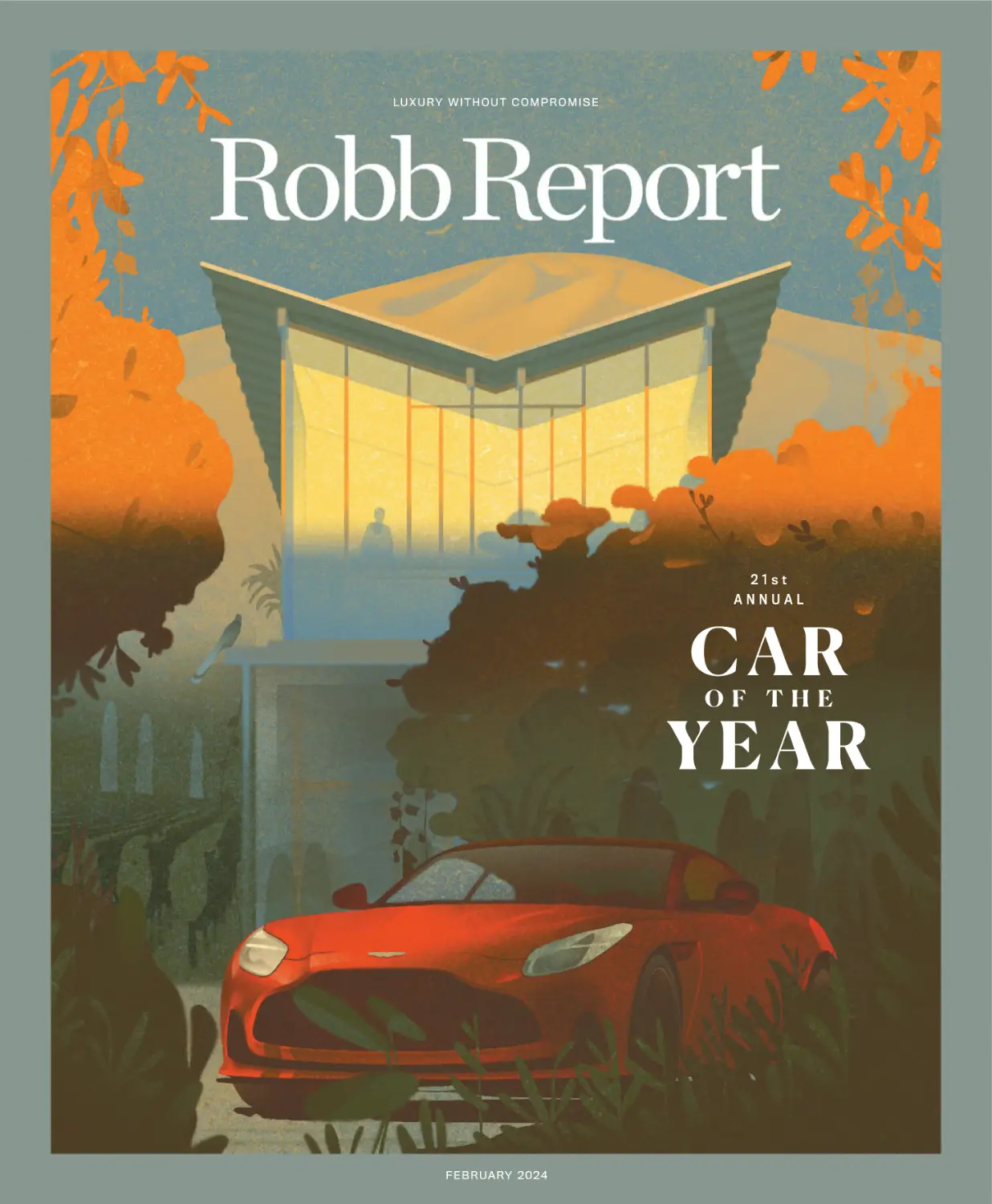
21st
ANNUAL
CAR
YEAR
OF THE
F E B R U A RY 2 0 2 4
breguet.com
Type XX
2067
The Breguet Type XX
has accompanied the most
experienced pilots since 1954,
landing on the wrist
with perfect precision.
Make History with us.
65 Private Beachfront Residences
THIS IS LIDO K EY, SAR ASOTA .
R EMINAGINED.
ORAL REPRESENTATIONS CANNOT BE RELIED UPON AS CORRECTLY STATING REPRESENTATIONS OF THE
DEVELOPER. FOR CORRECT REPRESENTATIONS, MAKE REFERENCE TO THE DOCUMENTS REQUIRED BY
SECTION 718.503, FLORIDA STATUTES, TO BE FURNISHED BY A DEVELOPER TO A BUYER OR LESSEE.
Now Under Construction • From the $6 Millions • 941-888-3131
R E SI DE NC E SL I D OK E Y.C OM
<PQ[XZWRMK\PI[JMMVÅTMLQV\PM[\I\MWN.TWZQLIIVLVWW\PMZ[\I\M<PQ[Q[VW\IVWٺMZ\W[MTTWZ[WTQKQ\I\QWVWNWٺMZ[\WJ]a\PMKWVLWUQVQ]U]VQ\[QV[\I\M[
_PMZM[]KPWٺMZWZ[WTQKQ\I\QWVKIVVW\JMUILM-Y]IT0W][QVO7XXWZ\]VQ\a:W[M_WWL:M[QLMVKM[4QLW3MaQ[W_VMLIVLJMQVOLM^MTWXMLWٺMZMLIVL
[WTLJa?;:¸4QLW*MIKP44+¹,M^MTWXMZº<PMXZWRMK\Q[VW\W_VMLLM^MTWXMLWZ[WTLJa:W[M_WWL0W\MT[IVL:M[WZ\[44+WZIVaWNQ\[IٻTQI\M[
¹:W[M_WWLº,M^MTWXMZ][M[\PM:W[M_WWLUIZS[X]Z[]IV\\WITQKMV[MIOZMMUMV\_Q\P:W[M_WWL_PQKPUIaJM\MZUQVI\ML]VLMZKMZ\IQVKWVLQ\QWV[
:W[M_WWLLWM[VW\I[[]UMIVaZM[XWV[QJQTQ\aWZTQIJQTQ\aQVKWVVMK\QWV_Q\P\PMKWVLWUQVQ]U+WXaZQOP\
)TT:QOP\[:M[MZ^ML
The begng of evythg.
Presenting a once-in-a-lifetime opportunity. | www.BajaBayClub.com
TIME TO RACE
UNIQUE TIMEPIECE
louismoinet.com
A journey of self-expression
through wearable works of art.
F A S H I O N I S L A N D N E W P O RT B E A C H | A S P E N | PA L M B E A C H | O C A L A | H O U S TO N | WA S H I N G TO N , D. C . | G R E E N W I C H
LUGANODIAMONDS.COM | 866.584.2666
F E AT U R E S
FEBRUARY 2024
VOLUME 48
NUMBER 1
100
Riding High
With the Boss
Musician and mogul Rick
Ross has never stopped
hustling. After decades
of building a fortune
through his rap career
and multiple business
ventures, Rozay reveals a
few of his latest toys.
BY LEAH FAYE COOPER
112
American Whiskey’s
New Firepower
Cask-strength spirits are
everywhere, it seems, and
collectors are all in. But is
that a good thing? And are
they even drinkable?
BY JASON O’BRYAN
116
The Final Summit
Few places rival Alaska
for skiing when it comes
to pristine powder and
daredevil potential. But
its lodges have been
below par. Now, all that
has changed.
BY JEN MURPHY
124
Driven to Win
Car of the Year returns
for its 21st birthday with
a twist—this year both
East and West Coast
locations took place on
tracks. The winner might
surprise you . . .
P. 100
Rick Ross wears his own
Louis Vuitton sweater
and custom Exclusive
Games pants.
18
Table of Contents
FEBRUARY 2024
DEVIN CHRISTOPHER
BY ROBERT ROSS AND
VIJU MATHEW
D E PA R T M E N T S
26
CONTRIBUTORS
28
E DI TO R ’S L ET TER
54
THE ANSWERS
with collector Komal
Shah.
68
G EN IUS AT WO RK
Jaipur-based Trunks
Company rethinks the
art of chest-making
by fusing old-world
craftsmanship with
contemporary design.
P. 78
THE GOODS
DOMAIN
30 ART
61 OBJECTIFIED
74 WINGS
82 WATER
Meet the painters disrupting
the art world with their bold
abstractions.
Five lounge-worthy daybeds
to level up your living area.
After fading from the
forefront, flying boats
prepare to soar once more.
How explorer yachts
are being used for both
charter and charity.
78 WHEELS
84 TECH
From Bentley to
boutique independents,
coachbuilding is having
a revival as demanding
clients increasingly seek the
last word in customization.
When it comes to
improving your game,
these sports simulators
let you hone your
athletic skills whatever
the weather. No excuses.
98
34 STYLE
FIE L D NO TE S
High-tech garments that
keep you cool in every
sense; Stefano Ricci’s ultraexclusive travel club is
really wild.
Spain is one of the
top wine-producing
nations on Earth—
and one that many
serious collectors
seem to have ignored.
152
TH E DUE L
Car Guy vs. Watch Guy
42 FOOD & DRINK
64 DESIGN
Desert modernism enters a
new era of innovation.
66 BOOKS
Three coffee-table tomes
that every architecture
enthusiast should read.
DREAM MACHINES
Maxim’s reopens in
Paris; Highland Park
releases its oldest and
rarest liquid; Louis XIII
goes big on small servings;
plus the Champagne
house that’s blending
vintages.
50 TRAVEL
21st
ANNUAL
CAR
YEAR
OF THE
Japan is a winter
wonderland. Here are the
resorts to visit, whatever
your comfort level.
52 WATCHES
COV ER
IL LUST R AT IO N BY
KAROLIS
STRAUTNIEKAS
20
Table of Contents
FEBRUARY 2024
Vacheron Constantin
unveils its latest Les
Cabinotiers line in Dubai;
two-tone watches that are
double the fun.
P. 52
BEST WILL DO.
6HDWWOH %HOOHYXH:$
DEFINITIVE.COM
/0&+RPH(QWHUWDLQPHQW
LMCHE.COM
$QQ$UERU0,
JSAUDIO.COM
APPOINTMENTS WELCOME BUT NEVER NECESSARY
Robb Report is owned and published by Penske Media Corporation
in partnership with Rockbridge Growth Equity.
Paul Croughton EDITOR IN CHIEF
JAY PENSKE
ASHLEY SNYDER
CHAIRMAN & CEO
VICE PRESIDENT, ASSOCIATE GENERAL COUNSEL
GERRY BYRNE
BRIAN VRABEL
VICE CHAIRMAN
HEAD OF INDUSTRY, CPG & HEALTH
GEORGE GROBAR
CONSTANCE EJUMA
PRESIDENT
VICE PRESIDENT, SEO
SARLINA SEE
COURTNEY GOLDSTEIN
CHIEF FINANCIAL OFFICER
VICE PRESIDENT, HUMAN RESOURCES
CRAIG PERREAULT
DAN FEINBERG
Viju Mathew EDITOR, DREAM MACHINES AND AUTOMOTIVE
CHIEF DIGITAL OFFICER
VICE PRESIDENT, ASSOCIATE GENERAL COUNSEL
Jeremy Repanich DEPUTY DIGITAL EDITOR AND CULINARY EDITOR
TODD GREENE
DENISE TOOMAN
EXECUTIVE VICE PRESIDENT,
VICE PRESIDENT,
Michael Verdon MARINE AND AVIATION EDITOR
BUSINESS AFFAIRS & CHIEF LEGAL OFFICER
MARKETING, STRATEGIC SOLUTIONS GROUP
Irene Opezzo PHOTO DIRECTOR
CELINE PERROT-JOHNSON
GABRIEL KOEN
EXECUTIVE VICE PRESIDENT, OPERATIONS & FINANCE
VICE PRESIDENT, TECHNOLOGY
PAUL RAINEY
GRETA SHAFRAZIAN
EXECUTIVE VICE PRESIDENT, OPERATIONS & FINANCE
VICE PRESIDENT, BUSINESS INTELLIGENCE
TOM FINN
JAMIE MILES
EXECUTIVE VICE PRESIDENT, OPERATIONS & FINANCE
VICE PRESIDENT, E-COMMERCE
JENNY CONNELLY
JAMES KIERNAN
EXECUTIVE VICE PRESIDENT, PRODUCT & ENGINEERING
HEAD OF INDUSTRY, AGENCY DEVELOPMENT
KEN DELALCAZAR
JENNIFER GARBER
Barry Samaha SENIOR COMMERCE EDITOR
EXECUTIVE VICE PRESIDENT, FINANCE
HEAD OF INDUSTRY, TRAVEL
Justin Festejo SENIOR VIDEOGRAPHER
DEBASHISH GHOSH
JERRY RUIZ
MANAGING DIRECTOR, INTERNATIONAL MARKETS
VICE PRESIDENT, ACQUISITIONS & OPERATIONS
DAN OWEN
JONI ANTONACCI
EXECUTIVE VICE PRESIDENT,
VICE PRESIDENT, PRODUCTION OPERATIONS
Josh Condon DEPUTY EDITOR
Robb Rice CREATIVE DIRECTOR
John Vorwald DIGITAL DIRECTOR
Julie Belcove FEATURES DIRECTOR
Ken Gawrych MANAGING EDITOR
Paige Reddinger WATCH AND JEWELRY EDITOR
Marina Grinshpun ART DIRECTOR
Justin Fenner SENIOR EDITOR
Rebecca O’Connor SENIOR COPY EDITOR
Erik Shilling DIGITAL AUTOMOTIVE EDITOR
Bryan Hood SENIOR WRITER
Lucy Alexander SENIOR STAFF WRITER
Rachel Cormack DIGITAL EDITOR
Nicole Hoey DIGITAL EDITOR
Sebastien Laforest SOCIAL MEDIA EDITOR
Abigail Montanez STAFF WRITER
Demetrius Simms DIGITAL STAFF WRITER
Tori Latham DIGITAL STAFF WRITER
Johanna Wolfe COPY EDITOR
Ryan Ishimaru JUNIOR DESIGNER
GM OF STRATEGIC INDUSTRY GROUP
KAREN REED
BRIAN LEVINE
VICE PRESIDENT, FINANCE
SENIOR VICE PRESIDENT, REVENUE OPERATIONS
KATRINA BARLOW
BROOKE JAFFE
VICE PRESIDENT, BUSINESS DEVELOPMENT
SENIOR VICE PRESIDENT, PUBLIC AFFAIRS & STRATEGY
KAY SWIFT
DAVID ROBERSON
HEAD OF INDUSTRY, INFORMATION TECHNOLOGY
SENIOR VICE PRESIDENT, SUBSCRIPTIONS
KEIR McMULLEN
DOUG BANDES
VICE PRESIDENT, HUMAN RESOURCES
Robert Ross AUTOMOTIVE EDITOR AT LARGE
SENIOR VICE PRESIDENT, PARTNERSHIPS PMC LIVE
Mark Ellwood EDITOR AT LARGE
FRANK McCALLICK
Mike DeSimone, Jeff Jenssen CONTRIBUTING EDITORS, WINE
CONTRIBUTING WRITERS
MIKE YE
VICE PRESIDENT, STRATEGIC PLANNING & ACQUISITIONS
SENIOR VICE PRESIDENT, GLOBAL TAX
NICI CATTON
JESSICA KADDEN
VICE PRESIDENT, PRODUCT DELIVERY
SENIOR VICE PRESIDENT, PROGRAMMATIC SALES
RICHARD HAN
Leah Faye Cooper, Rachel Gallaher, Richard Carleton Hacker, Antonina Jedrzejczak,
Marni Elyse Katz, Gabrielle LeBreton, Jen Murphy, Jason O’Bryan, Tim Pitt, Vivian Song,
JUDITH R. MARGOLIN
Nicholas Stecher, Julia Zaltzman
SENIOR VICE PRESIDENT, DEPUTY GENERAL COUNSEL
CONTRIBUTING PHOTOGRAPHERS
LAUREN UTECHT
Devin Christopher, Janelle Jones, Mark Mann, Aaron Wojack
SENIOR VICE PRESIDENT, HUMAN RESOURCES
VICE PRESIDENT, INTERNATIONAL SALES
SCOTT GINSBERG
CONTRIBUTING ILLUSTRATORS
Mikyung Lee, Lars Leetaru, Peter Oumanski, Karolis Strautniekas
PRODUCTION/DISTRIBUTION
MIKE PETRE | DIRECTOR, DISTRIBUTION
HEAD OF INDUSTRY, PERFORMANCE MARKETING
SONAL JAIN
MARISSA O'HARE
VICE PRESIDENT, ASSOCIATE GENERAL COUNSEL
SENIOR VICE PRESIDENT, BUSINESS DEVELOPMENT
THOMAS FERGUSON
VICE PRESIDENT, PRODUCT LICENSING
NELSON ANDERSON
SENIOR VICE PRESIDENT, CREATIVE
ADELINE CIPPOLETTI-SAEZ | ASSOCIATE PRODUCTION DIRECTOR
ANDREW NGUYEN | RETOUCHER
FINANCE
CHARLES GAWARTIN | CONTROLLER
JESSICA HERRERA | ACCOUNTS RECEIVABLE/COLLECTIONS SPECIALIST
TOM MCGINNIS
VICE PRESIDENT, CORPORATE CONTROLLER
ADRIAN WHITE
VICE PRESIDENT, ASSOCIATE GENERAL COUNSEL
ANNE DOYLE
VICE PRESIDENT, HUMAN RESOURCES
NICOLE DENIS | ACCOUNTS PAYABLE SPECIALIST
OPERATIONS
GLENN KRONICK | DIRECTOR, IT NETWORK & INFRASTRUCTURE
LOS ANGELES OFFICE
11175 Santa Monica Boulevard
Los Angeles, CA 90025
310.321.5000
INTERNATIONAL EDITIONS
Arabia, Australia & New Zealand, Brazil, China, Germany, Hong Kong (China), India, Italy,
Malaysia, Mexico, Monaco & Cote d'Azur, Russia, Singapore, Sweden, Thailand, UK, Vietnam
NEW YORK OFFICE
475 Fifth Avenue,
New York, NY 10017
212.213.1900
Printed in the United States
For reprints and permissions: pmc@wrightsmedia.com Subscription inquiries and back issues:
212.764.9120 (U.S.), +1.386.246.0137 (international), customerservice@robbreport.com
E S TAT E L I V I N G
IN THE SKY
Iconic waterfront condominiums in West Palm Beach designed by globally renowned Robert A.M. Stern Architects
and presented by Related Companies. Enjoy homes of expansive scale with spectacular views,
offering amenities akin to exclusive private members’ clubs, in South Florida’s most pedigreed location.
Two- to five-bedroom residences available. Pricing upon request.
southflaglerhouse.com • 561.867.9580
Exclusive sales by Suzanne Frisbie of Frisbie Palm Beach at Corcoran Sunshine Marketing Group.
WE ARE PLEDGED TO THE LETTER AND SPIRIT OF THE U.S. POLICY FOR ACHIEVEMENT OF EQUAL HOUSING OPPORTUNITY THROUGHOUT THE NATION. WE ENCOURAGE AND SUPPORT AN AFFIRMATIVE ADVERTISING AND MARKETING PROGRAM IN WHICH THERE ARE NO BARRIERS TO OBTAINING HOUSING BECAUSE OF RACE,
COLOR, RELIGION, SEX, HANDICAP, FAMILIAL STATUS OR NATIONAL ORIGIN. This is not an offer to sell, or solicitation of offers to buy, the condominium units in jurisdictions where such offer or solicitation cannot be made or are otherwise prohibited by law, and your eligibility for purchase will depend upon your state of residency.
This offering is made only by the offering documents for the condominium and no statement should be relied upon if not made in the offering documents. The features, amenities, designs, design professionals, finishes and specifications are proposed only, and the Developer reserves the right to modify, substitute, revise or
withdraw any or all of same in its sole discretion and without prior notice. This Condominium is being developed by SFH Owner LLC (“Developer”). Any and all statements, disclosures and/or representations shall be deemed made by Developer and not Related Companies or any principal of the Related Companies and any
purchaser agrees to look solely to Developer (and not to Related Companies and/or any of its affiliates or principals) with respect to any and all matters relating to the marketing and/or development of the Condominium and with respect to the sales of units in the Condominium.
ORAL REPRESENTATIONS CANNOT BE RELIED UPON AS CORRECTLY STATING THE REPRESENTATIONS OF THE DEVELOPER. FOR CORRECT REPRESENTATIONS, MAKE REFERENCE TO THIS BROCHURE AND TO THE DOCUMENTS REQUIRED BY SECTION 718.503, FLORIDA STATUTES, TO BE FURNISHED BY A DEVELOPER
TO A BUYER OR LESSEE.
Luke Bahrenburg
PRESIDENT
LBAHRENBURG@ROBBREPORT.COM
Cristina Cheever
SENIOR VICE PRESIDENT, RR1 & LIVE MEDIA
310.589.7713, CRISTINAC@ROBBREPORT.COM
Adam Fox
VICE PRESIDENT, INTERNATIONAL SALES & PARTNERSHIPS
+44.7505.153984, AFOX@ROBBREPORT.COM
Emma Jenks-Daly
VICE PRESIDENT, MARKETING
EJENKSDALY@ROBBREPORT.COM
ADVERTISING SALES
SARAH ANSARI | JEWELRY AND FASHION DIRECTOR
212.201.1120, SANSARI@ROBBREPORT.COM
GREGORY BRUNO | AUTOMOTIVE &
FINANCIAL SERVICES DIRECTOR
212.230.0284, GREGORYB@ROBBREPORT.COM
STEVE DINUNZIO | REAL ESTATE (DEVELOPMENTS) &
HOME FURNISHINGS DIRECTOR
978.264.7561, STEVED@ROBBREPORT.COM
JODY DUNOWITZ | MARINE, SOUTHEAST TRAVEL/
CARIBBEAN & CIGARS DIRECTOR
561.417.1616, JODYD@ROBBREPORT.COM
FLORENCE ESPLIN | ASSOCIATE DIRECTOR, INTERNATIONAL
+44(0)7879.290.943, FESPLIN@ROBBREPORT.COM
EARL ESTEP | WATCH DIRECTOR
978.264.7557, EARL.ESTEP@ROBBREPORT.COM
DANYA GERSTEIN | TRAVEL, GROOMING &
CONSUMER ELECTRONICS DIRECTOR
212.230.0215, DANYAG@ROBBREPORT.COM
MARION LOWRY | AVIATION, TRAVEL &
AUTOMOTIVE/WESTERN REGION
310.589.7732, MARIONL@ROBBREPORT.COM
KRISTIE NILSSON | REAL ESTATE
718.797.1880, KNILSSON@ARTNEWS.COM.
MINH-Y TRAN | DIRECTOR, BUSINESS DEVELOPMENT
MYTRAN@ROBBREPORT.COM.
JASON RUSSELL | WINE & SPIRITS DIRECTOR
317.413.6429, JRUSSELL@ROBBREPORT.COM
LUCIANO BERNARDINI DE PACE | ITALY
+39.02.2316.4148, BERARDINI@BERARDINI.IT
ALEXANDRA YOUNG | MIDDLE EAST
+917.52.688.2622, ALEX@KONEXINTERNATIONAL.COM
YVONNE YEUNG | ASIA
+852.2905.3217, YVONNE.YEUNG@NEXUSMEDIAASIA.COM
MARKETING & LIVE MEDIA
JOHN YAN | EXECUTIVE DIRECTOR, INTEGRATED MARKETING & CREATIVE SERVICES
DARIN GREENBLATT | EXECUTIVE DIRECTOR, LIVE MEDIA EVENTS
ANN WADSWORTH | DIRECTOR, INTEGRATED MARKETING
KALI SMITH | SENIOR DESIGNER, INTEGRATED MARKETING & CREATIVE SERVICES
MARY KATE FORNSHELL | INTEGRATED MARKETING MANAGER
NANCY BROOME | INTEGRATED MARKETING MANAGER
CAROLINE BARRY | SENIOR GUEST EXPERIENCE MANAGER
LEAH HANCHARD | EVENTS PRODUCTION MANAGER
ARI DEPREY | LIVE MEDIA COORDINATOR
BLYTHE BONAN | MEDIA PLANNER
LARYSA STACHOWICZ | INTEGRATED MARKETING ASSOCIATE MANAGER
JACK LUGO | ACCOUNT COORDINATOR
RACHEL ALBERS | DESIGNER, INTEGRATED MARKETING & CREATIVE SERVICES
MEAGHAN HECKSHER | INTERNATIONAL SALES ASSOCIATE
DIGITAL OPERATIONS
CONOR BARRETT | MANAGER, ADVERTISING OPERATIONS
JAKE HAGEN | MANAGER, ADVERTISING OPERATIONS
Robb Report© ISSN–0279-1447 is published monthly except in January and July; a total of 10 issues, two of which count as
double issues, by Robb Report Media, LLC, 11175 Santa Monica Boulevard, Los Angeles, CA 90025. Periodicals postage paid at
Los Angeles, Calif., and at additional mailing offices. POSTMASTER: Send address changes to ROBB REPORT SUBSCRIPTION
DEPARTMENT, P.O. Box 37943, Boone, IA 50037-0943. Canada Post International Publications Mail (Canadian distribution)
Sales Agreement No. 0560502. Copyright © 2024 by ROBB REPORT, a Robb Report Media, LLC, publication. All rights reserved.
Volume 48, number 1, February 2024. Reproduction in whole or in part or storage in any data-retrieval system or
any transmission by any means therefrom without prior written permission is prohibited. ROBB REPORT ® and LUXURY WITHOUT COMPROMISE™ are trademarks of Robb Report Media, LLC. For subscription information, call 212.764.9120 (U.S.) or
+1.386.246.0137 (international), or email customerservice@robbreport.com.
We Make
ELECTRIC
bevolo.com • 504.522.9485 • 521 Conti • 304 • 316 • 318 Royal • French Quarter • New Orleans
Leah Faye Cooper
Cooper is a New York City–
based fashion and culture
writer. She’s a contributing
editor at Vanity Fair and has
regularly written for Elle and
Harper’s Bazaar. In “Riding
High With the Boss” (p. 100),
she spoke with rapper and
mogul Rick Ross at his new
property on Miami Beach’s
Star Island. “It’s reasonable
to assume that someone’s
energy will wane over the
course of a six-hour shoot,
but Ross completely defied
that notion,” Cooper says.
“Where the Boss gets all
that energy amid recording,
performing, inking business
deals, and partying—which
he told Robb Report he does
quite a lot of—is a mystery.”
26
Contributors
FEBRUARY 2024
Aaron Wojack
A photographer and
artist living in San
Francisco, Wojack can be
seen outdoors frequently,
riding his bicycle. His
work sprang from fine-art
documentaries but has
meandered into new
realms as his interests
continue to blossom.
For this issue, Wojack
captured philanthropist
and collector Komal
Shah for The Answers
(p. 54). “My favorite
part of the shoot with
Komal was getting to
see her art collection and
speaking with her about
cars,” he says. “She was
very fun to talk to.”
Mikyung Lee
Lee is a Seoul-based
freelance illustrator whose
compositions have been
published in The New Yorker
and The Washington Post,
among others. Her works are
often a culmination of poetic
and emotional visual essays
that explore the relationships
between people and objects,
situations, and space; in her
spare time, she dabbles in
animation. For Robb Report,
Lee was tasked with creating
the imaginative opener
for “American Whiskey’s
New Firepower” (p. 112).
“I’m inspired by diverse
things such as nature,
architecture, colors, and
emotions,” she says.
Robert Ross
As Robb Report’s contributing
automotive editor, Ross
knows better than anyone
that our Car of the Year
contest (p. 124) is constantly
evolving. “For 21 years and
counting, makes and models
have traded back and forth
for top honors,” he says. “This
year, a change of venue took
us to the Sonoma Raceway—
the first time our West Coast
attendees experienced the
vehicles on a track and not
just the open road—where
the cars got to express
their virtues and vices in an
entirely different setting. Of
course, the big twist is that
nearly half the cars brought
electricity into the equation.”
BADIA: EDWARD BERTHELOT/GET T Y IMAGES.
Alex Badia
The style director at Women’s Wear Daily,
Badia helped create Rick Ross’s looks for our
feature profile on page 100 and said of the rapper
and businessman: “He’s really knowledgeable
about fashion and style, with an equal insight on
up-and-coming labels and the more established
luxury houses. He has a clear vision of the
look he’s after and how to accessorize it.”
PARTNERS IN
PERFECT MUSIC
LMC Home Entertainment in Scottsdale, Arizona, is the world’s only displaying
Wilson Audio WAMM dealer. Your destination for high-end audio and cinema.
Discover Us
Schedule your private audition.
www.lmche.com480.403.0011
15507 N Scottsdale Rd., #135, Scottsdale, AZ 85254
EDITOR’S LETTER
Students of the work of Rick Ross will unite in the opinion that
the man loves cars. The musician and business mogul named his
label Maybach Music Group, such is his affinity for the palatial
four-wheeler, while further clues were dropped with the single
“Aston Martin Music” back in 2010. But really, it’s the 200-odd
28
Editor’s Letter
FEBRUARY 2024
Paul Croughton
Editor in Chief
@paulcroughton
Elsewhere in this issue, we venture to Alaska, home
to some of the most epic heli-skiing in the world and, up to
now, some rather less-than-impressive accommodations
(p. 116). But two new properties are providing worthy
lodging for those who dare wish for world-class hospitality
alongside their desire for exceptional guides and virgin
powder on precipitous slopes. And we visit the wintersport options in Japan, where around 450 ski resorts cater
to every ability and some lodges receive over 900 inches of
snow in a season (p. 50).
Plus, we examine the curious evolution of desert
modernism (p. 64); explore the resurgence of seaplanes
(p. 74); dispel the myth that the higher the proof, the better
the whiskey (p. 112); and make the case for a new wave
of abstract artists (p. 30). And don’t miss our back page
this month, where Watch Guy goes head-to-head with
Car Guy in the Duel. But be warned: It might make for
uncomfortable reading!
Enjoy the issue.
MARK MANN
vehicles in his collection (he’s not certain of the official
number) that kinda give the game away. Ferraris, RollsRoyces, Lamborghinis, Bentleys . . . but also vintage
Chevys and a sparkling gold Pontiac Trans Am show Ross
to be an aficionado of not just the big-name big hitters but
also characterful, stylish motors that speak of a certain
flair and showmanship. “If I want it, then it’s worth it,” he
tells us in this issue.
Funnily enough, we didn’t really hang out with Ross
to talk cars at all: We had mostly traveled to Miami to
explore his new plaything, a Gulfstream G550, which he’d
just gutted and redesigned from the carpets up, complete
with a black-and-gold exterior paint job with mammoth
“Rick Ro$$” insignia, in case there was a danger of anyone
mistaking this for a plain old corporate bird. He’s as giddy
as a kid in a candy store about it all, as well he should be.
(The passengers he chose for his first flight? His mom
and sister.) Check out the exclusive tour he gave us of
his favorite onboard tweaks and modifications, on
robbreport.com, and turn to page 102 to see inside the
aircraft hangar where he keeps his collection of arcade
games, plus a few other trappings of his success. Ross
doesn’t just love cars, he loves life.
Sticking with automotive appreciation, this issue is our
annual Car of the Year celebration. We hosted 123 judges
across two bicoastal locations, to put 10 extraordinary
vehicles through their prodigious paces on road and, for
the first time in California, on track. Featuring an eclectic
roster of motors that would have made Ross himself sit
up and take note, this year saw BMW battle Alfa Romeo,
Maserati take on Maybach, and Mercedes-AMG go headto-head with Rolls-Royce. What really stood out, though,
was the prevalence of alternative power trains on display—
not something that all our test drivers entirely relished, it
must be said. (That’s the thing about the future: It’s coming
whether we like it or not.) In fact, of the 10 autos, just
under half eschewed ICE for all-electric or hybrid power
sources, and one of them even had the temerity to come
second in the competition.
The victor, however, houses a 4.0-liter twinturbocharged V-8 under its gloriously curvaceous hood,
as Aston Martin’s DB12 ran away with the prize. “One
of the best cars ever made,” enthused one of the judges.
Which is remarkable considering the turbulence that
Aston has had to endure over the past many years, as
the business threatened to crumble around the marque’s
impressive heritage. This is the 76th anniversary of the
DB line, so its success feels especially timely. Turn to
page 124 to read the whole story—which model do you
have your eye on for this year?
THE GOODS
T H I S M O N T H ’ S W H O, W H AT, A N D W E A R
JINSHI: COURTESY OF TANG CONTEMPORARY ART.
Zhu Jinshi, Valley in the Mirror No. 1, 2022, oil on canvas
30
The Goods | Art
FEBRUARY 2024
Abstraction, Represent
An eclectic wave of artists is approaching the genre—
and paint itself—with remarkable physicality.
Art | The Goods
FEBRUARY 2024
31
After several years of figurative painting's
domination of the contemporary-art
scene, some of the freshest-looking
canvases hanging in galleries and art fairs
in recent months have been abstractions.
Often encrusted in thick layers, many of
these works are dense topographies
weighing hundreds of pounds that push
right up to the edge of sculpture. All revel
in the nature of paint itself.
Boding well for its staying power, this
new abstraction is emanating from the
studios of artists young and old, male
and female, in the U.S. and around the
globe, so they don’t hew to one style: The
happy-hippie vibes of Palm Springs–
based Jim Isermann’s half-acrylic,
half-rug-hooked flower couldn’t be more
different from Cuban Diana Fonseca’s
mournful collages of peeled housepaint
or French Japanese artist Anne Kagioka
Rigoulet’s sweeping, landscape-inspired
panels that blend fabric collage and
sgraffito, a classic mural technique of
scraping away paint. But together they
signal that collectors would be wise to
clear some wall space.
Among the highlights at the Armory
Show in New York, for instance, was
the more than 18-foot-long, roughly
800-pound Valley in the Mirror No. 1
by Chinese master Zhu Jinshi, at Tang
Contemporary Art, which has seven
galleries across Asia. The monumental
work resembles a Monet—if one tiny
detail were magnified a zillion times,
making each “dab” of paint suddenly
massive enough to fill a shovel,
which, not incidentally, Zhu has been
known to use in his practice. He first
experimented with swapping a brush
for a broom in 1985 and five years later
turned to masonry tools to heap on his
oils, which look as thick as concrete
(even if they never fully dry beneath
the surface) and as brilliantly colored
as Play-Doh. His most recent shake-up,
in 2019: picking up a paintbrush again.
“The change of painting tools is a
disruption to the art form,” Zhu says
through a translator. “But art can only
continue to evolve and thrive by such
a form of disruption and destruction.”
Zhu, who spent many years
in Germany before returning to
his native China, currently finds
32
The Goods | Art
FEBRUARY 2024
Clockwise from above:
Katy Moran, Lake
Garda, feel harder,
2023, acrylic on
found painting; Jim
Isermann, Untitled
(Flower Shag Painting),
2022, wool and
acrylic paint on
canvas over aluminum
panel; Diana Fonseca,
Degradaciones I
(detail), 2019,
fragments of Havana
facades collage
on wood.
inspiration in cosmology and quantum
mechanics—“What’s important is the
six-dimensional space beyond the
limitations of pigments,” he declares—
and dismisses categorization. Asked if
he considers his sculptural, prismatic
works pure abstraction, he replies,
“Abstraction is a concept of modernism
that is already outdated.”
Fonseca’s “Degradaciones” series
appears abstract but is rooted in a
lived experience that was all too
real: walking through poor, decrepit
neighborhoods in Havana, where “paint
chips [were] falling as if the buildings
were shedding their skin,” she says
through a translator. Fonseca hit upon
the idea of using these scraps “as if they
were brushstrokes,” collaging them onto
wood panels—literally painting with the
remnants of the decaying city.
“Deterioration is already part
of the urban landscape of Havana,
a reality beyond any metaphor and
artistic vision,” explains Fonseca, who
shows her work at Max Estrella in
Madrid. “The intention is to construct
something visually interesting and even
attractive from what is broken, dirty,
and destroyed and to find the beauty
that resides in this chaotic reality.”
Fonseca composes the debris
improvisationally: “I work sitting on
the floor. It’s the best way I’ve found
to assemble these collages as if they
were a color puzzle.” The result
is cascading scales of paint, some
protruding and curling subtly from the
panels, often in three or four tones.
Fonseca cites influences ranging from
Pollock’s gestural abstraction to Antoni
Tàpies’s textured use of string, rags, and
other nontraditional elements to van
Gogh’s extraordinary color sense.
JIM ISERMANN: COURTESY OF THE ARTIST AND MILES MCENERY G ALLERY; DIANA FONSECA:
COURTESY OF G ALERIA MA X ESTRELLA; MORAN: COURTESY OF SPERONE G ALLERY.
Gabriel Mills’s wood panels,
meanwhile, are jam-packed with
layer upon layer of paint in moodily
juxtaposed hues. They can weigh
up to 300 pounds and are, at least
in part, about the labor, the process,
and the materiality of the paint, which
he varies in viscosity. “If I’m looking
for something, it’s to continue to
build a language for myself that feels
adequate as a thinking space,” says
Mills, who is represented by Micki
Meng in San Francisco. He also paints
representationally (his Air Jordans
are one muse) and says he looks to
everybody from Gerhard Richter to
Richard Serra but notes his recent
abstract paintings owe much to the
alt-rock band the Smashing Pumpkins.
Mills has even titled some, including
Glass and the Ghost Children, after the
band’s songs, which play in heavy
rotation in his New Haven, Conn.,
studio. “That song feels like an
introspective dialogue,” he says.
British artist Katy Moran’s reliance on
art history is more tangible than that of
her peers: She typically scavenges old
paintings from thrift shops, then pours
acrylics over them, letting the pigments
pool and drip over the underlying image.
For the canvases in her recent show at
Sperone Westwater in New York, she
employed her own physique as a tool as
well. “The body painting injects an
element of accident and chance, which
I value the energy of,” Moran explains. “I
also like the specific marbling paint effect
it gives, this visceral quality.”
So just which part of her anatomy
serves as her brush? “My bum!”
Julie Belcove
Art | The Goods
FEBRUARY 2024
33
Technically
Correct
Incorporate sleek, highperformance gear without
looking like you’re
about to break into a trot.
PHOTOGRAPHY BY JANELLE JONES
STYLING BY CHARLES BUMGARDNER
M A R K E T E D I T O R LU I S C A M P U Z A N O
FUTURE-PROOFED
Technical fabric can work in somewhat more traditional
forms, as seen with this travel-style blazer. Keep the
rest of the look similarly streamlined but soft and tonally
neutral so as not to appear as if you’ve arrived to lunch
from the future.
Berluti blazer in technical material with leather details,
$3,000; Dunhill cotton-seersucker zip shirt, $895; Tom
Ford silk and polyamide double-face turtleneck, $1,990;
Ferragamo jersey trousers, $1,150; Loro Piana calfskin
loafers, $1,150; Gucci maxi double-shoulder tote, $1,980;
Dior acetate sunglasses with mirror lenses, $830.
34
The Goods | Style
FEBRUARY 2024
"
$
$
$
$
$
$ #$!
!$
$ "$
$
$!
$
$#$
$
$$
#$
$"
$
$
$ $
$
#$
$ $#
$
$$
$
$
#$
$$
$$$
$ #$
$ $
c#*$ %$%c !/
c&'c'1c .c !'c$ c! c 1c-$
c$"$% &'! %c c ''c&c!
2c$"$% ''! %c
c 1c%
$c$c%'c !$'c c&c""
c"+$ %c$
(c
c
%! %c '+$%c c%" )! %c$c""$!0
'c c%* 'c '!c c /&!,&c !& c
EFcAG3<9Vc3L7c79VA<IVc79NA6X97c=9Q9BJc3P9c3PYBVWVc6ML69NW\3FcP9K79PAL<Vc`?A6=c3Q9c43V97c[NMKcOP9GBK3Tbc79_9EMOG9KWcNE3JVc3K7c3P9cV\4C96XcXMc6>3K<9c`AW>M[WcLMXB69cEFcV\6>cH3W9QB3EVc3P9cJMXcXMcV63F9c3K7c3P9cV>M`IcVME9Fbc:MQcAEF]VWQ3XB_9cO[POMV9Vc$9J79QAK<Vc79NA6XcOPMOMV97c_A9`Vc`?A6=c3P9cLMXcA79JXB63Ec:PMGc936@cEMXcMPc>MG9c Mc<]3P3JW99VcMQcP9OP9V9JX3XBMKVc`@3WVM9_9Pc
3P9cH379cW?3Wc9aBVWAL<cMQc:\W^P9c_A9`VcM;cW>9cOSMD96Wc3K7cV[PQM\K7BK<c3Q93Vc79OB6W97c4bc3QWAVXVc6MK69OX]3EcQ9U89PBK<VcMQcMW>9P`BV9c79V6PAZ97c>9P9AIc`BFEc59cOPM_B797cMRcB;cOQM_B797c`AEFc9c3Vc79OA6W97c?9Q9AIcMPcW>3XcV\6>c_B9`Vc`AEFcIMWcZ9cM5VXP\6X97cBJcW>9c:[W\P9c
³
STORM KING
Out and about on the foulest of days? Go streamlined under a
(breathably) weatherproof jacket from an Italian performancefabric specialist. Gurkha trousers add enough volume and
structure to keep a classic cotton polo and white trainers from
going full normcore.
Stone Island 402G1 Stellina_3L nylon jacket in polyamide and
nylon, $1,350; Anderson & Sheppard cotton polo, $385;
Private White V.C. x Todd Snyder wool Gurkha trousers
with cotton Ventile detailing, $598; Kotn T-shirt in cotton, $55;
Celine Homme by Hedi Slimane low lace-up sneakers in
suede and calfskin, $750.
36
The Goods | Style
FEBRUARY 2024
RETROFUTURISM
Ten C’s focus on modular
Italian-made performancewear
crafted from Japanese textiles
produces technical pieces
with a heritage feel, such as
this down-filled aviator jacket
in dyed Original Japanese
Jersey material. Contrast with
a luxe piece of old-school
activewear (that is, a wool
sweater) in a complementary
earth tone.
Ten C OJJ dyed 9 oz
down-filled aviator jacket,
$1,763; Gabriela Hearst
cashmere sweater, $1,890;
Hermès wide-leg trousers
with elastic waist in sage
technical wrinkled cotton,
$1,125; Canada Goose
Glacier Trail sneakers, $450;
Montblanc Extreme 3.0 Duffel
Bag with M Lock 4810 buckle,
$1,930; Zegna Eyewear
metal sunglasses, $365.
ROBB RECOMMENDS...
Vollebak
Menswear tends toward
the scholarly, with its
reverence for the archival
and incessant fussing over
heritage and tradition.
Which explains the jolt
when discovering a brand
as relentlessly futurefocused as Vollebak: You
squint at the lustrous
metallic outerwear and
color-shifting parkas and
wonder if this is what
Silicon Valley ayahuasca
types wear motorcyclecamping in the desert while
you’re home researching
deadstock herringbone.
“We think about clothes
the way René Redzepi thinks
about food or Bjarke Ingels
thinks about architecture,”
says Nick Tidball, Vollebak’s
cofounder along with
his twin brother, Steve,
describing an experimental
approach to future-proofing
garments against climate
change, resource scarcity,
and the anticipated physical
and psychological needs
of interplanetary travel.
The pitch, like the label’s
branding and marketing,
is almost suspiciously
slick (it helps to know the
brothers previously enjoyed
a successful career as
a creative duo in London
advertising) until you realize
the clothes actually fit
their hyperbolic billings:
The Apocalypse Jacket is
fireproof to 2,370 degrees
Fahrenheit, includes 23
pockets, and converts into
a sleeping bag, while the Full
Metal Jacket is composed
largely of antimicrobial
copper, known to kill both
bacteria and viruses. Later
that evening, Ingels even
shows up to dinner—turns
out he’s an enthusiastic
collaborator. “These guys
think about clothes the way I
think about design,” he says.
Yet despite the sci-fi
ideas and bold names, the
gear itself is exceedingly
wearable, relatively
low-key even when
extremely technical. Across
product lines that include
Indestructible, 100 Year,
Equator, and Waterfallproof,
the aesthetic veers from
snowboard-chic to earthy,
algae-dyed natural fibers
to futuristic takes on retro
adventuring gear—think
Ker & Downey by way
of Dune. Our favorite:
the insulated 3-D-knitted
Mars Hoodie (pictured,
$795), made by a machine
designed to build bedding.
The result is a sculptural and
ultrasoft sweatshirt with
the heft and density of an
anxiety blanket (it weighs
over two and a half pounds)
and the supremely coddling
comfort of a memory-foam
mattress. Vollebak calls it
“chill-out gear for Mars,” but
we like its utility at orbits
slightly closer to home:
as the ultimate air travel
hoodie. Josh Condon
Style | The Goods
FEBRUARY 2024
37
I’m With
the Brand
38
The Goods | Style
FEBRUARY 2024
tailoring to a 360-degree lifestyle brand
with a hand in watches, wine, home
decor—even superyacht interiors.
In 2022, in Egypt during the brand’s
epic three-day 50th-anniversary bash,
complete with a fashion show at the
Hatshepsut Temple and a private visit
to the Valley of the Kings and Queens,
it dawned on Niccolò Ricci that travel
was the obvious next frontier. “Travel
is the most important experience for
every generation,” he says. “For today’s
man, the ultimate luxury is a journey of
discovery. To be a timeless traveler, one
must explore the world.”
Lorenzo Quinn, the Italian
contemporary artist known for his largescale sculptures that draw attention
to climate change, was the first to
receive an invitation. Over five days in
Mongolia in October, I joined Quinn
and others on the journey, summiting
Below: Mongolia
inspired Stefano
Ricci's newest
collection, including
this fox fur-lined
jacket in chinchilla
and cashmere blend.
Right: The Explorer
project began as a
way to shoot brand
campaigns in farflung locales.
2,000-foot-tall sand dunes, sleeping in
traditional circular tents known as ger,
visiting working paleontological sites,
and sharing meals of khuushuur (deepfried meat pies) and buuz (steamed
dumplings) with a crew of around of 20,
including Niccolò and Filippo Ricci and
the brand’s lead model, Tao Fernandez
Caino. The project’s tagline—“explore
the world to explore ourselves”—
resonated with Quinn. “To live on the
edge is to be willing to explore the
unknown,” he says. “Sometimes you
don’t even know you’re looking for
something until you disconnect from life
DETAIL SHOT: ALESSANDRO MOGGI; CAMPAIGN SHOT:
CHRIS RAINIER.
at first, an invitation to the fashion
show was enough, with front-row seats
declaring your elite status. Then the
secret after-party was the hot ticket,
until a preview with the designer
became the mark of a real friend of the
label. Now you can’t consider yourself a
true VIP unless you’re dining with
Kazakh eagle hunters in the snowdusted mountains of Western Mongolia,
attending a meditation ceremony at a
mountaintop temple, and watching the
sun rise from the sand dunes of the Gobi
Desert—all on the same trip. The real
flex, now, is an invite to the menswear
brand experience.
It’s a familiar concept elsewhere
in the luxury space: Ferrari hosts its
highly coveted, invite-only Cavalcade
for the world’s most elite Prancing
Horse collectors while Panerai arranges
extreme customer excursions led by Navy
SEALs or acclaimed climber-filmmaker
Jimmy Chin. Last summer, Van Cleef &
Arpels threw an opulent, Grand Tour–
inspired party at Rome’s Villa Medici
to showcase its latest high-jewelry
collection for its most esteemed buyers.
Into this mix, in October, Stefano
Ricci launched the latest of its Explorer
project in Mongolia, whose rich culture
and forbidding landscapes were
muses for creative director Filippo
Ricci’s newest designs. The Explorer
project, which debuted in 2022 and has
previously journeyed to Iceland and the
Galápagos, is equal parts research trip,
preservation initiative, fashion shoot,
and once-in-a-lifetime travel experience.
Former National Geographic Society
executive vice president Terry Garcia
acts as senior consultant, helping select
locations (based on both conservation
opportunities and adventuring wow
factor) and support the missions.
In each destination, a local cause is
adopted. With the brand’s symbol being
the eagle, aiding the Kazakh Falconry
Association and its commitment to
protect Mongolia’s dying art of eagle
hunting, a tradition dating back to the
1600s, was a natural fit. “When you
visit these places and see nature and
culture under threat with your own
eyes, it reminds you that we have a
responsibility,” says Filippo Ricci, who
joins Explorer trips along with his
brother, CEO Niccolò Ricci.
Over the decades, the family-run
label has evolved from silk ties to
and experience a new place. That’s when
transformation and inspiration happen.”
And not just for invitees. Mongolia
was the influence behind the fall-winter
2024-25 collection and the backdrop for
its campaign. The traditional dress of the
Kazakh eagle hunters can be glimpsed
in the hooded down jacket made from
chinchilla and cashmere blend with
fox-fur trim, while the red and saffron
hues of monks’ robes appear in scarves
and sweaters. And the country has left
its mark on the Florentine label in other,
more lasting ways, with the superfine
white fiber from the undercoat of the
Capra hircus goats of Inner Mongolia
spawning its own new label within the
brand: Stefano Ricci Alpha Yarn.
The Explorer project started life
as a way for the label to capture its
newest collections in far-flung locations
around the world through the lens of
award-winning National Geographic
photographers including Mattias Klum
and Chris Rainier—“an anthropological
approach to shooting fashion,” as Filippo
Ricci puts it. As such, a gorgeous coffeetable book chronicling each chapter of
the explorer’s journey is gifted to Stefano
Ricci Club Members, a by-invitation-only
community of around 400 clients who
spend a minimum of $54,000 annually
at the brand. And yet for all the expense,
consideration, time, and logistics that
go into creating them, Niccolò Ricci
stresses that Explorer project expeditions
aren’t your typical luxury holidays.
Mongolia is a land of extremes, where
temperatures range from well below zero
to over 100 degrees Fahrenheit, and many
days of our journey began before sunrise.
“Sometimes you have to go to
uncomfortable areas to be wide-eyed,”
he says. “It’s not for everyone.” Which is
very much the point. Jen Murphy
Style | The Goods
FEBRUARY 2024
39
SPECIAL ADVERTISEMENT
Keep Your
Cigars in Style
Davidoff introduces a new luxuriously appointed
humidor that is as chic as it is effectual.
Your most valuable possessions require a pristine and plush environment that
not only protects but also preserves with integrity. This, of course, applies to
cigars; and Davidoff’s prestigious, handmade humidors are aptly suited to the
task. These handcrafted accessories equipped with self-regulating humidity
controls ensure their confines are ideally suited for your favourite cigars, while
boasting an elegant, timeless aesthetic, seamlessly blending with a home’s
interior design and, in some cases, elevating the ambiance of a room.
The brand’s latest release in this category, the new Davidoff Winston Churchill
Humidor, encompasses many of the late Prime Minister’s most celebrated
characteristics. Similar to Sir Winston Churchill, these storage devices are
mighty yet reserved, honouring Churchill’s celebrated storytelling prowess and
they are certain to inspire even the most discerning connoisseurs. It is common
knowledge that Churchill was a raconteur, a lover of “les bon mots”—the good
words—and, appropriately, this new Davidoff humidor features an elegantly
engraved excerpt from Churchill’s memoir, My Early Life, which is arranged
around an image of the former political leader’s iconic silhouette.
The humidor is available in two popular sizes and colours. The Primos model
can comfortably store almost three dozen cigars and is constructed of oak with
darker inlays. The Ambassador model, by contrast, can hold as many as 80
cigars and is striking with its black-tinted tulip wood and golden features.
Both models feature an interior accessories pocket and numerous dividers,
which make it easy for owners to sort their cigars. These humidors are also
equipped with Davidoff’s noteworthy Slim Regulator, which ensures ideal
humidity levels inside the vessels once the lids are closed.
Discover the Davidoff Winston Churchill Collection
DID YOU KNOW?
Davidoff's dedicated Winston Churchill
Collection is comprised of a number of cigars
defined by their complex, multi-origin tobacco
blends. These creations were not only inspired
by, but also crafted in the name of the great
man who was rarely seen without a cigar in
his hand. Available in two lines, "The Original
Series" and "The Late Hour Series," these
Davidoff cigars provide a premium tobacco
option specifically created to align with the
general time of day when they’re enjoyed—
either during daylight hours or after the sun
goes down. The latest release in this collection,
"The Late Hour Series" Petit Panetela,
features cask-aged tobacco and is both
balanced and captivatingly complex.
available in two designs and sizes
#timebeautifullyfilled
davidoff.com
C I G A R S O F C H A R AC T E R
A newly reopened Maxim’s recalls an era when the
celebrity universe revolved around Parisian nightlife.
ver the past several years,
Maxim’s has become
best known as a gourmet
food brand, the name
emblazoned on chocolate
bonbons, Champagne bottles, and foie
gras sold in French airports and souvenir
shops. But for decades it was among the
most famous restaurants in Paris and
therefore the world, a historic Art
Nouveau monument that hosted
legendary fêtes for everyone from
Marcel Proust and Greta Garbo to Bing
Crosby and Barbra Streisand. Not
surprising, then, that its recent
reopening under the direction of French
hospitality group Paris Society has been
hotly anticipated, particularly with
founder Laurent de Gourcuff vowing to
“revive the Maxim’s myth, perpetuate
the legend, and restore its prestige.”
That’s no small task. “It’s one of the
most mythical, most symbolic restaurants
of Paris,” says Nicolas d’Estienne d’Orves,
O
42
The Goods | Food & Drink
FEBRUARY 2024
a French writer who specializes in, among
other subjects, Parisian culture and history.
Opened in 1893 by a former waiter, Maxime
Gaillard, steps from Place de la Concorde at
3 rue Royale, the restaurant quickly became
a society epicenter and remained a place
to see and be seen from the heady days
of the Belle Epoque all the way through
the swinging ’70s, when it achieved three
Michelin stars and was the spot where
Brigitte Bardot, Elizabeth Taylor, and Mick
Jagger and Jerry Hall went in search of an
authentic Parisian soirée.
From those substantial heights, the fall
was gradual: Nightlife focus shifted and the
restaurant grew outdated, lost its Michelin
rating, and eventually transformed into a
souvenir brand for tourists. But in the local
imagination, Maxim’s was never obsolete,
and Paris Society’s approach was to
refurbish the restaurant’s past glory down
to the smallest detail. Inside, guests are
transported back to the age of Bernhardt
and Cézanne with red velvet banquettes,
From left: The dining
room at the newly
reopened Maxim’s,
replete with Belle
Epoque details of red
velvet and stained
glass; the restaurant’s
interior reflects the
historic building’s Art
Nouveau aesthetic.
ROMAIN RICARD
Remember Paris
stained glass, frescoes, and bronze and
copper ornaments in allegorical floral
and feminine motifs. The menu likewise
revisits French culinary classics such as
frogs’ legs with parsley, roast chicken for
two, and cheese soufflé; Crêpes Suzette
and chocolate mousse come courtesy of
celebrity pastry chef Yann Couvreur.
“They’ve completely reinvented it,
but the decor and spirit are exactly the
same,” says d’Estienne d’Orves, and
Maxim’s evokes a scene from a bygone
era, with crooners in vintage dress
singing “La Vie en Rose” and bartenders
mixing cocktails with names like the
Streisand, a potent mix of gin, cherry
and botanical liqueurs, sugared lime
peels, and pomelo cordial. Considering
its opulence and location near palace
hotels and the Champs-Élysées, to
say nothing of its history and local
fame, d’Estienne d’Orves suggests the
reopening isn’t about chasing Michelin
stars as much as giving the beautiful
people a new playground: Expect it
to become the next hot spot for Paris
Fashion Week, for instance, and to be
rented out by celebrities and the jet set
for private parties, just as it was in its
heyday. “It’s a historical monument of
Parisian life,” d’Estienne d’Orves says,
and who wouldn’t want to time-travel
back there for an evening? Vivian Song
THE QUINTESSENTIAL KITCHEN
OFFICINEGULLO.COM
Insta-Dram
Influencer
Age Before Wisdom
it’s said that with age, one becomes more
oneself. To which you might reply—sure,
what other choice is there? The more
intriguing idea is whether the same applies
to Scotch.
The answer, in a dram, is yes. Highland
Park’s 54-year-old single malt, the oldest
and rarest whisky it has ever produced,
manages to tell the distillery’s whole story
in a sip, bringing its varied personalities
together like clans at a feast. But to
comprehend how master whisky maker
Gordon Motion achieved such harmony,
you first have to understand where
Highland Park starts. And that means
understanding Orcadian peat.
Peat, the fuel that gives Scotch its
smoke, is no more than thousands of
years’ worth of compacted plant matter,
which renders the character of any peat
a reflection of the local flora. Highland
Park, on the Orkney Islands, is Scotland’s
northernmost major distillery, so
weather-beaten and barren of trees that
its Hobbister Moor peat is woodless,
composed entirely of grasses and hearty
plains flowers, making it burn with a floral,
heathery smoke that tastes like nothing
else. While sherry barrels are another
hallmark of the label, it’s the peat that
makes Highland Park unique.
With age, that singular essence takes
divergent forms, like fraternal twins.
Sometimes, as with the 12-year and the
current release of the 25-year, fruit from
44
The Goods | Food & Drink
FEBRUARY 2024
the sherry barrels dominates, with notes of
dried apricot and banana-flavored chewing
gum. In others, such as the 18- and the
current 30-year, peat and wood speak
louder via hints of dark chocolate–covered
raisins, cigar tobacco, and old leather. Both
profiles are found throughout Highland
Park’s portfolio, but individual bottles tend
to favor one or the other.
The idea for this bottling was planted
back in 2008, when Motion discovered a
group of 10 casks in his aging house that
retained unusual vibrancy and freshness
despite being four decades old at that
point. He married the spirits together
into first-fill European sherry casks, then
let the resulting liquid age another 14
years before introducing it to the world as
Highland Park 54 Year Old.
Remarkably, this $54,000 whisky—of
which only 225 bottles were made available
globally—manages to showcase both
profiles equally, with exceptional clarity
and dynamism. The fruit arrives first and
with startling force given the age, redolent
of lychee, dried apricots, and peach before
the peat announces itself in the mid-palate
with earthy flavors of caramel, hazelnuts,
and those unmistakable plains flowers.
It’s not unprecedented to fit this much
flavor into a bottle. Old Scotch often has
a lot to say, but rarely does it articulate
itself so lucidly or so well. To be sure, this
bottle might be Highland Park at its most
complete. Jason O’Bryan
When you’re in the mood
to savor a moment,
nothing beats a fine
Cognac to enliven the
pursuit. But while
life should be full of
celebrations large
and small, times when
a decanter is at hand are
notably few.
Enter the Drop, a set
of miniature glass carafes
each holding 10 ml of the
exceptional Louis XIII, a
blend of 1,200 different
Grand Champagne eauxde-vie aged between 40 to
100 years in some of the
oldest tierçons in Rémy
Martin’s cellars, designed
to be enjoyed straight from
the bottle. Priced at $950
and available exclusively
on the Louis XIII website,
the Collection Box houses
five containers, each
topped with a differently
colored cap bizarrely
meant to reflect a different
mood—Bold, Loud, Bright,
whatever—though the
liquid inside is identical:
that kaleidoscopically
flavored Cognac with
notes of honeysuckle,
peaches, myrtle, and
wood bark.
As further proof
that this heritage label
is reimagining itself for
a new generation of
connoisseurs, accessories
include leather holsters
and corresponding
shoulder straps. Our
advice? Treat them as the
ultimate airplane bottles
and toss a handful into
your weekender, to make
sure you’re ready for
whatever unexpected
celebrations life might
throw at you. Richard
Carleton Hacker
OUR NEW
H A RV E S T
IS HERE
The Plasencia family is proud to introduce the latest
and greatest in the esteemed line of Cosechas.
Brimming with flavor and intensity, the Cosecha 151
commemorates our 151 st harvest, the first of which
began in 1865.
The journey begins with notes of roasted coffee and
pecans, and culminates with hints of cinnamon and
oak. This 100% Honduran cigar, from our 2016-2017
harvest, must be experienced to be believed.
IG NITE YOUR SOUL. A LL OVE R AGAI N .
P E R F EC T E D
OVER 158 YEARS,
YO U R S TO
E N J O Y N O W.
P L A S E N C I AC I GA R S . COM
MultiVintage,
Singular
Vision
in 2021, after 13 years at Veuve
Clicquot, acclaimed cellar master
Dominique Demarville shocked the wine
world when he announced he was leaving
his high-profile position and large team
of winemakers for the little-known
domaine Champagne Lallier, in Aÿ,
France. Demarville, celebrated for his
exacting blending style, wanted to get
back to hands-on winemaking. Now
Lallier is releasing the first cuvée made
completely under his direction: Réflexion
R.020, a multi-vintage Champagne based
on the superb 2020 vintage.
Multi-vintage Champagne
distinguishes itself from nonvintage
in that it’s based primarily on a single
harvest, a style that Champagne Lallier
has been making for several years and
that Demarville says is “different than
how most people are doing it in the
region.” As for the wine’s name, he
says the number on the bottle denotes
the base vintage that dominates the
blend. Réflexion R.020, for example,
is made with 81 percent grapes from
2020—offering fruity and floral aromas
and flavors, with a touch of salinity—
while the remaining 19 percent comes
from 2018 and 2019, for added intensity
and depth.
Demarville says Lallier doesn’t
incorporate a high percentage of reserve
wines, typically used to create continuity
from year to year for nonvintage
Champagnes. “At Lallier, we’re not
46
The Goods | Food & Drink
FEBRUARY 2024
looking for consistency, which means
that from one Réflexion to another, we
have small differences,” he says.
R.020 is the 10th iteration of
Réflexion and the first to include a
majority of Chardonnay, at 51 percent
of the blend. The dry and sunny 2020
season produced ripe grapes that were
picked relatively early, to maintain
freshness and acidity; according to
Demarville, “this level of Chardonnay
brings a level of finesse and a purity in
the Lallier style.” Thanks to the fullbodied vintage, he adds, “it also has a
long finish with a very silky, delicate
texture on the mid-palate.”
In our tasting, Champagne Lallier
Réflexion R.020 offered a fine mousse
with a steady stream of tiny bubbles
and aromas of lemon-lime, vanilla, and
dried thyme. Remarkably fresh on entry,
with flavors of lemon, green apple, and
kumquat, it also provides a sophisticated
back palate, featuring hints of croissant
and chopped green herbs with a full yet
refined texture.
According to Demarville, the
depth of the 2020 season means R.020
will age slowly, like a fine vintage
Champagne. While it’s drinking perfectly
now, he believes it will remain fantastic
for another 10 to 12 years—enough
time, perhaps, for Demarville to make
Lallier a household name among wine
cognoscenti. Mike DeSimone and
Jeff Jenssen
The home of your dreams.
The place for your passions.
The time of your life.
THAT’S THE RHYTHM OF REYNOLDS.
*Rates and availability are subject to change and excludes holidays. Club credit for promotional purposes only. Real estate and other amenities are owned by Oconee Land Development Company LLC and/or other subsidiaries and affiliates of MetLife, Inc. (collectively, "OLDC" or “Sponsor”) and by unrelated third parties. Reynolds Lake Ocone
Oconee. RLOP also represents buyers and sellers of properties in Reynolds Lake Oconee which OLDC does not own ("Resale Properties"). OLDC is not involved in the marketing or sale of Resale Properties. This is not intended to be an offer to sell nor a solicitation of offers to buy OLDC-owned real estate in Reynolds Lake Oconee by residents
solicitation of offers to buy applies only to Resale Properties. Access and rights to recreational amenities may be subject to fees, membership dues, or other limitations. Information provided is believed accurate as of the date printed but may be subject to change from time to time. The Ritz-Carlton Reynolds, Lake Oconee is a private comme
For OLDC properties, obtain the Property Report required by Federal law and read it before signing anything. No Federal agency has judged the merits or value, if any, of this property. Void where prohibited by law. WARNING: THE CALIFORNIA DEPARTMENT OF REAL ESTATE H
statement has been filed with the Iowa Real Estate Commission and a copy of such statement is available from OLDC upon request. OLDC properties have been registered with the Massachusetts Board of Registration of Real Estate Brokers and Salesmen at 1000 Washington Stre
Financial Protection at 1700 G Street NW, Washington, D.C. 20552. Certain OLDC properties are registered with the Department of Law of the State of New York. THE COMPLETE OFFERING TERMS ARE IN AN OFFERING PLAN AVAILABLE FROM SPONSOR. FILE NO. H14-0001. Not
its principals are not incorporated in, located in, or resident in the state of New York. No offering is being made in or directed to any person or entity in the state of New York or to New York residents by or on behalf of the developer/offeror or anyone acting with the developer/offeror
residents of the state of New York, shall take place until all registration and filing requirements under the Martin Act and the Attorney General’s regulations are complied with, a written exemption is obtained pursuant to an application is granted pursuant to and in accordance with Coop
ee Properties, LLC ("RLOP") is the exclusive listing agent for OLDC-owned properties in Reynolds Lake
of HI, ID, OR, or any other jurisdiction where prohibited by law. As to such states, any offer to sell or
ercial enterprise and use of the facilities is subject to the applicable fees and policies of the operator.
HAS NOT INSPECTED, EXAMINED, OR DISQUALIFIED THIS OFFERING. An offering
eet, Suite 710, Boston, Massachusetts 02118-6100 and the Bureau of Consumer
tice to New York Residents: The developer of Reynolds Lake Oconee and
r’s knowledge. No such offering, or purchase or sale of real estate by or to
perativePolicyStatements#1or#7,ora“No-Action”requestisgranted.
Reynolds Lake Oconee has a unique cadence all its own. The private waterfront
community is home to stunning real estate, world-class amenities, and thousands
of engaged members. Just east of Atlanta, Reynolds boasts an inspiring mix of clubs
and restaurants, and one of the only lakefront Ritz-Carlton® resorts in the world, all
surrounded by miles of coastline and everything from hiking to biking, pickleball to
golf on six championship courses. Here, pastimes become passions, and neighbors
quickly become lifelong friends.
BOOK YOUR LIFESTYLE VISIT to experience our community
firsthand. Stays include golf, boat rental and a private real estate tour, with
preferred rates in a cottage or at The Ritz-Carlton®оņŇĴŅŇļŁ ĴŇҼሥሦሱѩŁļ ĻŇс
REYNOLDSLAKEOCONEE.COM/ROBBȏ
HAKUBA: CHRISTIANNA FZGER /GET T Y IMAGES; WASHOKU:
NOLAN ISOZ AKI; MACAQUE: LEA SCADDAN/GET T Y IMAGES.
In Search
of Japow
Japan’s extraordinary ski
culture has something for
everyone—plus some of
the best snow on Earth.
J
apanese snow is the stuff of
legend. In an average winter,
freezing Siberian winds scoop up
moisture from the Sea of Japan
and blanket the country with
over 30 feet of cold, bone-dry powder—
famous in the ski community as “Japow”—
making it one of the snowiest places on
the planet. There are around 450 ski
resorts across an island nation roughly
the size of Montana, and during good
winters lodges such as Nozawa Onsen,
Kiroro, and Geto Kogen can get over 900
inches. If you’ve never skied here, picture
charging through beech forest, bouncing
down pillow lines in chest-deep Japow as
crystallized white smoke billows toward
the sky, and you’ll soon grasp the appeal.
But there’s more to shredding Japan
than staggering volcanic landscapes and
the world’s most beautiful snow. Here,
ramen is the go-to skier’s lunch, hot tubs
are replaced by the traditional outdoor hot
springs known as onsen, and karaoke bars
trump nightclubs. The country’s diverse
resorts showcase quintessential local
cuisine, culture, and hospitality, and there
are options for every type of trip, from
family vacations to ski safaris to hardcore powder pilgrimages. Just be sure to
avoid the holiday crowds over Chinese
New Year and hire an expert regional
guide (more on which, below) to help you
search out the best snow, smooth over
lost-in-translation moments, and steep
yourself in the unforgettable surrounds.
Gabriella Le Breton
For a Bit of Everything
Nozawa Onsen & Hakuba Valley
To experience a generous sampling of
what Japanese skiing has to offer, the
neighboring mainland prefectures of
Nagano and Niigata are home to over 130
ski resorts, including the historic spa town
of Nozawa Onsen and the Hakuba Valley,
which sit in the shadow of the towering
northern Japanese Alps. Simon Meeke,
managing director of U.K.-based luxe-ski
specialist Powder Byrne, calls Nozawa
50
The Goods | Travel
FEBRUARY 2024
Onsen “the perfect ski town, retaining
a traditional Japanese atmosphere and
adding dramatic scenery, quiet pistes,
and easily accessible side country.”
Meanwhile, Hakuba’s resorts—notably
Hakuba 47, Happo-One, and Cortina—
provide a skier’s dream pick-and-mix
between them, offering Japan’s steepest
ski terrain, diverse groomed and offpiste options, and stellar tree skiing, all
easily accessible. For a comprehensive
Japanese mountain experience, Powder
Byrne provides an eight-night Nagano
ski safari combining three nights each
in traditional ryokan in Nozawa Onsen
and Hakuba plus two nights in Tokyo,
complete with ski guiding and lift passes,
bed-and-breakfast accommodations,
train travel, private transfers, and city
sightseeing. From about $9,800 per person
based on two guests
founder of ski-adventure specialist
Mabey Ski. Making up the northeastern
third of Honshu, the Japanese mainland,
Tohoku encompasses multiple small
independently owned ski areas, among
them Aomori City, allegedly the “snowiest
city in the world”; Juhyogen Slope, named
after the hulking frozen trees called
juhyo, or snow monsters; and Alts Bandai,
where the powder is so fine you literally
can’t form snowballs with it. Mabey Ski
has created a 14-night adventure around
the region, skiing several local resorts,
including Appi Kogen, home to one of
the largest hot springs in Tohoku, before
venturing farther north for Aomori
Springs and then crossing the Tsugaru
Strait to spend six nights in Niseko, on
the island of Hokkaido, where guests can
ski tour into the Mount Yotei crater. From
$9,600 per person based on two guests
For the Extreme Pow-Hound
Tohoku & Niseko
“Tohoku is the next off-the-beaten-track
ski destination, with very few foreigners
and an abundance of fresh powder and
traditional onsens,” says Nickie Mabey,
For an Immersive Experience
Myoko
The region of Myoko takes its name from
Mount Myoko, which straddles Nagano
and Niigata. Myoko’s resorts are
among Japan’s oldest, retaining an
authentic, low-key feel while benefitting
from huge snowfall—one local lodge,
Seki Onsen, claims some 600 inches per
winter—making it popular for off-theradar backcountry terrain and genuine
Japanese hospitality. Myoko Kogen
is a lift pass–linked area comprising
four key resorts (Akakura Onsen,
Akakura Kanko, Ikenotaira Onsen, and
Myoko Suginohara) while additional
resorts, including Lotte Arai, Madarao,
and Tangram, dot the surrounding
mountains. Naomi Mano, founder of
the Japan-travel specialist Luxurique,
customizes itineraries in the region for
travelers seeking immersion in the local
culture; a week in Akakura might include
shredding with Olympic coaches, staying
at intimate ryokan, Cat-skiing in virgin
powder bowls, and visiting the snow
monkeys of Jigokudani. From $8,000 per
person based on two guests
For the Family That
Shreds Together
Hokkaido
The island of Hokkaido is famous for its
dry, abundant snowfall and sophisticated
ski resorts, which number over 100.
Hugely popular with Australians,
destinations such as Niseko and
Furano offer a cosmopolitan vibe with
modern design, Western-style hotels,
and Michelin-starred dining. As one of
Japan’s leading seafood and agricultural
producers, Hokkaido is known for its
cuisine both local and global, from ramen
Clockwise from below:
Shredding in the
Hakuba Valley in
the shadow of the
Japanese Alps;
traditional cuisine
served at a ryokan in
Hokkaido; a macaque
bathing in a natural
hot spring.
and yakitori to pizza and bouillabaisse.
Niseko links four resorts (Grand Hirafu,
Niseko Village, Annupuri, and Hanazono)
that combine to offer gentle, kid-friendly
pistes, snow-laden backcountry terrain,
epic tree runs, night-skiing, and sweeping
views of the volcanic Mount Yotei. “Skiing
in Niseko is a magical experience,” says
Bella Syme, founder of downhill-holiday
specialist ALS Ski, “and a great option
for families.” She recommends the new
Niseko Kyo, with its 22 luxury slopeside
residences (for which her company
operates the ski-concierge service, a
logistical must for large families and
groups of various skill levels) located near
the kids’ ski area of Niseko Mountain
Resort Grand Hirafu. From about $27,600
per week for a family of four
Travel | The Goods
FEBRUARY 2024
51
The World on Your Wrist
Vacheron goes globe-hopping for its latest Les Cabinotiers
collection of one-of-a-kind timepieces.
A
bout an hour outside Dubai’s
towering skyscrapers, a
select group of journalists
gathered in the desert at
the serene Bab Al Shams
resort to get hands-on with Vacheron
Constantin’s latest Les Cabinotiers
collection. In the world of high horology,
it’s unusual for press to get a preview of
unique pieces ahead of clients, but in
this case the Geneva-based manufacture
was trying to avoid becoming a victim of
its own success—again. Last year, every
52
The Goods | Watches
FEBRUARY 2024
watch presold to clients, preventing any
publicity. The goal of the annual
collection, introduced in 2016, has been
to showcase the type of elite work
Vacheron has long done via bespoke
commissions, and so the fervent demand
(and subsequent lack of press) kinda
defeated the purpose.
“We are always happy to sell
expensive watches, but the main driver
is really our ability to showcase our
know-how in terms of complications,
craftsmanship, and finishing,” says CEO
This page: A close-up
of the intricately
engraved dial of
Vacheron Constantin’s
Minute Repeater
Tourbillon–Tribute to
Arabesque. Opposite
page: Wood marquetry
pieces are delicately
positioned for the dial
of the Minute Repeater
Tourbillon–Tribute to
Art Deco.
Louis Ferla. “Every year we raise the
bar on what we’re able to achieve, and I
think today’s level of craftsmanship that
we’re demonstrating is unmatched in
the watch industry.” It’s a bold statement
given the competition, but hard to argue
when seeing the pieces in person. Take,
for example, the fanatical level of work
that went into hand-engraving the
44 mm by 13.5 mm Minute Repeater
Tourbillon–Tribute to Arabesque:
Its ornate flourishes, inspired by the
patterns found on the 82 domes and four
with a spherical balance spring at nine
o’clock—so much that a domed section
of the sapphire crystal was created for
that specific component, to keep the
rest of the timepiece at a reasonable
height (relatively speaking). The two
interlocking carriages rotate every 60
seconds, while the tourbillon carriage
“Every year we raise the bar on what we
are able to achieve, and I think
today’s level of craftsmanship that
we’re demonstrating is unmatched in
the watch industry.”
minarets of the Sheikh Zayed Grand
Mosque in Dubai, the largest in the
U.A.E., took a month to execute.
While that piece most befitted this
year’s backdrop for the Les Cabinotiers
reveal, the theme of Récits de Voyages—
Travel Stories—spanned continents
across the nine-piece collection. New
York’s historic skyscrapers, notably the
Chrysler Building, were the inspiration
for the Minute Repeater Tourbillon–
Tribute to Art Deco, which uses the
same caliber 2755 TMR as the Tribute to
Arabesque but employs wood marquetry
to execute the bi-level dial. Its specialized
champlevé technique, a process of
etching or engraving recesses into the
metal dial and then infusing them,
rotates four times per minute. A sapphirecrystal aperture on the side of the
hand-engraved 18-karat-yellow-gold
case offers another view of the spinning
wonder, making it visible nearly top
to bottom.
It’s not just bravado that drives
Vacheron Constantin to create such
enormously expensive and hugely
labor-intensive watches. Ferla says they’re
also intended to help the company with
research and development; the methods
of craftsmanship and engineering
developed for Les Cabinotiers pieces,
which range in the seven figures and take
roughly four years to bring to life, often
become springboards for work on future
series-production pieces. “What you
will see in the next few years in terms of
complications and métiers d’art will be
mind-blowing,” he promises.
typically with enamel, is instead designed
with 110 minuscule pieces of wood cut
with scientific precision. The dial takes
a month to finish and is completed by a
30-year-old who has been working with
VC for a decade—one of the few in the
world capable of this kind of work.
These are not pieces for wallflowers.
In fact, some are so large and over-the-top
they might as well be hung on a wall—and
indeed, those who acquire these pieces
likely appreciate them as much as their
Picassos. The 45 mm by 20.1 mm
Armillary Tourbillon, another Tribute to
Art Deco piece, is the most robust of the
bunch, in terms of both size and technical
fireworks. Plenty of space was needed to
house the bi-axial armillary tourbillon
Paige Reddinger O
Twice
as
Nice
³
³
³
³
³
Two-tone watches
in gold and steel,
with their highcontrast aesthetic
and big ’80s energy,
are enjoying
a renaissance.
PATEK PHILIPPE
Nautilus Flyback
chronograph
40.5 mm, $78,065
PARMIGIANI
Tonda PF
40 mm, $26,200
ROLEX
Cosmograph
Daytona
40 mm, $19,500
CARTIER
Santos de
Cartier
39.8 mm, $11,600
CHOPARD
Alpine Eagle
41 mm, $22,600
Watches | The Goods
FEBRUARY 2024
53
THE ANSWERS
with...
Komal
Shah
Former tech executive Komal Shah acquired her first piece of contemporary art
a little over a decade ago, and by 2014, in her telling, “that crazy, obsessive collector
was born.” Along with her husband, Silicon Valley venture capitalist Gaurav Garg,
she supercharged her acquisitions and catapulted into the top rung of collectors.
Now having amassed more than 300 works, Shah recently published a book on
their trove, then mounted a traveling exhibition curated by Cecilia Alemani, who
served as the artistic director of the 2022 Venice Biennale.
Making Their Mark, on view at the former Dia headquarters in New York
through March 23, not only celebrates female artists, who comprise 90 percent of
the Shah Garg collection, but goes big by highlighting their monumental works.
Pieces by the likes of Mary Weatherford, Simone Leigh, and Firelei Báez command
the space; some stretch more than 30 feet across. “There’s often this belief that
women make small, pretty work, and I want to prove that scale is not something
that women have been shy of,” Shah says. She also hopes to help put female artists
on an equal financial footing; Shah cites a well-publicized study that found women
artists make just 10 cents on the dollar compared to men. “My take on this is to
seduce people, to show them how amazing the work is.” JULIE BELCOVE
What have you done recently for the first time?
Embarking on this exhibition: creating a “museum” in the middle of the
art district in New York.
What’s the first thing you do in the morning?
I have a cup of chai, which gets me going. I’m very cranky without it.
Drive or be driven?
1
After Bijoy Garg’s
breakthrough LMP3
rookie season, United
Autosports signed
him for its LMP2
team, and he was
set to make his debut
in the Rolex 24 at
Daytona in January.
54
The Answers
FEBRUARY 2024
Drive, definitely. I drive a Porsche 911 Turbo. It’s like a zippy toy car—
I’m sure all the Porsche fans will kick me for that. It’s low to the ground,
you feel the road, you feel every time you step on the gas. It’s just a very
responsive, fabulous car. I’ve been driving a version of the 911 since ’99.
And my son now races. Today, he was trying out a GT3. He’s 21 and on
a team that’s the precursor to Le Mans Prototype, LMP. He recently
became the LMP3 champion.1
What advice do you wish you’d followed?
To be much more disciplined. That’s a trait of many successful people.
I can procrastinate to the point of never getting back to something.
Who is your guru?
In the art world, I have three. Mark Godfrey, early on when I was not
aware of a lot of contemporary art, introduced me to works by Jacqueline
Humphries and Laura Owens. On one train from Zurich to Basel, he
drew me a whole network of artists, women who were looking up to
certain women. I wanted to understand all those chains of influences.
Katy Siegel is an advocate for overlooked artists and opened my eyes to
the fact that what’s called craft has been adjudicated to not be fine art by
male critics. She freed me up to go collect textiles and craft. My third h
Komal Shah
photographed in her
home in Atherton,
Calif. Behind her are
paintings by, from left,
Mary Lovelace O’Neal
and Sonia Gechtoff.
The Answers
P H O T O G R A P H Y B Y A A R O N WO J A C K
FEBRUARY 2024
55
teacher is Gary Garrels. He’s really taught me how to look at a painting.
For many years, I literally just followed him at art fairs. He was a walking
encyclopedia. He was my greatest teacher—is my greatest teacher.
What have you most recently added to your collection?
The clip is pretty rapid here in terms of acquisitions. But the most
recent is a work by Kay WalkingStick, who is now 88 years old. It’s one
of her American landscapes. Jaune Quick-to-See Smith2 and Kay WalkingStick are the doyennes of painting as far as Indigenous artists go. I
know both of them well, and I absolutely adore them.
What’s your favorite cocktail?
I don’t have a cocktail—I’m a lightweight. But my favorite Champagne
is Billecart-Salmon rosé. When I feel celebratory, that’s what I drink.
Do you have any personal rituals?
Syncing up with Gaurav in the morning. We’ll sit and chitchat. And I’m
not very religious, but I have a five-minute prayer that I do every day.
2
In 2023, the
celebrated
octogenarian was
the subject of a
retrospective at the
Whitney Museum
and curated a
major exhibition of
contemporary Native
art at the National
Gallery, which travels
to the New Britain
Museum in April.
If you could learn a new skill, what would it be?
Pickleball. I have no hand-eye coordination.
What’s the most impressive dish that you cook?
I can create certain Indian recipes like nobody else. One is a lentil soup
called dal. It’s comfort food for all of us, even my kids, and they don’t
love Indian food that much.
Who do you admire most and why?
I would say Joan Mitchell. On one hand, she’s called a kick-ass woman,
rude—incredibly rude.3 But she also got handed a set of circumstances
where the machismo was so in the air and the entire art world was at
that point tilted toward de Kooning and these crazy men. She had to
create a space for herself. There’s not a dull moment in her entire body
of work, from the ’40s until the ’90s. If you’re not doing something
against the grain, you’re not achieving much.
What was the last piece of advice that you were given?
It was from my husband, who said, “You don’t have to chase people.
They will come to you if there’s something great, so don’t worry about
it. Take a breath. And let them come to you.”
3
A depressive
alcoholic, Mitchell
was known to insult
her friends, pick a
fight with anyone,
and even delineate
the shortcomings of
her former lovers.
But she also had a
reputation for being
extremely generous
with younger artists.
Are you wearing a watch?
[Holds up her Apple Watch.] I own six watches: Boucheron, Omega,
Cartier, Hermès. I’m blanking out on my dressiest watch. It’ll come to
me in a second . . . Harry Winston.
From top: Shah with
a tabletop Simone
Leigh; a drawing by
Oscar de la Renta;
jewelry designed by her
father as a gift for her
mother from his first
paycheck; BillecartSalmon Brut Rosé with
flutes by Carlo Moretti;
her 2015 Porsche 911
Carrera Turbo.
When was the last time you completely unplugged?
My husband’s birthday. I have lived in the Bay Area, California, for 32
years, but this was the first time he and I flew to the eastern Sierras and
just hiked and sat by the water.4
What in your wardrobe do you wear most often?
I loved Oscar de la Renta himself and love the new designers in the
house. He was the most wonderful person. He had all these stories about
going to India in the ’70s and ’80s. It’s my go-to brand along with Dior.
Yesterday, [Dior creative director] Maria Grazia Chiuri saw the show.
We were thrilled. She’s such a great supporter of women artists herself.
4
Estimated to be
over a million years
old, Mono Lake is
famed for its tufas,
otherworldly calciumcarbonate formations
that rise from the
water.
What is your exercise routine? And how often do you do it?
I follow the Happy Body program founded by Jerzy and Aniela
Gregorek.5 I did it for a bit very regularly and then lost momentum—
this is the lack of discipline. Jerzy figured out a routine for me that
would take under half an hour, and now I get it done every day.
Do you still write letters?
I know I should—I have plenty of note cards—but I don’t.
What kind of music makes you happy?
Janet Jackson, Madonna, Gloria Estefan—my generation. O
56
The Answers
FEBRUARY 2024
5
The Gregoreks
have nine World
Weightlifting titles
between them. They
also write poetry
and translate poems
into and from their
native Polish.
OVERALL STRETCH 26-INCHES
REAR DOOR LENGTHENED 10-INCHES
ROOF RAISED 5-INCHES
Discover America’s Finest
Executive Transportation
In Our New Cadillac ESV
The new Cadillac ESV—available
in multiple stretch configurations—
is today’s most advanced Executive
Mobile Office SUV. Only Becker sets
the benchmark for elegant cabin
design, with luxurious innovations,
exceptional craftsmanship, and
unequaled comfort and amenities.
D I N E
R A C E
I N T E R A C T
VE N T U R E
E X P E R I E N C E
MIAMI ’S MOTORSPORT RESORT
LIMITED MEMBERSH IP
OPPORTUNITIES AVAIL ABLE
TheConcoursClub.com
MAY 17-19, 2024 | NEWPORT BEACH, CA
Register Now
DOMAIN
WHERE DESIGN LIVES
Lounge Acts
Daybeds, the most relaxed of
seating solutions, offer a surprising
amount of utility.
Dune, Workshop/APD
Objectified | Domain
FEBRUARY 2024
61
³
Kimani, Reda Amalou Design
³
French architect and designer Reda Amalou acknowledges the challenge of
creating standout seating given the number of iconic 20th-century examples
already in existence. Still, he persists—and prevails. The Kimani, a bent slash of a
daybed in a limited edition of eight pieces, makes a forceful statement. Its leather
cushion features a rolled headrest and rhythmic channel stitching reminiscent of
that found on the seats of ’70s cars; visually, these elements anchor the slender
silhouette atop a patinated bronze base with a sure-handed single line. The result:
a seamless contour for the body. $22,200
Dune, Workshop/APD
³
From a firm known for crafting subtle but luxurious architecture and interiors,
Workshop/APD’s debut furniture collection is on point. Among its offerings is
the leather-wrapped Dune daybed. With classical and Art Deco influences,
its cylindrical bolsters are a tactile celebration, and the peek of the curved
satin-brass base makes for a sensual surprise. Associate principal Andrew Kline
notes that the daybed adeptly bridges two seating areas in a roomy living space
or can sit, bench-style, at the foot of a bed. $13,040
Emmy, Egg Collective
In designing the Emmy chaise, the Egg Collective trio of
Stephanie Beamer, Crystal Ellis, and Hillary Petrie, who met
as students at Washington University in St. Louis, aimed for
versatility. Indeed, the tailored chaise looks equally at home
in a glass skyscraper as it does in a turn-of-the-century
town house. Combining the elegance of a smooth, solid oak
or walnut frame with the comfort of bolsters and cushioned
upholstery or leather, it works just as well against a wall or at
the heart of a room. From $4,645
³
³
Plum, Michael Robbins
Woodworker Michael Robbins is the quintessential Hudson
Valley maker in that both his materials and methods pay
homage to the area. In fact, he describes his style as “honest,
playful, elegant, and reflective of the aesthetic of the Hudson
Valley surroundings.” Robbins crafts his furniture by hand
but allows the wood he uses to help guide the look of a piece.
(The studio offers eight standard finishes.) The Plum daybed,
brought to life at Robbins’s workshop, exhibits his signature
modern rusticity injected with a hint of whimsy thanks to the
simplicity of its geometric forms. $9,450
62
Domain | Objectified
FEBRUARY 2024
Beau, Bunn Studio
The Beau chaise’s softly
rounded shape, low swooped
back, and fully upholstered
form make it handsomely
inviting. That Bunn Studio’s
Copenhagen-based designers
have varied backgrounds—
Louise Sigvardt hails from the
fashion world, and Marcus
Hannibal comes out of the
industrial-design realm—is
evident in the piece’s marriage
of material, form, and function.
The chaise, part of the studio’s
Beau Collection series,
designed for furniture gallery
Radnor, upholds an ethos
of “promoting physical and
emotional well-being.” From
$13,000 Marni Elyse Katz
Not a Mirage
Look closely and you’ll see that desert modernism,
rooted in midcentury design sensibilities, is evolving
for 21st-century living.
64
Domain | Design
FEBRUARY 2024
T
he birth of desert modernism
can be traced back to some
fine print. In the early and
mid-20th century,
Hollywood’s rigid studio
system reportedly kept some of its biggest
stars contractually bound to remain within
a two-hour drive from the set during
production, and within that roughly
120-mile radius there was no more
appealing escape than Palm Springs. In
response to an influx of high-profile,
creative, and free-spending clientele—
everyone from Cary Grant to Frank
Sinatra—a distinct style of architecture that
had first emerged in the 1920s suddenly
exploded in the 1950s, transforming the
once sleepy city of dude ranches and date
farms into the original celebrity hideout.
Inspired by the relentless sun and
the open, arid landscape, a group of
pioneering architects responded with
innovative designs rooted in modernist
sensibility. The result was a wave of
homes defined by a smooth transition
between indoors and outdoors, with
walls of windows to frame the dramatic
views. Other signatures included earthtoned palettes, the use of natural, local
materials, breeze-block walls for shade
and privacy, and low, flat roofs that
allowed the structures to blend into the
surrounding environs.
The secondary nature of these new
homes (they were originally envisioned
as retreats for the winter months) made
clients more willing to experiment. It
was a fortuitous turn for architects such
as William Francis Cody, Albert Frey,
and, perhaps most famously, Richard
Neutra, who were all looking for an
opportunity to implement the layouts
and materials that came to exemplify
their visions of modernism. Today,
studios are looking to expand on that
legacy while continuing to push the
definition of desert modernism in the
Coachella Valley.
“For us, the design inspirations
do really come from the architects
who were building here previously,
particularly Richard Neutra and Albert
Frey,” says Sean Lockyer, founding
principal of Studio AR&D Architects.
Lockyer’s residential projects across
Rancho Mirage and Palm Springs draw
on that rich history while utilizing the
most cutting-edge materials and design
processes available today, all in the
service of creating that seamless flow
between a home and the surrounding
land. “We’ve been able to embrace the
way Frey incorporated boulders in
some of our projects, designing around
really massive boulders, working them
into the pool area, or slicing them
and applying them to walls,” Lockyer
Clockwise from opposite
page: Richard Neutra’s
1946 Kaufmann Desert
House, seen here in
1949; a modern Palm
Springs home designed
by Studio AR&D
Architects; the same
residence demonstrates
the movement’s
signature integration of
landscape and abode.
the breeze-block idea by turning, instead,
to rain-screen systems most often seen
on the East Coast. “They work well in
rainy Philadelphia but also in a desert
environment,” he says. “You’ve basically
suspended an umbrella over the entire
building so the heat impact is broken,
and you get a ventilated space that can
cool the facade.”
Inside, there’s a similar reverence
for the original juxtaposed with new
approaches that allow for more freedom
and a blending of styles. “We’ve seen a
move away from campy, ’60s cliché decor,
with people turning towards modern
furniture that nods to midcentury but
isn’t enslaved by it,” Monaghan says.
“Now, it’s a little bit more recycled, more
sustainable, with lots of natural materials
and upcycled fabrics—people putting
orange and turquoise all over their house
is pretty much gone.” For Lockyer, that
means weaving in midcentury influences,
but not at the cost of an uncomfortable
layout or a forced piece of period-exact
furniture. “We try to mix both—people
used to be very strict in adhering
to history, and I feel like now that’s
loosened up quite a bit.”
As Penna sees it, the mission
statement of contemporary desert is
both straightforward and powerful.
“If [architects like] Neutra were alive,
what would their homes look like today?
That’s what we want to do—pick up from
where they left off.” Antonina Jedrzejczak
K AUFMANN DESERT HOUSE: JULIUS SHULMAN, J. PAUL GET T Y TRUST, GET T Y RESEARCH INSTITUTE, LOS ANGELES.
explains. Relying heavily on concrete and
steel—both traditional desert modernist
materials—allows Lockyer to bring hightech weatherproofing to his designs, as
well as finishes that feature intentional
imperfections. While keen to celebrate
original desert tropes, Lockyer notes that
today’s clients prefer homes that are easy
to keep up. “We want maintenance-free
materials,” he says, “but we don’t want to
powder-coat everything or for anything
to look plastic.”
Green design, including energy
efficiency, is another area where
architects are evolving the legacy of
desert architecture. “Original desert
modern houses were extremely
inefficient, with single-pane windows
and doors,” says Philip Monaghan, a
board member of Preservation Mirage,
an organization dedicated to promoting
and protecting the architectural history
of Rancho Mirage.
Alex Penna, principal at Studio
Khora, likewise stresses the key role
sustainability plays in desert design
today. “The rules of modernism include
using contemporary technology, but
there’s a huge difference between what
that meant then and what it means
now,” he says. This year, Penna plans
to start the build on a Coachella Valley
Glass House focused on innovatively
recycled materials, such as hemp used
for insulation.
Lockyer, for his part, has built upon
Design | Domain
FEBRUARY 2024
65
Design
of the
Times
Three new
retrospective books
explore architecture
and design through
the lenses of furniture,
jewelry, and fashion.
Echoes, Cassina.
50 Years of iMaestri
Launched in 1927, the Italian furniture
brand Cassina has become one of the
most respected in the industry. Initially
manufacturing in-house designs—
mainly cabinets and coffee tables—
Cassina pivoted in 1948 when the
company began to partner with outside
architects and designers for new
collections. Twenty-five years later, in
1973, Cassina codified its iMaestri
Collection, a mix of previously out-ofproduction furniture, products that had
never been realized before, and pieces
that have never gone out of production—
all by modernist design leaders.
In honor of the collection’s 50th
anniversary, the brand presents Echoes,
Cassina. 50 Years of iMaestri, a volume
from Rizzoli New York that explores its
history and development. Diving into
the work and life of each of the 14 names
in the collection—Gerrit Thomas
Rietveld, Charles Rennie Mackintosh,
Charlotte Perriand, Pierre Jeanneret,
and others—the book includes historical
materials (many previously unpublished)
such as sketches, technical drawings,
letters, and period photographs, all of
which illustrate the craft, creativity, and
innovation that made these designers
superstars. Subverting the idea of a
static historical archive, Cassina
continues to add names to the iMaestri
coterie: Its forthcoming partnership
with Eames Office will include the
launch of a lighting collection during
April’s Milan Design Week.
66
Domain | Books
FEBRUARY 2024
Clockwise from top left:
The Hill House chair
by Charles Rennie
Mackintosh; a colorful
version of Gerrit T.
Rietveld’s Zig Zag chair;
Tiffany and Co.’s Union
Square location at the
turn of the century; Karl
Lagerfeld in his Monte
Carlo apartment.
Tiffany & Co.: The Landmark
In April 2023, New York’s Tiffany & Co.
Landmark building reopened after a
complete, multiyear renovation. This
month, Assouline is releasing Tiffany &
Co.: The Landmark, a title dedicated to
the Fifth Avenue stronghold—and to the
centuries-old legacy of craftsmanship
that goes into pieces offered by the
storied house, from its famous stainedglass lamps and silverwork to the
jewelry in the iconic blue box.
Get an up-close look at the
remodeling process and learn more about
the inspiration behind the bright and airy
interiors designed by architect Peter
Marino. Covering 10 stories—including a
new three-level exhibition and event
space designed by Shohei Shigematsu
of the Office for Metropolitan
Karl Lagerfeld: A Life in Houses
Some people amass art and furniture,
others go for houses and cars. Karl
Lagerfeld collected it all. The late
fashion designer and Chanel creative
director is believed to have owned
upwards of 20 properties in his lifetime;
a recent release from Thames &
Hudson, Karl Lagerfeld: A Life in
Houses, explores 13 of those homes
in impressive depth.
Written by Patrick Mauriès and
former Architectural Digest France
editor in chief Marie Kalt, this
publication is the first dedicated
exclusively to Lagerfeld’s residences,
most of which were in Italy and France.
Using interiors to track the designer’s
personal and stylistic evolution, the
book includes dozens of images
showing Lagerfeld’s spaces, as well as
the exacting designer amid his many
notable acquisitions, from an array of
Art Deco furniture and Memphis Group
pieces to the objects of his true passion:
18th-century furnishings and objets
d’art. It is said that you can tell a lot
about a person from the spaces they
inhabit, and though Lagerfeld came
across as rigid in public, Mauriès writes
that he also “loved to be playful, not only
with the spirit of the age but also with
the spirit of places.” Rachel Gallaher O
HILL HOUSE CHAIR: MAT TIA BALSAMINI; ZIG Z AG CHAIR: SCHELTENS & ABBENES; LAGERFELD:
JACQUES SCHUMACHER; TIFFANY AND CO. UNION SQUARE: COURTESY OF TIFFANY AND CO.
Architecture—the art-forward redesign
transforms the brand’s flagship, which
originally opened in 1940, beyond just a
shopping destination: With works by
Daniel Arsham, Sarah Sze, Rashid
Johnson, Julian Schnabel, and dozens
more, the Tiffany Landmark now reads
like a who’s-who of the contemporary-art
world, blurring the line between
boutique and gallery in an elegantly
thoughtful way.
GENIUS AT WORK
Inside the Box
Two siblings in Jaipur mix old and new to reimagine the art of trunk-making.
B Y A B I G A I L M O N TA N E Z
brothers priyank and Paritosh Mehta are
on a mission to bring the bygone aesthetics of
steamship travel into the 21st century. Trunks
Company, which they founded in Jaipur, India, in
2011, offers everything from stylish steamers to
elaborate bar cabinets to vaults for fine watches
and jewelry. A discerning international clientele
has caught on: Notable commissions have
included an installation at Mumbai’s Taj Mahal
Palace hotel and projects for Qatar’s royal family.
Each handmade example draws inspiration
from Jaipur, and even the company’s flower
logo is derived from traditional jali, the latticed
architectural screens popularized in the
68
Genius at Work
FEBRUARY 2024
16th century. Nearly all of the trunks’ elements
are designed or manufactured in-house, from
the bar tools to the drawer knobs.
“In India, there’s no one who does trunks,”
says Paritosh Mehta. “India has a very different
dynamic than anywhere else in the West. And
doing luxury, doing things that are unusual, is
very difficult.”
Still, the brand has built its name on
creating intricately crafted pieces. Its madeto-order designs allow you to choose the
fabrics, hardware, and other details and are
produced at its 16,000-square-foot atelier. For
fully bespoke requests, Mehta says, “we prefer
meeting one-on-one so we can understand our
clients, their lifestyle.”
Each trunk can take up to eight months to
complete, with lead times and prices increasing
for larger sizes and special materials. A Pipe
and Chess Bar Cabinet, which made its U.S.
debut in November at Salon Art + Design in
New York and can be seen here, ranges from
$60,000 to $85,000.
“A lot of our clients find them to be functional
works of art,” adds Mehta, “something that’s
not only there to be ‘hung on a wall,’ but also
to be used and passed down from one generation
to another.”
ABOVE LEFT
1
Developing and mocking up new ideas can be
the most difficult stage of the process. “To think
of something that doesn’t exist in the world
can be very challenging,” says Mehta. Using the
design team’s initial sketch, craftsmen build the
trunk’s frame from teak and plywood sourced
in India. An artisan then identifies the precise
locations for each piece of metal hardware.
ABOVE RIGHT
2
Next, a hide of buffalo leather is scoured for
flaws before a pattern is cut. The material is
then burnished to even out the thickness and
tone in preparation for hand-painting.
LEFT
3
Using a proprietary combination of dyes,
pigments, oils, and stains, master colorists
carefully sponge and brush 8 to 12 thin layers
of paint onto the hide. Each layer must dry
completely before another can be added, to
ensure consistency of tone. The leather for
the Pipe and Chess Bar Cabinet requires more
than 100,000 strokes and takes up to 400
hours to achieve its finish. “There’s no shortcut
to it,” Mehta says. h
Genius at Work
FEBRUARY 2024
69
TOP AND ABOVE
4
After the hide is dry, it’s brushed with glue and
pasted onto the cabinet’s wooden frame. Then
the leather is hand pressed onto the exterior
until it’s smooth and firmly fits the contours.
ABOVE RIGHT
5
The leather handles are stitched entirely by
hand, and the exterior trimmings get similar
attention. This detail work is done with a saddle
stitch, which requires two curved needles and
a high-quality waxed thread most often found in
shoemaking. Great care is taken when sewing the
handles (because they’ll be, you know, handled
a lot); it’s a time-consuming endeavor that can
take hours. “One guy is going to stitch three
handles in two days,” Mehta says.
RIGHT
6
70
Next, the brass hinges, knobs, clasps, and
corners are fastened to the trunk. To accentuate
the frame, the walls of the interior are lined in
a quilted microfiber, similar to suede, while the
drawers are covered in a smoother version
(they’re lined with microfiber and more leather).
The cabinet is bordered with inlaid wood, which
adds finesse and definition to the framework. h
Genius at Work
FEBRUARY 2024
ABOVE LEFT
7
To reinforce the structure, the Pipe and Chess
Bar Cabinet is studded with 572 petite nails
and brass rivets. Each is placed by hand, and
the hammering alone takes between 30 and
36 hours. Most of the hardware is cast using the
lost-wax technique, a method in which molten
metal is poured into a wax mold.
ABOVE RIGHT
8
The trunk is stocked with bar tools, crystal
glassware, a decanter, a cigar humidor, and a
chess set—much of which is made on-site. (The
glasses are designed in-house but manufactured
in Scotland.) The chess board is covered in handpainted leather, while each of the 32 pieces is cast
by hand in pure silver and then gold plated. “When
we thought of doing this trunk, we had to design
all the chessmen, but to get the nuances right was
very challenging,” says Mehta.
LEFT
9
72
Genius at Work
FEBRUARY 2024
Before the finished piece is shipped, it’s carefully
packed into a specially engineered box—made from
pinewood and commercial plywood and tailored to
its exact measurements—in order to preserve the
artisans’ handiwork during the delivery process.
But once the trunk is out of the box, so to speak, it’s
ready for whatever the world throws at it. “These
trunks are built to last a lifetime,” Mehta says. O
Not All Art Is Framed®
Sensational and Breathtaking
Cased Trio of Factory Game Bird
Scene Engraved James Purdey
& Sons 28 Gauge Sidelock Over/
Under Ejector Shotguns
ROCK ISLAND AUCTION COMPANY
®
Premier Auction
FINE, HISTORIC, & INVESTMENT GRADE FIREARMS
May 17th, 18th & 19th
CATALOG ONLINE IN APRIL
FOR YOUR COMPLIMENTARY CATALOG CALL 800-238-8022 (REFERENCE THIS AD)
WWW.ROCKISLANDAUCTION.COM
Bedford, TX & Rock Island, IL ∙ P: 800-238-8022 ∙ F: 309-797-1655 ∙ info@rockislandauction.com ∙ Fully Licensed Class III Auctioneer ∙ Auctioneer: Patrick Hogan (#18366) ∙ Buyers Premium 17.5%
DREAM MACHINES
A DEVOTION TO MOTION
74
Dream Machines | Wings
FEBRUARY 2024
The Seaplane’s
Second Act
After years of obsolescence,
flying boats are experiencing a
glamour-fueled revival.
Wings | Dream Machines
FEBRUARY 2024
75
Decades before jetliners zigzagged across
the planet at near supersonic speeds,
a more genteel aircraft ruled the skies,
designed to function in harmony with the
71 percent of the Earth that’s covered in
water. Amphibious planes were among
the first to bring a halo of panache to
air travel, and not just thanks to their
leisurely pace: Many models, among
them the Martin M-130 “China Clipper”
and the Sikorsky S-40 “Flying Forest,”
remain paragons of aircraft design. It
76
Dream Machines | Wings
FEBRUARY 2024
was only after World War II triggered
a sprawl of airports that commercial
aviation veered from harbors and
waterways to more efficient point-topoint solutions, rendering seaplanes all
but obsolete.
Yet like record players and film
cameras, these retro machines are
making a comeback, and it’s not
hard to see why. Consider the onceubiquitous Grumman Albatross, which
counted as clientele everyone from
Jimmy Buffett to the U.S. Air Force’s
search and rescue services. In a world
in which commercial air travel grew
exponentially over 50 years ago, the
very fact of its chunky, decidedly
un-aerodynamic shape makes the
Albatross seem saturated in the romance
of a bygone era.
The 2023 documentary Flying Boat,
by director Dirk Braun, celebrates the
The historic Grumman
Albatross (above) is
being reborn with
new avionics and
engines, while the Icon
A5 (right) advances
amphibious-aircraft
design even further.
cult of the Albatross and the intrepid
appeal of being able to take off and land
essentially anywhere in the world. “The
Albatross is particularly unique because
it’s so diversely capable and has arguably
been to more places on Earth than any
aircraft,” Braun says.
Of the 466 examples of the Albatross
built between 1947 and 1961, roughly
a dozen remain operational, mostly in
private hands. Braun’s fascination with
the classic model led to his partnership
in Amphibian Aerospace Industries,
an Australian venture that purchased
the blueprints to the original bird and
plans to update the vintage airframes
with modern avionics, as well as replace
the radial engines with more efficient
Pratt & Whitney PT6A turboprop
units. The firm’s ownership of the
Albatross’s G-111 FAA Type Certificate
promises a straightforward transition to
commercial sales—think island resorts,
a wing-in-ground craft, meaning it’s
aid agencies, and private adventure
able to maneuver thanks to the airflow
seekers—at a starting cost that has yet
interaction between the wing and the
to be determined. “With these upgrades
water. “We’re a purpose-built carbonand updates, it’s just going to be an
fiber boat that happens to fly, and we’re
unstoppable aircraft,” Braun claims,
electric,” Thalheimer says. In the
noting that he expects the Albatross 2.0
case of REGENT’s 14-occupant Viceroy,
to roll off the production line in 2026.
it’s being developed to skim above
Other start-ups are developing
the surface on a cushion of air for
electric variations on the theme,
up to 160 nautical miles—all using
including the ElFly Group’s
current battery technology and
13-passenger Noemi. Founder and
at a claimed cost of half the perCEO Eric Lithun grew up watching
passenger expenditure of alternatives.
flying boats deliver
Interestingly,
mail and daily
because of this
newspapers in
ground effect,
“With these upgrades
Norway—until
operators of such
and updates,
they didn’t. “They
craft are classified
it’s just going to
stopped during my
as boat captains
childhood because
rather than pilots
be an unstoppable
it was no longer
according to both
aircraft.”
cost-effective,” he
the U.S. Coast
says. Electrification
Guard and the
and tourism could
International
change that. Battery-powered twinMaritime Organization.
engine concepts such as the Noemi
In the FAA’s Light-Sport Aircraft
could use sea terminals for routes
category, Icon’s A5—a two-seater with
such as Miami to Key West, Cannes
an automotive-inspired design—
to Saint-Tropez, and Manhattan to
introduces high-end features such as
the Hamptons. With current seaplane
folding wings, a carbon-fiber
journeys averaging just over 50 miles,
monocoque, and safety innovations that
Lithun says the genre is ripe for an
include a spin-resistant airframe and a
electric solution. His prototype is
built-in parachute. CEO Jerry Meyer
expected to take flight in 2026.
says that Icon will soon expand the
The outfit REGENT (Regional
market for the nearly $400,000 A5 to
Electric Ground Effect Nautical
Australia, Japan, and Canada. As for the
Transport) takes a novel approach
prospect of increased competition in
to the model with what CEO and
this suddenly crowded-again space,
cofounder Billy Thalheimer calls a
Meyer says, fittingly: “A rising tide lifts
seaglider configuration. It’s basically
all boats.” Basem Wasef
Fly Me, Tender
Quick and easy yacht access is always
the preference, but what to do if it’s
100 miles away from the nearest
port? For more than a decade, Tropic
Ocean Airways has operated a cottage
industry centered on shuttling yacht
owners and their guests via floatplane
from bustling South Florida urban
centers to remote parts of the Florida
Keys and even outlying islands in the
Bahamas—and now, increasingly, that
route network includes private vessels.
“Before the pandemic, we also had
airplanes in the BVI and Antigua,” says
the airline’s founder, Rob Ceravolo.
“But when the Bahamas became North
America’s favorite charter destination,
the boat traffic moved there.”
Other stateside floatplane firms
include Fly the Whale, which services
the U.S. Northeast (with a seasonal
presence in South Florida), and
Kenmore and NW Seaplanes, both
focusing on the Pacific Northwest.
Besides making transport more timeefficient, the aircraft can also provide a
sense of security. “We’ve had airplanes
stay with a boat all week,” Ceravolo
says. While overall the owners didn’t
make much use of the planes (“A few
used it for Instagram moments,” he
says), the Cessna Caravans still served
as backup transport, a shuttle for
crew, cargo, and spare parts, and a
potential emergency medevac.
It’s also important to consider
the level of expertise inside the
cockpit, given the challenging weather
conditions inherent to the job.
Ceravolo, a former naval aviator and
Top Gun instructor, says he trains his
pilots to U.S. Navy protocols, teaching
them “to fly in all conditions since it
can be a very dynamic environment.”
As for clients, they’ve proved
creative when it comes to optimizing
floatplane potential: Ceravolo is
working on a plan to drop off a
passenger 50 miles upwind of the
boat—so he can kiteboard back.
“In these remote locations,” he says,
“there are a lot of options.”
Michael Verdon
Wings | Dream Machines
FEBRUARY 2024
77
Coachbuilding
Returns to Form
From a legacy marque to boutique independents,
these automotive art houses are shaping a new era
of custom bodywork.
Ahead of the Curve
Icon 4x4
B
ack in 1996, Jonathan Ward
anticipated the demand
for meticulously restored
Toyota Land Cruisers when
he founded TLC4X4 along with his
wife, Jamie. His Los Angeles–based
Icon 4x4, launched a decade later, was
similarly early to the spare-no-expense
restomod market, predating a number
of high-profile outfits including Singer
Vehicle Design. Which might suggest
a man keenly attuned to trends, yet the
78
Dream Machines | Wheels
FEBRUARY 2024
53-year-old former actor insists the
business was sparked by a simple case
of creative restlessness. “I sequestered
[with] a key employee in a 1,200-squarefoot part of our old shop in Van Nuys,
locked the door, and played killer
music,” Ward recalls. With the goal of
working a nagging idea out of his head,
he transformed a Toyota FJ40 into a
rigorously executed and exquisitely
detailed postmodern take on the
workaday sport ute.
The passion project succeeded
at blowing off steam but left him
emotionally and financially depleted.
He asked his mentor, former Gap CEO
Clockwise from top left:
Icon’s reimagined
1,000 hp Suburban;
Jonathan Ward
plasma-cuts steel for
a prototype part; the
Suburban’s interior,
defined by machinechromed brightwork.
Mickey Drexler, whether it was better to
market his creation as a one-off or dumb
down the process and manufacture for
the masses. Drexler urged Ward to stick
to his original instinct with a pep talk
straight out of Field of Dreams: “If you
build it,” he said, “they will come.”
Perhaps to prove himself correct,
when the first Icon was eventually built,
Drexler bought it. But the sale was
followed by commissions from David
Letterman, and it soon became clear
that Ward had once again understood
a nascent demand. “There were lots of
people who wanted the personality, the
function, the charm, the design character,
the individuality [of a classic] but had
no patience for the martyrdom that goes
with vintage cars,” Ward explains.
Creative impulses eventually
led him to explore beyond pristine
finishes, building a 1954 DeSoto
Powermaster Wagon that appeared
decrepit but was laden with top-tier
enhancements: the alter ego to his core
product of immaculately rendered but
fundamentally old-school machines.
“I wanted something with style and
character, without the preconceived
notion of money,” he says, describing
what became his Derelict line of customs.
The cars all had a distinct ethos—
essentially “I could take it anywhere
and just drive the shit out of it,” Ward
says—and looked like they’d been
abandoned in the desert for years despite
having modernized chassis, engines, and
suspension components.
While the foundation of Ward’s
business is composed of cult classics
(Toyota FJs, Ford Broncos, Chevrolet
Thriftmasters, and the like), he relishes
unique coachbuilt projects—sometimes
against the advice of Jamie and his COO,
Sherif Yassa. With Ward’s explanation,
it’s quickly apparent why. Established
builds like the FJ and Bronco, he says,
are “locked in CAD, and 95 percent of the
widgets, brackets, and components are
contract-built domestically by aerospace
manufacturers so they’re repeatable,
accurate, trusted, proven.” One-offs, on
the other hand, are “brutally expensive
and inefficient, a time suck, talent suck,
square-footage suck, resource suck.” They
are also, he adds, “my happiest place.”
One such challenge recently came
from a valued client who wanted a
massive—and massively powerful—SUV
Drexler urged Ward to
stick to his original
instinct with a pep talk
straight out of Field of
Dreams: “If you build it,”
he said, “they will come.”
from the 1970s. Ward’s curiosity was
piqued. “What if Mies van der Rohe
had been on the team for the concept
vehicle? What would that influence, and
how would it be realized?” The answers
wound up woven into everything from
the grille to the mirrors to even the dome
lights. Ward is known for sparing no
effort on even the smallest detail, and
so it was with the vehicle’s drastically
reduced panel gaps and shiny plastic
finishes replaced by machine-chromed
brightwork. What started life as a poorly
built Chevy Suburban was transformed
into a hulking, brutalist vision of
hot-rodded Americana with enough
horsepower under the hood to go toe-totoe with an early Bugatti Veyron.
The project also meant getting Ward
and his team out of their comfort zone in
order to meet the client’s goal of having a
1,000 hp truck. Then again, pushing the
needle is what continues to motivate the
artist in him. “I know myself well enough,”
he says. “It’s got to stay true to the purity
of the vision I originally had or I’m just not
going to give a damn.” Basem Wasef
Gold Standard
Bentley Batur
he story of Bentley’s
coachbuilding arm dates back
centuries and includes the
Mulliner family’s contract to
build stagecoaches for the Royal Mail
in 1760. In the 1920s, Mulliner became
renowned for its rebodied Bentleys, going
on to become part of the British marque
itself in 1959.
Today, most of Mulliner’s work focuses
on adding personal touches—a bespoke
paint color to match a favorite watch
dial, say, or a family crest hand-stitched
onto the headrests—to the vehicles
manufactured at the factory in Crewe.
Approximately 40 percent of new Bentleys
now feature some Mulliner modifications,
with an average additional spend of
$30,000 per car. That’s not to suggest that
Mulliner has forgotten its coachbuilding
roots. At the turn of the new millennium,
it crafted the enormous Bentley State
Limousine used by Queen Elizabeth II on
the occasion of her Golden Jubilee in 2001.
Two classic continuation cars, the Bentley
Blower and the Speed Six, have since been
born from the division, along with the
Bacalar convertible and the Batur coupe,
both based on the Continental GT Speed.
Limited to only 18 examples, each
starting at $2 million, the Batur is the most
expensive production Bentley ever made,
and among the rarest. Its buyers typically
opt for more than $100,000 of further
Mulliner enhancements, and if I hadn’t
known that getting in, the Batur I recently
drove suggested as much with its drivemode dial and air-vent organ stops made
from hallmarked 18-karat gold.
“The process of commissioning a
Bentley can go on late into the night, often
accompanied by a cigar or two,” says Phill
Dean, Mulliner’s design manager, adding
T
that the only limitations are “things we
physically can’t make, or that are illegal.”
The Batur features a carbon-fiber
body—every panel is unique to the
model—with styling that hints at Bentley’s
forthcoming EVs. Yet under the hood is
a final iteration of the glorious 6.0-liter
W-12 engine. With 740 hp, an eight-speed
automatic transmission, and four-wheel
drive, the car will hit 60 mph in 3.3 seconds
and continue on to 209 mph. That’s
quicker than a Lexus LFA, and certainly
faster than most anything else with actual
18-karat-gold hardware.
Inside are a pair of sculpted bucket
seats, with the Continental’s rear
perches replaced by a luggage shelf. The
dashboard, with its rotating analog-todigital center display, is carried over from
the Continental GT, but the remainder
of the interior is a gallery for creativity.
Options range from 3-D-printed switches
to a 20-speaker Naim audio system.
Even on narrow, rain-soaked British
roads, the Batur feels relaxed, every bit the
consummate grand tourer defined by calm
steering and a distinctively supple ride.
But despite the GT Speed underpinnings
and impressive acceleration, this is a
Bentley that’s best enjoyed at a canter,
not a gallop—all a thrashing gets you is
confirmation that even active anti-roll
bars and rear-wheel steering can’t fully
compensate for all that size and heft. Ease
off the throttle instead, take a look around,
and enjoy the view, by which I mean
the interior. If you own a Batur, you’ve
certainly spent enough time considering it.
The prospect of one of these exceptional
beasts winding up in a dehumidified vault
and rarely exercised is a shame, as the Batur
is far more usable than any seven-figure
hypercar. But then, the allure of coachwork
has always been rooted in the functional, in
the astounding ability to commission some
artwork and then drive around in it. Tim Pitt
Wheels | Dream Machines
FEBRUARY 2024
79
new restoration can take up to 4,500
hours—as was the case for the awardwinning Bizzarrini 5300 GT Strada
owned by Guy Berryman of the band
Coldplay. But the team’s craftwork is
increasingly being applied to modifying
classics, such as the Lancia Aurelia B20
GT “Fuorilegge” (Italian for “outlaw”)
that I took for a jaunt through the
surrounding countryside.
The car’s hot rod–style roof chop
may seem sacrilegious to some, but
the low-slung Lancia is based on an
actual Carrera Panamericana racer
that was also lowered in period. With a
rebuilt sliding-pillar suspension and a
throaty, uprated V-6 on throttle bodies,
Of Idols and Outlaws
Thornley Kelham
ocated in a picturesque lakeside
village in the Cotswolds region
of England, Thornley Kelham is
one of the U.K.’s most assiduous
and imaginative coachbuilders. Founded
by Simon Thornley and Wayne Kelham
in 2008, the atelier took its first car to
Pebble Beach in 2014 and has restored
several international concours winners
since. It’s also creating a unique line of
restomods inspired by motorsport and
the custom community.
First known as a Lancia specialist,
Thornley Kelham now has expansive
workshops that are replete with
various automotive exotica, either fully
clothed or stripped to bare metal. On a
typical day, you might spot a rally-spec
Lancia Stratos, a prewar Bugatti, or a
Lamborghini Countach.
Classic automobiles are resurrected
using traditional methods and tools
as well as cutting-edge tech. The
process often begins with a 3-D scan
of a template vehicle, followed by
the production of a full-size buck on
which to form the body panels, which
are shaped by hand using a wheeling
machine. Engines are rebuilt to offer
significant power increases and run
on modern fuels, while interiors are
trimmed in anything from Connolly
leather to Alcantara.
A comprehensive, better-than-
L
80
Dream Machines | Wheels
FEBRUARY 2024
Clockwise from top left:
Thornley Kelham’s
Lancia Aurelia B20
GT “Fuorilegge”
presents maverick
styling inside and out;
a classic Porsche 911 in
the process of being
re-envisioned for the
team’s European series.
it preserves the latent character of the
initial model, then adds a generous
helping of SoCal “outlaw” attitude via its
nonconformist restorations.
The outfit’s European series,
currently in development, includes
reinterpretations of the Jaguar XK,
Porsche 356, and bygone 911s—the
latter pitched as “a driving experience
balanced between a GT3 RS 4.0 and
the original 2.7 RS.” And though they
may not abide by all the rules decreed
by concours purists, they’ll make many
a collector’s most-wanted list if they
manage, as Simon Thornley puts it, to
“build on the personality and essence of
the originals.” T.P.
Own a piece of paradise.
Vie L’Ven Luxury Resort
and Residences.
Learn more at VIELVEN.COM
Brokers Protected. Exclusive Listing Brokerage St. Maarten’s Sotheby’s International Realty. St. Maarten Sotheby’s International Realty is
independently owned and operated. Specifications are subject to change without notice. E. & O. E. Illustrations are artist concept only.
To Humanity and Beyond
Explorer yachts take a philanthropic tack.
Y
achting has long been
synonymous with escape,
but owners today are
increasingly opting to engage
instead, by employing their
explorer vessels for humanitarian
missions. Consider Texas billionaire
Toby Neugebauer, chairman of
Crestmoor Advisors, who’s preparing his
180-foot Purpose for a five-year global
journey next month. Having recently
undergone an extensive refit, Purpose
will be used for both charter and charity,
allowing guests the option to get
involved with philanthropic aid, from
relief efforts to educational fieldwork.
82
Dream Machines | Water
FEBRUARY 2024
“The aim is to leave each destination
better than we found it,” says
Neugebauer, who plans to join the
expedition for eight weeks. “I can’t
imagine us doing a trip where we’re not
doing something constructive.”
Other causes close to Neugebauer’s
heart include disaster recovery, female
empowerment in developing nations,
and strengthening families—all of
which are existing areas of expertise
for YachtAid Global (YAG). Since
2006, the California nonprofit has
worked with hundreds of yacht owners
to orchestrate relief missions for
hurricane-ravaged islands as well as
more long-term aid projects for areas
such as Mexico’s Baja peninsula.
The organization counts some of
the world’s largest philanthropists and
philanthropic entities, including Sir
Richard Branson and the Schmidt Ocean
Institute, as benefactors. “Many highprofile owners donate large sums of
money and sometimes the use of their
yachts and crew,” says YAG’s director,
Zoran Selakovic, who also sits on the
board. “Most choose to stay anonymous
to keep the focus on their work, rather
than on themselves.”
Projects have included seed banks in
the Caribbean and build-back initiatives
I L LU S T R AT I O N B Y P E T E R O U M A N S K I
in Fiji, Mexico, and Vanuatu. Case in
point: YAG built a solar-energy plant for
a children’s home in La Paz, Mexico, to
give it independence from the grid. “Even
when storms knock out electricity in the
area, the lights stay on,” Selakovic says.
The firm doesn’t want to just throw
money at a problem. For example,
yacht owners who want to see the great
white sharks of Isla Guadalupe, off
the coast of Baja, use local dive boats
“run by captains who grew up in these
orphanages,” according to Selakovic.
“This work goes full circle, and we’ve
found that as yacht owners hear about
successful projects from other owners,
they get involved.”
In 2019, when Hurricane Dorian,
with its record 185 mph winds and storm
surge, tore through the Abacos, Carl
Allen turned his three-yacht fleet into
a floating humanitarian convoy. “We
went into immediate relief mode, and
the vessels became cargo ships,” says
Allen, who owns the treasure-hunting
operation Allen Exploration and grew up
boating in the Bahamian out islands.
Allen’s 164-foot Westport Gigi, the
183-foot expedition support vessel
Axis, and the 68-foot Viking sportfisher
Frigate shuttled over 50 tons of
water, food, diapers, and construction
supplies to islands that, for weeks, no
government vessel could access. “One of
our first missions was to deliver a bank
“This work goes full circle,
and we’ve found that as yacht
owners hear about successful
projects from other owners,
they get involved.”
of Tesla batteries to get the hospital
back up and running,” Allen says, noting
that his fleet made 11 trips over three
months due to the level of devastation.
Aboard for about half of those sorties,
Allen and his wife, Gigi, were assisted
by volunteers who likewise had strong
boating connections to the Abacos.
Post-Dorian endeavors include the
Bahamas Plastic Movement and the
Bahamian Youth Foundation, which
provides tablets to schools across the
Bahamas. “We’ve donated more than
1,700 to date, and the government has
now agreed to match our efforts,” says
Allen, who describes the initial
assistance as turning into “a machine
that kept cranking.” When it comes to
exploration yachting, it seems the winds
of change are taking some in an
important new direction. Julia Zaltzman
Clockwise from bottom
left: Built on a planing
hull, Numarine’s
26XP Fast can hit 31
knots; the Arksen 85
has a range of 7,000
nautical miles; Azimut’s
Magellano 60 reduces
its carbon emissions by
80 percent on biofuel.
Hot Pockets
dream big, think small. That’s the
maxim driving the recent wave of sub90-foot “pocket explorers” that—minus
helicopters and massive crews—have
similar globe-traversing capabilities of
full-size explorer yachts, which combine
range and seaworthiness with the
potential to live off the grid for days or
even weeks.
Legacy builders such as Nordhavn,
Grand Banks, and Marlow have been
joined by newcomers Sirena, Numarine,
Bering, Azimut, and others that eschew
the 1970s trawler aesthetic for a more
stylish, contemporary look. Azimut’s
Magellano 60, for instance, pairs a sharp
forefoot—for good seakeeping—with
large open spaces across the interior
and exterior. The 60-footer’s “DualMode” hull allows it to hit 26 knots and
achieve a range of 1,020 nautical miles
at nine knots. Plus, it’s designed to run
on HVOlution biofuel, reducing CO2
emissions by 80 percent.
For those who still appreciate a small
footprint but need more space than the
Magellano 60 offers, the Numarine 26XP
has been designed on both a planing
hull, capable of 31 knots, and a slower,
displacement running surface. The
intrepid 85-footer features a tall bow,
an enclosed pilothouse, and copious
windows—though from an adventuring
standpoint, the displacement version’s
most important attributes are its range
of 3,000 nautical miles at nine knots
and a seven-foot draft, which enables
not only transoceanic travel but also
access to shallow waters when you
arrive in port. Like the Magellano’s, the
interior is all about space and comfort,
with four staterooms that include a
full-beam primary.
The king of the pocket explorers,
though, is the Arksen 85, with its
all-aluminum construction and range of
up to 7,000 nautical miles. The chiseled,
double-curvature in the hull points to a
no-nonsense expedition design, but it is
the low displacement-to-length ratio that
increases efficiency across multiple sea
conditions. The soon-to-be-launched
hybrid version, Project Ocean, includes
generators, electric engines, and solar
power. While the interior is less stylish
than the Magellano’s and the Numarine’s,
it’s equally as open and functional. And
with space for toy and tender storage, the
Arksen is equipped for the journey and
the destination. J.Z.
Water | Dream Machines
FEBRUARY 2024
83
Meet the Sims
³
Need to stay sharp but also stay home?
Try these cutting-edge sports simulators.
oning athletic skill takes constant, year-round
commitment, but try telling that to inclement
weather. Thankfully, as elite professionals already
know, virtual practice can yield valuable results,
refining biomechanics and reinforcing muscle
memory along the way. Just ask those who make a living
competing in sports as disparate as Formula 1, golf, soccer, and
hockey, where these computer-assisted training tools can help
provide a winning edge. Whether aiming to be a contender or
just a better weekend warrior, you’ll find the following top-ofthe-line sims will help keep you at the top of your game where it
counts: in the real world. Nicolas Stecher
H
84
Dream Machines | Tech
FEBRUARY 2024
Golfzon
TwoVision Golf
Simulator
There’s no shortage of golf
sims, but it was Golfzon
that notched Golf Inc.’s
Most Innovative Product
Award. The TwoVision
name comes from the
second-generation highspeed cameras mounted
on the ceiling and tee box
that capture your swing at
400 frames per second; the
CPU then offers instantly
accurate feedback as you
trace the ball’s flight across
more than 235 courses,
including bucket-list
destinations such as Pebble
Beach and St Andrews.
Golfzon’s LED-illuminated
putting guide directs you
exactly where to aim, while
the system’s auto-tee feature
reloads your ball to speed up
gameplay while sparing your
back. Starting at $72,000
³
Trak Racer
Alpine Racing TRX
Codeveloped with
engineers from the Alpine
Formula 1 team, Trak
Racer’s Alpine Racing TRX
was initially designed for
pro drivers. Now available
to the public, the training
system features a 49-inch
curved display, high-quality
surround sound, and a
brushless motor on the
steering wheel with more
than 18 ft lbs of torque for
realistic feedback. There’s
an optional motion base for
an even more immersive
experience, and Trak
Racer’s programmers will
optimize the hardware and
software to fit your game
preferences. (The Alpine
Racing TRX includes a
high-spec gaming PC and
integrates easily with a
number of racing titles.)
Unlike many other rigs,
the patented design can be
adjusted easily via the seat,
steering wheel, and pedals.
$12,995 for setup, including
display (motion base extra)
Full Swing
Sports Simulator
With their Sports model,
the makers of the Full
Swing Golf Simulator have
turned their attention to
other disciplines. With
more than four cameras,
an exceptionally fast
sim-optimized CPU, and
a twin-layer mesh screen,
this sim tracks the object
launched toward the screen
via a variety of data points
(think throwing, kicking,
and swinging) across 13
sports, everything from
baseball and basketball
to rugby, soccer, hockey,
and lacrosse—even bocce.
(Golf, naturally, is a given.)
Additional activities such as
shooting and motorsports,
from third-party game
sources, can be made
compatible via optional
tech. Proper equipment
is required for most
³
³
selections, to translate
improvements more
directly to actual
competition. Starting
at $44,900
Muov
TiltBike Indoor Cycle
Muov’s TiltBike
Indoor Cycle elevates
stationary biking thanks
to its proprietary tilting
mechanism, which
allows you to both steer
and lean the bike during
the workout, in order to
replicate actual riding
dynamics more closely.
While Muov has developed
its own app for the
TiltBike, the machine is
designed to work across
multiple training platforms,
including Peloton, Zwift,
and Trainer Road. It’s also
compatible with popular
Xbox and PlayStation
cycling games (if played
through a PC and accessed
via Bluetooth), allowing
you to control your
avatar via more realistic
movements. And for
families with multiple
riders, Muov ensures
its versatility amid a
competitive pack with
frames of varying sizes
and configurations—all
interchangeable with the
base. Starting at $3,200 O
Tech | Dream Machines
FEBRUARY 2024
85
-
•
T
.C
SPECI A L A DV ER T ISING SEC T ION
Image courtesy of Benetti
Yachting
Lifestyle
Spring boating is just around the corner
for those in the United States and Europe.
Warm turquoise waters always await you in
the Caribbean. Now is the time to consider
seagoing getaways while searching for your
perfect yacht. There are yacht brokers who
can introduce you to the best-suited shipyards
to build your dream yacht or help investigate
yachts that are available for purchase right
now. Not sure about what you desire? Consider
chartering a yacht to determine preference in
size, design, comfort, and access to the marine
environment. Perhaps you prefer a boat for
fishing or one you can enjoy for casual stops
within intracoastal waters, or simply want to
add a new tender—you’ll find these selections
and much more at the boat show.
SPECI A L A DV ER T ISING SEC T ION
YACHTING LIFESTYLE
Azimut has consistently set
the standard for visionary
innovation and elegant design
in the yachting industry. With
its Grande Series of yachts,
Azimut now offers owners
around the world the highest
possible standards of comfort
and extensive customization.
Recently recognized with the
Best of Show award during the
Fort Lauderdale International
Boat Show, Azimut Grande
36M is a superyacht
characterized by forwardlooking design solutions, such
as the semi-walkaround upper
deck as well as Skylounge
windows that completely
azimutyachts.com
disappear, transforming the
deck into an immense terrace.
The Grande 36M also fits into
Azimut's low-emission yacht
family, thanks to the highefficiency D2P (displacementto-planing) hull and the
extensive use of carbon fiber
to lighten the weight of the
superstructure. These design
innovations make it possible
to reduce consumption and
CO2 emissions by as much as
30 percent at both faster and
slower cruising speeds.
The Azimut 36M is a yacht of
the future.
Did you know?
Professional chefs placed by
Amandine International transform
the yachting lifestyle into a series
of seagoing feasts. Personal
tastes, local flavors, and healthful
or decadent meals morning, noon,
and night are just a few of the
benefits their selected chef brings
to your vessel’s table.
amandinechefs.com
Image courtesy of Amandine/David Griffen
Azimut
THE GRANDE SERIES
26M | 27M | 32M | 36M | TRIDECK
EMOTIONAL INTELLIGENCE
Inspired by an affinity for grandeur, the Azimut Grande Series is a spectacular collection of works of art that combines
advanced technology with engineering mastery. Visionary design reimagines the function of space with surprising innovation,
revolutionizing the onboard lifestyle through the creative touch and aesthetic of authentic Made in Italy.
A Z I M U T. DA R E T O A M A Z E .
Discover our Dealers’ network on azimutyachts.com
SPECI A L A DV ER T ISING SEC T ION
Benetti
YACHTING LIFESTYLE
The Benetti shipyard of
Italy recently announced
a collaboration with
Igor Lobanov, who has
conceived a new model for
the B.Yond family of yachts:
the B.Yond 55M.
Debuting
g in 2019, this line
of megayachts grew out of
the revolutionary vision of
Paolo Vitelli and the creative
genius of Stefano Righini,
who designed the first
B.Yond 37M, the Voyager—a
new category of steel yachts
built for owners who wish to
travel long
g distances around
the world without giving up
the pleasure of yachting.
benettiyachts.it
The B.Yond 37M is
considered the world’s
greenest boat in its class,
combining SCR catalytic
filters with the innovative
E-Mode Hybrid system
by Siemens Energy. This
results in extremely simple
yacht management, making
it possible to switch from
mechanical to electric
propulsion without the
intervention of specialized
personnel on board and
allowing the vessel to enter
protected marine areas.
Thanks to the collaboration
with Lobanov, the Voyager
ethos has now been
enhanced by design
elements that offer guests
diverse experiences,
even during long stays on
board. The new B.Yond
55M features five decks,
each one designed for a
distinct use and ensuring
privacy for guests and
crew. Furthermore, to
provide for more activities,
Lobanov introduced the
concept of layout fluidity:
replacing the classic ideal
of symmetry with an
innovative approach to the
stairs’ positioning, which
opened new spaces inside
the yacht.
For the exterior, Lobanov
was inspired by the
clean lines of the luxury
automotive world. He
focused on the creation of
fluid, massive, robust, and
rounded shapes—optical
illusions that imbue the side
of this 55-meter vessel
with a highly suggestive
visual effect.
CARING for BEAUTY
since 1873
E X P LO R E T H E H O U S E O F YA C H T I N G
AT B E N E T T I YA C H T S . I T
SPECI A L A DV ER T ISING SEC T ION
Anguilla
YACHTING LIFESTYLE
The ideal destination to
reconnect with family, friends,
and loved ones, Anguilla is
more accessible than ever
this winter thanks to American
Airlines, which is offering
twice-daily nonstop service
from Miami. For those arriving
via St. Maarten, there’s the
option of a short interisland
flight or a 25-minute boat
transfer to the new Blowing
Point Ferry Terminal. Private
air travel is also available.
On the island you will find
a stunning collection of
spectacular boutique resorts
on sparkling, sun-swept
beaches lapped by azure
ivisitanguilla.com
seas. Savor delectable
international and Anguillian
cuisine at exceptional gourmet
restaurants and trendy
beach bars. Enjoy a host of
exhilarating land and water
activities, from a championship
golf course and outstanding
tennis facilities to kite surfing,
scuba diving, and kayaking
around pristine offshore
cays. Or simply luxuriate and
rejuvenate at one of many
gorgeous spa retreats to
pamper your body and nourish
your spirit.
Lose the Crowd. Find yourself
In Anguilla.
Did you know?
The Palm Beach International Boat
Show in March will feature more
than $1.2 billion worth of yachts and
accessories, including hundreds
of boats ranging from eight-foot
inflatables to superyachts nearly
300 feet in length. From the VIP
experience to the AquaZone, there
will be activations catering to
all ages and adventure-seeking
lifestyles. The show also coincides
with the Palm Beach Modern +
Contemporary Art Fair nearby.
pbboatshow.com
SPECI A L A DV ER T ISING SEC T ION
Mangusta
YACHTING LIFESTYLE
The Mangusta 165 REV, as the name suggests, stands out for
design and performance features that mark a real revolution
from the previous Mangusta 165, which was already an
unprecedented and hugely successful model.
This 50-meter vessel—under 500 GT developed jointly by
the shipyard's engineering department and Lobanov Design,
which took care of the exterior. This innovative yacht captures
the eye with her aggressive and sporty profile, which draws
inspiration from sports cars of the 1930s, while concealing the
huge spaces that the owner and guests enjoy onboard.
The Mangusta 165 REV provides an unforgettable onboard
life experience.
mangustayachts.com
Ponant
YACHTING LIFESTYLE
Discover the polar regions aboard the world’s only luxury
icebreaker, Le Commandant Charcot. Set off in pursuit of the
geographic North Pole or to the far reaches of Greenland,
enjoy cuisine by Ducasse Conseil, attentive service, and
luxury accommodations aboard.
us.ponant.com
FIELD NOTES
By Mike DeSimone and Jeff Jenssen
Tonight, Let’s Go Spanish
It’s one of the top three wine-producing nations
on Earth, but Spain isn’t taken seriously in the U.S.
For collectors, that’s a good thing.
WINE
98
Field Notes
FEBRUARY 2024
I L LU S T R AT I O N B Y
L ARS LEETARU
n an admittedly wildly unscientific
study conducted over the past 25
years, we believe we’ve uncovered
something of an enigma—Spain. To
elaborate: When asking oenophiles
about Spanish wine, we tend to
hear mention of just two (yes, two)
esteemed producers: Vega Sicilia and Pingus.
Now, this pair of outstanding Ribera del Duero
wineries are certainly deserving of their
collective accolades, but the fact that savvy
drinkers can name fewer than a handful of elite
winemakers from the fourth-largest (by area)
European nation is . . . just weird.
Home to over 100 wine regions, Spain
produces red, white, rosé, and sparkling
wines across the entire quality and price
spectrum. Just two, Rioja and Priorat, have
received the highest designation, D.O.Ca.
(which translates to “denomination of
qualified origin”), a step above the 68 D.O.level (“denomination of origin”) regions that
are the backbone of Spain’s top-tier wine
industry. For the past 20 years, the Iberian
nation has also permitted single-estate
wines of high quality to be labeled with
the special vino de pago (V.P.) designation,
which indicates an exclusive area limited to
the confines of a wine estate. With stringent
requirements regarding permitted grape
varieties, aging time, alcohol levels, and
even the number of kilograms of grapes per
hectare, the country is seriously committed
to protecting the quality and reputation of
its vinous output.
Rules, regulations, and initials aside, it
is, of course, only the character and quality
of the juice in the bottle that matter. And
Spanish wine is good. As much as we believe
Burgundy to be the sole region in the world
that produces equally superlative reds and
whites, as a country, Spain is right up there,
offering a wide range from red grapes such
as Tempranillo, Garnacha, Mencía, and
Monastrell and whites such as Albariño,
Verdejo, Viura, and Godello. Having had a
home in Spain for nearly two decades and
traveled to all of the country’s major wine
regions, we cannot fathom why the wine is
not more popular in the U.S., particularly
among serious wine lovers. For collectors of
red, search for bottles such as Torres Reserva
Real, Mauro Terreus, Valduero Una Cepa
Premium, Muga Aro, Vatan Arena, and Sierra
Cantabria Amancio. For whites, try Campo
Eliseo Harmonía, Resalte Albillo Mayor, or
Granbazán Limousin Albariño.
That said, it is easy to understand why
Spanish wine doesn’t have a reputation
equal to French or Italian. The saying
“If it grows together, it goes together” is
especially applicable to pairing food with
wine, so producers from countries with
popular culinary styles have an easier and
more obvious route to gaining traction in
export markets. America has a long history
of emigrants from Italy, and with that comes
As much as we believe Burgundy
to be the sole region in the world
that produces equally superlative
reds and whites, as a country,
Spain is right up there.
a tradition of Italian restaurants. Over time,
these have evolved from “red sauce” joints to
fine-dining establishments serving elevated
regional Italian cuisine. An awareness
and enjoyment of the country’s wine has
expanded alongside this culinary evolution,
transitioning us from bottles of fizzy,
semisweet Lambrusco and straw-wrapped
jugs of Chianti to Barolo, Amarone, Brunello,
and Super Tuscans.
Likewise, America’s relationship with
wine from France has enjoyed favored status
from the time of the Founding Fathers.
More recently, U.S. soldiers stationed in
France during World War II returned home
with a hankering for Gallic cuisine. French
restaurants became the epitome of elegant
dining, even if they were tarted-up bistros
serving onion soup and steak frites, and Julia
Child taught an entire generation how to
master the art of French cooking. From the
postwar boom through the Judgment of Paris
in 1976, Americans enjoyed a love affair with
French wine that continues to this day.
Meanwhile, dictatorial rule until
Francisco Franco’s death in 1975 did little to
bolster Spain’s image as a tourism destination.
Historically, Spaniards have preferred
to immigrate to South America, Central
America, and the Caribbean over moving to
the U.S., so America has lacked a specifically
Spanish influence on cuisine and culture. It’s
only in the past 20 years that Spanish food
has been popularized across this country,
especially in cities, via tapas bars. While
casual evenings standing at high tables, dining
on small plates paired with wine by the glass
is our idea of a great time, it doesn’t advance
the concept of fine dining accompanied
by fine wine. In fact, the entire experience
reinforces the idea of Spanish food as
enjoyable but ultimately inconsequential.
One challenge is that, with the exception of
high-end offerings from Spanish chefs such as
José Andrés and Dani García, diners in the U.S.
have limited opportunities to become exposed
to great bottles alongside an elevated meal.
Spain is home to some of the best restaurants
in the world, certainly in Barcelona and
particularly in Donostia-San Sebastián, but
something gets lost in translation when
outposts move to our side of the Atlantic.
Spain is one of the top three wine
producers on the planet, behind France
and Italy, but you wouldn’t know it from its
lack of representation in many wine shops
and eateries. Look at the selections from
France, Italy, and California and compare
them to the paltry Spanish choices. Part
of the blame lies with thirsty natives: Just
shy of 60 percent of Spanish wine is drunk
domestically. But we’re simply not doing our
part. While 16.4 percent of Spanish wine is
exported to the U.K., Americans consume
only 10.4 percent, yet our population is five
times greater. The most widely drunk Spanish
wine in the U.S. is Cava; despite its “cheap
and cheerful” reputation, Cava is on the up.
The number of single-vineyard and vintage
Cavas released is increasing, especially since
the D.O. updated its rules in 2021—with Rioja
trailing closely behind.
But that status quo might be changing.
According to an October 2023 report issued
by ICEX, the Spanish Institute for Foreign
Trade, Spain ranks eighth for volume of wine
imported into the U.S. but fourth for value. It’s
focusing its exports “on higher-priced wines,
in line with the trend observed in the country
in recent years of declining demand for ‘cheap’
wine . . . and increasing interest in premium
wine,” the report states.
For many years, industry insiders have
hailed Spain’s excellent quality-to-price
ratio, and while that remains true, prices
are now rising as winemakers focus on
single-vineyard bottlings, micro-vinification,
and small-batch artisanal wines. Yet many
still represent far better value than their
counterparts from more widely known
European neighbors—which makes them our
tip for a more prominent place in your glasses,
and collections, as a result. O
When they’re not at home in New York City or
southern Spain, Robb Report’s wine editors, Mike
DeSimone and Jeff Jenssen—a.k.a. the World Wine
Guys—chase the grape harvest around the globe.
Field Notes
FEBRUARY 2024
99
Rick Ross wears his
own Louis Vuitton
sweater and sneakers,
Exclusive Games
pants, Vobara chain
and bracelets, and
Cartier glasses while
riding his Schwinn
retro tricycle.
collection
r
a
c
a
d
n
es, a
per
ted Rolex
s
u
r
a s e d ra p
c
b
n
ie
m
d
ia
n
o
M
m
in it—
ds, dia
.
of what’s
t
Hit recor
n
his dream
u
o
g
c
in
t
v
s
li
lo
is
50,
’s
s
e
ick Ros
t re a m G 5
R
s
so vast h
r
lf
u
u
e
G
n
t
e
u
r
p
d-o
a n d e n t re
, a tricke
n
io
it
is
u
nt.
q
t stateme
latest ac
s
e
is
g
h
ig
’s
b
it
e
t
Bu
es th
that mak
er
aye Coop
F
h
a
e
L
y
r
B
hristophe
C
in
v
e
D
h y by
Photograp
ia
Alex Bad
Styled by
100
Riding High With the Boss
F E B R U A RY 2 0 2 4
h
t
i
W
the
s
s
o
B
Riding High With the Boss
F E B R U A RY 2 0 2 4
101
“Look at it,”
Rick Ross says,
arms outstretched, head tilted, basking in the brilliant Florida sun. “This is Miami.
Beautiful. It’s most definitely for me.” Dressed in a blue Balenciaga tracksuit and New
Balance sneakers, his wrist adorned with a rose-gold Rolex “Presidential” Day-Date,
Ross has just pulled up to his property on Star Island, the exclusive Miami Beach enclave
where Jennifer Lopez, Gloria Estefan, and pharmaceutical billionaire Phillip Frost
are among past and present residents. The 47-year-old rapper, entrepreneur, and selfproclaimed “biggest boss” is in a buoyant mood—smiling, shaking everyone’s hand,
offering puffs of his blunt, and pouring from the bottle of Luc Belaire rosé he keeps near
him at all times. (As a nod to his wine of choice, Ross also goes by “Rozay.”) Because the
house Ross spent a reported $35 million on is being prepped for demolition—he wants
an upgrade—we’re in the backyard, next to the pool that overlooks Biscayne Bay. The
vision of this life of grandeur, Ross says, first came into focus when he was growing up
about 20 miles away in Carol City.
“When you seen that Jaguar and
you’re stepping out of your Buick,” he
says, “you understood what luxury was
right then. And we loved my dad’s Buick,
but I understood [luxury] early and I
was attracted to it early. By the time I
was in third grade, I knew I wanted to
be riding in leather seats. We pulled it
off.” Indeed.
Ross has long been a voracious
consumer of the finer things, having
amassed enviable collections of cars,
jewelry, and watches as well as a substantial real-estate portfolio. Last year
marked the arrival of the crown jewel,
a Gulfstream G550, the private jet of
choice among those with similar tastes
and budgets. But standard issue (or, as
with the aforementioned teardown,
102
Riding High With the Boss
FEBRUARY 2024
someone else’s style) is not how the
biggest boss rolls. Shortly after taking
delivery of the aircraft, he handed it over
to private-jet design specialists Duncan
Aviation to give it the full Rick Ross
treatment, outside and in. Now more
than ever, he fully embodies the lifestyle
he has always rapped about.
Born William Leonard Roberts II,
Ross grew up admiring the professional
athletes he saw on TV, as well as people
in his neighborhood who were clearly
“winning.” When he was introduced to
rap music and, later, the high-wattage
aesthetics that accompanied it, “that
shit just took over my soul,” he recalls.
Despite being a standout offensive lineman on his high-school football team
and landing a scholarship to play for
In his hangar with, from
left, a 1978 Pontiac
Trans Am, a 2018
Rolls-Royce Phantom,
a 1957 Chevrolet Belair,
and a 1967 Chevrolet
Camaro. Louis
Vuitton jacket, $3,300,
and pants, $2,270, both
in denim, and Ross’s
own Vuitton sneakers.
Riding High With the Boss
FEBRUARY 2024
103
“Ain’t nothing like
seeing a fat boy
squeeze into
a Ferrari.”
Albany State, Ross left college weeks
into his freshman year, drawn home to
Miami by his rap-star aspirations. He
didn’t look back. “I knew it was something I wanted to be a part of,” he says.
After years spent working behind
the scenes for other artists, Ross
released his debut studio album, Port of
Miami, in 2006 to critical and commercial acclaim. Selling 187,000 copies its
first week, the record entered the U.S.
Billboard 200 at No. 1 and went on to
become certified platinum. His first single, “Hustlin’,” has since been followed
by a slew of others—“B.M.F. (Blowin’
Money Fast),” “Aston Martin Music,”
and “Stay Schemin’” are a few—and he
counts Drake and DJ Khaled among
frequent collaborators. In 2009 Ross
founded Maybach Music Group, going
on to sign eventual superstars Meek
Mill, Wale, and French Montana.
As his popularity grew, so did his
ambitions for business ventures outside music. A longtime fan of Wingstop’s
lemon-pepper wings, Ross bought his
first franchise in 2011 and has had as
many as 30 restaurants (but currently
owns just one). In recent years, his fastfood portfolio has expanded to include
a handful of Checkers and Rally’s; he
has also dabbled in hair-care and hemp
products. Yet as much as he touts the
trappings of uber-successful entrepreneurship—he scoffs when the rare colored diamonds in his tennis necklace
are mistaken for mere sapphires—Ross
maintains that he’s an artist above all
else. In November, he released his 12th
104
Riding High With the Boss
FEBRUARY 2024
On board his new
G550, Ross brings his
own Goyard bag. The
blankets were sewn
for the rapper using
Vuitton fabric.
studio album, a collaborative effort with
Meek Mill titled Too Good to Be True.
“My talent means more than me
being the richest rapper, the richest
Black man, the richest hip-hop executive,” he says. “That never was the goal.
It’s still not. As I’m sitting here right
now on Star Island, what I want this to
represent the most is my gift. Fuck the
status—when somebody sees my 200car collection, think of the gift.”
Two hundred is actually just his best
estimate—he’s not sure exactly how
many vehicles he owns. His first car, he
tells Robb Report, was a 1976 Chevrolet
Caprice he received for his 16th birthday. “It was a gift from my granddad,
may he rest in peace.” His most recent?
A custom Maybach in a shade he calls
Air Max Gray, purchased a few months
ago for just under $600,000. He has
had a yearslong (and very vocal) love
affair with Maybachs. “They represent
true luxury,” he says. “The backseat of a
Maybach is second to none.”
Not that he’s always riding in the
back. “I enjoy driving,” he says, rattling
off a few other favorites: “The RollsRoyce Phantom is most definitely one—
it’s a big boy, I’m a big boy. And then
we could go to a sports car. Ferrari Fatboy, that’s one of my nicknames. Ain’t
nothing like seeing a fat boy squeeze
into a Ferrari.”
While Ross prefers his cars to be
one-of-one, his wardrobe needn’t be
bespoke. He describes his personal style,
simply, as “I’m the biggest boss,” suggesting that his confidence allows him
to pull off anything. “It’s not really a lot
of pressure,” he says of getting dressed
every day. “I don’t have no stylist to
shout out.”
So the Boss does his own shopping? “Facts: all Rozay,” he says. He is a
regular at the Bal Harbour Shops locaRiding High With the Boss
FEBRUARY 2024
105
“You want to know what you’re
spending, you want to
know what you’re making;
I love those numbers.”
tion of Neiman Marcus (“One time for
Andy,” he says, giving his preferred sales
associate a mention) and frequents the
Louis Vuitton store at the Shops at Crystals in Las Vegas.
Ross confirms that his favorite line is
Vuitton menswear, currently designed
by his friend and sometime collaborator Pharrell Williams, though it would
be safe to assume as much given the
LV logo tattooed on Ross’s right cheek.
His admiration for his favored labels is
more than skin-deep: A Rolex crown, a
Maybach emblem, a Miami Heat logo,
and a New York Times–style T are also
inked about his face and head, the last
in recognition of his two Times bestsellers, the memoir Hurricanes and the
business tome The Perfect Day to Boss
Up. Inscribed just above his chin and
framed by his signature beard are the
words “Rich Forever,” which is both the
title of a mixtape Ross released in 2012
and his Instagram handle. It’s also his
personal goal.
Ross has never publicly disclosed his
net worth and declines to do so today,
but he’s notoriously outspoken about his
spending. Last fall, during a radio interview, Ross shared that between his Star
Island home, his private jet, and various other acquisitions, he dropped $100
million in six months. To an outsider,
how this shopping spree jibes with
staying “rich forever” may be puzzling,
but Ross insists his approach to money
management is well calculated.
“When it comes to the team that
helps me manage my finances, that’s
my mother and my sister,” he says.
“Of course, we have my attorney [and]
accountants, but the brain is my mom
and my sister. They’re my eyes, they’re
106
Riding High With the Boss
FEBRUARY 2024
my everything.” Though he trusts
his family implicitly, “you want to be
hands-on with everything you’re doing,”
he says. “No one should ever get too big
for that. You want to know what you’re
spending, you want to know what you’re
making; I love those numbers.” Then, to
clarify: “Do I save? Of course.” Which is
not to say that he’s risk-averse—or that
he always listens to his mom.
In 2014, Ross and his mother found
themselves at odds when he purchased
a 45,000-square-foot, 109-room Georgia mansion—it previously belonged
to boxing great Evander Holyfield—for
a reported $5.8 million. “My mom was
like, ‘What are you doing? You [already]
own five homes. What are you going to
do with this?’”
His answer has materialized over
the past decade. Dubbed the Promise
Land, the 235-acre property features
a 350,000-gallon swimming pool (one
of the largest, if not the largest, residential pools in the country), is home
to horses and buffalo, and served as a
primary shooting location for the 2021
movie Coming 2 America. (The practical-minded Ross even bought a John
Deere tractor and enjoys occasionally
mowing the sprawling lawn with it
himself.) The estate is also the site of
the annual Rick Ross Car & Bike Show,
which the rapper launched in 2022.
Last year, entry to the event started at
$325 for general admission and went
up to $2,500 for a VIP ticket and, per
the show’s website, a chance to “party
with the Boss.” For anyone who has
seen videos of Ross going out in Miami
or footage from his performances at
Drai’s nightclub in Las Vegas, where
he recently extended the multiyear
Ross’s prized watches
include, clockwise
from top left: a Patek
Philippe diamondpavé Nautilus, a
diamond-encrusted
Hublot Big Bang that
was a gift from Dr.
Dre, a diamond Rolex
“Presidential” DayDate, a yellow-gold
Rolex “Presidential”
Day-Date, a white-gold
Rolex “Presidential”
Day-Date with
mint-green dial, a
Cartier Santos de
Cartier Skeleton with
baguette diamonds, an
Audemars Piguet Royal
Oak with diamonds,
a yellow-gold Rolex
Sky-Dweller. Above:
Ross boards his G550
wearing his own Nova
Men jacket.
Riding High With the Boss
FEBRUARY 2024
107
“If it’s lit, Rozay wants to come.
If the club poppin’, I want to come.
If the restaurant poppin’, we going
straight to the restaurant.”
residency he secured in 2021, the possibility was surely enticing. Ross’s love of
a good time is legendary.
“I still love to party more than anything,” Ross says. “If the party is the
fucking shit, if it’s lit, Rozay wants to
come. If the club poppin’, I want to
come. If the restaurant poppin’, we
going straight to the restaurant.” The
night before our interview, Ross and
friends dined at David Grutman’s new
Miami hot spot, Casadonna. “Rozay
wanna come and eat the branzino, I
want the Dover sole, I want the fucking
angel-hair pasta with the lobster tucked
underneath it,” he muses. It sounds like
a good time was had—in fact, it sounds
much like the night, over a decade ago
now, that would end up making Ross the
face of Luc Belaire.
“I’m partying up in New York, celebrating having the biggest record in the
country at the time, and DJ Clue and
some more people sent over a big basket
of black bottles,” he recalls. Drinking,
standing on couches, and more drinking
ensued. “I wake up in the morning, and
I’m like, ‘What was that we was drinking last night in those black bottles? Shit
was amazing.’” The next time Ross was
in New York, Clue introduced him to the
man behind those memorable drinks,
Brett Berish, CEO of Luc Belaire parent company Sovereign Brands and the
man who sold the Armand de Brignac
108
Riding High With the Boss
FEBRUARY 2024
From above left: Ross’s
Audemars Piguet Royal
Oak with 816 emeralds;
the view from his Star
Island home; Ross in a
Louis Vuitton denim
jacket, $3,300.
(a.k.a. Ace of Spades) Champagne house
to Jay-Z. Ross has been an enthusiastic Luc Belaire ambassador ever since,
fueling the embrace of the French sparkling wine in the hip-hop world and, by
extension, the broader culture.
here’s only one focus when
we arrive at Ross’s airplane
hangar: the 96-foot-long
shiny black G550 parked
outside, emblazoned with his name in
gold, each S styled as a dollar sign in an
eye-catching logo of his own design.
Inside, sunlight bounces off the glossy
white floor and gleaming cars, creating
T
a glare bright enough that some of our
crew keep their sunglasses on. Three
Ferraris are lined up along with a RollsRoyce, a Corvette, a Pontiac Firebird, a
vintage Chevrolet, and an extensive collection of arcade games.
“I flew Delta for so long,” Ross says,
now seated in one of the cream leather
seats of his own aircraft, quipping that
he may have to take a commercial flight
once a year to hold on to his Diamond
Medallion status. Joking aside, Ross
couldn’t be more excited about his slick
new wings. “We cut no corners,” he says
of designing the jet to his liking. The
plane seats 16 passengers and features
Riding High With the Boss
FEBRUARY 2024
109
110
Riding High With the Boss
FEBRUARY 2024
“I didn’t just wake up and have a
hit record in six months. It took
me a long time to get here.”
Wearing his own
Nova Men jacket and
Exclusive Games
pants in his 1957
Chevrolet Belair
MARKET EDITOR:
Luis Campuzano
PHOTO ASSISTANTS:
Aaron Jackson,
Oscar Jordan
DIGITAL TECH:
Felipe Patino
PRODUCER:
Ed Humar, Tether
PRODUCTION
ASSISTANT:
James Kelly
leather accents and sleek wood panels, a
decor he chose because “it was just that
Rozay vibe.” His one nonnegotiable feature: an oven.
“That was just something that was
really important to me,” he says, visibly
pleased that he’s able to enjoy meals
freshly cooked in-flight. “A lot of planes
come without one, but I had to have
that.” Blankets made for him from Louis
Vuitton fabric drape over the seats, and
there’s a bed in the back for long-haul
flights. “They fold that out for me, and
I just do what I do best—relax, lay back
like a boss.” For his very first flight, he
took his mom and sister for a spin.
Avoiding the hassles of commercial air travel is an obvious perk (“I
don’t gotta worry about my mom going
through TSA no more”), but ultimately,
the decision to buy the plane came down
to a calculation that it would earn him
money in the long run. “When I spoke
to some of my counterparts, some guys
that I’m in business with, it was most
definitely based on me being able to get
more things accomplished,” he explains,
which is key when you’re aiming to triple your wealth, as Ross says he is.
The mogul’s current cache of highend goods is all rooted in his first big
purchase, a Geneva watch he acquired
in his late teens for around $4,500. “I
bought it from the 183rd Street Flea
Market,” he says of the timepiece, which
he describes as a Rolex knockoff with a
“sprinkle” of diamonds. “The jeweler I
purchased it from, his name was Morgan. He showed a lot of love and let me
work my layaway plan,” Ross remembers. In Carol City at the time, he says, a
Geneva watch was “honorable”—a mark
of status. “When I got my Geneva watch,
I knew it was on and poppin.’”
Ross’s collection has since grown
into a treasure trove of Rolex, Cartier, and Patek Philippe wristwear. In
the office space attached to his hangar, he shows off a few of his favorites,
arrayed in a Louis Vuitton case. There’s
a diamond-encrusted Hublot that was
a 36th-birthday gift from Dr. Dre, an
Audemars Piguet Royal Oak awash in
816 baguette-cut emeralds, and Ross’s
pièce de résistance, a Billionaire III
from his longtime jeweler, Jacob Arabo,
of Jacob & Co. Ross hasn’t committed
the specs to memory—“That’s for somebody with maybe two watches, they can
remember that”—though we can confirm it features an 18-karat-white-gold
case, over 129 carats of diamonds, and
antireflective sapphire crystals covering
the front and back of the skeletonized
tourbillon movement. While Ross paid
$3 million for it, what he looks for in a
watch “is not about price, stones, et cetera,” he insists. “It’s just what it means
to me. I still love G-Shocks to this day.”
Looking to the future, Ross contemplates building on his Wingstop experience by launching a signature chicken
brand, and he aspires to one day own the
Miami Dolphins or a casino—possibly
both. As with pursuing his music career,
Ross is content not to rush. “I didn’t just
wake up and have a hit record in six
months,” he says. “It took me a long time
to get here.” For the present, though, he’ll
continue to augment his luxury collections using a very simple criteria—one
could even call it the mantra of Rick Ross.
“If I want it,” he declares, “it’s worth
it.”
Riding High With the Boss
FEBRUARY 2024
111
AMERICAN WHISKEY’S NEW
FIREPOWER
Cask-strength spirits are all the rage among enthusiasts and distillers—
but is anyone actually enjoying this high-proof juice?
112
American Whiskey’s New Firepower
FEBRUARY 2024
By Jason O’Bryan
Illustration by Mikyung Lee
f you’ve found yourself anywhere
near a glass of whiskey in the past
five years, you may have noticed a
burning sensation rising in your
nose and throat. This, we’re told,
is a good thing: Across the whiskey
world but particularly at American
distillers, high-alcohol, high-intensity spirits
have taken over.
These high-proof bourbons and ryes—often
called cask strength or barrel proof—were once
just a peripheral curiosity, but in recent years
they’ve captured the attention of industry critics, writers, and connoisseurs. The 2023 list of
100 top American whiskeys from influential
critic Fred Minnick is emblematic of the trend:
Of 100 spirits listed, 87 are 100 proof and up,
49 are 110 or higher, and 18 are at or above 120—
which, because “proof” is twice the amount of
alcohol-by-volume, means a whopping 60
percent alcohol. By comparison, the standard
strength in the U.S. is between 80 and 90 proof
(40 to 45 percent alcohol).
Whiskey forums now reliably feature commenters not only celebrating high-proof releases
but also denigrating those with standard proofs
that, until recently, were seen as perfectly desirable. Meanwhile, it seems as if every distillery is
releasing something cask strength, to the frothy
enthusiasm of the bourbon commentariat, and
American Whiskey’s New Firepower
FEBRUARY 2024
113
most of the splashy, limited-release unicorns that
sell for many times their suggested retail price
on the secondary market (King of Kentucky, Four
Roses Limited Edition, Kentucky Owl, George T.
Stagg, and many more) weigh in at barrel proof.
But the conception of these whiskeys as some
kind of unalloyed good leaves behind much if not
most of the drinking public, who don’t buy it at
liquor stores and don’t order it in bars, and who
likely see it as a threat to their palates, to say
nothing of their livers. There are advantages to
cask strength, to be sure, and championing it is
certainly the fashionable opinion. There are also
drawbacks, no less significant for being rarely
voiced. When you’re making a decision on what
to drink, it’s worth being familiar with both.
ost whiskeys in the U.S. are distilled to
much higher alcohol levels than those
at which they end up being bottled.
After distillation, whiskey is transferred to oak
barrels at no higher than 125 proof (62.5 percent alcohol), a figure mandated by law, before
being rolled into warehouses to age. Oak is semiporous, so the alcohol strength might creep up
or down with evaporation depending on the
ambient humidity, but when it’s time to bottle,
the distiller will generally cut it with either purified water or water from some special spring,
bringing the solution down from “barrel proof”
to an industry standard 80 to 90 proof. (It’s worth
noting that in Scotland, alcohol content tends to
dissipate during the aging process, so although
cask-strength Scotch does exist, it hasn’t captured
consumers’ attention to the same degree.)
Undiluted, high-alcohol whiskeys had
been picking up steam in aficionado circles for
decades—Booker’s Bourbon, from Jim Beam,
was introduced in 1988—but the category really
ignited among the wider enthusiast community
in 2014, when Elijah Craig Barrel Proof released
a batch at 140.2 proof, which is so high that it
technically constitutes a hazardous material.
“When Elijah Craig came out with their
‘hazmat’ proof, it set the enthusiast world on
fire,” says Jordan Moskal, cofounder of the popular review site Breaking Bourbon. “All of a sudden everyone started chasing proof, and it was
like the fuse was lit on the dynamite.”
His cofounder Nick Beiter credits an unexpected impetus for the trend catching fire:
smartphones. “People were suddenly able to
research and see stuff very quickly,” he says.
Consumers could now google a bourbon while
sitting at the bar or standing in a store aisle,
and so the opinions of bloggers and critics—the
most dedicated whiskey nerds out there, the
kind that tend to adore the intensity of highproof—would get reaffirmed in a positive feedback loop, which, Beiter believes, essentially
shoved the category into the mainstream.
M
114
American Whiskey’s New Firepower
FEBRUARY 2024
B
ill Thomas, owner-operator of the Jack
Rose Dining Saloon, an award-winning
whiskey bar in Washington, D.C., was
one of those early aficionados who have been
proselytizing about high-proof spirits for 20
years. “With a cask-strength whiskey, you’re
gonna get an insane amount of nuance on the
palate,” he says. “You’re not immediately reaching back to the very next sip because it’s got this
amazing front, mid, and finish. It’s what we call
a complete whiskey.”
Thomas frequently travels to distilleries,
where he samples casks to purchase for his
bar. He believes that a higher proof allows you
to perceive the truest nature of the distillery’s
character. “Bourbon especially tends to become
much more homogenous with heavy dilution,”
Thomas says. He cautions that not every spirit
should be released at cask strength—“some
barrels just show better at lesser proof”—but
all things being equal, a barrel (or blend of
Offerings from
Elijah Craig,
George T. Stagg,
Barrel Craft
Spirits, and Old
Elk Distillery have
helped popularize
cask-strength
whiskey.
several) at cask strength will have a better
chance of achieving this “completeness.”
Joe Beatrice is one of the people who make
such blends. “The first time I ever tasted whiskey
out of a barrel, I was like, ‘This is amazing! Why
are we not drinking this?’” he recalls. In 2013,
Beatrice founded Barrell Craft Spirits, a company
that buys casks, blends them, and bottles the
results at full strength. He adores the intensity,
layering, and saturation of flavor that high proofs
enable and believes that, through blending, he
can suppress the heat of the alcohol. “You’ll taste
a 125-proof product of ours and think it’s 110 or
105, because we intentionally temper the blend
with barrels that mute some of that sharpness,”
he explains. “Our focus is to create an experience
that isn’t overly out of balance. Balance is the
key word.”
Not every professional is so enthusiastic.
Acclaimed bourbon author Chuck Cowdery has
been around long enough to see fads come and
How to Drink High-Proof Stuff
go, and he has a healthy skepticism. “I believe a
lot of the consumer appeal of high-proof spirits is a macho ‘who can eat the hottest pepper’
thing, which is bullshit,” he says. “Nothing kills
the taste buds like high-proof spirits. I won’t criticize anyone for doing what they like, but don’t
kid yourself.”
Even Booker Noe, Jim Beam’s grandson
and the creator of Booker’s, added water to his
namesake whiskey, reportedly warning that
drinking 126-proof neat will “blow the top of
your head right off.” His recipe: one part Booker’s, two parts “branch water and some ice. Call
it Kentucky Tea.”
Breaking Bourbon’s Moskal has given glowing reviews to many of these bottles but says
when he’s off the clock, he reaches for the strong
stuff only about 20 percent of the time. “I think
the excitement wears off,” he says. “It burns
out my palate, and you can only drink so much
120-plus-proof bourbon before you realize you’re
not going to feel good the next day.”
Also keep in mind that inebriation isn’t just
about the quantity of alcohol you ingest, but
about the rate of ingestion. Considering that a
two-ounce pour of 130-proof bourbon is akin
to drinking 3.25 ounces of standard whiskey or
26 ounces of beer, you can see how quickly cask
strength can get you into trouble.
Both Cowdery and Breaking Bourbon’s Beiter
point out the difference between tasting, which
is what the enthusiasts primarily involve themselves in, and drinking, which is how most people consume whiskey most of the time: “You’re
not going to want to drink [135-proof ] George T.
Stagg on a regular basis, right?” says Beiter. “It’s
just too much.” He likens it to a sports car. “A
Ferrari is a great car, but as a daily driver it will
probably be a huge pain in the ass.”
What’s more, not every whiskey that’s bottled at barrel proof should be. Moskal notes
that Breaking Bourbon rates many examples
Generally, approach a glass
of barrel-proof spirits as you
might a tiger—slowly and with
great care.
Keep in mind, there’s no
official technique. There are
things even professionals
don’t agree on. Bill Thomas
is adamant that the whiskey
needs up to 10 minutes in
the glass to “settle” before
tasting. Joe Beatrice and
Chuck Cowdery recommend
one to two minutes and zero
minutes, respectively.
Everyone seems to agree,
however, that progress
should be deliberate. Smell it
first and, unlike wine tasting,
keep your mouth ajar, to
allow the ample alcohol fumes
to pass by your receptors
without attacking them like a
swarm of wasps. Try to tease
out individual notes.
For tasting, there’s a
consensus that your palate
needs to “wake up,” to
acclimate to the significant
heat. Beatrice advises taking
a very small sip. Too fast or
too big, he says, and your
mouth will go into what he
calls panic mode. Thomas
even suggests drinking
something non-cask strength
first, to warm up. But through
slow exposure, when you
may push some producers to release bottles that
should have been cut back or not released at
all. Cowdery doesn’t dismiss cask strength as a
concept (he has written warmly about Barrell
Craft Spirits, for instance) but says that business
considerations don’t always align with aesthetic
decisions. “It’s nice to say that the proof that it’s
bottled at is the proof that the distiller intended
you to drink it at, but that’s not really true,” he
says.
Purists who insist cask strength is always
better tend to have a final, fail-safe argument,
their rhetorical coup de grâce: If you prefer it
diluted, they say, you can simply add your own
water. What this logic elides is that the process
of adding water during bottling is both precise
and exceptionally important.
Colorado’s Old Elk Distillery, for example,
produces both standard- and high-proof whiskeys. When diluting, the makers
not only employ reverse osmosis
and UV filtration on their moun“I believe a lot of the consumer appeal
tain water, they also blend it in
of high-proof spirits is a macho
gradually. “When you add water to
‘who can eat the hottest pepper’ thing, a high-proof spirit, you’re going to
lose some flavors in there,” says prowhich is bullshit.”
duction manager Melinda Maddox.
She cites a chemical reaction that
with average scores; in some cases, he adds,
raises the temperature of the whiskey, changing
higher alcohol content can actually accentuate
the flavor, as the reason Old Elk dilutes it via
a whiskey’s flaws. Even George T. Stagg, one of
a “slow cut” process that can take weeks. She
the category leaders, has proved that a superior
suspects the same thing can happen in the glass:
whiskey requires more than an extra-large dose
“More than likely, you’re going to see rougher
of alcohol: In 2021, the company decided not to
edges in the one that you’ve proofed down fast
release any bottles, because the barrels just didn’t
versus the one you’ve proofed down slow,” she
quite taste the way its executives wanted them to.
says. “All I can say is that we know our whisBut not everyone can afford to be so scrupukey tastes better when we let it have this time.
lous. The demand for cask-strength whiskeys
There’s such a difference when you let it rest.”
go back for another sip,
the alcohol burn will be
less salient, allowing you to
appreciate the subtleties of
the whiskey.
For the palate, think
through the beginning, the
middle, and the end—are
there distinct phases or just a
continuous blast of flavor?
After the whiskey is long
gone, are you still tasting it?
This is called a long finish,
something at which
barrel-proof bourbons are
supposed to excel, and
the type of nuance that can
tip a spirit, in critics’ minds,
from good to great.
Given how precise whiskey-makers are with
their own use of water, it’s no surprise that the
typical consumer finds it hard to avoid either
over- or under-diluting. Keeping our example of
a two-ounce pour of 130-proof bourbon, the difference between reducing it to 90 proof versus
100 proof is just 0.28 ounces of water. “It can
be very difficult without a pipette,” says Beiter.
“Realistically, people aren’t sitting around with
one of those.” Nor do they want the experience of casually having a drink to necessitate
a calculator.
I
t’s too early to say, but there are signs that
the high-proof wave is beginning to crest.
After 10 years of exclusively cask-strength
offerings, Barrel Craft Spirits recently rolled
out its first reduced whiskey, Foundation, at
100 proof.
“I think there are enough people who find
cask-strength products too much,” Beatrice
says. His team saw the new product as a fun
challenge. “We wanted to see if we could blend
to a [lower] proof and make something that’s
really excellent.”
Taking up a similar project for his Jack Rose
Dining Saloon, Thomas will soon start tasting
through a distillery’s barrels to find one that’s
great at cask strength and great at some alternative proof—and release them simultaneously.
“The goal is just to show that there’s no perfect
answer to a particular whiskey,” he says. “We
want to say, ‘Hey, enjoy this journey.’ It’s just fun.”
“If you’re tasting to taste, intending to think
about and learn something from the whiskey,
there are certain practices that make sense,”
Cowdery says. “For drinking, do whatever you
want.” O
American Whiskey’s New Firepower
FEBRUARY 2024
115
T H E
116
The Final Summit
FEBRUARY 2024
F I N
A L
S U M M I T
Alaskan skiing has
always been unrivaled.
The hospitality, not so much.
But two exclusive-use
chalets are changing
the landscape—and more
are on the way.
CHRIS BURK ARD
BY JEN MURPHY
The hexagonal
Sheldon Chalet is
perched in the Don
Sheldon Amphitheater.
In the distance is the
summit of Denali.
The Final Summit
FEBRUARY 2024
117
t’s not uncommon to hear that
once you’ve skied in Alaska,
anywhere else is bound to be a
letdown. And it’s true that, after
hitting slopes all over the world,
my first taste of Alaska’s gravitydefying mountains about a decade
ago delivered the most epic day of
snowboarding I’d ever experienced. But
that high came to an abrupt end with a
mediocre steak dinner at a Best Western sports bar. Being dropped by helicopter on a knife-edge ridge and carving fresh tracks on pristine 40-degree
inclines may have been mind-blowing,
but the next year I opted for the Alps.
The apex of big-mountain skiing,
the 49th state should be on every enthusiast’s go-now list. Yet for many snowobsessed travelers, an ideal day requires
more than steep runs and deep powder.
They want creature comforts off the
slopes—and Alaska was hardly Aspen or
Gstaad. The dining was uninspired and
the lodgings often a communal situation
that could feel like a frat party after a
few hours of après ski.
Today, Alaska remains one of the
last frontiers for remote, untrammeled skiing, but is no longer a
stranger to luxury. Two new exclusive-use properties are redefining
the travel experience in the Land of
the Midnight Sun. The five-bedroom
Sheldon Chalet, set just below the
peak of Denali, and Eagle’s Nest, a sixbedroom heli-ski lodge near Wasilla,
rival any accommodations in the Alps
when it comes to amenities, cuisine,
and hospitality. But their unique access
to Alaska’s formidable peaks and their
world-class guides put them in a
league of their own.
Eagle’s Nest is the highly anticipated base of Third Edge Heli. When
the heli-ski company launched in 2015,
it delivered such thrilling, adrenaline-pumping experiences that clients
didn’t mind that it operated out of a
handful of rustic, low-frills backcountry lodges. Founder Greg Harms even
referred to his followers as crackheads
because of their unquenchable desire
to chase virgin snow and rip big lines,
and many would have been willing to
overnight in igloos for the opportunity
to pursue untouched powder with him.
Stories about Harms are common
118
The Final Summit
FEBRUARY 2024
Above: Third Edge Heli’s new exclusive-use lodge, Eagle’s Nest.
Left: Surfing a wave of fresh powder in the Chugach Mountains.
within the adventure-travel community. People describe him as magnetic
and say his six-foot-five-inch, 225pound frame was perfectly suited to
the ruggedness of Alaska. He started
guiding there in 2003 and quickly
became one of the most sought-after
heli-ski experts on the planet, with
a reputation for notching numerous
first descents. When he founded Third
Edge, he immediately had a waiting list
of clients hoping to follow him yearround down mountains in Canada,
Chile, and Iceland. Alaska, however,
remained the holy grail for true powder addicts: When it comes to extreme
skiing, there’s no better terrain. Coastal
winter-weather patterns plaster the
state’s enormous peaks with a magical
maritime snow that dehydrates into a
velvety surface with unfathomable stability, even on super-steep slopes.
Harms was killed in a helicopter
accident in 2021 at the age of 52. But
you get a sense of his personality the
minute you step foot in Eagle’s Nest.
Tributes such as black-and-white
photos of him dropping into couloirs
and shredding perilous spines, plus
pillows crocheted with “Fuck yeah”—
his favorite saying—are scattered
throughout the house.
Brad Cosgrove and Jeff Hoke, two
longtime Third Edge guides, honored
their mentor’s memory by taking over
the business. When they started reaching out to clients about trips, only one
otherwise loyal crackhead hesitated.
“Don’t you think it’s time to grow up
from the ski-bum lifestyle and finally
get a lodge?” he asked, adding that he’d
be more than willing to fund a comfortable base. After nearly a year of searching, the partners found their dream
headquarters and welcomed their first
guests in 2022.
Eagle’s Nest rewrites all the rules of
heli-skiing in Alaska. First, it’s remarkably accessible—particularly for a state
with such vast wilderness—at just a
10-minute helicopter flight or an hour’s
drive from Anchorage airport. Although
located in a residential enclave right
outside downtown Wasilla, the lodge
fronts a 20,000-acre protected wildlife
refuge, making it feel miles from civilization. Backyard sightings of moose,
eagles, coyotes, and sandhill cranes
happen regularly.
Second, it’s designed to be your own
private ski party. A family from North
Carolina was gracious enough to let me
crash their final day. When I arrived in
the late afternoon, they were sprawled
The Final Summit
FEBRUARY 2024
119
120
The Final Summit
FEBRUARY 2024
RALPH KRISTOPHER
Third Edge Heli flying
over Alaska mountains
across couches and beanbag chairs
in front of a big screen in the highceilinged living room, watching the
drone footage of them skiing shot by
their pilots. A fire crackled in the slatestone hearth; the bar had been freshly
stocked with glacier ice for cocktails.
The property also eschews the
Alaskan-lodge stereotype—log-hewn
and rustically spartan—feeling more like
a contemporary mountainside mansion,
with a neutral palette of blues and grays
and modern light fixtures. Six singleoccupancy bedrooms (couples can, of
course, share, but the two helicopters
have space for three guests each) feature
private bathrooms with local bath salts,
and many have gas-burning fireplaces.
There’s a massage room, equipped with
foam rollers and stability balls; outside, a
hot tub, a cold plunge pool, and a sauna
are set on a sprawling deck with views of
the Chugach Mountains.
Had Harms been able to see Eagle’s
Nest’s ultimate location, he no doubt
would have bellowed his favorite phrase.
Most heli operations in Alaska have
access to a single mountain range, putting them at the mercy of the weather
and making no-fly days inevitable: On
one two-week trip through the state, I
tallied just three and a half (admittedly
amazing) days of snowboarding. The
rest were spent hanging out in a lodge.
Cosgrove and Hoke are the snow
savants who have finally bested the
unpredictable weather patterns here
The Final Summit
FEBRUARY 2024
121
by strategically positioning their base
in the middle of five separate mountain
ranges, almost guaranteeing the Third
Edge team can place clients in optimal
conditions each day. In its first season, the operation had an unheard-of
90 percent fly rate. And while many
companies make larger groups share a
single helicopter, Third Edge’s private
model allows clients total freedom and
customization. A party of six is split
between two A-Star helicopters, each
with a pair of guides, and receives a generous 14 hours of fly time for the week.
(Most operations average 10 hours and
rarely hit that quota.) It’s not unusual,
particularly given Alaska’s long hours of
spring sunlight, for Third Edge guests
to experience three mountain ranges in
a single day.
“They’ve cracked the code of Alaska
heli-skiing,” says Frank A. Baer III, a
self-proclaimed crackhead who booked
two stays at Eagle’s Nest within three
weeks in April 2023 and quickly secured
a week for 2024. “What they offer isn’t
for the masses—they serve a subset of a
subset of a subset,” he notes. “They’re
catering to a very special brotherhood
that Greg created.”
Baer, a 62-year-old insurance executive from West Virginia, recalls his first
heli-ski trips in the late 1980s: There
were four guides, each assigned to one
group of 11 skiers, with all 44 guests
packed into shared rooms in a single
lodge. “I don’t know how anyone can
still have that model today,” he says.
A decade-plus run of adventures with
Harms began in 2010, and Baer was
instantly hooked on his unique ability
to coach people to new levels of performance. “Harms had a sixth sense that
allowed him to read a client and put
them just on the edge of their ability,” he
recalls. “I became completely addicted
to that feeling.”
That “sixth sense” has been ingrained
in all of the Third Edge specialists. “A lot
of people collect art or fine wines or classic cars,” says Baer. “I collect ski guides,
and anyone vetted by Greg is someone I
want in my collection. I’m not a pro athlete; I’m an insurance salesman—I can’t
access the backcountry safely without
guys like Brad and Jeff.”
A typical day at Eagle’s Nest might
start with breakfast quesadillas and
reindeer-sausage scones served in the
airy, open kitchen. Guests gear up, walk
20 steps along a heated path to the helipads, and depart to ski to their personal
content. Some, like the family from
North Carolina, might be satisfied with a
half day’s worth of turns before requesting a flight to lunch at Sheldon Chalet
or a heli transfer to the fabulous new
122
The Final Summit
FEBRUARY 2024
Nordic Spa at Alyeska Resort, where
they can rotate through an alfresco circuit of hot and cold plunges, barrel saunas, and steam rooms.
Others, like Baer, will ski to the max,
bagging 17 runs across three mountain
ranges, eating picnic lunches in the wild
or perhaps making a pit stop for burgers at a roadhouse in the tiny frontier
town of Talkeetna. Then they’ll ski some
more before returning to the lodge to
freshen up for an 8 p.m. dinner of kingcrab legs and filet mignon.
Limited winter daylight hours (in
January, Wasilla sees barely six hours
“What they offer isn’t
for the masses—they serve
a subset of a subset
of a subset.”
of sun) mean Alaska’s ski season doesn’t
begin until February, and stable snow
conditions typically last through April.
With just six rooms and a 12-week ski
window, Eagle’s Nest has its devotees
frothing for reservations. Guests have
a 14-day rebooking period after a stay
to secure the same week the following
year, and 90 percent of clients from 2023
reserved a spot for 2024. The lodge has
a wait list a season out, which explains
the urgency to rebook: Give up your spot
and you may never get it back.
generation before Harms, a
trailblazing American bush
pilot named Don Sheldon was
pioneering glacier landings and
performing daring rescues on Denali,
the highest peak in North America.
In the late 1960s, he hosted skiers at a
A
SHELDON CHALET: CHRIS BURK ARD.
humble hut built on a five-acre glacial island, called a nunatak, 10 miles
from Denali’s summit; the minuscule
212-square-foot mountain house had a
month-plus wait for overnight reservations. (Sheldon died of cancer in 1975,
at the age of 54.) Today, the bare-bones
base still attracts hard-core skiers who
don’t mind using an outhouse and preparing meals on a camp stove. But more
discerning adventurers now have the
option to stay at Sheldon Chalet, a twostory, 2,000-square-foot guesthouse
located just 500 feet away.
Built by Sheldon’s children and
grandchildren, the inn mimics the hexagonal shape of the original mountain
house—six sides bolster its ability to
withstand the hurricane-force winds
that can occur in this harsh environment—but inside it channels a glitzy
Alps chalet more than the antler-filled
lodges typical of Alaska. Each of the five
bedrooms has a king-size bed covered
in a faux-fur throw and pillows, with a
single large-format vintage photo commemorating Sheldon’s glory days hanging on the wall. Fittingly, glacial views
Clockwise from below: A
bedroom at Sheldon
Chalet offers views of
the day’s seemingly
limitless ski runs; Don
Sheldon with his plane
in front of Mt. Dickey
in the Great Gorge in
the 1950s; the sauna at
Eagle’s Nest.
from the panoramic windows steal
the show. Books chronicling Sheldon’s
aerial heroics and his years mapping the
Alaska Range with cartographer Bradford Washburn line the shelves of the
living room; the open kitchen is stocked
with snacks including pickled spruce
tips and Alaskan-salmon jerky.
When the chalet opened in 2018,
the 30-minute helicopter transfer
from Talkeetna satisfied most guests’
thrill quota. Upon arrival, visitors were
content to simply soak in the beauty
of their raw, remote surroundings,
ogling Denali through the sauna’s
picture window or marveling at the
aurora borealis transforming the winter sky into a psychedelic light show.
With no cell signal or Wi-Fi, Sheldon
Chalet provides a rare opportunity
to truly unplug, but its location amid
a 35-square-mile glacier cirque and
towering peaks also makes it a dream
playground for ski touring.
In 2021, the team began offering
guided backcountry skiing on the glacier. Last spring, after being spoiled
with heli drops from Third Edge, I traveled to Sheldon Chalet to spend three
days ascending peaks under my own
power, then schussing down. On the
ride from Talkeetna, our group oohed
and aahed as we soared above frozen
taiga and sparkling turquoise glacier
pools, then fell silent as the chopper was
swallowed by the 5,000-foot-tall granite walls of the Great Gorge. Weather
was moving in fast, and after circling
the sheer rock five times, our pilot shot
through a sliver of cloud opening for the
big reveal: Perched at 6,000 feet at the
head of the nearly 35-mile-long Ruth
Glacier, Sheldon Chalet stood glowing
like an alpine beacon.
Concierge Elise MacMillan greeted
us on the helipad with glasses of Taittinger Champagne and ushered us into
the lodge, where chef Dave Thorne had
prepared a seafood feast of Alaskan kingcrab legs, Simpson Bay oysters, and spot
shrimp from Prince William Sound. In
my room, a large duffel filled with every
imaginable type of outdoor apparel—ski
bibs, puffy jackets, thermals—supplied
by the chalet’s partner outfitter, Glacier
View Gear Rental, ensured I’d stay warm
and dry no matter the conditions, which
is no small feat in Alaska.
The next morning the mountains
were being shy, hiding behind the
weather, allowing us a leisurely breakfast of egg-white frittatas and local
morel mushrooms (the chalet works
with a forager in Talkeetna). While we
waited for the clouds to move out, my
guide, Turrell Moore, reviewed my avalanche equipment and gave me a safety
tutorial. Glaciers are riddled with cracks
in the ice sheet known as crevasses.
“Small cracks,” she warned, “may be
gaping chasms,” and can be hundreds of
feet deep. Moore scouts the terrain daily
and keeps detailed notes on the location
of crevasses across the glacier, but we
would still travel uphill roped together,
in the hope that if one person crashed
through, the other could break the fall.
She also had me wear a harness hooked
with carabiners, so if I did end up at the
bottom of a crevasse, she’d be able to
throw me a rope and belay me back to
the surface. My heli pursuits from days
earlier suddenly felt tame.
Outside, I attached skins—fabric
strips that allow a skier to move uphill—
to the bottom of my splitboard, and once
I was securely roped to Moore, we shuffled up the glacier, carefully zig-zagging
around crevasses. For every 30-minute
skin up the 7,000-foot-high glacier, I was
rewarded with a cruise-y, five-minute
descent in fresh powder and a chorus of
my own hoots and hollers reverberating
off the icy peaks.
Over the next two days, we’d spend
two to three hours in search of fresh
lines. I tested my mettle on Cameron’s Couloir: Since it was too steep to
skin, I boot packed over half a mile up
so I could snowboard back down the
powder-filled gully. You could easily while away a week skinning up
untouched ridgelines and pocket skiing
around the Ruth Gorge. Each afternoon, I returned to the chalet physically exhausted and utterly famished for
Thorne’s preparations of organic corn
chowder and smoked Kodiak scallops
with blood orange and Thai basil.
Some evenings, Moore and fellow
guide Sean Johnson would take us sledding just below the house, where a hill
unfurls onto a runway that the guides
sometimes have to stomp out by foot so
planes can land. That feeling of floating
amid the peaks triggered memories of
hut-to-hut European ski trips from one
remote alpine refugio to another. But
with Sheldon Chalet, Eagle’s Nest, and
new luxe properties incoming from
Eleven Experience and other brands, I
suddenly found myself asking a question
I hadn’t contemplated since that mediocre steak in the grungy Best Western:
Who needs the Alps?
Ski season runs from mid-March through
June at Sheldon Chalet, where rates range
from $96,000 for up to four guests for
three nights to $192,500 for 10 guests. The
season at Third Edge Heli spans February
through April. One week of heli-skiing at
Eagle’s Nest Lodge is $42,000 per person
for up to six people.
The Final Summit
FEBRUARY 2024
123
Would the Aston Martin DB12
nose its way onto the podium?
124
Car of the Year
FEBRUARY 2024
21st
ANNUAL
CAR OF
THE YEAR
Driven
to
Win
Putting a field running the gamut
from ultra-luxe electric SUV
to gas-burning 12-cylinder GT
through its paces on both track
and street, this year’s judges
had their work cut out for them.
So who would take the crown?
By Robert Ross
and Viju Mathew
Photographs by Robb Rice
Car of the Year
FEBRUARY 2024
125
The Maserati GranTurismo
PrimaSerie 75th Anniversary
Launch Edition is trailed
by the Alfa Romeo Giulia QV.
126
Car of the Year
FEBRUARY 2024
A Blurring
Landscape
logical mind seeks order. Taxonomy within the
natural sciences is what allows zoologists to identify species. Even in medicine, doctors use different
standardized codes to bill insurers when a patient is
“bitten by crocodile” vs. “bitten by alligator.” One can
only wish that things were as straightforward in the
automotive world. Today more than ever, the lines are
blurred when classifying cars; each model can be, and do, so many different things. When Robb Report created its Car of the Year contest 21
years ago, categories such as Sports Car, Convertible, GT, and Sedan were
clear demarcations of a vehicle’s purpose and capability. Back then, it was
unthinkable that an SUV might out-sport a sports car while being every
bit as comfortable as a four-door luxury sedan. Yet in 2019, Lamborghini’s
Urus SUV was voted our Car of the Year, stealing so many judges’ hearts
by doing everything so well.
Since then, SUV-ish designs including Aston Martin’s DBX707 and
the Ferrari Purosangue have toppled preconceived notions and obliterated conventional automotive categorization. Every one of our 10 Car of
the Year contenders for 2024—put through the paces in California and
Florida—is a true high-performance vehicle and a luxury vehicle, each
ladling on varying ratios of these antipodal and once mutually exclusive
attributes. McLaren’s Artura, the quickest of the bunch with a zero-to-60mph time of 3.0 seconds, gives up interior space but not comfort, while
Rolls-Royce’s 5.1-second Cullinan is only slightly slower—all the better for
occupants to savor its truly spectacular cabin. The former is a track master,
the latter more a long-haul cruiser, yet both capably acquit themselves as a
daily driver. And price isn’t necessarily the key to pleasure, either: About
$473,000 separates the $86,780 Alfa Romeo Giulia QV and the $559,650
Rolls-Royce Spectre, yet Alfa’s do-it-all sports sedan took seven of our
123 judges’ top votes, only two fewer than the otherworldly electric Rolls.
If there’s another trend, it’s that all-electric and hybrid-electric power
trains will continue to elbow out their internal-combustion-engine competitors. Like it or not (and plenty of our judges vociferously did not), the
EV revolution is upon us. This year, two of our entrants, the Mercedes-AMG
EQE SUV and the Rolls-Royce Spectre, are entirely battery powered—a first
for both marques—while the BMW XM and the McLaren Artura are both
plug-in hybrids. The Artura combines what, to the editors’ minds, is the
best of both the electric- and the ICE-powered worlds. The British marque
melds them brilliantly, using hybrid architecture that employs a motor to
goose an all-new V-6 engine; its superb power train is just one reason why
the editors chose it as their Car of the Year.
Which is not to diminish the overall winner. Aston Martin’s DB12 proves
that a venerable formula—a drop-dead-gorgeous GT with sports-car chops
and an ultra-luxe interior—is tough to beat. Meanwhile, the Bentley Flying
Spur Speed had numerous admirers, though most of them lamented that
Bentley’s stellar 12-cylinder engine is soon to be a thing of the past as the
marque embraces a hybrid-electric future. Embodying as much a sports
sedan as a chauffeur-driven limousine, the big Spur proved its mettle on
the track, inspiring confidence in drivers with its impressive handling and
neck-snapping power. Literally blurring the landscape is something each of
this year’s cars does with gusto, an experience that, regardless of a vehicle’s
motive power or number of doors, will never get old.
Car of the Year
FEBRUARY 2024
127
BMW XM
BMW XM
In the early iterations of our contest, plug-in hybrids and SUVs
weren’t considered for Car of the Year, as neither segment had
examples we felt were worthy of consideration. Yet that was before
such automotive giants as Ferrari and Porsche added battery power
and Lamborghini redefined the ute. Hybrid tech is now behind
some of the world’s most rarefied supercars, and the golden age of
sport-utility vehicles glows strong as ever. Hence, the BMW XM
plug-in hybrid SUV earns a rightful place in our field of contenders.
The XM stands apart as the first plug-in hybrid model developed by the automaker’s motorsport-focused M division, giving
you a V-8 combined with an electric motor, made obvious by the
surprisingly aggressive exhaust note. Ginger Mollo considered
the car “a great addition to the BMW lineup,” adding, “it has
loads of potential to be a leader in the hybrid category, but still
has some way to go in terms of acceleration and handling.” Of
the 6,094-pound (curb weight) SUV, Gregory De Giorgis claimed
that his “expectations were quite high, and this car absolutely
delivered,” also mentioning that it “had the feel of a much lighter
and shorter car.”
A negative for many of the judges was the exterior styling,
which Kirk Meighan referred to as “a mixed bag of unrelated
angles and shapes.” Mark Newman agreed: “I love BMW, but they
lost their way with this design.” In the opposite camp were Jon
Robinson and Michael Sisk, who called the SUV’s appearance
“beautiful” and “sleek,” respectively. Like many modern BMWs,
the XM was polarizing, as evidenced by Brent Martini’s opinion
that it was “the disappointment of the day,” and Jason Tamaroff’s
declaring its performance “incredible.” Baljeet Sangha gave the
highest compliment, calling it “a daily driver that can rise to the
occasion, no matter the occasion.”
ENGINE:
4.4-liter twin-turbocharged V-8 plug-in
hybrid
POWER:
644 hp @ 5,400-7,200
rpm
0-60 MPH:
4.1 sec
TOP S PEED:
168 mph
BASE PRICE:
$159,000
AS TESTED:
$167,395
Mercedes-AMG EQE SUV
The most future-forward model in our 2024 Car of the Year lineup,
the Mercedes-AMG EQE SUV was also the sleeper of the field.
Underestimated upon first impressions, the vehicle surprised some
by quietly tallying a robust number of votes. The same way BMW
tapped into its motorsport division for the XM in our competition,
Mercedes turned to its high-performance AMG team to arm this
617 hp family hauler with enough grunt to fire off the line, which
was put to the test at both Sonoma Raceway and the Concours
Club. No small feat for a 5,768-pound (curb weight) commuter—
and many were impressed. “I wanted to hate this car,” said Neil
Johnson. “However, the interior was gorgeous, and the performance was exceptional in both speed and handling.” Everett Robert even asked if the propulsion was from “electricity, or does it
run on rocket fuel?” That’s not to say the EQE won over everyone.
Ann Burris dismissed it as “nice, but not exciting,” but she and a
few others were outliers. Michael Sisk called it a “Tesla killer,” and
Michael Lombardo found that “the performance was fantastic—
you forget you’re driving an SUV.”
Understandably, the 56-inch Hyperscreen dashboard, which
James Diggs called “fabulous,” alienated the analog crowd (and it
will be interesting to see how it ages), but the EQE certainly offers
the bleeding-edge tech of its day. “What a wonderful interior,” Lee
Carpenter enthused, although Morgan Saliny complained that “the
dizzying amount of screens and electronics in this vehicle really
became a distraction.” Not so for Jacob Januszewski, who was taken
by the SUV’s “exquisite balance between eco-friendly performance
and interior extravagance, offering a driving experience that not
only satisfies but also delights at the most unexpected moments.”
Rolls-Royce Spectre
In the opinion of Robb Report’s editorial team, the 584 hp RollsRoyce Spectre is the seminal luxury vehicle of the century to date,
completely redefining one of the most storied marques in history
without changing an iota of its character. According to automo-
128
Car of the Year
FEBRUARY 2024
Rolls-Royce Spectre
MOTOR S:
Dual electric
POWER :
584 hp (combined)
R ANGE:
266 miles
0-6 0 MP H:
4.4 sec
TOP SPEED:
155 mph (limited)
BASE PRICE:
$420,000
AS TESTED:
$559,650
Mercedes-AMG
EQE SUV
MOTORS :
Dual electric
POW ER:
617 hp (combined)
R ANGE:
235 miles
0-60 MPH:
3.4 sec
TOP S PEED:
149 mph (limited)
BASE PRICE:
$109,300
AS TESTED:
$130,800
“The perfect storm of luxury,
elegance, and power.”
Car of the Year
FEBRUARY 2024
129
tive editor Viju Mathew, the first electric production car to carry
the Spirit of Ecstasy on its hood “plays to all the strengths the
120-year-old automaker is renowned for: that unparalleled glide
now enhanced by an effortless delivery of power, while the cabin’s
silence is even more resounding.” Although it boasts a prominent,
yacht-inspired front end—a tribute to the 2008 Phantom Coupé—
Spectre is the most aerodynamic model ever built by Rolls, thanks
in part to its sleek fastback profile. And it’s the current ne plus ultra
when it comes to interior adornment, debuting the new Starlight
Doors (delicately sprinkled with 4,796 backlit “luminaries”) to
complement the headliner’s already celestial display.
The entire package was revelatory for Arthur Ward IV, who
admitted, “As much as I didn’t want to like an EV, this car blew
me away.” Jennings Pierce applauded its “awesome acceleration
and drivability,” saying that the model has “too many luxury features to mention,” and Ian Tacquard crowned it “the best electric
vehicle I’ve driven.” Granted, track drills were not in the design
brief for the 6,559-pound (curb weight) car, as Taylor Merritt pointed out: “The handling in the slalom was like trying to
hurl an anvil around a corner on a string.” Kenneth Spiegel
felt that the optionally activated regenerative braking “made
the stopping too jerky,” and Rodrigo Aguilar was “not too keen
on the gear changer,” explaining that it “felt too much like a windshield [wiper] lever.” Yet most judges shared sentiments on par
with Edward Smith, who deemed it “the perfect storm of luxury,
elegance, and power.” Or take Wendy Martini’s emphatic assessment: “Perfection, perfection, perfection.”
Alfa Romeo Giulia QV
A bit of a wolf in sheep’s clothing, the QV features an aggressive 2.9-liter twin-turbo V-6 engine, the most powerful ever in a
series-production Alfa, wrapped in the stylings of a fairly innocuous Italian luxury sedan. The Quadrifoglio (Italian for “cloverleaf”) on each front fender, reserved for the marque’s sportiest
drives, distinguishes the QV from the five other Giulia models.
Nimble handling, rear-wheel drive, and near-perfect 50/50 weight
distribution make this car “fun, fun, fun,” according to Benjamin
Mitchell, who added, “It’s the definition of what a compact sport
sedan should be.”
That sentiment was expressed by many of our judges, seven
of whom named the QV their Car of the Year, a telling designation considering it was the least expensive vehicle in the mix. “No
question, it’s the best bang for the buck,” said Lee Oleinick. Jeffrey
Morgan agreed, reasoning, “For the money, [it’s] the best overall
car on the track today.” Baljeet Sangha appreciated the QV’s dual
nature, calling it “externally professional and polished, but with
the heart of a savage.” Ricardo A. Sagrera detailed the “sublime suspension, wonderful engine, linear torque delivery, and great track
handling. The best everyday driver that drives you happy to work
and back!” Gerritt Huizenga expressed what many of us thought,
calling the Giulia “the spirit of a classic M car in a gorgeous Italian
body,” referring to the bar-setting BMW M Motorsports cars. A
flattering comparison if ever there was one.
Maserati GranTurismo PrimaSerie
75th Anniversary Launch Edition
The last model year for the GranTurismo was 2019, but most of
the updates to this year’s edition concern its engine and interior.
That means its recognizable body, penned by Pininfarina in 2007,
remains one of the most enduring automotive shapes of the 21st
century. The new PrimaSerie is produced as a limited edition in
two colors (light gray with blue accents or black with burgundy
and green hues), with only 75 total available. Michael Steinger
appreciated the “classic Italian styling” but nodded to all-new
features, including a V-6 engine, which outperforms the old V-8.
It also has all-wheel drive for the first time in the model’s history.
Raymond Gutowski, who has owned a couple of Maseratis, was
130
Car of the Year
FEBRUARY 2024
The Rolls-Royce
Spectre’s interior,
featuring thousands
of tiny lights on the
ceiling and doors
Car of the Year
FEBRUARY 2024
131
W
Alfa Romeo Giulia QV
ENGINE:
2.9-liter twin-turbocharged V-6
POWER :
505 hp @ 6,500 rpm
0-6 0 MP H:
3.8 sec
TOP SPEED:
191 mph
BASE PRICE:
$79,760
AS TESTED:
$86,780
E
Mercedes-Maybach
S680 4MATIC
ENGINE:
6.0-liter twin-turbocharged V-12
POWER :
621 hp @ 5,250-5,500
rpm
0-6 0 MP H:
4.5 sec
TOP SPEED:
130 mph (limited)
BASE PRICE:
$229,000
AS TESTED:
$245,650
SN
Maserati GranTurismo
PrimaSerie 75th
Anniversary Launch
Edition
EN G I N E :
3.0-liter twin-turbocharged V-6
POW E R:
542 hp @ 6,500 rpm
0-60 M PH :
3.3 sec
TO P S PE E D :
199 mph
BASE PRICE:
$267,495
AS TESTED:
$267,495
132
Car of the Year
FEBRUARY 2024
enthusiastic, saying, “This is how you execute a model relaunch.
The perfect iteration of a race car built for daily driving. I’m in
love.” While acknowledging that “Maserati has had a lot of failed
launches the last decade,” Eric Frehsée called the PrimaSerie “the
finest machine they’ve built in a long time. It handled the track
super well, could also be driven as a daily driver, and had beautiful
fit and finish. I really enjoyed this machine and would love to spend
more time with it.”
“This was my favorite car,” said Mike Mollo. “I really like the
styling and stance. A fun, fun car to drive.” Duly noting its tailored
appearance, Najeeb Thomas said, “It looks like the best-fitting
Italian suit.”
Mercedes-Maybach S680 4MATIC
The Germans still know how to throw a party in the backseat. The
Maybach is based on the Mercedes-Benz S Class, but this ultimate variation has a V-12 engine, with 125 more horses than the
V-8-powered Maybach S580. Our judges, though, focused squarely
on the experience of being driven in it.
Demian Kirschner compared the capacious interior to “driving a sofa”—we took it to be a compliment—and Stephen Miles
likewise appreciated the car’s “amazing comfort,” but noted the
Maybach is “built for traffic and not the track.” To that end, Mark
Newman called it “a fantastic limo that makes me want to hire a
chauffeur and start working again.”
Whether you’re behind the wheel or behind the driver, tranquility reigns supreme: The Maybach’s cabin is among the quietest
of any vehicle we tested, gas or electric. Ours was fitted with the
Executive Rear Seat Package, as well as another upgrade: a refrigerated rear center console big enough for a bottle of bubbly. But the
celebration doesn’t stop there: This model also included 21-inch
wheels with spokes designed to look like Champagne flutes, no
doubt inspired by the optional $3,200 sterling-silver chalices furnished by Germany’s Robbe & Berking.
Rolls-Royce Cullinan
Rolls-Royce Cullinan
ENGINE:
6.75-liter twin-turbocharged V-12
POWER :
563 hp @ 5,250-5,500
rpm
0-6 0 MP H:
5.1 sec
TOP SPEED:
155 mph (limited)
BASE PRICE:
$389,000
AS TESTED:
$444,800
The Cullinan is named after the largest gem-quality diamond ever
discovered, and our testers thought this model earned the comparison. Anthony Lopez said it’s “probably the best SUV money
can buy.” Aaron Frye called the fit and finish “beyond compare,”
adding that the plush ride is “like floating on a cloud.” That may be
because the Cullinan’s handling, which the manufacturer equates
to a “magic carpet ride,” is as composed as the stately Rolls-Royce
Phantom’s. One gets the sense that Goodwood built the world’s
costliest and most opulent SUV not just because it could, but
because its customers demanded it.
Arthur Ward IV described the Cullinan as “a rolling bank vault!
Its brakes give even the most aggressive driver confidence. And
the interior materials make you want to lounge for days.” Rearwheel steering effectively shortens the wheelbase for tight turns
and enhances handling response overall. Taylor Merritt noted
that despite the Cullinan’s enormous heft, “it handled surprisingly well—good acceleration and nimble through the slalom and
evasive maneuvers.” Neil Johnson was more lavish with his praise,
saying, “The interior is impeccable, and the performance for a luxury SUV is second to none.”
The console-mounted “Off Road” button sets traction and
air-suspension at ride-height, elevating the vehicle enough to traverse a 22-inch-deep body of water. It’s a challenge that we imagine few Cullinans will ever encounter, and proof that this RollsRoyce is remarkable by every standard. Michael Steinger summed
it up, saying, “Rolls-Royce perfection, as always!”
Car of the Year
FEBRUARY 2024
133
No. 3 Bentley Flying Spur Speed
More than any other legacy automaker, 105-year-old Bentley
has not only stayed relevant but continues to find exhilarating ways to pair traditional automotive craftsmanship with
contemporary performance-driving dynamics. It’s why variants of the marque’s two-door Continental have been named
our Car of the Year since 2022. This time around, its baronial
Flying Spur entered the fray; the sedan is among the last
12-cylinder Bentleys in the model line, as the automaker will
stop building the power plant in April. Fittingly, the Speed
moniker denotes the most muscular version of the engine,
translated aesthetically with the use of race-ready carbon fiber
for select exterior components. Both stately and startlingly
agile, the four-door came close to giving Bentley a three-peat
victory in the contest, finishing second in the judges’ voting,
though somewhat lower on the editorial team’s list.
“The W-12-powered Bentley Flying Spur is the sportiest
134
Car of the Year
FEBRUARY 2024
ultra-luxe sedan on the planet,” said Robb Report automotive editor at large Robert Ross. “If it were a new model and
not the final flourish, it could have been my top pick. As it
stands, it’s like a great Bordeaux vintage to be savored, one
that will never be made again.” H. Wayne Huizenga Jr. chose
a different analogy, hailing the car as “the world’s fastest luxury hotel.” For Chad Susman, driving it was an exercise in
restraint. “Once you put your foot down,” he said, “it’s hard to
take it off the pedal.” And Jeffrey Morgan was taken by how it
“incorporates the extremes of comfort, power, handling, and
beauty in an unassuming but dominating way.” Sure, there
were a few contrarians, such as William Greig, who invented
a new word for his assessment: “unthrilling.” The reason
that Bentley finished on the podium, though, is because most
judges agreed with Tresider Burns, who declared, “I could
drive this car forever.”
Bentley Flying Spur
Speed
ENGINE:
6.0-liter twinturbocharged W-12
POW ER:
626 hp @ 6,000 rpm
0-60 MPH:
3.7 sec
TOP S PEED:
207 mph
BASE PRICE:
$258,700
AS TESTED:
$326,800
“The W-12-powered Bentley Flying Spur is the
sportiest ultra-luxe sedan on the planet.”
Car of the Year
FEBRUARY 2024
135
136
Car of the Year
FEBRUARY 2024
No. 2 McLaren Artura
“Each turn is a
symphony of agility
and grace.”
Car of the Year
FEBRUARY 2024
137
138
Car of the Year
FEBRUARY 2024
While Robb Report’s editorial team ranked the 671 hp McLaren
Artura as its 2024 Car of the Year, the judging field ranked it
third. “Rather than merely a stopgap in power-train advancement,
hybridization is where the automotive industry should stay focused
if the Artura represents its potential,” said automotive editor Viju
Mathew. The model is not just the first production-series hybrid
from the automaker, but it also debuts the British marque’s use
of a six-cylinder engine in one of its road cars and premieres the
McLaren Carbon Lightweight Architecture (MCLA) platform
from which the next generation of Woking supercars will be built.
With a 3.0-liter twin-turbo engine paired with an axial flux electric motor—a near-identical configuration to the 819 hp Ferrari 296
GTB—the 3,075-pound (dry weight) Artura features the shortest
wheelbase in the current lineup, to further enhance its powerful
athleticism. “The Artura’s performance will be seared in my memory bank,” said Lee Oleinick, while Kenneth Spiegel was smitten by
its “nearly perfect steering,” calling it “fast and nimble, a car that
exudes confidence in high speeds.”
With more cockpit space than the 720S, the Artura was described
by Kirk Meighan as “the practical exotic,” although Morgan Saliny
still wasn’t a fan, noting that the “ergonomics, button placement,
and infotainment are all light-years behind where they should be
in a car of this caliber.” And Brice Janney felt like he “needed a can
opener to get in and out,” an opinion at odds with that of H. Wayne
Huizenga Jr., who said that it was “the first McLaren I actually fit
in at six foot one.” It was the Artura’s rarefied handling that most
impressed Jacob Januszewski: “Each turn is a symphony of agility
and grace, leaving you grinning uncontrollably. It unquestionably
sets a new benchmark.” But it was Burton Young who summed up
the mood most succinctly: “Not an everyday-driving car, but a car
you’ll want to drive every day.”
McLaren Artura
ENGINE:
3.0-liter twinturbocharged V-6
with electric motor
POWER:
671 hp @ 7,500 rpm
(combined)
0-60 MPH:
3.0 sec
TOP S PEED:
205 mph
BASE PRICE:
$233,000
AS TESTED:
$306,195
Car of the Year
FEBRUARY 2024
139
No. 1 Aston Martin DB12
140
Car of the Year
FEBRUARY 2024
Car of the Year
FEBRUARY 2024
141
With the tenacity of Rocky Balboa, Aston
Martin has stayed in the automotive ring for 111
years, many of which saw it take fiscal beatings
that would have made lesser brands crumple.
And yet time and again it got back up to land
haymakers with pulse-pounding models such as
the Valkyrie hypercar and, now, the Aston Martin
DB12. And what better way to commemorate the
76th anniversary of the flagship DB line than by
naming the latest iteration Robb Report’s 2024
Car of the Year?
The competition wasn’t even close for most
of the judges. The 671 hp DB12, with 590 ft lbs
of torque, has 34 percent more output than the
DB11, translated in a more aggressively athletic
body that still delivers a healthy dose of savoir
faire. Yet most impressive for many of the drivers
was this model’s new interior, which abandons
Aston’s long-outdated infotainment system in
favor of an exponentially better setup.
“A new beginning for Aston Martin” is how
James Diggs described the car, while Benjamin
Mitchell was enamored with its “sense of occasion,” which he credits to the “striking exterior
142
Car of the Year
FEBRUARY 2024
looks, brutal acceleration at the top of the rev
range, and confident handling.” Although the car
was the Robb Report editorial team’s third-place
pick, Robert Ross, automotive editor at large,
recalled when the DB9 was voted Car of the Year
in 2005: “It was a groundbreaking model, and
now, Aston Martin distills everything learned
over the ensuing two decades into its best GT yet.”
Awarding the DB12 top honors was a sentiment that ran deep among the judging pool, but
some were not swayed. “I’m left a bit confused
on what this car is trying to be,” said Gregory De
Giorgis, who added that the “ergonomics are a
bit off” and that he was “left missing the traditional V-12 sound.” Gerritt Huizenga was blunter,
saying, “It feels like the car tries too hard to be
both a sports car and a grand tourer, and can’t
do either right.” But their notions were against
the tide of the general consensus. “Forget Broadway—if you want a performance, drive this car,”
Najeeb Thomas raved, while the ultimate validation came from Burton Young: “Its classic style
and engineering make this DB12 one of the best
cars ever made.”
Aston Martin DB12
ENGINE:
4.0-liter twinturbocharged V-8
(by Mercedes-AMG)
POWER :
671 hp @ 6,000 rpm
0-6 0 MP H:
3.5 sec
TOP SPEED:
202 mph
BASE PRICE:
$245,000
AS TESTED:
$351,300
“Striking exterior looks, brutal
acceleration at the top of the rev
range, and confident handling.”
Car of the Year
FEBRUARY 2024
143
144
Car of the Year
FEBRUARY 2024
The Envelope, Please
Although separated by 3,050 miles, the Sonoma
Raceway and the Concours Club venues afforded our
judges similar opportunities to evaluate this year’s
10 Car of the Year (COTY) contenders through a
series of on-track exercises that showcased the best
attributes of each. It’s a full day’s work, and in the
case of a couple of California sessions, two days of
driving that allowed even more time behind the wheel.
Of course, plenty of the evaluation was done
without so much as turning a key. Each evening before
the drive day, all 10 vehicles were arrayed on the
lawns of Carneros Resort and Spa in Napa, Calif., and
the Boca Raton resort in Florida, respectively, for a
late-afternoon welcome reception made all the more
welcome by cocktails and hors d’oeuvres. Here, judges
and their guests mingled with RR1 hosts, a Robb Report
editor, and one another, assessing the cars up close and
from within, forming opinions that might (or might not)
be dispelled once motion was added to the equation.
Overall, our judges were asked to consider six
criteria—a formula that we believe gives every entrant a
fighting chance to be named Car of the Year. They are:
Looks: interior and exterior
Luxury and Comfort: ergonomics, materials, and
noise, vibration, and harshness
Performance: acceleration, handling, and braking
Utility: capacity and practicality
Intangibles: collectibility and “wow” factor
This year could be regarded as a British invasion
of sorts, with the Aston Martin DB12, the Bentley
Flying Spur, and the McLaren Artura receiving the
judges’ top scores for Car of the Year, in that order.
Members of the Robb Report team weighed in, too,
with automotive editor Viju Mathew and automotive
editor at large Robert Ross playing editorial hosts
in Florida and California, respectively. Both were
in lockstep in pronouncing a trio of Brits in the top
spots, but with McLaren first, followed by the RollsRoyce Spectre and then the Aston Martin DB12—a
vote that ultimately changed the second- and thirdplace standings on the final podium.
“As Rolls-Royce’s pivot from internal combustion,
Spectre is not only a watershed model for Goodwood
but for the luxury-car segment in general—consider
the bar set for premium EVs,” says Mathew. “And
while Aston Martin’s new and much-improved
interior sets an elegant benchmark for the storied DB
grand tourer, the athleticism and visceral charge of
McLaren’s first production-series hybrid ultimately
won us over.”
Leveling the Playing Field
For the first time in 21 years, we broke with
tradition and took to the track for Napa’s Car of
the Year program. Trading St. Helena’s Silverado
Trail for a route from our home base at Carneros
Resort and Spa to Sonoma Raceway’s new Turn 11
hospitality venue, our 58 judges had an opportunity
to evaluate all 10 contenders on road and circuit.
Our judges in Boca Raton have been doing much
the same thing from that program’s beginning in
the 2019 COTY competition, and this year, 65
participants drove from the Boca Raton resort to
the Concours Club in Opa-locka, about 45 minutes
away. Finally, judges in both California and Florida
(three sessions on each coast) experienced the
cars under much the same conditions. ¤
Car of the Year
FEBRUARY 2024
145
146
Car of the Year
FEBRUARY 2024
Modular exercises included a slalom course,
accident-avoidance maneuvers, emergency braking,
and acceleration runs. To properly evaluate handling
dynamics, lead-follow exercises orchestrated by
our professional instructors from Radius Drive
allowed judges to experience each car’s performance
capabilities in a closed-course setting. Groups of five
cars stayed right on the tail of an instructor’s lead
vehicle—and one another in succession—at pace,
sufficient to make a meaningful assessment of each
contestant’s performance characteristics.
A 3,000-pound supercar such as the McLaren
Artura is an altogether different beast than the
6,000-pound Rolls-Royce Spectre, yet both are
engineered for the joy of speed. They just embody
and express it quite differently, which is what speaks
to us as drivers. What we learned is that it takes more
than top speed and G forces, or acres of leather and
near-total silence, to make a COTY favorite.
We did hold on to one COTY tradition in Napa:
our unforgettable wine-tasting dinners. Many of
the bottles our guests enjoyed—as exceptional as
the cars they drove—were poured at the wineries
that produced them, and all were accompanied by
superb cuisine. This year, memorable evenings were
spent with our hosts at Revana Family Vineyard, One
Hope, and Stag’s Leap Wine Cellars, whose Cabernet
Sauvignon brought Napa wine producers to the world
stage in the 1976 “Judgment of Paris.” The rest, as
they say, is history.
Sponsors
Judges
672 Wine Club
Amalgam Collection
Aperture Cellars
Brandlin Estate
Cohiba
The Concours Club
Cuvaison Winery
InVintory
Isaia
Lugano Diamonds
Napa Valley Balloons
One Hope
Penfolds
Penske Luxury
Revana Family Vineyard
Samsung
Sonoma Raceway
Stag’s Leap Wine Cellars
Velocity Invitational
Tony Abdulmassih
Douglas Abel
Rodrigo Aguilar
Charles Anderson
Dania Azpurua
Rodrigo Azpurua
Missak Barsamian
Ernest Boch Jr.
Douglas Brennecke
David Brown
Tresider Burns
Ann Burris
Gerard Anthony Byrne
Lee Carpenter
Andrew Carton
Elizabeth Chu
Jason Claxton
Tracey Ann Claxton
Richard Corman
Stephen Couig
David Dacus
Gregory De Giorgis
Ricky DeCastro
Debra Diggs
James Diggs
Augie Fabela
Michael Famiglietti
Eric Frehsée
Aaron Frye
Gian Fulgoni
Jose Garcia
Ronald Gorda
Joshua Greenman
William Greig
Raymond Gutowski
Jeffrey Haber
Tarei Hafez
Ezra Henson
Stephen Huber
Gerritt Huizenga
Wayne Huizenga III
H. Wayne Huizenga Jr.
John Iaconetti
Christian Jagodzinski
Brice Janney
Jacob Januszewski
Nancy Johnson
Neil Johnson
Robert Johnson
Elan Katz
Jesse Katz
Demian Kirschner
Jacob Kloberdanz
Michael Lombardo
Peter Lombardo
Anthony Lopez
Brent Martini
Wendy Martini
Viju Mathew
Kirk Meighan
Taylor Merritt
Jaden Mertens
Camilo Miguel
Stephen Miles
Vail Miller Jr.
Benjamin Mitchell
Bruce Mittman
Ginger Mollo
Mike Mollo
Jeffrey Morgan
Mark Newman
Lee Oleinick
Olga Ozerskaya
Leo Palazzo
Sally Peña
Jennings Pierce
Nicholas Pierce
Russell Potee
Peter Powers
Everett Robert
Jon Robinson
Robert Ross
Ernest Rudyak
Margarita Rudyak
Robert Rust
Jonathan Sadak
Ricardo A. Sagrera
Morgan Saliny
Baljeet Sangha
Eric Schigiel
Robert Silva Jr.
Mark Singer
Mitchell Singer
Navdeep Singh
Michael Sisk
Mickala Sisk
Kenneth Slater
Samuel Slater
Edward Smith
Kenneth Spiegel
Anna Stawowy
Michael Steinger
Teale Stone
Scott Sullivan
Chad Susman
Ian Tacquard
Jason Tamaroff
Darren Testa
Charles Thomas
Najeeb Thomas
Michael Tutcher
Alejandro Vazquez
Jeffrey Walker
Arthur Ward IV
Dawn Weems
Johnie Weems
Jonathan Weizman
Raphael Weizman
Mark Williams
Sean Williams
Lawrence Wosskow
Burton Young
Daniel Zepponi
Car of the Year
FEBRUARY 2024
147
BE ONE OF A FEW.
R O B B R E P O R T . C O M / 6 72 W I N E C L U B
P R O M O T I O N
in focus
KIAWAH ISLAND
REAL ESTATE
kiawahisland.com
Kiawah Island combines natural
beauty, convenience, and
luxury with the many amenities
and adventures of an island
community richly inspired and
nurtured by nature. Explore the
newest curated collections of
homes and homesites at The
Burn and Front Nine Lane.
ROSEWOOD
RESIDENCES LIDO KEY
residenceslidokey.com
Set along a three-and-a-half-mile
beach, Rosewood Residences
Lido Key will be the benchmark
for a luxuriously private
lifestyle. Here are thoughtfully
orchestrated spaces bathed
in natural light opening to
spectacular vistas. 5,700 square
feet, every inch conceived with
principle and purpose.
PADRÓN
padron.com
The Presidente and Soberano
Tubos come in 15-count boxes of
portable tubos aged a minimum
four years - complex, balanced
and full-bodied tobacco - an
excellent addition to Padrón’s
acclaimed 1964 Anniversary
Series. Available in natural and
maduro wrapper.
LEGENDARY PROTECTION SINCE 1975
OUR INTERNATIONALLY TITLED GERMAN SHEPARD K-9’S
ARE IMPORTED EXCLUSIVELY FROM GERMANY
Harrison K-9 has provided the ¿QHVWEuropean German
Shepherd protectors and loyal companions to families,
business executives, entertainers, professional athletes
and government leaders world wide since 1975.
IF IT’S NOT A HARRISON K-9,®
IT’S JUST A DOG.
41 YEARS
ROBB REPORTS
Longest Running Advertiser
WWW.HARRISONK9.COM
For more information, email info@harrisonk9.com or call (803) 649-5936
P R I VAT E M E M B E R S H I P C LU B
THE DUEL
One likes his machines big and loud, the other prefers them small and mostly silent.
But otherwise, this Venn diagram is closer to a perfect circle: Both Watch Guys and
Car Guys are infatuated with outmoded 19th-century technology, both like to say “in
the metal,” and both are existentially triggered by batteries. In the contest between
the luxury world’s nerdiest collector communities, the ultimate question isn’t which
reigns supreme, but how to tell one from the other. Josh Condon
Car Guy Watch Guy
VS.
TH INKS HE LO OKS LI KE
Steve McQueen
Paul Newman
Steve
Coogan
Randy
Newman
FAVO RI TE NU MB ER S
911, 16.4, 250, 300, quattro, 935/78, 12, 5.0
6241, 1518, 311.30.42.30.01.005, 20, 5711, 222, 6236, 1/1
H OP ES YO U NOTI CE HI S
Vintage Coco
Mats ball cap
Vintage Gay
Frères bracelet
IS SU R E YO U’ RE WRO NG AB OU T
Tesla, patina, continuation cars,
how you’re pronouncing “Porsche”
Rolex, fauxtina, date windows,
how you’re pronouncing “Jaeger”
DO ES HE L I KE A F L AT F O UR ?
In a WRX STI, Alfasud,
or old 356 for sure, but
in the 718? ARE YOU
F#&%!NG SERIOUS?
Bro, on
that Kermit
Submariner?
Siiiick.
HOW OFTEN HE THINKS ABOUT LUGS
Only during tech inspection
Constantly
P RETEND S TO L IKE / IS ASH AM ED H E ACTUALLY LI KES
Double-clutching /
Self-driving technology
Seiko Credor /
Seiko milsub mods
OT H E R H O B B I E S H E ’ S A N N OY I N G A B O U T
Watches
152
The Duel
FEBRUARY 2024
Cars
PAUL NEWMAN: BET TMANN/GET T Y IMAGES. RANDY NEWMAN: GEORGE PIMENTEL / WIREIMAGE /GET T Y IMAGES. G AY FRÈRES: ERIC WIND. SUBMARINER: JOSH HARRISON/ALAMY. SCREEN:
MICHAEL VENTURA /ALAMY. GEAR SHIFT: FAIRFA X MEDIA /GET T Y IMAGES. ENGINE: ROLLING STOCK /ALAMY. JAGUAR:MICHAEL COLE /CORBIS/GET T Y IMAGES. STEVE COOG AN: VIT TORIO
ZUNINO CELOT TO/GET T Y IMAGES. STEVE MCQUEEN: FILMPUBLICIT YARCHIVE /UNITED ARCHIVES/GET T Y IMAGES.
ACTUALLY LO OKS LI KE
BIG BANG UNICO
Magic Gold case, a scratch-resistant
18K gold alloy invented and patented by
Hublot. In-house UNICO chronograph
movement. Limited to 200 pieces.