/
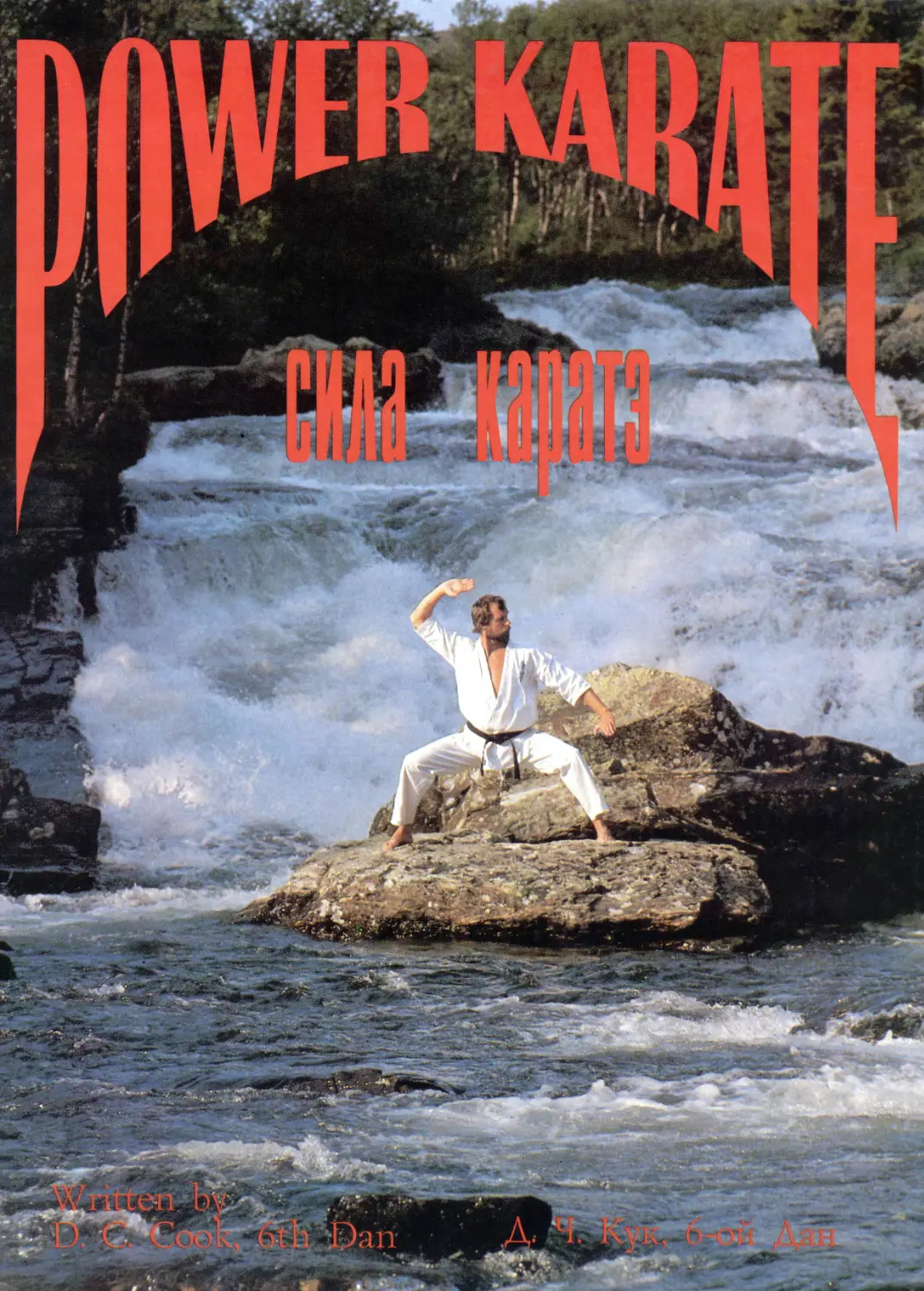










Author: Кук Д.Ч.
Tags: каратэ самооборона боевые искусства единоборства восточные единоборства литература на нескольких языках
Year: 1992

Text
The following is a selection of extracts from letters received by the Author. Plus letters of congra-
tulation and recommendation, for the previous edition of this book, which went under the title
«KYOKUSHIN KARATE». The letters come from famous Karate Instructors around the world.
1 am very proud that 1 have a fine student like you. Both you and your wife are
wonderful persons and very great Karate-Kas.
Kancho Mas. Oyama 10th Dan, Director and Founder of Kyokushin Karate
Я очень рад, что имею такого ученика, как Вы! Вы и Ваша жена замечательные люди
и великие Мастера Каратэ.
Канчо Мас. Ояма 10-ый Дан, Директор и Основатель организации Кекусин Каратэ.
«POWER KARATE» is an excellent introduction to the Kyokushin style of karate. The
photographs, illustrations, and lay-out are all first rate, and far above the run of the mill
Martial Arts books. I congratulate the Author on the fine job he did with this book.
Sifu Louis Lin, Chairman & Chief Instructor of the Swedish Wushu Federation
«Сила каратэ»— великолепное введение в стиль Кекусин. Иллюстрации и коммента-
рии — первокласны. Я поздравляю Автора с проделанной им прекрасной работой.
Сифу Льюис Лин, Председатель и Главный Инструктор Шведской Федерации УШУ.
Sensei D. С. Cook has indeed made a major breakthrough in books on Karate with his
book ’POWER KARATE’, which is well documented, simple to follow and expertly
illustrated.
Like the Author, it is detailed, precise and has a quality of perfection on every page.
The value of the book is in the novel way Sensei Cook has explained and illustrated each
stage from 10th Kyu to 3rd Dan. This alone makes the book essential to TEACHER and
STUDENT alike.
In th’is instance, where ’POWER KARATE* is concerned, one is not just buying a book,
one is purchasing and obtaining TRUE Karate knowledge.
My congratulations to Sensei D. C. Cook.
Shihan Len Barnes 7th Dan, Director of Kyokushin Karate for the Continent of Africa.
Сэнсэй Д. Ч. Кук сделал огромный прорыв в изучении каратэ своей книгой. «Сила
каратэ» прекрасно собрана, легко читаема и иллюстрирована с большим знанием дела.
Она детальна, точна и совершенна, как сам Автор.
Ценность книги в стиле повествования, которым Сэнсэй Кук объясняет и иллюстри-
рует всю технику от 10-го КЮ до 3-го Дана. Уже одного этого достаточно, чтобы
сделать книгу необходимой как УЧИТЕЛЮ, так и УЧЕНИКУ.
Вы покупаете не просто книгу, а НАСТОЯЩЕЕ знание каратэ.
Поздравляю Сэнсэя Д. Ч. Кука.
Шихан Лен Барнс 7-ой Дан, Директор Всеафриканской лиги Кекусин Каратэ.
1 would like to congratulate the Author on his concise and detailed book on Kyokushin
Karate. In my opinion, the book should be in every Karate-ka’s library.
Shihan R. Wehrhahn 5th Dan Goju Ryu, 4th Dan Kobudo, Chief Goju Ryu Instructor, the
National Karate and Jiu-Jitsu Union, USA
Я рад поздравить Автора с краткой, но детальной книгой по Кекусин Каратэ. По моему
мнению эта книга должна быть в библиотеке каждого каратиста.
Шихан Р. Берханн, 5-ый Дан Годзюрю, 4-ый Дан Кобудо, Главный Инструктор
Гордзюрю в Национальном Союзе Каратэ и Джиу-Джитсу, США.
Ниже приведены отрывки из писем полученных Автором, а также поздравления и рекомендации
по поводу выхода в свет предыдущего издания этой книги, которая была опубликована под
названием «КЕКУСИН КАРАТЭ». Письма получены Автором от известных во всем мире Инс-
трукторов Каратэ.
Thank your for letting me review the new edition of your book, ’POWER KARATE’. I find
it very suitable for all Karate-kas, from student to Black Belt, no matter which major style
they have been trained in. It is quite easy to follow the techniques step by step, from basic
to advanced movements, with the clear photos on every page. Confucious said «А picture
is worth a thousand words», your book contains over 2500 pictures, what more can I say?
The book speeks for itself.
Soke Richard P. Baillargeon 8th Dan, Motobu Ha Shito Ryu
Director of the National Karate and Jiu-Jitsu Union, USA
Благодарю Вас за возможность прочитать Ваше новое издание, книгу «Сила каратэ».
Я нахожу ее очень полезной для любого каратиста — от ученика до обладателя Черного
пояса, не зависимо от того, в каком он стиле тренируется. Очень легко отрабатывать
технику, шаг за шагом от основ до сложных движений, с помощью отличных
иллюстраций на каждой странице. Конфуций сказал: «Картина лучше, чем тысяча
слов». В вашей книге более 2500 иллюстраций. Что я еще могу сказать? Книга говорит
сама за себя.
Соук Ричард П. Байларджон 8-ой Дан Мотобу Ха Ситорю, Директор Национального
Союза Каратэ и Джиу-Джитсу, США.
I have no hesitation in recommending this book ’POWER KARATE’ to any person who
wishes to improve the Basic and Advanced techniques of Kyokushin Karate.
It has been a great pleasure to have known the Author, David, as my student and now as
an Instructor of Karate.
Shihan Steve Arneil 7th Dan, President of British karate Kyokushinkai
Я без сомнения рекомендую книгу «Сила каратэ» любому, кто хочет развивать основы
и сложную технику Кекусин Каратэ. Я имею огромное удовольствие знать Автора —
Дэвида, сначала как ученика, а затем и как Инструктора Каратэ.
Шихан Стив Арнейл 7-ой Дан, Президент Британской лиги Кекусинкай.
I would like to congratulate the author on the fine preparation of this book ’POWER
KARATE’. I fell that the content is beneficial to the students of all styles. It is my wish for
Sensei Cook to continue his diligent study of Karate-Do, and his fine quality of true
’Bushido’.
Hanshi Joseph R. Ruiz 8th Dan Motobu Ha Shito Ryu, 6th Dan Kobudo Director of the
International Karate and Kobudo Union.
Я рад поздравить автора с прекрасным содержанием книги «Сила каратэ». Я считаю
книгу подходящей для учеников всех стилей. Желаю Сэнсэю Куку дальнейших успехов
в изучении Каратэ-до и совершенствования в Бусидо.
Ханши Джозеф Р. Руиц, 8-ой Дан Мотобу Ха Ситорю, 6-ой Дан Кобудо, Директор
интернационального Союза Каратэ и Кобудо.
It is a deep pleasure to recommend my friend, the Swedish National Representative of the
International Karate Organisation and the author of the book ’POWER KARATE’. He is
a person of good manner and he is a true Samurai of the modem time. His passed successes
and his everyday greater popularity is a guarantee of his reputation, and I sincerely believe
that all persons who have the desire to learn Kyokushin Karate and Bushido, ought to do
it with the help of his book.
Andre Coulombe 5th Dan, Kyokushin Branch Chief of Canada
С большим удовольствием представляю моего друга, Представителя Шведской Нации
в Международной организации Каратэ и Автора книги «Сила каратэ». Он человек
чести и настоящий самурай нашего времени. Его успехи и ежедневно растущая
популярность являются гарантией его репутации, и я искренне верю, что все, кто
желает изучать Кекусин Каратэ и Бусидо, должны делать это с помощью его книги.
Андре Коломб, 5-ый Дан, Шеф школы Кекусин в Канаде.
POWER KARATE
by D. C. Cook VOLUME III.
СИЛА КАРАТЭ
Д. Ч. Кук. КНИГА III.
FOREWORD
This book has been designed primarily as a photographic aid to those
people studying Kyokushin Karate. It would also be a valuable asset to
those people studying other styles as well.
There always has been and there always will be differences in the way
techniques are performed and taught from country to country and teacher
to teacher, there-fore it is not the author’s intention in this book to show
how the techniques must be performed, it is more of a guide to show
how the techniques may be performed.
Used correctly, this book will help anyone studying Karate to reach
a higher and more proficient level.
ВСТУПЛЕНИЕ
Эта книга была задумана мною как пособие в иллюстрациях для изучающих
Кекусин Карате. Она также будет полезна для людей, изучающих другие стили.
Всегда существовали и будут существовать различия в технике, передаваемой
из страны в страну, от учителя к учителю. Поэтому намерением автора не было
продемонстрировать как техника должна исполняться, в абсолютной форме, а
скорее показать как данная техника может быть выполнена в принципе.
При правильном использовании, эта книга поможет каждому изучающему
каратэ достичь более высокого и искуссного уровня.
Copyright © D. С. Cook 1992.
АП rights reserved. No part of this
publication may be reproduced, stored
in a retrieval system, or transmitted, in
any form or by any means, electronic,
mechanical, photocopying or
otherwise, without the prior written
permission of the copyright owner.
Авторское право © Д. Ч. Кук 1992.
Все права на публикацию заявлены.
Публикация, трансляция по средст-
вам массовой информации, механи-
ческое, фото-, электронное или лю-
бое другое копирование, а также
воспроизведение в части или в це-
лом, без письменного разрешения
автора запрещено!
ACKNOWLEDGEMENTS
I would like to express my appreciation to all of those people who
unselfishly helped to make this book possible.
Я хочу выразить свою благодарность всем тем, кто бескорыстно
помогал мне готовить эту книгу.
© Русская редакция: М. Ткач, В. Куршин 1992.
С МП «Паломник» и МП «Норд-Спорт» 1994.
The author together with Kancho Mas. Oyama 10th Dan,
at the Kyokushin Headquarters in Tokyo, Japan.
Автор с Канчо Mac. Оямой, 10-ый Дин, в штаб-квар-
тире Кекусин, в Токио, Япония.
THE AUTHOR
The author, David C. Cook, was bom in 1946 in London, England. At a very
early age he showed great interest in swimming and athletics. He was a champion in
all four swimming styles at school and he won many first prizes for putting the shot
and throwing the discus and javelin. At the age of 15 he became interested in wrestling
and began training at a London club.
At the age of 18 he moved to Australia and there his interest was captured by
boxing. He joined a club in Sidney which was run by a former middleweight
professional boxing champion. It was during his two years in Australia that he first
came in contact with Karate. It was to take until the author was 21 before he really
became involver with Karate. It was then that he discovered that an old friend, Robert
Bartlett, was operating a Kyokushin dojo in his neighbourhood. The extremely hard
style of training really suited the author and he started training Kyokushin Karate
daily. The author has also trained other styles of Karate including Shotokan and the
Wing Chun style of Kung Fu. He feels that it is important to have a basic knowledge
of other styles, it helps one to appreciate and understand the techniques of one’s own
style better. During his many years of training, the author has trained for most of the
great Kyokushin teachers including Shihan Steve Ameil 7th Dan, Shihan Tadashi
Nakamura 7th Dan, Shihan Shigero Olma 7th Dan, and last but by no means least,
the founder of Kyokushin Karate Mas. Oyama 10th Dan.
In 1974 the author was invited to Sweden to take control of a small dojo in Uppsala.
He has since made it one of Sweden’s largest dojos with an annual membership of
over 400. Soon after arriving in Uppsala, the author met Kickan, the woman who
was to become his wife. She is a very successful Karate-Ka in her own right. She has
been the National Kumite Champion on several occasions. She has also been trained
in Japan, soon after arriving there she was promoted to Shodan, and now at Sandan,
she is Sweden’s highest graded female. Kickan, like her husband, is a fulltime Karate
Instructor.
In 1977 the author attempted and successfully completed «50 man Kumite»,
thereby becoming one of the few people who have completed this amazing feat.
In 1979 he was elected Chairman of the Swedish Karate Kyokushinkai
Organisation. Since then the S. К. K. has doubled both in size and strength, and
Sweden is rapidly becoming one of the world’s leading nations in Kyokushin Karate
and Knockdown Tournaments.
In 1983, the author was introduced to the National Karate and Jiu-Jitsu Union
in the USA. This Union is open to all styles, and most of the major styles are
represented. The same year, Soke Baillargeon 8th Dan, the Director of the NKJU
formed an International section of the Union, and the author was given the honour
of being its President.
What little free time the author has, he devotes to his two main hobbies: Combat
pistol chooting and flying single engine aircraft, for which he holds a licence.
In 1985 the author was awarded the grade of 5th Dan. At the same time he was
elected as European Representative of International Kobudo Union with Hanshi J.
Ruiz (8th Dan) at the head.
In 1987 the author met Kancho Hideyuki Ashihara. Kancho Ashihara founded
«new» stile, created on the base of Yapanese one, which had been existing for many
years. Ashihara founded absolutly new set of Katas, which is more useful for modem
Martial Arts. The author visited Ashihara twice, he studied his new style and was
awarded the grade of 5th Dan. The author and Kancho Ashihara are the two most
skilled instructors in the style. Kancho Ashihara asked the author to disseminate
Ashihara — Karate in Europe.
In 1990 in European Ashihara summer Camp the author was elected as the
President of European Ashihara — Karate Association. This Association was organized
at the meeting of European Representatives and Black Belts, attended the Camp.
The author continues to develop the style with European characteristics in mind.
Japanese basic was replaced by training methods, showing better results for less time.
In 1991 Shihan D. Cook continued to travel, teaching new style, in Russia as well.
From 1991 to 1992 ne visited Russia 6 times. He conducted several seminars and
examinations and examined more than 300 sportsmen from Moscow, Saint-
Petersburg, Siberia, Ural, Volga Region, Ukraine, Byelorussia, Estonia and Moldova.
In October 1991 in Moscow he organized International Ashihara-Karate Tournament.
Representatives of 10 countries of Europe and Asia took part in this Tournament.
The 1-st International Ashihara-Karate Summer Camp was organized under the
leadership of Shihan D. Cook in june 1992 in Crimea.
In summer 1992 Shihan David C. Cook was promoted to one of the highest grade
— 6th Dan for great achievements in developing and improving Ashihara-Karate in
Europe. This fact proves the author as a world importance’ leader in Martial Arts.
ОБ АВТОРЕ
Автор, Дэвид Ч. Кук, родился в 1946 году в Лондоне, Англия. В раннем
детстве он проявил большой интерес к плаванию и легкой атлетике. Он был
чемпионом школы по плаванию во всех 4-х стилях, а также завоевал множество
призов в стрельбе, метании диска и копья. В возрасте 15 лет он заинтересовался
борьбой и стал тренироваться в Лондонском клубе.
Когда Дэвиду исполнилось 18 лет, он переехал в Австралию и заинтересо-
вался боксом. Он вступил в клуб в Сиднее, в котором стал чемпионом в среднем
весе среди профессионалов. После двух лет жизни в Австралии Дэвид впервые
познакомился с каратэ. Это произошло, когда он узнал, что его старый друг,
Роберт Барлетт, занимается Кекусин Каратэ по-соседству. Чрезвычайно жес-
ткий режим тренировок вполне устраивал Дэвида, и он начал заниматься
Кекусин Каратэ ежедневно. Он также изучал различные стили каратэ, включая
Сетокан и стиль Кунгфу — Винг Чун. Дэвид Кук чувствовал, что необходимо
изучить основы других стилей, чтобы лучше усвоить и развить технику своего.
За многие годы учения Дэвид Кук тренировался у многих великих учителей
Кекусин: Шихана Стива Арнейла, 7-ои Дан; Шихана Тадаси Накамуры, 7-ой
Дан. Шихана Сигеро Олмы, 7-ой Дан и, наконец, у основателя Кекусин Каратэ
- Мас. Оямы, 10-ый Дан.
В 1974 году Дэвид был приглашен в Швецию, для того, чтобы вести занятия
в маленьком зале в Уппсале. Сейчас этот зал стал одним из крупнейших Додзе
в Швеции с численностью более 400 спортсменов.
Вскоре после переезда в Швецию, Дэвид встретил Кикан, женщину,
которая стала его женой. Она несколько раз завоевывала титул Национальной
Чемпионки в Кумите. Она также тренировалась в Японии, где ей был присвоен
Шодан (1-ый Дан)ь а затем Сандан (3-ий Дан) Кекусинкай. Кикан является
самой титулованной женщиной в Швеции в области каратэ. Кикан, как и ее
муж, практикуют каратэ в качестве ведущих инструкторов.
В 1977 году Дэвид Кук учавствовал и достойно выполнил тест Кекусин
каратэ «50 MAN KUMlTE», став одним из немногих людей в мире, достигших
этой вершины.
В 19/9 году он был избран Председателем Шведской Организации Кеку-
синкай. С тех пор Шведская Организация удвоилась по количественным и
качественным показателям, и Швеция быстро становится одной из ведущих
стран в Кекусин Каратэ и других силовых единоборствах.
В 1983 году Дэвид Кук был принят в Национальный Союз Каратэ и
Джиу-Джитсу в США. Этот Союз открыт для всех стилей, и большинство
стилей имеют в нем свое представительство. В том же году Соук Байларджен,
8-ой Дан, Директор НСКД, создал интернациональную секцию Союза, и
Дэвид удостоился чести стать ее Президентом.
Все немйогое основное время он посвящает двум основным хобби: стрельбе
из боевого пистолета и пилотированию одномоторного самолета, которым он
имеет право управлять.
В 1985 году Дэвиду Куку присваивается степень 5-го Дана. В том же году
он был выбран Европейским представителем Интернационального Союза
Кобудо, возглавляемого Ханши Дж. Руицом, 8-ой Дан.
В 1987 году Дэвид познакомился с Канчо Хидеюки Ашихара. Канчо
Ашихара разработал первый принципиально «новый» стиль, развитый из
японского каратэ, существовавшего много поколений. Ашихара создал совер-
шенно отличный от других стилей набор формальных комплексов — КАТА,
имеющих наибольшую практическую пользу в тренировках, чем в любом ином
виде современных единоборств. Дэвид Кук дважды посещал в Японии Канчо
Ашихару, изучал его новый стиль, и ему был присвоен 5-ый Дан Ашихара
Каратэ. Этот факт позволяет поставить Дэвида Кука наряду с его японским
коллегой в разряд ведущих инструктором стиля. Канчо Ашихара обратился к
Шихану Д. Куку с предложением распространить стиль Ашихара-каратэ в
Европе.
В 1990 году в рамках Европейского летнего лагеря Ашихара-каратэ Дэвид
Кук был избран первым Президентом Европейской Ассоциации Ашихара-ка-
ратэ, которая была создана на собрании представителей европейских стран —
обладателей Черных поясов, присутствовавших в лагере.
Дэвид Кук продолжает развивать стиль Ашихара применительно к европей-
ским стандартам. Большинство специфических японских догм были заменены
более приемлемыми методами тренировки, давшими лучший результат за
значительно меньшее время.
В 1991 году Шихан Дэвид Кук продолжает путешествовать, обучая новому
стилю, в том числе и в России. За период 1991-1992 г. г. он 6 раз побывал в
России; провел несколько семинаров и экзаменовал около 300 спортсменов из
Москвы, С.-Петербурга, Сибири, Урала, Поволжья, Украины, Белоруссии,
Эстонии и Молдовы, а также организовал в октябре 1991 года в Москве
Международный Турнир Ашихара-каратэ с участием представителей 10 стран
из Европы и Азии, а в июне 1992 года под его руководством успешно
проводился 1-ый Международный летний лагерь Ашихара-каратэ в Крыму.
Летом 1992 года за высокие достижения в Развитии и совершенствовании
Ашихара-каратэ на Европейском континенте, Шихан Дэвид Кук был удостоен
одной из наиболее высоких степеней — 6-го Дана. Этим фактом за автором
данной книги окончательно закрепляется высокое звание лидера боевых
искусств мирового значения.
KARATE’S DEVELOPMENT
Empty hand fighting is as old as man himself. Innumerable systemised forms of empty
hand fighting have been developed all over the world, each reflecting a little of the national
culture. That which we call Karate is just one of them.
It is generally accepted that Karate stems from China and came to Japan by way of the
Ryukyu Islands.
In the early part of the 17th century, Okinawa was invaded and conquered by the
Japanese. The Japanese occupied Okinawa for over 250 years, and they banned the
possession of weapons to prevent further resistance, so the Okinawans were forced to turn
to unarmed combat in order to protect themselves against marauding bandits and the
Japanese.
Karate reached a high level of development during this period, but even this had to be
practised in secret and it was not until the beginning of the 20th century that Karate was
openly practised.
In 1922 Gichen Funakoshi, an Okinawan professor, introduced Karate to Japan. He had
been invited to Japan to demonstrate Karate, and the Japanese were so impressed with him
that they persuaded him to stay and teach them this art, which he did until his death in
1957 at the age of 88.
Funakoshi emphasized Kata, etiquette, and the philosophical side of Karate.
Gichin Funakoshi
Гичин Фунакоси
Since the early days, Karate and all other fighting arts have undergone tremendous
development. As in all other physical endeavours, new training methods have been devised
and the training has become more efficient, and effective. The true Masters of today have
far more knowledge than the Masters of yesteryear, thanks in part, to the application of
scientific principles to the practise of Karate. Also the instant communications of today,
and the many books which have been authored on the subject, allow Masters to benefit
from the experiences of other Masters, in a way that was never possible in the early days.
The various forms of Tournaments have also done much to develop and refine the
techniques and training methods. In full contact forms of combat such as Boxing, Muay
Thai, Japanese Kick Boxing, Knockdown Karate and many others, techniques and training
methods are tested and reevaluated every day.
A wise student of Karate should keep an open mind on all fighting arts, and reap the
benefits of other peoples experience.
The Ashihara style has been able to utilise these facts in it’s development, and because
it is a new style it will be able to take full advantage of the freedom to make changes.
Karate can be much more than just a fighting art, it can be a way of life or even a vehicle
for learning the purpose and meaning of life. During the long arduous hours of Karate
training, one goes through many physical and mental tests. These tests develops a strong
character, and one is often forced to go beyond one’s supposed limits.
As one reaches a new grade or level, and masters one set of techniques, the next level
is always waiting and requires one to perform more hard work. Just as in life when one has
learned to cope with one set of problems, a new and often more difficult set of problems
crops up.
The never ending striving for perfection of technique, is what develops strong fighting
spirit, which often helps those who have trained Karate for many years, to overcome
problems that would normally break the spirit of another person.
РАЗВИТИЕ КАРАТЭ
[KARA — пустой, ТЕ — рука]
Борьба голыми руками такая же древняя, как само человечество. Множество
систематизированных форм кулачной борьбы были разработаны по всему миру,
каждая отражает свою национальную культуру. То, что мы называем «каратэ»—
одна из них.
Считается, что каратэ пришло из Китая в Японию с острова Рюкю.
В начале 17 века Окинава была захвачена японцами. Японцы оккупировали
Окинаву более 250 лет, и они запретили иметь оружие, чтобы предотвратить
сопротивление. Таким образом жители были вынуждены развивать кулачный
бой, чтобы защитить себя от японских воинов, мародеров, бандитов.
На этот период приходится высокий уровень развития каратэ, но только в
начале 20 века каратэ стали заниматься открыто.
В 1922 году Гичин Фунакоси — профессор с Окинавы, впервые привез каратэ
в Японию. Он был приглашен демонстрировать каратэ, и японцы были до такой
степени поражены, что упросили его остаться и обучить их этому искусству. Он
оставался в Японии до самой своей смерти, последовавшей в 1957 году, в возрасте
88 лет.
Фунакоси разработал «КАТА»— этический и философский аспекты каратэ.
К нашему времени каратэ и другие искусства боя претерпели огромное
изменение. Как и во всех других физических вицах спорта, были разработаны
новые методики, сделавшие тренировки более эффективными. Настоящие Ма-
стера сегодня — более опытны, чем Мастера вчерашние, благодаря, в частности,
введению научных методов обучения каратэ. Развитие коммуникаций, множе-
ство книг, написанных по данному вопросу, позволяет Мастерам перенимать
опыт других Мастеров, что было невозможным в давние дни.
Различные формы турниров тоже способствовали развитию и углублению
техники и методов тренировок. В полноконтактных формах единоборств таких,
как Бокс, Муа-Тай, Японский Кик-Бокс, контактное каратэ и других, методы
тренировок и техника проверяются ежедневно.
Умный ученик Каратэ держит ум открытым для всех искусств боя и перени-
мает успешный опыт других.
Стиль Ашихара способен принять эти факты в их развитии, и так как стиль
нов, он дает полную свободу изменениям.
Каратэ — это не просто искусство боя. Это стиль жизни, инструмент
позволяющий постигнуть цель и смысл существования. Во время долгих жарких
часов тренировок каждый проходит через множество тестов. Они позволяют
проявиться силе характера, и часто заставляют «прыгнуть выше головы».
Достигнув нового уровня, познав новую технику, видишь следующий этап,
требующий еще больших сил и трудолюбия. Как в жизни, когда решишь
проблему и обнаруживаешь, что это решение породило новые и более сложные
проблемы.
Стремление к бесконечному совершенствованию техники развивает настоя-
щий бойцовский дух, помогающий тем, кто занимается каратэ многие годы,
преодолеть трудности, готовые остановить кого угодно.
CHAPTER 1 STANCES
ГЛАВА 1 СТОЙКИ
© = Centre of gravity/Центр тяжести
YOI DACHI
Yoi Dachi is the stance taken after
the command ’YOI’.
You Dachi — стойка готовности,
которую принимают после ко-
манды ’YOI’.
FUDO DACHI
Fudo Dachi is mainly used while
standing waiting for instructions or
resting between techniques.
Beginners usually train blocks and
punches in this stance.
Fudo Dachi — стойка, в основном
используемая во время отдыха
между упражнениями или в ожи-
дании указаний.
ZENKUTSU DACHI
Zenkutsu Dachi is one of the most
used stances.
The front leg is bent so that the knee
is over the foot. The back leg is
straight with the back foot at an
angle of 45°.
Zenkutsu Dachi — одна из наибо-
лее часто используемых стоек.
Передняя стопа точно под коле-
ном, задняя нога — прямая, стопа
повернута на 45°.
Move the heel in to an angle of 4f...
Поверните пятку на 4f...
Keep both legs bent...
Держите обе ноги согнутыми...
Glide forward, keeping the head at the same height.
Скользите вперед, держа голову на одной высоте.
The back leg must be straight.
Задняя нога должна быть прямой.	] ]
HEISOKU DACHI
Heisoku and Heiko Dachi are
primarily used in the training of
kicks.
In Heisoku Dachi the feet are
together, with the knees slightly
bent.
Heisoku и Heiko Dachi — стойки,
в основном используемые при
отработке ударов ногами.
В Heisoku Dachi — ноги вместе и
слегка согнуты в коленях.
HEIKO DACHI
In Heiko Dachi the feet are
approximately hip width apart.
В Heiko Dachi — ноги примерно
на ширине бедер.
UCHI HACHI JI DACHI
This is a seldom used stance which
is similar to Sanchin Dachi.
Это редко используемая стойка,
похожая с Sanchin Dachi.
HEIKO DACHI - CHUDAN MAE GERI
12
KOKUTSU DACHI
Most of the body weight is over the
back leg in this stance. One should be
able to kick with the front leg without
shifting one’s center of gravity.
Больший вес тела перенесен на за-
днюю ногу. Нужно уметь ударить
передней ногой, при этом не сме-
щая центр тяжести тела.
Place the front heel down at an angle of 45°./ Поднимите пятку переоней ноги под углом 45° к полу.
NEKO АСН1 DACHI
Almost all of the body-weight is over
the back leg. As in Kokutsu Dachi, the
thighs are held close together to protect
the groin from Kin Geri.
Почти весь вес тела перенесен на
заднюю ногу. Как и в Kokutsu Dachi
бедра плотно сжаты, чтобы защи-
тить пах от удара Kin Geri.
Neko Ashi Dachi is usually used in preparation for kicking with the front foot.
13
Neko Achi Dachi обычно используется для подготовки удара передней ногой.
MORO ASHI DACHI
The most common way of stepping
forward in Moro Ashi Dachi is by
first stepping forward with the front
leg and then fetching the back leg
up to the front.
Наиболее частый способ переме-
щаться вперед в Moro Achi Dachi
— сначала вперед передней но-
гой, затем задняя подтягивается
к передней.
SHIKO DACHI
14
KIBA DACHI
The knees should be pulled outwards so that the knees are almost over the feet...
Колени широко разведены, почти над ступнями...
the back should be kept straight...
спина держится прямо...
KAKE DACHI
Most of the body weight is over the back
leg in Kake Dachi.
Большая часть веса тела на передней
ноге.
TSURU ASHI DACHI
This stance is primarily used in preparation for kicking
Yoko Geri.
Эта стойка в основном используется при подготовке
удара Yoko Geri.
75
MUSUBI DACHI
All of the katas except the Taikyoku
and Pinan katas start from this
stance. It is mainly a standing
meditation (Mokuso) stance. The
left and is held over the right.
Все ката, кроме Taikyoku и Pinan,
начинаются с этой стойки. Это
основная стойка стоячей медита-
ции (Mokuso). Левая ладонь на
правой.
SANCHIN DACHI
When going in to Sanchin Dachi the
whole body is tensed. After that a
slight tension is kept between the
legs by gripping the floor with the
feet and trying to pull them together.
При выполнении стойки Sanchin
Dachi тело напряжено. При этом
легкое напряжение создается
обеими ногами, которые как бы
пытаются схватить пол. Внутрен-
ние части бедер прижаты друг к
другу.
move the back leg to the front leg...
пододвиньте заднюю ногу к пере-
дней...
push the heels out and grip the floor with
the toes.
надавите на пятки и «схватите» пол
пальцами ног.
Moving in Sanchin Dachi
Движение в Sanchin Dachi
First straighten the feet...
Сначала выпрямите ноги...
take the back foot forward so that the toes of one foot are on the same line as the heel of the other...
подведите заднюю ногу вперед так, чтобы пальцы одной ноги были на одной линии с пяткой
другой...
16

N. B. All blocks finish with the blocking arm in a line level with the outside edge of the body.
SEIKEN JODAN UKE
Необходимо знать, что все блоки заканчиваются в момент, когда блокирующая рука находится в плоскости, проходящей через фронтальную часть тела.
On completion of the block the body is turned to an angle of 45° and the fist is rotated 135°. The blocking arm finishes slightly above
and away from the head. The angle between the forearm and the overarm*must be more than 90° for added strength.
При выполнении этого блока тело поворачивается под углом 45° к фронту, а кулак вращается на 135°. Блокирующая
рука находится чуть впереди и сбоку от головы. Угол разгиба руки в точке блока должен быть более 90°, чтобы увеличить
усилие.
Above: Defence against a straight punch / Вверху: Защита от прямого удара.
Above: Defence against a hook punch / Вверху: Защита от размашистого бокового удара.
Above: Defence against a weapon — it is important to move forward
Вверху: Защита от оружия; важно двигаться вперед.
18
SEIKEN MAE GEDAN BARI
Turning the body to an angle of 45°, the blocking hand is taken diagonally up to the opposite ear. The other arm is held straight to protect the groin. The block is
made diagonally across the body, simultaneously pulling the other hand back to the ready position. The fist is rotated 90°.
Поворачиваем тело на 45°, блокирующая рука идет диагонально вверх к противоположному уху. Другая рука держится прямо, защищая пах. Блок
делается диагонально через тело, одновременно другая рука переходит в позицию готовности. Кулак поворачивается на 90°.
It is advisable to move the body away from the line of an opponent’s attack, at the same time as one blocks.
One should try to divert kicks and punches, not stop them with brute force.
Важно увести тело с линии атаки противника, одновременно с постановкой блока. Надо
стараться отводить удары, а не останавливать их при помощи грубой силы.
19
SEIKEN CHUDAN UCHI UKE
Turn the body to an angle of 45°, covering the centre line of the body with one hand. At the same time, the other hand is taken under the covering arm. The block is then
performed in a semicircular motion.
Тело поворачивается под углом 45°, одна рука закрывает центр тела, вторая рука идет под нее. Блок выполняется полукруговым движением.
SEIKEN CHUDAN SOTO UKE
the'bod<yCtoan‘arfgle 'fAS"	behead, ,^le 0,^er arm covers the centerline ofthe body. The block is then performed in a semicircular motion, simultaneously turning
Блокирующая рука идет за голову, другая рука прикрывает центральную линию тела. Блок выполняется полукруговым движением, одновременно корпус
поворачивается под 45.
20
MOROTE CHUDAN UCHI UKE
This technique can be used to break out of a grip (1), as a block (2) or as a body check (3).
Эта техника может быть использована, чтобы освободиться от захвата (1), блока (2),
или в случае, если соперник хочет вас остановить (3).
CHUDAN UCHI UKE/GEDAN BARI
The arm which blocks Uchi Uke goes on the outside.	The arm which blocks Gedan Bari goes on the inside.
Рука, делающая Uchi Uke идет снаружи.	Рука, делающая Gedan Bari идет изнутри.
21
MAWASHI GEDAN BARI
APPLICA TION/ПРИМЕНЕНИЕ
This block is performed in a circular rnotion./Этот блок выполняется круговым движением.
Sweep your opponent’s arm to the side, thereby opening him up for a counter attack.
Отведите руку противника в сторону, открывая его для контратаки.
Step backwards at the same time as you block, then counter with Gedan Mawashi Geri.
Одновременно с блоком отойдите назад, а затем атакуйте с Gedan Mawashi Geri.
Push your opponent's leg out to tne side, then spin around and counter Ushiro Geri.
Отбейте ногу противника в сторону, затем повернитесь вокруг своей оси и атакуйте с Ushiro Geri.
22
MAE SHUTO MAWASHI UKE
This technique is performed in a circular motion with both hands.
Эта техника выполняется круговым движением обеих рук.
Both hands must stay in front of your body the whole time.
Обе руки все время должны находиться перед телом.
Keep your elbows in close to your body during the whole block.
Оба локтя должны быть как можно ближе к телу во время проведения блока.
Jodan Shotei Uchi-
Gedan Shotei Uchi
23
MAE SHUTO MAWASHI UKE APPLICATIONS/ПРИМЕНЕНИЕ
24
SHUTO MAWASHI UKE
This block is performed in a large circular movement, with both hands.
Этот блок выполняется большими круговыми движениями обеих рук.
25
JODAN SHOTEI UKE
APPLICA TION/ПРИМЕНЕНИЕ
CHUDAN SHOTEI UKE
APPLICA TION/ПРИМЕНЕНИЕ
26
GEDAN SHOTEI UKE
APPLICA TION/ПРИМЕНЕНИЕ
APPLICA TION/ПРИМЕНЕНИЕ
Move your body to the side when performing this block./Сдвиньте тело в сторону во время выполнения блока.
GEDAN SHOTEI MOROTE UKE
27
KAKE UKE (JODAN, CHUDAN)
•rt
' ’ -y.
APPLICA TION/ПРИМЕНЕНИЕ
Chudan Kake Uke is performed basically the same as Jodan Kake Uke.
Chudan Kake Uke выполняется аналогично Jodan Kake Uke.
The bottom hand acts as an extra cover when performing this technique.
JODAN MOROTE KAKE UKE
Нижняя рука, при выполнении этой техники, является дополнительной защитой.
Chudan Morote Kake Uke is performed basically the same as Jodan.
APPLICA TION/ПРИМЕНЕНИЕ
Chudan Morote Kake Uke выполняется также как Jodan.
Grab and twist your opponent's arm so that his elbow is pointing downward, then strike upward, making contactjust above the elbow.
28	Схватите и выверните руку противника так, чтобы локоть смотрел вниз. Затем ударьте снизу вверх над локтем.
OSAI UKE
APPLICA TION/ПРИМЕНЕНИЕ
JODAN KOKEN UKE
APPLICA TION/ПРИМЕНЕНИЕ
за Jodan Koken
followed by
Uke следует Chudan Koken Uchi

29
CHUDAN KOKEN UKE
APPLICA TION/ПРИМЕНЕНИЕ
Chudan Koken Uke
GEDAN KOKEN UKE
Gedan Koken Uke
APPLICA TION/ПРИМЕНЕНИЕ
Gedan Koken Uchi
followed by
следует
followed by
следует Jodan Koken Uchi
30
Examples of methods of blocking with the legs
Примеры выполнения блоков ногами
Against outside Gedan Mawashi Geri	Against Chudan Mae Geri
Против наружного Gedan Mawashi Geri	Против Chudan Mae Geri
Against inside Gedan Mawashi Geri	Against Chudan Mawashi Geri
Против внутреннего Gedan Mawashi Geri	Против Chudan Mawashi Geri
As a stopping technique before a kick is completed
Используется как техника опережения удара
31
and STRIKES
УДАРЫ КУЛАКОМ
И ДРУГИЕ УДАРЫ
РУКОЙ ________
CHAPTER 3
PUNCHES
ГЛАВА 3
JODAN SEIKEN OITSUKI
The body should be relaxed, the shoulders square and
level. Punch out with one hand simultaneously pulling
back the other hand. Keep the elbows in tight against the
body and punch in as straight a line as possible.
The arm should not be completely straight on completion
of the punch, but not too bent either, the forearm and
the back of the fist must form a straight line. The punch
must be to the center line of the body, on copletion of
the punch both fists rotate 180°.
In what would be the moment of impact, the whole body
is momentarily tensed and the breath is exhaled. One then
immediately relaxes the body in preparation for the next
technique.
VELOCITY IS OF THE UTMOST IMPORTANCE in
ALL punches and kicks.
Тело расслаблено, плечи опущены. Удар наносится
одной рукой с одновременным отводом другой руки
назад. Держите локти прижатыми к телу, удар идет
по прямой — насколько это возможно.
Рука не должна быть совершенно прямой, но и не
слишком согнутой. Предплечье и тыльная сторона
кулака образует прямую линию. Удар наносится в
центральную линию тела. На завершающей стадии
кулак поворачивается на 180°.
В момент удара все тело моментально напрягается и
дыхание задерживается. Затем следует немедленное
расслабление тела для подготовки к выполнению
следующей техники.
САМЫМ ГЛАВНЫМ при выполнении ВСЕХ ударов
является СКОРОСТЬ.
CHUDAN SEIKEN OI TSUKI
GEDAN SEIKEN OI TSUKI
APPLICA TION/ПРИМЕНЕНИЕ
33
SEIKEN AGO UCHI
Seiken Ago Uchi is usually performed with the front hand. The fist is punched out and pulled back in a fast, snappy action. On contact the fist rotates 90°.
Seiken Ago Uchi обычно выполняется передней рукой. Кулак наносит удар и отводится назад быстрым, энергичным движением. В момент
контакта кулак поворачивается на 90°.
SEIKEN GYAKU TSUKI
When performed properly Gyaku Tsuki is probably the most powerful of the punches. On contact the fist is rotated 180" and the hip is pushed in behind the
punch.
Правильно выполненный Gyaku Tsuki является одним из самых сильных ударов. В момент контакта кулак поворачивается на 180 °, а бедро идет
вслед за кулаком.
34
SHITA TSUKI
Shita Tsuki is a close range technique, and it is important that the hip is rotated forward when contact is made.
Shita Tsuki — техника ближнего боя. Очень важно, чтобы бедро подавалось вперед в момент контакта.
JUN TSUKI
The hip twists from the Zenkutsu to the Kiba Dachi position simultaneously with the completion of the punch — NOT BEFORE!
Бедро движется от Zenkutsu к Kiba Dachi одновременно с завершением удара — НЕ РАНЬШЕ!
35
TETTSUI OROSHI GANMEN UCHI
This technique is performed in a semicircular motion.
Эта техника выполняется полукруговым движением.
APPLICA TION/ПРИМЕНЕНИЕ
Grab your opponent’s attacking arm, and pull him into your strike.
Захватите атакующую руку противника и подтащите его под свой удар.
APPLICA TION/ПРИМЕНЕНИЕ
This technique is performed in a semicircular motion.
Эта техника выполняется полукруговым движением.
Feint to your opponent’s head, so that he raises his front arm, then attack to his body. ,
Имитируйте удар в голову, чтобы противник поднял руку, затем атакуйте в корпус.
TETTSUI KOMI KAME
APPLICA TION/ПРИМЕНЕНИЕ
This technique is performed in a semicircular motion.
Эта техника выполняется полукруговым движением.
URAKEN YOKO UCHI
Block, hook away and grasp your opponent’s attacking arm, all in one smooth motion.
Блок, отвод u захват атакующей руки одним сплошным движением.
APPLICATION/ПРИМЕНЕНИЕ
All Ukaren strikes should be performed with a fast, snappy action.
Все удары Uraken должны выполняться быстрым, энергичным движением.
URAKEN GANMEN OROSHI UCHI
On contact the fist is snapped downwards.
В момент контакта кулак резко идет вниз.
APPLICA TION/ПРИМЕНЕНИЕ
URAKEN MAWASHI UCHI
On contact the fist is snapped inwards.
APPLICATION/ПРИМЕНЕНИЕ В момент удара кулак резко идет вовнутрь.
Push down on your opponent’s elbows, in order to fetch him into striking distance.
Ударьте сверху вниз no рукам противника на уровне локтей, чтобы вывести его на позицию своей атаки.
URAKEN SAYU GANMEN UCHI
URAKEN HIZO UCHI
APPLICA TION/ПРИМЕНЕНИЕ
On contact the fist in cnapped backwards.
В момент контакта кулак резко идет назад.
39
URAKEN SHOMEN GANMEN UCHI
On the contact the fist is snapperd downwards.
APPLICATION/ПРИМЕНЕНИЕ В момент контакта кулак резко идет вниз.
APPLICA TION/ПРИМЕНЕНИЕ
40

SHUTO UCHI KOMI
APPLICA TION/ПРИМЕНЕНИЕ
One can strike to the solar plexus or the collar bone with this technique.
При помощи этой техники наносится удар в солнечное сплетение или адамово яблоко.
SHUTO HIZO UCHI
APPLICA TION/ПРИМЕНЕНИЕ
This technique is performed in a semicircular motion.
Эта техника выполняется полукруговым движением.
42
SHUTO SAKOTSU UCHI
SHUTO YOKO GANMEN UCHI
This technique is performed in a semicircular motion.
APPLICATION/ПРИМЕНЕНИЕ Эта техника выполняется полукруговым движением.
This strike can also be aimed at the throat or neck.
Этот удар может также наноситься в горло или шею.
43
JODAN HUI ATE
APPLICA TION/ПРИМЕНЕНИЕ
CHUDAN HUI ATE
Feint with a kick, in order to get in close enough to strike with Hiji Ate.
Имитируйте удар ногой, чтобы сократить дистанцию для Hiji Ate.
APPL1CA TION/ПРИМЕНЕНИЕ
This technique is performed with a circular motion.
Эта техника выполняется круговым движением.
44
JODAN AGE HIJI ATE
The palm of your hand must point inwards when performing this technique.
APPLICATION/ПРИМЕНЕНИЕ При выполнении этой техники ладонь бьющей руки должна смотреть вовнут/.
OROSHI HIJI АТЕ
Sink down into your stance at the moment of impact, in order
APPLICATION/ПРИМЕНЕНИЕ to add power to this technique.
В момент удара опуститесь в низкую стойку, чтобы усилить удар.
45
JODAN HIRA KEN TSUKI

c
APPLICA TION/ПРИМЕНЕНИЕ
HIRA KEN MAWASHI UCHI
There are two main targets for this technique, the upper lip and the throat.
Эта техника применяется при ударе в верхнюю челюсть и горло.
4’ Г, ,
jraL mil
рВАД Mi *, Hl
APPLICA TION/ПРИМЕНЕНИЕ
This technique is performed with a slightly curved motion.
Эта техника выполняется слегка закругленным движением.
Take a halj step forward and pull down your opponent’s front hand using Uchi Keage.
Сделайте полшага вперед и опустите переднюю руку противника, используя Uchi Keage.
OYA YUBI KEN (JODAN)
APPLICATION/ПРИМЕНЕНИЕ	Эта техника выполняется слегка закругленным движением.
А РPLICA TION/ПРИМЕНЕНИЕ
This technique is performed with a slightly curved movement.
Эта техника выполняется слегка закругленным движением.
47
CHUDAN HAITO UCHI
This technique is performed with a slightly curved movement.
A PPLICA TION/ПРИМЕНЕНИЕ
Эта техника выполняется слегка закругленным движением.
GEDAN HAITO UCHI
At the same time as you jeint with Uraken, move your front leg forward, and then
strike to your opponent’s spleen. В то время, когда вы имитируете Uraken,
сдвиньте свою переднюю ногу вперед и ударьте противнику в область селезенки.
This technique curves sligthly upwards on contact.
Эта техника выполняется слегка закругленным движением вперед.
APPLICA TION/ПРИМЕНЕНИЕ
48
JODAN MOROTE HAITO UCHI
APPLICA TION/ПРИМЕНЕНИЕ
JODAN AGETSUKI
APPLICA TION/ПРИМЕНЕНИЕ
This strike resembles a boxer’s uppercut in application
Этот удар похож на боксерский «апперкот».
Chudan Morote Haito Uchi follows the same principle as Jodan
Принцип выполнения как в Jodan.
APPL1CA TION/ПРИМЕНЕНИЕ
This technique is performed in a circular motion.
Эта техника выполняется круговым движением.
SEIKEN CHUDAN MAWASHI UCHI
Set your opponent up by punching with your front hand first.
Заставьте противника раскрыться ударом передней руки.
This technique is performed in a circular motion.
APPLICA TION/ПРИМЕНЕНИЕ ^та техника выполняется круговым движением.
Get more power into your technique by rotating your hip in on contact.
В момент контакта поверните бедро, чтобы усилить удар.
50
JODAN TOHO UCHI
APPLICA TION/ПРИМЕНЕНИЕ
Push down on your opponent’s elbows in order to fetch him into striking distance.
Нажмите на локоть противника, чтобы вывести его на дистанцию удара.
KEIKO UCHI
APPLICA TION/ПРИМЕНЕНИЕ
51

MAE HIZA GERI
APPLICA TION/ПРИМЕНЕНИЕ
This kick is performed in a circular motion.
Этот удар выполняется во вращательном движении.
The target for this kick is the solar plexus, ribs, or kidneys.
Цель атаки — солнечное сплетение, ребра или почки.
53
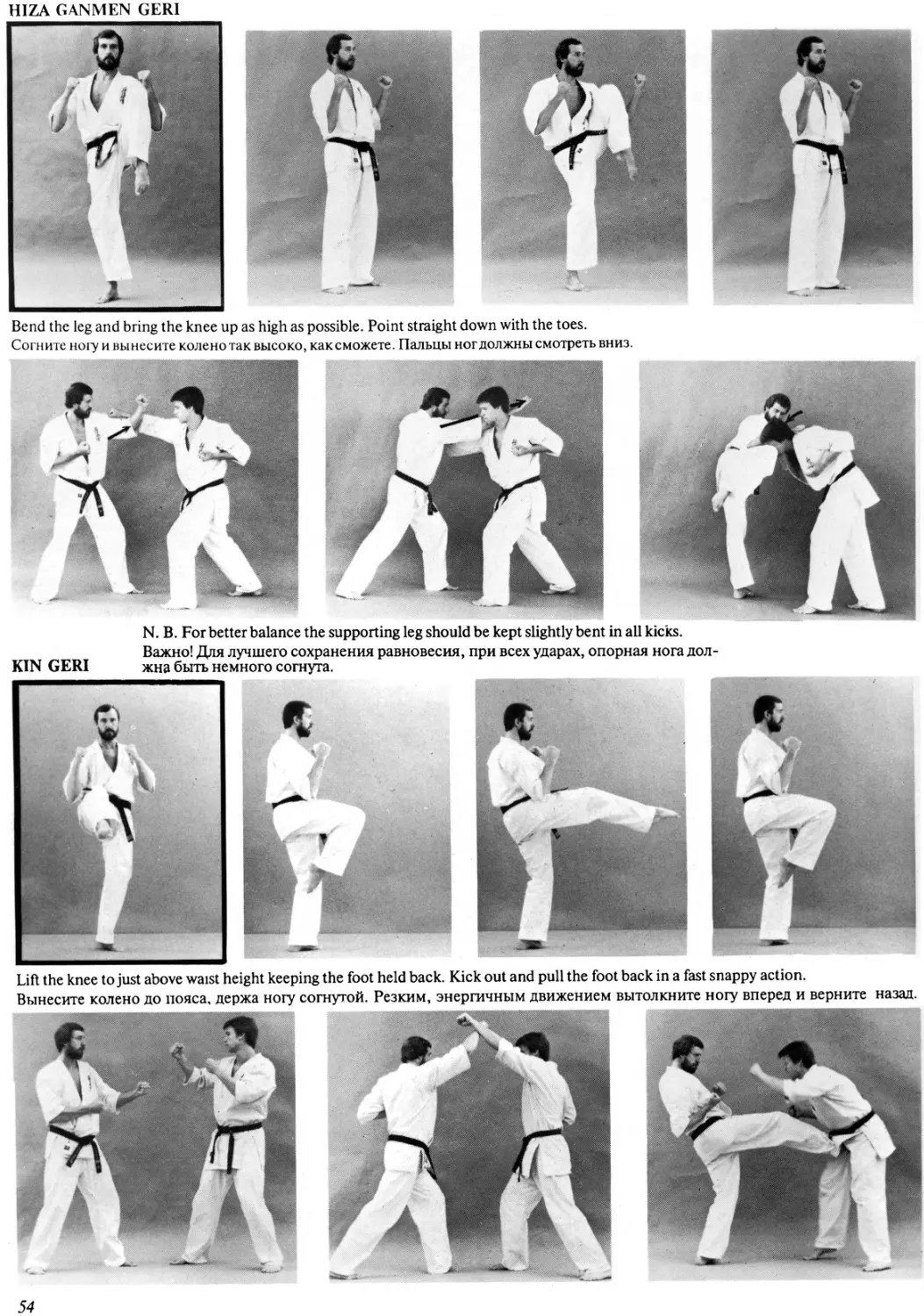
HIZA GANMEN GERI
Bend the leg and bring the knee up as high as possible. Point straight down with the toes.
Согните iioiy и вынесите колено так высоко, как сможете. Пальцы ног должны смотреть вниз.
N. В. For better balance the supporting leg should be kept slightly bent in all kicks.
Важно! Для лучшего сохранения равновесия, при всех ударах, опорная нога дол-
KIN GERI жна быть немного согнута.
Lift the knee to just above waist height keeping the foot held back. Kick out and pull the foot back in a fast snappy action.
Вынесите колено до пояса, держа ногу согнутой. Резким, энергичным движением вытолкните ногу вперед и верните назад.
54
CHUDAN MAE GERI CHUSOKU
Lift the knee above belt level...
Поднимите согнутое колено на уровень пояса...
Kick out keeping the leg slightly bent, then pull back quickly.
Ударьте, держа ногу слегкасогнутой, потом быстро верните ногу в прежнее положение.
Мае Geri can be performed with the front leg as a ’stopping’ technique.
Mae Geri может выполняться передней ногой, как «останавливающая» техника.
Мае Geri can be performed with the front leg as an attacking technique.
Mae Geri может выполняться передней ногой и как атакующая, опережающая техника.
Мае Geri can be performed with the back leg as an attacking technique.
Mae Geri также может выполняться задней ногой, как атакующая техника.
55
MAE GERI JODAN
Lift the knee higher than in Chudan Mae Geri.
Вынесите колено выше, чем в Chudan Мае Geri.
This kick follows a straight line to your opponent’s jaw and is reloaded on the same
line. / Этот удар идет no прямой, в челюсть противника и усиливается ве-
сом тела.
APPLICA TION/ПРИМЕНЕНИЕ
At the same time as you block your opponent’s punch, pull yourfront leg backwards in preparation for your kick.
В то время, как вы блокируете удар противника, отведите переднюю ногу назад, готовясь к своему удару.
Distract your opponent by punching towards his head at the same time as you step in.
Отвлеките противника ложным ударом в голову, и в этот же момент нанесите свой удар.
Attack strongly to your opponent’s body, in order to make him move back into your kicking distance.
С силой атакуйте противника в корпус, чтобы заставить его отойти на необходимую дистанцию для вашего удара.
56
HAISOKU MAWASHI UCHI KEAGE
The leg should be kept slightly bent in this technique and it is performed with a fast, whipping action.
Нога должна быть слегка согнута. Техника выполняется «ударом кнута».
This technique can be used as block.
Эта техника может использоваться как блок...
TEISOKU MAWASHI SOTO KEAGE
The leg should be kept slightly bent in this technique and it is performed with a fast, whipping action.
Нога должна быть слегка согнутой. Техника выполняется «ударом кнута».
it can be used to open up an opponent’s guard...
эта техника может использоваться, чтобы раскрыть защиту противника...
57
GEDAN MAWASHI GERI (HAISOKU)
Lift the knee up and to the side.
Вынесите колено вверх и в бок.
Kick downwards. N. В. This technique can also be performed with the chusoku part of the foot.
Ударьте вниз. Важно!то, что эта техника может также выполняться в позиции Chusoku.
Punch, and then immediately follow up with a kick to the outside ofyour opponent’s thigh.
Ударьте рукой, и тут же проведите удар ногой по наружной части бедер.
Switch feet at the same time as you block, in preparation for a kick to the inside of your opponent’s thigh.
Быстро смените положение ног при подготовке удара по внутренней части бедра.
GEDAN MAWASHI GERI (HAISOKU)
APPLICATION cont,/ПРИМЕНЕНИЕ продол.
Block your opponent’s kick with Sune Uke, then switch feet and attack your opponent’s rear leg.
Блокируйте удар противника Sune Uke, поменяйте положение ног и атакуйте заднюю ногу противника.
Attack your opponent’s supporting leg, before he has time to retract the leg he is kisking with.
Атакуйте опорную ногу противника пока его бьющая нога находится в воздухе.
Block and grab your opponent’s leg, then pull it downwards and to the side, following up immediately with your own kick.
Блокируйте и схватите ногу противника, потяните ее вниз и в бок, и немедленно атакуйте сами.
Put your opponent off balance by attacking to the inside of his front leg, follow up with Jodan Mawashi Geri.
Выведите противника из равновесия атакой по внутренней поверхности его передней ноги, а затем атакуйте
Jodan Mawashi Geri.
59
N. В. The photos go from right to left on this page.
JODAN MAWASHI GERI (HAISOKLJ)	Важно! Фотографии на этой странице расположены справа налево.
The knee should be lifted higher than thefoot...
Колено выносится выше, чем стопа...
This kick is usually faster when performed with the front leg,
Этот удар получается быстрее, когда выполняется передней ногой,
and more powerful when performed with the back leg.
60	и более мощный, когда выполняется задней.

KANSETSU GERI
APPLICA TION/ПРИМЕНЕНИЕ
Pivot on the supporting leg. Keep it slightly bent and kick downwards.
Перенесите центр тяжести на опорную ногу, держите ее слегка согнутой, бейте вниз.
Step to the side at the same time as you block.
Отойдите в сторону во время постановки блока.
Kick downwards to the back of your opponent’s knee.
Ударьте вниз no внутренней части колена.
62
Try to get yourfoot and knee on the same level before kicking out.
Перед тем как ударить, старайтесь держать колено и стопу на одном уровне.
A PPLICA TION/ПРИМЕНЕНИЕ
Punch at your oppontne’s head, to distract him while your are moving into kicking distance.
Ударьте противника в голову рукой, чтобы отвлечь его в момент атаки ногой.
If this kick is loaded correctly, it is possible to perform a very powerful kick from close range.
В случае правильного выполнения, есть возможность нанести очень мощный удар с близкой дистанции.	63
Sensei Kickan Cook training in the Swedish Alps.
Сэнсэй Кикан Кук тренируется в Шведских Альпах.
JODAN YOKOGERI
65
CHUDAN USHIRO GERI
Geda:: Ushiro Geri is performed basically the same as Chudan.
Gedan Ushiro Geri выполняется в основном также как и Chudan.
It is important that your toes are pointing downwards, when you make contact with this kick.
Важно, чтобы во время контакта пальцы ног смотрели вниз.
APPLICATION/ПРИМЕНЕНИЕ Chudan
Open up your opponent's guard and push him off balance by striking with Shuto Uchi Komi.
Раскройте противника, выведите его из равновесия Shuto Uchi Komi.
APPLICATION/ПРИМЕНЕНИЕ Gedan
66
GEDAN MAE KAKATO GERI
APPLICA TION/ПРИМЕНЕНИЕ
This kick is performed with a thrusting motion, and contact is made with the heel.
Этот удар выполняется «вонзающим» движением. Контакт — пяткой.
CHUDAN MAE KAKATO GERI
This kick is performed with a thrusting motion, and contact is made with the heel.
Этот удар выполняется «вонзающим» движением. Контакт — пяткой.
A PPLICA TION/ПРИМЕНЕНИЕ
67
JO DAN MAE KAKATO GERI
пяткой.
APPLICA TION/ПРИМЕНЕНИЕ
This kick is performed with a thrusting motion, and contact is made with the heel.
Этот удар выполняется «вонзающим» движением. Контакт
AGE KAKATO USHIRO GERI APPLICATION/ПРИМЕНЕНИЕ
Thrust powerfully backwards with your hips, and push forward with your arms at the same time.
Сделайте рывок назад нижней частью корпуса, одновременно вперед — верхней частью корпуса.
68

J()f)A\ EC HI HAISOKU GERI
Your body must be at an angle of between 45° and 90°, to your target, when performing this technique, in order to obtain
maximum, power.
This kick can also be performed with a spin, the same as Ushiro Mawastii Geri.
Этот удар может также выполняться во вращении, как Ushiro Mawashi Geri.
N. B. The photos go from right to left on this page.
Важно! Фотографии на этой странице расположены справа налево
JODAN LISHIRO MAWASHI GERI
GEDAN USHIRO MAWASHI GERI
This technique can also be performed to the Chudan level.
Эта техника может также выполняться на уровне Chudan.
Shorten your stance, block, your opponent’s kick straight downwards, spin around and kick to the side of his leg, making contact with your heel.
Сократите свою стойку, блокируйте удар противника внизу, и повернувшись, ударьте пяткой по бедру его ноги.
OROSHI UCHI KAKATO GER1
Lift the leg inwards and as high as possible — swing the leg outwards —
Поднимите рывком ногу вверх насколько возможно, затем вбок —
stamp downwards with the heel.
удар наносится пяткой сверху вниз.
This technique can also be used to open up an opponent’s guard, (below)
Эта техника может быть использована, чтобы сломить защиту противника (см. ниже).
72
OROSHI SOTO KAKATO GERI
Lift the leg outwards and as high as possible — swing the leg inwards —
Поднимите рывком ногу вверх насколько возможно, затем в бок —
stamp downwards with the heel./удар наносится пяткой сверху вниз.
TOBI HIZA GERI
73
1
TAIKYOKU SONO ICHI
Fudo Dachi
Pattern for/Образец для
TAIKYOKU ICHI, NI, SAN
Start —
Начало
N. В. Keep the book on your left hand side while learning the katas.
Важно! Во время изучения KATA держите книгу с левой стороны.
Seiken Chudan Oi Tsuki
Zenkutsu Dachi -
Seiken Мае Gedan Bari
Seiken Mae Gedan Bari
Seiken Chudan Oi Tsuki
Seiken Mae Gedan Bari	Seiken Chudan Oi Tsuki
Seiken Chudan Oi Tsuki
KI Al
Seiken Mae Gedan Bari
Seiken Chudan Oi Tsuki
Seiken Chudan Oi Tsuki
Seiken Mae Gedan Bari
Sei ken Chudan Oi Tsuki
Seiken Mae Gedan Bari
Seiken Chudan Oi Tsuki	Seiken Chudan Oi Tsuki	Seiken Chudan Oi Tsuki
Seiken Mae Gedan Bari
Seiken Chudan Oi Tsuki
Seiken Mae Gedan Bari
Seiken Chudan Oi Tsuki
Fudo Dachi
TAIKYOKU SONO SAN
Fudo Dachi
Kokutsu Dachi -
Seiken Chudan Uchi Uke
Seiken Jodan Oi Tsuki
Zenkutsu Dachi -
Seiken Chudan Oi Tsuki
Kokutsu Dachi -
Seiken Chudan Uchi Uke
Zenkutsu Dachi -
Seiken Chudan Oi Tsuki
Seiken Mae Gedan Bari
Kokutsu Dachi -
Seiken Chudan Uchi Uke
Seiken Jodan Oi Tsuki
Zenkutsu Dachi -
Seiken Chudan Oi Tsuki
Kokutsu Dachi -
Seiken Chudan Uchi Uke
Zenkutsu Dachi -
Seiken Mae Gedan Bari
Seiken Jodan Oi Tsuki
Seiken Jodan Oi Tsuki
Seiken Chudan Oi Tsuki
KIAI
Kokutsu Dachi -
Seiken Chudan Uchi Uke
Zenkutsu Dachi -
Seiken Chudan Oi Tsuki
Seiken Jodan Oi Tsuki
Kokutsu Dachi -
Seiken Chudan Uchi Uke
Fudo Dachi
Zenkutsu Dachi -
Seiken Chudan Oi Tsuki
PINAN SONOICH1
Seiken Chudan Oi Tsuki	Seiken Mae Gedan Bari
Seiken Mae Gedan Bari
Seiken Jodan Uke
Neko Ashi Dachi - Tettsui Komi Kami
Zenkutsu Dachi -
Seiken Chudan Tsuki
KIAI
Seiken Jodan Uke
Seiken Jodan Uke
Seiken Mae Gedan Bari
Seiken Chudan Oi Tsuki
Seiken Mae Gedan Bari
Seiken Chudan Oi Tsuki
Seiken Mae Gedan Bari
Seiken Chudan Oi Tsuki
Seiken Chudan Oi Tsuki
Seiken Chudan Oi Tsuki
Kokutsu Dachi - Shuto Mawashi Uke
Shuto Mawashi Uke (45 °)
Shuto Mawashi Uke
FudoDachi
Shuto Mawashi Uke (45 °)
PINAN SONO NI
Fudo Dachi
Kokutsu Dachi -
Seiken Jodan Uke
Seiken Chudan Uchi Uke
Kiba Dachi - Jun Tsuki
Kokutsu Dachi -
Seiken Jodan Uke
Seiken Chudan Uchi Uke
Kiba Dachi - Jun Tsuki
Tsuru As hi Dachi
Jodan Yoko Geri /
Uraken Yoko Uchi
Tettsui Hizi Uchi
Tettsui Hizo Uchi
Kokutsu Dachi - Shuto Mawashi Uke
Shuto Mawashi Uke
Shuto Mawashi Uke
Kokutsu Dachi - Shuto Mawashi Uke
Shuto Mawashi Uke (45°)
Zenkutsu Dachi -
Chudan Yohon Nukite
Shuto Mawashi Uke
Zenkutsu Dachi - Sukui Uke
Shuto Mawashi Uke (45 °)
Chudan Mae Geri
Chudan Mae Geri
Zenkutsu Dachi-Seiken
Chudan Gyaku Tsuki
Sukui Uke — slow movement/
медленное движение
Zenkutsu Dachi-Seiken
Chudan Gyaku Tsuki
Nihon Nukite (45°)
Morote Chudan Uchi Uke
Seiken Mae Gedan Bari
Seiken Mae Gedan Bari
<2 Seiken Jodan Uke (45 °)
Nihon Nukite (45°)
KIAI
Seiken Jodan Uke (45°)
Senseis David and Kickan Cook training in the Nikko National Park, Japan.
Сэнсэи Дэвид и Кикан Кук тренируются^ Национальном парке Никко, в Японии,
с
PINAN SONO SAN
Fudo Dachi
1
Kokutsu Dachi -
Seiken Chudan Uchi Uke
.,	. Seiken Chudan Uchi Uke /
MusubiDachi- „	, n .
Seiken Mae Gedan Ban
Kokutsu Dachi -
Seiken Chudan Uchi Uke
Musubi Dachi -
Seiken Chudan Uchi Uke /
Seiken Mae Gedan Bari
Shuto Gedan Uke
Zenkutsu Dachi - Morote Chudan Uchi Uke
Kiba Dachi - Tettsui Chudan Yoko Uchi
KI Al
Zenkutsu Dachi -
Seiken Chudan Oi Tsuki
Chudan Mae Geri
Kiba Dachi  Gedan Hiza Uke
Uraken Sayu Ganmen Uchi
Musubi Dachi-
Short pause / Короткая пауза
Chudan Mae Geri
Kiba Dachi - Gedan Hiza Uke
Mae Geri Chudan
Kiba Dachi - Gedan Hiza Uke
Uraken Sayu Ganmen Uchi
Uraken Sayu Ganmen Uchi
Kiba Dachi
Jodan Hiji A te
Zenkutsu Dachi -
Seiken Chudan Oi Tsuki
Jodan Hiji Ate
Fudo Dachi
PINAN SONO YON
Fudo Dachi
Kokutsu Dachi
JL
Shuto Jodan Uke
Shuto Chudan Uchi Uke
Zenkutsu Dachi-
Seiken Juji Gedan Uke
Morote Chudan Uchi Uke
Jodan Hiji A te
Tsuru Ashi Dachi
Jodan Yoko Geri
Uraken Yoko Uchi
Kokutsu Dachi
Shuto Jodan Uke
Shuto Chudan Uchi Uke
Tsuru Ashi Dachi
Zenkutsu Dachi
Jodan Yoko Geri /
Uraken Yoko Uchi
Zenkutsu Dachi - Jodan Hiji Ate
Jodan Mae Geri
MAI
Kake Dachi - Uraken
Sayu Ganmen Uchi
Zenkutsu Dachi (45°)
Shuto Yoko Ganmen
Uchi (45 °)
Slow movement
Медленное движение
Chudan Mae Geri (45 °)
Seiken Chudan Oi Tsuki
Zenkutsu Dachi (45°)
Chudan Mae Geri (45°)
Zenkutsu Dachi (45°) -
Chudan Gyaku Tsuki
Slow movement
Медленное движение
Seiken Chudan Oi Tsuki
Morote Chudan Uchi Uke
Zenkutsu Dachi (45°)
Chudan Gyaku Tsuki
Morote Chudan Uchi Uke
Hiza Geri
Shuto Mawashi Uke
Половина.
Kokutsu Dachi
Fudo Dachi
Shuto Mawashi Uke
PINAN SONO GO
Fudo Dachi	Kokutsu Dachi - Seiken Chudan Uchi Uke
Seiken Chudan Gyaku Tsuki
Slow movement
Медленное движение
Heisoku Dachi
Kokutsu Dachi - Seiken Chudan Uchi Uke

Slow movement	Heisoku Dachi
Медленное движение
Zenkutsu Dachi
Seiken Chudan Gyaku Tsuki
Morote Chudan Uchi Uke
Seiken Juji Gedan Uke
Shuto Juji Jodan Uke
KIAI
Seiken Chudan Oi Tsuki
Teisoku Mawashi
Soto Keage
Jodan Haishu Uchi
Slowly/Медленно
Teisoku Mawashi
Soto Keage
Tsuru Ashi Dachi
Jodan Hiji Ate
Kake Dachi-Morote
Chudan Uchi Uke
Перед тем как прыгнуть, Kake Dachi-Seiken
сделайте короткий шаг. Gedan Juji Uke
Zenkutsu Dachi-Morote Chudan Uchi Uke
Kiba Dachi-Seiken
Mae Gedan Bari
Morote Age Jodan Tsuki
Take a short step before
jumping
Zenkutsu Dachi (45 °)
Kiba Dachi (45 °)
Musubi Dachi
Zenkutsu Dachi (45 °)
Kiba Dachi (45 °)
Fudo Dachi
N. B. Slow movements * One long Kiai
Важно! Медленное движение ♦ Один длинный Kiai
TSUKI NO KATA
Eyes closed Eyes open
Глаза закрыты Глаза открыты
Seiken Chudan Gyaku Tsuki
Kiba Dachi - Seiken Mae Gedan Bari
Seiken Chudan Gyaku Tsuki
Sanchin Dachi-Seiken
Chudan Gyaku Tsuki
Seiken Chudan Gyaku Tsuki
Zenkutsu Dachi-Seiken
Gedan Gyaku Tsuki
Seiken Gedan Gvaku Tsuki
Seiken Chudan Oi Tsuki
Sanchin Dachi-Seiken
Chudan Uchi Uke
Seiken Chudan Gyaku Tsuki
Step forward/Шаг вперед
Sukui Uke-
Slowly/Медленно
Jun Tsuki
Chudan Yohon Nukite
Jun Tsuki
Zenkutsu Dachi-Seiken
Chudan Uchi Uke-Gedan Bari
Zenkutsu Dachi-Seiken
Jodan Oi Tsuki
Seiken Gedan Gyaku
Tsuki
Seiken Chudan Oi
Tsuki
Sanchin Dachi - Mae Shu to Mawashi Uke
Musubi Dachi
Mokuso
- N. B. All techniques performed with Ibuki breathing are performed slowly with tension.
Важно! Вся техника дыхания Ibuki выполняется медленно и в напряженном состоянии.
GEKSAI DAI
Eyes closed	Eyes open
Глаза закрыты Глаза открыты
Zenkutsu Dachi -
Seiken Jodan Oi Tsuki
Kiba Dachi -	Sanchin Dachi -
Seiken Mae Gedan Bari	Seiken Jodan Uke
Sanchin Dachi -
Seiken Jodan Uke
Zenkutsu Dachi -
Seiken Jodan Oi Tsuki
Kiba Dachi -
Seiken Mae Gedan Bari
Sanchin Dachi - Seiken Chudan Uchi Uke
Sanchin Dachi - Seiken Chudan Uchi Uke
Sanchin Dachi -
Seiken Chudan Uchi Uke
Chudan Mae Geri
Uraken Ganmen Oroshi Uchi
Zenkutsu Dachi -
Jodan Age Hiji A te
Seiken Gedan Gyaku Tsuki
Ashi Bari
Kiba Dachi -
Shuto Jodan Yoko Uchi
Sanchin Dachi-
Seiken Chudan Uchi Uke
Sanchin Dachi -
Seiken Chudan Uchi Uke
N. B. Step backwards
Важно! Шаг назад.
Sanchin Dachi -
Seiken Chudan Uchi Uke
Chudan Mae Geri
Uraken Ganmen Oroshi Uchi
Seiken Mae Gedan Bari
Zenkutsu Dachi -
Jodan Age Hiji A te
Seiken Gedan Gyaku Tsuki
Ashi Bari
Seiken Morote Tsuki
Zenkutsu Dachi - Seiken Morote Tsuki
Step backwards Seiken Morote Tsuki
Шаг назад
Musubi Dachi — Mokuso
slow/медленно
•	Slow movement with tension
•	Медленное движение в напряжении
* Incomplete Ibuki
Ж Незаконченное Ibuki
*
*
Fast movement and finish off the Ibuki
Быстрое движение с окончанием Ibuki
GEKSAI SHO
Open the eyes/
Откройте глаза
Uchi Hachi Ji Dachi
Heiko Dachi
Kokutsu Dachi-Seiken Chudan Uchi Uke
Close the eyes/
Закройте глаза
Seiken Chudan Gyaku
Tsuki
Zenkutsu Dachi-
Seiken Jodan Uke
Seiken Chudan Gyaku
Tsuki
Kiba Dachi -
Seiken Mae Gedan Bari
Kokutsu Dachi-
Seiken Chudan Uchi Uke
Seiken Chudan Gyaku
Tsuki
Seiken Chudan Gyaku
Tsuki
Zenkutsu Dachi-
Seiken Jodan Uke
Kiba Dachi-Seiken
Mae Gedan Bari
IdUKIW
Jodan Halt о Uchi Uke
Shuto Gedan Bari
Zenkutsu Dachi -
Seiken Jodan Uke
Seiken Chudan
Gvaku Tsuki
Shuto Gedan Bari	Jodan Haito Uchi Uke
Jodan Haito Uchi Uke	Shuto Gedan Bari
Gyaku Seiken Chudan
Uchi Uke
Gyaku Seiken Mae
Gedan Bari
Tsuru Ashi Dachi
Jodan Yoko Geri-
Uraken Uchi (45 °)
Half Shuto Mawashi Uke
Половина Shuto Mawashi Uke
Zenkutsu Dachi-Seiken
Chudan Gyaku Tsuki (45°)
Tsuru Ashi Dachi
Jodan Yoko Geri-
Uraken Uchi (45 °)
Zenkutsu Dachi—Seiken
Chudan Gyaku Tsuki (45°)
Tsuru Ashi Dachi
Zenkutsu Dachi-Seiken
Chudan Gyaku Tsuki (45 °)
Jodan Mae Geri (45°)
Kake Dachi-
Seiken Morote Tsuki
Jodan Yoko Geri-
Uraken Uchi (45°)
Kokutsu Dachi
Shuto Mawashi Uke
Neko Ashi Dachi-
Yohon Nukite
IBUKI
Musubi Dachi
Mae Shuto Mawashi Uke
Mokuso
g YANTSU
N. B. Slow movements	* One long Kiai
Важно! Движения медленные * Один длинный Kiai
Musubi Dachi - Mokuso
Uchi Hachi Ji Dachi
Eyes open
Heiko Dachi
Morote Jodan Haito Uchi
Глаза открыты
Uraken Mawashi Uchi
Seiken Jodan
Morote Tsuki
Yohon Nukite
Yohon Nukite
Uraken Mawashi Uchi
Shuto Uchi Komi
Gedan Shotei Uke
Musubi Dachi -
Chudan Shotei Uke
Zenkutsu Dachi -
Seiken Chudan Tsuki
Chudan Shotei Uke
Zenkutsu Dachi -
Seiken Chudan Tsuki
Neko Ashi Dachi
Jodan Koken Uke
Neko Ashi Dachi
Gedan Shotei Uke
Jodan Koken Uke
Shuto Uchi Komi
Musubi Dachi
Chudan Shotei Uke

Zenkutsu Dachi-Seiken
Seiken Jodan Gyaku Tsuki
Seiken Chudan Oi Tsuki
Chudan Mae Geri
Gedan Oi Tsuki
Gedan Shotei Uke
Jodan Koken Uke
Neko Ashi Dachi -
Chudan Haito Uchi Uke
Shuto Uchi Komi
Seiken Jodan Gyaku Tsuki
Gedan Shotei Uke
Seiken Chudan Oi Tsuki
Chudan Mae Geri
Jodan Koken Uke
Musubi Dachi
Chudan Shotei Uke
Zenkutsu Dachi-Seiken
Gedan Oi Tsuki
Neko Ashi Dachi -
Chudan Haito Uchi Uke
L
Shuto Uchi Komi
Musubi Dachi	Chudan Shotei Uke
Mokuso
• Slow movement with tension
• Медленные движения с напряжением
SA1EA
Kiba Dachi-Uraken
Sayu Ganmen Uchi
Step 45° forward
Шаг вперед под углом 45°.
Heisoku Dachi
Step 45° forward
Шаг вперед под углом 45°.
Kiba Dachi- Uraken
Sayu Ganmen Uchi
Step 45° forward
Шаг вперед под углом 45°.
Heisoku Dachi
Kiba Dachi Uraken
Sayu Ganmen Uchi
Haito Uchi Uke-	Mae Geri Chudan
Shuto Gedan Bari
Haito Uchi Uke-	Chudan Mae Geri
Shuto Gedan Bari
Zenkutsu Dachi-Jodan
Haito Morote Uchi
Seiken Jodan Morote
Tsuki
Tettsui Uchi
left/левая рука
Jodan Haito Morote
Uchi
Seiken Jodan
Morote Tsuki
Tettsui Uchi
right/правая рука
Shita Tsuki
Jodan Kake Uke
Shita Tsuki
Ashi Bari
Turn 180°/
Поворот на 180°
KIAI
Sanchin Dachi-Tettsui
Oroshi Ganmen Uchi
Ashi Bari
Sanchin Dachi-Tettsui
Orosho Ganmen Uchi
Тит 180°/
Поворот на 180°
Zenkutsu Dachi-Seiken
Chudan Gyaku Tsuki
Neko Ashi Dachi-
Chudan Nukite
Mae Shuto Mawashi Uke
Musubi Dachi-Mokuso
N. В. All techniques are performed slowly (4-5 sec.), with tension unless otherwise indicated.	* Fast movement	Ibuki: 4-5 sec. depending on lung capacity
TENSHO Важно! Все техники выполняются медленно (4-5 сек.), с напряжением, если не указано иначе. • Быстрое движение	Ibuki: 4-5 сек., в зависимости от способности легких
IBUKI


IBUKI*

• Slow movement with tension
• Медленное движение с напряжением
KANKU DAI
Close the eyes/
Закройте глаза
Open the eyes/
Откройте глаза
Uchi Hachi Ji Dachi
Heiko Dachi
Short pause
Короткая пауза
Kokutsu Dachi-Shuto Mawashi Uke
Shuto Mawashi Uke
Sanchin Dachi-Seiken
Chudan Uchi Uke
Seiken Chudan
Gyaku Tsuki
Seiken Chudan Uchi Uke
Seiken Chudan Oi Tsuki
Kokutsu Dachi
Shuto Mawashi Uke	Shuto Mawashi Uke	Shuto Mawashi Uke	Shuto Uke
Shuto Yoko Ganmen Uchi
Chudan Mae Geri
Zenkutsu Dachi-Seiken
Chudan Gyaku Tsuki
Seiken Chudan Oi Tsuki
Zenkutsu Dachi-
Chudan Yohon Nukite
Тит/Поворот
Shuto Yoko Ganmen Uchi
Chudan Mae Geri
Seiken Chudan Oi Tsuki
Musubi Dachi
Zenkutsu Dachi-Seiken
Chudan Gyaku Tsuki
Chudan Mae Geri
Tsuru Ashi Dachi
Jodan Yoko Geri-
Zenkutsu Dachi - Jodan Hiji Ate
Musubi Dachi
Uraken Uchi
Chudan Mae Geri	Tsuru Ashi Dachi	Jodan Yoko Geri-	Zenkutsu Dachi - Jodan Hiji Ate
Uraken Uchi
Sanchin Dachi-Seiken	Uraken Shomen	Jodan Hiji Ate
Jodan Uke	Ganmen Uchi
Oroshi Hiji A te
Seiken Jodan Uke
Jodan Hiji A te
Oroshi Hiji Ate
Seiken Chudan Oi Tsuki
Uraken Shomen
Ganmen Uchi
Age Kaka to
Ushiro Geri
Moro Ashi Dachi
Gedan Shuto Morote Uke
Тит/Поворот
Seiken Chudan Oi Tsuki
Chudan Mae Geri
Tsuru Ashi Dachi
Jodan Yoko Geri -
Uraken Uchi
Chudan Mae Geri
Tsuru Ashi Dachi
Jodan Yoko Geri -
Uraken Uchi
Kiba Dachi - Jun Tsuki
Musubi Dachi
Musubi Dachi
Zenkutsu Dachi-Jodan Hiji A te
Zenkutsu Dachi-Jodan Hiji Ate
Kiba Dachi
Jodan Haishu Uchi
Kake Dachi-
Seiken Morote Tsuki
Skip Backwards/
Отскок назад
Chudan Uchi Uke-
Gedan Bari
Zenkutsu Dachi -
Shuto Morote Gedan Bari
Teisoku Mawashi
Soto Keage
Kake Dachi-
Seiken Morote Tsuki
Kokutsu Dachi - Shuto Mawashi Uke
Sanchin Dachi-Chudan
Uchi Uke-Gedan Bari
Shuto Hizo Uchi
Short pause
Короткая пауза
Ura turn/
Поворот Ura
Kiba Dachi -
Yohon Nukite
Yohon Nukite
Yohon Nukite
Ura turn/
Поворот Ura
Yohon Nukite
Yohon Nukite
Yohon Nukite
Chudan Kake Uke
Yohon Nukite
Yohon Nukite
Chudan Kake Uke
Yohon Nukite
Yohon Nukite	Chudan Kake Uke	Yohon Nukite	Yohon Nukite
Yohon Nukite
Yohon Nukite
Chudan Kake Uke
Yohon Nukite
Yohon Nukite
Seiken Mae Gedan Bari
Seiken Gedan Gyaku Tsuki
Zenkutsu Dachi

125
the Kyokushinkai
Sensei Kickan Cook performs Jodan Mawashi Geri at
Headquarters, Tokio, Japan.
Сэнсэй Кикан Кук выполняет Jodan Mawashi Geri в штаб-квартире
Кекусенкай в Токио, в Японии.
Медленное движение с напряжением
SEIENCHIN
Slow movement with tension
1В1ЖТ
Jodan Haito Uchi Uke
Jodan Kake Uke
Yohon Nukite
Morote Gedan Shotei Uke
Step forward (45°)
Шаг вперед на 45'
Step forward (45°)
Шаг вперед на 45'
Eyes closed
Глаза закрыты
Eyes open
Глаза открыты
Kiba Dachi -
Morote Gedan Shotei Uke


Jodan Haito Uchi Uke
Jodan Kake Uke
Yohon Nukite
Step forward (45°)
Шаг вперед на 45°
Morote Gedan Shotei Uke
Jodan Haito Uchi Uke
Jodan Kake Uke
Yohon Nukite
Age Kakato Ushiro Geri-
Ushiro Hiji Ate
Moro Ashi Dachi -
Seiken Chudan Oi Tsuki
Jodan Age Hiji Ate
 «" ........
Zenkutsu Dachi-
Shuto Jodan Uke
Morote Chudan Uchi Uke
Kiba Dachi-
Seiken Mae Gedan Bari
Seiken Mae Gedan Bari
Kokutsu Dachi -
Morote Chudan Uchi Uke
Kiba Dachi -	Seiken Mae Gedan Bari
Seiken Mae Gedan Bari
Moro Ashi Dachi-Uraken
Oroshi Ganmen Uchi
Sanchin Dachi-Chudan
Uchi Uke-Gedan Bari (45°)
Moro Achi Dachi —
Soto Uke Into left palm/
Soto Uke в левую ладонь
Kiba Dachi-
Age Jodan Tsuki (45°)
Uraken Sayu Ganmen Uchi
Seiken Mae Gedan Bari
Seiken Mae Gedan Bari
Chudan Mae Hiji Ate
Uraken Sayu Ganmen Uchi
Neko Ashi Dachi-
Chudan Mae Hiji Ate
Kiba Dachi -
Age Jodan Tsuki (45°)
Sanchin Dachi-Chudan
Uchi Uke-Gedan Bari (45°)
Seiken Mae Gedan Bari
Seiken Mae Gedan Bari
Moro Ashi Dachi-Uraken
Oroshi Ganmen Uchi
Neko Ashi Dachi-Chudan
Mae Hiji Ate
Tobi Mae Gen
Kokutsu Dachi
GARYU
Uchi Hachi Ji Dachi
Heiko Dachi
Jodan Morote Kake Uke
Close the eyes/
Закройте глаза
Open the eyes/
Откройте глаза
Jodan Mawashi Geri
Heiko Dachi
Jodan Morote Kake Uke
Jodan Mawashi Geri
Morote Tensho Uke
Tobi Mae Geri
Zenkutsu Dachi
Seiken Jodan Morote
Tsuki
Neko Ashi Dachi
Jodan Morote Kake Uke
Jodan Morote Kake Uke
Jodan Morote Kake Uke
Gedan Morote Shotei Uke
Jodan Morote Koken Uke
Gedan Morote Shotei Uke
Jodan Morote Koken Uke
Gedan Morote Shotei Uke
Jodan Morote Koken Uke
Gedan Morote Koken Uke
Jodan Morote Koken Uke
Jodan Mawashi Geri
Jodan Ushiro
Mawashi Geri
Neko Ashi Dachi-Jodan Morote Kake Uke
Тит/Поворот
Jodan Morote Kake Uke
Jodan Morote Kake Uke
Jodan Morote Kake Uke
Jodan Morote Kake Uke
Jodan Morote Kake Uke
Turn and jump into Kake Dachi
Поворот и прыжок в Kake Dachi
Kake Dachi-Seiken
Juji Gedan Uke

Half/Половина Shuto
Mawashi Uke
Seiken Gyaku Tsuki
Тит/Поворот
Crouching Kokutsu Dachi
Присев в Kokutsu Dachi
Seiken Gyaku Tsuki
Half/Половина Shuto
Mawashi Uke
Morote Haito Uke
Chudan Yohon Nukite
Musubi Dachi
Neko Ashi Dachi
Morote Haito Uke
Morote Haito Uke	Тит/Поворот
Morote Haito Uke
Mokuso
Senseis David and Kickan Cool
Сэнсэи Дэвид и КЛшн
ic pTrfdmkata at the Mdrby Castle in Sweden
Кук'выполняют Kama в Мерби-Касл, в Швеции.
N. B. The dotted lines show the direction of the next step.
SE1PAI
Uchi Hachi Gi Dachi
Важно! Пунктирные линии показывают направление следующего шага.
Heiko Dachi	Kiba Dachi	Jodan Haishu Uchi	Zenkutsu Dachi-
Slowly/Медленно
Seiken Chudan Oi Tsuki
Tsuru Ashi Dachi	Jodan Yoko Geri
Osai Uke
Tsuru Ashi Dachi
Kiba Dachi-
Jodan Hiji Ate
Kiba Dachi-Jodan Haito
Uke-Gedan Shuto Uke
Slowly/Медленно
4
Zenkutsu Dachi-Shuto Yoko Ganmen Uchi
Tobi Mae Geri
Jodan Yoko Geri
Kiba Dachi-Jodan Haito
Uke-Gedan Shuto Uke
Slowly/Медленно
KI Al
Zenkutsu Dachi-Chudan Morote Uchi Uke
Kiba Dachi -
Jodan Hiji Ate
Uraken Ganmen
Oroshi Uchi
Slow/Медленный Kake Uke
Shuto Hizo Uchi
Tsuru Ashi Dachi	Jodan Yoko Geri
Not fast/He быстрый
Sanchin Dachi
Jun Tsuki
Neko Ashi Dachi
Kiba Dachi
Zenkutsu Dachi-Seiken
Chudan Oi Tsuki
Tsuru Ashi Dachi
Jodan Mae Geri
Tsuru Ashi Dachi
Tsuru Ashi Dachi	Jodan Mae Geri
Kiba Dachi-Seiken
Morote Gedan Tsuki
Turn 180° into Tsuru Ashi Dachi — Not fast	Jodan Yoko Geri
Поворот на 180° в Tsuru Ashi Dachi — He быстро
Kiba Dachi-Seiken	Zenkutsu Dachi-Seiken Mae Gedan Bari
Morote Gedan Tsuki
Kake Dachi-Seiken Morote Tsuki
Seiken Mae Gedan Bari
Kokutsu Dachi — Half/Половина Shuto Mawashi Uke
Slowly/Медленно
Seiken Chudan Uchi Uke
Slowly/Медленно
Seiken Chudan Uchi Uke-
Seiken Mae Gedan Bari
Chudan Uchi Uke-
Mae Gedan Bari
Jodan Mae Geri	Zenkutsu Dachi-Seiken Chudan Uchi Uke
Neko Ashi Dachi-
Chudan Yohon Nukite
Mae Shuto Mawashi Uke
Tettsui Hizo Uchi
Seiken Gedan Oi Tsuki
Musubi Dachi
Mokuso
SUSHI но
• Slow movement with tension • Медленное движение с напряжением
Moro Ashi Dashi-
Uraken Oroshi Ganmen Uchi
Uraken Oroshi
Ganmen Uchi
Uraken Oroshi
Ganmen Uchi
Seiken Chudan Oi Tsuki
Jodan Kake Uke
Seiken Chudan
Gyaku Tsuki
Jodan Kake Uke
Seiken Chudan Gyaku
Tsuki
Seiken Chudan Oi Tsuki
Tsuri Ashi Dachi
Jodan Yoko Geri
Jodan Yoko Geri
Kiba Dachi - Jun Tsuki
Jodan Gyaku Hiji A te
Jodan Gyaku Age Hiji Ate
Kiba Dachi - Jun Tsuki
Tsuri Ashi Dachi
Jodan Gyaku Hiji Ate
Jodan Gyaku Age Hiji Alt
Jodan Hiji A te
Oroshi Hiji Ate
144
Moro Ashi Dachi-Gedan
Shotei Morote Uke
Chudan Kake Uke	Osai Uke
Osai Uke
Chudan Yohon Nukite
Osai Uke
Chudan Yohon Nukite
Kokutsu Dachi-
Chudan Kake Uke
Chudan Yohon Nukite
Chudan Kake Uke
Shuto Morote Gedan Bari
Kiba Dachi-Shuto
Morote Gedan Bari
Shuto Morote Gedan Bari
Moro Ashi Dachi-Uraken
Oroshi Ganmen Uchi
Sanchin Dachi-Seiken	Jodan Hiji Ate	Uraken Shomen
Chudan Uchi Uke	Ganmen Uchi
Shuto Hizo Uchi
Jodan Hiji Ate	Uraken Shomen
Ganmen Uchi
Shuto Hizo Uchi
Shuto Hizo Uchi	Jodan Shotei Uke
И
Jodan Hiji Ate
Uraken Shomen
Ganmen Uchi
Chudan Mae Geri
Zenkutsu Dachi-
Chudan Gyaku Tsuki
Тит/Поворот на 135°
Kokutsu Dachi-
Chudan Kake Uke
Chudan Kake Uke
Chudan Kake Uke
Uraken Oroshi	Chudan Yohon Nukite
Ganmen Uchi
Chudan Kake Uke
Shuto Morote Gedan Bari
Kiba Dachi-Shuto
Morote Gedan Bari
Chudan Yohon Nukite
Shuto Morote Gedan Bari
Uraken Oroshi
Ganmen Uchi
Seiken Jodan Oi Tsuki
Seiken Jodan Oi Tsuki
Sanchin Dachi
Morote Jodan Haito Uchi
Seiken Chudan
Morote Tsuki
Chudan Yohon Nukite
Chudan Yohon Nukite
Neko Ashi Dachi -
Seiken Jodan Oi Tsuki
Uraken Sayu
Ganmen Uchi
Zenkutsu Dachi-Seiken Chudan Gyaku Tsuki	Moro Ashi Dachi-Gedan Shotei Morote Uke
Kokutsu Dachi-Chudan Kake Uke
Chudan Yohon Nukite	Osai Uke	Chudan Yohon Nukite
CHAPTER 6
FIGHTING COMBINATIONS
ГЛАВА 6 КОМБИНАЦИИ В СХВАТКЕ
The followint fighting combinations have been inciuded because they form part of the grading requirements for my students.
Seiken Jodan Gyaku Tsuki, back leg (задней ногой) Chudan Chusoku Mae Geri, Seiken Jodan Gyaku Tsuki.
Seiken Mae Gedan Bari, Seiken Jodan Uke, Seiken Jodan Gyaku Tsuki, back leg (задняя нога) Chudan Mae Hiza Geri.
151
Показанные ниже комбинации являются стандартной частью тренировок моих учеников.
Gyaku Мае Gedan Bari, Seiken Ago Uchi, Seiken Chudan Gyaku Tsuki.
Gyaku Chudan Soto Uke, Seiken Mae Gedan Bari, front leg (передняя нога) Ashi Bari, back leg (задняя нога) Hiza Ganmen Geri.
152
Back leg (задняя нога) Ashi Bari, Jodan Tate Tsuki, Chudan Gyaku Tsuki.
Focus your opponent’s attention on his front leg, by sweeping the leg, keeping your head out of punching range.
Привлеките внимание противника к его передней ноге. Зацепив ее, держите голову вне досягаемости удара.
Chudan Gyaku Tate Tsuki instep (в шаге) Mawashi Hiza Geri, Gyaku Shita Tsuki.
153
Back leg (задняя нога) Chudan Chusoku Mae Geri, Gyaku Mae Gedan Bari, Tettsui Oroshi Uchi,
Tettsui Yoko Uchi (same hand) (таже рука).
Draw out your opponent’s counter attack. At the same time as you push the opponent’s punch down attack to the head.
Контратакуйте противника в тот момент, когда вы тянете его. Атакуйте голову противника кулаком сверху вниз.
Seiken Mawashi Gedan Bari, front leg (передняя нога) Chudan Chusoku Mae Geri, Seiken Chudan Oi Tsuki,
Seiken Chudan Gyaku Tsuki, back leg (задняя нога) Mae Hiza Geri.
Shorten your stance as you block and prepare for your kick. Your kick will probable land as your opponent is pulling back after his punch.
Сократите стойку во время блока и подготовки удара. Ваш удар должен выполняться в тот момент, когда противник отводит тело назад после своего удара.
154
Sensei Kickan Cook scores with a perfect Jodan Mawashi Geri.
Сэнсэй Кикан Кук добивается успеха Jodan Mawashi Geri.
Instep (в шаге) Ashi Bari, Uraken Yoko Uchi, Seiken Chudan Gyaku Tsuki.
156
Instep (в шаге) Yoki Geri, Uraken Yoko Uchi, Seiken Chudan Gyaku Tsuki.
After skipping forward and kicking with your front leg, place your foot down outside your opponent’s front foot.
После прохода вперед и удара передней ногой, поставьте свою стопу за передней стопой противника.
The Mawashi Soto Keage can either be used as a kick to the head, or to kick your opponent’s front hand away, thereby opening him up for the Ushiro Geri.
Mawashi Soto Keage может использоваться как удар в голову, или чтобы отбить переднюю ногу противника, открывая его д ля Ushiro Geri.
757
Jodan Shotei Uke, Seiken Chudan Tsuki, front leg (передняя нога) Ashi Bari, back leg (задняя нога) Gedan Kakato Geri.

At the same time as you block your opponent’s Uraken Uchi, step diagonally forward, so that your are in a position to sweep after your punch.
Во время блокировки Uraken Uchi. сделайте шаг вперед по диагонали, чтобы ускользнуть от возможной атаки противника после вашего удара.
Shuto Chudan Soto Uke, same hand (та же рука) Shuto Uchi Komi, Seiken Chudan Gyaku Tsuki,
instep (в шаге) Gedan Haisoku Mawashi Geri, back leg (задняя нога) Gedan Haisoku Mawashi Geri.
At the same time as your opponent pulls back his punch, strike to his collar bone, thereby opening him up for your counter punch.
В то время, когда противник отходит назад после удара, ударьте его в ключицу, открывая его для следующего удара.
158
Instep (в шаге) Chudan Yoko Geri, without putting the leg down (не опуская ногу) Jodan Haisoku Mawashi Geri, Uraken
Yoko Uchi, Seiken Chudan Gyaku Tsuki.
The first kick is a feint in order to get your opponent to drop his front hand, the second kick starts as soon as the Iront hand starts coming down.
Первый удар ложный, чтобы противник опустил руку. Второй удар наносится, как только рука противника начинает опускаться вниз.
Seiken Chudan Gyaku Tsuki, back leg (задняя нога) Gedan Haisoku Mawashi Geri, back leg (задняя нога) Chudan
Chusoku Mae Geri, back leg (задняя нога) Jodan Ushiro Geri.
Follow up your punch directly with a low kick. The last kick in the combination can either be a straight kick or a spinning kick.
Сразу за ударом кулака следует удар ногой в бедро. Последний удар в комбинации может быть прямым или размашистым.
159
Jodan Hiji Uke, Ura turn (поворот) Jodan Ushiro Hiji Ate, Shuto Gedan Uchi, Oroshi Hiji Ate.
Uraken Yoko Uchi, instep (в шаге) Jodan Haisoku Mawashi Geri, Seiken Chudan Gyaku Tsuki.
The Uraken strike is used to disguise the step in, as you lean back after the strike, kick with your front leg.
Удар Uraken служит прикрытием для шага вперед. Отклонившись назад после удара, бейте передней ногой.
160
Seiken Chudan Oi Tsuki back leg (задняя нога) Chudan Ushiro Geri, back leg (задняя нога) Gedan Haisoku Mawashi
Geri, back leg (задняя нога) Tobi Hiza Geri.
At the same time as you punch, move your front foot forward, and into the centre line.
Во время удара выдвините переднюю ногу вперед и на центральную линию.
Hopping in back leg (приседая на заднюю ногу) Oroshi Soto Kakato Geri, instep (в шаге) Jodan Uchi Geri, Seiken
Chudan Gyaku Tsuki.
161

Shorten stance blocking (короткая стойка блокирует) Mawashi Gedan Bari, lengthen stance (длинная стойка) Gyaku
Shita Tsuki, back leg (задняя нога) Gedan Mawashi Haisoku Geri, back leg (задняя нога) Mae Hiza Geri.
Shorten your stance as you block, and then extend your stance as your opponent places his foot down. The low kick must follow your punch directly.
Укоротите стойку блокируя удар, расширьте стойку в момент, когда противник опускает ногу. Удар ногой должен идти сразу за ударом кулака.
Instep (в шаге) Jodan Kake Geri, without putting the leg down (не опуская ногу) Jodan Haisoku Mawashi Geri, Uraken
Yoko Uchi, Seiken Chudan Gyaku Nsuki.
Do not allow your knee to drop in between the kicks.
He давайте колену опуститься между ударами.
163
Instep (в шаге) Jodan Uchi Geri, back leg (задняя нога) Gedan Haisoku Mawashi Geri, Jodan Ushiro Mawashi Geri.
A front hand punch will distract your opponent as you are stepping forward in preparation for this kick.
Удар передней рукой отвлечет противника в то время, как вы делаете шаг левой ногой вперед, готовя этот удар.
Front leg (передняя нога) Chudan Chusoku Mawashi Geri, Ura Tettsui Jodan Uchi, Jodan Ushiro mawashi Geri.
Kick directly with the ball of your front foot without stepping forward.
Бейте точно подушкой стопы, не передвигаясь при этом вперед.
164
Back leg (задняя нога) Ashi Bari returning the leg to the original position, (с возвратом ноги в первоначальное положение)
Chudan Shotei Uke, Seiken Jodan Gyaku Tsuki, instep (в шаге) Jodan Haisoku Mawashi Geri.
Follow with opponents inside (двигайтесь за противником в) Gedan Haisoku Mawashi Geri, at the same time strike (в то же время ударьте) Shuto
Uchi Komi, Seiken Chudan Gyaku Tsuki, front leg (передняя нога) Jodan Chusoku Mae Geri, backleg (задняя нога) Gedan Haisoku Mawasni Geri.
165

Instep (в шаге) Oroshi Uchi Kakato Geri, Seiken Jodan Oi Tsuki, Seiken Jodan Gyaku Mawashi Uchi, Seiken Jodan Oi Age
Tsuki back leg (задняя нога) Chudan Haisoku Mawashi Geri.

Step in and kick with your front leg, this kick lacks power, but it distracts your opponent so that your can connect with another technique.
Сделайте шаг вперед и атакуйте передней ногой. Удар будет слабым, но он отвлечет противника от другого, сильного.
Gyaku Ocai Uki, Uraken Yoko Uchi, Seiken Chudan Gyaku Tsuki, step forward at the same time striking (шаг вперед и
одновременно выполняя) Uraken Yoko Uchi, Seiken Chudan Gyaku Tsuki.
С* э С э
167
The punch and the Uraken Uchi are performed in one continuous motion.
Удар кулаком и Uraken Uchi выполняются одним слитным движением.
Shorten stance blocking (короткая стойка — блокируйте) Seiken Mawashi Gedan Bari, front leg (передняя нога) Jodan
Chusoku Mae Geri, same leg (та же нога) Gedan Haisoku Mawashi Geri, back leg (задняя нога) Ushiro Mawashi Geri.
Remember to thrust your hip forwards when kicking with the front leg.
He забудьте о движении бедром вперед при ударе передней ногой.
С Л Ф	я
168
Seiken Mae Gedan Bari, Gyaku Jodan Shotei Uke, duck under a Jodan punch (поднырните под удар Jodan), Gyaku Shita
Tsuki, Seiken Jodan Oi Mawashi Uchi, Seiken Jodan Gyaku Age Uchi, back leg (задняя нога) Jodan Ushiro Mawashi Geri.
169
CHAPTER 7
FOCUS PADS - AIR SHIELDS
For those people who do not have access to a punch bag, there are other pieces of training equipment which are very useful.
They can be bought at most Martial Arts shops, one can even make them oneself quite easily. The most useful of these are
the Focus Pad and the Air Shield.
For certain aspects of training, they are superior to the heavy bag. The fact that your training partner holds the pad of shield
means that they can be used as moving targets, thereby making your training more realistic. How your partner moves is very
important, he should move in all directions. He can either hold the shield at one level directly against the body or move
around constantly changing the levels.
One of my favorit exercises with the air shield is to get my partner to hold the shield directly against his body, I then attack
with straight punches and kicks, trying to drive him backwards the whole time. This is an excellent exercise for getting fit.
When my students are preparing for a Knockdown Tournament I get them to finish off their sparring with 3-5 rounds of 2
minutes of this exercise, with 30 seconds of rest between each round. This really builds up tneir stamina, and it is often
stamina which is the deciding factor in full contact-fights. It is also good training for the person who is holding the shield.
ГЛАВА 7
«ПОДУШКА» и «ВОЗДУШНЫЙ ЩИТ»
Для тех, кто не может позволить себе иметь «грушу», есть другие тренировочные снаряды. Их можно купить в
магазине или же изготовить самому. Наиболее практичными из них являются «подушка» и «воздушный щит».
В некоторых случаях онидаже предпочтительней, чем «груша». То, что ваш партнер держит «подушку» или «щит»,
позволяет использовать его, как подвижную мишень, что сделает тренировки более реальными. Очень важно как
движется ваш партнер: он должен двигаться во всех направлениях. Он может держать «щит» на одном уровне, а
может постоянно менять уровень.
Одно из моих любимых упражнений: мой партнер держит «щит» точно на корпусе, а я атакую прямыми ударами,
пытаясь сдвинуть его с места. Это прекрасное упражнение для поддержания формы.
Когда мои ученики готовятся к соревнованиям, по правилам «НОКДАУН», я заставляю их заканчивать спарринг
3-мя — 5-ю 2-х минутными раундами этого упражнения с перерывом по 30 секунд между раундами. Это развивает
их выносливость, а выносливость часто бывает решающим фактором в контактном поединке. Это также хорошая
тренировка для того, кто держит «щит».
170
171
this page the focus pad is used to train up penetration in kicking techniques,
этой странице «подушка» используется для отработки ударов ногой.
this combination
Kake Geri и не опуская ногу Mawashi Geri.
perform Kake Geri and follow up directly with Mawashi Geri without placing the foot down
Jodan Mawashi Geri и сразу Ushiro Mawashi Geri.
On this page the Focus Pad is used to train for control and precision.
URAKEN UCHI На этой странице «подушка» используется для отработки точности и контроля удара.
КАКЕ GERI Pull back directly after kicking / Отойдите сразу после удара.
KIN GERI Kick out and then pull back equally fast / Удар и быстрый отход.
17:
CHAPTER 8 THE HEAVY BAG
ГЛАВА 8 «ГРУША»
Л.
THE HEAVY BAG
The heavy bag is one of the most important pieces of training equipment for those wishing to
develop power in their punches and kicks. The bag should be relatively heavy (70 — 100 kg),
and soft enough, so that it can be hit with full force without fear of injury to hand or foot. If the
bag is too hard, one tends to ’pull’ one’s punches and kicks, thus giving the completely opposite
effect to the one desired.
When training on the heavy bag it is advisable to bandage the hands and even wear bag gloves.
Do not confuse bag work with Makiwara training. It is very important to make sure that you are
completely WARMED UP before starting to work on the bag. Skipping, hopping and running
are all good ways of getting warmed up.
One can train techniques on the bag, by just standing and repeatedly hitting the bag with the
same technique, this will improve the technique, but it will not give one any feeling for the
technique as it would be in actual fighting.
When you train on the bag, spar with it and use your imagination. Block, duck and move away
from imaginary attacks and counter with combinations and sometimes single techniques. Train
on punching and kicking from different angles, just as you would in actual fighting. Keep moving
all the time, move round the bag, change direction, move in and attack and then move out again.
Do not just stand and hit the bag, WORK WITH IT. Experiment on the bag, and train
combinations so that they become reflex action.
When you become more proficient on the bag, you can start doing complete training programs
which incorporate bag work.
When I work on the heavy bag, I start off with 4 or 5 rounds of skipping, followed by 4 or 5 rounds
of shadow boxing (this is a very good exercise, it really makes you use your brain), each round
is 3 minutes long, with 1 minute of rest between each round. I then do some stretching and
loosening up exercises before starting on the bag. Don’t forget to do some warming up
movements before starting your skipping.
The number of rounds I do on the bag varies depending on if I am training just for the fun of it,
or if I am training to build up my stamina. Between 5 and 10 rounds is sufficient for me though.
When I feet that I am getting fitter, I increase the pace, instead of the number of rounds. When
I want to obtain maximum fitness, I start pushing myself to hit as hard and fast, as I possibly can,
for the last 30 seconds of each round. I do this also with the skipping and the shadow boxing.
I then finish off with push-ups, sit-ups and squats, followed by some light sretching and loosening
up exercises. This is, of course, a very advanced program. (One should build up gradually to such
a program.) For those people who are about to fight in a Knockdown-tournament, or perform
some other demanding task such as 30,40 or 50 man Kumite, such a program performed 3 times
a week will give exellent results.
When I was preparing for my 50 man Kumite, which I successfully completed, I used this
program, alternating every day with a workout on the weights. One should be careful not to
overtrain though, because apart from these workouts there is one’s daily Karate training to be
taken into consideration. It is advisable to have at least one day’s complete rest from training
each week. The body needs time to recover and build up, otherwise there is a risk of wearing the
body out.
I shall now give a few more tips on bag work and show a few on my favorite combinations, just
to give you an idea of how you can work with the bag. AU of these combinations are designed
specifically for the Kyokushin Knockdown style of fighting. You can train any combinations or
techniques on the bag, it is not important which ones you train as long as they have a specific
purpose.
Make up your own combinftions, so that they suit your own individual style of fighting. Start
with short combinations, train them slowly and then gradually build up speed and power. When
you have mastered the easier combinations, you can start training longer and more advanced
ones.
«ГРУША»
«Груша»— один из самых важных снарядов при отработке ударов. Она должна быть
действительно тяжелой (70-100 кг.) и достаточно мягкой, чтобы бить в полную силу, не
боясь повредить ногу или руку.
Если она слишком твердая, то невольно начинаешь «придерживать» удар, добиваясь
противоположного нужному эффекту.
Работая с «грушей», нужно бинтовать руки и даже надевать перчатки. Не путайте работу
с «грушей» с Makiwara. Очень важно, чтобы вы КАК СЛЕДУЕТ «РАЗОГРЕЛИСЬ» перед
началом работы. Пробежки, «нырки» и прыжки — прекрасный способ разогрева.
Можно отрабатывать технику просто стоя и нанося один и тот же удар, это улучшит
технику, однако вы не преобретете навыков для реальной схватки.
Когда вы работаете с «грушей», «сражайтесь» с ней и используйте для этого свое вооб-
ражение. Блокируйте, подныривайте и уходите от воображаемых атак,контратакуйте
комбинациями и одиночными ударами. Тренируйте удары с различных углов, как это
было бы в настоящей схватке. Все время двигайтесь, двигайтесь вокруг «груши», изме-
няйте направление, приближайтесь, атакуйте, отходите, одним словом, РАБОТАЙТЕ
С НЕЙ. Экспериментируйте и отрабатывайте комбинации, пока они не станут рефлек-
торными.
Когда вы станете более опытным, вы будете создавать целые программы по работе с
«грушей».
Перед тем, как я начинаю работать с «грушей», я начинаю с 4-5 раундов в прыжках,
затем 4-5 раундов «боя с тенью» (очень хорошее упражнение, заставляющее работать
изобретательно); каждый раунд — 3 минуты, отдых — 1 минута. Потом я делаю упраж-
нения по растяжке и расслаблению, и только тогда перехожу к занятиям с «грушей». Не
забудьте сделать несколько разогревающих упражнений перед прыжками.
Количество раундов при работе с «грушей» зависит от того, тренируюсь ли я для удо-
вольствия или, чтобы развивать выносливость. Период между 5 и 10 раундами сложен
даже для меня. Когда я чувствую, что я «в ударе», я увеличиваю темп, а не число раундов.
Когда я хочу достигнуть наилучшей формы, я заставляю себя бить так сильно и быстро,
как могу, последние 30 секунд каждого раунда. Я поступаю также с прыжками и в «бою
с тенью».
Потом я заканчиваю несколькими наклонами, приседаниями и выпрыгиваниями, а
также упражнениями на растяжку и расслабление. Это, конечно, очень сложная про-
грамма (к ней нужно приходить уже основательно подготовленным). Для тех, кто соби-
рается участвовать в турнире или в таких соревнованиях, как тест 30,40 или 50 «... man
Kumite», эта программа, выполняемая 3 раза в неделю, дает отличный результат.
Когда я готовился к своему тесту «50 Мэн Кумите», который я успешно прошел, я ис-
пользовал эту программу, перемежая ее с работой с отягощениями. Тут главное — не
перетренироваться, надо учитывать, что есть еще ежедневное занятие Каратэ. Имеет
смысл, один день в неделю оставлять на полный отдых. Телу надо дать восстановить
силы, а иначе это приведет к преждевременному износу.
Теперь, я покажу вам несколько приемов тренировки и моих любимых комбинаций,
чтобы дать вам представление, как надо работать с «грушей». Все эти комбинации раз-
работаны специально для стиля боя Кекусин, вы можете отрабатывать различную тех-
нику, не важно в каком стиле вы тренируетесь, т. к. эти упражнения имеют специфи-
ческое назначение.
Придумайте свои собственные комбинации, чтобы они отвечали вашему стилю боя.
Начинайте с коротких комбинаций, выполняйте их медленно, постепенно увеличивая
скорость и силу. Закончив с этими простыми комбинациями переходите к более дли-
тельным и сложным.
Your feet should not be too far apart, and your
weight should be divided equally overthem, so
that you can kick directly with either leg
without further preparation. Your legs should
be slightly bent at the knees, with your weight
on the balls of your feet.
Ваши ноги не должны быть слишком да-
леко расставлены, вес распределен поров-
ну между ними так, чтобы вы могли уда-
рить любой ногой без подготовки. Ноги
должны быть слегка согнуты в коленях,
вес перенесен на подушки стоп.
Your hands should be held in a position so that
you can punch directly with either hand,
without further preparation. They should be
held at approximately shoulder height, with
your elbows held slightly back and close to the
sides of the body.
Руки должны быть в таком положении,
чтобы можно было нанести удар любой
рукой. Они должны быть примерно на вы-
соте плеч, локти слегка согнуты и закры-
вают корпус.
When you punch or kick the bag try not to push
the bag away from you, try to penetrate into
the bag and achieve a shock like effect by
punching with high velocity and then pulling
your hand or foot back with equal speed.
Когда вы наносите удар по «груше», не
старайтесь оттолкнуть ее от себя, старай-
тесь «проникнуть» в нее, удар должен про-
ходить с высокой скоростью и с такой же
скоростью рука (или нога) должна возвра-
щаться назад.
777
Remember to always pull the arm or leg back quickly after punching or kicking.
Get your hip and whole body in behind your punches and kicks to give them the power.
При выполнении удара вкладывайте в него весь вес тела.
I* 3


Use your punches to get into the correct kicking distance front your opponent.
Close the distance between you and your opponent with a kick and then follow up with punches.
Используйте удары ногой, чтобы выйти на дистанцию удара кулаком.
Используйте удары кулаком, чтобы выйти на дистанцию удара ногой.
182
183
184

186
187
188

190

192
Senseis David and Kickatf Cook perform self-defence against a knife-demonstration
at the All Japan Knockdown Championships.
Сэнсэи Дэвид и Кикан Кук демонстрируют технику самозащиты от ножа
на Чемпионате в Японии.
CHAPTER 9 TAKE DOWNS
ГЛАВА 9 БРОСКИ И ПОДСЕЧКИ
The purpose of this sweep is to break your opponent’s balance so that you can follow up with another technique.
Цель этого захвата — вывести противника из равновесия.
Your opponent’s weight shifts over his front foot when he punches, this gives the sweep greater effect.
Противник в момент удара переносит свой вес на переднюю ногу, это придает подсечке больший эффект.
Block and grab your opponent’s leg in one motion. At the same time as you sweep backwards with your leg, push forwards with your arm.
Одним движением блокируйте и схватите ногу противника. В тот момент, когда вы ведете ноту назад, толкайте соперника рукой вперед.
194
195
196

197
198
199
	THE	PROGRESSION OF LEARNING/ПРОГРЕСС ОБУЧЕНИЯ			С J
1. POSITION		— Stance	1. ПОЗИЦИЯ	— Стойка	А
2. BALANCE		— Control of position	2. БАЛАНС	— Контроль позиции, о
3. COORDINATION		— Control of balance and position in technique	3. КООРДИНАЦИЯ	— Контроль баланса и позиции в технике	ч
4. FORM		— Performing above correctly	4. ФОРМА	— Точное выполненье^'Л всего указанного выше "	IL \ ж
5. SPEED		— Increase the rate of performance without loss of form	5. СКОРОСТЬ	— Увеличение скорости выполнения без потерь в технике
6. POWER		— Strengthening the technique	6. СИЛА	— Силовая нагрузка тех- ники
7. REFLEX		— The technique becomes a natural movement	7. РЕФЛЕКС	— Техника становится естественным движени- ем
Естественно, что вся эта прогрессия достигается
в постепенном развитии каждого пункта.
It is essential that the progression is not rushed,
but developed at each stage.
ONE WAY OF TYING A BELT / КАК ЗАВЯЗЫВАТЬ ПОЯС
Begin by holding the belt like this...
Сначала возьмите пояс так...
Begin winding the belt round the body...
Начинайте оборачивать пояс вокруг себя...
Wind the belt round the body twice...
Оберните пояс вокруг себя дважды...
Take the left end down again...
Опустите левый конец пояса опять вниз...
Take the left end up and round the right
and pull the knot tight.
Оберните левый конец пояса вокруг
правого и плотно затяните узел.
Take the left end over the right and then
up under both layers...
Перенесите левый конец через правый,
затем снизу вверх под обоими слоями...
A Karate Gi should always be kept clean and well looked after. If the sleeves or the
trouser legs are too long, they should NOT be rolled up but shortened. The left side
of the jacket should be worn over the right. The calligraphy should be worn straight
and over the left chest muscle. Club badges shouldbe worn in the center of the outside
of the left overarm.
A KARATE GI IS A UNIFORM THAT YOU SHOULD BE PROUD OF
Karate Gi (форма) всегда должна выглядеть чистой и ухоженной. Если рукава
или штанины вам велики нужно их укоротить, НО НЕ ПОДВАРАЧИВАТЬ!
Левая сторона куртки носится на правой. Иероглифы должны быть точно над
левой грудной мышцей. Эмблема клуба носится на середине верхней наруж-
ной части левого рукава.
KARATE GI - ФОРМА, КОТОРОЙ ВЫ ВСЕГДА ДОЛЖНЫ ГОРДИТЬСЯ.
Both ends should be the same length.
Оба конца пояса должны быть одинаковой длины.
201
ONE WAY OF FOLDING A KARATE GI / ОДИН ИЗ СПОСОБОВ СКЛАДЫВАНИЯ ФОРМЫ
Lay the jacket out flat...
Положите куртку на плоскость...
Lay the trousers out flat and fold in the
crotch...
Сложите брюки вдоль...
Begin folding the Gi this way...
Сложите ее вдоль таким обра-
зом...
Lay the trousers on the jacket and fold
them in half...
Положите брюки на куртку и сло-
жите их пополам...
Start from the bottom an begin to roll
up the Gi...
Начиная снизу скатайте форму...
Tie a knot in the belt.
Завяжите узел.
Wind the belt twice round the Gi...
Оберните пояс дважды вокруг
формы...
202
JAPANESE TERMINOLOGY/ЯПОНСКАЯ ТЕРМИНОЛОГИЯ

BRIEF DICTIONARY OF MAIN TERMS.
КРАТКИЙ СЛОВАРЬ ОСНОВНЫХ ТЕРМИНОВ.
KANCHO
SHIHAN
SENSEI
SEMPAI
OTAGAI
DOJO
GI
OBI
YOI
KAMAITTE
MAWATTE
NAORE
YASUME
MOGOREI
HAJIME
YAME
HIDARI
MIGI
YOKO
SAYU
USHIRO
MAE
KIME
KIAI
UKE
SOTO
UCHI
TSUKI
GERI
ASHI BARI
REI
SEIZA
MOKUSO
DACHI
KUMITE
KARA
ТЕ
GAN MEN
AGO
— Master of an Organisation
— Master
— Teacher
— Senior
— Everyone
— Training hall
— Uniform
- Belt
— Get ready
— Perform the technique
— Turn
— Return to original position
— Relax, rest
— Perform without a count
— Begin
— Stop
- Left
— Right
— Side
— Side
— Back
— Front
— Focusing
— Shout
— Block
— Outside
— Inside
— Punch
- Kick
— Foot sweep
— Bow
— Kneel down
— Close eyes and meditate
— Stance
— Fighting
— Empty
— Hand
— Face
— Chin
(КАНЧО)
(ШИХАН)
(СЭНСЭЙ)
(СЭМПАЙ)
(ОТАГАЙ)
(ДОДЗЕ)
(ГИ)
(ОБИ)
(ЕИ)
(КАМАИТЭ)
(МАВАТТЭ)
(НАОРЭ)
(ЯСУМЭ)
(МОГОРЭЙ)
(ХАДЗИМЭ)
(ЯМЭ)
(ХИЛАРИ)
(МИГИ)
(ЙОКО)
(САЮ)
(УСИРО)
(МАЭ)
(КИМЭ)
(КИАЙ)
(УКЭ)
(СОТО)
(УЧИ)
(ЦУКИ)
(ГИРИ)
(АШИ БАРИ)
(РЭЙ)
(СЭЙДЗА)
(МОКУСО)
(ДАЧИ)
(КУМИТЕ)
(КАРА)
(ТЭ)
(ГАНМЭН)
(АГО)
— Верховное лицо организации
- МАСТЕР
- УЧИТЕЛЬ
- СТАРШИЙ
- ЛЮБОЙ (ИНОЙ) УЧЕНИК
— ТРЕНИРОВОЧНЫЙ ЗАЛ
- ФОРМА
— ПОЯС
— ГОТОВНОСТЬ!
- ВЫПОЛНЯТЬ ТЕХНИКУ
- ПОВЕРНУТЬСЯ
— Вернуться в исходную позицию
- РАССЛАБТЕСЬ, ОТДОХНИТЕ
- ВЫПОЛНЯЙТЕ БЕЗ СЧЕТА
- НАЧИНАЙТЕ
- СТОП!
- ЛЕВЫЙ
- ПРАВЫЙ
- СТОРОНА
- СТОРОНА
- СПИНА, СЗАДИ
- ВПЕРЕД, СПЕРЕДИ
- КОНЦЕНТРАЦИЯ
— Крик при демонстрации техники
- БЛОК
- НАРУЖНЫЙ
- ВНУТРЕННИЙ
- УДАР КУЛАКОМ
- УДАР НОГОЙ
- ОХВАТ НОГОЙ
- ПОКЛОН
- ВСТАТЬ НА КОЛЕНИ
— Закрыть глаза для медитации
- СТОЙКА
- БОЙ, ПОЕДИНОК
- ПУСТОЙ
- РУКА
- ЛИЦО
- ПОДБОРОДОК
ICHI	(ИЧИ)	1
NI	(НИ)	2
SAN	(САН)	3
SHI	(СИ)	4
GO	(ГО)	5
ROKU	(РОКУ)	6
SHICHI	(СИЧИ)	7
HACHI	(ХАЧИ)	8
KU	(КЮ)	9
JO	(ДЗЮ)	10
YON JU GO	(ЕНДЗЮГО)	45
KU JU	(КУДЗЮ)	90
10th and 9th KYU
8th and 7th KYU
6th and 5th KYU
4th and 3rd KRU
SENSEI/SEMPAI NIARIGATO GOSAI MASHITA
СЭНСЭЙ/СЭМПАЙ
НИ АРИГАТО ГОСАЙ МАШ ИТО
- БОЛЬШОЕ СПАСИБО, УЧИТЕЛЬ!
— White belt
— Blue belt
— Yellow belt
— Белый пояс
— Голубой пояс
— Желтый пояс
— Green belt — Зеленый пояс
2nd and 1st KYU — Brown belt — Коричневый пояс
SHODAN and above
ШОДАН и выше
JODAN —
(ДЗЕДАН)
ГОЛОВА
CH U DAN
(ЧЮДАН)
КОРПУС
— Black belt — Черный пояс
GEDAN (ГЕДАН)
НИЖНЯЯ ЧАСТЬ
КОРПУСА, ПАХ
205
CONTENTS/СОДЕРЖАНИЕ
Foreword/Введение ........................................4
The Author/Об авторе .....................................6
Karate’s Development/Развитие каратэ......................8
Chapter 1 Stances/Глава 1 Стойки ..........................10
Yoi Dachi — Fudo Dachi — Zenkutsu Dachi....................11
Heisoku Dachi — Heiko Dachi — Uchi Hachi Ji Dachi ... 12
Kokutsu Dachi — Neko Ashi Dachi..........................13
Moro Ashi Dachi — Shiko Dachi............................14
Kiba Dachi — Kake Dachi — Tsuru Ashi Dachi...............15
Musubi Dachi — Sanchin	Dachi ...........................16
Chapter 2	Blocks/Глава 2	Блоки...........................17
Seiken Jodan Uke ........................................18
Seiken Gedan Bari........................................19
Seiken Chudan Uchi Uke — Seiken Chudan Soto Uke ... 20
Morote Chudan Uchi Uke — Chudan Uchi Uke/Gedan Bari . 21
Mawashi Gedan Bari.......................................22
Mae Shuto Mawashi Uke ...................................23
Shuto Mawashi Uke .......................................25
Jodan Shotei Uke — Chudan Shotei Uke ....................26
Gedan Shotei Uke — Gedan Shotei Morote Uke ..............27
Kake Uke — Jodan Morote Kake Uke ........................28
Osai Uke — Jodan Koken Uke . . . ........................29
Chudan Koken Uke — Gedan Koken Uke.......................30
Chapter 3	Punches and Strikes
/Глава 3 Удары кулаком и другие удары рукой..............32
Jodan, Chudan, Gedan Seiken Oi Tsuki.....................33
Seiken Ago Uchi — Seiken Gyaku Tsuki ....................34
Shita Tsuki — Jun Tsuki..................................35
Tettsui Oroshi Ganmen Uchi — Tettsui Hizo Uchi...........36
Tettsui Komi Kame — Uraken Yoko Uchi.....................37
Uraken Ganmen Oroshi Uchi — Uraken Mawashi Uke . . .38
Uraken Sayu Ganmen Uchi — Uraken Hizo Uchi...............39
Uraken Shomen Ganmen Uchi — Jodan Shotei Uchi .... 40
Shuto Uchi Komi — Shuto Hizo Uchi........................42
Shuto Sakotsu Uchi — Shuto Yoko Ganmen Uchi..............43
Jodan Hiji Ate — Chudan Hiji Ate ........................44
Jodan Age Hiji Ate — Oroshi Hiji Ate ....................45
Jodan Hira Ken Tsuki — Hira Ken Mawashi Uchi.............46
Oya Yubi Ken — Jodan Haito Uchi..........................47
Chudan Haito Uchi — Gedan Haito Uchi.................. . .48
Jodan Morote Haito Uchi — Jodan Age Tsuki ...............49
Seiken Jodan + Chudan Mawashi Uchi.......................50
Jodan Toho Uchi — Keiko Uchi.............................51
Chapter 4	Kicks/Глава 4 Удары ногой......................52
Mae Hiza geri — Mawashi Hiza Geri .......................53
Hiza Ganmen Geri — Kin	Geri ...........................54
Chudan Mae Geri..........................................55
Jodan Mae Geri...........................................56
Haisoku Mawashi Uchi Keage — Taisoku Mawashi Soto Keage . 57
Gedan Mawashi Geri.......................................58
Jodan Mawashi Geri ......................................60
Kansetsu Geri .........................................  62
Chudan Yoko Geri.........................................63
Jodan Yoko Geri .........................................65
Chudan Ushiro Geri ......................................66
Gedan + Chudan Mae Kakato Geri...........................67
Jodan Mae Kakato Geri — Age Kakato Ushiro Geri .... 68
Jodan Uchi Haisoku Geri .................................70
Jodan + Gedan Mawashi Geri...............................71
Oroshi Uchi Kakato Geri .................................72
Oroshi Soto Kakato Geri + Tobi Hiza Geri .................73
Chapter 5	Kata/Глава 5 Ката...............................74
Taikyoku Sono Ichi .......................................75
Taikyoku Sono San ........................................77
Pinan Sono Ichi...........................................79
Pinan Sono Ni ............................................81
Pinan Sono San............................................85
Pinan Sono Yon ...........................................88
Pinan Sono Go.............................................91
Tsuki No Kata ............................................94
Geksai Dai ...............................................97
Geksai Sho ..............................................100
Yantsu...................................................104
Saifa ...................................................109
Tensho...................................................113
Kanku Dai ...............................................117
Seienchin................................................127
Garyu ...................................................133
Seipai ..................................................138
Sushi Ho.................................................142
Chapter 6	Fighting Combinations
/Глава 6 Комбинации в схватке ...........................150
Chapter 7	Focus Pads --- Air Shields
/Глава 7 ’Подушка’ и ‘Воздушный Щит’.....................170
Chapter 8	The Heavy Bag
/Глава 8 ’Груша’	..........................174
Chapter 9	Take Downs
/Глава 9 Броски и Подсечки ..............................191
The Progression of Learning
Прогресс обучения........................................200
One Way of Tying A Belt
/Как завязывать пояс . ..................................201
One Way of Folding A Karate Gi
/Один из способов складывания формы .....................202
Japanese Terminology.
/Японская терминология ..................................203
Brief Dictionary of Main Terms.
/Кратки словарь основных терминов .......................205
CONTENTS/СОДЕРЖАНИЕ......................................206